window.__IS_SSR__=true
window.__INITIAL_STATE__={
"attachmentsReducer": {
"audio_0": {
"type": "attachments",
"id": "audio_0",
"imgSizes": {
"kqedFullSize": {
"file": "https://ww2.kqed.org/news/wp-content/themes/KQED-unified/img/audio_bgs/background0.jpg"
}
}
},
"audio_1": {
"type": "attachments",
"id": "audio_1",
"imgSizes": {
"kqedFullSize": {
"file": "https://ww2.kqed.org/news/wp-content/themes/KQED-unified/img/audio_bgs/background1.jpg"
}
}
},
"audio_2": {
"type": "attachments",
"id": "audio_2",
"imgSizes": {
"kqedFullSize": {
"file": "https://ww2.kqed.org/news/wp-content/themes/KQED-unified/img/audio_bgs/background2.jpg"
}
}
},
"audio_3": {
"type": "attachments",
"id": "audio_3",
"imgSizes": {
"kqedFullSize": {
"file": "https://ww2.kqed.org/news/wp-content/themes/KQED-unified/img/audio_bgs/background3.jpg"
}
}
},
"audio_4": {
"type": "attachments",
"id": "audio_4",
"imgSizes": {
"kqedFullSize": {
"file": "https://ww2.kqed.org/news/wp-content/themes/KQED-unified/img/audio_bgs/background4.jpg"
}
}
},
"placeholder": {
"type": "attachments",
"id": "placeholder",
"imgSizes": {
"thumbnail": {
"file": "https://cdn.kqed.org/wp-content/uploads/2024/12/KQED-Default-Image-816638274-2000x1333-1-160x107.jpg",
"width": 160,
"height": 107,
"mimeType": "image/jpeg"
},
"medium": {
"file": "https://cdn.kqed.org/wp-content/uploads/2024/12/KQED-Default-Image-816638274-2000x1333-1-800x533.jpg",
"width": 800,
"height": 533,
"mimeType": "image/jpeg"
},
"medium_large": {
"file": "https://cdn.kqed.org/wp-content/uploads/2024/12/KQED-Default-Image-816638274-2000x1333-1-768x512.jpg",
"width": 768,
"height": 512,
"mimeType": "image/jpeg"
},
"large": {
"file": "https://cdn.kqed.org/wp-content/uploads/2024/12/KQED-Default-Image-816638274-2000x1333-1-1020x680.jpg",
"width": 1020,
"height": 680,
"mimeType": "image/jpeg"
},
"1536x1536": {
"file": "https://cdn.kqed.org/wp-content/uploads/2024/12/KQED-Default-Image-816638274-2000x1333-1-1536x1024.jpg",
"width": 1536,
"height": 1024,
"mimeType": "image/jpeg"
},
"fd-lrg": {
"file": "https://cdn.kqed.org/wp-content/uploads/2024/12/KQED-Default-Image-816638274-2000x1333-1-1536x1024.jpg",
"width": 1536,
"height": 1024,
"mimeType": "image/jpeg"
},
"fd-med": {
"file": "https://cdn.kqed.org/wp-content/uploads/2024/12/KQED-Default-Image-816638274-2000x1333-1-1020x680.jpg",
"width": 1020,
"height": 680,
"mimeType": "image/jpeg"
},
"fd-sm": {
"file": "https://cdn.kqed.org/wp-content/uploads/2024/12/KQED-Default-Image-816638274-2000x1333-1-800x533.jpg",
"width": 800,
"height": 533,
"mimeType": "image/jpeg"
},
"post-thumbnail": {
"file": "https://cdn.kqed.org/wp-content/uploads/2024/12/KQED-Default-Image-816638274-2000x1333-1-672x372.jpg",
"width": 672,
"height": 372,
"mimeType": "image/jpeg"
},
"twentyfourteen-full-width": {
"file": "https://cdn.kqed.org/wp-content/uploads/2024/12/KQED-Default-Image-816638274-2000x1333-1-1038x576.jpg",
"width": 1038,
"height": 576,
"mimeType": "image/jpeg"
},
"xxsmall": {
"file": "https://cdn.kqed.org/wp-content/uploads/2024/12/KQED-Default-Image-816638274-2000x1333-1-160x107.jpg",
"width": 160,
"height": 107,
"mimeType": "image/jpeg"
},
"xsmall": {
"file": "https://cdn.kqed.org/wp-content/uploads/2024/12/KQED-Default-Image-816638274-2000x1333-1-672x372.jpg",
"width": 672,
"height": 372,
"mimeType": "image/jpeg"
},
"small": {
"file": "https://cdn.kqed.org/wp-content/uploads/2024/12/KQED-Default-Image-816638274-2000x1333-1-672x372.jpg",
"width": 672,
"height": 372,
"mimeType": "image/jpeg"
},
"xlarge": {
"file": "https://cdn.kqed.org/wp-content/uploads/2024/12/KQED-Default-Image-816638274-2000x1333-1-1020x680.jpg",
"width": 1020,
"height": 680,
"mimeType": "image/jpeg"
},
"full-width": {
"file": "https://cdn.kqed.org/wp-content/uploads/2024/12/KQED-Default-Image-816638274-2000x1333-1-1920x1280.jpg",
"width": 1920,
"height": 1280,
"mimeType": "image/jpeg"
},
"guest-author-32": {
"file": "https://cdn.kqed.org/wp-content/uploads/2025/01/KQED-Default-Image-816638274-1333x1333-1-160x160.jpg",
"width": 32,
"height": 32,
"mimeType": "image/jpeg"
},
"guest-author-50": {
"file": "https://cdn.kqed.org/wp-content/uploads/2025/01/KQED-Default-Image-816638274-1333x1333-1-160x160.jpg",
"width": 50,
"height": 50,
"mimeType": "image/jpeg"
},
"guest-author-64": {
"file": "https://cdn.kqed.org/wp-content/uploads/2025/01/KQED-Default-Image-816638274-1333x1333-1-160x160.jpg",
"width": 64,
"height": 64,
"mimeType": "image/jpeg"
},
"guest-author-96": {
"file": "https://cdn.kqed.org/wp-content/uploads/2025/01/KQED-Default-Image-816638274-1333x1333-1-160x160.jpg",
"width": 96,
"height": 96,
"mimeType": "image/jpeg"
},
"guest-author-128": {
"file": "https://cdn.kqed.org/wp-content/uploads/2025/01/KQED-Default-Image-816638274-1333x1333-1-160x160.jpg",
"width": 128,
"height": 128,
"mimeType": "image/jpeg"
},
"detail": {
"file": "https://cdn.kqed.org/wp-content/uploads/2025/01/KQED-Default-Image-816638274-1333x1333-1-160x160.jpg",
"width": 160,
"height": 160,
"mimeType": "image/jpeg"
},
"kqedFullSize": {
"file": "https://cdn.kqed.org/wp-content/uploads/2024/12/KQED-Default-Image-816638274-2000x1333-1.jpg",
"width": 2000,
"height": 1333
}
}
},
"news_11702737": {
"type": "attachments",
"id": "news_11702737",
"meta": {
"index": "attachments_1716263798",
"site": "news",
"id": "11702737",
"found": true
},
"parent": 11702058,
"imgSizes": {
"small": {
"file": "https://ww2.kqed.org/app/uploads/sites/10/2018/10/sfmap-1-520x292.jpg",
"width": 520,
"mimeType": "image/jpeg",
"height": 292
},
"thumbnail": {
"file": "https://ww2.kqed.org/app/uploads/sites/10/2018/10/sfmap-1-160x90.jpg",
"width": 160,
"mimeType": "image/jpeg",
"height": 90
},
"post-thumbnail": {
"file": "https://ww2.kqed.org/app/uploads/sites/10/2018/10/sfmap-1-672x372.jpg",
"width": 672,
"mimeType": "image/jpeg",
"height": 372
},
"xsmall": {
"file": "https://ww2.kqed.org/app/uploads/sites/10/2018/10/sfmap-1-375x211.jpg",
"width": 375,
"mimeType": "image/jpeg",
"height": 211
},
"kqedFullSize": {
"file": "https://ww2.kqed.org/app/uploads/sites/10/2018/10/sfmap-1.jpg",
"width": 923,
"height": 519
},
"guest-author-50": {
"file": "https://ww2.kqed.org/app/uploads/sites/10/2018/10/sfmap-1-50x50.jpg",
"width": 50,
"mimeType": "image/jpeg",
"height": 50
},
"guest-author-96": {
"file": "https://ww2.kqed.org/app/uploads/sites/10/2018/10/sfmap-1-96x96.jpg",
"width": 96,
"mimeType": "image/jpeg",
"height": 96
},
"medium": {
"file": "https://ww2.kqed.org/app/uploads/sites/10/2018/10/sfmap-1-800x450.jpg",
"width": 800,
"mimeType": "image/jpeg",
"height": 450
},
"guest-author-64": {
"file": "https://ww2.kqed.org/app/uploads/sites/10/2018/10/sfmap-1-64x64.jpg",
"width": 64,
"mimeType": "image/jpeg",
"height": 64
},
"guest-author-32": {
"file": "https://ww2.kqed.org/app/uploads/sites/10/2018/10/sfmap-1-32x32.jpg",
"width": 32,
"mimeType": "image/jpeg",
"height": 32
},
"detail": {
"file": "https://ww2.kqed.org/app/uploads/sites/10/2018/10/sfmap-1-150x150.jpg",
"width": 150,
"mimeType": "image/jpeg",
"height": 150
},
"guest-author-128": {
"file": "https://ww2.kqed.org/app/uploads/sites/10/2018/10/sfmap-1-128x128.jpg",
"width": 128,
"mimeType": "image/jpeg",
"height": 128
},
"xxsmall": {
"file": "https://ww2.kqed.org/app/uploads/sites/10/2018/10/sfmap-1-240x135.jpg",
"width": 240,
"mimeType": "image/jpeg",
"height": 135
}
},
"publishDate": 1541022243,
"modified": 1541022366,
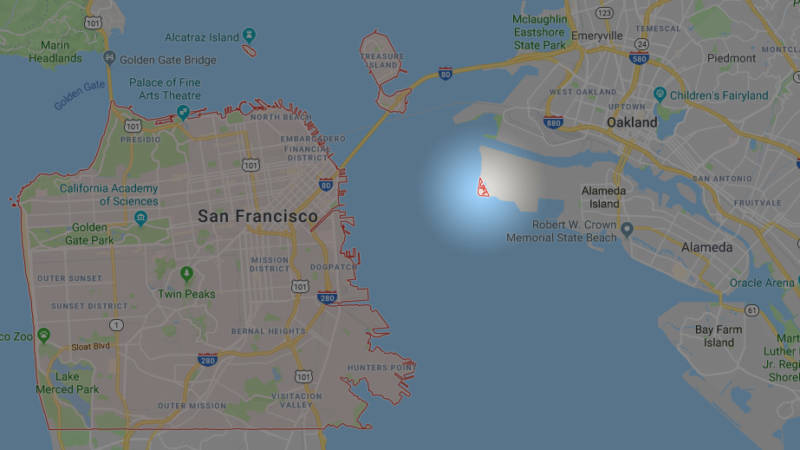
"caption": "The outline of San Francisco on Google Maps includes a tiny sliver of Alameda Island. ",
"description": "The outline of San Francisco on Google Maps includes a tiny sliver of Alameda Island. ",
"title": "sfmap",
"credit": "Google Maps",
"status": "inherit",
"isLoading": false,
"fetchFailed": false
},
"news_11960958": {
"type": "attachments",
"id": "news_11960958",
"meta": {
"index": "attachments_1716263798",
"site": "news",
"id": "11960958",
"found": true
},
"title": "20230909-DAProtest-37-JY-KQED",
"publishDate": 1694623998,
"status": "inherit",
"parent": 11966518,
"modified": 1717446471,
"caption": "Alameda County District Attorney Pamela Price attends a public safety town hall at Genesis Worship Center in Oakland, California, on Saturday, Sept. 9, 2023.",
"credit": "Juliana Yamada/KQED",
"altTag": "A person in red glasses sits at a table in an indoor setting.",
"description": null,
"imgSizes": {
"medium": {
"file": "https://cdn.kqed.org/wp-content/uploads/sites/10/2023/09/20230909-DAProtest-37-JY-KQED-800x533.jpg",
"width": 800,
"height": 533,
"mimeType": "image/jpeg"
},
"large": {
"file": "https://cdn.kqed.org/wp-content/uploads/sites/10/2023/09/20230909-DAProtest-37-JY-KQED-1020x680.jpg",
"width": 1020,
"height": 680,
"mimeType": "image/jpeg"
},
"thumbnail": {
"file": "https://cdn.kqed.org/wp-content/uploads/sites/10/2023/09/20230909-DAProtest-37-JY-KQED-160x107.jpg",
"width": 160,
"height": 107,
"mimeType": "image/jpeg"
},
"1536x1536": {
"file": "https://cdn.kqed.org/wp-content/uploads/sites/10/2023/09/20230909-DAProtest-37-JY-KQED-1536x1024.jpg",
"width": 1536,
"height": 1024,
"mimeType": "image/jpeg"
},
"post-thumbnail": {
"file": "https://cdn.kqed.org/wp-content/uploads/sites/10/2023/09/20230909-DAProtest-37-JY-KQED-672x372.jpg",
"width": 672,
"height": 372,
"mimeType": "image/jpeg"
},
"twentyfourteen-full-width": {
"file": "https://cdn.kqed.org/wp-content/uploads/sites/10/2023/09/20230909-DAProtest-37-JY-KQED-1038x576.jpg",
"width": 1038,
"height": 576,
"mimeType": "image/jpeg"
},
"full-width": {
"file": "https://cdn.kqed.org/wp-content/uploads/sites/10/2023/09/20230909-DAProtest-37-JY-KQED-1920x1280.jpg",
"width": 1920,
"height": 1280,
"mimeType": "image/jpeg"
},
"kqedFullSize": {
"file": "https://cdn.kqed.org/wp-content/uploads/sites/10/2023/09/20230909-DAProtest-37-JY-KQED.jpg",
"width": 2000,
"height": 1333
}
},
"isLoading": false,
"fetchFailed": false
},
"news_11953935": {
"type": "attachments",
"id": "news_11953935",
"meta": {
"index": "attachments_1716263798",
"site": "news",
"id": "11953935",
"found": true
},
"parent": 0,
"imgSizes": {
"twentyfourteen-full-width": {
"file": "https://ww2.kqed.org/app/uploads/sites/10/2023/06/RS66538_230623-wahpepahs-kitchen-05-ks-KQED-1038x576.jpg",
"width": 1038,
"mimeType": "image/jpeg",
"height": 576
},
"thumbnail": {
"file": "https://ww2.kqed.org/app/uploads/sites/10/2023/06/RS66538_230623-wahpepahs-kitchen-05-ks-KQED-160x106.jpg",
"width": 160,
"mimeType": "image/jpeg",
"height": 106
},
"post-thumbnail": {
"file": "https://ww2.kqed.org/app/uploads/sites/10/2023/06/RS66538_230623-wahpepahs-kitchen-05-ks-KQED-672x372.jpg",
"width": 672,
"mimeType": "image/jpeg",
"height": 372
},
"kqedFullSize": {
"file": "https://ww2.kqed.org/app/uploads/sites/10/2023/06/RS66538_230623-wahpepahs-kitchen-05-ks-KQED.jpg",
"width": 2000,
"height": 1331
},
"large": {
"file": "https://ww2.kqed.org/app/uploads/sites/10/2023/06/RS66538_230623-wahpepahs-kitchen-05-ks-KQED-1020x679.jpg",
"width": 1020,
"mimeType": "image/jpeg",
"height": 679
},
"1536x1536": {
"file": "https://ww2.kqed.org/app/uploads/sites/10/2023/06/RS66538_230623-wahpepahs-kitchen-05-ks-KQED-1536x1022.jpg",
"width": 1536,
"mimeType": "image/jpeg",
"height": 1022
},
"full-width": {
"file": "https://ww2.kqed.org/app/uploads/sites/10/2023/06/RS66538_230623-wahpepahs-kitchen-05-ks-KQED-1920x1278.jpg",
"width": 1920,
"mimeType": "image/jpeg",
"height": 1278
},
"medium": {
"file": "https://ww2.kqed.org/app/uploads/sites/10/2023/06/RS66538_230623-wahpepahs-kitchen-05-ks-KQED-800x532.jpg",
"width": 800,
"mimeType": "image/jpeg",
"height": 532
}
},
"publishDate": 1687556983,
"modified": 1687557423,
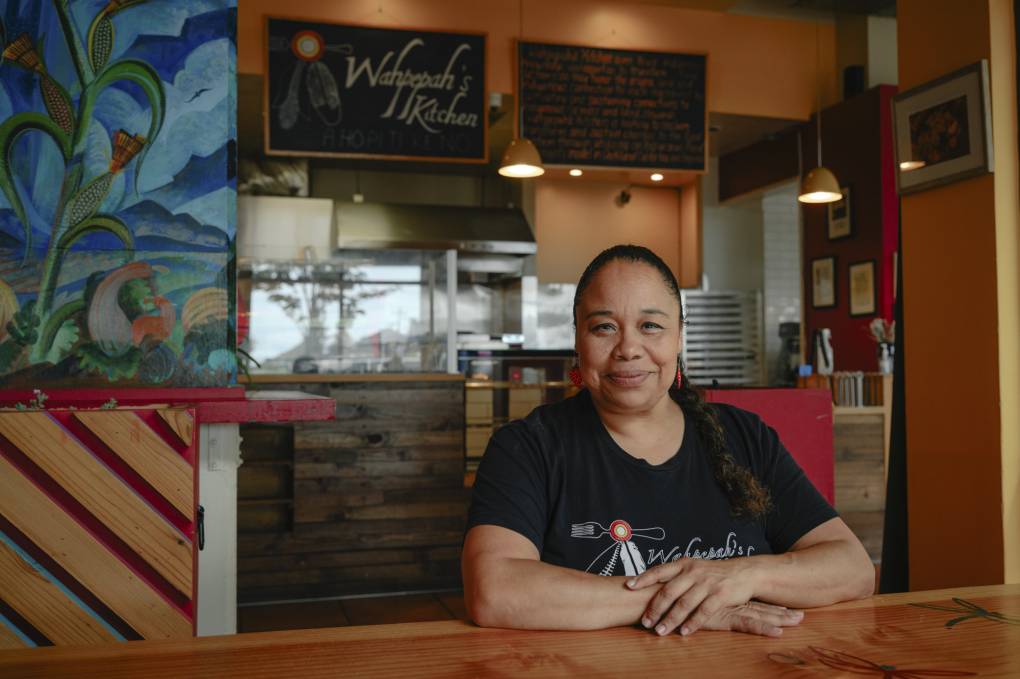
"caption": "Crystal Wahpepah sits for a portrait at her restaurant, Wahpepah’s Kitchen, in the Fruitvale neighborhood of Oakland on June 23, 2023. Wahpepah sees her restaurant as a place to reclaim and celebrate Indigenous food systems and to recognize that we live on stolen land.",
"description": null,
"title": "RS66538_230623-wahpepah's kitchen-05-ks-KQED",
"credit": "Kori Suzuki/KQED",
"status": "inherit",
"altTag": "A woman wearing a black t-shirt and with her hair in a braid leans on a wooden countertop and smiles at the camera.",
"isLoading": false,
"fetchFailed": false
},
"news_11958368": {
"type": "attachments",
"id": "news_11958368",
"meta": {
"index": "attachments_1716263798",
"site": "news",
"id": "11958368",
"found": true
},
"parent": 0,
"imgSizes": {
"twentyfourteen-full-width": {
"file": "https://ww2.kqed.org/app/uploads/sites/10/2023/08/230816-Dublin-Womens-Prison-Suit-MD-14-KQED-1038x576.jpg",
"width": 1038,
"mimeType": "image/jpeg",
"height": 576
},
"thumbnail": {
"file": "https://ww2.kqed.org/app/uploads/sites/10/2023/08/230816-Dublin-Womens-Prison-Suit-MD-14-KQED-160x107.jpg",
"width": 160,
"mimeType": "image/jpeg",
"height": 107
},
"post-thumbnail": {
"file": "https://ww2.kqed.org/app/uploads/sites/10/2023/08/230816-Dublin-Womens-Prison-Suit-MD-14-KQED-672x372.jpg",
"width": 672,
"mimeType": "image/jpeg",
"height": 372
},
"kqedFullSize": {
"file": "https://ww2.kqed.org/app/uploads/sites/10/2023/08/230816-Dublin-Womens-Prison-Suit-MD-14-KQED.jpg?ver=1692294293",
"width": 2000,
"height": 1333
},
"large": {
"file": "https://ww2.kqed.org/app/uploads/sites/10/2023/08/230816-Dublin-Womens-Prison-Suit-MD-14-KQED-1020x680.jpg",
"width": 1020,
"mimeType": "image/jpeg",
"height": 680
},
"1536x1536": {
"file": "https://ww2.kqed.org/app/uploads/sites/10/2023/08/230816-Dublin-Womens-Prison-Suit-MD-14-KQED-1536x1024.jpg",
"width": 1536,
"mimeType": "image/jpeg",
"height": 1024
},
"full-width": {
"file": "https://ww2.kqed.org/app/uploads/sites/10/2023/08/230816-Dublin-Womens-Prison-Suit-MD-14-KQED-1920x1280.jpg",
"width": 1920,
"mimeType": "image/jpeg",
"height": 1280
},
"medium": {
"file": "https://ww2.kqed.org/app/uploads/sites/10/2023/08/230816-Dublin-Womens-Prison-Suit-MD-14-KQED-800x533.jpg",
"width": 800,
"mimeType": "image/jpeg",
"height": 533
}
},
"publishDate": 1692217206,
"modified": 1692298878,
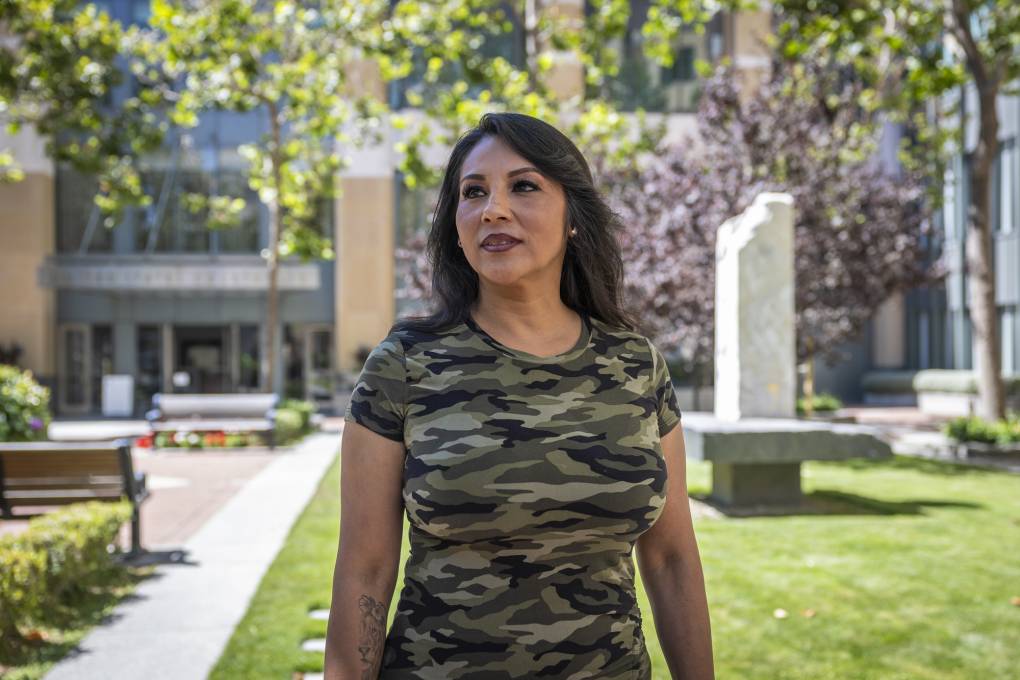
"caption": "Maria, a survivor of abuse at FCI Dublin, in front of the Federal Courthouse in Oakland on Aug. 16, 2023, as part of the announcement of a class-action lawsuit over sex abuse by guards and staff at the federal women's prison.",
"description": null,
"title": "230816-Dublin Women's Prison Suit-MD-14-KQED",
"credit": "Martin do Nascimento/KQED",
"status": "inherit",
"altTag": "A person with long hair in a verdant courtyard in front of a large building.",
"isLoading": false,
"fetchFailed": false
},
"news_11956784": {
"type": "attachments",
"id": "news_11956784",
"meta": {
"index": "attachments_1716263798",
"site": "news",
"id": "11956784",
"found": true
},
"parent": 11957801,
"imgSizes": {
"twentyfourteen-full-width": {
"file": "https://ww2.kqed.org/app/uploads/sites/10/2023/07/230727-Oakland-Diocese-Sexual-Abuse-MHN-05-KQED-1038x576.jpg",
"width": 1038,
"mimeType": "image/jpeg",
"height": 576
},
"thumbnail": {
"file": "https://ww2.kqed.org/app/uploads/sites/10/2023/07/230727-Oakland-Diocese-Sexual-Abuse-MHN-05-KQED-160x107.jpg",
"width": 160,
"mimeType": "image/jpeg",
"height": 107
},
"post-thumbnail": {
"file": "https://ww2.kqed.org/app/uploads/sites/10/2023/07/230727-Oakland-Diocese-Sexual-Abuse-MHN-05-KQED-672x372.jpg",
"width": 672,
"mimeType": "image/jpeg",
"height": 372
},
"kqedFullSize": {
"file": "https://ww2.kqed.org/app/uploads/sites/10/2023/07/230727-Oakland-Diocese-Sexual-Abuse-MHN-05-KQED.jpg",
"width": 2000,
"height": 1333
},
"large": {
"file": "https://ww2.kqed.org/app/uploads/sites/10/2023/07/230727-Oakland-Diocese-Sexual-Abuse-MHN-05-KQED-1020x680.jpg",
"width": 1020,
"mimeType": "image/jpeg",
"height": 680
},
"1536x1536": {
"file": "https://ww2.kqed.org/app/uploads/sites/10/2023/07/230727-Oakland-Diocese-Sexual-Abuse-MHN-05-KQED-1536x1024.jpg",
"width": 1536,
"mimeType": "image/jpeg",
"height": 1024
},
"full-width": {
"file": "https://ww2.kqed.org/app/uploads/sites/10/2023/07/230727-Oakland-Diocese-Sexual-Abuse-MHN-05-KQED-1920x1280.jpg",
"width": 1920,
"mimeType": "image/jpeg",
"height": 1280
},
"medium": {
"file": "https://ww2.kqed.org/app/uploads/sites/10/2023/07/230727-Oakland-Diocese-Sexual-Abuse-MHN-05-KQED-800x533.jpg",
"width": 800,
"mimeType": "image/jpeg",
"height": 533
}
},
"publishDate": 1690565331,
"modified": 1691625614,
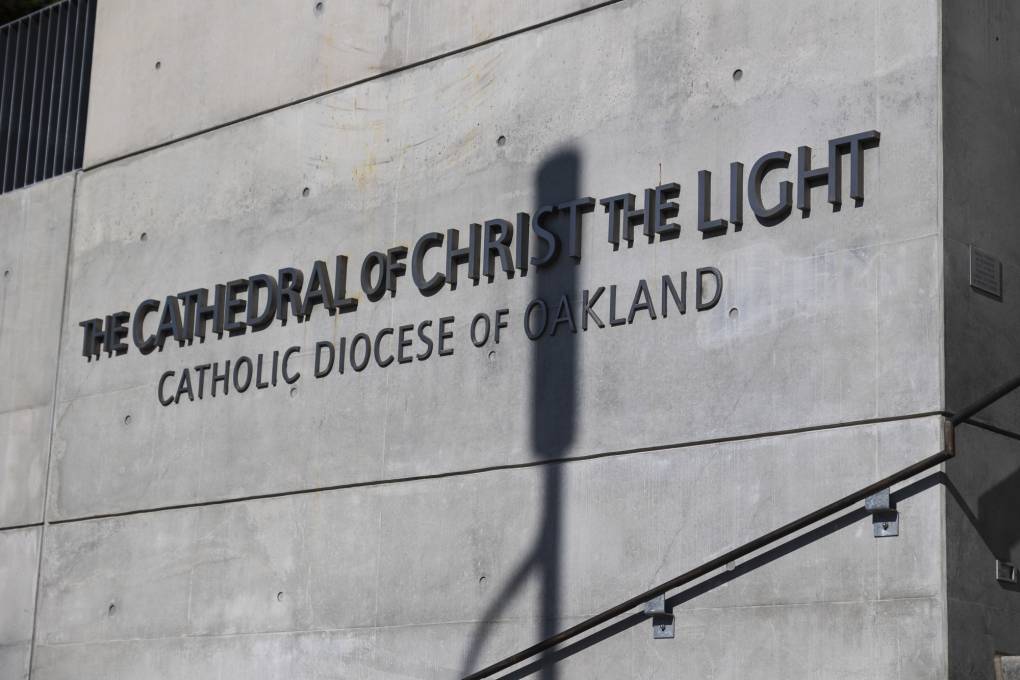
"caption": "The Cathedral of Christ the Light and Catholic Diocese of Oakland in Oakland on July 28, 2023.",
"description": null,
"title": "230727-Oakland Diocese Sexual Abuse-MHN-05-KQED",
"credit": "Martin do Nascimento/KQED",
"status": "inherit",
"altTag": "Modern lettering on a concrete wall reading The Cathedral of Christ the Light: Catholic Diocese of Oakland.\"",
"isLoading": false,
"fetchFailed": false
},
"news_11935668": {
"type": "attachments",
"id": "news_11935668",
"meta": {
"index": "attachments_1716263798",
"site": "news",
"id": "11935668",
"found": true
},
"parent": 11935667,
"imgSizes": {
"twentyfourteen-full-width": {
"file": "https://ww2.kqed.org/app/uploads/sites/10/2022/12/IMG_3011-1038x576.jpg",
"width": 1038,
"mimeType": "image/jpeg",
"height": 576
},
"thumbnail": {
"file": "https://ww2.kqed.org/app/uploads/sites/10/2022/12/IMG_3011-160x120.jpg",
"width": 160,
"mimeType": "image/jpeg",
"height": 120
},
"post-thumbnail": {
"file": "https://ww2.kqed.org/app/uploads/sites/10/2022/12/IMG_3011-672x372.jpg",
"width": 672,
"mimeType": "image/jpeg",
"height": 372
},
"kqedFullSize": {
"file": "https://ww2.kqed.org/app/uploads/sites/10/2022/12/IMG_3011-scaled.jpg",
"width": 2560,
"height": 1920
},
"2048x2048": {
"file": "https://ww2.kqed.org/app/uploads/sites/10/2022/12/IMG_3011-2048x1536.jpg",
"width": 2048,
"mimeType": "image/jpeg",
"height": 1536
},
"large": {
"file": "https://ww2.kqed.org/app/uploads/sites/10/2022/12/IMG_3011-1020x765.jpg",
"width": 1020,
"mimeType": "image/jpeg",
"height": 765
},
"1536x1536": {
"file": "https://ww2.kqed.org/app/uploads/sites/10/2022/12/IMG_3011-1536x1152.jpg",
"width": 1536,
"mimeType": "image/jpeg",
"height": 1152
},
"full-width": {
"file": "https://ww2.kqed.org/app/uploads/sites/10/2022/12/IMG_3011-1920x1440.jpg",
"width": 1920,
"mimeType": "image/jpeg",
"height": 1440
},
"medium": {
"file": "https://ww2.kqed.org/app/uploads/sites/10/2022/12/IMG_3011-800x600.jpg",
"width": 800,
"mimeType": "image/jpeg",
"height": 600
}
},
"publishDate": 1671242184,
"modified": 1671242184,
"caption": null,
"description": null,
"title": "IMG_3011",
"credit": null,
"status": "inherit",
"altTag": null,
"isLoading": false,
"fetchFailed": false
},
"news_11922801": {
"type": "attachments",
"id": "news_11922801",
"meta": {
"index": "attachments_1716263798",
"site": "news",
"id": "11922801",
"found": true
},
"parent": 11922784,
"imgSizes": {
"twentyfourteen-full-width": {
"file": "https://ww2.kqed.org/app/uploads/sites/10/2022/08/RS57010_002_KQED_HousingJordanCourt_06292022-qut-1038x576.jpg",
"width": 1038,
"mimeType": "image/jpeg",
"height": 576
},
"thumbnail": {
"file": "https://ww2.kqed.org/app/uploads/sites/10/2022/08/RS57010_002_KQED_HousingJordanCourt_06292022-qut-160x107.jpg",
"width": 160,
"mimeType": "image/jpeg",
"height": 107
},
"post-thumbnail": {
"file": "https://ww2.kqed.org/app/uploads/sites/10/2022/08/RS57010_002_KQED_HousingJordanCourt_06292022-qut-672x372.jpg",
"width": 672,
"mimeType": "image/jpeg",
"height": 372
},
"kqedFullSize": {
"file": "https://ww2.kqed.org/app/uploads/sites/10/2022/08/RS57010_002_KQED_HousingJordanCourt_06292022-qut.jpg",
"width": 1920,
"height": 1280
},
"large": {
"file": "https://ww2.kqed.org/app/uploads/sites/10/2022/08/RS57010_002_KQED_HousingJordanCourt_06292022-qut-1020x680.jpg",
"width": 1020,
"mimeType": "image/jpeg",
"height": 680
},
"1536x1536": {
"file": "https://ww2.kqed.org/app/uploads/sites/10/2022/08/RS57010_002_KQED_HousingJordanCourt_06292022-qut-1536x1024.jpg",
"width": 1536,
"mimeType": "image/jpeg",
"height": 1024
},
"medium": {
"file": "https://ww2.kqed.org/app/uploads/sites/10/2022/08/RS57010_002_KQED_HousingJordanCourt_06292022-qut-800x533.jpg",
"width": 800,
"mimeType": "image/jpeg",
"height": 533
}
},
"publishDate": 1660760492,
"modified": 1660782549,
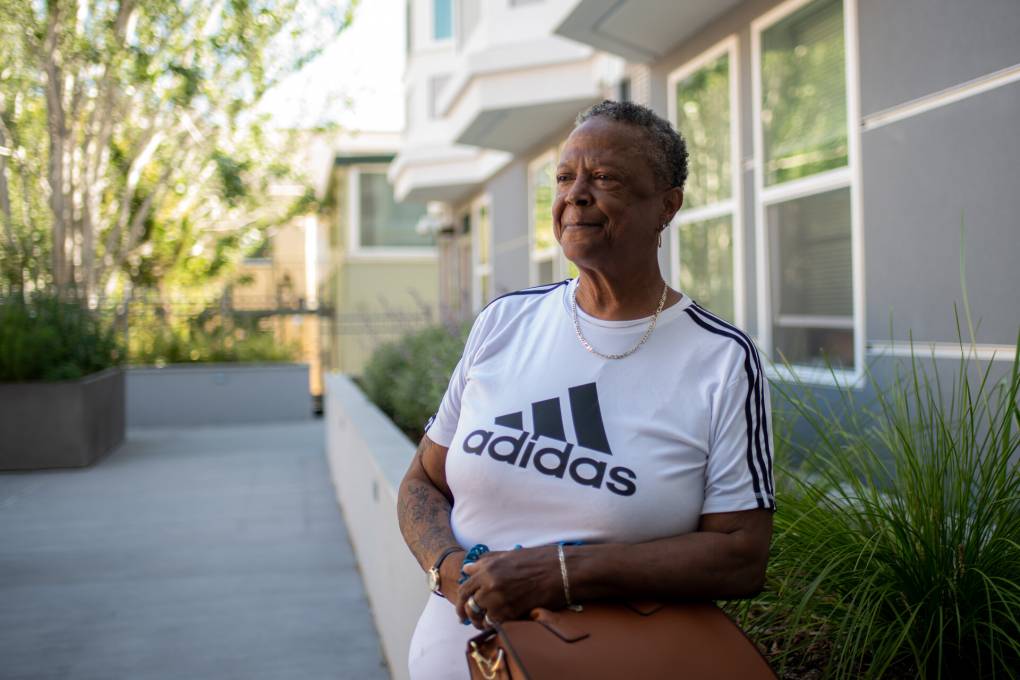
"caption": "Ira Hudson, 71, stands in the community garden in Jordan Court, an apartment for seniors with lower incomes built by All Souls Episcopal Parish in Berkeley, on June 28, 2022. It's one of the few successful housing developments built by a church in the Bay Area.",
"description": null,
"title": "RS57010_002_KQED_HousingJordanCourt_06292022-qut",
"credit": "Beth LaBerge/KQED",
"status": "inherit",
"altTag": "A woman wearing a white and black shirt leans on a building outside.",
"isLoading": false,
"fetchFailed": false
},
"news_11912024": {
"type": "attachments",
"id": "news_11912024",
"meta": {
"index": "attachments_1716263798",
"site": "news",
"id": "11912024",
"found": true
},
"parent": 11911968,
"imgSizes": {
"twentyfourteen-full-width": {
"file": "https://ww2.kqed.org/app/uploads/sites/10/2022/04/image1-1-1038x576.jpg",
"width": 1038,
"mimeType": "image/jpeg",
"height": 576
},
"thumbnail": {
"file": "https://ww2.kqed.org/app/uploads/sites/10/2022/04/image1-1-160x107.jpg",
"width": 160,
"mimeType": "image/jpeg",
"height": 107
},
"post-thumbnail": {
"file": "https://ww2.kqed.org/app/uploads/sites/10/2022/04/image1-1-672x372.jpg",
"width": 672,
"mimeType": "image/jpeg",
"height": 372
},
"kqedFullSize": {
"file": "https://ww2.kqed.org/app/uploads/sites/10/2022/04/image1-1.jpg",
"width": 1920,
"height": 1278
},
"large": {
"file": "https://ww2.kqed.org/app/uploads/sites/10/2022/04/image1-1-1020x679.jpg",
"width": 1020,
"mimeType": "image/jpeg",
"height": 679
},
"1536x1536": {
"file": "https://ww2.kqed.org/app/uploads/sites/10/2022/04/image1-1-1536x1022.jpg",
"width": 1536,
"mimeType": "image/jpeg",
"height": 1022
},
"medium": {
"file": "https://ww2.kqed.org/app/uploads/sites/10/2022/04/image1-1-800x533.jpg",
"width": 800,
"mimeType": "image/jpeg",
"height": 533
}
},
"publishDate": 1650664699,
"modified": 1650664699,
"caption": null,
"description": null,
"title": "image1",
"credit": null,
"status": "inherit",
"altTag": null,
"isLoading": false,
"fetchFailed": false
},
"news_11810732": {
"type": "attachments",
"id": "news_11810732",
"meta": {
"index": "attachments_1716263798",
"site": "news",
"id": "11810732",
"found": true
},
"parent": 11810730,
"imgSizes": {
"apple_news_ca_landscape_5_5": {
"file": "https://ww2.kqed.org/app/uploads/sites/10/2020/04/Kiraku-1044x783.jpg",
"width": 1044,
"mimeType": "image/jpeg",
"height": 783
},
"apple_news_ca_square_4_0": {
"file": "https://ww2.kqed.org/app/uploads/sites/10/2020/04/Kiraku-470x470.jpg",
"width": 470,
"mimeType": "image/jpeg",
"height": 470
},
"twentyfourteen-full-width": {
"file": "https://ww2.kqed.org/app/uploads/sites/10/2020/04/Kiraku-1038x576.jpg",
"width": 1038,
"mimeType": "image/jpeg",
"height": 576
},
"thumbnail": {
"file": "https://ww2.kqed.org/app/uploads/sites/10/2020/04/Kiraku-160x90.jpg",
"width": 160,
"mimeType": "image/jpeg",
"height": 90
},
"post-thumbnail": {
"file": "https://ww2.kqed.org/app/uploads/sites/10/2020/04/Kiraku-672x372.jpg",
"width": 672,
"mimeType": "image/jpeg",
"height": 372
},
"kqedFullSize": {
"file": "https://ww2.kqed.org/app/uploads/sites/10/2020/04/Kiraku.jpg",
"width": 1920,
"height": 1079
},
"apple_news_ca_landscape_4_7": {
"file": "https://ww2.kqed.org/app/uploads/sites/10/2020/04/Kiraku-632x474.jpg",
"width": 632,
"mimeType": "image/jpeg",
"height": 474
},
"large": {
"file": "https://ww2.kqed.org/app/uploads/sites/10/2020/04/Kiraku-1020x573.jpg",
"width": 1020,
"mimeType": "image/jpeg",
"height": 573
},
"apple_news_ca_landscape_4_0": {
"file": "https://ww2.kqed.org/app/uploads/sites/10/2020/04/Kiraku-536x402.jpg",
"width": 536,
"mimeType": "image/jpeg",
"height": 402
},
"apple_news_ca_portrait_12_9": {
"file": "https://ww2.kqed.org/app/uploads/sites/10/2020/04/Kiraku-1122x1079.jpg",
"width": 1122,
"mimeType": "image/jpeg",
"height": 1079
},
"medium": {
"file": "https://ww2.kqed.org/app/uploads/sites/10/2020/04/Kiraku-800x450.jpg",
"width": 800,
"mimeType": "image/jpeg",
"height": 450
},
"apple_news_ca_portrait_4_0": {
"file": "https://ww2.kqed.org/app/uploads/sites/10/2020/04/Kiraku-354x472.jpg",
"width": 354,
"mimeType": "image/jpeg",
"height": 472
},
"apple_news_ca_portrait_9_7": {
"file": "https://ww2.kqed.org/app/uploads/sites/10/2020/04/Kiraku-840x1079.jpg",
"width": 840,
"mimeType": "image/jpeg",
"height": 1079
},
"apple_news_ca_landscape_12_9": {
"file": "https://ww2.kqed.org/app/uploads/sites/10/2020/04/Kiraku-1832x1079.jpg",
"width": 1832,
"mimeType": "image/jpeg",
"height": 1079
},
"apple_news_ca_square_9_7": {
"file": "https://ww2.kqed.org/app/uploads/sites/10/2020/04/Kiraku-1104x1079.jpg",
"width": 1104,
"mimeType": "image/jpeg",
"height": 1079
},
"apple_news_ca_portrait_4_7": {
"file": "https://ww2.kqed.org/app/uploads/sites/10/2020/04/Kiraku-414x552.jpg",
"width": 414,
"mimeType": "image/jpeg",
"height": 552
},
"apple_news_ca_square_12_9": {
"file": "https://ww2.kqed.org/app/uploads/sites/10/2020/04/Kiraku-1472x1079.jpg",
"width": 1472,
"mimeType": "image/jpeg",
"height": 1079
},
"apple_news_ca_portrait_5_5": {
"file": "https://ww2.kqed.org/app/uploads/sites/10/2020/04/Kiraku-687x916.jpg",
"width": 687,
"mimeType": "image/jpeg",
"height": 916
},
"full-width": {
"file": "https://ww2.kqed.org/app/uploads/sites/10/2020/04/Kiraku-1920x1079.jpg",
"width": 1920,
"mimeType": "image/jpeg",
"height": 1079
},
"apple_news_ca_square_4_7": {
"file": "https://ww2.kqed.org/app/uploads/sites/10/2020/04/Kiraku-550x550.jpg",
"width": 550,
"mimeType": "image/jpeg",
"height": 550
},
"apple_news_ca_landscape_9_7": {
"file": "https://ww2.kqed.org/app/uploads/sites/10/2020/04/Kiraku-1376x1032.jpg",
"width": 1376,
"mimeType": "image/jpeg",
"height": 1032
},
"apple_news_ca_square_5_5": {
"file": "https://ww2.kqed.org/app/uploads/sites/10/2020/04/Kiraku-912x912.jpg",
"width": 912,
"mimeType": "image/jpeg",
"height": 912
}
},
"publishDate": 1586039262,
"modified": 1586040472,
"caption": "A delivery from Kiraku Restaurant to Highland Hospital Emergency Room. ",
"description": null,
"title": "Kiraku",
"credit": "Courtesy of Leah Martinez",
"status": "inherit",
"isLoading": false,
"fetchFailed": false
},
"news_11792698": {
"type": "attachments",
"id": "news_11792698",
"meta": {
"index": "attachments_1716263798",
"site": "news",
"id": "11792698",
"found": true
},
"parent": 11792662,
"imgSizes": {
"apple_news_ca_square_4_0": {
"file": "https://ww2.kqed.org/app/uploads/sites/10/2019/12/IMG_4219-470x470.jpg",
"width": 470,
"mimeType": "image/jpeg",
"height": 470
},
"twentyfourteen-full-width": {
"file": "https://ww2.kqed.org/app/uploads/sites/10/2019/12/IMG_4219-1024x576.jpg",
"width": 1024,
"mimeType": "image/jpeg",
"height": 576
},
"thumbnail": {
"file": "https://ww2.kqed.org/app/uploads/sites/10/2019/12/IMG_4219-160x110.jpg",
"width": 160,
"mimeType": "image/jpeg",
"height": 110
},
"post-thumbnail": {
"file": "https://ww2.kqed.org/app/uploads/sites/10/2019/12/IMG_4219-672x372.jpg",
"width": 672,
"mimeType": "image/jpeg",
"height": 372
},
"kqedFullSize": {
"file": "https://ww2.kqed.org/app/uploads/sites/10/2019/12/IMG_4219.jpg",
"width": 1024,
"height": 704
},
"apple_news_ca_landscape_4_7": {
"file": "https://ww2.kqed.org/app/uploads/sites/10/2019/12/IMG_4219-632x474.jpg",
"width": 632,
"mimeType": "image/jpeg",
"height": 474
},
"large": {
"file": "https://ww2.kqed.org/app/uploads/sites/10/2019/12/IMG_4219-1020x701.jpg",
"width": 1020,
"mimeType": "image/jpeg",
"height": 701
},
"apple_news_ca_landscape_4_0": {
"file": "https://ww2.kqed.org/app/uploads/sites/10/2019/12/IMG_4219-536x402.jpg",
"width": 536,
"mimeType": "image/jpeg",
"height": 402
},
"medium": {
"file": "https://ww2.kqed.org/app/uploads/sites/10/2019/12/IMG_4219-800x550.jpg",
"width": 800,
"mimeType": "image/jpeg",
"height": 550
},
"apple_news_ca_portrait_4_0": {
"file": "https://ww2.kqed.org/app/uploads/sites/10/2019/12/IMG_4219-354x472.jpg",
"width": 354,
"mimeType": "image/jpeg",
"height": 472
},
"apple_news_ca_portrait_9_7": {
"file": "https://ww2.kqed.org/app/uploads/sites/10/2019/12/IMG_4219-840x704.jpg",
"width": 840,
"mimeType": "image/jpeg",
"height": 704
},
"apple_news_ca_portrait_4_7": {
"file": "https://ww2.kqed.org/app/uploads/sites/10/2019/12/IMG_4219-414x552.jpg",
"width": 414,
"mimeType": "image/jpeg",
"height": 552
},
"apple_news_ca_portrait_5_5": {
"file": "https://ww2.kqed.org/app/uploads/sites/10/2019/12/IMG_4219-687x704.jpg",
"width": 687,
"mimeType": "image/jpeg",
"height": 704
},
"apple_news_ca_square_4_7": {
"file": "https://ww2.kqed.org/app/uploads/sites/10/2019/12/IMG_4219-550x550.jpg",
"width": 550,
"mimeType": "image/jpeg",
"height": 550
},
"apple_news_ca_square_5_5": {
"file": "https://ww2.kqed.org/app/uploads/sites/10/2019/12/IMG_4219-912x704.jpg",
"width": 912,
"mimeType": "image/jpeg",
"height": 704
}
},
"publishDate": 1577056588,
"modified": 1577060131,
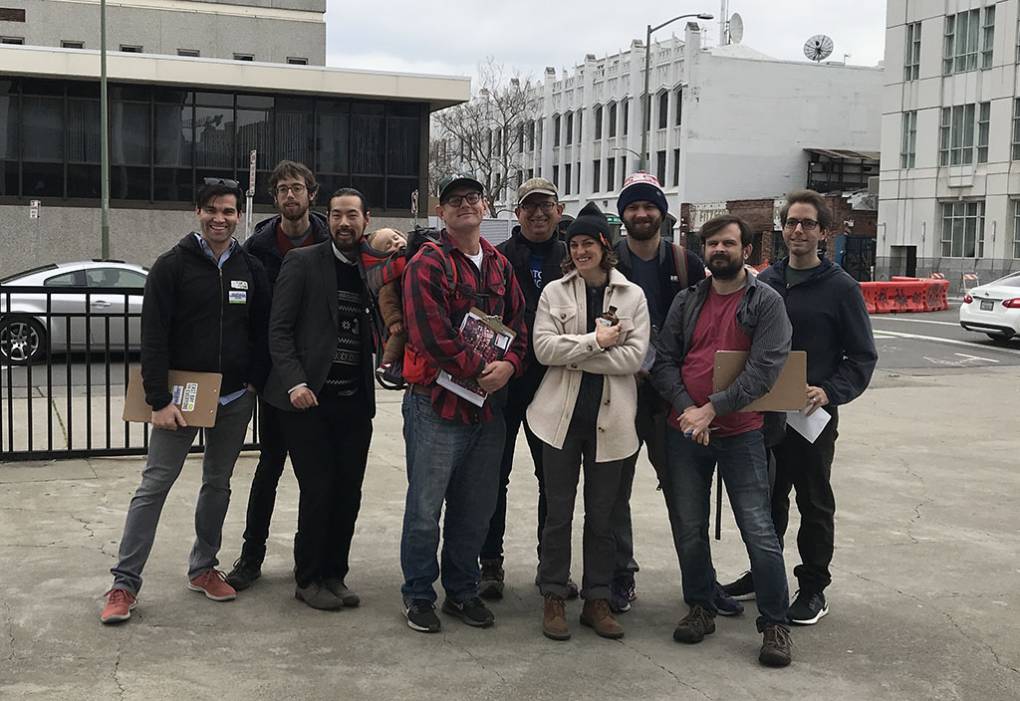
"caption": "About 10 people came out in Oakland on Saturday to attend the walking tour, led by Derek Sagehorn of East Bay for Everyone (fourth from the left).",
"description": "About 10 people came out in Oakland on Saturday to attend the walking tour, led by Derek Sagehorn of East Bay for Everyone (fourth from the left).",
"title": "Prop 13 Walking Tour",
"credit": "Julie Chang/KQED",
"status": "inherit",
"isLoading": false,
"fetchFailed": false
},
"news_11740143": {
"type": "attachments",
"id": "news_11740143",
"meta": {
"index": "attachments_1716263798",
"site": "news",
"id": "11740143",
"found": true
},
"parent": 11740139,
"imgSizes": {
"apple_news_ca_square_4_0": {
"file": "https://ww2.kqed.org/app/uploads/sites/10/2019/04/USGS-Earthquakes-470x470.png",
"width": 470,
"mimeType": "image/png",
"height": 470
},
"twentyfourteen-full-width": {
"file": "https://ww2.kqed.org/app/uploads/sites/10/2019/04/USGS-Earthquakes-946x576.png",
"width": 946,
"mimeType": "image/png",
"height": 576
},
"thumbnail": {
"file": "https://ww2.kqed.org/app/uploads/sites/10/2019/04/USGS-Earthquakes-160x121.png",
"width": 160,
"mimeType": "image/png",
"height": 121
},
"post-thumbnail": {
"file": "https://ww2.kqed.org/app/uploads/sites/10/2019/04/USGS-Earthquakes-672x372.png",
"width": 672,
"mimeType": "image/png",
"height": 372
},
"kqedFullSize": {
"file": "https://ww2.kqed.org/app/uploads/sites/10/2019/04/USGS-Earthquakes.png",
"width": 946,
"height": 717
},
"apple_news_ca_landscape_4_7": {
"file": "https://ww2.kqed.org/app/uploads/sites/10/2019/04/USGS-Earthquakes-632x474.png",
"width": 632,
"mimeType": "image/png",
"height": 474
},
"apple_news_ca_landscape_4_0": {
"file": "https://ww2.kqed.org/app/uploads/sites/10/2019/04/USGS-Earthquakes-536x402.png",
"width": 536,
"mimeType": "image/png",
"height": 402
},
"medium": {
"file": "https://ww2.kqed.org/app/uploads/sites/10/2019/04/USGS-Earthquakes-800x606.png",
"width": 800,
"mimeType": "image/png",
"height": 606
},
"apple_news_ca_portrait_4_0": {
"file": "https://ww2.kqed.org/app/uploads/sites/10/2019/04/USGS-Earthquakes-354x472.png",
"width": 354,
"mimeType": "image/png",
"height": 472
},
"apple_news_ca_portrait_9_7": {
"file": "https://ww2.kqed.org/app/uploads/sites/10/2019/04/USGS-Earthquakes-840x717.png",
"width": 840,
"mimeType": "image/png",
"height": 717
},
"apple_news_ca_portrait_4_7": {
"file": "https://ww2.kqed.org/app/uploads/sites/10/2019/04/USGS-Earthquakes-414x552.png",
"width": 414,
"mimeType": "image/png",
"height": 552
},
"apple_news_ca_portrait_5_5": {
"file": "https://ww2.kqed.org/app/uploads/sites/10/2019/04/USGS-Earthquakes-687x717.png",
"width": 687,
"mimeType": "image/png",
"height": 717
},
"apple_news_ca_square_4_7": {
"file": "https://ww2.kqed.org/app/uploads/sites/10/2019/04/USGS-Earthquakes-550x550.png",
"width": 550,
"mimeType": "image/png",
"height": 550
},
"apple_news_ca_square_5_5": {
"file": "https://ww2.kqed.org/app/uploads/sites/10/2019/04/USGS-Earthquakes-912x717.png",
"width": 912,
"mimeType": "image/png",
"height": 717
}
},
"publishDate": 1555189188,
"modified": 1555190788,
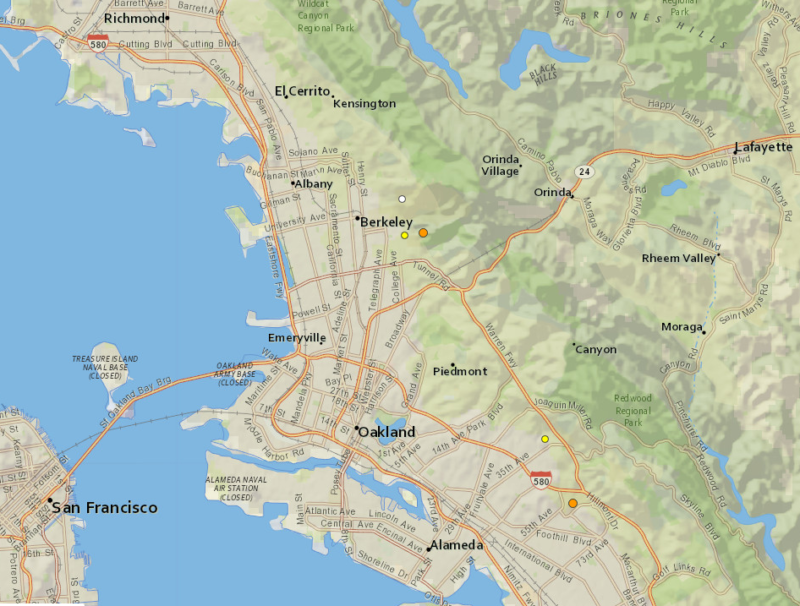
"caption": "A map detailing East Bay earthquakes over the last three weeks, including one in Berkeley and one in Oakland on Saturday (in orange).",
"description": "A map detailing East Bay earthquakes over the last three weeks, including one in Berkeley and one in Oakland on Saturday (in orange).",
"title": "USGS Earthquakes",
"credit": "U.S. Geological Survey",
"status": "inherit",
"isLoading": false,
"fetchFailed": false
},
"news_11679694": {
"type": "attachments",
"id": "news_11679694",
"meta": {
"index": "attachments_1716263798",
"site": "news",
"id": "11679694",
"found": true
},
"parent": 11673009,
"imgSizes": {
"small": {
"file": "https://ww2.kqed.org/app/uploads/sites/10/2018/06/TEPCOMain-520x342.jpg",
"width": 520,
"mimeType": "image/jpeg",
"height": 342
},
"twentyfourteen-full-width": {
"file": "https://ww2.kqed.org/app/uploads/sites/10/2018/06/TEPCOMain-1038x576.jpg",
"width": 1038,
"mimeType": "image/jpeg",
"height": 576
},
"thumbnail": {
"file": "https://ww2.kqed.org/app/uploads/sites/10/2018/06/TEPCOMain-160x105.jpg",
"width": 160,
"mimeType": "image/jpeg",
"height": 105
},
"fd-sm": {
"file": "https://ww2.kqed.org/app/uploads/sites/10/2018/06/TEPCOMain-960x632.jpg",
"width": 960,
"mimeType": "image/jpeg",
"height": 632
},
"post-thumbnail": {
"file": "https://ww2.kqed.org/app/uploads/sites/10/2018/06/TEPCOMain-672x372.jpg",
"width": 672,
"mimeType": "image/jpeg",
"height": 372
},
"xsmall": {
"file": "https://ww2.kqed.org/app/uploads/sites/10/2018/06/TEPCOMain-375x247.jpg",
"width": 375,
"mimeType": "image/jpeg",
"height": 247
},
"kqedFullSize": {
"file": "https://ww2.kqed.org/app/uploads/sites/10/2018/06/TEPCOMain.jpg",
"width": 1177,
"height": 775
},
"large": {
"file": "https://ww2.kqed.org/app/uploads/sites/10/2018/06/TEPCOMain-1020x672.jpg",
"width": 1020,
"mimeType": "image/jpeg",
"height": 672
},
"guest-author-50": {
"file": "https://ww2.kqed.org/app/uploads/sites/10/2018/06/TEPCOMain-50x50.jpg",
"width": 50,
"mimeType": "image/jpeg",
"height": 50
},
"guest-author-96": {
"file": "https://ww2.kqed.org/app/uploads/sites/10/2018/06/TEPCOMain-96x96.jpg",
"width": 96,
"mimeType": "image/jpeg",
"height": 96
},
"medium": {
"file": "https://ww2.kqed.org/app/uploads/sites/10/2018/06/TEPCOMain-800x527.jpg",
"width": 800,
"mimeType": "image/jpeg",
"height": 527
},
"guest-author-64": {
"file": "https://ww2.kqed.org/app/uploads/sites/10/2018/06/TEPCOMain-64x64.jpg",
"width": 64,
"mimeType": "image/jpeg",
"height": 64
},
"guest-author-32": {
"file": "https://ww2.kqed.org/app/uploads/sites/10/2018/06/TEPCOMain-32x32.jpg",
"width": 32,
"mimeType": "image/jpeg",
"height": 32
},
"detail": {
"file": "https://ww2.kqed.org/app/uploads/sites/10/2018/06/TEPCOMain-150x150.jpg",
"width": 150,
"mimeType": "image/jpeg",
"height": 150
},
"guest-author-128": {
"file": "https://ww2.kqed.org/app/uploads/sites/10/2018/06/TEPCOMain-128x128.jpg",
"width": 128,
"mimeType": "image/jpeg",
"height": 128
},
"xxsmall": {
"file": "https://ww2.kqed.org/app/uploads/sites/10/2018/06/TEPCOMain-240x158.jpg",
"width": 240,
"mimeType": "image/jpeg",
"height": 158
}
},
"publishDate": 1531167019,
"modified": 1531171557,
"caption": "An image from a recreation of the original TEPCO catalogue.",
"description": "An image from a recreation of the original TEPCO catalogue.",
"title": "TEPCOMain",
"credit": "Andria Lo",
"status": "inherit",
"isLoading": false,
"fetchFailed": false
}
},
"audioPlayerReducer": {
"postId": "stream_live",
"isPaused": true,
"isPlaying": false,
"pfsActive": false,
"pledgeModalIsOpen": true,
"playerDrawerIsOpen": false,
"liveAudioPlayStartedAt": 0,
"liveAudioPlayContext": ""
},
"authorsReducer": {
"byline_news_11673009": {
"type": "authors",
"id": "byline_news_11673009",
"meta": {
"override": true
},
"slug": "byline_news_11673009",
"name": "Ariel Plotnick",
"isLoading": false
},
"kqed": {
"type": "authors",
"id": "236",
"meta": {
"index": "authors_1716337520",
"id": "236",
"found": true
},
"name": "KQED News Staff",
"firstName": "KQED News Staff",
"lastName": null,
"slug": "kqed",
"email": "faq@kqed.org",
"display_author_email": false,
"staff_mastheads": [],
"title": null,
"bio": null,
"avatar": "https://secure.gravatar.com/avatar/ef0e801a68c4c54afa9180db14084167?s=600&d=blank&r=g",
"twitter": null,
"facebook": null,
"instagram": null,
"linkedin": null,
"sites": [
{
"site": "arts",
"roles": [
"contributor"
]
},
{
"site": "news",
"roles": [
"editor"
]
},
{
"site": "futureofyou",
"roles": [
"author"
]
}
],
"headData": {
"title": "KQED News Staff | KQED",
"description": null,
"ogImgSrc": "https://secure.gravatar.com/avatar/ef0e801a68c4c54afa9180db14084167?s=600&d=blank&r=g",
"twImgSrc": "https://secure.gravatar.com/avatar/ef0e801a68c4c54afa9180db14084167?s=600&d=blank&r=g"
},
"isLoading": false,
"link": "/author/kqed"
},
"rlevi": {
"type": "authors",
"id": "11260",
"meta": {
"index": "authors_1716337520",
"id": "11260",
"found": true
},
"name": "Ryan Levi",
"firstName": "Ryan",
"lastName": "Levi",
"slug": "rlevi",
"email": "rlevi@KQED.org",
"display_author_email": false,
"staff_mastheads": [],
"title": "KQED Contributor",
"bio": "Ryan Levi was a reporter and podcast producer at KQED News from 2016-2019. He worked on \u003ca href=\"https://www.kqed.org/news/series/baycurious\">Bay Curious\u003c/a>, \u003ca href=\"https://www.kqed.org/news/tag/the-bay/\">The Bay, \u003c/a>and \u003ca href=\"https://podcasts.apple.com/us/podcast/the-california-report-magazine/id1314750545\">The California Report Magazine\u003c/a>, as well as hosting and producing the weekly \u003ca href=\"https://www.kqed.org/news/program/qedup/\">Q'ed Up podcast. \u003c/a>He also helped inaugurate KQED's weekend news coverage in 2017 as one of two original digital producers. Ryan holds degrees in multimedia journalism and Spanish from the University of Missouri.",
"avatar": "https://secure.gravatar.com/avatar/4cb2ddd028ac8807d1adf09609c5555d?s=600&d=blank&r=g",
"twitter": "ryan_levi",
"facebook": null,
"instagram": null,
"linkedin": null,
"sites": [
{
"site": "arts",
"roles": [
"editor"
]
},
{
"site": "news",
"roles": [
"subscriber"
]
},
{
"site": "stateofhealth",
"roles": [
"editor"
]
},
{
"site": "science",
"roles": [
"editor"
]
},
{
"site": "forum",
"roles": [
"administrator"
]
},
{
"site": "perspectives",
"roles": [
"administrator"
]
}
],
"headData": {
"title": "Ryan Levi | KQED",
"description": "KQED Contributor",
"ogImgSrc": "https://secure.gravatar.com/avatar/4cb2ddd028ac8807d1adf09609c5555d?s=600&d=blank&r=g",
"twImgSrc": "https://secure.gravatar.com/avatar/4cb2ddd028ac8807d1adf09609c5555d?s=600&d=blank&r=g"
},
"isLoading": false,
"link": "/author/rlevi"
},
"btaylor": {
"type": "authors",
"id": "11365",
"meta": {
"index": "authors_1716337520",
"id": "11365",
"found": true
},
"name": "Bianca Taylor",
"firstName": "Bianca",
"lastName": "Taylor",
"slug": "btaylor",
"email": "btaylor@KQED.org",
"display_author_email": false,
"staff_mastheads": [
"news"
],
"title": "Host and Producer ",
"bio": "Bianca Taylor is a news producer and host of KQED's The Latest podcast.\r\n\r\nHer work with KQED has been honored by the Society of Professional Journalists NorCal, the Webby's, the Regional Murrow Awards, and ONA. She has also worked with NPR, the BBC World Service, and the Washington Post Creative Group.\r\n\r\nBianca is represented by SAG-AFTRA.",
"avatar": "https://secure.gravatar.com/avatar/6b9d3f6552dd10470c5d1c2e58cfe717?s=600&d=blank&r=g",
"twitter": "SoundsLkeBianca",
"facebook": null,
"instagram": null,
"linkedin": null,
"sites": [
{
"site": "arts",
"roles": [
"editor"
]
},
{
"site": "news",
"roles": [
"edit_others_posts",
"editor"
]
},
{
"site": "pop",
"roles": [
"editor"
]
},
{
"site": "bayareabites",
"roles": [
"author"
]
},
{
"site": "science",
"roles": [
"editor"
]
},
{
"site": "forum",
"roles": [
"editor"
]
},
{
"site": "radio",
"roles": [
"editor"
]
},
{
"site": "podcasts",
"roles": [
"editor"
]
}
],
"headData": {
"title": "Bianca Taylor | KQED",
"description": "Host and Producer ",
"ogImgSrc": "https://secure.gravatar.com/avatar/6b9d3f6552dd10470c5d1c2e58cfe717?s=600&d=blank&r=g",
"twImgSrc": "https://secure.gravatar.com/avatar/6b9d3f6552dd10470c5d1c2e58cfe717?s=600&d=blank&r=g"
},
"isLoading": false,
"link": "/author/btaylor"
},
"ahall": {
"type": "authors",
"id": "11490",
"meta": {
"index": "authors_1716337520",
"id": "11490",
"found": true
},
"name": "Alex Hall",
"firstName": "Alex",
"lastName": "Hall",
"slug": "ahall",
"email": "ahall@kqed.org",
"display_author_email": false,
"staff_mastheads": [
"news"
],
"title": "KQED Enterprise & Accountability Reporter",
"bio": "Alex Hall is KQED's Enterprise and Accountability Reporter. She previously covered the Central Valley for five years from KQED's bureau in Fresno. Before joining KQED, Alex was an investigative reporting fellow at Wisconsin Public Radio and the Wisconsin Center for Investigative Journalism. She has also worked as a bilingual producer for NPR's investigative unit and freelance video producer for Reuters TV on the Latin America desk. She got her start in journalism in South America, where she worked as a radio producer and Spanish-English translator for CNN Chile. Her documentary and investigation into the series of deadly COVID-19 outbreaks at Foster Farms won a national Edward R. Murrow award and was named an Investigative Reporters & Editors award finalist. Alex's reporting for Reveal on the Wisconsin dairy industry's reliance on undocumented immigrant labor was made into a film, Los Lecheros, which won a regional Edward R. Murrow award for best news documentary.",
"avatar": "https://secure.gravatar.com/avatar/defcbeb88b0bf591ff9af41f22644051?s=600&d=blank&r=g",
"twitter": "@chalexhall",
"facebook": null,
"instagram": null,
"linkedin": null,
"sites": [
{
"site": "news",
"roles": [
"editor"
]
},
{
"site": "liveblog",
"roles": [
"author"
]
}
],
"headData": {
"title": "Alex Hall | KQED",
"description": "KQED Enterprise & Accountability Reporter",
"ogImgSrc": "https://secure.gravatar.com/avatar/defcbeb88b0bf591ff9af41f22644051?s=600&d=blank&r=g",
"twImgSrc": "https://secure.gravatar.com/avatar/defcbeb88b0bf591ff9af41f22644051?s=600&d=blank&r=g"
},
"isLoading": false,
"link": "/author/ahall"
},
"lsarah": {
"type": "authors",
"id": "11626",
"meta": {
"index": "authors_1716337520",
"id": "11626",
"found": true
},
"name": "Lakshmi Sarah",
"firstName": "Lakshmi",
"lastName": "Sarah",
"slug": "lsarah",
"email": "lsarah@kqed.org",
"display_author_email": false,
"staff_mastheads": [],
"title": "Digital Producer",
"bio": "Lakshmi Sarah is an educator, author and journalist with a focus on innovative storytelling. She has worked with newspapers, radio and magazines from Ahmedabad, India to Los Angeles, California. She has written and produced for Die Zeit, Global Voices, AJ+, KQED, Fusion Media Group and the New York Times.",
"avatar": "https://secure.gravatar.com/avatar/652dcaecd8b28826fc17a8b2d6bb4e93?s=600&d=blank&r=g",
"twitter": "lakitalki",
"facebook": null,
"instagram": "https://www.instagram.com/laki.talki/",
"linkedin": "https://www.linkedin.com/in/lakisarah/",
"sites": [
{
"site": "arts",
"roles": []
},
{
"site": "news",
"roles": []
},
{
"site": "bayareabites",
"roles": []
},
{
"site": "science",
"roles": []
}
],
"headData": {
"title": "Lakshmi Sarah | KQED",
"description": "Digital Producer",
"ogImgSrc": "https://secure.gravatar.com/avatar/652dcaecd8b28826fc17a8b2d6bb4e93?s=600&d=blank&r=g",
"twImgSrc": "https://secure.gravatar.com/avatar/652dcaecd8b28826fc17a8b2d6bb4e93?s=600&d=blank&r=g"
},
"isLoading": false,
"link": "/author/lsarah"
},
"jchang": {
"type": "authors",
"id": "11642",
"meta": {
"index": "authors_1716337520",
"id": "11642",
"found": true
},
"name": "Julie Chang",
"firstName": "Julie",
"lastName": "Chang",
"slug": "jchang",
"email": "jchang@kqed.org",
"display_author_email": false,
"staff_mastheads": [
"news"
],
"title": "KQED Contributor",
"bio": "Julie Chang is a reporter and producer (and occasional anchor) with the radio and digital teams at KQED. Before KQED, she worked at WAMU 88.5 in Washington D.C. and 89.3 KPCC in Los Angeles County. Her work has been featured on NPR’s Morning Edition and All Things Considered, Here & Now, the New York Times, and more. Julie graduated from UC Berkeley’s Graduate School of Journalism. She previously taught English at Pasadena City College, Fullerton College and Cal Poly Pomona. Julie earned her M.A. in English from Cal Poly Pomona and her B.A. in English from UCI with a minor in criminology.",
"avatar": "https://secure.gravatar.com/avatar/a7afce94ef127082c5475116b4a3b77d?s=600&d=blank&r=g",
"twitter": "BayAreaJulie",
"facebook": null,
"instagram": null,
"linkedin": "https://www.linkedin.com/in/julieyc/",
"sites": [
{
"site": "",
"roles": [
"editor"
]
},
{
"site": "news",
"roles": [
"author"
]
},
{
"site": "science",
"roles": [
"editor"
]
}
],
"headData": {
"title": "Julie Chang | KQED",
"description": "KQED Contributor",
"ogImgSrc": "https://secure.gravatar.com/avatar/a7afce94ef127082c5475116b4a3b77d?s=600&d=blank&r=g",
"twImgSrc": "https://secure.gravatar.com/avatar/a7afce94ef127082c5475116b4a3b77d?s=600&d=blank&r=g"
},
"isLoading": false,
"link": "/author/jchang"
},
"abandlamudi": {
"type": "authors",
"id": "11672",
"meta": {
"index": "authors_1716337520",
"id": "11672",
"found": true
},
"name": "Adhiti Bandlamudi",
"firstName": "Adhiti",
"lastName": "Bandlamudi",
"slug": "abandlamudi",
"email": "abandlamudi@kqed.org",
"display_author_email": false,
"staff_mastheads": [
"news"
],
"title": "KQED Housing Reporter",
"bio": "Adhiti Bandlamudi reports for KQED's Housing desk. She focuses on how housing gets built across the Bay Area. Before joining KQED in 2020, she reported for WUNC in Durham, North Carolina, WABE in Atlanta, Georgia and Capital Public Radio in Sacramento. In 2017, she was awarded a Kroc Fellowship at NPR where she reported on everything from sprinkles to the Golden State Killer's arrest. When she's not reporting, she's baking new recipes in her kitchen or watching movies with friends and family. She's originally from Georgia and has strong opinions about Great British Bake Off.",
"avatar": "https://secure.gravatar.com/avatar/868129c8b257bb99a3500e2c86a65400?s=600&d=mm&r=g",
"twitter": "oddity_adhiti",
"facebook": null,
"instagram": null,
"linkedin": null,
"sites": [
{
"site": "arts",
"roles": [
"author"
]
},
{
"site": "news",
"roles": [
"editor"
]
},
{
"site": "liveblog",
"roles": [
"author"
]
}
],
"headData": {
"title": "Adhiti Bandlamudi | KQED",
"description": "KQED Housing Reporter",
"ogImgSrc": "https://secure.gravatar.com/avatar/868129c8b257bb99a3500e2c86a65400?s=600&d=mm&r=g",
"twImgSrc": "https://secure.gravatar.com/avatar/868129c8b257bb99a3500e2c86a65400?s=600&d=mm&r=g"
},
"isLoading": false,
"link": "/author/abandlamudi"
},
"jrodriguez": {
"type": "authors",
"id": "11690",
"meta": {
"index": "authors_1716337520",
"id": "11690",
"found": true
},
"name": "Joe Fitzgerald Rodriguez",
"firstName": "Joe",
"lastName": "Fitzgerald Rodriguez",
"slug": "jrodriguez",
"email": "jrodriguez@kqed.org",
"display_author_email": true,
"staff_mastheads": [
"news"
],
"title": "Reporter and Producer",
"bio": "Joe Fitzgerald Rodriguez is a reporter and digital producer for KQED covering politics. Joe most recently wrote for the \u003cem>San Francisco Examiner\u003c/em> as a political columnist covering The City. He was raised in San Francisco and has spent his reporting career in his beloved, foggy, city by the bay. Joe was 12-years-old when he conducted his first interview in journalism, grilling former San Francisco Mayor Willie Brown for the Marina Middle School newspaper, \u003cem>The Penguin Press, \u003c/em>and he continues to report on the San Francisco Bay Area to this day.",
"avatar": "https://secure.gravatar.com/avatar/2247beb0564c1e9c62228d5649d2edac?s=600&d=blank&r=g",
"twitter": "FitztheReporter",
"facebook": null,
"instagram": "https://www.instagram.com/fitzthereporter/",
"linkedin": null,
"sites": [
{
"site": "",
"roles": [
"editor"
]
},
{
"site": "arts",
"roles": [
"editor"
]
},
{
"site": "news",
"roles": [
"editor"
]
},
{
"site": "science",
"roles": [
"editor"
]
},
{
"site": "elections",
"roles": [
"editor"
]
},
{
"site": "liveblog",
"roles": [
"editor"
]
}
],
"headData": {
"title": "Joe Fitzgerald Rodriguez | KQED",
"description": "Reporter and Producer",
"ogImgSrc": "https://secure.gravatar.com/avatar/2247beb0564c1e9c62228d5649d2edac?s=600&d=blank&r=g",
"twImgSrc": "https://secure.gravatar.com/avatar/2247beb0564c1e9c62228d5649d2edac?s=600&d=blank&r=g"
},
"isLoading": false,
"link": "/author/jrodriguez"
},
"sjohnson": {
"type": "authors",
"id": "11840",
"meta": {
"index": "authors_1716337520",
"id": "11840",
"found": true
},
"name": "Sydney Johnson",
"firstName": "Sydney",
"lastName": "Johnson",
"slug": "sjohnson",
"email": "sjohnson@kqed.org",
"display_author_email": false,
"staff_mastheads": [
"news"
],
"title": "KQED Reporter",
"bio": "Sydney Johnson is a general assignment reporter at KQED. She previously reported on public health and city government at the San Francisco Examiner, and before that, she covered statewide education policy for EdSource. Her reporting has won multiple local, state and national awards. Sydney is a graduate of the University of California, Berkeley and lives in San Francisco.",
"avatar": "https://secure.gravatar.com/avatar/97855f2719b72ad6190b7c535fe642c8?s=600&d=blank&r=g",
"twitter": "sydneyfjohnson",
"facebook": null,
"instagram": null,
"linkedin": null,
"sites": [
{
"site": "news",
"roles": [
"editor"
]
}
],
"headData": {
"title": "Sydney Johnson | KQED",
"description": "KQED Reporter",
"ogImgSrc": "https://secure.gravatar.com/avatar/97855f2719b72ad6190b7c535fe642c8?s=600&d=blank&r=g",
"twImgSrc": "https://secure.gravatar.com/avatar/97855f2719b72ad6190b7c535fe642c8?s=600&d=blank&r=g"
},
"isLoading": false,
"link": "/author/sjohnson"
}
},
"pagesReducer": {
"news_tag_east-bay": {
"type": "terms",
"id": "news_18352",
"meta": {
"index": "terms_1716263798",
"site": "news",
"id": "18352",
"score": 7.0109935
},
"featImg": null,
"name": "East Bay",
"description": null,
"taxonomy": "tag",
"headData": {
"twImgId": null,
"twTitle": null,
"ogTitle": null,
"ogImgId": null,
"twDescription": null,
"description": null,
"title": "East Bay Archives | KQED News",
"ogDescription": null
},
"ttid": 18386,
"slug": "east-bay",
"isLoading": false,
"title": "East Bay",
"pageMeta": {
"site": "news",
"WpPageTemplate": "page-topic-editorial",
"currentPage": 24
},
"blocks": [
{
"blockName": "kqed/post-list",
"attrs": {
"layout": "cardArticle2",
"query": "posts/news?tag=east-bay",
"seeMore": false,
"paginated": true,
"page": 24
}
},
{
"blockName": "kqed/ad"
}
]
}
},
"pfsSessionReducer": {},
"postsReducer": {
"stream_live": {
"type": "live",
"id": "stream_live",
"audioUrl": "https://streams.kqed.org/kqedradio",
"title": "Live Stream",
"excerpt": "Live Stream information currently unavailable.",
"link": "/radio",
"featImg": "",
"label": {
"name": "KQED Live",
"link": "/"
}
},
"stream_kqedNewscast": {
"type": "posts",
"id": "stream_kqedNewscast",
"audioUrl": "https://www.kqed.org/.stream/anon/radio/RDnews/newscast.mp3?_=1",
"title": "KQED Newscast",
"featImg": "",
"label": {
"name": "88.5 FM",
"link": "/"
}
},
"news_11702058": {
"type": "posts",
"id": "news_11702058",
"meta": {
"index": "posts_1716263798",
"site": "news",
"id": "11702058",
"score": null,
"sort": [
1704366012000
]
},
"parent": 0,
"labelTerm": {},
"blocks": [],
"publishDate": 1704366012,
"format": "image",
"title": "Why Is Part of Alameda Island in San Francisco?",
"headTitle": "Why Is Part of Alameda Island in San Francisco? | KQED",
"content": "\u003cp>\u003ca href=\"#episode-transcript\">\u003cem>View the full episode transcript\u003c/em>\u003c/a>\u003c/p>\n\u003cp>\u003cem>This story first published November 1, 2018.\u003c/em>\u003c/p>\n\u003cp>Bay Curious listener Lori Bodenhamer has noticed something odd whenever she pulls up a map of San Francisco online.\u003c/p>\n\u003cp>“My little shortcut to get to Google Maps is I just type in ‘SF Map,’ and then Google pops up,” Bodenhamer says. “And it outlines S.F. in red, and I noticed there were some bits of red in Alameda.”\u003c/p>\n\u003cp>[baycuriouspodcastinfo]\u003c/p>\n\u003cp>And it’s not just Google Maps being wonky. Maps from the San Francisco Planning Department confirm that a piece of Alameda Island is inside San Francisco’s borders.\u003c/p>\n\u003cp>To understand how this is possible, we have to go back hundreds of years to when California was part of Spain.\u003c/p>\n\u003cfigure id=\"attachment_11702286\" class=\"wp-caption aligncenter\" style=\"max-width: 800px\">\u003cimg loading=\"lazy\" decoding=\"async\" class=\"size-medium wp-image-11702286\" src=\"https://ww2.kqed.org/news/wp-content/uploads/sites/10/2018/10/RS33470_Screen-Shot-2018-10-29-at-10.08.51-PM-qut-800x607.jpg\" alt=\"A map from the San Francisco Planning Department shows the same geographic oddity.\" width=\"800\" height=\"607\" srcset=\"https://cdn.kqed.org/wp-content/uploads/sites/10/2018/10/RS33470_Screen-Shot-2018-10-29-at-10.08.51-PM-qut-800x607.jpg 800w, https://cdn.kqed.org/wp-content/uploads/sites/10/2018/10/RS33470_Screen-Shot-2018-10-29-at-10.08.51-PM-qut-160x121.jpg 160w, https://cdn.kqed.org/wp-content/uploads/sites/10/2018/10/RS33470_Screen-Shot-2018-10-29-at-10.08.51-PM-qut-1020x774.jpg 1020w, https://cdn.kqed.org/wp-content/uploads/sites/10/2018/10/RS33470_Screen-Shot-2018-10-29-at-10.08.51-PM-qut-1200x911.jpg 1200w, https://cdn.kqed.org/wp-content/uploads/sites/10/2018/10/RS33470_Screen-Shot-2018-10-29-at-10.08.51-PM-qut-1180x896.jpg 1180w, https://cdn.kqed.org/wp-content/uploads/sites/10/2018/10/RS33470_Screen-Shot-2018-10-29-at-10.08.51-PM-qut-960x729.jpg 960w, https://cdn.kqed.org/wp-content/uploads/sites/10/2018/10/RS33470_Screen-Shot-2018-10-29-at-10.08.51-PM-qut-240x182.jpg 240w, https://cdn.kqed.org/wp-content/uploads/sites/10/2018/10/RS33470_Screen-Shot-2018-10-29-at-10.08.51-PM-qut-375x285.jpg 375w, https://cdn.kqed.org/wp-content/uploads/sites/10/2018/10/RS33470_Screen-Shot-2018-10-29-at-10.08.51-PM-qut-520x395.jpg 520w, https://cdn.kqed.org/wp-content/uploads/sites/10/2018/10/RS33470_Screen-Shot-2018-10-29-at-10.08.51-PM-qut.jpg 1670w\" sizes=\"(max-width: 800px) 100vw, 800px\">\u003cfigcaption class=\"wp-caption-text\">A map from the San Francisco Planning Department shows the same geographic oddity. \u003ccite>(San Francisco Planning Department)\u003c/cite>\u003c/figcaption>\u003c/figure>\n\u003ch2>The Peraltas\u003c/h2>\n\u003cp>It starts in 1820 when the Spanish government gave Luís Maria Peralta a land grant of more than 40,000 acres in recognition of his 40 years of military service. Known as the \u003ca href=\"http://www.peraltahacienda.org/pages/main.php?pageid=69&pagecategory=3\" target=\"_blank\" rel=\"noopener\">Rancho San Antonio\u003c/a>, it covered present-day San Leandro, Oakland, Alameda, Emeryville, Piedmont, Berkeley and Albany.\u003c/p>\n\u003cp>Basically, the Spanish government gave him the entire East Bay (even though Native Americans, including the Ohlone and Bay Miwok, had already been living there for centuries).\u003c/p>\n\u003cp>Peralta never actually lived on the Rancho, but he split the land among his four sons, who settled the land, built homes, raised cattle and fostered the growth of a thriving, Spanish-speaking community.\u003c/p>\n\u003cp>[ad fullwidth]\u003c/p>\n\u003cp>In 1848, California was ceded to the United States by Mexico, and in 1850, it became a state. For existing landowners like the Peraltas, this created several headaches.\u003c/p>\n\u003cp>U.S. squatters settled in California without respect to who had owned the land under Spanish and Mexican rule. Squatters were such a problem that Antonio Peralta, one of Luís’ sons, was shocked in 1851 to find two men actually interested in buying some of his land.\u003c/p>\n\u003cp>William Chipman and Gideon Aughinbaugh bought 160 acres from Antonio in 1851 for $14,000, and they would use the land to \u003ca href=\"https://alamedamuseum.org/news-and-resources/history/\" target=\"_blank\" rel=\"noopener\">found the city of Alameda\u003c/a>.\u003c/p>\n\u003cp>But Antonio still had problems.\u003c/p>\n\u003cp>The U.S. government made Spanish and Mexican landowners go to court to prove their claims, and it wasn’t until 1874 that Antonio finally received a patent from the government affirming his claim to his land, including the piece he had sold to Chipman and Aughinbaugh.\u003c/p>\n\u003ch2>The Navy pushes Alameda into San Francisco\u003c/h2>\n\u003cp>The story picks up in 1956 when the U.S. Navy makes an eminent domain claim of about 50 acres of submerged land underneath San Francisco Bay off the coast of Alameda. (The Navy would end up revising their request down to just shy of 40 acres.)\u003c/p>\n\u003cp>The Navy was looking to expand the Alameda Naval Air Station, which had opened just before the start of World War II and served as the launching site for the first major bombing raid of Japan after Pearl Harbor.\u003c/p>\n\u003cfigure id=\"attachment_11702298\" class=\"wp-caption aligncenter\" style=\"max-width: 800px\">\u003cimg loading=\"lazy\" decoding=\"async\" class=\"wp-image-11702298 size-medium\" src=\"https://ww2.kqed.org/news/wp-content/uploads/sites/10/2018/10/RS33473_USS_Hancock_CVA-19_Bon_Homme_Richard_CVA-31_and_Midway_CVA-41_at_NAS_Alameda_1958-qut-800x529.jpg\" alt=\"U.S. Navy aircraft carriers USS Hancock (CVA-19), USS Midway (CVA-41), and USS Bon Homme Richard (CVA-31) berthed at Naval Air Station Alameda in 1958.\" width=\"800\" height=\"529\" srcset=\"https://cdn.kqed.org/wp-content/uploads/sites/10/2018/10/RS33473_USS_Hancock_CVA-19_Bon_Homme_Richard_CVA-31_and_Midway_CVA-41_at_NAS_Alameda_1958-qut-800x529.jpg 800w, https://cdn.kqed.org/wp-content/uploads/sites/10/2018/10/RS33473_USS_Hancock_CVA-19_Bon_Homme_Richard_CVA-31_and_Midway_CVA-41_at_NAS_Alameda_1958-qut-160x106.jpg 160w, https://cdn.kqed.org/wp-content/uploads/sites/10/2018/10/RS33473_USS_Hancock_CVA-19_Bon_Homme_Richard_CVA-31_and_Midway_CVA-41_at_NAS_Alameda_1958-qut-1020x675.jpg 1020w, https://cdn.kqed.org/wp-content/uploads/sites/10/2018/10/RS33473_USS_Hancock_CVA-19_Bon_Homme_Richard_CVA-31_and_Midway_CVA-41_at_NAS_Alameda_1958-qut-1200x794.jpg 1200w, https://cdn.kqed.org/wp-content/uploads/sites/10/2018/10/RS33473_USS_Hancock_CVA-19_Bon_Homme_Richard_CVA-31_and_Midway_CVA-41_at_NAS_Alameda_1958-qut-1180x781.jpg 1180w, https://cdn.kqed.org/wp-content/uploads/sites/10/2018/10/RS33473_USS_Hancock_CVA-19_Bon_Homme_Richard_CVA-31_and_Midway_CVA-41_at_NAS_Alameda_1958-qut-960x635.jpg 960w, https://cdn.kqed.org/wp-content/uploads/sites/10/2018/10/RS33473_USS_Hancock_CVA-19_Bon_Homme_Richard_CVA-31_and_Midway_CVA-41_at_NAS_Alameda_1958-qut-240x159.jpg 240w, https://cdn.kqed.org/wp-content/uploads/sites/10/2018/10/RS33473_USS_Hancock_CVA-19_Bon_Homme_Richard_CVA-31_and_Midway_CVA-41_at_NAS_Alameda_1958-qut-375x248.jpg 375w, https://cdn.kqed.org/wp-content/uploads/sites/10/2018/10/RS33473_USS_Hancock_CVA-19_Bon_Homme_Richard_CVA-31_and_Midway_CVA-41_at_NAS_Alameda_1958-qut-520x344.jpg 520w, https://cdn.kqed.org/wp-content/uploads/sites/10/2018/10/RS33473_USS_Hancock_CVA-19_Bon_Homme_Richard_CVA-31_and_Midway_CVA-41_at_NAS_Alameda_1958-qut.jpg 1489w\" sizes=\"(max-width: 800px) 100vw, 800px\">\u003cfigcaption class=\"wp-caption-text\">US Navy aircraft carriers USS Hancock (CVA-19), USS Midway (CVA-41), and USS Bonhomme Richard (CVA-31) berthed at Naval Air Station Alameda in 1958. \u003ccite>(U.S. Navy [Public domain], via Wikimedia Commons)\u003c/cite>\u003c/figcaption>\u003c/figure>\n\u003cp>The Navy had regularly filled in parts of the bay to expand the air station, but when they did it this time, they crossed over the invisible line underneath the bay that separates Alameda from San Francisco.\u003c/p>\n\u003cp>Thanks to the Navy, there was now a tiny piece of San Francisco attached to Alameda Island.\u003c/p>\n\u003cfigure id=\"attachment_11702301\" class=\"wp-caption alignright\" style=\"max-width: 800px\">\u003cimg loading=\"lazy\" decoding=\"async\" class=\"size-medium wp-image-11702301\" src=\"https://ww2.kqed.org/news/wp-content/uploads/sites/10/2018/10/RS33472_Carol-Heche-March-2-1961-part-1f-qut-800x2485.jpg\" alt=\"A newspaper clipping detailing one of Carol Heche's other legal battles borne out of her claim to submerged land off of Alameda Island.\" width=\"800\" height=\"2485\" srcset=\"https://cdn.kqed.org/wp-content/uploads/sites/10/2018/10/RS33472_Carol-Heche-March-2-1961-part-1f-qut-800x2485.jpg 800w, https://cdn.kqed.org/wp-content/uploads/sites/10/2018/10/RS33472_Carol-Heche-March-2-1961-part-1f-qut-160x497.jpg 160w, https://cdn.kqed.org/wp-content/uploads/sites/10/2018/10/RS33472_Carol-Heche-March-2-1961-part-1f-qut-386x1200.jpg 386w, https://cdn.kqed.org/wp-content/uploads/sites/10/2018/10/RS33472_Carol-Heche-March-2-1961-part-1f-qut-240x746.jpg 240w, https://cdn.kqed.org/wp-content/uploads/sites/10/2018/10/RS33472_Carol-Heche-March-2-1961-part-1f-qut-375x1165.jpg 375w, https://cdn.kqed.org/wp-content/uploads/sites/10/2018/10/RS33472_Carol-Heche-March-2-1961-part-1f-qut-520x1615.jpg 520w, https://cdn.kqed.org/wp-content/uploads/sites/10/2018/10/RS33472_Carol-Heche-March-2-1961-part-1f-qut.jpg 900w\" sizes=\"(max-width: 800px) 100vw, 800px\">\u003cfigcaption class=\"wp-caption-text\">A newspaper clipping detailing one of Carol Heche’s other legal battles borne out of her claim to submerged land off of Alameda Island. \u003ccite>(Newspapers.com)\u003c/cite>\u003c/figcaption>\u003c/figure>\n\u003cp>But no one at the time seemed to care much about this border breach. What they did care about was who the federal government would have to pay for taking this piece of land. The state of California said it was the proper beneficiary, but two East Bay women saw it differently.\u003c/p>\n\u003cp>Carol Heche and Elinor Petersen claimed that the submerged land actually belonged to them, and therefore they deserved payment as the descendants of the founders of Alameda — William Chipman and Gideon Aughinbaugh. Petersen said she purchased the estate of Aughinbaugh’s daughter, Ella, and Heche was Chipman’s granddaughter.\u003c/p>\n\u003cp>“She was very proud of their heritage, and she was the historian of the family,” says George Gunn, curator of the Alameda Museum, about Heche. “She claimed that their property extended out into the bay.”\u003c/p>\n\u003cp>This was the women’s central argument. According to court records, the women traced their claim through their Alameda ancestors and back to the original Peralta land grant from the king of Spain in 1820, which was, according to them, “bounded on the southwest by the sea.”\u003c/p>\n\u003cp>“In Spanish laws, the lands bounded by the sea, are lands that extended to the deep navigable waters of the sea,” Petersen wrote in a court filing in January 1962.\u003c/p>\n\u003cp>This begs the question of what exactly the “deep navigable waters” included and how far out these women claimed ownership underneath San Francisco Bay.\u003c/p>\n\u003cp>“I don’t know how far out I own,” Petersen said in court in August 1962, according to a transcript. “It doesn’t really make any difference, because the Federal Government is protecting it for me, and I have a fine Government and I’m not worried.”\u003c/p>\n\u003cp>But she and Heche were certain that they owned the part of the bay the Navy had taken, and they believed fervently that their claim had been confirmed by the 1874 patent, as shown by this exchange between Petersen and Judge Alfonso Zirpoli at a pretrial hearing in December 1962:\u003c/p>\n\u003cblockquote>\u003cp>ZIRPOLI: The only question involved is whether or not your land comes within this patent.\u003cbr>\nPETERSEN: It does.\u003cbr>\nZIRPOLI: If it does, you are entitled to judgment in your favor.\u003cbr>\nPETERSEN: Absolutely does.\u003cbr>\nZIRPOLI: If it doesn’t, you are not.\u003cbr>\nPETERSEN: It absolutely does.\u003cbr>\nZIRPOLI: I think it is as simple as that.\u003cbr>\nPETERSEN: It does, absolutely, every bit of it.\u003c/p>\u003c/blockquote>\n\u003cp>But it actually didn’t.\u003c/p>\n\u003cp>While the Spanish land grant may have implied ownership out into the bay’s “deep navigable waters,” the 1874 patent explicitly described the southwest border as, “… along the Bay of San Francisco, at the line of ordinary high tide.”\u003c/p>\n\u003cp>Zirpoli ruled against the women and denied their request for a new trial. Petersen and Heche appealed the decision to the 9th U.S. Circuit Court of Appeals, which also ruled against them.\u003c/p>\n\u003cp>“A boundary line at ‘ordinary high water’ or ‘ordinary high tide’ cannot, by any process of interpretation, be located somewhere on or under the surface of the water a mile or more from the line of high tide or high water,” the appeals court wrote \u003ca href=\"https://www.courtlistener.com/opinion/263062/elinor-e-petersen-carol-e-heche-and-51424-acres-of-land-more-or-less/\" target=\"_blank\" rel=\"noopener\">in its February 1964 decision\u003c/a>.\u003c/p>\n\u003cp>A year later, the federal government cut the state of California a check for $13,619.55 for the submerged land it had claimed nearly a decade earlier. And Heche and Petersen walked away empty-handed.\u003c/p>\n\u003ch2>Who you gonna call: San Francisco or Alameda?\u003c/h2>\n\u003cfigure id=\"attachment_11702307\" class=\"wp-caption aligncenter\" style=\"max-width: 800px\">\u003cimg loading=\"lazy\" decoding=\"async\" class=\"size-medium wp-image-11702307\" src=\"https://ww2.kqed.org/news/wp-content/uploads/sites/10/2018/10/RS33478_Image-from-iOS-4-qut-800x600.jpg\" alt=\"A view across the water of San Francisco ... from San Francisco on Alameda Island. It's trippy, right?\" width=\"800\" height=\"600\" srcset=\"https://cdn.kqed.org/wp-content/uploads/sites/10/2018/10/RS33478_Image-from-iOS-4-qut-800x600.jpg 800w, https://cdn.kqed.org/wp-content/uploads/sites/10/2018/10/RS33478_Image-from-iOS-4-qut-160x120.jpg 160w, https://cdn.kqed.org/wp-content/uploads/sites/10/2018/10/RS33478_Image-from-iOS-4-qut-1020x765.jpg 1020w, https://cdn.kqed.org/wp-content/uploads/sites/10/2018/10/RS33478_Image-from-iOS-4-qut-1200x900.jpg 1200w, https://cdn.kqed.org/wp-content/uploads/sites/10/2018/10/RS33478_Image-from-iOS-4-qut.jpg 1920w, https://cdn.kqed.org/wp-content/uploads/sites/10/2018/10/RS33478_Image-from-iOS-4-qut-1180x885.jpg 1180w, https://cdn.kqed.org/wp-content/uploads/sites/10/2018/10/RS33478_Image-from-iOS-4-qut-960x720.jpg 960w, https://cdn.kqed.org/wp-content/uploads/sites/10/2018/10/RS33478_Image-from-iOS-4-qut-240x180.jpg 240w, https://cdn.kqed.org/wp-content/uploads/sites/10/2018/10/RS33478_Image-from-iOS-4-qut-375x281.jpg 375w, https://cdn.kqed.org/wp-content/uploads/sites/10/2018/10/RS33478_Image-from-iOS-4-qut-520x390.jpg 520w\" sizes=\"(max-width: 800px) 100vw, 800px\">\u003cfigcaption class=\"wp-caption-text\">A view across the water of San Francisco … from San Francisco on Alameda Island. It’s trippy, right? \u003ccite>(Ryan Levi/KQED)\u003c/cite>\u003c/figcaption>\u003c/figure>\n\u003cp>After the Alameda Naval Air Station closed in 1997, the Navy began transferring the land to different entities. In 2014, the Department of Veterans Affairs agreed to take over 624 acres, including the border-crossing sliver.\u003c/p>\n\u003cp>“From the VA’s perspective, it really doesn’t matter if it’s Alameda or San Francisco County. It’s federal property,” says Larry Janes, who’s overseeing the development of a new VA hospital and national cemetery on the former naval base.\u003c/p>\n\u003cp>Neither San Francisco nor Alameda zone the geographic oddity — which spans about 30 acres — and the VA has promised never to develop that part of the land because it’s home to an endangered bird species, the California least tern.\u003c/p>\n\u003cp>There’s currently no regular public access to that part of the former base, but our Bay Curious question asker, Lori, couldn’t help but wonder what would happen if a crime was committed out there. Whose jurisdiction would it fall under?\u003c/p>\n\u003cfigure id=\"attachment_11702306\" class=\"wp-caption aligncenter\" style=\"max-width: 800px\">\u003cimg loading=\"lazy\" decoding=\"async\" class=\"size-medium wp-image-11702306\" src=\"https://ww2.kqed.org/news/wp-content/uploads/sites/10/2018/10/RS33476_Image-from-iOS-2-qut-800x600.jpg\" alt=\"Bay Curious listener Lori Bodenhamer talks with Larry Janes of the Department of Veterans' Affairs about the piece of Alameda Island, now owned by the VA, that crosses over into San Francisco.\" width=\"800\" height=\"600\" srcset=\"https://cdn.kqed.org/wp-content/uploads/sites/10/2018/10/RS33476_Image-from-iOS-2-qut-800x600.jpg 800w, https://cdn.kqed.org/wp-content/uploads/sites/10/2018/10/RS33476_Image-from-iOS-2-qut-160x120.jpg 160w, https://cdn.kqed.org/wp-content/uploads/sites/10/2018/10/RS33476_Image-from-iOS-2-qut-1020x765.jpg 1020w, https://cdn.kqed.org/wp-content/uploads/sites/10/2018/10/RS33476_Image-from-iOS-2-qut-1200x900.jpg 1200w, https://cdn.kqed.org/wp-content/uploads/sites/10/2018/10/RS33476_Image-from-iOS-2-qut.jpg 1920w, https://cdn.kqed.org/wp-content/uploads/sites/10/2018/10/RS33476_Image-from-iOS-2-qut-1180x885.jpg 1180w, https://cdn.kqed.org/wp-content/uploads/sites/10/2018/10/RS33476_Image-from-iOS-2-qut-960x720.jpg 960w, https://cdn.kqed.org/wp-content/uploads/sites/10/2018/10/RS33476_Image-from-iOS-2-qut-240x180.jpg 240w, https://cdn.kqed.org/wp-content/uploads/sites/10/2018/10/RS33476_Image-from-iOS-2-qut-375x281.jpg 375w, https://cdn.kqed.org/wp-content/uploads/sites/10/2018/10/RS33476_Image-from-iOS-2-qut-520x390.jpg 520w\" sizes=\"(max-width: 800px) 100vw, 800px\">\u003cfigcaption class=\"wp-caption-text\">Bay Curious listener Lori Bodenhamer talks with Larry Janes of the Department of Veterans Affairs about the piece of Alameda Island, now owned by the VA, that crosses over into San Francisco. \u003ccite>(Olivia Allen-Price/KQED)\u003c/cite>\u003c/figcaption>\u003c/figure>\n\u003cp>“We actually have a contract with East Bay Regional Park District police,” Janes says. “And we have our own VA police as well, and we work with the Alameda police, so if we needed backup from Alameda, we could go to them as well.”\u003c/p>\n\u003cp>Janes says the VA is talking to the city of Alameda about putting in a recreational trail that would hug the coastline around the sliver, so sometime in the future, anyone could walk from Alameda right into San Francisco and stand on land that was disputed all the way back to the king of Spain.\u003c/p>\n\u003cp>[baycuriousquestion]\u003c/p>\n\u003ch2 id=\"episode-transcript\">Episode Transcript\u003c/h2>\n\u003cp>\u003cstrong>Olivia Allen Price:\u003c/strong> We start today’s episode on a beautiful, clear and sunny day back in 2018.\u003c/p>\n\u003cp>\u003cstrong>Olivia Allen Price:\u003c/strong> Could you tell us where have we brought you today?\u003c/p>\n\u003cp>\u003cstrong>Lori Bodenhamer:\u003c/strong> We’re on the western side of Alameda Island and we’re very close to … I see the Port of Oakland. We’re in the Hanger One Vodka Area. I think it’s called Spirits Vodka now?\u003c/p>\n\u003cp>\u003cstrong>Olivia Allen Price:\u003c/strong> I’m standing in front of a giant sign that says “Warning Restricted Area: Authorized Personnel Only” with this week’s question asker.\u003c/p>\n\u003cp>\u003cstrong>Lori Bodenhamer:\u003c/strong> My name is Lori Bodenhamer. I’ve lived in San Francisco for about 20 years.\u003c/p>\n\u003cp>\u003cstrong>Olivia Allen Price:\u003c/strong> We’ve come to Alameda to check out a peculiar piece of land that Lori noticed.\u003c/p>\n\u003cp>\u003cstrong>Lori Bodenhamer:\u003c/strong> My little shortcut to get to the Google Maps — I just type in “SF Map,” and then Google pops up and it outlines San Francisco in red and noticed there were some bits of red in Alameda.\u003c/p>\n\u003cp>\u003cstrong>Olivia Allen Price:\u003c/strong> The border of San Francisco should be simple. You’ve got water on three sides and a straight line along the southern edge. But … not so!\u003c/p>\n\u003cp>\u003cstrong>Lori Bodenhamer:\u003c/strong> I wondered why there’s a little sliver of San Francisco on the western edge of Alameda.\u003c/p>\n\u003cp>\u003cem>[Theme music playing]\u003c/em>\u003c/p>\n\u003cp>\u003cstrong>Olivia Allen Price:\u003c/strong> This is Bay Curious, the show where we answer your questions about the Bay Area. I’m Olivia Allen-Price. Today we travel from 19th century Spanish California to a World War II-era Navy station in Alameda. All to figure out why the heck San Francisco has jumped the bay. This episode first aired in 2018 and we’re reairing it today because it tells one of the wackier histories of land ownership we’ve found. Stick around.\u003c/p>\n\u003cp>We asked Bay Curious reporter Ryan Levi to tackle this one.\u003c/p>\n\u003cp>\u003cstrong>Ryan Levi:\u003c/strong> It looks like a little right triangle, just a 30-some acre sliver at the very western tip of Alameda Island. It’s all the way across the bay from San Francisco, but somehow, it’s still a part of S-F.\u003c/p>\n\u003cp>And honestly, I thought figuring out how that was possible would be pretty easy. Just call someone up at the city and get the answer.\u003c/p>\n\u003cp>So I start calling people.\u003c/p>\n\u003cp>\u003cem>[Music playing]\u003c/em>\u003c/p>\n\u003cp>I try the City Administrator’s office \u003cem>[sound of voicemail]\u003c/em>. They don’t know and say I should email the Department of Real Estate \u003cem>[typing]\u003c/em>. They’ve also got nothing. So I reach out to the Department of Public Works where finally we have a breakthrough.\u003c/p>\n\u003cp>I get a tip about a court case from 1964 that’s somehow connected to our sliver, but records from that far back aren’t going to be digitized so my only option is to go find it for myself.\u003c/p>\n\u003cp>\u003cstrong>Ryan Levi:\u003c/strong> Are you where I check in?\u003c/p>\n\u003cp>\u003cstrong>Front desk worker:\u003c/strong> Yes.\u003c/p>\n\u003cp>\u003cstrong>Ryan Levi:\u003c/strong> The National Archives Building in San Bruno is kind of hidden away behind the Tanforan mall and a housing development. I expected it to be kind of dungeon-y, but it’s got lots of windows and natural light and wooden tables set up for researchers. Feels like a library.\u003c/p>\n\u003cp>\u003cstrong>National Archives worker:\u003c/strong> This is case 35276.\u003c/p>\n\u003cp>\u003cstrong>Ryan Levi:\u003c/strong> They set me up at one of the tables with this gray file box filled with three folders bursting with documents.\u003c/p>\n\u003cp>\u003cstrong>National Archives worker:\u003c/strong> Looks like it’s oversized maps and stuff.\u003c/p>\n\u003cp>And when I start going through them all, I realize that this case goes back a lot further than I thought. All the way back to when California was part of Spain.\u003c/p>\n\u003cp>\u003cem>[Music playing]\u003c/em>\u003c/p>\n\u003cp>It starts in 1820 with a guy named Luís Maria Peralta.\u003c/p>\n\u003cp>\u003cstrong>Dennis Evanosky:\u003c/strong> He served as a soldier for the Spanish government.\u003c/p>\n\u003cp>\u003cstrong>Ryan Levi:\u003c/strong> Dennis Evanosky is the publisher of the Alameda Sun newspaper and until recently was the president of the Alameda Museum. He says Peralta caught the attention of the Spanish government when he secured the release of a group of priests who had been kidnapped from Mission San Jose and taken to the Central Valley.\u003c/p>\n\u003cp>\u003cstrong>Dennis Evanosky:\u003c/strong> As a thank you gift, he got a land grant that stretched all the way from El Cerrito down to San Leandro.\u003c/p>\n\u003cp>\u003cstrong>Ryan Levi:\u003c/strong> Basically they give him the entire East Bay, even though Native Americans like the Ohlone and Bay Miwok had already been living there for centuries. But Spain gives Peralta the land, which he then splits among his sons.\u003c/p>\n\u003cp>Fast forward 31 years. California is now part of the United States and one of Peralta’s sons, Antonio, is looking to unload some of his land.\u003c/p>\n\u003cp>\u003cstrong>Dennis Evanosky:\u003c/strong> Antonio was delighted to find out that there were actually Americans that were willing to pay him.\u003c/p>\n\u003cp>\u003cstrong>Ryan Levi:\u003c/strong> This was because squatting was a big problem in the state’s early days … so Peralta was thrilled when two men…\u003c/p>\n\u003cp>\u003cstrong>Dennis Evanosky:\u003c/strong> William Worthington Chipman and Gideon Aughinbaugh.\u003c/p>\n\u003cp>\u003cstrong>Ryan Levi:\u003c/strong> Made an offer on 160 acres of Peralta’s land where they established the town of Alameda.\u003c/p>\n\u003cp>But Peralta had a problem.\u003c/p>\n\u003cp>\u003cem>[Music playing]\u003c/em>\u003c/p>\n\u003cp>His land was in the U.S. now and it would take the government more than 20 years to recognize his claim with a patent.\u003c/p>\n\u003cp>\u003cstrong>Dennis Evanosky:\u003c/strong> Unfortunately, by then yes the land would have belonged to him had he not sold a lot of it. And also by then Aughinbaugh and Chipman were both gone.\u003c/p>\n\u003cp>\u003cstrong>Ryan Levi:\u003c/strong> So Peralta, Chipman and Aughinbaugh had all left Alameda by the time the government finally got around to affirming Peralta’s claim in 1874 and issuing him that patent for the land.\u003c/p>\n\u003cp>\u003cstrong>Voice over actor:\u003c/strong> Now Know ye, that the United States of America in consideration of the premises \u003cem>[voice fades out]\u003c/em>.\u003c/p>\n\u003cp>\u003cstrong>Ryan Levi:\u003c/strong> But the language in that patent, it’s really important for our purposes, and here’s the part you have to remember: [Music starts] the patent includes the piece Peralta sold to Aughinbaugh and Chipman and it says that its western border is…\u003c/p>\n\u003cp>\u003cstrong>Voice over actor:\u003c/strong> “Along the Bay of San Francisco, at the line of ordinary high tide.”\u003c/p>\n\u003cp>\u003cstrong>Ryan Levi:\u003c/strong> “Line of ordinary high tide.” Remember that.\u003c/p>\n\u003cp>\u003cstrong>Archival tape:\u003c/strong> On December 7, 1941 Japan like its infamous Axis partners struck first and declared war afterward…\u003c/p>\n\u003cp>\u003cstrong>Ryan Levi:\u003c/strong> World War II comes to Alameda. Within months of Japan attacking Pearl Harbor, the brand new Alameda Naval Air Station becomes the launching site of the first major bombing raid on Japan.\u003c/p>\n\u003cp>\u003cstrong>Archival tape:\u003c/strong> The United States aircraft carrier Hornet … part of a taskforce steaming into Japanese waters is now revealed as the secret base from which American plans first bomb Tokyo.\u003c/p>\n\u003cp>\u003cstrong>Ryan Levi:\u003c/strong> After the war, the station continues to grow by filling in San Francisco bay with new land. So it was totally normal when the Navy claimed about 50 acres of the bay in 1956 to expand the base.\u003c/p>\n\u003cp>But what happens next is not normal.\u003c/p>\n\u003cp>\u003cem>[Music playing]\u003c/em>\u003c/p>\n\u003cp>When the Navy adds this landfill on, it crosses over the invisible line underneath the bay that marks the border between San Francisco and Alameda. Once filled in, this tiny sliver of Alameda Island is now technically in San Francisco.\u003c/p>\n\u003cp>But no one really cares that this underwater border has been breached. What people do care about is who gets paid for this land the Navy is taking.\u003c/p>\n\u003cp>And that’s when two new players enter the arena: Elinor Petersen and Carol Heche.\u003c/p>\n\u003cp>\u003cstrong>George Gunn:\u003c/strong> Mrs. Heche … she was a leading member of a museum when it was founded.\u003c/p>\n\u003cp>\u003cstrong>Ryan Levi:\u003c/strong> George Gunn is the curator of the Alameda Museum.\u003c/p>\n\u003cp>\u003cstrong>George Gunn:\u003c/strong> Everybody knew that she was the granddaughter of Chipman.\u003c/p>\n\u003cp>\u003cstrong>Ryan Levi:\u003c/strong> That’s William Chipman, one of the men who bought the land from Antonio Peralta to establish Alameda back in the 1850s.\u003c/p>\n\u003cp>\u003cstrong>George Gunn:\u003c/strong> That was their one claim to fame.\u003c/p>\n\u003cp>\u003cstrong>Ryan Levi:\u003c/strong> It was also how Heche and Petersen claimed ownership and demanded payment from the U.S. government for the part of the bay taken by the Navy to expand the air station.\u003c/p>\n\u003cp>\u003cstrong>George Gunn:\u003c/strong> She was very proud of their heritage and she was the historian of a family. She claimed that their property extended out into into the bay.\u003c/p>\n\u003cp>\u003cstrong>Ryan Levi:\u003c/strong> She made this claim based on the original Peralta land grant — the one given by Spain in 1820 — which she and Petersen said extended into the quote “deep waters of San Francisco Bay.”\u003c/p>\n\u003cp>But here’s the rub. That original Spanish land grant may have talked about “deep waters,” but remember that 1874 patent? It set the borders “along the Bay of San Francisco, at the line of ordinary high tide.” High tide is not the same as deep waters.\u003c/p>\n\u003cp>And when the women took their case to court, transcripts show the judge was only interested in the patent, the U.S. definition of the borders. Here’s one exchange between the judge and Petersen, who represented the women in court.\u003c/p>\n\u003cp>\u003cem>[Actors’ voices]\u003c/em>\u003c/p>\n\u003cp>\u003cstrong>Judge Alfonso Zirpoli:\u003c/strong> The only question involved is whether or not your land comes within this patent.\u003c/p>\n\u003cp>\u003cstrong>Elinor Petersen:\u003c/strong> It does.\u003c/p>\n\u003cp>\u003cstrong>Judge Alfonso Zirpoli:\u003c/strong> If it does, you are entitled to judgment in your favor.\u003c/p>\n\u003cp>\u003cstrong>Elinor Petersen:\u003c/strong> Absolutely does.\u003c/p>\n\u003cp>\u003cstrong>Judge Alfonso Zirpoli:\u003c/strong> If it doesn’t, you are not.\u003c/p>\n\u003cp>\u003cstrong>Elinor Petersen:\u003c/strong> It absolutely does.\u003c/p>\n\u003cp>\u003cstrong>Judge Alfonso Zirpoli:\u003c/strong> I think it is as simple as that.\u003c/p>\n\u003cp>\u003cstrong>Elinor Petersen:\u003c/strong> It does, absolutely, every bit of it.\u003c/p>\n\u003cp>\u003cstrong>Ryan Levi:\u003c/strong> But the judge disagrees and rules against Heche and Petersen. They appeal the case, but to no avail.\u003c/p>\n\u003cp>In the end, the Feds do end up paying for the land. Just shy of 14-thousand dollars to California. And the women? They get nothing.\u003c/p>\n\u003cp>\u003cem>[Sounds of walking on gravel]\u003c/em>\u003c/p>\n\u003cp>\u003cstrong>Lori Bodenhamer:\u003c/strong> It’s so peaceful here. And what a perfect day.\u003c/p>\n\u003cp>\u003cstrong>Olivia Allen Price:\u003c/strong> We’re back on present-day Alameda Island with our question asker Lori looking across the bay at the San Francisco skyline. And yet…\u003c/p>\n\u003cp>\u003cstrong>Larry Janes:\u003c/strong> So you’re in San Francisco now.\u003c/p>\n\u003cp>\u003cstrong>Ryan Levi:\u003c/strong> That’s Larry Janes. He’s with the Department of Veterans Affairs which now owns the sliver, and he’s taking us on a tour of this restricted area.\u003c/p>\n\u003cp>\u003cstrong>Larry Janes:\u003c/strong> This pond that we’re looking at here, in the summertime you’ll have several hundred Caspian terns that come here.\u003c/p>\n\u003cp>\u003cstrong>Olivia Allen Price:\u003c/strong> After the Navy closed the air station in the late ’90s, it gave more than 600 acres of it to the VA to build a new hospital and national cemetery.\u003c/p>\n\u003cp>\u003cstrong>Larry Janes:\u003c/strong> From the VA’s perspective it really doesn’t matter if it’s Alameda or San Francisco County it’s federal property.\u003c/p>\n\u003cp>\u003cstrong>Lori Bodenhamer:\u003c/strong> What logistics does that mean? Like for example if a crime was committed where’s the jurisdiction?\u003c/p>\n\u003cp>\u003cstrong>Larry Janes:\u003c/strong> We actually have a contract with East Bay Regional Park District Police. And we have our own VA police as well and we work with the Alameda police so if we needed backup from Alameda we could go to them as well.\u003c/p>\n\u003cp>\u003cstrong>Olivia Allen Price:\u003c/strong> But San Francisco is out of the picture.\u003c/p>\n\u003cp>\u003cstrong>Larry Janes:\u003c/strong> I mean they can come over if they want but it’s a little bit of a distance for them, right?\u003c/p>\n\u003cp>\u003cstrong>Ryan Levi:\u003c/strong> Neither Alameda nor San Francisco zone the sliver and the VA has promised not to develop it because it’s home to an endangered bird species … called the California Least Tern.\u003c/p>\n\u003cp>\u003cstrong>Larry Janes:\u003c/strong> In order to ensure their well-being, we had to leave them a buffer zone.\u003c/p>\n\u003cp>\u003cstrong>Ryan Levi:\u003c/strong> The VA is talking to the city of Alameda about putting in a recreational trail that would hug the coastline around the sliver. So maybe one day soon, you too can walk from Alameda right into San Francisco and stand on land that was disputed all the way back to the King of Spain.\u003c/p>\n\u003cp>\u003cem>[Theme music playing]\u003c/em>\u003c/p>\n\u003cp>\u003cstrong>Olivia Allen Price:\u003c/strong> That was Bay Curious reporter, Ryan Levi.\u003c/p>\n\u003cp>Thanks to Lori Bodenhamer for asking this week’s question.\u003c/p>\n\u003cp>We are sending our January newsletter out next Wednesday – that’s January 10. In it, we’ll answer a question from listener Mandy Y.: “Who put up the large letters ‘South San Francisco The Industrial City’ on a hillside over the town? Why is it there?” If you’re curious, be sure you’re subscribed to get the answer at \u003ca href=\"https://www.kqed.org/newsletters/bay-curious\">BayCurious.org/newsletter\u003c/a>.\u003c/p>\n\u003cp>Our show is produced by Katrina Schwartz, Christopher Beale and me, Olivia Allen-Price.\u003c/p>\n\u003cp>\u003cstrong>Lori Bodenhamer:\u003c/strong> Bay Curious is made in San Francisco at KQED.\u003c/p>\n\u003cp>\u003cstrong>Olivia Allen Price:\u003c/strong> And we’re actually in San Francisco as we are making it today but we’re on Alameda Island. It’s weird. I’m not going to get over it. It’s just weird. It’s cool.\u003c/p>\n\u003cp>\u003cstrong>Olivia Allen Price:\u003c/strong> Thanks to Jessica Placzek and ENGINEER for their work on this episode. Additional support from Jen Chien, Katie Sprenger, Cesar Saldana, Maha Sanad, Holly Kernan and the whole KQED family.\u003c/p>\n\u003cp>We’re back next week with a new episode. I’ll see you then!\u003c/p>\n\u003cp>[ad floatright]\u003c/p>\n",
"stats": {
"hasVideo": false,
"hasChartOrMap": false,
"hasAudio": false,
"hasPolis": false,
"wordCount": 3867,
"hasGoogleForm": false,
"hasGallery": false,
"hasHearkenModule": true,
"iframeSrcs": [],
"paragraphCount": 141
},
"modified": 1704400631,
"excerpt": "Maps show a small sliver of Alameda Island is part of San Francisco. Why? The answer stretches back to 1820, when California was still a part of Spain.",
"headData": {
"twImgId": "",
"twTitle": "",
"ogTitle": "",
"ogImgId": "",
"twDescription": "",
"description": "Maps show a small sliver of Alameda Island is part of San Francisco. Why? The answer stretches back to 1820, when California was still a part of Spain.",
"title": "Why Is Part of Alameda Island in San Francisco? | KQED",
"ogDescription": "",
"schema": {
"@context": "https://schema.org",
"@type": "NewsArticle",
"headline": "Why Is Part of Alameda Island in San Francisco?",
"datePublished": "2024-01-04T03:00:12-08:00",
"dateModified": "2024-01-04T12:37:11-08:00",
"image": "https://cdn.kqed.org/wp-content/uploads/2020/02/KQED-OG-Image@1x.png",
"isAccessibleForFree": "True",
"publisher": {
"@type": "NewsMediaOrganization",
"@id": "https://www.kqed.org/#organization",
"name": "KQED",
"logo": "https://cdn.kqed.org/wp-content/uploads/2020/02/KQED-OG-Image@1x.png",
"url": "https://www.kqed.org",
"sameAs": [
"https://www.facebook.com/KQED",
"https://twitter.com/KQED",
"https://www.instagram.com/kqed/",
"https://www.tiktok.com/@kqedofficial",
"https://www.linkedin.com/company/kqed",
"https://www.youtube.com/channel/UCeC0IOo7i1P_61zVUWbJ4nw"
]
}
}
},
"guestAuthors": [],
"slug": "why-is-part-of-alameda-island-in-san-francisco",
"status": "publish",
"sourceUrl": "https://www.kqed.org/podcasts/baycurious/",
"audioUrl": "https://www.podtrac.com/pts/redirect.mp3/pdst.fm/e/chrt.fm/track/G6C7C3/traffic.megaphone.fm/KQINC6115825065.mp3?updated=1704315833",
"excludeFromSiteSearch": "Include",
"sticky": false,
"audioTrackLength": 703,
"source": "Bay Curious",
"articleAge": "0",
"path": "/news/11702058/why-is-part-of-alameda-island-in-san-francisco",
"parsedContent": [
{
"type": "contentString",
"content": "\u003cdiv class=\"post-body\">\u003cp>\u003cp>\u003ca href=\"#episode-transcript\">\u003cem>View the full episode transcript\u003c/em>\u003c/a>\u003c/p>\n\u003cp>\u003cem>This story first published November 1, 2018.\u003c/em>\u003c/p>\n\u003cp>Bay Curious listener Lori Bodenhamer has noticed something odd whenever she pulls up a map of San Francisco online.\u003c/p>\n\u003cp>“My little shortcut to get to Google Maps is I just type in ‘SF Map,’ and then Google pops up,” Bodenhamer says. “And it outlines S.F. in red, and I noticed there were some bits of red in Alameda.”\u003c/p>\n\u003cp>\u003c/p>\u003cp>\u003caside class=\"alignleft utils-parseShortcode-shortcodes-__bayCuriousPodcastShortcode__bayCurious\">\u003cimg src=https://cdn.kqed.org/wp-content/uploads/2023/02/bayCuriousLogo.png alt=\"Bay Curious Podcast\" loading=\"lazy\" />\n \u003ca href=\"/news/series/baycurious\">Bay Curious\u003c/a> is a podcast that answers your questions about the Bay Area.\n Subscribe on \u003ca href=\"https://itunes.apple.com/us/podcast/bay-curious/id1172473406\" target=\"_blank\" rel=\"noopener noreferrer\">Apple Podcasts\u003c/a>,\n \u003ca href=\"http://www.npr.org/podcasts/500557090/bay-curious\" target=\"_blank\" rel=\"noopener noreferrer\">NPR One\u003c/a> or your favorite podcast platform.\u003c/aside>\u003c/p>\u003cp>\u003c/p>\n\u003cp>And it’s not just Google Maps being wonky. Maps from the San Francisco Planning Department confirm that a piece of Alameda Island is inside San Francisco’s borders.\u003c/p>\n\u003cp>To understand how this is possible, we have to go back hundreds of years to when California was part of Spain.\u003c/p>\n\u003cfigure id=\"attachment_11702286\" class=\"wp-caption aligncenter\" style=\"max-width: 800px\">\u003cimg loading=\"lazy\" decoding=\"async\" class=\"size-medium wp-image-11702286\" src=\"https://ww2.kqed.org/news/wp-content/uploads/sites/10/2018/10/RS33470_Screen-Shot-2018-10-29-at-10.08.51-PM-qut-800x607.jpg\" alt=\"A map from the San Francisco Planning Department shows the same geographic oddity.\" width=\"800\" height=\"607\" srcset=\"https://cdn.kqed.org/wp-content/uploads/sites/10/2018/10/RS33470_Screen-Shot-2018-10-29-at-10.08.51-PM-qut-800x607.jpg 800w, https://cdn.kqed.org/wp-content/uploads/sites/10/2018/10/RS33470_Screen-Shot-2018-10-29-at-10.08.51-PM-qut-160x121.jpg 160w, https://cdn.kqed.org/wp-content/uploads/sites/10/2018/10/RS33470_Screen-Shot-2018-10-29-at-10.08.51-PM-qut-1020x774.jpg 1020w, https://cdn.kqed.org/wp-content/uploads/sites/10/2018/10/RS33470_Screen-Shot-2018-10-29-at-10.08.51-PM-qut-1200x911.jpg 1200w, https://cdn.kqed.org/wp-content/uploads/sites/10/2018/10/RS33470_Screen-Shot-2018-10-29-at-10.08.51-PM-qut-1180x896.jpg 1180w, https://cdn.kqed.org/wp-content/uploads/sites/10/2018/10/RS33470_Screen-Shot-2018-10-29-at-10.08.51-PM-qut-960x729.jpg 960w, https://cdn.kqed.org/wp-content/uploads/sites/10/2018/10/RS33470_Screen-Shot-2018-10-29-at-10.08.51-PM-qut-240x182.jpg 240w, https://cdn.kqed.org/wp-content/uploads/sites/10/2018/10/RS33470_Screen-Shot-2018-10-29-at-10.08.51-PM-qut-375x285.jpg 375w, https://cdn.kqed.org/wp-content/uploads/sites/10/2018/10/RS33470_Screen-Shot-2018-10-29-at-10.08.51-PM-qut-520x395.jpg 520w, https://cdn.kqed.org/wp-content/uploads/sites/10/2018/10/RS33470_Screen-Shot-2018-10-29-at-10.08.51-PM-qut.jpg 1670w\" sizes=\"(max-width: 800px) 100vw, 800px\">\u003cfigcaption class=\"wp-caption-text\">A map from the San Francisco Planning Department shows the same geographic oddity. \u003ccite>(San Francisco Planning Department)\u003c/cite>\u003c/figcaption>\u003c/figure>\n\u003ch2>The Peraltas\u003c/h2>\n\u003cp>It starts in 1820 when the Spanish government gave Luís Maria Peralta a land grant of more than 40,000 acres in recognition of his 40 years of military service. Known as the \u003ca href=\"http://www.peraltahacienda.org/pages/main.php?pageid=69&pagecategory=3\" target=\"_blank\" rel=\"noopener\">Rancho San Antonio\u003c/a>, it covered present-day San Leandro, Oakland, Alameda, Emeryville, Piedmont, Berkeley and Albany.\u003c/p>\n\u003cp>Basically, the Spanish government gave him the entire East Bay (even though Native Americans, including the Ohlone and Bay Miwok, had already been living there for centuries).\u003c/p>\n\u003cp>Peralta never actually lived on the Rancho, but he split the land among his four sons, who settled the land, built homes, raised cattle and fostered the growth of a thriving, Spanish-speaking community.\u003c/p>\n\u003cp>\u003c/p>\u003c/div>",
"attributes": {
"named": {},
"numeric": []
}
},
{
"type": "component",
"content": "",
"name": "ad",
"attributes": {
"named": {
"label": "fullwidth"
},
"numeric": [
"fullwidth"
]
}
},
{
"type": "contentString",
"content": "\u003cdiv class=\"post-body\">\u003cp>\u003c/p>\n\u003cp>In 1848, California was ceded to the United States by Mexico, and in 1850, it became a state. For existing landowners like the Peraltas, this created several headaches.\u003c/p>\n\u003cp>U.S. squatters settled in California without respect to who had owned the land under Spanish and Mexican rule. Squatters were such a problem that Antonio Peralta, one of Luís’ sons, was shocked in 1851 to find two men actually interested in buying some of his land.\u003c/p>\n\u003cp>William Chipman and Gideon Aughinbaugh bought 160 acres from Antonio in 1851 for $14,000, and they would use the land to \u003ca href=\"https://alamedamuseum.org/news-and-resources/history/\" target=\"_blank\" rel=\"noopener\">found the city of Alameda\u003c/a>.\u003c/p>\n\u003cp>But Antonio still had problems.\u003c/p>\n\u003cp>The U.S. government made Spanish and Mexican landowners go to court to prove their claims, and it wasn’t until 1874 that Antonio finally received a patent from the government affirming his claim to his land, including the piece he had sold to Chipman and Aughinbaugh.\u003c/p>\n\u003ch2>The Navy pushes Alameda into San Francisco\u003c/h2>\n\u003cp>The story picks up in 1956 when the U.S. Navy makes an eminent domain claim of about 50 acres of submerged land underneath San Francisco Bay off the coast of Alameda. (The Navy would end up revising their request down to just shy of 40 acres.)\u003c/p>\n\u003cp>The Navy was looking to expand the Alameda Naval Air Station, which had opened just before the start of World War II and served as the launching site for the first major bombing raid of Japan after Pearl Harbor.\u003c/p>\n\u003cfigure id=\"attachment_11702298\" class=\"wp-caption aligncenter\" style=\"max-width: 800px\">\u003cimg loading=\"lazy\" decoding=\"async\" class=\"wp-image-11702298 size-medium\" src=\"https://ww2.kqed.org/news/wp-content/uploads/sites/10/2018/10/RS33473_USS_Hancock_CVA-19_Bon_Homme_Richard_CVA-31_and_Midway_CVA-41_at_NAS_Alameda_1958-qut-800x529.jpg\" alt=\"U.S. Navy aircraft carriers USS Hancock (CVA-19), USS Midway (CVA-41), and USS Bon Homme Richard (CVA-31) berthed at Naval Air Station Alameda in 1958.\" width=\"800\" height=\"529\" srcset=\"https://cdn.kqed.org/wp-content/uploads/sites/10/2018/10/RS33473_USS_Hancock_CVA-19_Bon_Homme_Richard_CVA-31_and_Midway_CVA-41_at_NAS_Alameda_1958-qut-800x529.jpg 800w, https://cdn.kqed.org/wp-content/uploads/sites/10/2018/10/RS33473_USS_Hancock_CVA-19_Bon_Homme_Richard_CVA-31_and_Midway_CVA-41_at_NAS_Alameda_1958-qut-160x106.jpg 160w, https://cdn.kqed.org/wp-content/uploads/sites/10/2018/10/RS33473_USS_Hancock_CVA-19_Bon_Homme_Richard_CVA-31_and_Midway_CVA-41_at_NAS_Alameda_1958-qut-1020x675.jpg 1020w, https://cdn.kqed.org/wp-content/uploads/sites/10/2018/10/RS33473_USS_Hancock_CVA-19_Bon_Homme_Richard_CVA-31_and_Midway_CVA-41_at_NAS_Alameda_1958-qut-1200x794.jpg 1200w, https://cdn.kqed.org/wp-content/uploads/sites/10/2018/10/RS33473_USS_Hancock_CVA-19_Bon_Homme_Richard_CVA-31_and_Midway_CVA-41_at_NAS_Alameda_1958-qut-1180x781.jpg 1180w, https://cdn.kqed.org/wp-content/uploads/sites/10/2018/10/RS33473_USS_Hancock_CVA-19_Bon_Homme_Richard_CVA-31_and_Midway_CVA-41_at_NAS_Alameda_1958-qut-960x635.jpg 960w, https://cdn.kqed.org/wp-content/uploads/sites/10/2018/10/RS33473_USS_Hancock_CVA-19_Bon_Homme_Richard_CVA-31_and_Midway_CVA-41_at_NAS_Alameda_1958-qut-240x159.jpg 240w, https://cdn.kqed.org/wp-content/uploads/sites/10/2018/10/RS33473_USS_Hancock_CVA-19_Bon_Homme_Richard_CVA-31_and_Midway_CVA-41_at_NAS_Alameda_1958-qut-375x248.jpg 375w, https://cdn.kqed.org/wp-content/uploads/sites/10/2018/10/RS33473_USS_Hancock_CVA-19_Bon_Homme_Richard_CVA-31_and_Midway_CVA-41_at_NAS_Alameda_1958-qut-520x344.jpg 520w, https://cdn.kqed.org/wp-content/uploads/sites/10/2018/10/RS33473_USS_Hancock_CVA-19_Bon_Homme_Richard_CVA-31_and_Midway_CVA-41_at_NAS_Alameda_1958-qut.jpg 1489w\" sizes=\"(max-width: 800px) 100vw, 800px\">\u003cfigcaption class=\"wp-caption-text\">US Navy aircraft carriers USS Hancock (CVA-19), USS Midway (CVA-41), and USS Bonhomme Richard (CVA-31) berthed at Naval Air Station Alameda in 1958. \u003ccite>(U.S. Navy [Public domain], via Wikimedia Commons)\u003c/cite>\u003c/figcaption>\u003c/figure>\n\u003cp>The Navy had regularly filled in parts of the bay to expand the air station, but when they did it this time, they crossed over the invisible line underneath the bay that separates Alameda from San Francisco.\u003c/p>\n\u003cp>Thanks to the Navy, there was now a tiny piece of San Francisco attached to Alameda Island.\u003c/p>\n\u003cfigure id=\"attachment_11702301\" class=\"wp-caption alignright\" style=\"max-width: 800px\">\u003cimg loading=\"lazy\" decoding=\"async\" class=\"size-medium wp-image-11702301\" src=\"https://ww2.kqed.org/news/wp-content/uploads/sites/10/2018/10/RS33472_Carol-Heche-March-2-1961-part-1f-qut-800x2485.jpg\" alt=\"A newspaper clipping detailing one of Carol Heche's other legal battles borne out of her claim to submerged land off of Alameda Island.\" width=\"800\" height=\"2485\" srcset=\"https://cdn.kqed.org/wp-content/uploads/sites/10/2018/10/RS33472_Carol-Heche-March-2-1961-part-1f-qut-800x2485.jpg 800w, https://cdn.kqed.org/wp-content/uploads/sites/10/2018/10/RS33472_Carol-Heche-March-2-1961-part-1f-qut-160x497.jpg 160w, https://cdn.kqed.org/wp-content/uploads/sites/10/2018/10/RS33472_Carol-Heche-March-2-1961-part-1f-qut-386x1200.jpg 386w, https://cdn.kqed.org/wp-content/uploads/sites/10/2018/10/RS33472_Carol-Heche-March-2-1961-part-1f-qut-240x746.jpg 240w, https://cdn.kqed.org/wp-content/uploads/sites/10/2018/10/RS33472_Carol-Heche-March-2-1961-part-1f-qut-375x1165.jpg 375w, https://cdn.kqed.org/wp-content/uploads/sites/10/2018/10/RS33472_Carol-Heche-March-2-1961-part-1f-qut-520x1615.jpg 520w, https://cdn.kqed.org/wp-content/uploads/sites/10/2018/10/RS33472_Carol-Heche-March-2-1961-part-1f-qut.jpg 900w\" sizes=\"(max-width: 800px) 100vw, 800px\">\u003cfigcaption class=\"wp-caption-text\">A newspaper clipping detailing one of Carol Heche’s other legal battles borne out of her claim to submerged land off of Alameda Island. \u003ccite>(Newspapers.com)\u003c/cite>\u003c/figcaption>\u003c/figure>\n\u003cp>But no one at the time seemed to care much about this border breach. What they did care about was who the federal government would have to pay for taking this piece of land. The state of California said it was the proper beneficiary, but two East Bay women saw it differently.\u003c/p>\n\u003cp>Carol Heche and Elinor Petersen claimed that the submerged land actually belonged to them, and therefore they deserved payment as the descendants of the founders of Alameda — William Chipman and Gideon Aughinbaugh. Petersen said she purchased the estate of Aughinbaugh’s daughter, Ella, and Heche was Chipman’s granddaughter.\u003c/p>\n\u003cp>“She was very proud of their heritage, and she was the historian of the family,” says George Gunn, curator of the Alameda Museum, about Heche. “She claimed that their property extended out into the bay.”\u003c/p>\n\u003cp>This was the women’s central argument. According to court records, the women traced their claim through their Alameda ancestors and back to the original Peralta land grant from the king of Spain in 1820, which was, according to them, “bounded on the southwest by the sea.”\u003c/p>\n\u003cp>“In Spanish laws, the lands bounded by the sea, are lands that extended to the deep navigable waters of the sea,” Petersen wrote in a court filing in January 1962.\u003c/p>\n\u003cp>This begs the question of what exactly the “deep navigable waters” included and how far out these women claimed ownership underneath San Francisco Bay.\u003c/p>\n\u003cp>“I don’t know how far out I own,” Petersen said in court in August 1962, according to a transcript. “It doesn’t really make any difference, because the Federal Government is protecting it for me, and I have a fine Government and I’m not worried.”\u003c/p>\n\u003cp>But she and Heche were certain that they owned the part of the bay the Navy had taken, and they believed fervently that their claim had been confirmed by the 1874 patent, as shown by this exchange between Petersen and Judge Alfonso Zirpoli at a pretrial hearing in December 1962:\u003c/p>\n\u003cblockquote>\u003cp>ZIRPOLI: The only question involved is whether or not your land comes within this patent.\u003cbr>\nPETERSEN: It does.\u003cbr>\nZIRPOLI: If it does, you are entitled to judgment in your favor.\u003cbr>\nPETERSEN: Absolutely does.\u003cbr>\nZIRPOLI: If it doesn’t, you are not.\u003cbr>\nPETERSEN: It absolutely does.\u003cbr>\nZIRPOLI: I think it is as simple as that.\u003cbr>\nPETERSEN: It does, absolutely, every bit of it.\u003c/p>\u003c/blockquote>\n\u003cp>But it actually didn’t.\u003c/p>\n\u003cp>While the Spanish land grant may have implied ownership out into the bay’s “deep navigable waters,” the 1874 patent explicitly described the southwest border as, “… along the Bay of San Francisco, at the line of ordinary high tide.”\u003c/p>\n\u003cp>Zirpoli ruled against the women and denied their request for a new trial. Petersen and Heche appealed the decision to the 9th U.S. Circuit Court of Appeals, which also ruled against them.\u003c/p>\n\u003cp>“A boundary line at ‘ordinary high water’ or ‘ordinary high tide’ cannot, by any process of interpretation, be located somewhere on or under the surface of the water a mile or more from the line of high tide or high water,” the appeals court wrote \u003ca href=\"https://www.courtlistener.com/opinion/263062/elinor-e-petersen-carol-e-heche-and-51424-acres-of-land-more-or-less/\" target=\"_blank\" rel=\"noopener\">in its February 1964 decision\u003c/a>.\u003c/p>\n\u003cp>A year later, the federal government cut the state of California a check for $13,619.55 for the submerged land it had claimed nearly a decade earlier. And Heche and Petersen walked away empty-handed.\u003c/p>\n\u003ch2>Who you gonna call: San Francisco or Alameda?\u003c/h2>\n\u003cfigure id=\"attachment_11702307\" class=\"wp-caption aligncenter\" style=\"max-width: 800px\">\u003cimg loading=\"lazy\" decoding=\"async\" class=\"size-medium wp-image-11702307\" src=\"https://ww2.kqed.org/news/wp-content/uploads/sites/10/2018/10/RS33478_Image-from-iOS-4-qut-800x600.jpg\" alt=\"A view across the water of San Francisco ... from San Francisco on Alameda Island. It's trippy, right?\" width=\"800\" height=\"600\" srcset=\"https://cdn.kqed.org/wp-content/uploads/sites/10/2018/10/RS33478_Image-from-iOS-4-qut-800x600.jpg 800w, https://cdn.kqed.org/wp-content/uploads/sites/10/2018/10/RS33478_Image-from-iOS-4-qut-160x120.jpg 160w, https://cdn.kqed.org/wp-content/uploads/sites/10/2018/10/RS33478_Image-from-iOS-4-qut-1020x765.jpg 1020w, https://cdn.kqed.org/wp-content/uploads/sites/10/2018/10/RS33478_Image-from-iOS-4-qut-1200x900.jpg 1200w, https://cdn.kqed.org/wp-content/uploads/sites/10/2018/10/RS33478_Image-from-iOS-4-qut.jpg 1920w, https://cdn.kqed.org/wp-content/uploads/sites/10/2018/10/RS33478_Image-from-iOS-4-qut-1180x885.jpg 1180w, https://cdn.kqed.org/wp-content/uploads/sites/10/2018/10/RS33478_Image-from-iOS-4-qut-960x720.jpg 960w, https://cdn.kqed.org/wp-content/uploads/sites/10/2018/10/RS33478_Image-from-iOS-4-qut-240x180.jpg 240w, https://cdn.kqed.org/wp-content/uploads/sites/10/2018/10/RS33478_Image-from-iOS-4-qut-375x281.jpg 375w, https://cdn.kqed.org/wp-content/uploads/sites/10/2018/10/RS33478_Image-from-iOS-4-qut-520x390.jpg 520w\" sizes=\"(max-width: 800px) 100vw, 800px\">\u003cfigcaption class=\"wp-caption-text\">A view across the water of San Francisco … from San Francisco on Alameda Island. It’s trippy, right? \u003ccite>(Ryan Levi/KQED)\u003c/cite>\u003c/figcaption>\u003c/figure>\n\u003cp>After the Alameda Naval Air Station closed in 1997, the Navy began transferring the land to different entities. In 2014, the Department of Veterans Affairs agreed to take over 624 acres, including the border-crossing sliver.\u003c/p>\n\u003cp>“From the VA’s perspective, it really doesn’t matter if it’s Alameda or San Francisco County. It’s federal property,” says Larry Janes, who’s overseeing the development of a new VA hospital and national cemetery on the former naval base.\u003c/p>\n\u003cp>Neither San Francisco nor Alameda zone the geographic oddity — which spans about 30 acres — and the VA has promised never to develop that part of the land because it’s home to an endangered bird species, the California least tern.\u003c/p>\n\u003cp>There’s currently no regular public access to that part of the former base, but our Bay Curious question asker, Lori, couldn’t help but wonder what would happen if a crime was committed out there. Whose jurisdiction would it fall under?\u003c/p>\n\u003cfigure id=\"attachment_11702306\" class=\"wp-caption aligncenter\" style=\"max-width: 800px\">\u003cimg loading=\"lazy\" decoding=\"async\" class=\"size-medium wp-image-11702306\" src=\"https://ww2.kqed.org/news/wp-content/uploads/sites/10/2018/10/RS33476_Image-from-iOS-2-qut-800x600.jpg\" alt=\"Bay Curious listener Lori Bodenhamer talks with Larry Janes of the Department of Veterans' Affairs about the piece of Alameda Island, now owned by the VA, that crosses over into San Francisco.\" width=\"800\" height=\"600\" srcset=\"https://cdn.kqed.org/wp-content/uploads/sites/10/2018/10/RS33476_Image-from-iOS-2-qut-800x600.jpg 800w, https://cdn.kqed.org/wp-content/uploads/sites/10/2018/10/RS33476_Image-from-iOS-2-qut-160x120.jpg 160w, https://cdn.kqed.org/wp-content/uploads/sites/10/2018/10/RS33476_Image-from-iOS-2-qut-1020x765.jpg 1020w, https://cdn.kqed.org/wp-content/uploads/sites/10/2018/10/RS33476_Image-from-iOS-2-qut-1200x900.jpg 1200w, https://cdn.kqed.org/wp-content/uploads/sites/10/2018/10/RS33476_Image-from-iOS-2-qut.jpg 1920w, https://cdn.kqed.org/wp-content/uploads/sites/10/2018/10/RS33476_Image-from-iOS-2-qut-1180x885.jpg 1180w, https://cdn.kqed.org/wp-content/uploads/sites/10/2018/10/RS33476_Image-from-iOS-2-qut-960x720.jpg 960w, https://cdn.kqed.org/wp-content/uploads/sites/10/2018/10/RS33476_Image-from-iOS-2-qut-240x180.jpg 240w, https://cdn.kqed.org/wp-content/uploads/sites/10/2018/10/RS33476_Image-from-iOS-2-qut-375x281.jpg 375w, https://cdn.kqed.org/wp-content/uploads/sites/10/2018/10/RS33476_Image-from-iOS-2-qut-520x390.jpg 520w\" sizes=\"(max-width: 800px) 100vw, 800px\">\u003cfigcaption class=\"wp-caption-text\">Bay Curious listener Lori Bodenhamer talks with Larry Janes of the Department of Veterans Affairs about the piece of Alameda Island, now owned by the VA, that crosses over into San Francisco. \u003ccite>(Olivia Allen-Price/KQED)\u003c/cite>\u003c/figcaption>\u003c/figure>\n\u003cp>“We actually have a contract with East Bay Regional Park District police,” Janes says. “And we have our own VA police as well, and we work with the Alameda police, so if we needed backup from Alameda, we could go to them as well.”\u003c/p>\n\u003cp>Janes says the VA is talking to the city of Alameda about putting in a recreational trail that would hug the coastline around the sliver, so sometime in the future, anyone could walk from Alameda right into San Francisco and stand on land that was disputed all the way back to the king of Spain.\u003c/p>\n\u003cp>\u003c/p>\u003c/div>",
"attributes": {
"named": {},
"numeric": []
}
},
{
"type": "component",
"content": "",
"name": "baycuriousquestion",
"attributes": {
"named": {
"label": ""
},
"numeric": []
}
},
{
"type": "contentString",
"content": "\u003cdiv class=\"post-body\">\u003c/div>",
"attributes": {
"named": {},
"numeric": []
}
},
{
"type": "contentString",
"content": "\u003cdiv class=\"post-content post-body\">\u003ch2 id=\"episode-transcript\">Episode Transcript\u003c/h2>\n\u003cp>\u003cstrong>Olivia Allen Price:\u003c/strong> We start today’s episode on a beautiful, clear and sunny day back in 2018.\u003c/p>\n\u003cp>\u003cstrong>Olivia Allen Price:\u003c/strong> Could you tell us where have we brought you today?\u003c/p>\n\u003cp>\u003cstrong>Lori Bodenhamer:\u003c/strong> We’re on the western side of Alameda Island and we’re very close to … I see the Port of Oakland. We’re in the Hanger One Vodka Area. I think it’s called Spirits Vodka now?\u003c/p>\n\u003cp>\u003cstrong>Olivia Allen Price:\u003c/strong> I’m standing in front of a giant sign that says “Warning Restricted Area: Authorized Personnel Only” with this week’s question asker.\u003c/p>\n\u003cp>\u003cstrong>Lori Bodenhamer:\u003c/strong> My name is Lori Bodenhamer. I’ve lived in San Francisco for about 20 years.\u003c/p>\n\u003cp>\u003cstrong>Olivia Allen Price:\u003c/strong> We’ve come to Alameda to check out a peculiar piece of land that Lori noticed.\u003c/p>\n\u003cp>\u003cstrong>Lori Bodenhamer:\u003c/strong> My little shortcut to get to the Google Maps — I just type in “SF Map,” and then Google pops up and it outlines San Francisco in red and noticed there were some bits of red in Alameda.\u003c/p>\n\u003cp>\u003cstrong>Olivia Allen Price:\u003c/strong> The border of San Francisco should be simple. You’ve got water on three sides and a straight line along the southern edge. But … not so!\u003c/p>\n\u003cp>\u003cstrong>Lori Bodenhamer:\u003c/strong> I wondered why there’s a little sliver of San Francisco on the western edge of Alameda.\u003c/p>\n\u003cp>\u003cem>[Theme music playing]\u003c/em>\u003c/p>\n\u003cp>\u003cstrong>Olivia Allen Price:\u003c/strong> This is Bay Curious, the show where we answer your questions about the Bay Area. I’m Olivia Allen-Price. Today we travel from 19th century Spanish California to a World War II-era Navy station in Alameda. All to figure out why the heck San Francisco has jumped the bay. This episode first aired in 2018 and we’re reairing it today because it tells one of the wackier histories of land ownership we’ve found. Stick around.\u003c/p>\n\u003cp>We asked Bay Curious reporter Ryan Levi to tackle this one.\u003c/p>\n\u003cp>\u003cstrong>Ryan Levi:\u003c/strong> It looks like a little right triangle, just a 30-some acre sliver at the very western tip of Alameda Island. It’s all the way across the bay from San Francisco, but somehow, it’s still a part of S-F.\u003c/p>\n\u003cp>And honestly, I thought figuring out how that was possible would be pretty easy. Just call someone up at the city and get the answer.\u003c/p>\n\u003cp>So I start calling people.\u003c/p>\n\u003cp>\u003cem>[Music playing]\u003c/em>\u003c/p>\n\u003cp>I try the City Administrator’s office \u003cem>[sound of voicemail]\u003c/em>. They don’t know and say I should email the Department of Real Estate \u003cem>[typing]\u003c/em>. They’ve also got nothing. So I reach out to the Department of Public Works where finally we have a breakthrough.\u003c/p>\n\u003cp>I get a tip about a court case from 1964 that’s somehow connected to our sliver, but records from that far back aren’t going to be digitized so my only option is to go find it for myself.\u003c/p>\n\u003cp>\u003cstrong>Ryan Levi:\u003c/strong> Are you where I check in?\u003c/p>\n\u003cp>\u003cstrong>Front desk worker:\u003c/strong> Yes.\u003c/p>\n\u003cp>\u003cstrong>Ryan Levi:\u003c/strong> The National Archives Building in San Bruno is kind of hidden away behind the Tanforan mall and a housing development. I expected it to be kind of dungeon-y, but it’s got lots of windows and natural light and wooden tables set up for researchers. Feels like a library.\u003c/p>\n\u003cp>\u003cstrong>National Archives worker:\u003c/strong> This is case 35276.\u003c/p>\n\u003cp>\u003cstrong>Ryan Levi:\u003c/strong> They set me up at one of the tables with this gray file box filled with three folders bursting with documents.\u003c/p>\n\u003cp>\u003cstrong>National Archives worker:\u003c/strong> Looks like it’s oversized maps and stuff.\u003c/p>\n\u003cp>And when I start going through them all, I realize that this case goes back a lot further than I thought. All the way back to when California was part of Spain.\u003c/p>\n\u003cp>\u003cem>[Music playing]\u003c/em>\u003c/p>\n\u003cp>It starts in 1820 with a guy named Luís Maria Peralta.\u003c/p>\n\u003cp>\u003cstrong>Dennis Evanosky:\u003c/strong> He served as a soldier for the Spanish government.\u003c/p>\n\u003cp>\u003cstrong>Ryan Levi:\u003c/strong> Dennis Evanosky is the publisher of the Alameda Sun newspaper and until recently was the president of the Alameda Museum. He says Peralta caught the attention of the Spanish government when he secured the release of a group of priests who had been kidnapped from Mission San Jose and taken to the Central Valley.\u003c/p>\n\u003cp>\u003cstrong>Dennis Evanosky:\u003c/strong> As a thank you gift, he got a land grant that stretched all the way from El Cerrito down to San Leandro.\u003c/p>\n\u003cp>\u003cstrong>Ryan Levi:\u003c/strong> Basically they give him the entire East Bay, even though Native Americans like the Ohlone and Bay Miwok had already been living there for centuries. But Spain gives Peralta the land, which he then splits among his sons.\u003c/p>\n\u003cp>Fast forward 31 years. California is now part of the United States and one of Peralta’s sons, Antonio, is looking to unload some of his land.\u003c/p>\n\u003cp>\u003cstrong>Dennis Evanosky:\u003c/strong> Antonio was delighted to find out that there were actually Americans that were willing to pay him.\u003c/p>\n\u003cp>\u003cstrong>Ryan Levi:\u003c/strong> This was because squatting was a big problem in the state’s early days … so Peralta was thrilled when two men…\u003c/p>\n\u003cp>\u003cstrong>Dennis Evanosky:\u003c/strong> William Worthington Chipman and Gideon Aughinbaugh.\u003c/p>\n\u003cp>\u003cstrong>Ryan Levi:\u003c/strong> Made an offer on 160 acres of Peralta’s land where they established the town of Alameda.\u003c/p>\n\u003cp>But Peralta had a problem.\u003c/p>\n\u003cp>\u003cem>[Music playing]\u003c/em>\u003c/p>\n\u003cp>His land was in the U.S. now and it would take the government more than 20 years to recognize his claim with a patent.\u003c/p>\n\u003cp>\u003cstrong>Dennis Evanosky:\u003c/strong> Unfortunately, by then yes the land would have belonged to him had he not sold a lot of it. And also by then Aughinbaugh and Chipman were both gone.\u003c/p>\n\u003cp>\u003cstrong>Ryan Levi:\u003c/strong> So Peralta, Chipman and Aughinbaugh had all left Alameda by the time the government finally got around to affirming Peralta’s claim in 1874 and issuing him that patent for the land.\u003c/p>\n\u003cp>\u003cstrong>Voice over actor:\u003c/strong> Now Know ye, that the United States of America in consideration of the premises \u003cem>[voice fades out]\u003c/em>.\u003c/p>\n\u003cp>\u003cstrong>Ryan Levi:\u003c/strong> But the language in that patent, it’s really important for our purposes, and here’s the part you have to remember: [Music starts] the patent includes the piece Peralta sold to Aughinbaugh and Chipman and it says that its western border is…\u003c/p>\n\u003cp>\u003cstrong>Voice over actor:\u003c/strong> “Along the Bay of San Francisco, at the line of ordinary high tide.”\u003c/p>\n\u003cp>\u003cstrong>Ryan Levi:\u003c/strong> “Line of ordinary high tide.” Remember that.\u003c/p>\n\u003cp>\u003cstrong>Archival tape:\u003c/strong> On December 7, 1941 Japan like its infamous Axis partners struck first and declared war afterward…\u003c/p>\n\u003cp>\u003cstrong>Ryan Levi:\u003c/strong> World War II comes to Alameda. Within months of Japan attacking Pearl Harbor, the brand new Alameda Naval Air Station becomes the launching site of the first major bombing raid on Japan.\u003c/p>\n\u003cp>\u003cstrong>Archival tape:\u003c/strong> The United States aircraft carrier Hornet … part of a taskforce steaming into Japanese waters is now revealed as the secret base from which American plans first bomb Tokyo.\u003c/p>\n\u003cp>\u003cstrong>Ryan Levi:\u003c/strong> After the war, the station continues to grow by filling in San Francisco bay with new land. So it was totally normal when the Navy claimed about 50 acres of the bay in 1956 to expand the base.\u003c/p>\n\u003cp>But what happens next is not normal.\u003c/p>\n\u003cp>\u003cem>[Music playing]\u003c/em>\u003c/p>\n\u003cp>When the Navy adds this landfill on, it crosses over the invisible line underneath the bay that marks the border between San Francisco and Alameda. Once filled in, this tiny sliver of Alameda Island is now technically in San Francisco.\u003c/p>\n\u003cp>But no one really cares that this underwater border has been breached. What people do care about is who gets paid for this land the Navy is taking.\u003c/p>\n\u003cp>And that’s when two new players enter the arena: Elinor Petersen and Carol Heche.\u003c/p>\n\u003cp>\u003cstrong>George Gunn:\u003c/strong> Mrs. Heche … she was a leading member of a museum when it was founded.\u003c/p>\n\u003cp>\u003cstrong>Ryan Levi:\u003c/strong> George Gunn is the curator of the Alameda Museum.\u003c/p>\n\u003cp>\u003cstrong>George Gunn:\u003c/strong> Everybody knew that she was the granddaughter of Chipman.\u003c/p>\n\u003cp>\u003cstrong>Ryan Levi:\u003c/strong> That’s William Chipman, one of the men who bought the land from Antonio Peralta to establish Alameda back in the 1850s.\u003c/p>\n\u003cp>\u003cstrong>George Gunn:\u003c/strong> That was their one claim to fame.\u003c/p>\n\u003cp>\u003cstrong>Ryan Levi:\u003c/strong> It was also how Heche and Petersen claimed ownership and demanded payment from the U.S. government for the part of the bay taken by the Navy to expand the air station.\u003c/p>\n\u003cp>\u003cstrong>George Gunn:\u003c/strong> She was very proud of their heritage and she was the historian of a family. She claimed that their property extended out into into the bay.\u003c/p>\n\u003cp>\u003cstrong>Ryan Levi:\u003c/strong> She made this claim based on the original Peralta land grant — the one given by Spain in 1820 — which she and Petersen said extended into the quote “deep waters of San Francisco Bay.”\u003c/p>\n\u003cp>But here’s the rub. That original Spanish land grant may have talked about “deep waters,” but remember that 1874 patent? It set the borders “along the Bay of San Francisco, at the line of ordinary high tide.” High tide is not the same as deep waters.\u003c/p>\n\u003cp>And when the women took their case to court, transcripts show the judge was only interested in the patent, the U.S. definition of the borders. Here’s one exchange between the judge and Petersen, who represented the women in court.\u003c/p>\n\u003cp>\u003cem>[Actors’ voices]\u003c/em>\u003c/p>\n\u003cp>\u003cstrong>Judge Alfonso Zirpoli:\u003c/strong> The only question involved is whether or not your land comes within this patent.\u003c/p>\n\u003cp>\u003cstrong>Elinor Petersen:\u003c/strong> It does.\u003c/p>\n\u003cp>\u003cstrong>Judge Alfonso Zirpoli:\u003c/strong> If it does, you are entitled to judgment in your favor.\u003c/p>\n\u003cp>\u003cstrong>Elinor Petersen:\u003c/strong> Absolutely does.\u003c/p>\n\u003cp>\u003cstrong>Judge Alfonso Zirpoli:\u003c/strong> If it doesn’t, you are not.\u003c/p>\n\u003cp>\u003cstrong>Elinor Petersen:\u003c/strong> It absolutely does.\u003c/p>\n\u003cp>\u003cstrong>Judge Alfonso Zirpoli:\u003c/strong> I think it is as simple as that.\u003c/p>\n\u003cp>\u003cstrong>Elinor Petersen:\u003c/strong> It does, absolutely, every bit of it.\u003c/p>\n\u003cp>\u003cstrong>Ryan Levi:\u003c/strong> But the judge disagrees and rules against Heche and Petersen. They appeal the case, but to no avail.\u003c/p>\n\u003cp>In the end, the Feds do end up paying for the land. Just shy of 14-thousand dollars to California. And the women? They get nothing.\u003c/p>\n\u003cp>\u003cem>[Sounds of walking on gravel]\u003c/em>\u003c/p>\n\u003cp>\u003cstrong>Lori Bodenhamer:\u003c/strong> It’s so peaceful here. And what a perfect day.\u003c/p>\n\u003cp>\u003cstrong>Olivia Allen Price:\u003c/strong> We’re back on present-day Alameda Island with our question asker Lori looking across the bay at the San Francisco skyline. And yet…\u003c/p>\n\u003cp>\u003cstrong>Larry Janes:\u003c/strong> So you’re in San Francisco now.\u003c/p>\n\u003cp>\u003cstrong>Ryan Levi:\u003c/strong> That’s Larry Janes. He’s with the Department of Veterans Affairs which now owns the sliver, and he’s taking us on a tour of this restricted area.\u003c/p>\n\u003cp>\u003cstrong>Larry Janes:\u003c/strong> This pond that we’re looking at here, in the summertime you’ll have several hundred Caspian terns that come here.\u003c/p>\n\u003cp>\u003cstrong>Olivia Allen Price:\u003c/strong> After the Navy closed the air station in the late ’90s, it gave more than 600 acres of it to the VA to build a new hospital and national cemetery.\u003c/p>\n\u003cp>\u003cstrong>Larry Janes:\u003c/strong> From the VA’s perspective it really doesn’t matter if it’s Alameda or San Francisco County it’s federal property.\u003c/p>\n\u003cp>\u003cstrong>Lori Bodenhamer:\u003c/strong> What logistics does that mean? Like for example if a crime was committed where’s the jurisdiction?\u003c/p>\n\u003cp>\u003cstrong>Larry Janes:\u003c/strong> We actually have a contract with East Bay Regional Park District Police. And we have our own VA police as well and we work with the Alameda police so if we needed backup from Alameda we could go to them as well.\u003c/p>\n\u003cp>\u003cstrong>Olivia Allen Price:\u003c/strong> But San Francisco is out of the picture.\u003c/p>\n\u003cp>\u003cstrong>Larry Janes:\u003c/strong> I mean they can come over if they want but it’s a little bit of a distance for them, right?\u003c/p>\n\u003cp>\u003cstrong>Ryan Levi:\u003c/strong> Neither Alameda nor San Francisco zone the sliver and the VA has promised not to develop it because it’s home to an endangered bird species … called the California Least Tern.\u003c/p>\n\u003cp>\u003cstrong>Larry Janes:\u003c/strong> In order to ensure their well-being, we had to leave them a buffer zone.\u003c/p>\n\u003cp>\u003cstrong>Ryan Levi:\u003c/strong> The VA is talking to the city of Alameda about putting in a recreational trail that would hug the coastline around the sliver. So maybe one day soon, you too can walk from Alameda right into San Francisco and stand on land that was disputed all the way back to the King of Spain.\u003c/p>\n\u003cp>\u003cem>[Theme music playing]\u003c/em>\u003c/p>\n\u003cp>\u003cstrong>Olivia Allen Price:\u003c/strong> That was Bay Curious reporter, Ryan Levi.\u003c/p>\n\u003cp>Thanks to Lori Bodenhamer for asking this week’s question.\u003c/p>\n\u003cp>We are sending our January newsletter out next Wednesday – that’s January 10. In it, we’ll answer a question from listener Mandy Y.: “Who put up the large letters ‘South San Francisco The Industrial City’ on a hillside over the town? Why is it there?” If you’re curious, be sure you’re subscribed to get the answer at \u003ca href=\"https://www.kqed.org/newsletters/bay-curious\">BayCurious.org/newsletter\u003c/a>.\u003c/p>\n\u003cp>Our show is produced by Katrina Schwartz, Christopher Beale and me, Olivia Allen-Price.\u003c/p>\n\u003cp>\u003cstrong>Lori Bodenhamer:\u003c/strong> Bay Curious is made in San Francisco at KQED.\u003c/p>\n\u003cp>\u003cstrong>Olivia Allen Price:\u003c/strong> And we’re actually in San Francisco as we are making it today but we’re on Alameda Island. It’s weird. I’m not going to get over it. It’s just weird. It’s cool.\u003c/p>\n\u003cp>\u003cstrong>Olivia Allen Price:\u003c/strong> Thanks to Jessica Placzek and ENGINEER for their work on this episode. Additional support from Jen Chien, Katie Sprenger, Cesar Saldana, Maha Sanad, Holly Kernan and the whole KQED family.\u003c/p>\n\u003cp>We’re back next week with a new episode. I’ll see you then!\u003c/p>\n\u003cp>\u003c/p>\n\u003c/div>"
}
],
"link": "/news/11702058/why-is-part-of-alameda-island-in-san-francisco",
"authors": [
"11260"
],
"programs": [
"news_33523",
"news_72"
],
"series": [
"news_17986"
],
"categories": [
"news_8",
"news_33520"
],
"tags": [
"news_18426",
"news_24211",
"news_18352",
"news_38"
],
"featImg": "news_11702737",
"label": "source_news_11702058"
},
"news_11964884": {
"type": "posts",
"id": "news_11964884",
"meta": {
"index": "posts_1716263798",
"site": "news",
"id": "11964884",
"score": null,
"sort": [
1697659036000
]
},
"guestAuthors": [],
"slug": "alameda-county-recall-laws-may-change-and-pamela-price-could-benefit",
"title": "Alameda County Recall Laws May Change, and Pamela Price Could Benefit",
"publishDate": 1697659036,
"format": "standard",
"headTitle": "Alameda County Recall Laws May Change, and Pamela Price Could Benefit | KQED",
"labelTerm": {
"site": "news"
},
"content": "\u003cp>The Alameda County Registrar of Voters is seeking to amend county recall laws.\u003c/p>\n\u003cp>If approved by voters, the changes may impact the high-profile recall effort of Alameda County District Attorney Pamela Price — even, potentially, shifting the recall to the November presidential election when higher turnout may favor the outcome toward Price, a reform-minded DA.\u003c/p>\n\u003cp>In a Tuesday letter sent to the Alameda County Board of Supervisors, the registrar of voters recommended supervisors adopt an ordinance at their Oct. 24 meeting to put the proposed language before voters in a special election on March 5, the date of California’s primary.\u003c/p>\n\u003cp>The charter amendment would eliminate all of the recall laws on Alameda County’s charter, and replace them with the language, “California state law applicable to the recall of county officers shall govern the recall of county of Alameda elected and appointed officers.”\u003c/p>\n\u003cp>[ad fullwidth]\u003c/p>\n\u003cp>Jim Ross, a political consultant who advised Chesa Boudin’s anti-recall campaign and who has worked on campaigns in Alameda County for years, said it makes sense to align county rules with state law since that’s what most counties do. [pullquote size=\"medium\" align=\"right\" citation=\"Jim Ross, political consultant\"]‘This would be a big win for the Price supporters.’[/pullquote] Ross noted that state law favors giving the registrar more time to count signatures and perform other key election tasks. And the more time that is taken, the more likely the recall vote would be on the same ballot as the presidential election more than a year away.\u003c/p>\n\u003cp>“This would be a big win for the Price supporters,” Ross said.\u003c/p>\n\u003cp>Alameda County Board of Supervisors President Nate Miley said the registrar’s letter makes it clear the charter is “antiquated” when it comes to recalls.\u003c/p>\n\u003cp>“I’m pretty confident the board is going to align our charter with state law,” Miley told KQED.\u003c/p>\n\u003cp>Price’s campaign against the recall did not return a request for comment. Critics have accused Price of contributing to rising crime in Oakland through progressive policies, including not charging minors as adults and seeking lower sentences where possible. Violent crime and property crime are up in Oakland, but experts \u003ca href=\"https://www.kqed.org/news/11906253/violent-crime-soared-during-the-pandemic-but-does-the-political-debate-reflect-the-data\">have found little connection\u003c/a> between the increase in rates and the prosecuting decisions of district attorneys. [aside postID=news_11957036 hero='https://ww2.kqed.org/app/uploads/sites/10/2023/08/RS67051_230713-PAMELA-PRICE-JY-10-qut-1020x680.jpg'] Still, signature gatherers are now canvassing the streets of Alameda County. Roughly 93,000 signatures are needed to qualify for the ballot, according to state recall rules, which were communicated to the recall campaign a few weeks ago.\u003c/p>\n\u003cp>County rules would’ve seen the recall campaign need about 73,000 signatures. Having to gather an additional 20,000 signatures may cost a campaign more than $200,000, Ross estimated.\u003c/p>\n\u003cp>“Signature gathering is all about money,” he said. “If they have the money to hire or pay signature gatherers, then they’ll qualify.”\u003c/p>\n\u003cp>In August, Alameda County Counsel Donna Ziegler released a statement saying the county did not know if it should follow state recall rules, or what is laid out in the county’s charter. The difference between state and county rules is key because each has distinct timelines and signature thresholds for a recall election to take place.\u003c/p>\n\u003cp>Brenda Grisham, a principal officer of the recall effort and a crime victims’ advocate whose 17-year-old son was shot and killed in east Oakland in 2010, said the campaign has more than 1,900 volunteers signed up to gather signatures, though about 50 were deployed just last Saturday. She thinks the campaign is on track to turn signatures in by March, and then see a June special election for the recall.\u003c/p>\n\u003cp>“Unless the registrar of voters put a monkey wrench in it, we are going to be on the ballot in June,” she said.\u003c/p>\n\u003cp>That monkey wrench might be state law. [pullquote size=\"medium\" align=\"right\" citation=\"Brenda Grisham, principal officer of the recall effort\"]‘Unless the registrar of voters put a monkey wrench in it, we are going to be on the ballot in June.’[/pullquote] State law more heavily favors placing a recall on the date of a regularly scheduled election. A recall election can take place 180 days after signatures qualify and a recall is ordered, according to state law.\u003c/p>\n\u003cp>In its letter to supervisors, the registrar of voters wrote that the county’s own laws allow only 10 days to verify signatures, a goal that is “impracticable and likely unattainable.”\u003c/p>\n\u003cp>“The elections official is highly unlikely to verify the signatures needed within the 10-day deadline. The failure to verify signatures timely could lead to costly litigation,” the letter read.\u003c/p>\n\u003cp>State law, by contrast, allows 30 days to verify signatures. It also would allow the county more time to prepare ballots for the recall. The county charter would only allow 35 to 40 days to do so for a special election. State law would give the registrar of voters as much as 180 days to conduct the election.\u003c/p>\n\u003cp>The timing of an election matters, especially in a 2024 presidential election year. Special and primary elections tend to have lower voter turnout than general elections. That was the case in Alameda County in 2022 when 308,000 voters cast a ballot in the June primary compared to 496,000 votes cast in November’s general election.\u003c/p>\n\u003cp>Higher turnout elections see more people of color, younger voters and, generally, more progressive voters. While in low-turnout elections, like a June special election, the voters tend to be homeowners who pay more taxes. [aside label='More on California Politics' tag='california-politics'] According to the registrar of voters, of the 14 counties with their own charters in California, three do not have recall provisions, which makes state rules take precedence, and the remainder otherwise incorporate state recall law. Alameda County is the only county in California whose charter “deviates from” and “is at odds with” the state’s recall laws, the registrar wrote.\u003c/p>\n\u003cp>When asked if he was worried a change to the charter would shift a potential Price recall to November, Miley said he didn’t believe it was a concern.\u003c/p>\n\u003cp>“It’s just a matter of impracticality in the charter, the way the charter outlines it,” he said. “It would be almost an impracticality to put it on a March 5 election. There may be a special election, maybe, but I’m not even sure that will be the case if we’re aligning with a state law.”\u003c/p>\n\u003cp>[ad floatright]\u003c/p>\n",
"blocks": [],
"excerpt": "The Alameda County Registrar of Voters aims to amend county recall laws. If voters approve, the changes could impact the recall effort of District Attorney Pamela Price.",
"status": "publish",
"parent": 0,
"modified": 1728429745,
"stats": {
"hasAudio": false,
"hasVideo": false,
"hasChartOrMap": false,
"iframeSrcs": [],
"hasGoogleForm": false,
"hasGallery": false,
"hasHearkenModule": false,
"hasPolis": false,
"paragraphCount": 24,
"wordCount": 1147
},
"headData": {
"title": "Alameda County Recall Laws May Change, and Pamela Price Could Benefit | KQED",
"description": "The Alameda County Registrar of Voters aims to amend county recall laws. If voters approve, the changes could impact the recall effort of District Attorney Pamela Price.",
"ogTitle": "",
"ogDescription": "",
"ogImgId": "",
"twTitle": "",
"twDescription": "",
"twImgId": "",
"schema": {
"@context": "https://schema.org",
"@type": "NewsArticle",
"headline": "Alameda County Recall Laws May Change, and Pamela Price Could Benefit",
"datePublished": "2023-10-18T12:57:16-07:00",
"dateModified": "2024-10-08T16:22:25-07:00",
"image": "https://cdn.kqed.org/wp-content/uploads/2020/02/KQED-OG-Image@1x.png",
"isAccessibleForFree": "True",
"publisher": {
"@type": "NewsMediaOrganization",
"@id": "https://www.kqed.org/#organization",
"name": "KQED",
"logo": "https://cdn.kqed.org/wp-content/uploads/2020/02/KQED-OG-Image@1x.png",
"url": "https://www.kqed.org",
"sameAs": [
"https://www.facebook.com/KQED",
"https://twitter.com/KQED",
"https://www.instagram.com/kqed/",
"https://www.tiktok.com/@kqedofficial",
"https://www.linkedin.com/company/kqed",
"https://www.youtube.com/channel/UCeC0IOo7i1P_61zVUWbJ4nw"
]
}
}
},
"sticky": false,
"excludeFromSiteSearch": "Include",
"articleAge": "0",
"path": "/news/11964884/alameda-county-recall-laws-may-change-and-pamela-price-could-benefit",
"audioTrackLength": null,
"parsedContent": [
{
"type": "contentString",
"content": "\u003cdiv class=\"post-body\">\u003cp>\u003cp>The Alameda County Registrar of Voters is seeking to amend county recall laws.\u003c/p>\n\u003cp>If approved by voters, the changes may impact the high-profile recall effort of Alameda County District Attorney Pamela Price — even, potentially, shifting the recall to the November presidential election when higher turnout may favor the outcome toward Price, a reform-minded DA.\u003c/p>\n\u003cp>In a Tuesday letter sent to the Alameda County Board of Supervisors, the registrar of voters recommended supervisors adopt an ordinance at their Oct. 24 meeting to put the proposed language before voters in a special election on March 5, the date of California’s primary.\u003c/p>\n\u003cp>The charter amendment would eliminate all of the recall laws on Alameda County’s charter, and replace them with the language, “California state law applicable to the recall of county officers shall govern the recall of county of Alameda elected and appointed officers.”\u003c/p>\n\u003cp>\u003c/p>\u003c/div>",
"attributes": {
"named": {},
"numeric": []
}
},
{
"type": "component",
"content": "",
"name": "ad",
"attributes": {
"named": {
"label": "fullwidth"
},
"numeric": [
"fullwidth"
]
}
},
{
"type": "contentString",
"content": "\u003cdiv class=\"post-body\">\u003cp>\u003c/p>\n\u003cp>Jim Ross, a political consultant who advised Chesa Boudin’s anti-recall campaign and who has worked on campaigns in Alameda County for years, said it makes sense to align county rules with state law since that’s what most counties do. \u003c/p>\u003c/div>",
"attributes": {
"named": {},
"numeric": []
}
},
{
"type": "component",
"content": "‘This would be a big win for the Price supporters.’",
"name": "pullquote",
"attributes": {
"named": {
"size": "medium",
"align": "right",
"citation": "Jim Ross, political consultant",
"label": ""
},
"numeric": []
}
},
{
"type": "contentString",
"content": "\u003cdiv class=\"post-body\">\u003cp> Ross noted that state law favors giving the registrar more time to count signatures and perform other key election tasks. And the more time that is taken, the more likely the recall vote would be on the same ballot as the presidential election more than a year away.\u003c/p>\n\u003cp>“This would be a big win for the Price supporters,” Ross said.\u003c/p>\n\u003cp>Alameda County Board of Supervisors President Nate Miley said the registrar’s letter makes it clear the charter is “antiquated” when it comes to recalls.\u003c/p>\n\u003cp>“I’m pretty confident the board is going to align our charter with state law,” Miley told KQED.\u003c/p>\n\u003cp>Price’s campaign against the recall did not return a request for comment. Critics have accused Price of contributing to rising crime in Oakland through progressive policies, including not charging minors as adults and seeking lower sentences where possible. Violent crime and property crime are up in Oakland, but experts \u003ca href=\"https://www.kqed.org/news/11906253/violent-crime-soared-during-the-pandemic-but-does-the-political-debate-reflect-the-data\">have found little connection\u003c/a> between the increase in rates and the prosecuting decisions of district attorneys. \u003c/p>\u003c/div>",
"attributes": {
"named": {},
"numeric": []
}
},
{
"type": "component",
"content": "",
"name": "aside",
"attributes": {
"named": {
"postid": "news_11957036",
"hero": "https://ww2.kqed.org/app/uploads/sites/10/2023/08/RS67051_230713-PAMELA-PRICE-JY-10-qut-1020x680.jpg",
"label": ""
},
"numeric": []
}
},
{
"type": "contentString",
"content": "\u003cdiv class=\"post-body\">\u003cp> Still, signature gatherers are now canvassing the streets of Alameda County. Roughly 93,000 signatures are needed to qualify for the ballot, according to state recall rules, which were communicated to the recall campaign a few weeks ago.\u003c/p>\n\u003cp>County rules would’ve seen the recall campaign need about 73,000 signatures. Having to gather an additional 20,000 signatures may cost a campaign more than $200,000, Ross estimated.\u003c/p>\n\u003cp>“Signature gathering is all about money,” he said. “If they have the money to hire or pay signature gatherers, then they’ll qualify.”\u003c/p>\n\u003cp>In August, Alameda County Counsel Donna Ziegler released a statement saying the county did not know if it should follow state recall rules, or what is laid out in the county’s charter. The difference between state and county rules is key because each has distinct timelines and signature thresholds for a recall election to take place.\u003c/p>\n\u003cp>Brenda Grisham, a principal officer of the recall effort and a crime victims’ advocate whose 17-year-old son was shot and killed in east Oakland in 2010, said the campaign has more than 1,900 volunteers signed up to gather signatures, though about 50 were deployed just last Saturday. She thinks the campaign is on track to turn signatures in by March, and then see a June special election for the recall.\u003c/p>\n\u003cp>“Unless the registrar of voters put a monkey wrench in it, we are going to be on the ballot in June,” she said.\u003c/p>\n\u003cp>That monkey wrench might be state law. \u003c/p>\u003c/div>",
"attributes": {
"named": {},
"numeric": []
}
},
{
"type": "component",
"content": "‘Unless the registrar of voters put a monkey wrench in it, we are going to be on the ballot in June.’",
"name": "pullquote",
"attributes": {
"named": {
"size": "medium",
"align": "right",
"citation": "Brenda Grisham, principal officer of the recall effort",
"label": ""
},
"numeric": []
}
},
{
"type": "contentString",
"content": "\u003cdiv class=\"post-body\">\u003cp> State law more heavily favors placing a recall on the date of a regularly scheduled election. A recall election can take place 180 days after signatures qualify and a recall is ordered, according to state law.\u003c/p>\n\u003cp>In its letter to supervisors, the registrar of voters wrote that the county’s own laws allow only 10 days to verify signatures, a goal that is “impracticable and likely unattainable.”\u003c/p>\n\u003cp>“The elections official is highly unlikely to verify the signatures needed within the 10-day deadline. The failure to verify signatures timely could lead to costly litigation,” the letter read.\u003c/p>\n\u003cp>State law, by contrast, allows 30 days to verify signatures. It also would allow the county more time to prepare ballots for the recall. The county charter would only allow 35 to 40 days to do so for a special election. State law would give the registrar of voters as much as 180 days to conduct the election.\u003c/p>\n\u003cp>The timing of an election matters, especially in a 2024 presidential election year. Special and primary elections tend to have lower voter turnout than general elections. That was the case in Alameda County in 2022 when 308,000 voters cast a ballot in the June primary compared to 496,000 votes cast in November’s general election.\u003c/p>\n\u003cp>Higher turnout elections see more people of color, younger voters and, generally, more progressive voters. While in low-turnout elections, like a June special election, the voters tend to be homeowners who pay more taxes. \u003c/p>\u003c/div>",
"attributes": {
"named": {},
"numeric": []
}
},
{
"type": "component",
"content": "",
"name": "aside",
"attributes": {
"named": {
"label": "More on California Politics ",
"tag": "california-politics"
},
"numeric": []
}
},
{
"type": "contentString",
"content": "\u003cdiv class=\"post-body\">\u003cp> According to the registrar of voters, of the 14 counties with their own charters in California, three do not have recall provisions, which makes state rules take precedence, and the remainder otherwise incorporate state recall law. Alameda County is the only county in California whose charter “deviates from” and “is at odds with” the state’s recall laws, the registrar wrote.\u003c/p>\n\u003cp>When asked if he was worried a change to the charter would shift a potential Price recall to November, Miley said he didn’t believe it was a concern.\u003c/p>\n\u003cp>“It’s just a matter of impracticality in the charter, the way the charter outlines it,” he said. “It would be almost an impracticality to put it on a March 5 election. There may be a special election, maybe, but I’m not even sure that will be the case if we’re aligning with a state law.”\u003c/p>\n\u003cp>\u003c/p>\u003c/div>",
"attributes": {
"named": {},
"numeric": []
}
},
{
"type": "component",
"content": "",
"name": "ad",
"attributes": {
"named": {
"label": "floatright"
},
"numeric": [
"floatright"
]
}
},
{
"type": "contentString",
"content": "\u003cdiv class=\"post-body\">\u003cp>\u003c/p>\n\u003c/div>\u003c/p>",
"attributes": {
"named": {},
"numeric": []
}
}
],
"link": "/news/11964884/alameda-county-recall-laws-may-change-and-pamela-price-could-benefit",
"authors": [
"11690"
],
"categories": [
"news_8",
"news_13"
],
"tags": [
"news_260",
"news_18538",
"news_6317",
"news_30830",
"news_18352",
"news_32839",
"news_27626",
"news_24461",
"news_17968",
"news_20572",
"news_20147"
],
"featImg": "news_11960958",
"label": "news"
},
"news_11958720": {
"type": "posts",
"id": "news_11958720",
"meta": {
"index": "posts_1716263798",
"site": "news",
"id": "11958720",
"score": null,
"sort": [
1692972000000
]
},
"guestAuthors": [],
"slug": "oakland-restaurant-wahpepahs-kitchen-rnative-dishes",
"title": "How Oakland Restaurant Wahpepah's Kitchen Reclaimed Native Dishes",
"publishDate": 1692972000,
"format": "standard",
"headTitle": "How Oakland Restaurant Wahpepah’s Kitchen Reclaimed Native Dishes | KQED",
"labelTerm": {
"term": 26731,
"site": "news"
},
"content": "\u003cp>\u003cem>Flavor Profile is our new series looking at how people, some with little or no experience, started successful food businesses during the COVID-19 pandemic.\u003c/em>\u003c/p>\n\u003cp>Crystal Wahpepah wanted to be a chef since she was 7 years old.\u003c/p>\n\u003cp>“I really, really loved cooking,” she says. “And I have that connection when it comes to the soil, to the land … this is something that just always came just so naturally.”\u003c/p>\n\u003cp>Like her grandfather and mother, Wahpepah is a registered member of the Kickapoo tribe of Oklahoma. She remembers learning to make fry bread with her aunty and grandmother and picking berries on the Hoopa Reservation where she spent time as a child.[pullquote size=\"medium\" align=\"right\" citation=\"Crystal Wahpepah, owner, Wahpepah’s Kitchen\"]‘I really, really loved cooking. And I have that connection when it comes to the soil, to the land … this is something that just always came just so naturally.’[/pullquote]While growing up on \u003ca href=\"https://www.kqed.org/news/11880526/who-were-the-first-people-to-live-in-the-bay-area\">Ohlone land\u003c/a> in Oakland, Wahpepah was struck by the Bay Area’s lack of Native restaurants, despite the region’s large Indigenous population and palette for diverse cuisine. So she decided to change that. It wasn’t just a matter of culinary representation, it was a matter of reclaiming \u003ca href=\"https://www.kqed.org/bayareabites/134283/indigenous-food-security-is-dependent-on-food-sovereignty\">Native food sovereignty\u003c/a>.\u003c/p>\n\u003cp>“I feel this is the human right for everybody to have their own cultural foods and to eat it and to have that relationship with it on their homeland … or even not on their homeland,” she says.\u003c/p>\n\u003cp>In 2010, Wahpepah graduated from Le Cordon Bleu College of Culinary Arts. One year later, she launched one of the state’s first Indigenous woman-owned catering businesses.\u003c/p>\n\u003cp>[ad fullwidth]\u003c/p>\n\u003cp>She became the first Native chef to appear on the Food Network show, \u003cem>Chopped\u003c/em>. Wahpepah and her team started cooking for high-profile clients like the White House and the James Beard Awards. But she says she wasn’t just feeding people, she was also educating them.\u003c/p>\n\u003cp>“I’m in San Francisco, in the tech world,” she says. “[I’m] going out of my Native community, serving these foods no one’s never heard of. So I had all the questions brought at me … all the way up to, ‘Oh yeah, this [is] Native American land?’”\u003c/p>\n\u003cp>At the beginning of 2020, she had just started selling snack bars online — made with wild rice, amaranth, pepita and cranberries — when COVID hit. Then, she found out that the kitchen where she ran her catering business was closing.\u003c/p>\n\u003cp>She reached out to her community, to see if anyone had kitchen space she could share. A friend came back with a different proposal — she offered Wahpepah an entire restaurant in Oakland’s Fruitvale Station.\u003c/p>\n\u003cfigure id=\"attachment_11953939\" class=\"wp-caption aligncenter\" style=\"max-width: 2000px\">\u003cimg loading=\"lazy\" decoding=\"async\" class=\"size-full wp-image-11953939\" src=\"https://ww2.kqed.org/app/uploads/sites/10/2023/06/RS66553_230623-wahpepahs-kitchen-12-ks-KQED.jpg\" alt='A woman in a red apron walks through a room on one wall of which a mural is painted of people wearing a variety of indigenous clothing and above which the words \"INDIGENOUS FOOD WARRIORS\" is written.' width=\"2000\" height=\"1331\" srcset=\"https://cdn.kqed.org/wp-content/uploads/sites/10/2023/06/RS66553_230623-wahpepahs-kitchen-12-ks-KQED.jpg 2000w, https://cdn.kqed.org/wp-content/uploads/sites/10/2023/06/RS66553_230623-wahpepahs-kitchen-12-ks-KQED-800x532.jpg 800w, https://cdn.kqed.org/wp-content/uploads/sites/10/2023/06/RS66553_230623-wahpepahs-kitchen-12-ks-KQED-1020x679.jpg 1020w, https://cdn.kqed.org/wp-content/uploads/sites/10/2023/06/RS66553_230623-wahpepahs-kitchen-12-ks-KQED-160x106.jpg 160w, https://cdn.kqed.org/wp-content/uploads/sites/10/2023/06/RS66553_230623-wahpepahs-kitchen-12-ks-KQED-1536x1022.jpg 1536w, https://cdn.kqed.org/wp-content/uploads/sites/10/2023/06/RS66553_230623-wahpepahs-kitchen-12-ks-KQED-1920x1278.jpg 1920w\" sizes=\"(max-width: 2000px) 100vw, 2000px\">\u003cfigcaption class=\"wp-caption-text\">Grace Rualo, 53, prepares for the day at Wahpepah’s Kitchen in the Fruitvale neighborhood of Oakland on June 23, 2023. \u003ccite>(Kori Suzuki/KQED)\u003c/cite>\u003c/figcaption>\u003c/figure>\n\u003cp>At first, Wahpepah was hesitant.\u003c/p>\n\u003cp>She was used to cooking behind the scenes. A restaurant was different.\u003c/p>\n\u003cp>“When you have a restaurant, this is who you are,” she says. “This is your personality. This is your heart and your soul.”\u003c/p>\n\u003cp>During the pandemic, the Bay Area had some of the strictest COVID restrictions around indoor dining. Even if people could go out to eat, a lot of them were too scared to do so.[pullquote size=\"medium\" align=\"right\" citation=\"Crystal Wahpepah, owner, Wahpepah’s Kitchen\"]‘When you have a restaurant this is who you are. This is your personality. This is your heart and your soul.’[/pullquote]Opening a restaurant in the middle of that climate was a huge risk. Wahpepah meditated on the offer for about a year, weighing the financial uncertainty against what had always driven her. Ultimately, she decided it was time that Oakland needed a Native restaurant.\u003c/p>\n\u003cp>“We have a huge Native community here in the Bay Area. I felt the need for our community to have that space and to represent when it comes to our foods,” she says. “Without knowing where we come from and who we are and what we ate … you have to ask yourself, who are we?”\u003c/p>\n\u003cp>She opened \u003ca href=\"https://www.kqed.org/arts/13903531/wahpepahs-kitchen-fruitvale-indigenous-restaurant\">Wahpepah’s Kitchen\u003c/a> in Oakland’s Fruitvale Village in November 2021. Although she wasn’t sure what to expect, the response on opening day blew her away.\u003c/p>\n\u003cp>“I was just only expecting about like maybe 50, 75 people to show up on our opening. We had almost 1200. There was dancing, drums, music, celebration … I can still tear up to this day,” she says. “I was like, ‘Wow, our time has come.’”\u003c/p>\n\u003ch2>‘Lost from this land’\u003c/h2>\n\u003cp>From the moment white settlers made contact with Native Americans, they strategically used food as a tactic of subjugation and suppression.\u003c/p>\n\u003cp>In the mid-1800s, the U.S. Army “solved” what President Ulysses S. Grant called the country’s “Indian Problem” by slaughtering American bison — the main food and spiritual source of the Plains Indians — to near extinction.\u003c/p>\n\u003cp>A century later, the Indian Relocation Act of 1956 forcibly removed tens of thousands of Native Americans — including Crystal Wahpepah’s grandparents — from their rural reservations into urban cities, severing Native people’s ties to their land and foodways.\u003c/p>\n\u003cp>Today, members of the Standing Rock Sioux are fighting to keep the Dakota Access Pipeline from slicing through its reservation and poisoning its tribal water supply.\u003c/p>\n\u003cfigure id=\"attachment_11953937\" class=\"wp-caption aligncenter\" style=\"max-width: 2000px\">\u003cimg loading=\"lazy\" decoding=\"async\" class=\"size-full wp-image-11953937\" src=\"https://ww2.kqed.org/app/uploads/sites/10/2023/06/RS66549_230623-wahpepahs-kitchen-11-ks-KQED.jpg\" alt=\"Chiles ranging in color from red to deep maroon, their seeds and stems are seen in close-up.\" width=\"2000\" height=\"1335\" srcset=\"https://cdn.kqed.org/wp-content/uploads/sites/10/2023/06/RS66549_230623-wahpepahs-kitchen-11-ks-KQED.jpg 2000w, https://cdn.kqed.org/wp-content/uploads/sites/10/2023/06/RS66549_230623-wahpepahs-kitchen-11-ks-KQED-800x534.jpg 800w, https://cdn.kqed.org/wp-content/uploads/sites/10/2023/06/RS66549_230623-wahpepahs-kitchen-11-ks-KQED-1020x681.jpg 1020w, https://cdn.kqed.org/wp-content/uploads/sites/10/2023/06/RS66549_230623-wahpepahs-kitchen-11-ks-KQED-160x107.jpg 160w, https://cdn.kqed.org/wp-content/uploads/sites/10/2023/06/RS66549_230623-wahpepahs-kitchen-11-ks-KQED-1536x1025.jpg 1536w, https://cdn.kqed.org/wp-content/uploads/sites/10/2023/06/RS66549_230623-wahpepahs-kitchen-11-ks-KQED-1920x1282.jpg 1920w\" sizes=\"(max-width: 2000px) 100vw, 2000px\">\u003cfigcaption class=\"wp-caption-text\">A tray of California and New Mexico chiles sits on the counter at Wahpepah’s Kitchen. \u003ccite>(Kori Suzuki/KQED)\u003c/cite>\u003c/figcaption>\u003c/figure>\n\u003cp>“All of us [have] the same story of how our foods were lost, just because … being displaced … our foods were pretty much taken away from us,” she says.[pullquote size=\"medium\" align=\"right\" citation=\"Crystal Wahpepah, owner, Wahpepah’s Kitchen\"]‘Our food is medicine. Our food is healing. If we don’t have these foods in the community … how are we going to heal from the past?’[/pullquote]As a result of this historical trauma, Wahpepah says many Native people are “lost from this land.” Her vision for Wahpepah’s Kitchen is a physical space to heal Native American people by reconnecting them with their Native foods.\u003c/p>\n\u003cp>“Our food is medicine. Our food is healing,” she says. “If we don’t have these foods in the community … how are we going to heal from the past?”\u003c/p>\n\u003cp>Healing starts with the people. The restaurant’s staff represents 17 different tribes. This includes Wahpepah’s three daughters, who are members of the Big Valley Rancheria Pomo Tribe.\u003c/p>\n\u003cp>Then, of course, there’s the food.\u003c/p>\n\u003ch2>‘A little place of home’\u003c/h2>\n\u003cp>The menus at Wahpepah’s Kitchen are written in the Kickapoo language with English translations.\u003c/p>\n\u003cp>Starters include ihskopihpeniiya peeskoneiihi taquitos — hand-rolled taquitos with smoked hibiscus and a mixture of sweet and white potatoes. You can order a side of peesekithi-a, deer sticks with a chokecherry dipping sauce. For dessert, there’s the popular sweet miinaki keetaheehi, which is a fry bread topped with mixed berries and coconut whipped cream.\u003c/p>\n\u003cfigure id=\"attachment_11958809\" class=\"wp-caption aligncenter\" style=\"max-width: 1920px\">\u003cimg loading=\"lazy\" decoding=\"async\" class=\"size-full wp-image-11958809\" src=\"https://ww2.kqed.org/app/uploads/sites/10/2023/08/RS66541_230623-wahpepahs-kitchen-08-ks-qut.jpg\" alt=\"A close-up shot of hands kneading dough in a large, metal bowl. Flour is dusted all over the countertop.\" width=\"1920\" height=\"1282\" srcset=\"https://cdn.kqed.org/wp-content/uploads/sites/10/2023/08/RS66541_230623-wahpepahs-kitchen-08-ks-qut.jpg 1920w, https://cdn.kqed.org/wp-content/uploads/sites/10/2023/08/RS66541_230623-wahpepahs-kitchen-08-ks-qut-800x534.jpg 800w, https://cdn.kqed.org/wp-content/uploads/sites/10/2023/08/RS66541_230623-wahpepahs-kitchen-08-ks-qut-1020x681.jpg 1020w, https://cdn.kqed.org/wp-content/uploads/sites/10/2023/08/RS66541_230623-wahpepahs-kitchen-08-ks-qut-160x107.jpg 160w, https://cdn.kqed.org/wp-content/uploads/sites/10/2023/08/RS66541_230623-wahpepahs-kitchen-08-ks-qut-1536x1026.jpg 1536w\" sizes=\"(max-width: 1920px) 100vw, 1920px\">\u003cfigcaption class=\"wp-caption-text\">Crystal Wahpepah tests a batch of fry bread dough. \u003ccite>(Kori Suzuki/KQED)\u003c/cite>\u003c/figcaption>\u003c/figure>\n\u003cp>All of the ingredients Wahpepah uses come directly from Native food producers: The blue corn comes from the northern Ute nation, the bison comes from the Cheyenne River, the beans come from the Salt River Pima-Maricopa Nation and the maple comes from the Ottawa.\u003c/p>\n\u003cp>“In our culture and our beliefs, we are honored to have these foods … because this is something they have been reclaiming and reviving and protecting and saving,” she says.[pullquote size=\"medium\" align=\"right\" citation=\"Crystal Wahpepah, owner, Wahpepah’s Kitchen\"]‘It’s my little place of home, of happiness. If you can spark that little food memory, it’s actually a really good endorphin to heal.’[/pullquote]Her favorite dish on the menu is the Three Sisters Veggie Bowl with rice, squash and beans. The other ingredients rotate seasonally, so the bowl features produce from as many as five different tribes at once. This summer, the bowl includes strawberries, which she says remind her of those summers spent with her grandfather.\u003c/p>\n\u003cp>“It’s my little place of home, of happiness. If you can spark that little food memory, it’s actually a really good endorphin to heal,” she says. “I just want people to come here and be in this space and … relate to the foods.”\u003c/p>\n\u003cp>And they’re not just coming to eat.\u003c/p>\n\u003cp>People come to Wahpepah’s Kitchen bearing gifts. There’s an entire wall in the restaurant displaying the presents people bring for Wahpepah: mason jars packed with butternut squash seeds, seaweed, and blue corn flour, bundles of dried sage, and clay pots filled with succulents. These are gifts of gratitude from her community, to thank her for the home she’s created.\u003c/p>\n\u003cfigure id=\"attachment_11953940\" class=\"wp-caption aligncenter\" style=\"max-width: 2000px\">\u003cimg loading=\"lazy\" decoding=\"async\" class=\"size-full wp-image-11953940\" src=\"https://ww2.kqed.org/app/uploads/sites/10/2023/06/RS66561_230623-wahpepahs-kitchen-22-ks-KQED.jpg\" alt=\"Mason jars filled with various substances -- seeds, powders, herbs -- are aligned on bright yellow shelves\" width=\"2000\" height=\"1331\" srcset=\"https://cdn.kqed.org/wp-content/uploads/sites/10/2023/06/RS66561_230623-wahpepahs-kitchen-22-ks-KQED.jpg 2000w, https://cdn.kqed.org/wp-content/uploads/sites/10/2023/06/RS66561_230623-wahpepahs-kitchen-22-ks-KQED-800x532.jpg 800w, https://cdn.kqed.org/wp-content/uploads/sites/10/2023/06/RS66561_230623-wahpepahs-kitchen-22-ks-KQED-1020x679.jpg 1020w, https://cdn.kqed.org/wp-content/uploads/sites/10/2023/06/RS66561_230623-wahpepahs-kitchen-22-ks-KQED-160x106.jpg 160w, https://cdn.kqed.org/wp-content/uploads/sites/10/2023/06/RS66561_230623-wahpepahs-kitchen-22-ks-KQED-1536x1022.jpg 1536w, https://cdn.kqed.org/wp-content/uploads/sites/10/2023/06/RS66561_230623-wahpepahs-kitchen-22-ks-KQED-1920x1278.jpg 1920w\" sizes=\"(max-width: 2000px) 100vw, 2000px\">\u003cfigcaption class=\"wp-caption-text\">Customers of Wahpepah’s Kitchen often gift mason jars packed with butternut squash seeds, seaweed, blue corn flour, clay pots filled with succulents and more. These gestures of gratitude from Crystal Wahpepah’s community are to thank her for the home she’s created in Oakland. \u003ccite>(Kori Suzuki/KQED)\u003c/cite>\u003c/figcaption>\u003c/figure>\n\u003cp>“A lot of elders come in,” she says. “They’ll sit here and they say, ‘I never thought I would sit in a Native American restaurant. And I wanted to come here today.’”\u003c/p>\n\u003cp>Others come with an almost spiritual purpose, like the man who traveled all the way from Arizona by himself to spend his birthday at Wahpepah’s Kitchen.\u003c/p>\n\u003cp>Odelia Young and Vina Vo stopped by the restaurant on a Wednesday afternoon lunch break. Young has been a fan of the place since it opened. She’s not Native American and says coming here to eat is an opportunity for authentic connections with Indigenous culture and people.[aside postID=news_11954383 hero='https://ww2.kqed.org/app/uploads/sites/10/2023/06/20230626-SAUCY-CHICK-05-KQED-1020x816.jpg']“I feel like it’s always like a sharing of culture with us,” Young says. “It isn’t just a place to come and consume — but it’s a place to come and connect.”\u003c/p>\n\u003cp>Vo, who is Vietnamese American, agrees.\u003c/p>\n\u003cp>“The flavors are very different than what I’m used to,” she says. “I think when you’re able to look at different ingredients [and] different flavors, you can kind of get a feel for what was available at that time, in that land … and there are stories behind that.”\u003c/p>\n\u003cp>Wahpepah hopes to share her food beyond the Bay Area. She is now working on a cookbook, which, on top of running a restaurant, is tough.\u003c/p>\n\u003cp>“It’s pretty much seven days a week. You definitely got to love what you do … and it’s definitely not about finance,” she says, with a laugh.\u003c/p>\n\u003cp>But she says it’s worth it when she adds warm corn soups and fresh-baked cornbread to her menu in the fall — and feels her grandmother’s presence.\u003c/p>\n\u003cp>“She might not be here physically, but she’s here,” Wahpepah says, smiling. “She would love it.”\u003c/p>\n\u003cp>[ad floatright]\u003c/p>\n",
"blocks": [],
"excerpt": "Kickapoo Chef Crystal Wahpepah opened her restaurant in the middle of the pandemic as a space to heal Native people by reconnecting them with Native foods.",
"status": "publish",
"parent": 0,
"modified": 1721156685,
"stats": {
"hasAudio": false,
"hasVideo": false,
"hasChartOrMap": false,
"iframeSrcs": [],
"hasGoogleForm": false,
"hasGallery": false,
"hasHearkenModule": false,
"hasPolis": false,
"paragraphCount": 43,
"wordCount": 1962
},
"headData": {
"title": "How Oakland Restaurant Wahpepah's Kitchen Reclaimed Native Dishes | KQED",
"description": "Kickapoo Chef Crystal Wahpepah opened her restaurant in the middle of the pandemic as a space to heal Native people by reconnecting them with Native foods.",
"ogTitle": "",
"ogDescription": "",
"ogImgId": "",
"twTitle": "",
"twDescription": "",
"twImgId": "",
"schema": {
"@context": "https://schema.org",
"@type": "NewsArticle",
"headline": "How Oakland Restaurant Wahpepah's Kitchen Reclaimed Native Dishes",
"datePublished": "2023-08-25T07:00:00-07:00",
"dateModified": "2024-07-16T12:04:45-07:00",
"image": "https://cdn.kqed.org/wp-content/uploads/2020/02/KQED-OG-Image@1x.png",
"isAccessibleForFree": "True",
"publisher": {
"@type": "NewsMediaOrganization",
"@id": "https://www.kqed.org/#organization",
"name": "KQED",
"logo": "https://cdn.kqed.org/wp-content/uploads/2020/02/KQED-OG-Image@1x.png",
"url": "https://www.kqed.org",
"sameAs": [
"https://www.facebook.com/KQED",
"https://twitter.com/KQED",
"https://www.instagram.com/kqed/",
"https://www.tiktok.com/@kqedofficial",
"https://www.linkedin.com/company/kqed",
"https://www.youtube.com/channel/UCeC0IOo7i1P_61zVUWbJ4nw"
]
}
}
},
"audioUrl": "https://traffic.omny.fm/d/clips/0af137ef-751e-4b19-a055-aaef00d2d578/ffca7e9f-6831-41c5-bcaf-aaef00f5a073/69cb54d3-4acd-4747-8af0-b069011d98c4/audio.mp3",
"sticky": false,
"excludeFromSiteSearch": "Include",
"articleAge": "0",
"path": "/news/11958720/oakland-restaurant-wahpepahs-kitchen-rnative-dishes",
"audioTrackLength": null,
"parsedContent": [
{
"type": "contentString",
"content": "\u003cdiv class=\"post-body\">\u003cp>\u003cp>\u003cem>Flavor Profile is our new series looking at how people, some with little or no experience, started successful food businesses during the COVID-19 pandemic.\u003c/em>\u003c/p>\n\u003cp>Crystal Wahpepah wanted to be a chef since she was 7 years old.\u003c/p>\n\u003cp>“I really, really loved cooking,” she says. “And I have that connection when it comes to the soil, to the land … this is something that just always came just so naturally.”\u003c/p>\n\u003cp>Like her grandfather and mother, Wahpepah is a registered member of the Kickapoo tribe of Oklahoma. She remembers learning to make fry bread with her aunty and grandmother and picking berries on the Hoopa Reservation where she spent time as a child.\u003c/p>\u003c/div>",
"attributes": {
"named": {},
"numeric": []
}
},
{
"type": "component",
"content": "‘I really, really loved cooking. And I have that connection when it comes to the soil, to the land … this is something that just always came just so naturally.’",
"name": "pullquote",
"attributes": {
"named": {
"size": "medium",
"align": "right",
"citation": "Crystal Wahpepah, owner, Wahpepah’s Kitchen",
"label": ""
},
"numeric": []
}
},
{
"type": "contentString",
"content": "\u003cdiv class=\"post-body\">\u003cp>While growing up on \u003ca href=\"https://www.kqed.org/news/11880526/who-were-the-first-people-to-live-in-the-bay-area\">Ohlone land\u003c/a> in Oakland, Wahpepah was struck by the Bay Area’s lack of Native restaurants, despite the region’s large Indigenous population and palette for diverse cuisine. So she decided to change that. It wasn’t just a matter of culinary representation, it was a matter of reclaiming \u003ca href=\"https://www.kqed.org/bayareabites/134283/indigenous-food-security-is-dependent-on-food-sovereignty\">Native food sovereignty\u003c/a>.\u003c/p>\n\u003cp>“I feel this is the human right for everybody to have their own cultural foods and to eat it and to have that relationship with it on their homeland … or even not on their homeland,” she says.\u003c/p>\n\u003cp>In 2010, Wahpepah graduated from Le Cordon Bleu College of Culinary Arts. One year later, she launched one of the state’s first Indigenous woman-owned catering businesses.\u003c/p>\n\u003cp>\u003c/p>\u003c/div>",
"attributes": {
"named": {},
"numeric": []
}
},
{
"type": "component",
"content": "",
"name": "ad",
"attributes": {
"named": {
"label": "fullwidth"
},
"numeric": [
"fullwidth"
]
}
},
{
"type": "contentString",
"content": "\u003cdiv class=\"post-body\">\u003cp>\u003c/p>\n\u003cp>She became the first Native chef to appear on the Food Network show, \u003cem>Chopped\u003c/em>. Wahpepah and her team started cooking for high-profile clients like the White House and the James Beard Awards. But she says she wasn’t just feeding people, she was also educating them.\u003c/p>\n\u003cp>“I’m in San Francisco, in the tech world,” she says. “[I’m] going out of my Native community, serving these foods no one’s never heard of. So I had all the questions brought at me … all the way up to, ‘Oh yeah, this [is] Native American land?’”\u003c/p>\n\u003cp>At the beginning of 2020, she had just started selling snack bars online — made with wild rice, amaranth, pepita and cranberries — when COVID hit. Then, she found out that the kitchen where she ran her catering business was closing.\u003c/p>\n\u003cp>She reached out to her community, to see if anyone had kitchen space she could share. A friend came back with a different proposal — she offered Wahpepah an entire restaurant in Oakland’s Fruitvale Station.\u003c/p>\n\u003cfigure id=\"attachment_11953939\" class=\"wp-caption aligncenter\" style=\"max-width: 2000px\">\u003cimg loading=\"lazy\" decoding=\"async\" class=\"size-full wp-image-11953939\" src=\"https://ww2.kqed.org/app/uploads/sites/10/2023/06/RS66553_230623-wahpepahs-kitchen-12-ks-KQED.jpg\" alt='A woman in a red apron walks through a room on one wall of which a mural is painted of people wearing a variety of indigenous clothing and above which the words \"INDIGENOUS FOOD WARRIORS\" is written.' width=\"2000\" height=\"1331\" srcset=\"https://cdn.kqed.org/wp-content/uploads/sites/10/2023/06/RS66553_230623-wahpepahs-kitchen-12-ks-KQED.jpg 2000w, https://cdn.kqed.org/wp-content/uploads/sites/10/2023/06/RS66553_230623-wahpepahs-kitchen-12-ks-KQED-800x532.jpg 800w, https://cdn.kqed.org/wp-content/uploads/sites/10/2023/06/RS66553_230623-wahpepahs-kitchen-12-ks-KQED-1020x679.jpg 1020w, https://cdn.kqed.org/wp-content/uploads/sites/10/2023/06/RS66553_230623-wahpepahs-kitchen-12-ks-KQED-160x106.jpg 160w, https://cdn.kqed.org/wp-content/uploads/sites/10/2023/06/RS66553_230623-wahpepahs-kitchen-12-ks-KQED-1536x1022.jpg 1536w, https://cdn.kqed.org/wp-content/uploads/sites/10/2023/06/RS66553_230623-wahpepahs-kitchen-12-ks-KQED-1920x1278.jpg 1920w\" sizes=\"(max-width: 2000px) 100vw, 2000px\">\u003cfigcaption class=\"wp-caption-text\">Grace Rualo, 53, prepares for the day at Wahpepah’s Kitchen in the Fruitvale neighborhood of Oakland on June 23, 2023. \u003ccite>(Kori Suzuki/KQED)\u003c/cite>\u003c/figcaption>\u003c/figure>\n\u003cp>At first, Wahpepah was hesitant.\u003c/p>\n\u003cp>She was used to cooking behind the scenes. A restaurant was different.\u003c/p>\n\u003cp>“When you have a restaurant, this is who you are,” she says. “This is your personality. This is your heart and your soul.”\u003c/p>\n\u003cp>During the pandemic, the Bay Area had some of the strictest COVID restrictions around indoor dining. Even if people could go out to eat, a lot of them were too scared to do so.\u003c/p>\u003c/div>",
"attributes": {
"named": {},
"numeric": []
}
},
{
"type": "component",
"content": "‘When you have a restaurant this is who you are. This is your personality. This is your heart and your soul.’",
"name": "pullquote",
"attributes": {
"named": {
"size": "medium",
"align": "right",
"citation": "Crystal Wahpepah, owner, Wahpepah’s Kitchen",
"label": ""
},
"numeric": []
}
},
{
"type": "contentString",
"content": "\u003cdiv class=\"post-body\">\u003cp>Opening a restaurant in the middle of that climate was a huge risk. Wahpepah meditated on the offer for about a year, weighing the financial uncertainty against what had always driven her. Ultimately, she decided it was time that Oakland needed a Native restaurant.\u003c/p>\n\u003cp>“We have a huge Native community here in the Bay Area. I felt the need for our community to have that space and to represent when it comes to our foods,” she says. “Without knowing where we come from and who we are and what we ate … you have to ask yourself, who are we?”\u003c/p>\n\u003cp>She opened \u003ca href=\"https://www.kqed.org/arts/13903531/wahpepahs-kitchen-fruitvale-indigenous-restaurant\">Wahpepah’s Kitchen\u003c/a> in Oakland’s Fruitvale Village in November 2021. Although she wasn’t sure what to expect, the response on opening day blew her away.\u003c/p>\n\u003cp>“I was just only expecting about like maybe 50, 75 people to show up on our opening. We had almost 1200. There was dancing, drums, music, celebration … I can still tear up to this day,” she says. “I was like, ‘Wow, our time has come.’”\u003c/p>\n\u003ch2>‘Lost from this land’\u003c/h2>\n\u003cp>From the moment white settlers made contact with Native Americans, they strategically used food as a tactic of subjugation and suppression.\u003c/p>\n\u003cp>In the mid-1800s, the U.S. Army “solved” what President Ulysses S. Grant called the country’s “Indian Problem” by slaughtering American bison — the main food and spiritual source of the Plains Indians — to near extinction.\u003c/p>\n\u003cp>A century later, the Indian Relocation Act of 1956 forcibly removed tens of thousands of Native Americans — including Crystal Wahpepah’s grandparents — from their rural reservations into urban cities, severing Native people’s ties to their land and foodways.\u003c/p>\n\u003cp>Today, members of the Standing Rock Sioux are fighting to keep the Dakota Access Pipeline from slicing through its reservation and poisoning its tribal water supply.\u003c/p>\n\u003cfigure id=\"attachment_11953937\" class=\"wp-caption aligncenter\" style=\"max-width: 2000px\">\u003cimg loading=\"lazy\" decoding=\"async\" class=\"size-full wp-image-11953937\" src=\"https://ww2.kqed.org/app/uploads/sites/10/2023/06/RS66549_230623-wahpepahs-kitchen-11-ks-KQED.jpg\" alt=\"Chiles ranging in color from red to deep maroon, their seeds and stems are seen in close-up.\" width=\"2000\" height=\"1335\" srcset=\"https://cdn.kqed.org/wp-content/uploads/sites/10/2023/06/RS66549_230623-wahpepahs-kitchen-11-ks-KQED.jpg 2000w, https://cdn.kqed.org/wp-content/uploads/sites/10/2023/06/RS66549_230623-wahpepahs-kitchen-11-ks-KQED-800x534.jpg 800w, https://cdn.kqed.org/wp-content/uploads/sites/10/2023/06/RS66549_230623-wahpepahs-kitchen-11-ks-KQED-1020x681.jpg 1020w, https://cdn.kqed.org/wp-content/uploads/sites/10/2023/06/RS66549_230623-wahpepahs-kitchen-11-ks-KQED-160x107.jpg 160w, https://cdn.kqed.org/wp-content/uploads/sites/10/2023/06/RS66549_230623-wahpepahs-kitchen-11-ks-KQED-1536x1025.jpg 1536w, https://cdn.kqed.org/wp-content/uploads/sites/10/2023/06/RS66549_230623-wahpepahs-kitchen-11-ks-KQED-1920x1282.jpg 1920w\" sizes=\"(max-width: 2000px) 100vw, 2000px\">\u003cfigcaption class=\"wp-caption-text\">A tray of California and New Mexico chiles sits on the counter at Wahpepah’s Kitchen. \u003ccite>(Kori Suzuki/KQED)\u003c/cite>\u003c/figcaption>\u003c/figure>\n\u003cp>“All of us [have] the same story of how our foods were lost, just because … being displaced … our foods were pretty much taken away from us,” she says.\u003c/p>\u003c/div>",
"attributes": {
"named": {},
"numeric": []
}
},
{
"type": "component",
"content": "‘Our food is medicine. Our food is healing. If we don’t have these foods in the community … how are we going to heal from the past?’",
"name": "pullquote",
"attributes": {
"named": {
"size": "medium",
"align": "right",
"citation": "Crystal Wahpepah, owner, Wahpepah’s Kitchen",
"label": ""
},
"numeric": []
}
},
{
"type": "contentString",
"content": "\u003cdiv class=\"post-body\">\u003cp>As a result of this historical trauma, Wahpepah says many Native people are “lost from this land.” Her vision for Wahpepah’s Kitchen is a physical space to heal Native American people by reconnecting them with their Native foods.\u003c/p>\n\u003cp>“Our food is medicine. Our food is healing,” she says. “If we don’t have these foods in the community … how are we going to heal from the past?”\u003c/p>\n\u003cp>Healing starts with the people. The restaurant’s staff represents 17 different tribes. This includes Wahpepah’s three daughters, who are members of the Big Valley Rancheria Pomo Tribe.\u003c/p>\n\u003cp>Then, of course, there’s the food.\u003c/p>\n\u003ch2>‘A little place of home’\u003c/h2>\n\u003cp>The menus at Wahpepah’s Kitchen are written in the Kickapoo language with English translations.\u003c/p>\n\u003cp>Starters include ihskopihpeniiya peeskoneiihi taquitos — hand-rolled taquitos with smoked hibiscus and a mixture of sweet and white potatoes. You can order a side of peesekithi-a, deer sticks with a chokecherry dipping sauce. For dessert, there’s the popular sweet miinaki keetaheehi, which is a fry bread topped with mixed berries and coconut whipped cream.\u003c/p>\n\u003cfigure id=\"attachment_11958809\" class=\"wp-caption aligncenter\" style=\"max-width: 1920px\">\u003cimg loading=\"lazy\" decoding=\"async\" class=\"size-full wp-image-11958809\" src=\"https://ww2.kqed.org/app/uploads/sites/10/2023/08/RS66541_230623-wahpepahs-kitchen-08-ks-qut.jpg\" alt=\"A close-up shot of hands kneading dough in a large, metal bowl. Flour is dusted all over the countertop.\" width=\"1920\" height=\"1282\" srcset=\"https://cdn.kqed.org/wp-content/uploads/sites/10/2023/08/RS66541_230623-wahpepahs-kitchen-08-ks-qut.jpg 1920w, https://cdn.kqed.org/wp-content/uploads/sites/10/2023/08/RS66541_230623-wahpepahs-kitchen-08-ks-qut-800x534.jpg 800w, https://cdn.kqed.org/wp-content/uploads/sites/10/2023/08/RS66541_230623-wahpepahs-kitchen-08-ks-qut-1020x681.jpg 1020w, https://cdn.kqed.org/wp-content/uploads/sites/10/2023/08/RS66541_230623-wahpepahs-kitchen-08-ks-qut-160x107.jpg 160w, https://cdn.kqed.org/wp-content/uploads/sites/10/2023/08/RS66541_230623-wahpepahs-kitchen-08-ks-qut-1536x1026.jpg 1536w\" sizes=\"(max-width: 1920px) 100vw, 1920px\">\u003cfigcaption class=\"wp-caption-text\">Crystal Wahpepah tests a batch of fry bread dough. \u003ccite>(Kori Suzuki/KQED)\u003c/cite>\u003c/figcaption>\u003c/figure>\n\u003cp>All of the ingredients Wahpepah uses come directly from Native food producers: The blue corn comes from the northern Ute nation, the bison comes from the Cheyenne River, the beans come from the Salt River Pima-Maricopa Nation and the maple comes from the Ottawa.\u003c/p>\n\u003cp>“In our culture and our beliefs, we are honored to have these foods … because this is something they have been reclaiming and reviving and protecting and saving,” she says.\u003c/p>\u003c/div>",
"attributes": {
"named": {},
"numeric": []
}
},
{
"type": "component",
"content": "‘It’s my little place of home, of happiness. If you can spark that little food memory, it’s actually a really good endorphin to heal.’",
"name": "pullquote",
"attributes": {
"named": {
"size": "medium",
"align": "right",
"citation": "Crystal Wahpepah, owner, Wahpepah’s Kitchen",
"label": ""
},
"numeric": []
}
},
{
"type": "contentString",
"content": "\u003cdiv class=\"post-body\">\u003cp>Her favorite dish on the menu is the Three Sisters Veggie Bowl with rice, squash and beans. The other ingredients rotate seasonally, so the bowl features produce from as many as five different tribes at once. This summer, the bowl includes strawberries, which she says remind her of those summers spent with her grandfather.\u003c/p>\n\u003cp>“It’s my little place of home, of happiness. If you can spark that little food memory, it’s actually a really good endorphin to heal,” she says. “I just want people to come here and be in this space and … relate to the foods.”\u003c/p>\n\u003cp>And they’re not just coming to eat.\u003c/p>\n\u003cp>People come to Wahpepah’s Kitchen bearing gifts. There’s an entire wall in the restaurant displaying the presents people bring for Wahpepah: mason jars packed with butternut squash seeds, seaweed, and blue corn flour, bundles of dried sage, and clay pots filled with succulents. These are gifts of gratitude from her community, to thank her for the home she’s created.\u003c/p>\n\u003cfigure id=\"attachment_11953940\" class=\"wp-caption aligncenter\" style=\"max-width: 2000px\">\u003cimg loading=\"lazy\" decoding=\"async\" class=\"size-full wp-image-11953940\" src=\"https://ww2.kqed.org/app/uploads/sites/10/2023/06/RS66561_230623-wahpepahs-kitchen-22-ks-KQED.jpg\" alt=\"Mason jars filled with various substances -- seeds, powders, herbs -- are aligned on bright yellow shelves\" width=\"2000\" height=\"1331\" srcset=\"https://cdn.kqed.org/wp-content/uploads/sites/10/2023/06/RS66561_230623-wahpepahs-kitchen-22-ks-KQED.jpg 2000w, https://cdn.kqed.org/wp-content/uploads/sites/10/2023/06/RS66561_230623-wahpepahs-kitchen-22-ks-KQED-800x532.jpg 800w, https://cdn.kqed.org/wp-content/uploads/sites/10/2023/06/RS66561_230623-wahpepahs-kitchen-22-ks-KQED-1020x679.jpg 1020w, https://cdn.kqed.org/wp-content/uploads/sites/10/2023/06/RS66561_230623-wahpepahs-kitchen-22-ks-KQED-160x106.jpg 160w, https://cdn.kqed.org/wp-content/uploads/sites/10/2023/06/RS66561_230623-wahpepahs-kitchen-22-ks-KQED-1536x1022.jpg 1536w, https://cdn.kqed.org/wp-content/uploads/sites/10/2023/06/RS66561_230623-wahpepahs-kitchen-22-ks-KQED-1920x1278.jpg 1920w\" sizes=\"(max-width: 2000px) 100vw, 2000px\">\u003cfigcaption class=\"wp-caption-text\">Customers of Wahpepah’s Kitchen often gift mason jars packed with butternut squash seeds, seaweed, blue corn flour, clay pots filled with succulents and more. These gestures of gratitude from Crystal Wahpepah’s community are to thank her for the home she’s created in Oakland. \u003ccite>(Kori Suzuki/KQED)\u003c/cite>\u003c/figcaption>\u003c/figure>\n\u003cp>“A lot of elders come in,” she says. “They’ll sit here and they say, ‘I never thought I would sit in a Native American restaurant. And I wanted to come here today.’”\u003c/p>\n\u003cp>Others come with an almost spiritual purpose, like the man who traveled all the way from Arizona by himself to spend his birthday at Wahpepah’s Kitchen.\u003c/p>\n\u003cp>Odelia Young and Vina Vo stopped by the restaurant on a Wednesday afternoon lunch break. Young has been a fan of the place since it opened. She’s not Native American and says coming here to eat is an opportunity for authentic connections with Indigenous culture and people.\u003c/p>\u003c/div>",
"attributes": {
"named": {},
"numeric": []
}
},
{
"type": "component",
"content": "",
"name": "aside",
"attributes": {
"named": {
"postid": "news_11954383",
"hero": "https://ww2.kqed.org/app/uploads/sites/10/2023/06/20230626-SAUCY-CHICK-05-KQED-1020x816.jpg",
"label": ""
},
"numeric": []
}
},
{
"type": "contentString",
"content": "\u003cdiv class=\"post-body\">\u003cp>“I feel like it’s always like a sharing of culture with us,” Young says. “It isn’t just a place to come and consume — but it’s a place to come and connect.”\u003c/p>\n\u003cp>Vo, who is Vietnamese American, agrees.\u003c/p>\n\u003cp>“The flavors are very different than what I’m used to,” she says. “I think when you’re able to look at different ingredients [and] different flavors, you can kind of get a feel for what was available at that time, in that land … and there are stories behind that.”\u003c/p>\n\u003cp>Wahpepah hopes to share her food beyond the Bay Area. She is now working on a cookbook, which, on top of running a restaurant, is tough.\u003c/p>\n\u003cp>“It’s pretty much seven days a week. You definitely got to love what you do … and it’s definitely not about finance,” she says, with a laugh.\u003c/p>\n\u003cp>But she says it’s worth it when she adds warm corn soups and fresh-baked cornbread to her menu in the fall — and feels her grandmother’s presence.\u003c/p>\n\u003cp>“She might not be here physically, but she’s here,” Wahpepah says, smiling. “She would love it.”\u003c/p>\n\u003cp>\u003c/p>\u003c/div>",
"attributes": {
"named": {},
"numeric": []
}
},
{
"type": "component",
"content": "",
"name": "ad",
"attributes": {
"named": {
"label": "floatright"
},
"numeric": [
"floatright"
]
}
},
{
"type": "contentString",
"content": "\u003cdiv class=\"post-body\">\u003cp>\u003c/p>\n\u003c/div>\u003c/p>",
"attributes": {
"named": {},
"numeric": []
}
}
],
"link": "/news/11958720/oakland-restaurant-wahpepahs-kitchen-rnative-dishes",
"authors": [
"11365"
],
"programs": [
"news_72",
"news_26731"
],
"categories": [
"news_31795",
"news_8"
],
"tags": [
"news_24312",
"news_17886",
"news_18352",
"news_20013",
"news_20023",
"news_27626",
"news_32866",
"news_21512"
],
"featImg": "news_11953935",
"label": "news_26731"
},
"news_11958308": {
"type": "posts",
"id": "news_11958308",
"meta": {
"index": "posts_1716263798",
"site": "news",
"id": "11958308",
"score": null,
"sort": [
1692226323000
]
},
"guestAuthors": [],
"slug": "dublin-womens-prison-faces-class-action-lawsuit-over-sexual-abuse-scandal",
"title": "Dublin Women’s Prison Faces Class-Action Lawsuit Over Sexual Abuse Scandal",
"publishDate": 1692226323,
"format": "standard",
"headTitle": "Dublin Women’s Prison Faces Class-Action Lawsuit Over Sexual Abuse Scandal | KQED",
"labelTerm": {
"site": "news"
},
"content": "\u003cp>Survivors of sexual abuse on Wednesday filed a class-action lawsuit against guards and officials at \u003ca href=\"https://www.kqed.org/news/11904298/ap-investigation-dublin-womens-prison-fostered-culture-of-abuse\">FCI Dublin\u003c/a>, a federal women’s prison where plaintiffs argue there are inadequate systems for preventing, detecting, investigating and responding to rape and sexual assault at the facility.\u003c/p>\n\u003cp>The \u003ca href=\"https://www.documentcloud.org/documents/23911040-ccwp-v-bop-complaint\">putative class-action suit\u003c/a> comes after \u003ca href=\"https://www.ktvu.com/news/2-more-women-sue-3-dublin-prison-officers-for-illegal-sexual-behavior\">nearly a dozen individual lawsuits\u003c/a> were lodged against guards and officials at the facility. Last month, two additional guards who worked at the federal prison, pled guilty to sexually abusing multiple incarcerated women, bringing the total to \u003ca href=\"https://www.justice.gov/usao-ndca/pr/two-more-dublin-federal-correctional-officers-plead-guilty-sexually-abusing-multiple\">eight staff members at FCI Dublin\u003c/a> who have been charged in the scandal.[pullquote size=\"medium\" align=\"right\" citation=\"Amaris Montes, attorney, Rights Behind Bars\"]‘Our clients allege that they were forced to engage in various sex acts with officers under threat of retaliation or by being promised basic necessities or special privileges.’[/pullquote]“This litigation shines a light on the systemic nature of the abuse,” said Amaris Montes, an attorney with Rights Behind Bars, one of the law firms representing the eight plaintiffs in the lawsuit. “It was not only the individual officers who were at fault for the abuse, but the whole Bureau of Prisons system where officers at every level literally watched as other officers assaulted incarcerated people and helped to keep survivors silent through retaliation.”\u003c/p>\n\u003cp>The lawsuit alleges that for years, people incarcerated at the low-security women’s prison were subject to rampant and ongoing sexual abuse, including rape and sexual assault, drugging, groping and being forced to take explicit photos. It also claims women incarcerated at the facility were subject to abuse during medical exams and that immigrants were threatened with deportation if they did not comply.\u003c/p>\n\u003cp>[ad fullwidth]\u003c/p>\n\u003cp>It further alleges that the Federal Bureau of Prisons (BOP) was aware of the problems for decades at FCI Dublin, but that the agency failed to respond to the heinous acts.\u003c/p>\n\u003cp>“Our clients allege that they were forced to engage in various sex acts with officers under threat of retaliation or by being promised basic necessities or special privileges,” Montes said at a press conference on Wednesday. “Others were forced to act as lookouts while officers sexually abused their friends and cellmates.”\u003c/p>\n\u003cp>The lawsuit calls for a jury trial and names the eight individuals charged so far, as well as FCI Dublin Warden Thahesha Jusino, BOP Director Colette Peters and other officers at the facility.\u003c/p>\n\u003cp>The lawsuit alleges that the prison staff’s sexual abuse of incarcerated people at FCI Dublin violates the Eighth Amendment, prohibition on cruel and unusual punishment, as well as the Prison Rape Elimination Act of 2003.[pullquote size=\"medium\" align=\"right\" citation=\"G.M., survivor, plaintiff\"]‘We are someone’s mom, we are someone’s daughter. We are here to be rehabilitated, but when we are abused, we cannot be.’[/pullquote]One plaintiff in the case is cited as having to remove her clothes while officers masturbated in front of her. Another was forced to strip and dance for an officer who was “well known for trading food and basic goods with incarcerated individuals in exchange for sexual acts,” the complaint reads. Multiple plaintiffs said that officers subjected them to relentless harassment, assault and rape, or that they witnessed such behavior.\u003c/p>\n\u003cp>“We are someone’s mom, we are someone’s daughter. We are here to be rehabilitated, but when we are abused, we cannot be,” a plaintiff in the suit named G.M. said in a press release. “We are asking for change, and for these officers and this system to be held accountable.”\u003c/p>\n\u003cp>Maria, who experienced abuse while incarcerated at FCI Dublin, was sent to solitary confinement for nearly two weeks after a guard who abused her friend was exposed. Maria did not use her last name due to privacy and safety concerns.\u003c/p>\n\u003cp>“I was abused and I saw my friends abused by guards,” Maria told reporters through a translator on Wednesday. “They were supposed to protect us. I saw them abusing, grabbing and groping.”\u003c/p>\n\u003cfigure id=\"attachment_11958362\" class=\"wp-caption aligncenter\" style=\"max-width: 2000px\">\u003cimg loading=\"lazy\" decoding=\"async\" class=\"size-full wp-image-11958362\" src=\"https://ww2.kqed.org/app/uploads/sites/10/2023/08/230816-Dublin-Womens-Prison-Suit-MD-02-KQED.jpg\" alt=\"A person in sunglasses speaks into a microphone in an outdoor setting.\" width=\"2000\" height=\"1333\" srcset=\"https://cdn.kqed.org/wp-content/uploads/sites/10/2023/08/230816-Dublin-Womens-Prison-Suit-MD-02-KQED.jpg 2000w, https://cdn.kqed.org/wp-content/uploads/sites/10/2023/08/230816-Dublin-Womens-Prison-Suit-MD-02-KQED-800x533.jpg 800w, https://cdn.kqed.org/wp-content/uploads/sites/10/2023/08/230816-Dublin-Womens-Prison-Suit-MD-02-KQED-1020x680.jpg 1020w, https://cdn.kqed.org/wp-content/uploads/sites/10/2023/08/230816-Dublin-Womens-Prison-Suit-MD-02-KQED-160x107.jpg 160w, https://cdn.kqed.org/wp-content/uploads/sites/10/2023/08/230816-Dublin-Womens-Prison-Suit-MD-02-KQED-1536x1024.jpg 1536w, https://cdn.kqed.org/wp-content/uploads/sites/10/2023/08/230816-Dublin-Womens-Prison-Suit-MD-02-KQED-1920x1280.jpg 1920w\" sizes=\"auto, (max-width: 2000px) 100vw, 2000px\">\u003cfigcaption class=\"wp-caption-text\">Robin Lucas, who was formerly incarcerated at FCI Dublin, and also a survivor of sexual abuse at the prison, speaks in front of the Federal Courthouse in Oakland about the challenges of changing the violence and culture at the facility. \u003ccite>(Martin do Nascimento/KQED)\u003c/cite>\u003c/figcaption>\u003c/figure>\n\u003cp>Robin Lucas, who was formerly incarcerated at FCI Dublin, spoke to reporters on Wednesday about the challenges of changing the violence and culture at the facility, where she also experienced sexual abuse decades ago.\u003c/p>\n\u003cp>In 1995, Lucas said she was assaulted while placed in the segregated housing unit for men, the facility’s maximum-security confinement. She, along with two others incarcerated at the Dublin prison, sued and reached a $500,000 settlement in 1998.[pullquote size=\"medium\" align=\"right\" citation=\"Robin Lucas, survivor\"]‘I remember what it was like when I see these young girls get up there. They well up with fear and intimidation and hurt, but there is a drive within them to speak up and say this is not right.’[/pullquote]As part of the settlement, the Bureau of Prisons agreed to no longer house women in the men’s maximum security unit at the Dublin facility. It also required the BOP to set up new training policies for staff and to better inform people who are incarcerated about how to report assault.\u003c/p>\n\u003cp>But now, almost 30 years later, Lucas said little has changed.\u003c/p>\n\u003cp>“I remember what it was like when I see these young girls get up there,” and come forward to report abuses, Lucas told KQED. “They well up with fear and intimidation and hurt, but there is a drive within them to speak up and say this is not right.”\u003c/p>\n\u003cp>\u003ca href=\"https://www.kqed.org/news/11934639/ex-warden-of-dublin-womens-prison-convicted-of-sexually-abusing-inmates\">Five former FCI Dublin staff members were already convicted\u003c/a> of sexually abusing incarcerated women in the Department of Justice’s ongoing investigation into the notorious facility. They include Chaplain James Highhouse, Warden Ray J. Garcia and three correctional officers. A case is still pending for charges against correctional officer Darrell Smith, according to federal officials.[aside label='More on Criminal Justice' tag='criminal-justice']Highhouse was sentenced to 84 months in prison and Garcia was sentenced to a 70-month term.\u003c/p>\n\u003cp>Nakie Nunley of Fairfield, who pleaded guilty in July, was charged with having sex with five victims while working as a supervisor for UNICOR, a call center staffed by women incarcerated at the prison. Nunley threatened to transfer women or strip them of their employment when confronted about the behavior, according to federal officials. He was also charged with lying to federal investigators with the U.S. attorney’s office.\u003c/p>\n\u003cp>“Nunley admitted that he told another victim that if she wanted to keep her job at UNICOR, she needed to pull down her underwear and bend over,” \u003ca href=\"https://www.justice.gov/usao-ndca/pr/two-more-dublin-federal-correctional-officers-plead-guilty-sexually-abusing-multiple\">the U.S. attorney’s office said in a release\u003c/a>.\u003c/p>\n\u003cp>Andrew Jones of Pleasanton, who oversaw the prison’s Food Services Department, also pleaded guilty in July to sexually abusing incarcerated people in multiple places near the FCI Dublin kitchen, according to the U.S. attorney’s office.\u003c/p>\n\u003cp>“This Office’s ongoing investigation into FCI Dublin has revealed significant findings of wrongdoing by multiple correctional officers at that facility,” said U.S. Attorney Ismail J. Ramsey of the Northern District of California in a July press release announcing the latest charges. “The Department of Justice has repeatedly warned that criminal misconduct in the care and safety of incarcerated persons will not be tolerated.”\u003c/p>\n\u003cp>[ad floatright]\u003c/p>\n",
"blocks": [],
"excerpt": "Plaintiffs filed the class-action suit on Wednesday on behalf of all people incarcerated at FCI Dublin, a federal women’s prison.",
"status": "publish",
"parent": 0,
"modified": 1738783046,
"stats": {
"hasAudio": false,
"hasVideo": false,
"hasChartOrMap": false,
"iframeSrcs": [],
"hasGoogleForm": false,
"hasGallery": false,
"hasHearkenModule": false,
"hasPolis": false,
"paragraphCount": 21,
"wordCount": 1287
},
"headData": {
"title": "Dublin Women’s Prison Faces Class-Action Lawsuit Over Sexual Abuse Scandal | KQED",
"description": "Plaintiffs filed the class-action suit on Wednesday on behalf of all people incarcerated at FCI Dublin, a federal women’s prison.",
"ogTitle": "",
"ogDescription": "",
"ogImgId": "",
"twTitle": "",
"twDescription": "",
"twImgId": "",
"schema": {
"@context": "https://schema.org",
"@type": "NewsArticle",
"headline": "Dublin Women’s Prison Faces Class-Action Lawsuit Over Sexual Abuse Scandal",
"datePublished": "2023-08-16T15:52:03-07:00",
"dateModified": "2025-02-05T11:17:26-08:00",
"image": "https://cdn.kqed.org/wp-content/uploads/2020/02/KQED-OG-Image@1x.png",
"isAccessibleForFree": "True",
"publisher": {
"@type": "NewsMediaOrganization",
"@id": "https://www.kqed.org/#organization",
"name": "KQED",
"logo": "https://cdn.kqed.org/wp-content/uploads/2020/02/KQED-OG-Image@1x.png",
"url": "https://www.kqed.org",
"sameAs": [
"https://www.facebook.com/KQED",
"https://twitter.com/KQED",
"https://www.instagram.com/kqed/",
"https://www.tiktok.com/@kqedofficial",
"https://www.linkedin.com/company/kqed",
"https://www.youtube.com/channel/UCeC0IOo7i1P_61zVUWbJ4nw"
]
}
}
},
"sticky": false,
"excludeFromSiteSearch": "Include",
"articleAge": "0",
"path": "/news/11958308/dublin-womens-prison-faces-class-action-lawsuit-over-sexual-abuse-scandal",
"audioTrackLength": null,
"parsedContent": [
{
"type": "contentString",
"content": "\u003cdiv class=\"post-body\">\u003cp>\u003cp>Survivors of sexual abuse on Wednesday filed a class-action lawsuit against guards and officials at \u003ca href=\"https://www.kqed.org/news/11904298/ap-investigation-dublin-womens-prison-fostered-culture-of-abuse\">FCI Dublin\u003c/a>, a federal women’s prison where plaintiffs argue there are inadequate systems for preventing, detecting, investigating and responding to rape and sexual assault at the facility.\u003c/p>\n\u003cp>The \u003ca href=\"https://www.documentcloud.org/documents/23911040-ccwp-v-bop-complaint\">putative class-action suit\u003c/a> comes after \u003ca href=\"https://www.ktvu.com/news/2-more-women-sue-3-dublin-prison-officers-for-illegal-sexual-behavior\">nearly a dozen individual lawsuits\u003c/a> were lodged against guards and officials at the facility. Last month, two additional guards who worked at the federal prison, pled guilty to sexually abusing multiple incarcerated women, bringing the total to \u003ca href=\"https://www.justice.gov/usao-ndca/pr/two-more-dublin-federal-correctional-officers-plead-guilty-sexually-abusing-multiple\">eight staff members at FCI Dublin\u003c/a> who have been charged in the scandal.\u003c/p>\u003c/div>",
"attributes": {
"named": {},
"numeric": []
}
},
{
"type": "component",
"content": "‘Our clients allege that they were forced to engage in various sex acts with officers under threat of retaliation or by being promised basic necessities or special privileges.’",
"name": "pullquote",
"attributes": {
"named": {
"size": "medium",
"align": "right",
"citation": "Amaris Montes, attorney, Rights Behind Bars",
"label": ""
},
"numeric": []
}
},
{
"type": "contentString",
"content": "\u003cdiv class=\"post-body\">\u003cp>“This litigation shines a light on the systemic nature of the abuse,” said Amaris Montes, an attorney with Rights Behind Bars, one of the law firms representing the eight plaintiffs in the lawsuit. “It was not only the individual officers who were at fault for the abuse, but the whole Bureau of Prisons system where officers at every level literally watched as other officers assaulted incarcerated people and helped to keep survivors silent through retaliation.”\u003c/p>\n\u003cp>The lawsuit alleges that for years, people incarcerated at the low-security women’s prison were subject to rampant and ongoing sexual abuse, including rape and sexual assault, drugging, groping and being forced to take explicit photos. It also claims women incarcerated at the facility were subject to abuse during medical exams and that immigrants were threatened with deportation if they did not comply.\u003c/p>\n\u003cp>\u003c/p>\u003c/div>",
"attributes": {
"named": {},
"numeric": []
}
},
{
"type": "component",
"content": "",
"name": "ad",
"attributes": {
"named": {
"label": "fullwidth"
},
"numeric": [
"fullwidth"
]
}
},
{
"type": "contentString",
"content": "\u003cdiv class=\"post-body\">\u003cp>\u003c/p>\n\u003cp>It further alleges that the Federal Bureau of Prisons (BOP) was aware of the problems for decades at FCI Dublin, but that the agency failed to respond to the heinous acts.\u003c/p>\n\u003cp>“Our clients allege that they were forced to engage in various sex acts with officers under threat of retaliation or by being promised basic necessities or special privileges,” Montes said at a press conference on Wednesday. “Others were forced to act as lookouts while officers sexually abused their friends and cellmates.”\u003c/p>\n\u003cp>The lawsuit calls for a jury trial and names the eight individuals charged so far, as well as FCI Dublin Warden Thahesha Jusino, BOP Director Colette Peters and other officers at the facility.\u003c/p>\n\u003cp>The lawsuit alleges that the prison staff’s sexual abuse of incarcerated people at FCI Dublin violates the Eighth Amendment, prohibition on cruel and unusual punishment, as well as the Prison Rape Elimination Act of 2003.\u003c/p>\u003c/div>",
"attributes": {
"named": {},
"numeric": []
}
},
{
"type": "component",
"content": "‘We are someone’s mom, we are someone’s daughter. We are here to be rehabilitated, but when we are abused, we cannot be.’",
"name": "pullquote",
"attributes": {
"named": {
"size": "medium",
"align": "right",
"citation": "G.M., survivor, plaintiff",
"label": ""
},
"numeric": []
}
},
{
"type": "contentString",
"content": "\u003cdiv class=\"post-body\">\u003cp>One plaintiff in the case is cited as having to remove her clothes while officers masturbated in front of her. Another was forced to strip and dance for an officer who was “well known for trading food and basic goods with incarcerated individuals in exchange for sexual acts,” the complaint reads. Multiple plaintiffs said that officers subjected them to relentless harassment, assault and rape, or that they witnessed such behavior.\u003c/p>\n\u003cp>“We are someone’s mom, we are someone’s daughter. We are here to be rehabilitated, but when we are abused, we cannot be,” a plaintiff in the suit named G.M. said in a press release. “We are asking for change, and for these officers and this system to be held accountable.”\u003c/p>\n\u003cp>Maria, who experienced abuse while incarcerated at FCI Dublin, was sent to solitary confinement for nearly two weeks after a guard who abused her friend was exposed. Maria did not use her last name due to privacy and safety concerns.\u003c/p>\n\u003cp>“I was abused and I saw my friends abused by guards,” Maria told reporters through a translator on Wednesday. “They were supposed to protect us. I saw them abusing, grabbing and groping.”\u003c/p>\n\u003cfigure id=\"attachment_11958362\" class=\"wp-caption aligncenter\" style=\"max-width: 2000px\">\u003cimg loading=\"lazy\" decoding=\"async\" class=\"size-full wp-image-11958362\" src=\"https://ww2.kqed.org/app/uploads/sites/10/2023/08/230816-Dublin-Womens-Prison-Suit-MD-02-KQED.jpg\" alt=\"A person in sunglasses speaks into a microphone in an outdoor setting.\" width=\"2000\" height=\"1333\" srcset=\"https://cdn.kqed.org/wp-content/uploads/sites/10/2023/08/230816-Dublin-Womens-Prison-Suit-MD-02-KQED.jpg 2000w, https://cdn.kqed.org/wp-content/uploads/sites/10/2023/08/230816-Dublin-Womens-Prison-Suit-MD-02-KQED-800x533.jpg 800w, https://cdn.kqed.org/wp-content/uploads/sites/10/2023/08/230816-Dublin-Womens-Prison-Suit-MD-02-KQED-1020x680.jpg 1020w, https://cdn.kqed.org/wp-content/uploads/sites/10/2023/08/230816-Dublin-Womens-Prison-Suit-MD-02-KQED-160x107.jpg 160w, https://cdn.kqed.org/wp-content/uploads/sites/10/2023/08/230816-Dublin-Womens-Prison-Suit-MD-02-KQED-1536x1024.jpg 1536w, https://cdn.kqed.org/wp-content/uploads/sites/10/2023/08/230816-Dublin-Womens-Prison-Suit-MD-02-KQED-1920x1280.jpg 1920w\" sizes=\"auto, (max-width: 2000px) 100vw, 2000px\">\u003cfigcaption class=\"wp-caption-text\">Robin Lucas, who was formerly incarcerated at FCI Dublin, and also a survivor of sexual abuse at the prison, speaks in front of the Federal Courthouse in Oakland about the challenges of changing the violence and culture at the facility. \u003ccite>(Martin do Nascimento/KQED)\u003c/cite>\u003c/figcaption>\u003c/figure>\n\u003cp>Robin Lucas, who was formerly incarcerated at FCI Dublin, spoke to reporters on Wednesday about the challenges of changing the violence and culture at the facility, where she also experienced sexual abuse decades ago.\u003c/p>\n\u003cp>In 1995, Lucas said she was assaulted while placed in the segregated housing unit for men, the facility’s maximum-security confinement. She, along with two others incarcerated at the Dublin prison, sued and reached a $500,000 settlement in 1998.\u003c/p>\u003c/div>",
"attributes": {
"named": {},
"numeric": []
}
},
{
"type": "component",
"content": "‘I remember what it was like when I see these young girls get up there. They well up with fear and intimidation and hurt, but there is a drive within them to speak up and say this is not right.’",
"name": "pullquote",
"attributes": {
"named": {
"size": "medium",
"align": "right",
"citation": "Robin Lucas, survivor",
"label": ""
},
"numeric": []
}
},
{
"type": "contentString",
"content": "\u003cdiv class=\"post-body\">\u003cp>As part of the settlement, the Bureau of Prisons agreed to no longer house women in the men’s maximum security unit at the Dublin facility. It also required the BOP to set up new training policies for staff and to better inform people who are incarcerated about how to report assault.\u003c/p>\n\u003cp>But now, almost 30 years later, Lucas said little has changed.\u003c/p>\n\u003cp>“I remember what it was like when I see these young girls get up there,” and come forward to report abuses, Lucas told KQED. “They well up with fear and intimidation and hurt, but there is a drive within them to speak up and say this is not right.”\u003c/p>\n\u003cp>\u003ca href=\"https://www.kqed.org/news/11934639/ex-warden-of-dublin-womens-prison-convicted-of-sexually-abusing-inmates\">Five former FCI Dublin staff members were already convicted\u003c/a> of sexually abusing incarcerated women in the Department of Justice’s ongoing investigation into the notorious facility. They include Chaplain James Highhouse, Warden Ray J. Garcia and three correctional officers. A case is still pending for charges against correctional officer Darrell Smith, according to federal officials.\u003c/p>\u003c/div>",
"attributes": {
"named": {},
"numeric": []
}
},
{
"type": "component",
"content": "",
"name": "aside",
"attributes": {
"named": {
"label": "More on Criminal Justice ",
"tag": "criminal-justice"
},
"numeric": []
}
},
{
"type": "contentString",
"content": "\u003cdiv class=\"post-body\">\u003cp>Highhouse was sentenced to 84 months in prison and Garcia was sentenced to a 70-month term.\u003c/p>\n\u003cp>Nakie Nunley of Fairfield, who pleaded guilty in July, was charged with having sex with five victims while working as a supervisor for UNICOR, a call center staffed by women incarcerated at the prison. Nunley threatened to transfer women or strip them of their employment when confronted about the behavior, according to federal officials. He was also charged with lying to federal investigators with the U.S. attorney’s office.\u003c/p>\n\u003cp>“Nunley admitted that he told another victim that if she wanted to keep her job at UNICOR, she needed to pull down her underwear and bend over,” \u003ca href=\"https://www.justice.gov/usao-ndca/pr/two-more-dublin-federal-correctional-officers-plead-guilty-sexually-abusing-multiple\">the U.S. attorney’s office said in a release\u003c/a>.\u003c/p>\n\u003cp>Andrew Jones of Pleasanton, who oversaw the prison’s Food Services Department, also pleaded guilty in July to sexually abusing incarcerated people in multiple places near the FCI Dublin kitchen, according to the U.S. attorney’s office.\u003c/p>\n\u003cp>“This Office’s ongoing investigation into FCI Dublin has revealed significant findings of wrongdoing by multiple correctional officers at that facility,” said U.S. Attorney Ismail J. Ramsey of the Northern District of California in a July press release announcing the latest charges. “The Department of Justice has repeatedly warned that criminal misconduct in the care and safety of incarcerated persons will not be tolerated.”\u003c/p>\n\u003cp>\u003c/p>\u003c/div>",
"attributes": {
"named": {},
"numeric": []
}
},
{
"type": "component",
"content": "",
"name": "ad",
"attributes": {
"named": {
"label": "floatright"
},
"numeric": [
"floatright"
]
}
},
{
"type": "contentString",
"content": "\u003cdiv class=\"post-body\">\u003cp>\u003c/p>\n\u003c/div>\u003c/p>",
"attributes": {
"named": {},
"numeric": []
}
}
],
"link": "/news/11958308/dublin-womens-prison-faces-class-action-lawsuit-over-sexual-abuse-scandal",
"authors": [
"11840"
],
"categories": [
"news_6188",
"news_8"
],
"tags": [
"news_3543",
"news_18352",
"news_27626",
"news_1471",
"news_2700",
"news_1527"
],
"featImg": "news_11958368",
"label": "news"
},
"news_11957801": {
"type": "posts",
"id": "news_11957801",
"meta": {
"index": "posts_1716263798",
"site": "news",
"id": "11957801",
"score": null,
"sort": [
1691665203000
]
},
"guestAuthors": [],
"slug": "east-bay-priests-accused-of-abuse-still-active",
"title": "Court Records Reveal Names of Active East Bay Priests Accused of Abuse",
"publishDate": 1691665203,
"format": "standard",
"headTitle": "Court Records Reveal Names of Active East Bay Priests Accused of Abuse | KQED",
"labelTerm": {
"site": "news"
},
"content": "\u003cp>A Catholic priest in Rodeo remains the active head of a church and parochial school while he faces accusations of molesting a child parishioner decades ago, KQED has learned.\u003c/p>\n\u003cp>A lawsuit filed in Alameda County in September alleges ongoing abuse in the mid-1980s, including that the priest secluded the unnamed plaintiff in an office and groped his genitals underneath his clothing when he was a parishioner at St. Raymond Catholic Church in Dublin. The plaintiff was around 6 and 7 years old at the time.\u003c/p>\n\u003cp>The priest is not named in the lawsuit. But documents filed in federal bankruptcy court and records from a special proceeding in state court reveal who the priest is: Father Larry Young.\u003c/p>\n\u003cp>[ad fullwidth]\u003c/p>\n\u003cp>Young was parochial vicar at St. Raymond’s from September 1984 to June 1987, according to the Oakland diocese.\u003c/p>\n\u003cp>He is the current pastor of St. Patrick Catholic Church in Rodeo.\u003c/p>\n\u003cp>Reached by phone on July 24, Young initially declined to comment. After he and his attorneys were presented with information identifying him as the unnamed defendant, Young sent an Aug. 8 emailed statement calling the accusation against him “absolutely false.”\u003c/p>\n\u003cp>“It is a defamation of my name and character for something I did not — and would not — do to any child of God,” Young said in his statement.\u003c/p>\n\u003cfigure id=\"attachment_11956782\" class=\"wp-caption aligncenter\" style=\"max-width: 2000px\">\u003cimg loading=\"lazy\" decoding=\"async\" class=\"size-full wp-image-11956782\" src=\"https://ww2.kqed.org/app/uploads/sites/10/2023/07/230727-Oakland-Diocese-Sexual-Abuse-MHN-01-KQED.jpg\" alt='A brightly colored sign hanging on a chain link fence that reads \"Saint Patrick School Now Enrolling.\"' width=\"2000\" height=\"1333\" srcset=\"https://cdn.kqed.org/wp-content/uploads/sites/10/2023/07/230727-Oakland-Diocese-Sexual-Abuse-MHN-01-KQED.jpg 2000w, https://cdn.kqed.org/wp-content/uploads/sites/10/2023/07/230727-Oakland-Diocese-Sexual-Abuse-MHN-01-KQED-800x533.jpg 800w, https://cdn.kqed.org/wp-content/uploads/sites/10/2023/07/230727-Oakland-Diocese-Sexual-Abuse-MHN-01-KQED-1020x680.jpg 1020w, https://cdn.kqed.org/wp-content/uploads/sites/10/2023/07/230727-Oakland-Diocese-Sexual-Abuse-MHN-01-KQED-160x107.jpg 160w, https://cdn.kqed.org/wp-content/uploads/sites/10/2023/07/230727-Oakland-Diocese-Sexual-Abuse-MHN-01-KQED-1536x1024.jpg 1536w, https://cdn.kqed.org/wp-content/uploads/sites/10/2023/07/230727-Oakland-Diocese-Sexual-Abuse-MHN-01-KQED-1920x1280.jpg 1920w\" sizes=\"(max-width: 2000px) 100vw, 2000px\">\u003cfigcaption class=\"wp-caption-text\">Signage outside the St. Patrick Catholic Church in Rodeo on July 27, 2023. \u003ccite>(Martin do Nascimento/KQED)\u003c/cite>\u003c/figcaption>\u003c/figure>\n\u003cp>The allegation in the lawsuit is not proven.\u003c/p>\n\u003cp>The lawsuit against Young is among over a thousand claims filed in Northern California courts on behalf of survivors of alleged childhood sexual abuse by clergy under a recent California law.\u003c/p>\n\u003cp>Attorneys defending the Roman Catholic Diocese of Oakland and two accused clergy who remain in active ministry — Young and another East Bay priest — have been fighting for several months to keep their identities sealed in court and out of public view.\u003c/p>\n\u003cp>They argue that the diocese’s internal investigation found the allegations are without merit and that the priests’ identities have been uncovered in violation of the law. [pullquote size=\"medium\" align=\"right\" citation=\"Rick Simons, attorney for victims’ cases against clergy in Northern California\"]‘The reason that the bishop and his lawyers want to keep names of alleged perpetrators confidential is they know that once the name gets out in the public, other potential victims will come forward.’[/pullquote] “This matter has not been deemed credible,” Oakland diocese spokesperson Helen Osman wrote in an email to KQED.\u003c/p>\n\u003cp>A former assistant U.S. attorney hired by the diocese found the allegations were not credible, Osman said. The diocese declined to identify the former prosecutor or provide documentation of their findings.\u003c/p>\n\u003cp>The bankruptcy proceedings effectively froze all the state court cases filed against the Oakland diocese, its facilities and its clergy. Advocates say the diocese is using the bankruptcy process to delay the lawsuits, and that the lack of transparency undermines the diocese’s public stance of compassion for survivors of abuse.\u003c/p>\n\u003cp>“This is absolutely abhorrent and irresponsible,” said Rick Simons, one of the lead attorneys managing victims’ cases against clergy in Northern California.\u003c/p>\n\u003cp>“The reason that the bishop and his lawyers want to keep names of alleged perpetrators confidential is they know that once the name gets out in the public, other potential victims will come forward,” Simons said. “It’s like the #MeToo movement.”\u003c/p>\n\u003cp>The Oakland diocese sought Chapter 11 protection in federal bankruptcy court in May as it faced more than 330 claims filed by the survivors of alleged child sexual abuse under a 2019 state law, the California Child Victims Act, or \u003ca href=\"https://leginfo.legislature.ca.gov/faces/billTextClient.xhtml?bill_id=201920200AB218\">Assembly Bill 218\u003c/a>.\u003c/p>\n\u003cp>The law waived all time limits for those claims from 2020 through the end of last year, and it permanently extended age limits to sue for childhood molestation — from age 26 to 40 years old, or within five years after the discovery of the abuse.\u003c/p>\n\u003cp>The Oakland diocese was the second California diocese to file for bankruptcy this year in the wake of lawsuits brought under AB 218. The Diocese of Santa Rosa sought Chapter 11 protection in March. The Archdiocese of San Francisco announced Friday it will “very likely” follow suit.\u003c/p>\n\u003cfigure id=\"attachment_11956783\" class=\"wp-caption aligncenter\" style=\"max-width: 2000px\">\u003cimg loading=\"lazy\" decoding=\"async\" class=\"size-full wp-image-11956783\" src=\"https://ww2.kqed.org/app/uploads/sites/10/2023/07/230727-Oakland-Diocese-Sexual-Abuse-MHN-03-KQED.jpg\" alt='A wooden sign outside a large building that reads \"Welcome: St. Patrick Catholic Church\" and listing the times of services.' width=\"2000\" height=\"1333\" srcset=\"https://cdn.kqed.org/wp-content/uploads/sites/10/2023/07/230727-Oakland-Diocese-Sexual-Abuse-MHN-03-KQED.jpg 2000w, https://cdn.kqed.org/wp-content/uploads/sites/10/2023/07/230727-Oakland-Diocese-Sexual-Abuse-MHN-03-KQED-800x533.jpg 800w, https://cdn.kqed.org/wp-content/uploads/sites/10/2023/07/230727-Oakland-Diocese-Sexual-Abuse-MHN-03-KQED-1020x680.jpg 1020w, https://cdn.kqed.org/wp-content/uploads/sites/10/2023/07/230727-Oakland-Diocese-Sexual-Abuse-MHN-03-KQED-160x107.jpg 160w, https://cdn.kqed.org/wp-content/uploads/sites/10/2023/07/230727-Oakland-Diocese-Sexual-Abuse-MHN-03-KQED-1536x1024.jpg 1536w, https://cdn.kqed.org/wp-content/uploads/sites/10/2023/07/230727-Oakland-Diocese-Sexual-Abuse-MHN-03-KQED-1920x1280.jpg 1920w\" sizes=\"(max-width: 2000px) 100vw, 2000px\">\u003cfigcaption class=\"wp-caption-text\">Signage outside the St. Patrick Catholic Church in Rodeo on July 27, 2023. \u003ccite>(Martin do Nascimento/KQED)\u003c/cite>\u003c/figcaption>\u003c/figure>\n\u003cp>Attorneys representing survivors of alleged molestation are “alarmed that two priests accused of sexual abuse remain currently employed by the [diocese],” according to a recent filing in federal court. “An immediate investigation is necessary with respect to the Accused Employees because they (i) remain in contact with children, and (ii) are continuing to collect a salary and benefits from assets of the [diocese’s] estate.”\u003c/p>\n\u003cp>A bankruptcy judge granted the diocese’s request last month to keep the names of the two current employees under seal in federal court.\u003c/p>\n\u003cp>Attorneys have also sought to keep the priests’ names out of state court filings — and the press.\u003c/p>\n\u003cp>“Referencing him in a story now is improper and would severely and recklessly harm Father Young and his reputation,” Young’s attorney, Dan Webb, wrote in a June 27 email to KQED.[pullquote size=\"medium\" align=\"right\" citation=\"Father George Mockel, pastor, Santa Maria Church in Orinda\"]‘I have never been involved in any disciplinary action, criminal case, or civil matter and have never been accused of assault or any such wrongdoing in my lifetime. I am deeply saddened and distressed by this maligning of my name and reputation.’[/pullquote] Webb, along with the diocese, argue that naming Young violates rules of civil proceedings created by the California Child Victims Act.\u003c/p>\n\u003cp>“These very issues are in litigation now,” Webb wrote.\u003c/p>\n\u003cp>The law prohibits accused abusers sued as defendants from being named in lawsuits until supporting evidence is presented. It does not apply to the press.\u003c/p>\n\u003cp>Father George Mockel, another active East Bay priest, has also been accused of sexually abusing a child in a civil case brought under AB 218.\u003c/p>\n\u003cp>In a lawsuit filed in December, a plaintiff alleges they were sexually abused by a priest in the mid-1970s. A filing in the case directly identifies Father George Mockel as the alleged perpetrator, as \u003ca href=\"https://www.nbcbayarea.com/investigations/east-bay-priests-accused-child-sex-abuse-suits/3263850/\">NBC Bay Area reported\u003c/a>.\u003c/p>\n\u003cp>Mockel is the pastor of Santa Maria Church in Orinda.\u003c/p>\n\u003cp>In \u003ca href=\"https://santamariaorinda.com/fr-george-statement\">a statement that was posted to the church’s website\u003c/a>, but has since been taken down, Mockel denied the allegations:\u003c/p>\n\u003cp>“I have never abused anyone in any way at any time. That is not who I am,” Mockel said. “I have never been involved in any disciplinary action, criminal case, or civil matter and have never been accused of assault or any such wrongdoing in my lifetime. I am deeply saddened and distressed by this maligning of my name and reputation.”\u003c/p>\n\u003cp>The plaintiffs’ attorneys in both cases either did not respond to a request for comment or declined to comment.\u003c/p>\n\u003cp>“This effort to leave them in ministry is an effort to intimidate other victims from coming forward,” said Dan McNevin, Oakland leader of the Survivors Network of those Abused by Priests, or SNAP.\u003c/p>\n\u003cp>“People are afraid of powerful priests. Larry Young is a very powerful man within the diocese,” he said.\u003c/p>\n\u003cp>Ordained in 1981, Young served at several parishes in the East Bay, including in San Leandro, Fremont and Richmond, according to church records, before becoming pastor of St. Patrick Catholic Church in Rodeo over 20 years ago.\u003c/p>\n\u003cfigure id=\"attachment_11956785\" class=\"wp-caption aligncenter\" style=\"max-width: 2000px\">\u003cimg loading=\"lazy\" decoding=\"async\" class=\"size-full wp-image-11956785\" src=\"https://ww2.kqed.org/app/uploads/sites/10/https://ww2.kqed.org/app/uploads/sites/10/2023/07/230727-Oakland-Diocese-Sexual-Abuse-MHN-06-KQED.jpg\" alt=\"A large and circular modern-looking building sitting beside a body of water.\" width=\"2000\" height=\"1333\" srcset=\"https://cdn.kqed.org/wp-content/uploads/sites/10/https://ww2.kqed.org/app/uploads/sites/10/2023/07/230727-Oakland-Diocese-Sexual-Abuse-MHN-06-KQED.jpg 2000w, https://cdn.kqed.org/wp-content/uploads/sites/10/https://ww2.kqed.org/app/uploads/sites/10/2023/07/230727-Oakland-Diocese-Sexual-Abuse-MHN-06-KQED-800x533.jpg 800w, https://cdn.kqed.org/wp-content/uploads/sites/10/https://ww2.kqed.org/app/uploads/sites/10/2023/07/230727-Oakland-Diocese-Sexual-Abuse-MHN-06-KQED-1020x680.jpg 1020w, https://cdn.kqed.org/wp-content/uploads/sites/10/https://ww2.kqed.org/app/uploads/sites/10/2023/07/230727-Oakland-Diocese-Sexual-Abuse-MHN-06-KQED-160x107.jpg 160w, https://cdn.kqed.org/wp-content/uploads/sites/10/https://ww2.kqed.org/app/uploads/sites/10/2023/07/230727-Oakland-Diocese-Sexual-Abuse-MHN-06-KQED-1536x1024.jpg 1536w, https://cdn.kqed.org/wp-content/uploads/sites/10/https://ww2.kqed.org/app/uploads/sites/10/2023/07/230727-Oakland-Diocese-Sexual-Abuse-MHN-06-KQED-1920x1280.jpg 1920w\" sizes=\"(max-width: 2000px) 100vw, 2000px\">\u003cfigcaption class=\"wp-caption-text\">The Cathedral of Christ the Light and Catholic Diocese of Oakland in Oakland on July 28, 2023. \u003ccite>(Martin do Nascimento/KQED)\u003c/cite>\u003c/figcaption>\u003c/figure>\n\u003cp>Mockel was previously the vicar general of the diocese, a role that directly supports the bishop in the governance of the diocese.\u003c/p>\n\u003cp>Both priests were listed among diocesan consultors in the 2021 Official Catholic Directory, meaning they are advisors to the bishop.\u003c/p>\n\u003cp>A \u003ca href=\"https://holyspiritfremont.org/wp-content/uploads/2019/05/July-2019-Appointments.pdf\">2019 memo (PDF)\u003c/a> includes Mockel and Young among members of the diocese’s Priests Personnel Board.\u003c/p>\n\u003cp>“I know them both, I know them fairly well,” said Tim Stier, a former priest with the Oakland diocese who was an associate pastor at St. Raymond in the early 1990s.[pullquote size=\"medium\" align=\"right\" citation=\"Tim Stier, former priest, outspoken critic, Oakland diocese\"]‘When a priest is accused, he’s supposed to be suspended by the bishop while an investigation takes place.’[/pullquote] “I like Larry. I’ve always found him somewhat peculiar and eccentric, but he’s always been nice to me. But then, priests are always nice to fellow priests, generally,” he said.\u003c/p>\n\u003cp>Stier has been an outspoken critic of the Oakland diocese’s handling of sexual abuse by its priests. Last year, the Vatican \u003ca href=\"https://www.mercurynews.com/2022/07/09/vatican-defrocks-priest-who-scolded-oakland-diocese-over-sex-abuse/?clearUserState=true\">officially removed\u003c/a> him from the priesthood.\u003c/p>\n\u003cp>“When a priest is accused, he’s supposed to be suspended by the bishop while an investigation takes place,” Stier said, referring to the Oakland diocese’s process for \u003ca href=\"https://oakdiocese.org/victims-assistance#:~:text=When%20the%20diocese%20receives%20an,temporary%20suspension%20of%20all%20ministry.\">responding to allegations of sexual abuse\u003c/a> by clergy.\u003c/p>\n\u003cp>The procedures also require the diocese to report any allegations that a priest is sexually abusing a child to law enforcement and the priest’s parish.\u003c/p>\n\u003cp>The diocese has not reported the allegation against Young to law enforcement. He has not been suspended and parishioners of St. Patrick Catholic Church have not been notified.\u003c/p>\n\u003cp>That’s because the diocese’s policies don’t apply to historical allegations brought through a lawsuit, according to spokesperson Helen Osman.\u003c/p>\n\u003cp>“The Diocese was not aware of the alleged abuse when it allegedly occurred,” Osman said in an email. “We have no records of being contacted. The Diocese also sought to speak with the plaintiff about the allegations after the filing of the complaint and the plaintiff refused.”\u003c/p>\n\u003cp>Young is also not included in the Oakland diocese’s \u003ca href=\"https://oakdiocese.org/credible-accusations\">list of credibly accused clergy\u003c/a> released in 2019, because, Osman said, he has not been credibly accused.\u003c/p>\n\u003cp>“The Bishop has expressed his support for me and has stated I deserve to maintain my good name,” Young said, adding that he has been advised not to speak about the case beyond his emailed statement.\u003c/p>\n\u003cp>“I appreciate your understanding, but especially your prayers, not just for me but for everyone involved,” he said.\u003c/p>\n\u003ch2>How the priests’ identities were revealed\u003c/h2>\n\u003cp>In a June 21 conference call in the bankruptcy case, a representative of the Oakland diocese said that two priests recently accused of child abuse in the East Bay remain in active ministry, without naming them.\u003c/p>\n\u003cp>The diocese initially requested that the names of all accused priests and anyone involved in a cover-up of abuse, along with the survivors of alleged abuse, be kept under seal or redacted from the bankruptcy proceedings. The diocese had argued its employees are entitled to protection from identity theft and harassment.[aside label='More on the Oakland Diocese' tag='oakland-diocese']Lawyers representing the survivors among other “unsecured creditors” in the case, opposed the request. The request for confidentiality was later narrowed to just the two priests in active ministry.\u003c/p>\n\u003cp>“The public should be aware. What we’re doing should not be done behind closed doors,” Jeff Prol, an attorney for the survivors and other creditors in the bankruptcy case, said in an interview with KQED on July 7.\u003c/p>\n\u003cp>“The public interest requires that the priests’ names be disclosed,” he said. “They’re potentially a danger to society.”\u003c/p>\n\u003cp>Bankruptcy Judge William J. Lafferty granted the diocese’s request last month, sealing the names of the two active priests in the bankruptcy case.\u003c/p>\n\u003cp>But cross-referencing filings by the diocese in bankruptcy court and documents filed in state court reveal the identities of the priests and the accusations against them.\u003c/p>\n\u003cp>A routine filing in bankruptcy court in early July disclosed that two active priests with the Oakland diocese hired an attorney to address potential violations of California privacy law. That document referenced two Alameda County Superior Court case numbers.\u003c/p>\n\u003cp>The case numbers relate to two lawsuits filed in state court alleging sexual abuse by priests. Mockel is identified as the alleged perpetrator in one of those cases, but Young is not named.\u003c/p>\n\u003cp>However, a statement filed monthly in state court includes a chart with information from over 1,500 lawsuits filed in the three-year window created by the California Child Victims Act. The chart displays case numbers, attorney names, time periods of the alleged abuse and the names of the alleged perpetrator in hundreds of the cases.\u003c/p>\n\u003cp>Young and Mockel are listed as alleged perpetrators in the chart, buried among the names of hundreds of other accused clergy. Searching by the two case numbers the diocese identified in bankruptcy court, however, highlights Mockel and Young as the two recently accused priests who remain actively leading parishioners.\u003c/p>\n\u003ch2>Pushing for secrecy\u003c/h2>\n\u003cp>Oakland diocese spokesperson Osman said attorneys for survivors “ignored the law” when they named Young in the chart.\u003c/p>\n\u003cp>“California law requires that certain criteria be met before an alleged childhood sexual abuser can be publicly named as a defendant in a lawsuit,” Osman wrote. “Those criteria have not been met in this case.”\u003c/p>\n\u003cp>But Simons, the plaintiffs’ attorney manager in the special proceeding, said lawyers are required by court order to provide information from their cases for use in the chart.[pullquote size=\"medium\" align=\"right\" citation=\"Dan McNevin, Oakland leader, Survivors Network of those Abused by Priests (SNAP)\"]‘I think it really defeats justice when these cases are not publicized and we have no visibility into the process that caused a priest to remain in ministry.’[/pullquote] Attorneys representing the priests have pushed to keep Young and Mockel’s names confidential in state court filings as well.\u003c/p>\n\u003cp>Dan Webb, the attorney representing the two priests, asked an Alameda County Superior Court clerk in late June to seal the chart, blocking public access, while he prepared a motion requesting the priests’ names be removed.\u003c/p>\n\u003cp>The court responded that no action would be taken based on Webb’s emailed request, but that the priests could file a motion to seal.\u003c/p>\n\u003cp>To date, no motion has been filed.\u003c/p>\n\u003cp>“I think it really defeats justice when these cases are not publicized and we have no visibility into the process that caused a priest to remain in ministry,” said McNevin of SNAP.\u003c/p>\n\u003cp>“[Young] should be suspended. His parish should be informed. All of the parishes where he worked should be informed, and survivors should be invited to come forward from all of those places. That would be the compassionate response to an accusation like this,” he said.\u003c/p>\n\u003cp>[ad floatright]\u003c/p>\n",
"blocks": [],
"excerpt": "Advocates say the Oakland diocese is using a bankruptcy bid to stall claims of alleged abuse. The diocese argues the allegations are not credible.",
"status": "publish",
"parent": 0,
"modified": 1728426532,
"stats": {
"hasAudio": false,
"hasVideo": false,
"hasChartOrMap": false,
"iframeSrcs": [],
"hasGoogleForm": false,
"hasGallery": false,
"hasHearkenModule": false,
"hasPolis": false,
"paragraphCount": 66,
"wordCount": 2499
},
"headData": {
"title": "Court Records Reveal Names of Active East Bay Priests Accused of Abuse | KQED",
"description": "Advocates say the Oakland diocese is using a bankruptcy bid to stall claims of alleged abuse. The diocese argues the allegations are not credible.",
"ogTitle": "",
"ogDescription": "",
"ogImgId": "",
"twTitle": "",
"twDescription": "",
"twImgId": "",
"schema": {
"@context": "https://schema.org",
"@type": "NewsArticle",
"headline": "Court Records Reveal Names of Active East Bay Priests Accused of Abuse",
"datePublished": "2023-08-10T04:00:03-07:00",
"dateModified": "2024-10-08T15:28:52-07:00",
"image": "https://cdn.kqed.org/wp-content/uploads/2020/02/KQED-OG-Image@1x.png",
"isAccessibleForFree": "True",
"publisher": {
"@type": "NewsMediaOrganization",
"@id": "https://www.kqed.org/#organization",
"name": "KQED",
"logo": "https://cdn.kqed.org/wp-content/uploads/2020/02/KQED-OG-Image@1x.png",
"url": "https://www.kqed.org",
"sameAs": [
"https://www.facebook.com/KQED",
"https://twitter.com/KQED",
"https://www.instagram.com/kqed/",
"https://www.tiktok.com/@kqedofficial",
"https://www.linkedin.com/company/kqed",
"https://www.youtube.com/channel/UCeC0IOo7i1P_61zVUWbJ4nw"
]
}
}
},
"audioUrl": "https://traffic.omny.fm/d/clips/0af137ef-751e-4b19-a055-aaef00d2d578/ffca7e9f-6831-41c5-bcaf-aaef00f5a073/6f40962c-4f63-4bca-9a38-b068010e28e5/audio.mp3?download=true",
"sticky": false,
"excludeFromSiteSearch": "Include",
"articleAge": "0",
"path": "/news/11957801/east-bay-priests-accused-of-abuse-still-active",
"audioTrackLength": null,
"parsedContent": [
{
"type": "contentString",
"content": "\u003cdiv class=\"post-body\">\u003cp>\u003cp>A Catholic priest in Rodeo remains the active head of a church and parochial school while he faces accusations of molesting a child parishioner decades ago, KQED has learned.\u003c/p>\n\u003cp>A lawsuit filed in Alameda County in September alleges ongoing abuse in the mid-1980s, including that the priest secluded the unnamed plaintiff in an office and groped his genitals underneath his clothing when he was a parishioner at St. Raymond Catholic Church in Dublin. The plaintiff was around 6 and 7 years old at the time.\u003c/p>\n\u003cp>The priest is not named in the lawsuit. But documents filed in federal bankruptcy court and records from a special proceeding in state court reveal who the priest is: Father Larry Young.\u003c/p>\n\u003cp>\u003c/p>\u003c/div>",
"attributes": {
"named": {},
"numeric": []
}
},
{
"type": "component",
"content": "",
"name": "ad",
"attributes": {
"named": {
"label": "fullwidth"
},
"numeric": [
"fullwidth"
]
}
},
{
"type": "contentString",
"content": "\u003cdiv class=\"post-body\">\u003cp>\u003c/p>\n\u003cp>Young was parochial vicar at St. Raymond’s from September 1984 to June 1987, according to the Oakland diocese.\u003c/p>\n\u003cp>He is the current pastor of St. Patrick Catholic Church in Rodeo.\u003c/p>\n\u003cp>Reached by phone on July 24, Young initially declined to comment. After he and his attorneys were presented with information identifying him as the unnamed defendant, Young sent an Aug. 8 emailed statement calling the accusation against him “absolutely false.”\u003c/p>\n\u003cp>“It is a defamation of my name and character for something I did not — and would not — do to any child of God,” Young said in his statement.\u003c/p>\n\u003cfigure id=\"attachment_11956782\" class=\"wp-caption aligncenter\" style=\"max-width: 2000px\">\u003cimg loading=\"lazy\" decoding=\"async\" class=\"size-full wp-image-11956782\" src=\"https://ww2.kqed.org/app/uploads/sites/10/2023/07/230727-Oakland-Diocese-Sexual-Abuse-MHN-01-KQED.jpg\" alt='A brightly colored sign hanging on a chain link fence that reads \"Saint Patrick School Now Enrolling.\"' width=\"2000\" height=\"1333\" srcset=\"https://cdn.kqed.org/wp-content/uploads/sites/10/2023/07/230727-Oakland-Diocese-Sexual-Abuse-MHN-01-KQED.jpg 2000w, https://cdn.kqed.org/wp-content/uploads/sites/10/2023/07/230727-Oakland-Diocese-Sexual-Abuse-MHN-01-KQED-800x533.jpg 800w, https://cdn.kqed.org/wp-content/uploads/sites/10/2023/07/230727-Oakland-Diocese-Sexual-Abuse-MHN-01-KQED-1020x680.jpg 1020w, https://cdn.kqed.org/wp-content/uploads/sites/10/2023/07/230727-Oakland-Diocese-Sexual-Abuse-MHN-01-KQED-160x107.jpg 160w, https://cdn.kqed.org/wp-content/uploads/sites/10/2023/07/230727-Oakland-Diocese-Sexual-Abuse-MHN-01-KQED-1536x1024.jpg 1536w, https://cdn.kqed.org/wp-content/uploads/sites/10/2023/07/230727-Oakland-Diocese-Sexual-Abuse-MHN-01-KQED-1920x1280.jpg 1920w\" sizes=\"(max-width: 2000px) 100vw, 2000px\">\u003cfigcaption class=\"wp-caption-text\">Signage outside the St. Patrick Catholic Church in Rodeo on July 27, 2023. \u003ccite>(Martin do Nascimento/KQED)\u003c/cite>\u003c/figcaption>\u003c/figure>\n\u003cp>The allegation in the lawsuit is not proven.\u003c/p>\n\u003cp>The lawsuit against Young is among over a thousand claims filed in Northern California courts on behalf of survivors of alleged childhood sexual abuse by clergy under a recent California law.\u003c/p>\n\u003cp>Attorneys defending the Roman Catholic Diocese of Oakland and two accused clergy who remain in active ministry — Young and another East Bay priest — have been fighting for several months to keep their identities sealed in court and out of public view.\u003c/p>\n\u003cp>They argue that the diocese’s internal investigation found the allegations are without merit and that the priests’ identities have been uncovered in violation of the law. \u003c/p>\u003c/div>",
"attributes": {
"named": {},
"numeric": []
}
},
{
"type": "component",
"content": "‘The reason that the bishop and his lawyers want to keep names of alleged perpetrators confidential is they know that once the name gets out in the public, other potential victims will come forward.’",
"name": "pullquote",
"attributes": {
"named": {
"size": "medium",
"align": "right",
"citation": "Rick Simons, attorney for victims’ cases against clergy in Northern California",
"label": ""
},
"numeric": []
}
},
{
"type": "contentString",
"content": "\u003cdiv class=\"post-body\">\u003cp> “This matter has not been deemed credible,” Oakland diocese spokesperson Helen Osman wrote in an email to KQED.\u003c/p>\n\u003cp>A former assistant U.S. attorney hired by the diocese found the allegations were not credible, Osman said. The diocese declined to identify the former prosecutor or provide documentation of their findings.\u003c/p>\n\u003cp>The bankruptcy proceedings effectively froze all the state court cases filed against the Oakland diocese, its facilities and its clergy. Advocates say the diocese is using the bankruptcy process to delay the lawsuits, and that the lack of transparency undermines the diocese’s public stance of compassion for survivors of abuse.\u003c/p>\n\u003cp>“This is absolutely abhorrent and irresponsible,” said Rick Simons, one of the lead attorneys managing victims’ cases against clergy in Northern California.\u003c/p>\n\u003cp>“The reason that the bishop and his lawyers want to keep names of alleged perpetrators confidential is they know that once the name gets out in the public, other potential victims will come forward,” Simons said. “It’s like the #MeToo movement.”\u003c/p>\n\u003cp>The Oakland diocese sought Chapter 11 protection in federal bankruptcy court in May as it faced more than 330 claims filed by the survivors of alleged child sexual abuse under a 2019 state law, the California Child Victims Act, or \u003ca href=\"https://leginfo.legislature.ca.gov/faces/billTextClient.xhtml?bill_id=201920200AB218\">Assembly Bill 218\u003c/a>.\u003c/p>\n\u003cp>The law waived all time limits for those claims from 2020 through the end of last year, and it permanently extended age limits to sue for childhood molestation — from age 26 to 40 years old, or within five years after the discovery of the abuse.\u003c/p>\n\u003cp>The Oakland diocese was the second California diocese to file for bankruptcy this year in the wake of lawsuits brought under AB 218. The Diocese of Santa Rosa sought Chapter 11 protection in March. The Archdiocese of San Francisco announced Friday it will “very likely” follow suit.\u003c/p>\n\u003cfigure id=\"attachment_11956783\" class=\"wp-caption aligncenter\" style=\"max-width: 2000px\">\u003cimg loading=\"lazy\" decoding=\"async\" class=\"size-full wp-image-11956783\" src=\"https://ww2.kqed.org/app/uploads/sites/10/2023/07/230727-Oakland-Diocese-Sexual-Abuse-MHN-03-KQED.jpg\" alt='A wooden sign outside a large building that reads \"Welcome: St. Patrick Catholic Church\" and listing the times of services.' width=\"2000\" height=\"1333\" srcset=\"https://cdn.kqed.org/wp-content/uploads/sites/10/2023/07/230727-Oakland-Diocese-Sexual-Abuse-MHN-03-KQED.jpg 2000w, https://cdn.kqed.org/wp-content/uploads/sites/10/2023/07/230727-Oakland-Diocese-Sexual-Abuse-MHN-03-KQED-800x533.jpg 800w, https://cdn.kqed.org/wp-content/uploads/sites/10/2023/07/230727-Oakland-Diocese-Sexual-Abuse-MHN-03-KQED-1020x680.jpg 1020w, https://cdn.kqed.org/wp-content/uploads/sites/10/2023/07/230727-Oakland-Diocese-Sexual-Abuse-MHN-03-KQED-160x107.jpg 160w, https://cdn.kqed.org/wp-content/uploads/sites/10/2023/07/230727-Oakland-Diocese-Sexual-Abuse-MHN-03-KQED-1536x1024.jpg 1536w, https://cdn.kqed.org/wp-content/uploads/sites/10/2023/07/230727-Oakland-Diocese-Sexual-Abuse-MHN-03-KQED-1920x1280.jpg 1920w\" sizes=\"(max-width: 2000px) 100vw, 2000px\">\u003cfigcaption class=\"wp-caption-text\">Signage outside the St. Patrick Catholic Church in Rodeo on July 27, 2023. \u003ccite>(Martin do Nascimento/KQED)\u003c/cite>\u003c/figcaption>\u003c/figure>\n\u003cp>Attorneys representing survivors of alleged molestation are “alarmed that two priests accused of sexual abuse remain currently employed by the [diocese],” according to a recent filing in federal court. “An immediate investigation is necessary with respect to the Accused Employees because they (i) remain in contact with children, and (ii) are continuing to collect a salary and benefits from assets of the [diocese’s] estate.”\u003c/p>\n\u003cp>A bankruptcy judge granted the diocese’s request last month to keep the names of the two current employees under seal in federal court.\u003c/p>\n\u003cp>Attorneys have also sought to keep the priests’ names out of state court filings — and the press.\u003c/p>\n\u003cp>“Referencing him in a story now is improper and would severely and recklessly harm Father Young and his reputation,” Young’s attorney, Dan Webb, wrote in a June 27 email to KQED.\u003c/p>\u003c/div>",
"attributes": {
"named": {},
"numeric": []
}
},
{
"type": "component",
"content": "‘I have never been involved in any disciplinary action, criminal case, or civil matter and have never been accused of assault or any such wrongdoing in my lifetime. I am deeply saddened and distressed by this maligning of my name and reputation.’",
"name": "pullquote",
"attributes": {
"named": {
"size": "medium",
"align": "right",
"citation": "Father George Mockel, pastor, Santa Maria Church in Orinda",
"label": ""
},
"numeric": []
}
},
{
"type": "contentString",
"content": "\u003cdiv class=\"post-body\">\u003cp> Webb, along with the diocese, argue that naming Young violates rules of civil proceedings created by the California Child Victims Act.\u003c/p>\n\u003cp>“These very issues are in litigation now,” Webb wrote.\u003c/p>\n\u003cp>The law prohibits accused abusers sued as defendants from being named in lawsuits until supporting evidence is presented. It does not apply to the press.\u003c/p>\n\u003cp>Father George Mockel, another active East Bay priest, has also been accused of sexually abusing a child in a civil case brought under AB 218.\u003c/p>\n\u003cp>In a lawsuit filed in December, a plaintiff alleges they were sexually abused by a priest in the mid-1970s. A filing in the case directly identifies Father George Mockel as the alleged perpetrator, as \u003ca href=\"https://www.nbcbayarea.com/investigations/east-bay-priests-accused-child-sex-abuse-suits/3263850/\">NBC Bay Area reported\u003c/a>.\u003c/p>\n\u003cp>Mockel is the pastor of Santa Maria Church in Orinda.\u003c/p>\n\u003cp>In \u003ca href=\"https://santamariaorinda.com/fr-george-statement\">a statement that was posted to the church’s website\u003c/a>, but has since been taken down, Mockel denied the allegations:\u003c/p>\n\u003cp>“I have never abused anyone in any way at any time. That is not who I am,” Mockel said. “I have never been involved in any disciplinary action, criminal case, or civil matter and have never been accused of assault or any such wrongdoing in my lifetime. I am deeply saddened and distressed by this maligning of my name and reputation.”\u003c/p>\n\u003cp>The plaintiffs’ attorneys in both cases either did not respond to a request for comment or declined to comment.\u003c/p>\n\u003cp>“This effort to leave them in ministry is an effort to intimidate other victims from coming forward,” said Dan McNevin, Oakland leader of the Survivors Network of those Abused by Priests, or SNAP.\u003c/p>\n\u003cp>“People are afraid of powerful priests. Larry Young is a very powerful man within the diocese,” he said.\u003c/p>\n\u003cp>Ordained in 1981, Young served at several parishes in the East Bay, including in San Leandro, Fremont and Richmond, according to church records, before becoming pastor of St. Patrick Catholic Church in Rodeo over 20 years ago.\u003c/p>\n\u003cfigure id=\"attachment_11956785\" class=\"wp-caption aligncenter\" style=\"max-width: 2000px\">\u003cimg loading=\"lazy\" decoding=\"async\" class=\"size-full wp-image-11956785\" src=\"https://ww2.kqed.org/app/uploads/sites/10/https://ww2.kqed.org/app/uploads/sites/10/2023/07/230727-Oakland-Diocese-Sexual-Abuse-MHN-06-KQED.jpg\" alt=\"A large and circular modern-looking building sitting beside a body of water.\" width=\"2000\" height=\"1333\" srcset=\"https://cdn.kqed.org/wp-content/uploads/sites/10/https://ww2.kqed.org/app/uploads/sites/10/2023/07/230727-Oakland-Diocese-Sexual-Abuse-MHN-06-KQED.jpg 2000w, https://cdn.kqed.org/wp-content/uploads/sites/10/https://ww2.kqed.org/app/uploads/sites/10/2023/07/230727-Oakland-Diocese-Sexual-Abuse-MHN-06-KQED-800x533.jpg 800w, https://cdn.kqed.org/wp-content/uploads/sites/10/https://ww2.kqed.org/app/uploads/sites/10/2023/07/230727-Oakland-Diocese-Sexual-Abuse-MHN-06-KQED-1020x680.jpg 1020w, https://cdn.kqed.org/wp-content/uploads/sites/10/https://ww2.kqed.org/app/uploads/sites/10/2023/07/230727-Oakland-Diocese-Sexual-Abuse-MHN-06-KQED-160x107.jpg 160w, https://cdn.kqed.org/wp-content/uploads/sites/10/https://ww2.kqed.org/app/uploads/sites/10/2023/07/230727-Oakland-Diocese-Sexual-Abuse-MHN-06-KQED-1536x1024.jpg 1536w, https://cdn.kqed.org/wp-content/uploads/sites/10/https://ww2.kqed.org/app/uploads/sites/10/2023/07/230727-Oakland-Diocese-Sexual-Abuse-MHN-06-KQED-1920x1280.jpg 1920w\" sizes=\"(max-width: 2000px) 100vw, 2000px\">\u003cfigcaption class=\"wp-caption-text\">The Cathedral of Christ the Light and Catholic Diocese of Oakland in Oakland on July 28, 2023. \u003ccite>(Martin do Nascimento/KQED)\u003c/cite>\u003c/figcaption>\u003c/figure>\n\u003cp>Mockel was previously the vicar general of the diocese, a role that directly supports the bishop in the governance of the diocese.\u003c/p>\n\u003cp>Both priests were listed among diocesan consultors in the 2021 Official Catholic Directory, meaning they are advisors to the bishop.\u003c/p>\n\u003cp>A \u003ca href=\"https://holyspiritfremont.org/wp-content/uploads/2019/05/July-2019-Appointments.pdf\">2019 memo (PDF)\u003c/a> includes Mockel and Young among members of the diocese’s Priests Personnel Board.\u003c/p>\n\u003cp>“I know them both, I know them fairly well,” said Tim Stier, a former priest with the Oakland diocese who was an associate pastor at St. Raymond in the early 1990s.\u003c/p>\u003c/div>",
"attributes": {
"named": {},
"numeric": []
}
},
{
"type": "component",
"content": "‘When a priest is accused, he’s supposed to be suspended by the bishop while an investigation takes place.’",
"name": "pullquote",
"attributes": {
"named": {
"size": "medium",
"align": "right",
"citation": "Tim Stier, former priest, outspoken critic, Oakland diocese",
"label": ""
},
"numeric": []
}
},
{
"type": "contentString",
"content": "\u003cdiv class=\"post-body\">\u003cp> “I like Larry. I’ve always found him somewhat peculiar and eccentric, but he’s always been nice to me. But then, priests are always nice to fellow priests, generally,” he said.\u003c/p>\n\u003cp>Stier has been an outspoken critic of the Oakland diocese’s handling of sexual abuse by its priests. Last year, the Vatican \u003ca href=\"https://www.mercurynews.com/2022/07/09/vatican-defrocks-priest-who-scolded-oakland-diocese-over-sex-abuse/?clearUserState=true\">officially removed\u003c/a> him from the priesthood.\u003c/p>\n\u003cp>“When a priest is accused, he’s supposed to be suspended by the bishop while an investigation takes place,” Stier said, referring to the Oakland diocese’s process for \u003ca href=\"https://oakdiocese.org/victims-assistance#:~:text=When%20the%20diocese%20receives%20an,temporary%20suspension%20of%20all%20ministry.\">responding to allegations of sexual abuse\u003c/a> by clergy.\u003c/p>\n\u003cp>The procedures also require the diocese to report any allegations that a priest is sexually abusing a child to law enforcement and the priest’s parish.\u003c/p>\n\u003cp>The diocese has not reported the allegation against Young to law enforcement. He has not been suspended and parishioners of St. Patrick Catholic Church have not been notified.\u003c/p>\n\u003cp>That’s because the diocese’s policies don’t apply to historical allegations brought through a lawsuit, according to spokesperson Helen Osman.\u003c/p>\n\u003cp>“The Diocese was not aware of the alleged abuse when it allegedly occurred,” Osman said in an email. “We have no records of being contacted. The Diocese also sought to speak with the plaintiff about the allegations after the filing of the complaint and the plaintiff refused.”\u003c/p>\n\u003cp>Young is also not included in the Oakland diocese’s \u003ca href=\"https://oakdiocese.org/credible-accusations\">list of credibly accused clergy\u003c/a> released in 2019, because, Osman said, he has not been credibly accused.\u003c/p>\n\u003cp>“The Bishop has expressed his support for me and has stated I deserve to maintain my good name,” Young said, adding that he has been advised not to speak about the case beyond his emailed statement.\u003c/p>\n\u003cp>“I appreciate your understanding, but especially your prayers, not just for me but for everyone involved,” he said.\u003c/p>\n\u003ch2>How the priests’ identities were revealed\u003c/h2>\n\u003cp>In a June 21 conference call in the bankruptcy case, a representative of the Oakland diocese said that two priests recently accused of child abuse in the East Bay remain in active ministry, without naming them.\u003c/p>\n\u003cp>The diocese initially requested that the names of all accused priests and anyone involved in a cover-up of abuse, along with the survivors of alleged abuse, be kept under seal or redacted from the bankruptcy proceedings. The diocese had argued its employees are entitled to protection from identity theft and harassment.\u003c/p>\u003c/div>",
"attributes": {
"named": {},
"numeric": []
}
},
{
"type": "component",
"content": "",
"name": "aside",
"attributes": {
"named": {
"label": "More on the Oakland Diocese ",
"tag": "oakland-diocese"
},
"numeric": []
}
},
{
"type": "contentString",
"content": "\u003cdiv class=\"post-body\">\u003cp>Lawyers representing the survivors among other “unsecured creditors” in the case, opposed the request. The request for confidentiality was later narrowed to just the two priests in active ministry.\u003c/p>\n\u003cp>“The public should be aware. What we’re doing should not be done behind closed doors,” Jeff Prol, an attorney for the survivors and other creditors in the bankruptcy case, said in an interview with KQED on July 7.\u003c/p>\n\u003cp>“The public interest requires that the priests’ names be disclosed,” he said. “They’re potentially a danger to society.”\u003c/p>\n\u003cp>Bankruptcy Judge William J. Lafferty granted the diocese’s request last month, sealing the names of the two active priests in the bankruptcy case.\u003c/p>\n\u003cp>But cross-referencing filings by the diocese in bankruptcy court and documents filed in state court reveal the identities of the priests and the accusations against them.\u003c/p>\n\u003cp>A routine filing in bankruptcy court in early July disclosed that two active priests with the Oakland diocese hired an attorney to address potential violations of California privacy law. That document referenced two Alameda County Superior Court case numbers.\u003c/p>\n\u003cp>The case numbers relate to two lawsuits filed in state court alleging sexual abuse by priests. Mockel is identified as the alleged perpetrator in one of those cases, but Young is not named.\u003c/p>\n\u003cp>However, a statement filed monthly in state court includes a chart with information from over 1,500 lawsuits filed in the three-year window created by the California Child Victims Act. The chart displays case numbers, attorney names, time periods of the alleged abuse and the names of the alleged perpetrator in hundreds of the cases.\u003c/p>\n\u003cp>Young and Mockel are listed as alleged perpetrators in the chart, buried among the names of hundreds of other accused clergy. Searching by the two case numbers the diocese identified in bankruptcy court, however, highlights Mockel and Young as the two recently accused priests who remain actively leading parishioners.\u003c/p>\n\u003ch2>Pushing for secrecy\u003c/h2>\n\u003cp>Oakland diocese spokesperson Osman said attorneys for survivors “ignored the law” when they named Young in the chart.\u003c/p>\n\u003cp>“California law requires that certain criteria be met before an alleged childhood sexual abuser can be publicly named as a defendant in a lawsuit,” Osman wrote. “Those criteria have not been met in this case.”\u003c/p>\n\u003cp>But Simons, the plaintiffs’ attorney manager in the special proceeding, said lawyers are required by court order to provide information from their cases for use in the chart.\u003c/p>\u003c/div>",
"attributes": {
"named": {},
"numeric": []
}
},
{
"type": "component",
"content": "‘I think it really defeats justice when these cases are not publicized and we have no visibility into the process that caused a priest to remain in ministry.’",
"name": "pullquote",
"attributes": {
"named": {
"size": "medium",
"align": "right",
"citation": "Dan McNevin, Oakland leader, Survivors Network of those Abused by Priests (SNAP)",
"label": ""
},
"numeric": []
}
},
{
"type": "contentString",
"content": "\u003cdiv class=\"post-body\">\u003cp> Attorneys representing the priests have pushed to keep Young and Mockel’s names confidential in state court filings as well.\u003c/p>\n\u003cp>Dan Webb, the attorney representing the two priests, asked an Alameda County Superior Court clerk in late June to seal the chart, blocking public access, while he prepared a motion requesting the priests’ names be removed.\u003c/p>\n\u003cp>The court responded that no action would be taken based on Webb’s emailed request, but that the priests could file a motion to seal.\u003c/p>\n\u003cp>To date, no motion has been filed.\u003c/p>\n\u003cp>“I think it really defeats justice when these cases are not publicized and we have no visibility into the process that caused a priest to remain in ministry,” said McNevin of SNAP.\u003c/p>\n\u003cp>“[Young] should be suspended. His parish should be informed. All of the parishes where he worked should be informed, and survivors should be invited to come forward from all of those places. That would be the compassionate response to an accusation like this,” he said.\u003c/p>\n\u003cp>\u003c/p>\u003c/div>",
"attributes": {
"named": {},
"numeric": []
}
},
{
"type": "component",
"content": "",
"name": "ad",
"attributes": {
"named": {
"label": "floatright"
},
"numeric": [
"floatright"
]
}
},
{
"type": "contentString",
"content": "\u003cdiv class=\"post-body\">\u003cp>\u003c/p>\n\u003c/div>\u003c/p>",
"attributes": {
"named": {},
"numeric": []
}
}
],
"link": "/news/11957801/east-bay-priests-accused-of-abuse-still-active",
"authors": [
"11490"
],
"categories": [
"news_6188",
"news_8"
],
"tags": [
"news_33003",
"news_32196",
"news_18538",
"news_30069",
"news_25609",
"news_3543",
"news_18352",
"news_27626",
"news_66",
"news_5930",
"news_4361",
"news_26944",
"news_2701",
"news_856",
"news_579",
"news_6032",
"news_23276",
"news_24079",
"news_1527",
"news_31616",
"news_33006"
],
"featImg": "news_11956784",
"label": "news"
},
"news_11935667": {
"type": "posts",
"id": "news_11935667",
"meta": {
"index": "posts_1716263798",
"site": "news",
"id": "11935667",
"score": null,
"sort": [
1671243762000
]
},
"guestAuthors": [],
"slug": "mayor-libby-schaaf-fusion-ignition",
"title": "Mayor Libby Schaaf | Fusion Ignition",
"publishDate": 1671243762,
"format": "video",
"headTitle": "Mayor Libby Schaaf | Fusion Ignition | KQED",
"labelTerm": {
"term": 7052,
"site": "news"
},
"content": "\u003cp>\u003cb>Mayor Libby Schaaf\u003c/b>\u003c/p>\n\u003cp>\u003cspan style=\"font-weight: 400\">After eight years at the head of Oakland’s city government,\u003c/span>\u003cb> Mayor Libby Schaaf\u003c/b>\u003cspan style=\"font-weight: 400\">‘s tenure is coming to an end. With over two decades of experience in East Bay politics, what has she learned about Oakland? Schaaf joins us in the studio for some \u003c/span>\u003ci>\u003cspan style=\"font-weight: 400\">town business\u003c/span>\u003c/i>\u003cspan style=\"font-weight: 400\">.\u003c/span>\u003c/p>\n\u003cp> \u003c/p>\n\u003cp>\u003cb>Fusion Ignition\u003c/b>\u003c/p>\n\u003cp>\u003cspan style=\"font-weight: 400\">On Tuesday, the U.S. Department of Energy announced that the Lawrence Livermore National Lab had achieved nuclear fusion ignition. We take a look at the scientific breakthrough that could someday revolutionize energy systems around the globe. Is it the key to solving climate change? We discuss the initial findings with San Jose Mercury News science and research reporter\u003c/span>\u003cb> Lisa Krieger\u003c/b>\u003cspan style=\"font-weight: 400\">.\u003c/span>\u003c/p>\n\u003cp>[ad fullwidth]\u003c/p>\n\u003cp> \u003c/p>\n\u003cp>\u003cb>Something Beautiful: 2022: A Year in Photos\u003c/b>\u003c/p>\n\u003cp>\u003c/p>\n\u003cp>\u003cspan style=\"font-weight: 400\">We look back at the incredible work of KQED photographer Beth LaBerge and her team for this week’s Something Beautiful.\u003c/span>\u003c/p>\n\n",
"blocks": [],
"excerpt": null,
"status": "publish",
"parent": 0,
"modified": 1740517999,
"stats": {
"hasAudio": false,
"hasVideo": false,
"hasChartOrMap": false,
"iframeSrcs": [],
"hasGoogleForm": false,
"hasGallery": false,
"hasHearkenModule": false,
"hasPolis": false,
"paragraphCount": 8,
"wordCount": 148
},
"headData": {
"title": "Mayor Libby Schaaf | Fusion Ignition | KQED",
"description": "Mayor Libby Schaaf After eight years at the head of Oakland's city government, Mayor Libby Schaaf's tenure is coming to an end. With over two decades of experience in East Bay politics, what has she learned about Oakland? Schaaf joins us in the studio for some town business. Fusion Ignition On Tuesday, the U.S. Department of Energy announced that the Lawrence Livermore National Lab had achieved nuclear fusion ignition. We take a look at the scientific breakthrough that could someday revolutionize energy systems around the globe. Is it the key to solving climate change? We discuss the initial findings",
"ogTitle": "",
"ogDescription": "",
"ogImgId": "",
"twTitle": "",
"twDescription": "",
"twImgId": "",
"schema": {
"@context": "https://schema.org",
"@type": "NewsArticle",
"headline": "Mayor Libby Schaaf | Fusion Ignition",
"datePublished": "2022-12-16T18:22:42-08:00",
"dateModified": "2025-02-25T13:13:19-08:00",
"image": "https://cdn.kqed.org/wp-content/uploads/2020/02/KQED-OG-Image@1x.png",
"isAccessibleForFree": "True",
"publisher": {
"@type": "NewsMediaOrganization",
"@id": "https://www.kqed.org/#organization",
"name": "KQED",
"logo": "https://cdn.kqed.org/wp-content/uploads/2020/02/KQED-OG-Image@1x.png",
"url": "https://www.kqed.org",
"sameAs": [
"https://www.facebook.com/KQED",
"https://twitter.com/KQED",
"https://www.instagram.com/kqed/",
"https://www.tiktok.com/@kqedofficial",
"https://www.linkedin.com/company/kqed",
"https://www.youtube.com/channel/UCeC0IOo7i1P_61zVUWbJ4nw"
]
}
}
},
"videoEmbed": "https://youtu.be/1beTjEXCayM",
"sticky": false,
"excludeFromSiteSearch": "Include",
"articleAge": "0",
"path": "/news/11935667/mayor-libby-schaaf-fusion-ignition",
"audioTrackLength": null,
"parsedContent": [
{
"type": "contentString",
"content": "\u003cdiv class=\"post-body\">\u003cp>\u003cp>\u003cb>Mayor Libby Schaaf\u003c/b>\u003c/p>\n\u003cp>\u003cspan style=\"font-weight: 400\">After eight years at the head of Oakland’s city government,\u003c/span>\u003cb> Mayor Libby Schaaf\u003c/b>\u003cspan style=\"font-weight: 400\">‘s tenure is coming to an end. With over two decades of experience in East Bay politics, what has she learned about Oakland? Schaaf joins us in the studio for some \u003c/span>\u003ci>\u003cspan style=\"font-weight: 400\">town business\u003c/span>\u003c/i>\u003cspan style=\"font-weight: 400\">.\u003c/span>\u003c/p>\n\u003cp> \u003c/p>\n\u003cp>\u003cb>Fusion Ignition\u003c/b>\u003c/p>\n\u003cp>\u003cspan style=\"font-weight: 400\">On Tuesday, the U.S. Department of Energy announced that the Lawrence Livermore National Lab had achieved nuclear fusion ignition. We take a look at the scientific breakthrough that could someday revolutionize energy systems around the globe. Is it the key to solving climate change? We discuss the initial findings with San Jose Mercury News science and research reporter\u003c/span>\u003cb> Lisa Krieger\u003c/b>\u003cspan style=\"font-weight: 400\">.\u003c/span>\u003c/p>\n\u003cp>\u003c/p>\u003c/div>",
"attributes": {
"named": {},
"numeric": []
}
},
{
"type": "component",
"content": "",
"name": "ad",
"attributes": {
"named": {
"label": "fullwidth"
},
"numeric": [
"fullwidth"
]
}
},
{
"type": "contentString",
"content": "\u003cdiv class=\"post-body\">\u003cp>\u003c/p>\n\u003cp> \u003c/p>\n\u003cp>\u003cb>Something Beautiful: 2022: A Year in Photos\u003c/b>\u003c/p>\n\u003cp>\u003c/p>\n\u003cp>\u003cspan style=\"font-weight: 400\">We look back at the incredible work of KQED photographer Beth LaBerge and her team for this week’s Something Beautiful.\u003c/span>\u003c/p>\n\n\u003c/div>\u003c/p>",
"attributes": {
"named": {},
"numeric": []
}
}
],
"link": "/news/11935667/mayor-libby-schaaf-fusion-ignition",
"authors": [
"236"
],
"programs": [
"news_7052"
],
"categories": [
"news_31795",
"news_1758",
"news_18540",
"news_19906",
"news_6266",
"news_1169",
"news_8",
"news_13",
"news_10"
],
"tags": [
"news_17626",
"news_1323",
"news_18352",
"news_20013",
"news_1103",
"news_4020",
"news_6905",
"news_1069",
"news_161",
"news_116",
"news_3187",
"news_29607"
],
"featImg": "news_11935668",
"label": "news_7052"
},
"news_11922784": {
"type": "posts",
"id": "news_11922784",
"meta": {
"index": "posts_1716263798",
"site": "news",
"id": "11922784",
"score": null,
"sort": [
1660847402000
]
},
"guestAuthors": [],
"slug": "california-churches-want-to-build-affordable-housing-on-their-land-so-why-is-it-so-hard",
"title": "California Churches Want to Build Affordable Housing on Their Land, So Why Is It So Hard?",
"publishDate": 1660847402,
"format": "standard",
"headTitle": "California Churches Want to Build Affordable Housing on Their Land, So Why Is It So Hard? | KQED",
"labelTerm": {
"site": "news"
},
"content": "\u003cp>\u003cspan style=\"font-weight: 400\">Back in 2021, Ira Hudson was looking for a new apartment in Berkeley, but couldn’t find anything she could afford. For the past nine years, she had been living in downtown Oakland. But when her building’s management changed last year, Hudson started noticing infestations of bugs in the halls and in her apartment. She started to feel unsafe around new neighbors who were loud and behaved erratically. \u003c/span>\u003c/p>\n\u003cp>\u003cspan style=\"font-weight: 400\">“Before, they used to screen the people they let in, but [then] they started to let any and everybody come in here,” she said. “The place was just [falling apart] and I couldn’t stand the bugs” \u003c/span>\u003c/p>\n\u003cp>\u003cspan style=\"font-weight: 400\">Hudson, 71, is a lifelong resident of Alameda County. All of her family lives nearby. On most weekdays, she drives to Alameda to take care of her sister who recently suffered a stroke. On the weekends, she visits her daughter and grandchildren who live in Berkeley. One of her brothers lives a few blocks away while the other is in a convalescent home in Martinez. She couldn’t imagine moving away from all of that.\u003c/span>[pullquote size=\"medium\" align=\"right\" citation=\"Rev. Phil Brochard, All Souls Episcopal Parish\"]‘We wanted to be part of strengthening the community in a different way and one that was going to provide space for people who are most vulnerable.’[/pullquote]\u003c/p>\n\u003cp>\u003cspan style=\"font-weight: 400\">Hudson was limited by her budget, too. In her retirement, she relies on her Social Security benefits to pay the bills. She looked into getting an apartment in the same complex as her sister in Alameda, but the waitlist was too long. As her search dragged on for months, Hudson heard about Jordan Court, a housing complex for seniors with low incomes built by All Souls Episcopal Parish in Berkeley. She applied for a spot, but wasn’t hopeful she’d get in. The church had received more than 850 applications to fill a mere 34 studio units. \u003c/span>\u003c/p>\n\u003cp>\u003cspan style=\"font-weight: 400\">“Then out of the blue, I get a call,” Hudson said. “They said, ‘You got the apartment here.’ I said, ‘You gotta be kidding me.’ That is nothing but a blessing.” \u003c/span>\u003c/p>\n\u003cp>\u003cspan style=\"font-weight: 400\">Hudson moved into Jordan Court in early March, along with 33 other seniors with low incomes. The apartment sits between North Oakland and South Berkeley, just a block away from a busy thoroughfare with lots of small restaurants, bakeries and grocery stores. Hudson’s new apartment has a big kitchen, big closets and a walk-in shower with a seat inside. She can park her car safely in the parking lot. And when she doesn’t want to drive, she can walk or take the bus to wherever she needs to be.\u003c/span>\u003c/p>\n\u003cfigure id=\"attachment_11922803\" class=\"wp-caption aligncenter\" style=\"max-width: 800px\">\u003ca href=\"https://ww2.kqed.org/app/uploads/sites/10/2022/08/RS57015_009_KQED_HousingJordanCourt_06292022-qut.jpg\">\u003cimg loading=\"lazy\" decoding=\"async\" class=\"size-medium wp-image-11922803\" src=\"https://ww2.kqed.org/app/uploads/sites/10/2022/08/RS57015_009_KQED_HousingJordanCourt_06292022-qut-800x533.jpg\" alt=\"A common area with TVs and a meeting room.\" width=\"800\" height=\"533\" srcset=\"https://cdn.kqed.org/wp-content/uploads/sites/10/2022/08/RS57015_009_KQED_HousingJordanCourt_06292022-qut-800x533.jpg 800w, https://cdn.kqed.org/wp-content/uploads/sites/10/2022/08/RS57015_009_KQED_HousingJordanCourt_06292022-qut-1020x680.jpg 1020w, https://cdn.kqed.org/wp-content/uploads/sites/10/2022/08/RS57015_009_KQED_HousingJordanCourt_06292022-qut-160x107.jpg 160w, https://cdn.kqed.org/wp-content/uploads/sites/10/2022/08/RS57015_009_KQED_HousingJordanCourt_06292022-qut-1536x1024.jpg 1536w, https://cdn.kqed.org/wp-content/uploads/sites/10/2022/08/RS57015_009_KQED_HousingJordanCourt_06292022-qut.jpg 1920w\" sizes=\"(max-width: 800px) 100vw, 800px\">\u003c/a>\u003cfigcaption class=\"wp-caption-text\">Jordan Court, located next door to All Souls Episcopal Parish, offers many amenities for their residents, including game and movie nights along with a community garden filled with fresh fruits and vegetables. This photo was taken on June 28, 2022. \u003ccite>(Beth LaBerge/KQED)\u003c/cite>\u003c/figcaption>\u003c/figure>\n\u003cp>\u003cspan style=\"font-weight: 400\">“I just love the place. It’s just a really nice community,” she said. “And people are out to help you. If you have any problems, you let them know and it’s taken care of.” \u003c/span>\u003c/p>\n\u003ch2>How Jordan Court succeeded when many others couldn’t\u003c/h2>\n\u003cp>\u003cspan style=\"font-weight: 400\">As California’s housing crisis becomes more dire and cities feel mounting pressure to build more housing, many are eyeing church-owned real estate as a potential solution. \u003c/span>[aside postID=\"news_11922337,forum_2010101889665,news_11914765\" label=\"Related Posts\"]\u003cspan style=\"font-weight: 400\">Churches are one of the largest landowners in the country. The Catholic Church is\u003c/span>\u003ca href=\"https://archive.curbed.com/2017/10/18/16483194/catholic-church-gis-goodlands-esri-molly-burhans\">\u003cspan style=\"font-weight: 400\"> one of the largest private landowners\u003c/span>\u003c/a>\u003cspan style=\"font-weight: 400\"> in the world. According to a \u003c/span>\u003ca href=\"https://ternercenter.berkeley.edu/wp-content/uploads/2020/08/Mapping_the_Potential_and_Identifying_the_Barriers_to_Faith-Based_Housing_Development_May_2020.pdf\">\u003cspan style=\"font-weight: 400\">2020 study\u003c/span>\u003c/a>\u003cspan style=\"font-weight: 400\"> from UC Berkeley’s Terner Center for Housing Innovation, California faith institutions collectively own about 38,800 acres of undeveloped land. Almost half of that land is located in “\u003c/span>\u003ca href=\"https://localhousingsolutions.org/housing-issues/affordable-housing-in-opportunity-areas-or-resource-rich-neighborhoods/\">\u003cspan style=\"font-weight: 400\">resource rich\u003c/span>\u003c/a>\u003cspan style=\"font-weight: 400\">” areas, where there is better access to schools, public transportation, grocery stores and economic opportunities. \u003c/span>\u003c/p>\n\u003cp>\u003cspan style=\"font-weight: 400\">The movement to take advantage of that land is known as YIGBY — Yes in God’s Backyard. But it’s not been easy. Affordable housing is notoriously difficult to build in California, and without deep pockets or the experience of developers, many churches have tried and failed.\u003c/span>\u003c/p>\n\u003cfigure id=\"attachment_11922802\" class=\"wp-caption aligncenter\" style=\"max-width: 800px\">\u003ca href=\"https://ww2.kqed.org/app/uploads/sites/10/2022/08/RS57013_004_KQED_HousingJordanCourt_06292022-qut.jpg\">\u003cimg loading=\"lazy\" decoding=\"async\" class=\"size-medium wp-image-11922802\" src=\"https://ww2.kqed.org/app/uploads/sites/10/2022/08/RS57013_004_KQED_HousingJordanCourt_06292022-qut-800x533.jpg\" alt=\"A building.\" width=\"800\" height=\"533\" srcset=\"https://cdn.kqed.org/wp-content/uploads/sites/10/2022/08/RS57013_004_KQED_HousingJordanCourt_06292022-qut-800x533.jpg 800w, https://cdn.kqed.org/wp-content/uploads/sites/10/2022/08/RS57013_004_KQED_HousingJordanCourt_06292022-qut-1020x680.jpg 1020w, https://cdn.kqed.org/wp-content/uploads/sites/10/2022/08/RS57013_004_KQED_HousingJordanCourt_06292022-qut-160x107.jpg 160w, https://cdn.kqed.org/wp-content/uploads/sites/10/2022/08/RS57013_004_KQED_HousingJordanCourt_06292022-qut-1536x1024.jpg 1536w, https://cdn.kqed.org/wp-content/uploads/sites/10/2022/08/RS57013_004_KQED_HousingJordanCourt_06292022-qut.jpg 1920w\" sizes=\"(max-width: 800px) 100vw, 800px\">\u003c/a>\u003cfigcaption class=\"wp-caption-text\">The apartment building is in a ‘resource rich’ neighborhood with many grocery stores, transit stops, small businesses and restaurants just a few blocks away. \u003ccite>(Beth LaBerge/KQED)\u003c/cite>\u003c/figcaption>\u003c/figure>\n\u003cp>\u003cspan style=\"font-weight: 400\">Jordan Court is one of the few church-led affordable housing developments successfully built in the Bay Area. The process started in 2014, when Rev. Phil Brochard and the All Souls Episcopal congregation were trying to decide what to do with an apartment building the church owned next door. The parish had used it as a makeshift office space, but it was becoming decrepit and underused. \u003c/span>\u003c/p>\n\u003cp>\u003cspan style=\"font-weight: 400\">“At the same time, we had members of our congregation who were themselves starting to feel the housing crunch that was happening,” said Brochard. “We wanted to be part of strengthening the community in a different way and one that was going to provide space for people who are most vulnerable.”\u003c/span>\u003c/p>\n\u003cp>\u003cspan style=\"font-weight: 400\">The church decided on an affordable housing development specifically for seniors with low incomes, to help serve the city’s aging population. They also figured senior housing would be a pretty easy sell to neighbors. \u003c/span>\u003c/p>\n\u003cfigure id=\"attachment_11922804\" class=\"wp-caption aligncenter\" style=\"max-width: 800px\">\u003ca href=\"https://ww2.kqed.org/app/uploads/sites/10/2022/08/RS57020_015_KQED_HousingJordanCourt_06292022-qut.jpg\">\u003cimg loading=\"lazy\" decoding=\"async\" class=\"size-medium wp-image-11922804\" src=\"https://ww2.kqed.org/app/uploads/sites/10/2022/08/RS57020_015_KQED_HousingJordanCourt_06292022-qut-800x533.jpg\" alt=\"A man wearing glasses and a black shirt sits outside with his hand resting on a table.\" width=\"800\" height=\"533\" srcset=\"https://cdn.kqed.org/wp-content/uploads/sites/10/2022/08/RS57020_015_KQED_HousingJordanCourt_06292022-qut-800x533.jpg 800w, https://cdn.kqed.org/wp-content/uploads/sites/10/2022/08/RS57020_015_KQED_HousingJordanCourt_06292022-qut-1020x680.jpg 1020w, https://cdn.kqed.org/wp-content/uploads/sites/10/2022/08/RS57020_015_KQED_HousingJordanCourt_06292022-qut-160x107.jpg 160w, https://cdn.kqed.org/wp-content/uploads/sites/10/2022/08/RS57020_015_KQED_HousingJordanCourt_06292022-qut-1536x1024.jpg 1536w, https://cdn.kqed.org/wp-content/uploads/sites/10/2022/08/RS57020_015_KQED_HousingJordanCourt_06292022-qut.jpg 1920w\" sizes=\"(max-width: 800px) 100vw, 800px\">\u003c/a>\u003cfigcaption class=\"wp-caption-text\">Rev. Phil Brochard had been wanting to transform the underused and decrepit apartment the church owned into something useful for the community. In 2014, the congregation decided to turn the building into affordable housing, desperately needed in the increasingly expensive city. \u003ccite>(Beth LaBerge/KQED)\u003c/cite>\u003c/figcaption>\u003c/figure>\n\u003cp>\u003cspan style=\"font-weight: 400\">But the project’s road to completion was a long and tiresome one with all the usual speed bumps that face affordable housing developments: high construction costs, bureaucracy and neighbors saying “not in my backyard.” \u003c/span>\u003c/p>\n\u003cp>\u003cspan style=\"font-weight: 400\">“For some, they didn’t want to see a bigger structure here — we added a story to the building that was previously here,” Brochard said. “For some, it was just that they didn’t want poor people living in ‘their neighborhood’ and they felt like they or their families would be at more risk.” \u003c/span>\u003c/p>\n\u003cp>\u003cspan style=\"font-weight: 400\">One neighbor appealed the project, causing All Souls to miss out on an opportunity for millions of dollars in funding.\u003c/span>\u003c/p>\n\u003cp>\u003cspan style=\"font-weight: 400\">But All Souls had their advantages, too. The project got some help from the state Legislature, with a new state law designed to spur housing construction. \u003c/span>\u003ca href=\"https://leginfo.legislature.ca.gov/faces/billTextClient.xhtml?bill_id=201720180SB35\">\u003cspan style=\"font-weight: 400\">SB 35\u003c/span>\u003c/a>\u003cspan style=\"font-weight: 400\"> was passed in 2017, and streamlines project approvals in cities that have failed to build enough housing to meet state-mandated requirements. If a project meets certain criteria and contains fewer than 150 units, local governments must greenlight them within 60 days. Jordan Court contained 34 units and met all the criteria.\u003c/span>\u003c/p>\n\u003cp>\u003cspan style=\"font-weight: 400\">Another thing going for All Souls: its size and financial stability. The church has many affluent congregants who volunteered their skills toward developing Jordan Court, including an architect who assisted in the design process and an attorney who helped sort through the legal red tape. The church could also afford to build affordable rather than market-rate housing, which would have earned a profit. \u003c/span>\u003c/p>\n\u003cp>\u003cspan style=\"font-weight: 400\">“We’re also in a position where we didn’t need the income stream for us to be able to survive,” Brochard said. “We’ve been a pretty stable congregation over the last 15 years or so. We felt we had enough stability that we could make this choice.” \u003c/span>\u003c/p>\n\u003ch2>Why aren’t there more Jordan Courts?\u003c/h2>\n\u003cp>\u003cspan style=\"font-weight: 400\">All Souls built Jordan Court in partnership with Satellite Affordable Housing Associates. Though SAHA has helped house 4,000 residents across the Bay Area, this is the first project it has completed on church property. \u003c/span>\u003c/p>\n\u003cp>\u003cspan style=\"font-weight: 400\">“We’ve had other glimpses and potential projects with congregations, but this is really the first successful one we’ve done,” said SAHA CEO Susan Friedland.\u003c/span>\u003c/p>\n\u003cfigure id=\"attachment_11922805\" class=\"wp-caption aligncenter\" style=\"max-width: 800px\">\u003ca href=\"https://ww2.kqed.org/app/uploads/sites/10/2022/08/RS57022_016_KQED_HousingJordanCourt_06292022-qut.jpg\">\u003cimg loading=\"lazy\" decoding=\"async\" class=\"size-medium wp-image-11922805\" src=\"https://ww2.kqed.org/app/uploads/sites/10/2022/08/RS57022_016_KQED_HousingJordanCourt_06292022-qut-800x533.jpg\" alt=\"A woman wearing glasses and a blue shirt stand in the middle of a garden.\" width=\"800\" height=\"533\" srcset=\"https://cdn.kqed.org/wp-content/uploads/sites/10/2022/08/RS57022_016_KQED_HousingJordanCourt_06292022-qut-800x533.jpg 800w, https://cdn.kqed.org/wp-content/uploads/sites/10/2022/08/RS57022_016_KQED_HousingJordanCourt_06292022-qut-1020x680.jpg 1020w, https://cdn.kqed.org/wp-content/uploads/sites/10/2022/08/RS57022_016_KQED_HousingJordanCourt_06292022-qut-160x107.jpg 160w, https://cdn.kqed.org/wp-content/uploads/sites/10/2022/08/RS57022_016_KQED_HousingJordanCourt_06292022-qut-1536x1024.jpg 1536w, https://cdn.kqed.org/wp-content/uploads/sites/10/2022/08/RS57022_016_KQED_HousingJordanCourt_06292022-qut.jpg 1920w\" sizes=\"(max-width: 800px) 100vw, 800px\">\u003c/a>\u003cfigcaption class=\"wp-caption-text\">Susan Friedland, CEO of Satellite Affordable Housing Associates, has talked with many churches who were interested in building affordable housing on their property. Jordan Court is the first project they have completed in partnership with a church. \u003ccite>(Beth LaBerge/KQED)\u003c/cite>\u003c/figcaption>\u003c/figure>\n\u003cp>\u003cspan style=\"font-weight: 400\">Friedland has talked with parishes who wanted to build affordable housing for their congregants, but backed out after realizing there’s no guarantee that the finished projects would have room for them.\u003c/span>\u003c/p>\n\u003cp>\u003cspan style=\"font-weight: 400\">Under fair housing laws, affordable housing projects must be open to anyone who qualifies.\u003c/span>\u003c/p>\n\u003cp>\u003cspan style=\"font-weight: 400\">“Because we take government money we can’t lease the building only to a certain group of people — we have to open it up widely. That’s often a game changer for a congregation,” said Friedland. \u003c/span>\u003c/p>\n\u003cp>\u003cspan style=\"font-weight: 400\">Another misconception is how financially lucrative an affordable housing project could be. \u003c/span>\u003c/p>\n\u003cp>\u003cspan style=\"font-weight: 400\">“Some organizations see they have surplus land and they want to monetize it,” said Friedland. “But building affordable housing isn’t always a great way to maximize profit. It’s not a moneymaker.” \u003c/span>\u003c/p>\n\u003cp>\u003cspan style=\"font-weight: 400\">Developing affordable housing takes a lot of time and resources, which can be daunting for new developers like churches. Since 2020, state Sen. Scott Wiener has been working on legislation that would make the approval process easier specifically for churches that want to develop affordable housing, but it has failed both times he has introduced it. Wiener plans to introduce a similar bill in December. \u003c/span>\u003c/p>\n\u003ch2>Making affordable housing work for more churches\u003c/h2>\n\u003cfigure id=\"attachment_11922936\" class=\"wp-caption aligncenter\" style=\"max-width: 800px\">\u003ca href=\"https://ww2.kqed.org/app/uploads/sites/10/2022/08/IMG_1408-scaled.jpg\">\u003cimg loading=\"lazy\" decoding=\"async\" class=\"size-medium wp-image-11922936\" src=\"https://ww2.kqed.org/app/uploads/sites/10/2022/08/IMG_1408-800x600.jpg\" alt=\"A man wearing a brown jacket and light jeans stands outside a building by a fence.\" width=\"800\" height=\"600\" srcset=\"https://cdn.kqed.org/wp-content/uploads/sites/10/2022/08/IMG_1408-800x600.jpg 800w, https://cdn.kqed.org/wp-content/uploads/sites/10/2022/08/IMG_1408-1020x765.jpg 1020w, https://cdn.kqed.org/wp-content/uploads/sites/10/2022/08/IMG_1408-160x120.jpg 160w, https://cdn.kqed.org/wp-content/uploads/sites/10/2022/08/IMG_1408-1536x1152.jpg 1536w, https://cdn.kqed.org/wp-content/uploads/sites/10/2022/08/IMG_1408-2048x1536.jpg 2048w, https://cdn.kqed.org/wp-content/uploads/sites/10/2022/08/IMG_1408-1920x1440.jpg 1920w\" sizes=\"(max-width: 800px) 100vw, 800px\">\u003c/a>\u003cfigcaption class=\"wp-caption-text\">Pastor L.J. Jennings, outside the Blessings of Faith church in Hayward. \u003ccite>(Adhiti Bandlamudi/KQED)\u003c/cite>\u003c/figcaption>\u003c/figure>\n\u003cp>\u003cspan style=\"font-weight: 400\">Pastor L.J. Jennings leads the Kingdom Builders Christian Fellowship in Oakland. Born and raised in the East Bay, Jennings has seen his neighbors and family members get pushed out of the area by the rising cost of living.\u003c/span>\u003c/p>\n\u003cp>\u003cspan style=\"font-weight: 400\">“We talk about gentrification, but my word is ‘displacement,’” Jennings said. “When I look at who is being pushed out, it’s minority folks, it’s people of color. It’s changing the demographics of our city, of our communities.” \u003c/span>\u003c/p>\n\u003cp>\u003cspan style=\"font-weight: 400\">Before becoming a pastor, Jennings worked in residential and commercial real estate and decided to put his experience and skills to use. In 2010, a year after opening the Kingdom Builders Christian Fellowship, he built a sober-living facility on land the church owned. Seven years later, he opened a hundred-bed home for formerly incarcerated individuals looking to reenter society. \u003c/span>\u003c/p>\n\u003cp>\u003cspan style=\"font-weight: 400\">“All of [the tenants in our facilities] are classified as homeless,” said Jennings. “We knew right away early on that we needed to address the homelessness crisis, so that’s what we’ve been doing.” \u003c/span>\u003c/p>\n\u003cp>\u003cspan style=\"font-weight: 400\">After learning the ins and outs of building subsidized housing, Jennings wanted to help other churches do the same. In 2019, he started the Kingdom Builders Project, a nonprofit with two goals: to help churches build affordable housing and to make the projects as financially sound as possible to help struggling churches stay afloat. \u003c/span>\u003c/p>\n\u003cp>\u003cspan style=\"font-weight: 400\">The Kingdom Builders Project has been working with churches across the East Bay on housing projects: four in Oakland and one in Hayward. All the churches are Black churches. \u003c/span>\u003c/p>\n\u003cp>\u003cspan style=\"font-weight: 400\">“We know in the Black community that Blacks are being displaced in record numbers,” Jennings said. “So as a community, we’re really trying to stem the tide of Black displacement. We’re fighting for our survival.” \u003c/span>\u003c/p>\n\u003cp>\u003cspan style=\"font-weight: 400\">While building housing may align with a church’s mission to serve its community, it’s not always cost-effective. According to Jennings, this is because faith institutions aren’t familiar with the financing of housing developments and therefore don’t know how to negotiate with savvy housing developers. \u003c/span>\u003c/p>\n\u003cp>\u003cspan style=\"font-weight: 400\">“We have these situations where nonprofit housing developers are getting land from the church and the church doesn’t benefit from it other than their name on the building,” Jennings said.\u003c/span>\u003c/p>\n\u003cp>\u003cspan style=\"font-weight: 400\">For example, many affordable housing developers make money through a “developer fee,” a sum of money included in the total housing development costs. Jennings argues housing developers should share that fee with churches, especially if the church is involved in that development process and owns the highly valuable land. \u003c/span>\u003c/p>\n\u003cp>\u003cspan style=\"font-weight: 400\">There are other ways to access revenue streams, Jennings says, if only churches knew how to tap into them. Traditionally, an affordable housing developer would manage the apartment property or contract it out, but if church members learned how to manage the property, they could keep that revenue. Jennings envisions the church providing other services, too. \u003c/span>\u003c/p>\n\u003cp>\u003cspan style=\"font-weight: 400\">“Whether it’s computer assistance, whether it’s after-school care, whatever it is — it’s for the community and the residents,” he said. “We would help them develop their services that are going to be housed inside the development so that they can create additional revenue.” \u003c/span>\u003c/p>\n\u003cp>\u003cspan style=\"font-weight: 400\">Jennings also wants to increase the odds that churches can house their own members who are at risk of displacement. Getting a unit in an affordable housing project usually happens by lottery, to make it a fair process. Jennings says that in the time it takes to build the housing, churches can work with their members to help them qualify. \u003c/span>\u003c/p>\n\u003cp>\u003cspan style=\"font-weight: 400\">“We’re working with them on their credit, we’re working with them on their budgeting, making sure there’s job stability,” Jennings said. “We’re working with them on all the areas so that when the application opens, our people are ready to apply.” \u003c/span>\u003c/p>\n\u003cp>\u003cspan style=\"font-weight: 400\">The four housing projects in Oakland are in the early stages and haven’t started construction yet, but Jennings says they look promising. The project in Hayward, however, is running into roadblocks from the church’s neighbors and confusing county regulations. \u003c/span>\u003c/p>\n\u003cp>\u003cspan style=\"font-weight: 400\">The Blessings of Faith church, located a few blocks away from downtown Hayward, wants to build a 42-unit complex for seniors with low incomes in a small parking lot behind the church. Pastor Tally Knott grew up in Hayward, attended the church and witnessed the displacement of seniors and others in her community. \u003c/span>\u003c/p>\n\u003cp>\u003cspan style=\"font-weight: 400\">“I was always around seniors, so my care for older people came about by just being around them,” said Knott. “This is my home, these are my people. I understand the community here and the needs of the people.” \u003c/span>\u003c/p>\n\u003cp>\u003cspan style=\"font-weight: 400\">Since starting the development process, Knott says the church has gotten pushback from neighbors who fear the apartment building will be too large for the area. Others in surrounding homes fear it will bring crime and disorder to their quiet community. \u003c/span>\u003c/p>\n\u003cp>\u003cspan style=\"font-weight: 400\">“We live in a community where people are comfortable and don’t want change, but everyone’s going to become older one day,” said Knott. “I was even thinking about putting up signs that say ‘Seniors Matter.’” \u003c/span>\u003c/p>\n\u003cp>\u003cspan style=\"font-weight: 400\">Despite the setbacks, Knott and Jennings are resolute in their goal to build affordable housing in their communities. There’s no guarantee that these projects will work out exactly as envisioned, but it makes sense that faith organizations like the Kingdom Builders Project are giving it a try. Churches and other faith institutions have provided shelter to their communities for centuries.\u003c/span>\u003c/p>\n\u003cp>\u003cspan style=\"font-weight: 400\">“With the affordable housing crisis, there are no silver bullets,” said Tia Hicks, program officer at the Bay Area chapter of the nonprofit Local Initiatives Support Corporation (LISC). “This is just one opportunity to really get at our regional affordable housing crisis.” \u003c/span>\u003c/p>\n\u003cp>\u003cspan style=\"font-weight: 400\">Since 2019, \u003c/span>\u003ca href=\"https://www.lisc.org/bay-area/\">\u003cspan style=\"font-weight: 400\">LISC Bay Area\u003c/span>\u003c/a>\u003cspan style=\"font-weight: 400\"> has worked with 20 churches in the East Bay that wanted to develop housing on their property. One church is set to start construction on their property by the end of this year while others are selecting development partners and getting started on the approval process. Hicks says faith institutions are some of the best organizations to get involved in housing because they are usually entrenched in the communities they serve and understand the specific needs. \u003c/span>\u003c/p>\n\u003cp>\u003cspan style=\"font-weight: 400\">“It enables communities to retain ownership over what gets built,” she said. “Especially if we’re prioritizing racial equity in our work, in supporting Black congregations, there’s a lot of powerful synergy there.” \u003c/span>\u003c/p>\n\u003cp>[ad fullwidth]\u003c/p>\n\u003cp>[ad floatright]\u003c/p>\n",
"blocks": [],
"excerpt": "The need for affordable housing is at an all-time high, and churches have the land to build it– they’re one of the largest landowners in the state. So why do churches have a hard time actually building it? ",
"status": "publish",
"parent": 0,
"modified": 1725922464,
"stats": {
"hasAudio": false,
"hasVideo": false,
"hasChartOrMap": false,
"iframeSrcs": [],
"hasGoogleForm": false,
"hasGallery": false,
"hasHearkenModule": false,
"hasPolis": false,
"paragraphCount": 51,
"wordCount": 2787
},
"headData": {
"title": "California Churches Want to Build Affordable Housing on Their Land, So Why Is It So Hard? | KQED",
"description": "The need for affordable housing is at an all-time high, and churches have the land to build it– they’re one of the largest landowners in the state. So why do churches have a hard time actually building it? ",
"ogTitle": "",
"ogDescription": "",
"ogImgId": "",
"twTitle": "",
"twDescription": "",
"twImgId": "",
"schema": {
"@context": "https://schema.org",
"@type": "NewsArticle",
"headline": "California Churches Want to Build Affordable Housing on Their Land, So Why Is It So Hard?",
"datePublished": "2022-08-18T11:30:02-07:00",
"dateModified": "2024-09-09T15:54:24-07:00",
"image": "https://cdn.kqed.org/wp-content/uploads/2020/02/KQED-OG-Image@1x.png",
"isAccessibleForFree": "True",
"publisher": {
"@type": "NewsMediaOrganization",
"@id": "https://www.kqed.org/#organization",
"name": "KQED",
"logo": "https://cdn.kqed.org/wp-content/uploads/2020/02/KQED-OG-Image@1x.png",
"url": "https://www.kqed.org",
"sameAs": [
"https://www.facebook.com/KQED",
"https://twitter.com/KQED",
"https://www.instagram.com/kqed/",
"https://www.tiktok.com/@kqedofficial",
"https://www.linkedin.com/company/kqed",
"https://www.youtube.com/channel/UCeC0IOo7i1P_61zVUWbJ4nw"
]
}
}
},
"audioUrl": "https://traffic.omny.fm/d/clips/0af137ef-751e-4b19-a055-aaef00d2d578/ffca7e9f-6831-41c5-bcaf-aaef00f5a073/1f483878-faee-4ac1-abb8-aef40117de53/audio.mp3?download=true",
"sticky": false,
"excludeFromSiteSearch": "Include",
"path": "/news/11922784/california-churches-want-to-build-affordable-housing-on-their-land-so-why-is-it-so-hard",
"audioTrackLength": null,
"parsedContent": [
{
"type": "contentString",
"content": "\u003cdiv class=\"post-body\">\u003cp>\u003cp>\u003cspan style=\"font-weight: 400\">Back in 2021, Ira Hudson was looking for a new apartment in Berkeley, but couldn’t find anything she could afford. For the past nine years, she had been living in downtown Oakland. But when her building’s management changed last year, Hudson started noticing infestations of bugs in the halls and in her apartment. She started to feel unsafe around new neighbors who were loud and behaved erratically. \u003c/span>\u003c/p>\n\u003cp>\u003cspan style=\"font-weight: 400\">“Before, they used to screen the people they let in, but [then] they started to let any and everybody come in here,” she said. “The place was just [falling apart] and I couldn’t stand the bugs” \u003c/span>\u003c/p>\n\u003cp>\u003cspan style=\"font-weight: 400\">Hudson, 71, is a lifelong resident of Alameda County. All of her family lives nearby. On most weekdays, she drives to Alameda to take care of her sister who recently suffered a stroke. On the weekends, she visits her daughter and grandchildren who live in Berkeley. One of her brothers lives a few blocks away while the other is in a convalescent home in Martinez. She couldn’t imagine moving away from all of that.\u003c/span>\u003c/p>\u003c/div>",
"attributes": {
"named": {},
"numeric": []
}
},
{
"type": "component",
"content": "‘We wanted to be part of strengthening the community in a different way and one that was going to provide space for people who are most vulnerable.’",
"name": "pullquote",
"attributes": {
"named": {
"size": "medium",
"align": "right",
"citation": "Rev. Phil Brochard, All Souls Episcopal Parish",
"label": ""
},
"numeric": []
}
},
{
"type": "contentString",
"content": "\u003cdiv class=\"post-body\">\u003cp>\u003c/p>\n\u003cp>\u003cspan style=\"font-weight: 400\">Hudson was limited by her budget, too. In her retirement, she relies on her Social Security benefits to pay the bills. She looked into getting an apartment in the same complex as her sister in Alameda, but the waitlist was too long. As her search dragged on for months, Hudson heard about Jordan Court, a housing complex for seniors with low incomes built by All Souls Episcopal Parish in Berkeley. She applied for a spot, but wasn’t hopeful she’d get in. The church had received more than 850 applications to fill a mere 34 studio units. \u003c/span>\u003c/p>\n\u003cp>\u003cspan style=\"font-weight: 400\">“Then out of the blue, I get a call,” Hudson said. “They said, ‘You got the apartment here.’ I said, ‘You gotta be kidding me.’ That is nothing but a blessing.” \u003c/span>\u003c/p>\n\u003cp>\u003cspan style=\"font-weight: 400\">Hudson moved into Jordan Court in early March, along with 33 other seniors with low incomes. The apartment sits between North Oakland and South Berkeley, just a block away from a busy thoroughfare with lots of small restaurants, bakeries and grocery stores. Hudson’s new apartment has a big kitchen, big closets and a walk-in shower with a seat inside. She can park her car safely in the parking lot. And when she doesn’t want to drive, she can walk or take the bus to wherever she needs to be.\u003c/span>\u003c/p>\n\u003cfigure id=\"attachment_11922803\" class=\"wp-caption aligncenter\" style=\"max-width: 800px\">\u003ca href=\"https://ww2.kqed.org/app/uploads/sites/10/2022/08/RS57015_009_KQED_HousingJordanCourt_06292022-qut.jpg\">\u003cimg loading=\"lazy\" decoding=\"async\" class=\"size-medium wp-image-11922803\" src=\"https://ww2.kqed.org/app/uploads/sites/10/2022/08/RS57015_009_KQED_HousingJordanCourt_06292022-qut-800x533.jpg\" alt=\"A common area with TVs and a meeting room.\" width=\"800\" height=\"533\" srcset=\"https://cdn.kqed.org/wp-content/uploads/sites/10/2022/08/RS57015_009_KQED_HousingJordanCourt_06292022-qut-800x533.jpg 800w, https://cdn.kqed.org/wp-content/uploads/sites/10/2022/08/RS57015_009_KQED_HousingJordanCourt_06292022-qut-1020x680.jpg 1020w, https://cdn.kqed.org/wp-content/uploads/sites/10/2022/08/RS57015_009_KQED_HousingJordanCourt_06292022-qut-160x107.jpg 160w, https://cdn.kqed.org/wp-content/uploads/sites/10/2022/08/RS57015_009_KQED_HousingJordanCourt_06292022-qut-1536x1024.jpg 1536w, https://cdn.kqed.org/wp-content/uploads/sites/10/2022/08/RS57015_009_KQED_HousingJordanCourt_06292022-qut.jpg 1920w\" sizes=\"(max-width: 800px) 100vw, 800px\">\u003c/a>\u003cfigcaption class=\"wp-caption-text\">Jordan Court, located next door to All Souls Episcopal Parish, offers many amenities for their residents, including game and movie nights along with a community garden filled with fresh fruits and vegetables. This photo was taken on June 28, 2022. \u003ccite>(Beth LaBerge/KQED)\u003c/cite>\u003c/figcaption>\u003c/figure>\n\u003cp>\u003cspan style=\"font-weight: 400\">“I just love the place. It’s just a really nice community,” she said. “And people are out to help you. If you have any problems, you let them know and it’s taken care of.” \u003c/span>\u003c/p>\n\u003ch2>How Jordan Court succeeded when many others couldn’t\u003c/h2>\n\u003cp>\u003cspan style=\"font-weight: 400\">As California’s housing crisis becomes more dire and cities feel mounting pressure to build more housing, many are eyeing church-owned real estate as a potential solution. \u003c/span>\u003c/p>\u003c/div>",
"attributes": {
"named": {},
"numeric": []
}
},
{
"type": "component",
"content": "",
"name": "aside",
"attributes": {
"named": {
"postid": "news_11922337,forum_2010101889665,news_11914765",
"label": "Related Posts "
},
"numeric": []
}
},
{
"type": "contentString",
"content": "\u003cdiv class=\"post-body\">\u003cp>\u003cspan style=\"font-weight: 400\">Churches are one of the largest landowners in the country. The Catholic Church is\u003c/span>\u003ca href=\"https://archive.curbed.com/2017/10/18/16483194/catholic-church-gis-goodlands-esri-molly-burhans\">\u003cspan style=\"font-weight: 400\"> one of the largest private landowners\u003c/span>\u003c/a>\u003cspan style=\"font-weight: 400\"> in the world. According to a \u003c/span>\u003ca href=\"https://ternercenter.berkeley.edu/wp-content/uploads/2020/08/Mapping_the_Potential_and_Identifying_the_Barriers_to_Faith-Based_Housing_Development_May_2020.pdf\">\u003cspan style=\"font-weight: 400\">2020 study\u003c/span>\u003c/a>\u003cspan style=\"font-weight: 400\"> from UC Berkeley’s Terner Center for Housing Innovation, California faith institutions collectively own about 38,800 acres of undeveloped land. Almost half of that land is located in “\u003c/span>\u003ca href=\"https://localhousingsolutions.org/housing-issues/affordable-housing-in-opportunity-areas-or-resource-rich-neighborhoods/\">\u003cspan style=\"font-weight: 400\">resource rich\u003c/span>\u003c/a>\u003cspan style=\"font-weight: 400\">” areas, where there is better access to schools, public transportation, grocery stores and economic opportunities. \u003c/span>\u003c/p>\n\u003cp>\u003cspan style=\"font-weight: 400\">The movement to take advantage of that land is known as YIGBY — Yes in God’s Backyard. But it’s not been easy. Affordable housing is notoriously difficult to build in California, and without deep pockets or the experience of developers, many churches have tried and failed.\u003c/span>\u003c/p>\n\u003cfigure id=\"attachment_11922802\" class=\"wp-caption aligncenter\" style=\"max-width: 800px\">\u003ca href=\"https://ww2.kqed.org/app/uploads/sites/10/2022/08/RS57013_004_KQED_HousingJordanCourt_06292022-qut.jpg\">\u003cimg loading=\"lazy\" decoding=\"async\" class=\"size-medium wp-image-11922802\" src=\"https://ww2.kqed.org/app/uploads/sites/10/2022/08/RS57013_004_KQED_HousingJordanCourt_06292022-qut-800x533.jpg\" alt=\"A building.\" width=\"800\" height=\"533\" srcset=\"https://cdn.kqed.org/wp-content/uploads/sites/10/2022/08/RS57013_004_KQED_HousingJordanCourt_06292022-qut-800x533.jpg 800w, https://cdn.kqed.org/wp-content/uploads/sites/10/2022/08/RS57013_004_KQED_HousingJordanCourt_06292022-qut-1020x680.jpg 1020w, https://cdn.kqed.org/wp-content/uploads/sites/10/2022/08/RS57013_004_KQED_HousingJordanCourt_06292022-qut-160x107.jpg 160w, https://cdn.kqed.org/wp-content/uploads/sites/10/2022/08/RS57013_004_KQED_HousingJordanCourt_06292022-qut-1536x1024.jpg 1536w, https://cdn.kqed.org/wp-content/uploads/sites/10/2022/08/RS57013_004_KQED_HousingJordanCourt_06292022-qut.jpg 1920w\" sizes=\"(max-width: 800px) 100vw, 800px\">\u003c/a>\u003cfigcaption class=\"wp-caption-text\">The apartment building is in a ‘resource rich’ neighborhood with many grocery stores, transit stops, small businesses and restaurants just a few blocks away. \u003ccite>(Beth LaBerge/KQED)\u003c/cite>\u003c/figcaption>\u003c/figure>\n\u003cp>\u003cspan style=\"font-weight: 400\">Jordan Court is one of the few church-led affordable housing developments successfully built in the Bay Area. The process started in 2014, when Rev. Phil Brochard and the All Souls Episcopal congregation were trying to decide what to do with an apartment building the church owned next door. The parish had used it as a makeshift office space, but it was becoming decrepit and underused. \u003c/span>\u003c/p>\n\u003cp>\u003cspan style=\"font-weight: 400\">“At the same time, we had members of our congregation who were themselves starting to feel the housing crunch that was happening,” said Brochard. “We wanted to be part of strengthening the community in a different way and one that was going to provide space for people who are most vulnerable.”\u003c/span>\u003c/p>\n\u003cp>\u003cspan style=\"font-weight: 400\">The church decided on an affordable housing development specifically for seniors with low incomes, to help serve the city’s aging population. They also figured senior housing would be a pretty easy sell to neighbors. \u003c/span>\u003c/p>\n\u003cfigure id=\"attachment_11922804\" class=\"wp-caption aligncenter\" style=\"max-width: 800px\">\u003ca href=\"https://ww2.kqed.org/app/uploads/sites/10/2022/08/RS57020_015_KQED_HousingJordanCourt_06292022-qut.jpg\">\u003cimg loading=\"lazy\" decoding=\"async\" class=\"size-medium wp-image-11922804\" src=\"https://ww2.kqed.org/app/uploads/sites/10/2022/08/RS57020_015_KQED_HousingJordanCourt_06292022-qut-800x533.jpg\" alt=\"A man wearing glasses and a black shirt sits outside with his hand resting on a table.\" width=\"800\" height=\"533\" srcset=\"https://cdn.kqed.org/wp-content/uploads/sites/10/2022/08/RS57020_015_KQED_HousingJordanCourt_06292022-qut-800x533.jpg 800w, https://cdn.kqed.org/wp-content/uploads/sites/10/2022/08/RS57020_015_KQED_HousingJordanCourt_06292022-qut-1020x680.jpg 1020w, https://cdn.kqed.org/wp-content/uploads/sites/10/2022/08/RS57020_015_KQED_HousingJordanCourt_06292022-qut-160x107.jpg 160w, https://cdn.kqed.org/wp-content/uploads/sites/10/2022/08/RS57020_015_KQED_HousingJordanCourt_06292022-qut-1536x1024.jpg 1536w, https://cdn.kqed.org/wp-content/uploads/sites/10/2022/08/RS57020_015_KQED_HousingJordanCourt_06292022-qut.jpg 1920w\" sizes=\"(max-width: 800px) 100vw, 800px\">\u003c/a>\u003cfigcaption class=\"wp-caption-text\">Rev. Phil Brochard had been wanting to transform the underused and decrepit apartment the church owned into something useful for the community. In 2014, the congregation decided to turn the building into affordable housing, desperately needed in the increasingly expensive city. \u003ccite>(Beth LaBerge/KQED)\u003c/cite>\u003c/figcaption>\u003c/figure>\n\u003cp>\u003cspan style=\"font-weight: 400\">But the project’s road to completion was a long and tiresome one with all the usual speed bumps that face affordable housing developments: high construction costs, bureaucracy and neighbors saying “not in my backyard.” \u003c/span>\u003c/p>\n\u003cp>\u003cspan style=\"font-weight: 400\">“For some, they didn’t want to see a bigger structure here — we added a story to the building that was previously here,” Brochard said. “For some, it was just that they didn’t want poor people living in ‘their neighborhood’ and they felt like they or their families would be at more risk.” \u003c/span>\u003c/p>\n\u003cp>\u003cspan style=\"font-weight: 400\">One neighbor appealed the project, causing All Souls to miss out on an opportunity for millions of dollars in funding.\u003c/span>\u003c/p>\n\u003cp>\u003cspan style=\"font-weight: 400\">But All Souls had their advantages, too. The project got some help from the state Legislature, with a new state law designed to spur housing construction. \u003c/span>\u003ca href=\"https://leginfo.legislature.ca.gov/faces/billTextClient.xhtml?bill_id=201720180SB35\">\u003cspan style=\"font-weight: 400\">SB 35\u003c/span>\u003c/a>\u003cspan style=\"font-weight: 400\"> was passed in 2017, and streamlines project approvals in cities that have failed to build enough housing to meet state-mandated requirements. If a project meets certain criteria and contains fewer than 150 units, local governments must greenlight them within 60 days. Jordan Court contained 34 units and met all the criteria.\u003c/span>\u003c/p>\n\u003cp>\u003cspan style=\"font-weight: 400\">Another thing going for All Souls: its size and financial stability. The church has many affluent congregants who volunteered their skills toward developing Jordan Court, including an architect who assisted in the design process and an attorney who helped sort through the legal red tape. The church could also afford to build affordable rather than market-rate housing, which would have earned a profit. \u003c/span>\u003c/p>\n\u003cp>\u003cspan style=\"font-weight: 400\">“We’re also in a position where we didn’t need the income stream for us to be able to survive,” Brochard said. “We’ve been a pretty stable congregation over the last 15 years or so. We felt we had enough stability that we could make this choice.” \u003c/span>\u003c/p>\n\u003ch2>Why aren’t there more Jordan Courts?\u003c/h2>\n\u003cp>\u003cspan style=\"font-weight: 400\">All Souls built Jordan Court in partnership with Satellite Affordable Housing Associates. Though SAHA has helped house 4,000 residents across the Bay Area, this is the first project it has completed on church property. \u003c/span>\u003c/p>\n\u003cp>\u003cspan style=\"font-weight: 400\">“We’ve had other glimpses and potential projects with congregations, but this is really the first successful one we’ve done,” said SAHA CEO Susan Friedland.\u003c/span>\u003c/p>\n\u003cfigure id=\"attachment_11922805\" class=\"wp-caption aligncenter\" style=\"max-width: 800px\">\u003ca href=\"https://ww2.kqed.org/app/uploads/sites/10/2022/08/RS57022_016_KQED_HousingJordanCourt_06292022-qut.jpg\">\u003cimg loading=\"lazy\" decoding=\"async\" class=\"size-medium wp-image-11922805\" src=\"https://ww2.kqed.org/app/uploads/sites/10/2022/08/RS57022_016_KQED_HousingJordanCourt_06292022-qut-800x533.jpg\" alt=\"A woman wearing glasses and a blue shirt stand in the middle of a garden.\" width=\"800\" height=\"533\" srcset=\"https://cdn.kqed.org/wp-content/uploads/sites/10/2022/08/RS57022_016_KQED_HousingJordanCourt_06292022-qut-800x533.jpg 800w, https://cdn.kqed.org/wp-content/uploads/sites/10/2022/08/RS57022_016_KQED_HousingJordanCourt_06292022-qut-1020x680.jpg 1020w, https://cdn.kqed.org/wp-content/uploads/sites/10/2022/08/RS57022_016_KQED_HousingJordanCourt_06292022-qut-160x107.jpg 160w, https://cdn.kqed.org/wp-content/uploads/sites/10/2022/08/RS57022_016_KQED_HousingJordanCourt_06292022-qut-1536x1024.jpg 1536w, https://cdn.kqed.org/wp-content/uploads/sites/10/2022/08/RS57022_016_KQED_HousingJordanCourt_06292022-qut.jpg 1920w\" sizes=\"(max-width: 800px) 100vw, 800px\">\u003c/a>\u003cfigcaption class=\"wp-caption-text\">Susan Friedland, CEO of Satellite Affordable Housing Associates, has talked with many churches who were interested in building affordable housing on their property. Jordan Court is the first project they have completed in partnership with a church. \u003ccite>(Beth LaBerge/KQED)\u003c/cite>\u003c/figcaption>\u003c/figure>\n\u003cp>\u003cspan style=\"font-weight: 400\">Friedland has talked with parishes who wanted to build affordable housing for their congregants, but backed out after realizing there’s no guarantee that the finished projects would have room for them.\u003c/span>\u003c/p>\n\u003cp>\u003cspan style=\"font-weight: 400\">Under fair housing laws, affordable housing projects must be open to anyone who qualifies.\u003c/span>\u003c/p>\n\u003cp>\u003cspan style=\"font-weight: 400\">“Because we take government money we can’t lease the building only to a certain group of people — we have to open it up widely. That’s often a game changer for a congregation,” said Friedland. \u003c/span>\u003c/p>\n\u003cp>\u003cspan style=\"font-weight: 400\">Another misconception is how financially lucrative an affordable housing project could be. \u003c/span>\u003c/p>\n\u003cp>\u003cspan style=\"font-weight: 400\">“Some organizations see they have surplus land and they want to monetize it,” said Friedland. “But building affordable housing isn’t always a great way to maximize profit. It’s not a moneymaker.” \u003c/span>\u003c/p>\n\u003cp>\u003cspan style=\"font-weight: 400\">Developing affordable housing takes a lot of time and resources, which can be daunting for new developers like churches. Since 2020, state Sen. Scott Wiener has been working on legislation that would make the approval process easier specifically for churches that want to develop affordable housing, but it has failed both times he has introduced it. Wiener plans to introduce a similar bill in December. \u003c/span>\u003c/p>\n\u003ch2>Making affordable housing work for more churches\u003c/h2>\n\u003cfigure id=\"attachment_11922936\" class=\"wp-caption aligncenter\" style=\"max-width: 800px\">\u003ca href=\"https://ww2.kqed.org/app/uploads/sites/10/2022/08/IMG_1408-scaled.jpg\">\u003cimg loading=\"lazy\" decoding=\"async\" class=\"size-medium wp-image-11922936\" src=\"https://ww2.kqed.org/app/uploads/sites/10/2022/08/IMG_1408-800x600.jpg\" alt=\"A man wearing a brown jacket and light jeans stands outside a building by a fence.\" width=\"800\" height=\"600\" srcset=\"https://cdn.kqed.org/wp-content/uploads/sites/10/2022/08/IMG_1408-800x600.jpg 800w, https://cdn.kqed.org/wp-content/uploads/sites/10/2022/08/IMG_1408-1020x765.jpg 1020w, https://cdn.kqed.org/wp-content/uploads/sites/10/2022/08/IMG_1408-160x120.jpg 160w, https://cdn.kqed.org/wp-content/uploads/sites/10/2022/08/IMG_1408-1536x1152.jpg 1536w, https://cdn.kqed.org/wp-content/uploads/sites/10/2022/08/IMG_1408-2048x1536.jpg 2048w, https://cdn.kqed.org/wp-content/uploads/sites/10/2022/08/IMG_1408-1920x1440.jpg 1920w\" sizes=\"(max-width: 800px) 100vw, 800px\">\u003c/a>\u003cfigcaption class=\"wp-caption-text\">Pastor L.J. Jennings, outside the Blessings of Faith church in Hayward. \u003ccite>(Adhiti Bandlamudi/KQED)\u003c/cite>\u003c/figcaption>\u003c/figure>\n\u003cp>\u003cspan style=\"font-weight: 400\">Pastor L.J. Jennings leads the Kingdom Builders Christian Fellowship in Oakland. Born and raised in the East Bay, Jennings has seen his neighbors and family members get pushed out of the area by the rising cost of living.\u003c/span>\u003c/p>\n\u003cp>\u003cspan style=\"font-weight: 400\">“We talk about gentrification, but my word is ‘displacement,’” Jennings said. “When I look at who is being pushed out, it’s minority folks, it’s people of color. It’s changing the demographics of our city, of our communities.” \u003c/span>\u003c/p>\n\u003cp>\u003cspan style=\"font-weight: 400\">Before becoming a pastor, Jennings worked in residential and commercial real estate and decided to put his experience and skills to use. In 2010, a year after opening the Kingdom Builders Christian Fellowship, he built a sober-living facility on land the church owned. Seven years later, he opened a hundred-bed home for formerly incarcerated individuals looking to reenter society. \u003c/span>\u003c/p>\n\u003cp>\u003cspan style=\"font-weight: 400\">“All of [the tenants in our facilities] are classified as homeless,” said Jennings. “We knew right away early on that we needed to address the homelessness crisis, so that’s what we’ve been doing.” \u003c/span>\u003c/p>\n\u003cp>\u003cspan style=\"font-weight: 400\">After learning the ins and outs of building subsidized housing, Jennings wanted to help other churches do the same. In 2019, he started the Kingdom Builders Project, a nonprofit with two goals: to help churches build affordable housing and to make the projects as financially sound as possible to help struggling churches stay afloat. \u003c/span>\u003c/p>\n\u003cp>\u003cspan style=\"font-weight: 400\">The Kingdom Builders Project has been working with churches across the East Bay on housing projects: four in Oakland and one in Hayward. All the churches are Black churches. \u003c/span>\u003c/p>\n\u003cp>\u003cspan style=\"font-weight: 400\">“We know in the Black community that Blacks are being displaced in record numbers,” Jennings said. “So as a community, we’re really trying to stem the tide of Black displacement. We’re fighting for our survival.” \u003c/span>\u003c/p>\n\u003cp>\u003cspan style=\"font-weight: 400\">While building housing may align with a church’s mission to serve its community, it’s not always cost-effective. According to Jennings, this is because faith institutions aren’t familiar with the financing of housing developments and therefore don’t know how to negotiate with savvy housing developers. \u003c/span>\u003c/p>\n\u003cp>\u003cspan style=\"font-weight: 400\">“We have these situations where nonprofit housing developers are getting land from the church and the church doesn’t benefit from it other than their name on the building,” Jennings said.\u003c/span>\u003c/p>\n\u003cp>\u003cspan style=\"font-weight: 400\">For example, many affordable housing developers make money through a “developer fee,” a sum of money included in the total housing development costs. Jennings argues housing developers should share that fee with churches, especially if the church is involved in that development process and owns the highly valuable land. \u003c/span>\u003c/p>\n\u003cp>\u003cspan style=\"font-weight: 400\">There are other ways to access revenue streams, Jennings says, if only churches knew how to tap into them. Traditionally, an affordable housing developer would manage the apartment property or contract it out, but if church members learned how to manage the property, they could keep that revenue. Jennings envisions the church providing other services, too. \u003c/span>\u003c/p>\n\u003cp>\u003cspan style=\"font-weight: 400\">“Whether it’s computer assistance, whether it’s after-school care, whatever it is — it’s for the community and the residents,” he said. “We would help them develop their services that are going to be housed inside the development so that they can create additional revenue.” \u003c/span>\u003c/p>\n\u003cp>\u003cspan style=\"font-weight: 400\">Jennings also wants to increase the odds that churches can house their own members who are at risk of displacement. Getting a unit in an affordable housing project usually happens by lottery, to make it a fair process. Jennings says that in the time it takes to build the housing, churches can work with their members to help them qualify. \u003c/span>\u003c/p>\n\u003cp>\u003cspan style=\"font-weight: 400\">“We’re working with them on their credit, we’re working with them on their budgeting, making sure there’s job stability,” Jennings said. “We’re working with them on all the areas so that when the application opens, our people are ready to apply.” \u003c/span>\u003c/p>\n\u003cp>\u003cspan style=\"font-weight: 400\">The four housing projects in Oakland are in the early stages and haven’t started construction yet, but Jennings says they look promising. The project in Hayward, however, is running into roadblocks from the church’s neighbors and confusing county regulations. \u003c/span>\u003c/p>\n\u003cp>\u003cspan style=\"font-weight: 400\">The Blessings of Faith church, located a few blocks away from downtown Hayward, wants to build a 42-unit complex for seniors with low incomes in a small parking lot behind the church. Pastor Tally Knott grew up in Hayward, attended the church and witnessed the displacement of seniors and others in her community. \u003c/span>\u003c/p>\n\u003cp>\u003cspan style=\"font-weight: 400\">“I was always around seniors, so my care for older people came about by just being around them,” said Knott. “This is my home, these are my people. I understand the community here and the needs of the people.” \u003c/span>\u003c/p>\n\u003cp>\u003cspan style=\"font-weight: 400\">Since starting the development process, Knott says the church has gotten pushback from neighbors who fear the apartment building will be too large for the area. Others in surrounding homes fear it will bring crime and disorder to their quiet community. \u003c/span>\u003c/p>\n\u003cp>\u003cspan style=\"font-weight: 400\">“We live in a community where people are comfortable and don’t want change, but everyone’s going to become older one day,” said Knott. “I was even thinking about putting up signs that say ‘Seniors Matter.’” \u003c/span>\u003c/p>\n\u003cp>\u003cspan style=\"font-weight: 400\">Despite the setbacks, Knott and Jennings are resolute in their goal to build affordable housing in their communities. There’s no guarantee that these projects will work out exactly as envisioned, but it makes sense that faith organizations like the Kingdom Builders Project are giving it a try. Churches and other faith institutions have provided shelter to their communities for centuries.\u003c/span>\u003c/p>\n\u003cp>\u003cspan style=\"font-weight: 400\">“With the affordable housing crisis, there are no silver bullets,” said Tia Hicks, program officer at the Bay Area chapter of the nonprofit Local Initiatives Support Corporation (LISC). “This is just one opportunity to really get at our regional affordable housing crisis.” \u003c/span>\u003c/p>\n\u003cp>\u003cspan style=\"font-weight: 400\">Since 2019, \u003c/span>\u003ca href=\"https://www.lisc.org/bay-area/\">\u003cspan style=\"font-weight: 400\">LISC Bay Area\u003c/span>\u003c/a>\u003cspan style=\"font-weight: 400\"> has worked with 20 churches in the East Bay that wanted to develop housing on their property. One church is set to start construction on their property by the end of this year while others are selecting development partners and getting started on the approval process. Hicks says faith institutions are some of the best organizations to get involved in housing because they are usually entrenched in the communities they serve and understand the specific needs. \u003c/span>\u003c/p>\n\u003cp>\u003cspan style=\"font-weight: 400\">“It enables communities to retain ownership over what gets built,” she said. “Especially if we’re prioritizing racial equity in our work, in supporting Black congregations, there’s a lot of powerful synergy there.” \u003c/span>\u003c/p>\n\u003cp>\u003c/p>\u003c/div>",
"attributes": {
"named": {},
"numeric": []
}
},
{
"type": "component",
"content": "",
"name": "ad",
"attributes": {
"named": {
"label": "fullwidth"
},
"numeric": [
"fullwidth"
]
}
},
{
"type": "contentString",
"content": "\u003cdiv class=\"post-body\">\u003cp>\u003c/p>\n\u003cp>\u003c/p>\u003c/div>",
"attributes": {
"named": {},
"numeric": []
}
},
{
"type": "component",
"content": "",
"name": "ad",
"attributes": {
"named": {
"label": "floatright"
},
"numeric": [
"floatright"
]
}
},
{
"type": "contentString",
"content": "\u003cdiv class=\"post-body\">\u003cp>\u003c/p>\n\u003c/div>\u003c/p>",
"attributes": {
"named": {},
"numeric": []
}
}
],
"link": "/news/11922784/california-churches-want-to-build-affordable-housing-on-their-land-so-why-is-it-so-hard",
"authors": [
"11672"
],
"categories": [
"news_6266",
"news_8"
],
"tags": [
"news_3921",
"news_260",
"news_129",
"news_21641",
"news_18352",
"news_27626",
"news_1775"
],
"featImg": "news_11922801",
"label": "news"
},
"news_11911968": {
"type": "posts",
"id": "news_11911968",
"meta": {
"index": "posts_1716263798",
"site": "news",
"id": "11911968",
"score": null,
"sort": [
1650670799000
]
},
"guestAuthors": [],
"slug": "earth-day-special-cas-water-explained-jared-blumenfeld-sustainable-wine",
"title": "Earth Day Special: CA's Water Explained | Jared Blumenfeld | Sustainable Wine",
"publishDate": 1650670799,
"format": "video",
"headTitle": "Earth Day Special: CA’s Water Explained | Jared Blumenfeld | Sustainable Wine | KQED",
"labelTerm": {
"term": 7052,
"site": "news"
},
"content": "\u003cp>\u003cb>California’s Water Explained\u003cbr>\n\u003c/b>\u003cspan style=\"font-weight: 400\">California works hard to provide water throughout the state — through major aqueduct projects, dams and reservoirs. Still, the supply of water never seems to quench our increasing thirst. Why is that? \u003c/span>\u003cspan style=\"font-weight: 400\">KQED reporters Katherine Shok and Ezra David Romero teamed up with graphic designers \u003c/span>\u003cspan style=\"font-weight: 400\">Kelly Heigert and Rebecca Kao to explain.\u003c/span>\u003c/p>\n\u003cp> \u003c/p>\n\u003cp>\u003cb>CalEPA Secretary Jared Blumenfeld\u003cbr>\n\u003c/b>\u003cspan style=\"font-weight: 400\">Earlier this month, the California Legislative Analyst’s Office released a six-part report updating the impacts of climate change on the state. We talk to the head of the state’s environmental protection agency, Jared Blumenfeld, about how the state is addressing our most urgent problems.\u003c/span>\u003c/p>\n\u003cp>\u003cspan style=\"font-weight: 400\">Guest: Jared Blumenfeld, California secretary for environmental protection\u003c/span>\u003c/p>\n\u003cp> \u003c/p>\n\u003cp>[ad fullwidth]\u003c/p>\n\u003cp>\u003cb>Sonoma County’s Sustainable Vineyards\u003cbr>\n\u003c/b>\u003cspan style=\"font-weight: 400\">Sonoma County, known for its fine wines, has become a leader in sustainable agriculture. Ninety-nine percent of the county’s wine grapes have been certified as grown under sustainable practices, through an innovative program launched by Karissa Kruse, president of Sonoma County Winegrowers. \u003c/span>\u003c/p>\n\u003cp>\u003cspan style=\"font-weight: 400\">Guest: Karissa Kruse, Sonoma County Winegrowers president\u003c/span>\u003c/p>\n\u003cp> \u003c/p>\n\u003cp>\u003c/p>\n\u003cp>\u003cb>Something Beautiful: Hayward Japanese Gardens\u003cbr>\n\u003c/b>\u003cspan style=\"font-weight: 400\">This week’s Something Beautiful is a visit to a serene garden nestled in the East Bay. The Hayward Japanese Gardens follows traditional design principles while using California native stone and plants to create its manicured gardens and sculpted trees.\u003c/span>\u003c/p>\n\n",
"blocks": [],
"excerpt": null,
"status": "publish",
"parent": 0,
"modified": 1721157839,
"stats": {
"hasAudio": false,
"hasVideo": false,
"hasChartOrMap": false,
"iframeSrcs": [],
"hasGoogleForm": false,
"hasGallery": false,
"hasHearkenModule": false,
"hasPolis": false,
"paragraphCount": 8,
"wordCount": 228
},
"headData": {
"title": "Earth Day Special: CA's Water Explained | Jared Blumenfeld | Sustainable Wine | KQED",
"description": "California’s Water Explained California works hard to provide water throughout the state — through major aqueduct projects, dams and reservoirs. Still, the supply of water never seems to quench our increasing thirst. Why is that? KQED reporters Katherine Shok and Ezra David Romero teamed up with graphic designers Kelly Heigert and Rebecca Kao to explain.",
"ogTitle": "",
"ogDescription": "",
"ogImgId": "",
"twTitle": "",
"twDescription": "",
"twImgId": "",
"schema": {
"@context": "https://schema.org",
"@type": "NewsArticle",
"headline": "Earth Day Special: CA's Water Explained | Jared Blumenfeld | Sustainable Wine",
"datePublished": "2022-04-22T16:39:59-07:00",
"dateModified": "2024-07-16T12:23:59-07:00",
"image": "https://cdn.kqed.org/wp-content/uploads/2020/02/KQED-OG-Image@1x.png",
"isAccessibleForFree": "True",
"publisher": {
"@type": "NewsMediaOrganization",
"@id": "https://www.kqed.org/#organization",
"name": "KQED",
"logo": "https://cdn.kqed.org/wp-content/uploads/2020/02/KQED-OG-Image@1x.png",
"url": "https://www.kqed.org",
"sameAs": [
"https://www.facebook.com/KQED",
"https://twitter.com/KQED",
"https://www.instagram.com/kqed/",
"https://www.tiktok.com/@kqedofficial",
"https://www.linkedin.com/company/kqed",
"https://www.youtube.com/channel/UCeC0IOo7i1P_61zVUWbJ4nw"
]
}
}
},
"videoEmbed": "https://youtu.be/qgcX_9517iA",
"sticky": false,
"excludeFromSiteSearch": "Include",
"path": "/news/11911968/earth-day-special-cas-water-explained-jared-blumenfeld-sustainable-wine",
"audioTrackLength": null,
"parsedContent": [
{
"type": "contentString",
"content": "\u003cdiv class=\"post-body\">\u003cp>\u003cp>\u003cb>California’s Water Explained\u003cbr>\n\u003c/b>\u003cspan style=\"font-weight: 400\">California works hard to provide water throughout the state — through major aqueduct projects, dams and reservoirs. Still, the supply of water never seems to quench our increasing thirst. Why is that? \u003c/span>\u003cspan style=\"font-weight: 400\">KQED reporters Katherine Shok and Ezra David Romero teamed up with graphic designers \u003c/span>\u003cspan style=\"font-weight: 400\">Kelly Heigert and Rebecca Kao to explain.\u003c/span>\u003c/p>\n\u003cp> \u003c/p>\n\u003cp>\u003cb>CalEPA Secretary Jared Blumenfeld\u003cbr>\n\u003c/b>\u003cspan style=\"font-weight: 400\">Earlier this month, the California Legislative Analyst’s Office released a six-part report updating the impacts of climate change on the state. We talk to the head of the state’s environmental protection agency, Jared Blumenfeld, about how the state is addressing our most urgent problems.\u003c/span>\u003c/p>\n\u003cp>\u003cspan style=\"font-weight: 400\">Guest: Jared Blumenfeld, California secretary for environmental protection\u003c/span>\u003c/p>\n\u003cp> \u003c/p>\n\u003cp>\u003c/p>\u003c/div>",
"attributes": {
"named": {},
"numeric": []
}
},
{
"type": "component",
"content": "",
"name": "ad",
"attributes": {
"named": {
"label": "fullwidth"
},
"numeric": [
"fullwidth"
]
}
},
{
"type": "contentString",
"content": "\u003cdiv class=\"post-body\">\u003cp>\u003c/p>\n\u003cp>\u003cb>Sonoma County’s Sustainable Vineyards\u003cbr>\n\u003c/b>\u003cspan style=\"font-weight: 400\">Sonoma County, known for its fine wines, has become a leader in sustainable agriculture. Ninety-nine percent of the county’s wine grapes have been certified as grown under sustainable practices, through an innovative program launched by Karissa Kruse, president of Sonoma County Winegrowers. \u003c/span>\u003c/p>\n\u003cp>\u003cspan style=\"font-weight: 400\">Guest: Karissa Kruse, Sonoma County Winegrowers president\u003c/span>\u003c/p>\n\u003cp> \u003c/p>\n\u003cp>\u003c/p>\n\u003cp>\u003cb>Something Beautiful: Hayward Japanese Gardens\u003cbr>\n\u003c/b>\u003cspan style=\"font-weight: 400\">This week’s Something Beautiful is a visit to a serene garden nestled in the East Bay. The Hayward Japanese Gardens follows traditional design principles while using California native stone and plants to create its manicured gardens and sculpted trees.\u003c/span>\u003c/p>\n\n\u003c/div>\u003c/p>",
"attributes": {
"named": {},
"numeric": []
}
}
],
"link": "/news/11911968/earth-day-special-cas-water-explained-jared-blumenfeld-sustainable-wine",
"authors": [
"236"
],
"programs": [
"news_7052"
],
"categories": [
"news_223",
"news_19906",
"news_13",
"news_356"
],
"tags": [
"news_1386",
"news_18538",
"news_18352",
"news_9",
"news_20297",
"news_19177",
"news_30632",
"news_4981"
],
"featImg": "news_11912024",
"label": "news_7052"
},
"news_11810730": {
"type": "posts",
"id": "news_11810730",
"meta": {
"index": "posts_1716263798",
"site": "news",
"id": "11810730",
"score": null,
"sort": [
1586118352000
]
},
"guestAuthors": [],
"slug": "east-bay-restaurants-and-health-care-workers-are-hurting-this-grassroots-campaign-helps-them-both",
"title": "East Bay Restaurants and Health Care Workers Are Hurting. This Grassroots Campaign Helps Them Both",
"publishDate": 1586118352,
"format": "standard",
"headTitle": "East Bay Restaurants and Health Care Workers Are Hurting. This Grassroots Campaign Helps Them Both | KQED",
"labelTerm": {},
"content": "\u003cp>Bay Area novelist Ayelet Waldman began with a simple desire: to help the helpers.\u003c/p>\n\u003cp>On March 19, she set out to deliver some meals to local hospitals from nearby restaurants that were struggling to find business after\u003ca href=\"https://www.kqed.org/science/1959566/california-gov-gavin-newsom-orders-state-to-shelter-in-place\" target=\"_blank\" rel=\"noopener noreferrer\"> a statewide shelter-in-place order\u003c/a> was announced in response to the coronavirus pandemic.\u003c/p>\n\u003cp>Two weeks later, the project has turned into a full-blown campaign called \u003ca href=\"https://www.eastbayfeeder.org/\">East Bay FeedER\u003c/a> with 40 volunteers and more than $200,000 raised. The group is currently providing meals twice a day to five East Bay hospitals.\u003c/p>\n\u003cp>Waldman said she’s thinking about what television personality Fred Rogers’ mother said to him \u003ca href=\"https://www.youtube.com/watch?v=-LGHtc_D328\" target=\"_blank\" rel=\"noopener noreferrer\">about looking for the people who are assisting others during times of distress\u003c/a>.\u003c/p>\n\u003cp>“That’s what makes me feel better,” Waldman said. “To be able to help the helpers. That is what sustains me through this.”\u003c/p>\n\u003cfigure id=\"attachment_11810735\" class=\"wp-caption alignnone\" style=\"max-width: 800px\">\u003cimg loading=\"lazy\" decoding=\"async\" class=\"size-medium wp-image-11810735\" src=\"https://ww2.kqed.org/app/uploads/sites/10/2020/04/Kaiser-Oak-4.3-800x450.jpg\" alt=\"\" width=\"800\" height=\"450\" srcset=\"https://cdn.kqed.org/wp-content/uploads/sites/10/2020/04/Kaiser-Oak-4.3-800x450.jpg 800w, https://cdn.kqed.org/wp-content/uploads/sites/10/2020/04/Kaiser-Oak-4.3-160x90.jpg 160w, https://cdn.kqed.org/wp-content/uploads/sites/10/2020/04/Kaiser-Oak-4.3-1020x574.jpg 1020w, https://cdn.kqed.org/wp-content/uploads/sites/10/2020/04/Kaiser-Oak-4.3.jpg 1920w\" sizes=\"(max-width: 800px) 100vw, 800px\">\u003cfigcaption class=\"wp-caption-text\">A delivery from Best Coast Burritos arrived to Kaiser Permanente Hospital in Oakland on April 3. \u003ccite>(Courtesy of Beth Chan and Colleen Paz)\u003c/cite>\u003c/figcaption>\u003c/figure>\n\u003cp>Shortly after the shelter-in-place order, Waldman received an email from her friend Tanya Holland, owner of \u003ca href=\"http://www.brownsugarkitchen.com/\" target=\"_blank\" rel=\"noopener noreferrer\">Brown Sugar Kitchen\u003c/a> in Oakland. Holland was asking customers to do takeout to support the restaurant. Waldman immediately ordered. At the same time, a friend and ER doctor called Waldman to tell her someone had dropped off a meal for him.\u003c/p>\n\u003cp>“It was the first time that he’d eaten not out of a [vending] machine in ages,” Waldman said. She realized she could do something — so she called Brown Sugar Kitchen back and asked for 25 meals and then delivered them to Highland Hospital in Oakland.\u003c/p>\n\u003cp>“The nurse I first spoke to got all teary, and I got all teary, and I dropped off the food,” Waldman said about her first delivery. She thought she could afford to do this once a week, so she went on Twitter — tagging her husband, author Michael Chabon — to see which restaurants would want to help.\u003c/p>\n\u003cp>https://twitter.com/ayeletw/status/1241473527900823563?s=20\u003c/p>\n\u003cp>“I got inundated with hundreds and hundreds of restaurants,” Waldman said. She then started to scale up. On March 25, the team had a delivery every day of the week, with Jenny Schwartz from \u003ca href=\"https://www.hopscotchoakland.com/\" target=\"_blank\" rel=\"noopener noreferrer\">Hopscotch\u003c/a> restaurant in Oakland organizing the restaurants. Jeremy Crandell, who has served on nonprofit boards for arts organizations for the past 15 years, volunteered as the operations lead to coordinate drivers and logistics.\u003c/p>\n\u003cp>Schwartz said the efforts are two-fold, “It allows us to support our local restaurants, which would otherwise be really strapped. And because we pay full price and we give a nice tip, they can pay their servers.”\u003c/p>\n\u003cp>At the same time, she said, it “provides some nurturing food in return to front-line medical staff.”\u003c/p>\n\u003cp>Though it may seem minor, a weekly order can make a difference for an independent restaurant, according to Schwartz.\u003c/p>\n\u003cp>“[An] order of 40 to 50 meals brings in enough revenue to help keep two staff on payroll and can be the difference between keeping the lights on or shuttering entirely,” Schwartz said. “[Our] efforts are just as much for the restaurants as they are for the first responders.”\u003c/p>\n\u003cfigure id=\"attachment_11810736\" class=\"wp-caption alignnone\" style=\"max-width: 800px\">\u003cimg loading=\"lazy\" decoding=\"async\" class=\"wp-image-11810736 size-medium\" src=\"https://ww2.kqed.org/app/uploads/sites/10/2020/04/Brown_Sugar_Highland-800x450.jpg\" alt=\"\" width=\"800\" height=\"450\" srcset=\"https://cdn.kqed.org/wp-content/uploads/sites/10/2020/04/Brown_Sugar_Highland-800x450.jpg 800w, https://cdn.kqed.org/wp-content/uploads/sites/10/2020/04/Brown_Sugar_Highland-160x90.jpg 160w, https://cdn.kqed.org/wp-content/uploads/sites/10/2020/04/Brown_Sugar_Highland-1020x574.jpg 1020w, https://cdn.kqed.org/wp-content/uploads/sites/10/2020/04/Brown_Sugar_Highland.jpg 1920w\" sizes=\"(max-width: 800px) 100vw, 800px\">\u003cfigcaption class=\"wp-caption-text\">Tanya Holland of Brown Sugar Kitchen making a delivery to Highland Hospital. \u003ccite>(Courtesy of Jeremy Crandell)\u003c/cite>\u003c/figcaption>\u003c/figure>\n\u003cp>Waldman did not initially plan in-depth safety protocols for her first delivery, but the team has now established protocols to both coordinate timing and maximize cleanliness.\u003c/p>\n\u003cp>“We’ve liaised with the hospitals so we know when it’s best and when they most appreciate the meals,” Waldman said. “The restaurants that have signed on to provide the meals are following best practices on cleanliness.” [aside tag=\"coronavirus, covid-19\" label=\"More Coronavirus Coverage\"]\u003c/p>\n\u003cp>Waldman’s organization has partnered with world-renowned chef José Andrés of \u003ca href=\"https://wck.org/\" target=\"_blank\" rel=\"noopener noreferrer\">World Central Kitchen\u003c/a>, a Washington, D.C.-based nonprofit that helps provide meals during natural disasters. CEO Nate Mook said in a statement that they are “thrilled to work with the dedicated community that launched East Bay FeedER as a way to respond to this unprecedented crisis by nourishing first responders and sustaining their local restaurants.”\u003c/p>\n\u003cp>Waldman described her group as “scrappy” and “grassroots.” She said, “We’re going to be doing our own thing, raising our own money, serving our own food, until the end of this pandemic crisis.”\u003c/p>\n\u003cp>As of Saturday, East Bay FeedER had already served over 1,600 meals.\u003c/p>\n\u003cp>Schwartz, from Hopscotch restaurant, said, “The sense of community is unlike anything I have ever experienced and it keeps me going every day.”\u003c/p>\n\u003cp>To donate to East Bay FeedER, click \u003ca href=\"https://donate.wck.org/give/279709/#!/donation/checkout\" target=\"_blank\" rel=\"noopener noreferrer\">here\u003c/a>.\u003c/p>\n\u003cp>[ad fullwidth]\u003c/p>\n\u003cp>\u003c/p>\n",
"blocks": [],
"excerpt": "Volunteers are buying meals from nearby restaurants and donating to emergency rooms in an effort to \"help the helpers.\"",
"status": "publish",
"parent": 0,
"modified": 1721155298,
"stats": {
"hasAudio": false,
"hasVideo": false,
"hasChartOrMap": false,
"iframeSrcs": [],
"hasGoogleForm": false,
"hasGallery": false,
"hasHearkenModule": false,
"hasPolis": false,
"paragraphCount": 22,
"wordCount": 809
},
"headData": {
"title": "East Bay Restaurants and Health Care Workers Are Hurting. This Grassroots Campaign Helps Them Both | KQED",
"description": "Volunteers are buying meals from nearby restaurants and donating to emergency rooms in an effort to "help the helpers."",
"ogTitle": "",
"ogDescription": "",
"ogImgId": "",
"twTitle": "",
"twDescription": "",
"twImgId": "",
"schema": {
"@context": "https://schema.org",
"@type": "NewsArticle",
"headline": "East Bay Restaurants and Health Care Workers Are Hurting. This Grassroots Campaign Helps Them Both",
"datePublished": "2020-04-05T13:25:52-07:00",
"dateModified": "2024-07-16T11:41:38-07:00",
"image": "https://cdn.kqed.org/wp-content/uploads/2020/02/KQED-OG-Image@1x.png",
"isAccessibleForFree": "True",
"publisher": {
"@type": "NewsMediaOrganization",
"@id": "https://www.kqed.org/#organization",
"name": "KQED",
"logo": "https://cdn.kqed.org/wp-content/uploads/2020/02/KQED-OG-Image@1x.png",
"url": "https://www.kqed.org",
"sameAs": [
"https://www.facebook.com/KQED",
"https://twitter.com/KQED",
"https://www.instagram.com/kqed/",
"https://www.tiktok.com/@kqedofficial",
"https://www.linkedin.com/company/kqed",
"https://www.youtube.com/channel/UCeC0IOo7i1P_61zVUWbJ4nw"
]
}
}
},
"source": "Coronavirus",
"sourceUrl": "https://www.kqed.org/coronavirus",
"sticky": false,
"path": "/news/11810730/east-bay-restaurants-and-health-care-workers-are-hurting-this-grassroots-campaign-helps-them-both",
"audioTrackLength": null,
"parsedContent": [
{
"type": "contentString",
"content": "\u003cdiv class=\"post-body\">\u003cp>\u003cp>Bay Area novelist Ayelet Waldman began with a simple desire: to help the helpers.\u003c/p>\n\u003cp>On March 19, she set out to deliver some meals to local hospitals from nearby restaurants that were struggling to find business after\u003ca href=\"https://www.kqed.org/science/1959566/california-gov-gavin-newsom-orders-state-to-shelter-in-place\" target=\"_blank\" rel=\"noopener noreferrer\"> a statewide shelter-in-place order\u003c/a> was announced in response to the coronavirus pandemic.\u003c/p>\n\u003cp>Two weeks later, the project has turned into a full-blown campaign called \u003ca href=\"https://www.eastbayfeeder.org/\">East Bay FeedER\u003c/a> with 40 volunteers and more than $200,000 raised. The group is currently providing meals twice a day to five East Bay hospitals.\u003c/p>\n\u003cp>Waldman said she’s thinking about what television personality Fred Rogers’ mother said to him \u003ca href=\"https://www.youtube.com/watch?v=-LGHtc_D328\" target=\"_blank\" rel=\"noopener noreferrer\">about looking for the people who are assisting others during times of distress\u003c/a>.\u003c/p>\n\u003cp>“That’s what makes me feel better,” Waldman said. “To be able to help the helpers. That is what sustains me through this.”\u003c/p>\n\u003cfigure id=\"attachment_11810735\" class=\"wp-caption alignnone\" style=\"max-width: 800px\">\u003cimg loading=\"lazy\" decoding=\"async\" class=\"size-medium wp-image-11810735\" src=\"https://ww2.kqed.org/app/uploads/sites/10/2020/04/Kaiser-Oak-4.3-800x450.jpg\" alt=\"\" width=\"800\" height=\"450\" srcset=\"https://cdn.kqed.org/wp-content/uploads/sites/10/2020/04/Kaiser-Oak-4.3-800x450.jpg 800w, https://cdn.kqed.org/wp-content/uploads/sites/10/2020/04/Kaiser-Oak-4.3-160x90.jpg 160w, https://cdn.kqed.org/wp-content/uploads/sites/10/2020/04/Kaiser-Oak-4.3-1020x574.jpg 1020w, https://cdn.kqed.org/wp-content/uploads/sites/10/2020/04/Kaiser-Oak-4.3.jpg 1920w\" sizes=\"(max-width: 800px) 100vw, 800px\">\u003cfigcaption class=\"wp-caption-text\">A delivery from Best Coast Burritos arrived to Kaiser Permanente Hospital in Oakland on April 3. \u003ccite>(Courtesy of Beth Chan and Colleen Paz)\u003c/cite>\u003c/figcaption>\u003c/figure>\n\u003cp>Shortly after the shelter-in-place order, Waldman received an email from her friend Tanya Holland, owner of \u003ca href=\"http://www.brownsugarkitchen.com/\" target=\"_blank\" rel=\"noopener noreferrer\">Brown Sugar Kitchen\u003c/a> in Oakland. Holland was asking customers to do takeout to support the restaurant. Waldman immediately ordered. At the same time, a friend and ER doctor called Waldman to tell her someone had dropped off a meal for him.\u003c/p>\n\u003cp>“It was the first time that he’d eaten not out of a [vending] machine in ages,” Waldman said. She realized she could do something — so she called Brown Sugar Kitchen back and asked for 25 meals and then delivered them to Highland Hospital in Oakland.\u003c/p>\n\u003cp>“The nurse I first spoke to got all teary, and I got all teary, and I dropped off the food,” Waldman said about her first delivery. She thought she could afford to do this once a week, so she went on Twitter — tagging her husband, author Michael Chabon — to see which restaurants would want to help.\u003c/p>\u003c/p>\u003c/div>",
"attributes": {
"named": {},
"numeric": []
}
},
{
"type": "component",
"content": "",
"name": "singleTwitterStatus",
"attributes": {
"named": {
"id": "1241473527900823563"
},
"numeric": []
}
},
{
"type": "contentString",
"content": "\u003cdiv class=\"post-body\">\u003cp>\n\u003cp>“I got inundated with hundreds and hundreds of restaurants,” Waldman said. She then started to scale up. On March 25, the team had a delivery every day of the week, with Jenny Schwartz from \u003ca href=\"https://www.hopscotchoakland.com/\" target=\"_blank\" rel=\"noopener noreferrer\">Hopscotch\u003c/a> restaurant in Oakland organizing the restaurants. Jeremy Crandell, who has served on nonprofit boards for arts organizations for the past 15 years, volunteered as the operations lead to coordinate drivers and logistics.\u003c/p>\n\u003cp>Schwartz said the efforts are two-fold, “It allows us to support our local restaurants, which would otherwise be really strapped. And because we pay full price and we give a nice tip, they can pay their servers.”\u003c/p>\n\u003cp>At the same time, she said, it “provides some nurturing food in return to front-line medical staff.”\u003c/p>\n\u003cp>Though it may seem minor, a weekly order can make a difference for an independent restaurant, according to Schwartz.\u003c/p>\n\u003cp>“[An] order of 40 to 50 meals brings in enough revenue to help keep two staff on payroll and can be the difference between keeping the lights on or shuttering entirely,” Schwartz said. “[Our] efforts are just as much for the restaurants as they are for the first responders.”\u003c/p>\n\u003cfigure id=\"attachment_11810736\" class=\"wp-caption alignnone\" style=\"max-width: 800px\">\u003cimg loading=\"lazy\" decoding=\"async\" class=\"wp-image-11810736 size-medium\" src=\"https://ww2.kqed.org/app/uploads/sites/10/2020/04/Brown_Sugar_Highland-800x450.jpg\" alt=\"\" width=\"800\" height=\"450\" srcset=\"https://cdn.kqed.org/wp-content/uploads/sites/10/2020/04/Brown_Sugar_Highland-800x450.jpg 800w, https://cdn.kqed.org/wp-content/uploads/sites/10/2020/04/Brown_Sugar_Highland-160x90.jpg 160w, https://cdn.kqed.org/wp-content/uploads/sites/10/2020/04/Brown_Sugar_Highland-1020x574.jpg 1020w, https://cdn.kqed.org/wp-content/uploads/sites/10/2020/04/Brown_Sugar_Highland.jpg 1920w\" sizes=\"(max-width: 800px) 100vw, 800px\">\u003cfigcaption class=\"wp-caption-text\">Tanya Holland of Brown Sugar Kitchen making a delivery to Highland Hospital. \u003ccite>(Courtesy of Jeremy Crandell)\u003c/cite>\u003c/figcaption>\u003c/figure>\n\u003cp>Waldman did not initially plan in-depth safety protocols for her first delivery, but the team has now established protocols to both coordinate timing and maximize cleanliness.\u003c/p>\n\u003cp>“We’ve liaised with the hospitals so we know when it’s best and when they most appreciate the meals,” Waldman said. “The restaurants that have signed on to provide the meals are following best practices on cleanliness.” \u003c/p>\u003c/div>",
"attributes": {
"named": {},
"numeric": []
}
},
{
"type": "component",
"content": "",
"name": "aside",
"attributes": {
"named": {
"tag": "coronavirus, covid-19",
"label": "More Coronavirus Coverage "
},
"numeric": []
}
},
{
"type": "contentString",
"content": "\u003cdiv class=\"post-body\">\u003cp>\u003c/p>\n\u003cp>Waldman’s organization has partnered with world-renowned chef José Andrés of \u003ca href=\"https://wck.org/\" target=\"_blank\" rel=\"noopener noreferrer\">World Central Kitchen\u003c/a>, a Washington, D.C.-based nonprofit that helps provide meals during natural disasters. CEO Nate Mook said in a statement that they are “thrilled to work with the dedicated community that launched East Bay FeedER as a way to respond to this unprecedented crisis by nourishing first responders and sustaining their local restaurants.”\u003c/p>\n\u003cp>Waldman described her group as “scrappy” and “grassroots.” She said, “We’re going to be doing our own thing, raising our own money, serving our own food, until the end of this pandemic crisis.”\u003c/p>\n\u003cp>As of Saturday, East Bay FeedER had already served over 1,600 meals.\u003c/p>\n\u003cp>Schwartz, from Hopscotch restaurant, said, “The sense of community is unlike anything I have ever experienced and it keeps me going every day.”\u003c/p>\n\u003cp>To donate to East Bay FeedER, click \u003ca href=\"https://donate.wck.org/give/279709/#!/donation/checkout\" target=\"_blank\" rel=\"noopener noreferrer\">here\u003c/a>.\u003c/p>\n\u003cp>\u003c/p>\u003c/div>",
"attributes": {
"named": {},
"numeric": []
}
},
{
"type": "component",
"content": "",
"name": "ad",
"attributes": {
"named": {
"label": "fullwidth"
},
"numeric": [
"fullwidth"
]
}
},
{
"type": "contentString",
"content": "\u003cdiv class=\"post-body\">\u003cp>\u003c/p>\n\u003cp>\u003c/p>\n\u003c/div>\u003c/p>",
"attributes": {
"named": {},
"numeric": []
}
}
],
"link": "/news/11810730/east-bay-restaurants-and-health-care-workers-are-hurting-this-grassroots-campaign-helps-them-both",
"authors": [
"11626"
],
"categories": [
"news_24114",
"news_8"
],
"tags": [
"news_27504",
"news_18352",
"news_20013",
"news_27626",
"news_333",
"news_23654",
"news_579"
],
"featImg": "news_11810732",
"label": "source_news_11810730"
},
"news_11792662": {
"type": "posts",
"id": "news_11792662",
"meta": {
"index": "posts_1716263798",
"site": "news",
"id": "11792662",
"score": null,
"sort": [
1577061008000
]
},
"parent": 0,
"labelTerm": {
"site": "news"
},
"blocks": [],
"publishDate": 1577061008,
"format": "standard",
"disqusTitle": "Walking Tour Attempts to Explain Proposed Changes to Proposition 13",
"title": "Walking Tour Attempts to Explain Proposed Changes to Proposition 13",
"headTitle": "KQED News",
"content": "\u003cp>As groups hoping to amend parts of Proposition 13 continue working to rally support, one tactic they're using is a walking tour.\u003c/p>\n\u003cp>Saturday's tour through downtown Oakland was led by Derek Sagehorn, a member of \u003ca href=\"https://eastbayforeveryone.org/\" target=\"_blank\" rel=\"noopener noreferrer\">East Bay for Everyone\u003c/a>. The walking tour is a way to help interested parties better visualize the impact of Prop 13 over the years.\u003c/p>\n\u003cp>The tour was attended by about 10 people, and lasted 90 minutes. During that time, Sagehorn stopped at various locations — including corporate buildings, public buildings and empty storefronts.\u003c/p>\n\u003cfigure id=\"attachment_11792699\" class=\"wp-caption alignnone\" style=\"max-width: 800px\">\u003cimg class=\"size-medium wp-image-11792699\" src=\"https://ww2.kqed.org/app/uploads/sites/10/2019/12/IMG_4178-800x600.jpg\" alt=\"\" width=\"800\" height=\"600\" srcset=\"https://ww2.kqed.org/app/uploads/sites/10/2019/12/IMG_4178-800x600.jpg 800w, https://ww2.kqed.org/app/uploads/sites/10/2019/12/IMG_4178-160x120.jpg 160w, https://ww2.kqed.org/app/uploads/sites/10/2019/12/IMG_4178-1020x765.jpg 1020w, https://ww2.kqed.org/app/uploads/sites/10/2019/12/IMG_4178-1200x900.jpg 1200w, https://ww2.kqed.org/app/uploads/sites/10/2019/12/IMG_4178-1920x1440.jpg 1920w, https://ww2.kqed.org/app/uploads/sites/10/2019/12/IMG_4178-1832x1374.jpg 1832w, https://ww2.kqed.org/app/uploads/sites/10/2019/12/IMG_4178-1376x1032.jpg 1376w, https://ww2.kqed.org/app/uploads/sites/10/2019/12/IMG_4178-1044x783.jpg 1044w, https://ww2.kqed.org/app/uploads/sites/10/2019/12/IMG_4178-632x474.jpg 632w, https://ww2.kqed.org/app/uploads/sites/10/2019/12/IMG_4178-536x402.jpg 536w, https://ww2.kqed.org/app/uploads/sites/10/2019/12/IMG_4178.jpg 1960w\" sizes=\"(max-width: 800px) 100vw, 800px\">\u003cfigcaption class=\"wp-caption-text\">Sagehorn points at an empty storefront on 9th Street and Broadway to show the impacts of Proposition 13 in local communities. \u003ccite>(Julie Chang/KQED)\u003c/cite>\u003c/figcaption>\u003c/figure>\n\u003cp>At one point, Sagehorn identified two buildings on 9th Street and Broadway as examples of landlords who pay small property tax rates from decades ago, but continue to benefit from rising market values as they charge high rents and pocket the difference.\u003c/p>\n\u003cp>\"Two empty storefronts on Oakland's main boulevard, even though the landlords here are paying pennies on the dollar,\" Sagehorn said.\u003c/p>\n\u003cp>The tour is part of a larger campaign known as the \u003ca href=\"https://www.schoolsandcommunitiesfirst.org/\" target=\"_blank\" rel=\"noopener noreferrer\">Schools & Communities First\u003c/a> initiative, whose organizers are collecting signatures to put a measure on next November's ballot that would change language around how Prop 13 applies to taxes on commercial property.\u003c/p>\n\u003cp>Supporters of the initiative say that should this measure pass, large corporations would be taxed significantly more than they currently are and that the extra tax revenue would be put into local governments and education.\u003c/p>\n\u003cp>But opponents argue that the creation of a \"split roll\" tax would only increase costs for everyone.\u003c/p>\n\u003cp>The group opposing the change, known as the \u003ca href=\"https://stophigherpropertytaxes.org/\" target=\"_blank\" rel=\"noopener noreferrer\">Californians to Stop Higher Property Taxes\u003c/a>, argues that many small businesses rent their business property from large corporations. So if the latter is forced to pay higher taxes, they'll pass off those increased costs to the small business owners, who in turn would have to raise costs for their goods and services and — ultimately — customers would be left to pick up the tab.\u003c/p>\n\u003cp>They also claim the measure falls short on accountability, asserting that it provides \"zero requirements on how the money should be spent.\"\u003c/p>\n\u003cp>[aside tag='prop-13' label='More Coverage.']\u003c/p>\n\u003cp>The proponents of the measure \u003ca href=\"https://www.kqed.org/news/11767274/backers-of-proposition-13-split-roll-ballot-measure-hit-reset-button\" target=\"_blank\" rel=\"noopener noreferrer\">already put a version of the bill\u003c/a> on the November 2020 ballot, but organizers re-drafted the measure to strengthen protections for small businesses. They have been \u003ca href=\"https://www.kqed.org/news/11788381/the-battle-over-prop-13-is-underway\" target=\"_blank\" rel=\"noopener noreferrer\">actively collecting signatures\u003c/a> to replace the first version with the newer one, but to do so they needed to start the signature-collecting process all over again and gather nearly one million signatures by March.\u003c/p>\n\u003cp>Backers of the initiative announced Friday that they've \u003ca href=\"https://www.schoolsandcommunitiesfirst.org/post/benchmark-schools-communities-first-hits-critical-25-signature-gathering-benchmark-early\" target=\"_blank\" rel=\"noopener noreferrer\">met 25% of their signature goal\u003c/a>, and that they're currently on track to meet next year's deadline.\u003c/p>\n\u003cp>Kate Traynor, who attended the tour in Oakland, said she came to learn more about the effects of Proposition 13 on local economies. She said many people remain unaware of not just the impacts of Proposition 13, but also of what the proposition even is.\u003c/p>\n\u003cp>\"People are surprised. They don't know about it, which is crazy,\" said Traynor. \"They get mad when you explain, so I think there is latent untapped support for something like this. It's just an education problem.\"\u003c/p>\n\u003cp>Sagehorn said they hope to expand this idea of a walking tour to other cities, with the next one taking place in February through Berkeley.\u003c/p>\n\u003cp>[ad fullwidth]\u003c/p>\n\u003cp>\u003c/p>\n",
"disqusIdentifier": "11792662 https://ww2.kqed.org/news/?p=11792662",
"disqusUrl": "https://ww2.kqed.org/news/2019/12/22/walking-tour-attempts-to-explain-proposed-changes-to-prop-13/",
"stats": {
"hasVideo": false,
"hasChartOrMap": false,
"hasAudio": false,
"hasPolis": false,
"wordCount": 586,
"hasGoogleForm": false,
"hasGallery": false,
"hasHearkenModule": false,
"iframeSrcs": [],
"paragraphCount": 18
},
"modified": 1587414453,
"excerpt": "Organizers say the walking tour is a way to help interested parties better visualize the impact of Proposition 13 over the years.",
"headData": {
"twImgId": "",
"twTitle": "",
"ogTitle": "",
"ogImgId": "",
"twDescription": "",
"description": "Organizers say the walking tour is a way to help interested parties better visualize the impact of Proposition 13 over the years.",
"title": "Walking Tour Attempts to Explain Proposed Changes to Proposition 13 | KQED",
"ogDescription": "",
"schema": {
"@context": "https://schema.org",
"@type": "NewsArticle",
"headline": "Walking Tour Attempts to Explain Proposed Changes to Proposition 13",
"datePublished": "2019-12-22T16:30:08-08:00",
"dateModified": "2020-04-20T13:27:33-07:00",
"image": "https://cdn.kqed.org/wp-content/uploads/2020/02/KQED-OG-Image@1x.png",
"isAccessibleForFree": "True",
"publisher": {
"@type": "NewsMediaOrganization",
"@id": "https://www.kqed.org/#organization",
"name": "KQED",
"logo": "https://cdn.kqed.org/wp-content/uploads/2020/02/KQED-OG-Image@1x.png",
"url": "https://www.kqed.org",
"sameAs": [
"https://www.facebook.com/KQED",
"https://twitter.com/KQED",
"https://www.instagram.com/kqed/",
"https://www.tiktok.com/@kqedofficial",
"https://www.linkedin.com/company/kqed",
"https://www.youtube.com/channel/UCeC0IOo7i1P_61zVUWbJ4nw"
]
}
}
},
"guestAuthors": [],
"slug": "walking-tour-attempts-to-explain-proposed-changes-to-prop-13",
"status": "publish",
"path": "/news/11792662/walking-tour-attempts-to-explain-proposed-changes-to-prop-13",
"audioTrackLength": null,
"parsedContent": [
{
"type": "contentString",
"content": "\u003cdiv class=\"post-body\">\u003cp>\u003cp>As groups hoping to amend parts of Proposition 13 continue working to rally support, one tactic they're using is a walking tour.\u003c/p>\n\u003cp>Saturday's tour through downtown Oakland was led by Derek Sagehorn, a member of \u003ca href=\"https://eastbayforeveryone.org/\" target=\"_blank\" rel=\"noopener noreferrer\">East Bay for Everyone\u003c/a>. The walking tour is a way to help interested parties better visualize the impact of Prop 13 over the years.\u003c/p>\n\u003cp>The tour was attended by about 10 people, and lasted 90 minutes. During that time, Sagehorn stopped at various locations — including corporate buildings, public buildings and empty storefronts.\u003c/p>\n\u003cfigure id=\"attachment_11792699\" class=\"wp-caption alignnone\" style=\"max-width: 800px\">\u003cimg class=\"size-medium wp-image-11792699\" src=\"https://ww2.kqed.org/app/uploads/sites/10/2019/12/IMG_4178-800x600.jpg\" alt=\"\" width=\"800\" height=\"600\" srcset=\"https://ww2.kqed.org/app/uploads/sites/10/2019/12/IMG_4178-800x600.jpg 800w, https://ww2.kqed.org/app/uploads/sites/10/2019/12/IMG_4178-160x120.jpg 160w, https://ww2.kqed.org/app/uploads/sites/10/2019/12/IMG_4178-1020x765.jpg 1020w, https://ww2.kqed.org/app/uploads/sites/10/2019/12/IMG_4178-1200x900.jpg 1200w, https://ww2.kqed.org/app/uploads/sites/10/2019/12/IMG_4178-1920x1440.jpg 1920w, https://ww2.kqed.org/app/uploads/sites/10/2019/12/IMG_4178-1832x1374.jpg 1832w, https://ww2.kqed.org/app/uploads/sites/10/2019/12/IMG_4178-1376x1032.jpg 1376w, https://ww2.kqed.org/app/uploads/sites/10/2019/12/IMG_4178-1044x783.jpg 1044w, https://ww2.kqed.org/app/uploads/sites/10/2019/12/IMG_4178-632x474.jpg 632w, https://ww2.kqed.org/app/uploads/sites/10/2019/12/IMG_4178-536x402.jpg 536w, https://ww2.kqed.org/app/uploads/sites/10/2019/12/IMG_4178.jpg 1960w\" sizes=\"(max-width: 800px) 100vw, 800px\">\u003cfigcaption class=\"wp-caption-text\">Sagehorn points at an empty storefront on 9th Street and Broadway to show the impacts of Proposition 13 in local communities. \u003ccite>(Julie Chang/KQED)\u003c/cite>\u003c/figcaption>\u003c/figure>\n\u003cp>At one point, Sagehorn identified two buildings on 9th Street and Broadway as examples of landlords who pay small property tax rates from decades ago, but continue to benefit from rising market values as they charge high rents and pocket the difference.\u003c/p>\n\u003cp>\"Two empty storefronts on Oakland's main boulevard, even though the landlords here are paying pennies on the dollar,\" Sagehorn said.\u003c/p>\n\u003cp>The tour is part of a larger campaign known as the \u003ca href=\"https://www.schoolsandcommunitiesfirst.org/\" target=\"_blank\" rel=\"noopener noreferrer\">Schools & Communities First\u003c/a> initiative, whose organizers are collecting signatures to put a measure on next November's ballot that would change language around how Prop 13 applies to taxes on commercial property.\u003c/p>\n\u003cp>Supporters of the initiative say that should this measure pass, large corporations would be taxed significantly more than they currently are and that the extra tax revenue would be put into local governments and education.\u003c/p>\n\u003cp>But opponents argue that the creation of a \"split roll\" tax would only increase costs for everyone.\u003c/p>\n\u003cp>The group opposing the change, known as the \u003ca href=\"https://stophigherpropertytaxes.org/\" target=\"_blank\" rel=\"noopener noreferrer\">Californians to Stop Higher Property Taxes\u003c/a>, argues that many small businesses rent their business property from large corporations. So if the latter is forced to pay higher taxes, they'll pass off those increased costs to the small business owners, who in turn would have to raise costs for their goods and services and — ultimately — customers would be left to pick up the tab.\u003c/p>\n\u003cp>They also claim the measure falls short on accountability, asserting that it provides \"zero requirements on how the money should be spent.\"\u003c/p>\n\u003cp>\u003c/p>\u003c/div>",
"attributes": {
"named": {},
"numeric": []
}
},
{
"type": "component",
"content": "",
"name": "aside",
"attributes": {
"named": {
"tag": "prop-13",
"label": "More Coverage. "
},
"numeric": []
}
},
{
"type": "contentString",
"content": "\u003cdiv class=\"post-body\">\u003cp>\u003c/p>\n\u003cp>The proponents of the measure \u003ca href=\"https://www.kqed.org/news/11767274/backers-of-proposition-13-split-roll-ballot-measure-hit-reset-button\" target=\"_blank\" rel=\"noopener noreferrer\">already put a version of the bill\u003c/a> on the November 2020 ballot, but organizers re-drafted the measure to strengthen protections for small businesses. They have been \u003ca href=\"https://www.kqed.org/news/11788381/the-battle-over-prop-13-is-underway\" target=\"_blank\" rel=\"noopener noreferrer\">actively collecting signatures\u003c/a> to replace the first version with the newer one, but to do so they needed to start the signature-collecting process all over again and gather nearly one million signatures by March.\u003c/p>\n\u003cp>Backers of the initiative announced Friday that they've \u003ca href=\"https://www.schoolsandcommunitiesfirst.org/post/benchmark-schools-communities-first-hits-critical-25-signature-gathering-benchmark-early\" target=\"_blank\" rel=\"noopener noreferrer\">met 25% of their signature goal\u003c/a>, and that they're currently on track to meet next year's deadline.\u003c/p>\n\u003cp>Kate Traynor, who attended the tour in Oakland, said she came to learn more about the effects of Proposition 13 on local economies. She said many people remain unaware of not just the impacts of Proposition 13, but also of what the proposition even is.\u003c/p>\n\u003cp>\"People are surprised. They don't know about it, which is crazy,\" said Traynor. \"They get mad when you explain, so I think there is latent untapped support for something like this. It's just an education problem.\"\u003c/p>\n\u003cp>Sagehorn said they hope to expand this idea of a walking tour to other cities, with the next one taking place in February through Berkeley.\u003c/p>\n\u003cp>\u003c/p>\u003c/div>",
"attributes": {
"named": {},
"numeric": []
}
},
{
"type": "component",
"content": "",
"name": "ad",
"attributes": {
"named": {
"label": "fullwidth"
},
"numeric": [
"fullwidth"
]
}
},
{
"type": "contentString",
"content": "\u003cdiv class=\"post-body\">\u003cp>\u003c/p>\n\u003cp>\u003c/p>\n\u003c/div>\u003c/p>",
"attributes": {
"named": {},
"numeric": []
}
}
],
"link": "/news/11792662/walking-tour-attempts-to-explain-proposed-changes-to-prop-13",
"authors": [
"11642"
],
"categories": [
"news_6266",
"news_6188",
"news_8",
"news_13"
],
"tags": [
"news_1386",
"news_18352",
"news_1775",
"news_18",
"news_23484",
"news_725"
],
"featImg": "news_11792698",
"label": "news"
},
"news_11740139": {
"type": "posts",
"id": "news_11740139",
"meta": {
"index": "posts_1716263798",
"site": "news",
"id": "11740139",
"score": null,
"sort": [
1555190751000
]
},
"parent": 0,
"labelTerm": {
"site": "news",
"term": 72
},
"blocks": [],
"publishDate": 1555190751,
"format": "standard",
"disqusTitle": "Pair of Small Earthquakes on Hayward Fault Shake East Bay",
"title": "Pair of Small Earthquakes on Hayward Fault Shake East Bay",
"headTitle": "The California Report | KQED News",
"content": "\u003cp>A 2.9 magnitude earthquake struck in the Berkeley hills around 8:45 a.m. Saturday, and just a few hours later, a 2.7 quake hit near Mills College in Oakland at 12:35 p.m., according to the U.S. Geological Survey (USGS).\u003c/p>\n\u003cp>People reported feeling the Berkeley quake as far south as the Peninsula and Hayward and as far north as Concord and San Pablo, with the Oakland quake leaving a smaller footprint in just Oakland and Alameda. No damage has been reported.\u003c/p>\n\u003cfigure id=\"attachment_11740144\" class=\"wp-caption aligncenter\" style=\"max-width: 800px\">\u003cimg class=\"size-medium wp-image-11740144\" src=\"https://ww2.kqed.org/news/wp-content/uploads/sites/10/2019/04/Berkeley-Earthquake-800x533.png\" alt=\"A 2.9 earthquake struck near Berkeley at 8:44 a.m. Saturday.\" width=\"800\" height=\"533\" srcset=\"https://ww2.kqed.org/app/uploads/sites/10/2019/04/Berkeley-Earthquake-800x533.png 800w, https://ww2.kqed.org/app/uploads/sites/10/2019/04/Berkeley-Earthquake-160x107.png 160w, https://ww2.kqed.org/app/uploads/sites/10/2019/04/Berkeley-Earthquake.png 1014w\" sizes=\"(max-width: 800px) 100vw, 800px\">\u003cfigcaption class=\"wp-caption-text\">A 2.9 magnitude earthquake struck near Berkeley at 8:44 a.m. Saturday. \u003ccite>(United States Geological Survey)\u003c/cite>\u003c/figcaption>\u003c/figure>\n\u003cfigure id=\"attachment_11740145\" class=\"wp-caption aligncenter\" style=\"max-width: 800px\">\u003cimg class=\"size-medium wp-image-11740145\" src=\"https://ww2.kqed.org/news/wp-content/uploads/sites/10/2019/04/Oakland-Earthquake-800x503.png\" alt=\"A 2.7 earthquake struck Oakland at 12:45 p.m. Saturday.\" width=\"800\" height=\"503\" srcset=\"https://ww2.kqed.org/app/uploads/sites/10/2019/04/Oakland-Earthquake-800x503.png 800w, https://ww2.kqed.org/app/uploads/sites/10/2019/04/Oakland-Earthquake-160x101.png 160w, https://ww2.kqed.org/app/uploads/sites/10/2019/04/Oakland-Earthquake-1020x642.png 1020w, https://ww2.kqed.org/app/uploads/sites/10/2019/04/Oakland-Earthquake.png 1060w\" sizes=\"(max-width: 800px) 100vw, 800px\">\u003cfigcaption class=\"wp-caption-text\">A 2.7 magnitude earthquake struck Oakland at 12:45 p.m. Saturday. \u003ccite>(United States Geological Survey)\u003c/cite>\u003c/figcaption>\u003c/figure>\n\u003cp>Both earthquakes occurred along the Hayward Fault, which geologists have called a \u003ca href=\"https://www.latimes.com/local/lanow/la-me-hayward-fault-20180417-htmlstory.html\" target=\"_blank\" rel=\"noopener\">\"tectonic time bomb,\"\u003c/a> waiting to cause a massive earthquake.\u003c/p>\n\u003cp>Paul Caruso, a geophysicist with the USGS, said it's too soon to tell whether the two earthquakes were connected.\u003c/p>\n\u003cp>\"These being this small magnitude and not following a larger earthquake, it's just pretty typical for California,\" Caruso said. \"We have lots of earthquakes every day.\"\u003c/p>\n\u003cp>[ad fullwidth]\u003c/p>\n\u003cp>There have been more than a dozen small earthquakes in the East Bay with a magnitude of at least 1.1 in the last three weeks, according to USGS data.\u003c/p>\n\u003cp>\u003c/p>\n\u003cp>In January, the Hayward Fault produced earthquakes of slightly larger magnitudes — 3.5 and 3.4 — on \u003ca href=\"https://www.kqed.org/news/11718873/another-morning-another-wake-up-quake-in-the-east-bay-hills\" target=\"_blank\" rel=\"noopener\">back-to-back mornings\u003c/a>. Those quakes led to brief delays on BART. Saturday's quakes did not cause any transit disruptions.\u003c/p>\n\n",
"disqusIdentifier": "11740139 https://ww2.kqed.org/news/?p=11740139",
"disqusUrl": "https://ww2.kqed.org/news/2019/04/13/pair-of-small-earthquakes-on-hayward-fault-shake-east-bay/",
"stats": {
"hasVideo": false,
"hasChartOrMap": false,
"hasAudio": false,
"hasPolis": false,
"wordCount": 261,
"hasGoogleForm": false,
"hasGallery": false,
"hasHearkenModule": false,
"iframeSrcs": [],
"paragraphCount": 9
},
"modified": 1555190790,
"excerpt": "A USGS geophysicist says it's too early to tell whether the earthquakes were connected.",
"headData": {
"twImgId": "",
"twTitle": "",
"ogTitle": "",
"ogImgId": "",
"twDescription": "",
"description": "A USGS geophysicist says it's too early to tell whether the earthquakes were connected.",
"title": "Pair of Small Earthquakes on Hayward Fault Shake East Bay | KQED",
"ogDescription": "",
"schema": {
"@context": "https://schema.org",
"@type": "NewsArticle",
"headline": "Pair of Small Earthquakes on Hayward Fault Shake East Bay",
"datePublished": "2019-04-13T14:25:51-07:00",
"dateModified": "2019-04-13T14:26:30-07:00",
"image": "https://cdn.kqed.org/wp-content/uploads/2020/02/KQED-OG-Image@1x.png",
"isAccessibleForFree": "True",
"publisher": {
"@type": "NewsMediaOrganization",
"@id": "https://www.kqed.org/#organization",
"name": "KQED",
"logo": "https://cdn.kqed.org/wp-content/uploads/2020/02/KQED-OG-Image@1x.png",
"url": "https://www.kqed.org",
"sameAs": [
"https://www.facebook.com/KQED",
"https://twitter.com/KQED",
"https://www.instagram.com/kqed/",
"https://www.tiktok.com/@kqedofficial",
"https://www.linkedin.com/company/kqed",
"https://www.youtube.com/channel/UCeC0IOo7i1P_61zVUWbJ4nw"
]
}
}
},
"guestAuthors": [],
"slug": "pair-of-small-earthquakes-on-hayward-fault-shake-east-bay",
"status": "publish",
"path": "/news/11740139/pair-of-small-earthquakes-on-hayward-fault-shake-east-bay",
"audioTrackLength": null,
"parsedContent": [
{
"type": "contentString",
"content": "\u003cdiv class=\"post-body\">\u003cp>\u003cp>A 2.9 magnitude earthquake struck in the Berkeley hills around 8:45 a.m. Saturday, and just a few hours later, a 2.7 quake hit near Mills College in Oakland at 12:35 p.m., according to the U.S. Geological Survey (USGS).\u003c/p>\n\u003cp>People reported feeling the Berkeley quake as far south as the Peninsula and Hayward and as far north as Concord and San Pablo, with the Oakland quake leaving a smaller footprint in just Oakland and Alameda. No damage has been reported.\u003c/p>\n\u003cfigure id=\"attachment_11740144\" class=\"wp-caption aligncenter\" style=\"max-width: 800px\">\u003cimg class=\"size-medium wp-image-11740144\" src=\"https://ww2.kqed.org/news/wp-content/uploads/sites/10/2019/04/Berkeley-Earthquake-800x533.png\" alt=\"A 2.9 earthquake struck near Berkeley at 8:44 a.m. Saturday.\" width=\"800\" height=\"533\" srcset=\"https://ww2.kqed.org/app/uploads/sites/10/2019/04/Berkeley-Earthquake-800x533.png 800w, https://ww2.kqed.org/app/uploads/sites/10/2019/04/Berkeley-Earthquake-160x107.png 160w, https://ww2.kqed.org/app/uploads/sites/10/2019/04/Berkeley-Earthquake.png 1014w\" sizes=\"(max-width: 800px) 100vw, 800px\">\u003cfigcaption class=\"wp-caption-text\">A 2.9 magnitude earthquake struck near Berkeley at 8:44 a.m. Saturday. \u003ccite>(United States Geological Survey)\u003c/cite>\u003c/figcaption>\u003c/figure>\n\u003cfigure id=\"attachment_11740145\" class=\"wp-caption aligncenter\" style=\"max-width: 800px\">\u003cimg class=\"size-medium wp-image-11740145\" src=\"https://ww2.kqed.org/news/wp-content/uploads/sites/10/2019/04/Oakland-Earthquake-800x503.png\" alt=\"A 2.7 earthquake struck Oakland at 12:45 p.m. Saturday.\" width=\"800\" height=\"503\" srcset=\"https://ww2.kqed.org/app/uploads/sites/10/2019/04/Oakland-Earthquake-800x503.png 800w, https://ww2.kqed.org/app/uploads/sites/10/2019/04/Oakland-Earthquake-160x101.png 160w, https://ww2.kqed.org/app/uploads/sites/10/2019/04/Oakland-Earthquake-1020x642.png 1020w, https://ww2.kqed.org/app/uploads/sites/10/2019/04/Oakland-Earthquake.png 1060w\" sizes=\"(max-width: 800px) 100vw, 800px\">\u003cfigcaption class=\"wp-caption-text\">A 2.7 magnitude earthquake struck Oakland at 12:45 p.m. Saturday. \u003ccite>(United States Geological Survey)\u003c/cite>\u003c/figcaption>\u003c/figure>\n\u003cp>Both earthquakes occurred along the Hayward Fault, which geologists have called a \u003ca href=\"https://www.latimes.com/local/lanow/la-me-hayward-fault-20180417-htmlstory.html\" target=\"_blank\" rel=\"noopener\">\"tectonic time bomb,\"\u003c/a> waiting to cause a massive earthquake.\u003c/p>\n\u003cp>Paul Caruso, a geophysicist with the USGS, said it's too soon to tell whether the two earthquakes were connected.\u003c/p>\n\u003cp>\"These being this small magnitude and not following a larger earthquake, it's just pretty typical for California,\" Caruso said. \"We have lots of earthquakes every day.\"\u003c/p>\n\u003cp>\u003c/p>\u003c/div>",
"attributes": {
"named": {},
"numeric": []
}
},
{
"type": "component",
"content": "",
"name": "ad",
"attributes": {
"named": {
"label": "fullwidth"
},
"numeric": [
"fullwidth"
]
}
},
{
"type": "contentString",
"content": "\u003cdiv class=\"post-body\">\u003cp>\u003c/p>\n\u003cp>There have been more than a dozen small earthquakes in the East Bay with a magnitude of at least 1.1 in the last three weeks, according to USGS data.\u003c/p>\n\u003cp>\u003c/p>\n\u003cp>In January, the Hayward Fault produced earthquakes of slightly larger magnitudes — 3.5 and 3.4 — on \u003ca href=\"https://www.kqed.org/news/11718873/another-morning-another-wake-up-quake-in-the-east-bay-hills\" target=\"_blank\" rel=\"noopener\">back-to-back mornings\u003c/a>. Those quakes led to brief delays on BART. Saturday's quakes did not cause any transit disruptions.\u003c/p>\n\n\u003c/div>\u003c/p>",
"attributes": {
"named": {},
"numeric": []
}
}
],
"link": "/news/11740139/pair-of-small-earthquakes-on-hayward-fault-shake-east-bay",
"authors": [
"11260"
],
"programs": [
"news_72"
],
"categories": [
"news_8",
"news_356"
],
"tags": [
"news_17826",
"news_18352",
"news_2016",
"news_664"
],
"featImg": "news_11740143",
"label": "news_72"
},
"news_11673009": {
"type": "posts",
"id": "news_11673009",
"meta": {
"index": "posts_1716263798",
"site": "news",
"id": "11673009",
"score": null,
"sort": [
1528570811000
]
},
"guestAuthors": [],
"slug": "tepco-the-defunct-ceramics-factory-that-still-dishes-out-nostalgia",
"title": "TEPCO: The Defunct Ceramics Factory That Still Dishes Out Nostalgia",
"publishDate": 1528570811,
"format": "audio",
"headTitle": "TEPCO: The Defunct Ceramics Factory That Still Dishes Out Nostalgia | KQED",
"labelTerm": {
"term": 72,
"site": "news"
},
"content": "\u003cp>I saw my first TEPCO dish at the Alameda Antiques Fair. A stack of floral patterned plates sat on a table, waiting to be bought. The pink glaze glistened in the sun. I immediately fell in love.\u003c/p>\n\u003cp>TEPCO dishes are ceramic, dense and glossy; the types of dishes you might find at a diner. From 1930 to 1968, TEPCO — the Technical Porcelain and Chinaware Company — made dishes like these out of their factory in El Cerrito, north of Berkeley. And though they look pretty ordinary, TEPCO dishes are actually really meaningful to a small band of collectors all over California.\u003c/p>\n\u003cp>Sandi Genser-Maack and her husband, Lynn Maack, are TEPCO collectors. For years, they’ve been scouring flea markets and estate sales, in search of these heavy, kitschy dishes. Sandi remembers when she and Lynn scored a rare TEPCO find.\u003c/p>\n\u003cp>“We always go antiquing wherever we go. And way down low, in a cabinet where you could hardly see were two Doggie Diner mugs! We bought them, and we were so excited we were quivering,” Sandi says.\u003c/p>\n\u003cp>Sandi and Lynn have an outdoor shed filled with TEPCO dishes. They had a newsletter called the TEPCO Tribune, and started the TEPCO Collectors Club. Every few months, club members would get together, and visit restaurants that still use TEPCO dishes.\u003c/p>\n\u003cp>[ad fullwidth]\u003c/p>\n\u003cp>At a cafe in El Cerrito, Sandi and Lynn flip through a binder full of images from the original TEPCO catalogue. They have pictures of every plate ever made, in every pattern.\u003c/p>\n\u003cp>Some dishes sport wild decorations: bamboo leaves, wagon wheels, flowers, and pagodas. And each pattern has an equally wild name, like “Confucius,” “Western Traveler,” “Pixie,” and “Flame.”\u003c/p>\n\u003cp>Even though they love TEPCO, Sandi and Lynn also know that, to most people, TEPCO dishes are kind of ugly and clunky. “They’ve got dings, scratches, and knots. And the quality is very bad, but we love them,” Sandi says.\u003c/p>\n\u003cfigure id=\"attachment_11679711\" class=\"wp-caption aligncenter\" style=\"max-width: 800px\">\u003cimg loading=\"lazy\" decoding=\"async\" class=\"size-medium wp-image-11679711\" src=\"https://ww2.kqed.org/news/wp-content/uploads/sites/10/2018/06/RS31277_Plotnick_SandiLynn_TEPCO-qut-1200x748-800x499.jpg\" alt=\"Lynn Maack and his late wife Sandi Genser Maack pose with their TEPCO collection at the Richmond Museum's TEPCO exhibition in 2011.\" width=\"800\" height=\"499\" srcset=\"https://cdn.kqed.org/wp-content/uploads/sites/10/2018/06/RS31277_Plotnick_SandiLynn_TEPCO-qut-1200x748-800x499.jpg 800w, https://cdn.kqed.org/wp-content/uploads/sites/10/2018/06/RS31277_Plotnick_SandiLynn_TEPCO-qut-1200x748-160x100.jpg 160w, https://cdn.kqed.org/wp-content/uploads/sites/10/2018/06/RS31277_Plotnick_SandiLynn_TEPCO-qut-1200x748-1020x636.jpg 1020w, https://cdn.kqed.org/wp-content/uploads/sites/10/2018/06/RS31277_Plotnick_SandiLynn_TEPCO-qut-1200x748.jpg 1200w, https://cdn.kqed.org/wp-content/uploads/sites/10/2018/06/RS31277_Plotnick_SandiLynn_TEPCO-qut-1200x748-1180x736.jpg 1180w, https://cdn.kqed.org/wp-content/uploads/sites/10/2018/06/RS31277_Plotnick_SandiLynn_TEPCO-qut-1200x748-960x598.jpg 960w, https://cdn.kqed.org/wp-content/uploads/sites/10/2018/06/RS31277_Plotnick_SandiLynn_TEPCO-qut-1200x748-240x150.jpg 240w, https://cdn.kqed.org/wp-content/uploads/sites/10/2018/06/RS31277_Plotnick_SandiLynn_TEPCO-qut-1200x748-375x234.jpg 375w, https://cdn.kqed.org/wp-content/uploads/sites/10/2018/06/RS31277_Plotnick_SandiLynn_TEPCO-qut-1200x748-520x324.jpg 520w\" sizes=\"(max-width: 800px) 100vw, 800px\">\u003cfigcaption class=\"wp-caption-text\">Lynn Maack and his late wife Sandi Genser Maack pose with their TEPCO collection at the Richmond Museum’s TEPCO exhibition in 2011. \u003ccite>(Courtesy of Lynn Maack)\u003c/cite>\u003c/figcaption>\u003c/figure>\n\u003cp>The TEPCO factory was really a centerpiece for the El Cerrito community. TEPCO was El Cerrito’s biggest employer. Hundreds of people worked at the factory, making tens of thousands of pieces of pottery every day.\u003c/p>\n\u003cp>TEPCO was founded in 1930 by Italian immigrant John Pagliero. He started out making porcelain kitchen appliances, like toilets and sinks. But Pagliero realized he could do a lot more business by selling everyday items, like plates and cups.\u003c/p>\n\u003cp>Pagliero made a name for himself as a great salesman, and TEPCO dishes were everywhere. Local Bay Area restaurants like Louie’s Restaurant Club, Doggie Diner and Spenger’s Fish Grotto asked Pagliero to create custom designed plates. TEPCO dishes were even used at the Kaiser shipyards. The U.S. Army and Navy used full sets of TEPCO in their mess halls and on their ships.\u003c/p>\n\u003cp>Local families also used TEPCO dishes in their kitchens. El Cerrito mothers, the story goes, used to tell their kids to bike down to the TEPCO factory to pick up an extra table setting.\u003c/p>\n\u003cp>The factory was going strong, until John Pagliero died in 1968. Tom Panas from the \u003ca href=\"http://www.elcerritohistoricalsociety.org/\">El Cerrito Historical Society\u003c/a> says rumor has it that the family was squabbling over who would take over. And, at the same time, El Cerrito was changing, becoming more residential. Some neighbors didn’t want to live next to a big, noisy factory. Whatever the reason, the factory closed down in 1968.*\u003c/p>\n\u003cp>Now, all that’s left of the factory is a place affectionately known as TEPCO Beach. Factory workers used to drive the broken plates over to Point Isabel, in Richmond, and dump them along the shoreline.\u003c/p>\n\u003cp>The porcelain pieces were never cleaned up, and now, multicolored TEPCO shards are piled in a thick layer on top of the sand, mixed in with dried seaweed. Walk on the beach, and you hear the crunch of porcelain underneath your feet.\u003c/p>\n\u003cfigure id=\"attachment_11679713\" class=\"wp-caption aligncenter\" style=\"max-width: 800px\">\u003cimg loading=\"lazy\" decoding=\"async\" class=\"size-medium wp-image-11679713\" src=\"https://ww2.kqed.org/news/wp-content/uploads/sites/10/2018/06/RS31276_Plotnick_TEPCOBeach-qut-1200x900-800x600.jpg\" alt=\"Shards amongst seaweed and sand on TEPCO beach.\" width=\"800\" height=\"600\" srcset=\"https://cdn.kqed.org/wp-content/uploads/sites/10/2018/06/RS31276_Plotnick_TEPCOBeach-qut-1200x900-800x600.jpg 800w, https://cdn.kqed.org/wp-content/uploads/sites/10/2018/06/RS31276_Plotnick_TEPCOBeach-qut-1200x900-160x120.jpg 160w, https://cdn.kqed.org/wp-content/uploads/sites/10/2018/06/RS31276_Plotnick_TEPCOBeach-qut-1200x900-1020x765.jpg 1020w, https://cdn.kqed.org/wp-content/uploads/sites/10/2018/06/RS31276_Plotnick_TEPCOBeach-qut-1200x900.jpg 1200w, https://cdn.kqed.org/wp-content/uploads/sites/10/2018/06/RS31276_Plotnick_TEPCOBeach-qut-1200x900-1180x885.jpg 1180w, https://cdn.kqed.org/wp-content/uploads/sites/10/2018/06/RS31276_Plotnick_TEPCOBeach-qut-1200x900-960x720.jpg 960w, https://cdn.kqed.org/wp-content/uploads/sites/10/2018/06/RS31276_Plotnick_TEPCOBeach-qut-1200x900-240x180.jpg 240w, https://cdn.kqed.org/wp-content/uploads/sites/10/2018/06/RS31276_Plotnick_TEPCOBeach-qut-1200x900-375x281.jpg 375w, https://cdn.kqed.org/wp-content/uploads/sites/10/2018/06/RS31276_Plotnick_TEPCOBeach-qut-1200x900-520x390.jpg 520w\" sizes=\"(max-width: 800px) 100vw, 800px\">\u003cfigcaption class=\"wp-caption-text\">Shards amongst seaweed and sand on TEPCO beach. \u003ccite>(Ariel Plotnick/KQED)\u003c/cite>\u003c/figcaption>\u003c/figure>\n\u003cp>TEPCO beach is tucked away off the Point Isabel bike path, but those who know of this secret spot like to come and hunt for special treasures: patterned pieces, handles broken off from teacups and, if you’re lucky, a full-sized plate.\u003c/p>\n\u003cp>On a recent day at TEPCO beach, Lynn Maack is watching the tide wash in over the shards.\u003c/p>\n\u003cp>His wife, Sandi, passed away a few months earlier.\u003c/p>\n\u003cp>“You know I look at some of my TEPCO collection, and it’s lost some of its luster. It’s something Sandi and I did together, and now I can’t even look at some of it,” Lynn says.\u003c/p>\n\u003cp>People with a passion for TEPCO are getting harder and harder to find, and, it’s even more difficult to find people who remember life at the factory.\u003c/p>\n\u003cp>I was going to interview a man named Frank Storno, the last living TEPCO factory worker. But the day before our interview, he died. He was 101 years old. As TEPCO fans start to disappear, Lynn’s TEPCO collection has taken on even more meaning, a sort of ode to the factory and the people that handmade these dishes.\u003c/p>\n\u003cp>Lynn has considered that, to some people, his TEPCO collection is just a set of ugly dishes, nothing more.\u003c/p>\n\u003cp>“They’re probably not going to be important to someone else when I’m gone,” he says.\u003c/p>\n\u003cp>But, it’s important to me.\u003c/p>\n\u003cp>I’ve started collecting TEPCO dishes now. They’re pretty easy to find at flea markets all around California, especially the Alameda Antiques Fair. But I think it’s more fun to see TEPCO dishes in use, in the wild.\u003c/p>\n\u003cp>Every so often, I sit down to eat at a diner, and think I see a TEPCO plate. I now flip dishes over to check if they have the green TEPCO stamp on the back. They rarely do.\u003c/p>\n\u003cp>But, I’ll keep flipping dishes over. Because one day, I might find a TEPCO plate. And that will be really nice.\u003c/p>\n\u003cp>[ad floatright]\u003c/p>\n\u003cp>\u003cem>*An earlier version of this story incorrectly attributed the factory’s closure in 1968 to a kiln fire. While there was a fire in 1946, Pagliero rebuilt the factory then. We regret the error.\u003c/em>\u003c/p>\n\n",
"blocks": [],
"excerpt": "They look ordinary, but the kitschy, El Cerrito-manufactured dishes are meaningful to a small band of collectors all over California.",
"status": "publish",
"parent": 0,
"modified": 1721153759,
"stats": {
"hasAudio": false,
"hasVideo": false,
"hasChartOrMap": false,
"iframeSrcs": [],
"hasGoogleForm": false,
"hasGallery": false,
"hasHearkenModule": false,
"hasPolis": false,
"paragraphCount": 30,
"wordCount": 1092
},
"headData": {
"title": "TEPCO: The Defunct Ceramics Factory That Still Dishes Out Nostalgia | KQED",
"description": "They look ordinary, but the kitschy, El Cerrito-manufactured dishes are meaningful to a small band of collectors all over California.",
"ogTitle": "",
"ogDescription": "",
"ogImgId": "",
"twTitle": "",
"twDescription": "",
"twImgId": "",
"schema": {
"@context": "https://schema.org",
"@type": "NewsArticle",
"headline": "TEPCO: The Defunct Ceramics Factory That Still Dishes Out Nostalgia",
"datePublished": "2018-06-09T12:00:11-07:00",
"dateModified": "2024-07-16T11:15:59-07:00",
"image": "https://cdn.kqed.org/wp-content/uploads/2020/02/KQED-OG-Image@1x.png",
"isAccessibleForFree": "True",
"publisher": {
"@type": "NewsMediaOrganization",
"@id": "https://www.kqed.org/#organization",
"name": "KQED",
"logo": "https://cdn.kqed.org/wp-content/uploads/2020/02/KQED-OG-Image@1x.png",
"url": "https://www.kqed.org",
"sameAs": [
"https://www.facebook.com/KQED",
"https://twitter.com/KQED",
"https://www.instagram.com/kqed/",
"https://www.tiktok.com/@kqedofficial",
"https://www.linkedin.com/company/kqed",
"https://www.youtube.com/channel/UCeC0IOo7i1P_61zVUWbJ4nw"
]
}
}
},
"audioUrl": "https://www.kqed.org/.stream/anon/radio/tcrmag/2018/06/TEPCO.mp3",
"sticky": false,
"nprByline": "Ariel Plotnick",
"path": "/news/11673009/tepco-the-defunct-ceramics-factory-that-still-dishes-out-nostalgia",
"audioTrackLength": null,
"parsedContent": [
{
"type": "contentString",
"content": "\u003cdiv class=\"post-body\">\u003cp>\u003cp>I saw my first TEPCO dish at the Alameda Antiques Fair. A stack of floral patterned plates sat on a table, waiting to be bought. The pink glaze glistened in the sun. I immediately fell in love.\u003c/p>\n\u003cp>TEPCO dishes are ceramic, dense and glossy; the types of dishes you might find at a diner. From 1930 to 1968, TEPCO — the Technical Porcelain and Chinaware Company — made dishes like these out of their factory in El Cerrito, north of Berkeley. And though they look pretty ordinary, TEPCO dishes are actually really meaningful to a small band of collectors all over California.\u003c/p>\n\u003cp>Sandi Genser-Maack and her husband, Lynn Maack, are TEPCO collectors. For years, they’ve been scouring flea markets and estate sales, in search of these heavy, kitschy dishes. Sandi remembers when she and Lynn scored a rare TEPCO find.\u003c/p>\n\u003cp>“We always go antiquing wherever we go. And way down low, in a cabinet where you could hardly see were two Doggie Diner mugs! We bought them, and we were so excited we were quivering,” Sandi says.\u003c/p>\n\u003cp>Sandi and Lynn have an outdoor shed filled with TEPCO dishes. They had a newsletter called the TEPCO Tribune, and started the TEPCO Collectors Club. Every few months, club members would get together, and visit restaurants that still use TEPCO dishes.\u003c/p>\n\u003cp>\u003c/p>\u003c/div>",
"attributes": {
"named": {},
"numeric": []
}
},
{
"type": "component",
"content": "",
"name": "ad",
"attributes": {
"named": {
"label": "fullwidth"
},
"numeric": [
"fullwidth"
]
}
},
{
"type": "contentString",
"content": "\u003cdiv class=\"post-body\">\u003cp>\u003c/p>\n\u003cp>At a cafe in El Cerrito, Sandi and Lynn flip through a binder full of images from the original TEPCO catalogue. They have pictures of every plate ever made, in every pattern.\u003c/p>\n\u003cp>Some dishes sport wild decorations: bamboo leaves, wagon wheels, flowers, and pagodas. And each pattern has an equally wild name, like “Confucius,” “Western Traveler,” “Pixie,” and “Flame.”\u003c/p>\n\u003cp>Even though they love TEPCO, Sandi and Lynn also know that, to most people, TEPCO dishes are kind of ugly and clunky. “They’ve got dings, scratches, and knots. And the quality is very bad, but we love them,” Sandi says.\u003c/p>\n\u003cfigure id=\"attachment_11679711\" class=\"wp-caption aligncenter\" style=\"max-width: 800px\">\u003cimg loading=\"lazy\" decoding=\"async\" class=\"size-medium wp-image-11679711\" src=\"https://ww2.kqed.org/news/wp-content/uploads/sites/10/2018/06/RS31277_Plotnick_SandiLynn_TEPCO-qut-1200x748-800x499.jpg\" alt=\"Lynn Maack and his late wife Sandi Genser Maack pose with their TEPCO collection at the Richmond Museum's TEPCO exhibition in 2011.\" width=\"800\" height=\"499\" srcset=\"https://cdn.kqed.org/wp-content/uploads/sites/10/2018/06/RS31277_Plotnick_SandiLynn_TEPCO-qut-1200x748-800x499.jpg 800w, https://cdn.kqed.org/wp-content/uploads/sites/10/2018/06/RS31277_Plotnick_SandiLynn_TEPCO-qut-1200x748-160x100.jpg 160w, https://cdn.kqed.org/wp-content/uploads/sites/10/2018/06/RS31277_Plotnick_SandiLynn_TEPCO-qut-1200x748-1020x636.jpg 1020w, https://cdn.kqed.org/wp-content/uploads/sites/10/2018/06/RS31277_Plotnick_SandiLynn_TEPCO-qut-1200x748.jpg 1200w, https://cdn.kqed.org/wp-content/uploads/sites/10/2018/06/RS31277_Plotnick_SandiLynn_TEPCO-qut-1200x748-1180x736.jpg 1180w, https://cdn.kqed.org/wp-content/uploads/sites/10/2018/06/RS31277_Plotnick_SandiLynn_TEPCO-qut-1200x748-960x598.jpg 960w, https://cdn.kqed.org/wp-content/uploads/sites/10/2018/06/RS31277_Plotnick_SandiLynn_TEPCO-qut-1200x748-240x150.jpg 240w, https://cdn.kqed.org/wp-content/uploads/sites/10/2018/06/RS31277_Plotnick_SandiLynn_TEPCO-qut-1200x748-375x234.jpg 375w, https://cdn.kqed.org/wp-content/uploads/sites/10/2018/06/RS31277_Plotnick_SandiLynn_TEPCO-qut-1200x748-520x324.jpg 520w\" sizes=\"(max-width: 800px) 100vw, 800px\">\u003cfigcaption class=\"wp-caption-text\">Lynn Maack and his late wife Sandi Genser Maack pose with their TEPCO collection at the Richmond Museum’s TEPCO exhibition in 2011. \u003ccite>(Courtesy of Lynn Maack)\u003c/cite>\u003c/figcaption>\u003c/figure>\n\u003cp>The TEPCO factory was really a centerpiece for the El Cerrito community. TEPCO was El Cerrito’s biggest employer. Hundreds of people worked at the factory, making tens of thousands of pieces of pottery every day.\u003c/p>\n\u003cp>TEPCO was founded in 1930 by Italian immigrant John Pagliero. He started out making porcelain kitchen appliances, like toilets and sinks. But Pagliero realized he could do a lot more business by selling everyday items, like plates and cups.\u003c/p>\n\u003cp>Pagliero made a name for himself as a great salesman, and TEPCO dishes were everywhere. Local Bay Area restaurants like Louie’s Restaurant Club, Doggie Diner and Spenger’s Fish Grotto asked Pagliero to create custom designed plates. TEPCO dishes were even used at the Kaiser shipyards. The U.S. Army and Navy used full sets of TEPCO in their mess halls and on their ships.\u003c/p>\n\u003cp>Local families also used TEPCO dishes in their kitchens. El Cerrito mothers, the story goes, used to tell their kids to bike down to the TEPCO factory to pick up an extra table setting.\u003c/p>\n\u003cp>The factory was going strong, until John Pagliero died in 1968. Tom Panas from the \u003ca href=\"http://www.elcerritohistoricalsociety.org/\">El Cerrito Historical Society\u003c/a> says rumor has it that the family was squabbling over who would take over. And, at the same time, El Cerrito was changing, becoming more residential. Some neighbors didn’t want to live next to a big, noisy factory. Whatever the reason, the factory closed down in 1968.*\u003c/p>\n\u003cp>Now, all that’s left of the factory is a place affectionately known as TEPCO Beach. Factory workers used to drive the broken plates over to Point Isabel, in Richmond, and dump them along the shoreline.\u003c/p>\n\u003cp>The porcelain pieces were never cleaned up, and now, multicolored TEPCO shards are piled in a thick layer on top of the sand, mixed in with dried seaweed. Walk on the beach, and you hear the crunch of porcelain underneath your feet.\u003c/p>\n\u003cfigure id=\"attachment_11679713\" class=\"wp-caption aligncenter\" style=\"max-width: 800px\">\u003cimg loading=\"lazy\" decoding=\"async\" class=\"size-medium wp-image-11679713\" src=\"https://ww2.kqed.org/news/wp-content/uploads/sites/10/2018/06/RS31276_Plotnick_TEPCOBeach-qut-1200x900-800x600.jpg\" alt=\"Shards amongst seaweed and sand on TEPCO beach.\" width=\"800\" height=\"600\" srcset=\"https://cdn.kqed.org/wp-content/uploads/sites/10/2018/06/RS31276_Plotnick_TEPCOBeach-qut-1200x900-800x600.jpg 800w, https://cdn.kqed.org/wp-content/uploads/sites/10/2018/06/RS31276_Plotnick_TEPCOBeach-qut-1200x900-160x120.jpg 160w, https://cdn.kqed.org/wp-content/uploads/sites/10/2018/06/RS31276_Plotnick_TEPCOBeach-qut-1200x900-1020x765.jpg 1020w, https://cdn.kqed.org/wp-content/uploads/sites/10/2018/06/RS31276_Plotnick_TEPCOBeach-qut-1200x900.jpg 1200w, https://cdn.kqed.org/wp-content/uploads/sites/10/2018/06/RS31276_Plotnick_TEPCOBeach-qut-1200x900-1180x885.jpg 1180w, https://cdn.kqed.org/wp-content/uploads/sites/10/2018/06/RS31276_Plotnick_TEPCOBeach-qut-1200x900-960x720.jpg 960w, https://cdn.kqed.org/wp-content/uploads/sites/10/2018/06/RS31276_Plotnick_TEPCOBeach-qut-1200x900-240x180.jpg 240w, https://cdn.kqed.org/wp-content/uploads/sites/10/2018/06/RS31276_Plotnick_TEPCOBeach-qut-1200x900-375x281.jpg 375w, https://cdn.kqed.org/wp-content/uploads/sites/10/2018/06/RS31276_Plotnick_TEPCOBeach-qut-1200x900-520x390.jpg 520w\" sizes=\"(max-width: 800px) 100vw, 800px\">\u003cfigcaption class=\"wp-caption-text\">Shards amongst seaweed and sand on TEPCO beach. \u003ccite>(Ariel Plotnick/KQED)\u003c/cite>\u003c/figcaption>\u003c/figure>\n\u003cp>TEPCO beach is tucked away off the Point Isabel bike path, but those who know of this secret spot like to come and hunt for special treasures: patterned pieces, handles broken off from teacups and, if you’re lucky, a full-sized plate.\u003c/p>\n\u003cp>On a recent day at TEPCO beach, Lynn Maack is watching the tide wash in over the shards.\u003c/p>\n\u003cp>His wife, Sandi, passed away a few months earlier.\u003c/p>\n\u003cp>“You know I look at some of my TEPCO collection, and it’s lost some of its luster. It’s something Sandi and I did together, and now I can’t even look at some of it,” Lynn says.\u003c/p>\n\u003cp>People with a passion for TEPCO are getting harder and harder to find, and, it’s even more difficult to find people who remember life at the factory.\u003c/p>\n\u003cp>I was going to interview a man named Frank Storno, the last living TEPCO factory worker. But the day before our interview, he died. He was 101 years old. As TEPCO fans start to disappear, Lynn’s TEPCO collection has taken on even more meaning, a sort of ode to the factory and the people that handmade these dishes.\u003c/p>\n\u003cp>Lynn has considered that, to some people, his TEPCO collection is just a set of ugly dishes, nothing more.\u003c/p>\n\u003cp>“They’re probably not going to be important to someone else when I’m gone,” he says.\u003c/p>\n\u003cp>But, it’s important to me.\u003c/p>\n\u003cp>I’ve started collecting TEPCO dishes now. They’re pretty easy to find at flea markets all around California, especially the Alameda Antiques Fair. But I think it’s more fun to see TEPCO dishes in use, in the wild.\u003c/p>\n\u003cp>Every so often, I sit down to eat at a diner, and think I see a TEPCO plate. I now flip dishes over to check if they have the green TEPCO stamp on the back. They rarely do.\u003c/p>\n\u003cp>But, I’ll keep flipping dishes over. Because one day, I might find a TEPCO plate. And that will be really nice.\u003c/p>\n\u003cp>\u003c/p>\u003c/div>",
"attributes": {
"named": {},
"numeric": []
}
},
{
"type": "component",
"content": "",
"name": "ad",
"attributes": {
"named": {
"label": "floatright"
},
"numeric": [
"floatright"
]
}
},
{
"type": "contentString",
"content": "\u003cdiv class=\"post-body\">\u003cp>\u003c/p>\n\u003cp>\u003cem>*An earlier version of this story incorrectly attributed the factory’s closure in 1968 to a kiln fire. While there was a fire in 1946, Pagliero rebuilt the factory then. We regret the error.\u003c/em>\u003c/p>\n\n\u003c/div>\u003c/p>",
"attributes": {
"named": {},
"numeric": []
}
}
],
"link": "/news/11673009/tepco-the-defunct-ceramics-factory-that-still-dishes-out-nostalgia",
"authors": [
"byline_news_11673009"
],
"programs": [
"news_72"
],
"categories": [
"news_223",
"news_8"
],
"tags": [
"news_20397",
"news_18352",
"news_22285",
"news_333",
"news_22714",
"news_579",
"news_4569"
],
"featImg": "news_11679694",
"label": "news_72"
}
},
"podcastsReducer": {
"isFetching": false,
"fetchFailed": false,
"hasFetched": false,
"podcasts": {}
},
"radioProgramsReducer": {
"isFetching": false,
"fetchFailed": false,
"hasFetched": false,
"radioPrograms": {}
},
"programsReducer": {
"all-things-considered": {
"id": "all-things-considered",
"title": "All Things Considered",
"info": "Every weekday, \u003cem>All Things Considered\u003c/em> hosts Robert Siegel, Audie Cornish, Ari Shapiro, and Kelly McEvers present the program's trademark mix of news, interviews, commentaries, reviews, and offbeat features. Michel Martin hosts on the weekends.",
"airtime": "MON-FRI 1pm-2pm, 4:30pm-6:30pm\u003cbr />SAT-SUN 5pm-6pm",
"imageSrc": "https://cdn.kqed.org/wp-content/uploads/2024/04/All-Things-Considered-Podcast-Tile-360x360-1.jpg",
"officialWebsiteLink": "https://www.npr.org/programs/all-things-considered/",
"meta": {
"site": "news",
"source": "npr"
},
"link": "/radio/program/all-things-considered"
},
"american-suburb-podcast": {
"id": "american-suburb-podcast",
"title": "American Suburb: The Podcast",
"tagline": "The flip side of gentrification, told through one town",
"info": "Gentrification is changing cities across America, forcing people from neighborhoods they have long called home. Call them the displaced. Now those priced out of the Bay Area are looking for a better life in an unlikely place. American Suburb follows this migration to one California town along the Delta, 45 miles from San Francisco. But is this once sleepy suburb ready for them?",
"imageSrc": "https://cdn.kqed.org/wp-content/uploads/2024/04/American-Suburb-Podcast-Tile-703x703-1.jpg",
"officialWebsiteLink": "/news/series/american-suburb-podcast",
"meta": {
"site": "news",
"source": "kqed",
"order": 19
},
"link": "/news/series/american-suburb-podcast/",
"subscribe": {
"npr": "https://rpb3r.app.goo.gl/RBrW",
"apple": "https://itunes.apple.com/WebObjects/MZStore.woa/wa/viewPodcast?mt=2&id=1287748328",
"tuneIn": "https://tunein.com/radio/American-Suburb-p1086805/",
"rss": "https://ww2.kqed.org/news/series/american-suburb-podcast/feed/podcast",
"google": "https://podcasts.google.com/feed/aHR0cHM6Ly9mZWVkcy5tZWdhcGhvbmUuZm0vS1FJTkMzMDExODgxNjA5"
}
},
"baycurious": {
"id": "baycurious",
"title": "Bay Curious",
"tagline": "Exploring the Bay Area, one question at a time",
"info": "KQED’s new podcast, Bay Curious, gets to the bottom of the mysteries — both profound and peculiar — that give the Bay Area its unique identity. And we’ll do it with your help! You ask the questions. You decide what Bay Curious investigates. And you join us on the journey to find the answers.",
"imageSrc": "https://cdn.kqed.org/wp-content/uploads/2024/04/Bay-Curious-Podcast-Tile-703x703-1.jpg",
"imageAlt": "KQED Bay Curious",
"officialWebsiteLink": "/news/series/baycurious",
"meta": {
"site": "news",
"source": "kqed",
"order": 3
},
"link": "/podcasts/baycurious",
"subscribe": {
"apple": "https://podcasts.apple.com/us/podcast/bay-curious/id1172473406",
"npr": "https://www.npr.org/podcasts/500557090/bay-curious",
"rss": "https://ww2.kqed.org/news/category/bay-curious-podcast/feed/podcast",
"amazon": "https://music.amazon.com/podcasts/9a90d476-aa04-455d-9a4c-0871ed6216d4/bay-curious",
"stitcher": "https://www.stitcher.com/podcast/kqed/bay-curious",
"spotify": "https://open.spotify.com/show/6O76IdmhixfijmhTZLIJ8k"
}
},
"bbc-world-service": {
"id": "bbc-world-service",
"title": "BBC World Service",
"info": "The day's top stories from BBC News compiled twice daily in the week, once at weekends.",
"airtime": "MON-FRI 9pm-10pm, TUE-FRI 1am-2am",
"imageSrc": "https://cdn.kqed.org/wp-content/uploads/2024/04/BBC-World-Service-Podcast-Tile-360x360-1.jpg",
"officialWebsiteLink": "https://www.bbc.co.uk/sounds/play/live:bbc_world_service",
"meta": {
"site": "news",
"source": "BBC World Service"
},
"link": "/radio/program/bbc-world-service",
"subscribe": {
"apple": "https://itunes.apple.com/us/podcast/global-news-podcast/id135067274?mt=2",
"tuneIn": "https://tunein.com/radio/BBC-World-Service-p455581/",
"rss": "https://podcasts.files.bbci.co.uk/p02nq0gn.rss"
}
},
"californiareport": {
"id": "californiareport",
"title": "The California Report",
"tagline": "California, day by day",
"info": "KQED’s statewide radio news program providing daily coverage of issues, trends and public policy decisions.",
"imageSrc": "https://cdn.kqed.org/wp-content/uploads/2024/04/The-California-Report-Podcast-Tile-703x703-1.jpg",
"imageAlt": "KQED The California Report",
"officialWebsiteLink": "/californiareport",
"meta": {
"site": "news",
"source": "kqed",
"order": 8
},
"link": "/californiareport",
"subscribe": {
"apple": "https://podcasts.apple.com/us/podcast/kqeds-the-california-report/id79681292",
"amazon": "https://music.amazon.com/podcasts/26099305-72af-4542-9dde-ac1807fe36d5/kqed-s-the-california-report",
"npr": "https://www.npr.org/podcasts/432285393/the-california-report",
"stitcher": "https://www.stitcher.com/podcast/kqedfm-kqeds-the-california-report-podcast-8838",
"rss": "https://ww2.kqed.org/news/tag/tcram/feed/podcast"
}
},
"californiareportmagazine": {
"id": "californiareportmagazine",
"title": "The California Report Magazine",
"tagline": "Your state, your stories",
"info": "Every week, The California Report Magazine takes you on a road trip for the ears: to visit the places and meet the people who make California unique. The in-depth storytelling podcast from the California Report.",
"airtime": "FRI 4:30pm-5pm, 6:30pm-7pm, 11pm-11:30pm",
"imageSrc": "https://cdn.kqed.org/wp-content/uploads/2024/04/The-California-Report-Magazine-Podcast-Tile-703x703-1.jpg",
"imageAlt": "KQED The California Report Magazine",
"officialWebsiteLink": "/californiareportmagazine",
"meta": {
"site": "news",
"source": "kqed",
"order": 10
},
"link": "/californiareportmagazine",
"subscribe": {
"apple": "https://podcasts.apple.com/us/podcast/the-california-report-magazine/id1314750545",
"google": "https://podcasts.google.com/feed/aHR0cHM6Ly9mZWVkcy5tZWdhcGhvbmUuZm0vS1FJTkM3NjkwNjk1OTAz",
"npr": "https://www.npr.org/podcasts/564733126/the-california-report-magazine",
"stitcher": "https://www.stitcher.com/podcast/kqed/the-california-report-magazine",
"rss": "https://ww2.kqed.org/news/tag/tcrmag/feed/podcast"
}
},
"city-arts": {
"id": "city-arts",
"title": "City Arts & Lectures",
"info": "A one-hour radio program to hear celebrated writers, artists and thinkers address contemporary ideas and values, often discussing the creative process. Please note: tapes or transcripts are not available",
"imageSrc": "https://ww2.kqed.org/radio/wp-content/uploads/sites/50/2018/05/cityartsandlecture-300x300.jpg",
"officialWebsiteLink": "https://www.cityarts.net/",
"airtime": "SUN 1pm-2pm, TUE 10pm, WED 1am",
"meta": {
"site": "news",
"source": "City Arts & Lectures"
},
"link": "https://www.cityarts.net",
"subscribe": {
"tuneIn": "https://tunein.com/radio/City-Arts-and-Lectures-p692/",
"rss": "https://www.cityarts.net/feed/"
}
},
"closealltabs": {
"id": "closealltabs",
"title": "Close All Tabs",
"tagline": "Your irreverent guide to the trends redefining our world",
"info": "Close All Tabs breaks down how digital culture shapes our world through thoughtful insights and irreverent humor.",
"imageSrc": "https://cdn.kqed.org/wp-content/uploads/2025/02/CAT_2_Tile-scaled.jpg",
"imageAlt": "KQED Close All Tabs",
"officialWebsiteLink": "/podcasts/closealltabs",
"meta": {
"site": "news",
"source": "kqed",
"order": 1
},
"link": "/podcasts/closealltabs",
"subscribe": {
"apple": "https://podcasts.apple.com/us/podcast/close-all-tabs/id214663465",
"rss": "https://feeds.megaphone.fm/KQINC6993880386",
"amazon": "https://music.amazon.com/podcasts/92d9d4ac-67a3-4eed-b10a-fb45d45b1ef2/close-all-tabs",
"spotify": "https://open.spotify.com/show/6LAJFHnGK1pYXYzv6SIol6?si=deb0cae19813417c"
}
},
"code-switch-life-kit": {
"id": "code-switch-life-kit",
"title": "Code Switch / Life Kit",
"info": "\u003cem>Code Switch\u003c/em>, which listeners will hear in the first part of the hour, has fearless and much-needed conversations about race. Hosted by journalists of color, the show tackles the subject of race head-on, exploring how it impacts every part of society — from politics and pop culture to history, sports and more.\u003cbr />\u003cbr />\u003cem>Life Kit\u003c/em>, which will be in the second part of the hour, guides you through spaces and feelings no one prepares you for — from finances to mental health, from workplace microaggressions to imposter syndrome, from relationships to parenting. The show features experts with real world experience and shares their knowledge. Because everyone needs a little help being human.\u003cbr />\u003cbr />\u003ca href=\"https://www.npr.org/podcasts/510312/codeswitch\">\u003cem>Code Switch\u003c/em> offical site and podcast\u003c/a>\u003cbr />\u003ca href=\"https://www.npr.org/lifekit\">\u003cem>Life Kit\u003c/em> offical site and podcast\u003c/a>\u003cbr />",
"airtime": "SUN 9pm-10pm",
"imageSrc": "https://cdn.kqed.org/wp-content/uploads/2024/04/Code-Switch-Life-Kit-Podcast-Tile-360x360-1.jpg",
"meta": {
"site": "radio",
"source": "npr"
},
"link": "/radio/program/code-switch-life-kit",
"subscribe": {
"apple": "https://podcasts.apple.com/podcast/1112190608?mt=2&at=11l79Y&ct=nprdirectory",
"google": "https://podcasts.google.com/feed/aHR0cHM6Ly93d3cubnByLm9yZy9yc3MvcG9kY2FzdC5waHA_aWQ9NTEwMzEy",
"spotify": "https://open.spotify.com/show/3bExJ9JQpkwNhoHvaIIuyV",
"rss": "https://feeds.npr.org/510312/podcast.xml"
}
},
"commonwealth-club": {
"id": "commonwealth-club",
"title": "Commonwealth Club of California Podcast",
"info": "The Commonwealth Club of California is the nation's oldest and largest public affairs forum. As a non-partisan forum, The Club brings to the public airwaves diverse viewpoints on important topics. The Club's weekly radio broadcast - the oldest in the U.S., dating back to 1924 - is carried across the nation on public radio stations and is now podcasting. Our website archive features audio of our recent programs, as well as selected speeches from our long and distinguished history. This podcast feed is usually updated twice a week and is always un-edited.",
"airtime": "THU 10pm, FRI 1am",
"imageSrc": "https://cdn.kqed.org/wp-content/uploads/2024/04/Commonwealth-Club-Podcast-Tile-360x360-1.jpg",
"officialWebsiteLink": "https://www.commonwealthclub.org/podcasts",
"meta": {
"site": "news",
"source": "Commonwealth Club of California"
},
"link": "/radio/program/commonwealth-club",
"subscribe": {
"apple": "https://itunes.apple.com/us/podcast/commonwealth-club-of-california-podcast/id976334034?mt=2",
"google": "https://podcasts.google.com/feed/aHR0cDovL3d3dy5jb21tb253ZWFsdGhjbHViLm9yZy9hdWRpby9wb2RjYXN0L3dlZWtseS54bWw",
"tuneIn": "https://tunein.com/radio/Commonwealth-Club-of-California-p1060/"
}
},
"forum": {
"id": "forum",
"title": "Forum",
"tagline": "The conversation starts here",
"info": "KQED’s live call-in program discussing local, state, national and international issues, as well as in-depth interviews.",
"airtime": "MON-FRI 9am-11am, 10pm-11pm",
"imageSrc": "https://cdn.kqed.org/wp-content/uploads/2024/04/Forum-Podcast-Tile-703x703-1.jpg",
"imageAlt": "KQED Forum with Mina Kim and Alexis Madrigal",
"officialWebsiteLink": "/forum",
"meta": {
"site": "news",
"source": "kqed",
"order": 9
},
"link": "/forum",
"subscribe": {
"apple": "https://podcasts.apple.com/us/podcast/kqeds-forum/id73329719",
"google": "https://podcasts.google.com/feed/aHR0cHM6Ly9mZWVkcy5tZWdhcGhvbmUuZm0vS1FJTkM5NTU3MzgxNjMz",
"npr": "https://www.npr.org/podcasts/432307980/forum",
"stitcher": "https://www.stitcher.com/podcast/kqedfm-kqeds-forum-podcast",
"rss": "https://feeds.megaphone.fm/KQINC9557381633"
}
},
"freakonomics-radio": {
"id": "freakonomics-radio",
"title": "Freakonomics Radio",
"info": "Freakonomics Radio is a one-hour award-winning podcast and public-radio project hosted by Stephen Dubner, with co-author Steve Levitt as a regular guest. It is produced in partnership with WNYC.",
"imageSrc": "https://ww2.kqed.org/news/wp-content/uploads/sites/10/2018/05/freakonomicsRadio.png",
"officialWebsiteLink": "http://freakonomics.com/",
"airtime": "SUN 1am-2am, SAT 3pm-4pm",
"meta": {
"site": "radio",
"source": "WNYC"
},
"link": "/radio/program/freakonomics-radio",
"subscribe": {
"npr": "https://rpb3r.app.goo.gl/4s8b",
"apple": "https://itunes.apple.com/us/podcast/freakonomics-radio/id354668519",
"tuneIn": "https://tunein.com/podcasts/WNYC-Podcasts/Freakonomics-Radio-p272293/",
"rss": "https://feeds.feedburner.com/freakonomicsradio"
}
},
"fresh-air": {
"id": "fresh-air",
"title": "Fresh Air",
"info": "Hosted by Terry Gross, \u003cem>Fresh Air from WHYY\u003c/em> is the Peabody Award-winning weekday magazine of contemporary arts and issues. One of public radio's most popular programs, Fresh Air features intimate conversations with today's biggest luminaries.",
"airtime": "MON-FRI 7pm-8pm",
"imageSrc": "https://cdn.kqed.org/wp-content/uploads/2024/04/Fresh-Air-Podcast-Tile-360x360-1.jpg",
"officialWebsiteLink": "https://www.npr.org/programs/fresh-air/",
"meta": {
"site": "radio",
"source": "npr"
},
"link": "/radio/program/fresh-air",
"subscribe": {
"npr": "https://rpb3r.app.goo.gl/4s8b",
"apple": "https://itunes.apple.com/WebObjects/MZStore.woa/wa/viewPodcast?s=143441&mt=2&id=214089682&at=11l79Y&ct=nprdirectory",
"tuneIn": "https://tunein.com/radio/Fresh-Air-p17/",
"rss": "https://feeds.npr.org/381444908/podcast.xml"
}
},
"here-and-now": {
"id": "here-and-now",
"title": "Here & Now",
"info": "A live production of NPR and WBUR Boston, in collaboration with stations across the country, Here & Now reflects the fluid world of news as it's happening in the middle of the day, with timely, in-depth news, interviews and conversation. Hosted by Robin Young, Jeremy Hobson and Tonya Mosley.",
"airtime": "MON-THU 11am-12pm",
"imageSrc": "https://cdn.kqed.org/wp-content/uploads/2024/04/Here-And-Now-Podcast-Tile-360x360-1.jpg",
"officialWebsiteLink": "http://www.wbur.org/hereandnow",
"meta": {
"site": "news",
"source": "npr"
},
"link": "/radio/program/here-and-now",
"subsdcribe": {
"apple": "https://itunes.apple.com/WebObjects/MZStore.woa/wa/viewPodcast?mt=2&id=426698661",
"tuneIn": "https://tunein.com/radio/Here--Now-p211/",
"rss": "https://feeds.npr.org/510051/podcast.xml"
}
},
"hidden-brain": {
"id": "hidden-brain",
"title": "Hidden Brain",
"info": "Shankar Vedantam uses science and storytelling to reveal the unconscious patterns that drive human behavior, shape our choices and direct our relationships.",
"imageSrc": "https://ww2.kqed.org/radio/wp-content/uploads/sites/50/2018/05/hiddenbrain.jpg",
"officialWebsiteLink": "https://www.npr.org/series/423302056/hidden-brain",
"airtime": "SUN 7pm-8pm",
"meta": {
"site": "news",
"source": "NPR"
},
"link": "/radio/program/hidden-brain",
"subscribe": {
"apple": "https://itunes.apple.com/us/podcast/hidden-brain/id1028908750?mt=2",
"tuneIn": "https://tunein.com/podcasts/Science-Podcasts/Hidden-Brain-p787503/",
"rss": "https://feeds.npr.org/510308/podcast.xml"
}
},
"how-i-built-this": {
"id": "how-i-built-this",
"title": "How I Built This with Guy Raz",
"info": "Guy Raz dives into the stories behind some of the world's best known companies. How I Built This weaves a narrative journey about innovators, entrepreneurs and idealists—and the movements they built.",
"imageSrc": "https://ww2.kqed.org/news/wp-content/uploads/sites/10/2018/05/howIBuiltThis.png",
"officialWebsiteLink": "https://www.npr.org/podcasts/510313/how-i-built-this",
"airtime": "SUN 7:30pm-8pm",
"meta": {
"site": "news",
"source": "npr"
},
"link": "/radio/program/how-i-built-this",
"subscribe": {
"npr": "https://rpb3r.app.goo.gl/3zxy",
"apple": "https://itunes.apple.com/us/podcast/how-i-built-this-with-guy-raz/id1150510297?mt=2",
"tuneIn": "https://tunein.com/podcasts/Arts--Culture-Podcasts/How-I-Built-This-p910896/",
"rss": "https://feeds.npr.org/510313/podcast.xml"
}
},
"hyphenacion": {
"id": "hyphenacion",
"title": "Hyphenación",
"tagline": "Where conversation and cultura meet",
"info": "What kind of no sabo word is Hyphenación? For us, it’s about living within a hyphenation. Like being a third-gen Mexican-American from the Texas border now living that Bay Area Chicano life. Like Xorje! Each week we bring together a couple of hyphenated Latinos to talk all about personal life choices: family, careers, relationships, belonging … everything is on the table. ",
"imageSrc": "https://cdn.kqed.org/wp-content/uploads/2025/03/Hyphenacion_FinalAssets_PodcastTile.png",
"imageAlt": "KQED Hyphenación",
"officialWebsiteLink": "/podcasts/hyphenacion",
"meta": {
"site": "news",
"source": "kqed",
"order": 15
},
"link": "/podcasts/hyphenacion",
"subscribe": {
"apple": "https://podcasts.apple.com/us/podcast/hyphenaci%C3%B3n/id1191591838",
"spotify": "https://open.spotify.com/show/2p3Fifq96nw9BPcmFdIq0o?si=39209f7b25774f38",
"youtube": "https://www.youtube.com/c/kqedarts",
"amazon": "https://music.amazon.com/podcasts/6c3dd23c-93fb-4aab-97ba-1725fa6315f1/hyphenaci%C3%B3n",
"rss": "https://feeds.megaphone.fm/KQINC2275451163"
}
},
"jerrybrown": {
"id": "jerrybrown",
"title": "The Political Mind of Jerry Brown",
"tagline": "Lessons from a lifetime in politics",
"info": "The Political Mind of Jerry Brown brings listeners the wisdom of the former Governor, Mayor, and presidential candidate. Scott Shafer interviewed Brown for more than 40 hours, covering the former governor's life and half-century in the political game – and Brown has some lessons he'd like to share. ",
"imageSrc": "https://cdn.kqed.org/wp-content/uploads/2024/04/The-Political-Mind-of-Jerry-Brown-Podcast-Tile-703x703-1.jpg",
"imageAlt": "KQED The Political Mind of Jerry Brown",
"officialWebsiteLink": "/podcasts/jerrybrown",
"meta": {
"site": "news",
"source": "kqed",
"order": 18
},
"link": "/podcasts/jerrybrown",
"subscribe": {
"npr": "https://www.npr.org/podcasts/790253322/the-political-mind-of-jerry-brown",
"apple": "https://itunes.apple.com/us/podcast/id1492194549",
"rss": "https://ww2.kqed.org/news/series/jerrybrown/feed/podcast/",
"tuneIn": "http://tun.in/pjGcK",
"stitcher": "https://www.stitcher.com/podcast/kqed/the-political-mind-of-jerry-brown",
"spotify": "https://open.spotify.com/show/54C1dmuyFyKMFttY6X2j6r?si=K8SgRCoISNK6ZbjpXrX5-w",
"amazon": "https://music.amazon.com/podcasts/44420f75-3b0e-4301-ab3b-16da6b09e543/the-political-mind-of-jerry-brown"
}
},
"latino-usa": {
"id": "latino-usa",
"title": "Latino USA",
"airtime": "MON 1am-2am, SUN 6pm-7pm",
"info": "Latino USA, the radio journal of news and culture, is the only national, English-language radio program produced from a Latino perspective.",
"imageSrc": "https://ww2.kqed.org/radio/wp-content/uploads/sites/50/2018/04/latinoUsa.jpg",
"officialWebsiteLink": "http://latinousa.org/",
"meta": {
"site": "news",
"source": "npr"
},
"link": "/radio/program/latino-usa",
"subscribe": {
"npr": "https://rpb3r.app.goo.gl/xtTd",
"apple": "https://itunes.apple.com/WebObjects/MZStore.woa/wa/viewPodcast?s=143441&mt=2&id=79681317&at=11l79Y&ct=nprdirectory",
"tuneIn": "https://tunein.com/radio/Latino-USA-p621/",
"rss": "https://feeds.npr.org/510016/podcast.xml"
}
},
"marketplace": {
"id": "marketplace",
"title": "Marketplace",
"info": "Our flagship program, helmed by Kai Ryssdal, examines what the day in money delivered, through stories, conversations, newsworthy numbers and more. Updated Monday through Friday at about 3:30 p.m. PT.",
"airtime": "MON-FRI 4pm-4:30pm, MON-WED 6:30pm-7pm",
"imageSrc": "https://cdn.kqed.org/wp-content/uploads/2024/04/Marketplace-Podcast-Tile-360x360-1.jpg",
"officialWebsiteLink": "https://www.marketplace.org/",
"meta": {
"site": "news",
"source": "American Public Media"
},
"link": "/radio/program/marketplace",
"subscribe": {
"apple": "https://itunes.apple.com/WebObjects/MZStore.woa/wa/viewPodcast?s=143441&mt=2&id=201853034&at=11l79Y&ct=nprdirectory",
"tuneIn": "https://tunein.com/radio/APM-Marketplace-p88/",
"rss": "https://feeds.publicradio.org/public_feeds/marketplace-pm/rss/rss"
}
},
"masters-of-scale": {
"id": "masters-of-scale",
"title": "Masters of Scale",
"info": "Masters of Scale is an original podcast in which LinkedIn co-founder and Greylock Partner Reid Hoffman sets out to describe and prove theories that explain how great entrepreneurs take their companies from zero to a gazillion in ingenious fashion.",
"airtime": "Every other Wednesday June 12 through October 16 at 8pm (repeats Thursdays at 2am)",
"imageSrc": "https://cdn.kqed.org/wp-content/uploads/2024/04/Masters-of-Scale-Podcast-Tile-360x360-1.jpg",
"officialWebsiteLink": "https://mastersofscale.com/",
"meta": {
"site": "radio",
"source": "WaitWhat"
},
"link": "/radio/program/masters-of-scale",
"subscribe": {
"apple": "http://mastersofscale.app.link/",
"rss": "https://rss.art19.com/masters-of-scale"
}
},
"mindshift": {
"id": "mindshift",
"title": "MindShift",
"tagline": "A podcast about the future of learning and how we raise our kids",
"info": "The MindShift podcast explores the innovations in education that are shaping how kids learn. Hosts Ki Sung and Katrina Schwartz introduce listeners to educators, researchers, parents and students who are developing effective ways to improve how kids learn. We cover topics like how fed-up administrators are developing surprising tactics to deal with classroom disruptions; how listening to podcasts are helping kids develop reading skills; the consequences of overparenting; and why interdisciplinary learning can engage students on all ends of the traditional achievement spectrum. This podcast is part of the MindShift education site, a division of KQED News. KQED is an NPR/PBS member station based in San Francisco. You can also visit the MindShift website for episodes and supplemental blog posts or tweet us \u003ca href=\"https://twitter.com/MindShiftKQED\">@MindShiftKQED\u003c/a> or visit us at \u003ca href=\"/mindshift\">MindShift.KQED.org\u003c/a>",
"imageSrc": "https://cdn.kqed.org/wp-content/uploads/2024/04/Mindshift-Podcast-Tile-703x703-1.jpg",
"imageAlt": "KQED MindShift: How We Will Learn",
"officialWebsiteLink": "/mindshift/",
"meta": {
"site": "news",
"source": "kqed",
"order": 12
},
"link": "/podcasts/mindshift",
"subscribe": {
"apple": "https://podcasts.apple.com/us/podcast/mindshift-podcast/id1078765985",
"google": "https://podcasts.google.com/feed/aHR0cHM6Ly9mZWVkcy5tZWdhcGhvbmUuZm0vS1FJTkM1NzY0NjAwNDI5",
"npr": "https://www.npr.org/podcasts/464615685/mind-shift-podcast",
"stitcher": "https://www.stitcher.com/podcast/kqed/stories-teachers-share",
"spotify": "https://open.spotify.com/show/0MxSpNYZKNprFLCl7eEtyx"
}
},
"morning-edition": {
"id": "morning-edition",
"title": "Morning Edition",
"info": "\u003cem>Morning Edition\u003c/em> takes listeners around the country and the world with multi-faceted stories and commentaries every weekday. Hosts Steve Inskeep, David Greene and Rachel Martin bring you the latest breaking news and features to prepare you for the day.",
"airtime": "MON-FRI 3am-9am",
"imageSrc": "https://cdn.kqed.org/wp-content/uploads/2024/04/Morning-Edition-Podcast-Tile-360x360-1.jpg",
"officialWebsiteLink": "https://www.npr.org/programs/morning-edition/",
"meta": {
"site": "news",
"source": "npr"
},
"link": "/radio/program/morning-edition"
},
"onourwatch": {
"id": "onourwatch",
"title": "On Our Watch",
"tagline": "Deeply-reported investigative journalism",
"info": "For decades, the process for how police police themselves has been inconsistent – if not opaque. In some states, like California, these proceedings were completely hidden. After a new police transparency law unsealed scores of internal affairs files, our reporters set out to examine these cases and the shadow world of police discipline. On Our Watch brings listeners into the rooms where officers are questioned and witnesses are interrogated to find out who this system is really protecting. Is it the officers, or the public they've sworn to serve?",
"imageSrc": "https://cdn.kqed.org/wp-content/uploads/2024/04/On-Our-Watch-Podcast-Tile-703x703-1.jpg",
"imageAlt": "On Our Watch from NPR and KQED",
"officialWebsiteLink": "/podcasts/onourwatch",
"meta": {
"site": "news",
"source": "kqed",
"order": 11
},
"link": "/podcasts/onourwatch",
"subscribe": {
"apple": "https://podcasts.apple.com/podcast/id1567098962",
"google": "https://podcasts.google.com/feed/aHR0cHM6Ly9mZWVkcy5ucHIub3JnLzUxMDM2MC9wb2RjYXN0LnhtbD9zYz1nb29nbGVwb2RjYXN0cw",
"npr": "https://rpb3r.app.goo.gl/onourwatch",
"spotify": "https://open.spotify.com/show/0OLWoyizopu6tY1XiuX70x",
"tuneIn": "https://tunein.com/radio/On-Our-Watch-p1436229/",
"stitcher": "https://www.stitcher.com/show/on-our-watch",
"rss": "https://feeds.npr.org/510360/podcast.xml"
}
},
"on-the-media": {
"id": "on-the-media",
"title": "On The Media",
"info": "Our weekly podcast explores how the media 'sausage' is made, casts an incisive eye on fluctuations in the marketplace of ideas, and examines threats to the freedom of information and expression in America and abroad. For one hour a week, the show tries to lift the veil from the process of \"making media,\" especially news media, because it's through that lens that we see the world and the world sees us",
"airtime": "SUN 2pm-3pm, MON 12am-1am",
"imageSrc": "https://ww2.kqed.org/radio/wp-content/uploads/sites/50/2018/04/onTheMedia.png",
"officialWebsiteLink": "https://www.wnycstudios.org/shows/otm",
"meta": {
"site": "news",
"source": "wnyc"
},
"link": "/radio/program/on-the-media",
"subscribe": {
"apple": "https://itunes.apple.com/us/podcast/on-the-media/id73330715?mt=2",
"tuneIn": "https://tunein.com/radio/On-the-Media-p69/",
"rss": "http://feeds.wnyc.org/onthemedia"
}
},
"pbs-newshour": {
"id": "pbs-newshour",
"title": "PBS NewsHour",
"info": "Analysis, background reports and updates from the PBS NewsHour putting today's news in context.",
"airtime": "MON-FRI 3pm-4pm",
"imageSrc": "https://cdn.kqed.org/wp-content/uploads/2024/04/PBS-News-Hour-Podcast-Tile-360x360-1.jpg",
"officialWebsiteLink": "https://www.pbs.org/newshour/",
"meta": {
"site": "news",
"source": "pbs"
},
"link": "/radio/program/pbs-newshour",
"subscribe": {
"apple": "https://itunes.apple.com/us/podcast/pbs-newshour-full-show/id394432287?mt=2",
"tuneIn": "https://tunein.com/radio/PBS-NewsHour---Full-Show-p425698/",
"rss": "https://www.pbs.org/newshour/feeds/rss/podcasts/show"
}
},
"perspectives": {
"id": "perspectives",
"title": "Perspectives",
"tagline": "KQED's series of daily listener commentaries since 1991",
"info": "KQED's series of daily listener commentaries since 1991.",
"imageSrc": "https://cdn.kqed.org/wp-content/uploads/2025/01/Perspectives_Tile_Final.jpg",
"imageAlt": "KQED Perspectives",
"officialWebsiteLink": "/perspectives/",
"meta": {
"site": "radio",
"source": "kqed",
"order": 14
},
"link": "/perspectives",
"subscribe": {
"apple": "https://podcasts.apple.com/us/podcast/id73801135",
"npr": "https://www.npr.org/podcasts/432309616/perspectives",
"rss": "https://ww2.kqed.org/perspectives/category/perspectives/feed/",
"google": "https://podcasts.google.com/feed/aHR0cHM6Ly93dzIua3FlZC5vcmcvcGVyc3BlY3RpdmVzL2NhdGVnb3J5L3BlcnNwZWN0aXZlcy9mZWVkLw"
}
},
"planet-money": {
"id": "planet-money",
"title": "Planet Money",
"info": "The economy explained. Imagine you could call up a friend and say, Meet me at the bar and tell me what's going on with the economy. Now imagine that's actually a fun evening.",
"airtime": "SUN 3pm-4pm",
"imageSrc": "https://ww2.kqed.org/radio/wp-content/uploads/sites/50/2018/04/planetmoney.jpg",
"officialWebsiteLink": "https://www.npr.org/sections/money/",
"meta": {
"site": "news",
"source": "npr"
},
"link": "/radio/program/planet-money",
"subscribe": {
"npr": "https://rpb3r.app.goo.gl/M4f5",
"apple": "https://itunes.apple.com/us/podcast/planet-money/id290783428?mt=2",
"tuneIn": "https://tunein.com/podcasts/Business--Economics-Podcasts/Planet-Money-p164680/",
"rss": "https://feeds.npr.org/510289/podcast.xml"
}
},
"politicalbreakdown": {
"id": "politicalbreakdown",
"title": "Political Breakdown",
"tagline": "Politics from a personal perspective",
"info": "Political Breakdown is a new series that explores the political intersection of California and the nation. Each week hosts Scott Shafer and Marisa Lagos are joined with a new special guest to unpack politics -- with personality — and offer an insider’s glimpse at how politics happens.",
"airtime": "THU 6:30pm-7pm",
"imageSrc": "https://cdn.kqed.org/wp-content/uploads/2024/04/Political-Breakdown-2024-Podcast-Tile-703x703-1.jpg",
"imageAlt": "KQED Political Breakdown",
"officialWebsiteLink": "/podcasts/politicalbreakdown",
"meta": {
"site": "radio",
"source": "kqed",
"order": 5
},
"link": "/podcasts/politicalbreakdown",
"subscribe": {
"apple": "https://podcasts.apple.com/us/podcast/political-breakdown/id1327641087",
"amazon": "https://music.amazon.com/podcasts/e0c2d153-ad36-4c8d-901d-f1da6a724824/political-breakdown",
"npr": "https://www.npr.org/podcasts/572155894/political-breakdown",
"stitcher": "https://www.stitcher.com/podcast/kqed/political-breakdown",
"spotify": "https://open.spotify.com/show/07RVyIjIdk2WDuVehvBMoN",
"rss": "https://ww2.kqed.org/news/tag/political-breakdown/feed/podcast"
}
},
"possible": {
"id": "possible",
"title": "Possible",
"info": "Possible is hosted by entrepreneur Reid Hoffman and writer Aria Finger. Together in Possible, Hoffman and Finger lead enlightening discussions about building a brighter collective future. The show features interviews with visionary guests like Trevor Noah, Sam Altman and Janette Sadik-Khan. Possible paints an optimistic portrait of the world we can create through science, policy, business, art and our shared humanity. It asks: What if everything goes right for once? How can we get there? Each episode also includes a short fiction story generated by advanced AI GPT-4, serving as a thought-provoking springboard to speculate how humanity could leverage technology for good.",
"airtime": "SUN 2pm",
"imageSrc": "https://cdn.kqed.org/wp-content/uploads/2024/04/Possible-Podcast-Tile-360x360-1.jpg",
"officialWebsiteLink": "https://www.possible.fm/",
"meta": {
"site": "news",
"source": "Possible"
},
"link": "/radio/program/possible",
"subscribe": {
"apple": "https://podcasts.apple.com/us/podcast/possible/id1677184070",
"spotify": "https://open.spotify.com/show/730YpdUSNlMyPQwNnyjp4k"
}
},
"pri-the-world": {
"id": "pri-the-world",
"title": "PRI's The World: Latest Edition",
"info": "Each weekday, host Marco Werman and his team of producers bring you the world's most interesting stories in an hour of radio that reminds us just how small our planet really is.",
"airtime": "MON-FRI 2pm-3pm",
"imageSrc": "https://cdn.kqed.org/wp-content/uploads/2024/04/The-World-Podcast-Tile-360x360-1.jpg",
"officialWebsiteLink": "https://www.pri.org/programs/the-world",
"meta": {
"site": "news",
"source": "PRI"
},
"link": "/radio/program/pri-the-world",
"subscribe": {
"apple": "https://itunes.apple.com/us/podcast/pris-the-world-latest-edition/id278196007?mt=2",
"tuneIn": "https://tunein.com/podcasts/News--Politics-Podcasts/PRIs-The-World-p24/",
"rss": "http://feeds.feedburner.com/pri/theworld"
}
},
"radiolab": {
"id": "radiolab",
"title": "Radiolab",
"info": "A two-time Peabody Award-winner, Radiolab is an investigation told through sounds and stories, and centered around one big idea. In the Radiolab world, information sounds like music and science and culture collide. Hosted by Jad Abumrad and Robert Krulwich, the show is designed for listeners who demand skepticism, but appreciate wonder. WNYC Studios is the producer of other leading podcasts including Freakonomics Radio, Death, Sex & Money, On the Media and many more.",
"airtime": "SUN 12am-1am, SAT 2pm-3pm",
"imageSrc": "https://ww2.kqed.org/radio/wp-content/uploads/sites/50/2018/04/radiolab1400.png",
"officialWebsiteLink": "https://www.wnycstudios.org/shows/radiolab/",
"meta": {
"site": "science",
"source": "WNYC"
},
"link": "/radio/program/radiolab",
"subscribe": {
"apple": "https://itunes.apple.com/us/podcast/radiolab/id152249110?mt=2",
"tuneIn": "https://tunein.com/radio/RadioLab-p68032/",
"rss": "https://feeds.wnyc.org/radiolab"
}
},
"reveal": {
"id": "reveal",
"title": "Reveal",
"info": "Created by The Center for Investigative Reporting and PRX, Reveal is public radios first one-hour weekly radio show and podcast dedicated to investigative reporting. Credible, fact based and without a partisan agenda, Reveal combines the power and artistry of driveway moment storytelling with data-rich reporting on critically important issues. The result is stories that inform and inspire, arming our listeners with information to right injustices, hold the powerful accountable and improve lives.Reveal is hosted by Al Letson and showcases the award-winning work of CIR and newsrooms large and small across the nation. In a radio and podcast market crowded with choices, Reveal focuses on important and often surprising stories that illuminate the world for our listeners.",
"airtime": "SAT 4pm-5pm",
"imageSrc": "https://ww2.kqed.org/radio/wp-content/uploads/sites/50/2018/04/reveal300px.png",
"officialWebsiteLink": "https://www.revealnews.org/episodes/",
"meta": {
"site": "news",
"source": "npr"
},
"link": "/radio/program/reveal",
"subscribe": {
"apple": "https://itunes.apple.com/us/podcast/reveal/id886009669",
"tuneIn": "https://tunein.com/radio/Reveal-p679597/",
"rss": "http://feeds.revealradio.org/revealpodcast"
}
},
"rightnowish": {
"id": "rightnowish",
"title": "Rightnowish",
"tagline": "Art is where you find it",
"info": "Rightnowish digs into life in the Bay Area right now… ish. Journalist Pendarvis Harshaw takes us to galleries painted on the sides of liquor stores in West Oakland. We'll dance in warehouses in the Bayview, make smoothies with kids in South Berkeley, and listen to classical music in a 1984 Cutlass Supreme in Richmond. Every week, Pen talks to movers and shakers about how the Bay Area shapes what they create, and how they shape the place we call home.",
"imageSrc": "https://cdn.kqed.org/wp-content/uploads/2024/04/Rightnowish-Podcast-Tile-500x500-1.jpg",
"imageAlt": "KQED Rightnowish with Pendarvis Harshaw",
"officialWebsiteLink": "/podcasts/rightnowish",
"meta": {
"site": "arts",
"source": "kqed",
"order": 16
},
"link": "/podcasts/rightnowish",
"subscribe": {
"npr": "https://www.npr.org/podcasts/721590300/rightnowish",
"rss": "https://ww2.kqed.org/arts/programs/rightnowish/feed/podcast",
"apple": "https://podcasts.apple.com/us/podcast/rightnowish/id1482187648",
"stitcher": "https://www.stitcher.com/podcast/kqed/rightnowish",
"google": "https://podcasts.google.com/feed/aHR0cHM6Ly9mZWVkcy5tZWdhcGhvbmUuZm0vS1FJTkMxMjU5MTY3NDc4",
"spotify": "https://open.spotify.com/show/7kEJuafTzTVan7B78ttz1I"
}
},
"science-friday": {
"id": "science-friday",
"title": "Science Friday",
"info": "Science Friday is a weekly science talk show, broadcast live over public radio stations nationwide. Each week, the show focuses on science topics that are in the news and tries to bring an educated, balanced discussion to bear on the scientific issues at hand. Panels of expert guests join host Ira Flatow, a veteran science journalist, to discuss science and to take questions from listeners during the call-in portion of the program.",
"airtime": "FRI 11am-1pm",
"imageSrc": "https://cdn.kqed.org/wp-content/uploads/2024/04/Science-Friday-Podcast-Tile-360x360-1.jpg",
"officialWebsiteLink": "https://www.wnycstudios.org/shows/science-friday",
"meta": {
"site": "news",
"source": "npr"
},
"link": "/radio/program/science-friday",
"subscribe": {
"apple": "https://itunes.apple.com/WebObjects/MZStore.woa/wa/viewPodcast?s=143441&mt=2&id=73329284&at=11l79Y&ct=nprdirectory",
"tuneIn": "https://tunein.com/radio/Science-Friday-p394/",
"rss": "http://feeds.wnyc.org/science-friday"
}
},
"snap-judgment": {
"id": "snap-judgment",
"title": "Snap Judgment",
"tagline": "Real stories with killer beats",
"info": "The Snap Judgment radio show and podcast mixes real stories with killer beats to produce cinematic, dramatic radio. Snap's musical brand of storytelling dares listeners to see the world through the eyes of another. This is storytelling... with a BEAT!! Snap first aired on public radio stations nationwide in July 2010. Today, Snap Judgment airs on over 450 public radio stations and is brought to the airwaves by KQED & PRX.",
"airtime": "SAT 1pm-2pm, 9pm-10pm",
"imageSrc": "https://cdn.kqed.org/wp-content/uploads/2024/05/Snap-Judgment-Podcast-Tile-703x703-1.jpg",
"imageAlt": "KQED Snap Judgment",
"officialWebsiteLink": "https://snapjudgment.org",
"meta": {
"site": "arts",
"source": "kqed",
"order": 4
},
"link": "https://snapjudgment.org",
"subscribe": {
"apple": "https://podcasts.apple.com/us/podcast/snap-judgment/id283657561",
"npr": "https://www.npr.org/podcasts/449018144/snap-judgment",
"stitcher": "https://www.pandora.com/podcast/snap-judgment/PC:241?source=stitcher-sunset",
"spotify": "https://open.spotify.com/show/3Cct7ZWmxHNAtLgBTqjC5v",
"rss": "https://snap.feed.snapjudgment.org/"
}
},
"soldout": {
"id": "soldout",
"title": "SOLD OUT: Rethinking Housing in America",
"tagline": "A new future for housing",
"info": "Sold Out: Rethinking Housing in America",
"imageSrc": "https://cdn.kqed.org/wp-content/uploads/2024/04/Sold-Out-Podcast-Tile-703x703-1.jpg",
"imageAlt": "KQED Sold Out: Rethinking Housing in America",
"officialWebsiteLink": "/podcasts/soldout",
"meta": {
"site": "news",
"source": "kqed",
"order": 13
},
"link": "/podcasts/soldout",
"subscribe": {
"npr": "https://www.npr.org/podcasts/911586047/s-o-l-d-o-u-t-a-new-future-for-housing",
"apple": "https://podcasts.apple.com/us/podcast/introducing-sold-out-rethinking-housing-in-america/id1531354937",
"rss": "https://feeds.megaphone.fm/soldout",
"spotify": "https://open.spotify.com/show/38dTBSk2ISFoPiyYNoKn1X",
"stitcher": "https://www.stitcher.com/podcast/kqed/sold-out-rethinking-housing-in-america",
"tunein": "https://tunein.com/radio/SOLD-OUT-Rethinking-Housing-in-America-p1365871/"
}
},
"spooked": {
"id": "spooked",
"title": "Spooked",
"tagline": "True-life supernatural stories",
"info": "",
"imageSrc": "https://cdn.kqed.org/wp-content/uploads/2024/10/Spooked-Podcast-Tile-703x703-1.jpg",
"imageAlt": "KQED Spooked",
"officialWebsiteLink": "https://spookedpodcast.org/",
"meta": {
"site": "news",
"source": "kqed",
"order": 7
},
"link": "https://spookedpodcast.org/",
"subscribe": {
"apple": "https://podcasts.apple.com/us/podcast/spooked/id1279361017",
"npr": "https://www.npr.org/podcasts/549547848/snap-judgment-presents-spooked",
"spotify": "https://open.spotify.com/show/76571Rfl3m7PLJQZKQIGCT",
"rss": "https://feeds.simplecast.com/TBotaapn"
}
},
"tech-nation": {
"id": "tech-nation",
"title": "Tech Nation Radio Podcast",
"info": "Tech Nation is a weekly public radio program, hosted by Dr. Moira Gunn. Founded in 1993, it has grown from a simple interview show to a multi-faceted production, featuring conversations with noted technology and science leaders, and a weekly science and technology-related commentary.",
"airtime": "FRI 10pm",
"imageSrc": "https://cdn.kqed.org/wp-content/uploads/2024/04/Tech-Nation-Radio-Podcast-Tile-360x360-1.jpg",
"officialWebsiteLink": "http://technation.podomatic.com/",
"meta": {
"site": "science",
"source": "Tech Nation Media"
},
"link": "/radio/program/tech-nation",
"subscribe": {
"rss": "https://technation.podomatic.com/rss2.xml"
}
},
"ted-radio-hour": {
"id": "ted-radio-hour",
"title": "TED Radio Hour",
"info": "The TED Radio Hour is a journey through fascinating ideas, astonishing inventions, fresh approaches to old problems, and new ways to think and create.",
"airtime": "SUN 3pm-4pm, SAT 10pm-11pm",
"imageSrc": "https://ww2.kqed.org/radio/wp-content/uploads/sites/50/2018/04/tedRadioHour.jpg",
"officialWebsiteLink": "https://www.npr.org/programs/ted-radio-hour/?showDate=2018-06-22",
"meta": {
"site": "news",
"source": "npr"
},
"link": "/radio/program/ted-radio-hour",
"subscribe": {
"npr": "https://rpb3r.app.goo.gl/8vsS",
"apple": "https://itunes.apple.com/WebObjects/MZStore.woa/wa/viewPodcast?s=143441&mt=2&id=523121474&at=11l79Y&ct=nprdirectory",
"tuneIn": "https://tunein.com/radio/TED-Radio-Hour-p418021/",
"rss": "https://feeds.npr.org/510298/podcast.xml"
}
},
"thebay": {
"id": "thebay",
"title": "The Bay",
"tagline": "Local news to keep you rooted",
"info": "Host Devin Katayama walks you through the biggest story of the day with reporters and newsmakers.",
"imageSrc": "https://cdn.kqed.org/wp-content/uploads/2024/04/The-Bay-Podcast-Tile-703x703-1.jpg",
"imageAlt": "KQED The Bay",
"officialWebsiteLink": "/podcasts/thebay",
"meta": {
"site": "radio",
"source": "kqed",
"order": 2
},
"link": "/podcasts/thebay",
"subscribe": {
"apple": "https://podcasts.apple.com/us/podcast/the-bay/id1350043452",
"amazon": "https://music.amazon.com/podcasts/d800ea4c-7a2c-42f2-b861-edaf78a5db0b/the-bay",
"npr": "https://www.npr.org/podcasts/586725995/the-bay",
"stitcher": "https://www.stitcher.com/podcast/kqed/the-bay",
"spotify": "https://open.spotify.com/show/4BIKBKIujizLHlIlBNaAqQ",
"rss": "https://feeds.megaphone.fm/KQINC8259786327"
}
},
"thelatest": {
"id": "thelatest",
"title": "The Latest",
"tagline": "Trusted local news in real time",
"info": "",
"imageSrc": "https://cdn.kqed.org/wp-content/uploads/2025/05/The-Latest-2025-Podcast-Tile-703x703-1.jpg",
"imageAlt": "KQED The Latest",
"officialWebsiteLink": "/thelatest",
"meta": {
"site": "news",
"source": "kqed",
"order": 6
},
"link": "/thelatest",
"subscribe": {
"apple": "https://podcasts.apple.com/us/podcast/the-latest-from-kqed/id1197721799",
"npr": "https://www.npr.org/podcasts/1257949365/the-latest-from-k-q-e-d",
"spotify": "https://open.spotify.com/show/5KIIXMgM9GTi5AepwOYvIZ?si=bd3053fec7244dba",
"rss": "https://feeds.megaphone.fm/KQINC9137121918"
}
},
"theleap": {
"id": "theleap",
"title": "The Leap",
"tagline": "What if you closed your eyes, and jumped?",
"info": "Stories about people making dramatic, risky changes, told by award-winning public radio reporter Judy Campbell.",
"imageSrc": "https://cdn.kqed.org/wp-content/uploads/2024/04/The-Leap-Podcast-Tile-703x703-1.jpg",
"imageAlt": "KQED The Leap",
"officialWebsiteLink": "/podcasts/theleap",
"meta": {
"site": "news",
"source": "kqed",
"order": 17
},
"link": "/podcasts/theleap",
"subscribe": {
"apple": "https://podcasts.apple.com/us/podcast/the-leap/id1046668171",
"npr": "https://www.npr.org/podcasts/447248267/the-leap",
"stitcher": "https://www.stitcher.com/podcast/kqed/the-leap",
"spotify": "https://open.spotify.com/show/3sSlVHHzU0ytLwuGs1SD1U",
"rss": "https://ww2.kqed.org/news/programs/the-leap/feed/podcast"
}
},
"the-moth-radio-hour": {
"id": "the-moth-radio-hour",
"title": "The Moth Radio Hour",
"info": "Since its launch in 1997, The Moth has presented thousands of true stories, told live and without notes, to standing-room-only crowds worldwide. Moth storytellers stand alone, under a spotlight, with only a microphone and a roomful of strangers. The storyteller and the audience embark on a high-wire act of shared experience which is both terrifying and exhilarating. Since 2008, The Moth podcast has featured many of our favorite stories told live on Moth stages around the country. For information on all of our programs and live events, visit themoth.org.",
"airtime": "SAT 8pm-9pm and SUN 11am-12pm",
"imageSrc": "https://ww2.kqed.org/radio/wp-content/uploads/sites/50/2018/04/theMoth.jpg",
"officialWebsiteLink": "https://themoth.org/",
"meta": {
"site": "arts",
"source": "prx"
},
"link": "/radio/program/the-moth-radio-hour",
"subscribe": {
"apple": "https://itunes.apple.com/us/podcast/the-moth-podcast/id275699983?mt=2",
"tuneIn": "https://tunein.com/radio/The-Moth-p273888/",
"rss": "http://feeds.themoth.org/themothpodcast"
}
},
"the-new-yorker-radio-hour": {
"id": "the-new-yorker-radio-hour",
"title": "The New Yorker Radio Hour",
"info": "The New Yorker Radio Hour is a weekly program presented by the magazine's editor, David Remnick, and produced by WNYC Studios and The New Yorker. Each episode features a diverse mix of interviews, profiles, storytelling, and an occasional burst of humor inspired by the magazine, and shaped by its writers, artists, and editors. This isn't a radio version of a magazine, but something all its own, reflecting the rich possibilities of audio storytelling and conversation. Theme music for the show was composed and performed by Merrill Garbus of tUnE-YArDs.",
"airtime": "SAT 10am-11am",
"imageSrc": "https://cdn.kqed.org/wp-content/uploads/2024/04/The-New-Yorker-Podcast-Tile-360x360-1.jpg",
"officialWebsiteLink": "https://www.wnycstudios.org/shows/tnyradiohour",
"meta": {
"site": "arts",
"source": "WNYC"
},
"link": "/radio/program/the-new-yorker-radio-hour",
"subscribe": {
"apple": "https://itunes.apple.com/us/podcast/id1050430296",
"tuneIn": "https://tunein.com/podcasts/WNYC-Podcasts/New-Yorker-Radio-Hour-p803804/",
"rss": "https://feeds.feedburner.com/newyorkerradiohour"
}
},
"the-sam-sanders-show": {
"id": "the-sam-sanders-show",
"title": "The Sam Sanders Show",
"info": "One of public radio's most dynamic voices, Sam Sanders helped launch The NPR Politics Podcast and hosted NPR's hit show It's Been A Minute. Now, the award-winning host returns with something brand new, The Sam Sanders Show. Every week, Sam Sanders and friends dig into the culture that shapes our lives: what's driving the biggest trends, how artists really think, and even the memes you can't stop scrolling past. Sam is beloved for his way of unpacking the world and bringing you up close to fresh currents and engaging conversations. The Sam Sanders Show is smart, funny and always a good time.",
"airtime": "FRI 12-1pm AND SAT 11am-12pm",
"imageSrc": "https://cdn.kqed.org/wp-content/uploads/2025/11/The-Sam-Sanders-Show-Podcast-Tile-400x400-1.jpg",
"officialWebsiteLink": "https://www.kcrw.com/shows/the-sam-sanders-show/latest",
"meta": {
"site": "arts",
"source": "KCRW"
},
"link": "https://www.kcrw.com/shows/the-sam-sanders-show/latest",
"subscribe": {
"rss": "https://feed.cdnstream1.com/zjb/feed/download/ac/28/59/ac28594c-e1d0-4231-8728-61865cdc80e8.xml"
}
},
"the-splendid-table": {
"id": "the-splendid-table",
"title": "The Splendid Table",
"info": "\u003cem>The Splendid Table\u003c/em> hosts our nation's conversations about cooking, sustainability and food culture.",
"imageSrc": "https://cdn.kqed.org/wp-content/uploads/2024/04/The-Splendid-Table-Podcast-Tile-360x360-1.jpg",
"officialWebsiteLink": "https://www.splendidtable.org/",
"airtime": "SUN 10-11 pm",
"meta": {
"site": "radio",
"source": "npr"
},
"link": "/radio/program/the-splendid-table"
},
"this-american-life": {
"id": "this-american-life",
"title": "This American Life",
"info": "This American Life is a weekly public radio show, heard by 2.2 million people on more than 500 stations. Another 2.5 million people download the weekly podcast. It is hosted by Ira Glass, produced in collaboration with Chicago Public Media, delivered to stations by PRX The Public Radio Exchange, and has won all of the major broadcasting awards.",
"airtime": "SAT 12pm-1pm, 7pm-8pm",
"imageSrc": "https://ww2.kqed.org/radio/wp-content/uploads/sites/50/2018/04/thisAmericanLife.png",
"officialWebsiteLink": "https://www.thisamericanlife.org/",
"meta": {
"site": "news",
"source": "wbez"
},
"link": "/radio/program/this-american-life",
"subscribe": {
"apple": "https://itunes.apple.com/WebObjects/MZStore.woa/wa/viewPodcast?s=143441&mt=2&id=201671138&at=11l79Y&ct=nprdirectory",
"rss": "https://www.thisamericanlife.org/podcast/rss.xml"
}
},
"tinydeskradio": {
"id": "tinydeskradio",
"title": "Tiny Desk Radio",
"info": "We're bringing the best of Tiny Desk to the airwaves, only on public radio.",
"airtime": "SUN 8pm and SAT 9pm",
"imageSrc": "https://cdn.kqed.org/wp-content/uploads/2025/04/300x300-For-Member-Station-Logo-Tiny-Desk-Radio-@2x.png",
"officialWebsiteLink": "https://www.npr.org/series/g-s1-52030/tiny-desk-radio",
"meta": {
"site": "news",
"source": "npr"
},
"link": "/radio/program/tinydeskradio",
"subscribe": {
"rss": "https://feeds.npr.org/g-s1-52030/rss.xml"
}
},
"wait-wait-dont-tell-me": {
"id": "wait-wait-dont-tell-me",
"title": "Wait Wait... Don't Tell Me!",
"info": "Peter Sagal and Bill Kurtis host the weekly NPR News quiz show alongside some of the best and brightest news and entertainment personalities.",
"airtime": "SUN 10am-11am, SAT 11am-12pm, SAT 6pm-7pm",
"imageSrc": "https://cdn.kqed.org/wp-content/uploads/2024/04/Wait-Wait-Podcast-Tile-300x300-1.jpg",
"officialWebsiteLink": "https://www.npr.org/programs/wait-wait-dont-tell-me/",
"meta": {
"site": "news",
"source": "npr"
},
"link": "/radio/program/wait-wait-dont-tell-me",
"subscribe": {
"npr": "https://rpb3r.app.goo.gl/Xogv",
"apple": "https://itunes.apple.com/WebObjects/MZStore.woa/wa/viewPodcast?s=143441&mt=2&id=121493804&at=11l79Y&ct=nprdirectory",
"tuneIn": "https://tunein.com/radio/Wait-Wait-Dont-Tell-Me-p46/",
"rss": "https://feeds.npr.org/344098539/podcast.xml"
}
},
"weekend-edition-saturday": {
"id": "weekend-edition-saturday",
"title": "Weekend Edition Saturday",
"info": "Weekend Edition Saturday wraps up the week's news and offers a mix of analysis and features on a wide range of topics, including arts, sports, entertainment, and human interest stories. The two-hour program is hosted by NPR's Peabody Award-winning Scott Simon.",
"airtime": "SAT 5am-10am",
"imageSrc": "https://cdn.kqed.org/wp-content/uploads/2024/04/Weekend-Edition-Podcast-Tile-360x360-1.jpg",
"officialWebsiteLink": "https://www.npr.org/programs/weekend-edition-saturday/",
"meta": {
"site": "news",
"source": "npr"
},
"link": "/radio/program/weekend-edition-saturday"
},
"weekend-edition-sunday": {
"id": "weekend-edition-sunday",
"title": "Weekend Edition Sunday",
"info": "Weekend Edition Sunday features interviews with newsmakers, artists, scientists, politicians, musicians, writers, theologians and historians. The program has covered news events from Nelson Mandela's 1990 release from a South African prison to the capture of Saddam Hussein.",
"airtime": "SUN 5am-10am",
"imageSrc": "https://cdn.kqed.org/wp-content/uploads/2024/04/Weekend-Edition-Podcast-Tile-360x360-1.jpg",
"officialWebsiteLink": "https://www.npr.org/programs/weekend-edition-sunday/",
"meta": {
"site": "news",
"source": "npr"
},
"link": "/radio/program/weekend-edition-sunday"
}
},
"racesReducer": {},
"racesGenElectionReducer": {},
"racesGenElection2026Reducer": {},
"radioSchedulesReducer": {},
"listsReducer": {
"posts/news?tag=east-bay": {
"isFetching": false,
"latestQuery": {
"from": 276,
"size": 12
},
"vitalsOnly": false,
"totalRequested": 12,
"isLoading": false,
"isLoadingMore": true,
"total": {
"value": 296,
"relation": "eq"
},
"items": [
"news_11702058",
"news_11964884",
"news_11958720",
"news_11958308",
"news_11957801",
"news_11935667",
"news_11922784",
"news_11911968",
"news_11810730",
"news_11792662",
"news_11740139",
"news_11673009"
],
"complete": true
}
},
"recallGuideReducer": {
"intros": {},
"policy": {},
"candidates": {}
},
"savedArticleReducer": {
"articles": [],
"status": {}
},
"newslettersReducer": {
"isFetching": false,
"fetchFailed": false,
"hasFetched": false,
"newsletters": {},
"isSubscribing": false,
"isUnsubscribing": false,
"subscribedNewsletters": {}
},
"termsReducer": {
"about": {
"name": "About",
"type": "terms",
"id": "about",
"slug": "about",
"link": "/about",
"taxonomy": "site"
},
"arts": {
"name": "Arts & Culture",
"grouping": [
"arts",
"pop",
"trulyca"
],
"description": "KQED Arts provides daily in-depth coverage of the Bay Area's music, art, film, performing arts, literature and arts news, as well as cultural commentary and criticism.",
"type": "terms",
"id": "arts",
"slug": "arts",
"link": "/arts",
"taxonomy": "site"
},
"artschool": {
"name": "Art School",
"parent": "arts",
"type": "terms",
"id": "artschool",
"slug": "artschool",
"link": "/artschool",
"taxonomy": "site"
},
"bayareabites": {
"name": "KQED food",
"grouping": [
"food",
"bayareabites",
"checkplease"
],
"parent": "food",
"type": "terms",
"id": "bayareabites",
"slug": "bayareabites",
"link": "/food",
"taxonomy": "site"
},
"bayareahiphop": {
"name": "Bay Area Hiphop",
"type": "terms",
"id": "bayareahiphop",
"slug": "bayareahiphop",
"link": "/bayareahiphop",
"taxonomy": "site"
},
"campaign21": {
"name": "Campaign 21",
"type": "terms",
"id": "campaign21",
"slug": "campaign21",
"link": "/campaign21",
"taxonomy": "site"
},
"careers": {
"name": "Careers",
"type": "terms",
"id": "careers",
"slug": "careers",
"link": "/careers",
"taxonomy": "site"
},
"checkplease": {
"name": "KQED food",
"grouping": [
"food",
"bayareabites",
"checkplease"
],
"parent": "food",
"type": "terms",
"id": "checkplease",
"slug": "checkplease",
"link": "/food",
"taxonomy": "site"
},
"education": {
"name": "Education",
"grouping": [
"education"
],
"type": "terms",
"id": "education",
"slug": "education",
"link": "/education",
"taxonomy": "site"
},
"elections": {
"name": "Elections",
"type": "terms",
"id": "elections",
"slug": "elections",
"link": "/elections",
"taxonomy": "site"
},
"events": {
"name": "Events",
"type": "terms",
"id": "events",
"slug": "events",
"link": "/events",
"taxonomy": "site"
},
"event": {
"name": "Event",
"alias": "events",
"type": "terms",
"id": "event",
"slug": "event",
"link": "/event",
"taxonomy": "site"
},
"filmschoolshorts": {
"name": "Film School Shorts",
"type": "terms",
"id": "filmschoolshorts",
"slug": "filmschoolshorts",
"link": "/filmschoolshorts",
"taxonomy": "site"
},
"food": {
"name": "KQED food",
"grouping": [
"food",
"bayareabites",
"checkplease"
],
"type": "terms",
"id": "food",
"slug": "food",
"link": "/food",
"taxonomy": "site"
},
"forum": {
"name": "Forum",
"relatedContentQuery": "posts/forum?",
"parent": "news",
"type": "terms",
"id": "forum",
"slug": "forum",
"link": "/forum",
"taxonomy": "site"
},
"futureofyou": {
"name": "Future of You",
"grouping": [
"science",
"futureofyou"
],
"parent": "science",
"type": "terms",
"id": "futureofyou",
"slug": "futureofyou",
"link": "/futureofyou",
"taxonomy": "site"
},
"jpepinheart": {
"name": "KQED food",
"relatedContentQuery": "posts/food,bayareabites,checkplease",
"parent": "food",
"type": "terms",
"id": "jpepinheart",
"slug": "jpepinheart",
"link": "/food",
"taxonomy": "site"
},
"liveblog": {
"name": "Live Blog",
"type": "terms",
"id": "liveblog",
"slug": "liveblog",
"link": "/liveblog",
"taxonomy": "site"
},
"livetv": {
"name": "Live TV",
"parent": "tv",
"type": "terms",
"id": "livetv",
"slug": "livetv",
"link": "/livetv",
"taxonomy": "site"
},
"lowdown": {
"name": "The Lowdown",
"relatedContentQuery": "posts/lowdown?",
"parent": "news",
"type": "terms",
"id": "lowdown",
"slug": "lowdown",
"link": "/lowdown",
"taxonomy": "site"
},
"mindshift": {
"name": "Mindshift",
"parent": "news",
"description": "MindShift explores the future of education by highlighting the innovative – and sometimes counterintuitive – ways educators and parents are helping all children succeed.",
"type": "terms",
"id": "mindshift",
"slug": "mindshift",
"link": "/mindshift",
"taxonomy": "site"
},
"news": {
"name": "News",
"grouping": [
"news",
"forum"
],
"type": "terms",
"id": "news",
"slug": "news",
"link": "/news",
"taxonomy": "site"
},
"newsletters": {
"name": "newsletters",
"type": "terms",
"id": "newsletters",
"slug": "newsletters",
"link": "/newsletters",
"taxonomy": "site"
},
"perspectives": {
"name": "Perspectives",
"parent": "radio",
"type": "terms",
"id": "perspectives",
"slug": "perspectives",
"link": "/perspectives",
"taxonomy": "site"
},
"podcasts": {
"name": "Podcasts",
"type": "terms",
"id": "podcasts",
"slug": "podcasts",
"link": "/podcasts",
"taxonomy": "site"
},
"pop": {
"name": "Pop",
"parent": "arts",
"type": "terms",
"id": "pop",
"slug": "pop",
"link": "/pop",
"taxonomy": "site"
},
"pressroom": {
"name": "Pressroom",
"type": "terms",
"id": "pressroom",
"slug": "pressroom",
"link": "/pressroom",
"taxonomy": "site"
},
"quest": {
"name": "Quest",
"parent": "science",
"type": "terms",
"id": "quest",
"slug": "quest",
"link": "/quest",
"taxonomy": "site"
},
"radio": {
"name": "Radio",
"grouping": [
"forum",
"perspectives"
],
"description": "Listen to KQED Public Radio – home of Forum and The California Report – on 88.5 FM in San Francisco, 89.3 FM in Sacramento, 88.3 FM in Santa Rosa and 88.1 FM in Martinez.",
"type": "terms",
"id": "radio",
"slug": "radio",
"link": "/radio",
"taxonomy": "site"
},
"root": {
"name": "KQED",
"image": "https://ww2.kqed.org/app/uploads/2020/02/KQED-OG-Image@1x.png",
"imageWidth": 1200,
"imageHeight": 630,
"headData": {
"title": "KQED | News, Radio, Podcasts, TV | Public Media for Northern California",
"description": "KQED provides public radio, television, and independent reporting on issues that matter to the Bay Area. We’re the NPR and PBS member station for Northern California."
},
"type": "terms",
"id": "root",
"slug": "root",
"link": "/root",
"taxonomy": "site"
},
"science": {
"name": "Science",
"grouping": [
"science",
"futureofyou"
],
"description": "KQED Science brings you award-winning science and environment coverage from the Bay Area and beyond.",
"type": "terms",
"id": "science",
"slug": "science",
"link": "/science",
"taxonomy": "site"
},
"stateofhealth": {
"name": "State of Health",
"parent": "science",
"type": "terms",
"id": "stateofhealth",
"slug": "stateofhealth",
"link": "/stateofhealth",
"taxonomy": "site"
},
"support": {
"name": "Support",
"type": "terms",
"id": "support",
"slug": "support",
"link": "/support",
"taxonomy": "site"
},
"thedolist": {
"name": "The Do List",
"parent": "arts",
"type": "terms",
"id": "thedolist",
"slug": "thedolist",
"link": "/thedolist",
"taxonomy": "site"
},
"trulyca": {
"name": "Truly CA",
"grouping": [
"arts",
"pop",
"trulyca"
],
"parent": "arts",
"type": "terms",
"id": "trulyca",
"slug": "trulyca",
"link": "/trulyca",
"taxonomy": "site"
},
"tv": {
"name": "TV",
"type": "terms",
"id": "tv",
"slug": "tv",
"link": "/tv",
"taxonomy": "site"
},
"voterguide": {
"name": "Voter Guide",
"parent": "elections",
"alias": "elections",
"type": "terms",
"id": "voterguide",
"slug": "voterguide",
"link": "/voterguide",
"taxonomy": "site"
},
"guiaelectoral": {
"name": "Guia Electoral",
"parent": "elections",
"alias": "elections",
"type": "terms",
"id": "guiaelectoral",
"slug": "guiaelectoral",
"link": "/guiaelectoral",
"taxonomy": "site"
},
"news_tag_east-bay": {
"isLoading": true
},
"news_18352": {
"type": "terms",
"id": "news_18352",
"meta": {
"index": "terms_1716263798",
"site": "news",
"id": "18352",
"found": true
},
"relationships": {},
"featImg": null,
"name": "East Bay",
"description": null,
"taxonomy": "tag",
"headData": {
"twImgId": null,
"twTitle": null,
"ogTitle": null,
"ogImgId": null,
"twDescription": null,
"description": null,
"title": "East Bay Archives | KQED News",
"ogDescription": null
},
"ttid": 18386,
"slug": "east-bay",
"isLoading": false,
"link": "/news/tag/east-bay"
},
"source_news_11702058": {
"type": "terms",
"id": "source_news_11702058",
"meta": {
"override": true
},
"name": "Bay Curious",
"link": "https://www.kqed.org/podcasts/baycurious/",
"isLoading": false
},
"source_news_11810730": {
"type": "terms",
"id": "source_news_11810730",
"meta": {
"override": true
},
"name": "Coronavirus",
"link": "https://www.kqed.org/coronavirus",
"isLoading": false
},
"news_33523": {
"type": "terms",
"id": "news_33523",
"meta": {
"index": "terms_1716263798",
"site": "news",
"id": "33523",
"found": true
},
"relationships": {},
"featImg": null,
"name": "Bay Curious",
"description": null,
"taxonomy": "program",
"headData": {
"twImgId": null,
"twTitle": null,
"ogTitle": null,
"ogImgId": null,
"twDescription": null,
"description": null,
"title": "Bay Curious Archives | KQED News",
"ogDescription": null
},
"ttid": 33540,
"slug": "bay-curious",
"isLoading": false,
"link": "/news/program/bay-curious"
},
"news_72": {
"type": "terms",
"id": "news_72",
"meta": {
"index": "terms_1716263798",
"site": "news",
"id": "72",
"found": true
},
"relationships": {},
"featImg": "https://ww2.kqed.org/app/uploads/sites/10/2014/10/TCR-2-Logo-Web-Banners-03.png",
"name": "The California Report",
"description": null,
"taxonomy": "program",
"headData": {
"twImgId": null,
"twTitle": null,
"ogTitle": null,
"ogImgId": null,
"twDescription": null,
"description": null,
"title": "The California Report Archives | KQED News",
"ogDescription": null
},
"ttid": 6969,
"slug": "the-california-report",
"isLoading": false,
"link": "/news/program/the-california-report"
},
"news_17986": {
"type": "terms",
"id": "news_17986",
"meta": {
"index": "terms_1716263798",
"site": "news",
"id": "17986",
"found": true
},
"relationships": {},
"featImg": "https://ww2.kqed.org/app/uploads/sites/10/2016/11/BayCuriousLogoFinal01-e1493662037229.png",
"name": "Bay Curious",
"description": "\u003ch2>A podcast exploring the Bay Area one question at a time\u003c/h2>\r\n\r\n\u003caside>\r\n\u003cdiv style=\"width: 100%; padding-right: 20px;\">\r\n\r\nKQED’s \u003cstrong>Bay Curious\u003c/strong> gets to the bottom of the mysteries — both profound and peculiar — that give the Bay Area its unique identity. And we’ll do it with your help! You ask the questions. You decide what Bay Curious investigates. And you join us on the journey to find the answers.\r\n\u003cbr />\r\n\u003cspan class=\"alignleft\">\u003ca href=\"https://itunes.apple.com/us/podcast/id1172473406\">\u003cimg width=\"75px\" src=\"https://ww2.kqed.org/news/wp-content/uploads/sites/10/2016/11/DownloadOniTunes_100x100.png\">\u003c/a> \u003ca href=\"https://goo.gl/app/playmusic?ibi=com.google.PlayMusic&isi=691797987&ius=googleplaymusic&link=https://play.google.com/music/m/Ipi2mc5aqfen4nr2daayiziiyuy?t%3DBay_Curious\">\u003cimg width=\"75px\" src=\"https://ww2.kqed.org/news/wp-content/uploads/sites/10/2016/11/Google_Play_100x100.png\">\u003c/a>\u003c/span>\u003c/div>\r\n\u003c/aside> \r\n\u003ch2>What's your question?\u003c/h2>\r\n\u003cdiv id=\"huxq6\" class=\"curiosity-module\" data-pym-src=\"//modules.wearehearken.com/kqed/curiosity_modules/133\">\u003c/div>\r\n\u003cscript src=\"//assets.wearehearken.com/production/thirdparty/p.m.js\">\u003c/script>\r\n\u003ch2>Bay Curious monthly newsletter\u003c/h2>\r\nWe're launching it soon! \u003ca href=\"https://docs.google.com/forms/d/e/1FAIpQLSdEtzbyNbSQkRHCCAkKhoGiAl3Bd0zWxhk0ZseJ1KH_o_ZDjQ/viewform\" target=\"_blank\">Sign up\u003c/a> so you don't miss it when it drops.\r\n",
"taxonomy": "series",
"headData": {
"twImgId": null,
"twTitle": null,
"ogTitle": null,
"ogImgId": null,
"twDescription": null,
"description": "A podcast exploring the Bay Area one question at a time KQED’s Bay Curious gets to the bottom of the mysteries — both profound and peculiar — that give the Bay Area its unique identity. And we’ll do it with your help! You ask the questions. You decide what Bay Curious investigates. And you join us on the journey to find the answers. What's your question? Bay Curious monthly newsletter We're launching it soon! Sign up so you don't miss it when it drops.",
"title": "Bay Curious Archives | KQED News",
"ogDescription": null
},
"ttid": 18020,
"slug": "baycurious",
"isLoading": false,
"link": "/news/series/baycurious"
},
"news_8": {
"type": "terms",
"id": "news_8",
"meta": {
"index": "terms_1716263798",
"site": "news",
"id": "8",
"found": true
},
"relationships": {},
"featImg": null,
"name": "News",
"description": null,
"taxonomy": "category",
"headData": {
"twImgId": null,
"twTitle": null,
"ogTitle": null,
"ogImgId": null,
"twDescription": null,
"description": null,
"title": "News Archives | KQED News",
"ogDescription": null
},
"ttid": 8,
"slug": "news",
"isLoading": false,
"link": "/news/category/news"
},
"news_33520": {
"type": "terms",
"id": "news_33520",
"meta": {
"index": "terms_1716263798",
"site": "news",
"id": "33520",
"found": true
},
"relationships": {},
"featImg": null,
"name": "Podcast",
"description": null,
"taxonomy": "category",
"headData": {
"twImgId": null,
"twTitle": null,
"ogTitle": null,
"ogImgId": null,
"twDescription": null,
"description": null,
"title": "Podcast Archives | KQED News",
"ogDescription": null
},
"ttid": 33537,
"slug": "podcast",
"isLoading": false,
"link": "/news/category/podcast"
},
"news_18426": {
"type": "terms",
"id": "news_18426",
"meta": {
"index": "terms_1716263798",
"site": "news",
"id": "18426",
"found": true
},
"relationships": {},
"featImg": null,
"name": "Bay Curious",
"description": null,
"taxonomy": "tag",
"headData": {
"twImgId": null,
"twTitle": null,
"ogTitle": null,
"ogImgId": null,
"twDescription": null,
"description": null,
"title": "Bay Curious Archives | KQED News",
"ogDescription": null
},
"ttid": 18460,
"slug": "bay-curious",
"isLoading": false,
"link": "/news/tag/bay-curious"
},
"news_24211": {
"type": "terms",
"id": "news_24211",
"meta": {
"index": "terms_1716263798",
"site": "news",
"id": "24211",
"found": true
},
"relationships": {},
"featImg": null,
"name": "BayCurious",
"description": null,
"taxonomy": "tag",
"headData": {
"twImgId": null,
"twTitle": null,
"ogTitle": null,
"ogImgId": null,
"twDescription": null,
"description": null,
"title": "BayCurious Archives | KQED News",
"ogDescription": null
},
"ttid": 24228,
"slug": "baycurious",
"isLoading": false,
"link": "/news/tag/baycurious"
},
"news_38": {
"type": "terms",
"id": "news_38",
"meta": {
"index": "terms_1716263798",
"site": "news",
"id": "38",
"found": true
},
"relationships": {},
"featImg": null,
"name": "San Francisco",
"description": null,
"taxonomy": "tag",
"headData": {
"twImgId": null,
"twTitle": null,
"ogTitle": null,
"ogImgId": null,
"twDescription": null,
"description": null,
"title": "San Francisco Archives | KQED News",
"ogDescription": null
},
"ttid": 58,
"slug": "san-francisco",
"isLoading": false,
"link": "/news/tag/san-francisco"
},
"news_13": {
"type": "terms",
"id": "news_13",
"meta": {
"index": "terms_1716263798",
"site": "news",
"id": "13",
"found": true
},
"relationships": {},
"name": "Politics",
"slug": "politics",
"taxonomy": "category",
"description": null,
"featImg": null,
"headData": {
"title": "Politics | KQED News",
"description": null,
"ogTitle": null,
"ogDescription": null,
"ogImgId": null,
"twTitle": null,
"twDescription": null,
"twImgId": null
},
"ttid": 13,
"isLoading": false,
"link": "/news/category/politics"
},
"news_260": {
"type": "terms",
"id": "news_260",
"meta": {
"index": "terms_1716263798",
"site": "news",
"id": "260",
"found": true
},
"relationships": {},
"featImg": null,
"name": "Alameda County",
"description": null,
"taxonomy": "tag",
"headData": {
"twImgId": null,
"twTitle": null,
"ogTitle": null,
"ogImgId": null,
"twDescription": null,
"description": null,
"title": "Alameda County Archives | KQED News",
"ogDescription": null
},
"ttid": 268,
"slug": "alameda-county",
"isLoading": false,
"link": "/news/tag/alameda-county"
},
"news_18538": {
"type": "terms",
"id": "news_18538",
"meta": {
"index": "terms_1716263798",
"site": "news",
"id": "18538",
"found": true
},
"relationships": {},
"featImg": null,
"name": "California",
"description": null,
"taxonomy": "tag",
"headData": {
"twImgId": null,
"twTitle": null,
"ogTitle": null,
"ogImgId": null,
"twDescription": null,
"description": null,
"title": "California Archives | KQED News",
"ogDescription": null
},
"ttid": 31,
"slug": "california",
"isLoading": false,
"link": "/news/tag/california"
},
"news_6317": {
"type": "terms",
"id": "news_6317",
"meta": {
"index": "terms_1716263798",
"site": "news",
"id": "6317",
"found": true
},
"relationships": {},
"featImg": null,
"name": "California primary",
"description": null,
"taxonomy": "tag",
"headData": {
"twImgId": null,
"twTitle": null,
"ogTitle": null,
"ogImgId": null,
"twDescription": null,
"description": null,
"title": "California primary Archives | KQED News",
"ogDescription": null
},
"ttid": 6341,
"slug": "california-primary",
"isLoading": false,
"link": "/news/tag/california-primary"
},
"news_30830": {
"type": "terms",
"id": "news_30830",
"meta": {
"index": "terms_1716263798",
"site": "news",
"id": "30830",
"found": true
},
"relationships": {},
"featImg": null,
"name": "District Attorney recall",
"description": null,
"taxonomy": "tag",
"headData": {
"twImgId": null,
"twTitle": null,
"ogTitle": null,
"ogImgId": null,
"twDescription": null,
"description": null,
"title": "District Attorney recall Archives | KQED News",
"ogDescription": null
},
"ttid": 30847,
"slug": "district-attorney-recall",
"isLoading": false,
"link": "/news/tag/district-attorney-recall"
},
"news_32839": {
"type": "terms",
"id": "news_32839",
"meta": {
"index": "terms_1716263798",
"site": "news",
"id": "32839",
"found": true
},
"relationships": {},
"featImg": null,
"name": "Election 2024",
"description": null,
"taxonomy": "tag",
"headData": {
"twImgId": null,
"twTitle": null,
"ogTitle": null,
"ogImgId": null,
"twDescription": null,
"description": null,
"title": "Election 2024 Archives | KQED News",
"ogDescription": null
},
"ttid": 32856,
"slug": "election-2024",
"isLoading": false,
"link": "/news/tag/election-2024"
},
"news_27626": {
"type": "terms",
"id": "news_27626",
"meta": {
"index": "terms_1716263798",
"site": "news",
"id": "27626",
"found": true
},
"relationships": {},
"featImg": null,
"name": "featured-news",
"description": null,
"taxonomy": "tag",
"headData": {
"twImgId": null,
"twTitle": null,
"ogTitle": null,
"ogImgId": null,
"twDescription": null,
"description": null,
"title": "featured-news Archives | KQED News",
"ogDescription": null
},
"ttid": 27643,
"slug": "featured-news",
"isLoading": false,
"link": "/news/tag/featured-news"
},
"news_24461": {
"type": "terms",
"id": "news_24461",
"meta": {
"index": "terms_1716263798",
"site": "news",
"id": "24461",
"found": true
},
"relationships": {},
"name": "Pamela Price",
"slug": "pamela-price",
"taxonomy": "tag",
"description": null,
"featImg": null,
"headData": {
"title": "Pamela Price | KQED News",
"description": null,
"ogTitle": null,
"ogDescription": null,
"ogImgId": null,
"twTitle": null,
"twDescription": null,
"twImgId": null
},
"ttid": 24478,
"isLoading": false,
"link": "/news/tag/pamela-price"
},
"news_17968": {
"type": "terms",
"id": "news_17968",
"meta": {
"index": "terms_1716263798",
"site": "news",
"id": "17968",
"found": true
},
"relationships": {},
"name": "Politics",
"slug": "politics",
"taxonomy": "tag",
"description": null,
"featImg": null,
"headData": {
"title": "Politics | KQED News",
"description": null,
"ogTitle": null,
"ogDescription": null,
"ogImgId": null,
"twTitle": null,
"twDescription": null,
"twImgId": null
},
"ttid": 18002,
"isLoading": false,
"link": "/news/tag/politics"
},
"news_20572": {
"type": "terms",
"id": "news_20572",
"meta": {
"index": "terms_1716263798",
"site": "news",
"id": "20572",
"found": true
},
"relationships": {},
"featImg": null,
"name": "voter registration",
"description": null,
"taxonomy": "tag",
"headData": {
"twImgId": null,
"twTitle": null,
"ogTitle": null,
"ogImgId": null,
"twDescription": null,
"description": null,
"title": "voter registration Archives | KQED News",
"ogDescription": null
},
"ttid": 20589,
"slug": "voter-registration",
"isLoading": false,
"link": "/news/tag/voter-registration"
},
"news_20147": {
"type": "terms",
"id": "news_20147",
"meta": {
"index": "terms_1716263798",
"site": "news",
"id": "20147",
"found": true
},
"relationships": {},
"featImg": null,
"name": "voters",
"description": null,
"taxonomy": "tag",
"headData": {
"twImgId": null,
"twTitle": null,
"ogTitle": null,
"ogImgId": null,
"twDescription": null,
"description": null,
"title": "voters Archives | KQED News",
"ogDescription": null
},
"ttid": 20164,
"slug": "voters",
"isLoading": false,
"link": "/news/tag/voters"
},
"news_26731": {
"type": "terms",
"id": "news_26731",
"meta": {
"index": "terms_1716263798",
"site": "news",
"id": "26731",
"found": true
},
"relationships": {},
"featImg": null,
"name": "The California Report Magazine",
"description": null,
"taxonomy": "program",
"headData": {
"twImgId": null,
"twTitle": null,
"ogTitle": null,
"ogImgId": null,
"twDescription": null,
"description": null,
"title": "The California Report Magazine Archives | KQED News",
"ogDescription": null
},
"ttid": 26748,
"slug": "the-california-report-magazine",
"isLoading": false,
"link": "/news/program/the-california-report-magazine"
},
"news_31795": {
"type": "terms",
"id": "news_31795",
"meta": {
"index": "terms_1716263798",
"site": "news",
"id": "31795",
"found": true
},
"relationships": {},
"featImg": null,
"name": "California",
"description": null,
"taxonomy": "category",
"headData": {
"twImgId": null,
"twTitle": null,
"ogTitle": null,
"ogImgId": null,
"twDescription": null,
"description": null,
"title": "California Archives | KQED News",
"ogDescription": null
},
"ttid": 31812,
"slug": "california",
"isLoading": false,
"link": "/news/category/california"
},
"news_24312": {
"type": "terms",
"id": "news_24312",
"meta": {
"index": "terms_1716263798",
"site": "news",
"id": "24312",
"found": true
},
"relationships": {},
"featImg": null,
"name": "Bay Area Food",
"description": null,
"taxonomy": "tag",
"headData": {
"twImgId": null,
"twTitle": null,
"ogTitle": null,
"ogImgId": null,
"twDescription": null,
"description": null,
"title": "Bay Area Food Archives | KQED News",
"ogDescription": null
},
"ttid": 24329,
"slug": "bay-area-food",
"isLoading": false,
"link": "/news/tag/bay-area-food"
},
"news_17886": {
"type": "terms",
"id": "news_17886",
"meta": {
"index": "terms_1716263798",
"site": "news",
"id": "17886",
"found": true
},
"relationships": {},
"featImg": null,
"name": "California Foodways",
"description": null,
"taxonomy": "tag",
"headData": {
"twImgId": null,
"twTitle": null,
"ogTitle": null,
"ogImgId": null,
"twDescription": null,
"description": null,
"title": "California Foodways Archives | KQED News",
"ogDescription": null
},
"ttid": 17920,
"slug": "california-foodways",
"isLoading": false,
"link": "/news/tag/california-foodways"
},
"news_20013": {
"type": "terms",
"id": "news_20013",
"meta": {
"index": "terms_1716263798",
"site": "news",
"id": "20013",
"found": true
},
"relationships": {},
"featImg": null,
"name": "education",
"description": null,
"taxonomy": "tag",
"headData": {
"twImgId": null,
"twTitle": null,
"ogTitle": null,
"ogImgId": null,
"twDescription": null,
"description": null,
"title": "education Archives | KQED News",
"ogDescription": null
},
"ttid": 20030,
"slug": "education",
"isLoading": false,
"link": "/news/tag/education"
},
"news_20023": {
"type": "terms",
"id": "news_20023",
"meta": {
"index": "terms_1716263798",
"site": "news",
"id": "20023",
"found": true
},
"relationships": {},
"featImg": null,
"name": "environment",
"description": null,
"taxonomy": "tag",
"headData": {
"twImgId": null,
"twTitle": null,
"ogTitle": null,
"ogImgId": null,
"twDescription": null,
"description": null,
"title": "environment Archives | KQED News",
"ogDescription": null
},
"ttid": 20040,
"slug": "environment",
"isLoading": false,
"link": "/news/tag/environment"
},
"news_32866": {
"type": "terms",
"id": "news_32866",
"meta": {
"index": "terms_1716263798",
"site": "news",
"id": "32866",
"found": true
},
"relationships": {},
"featImg": null,
"name": "Flavor Profile",
"description": null,
"taxonomy": "tag",
"headData": {
"twImgId": null,
"twTitle": null,
"ogTitle": null,
"ogImgId": null,
"twDescription": null,
"description": null,
"title": "Flavor Profile Archives | KQED News",
"ogDescription": null
},
"ttid": 32883,
"slug": "flavor-profile",
"isLoading": false,
"link": "/news/tag/flavor-profile"
},
"news_21512": {
"type": "terms",
"id": "news_21512",
"meta": {
"index": "terms_1716263798",
"site": "news",
"id": "21512",
"found": true
},
"relationships": {},
"featImg": null,
"name": "Native American",
"description": null,
"taxonomy": "tag",
"headData": {
"twImgId": null,
"twTitle": null,
"ogTitle": null,
"ogImgId": null,
"twDescription": null,
"description": null,
"title": "Native American Archives | KQED News",
"ogDescription": null
},
"ttid": 21529,
"slug": "native-american",
"isLoading": false,
"link": "/news/tag/native-american"
},
"news_6188": {
"type": "terms",
"id": "news_6188",
"meta": {
"index": "terms_1716263798",
"site": "news",
"id": "6188",
"found": true
},
"relationships": {},
"featImg": null,
"name": "Law and Justice",
"description": null,
"taxonomy": "category",
"headData": {
"twImgId": null,
"twTitle": null,
"ogTitle": null,
"ogImgId": null,
"twDescription": null,
"description": null,
"title": "Law and Justice Archives | KQED News",
"ogDescription": null
},
"ttid": 6212,
"slug": "law-and-justice",
"isLoading": false,
"link": "/news/category/law-and-justice"
},
"news_3543": {
"type": "terms",
"id": "news_3543",
"meta": {
"index": "terms_1716263798",
"site": "news",
"id": "3543",
"found": true
},
"relationships": {},
"featImg": null,
"name": "Dublin",
"description": null,
"taxonomy": "tag",
"headData": {
"twImgId": null,
"twTitle": null,
"ogTitle": null,
"ogImgId": null,
"twDescription": null,
"description": null,
"title": "Dublin Archives | KQED News",
"ogDescription": null
},
"ttid": 3561,
"slug": "dublin",
"isLoading": false,
"link": "/news/tag/dublin"
},
"news_1471": {
"type": "terms",
"id": "news_1471",
"meta": {
"index": "terms_1716263798",
"site": "news",
"id": "1471",
"found": true
},
"relationships": {},
"featImg": null,
"name": "prisons",
"description": null,
"taxonomy": "tag",
"headData": {
"twImgId": null,
"twTitle": null,
"ogTitle": null,
"ogImgId": null,
"twDescription": null,
"description": null,
"title": "prisons Archives | KQED News",
"ogDescription": null
},
"ttid": 1483,
"slug": "prisons",
"isLoading": false,
"link": "/news/tag/prisons"
},
"news_2700": {
"type": "terms",
"id": "news_2700",
"meta": {
"index": "terms_1716263798",
"site": "news",
"id": "2700",
"found": true
},
"relationships": {},
"featImg": null,
"name": "sexual abuse",
"description": null,
"taxonomy": "tag",
"headData": {
"twImgId": null,
"twTitle": null,
"ogTitle": null,
"ogImgId": null,
"twDescription": null,
"description": null,
"title": "sexual abuse Archives | KQED News",
"ogDescription": null
},
"ttid": 2718,
"slug": "sexual-abuse",
"isLoading": false,
"link": "/news/tag/sexual-abuse"
},
"news_1527": {
"type": "terms",
"id": "news_1527",
"meta": {
"index": "terms_1716263798",
"site": "news",
"id": "1527",
"found": true
},
"relationships": {},
"featImg": null,
"name": "sexual assault",
"description": null,
"taxonomy": "tag",
"headData": {
"twImgId": null,
"twTitle": null,
"ogTitle": null,
"ogImgId": null,
"twDescription": null,
"description": null,
"title": "sexual assault Archives | KQED News",
"ogDescription": null
},
"ttid": 1539,
"slug": "sexual-assault",
"isLoading": false,
"link": "/news/tag/sexual-assault"
},
"news_33003": {
"type": "terms",
"id": "news_33003",
"meta": {
"index": "terms_1716263798",
"site": "news",
"id": "33003",
"found": true
},
"relationships": {},
"featImg": null,
"name": "Archdiocese of San Francisco",
"description": null,
"taxonomy": "tag",
"headData": {
"twImgId": null,
"twTitle": null,
"ogTitle": null,
"ogImgId": null,
"twDescription": null,
"description": null,
"title": "Archdiocese of San Francisco Archives | KQED News",
"ogDescription": null
},
"ttid": 33020,
"slug": "archdiocese-of-san-francisco",
"isLoading": false,
"link": "/news/tag/archdiocese-of-san-francisco"
},
"news_32196": {
"type": "terms",
"id": "news_32196",
"meta": {
"index": "terms_1716263798",
"site": "news",
"id": "32196",
"found": true
},
"relationships": {},
"name": "Assembly Bill 218",
"slug": "assembly-bill-218",
"taxonomy": "tag",
"description": null,
"featImg": null,
"headData": {
"title": "Assembly Bill 218 | KQED News",
"description": null,
"ogTitle": null,
"ogDescription": null,
"ogImgId": null,
"twTitle": null,
"twDescription": null,
"twImgId": null,
"metaRobotsNoIndex": "noindex"
},
"ttid": 32213,
"isLoading": false,
"link": "/news/tag/assembly-bill-218"
},
"news_30069": {
"type": "terms",
"id": "news_30069",
"meta": {
"index": "terms_1716263798",
"site": "news",
"id": "30069",
"found": true
},
"relationships": {},
"featImg": null,
"name": "california law",
"description": null,
"taxonomy": "tag",
"headData": {
"twImgId": null,
"twTitle": null,
"ogTitle": null,
"ogImgId": null,
"twDescription": null,
"description": null,
"title": "california law Archives | KQED News",
"ogDescription": null
},
"ttid": 30086,
"slug": "california-law",
"isLoading": false,
"link": "/news/tag/california-law"
},
"news_25609": {
"type": "terms",
"id": "news_25609",
"meta": {
"index": "terms_1716263798",
"site": "news",
"id": "25609",
"found": true
},
"relationships": {},
"featImg": null,
"name": "Catholic Church sexual abuse",
"description": null,
"taxonomy": "tag",
"headData": {
"twImgId": null,
"twTitle": null,
"ogTitle": null,
"ogImgId": null,
"twDescription": null,
"description": null,
"title": "Catholic Church sexual abuse Archives | KQED News",
"ogDescription": null
},
"ttid": 25626,
"slug": "catholic-church-sexual-abuse",
"isLoading": false,
"link": "/news/tag/catholic-church-sexual-abuse"
},
"news_66": {
"type": "terms",
"id": "news_66",
"meta": {
"index": "terms_1716263798",
"site": "news",
"id": "66",
"found": true
},
"relationships": {},
"featImg": null,
"name": "Fremont",
"description": null,
"taxonomy": "tag",
"headData": {
"twImgId": null,
"twTitle": null,
"ogTitle": null,
"ogImgId": null,
"twDescription": null,
"description": null,
"title": "Fremont Archives | KQED News",
"ogDescription": null
},
"ttid": 67,
"slug": "fremont",
"isLoading": false,
"link": "/news/tag/fremont"
},
"news_5930": {
"type": "terms",
"id": "news_5930",
"meta": {
"index": "terms_1716263798",
"site": "news",
"id": "5930",
"found": true
},
"relationships": {},
"featImg": null,
"name": "Northern California",
"description": null,
"taxonomy": "tag",
"headData": {
"twImgId": null,
"twTitle": null,
"ogTitle": null,
"ogImgId": null,
"twDescription": null,
"description": null,
"title": "Northern California Archives | KQED News",
"ogDescription": null
},
"ttid": 5954,
"slug": "northern-california",
"isLoading": false,
"link": "/news/tag/northern-california"
},
"news_4361": {
"type": "terms",
"id": "news_4361",
"meta": {
"index": "terms_1716263798",
"site": "news",
"id": "4361",
"found": true
},
"relationships": {},
"featImg": null,
"name": "Oakland diocese",
"description": null,
"taxonomy": "tag",
"headData": {
"twImgId": null,
"twTitle": null,
"ogTitle": null,
"ogImgId": null,
"twDescription": null,
"description": null,
"title": "Oakland diocese Archives | KQED News",
"ogDescription": null
},
"ttid": 4380,
"slug": "oakland-diocese",
"isLoading": false,
"link": "/news/tag/oakland-diocese"
},
"news_26944": {
"type": "terms",
"id": "news_26944",
"meta": {
"index": "terms_1716263798",
"site": "news",
"id": "26944",
"found": true
},
"relationships": {},
"featImg": null,
"name": "Orinda",
"description": null,
"taxonomy": "tag",
"headData": {
"twImgId": null,
"twTitle": null,
"ogTitle": null,
"ogImgId": null,
"twDescription": null,
"description": null,
"title": "Orinda Archives | KQED News",
"ogDescription": null
},
"ttid": 26961,
"slug": "orinda",
"isLoading": false,
"link": "/news/tag/orinda"
},
"news_2701": {
"type": "terms",
"id": "news_2701",
"meta": {
"index": "terms_1716263798",
"site": "news",
"id": "2701",
"found": true
},
"relationships": {},
"name": "priests",
"slug": "priests",
"taxonomy": "tag",
"description": null,
"featImg": null,
"headData": {
"title": "priests | KQED News",
"description": null,
"ogTitle": null,
"ogDescription": null,
"ogImgId": null,
"twTitle": null,
"twDescription": null,
"twImgId": null,
"metaRobotsNoIndex": "noindex"
},
"ttid": 2719,
"isLoading": false,
"link": "/news/tag/priests"
},
"news_856": {
"type": "terms",
"id": "news_856",
"meta": {
"index": "terms_1716263798",
"site": "news",
"id": "856",
"found": true
},
"relationships": {},
"featImg": null,
"name": "Religion",
"description": null,
"taxonomy": "tag",
"headData": {
"twImgId": null,
"twTitle": null,
"ogTitle": null,
"ogImgId": null,
"twDescription": null,
"description": null,
"title": "Religion Archives | KQED News",
"ogDescription": null
},
"ttid": 866,
"slug": "religion",
"isLoading": false,
"link": "/news/tag/religion"
},
"news_579": {
"type": "terms",
"id": "news_579",
"meta": {
"index": "terms_1716263798",
"site": "news",
"id": "579",
"found": true
},
"relationships": {},
"featImg": null,
"name": "Richmond",
"description": null,
"taxonomy": "tag",
"headData": {
"twImgId": null,
"twTitle": null,
"ogTitle": null,
"ogImgId": null,
"twDescription": null,
"description": null,
"title": "Richmond Archives | KQED News",
"ogDescription": null
},
"ttid": 2717,
"slug": "richmond",
"isLoading": false,
"link": "/news/tag/richmond"
},
"news_6032": {
"type": "terms",
"id": "news_6032",
"meta": {
"index": "terms_1716263798",
"site": "news",
"id": "6032",
"found": true
},
"relationships": {},
"featImg": null,
"name": "rodeo",
"description": null,
"taxonomy": "tag",
"headData": {
"twImgId": null,
"twTitle": null,
"ogTitle": null,
"ogImgId": null,
"twDescription": null,
"description": null,
"title": "rodeo Archives | KQED News",
"ogDescription": null
},
"ttid": 6056,
"slug": "rodeo",
"isLoading": false,
"link": "/news/tag/rodeo"
},
"news_23276": {
"type": "terms",
"id": "news_23276",
"meta": {
"index": "terms_1716263798",
"site": "news",
"id": "23276",
"found": true
},
"relationships": {},
"featImg": null,
"name": "San Leandro",
"description": null,
"taxonomy": "tag",
"headData": {
"twImgId": null,
"twTitle": null,
"ogTitle": null,
"ogImgId": null,
"twDescription": null,
"description": null,
"title": "San Leandro Archives | KQED News",
"ogDescription": null
},
"ttid": 23293,
"slug": "san-leandro",
"isLoading": false,
"link": "/news/tag/san-leandro"
},
"news_24079": {
"type": "terms",
"id": "news_24079",
"meta": {
"index": "terms_1716263798",
"site": "news",
"id": "24079",
"found": true
},
"relationships": {},
"featImg": null,
"name": "sexual abuse by priests",
"description": null,
"taxonomy": "tag",
"headData": {
"twImgId": null,
"twTitle": null,
"ogTitle": null,
"ogImgId": null,
"twDescription": null,
"description": null,
"title": "sexual abuse by priests Archives | KQED News",
"ogDescription": null
},
"ttid": 24096,
"slug": "sexual-abuse-by-priests",
"isLoading": false,
"link": "/news/tag/sexual-abuse-by-priests"
},
"news_31616": {
"type": "terms",
"id": "news_31616",
"meta": {
"index": "terms_1716263798",
"site": "news",
"id": "31616",
"found": true
},
"relationships": {},
"name": "sexual assault case",
"slug": "sexual-assault-case",
"taxonomy": "tag",
"description": null,
"featImg": null,
"headData": {
"title": "sexual assault case | KQED News",
"description": null,
"ogTitle": null,
"ogDescription": null,
"ogImgId": null,
"twTitle": null,
"twDescription": null,
"twImgId": null,
"metaRobotsNoIndex": "noindex"
},
"ttid": 31633,
"isLoading": false,
"link": "/news/tag/sexual-assault-case"
},
"news_33006": {
"type": "terms",
"id": "news_33006",
"meta": {
"index": "terms_1716263798",
"site": "news",
"id": "33006",
"found": true
},
"relationships": {},
"name": "Survivors Network of those Abused by Priests",
"slug": "survivors-network-of-those-abused-by-priests",
"taxonomy": "tag",
"description": null,
"featImg": null,
"headData": {
"title": "Survivors Network of those Abused by Priests | KQED News",
"description": null,
"ogTitle": null,
"ogDescription": null,
"ogImgId": null,
"twTitle": null,
"twDescription": null,
"twImgId": null,
"metaRobotsNoIndex": "noindex"
},
"ttid": 33023,
"isLoading": false,
"link": "/news/tag/survivors-network-of-those-abused-by-priests"
},
"news_7052": {
"type": "terms",
"id": "news_7052",
"meta": {
"index": "terms_1716263798",
"site": "news",
"id": "7052",
"found": true
},
"relationships": {
"ogImgId": {
"data": {
"type": "attachments",
"id": "news_117396"
}
}
},
"featImg": "https://ww2.kqed.org/app/uploads/sites/10/2014/10/KQED-Newsroom-Logo-Web-Banners-051.png",
"name": "KQED Newsroom",
"description": null,
"taxonomy": "program",
"headData": {
"twImgId": null,
"twTitle": null,
"ogTitle": "KQED Newsroom",
"ogImgId": "news_117396",
"twDescription": null,
"description": "KQED Newsroom airs every Friday on KQED-9",
"title": "KQED Newsroom | KQED Arts",
"ogDescription": "KQED Newsroom is our weekly show highlighting the issues that matter most to the people of Northern California."
},
"ttid": 7078,
"slug": "kqed-newsroom",
"isLoading": false,
"link": "/news/program/kqed-newsroom"
},
"news_1758": {
"type": "terms",
"id": "news_1758",
"meta": {
"index": "terms_1716263798",
"site": "news",
"id": "1758",
"found": true
},
"relationships": {},
"featImg": null,
"name": "Economy",
"description": null,
"taxonomy": "category",
"headData": {
"twImgId": null,
"twTitle": null,
"ogTitle": null,
"ogImgId": null,
"twDescription": null,
"description": "Full coverage of the economy",
"title": "Economy Archives | KQED News",
"ogDescription": null
},
"ttid": 2648,
"slug": "economy",
"isLoading": false,
"link": "/news/category/economy"
},
"news_18540": {
"type": "terms",
"id": "news_18540",
"meta": {
"index": "terms_1716263798",
"site": "news",
"id": "18540",
"found": true
},
"relationships": {},
"featImg": null,
"name": "Education",
"description": null,
"taxonomy": "category",
"headData": {
"twImgId": null,
"twTitle": null,
"ogTitle": null,
"ogImgId": null,
"twDescription": null,
"description": null,
"title": "Education Archives | KQED News",
"ogDescription": null
},
"ttid": 2595,
"slug": "education",
"isLoading": false,
"link": "/news/category/education"
},
"news_19906": {
"type": "terms",
"id": "news_19906",
"meta": {
"index": "terms_1716263798",
"site": "news",
"id": "19906",
"found": true
},
"relationships": {},
"featImg": null,
"name": "Environment",
"description": null,
"taxonomy": "category",
"headData": {
"twImgId": null,
"twTitle": null,
"ogTitle": null,
"ogImgId": null,
"twDescription": null,
"description": null,
"title": "Environment Archives | KQED News",
"ogDescription": null
},
"ttid": 19923,
"slug": "environment",
"isLoading": false,
"link": "/news/category/environment"
},
"news_6266": {
"type": "terms",
"id": "news_6266",
"meta": {
"index": "terms_1716263798",
"site": "news",
"id": "6266",
"found": true
},
"relationships": {},
"featImg": null,
"name": "Housing",
"description": null,
"taxonomy": "category",
"headData": {
"twImgId": null,
"twTitle": null,
"ogTitle": null,
"ogImgId": null,
"twDescription": null,
"description": null,
"title": "Housing Archives | KQED News",
"ogDescription": null
},
"ttid": 6290,
"slug": "housing",
"isLoading": false,
"link": "/news/category/housing"
},
"news_1169": {
"type": "terms",
"id": "news_1169",
"meta": {
"index": "terms_1716263798",
"site": "news",
"id": "1169",
"found": true
},
"relationships": {},
"featImg": null,
"name": "Immigration",
"description": null,
"taxonomy": "category",
"headData": {
"twImgId": null,
"twTitle": null,
"ogTitle": null,
"ogImgId": null,
"twDescription": null,
"description": null,
"title": "Immigration Archives | KQED News",
"ogDescription": null
},
"ttid": 1180,
"slug": "immigration",
"isLoading": false,
"link": "/news/category/immigration"
},
"news_10": {
"type": "terms",
"id": "news_10",
"meta": {
"index": "terms_1716263798",
"site": "news",
"id": "10",
"found": true
},
"relationships": {},
"featImg": null,
"name": "Sports",
"description": null,
"taxonomy": "category",
"headData": {
"twImgId": null,
"twTitle": null,
"ogTitle": null,
"ogImgId": null,
"twDescription": null,
"description": null,
"title": "Sports Archives | KQED News",
"ogDescription": null
},
"ttid": 10,
"slug": "sports",
"isLoading": false,
"link": "/news/category/sports"
},
"news_17626": {
"type": "terms",
"id": "news_17626",
"meta": {
"index": "terms_1716263798",
"site": "news",
"id": "17626",
"found": true
},
"relationships": {},
"featImg": null,
"name": "crime",
"description": null,
"taxonomy": "tag",
"headData": {
"twImgId": null,
"twTitle": null,
"ogTitle": null,
"ogImgId": null,
"twDescription": null,
"description": null,
"title": "crime Archives | KQED News",
"ogDescription": null
},
"ttid": 17660,
"slug": "crime",
"isLoading": false,
"link": "/news/tag/crime"
},
"news_1323": {
"type": "terms",
"id": "news_1323",
"meta": {
"index": "terms_1716263798",
"site": "news",
"id": "1323",
"found": true
},
"relationships": {},
"featImg": null,
"name": "Donald Trump",
"description": null,
"taxonomy": "tag",
"headData": {
"twImgId": null,
"twTitle": null,
"ogTitle": null,
"ogImgId": null,
"twDescription": null,
"description": null,
"title": "Donald Trump Archives | KQED News",
"ogDescription": null
},
"ttid": 1335,
"slug": "donald-trump",
"isLoading": false,
"link": "/news/tag/donald-trump"
},
"news_1103": {
"type": "terms",
"id": "news_1103",
"meta": {
"index": "terms_1716263798",
"site": "news",
"id": "1103",
"found": true
},
"relationships": {},
"featImg": null,
"name": "guns",
"description": null,
"taxonomy": "tag",
"headData": {
"twImgId": null,
"twTitle": null,
"ogTitle": null,
"ogImgId": null,
"twDescription": null,
"description": null,
"title": "guns Archives | KQED News",
"ogDescription": null
},
"ttid": 1114,
"slug": "guns",
"isLoading": false,
"link": "/news/tag/guns"
},
"news_4020": {
"type": "terms",
"id": "news_4020",
"meta": {
"index": "terms_1716263798",
"site": "news",
"id": "4020",
"found": true
},
"relationships": {},
"name": "Homelessness",
"slug": "homelessness",
"taxonomy": "tag",
"description": null,
"featImg": null,
"headData": {
"title": "Homelessness | KQED News",
"description": null,
"ogTitle": null,
"ogDescription": null,
"ogImgId": null,
"twTitle": null,
"twDescription": null,
"twImgId": null,
"metaRobotsNoIndex": "index"
},
"ttid": 4039,
"isLoading": false,
"link": "/news/tag/homelessness"
},
"news_6905": {
"type": "terms",
"id": "news_6905",
"meta": {
"index": "terms_1716263798",
"site": "news",
"id": "6905",
"found": true
},
"relationships": {},
"featImg": null,
"name": "Libby Schaaf",
"description": null,
"taxonomy": "tag",
"headData": {
"twImgId": null,
"twTitle": null,
"ogTitle": null,
"ogImgId": null,
"twDescription": null,
"description": null,
"title": "Libby Schaaf Archives | KQED News",
"ogDescription": null
},
"ttid": 6929,
"slug": "libby-schaaf",
"isLoading": false,
"link": "/news/tag/libby-schaaf"
},
"news_1069": {
"type": "terms",
"id": "news_1069",
"meta": {
"index": "terms_1716263798",
"site": "news",
"id": "1069",
"found": true
},
"relationships": {},
"featImg": null,
"name": "nuclear power",
"description": null,
"taxonomy": "tag",
"headData": {
"twImgId": null,
"twTitle": null,
"ogTitle": null,
"ogImgId": null,
"twDescription": null,
"description": null,
"title": "nuclear power Archives | KQED News",
"ogDescription": null
},
"ttid": 1080,
"slug": "nuclear-power",
"isLoading": false,
"link": "/news/tag/nuclear-power"
},
"news_161": {
"type": "terms",
"id": "news_161",
"meta": {
"index": "terms_1716263798",
"site": "news",
"id": "161",
"found": true
},
"relationships": {},
"name": "Oakland As",
"slug": "oakland-as",
"taxonomy": "tag",
"description": null,
"featImg": null,
"headData": {
"title": "Oakland As | KQED News",
"description": null,
"ogTitle": null,
"ogDescription": null,
"ogImgId": null,
"twTitle": null,
"twDescription": null,
"twImgId": null
},
"ttid": 168,
"isLoading": false,
"link": "/news/tag/oakland-as"
},
"news_116": {
"type": "terms",
"id": "news_116",
"meta": {
"index": "terms_1716263798",
"site": "news",
"id": "116",
"found": true
},
"relationships": {},
"featImg": null,
"name": "police",
"description": null,
"taxonomy": "tag",
"headData": {
"twImgId": null,
"twTitle": null,
"ogTitle": null,
"ogImgId": null,
"twDescription": null,
"description": null,
"title": "police Archives | KQED News",
"ogDescription": null
},
"ttid": 120,
"slug": "police",
"isLoading": false,
"link": "/news/tag/police"
},
"news_3187": {
"type": "terms",
"id": "news_3187",
"meta": {
"index": "terms_1716263798",
"site": "news",
"id": "3187",
"found": true
},
"relationships": {},
"featImg": null,
"name": "science",
"description": null,
"taxonomy": "tag",
"headData": {
"twImgId": null,
"twTitle": null,
"ogTitle": null,
"ogImgId": null,
"twDescription": null,
"description": null,
"title": "science Archives | KQED News",
"ogDescription": null
},
"ttid": 3205,
"slug": "science-2",
"isLoading": false,
"link": "/news/tag/science-2"
},
"news_29607": {
"type": "terms",
"id": "news_29607",
"meta": {
"index": "terms_1716263798",
"site": "news",
"id": "29607",
"found": true
},
"relationships": {},
"featImg": null,
"name": "unhoused",
"description": null,
"taxonomy": "tag",
"headData": {
"twImgId": null,
"twTitle": null,
"ogTitle": null,
"ogImgId": null,
"twDescription": null,
"description": null,
"title": "unhoused Archives | KQED News",
"ogDescription": null
},
"ttid": 29624,
"slug": "unhoused",
"isLoading": false,
"link": "/news/tag/unhoused"
},
"news_3921": {
"type": "terms",
"id": "news_3921",
"meta": {
"index": "terms_1716263798",
"site": "news",
"id": "3921",
"found": true
},
"relationships": {},
"featImg": null,
"name": "affordable housing",
"description": null,
"taxonomy": "tag",
"headData": {
"twImgId": null,
"twTitle": null,
"ogTitle": null,
"ogImgId": null,
"twDescription": null,
"description": null,
"title": "affordable housing Archives | KQED News",
"ogDescription": null
},
"ttid": 3940,
"slug": "affordable-housing",
"isLoading": false,
"link": "/news/tag/affordable-housing"
},
"news_129": {
"type": "terms",
"id": "news_129",
"meta": {
"index": "terms_1716263798",
"site": "news",
"id": "129",
"found": true
},
"relationships": {},
"featImg": null,
"name": "Berkeley",
"description": null,
"taxonomy": "tag",
"headData": {
"twImgId": null,
"twTitle": null,
"ogTitle": null,
"ogImgId": null,
"twDescription": null,
"description": null,
"title": "Berkeley Archives | KQED News",
"ogDescription": null
},
"ttid": 133,
"slug": "berkeley",
"isLoading": false,
"link": "/news/tag/berkeley"
},
"news_21641": {
"type": "terms",
"id": "news_21641",
"meta": {
"index": "terms_1716263798",
"site": "news",
"id": "21641",
"found": true
},
"relationships": {},
"featImg": null,
"name": "churches",
"description": null,
"taxonomy": "tag",
"headData": {
"twImgId": null,
"twTitle": null,
"ogTitle": null,
"ogImgId": null,
"twDescription": null,
"description": null,
"title": "churches Archives | KQED News",
"ogDescription": null
},
"ttid": 21658,
"slug": "churches",
"isLoading": false,
"link": "/news/tag/churches"
},
"news_1775": {
"type": "terms",
"id": "news_1775",
"meta": {
"index": "terms_1716263798",
"site": "news",
"id": "1775",
"found": true
},
"relationships": {},
"featImg": null,
"name": "housing",
"description": null,
"taxonomy": "tag",
"headData": {
"twImgId": null,
"twTitle": null,
"ogTitle": null,
"ogImgId": null,
"twDescription": null,
"description": null,
"title": "housing Archives | KQED News",
"ogDescription": null
},
"ttid": 1790,
"slug": "housing",
"isLoading": false,
"link": "/news/tag/housing"
},
"news_223": {
"type": "terms",
"id": "news_223",
"meta": {
"index": "terms_1716263798",
"site": "news",
"id": "223",
"found": true
},
"relationships": {},
"featImg": null,
"name": "Arts and Culture",
"description": null,
"taxonomy": "category",
"headData": {
"twImgId": null,
"twTitle": null,
"ogTitle": null,
"ogImgId": null,
"twDescription": null,
"description": null,
"title": "Arts and Culture Archives | KQED News",
"ogDescription": null
},
"ttid": 231,
"slug": "arts-and-culture",
"isLoading": false,
"link": "/news/category/arts-and-culture"
},
"news_356": {
"type": "terms",
"id": "news_356",
"meta": {
"index": "terms_1716263798",
"site": "news",
"id": "356",
"found": true
},
"relationships": {},
"featImg": null,
"name": "Science",
"description": null,
"taxonomy": "category",
"headData": {
"twImgId": null,
"twTitle": null,
"ogTitle": null,
"ogImgId": null,
"twDescription": null,
"description": null,
"title": "Science Archives | KQED News",
"ogDescription": null
},
"ttid": 364,
"slug": "science",
"isLoading": false,
"link": "/news/category/science"
},
"news_1386": {
"type": "terms",
"id": "news_1386",
"meta": {
"index": "terms_1716263798",
"site": "news",
"id": "1386",
"found": true
},
"relationships": {},
"featImg": null,
"name": "Bay Area",
"description": null,
"taxonomy": "tag",
"headData": {
"twImgId": null,
"twTitle": null,
"ogTitle": null,
"ogImgId": null,
"twDescription": null,
"description": null,
"title": "Bay Area Archives | KQED News",
"ogDescription": null
},
"ttid": 1398,
"slug": "bay-area",
"isLoading": false,
"link": "/news/tag/bay-area"
},
"news_9": {
"type": "terms",
"id": "news_9",
"meta": {
"index": "terms_1716263798",
"site": "news",
"id": "9",
"found": true
},
"relationships": {},
"featImg": null,
"name": "KQED",
"description": null,
"taxonomy": "tag",
"headData": {
"twImgId": null,
"twTitle": null,
"ogTitle": null,
"ogImgId": null,
"twDescription": null,
"description": null,
"title": "KQED Archives | KQED News",
"ogDescription": null
},
"ttid": 150,
"slug": "kqed",
"isLoading": false,
"link": "/news/tag/kqed"
},
"news_20297": {
"type": "terms",
"id": "news_20297",
"meta": {
"index": "terms_1716263798",
"site": "news",
"id": "20297",
"found": true
},
"relationships": {},
"featImg": "https://ww2.kqed.org/app/uploads/sites/10/2014/10/KQED-Newsroom-Logo-Web-Banners-051.png",
"name": "KQED Newsroom Full Episodes",
"description": null,
"taxonomy": "tag",
"headData": {
"twImgId": null,
"twTitle": null,
"ogTitle": null,
"ogImgId": null,
"twDescription": null,
"description": null,
"title": "KQED Newsroom Full Episodes Archives | KQED News",
"ogDescription": null
},
"ttid": 20314,
"slug": "kqed-newsroom-episode",
"isLoading": false,
"link": "/news/tag/kqed-newsroom-episode"
},
"news_19177": {
"type": "terms",
"id": "news_19177",
"meta": {
"index": "terms_1716263798",
"site": "news",
"id": "19177",
"found": true
},
"relationships": {},
"featImg": null,
"name": "kqed-newsroom-featured",
"description": null,
"taxonomy": "tag",
"headData": {
"twImgId": null,
"twTitle": null,
"ogTitle": null,
"ogImgId": null,
"twDescription": null,
"description": null,
"title": "kqed-newsroom-featured Archives | KQED News",
"ogDescription": null
},
"ttid": 19194,
"slug": "kqed-newsroom-featured",
"isLoading": false,
"link": "/news/tag/kqed-newsroom-featured"
},
"news_30632": {
"type": "terms",
"id": "news_30632",
"meta": {
"index": "terms_1716263798",
"site": "news",
"id": "30632",
"found": true
},
"relationships": {},
"featImg": null,
"name": "Something Beautiful",
"description": null,
"taxonomy": "tag",
"headData": {
"twImgId": null,
"twTitle": null,
"ogTitle": null,
"ogImgId": null,
"twDescription": null,
"description": null,
"title": "Something Beautiful Archives | KQED News",
"ogDescription": null
},
"ttid": 30649,
"slug": "something-beautiful",
"isLoading": false,
"link": "/news/tag/something-beautiful"
},
"news_4981": {
"type": "terms",
"id": "news_4981",
"meta": {
"index": "terms_1716263798",
"site": "news",
"id": "4981",
"found": true
},
"relationships": {},
"featImg": null,
"name": "Sonoma County",
"description": null,
"taxonomy": "tag",
"headData": {
"twImgId": null,
"twTitle": null,
"ogTitle": null,
"ogImgId": null,
"twDescription": null,
"description": null,
"title": "Sonoma County Archives | KQED News",
"ogDescription": null
},
"ttid": 5000,
"slug": "sonoma-county",
"isLoading": false,
"link": "/news/tag/sonoma-county"
},
"news_24114": {
"type": "terms",
"id": "news_24114",
"meta": {
"index": "terms_1716263798",
"site": "news",
"id": "24114",
"found": true
},
"relationships": {},
"featImg": null,
"name": "Food",
"description": null,
"taxonomy": "category",
"headData": {
"twImgId": null,
"twTitle": null,
"ogTitle": null,
"ogImgId": null,
"twDescription": null,
"description": null,
"title": "Food Archives | KQED News",
"ogDescription": null
},
"ttid": 24131,
"slug": "food",
"isLoading": false,
"link": "/news/category/food"
},
"news_27504": {
"type": "terms",
"id": "news_27504",
"meta": {
"index": "terms_1716263798",
"site": "news",
"id": "27504",
"found": true
},
"relationships": {},
"featImg": null,
"name": "covid-19",
"description": null,
"taxonomy": "tag",
"headData": {
"twImgId": null,
"twTitle": null,
"ogTitle": null,
"ogImgId": null,
"twDescription": null,
"description": null,
"title": "covid-19 Archives | KQED News",
"ogDescription": null
},
"ttid": 27521,
"slug": "covid-19",
"isLoading": false,
"link": "/news/tag/covid-19"
},
"news_333": {
"type": "terms",
"id": "news_333",
"meta": {
"index": "terms_1716263798",
"site": "news",
"id": "333",
"found": true
},
"relationships": {},
"featImg": null,
"name": "Food",
"description": null,
"taxonomy": "tag",
"headData": {
"twImgId": null,
"twTitle": null,
"ogTitle": null,
"ogImgId": null,
"twDescription": null,
"description": null,
"title": "Food Archives | KQED News",
"ogDescription": null
},
"ttid": 341,
"slug": "food",
"isLoading": false,
"link": "/news/tag/food"
},
"news_23654": {
"type": "terms",
"id": "news_23654",
"meta": {
"index": "terms_1716263798",
"site": "news",
"id": "23654",
"found": true
},
"relationships": {},
"featImg": null,
"name": "Highland Hospital",
"description": null,
"taxonomy": "tag",
"headData": {
"twImgId": null,
"twTitle": null,
"ogTitle": null,
"ogImgId": null,
"twDescription": null,
"description": null,
"title": "Highland Hospital Archives | KQED News",
"ogDescription": null
},
"ttid": 23671,
"slug": "highland-hospital",
"isLoading": false,
"link": "/news/tag/highland-hospital"
},
"news_23484": {
"type": "terms",
"id": "news_23484",
"meta": {
"index": "terms_1716263798",
"site": "news",
"id": "23484",
"found": true
},
"relationships": {},
"featImg": null,
"name": "Prop 13",
"description": null,
"taxonomy": "tag",
"headData": {
"twImgId": null,
"twTitle": null,
"ogTitle": null,
"ogImgId": null,
"twDescription": null,
"description": null,
"title": "Prop 13 Archives | KQED News",
"ogDescription": null
},
"ttid": 23501,
"slug": "prop-13",
"isLoading": false,
"link": "/news/tag/prop-13"
},
"news_725": {
"type": "terms",
"id": "news_725",
"meta": {
"index": "terms_1716263798",
"site": "news",
"id": "725",
"found": true
},
"relationships": {},
"featImg": null,
"name": "Proposition 13",
"description": null,
"taxonomy": "tag",
"headData": {
"twImgId": null,
"twTitle": null,
"ogTitle": null,
"ogImgId": null,
"twDescription": null,
"description": null,
"title": "Proposition 13 Archives | KQED News",
"ogDescription": null
},
"ttid": 734,
"slug": "proposition-13",
"isLoading": false,
"link": "/news/tag/proposition-13"
},
"news_17826": {
"type": "terms",
"id": "news_17826",
"meta": {
"index": "terms_1716263798",
"site": "news",
"id": "17826",
"found": true
},
"relationships": {},
"featImg": null,
"name": "earthquakes",
"description": null,
"taxonomy": "tag",
"headData": {
"twImgId": null,
"twTitle": null,
"ogTitle": null,
"ogImgId": null,
"twDescription": null,
"description": null,
"title": "earthquakes Archives | KQED News",
"ogDescription": null
},
"ttid": 17860,
"slug": "earthquakes",
"isLoading": false,
"link": "/news/tag/earthquakes"
},
"news_2016": {
"type": "terms",
"id": "news_2016",
"meta": {
"index": "terms_1716263798",
"site": "news",
"id": "2016",
"found": true
},
"relationships": {},
"featImg": null,
"name": "Hayward Fault",
"description": null,
"taxonomy": "tag",
"headData": {
"twImgId": null,
"twTitle": null,
"ogTitle": null,
"ogImgId": null,
"twDescription": null,
"description": null,
"title": "Hayward Fault Archives | KQED News",
"ogDescription": null
},
"ttid": 2031,
"slug": "hayward-fault",
"isLoading": false,
"link": "/news/tag/hayward-fault"
},
"news_664": {
"type": "terms",
"id": "news_664",
"meta": {
"index": "terms_1716263798",
"site": "news",
"id": "664",
"found": true
},
"relationships": {},
"featImg": null,
"name": "USGS",
"description": null,
"taxonomy": "tag",
"headData": {
"twImgId": null,
"twTitle": null,
"ogTitle": null,
"ogImgId": null,
"twDescription": null,
"description": null,
"title": "USGS Archives | KQED News",
"ogDescription": null
},
"ttid": 673,
"slug": "usgs",
"isLoading": false,
"link": "/news/tag/usgs"
},
"news_20397": {
"type": "terms",
"id": "news_20397",
"meta": {
"index": "terms_1716263798",
"site": "news",
"id": "20397",
"found": true
},
"relationships": {},
"featImg": null,
"name": "California history",
"description": null,
"taxonomy": "tag",
"headData": {
"twImgId": null,
"twTitle": null,
"ogTitle": null,
"ogImgId": null,
"twDescription": null,
"description": null,
"title": "California history Archives | KQED News",
"ogDescription": null
},
"ttid": 20414,
"slug": "california-history",
"isLoading": false,
"link": "/news/tag/california-history"
},
"news_22285": {
"type": "terms",
"id": "news_22285",
"meta": {
"index": "terms_1716263798",
"site": "news",
"id": "22285",
"found": true
},
"relationships": {},
"featImg": null,
"name": "El Cerrito",
"description": null,
"taxonomy": "tag",
"headData": {
"twImgId": null,
"twTitle": null,
"ogTitle": null,
"ogImgId": null,
"twDescription": null,
"description": null,
"title": "El Cerrito Archives | KQED News",
"ogDescription": null
},
"ttid": 22302,
"slug": "el-cerrito",
"isLoading": false,
"link": "/news/tag/el-cerrito"
},
"news_22714": {
"type": "terms",
"id": "news_22714",
"meta": {
"index": "terms_1716263798",
"site": "news",
"id": "22714",
"found": true
},
"relationships": {},
"featImg": null,
"name": "restaurants",
"description": null,
"taxonomy": "tag",
"headData": {
"twImgId": null,
"twTitle": null,
"ogTitle": null,
"ogImgId": null,
"twDescription": null,
"description": null,
"title": "restaurants Archives | KQED News",
"ogDescription": null
},
"ttid": 22731,
"slug": "restaurants",
"isLoading": false,
"link": "/news/tag/restaurants"
},
"news_4569": {
"type": "terms",
"id": "news_4569",
"meta": {
"index": "terms_1716263798",
"site": "news",
"id": "4569",
"found": true
},
"relationships": {},
"featImg": null,
"name": "Workers",
"description": null,
"taxonomy": "tag",
"headData": {
"twImgId": null,
"twTitle": null,
"ogTitle": null,
"ogImgId": null,
"twDescription": null,
"description": null,
"title": "Workers Archives | KQED News",
"ogDescription": null
},
"ttid": 4588,
"slug": "workers",
"isLoading": false,
"link": "/news/tag/workers"
}
},
"userPermissionsReducer": {
"wpLoggedIn": false
},
"eventsReducer": {},
"fssReducer": {},
"tvDailyScheduleReducer": {},
"tvWeeklyScheduleReducer": {},
"tvPrimetimeScheduleReducer": {},
"tvMonthlyScheduleReducer": {},
"userAccountReducer": {
"user": {
"email": null,
"emailStatus": "EMAIL_UNVALIDATED",
"loggedStatus": "LOGGED_OUT",
"loggingChecked": false,
"articles": [],
"firstName": null,
"lastName": null,
"phoneNumber": null,
"fetchingMembership": false,
"membershipError": false,
"memberships": [
{
"id": null,
"startDate": null,
"firstName": null,
"lastName": null,
"familyNumber": null,
"memberNumber": null,
"memberSince": null,
"expirationDate": null,
"pfsEligible": false,
"isSustaining": false,
"membershipLevel": "Prospect",
"membershipStatus": "Non Member",
"lastGiftDate": null,
"renewalDate": null,
"lastDonationAmount": null
}
]
},
"authModal": {
"isOpen": false,
"view": "LANDING_VIEW"
},
"error": null
},
"youthMediaReducer": {},
"checkPleaseReducer": {
"filterData": {
"region": {
"key": "Restaurant Region",
"filters": [
"Any Region"
]
},
"cuisine": {
"key": "Restaurant Cuisine",
"filters": [
"Any Cuisine"
]
}
},
"restaurantDataById": {},
"restaurantIdsSorted": [],
"error": null
},
"userAgentReducer": {
"userAgent": "Mozilla/5.0 AppleWebKit/537.36 (KHTML, like Gecko; compatible; ClaudeBot/1.0; +claudebot@anthropic.com)",
"isBot": true
}
}