window.__IS_SSR__=true
window.__INITIAL_STATE__={
"attachmentsReducer": {
"audio_0": {
"type": "attachments",
"id": "audio_0",
"imgSizes": {
"kqedFullSize": {
"file": "https://ww2.kqed.org/news/wp-content/themes/KQED-unified/img/audio_bgs/background0.jpg"
}
}
},
"audio_1": {
"type": "attachments",
"id": "audio_1",
"imgSizes": {
"kqedFullSize": {
"file": "https://ww2.kqed.org/news/wp-content/themes/KQED-unified/img/audio_bgs/background1.jpg"
}
}
},
"audio_2": {
"type": "attachments",
"id": "audio_2",
"imgSizes": {
"kqedFullSize": {
"file": "https://ww2.kqed.org/news/wp-content/themes/KQED-unified/img/audio_bgs/background2.jpg"
}
}
},
"audio_3": {
"type": "attachments",
"id": "audio_3",
"imgSizes": {
"kqedFullSize": {
"file": "https://ww2.kqed.org/news/wp-content/themes/KQED-unified/img/audio_bgs/background3.jpg"
}
}
},
"audio_4": {
"type": "attachments",
"id": "audio_4",
"imgSizes": {
"kqedFullSize": {
"file": "https://ww2.kqed.org/news/wp-content/themes/KQED-unified/img/audio_bgs/background4.jpg"
}
}
},
"placeholder": {
"type": "attachments",
"id": "placeholder",
"imgSizes": {
"thumbnail": {
"file": "https://cdn.kqed.org/wp-content/uploads/2024/12/KQED-Default-Image-816638274-2000x1333-1-160x107.jpg",
"width": 160,
"height": 107,
"mimeType": "image/jpeg"
},
"medium": {
"file": "https://cdn.kqed.org/wp-content/uploads/2024/12/KQED-Default-Image-816638274-2000x1333-1-800x533.jpg",
"width": 800,
"height": 533,
"mimeType": "image/jpeg"
},
"medium_large": {
"file": "https://cdn.kqed.org/wp-content/uploads/2024/12/KQED-Default-Image-816638274-2000x1333-1-768x512.jpg",
"width": 768,
"height": 512,
"mimeType": "image/jpeg"
},
"large": {
"file": "https://cdn.kqed.org/wp-content/uploads/2024/12/KQED-Default-Image-816638274-2000x1333-1-1020x680.jpg",
"width": 1020,
"height": 680,
"mimeType": "image/jpeg"
},
"1536x1536": {
"file": "https://cdn.kqed.org/wp-content/uploads/2024/12/KQED-Default-Image-816638274-2000x1333-1-1536x1024.jpg",
"width": 1536,
"height": 1024,
"mimeType": "image/jpeg"
},
"fd-lrg": {
"file": "https://cdn.kqed.org/wp-content/uploads/2024/12/KQED-Default-Image-816638274-2000x1333-1-1536x1024.jpg",
"width": 1536,
"height": 1024,
"mimeType": "image/jpeg"
},
"fd-med": {
"file": "https://cdn.kqed.org/wp-content/uploads/2024/12/KQED-Default-Image-816638274-2000x1333-1-1020x680.jpg",
"width": 1020,
"height": 680,
"mimeType": "image/jpeg"
},
"fd-sm": {
"file": "https://cdn.kqed.org/wp-content/uploads/2024/12/KQED-Default-Image-816638274-2000x1333-1-800x533.jpg",
"width": 800,
"height": 533,
"mimeType": "image/jpeg"
},
"post-thumbnail": {
"file": "https://cdn.kqed.org/wp-content/uploads/2024/12/KQED-Default-Image-816638274-2000x1333-1-672x372.jpg",
"width": 672,
"height": 372,
"mimeType": "image/jpeg"
},
"twentyfourteen-full-width": {
"file": "https://cdn.kqed.org/wp-content/uploads/2024/12/KQED-Default-Image-816638274-2000x1333-1-1038x576.jpg",
"width": 1038,
"height": 576,
"mimeType": "image/jpeg"
},
"xxsmall": {
"file": "https://cdn.kqed.org/wp-content/uploads/2024/12/KQED-Default-Image-816638274-2000x1333-1-160x107.jpg",
"width": 160,
"height": 107,
"mimeType": "image/jpeg"
},
"xsmall": {
"file": "https://cdn.kqed.org/wp-content/uploads/2024/12/KQED-Default-Image-816638274-2000x1333-1-672x372.jpg",
"width": 672,
"height": 372,
"mimeType": "image/jpeg"
},
"small": {
"file": "https://cdn.kqed.org/wp-content/uploads/2024/12/KQED-Default-Image-816638274-2000x1333-1-672x372.jpg",
"width": 672,
"height": 372,
"mimeType": "image/jpeg"
},
"xlarge": {
"file": "https://cdn.kqed.org/wp-content/uploads/2024/12/KQED-Default-Image-816638274-2000x1333-1-1020x680.jpg",
"width": 1020,
"height": 680,
"mimeType": "image/jpeg"
},
"full-width": {
"file": "https://cdn.kqed.org/wp-content/uploads/2024/12/KQED-Default-Image-816638274-2000x1333-1-1920x1280.jpg",
"width": 1920,
"height": 1280,
"mimeType": "image/jpeg"
},
"guest-author-32": {
"file": "https://cdn.kqed.org/wp-content/uploads/2025/01/KQED-Default-Image-816638274-1333x1333-1-160x160.jpg",
"width": 32,
"height": 32,
"mimeType": "image/jpeg"
},
"guest-author-50": {
"file": "https://cdn.kqed.org/wp-content/uploads/2025/01/KQED-Default-Image-816638274-1333x1333-1-160x160.jpg",
"width": 50,
"height": 50,
"mimeType": "image/jpeg"
},
"guest-author-64": {
"file": "https://cdn.kqed.org/wp-content/uploads/2025/01/KQED-Default-Image-816638274-1333x1333-1-160x160.jpg",
"width": 64,
"height": 64,
"mimeType": "image/jpeg"
},
"guest-author-96": {
"file": "https://cdn.kqed.org/wp-content/uploads/2025/01/KQED-Default-Image-816638274-1333x1333-1-160x160.jpg",
"width": 96,
"height": 96,
"mimeType": "image/jpeg"
},
"guest-author-128": {
"file": "https://cdn.kqed.org/wp-content/uploads/2025/01/KQED-Default-Image-816638274-1333x1333-1-160x160.jpg",
"width": 128,
"height": 128,
"mimeType": "image/jpeg"
},
"detail": {
"file": "https://cdn.kqed.org/wp-content/uploads/2025/01/KQED-Default-Image-816638274-1333x1333-1-160x160.jpg",
"width": 160,
"height": 160,
"mimeType": "image/jpeg"
},
"kqedFullSize": {
"file": "https://cdn.kqed.org/wp-content/uploads/2024/12/KQED-Default-Image-816638274-2000x1333-1.jpg",
"width": 2000,
"height": 1333
}
}
},
"news_11997597": {
"type": "attachments",
"id": "news_11997597",
"meta": {
"index": "attachments_1716263798",
"site": "news",
"id": "11997597",
"found": true
},
"title": "240408-FCIDublin-012-BL_qed",
"publishDate": 1722023695,
"status": "inherit",
"parent": 11997595,
"modified": 1766015393,
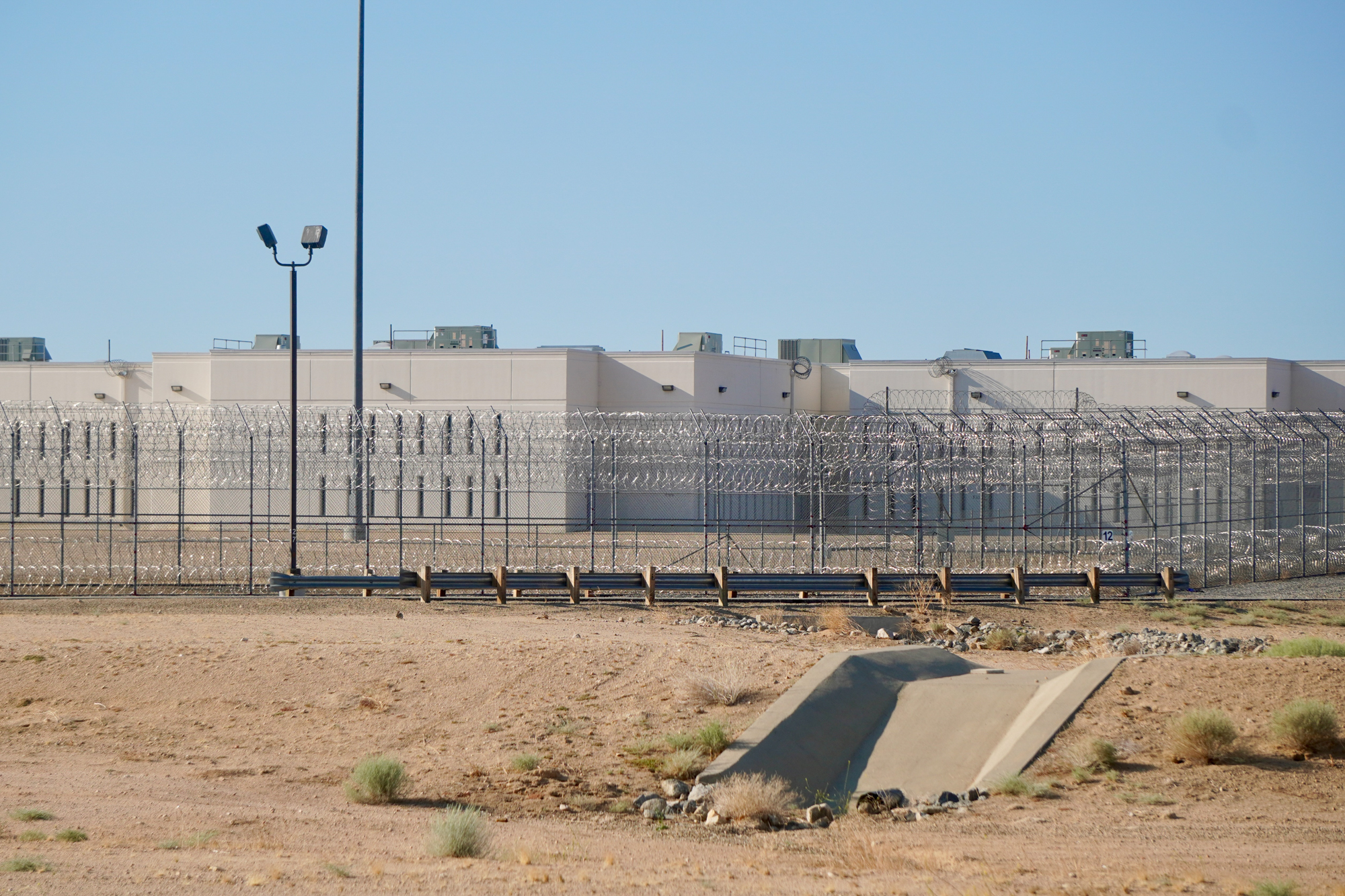
"caption": "A sign for the Federal Correctional Institution, Dublin, a former prison for women, in Dublin on April 8, 2024. Lawmakers, including East Bay Rep. Mark DeSaulnier, said they were concerned about the detention center conditions and deaths in ICE custody.\r\n",
"credit": "Beth LaBerge/KQED",
"altTag": null,
"description": null,
"imgSizes": {
"medium": {
"file": "https://cdn.kqed.org/wp-content/uploads/sites/10/2024/07/240408-FCIDublin-012-BL_qed-800x533.jpg",
"width": 800,
"height": 533,
"mimeType": "image/jpeg"
},
"large": {
"file": "https://cdn.kqed.org/wp-content/uploads/sites/10/2024/07/240408-FCIDublin-012-BL_qed-1020x680.jpg",
"width": 1020,
"height": 680,
"mimeType": "image/jpeg"
},
"thumbnail": {
"file": "https://cdn.kqed.org/wp-content/uploads/sites/10/2024/07/240408-FCIDublin-012-BL_qed-160x107.jpg",
"width": 160,
"height": 107,
"mimeType": "image/jpeg"
},
"1536x1536": {
"file": "https://cdn.kqed.org/wp-content/uploads/sites/10/2024/07/240408-FCIDublin-012-BL_qed-1536x1024.jpg",
"width": 1536,
"height": 1024,
"mimeType": "image/jpeg"
},
"post-thumbnail": {
"file": "https://cdn.kqed.org/wp-content/uploads/sites/10/2024/07/240408-FCIDublin-012-BL_qed-672x372.jpg",
"width": 672,
"height": 372,
"mimeType": "image/jpeg"
},
"twentyfourteen-full-width": {
"file": "https://cdn.kqed.org/wp-content/uploads/sites/10/2024/07/240408-FCIDublin-012-BL_qed-1038x576.jpg",
"width": 1038,
"height": 576,
"mimeType": "image/jpeg"
},
"full-width": {
"file": "https://cdn.kqed.org/wp-content/uploads/sites/10/2024/07/240408-FCIDublin-012-BL_qed-1920x1280.jpg",
"width": 1920,
"height": 1280,
"mimeType": "image/jpeg"
},
"kqedFullSize": {
"file": "https://cdn.kqed.org/wp-content/uploads/sites/10/2024/07/240408-FCIDublin-012-BL_qed.jpg",
"width": 2000,
"height": 1333
}
},
"isLoading": false,
"fetchFailed": false
},
"news_12035739": {
"type": "attachments",
"id": "news_12035739",
"meta": {
"index": "attachments_1716263798",
"site": "news",
"id": "12035739",
"found": true
},
"title": "Americans File Their Returns On Tax Day 2019",
"publishDate": 1744407995,
"status": "inherit",
"parent": 12035735,
"modified": 1771020890,
"caption": "The Internal Revenue Service (IRS) building in Washington, D.C. ",
"credit": "Zach Gibson/Getty Images",
"altTag": null,
"description": null,
"imgSizes": {
"medium": {
"file": "https://cdn.kqed.org/wp-content/uploads/sites/10/2025/04/internal-revenue-service_qed-800x533.jpg",
"width": 800,
"height": 533,
"mimeType": "image/jpeg"
},
"large": {
"file": "https://cdn.kqed.org/wp-content/uploads/sites/10/2025/04/internal-revenue-service_qed-1020x680.jpg",
"width": 1020,
"height": 680,
"mimeType": "image/jpeg"
},
"thumbnail": {
"file": "https://cdn.kqed.org/wp-content/uploads/sites/10/2025/04/internal-revenue-service_qed-160x107.jpg",
"width": 160,
"height": 107,
"mimeType": "image/jpeg"
},
"1536x1536": {
"file": "https://cdn.kqed.org/wp-content/uploads/sites/10/2025/04/internal-revenue-service_qed-1536x1024.jpg",
"width": 1536,
"height": 1024,
"mimeType": "image/jpeg"
},
"post-thumbnail": {
"file": "https://cdn.kqed.org/wp-content/uploads/sites/10/2025/04/internal-revenue-service_qed-672x372.jpg",
"width": 672,
"height": 372,
"mimeType": "image/jpeg"
},
"twentyfourteen-full-width": {
"file": "https://cdn.kqed.org/wp-content/uploads/sites/10/2025/04/internal-revenue-service_qed-1038x576.jpg",
"width": 1038,
"height": 576,
"mimeType": "image/jpeg"
},
"full-width": {
"file": "https://cdn.kqed.org/wp-content/uploads/sites/10/2025/04/internal-revenue-service_qed-1920x1280.jpg",
"width": 1920,
"height": 1280,
"mimeType": "image/jpeg"
},
"kqedFullSize": {
"file": "https://cdn.kqed.org/wp-content/uploads/sites/10/2025/04/internal-revenue-service_qed.jpg",
"width": 2000,
"height": 1333
}
},
"isLoading": false,
"fetchFailed": false
},
"news_12073336": {
"type": "attachments",
"id": "news_12073336",
"meta": {
"index": "attachments_1716263798",
"site": "news",
"id": "12073336",
"found": true
},
"title": "TrucksCM1",
"publishDate": 1770927961,
"status": "inherit",
"parent": 12073333,
"modified": 1770928000,
"caption": "A truck driver prepares to leave after receiving a shipping container at Yusen Terminals at the Port of Los Angeles in San Pedro on Feb. 11, 2025.",
"credit": "Joel Angel Juarez for CalMatters",
"altTag": null,
"description": null,
"imgSizes": {
"thumbnail": {
"file": "https://cdn.kqed.org/wp-content/uploads/sites/10/2026/02/TrucksCM1-160x107.jpg",
"width": 160,
"height": 107,
"mimeType": "image/jpeg"
},
"1536x1536": {
"file": "https://cdn.kqed.org/wp-content/uploads/sites/10/2026/02/TrucksCM1-1536x1024.jpg",
"width": 1536,
"height": 1024,
"mimeType": "image/jpeg"
},
"post-thumbnail": {
"file": "https://cdn.kqed.org/wp-content/uploads/sites/10/2026/02/TrucksCM1-672x372.jpg",
"width": 672,
"height": 372,
"mimeType": "image/jpeg"
},
"twentyfourteen-full-width": {
"file": "https://cdn.kqed.org/wp-content/uploads/sites/10/2026/02/TrucksCM1-1038x576.jpg",
"width": 1038,
"height": 576,
"mimeType": "image/jpeg"
},
"npr-cds-wide": {
"file": "https://cdn.kqed.org/wp-content/uploads/sites/10/2026/02/TrucksCM1-1200x675.jpg",
"width": 1200,
"height": 675,
"mimeType": "image/jpeg"
},
"kqedFullSize": {
"file": "https://cdn.kqed.org/wp-content/uploads/sites/10/2026/02/TrucksCM1.jpg",
"width": 2000,
"height": 1333
}
},
"isLoading": false,
"fetchFailed": false
},
"news_12046565": {
"type": "attachments",
"id": "news_12046565",
"meta": {
"index": "attachments_1716263798",
"site": "news",
"id": "12046565",
"found": true
},
"title": "The Core Civic detention facility in California City on June 28, 2025.",
"publishDate": 1751305002,
"status": "inherit",
"parent": 0,
"modified": 1751305043,
"caption": "The Core Civic detention facility in California City on June 28, 2025.",
"credit": "Saul Gonzalez/KQED",
"altTag": null,
"description": null,
"imgSizes": {
"thumbnail": {
"file": "https://cdn.kqed.org/wp-content/uploads/sites/10/2025/06/CORECIVICCALCITY2-KQED-160x107.jpg",
"width": 160,
"height": 107,
"mimeType": "image/jpeg"
},
"1536x1536": {
"file": "https://cdn.kqed.org/wp-content/uploads/sites/10/2025/06/CORECIVICCALCITY2-KQED-1536x1024.jpg",
"width": 1536,
"height": 1024,
"mimeType": "image/jpeg"
},
"post-thumbnail": {
"file": "https://cdn.kqed.org/wp-content/uploads/sites/10/2025/06/CORECIVICCALCITY2-KQED-672x372.jpg",
"width": 672,
"height": 372,
"mimeType": "image/jpeg"
},
"twentyfourteen-full-width": {
"file": "https://cdn.kqed.org/wp-content/uploads/sites/10/2025/06/CORECIVICCALCITY2-KQED-1038x576.jpg",
"width": 1038,
"height": 576,
"mimeType": "image/jpeg"
},
"kqedFullSize": {
"file": "https://cdn.kqed.org/wp-content/uploads/sites/10/2025/06/CORECIVICCALCITY2-KQED.jpg",
"width": 2000,
"height": 1333
}
},
"isLoading": false,
"fetchFailed": false
},
"news_12073071": {
"type": "attachments",
"id": "news_12073071",
"meta": {
"index": "attachments_1716263798",
"site": "news",
"id": "12073071",
"found": true
},
"title": "20251105_URBANSTRATEGY_PL_01-KQED",
"publishDate": 1770762003,
"status": "inherit",
"parent": 0,
"modified": 1770762068,
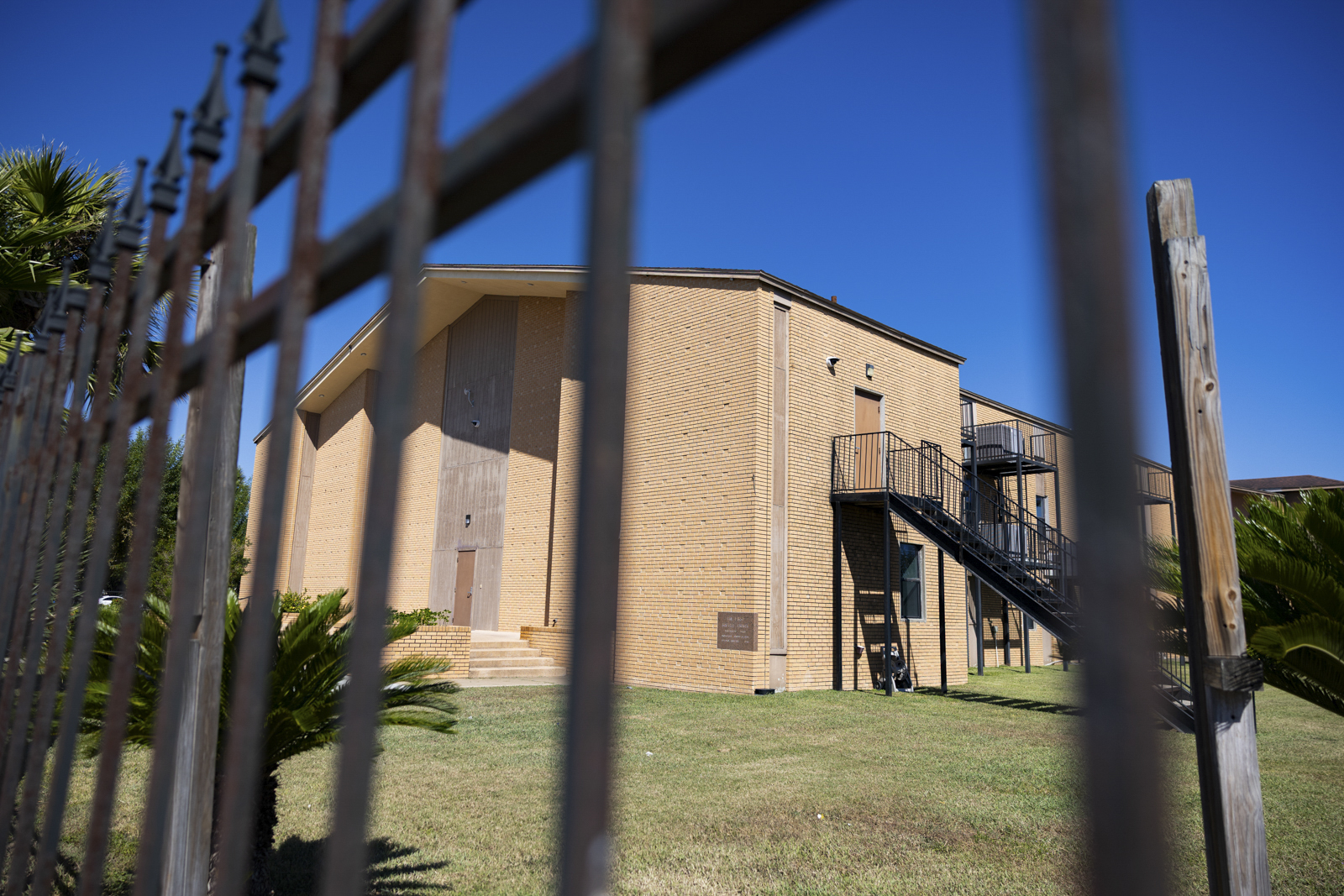
"caption": "The Trump administration is sending pregnant unaccompanied minors to a Texas shelter, shown above, that has been flagged as medically inadequate. The facility is run by the for-profit contractor Urban Strategies, whose founder and president, Lisa Cummins, has said the company is “deeply committed to the care and well-being of the children we serve.” Sources familiar with the facility dispute that characterization.",
"credit": "Patricia Lim/KUT News",
"altTag": null,
"description": null,
"imgSizes": {
"thumbnail": {
"file": "https://cdn.kqed.org/wp-content/uploads/sites/10/2026/02/20251105_URBANSTRATEGY_PL_01-KQED-160x107.jpg",
"width": 160,
"height": 107,
"mimeType": "image/jpeg"
},
"1536x1536": {
"file": "https://cdn.kqed.org/wp-content/uploads/sites/10/2026/02/20251105_URBANSTRATEGY_PL_01-KQED-1536x1024.jpg",
"width": 1536,
"height": 1024,
"mimeType": "image/jpeg"
},
"post-thumbnail": {
"file": "https://cdn.kqed.org/wp-content/uploads/sites/10/2026/02/20251105_URBANSTRATEGY_PL_01-KQED-672x372.jpg",
"width": 672,
"height": 372,
"mimeType": "image/jpeg"
},
"twentyfourteen-full-width": {
"file": "https://cdn.kqed.org/wp-content/uploads/sites/10/2026/02/20251105_URBANSTRATEGY_PL_01-KQED-1038x576.jpg",
"width": 1038,
"height": 576,
"mimeType": "image/jpeg"
},
"npr-cds-wide": {
"file": "https://cdn.kqed.org/wp-content/uploads/sites/10/2026/02/20251105_URBANSTRATEGY_PL_01-KQED-1200x675.jpg",
"width": 1200,
"height": 675,
"mimeType": "image/jpeg"
},
"kqedFullSize": {
"file": "https://cdn.kqed.org/wp-content/uploads/sites/10/2026/02/20251105_URBANSTRATEGY_PL_01-KQED.jpg",
"width": 1600,
"height": 1067
}
},
"isLoading": false,
"fetchFailed": false
},
"news_12072622": {
"type": "attachments",
"id": "news_12072622",
"meta": {
"index": "attachments_1716263798",
"site": "news",
"id": "12072622",
"found": true
},
"title": "020325_Day-Without-Immigrants_JWH_CM_26",
"publishDate": 1770405218,
"status": "inherit",
"parent": 12072603,
"modified": 1770405234,
"caption": "Protesters gather in Downtown Los Angeles for a march to support immigrants on Feb. 3, 2025. A liberal contingent of LA council members wants to protect undocumented immigrants.",
"credit": " Photo by J.W. Hendricks/CalMatters",
"altTag": null,
"description": null,
"imgSizes": {
"thumbnail": {
"file": "https://cdn.kqed.org/wp-content/uploads/sites/10/2026/02/020325_Day-Without-Immigrants_JWH_CM_26-160x107.jpeg",
"width": 160,
"height": 107,
"mimeType": "image/jpeg"
},
"1536x1536": {
"file": "https://cdn.kqed.org/wp-content/uploads/sites/10/2026/02/020325_Day-Without-Immigrants_JWH_CM_26-1536x1024.jpeg",
"width": 1536,
"height": 1024,
"mimeType": "image/jpeg"
},
"post-thumbnail": {
"file": "https://cdn.kqed.org/wp-content/uploads/sites/10/2026/02/020325_Day-Without-Immigrants_JWH_CM_26-672x372.jpeg",
"width": 672,
"height": 372,
"mimeType": "image/jpeg"
},
"twentyfourteen-full-width": {
"file": "https://cdn.kqed.org/wp-content/uploads/sites/10/2026/02/020325_Day-Without-Immigrants_JWH_CM_26-1038x576.jpeg",
"width": 1038,
"height": 576,
"mimeType": "image/jpeg"
},
"npr-cds-wide": {
"file": "https://cdn.kqed.org/wp-content/uploads/sites/10/2026/02/020325_Day-Without-Immigrants_JWH_CM_26-1200x675.jpeg",
"width": 1200,
"height": 675,
"mimeType": "image/jpeg"
},
"kqedFullSize": {
"file": "https://cdn.kqed.org/wp-content/uploads/sites/10/2026/02/020325_Day-Without-Immigrants_JWH_CM_26.jpeg",
"width": 2000,
"height": 1333
}
},
"isLoading": false,
"fetchFailed": false
},
"news_12071887": {
"type": "attachments",
"id": "news_12071887",
"meta": {
"index": "attachments_1716263798",
"site": "news",
"id": "12071887",
"found": true
},
"title": "092222-DAVID-VALADAO-REUTERS-GS-CM",
"publishDate": 1770052779,
"status": "inherit",
"parent": 12071886,
"modified": 1770053168,
"caption": "Rep. David Valadao of California speaks at the U.S. Capitol in Washington, D.C., on March 17, 2021. ",
"credit": "Graeme Sloan/Sipa USA via Reuters",
"altTag": null,
"description": null,
"imgSizes": {
"thumbnail": {
"file": "https://cdn.kqed.org/wp-content/uploads/sites/10/2026/02/092222-DAVID-VALADAO-REUTERS-GS-CM-160x107.jpeg",
"width": 160,
"height": 107,
"mimeType": "image/jpeg"
},
"1536x1536": {
"file": "https://cdn.kqed.org/wp-content/uploads/sites/10/2026/02/092222-DAVID-VALADAO-REUTERS-GS-CM-1536x1024.jpeg",
"width": 1536,
"height": 1024,
"mimeType": "image/jpeg"
},
"post-thumbnail": {
"file": "https://cdn.kqed.org/wp-content/uploads/sites/10/2026/02/092222-DAVID-VALADAO-REUTERS-GS-CM-672x372.jpeg",
"width": 672,
"height": 372,
"mimeType": "image/jpeg"
},
"twentyfourteen-full-width": {
"file": "https://cdn.kqed.org/wp-content/uploads/sites/10/2026/02/092222-DAVID-VALADAO-REUTERS-GS-CM-1038x576.jpeg",
"width": 1038,
"height": 576,
"mimeType": "image/jpeg"
},
"npr-cds-wide": {
"file": "https://cdn.kqed.org/wp-content/uploads/sites/10/2026/02/092222-DAVID-VALADAO-REUTERS-GS-CM-1200x675.jpeg",
"width": 1200,
"height": 675,
"mimeType": "image/jpeg"
},
"kqedFullSize": {
"file": "https://cdn.kqed.org/wp-content/uploads/sites/10/2026/02/092222-DAVID-VALADAO-REUTERS-GS-CM.jpeg",
"width": 2000,
"height": 1333
}
},
"isLoading": false,
"fetchFailed": false
},
"news_12067062": {
"type": "attachments",
"id": "news_12067062",
"meta": {
"index": "attachments_1716263798",
"site": "news",
"id": "12067062",
"found": true
},
"title": "251210-SFOEATING-87-BL-KQED",
"publishDate": 1765586622,
"status": "inherit",
"parent": 12072458,
"modified": 1770325149,
"caption": "Passengers wait for their flight at San Francisco International Airport on Dec. 10, 2025.",
"credit": "Beth LaBerge/KQED",
"altTag": null,
"description": null,
"imgSizes": {
"thumbnail": {
"file": "https://cdn.kqed.org/wp-content/uploads/sites/10/2025/12/251210-SFOEATING-87-BL-KQED-160x107.jpg",
"width": 160,
"height": 107,
"mimeType": "image/jpeg"
},
"1536x1536": {
"file": "https://cdn.kqed.org/wp-content/uploads/sites/10/2025/12/251210-SFOEATING-87-BL-KQED-1536x1024.jpg",
"width": 1536,
"height": 1024,
"mimeType": "image/jpeg"
},
"post-thumbnail": {
"file": "https://cdn.kqed.org/wp-content/uploads/sites/10/2025/12/251210-SFOEATING-87-BL-KQED-672x372.jpg",
"width": 672,
"height": 372,
"mimeType": "image/jpeg"
},
"twentyfourteen-full-width": {
"file": "https://cdn.kqed.org/wp-content/uploads/sites/10/2025/12/251210-SFOEATING-87-BL-KQED-1038x576.jpg",
"width": 1038,
"height": 576,
"mimeType": "image/jpeg"
},
"npr-cds-wide": {
"file": "https://cdn.kqed.org/wp-content/uploads/sites/10/2025/12/251210-SFOEATING-87-BL-KQED-1200x675.jpg",
"width": 1200,
"height": 675,
"mimeType": "image/jpeg"
},
"kqedFullSize": {
"file": "https://cdn.kqed.org/wp-content/uploads/sites/10/2025/12/251210-SFOEATING-87-BL-KQED.jpg",
"width": 2000,
"height": 1333
}
},
"isLoading": false,
"fetchFailed": false
},
"news_12071492": {
"type": "attachments",
"id": "news_12071492",
"meta": {
"index": "attachments_1716263798",
"site": "news",
"id": "12071492",
"found": true
},
"title": "260128-SUPERBOWLFILE00037_TV-KQED",
"publishDate": 1769706969,
"status": "inherit",
"parent": 0,
"modified": 1769733356,
"caption": "A Super Bowl banner decorates the exterior of Levi’s Stadium in San Jose on Jan. 28, 2026.",
"credit": "Tâm Vũ/KQED",
"altTag": null,
"description": null,
"imgSizes": {
"thumbnail": {
"file": "https://cdn.kqed.org/wp-content/uploads/sites/10/2026/01/260128-SUPERBOWLFILE00037_TV-KQED-160x107.jpg",
"width": 160,
"height": 107,
"mimeType": "image/jpeg"
},
"1536x1536": {
"file": "https://cdn.kqed.org/wp-content/uploads/sites/10/2026/01/260128-SUPERBOWLFILE00037_TV-KQED-1536x1024.jpg",
"width": 1536,
"height": 1024,
"mimeType": "image/jpeg"
},
"post-thumbnail": {
"file": "https://cdn.kqed.org/wp-content/uploads/sites/10/2026/01/260128-SUPERBOWLFILE00037_TV-KQED-672x372.jpg",
"width": 672,
"height": 372,
"mimeType": "image/jpeg"
},
"twentyfourteen-full-width": {
"file": "https://cdn.kqed.org/wp-content/uploads/sites/10/2026/01/260128-SUPERBOWLFILE00037_TV-KQED-1038x576.jpg",
"width": 1038,
"height": 576,
"mimeType": "image/jpeg"
},
"npr-cds-wide": {
"file": "https://cdn.kqed.org/wp-content/uploads/sites/10/2026/01/260128-SUPERBOWLFILE00037_TV-KQED-1200x675.jpg",
"width": 1200,
"height": 675,
"mimeType": "image/jpeg"
},
"kqedFullSize": {
"file": "https://cdn.kqed.org/wp-content/uploads/sites/10/2026/01/260128-SUPERBOWLFILE00037_TV-KQED.jpg",
"width": 2000,
"height": 1333
}
},
"isLoading": false,
"fetchFailed": false
},
"news_12015196": {
"type": "attachments",
"id": "news_12015196",
"meta": {
"index": "attachments_1716263798",
"site": "news",
"id": "12015196",
"found": true
},
"title": "241120-TransgenderAthletes-01",
"publishDate": 1732143963,
"status": "inherit",
"parent": 0,
"modified": 1769648999,
"caption": "The San José State Spartans volleyball team prepares for the serve from their opponents, the University of New Mexico Lobos, at their home game on Nov. 2, 2024.",
"credit": "Natalia Navarro/KQED",
"altTag": null,
"description": null,
"imgSizes": {
"medium": {
"file": "https://cdn.kqed.org/wp-content/uploads/sites/10/2024/11/241120-TransgenderAthletes-01-800x533.jpg",
"width": 800,
"height": 533,
"mimeType": "image/jpeg"
},
"large": {
"file": "https://cdn.kqed.org/wp-content/uploads/sites/10/2024/11/241120-TransgenderAthletes-01-1020x680.jpg",
"width": 1020,
"height": 680,
"mimeType": "image/jpeg"
},
"thumbnail": {
"file": "https://cdn.kqed.org/wp-content/uploads/sites/10/2024/11/241120-TransgenderAthletes-01-160x107.jpg",
"width": 160,
"height": 107,
"mimeType": "image/jpeg"
},
"1536x1536": {
"file": "https://cdn.kqed.org/wp-content/uploads/sites/10/2024/11/241120-TransgenderAthletes-01-1536x1024.jpg",
"width": 1536,
"height": 1024,
"mimeType": "image/jpeg"
},
"post-thumbnail": {
"file": "https://cdn.kqed.org/wp-content/uploads/sites/10/2024/11/241120-TransgenderAthletes-01-672x372.jpg",
"width": 672,
"height": 372,
"mimeType": "image/jpeg"
},
"twentyfourteen-full-width": {
"file": "https://cdn.kqed.org/wp-content/uploads/sites/10/2024/11/241120-TransgenderAthletes-01-1038x576.jpg",
"width": 1038,
"height": 576,
"mimeType": "image/jpeg"
},
"full-width": {
"file": "https://cdn.kqed.org/wp-content/uploads/sites/10/2024/11/241120-TransgenderAthletes-01-1920x1280.jpg",
"width": 1920,
"height": 1280,
"mimeType": "image/jpeg"
},
"kqedFullSize": {
"file": "https://cdn.kqed.org/wp-content/uploads/sites/10/2024/11/241120-TransgenderAthletes-01.jpg",
"width": 2000,
"height": 1333
}
},
"isLoading": false,
"fetchFailed": false
},
"news_12070623": {
"type": "attachments",
"id": "news_12070623",
"meta": {
"index": "attachments_1716263798",
"site": "news",
"id": "12070623",
"found": true
},
"title": "Adam Schiff,Alex Padilla",
"publishDate": 1769027855,
"status": "inherit",
"parent": 12070519,
"modified": 1769045859,
"caption": "A guard walks to the entrance of an immigration detention center during a visit by California Democrats Sen. Adam Schiff and Sen. Alex Padilla, on Jan. 20, 2026, in California City, California.",
"credit": "Marcio Jose Sanchez/AP Photo",
"altTag": null,
"description": null,
"imgSizes": {
"thumbnail": {
"file": "https://cdn.kqed.org/wp-content/uploads/sites/10/2026/01/AP26020826398216-KQED-160x107.jpg",
"width": 160,
"height": 107,
"mimeType": "image/jpeg"
},
"1536x1536": {
"file": "https://cdn.kqed.org/wp-content/uploads/sites/10/2026/01/AP26020826398216-KQED-1536x1024.jpg",
"width": 1536,
"height": 1024,
"mimeType": "image/jpeg"
},
"post-thumbnail": {
"file": "https://cdn.kqed.org/wp-content/uploads/sites/10/2026/01/AP26020826398216-KQED-672x372.jpg",
"width": 672,
"height": 372,
"mimeType": "image/jpeg"
},
"twentyfourteen-full-width": {
"file": "https://cdn.kqed.org/wp-content/uploads/sites/10/2026/01/AP26020826398216-KQED-1038x576.jpg",
"width": 1038,
"height": 576,
"mimeType": "image/jpeg"
},
"npr-cds-wide": {
"file": "https://cdn.kqed.org/wp-content/uploads/sites/10/2026/01/AP26020826398216-KQED-1200x675.jpg",
"width": 1200,
"height": 675,
"mimeType": "image/jpeg"
},
"kqedFullSize": {
"file": "https://cdn.kqed.org/wp-content/uploads/sites/10/2026/01/AP26020826398216-KQED.jpg",
"width": 2000,
"height": 1333
}
},
"isLoading": false,
"fetchFailed": false
},
"news_12067431": {
"type": "attachments",
"id": "news_12067431",
"meta": {
"index": "attachments_1716263798",
"site": "news",
"id": "12067431",
"found": true
},
"title": "251216-ICEPROTEST-33-BL-KQED",
"publishDate": 1765914098,
"status": "inherit",
"parent": 12073445,
"modified": 1771019610,
"caption": "Department of Homeland Security officers detain demonstrators outside of the ICE field offices in San Francisco on Dec. 16, 2025.",
"credit": "Beth LaBerge/KQED",
"altTag": null,
"description": null,
"imgSizes": {
"thumbnail": {
"file": "https://cdn.kqed.org/wp-content/uploads/sites/10/2025/12/251216-ICEPROTEST-33-BL-KQED-160x107.jpg",
"width": 160,
"height": 107,
"mimeType": "image/jpeg"
},
"1536x1536": {
"file": "https://cdn.kqed.org/wp-content/uploads/sites/10/2025/12/251216-ICEPROTEST-33-BL-KQED-1536x1024.jpg",
"width": 1536,
"height": 1024,
"mimeType": "image/jpeg"
},
"post-thumbnail": {
"file": "https://cdn.kqed.org/wp-content/uploads/sites/10/2025/12/251216-ICEPROTEST-33-BL-KQED-672x372.jpg",
"width": 672,
"height": 372,
"mimeType": "image/jpeg"
},
"twentyfourteen-full-width": {
"file": "https://cdn.kqed.org/wp-content/uploads/sites/10/2025/12/251216-ICEPROTEST-33-BL-KQED-1038x576.jpg",
"width": 1038,
"height": 576,
"mimeType": "image/jpeg"
},
"npr-cds-wide": {
"file": "https://cdn.kqed.org/wp-content/uploads/sites/10/2025/12/251216-ICEPROTEST-33-BL-KQED-1200x675.jpg",
"width": 1200,
"height": 675,
"mimeType": "image/jpeg"
},
"kqedFullSize": {
"file": "https://cdn.kqed.org/wp-content/uploads/sites/10/2025/12/251216-ICEPROTEST-33-BL-KQED.jpg",
"width": 2000,
"height": 1333
}
},
"isLoading": false,
"fetchFailed": false
}
},
"audioPlayerReducer": {
"postId": "stream_live",
"isPaused": true,
"isPlaying": false,
"pfsActive": false,
"pledgeModalIsOpen": true,
"playerDrawerIsOpen": false,
"liveAudioPlayStartedAt": 0,
"liveAudioPlayContext": ""
},
"authorsReducer": {
"byline_news_12073333": {
"type": "authors",
"id": "byline_news_12073333",
"meta": {
"override": true
},
"slug": "byline_news_12073333",
"name": "Alejandro Lazo, CalMatters",
"isLoading": false
},
"byline_news_12072843": {
"type": "authors",
"id": "byline_news_12072843",
"meta": {
"override": true
},
"slug": "byline_news_12072843",
"name": "Mark Betancourt The California Newsroom, The Texas Newsroom",
"isLoading": false
},
"byline_news_12072603": {
"type": "authors",
"id": "byline_news_12072603",
"meta": {
"override": true
},
"slug": "byline_news_12072603",
"name": "\u003ca href=\"https://calmatters.org/author/jim-newton/\">Jim Newton\u003c/a>, CalMatters",
"isLoading": false
},
"byline_news_12071886": {
"type": "authors",
"id": "byline_news_12071886",
"meta": {
"override": true
},
"slug": "byline_news_12071886",
"name": "Maya C. Miller, CalMatters",
"isLoading": false
},
"gmarzorati": {
"type": "authors",
"id": "227",
"meta": {
"index": "authors_1716337520",
"id": "227",
"found": true
},
"name": "Guy Marzorati",
"firstName": "Guy",
"lastName": "Marzorati",
"slug": "gmarzorati",
"email": "gmarzorati@KQED.org",
"display_author_email": true,
"staff_mastheads": [
"news"
],
"title": "Correspondent",
"bio": "Guy Marzorati is a correspondent on KQED's California Politics and Government Desk, based in San Jose. A graduate of Santa Clara University, Guy joined KQED in 2013. He reports on state and local politics and produces KQED's digital voter guide.",
"avatar": "https://secure.gravatar.com/avatar/e7038b8dbfd55b104369b76b1cd0b9de?s=600&d=blank&r=g",
"twitter": "guymarzorati",
"facebook": null,
"instagram": null,
"linkedin": null,
"sites": [
{
"site": "",
"roles": [
"editor"
]
},
{
"site": "news",
"roles": [
"editor"
]
},
{
"site": "science",
"roles": [
"editor"
]
},
{
"site": "forum",
"roles": [
"editor"
]
},
{
"site": "elections",
"roles": [
"editor"
]
},
{
"site": "liveblog",
"roles": [
"editor"
]
}
],
"headData": {
"title": "Guy Marzorati | KQED",
"description": "Correspondent",
"ogImgSrc": "https://secure.gravatar.com/avatar/e7038b8dbfd55b104369b76b1cd0b9de?s=600&d=blank&r=g",
"twImgSrc": "https://secure.gravatar.com/avatar/e7038b8dbfd55b104369b76b1cd0b9de?s=600&d=blank&r=g"
},
"isLoading": false,
"link": "/author/gmarzorati"
},
"tychehendricks": {
"type": "authors",
"id": "259",
"meta": {
"index": "authors_1716337520",
"id": "259",
"found": true
},
"name": "Tyche Hendricks",
"firstName": "Tyche",
"lastName": "Hendricks",
"slug": "tychehendricks",
"email": "thendricks@kqed.org",
"display_author_email": true,
"staff_mastheads": [
"news"
],
"title": "KQED Senior Editor, Immigration",
"bio": "\u003cspan style=\"font-weight: 400;\">Tyche Hendricks is KQED’s senior editor for immigration, leading coverage of the policy and politics that affect California’s immigrant communities. Her work for KQED’s radio and online audiences is also carried on NPR and other national outlets. She has been recognized with awards from the Radio and Television News Directors Association, the Society for Professional Journalists; the Education Writers Association; the Best of the West and the National Federation of Community Broadcasters. Before joining KQED in 2010, Tyche spent more than a dozen years as a newspaper reporter, notably at the \u003c/span>\u003ci>\u003cspan style=\"font-weight: 400;\">San Francisco Chronicle\u003c/span>\u003c/i>\u003cspan style=\"font-weight: 400;\">. At different times she has covered criminal justice, government and politics and urban planning. Tyche has taught in the MFA Creative Writing program at the University of San Francisco and at UC Berkeley’s Graduate School of Journalism, where she was co-director of a national immigration symposium for professional journalists. She is the author of \u003c/span>\u003ci>\u003cspan style=\"font-weight: 400;\">The Wind Doesn't Need a Passport: Stories from the U.S.-Mexico Borderlands\u003c/span>\u003c/i>\u003cspan style=\"font-weight: 400;\"> (University of California Press). \u003c/span>",
"avatar": "https://secure.gravatar.com/avatar/b8ee458e2731c2d43df86882ce17267e?s=600&d=blank&r=g",
"twitter": "tychehendricks",
"facebook": null,
"instagram": null,
"linkedin": null,
"sites": [
{
"site": "news",
"roles": [
"editor"
]
},
{
"site": "stateofhealth",
"roles": [
"editor"
]
}
],
"headData": {
"title": "Tyche Hendricks | KQED",
"description": "KQED Senior Editor, Immigration",
"ogImgSrc": "https://secure.gravatar.com/avatar/b8ee458e2731c2d43df86882ce17267e?s=600&d=blank&r=g",
"twImgSrc": "https://secure.gravatar.com/avatar/b8ee458e2731c2d43df86882ce17267e?s=600&d=blank&r=g"
},
"isLoading": false,
"link": "/author/tychehendricks"
},
"carlysevern": {
"type": "authors",
"id": "3243",
"meta": {
"index": "authors_1716337520",
"id": "3243",
"found": true
},
"name": "Carly Severn",
"firstName": "Carly",
"lastName": "Severn",
"slug": "carlysevern",
"email": "csevern@kqed.org",
"display_author_email": false,
"staff_mastheads": [
"news"
],
"title": "Senior Editor, Audience News ",
"bio": "Carly is KQED's Senior Editor of Audience News on the Digital News team, and has reported for the California Report Magazine, Bay Curious and KQED Arts. She's formerly the host of \u003ca href=\"http://ww2.kqed.org/pop/category/the-cooler/\" rel=\"noopener noreferrer\">The Cooler\u003c/a> podcast.",
"avatar": "https://secure.gravatar.com/avatar/54037bf5c128fe678f0ef26cec97a93f2e7f220a22d7285703328f12c42c1b1d?s=600&d=blank&r=g",
"twitter": "teacupinthebay",
"bluesky": null,
"facebook": null,
"instagram": null,
"linkedin": null,
"sites": [
{
"site": "",
"roles": [
"editor"
]
},
{
"site": "arts",
"roles": [
"editor"
]
},
{
"site": "news",
"roles": [
"administrator"
]
},
{
"site": "pop",
"roles": [
"editor"
]
},
{
"site": "futureofyou",
"roles": [
"editor"
]
},
{
"site": "about",
"roles": [
"administrator"
]
},
{
"site": "mindshift",
"roles": [
"editor"
]
},
{
"site": "bayareabites",
"roles": [
"editor"
]
},
{
"site": "stateofhealth",
"roles": [
"editor"
]
},
{
"site": "science",
"roles": [
"editor"
]
},
{
"site": "food",
"roles": [
"contributor"
]
},
{
"site": "forum",
"roles": [
"editor"
]
},
{
"site": "perspectives",
"roles": [
"administrator"
]
},
{
"site": "liveblog",
"roles": [
"editor"
]
}
],
"headData": {
"title": "Carly Severn | KQED",
"description": "Senior Editor, Audience News ",
"ogImgSrc": "https://secure.gravatar.com/avatar/54037bf5c128fe678f0ef26cec97a93f2e7f220a22d7285703328f12c42c1b1d?s=600&d=blank&r=g",
"twImgSrc": "https://secure.gravatar.com/avatar/54037bf5c128fe678f0ef26cec97a93f2e7f220a22d7285703328f12c42c1b1d?s=600&d=blank&r=g"
},
"isLoading": false,
"link": "/author/carlysevern"
},
"ccabreralomeli": {
"type": "authors",
"id": "11708",
"meta": {
"index": "authors_1716337520",
"id": "11708",
"found": true
},
"name": "Carlos Cabrera-Lomelí",
"firstName": "Carlos",
"lastName": "Cabrera-Lomelí",
"slug": "ccabreralomeli",
"email": "ccabreralomeli@KQED.org",
"display_author_email": true,
"staff_mastheads": [
"news"
],
"title": "Community Reporter",
"bio": "Carlos Cabrera-Lomelí is a community reporter with KQED's digital engagement team. He also reports and co-produces for KQED's bilingual news hub KQED en Español. He grew up in San Francisco's Mission District and has previously worked with Univision, 48 Hills and REFORMA in Mexico City.",
"avatar": "https://secure.gravatar.com/avatar/c309be9665e484f887b818c89e273ecc673004f426f36b24d00a4d813a2e0518?s=600&d=blank&r=g",
"twitter": "@LomeliCabrera",
"bluesky": null,
"facebook": null,
"instagram": null,
"linkedin": null,
"sites": [
{
"site": "arts",
"roles": [
"editor"
]
},
{
"site": "news",
"roles": [
"editor"
]
},
{
"site": "about",
"roles": [
"editor"
]
},
{
"site": "science",
"roles": [
"editor"
]
},
{
"site": "perspectives",
"roles": [
"editor"
]
},
{
"site": "elections",
"roles": [
"editor"
]
},
{
"site": "liveblog",
"roles": [
"contributor"
]
}
],
"headData": {
"title": "Carlos Cabrera-Lomelí | KQED",
"description": "Community Reporter",
"ogImgSrc": "https://secure.gravatar.com/avatar/c309be9665e484f887b818c89e273ecc673004f426f36b24d00a4d813a2e0518?s=600&d=blank&r=g",
"twImgSrc": "https://secure.gravatar.com/avatar/c309be9665e484f887b818c89e273ecc673004f426f36b24d00a4d813a2e0518?s=600&d=blank&r=g"
},
"isLoading": false,
"link": "/author/ccabreralomeli"
},
"emanoukian": {
"type": "authors",
"id": "11925",
"meta": {
"index": "authors_1716337520",
"id": "11925",
"found": true
},
"name": "Elize Manoukian",
"firstName": "Elize",
"lastName": "Manoukian",
"slug": "emanoukian",
"email": "emanoukian@KQED.org",
"display_author_email": false,
"staff_mastheads": [
"news"
],
"title": "Digital News Editor",
"bio": "Elize Manoukian is an award-winning audio producer and Senior Editor on the Express Desk, KQED's digital news platform. Her work has appeared on KPFA, Interlochen Public Radio, Oregon Public Broadcast, the New York Daily News, LA Times and the San Diego Union-Tribune.",
"avatar": "https://secure.gravatar.com/avatar/4525f1a8e46ccb30933b32653d9772064cfefe3fa655eb45b3b3a80341f6bdad?s=600&d=blank&r=g",
"twitter": null,
"bluesky": null,
"facebook": null,
"instagram": null,
"linkedin": null,
"sites": [
{
"site": "arts",
"roles": [
"editor"
]
},
{
"site": "news",
"roles": [
"editor"
]
},
{
"site": "science",
"roles": [
"editor"
]
}
],
"headData": {
"title": "Elize Manoukian | KQED",
"description": "Digital News Editor",
"ogImgSrc": "https://secure.gravatar.com/avatar/4525f1a8e46ccb30933b32653d9772064cfefe3fa655eb45b3b3a80341f6bdad?s=600&d=blank&r=g",
"twImgSrc": "https://secure.gravatar.com/avatar/4525f1a8e46ccb30933b32653d9772064cfefe3fa655eb45b3b3a80341f6bdad?s=600&d=blank&r=g"
},
"isLoading": false,
"link": "/author/emanoukian"
}
},
"pagesReducer": {
"news_tag_donald-trump": {
"type": "terms",
"id": "news_1323",
"meta": {
"index": "terms_1716263798",
"site": "news",
"id": "1323",
"score": 8.557341
},
"featImg": null,
"name": "Donald Trump",
"description": null,
"taxonomy": "tag",
"headData": {
"twImgId": null,
"twTitle": null,
"ogTitle": null,
"ogImgId": null,
"twDescription": null,
"description": null,
"title": "Donald Trump Archives | KQED News",
"ogDescription": null
},
"ttid": 1335,
"slug": "donald-trump",
"isLoading": false,
"title": "Donald Trump",
"pageMeta": {
"site": "news",
"WpPageTemplate": "page-topic-editorial",
"currentPage": 9
},
"blocks": [
{
"blockName": "kqed/post-list",
"attrs": {
"layout": "cardArticle2",
"query": "posts/news?tag=donald-trump",
"seeMore": false,
"paginated": true,
"page": 9
}
},
{
"blockName": "kqed/ad"
}
]
}
},
"pfsSessionReducer": {},
"postsReducer": {
"stream_live": {
"type": "live",
"id": "stream_live",
"audioUrl": "https://streams.kqed.org/kqedradio",
"title": "Live Stream",
"excerpt": "Live Stream information currently unavailable.",
"link": "/radio",
"featImg": "",
"label": {
"name": "KQED Live",
"link": "/"
}
},
"stream_kqedNewscast": {
"type": "posts",
"id": "stream_kqedNewscast",
"audioUrl": "https://www.kqed.org/.stream/anon/radio/RDnews/newscast.mp3?_=1",
"title": "KQED Newscast",
"featImg": "",
"label": {
"name": "88.5 FM",
"link": "/"
}
},
"news_12073633": {
"type": "posts",
"id": "news_12073633",
"meta": {
"index": "posts_1716263798",
"site": "news",
"id": "12073633",
"score": null,
"sort": [
1771423239000
]
},
"guestAuthors": [],
"slug": "california-democrats-ask-kristi-noem-to-not-reopen-fci-dublin-as-an-immigration-jail",
"title": "California Democrats Ask Kristi Noem Not to Reopen FCI Dublin as an Immigration Jail",
"publishDate": 1771423239,
"format": "standard",
"headTitle": "California Democrats Ask Kristi Noem Not to Reopen FCI Dublin as an Immigration Jail | KQED",
"labelTerm": {
"site": "news"
},
"content": "\u003cp>Three California Democrats are speaking out against the idea that the Trump administration could \u003ca href=\"https://www.kqed.org/news/12067566/dublin-council-takes-stand-against-turning-closed-prison-into-ice-detention\">turn a shuttered women’s prison\u003c/a> in Alameda County into a new immigration detention facility.\u003c/p>\n\u003cp>Sens. Alex Padilla and Adam Schiff and East Bay Rep. Mark DeSaulnier, whose district includes the former Federal Correctional Institution in Dublin, sent a letter late Tuesday to Homeland Security Secretary Kristi Noem voicing strong opposition to repurposing the facility as an immigration jail and asking pointed questions about whether there are plans in the works.\u003c/p>\n\u003cp>Though they did not cite specific new evidence that DHS is moving to open the facility, the members expressed a mounting sense of urgency to block the expansion of U.S. Immigration and Customs Enforcement detention at a time when in-custody deaths are spiking, and watchdog groups and state officials have described conditions as \u003ca href=\"https://www.kqed.org/news/12062774/conditions-at-massive-new-california-immigration-facility-are-alarming-report-finds\">“alarming”\u003c/a> and \u003ca href=\"https://oag.ca.gov/news/press-releases/attorney-general-bonta-warns-dangerous-conditions-california-city-detention\">“dangerous.”\u003c/a>\u003c/p>\n\u003cp>[ad fullwidth]\u003c/p>\n\u003cp>In an emailed statement to KQED on Feb. 18, an unnamed ICE spokesperson said: “ICE does \u003cstrong>not\u003c/strong> have plans to use the FCI Dublin for immigration detention.”\u003c/p>\n\u003cp>With funding for ICE in last summer’s One Big Beautiful Bill Act, Secretary Noem “aims to work with officials on both sides of the aisle to expand detention space to help ICE law enforcement carry out the largest deportation effort in American history,” the statement reads.\u003c/p>\n\u003cp>Padilla and Schiff \u003ca href=\"https://www.kqed.org/news/12070519/california-senators-visit-immigration-jail-ahead-of-looming-ice-funding-bill-deadline\">recently visited\u003c/a> the California City Detention Facility, a privately run operation that ICE opened in late August, and said they spoke to detainees who described inadequate medical and mental health care.\u003c/p>\n\u003cfigure id=\"attachment_12034002\" class=\"wp-caption aligncenter\" style=\"max-width: 2000px\">\u003cimg loading=\"lazy\" decoding=\"async\" class=\"size-full wp-image-12034002\" src=\"https://cdn.kqed.org/wp-content/uploads/sites/10/2025/04/034_SanFrancisco_AlexPadillaMissionKids_06012021_qed-1.jpg\" alt=\"\" width=\"2000\" height=\"1333\" srcset=\"https://cdn.kqed.org/wp-content/uploads/sites/10/2025/04/034_SanFrancisco_AlexPadillaMissionKids_06012021_qed-1.jpg 2000w, https://cdn.kqed.org/wp-content/uploads/sites/10/2025/04/034_SanFrancisco_AlexPadillaMissionKids_06012021_qed-1-800x533.jpg 800w, https://cdn.kqed.org/wp-content/uploads/sites/10/2025/04/034_SanFrancisco_AlexPadillaMissionKids_06012021_qed-1-1020x680.jpg 1020w, https://cdn.kqed.org/wp-content/uploads/sites/10/2025/04/034_SanFrancisco_AlexPadillaMissionKids_06012021_qed-1-160x107.jpg 160w, https://cdn.kqed.org/wp-content/uploads/sites/10/2025/04/034_SanFrancisco_AlexPadillaMissionKids_06012021_qed-1-1536x1024.jpg 1536w, https://cdn.kqed.org/wp-content/uploads/sites/10/2025/04/034_SanFrancisco_AlexPadillaMissionKids_06012021_qed-1-1920x1280.jpg 1920w\" sizes=\"auto, (max-width: 2000px) 100vw, 2000px\">\u003cfigcaption class=\"wp-caption-text\">Sen. Alex Padilla speaks at a press briefing in San Francisco on June 1, 2021. \u003ccite>(Beth LaBerge/KQED)\u003c/cite>\u003c/figcaption>\u003c/figure>\n\u003cp>Padilla told KQED on Tuesday he believes conditions there and in other facilities across the country are “deplorable.”\u003c/p>\n\u003cp>“DHS has no business expanding their detention capacity while the currently operating detention facilities have been so problematic,” Padilla said Tuesday. “A federal \u003ca href=\"https://www.kqed.org/news/12073215/judge-orders-ice-to-provide-medical-care-in-largest-immigration-jail-in-california\">judge recently ordered DHS\u003c/a> and the operators to comply with the minimum standards. We’re talking about basic things like clean water, like timely medical attention. A federal judge shouldn’t have to require this of an administration. It’s the law.”\u003c/p>\n\u003cp>ICE has previously denied that conditions in detention are insufficient.\u003c/p>\n\u003cp>“Ensuring the safety, security, and well-being of individuals in our custody is a top priority at ICE,” spokeswoman Tricia McLaughlin said in a recent statement. “ICE has higher detention standards than most U.S. prisons that hold actual U.S. citizens.”\u003c/p>\n\u003cp>In December, the Dublin City Council voted unanimously to oppose reopening \u003ca href=\"https://www.kqed.org/news/tag/federal-correctional-institution-in-dublin\">the shuttered prison\u003c/a> for any purpose, including as an immigration jail. FCI Dublin \u003ca href=\"https://www.kqed.org/news/11984115/women-forced-to-relocate-from-fci-dublin-prison-report-traumatizing-journey-seek-compassionate-release\">closed in scandal\u003c/a> in 2024 amid allegations of rampant sexual assault and mistreatment of inmates by staff. The facility also reportedly has serious infrastructure problems, including asbestos and mold.\u003c/p>\n\u003cp>Following \u003ca href=\"https://www.ktvu.com/news/prison-union-concerned-fci-dublin-could-be-turned-ice-detention-center\">reports\u003c/a> that ICE officials had toured the facility last February, community members rallied against a potential pivot and urged local officials to take preemptive measures.[aside postID=news_12070519 hero='https://cdn.kqed.org/wp-content/uploads/sites/10/2026/01/AlexPadillaAdamSchiffAP.jpg']In the letter to Noem, the lawmakers said the Dublin prison “is not suitable to be reopened for any purpose and would endanger the lives of both detainees and staff.”\u003c/p>\n\u003cp>They went on: “Although [Federal Bureau of Prisons] Director William K. Marshall III reportedly guaranteed that there are no plans to transfer use of FCI Dublin’s facilities to ICE, President Trump’s mass deportation agenda coupled with reporting that indicates ICE’s interest in the facility have left us gravely concerned that this facility could be utilized to detain individuals in unsafe conditions.”\u003c/p>\n\u003cp>They asked Noem to detail whether ICE is considering — or has considered — using the prison for immigration detention, and whether it has done a cost analysis, toured the site or received briefings on reopening requirements.\u003c/p>\n\u003cp>At the time of the Dublin City Council vote in December, DHS told KQED it had “nothing to announce about new detention facilities.” But the federal Bureau of Prisons, which owns the property, told the council that it plans to turn the Dublin facility over to the U.S. General Services Administration, which handles federal real estate, because the property is too expensive to keep up.\u003c/p>\n\u003cp>Community advocates said at the time they feared that could be the first step in handing the property over to ICE or a private prison company to run it as an immigration detention center.\u003c/p>\n\u003cp>Padilla told KQED his concern is heightened because DHS has not been transparent in how it is spending the unprecedented infusion of funds it received in the \u003ca href=\"https://www.kqed.org/news/12047037/a-betrayal-bay-area-leaders-react-to-us-house-passing-trumps-tax-and-welfare-cuts\">One Big Beautiful Bill Act\u003c/a> last summer.\u003c/p>\n\u003cfigure id=\"attachment_12069309\" class=\"wp-caption aligncenter\" style=\"max-width: 2000px\">\u003cimg loading=\"lazy\" decoding=\"async\" class=\"size-full wp-image-12069309\" src=\"https://cdn.kqed.org/wp-content/uploads/sites/10/2026/01/KristiNoemGetty.jpg\" alt=\"\" width=\"2000\" height=\"1333\" srcset=\"https://cdn.kqed.org/wp-content/uploads/sites/10/2026/01/KristiNoemGetty.jpg 2000w, https://cdn.kqed.org/wp-content/uploads/sites/10/2026/01/KristiNoemGetty-160x107.jpg 160w, https://cdn.kqed.org/wp-content/uploads/sites/10/2026/01/KristiNoemGetty-1536x1024.jpg 1536w\" sizes=\"auto, (max-width: 2000px) 100vw, 2000px\">\u003cfigcaption class=\"wp-caption-text\">Secretary of Homeland Security Kristi Noem speaks at a news conference on Jan. 7, 2026, in Brownsville, Texas. \u003ccite>(Michael Gonzalez/Getty Images)\u003c/cite>\u003c/figcaption>\u003c/figure>\n\u003cp>He said Noem refused to testify last year before the Senate Judiciary Committee, of which he and Schiff are members, as part of Congress’s regular oversight of DHS.\u003c/p>\n\u003cp>“They’ve been anything but transparent and forthcoming,” Padilla said Tuesday. “When Republican Sen. Chuck Grassley, R-Iowa, the chairman of the Judiciary committee, complains that she has not accepted his invitations to come before the committee, that just tells you how afraid they are of oversight and having to answer for their conduct.”\u003c/p>\n\u003cp>Grassley’s office recently announced that Noem would appear before the committee on March 3.\u003c/p>\n\u003cp>The Democrats’ letter comes at a time when ICE is rapidly expanding detention, holding a record of roughly 70,000 people in immigration jails, up from about 39,000 when President Donald Trump took office.\u003c/p>\n\u003cfigure id=\"attachment_12046564\" class=\"wp-caption aligncenter\" style=\"max-width: 2000px\">\u003cimg loading=\"lazy\" decoding=\"async\" class=\"size-full wp-image-12046564\" src=\"https://cdn.kqed.org/wp-content/uploads/sites/10/2025/06/CORECIVICCALCITY1-KQED.jpg\" alt=\"\" width=\"2000\" height=\"1333\" srcset=\"https://cdn.kqed.org/wp-content/uploads/sites/10/2025/06/CORECIVICCALCITY1-KQED.jpg 2000w, https://cdn.kqed.org/wp-content/uploads/sites/10/2025/06/CORECIVICCALCITY1-KQED-160x107.jpg 160w, https://cdn.kqed.org/wp-content/uploads/sites/10/2025/06/CORECIVICCALCITY1-KQED-1536x1024.jpg 1536w\" sizes=\"auto, (max-width: 2000px) 100vw, 2000px\">\u003cfigcaption class=\"wp-caption-text\">The Core Civic detention facility in California City on June 28, 2025. \u003ccite>(Saul Gonzalez/KQED)\u003c/cite>\u003c/figcaption>\u003c/figure>\n\u003cp>In recent months, ICE has bought warehouses to turn them into “mega” detention centers, has opened a massive tent camp on the Fort Bliss U.S. Army base, near El Paso, Texas, and has expanded contracts with private prison companies, such as CoreCivic, the operator of the California City facility.\u003c/p>\n\u003cp>All of that has been facilitated by a $45 billion, four-year appropriation in last summer’s reconciliation bill, which effectively quadrupled ICE’s annual detention budget.\u003c/p>\n\u003cp>Meanwhile, Congressional Democrats have refused to fund a regular budget appropriation for DHS, leading to a partial shutdown last week, without reforms to how ICE and Customs and Border Protection agents carry out immigration enforcement, such as wearing body cameras and not wearing masks.\u003c/p>\n\u003cp>Padilla also sent a separate \u003ca href=\"https://www.judiciary.senate.gov/imo/media/doc/2026-02-13%20Letter%20to%20DHS%20ICE%20re%20Deaths%20in%20Detention.pdf\">letter\u003c/a> to Noem on Tuesday, along with 20 other Senate Democrats, raising alarms over the steep increase in deaths in ICE detention — including 32 deaths in 2025, a two-decade record, and six so far this year.\u003c/p>\n\u003cp>[ad floatright]\u003c/p>\n",
"blocks": [],
"excerpt": "The lawmakers, including East Bay Rep. Mark DeSaulnier, said they were concerned about detention center conditions and deaths in ICE custody.",
"status": "publish",
"parent": 0,
"modified": 1771464813,
"stats": {
"hasAudio": false,
"hasVideo": false,
"hasChartOrMap": false,
"iframeSrcs": [],
"hasGoogleForm": false,
"hasGallery": false,
"hasHearkenModule": false,
"hasPolis": false,
"paragraphCount": 27,
"wordCount": 1147
},
"headData": {
"title": "California Democrats Ask Kristi Noem Not to Reopen FCI Dublin as an Immigration Jail | KQED",
"description": "The lawmakers, including East Bay Rep. Mark DeSaulnier, said they were concerned about detention center conditions and deaths in ICE custody.",
"ogTitle": "",
"ogDescription": "",
"ogImgId": "",
"twTitle": "",
"twDescription": "",
"twImgId": "",
"schema": {
"@context": "https://schema.org",
"@type": "NewsArticle",
"headline": "California Democrats Ask Kristi Noem Not to Reopen FCI Dublin as an Immigration Jail",
"datePublished": "2026-02-18T06:00:39-08:00",
"dateModified": "2026-02-18T17:33:33-08:00",
"image": "https://cdn.kqed.org/wp-content/uploads/2020/02/KQED-OG-Image@1x.png",
"isAccessibleForFree": "True",
"publisher": {
"@type": "NewsMediaOrganization",
"@id": "https://www.kqed.org/#organization",
"name": "KQED",
"logo": "https://cdn.kqed.org/wp-content/uploads/2020/02/KQED-OG-Image@1x.png",
"url": "https://www.kqed.org",
"sameAs": [
"https://www.facebook.com/KQED",
"https://twitter.com/KQED",
"https://www.instagram.com/kqed/",
"https://www.tiktok.com/@kqedofficial",
"https://www.linkedin.com/company/kqed",
"https://www.youtube.com/channel/UCeC0IOo7i1P_61zVUWbJ4nw"
]
}
}
},
"primaryCategory": {
"termId": 1169,
"slug": "immigration",
"name": "Immigration"
},
"audioUrl": "https://traffic.omny.fm/d/clips/0af137ef-751e-4b19-a055-aaef00d2d578/ffca7e9f-6831-41c5-bcaf-aaef00f5a073/f3e28d90-f0be-43a8-a6ff-b3f5011c144a/audio.mp3",
"sticky": false,
"nprStoryId": "kqed-12073633",
"templateType": "standard",
"featuredImageType": "standard",
"excludeFromSiteSearch": "Include",
"articleAge": "0",
"path": "/news/12073633/california-democrats-ask-kristi-noem-to-not-reopen-fci-dublin-as-an-immigration-jail",
"audioTrackLength": null,
"parsedContent": [
{
"type": "contentString",
"content": "\u003cdiv class=\"post-body\">\u003cp>\u003cp>Three California Democrats are speaking out against the idea that the Trump administration could \u003ca href=\"https://www.kqed.org/news/12067566/dublin-council-takes-stand-against-turning-closed-prison-into-ice-detention\">turn a shuttered women’s prison\u003c/a> in Alameda County into a new immigration detention facility.\u003c/p>\n\u003cp>Sens. Alex Padilla and Adam Schiff and East Bay Rep. Mark DeSaulnier, whose district includes the former Federal Correctional Institution in Dublin, sent a letter late Tuesday to Homeland Security Secretary Kristi Noem voicing strong opposition to repurposing the facility as an immigration jail and asking pointed questions about whether there are plans in the works.\u003c/p>\n\u003cp>Though they did not cite specific new evidence that DHS is moving to open the facility, the members expressed a mounting sense of urgency to block the expansion of U.S. Immigration and Customs Enforcement detention at a time when in-custody deaths are spiking, and watchdog groups and state officials have described conditions as \u003ca href=\"https://www.kqed.org/news/12062774/conditions-at-massive-new-california-immigration-facility-are-alarming-report-finds\">“alarming”\u003c/a> and \u003ca href=\"https://oag.ca.gov/news/press-releases/attorney-general-bonta-warns-dangerous-conditions-california-city-detention\">“dangerous.”\u003c/a>\u003c/p>\n\u003cp>\u003c/p>\u003c/div>",
"attributes": {
"named": {},
"numeric": []
}
},
{
"type": "component",
"content": "",
"name": "ad",
"attributes": {
"named": {
"label": "fullwidth"
},
"numeric": [
"fullwidth"
]
}
},
{
"type": "contentString",
"content": "\u003cdiv class=\"post-body\">\u003cp>\u003c/p>\n\u003cp>In an emailed statement to KQED on Feb. 18, an unnamed ICE spokesperson said: “ICE does \u003cstrong>not\u003c/strong> have plans to use the FCI Dublin for immigration detention.”\u003c/p>\n\u003cp>With funding for ICE in last summer’s One Big Beautiful Bill Act, Secretary Noem “aims to work with officials on both sides of the aisle to expand detention space to help ICE law enforcement carry out the largest deportation effort in American history,” the statement reads.\u003c/p>\n\u003cp>Padilla and Schiff \u003ca href=\"https://www.kqed.org/news/12070519/california-senators-visit-immigration-jail-ahead-of-looming-ice-funding-bill-deadline\">recently visited\u003c/a> the California City Detention Facility, a privately run operation that ICE opened in late August, and said they spoke to detainees who described inadequate medical and mental health care.\u003c/p>\n\u003cfigure id=\"attachment_12034002\" class=\"wp-caption aligncenter\" style=\"max-width: 2000px\">\u003cimg loading=\"lazy\" decoding=\"async\" class=\"size-full wp-image-12034002\" src=\"https://cdn.kqed.org/wp-content/uploads/sites/10/2025/04/034_SanFrancisco_AlexPadillaMissionKids_06012021_qed-1.jpg\" alt=\"\" width=\"2000\" height=\"1333\" srcset=\"https://cdn.kqed.org/wp-content/uploads/sites/10/2025/04/034_SanFrancisco_AlexPadillaMissionKids_06012021_qed-1.jpg 2000w, https://cdn.kqed.org/wp-content/uploads/sites/10/2025/04/034_SanFrancisco_AlexPadillaMissionKids_06012021_qed-1-800x533.jpg 800w, https://cdn.kqed.org/wp-content/uploads/sites/10/2025/04/034_SanFrancisco_AlexPadillaMissionKids_06012021_qed-1-1020x680.jpg 1020w, https://cdn.kqed.org/wp-content/uploads/sites/10/2025/04/034_SanFrancisco_AlexPadillaMissionKids_06012021_qed-1-160x107.jpg 160w, https://cdn.kqed.org/wp-content/uploads/sites/10/2025/04/034_SanFrancisco_AlexPadillaMissionKids_06012021_qed-1-1536x1024.jpg 1536w, https://cdn.kqed.org/wp-content/uploads/sites/10/2025/04/034_SanFrancisco_AlexPadillaMissionKids_06012021_qed-1-1920x1280.jpg 1920w\" sizes=\"auto, (max-width: 2000px) 100vw, 2000px\">\u003cfigcaption class=\"wp-caption-text\">Sen. Alex Padilla speaks at a press briefing in San Francisco on June 1, 2021. \u003ccite>(Beth LaBerge/KQED)\u003c/cite>\u003c/figcaption>\u003c/figure>\n\u003cp>Padilla told KQED on Tuesday he believes conditions there and in other facilities across the country are “deplorable.”\u003c/p>\n\u003cp>“DHS has no business expanding their detention capacity while the currently operating detention facilities have been so problematic,” Padilla said Tuesday. “A federal \u003ca href=\"https://www.kqed.org/news/12073215/judge-orders-ice-to-provide-medical-care-in-largest-immigration-jail-in-california\">judge recently ordered DHS\u003c/a> and the operators to comply with the minimum standards. We’re talking about basic things like clean water, like timely medical attention. A federal judge shouldn’t have to require this of an administration. It’s the law.”\u003c/p>\n\u003cp>ICE has previously denied that conditions in detention are insufficient.\u003c/p>\n\u003cp>“Ensuring the safety, security, and well-being of individuals in our custody is a top priority at ICE,” spokeswoman Tricia McLaughlin said in a recent statement. “ICE has higher detention standards than most U.S. prisons that hold actual U.S. citizens.”\u003c/p>\n\u003cp>In December, the Dublin City Council voted unanimously to oppose reopening \u003ca href=\"https://www.kqed.org/news/tag/federal-correctional-institution-in-dublin\">the shuttered prison\u003c/a> for any purpose, including as an immigration jail. FCI Dublin \u003ca href=\"https://www.kqed.org/news/11984115/women-forced-to-relocate-from-fci-dublin-prison-report-traumatizing-journey-seek-compassionate-release\">closed in scandal\u003c/a> in 2024 amid allegations of rampant sexual assault and mistreatment of inmates by staff. The facility also reportedly has serious infrastructure problems, including asbestos and mold.\u003c/p>\n\u003cp>Following \u003ca href=\"https://www.ktvu.com/news/prison-union-concerned-fci-dublin-could-be-turned-ice-detention-center\">reports\u003c/a> that ICE officials had toured the facility last February, community members rallied against a potential pivot and urged local officials to take preemptive measures.\u003c/p>\u003c/div>",
"attributes": {
"named": {},
"numeric": []
}
},
{
"type": "component",
"content": "",
"name": "aside",
"attributes": {
"named": {
"postid": "news_12070519",
"hero": "https://cdn.kqed.org/wp-content/uploads/sites/10/2026/01/AlexPadillaAdamSchiffAP.jpg",
"label": ""
},
"numeric": []
}
},
{
"type": "contentString",
"content": "\u003cdiv class=\"post-body\">\u003cp>In the letter to Noem, the lawmakers said the Dublin prison “is not suitable to be reopened for any purpose and would endanger the lives of both detainees and staff.”\u003c/p>\n\u003cp>They went on: “Although [Federal Bureau of Prisons] Director William K. Marshall III reportedly guaranteed that there are no plans to transfer use of FCI Dublin’s facilities to ICE, President Trump’s mass deportation agenda coupled with reporting that indicates ICE’s interest in the facility have left us gravely concerned that this facility could be utilized to detain individuals in unsafe conditions.”\u003c/p>\n\u003cp>They asked Noem to detail whether ICE is considering — or has considered — using the prison for immigration detention, and whether it has done a cost analysis, toured the site or received briefings on reopening requirements.\u003c/p>\n\u003cp>At the time of the Dublin City Council vote in December, DHS told KQED it had “nothing to announce about new detention facilities.” But the federal Bureau of Prisons, which owns the property, told the council that it plans to turn the Dublin facility over to the U.S. General Services Administration, which handles federal real estate, because the property is too expensive to keep up.\u003c/p>\n\u003cp>Community advocates said at the time they feared that could be the first step in handing the property over to ICE or a private prison company to run it as an immigration detention center.\u003c/p>\n\u003cp>Padilla told KQED his concern is heightened because DHS has not been transparent in how it is spending the unprecedented infusion of funds it received in the \u003ca href=\"https://www.kqed.org/news/12047037/a-betrayal-bay-area-leaders-react-to-us-house-passing-trumps-tax-and-welfare-cuts\">One Big Beautiful Bill Act\u003c/a> last summer.\u003c/p>\n\u003cfigure id=\"attachment_12069309\" class=\"wp-caption aligncenter\" style=\"max-width: 2000px\">\u003cimg loading=\"lazy\" decoding=\"async\" class=\"size-full wp-image-12069309\" src=\"https://cdn.kqed.org/wp-content/uploads/sites/10/2026/01/KristiNoemGetty.jpg\" alt=\"\" width=\"2000\" height=\"1333\" srcset=\"https://cdn.kqed.org/wp-content/uploads/sites/10/2026/01/KristiNoemGetty.jpg 2000w, https://cdn.kqed.org/wp-content/uploads/sites/10/2026/01/KristiNoemGetty-160x107.jpg 160w, https://cdn.kqed.org/wp-content/uploads/sites/10/2026/01/KristiNoemGetty-1536x1024.jpg 1536w\" sizes=\"auto, (max-width: 2000px) 100vw, 2000px\">\u003cfigcaption class=\"wp-caption-text\">Secretary of Homeland Security Kristi Noem speaks at a news conference on Jan. 7, 2026, in Brownsville, Texas. \u003ccite>(Michael Gonzalez/Getty Images)\u003c/cite>\u003c/figcaption>\u003c/figure>\n\u003cp>He said Noem refused to testify last year before the Senate Judiciary Committee, of which he and Schiff are members, as part of Congress’s regular oversight of DHS.\u003c/p>\n\u003cp>“They’ve been anything but transparent and forthcoming,” Padilla said Tuesday. “When Republican Sen. Chuck Grassley, R-Iowa, the chairman of the Judiciary committee, complains that she has not accepted his invitations to come before the committee, that just tells you how afraid they are of oversight and having to answer for their conduct.”\u003c/p>\n\u003cp>Grassley’s office recently announced that Noem would appear before the committee on March 3.\u003c/p>\n\u003cp>The Democrats’ letter comes at a time when ICE is rapidly expanding detention, holding a record of roughly 70,000 people in immigration jails, up from about 39,000 when President Donald Trump took office.\u003c/p>\n\u003cfigure id=\"attachment_12046564\" class=\"wp-caption aligncenter\" style=\"max-width: 2000px\">\u003cimg loading=\"lazy\" decoding=\"async\" class=\"size-full wp-image-12046564\" src=\"https://cdn.kqed.org/wp-content/uploads/sites/10/2025/06/CORECIVICCALCITY1-KQED.jpg\" alt=\"\" width=\"2000\" height=\"1333\" srcset=\"https://cdn.kqed.org/wp-content/uploads/sites/10/2025/06/CORECIVICCALCITY1-KQED.jpg 2000w, https://cdn.kqed.org/wp-content/uploads/sites/10/2025/06/CORECIVICCALCITY1-KQED-160x107.jpg 160w, https://cdn.kqed.org/wp-content/uploads/sites/10/2025/06/CORECIVICCALCITY1-KQED-1536x1024.jpg 1536w\" sizes=\"auto, (max-width: 2000px) 100vw, 2000px\">\u003cfigcaption class=\"wp-caption-text\">The Core Civic detention facility in California City on June 28, 2025. \u003ccite>(Saul Gonzalez/KQED)\u003c/cite>\u003c/figcaption>\u003c/figure>\n\u003cp>In recent months, ICE has bought warehouses to turn them into “mega” detention centers, has opened a massive tent camp on the Fort Bliss U.S. Army base, near El Paso, Texas, and has expanded contracts with private prison companies, such as CoreCivic, the operator of the California City facility.\u003c/p>\n\u003cp>All of that has been facilitated by a $45 billion, four-year appropriation in last summer’s reconciliation bill, which effectively quadrupled ICE’s annual detention budget.\u003c/p>\n\u003cp>Meanwhile, Congressional Democrats have refused to fund a regular budget appropriation for DHS, leading to a partial shutdown last week, without reforms to how ICE and Customs and Border Protection agents carry out immigration enforcement, such as wearing body cameras and not wearing masks.\u003c/p>\n\u003cp>Padilla also sent a separate \u003ca href=\"https://www.judiciary.senate.gov/imo/media/doc/2026-02-13%20Letter%20to%20DHS%20ICE%20re%20Deaths%20in%20Detention.pdf\">letter\u003c/a> to Noem on Tuesday, along with 20 other Senate Democrats, raising alarms over the steep increase in deaths in ICE detention — including 32 deaths in 2025, a two-decade record, and six so far this year.\u003c/p>\n\u003cp>\u003c/p>\u003c/div>",
"attributes": {
"named": {},
"numeric": []
}
},
{
"type": "component",
"content": "",
"name": "ad",
"attributes": {
"named": {
"label": "floatright"
},
"numeric": [
"floatright"
]
}
},
{
"type": "contentString",
"content": "\u003cdiv class=\"post-body\">\u003cp>\u003c/p>\n\u003c/div>\u003c/p>",
"attributes": {
"named": {},
"numeric": []
}
}
],
"link": "/news/12073633/california-democrats-ask-kristi-noem-to-not-reopen-fci-dublin-as-an-immigration-jail",
"authors": [
"259"
],
"categories": [
"news_31795",
"news_1169",
"news_8"
],
"tags": [
"news_20716",
"news_260",
"news_19112",
"news_27240",
"news_35701",
"news_1323",
"news_18352",
"news_33723",
"news_27626",
"news_33888",
"news_20202",
"news_36181",
"news_21729"
],
"featImg": "news_11997597",
"label": "news"
},
"news_12073445": {
"type": "posts",
"id": "news_12073445",
"meta": {
"index": "posts_1716263798",
"site": "news",
"id": "12073445",
"score": null,
"sort": [
1771070424000
]
},
"guestAuthors": [],
"slug": "tax-day-filing-2026-ice-irs-trump-itin-number-no-social-security-number",
"title": "File Your Taxes With an ITIN? What We Know Right Now About the IRS-ICE Data Agreement",
"publishDate": 1771070424,
"format": "standard",
"headTitle": "File Your Taxes With an ITIN? What We Know Right Now About the IRS-ICE Data Agreement | KQED",
"labelTerm": {
"site": "news"
},
"content": "\u003cp>\u003ca href=\"https://www.kqed.org/news/12075025/tiene-itin-intercambio-datos-irs-ice-inmigracion-trump-impuestos\">\u003cem>Leer en español\u003c/em>\u003c/a>\u003c/p>\n\u003cp>Multiple federal courts have now ruled that the Internal Revenue Service cannot share the personal information of taxpayers who file using an Individual Taxpayer Identification Number with \u003ca href=\"https://www.kqed.org/immigration\">immigration enforcement agencies\u003c/a>.\u003c/p>\n\u003cp>As millions of taxpayers nationwide begin to file their yearly taxes, the Trump administration has sought access to the IRS data of ITIN holders — usually immigrants who are in the country without a Social Security number, and who file taxes with the hope of potentially improving their chances of one day securing a legal immigration status.\u003c/p>\n\u003cp>Last April, the Department of Homeland Security, which oversees Immigration and Customs Enforcement, secured \u003ca href=\"https://www.kqed.org/news/12035735/what-we-now-know-about-the-irs-ice-tax-data-deal\">a data-sharing agreement\u003c/a> with the IRS, opening the door for ICE to request \u003ca href=\"https://apnews.com/article/treasury-irs-ice-tax-immigration-5ab68bb8c96609aaf46f0e71f1610b14\">the personal information\u003c/a> of 1.28 million people. DHS told KQED in a statement that it seeks this information “to identify who is in our country, including violent criminals.”\u003c/p>\n\u003cp>[ad fullwidth]\u003c/p>\n\u003cp>But earlier this month, U.S. District Judge Indira Talwani \u003ca href=\"https://cdn.craft.cloud/5cd1c590-65ba-4ad2-a52c-b55e67f8f04b/assets/media/Programs/Workers-Rights/ICE_IRS_PreliminaryInjunction_260205_WR.pdf\">blocked this 2025 arrangement\u003c/a> — and prohibited ICE agents from viewing any taxpayer data.\u003c/p>\n\u003cp>“Judge Talwani’s order makes it very clear that ICE cannot rely on any of the tax-sharing agreements that it entered into with the IRS or use any information that it already received from the IRS,” said Dorothy Chang, managing attorney for workers’ rights at the Asian Law Caucus, one of the groups that took the federal government to court over the agreement.\u003c/p>\n\u003cp>Talwani is the \u003ca href=\"https://www.politico.com/news/2026/02/05/second-judge-blocks-irs-from-sharing-taxpayer-information-with-ice-00768196\">second federal judge\u003c/a> to block the IRS-ICE agreement as this legal battle moves through the judicial system. On Feb. 24, a Court of Appeals in Washington, D.C. — the next rung in the judicial hierarchy — \u003ca href=\"https://apnews.com/article/treasury-irs-ice-tax-immigration-5ab68bb8c96609aaf46f0e71f1610b14\">declined\u003c/a> to issue a preliminary injunction against the federal government, but legal experts stress that this decision does \u003cem>not \u003c/em>eliminate Talwani’s earlier order.\u003c/p>\n\u003cfigure id=\"attachment_12059882\" class=\"wp-caption aligncenter\" style=\"max-width: 2000px\">\u003cimg loading=\"lazy\" decoding=\"async\" class=\"size-full wp-image-12059882\" src=\"https://cdn.kqed.org/wp-content/uploads/sites/10/2025/10/251014-ANTIFAROUNDTABLEFOLO-19-BL-KQED.jpg\" alt=\"\" width=\"2000\" height=\"1333\" srcset=\"https://cdn.kqed.org/wp-content/uploads/sites/10/2025/10/251014-ANTIFAROUNDTABLEFOLO-19-BL-KQED.jpg 2000w, https://cdn.kqed.org/wp-content/uploads/sites/10/2025/10/251014-ANTIFAROUNDTABLEFOLO-19-BL-KQED-160x107.jpg 160w, https://cdn.kqed.org/wp-content/uploads/sites/10/2025/10/251014-ANTIFAROUNDTABLEFOLO-19-BL-KQED-1536x1024.jpg 1536w\" sizes=\"auto, (max-width: 2000px) 100vw, 2000px\">\u003cfigcaption class=\"wp-caption-text\">People line up outside the ICE Field Office in downtown San Francisco on Oct. 14, 2025, for scheduled check-ins and immigration-related appointments. \u003ccite>(Beth LaBerge/KQED)\u003c/cite>\u003c/figcaption>\u003c/figure>\n\u003cp>“The courts in the two other cases have found that the IRS and ICE did not follow the law,” said Josh Rosenthal, an attorney also with the Asian Law Caucus. “Those two court orders blocking the agencies from massive transfers of taxpayer information and ICE from acting upon any IRS data in its possession are still in place.”\u003c/p>\n\u003cp>Community tax clinics across California told KQED they’re still hearing questions from filers on who has access to their personal information — and if there’s still a possibility that ICE will be able to access taxpayer data again in the future.\u003c/p>\n\u003cp>Keep reading to learn what legal and tax experts know right now about this rapidly changing situation.\u003c/p>\n\u003ch2>What exactly is in Judge Talwani’s order?\u003c/h2>\n\u003cp>In her ruling, Talwani — appointed by President Barack Obama to the U.S. District Court in Boston in 2014 — was highly critical of the Trump administration’s actions.\u003c/p>\n\u003cp>Emphasizing the federal tax system depends on taxpayer trust, Talwaini said that implementing data-sharing agreements “erodes that foundation and undermines the public interest in a functioning tax system.”\u003c/p>\n\u003cfigure id=\"attachment_12069309\" class=\"wp-caption aligncenter\" style=\"max-width: 2000px\">\u003cimg loading=\"lazy\" decoding=\"async\" class=\"size-full wp-image-12069309\" src=\"https://cdn.kqed.org/wp-content/uploads/sites/10/2026/01/KristiNoemGetty.jpg\" alt=\"\" width=\"2000\" height=\"1333\" srcset=\"https://cdn.kqed.org/wp-content/uploads/sites/10/2026/01/KristiNoemGetty.jpg 2000w, https://cdn.kqed.org/wp-content/uploads/sites/10/2026/01/KristiNoemGetty-160x107.jpg 160w, https://cdn.kqed.org/wp-content/uploads/sites/10/2026/01/KristiNoemGetty-1536x1024.jpg 1536w\" sizes=\"auto, (max-width: 2000px) 100vw, 2000px\">\u003cfigcaption class=\"wp-caption-text\">Secretary of Homeland Security Kristi Noem speaks at a news conference on Jan. 7, 2026, in Brownsville, Texas. \u003ccite>(Michael Gonzalez/Getty Images)\u003c/cite>\u003c/figcaption>\u003c/figure>\n\u003cp>Talwani’s order now bars DHS Secretary Kristi Noem, — and any agent from ICE — “from inspecting, viewing, using, copying, distributing, relying on, or otherwise acting upon any return information that had been obtained from or disclosed by the IRS.”\u003c/p>\n\u003cp>The IRS confirmed with the court that it had already shared the addresses of roughly 47,000 noncitizen taxpayers, all of which were stored in the government-issued computer of a single DHS employee. Talwani specifically mentioned that this federal worker is also bound by her order.\u003c/p>\n\u003ch2>Does this ruling permanently strike down the IRS-ICE agreement?\u003c/h2>\n\u003cp>No. This is only a temporary stay, which blocks the IRS and ICE from working together while the courts make a final decision on whether this arrangement is constitutional or not.\u003c/p>\n\u003ch2>How has the Trump administration responded to the ruling?\u003c/h2>\n\u003cp>In a written statement, DHS did not directly respond to KQED’s question on how the agency will act to comply with the judicial order.\u003c/p>\n\u003cp>However, a DHS spokesperson defended seeking IRS data, telling KQED by email that “With the IRS information specifically, DHS plans to focus on enforcing long-neglected criminal laws that apply to illegal aliens but which the Biden Administration ignored.”\u003c/p>\n\u003cfigure id=\"attachment_12067431\" class=\"wp-caption aligncenter\" style=\"max-width: 2000px\">\u003cimg loading=\"lazy\" decoding=\"async\" class=\"size-full wp-image-12067431\" src=\"https://cdn.kqed.org/wp-content/uploads/sites/10/2025/12/251216-ICEPROTEST-33-BL-KQED.jpg\" alt=\"\" width=\"2000\" height=\"1333\" srcset=\"https://cdn.kqed.org/wp-content/uploads/sites/10/2025/12/251216-ICEPROTEST-33-BL-KQED.jpg 2000w, https://cdn.kqed.org/wp-content/uploads/sites/10/2025/12/251216-ICEPROTEST-33-BL-KQED-160x107.jpg 160w, https://cdn.kqed.org/wp-content/uploads/sites/10/2025/12/251216-ICEPROTEST-33-BL-KQED-1536x1024.jpg 1536w\" sizes=\"auto, (max-width: 2000px) 100vw, 2000px\">\u003cfigcaption class=\"wp-caption-text\">Department of Homeland Security officers detain demonstrators outside of the ICE field offices in San Francisco on Dec. 16, 2025. \u003ccite>(Beth LaBerge/KQED)\u003c/cite>\u003c/figcaption>\u003c/figure>\n\u003cp>In direct opposition to Talwani’s statements, the agency spokesperson said that sharing information across agencies was “essential to identify who is in our country, including violent criminals, determine what public safety and terror threats may exist so we can neutralize them, scrub these individuals from voter rolls, and identify what public benefits these aliens are using at taxpayer expense.”\u003c/p>\n\u003ch2>What are advocates telling immigrants about this ruling?\u003c/h2>\n\u003cp>Immigrant advocates have applauded Talwani’s decision. “When we file our taxes, there is really sensitive data in there,” said Chang from Asian Law Caucus.\u003c/p>\n\u003cp>“If we take personal sensitive information that’s protected and use it to hunt down immigrants, that completely undoes the trust that people are placing in the federal government to do the right thing with our taxpayer information,” she said.[aside postID=news_12070260 hero='https://cdn.kqed.org/wp-content/uploads/sites/10/2025/10/AP25278748416734-2000x1333.jpg']Chang added that IRS employees have to follow very strict rules when handling taxpayer data — as established by the \u003ca href=\"https://www.law.cornell.edu/uscode/text/26/6103\">Internal Revenue Code\u003c/a>, created by Congress in 1939.\u003c/p>\n\u003cp>These rules only allow the IRS to share information in \u003cem>very \u003c/em>limited circumstances, including an audit or certain criminal investigations — like those involving a terrorist threat.\u003c/p>\n\u003cp>Even the president is blocked from directly accessing IRS data.\u003c/p>\n\u003cp>In 1976, Congress \u003ca href=\"https://www.law.berkeley.edu/center-article/the-future-of-tax-privacy/\">strengthened the privacy rules \u003c/a>in the Internal Revenue Code after White House employees admitted they had tried to obtain tax information about individuals who then-President Richard Nixon \u003ca href=\"https://www.forbes.com/sites/taxnotes/2023/03/13/timelines-in-tax-history-nixon-aide-tried-to-weaponize-the-irs-by-pressuring-the-commissioner/\">considered to be his enemies\u003c/a>.\u003c/p>\n\u003cp>Using the IRS as a political tool would later be one of the accusations Nixon faced from lawmakers who sought to \u003ca href=\"https://www.nytimes.com/1974/06/14/archives/an-explanation-the-allegatoins-of-nixons-irs-interference-many.html\">impeach him\u003c/a>.\u003c/p>\n\u003ch2>What’s next in this legal battle?\u003c/h2>\n\u003cp>The Trump administration continues to defend the IRS-ICE agreement in different legal battles across the country.\u003c/p>\n\u003cp>A separate case presented by Chicago-based Centro de Trabajadores Unidos has reached the U.S. Court of Appeals for the D.C. Circuit — the step right before the Supreme Court. In those proceedings, judges have declined to issue a preliminary injunction against the federal government, as they believe that the information agencies are sharing isn’t covered by the IRS privacy statute.\u003c/p>\n\u003cfigure id=\"attachment_12073510\" class=\"wp-caption aligncenter\" style=\"max-width: 2000px\">\u003cimg loading=\"lazy\" decoding=\"async\" class=\"wp-image-12073510 size-full\" src=\"https://cdn.kqed.org/wp-content/uploads/sites/10/2026/02/iStock_000026330737_Large_qed.jpg\" alt=\"\" width=\"2000\" height=\"1324\" srcset=\"https://cdn.kqed.org/wp-content/uploads/sites/10/2026/02/iStock_000026330737_Large_qed.jpg 2000w, https://cdn.kqed.org/wp-content/uploads/sites/10/2026/02/iStock_000026330737_Large_qed-160x106.jpg 160w, https://cdn.kqed.org/wp-content/uploads/sites/10/2026/02/iStock_000026330737_Large_qed-1536x1017.jpg 1536w\" sizes=\"auto, (max-width: 2000px) 100vw, 2000px\">\u003cfigcaption class=\"wp-caption-text\">IRS tax auditor reviewing filings. \u003ccite>(Getty Images)\u003c/cite>\u003c/figcaption>\u003c/figure>\n\u003cp>Some news outlets have published \u003ca href=\"https://apnews.com/article/treasury-irs-ice-tax-immigration-5ab68bb8c96609aaf46f0e71f1610b14\">stories\u003c/a> that describe this latest update as the Court of Appeals giving the IRS the greenlight to resume sharing immigrants’ taxpayer data with ICE.\u003c/p>\n\u003cp>However, the orders from judges Talwani and Colleen Kollar-Kotelly — who was the first to block the IRS-ICE agreement last November — remain in place. For ICE to regain access to IRS data, a higher-ranking judge would need to overrule Talwani and Kollar-Kotelly, said Asian Law Caucus’s Chang.\u003c/p>\n\u003cp>Ultimately, the outcome of these legal battles remains unclear, even for legal experts. We’ll update this guide as new information comes in from the courts.\u003c/p>\n\u003ch2>What are tax experts recommending to filers?\u003c/h2>\n\u003cp>As the future of the IRS-ICE agreement remains uncertain, community organizations that provide \u003ca href=\"https://www.kqed.org/news/11909786/how-to-find-free-tax-help-near-you-and-prepare-everything-you-need-for-your-appointment\">free tax services \u003c/a>say they’re still hearing worries from ITIN holders — who are afraid that filing their taxes this year could come at great personal risk.\u003c/p>\n\u003cp>“We let them know that we’re still helping them file taxes,” said Lindsay Rojas, director of free tax help at \u003ca href=\"https://uwba.org/what-we-do/free-tax-help/\">United Way Bay Area\u003c/a>. “And if they have any questions or doubts, they should \u003ca href=\"https://www.kqed.org/news/12013522/free-legal-aid-in-the-bay-area-how-it-works-where-to-find-it\">consult an immigration attorney\u003c/a> for their case.”\u003c/p>\n\u003cp>Rojas stressed that rather than there being any one-size-fits-all advice, this is a decision a person “should make based on their household” and their individual circumstances. Families living in the Bay Area can call 211 to find free tax filing services and an immigration attorney referral.\u003c/p>\n\u003cfigure id=\"attachment_12073511\" class=\"wp-caption aligncenter\" style=\"max-width: 2000px\">\u003cimg loading=\"lazy\" decoding=\"async\" class=\"size-full wp-image-12073511\" src=\"https://cdn.kqed.org/wp-content/uploads/sites/10/2026/02/005_SanFrancisco_MEDADairoRomero_05192021_qed.jpg\" alt=\"\" width=\"2000\" height=\"1333\" srcset=\"https://cdn.kqed.org/wp-content/uploads/sites/10/2026/02/005_SanFrancisco_MEDADairoRomero_05192021_qed.jpg 2000w, https://cdn.kqed.org/wp-content/uploads/sites/10/2026/02/005_SanFrancisco_MEDADairoRomero_05192021_qed-160x107.jpg 160w, https://cdn.kqed.org/wp-content/uploads/sites/10/2026/02/005_SanFrancisco_MEDADairoRomero_05192021_qed-1536x1024.jpg 1536w\" sizes=\"auto, (max-width: 2000px) 100vw, 2000px\">\u003cfigcaption class=\"wp-caption-text\">MEDA staff member Dairo Romero works on the second floor of the Mission Food Hub in San Francisco on May 19, 2021, where he meets with families to help them file their taxes. \u003ccite>(Beth LaBerge)\u003c/cite>\u003c/figcaption>\u003c/figure>\n\u003cp>Other groups that provide tax aid confirmed with KQED that they’re also advising filers to check in first with an immigration attorney if they are concerned about their data privacy. It’s also important to mention that if someone has filed with an ITIN for several years already, the IRS \u003ca href=\"https://www.irs.gov/privacy-disclosure/irs-privacy-policy\">has already received\u003c/a> their personal information for past filings.\u003c/p>\n\u003cp>It’s also important to take into account the potential consequences of not filing taxes, said Minnie Sage, program director of San Francisco-based \u003ca href=\"https://tax-aid.org/\">Tax-Aid\u003c/a>. “A tax return is oftentimes a requirement for proof of income, with things like housing, education and \u003ca href=\"https://www.kqed.org/news/tag/fafsa\">federal loans like FAFSA\u003c/a>,” she said. “It also helps avoid additional costs and penalties.”\u003c/p>\n\u003cp>Sandra Argueta-Bonneville, director of operations for the Los Angeles-based \u003ca href=\"https://laccnp.org/\">Central City Neighborhood Partners\u003c/a>, said her tax team is still seeing folks come in wanting to file with an ITIN. “We really thought that these numbers were going to plummet,” she said — before adding that many community members still feel a strong responsibility to pay taxes and have the hope that fulfilling this commitment will help their immigration process in the future.\u003c/p>\n\u003ch2>What else should ITIN holders know?\u003c/h2>\n\u003cp>Last summer, Congress passed the massive spending and tax plan known as the \u003ca href=\"https://www.npr.org/2025/06/28/g-s1-74388/senate-big-beautiful-bill\">One Big Beautiful Bill\u003c/a>, which severely limited the tax credits ITIN holders qualify for.\u003c/p>\n\u003cp>If a household does not have at least one taxpayer who’s filing their 2025 taxes with a Social Security number, that family will not qualify for the federal Child Tax Credit or the Earned Income Tax Credit. Children claimed as dependents will also need to have a Social Security Number in order to receive the Child Tax Credit.\u003c/p>\n\u003cfigure id=\"attachment_11943501\" class=\"wp-caption aligncenter\" style=\"max-width: 1920px\">\u003cimg loading=\"lazy\" decoding=\"async\" class=\"size-full wp-image-11943501\" src=\"https://cdn.kqed.org/wp-content/uploads/sites/10/2023/03/pexels-emma-bauso-2253879.jpg\" alt=\"A family of four -- two adult parents or caregivers, and two children -- are photographed skipping along a wet street, holding hands.\" width=\"1920\" height=\"1282\" srcset=\"https://cdn.kqed.org/wp-content/uploads/sites/10/2023/03/pexels-emma-bauso-2253879.jpg 1920w, https://cdn.kqed.org/wp-content/uploads/sites/10/2023/03/pexels-emma-bauso-2253879-800x534.jpg 800w, https://cdn.kqed.org/wp-content/uploads/sites/10/2023/03/pexels-emma-bauso-2253879-1020x681.jpg 1020w, https://cdn.kqed.org/wp-content/uploads/sites/10/2023/03/pexels-emma-bauso-2253879-160x107.jpg 160w, https://cdn.kqed.org/wp-content/uploads/sites/10/2023/03/pexels-emma-bauso-2253879-1536x1026.jpg 1536w\" sizes=\"auto, (max-width: 1920px) 100vw, 1920px\">\u003cfigcaption class=\"wp-caption-text\">A family of four skipping along a wet street, holding hands. \u003ccite>(Emma Bauso/Pexels)\u003c/cite>\u003c/figcaption>\u003c/figure>\n\u003cp>Not receiving these credits could now mean a refund that’s thousands of dollars smaller than what families previously received, Argueta-Bonneville said.\u003c/p>\n\u003cp>“A lot of our families really depend on the credits and refunds to be able to reinvest in themselves, their children, and they’re also reinvesting into the community,” she added.\u003c/p>\n\u003cp>However, families filing with an ITIN are still eligible for California’s \u003ca href=\"https://www.ftb.ca.gov/file/personal/credits/caleitc/eligibility-and-credit-information.html\">Earned Income Tax Credit\u003c/a> — and if they have children under 6 years old, they can also receive the state’s \u003ca href=\"https://www.ftb.ca.gov/file/personal/credits/young-child-tax-credit.html\">Young Child Tax Credit\u003c/a>.\u003c/p>\n\u003cp>[ad floatright]\u003c/p>\n",
"blocks": [],
"excerpt": "A federal judge has temporarily blocked the agreement that previously allowed the IRS to share with ICE the personal information of noncitizen taxpayers. This is what experts told us taxpayers should know ahead of filing.",
"status": "publish",
"parent": 0,
"modified": 1772583764,
"stats": {
"hasAudio": false,
"hasVideo": false,
"hasChartOrMap": false,
"iframeSrcs": [],
"hasGoogleForm": false,
"hasGallery": false,
"hasHearkenModule": false,
"hasPolis": false,
"paragraphCount": 42,
"wordCount": 1868
},
"headData": {
"title": "File Your Taxes With an ITIN? What We Know Right Now About the IRS-ICE Data Agreement | KQED",
"description": "A federal judge has temporarily blocked the agreement that previously allowed the IRS to share with ICE the personal information of noncitizen taxpayers. This is what experts told us taxpayers should know ahead of filing.",
"ogTitle": "",
"ogDescription": "",
"ogImgId": "",
"twTitle": "",
"twDescription": "",
"twImgId": "",
"translatedArticles": [
{
"path": "/news/12073445/tax-day-filing-2026-ice-irs-trump-itin-number-no-social-security-number",
"lang": "en"
},
{
"path": "/news/12075025/tiene-itin-intercambio-datos-irs-ice-inmigracion-trump-impuestos",
"lang": "es"
}
],
"schema": {
"@context": "https://schema.org",
"@type": "NewsArticle",
"headline": "File Your Taxes With an ITIN? What We Know Right Now About the IRS-ICE Data Agreement",
"datePublished": "2026-02-14T04:00:24-08:00",
"dateModified": "2026-03-03T16:22:44-08:00",
"image": "https://cdn.kqed.org/wp-content/uploads/2020/02/KQED-OG-Image@1x.png",
"isAccessibleForFree": "True",
"publisher": {
"@type": "NewsMediaOrganization",
"@id": "https://www.kqed.org/#organization",
"name": "KQED",
"logo": "https://cdn.kqed.org/wp-content/uploads/2020/02/KQED-OG-Image@1x.png",
"url": "https://www.kqed.org",
"sameAs": [
"https://www.facebook.com/KQED",
"https://twitter.com/KQED",
"https://www.instagram.com/kqed/",
"https://www.tiktok.com/@kqedofficial",
"https://www.linkedin.com/company/kqed",
"https://www.youtube.com/channel/UCeC0IOo7i1P_61zVUWbJ4nw"
]
}
}
},
"primaryCategory": {
"termId": 34168,
"slug": "guides-and-explainers",
"name": "Guides and Explainers"
},
"sticky": false,
"nprStoryId": "kqed-12073445",
"templateType": "standard",
"featuredImageType": "standard",
"excludeFromSiteSearch": "Include",
"articleAge": "0",
"path": "/news/12073445/tax-day-filing-2026-ice-irs-trump-itin-number-no-social-security-number",
"audioTrackLength": null,
"parsedContent": [
{
"type": "contentString",
"content": "\u003cdiv class=\"post-body\">\u003cp>\u003cp>\u003ca href=\"https://www.kqed.org/news/12075025/tiene-itin-intercambio-datos-irs-ice-inmigracion-trump-impuestos\">\u003cem>Leer en español\u003c/em>\u003c/a>\u003c/p>\n\u003cp>Multiple federal courts have now ruled that the Internal Revenue Service cannot share the personal information of taxpayers who file using an Individual Taxpayer Identification Number with \u003ca href=\"https://www.kqed.org/immigration\">immigration enforcement agencies\u003c/a>.\u003c/p>\n\u003cp>As millions of taxpayers nationwide begin to file their yearly taxes, the Trump administration has sought access to the IRS data of ITIN holders — usually immigrants who are in the country without a Social Security number, and who file taxes with the hope of potentially improving their chances of one day securing a legal immigration status.\u003c/p>\n\u003cp>Last April, the Department of Homeland Security, which oversees Immigration and Customs Enforcement, secured \u003ca href=\"https://www.kqed.org/news/12035735/what-we-now-know-about-the-irs-ice-tax-data-deal\">a data-sharing agreement\u003c/a> with the IRS, opening the door for ICE to request \u003ca href=\"https://apnews.com/article/treasury-irs-ice-tax-immigration-5ab68bb8c96609aaf46f0e71f1610b14\">the personal information\u003c/a> of 1.28 million people. DHS told KQED in a statement that it seeks this information “to identify who is in our country, including violent criminals.”\u003c/p>\n\u003cp>\u003c/p>\u003c/div>",
"attributes": {
"named": {},
"numeric": []
}
},
{
"type": "component",
"content": "",
"name": "ad",
"attributes": {
"named": {
"label": "fullwidth"
},
"numeric": [
"fullwidth"
]
}
},
{
"type": "contentString",
"content": "\u003cdiv class=\"post-body\">\u003cp>\u003c/p>\n\u003cp>But earlier this month, U.S. District Judge Indira Talwani \u003ca href=\"https://cdn.craft.cloud/5cd1c590-65ba-4ad2-a52c-b55e67f8f04b/assets/media/Programs/Workers-Rights/ICE_IRS_PreliminaryInjunction_260205_WR.pdf\">blocked this 2025 arrangement\u003c/a> — and prohibited ICE agents from viewing any taxpayer data.\u003c/p>\n\u003cp>“Judge Talwani’s order makes it very clear that ICE cannot rely on any of the tax-sharing agreements that it entered into with the IRS or use any information that it already received from the IRS,” said Dorothy Chang, managing attorney for workers’ rights at the Asian Law Caucus, one of the groups that took the federal government to court over the agreement.\u003c/p>\n\u003cp>Talwani is the \u003ca href=\"https://www.politico.com/news/2026/02/05/second-judge-blocks-irs-from-sharing-taxpayer-information-with-ice-00768196\">second federal judge\u003c/a> to block the IRS-ICE agreement as this legal battle moves through the judicial system. On Feb. 24, a Court of Appeals in Washington, D.C. — the next rung in the judicial hierarchy — \u003ca href=\"https://apnews.com/article/treasury-irs-ice-tax-immigration-5ab68bb8c96609aaf46f0e71f1610b14\">declined\u003c/a> to issue a preliminary injunction against the federal government, but legal experts stress that this decision does \u003cem>not \u003c/em>eliminate Talwani’s earlier order.\u003c/p>\n\u003cfigure id=\"attachment_12059882\" class=\"wp-caption aligncenter\" style=\"max-width: 2000px\">\u003cimg loading=\"lazy\" decoding=\"async\" class=\"size-full wp-image-12059882\" src=\"https://cdn.kqed.org/wp-content/uploads/sites/10/2025/10/251014-ANTIFAROUNDTABLEFOLO-19-BL-KQED.jpg\" alt=\"\" width=\"2000\" height=\"1333\" srcset=\"https://cdn.kqed.org/wp-content/uploads/sites/10/2025/10/251014-ANTIFAROUNDTABLEFOLO-19-BL-KQED.jpg 2000w, https://cdn.kqed.org/wp-content/uploads/sites/10/2025/10/251014-ANTIFAROUNDTABLEFOLO-19-BL-KQED-160x107.jpg 160w, https://cdn.kqed.org/wp-content/uploads/sites/10/2025/10/251014-ANTIFAROUNDTABLEFOLO-19-BL-KQED-1536x1024.jpg 1536w\" sizes=\"auto, (max-width: 2000px) 100vw, 2000px\">\u003cfigcaption class=\"wp-caption-text\">People line up outside the ICE Field Office in downtown San Francisco on Oct. 14, 2025, for scheduled check-ins and immigration-related appointments. \u003ccite>(Beth LaBerge/KQED)\u003c/cite>\u003c/figcaption>\u003c/figure>\n\u003cp>“The courts in the two other cases have found that the IRS and ICE did not follow the law,” said Josh Rosenthal, an attorney also with the Asian Law Caucus. “Those two court orders blocking the agencies from massive transfers of taxpayer information and ICE from acting upon any IRS data in its possession are still in place.”\u003c/p>\n\u003cp>Community tax clinics across California told KQED they’re still hearing questions from filers on who has access to their personal information — and if there’s still a possibility that ICE will be able to access taxpayer data again in the future.\u003c/p>\n\u003cp>Keep reading to learn what legal and tax experts know right now about this rapidly changing situation.\u003c/p>\n\u003ch2>What exactly is in Judge Talwani’s order?\u003c/h2>\n\u003cp>In her ruling, Talwani — appointed by President Barack Obama to the U.S. District Court in Boston in 2014 — was highly critical of the Trump administration’s actions.\u003c/p>\n\u003cp>Emphasizing the federal tax system depends on taxpayer trust, Talwaini said that implementing data-sharing agreements “erodes that foundation and undermines the public interest in a functioning tax system.”\u003c/p>\n\u003cfigure id=\"attachment_12069309\" class=\"wp-caption aligncenter\" style=\"max-width: 2000px\">\u003cimg loading=\"lazy\" decoding=\"async\" class=\"size-full wp-image-12069309\" src=\"https://cdn.kqed.org/wp-content/uploads/sites/10/2026/01/KristiNoemGetty.jpg\" alt=\"\" width=\"2000\" height=\"1333\" srcset=\"https://cdn.kqed.org/wp-content/uploads/sites/10/2026/01/KristiNoemGetty.jpg 2000w, https://cdn.kqed.org/wp-content/uploads/sites/10/2026/01/KristiNoemGetty-160x107.jpg 160w, https://cdn.kqed.org/wp-content/uploads/sites/10/2026/01/KristiNoemGetty-1536x1024.jpg 1536w\" sizes=\"auto, (max-width: 2000px) 100vw, 2000px\">\u003cfigcaption class=\"wp-caption-text\">Secretary of Homeland Security Kristi Noem speaks at a news conference on Jan. 7, 2026, in Brownsville, Texas. \u003ccite>(Michael Gonzalez/Getty Images)\u003c/cite>\u003c/figcaption>\u003c/figure>\n\u003cp>Talwani’s order now bars DHS Secretary Kristi Noem, — and any agent from ICE — “from inspecting, viewing, using, copying, distributing, relying on, or otherwise acting upon any return information that had been obtained from or disclosed by the IRS.”\u003c/p>\n\u003cp>The IRS confirmed with the court that it had already shared the addresses of roughly 47,000 noncitizen taxpayers, all of which were stored in the government-issued computer of a single DHS employee. Talwani specifically mentioned that this federal worker is also bound by her order.\u003c/p>\n\u003ch2>Does this ruling permanently strike down the IRS-ICE agreement?\u003c/h2>\n\u003cp>No. This is only a temporary stay, which blocks the IRS and ICE from working together while the courts make a final decision on whether this arrangement is constitutional or not.\u003c/p>\n\u003ch2>How has the Trump administration responded to the ruling?\u003c/h2>\n\u003cp>In a written statement, DHS did not directly respond to KQED’s question on how the agency will act to comply with the judicial order.\u003c/p>\n\u003cp>However, a DHS spokesperson defended seeking IRS data, telling KQED by email that “With the IRS information specifically, DHS plans to focus on enforcing long-neglected criminal laws that apply to illegal aliens but which the Biden Administration ignored.”\u003c/p>\n\u003cfigure id=\"attachment_12067431\" class=\"wp-caption aligncenter\" style=\"max-width: 2000px\">\u003cimg loading=\"lazy\" decoding=\"async\" class=\"size-full wp-image-12067431\" src=\"https://cdn.kqed.org/wp-content/uploads/sites/10/2025/12/251216-ICEPROTEST-33-BL-KQED.jpg\" alt=\"\" width=\"2000\" height=\"1333\" srcset=\"https://cdn.kqed.org/wp-content/uploads/sites/10/2025/12/251216-ICEPROTEST-33-BL-KQED.jpg 2000w, https://cdn.kqed.org/wp-content/uploads/sites/10/2025/12/251216-ICEPROTEST-33-BL-KQED-160x107.jpg 160w, https://cdn.kqed.org/wp-content/uploads/sites/10/2025/12/251216-ICEPROTEST-33-BL-KQED-1536x1024.jpg 1536w\" sizes=\"auto, (max-width: 2000px) 100vw, 2000px\">\u003cfigcaption class=\"wp-caption-text\">Department of Homeland Security officers detain demonstrators outside of the ICE field offices in San Francisco on Dec. 16, 2025. \u003ccite>(Beth LaBerge/KQED)\u003c/cite>\u003c/figcaption>\u003c/figure>\n\u003cp>In direct opposition to Talwani’s statements, the agency spokesperson said that sharing information across agencies was “essential to identify who is in our country, including violent criminals, determine what public safety and terror threats may exist so we can neutralize them, scrub these individuals from voter rolls, and identify what public benefits these aliens are using at taxpayer expense.”\u003c/p>\n\u003ch2>What are advocates telling immigrants about this ruling?\u003c/h2>\n\u003cp>Immigrant advocates have applauded Talwani’s decision. “When we file our taxes, there is really sensitive data in there,” said Chang from Asian Law Caucus.\u003c/p>\n\u003cp>“If we take personal sensitive information that’s protected and use it to hunt down immigrants, that completely undoes the trust that people are placing in the federal government to do the right thing with our taxpayer information,” she said.\u003c/p>\u003c/div>",
"attributes": {
"named": {},
"numeric": []
}
},
{
"type": "component",
"content": "",
"name": "aside",
"attributes": {
"named": {
"postid": "news_12070260",
"hero": "https://cdn.kqed.org/wp-content/uploads/sites/10/2025/10/AP25278748416734-2000x1333.jpg",
"label": ""
},
"numeric": []
}
},
{
"type": "contentString",
"content": "\u003cdiv class=\"post-body\">\u003cp>Chang added that IRS employees have to follow very strict rules when handling taxpayer data — as established by the \u003ca href=\"https://www.law.cornell.edu/uscode/text/26/6103\">Internal Revenue Code\u003c/a>, created by Congress in 1939.\u003c/p>\n\u003cp>These rules only allow the IRS to share information in \u003cem>very \u003c/em>limited circumstances, including an audit or certain criminal investigations — like those involving a terrorist threat.\u003c/p>\n\u003cp>Even the president is blocked from directly accessing IRS data.\u003c/p>\n\u003cp>In 1976, Congress \u003ca href=\"https://www.law.berkeley.edu/center-article/the-future-of-tax-privacy/\">strengthened the privacy rules \u003c/a>in the Internal Revenue Code after White House employees admitted they had tried to obtain tax information about individuals who then-President Richard Nixon \u003ca href=\"https://www.forbes.com/sites/taxnotes/2023/03/13/timelines-in-tax-history-nixon-aide-tried-to-weaponize-the-irs-by-pressuring-the-commissioner/\">considered to be his enemies\u003c/a>.\u003c/p>\n\u003cp>Using the IRS as a political tool would later be one of the accusations Nixon faced from lawmakers who sought to \u003ca href=\"https://www.nytimes.com/1974/06/14/archives/an-explanation-the-allegatoins-of-nixons-irs-interference-many.html\">impeach him\u003c/a>.\u003c/p>\n\u003ch2>What’s next in this legal battle?\u003c/h2>\n\u003cp>The Trump administration continues to defend the IRS-ICE agreement in different legal battles across the country.\u003c/p>\n\u003cp>A separate case presented by Chicago-based Centro de Trabajadores Unidos has reached the U.S. Court of Appeals for the D.C. Circuit — the step right before the Supreme Court. In those proceedings, judges have declined to issue a preliminary injunction against the federal government, as they believe that the information agencies are sharing isn’t covered by the IRS privacy statute.\u003c/p>\n\u003cfigure id=\"attachment_12073510\" class=\"wp-caption aligncenter\" style=\"max-width: 2000px\">\u003cimg loading=\"lazy\" decoding=\"async\" class=\"wp-image-12073510 size-full\" src=\"https://cdn.kqed.org/wp-content/uploads/sites/10/2026/02/iStock_000026330737_Large_qed.jpg\" alt=\"\" width=\"2000\" height=\"1324\" srcset=\"https://cdn.kqed.org/wp-content/uploads/sites/10/2026/02/iStock_000026330737_Large_qed.jpg 2000w, https://cdn.kqed.org/wp-content/uploads/sites/10/2026/02/iStock_000026330737_Large_qed-160x106.jpg 160w, https://cdn.kqed.org/wp-content/uploads/sites/10/2026/02/iStock_000026330737_Large_qed-1536x1017.jpg 1536w\" sizes=\"auto, (max-width: 2000px) 100vw, 2000px\">\u003cfigcaption class=\"wp-caption-text\">IRS tax auditor reviewing filings. \u003ccite>(Getty Images)\u003c/cite>\u003c/figcaption>\u003c/figure>\n\u003cp>Some news outlets have published \u003ca href=\"https://apnews.com/article/treasury-irs-ice-tax-immigration-5ab68bb8c96609aaf46f0e71f1610b14\">stories\u003c/a> that describe this latest update as the Court of Appeals giving the IRS the greenlight to resume sharing immigrants’ taxpayer data with ICE.\u003c/p>\n\u003cp>However, the orders from judges Talwani and Colleen Kollar-Kotelly — who was the first to block the IRS-ICE agreement last November — remain in place. For ICE to regain access to IRS data, a higher-ranking judge would need to overrule Talwani and Kollar-Kotelly, said Asian Law Caucus’s Chang.\u003c/p>\n\u003cp>Ultimately, the outcome of these legal battles remains unclear, even for legal experts. We’ll update this guide as new information comes in from the courts.\u003c/p>\n\u003ch2>What are tax experts recommending to filers?\u003c/h2>\n\u003cp>As the future of the IRS-ICE agreement remains uncertain, community organizations that provide \u003ca href=\"https://www.kqed.org/news/11909786/how-to-find-free-tax-help-near-you-and-prepare-everything-you-need-for-your-appointment\">free tax services \u003c/a>say they’re still hearing worries from ITIN holders — who are afraid that filing their taxes this year could come at great personal risk.\u003c/p>\n\u003cp>“We let them know that we’re still helping them file taxes,” said Lindsay Rojas, director of free tax help at \u003ca href=\"https://uwba.org/what-we-do/free-tax-help/\">United Way Bay Area\u003c/a>. “And if they have any questions or doubts, they should \u003ca href=\"https://www.kqed.org/news/12013522/free-legal-aid-in-the-bay-area-how-it-works-where-to-find-it\">consult an immigration attorney\u003c/a> for their case.”\u003c/p>\n\u003cp>Rojas stressed that rather than there being any one-size-fits-all advice, this is a decision a person “should make based on their household” and their individual circumstances. Families living in the Bay Area can call 211 to find free tax filing services and an immigration attorney referral.\u003c/p>\n\u003cfigure id=\"attachment_12073511\" class=\"wp-caption aligncenter\" style=\"max-width: 2000px\">\u003cimg loading=\"lazy\" decoding=\"async\" class=\"size-full wp-image-12073511\" src=\"https://cdn.kqed.org/wp-content/uploads/sites/10/2026/02/005_SanFrancisco_MEDADairoRomero_05192021_qed.jpg\" alt=\"\" width=\"2000\" height=\"1333\" srcset=\"https://cdn.kqed.org/wp-content/uploads/sites/10/2026/02/005_SanFrancisco_MEDADairoRomero_05192021_qed.jpg 2000w, https://cdn.kqed.org/wp-content/uploads/sites/10/2026/02/005_SanFrancisco_MEDADairoRomero_05192021_qed-160x107.jpg 160w, https://cdn.kqed.org/wp-content/uploads/sites/10/2026/02/005_SanFrancisco_MEDADairoRomero_05192021_qed-1536x1024.jpg 1536w\" sizes=\"auto, (max-width: 2000px) 100vw, 2000px\">\u003cfigcaption class=\"wp-caption-text\">MEDA staff member Dairo Romero works on the second floor of the Mission Food Hub in San Francisco on May 19, 2021, where he meets with families to help them file their taxes. \u003ccite>(Beth LaBerge)\u003c/cite>\u003c/figcaption>\u003c/figure>\n\u003cp>Other groups that provide tax aid confirmed with KQED that they’re also advising filers to check in first with an immigration attorney if they are concerned about their data privacy. It’s also important to mention that if someone has filed with an ITIN for several years already, the IRS \u003ca href=\"https://www.irs.gov/privacy-disclosure/irs-privacy-policy\">has already received\u003c/a> their personal information for past filings.\u003c/p>\n\u003cp>It’s also important to take into account the potential consequences of not filing taxes, said Minnie Sage, program director of San Francisco-based \u003ca href=\"https://tax-aid.org/\">Tax-Aid\u003c/a>. “A tax return is oftentimes a requirement for proof of income, with things like housing, education and \u003ca href=\"https://www.kqed.org/news/tag/fafsa\">federal loans like FAFSA\u003c/a>,” she said. “It also helps avoid additional costs and penalties.”\u003c/p>\n\u003cp>Sandra Argueta-Bonneville, director of operations for the Los Angeles-based \u003ca href=\"https://laccnp.org/\">Central City Neighborhood Partners\u003c/a>, said her tax team is still seeing folks come in wanting to file with an ITIN. “We really thought that these numbers were going to plummet,” she said — before adding that many community members still feel a strong responsibility to pay taxes and have the hope that fulfilling this commitment will help their immigration process in the future.\u003c/p>\n\u003ch2>What else should ITIN holders know?\u003c/h2>\n\u003cp>Last summer, Congress passed the massive spending and tax plan known as the \u003ca href=\"https://www.npr.org/2025/06/28/g-s1-74388/senate-big-beautiful-bill\">One Big Beautiful Bill\u003c/a>, which severely limited the tax credits ITIN holders qualify for.\u003c/p>\n\u003cp>If a household does not have at least one taxpayer who’s filing their 2025 taxes with a Social Security number, that family will not qualify for the federal Child Tax Credit or the Earned Income Tax Credit. Children claimed as dependents will also need to have a Social Security Number in order to receive the Child Tax Credit.\u003c/p>\n\u003cfigure id=\"attachment_11943501\" class=\"wp-caption aligncenter\" style=\"max-width: 1920px\">\u003cimg loading=\"lazy\" decoding=\"async\" class=\"size-full wp-image-11943501\" src=\"https://cdn.kqed.org/wp-content/uploads/sites/10/2023/03/pexels-emma-bauso-2253879.jpg\" alt=\"A family of four -- two adult parents or caregivers, and two children -- are photographed skipping along a wet street, holding hands.\" width=\"1920\" height=\"1282\" srcset=\"https://cdn.kqed.org/wp-content/uploads/sites/10/2023/03/pexels-emma-bauso-2253879.jpg 1920w, https://cdn.kqed.org/wp-content/uploads/sites/10/2023/03/pexels-emma-bauso-2253879-800x534.jpg 800w, https://cdn.kqed.org/wp-content/uploads/sites/10/2023/03/pexels-emma-bauso-2253879-1020x681.jpg 1020w, https://cdn.kqed.org/wp-content/uploads/sites/10/2023/03/pexels-emma-bauso-2253879-160x107.jpg 160w, https://cdn.kqed.org/wp-content/uploads/sites/10/2023/03/pexels-emma-bauso-2253879-1536x1026.jpg 1536w\" sizes=\"auto, (max-width: 1920px) 100vw, 1920px\">\u003cfigcaption class=\"wp-caption-text\">A family of four skipping along a wet street, holding hands. \u003ccite>(Emma Bauso/Pexels)\u003c/cite>\u003c/figcaption>\u003c/figure>\n\u003cp>Not receiving these credits could now mean a refund that’s thousands of dollars smaller than what families previously received, Argueta-Bonneville said.\u003c/p>\n\u003cp>“A lot of our families really depend on the credits and refunds to be able to reinvest in themselves, their children, and they’re also reinvesting into the community,” she added.\u003c/p>\n\u003cp>However, families filing with an ITIN are still eligible for California’s \u003ca href=\"https://www.ftb.ca.gov/file/personal/credits/caleitc/eligibility-and-credit-information.html\">Earned Income Tax Credit\u003c/a> — and if they have children under 6 years old, they can also receive the state’s \u003ca href=\"https://www.ftb.ca.gov/file/personal/credits/young-child-tax-credit.html\">Young Child Tax Credit\u003c/a>.\u003c/p>\n\u003cp>\u003c/p>\u003c/div>",
"attributes": {
"named": {},
"numeric": []
}
},
{
"type": "component",
"content": "",
"name": "ad",
"attributes": {
"named": {
"label": "floatright"
},
"numeric": [
"floatright"
]
}
},
{
"type": "contentString",
"content": "\u003cdiv class=\"post-body\">\u003cp>\u003c/p>\n\u003c/div>\u003c/p>",
"attributes": {
"named": {},
"numeric": []
}
}
],
"link": "/news/12073445/tax-day-filing-2026-ice-irs-trump-itin-number-no-social-security-number",
"authors": [
"11708"
],
"categories": [
"news_34168",
"news_1169",
"news_8",
"news_13"
],
"tags": [
"news_1323",
"news_20857",
"news_25464",
"news_17996",
"news_423",
"news_244"
],
"featImg": "news_12035739",
"label": "news"
},
"news_12073333": {
"type": "posts",
"id": "news_12073333",
"meta": {
"index": "posts_1716263798",
"site": "news",
"id": "12073333",
"score": null,
"sort": [
1770928725000
]
},
"guestAuthors": [],
"slug": "trump-scraps-a-cornerstone-climate-finding-as-california-prepares-for-court",
"title": "Trump Scraps a Cornerstone Climate Finding, as California Prepares for Court",
"publishDate": 1770928725,
"format": "standard",
"headTitle": "Trump Scraps a Cornerstone Climate Finding, as California Prepares for Court | KQED",
"labelTerm": {},
"content": "\u003cp>\u003cem>This story was originally published by \u003ca href=\"https://calmatters.org/\">CalMatters\u003c/a>. \u003ca href=\"https://calmatters.org/subscribe-to-calmatters/\">Sign up\u003c/a> for their newsletters.\u003c/em>\u003c/p>\n\u003cp>The \u003ca href=\"https://www.kqed.org/news/tag/donald-trump\">Trump\u003c/a> administration formally rescinded the legal foundation of federal climate policy Thursday — setting up a new front in California’s long-running battle with Washington over emissions rules.\u003c/p>\n\u003cp>“Today, the Trump EPA has finalized the single largest act of deregulation in the history of the United States of America,” EPA Administrator Lee Zeldin said at a White House press conference. “Referred to by some as the holy grail of federal regulatory overreach, the 2009 Obama EPA endangerment finding is now eliminated.”\u003c/p>\n\u003cp>After the U.S. Supreme Court ruled the federal government may regulate greenhouse gases if they were found to endanger public health, the U.S. Environmental Protection Agency issued a scientific determination that greenhouse gases indeed were a threat. By withdrawing its own so-called “endangerment finding,” the EPA is abandoning its justification for federal tailpipe standards, power plant rules and fuel economy regulations.\u003c/p>\n\u003cp>[ad fullwidth]\u003c/p>\n\u003cp>California opposed the withdrawal of the endangerment finding when it was proposed last year, and is expected to sue over the decision.\u003c/p>\n\u003cp>California Air Resources Board executive director Steven Cliff \u003ca href=\"https://ww2.arb.ca.gov/news/carb-executive-officer-rips-u-s-epa-proposal-reverse-decades-proven-climate-science\">testified\u003c/a> at the time that the move ignored settled science.\u003c/p>\n\u003cp>“Thousands of scientists from around the world are not wrong,” Cliff said in his testimony. “In this proposal, EPA is denying reality and telling every victim of climate-driven fires and floods not to believe what’s right before their eyes.”\u003c/p>\n\u003cfigure id=\"attachment_12070630\" class=\"wp-caption aligncenter\" style=\"max-width: 2000px\">\u003cimg loading=\"lazy\" decoding=\"async\" class=\"size-full wp-image-12070630\" src=\"https://cdn.kqed.org/wp-content/uploads/sites/10/2026/01/260116-NewsomLuriePresser-32-BL_qed.jpg\" alt=\"\" width=\"2000\" height=\"1333\" srcset=\"https://cdn.kqed.org/wp-content/uploads/sites/10/2026/01/260116-NewsomLuriePresser-32-BL_qed.jpg 2000w, https://cdn.kqed.org/wp-content/uploads/sites/10/2026/01/260116-NewsomLuriePresser-32-BL_qed-160x107.jpg 160w, https://cdn.kqed.org/wp-content/uploads/sites/10/2026/01/260116-NewsomLuriePresser-32-BL_qed-1536x1024.jpg 1536w\" sizes=\"auto, (max-width: 2000px) 100vw, 2000px\">\u003cfigcaption class=\"wp-caption-text\">Gov. Gavin Newsom speaks during a press conference at the Friendship House Association of American Indians in San Francisco on Jan. 16, 2026. \u003ccite>(Beth LaBerge/KQED)\u003c/cite>\u003c/figcaption>\u003c/figure>\n\u003cp>Gov. Gavin Newsom said in a statement Thursday that California would take the Trump administration to court over the decision.\u003c/p>\n\u003cp>“Donald Trump may put corporate greed ahead of communities and families, but California will not stand by,” Newsom said. “We will continue to lead because the lives and livelihoods of our people depend on it.”[aside postID=news_12072843 hero='https://cdn.kqed.org/wp-content/uploads/sites/10/2026/02/20251105_URBANSTRATEGY_PL_01-KQED.jpg']Other states and environmental groups have also indicated they could sue. They include Massachusetts, which was part of the coalition of states that sued to force the federal government to curb greenhouse gases nearly two decades ago.\u003c/p>\n\u003cp>Eliminating the federal basis for regulating planet-warming gases will not halt California’s climate policies, most of which – from California’s market-based approach to cutting carbon pollution to clean energy mandates for utilities — rest on state law.\u003c/p>\n\u003cp>In fact, the decision may open the door for California to set its own greenhouse gas standards for vehicles, a possibility that lawmakers and regulators are actively weighing.\u003c/p>\n\u003cp>The reversal in federal policy could also undercut arguments that federal law blocks state lawsuits against oil companies and boosts interest in expanding California’s authority over planet-warming pollution within its borders.\u003c/p>\n\u003ch2>California prepares for a fight\u003c/h2>\n\u003cp>Ann Carlson, a UCLA law professor and former federal transportation official, has argued that aggressive federal action against climate policy “could, ironically, provide states with authority they’ve never had before.”\u003c/p>\n\u003cp>Writing in the law journal Environmental Forum, Carlson theorized that California could attempt to regulate greenhouse gas emissions from cars and trucks directly under state law.\u003c/p>\n\u003cp>Federal law has preempted most states from setting local vehicle emission standards; California has, through a series of waivers granted under federal clean air law, obtained permission to set stricter standards than the federal government does.\u003c/p>\n\u003cfigure id=\"attachment_12073339\" class=\"wp-caption aligncenter\" style=\"max-width: 2000px\">\u003cimg loading=\"lazy\" decoding=\"async\" class=\"size-full wp-image-12073339\" src=\"https://cdn.kqed.org/wp-content/uploads/sites/10/2026/02/WaterTowerCM2.jpg\" alt=\"\" width=\"2000\" height=\"1333\" srcset=\"https://cdn.kqed.org/wp-content/uploads/sites/10/2026/02/WaterTowerCM2.jpg 2000w, https://cdn.kqed.org/wp-content/uploads/sites/10/2026/02/WaterTowerCM2-160x107.jpg 160w, https://cdn.kqed.org/wp-content/uploads/sites/10/2026/02/WaterTowerCM2-1536x1024.jpg 1536w\" sizes=\"auto, (max-width: 2000px) 100vw, 2000px\">\u003cfigcaption class=\"wp-caption-text\">Campbell Power Plant in Sacramento on Aug. 31, 2022. \u003ccite>(Rahul Lal/CalMatters)\u003c/cite>\u003c/figcaption>\u003c/figure>\n\u003cp>This could help California’s efforts “in the long run,” Carlson wrote in an email Wednesday, “but of course, withdrawing the United States from all efforts to tackle climate change is a terrible move. We should be leading the global effort, not retreating.”\u003c/p>\n\u003cp>In California, where cars and trucks account for more than a third of the state’s greenhouse gas emissions, California regulators at the air board and lawmakers are weighing in. When asked last year by CalMatters whether the air board would consider writing its own rules, Chair Lauren Sanchez said, “All options are currently on the table.”\u003c/p>\n\u003cp>“This is definitely a conversation,” Assemblymember \u003ca href=\"https://calmatters.digitaldemocracy.org/legislators/cottie-petrie-norris-165040\">Cottie Petrie-Norris\u003c/a>, a Democrat from Irvine, said during a Wednesday press conference held by the California Environmental Voters. “So stay tuned.”\u003c/p>\n\u003ch2>Ripple effects in court and Sacramento\u003c/h2>\n\u003cp>If Washington formally exits the field of carbon regulation, states may argue they have broader room to pursue liability claims tied to wildfire costs and other climate impacts, experts said.\u003c/p>\n\u003cp>California has \u003ca href=\"https://calmatters.org/environment/climate-change/2025/03/climate-change-california-oil-industry-legal-strategy/\">sued major oil companies\u003c/a> as recently as 2023, in an attempt to hold them responsible for climate impacts. Oil companies have frequently cited federal oversight as a reason to dismiss climate-damage lawsuits against them.[aside postID=news_12052390 hero='https://cdn.kqed.org/wp-content/uploads/sites/10/2025/08/230928-EAGLE-ROCK-SETTLE-MD-07_qed.jpg']“California is struggling with wildfire costs, for example, which are linked strongly to a warming climate,” said Ethan Elkind, a climate law expert at UC Berkeley. “I think that opens up a lot of legal avenues for states like California.”\u003c/p>\n\u003cp>The federal pullback has prompted lawmakers to consider expanding the Air Resources Board’s powers.\u003c/p>\n\u003cp>Assemblymember \u003ca href=\"https://calmatters.digitaldemocracy.org/legislators/robert-garcia-109905\">Robert Garcia\u003c/a>, a Democrat from Rancho Cucamonga, this week introduced \u003ca href=\"https://calmatters.digitaldemocracy.org/bills/ca_202520260ab1777\">a bill\u003c/a> aimed at affirming the state’s power to curb pollution from large facilities that generate heavy truck traffic, such as warehouses and ports, which concentrate diesel exhaust in nearby communities.\u003c/p>\n\u003cp>“It’s no secret that the federal government and California are not seeing eye to eye — we’re not on the same page,” Garcia said at Wednesday’s news conference. “This is an opportunity for our state, for California, to step in.”\u003c/p>\n\u003cp>\u003cem>This article was \u003ca href=\"https://calmatters.org/environment/2026/02/endangerment-climate-policy-trump-lawsuit/\">originally published on CalMatters\u003c/a> and was republished under the \u003ca href=\"https://creativecommons.org/licenses/by-nc-nd/4.0/\">Creative Commons Attribution-NonCommercial-NoDerivatives\u003c/a> license.\u003c/em>\u003c/p>\n\u003cp>\u003c/p>\n",
"blocks": [],
"excerpt": "Trump rescinded the legal foundation for U.S. climate policy. California is preparing to sue — and may try to write its own rules.",
"status": "publish",
"parent": 0,
"modified": 1770928725,
"stats": {
"hasAudio": false,
"hasVideo": false,
"hasChartOrMap": false,
"iframeSrcs": [],
"hasGoogleForm": false,
"hasGallery": false,
"hasHearkenModule": false,
"hasPolis": false,
"paragraphCount": 26,
"wordCount": 1019
},
"headData": {
"title": "Trump Scraps a Cornerstone Climate Finding, as California Prepares for Court | KQED",
"description": "Trump rescinded the legal foundation for U.S. climate policy. California is preparing to sue — and may try to write its own rules.",
"ogTitle": "",
"ogDescription": "",
"ogImgId": "",
"twTitle": "",
"twDescription": "",
"twImgId": "",
"schema": {
"@context": "https://schema.org",
"@type": "NewsArticle",
"headline": "Trump Scraps a Cornerstone Climate Finding, as California Prepares for Court",
"datePublished": "2026-02-12T12:38:45-08:00",
"dateModified": "2026-02-12T12:38:45-08:00",
"image": "https://cdn.kqed.org/wp-content/uploads/2020/02/KQED-OG-Image@1x.png",
"isAccessibleForFree": "True",
"publisher": {
"@type": "NewsMediaOrganization",
"@id": "https://www.kqed.org/#organization",
"name": "KQED",
"logo": "https://cdn.kqed.org/wp-content/uploads/2020/02/KQED-OG-Image@1x.png",
"url": "https://www.kqed.org",
"sameAs": [
"https://www.facebook.com/KQED",
"https://twitter.com/KQED",
"https://www.instagram.com/kqed/",
"https://www.tiktok.com/@kqedofficial",
"https://www.linkedin.com/company/kqed",
"https://www.youtube.com/channel/UCeC0IOo7i1P_61zVUWbJ4nw"
]
}
}
},
"primaryCategory": {
"termId": 34165,
"slug": "climate",
"name": "Climate"
},
"source": "CalMatters",
"sourceUrl": "https://calmatters.org/",
"sticky": false,
"nprByline": "Alejandro Lazo, CalMatters",
"nprStoryId": "kqed-12073333",
"templateType": "standard",
"featuredImageType": "standard",
"excludeFromSiteSearch": "Include",
"showOnAuthorArchivePages": "No",
"articleAge": "0",
"path": "/news/12073333/trump-scraps-a-cornerstone-climate-finding-as-california-prepares-for-court",
"audioTrackLength": null,
"parsedContent": [
{
"type": "contentString",
"content": "\u003cdiv class=\"post-body\">\u003cp>\u003cp>\u003cem>This story was originally published by \u003ca href=\"https://calmatters.org/\">CalMatters\u003c/a>. \u003ca href=\"https://calmatters.org/subscribe-to-calmatters/\">Sign up\u003c/a> for their newsletters.\u003c/em>\u003c/p>\n\u003cp>The \u003ca href=\"https://www.kqed.org/news/tag/donald-trump\">Trump\u003c/a> administration formally rescinded the legal foundation of federal climate policy Thursday — setting up a new front in California’s long-running battle with Washington over emissions rules.\u003c/p>\n\u003cp>“Today, the Trump EPA has finalized the single largest act of deregulation in the history of the United States of America,” EPA Administrator Lee Zeldin said at a White House press conference. “Referred to by some as the holy grail of federal regulatory overreach, the 2009 Obama EPA endangerment finding is now eliminated.”\u003c/p>\n\u003cp>After the U.S. Supreme Court ruled the federal government may regulate greenhouse gases if they were found to endanger public health, the U.S. Environmental Protection Agency issued a scientific determination that greenhouse gases indeed were a threat. By withdrawing its own so-called “endangerment finding,” the EPA is abandoning its justification for federal tailpipe standards, power plant rules and fuel economy regulations.\u003c/p>\n\u003cp>\u003c/p>\u003c/div>",
"attributes": {
"named": {},
"numeric": []
}
},
{
"type": "component",
"content": "",
"name": "ad",
"attributes": {
"named": {
"label": "fullwidth"
},
"numeric": [
"fullwidth"
]
}
},
{
"type": "contentString",
"content": "\u003cdiv class=\"post-body\">\u003cp>\u003c/p>\n\u003cp>California opposed the withdrawal of the endangerment finding when it was proposed last year, and is expected to sue over the decision.\u003c/p>\n\u003cp>California Air Resources Board executive director Steven Cliff \u003ca href=\"https://ww2.arb.ca.gov/news/carb-executive-officer-rips-u-s-epa-proposal-reverse-decades-proven-climate-science\">testified\u003c/a> at the time that the move ignored settled science.\u003c/p>\n\u003cp>“Thousands of scientists from around the world are not wrong,” Cliff said in his testimony. “In this proposal, EPA is denying reality and telling every victim of climate-driven fires and floods not to believe what’s right before their eyes.”\u003c/p>\n\u003cfigure id=\"attachment_12070630\" class=\"wp-caption aligncenter\" style=\"max-width: 2000px\">\u003cimg loading=\"lazy\" decoding=\"async\" class=\"size-full wp-image-12070630\" src=\"https://cdn.kqed.org/wp-content/uploads/sites/10/2026/01/260116-NewsomLuriePresser-32-BL_qed.jpg\" alt=\"\" width=\"2000\" height=\"1333\" srcset=\"https://cdn.kqed.org/wp-content/uploads/sites/10/2026/01/260116-NewsomLuriePresser-32-BL_qed.jpg 2000w, https://cdn.kqed.org/wp-content/uploads/sites/10/2026/01/260116-NewsomLuriePresser-32-BL_qed-160x107.jpg 160w, https://cdn.kqed.org/wp-content/uploads/sites/10/2026/01/260116-NewsomLuriePresser-32-BL_qed-1536x1024.jpg 1536w\" sizes=\"auto, (max-width: 2000px) 100vw, 2000px\">\u003cfigcaption class=\"wp-caption-text\">Gov. Gavin Newsom speaks during a press conference at the Friendship House Association of American Indians in San Francisco on Jan. 16, 2026. \u003ccite>(Beth LaBerge/KQED)\u003c/cite>\u003c/figcaption>\u003c/figure>\n\u003cp>Gov. Gavin Newsom said in a statement Thursday that California would take the Trump administration to court over the decision.\u003c/p>\n\u003cp>“Donald Trump may put corporate greed ahead of communities and families, but California will not stand by,” Newsom said. “We will continue to lead because the lives and livelihoods of our people depend on it.”\u003c/p>\u003c/div>",
"attributes": {
"named": {},
"numeric": []
}
},
{
"type": "component",
"content": "",
"name": "aside",
"attributes": {
"named": {
"postid": "news_12072843",
"hero": "https://cdn.kqed.org/wp-content/uploads/sites/10/2026/02/20251105_URBANSTRATEGY_PL_01-KQED.jpg",
"label": ""
},
"numeric": []
}
},
{
"type": "contentString",
"content": "\u003cdiv class=\"post-body\">\u003cp>Other states and environmental groups have also indicated they could sue. They include Massachusetts, which was part of the coalition of states that sued to force the federal government to curb greenhouse gases nearly two decades ago.\u003c/p>\n\u003cp>Eliminating the federal basis for regulating planet-warming gases will not halt California’s climate policies, most of which – from California’s market-based approach to cutting carbon pollution to clean energy mandates for utilities — rest on state law.\u003c/p>\n\u003cp>In fact, the decision may open the door for California to set its own greenhouse gas standards for vehicles, a possibility that lawmakers and regulators are actively weighing.\u003c/p>\n\u003cp>The reversal in federal policy could also undercut arguments that federal law blocks state lawsuits against oil companies and boosts interest in expanding California’s authority over planet-warming pollution within its borders.\u003c/p>\n\u003ch2>California prepares for a fight\u003c/h2>\n\u003cp>Ann Carlson, a UCLA law professor and former federal transportation official, has argued that aggressive federal action against climate policy “could, ironically, provide states with authority they’ve never had before.”\u003c/p>\n\u003cp>Writing in the law journal Environmental Forum, Carlson theorized that California could attempt to regulate greenhouse gas emissions from cars and trucks directly under state law.\u003c/p>\n\u003cp>Federal law has preempted most states from setting local vehicle emission standards; California has, through a series of waivers granted under federal clean air law, obtained permission to set stricter standards than the federal government does.\u003c/p>\n\u003cfigure id=\"attachment_12073339\" class=\"wp-caption aligncenter\" style=\"max-width: 2000px\">\u003cimg loading=\"lazy\" decoding=\"async\" class=\"size-full wp-image-12073339\" src=\"https://cdn.kqed.org/wp-content/uploads/sites/10/2026/02/WaterTowerCM2.jpg\" alt=\"\" width=\"2000\" height=\"1333\" srcset=\"https://cdn.kqed.org/wp-content/uploads/sites/10/2026/02/WaterTowerCM2.jpg 2000w, https://cdn.kqed.org/wp-content/uploads/sites/10/2026/02/WaterTowerCM2-160x107.jpg 160w, https://cdn.kqed.org/wp-content/uploads/sites/10/2026/02/WaterTowerCM2-1536x1024.jpg 1536w\" sizes=\"auto, (max-width: 2000px) 100vw, 2000px\">\u003cfigcaption class=\"wp-caption-text\">Campbell Power Plant in Sacramento on Aug. 31, 2022. \u003ccite>(Rahul Lal/CalMatters)\u003c/cite>\u003c/figcaption>\u003c/figure>\n\u003cp>This could help California’s efforts “in the long run,” Carlson wrote in an email Wednesday, “but of course, withdrawing the United States from all efforts to tackle climate change is a terrible move. We should be leading the global effort, not retreating.”\u003c/p>\n\u003cp>In California, where cars and trucks account for more than a third of the state’s greenhouse gas emissions, California regulators at the air board and lawmakers are weighing in. When asked last year by CalMatters whether the air board would consider writing its own rules, Chair Lauren Sanchez said, “All options are currently on the table.”\u003c/p>\n\u003cp>“This is definitely a conversation,” Assemblymember \u003ca href=\"https://calmatters.digitaldemocracy.org/legislators/cottie-petrie-norris-165040\">Cottie Petrie-Norris\u003c/a>, a Democrat from Irvine, said during a Wednesday press conference held by the California Environmental Voters. “So stay tuned.”\u003c/p>\n\u003ch2>Ripple effects in court and Sacramento\u003c/h2>\n\u003cp>If Washington formally exits the field of carbon regulation, states may argue they have broader room to pursue liability claims tied to wildfire costs and other climate impacts, experts said.\u003c/p>\n\u003cp>California has \u003ca href=\"https://calmatters.org/environment/climate-change/2025/03/climate-change-california-oil-industry-legal-strategy/\">sued major oil companies\u003c/a> as recently as 2023, in an attempt to hold them responsible for climate impacts. Oil companies have frequently cited federal oversight as a reason to dismiss climate-damage lawsuits against them.\u003c/p>\u003c/div>",
"attributes": {
"named": {},
"numeric": []
}
},
{
"type": "component",
"content": "",
"name": "aside",
"attributes": {
"named": {
"postid": "news_12052390",
"hero": "https://cdn.kqed.org/wp-content/uploads/sites/10/2025/08/230928-EAGLE-ROCK-SETTLE-MD-07_qed.jpg",
"label": ""
},
"numeric": []
}
},
{
"type": "contentString",
"content": "\u003cdiv class=\"post-body\">\u003cp>“California is struggling with wildfire costs, for example, which are linked strongly to a warming climate,” said Ethan Elkind, a climate law expert at UC Berkeley. “I think that opens up a lot of legal avenues for states like California.”\u003c/p>\n\u003cp>The federal pullback has prompted lawmakers to consider expanding the Air Resources Board’s powers.\u003c/p>\n\u003cp>Assemblymember \u003ca href=\"https://calmatters.digitaldemocracy.org/legislators/robert-garcia-109905\">Robert Garcia\u003c/a>, a Democrat from Rancho Cucamonga, this week introduced \u003ca href=\"https://calmatters.digitaldemocracy.org/bills/ca_202520260ab1777\">a bill\u003c/a> aimed at affirming the state’s power to curb pollution from large facilities that generate heavy truck traffic, such as warehouses and ports, which concentrate diesel exhaust in nearby communities.\u003c/p>\n\u003cp>“It’s no secret that the federal government and California are not seeing eye to eye — we’re not on the same page,” Garcia said at Wednesday’s news conference. “This is an opportunity for our state, for California, to step in.”\u003c/p>\n\u003cp>\u003cem>This article was \u003ca href=\"https://calmatters.org/environment/2026/02/endangerment-climate-policy-trump-lawsuit/\">originally published on CalMatters\u003c/a> and was republished under the \u003ca href=\"https://creativecommons.org/licenses/by-nc-nd/4.0/\">Creative Commons Attribution-NonCommercial-NoDerivatives\u003c/a> license.\u003c/em>\u003c/p>\n\u003cp>\u003c/p>\n\u003c/div>\u003c/p>",
"attributes": {
"named": {},
"numeric": []
}
}
],
"link": "/news/12073333/trump-scraps-a-cornerstone-climate-finding-as-california-prepares-for-court",
"authors": [
"byline_news_12073333"
],
"categories": [
"news_31795",
"news_34165",
"news_8",
"news_13"
],
"tags": [
"news_18538",
"news_23716",
"news_19204",
"news_1323",
"news_21506",
"news_16",
"news_6402",
"news_3899",
"news_21891",
"news_3187"
],
"affiliates": [
"news_18481"
],
"featImg": "news_12073336",
"label": "source_news_12073333"
},
"news_12073215": {
"type": "posts",
"id": "news_12073215",
"meta": {
"index": "posts_1716263798",
"site": "news",
"id": "12073215",
"score": null,
"sort": [
1770850961000
]
},
"guestAuthors": [],
"slug": "judge-orders-ice-to-provide-medical-care-in-largest-immigration-jail-in-california",
"title": "Judge Orders ICE to Provide Medical Care in Largest Immigration Jail in California",
"publishDate": 1770850961,
"format": "standard",
"headTitle": "Judge Orders ICE to Provide Medical Care in Largest Immigration Jail in California | KQED",
"labelTerm": {
"site": "news"
},
"content": "\u003cp>A federal judge on Tuesday ordered the Trump administration to provide constitutionally adequate health care to people detained in the \u003ca href=\"https://www.kqed.org/news/12072450/immigrants-suing-ice-over-detention-conditions-get-their-day-in-court-in-sf\">largest immigration jail\u003c/a> in California.\u003c/p>\n\u003cp>In her \u003ca href=\"https://www.aclu.org/cases/gomez-ruiz-et-al-v-ice?document=PI-Order\">preliminary injunction\u003c/a>, District Judge Maxine Chesney also called for an independent third-party monitor to ensure U.S. Immigration and Customs Enforcement meets constitutional requirements for care. And she ordered ICE to allow the monitor to access the facility for at least 120 days, inspect conditions, review medical records and interview staff and patients.\u003c/p>\n\u003cp>The ruling followed a \u003ca href=\"https://www.aclu.org/cases/gomez-ruiz-et-al-v-ice\">lawsuit\u003c/a> on behalf of seven detained individuals alleging brutal conditions at the California City Detention Facility, a remote, privately operated center deep in the Mojave Desert. Chesney’s order applies to all current and future California City detainees, though she has not so far granted class status to all detainees for the lawsuit as a whole.\u003c/p>\n\u003cp>[ad fullwidth]\u003c/p>\n\u003cp>“I would characterize the conditions in this facility as truly crisis-level. It is an emergency, what’s happening inside,” said Margot Mendelson, executive director of the Prison Law Office, which brought the lawsuit alongside the American Civil Liberties Union, the California Collaborative for Immigrant Justice and the law firm Keker, Van Nest & Peters.\u003c/p>\n\u003cp>Loba Lovos Mendez, a California City detainee who has been in ICE custody for two years as she fights deportation, said she’s grateful to the court for the ruling.\u003c/p>\n\u003cp>“People’s lives depend on it,” she said. “It is outrageous that it took a lawsuit to say that we deserve adequate medical care while ICE holds us here.”\u003c/p>\n\u003cp>Chesney also ordered ICE to guarantee access to legal representation and to provide detained people with temperature-appropriate blankets and clothing, as well as daily recreational outdoor time.\u003c/p>\n\u003cfigure id=\"attachment_12054617\" class=\"wp-caption aligncenter\" style=\"max-width: 2000px\">\u003cimg loading=\"lazy\" decoding=\"async\" class=\"size-full wp-image-12054617\" src=\"https://cdn.kqed.org/wp-content/uploads/sites/10/2025/09/CoreCivicKQED3.jpg\" alt=\"\" width=\"2000\" height=\"1125\" srcset=\"https://cdn.kqed.org/wp-content/uploads/sites/10/2025/09/CoreCivicKQED3.jpg 2000w, https://cdn.kqed.org/wp-content/uploads/sites/10/2025/09/CoreCivicKQED3-160x90.jpg 160w, https://cdn.kqed.org/wp-content/uploads/sites/10/2025/09/CoreCivicKQED3-1536x864.jpg 1536w\" sizes=\"auto, (max-width: 2000px) 100vw, 2000px\">\u003cfigcaption class=\"wp-caption-text\">The CoreCivic Inc. California City Immigration Processing Center in California City, California, in June 2025. \u003ccite>(Saul Gonzalez/KQED)\u003c/cite>\u003c/figcaption>\u003c/figure>\n\u003cp>The 2,560-bed facility is owned and operated by the private, for-profit prison company CoreCivic. Formerly operated as a state prison, the California City immigration jail opened in late August, under a two-year, $130 million contract with ICE. Since then, the detainee population has climbed to more than 1,000, and the company has \u003ca href=\"https://ir.corecivic.com/node/24926/pdf\">said \u003c/a>it expects to fill the place early this year.\u003c/p>\n\u003cp>“We work closely with our government partner to ensure we are providing all required services and meeting applicable standards,” Ryan Gustin, a spokesman for CoreCivic, told KQED.\u003c/p>\n\u003cp>Gustin referred all questions about the court order to ICE and its parent agency, the Department of Homeland Security.\u003c/p>\n\u003cp>In a statement, ICE spokeswoman Tricia McLaughlin told KQED that the agency is already exceeding the requirements set out by the court.\u003c/p>\n\u003cp>“Judge Chesney’s order in this case was unnecessary and superfluous given DHS’s medical policy goes above and beyond her nominal ‘order,’” she said. “This is the best healthcare that many aliens have received in their lives.”\u003c/p>\n\u003cp>The immigration jail \u003ca href=\"https://www.kqed.org/news/12070519/california-senators-visit-immigration-jail-ahead-of-looming-ice-funding-bill-deadline\">gained notoriety after recent visits from U.S. lawmakers\u003c/a>, who said they witnessed punishing, inhumane conditions.[aside postID=news_12072927 hero='https://cdn.kqed.org/wp-content/uploads/sites/10/2026/02/FederalOfficersMasksAP.jpg']Plaintiffs, who described insect-infested, sewage-contaminated housing and threats of violence and solitary confinement by officers, also alleged a broken medical care system in their complaint.\u003c/p>\n\u003cp>Fernando Gomez Ruiz, a father of two who had lived in Los Angeles for 22 years before he was arrested, told attorneys he had been denied regular doses of insulin since arriving at California City, leading to elevated blood sugar levels and a mistreated ulcer on his foot.\u003c/p>\n\u003cp>“Mr. Gomez Ruiz knows that his diabetes can lead to serious infection and is worried that his foot will require amputation in the absence of the medical care he needs,” the suit reads. “Because of the facility’s restrictions on legal calls, he has been unable to discuss his medical needs in adequate detail with his attorney.”\u003c/p>\n\u003cp>ICE and DHS have disputed such allegations in the past. In court filings, they argued that the law does not require them to treat detainees better than prisoners and say the California City facility has an experienced warden who follows ICE’s detention standards.\u003c/p>\n\u003cp>Chesney issued an emergency order last month on behalf of two other detained men with life-threatening conditions, directing ICE to ensure timely access to outside doctors and treatment. But in court last Friday, the attorney for ICE acknowledged that California City staff failed to take one of those men to get his prostate cancer biopsy results on Feb. 2 because they hadn’t properly entered the appointment in their scheduling system.\u003c/p>\n\u003cfigure id=\"attachment_12046564\" class=\"wp-caption aligncenter\" style=\"max-width: 2000px\">\u003cimg loading=\"lazy\" decoding=\"async\" class=\"size-full wp-image-12046564\" src=\"https://cdn.kqed.org/wp-content/uploads/sites/10/2025/06/CORECIVICCALCITY1-KQED.jpg\" alt=\"\" width=\"2000\" height=\"1333\" srcset=\"https://cdn.kqed.org/wp-content/uploads/sites/10/2025/06/CORECIVICCALCITY1-KQED.jpg 2000w, https://cdn.kqed.org/wp-content/uploads/sites/10/2025/06/CORECIVICCALCITY1-KQED-160x107.jpg 160w, https://cdn.kqed.org/wp-content/uploads/sites/10/2025/06/CORECIVICCALCITY1-KQED-1536x1024.jpg 1536w\" sizes=\"auto, (max-width: 2000px) 100vw, 2000px\">\u003cfigcaption class=\"wp-caption-text\">The Core Civic detention facility in California City on June 28, 2025. \u003ccite>(Saul Gonzalez/KQED)\u003c/cite>\u003c/figcaption>\u003c/figure>\n\u003cp>The man, Fernando Viera Reyes, has been waiting months for care, has lost 25 pounds since he arrived in California City and is in excruciating pain, according to court records. The appointment was rescheduled for March 3.\u003c/p>\n\u003cp>“I am concerned about this particular detainee because I know people who died of prostate cancer, and it’s not pretty,” Chesney told the lawyers. “I am concerned he get the care he needs.”\u003c/p>\n\u003cp>Chesney indicated at the Friday hearing that she would grant the government’s request to transfer the case to the Eastern District of California, closer to the detention center, which is in southern Kern County, 75 miles east of Bakersfield. Attorneys for the detainees oppose the plan, saying ICE’s San Francisco field office is in charge of the facility. Chesney has not yet issued an order to move the case.\u003c/p>\n\u003cp>\u003c/p>\n",
"blocks": [],
"excerpt": "An attorney who sued the federal government alleged “crisis-level” conditions for the more than 1,000 people detained at the California City ICE facility.",
"status": "publish",
"parent": 0,
"modified": 1770936806,
"stats": {
"hasAudio": false,
"hasVideo": false,
"hasChartOrMap": false,
"iframeSrcs": [],
"hasGoogleForm": false,
"hasGallery": false,
"hasHearkenModule": false,
"hasPolis": false,
"paragraphCount": 22,
"wordCount": 951
},
"headData": {
"title": "Judge Orders ICE to Provide Medical Care in Largest Immigration Jail in California | KQED",
"description": "An attorney who sued the federal government alleged “crisis-level” conditions for the more than 1,000 people detained at the California City ICE facility.",
"ogTitle": "",
"ogDescription": "",
"ogImgId": "",
"twTitle": "",
"twDescription": "",
"twImgId": "",
"schema": {
"@context": "https://schema.org",
"@type": "NewsArticle",
"headline": "Judge Orders ICE to Provide Medical Care in Largest Immigration Jail in California",
"datePublished": "2026-02-11T15:02:41-08:00",
"dateModified": "2026-02-12T14:53:26-08:00",
"image": "https://cdn.kqed.org/wp-content/uploads/2020/02/KQED-OG-Image@1x.png",
"isAccessibleForFree": "True",
"publisher": {
"@type": "NewsMediaOrganization",
"@id": "https://www.kqed.org/#organization",
"name": "KQED",
"logo": "https://cdn.kqed.org/wp-content/uploads/2020/02/KQED-OG-Image@1x.png",
"url": "https://www.kqed.org",
"sameAs": [
"https://www.facebook.com/KQED",
"https://twitter.com/KQED",
"https://www.instagram.com/kqed/",
"https://www.tiktok.com/@kqedofficial",
"https://www.linkedin.com/company/kqed",
"https://www.youtube.com/channel/UCeC0IOo7i1P_61zVUWbJ4nw"
]
}
}
},
"primaryCategory": {
"termId": 1169,
"slug": "immigration",
"name": "Immigration"
},
"audioUrl": "https://traffic.omny.fm/d/clips/0af137ef-751e-4b19-a055-aaef00d2d578/ffca7e9f-6831-4[%E2%80%A6]f-aaef00f5a073/632eb2e9-6a21-4ed9-b95a-b3ef0007962a/audio.mp3",
"sticky": false,
"nprStoryId": "kqed-12073215",
"templateType": "standard",
"featuredImageType": "standard",
"excludeFromSiteSearch": "Include",
"articleAge": "0",
"path": "/news/12073215/judge-orders-ice-to-provide-medical-care-in-largest-immigration-jail-in-california",
"audioTrackLength": null,
"parsedContent": [
{
"type": "contentString",
"content": "\u003cdiv class=\"post-body\">\u003cp>\u003cp>A federal judge on Tuesday ordered the Trump administration to provide constitutionally adequate health care to people detained in the \u003ca href=\"https://www.kqed.org/news/12072450/immigrants-suing-ice-over-detention-conditions-get-their-day-in-court-in-sf\">largest immigration jail\u003c/a> in California.\u003c/p>\n\u003cp>In her \u003ca href=\"https://www.aclu.org/cases/gomez-ruiz-et-al-v-ice?document=PI-Order\">preliminary injunction\u003c/a>, District Judge Maxine Chesney also called for an independent third-party monitor to ensure U.S. Immigration and Customs Enforcement meets constitutional requirements for care. And she ordered ICE to allow the monitor to access the facility for at least 120 days, inspect conditions, review medical records and interview staff and patients.\u003c/p>\n\u003cp>The ruling followed a \u003ca href=\"https://www.aclu.org/cases/gomez-ruiz-et-al-v-ice\">lawsuit\u003c/a> on behalf of seven detained individuals alleging brutal conditions at the California City Detention Facility, a remote, privately operated center deep in the Mojave Desert. Chesney’s order applies to all current and future California City detainees, though she has not so far granted class status to all detainees for the lawsuit as a whole.\u003c/p>\n\u003cp>\u003c/p>\u003c/div>",
"attributes": {
"named": {},
"numeric": []
}
},
{
"type": "component",
"content": "",
"name": "ad",
"attributes": {
"named": {
"label": "fullwidth"
},
"numeric": [
"fullwidth"
]
}
},
{
"type": "contentString",
"content": "\u003cdiv class=\"post-body\">\u003cp>\u003c/p>\n\u003cp>“I would characterize the conditions in this facility as truly crisis-level. It is an emergency, what’s happening inside,” said Margot Mendelson, executive director of the Prison Law Office, which brought the lawsuit alongside the American Civil Liberties Union, the California Collaborative for Immigrant Justice and the law firm Keker, Van Nest & Peters.\u003c/p>\n\u003cp>Loba Lovos Mendez, a California City detainee who has been in ICE custody for two years as she fights deportation, said she’s grateful to the court for the ruling.\u003c/p>\n\u003cp>“People’s lives depend on it,” she said. “It is outrageous that it took a lawsuit to say that we deserve adequate medical care while ICE holds us here.”\u003c/p>\n\u003cp>Chesney also ordered ICE to guarantee access to legal representation and to provide detained people with temperature-appropriate blankets and clothing, as well as daily recreational outdoor time.\u003c/p>\n\u003cfigure id=\"attachment_12054617\" class=\"wp-caption aligncenter\" style=\"max-width: 2000px\">\u003cimg loading=\"lazy\" decoding=\"async\" class=\"size-full wp-image-12054617\" src=\"https://cdn.kqed.org/wp-content/uploads/sites/10/2025/09/CoreCivicKQED3.jpg\" alt=\"\" width=\"2000\" height=\"1125\" srcset=\"https://cdn.kqed.org/wp-content/uploads/sites/10/2025/09/CoreCivicKQED3.jpg 2000w, https://cdn.kqed.org/wp-content/uploads/sites/10/2025/09/CoreCivicKQED3-160x90.jpg 160w, https://cdn.kqed.org/wp-content/uploads/sites/10/2025/09/CoreCivicKQED3-1536x864.jpg 1536w\" sizes=\"auto, (max-width: 2000px) 100vw, 2000px\">\u003cfigcaption class=\"wp-caption-text\">The CoreCivic Inc. California City Immigration Processing Center in California City, California, in June 2025. \u003ccite>(Saul Gonzalez/KQED)\u003c/cite>\u003c/figcaption>\u003c/figure>\n\u003cp>The 2,560-bed facility is owned and operated by the private, for-profit prison company CoreCivic. Formerly operated as a state prison, the California City immigration jail opened in late August, under a two-year, $130 million contract with ICE. Since then, the detainee population has climbed to more than 1,000, and the company has \u003ca href=\"https://ir.corecivic.com/node/24926/pdf\">said \u003c/a>it expects to fill the place early this year.\u003c/p>\n\u003cp>“We work closely with our government partner to ensure we are providing all required services and meeting applicable standards,” Ryan Gustin, a spokesman for CoreCivic, told KQED.\u003c/p>\n\u003cp>Gustin referred all questions about the court order to ICE and its parent agency, the Department of Homeland Security.\u003c/p>\n\u003cp>In a statement, ICE spokeswoman Tricia McLaughlin told KQED that the agency is already exceeding the requirements set out by the court.\u003c/p>\n\u003cp>“Judge Chesney’s order in this case was unnecessary and superfluous given DHS’s medical policy goes above and beyond her nominal ‘order,’” she said. “This is the best healthcare that many aliens have received in their lives.”\u003c/p>\n\u003cp>The immigration jail \u003ca href=\"https://www.kqed.org/news/12070519/california-senators-visit-immigration-jail-ahead-of-looming-ice-funding-bill-deadline\">gained notoriety after recent visits from U.S. lawmakers\u003c/a>, who said they witnessed punishing, inhumane conditions.\u003c/p>\u003c/div>",
"attributes": {
"named": {},
"numeric": []
}
},
{
"type": "component",
"content": "",
"name": "aside",
"attributes": {
"named": {
"postid": "news_12072927",
"hero": "https://cdn.kqed.org/wp-content/uploads/sites/10/2026/02/FederalOfficersMasksAP.jpg",
"label": ""
},
"numeric": []
}
},
{
"type": "contentString",
"content": "\u003cdiv class=\"post-body\">\u003cp>Plaintiffs, who described insect-infested, sewage-contaminated housing and threats of violence and solitary confinement by officers, also alleged a broken medical care system in their complaint.\u003c/p>\n\u003cp>Fernando Gomez Ruiz, a father of two who had lived in Los Angeles for 22 years before he was arrested, told attorneys he had been denied regular doses of insulin since arriving at California City, leading to elevated blood sugar levels and a mistreated ulcer on his foot.\u003c/p>\n\u003cp>“Mr. Gomez Ruiz knows that his diabetes can lead to serious infection and is worried that his foot will require amputation in the absence of the medical care he needs,” the suit reads. “Because of the facility’s restrictions on legal calls, he has been unable to discuss his medical needs in adequate detail with his attorney.”\u003c/p>\n\u003cp>ICE and DHS have disputed such allegations in the past. In court filings, they argued that the law does not require them to treat detainees better than prisoners and say the California City facility has an experienced warden who follows ICE’s detention standards.\u003c/p>\n\u003cp>Chesney issued an emergency order last month on behalf of two other detained men with life-threatening conditions, directing ICE to ensure timely access to outside doctors and treatment. But in court last Friday, the attorney for ICE acknowledged that California City staff failed to take one of those men to get his prostate cancer biopsy results on Feb. 2 because they hadn’t properly entered the appointment in their scheduling system.\u003c/p>\n\u003cfigure id=\"attachment_12046564\" class=\"wp-caption aligncenter\" style=\"max-width: 2000px\">\u003cimg loading=\"lazy\" decoding=\"async\" class=\"size-full wp-image-12046564\" src=\"https://cdn.kqed.org/wp-content/uploads/sites/10/2025/06/CORECIVICCALCITY1-KQED.jpg\" alt=\"\" width=\"2000\" height=\"1333\" srcset=\"https://cdn.kqed.org/wp-content/uploads/sites/10/2025/06/CORECIVICCALCITY1-KQED.jpg 2000w, https://cdn.kqed.org/wp-content/uploads/sites/10/2025/06/CORECIVICCALCITY1-KQED-160x107.jpg 160w, https://cdn.kqed.org/wp-content/uploads/sites/10/2025/06/CORECIVICCALCITY1-KQED-1536x1024.jpg 1536w\" sizes=\"auto, (max-width: 2000px) 100vw, 2000px\">\u003cfigcaption class=\"wp-caption-text\">The Core Civic detention facility in California City on June 28, 2025. \u003ccite>(Saul Gonzalez/KQED)\u003c/cite>\u003c/figcaption>\u003c/figure>\n\u003cp>The man, Fernando Viera Reyes, has been waiting months for care, has lost 25 pounds since he arrived in California City and is in excruciating pain, according to court records. The appointment was rescheduled for March 3.\u003c/p>\n\u003cp>“I am concerned about this particular detainee because I know people who died of prostate cancer, and it’s not pretty,” Chesney told the lawyers. “I am concerned he get the care he needs.”\u003c/p>\n\u003cp>Chesney indicated at the Friday hearing that she would grant the government’s request to transfer the case to the Eastern District of California, closer to the detention center, which is in southern Kern County, 75 miles east of Bakersfield. Attorneys for the detainees oppose the plan, saying ICE’s San Francisco field office is in charge of the facility. Chesney has not yet issued an order to move the case.\u003c/p>\n\u003cp>\u003c/p>\n\u003c/div>\u003c/p>",
"attributes": {
"named": {},
"numeric": []
}
}
],
"link": "/news/12073215/judge-orders-ice-to-provide-medical-care-in-largest-immigration-jail-in-california",
"authors": [
"259",
"11925"
],
"categories": [
"news_31795",
"news_1169",
"news_8"
],
"tags": [
"news_35600",
"news_36430",
"news_35598",
"news_36479",
"news_1323",
"news_20606",
"news_20579",
"news_20202",
"news_21891"
],
"featImg": "news_12046565",
"label": "news"
},
"news_12072843": {
"type": "posts",
"id": "news_12072843",
"meta": {
"index": "posts_1716263798",
"site": "news",
"id": "12072843",
"score": null,
"sort": [
1770827422000
]
},
"guestAuthors": [],
"slug": "texas-trump-immigration-pregnant-migrants-shelter",
"title": "Trump Administration Sends Pregnant Unaccompanied Minors to Texas Shelter Flagged as Medically Inadequate",
"publishDate": 1770827422,
"format": "standard",
"headTitle": "Trump Administration Sends Pregnant Unaccompanied Minors to Texas Shelter Flagged as Medically Inadequate | KQED",
"labelTerm": {
"site": "news"
},
"content": "\u003cp>The \u003ca href=\"https://www.kqed.org/news/tag/donald-trump\">Trump\u003c/a> administration is sending all pregnant unaccompanied minors apprehended by immigration enforcement to a single group shelter in South Texas. The decision was made over urgent objections from the government’s own health and child welfare officials, who say both the facility and the region lack the specialized care the girls need.\u003c/p>\n\u003cp>That’s according to seven sources who work at the Office of Refugee Resettlement within the U.S. Department of Health and Human Services, which handles the custody and care of children who cross the border without a parent or legal guardian, or are separated from family by immigration authorities. All of the sources declined to be named for fear of retaliation.\u003c/p>\n\u003cp>Since late July, more than a dozen pregnant minors have been placed at the Texas facility, which is located in the small border city of San Benito. Some were as young as 13, and at least half of those taken in so far became pregnant as a result of rape, sources said. Their pregnancies are considered\u003ca href=\"https://www.sciencedirect.com/science/article/pii/S1877575625000722\"> high risk\u003c/a> by definition, particularly for the\u003ca href=\"https://utswmed.org/medblog/early-teen-pregnancy-health-risks/\"> youngest\u003c/a> girls.\u003c/p>\n\u003cp>[ad fullwidth]\u003c/p>\n\u003cp>“This group of kids is clearly recognized as our most vulnerable,” one of the sources said. Rank-and-file staff, the source said, are “losing sleep over it, wondering if kids are going to be placed in programs where they’re not going to have access to the care they need.”\u003c/p>\n\u003cp>The move marks a sharp departure from longstanding federal practice, which placed pregnant, unaccompanied migrant children in ORR shelters or foster homes around the country that are equipped to handle high-risk pregnancies. ORR sources, along with more than a dozen former government officials, health care professionals, migrant advocates and civil rights attorneys, said they worry the Trump administration is putting children in danger at the San Benito shelter to advance an ideological goal: denying them access to abortion by placing them in a state where it’s virtually banned.\u003c/p>\n\u003cfigure id=\"attachment_12073141\" class=\"wp-caption aligncenter\" style=\"max-width: 1600px\">\u003cimg loading=\"lazy\" decoding=\"async\" class=\"wp-image-12073141 size-full\" src=\"https://cdn.kqed.org/wp-content/uploads/sites/10/2026/02/20251104_GlobalX_PL_03.jpg\" alt=\"\" width=\"1600\" height=\"1067\" srcset=\"https://cdn.kqed.org/wp-content/uploads/sites/10/2026/02/20251104_GlobalX_PL_03.jpg 1600w, https://cdn.kqed.org/wp-content/uploads/sites/10/2026/02/20251104_GlobalX_PL_03-160x107.jpg 160w, https://cdn.kqed.org/wp-content/uploads/sites/10/2026/02/20251104_GlobalX_PL_03-1536x1024.jpg 1536w\" sizes=\"auto, (max-width: 1600px) 100vw, 1600px\">\u003cfigcaption class=\"wp-caption-text\">A Global X plane sits on a runway near Valley International Airport in Harlington, Texas, on Nov. 4, 2025. The Charter airline operates most deportation flights for U.S. Immigration and Customs Enforcement, transporting migrants across the country and abroad. \u003ccite>(Patricia Lim/KUT News)\u003c/cite>\u003c/figcaption>\u003c/figure>\n\u003cp>“This is 100% and exclusively about abortion,” said Jonathan White, a longtime federal health official who ran ORR’s unaccompanied children program for part of President Donald Trump’s first term. White, who recently retired from the government, said the administration tried and failed to restrict abortion access for unaccompanied minors in 2017. “Now they casually roll out what they brutally fought to accomplish last time and didn’t.”\u003c/p>\n\u003cp>Asked via email why the administration is sending pregnant children to San Benito, an HHS spokesperson who asked not to be named wrote that “ORR’s placement decisions are guided by child welfare best practices and are designed to ensure each child is housed in the safest, most developmentally appropriate setting, including for children who are pregnant or parenting.”\u003c/p>\n\u003cp>But several of the ORR officials took issue with the agency’s statement. “ORR is supposed to be a child welfare organization,” one of them said. “Putting pregnant kids in San Benito is not a decision you make when you care about children’s safety.”\u003c/p>\n\u003cp>ORR’s acting director, Angie Salazar, instructed agency staff to send “any pregnant children” to San Benito beginning July 22, 2025, according to an internal email obtained as part of a six-month investigation by The California Newsroom and The Texas Newsroom, public media collaboratives that worked together to produce this story.\u003c/p>\n\u003cfigure id=\"attachment_12073165\" class=\"wp-caption aligncenter\" style=\"max-width: 1920px\">\u003cimg loading=\"lazy\" decoding=\"async\" class=\"size-full wp-image-12073165\" src=\"https://cdn.kqed.org/wp-content/uploads/sites/10/2026/02/KQED-Email-2.jpg\" alt=\"\" width=\"1920\" height=\"700\" srcset=\"https://cdn.kqed.org/wp-content/uploads/sites/10/2026/02/KQED-Email-2.jpg 1920w, https://cdn.kqed.org/wp-content/uploads/sites/10/2026/02/KQED-Email-2-160x58.jpg 160w, https://cdn.kqed.org/wp-content/uploads/sites/10/2026/02/KQED-Email-2-1536x560.jpg 1536w\" sizes=\"auto, (max-width: 1920px) 100vw, 1920px\">\u003cfigcaption class=\"wp-caption-text\">A screenshot of a July 22, 2025, email notifying ORR supervisors of a directive to send pregnant unaccompanied minors to a single shelter in San Benito, Texas, despite objections from the government’s own health and child welfare officials.\u003c/figcaption>\u003c/figure>\n\u003cp>Several sources said a handful of pregnant girls have mistakenly been placed in other shelters because immigration authorities didn’t know they were pregnant when they were transferred to ORR custody.\u003c/p>\n\u003cp>Since the July order, none of the pregnant girls at the San Benito facility have experienced major medical problems, according to ORR sources and Aimee Korolev, deputy director of ProBAR, an organization that provides legal services to children there. They said several of the girls have given birth and are detained with their infants.\u003c/p>\n\u003cp>But officials interviewed for this story said they worry the shelter is only one high-risk pregnancy away from catastrophe.\u003c/p>\n\u003cp>“I feel like we’re just waiting for something terrible to happen,” one of the ORR sources said.\u003c/p>\n\u003ch2>‘Blown away by the level of risk’\u003c/h2>\n\u003cp>There are dozens of ORR shelters or foster homes across the country that are designated to care for pregnant unaccompanied children, according to ORR officials, with 14 in California alone. None of the officials could recall a time when all of the pregnant minors in the agency’s custody were concentrated in one shelter.\u003c/p>\n\u003cp>Detaining them in San Benito, Texas, doctors and public health experts said, is a dangerous gambit.\u003c/p>\n\u003cfigure id=\"attachment_12073147\" class=\"wp-caption aligncenter\" style=\"max-width: 1600px\">\u003cimg loading=\"lazy\" decoding=\"async\" class=\"wp-image-12073147 size-full\" src=\"https://cdn.kqed.org/wp-content/uploads/sites/10/2026/02/20251105_UrbanStrategy_PL_06.jpg\" alt=\"\" width=\"1600\" height=\"1067\" srcset=\"https://cdn.kqed.org/wp-content/uploads/sites/10/2026/02/20251105_UrbanStrategy_PL_06.jpg 1600w, https://cdn.kqed.org/wp-content/uploads/sites/10/2026/02/20251105_UrbanStrategy_PL_06-160x107.jpg 160w, https://cdn.kqed.org/wp-content/uploads/sites/10/2026/02/20251105_UrbanStrategy_PL_06-1536x1024.jpg 1536w\" sizes=\"auto, (max-width: 1600px) 100vw, 1600px\">\u003cfigcaption class=\"wp-caption-text\">Parked white vans inside a gated building at Urban Strategies, a facility that holds unaccompanied minor immigrants under contract with the US Office of Refugee Resettlement, in San Benito, Texas, on Nov. 5, 2025. Refugio San Benito is a facility operated by the group Urban Strategies. \u003ccite>(Patricia Lim/KUT News)\u003c/cite>\u003c/figcaption>\u003c/figure>\n\u003cp>“It’s not good to be a pregnant person in Texas, no matter who you are,” said Annie Leone, a nurse midwife who recently spent five years caring for pregnant and postpartum migrant women and girls at a large family shelter not far from San Benito. “So, to put pregnant migrant kids in Texas, and then in one of the worst health care regions of Texas, is not good at all.”\u003c/p>\n\u003cp>The specialized obstetric care that exists in Texas is mostly available \u003ca href=\"https://www.smfm.org/find-an-mfm?MapView=true&Address=San%20Benito%2C%20TX%2C%20USA&Latitude=26.132576&Longitude=-97.6311006&Radius=100\">in its larger cities\u003c/a>, hours from San Benito. And several factors, including \u003ca href=\"https://www.npr.org/sections/shots-health-news/2025/09/16/nx-s1-5542408/health-insurance-obbba-texas-uninsurance-rates\">the high number of uninsured patients\u003c/a>, have eroded the availability of \u003ca href=\"https://www.commonwealthfund.org/publications/scorecard/2024/jul/2024-state-scorecard-womens-health-and-reproductive-care\">health care across the state\u003c/a>.\u003c/p>\n\u003cp>Furthermore, Texas’ near-ban on abortion has been \u003ca href=\"https://www.propublica.org/article/high-risk-pregnancies-chronic-conditions-abortion-bans\">especially devastating to obstetric care\u003c/a>. The law allows an exception in cases where the mother’s life is in danger or one of her bodily functions is at risk, but doctors have been confused as to what that means.\u003c/p>\n\u003cp>Many doctors have \u003ca href=\"https://19thnews.org/2023/06/abortion-gender-affirming-care-bans-doctors-leaving-texas/\">left to practice elsewhere\u003c/a>, and those who’ve stayed are often \u003ca href=\"https://assets-us-01.kc-usercontent.com/9fd8e81d-74db-00ef-d0b1-5d17c12fdda9/34392fc8-1c9a-48a2-be8f-3f79d8a4a7d5/FINAL-TX-OBGYN-Workforce-Study_2024-10_f.pdf\">scared\u003c/a> to perform procedures they worry could come with criminal charges. While Texas passed a law \u003ca href=\"https://www.npr.org/2025/07/19/nx-s1-5445143/texas-abortion-life-of-mother\">clarifying the exceptions\u003c/a> last year, experts \u003ca href=\"https://www.propublica.org/article/texas-medical-board-abortion-training-doctors\">have said\u003c/a> it may not be enough to assuage doctors’ fears.[aside postID=news_12067561 hero='https://cdn.kqed.org/wp-content/uploads/sites/10/2025/12/MexicoBorderChildrenGetty.jpg']Several maternal health experts described a sobering list of dangers for the girls at the San Benito shelter: If one of them develops an \u003ca href=\"https://www.acog.org/advocacy/facts-are-important/understanding-ectopic-pregnancy\">ectopic pregnancy\u003c/a> (where the fertilized egg implants outside the uterus), if she \u003ca href=\"https://www.ncbi.nlm.nih.gov/search/research-news/16798/\">miscarries\u003c/a> or if her \u003ca href=\"https://www.reuters.com/article/fact-check/termination-of-pregnancy-can-be-necessary-to-save-a-womans-life-experts-say-idUSL1N2TC0VD/\">water breaks too early\u003c/a> and she gets an infection, the\u003ca href=\"https://www.acog.org/news/news-releases/2019/09/abortion-can-be-medically-necessary\"> emergency care she needs\u003c/a> could be \u003ca href=\"https://www.propublica.org/series/life-of-the-mother\">delayed or denied by doctors\u003c/a> wary of the abortion ban.\u003c/p>\n\u003cp>Getting the care that is available could take too long to save her life or the baby’s, they added.\u003c/p>\n\u003cp>Adolescents are also more likely to give birth early, which can be life-threatening for both mother and baby. The youngest face complications during labor and delivery because their pelvises aren’t fully developed, said Dr. Anne-Marie Amies Oelschlager, an obstetrician in Washington state who specializes in adolescent pregnancy.\u003c/p>\n\u003cp>“These are young adolescents who are still going through puberty,” she said. “Their bodies are still changing.”\u003c/p>\n\u003cp>Pregnant girls who recently endured the often harrowing journey to the U.S. face even more risk, obstetrics experts said. Many \u003ca href=\"https://pmc.ncbi.nlm.nih.gov/articles/PMC6752644/\">have been raped\u003c/a> along the way and have sexually transmitted infections that can be dangerous during pregnancy. Add to that \u003ca href=\"https://www.projecthope.org/wp-content/uploads/2024/04/Project-Hope-Mexico-NEW-FINAL-1_19_23.pdf\">little to no access to prenatal care\u003c/a> or \u003ca href=\"https://www.borderreport.com/hot-topics/immigration/many-migrants-arriving-at-border-malnourished-health-experts-say/\">proper nourishment\u003c/a>, and then the trauma of \u003ca href=\"https://pmc.ncbi.nlm.nih.gov/articles/PMC8570101/\">being detained\u003c/a>.\u003c/p>\n\u003cp>“You couldn’t set up a worse scenario,” said Dr. Blair Cushing, who runs a women’s health clinic in McAllen, about 45 minutes from San Benito. “I’m kind of blown away by the level of risk that they’re concentrating in this facility.”\u003c/p>\n\u003ch2>A history of problems\u003c/h2>\n\u003cp>The San Benito shelter is owned and operated by Urban Strategies, a for-profit company that has contracted with the federal government to care for unaccompanied children for more than a decade, according to \u003ca href=\"http://usaspending.gov\">USAspending.gov\u003c/a>.\u003c/p>\n\u003cp>The main building, an old tan brick Baptist Church, occupies a city block in downtown San Benito, a quiet town of about 25,000. The church was converted to a migrant shelter in 2015 and was managed by two other contractors before Urban Strategies \u003ca href=\"https://www.federalregister.gov/documents/2021/11/30/2021-25971/announcement-of-intent-to-issue-replacement-award-to-provide-residential-services-shelter\">took it over in 2021\u003c/a>.\u003c/p>\n\u003cp>On a fall day last year, there were no signs of activity at the facility, though children’s lawn toys and playground equipment were visible behind a wooden fence. A guard was stationed at one of the entrances.\u003c/p>\n\u003cfigure id=\"attachment_12073070\" class=\"wp-caption aligncenter\" style=\"max-width: 1600px\">\u003cimg loading=\"lazy\" decoding=\"async\" class=\"size-full wp-image-12073070\" src=\"https://cdn.kqed.org/wp-content/uploads/sites/10/2026/02/20251104_MELIZA_PL_01-KQED.jpg\" alt=\"\" width=\"1600\" height=\"1067\" srcset=\"https://cdn.kqed.org/wp-content/uploads/sites/10/2026/02/20251104_MELIZA_PL_01-KQED.jpg 1600w, https://cdn.kqed.org/wp-content/uploads/sites/10/2026/02/20251104_MELIZA_PL_01-KQED-160x107.jpg 160w, https://cdn.kqed.org/wp-content/uploads/sites/10/2026/02/20251104_MELIZA_PL_01-KQED-1536x1024.jpg 1536w\" sizes=\"auto, (max-width: 1600px) 100vw, 1600px\">\u003cfigcaption class=\"wp-caption-text\">Meliza Fonseca lives across the street from the San Benito shelter. She said she occasionally sees children in the yard on weekends, “but for the most part, you don’t see them.” \u003ccite>(Patricia Lim/KUT)\u003c/cite>\u003c/figcaption>\u003c/figure>\n\u003cp>“It’s pretty quiet, just like it is today,” said Meliza Fonseca, who lives nearby. “That’s the way it is every day.”\u003c/p>\n\u003cp>She said she occasionally sees kids playing in the yard on weekends, “but for the most part, you don’t see them.”\u003c/p>\n\u003cp>Reached by email, the founder and president of Urban Strategies, Lisa Cummins, wrote that the company is “deeply committed to the care and well-being of the children we serve,” but directed any questions about ORR-contracted shelters to the federal agency.\u003c/p>\n\u003cp>When asked about the San Benito facility, the ORR spokesperson wrote that “Urban Strategies has a long-standing record of delivering high-quality care to pregnant unaccompanied minors, with a consistently low staff turnover.”\u003c/p>\n\u003cfigure id=\"attachment_12073142\" class=\"wp-caption aligncenter\" style=\"max-width: 1600px\">\u003cimg loading=\"lazy\" decoding=\"async\" class=\"size-full wp-image-12073142\" src=\"https://cdn.kqed.org/wp-content/uploads/sites/10/2026/02/20251105_UrbanStrategy_PL_04.jpg\" alt=\"\" width=\"1600\" height=\"1067\" srcset=\"https://cdn.kqed.org/wp-content/uploads/sites/10/2026/02/20251105_UrbanStrategy_PL_04.jpg 1600w, https://cdn.kqed.org/wp-content/uploads/sites/10/2026/02/20251105_UrbanStrategy_PL_04-160x107.jpg 160w, https://cdn.kqed.org/wp-content/uploads/sites/10/2026/02/20251105_UrbanStrategy_PL_04-1536x1024.jpg 1536w\" sizes=\"auto, (max-width: 1600px) 100vw, 1600px\">\u003cfigcaption class=\"wp-caption-text\">A gated building at Urban Strategies, a facility that holds unaccompanied minor immigrants under contract with the U.S. Office of Refugee Resettlement, in San Benito, Texas, on Nov. 5, 2025. \u003ccite>(Patricia Lim/KUT News)\u003c/cite>\u003c/figcaption>\u003c/figure>\n\u003cp>But agency sources who spoke with the newsrooms said that as recently as 2024, staff members at the shelter failed to arrange timely medical appointments for pregnant girls or immediately share critical health information with the federal agency and discharged them without arrangements to continue their medical care.\u003c/p>\n\u003cp>ORR temporarily barred the shelter from receiving pregnant girls while Urban Strategies implemented a remediation plan, but the plan did not add staff or enhance their qualifications, the sources said.\u003c/p>\n\u003cp>[ad fullwidth]\u003c/p>\n\u003cp>Several sources inside the agency said its leadership was provided with a list of shelters that are better prepared to handle children with high-risk pregnancies. All of those shelters are located outside of Texas, in regions where the full range of necessary medical care is available. Yet the directive to place them at San Benito remains.\u003c/p>\n\u003cp>“It’s cruel, it’s just cruel,” one of the officials said. “They don’t care about any of these kids. They’re playing politics with children’s health.”\u003c/p>\n\u003ch2>‘A dress rehearsal’\u003c/h2>\n\u003cp>Jonathan White, who ran ORR’s unaccompanied children program from January of 2017 to March of 2018, said he wasn’t surprised to learn that the new administration is moving pregnant unaccompanied children to Texas.\u003c/p>\n\u003cp>“I’ve been expecting this since Trump returned to office,” White said in an interview.\u003c/p>\n\u003cp>He said he views the San Benito order as a continuation of an anti-abortion policy shift that began in 2017, which “ultimately proved to be a dress rehearsal for the current administration.”\u003c/p>\n\u003cfigure id=\"attachment_12073151\" class=\"wp-caption aligncenter\" style=\"max-width: 1600px\">\u003cimg loading=\"lazy\" decoding=\"async\" class=\"wp-image-12073151 size-full\" src=\"https://cdn.kqed.org/wp-content/uploads/sites/10/2026/02/20251105_RioGrande_PL_02.jpg\" alt=\"\" width=\"1600\" height=\"1067\" srcset=\"https://cdn.kqed.org/wp-content/uploads/sites/10/2026/02/20251105_RioGrande_PL_02.jpg 1600w, https://cdn.kqed.org/wp-content/uploads/sites/10/2026/02/20251105_RioGrande_PL_02-160x107.jpg 160w, https://cdn.kqed.org/wp-content/uploads/sites/10/2026/02/20251105_RioGrande_PL_02-1536x1024.jpg 1536w\" sizes=\"auto, (max-width: 1600px) 100vw, 1600px\">\u003cfigcaption class=\"wp-caption-text\">The Rio Grande is seen near the Old Hidalgo Pumphouse Museum in Hidalgo, Texas, on Nov. 5, 2025. Migrants often cross the river en route to the United States. \u003ccite>(Patricia Lim/KUT News)\u003c/cite>\u003c/figcaption>\u003c/figure>\n\u003cp>Scott Lloyd, the agency’s director at the time, denied girls in ORR custody permission to end their pregnancies, \u003ca href=\"https://www.acludc.org/cases/jd-v-azar-formerly-garza-v-azar-and-garza-v-hargan-challenging-trump-administrations-refusal/\">court records show\u003c/a>. Lloyd also required the girls to get counseling about the benefits of motherhood and the harms of abortion and personally pleaded with some of them to reconsider.\u003c/p>\n\u003cp>“I worked to treat all of the children in ORR care with dignity, including the unborn children,” Lloyd told the newsrooms in an email.\u003c/p>\n\u003cp>In the fall of 2017, the American Civil Liberties Union filed a \u003ca href=\"https://www.aclu.org/cases/garza-v-hargan-challenge-trump-administrations-attempts-block-abortions-young-immigrant-women\">class action lawsuit\u003c/a> against Lloyd and the Trump administration on behalf of pregnant girls in ORR custody. The ACLU argued that denying the girls abortions violated their constitutional rights, established by the Supreme Court in its 1973 Roe v. Wade decision.[aside postID=news_12071297 hero='https://cdn.kqed.org/wp-content/uploads/sites/10/2026/01/AP26020826398216-KQED.jpg']Not long after the lawsuit was filed, White said he received a late-night phone call from Lloyd, who had a request. He wanted White to transfer an unaccompanied pregnant girl who was seeking an abortion to a migrant shelter in Texas, where, under state law, it would have been too late for her to terminate her pregnancy.\u003c/p>\n\u003cp>White believed following the order would have been unlawful because it might have denied the girl access to legal relief under the lawsuit, so he refused. The girl was not transferred.\u003c/p>\n\u003cp>Lloyd, who has since left the government, told the newsrooms he didn’t believe his request was illegal.\u003c/p>\n\u003cp>The class action lawsuit was \u003ca href=\"https://www.aclu.org/press-releases/result-aclu-litigation-trump-administration-ends-policy-prohibiting-immigrant-minors\">settled in 2020\u003c/a>; the first Trump administration agreed not to interfere with abortion access for migrant youth in federal custody going forward. Four years later, the Biden administration cemented the deal in official\u003ca href=\"https://www.govinfo.gov/content/pkg/FR-2024-04-30/pdf/2024-08329.pdf#page=219\"> regulations\u003c/a>: If a child who wanted to terminate her pregnancy was detained in a state where it was not legal, ORR had to move them to a state where it was.\u003c/p>\n\u003cp>That rule remains in place, and the agency appears to be following it; ORR has transferred two pregnant girls out of Texas since July, though agency sources said one of them chose not to terminate her pregnancy.\u003c/p>\n\u003cp>But now that Trump is back in office, his administration is working to kill the policy.\u003c/p>\n\u003ch2>‘Elegant and simple’\u003c/h2>\n\u003cp>Even before Trump won reelection, policymakers in his circle were planning a renewed attempt to restrict abortion rights for unaccompanied minors.\u003c/p>\n\u003cp>Project 2025, the Heritage Foundation’s blueprint for a politically conservative overhaul of the federal government, \u003ca href=\"https://static.heritage.org/project2025/2025_MandateForLeadership_FULL.pdf#page=510\">called for\u003c/a> ORR to stop facilitating abortions for children in its care. The plan advised the government not to detain unaccompanied children in states where abortion is available.\u003c/p>\n\u003cp>Such a change is now possible, Project 2025 argued, because Roe v. Wade is no longer an obstacle. Since the Supreme Court overturned the landmark decision in 2022, there is no longer a federal right to abortion.\u003c/p>\n\u003cfigure id=\"attachment_11918029\" class=\"wp-caption aligncenter\" style=\"max-width: 2000px\">\u003cimg loading=\"lazy\" decoding=\"async\" class=\"size-full wp-image-11918029\" src=\"https://cdn.kqed.org/wp-content/uploads/sites/10/2022/06/gettyimages-1241510158_wide-618b2eab892ca9097bca6e83bd698df2d7f47782-scaled-e1770775479336.jpg\" alt=\"A sign that reads 'We Dissent' is held up in the foreground. The Supreme Court can be seen in the background.\" width=\"2000\" height=\"1125\">\u003cfigcaption class=\"wp-caption-text\">Abortion rights activists rally outside of the U.S. Supreme Court after the overturning of Roe Vs. Wade, in Washington, D.C., on June 24, 2022. \u003ccite>(Mandel Ngan/AFP/Getty Images)\u003c/cite>\u003c/figcaption>\u003c/figure>\n\u003cp>Upon returning to office, Trump signed an \u003ca href=\"https://www.whitehouse.gov/presidential-actions/2025/01/enforcing-the-hyde-amendment/\">executive order\u003c/a> “to end the forced use of Federal taxpayer dollars to fund or promote elective abortion.”\u003c/p>\n\u003cp>Then, in early July, the Department of Justice \u003ca href=\"https://www.justice.gov/olc/media/1408241/dl\">reconsidered a longstanding federal law\u003c/a> governing the use of taxpayer money for abortion. The DOJ concluded that the government cannot pay to transport detainees from one state to another to facilitate abortion access, except in cases of rape or incest or to save the life of the mother.\u003c/p>\n\u003cp>And now, ORR is working to rescind the Biden-era requirement that pregnant girls requesting an abortion be moved to states where it’s available. On Jan. 23, the agency \u003ca href=\"https://www.reginfo.gov/public/do/eoDetails?rrid=1252114\">submitted the proposed change\u003c/a> for government approval, though it has not yet published the details.[aside postID=news_12071206 hero='https://cdn.kqed.org/wp-content/uploads/sites/10/2026/01/260122-STEVE-HILTON-ON-PB-MD-04-KQED-1.jpg']Several of the ORR officials who spoke with the newsrooms said it’s unclear whether children in the agency’s custody who have been raped or need emergency medical care will still be allowed to get abortions.\u003c/p>\n\u003cp>“HHS does not comment on pending or pre-decisional rulemaking,” the agency’s spokesperson wrote when asked for details of the regulatory change. “ORR will continue to comply with all applicable federal laws, including requirements for providing necessary medical care to children in ORR custody.”\u003c/p>\n\u003cp>But the day the change was submitted, an unnamed Health and Human Services spokesperson told \u003ca href=\"https://www.dailysignal.com/2026/01/23/exclusive-hhs-advances-rule-ending-taxpayer-funded-abortion-travel-for-alien-children/\">\u003cem>The Daily Signal\u003c/em>\u003c/a>, a conservative news site, “Our goal is to save lives both for these young children that are coming across the border, that are pregnant, and to save the lives of their unborn babies.”\u003c/p>\n\u003cp>Like other experts who spoke with the newsrooms, White, the former head of ORR’s unaccompanied children program, said he thinks the San Benito directive and the anti-abortion rule change are meant to work hand in hand: Once pregnant children are placed at the San Benito shelter, the new regulations could mean they cannot be moved out of Texas to get abortions — even if keeping them there puts them at risk.\u003c/p>\n\u003cp>“It’s so elegant and simple,” White said. “All they have to do is send them to Texas.”\u003c/p>\n\u003cp>\u003cem>Mose Buchele with The Texas Newsroom contributed reporting.\u003c/em>\u003c/p>\n\u003cp>\u003cem>This story was produced by \u003c/em>\u003ca href=\"https://www.kqed.org/californianewsroom\">\u003cem>The California Newsroom\u003c/em>\u003c/a>\u003cem> and \u003c/em>\u003ca href=\"https://www.kut.org/texasnewsroom\">\u003cem>The Texas Newsroom\u003c/em>\u003c/a>\u003cem>. The California Newsroom is a collaboration of public media outlets that includes NPR, CalMatters, KQED (San Francisco), LAist and KCRW (Los Angeles), KPBS (San Diego) and other stations across the state. The Texas Newsroom is a public radio journalism collaboration that includes NPR, KERA (North Texas), Houston Public Media, KUT (Austin), Texas Public Radio (San Antonio) and other stations across the state.\u003c/em>\u003c/p>\n\u003cp>[ad floatright]\u003c/p>\n",
"blocks": [],
"excerpt": "Government sources and advocates for migrant children worry the administration is concentrating pregnant unaccompanied minors in Texas to restrict their access to abortion.",
"status": "publish",
"parent": 0,
"modified": 1782154227,
"stats": {
"hasAudio": false,
"hasVideo": false,
"hasChartOrMap": false,
"iframeSrcs": [],
"hasGoogleForm": false,
"hasGallery": false,
"hasHearkenModule": false,
"hasPolis": false,
"paragraphCount": 61,
"wordCount": 3046
},
"headData": {
"title": "Trump Administration Sends Pregnant Unaccompanied Minors to Texas Shelter Flagged as Medically Inadequate | KQED",
"description": "Government sources and advocates for migrant children worry the administration is concentrating pregnant unaccompanied minors in Texas to restrict their access to abortion.",
"ogTitle": "",
"ogDescription": "",
"ogImgId": "",
"twTitle": "",
"twDescription": "",
"twImgId": "",
"schema": {
"@context": "https://schema.org",
"@type": "NewsArticle",
"headline": "Trump Administration Sends Pregnant Unaccompanied Minors to Texas Shelter Flagged as Medically Inadequate",
"datePublished": "2026-02-11T08:30:22-08:00",
"dateModified": "2026-06-22T11:50:27-07:00",
"image": "https://cdn.kqed.org/wp-content/uploads/2020/02/KQED-OG-Image@1x.png",
"isAccessibleForFree": "True",
"publisher": {
"@type": "NewsMediaOrganization",
"@id": "https://www.kqed.org/#organization",
"name": "KQED",
"logo": "https://cdn.kqed.org/wp-content/uploads/2020/02/KQED-OG-Image@1x.png",
"url": "https://www.kqed.org",
"sameAs": [
"https://www.facebook.com/KQED",
"https://twitter.com/KQED",
"https://www.instagram.com/kqed/",
"https://www.tiktok.com/@kqedofficial",
"https://www.linkedin.com/company/kqed",
"https://www.youtube.com/channel/UCeC0IOo7i1P_61zVUWbJ4nw"
]
}
}
},
"primaryCategory": {
"termId": 1169,
"slug": "immigration",
"name": "Immigration"
},
"sticky": false,
"nprByline": "Mark Betancourt The California Newsroom, The Texas Newsroom",
"nprStoryId": "kqed-12072843",
"templateType": "standard",
"featuredImageType": "standard",
"excludeFromSiteSearch": "Include",
"showOnAuthorArchivePages": "No",
"articleAge": "0",
"path": "/news/12072843/texas-trump-immigration-pregnant-migrants-shelter",
"audioTrackLength": null,
"parsedContent": [
{
"type": "contentString",
"content": "\u003cdiv class=\"post-body\">\u003cp>\u003cp>The \u003ca href=\"https://www.kqed.org/news/tag/donald-trump\">Trump\u003c/a> administration is sending all pregnant unaccompanied minors apprehended by immigration enforcement to a single group shelter in South Texas. The decision was made over urgent objections from the government’s own health and child welfare officials, who say both the facility and the region lack the specialized care the girls need.\u003c/p>\n\u003cp>That’s according to seven sources who work at the Office of Refugee Resettlement within the U.S. Department of Health and Human Services, which handles the custody and care of children who cross the border without a parent or legal guardian, or are separated from family by immigration authorities. All of the sources declined to be named for fear of retaliation.\u003c/p>\n\u003cp>Since late July, more than a dozen pregnant minors have been placed at the Texas facility, which is located in the small border city of San Benito. Some were as young as 13, and at least half of those taken in so far became pregnant as a result of rape, sources said. Their pregnancies are considered\u003ca href=\"https://www.sciencedirect.com/science/article/pii/S1877575625000722\"> high risk\u003c/a> by definition, particularly for the\u003ca href=\"https://utswmed.org/medblog/early-teen-pregnancy-health-risks/\"> youngest\u003c/a> girls.\u003c/p>\n\u003cp>\u003c/p>\u003c/div>",
"attributes": {
"named": {},
"numeric": []
}
},
{
"type": "component",
"content": "",
"name": "ad",
"attributes": {
"named": {
"label": "fullwidth"
},
"numeric": [
"fullwidth"
]
}
},
{
"type": "contentString",
"content": "\u003cdiv class=\"post-body\">\u003cp>\u003c/p>\n\u003cp>“This group of kids is clearly recognized as our most vulnerable,” one of the sources said. Rank-and-file staff, the source said, are “losing sleep over it, wondering if kids are going to be placed in programs where they’re not going to have access to the care they need.”\u003c/p>\n\u003cp>The move marks a sharp departure from longstanding federal practice, which placed pregnant, unaccompanied migrant children in ORR shelters or foster homes around the country that are equipped to handle high-risk pregnancies. ORR sources, along with more than a dozen former government officials, health care professionals, migrant advocates and civil rights attorneys, said they worry the Trump administration is putting children in danger at the San Benito shelter to advance an ideological goal: denying them access to abortion by placing them in a state where it’s virtually banned.\u003c/p>\n\u003cfigure id=\"attachment_12073141\" class=\"wp-caption aligncenter\" style=\"max-width: 1600px\">\u003cimg loading=\"lazy\" decoding=\"async\" class=\"wp-image-12073141 size-full\" src=\"https://cdn.kqed.org/wp-content/uploads/sites/10/2026/02/20251104_GlobalX_PL_03.jpg\" alt=\"\" width=\"1600\" height=\"1067\" srcset=\"https://cdn.kqed.org/wp-content/uploads/sites/10/2026/02/20251104_GlobalX_PL_03.jpg 1600w, https://cdn.kqed.org/wp-content/uploads/sites/10/2026/02/20251104_GlobalX_PL_03-160x107.jpg 160w, https://cdn.kqed.org/wp-content/uploads/sites/10/2026/02/20251104_GlobalX_PL_03-1536x1024.jpg 1536w\" sizes=\"auto, (max-width: 1600px) 100vw, 1600px\">\u003cfigcaption class=\"wp-caption-text\">A Global X plane sits on a runway near Valley International Airport in Harlington, Texas, on Nov. 4, 2025. The Charter airline operates most deportation flights for U.S. Immigration and Customs Enforcement, transporting migrants across the country and abroad. \u003ccite>(Patricia Lim/KUT News)\u003c/cite>\u003c/figcaption>\u003c/figure>\n\u003cp>“This is 100% and exclusively about abortion,” said Jonathan White, a longtime federal health official who ran ORR’s unaccompanied children program for part of President Donald Trump’s first term. White, who recently retired from the government, said the administration tried and failed to restrict abortion access for unaccompanied minors in 2017. “Now they casually roll out what they brutally fought to accomplish last time and didn’t.”\u003c/p>\n\u003cp>Asked via email why the administration is sending pregnant children to San Benito, an HHS spokesperson who asked not to be named wrote that “ORR’s placement decisions are guided by child welfare best practices and are designed to ensure each child is housed in the safest, most developmentally appropriate setting, including for children who are pregnant or parenting.”\u003c/p>\n\u003cp>But several of the ORR officials took issue with the agency’s statement. “ORR is supposed to be a child welfare organization,” one of them said. “Putting pregnant kids in San Benito is not a decision you make when you care about children’s safety.”\u003c/p>\n\u003cp>ORR’s acting director, Angie Salazar, instructed agency staff to send “any pregnant children” to San Benito beginning July 22, 2025, according to an internal email obtained as part of a six-month investigation by The California Newsroom and The Texas Newsroom, public media collaboratives that worked together to produce this story.\u003c/p>\n\u003cfigure id=\"attachment_12073165\" class=\"wp-caption aligncenter\" style=\"max-width: 1920px\">\u003cimg loading=\"lazy\" decoding=\"async\" class=\"size-full wp-image-12073165\" src=\"https://cdn.kqed.org/wp-content/uploads/sites/10/2026/02/KQED-Email-2.jpg\" alt=\"\" width=\"1920\" height=\"700\" srcset=\"https://cdn.kqed.org/wp-content/uploads/sites/10/2026/02/KQED-Email-2.jpg 1920w, https://cdn.kqed.org/wp-content/uploads/sites/10/2026/02/KQED-Email-2-160x58.jpg 160w, https://cdn.kqed.org/wp-content/uploads/sites/10/2026/02/KQED-Email-2-1536x560.jpg 1536w\" sizes=\"auto, (max-width: 1920px) 100vw, 1920px\">\u003cfigcaption class=\"wp-caption-text\">A screenshot of a July 22, 2025, email notifying ORR supervisors of a directive to send pregnant unaccompanied minors to a single shelter in San Benito, Texas, despite objections from the government’s own health and child welfare officials.\u003c/figcaption>\u003c/figure>\n\u003cp>Several sources said a handful of pregnant girls have mistakenly been placed in other shelters because immigration authorities didn’t know they were pregnant when they were transferred to ORR custody.\u003c/p>\n\u003cp>Since the July order, none of the pregnant girls at the San Benito facility have experienced major medical problems, according to ORR sources and Aimee Korolev, deputy director of ProBAR, an organization that provides legal services to children there. They said several of the girls have given birth and are detained with their infants.\u003c/p>\n\u003cp>But officials interviewed for this story said they worry the shelter is only one high-risk pregnancy away from catastrophe.\u003c/p>\n\u003cp>“I feel like we’re just waiting for something terrible to happen,” one of the ORR sources said.\u003c/p>\n\u003ch2>‘Blown away by the level of risk’\u003c/h2>\n\u003cp>There are dozens of ORR shelters or foster homes across the country that are designated to care for pregnant unaccompanied children, according to ORR officials, with 14 in California alone. None of the officials could recall a time when all of the pregnant minors in the agency’s custody were concentrated in one shelter.\u003c/p>\n\u003cp>Detaining them in San Benito, Texas, doctors and public health experts said, is a dangerous gambit.\u003c/p>\n\u003cfigure id=\"attachment_12073147\" class=\"wp-caption aligncenter\" style=\"max-width: 1600px\">\u003cimg loading=\"lazy\" decoding=\"async\" class=\"wp-image-12073147 size-full\" src=\"https://cdn.kqed.org/wp-content/uploads/sites/10/2026/02/20251105_UrbanStrategy_PL_06.jpg\" alt=\"\" width=\"1600\" height=\"1067\" srcset=\"https://cdn.kqed.org/wp-content/uploads/sites/10/2026/02/20251105_UrbanStrategy_PL_06.jpg 1600w, https://cdn.kqed.org/wp-content/uploads/sites/10/2026/02/20251105_UrbanStrategy_PL_06-160x107.jpg 160w, https://cdn.kqed.org/wp-content/uploads/sites/10/2026/02/20251105_UrbanStrategy_PL_06-1536x1024.jpg 1536w\" sizes=\"auto, (max-width: 1600px) 100vw, 1600px\">\u003cfigcaption class=\"wp-caption-text\">Parked white vans inside a gated building at Urban Strategies, a facility that holds unaccompanied minor immigrants under contract with the US Office of Refugee Resettlement, in San Benito, Texas, on Nov. 5, 2025. Refugio San Benito is a facility operated by the group Urban Strategies. \u003ccite>(Patricia Lim/KUT News)\u003c/cite>\u003c/figcaption>\u003c/figure>\n\u003cp>“It’s not good to be a pregnant person in Texas, no matter who you are,” said Annie Leone, a nurse midwife who recently spent five years caring for pregnant and postpartum migrant women and girls at a large family shelter not far from San Benito. “So, to put pregnant migrant kids in Texas, and then in one of the worst health care regions of Texas, is not good at all.”\u003c/p>\n\u003cp>The specialized obstetric care that exists in Texas is mostly available \u003ca href=\"https://www.smfm.org/find-an-mfm?MapView=true&Address=San%20Benito%2C%20TX%2C%20USA&Latitude=26.132576&Longitude=-97.6311006&Radius=100\">in its larger cities\u003c/a>, hours from San Benito. And several factors, including \u003ca href=\"https://www.npr.org/sections/shots-health-news/2025/09/16/nx-s1-5542408/health-insurance-obbba-texas-uninsurance-rates\">the high number of uninsured patients\u003c/a>, have eroded the availability of \u003ca href=\"https://www.commonwealthfund.org/publications/scorecard/2024/jul/2024-state-scorecard-womens-health-and-reproductive-care\">health care across the state\u003c/a>.\u003c/p>\n\u003cp>Furthermore, Texas’ near-ban on abortion has been \u003ca href=\"https://www.propublica.org/article/high-risk-pregnancies-chronic-conditions-abortion-bans\">especially devastating to obstetric care\u003c/a>. The law allows an exception in cases where the mother’s life is in danger or one of her bodily functions is at risk, but doctors have been confused as to what that means.\u003c/p>\n\u003cp>Many doctors have \u003ca href=\"https://19thnews.org/2023/06/abortion-gender-affirming-care-bans-doctors-leaving-texas/\">left to practice elsewhere\u003c/a>, and those who’ve stayed are often \u003ca href=\"https://assets-us-01.kc-usercontent.com/9fd8e81d-74db-00ef-d0b1-5d17c12fdda9/34392fc8-1c9a-48a2-be8f-3f79d8a4a7d5/FINAL-TX-OBGYN-Workforce-Study_2024-10_f.pdf\">scared\u003c/a> to perform procedures they worry could come with criminal charges. While Texas passed a law \u003ca href=\"https://www.npr.org/2025/07/19/nx-s1-5445143/texas-abortion-life-of-mother\">clarifying the exceptions\u003c/a> last year, experts \u003ca href=\"https://www.propublica.org/article/texas-medical-board-abortion-training-doctors\">have said\u003c/a> it may not be enough to assuage doctors’ fears.\u003c/p>\u003c/div>",
"attributes": {
"named": {},
"numeric": []
}
},
{
"type": "component",
"content": "",
"name": "aside",
"attributes": {
"named": {
"postid": "news_12067561",
"hero": "https://cdn.kqed.org/wp-content/uploads/sites/10/2025/12/MexicoBorderChildrenGetty.jpg",
"label": ""
},
"numeric": []
}
},
{
"type": "contentString",
"content": "\u003cdiv class=\"post-body\">\u003cp>Several maternal health experts described a sobering list of dangers for the girls at the San Benito shelter: If one of them develops an \u003ca href=\"https://www.acog.org/advocacy/facts-are-important/understanding-ectopic-pregnancy\">ectopic pregnancy\u003c/a> (where the fertilized egg implants outside the uterus), if she \u003ca href=\"https://www.ncbi.nlm.nih.gov/search/research-news/16798/\">miscarries\u003c/a> or if her \u003ca href=\"https://www.reuters.com/article/fact-check/termination-of-pregnancy-can-be-necessary-to-save-a-womans-life-experts-say-idUSL1N2TC0VD/\">water breaks too early\u003c/a> and she gets an infection, the\u003ca href=\"https://www.acog.org/news/news-releases/2019/09/abortion-can-be-medically-necessary\"> emergency care she needs\u003c/a> could be \u003ca href=\"https://www.propublica.org/series/life-of-the-mother\">delayed or denied by doctors\u003c/a> wary of the abortion ban.\u003c/p>\n\u003cp>Getting the care that is available could take too long to save her life or the baby’s, they added.\u003c/p>\n\u003cp>Adolescents are also more likely to give birth early, which can be life-threatening for both mother and baby. The youngest face complications during labor and delivery because their pelvises aren’t fully developed, said Dr. Anne-Marie Amies Oelschlager, an obstetrician in Washington state who specializes in adolescent pregnancy.\u003c/p>\n\u003cp>“These are young adolescents who are still going through puberty,” she said. “Their bodies are still changing.”\u003c/p>\n\u003cp>Pregnant girls who recently endured the often harrowing journey to the U.S. face even more risk, obstetrics experts said. Many \u003ca href=\"https://pmc.ncbi.nlm.nih.gov/articles/PMC6752644/\">have been raped\u003c/a> along the way and have sexually transmitted infections that can be dangerous during pregnancy. Add to that \u003ca href=\"https://www.projecthope.org/wp-content/uploads/2024/04/Project-Hope-Mexico-NEW-FINAL-1_19_23.pdf\">little to no access to prenatal care\u003c/a> or \u003ca href=\"https://www.borderreport.com/hot-topics/immigration/many-migrants-arriving-at-border-malnourished-health-experts-say/\">proper nourishment\u003c/a>, and then the trauma of \u003ca href=\"https://pmc.ncbi.nlm.nih.gov/articles/PMC8570101/\">being detained\u003c/a>.\u003c/p>\n\u003cp>“You couldn’t set up a worse scenario,” said Dr. Blair Cushing, who runs a women’s health clinic in McAllen, about 45 minutes from San Benito. “I’m kind of blown away by the level of risk that they’re concentrating in this facility.”\u003c/p>\n\u003ch2>A history of problems\u003c/h2>\n\u003cp>The San Benito shelter is owned and operated by Urban Strategies, a for-profit company that has contracted with the federal government to care for unaccompanied children for more than a decade, according to \u003ca href=\"http://usaspending.gov\">USAspending.gov\u003c/a>.\u003c/p>\n\u003cp>The main building, an old tan brick Baptist Church, occupies a city block in downtown San Benito, a quiet town of about 25,000. The church was converted to a migrant shelter in 2015 and was managed by two other contractors before Urban Strategies \u003ca href=\"https://www.federalregister.gov/documents/2021/11/30/2021-25971/announcement-of-intent-to-issue-replacement-award-to-provide-residential-services-shelter\">took it over in 2021\u003c/a>.\u003c/p>\n\u003cp>On a fall day last year, there were no signs of activity at the facility, though children’s lawn toys and playground equipment were visible behind a wooden fence. A guard was stationed at one of the entrances.\u003c/p>\n\u003cfigure id=\"attachment_12073070\" class=\"wp-caption aligncenter\" style=\"max-width: 1600px\">\u003cimg loading=\"lazy\" decoding=\"async\" class=\"size-full wp-image-12073070\" src=\"https://cdn.kqed.org/wp-content/uploads/sites/10/2026/02/20251104_MELIZA_PL_01-KQED.jpg\" alt=\"\" width=\"1600\" height=\"1067\" srcset=\"https://cdn.kqed.org/wp-content/uploads/sites/10/2026/02/20251104_MELIZA_PL_01-KQED.jpg 1600w, https://cdn.kqed.org/wp-content/uploads/sites/10/2026/02/20251104_MELIZA_PL_01-KQED-160x107.jpg 160w, https://cdn.kqed.org/wp-content/uploads/sites/10/2026/02/20251104_MELIZA_PL_01-KQED-1536x1024.jpg 1536w\" sizes=\"auto, (max-width: 1600px) 100vw, 1600px\">\u003cfigcaption class=\"wp-caption-text\">Meliza Fonseca lives across the street from the San Benito shelter. She said she occasionally sees children in the yard on weekends, “but for the most part, you don’t see them.” \u003ccite>(Patricia Lim/KUT)\u003c/cite>\u003c/figcaption>\u003c/figure>\n\u003cp>“It’s pretty quiet, just like it is today,” said Meliza Fonseca, who lives nearby. “That’s the way it is every day.”\u003c/p>\n\u003cp>She said she occasionally sees kids playing in the yard on weekends, “but for the most part, you don’t see them.”\u003c/p>\n\u003cp>Reached by email, the founder and president of Urban Strategies, Lisa Cummins, wrote that the company is “deeply committed to the care and well-being of the children we serve,” but directed any questions about ORR-contracted shelters to the federal agency.\u003c/p>\n\u003cp>When asked about the San Benito facility, the ORR spokesperson wrote that “Urban Strategies has a long-standing record of delivering high-quality care to pregnant unaccompanied minors, with a consistently low staff turnover.”\u003c/p>\n\u003cfigure id=\"attachment_12073142\" class=\"wp-caption aligncenter\" style=\"max-width: 1600px\">\u003cimg loading=\"lazy\" decoding=\"async\" class=\"size-full wp-image-12073142\" src=\"https://cdn.kqed.org/wp-content/uploads/sites/10/2026/02/20251105_UrbanStrategy_PL_04.jpg\" alt=\"\" width=\"1600\" height=\"1067\" srcset=\"https://cdn.kqed.org/wp-content/uploads/sites/10/2026/02/20251105_UrbanStrategy_PL_04.jpg 1600w, https://cdn.kqed.org/wp-content/uploads/sites/10/2026/02/20251105_UrbanStrategy_PL_04-160x107.jpg 160w, https://cdn.kqed.org/wp-content/uploads/sites/10/2026/02/20251105_UrbanStrategy_PL_04-1536x1024.jpg 1536w\" sizes=\"auto, (max-width: 1600px) 100vw, 1600px\">\u003cfigcaption class=\"wp-caption-text\">A gated building at Urban Strategies, a facility that holds unaccompanied minor immigrants under contract with the U.S. Office of Refugee Resettlement, in San Benito, Texas, on Nov. 5, 2025. \u003ccite>(Patricia Lim/KUT News)\u003c/cite>\u003c/figcaption>\u003c/figure>\n\u003cp>But agency sources who spoke with the newsrooms said that as recently as 2024, staff members at the shelter failed to arrange timely medical appointments for pregnant girls or immediately share critical health information with the federal agency and discharged them without arrangements to continue their medical care.\u003c/p>\n\u003cp>ORR temporarily barred the shelter from receiving pregnant girls while Urban Strategies implemented a remediation plan, but the plan did not add staff or enhance their qualifications, the sources said.\u003c/p>\n\u003cp>\u003c/p>\u003c/div>",
"attributes": {
"named": {},
"numeric": []
}
},
{
"type": "component",
"content": "",
"name": "ad",
"attributes": {
"named": {
"label": "fullwidth"
},
"numeric": [
"fullwidth"
]
}
},
{
"type": "contentString",
"content": "\u003cdiv class=\"post-body\">\u003cp>\u003c/p>\n\u003cp>Several sources inside the agency said its leadership was provided with a list of shelters that are better prepared to handle children with high-risk pregnancies. All of those shelters are located outside of Texas, in regions where the full range of necessary medical care is available. Yet the directive to place them at San Benito remains.\u003c/p>\n\u003cp>“It’s cruel, it’s just cruel,” one of the officials said. “They don’t care about any of these kids. They’re playing politics with children’s health.”\u003c/p>\n\u003ch2>‘A dress rehearsal’\u003c/h2>\n\u003cp>Jonathan White, who ran ORR’s unaccompanied children program from January of 2017 to March of 2018, said he wasn’t surprised to learn that the new administration is moving pregnant unaccompanied children to Texas.\u003c/p>\n\u003cp>“I’ve been expecting this since Trump returned to office,” White said in an interview.\u003c/p>\n\u003cp>He said he views the San Benito order as a continuation of an anti-abortion policy shift that began in 2017, which “ultimately proved to be a dress rehearsal for the current administration.”\u003c/p>\n\u003cfigure id=\"attachment_12073151\" class=\"wp-caption aligncenter\" style=\"max-width: 1600px\">\u003cimg loading=\"lazy\" decoding=\"async\" class=\"wp-image-12073151 size-full\" src=\"https://cdn.kqed.org/wp-content/uploads/sites/10/2026/02/20251105_RioGrande_PL_02.jpg\" alt=\"\" width=\"1600\" height=\"1067\" srcset=\"https://cdn.kqed.org/wp-content/uploads/sites/10/2026/02/20251105_RioGrande_PL_02.jpg 1600w, https://cdn.kqed.org/wp-content/uploads/sites/10/2026/02/20251105_RioGrande_PL_02-160x107.jpg 160w, https://cdn.kqed.org/wp-content/uploads/sites/10/2026/02/20251105_RioGrande_PL_02-1536x1024.jpg 1536w\" sizes=\"auto, (max-width: 1600px) 100vw, 1600px\">\u003cfigcaption class=\"wp-caption-text\">The Rio Grande is seen near the Old Hidalgo Pumphouse Museum in Hidalgo, Texas, on Nov. 5, 2025. Migrants often cross the river en route to the United States. \u003ccite>(Patricia Lim/KUT News)\u003c/cite>\u003c/figcaption>\u003c/figure>\n\u003cp>Scott Lloyd, the agency’s director at the time, denied girls in ORR custody permission to end their pregnancies, \u003ca href=\"https://www.acludc.org/cases/jd-v-azar-formerly-garza-v-azar-and-garza-v-hargan-challenging-trump-administrations-refusal/\">court records show\u003c/a>. Lloyd also required the girls to get counseling about the benefits of motherhood and the harms of abortion and personally pleaded with some of them to reconsider.\u003c/p>\n\u003cp>“I worked to treat all of the children in ORR care with dignity, including the unborn children,” Lloyd told the newsrooms in an email.\u003c/p>\n\u003cp>In the fall of 2017, the American Civil Liberties Union filed a \u003ca href=\"https://www.aclu.org/cases/garza-v-hargan-challenge-trump-administrations-attempts-block-abortions-young-immigrant-women\">class action lawsuit\u003c/a> against Lloyd and the Trump administration on behalf of pregnant girls in ORR custody. The ACLU argued that denying the girls abortions violated their constitutional rights, established by the Supreme Court in its 1973 Roe v. Wade decision.\u003c/p>\u003c/div>",
"attributes": {
"named": {},
"numeric": []
}
},
{
"type": "component",
"content": "",
"name": "aside",
"attributes": {
"named": {
"postid": "news_12071297",
"hero": "https://cdn.kqed.org/wp-content/uploads/sites/10/2026/01/AP26020826398216-KQED.jpg",
"label": ""
},
"numeric": []
}
},
{
"type": "contentString",
"content": "\u003cdiv class=\"post-body\">\u003cp>Not long after the lawsuit was filed, White said he received a late-night phone call from Lloyd, who had a request. He wanted White to transfer an unaccompanied pregnant girl who was seeking an abortion to a migrant shelter in Texas, where, under state law, it would have been too late for her to terminate her pregnancy.\u003c/p>\n\u003cp>White believed following the order would have been unlawful because it might have denied the girl access to legal relief under the lawsuit, so he refused. The girl was not transferred.\u003c/p>\n\u003cp>Lloyd, who has since left the government, told the newsrooms he didn’t believe his request was illegal.\u003c/p>\n\u003cp>The class action lawsuit was \u003ca href=\"https://www.aclu.org/press-releases/result-aclu-litigation-trump-administration-ends-policy-prohibiting-immigrant-minors\">settled in 2020\u003c/a>; the first Trump administration agreed not to interfere with abortion access for migrant youth in federal custody going forward. Four years later, the Biden administration cemented the deal in official\u003ca href=\"https://www.govinfo.gov/content/pkg/FR-2024-04-30/pdf/2024-08329.pdf#page=219\"> regulations\u003c/a>: If a child who wanted to terminate her pregnancy was detained in a state where it was not legal, ORR had to move them to a state where it was.\u003c/p>\n\u003cp>That rule remains in place, and the agency appears to be following it; ORR has transferred two pregnant girls out of Texas since July, though agency sources said one of them chose not to terminate her pregnancy.\u003c/p>\n\u003cp>But now that Trump is back in office, his administration is working to kill the policy.\u003c/p>\n\u003ch2>‘Elegant and simple’\u003c/h2>\n\u003cp>Even before Trump won reelection, policymakers in his circle were planning a renewed attempt to restrict abortion rights for unaccompanied minors.\u003c/p>\n\u003cp>Project 2025, the Heritage Foundation’s blueprint for a politically conservative overhaul of the federal government, \u003ca href=\"https://static.heritage.org/project2025/2025_MandateForLeadership_FULL.pdf#page=510\">called for\u003c/a> ORR to stop facilitating abortions for children in its care. The plan advised the government not to detain unaccompanied children in states where abortion is available.\u003c/p>\n\u003cp>Such a change is now possible, Project 2025 argued, because Roe v. Wade is no longer an obstacle. Since the Supreme Court overturned the landmark decision in 2022, there is no longer a federal right to abortion.\u003c/p>\n\u003cfigure id=\"attachment_11918029\" class=\"wp-caption aligncenter\" style=\"max-width: 2000px\">\u003cimg loading=\"lazy\" decoding=\"async\" class=\"size-full wp-image-11918029\" src=\"https://cdn.kqed.org/wp-content/uploads/sites/10/2022/06/gettyimages-1241510158_wide-618b2eab892ca9097bca6e83bd698df2d7f47782-scaled-e1770775479336.jpg\" alt=\"A sign that reads 'We Dissent' is held up in the foreground. The Supreme Court can be seen in the background.\" width=\"2000\" height=\"1125\">\u003cfigcaption class=\"wp-caption-text\">Abortion rights activists rally outside of the U.S. Supreme Court after the overturning of Roe Vs. Wade, in Washington, D.C., on June 24, 2022. \u003ccite>(Mandel Ngan/AFP/Getty Images)\u003c/cite>\u003c/figcaption>\u003c/figure>\n\u003cp>Upon returning to office, Trump signed an \u003ca href=\"https://www.whitehouse.gov/presidential-actions/2025/01/enforcing-the-hyde-amendment/\">executive order\u003c/a> “to end the forced use of Federal taxpayer dollars to fund or promote elective abortion.”\u003c/p>\n\u003cp>Then, in early July, the Department of Justice \u003ca href=\"https://www.justice.gov/olc/media/1408241/dl\">reconsidered a longstanding federal law\u003c/a> governing the use of taxpayer money for abortion. The DOJ concluded that the government cannot pay to transport detainees from one state to another to facilitate abortion access, except in cases of rape or incest or to save the life of the mother.\u003c/p>\n\u003cp>And now, ORR is working to rescind the Biden-era requirement that pregnant girls requesting an abortion be moved to states where it’s available. On Jan. 23, the agency \u003ca href=\"https://www.reginfo.gov/public/do/eoDetails?rrid=1252114\">submitted the proposed change\u003c/a> for government approval, though it has not yet published the details.\u003c/p>\u003c/div>",
"attributes": {
"named": {},
"numeric": []
}
},
{
"type": "component",
"content": "",
"name": "aside",
"attributes": {
"named": {
"postid": "news_12071206",
"hero": "https://cdn.kqed.org/wp-content/uploads/sites/10/2026/01/260122-STEVE-HILTON-ON-PB-MD-04-KQED-1.jpg",
"label": ""
},
"numeric": []
}
},
{
"type": "contentString",
"content": "\u003cdiv class=\"post-body\">\u003cp>Several of the ORR officials who spoke with the newsrooms said it’s unclear whether children in the agency’s custody who have been raped or need emergency medical care will still be allowed to get abortions.\u003c/p>\n\u003cp>“HHS does not comment on pending or pre-decisional rulemaking,” the agency’s spokesperson wrote when asked for details of the regulatory change. “ORR will continue to comply with all applicable federal laws, including requirements for providing necessary medical care to children in ORR custody.”\u003c/p>\n\u003cp>But the day the change was submitted, an unnamed Health and Human Services spokesperson told \u003ca href=\"https://www.dailysignal.com/2026/01/23/exclusive-hhs-advances-rule-ending-taxpayer-funded-abortion-travel-for-alien-children/\">\u003cem>The Daily Signal\u003c/em>\u003c/a>, a conservative news site, “Our goal is to save lives both for these young children that are coming across the border, that are pregnant, and to save the lives of their unborn babies.”\u003c/p>\n\u003cp>Like other experts who spoke with the newsrooms, White, the former head of ORR’s unaccompanied children program, said he thinks the San Benito directive and the anti-abortion rule change are meant to work hand in hand: Once pregnant children are placed at the San Benito shelter, the new regulations could mean they cannot be moved out of Texas to get abortions — even if keeping them there puts them at risk.\u003c/p>\n\u003cp>“It’s so elegant and simple,” White said. “All they have to do is send them to Texas.”\u003c/p>\n\u003cp>\u003cem>Mose Buchele with The Texas Newsroom contributed reporting.\u003c/em>\u003c/p>\n\u003cp>\u003cem>This story was produced by \u003c/em>\u003ca href=\"https://www.kqed.org/californianewsroom\">\u003cem>The California Newsroom\u003c/em>\u003c/a>\u003cem> and \u003c/em>\u003ca href=\"https://www.kut.org/texasnewsroom\">\u003cem>The Texas Newsroom\u003c/em>\u003c/a>\u003cem>. The California Newsroom is a collaboration of public media outlets that includes NPR, CalMatters, KQED (San Francisco), LAist and KCRW (Los Angeles), KPBS (San Diego) and other stations across the state. The Texas Newsroom is a public radio journalism collaboration that includes NPR, KERA (North Texas), Houston Public Media, KUT (Austin), Texas Public Radio (San Antonio) and other stations across the state.\u003c/em>\u003c/p>\n\u003cp>\u003c/p>\u003c/div>",
"attributes": {
"named": {},
"numeric": []
}
},
{
"type": "component",
"content": "",
"name": "ad",
"attributes": {
"named": {
"label": "floatright"
},
"numeric": [
"floatright"
]
}
},
{
"type": "contentString",
"content": "\u003cdiv class=\"post-body\">\u003cp>\u003c/p>\n\u003c/div>\u003c/p>",
"attributes": {
"named": {},
"numeric": []
}
}
],
"link": "/news/12072843/texas-trump-immigration-pregnant-migrants-shelter",
"authors": [
"byline_news_12072843"
],
"categories": [
"news_31795",
"news_457",
"news_1169",
"news_8",
"news_13"
],
"tags": [
"news_30251",
"news_22880",
"news_34389",
"news_18538",
"news_36765",
"news_1323",
"news_18543",
"news_35118",
"news_20202",
"news_21771",
"news_21540",
"news_6886",
"news_18077",
"news_1917"
],
"featImg": "news_12073071",
"label": "news"
},
"news_12072603": {
"type": "posts",
"id": "news_12072603",
"meta": {
"index": "posts_1716263798",
"site": "news",
"id": "12072603",
"score": null,
"sort": [
1770487240000
]
},
"guestAuthors": [],
"slug": "los-angeles-voters-are-moving-ever-leftward-shifting-election-politics-in-americas-second-largest-city",
"title": "Los Angeles Voters Are Moving Ever Leftward, Shifting Election Politics in America’s Second-Largest City",
"publishDate": 1770487240,
"format": "standard",
"headTitle": "Los Angeles Voters Are Moving Ever Leftward, Shifting Election Politics in America’s Second-Largest City | KQED",
"labelTerm": {
"term": 18481,
"site": "news"
},
"content": "\u003cp>\u003cem>This commentary was originally published by \u003ca href=\"https://calmatters.org/\">CalMatters\u003c/a>. \u003ca href=\"https://calmatters.org/subscribe-to-calmatters/\">Sign up\u003c/a> for their newsletters.\u003c/em>\u003c/p>\n\u003cp>How liberal is \u003ca href=\"https://www.kqed.org/news/tag/los-angeles-county\">Los Angeles\u003c/a>?\u003c/p>\n\u003cp>That question is very much on the minds of political insiders and observers these days as the city turns to its municipal elections and makes important decisions about its future: how much to invest in public safety, how much to tax its wealthiest residents, how to treat those who live here but without formal immigration documents.\u003c/p>\n\u003cp>One trend is clear: Los Angeles leans ever further to the left, a phenomenon that has implications for this year’s elections, which include \u003ca href=\"https://calmatters.org/commentary/2025/11/la-mayors-race-karen-bass/\">a mayor’s race\u003c/a> along with campaigns for two other citywide offices and eight seats on the 15-member council that governs America’s second-largest city.\u003c/p>\n\u003cp>[ad fullwidth]\u003c/p>\n\u003cp>Once the bulwark of conservative politics under the protection of a Republican business leadership and a Republican newspaper, LA has moved steadily leftward in recent decades. The days when Richard Riordan, a moderate Republican, could win the support of the electorate are far behind today’s Los Angeles.\u003c/p>\n\u003cp>Some of that is evident in voter registration. When Riordan was elected in 1993, more than 30% of the city’s registered voters were Republicans. Today, the number is somewhere around half that. As measured by voter registration, Los Angeles is significantly more Democratic — and less Republican — than New York City, which recently elected Democratic Socialist Zohran Mamdani as its mayor.\u003c/p>\n\u003cp>But voter registration is just a first cut at the question. Some of the evidence of LA’s shifting political center is more localized and impressionistic.\u003c/p>\n\u003ch2>Rising liberalism\u003c/h2>\n\u003cp>Always a city of neighborhoods, Los Angeles in recent years has seen the rise of more liberal activism in many of those communities, some of it owing to vastly improved outreach and voter contact work by the region’s Democratic Socialists.\u003c/p>\n\u003cp>The result has been a surge in liberal representation on the City Council, where Democratic Socialists Eunisses Hernandez, Hugo Soto-Martinez and Nithya Raman anchor a council that is well to the left of many mainstream Democrats. Those members and a growing number of their colleagues are skeptical of spending more for police and are eager to find new sources of taxation that tap the wealthy. They’re also committed to higher wages for working people and are fiercely protective of LA residents, regardless of immigration status.[aside postID=news_12072234 hero='https://cdn.kqed.org/wp-content/uploads/sites/10/2026/02/CAGovDebateAP1.jpg']That program, backed by grass-roots organizing and sophisticated political leadership, has touched voters and made the left far more viable in local elections.\u003c/p>\n\u003cp>The political muscle of Los Angeles’ rising liberal faction is demonstrated not just in the number of candidates who identify with the Democratic Socialists, but more broadly in the way it helps shape the policies and priorities of the city generally.\u003c/p>\n\u003cp>It was not long ago that support for increased LAPD spending was a unifying city objective. Conservatives favored the idea of stricter enforcement of the law, while liberals saw it as a way to pay for police reform and to empower its oversight. No more.\u003c/p>\n\u003cp>Although “defund the police” is a bygone slogan, the LAPD’s critics are plentiful and are unwilling to acquiesce to once-routine budget requests to maintain or expand police ranks. The department today employs about 8,500 officers, well below peak staffing levels and far below the long-sought goal of 10,000. Nevertheless, Mayor Karen Bass’s recent request for additional funding ran into opposition at the City Council.\u003c/p>\n\u003cp>The council ultimately approved a cut-down version of the mayor’s request, but the compromise will barely allow the LAPD to hold its own against retirements and other attrition. Four council members – Hernandez, Soto-Martinez, Raman and Councilmember Ysabel Jurado – opposed even that.\u003c/p>\n\u003ch2>Taxing the rich\u003c/h2>\n\u003cp>Some of those same forces are at work in the debate over a “\u003ca href=\"https://calmatters.org/housing/2026/01/measure-ula-raman-dead/\">mansion tax\u003c/a>,” a favorite idea of the LA left. The tax, which voters approved in 2022, applies to multimillion dollar real estate transactions, adding a 4% levy to sales over $5.1 million and 5% to properties over $10.3 million (the thresholds are indexed, hence the unusual threshold numbers). The tax revenue goes for \u003ca href=\"https://calmatters.org/wp-content/uploads/2026/01/ULA-Motion.pdf\">construction of affordable housing\u003c/a>.\u003c/p>\n\u003cp>Taxing the rich is always good populist politics, but here it helped frame the city’s changing politics. Bass, for instance, sought to exempt properties affected by the Palisades fire, as she worked to balance her support for affordable housing with her \u003ca href=\"https://calmatters.org/commentary/2026/01/la-fires-bass-leaders-california/\">commitment to rebuilding from the fire\u003c/a>.\u003c/p>\n\u003cfigure id=\"attachment_12071076\" class=\"wp-caption aligncenter\" style=\"max-width: 2000px\">\u003ca href=\"https://cdn.kqed.org/wp-content/uploads/sites/10/2026/01/012426-LA-ICE-Protest-TS-CM-01.jpeg\">\u003cimg loading=\"lazy\" decoding=\"async\" class=\"size-full wp-image-12071076\" src=\"https://cdn.kqed.org/wp-content/uploads/sites/10/2026/01/012426-LA-ICE-Protest-TS-CM-01.jpeg\" alt=\"\" width=\"2000\" height=\"1333\" srcset=\"https://cdn.kqed.org/wp-content/uploads/sites/10/2026/01/012426-LA-ICE-Protest-TS-CM-01.jpeg 2000w, https://cdn.kqed.org/wp-content/uploads/sites/10/2026/01/012426-LA-ICE-Protest-TS-CM-01-160x107.jpeg 160w, https://cdn.kqed.org/wp-content/uploads/sites/10/2026/01/012426-LA-ICE-Protest-TS-CM-01-1536x1024.jpeg 1536w\" sizes=\"auto, (max-width: 2000px) 100vw, 2000px\">\u003c/a>\u003cfigcaption class=\"wp-caption-text\">Demonstrators, gathering in support of Minneapolis residents following recent ICE actions, hold a vigil and rally in Los Angeles on Jan. 24, 2026. \u003ccite>(Photo by Ted Soqui for CalMatters)\u003c/cite>\u003c/figcaption>\u003c/figure>\n\u003cp>The result has been more confusion than clarity, a testament to the challenges of managing a shifting electorate — especially in an election year.\u003c/p>\n\u003cp>The fight over the tax goes on, but its very persistence says something about the city’s leftward drift. It’s inconceivable that Mayor Riordan, for instance, would have supported the mansion tax and hard to imagine voters 20 years ago approving it. Riordan lived in Brentwood in a home that would have qualified for the surcharge, and the emphasis of much of the city’s politics in those days was on safety and job creation, rather than equity or government-backed affordable housing.\u003c/p>\n\u003cp>There are many reasons for the leftward shift, and not all of them are specific to Los Angeles. The nation’s economic \u003ca href=\"https://inequality.org/facts/income-inequality/#income-inequality\">inequality continues to expand\u003c/a>, and the plight of those left out of economic growth grows increasingly dire and visible in big cities, where opulence and poverty live side by side.\u003c/p>\n\u003cp>That’s inescapable in modern Los Angeles, with its grand homes, flashy boutiques and grinding homelessness.\u003c/p>\n\u003ch2>Trump and the election year\u003c/h2>\n\u003cp>The local left also has clearly thrived in the era of President Donald Trump. The president, who is fond of denigrating Los Angeles and California, is reviled in Los Angeles. His influence has radicalized liberals, making them willing to vote for new Congressional maps — Los Angeles County \u003ca href=\"https://calmatters.org/politics/elections/2025/11/proposition-50-live-results-map/\">favored last year’s Prop. 50\u003c/a> by a staggering 74% to 25% — and rise to the defense of undocumented migrants.\u003c/p>\n\u003cp>More purely political changes have contributed as well. Los Angeles in 2015 switched its election schedule from voting in odd-numbered years to coinciding with the gubernatorial and presidential election cycles.\u003c/p>\n\u003cfigure>\u003cimg decoding=\"async\" src=\"https://calmatters.org/wp-content/uploads/2026/01/012126_ICE-WillowBrook_TS_CM_19-1024x682.jpg\" alt=\"\">\u003cfigcaption>Federal immigration agents in Willowbrook on Jan. 21, 2026. Some were involved in a shooting during an early-morning operation in the Los Angeles neighborhood. ICE actions in LA have galvanized many voters on the political left. Photo by Ted Soqui for CalMatters\u003c/figcaption>\u003c/figure>\n\u003cp>That’s been a change with mixed results, but one clear consequence has been to broaden the participants in city elections. An electorate once dominated by homeowners and wealthier interests now increasingly includes lower-income voters and renters, whose interests tend to pull the city toward programs such as rent control and away from priorities such as forceful police protection.\u003c/p>\n\u003cp>And so 2026 is a notable election year for Los Angeles.\u003c/p>\n\u003cp>One marker of the cycle spinning up came this week, as Mayor Bass held the first of two State of the City addresses to present her view of where the city stands at this moment.\u003c/p>\n\u003cp>The gathering was illustrative in many ways: Held near the Los Angeles Memorial Coliseum in one of the city’s most Black and Brown communities, it anchored Bass among some of her most loyal supporters. The location also highlighted Los Angeles’ role as host of the World Cup and, in 2028, the Summer Olympics. In a gesture toward civic unity, Bass’ presentation even featured performances by the marching bands of UCLA and USC.\u003c/p>\n\u003ch2>The State of the City\u003c/h2>\n\u003cp>The audience’s response to Bass’ remarks also said something. She was politely applauded when she highlighted the \u003ca href=\"https://www.latimes.com/california/story/2026-01-06/la-me-homicide-stats\">city’s historic progress against crime\u003c/a>: Los Angeles had 230 homicides last year, the lowest number since the 1960s and a startling change from the 1990s, when it tallied more than 1,000 homicides several years in a row.[aside postID=news_12072492 hero='https://cdn.kqed.org/wp-content/uploads/sites/10/2026/02/GettyImages-2260093274.jpg']The audience cheered Bass’s promises to encourage affordability and her record at \u003ca href=\"https://calmatters.org/commentary/2025/12/la-mayor-bass-homelessness-reelection/\">confronting street homelessness\u003c/a>, which has modestly declined for two consecutive years — small steps but at least steps in the right direction.\u003c/p>\n\u003cp>The day’s biggest cheers, however, came when Bass struck her most strident tones. Denouncing Trump’s ICE raids and the “devastating losses of life” caused by its agents, Bass urged her audience to stand up to Washington.\u003c/p>\n\u003cp>“Staying silent or minimizing what is happening is not an option,” she said. “This senseless death, lawlessness and violence must end. And so must the presence of ICE in Los Angeles.”\u003c/p>\n\u003cp>The audience leapt to its feet at that, giving literal voice to the fact that in today’s Los Angeles, defiance of Trump and Washington are acts of popular politics, not extremism.\u003c/p>\n\u003cp>\u003cem>This article was \u003ca href=\"https://calmatters.org/education/2026/02/child-care-california-2/\">originally published on CalMatters\u003c/a> and was republished under the \u003ca href=\"https://creativecommons.org/licenses/by-nc-nd/4.0/\">Creative Commons Attribution-NonCommercial-NoDerivatives\u003c/a> license.\u003c/em>\u003c/p>\n\u003cp>[ad floatright]\u003c/p>\n",
"blocks": [],
"excerpt": "Once the bulwark of conservative politics in California, under the protection of a Republican business leadership and a Republican newspaper, LA has moved steadily leftward in recent decades.\r\n",
"status": "publish",
"parent": 0,
"modified": 1770406112,
"stats": {
"hasAudio": false,
"hasVideo": false,
"hasChartOrMap": false,
"iframeSrcs": [],
"hasGoogleForm": false,
"hasGallery": false,
"hasHearkenModule": false,
"hasPolis": false,
"paragraphCount": 32,
"wordCount": 1567
},
"headData": {
"title": "Los Angeles Voters Are Moving Ever Leftward, Shifting Election Politics in America’s Second-Largest City | KQED",
"description": "Once the bulwark of conservative politics in California, under the protection of a Republican business leadership and a Republican newspaper, LA has moved steadily leftward in recent decades.\r\n",
"ogTitle": "",
"ogDescription": "",
"ogImgId": "",
"twTitle": "",
"twDescription": "",
"twImgId": "",
"schema": {
"@context": "https://schema.org",
"@type": "NewsArticle",
"headline": "Los Angeles Voters Are Moving Ever Leftward, Shifting Election Politics in America’s Second-Largest City",
"datePublished": "2026-02-07T10:00:40-08:00",
"dateModified": "2026-02-06T11:28:32-08:00",
"image": "https://cdn.kqed.org/wp-content/uploads/2020/02/KQED-OG-Image@1x.png",
"isAccessibleForFree": "True",
"publisher": {
"@type": "NewsMediaOrganization",
"@id": "https://www.kqed.org/#organization",
"name": "KQED",
"logo": "https://cdn.kqed.org/wp-content/uploads/2020/02/KQED-OG-Image@1x.png",
"url": "https://www.kqed.org",
"sameAs": [
"https://www.facebook.com/KQED",
"https://twitter.com/KQED",
"https://www.instagram.com/kqed/",
"https://www.tiktok.com/@kqedofficial",
"https://www.linkedin.com/company/kqed",
"https://www.youtube.com/channel/UCeC0IOo7i1P_61zVUWbJ4nw"
]
}
}
},
"primaryCategory": {
"termId": 13,
"slug": "politics",
"name": "Politics"
},
"sticky": false,
"nprByline": "\u003ca href=\"https://calmatters.org/author/jim-newton/\">Jim Newton\u003c/a>, CalMatters",
"nprStoryId": "kqed-12072221",
"templateType": "standard",
"featuredImageType": "standard",
"excludeFromSiteSearch": "Include",
"showOnAuthorArchivePages": "No",
"articleAge": "0",
"path": "/news/12072603/los-angeles-voters-are-moving-ever-leftward-shifting-election-politics-in-americas-second-largest-city",
"audioTrackLength": null,
"parsedContent": [
{
"type": "contentString",
"content": "\u003cdiv class=\"post-body\">\u003cp>\u003cp>\u003cem>This commentary was originally published by \u003ca href=\"https://calmatters.org/\">CalMatters\u003c/a>. \u003ca href=\"https://calmatters.org/subscribe-to-calmatters/\">Sign up\u003c/a> for their newsletters.\u003c/em>\u003c/p>\n\u003cp>How liberal is \u003ca href=\"https://www.kqed.org/news/tag/los-angeles-county\">Los Angeles\u003c/a>?\u003c/p>\n\u003cp>That question is very much on the minds of political insiders and observers these days as the city turns to its municipal elections and makes important decisions about its future: how much to invest in public safety, how much to tax its wealthiest residents, how to treat those who live here but without formal immigration documents.\u003c/p>\n\u003cp>One trend is clear: Los Angeles leans ever further to the left, a phenomenon that has implications for this year’s elections, which include \u003ca href=\"https://calmatters.org/commentary/2025/11/la-mayors-race-karen-bass/\">a mayor’s race\u003c/a> along with campaigns for two other citywide offices and eight seats on the 15-member council that governs America’s second-largest city.\u003c/p>\n\u003cp>\u003c/p>\u003c/div>",
"attributes": {
"named": {},
"numeric": []
}
},
{
"type": "component",
"content": "",
"name": "ad",
"attributes": {
"named": {
"label": "fullwidth"
},
"numeric": [
"fullwidth"
]
}
},
{
"type": "contentString",
"content": "\u003cdiv class=\"post-body\">\u003cp>\u003c/p>\n\u003cp>Once the bulwark of conservative politics under the protection of a Republican business leadership and a Republican newspaper, LA has moved steadily leftward in recent decades. The days when Richard Riordan, a moderate Republican, could win the support of the electorate are far behind today’s Los Angeles.\u003c/p>\n\u003cp>Some of that is evident in voter registration. When Riordan was elected in 1993, more than 30% of the city’s registered voters were Republicans. Today, the number is somewhere around half that. As measured by voter registration, Los Angeles is significantly more Democratic — and less Republican — than New York City, which recently elected Democratic Socialist Zohran Mamdani as its mayor.\u003c/p>\n\u003cp>But voter registration is just a first cut at the question. Some of the evidence of LA’s shifting political center is more localized and impressionistic.\u003c/p>\n\u003ch2>Rising liberalism\u003c/h2>\n\u003cp>Always a city of neighborhoods, Los Angeles in recent years has seen the rise of more liberal activism in many of those communities, some of it owing to vastly improved outreach and voter contact work by the region’s Democratic Socialists.\u003c/p>\n\u003cp>The result has been a surge in liberal representation on the City Council, where Democratic Socialists Eunisses Hernandez, Hugo Soto-Martinez and Nithya Raman anchor a council that is well to the left of many mainstream Democrats. Those members and a growing number of their colleagues are skeptical of spending more for police and are eager to find new sources of taxation that tap the wealthy. They’re also committed to higher wages for working people and are fiercely protective of LA residents, regardless of immigration status.\u003c/p>\u003c/div>",
"attributes": {
"named": {},
"numeric": []
}
},
{
"type": "component",
"content": "",
"name": "aside",
"attributes": {
"named": {
"postid": "news_12072234",
"hero": "https://cdn.kqed.org/wp-content/uploads/sites/10/2026/02/CAGovDebateAP1.jpg",
"label": ""
},
"numeric": []
}
},
{
"type": "contentString",
"content": "\u003cdiv class=\"post-body\">\u003cp>That program, backed by grass-roots organizing and sophisticated political leadership, has touched voters and made the left far more viable in local elections.\u003c/p>\n\u003cp>The political muscle of Los Angeles’ rising liberal faction is demonstrated not just in the number of candidates who identify with the Democratic Socialists, but more broadly in the way it helps shape the policies and priorities of the city generally.\u003c/p>\n\u003cp>It was not long ago that support for increased LAPD spending was a unifying city objective. Conservatives favored the idea of stricter enforcement of the law, while liberals saw it as a way to pay for police reform and to empower its oversight. No more.\u003c/p>\n\u003cp>Although “defund the police” is a bygone slogan, the LAPD’s critics are plentiful and are unwilling to acquiesce to once-routine budget requests to maintain or expand police ranks. The department today employs about 8,500 officers, well below peak staffing levels and far below the long-sought goal of 10,000. Nevertheless, Mayor Karen Bass’s recent request for additional funding ran into opposition at the City Council.\u003c/p>\n\u003cp>The council ultimately approved a cut-down version of the mayor’s request, but the compromise will barely allow the LAPD to hold its own against retirements and other attrition. Four council members – Hernandez, Soto-Martinez, Raman and Councilmember Ysabel Jurado – opposed even that.\u003c/p>\n\u003ch2>Taxing the rich\u003c/h2>\n\u003cp>Some of those same forces are at work in the debate over a “\u003ca href=\"https://calmatters.org/housing/2026/01/measure-ula-raman-dead/\">mansion tax\u003c/a>,” a favorite idea of the LA left. The tax, which voters approved in 2022, applies to multimillion dollar real estate transactions, adding a 4% levy to sales over $5.1 million and 5% to properties over $10.3 million (the thresholds are indexed, hence the unusual threshold numbers). The tax revenue goes for \u003ca href=\"https://calmatters.org/wp-content/uploads/2026/01/ULA-Motion.pdf\">construction of affordable housing\u003c/a>.\u003c/p>\n\u003cp>Taxing the rich is always good populist politics, but here it helped frame the city’s changing politics. Bass, for instance, sought to exempt properties affected by the Palisades fire, as she worked to balance her support for affordable housing with her \u003ca href=\"https://calmatters.org/commentary/2026/01/la-fires-bass-leaders-california/\">commitment to rebuilding from the fire\u003c/a>.\u003c/p>\n\u003cfigure id=\"attachment_12071076\" class=\"wp-caption aligncenter\" style=\"max-width: 2000px\">\u003ca href=\"https://cdn.kqed.org/wp-content/uploads/sites/10/2026/01/012426-LA-ICE-Protest-TS-CM-01.jpeg\">\u003cimg loading=\"lazy\" decoding=\"async\" class=\"size-full wp-image-12071076\" src=\"https://cdn.kqed.org/wp-content/uploads/sites/10/2026/01/012426-LA-ICE-Protest-TS-CM-01.jpeg\" alt=\"\" width=\"2000\" height=\"1333\" srcset=\"https://cdn.kqed.org/wp-content/uploads/sites/10/2026/01/012426-LA-ICE-Protest-TS-CM-01.jpeg 2000w, https://cdn.kqed.org/wp-content/uploads/sites/10/2026/01/012426-LA-ICE-Protest-TS-CM-01-160x107.jpeg 160w, https://cdn.kqed.org/wp-content/uploads/sites/10/2026/01/012426-LA-ICE-Protest-TS-CM-01-1536x1024.jpeg 1536w\" sizes=\"auto, (max-width: 2000px) 100vw, 2000px\">\u003c/a>\u003cfigcaption class=\"wp-caption-text\">Demonstrators, gathering in support of Minneapolis residents following recent ICE actions, hold a vigil and rally in Los Angeles on Jan. 24, 2026. \u003ccite>(Photo by Ted Soqui for CalMatters)\u003c/cite>\u003c/figcaption>\u003c/figure>\n\u003cp>The result has been more confusion than clarity, a testament to the challenges of managing a shifting electorate — especially in an election year.\u003c/p>\n\u003cp>The fight over the tax goes on, but its very persistence says something about the city’s leftward drift. It’s inconceivable that Mayor Riordan, for instance, would have supported the mansion tax and hard to imagine voters 20 years ago approving it. Riordan lived in Brentwood in a home that would have qualified for the surcharge, and the emphasis of much of the city’s politics in those days was on safety and job creation, rather than equity or government-backed affordable housing.\u003c/p>\n\u003cp>There are many reasons for the leftward shift, and not all of them are specific to Los Angeles. The nation’s economic \u003ca href=\"https://inequality.org/facts/income-inequality/#income-inequality\">inequality continues to expand\u003c/a>, and the plight of those left out of economic growth grows increasingly dire and visible in big cities, where opulence and poverty live side by side.\u003c/p>\n\u003cp>That’s inescapable in modern Los Angeles, with its grand homes, flashy boutiques and grinding homelessness.\u003c/p>\n\u003ch2>Trump and the election year\u003c/h2>\n\u003cp>The local left also has clearly thrived in the era of President Donald Trump. The president, who is fond of denigrating Los Angeles and California, is reviled in Los Angeles. His influence has radicalized liberals, making them willing to vote for new Congressional maps — Los Angeles County \u003ca href=\"https://calmatters.org/politics/elections/2025/11/proposition-50-live-results-map/\">favored last year’s Prop. 50\u003c/a> by a staggering 74% to 25% — and rise to the defense of undocumented migrants.\u003c/p>\n\u003cp>More purely political changes have contributed as well. Los Angeles in 2015 switched its election schedule from voting in odd-numbered years to coinciding with the gubernatorial and presidential election cycles.\u003c/p>\n\u003cfigure>\u003cimg decoding=\"async\" src=\"https://calmatters.org/wp-content/uploads/2026/01/012126_ICE-WillowBrook_TS_CM_19-1024x682.jpg\" alt=\"\">\u003cfigcaption>Federal immigration agents in Willowbrook on Jan. 21, 2026. Some were involved in a shooting during an early-morning operation in the Los Angeles neighborhood. ICE actions in LA have galvanized many voters on the political left. Photo by Ted Soqui for CalMatters\u003c/figcaption>\u003c/figure>\n\u003cp>That’s been a change with mixed results, but one clear consequence has been to broaden the participants in city elections. An electorate once dominated by homeowners and wealthier interests now increasingly includes lower-income voters and renters, whose interests tend to pull the city toward programs such as rent control and away from priorities such as forceful police protection.\u003c/p>\n\u003cp>And so 2026 is a notable election year for Los Angeles.\u003c/p>\n\u003cp>One marker of the cycle spinning up came this week, as Mayor Bass held the first of two State of the City addresses to present her view of where the city stands at this moment.\u003c/p>\n\u003cp>The gathering was illustrative in many ways: Held near the Los Angeles Memorial Coliseum in one of the city’s most Black and Brown communities, it anchored Bass among some of her most loyal supporters. The location also highlighted Los Angeles’ role as host of the World Cup and, in 2028, the Summer Olympics. In a gesture toward civic unity, Bass’ presentation even featured performances by the marching bands of UCLA and USC.\u003c/p>\n\u003ch2>The State of the City\u003c/h2>\n\u003cp>The audience’s response to Bass’ remarks also said something. She was politely applauded when she highlighted the \u003ca href=\"https://www.latimes.com/california/story/2026-01-06/la-me-homicide-stats\">city’s historic progress against crime\u003c/a>: Los Angeles had 230 homicides last year, the lowest number since the 1960s and a startling change from the 1990s, when it tallied more than 1,000 homicides several years in a row.\u003c/p>\u003c/div>",
"attributes": {
"named": {},
"numeric": []
}
},
{
"type": "component",
"content": "",
"name": "aside",
"attributes": {
"named": {
"postid": "news_12072492",
"hero": "https://cdn.kqed.org/wp-content/uploads/sites/10/2026/02/GettyImages-2260093274.jpg",
"label": ""
},
"numeric": []
}
},
{
"type": "contentString",
"content": "\u003cdiv class=\"post-body\">\u003cp>The audience cheered Bass’s promises to encourage affordability and her record at \u003ca href=\"https://calmatters.org/commentary/2025/12/la-mayor-bass-homelessness-reelection/\">confronting street homelessness\u003c/a>, which has modestly declined for two consecutive years — small steps but at least steps in the right direction.\u003c/p>\n\u003cp>The day’s biggest cheers, however, came when Bass struck her most strident tones. Denouncing Trump’s ICE raids and the “devastating losses of life” caused by its agents, Bass urged her audience to stand up to Washington.\u003c/p>\n\u003cp>“Staying silent or minimizing what is happening is not an option,” she said. “This senseless death, lawlessness and violence must end. And so must the presence of ICE in Los Angeles.”\u003c/p>\n\u003cp>The audience leapt to its feet at that, giving literal voice to the fact that in today’s Los Angeles, defiance of Trump and Washington are acts of popular politics, not extremism.\u003c/p>\n\u003cp>\u003cem>This article was \u003ca href=\"https://calmatters.org/education/2026/02/child-care-california-2/\">originally published on CalMatters\u003c/a> and was republished under the \u003ca href=\"https://creativecommons.org/licenses/by-nc-nd/4.0/\">Creative Commons Attribution-NonCommercial-NoDerivatives\u003c/a> license.\u003c/em>\u003c/p>\n\u003cp>\u003c/p>\u003c/div>",
"attributes": {
"named": {},
"numeric": []
}
},
{
"type": "component",
"content": "",
"name": "ad",
"attributes": {
"named": {
"label": "floatright"
},
"numeric": [
"floatright"
]
}
},
{
"type": "contentString",
"content": "\u003cdiv class=\"post-body\">\u003cp>\u003c/p>\n\u003c/div>\u003c/p>",
"attributes": {
"named": {},
"numeric": []
}
}
],
"link": "/news/12072603/los-angeles-voters-are-moving-ever-leftward-shifting-election-politics-in-americas-second-largest-city",
"authors": [
"byline_news_12072603"
],
"categories": [
"news_31795",
"news_8",
"news_13"
],
"tags": [
"news_22772",
"news_1323",
"news_20013",
"news_4",
"news_21238"
],
"affiliates": [
"news_18481"
],
"featImg": "news_12072622",
"label": "news_18481"
},
"news_12071886": {
"type": "posts",
"id": "news_12071886",
"meta": {
"index": "posts_1716263798",
"site": "news",
"id": "12071886",
"score": null,
"sort": [
1770055248000
]
},
"guestAuthors": [],
"slug": "california-rep-david-valadao-voted-for-medi-cal-cuts-will-voters-hold-it-against-him",
"title": "California Rep. David Valadao Voted for Medi-Cal Cuts. Will Voters Hold It Against Him?",
"publishDate": 1770055248,
"format": "standard",
"headTitle": "California Rep. David Valadao Voted for Medi-Cal Cuts. Will Voters Hold It Against Him? | KQED",
"labelTerm": {
"term": 18481,
"site": "news"
},
"content": "\u003cp>\u003cem>This story was originally published by \u003ca href=\"https://calmatters.org/\">CalMatters\u003c/a>. \u003ca href=\"https://calmatters.org/subscribe-to-calmatters/\">Sign up\u003c/a> for their newsletters.\u003c/em>\u003c/p>\n\u003cp>California Rep. \u003ca href=\"https://www.kqed.org/news/tag/david-valadao\">David Valadao\u003c/a> has some explaining to do.\u003c/p>\n\u003cp>Nearly two-thirds of constituents in his Central Valley district — approximately 527,000 Californians — are enrolled in Medi-Cal, the state Medicaid program that provides health care coverage to low-income Americans and those with disabilities. At 64%, Valadao’s district has the \u003ca href=\"https://www.kff.org/medicaid/congressional-district-interactive-map-medicaid-enrollment-by-eligibility-group/\">highest \u003c/a>Medicaid enrollment rate of any Republican seat in the country.\u003c/p>\n\u003cp>Yet last year, the \u003ca href=\"https://www.kqed.org/news/12033802/how-cuts-medicaid-republican-gains-california\">Republican cast what would become\u003c/a> the decisive vote to pass President Donald Trump’s domestic policy megabill, a law that \u003ca href=\"https://www.kqed.org/news/12051681/local-health-providers-prepare-for-medi-cal-cuts\">slashed more than $1 trillion\u003c/a> from Medicaid and other programs that help the poorest Americans to pay for tax cuts that will mostly \u003ca href=\"https://www.nytimes.com/2025/08/11/us/politics/trump-gop-policy-bill-rich-poor.html\">benefit \u003c/a>the country’s richest. One of the most drastic changes is stricter eligibility requirements for Medicaid that California officials \u003ca href=\"https://www.youtube.com/watch?v=gT9_aI0TD5U\">estimate \u003c/a>will kick two million Californians off their health care.\u003c/p>\n\u003cp>[ad fullwidth]\u003c/p>\n\u003cp>Republicans across the country will face an uphill battle in the midterms as they toil to defend — and sell — the record of their party’s widely unpopular and polarizing president.\u003c/p>\n\u003cp>But Valadao in particular has the unenviable task of justifying why he consistently supported — not just on final passage, but at each procedural step along the way — a measure that bears such dire consequences for so many of the constituents whose votes he’ll need to win reelection.\u003c/p>\n\u003cfigure id=\"attachment_11977150\" class=\"wp-caption aligncenter\" style=\"max-width: 2000px\">\u003ca href=\"https://cdn.kqed.org/wp-content/uploads/sites/10/2024/02/GettyImages-1255046317-scaled-e1770053296326.jpg\">\u003cimg loading=\"lazy\" decoding=\"async\" class=\"size-full wp-image-11977150\" src=\"https://cdn.kqed.org/wp-content/uploads/sites/10/2024/02/GettyImages-1255046317-scaled-e1770053296326.jpg\" alt=\"\" width=\"2000\" height=\"1334\">\u003c/a>\u003cfigcaption class=\"wp-caption-text\">Rep. David Valadao stands in his milo field on Oct. 21, 2022 in Hanford, King’s County. \u003ccite>(Irfan Khan/Los Angeles Times via Getty Images)\u003c/cite>\u003c/figcaption>\u003c/figure>\n\u003cp>His two Democratic opponents are already arguing that Valadao’s vote in favor of the “one big beautiful bill,” which came after he suggested he wouldn’t support cutting Medicaid, amounts to a breach of trust that should cost him his job.\u003c/p>\n\u003cp>“He was the deciding vote. His one vote could have stopped that,” said Assemblymember \u003ca href=\"https://calmatters.digitaldemocracy.org/legislators/jasmeet-bains-165424\">Jasmeet Bains\u003c/a>, a Bakersfield physician who’s challenging Valadao.\u003c/p>\n\u003cp>Randy Villegas, a Visalia school board trustee and college professor who is also vying for the chance to unseat Valadao, put it more bluntly.\u003c/p>\n\u003cp>He “lied to our faces,” Villegas said, using an expletive for emphasis. “We have somebody in office who is willing to try and do or say whatever is politically convenient to save his own butt.”\u003c/p>\n\u003cp>A spokesperson for the six-term congressman declined CalMatters’ requests for an interview, saying his schedule was full.\u003c/p>\n\u003cp>“Congressman David Valadao has consistently fought for Central Valley families and real solutions to strengthen rural health care, not played politics for headlines,” wrote Christian Martinez, regional press secretary for the National Republican Congressional Committee, in a statement.\u003c/p>\n\u003cp>Shortly after his final vote on the megabill, Valadao stressed that even though he \u003ca href=\"https://valadao.house.gov/news/documentsingle.aspx?DocumentID=3103\">still had concerns\u003c/a> with the bill, he ultimately voted for it to avoid tax hikes that would result from the expiration of Trump’s 2017 tax cuts. While Valadao and other Republicans have marketed those cuts as tax relief for middle- and low-income families, economists agree that they \u003ca href=\"https://economics.ucla.edu/how-a-historic-corporate-tax-cut-reshaped-the-u-s-economy/#:~:text=The%20researchers%20identify%20a%20substantial,costs%20required%20to%20produce%20them.\">disproportionately benefit wealthy Americans and corporations\u003c/a>.\u003c/p>\n\u003ch2>\u003cstrong>Can Democrats replicate 2018?\u003c/strong>\u003c/h2>\n\u003cp>Out of seven elections, Valadao has only lost once – in 2018, as part of the decisive “blue wave” that flipped control of the House during Trump’s first midterm.\u003c/p>\n\u003cp>That year, Democrats leveraged the GOP’s multiple failed attempts to repeal the Affordable Care Act, a program that since its creation has grown broadly popular with Americans across the political spectrum. Also looming then was the White House’s controversial practice of separating immigrant children from their parents and detaining them to deter border crossings.[aside postID=news_12033802 hero='https://cdn.kqed.org/wp-content/uploads/sites/10/2025/03/250323-DEM-TOWN-HALLS-MD-14-KQED-1-1020x680.jpg']Even casual observers of politics can draw the parallels between 2018 — a Trump midterm election defined by Republican attacks on health care and aggressive immigration enforcement — and 2026. And national Democrats for months have said they plan to \u003ca href=\"https://www.nytimes.com/2025/03/01/us/politics/trump-budget-medicaid.html\">run the same playbook\u003c/a> as they push to flip the House.\u003c/p>\n\u003cp>Republican strategists agree this will be the most difficult reelection that incumbent House Republicans have faced since the last time Trump was in office, even for someone like Valadao who has consistently outperformed as a Republican in a Democratic-leaning district.\u003c/p>\n\u003cp>“I do think this is the year that Valadao is in deep trouble,” said Mike Madrid, Republican political consultant and cofounder of the anti-Trump Lincoln Project. “Nine times out of 10, I don’t say that. But this year is going to look a lot like 2018 — probably more.”\u003c/p>\n\u003cp>Since Valadao reclaimed his seat in 2020, he’s twice fended off challenges from former Democratic Assemblyman Rudy Salas, a moderate with strong backing from national Democrats. (Salas \u003ca href=\"https://docquery.fec.gov/cgi-bin/forms/C00791756/1932283/\">filed candidate paperwork\u003c/a> but \u003ca href=\"https://www.politico.com/newsletters/california-playbook/2026/01/27/republicans-navigate-alex-prettis-killing-00748773\">recently stated\u003c/a> he has not yet decided whether he’ll enter the race.)\u003c/p>\n\u003cp>He has also sought to further burnish his reputation as a moderate and an independent thinker rather than a Trump acolyte. Of the 10 Republican defectors who voted with Democrats in 2021 to impeach Trump for inciting an insurrection on Jan. 6, Valadao is the only one left in Congress.\u003c/p>\n\u003ch2>\u003cstrong>Will Medicaid vote cost Valadao his job?\u003c/strong>\u003c/h2>\n\u003cp>After Trump won reelection in 2024 and congressional Republicans started crafting the president’s first big legislative package, Valadao repeatedly signaled that he wouldn’t support a bill that threatened Medicaid.\u003c/p>\n\u003cp>In one letter to House leadership, Valadao and some Hispanic lawmakers argued that such cuts “would have serious consequences, particularly in rural and predominantly Hispanic communities where hospitals and nursing homes are already struggling to keep their doors open.”\u003c/p>\n\u003cfigure>\u003cimg decoding=\"async\" src=\"https://calmatters.org/wp-content/uploads/2026/01/092525_Redistricting-Day-2_LV_CM_12-1024x682.jpg\" alt='A red political sign is seen near a highways with cars passing through. That sign, that includes an image of a lawmaker next to an image of a child, reads \" Rep. Valadao cut our healthcare to give tax breaks to billionaires.\"'>\u003cfigcaption>A political sign against U.S. Rep. David Valadao off of Highway 198 in Lemoore on Sept. 26, 2025. Larry Valenzuela/CalMatters via CatchLight Local\u003c/figcaption>\u003c/figure>\n\u003cp>But ultimately, he voted several times to advance Trump’s domestic policy agenda, which health care advocates and constituents lambasted.\u003c/p>\n\u003cp>“I do think there was really a sense of betrayal among at least some of his voters, who thought, ‘You know, this is not what I elected him to Congress to do — I thought he was a different kind of Republican who would represent the needs of the district,’” said Amanda McAllister-Wallner, executive director of Health Access. She helped lead the coalition known as “Fight for Our Health,” which lobbied Valadao and other California House Republicans to vote against the cuts.\u003c/p>\n\u003cp>Valadao’s vote was especially significant given that the 22nd Congressional District, which he represents, is home to a higher percentage of Medicaid enrollees than any other Republican district in the U.S.\u003c/p>\n\u003cp>Valadao has defended his votes and said he ultimately supported the legislation because it preserved the Medicaid program “for its intended recipients — children, pregnant women, the disabled and elderly.”\u003c/p>\n\u003cp>Critics say the more stringent eligibility requirements will cause patients of all ages to lose coverage, since proving eligibility can be a confusing and laborious process.\u003c/p>\n\u003cp>“I know how important the program is for my constituents,” Valadao \u003ca href=\"https://valadao.house.gov/news/documentsingle.aspx?DocumentID=3103\">wrote in a statement\u003c/a> after he voted to approve the bill. He added that several of the most concerning policy changes that “would have devastated healthcare in my district,” were removed as a result of his “many months of meetings” with Republican leadership.\u003c/p>\n\u003ch2>\u003cstrong>Valadao does damage control\u003c/strong>\u003c/h2>\n\u003cp>Since the vote, Valadao has seemingly worked to insulate himself from potentially difficult questions, declining multiple interviews with CalMatters for several different stories.\u003c/p>\n\u003cp>In a nod to the issue that lost him the 2018 race, Valadao also joined Democrats and 16 other Republicans to buck House GOP leadership in a symbolic vote to extend the already-expired Affordable Care Act tax subsidies. More than 85,000 of his constituents on ACA plans saw their health premiums skyrocket by an average of $85 per month, \u003ca href=\"https://fightforourhealth.org/wp-content/uploads/FFOH-District-22-Fact-Sheet-23636-1.pdf\">according to health advocates\u003c/a>.[aside postID=news_12071841 hero='https://cdn.kqed.org/wp-content/uploads/sites/10/2025/03/250312-MATT-MAHAN-ON-PB-MD-06-KQED-1020x680.jpg']When he has received questions about Medicaid funding, he has pointed repeatedly to the “Rural Health Transformation Project,” a $50 billion fund tucked into the Trump megabill designed to help some rural hospitals keep their doors open as \u003ca href=\"https://calhospital.org/federal-medicaid-cuts-will-strip-up-to-128-billion-from-ca-hospitals-cha-estimates/\">they prepare to lose billions in Medicaid revenue\u003c/a>. Critics have pointed out that California would only receive $230 million from the program in 2026, a fraction of the estimated $15 billion the state’s hospitals would have received in Medicaid dollars this year.\u003c/p>\n\u003cp>Valadao co-hosted a roundtable last month with local health care industry leaders and advocates, Rep. Vince Fong and Dr. Mehmet Oz, administrator of the Centers for Medicare and Medicaid Services under Trump. The event was closed to the press, and one attendee said there was little time to address specific questions or concerns.\u003c/p>\n\u003cp>“I would say that it felt performative,” said Virginia Hedrick, CEO of the California Rural Indian Health Board. She said she was frustrated that the conversation was largely scripted and felt more like a sales pitch for Oz and the White House’s agenda than a genuine discussion.\u003c/p>\n\u003cp>“There was a great roundtable of people who would have loved to have a more robust conversation around true impacts and what solutions exist,” Hedrick said. “And those solutions would be congressional fixes.”\u003c/p>\n\u003cfigure>\n\u003cblockquote>\u003cp>‘It felt performative.’\u003c/p>\n\u003cp>\u003ccite>Virginia Hedrick, CEO of the California Rural Indian Health Board.\u003c/cite>\u003c/p>\u003c/blockquote>\n\u003c/figure>\n\u003cp>But as much as Valadao’s opponents hope to leverage the Medicaid cuts, political strategists warn that they should not fixate too much on health care.\u003c/p>\n\u003cp>“If I were running the campaign against him, I would not pin all my hopes on that,” said Madrid. He argued that Democrats should tap into Americans’ concerns about the economy and the cost of living, which consistently poll as the top issue for voters and are “politically poisonous” for Republicans given that prices have only risen since their party took control of Washington.\u003c/p>\n\u003cp>Rob Stutzman, a veteran Republican political strategist, posited that Medicaid wouldn’t be as strong a motivator as the Affordable Care Act was to get voters out. The people most affected by those cuts, low-income families and those with disabilities, are not the typical demographic of likely midterm voters.\u003c/p>\n\u003cp>“He’s as equipped to weather a Trump midterm as a lot of Republicans in similar situations across the country,” Stutzman said of Valadao. “He’s now a long-term incumbent. He’s got a lot of muscle and strength in that district.”\u003c/p>\n\u003cp>\u003cem>This article was \u003ca href=\"https://calmatters.org/politics/2026/02/congress-valadao-medicaid-cuts/\">originally published on CalMatters\u003c/a> and was republished under the \u003ca href=\"https://creativecommons.org/licenses/by-nc-nd/4.0/\">Creative Commons Attribution-NonCommercial-NoDerivatives\u003c/a> license.\u003c/em>\u003c/p>\n\u003cp>[ad floatright]\u003c/p>\n",
"blocks": [],
"excerpt": "Democrats hope to oust him again by leveraging his vote for the GOP megabill that will cut funding to Medi-Cal, which provides health coverage for nearly two-thirds of his constituents.\r\n\r\n",
"status": "publish",
"parent": 0,
"modified": 1770069079,
"stats": {
"hasAudio": false,
"hasVideo": false,
"hasChartOrMap": false,
"iframeSrcs": [],
"hasGoogleForm": false,
"hasGallery": false,
"hasHearkenModule": false,
"hasPolis": false,
"paragraphCount": 41,
"wordCount": 1842
},
"headData": {
"title": "California Rep. David Valadao Voted for Medi-Cal Cuts. Will Voters Hold It Against Him? | KQED",
"description": "Democrats hope to oust him again by leveraging his vote for the GOP megabill that will cut funding to Medi-Cal, which provides health coverage for nearly two-thirds of his constituents.\r\n\r\n",
"ogTitle": "",
"ogDescription": "",
"ogImgId": "",
"twTitle": "",
"twDescription": "",
"twImgId": "",
"schema": {
"@context": "https://schema.org",
"@type": "NewsArticle",
"headline": "California Rep. David Valadao Voted for Medi-Cal Cuts. Will Voters Hold It Against Him?",
"datePublished": "2026-02-02T10:00:48-08:00",
"dateModified": "2026-02-02T13:51:19-08:00",
"image": "https://cdn.kqed.org/wp-content/uploads/2020/02/KQED-OG-Image@1x.png",
"isAccessibleForFree": "True",
"publisher": {
"@type": "NewsMediaOrganization",
"@id": "https://www.kqed.org/#organization",
"name": "KQED",
"logo": "https://cdn.kqed.org/wp-content/uploads/2020/02/KQED-OG-Image@1x.png",
"url": "https://www.kqed.org",
"sameAs": [
"https://www.facebook.com/KQED",
"https://twitter.com/KQED",
"https://www.instagram.com/kqed/",
"https://www.tiktok.com/@kqedofficial",
"https://www.linkedin.com/company/kqed",
"https://www.youtube.com/channel/UCeC0IOo7i1P_61zVUWbJ4nw"
]
}
}
},
"primaryCategory": {
"termId": 13,
"slug": "politics",
"name": "Politics"
},
"sticky": false,
"nprByline": "Maya C. Miller, CalMatters",
"nprStoryId": "kqed-12071886",
"templateType": "standard",
"featuredImageType": "standard",
"excludeFromSiteSearch": "Include",
"showOnAuthorArchivePages": "No",
"articleAge": "0",
"path": "/news/12071886/california-rep-david-valadao-voted-for-medi-cal-cuts-will-voters-hold-it-against-him",
"audioTrackLength": null,
"parsedContent": [
{
"type": "contentString",
"content": "\u003cdiv class=\"post-body\">\u003cp>\u003cp>\u003cem>This story was originally published by \u003ca href=\"https://calmatters.org/\">CalMatters\u003c/a>. \u003ca href=\"https://calmatters.org/subscribe-to-calmatters/\">Sign up\u003c/a> for their newsletters.\u003c/em>\u003c/p>\n\u003cp>California Rep. \u003ca href=\"https://www.kqed.org/news/tag/david-valadao\">David Valadao\u003c/a> has some explaining to do.\u003c/p>\n\u003cp>Nearly two-thirds of constituents in his Central Valley district — approximately 527,000 Californians — are enrolled in Medi-Cal, the state Medicaid program that provides health care coverage to low-income Americans and those with disabilities. At 64%, Valadao’s district has the \u003ca href=\"https://www.kff.org/medicaid/congressional-district-interactive-map-medicaid-enrollment-by-eligibility-group/\">highest \u003c/a>Medicaid enrollment rate of any Republican seat in the country.\u003c/p>\n\u003cp>Yet last year, the \u003ca href=\"https://www.kqed.org/news/12033802/how-cuts-medicaid-republican-gains-california\">Republican cast what would become\u003c/a> the decisive vote to pass President Donald Trump’s domestic policy megabill, a law that \u003ca href=\"https://www.kqed.org/news/12051681/local-health-providers-prepare-for-medi-cal-cuts\">slashed more than $1 trillion\u003c/a> from Medicaid and other programs that help the poorest Americans to pay for tax cuts that will mostly \u003ca href=\"https://www.nytimes.com/2025/08/11/us/politics/trump-gop-policy-bill-rich-poor.html\">benefit \u003c/a>the country’s richest. One of the most drastic changes is stricter eligibility requirements for Medicaid that California officials \u003ca href=\"https://www.youtube.com/watch?v=gT9_aI0TD5U\">estimate \u003c/a>will kick two million Californians off their health care.\u003c/p>\n\u003cp>\u003c/p>\u003c/div>",
"attributes": {
"named": {},
"numeric": []
}
},
{
"type": "component",
"content": "",
"name": "ad",
"attributes": {
"named": {
"label": "fullwidth"
},
"numeric": [
"fullwidth"
]
}
},
{
"type": "contentString",
"content": "\u003cdiv class=\"post-body\">\u003cp>\u003c/p>\n\u003cp>Republicans across the country will face an uphill battle in the midterms as they toil to defend — and sell — the record of their party’s widely unpopular and polarizing president.\u003c/p>\n\u003cp>But Valadao in particular has the unenviable task of justifying why he consistently supported — not just on final passage, but at each procedural step along the way — a measure that bears such dire consequences for so many of the constituents whose votes he’ll need to win reelection.\u003c/p>\n\u003cfigure id=\"attachment_11977150\" class=\"wp-caption aligncenter\" style=\"max-width: 2000px\">\u003ca href=\"https://cdn.kqed.org/wp-content/uploads/sites/10/2024/02/GettyImages-1255046317-scaled-e1770053296326.jpg\">\u003cimg loading=\"lazy\" decoding=\"async\" class=\"size-full wp-image-11977150\" src=\"https://cdn.kqed.org/wp-content/uploads/sites/10/2024/02/GettyImages-1255046317-scaled-e1770053296326.jpg\" alt=\"\" width=\"2000\" height=\"1334\">\u003c/a>\u003cfigcaption class=\"wp-caption-text\">Rep. David Valadao stands in his milo field on Oct. 21, 2022 in Hanford, King’s County. \u003ccite>(Irfan Khan/Los Angeles Times via Getty Images)\u003c/cite>\u003c/figcaption>\u003c/figure>\n\u003cp>His two Democratic opponents are already arguing that Valadao’s vote in favor of the “one big beautiful bill,” which came after he suggested he wouldn’t support cutting Medicaid, amounts to a breach of trust that should cost him his job.\u003c/p>\n\u003cp>“He was the deciding vote. His one vote could have stopped that,” said Assemblymember \u003ca href=\"https://calmatters.digitaldemocracy.org/legislators/jasmeet-bains-165424\">Jasmeet Bains\u003c/a>, a Bakersfield physician who’s challenging Valadao.\u003c/p>\n\u003cp>Randy Villegas, a Visalia school board trustee and college professor who is also vying for the chance to unseat Valadao, put it more bluntly.\u003c/p>\n\u003cp>He “lied to our faces,” Villegas said, using an expletive for emphasis. “We have somebody in office who is willing to try and do or say whatever is politically convenient to save his own butt.”\u003c/p>\n\u003cp>A spokesperson for the six-term congressman declined CalMatters’ requests for an interview, saying his schedule was full.\u003c/p>\n\u003cp>“Congressman David Valadao has consistently fought for Central Valley families and real solutions to strengthen rural health care, not played politics for headlines,” wrote Christian Martinez, regional press secretary for the National Republican Congressional Committee, in a statement.\u003c/p>\n\u003cp>Shortly after his final vote on the megabill, Valadao stressed that even though he \u003ca href=\"https://valadao.house.gov/news/documentsingle.aspx?DocumentID=3103\">still had concerns\u003c/a> with the bill, he ultimately voted for it to avoid tax hikes that would result from the expiration of Trump’s 2017 tax cuts. While Valadao and other Republicans have marketed those cuts as tax relief for middle- and low-income families, economists agree that they \u003ca href=\"https://economics.ucla.edu/how-a-historic-corporate-tax-cut-reshaped-the-u-s-economy/#:~:text=The%20researchers%20identify%20a%20substantial,costs%20required%20to%20produce%20them.\">disproportionately benefit wealthy Americans and corporations\u003c/a>.\u003c/p>\n\u003ch2>\u003cstrong>Can Democrats replicate 2018?\u003c/strong>\u003c/h2>\n\u003cp>Out of seven elections, Valadao has only lost once – in 2018, as part of the decisive “blue wave” that flipped control of the House during Trump’s first midterm.\u003c/p>\n\u003cp>That year, Democrats leveraged the GOP’s multiple failed attempts to repeal the Affordable Care Act, a program that since its creation has grown broadly popular with Americans across the political spectrum. Also looming then was the White House’s controversial practice of separating immigrant children from their parents and detaining them to deter border crossings.\u003c/p>\u003c/div>",
"attributes": {
"named": {},
"numeric": []
}
},
{
"type": "component",
"content": "",
"name": "aside",
"attributes": {
"named": {
"postid": "news_12033802",
"hero": "https://cdn.kqed.org/wp-content/uploads/sites/10/2025/03/250323-DEM-TOWN-HALLS-MD-14-KQED-1-1020x680.jpg",
"label": ""
},
"numeric": []
}
},
{
"type": "contentString",
"content": "\u003cdiv class=\"post-body\">\u003cp>Even casual observers of politics can draw the parallels between 2018 — a Trump midterm election defined by Republican attacks on health care and aggressive immigration enforcement — and 2026. And national Democrats for months have said they plan to \u003ca href=\"https://www.nytimes.com/2025/03/01/us/politics/trump-budget-medicaid.html\">run the same playbook\u003c/a> as they push to flip the House.\u003c/p>\n\u003cp>Republican strategists agree this will be the most difficult reelection that incumbent House Republicans have faced since the last time Trump was in office, even for someone like Valadao who has consistently outperformed as a Republican in a Democratic-leaning district.\u003c/p>\n\u003cp>“I do think this is the year that Valadao is in deep trouble,” said Mike Madrid, Republican political consultant and cofounder of the anti-Trump Lincoln Project. “Nine times out of 10, I don’t say that. But this year is going to look a lot like 2018 — probably more.”\u003c/p>\n\u003cp>Since Valadao reclaimed his seat in 2020, he’s twice fended off challenges from former Democratic Assemblyman Rudy Salas, a moderate with strong backing from national Democrats. (Salas \u003ca href=\"https://docquery.fec.gov/cgi-bin/forms/C00791756/1932283/\">filed candidate paperwork\u003c/a> but \u003ca href=\"https://www.politico.com/newsletters/california-playbook/2026/01/27/republicans-navigate-alex-prettis-killing-00748773\">recently stated\u003c/a> he has not yet decided whether he’ll enter the race.)\u003c/p>\n\u003cp>He has also sought to further burnish his reputation as a moderate and an independent thinker rather than a Trump acolyte. Of the 10 Republican defectors who voted with Democrats in 2021 to impeach Trump for inciting an insurrection on Jan. 6, Valadao is the only one left in Congress.\u003c/p>\n\u003ch2>\u003cstrong>Will Medicaid vote cost Valadao his job?\u003c/strong>\u003c/h2>\n\u003cp>After Trump won reelection in 2024 and congressional Republicans started crafting the president’s first big legislative package, Valadao repeatedly signaled that he wouldn’t support a bill that threatened Medicaid.\u003c/p>\n\u003cp>In one letter to House leadership, Valadao and some Hispanic lawmakers argued that such cuts “would have serious consequences, particularly in rural and predominantly Hispanic communities where hospitals and nursing homes are already struggling to keep their doors open.”\u003c/p>\n\u003cfigure>\u003cimg decoding=\"async\" src=\"https://calmatters.org/wp-content/uploads/2026/01/092525_Redistricting-Day-2_LV_CM_12-1024x682.jpg\" alt='A red political sign is seen near a highways with cars passing through. That sign, that includes an image of a lawmaker next to an image of a child, reads \" Rep. Valadao cut our healthcare to give tax breaks to billionaires.\"'>\u003cfigcaption>A political sign against U.S. Rep. David Valadao off of Highway 198 in Lemoore on Sept. 26, 2025. Larry Valenzuela/CalMatters via CatchLight Local\u003c/figcaption>\u003c/figure>\n\u003cp>But ultimately, he voted several times to advance Trump’s domestic policy agenda, which health care advocates and constituents lambasted.\u003c/p>\n\u003cp>“I do think there was really a sense of betrayal among at least some of his voters, who thought, ‘You know, this is not what I elected him to Congress to do — I thought he was a different kind of Republican who would represent the needs of the district,’” said Amanda McAllister-Wallner, executive director of Health Access. She helped lead the coalition known as “Fight for Our Health,” which lobbied Valadao and other California House Republicans to vote against the cuts.\u003c/p>\n\u003cp>Valadao’s vote was especially significant given that the 22nd Congressional District, which he represents, is home to a higher percentage of Medicaid enrollees than any other Republican district in the U.S.\u003c/p>\n\u003cp>Valadao has defended his votes and said he ultimately supported the legislation because it preserved the Medicaid program “for its intended recipients — children, pregnant women, the disabled and elderly.”\u003c/p>\n\u003cp>Critics say the more stringent eligibility requirements will cause patients of all ages to lose coverage, since proving eligibility can be a confusing and laborious process.\u003c/p>\n\u003cp>“I know how important the program is for my constituents,” Valadao \u003ca href=\"https://valadao.house.gov/news/documentsingle.aspx?DocumentID=3103\">wrote in a statement\u003c/a> after he voted to approve the bill. He added that several of the most concerning policy changes that “would have devastated healthcare in my district,” were removed as a result of his “many months of meetings” with Republican leadership.\u003c/p>\n\u003ch2>\u003cstrong>Valadao does damage control\u003c/strong>\u003c/h2>\n\u003cp>Since the vote, Valadao has seemingly worked to insulate himself from potentially difficult questions, declining multiple interviews with CalMatters for several different stories.\u003c/p>\n\u003cp>In a nod to the issue that lost him the 2018 race, Valadao also joined Democrats and 16 other Republicans to buck House GOP leadership in a symbolic vote to extend the already-expired Affordable Care Act tax subsidies. More than 85,000 of his constituents on ACA plans saw their health premiums skyrocket by an average of $85 per month, \u003ca href=\"https://fightforourhealth.org/wp-content/uploads/FFOH-District-22-Fact-Sheet-23636-1.pdf\">according to health advocates\u003c/a>.\u003c/p>\u003c/div>",
"attributes": {
"named": {},
"numeric": []
}
},
{
"type": "component",
"content": "",
"name": "aside",
"attributes": {
"named": {
"postid": "news_12071841",
"hero": "https://cdn.kqed.org/wp-content/uploads/sites/10/2025/03/250312-MATT-MAHAN-ON-PB-MD-06-KQED-1020x680.jpg",
"label": ""
},
"numeric": []
}
},
{
"type": "contentString",
"content": "\u003cdiv class=\"post-body\">\u003cp>When he has received questions about Medicaid funding, he has pointed repeatedly to the “Rural Health Transformation Project,” a $50 billion fund tucked into the Trump megabill designed to help some rural hospitals keep their doors open as \u003ca href=\"https://calhospital.org/federal-medicaid-cuts-will-strip-up-to-128-billion-from-ca-hospitals-cha-estimates/\">they prepare to lose billions in Medicaid revenue\u003c/a>. Critics have pointed out that California would only receive $230 million from the program in 2026, a fraction of the estimated $15 billion the state’s hospitals would have received in Medicaid dollars this year.\u003c/p>\n\u003cp>Valadao co-hosted a roundtable last month with local health care industry leaders and advocates, Rep. Vince Fong and Dr. Mehmet Oz, administrator of the Centers for Medicare and Medicaid Services under Trump. The event was closed to the press, and one attendee said there was little time to address specific questions or concerns.\u003c/p>\n\u003cp>“I would say that it felt performative,” said Virginia Hedrick, CEO of the California Rural Indian Health Board. She said she was frustrated that the conversation was largely scripted and felt more like a sales pitch for Oz and the White House’s agenda than a genuine discussion.\u003c/p>\n\u003cp>“There was a great roundtable of people who would have loved to have a more robust conversation around true impacts and what solutions exist,” Hedrick said. “And those solutions would be congressional fixes.”\u003c/p>\n\u003cfigure>\n\u003cblockquote>\u003cp>‘It felt performative.’\u003c/p>\n\u003cp>\u003ccite>Virginia Hedrick, CEO of the California Rural Indian Health Board.\u003c/cite>\u003c/p>\u003c/blockquote>\n\u003c/figure>\n\u003cp>But as much as Valadao’s opponents hope to leverage the Medicaid cuts, political strategists warn that they should not fixate too much on health care.\u003c/p>\n\u003cp>“If I were running the campaign against him, I would not pin all my hopes on that,” said Madrid. He argued that Democrats should tap into Americans’ concerns about the economy and the cost of living, which consistently poll as the top issue for voters and are “politically poisonous” for Republicans given that prices have only risen since their party took control of Washington.\u003c/p>\n\u003cp>Rob Stutzman, a veteran Republican political strategist, posited that Medicaid wouldn’t be as strong a motivator as the Affordable Care Act was to get voters out. The people most affected by those cuts, low-income families and those with disabilities, are not the typical demographic of likely midterm voters.\u003c/p>\n\u003cp>“He’s as equipped to weather a Trump midterm as a lot of Republicans in similar situations across the country,” Stutzman said of Valadao. “He’s now a long-term incumbent. He’s got a lot of muscle and strength in that district.”\u003c/p>\n\u003cp>\u003cem>This article was \u003ca href=\"https://calmatters.org/politics/2026/02/congress-valadao-medicaid-cuts/\">originally published on CalMatters\u003c/a> and was republished under the \u003ca href=\"https://creativecommons.org/licenses/by-nc-nd/4.0/\">Creative Commons Attribution-NonCommercial-NoDerivatives\u003c/a> license.\u003c/em>\u003c/p>\n\u003cp>\u003c/p>\u003c/div>",
"attributes": {
"named": {},
"numeric": []
}
},
{
"type": "component",
"content": "",
"name": "ad",
"attributes": {
"named": {
"label": "floatright"
},
"numeric": [
"floatright"
]
}
},
{
"type": "contentString",
"content": "\u003cdiv class=\"post-body\">\u003cp>\u003c/p>\n\u003c/div>\u003c/p>",
"attributes": {
"named": {},
"numeric": []
}
}
],
"link": "/news/12071886/california-rep-david-valadao-voted-for-medi-cal-cuts-will-voters-hold-it-against-him",
"authors": [
"byline_news_12071886"
],
"categories": [
"news_31795",
"news_8",
"news_13"
],
"tags": [
"news_22772",
"news_1323",
"news_2605",
"news_17968"
],
"affiliates": [
"news_18481"
],
"featImg": "news_12071887",
"label": "news_18481"
},
"news_12069729": {
"type": "posts",
"id": "news_12069729",
"meta": {
"index": "posts_1716263798",
"site": "news",
"id": "12069729",
"score": null,
"sort": [
1770048953000
]
},
"guestAuthors": [],
"slug": "no-real-id-tsa-fee-fine-feb-1-how-to-pay-requirements-passport-california-sfo-oak",
"title": "No REAL ID? TSA Will Now Charge You $45 at the Airport",
"publishDate": 1770048953,
"format": "standard",
"headTitle": "No REAL ID? TSA Will Now Charge You $45 at the Airport | KQED",
"labelTerm": {
"site": "news"
},
"content": "\u003cp>Are you taking a domestic flight soon?\u003c/p>\n\u003cp>You should know: As of Sunday, if you don’t have \u003ca href=\"https://www.kqed.org/news/12027050/apply-for-real-id-deadline-may-7-can-i-fly-without\">a REAL ID driver’s license\u003c/a> — or another \u003ca href=\"https://www.kqed.org/news/11643609/what-you-need-to-know-about-california-real-id-drivers-licenses\">federally approved document like a passport \u003c/a>— you’ll now need to pay a $45 fee at the airport to be able to get on your flight.\u003c/p>\n\u003cp>This new fee was \u003ca href=\"https://www.kqed.org/news/12027050/apply-for-real-id-deadline-may-7-can-i-fly-without\">announced by the Transportation Security Administration\u003c/a> back in December.\u003c/p>\n\u003cp>Federal REAL ID requirements were originally introduced for domestic air travelers in May 2025. Until now, anyone who lacked a REAL ID license or other acceptable form of identification was still allowed to go through airport security, albeit with additional screening.\u003c/p>\n\u003cp>[ad fullwidth]\u003c/p>\n\u003cp>But starting Feb. 1, every person 18 or older attempting to board a domestic flight without a REAL ID will face the $45 fee – or won’t be allowed through TSA screening to board their flight.\u003c/p>\n\u003cp>While \u003ca href=\"https://www.tsa.gov/news/press/releases/2025/12/01/tsa-introduces-new-45-fee-option-for-travelers-without-real-id\">TSA says that “more than 94% of passengers already use their REAL ID \u003c/a>or other acceptable forms of identification,” in 2025, the California DMV reported that only about 58% of all driver’s license and ID cardholders in the state were REAL ID-compliant.\u003c/p>\n\u003cp>So if you’re one of those people who \u003cem>doesn’t \u003c/em>have a REAL ID yet, here’s what to know about making sure you’re still able to travel, from how to swiftly apply for a REAL ID driver’s license to how to pay the $45 TSA fee, either the day you travel or before you arrive at the airport.\u003c/p>\n\u003cp>\u003cstrong>Jump straight to:\u003c/strong>\u003c/p>\n\u003cul>\n\u003cli>\u003cstrong>\u003ca href=\"#Howdoesthenew45TSAfeework\">How does the new $45 TSA fee work?\u003c/a>\u003c/strong>\u003c/li>\n\u003cli>\u003cstrong>\u003ca href=\"#HowcanIapplyforREALIDASAP\">How can I apply for REAL ID ASAP?\u003c/a>\u003c/strong>\u003c/li>\n\u003c/ul>\n\u003ch2>What kind of REAL ID identification do I need to avoid the new $45 TSA fee?\u003c/h2>\n\u003cp>Remember, if you’ve applied for or renewed your driver’s license in the past few years, there’s a good chance you already \u003cem>have\u003c/em> a REAL ID. (\u003ca href=\"https://www.kqed.org/news/12027050/apply-for-real-id-deadline-may-7-can-i-fly-without#do-i-already-have-real-id\">Here’s more information on how to tell\u003c/a>, but in short: look for the golden bear with a white star in the top right of your license.)\u003c/p>\n\u003cp>If you don’t have a REAL ID driver’s license yet, you might have access to \u003ca href=\"https://www.kqed.org/news/12027050/apply-for-real-id-deadline-may-7-can-i-fly-without#may\">several other documents you can show TSA instead of a REAL ID\u003c/a>, like:\u003c/p>\n\u003cfigure id=\"attachment_12027114\" class=\"wp-caption aligncenter\" style=\"max-width: 1920px\">\u003cimg loading=\"lazy\" decoding=\"async\" class=\"size-full wp-image-12027114\" src=\"https://cdn.kqed.org/wp-content/uploads/sites/10/2025/02/DL-real-id-768x986-1.png\" alt=\"\" width=\"1920\" height=\"1185\" srcset=\"https://cdn.kqed.org/wp-content/uploads/sites/10/2025/02/DL-real-id-768x986-1.png 1920w, https://cdn.kqed.org/wp-content/uploads/sites/10/2025/02/DL-real-id-768x986-1-800x494.png 800w, https://cdn.kqed.org/wp-content/uploads/sites/10/2025/02/DL-real-id-768x986-1-1020x630.png 1020w, https://cdn.kqed.org/wp-content/uploads/sites/10/2025/02/DL-real-id-768x986-1-160x99.png 160w, https://cdn.kqed.org/wp-content/uploads/sites/10/2025/02/DL-real-id-768x986-1-1536x948.png 1536w\" sizes=\"auto, (max-width: 1920px) 100vw, 1920px\">\u003cfigcaption class=\"wp-caption-text\">A side-by-side comparison of a REAL ID driver’s license (left) with a non-REAL ID driver’s license. \u003ccite>(Courtesy of California DMV)\u003c/cite>\u003c/figcaption>\u003c/figure>\n\u003cul>\n\u003cli>A U.S. or foreign passport\u003c/li>\n\u003cli>A green card (permanent resident card)\u003c/li>\n\u003cli>A Department of Homeland Security (DHS) trusted traveler card, like Global Entry\u003c/li>\n\u003cli>A military ID\u003c/li>\n\u003cli>A Tribal Nation ID\u003c/li>\n\u003c/ul>\n\u003cp>See \u003ca href=\"https://www.tsa.gov/travel/security-screening/identification\">other federally recognized documents\u003c/a> that TSA says are an “acceptable alternative” to a REAL ID.\u003c/p>\n\u003ch2>I don’t have a REAL ID, a passport or other compliant documents. Why will I now be charged a $45 TSA fee?\u003c/h2>\n\u003cp>Since REAL ID requirements were introduced across U.S. airports for domestic flights in May 2025, passengers who don’t have REAL ID-compliant identification have still been able to fly — but they’ve been asked to undergo extra checks to verify their identity before entering the TSA security line, through a process called TSA ConfirmID.\u003c/p>\n\u003cp>According to TSA, this \u003ca href=\"https://www.tsa.gov/travel/security-screening/identification\">entails completing “an identity verification process\u003c/a> which includes collecting information such as your name and current address to confirm your identity.”[aside postID=news_12065737 hero='https://cdn.kqed.org/wp-content/uploads/sites/10/2025/10/YosemiteGetty.jpg']And while TSA says using TSA ConfirmID is “optional,” they warn that if you choose not to use it “and don’t have an acceptable ID, \u003ca href=\"https://www.tsa.gov/tsaconfirm-id\">you may not be allowed through security and may miss your flight.\u003c/a>”\u003c/p>\n\u003cp>What changed on Feb. 1: TSA is now \u003ca href=\"https://www.tsa.gov/travel/security-screening/identification\">passing on the costs of those extra checks directly \u003cem>to \u003c/em>the passenger\u003c/a>, by charging them this $45 fee to receive the TSA ConfirmID identity verification and make their flight.\u003c/p>\n\u003cp>Be warned, though: TSA says even if you pay the new $45 TSA fee, \u003ca href=\"https://www.tsa.gov/tsaconfirm-id/confirmid-faqs\">“there is no guarantee” they’ll be able to successfully verify your identity \u003c/a>through TSA ConfirmID.\u003c/p>\n\u003cp>A spokesperson for TSA confirmed to KQED by email that the $45 fee is non-refundable in this instance. But because payments are “valid for a 10-day period after their original first flight date,” travelers who miss their flight because their identity couldn’t be verified can “use the receipt once they are able to rebook their flight within that 10-day period,” the spokesperson says.\u003c/p>\n\u003ch2>\u003ca id=\"Howdoesthenew45TSAfeework\">\u003c/a>Where do I pay the $45 TSA fee?\u003c/h2>\n\u003cp>You can pay at the airport itself, or beforehand, but either way, TSA says you have to \u003ca href=\"https://www.tsa.gov/tsaconfirm-id\">pay online at \u003c/a>\u003ca href=\"http://pay.gov\">pay.gov\u003c/a>, the same federal website that processes payments like Department of Veterans Affairs medical bills and Social Security remittances.\u003c/p>\n\u003cp>You can’t pay TSA staff directly at the airport.\u003c/p>\n\u003cfigure id=\"attachment_12067060\" class=\"wp-caption aligncenter\" style=\"max-width: 2000px\">\u003cimg loading=\"lazy\" decoding=\"async\" class=\"size-full wp-image-12067060\" src=\"https://cdn.kqed.org/wp-content/uploads/sites/10/2025/12/251210-SFOEATING-80-BL-KQED.jpg\" alt=\"\" width=\"2000\" height=\"1333\" srcset=\"https://cdn.kqed.org/wp-content/uploads/sites/10/2025/12/251210-SFOEATING-80-BL-KQED.jpg 2000w, https://cdn.kqed.org/wp-content/uploads/sites/10/2025/12/251210-SFOEATING-80-BL-KQED-160x107.jpg 160w, https://cdn.kqed.org/wp-content/uploads/sites/10/2025/12/251210-SFOEATING-80-BL-KQED-1536x1024.jpg 1536w\" sizes=\"auto, (max-width: 2000px) 100vw, 2000px\">\u003cfigcaption class=\"wp-caption-text\">Passengers walk through Terminal 2 at San Francisco International Airport on Dec. 10, 2025. \u003ccite>(Beth LaBerge/KQED)\u003c/cite>\u003c/figcaption>\u003c/figure>\n\u003cp>You can create a \u003ca href=\"http://pay.gov\">pay.gov\u003c/a> account to make the $45 payment or check out as a guest. TSA says it will accept credit cards, debit cards, bank account details, PayPal and Venmo.\u003c/p>\n\u003cp>Make sure you enter an email address you have instant access to, as you’ll need to open the \u003ca href=\"http://pay.gov\">pay.gov\u003c/a> receipt that will be sent to that inbox and show it to TSA staff at the airport to prove you’ve paid the $45 fee for TSA ConfirmID identity verification.\u003c/p>\n\u003ch2>Will TSA automatically know I’ve paid my $45 fee?\u003c/h2>\n\u003cp>No, TSA says \u003ca href=\"https://www.tsa.gov/tsaconfirm-id/confirmid-faqs\">you’ll need to manually show staff in the security line\u003c/a> proof of payment by producing the email receipt.\u003c/p>\n\u003cp>The agency says that \u003ca href=\"https://www.pay.gov/public/form/start/1820857221\">your receipt should arrive via email “immediately”\u003c/a> after payment. Consider screenshotting the email receipt as soon as you receive it to be sure.\u003c/p>\n\u003cp>“If a traveler is unable to produce a confirmation email at the checkpoint, \u003ca href=\"https://www.tsa.gov/tsaconfirm-id/confirmid-faqs\">you may need to pay again,” TSA says.\u003c/a>\u003c/p>\n\u003ch2>If I’m having trouble paying online, can someone else do it for me?\u003c/h2>\n\u003cp>Yes, as long as the name and travel dates match the traveler who needs TSA ConfirmID identity verification, \u003ca href=\"https://www.tsa.gov/tsaconfirm-id/confirmid-faqs\">someone else can pay online for you, TSA says. \u003c/a>The payment card does not have to match the traveler’s name.\u003c/p>\n\u003ch2>Will I have to pay another $45 TSA fee when I fly home?\u003c/h2>\n\u003cp>TSA says\u003ca href=\"https://www.tsa.gov/tsaconfirm-id\"> the ConfirmID service is valid for 10 days\u003c/a>, so if your trip is 10 days or less, you won’t have to pay again — but \u003ca href=\"https://www.pay.gov/public/form/start/1820857221\">“any travel beyond the expiration date will require a new payment.”\u003c/a>\u003c/p>\n\u003cp>However, you’ll need to show your original receipt of payment to \u003ca href=\"http://pay.gov\">pay.gov\u003c/a> that arrived in your email when you first paid online, so make sure you don’t delete it on your trip.\u003c/p>\n\u003ch2>How long will all this take?\u003c/h2>\n\u003cp>In general, TSA warns you to expect \u003ca href=\"https://www.tsa.gov/news/press/releases/2025/12/01/tsa-introduces-new-45-fee-option-for-travelers-without-real-id\">“increased wait times for passengers who do not provide an acceptable ID.”\u003c/a>\u003c/p>\n\u003cp>For one thing, expect the actual process of verifying your identity through TSA ConfirmID to take a while. Even if you pay the $45 in advance, \u003ca href=\"https://www.tsa.gov/tsaconfirm-id/confirmid-faqs\">the actual identity verification will take place at the airport itself\u003c/a>.\u003c/p>\n\u003cfigure id=\"attachment_12067051\" class=\"wp-caption aligncenter\" style=\"max-width: 2000px\">\u003cimg loading=\"lazy\" decoding=\"async\" class=\"size-full wp-image-12067051\" src=\"https://cdn.kqed.org/wp-content/uploads/sites/10/2025/12/251210-SFOEATING-49-BL-KQED.jpg\" alt=\"\" width=\"2000\" height=\"1333\" srcset=\"https://cdn.kqed.org/wp-content/uploads/sites/10/2025/12/251210-SFOEATING-49-BL-KQED.jpg 2000w, https://cdn.kqed.org/wp-content/uploads/sites/10/2025/12/251210-SFOEATING-49-BL-KQED-160x107.jpg 160w, https://cdn.kqed.org/wp-content/uploads/sites/10/2025/12/251210-SFOEATING-49-BL-KQED-1536x1024.jpg 1536w\" sizes=\"auto, (max-width: 2000px) 100vw, 2000px\">\u003cfigcaption class=\"wp-caption-text\">A person walks to their destination at San Francisco International Airport on Dec. 10, 2025. \u003ccite>(Beth LaBerge/KQED)\u003c/cite>\u003c/figcaption>\u003c/figure>\n\u003cp>You should also factor in the time required beforehand for paying your $45 online, either before you leave or at the airport itself. And if you don’t have a REAL ID-compliant ID and you haven’t already paid the $45 fee when you arrive for your flight, \u003ca href=\"https://www.tsa.gov/tsaconfirm-id/confirmid-faqs\">TSA says that “you must leave the [security] line to pay” \u003c/a>and return to the end of the line once you’ve done it.\u003c/p>\n\u003cp>So, in short, if you don’t have a REAL ID driver’s license or other compatible ID, you should arrive at the airport with a lot of time to spare.\u003c/p>\n\u003ch2>Do the REAL ID requirements and TSA fee apply to children?\u003c/h2>\n\u003cp>\u003ca href=\"https://www.tsa.gov/travel/security-screening/identification\">TSA says it “does not require children under 18 to provide identification\u003c/a> when traveling within the United States” — so the REAL ID requirements, and the TSA fee for those who don’t have them, don’t apply to kids.\u003c/p>\n\u003cp>However, “unaccompanied minors who are eligible for TSA PreCheck must show an acceptable ID to receive expedited screening,” and the agency suggests you contact the airline you’re flying with about any specific ID requirements they may have for passengers under 18.\u003c/p>\n\u003cp>[ad fullwidth]\u003c/p>\n\u003ch2>\u003ca id=\"HowcanIapplyforREALIDASAP\">\u003c/a>OK, how do I get a REAL ID ASAP to avoid this new TSA fee?\u003c/h2>\n\u003cp>Firstly, remember that even if you don’t have a REAL ID driver’s licence yet, you might have access to \u003ca href=\"https://www.kqed.org/news/12027050/apply-for-real-id-deadline-may-7-can-i-fly-without#may\">several other documents you can show TSA instead of a REAL ID\u003c/a> — like a U.S. or foreign passport, a green card (permanent resident card) or a Tribal Nation ID — that mean you won’t have to pay the $45 TSA fee as of Feb. 1.\u003c/p>\n\u003cp>To \u003ca href=\"https://www.kqed.org/news/12027050/apply-for-real-id-deadline-may-7-can-i-fly-without#where\">apply for a REAL ID driver’s license\u003c/a> or identification card in California, you’ll need \u003ca href=\"https://www.dmv.ca.gov/portal/driver-licenses-identification-cards/real-id/real-id-checklist/\">several documents, including one that proves your identity \u003c/a>and contains your full name, like a U.S. passport or a permanent resident card (green card).[aside postID=news_12067167 hero='https://cdn.kqed.org/wp-content/uploads/sites/10/2025/12/251210-SFOEATING-62-BL-KQED.jpg']You’ll need to visit a California DMV office to obtain your REAL ID card, with or without an appointment, but you can \u003ca href=\"https://www.dmv.ca.gov/portal/driver-licenses-identification-cards/real-id/\">upload your documents online in advance to save time\u003c/a> in the field office. Check \u003ca href=\"https://www.dmv.ca.gov/portal/current-field-office-wait-times/\">current wait times for your closest California DMV office \u003c/a>without an appointment.\u003c/p>\n\u003cp>According to the REAL ID Act, states must require individuals to prove that they are either U.S. citizens or are in the country “lawfully.”\u003c/p>\n\u003cp>\u003ca href=\"https://www.dmv.ca.gov/portal/driver-licenses-identification-cards/real-id/what-is-real-id/real-id-info-non-u-s-citizens/\">Non-U.S. citizens who can apply for a REAL ID\u003c/a> include permanent residents (green card holders), holders of a valid student or employment visa and recipients of Deferred Action for Childhood Arrivals (DACA).\u003c/p>\n\u003cp>If you don’t have any type of legal status, like the ones above, then you will not be able to request a REAL ID.\u003c/p>\n\u003cp>\u003cem>This story contains reporting from KQED’s\u003c/em> \u003cem>\u003ca href=\"https://www.kqed.org/author/ccabreralomeli\">Carlos Cabrera-Lomelí\u003c/a>.\u003c/em>\u003c/p>\n\u003cp>[ad floatright]\u003c/p>\n",
"blocks": [],
"excerpt": "TSA is now charging air travelers without a REAL ID driver’s license — or other acceptable ID — a $45 fee. How will this all work?",
"status": "publish",
"parent": 0,
"modified": 1770064802,
"stats": {
"hasAudio": false,
"hasVideo": false,
"hasChartOrMap": false,
"iframeSrcs": [],
"hasGoogleForm": false,
"hasGallery": false,
"hasHearkenModule": false,
"hasPolis": false,
"paragraphCount": 41,
"wordCount": 1773
},
"headData": {
"title": "No REAL ID? TSA Will Now Charge You $45 at the Airport | KQED",
"description": "TSA is now charging air travelers without a REAL ID driver’s license — or other acceptable ID — a $45 fee. How will this all work?",
"ogTitle": "",
"ogDescription": "",
"ogImgId": "",
"twTitle": "",
"twDescription": "",
"twImgId": "",
"schema": {
"@context": "https://schema.org",
"@type": "NewsArticle",
"headline": "No REAL ID? TSA Will Now Charge You $45 at the Airport",
"datePublished": "2026-02-02T08:15:53-08:00",
"dateModified": "2026-02-02T12:40:02-08:00",
"image": "https://cdn.kqed.org/wp-content/uploads/2020/02/KQED-OG-Image@1x.png",
"isAccessibleForFree": "True",
"publisher": {
"@type": "NewsMediaOrganization",
"@id": "https://www.kqed.org/#organization",
"name": "KQED",
"logo": "https://cdn.kqed.org/wp-content/uploads/2020/02/KQED-OG-Image@1x.png",
"url": "https://www.kqed.org",
"sameAs": [
"https://www.facebook.com/KQED",
"https://twitter.com/KQED",
"https://www.instagram.com/kqed/",
"https://www.tiktok.com/@kqedofficial",
"https://www.linkedin.com/company/kqed",
"https://www.youtube.com/channel/UCeC0IOo7i1P_61zVUWbJ4nw"
]
}
}
},
"primaryCategory": {
"termId": 34168,
"slug": "guides-and-explainers",
"name": "Guides and Explainers"
},
"sticky": false,
"nprStoryId": "kqed-12069729",
"templateType": "standard",
"featuredImageType": "standard",
"excludeFromSiteSearch": "Include",
"articleAge": "0",
"path": "/news/12069729/no-real-id-tsa-fee-fine-feb-1-how-to-pay-requirements-passport-california-sfo-oak",
"audioTrackLength": null,
"parsedContent": [
{
"type": "contentString",
"content": "\u003cdiv class=\"post-body\">\u003cp>\u003cp>Are you taking a domestic flight soon?\u003c/p>\n\u003cp>You should know: As of Sunday, if you don’t have \u003ca href=\"https://www.kqed.org/news/12027050/apply-for-real-id-deadline-may-7-can-i-fly-without\">a REAL ID driver’s license\u003c/a> — or another \u003ca href=\"https://www.kqed.org/news/11643609/what-you-need-to-know-about-california-real-id-drivers-licenses\">federally approved document like a passport \u003c/a>— you’ll now need to pay a $45 fee at the airport to be able to get on your flight.\u003c/p>\n\u003cp>This new fee was \u003ca href=\"https://www.kqed.org/news/12027050/apply-for-real-id-deadline-may-7-can-i-fly-without\">announced by the Transportation Security Administration\u003c/a> back in December.\u003c/p>\n\u003cp>Federal REAL ID requirements were originally introduced for domestic air travelers in May 2025. Until now, anyone who lacked a REAL ID license or other acceptable form of identification was still allowed to go through airport security, albeit with additional screening.\u003c/p>\n\u003cp>\u003c/p>\u003c/div>",
"attributes": {
"named": {},
"numeric": []
}
},
{
"type": "component",
"content": "",
"name": "ad",
"attributes": {
"named": {
"label": "fullwidth"
},
"numeric": [
"fullwidth"
]
}
},
{
"type": "contentString",
"content": "\u003cdiv class=\"post-body\">\u003cp>\u003c/p>\n\u003cp>But starting Feb. 1, every person 18 or older attempting to board a domestic flight without a REAL ID will face the $45 fee – or won’t be allowed through TSA screening to board their flight.\u003c/p>\n\u003cp>While \u003ca href=\"https://www.tsa.gov/news/press/releases/2025/12/01/tsa-introduces-new-45-fee-option-for-travelers-without-real-id\">TSA says that “more than 94% of passengers already use their REAL ID \u003c/a>or other acceptable forms of identification,” in 2025, the California DMV reported that only about 58% of all driver’s license and ID cardholders in the state were REAL ID-compliant.\u003c/p>\n\u003cp>So if you’re one of those people who \u003cem>doesn’t \u003c/em>have a REAL ID yet, here’s what to know about making sure you’re still able to travel, from how to swiftly apply for a REAL ID driver’s license to how to pay the $45 TSA fee, either the day you travel or before you arrive at the airport.\u003c/p>\n\u003cp>\u003cstrong>Jump straight to:\u003c/strong>\u003c/p>\n\u003cul>\n\u003cli>\u003cstrong>\u003ca href=\"#Howdoesthenew45TSAfeework\">How does the new $45 TSA fee work?\u003c/a>\u003c/strong>\u003c/li>\n\u003cli>\u003cstrong>\u003ca href=\"#HowcanIapplyforREALIDASAP\">How can I apply for REAL ID ASAP?\u003c/a>\u003c/strong>\u003c/li>\n\u003c/ul>\n\u003ch2>What kind of REAL ID identification do I need to avoid the new $45 TSA fee?\u003c/h2>\n\u003cp>Remember, if you’ve applied for or renewed your driver’s license in the past few years, there’s a good chance you already \u003cem>have\u003c/em> a REAL ID. (\u003ca href=\"https://www.kqed.org/news/12027050/apply-for-real-id-deadline-may-7-can-i-fly-without#do-i-already-have-real-id\">Here’s more information on how to tell\u003c/a>, but in short: look for the golden bear with a white star in the top right of your license.)\u003c/p>\n\u003cp>If you don’t have a REAL ID driver’s license yet, you might have access to \u003ca href=\"https://www.kqed.org/news/12027050/apply-for-real-id-deadline-may-7-can-i-fly-without#may\">several other documents you can show TSA instead of a REAL ID\u003c/a>, like:\u003c/p>\n\u003cfigure id=\"attachment_12027114\" class=\"wp-caption aligncenter\" style=\"max-width: 1920px\">\u003cimg loading=\"lazy\" decoding=\"async\" class=\"size-full wp-image-12027114\" src=\"https://cdn.kqed.org/wp-content/uploads/sites/10/2025/02/DL-real-id-768x986-1.png\" alt=\"\" width=\"1920\" height=\"1185\" srcset=\"https://cdn.kqed.org/wp-content/uploads/sites/10/2025/02/DL-real-id-768x986-1.png 1920w, https://cdn.kqed.org/wp-content/uploads/sites/10/2025/02/DL-real-id-768x986-1-800x494.png 800w, https://cdn.kqed.org/wp-content/uploads/sites/10/2025/02/DL-real-id-768x986-1-1020x630.png 1020w, https://cdn.kqed.org/wp-content/uploads/sites/10/2025/02/DL-real-id-768x986-1-160x99.png 160w, https://cdn.kqed.org/wp-content/uploads/sites/10/2025/02/DL-real-id-768x986-1-1536x948.png 1536w\" sizes=\"auto, (max-width: 1920px) 100vw, 1920px\">\u003cfigcaption class=\"wp-caption-text\">A side-by-side comparison of a REAL ID driver’s license (left) with a non-REAL ID driver’s license. \u003ccite>(Courtesy of California DMV)\u003c/cite>\u003c/figcaption>\u003c/figure>\n\u003cul>\n\u003cli>A U.S. or foreign passport\u003c/li>\n\u003cli>A green card (permanent resident card)\u003c/li>\n\u003cli>A Department of Homeland Security (DHS) trusted traveler card, like Global Entry\u003c/li>\n\u003cli>A military ID\u003c/li>\n\u003cli>A Tribal Nation ID\u003c/li>\n\u003c/ul>\n\u003cp>See \u003ca href=\"https://www.tsa.gov/travel/security-screening/identification\">other federally recognized documents\u003c/a> that TSA says are an “acceptable alternative” to a REAL ID.\u003c/p>\n\u003ch2>I don’t have a REAL ID, a passport or other compliant documents. Why will I now be charged a $45 TSA fee?\u003c/h2>\n\u003cp>Since REAL ID requirements were introduced across U.S. airports for domestic flights in May 2025, passengers who don’t have REAL ID-compliant identification have still been able to fly — but they’ve been asked to undergo extra checks to verify their identity before entering the TSA security line, through a process called TSA ConfirmID.\u003c/p>\n\u003cp>According to TSA, this \u003ca href=\"https://www.tsa.gov/travel/security-screening/identification\">entails completing “an identity verification process\u003c/a> which includes collecting information such as your name and current address to confirm your identity.”\u003c/p>\u003c/div>",
"attributes": {
"named": {},
"numeric": []
}
},
{
"type": "component",
"content": "",
"name": "aside",
"attributes": {
"named": {
"postid": "news_12065737",
"hero": "https://cdn.kqed.org/wp-content/uploads/sites/10/2025/10/YosemiteGetty.jpg",
"label": ""
},
"numeric": []
}
},
{
"type": "contentString",
"content": "\u003cdiv class=\"post-body\">\u003cp>And while TSA says using TSA ConfirmID is “optional,” they warn that if you choose not to use it “and don’t have an acceptable ID, \u003ca href=\"https://www.tsa.gov/tsaconfirm-id\">you may not be allowed through security and may miss your flight.\u003c/a>”\u003c/p>\n\u003cp>What changed on Feb. 1: TSA is now \u003ca href=\"https://www.tsa.gov/travel/security-screening/identification\">passing on the costs of those extra checks directly \u003cem>to \u003c/em>the passenger\u003c/a>, by charging them this $45 fee to receive the TSA ConfirmID identity verification and make their flight.\u003c/p>\n\u003cp>Be warned, though: TSA says even if you pay the new $45 TSA fee, \u003ca href=\"https://www.tsa.gov/tsaconfirm-id/confirmid-faqs\">“there is no guarantee” they’ll be able to successfully verify your identity \u003c/a>through TSA ConfirmID.\u003c/p>\n\u003cp>A spokesperson for TSA confirmed to KQED by email that the $45 fee is non-refundable in this instance. But because payments are “valid for a 10-day period after their original first flight date,” travelers who miss their flight because their identity couldn’t be verified can “use the receipt once they are able to rebook their flight within that 10-day period,” the spokesperson says.\u003c/p>\n\u003ch2>\u003ca id=\"Howdoesthenew45TSAfeework\">\u003c/a>Where do I pay the $45 TSA fee?\u003c/h2>\n\u003cp>You can pay at the airport itself, or beforehand, but either way, TSA says you have to \u003ca href=\"https://www.tsa.gov/tsaconfirm-id\">pay online at \u003c/a>\u003ca href=\"http://pay.gov\">pay.gov\u003c/a>, the same federal website that processes payments like Department of Veterans Affairs medical bills and Social Security remittances.\u003c/p>\n\u003cp>You can’t pay TSA staff directly at the airport.\u003c/p>\n\u003cfigure id=\"attachment_12067060\" class=\"wp-caption aligncenter\" style=\"max-width: 2000px\">\u003cimg loading=\"lazy\" decoding=\"async\" class=\"size-full wp-image-12067060\" src=\"https://cdn.kqed.org/wp-content/uploads/sites/10/2025/12/251210-SFOEATING-80-BL-KQED.jpg\" alt=\"\" width=\"2000\" height=\"1333\" srcset=\"https://cdn.kqed.org/wp-content/uploads/sites/10/2025/12/251210-SFOEATING-80-BL-KQED.jpg 2000w, https://cdn.kqed.org/wp-content/uploads/sites/10/2025/12/251210-SFOEATING-80-BL-KQED-160x107.jpg 160w, https://cdn.kqed.org/wp-content/uploads/sites/10/2025/12/251210-SFOEATING-80-BL-KQED-1536x1024.jpg 1536w\" sizes=\"auto, (max-width: 2000px) 100vw, 2000px\">\u003cfigcaption class=\"wp-caption-text\">Passengers walk through Terminal 2 at San Francisco International Airport on Dec. 10, 2025. \u003ccite>(Beth LaBerge/KQED)\u003c/cite>\u003c/figcaption>\u003c/figure>\n\u003cp>You can create a \u003ca href=\"http://pay.gov\">pay.gov\u003c/a> account to make the $45 payment or check out as a guest. TSA says it will accept credit cards, debit cards, bank account details, PayPal and Venmo.\u003c/p>\n\u003cp>Make sure you enter an email address you have instant access to, as you’ll need to open the \u003ca href=\"http://pay.gov\">pay.gov\u003c/a> receipt that will be sent to that inbox and show it to TSA staff at the airport to prove you’ve paid the $45 fee for TSA ConfirmID identity verification.\u003c/p>\n\u003ch2>Will TSA automatically know I’ve paid my $45 fee?\u003c/h2>\n\u003cp>No, TSA says \u003ca href=\"https://www.tsa.gov/tsaconfirm-id/confirmid-faqs\">you’ll need to manually show staff in the security line\u003c/a> proof of payment by producing the email receipt.\u003c/p>\n\u003cp>The agency says that \u003ca href=\"https://www.pay.gov/public/form/start/1820857221\">your receipt should arrive via email “immediately”\u003c/a> after payment. Consider screenshotting the email receipt as soon as you receive it to be sure.\u003c/p>\n\u003cp>“If a traveler is unable to produce a confirmation email at the checkpoint, \u003ca href=\"https://www.tsa.gov/tsaconfirm-id/confirmid-faqs\">you may need to pay again,” TSA says.\u003c/a>\u003c/p>\n\u003ch2>If I’m having trouble paying online, can someone else do it for me?\u003c/h2>\n\u003cp>Yes, as long as the name and travel dates match the traveler who needs TSA ConfirmID identity verification, \u003ca href=\"https://www.tsa.gov/tsaconfirm-id/confirmid-faqs\">someone else can pay online for you, TSA says. \u003c/a>The payment card does not have to match the traveler’s name.\u003c/p>\n\u003ch2>Will I have to pay another $45 TSA fee when I fly home?\u003c/h2>\n\u003cp>TSA says\u003ca href=\"https://www.tsa.gov/tsaconfirm-id\"> the ConfirmID service is valid for 10 days\u003c/a>, so if your trip is 10 days or less, you won’t have to pay again — but \u003ca href=\"https://www.pay.gov/public/form/start/1820857221\">“any travel beyond the expiration date will require a new payment.”\u003c/a>\u003c/p>\n\u003cp>However, you’ll need to show your original receipt of payment to \u003ca href=\"http://pay.gov\">pay.gov\u003c/a> that arrived in your email when you first paid online, so make sure you don’t delete it on your trip.\u003c/p>\n\u003ch2>How long will all this take?\u003c/h2>\n\u003cp>In general, TSA warns you to expect \u003ca href=\"https://www.tsa.gov/news/press/releases/2025/12/01/tsa-introduces-new-45-fee-option-for-travelers-without-real-id\">“increased wait times for passengers who do not provide an acceptable ID.”\u003c/a>\u003c/p>\n\u003cp>For one thing, expect the actual process of verifying your identity through TSA ConfirmID to take a while. Even if you pay the $45 in advance, \u003ca href=\"https://www.tsa.gov/tsaconfirm-id/confirmid-faqs\">the actual identity verification will take place at the airport itself\u003c/a>.\u003c/p>\n\u003cfigure id=\"attachment_12067051\" class=\"wp-caption aligncenter\" style=\"max-width: 2000px\">\u003cimg loading=\"lazy\" decoding=\"async\" class=\"size-full wp-image-12067051\" src=\"https://cdn.kqed.org/wp-content/uploads/sites/10/2025/12/251210-SFOEATING-49-BL-KQED.jpg\" alt=\"\" width=\"2000\" height=\"1333\" srcset=\"https://cdn.kqed.org/wp-content/uploads/sites/10/2025/12/251210-SFOEATING-49-BL-KQED.jpg 2000w, https://cdn.kqed.org/wp-content/uploads/sites/10/2025/12/251210-SFOEATING-49-BL-KQED-160x107.jpg 160w, https://cdn.kqed.org/wp-content/uploads/sites/10/2025/12/251210-SFOEATING-49-BL-KQED-1536x1024.jpg 1536w\" sizes=\"auto, (max-width: 2000px) 100vw, 2000px\">\u003cfigcaption class=\"wp-caption-text\">A person walks to their destination at San Francisco International Airport on Dec. 10, 2025. \u003ccite>(Beth LaBerge/KQED)\u003c/cite>\u003c/figcaption>\u003c/figure>\n\u003cp>You should also factor in the time required beforehand for paying your $45 online, either before you leave or at the airport itself. And if you don’t have a REAL ID-compliant ID and you haven’t already paid the $45 fee when you arrive for your flight, \u003ca href=\"https://www.tsa.gov/tsaconfirm-id/confirmid-faqs\">TSA says that “you must leave the [security] line to pay” \u003c/a>and return to the end of the line once you’ve done it.\u003c/p>\n\u003cp>So, in short, if you don’t have a REAL ID driver’s license or other compatible ID, you should arrive at the airport with a lot of time to spare.\u003c/p>\n\u003ch2>Do the REAL ID requirements and TSA fee apply to children?\u003c/h2>\n\u003cp>\u003ca href=\"https://www.tsa.gov/travel/security-screening/identification\">TSA says it “does not require children under 18 to provide identification\u003c/a> when traveling within the United States” — so the REAL ID requirements, and the TSA fee for those who don’t have them, don’t apply to kids.\u003c/p>\n\u003cp>However, “unaccompanied minors who are eligible for TSA PreCheck must show an acceptable ID to receive expedited screening,” and the agency suggests you contact the airline you’re flying with about any specific ID requirements they may have for passengers under 18.\u003c/p>\n\u003cp>\u003c/p>\u003c/div>",
"attributes": {
"named": {},
"numeric": []
}
},
{
"type": "component",
"content": "",
"name": "ad",
"attributes": {
"named": {
"label": "fullwidth"
},
"numeric": [
"fullwidth"
]
}
},
{
"type": "contentString",
"content": "\u003cdiv class=\"post-body\">\u003cp>\u003c/p>\n\u003ch2>\u003ca id=\"HowcanIapplyforREALIDASAP\">\u003c/a>OK, how do I get a REAL ID ASAP to avoid this new TSA fee?\u003c/h2>\n\u003cp>Firstly, remember that even if you don’t have a REAL ID driver’s licence yet, you might have access to \u003ca href=\"https://www.kqed.org/news/12027050/apply-for-real-id-deadline-may-7-can-i-fly-without#may\">several other documents you can show TSA instead of a REAL ID\u003c/a> — like a U.S. or foreign passport, a green card (permanent resident card) or a Tribal Nation ID — that mean you won’t have to pay the $45 TSA fee as of Feb. 1.\u003c/p>\n\u003cp>To \u003ca href=\"https://www.kqed.org/news/12027050/apply-for-real-id-deadline-may-7-can-i-fly-without#where\">apply for a REAL ID driver’s license\u003c/a> or identification card in California, you’ll need \u003ca href=\"https://www.dmv.ca.gov/portal/driver-licenses-identification-cards/real-id/real-id-checklist/\">several documents, including one that proves your identity \u003c/a>and contains your full name, like a U.S. passport or a permanent resident card (green card).\u003c/p>\u003c/div>",
"attributes": {
"named": {},
"numeric": []
}
},
{
"type": "component",
"content": "",
"name": "aside",
"attributes": {
"named": {
"postid": "news_12067167",
"hero": "https://cdn.kqed.org/wp-content/uploads/sites/10/2025/12/251210-SFOEATING-62-BL-KQED.jpg",
"label": ""
},
"numeric": []
}
},
{
"type": "contentString",
"content": "\u003cdiv class=\"post-body\">\u003cp>You’ll need to visit a California DMV office to obtain your REAL ID card, with or without an appointment, but you can \u003ca href=\"https://www.dmv.ca.gov/portal/driver-licenses-identification-cards/real-id/\">upload your documents online in advance to save time\u003c/a> in the field office. Check \u003ca href=\"https://www.dmv.ca.gov/portal/current-field-office-wait-times/\">current wait times for your closest California DMV office \u003c/a>without an appointment.\u003c/p>\n\u003cp>According to the REAL ID Act, states must require individuals to prove that they are either U.S. citizens or are in the country “lawfully.”\u003c/p>\n\u003cp>\u003ca href=\"https://www.dmv.ca.gov/portal/driver-licenses-identification-cards/real-id/what-is-real-id/real-id-info-non-u-s-citizens/\">Non-U.S. citizens who can apply for a REAL ID\u003c/a> include permanent residents (green card holders), holders of a valid student or employment visa and recipients of Deferred Action for Childhood Arrivals (DACA).\u003c/p>\n\u003cp>If you don’t have any type of legal status, like the ones above, then you will not be able to request a REAL ID.\u003c/p>\n\u003cp>\u003cem>This story contains reporting from KQED’s\u003c/em> \u003cem>\u003ca href=\"https://www.kqed.org/author/ccabreralomeli\">Carlos Cabrera-Lomelí\u003c/a>.\u003c/em>\u003c/p>\n\u003cp>\u003c/p>\u003c/div>",
"attributes": {
"named": {},
"numeric": []
}
},
{
"type": "component",
"content": "",
"name": "ad",
"attributes": {
"named": {
"label": "floatright"
},
"numeric": [
"floatright"
]
}
},
{
"type": "contentString",
"content": "\u003cdiv class=\"post-body\">\u003cp>\u003c/p>\n\u003c/div>\u003c/p>",
"attributes": {
"named": {},
"numeric": []
}
}
],
"link": "/news/12069729/no-real-id-tsa-fee-fine-feb-1-how-to-pay-requirements-passport-california-sfo-oak",
"authors": [
"3243"
],
"categories": [
"news_31795",
"news_34168",
"news_8",
"news_1397"
],
"tags": [
"news_20281",
"news_32707",
"news_18538",
"news_22883",
"news_1323",
"news_35346",
"news_17940",
"news_35888",
"news_28094",
"news_35347",
"news_34515",
"news_20517",
"news_1855",
"news_264"
],
"featImg": "news_12067062",
"label": "news"
},
"news_12071370": {
"type": "posts",
"id": "news_12071370",
"meta": {
"index": "posts_1716263798",
"site": "news",
"id": "12071370",
"score": null,
"sort": [
1769785231000
]
},
"guestAuthors": [],
"slug": "as-bay-area-gears-up-to-host-super-bowl-lx-and-bad-bunny-halftime-show-fears-of-ice-loom",
"title": "As Bay Area Gears Up to Host Super Bowl LX and Bad Bunny Halftime Show, Fears of ICE Loom",
"publishDate": 1769785231,
"format": "standard",
"headTitle": "As Bay Area Gears Up to Host Super Bowl LX and Bad Bunny Halftime Show, Fears of ICE Loom | KQED",
"labelTerm": {
"site": "news"
},
"content": "\u003cp>Diego Jiménez said he listens to Bad Bunny’s music almost every day. So when he heard that the Puerto Rican star would be performing at \u003ca href=\"https://www.kqed.org/news/tag/super-bowl\">this year’s Super Bowl\u003c/a> halftime show at Levi’s Stadium in Santa Clara, he was hyped.\u003c/p>\n\u003cp>Jiménez lives in San José, only a short drive from the stadium, and started to make plans with friends to hear the performance from outside. The 29-year-old, among many young Latinos in the Bay Area, looked forward to celebrating reggaeton taking center stage during the most-watched event on American television.\u003c/p>\n\u003cp>But for Jiménez and others in his community, this excitement has been overshadowed by the threat of federal immigration enforcement, similar to the violent operations carried out in Minneapolis by U.S. Immigration and Customs Enforcement, along with Customs and Border Protection, in recent weeks.\u003c/p>\n\u003cp>[ad fullwidth]\u003c/p>\n\u003cp>“Because of how things are now, I feel like I run the risk of being interrogated or detained, regardless of my status,” Jiménez said.\u003c/p>\n\u003cp>More than 40% of San José’s population \u003ca href=\"https://data.census.gov/profile/San_Jose_CCD,_Santa_Clara_County,_California?g=060XX00US0608592830\">is foreign-born\u003c/a>, a percentage higher than both San Francisco and New York City, and the city is home to thousands of Asian and Latino families.\u003c/p>\n\u003cp>Since the Trump administration launched a nationwide mass deportation campaign last year, social media has filled up with videos of ICE agents using force to pull parents away from their children, and most recently, the footage capturing \u003ca href=\"https://www.npr.org/2026/01/26/nx-s1-5686473/senate-democrats-to-vote-against-dhs-funding-setting-up-potential-partial-shutdown\">the deadly shootings\u003c/a> of Renée Macklin Good and Alex Pretti in Minneapolis.\u003c/p>\n\u003cfigure id=\"attachment_12071468\" class=\"wp-caption aligncenter\" style=\"max-width: 2000px\">\u003cimg loading=\"lazy\" decoding=\"async\" class=\"size-full wp-image-12071468\" src=\"https://cdn.kqed.org/wp-content/uploads/sites/10/2026/01/260128-BAD-BUNNY-FANS-MD-04-KQED-1.jpg\" alt=\"\" width=\"2000\" height=\"1334\" srcset=\"https://cdn.kqed.org/wp-content/uploads/sites/10/2026/01/260128-BAD-BUNNY-FANS-MD-04-KQED-1.jpg 2000w, https://cdn.kqed.org/wp-content/uploads/sites/10/2026/01/260128-BAD-BUNNY-FANS-MD-04-KQED-1-160x107.jpg 160w, https://cdn.kqed.org/wp-content/uploads/sites/10/2026/01/260128-BAD-BUNNY-FANS-MD-04-KQED-1-1536x1025.jpg 1536w\" sizes=\"auto, (max-width: 2000px) 100vw, 2000px\">\u003cfigcaption class=\"wp-caption-text\">UC Berkeley student Vanessa Arriaga-Rodríguez on campus in Berkeley on Jan. 28, 2026. \u003ccite>(Martin do Nascimento/KQED)\u003c/cite>\u003c/figcaption>\u003c/figure>\n\u003cp>“I think what ICE has come to is insane,” said Vanessa Arriaga-Rodríguez, a student at UC Berkeley, who grew up in Half Moon Bay and has helped lead \u003ca href=\"https://www.instagram.com/p/DFvxMi2z2P9/\">anti-deportation protests\u003c/a> in San Mateo County. “You have all of these tax dollars that are funding all of this hatred and violence, and it’s really scary.”\u003c/p>\n\u003cp>In a September interview \u003ca href=\"https://i-d.co/article/bad-bunny-puerto-rico-residency-issue-375-cover/\">with \u003cem>i-D Magazine\u003c/em>\u003c/a>, Bad Bunny shared that he’s performing less in the U.S. because of his team’s concerns about potential ICE activity outside his concerts. A few weeks later, the NFL announced that he would headline the Super Bowl halftime show — a decision that President Donald Trump \u003ca href=\"https://www.politico.com/news/2025/10/07/donald-trump-bad-bunny-super-bowl-halftime-show-crazy-00595886\">blasted as “ridiculous.”\u003c/a>\u003c/p>\n\u003cp>The administration has not been clear on what role ICE will have in Super Bowl security. In October, when conservative podcaster Benny Johnson \u003ca href=\"https://x.com/bennyjohnson/status/1974212740807078303\">interviewed\u003c/a> Secretary of Homeland Security Kristi Noem, she said, “There will be, because the Department of Homeland Security is responsible for keeping it safe,” before adding: “People should not be coming to the Super Bowl unless they’re law-abiding Americans who love this country.”\u003c/p>\n\u003cp>But earlier this week, DHS said in a statement to KQED that it “will not disclose future operations or discuss personnel,” and that “Super Bowl security will entail a whole of government response conducted in line with the U.S. Constitution. Those who are here legally and are not breaking other laws have nothing to fear.”[aside postID=\"news_12050993\" hero=\"https://ww2.kqed.org/app/uploads/sites/10/2025/07/250718-RIDEALONGRAPIDRESPONSE-10-BL-KQED.jpg\"]Democrats have strongly criticized the Trump administration’s aggressive immigration enforcement in Minneapolis. Gov. Gavin Newsom has called\u003ca href=\"https://www.kqed.org/news/12071074/heres-what-california-leaders-said-about-latest-minneapolis-killing\"> for Noem’s resignation\u003c/a>, and San José Mayor Matt Mahan on Sunday \u003ca href=\"https://x.com/MattMahanSJ/status/2015642306540609688\">acknowledged\u003c/a> the possibility of ICE operating during the Super Bowl. On social media, he affirmed that his city’s police officers “cannot and will not interrupt or assist with legal immigration enforcement — but they will protect you, your freedoms and our city.”\u003c/p>\n\u003cp>Local officials, however, have also acknowledged that for the Bay Area to host major sporting events, such as the Super Bowl and the FIFA World Cup later this year, they must cooperate at some level with the federal government.\u003c/p>\n\u003cp>“But let me be clear — no one is above the law,” Santa Clara County Supervisor Otto Lee said Tuesday. “If anyone comes into our County masked, spreading terror, breaking laws, and threatening our residents, they will be arrested by our Sheriff’s deputies and police officers.”\u003c/p>\n\u003cp>In response to this uncertainty, the region’s immigrant defense groups have been ramping up their efforts. The \u003ca href=\"https://www.instagram.com/scc_rapidresponsenetwork/\">Rapid Response Network \u003c/a>in Santa Clara County — a coalition of hundreds of volunteers \u003ca href=\"https://www.kqed.org/news/12050993/a-day-in-the-life-of-san-joses-rapid-response-network-built-to-resist-ice-fear\">working around the clock\u003c/a> to verify possible ICE sightings — confirmed Thursday that it will have legal observers near the stadium to quickly spot any deportation efforts.\u003c/p>\n\u003cp>“We don’t know or have any confirmation that ICE will be present,” said Mariam Arif, an organizer with Services, Immigrant Rights and Education Network, a group that’s part of the county’s Rapid Response Network. “But there’s no harm in contingency planning because what we saw in Los Angeles and what we’re seeing in Minneapolis give us all a reason to prepare for the worst-case scenario.”\u003c/p>\n\u003cp>Rapid Response Network members are training immigrant families on their constitutional rights, protected under the Fourth Amendment, which limits when government officials can detain someone or enter their home. Legal scholars have expressed concern that ICE leadership has previously \u003ca href=\"https://www.cbsnews.com/minnesota/news/legal-scholars-concerns-ice-policy-homes-warrants/\">directed\u003c/a> officers to enter a home without a warrant signed by a judge — which could be a violation of the Fourth Amendment.\u003c/p>\n\u003cfigure id=\"attachment_12049160\" class=\"wp-caption aligncenter\" style=\"max-width: 2000px\">\u003cimg loading=\"lazy\" decoding=\"async\" class=\"wp-image-12049160 size-full\" src=\"https://cdn.kqed.org/wp-content/uploads/sites/10/2025/07/250718-RIDEALONGRAPIDRESPONSE-08-BL-KQED.jpg\" alt=\"\" width=\"2000\" height=\"1333\" srcset=\"https://cdn.kqed.org/wp-content/uploads/sites/10/2025/07/250718-RIDEALONGRAPIDRESPONSE-08-BL-KQED.jpg 2000w, https://cdn.kqed.org/wp-content/uploads/sites/10/2025/07/250718-RIDEALONGRAPIDRESPONSE-08-BL-KQED-160x107.jpg 160w, https://cdn.kqed.org/wp-content/uploads/sites/10/2025/07/250718-RIDEALONGRAPIDRESPONSE-08-BL-KQED-1536x1024.jpg 1536w\" sizes=\"auto, (max-width: 2000px) 100vw, 2000px\">\u003cfigcaption class=\"wp-caption-text\">A lead dispatcher for the Rapid Response Network speaks with a business owner about how to report ICE activity and the network’s efforts to verify sightings in San José on July 21, 2025. \u003ccite>(Beth LaBerge/KQED)\u003c/cite>\u003c/figcaption>\u003c/figure>\n\u003cp>“Anywhere that you are approached, it’s important to ask for that warrant,” Arif said.\u003c/p>\n\u003cp>If ICE \u003cem>does\u003c/em> mobilize during the Super Bowl, Arif said residents can alert the region’s \u003ca href=\"https://www.ccijustice.org/carrn\">many \u003c/a>rapid response networks, so trained volunteers can verify if federal agents are actually present, and that way, also prevent the spread of misinformation on social media.\u003c/p>\n\u003cp>“We don’t want ICE in our community during the Super Bowl or at any time for that matter,” Arif said.\u003c/p>\n\u003cp>In San Francisco, almost 50 miles north of Levi’s Stadium, organizers of Super Bowl-related events say they’re taking extra steps to protect guests, which include offering cards that list people’s rights during encounters with federal immigration agents.\u003c/p>\n\u003cp>“I know that a lot of places offer these cards, but it’s better to have more than less,” said Óscar Delgado, who’s helping organize a Bad Bunny-themed dance party in the city’s Mission District. “Let’s make sure they’re everywhere, and if you haven’t read them, take time to know your rights, especially now.”\u003c/p>\n\u003cp>Jiménez, the Bad Bunny fan in San José, said he now plans to stay home to watch the big game.\u003c/p>\n\u003cp>“I’m creating a plan with family members in case the worst happens,” he said. “Before, we didn’t have to do that. And I don’t think that we ever should.”\u003c/p>\n\u003cp>[ad floatright]\u003c/p>\n",
"blocks": [],
"excerpt": "With no clear confirmation on what role federal immigration agents will play during the game, immigrants and allies in the South Bay are preparing for the worst-case scenario.",
"status": "publish",
"parent": 0,
"modified": 1769735751,
"stats": {
"hasAudio": false,
"hasVideo": false,
"hasChartOrMap": false,
"iframeSrcs": [],
"hasGoogleForm": false,
"hasGallery": false,
"hasHearkenModule": false,
"hasPolis": false,
"paragraphCount": 24,
"wordCount": 1244
},
"headData": {
"title": "As Bay Area Gears Up to Host Super Bowl LX and Bad Bunny Halftime Show, Fears of ICE Loom | KQED",
"description": "With no clear confirmation on what role federal immigration agents will play during the game, immigrants and allies in the South Bay are preparing for the worst-case scenario.",
"ogTitle": "",
"ogDescription": "",
"ogImgId": "",
"twTitle": "",
"twDescription": "",
"twImgId": "",
"schema": {
"@context": "https://schema.org",
"@type": "NewsArticle",
"headline": "As Bay Area Gears Up to Host Super Bowl LX and Bad Bunny Halftime Show, Fears of ICE Loom",
"datePublished": "2026-01-30T07:00:31-08:00",
"dateModified": "2026-01-29T17:15:51-08:00",
"image": "https://cdn.kqed.org/wp-content/uploads/2020/02/KQED-OG-Image@1x.png",
"isAccessibleForFree": "True",
"publisher": {
"@type": "NewsMediaOrganization",
"@id": "https://www.kqed.org/#organization",
"name": "KQED",
"logo": "https://cdn.kqed.org/wp-content/uploads/2020/02/KQED-OG-Image@1x.png",
"url": "https://www.kqed.org",
"sameAs": [
"https://www.facebook.com/KQED",
"https://twitter.com/KQED",
"https://www.instagram.com/kqed/",
"https://www.tiktok.com/@kqedofficial",
"https://www.linkedin.com/company/kqed",
"https://www.youtube.com/channel/UCeC0IOo7i1P_61zVUWbJ4nw"
]
}
}
},
"primaryCategory": {
"termId": 1169,
"slug": "immigration",
"name": "Immigration"
},
"sticky": false,
"templateType": "standard",
"featuredImageType": "standard",
"excludeFromSiteSearch": "Include",
"articleAge": "0",
"path": "/news/12071370/as-bay-area-gears-up-to-host-super-bowl-lx-and-bad-bunny-halftime-show-fears-of-ice-loom",
"audioTrackLength": null,
"parsedContent": [
{
"type": "contentString",
"content": "\u003cdiv class=\"post-body\">\u003cp>\u003cp>Diego Jiménez said he listens to Bad Bunny’s music almost every day. So when he heard that the Puerto Rican star would be performing at \u003ca href=\"https://www.kqed.org/news/tag/super-bowl\">this year’s Super Bowl\u003c/a> halftime show at Levi’s Stadium in Santa Clara, he was hyped.\u003c/p>\n\u003cp>Jiménez lives in San José, only a short drive from the stadium, and started to make plans with friends to hear the performance from outside. The 29-year-old, among many young Latinos in the Bay Area, looked forward to celebrating reggaeton taking center stage during the most-watched event on American television.\u003c/p>\n\u003cp>But for Jiménez and others in his community, this excitement has been overshadowed by the threat of federal immigration enforcement, similar to the violent operations carried out in Minneapolis by U.S. Immigration and Customs Enforcement, along with Customs and Border Protection, in recent weeks.\u003c/p>\n\u003cp>\u003c/p>\u003c/div>",
"attributes": {
"named": {},
"numeric": []
}
},
{
"type": "component",
"content": "",
"name": "ad",
"attributes": {
"named": {
"label": "fullwidth"
},
"numeric": [
"fullwidth"
]
}
},
{
"type": "contentString",
"content": "\u003cdiv class=\"post-body\">\u003cp>\u003c/p>\n\u003cp>“Because of how things are now, I feel like I run the risk of being interrogated or detained, regardless of my status,” Jiménez said.\u003c/p>\n\u003cp>More than 40% of San José’s population \u003ca href=\"https://data.census.gov/profile/San_Jose_CCD,_Santa_Clara_County,_California?g=060XX00US0608592830\">is foreign-born\u003c/a>, a percentage higher than both San Francisco and New York City, and the city is home to thousands of Asian and Latino families.\u003c/p>\n\u003cp>Since the Trump administration launched a nationwide mass deportation campaign last year, social media has filled up with videos of ICE agents using force to pull parents away from their children, and most recently, the footage capturing \u003ca href=\"https://www.npr.org/2026/01/26/nx-s1-5686473/senate-democrats-to-vote-against-dhs-funding-setting-up-potential-partial-shutdown\">the deadly shootings\u003c/a> of Renée Macklin Good and Alex Pretti in Minneapolis.\u003c/p>\n\u003cfigure id=\"attachment_12071468\" class=\"wp-caption aligncenter\" style=\"max-width: 2000px\">\u003cimg loading=\"lazy\" decoding=\"async\" class=\"size-full wp-image-12071468\" src=\"https://cdn.kqed.org/wp-content/uploads/sites/10/2026/01/260128-BAD-BUNNY-FANS-MD-04-KQED-1.jpg\" alt=\"\" width=\"2000\" height=\"1334\" srcset=\"https://cdn.kqed.org/wp-content/uploads/sites/10/2026/01/260128-BAD-BUNNY-FANS-MD-04-KQED-1.jpg 2000w, https://cdn.kqed.org/wp-content/uploads/sites/10/2026/01/260128-BAD-BUNNY-FANS-MD-04-KQED-1-160x107.jpg 160w, https://cdn.kqed.org/wp-content/uploads/sites/10/2026/01/260128-BAD-BUNNY-FANS-MD-04-KQED-1-1536x1025.jpg 1536w\" sizes=\"auto, (max-width: 2000px) 100vw, 2000px\">\u003cfigcaption class=\"wp-caption-text\">UC Berkeley student Vanessa Arriaga-Rodríguez on campus in Berkeley on Jan. 28, 2026. \u003ccite>(Martin do Nascimento/KQED)\u003c/cite>\u003c/figcaption>\u003c/figure>\n\u003cp>“I think what ICE has come to is insane,” said Vanessa Arriaga-Rodríguez, a student at UC Berkeley, who grew up in Half Moon Bay and has helped lead \u003ca href=\"https://www.instagram.com/p/DFvxMi2z2P9/\">anti-deportation protests\u003c/a> in San Mateo County. “You have all of these tax dollars that are funding all of this hatred and violence, and it’s really scary.”\u003c/p>\n\u003cp>In a September interview \u003ca href=\"https://i-d.co/article/bad-bunny-puerto-rico-residency-issue-375-cover/\">with \u003cem>i-D Magazine\u003c/em>\u003c/a>, Bad Bunny shared that he’s performing less in the U.S. because of his team’s concerns about potential ICE activity outside his concerts. A few weeks later, the NFL announced that he would headline the Super Bowl halftime show — a decision that President Donald Trump \u003ca href=\"https://www.politico.com/news/2025/10/07/donald-trump-bad-bunny-super-bowl-halftime-show-crazy-00595886\">blasted as “ridiculous.”\u003c/a>\u003c/p>\n\u003cp>The administration has not been clear on what role ICE will have in Super Bowl security. In October, when conservative podcaster Benny Johnson \u003ca href=\"https://x.com/bennyjohnson/status/1974212740807078303\">interviewed\u003c/a> Secretary of Homeland Security Kristi Noem, she said, “There will be, because the Department of Homeland Security is responsible for keeping it safe,” before adding: “People should not be coming to the Super Bowl unless they’re law-abiding Americans who love this country.”\u003c/p>\n\u003cp>But earlier this week, DHS said in a statement to KQED that it “will not disclose future operations or discuss personnel,” and that “Super Bowl security will entail a whole of government response conducted in line with the U.S. Constitution. Those who are here legally and are not breaking other laws have nothing to fear.”\u003c/p>\u003c/div>",
"attributes": {
"named": {},
"numeric": []
}
},
{
"type": "component",
"content": "",
"name": "aside",
"attributes": {
"named": {
"postid": "news_12050993",
"hero": "https://ww2.kqed.org/app/uploads/sites/10/2025/07/250718-RIDEALONGRAPIDRESPONSE-10-BL-KQED.jpg",
"label": ""
},
"numeric": []
}
},
{
"type": "contentString",
"content": "\u003cdiv class=\"post-body\">\u003cp>Democrats have strongly criticized the Trump administration’s aggressive immigration enforcement in Minneapolis. Gov. Gavin Newsom has called\u003ca href=\"https://www.kqed.org/news/12071074/heres-what-california-leaders-said-about-latest-minneapolis-killing\"> for Noem’s resignation\u003c/a>, and San José Mayor Matt Mahan on Sunday \u003ca href=\"https://x.com/MattMahanSJ/status/2015642306540609688\">acknowledged\u003c/a> the possibility of ICE operating during the Super Bowl. On social media, he affirmed that his city’s police officers “cannot and will not interrupt or assist with legal immigration enforcement — but they will protect you, your freedoms and our city.”\u003c/p>\n\u003cp>Local officials, however, have also acknowledged that for the Bay Area to host major sporting events, such as the Super Bowl and the FIFA World Cup later this year, they must cooperate at some level with the federal government.\u003c/p>\n\u003cp>“But let me be clear — no one is above the law,” Santa Clara County Supervisor Otto Lee said Tuesday. “If anyone comes into our County masked, spreading terror, breaking laws, and threatening our residents, they will be arrested by our Sheriff’s deputies and police officers.”\u003c/p>\n\u003cp>In response to this uncertainty, the region’s immigrant defense groups have been ramping up their efforts. The \u003ca href=\"https://www.instagram.com/scc_rapidresponsenetwork/\">Rapid Response Network \u003c/a>in Santa Clara County — a coalition of hundreds of volunteers \u003ca href=\"https://www.kqed.org/news/12050993/a-day-in-the-life-of-san-joses-rapid-response-network-built-to-resist-ice-fear\">working around the clock\u003c/a> to verify possible ICE sightings — confirmed Thursday that it will have legal observers near the stadium to quickly spot any deportation efforts.\u003c/p>\n\u003cp>“We don’t know or have any confirmation that ICE will be present,” said Mariam Arif, an organizer with Services, Immigrant Rights and Education Network, a group that’s part of the county’s Rapid Response Network. “But there’s no harm in contingency planning because what we saw in Los Angeles and what we’re seeing in Minneapolis give us all a reason to prepare for the worst-case scenario.”\u003c/p>\n\u003cp>Rapid Response Network members are training immigrant families on their constitutional rights, protected under the Fourth Amendment, which limits when government officials can detain someone or enter their home. Legal scholars have expressed concern that ICE leadership has previously \u003ca href=\"https://www.cbsnews.com/minnesota/news/legal-scholars-concerns-ice-policy-homes-warrants/\">directed\u003c/a> officers to enter a home without a warrant signed by a judge — which could be a violation of the Fourth Amendment.\u003c/p>\n\u003cfigure id=\"attachment_12049160\" class=\"wp-caption aligncenter\" style=\"max-width: 2000px\">\u003cimg loading=\"lazy\" decoding=\"async\" class=\"wp-image-12049160 size-full\" src=\"https://cdn.kqed.org/wp-content/uploads/sites/10/2025/07/250718-RIDEALONGRAPIDRESPONSE-08-BL-KQED.jpg\" alt=\"\" width=\"2000\" height=\"1333\" srcset=\"https://cdn.kqed.org/wp-content/uploads/sites/10/2025/07/250718-RIDEALONGRAPIDRESPONSE-08-BL-KQED.jpg 2000w, https://cdn.kqed.org/wp-content/uploads/sites/10/2025/07/250718-RIDEALONGRAPIDRESPONSE-08-BL-KQED-160x107.jpg 160w, https://cdn.kqed.org/wp-content/uploads/sites/10/2025/07/250718-RIDEALONGRAPIDRESPONSE-08-BL-KQED-1536x1024.jpg 1536w\" sizes=\"auto, (max-width: 2000px) 100vw, 2000px\">\u003cfigcaption class=\"wp-caption-text\">A lead dispatcher for the Rapid Response Network speaks with a business owner about how to report ICE activity and the network’s efforts to verify sightings in San José on July 21, 2025. \u003ccite>(Beth LaBerge/KQED)\u003c/cite>\u003c/figcaption>\u003c/figure>\n\u003cp>“Anywhere that you are approached, it’s important to ask for that warrant,” Arif said.\u003c/p>\n\u003cp>If ICE \u003cem>does\u003c/em> mobilize during the Super Bowl, Arif said residents can alert the region’s \u003ca href=\"https://www.ccijustice.org/carrn\">many \u003c/a>rapid response networks, so trained volunteers can verify if federal agents are actually present, and that way, also prevent the spread of misinformation on social media.\u003c/p>\n\u003cp>“We don’t want ICE in our community during the Super Bowl or at any time for that matter,” Arif said.\u003c/p>\n\u003cp>In San Francisco, almost 50 miles north of Levi’s Stadium, organizers of Super Bowl-related events say they’re taking extra steps to protect guests, which include offering cards that list people’s rights during encounters with federal immigration agents.\u003c/p>\n\u003cp>“I know that a lot of places offer these cards, but it’s better to have more than less,” said Óscar Delgado, who’s helping organize a Bad Bunny-themed dance party in the city’s Mission District. “Let’s make sure they’re everywhere, and if you haven’t read them, take time to know your rights, especially now.”\u003c/p>\n\u003cp>Jiménez, the Bad Bunny fan in San José, said he now plans to stay home to watch the big game.\u003c/p>\n\u003cp>“I’m creating a plan with family members in case the worst happens,” he said. “Before, we didn’t have to do that. And I don’t think that we ever should.”\u003c/p>\n\u003cp>\u003c/p>\u003c/div>",
"attributes": {
"named": {},
"numeric": []
}
},
{
"type": "component",
"content": "",
"name": "ad",
"attributes": {
"named": {
"label": "floatright"
},
"numeric": [
"floatright"
]
}
},
{
"type": "contentString",
"content": "\u003cdiv class=\"post-body\">\u003cp>\u003c/p>\n\u003c/div>\u003c/p>",
"attributes": {
"named": {},
"numeric": []
}
}
],
"link": "/news/12071370/as-bay-area-gears-up-to-host-super-bowl-lx-and-bad-bunny-halftime-show-fears-of-ice-loom",
"authors": [
"11708"
],
"categories": [
"news_1169",
"news_8",
"news_10"
],
"tags": [
"news_32707",
"news_1323",
"news_27626",
"news_2231",
"news_35957",
"news_35606",
"news_20202",
"news_5379",
"news_499",
"news_21285",
"news_34078",
"news_783",
"news_20529"
],
"featImg": "news_12071492",
"label": "news"
},
"news_12071407": {
"type": "posts",
"id": "news_12071407",
"meta": {
"index": "posts_1716263798",
"site": "news",
"id": "12071407",
"score": null,
"sort": [
1769648196000
]
},
"guestAuthors": [],
"slug": "trump-officials-say-san-jose-state-broke-civil-rights-law-by-letting-trans-athlete-play",
"title": "Trump Officials Say San José State Broke Civil Rights Law by Letting Trans Athlete Play",
"publishDate": 1769648196,
"format": "standard",
"headTitle": "Trump Officials Say San José State Broke Civil Rights Law by Letting Trans Athlete Play | KQED",
"labelTerm": {
"site": "news"
},
"content": "\u003cp>The \u003ca href=\"https://www.kqed.org/news/12025974/federal-officials-investigate-san-jose-state-under-trumps-order-trans-athletes\">Trump administration accused San José State University\u003c/a> on Wednesday of violating federal anti-discrimination law by allowing a transgender athlete to play on the women’s volleyball team, the latest step in the government’s wide-ranging campaign to restrict the rights of trans people.\u003c/p>\n\u003cp>The U.S. Department of Education launched its Title IX sex-discrimination investigation in February, after President Donald Trump signed an executive order threatening to rescind funding from schools over policies on trans athletes.\u003c/p>\n\u003cp>As part of a resolution deal offered to the university, the department’s Office for Civil Rights \u003ca href=\"https://www.ed.gov/about/news/press-release/us-department-of-educations-office-civil-rights-finds-san-jose-state-university-violated-title-ix\">demanded \u003c/a>that San José State apologize to players and acknowledge that the “sex of a human — male or female — is unchangeable,” officials said in a statement.\u003c/p>\n\u003cp>[ad fullwidth]\u003c/p>\n\u003cp>San José State, which has never acknowledged whether a transgender athlete played on the team, said it is in the process of reviewing the Education Department’s findings.\u003c/p>\n\u003cp>The Trump administration first targeted San José State after former volleyball co-captain Brooke Slusser joined a lawsuit against the school and the Mountain West Conference, alleging that allowing trans players to compete violates the rights of women. Following Trump’s executive order, the NCAA said it would change its policy to \u003ca href=\"https://www.kqed.org/news/12025974/federal-officials-investigate-san-jose-state-under-trumps-order-trans-athletes\">bar trans athletes\u003c/a> from women’s sports.\u003c/p>\n\u003cfigure id=\"attachment_12007557\" class=\"wp-caption aligncenter\" style=\"max-width: 2000px\">\u003cimg loading=\"lazy\" decoding=\"async\" class=\"size-full wp-image-12007557\" src=\"https://cdn.kqed.org/wp-content/uploads/sites/10/2024/10/SanJoseStateUniversityGetty1.jpg\" alt=\"\" width=\"2000\" height=\"1124\" srcset=\"https://cdn.kqed.org/wp-content/uploads/sites/10/2024/10/SanJoseStateUniversityGetty1.jpg 2000w, https://cdn.kqed.org/wp-content/uploads/sites/10/2024/10/SanJoseStateUniversityGetty1-800x450.jpg 800w, https://cdn.kqed.org/wp-content/uploads/sites/10/2024/10/SanJoseStateUniversityGetty1-1020x573.jpg 1020w, https://cdn.kqed.org/wp-content/uploads/sites/10/2024/10/SanJoseStateUniversityGetty1-160x90.jpg 160w, https://cdn.kqed.org/wp-content/uploads/sites/10/2024/10/SanJoseStateUniversityGetty1-1536x863.jpg 1536w, https://cdn.kqed.org/wp-content/uploads/sites/10/2024/10/SanJoseStateUniversityGetty1-1920x1079.jpg 1920w\" sizes=\"auto, (max-width: 2000px) 100vw, 2000px\">\u003cfigcaption class=\"wp-caption-text\">San José State University’s Washington Square Hall located in downtown San José. \u003ccite>(Sundry Photography/Getty Images)\u003c/cite>\u003c/figcaption>\u003c/figure>\n\u003cp>Slusser, who spoke out about the case on Fox News and other outlets, sought to stop a teammate she said was transgender from competing. The player had not spoken publicly about her gender identity. Other plaintiffs included players from conference rivals such as the University of Wyoming and Boise State University, which forfeited games against San José State.\u003c/p>\n\u003cp>The Education Department also accused San José State of retaliating against players who spoke out and “subjecting one female SJSU athlete to a Title IX complaint for allegedly ‘misgendering’” a teammate, Assistant Secretary for Civil Rights Kimberly Richey said.\u003c/p>\n\u003cp>“We will not relent until SJSU is held to account for these abuses and commits to upholding Title IX to protect future athletes from the same indignities,” Richey said.[aside postID=news_12026277 hero='https://cdn.kqed.org/wp-content/uploads/sites/10/2024/11/241120-TransgenderAthletes-03-1020x680.jpg']Title IX is a landmark 1979 law prohibiting sex-based discrimination in education programs and activities that receive federal financial assistance. Last year, the Trump administration \u003ca href=\"https://www.ed.gov/about/news/press-release/us-department-of-education-announces-university-of-pennsylvania-has-entered-resolution-agreement-resolve-its-title-ix-violations\">pursued \u003c/a>a similar Title IX investigation against the University of Pennsylvania, which agreed to no longer allow transgender women to participate in female sports.\u003c/p>\n\u003cp>Shiwali Patel, a senior director of education justice at the National Women’s Law Center and a Title IX attorney, called the Trump administration’s interpretation of Title IX “fundamentally flawed.”\u003c/p>\n\u003cp>“Title IX protects every student from sex discrimination,” Patel said. “That includes students of all genders; that includes students who are trans. No federal circuit court has ever said that Title IX requires schools to prohibit trans students from accessing bathrooms or playing sports.”\u003c/p>\n\u003cp>From his first day in office, Trump sought to \u003ca href=\"https://www.kqed.org/news/12023124/trump-says-us-will-honor-only-two-genders-after-anti-trans-campaign-rhetoric\">roll back federal protections\u003c/a> for transgender girls, women and individuals. On Wednesday, the Department of Education also \u003ca href=\"https://www.ed.gov/about/news/press-release/us-department-of-education-finds-california-department-of-education-violated-federal-law-hiding-students-gender-transitions-parents\">accused \u003c/a>California of violating federal law “by pressuring school officials to withhold information about students’ so-called ‘gender transitions’ from their parents,” Education Secretary Linda McMahon said.\u003c/p>\n\u003cp>And earlier this month, the \u003ca href=\"https://www.kqed.org/news/12069570/california-advocates-fearful-as-supreme-court-weighs-bans-of-trans-student-athletes\">Supreme Court\u003c/a> heard arguments for and against bans on transgender athletes. The court, which is expected to rule sometime this summer, appeared inclined to uphold state bans in Idaho and West Virginia.\u003c/p>\n\u003cp>Patel denounced the administration for using the Education Department’s limited resources “to go after the rights of trans kids and to not actually address sex discrimination.”\u003c/p>\n\u003cp>“There was recent reporting that showed that last year the administration \u003ca href=\"https://www.edweek.org/policy-politics/ed-dept-opens-fewer-sexual-violence-investigations-as-trump-dismantles-it/2026/01\">opened \u003c/a>only 10 investigations addressing sexual assault,” Patel said. “[And] we’ve all heard stories of girls’ softball fields not comparing to the boys’ baseball fields and the millions of dollars of lost scholarship money that college women athletes face compared to men. There are actual inequities and these anti-trans sports bans are doing nothing to solve them. Really, they’re just legitimizing and pushing discrimination against a vulnerable group.”\u003c/p>\n\u003cp>\u003c/p>\n",
"blocks": [],
"excerpt": "As part of a deal offered to San José State, the U.S. Department of Education demanded that the university apologize to players and acknowledge that sex “is unchangeable.”",
"status": "publish",
"parent": 0,
"modified": 1769649452,
"stats": {
"hasAudio": false,
"hasVideo": false,
"hasChartOrMap": false,
"iframeSrcs": [],
"hasGoogleForm": false,
"hasGallery": false,
"hasHearkenModule": false,
"hasPolis": false,
"paragraphCount": 16,
"wordCount": 748
},
"headData": {
"title": "Trump Officials Say San José State Broke Civil Rights Law by Letting Trans Athlete Play | KQED",
"description": "As part of a deal offered to San José State, the U.S. Department of Education demanded that the university apologize to players and acknowledge that sex “is unchangeable.”",
"ogTitle": "",
"ogDescription": "",
"ogImgId": "",
"twTitle": "",
"twDescription": "",
"twImgId": "",
"schema": {
"@context": "https://schema.org",
"@type": "NewsArticle",
"headline": "Trump Officials Say San José State Broke Civil Rights Law by Letting Trans Athlete Play",
"datePublished": "2026-01-28T16:56:36-08:00",
"dateModified": "2026-01-28T17:17:32-08:00",
"image": "https://cdn.kqed.org/wp-content/uploads/2020/02/KQED-OG-Image@1x.png",
"isAccessibleForFree": "True",
"publisher": {
"@type": "NewsMediaOrganization",
"@id": "https://www.kqed.org/#organization",
"name": "KQED",
"logo": "https://cdn.kqed.org/wp-content/uploads/2020/02/KQED-OG-Image@1x.png",
"url": "https://www.kqed.org",
"sameAs": [
"https://www.facebook.com/KQED",
"https://twitter.com/KQED",
"https://www.instagram.com/kqed/",
"https://www.tiktok.com/@kqedofficial",
"https://www.linkedin.com/company/kqed",
"https://www.youtube.com/channel/UCeC0IOo7i1P_61zVUWbJ4nw"
]
}
}
},
"primaryCategory": {
"termId": 13,
"slug": "politics",
"name": "Politics"
},
"sticky": false,
"nprStoryId": "kqed-12071407",
"templateType": "standard",
"featuredImageType": "standard",
"excludeFromSiteSearch": "Include",
"articleAge": "0",
"path": "/news/12071407/trump-officials-say-san-jose-state-broke-civil-rights-law-by-letting-trans-athlete-play",
"audioTrackLength": null,
"parsedContent": [
{
"type": "contentString",
"content": "\u003cdiv class=\"post-body\">\u003cp>\u003cp>The \u003ca href=\"https://www.kqed.org/news/12025974/federal-officials-investigate-san-jose-state-under-trumps-order-trans-athletes\">Trump administration accused San José State University\u003c/a> on Wednesday of violating federal anti-discrimination law by allowing a transgender athlete to play on the women’s volleyball team, the latest step in the government’s wide-ranging campaign to restrict the rights of trans people.\u003c/p>\n\u003cp>The U.S. Department of Education launched its Title IX sex-discrimination investigation in February, after President Donald Trump signed an executive order threatening to rescind funding from schools over policies on trans athletes.\u003c/p>\n\u003cp>As part of a resolution deal offered to the university, the department’s Office for Civil Rights \u003ca href=\"https://www.ed.gov/about/news/press-release/us-department-of-educations-office-civil-rights-finds-san-jose-state-university-violated-title-ix\">demanded \u003c/a>that San José State apologize to players and acknowledge that the “sex of a human — male or female — is unchangeable,” officials said in a statement.\u003c/p>\n\u003cp>\u003c/p>\u003c/div>",
"attributes": {
"named": {},
"numeric": []
}
},
{
"type": "component",
"content": "",
"name": "ad",
"attributes": {
"named": {
"label": "fullwidth"
},
"numeric": [
"fullwidth"
]
}
},
{
"type": "contentString",
"content": "\u003cdiv class=\"post-body\">\u003cp>\u003c/p>\n\u003cp>San José State, which has never acknowledged whether a transgender athlete played on the team, said it is in the process of reviewing the Education Department’s findings.\u003c/p>\n\u003cp>The Trump administration first targeted San José State after former volleyball co-captain Brooke Slusser joined a lawsuit against the school and the Mountain West Conference, alleging that allowing trans players to compete violates the rights of women. Following Trump’s executive order, the NCAA said it would change its policy to \u003ca href=\"https://www.kqed.org/news/12025974/federal-officials-investigate-san-jose-state-under-trumps-order-trans-athletes\">bar trans athletes\u003c/a> from women’s sports.\u003c/p>\n\u003cfigure id=\"attachment_12007557\" class=\"wp-caption aligncenter\" style=\"max-width: 2000px\">\u003cimg loading=\"lazy\" decoding=\"async\" class=\"size-full wp-image-12007557\" src=\"https://cdn.kqed.org/wp-content/uploads/sites/10/2024/10/SanJoseStateUniversityGetty1.jpg\" alt=\"\" width=\"2000\" height=\"1124\" srcset=\"https://cdn.kqed.org/wp-content/uploads/sites/10/2024/10/SanJoseStateUniversityGetty1.jpg 2000w, https://cdn.kqed.org/wp-content/uploads/sites/10/2024/10/SanJoseStateUniversityGetty1-800x450.jpg 800w, https://cdn.kqed.org/wp-content/uploads/sites/10/2024/10/SanJoseStateUniversityGetty1-1020x573.jpg 1020w, https://cdn.kqed.org/wp-content/uploads/sites/10/2024/10/SanJoseStateUniversityGetty1-160x90.jpg 160w, https://cdn.kqed.org/wp-content/uploads/sites/10/2024/10/SanJoseStateUniversityGetty1-1536x863.jpg 1536w, https://cdn.kqed.org/wp-content/uploads/sites/10/2024/10/SanJoseStateUniversityGetty1-1920x1079.jpg 1920w\" sizes=\"auto, (max-width: 2000px) 100vw, 2000px\">\u003cfigcaption class=\"wp-caption-text\">San José State University’s Washington Square Hall located in downtown San José. \u003ccite>(Sundry Photography/Getty Images)\u003c/cite>\u003c/figcaption>\u003c/figure>\n\u003cp>Slusser, who spoke out about the case on Fox News and other outlets, sought to stop a teammate she said was transgender from competing. The player had not spoken publicly about her gender identity. Other plaintiffs included players from conference rivals such as the University of Wyoming and Boise State University, which forfeited games against San José State.\u003c/p>\n\u003cp>The Education Department also accused San José State of retaliating against players who spoke out and “subjecting one female SJSU athlete to a Title IX complaint for allegedly ‘misgendering’” a teammate, Assistant Secretary for Civil Rights Kimberly Richey said.\u003c/p>\n\u003cp>“We will not relent until SJSU is held to account for these abuses and commits to upholding Title IX to protect future athletes from the same indignities,” Richey said.\u003c/p>\u003c/div>",
"attributes": {
"named": {},
"numeric": []
}
},
{
"type": "component",
"content": "",
"name": "aside",
"attributes": {
"named": {
"postid": "news_12026277",
"hero": "https://cdn.kqed.org/wp-content/uploads/sites/10/2024/11/241120-TransgenderAthletes-03-1020x680.jpg",
"label": ""
},
"numeric": []
}
},
{
"type": "contentString",
"content": "\u003cdiv class=\"post-body\">\u003cp>Title IX is a landmark 1979 law prohibiting sex-based discrimination in education programs and activities that receive federal financial assistance. Last year, the Trump administration \u003ca href=\"https://www.ed.gov/about/news/press-release/us-department-of-education-announces-university-of-pennsylvania-has-entered-resolution-agreement-resolve-its-title-ix-violations\">pursued \u003c/a>a similar Title IX investigation against the University of Pennsylvania, which agreed to no longer allow transgender women to participate in female sports.\u003c/p>\n\u003cp>Shiwali Patel, a senior director of education justice at the National Women’s Law Center and a Title IX attorney, called the Trump administration’s interpretation of Title IX “fundamentally flawed.”\u003c/p>\n\u003cp>“Title IX protects every student from sex discrimination,” Patel said. “That includes students of all genders; that includes students who are trans. No federal circuit court has ever said that Title IX requires schools to prohibit trans students from accessing bathrooms or playing sports.”\u003c/p>\n\u003cp>From his first day in office, Trump sought to \u003ca href=\"https://www.kqed.org/news/12023124/trump-says-us-will-honor-only-two-genders-after-anti-trans-campaign-rhetoric\">roll back federal protections\u003c/a> for transgender girls, women and individuals. On Wednesday, the Department of Education also \u003ca href=\"https://www.ed.gov/about/news/press-release/us-department-of-education-finds-california-department-of-education-violated-federal-law-hiding-students-gender-transitions-parents\">accused \u003c/a>California of violating federal law “by pressuring school officials to withhold information about students’ so-called ‘gender transitions’ from their parents,” Education Secretary Linda McMahon said.\u003c/p>\n\u003cp>And earlier this month, the \u003ca href=\"https://www.kqed.org/news/12069570/california-advocates-fearful-as-supreme-court-weighs-bans-of-trans-student-athletes\">Supreme Court\u003c/a> heard arguments for and against bans on transgender athletes. The court, which is expected to rule sometime this summer, appeared inclined to uphold state bans in Idaho and West Virginia.\u003c/p>\n\u003cp>Patel denounced the administration for using the Education Department’s limited resources “to go after the rights of trans kids and to not actually address sex discrimination.”\u003c/p>\n\u003cp>“There was recent reporting that showed that last year the administration \u003ca href=\"https://www.edweek.org/policy-politics/ed-dept-opens-fewer-sexual-violence-investigations-as-trump-dismantles-it/2026/01\">opened \u003c/a>only 10 investigations addressing sexual assault,” Patel said. “[And] we’ve all heard stories of girls’ softball fields not comparing to the boys’ baseball fields and the millions of dollars of lost scholarship money that college women athletes face compared to men. There are actual inequities and these anti-trans sports bans are doing nothing to solve them. Really, they’re just legitimizing and pushing discrimination against a vulnerable group.”\u003c/p>\n\u003cp>\u003c/p>\n\u003c/div>\u003c/p>",
"attributes": {
"named": {},
"numeric": []
}
}
],
"link": "/news/12071407/trump-officials-say-san-jose-state-broke-civil-rights-law-by-letting-trans-athlete-play",
"authors": [
"11925"
],
"categories": [
"news_8",
"news_13",
"news_10"
],
"tags": [
"news_4750",
"news_34547",
"news_1323",
"news_20013",
"news_20004",
"news_17968",
"news_1405",
"news_5711",
"news_34586",
"news_21285",
"news_34078",
"news_35615",
"news_35628",
"news_25293"
],
"featImg": "news_12015196",
"label": "news"
},
"news_12071297": {
"type": "posts",
"id": "news_12071297",
"meta": {
"index": "posts_1716263798",
"site": "news",
"id": "12071297",
"score": null,
"sort": [
1769632032000
]
},
"guestAuthors": [],
"slug": "bay-area-congressman-ramps-up-push-to-bring-ice-detention-conditions-to-light",
"title": "Bay Area Congressman Ramps Up Push to Bring ICE Detention Conditions to Light",
"publishDate": 1769632032,
"format": "standard",
"headTitle": "Bay Area Congressman Ramps Up Push to Bring ICE Detention Conditions to Light | KQED",
"labelTerm": {
"site": "news"
},
"content": "\u003cp>South Bay Rep. Ro Khanna is ramping up congressional Democrats’ push for accountability at the California City immigration detention facility in the Mojave Desert after making \u003ca href=\"https://www.kqed.org/news/12069220/south-bay-rep-ro-khanna-horrified-after-visit-to-california-city-ice-detention-center\">an oversight visit\u003c/a> this month that he described as “alarming.”\u003c/p>\n\u003cp>In a recent letter to Homeland Security Secretary Kristi Noem and acting Director of U.S. Immigration and Customs Enforcement Todd Lyons, Khanna demanded that the Trump administration turn over records on health and safety conditions at the former prison.\u003c/p>\n\u003cp>In an interview with KQED, Khanna echoed the widespread condemnation of the administration’s violent immigration enforcement escalation, which has swelled after the shooting of Alex Pretti, the second Minneapolis resident to be killed by DHS agents this month. Khanna said the behavior of immigration agents in Minneapolis and inside ICE detention centers — where a record 70,000 people are now detained — is two facets of the same problem.\u003c/p>\n\u003cp>[ad fullwidth]\u003c/p>\n\u003cp>“It’s lawlessness,” he said. “They’re mistreating immigrants on our streets, and they’re mistreating immigrants in detention. It’s violating the Constitution of the United States, and it’s violating our values.”\u003c/p>\n\u003cp>Six people have died in custody this month alone, according to ICE. That comes on top of 32 deaths in 2025, the highest number in two decades.\u003c/p>\n\u003cfigure id=\"attachment_12049483\" class=\"wp-caption aligncenter\" style=\"max-width: 2000px\">\u003cimg loading=\"lazy\" decoding=\"async\" class=\"size-full wp-image-12049483\" src=\"https://cdn.kqed.org/wp-content/uploads/sites/10/2025/07/250323-DEM-TOWN-HALLS-MD-19-KQED.jpg\" alt=\"\" width=\"2000\" height=\"1333\" srcset=\"https://cdn.kqed.org/wp-content/uploads/sites/10/2025/07/250323-DEM-TOWN-HALLS-MD-19-KQED.jpg 2000w, https://cdn.kqed.org/wp-content/uploads/sites/10/2025/07/250323-DEM-TOWN-HALLS-MD-19-KQED-160x107.jpg 160w, https://cdn.kqed.org/wp-content/uploads/sites/10/2025/07/250323-DEM-TOWN-HALLS-MD-19-KQED-1536x1024.jpg 1536w\" sizes=\"auto, (max-width: 2000px) 100vw, 2000px\">\u003cfigcaption class=\"wp-caption-text\">Rep. Ro Khanna holds a town hall meeting at the MLK Community Center in Bakersfield on March 23, 2025, the first of three town hall events Khanna was set to hold in Republican-held congressional districts across the state. \u003ccite>(Martin do Nascimento/KQED)\u003c/cite>\u003c/figcaption>\u003c/figure>\n\u003cp>In the \u003ca href=\"https://khanna.house.gov/sites/evo-subsites/khanna.house.gov/files/evo-media-document/ice-detention-letter-jan-22-2026-8.pdf\">letter\u003c/a> to Noem and Lyons, sent Jan. 22, Khanna demanded a list of records from DHS about \u003ca href=\"https://www.kqed.org/news/12054544/californias-newest-immigration-facility-is-also-its-biggest-is-it-operating-legally\">operations of the California City facility\u003c/a>, which is owned and run by the private prison company CoreCivic and began housing ICE detainees in late August. He gave them a deadline of Feb. 12 and specifically requested:\u003c/p>\n\u003cul>\n\u003cli>Contracts between ICE and CoreCivic and with medical providers;\u003c/li>\n\u003cli>Logs documenting how long it took to deliver medical care;\u003c/li>\n\u003cli>Logs documenting use of force and solitary confinement;\u003c/li>\n\u003cli>Logs documenting grievances filed by detainees;\u003c/li>\n\u003cli>Food safety and health inspection records;\u003c/li>\n\u003cli>Records of out-of-cell and recreation time.\u003c/li>\n\u003c/ul>\n\u003cp>As a member of the House Oversight Committee, Khanna said he has a “responsibility to tell the country about what’s going on” in detention facilities, which are generally hidden from public view. KQED’s request to visit the California City facility earlier this month was denied.\u003c/p>\n\u003cp>“I don’t think people understand the inhumanity,” said Khanna, who visited the facility after constituents in his Santa Clara County district raised concerns about family members who were held there. “I didn’t understand it myself until I went and saw it myself.”[aside postID=news_12070519 hero='https://cdn.kqed.org/wp-content/uploads/sites/10/2026/01/AlexPadillaAdamSchiffAP.jpg']In his letter to Noem and Lyons, Khanna said he was disturbed to see people held in civil detention treated as if they were “high-security prisoners.”\u003c/p>\n\u003cp>“Despite the fact that all visitors are subjected to invasive patdowns and escorts, detainees reported that everyone, even those classified as low-security, are required to meet lawyers and loved ones behind glass and treated as convicted prisoners,” he wrote.\u003c/p>\n\u003cp>“Most alarming,” he told the officials, “were the failures in medical care and grievance processing.\u003c/p>\n\u003cp>“Both a senior ICE official and facility staff admitted that urgent medical requests and grievances may sit unattended for weeks and are not reviewed on weekends or holidays,” he wrote. “Detainees described even longer delays and reported being placed in solitary confinement when they complained of medical needs — an extraordinarily troubling and punitive practice.”\u003c/p>\n\u003cp>ICE did not respond to KQED’s request for comment. The agency has consistently said it is detaining and deporting the “worst of the worst” violent criminals, highlighting specific people arrested in daily press releases. However, ICE’s own data show that, as of late December, just 26% of those in detention were convicted of any crime. Another 26% faced some sort of pending criminal charge, while 48% were accused of only a civil immigration violation.\u003c/p>\n\u003cp>Khanna’s oversight demands come as Democrats wage an all-out push to rein in DHS after the weekend killing of Pretti, who was filming immigration agents on a Minneapolis street.\u003c/p>\n\u003cfigure id=\"attachment_12023111\" class=\"wp-caption aligncenter\" style=\"max-width: 2000px\">\u003cimg loading=\"lazy\" decoding=\"async\" class=\"size-full wp-image-12023111\" src=\"https://cdn.kqed.org/wp-content/uploads/sites/10/2025/01/SchiffLofgrenCheneyAP.jpg\" alt=\"\" width=\"2000\" height=\"1333\" srcset=\"https://cdn.kqed.org/wp-content/uploads/sites/10/2025/01/SchiffLofgrenCheneyAP.jpg 2000w, https://cdn.kqed.org/wp-content/uploads/sites/10/2025/01/SchiffLofgrenCheneyAP-800x533.jpg 800w, https://cdn.kqed.org/wp-content/uploads/sites/10/2025/01/SchiffLofgrenCheneyAP-1020x680.jpg 1020w, https://cdn.kqed.org/wp-content/uploads/sites/10/2025/01/SchiffLofgrenCheneyAP-160x107.jpg 160w, https://cdn.kqed.org/wp-content/uploads/sites/10/2025/01/SchiffLofgrenCheneyAP-1536x1024.jpg 1536w, https://cdn.kqed.org/wp-content/uploads/sites/10/2025/01/SchiffLofgrenCheneyAP-1920x1280.jpg 1920w\" sizes=\"auto, (max-width: 2000px) 100vw, 2000px\">\u003cfigcaption class=\"wp-caption-text\">Rep. Adam Schiff, D-California, and Rep. Zoe Lofgren, D-California, right, speak with Vice Chair Liz Cheney, R-Wyoming, as the House select committee investigating the Jan. 6 attack on the U.S. Capitol holds its first public hearing to reveal the findings of a yearlong investigation, at the Capitol in Washington, D.C., on June 9, 2022. \u003ccite>(J. Scott Applewhite/AP Photo)\u003c/cite>\u003c/figcaption>\u003c/figure>\n\u003cp>Senate Democrats are vowing to vote against an appropriations bill that includes DHS funding, raising the prospect of a partial government shutdown by week’s end. Last week, all but seven House Democrats voted against the funding bill, but they lacked the votes to stop it.\u003c/p>\n\u003cp>Several Bay Area Democrats, including Reps. Zoe Lofgren, Eric Swalwell and Mike Thompson, have signed on to \u003ca href=\"https://www.congress.gov/bill/119th-congress/house-resolution/996/text\">articles of impeachment\u003c/a> against Noem.\u003c/p>\n\u003cp>Rep. Raul Ruiz, a Coachella Valley Democrat, tried to make an oversight visit to the Adelanto ICE Processing Center in San Bernardino County on Wednesday but was turned away. Ruiz said he requested the visit more than seven days in advance, following a recent ICE policy with which he disagrees. He said ICE also refused him entry to the Adelanto facility in July.\u003c/p>\n\u003cp>California Sen. Alex Padilla, who \u003ca href=\"https://www.kqed.org/news/12070519/california-senators-visit-immigration-jail-ahead-of-looming-ice-funding-bill-deadline\">made an oversight visit\u003c/a> with Sen. Adam Schiff to the California City detention facility last week, has introduced a bill to overhaul ICE detention and increase accountability. The bill, co-authored with Sen. Cory Booker, D-N.J., would:\u003c/p>\n\u003cul>\n\u003cli>End ICE family detention, where children are held;\u003c/li>\n\u003cli>Only allow DHS to detain people it can show are a threat to public safety or national security;\u003c/li>\n\u003cli>Require ICE facilities to meet the \u003ca href=\"https://www.americanbar.org/content/dam/aba/publications/commission_on_immigration/abaimmdetstds.pdf\">American Bar Association’s Civil Immigration Detention Standards\u003c/a>;\u003c/li>\n\u003cli>Mandate unannounced inspections by the DHS inspector general, along with meaningful penalties if standards are not met;\u003c/li>\n\u003cli>Phase out private detention facilities, run by for-profit companies;\u003c/li>\n\u003cli>End the use of solitary confinement in immigration detention.\u003c/li>\n\u003c/ul>\n\u003cfigure id=\"attachment_12070624\" class=\"wp-caption aligncenter\" style=\"max-width: 2000px\">\u003cimg loading=\"lazy\" decoding=\"async\" class=\"wp-image-12070624 size-full\" src=\"https://cdn.kqed.org/wp-content/uploads/sites/10/2026/01/AP26020827442794-KQED.jpg\" alt=\"\" width=\"2000\" height=\"1333\" srcset=\"https://cdn.kqed.org/wp-content/uploads/sites/10/2026/01/AP26020827442794-KQED.jpg 2000w, https://cdn.kqed.org/wp-content/uploads/sites/10/2026/01/AP26020827442794-KQED-160x107.jpg 160w, https://cdn.kqed.org/wp-content/uploads/sites/10/2026/01/AP26020827442794-KQED-1536x1024.jpg 1536w\" sizes=\"auto, (max-width: 2000px) 100vw, 2000px\">\u003cfigcaption class=\"wp-caption-text\">Sen. Adam Schiff, right, walks with Sen. Alex Padilla during a visit to an immigration detention center on Jan. 20, 2026, in California City, California. \u003ccite>(Marcio Jose Sanchez/AP Photo)\u003c/cite>\u003c/figcaption>\u003c/figure>\n\u003cp>ICE does set \u003ca href=\"https://www.ice.gov/detain/detention-management\">standards\u003c/a> for detention facilities, whether operated by the agency itself, a private-prison company or a county jail.\u003c/p>\n\u003cp>The agency is responsible for monitoring compliance with standards, and the DHS inspector general can also inspect. But compliance has long been inconsistent, and ICE has \u003ca href=\"https://www.americanimmigrationcouncil.org/fact-sheet/oversight-immigration-detention-overview/\">a history of issuing waivers\u003c/a> to facilities that fail inspections.\u003c/p>\n\u003cp>Khanna told KQED he’s considering introducing a bill to repeal $75 billion in ICE funding that was part of a July reconciliation package known as the One Big Beautiful Bill Act. And he said he would like to “tear down” ICE as an agency and replace it with something that’s more accountable.\u003c/p>\n\u003cp>[ad floatright]\u003c/p>\n",
"blocks": [],
"excerpt": "After an oversight visit to the privately run California City immigration detention facility, Rep. Ro Khanna is demanding a list of records from the Department of Homeland Security.",
"status": "publish",
"parent": 0,
"modified": 1769638766,
"stats": {
"hasAudio": false,
"hasVideo": false,
"hasChartOrMap": false,
"iframeSrcs": [],
"hasGoogleForm": false,
"hasGallery": false,
"hasHearkenModule": false,
"hasPolis": false,
"paragraphCount": 22,
"wordCount": 1210
},
"headData": {
"title": "Bay Area Congressman Ramps Up Push to Bring ICE Detention Conditions to Light | KQED",
"description": "After an oversight visit to the privately run California City immigration detention facility, Rep. Ro Khanna is demanding a list of records from the Department of Homeland Security.",
"ogTitle": "",
"ogDescription": "",
"ogImgId": "",
"twTitle": "",
"twDescription": "",
"twImgId": "",
"schema": {
"@context": "https://schema.org",
"@type": "NewsArticle",
"headline": "Bay Area Congressman Ramps Up Push to Bring ICE Detention Conditions to Light",
"datePublished": "2026-01-28T12:27:12-08:00",
"dateModified": "2026-01-28T14:19:26-08:00",
"image": "https://cdn.kqed.org/wp-content/uploads/2020/02/KQED-OG-Image@1x.png",
"isAccessibleForFree": "True",
"publisher": {
"@type": "NewsMediaOrganization",
"@id": "https://www.kqed.org/#organization",
"name": "KQED",
"logo": "https://cdn.kqed.org/wp-content/uploads/2020/02/KQED-OG-Image@1x.png",
"url": "https://www.kqed.org",
"sameAs": [
"https://www.facebook.com/KQED",
"https://twitter.com/KQED",
"https://www.instagram.com/kqed/",
"https://www.tiktok.com/@kqedofficial",
"https://www.linkedin.com/company/kqed",
"https://www.youtube.com/channel/UCeC0IOo7i1P_61zVUWbJ4nw"
]
}
}
},
"primaryCategory": {
"termId": 1169,
"slug": "immigration",
"name": "Immigration"
},
"audioUrl": "https://traffic.omny.fm/d/clips/0af137ef-751e-4b19-a055-aaef00d2d578/ffca7e9f-6831-4[…]f-aaef00f5a073/06e844e2-7b25-407e-9bcc-b3e0012118f1/audio.mp3",
"sticky": false,
"nprStoryId": "kqed-12071297",
"templateType": "standard",
"featuredImageType": "standard",
"excludeFromSiteSearch": "Include",
"articleAge": "0",
"path": "/news/12071297/bay-area-congressman-ramps-up-push-to-bring-ice-detention-conditions-to-light",
"audioTrackLength": null,
"parsedContent": [
{
"type": "contentString",
"content": "\u003cdiv class=\"post-body\">\u003cp>\u003cp>South Bay Rep. Ro Khanna is ramping up congressional Democrats’ push for accountability at the California City immigration detention facility in the Mojave Desert after making \u003ca href=\"https://www.kqed.org/news/12069220/south-bay-rep-ro-khanna-horrified-after-visit-to-california-city-ice-detention-center\">an oversight visit\u003c/a> this month that he described as “alarming.”\u003c/p>\n\u003cp>In a recent letter to Homeland Security Secretary Kristi Noem and acting Director of U.S. Immigration and Customs Enforcement Todd Lyons, Khanna demanded that the Trump administration turn over records on health and safety conditions at the former prison.\u003c/p>\n\u003cp>In an interview with KQED, Khanna echoed the widespread condemnation of the administration’s violent immigration enforcement escalation, which has swelled after the shooting of Alex Pretti, the second Minneapolis resident to be killed by DHS agents this month. Khanna said the behavior of immigration agents in Minneapolis and inside ICE detention centers — where a record 70,000 people are now detained — is two facets of the same problem.\u003c/p>\n\u003cp>\u003c/p>\u003c/div>",
"attributes": {
"named": {},
"numeric": []
}
},
{
"type": "component",
"content": "",
"name": "ad",
"attributes": {
"named": {
"label": "fullwidth"
},
"numeric": [
"fullwidth"
]
}
},
{
"type": "contentString",
"content": "\u003cdiv class=\"post-body\">\u003cp>\u003c/p>\n\u003cp>“It’s lawlessness,” he said. “They’re mistreating immigrants on our streets, and they’re mistreating immigrants in detention. It’s violating the Constitution of the United States, and it’s violating our values.”\u003c/p>\n\u003cp>Six people have died in custody this month alone, according to ICE. That comes on top of 32 deaths in 2025, the highest number in two decades.\u003c/p>\n\u003cfigure id=\"attachment_12049483\" class=\"wp-caption aligncenter\" style=\"max-width: 2000px\">\u003cimg loading=\"lazy\" decoding=\"async\" class=\"size-full wp-image-12049483\" src=\"https://cdn.kqed.org/wp-content/uploads/sites/10/2025/07/250323-DEM-TOWN-HALLS-MD-19-KQED.jpg\" alt=\"\" width=\"2000\" height=\"1333\" srcset=\"https://cdn.kqed.org/wp-content/uploads/sites/10/2025/07/250323-DEM-TOWN-HALLS-MD-19-KQED.jpg 2000w, https://cdn.kqed.org/wp-content/uploads/sites/10/2025/07/250323-DEM-TOWN-HALLS-MD-19-KQED-160x107.jpg 160w, https://cdn.kqed.org/wp-content/uploads/sites/10/2025/07/250323-DEM-TOWN-HALLS-MD-19-KQED-1536x1024.jpg 1536w\" sizes=\"auto, (max-width: 2000px) 100vw, 2000px\">\u003cfigcaption class=\"wp-caption-text\">Rep. Ro Khanna holds a town hall meeting at the MLK Community Center in Bakersfield on March 23, 2025, the first of three town hall events Khanna was set to hold in Republican-held congressional districts across the state. \u003ccite>(Martin do Nascimento/KQED)\u003c/cite>\u003c/figcaption>\u003c/figure>\n\u003cp>In the \u003ca href=\"https://khanna.house.gov/sites/evo-subsites/khanna.house.gov/files/evo-media-document/ice-detention-letter-jan-22-2026-8.pdf\">letter\u003c/a> to Noem and Lyons, sent Jan. 22, Khanna demanded a list of records from DHS about \u003ca href=\"https://www.kqed.org/news/12054544/californias-newest-immigration-facility-is-also-its-biggest-is-it-operating-legally\">operations of the California City facility\u003c/a>, which is owned and run by the private prison company CoreCivic and began housing ICE detainees in late August. He gave them a deadline of Feb. 12 and specifically requested:\u003c/p>\n\u003cul>\n\u003cli>Contracts between ICE and CoreCivic and with medical providers;\u003c/li>\n\u003cli>Logs documenting how long it took to deliver medical care;\u003c/li>\n\u003cli>Logs documenting use of force and solitary confinement;\u003c/li>\n\u003cli>Logs documenting grievances filed by detainees;\u003c/li>\n\u003cli>Food safety and health inspection records;\u003c/li>\n\u003cli>Records of out-of-cell and recreation time.\u003c/li>\n\u003c/ul>\n\u003cp>As a member of the House Oversight Committee, Khanna said he has a “responsibility to tell the country about what’s going on” in detention facilities, which are generally hidden from public view. KQED’s request to visit the California City facility earlier this month was denied.\u003c/p>\n\u003cp>“I don’t think people understand the inhumanity,” said Khanna, who visited the facility after constituents in his Santa Clara County district raised concerns about family members who were held there. “I didn’t understand it myself until I went and saw it myself.”\u003c/p>\u003c/div>",
"attributes": {
"named": {},
"numeric": []
}
},
{
"type": "component",
"content": "",
"name": "aside",
"attributes": {
"named": {
"postid": "news_12070519",
"hero": "https://cdn.kqed.org/wp-content/uploads/sites/10/2026/01/AlexPadillaAdamSchiffAP.jpg",
"label": ""
},
"numeric": []
}
},
{
"type": "contentString",
"content": "\u003cdiv class=\"post-body\">\u003cp>In his letter to Noem and Lyons, Khanna said he was disturbed to see people held in civil detention treated as if they were “high-security prisoners.”\u003c/p>\n\u003cp>“Despite the fact that all visitors are subjected to invasive patdowns and escorts, detainees reported that everyone, even those classified as low-security, are required to meet lawyers and loved ones behind glass and treated as convicted prisoners,” he wrote.\u003c/p>\n\u003cp>“Most alarming,” he told the officials, “were the failures in medical care and grievance processing.\u003c/p>\n\u003cp>“Both a senior ICE official and facility staff admitted that urgent medical requests and grievances may sit unattended for weeks and are not reviewed on weekends or holidays,” he wrote. “Detainees described even longer delays and reported being placed in solitary confinement when they complained of medical needs — an extraordinarily troubling and punitive practice.”\u003c/p>\n\u003cp>ICE did not respond to KQED’s request for comment. The agency has consistently said it is detaining and deporting the “worst of the worst” violent criminals, highlighting specific people arrested in daily press releases. However, ICE’s own data show that, as of late December, just 26% of those in detention were convicted of any crime. Another 26% faced some sort of pending criminal charge, while 48% were accused of only a civil immigration violation.\u003c/p>\n\u003cp>Khanna’s oversight demands come as Democrats wage an all-out push to rein in DHS after the weekend killing of Pretti, who was filming immigration agents on a Minneapolis street.\u003c/p>\n\u003cfigure id=\"attachment_12023111\" class=\"wp-caption aligncenter\" style=\"max-width: 2000px\">\u003cimg loading=\"lazy\" decoding=\"async\" class=\"size-full wp-image-12023111\" src=\"https://cdn.kqed.org/wp-content/uploads/sites/10/2025/01/SchiffLofgrenCheneyAP.jpg\" alt=\"\" width=\"2000\" height=\"1333\" srcset=\"https://cdn.kqed.org/wp-content/uploads/sites/10/2025/01/SchiffLofgrenCheneyAP.jpg 2000w, https://cdn.kqed.org/wp-content/uploads/sites/10/2025/01/SchiffLofgrenCheneyAP-800x533.jpg 800w, https://cdn.kqed.org/wp-content/uploads/sites/10/2025/01/SchiffLofgrenCheneyAP-1020x680.jpg 1020w, https://cdn.kqed.org/wp-content/uploads/sites/10/2025/01/SchiffLofgrenCheneyAP-160x107.jpg 160w, https://cdn.kqed.org/wp-content/uploads/sites/10/2025/01/SchiffLofgrenCheneyAP-1536x1024.jpg 1536w, https://cdn.kqed.org/wp-content/uploads/sites/10/2025/01/SchiffLofgrenCheneyAP-1920x1280.jpg 1920w\" sizes=\"auto, (max-width: 2000px) 100vw, 2000px\">\u003cfigcaption class=\"wp-caption-text\">Rep. Adam Schiff, D-California, and Rep. Zoe Lofgren, D-California, right, speak with Vice Chair Liz Cheney, R-Wyoming, as the House select committee investigating the Jan. 6 attack on the U.S. Capitol holds its first public hearing to reveal the findings of a yearlong investigation, at the Capitol in Washington, D.C., on June 9, 2022. \u003ccite>(J. Scott Applewhite/AP Photo)\u003c/cite>\u003c/figcaption>\u003c/figure>\n\u003cp>Senate Democrats are vowing to vote against an appropriations bill that includes DHS funding, raising the prospect of a partial government shutdown by week’s end. Last week, all but seven House Democrats voted against the funding bill, but they lacked the votes to stop it.\u003c/p>\n\u003cp>Several Bay Area Democrats, including Reps. Zoe Lofgren, Eric Swalwell and Mike Thompson, have signed on to \u003ca href=\"https://www.congress.gov/bill/119th-congress/house-resolution/996/text\">articles of impeachment\u003c/a> against Noem.\u003c/p>\n\u003cp>Rep. Raul Ruiz, a Coachella Valley Democrat, tried to make an oversight visit to the Adelanto ICE Processing Center in San Bernardino County on Wednesday but was turned away. Ruiz said he requested the visit more than seven days in advance, following a recent ICE policy with which he disagrees. He said ICE also refused him entry to the Adelanto facility in July.\u003c/p>\n\u003cp>California Sen. Alex Padilla, who \u003ca href=\"https://www.kqed.org/news/12070519/california-senators-visit-immigration-jail-ahead-of-looming-ice-funding-bill-deadline\">made an oversight visit\u003c/a> with Sen. Adam Schiff to the California City detention facility last week, has introduced a bill to overhaul ICE detention and increase accountability. The bill, co-authored with Sen. Cory Booker, D-N.J., would:\u003c/p>\n\u003cul>\n\u003cli>End ICE family detention, where children are held;\u003c/li>\n\u003cli>Only allow DHS to detain people it can show are a threat to public safety or national security;\u003c/li>\n\u003cli>Require ICE facilities to meet the \u003ca href=\"https://www.americanbar.org/content/dam/aba/publications/commission_on_immigration/abaimmdetstds.pdf\">American Bar Association’s Civil Immigration Detention Standards\u003c/a>;\u003c/li>\n\u003cli>Mandate unannounced inspections by the DHS inspector general, along with meaningful penalties if standards are not met;\u003c/li>\n\u003cli>Phase out private detention facilities, run by for-profit companies;\u003c/li>\n\u003cli>End the use of solitary confinement in immigration detention.\u003c/li>\n\u003c/ul>\n\u003cfigure id=\"attachment_12070624\" class=\"wp-caption aligncenter\" style=\"max-width: 2000px\">\u003cimg loading=\"lazy\" decoding=\"async\" class=\"wp-image-12070624 size-full\" src=\"https://cdn.kqed.org/wp-content/uploads/sites/10/2026/01/AP26020827442794-KQED.jpg\" alt=\"\" width=\"2000\" height=\"1333\" srcset=\"https://cdn.kqed.org/wp-content/uploads/sites/10/2026/01/AP26020827442794-KQED.jpg 2000w, https://cdn.kqed.org/wp-content/uploads/sites/10/2026/01/AP26020827442794-KQED-160x107.jpg 160w, https://cdn.kqed.org/wp-content/uploads/sites/10/2026/01/AP26020827442794-KQED-1536x1024.jpg 1536w\" sizes=\"auto, (max-width: 2000px) 100vw, 2000px\">\u003cfigcaption class=\"wp-caption-text\">Sen. Adam Schiff, right, walks with Sen. Alex Padilla during a visit to an immigration detention center on Jan. 20, 2026, in California City, California. \u003ccite>(Marcio Jose Sanchez/AP Photo)\u003c/cite>\u003c/figcaption>\u003c/figure>\n\u003cp>ICE does set \u003ca href=\"https://www.ice.gov/detain/detention-management\">standards\u003c/a> for detention facilities, whether operated by the agency itself, a private-prison company or a county jail.\u003c/p>\n\u003cp>The agency is responsible for monitoring compliance with standards, and the DHS inspector general can also inspect. But compliance has long been inconsistent, and ICE has \u003ca href=\"https://www.americanimmigrationcouncil.org/fact-sheet/oversight-immigration-detention-overview/\">a history of issuing waivers\u003c/a> to facilities that fail inspections.\u003c/p>\n\u003cp>Khanna told KQED he’s considering introducing a bill to repeal $75 billion in ICE funding that was part of a July reconciliation package known as the One Big Beautiful Bill Act. And he said he would like to “tear down” ICE as an agency and replace it with something that’s more accountable.\u003c/p>\n\u003cp>\u003c/p>\u003c/div>",
"attributes": {
"named": {},
"numeric": []
}
},
{
"type": "component",
"content": "",
"name": "ad",
"attributes": {
"named": {
"label": "floatright"
},
"numeric": [
"floatright"
]
}
},
{
"type": "contentString",
"content": "\u003cdiv class=\"post-body\">\u003cp>\u003c/p>\n\u003c/div>\u003c/p>",
"attributes": {
"named": {},
"numeric": []
}
}
],
"link": "/news/12071297/bay-area-congressman-ramps-up-push-to-bring-ice-detention-conditions-to-light",
"authors": [
"259"
],
"categories": [
"news_31795",
"news_1169",
"news_8",
"news_13"
],
"tags": [
"news_20716",
"news_19112",
"news_18538",
"news_35600",
"news_1323",
"news_27626",
"news_6884",
"news_34944",
"news_20202",
"news_6238",
"news_2013"
],
"featImg": "news_12070623",
"label": "news"
},
"news_12071198": {
"type": "posts",
"id": "news_12071198",
"meta": {
"index": "posts_1716263798",
"site": "news",
"id": "12071198",
"score": null,
"sort": [
1769559836000
]
},
"guestAuthors": [],
"slug": "california-senate-approves-bill-making-it-easier-to-sue-ice-agents",
"title": "California Senate Approves Bill Making It Easier to Sue ICE Agents",
"publishDate": 1769559836,
"format": "standard",
"headTitle": "California Senate Approves Bill Making It Easier to Sue ICE Agents | KQED",
"labelTerm": {
"site": "news"
},
"content": "\u003cp>A bill that would make it easier for Californians to sue \u003ca href=\"https://www.kqed.org/immigration\">immigration\u003c/a> agents and other federal officials for civil rights violations sailed through the state Senate on Tuesday.\u003c/p>\n\u003cp>Senate Bill 747, dubbed the No Kings Act, would create a first-in-the-nation legal pathway for residents to seek financial damages in state court for excessive force, false arrest and other violations of constitutional rights committed by federal officers.\u003c/p>\n\u003cp>Sen. Scott Wiener, D-San Francisco, wrote the bill. If state or local law enforcement officers had \u003ca href=\"https://www.kqed.org/news/12071074/heres-what-california-leaders-said-about-latest-minneapolis-killing\">shot Renee Good and Alex Pretti, \u003c/a>two people recently killed by federal agents in Minneapolis, they could be held financially liable, he said.\u003c/p>\n\u003cp>[ad fullwidth]\u003c/p>\n\u003cp>“But under current law, it’s almost impossible to file that same lawsuit against a federal agent who does the same thing,” Wiener said. “If the federal government won’t hold these agents accountable for violating the Constitution, we will.”\u003c/p>\n\u003cp>The measure passed the state Senate on a 30-10 party-line vote, with Republicans arguing the bill could expose local police to more lawsuits.\u003c/p>\n\u003cfigure id=\"attachment_12070961\" class=\"wp-caption aligncenter\" style=\"max-width: 2000px\">\u003cimg loading=\"lazy\" decoding=\"async\" class=\"size-full wp-image-12070961\" src=\"https://cdn.kqed.org/wp-content/uploads/sites/10/2026/01/260123-SIGNATUREKICKOFF00063_TV-KQED.jpg\" alt=\"\" width=\"2000\" height=\"1333\" srcset=\"https://cdn.kqed.org/wp-content/uploads/sites/10/2026/01/260123-SIGNATUREKICKOFF00063_TV-KQED.jpg 2000w, https://cdn.kqed.org/wp-content/uploads/sites/10/2026/01/260123-SIGNATUREKICKOFF00063_TV-KQED-160x107.jpg 160w, https://cdn.kqed.org/wp-content/uploads/sites/10/2026/01/260123-SIGNATUREKICKOFF00063_TV-KQED-1536x1024.jpg 1536w\" sizes=\"auto, (max-width: 2000px) 100vw, 2000px\">\u003cfigcaption class=\"wp-caption-text\">Sen. Scott Wiener speaks on his support for California Senate Bill 63 at a press conference at Embarcadero Plaza in San Francisco on Jan. 23, 2026. \u003ccite>(Tâm Vũ/KQED)\u003c/cite>\u003c/figcaption>\u003c/figure>\n\u003cp>Tuesday’s vote is the latest move by Democrats in the state Legislature to create a bulwark against the Trump administration’s deportation crackdown.\u003c/p>\n\u003cp>Last year, lawmakers \u003ca href=\"https://www.kqed.org/news/12024851/california-legislature-approves-50m-to-fight-trump-administration-in-court\">set aside $25 million\u003c/a> for legal nonprofits to defend residents facing detention or deportation. They also approved a bill, written by Wiener, to prohibit local and federal law enforcement officers \u003ca href=\"https://www.kqed.org/news/12058936/masking-bill-fuels-california-legal-battle-over-federal-immigration-agents\">from wearing masks\u003c/a> on duty — which is currently facing a legal challenge from the Trump administration.\u003c/p>\n\u003cp>SB 747’s supporters said it would give Californians a chance to hold federal officials accountable in a way that can be difficult under current law.[aside postID=news_12070480 hero='https://cdn.kqed.org/wp-content/uploads/sites/10/2025/05/CA-TRUMP-VOTERS-4-KQED-1020x574.jpg']“Today we are deliberating an issue to try to solve and also remedy the fear that folks are living with,” Senate President pro Tem Monique Limón, D-Santa Barbara, said. “In combination with the fact that we have not seen due process.”\u003c/p>\n\u003cp>Wiener argued that existing law makes it difficult for victims to receive damages in federal court. For example, the Federal Tort Claims Act protects the government from liability arising from decisions made by individual officers and requires plaintiffs to first file an administrative claim.\u003c/p>\n\u003cp>Supporters of SB 747 include Prosecutors Alliance Action, the advocacy arm of a coalition of progressive district attorneys, and Inland Coalition for Immigrant Justice, which advocates for immigrants in California’s Inland Empire.\u003c/p>\n\u003cp>The bill is opposed by organizations representing California police officers, sheriffs and Highway Patrol officers.\u003c/p>\n\u003cp>They argued the change will undercut an existing state law, known as the Bane Act, which requires Californians who sue law enforcement officials to show that a civil rights violation was accomplished through “threats, intimidation, or coercion.”\u003c/p>\n\u003cfigure id=\"attachment_12071291\" class=\"wp-caption aligncenter\" style=\"max-width: 2000px\">\u003cimg loading=\"lazy\" decoding=\"async\" class=\"size-full wp-image-12071291\" src=\"https://cdn.kqed.org/wp-content/uploads/sites/10/2026/01/ImmigrationAP.jpg\" alt=\"\" width=\"2000\" height=\"1333\" srcset=\"https://cdn.kqed.org/wp-content/uploads/sites/10/2026/01/ImmigrationAP.jpg 2000w, https://cdn.kqed.org/wp-content/uploads/sites/10/2026/01/ImmigrationAP-160x107.jpg 160w, https://cdn.kqed.org/wp-content/uploads/sites/10/2026/01/ImmigrationAP-1536x1024.jpg 1536w\" sizes=\"auto, (max-width: 2000px) 100vw, 2000px\">\u003cfigcaption class=\"wp-caption-text\">Protesters against President Donald Trump’s immigration crackdown confront police on the 101 Freeway near the Metropolitan Detention Center in downtown Los Angeles on June 8, 2025. \u003ccite>(Jae C. Hong/AP Photo)\u003c/cite>\u003c/figcaption>\u003c/figure>\n\u003cp>“The question before you is not whether accountability should exist, but what creating a second, overlapping state system actually adds — other than more litigation and more risk for those on the front lines,” Sen. Suzette Martinez Valladares, R-Santa Clarita, said.\u003c/p>\n\u003cp>During debate on the Senate floor, Wiener said local police officers and sheriffs can already be sued under federal law for violating constitutional rights.\u003c/p>\n\u003cp>“The liability that local and state police officers face will be the same after this is signed into law as before,” Wiener said. “It doesn’t change that.”\u003c/p>\n\u003cp>Senate Bill 747 now heads to the state Assembly.\u003c/p>\n\u003cp>In an analysis of SB 747, staffers on the Senate Judiciary Committee wrote, “the bill is very likely to be challenged by the federal government if signed into law.”\u003c/p>\n\u003cp>\u003cem>Jan. 28: A previous version of this story said SB 747 was supported by the Prosecutors Alliance. It is backed by the group’s advocacy arm, Prosecutors Alliance Action.\u003c/em>\u003c/p>\n\u003cp>\u003c/p>\n",
"blocks": [],
"excerpt": "After recent shootings in Minneapolis, Senate Bill 747 would provide a first-in-the-nation legal pathway for civil rights lawsuits against federal agents, supporters said.",
"status": "publish",
"parent": 0,
"modified": 1769634371,
"stats": {
"hasAudio": false,
"hasVideo": false,
"hasChartOrMap": false,
"iframeSrcs": [],
"hasGoogleForm": false,
"hasGallery": false,
"hasHearkenModule": false,
"hasPolis": false,
"paragraphCount": 20,
"wordCount": 723
},
"headData": {
"title": "California Senate Approves Bill Making It Easier to Sue ICE Agents | KQED",
"description": "After recent shootings in Minneapolis, Senate Bill 747 would provide a first-in-the-nation legal pathway for civil rights lawsuits against federal agents, supporters said.",
"ogTitle": "",
"ogDescription": "",
"ogImgId": "",
"twTitle": "",
"twDescription": "",
"twImgId": "",
"schema": {
"@context": "https://schema.org",
"@type": "NewsArticle",
"headline": "California Senate Approves Bill Making It Easier to Sue ICE Agents",
"datePublished": "2026-01-27T16:23:56-08:00",
"dateModified": "2026-01-28T13:06:11-08:00",
"image": "https://cdn.kqed.org/wp-content/uploads/2020/02/KQED-OG-Image@1x.png",
"isAccessibleForFree": "True",
"publisher": {
"@type": "NewsMediaOrganization",
"@id": "https://www.kqed.org/#organization",
"name": "KQED",
"logo": "https://cdn.kqed.org/wp-content/uploads/2020/02/KQED-OG-Image@1x.png",
"url": "https://www.kqed.org",
"sameAs": [
"https://www.facebook.com/KQED",
"https://twitter.com/KQED",
"https://www.instagram.com/kqed/",
"https://www.tiktok.com/@kqedofficial",
"https://www.linkedin.com/company/kqed",
"https://www.youtube.com/channel/UCeC0IOo7i1P_61zVUWbJ4nw"
]
}
}
},
"primaryCategory": {
"termId": 13,
"slug": "politics",
"name": "Politics"
},
"sticky": false,
"nprStoryId": "kqed-12071198",
"templateType": "standard",
"featuredImageType": "standard",
"excludeFromSiteSearch": "Include",
"articleAge": "0",
"path": "/news/12071198/california-senate-approves-bill-making-it-easier-to-sue-ice-agents",
"audioTrackLength": null,
"parsedContent": [
{
"type": "contentString",
"content": "\u003cdiv class=\"post-body\">\u003cp>\u003cp>A bill that would make it easier for Californians to sue \u003ca href=\"https://www.kqed.org/immigration\">immigration\u003c/a> agents and other federal officials for civil rights violations sailed through the state Senate on Tuesday.\u003c/p>\n\u003cp>Senate Bill 747, dubbed the No Kings Act, would create a first-in-the-nation legal pathway for residents to seek financial damages in state court for excessive force, false arrest and other violations of constitutional rights committed by federal officers.\u003c/p>\n\u003cp>Sen. Scott Wiener, D-San Francisco, wrote the bill. If state or local law enforcement officers had \u003ca href=\"https://www.kqed.org/news/12071074/heres-what-california-leaders-said-about-latest-minneapolis-killing\">shot Renee Good and Alex Pretti, \u003c/a>two people recently killed by federal agents in Minneapolis, they could be held financially liable, he said.\u003c/p>\n\u003cp>\u003c/p>\u003c/div>",
"attributes": {
"named": {},
"numeric": []
}
},
{
"type": "component",
"content": "",
"name": "ad",
"attributes": {
"named": {
"label": "fullwidth"
},
"numeric": [
"fullwidth"
]
}
},
{
"type": "contentString",
"content": "\u003cdiv class=\"post-body\">\u003cp>\u003c/p>\n\u003cp>“But under current law, it’s almost impossible to file that same lawsuit against a federal agent who does the same thing,” Wiener said. “If the federal government won’t hold these agents accountable for violating the Constitution, we will.”\u003c/p>\n\u003cp>The measure passed the state Senate on a 30-10 party-line vote, with Republicans arguing the bill could expose local police to more lawsuits.\u003c/p>\n\u003cfigure id=\"attachment_12070961\" class=\"wp-caption aligncenter\" style=\"max-width: 2000px\">\u003cimg loading=\"lazy\" decoding=\"async\" class=\"size-full wp-image-12070961\" src=\"https://cdn.kqed.org/wp-content/uploads/sites/10/2026/01/260123-SIGNATUREKICKOFF00063_TV-KQED.jpg\" alt=\"\" width=\"2000\" height=\"1333\" srcset=\"https://cdn.kqed.org/wp-content/uploads/sites/10/2026/01/260123-SIGNATUREKICKOFF00063_TV-KQED.jpg 2000w, https://cdn.kqed.org/wp-content/uploads/sites/10/2026/01/260123-SIGNATUREKICKOFF00063_TV-KQED-160x107.jpg 160w, https://cdn.kqed.org/wp-content/uploads/sites/10/2026/01/260123-SIGNATUREKICKOFF00063_TV-KQED-1536x1024.jpg 1536w\" sizes=\"auto, (max-width: 2000px) 100vw, 2000px\">\u003cfigcaption class=\"wp-caption-text\">Sen. Scott Wiener speaks on his support for California Senate Bill 63 at a press conference at Embarcadero Plaza in San Francisco on Jan. 23, 2026. \u003ccite>(Tâm Vũ/KQED)\u003c/cite>\u003c/figcaption>\u003c/figure>\n\u003cp>Tuesday’s vote is the latest move by Democrats in the state Legislature to create a bulwark against the Trump administration’s deportation crackdown.\u003c/p>\n\u003cp>Last year, lawmakers \u003ca href=\"https://www.kqed.org/news/12024851/california-legislature-approves-50m-to-fight-trump-administration-in-court\">set aside $25 million\u003c/a> for legal nonprofits to defend residents facing detention or deportation. They also approved a bill, written by Wiener, to prohibit local and federal law enforcement officers \u003ca href=\"https://www.kqed.org/news/12058936/masking-bill-fuels-california-legal-battle-over-federal-immigration-agents\">from wearing masks\u003c/a> on duty — which is currently facing a legal challenge from the Trump administration.\u003c/p>\n\u003cp>SB 747’s supporters said it would give Californians a chance to hold federal officials accountable in a way that can be difficult under current law.\u003c/p>\u003c/div>",
"attributes": {
"named": {},
"numeric": []
}
},
{
"type": "component",
"content": "",
"name": "aside",
"attributes": {
"named": {
"postid": "news_12070480",
"hero": "https://cdn.kqed.org/wp-content/uploads/sites/10/2025/05/CA-TRUMP-VOTERS-4-KQED-1020x574.jpg",
"label": ""
},
"numeric": []
}
},
{
"type": "contentString",
"content": "\u003cdiv class=\"post-body\">\u003cp>“Today we are deliberating an issue to try to solve and also remedy the fear that folks are living with,” Senate President pro Tem Monique Limón, D-Santa Barbara, said. “In combination with the fact that we have not seen due process.”\u003c/p>\n\u003cp>Wiener argued that existing law makes it difficult for victims to receive damages in federal court. For example, the Federal Tort Claims Act protects the government from liability arising from decisions made by individual officers and requires plaintiffs to first file an administrative claim.\u003c/p>\n\u003cp>Supporters of SB 747 include Prosecutors Alliance Action, the advocacy arm of a coalition of progressive district attorneys, and Inland Coalition for Immigrant Justice, which advocates for immigrants in California’s Inland Empire.\u003c/p>\n\u003cp>The bill is opposed by organizations representing California police officers, sheriffs and Highway Patrol officers.\u003c/p>\n\u003cp>They argued the change will undercut an existing state law, known as the Bane Act, which requires Californians who sue law enforcement officials to show that a civil rights violation was accomplished through “threats, intimidation, or coercion.”\u003c/p>\n\u003cfigure id=\"attachment_12071291\" class=\"wp-caption aligncenter\" style=\"max-width: 2000px\">\u003cimg loading=\"lazy\" decoding=\"async\" class=\"size-full wp-image-12071291\" src=\"https://cdn.kqed.org/wp-content/uploads/sites/10/2026/01/ImmigrationAP.jpg\" alt=\"\" width=\"2000\" height=\"1333\" srcset=\"https://cdn.kqed.org/wp-content/uploads/sites/10/2026/01/ImmigrationAP.jpg 2000w, https://cdn.kqed.org/wp-content/uploads/sites/10/2026/01/ImmigrationAP-160x107.jpg 160w, https://cdn.kqed.org/wp-content/uploads/sites/10/2026/01/ImmigrationAP-1536x1024.jpg 1536w\" sizes=\"auto, (max-width: 2000px) 100vw, 2000px\">\u003cfigcaption class=\"wp-caption-text\">Protesters against President Donald Trump’s immigration crackdown confront police on the 101 Freeway near the Metropolitan Detention Center in downtown Los Angeles on June 8, 2025. \u003ccite>(Jae C. Hong/AP Photo)\u003c/cite>\u003c/figcaption>\u003c/figure>\n\u003cp>“The question before you is not whether accountability should exist, but what creating a second, overlapping state system actually adds — other than more litigation and more risk for those on the front lines,” Sen. Suzette Martinez Valladares, R-Santa Clarita, said.\u003c/p>\n\u003cp>During debate on the Senate floor, Wiener said local police officers and sheriffs can already be sued under federal law for violating constitutional rights.\u003c/p>\n\u003cp>“The liability that local and state police officers face will be the same after this is signed into law as before,” Wiener said. “It doesn’t change that.”\u003c/p>\n\u003cp>Senate Bill 747 now heads to the state Assembly.\u003c/p>\n\u003cp>In an analysis of SB 747, staffers on the Senate Judiciary Committee wrote, “the bill is very likely to be challenged by the federal government if signed into law.”\u003c/p>\n\u003cp>\u003cem>Jan. 28: A previous version of this story said SB 747 was supported by the Prosecutors Alliance. It is backed by the group’s advocacy arm, Prosecutors Alliance Action.\u003c/em>\u003c/p>\n\u003cp>\u003c/p>\n\u003c/div>\u003c/p>",
"attributes": {
"named": {},
"numeric": []
}
}
],
"link": "/news/12071198/california-senate-approves-bill-making-it-easier-to-sue-ice-agents",
"authors": [
"227"
],
"categories": [
"news_31795",
"news_8",
"news_13"
],
"tags": [
"news_1386",
"news_18538",
"news_1323",
"news_27626",
"news_34377",
"news_17968",
"news_38",
"news_1217"
],
"featImg": "news_12067431",
"label": "news"
}
},
"podcastsReducer": {
"isFetching": false,
"fetchFailed": false,
"hasFetched": false,
"podcasts": {}
},
"radioProgramsReducer": {
"isFetching": false,
"fetchFailed": false,
"hasFetched": false,
"radioPrograms": {}
},
"radioSearchSegmentsReducer": {},
"programsReducer": {
"all-things-considered": {
"id": "all-things-considered",
"title": "All Things Considered",
"info": "Every weekday, \u003cem>All Things Considered\u003c/em> hosts Robert Siegel, Audie Cornish, Ari Shapiro, and Kelly McEvers present the program's trademark mix of news, interviews, commentaries, reviews, and offbeat features. Michel Martin hosts on the weekends.",
"airtime": "MON-FRI 1pm-2pm, 4:30pm-6:30pm\u003cbr />SAT-SUN 5pm-6pm",
"imageSrc": "https://cdn.kqed.org/wp-content/uploads/2024/04/All-Things-Considered-Podcast-Tile-360x360-1.jpg",
"officialWebsiteLink": "https://www.npr.org/programs/all-things-considered/",
"meta": {
"site": "news",
"source": "npr"
},
"link": "/radio/program/all-things-considered"
},
"american-suburb-podcast": {
"id": "american-suburb-podcast",
"title": "American Suburb: The Podcast",
"tagline": "The flip side of gentrification, told through one town",
"info": "Gentrification is changing cities across America, forcing people from neighborhoods they have long called home. Call them the displaced. Now those priced out of the Bay Area are looking for a better life in an unlikely place. American Suburb follows this migration to one California town along the Delta, 45 miles from San Francisco. But is this once sleepy suburb ready for them?",
"imageSrc": "https://cdn.kqed.org/wp-content/uploads/2024/04/American-Suburb-Podcast-Tile-703x703-1.jpg",
"officialWebsiteLink": "/news/series/american-suburb-podcast",
"meta": {
"site": "news",
"source": "kqed",
"order": 19
},
"link": "/news/series/american-suburb-podcast/",
"subscribe": {
"npr": "https://rpb3r.app.goo.gl/RBrW",
"apple": "https://itunes.apple.com/WebObjects/MZStore.woa/wa/viewPodcast?mt=2&id=1287748328",
"tuneIn": "https://tunein.com/radio/American-Suburb-p1086805/",
"rss": "https://ww2.kqed.org/news/series/american-suburb-podcast/feed/podcast",
"google": "https://podcasts.google.com/feed/aHR0cHM6Ly9mZWVkcy5tZWdhcGhvbmUuZm0vS1FJTkMzMDExODgxNjA5"
}
},
"baycurious": {
"id": "baycurious",
"title": "Bay Curious",
"tagline": "Exploring the Bay Area, one question at a time",
"info": "KQED’s new podcast, Bay Curious, gets to the bottom of the mysteries — both profound and peculiar — that give the Bay Area its unique identity. And we’ll do it with your help! You ask the questions. You decide what Bay Curious investigates. And you join us on the journey to find the answers.",
"imageSrc": "https://cdn.kqed.org/wp-content/uploads/2024/04/Bay-Curious-Podcast-Tile-703x703-1.jpg",
"imageAlt": "KQED Bay Curious",
"officialWebsiteLink": "/news/series/baycurious",
"meta": {
"site": "news",
"source": "kqed",
"order": 3
},
"link": "/podcasts/baycurious",
"subscribe": {
"apple": "https://podcasts.apple.com/us/podcast/bay-curious/id1172473406",
"npr": "https://www.npr.org/podcasts/500557090/bay-curious",
"rss": "https://ww2.kqed.org/news/category/bay-curious-podcast/feed/podcast",
"amazon": "https://music.amazon.com/podcasts/9a90d476-aa04-455d-9a4c-0871ed6216d4/bay-curious",
"stitcher": "https://www.stitcher.com/podcast/kqed/bay-curious",
"spotify": "https://open.spotify.com/show/6O76IdmhixfijmhTZLIJ8k"
}
},
"bbc-world-service": {
"id": "bbc-world-service",
"title": "BBC World Service",
"info": "The day's top stories from BBC News compiled twice daily in the week, once at weekends.",
"airtime": "MON-FRI 9pm-10pm, TUE-FRI 1am-2am",
"imageSrc": "https://cdn.kqed.org/wp-content/uploads/2024/04/BBC-World-Service-Podcast-Tile-360x360-1.jpg",
"officialWebsiteLink": "https://www.bbc.co.uk/sounds/play/live:bbc_world_service",
"meta": {
"site": "news",
"source": "BBC World Service"
},
"link": "/radio/program/bbc-world-service",
"subscribe": {
"apple": "https://itunes.apple.com/us/podcast/global-news-podcast/id135067274?mt=2",
"tuneIn": "https://tunein.com/radio/BBC-World-Service-p455581/",
"rss": "https://podcasts.files.bbci.co.uk/p02nq0gn.rss"
}
},
"californiareport": {
"id": "californiareport",
"title": "The California Report",
"tagline": "California, day by day",
"info": "KQED’s statewide radio news program providing daily coverage of issues, trends and public policy decisions.",
"imageSrc": "https://cdn.kqed.org/wp-content/uploads/2024/04/The-California-Report-Podcast-Tile-703x703-1.jpg",
"imageAlt": "KQED The California Report",
"officialWebsiteLink": "/californiareport",
"meta": {
"site": "news",
"source": "kqed",
"order": 8
},
"link": "/californiareport",
"subscribe": {
"apple": "https://podcasts.apple.com/us/podcast/kqeds-the-california-report/id79681292",
"amazon": "https://music.amazon.com/podcasts/26099305-72af-4542-9dde-ac1807fe36d5/kqed-s-the-california-report",
"npr": "https://www.npr.org/podcasts/432285393/the-california-report",
"stitcher": "https://www.stitcher.com/podcast/kqedfm-kqeds-the-california-report-podcast-8838",
"rss": "https://ww2.kqed.org/news/tag/tcram/feed/podcast"
}
},
"californiareportmagazine": {
"id": "californiareportmagazine",
"title": "The California Report Magazine",
"tagline": "Your state, your stories",
"info": "Every week, The California Report Magazine takes you on a road trip for the ears: to visit the places and meet the people who make California unique. The in-depth storytelling podcast from the California Report.",
"airtime": "FRI 4:30pm-5pm, 6:30pm-7pm, 11pm-11:30pm",
"imageSrc": "https://cdn.kqed.org/wp-content/uploads/2024/04/The-California-Report-Magazine-Podcast-Tile-703x703-1.jpg",
"imageAlt": "KQED The California Report Magazine",
"officialWebsiteLink": "/californiareportmagazine",
"meta": {
"site": "news",
"source": "kqed",
"order": 10
},
"link": "/californiareportmagazine",
"subscribe": {
"apple": "https://podcasts.apple.com/us/podcast/the-california-report-magazine/id1314750545",
"google": "https://podcasts.google.com/feed/aHR0cHM6Ly9mZWVkcy5tZWdhcGhvbmUuZm0vS1FJTkM3NjkwNjk1OTAz",
"npr": "https://www.npr.org/podcasts/564733126/the-california-report-magazine",
"stitcher": "https://www.stitcher.com/podcast/kqed/the-california-report-magazine",
"rss": "https://ww2.kqed.org/news/tag/tcrmag/feed/podcast"
}
},
"city-arts": {
"id": "city-arts",
"title": "City Arts & Lectures",
"info": "A one-hour radio program to hear celebrated writers, artists and thinkers address contemporary ideas and values, often discussing the creative process. Please note: tapes or transcripts are not available",
"imageSrc": "https://ww2.kqed.org/radio/wp-content/uploads/sites/50/2018/05/cityartsandlecture-300x300.jpg",
"officialWebsiteLink": "https://www.cityarts.net/",
"airtime": "SUN 1pm-2pm, TUE 10pm, WED 1am",
"meta": {
"site": "news",
"source": "City Arts & Lectures"
},
"link": "https://www.cityarts.net",
"subscribe": {
"tuneIn": "https://tunein.com/radio/City-Arts-and-Lectures-p692/",
"rss": "https://www.cityarts.net/feed/"
}
},
"closealltabs": {
"id": "closealltabs",
"title": "Close All Tabs",
"tagline": "Your irreverent guide to the trends redefining our world",
"info": "Close All Tabs breaks down how digital culture shapes our world through thoughtful insights and irreverent humor.",
"imageSrc": "https://cdn.kqed.org/wp-content/uploads/2025/02/CAT_2_Tile-scaled.jpg",
"imageAlt": "KQED Close All Tabs",
"officialWebsiteLink": "/podcasts/closealltabs",
"meta": {
"site": "news",
"source": "kqed",
"order": 1
},
"link": "/podcasts/closealltabs",
"subscribe": {
"apple": "https://podcasts.apple.com/us/podcast/close-all-tabs/id214663465",
"rss": "https://feeds.megaphone.fm/KQINC6993880386",
"amazon": "https://music.amazon.com/podcasts/92d9d4ac-67a3-4eed-b10a-fb45d45b1ef2/close-all-tabs",
"spotify": "https://open.spotify.com/show/6LAJFHnGK1pYXYzv6SIol6?si=deb0cae19813417c"
}
},
"code-switch-life-kit": {
"id": "code-switch-life-kit",
"title": "Code Switch / Life Kit",
"info": "\u003cem>Code Switch\u003c/em>, which listeners will hear in the first part of the hour, has fearless and much-needed conversations about race. Hosted by journalists of color, the show tackles the subject of race head-on, exploring how it impacts every part of society — from politics and pop culture to history, sports and more.\u003cbr />\u003cbr />\u003cem>Life Kit\u003c/em>, which will be in the second part of the hour, guides you through spaces and feelings no one prepares you for — from finances to mental health, from workplace microaggressions to imposter syndrome, from relationships to parenting. The show features experts with real world experience and shares their knowledge. Because everyone needs a little help being human.\u003cbr />\u003cbr />\u003ca href=\"https://www.npr.org/podcasts/510312/codeswitch\">\u003cem>Code Switch\u003c/em> offical site and podcast\u003c/a>\u003cbr />\u003ca href=\"https://www.npr.org/lifekit\">\u003cem>Life Kit\u003c/em> offical site and podcast\u003c/a>\u003cbr />",
"airtime": "SUN 9pm-10pm",
"imageSrc": "https://cdn.kqed.org/wp-content/uploads/2024/04/Code-Switch-Life-Kit-Podcast-Tile-360x360-1.jpg",
"meta": {
"site": "radio",
"source": "npr"
},
"link": "/radio/program/code-switch-life-kit",
"subscribe": {
"apple": "https://podcasts.apple.com/podcast/1112190608?mt=2&at=11l79Y&ct=nprdirectory",
"google": "https://podcasts.google.com/feed/aHR0cHM6Ly93d3cubnByLm9yZy9yc3MvcG9kY2FzdC5waHA_aWQ9NTEwMzEy",
"spotify": "https://open.spotify.com/show/3bExJ9JQpkwNhoHvaIIuyV",
"rss": "https://feeds.npr.org/510312/podcast.xml"
}
},
"commonwealth-club": {
"id": "commonwealth-club",
"title": "Commonwealth Club of California Podcast",
"info": "The Commonwealth Club of California is the nation's oldest and largest public affairs forum. As a non-partisan forum, The Club brings to the public airwaves diverse viewpoints on important topics. The Club's weekly radio broadcast - the oldest in the U.S., dating back to 1924 - is carried across the nation on public radio stations and is now podcasting. Our website archive features audio of our recent programs, as well as selected speeches from our long and distinguished history. This podcast feed is usually updated twice a week and is always un-edited.",
"airtime": "THU 10pm, FRI 1am",
"imageSrc": "https://cdn.kqed.org/wp-content/uploads/2024/04/Commonwealth-Club-Podcast-Tile-360x360-1.jpg",
"officialWebsiteLink": "https://www.commonwealthclub.org/podcasts",
"meta": {
"site": "news",
"source": "Commonwealth Club of California"
},
"link": "/radio/program/commonwealth-club",
"subscribe": {
"apple": "https://itunes.apple.com/us/podcast/commonwealth-club-of-california-podcast/id976334034?mt=2",
"google": "https://podcasts.google.com/feed/aHR0cDovL3d3dy5jb21tb253ZWFsdGhjbHViLm9yZy9hdWRpby9wb2RjYXN0L3dlZWtseS54bWw",
"tuneIn": "https://tunein.com/radio/Commonwealth-Club-of-California-p1060/"
}
},
"forum": {
"id": "forum",
"title": "Forum",
"tagline": "The conversation starts here",
"info": "KQED’s live call-in program discussing local, state, national and international issues, as well as in-depth interviews.",
"airtime": "MON-FRI 9am-11am, 10pm-11pm",
"imageSrc": "https://cdn.kqed.org/wp-content/uploads/2024/04/Forum-Podcast-Tile-703x703-1.jpg",
"imageAlt": "KQED Forum with Mina Kim and Alexis Madrigal",
"officialWebsiteLink": "/forum",
"meta": {
"site": "news",
"source": "kqed",
"order": 9
},
"link": "/forum",
"subscribe": {
"apple": "https://podcasts.apple.com/us/podcast/kqeds-forum/id73329719",
"google": "https://podcasts.google.com/feed/aHR0cHM6Ly9mZWVkcy5tZWdhcGhvbmUuZm0vS1FJTkM5NTU3MzgxNjMz",
"npr": "https://www.npr.org/podcasts/432307980/forum",
"stitcher": "https://www.stitcher.com/podcast/kqedfm-kqeds-forum-podcast",
"rss": "https://feeds.megaphone.fm/KQINC9557381633"
}
},
"freakonomics-radio": {
"id": "freakonomics-radio",
"title": "Freakonomics Radio",
"info": "Freakonomics Radio is a one-hour award-winning podcast and public-radio project hosted by Stephen Dubner, with co-author Steve Levitt as a regular guest. It is produced in partnership with WNYC.",
"imageSrc": "https://ww2.kqed.org/news/wp-content/uploads/sites/10/2018/05/freakonomicsRadio.png",
"officialWebsiteLink": "http://freakonomics.com/",
"airtime": "SUN 1am-2am, SAT 3pm-4pm",
"meta": {
"site": "radio",
"source": "WNYC"
},
"link": "/radio/program/freakonomics-radio",
"subscribe": {
"npr": "https://rpb3r.app.goo.gl/4s8b",
"apple": "https://itunes.apple.com/us/podcast/freakonomics-radio/id354668519",
"tuneIn": "https://tunein.com/podcasts/WNYC-Podcasts/Freakonomics-Radio-p272293/",
"rss": "https://feeds.feedburner.com/freakonomicsradio"
}
},
"fresh-air": {
"id": "fresh-air",
"title": "Fresh Air",
"info": "Hosted by Terry Gross, \u003cem>Fresh Air from WHYY\u003c/em> is the Peabody Award-winning weekday magazine of contemporary arts and issues. One of public radio's most popular programs, Fresh Air features intimate conversations with today's biggest luminaries.",
"airtime": "MON-FRI 7pm-8pm",
"imageSrc": "https://cdn.kqed.org/wp-content/uploads/2024/04/Fresh-Air-Podcast-Tile-360x360-1.jpg",
"officialWebsiteLink": "https://www.npr.org/programs/fresh-air/",
"meta": {
"site": "radio",
"source": "npr"
},
"link": "/radio/program/fresh-air",
"subscribe": {
"npr": "https://rpb3r.app.goo.gl/4s8b",
"apple": "https://itunes.apple.com/WebObjects/MZStore.woa/wa/viewPodcast?s=143441&mt=2&id=214089682&at=11l79Y&ct=nprdirectory",
"tuneIn": "https://tunein.com/radio/Fresh-Air-p17/",
"rss": "https://feeds.npr.org/381444908/podcast.xml"
}
},
"here-and-now": {
"id": "here-and-now",
"title": "Here & Now",
"info": "A live production of NPR and WBUR Boston, in collaboration with stations across the country, Here & Now reflects the fluid world of news as it's happening in the middle of the day, with timely, in-depth news, interviews and conversation. Hosted by Robin Young, Jeremy Hobson and Tonya Mosley.",
"airtime": "MON-THU 11am-12pm",
"imageSrc": "https://cdn.kqed.org/wp-content/uploads/2024/04/Here-And-Now-Podcast-Tile-360x360-1.jpg",
"officialWebsiteLink": "http://www.wbur.org/hereandnow",
"meta": {
"site": "news",
"source": "npr"
},
"link": "/radio/program/here-and-now",
"subsdcribe": {
"apple": "https://itunes.apple.com/WebObjects/MZStore.woa/wa/viewPodcast?mt=2&id=426698661",
"tuneIn": "https://tunein.com/radio/Here--Now-p211/",
"rss": "https://feeds.npr.org/510051/podcast.xml"
}
},
"hidden-brain": {
"id": "hidden-brain",
"title": "Hidden Brain",
"info": "Shankar Vedantam uses science and storytelling to reveal the unconscious patterns that drive human behavior, shape our choices and direct our relationships.",
"imageSrc": "https://ww2.kqed.org/radio/wp-content/uploads/sites/50/2018/05/hiddenbrain.jpg",
"officialWebsiteLink": "https://www.npr.org/series/423302056/hidden-brain",
"airtime": "SUN 7pm-8pm",
"meta": {
"site": "news",
"source": "NPR"
},
"link": "/radio/program/hidden-brain",
"subscribe": {
"apple": "https://itunes.apple.com/us/podcast/hidden-brain/id1028908750?mt=2",
"tuneIn": "https://tunein.com/podcasts/Science-Podcasts/Hidden-Brain-p787503/",
"rss": "https://feeds.npr.org/510308/podcast.xml"
}
},
"how-i-built-this": {
"id": "how-i-built-this",
"title": "How I Built This with Guy Raz",
"info": "Guy Raz dives into the stories behind some of the world's best known companies. How I Built This weaves a narrative journey about innovators, entrepreneurs and idealists—and the movements they built.",
"imageSrc": "https://ww2.kqed.org/news/wp-content/uploads/sites/10/2018/05/howIBuiltThis.png",
"officialWebsiteLink": "https://www.npr.org/podcasts/510313/how-i-built-this",
"airtime": "SUN 7:30pm-8pm",
"meta": {
"site": "news",
"source": "npr"
},
"link": "/radio/program/how-i-built-this",
"subscribe": {
"npr": "https://rpb3r.app.goo.gl/3zxy",
"apple": "https://itunes.apple.com/us/podcast/how-i-built-this-with-guy-raz/id1150510297?mt=2",
"tuneIn": "https://tunein.com/podcasts/Arts--Culture-Podcasts/How-I-Built-This-p910896/",
"rss": "https://feeds.npr.org/510313/podcast.xml"
}
},
"hyphenacion": {
"id": "hyphenacion",
"title": "Hyphenación",
"tagline": "Where conversation and cultura meet",
"info": "What kind of no sabo word is Hyphenación? For us, it’s about living within a hyphenation. Like being a third-gen Mexican-American from the Texas border now living that Bay Area Chicano life. Like Xorje! Each week we bring together a couple of hyphenated Latinos to talk all about personal life choices: family, careers, relationships, belonging … everything is on the table. ",
"imageSrc": "https://cdn.kqed.org/wp-content/uploads/2025/03/Hyphenacion_FinalAssets_PodcastTile.png",
"imageAlt": "KQED Hyphenación",
"officialWebsiteLink": "/podcasts/hyphenacion",
"meta": {
"site": "news",
"source": "kqed",
"order": 15
},
"link": "/podcasts/hyphenacion",
"subscribe": {
"apple": "https://podcasts.apple.com/us/podcast/hyphenaci%C3%B3n/id1191591838",
"spotify": "https://open.spotify.com/show/2p3Fifq96nw9BPcmFdIq0o?si=39209f7b25774f38",
"youtube": "https://www.youtube.com/c/kqedarts",
"amazon": "https://music.amazon.com/podcasts/6c3dd23c-93fb-4aab-97ba-1725fa6315f1/hyphenaci%C3%B3n",
"rss": "https://feeds.megaphone.fm/KQINC2275451163"
}
},
"jerrybrown": {
"id": "jerrybrown",
"title": "The Political Mind of Jerry Brown",
"tagline": "Lessons from a lifetime in politics",
"info": "The Political Mind of Jerry Brown brings listeners the wisdom of the former Governor, Mayor, and presidential candidate. Scott Shafer interviewed Brown for more than 40 hours, covering the former governor's life and half-century in the political game – and Brown has some lessons he'd like to share. ",
"imageSrc": "https://cdn.kqed.org/wp-content/uploads/2024/04/The-Political-Mind-of-Jerry-Brown-Podcast-Tile-703x703-1.jpg",
"imageAlt": "KQED The Political Mind of Jerry Brown",
"officialWebsiteLink": "/podcasts/jerrybrown",
"meta": {
"site": "news",
"source": "kqed",
"order": 18
},
"link": "/podcasts/jerrybrown",
"subscribe": {
"npr": "https://www.npr.org/podcasts/790253322/the-political-mind-of-jerry-brown",
"apple": "https://itunes.apple.com/us/podcast/id1492194549",
"rss": "https://ww2.kqed.org/news/series/jerrybrown/feed/podcast/",
"tuneIn": "http://tun.in/pjGcK",
"stitcher": "https://www.stitcher.com/podcast/kqed/the-political-mind-of-jerry-brown",
"spotify": "https://open.spotify.com/show/54C1dmuyFyKMFttY6X2j6r?si=K8SgRCoISNK6ZbjpXrX5-w",
"amazon": "https://music.amazon.com/podcasts/44420f75-3b0e-4301-ab3b-16da6b09e543/the-political-mind-of-jerry-brown"
}
},
"latino-usa": {
"id": "latino-usa",
"title": "Latino USA",
"airtime": "MON 1am-2am, SUN 6pm-7pm",
"info": "Latino USA, the radio journal of news and culture, is the only national, English-language radio program produced from a Latino perspective.",
"imageSrc": "https://ww2.kqed.org/radio/wp-content/uploads/sites/50/2018/04/latinoUsa.jpg",
"officialWebsiteLink": "http://latinousa.org/",
"meta": {
"site": "news",
"source": "npr"
},
"link": "/radio/program/latino-usa",
"subscribe": {
"npr": "https://rpb3r.app.goo.gl/xtTd",
"apple": "https://itunes.apple.com/WebObjects/MZStore.woa/wa/viewPodcast?s=143441&mt=2&id=79681317&at=11l79Y&ct=nprdirectory",
"tuneIn": "https://tunein.com/radio/Latino-USA-p621/",
"rss": "https://feeds.npr.org/510016/podcast.xml"
}
},
"marketplace": {
"id": "marketplace",
"title": "Marketplace",
"info": "Our flagship program, helmed by Kai Ryssdal, examines what the day in money delivered, through stories, conversations, newsworthy numbers and more. Updated Monday through Friday at about 3:30 p.m. PT.",
"airtime": "MON-FRI 4pm-4:30pm, MON-WED 6:30pm-7pm",
"imageSrc": "https://cdn.kqed.org/wp-content/uploads/2024/04/Marketplace-Podcast-Tile-360x360-1.jpg",
"officialWebsiteLink": "https://www.marketplace.org/",
"meta": {
"site": "news",
"source": "American Public Media"
},
"link": "/radio/program/marketplace",
"subscribe": {
"apple": "https://itunes.apple.com/WebObjects/MZStore.woa/wa/viewPodcast?s=143441&mt=2&id=201853034&at=11l79Y&ct=nprdirectory",
"tuneIn": "https://tunein.com/radio/APM-Marketplace-p88/",
"rss": "https://feeds.publicradio.org/public_feeds/marketplace-pm/rss/rss"
}
},
"masters-of-scale": {
"id": "masters-of-scale",
"title": "Masters of Scale",
"info": "Masters of Scale is an original podcast in which LinkedIn co-founder and Greylock Partner Reid Hoffman sets out to describe and prove theories that explain how great entrepreneurs take their companies from zero to a gazillion in ingenious fashion.",
"airtime": "Every other Wednesday June 12 through October 16 at 8pm (repeats Thursdays at 2am)",
"imageSrc": "https://cdn.kqed.org/wp-content/uploads/2024/04/Masters-of-Scale-Podcast-Tile-360x360-1.jpg",
"officialWebsiteLink": "https://mastersofscale.com/",
"meta": {
"site": "radio",
"source": "WaitWhat"
},
"link": "/radio/program/masters-of-scale",
"subscribe": {
"apple": "http://mastersofscale.app.link/",
"rss": "https://rss.art19.com/masters-of-scale"
}
},
"mindshift": {
"id": "mindshift",
"title": "MindShift",
"tagline": "A podcast about the future of learning and how we raise our kids",
"info": "The MindShift podcast explores the innovations in education that are shaping how kids learn. Hosts Ki Sung and Katrina Schwartz introduce listeners to educators, researchers, parents and students who are developing effective ways to improve how kids learn. We cover topics like how fed-up administrators are developing surprising tactics to deal with classroom disruptions; how listening to podcasts are helping kids develop reading skills; the consequences of overparenting; and why interdisciplinary learning can engage students on all ends of the traditional achievement spectrum. This podcast is part of the MindShift education site, a division of KQED News. KQED is an NPR/PBS member station based in San Francisco. You can also visit the MindShift website for episodes and supplemental blog posts or tweet us \u003ca href=\"https://twitter.com/MindShiftKQED\">@MindShiftKQED\u003c/a> or visit us at \u003ca href=\"/mindshift\">MindShift.KQED.org\u003c/a>",
"imageSrc": "https://cdn.kqed.org/wp-content/uploads/2024/04/Mindshift-Podcast-Tile-703x703-1.jpg",
"imageAlt": "KQED MindShift: How We Will Learn",
"officialWebsiteLink": "/mindshift/",
"meta": {
"site": "news",
"source": "kqed",
"order": 12
},
"link": "/podcasts/mindshift",
"subscribe": {
"apple": "https://podcasts.apple.com/us/podcast/mindshift-podcast/id1078765985",
"google": "https://podcasts.google.com/feed/aHR0cHM6Ly9mZWVkcy5tZWdhcGhvbmUuZm0vS1FJTkM1NzY0NjAwNDI5",
"npr": "https://www.npr.org/podcasts/464615685/mind-shift-podcast",
"stitcher": "https://www.stitcher.com/podcast/kqed/stories-teachers-share",
"spotify": "https://open.spotify.com/show/0MxSpNYZKNprFLCl7eEtyx"
}
},
"morning-edition": {
"id": "morning-edition",
"title": "Morning Edition",
"info": "\u003cem>Morning Edition\u003c/em> takes listeners around the country and the world with multi-faceted stories and commentaries every weekday. Hosts Steve Inskeep, David Greene and Rachel Martin bring you the latest breaking news and features to prepare you for the day.",
"airtime": "MON-FRI 3am-9am",
"imageSrc": "https://cdn.kqed.org/wp-content/uploads/2024/04/Morning-Edition-Podcast-Tile-360x360-1.jpg",
"officialWebsiteLink": "https://www.npr.org/programs/morning-edition/",
"meta": {
"site": "news",
"source": "npr"
},
"link": "/radio/program/morning-edition"
},
"onourwatch": {
"id": "onourwatch",
"title": "On Our Watch",
"tagline": "Deeply-reported investigative journalism",
"info": "For decades, the process for how police police themselves has been inconsistent – if not opaque. In some states, like California, these proceedings were completely hidden. After a new police transparency law unsealed scores of internal affairs files, our reporters set out to examine these cases and the shadow world of police discipline. On Our Watch brings listeners into the rooms where officers are questioned and witnesses are interrogated to find out who this system is really protecting. Is it the officers, or the public they've sworn to serve?",
"imageSrc": "https://cdn.kqed.org/wp-content/uploads/2024/04/On-Our-Watch-Podcast-Tile-703x703-1.jpg",
"imageAlt": "On Our Watch from NPR and KQED",
"officialWebsiteLink": "/podcasts/onourwatch",
"meta": {
"site": "news",
"source": "kqed",
"order": 11
},
"link": "/podcasts/onourwatch",
"subscribe": {
"apple": "https://podcasts.apple.com/podcast/id1567098962",
"google": "https://podcasts.google.com/feed/aHR0cHM6Ly9mZWVkcy5ucHIub3JnLzUxMDM2MC9wb2RjYXN0LnhtbD9zYz1nb29nbGVwb2RjYXN0cw",
"npr": "https://rpb3r.app.goo.gl/onourwatch",
"spotify": "https://open.spotify.com/show/0OLWoyizopu6tY1XiuX70x",
"tuneIn": "https://tunein.com/radio/On-Our-Watch-p1436229/",
"stitcher": "https://www.stitcher.com/show/on-our-watch",
"rss": "https://feeds.npr.org/510360/podcast.xml"
}
},
"on-the-media": {
"id": "on-the-media",
"title": "On The Media",
"info": "Our weekly podcast explores how the media 'sausage' is made, casts an incisive eye on fluctuations in the marketplace of ideas, and examines threats to the freedom of information and expression in America and abroad. For one hour a week, the show tries to lift the veil from the process of \"making media,\" especially news media, because it's through that lens that we see the world and the world sees us",
"airtime": "SUN 2pm-3pm, MON 12am-1am",
"imageSrc": "https://ww2.kqed.org/radio/wp-content/uploads/sites/50/2018/04/onTheMedia.png",
"officialWebsiteLink": "https://www.wnycstudios.org/shows/otm",
"meta": {
"site": "news",
"source": "wnyc"
},
"link": "/radio/program/on-the-media",
"subscribe": {
"apple": "https://itunes.apple.com/us/podcast/on-the-media/id73330715?mt=2",
"tuneIn": "https://tunein.com/radio/On-the-Media-p69/",
"rss": "http://feeds.wnyc.org/onthemedia"
}
},
"pbs-newshour": {
"id": "pbs-newshour",
"title": "PBS NewsHour",
"info": "Analysis, background reports and updates from the PBS NewsHour putting today's news in context.",
"airtime": "MON-FRI 3pm-4pm",
"imageSrc": "https://cdn.kqed.org/wp-content/uploads/2024/04/PBS-News-Hour-Podcast-Tile-360x360-1.jpg",
"officialWebsiteLink": "https://www.pbs.org/newshour/",
"meta": {
"site": "news",
"source": "pbs"
},
"link": "/radio/program/pbs-newshour",
"subscribe": {
"apple": "https://itunes.apple.com/us/podcast/pbs-newshour-full-show/id394432287?mt=2",
"tuneIn": "https://tunein.com/radio/PBS-NewsHour---Full-Show-p425698/",
"rss": "https://www.pbs.org/newshour/feeds/rss/podcasts/show"
}
},
"perspectives": {
"id": "perspectives",
"title": "Perspectives",
"tagline": "KQED's series of daily listener commentaries since 1991",
"info": "KQED's series of daily listener commentaries since 1991.",
"imageSrc": "https://cdn.kqed.org/wp-content/uploads/2025/01/Perspectives_Tile_Final.jpg",
"imageAlt": "KQED Perspectives",
"officialWebsiteLink": "/perspectives/",
"meta": {
"site": "radio",
"source": "kqed",
"order": 14
},
"link": "/perspectives",
"subscribe": {
"apple": "https://podcasts.apple.com/us/podcast/id73801135",
"npr": "https://www.npr.org/podcasts/432309616/perspectives",
"rss": "https://ww2.kqed.org/perspectives/category/perspectives/feed/",
"google": "https://podcasts.google.com/feed/aHR0cHM6Ly93dzIua3FlZC5vcmcvcGVyc3BlY3RpdmVzL2NhdGVnb3J5L3BlcnNwZWN0aXZlcy9mZWVkLw"
}
},
"planet-money": {
"id": "planet-money",
"title": "Planet Money",
"info": "The economy explained. Imagine you could call up a friend and say, Meet me at the bar and tell me what's going on with the economy. Now imagine that's actually a fun evening.",
"airtime": "SUN 3pm-4pm",
"imageSrc": "https://ww2.kqed.org/radio/wp-content/uploads/sites/50/2018/04/planetmoney.jpg",
"officialWebsiteLink": "https://www.npr.org/sections/money/",
"meta": {
"site": "news",
"source": "npr"
},
"link": "/radio/program/planet-money",
"subscribe": {
"npr": "https://rpb3r.app.goo.gl/M4f5",
"apple": "https://itunes.apple.com/us/podcast/planet-money/id290783428?mt=2",
"tuneIn": "https://tunein.com/podcasts/Business--Economics-Podcasts/Planet-Money-p164680/",
"rss": "https://feeds.npr.org/510289/podcast.xml"
}
},
"politicalbreakdown": {
"id": "politicalbreakdown",
"title": "Political Breakdown",
"tagline": "Politics from a personal perspective",
"info": "Political Breakdown is a new series that explores the political intersection of California and the nation. Each week hosts Scott Shafer and Marisa Lagos are joined with a new special guest to unpack politics -- with personality — and offer an insider’s glimpse at how politics happens.",
"airtime": "THU 6:30pm-7pm",
"imageSrc": "https://cdn.kqed.org/wp-content/uploads/2024/04/Political-Breakdown-2024-Podcast-Tile-703x703-1.jpg",
"imageAlt": "KQED Political Breakdown",
"officialWebsiteLink": "/podcasts/politicalbreakdown",
"meta": {
"site": "radio",
"source": "kqed",
"order": 5
},
"link": "/podcasts/politicalbreakdown",
"subscribe": {
"apple": "https://podcasts.apple.com/us/podcast/political-breakdown/id1327641087",
"amazon": "https://music.amazon.com/podcasts/e0c2d153-ad36-4c8d-901d-f1da6a724824/political-breakdown",
"npr": "https://www.npr.org/podcasts/572155894/political-breakdown",
"stitcher": "https://www.stitcher.com/podcast/kqed/political-breakdown",
"spotify": "https://open.spotify.com/show/07RVyIjIdk2WDuVehvBMoN",
"rss": "https://ww2.kqed.org/news/tag/political-breakdown/feed/podcast"
}
},
"possible": {
"id": "possible",
"title": "Possible",
"info": "Possible is hosted by entrepreneur Reid Hoffman and writer Aria Finger. Together in Possible, Hoffman and Finger lead enlightening discussions about building a brighter collective future. The show features interviews with visionary guests like Trevor Noah, Sam Altman and Janette Sadik-Khan. Possible paints an optimistic portrait of the world we can create through science, policy, business, art and our shared humanity. It asks: What if everything goes right for once? How can we get there? Each episode also includes a short fiction story generated by advanced AI GPT-4, serving as a thought-provoking springboard to speculate how humanity could leverage technology for good.",
"airtime": "SUN 2pm",
"imageSrc": "https://cdn.kqed.org/wp-content/uploads/2024/04/Possible-Podcast-Tile-360x360-1.jpg",
"officialWebsiteLink": "https://www.possible.fm/",
"meta": {
"site": "news",
"source": "Possible"
},
"link": "/radio/program/possible",
"subscribe": {
"apple": "https://podcasts.apple.com/us/podcast/possible/id1677184070",
"spotify": "https://open.spotify.com/show/730YpdUSNlMyPQwNnyjp4k"
}
},
"pri-the-world": {
"id": "pri-the-world",
"title": "PRI's The World: Latest Edition",
"info": "Each weekday, host Marco Werman and his team of producers bring you the world's most interesting stories in an hour of radio that reminds us just how small our planet really is.",
"airtime": "MON-FRI 2pm-3pm",
"imageSrc": "https://cdn.kqed.org/wp-content/uploads/2024/04/The-World-Podcast-Tile-360x360-1.jpg",
"officialWebsiteLink": "https://www.pri.org/programs/the-world",
"meta": {
"site": "news",
"source": "PRI"
},
"link": "/radio/program/pri-the-world",
"subscribe": {
"apple": "https://itunes.apple.com/us/podcast/pris-the-world-latest-edition/id278196007?mt=2",
"tuneIn": "https://tunein.com/podcasts/News--Politics-Podcasts/PRIs-The-World-p24/",
"rss": "http://feeds.feedburner.com/pri/theworld"
}
},
"radiolab": {
"id": "radiolab",
"title": "Radiolab",
"info": "A two-time Peabody Award-winner, Radiolab is an investigation told through sounds and stories, and centered around one big idea. In the Radiolab world, information sounds like music and science and culture collide. Hosted by Jad Abumrad and Robert Krulwich, the show is designed for listeners who demand skepticism, but appreciate wonder. WNYC Studios is the producer of other leading podcasts including Freakonomics Radio, Death, Sex & Money, On the Media and many more.",
"airtime": "SUN 12am-1am, SAT 2pm-3pm",
"imageSrc": "https://ww2.kqed.org/radio/wp-content/uploads/sites/50/2018/04/radiolab1400.png",
"officialWebsiteLink": "https://www.wnycstudios.org/shows/radiolab/",
"meta": {
"site": "science",
"source": "WNYC"
},
"link": "/radio/program/radiolab",
"subscribe": {
"apple": "https://itunes.apple.com/us/podcast/radiolab/id152249110?mt=2",
"tuneIn": "https://tunein.com/radio/RadioLab-p68032/",
"rss": "https://feeds.wnyc.org/radiolab"
}
},
"reveal": {
"id": "reveal",
"title": "Reveal",
"info": "Created by The Center for Investigative Reporting and PRX, Reveal is public radios first one-hour weekly radio show and podcast dedicated to investigative reporting. Credible, fact based and without a partisan agenda, Reveal combines the power and artistry of driveway moment storytelling with data-rich reporting on critically important issues. The result is stories that inform and inspire, arming our listeners with information to right injustices, hold the powerful accountable and improve lives.Reveal is hosted by Al Letson and showcases the award-winning work of CIR and newsrooms large and small across the nation. In a radio and podcast market crowded with choices, Reveal focuses on important and often surprising stories that illuminate the world for our listeners.",
"airtime": "SAT 4pm-5pm",
"imageSrc": "https://ww2.kqed.org/radio/wp-content/uploads/sites/50/2018/04/reveal300px.png",
"officialWebsiteLink": "https://www.revealnews.org/episodes/",
"meta": {
"site": "news",
"source": "npr"
},
"link": "/radio/program/reveal",
"subscribe": {
"apple": "https://itunes.apple.com/us/podcast/reveal/id886009669",
"tuneIn": "https://tunein.com/radio/Reveal-p679597/",
"rss": "http://feeds.revealradio.org/revealpodcast"
}
},
"rightnowish": {
"id": "rightnowish",
"title": "Rightnowish",
"tagline": "Art is where you find it",
"info": "Rightnowish digs into life in the Bay Area right now… ish. Journalist Pendarvis Harshaw takes us to galleries painted on the sides of liquor stores in West Oakland. We'll dance in warehouses in the Bayview, make smoothies with kids in South Berkeley, and listen to classical music in a 1984 Cutlass Supreme in Richmond. Every week, Pen talks to movers and shakers about how the Bay Area shapes what they create, and how they shape the place we call home.",
"imageSrc": "https://cdn.kqed.org/wp-content/uploads/2024/04/Rightnowish-Podcast-Tile-500x500-1.jpg",
"imageAlt": "KQED Rightnowish with Pendarvis Harshaw",
"officialWebsiteLink": "/podcasts/rightnowish",
"meta": {
"site": "arts",
"source": "kqed",
"order": 16
},
"link": "/podcasts/rightnowish",
"subscribe": {
"npr": "https://www.npr.org/podcasts/721590300/rightnowish",
"rss": "https://ww2.kqed.org/arts/programs/rightnowish/feed/podcast",
"apple": "https://podcasts.apple.com/us/podcast/rightnowish/id1482187648",
"stitcher": "https://www.stitcher.com/podcast/kqed/rightnowish",
"google": "https://podcasts.google.com/feed/aHR0cHM6Ly9mZWVkcy5tZWdhcGhvbmUuZm0vS1FJTkMxMjU5MTY3NDc4",
"spotify": "https://open.spotify.com/show/7kEJuafTzTVan7B78ttz1I"
}
},
"science-friday": {
"id": "science-friday",
"title": "Science Friday",
"info": "Science Friday is a weekly science talk show, broadcast live over public radio stations nationwide. Each week, the show focuses on science topics that are in the news and tries to bring an educated, balanced discussion to bear on the scientific issues at hand. Panels of expert guests join host Ira Flatow, a veteran science journalist, to discuss science and to take questions from listeners during the call-in portion of the program.",
"airtime": "FRI 11am-1pm",
"imageSrc": "https://cdn.kqed.org/wp-content/uploads/2024/04/Science-Friday-Podcast-Tile-360x360-1.jpg",
"officialWebsiteLink": "https://www.wnycstudios.org/shows/science-friday",
"meta": {
"site": "news",
"source": "npr"
},
"link": "/radio/program/science-friday",
"subscribe": {
"apple": "https://itunes.apple.com/WebObjects/MZStore.woa/wa/viewPodcast?s=143441&mt=2&id=73329284&at=11l79Y&ct=nprdirectory",
"tuneIn": "https://tunein.com/radio/Science-Friday-p394/",
"rss": "http://feeds.wnyc.org/science-friday"
}
},
"snap-judgment": {
"id": "snap-judgment",
"title": "Snap Judgment",
"tagline": "Real stories with killer beats",
"info": "The Snap Judgment radio show and podcast mixes real stories with killer beats to produce cinematic, dramatic radio. Snap's musical brand of storytelling dares listeners to see the world through the eyes of another. This is storytelling... with a BEAT!! Snap first aired on public radio stations nationwide in July 2010. Today, Snap Judgment airs on over 450 public radio stations and is brought to the airwaves by KQED & PRX.",
"airtime": "SAT 1pm-2pm, 9pm-10pm",
"imageSrc": "https://cdn.kqed.org/wp-content/uploads/2024/05/Snap-Judgment-Podcast-Tile-703x703-1.jpg",
"imageAlt": "KQED Snap Judgment",
"officialWebsiteLink": "https://snapjudgment.org",
"meta": {
"site": "arts",
"source": "kqed",
"order": 4
},
"link": "https://snapjudgment.org",
"subscribe": {
"apple": "https://podcasts.apple.com/us/podcast/snap-judgment/id283657561",
"npr": "https://www.npr.org/podcasts/449018144/snap-judgment",
"stitcher": "https://www.pandora.com/podcast/snap-judgment/PC:241?source=stitcher-sunset",
"spotify": "https://open.spotify.com/show/3Cct7ZWmxHNAtLgBTqjC5v",
"rss": "https://snap.feed.snapjudgment.org/"
}
},
"soldout": {
"id": "soldout",
"title": "SOLD OUT: Rethinking Housing in America",
"tagline": "A new future for housing",
"info": "Sold Out: Rethinking Housing in America",
"imageSrc": "https://cdn.kqed.org/wp-content/uploads/2024/04/Sold-Out-Podcast-Tile-703x703-1.jpg",
"imageAlt": "KQED Sold Out: Rethinking Housing in America",
"officialWebsiteLink": "/podcasts/soldout",
"meta": {
"site": "news",
"source": "kqed",
"order": 13
},
"link": "/podcasts/soldout",
"subscribe": {
"npr": "https://www.npr.org/podcasts/911586047/s-o-l-d-o-u-t-a-new-future-for-housing",
"apple": "https://podcasts.apple.com/us/podcast/introducing-sold-out-rethinking-housing-in-america/id1531354937",
"rss": "https://feeds.megaphone.fm/soldout",
"spotify": "https://open.spotify.com/show/38dTBSk2ISFoPiyYNoKn1X",
"stitcher": "https://www.stitcher.com/podcast/kqed/sold-out-rethinking-housing-in-america",
"tunein": "https://tunein.com/radio/SOLD-OUT-Rethinking-Housing-in-America-p1365871/"
}
},
"spooked": {
"id": "spooked",
"title": "Spooked",
"tagline": "True-life supernatural stories",
"info": "",
"imageSrc": "https://cdn.kqed.org/wp-content/uploads/2024/10/Spooked-Podcast-Tile-703x703-1.jpg",
"imageAlt": "KQED Spooked",
"officialWebsiteLink": "https://spookedpodcast.org/",
"meta": {
"site": "news",
"source": "kqed",
"order": 7
},
"link": "https://spookedpodcast.org/",
"subscribe": {
"apple": "https://podcasts.apple.com/us/podcast/spooked/id1279361017",
"npr": "https://www.npr.org/podcasts/549547848/snap-judgment-presents-spooked",
"spotify": "https://open.spotify.com/show/76571Rfl3m7PLJQZKQIGCT",
"rss": "https://feeds.simplecast.com/TBotaapn"
}
},
"tech-nation": {
"id": "tech-nation",
"title": "Tech Nation Radio Podcast",
"info": "Tech Nation is a weekly public radio program, hosted by Dr. Moira Gunn. Founded in 1993, it has grown from a simple interview show to a multi-faceted production, featuring conversations with noted technology and science leaders, and a weekly science and technology-related commentary.",
"airtime": "FRI 10pm",
"imageSrc": "https://cdn.kqed.org/wp-content/uploads/2024/04/Tech-Nation-Radio-Podcast-Tile-360x360-1.jpg",
"officialWebsiteLink": "http://technation.podomatic.com/",
"meta": {
"site": "science",
"source": "Tech Nation Media"
},
"link": "/radio/program/tech-nation",
"subscribe": {
"rss": "https://technation.podomatic.com/rss2.xml"
}
},
"ted-radio-hour": {
"id": "ted-radio-hour",
"title": "TED Radio Hour",
"info": "The TED Radio Hour is a journey through fascinating ideas, astonishing inventions, fresh approaches to old problems, and new ways to think and create.",
"airtime": "SUN 3pm-4pm, SAT 10pm-11pm",
"imageSrc": "https://ww2.kqed.org/radio/wp-content/uploads/sites/50/2018/04/tedRadioHour.jpg",
"officialWebsiteLink": "https://www.npr.org/programs/ted-radio-hour/?showDate=2018-06-22",
"meta": {
"site": "news",
"source": "npr"
},
"link": "/radio/program/ted-radio-hour",
"subscribe": {
"npr": "https://rpb3r.app.goo.gl/8vsS",
"apple": "https://itunes.apple.com/WebObjects/MZStore.woa/wa/viewPodcast?s=143441&mt=2&id=523121474&at=11l79Y&ct=nprdirectory",
"tuneIn": "https://tunein.com/radio/TED-Radio-Hour-p418021/",
"rss": "https://feeds.npr.org/510298/podcast.xml"
}
},
"thebay": {
"id": "thebay",
"title": "The Bay",
"tagline": "Local news to keep you rooted",
"info": "Host Devin Katayama walks you through the biggest story of the day with reporters and newsmakers.",
"imageSrc": "https://cdn.kqed.org/wp-content/uploads/2024/04/The-Bay-Podcast-Tile-703x703-1.jpg",
"imageAlt": "KQED The Bay",
"officialWebsiteLink": "/podcasts/thebay",
"meta": {
"site": "radio",
"source": "kqed",
"order": 2
},
"link": "/podcasts/thebay",
"subscribe": {
"apple": "https://podcasts.apple.com/us/podcast/the-bay/id1350043452",
"amazon": "https://music.amazon.com/podcasts/d800ea4c-7a2c-42f2-b861-edaf78a5db0b/the-bay",
"npr": "https://www.npr.org/podcasts/586725995/the-bay",
"stitcher": "https://www.stitcher.com/podcast/kqed/the-bay",
"spotify": "https://open.spotify.com/show/4BIKBKIujizLHlIlBNaAqQ",
"rss": "https://feeds.megaphone.fm/KQINC8259786327"
}
},
"thelatest": {
"id": "thelatest",
"title": "The Latest",
"tagline": "Trusted local news in real time",
"info": "",
"imageSrc": "https://cdn.kqed.org/wp-content/uploads/2025/05/The-Latest-2025-Podcast-Tile-703x703-1.jpg",
"imageAlt": "KQED The Latest",
"officialWebsiteLink": "/thelatest",
"meta": {
"site": "news",
"source": "kqed",
"order": 6
},
"link": "/thelatest",
"subscribe": {
"apple": "https://podcasts.apple.com/us/podcast/the-latest-from-kqed/id1197721799",
"npr": "https://www.npr.org/podcasts/1257949365/the-latest-from-k-q-e-d",
"spotify": "https://open.spotify.com/show/5KIIXMgM9GTi5AepwOYvIZ?si=bd3053fec7244dba",
"rss": "https://feeds.megaphone.fm/KQINC9137121918"
}
},
"theleap": {
"id": "theleap",
"title": "The Leap",
"tagline": "What if you closed your eyes, and jumped?",
"info": "Stories about people making dramatic, risky changes, told by award-winning public radio reporter Judy Campbell.",
"imageSrc": "https://cdn.kqed.org/wp-content/uploads/2024/04/The-Leap-Podcast-Tile-703x703-1.jpg",
"imageAlt": "KQED The Leap",
"officialWebsiteLink": "/podcasts/theleap",
"meta": {
"site": "news",
"source": "kqed",
"order": 17
},
"link": "/podcasts/theleap",
"subscribe": {
"apple": "https://podcasts.apple.com/us/podcast/the-leap/id1046668171",
"npr": "https://www.npr.org/podcasts/447248267/the-leap",
"stitcher": "https://www.stitcher.com/podcast/kqed/the-leap",
"spotify": "https://open.spotify.com/show/3sSlVHHzU0ytLwuGs1SD1U",
"rss": "https://ww2.kqed.org/news/programs/the-leap/feed/podcast"
}
},
"the-moth-radio-hour": {
"id": "the-moth-radio-hour",
"title": "The Moth Radio Hour",
"info": "Since its launch in 1997, The Moth has presented thousands of true stories, told live and without notes, to standing-room-only crowds worldwide. Moth storytellers stand alone, under a spotlight, with only a microphone and a roomful of strangers. The storyteller and the audience embark on a high-wire act of shared experience which is both terrifying and exhilarating. Since 2008, The Moth podcast has featured many of our favorite stories told live on Moth stages around the country. For information on all of our programs and live events, visit themoth.org.",
"airtime": "SAT 8pm-9pm and SUN 11am-12pm",
"imageSrc": "https://ww2.kqed.org/radio/wp-content/uploads/sites/50/2018/04/theMoth.jpg",
"officialWebsiteLink": "https://themoth.org/",
"meta": {
"site": "arts",
"source": "prx"
},
"link": "/radio/program/the-moth-radio-hour",
"subscribe": {
"apple": "https://itunes.apple.com/us/podcast/the-moth-podcast/id275699983?mt=2",
"tuneIn": "https://tunein.com/radio/The-Moth-p273888/",
"rss": "http://feeds.themoth.org/themothpodcast"
}
},
"the-new-yorker-radio-hour": {
"id": "the-new-yorker-radio-hour",
"title": "The New Yorker Radio Hour",
"info": "The New Yorker Radio Hour is a weekly program presented by the magazine's editor, David Remnick, and produced by WNYC Studios and The New Yorker. Each episode features a diverse mix of interviews, profiles, storytelling, and an occasional burst of humor inspired by the magazine, and shaped by its writers, artists, and editors. This isn't a radio version of a magazine, but something all its own, reflecting the rich possibilities of audio storytelling and conversation. Theme music for the show was composed and performed by Merrill Garbus of tUnE-YArDs.",
"airtime": "SAT 10am-11am",
"imageSrc": "https://cdn.kqed.org/wp-content/uploads/2024/04/The-New-Yorker-Podcast-Tile-360x360-1.jpg",
"officialWebsiteLink": "https://www.wnycstudios.org/shows/tnyradiohour",
"meta": {
"site": "arts",
"source": "WNYC"
},
"link": "/radio/program/the-new-yorker-radio-hour",
"subscribe": {
"apple": "https://itunes.apple.com/us/podcast/id1050430296",
"tuneIn": "https://tunein.com/podcasts/WNYC-Podcasts/New-Yorker-Radio-Hour-p803804/",
"rss": "https://feeds.feedburner.com/newyorkerradiohour"
}
},
"the-sam-sanders-show": {
"id": "the-sam-sanders-show",
"title": "The Sam Sanders Show",
"info": "One of public radio's most dynamic voices, Sam Sanders helped launch The NPR Politics Podcast and hosted NPR's hit show It's Been A Minute. Now, the award-winning host returns with something brand new, The Sam Sanders Show. Every week, Sam Sanders and friends dig into the culture that shapes our lives: what's driving the biggest trends, how artists really think, and even the memes you can't stop scrolling past. Sam is beloved for his way of unpacking the world and bringing you up close to fresh currents and engaging conversations. The Sam Sanders Show is smart, funny and always a good time.",
"airtime": "FRI 12-1pm AND SAT 11am-12pm",
"imageSrc": "https://cdn.kqed.org/wp-content/uploads/2025/11/The-Sam-Sanders-Show-Podcast-Tile-400x400-1.jpg",
"officialWebsiteLink": "https://www.kcrw.com/shows/the-sam-sanders-show/latest",
"meta": {
"site": "arts",
"source": "KCRW"
},
"link": "https://www.kcrw.com/shows/the-sam-sanders-show/latest",
"subscribe": {
"rss": "https://feed.cdnstream1.com/zjb/feed/download/ac/28/59/ac28594c-e1d0-4231-8728-61865cdc80e8.xml"
}
},
"the-splendid-table": {
"id": "the-splendid-table",
"title": "The Splendid Table",
"info": "\u003cem>The Splendid Table\u003c/em> hosts our nation's conversations about cooking, sustainability and food culture.",
"imageSrc": "https://cdn.kqed.org/wp-content/uploads/2024/04/The-Splendid-Table-Podcast-Tile-360x360-1.jpg",
"officialWebsiteLink": "https://www.splendidtable.org/",
"airtime": "SUN 10-11 pm",
"meta": {
"site": "radio",
"source": "npr"
},
"link": "/radio/program/the-splendid-table"
},
"this-american-life": {
"id": "this-american-life",
"title": "This American Life",
"info": "This American Life is a weekly public radio show, heard by 2.2 million people on more than 500 stations. Another 2.5 million people download the weekly podcast. It is hosted by Ira Glass, produced in collaboration with Chicago Public Media, delivered to stations by PRX The Public Radio Exchange, and has won all of the major broadcasting awards.",
"airtime": "SAT 12pm-1pm, 7pm-8pm",
"imageSrc": "https://ww2.kqed.org/radio/wp-content/uploads/sites/50/2018/04/thisAmericanLife.png",
"officialWebsiteLink": "https://www.thisamericanlife.org/",
"meta": {
"site": "news",
"source": "wbez"
},
"link": "/radio/program/this-american-life",
"subscribe": {
"apple": "https://itunes.apple.com/WebObjects/MZStore.woa/wa/viewPodcast?s=143441&mt=2&id=201671138&at=11l79Y&ct=nprdirectory",
"rss": "https://www.thisamericanlife.org/podcast/rss.xml"
}
},
"tinydeskradio": {
"id": "tinydeskradio",
"title": "Tiny Desk Radio",
"info": "We're bringing the best of Tiny Desk to the airwaves, only on public radio.",
"airtime": "SUN 8pm and SAT 9pm",
"imageSrc": "https://cdn.kqed.org/wp-content/uploads/2025/04/300x300-For-Member-Station-Logo-Tiny-Desk-Radio-@2x.png",
"officialWebsiteLink": "https://www.npr.org/series/g-s1-52030/tiny-desk-radio",
"meta": {
"site": "news",
"source": "npr"
},
"link": "/radio/program/tinydeskradio",
"subscribe": {
"rss": "https://feeds.npr.org/g-s1-52030/rss.xml"
}
},
"wait-wait-dont-tell-me": {
"id": "wait-wait-dont-tell-me",
"title": "Wait Wait... Don't Tell Me!",
"info": "Peter Sagal and Bill Kurtis host the weekly NPR News quiz show alongside some of the best and brightest news and entertainment personalities.",
"airtime": "SUN 10am-11am, SAT 11am-12pm, SAT 6pm-7pm",
"imageSrc": "https://cdn.kqed.org/wp-content/uploads/2024/04/Wait-Wait-Podcast-Tile-300x300-1.jpg",
"officialWebsiteLink": "https://www.npr.org/programs/wait-wait-dont-tell-me/",
"meta": {
"site": "news",
"source": "npr"
},
"link": "/radio/program/wait-wait-dont-tell-me",
"subscribe": {
"npr": "https://rpb3r.app.goo.gl/Xogv",
"apple": "https://itunes.apple.com/WebObjects/MZStore.woa/wa/viewPodcast?s=143441&mt=2&id=121493804&at=11l79Y&ct=nprdirectory",
"tuneIn": "https://tunein.com/radio/Wait-Wait-Dont-Tell-Me-p46/",
"rss": "https://feeds.npr.org/344098539/podcast.xml"
}
},
"weekend-edition-saturday": {
"id": "weekend-edition-saturday",
"title": "Weekend Edition Saturday",
"info": "Weekend Edition Saturday wraps up the week's news and offers a mix of analysis and features on a wide range of topics, including arts, sports, entertainment, and human interest stories. The two-hour program is hosted by NPR's Peabody Award-winning Scott Simon.",
"airtime": "SAT 5am-10am",
"imageSrc": "https://cdn.kqed.org/wp-content/uploads/2024/04/Weekend-Edition-Podcast-Tile-360x360-1.jpg",
"officialWebsiteLink": "https://www.npr.org/programs/weekend-edition-saturday/",
"meta": {
"site": "news",
"source": "npr"
},
"link": "/radio/program/weekend-edition-saturday"
},
"weekend-edition-sunday": {
"id": "weekend-edition-sunday",
"title": "Weekend Edition Sunday",
"info": "Weekend Edition Sunday features interviews with newsmakers, artists, scientists, politicians, musicians, writers, theologians and historians. The program has covered news events from Nelson Mandela's 1990 release from a South African prison to the capture of Saddam Hussein.",
"airtime": "SUN 5am-10am",
"imageSrc": "https://cdn.kqed.org/wp-content/uploads/2024/04/Weekend-Edition-Podcast-Tile-360x360-1.jpg",
"officialWebsiteLink": "https://www.npr.org/programs/weekend-edition-sunday/",
"meta": {
"site": "news",
"source": "npr"
},
"link": "/radio/program/weekend-edition-sunday"
}
},
"racesReducer": {},
"racesGenElectionReducer": {},
"racesGenElection2026Reducer": {},
"radioSchedulesReducer": {},
"listsReducer": {
"posts/news?tag=donald-trump": {
"isFetching": false,
"latestQuery": {
"from": 96,
"size": 12
},
"vitalsOnly": false,
"totalRequested": 12,
"isLoading": false,
"isLoadingMore": true,
"total": {
"value": 2292,
"relation": "eq"
},
"items": [
"news_12073633",
"news_12073445",
"news_12073333",
"news_12073215",
"news_12072843",
"news_12072603",
"news_12071886",
"news_12069729",
"news_12071370",
"news_12071407",
"news_12071297",
"news_12071198"
],
"complete": true
}
},
"recallGuideReducer": {
"intros": {},
"policy": {},
"candidates": {}
},
"savedArticleReducer": {
"articles": [],
"status": {}
},
"newslettersReducer": {
"isFetching": false,
"fetchFailed": false,
"hasFetched": false,
"newsletters": {},
"isSubscribing": false,
"isUnsubscribing": false,
"subscribedNewsletters": {}
},
"termsReducer": {
"about": {
"name": "About",
"type": "terms",
"id": "about",
"slug": "about",
"link": "/about",
"taxonomy": "site"
},
"arts": {
"name": "Arts & Culture",
"grouping": [
"arts",
"pop",
"trulyca"
],
"description": "KQED Arts provides daily in-depth coverage of the Bay Area's music, art, film, performing arts, literature and arts news, as well as cultural commentary and criticism.",
"type": "terms",
"id": "arts",
"slug": "arts",
"link": "/arts",
"taxonomy": "site"
},
"artschool": {
"name": "Art School",
"parent": "arts",
"type": "terms",
"id": "artschool",
"slug": "artschool",
"link": "/artschool",
"taxonomy": "site"
},
"bayareabites": {
"name": "KQED food",
"grouping": [
"food",
"bayareabites",
"checkplease"
],
"parent": "food",
"type": "terms",
"id": "bayareabites",
"slug": "bayareabites",
"link": "/food",
"taxonomy": "site"
},
"bayareahiphop": {
"name": "Bay Area Hiphop",
"type": "terms",
"id": "bayareahiphop",
"slug": "bayareahiphop",
"link": "/bayareahiphop",
"taxonomy": "site"
},
"campaign21": {
"name": "Campaign 21",
"type": "terms",
"id": "campaign21",
"slug": "campaign21",
"link": "/campaign21",
"taxonomy": "site"
},
"careers": {
"name": "Careers",
"type": "terms",
"id": "careers",
"slug": "careers",
"link": "/careers",
"taxonomy": "site"
},
"checkplease": {
"name": "KQED food",
"grouping": [
"food",
"bayareabites",
"checkplease"
],
"parent": "food",
"type": "terms",
"id": "checkplease",
"slug": "checkplease",
"link": "/food",
"taxonomy": "site"
},
"education": {
"name": "Education",
"grouping": [
"education"
],
"type": "terms",
"id": "education",
"slug": "education",
"link": "/education",
"taxonomy": "site"
},
"elections": {
"name": "Elections",
"type": "terms",
"id": "elections",
"slug": "elections",
"link": "/elections",
"taxonomy": "site"
},
"events": {
"name": "Events",
"type": "terms",
"id": "events",
"slug": "events",
"link": "/events",
"taxonomy": "site"
},
"event": {
"name": "Event",
"alias": "events",
"type": "terms",
"id": "event",
"slug": "event",
"link": "/event",
"taxonomy": "site"
},
"filmschoolshorts": {
"name": "Film School Shorts",
"type": "terms",
"id": "filmschoolshorts",
"slug": "filmschoolshorts",
"link": "/filmschoolshorts",
"taxonomy": "site"
},
"food": {
"name": "KQED food",
"grouping": [
"food",
"bayareabites",
"checkplease"
],
"type": "terms",
"id": "food",
"slug": "food",
"link": "/food",
"taxonomy": "site"
},
"forum": {
"name": "Forum",
"relatedContentQuery": "posts/forum?",
"parent": "news",
"type": "terms",
"id": "forum",
"slug": "forum",
"link": "/forum",
"taxonomy": "site"
},
"futureofyou": {
"name": "Future of You",
"grouping": [
"science",
"futureofyou"
],
"parent": "science",
"type": "terms",
"id": "futureofyou",
"slug": "futureofyou",
"link": "/futureofyou",
"taxonomy": "site"
},
"jpepinheart": {
"name": "KQED food",
"relatedContentQuery": "posts/food,bayareabites,checkplease",
"parent": "food",
"type": "terms",
"id": "jpepinheart",
"slug": "jpepinheart",
"link": "/food",
"taxonomy": "site"
},
"liveblog": {
"name": "Live Blog",
"type": "terms",
"id": "liveblog",
"slug": "liveblog",
"link": "/liveblog",
"taxonomy": "site"
},
"livetv": {
"name": "Live TV",
"parent": "tv",
"type": "terms",
"id": "livetv",
"slug": "livetv",
"link": "/livetv",
"taxonomy": "site"
},
"lowdown": {
"name": "The Lowdown",
"relatedContentQuery": "posts/lowdown?",
"parent": "news",
"type": "terms",
"id": "lowdown",
"slug": "lowdown",
"link": "/lowdown",
"taxonomy": "site"
},
"mindshift": {
"name": "Mindshift",
"parent": "news",
"description": "MindShift explores the future of education by highlighting the innovative – and sometimes counterintuitive – ways educators and parents are helping all children succeed.",
"type": "terms",
"id": "mindshift",
"slug": "mindshift",
"link": "/mindshift",
"taxonomy": "site"
},
"news": {
"name": "News",
"grouping": [
"news",
"forum"
],
"type": "terms",
"id": "news",
"slug": "news",
"link": "/news",
"taxonomy": "site"
},
"newsletters": {
"name": "newsletters",
"type": "terms",
"id": "newsletters",
"slug": "newsletters",
"link": "/newsletters",
"taxonomy": "site"
},
"perspectives": {
"name": "Perspectives",
"parent": "radio",
"type": "terms",
"id": "perspectives",
"slug": "perspectives",
"link": "/perspectives",
"taxonomy": "site"
},
"podcasts": {
"name": "Podcasts",
"type": "terms",
"id": "podcasts",
"slug": "podcasts",
"link": "/podcasts",
"taxonomy": "site"
},
"pop": {
"name": "Pop",
"parent": "arts",
"type": "terms",
"id": "pop",
"slug": "pop",
"link": "/pop",
"taxonomy": "site"
},
"pressroom": {
"name": "Pressroom",
"type": "terms",
"id": "pressroom",
"slug": "pressroom",
"link": "/pressroom",
"taxonomy": "site"
},
"quest": {
"name": "Quest",
"parent": "science",
"type": "terms",
"id": "quest",
"slug": "quest",
"link": "/quest",
"taxonomy": "site"
},
"radio": {
"name": "Radio",
"grouping": [
"forum",
"perspectives"
],
"description": "Listen to KQED Public Radio – home of Forum and The California Report – on 88.5 FM in San Francisco, 89.3 FM in Sacramento, 88.3 FM in Santa Rosa and 88.1 FM in Martinez.",
"type": "terms",
"id": "radio",
"slug": "radio",
"link": "/radio",
"taxonomy": "site"
},
"root": {
"name": "KQED",
"image": "https://ww2.kqed.org/app/uploads/2020/02/KQED-OG-Image@1x.png",
"imageWidth": 1200,
"imageHeight": 630,
"headData": {
"title": "KQED | News, Radio, Podcasts, TV | Public Media for Northern California",
"description": "KQED provides public radio, television, and independent reporting on issues that matter to the Bay Area. We’re the NPR and PBS member station for Northern California."
},
"type": "terms",
"id": "root",
"slug": "root",
"link": "/root",
"taxonomy": "site"
},
"science": {
"name": "Science",
"grouping": [
"science",
"futureofyou"
],
"description": "KQED Science brings you award-winning science and environment coverage from the Bay Area and beyond.",
"type": "terms",
"id": "science",
"slug": "science",
"link": "/science",
"taxonomy": "site"
},
"stateofhealth": {
"name": "State of Health",
"parent": "science",
"type": "terms",
"id": "stateofhealth",
"slug": "stateofhealth",
"link": "/stateofhealth",
"taxonomy": "site"
},
"support": {
"name": "Support",
"type": "terms",
"id": "support",
"slug": "support",
"link": "/support",
"taxonomy": "site"
},
"thedolist": {
"name": "The Do List",
"parent": "arts",
"type": "terms",
"id": "thedolist",
"slug": "thedolist",
"link": "/thedolist",
"taxonomy": "site"
},
"trulyca": {
"name": "Truly CA",
"grouping": [
"arts",
"pop",
"trulyca"
],
"parent": "arts",
"type": "terms",
"id": "trulyca",
"slug": "trulyca",
"link": "/trulyca",
"taxonomy": "site"
},
"tv": {
"name": "TV",
"type": "terms",
"id": "tv",
"slug": "tv",
"link": "/tv",
"taxonomy": "site"
},
"voterguide": {
"name": "Voter Guide",
"parent": "elections",
"alias": "elections",
"type": "terms",
"id": "voterguide",
"slug": "voterguide",
"link": "/voterguide",
"taxonomy": "site"
},
"guiaelectoral": {
"name": "Guia Electoral",
"parent": "elections",
"alias": "elections",
"type": "terms",
"id": "guiaelectoral",
"slug": "guiaelectoral",
"link": "/guiaelectoral",
"taxonomy": "site"
},
"news_tag_donald-trump": {
"isLoading": true
},
"news_1323": {
"type": "terms",
"id": "news_1323",
"meta": {
"index": "terms_1716263798",
"site": "news",
"id": "1323",
"found": true
},
"relationships": {},
"featImg": null,
"name": "Donald Trump",
"description": null,
"taxonomy": "tag",
"headData": {
"twImgId": null,
"twTitle": null,
"ogTitle": null,
"ogImgId": null,
"twDescription": null,
"description": null,
"title": "Donald Trump Archives | KQED News",
"ogDescription": null
},
"ttid": 1335,
"slug": "donald-trump",
"isLoading": false,
"link": "/news/tag/donald-trump"
},
"source_news_12073333": {
"type": "terms",
"id": "source_news_12073333",
"meta": {
"override": true
},
"name": "CalMatters",
"link": "https://calmatters.org/",
"isLoading": false
},
"news_31795": {
"type": "terms",
"id": "news_31795",
"meta": {
"index": "terms_1716263798",
"site": "news",
"id": "31795",
"found": true
},
"relationships": {},
"featImg": null,
"name": "California",
"description": null,
"taxonomy": "category",
"headData": {
"twImgId": null,
"twTitle": null,
"ogTitle": null,
"ogImgId": null,
"twDescription": null,
"description": null,
"title": "California Archives | KQED News",
"ogDescription": null
},
"ttid": 31812,
"slug": "california",
"isLoading": false,
"link": "/news/category/california"
},
"news_1169": {
"type": "terms",
"id": "news_1169",
"meta": {
"index": "terms_1716263798",
"site": "news",
"id": "1169",
"found": true
},
"relationships": {},
"featImg": null,
"name": "Immigration",
"description": null,
"taxonomy": "category",
"headData": {
"twImgId": null,
"twTitle": null,
"ogTitle": null,
"ogImgId": null,
"twDescription": null,
"description": null,
"title": "Immigration Archives | KQED News",
"ogDescription": null
},
"ttid": 1180,
"slug": "immigration",
"isLoading": false,
"link": "/news/category/immigration"
},
"news_8": {
"type": "terms",
"id": "news_8",
"meta": {
"index": "terms_1716263798",
"site": "news",
"id": "8",
"found": true
},
"relationships": {},
"featImg": null,
"name": "News",
"description": null,
"taxonomy": "category",
"headData": {
"twImgId": null,
"twTitle": null,
"ogTitle": null,
"ogImgId": null,
"twDescription": null,
"description": null,
"title": "News Archives | KQED News",
"ogDescription": null
},
"ttid": 8,
"slug": "news",
"isLoading": false,
"link": "/news/category/news"
},
"news_20716": {
"type": "terms",
"id": "news_20716",
"meta": {
"index": "terms_1716263798",
"site": "news",
"id": "20716",
"found": true
},
"relationships": {},
"featImg": null,
"name": "Adam Schiff",
"description": null,
"taxonomy": "tag",
"headData": {
"twImgId": null,
"twTitle": null,
"ogTitle": null,
"ogImgId": null,
"twDescription": null,
"description": null,
"title": "Adam Schiff Archives | KQED News",
"ogDescription": null
},
"ttid": 20733,
"slug": "adam-schiff",
"isLoading": false,
"link": "/news/tag/adam-schiff"
},
"news_260": {
"type": "terms",
"id": "news_260",
"meta": {
"index": "terms_1716263798",
"site": "news",
"id": "260",
"found": true
},
"relationships": {},
"featImg": null,
"name": "Alameda County",
"description": null,
"taxonomy": "tag",
"headData": {
"twImgId": null,
"twTitle": null,
"ogTitle": null,
"ogImgId": null,
"twDescription": null,
"description": null,
"title": "Alameda County Archives | KQED News",
"ogDescription": null
},
"ttid": 268,
"slug": "alameda-county",
"isLoading": false,
"link": "/news/tag/alameda-county"
},
"news_19112": {
"type": "terms",
"id": "news_19112",
"meta": {
"index": "terms_1716263798",
"site": "news",
"id": "19112",
"found": true
},
"relationships": {},
"featImg": null,
"name": "Alex Padilla",
"description": null,
"taxonomy": "tag",
"headData": {
"twImgId": null,
"twTitle": null,
"ogTitle": null,
"ogImgId": null,
"twDescription": null,
"description": null,
"title": "Alex Padilla Archives | KQED News",
"ogDescription": null
},
"ttid": 19129,
"slug": "alex-padilla",
"isLoading": false,
"link": "/news/tag/alex-padilla"
},
"news_27240": {
"type": "terms",
"id": "news_27240",
"meta": {
"index": "terms_1716263798",
"site": "news",
"id": "27240",
"found": true
},
"relationships": {},
"featImg": null,
"name": "detention centers",
"description": null,
"taxonomy": "tag",
"headData": {
"twImgId": null,
"twTitle": null,
"ogTitle": null,
"ogImgId": null,
"twDescription": null,
"description": null,
"title": "detention centers Archives | KQED News",
"ogDescription": null
},
"ttid": 27257,
"slug": "detention-centers",
"isLoading": false,
"link": "/news/tag/detention-centers"
},
"news_35701": {
"type": "terms",
"id": "news_35701",
"meta": {
"index": "terms_1716263798",
"site": "news",
"id": "35701",
"found": true
},
"relationships": {},
"name": "detention facilities",
"slug": "detention-facilities",
"taxonomy": "tag",
"description": null,
"featImg": null,
"headData": {
"title": "detention facilities | KQED News",
"description": null,
"ogTitle": null,
"ogDescription": null,
"ogImgId": null,
"twTitle": null,
"twDescription": null,
"twImgId": null
},
"ttid": 35718,
"isLoading": false,
"link": "/news/tag/detention-facilities"
},
"news_18352": {
"type": "terms",
"id": "news_18352",
"meta": {
"index": "terms_1716263798",
"site": "news",
"id": "18352",
"found": true
},
"relationships": {},
"featImg": null,
"name": "East Bay",
"description": null,
"taxonomy": "tag",
"headData": {
"twImgId": null,
"twTitle": null,
"ogTitle": null,
"ogImgId": null,
"twDescription": null,
"description": null,
"title": "East Bay Archives | KQED News",
"ogDescription": null
},
"ttid": 18386,
"slug": "east-bay",
"isLoading": false,
"link": "/news/tag/east-bay"
},
"news_33723": {
"type": "terms",
"id": "news_33723",
"meta": {
"index": "terms_1716263798",
"site": "news",
"id": "33723",
"found": true
},
"relationships": {},
"featImg": null,
"name": "fci dublin",
"description": null,
"taxonomy": "tag",
"headData": {
"twImgId": null,
"twTitle": null,
"ogTitle": null,
"ogImgId": null,
"twDescription": null,
"description": null,
"title": "fci dublin Archives | KQED News",
"ogDescription": null
},
"ttid": 33740,
"slug": "fci-dublin",
"isLoading": false,
"link": "/news/tag/fci-dublin"
},
"news_27626": {
"type": "terms",
"id": "news_27626",
"meta": {
"index": "terms_1716263798",
"site": "news",
"id": "27626",
"found": true
},
"relationships": {},
"featImg": null,
"name": "featured-news",
"description": null,
"taxonomy": "tag",
"headData": {
"twImgId": null,
"twTitle": null,
"ogTitle": null,
"ogImgId": null,
"twDescription": null,
"description": null,
"title": "featured-news Archives | KQED News",
"ogDescription": null
},
"ttid": 27643,
"slug": "featured-news",
"isLoading": false,
"link": "/news/tag/featured-news"
},
"news_33888": {
"type": "terms",
"id": "news_33888",
"meta": {
"index": "terms_1716263798",
"site": "news",
"id": "33888",
"found": true
},
"relationships": {},
"featImg": null,
"name": "Federal Correctional Institution in Dublin",
"description": null,
"taxonomy": "tag",
"headData": {
"twImgId": null,
"twTitle": null,
"ogTitle": null,
"ogImgId": null,
"twDescription": null,
"description": null,
"title": "Federal Correctional Institution in Dublin Archives | KQED News",
"ogDescription": null
},
"ttid": 33905,
"slug": "federal-correctional-institution-in-dublin",
"isLoading": false,
"link": "/news/tag/federal-correctional-institution-in-dublin"
},
"news_20202": {
"type": "terms",
"id": "news_20202",
"meta": {
"index": "terms_1716263798",
"site": "news",
"id": "20202",
"found": true
},
"relationships": {},
"featImg": null,
"name": "immigration",
"description": null,
"taxonomy": "tag",
"headData": {
"twImgId": null,
"twTitle": null,
"ogTitle": null,
"ogImgId": null,
"twDescription": null,
"description": null,
"title": "immigration Archives | KQED News",
"ogDescription": null
},
"ttid": 20219,
"slug": "immigration",
"isLoading": false,
"link": "/news/tag/immigration"
},
"news_36181": {
"type": "terms",
"id": "news_36181",
"meta": {
"index": "terms_1716263798",
"site": "news",
"id": "36181",
"found": true
},
"relationships": {},
"name": "kristi noem",
"slug": "kristi-noem",
"taxonomy": "tag",
"description": null,
"featImg": null,
"headData": {
"title": "kristi noem | KQED News",
"description": null,
"ogTitle": null,
"ogDescription": null,
"ogImgId": null,
"twTitle": null,
"twDescription": null,
"twImgId": null
},
"ttid": 36198,
"isLoading": false,
"link": "/news/tag/kristi-noem"
},
"news_21729": {
"type": "terms",
"id": "news_21729",
"meta": {
"index": "terms_1716263798",
"site": "news",
"id": "21729",
"found": true
},
"relationships": {},
"featImg": null,
"name": "Mark DeSaulnier",
"description": null,
"taxonomy": "tag",
"headData": {
"twImgId": null,
"twTitle": null,
"ogTitle": null,
"ogImgId": null,
"twDescription": null,
"description": null,
"title": "Mark DeSaulnier Archives | KQED News",
"ogDescription": null
},
"ttid": 21746,
"slug": "mark-desaulnier",
"isLoading": false,
"link": "/news/tag/mark-desaulnier"
},
"news_33748": {
"type": "terms",
"id": "news_33748",
"meta": {
"index": "terms_1716263798",
"site": "news",
"id": "33748",
"found": true
},
"relationships": {},
"featImg": null,
"name": "Immigration",
"description": null,
"taxonomy": "interest",
"headData": {
"twImgId": null,
"twTitle": null,
"ogTitle": null,
"ogImgId": null,
"twDescription": null,
"description": null,
"title": "Immigration Archives | KQED News",
"ogDescription": null
},
"ttid": 33765,
"slug": "immigration",
"isLoading": false,
"link": "/news/interest/immigration"
},
"news_33733": {
"type": "terms",
"id": "news_33733",
"meta": {
"index": "terms_1716263798",
"site": "news",
"id": "33733",
"found": true
},
"relationships": {},
"featImg": null,
"name": "News",
"description": null,
"taxonomy": "interest",
"headData": {
"twImgId": null,
"twTitle": null,
"ogTitle": null,
"ogImgId": null,
"twDescription": null,
"description": null,
"title": "News Archives | KQED News",
"ogDescription": null
},
"ttid": 33750,
"slug": "news",
"isLoading": false,
"link": "/news/interest/news"
},
"news_34168": {
"type": "terms",
"id": "news_34168",
"meta": {
"index": "terms_1716263798",
"site": "news",
"id": "34168",
"found": true
},
"relationships": {},
"name": "Guides and Explainers",
"slug": "guides-and-explainers",
"taxonomy": "category",
"description": null,
"featImg": null,
"headData": {
"title": "Guides and Explainers Archives | KQED News",
"description": null,
"ogTitle": null,
"ogDescription": null,
"ogImgId": null,
"twTitle": null,
"twDescription": null,
"twImgId": null
},
"ttid": 34185,
"isLoading": false,
"link": "/news/category/guides-and-explainers"
},
"news_13": {
"type": "terms",
"id": "news_13",
"meta": {
"index": "terms_1716263798",
"site": "news",
"id": "13",
"found": true
},
"relationships": {},
"name": "Politics",
"slug": "politics",
"taxonomy": "category",
"description": null,
"featImg": null,
"headData": {
"title": "Politics | KQED News",
"description": null,
"ogTitle": null,
"ogDescription": null,
"ogImgId": null,
"twTitle": null,
"twDescription": null,
"twImgId": null
},
"ttid": 13,
"isLoading": false,
"link": "/news/category/politics"
},
"news_20857": {
"type": "terms",
"id": "news_20857",
"meta": {
"index": "terms_1716263798",
"site": "news",
"id": "20857",
"found": true
},
"relationships": {},
"featImg": null,
"name": "Immigration Customs and Enforcement",
"description": null,
"taxonomy": "tag",
"headData": {
"twImgId": null,
"twTitle": null,
"ogTitle": null,
"ogImgId": null,
"twDescription": null,
"description": null,
"title": "Immigration Customs and Enforcement Archives | KQED News",
"ogDescription": null
},
"ttid": 20874,
"slug": "immigration-customs-and-enforcement",
"isLoading": false,
"link": "/news/tag/immigration-customs-and-enforcement"
},
"news_25464": {
"type": "terms",
"id": "news_25464",
"meta": {
"index": "terms_1716263798",
"site": "news",
"id": "25464",
"found": true
},
"relationships": {},
"featImg": null,
"name": "IRS",
"description": null,
"taxonomy": "tag",
"headData": {
"twImgId": null,
"twTitle": null,
"ogTitle": null,
"ogImgId": null,
"twDescription": null,
"description": null,
"title": "IRS Archives | KQED News",
"ogDescription": null
},
"ttid": 25481,
"slug": "irs",
"isLoading": false,
"link": "/news/tag/irs"
},
"news_17996": {
"type": "terms",
"id": "news_17996",
"meta": {
"index": "terms_1716263798",
"site": "news",
"id": "17996",
"found": true
},
"relationships": {},
"featImg": null,
"name": "News",
"description": null,
"taxonomy": "tag",
"headData": {
"twImgId": null,
"twTitle": null,
"ogTitle": null,
"ogImgId": null,
"twDescription": null,
"description": null,
"title": "News Archives | KQED News",
"ogDescription": null
},
"ttid": 18030,
"slug": "news",
"isLoading": false,
"link": "/news/tag/news"
},
"news_423": {
"type": "terms",
"id": "news_423",
"meta": {
"index": "terms_1716263798",
"site": "news",
"id": "423",
"found": true
},
"relationships": {},
"featImg": null,
"name": "taxes",
"description": null,
"taxonomy": "tag",
"headData": {
"twImgId": null,
"twTitle": null,
"ogTitle": null,
"ogImgId": null,
"twDescription": null,
"description": null,
"title": "taxes Archives | KQED News",
"ogDescription": null
},
"ttid": 432,
"slug": "taxes",
"isLoading": false,
"link": "/news/tag/taxes"
},
"news_244": {
"type": "terms",
"id": "news_244",
"meta": {
"index": "terms_1716263798",
"site": "news",
"id": "244",
"found": true
},
"relationships": {},
"featImg": null,
"name": "undocumented immigrants",
"description": null,
"taxonomy": "tag",
"headData": {
"twImgId": null,
"twTitle": null,
"ogTitle": null,
"ogImgId": null,
"twDescription": null,
"description": null,
"title": "undocumented immigrants Archives | KQED News",
"ogDescription": null
},
"ttid": 252,
"slug": "undocumented-immigrants",
"isLoading": false,
"link": "/news/tag/undocumented-immigrants"
},
"news_33734": {
"type": "terms",
"id": "news_33734",
"meta": {
"index": "terms_1716263798",
"site": "news",
"id": "33734",
"found": true
},
"relationships": {},
"featImg": null,
"name": "Local Politics",
"description": null,
"taxonomy": "interest",
"headData": {
"twImgId": null,
"twTitle": null,
"ogTitle": null,
"ogImgId": null,
"twDescription": null,
"description": null,
"title": "Local Politics Archives | KQED News",
"ogDescription": null
},
"ttid": 33751,
"slug": "local-politics",
"isLoading": false,
"link": "/news/interest/local-politics"
},
"news_34165": {
"type": "terms",
"id": "news_34165",
"meta": {
"index": "terms_1716263798",
"site": "news",
"id": "34165",
"found": true
},
"relationships": {},
"name": "Climate",
"slug": "climate",
"taxonomy": "category",
"description": null,
"featImg": null,
"headData": {
"title": "Climate Archives | KQED News",
"description": null,
"ogTitle": null,
"ogDescription": null,
"ogImgId": null,
"twTitle": null,
"twDescription": null,
"twImgId": null
},
"ttid": 34182,
"isLoading": false,
"link": "/news/category/climate"
},
"news_18538": {
"type": "terms",
"id": "news_18538",
"meta": {
"index": "terms_1716263798",
"site": "news",
"id": "18538",
"found": true
},
"relationships": {},
"featImg": null,
"name": "California",
"description": null,
"taxonomy": "tag",
"headData": {
"twImgId": null,
"twTitle": null,
"ogTitle": null,
"ogImgId": null,
"twDescription": null,
"description": null,
"title": "California Archives | KQED News",
"ogDescription": null
},
"ttid": 31,
"slug": "california",
"isLoading": false,
"link": "/news/tag/california"
},
"news_23716": {
"type": "terms",
"id": "news_23716",
"meta": {
"index": "terms_1716263798",
"site": "news",
"id": "23716",
"found": true
},
"relationships": {},
"featImg": null,
"name": "carbon emissions",
"description": null,
"taxonomy": "tag",
"headData": {
"twImgId": null,
"twTitle": null,
"ogTitle": null,
"ogImgId": null,
"twDescription": null,
"description": null,
"title": "carbon emissions Archives | KQED News",
"ogDescription": null
},
"ttid": 23733,
"slug": "carbon-emissions",
"isLoading": false,
"link": "/news/tag/carbon-emissions"
},
"news_19204": {
"type": "terms",
"id": "news_19204",
"meta": {
"index": "terms_1716263798",
"site": "news",
"id": "19204",
"found": true
},
"relationships": {},
"featImg": null,
"name": "climate",
"description": null,
"taxonomy": "tag",
"headData": {
"twImgId": null,
"twTitle": null,
"ogTitle": null,
"ogImgId": null,
"twDescription": null,
"description": null,
"title": "climate Archives | KQED News",
"ogDescription": null
},
"ttid": 19221,
"slug": "climate",
"isLoading": false,
"link": "/news/tag/climate"
},
"news_21506": {
"type": "terms",
"id": "news_21506",
"meta": {
"index": "terms_1716263798",
"site": "news",
"id": "21506",
"found": true
},
"relationships": {},
"featImg": null,
"name": "Environmental Protection Agency",
"description": null,
"taxonomy": "tag",
"headData": {
"twImgId": null,
"twTitle": null,
"ogTitle": null,
"ogImgId": null,
"twDescription": null,
"description": null,
"title": "Environmental Protection Agency Archives | KQED News",
"ogDescription": null
},
"ttid": 21523,
"slug": "environmental-protection-agency",
"isLoading": false,
"link": "/news/tag/environmental-protection-agency"
},
"news_16": {
"type": "terms",
"id": "news_16",
"meta": {
"index": "terms_1716263798",
"site": "news",
"id": "16",
"found": true
},
"relationships": {},
"featImg": null,
"name": "Gavin Newsom",
"description": null,
"taxonomy": "tag",
"headData": {
"twImgId": null,
"twTitle": null,
"ogTitle": null,
"ogImgId": null,
"twDescription": null,
"description": null,
"title": "Gavin Newsom Archives | KQED News",
"ogDescription": null
},
"ttid": 16,
"slug": "gavin-newsom",
"isLoading": false,
"link": "/news/tag/gavin-newsom"
},
"news_6402": {
"type": "terms",
"id": "news_6402",
"meta": {
"index": "terms_1716263798",
"site": "news",
"id": "6402",
"found": true
},
"relationships": {},
"featImg": null,
"name": "greenhouse emissions",
"description": null,
"taxonomy": "tag",
"headData": {
"twImgId": null,
"twTitle": null,
"ogTitle": null,
"ogImgId": null,
"twDescription": null,
"description": null,
"title": "greenhouse emissions Archives | KQED News",
"ogDescription": null
},
"ttid": 6426,
"slug": "greenhouse-emissions",
"isLoading": false,
"link": "/news/tag/greenhouse-emissions"
},
"news_3899": {
"type": "terms",
"id": "news_3899",
"meta": {
"index": "terms_1716263798",
"site": "news",
"id": "3899",
"found": true
},
"relationships": {},
"featImg": null,
"name": "greenhouse gases",
"description": null,
"taxonomy": "tag",
"headData": {
"twImgId": null,
"twTitle": null,
"ogTitle": null,
"ogImgId": null,
"twDescription": null,
"description": null,
"title": "greenhouse gases Archives | KQED News",
"ogDescription": null
},
"ttid": 3918,
"slug": "greenhouse-gases",
"isLoading": false,
"link": "/news/tag/greenhouse-gases"
},
"news_21891": {
"type": "terms",
"id": "news_21891",
"meta": {
"index": "terms_1716263798",
"site": "news",
"id": "21891",
"found": true
},
"relationships": {},
"featImg": null,
"name": "lawsuits",
"description": null,
"taxonomy": "tag",
"headData": {
"twImgId": null,
"twTitle": null,
"ogTitle": null,
"ogImgId": null,
"twDescription": null,
"description": null,
"title": "lawsuits Archives | KQED News",
"ogDescription": null
},
"ttid": 21908,
"slug": "lawsuits",
"isLoading": false,
"link": "/news/tag/lawsuits"
},
"news_3187": {
"type": "terms",
"id": "news_3187",
"meta": {
"index": "terms_1716263798",
"site": "news",
"id": "3187",
"found": true
},
"relationships": {},
"featImg": null,
"name": "science",
"description": null,
"taxonomy": "tag",
"headData": {
"twImgId": null,
"twTitle": null,
"ogTitle": null,
"ogImgId": null,
"twDescription": null,
"description": null,
"title": "science Archives | KQED News",
"ogDescription": null
},
"ttid": 3205,
"slug": "science-2",
"isLoading": false,
"link": "/news/tag/science-2"
},
"news_18481": {
"type": "terms",
"id": "news_18481",
"meta": {
"index": "terms_1716263798",
"site": "news",
"id": "18481",
"found": true
},
"relationships": {},
"featImg": null,
"name": "CALmatters",
"description": null,
"taxonomy": "affiliate",
"headData": {
"twImgId": null,
"twTitle": null,
"ogTitle": null,
"ogImgId": null,
"twDescription": null,
"description": null,
"title": "CALmatters Archives | KQED Arts",
"ogDescription": null
},
"ttid": 18515,
"slug": "calmatters",
"isLoading": false,
"link": "/news/affiliate/calmatters"
},
"news_33738": {
"type": "terms",
"id": "news_33738",
"meta": {
"index": "terms_1716263798",
"site": "news",
"id": "33738",
"found": true
},
"relationships": {},
"featImg": null,
"name": "California",
"description": null,
"taxonomy": "interest",
"headData": {
"twImgId": null,
"twTitle": null,
"ogTitle": null,
"ogImgId": null,
"twDescription": null,
"description": null,
"title": "California Archives | KQED News",
"ogDescription": null
},
"ttid": 33755,
"slug": "california",
"isLoading": false,
"link": "/news/interest/california"
},
"news_33750": {
"type": "terms",
"id": "news_33750",
"meta": {
"index": "terms_1716263798",
"site": "news",
"id": "33750",
"found": true
},
"relationships": {},
"featImg": null,
"name": "Climate",
"description": null,
"taxonomy": "interest",
"headData": {
"twImgId": null,
"twTitle": null,
"ogTitle": null,
"ogImgId": null,
"twDescription": null,
"description": null,
"title": "Climate Archives | KQED News",
"ogDescription": null
},
"ttid": 33767,
"slug": "climate",
"isLoading": false,
"link": "/news/interest/climate"
},
"news_35600": {
"type": "terms",
"id": "news_35600",
"meta": {
"index": "terms_1716263798",
"site": "news",
"id": "35600",
"found": true
},
"relationships": {},
"name": "California City",
"slug": "california-city",
"taxonomy": "tag",
"description": null,
"featImg": null,
"headData": {
"title": "California City | KQED News",
"description": null,
"ogTitle": null,
"ogDescription": null,
"ogImgId": null,
"twTitle": null,
"twDescription": null,
"twImgId": null
},
"ttid": 35617,
"isLoading": false,
"link": "/news/tag/california-city"
},
"news_36430": {
"type": "terms",
"id": "news_36430",
"meta": {
"index": "terms_1716263798",
"site": "news",
"id": "36430",
"found": true
},
"relationships": {},
"name": "California City detention facility",
"slug": "california-city-detention-facility",
"taxonomy": "tag",
"description": null,
"featImg": null,
"headData": {
"title": "California City detention facility | KQED News",
"description": null,
"ogTitle": null,
"ogDescription": null,
"ogImgId": null,
"twTitle": null,
"twDescription": null,
"twImgId": null
},
"ttid": 36447,
"isLoading": false,
"link": "/news/tag/california-city-detention-facility"
},
"news_35598": {
"type": "terms",
"id": "news_35598",
"meta": {
"index": "terms_1716263798",
"site": "news",
"id": "35598",
"found": true
},
"relationships": {},
"name": "CoreCivic",
"slug": "corecivic",
"taxonomy": "tag",
"description": null,
"featImg": null,
"headData": {
"title": "CoreCivic | KQED News",
"description": null,
"ogTitle": null,
"ogDescription": null,
"ogImgId": null,
"twTitle": null,
"twDescription": null,
"twImgId": null
},
"ttid": 35615,
"isLoading": false,
"link": "/news/tag/corecivic"
},
"news_36479": {
"type": "terms",
"id": "news_36479",
"meta": {
"index": "terms_1716263798",
"site": "news",
"id": "36479",
"found": true
},
"relationships": {},
"name": "detained immigrants",
"slug": "detained-immigrants",
"taxonomy": "tag",
"description": null,
"featImg": null,
"headData": {
"title": "detained immigrants | KQED News",
"description": null,
"ogTitle": null,
"ogDescription": null,
"ogImgId": null,
"twTitle": null,
"twDescription": null,
"twImgId": null
},
"ttid": 36496,
"isLoading": false,
"link": "/news/tag/detained-immigrants"
},
"news_20606": {
"type": "terms",
"id": "news_20606",
"meta": {
"index": "terms_1716263798",
"site": "news",
"id": "20606",
"found": true
},
"relationships": {},
"featImg": null,
"name": "immigrant detainees",
"description": null,
"taxonomy": "tag",
"headData": {
"twImgId": null,
"twTitle": null,
"ogTitle": null,
"ogImgId": null,
"twDescription": null,
"description": null,
"title": "immigrant detainees Archives | KQED News",
"ogDescription": null
},
"ttid": 20623,
"slug": "immigrant-detainees",
"isLoading": false,
"link": "/news/tag/immigrant-detainees"
},
"news_20579": {
"type": "terms",
"id": "news_20579",
"meta": {
"index": "terms_1716263798",
"site": "news",
"id": "20579",
"found": true
},
"relationships": {},
"featImg": null,
"name": "immigrant rights",
"description": null,
"taxonomy": "tag",
"headData": {
"twImgId": null,
"twTitle": null,
"ogTitle": null,
"ogImgId": null,
"twDescription": null,
"description": null,
"title": "immigrant rights Archives | KQED News",
"ogDescription": null
},
"ttid": 20596,
"slug": "immigrant-rights",
"isLoading": false,
"link": "/news/tag/immigrant-rights"
},
"news_457": {
"type": "terms",
"id": "news_457",
"meta": {
"index": "terms_1716263798",
"site": "news",
"id": "457",
"found": true
},
"relationships": {},
"featImg": null,
"name": "Health",
"description": null,
"taxonomy": "category",
"headData": {
"twImgId": null,
"twTitle": null,
"ogTitle": null,
"ogImgId": null,
"twDescription": null,
"description": null,
"title": "Health Archives | KQED News",
"ogDescription": null
},
"ttid": 16998,
"slug": "health",
"isLoading": false,
"link": "/news/category/health"
},
"news_30251": {
"type": "terms",
"id": "news_30251",
"meta": {
"index": "terms_1716263798",
"site": "news",
"id": "30251",
"found": true
},
"relationships": {},
"featImg": null,
"name": "abortion access",
"description": null,
"taxonomy": "tag",
"headData": {
"twImgId": null,
"twTitle": null,
"ogTitle": null,
"ogImgId": null,
"twDescription": null,
"description": null,
"title": "abortion access Archives | KQED News",
"ogDescription": null
},
"ttid": 30268,
"slug": "abortion-access",
"isLoading": false,
"link": "/news/tag/abortion-access"
},
"news_22880": {
"type": "terms",
"id": "news_22880",
"meta": {
"index": "terms_1716263798",
"site": "news",
"id": "22880",
"found": true
},
"relationships": {},
"featImg": null,
"name": "abortion rights",
"description": null,
"taxonomy": "tag",
"headData": {
"twImgId": null,
"twTitle": null,
"ogTitle": null,
"ogImgId": null,
"twDescription": null,
"description": null,
"title": "abortion rights Archives | KQED News",
"ogDescription": null
},
"ttid": 22897,
"slug": "abortion-rights",
"isLoading": false,
"link": "/news/tag/abortion-rights"
},
"news_34389": {
"type": "terms",
"id": "news_34389",
"meta": {
"index": "terms_1716263798",
"site": "news",
"id": "34389",
"found": true
},
"relationships": {},
"name": "abortions",
"slug": "abortions",
"taxonomy": "tag",
"description": null,
"featImg": null,
"headData": {
"title": "abortions | KQED News",
"description": null,
"ogTitle": null,
"ogDescription": null,
"ogImgId": null,
"twTitle": null,
"twDescription": null,
"twImgId": null,
"metaRobotsNoIndex": "noindex"
},
"ttid": 34406,
"isLoading": false,
"link": "/news/tag/abortions"
},
"news_36765": {
"type": "terms",
"id": "news_36765",
"meta": {
"index": "terms_1716263798",
"site": "news",
"id": "36765",
"found": true
},
"relationships": {},
"name": "California Newsroom",
"slug": "california-newsroom",
"taxonomy": "tag",
"description": "Tag that will file all California Newsroom-related stories to the California Newsroom landing page.",
"featImg": null,
"headData": {
"title": "California Newsroom | KQED News",
"description": "Tag that will file all California Newsroom-related stories to the California Newsroom landing page.",
"ogTitle": null,
"ogDescription": null,
"ogImgId": null,
"twTitle": null,
"twDescription": null,
"twImgId": null
},
"ttid": 36782,
"isLoading": false,
"link": "/news/tag/california-newsroom"
},
"news_18543": {
"type": "terms",
"id": "news_18543",
"meta": {
"index": "terms_1716263798",
"site": "news",
"id": "18543",
"found": true
},
"relationships": {},
"featImg": null,
"name": "Health",
"description": null,
"taxonomy": "tag",
"headData": {
"twImgId": null,
"twTitle": null,
"ogTitle": null,
"ogImgId": null,
"twDescription": null,
"description": null,
"title": "Health Archives | KQED News",
"ogDescription": null
},
"ttid": 466,
"slug": "health",
"isLoading": false,
"link": "/news/tag/health"
},
"news_35118": {
"type": "terms",
"id": "news_35118",
"meta": {
"index": "terms_1716263798",
"site": "news",
"id": "35118",
"found": true
},
"relationships": {},
"name": "health care",
"slug": "health-care",
"taxonomy": "tag",
"description": null,
"featImg": null,
"headData": {
"title": "health care | KQED News",
"description": null,
"ogTitle": null,
"ogDescription": null,
"ogImgId": null,
"twTitle": null,
"twDescription": null,
"twImgId": null
},
"ttid": 35135,
"isLoading": false,
"link": "/news/tag/health-care"
},
"news_21771": {
"type": "terms",
"id": "news_21771",
"meta": {
"index": "terms_1716263798",
"site": "news",
"id": "21771",
"found": true
},
"relationships": {},
"featImg": null,
"name": "pregnancy",
"description": null,
"taxonomy": "tag",
"headData": {
"twImgId": null,
"twTitle": null,
"ogTitle": null,
"ogImgId": null,
"twDescription": null,
"description": null,
"title": "pregnancy Archives | KQED News",
"ogDescription": null
},
"ttid": 21788,
"slug": "pregnancy",
"isLoading": false,
"link": "/news/tag/pregnancy"
},
"news_21540": {
"type": "terms",
"id": "news_21540",
"meta": {
"index": "terms_1716263798",
"site": "news",
"id": "21540",
"found": true
},
"relationships": {},
"featImg": null,
"name": "Texas",
"description": null,
"taxonomy": "tag",
"headData": {
"twImgId": null,
"twTitle": null,
"ogTitle": null,
"ogImgId": null,
"twDescription": null,
"description": null,
"title": "Texas Archives | KQED News",
"ogDescription": null
},
"ttid": 21557,
"slug": "texas",
"isLoading": false,
"link": "/news/tag/texas"
},
"news_6886": {
"type": "terms",
"id": "news_6886",
"meta": {
"index": "terms_1716263798",
"site": "news",
"id": "6886",
"found": true
},
"relationships": {},
"featImg": null,
"name": "unaccompanied minors",
"description": null,
"taxonomy": "tag",
"headData": {
"twImgId": null,
"twTitle": null,
"ogTitle": null,
"ogImgId": null,
"twDescription": null,
"description": null,
"title": "unaccompanied minors Archives | KQED News",
"ogDescription": null
},
"ttid": 6910,
"slug": "unaccompanied-minors",
"isLoading": false,
"link": "/news/tag/unaccompanied-minors"
},
"news_18077": {
"type": "terms",
"id": "news_18077",
"meta": {
"index": "terms_1716263798",
"site": "news",
"id": "18077",
"found": true
},
"relationships": {},
"featImg": null,
"name": "Women's Health",
"description": null,
"taxonomy": "tag",
"headData": {
"twImgId": null,
"twTitle": null,
"ogTitle": null,
"ogImgId": null,
"twDescription": null,
"description": null,
"title": "Women's Health Archives | KQED News",
"ogDescription": null
},
"ttid": 18111,
"slug": "womens-health",
"isLoading": false,
"link": "/news/tag/womens-health"
},
"news_1917": {
"type": "terms",
"id": "news_1917",
"meta": {
"index": "terms_1716263798",
"site": "news",
"id": "1917",
"found": true
},
"relationships": {},
"featImg": null,
"name": "women's rights",
"description": null,
"taxonomy": "tag",
"headData": {
"twImgId": null,
"twTitle": null,
"ogTitle": null,
"ogImgId": null,
"twDescription": null,
"description": null,
"title": "women's rights Archives | KQED News",
"ogDescription": null
},
"ttid": 1932,
"slug": "womens-rights",
"isLoading": false,
"link": "/news/tag/womens-rights"
},
"news_33747": {
"type": "terms",
"id": "news_33747",
"meta": {
"index": "terms_1716263798",
"site": "news",
"id": "33747",
"found": true
},
"relationships": {},
"featImg": null,
"name": "Health",
"description": null,
"taxonomy": "interest",
"headData": {
"twImgId": null,
"twTitle": null,
"ogTitle": null,
"ogImgId": null,
"twDescription": null,
"description": null,
"title": "Health Archives | KQED News",
"ogDescription": null
},
"ttid": 33764,
"slug": "health",
"isLoading": false,
"link": "/news/interest/health"
},
"news_22772": {
"type": "terms",
"id": "news_22772",
"meta": {
"index": "terms_1716263798",
"site": "news",
"id": "22772",
"found": true
},
"relationships": {},
"featImg": null,
"name": "CALmatters",
"description": null,
"taxonomy": "tag",
"headData": {
"twImgId": null,
"twTitle": null,
"ogTitle": null,
"ogImgId": null,
"twDescription": null,
"description": null,
"title": "CALmatters Archives | KQED News",
"ogDescription": null
},
"ttid": 22789,
"slug": "calmatters",
"isLoading": false,
"link": "/news/tag/calmatters"
},
"news_20013": {
"type": "terms",
"id": "news_20013",
"meta": {
"index": "terms_1716263798",
"site": "news",
"id": "20013",
"found": true
},
"relationships": {},
"featImg": null,
"name": "education",
"description": null,
"taxonomy": "tag",
"headData": {
"twImgId": null,
"twTitle": null,
"ogTitle": null,
"ogImgId": null,
"twDescription": null,
"description": null,
"title": "education Archives | KQED News",
"ogDescription": null
},
"ttid": 20030,
"slug": "education",
"isLoading": false,
"link": "/news/tag/education"
},
"news_4": {
"type": "terms",
"id": "news_4",
"meta": {
"index": "terms_1716263798",
"site": "news",
"id": "4",
"found": true
},
"relationships": {},
"featImg": null,
"name": "los angeles",
"description": null,
"taxonomy": "tag",
"headData": {
"twImgId": null,
"twTitle": null,
"ogTitle": null,
"ogImgId": null,
"twDescription": null,
"description": null,
"title": "los angeles Archives | KQED News",
"ogDescription": null
},
"ttid": 4,
"slug": "los-angeles",
"isLoading": false,
"link": "/news/tag/los-angeles"
},
"news_21238": {
"type": "terms",
"id": "news_21238",
"meta": {
"index": "terms_1716263798",
"site": "news",
"id": "21238",
"found": true
},
"relationships": {},
"featImg": null,
"name": "Los Angeles County",
"description": null,
"taxonomy": "tag",
"headData": {
"twImgId": null,
"twTitle": null,
"ogTitle": null,
"ogImgId": null,
"twDescription": null,
"description": null,
"title": "Los Angeles County Archives | KQED News",
"ogDescription": null
},
"ttid": 21255,
"slug": "los-angeles-county",
"isLoading": false,
"link": "/news/tag/los-angeles-county"
},
"news_2605": {
"type": "terms",
"id": "news_2605",
"meta": {
"index": "terms_1716263798",
"site": "news",
"id": "2605",
"found": true
},
"relationships": {},
"featImg": null,
"name": "Medi-Cal",
"description": null,
"taxonomy": "tag",
"headData": {
"twImgId": null,
"twTitle": null,
"ogTitle": null,
"ogImgId": null,
"twDescription": null,
"description": null,
"title": "Medi-Cal Archives | KQED News",
"ogDescription": null
},
"ttid": 2621,
"slug": "medi-cal",
"isLoading": false,
"link": "/news/tag/medi-cal"
},
"news_17968": {
"type": "terms",
"id": "news_17968",
"meta": {
"index": "terms_1716263798",
"site": "news",
"id": "17968",
"found": true
},
"relationships": {},
"name": "Politics",
"slug": "politics",
"taxonomy": "tag",
"description": null,
"featImg": null,
"headData": {
"title": "Politics | KQED News",
"description": null,
"ogTitle": null,
"ogDescription": null,
"ogImgId": null,
"twTitle": null,
"twDescription": null,
"twImgId": null
},
"ttid": 18002,
"isLoading": false,
"link": "/news/tag/politics"
},
"news_1397": {
"type": "terms",
"id": "news_1397",
"meta": {
"index": "terms_1716263798",
"site": "news",
"id": "1397",
"found": true
},
"relationships": {},
"featImg": null,
"name": "Transportation",
"description": null,
"taxonomy": "category",
"headData": {
"twImgId": null,
"twTitle": null,
"ogTitle": null,
"ogImgId": null,
"twDescription": null,
"description": null,
"title": "Transportation Archives | KQED News",
"ogDescription": null
},
"ttid": 1409,
"slug": "transportation",
"isLoading": false,
"link": "/news/category/transportation"
},
"news_20281": {
"type": "terms",
"id": "news_20281",
"meta": {
"index": "terms_1716263798",
"site": "news",
"id": "20281",
"found": true
},
"relationships": {},
"featImg": null,
"name": "air travel",
"description": null,
"taxonomy": "tag",
"headData": {
"twImgId": null,
"twTitle": null,
"ogTitle": null,
"ogImgId": null,
"twDescription": null,
"description": null,
"title": "air travel Archives | KQED News",
"ogDescription": null
},
"ttid": 20298,
"slug": "air-travel",
"isLoading": false,
"link": "/news/tag/air-travel"
},
"news_32707": {
"type": "terms",
"id": "news_32707",
"meta": {
"index": "terms_1716263798",
"site": "news",
"id": "32707",
"found": true
},
"relationships": {},
"featImg": null,
"name": "audience-news",
"description": null,
"taxonomy": "tag",
"headData": {
"twImgId": null,
"twTitle": null,
"ogTitle": null,
"ogImgId": null,
"twDescription": null,
"description": null,
"title": "audience-news Archives | KQED News",
"ogDescription": null
},
"ttid": 32724,
"slug": "audience-news",
"isLoading": false,
"link": "/news/tag/audience-news"
},
"news_22883": {
"type": "terms",
"id": "news_22883",
"meta": {
"index": "terms_1716263798",
"site": "news",
"id": "22883",
"found": true
},
"relationships": {},
"featImg": null,
"name": "citizenship",
"description": null,
"taxonomy": "tag",
"headData": {
"twImgId": null,
"twTitle": null,
"ogTitle": null,
"ogImgId": null,
"twDescription": null,
"description": null,
"title": "citizenship Archives | KQED News",
"ogDescription": null
},
"ttid": 22900,
"slug": "citizenship",
"isLoading": false,
"link": "/news/tag/citizenship"
},
"news_35346": {
"type": "terms",
"id": "news_35346",
"meta": {
"index": "terms_1716263798",
"site": "news",
"id": "35346",
"found": true
},
"relationships": {},
"name": "Drivers License",
"slug": "drivers-license",
"taxonomy": "tag",
"description": null,
"featImg": null,
"headData": {
"title": "Drivers License | KQED News",
"description": null,
"ogTitle": null,
"ogDescription": null,
"ogImgId": null,
"twTitle": null,
"twDescription": null,
"twImgId": null
},
"ttid": 35363,
"isLoading": false,
"link": "/news/tag/drivers-license"
},
"news_17940": {
"type": "terms",
"id": "news_17940",
"meta": {
"index": "terms_1716263798",
"site": "news",
"id": "17940",
"found": true
},
"relationships": {},
"featImg": null,
"name": "Drivers' Licenses",
"description": null,
"taxonomy": "tag",
"headData": {
"twImgId": null,
"twTitle": null,
"ogTitle": null,
"ogImgId": null,
"twDescription": null,
"description": null,
"title": "Drivers' Licenses Archives | KQED News",
"ogDescription": null
},
"ttid": 17974,
"slug": "drivers-licenses",
"isLoading": false,
"link": "/news/tag/drivers-licenses"
},
"news_35888": {
"type": "terms",
"id": "news_35888",
"meta": {
"index": "terms_1716263798",
"site": "news",
"id": "35888",
"found": true
},
"relationships": {},
"name": "featured-audience-news",
"slug": "featured-audience-news",
"taxonomy": "tag",
"description": null,
"featImg": null,
"headData": {
"title": "featured-audience-news | KQED News",
"description": null,
"ogTitle": null,
"ogDescription": null,
"ogImgId": null,
"twTitle": null,
"twDescription": null,
"twImgId": null
},
"ttid": 35905,
"isLoading": false,
"link": "/news/tag/featured-audience-news"
},
"news_28094": {
"type": "terms",
"id": "news_28094",
"meta": {
"index": "terms_1716263798",
"site": "news",
"id": "28094",
"found": true
},
"relationships": {},
"featImg": null,
"name": "identity",
"description": null,
"taxonomy": "tag",
"headData": {
"twImgId": null,
"twTitle": null,
"ogTitle": null,
"ogImgId": null,
"twDescription": null,
"description": null,
"title": "identity Archives | KQED News",
"ogDescription": null
},
"ttid": 28111,
"slug": "identity",
"isLoading": false,
"link": "/news/tag/identity"
},
"news_35347": {
"type": "terms",
"id": "news_35347",
"meta": {
"index": "terms_1716263798",
"site": "news",
"id": "35347",
"found": true
},
"relationships": {},
"name": "Licenses",
"slug": "licenses",
"taxonomy": "tag",
"description": null,
"featImg": null,
"headData": {
"title": "Licenses | KQED News",
"description": null,
"ogTitle": null,
"ogDescription": null,
"ogImgId": null,
"twTitle": null,
"twDescription": null,
"twImgId": null
},
"ttid": 35364,
"isLoading": false,
"link": "/news/tag/licenses"
},
"news_34515": {
"type": "terms",
"id": "news_34515",
"meta": {
"index": "terms_1716263798",
"site": "news",
"id": "34515",
"found": true
},
"relationships": {},
"name": "non-citizens",
"slug": "non-citizens",
"taxonomy": "tag",
"description": null,
"featImg": null,
"headData": {
"title": "non-citizens | KQED News",
"description": null,
"ogTitle": null,
"ogDescription": null,
"ogImgId": null,
"twTitle": null,
"twDescription": null,
"twImgId": null,
"metaRobotsNoIndex": "noindex"
},
"ttid": 34532,
"isLoading": false,
"link": "/news/tag/non-citizens"
},
"news_20517": {
"type": "terms",
"id": "news_20517",
"meta": {
"index": "terms_1716263798",
"site": "news",
"id": "20517",
"found": true
},
"relationships": {},
"featImg": null,
"name": "transportation",
"description": null,
"taxonomy": "tag",
"headData": {
"twImgId": null,
"twTitle": null,
"ogTitle": null,
"ogImgId": null,
"twDescription": null,
"description": null,
"title": "transportation Archives | KQED News",
"ogDescription": null
},
"ttid": 20534,
"slug": "transportation",
"isLoading": false,
"link": "/news/tag/transportation"
},
"news_1855": {
"type": "terms",
"id": "news_1855",
"meta": {
"index": "terms_1716263798",
"site": "news",
"id": "1855",
"found": true
},
"relationships": {},
"featImg": null,
"name": "travel",
"description": null,
"taxonomy": "tag",
"headData": {
"twImgId": null,
"twTitle": null,
"ogTitle": null,
"ogImgId": null,
"twDescription": null,
"description": null,
"title": "travel Archives | KQED News",
"ogDescription": null
},
"ttid": 1870,
"slug": "travel",
"isLoading": false,
"link": "/news/tag/travel"
},
"news_264": {
"type": "terms",
"id": "news_264",
"meta": {
"index": "terms_1716263798",
"site": "news",
"id": "264",
"found": true
},
"relationships": {},
"featImg": null,
"name": "TSA",
"description": null,
"taxonomy": "tag",
"headData": {
"twImgId": null,
"twTitle": null,
"ogTitle": null,
"ogImgId": null,
"twDescription": null,
"description": null,
"title": "TSA Archives | KQED News",
"ogDescription": null
},
"ttid": 272,
"slug": "tsa",
"isLoading": false,
"link": "/news/tag/tsa"
},
"news_10": {
"type": "terms",
"id": "news_10",
"meta": {
"index": "terms_1716263798",
"site": "news",
"id": "10",
"found": true
},
"relationships": {},
"featImg": null,
"name": "Sports",
"description": null,
"taxonomy": "category",
"headData": {
"twImgId": null,
"twTitle": null,
"ogTitle": null,
"ogImgId": null,
"twDescription": null,
"description": null,
"title": "Sports Archives | KQED News",
"ogDescription": null
},
"ttid": 10,
"slug": "sports",
"isLoading": false,
"link": "/news/category/sports"
},
"news_2231": {
"type": "terms",
"id": "news_2231",
"meta": {
"index": "terms_1716263798",
"site": "news",
"id": "2231",
"found": true
},
"relationships": {},
"featImg": null,
"name": "Football",
"description": null,
"taxonomy": "tag",
"headData": {
"twImgId": null,
"twTitle": null,
"ogTitle": null,
"ogImgId": null,
"twDescription": null,
"description": null,
"title": "Football Archives | KQED News",
"ogDescription": null
},
"ttid": 2246,
"slug": "football",
"isLoading": false,
"link": "/news/tag/football"
},
"news_35957": {
"type": "terms",
"id": "news_35957",
"meta": {
"index": "terms_1716263798",
"site": "news",
"id": "35957",
"found": true
},
"relationships": {},
"name": "ICE agents",
"slug": "ice-agents",
"taxonomy": "tag",
"description": null,
"featImg": null,
"headData": {
"title": "ICE agents | KQED News",
"description": null,
"ogTitle": null,
"ogDescription": null,
"ogImgId": null,
"twTitle": null,
"twDescription": null,
"twImgId": null
},
"ttid": 35974,
"isLoading": false,
"link": "/news/tag/ice-agents"
},
"news_35606": {
"type": "terms",
"id": "news_35606",
"meta": {
"index": "terms_1716263798",
"site": "news",
"id": "35606",
"found": true
},
"relationships": {},
"name": "ICE raids",
"slug": "ice-raids",
"taxonomy": "tag",
"description": null,
"featImg": null,
"headData": {
"title": "ICE raids | KQED News",
"description": null,
"ogTitle": null,
"ogDescription": null,
"ogImgId": null,
"twTitle": null,
"twDescription": null,
"twImgId": null
},
"ttid": 35623,
"isLoading": false,
"link": "/news/tag/ice-raids"
},
"news_5379": {
"type": "terms",
"id": "news_5379",
"meta": {
"index": "terms_1716263798",
"site": "news",
"id": "5379",
"found": true
},
"relationships": {},
"featImg": null,
"name": "Levi's Stadium",
"description": null,
"taxonomy": "tag",
"headData": {
"twImgId": null,
"twTitle": null,
"ogTitle": null,
"ogImgId": null,
"twDescription": null,
"description": null,
"title": "Levi's Stadium Archives | KQED News",
"ogDescription": null
},
"ttid": 5402,
"slug": "levis-stadium",
"isLoading": false,
"link": "/news/tag/levis-stadium"
},
"news_499": {
"type": "terms",
"id": "news_499",
"meta": {
"index": "terms_1716263798",
"site": "news",
"id": "499",
"found": true
},
"relationships": {},
"featImg": null,
"name": "NFL",
"description": null,
"taxonomy": "tag",
"headData": {
"twImgId": null,
"twTitle": null,
"ogTitle": null,
"ogImgId": null,
"twDescription": null,
"description": null,
"title": "NFL Archives | KQED News",
"ogDescription": null
},
"ttid": 508,
"slug": "nfl",
"isLoading": false,
"link": "/news/tag/nfl"
},
"news_21285": {
"type": "terms",
"id": "news_21285",
"meta": {
"index": "terms_1716263798",
"site": "news",
"id": "21285",
"found": true
},
"relationships": {},
"featImg": null,
"name": "South Bay",
"description": null,
"taxonomy": "tag",
"headData": {
"twImgId": null,
"twTitle": null,
"ogTitle": null,
"ogImgId": null,
"twDescription": null,
"description": null,
"title": "South Bay Archives | KQED News",
"ogDescription": null
},
"ttid": 21302,
"slug": "south-bay",
"isLoading": false,
"link": "/news/tag/south-bay"
},
"news_34078": {
"type": "terms",
"id": "news_34078",
"meta": {
"index": "terms_1716263798",
"site": "news",
"id": "34078",
"found": true
},
"relationships": {},
"featImg": null,
"name": "sports",
"description": null,
"taxonomy": "tag",
"headData": {
"twImgId": null,
"twTitle": null,
"ogTitle": null,
"ogImgId": null,
"twDescription": null,
"description": null,
"title": "sports Archives | KQED News",
"ogDescription": null
},
"ttid": 34095,
"slug": "sports",
"isLoading": false,
"link": "/news/tag/sports"
},
"news_783": {
"type": "terms",
"id": "news_783",
"meta": {
"index": "terms_1716263798",
"site": "news",
"id": "783",
"found": true
},
"relationships": {},
"featImg": null,
"name": "Super Bowl",
"description": null,
"taxonomy": "tag",
"headData": {
"twImgId": null,
"twTitle": null,
"ogTitle": null,
"ogImgId": null,
"twDescription": null,
"description": null,
"title": "Super Bowl Archives | KQED News",
"ogDescription": null
},
"ttid": 792,
"slug": "super-bowl",
"isLoading": false,
"link": "/news/tag/super-bowl"
},
"news_20529": {
"type": "terms",
"id": "news_20529",
"meta": {
"index": "terms_1716263798",
"site": "news",
"id": "20529",
"found": true
},
"relationships": {},
"featImg": null,
"name": "U.S. Immigration and Customs Enforcement",
"description": null,
"taxonomy": "tag",
"headData": {
"twImgId": null,
"twTitle": null,
"ogTitle": null,
"ogImgId": null,
"twDescription": null,
"description": null,
"title": "U.S. Immigration and Customs Enforcement Archives | KQED News",
"ogDescription": null
},
"ttid": 20546,
"slug": "u-s-immigration-and-customs-enforcement",
"isLoading": false,
"link": "/news/tag/u-s-immigration-and-customs-enforcement"
},
"news_33731": {
"type": "terms",
"id": "news_33731",
"meta": {
"index": "terms_1716263798",
"site": "news",
"id": "33731",
"found": true
},
"relationships": {},
"featImg": null,
"name": "South Bay",
"description": null,
"taxonomy": "interest",
"headData": {
"twImgId": null,
"twTitle": null,
"ogTitle": null,
"ogImgId": null,
"twDescription": null,
"description": null,
"title": "South Bay Archives | KQED News",
"ogDescription": null
},
"ttid": 33748,
"slug": "south-bay",
"isLoading": false,
"link": "/news/interest/south-bay"
},
"news_4750": {
"type": "terms",
"id": "news_4750",
"meta": {
"index": "terms_1716263798",
"site": "news",
"id": "4750",
"found": true
},
"relationships": {},
"featImg": null,
"name": "civil rights",
"description": null,
"taxonomy": "tag",
"headData": {
"twImgId": null,
"twTitle": null,
"ogTitle": null,
"ogImgId": null,
"twDescription": null,
"description": null,
"title": "civil rights Archives | KQED News",
"ogDescription": null
},
"ttid": 4769,
"slug": "civil-rights",
"isLoading": false,
"link": "/news/tag/civil-rights"
},
"news_34547": {
"type": "terms",
"id": "news_34547",
"meta": {
"index": "terms_1716263798",
"site": "news",
"id": "34547",
"found": true
},
"relationships": {},
"name": "college athletics",
"slug": "college-athletics",
"taxonomy": "tag",
"description": null,
"featImg": null,
"headData": {
"title": "college athletics | KQED News",
"description": null,
"ogTitle": null,
"ogDescription": null,
"ogImgId": null,
"twTitle": null,
"twDescription": null,
"twImgId": null
},
"ttid": 34564,
"isLoading": false,
"link": "/news/tag/college-athletics"
},
"news_20004": {
"type": "terms",
"id": "news_20004",
"meta": {
"index": "terms_1716263798",
"site": "news",
"id": "20004",
"found": true
},
"relationships": {},
"featImg": null,
"name": "LGBTQ",
"description": null,
"taxonomy": "tag",
"headData": {
"twImgId": null,
"twTitle": null,
"ogTitle": null,
"ogImgId": null,
"twDescription": null,
"description": null,
"title": "LGBTQ Archives | KQED News",
"ogDescription": null
},
"ttid": 20021,
"slug": "lgbtq",
"isLoading": false,
"link": "/news/tag/lgbtq"
},
"news_1405": {
"type": "terms",
"id": "news_1405",
"meta": {
"index": "terms_1716263798",
"site": "news",
"id": "1405",
"found": true
},
"relationships": {},
"featImg": null,
"name": "San Jose State",
"description": null,
"taxonomy": "tag",
"headData": {
"twImgId": null,
"twTitle": null,
"ogTitle": null,
"ogImgId": null,
"twDescription": null,
"description": null,
"title": "San Jose State Archives | KQED News",
"ogDescription": null
},
"ttid": 1417,
"slug": "san-jose-state",
"isLoading": false,
"link": "/news/tag/san-jose-state"
},
"news_5711": {
"type": "terms",
"id": "news_5711",
"meta": {
"index": "terms_1716263798",
"site": "news",
"id": "5711",
"found": true
},
"relationships": {},
"featImg": null,
"name": "San Jose State University",
"description": null,
"taxonomy": "tag",
"headData": {
"twImgId": null,
"twTitle": null,
"ogTitle": null,
"ogImgId": null,
"twDescription": null,
"description": null,
"title": "San Jose State University Archives | KQED News",
"ogDescription": null
},
"ttid": 5735,
"slug": "san-jose-state-university",
"isLoading": false,
"link": "/news/tag/san-jose-state-university"
},
"news_34586": {
"type": "terms",
"id": "news_34586",
"meta": {
"index": "terms_1716263798",
"site": "news",
"id": "34586",
"found": true
},
"relationships": {},
"name": "Silicon Valley",
"slug": "silicon-valley",
"taxonomy": "tag",
"description": null,
"featImg": null,
"headData": {
"title": "Silicon Valley | KQED News",
"description": null,
"ogTitle": null,
"ogDescription": null,
"ogImgId": null,
"twTitle": null,
"twDescription": null,
"twImgId": null
},
"ttid": 34603,
"isLoading": false,
"link": "/news/tag/silicon-valley"
},
"news_35615": {
"type": "terms",
"id": "news_35615",
"meta": {
"index": "terms_1716263798",
"site": "news",
"id": "35615",
"found": true
},
"relationships": {},
"name": "trans athletes",
"slug": "trans-athletes",
"taxonomy": "tag",
"description": null,
"featImg": null,
"headData": {
"title": "trans athletes | KQED News",
"description": null,
"ogTitle": null,
"ogDescription": null,
"ogImgId": null,
"twTitle": null,
"twDescription": null,
"twImgId": null
},
"ttid": 35632,
"isLoading": false,
"link": "/news/tag/trans-athletes"
},
"news_35628": {
"type": "terms",
"id": "news_35628",
"meta": {
"index": "terms_1716263798",
"site": "news",
"id": "35628",
"found": true
},
"relationships": {},
"name": "transgender rights",
"slug": "transgender-rights",
"taxonomy": "tag",
"description": null,
"featImg": null,
"headData": {
"title": "transgender rights | KQED News",
"description": null,
"ogTitle": null,
"ogDescription": null,
"ogImgId": null,
"twTitle": null,
"twDescription": null,
"twImgId": null
},
"ttid": 35645,
"isLoading": false,
"link": "/news/tag/transgender-rights"
},
"news_25293": {
"type": "terms",
"id": "news_25293",
"meta": {
"index": "terms_1716263798",
"site": "news",
"id": "25293",
"found": true
},
"relationships": {},
"featImg": null,
"name": "women's sports",
"description": null,
"taxonomy": "tag",
"headData": {
"twImgId": null,
"twTitle": null,
"ogTitle": null,
"ogImgId": null,
"twDescription": null,
"description": null,
"title": "women's sports Archives | KQED News",
"ogDescription": null
},
"ttid": 25310,
"slug": "womens-sports",
"isLoading": false,
"link": "/news/tag/womens-sports"
},
"news_6884": {
"type": "terms",
"id": "news_6884",
"meta": {
"index": "terms_1716263798",
"site": "news",
"id": "6884",
"found": true
},
"relationships": {},
"featImg": null,
"name": "ICE detention",
"description": null,
"taxonomy": "tag",
"headData": {
"twImgId": null,
"twTitle": null,
"ogTitle": null,
"ogImgId": null,
"twDescription": null,
"description": null,
"title": "ICE detention Archives | KQED News",
"ogDescription": null
},
"ttid": 6908,
"slug": "ice-detention",
"isLoading": false,
"link": "/news/tag/ice-detention"
},
"news_34944": {
"type": "terms",
"id": "news_34944",
"meta": {
"index": "terms_1716263798",
"site": "news",
"id": "34944",
"found": true
},
"relationships": {},
"name": "ICE detention facility",
"slug": "ice-detention-facility",
"taxonomy": "tag",
"description": null,
"featImg": null,
"headData": {
"title": "ICE detention facility | KQED News",
"description": null,
"ogTitle": null,
"ogDescription": null,
"ogImgId": null,
"twTitle": null,
"twDescription": null,
"twImgId": null
},
"ttid": 34961,
"isLoading": false,
"link": "/news/tag/ice-detention-facility"
},
"news_6238": {
"type": "terms",
"id": "news_6238",
"meta": {
"index": "terms_1716263798",
"site": "news",
"id": "6238",
"found": true
},
"relationships": {},
"featImg": null,
"name": "Ro Khanna",
"description": null,
"taxonomy": "tag",
"headData": {
"twImgId": null,
"twTitle": null,
"ogTitle": null,
"ogImgId": null,
"twDescription": null,
"description": null,
"title": "Ro Khanna Archives | KQED News",
"ogDescription": null
},
"ttid": 6262,
"slug": "ro-khanna",
"isLoading": false,
"link": "/news/tag/ro-khanna"
},
"news_2013": {
"type": "terms",
"id": "news_2013",
"meta": {
"index": "terms_1716263798",
"site": "news",
"id": "2013",
"found": true
},
"relationships": {},
"featImg": null,
"name": "Zoe Lofgren",
"description": null,
"taxonomy": "tag",
"headData": {
"twImgId": null,
"twTitle": null,
"ogTitle": null,
"ogImgId": null,
"twDescription": null,
"description": null,
"title": "Zoe Lofgren Archives | KQED News",
"ogDescription": null
},
"ttid": 2028,
"slug": "zoe-lofgren",
"isLoading": false,
"link": "/news/tag/zoe-lofgren"
},
"news_1386": {
"type": "terms",
"id": "news_1386",
"meta": {
"index": "terms_1716263798",
"site": "news",
"id": "1386",
"found": true
},
"relationships": {},
"featImg": null,
"name": "Bay Area",
"description": null,
"taxonomy": "tag",
"headData": {
"twImgId": null,
"twTitle": null,
"ogTitle": null,
"ogImgId": null,
"twDescription": null,
"description": null,
"title": "Bay Area Archives | KQED News",
"ogDescription": null
},
"ttid": 1398,
"slug": "bay-area",
"isLoading": false,
"link": "/news/tag/bay-area"
},
"news_34377": {
"type": "terms",
"id": "news_34377",
"meta": {
"index": "terms_1716263798",
"site": "news",
"id": "34377",
"found": true
},
"relationships": {},
"name": "featured-politics",
"slug": "featured-politics",
"taxonomy": "tag",
"description": null,
"featImg": null,
"headData": {
"title": "featured-politics Archives | KQED News",
"description": null,
"ogTitle": null,
"ogDescription": null,
"ogImgId": null,
"twTitle": null,
"twDescription": null,
"twImgId": null
},
"ttid": 34394,
"isLoading": false,
"link": "/news/tag/featured-politics"
},
"news_38": {
"type": "terms",
"id": "news_38",
"meta": {
"index": "terms_1716263798",
"site": "news",
"id": "38",
"found": true
},
"relationships": {},
"featImg": null,
"name": "San Francisco",
"description": null,
"taxonomy": "tag",
"headData": {
"twImgId": null,
"twTitle": null,
"ogTitle": null,
"ogImgId": null,
"twDescription": null,
"description": null,
"title": "San Francisco Archives | KQED News",
"ogDescription": null
},
"ttid": 58,
"slug": "san-francisco",
"isLoading": false,
"link": "/news/tag/san-francisco"
},
"news_1217": {
"type": "terms",
"id": "news_1217",
"meta": {
"index": "terms_1716263798",
"site": "news",
"id": "1217",
"found": true
},
"relationships": {},
"featImg": null,
"name": "Scott Wiener",
"description": null,
"taxonomy": "tag",
"headData": {
"twImgId": null,
"twTitle": null,
"ogTitle": null,
"ogImgId": null,
"twDescription": null,
"description": null,
"title": "Scott Wiener Archives | KQED News",
"ogDescription": null
},
"ttid": 1229,
"slug": "scott-wiener",
"isLoading": false,
"link": "/news/tag/scott-wiener"
}
},
"userPermissionsReducer": {
"wpLoggedIn": false
},
"eventsReducer": {},
"fssReducer": {},
"tvDailyScheduleReducer": {},
"tvWeeklyScheduleReducer": {},
"tvPrimetimeScheduleReducer": {},
"tvMonthlyScheduleReducer": {},
"userAccountReducer": {
"user": {
"email": null,
"emailStatus": "EMAIL_UNVALIDATED",
"loggedStatus": "LOGGED_OUT",
"loggingChecked": false,
"articles": [],
"firstName": null,
"lastName": null,
"phoneNumber": null,
"fetchingMembership": false,
"membershipError": false,
"memberships": [
{
"id": null,
"startDate": null,
"firstName": null,
"lastName": null,
"familyNumber": null,
"memberNumber": null,
"memberSince": null,
"expirationDate": null,
"pfsEligible": false,
"isSustaining": false,
"membershipLevel": "Prospect",
"membershipStatus": "Non Member",
"lastGiftDate": null,
"renewalDate": null,
"lastDonationAmount": null
}
]
},
"authModal": {
"isOpen": false,
"view": "LANDING_VIEW"
},
"error": null
},
"youthMediaReducer": {},
"checkPleaseReducer": {
"filterData": {
"region": {
"key": "Restaurant Region",
"filters": [
"Any Region"
]
},
"cuisine": {
"key": "Restaurant Cuisine",
"filters": [
"Any Cuisine"
]
}
},
"restaurantDataById": {},
"restaurantIdsSorted": [],
"error": null
},
"userAgentReducer": {
"userAgent": "Mozilla/5.0 AppleWebKit/537.36 (KHTML, like Gecko; compatible; ClaudeBot/1.0; +claudebot@anthropic.com)",
"isBot": true
},
"requestOutcomesReducer": {
"notFound": []
}
}