window.__IS_SSR__=true
window.__INITIAL_STATE__={
"attachmentsReducer": {
"audio_0": {
"type": "attachments",
"id": "audio_0",
"imgSizes": {
"kqedFullSize": {
"file": "https://ww2.kqed.org/news/wp-content/themes/KQED-unified/img/audio_bgs/background0.jpg"
}
}
},
"audio_1": {
"type": "attachments",
"id": "audio_1",
"imgSizes": {
"kqedFullSize": {
"file": "https://ww2.kqed.org/news/wp-content/themes/KQED-unified/img/audio_bgs/background1.jpg"
}
}
},
"audio_2": {
"type": "attachments",
"id": "audio_2",
"imgSizes": {
"kqedFullSize": {
"file": "https://ww2.kqed.org/news/wp-content/themes/KQED-unified/img/audio_bgs/background2.jpg"
}
}
},
"audio_3": {
"type": "attachments",
"id": "audio_3",
"imgSizes": {
"kqedFullSize": {
"file": "https://ww2.kqed.org/news/wp-content/themes/KQED-unified/img/audio_bgs/background3.jpg"
}
}
},
"audio_4": {
"type": "attachments",
"id": "audio_4",
"imgSizes": {
"kqedFullSize": {
"file": "https://ww2.kqed.org/news/wp-content/themes/KQED-unified/img/audio_bgs/background4.jpg"
}
}
},
"placeholder": {
"type": "attachments",
"id": "placeholder",
"imgSizes": {
"thumbnail": {
"file": "https://cdn.kqed.org/wp-content/uploads/2024/12/KQED-Default-Image-816638274-2000x1333-1-160x107.jpg",
"width": 160,
"height": 107,
"mimeType": "image/jpeg"
},
"medium": {
"file": "https://cdn.kqed.org/wp-content/uploads/2024/12/KQED-Default-Image-816638274-2000x1333-1-800x533.jpg",
"width": 800,
"height": 533,
"mimeType": "image/jpeg"
},
"medium_large": {
"file": "https://cdn.kqed.org/wp-content/uploads/2024/12/KQED-Default-Image-816638274-2000x1333-1-768x512.jpg",
"width": 768,
"height": 512,
"mimeType": "image/jpeg"
},
"large": {
"file": "https://cdn.kqed.org/wp-content/uploads/2024/12/KQED-Default-Image-816638274-2000x1333-1-1020x680.jpg",
"width": 1020,
"height": 680,
"mimeType": "image/jpeg"
},
"1536x1536": {
"file": "https://cdn.kqed.org/wp-content/uploads/2024/12/KQED-Default-Image-816638274-2000x1333-1-1536x1024.jpg",
"width": 1536,
"height": 1024,
"mimeType": "image/jpeg"
},
"fd-lrg": {
"file": "https://cdn.kqed.org/wp-content/uploads/2024/12/KQED-Default-Image-816638274-2000x1333-1-1536x1024.jpg",
"width": 1536,
"height": 1024,
"mimeType": "image/jpeg"
},
"fd-med": {
"file": "https://cdn.kqed.org/wp-content/uploads/2024/12/KQED-Default-Image-816638274-2000x1333-1-1020x680.jpg",
"width": 1020,
"height": 680,
"mimeType": "image/jpeg"
},
"fd-sm": {
"file": "https://cdn.kqed.org/wp-content/uploads/2024/12/KQED-Default-Image-816638274-2000x1333-1-800x533.jpg",
"width": 800,
"height": 533,
"mimeType": "image/jpeg"
},
"post-thumbnail": {
"file": "https://cdn.kqed.org/wp-content/uploads/2024/12/KQED-Default-Image-816638274-2000x1333-1-672x372.jpg",
"width": 672,
"height": 372,
"mimeType": "image/jpeg"
},
"twentyfourteen-full-width": {
"file": "https://cdn.kqed.org/wp-content/uploads/2024/12/KQED-Default-Image-816638274-2000x1333-1-1038x576.jpg",
"width": 1038,
"height": 576,
"mimeType": "image/jpeg"
},
"xxsmall": {
"file": "https://cdn.kqed.org/wp-content/uploads/2024/12/KQED-Default-Image-816638274-2000x1333-1-160x107.jpg",
"width": 160,
"height": 107,
"mimeType": "image/jpeg"
},
"xsmall": {
"file": "https://cdn.kqed.org/wp-content/uploads/2024/12/KQED-Default-Image-816638274-2000x1333-1-672x372.jpg",
"width": 672,
"height": 372,
"mimeType": "image/jpeg"
},
"small": {
"file": "https://cdn.kqed.org/wp-content/uploads/2024/12/KQED-Default-Image-816638274-2000x1333-1-672x372.jpg",
"width": 672,
"height": 372,
"mimeType": "image/jpeg"
},
"xlarge": {
"file": "https://cdn.kqed.org/wp-content/uploads/2024/12/KQED-Default-Image-816638274-2000x1333-1-1020x680.jpg",
"width": 1020,
"height": 680,
"mimeType": "image/jpeg"
},
"full-width": {
"file": "https://cdn.kqed.org/wp-content/uploads/2024/12/KQED-Default-Image-816638274-2000x1333-1-1920x1280.jpg",
"width": 1920,
"height": 1280,
"mimeType": "image/jpeg"
},
"guest-author-32": {
"file": "https://cdn.kqed.org/wp-content/uploads/2025/01/KQED-Default-Image-816638274-1333x1333-1-160x160.jpg",
"width": 32,
"height": 32,
"mimeType": "image/jpeg"
},
"guest-author-50": {
"file": "https://cdn.kqed.org/wp-content/uploads/2025/01/KQED-Default-Image-816638274-1333x1333-1-160x160.jpg",
"width": 50,
"height": 50,
"mimeType": "image/jpeg"
},
"guest-author-64": {
"file": "https://cdn.kqed.org/wp-content/uploads/2025/01/KQED-Default-Image-816638274-1333x1333-1-160x160.jpg",
"width": 64,
"height": 64,
"mimeType": "image/jpeg"
},
"guest-author-96": {
"file": "https://cdn.kqed.org/wp-content/uploads/2025/01/KQED-Default-Image-816638274-1333x1333-1-160x160.jpg",
"width": 96,
"height": 96,
"mimeType": "image/jpeg"
},
"guest-author-128": {
"file": "https://cdn.kqed.org/wp-content/uploads/2025/01/KQED-Default-Image-816638274-1333x1333-1-160x160.jpg",
"width": 128,
"height": 128,
"mimeType": "image/jpeg"
},
"detail": {
"file": "https://cdn.kqed.org/wp-content/uploads/2025/01/KQED-Default-Image-816638274-1333x1333-1-160x160.jpg",
"width": 160,
"height": 160,
"mimeType": "image/jpeg"
},
"kqedFullSize": {
"file": "https://cdn.kqed.org/wp-content/uploads/2024/12/KQED-Default-Image-816638274-2000x1333-1.jpg",
"width": 2000,
"height": 1333
}
}
},
"news_11990744": {
"type": "attachments",
"id": "news_11990744",
"meta": {
"index": "attachments_1716263798",
"site": "news",
"id": "11990744",
"found": true
},
"title": "GettyImages-2153339140",
"publishDate": 1718655982,
"status": "inherit",
"parent": 11990735,
"modified": 1734114513,
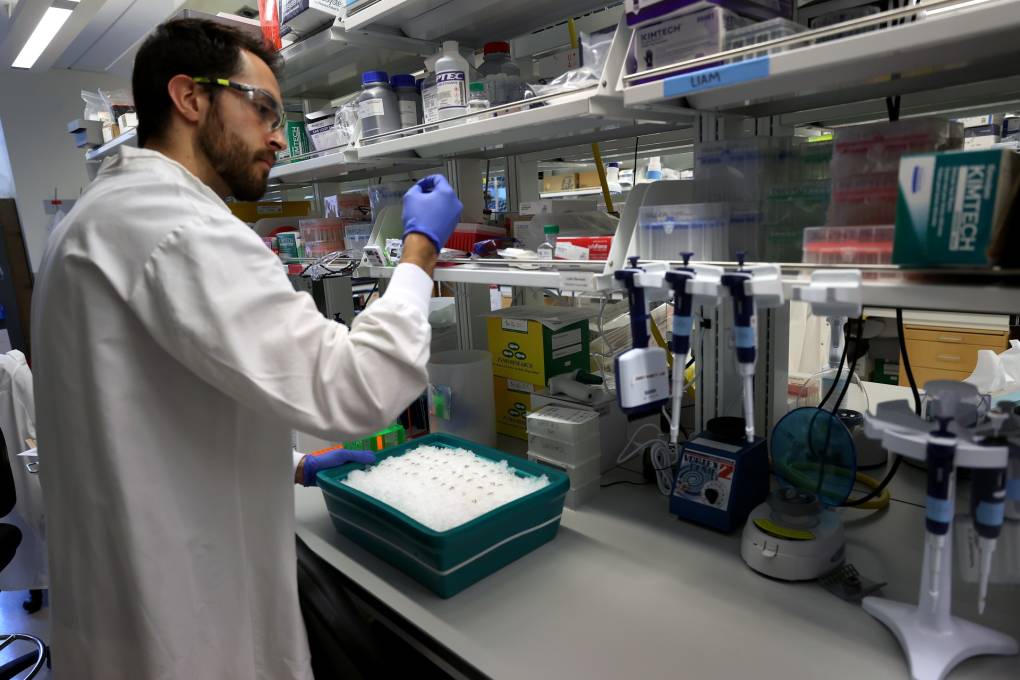
"caption": "Jon Arizti Sanz, Ph.D., Postdoctoral Fellow preparing for the extraction protocol while in the lab. The Broad Institute, Sabeti Lab, is testing purchased milk at area grocery stores for the presence of bird flu. \n",
"credit": "David L. Ryan/The Boston Globe via Getty Images",
"altTag": null,
"description": null,
"imgSizes": {
"medium": {
"file": "https://cdn.kqed.org/wp-content/uploads/sites/10/2024/06/GettyImages-2153339140-800x533.jpg",
"width": 800,
"height": 533,
"mimeType": "image/jpeg"
},
"large": {
"file": "https://cdn.kqed.org/wp-content/uploads/sites/10/2024/06/GettyImages-2153339140-1020x680.jpg",
"width": 1020,
"height": 680,
"mimeType": "image/jpeg"
},
"thumbnail": {
"file": "https://cdn.kqed.org/wp-content/uploads/sites/10/2024/06/GettyImages-2153339140-160x107.jpg",
"width": 160,
"height": 107,
"mimeType": "image/jpeg"
},
"1536x1536": {
"file": "https://cdn.kqed.org/wp-content/uploads/sites/10/2024/06/GettyImages-2153339140-1536x1024.jpg",
"width": 1536,
"height": 1024,
"mimeType": "image/jpeg"
},
"post-thumbnail": {
"file": "https://cdn.kqed.org/wp-content/uploads/sites/10/2024/06/GettyImages-2153339140-672x372.jpg",
"width": 672,
"height": 372,
"mimeType": "image/jpeg"
},
"twentyfourteen-full-width": {
"file": "https://cdn.kqed.org/wp-content/uploads/sites/10/2024/06/GettyImages-2153339140-1038x576.jpg",
"width": 1038,
"height": 576,
"mimeType": "image/jpeg"
},
"kqedFullSize": {
"file": "https://cdn.kqed.org/wp-content/uploads/sites/10/2024/06/GettyImages-2153339140.jpg",
"width": 1920,
"height": 1280
}
},
"isLoading": false,
"fetchFailed": false
},
"news_11997597": {
"type": "attachments",
"id": "news_11997597",
"meta": {
"index": "attachments_1716263798",
"site": "news",
"id": "11997597",
"found": true
},
"title": "240408-FCIDublin-012-BL_qed",
"publishDate": 1722023695,
"status": "inherit",
"parent": 11997595,
"modified": 1766015393,
"caption": "A sign for the Federal Correctional Institution, Dublin, a former prison for women, in Dublin on April 8, 2024.",
"credit": "Beth LaBerge/KQED",
"altTag": null,
"description": null,
"imgSizes": {
"medium": {
"file": "https://cdn.kqed.org/wp-content/uploads/sites/10/2024/07/240408-FCIDublin-012-BL_qed-800x533.jpg",
"width": 800,
"height": 533,
"mimeType": "image/jpeg"
},
"large": {
"file": "https://cdn.kqed.org/wp-content/uploads/sites/10/2024/07/240408-FCIDublin-012-BL_qed-1020x680.jpg",
"width": 1020,
"height": 680,
"mimeType": "image/jpeg"
},
"thumbnail": {
"file": "https://cdn.kqed.org/wp-content/uploads/sites/10/2024/07/240408-FCIDublin-012-BL_qed-160x107.jpg",
"width": 160,
"height": 107,
"mimeType": "image/jpeg"
},
"1536x1536": {
"file": "https://cdn.kqed.org/wp-content/uploads/sites/10/2024/07/240408-FCIDublin-012-BL_qed-1536x1024.jpg",
"width": 1536,
"height": 1024,
"mimeType": "image/jpeg"
},
"post-thumbnail": {
"file": "https://cdn.kqed.org/wp-content/uploads/sites/10/2024/07/240408-FCIDublin-012-BL_qed-672x372.jpg",
"width": 672,
"height": 372,
"mimeType": "image/jpeg"
},
"twentyfourteen-full-width": {
"file": "https://cdn.kqed.org/wp-content/uploads/sites/10/2024/07/240408-FCIDublin-012-BL_qed-1038x576.jpg",
"width": 1038,
"height": 576,
"mimeType": "image/jpeg"
},
"full-width": {
"file": "https://cdn.kqed.org/wp-content/uploads/sites/10/2024/07/240408-FCIDublin-012-BL_qed-1920x1280.jpg",
"width": 1920,
"height": 1280,
"mimeType": "image/jpeg"
},
"kqedFullSize": {
"file": "https://cdn.kqed.org/wp-content/uploads/sites/10/2024/07/240408-FCIDublin-012-BL_qed.jpg",
"width": 2000,
"height": 1333
}
},
"isLoading": false,
"fetchFailed": false
},
"news_11969248": {
"type": "attachments",
"id": "news_11969248",
"meta": {
"index": "attachments_1716263798",
"site": "news",
"id": "11969248",
"found": true
},
"title": "231206-LateefahSimon-19-BL-KQED",
"publishDate": 1701973127,
"status": "inherit",
"parent": 12047037,
"modified": 1751576475,
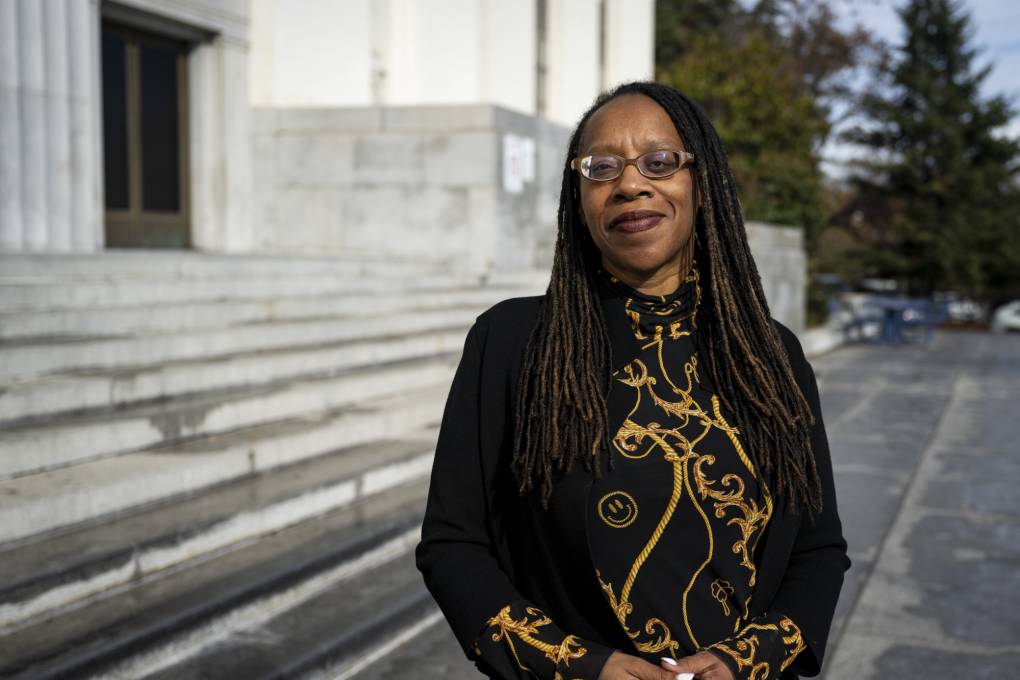
"caption": "Lateefah Simon poses for a portrait on Dec. 6, 2023, after signing paperwork for her congressional campaign candidacy at the Alameda County Registrar of Voters Office in Oakland.",
"credit": "Beth LaBerge/KQED",
"altTag": null,
"description": null,
"imgSizes": {
"medium": {
"file": "https://cdn.kqed.org/wp-content/uploads/sites/10/2023/12/231206-LateefahSimon-19-BL-KQED-800x533.jpg",
"width": 800,
"height": 533,
"mimeType": "image/jpeg"
},
"large": {
"file": "https://cdn.kqed.org/wp-content/uploads/sites/10/2023/12/231206-LateefahSimon-19-BL-KQED-1020x680.jpg",
"width": 1020,
"height": 680,
"mimeType": "image/jpeg"
},
"thumbnail": {
"file": "https://cdn.kqed.org/wp-content/uploads/sites/10/2023/12/231206-LateefahSimon-19-BL-KQED-160x107.jpg",
"width": 160,
"height": 107,
"mimeType": "image/jpeg"
},
"1536x1536": {
"file": "https://cdn.kqed.org/wp-content/uploads/sites/10/2023/12/231206-LateefahSimon-19-BL-KQED-1536x1024.jpg",
"width": 1536,
"height": 1024,
"mimeType": "image/jpeg"
},
"post-thumbnail": {
"file": "https://cdn.kqed.org/wp-content/uploads/sites/10/2023/12/231206-LateefahSimon-19-BL-KQED-672x372.jpg",
"width": 672,
"height": 372,
"mimeType": "image/jpeg"
},
"twentyfourteen-full-width": {
"file": "https://cdn.kqed.org/wp-content/uploads/sites/10/2023/12/231206-LateefahSimon-19-BL-KQED-1038x576.jpg",
"width": 1038,
"height": 576,
"mimeType": "image/jpeg"
},
"full-width": {
"file": "https://cdn.kqed.org/wp-content/uploads/sites/10/2023/12/231206-LateefahSimon-19-BL-KQED-1920x1280.jpg",
"width": 1920,
"height": 1280,
"mimeType": "image/jpeg"
},
"kqedFullSize": {
"file": "https://cdn.kqed.org/wp-content/uploads/sites/10/2023/12/231206-LateefahSimon-19-BL-KQED.jpg",
"width": 2000,
"height": 1333
}
},
"isLoading": false,
"fetchFailed": false
},
"news_12024517": {
"type": "attachments",
"id": "news_12024517",
"meta": {
"index": "attachments_1716263798",
"site": "news",
"id": "12024517",
"found": true
},
"title": "President Donald Trump Signs More Executive Orders",
"publishDate": 1738124468,
"status": "inherit",
"parent": 12024454,
"modified": 1739562121,
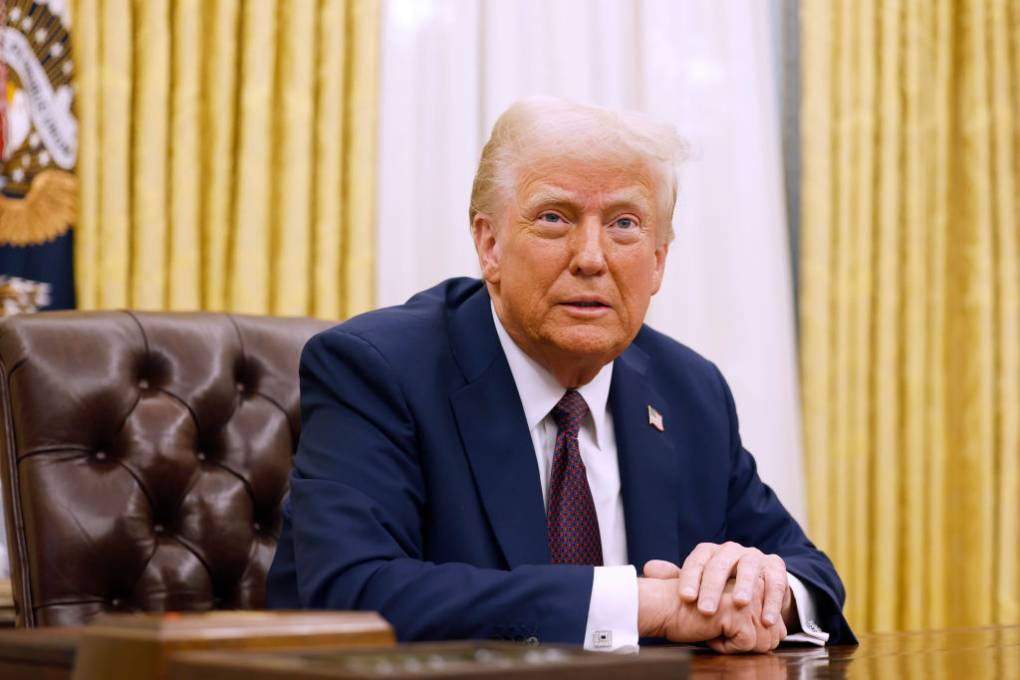
"caption": "U.S. President Donald Trump speaks to reporters after signing a series of executive orders in the Oval Office of the White House on Jan. 23, 2025, in Washington, D.C. ",
"credit": "Anna Moneymaker/Getty Images",
"altTag": null,
"description": null,
"imgSizes": {
"medium": {
"file": "https://cdn.kqed.org/wp-content/uploads/sites/10/2025/01/GettyImages-2195559727-800x534.jpg",
"width": 800,
"height": 534,
"mimeType": "image/jpeg"
},
"large": {
"file": "https://cdn.kqed.org/wp-content/uploads/sites/10/2025/01/GettyImages-2195559727-1020x680.jpg",
"width": 1020,
"height": 680,
"mimeType": "image/jpeg"
},
"thumbnail": {
"file": "https://cdn.kqed.org/wp-content/uploads/sites/10/2025/01/GettyImages-2195559727-160x107.jpg",
"width": 160,
"height": 107,
"mimeType": "image/jpeg"
},
"post-thumbnail": {
"file": "https://cdn.kqed.org/wp-content/uploads/sites/10/2025/01/GettyImages-2195559727-672x372.jpg",
"width": 672,
"height": 372,
"mimeType": "image/jpeg"
},
"twentyfourteen-full-width": {
"file": "https://cdn.kqed.org/wp-content/uploads/sites/10/2025/01/GettyImages-2195559727-1024x576.jpg",
"width": 1024,
"height": 576,
"mimeType": "image/jpeg"
},
"kqedFullSize": {
"file": "https://cdn.kqed.org/wp-content/uploads/sites/10/2025/01/GettyImages-2195559727.jpg",
"width": 1024,
"height": 683
}
},
"isLoading": false,
"fetchFailed": false
},
"news_12011885": {
"type": "attachments",
"id": "news_12011885",
"meta": {
"index": "attachments_1716263798",
"site": "news",
"id": "12011885",
"found": true
},
"title": "3050240908_520abecbfb_o_qed",
"publishDate": 1730397131,
"status": "inherit",
"parent": 12011878,
"modified": 1738179506,
"caption": "The threat of a walkout at UCSF grew this week as two unions voted to authorize strikes.",
"credit": "Thomas Hawk/Flickr",
"altTag": null,
"description": null,
"imgSizes": {
"medium": {
"file": "https://cdn.kqed.org/wp-content/uploads/sites/10/2024/10/3050240908_520abecbfb_o_qed-800x462.jpg",
"width": 800,
"height": 462,
"mimeType": "image/jpeg"
},
"large": {
"file": "https://cdn.kqed.org/wp-content/uploads/sites/10/2024/10/3050240908_520abecbfb_o_qed-1020x590.jpg",
"width": 1020,
"height": 590,
"mimeType": "image/jpeg"
},
"thumbnail": {
"file": "https://cdn.kqed.org/wp-content/uploads/sites/10/2024/10/3050240908_520abecbfb_o_qed-160x92.jpg",
"width": 160,
"height": 92,
"mimeType": "image/jpeg"
},
"1536x1536": {
"file": "https://cdn.kqed.org/wp-content/uploads/sites/10/2024/10/3050240908_520abecbfb_o_qed-1536x888.jpg",
"width": 1536,
"height": 888,
"mimeType": "image/jpeg"
},
"post-thumbnail": {
"file": "https://cdn.kqed.org/wp-content/uploads/sites/10/2024/10/3050240908_520abecbfb_o_qed-672x372.jpg",
"width": 672,
"height": 372,
"mimeType": "image/jpeg"
},
"twentyfourteen-full-width": {
"file": "https://cdn.kqed.org/wp-content/uploads/sites/10/2024/10/3050240908_520abecbfb_o_qed-1038x576.jpg",
"width": 1038,
"height": 576,
"mimeType": "image/jpeg"
},
"full-width": {
"file": "https://cdn.kqed.org/wp-content/uploads/sites/10/2024/10/3050240908_520abecbfb_o_qed-1920x1110.jpg",
"width": 1920,
"height": 1110,
"mimeType": "image/jpeg"
},
"kqedFullSize": {
"file": "https://cdn.kqed.org/wp-content/uploads/sites/10/2024/10/3050240908_520abecbfb_o_qed.jpg",
"width": 2000,
"height": 1156
}
},
"isLoading": false,
"fetchFailed": false
},
"news_11993605": {
"type": "attachments",
"id": "news_11993605",
"meta": {
"index": "attachments_1716263798",
"site": "news",
"id": "11993605",
"found": true
},
"title": "013_SanFrancisco_CCAStrike_02082022",
"publishDate": 1720715147,
"status": "inherit",
"parent": 11993603,
"modified": 1777309516,
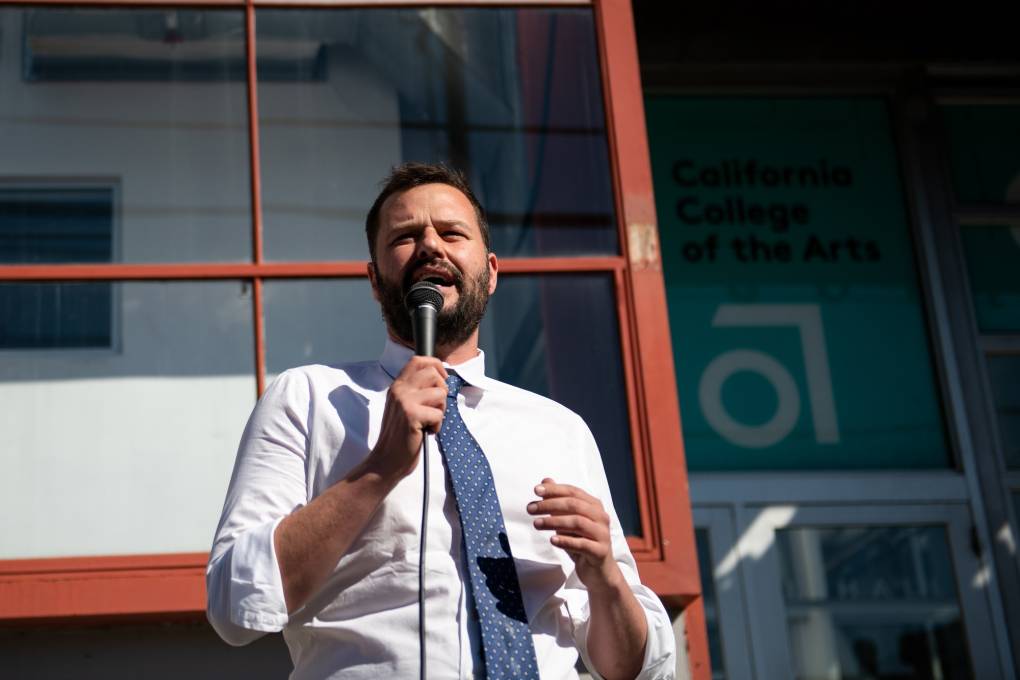
"caption": "California’s political watchdog agency is investigating potential violations of state law by the campaign of Assemblymember Matt Haney.",
"credit": "Beth LaBerge/KQED",
"altTag": null,
"description": "Supervisor Matt Haney speaks outside of the California College of the Arts (CCA) San Francisco campus on Feb. 8, 2022, during a staff strike over claims of unfair labor practices.\n\n",
"imgSizes": {
"medium": {
"file": "https://cdn.kqed.org/wp-content/uploads/sites/10/2024/07/013_SanFrancisco_CCAStrike_02082022-800x533.jpg",
"width": 800,
"height": 533,
"mimeType": "image/jpeg"
},
"large": {
"file": "https://cdn.kqed.org/wp-content/uploads/sites/10/2024/07/013_SanFrancisco_CCAStrike_02082022-1020x680.jpg",
"width": 1020,
"height": 680,
"mimeType": "image/jpeg"
},
"thumbnail": {
"file": "https://cdn.kqed.org/wp-content/uploads/sites/10/2024/07/013_SanFrancisco_CCAStrike_02082022-160x107.jpg",
"width": 160,
"height": 107,
"mimeType": "image/jpeg"
},
"1536x1536": {
"file": "https://cdn.kqed.org/wp-content/uploads/sites/10/2024/07/013_SanFrancisco_CCAStrike_02082022-1536x1024.jpg",
"width": 1536,
"height": 1024,
"mimeType": "image/jpeg"
},
"post-thumbnail": {
"file": "https://cdn.kqed.org/wp-content/uploads/sites/10/2024/07/013_SanFrancisco_CCAStrike_02082022-672x372.jpg",
"width": 672,
"height": 372,
"mimeType": "image/jpeg"
},
"twentyfourteen-full-width": {
"file": "https://cdn.kqed.org/wp-content/uploads/sites/10/2024/07/013_SanFrancisco_CCAStrike_02082022-1038x576.jpg",
"width": 1038,
"height": 576,
"mimeType": "image/jpeg"
},
"full-width": {
"file": "https://cdn.kqed.org/wp-content/uploads/sites/10/2024/07/013_SanFrancisco_CCAStrike_02082022-1920x1280.jpg",
"width": 1920,
"height": 1280,
"mimeType": "image/jpeg"
},
"kqedFullSize": {
"file": "https://cdn.kqed.org/wp-content/uploads/sites/10/2024/07/013_SanFrancisco_CCAStrike_02082022.jpg",
"width": 2000,
"height": 1333
}
},
"isLoading": false,
"fetchFailed": false
},
"news_12026903": {
"type": "attachments",
"id": "news_12026903",
"meta": {
"index": "attachments_1716263798",
"site": "news",
"id": "12026903",
"found": true
},
"title": "FIREAID Benefit Concert For California Fire Relief - Intuit Dome",
"publishDate": 1739469461,
"status": "inherit",
"parent": 12026900,
"modified": 1739497016,
"caption": "Former Vice President Kamala Harris and Doug Emhoff attend the FIREAID Benefit Concert for California Fire Relief at Intuit Dome on Jan. 30, 2025 in Inglewood, California. ",
"credit": "Amy Sussman/Getty Images for FIREAID",
"altTag": null,
"description": null,
"imgSizes": {
"medium": {
"file": "https://cdn.kqed.org/wp-content/uploads/sites/10/2025/02/GettyImages-2196870022-800x533.jpg",
"width": 800,
"height": 533,
"mimeType": "image/jpeg"
},
"large": {
"file": "https://cdn.kqed.org/wp-content/uploads/sites/10/2025/02/GettyImages-2196870022-1020x680.jpg",
"width": 1020,
"height": 680,
"mimeType": "image/jpeg"
},
"thumbnail": {
"file": "https://cdn.kqed.org/wp-content/uploads/sites/10/2025/02/GettyImages-2196870022-160x107.jpg",
"width": 160,
"height": 107,
"mimeType": "image/jpeg"
},
"1536x1536": {
"file": "https://cdn.kqed.org/wp-content/uploads/sites/10/2025/02/GettyImages-2196870022-1536x1024.jpg",
"width": 1536,
"height": 1024,
"mimeType": "image/jpeg"
},
"2048x2048": {
"file": "https://cdn.kqed.org/wp-content/uploads/sites/10/2025/02/GettyImages-2196870022-2048x1365.jpg",
"width": 2048,
"height": 1365,
"mimeType": "image/jpeg"
},
"post-thumbnail": {
"file": "https://cdn.kqed.org/wp-content/uploads/sites/10/2025/02/GettyImages-2196870022-672x372.jpg",
"width": 672,
"height": 372,
"mimeType": "image/jpeg"
},
"twentyfourteen-full-width": {
"file": "https://cdn.kqed.org/wp-content/uploads/sites/10/2025/02/GettyImages-2196870022-1038x576.jpg",
"width": 1038,
"height": 576,
"mimeType": "image/jpeg"
},
"full-width": {
"file": "https://cdn.kqed.org/wp-content/uploads/sites/10/2025/02/GettyImages-2196870022-1920x1280.jpg",
"width": 1920,
"height": 1280,
"mimeType": "image/jpeg"
},
"kqedFullSize": {
"file": "https://cdn.kqed.org/wp-content/uploads/sites/10/2025/02/GettyImages-2196870022-scaled.jpg",
"width": 2560,
"height": 1707
}
},
"isLoading": false,
"fetchFailed": false
},
"news_11933076": {
"type": "attachments",
"id": "news_11933076",
"meta": {
"index": "attachments_1716263798",
"site": "news",
"id": "11933076",
"found": true
},
"parent": 11933052,
"imgSizes": {
"twentyfourteen-full-width": {
"file": "https://ww2.kqed.org/app/uploads/sites/10/2022/11/RS60430_039_KQED_BlodgettForestResearch_10282022-qut-1038x576.jpg",
"width": 1038,
"mimeType": "image/jpeg",
"height": 576
},
"thumbnail": {
"file": "https://ww2.kqed.org/app/uploads/sites/10/2022/11/RS60430_039_KQED_BlodgettForestResearch_10282022-qut-160x107.jpg",
"width": 160,
"mimeType": "image/jpeg",
"height": 107
},
"post-thumbnail": {
"file": "https://ww2.kqed.org/app/uploads/sites/10/2022/11/RS60430_039_KQED_BlodgettForestResearch_10282022-qut-672x372.jpg",
"width": 672,
"mimeType": "image/jpeg",
"height": 372
},
"kqedFullSize": {
"file": "https://ww2.kqed.org/app/uploads/sites/10/2022/11/RS60430_039_KQED_BlodgettForestResearch_10282022-qut.jpg",
"width": 1920,
"height": 1280
},
"large": {
"file": "https://ww2.kqed.org/app/uploads/sites/10/2022/11/RS60430_039_KQED_BlodgettForestResearch_10282022-qut-1020x680.jpg",
"width": 1020,
"mimeType": "image/jpeg",
"height": 680
},
"1536x1536": {
"file": "https://ww2.kqed.org/app/uploads/sites/10/2022/11/RS60430_039_KQED_BlodgettForestResearch_10282022-qut-1536x1024.jpg",
"width": 1536,
"mimeType": "image/jpeg",
"height": 1024
},
"medium": {
"file": "https://ww2.kqed.org/app/uploads/sites/10/2022/11/RS60430_039_KQED_BlodgettForestResearch_10282022-qut-800x533.jpg",
"width": 800,
"mimeType": "image/jpeg",
"height": 533
}
},
"publishDate": 1669153588,
"modified": 1669165494,
"caption": "Light streams through an area burned by the Mosquito Fire at the UC Berkeley Blodgett Forest Research Station in Georgetown, Calif., on Oct. 28, 2022.",
"description": null,
"title": "RS60430_039_KQED_BlodgettForestResearch_10282022-qut",
"credit": "Beth LaBerge/KQED",
"status": "inherit",
"altTag": "light streams through redwood trees",
"isLoading": false,
"fetchFailed": false
},
"news_11844551": {
"type": "attachments",
"id": "news_11844551",
"meta": {
"index": "attachments_1716263798",
"site": "news",
"id": "11844551",
"found": true
},
"parent": 11844491,
"imgSizes": {
"apple_news_ca_landscape_5_5": {
"file": "https://ww2.kqed.org/app/uploads/sites/10/2020/10/CBP-family-border-1044x783.jpg",
"width": 1044,
"mimeType": "image/jpeg",
"height": 783
},
"apple_news_ca_square_4_0": {
"file": "https://ww2.kqed.org/app/uploads/sites/10/2020/10/CBP-family-border-470x470.jpg",
"width": 470,
"mimeType": "image/jpeg",
"height": 470
},
"twentyfourteen-full-width": {
"file": "https://ww2.kqed.org/app/uploads/sites/10/2020/10/CBP-family-border-1038x576.jpg",
"width": 1038,
"mimeType": "image/jpeg",
"height": 576
},
"thumbnail": {
"file": "https://ww2.kqed.org/app/uploads/sites/10/2020/10/CBP-family-border-160x107.jpg",
"width": 160,
"mimeType": "image/jpeg",
"height": 107
},
"post-thumbnail": {
"file": "https://ww2.kqed.org/app/uploads/sites/10/2020/10/CBP-family-border-672x372.jpg",
"width": 672,
"mimeType": "image/jpeg",
"height": 372
},
"kqedFullSize": {
"file": "https://ww2.kqed.org/app/uploads/sites/10/2020/10/CBP-family-border.jpg",
"width": 1920,
"height": 1280
},
"apple_news_ca_landscape_4_7": {
"file": "https://ww2.kqed.org/app/uploads/sites/10/2020/10/CBP-family-border-632x474.jpg",
"width": 632,
"mimeType": "image/jpeg",
"height": 474
},
"large": {
"file": "https://ww2.kqed.org/app/uploads/sites/10/2020/10/CBP-family-border-1020x680.jpg",
"width": 1020,
"mimeType": "image/jpeg",
"height": 680
},
"apple_news_ca_landscape_4_0": {
"file": "https://ww2.kqed.org/app/uploads/sites/10/2020/10/CBP-family-border-536x402.jpg",
"width": 536,
"mimeType": "image/jpeg",
"height": 402
},
"apple_news_ca_portrait_12_9": {
"file": "https://ww2.kqed.org/app/uploads/sites/10/2020/10/CBP-family-border-1122x1280.jpg",
"width": 1122,
"mimeType": "image/jpeg",
"height": 1280
},
"medium": {
"file": "https://ww2.kqed.org/app/uploads/sites/10/2020/10/CBP-family-border-800x533.jpg",
"width": 800,
"mimeType": "image/jpeg",
"height": 533
},
"apple_news_ca_portrait_4_0": {
"file": "https://ww2.kqed.org/app/uploads/sites/10/2020/10/CBP-family-border-354x472.jpg",
"width": 354,
"mimeType": "image/jpeg",
"height": 472
},
"apple_news_ca_portrait_9_7": {
"file": "https://ww2.kqed.org/app/uploads/sites/10/2020/10/CBP-family-border-840x1120.jpg",
"width": 840,
"mimeType": "image/jpeg",
"height": 1120
},
"apple_news_ca_landscape_12_9": {
"file": "https://ww2.kqed.org/app/uploads/sites/10/2020/10/CBP-family-border-1832x1280.jpg",
"width": 1832,
"mimeType": "image/jpeg",
"height": 1280
},
"apple_news_ca_square_9_7": {
"file": "https://ww2.kqed.org/app/uploads/sites/10/2020/10/CBP-family-border-1104x1104.jpg",
"width": 1104,
"mimeType": "image/jpeg",
"height": 1104
},
"1536x1536": {
"file": "https://ww2.kqed.org/app/uploads/sites/10/2020/10/CBP-family-border-1536x1024.jpg",
"width": 1536,
"mimeType": "image/jpeg",
"height": 1024
},
"apple_news_ca_portrait_4_7": {
"file": "https://ww2.kqed.org/app/uploads/sites/10/2020/10/CBP-family-border-414x552.jpg",
"width": 414,
"mimeType": "image/jpeg",
"height": 552
},
"apple_news_ca_square_12_9": {
"file": "https://ww2.kqed.org/app/uploads/sites/10/2020/10/CBP-family-border-1472x1280.jpg",
"width": 1472,
"mimeType": "image/jpeg",
"height": 1280
},
"apple_news_ca_portrait_5_5": {
"file": "https://ww2.kqed.org/app/uploads/sites/10/2020/10/CBP-family-border-687x916.jpg",
"width": 687,
"mimeType": "image/jpeg",
"height": 916
},
"apple_news_ca_square_4_7": {
"file": "https://ww2.kqed.org/app/uploads/sites/10/2020/10/CBP-family-border-550x550.jpg",
"width": 550,
"mimeType": "image/jpeg",
"height": 550
},
"apple_news_ca_landscape_9_7": {
"file": "https://ww2.kqed.org/app/uploads/sites/10/2020/10/CBP-family-border-1376x1032.jpg",
"width": 1376,
"mimeType": "image/jpeg",
"height": 1032
},
"apple_news_ca_square_5_5": {
"file": "https://ww2.kqed.org/app/uploads/sites/10/2020/10/CBP-family-border-912x912.jpg",
"width": 912,
"mimeType": "image/jpeg",
"height": 912
}
},
"publishDate": 1604083508,
"modified": 1604083584,
"caption": "Central American asylum seekers wait as U.S. Border Patrol agents take them into custody on June 12, 2018 near McAllen, Texas. The families were then sent to a U.S. Customs and Border Protection (CBP) processing center for possible separation.",
"description": "Central American asylum seekers wait as U.S. Border Patrol agents take them into custody on June 12, 2018 near McAllen, Texas. The families were then sent to a U.S. Customs and Border Protection (CBP) processing center for possible separation.",
"title": "CBP-family-border",
"credit": "John Moore/Getty Images",
"status": "inherit",
"isLoading": false,
"fetchFailed": false
},
"news_12014668": {
"type": "attachments",
"id": "news_12014668",
"meta": {
"index": "attachments_1716263798",
"site": "news",
"id": "12014668",
"found": true
},
"title": "Donald Trump",
"publishDate": 1731708587,
"status": "inherit",
"parent": 12014622,
"modified": 1731710604,
"caption": "President Donald Trump arrives to deliver remarks about American energy production during a visit to the Double Eagle Energy Oil Rig on July 29, 2020, in Midland, Texas.",
"credit": "Evan Vucci/AP Photo",
"altTag": null,
"description": null,
"imgSizes": {
"medium": {
"file": "https://cdn.kqed.org/wp-content/uploads/sites/10/2024/11/TrumpOilGasRegulationsAP-800x533.jpg",
"width": 800,
"height": 533,
"mimeType": "image/jpeg"
},
"large": {
"file": "https://cdn.kqed.org/wp-content/uploads/sites/10/2024/11/TrumpOilGasRegulationsAP-1020x680.jpg",
"width": 1020,
"height": 680,
"mimeType": "image/jpeg"
},
"thumbnail": {
"file": "https://cdn.kqed.org/wp-content/uploads/sites/10/2024/11/TrumpOilGasRegulationsAP-160x107.jpg",
"width": 160,
"height": 107,
"mimeType": "image/jpeg"
},
"1536x1536": {
"file": "https://cdn.kqed.org/wp-content/uploads/sites/10/2024/11/TrumpOilGasRegulationsAP-1536x1024.jpg",
"width": 1536,
"height": 1024,
"mimeType": "image/jpeg"
},
"post-thumbnail": {
"file": "https://cdn.kqed.org/wp-content/uploads/sites/10/2024/11/TrumpOilGasRegulationsAP-672x372.jpg",
"width": 672,
"height": 372,
"mimeType": "image/jpeg"
},
"twentyfourteen-full-width": {
"file": "https://cdn.kqed.org/wp-content/uploads/sites/10/2024/11/TrumpOilGasRegulationsAP-1038x576.jpg",
"width": 1038,
"height": 576,
"mimeType": "image/jpeg"
},
"full-width": {
"file": "https://cdn.kqed.org/wp-content/uploads/sites/10/2024/11/TrumpOilGasRegulationsAP-1920x1280.jpg",
"width": 1920,
"height": 1280,
"mimeType": "image/jpeg"
},
"kqedFullSize": {
"file": "https://cdn.kqed.org/wp-content/uploads/sites/10/2024/11/TrumpOilGasRegulationsAP.jpg",
"width": 2000,
"height": 1333
}
},
"isLoading": false,
"fetchFailed": false
},
"news_12007638": {
"type": "attachments",
"id": "news_12007638",
"meta": {
"index": "attachments_1716263798",
"site": "news",
"id": "12007638",
"found": true
},
"title": "Rob Bonta",
"publishDate": 1727912412,
"status": "inherit",
"parent": 12007627,
"modified": 1727912460,
"caption": "Attorney General Rob Bonta takes questions from the media as he announces charges made against suspects involved in an organized retail crime ring during a news conference in Los Angeles on March 19, 2024. ",
"credit": "Damian Dovarganes/AP Photo",
"altTag": null,
"description": null,
"imgSizes": {
"medium": {
"file": "https://cdn.kqed.org/wp-content/uploads/sites/10/2024/10/AGBontaAP1-800x533.jpg",
"width": 800,
"height": 533,
"mimeType": "image/jpeg"
},
"large": {
"file": "https://cdn.kqed.org/wp-content/uploads/sites/10/2024/10/AGBontaAP1-1020x680.jpg",
"width": 1020,
"height": 680,
"mimeType": "image/jpeg"
},
"thumbnail": {
"file": "https://cdn.kqed.org/wp-content/uploads/sites/10/2024/10/AGBontaAP1-160x107.jpg",
"width": 160,
"height": 107,
"mimeType": "image/jpeg"
},
"1536x1536": {
"file": "https://cdn.kqed.org/wp-content/uploads/sites/10/2024/10/AGBontaAP1-1536x1024.jpg",
"width": 1536,
"height": 1024,
"mimeType": "image/jpeg"
},
"post-thumbnail": {
"file": "https://cdn.kqed.org/wp-content/uploads/sites/10/2024/10/AGBontaAP1-672x372.jpg",
"width": 672,
"height": 372,
"mimeType": "image/jpeg"
},
"twentyfourteen-full-width": {
"file": "https://cdn.kqed.org/wp-content/uploads/sites/10/2024/10/AGBontaAP1-1038x576.jpg",
"width": 1038,
"height": 576,
"mimeType": "image/jpeg"
},
"full-width": {
"file": "https://cdn.kqed.org/wp-content/uploads/sites/10/2024/10/AGBontaAP1-1920x1280.jpg",
"width": 1920,
"height": 1280,
"mimeType": "image/jpeg"
},
"kqedFullSize": {
"file": "https://cdn.kqed.org/wp-content/uploads/sites/10/2024/10/AGBontaAP1.jpg",
"width": 2000,
"height": 1333
}
},
"isLoading": false,
"fetchFailed": false
},
"news_12026446": {
"type": "attachments",
"id": "news_12026446",
"meta": {
"index": "attachments_1716263798",
"site": "news",
"id": "12026446",
"found": true
},
"title": "020625-ICE-Arrest-AP-GB-01-CM",
"publishDate": 1739212388,
"status": "inherit",
"parent": 12026443,
"modified": 1739296136,
"caption": "A U.S. Immigration and Customs Enforcement (ICE) officer escorts a man in handcuffs during an operation in Escondido on July 8, 2019.",
"credit": "Gregory Bull/AP Photo",
"altTag": null,
"description": null,
"imgSizes": {
"medium": {
"file": "https://cdn.kqed.org/wp-content/uploads/sites/10/2025/02/020625-ICE-Arrest-AP-GB-01-CM-800x533.jpg",
"width": 800,
"height": 533,
"mimeType": "image/jpeg"
},
"large": {
"file": "https://cdn.kqed.org/wp-content/uploads/sites/10/2025/02/020625-ICE-Arrest-AP-GB-01-CM-1020x680.jpg",
"width": 1020,
"height": 680,
"mimeType": "image/jpeg"
},
"thumbnail": {
"file": "https://cdn.kqed.org/wp-content/uploads/sites/10/2025/02/020625-ICE-Arrest-AP-GB-01-CM-160x107.jpg",
"width": 160,
"height": 107,
"mimeType": "image/jpeg"
},
"1536x1536": {
"file": "https://cdn.kqed.org/wp-content/uploads/sites/10/2025/02/020625-ICE-Arrest-AP-GB-01-CM-1536x1024.jpg",
"width": 1536,
"height": 1024,
"mimeType": "image/jpeg"
},
"post-thumbnail": {
"file": "https://cdn.kqed.org/wp-content/uploads/sites/10/2025/02/020625-ICE-Arrest-AP-GB-01-CM-672x372.jpg",
"width": 672,
"height": 372,
"mimeType": "image/jpeg"
},
"twentyfourteen-full-width": {
"file": "https://cdn.kqed.org/wp-content/uploads/sites/10/2025/02/020625-ICE-Arrest-AP-GB-01-CM-1038x576.jpg",
"width": 1038,
"height": 576,
"mimeType": "image/jpeg"
},
"full-width": {
"file": "https://cdn.kqed.org/wp-content/uploads/sites/10/2025/02/020625-ICE-Arrest-AP-GB-01-CM-1920x1280.jpg",
"width": 1920,
"height": 1280,
"mimeType": "image/jpeg"
},
"kqedFullSize": {
"file": "https://cdn.kqed.org/wp-content/uploads/sites/10/2025/02/020625-ICE-Arrest-AP-GB-01-CM.jpg",
"width": 2000,
"height": 1333
}
},
"isLoading": false,
"fetchFailed": false
}
},
"audioPlayerReducer": {
"postId": "stream_live",
"isPaused": true,
"isPlaying": false,
"pfsActive": false,
"pledgeModalIsOpen": true,
"playerDrawerIsOpen": false,
"liveAudioPlayStartedAt": 0,
"liveAudioPlayContext": ""
},
"authorsReducer": {
"byline_news_12027212": {
"type": "authors",
"id": "byline_news_12027212",
"meta": {
"override": true
},
"slug": "byline_news_12027212",
"name": "Amy Maxmen, KFF Health News",
"isLoading": false
},
"byline_news_12027096": {
"type": "authors",
"id": "byline_news_12027096",
"meta": {
"override": true
},
"slug": "byline_news_12027096",
"name": "Claire Rush, Matthew Brown and Chris Megerian, Associated Press",
"isLoading": false
},
"byline_news_12026959": {
"type": "authors",
"id": "byline_news_12026959",
"meta": {
"override": true
},
"slug": "byline_news_12026959",
"name": "Mark Betancourt, The California Newsroom",
"isLoading": false
},
"byline_news_12026185": {
"type": "authors",
"id": "byline_news_12026185",
"meta": {
"override": true
},
"slug": "byline_news_12026185",
"name": "Cami Dominguez",
"isLoading": false
},
"byline_news_12026443": {
"type": "authors",
"id": "byline_news_12026443",
"meta": {
"override": true
},
"slug": "byline_news_12026443",
"name": "Jeanne Kuang, CalMatters",
"isLoading": false
},
"scottshafer": {
"type": "authors",
"id": "255",
"meta": {
"index": "authors_1716337520",
"id": "255",
"found": true
},
"name": "Scott Shafer",
"firstName": "Scott",
"lastName": "Shafer",
"slug": "scottshafer",
"email": "sshafer@kqed.org",
"display_author_email": false,
"staff_mastheads": [
"news"
],
"title": "KQED Contributor",
"bio": "Scott Shafer is a senior editor with the KQED Politics and Government desk. He is co-host of Political Breakdown, the award-winning radio show and podcast with a personal take on the world of politics. Scott came to KQED in 1998 to host the statewide\u003cem> California Report\u003c/em>. Prior to that he had extended stints in politics and government\u003cem>.\u003c/em> He uses that inside experience at KQED in his, reporting, hosting and analysis for the politics desk. Scott collaborated \u003cem>Political Breakdown a\u003c/em>nd on \u003cem>The Political Mind of Jerry Brown, \u003c/em>an eight-part series about the life and extraordinary political career of the former governor. For fun, he plays water polo with the San Francisco Tsunami.",
"avatar": "https://secure.gravatar.com/avatar/a62ebae45b79d7aed1a39a0e3bf68104?s=600&d=blank&r=g",
"twitter": "scottshafer",
"bluesky": null,
"facebook": null,
"instagram": null,
"linkedin": null,
"sites": [
{
"site": "news",
"roles": [
"editor"
]
},
{
"site": "stateofhealth",
"roles": [
"author"
]
},
{
"site": "science",
"roles": [
"author"
]
},
{
"site": "forum",
"roles": [
"subscriber"
]
},
{
"site": "liveblog",
"roles": [
"author"
]
}
],
"headData": {
"title": "Scott Shafer | KQED",
"description": "KQED Contributor",
"ogImgSrc": "https://secure.gravatar.com/avatar/a62ebae45b79d7aed1a39a0e3bf68104?s=600&d=blank&r=g",
"twImgSrc": "https://secure.gravatar.com/avatar/a62ebae45b79d7aed1a39a0e3bf68104?s=600&d=blank&r=g"
},
"isLoading": false,
"link": "/author/scottshafer"
},
"fjhabvala": {
"type": "authors",
"id": "8659",
"meta": {
"index": "authors_1716337520",
"id": "8659",
"found": true
},
"name": "Farida Jhabvala Romero",
"firstName": "Farida",
"lastName": "Jhabvala Romero",
"slug": "fjhabvala",
"email": "fjhabvala@kqed.org",
"display_author_email": true,
"staff_mastheads": [
"news"
],
"title": "KQED Contributor",
"bio": "\u003cspan style=\"font-weight: 400;\">Farida Jhabvala Romero is a Labor Correspondent for KQED. She previously covered immigration. Farida was \u003ca href=\"https://www.ccnma.org/2022-most-influential-latina-journalists\">named\u003c/a> one of the 10 Most Influential Latina Journalists in California in 2022 by the California Chicano News Media Association. Her work has won awards from the Society of Professional Journalists (Northern California), as well as a national and regional Edward M. Murrow Award for the collaborative reporting projects “Dangerous Air” and “Graying California.” \u003c/span>\u003cspan style=\"font-weight: 400;\">Before joining KQED, Farida worked as a producer at Radio Bilingüe, a national public radio network. Farida earned her master’s degree in journalism from Stanford University.\u003c/span>",
"avatar": "https://secure.gravatar.com/avatar/c3ab27c5554b67b478f80971e515aa02?s=600&d=blank&r=g",
"twitter": "FaridaJhabvala",
"facebook": null,
"instagram": null,
"linkedin": "https://www.linkedin.com/in/faridajhabvala/",
"sites": [
{
"site": "news",
"roles": [
"editor"
]
},
{
"site": "stateofhealth",
"roles": [
"author"
]
}
],
"headData": {
"title": "Farida Jhabvala Romero | KQED",
"description": "KQED Contributor",
"ogImgSrc": "https://secure.gravatar.com/avatar/c3ab27c5554b67b478f80971e515aa02?s=600&d=blank&r=g",
"twImgSrc": "https://secure.gravatar.com/avatar/c3ab27c5554b67b478f80971e515aa02?s=600&d=blank&r=g"
},
"isLoading": false,
"link": "/author/fjhabvala"
},
"ahall": {
"type": "authors",
"id": "11490",
"meta": {
"index": "authors_1716337520",
"id": "11490",
"found": true
},
"name": "Alex Hall",
"firstName": "Alex",
"lastName": "Hall",
"slug": "ahall",
"email": "ahall@kqed.org",
"display_author_email": false,
"staff_mastheads": [
"news"
],
"title": "KQED Enterprise & Accountability Reporter",
"bio": "Alex Hall is KQED's Enterprise and Accountability Reporter. She previously covered the Central Valley for five years from KQED's bureau in Fresno. Before joining KQED, Alex was an investigative reporting fellow at Wisconsin Public Radio and the Wisconsin Center for Investigative Journalism. She has also worked as a bilingual producer for NPR's investigative unit and freelance video producer for Reuters TV on the Latin America desk. She got her start in journalism in South America, where she worked as a radio producer and Spanish-English translator for CNN Chile. Her documentary and investigation into the series of deadly COVID-19 outbreaks at Foster Farms won a national Edward R. Murrow award and was named an Investigative Reporters & Editors award finalist. Alex's reporting for Reveal on the Wisconsin dairy industry's reliance on undocumented immigrant labor was made into a film, Los Lecheros, which won a regional Edward R. Murrow award for best news documentary.",
"avatar": "https://secure.gravatar.com/avatar/defcbeb88b0bf591ff9af41f22644051?s=600&d=blank&r=g",
"twitter": "@chalexhall",
"facebook": null,
"instagram": null,
"linkedin": null,
"sites": [
{
"site": "news",
"roles": [
"editor"
]
},
{
"site": "liveblog",
"roles": [
"author"
]
}
],
"headData": {
"title": "Alex Hall | KQED",
"description": "KQED Enterprise & Accountability Reporter",
"ogImgSrc": "https://secure.gravatar.com/avatar/defcbeb88b0bf591ff9af41f22644051?s=600&d=blank&r=g",
"twImgSrc": "https://secure.gravatar.com/avatar/defcbeb88b0bf591ff9af41f22644051?s=600&d=blank&r=g"
},
"isLoading": false,
"link": "/author/ahall"
},
"jlara": {
"type": "authors",
"id": "11761",
"meta": {
"index": "authors_1716337520",
"id": "11761",
"found": true
},
"name": "Juan Carlos Lara",
"firstName": "Juan Carlos",
"lastName": "Lara",
"slug": "jlara",
"email": "jlara@kqed.org",
"display_author_email": false,
"staff_mastheads": [],
"title": "KQED Contributor",
"bio": null,
"avatar": "https://secure.gravatar.com/avatar/19e2052b9b05657c5ff2af2121846e9c?s=600&d=blank&r=g",
"twitter": null,
"facebook": null,
"instagram": null,
"linkedin": null,
"sites": [
{
"site": "arts",
"roles": [
"editor"
]
},
{
"site": "news",
"roles": [
"editor"
]
},
{
"site": "forum",
"roles": [
"editor"
]
},
{
"site": "liveblog",
"roles": [
"contributor"
]
}
],
"headData": {
"title": "Juan Carlos Lara | KQED",
"description": "KQED Contributor",
"ogImgSrc": "https://secure.gravatar.com/avatar/19e2052b9b05657c5ff2af2121846e9c?s=600&d=blank&r=g",
"twImgSrc": "https://secure.gravatar.com/avatar/19e2052b9b05657c5ff2af2121846e9c?s=600&d=blank&r=g"
},
"isLoading": false,
"link": "/author/jlara"
},
"slim": {
"type": "authors",
"id": "11920",
"meta": {
"index": "authors_1716337520",
"id": "11920",
"found": true
},
"name": "Samantha Lim",
"firstName": "Samantha",
"lastName": "Lim",
"slug": "slim",
"email": "slim@KQED.org",
"display_author_email": false,
"staff_mastheads": [],
"title": "KQED Contributor",
"bio": null,
"avatar": "https://secure.gravatar.com/avatar/82e592e6c15fe1a04d385e8ad0fb0b4e?s=600&d=blank&r=g",
"twitter": null,
"facebook": null,
"instagram": null,
"linkedin": null,
"sites": [
{
"site": "news",
"roles": []
}
],
"headData": {
"title": "Samantha Lim | KQED",
"description": "KQED Contributor",
"ogImgSrc": "https://secure.gravatar.com/avatar/82e592e6c15fe1a04d385e8ad0fb0b4e?s=600&d=blank&r=g",
"twImgSrc": "https://secure.gravatar.com/avatar/82e592e6c15fe1a04d385e8ad0fb0b4e?s=600&d=blank&r=g"
},
"isLoading": false,
"link": "/author/slim"
}
},
"pagesReducer": {
"news_tag_donald-trump": {
"type": "terms",
"id": "news_1323",
"meta": {
"index": "terms_1716263798",
"site": "news",
"id": "1323",
"score": 8.5546055
},
"featImg": null,
"name": "Donald Trump",
"description": null,
"taxonomy": "tag",
"headData": {
"twImgId": null,
"twTitle": null,
"ogTitle": null,
"ogImgId": null,
"twDescription": null,
"description": null,
"title": "Donald Trump Archives | KQED News",
"ogDescription": null
},
"ttid": 1335,
"slug": "donald-trump",
"isLoading": false,
"title": "Donald Trump",
"pageMeta": {
"site": "news",
"WpPageTemplate": "page-topic-editorial",
"currentPage": 52
},
"blocks": [
{
"blockName": "kqed/post-list",
"attrs": {
"layout": "cardArticle2",
"query": "posts/news?tag=donald-trump",
"seeMore": false,
"paginated": true,
"page": 52
}
},
{
"blockName": "kqed/ad"
}
]
}
},
"pfsSessionReducer": {},
"postsReducer": {
"stream_live": {
"type": "live",
"id": "stream_live",
"audioUrl": "https://streams.kqed.org/kqedradio",
"title": "Live Stream",
"excerpt": "Live Stream information currently unavailable.",
"link": "/radio",
"featImg": "",
"label": {
"name": "KQED Live",
"link": "/"
}
},
"stream_kqedNewscast": {
"type": "posts",
"id": "stream_kqedNewscast",
"audioUrl": "https://www.kqed.org/.stream/anon/radio/RDnews/newscast.mp3?_=1",
"title": "KQED Newscast",
"featImg": "",
"label": {
"name": "88.5 FM",
"link": "/"
}
},
"news_12027212": {
"type": "posts",
"id": "news_12027212",
"meta": {
"index": "posts_1716263798",
"site": "news",
"id": "12027212",
"score": null,
"sort": [
1739574056000
]
},
"guestAuthors": [],
"slug": "missing-cdc-data-concerns-doctors-as-influenza-and-bird-flu-outbreaks-escalate",
"title": "Missing CDC Data Concerns Doctors as Influenza and Bird Flu Outbreaks Escalate",
"publishDate": 1739574056,
"format": "standard",
"headTitle": "Missing CDC Data Concerns Doctors as Influenza and Bird Flu Outbreaks Escalate | KQED",
"labelTerm": {},
"content": "\u003cp>Sonya Stokes, an emergency room physician in the Bay Area, braces herself for a daily deluge of patients sick with coughs, soreness, fevers, vomiting and other flu-like symptoms.\u003c/p>\n\u003cp>She’s desperate for information, but the Centers for Disease Control and Prevention, a critical source of urgent analyses of the flu and other public health threats, has gone quiet in the weeks since President Donald Trump took office.\u003c/p>\n\u003cp>“Without more information, we are blind,” she said.\u003c/p>\n\u003cp>[ad fullwidth]\u003c/p>\n\u003cp>Flu has been brutal this season. The \u003ca href=\"https://www.cdc.gov/fluview/surveillance/2025-week-05.html\">CDC estimates\u003c/a> at least 24 million illnesses, 310,000 hospitalizations, and 13,000 deaths from the flu since the start of October. At the same time, the bird flu outbreak continues to infect cattle and farmworkers. But CDC analyses that would inform people about these situations are delayed, and the CDC has cut off communication with doctors, researchers, and the World Health Organization, say doctors and public health experts.\u003c/p>\n\u003cp>“CDC right now is not reporting influenza data through the WHO global platforms, FluNet [and] FluID, that they’ve been providing information [on] for many, many years,” Maria Van Kerkhove, interim director of epidemic and pandemic preparedness at the WHO, said at a Feb. 12 \u003ca href=\"https://www.youtube.com/live/RGflJNNUR4E?\">press briefing\u003c/a>.\u003c/p>\n\u003cp>“We are communicating with them,” she added, “but we haven’t heard anything back.”\u003c/p>\n\u003ch2>Trump withdraws the US from WHO\u003c/h2>\n\u003cp>On his first day in office, President Donald Trump announced the U.S. would withdraw from the WHO.\u003c/p>\n\u003cp>A critical analysis of the seasonal flu selected for distribution through the CDC’s Health Alert Network has stalled, according to people close to the CDC. They asked not to be identified because of fears of retaliation. The network, abbreviated as HAN, is the CDC’s main method of sharing urgent public health information with health officials, doctors, and, sometimes, the public.\u003c/p>\n\u003cp>A chart from that analysis, reviewed by KFF Health News, suggests that flu may be at a record high. About 7.7% of patients who visited clinics and hospitals without being admitted had flu-like symptoms in early February, a ratio higher than in four other flu seasons depicted in the graph. That includes 2003-04, when an atypical strain of flu fueled a particularly treacherous season that killed \u003ca href=\"https://www.nejm.org/doi/full/10.1056/NEJMoa051721\">at least 153 children\u003c/a>.\u003c/p>\n\u003cp>Without a complete analysis, however, it’s unclear whether this tidal wave of sickness foreshadows a spike in hospitalizations and deaths that hospitals, pharmacies, and schools must prepare for. Specifically, other data could relay how many of the flu-like illnesses are caused by flu viruses — or which flu strain is infecting people. A deeper report might also reveal whether the flu is more severe or contagious than usual.\u003c/p>\n\u003cp>“I need to know if we are dealing with a more virulent strain or a coinfection with another virus that is making my patients sicker, and what to look for so that I know if my patients are in danger,” Stokes said. “Delays in data create dangerous situations on the front line.”\u003c/p>\n\u003cp>Although the CDC’s \u003ca href=\"https://www.cdc.gov/fluview/surveillance/2025-week-05.html\">flu dashboard\u003c/a> shows a surge of influenza, it doesn’t include all data needed to interpret the situation. Nor does it offer the tailored advice found in HAN alerts that tells health care workers how to protect patients and the public. In 2023, for example, a report urged clinics to test patients with respiratory symptoms rather than assume cases are the flu, since other viruses were causing similar issues that year.\u003c/p>\n\u003cp>“This is incredibly disturbing,” said Rachel Hardeman, a member of the Advisory Committee to the Director of the CDC. On Feb. 10, Hardeman and other committee members wrote to acting CDC Director Susan Monarez asking the agency to explain missing data, delayed studies, and potentially severe staff cuts. “The CDC is vital to our nation’s security,” the letter said.\u003c/p>\n\u003ch2>‘Not unexpected’\u003c/h2>\n\u003cp>Several studies have also been \u003ca href=\"https://kffhealthnews.org/news/article/cdc-trump-mmwr-bird-flu-studies-blocked-meddling/\">delayed or remain missing\u003c/a> from the CDC’s preeminent scientific publication, the Morbidity and Mortality Weekly Report. Anne Schuchat, a former principal deputy director at the CDC, said she would be concerned if there was political oversight of scientific material: “Suppressing information is potentially confusing, possibly dangerous, and it can backfire.”\u003c/p>\n\u003cp>CDC spokesperson Melissa Dibble declined to comment on delayed or missing analyses. “It is not unexpected to see flu activity elevated and increasing at this time of the year,” she said.\u003c/p>\n\u003cp>A draft of one unpublished study, reviewed by KFF Health News, that has been withheld from the MMWR for three weeks describes how a milk hauler and a dairy worker in Michigan may have spread bird flu to their pet cats. The indoor cats became severely sick and died. Although the workers weren’t tested, the study says that one of them had irritated eyes before the cat fell ill — a common bird flu symptom. That person told researchers that the pet “would roll in their work clothes.”\u003c/p>\n\u003cp>After one cat became sick, the investigation reports, an adolescent in the household developed a cough. But the report says this young person tested negative for the flu, and positive for a cold-causing virus.\u003c/p>\n\u003cp>\u003cspan style=\"font-weight: 400\">[aside label=’Related Coverage' tag='bird-flu']\u003c/span>\u003c/p>\n\u003cp>Corresponding CDC documents summarizing the cat study and another as-yet unpublished bird flu analysis said the reports were scheduled to be published Jan. 23. These were reviewed by KFF Health News. The briefing on cats advises dairy farmworkers to “remove clothing and footwear, and rinse off any animal biproduct residue before entering the household to protect others in the household, including potentially indoor-only cats.”\u003c/p>\n\u003cp>The second summary refers to “the most comprehensive” analysis of bird flu virus detected in wastewater in the United States.\u003c/p>\n\u003cp>Jennifer Nuzzo, director of the Pandemic Center at Brown University, said delays of bird flu reports are upsetting because they’re needed to inform the public about a worsening situation with many unknown elements. Citing “insufficient data” and “high uncertainty,” the United Kingdom raised \u003ca href=\"https://assets.publishing.service.gov.uk/media/66a0ff6dfc8e12ac3edb03e4/AH5N1-risk-assessment-july-2024.pdf\">its assessment of the risk\u003c/a> posed by the U.S. outbreak on dairies.\u003c/p>\n\u003cp>“Missing and delayed data causes uncertainty,” Nuzzo said. “It also potentially makes us react in ways that are counterproductive.”\u003c/p>\n\u003ch2>Another missing study\u003c/h2>\n\u003cp>Another bird flu study slated for January publication showed up in the MMWR on Feb. 13, \u003ca href=\"https://kffhealthnews.org/news/article/cdc-trump-mmwr-bird-flu-studies-blocked-meddling/\">three weeks after it was expected\u003c/a>. \u003ca href=\"https://www.cdc.gov/mmwr/volumes/74/wr/mm7404a2.htm?s_cid=mm7404a2_w\">It revealed\u003c/a> that three cattle veterinarians had been unknowingly infected last year, based on the discovery of antibodies against the bird flu virus in their blood. One of the veterinarians worked in Georgia and South Carolina, states that haven’t reported outbreaks on dairy farms.\u003c/p>\n\u003cp>The study provides further evidence that the United States is not adequately detecting cases in cows and people. Nuzzo said it also highlights how data can supply reassuring news. Only three of 150 cattle veterinarians had signs of prior infections, suggesting that the virus doesn’t easily spread from the animals into people. More than 40 dairy workers have been infected, but they generally have had more sustained contact with sick cattle and their virus-laden milk than veterinarians.\u003c/p>\n\u003cp>Instead, recently released reports have been about wildfires in California and Hawaii.\u003c/p>\n\u003cp>“Interesting but not urgent,” Nuzzo said, considering the acute fire emergencies have ended. The bird flu outbreak, she said, is an ongoing “urgent health threat for which we need up-to-the-minute information to know how to protect people.”\u003c/p>\n\u003cp>“The American public is at greater risk when we don’t have information on a timely basis,” Schuchat said.\u003c/p>\n\u003cp>This week, a federal judge ordered the CDC and other health agencies to “restore” datasets and websites that the organization Doctors for America had identified in a lawsuit as having been altered. Further, the judge ordered the agencies to “identify any other resources that DFA members rely on to provide medical care” and restore them by Feb. 14.\u003c/p>\n\u003cp>In their letter, CDC advisory committee members requested an investigation into missing data and delayed reports. Hardeman, an adviser who is a health policy expert at the University of Minnesota, said the group didn’t know why data and scientific findings were being withheld or removed. Still, she added, “I hold accountable the acting director of the CDC, the head of HHS, and the White House.”\u003c/p>\n\u003cp>Hardeman said the Trump administration has the power to disband the advisory committee. She said the group expects that to happen but proceeded with its demands regardless.\u003c/p>\n\u003cp>“We want to safeguard the rigor of the work at the CDC because we care deeply about public health,” she said. “We aren’t here to be silent.”\u003c/p>\n\u003cp>[ad floatright]\u003c/p>\n",
"blocks": [],
"excerpt": "Doctors and public health experts say CDC has cut off communication as influenza and bird flu cases rise across the nation.",
"status": "publish",
"parent": 0,
"modified": 1739567364,
"stats": {
"hasAudio": false,
"hasVideo": false,
"hasChartOrMap": false,
"iframeSrcs": [],
"hasGoogleForm": false,
"hasGallery": false,
"hasHearkenModule": false,
"hasPolis": false,
"paragraphCount": 33,
"wordCount": 1484
},
"headData": {
"title": "Missing CDC Data Concerns Doctors as Influenza and Bird Flu Outbreaks Escalate | KQED",
"description": "Doctors and public health experts say CDC has cut off communication as influenza and bird flu cases rise across the nation.",
"ogTitle": "",
"ogDescription": "",
"ogImgId": "",
"twTitle": "",
"twDescription": "",
"twImgId": "",
"schema": {
"@context": "https://schema.org",
"@type": "NewsArticle",
"headline": "Missing CDC Data Concerns Doctors as Influenza and Bird Flu Outbreaks Escalate",
"datePublished": "2025-02-14T15:00:56-08:00",
"dateModified": "2025-02-14T13:09:24-08:00",
"image": "https://cdn.kqed.org/wp-content/uploads/2020/02/KQED-OG-Image@1x.png",
"isAccessibleForFree": "True",
"publisher": {
"@type": "NewsMediaOrganization",
"@id": "https://www.kqed.org/#organization",
"name": "KQED",
"logo": "https://cdn.kqed.org/wp-content/uploads/2020/02/KQED-OG-Image@1x.png",
"url": "https://www.kqed.org",
"sameAs": [
"https://www.facebook.com/KQED",
"https://twitter.com/KQED",
"https://www.instagram.com/kqed/",
"https://www.tiktok.com/@kqedofficial",
"https://www.linkedin.com/company/kqed",
"https://www.youtube.com/channel/UCeC0IOo7i1P_61zVUWbJ4nw"
]
}
}
},
"source": "KFF Health News",
"sourceUrl": "https://kffhealthnews.org/",
"sticky": false,
"nprByline": "Amy Maxmen, KFF Health News",
"excludeFromSiteSearch": "Include",
"showOnAuthorArchivePages": "No",
"articleAge": "0",
"path": "/news/12027212/missing-cdc-data-concerns-doctors-as-influenza-and-bird-flu-outbreaks-escalate",
"audioTrackLength": null,
"parsedContent": [
{
"type": "contentString",
"content": "\u003cdiv class=\"post-body\">\u003cp>\u003cp>Sonya Stokes, an emergency room physician in the Bay Area, braces herself for a daily deluge of patients sick with coughs, soreness, fevers, vomiting and other flu-like symptoms.\u003c/p>\n\u003cp>She’s desperate for information, but the Centers for Disease Control and Prevention, a critical source of urgent analyses of the flu and other public health threats, has gone quiet in the weeks since President Donald Trump took office.\u003c/p>\n\u003cp>“Without more information, we are blind,” she said.\u003c/p>\n\u003cp>\u003c/p>\u003c/div>",
"attributes": {
"named": {},
"numeric": []
}
},
{
"type": "component",
"content": "",
"name": "ad",
"attributes": {
"named": {
"label": "fullwidth"
},
"numeric": [
"fullwidth"
]
}
},
{
"type": "contentString",
"content": "\u003cdiv class=\"post-body\">\u003cp>\u003c/p>\n\u003cp>Flu has been brutal this season. The \u003ca href=\"https://www.cdc.gov/fluview/surveillance/2025-week-05.html\">CDC estimates\u003c/a> at least 24 million illnesses, 310,000 hospitalizations, and 13,000 deaths from the flu since the start of October. At the same time, the bird flu outbreak continues to infect cattle and farmworkers. But CDC analyses that would inform people about these situations are delayed, and the CDC has cut off communication with doctors, researchers, and the World Health Organization, say doctors and public health experts.\u003c/p>\n\u003cp>“CDC right now is not reporting influenza data through the WHO global platforms, FluNet [and] FluID, that they’ve been providing information [on] for many, many years,” Maria Van Kerkhove, interim director of epidemic and pandemic preparedness at the WHO, said at a Feb. 12 \u003ca href=\"https://www.youtube.com/live/RGflJNNUR4E?\">press briefing\u003c/a>.\u003c/p>\n\u003cp>“We are communicating with them,” she added, “but we haven’t heard anything back.”\u003c/p>\n\u003ch2>Trump withdraws the US from WHO\u003c/h2>\n\u003cp>On his first day in office, President Donald Trump announced the U.S. would withdraw from the WHO.\u003c/p>\n\u003cp>A critical analysis of the seasonal flu selected for distribution through the CDC’s Health Alert Network has stalled, according to people close to the CDC. They asked not to be identified because of fears of retaliation. The network, abbreviated as HAN, is the CDC’s main method of sharing urgent public health information with health officials, doctors, and, sometimes, the public.\u003c/p>\n\u003cp>A chart from that analysis, reviewed by KFF Health News, suggests that flu may be at a record high. About 7.7% of patients who visited clinics and hospitals without being admitted had flu-like symptoms in early February, a ratio higher than in four other flu seasons depicted in the graph. That includes 2003-04, when an atypical strain of flu fueled a particularly treacherous season that killed \u003ca href=\"https://www.nejm.org/doi/full/10.1056/NEJMoa051721\">at least 153 children\u003c/a>.\u003c/p>\n\u003cp>Without a complete analysis, however, it’s unclear whether this tidal wave of sickness foreshadows a spike in hospitalizations and deaths that hospitals, pharmacies, and schools must prepare for. Specifically, other data could relay how many of the flu-like illnesses are caused by flu viruses — or which flu strain is infecting people. A deeper report might also reveal whether the flu is more severe or contagious than usual.\u003c/p>\n\u003cp>“I need to know if we are dealing with a more virulent strain or a coinfection with another virus that is making my patients sicker, and what to look for so that I know if my patients are in danger,” Stokes said. “Delays in data create dangerous situations on the front line.”\u003c/p>\n\u003cp>Although the CDC’s \u003ca href=\"https://www.cdc.gov/fluview/surveillance/2025-week-05.html\">flu dashboard\u003c/a> shows a surge of influenza, it doesn’t include all data needed to interpret the situation. Nor does it offer the tailored advice found in HAN alerts that tells health care workers how to protect patients and the public. In 2023, for example, a report urged clinics to test patients with respiratory symptoms rather than assume cases are the flu, since other viruses were causing similar issues that year.\u003c/p>\n\u003cp>“This is incredibly disturbing,” said Rachel Hardeman, a member of the Advisory Committee to the Director of the CDC. On Feb. 10, Hardeman and other committee members wrote to acting CDC Director Susan Monarez asking the agency to explain missing data, delayed studies, and potentially severe staff cuts. “The CDC is vital to our nation’s security,” the letter said.\u003c/p>\n\u003ch2>‘Not unexpected’\u003c/h2>\n\u003cp>Several studies have also been \u003ca href=\"https://kffhealthnews.org/news/article/cdc-trump-mmwr-bird-flu-studies-blocked-meddling/\">delayed or remain missing\u003c/a> from the CDC’s preeminent scientific publication, the Morbidity and Mortality Weekly Report. Anne Schuchat, a former principal deputy director at the CDC, said she would be concerned if there was political oversight of scientific material: “Suppressing information is potentially confusing, possibly dangerous, and it can backfire.”\u003c/p>\n\u003cp>CDC spokesperson Melissa Dibble declined to comment on delayed or missing analyses. “It is not unexpected to see flu activity elevated and increasing at this time of the year,” she said.\u003c/p>\n\u003cp>A draft of one unpublished study, reviewed by KFF Health News, that has been withheld from the MMWR for three weeks describes how a milk hauler and a dairy worker in Michigan may have spread bird flu to their pet cats. The indoor cats became severely sick and died. Although the workers weren’t tested, the study says that one of them had irritated eyes before the cat fell ill — a common bird flu symptom. That person told researchers that the pet “would roll in their work clothes.”\u003c/p>\n\u003cp>After one cat became sick, the investigation reports, an adolescent in the household developed a cough. But the report says this young person tested negative for the flu, and positive for a cold-causing virus.\u003c/p>\n\u003cp>\u003cspan style=\"font-weight: 400\">\u003c/p>\u003c/div>",
"attributes": {
"named": {},
"numeric": []
}
},
{
"type": "component",
"content": "",
"name": "aside",
"attributes": {
"named": {
"label": "Related Coverage'",
"tag": "bird-flu"
},
"numeric": [
"Coverage'"
]
}
},
{
"type": "contentString",
"content": "\u003cdiv class=\"post-body\">\u003cp>\u003c/span>\u003c/p>\n\u003cp>Corresponding CDC documents summarizing the cat study and another as-yet unpublished bird flu analysis said the reports were scheduled to be published Jan. 23. These were reviewed by KFF Health News. The briefing on cats advises dairy farmworkers to “remove clothing and footwear, and rinse off any animal biproduct residue before entering the household to protect others in the household, including potentially indoor-only cats.”\u003c/p>\n\u003cp>The second summary refers to “the most comprehensive” analysis of bird flu virus detected in wastewater in the United States.\u003c/p>\n\u003cp>Jennifer Nuzzo, director of the Pandemic Center at Brown University, said delays of bird flu reports are upsetting because they’re needed to inform the public about a worsening situation with many unknown elements. Citing “insufficient data” and “high uncertainty,” the United Kingdom raised \u003ca href=\"https://assets.publishing.service.gov.uk/media/66a0ff6dfc8e12ac3edb03e4/AH5N1-risk-assessment-july-2024.pdf\">its assessment of the risk\u003c/a> posed by the U.S. outbreak on dairies.\u003c/p>\n\u003cp>“Missing and delayed data causes uncertainty,” Nuzzo said. “It also potentially makes us react in ways that are counterproductive.”\u003c/p>\n\u003ch2>Another missing study\u003c/h2>\n\u003cp>Another bird flu study slated for January publication showed up in the MMWR on Feb. 13, \u003ca href=\"https://kffhealthnews.org/news/article/cdc-trump-mmwr-bird-flu-studies-blocked-meddling/\">three weeks after it was expected\u003c/a>. \u003ca href=\"https://www.cdc.gov/mmwr/volumes/74/wr/mm7404a2.htm?s_cid=mm7404a2_w\">It revealed\u003c/a> that three cattle veterinarians had been unknowingly infected last year, based on the discovery of antibodies against the bird flu virus in their blood. One of the veterinarians worked in Georgia and South Carolina, states that haven’t reported outbreaks on dairy farms.\u003c/p>\n\u003cp>The study provides further evidence that the United States is not adequately detecting cases in cows and people. Nuzzo said it also highlights how data can supply reassuring news. Only three of 150 cattle veterinarians had signs of prior infections, suggesting that the virus doesn’t easily spread from the animals into people. More than 40 dairy workers have been infected, but they generally have had more sustained contact with sick cattle and their virus-laden milk than veterinarians.\u003c/p>\n\u003cp>Instead, recently released reports have been about wildfires in California and Hawaii.\u003c/p>\n\u003cp>“Interesting but not urgent,” Nuzzo said, considering the acute fire emergencies have ended. The bird flu outbreak, she said, is an ongoing “urgent health threat for which we need up-to-the-minute information to know how to protect people.”\u003c/p>\n\u003cp>“The American public is at greater risk when we don’t have information on a timely basis,” Schuchat said.\u003c/p>\n\u003cp>This week, a federal judge ordered the CDC and other health agencies to “restore” datasets and websites that the organization Doctors for America had identified in a lawsuit as having been altered. Further, the judge ordered the agencies to “identify any other resources that DFA members rely on to provide medical care” and restore them by Feb. 14.\u003c/p>\n\u003cp>In their letter, CDC advisory committee members requested an investigation into missing data and delayed reports. Hardeman, an adviser who is a health policy expert at the University of Minnesota, said the group didn’t know why data and scientific findings were being withheld or removed. Still, she added, “I hold accountable the acting director of the CDC, the head of HHS, and the White House.”\u003c/p>\n\u003cp>Hardeman said the Trump administration has the power to disband the advisory committee. She said the group expects that to happen but proceeded with its demands regardless.\u003c/p>\n\u003cp>“We want to safeguard the rigor of the work at the CDC because we care deeply about public health,” she said. “We aren’t here to be silent.”\u003c/p>\n\u003cp>\u003c/p>\u003c/div>",
"attributes": {
"named": {},
"numeric": []
}
},
{
"type": "component",
"content": "",
"name": "ad",
"attributes": {
"named": {
"label": "floatright"
},
"numeric": [
"floatright"
]
}
},
{
"type": "contentString",
"content": "\u003cdiv class=\"post-body\">\u003cp>\u003c/p>\n\u003c/div>\u003c/p>",
"attributes": {
"named": {},
"numeric": []
}
}
],
"link": "/news/12027212/missing-cdc-data-concerns-doctors-as-influenza-and-bird-flu-outbreaks-escalate",
"authors": [
"byline_news_12027212"
],
"categories": [
"news_31795",
"news_24114",
"news_457",
"news_28250",
"news_8",
"news_356"
],
"tags": [
"news_33648",
"news_23099",
"news_1323",
"news_22327"
],
"featImg": "news_11990744",
"label": "source_news_12027212"
},
"news_12027154": {
"type": "posts",
"id": "news_12027154",
"meta": {
"index": "posts_1716263798",
"site": "news",
"id": "12027154",
"score": null,
"sort": [
1739569727000
]
},
"guestAuthors": [],
"slug": "ice-weighs-turning-fci-dublin-into-detention-center-union-leaders-say",
"title": "ICE Weighs Turning FCI Dublin Into Detention Center, Union Leaders Say",
"publishDate": 1739569727,
"format": "standard",
"headTitle": "ICE Weighs Turning FCI Dublin Into Detention Center, Union Leaders Say | KQED",
"labelTerm": {
"site": "news"
},
"content": "\u003cp>Immigration and Customs Enforcement officials appear to be considering a plan to convert \u003ca href=\"https://www.kqed.org/news/tag/fci-dublin\">FCI Dublin\u003c/a>, a shuttered federal prison in the East Bay, into an immigrant detention center, according to union leaders representing facility workers.\u003c/p>\n\u003cp>“BOP Central Office staff, BOP Western Regional Staff and ICE representatives did a visual structural assessment on FCI Dublin,” said Edward Canales, president of Local 3584, the union representing 120 prison employees, referring to the Federal Bureau of Prisons.\u003c/p>\n\u003cp>The union includes correctional officers, teachers, counselors, case managers, food service, medical and maintenance staff. Canales said union members who attended a walkthrough on Thursday informed him that the assessment involved inspecting the prison grounds, buildings and security fence for structural damage.\u003c/p>\n\u003cp>“Basically, can the prison hold detainees as is, or [does it] need repairs,” Canales said.\u003c/p>\n\u003cp>[ad fullwidth]\u003c/p>\n\u003cp>Another union official said ICE representatives were at the facility as recently as Friday and that ICE and BOP recently finalized an agreement to detain immigrants in federal prisons.\u003c/p>\n\u003cp>“The administration’s push for what they want, it will require a lot of bed space. And when I say bed space, I’m talking about detention center bed spaces for detainees. And they don’t have it. So they need bed space,” said John Kostelnik, western regional vice president for the American Federation of Government Employees Council of Prison Locals No. 33, which represents around 3,500 prison employees.\u003c/p>\n\u003cfigure id=\"attachment_12015794\" class=\"wp-caption alignnone\" style=\"max-width: 1200px\">\u003ca href=\"https://cdn.kqed.org/wp-content/uploads/sites/10/2024/11/112224-Immigration-Detention-Center-CC-AP-02.jpg\">\u003cimg loading=\"lazy\" decoding=\"async\" class=\"size-full wp-image-12015794\" src=\"https://cdn.kqed.org/wp-content/uploads/sites/10/2024/11/112224-Immigration-Detention-Center-CC-AP-02.jpg\" alt=\"\" width=\"1200\" height=\"800\" srcset=\"https://cdn.kqed.org/wp-content/uploads/sites/10/2024/11/112224-Immigration-Detention-Center-CC-AP-02.jpg 1200w, https://cdn.kqed.org/wp-content/uploads/sites/10/2024/11/112224-Immigration-Detention-Center-CC-AP-02-800x533.jpg 800w, https://cdn.kqed.org/wp-content/uploads/sites/10/2024/11/112224-Immigration-Detention-Center-CC-AP-02-1020x680.jpg 1020w, https://cdn.kqed.org/wp-content/uploads/sites/10/2024/11/112224-Immigration-Detention-Center-CC-AP-02-160x107.jpg 160w\" sizes=\"auto, (max-width: 1200px) 100vw, 1200px\">\u003c/a>\u003cfigcaption class=\"wp-caption-text\">Detainees exercise at the Adelanto ICE Processing Center in Adelanto on Aug. 28, 2019. The expansion of such facilities would be necessary for President-elect Donald Trump to carry out his immigrant deportation plans. \u003ccite>(Chris Carlson, AP Photo)\u003c/cite>\u003c/figcaption>\u003c/figure>\n\u003cp>“With the contract that ICE and BOP have entered into and the needed bed space…and then their assessments — them coming to the facility and doing these assessments — my opinion would be the indication is absolutely there that this is potentially going to be converted to an ICE facility,” Kostelnik, who said he was made aware of the contract, continued. “There’s a lot of unofficial notice from agency officials and others that are telling us that this is what is happening.”\u003c/p>\n\u003cp>Donald Murphy, a BOP spokesperson, confirmed the agency is assisting ICE by housing detainees.\u003c/p>\n\u003cp>“For privacy, safety, and security reasons, we do not comment on the legal status of an individual, nor do we specify the legal status of individuals assigned to any particular facility, concluding numbers and locations,” he said.\u003c/p>\n\u003cp>An ICE spokesperson said the agency’s expanded enforcement operations have led to a surge in arrests, increasing the need for more detention space.\u003c/p>\n\u003cp>“While we cannot confirm individual pre-decisional conversations, we can confirm that ICE is exploring all options to meet its current and future detention requirements,” the spokesperson said.\u003c/p>\n\u003cp>[aside postID=news_12026582 hero='https://cdn.kqed.org/wp-content/uploads/sites/10/2025/01/250128-SFImmigration-08-BL.jpg']\u003c/p>\n\u003cp>The BOP \u003ca href=\"https://www.kqed.org/news/12017117/east-bay-federal-prison-plagued-sex-abuse-scandal-close-permanently\">abruptly closed FCI Dublin last year\u003c/a> following years of sexual misconduct scandals. Eight former prison officials were \u003ca href=\"https://www.kqed.org/news/12018828/prison-sex-abuse-survivor-speaks-on-fci-dublins-cultural-rot-after-record-settlement\">charged with sexually abusing inmates\u003c/a>. Seven were convicted and an eighth is set to go to trial in March.\u003c/p>\n\u003cp>“For years, I advocated on behalf of people incarcerated at FCI Dublin who were subjected to unconscionable abuse and deplorable living conditions, including crumbling infrastructure and mold, which culminated in the necessary closure of the prison,” Rep. Mark DeSaulnier (D-Concord) said. “Less than a year ago, FCI Dublin was deemed too dangerous and uninhabitable for people in Bureau of Prisons custody, and nothing has changed since its closure.\u003c/p>\n\u003cp>“It would be inhumane to reverse course and reopen the facility to house people in ICE custody. This is a matter of basic humanity, and I won’t stand for this wanton cruelty and disregard for human rights, particularly in our community.”\u003c/p>\n\u003cp>At the time of the facility’s closure, hundreds of women were \u003ca href=\"https://www.kqed.org/news/11984115/women-forced-to-relocate-from-fci-dublin-prison-report-traumatizing-journey-seek-compassionate-release\">quickly transferred to other federal prisons\u003c/a> throughout the country during the facility’s closure.\u003c/p>\n\u003cp>“Over the past several years at the Federal Correctional Institution (FCI) Dublin, the Federal Bureau of Prisons (FBOP) has taken unprecedented steps and provided a tremendous amount of resources to address culture, recruitment and retention, aging infrastructure — and most critical — employee misconduct,” then-BOP Director Colette S. Peters said in an April 15 statement. “Despite these steps and resources, we have determined that FCI Dublin is not meeting expected standards and that the best course of action is to close the facility.”\u003c/p>\n\u003cp>Kostelnik said staff at the facility were given notice of “potential displacement” and advised to start looking for BOP vacancies elsewhere in the country.\u003c/p>\n\u003cp>Since then, staff have been in limbo, Canales said.\u003c/p>\n\u003cp>With no clear answers on whether they will remain employed at Dublin under ICE or BOP or be reassigned elsewhere, employees are “physically and mentally hurting,” Canales said.\u003c/p>\n\u003cp>“The unknown is destroying them,” he said. “BOP Executives are scrambling to keep their jobs and have forgotten [about] the lower ranks.”\u003c/p>\n\u003cp>“We feel strongly that it should not be reopened, not for BOP or for ICE,” said Kendra Drysdale, an advocacy coordinator for the Dublin Survivors Coalition and the California Coalition for Women Prisoners, who was previously incarcerated at FCI Dublin. “The facility itself has so many infrastructure problems. Mold, asbestos, leaking sewage — I mean, they’ve determined it to be uninhabitable.”\u003c/p>\n\u003cp>\u003c/p>\n",
"blocks": [],
"excerpt": "Federal officials toured FCI Dublin to assess its potential for holding ICE detainees as the agency seeks more bed space amid increased enforcement.\r\n",
"status": "publish",
"parent": 0,
"modified": 1739578841,
"stats": {
"hasAudio": false,
"hasVideo": false,
"hasChartOrMap": false,
"iframeSrcs": [],
"hasGoogleForm": false,
"hasGallery": false,
"hasHearkenModule": false,
"hasPolis": false,
"paragraphCount": 24,
"wordCount": 926
},
"headData": {
"title": "ICE Weighs Turning FCI Dublin Into Detention Center, Union Leaders Say | KQED",
"description": "Federal officials toured FCI Dublin to assess its potential for holding ICE detainees as the agency seeks more bed space amid increased enforcement.\r\n",
"ogTitle": "",
"ogDescription": "",
"ogImgId": "",
"twTitle": "",
"twDescription": "",
"twImgId": "",
"schema": {
"@context": "https://schema.org",
"@type": "NewsArticle",
"headline": "ICE Weighs Turning FCI Dublin Into Detention Center, Union Leaders Say",
"datePublished": "2025-02-14T13:48:47-08:00",
"dateModified": "2025-02-14T16:20:41-08:00",
"image": "https://cdn.kqed.org/wp-content/uploads/2020/02/KQED-OG-Image@1x.png",
"isAccessibleForFree": "True",
"publisher": {
"@type": "NewsMediaOrganization",
"@id": "https://www.kqed.org/#organization",
"name": "KQED",
"logo": "https://cdn.kqed.org/wp-content/uploads/2020/02/KQED-OG-Image@1x.png",
"url": "https://www.kqed.org",
"sameAs": [
"https://www.facebook.com/KQED",
"https://twitter.com/KQED",
"https://www.instagram.com/kqed/",
"https://www.tiktok.com/@kqedofficial",
"https://www.linkedin.com/company/kqed",
"https://www.youtube.com/channel/UCeC0IOo7i1P_61zVUWbJ4nw"
]
}
}
},
"sticky": false,
"nprStoryId": "kqed-12027154",
"excludeFromSiteSearch": "Include",
"articleAge": "0",
"path": "/news/12027154/ice-weighs-turning-fci-dublin-into-detention-center-union-leaders-say",
"audioTrackLength": null,
"parsedContent": [
{
"type": "contentString",
"content": "\u003cdiv class=\"post-body\">\u003cp>\u003cp>Immigration and Customs Enforcement officials appear to be considering a plan to convert \u003ca href=\"https://www.kqed.org/news/tag/fci-dublin\">FCI Dublin\u003c/a>, a shuttered federal prison in the East Bay, into an immigrant detention center, according to union leaders representing facility workers.\u003c/p>\n\u003cp>“BOP Central Office staff, BOP Western Regional Staff and ICE representatives did a visual structural assessment on FCI Dublin,” said Edward Canales, president of Local 3584, the union representing 120 prison employees, referring to the Federal Bureau of Prisons.\u003c/p>\n\u003cp>The union includes correctional officers, teachers, counselors, case managers, food service, medical and maintenance staff. Canales said union members who attended a walkthrough on Thursday informed him that the assessment involved inspecting the prison grounds, buildings and security fence for structural damage.\u003c/p>\n\u003cp>“Basically, can the prison hold detainees as is, or [does it] need repairs,” Canales said.\u003c/p>\n\u003cp>\u003c/p>\u003c/div>",
"attributes": {
"named": {},
"numeric": []
}
},
{
"type": "component",
"content": "",
"name": "ad",
"attributes": {
"named": {
"label": "fullwidth"
},
"numeric": [
"fullwidth"
]
}
},
{
"type": "contentString",
"content": "\u003cdiv class=\"post-body\">\u003cp>\u003c/p>\n\u003cp>Another union official said ICE representatives were at the facility as recently as Friday and that ICE and BOP recently finalized an agreement to detain immigrants in federal prisons.\u003c/p>\n\u003cp>“The administration’s push for what they want, it will require a lot of bed space. And when I say bed space, I’m talking about detention center bed spaces for detainees. And they don’t have it. So they need bed space,” said John Kostelnik, western regional vice president for the American Federation of Government Employees Council of Prison Locals No. 33, which represents around 3,500 prison employees.\u003c/p>\n\u003cfigure id=\"attachment_12015794\" class=\"wp-caption alignnone\" style=\"max-width: 1200px\">\u003ca href=\"https://cdn.kqed.org/wp-content/uploads/sites/10/2024/11/112224-Immigration-Detention-Center-CC-AP-02.jpg\">\u003cimg loading=\"lazy\" decoding=\"async\" class=\"size-full wp-image-12015794\" src=\"https://cdn.kqed.org/wp-content/uploads/sites/10/2024/11/112224-Immigration-Detention-Center-CC-AP-02.jpg\" alt=\"\" width=\"1200\" height=\"800\" srcset=\"https://cdn.kqed.org/wp-content/uploads/sites/10/2024/11/112224-Immigration-Detention-Center-CC-AP-02.jpg 1200w, https://cdn.kqed.org/wp-content/uploads/sites/10/2024/11/112224-Immigration-Detention-Center-CC-AP-02-800x533.jpg 800w, https://cdn.kqed.org/wp-content/uploads/sites/10/2024/11/112224-Immigration-Detention-Center-CC-AP-02-1020x680.jpg 1020w, https://cdn.kqed.org/wp-content/uploads/sites/10/2024/11/112224-Immigration-Detention-Center-CC-AP-02-160x107.jpg 160w\" sizes=\"auto, (max-width: 1200px) 100vw, 1200px\">\u003c/a>\u003cfigcaption class=\"wp-caption-text\">Detainees exercise at the Adelanto ICE Processing Center in Adelanto on Aug. 28, 2019. The expansion of such facilities would be necessary for President-elect Donald Trump to carry out his immigrant deportation plans. \u003ccite>(Chris Carlson, AP Photo)\u003c/cite>\u003c/figcaption>\u003c/figure>\n\u003cp>“With the contract that ICE and BOP have entered into and the needed bed space…and then their assessments — them coming to the facility and doing these assessments — my opinion would be the indication is absolutely there that this is potentially going to be converted to an ICE facility,” Kostelnik, who said he was made aware of the contract, continued. “There’s a lot of unofficial notice from agency officials and others that are telling us that this is what is happening.”\u003c/p>\n\u003cp>Donald Murphy, a BOP spokesperson, confirmed the agency is assisting ICE by housing detainees.\u003c/p>\n\u003cp>“For privacy, safety, and security reasons, we do not comment on the legal status of an individual, nor do we specify the legal status of individuals assigned to any particular facility, concluding numbers and locations,” he said.\u003c/p>\n\u003cp>An ICE spokesperson said the agency’s expanded enforcement operations have led to a surge in arrests, increasing the need for more detention space.\u003c/p>\n\u003cp>“While we cannot confirm individual pre-decisional conversations, we can confirm that ICE is exploring all options to meet its current and future detention requirements,” the spokesperson said.\u003c/p>\n\u003cp>\u003c/p>\u003c/div>",
"attributes": {
"named": {},
"numeric": []
}
},
{
"type": "component",
"content": "",
"name": "aside",
"attributes": {
"named": {
"postid": "news_12026582",
"hero": "https://cdn.kqed.org/wp-content/uploads/sites/10/2025/01/250128-SFImmigration-08-BL.jpg",
"label": ""
},
"numeric": []
}
},
{
"type": "contentString",
"content": "\u003cdiv class=\"post-body\">\u003cp>\u003c/p>\n\u003cp>The BOP \u003ca href=\"https://www.kqed.org/news/12017117/east-bay-federal-prison-plagued-sex-abuse-scandal-close-permanently\">abruptly closed FCI Dublin last year\u003c/a> following years of sexual misconduct scandals. Eight former prison officials were \u003ca href=\"https://www.kqed.org/news/12018828/prison-sex-abuse-survivor-speaks-on-fci-dublins-cultural-rot-after-record-settlement\">charged with sexually abusing inmates\u003c/a>. Seven were convicted and an eighth is set to go to trial in March.\u003c/p>\n\u003cp>“For years, I advocated on behalf of people incarcerated at FCI Dublin who were subjected to unconscionable abuse and deplorable living conditions, including crumbling infrastructure and mold, which culminated in the necessary closure of the prison,” Rep. Mark DeSaulnier (D-Concord) said. “Less than a year ago, FCI Dublin was deemed too dangerous and uninhabitable for people in Bureau of Prisons custody, and nothing has changed since its closure.\u003c/p>\n\u003cp>“It would be inhumane to reverse course and reopen the facility to house people in ICE custody. This is a matter of basic humanity, and I won’t stand for this wanton cruelty and disregard for human rights, particularly in our community.”\u003c/p>\n\u003cp>At the time of the facility’s closure, hundreds of women were \u003ca href=\"https://www.kqed.org/news/11984115/women-forced-to-relocate-from-fci-dublin-prison-report-traumatizing-journey-seek-compassionate-release\">quickly transferred to other federal prisons\u003c/a> throughout the country during the facility’s closure.\u003c/p>\n\u003cp>“Over the past several years at the Federal Correctional Institution (FCI) Dublin, the Federal Bureau of Prisons (FBOP) has taken unprecedented steps and provided a tremendous amount of resources to address culture, recruitment and retention, aging infrastructure — and most critical — employee misconduct,” then-BOP Director Colette S. Peters said in an April 15 statement. “Despite these steps and resources, we have determined that FCI Dublin is not meeting expected standards and that the best course of action is to close the facility.”\u003c/p>\n\u003cp>Kostelnik said staff at the facility were given notice of “potential displacement” and advised to start looking for BOP vacancies elsewhere in the country.\u003c/p>\n\u003cp>Since then, staff have been in limbo, Canales said.\u003c/p>\n\u003cp>With no clear answers on whether they will remain employed at Dublin under ICE or BOP or be reassigned elsewhere, employees are “physically and mentally hurting,” Canales said.\u003c/p>\n\u003cp>“The unknown is destroying them,” he said. “BOP Executives are scrambling to keep their jobs and have forgotten [about] the lower ranks.”\u003c/p>\n\u003cp>“We feel strongly that it should not be reopened, not for BOP or for ICE,” said Kendra Drysdale, an advocacy coordinator for the Dublin Survivors Coalition and the California Coalition for Women Prisoners, who was previously incarcerated at FCI Dublin. “The facility itself has so many infrastructure problems. Mold, asbestos, leaking sewage — I mean, they’ve determined it to be uninhabitable.”\u003c/p>\n\u003cp>\u003c/p>\n\u003c/div>\u003c/p>",
"attributes": {
"named": {},
"numeric": []
}
}
],
"link": "/news/12027154/ice-weighs-turning-fci-dublin-into-detention-center-union-leaders-say",
"authors": [
"11490"
],
"categories": [
"news_31795",
"news_34167",
"news_1169",
"news_8",
"news_13"
],
"tags": [
"news_17725",
"news_1323",
"news_21027",
"news_20202",
"news_17996",
"news_17968",
"news_35037"
],
"featImg": "news_11997597",
"label": "news"
},
"news_12027149": {
"type": "posts",
"id": "news_12027149",
"meta": {
"index": "posts_1716263798",
"site": "news",
"id": "12027149",
"score": null,
"sort": [
1739565485000
]
},
"guestAuthors": [],
"slug": "california-battles-trumps-executive-orders-in-court-as-legal-and-political-tensions-rise",
"title": "California Battles Trump’s Executive Orders in Court as Legal and Political Tensions Rise",
"publishDate": 1739565485,
"format": "standard",
"headTitle": "California Battles Trump’s Executive Orders in Court as Legal and Political Tensions Rise | KQED",
"labelTerm": {
"site": "news"
},
"content": "\u003cp>After returning to the Oval Office in January, President Donald Trump unleashed a flurry of \u003ca href=\"https://www.kqed.org/news/12026245/can-trump-actually-change-federal-funding-rules-through-executive-orders\">executive orders\u003c/a>, sparking legal battles while raising alarms among some policy experts over the broader implications of Trump’s expanding authority.\u003c/p>\n\u003cp>“It’s unprecedented that this amount of executive power would be exercised over so many major elements of the national government,” said Larry Gerston, a professor emeritus of political science at San José State University. “It certainly has the potential of restructuring the way our government works.”\u003c/p>\n\u003cp>In recent weeks, Trump signed more than 60 executive orders, including federal funding freezes and a bid to \u003ca href=\"https://www.kqed.org/news/12026817/ice-schools-and-children-what-families-should-know\">end birthright citizenship for children of undocumented immigrants\u003c/a>, both temporarily blocked by federal courts. As legal battles unfold, political scientists, including Gerston, are watching whether congressional Republicans will push back or fall in line with Trump’s aggressive use of executive authority.\u003c/p>\n\u003cp>[ad fullwidth]\u003c/p>\n\u003cp>Presidents have used executive orders for hundreds of years to interpret and implement existing legislation, and they are fragile by design, Gerston said. He noted that a presidential order can be overturned if Congress chooses to pass legislation invalidating it. With Republicans controlling both the House of Representatives and the Senate, Congress has largely stayed silent, he said.\u003c/p>\n\u003cp>State leaders and civil rights groups from across the country have challenged Trump’s orders. In California, a \u003ca href=\"https://www.kqed.org/news/12026447/judge-blocks-trump-plan-cut-research-funding-after-california-other-states-sue\">federal judge\u003c/a> this week temporarily blocked the administration’s plan to slash research funding for institutions and universities after more than 20 attorneys general filed suit against top health agencies. Meanwhile, inspectors general from eight federal agencies are taking Trump to court over his abrupt dismissal of 17 watchdogs last month without notifying Congress.\u003c/p>\n\u003cfigure id=\"attachment_12025344\" class=\"wp-caption alignnone\" style=\"max-width: 1020px\">\u003ca href=\"https://cdn.kqed.org/wp-content/uploads/sites/10/2025/02/trump-with-executive-order.jpg\">\u003cimg loading=\"lazy\" decoding=\"async\" class=\"size-full wp-image-12025344\" src=\"https://cdn.kqed.org/wp-content/uploads/sites/10/2025/02/trump-with-executive-order.jpg\" alt=\"\" width=\"1020\" height=\"680\" srcset=\"https://cdn.kqed.org/wp-content/uploads/sites/10/2025/02/trump-with-executive-order.jpg 1020w, https://cdn.kqed.org/wp-content/uploads/sites/10/2025/02/trump-with-executive-order-800x533.jpg 800w, https://cdn.kqed.org/wp-content/uploads/sites/10/2025/02/trump-with-executive-order-160x107.jpg 160w\" sizes=\"auto, (max-width: 1020px) 100vw, 1020px\">\u003c/a>\u003cfigcaption class=\"wp-caption-text\">President Donald Trump signs executive orders in the Oval Office on Jan. 20, 2025, in Washington, DC. \u003ccite>(Anna Moneymaker/Getty Images)\u003c/cite>\u003c/figcaption>\u003c/figure>\n\u003cp>“People need to realize that much of what the president is doing could be stopped in a nanosecond if Congress stepped up,” Gerston said. “Congress — by virtue of doing nothing — is not only acceding to the president’s actions but emboldening him.”\u003c/p>\n\u003cp>The judicial branch can strike down a president’s actions as unconstitutional, but challenges must first work their way through the courts, a process that varies in length and outcome, Gerston said. With legal battles often uncertain, he emphasized that Congress must step up and fulfill its role in the system of checks and balances.\u003c/p>\n\u003cp>“To the extent that the executive branch and Trump’s power grows, it’s certainly going to lead to a different set of roles for the national government,” Gerston said. “I firmly expect that the elections in 2026 will give us a major insight into whether people find what’s done [is] acceptable or not … That will tell us much more about where our democracy is going.”\u003c/p>\n\u003cp>Vice President JD Vance said in a post on social media platform X last week that judges are not permitted to challenge a president’s executive powers, adding fuel to the debate over how far the authority of the president goes.\u003c/p>\n\u003cp>“If a judge tried to tell a general how to conduct a military operation, that would be illegal. If a judge tried to command the attorney general in how to use her discretion as a prosecutor, that’s also illegal,” Vance said in the post. “Judges aren’t allowed to control the executive’s legitimate power.”\u003c/p>\n\u003cp>https://twitter.com/JDVance/status/1888607143030391287\u003c/p>\n\u003cp>California Attorney General Rob Bonta has vigorously challenged Trump’s orders in court multiple times over the past few weeks, staunchly defending the state’s commitment to protecting transgender youth and immigrant communities. He’s also gone head-to-head with the Department of Government Efficiency, headed by \u003ca href=\"https://www.kqed.org/news/12026168/if-trump-and-musk-dismantle-noaa-scientists-say-lives-will-be-at-risk\">tech billionaire Elon Musk\u003c/a> after Trump appointed him to the unelected office, over federal funding cuts and raised concerns regarding data security.\u003c/p>\n\u003cp>The department, established by Trump early in his term to curb wasteful government spending, has advocated for federal employee layoffs, cuts to the Department of Education and pushing for the dismantling of USAID and other agencies. This has raised critical questions about whether the executive branch holds the authority to dictate the allocation of federal funding.\u003c/p>\n\u003cp>Congresswoman Lateefah Simon, D-CA, told KQED’s \u003cem>Forum\u003c/em> on Thursday that the idea of any government official appointing a “best friend” to dismantle departments and agencies without prior experience is unacceptable. The executive branch, she said, does not have control over the purse.\u003c/p>\n\u003cp>Trump has no qualms about violating the Constitution and the limits of his authority and has done so repeatedly since coming into office, Bonta said.\u003c/p>\n\u003cp>[aside postID=news_12023569 hero='https://cdn.kqed.org/wp-content/uploads/sites/10/2025/01/240108-LurieInaugurationDay-34_qed.jpg']\u003c/p>\n\u003cp>“The president has acted outside his executive authority, and he’s done it multiple times,” Bonta told KQED. “The Constitution sets forth what authority the president has. The Constitution has deliberately and intentionally dispersed power throughout different branches of government and between the federal government and the state so that power is not consolidated in one place. That is by design.”\u003c/p>\n\u003cp>Every government official has a responsibility to uphold the Constitution, he said. Attorneys general are exercising their powers to challenge Trump when necessary, and the courts are fulfilling their role in determining the constitutionality of his directives. However, he stressed that Congress must also take a stand when Trump issues orders that exceed his presidential power.\u003c/p>\n\u003cp>Trump “likes to do what he wants,” Bonta said. “That’s his version of executive authority, and it’s unconstitutional, and it’s unlawful.”\u003c/p>\n\u003cp>That’s why the system of checks and balances is a crucial part of protecting American democracy, Bonta said. When people hear about executive orders being challenged in court, that’s the system working as it should.\u003c/p>\n\u003cp>Bonta also warned people against giving into the flood zone of executive orders and directives issued by the Trump administration. If the president is violating the Constitution, there are safeguards in place to address illegal executive actions.\u003c/p>\n\u003cp>“Feelings of fatigue, defeat, anxiety, fear, sadness, it’s being created by design by the Trump administration,” Bonta said. “Instead of shrinking back, lean in and double down and fight in all the ways that you can. The president has authority, but the president does not have unlimited power … The democracy is for us.”\u003c/p>\n\u003cp>[ad floatright]\u003c/p>\n",
"blocks": [],
"excerpt": "California officials and civil rights groups are challenging Trump’s executive actions in court, raising concerns over federal authority, funding cuts and constitutional rights. \r\n\r\n",
"status": "publish",
"parent": 0,
"modified": 1739578672,
"stats": {
"hasAudio": false,
"hasVideo": false,
"hasChartOrMap": false,
"iframeSrcs": [],
"hasGoogleForm": false,
"hasGallery": false,
"hasHearkenModule": false,
"hasPolis": false,
"paragraphCount": 23,
"wordCount": 1108
},
"headData": {
"title": "California Battles Trump’s Executive Orders in Court as Legal and Political Tensions Rise | KQED",
"description": "California officials and civil rights groups are challenging Trump’s executive actions in court, raising concerns over federal authority, funding cuts and constitutional rights. \r\n\r\n",
"ogTitle": "",
"ogDescription": "",
"ogImgId": "",
"twTitle": "",
"twDescription": "",
"twImgId": "",
"schema": {
"@context": "https://schema.org",
"@type": "NewsArticle",
"headline": "California Battles Trump’s Executive Orders in Court as Legal and Political Tensions Rise",
"datePublished": "2025-02-14T12:38:05-08:00",
"dateModified": "2025-02-14T16:17:52-08:00",
"image": "https://cdn.kqed.org/wp-content/uploads/2020/02/KQED-OG-Image@1x.png",
"isAccessibleForFree": "True",
"publisher": {
"@type": "NewsMediaOrganization",
"@id": "https://www.kqed.org/#organization",
"name": "KQED",
"logo": "https://cdn.kqed.org/wp-content/uploads/2020/02/KQED-OG-Image@1x.png",
"url": "https://www.kqed.org",
"sameAs": [
"https://www.facebook.com/KQED",
"https://twitter.com/KQED",
"https://www.instagram.com/kqed/",
"https://www.tiktok.com/@kqedofficial",
"https://www.linkedin.com/company/kqed",
"https://www.youtube.com/channel/UCeC0IOo7i1P_61zVUWbJ4nw"
]
}
}
},
"sticky": false,
"nprStoryId": "kqed-12027149",
"excludeFromSiteSearch": "Include",
"articleAge": "0",
"path": "/news/12027149/california-battles-trumps-executive-orders-in-court-as-legal-and-political-tensions-rise",
"audioTrackLength": null,
"parsedContent": [
{
"type": "contentString",
"content": "\u003cdiv class=\"post-body\">\u003cp>\u003cp>After returning to the Oval Office in January, President Donald Trump unleashed a flurry of \u003ca href=\"https://www.kqed.org/news/12026245/can-trump-actually-change-federal-funding-rules-through-executive-orders\">executive orders\u003c/a>, sparking legal battles while raising alarms among some policy experts over the broader implications of Trump’s expanding authority.\u003c/p>\n\u003cp>“It’s unprecedented that this amount of executive power would be exercised over so many major elements of the national government,” said Larry Gerston, a professor emeritus of political science at San José State University. “It certainly has the potential of restructuring the way our government works.”\u003c/p>\n\u003cp>In recent weeks, Trump signed more than 60 executive orders, including federal funding freezes and a bid to \u003ca href=\"https://www.kqed.org/news/12026817/ice-schools-and-children-what-families-should-know\">end birthright citizenship for children of undocumented immigrants\u003c/a>, both temporarily blocked by federal courts. As legal battles unfold, political scientists, including Gerston, are watching whether congressional Republicans will push back or fall in line with Trump’s aggressive use of executive authority.\u003c/p>\n\u003cp>\u003c/p>\u003c/div>",
"attributes": {
"named": {},
"numeric": []
}
},
{
"type": "component",
"content": "",
"name": "ad",
"attributes": {
"named": {
"label": "fullwidth"
},
"numeric": [
"fullwidth"
]
}
},
{
"type": "contentString",
"content": "\u003cdiv class=\"post-body\">\u003cp>\u003c/p>\n\u003cp>Presidents have used executive orders for hundreds of years to interpret and implement existing legislation, and they are fragile by design, Gerston said. He noted that a presidential order can be overturned if Congress chooses to pass legislation invalidating it. With Republicans controlling both the House of Representatives and the Senate, Congress has largely stayed silent, he said.\u003c/p>\n\u003cp>State leaders and civil rights groups from across the country have challenged Trump’s orders. In California, a \u003ca href=\"https://www.kqed.org/news/12026447/judge-blocks-trump-plan-cut-research-funding-after-california-other-states-sue\">federal judge\u003c/a> this week temporarily blocked the administration’s plan to slash research funding for institutions and universities after more than 20 attorneys general filed suit against top health agencies. Meanwhile, inspectors general from eight federal agencies are taking Trump to court over his abrupt dismissal of 17 watchdogs last month without notifying Congress.\u003c/p>\n\u003cfigure id=\"attachment_12025344\" class=\"wp-caption alignnone\" style=\"max-width: 1020px\">\u003ca href=\"https://cdn.kqed.org/wp-content/uploads/sites/10/2025/02/trump-with-executive-order.jpg\">\u003cimg loading=\"lazy\" decoding=\"async\" class=\"size-full wp-image-12025344\" src=\"https://cdn.kqed.org/wp-content/uploads/sites/10/2025/02/trump-with-executive-order.jpg\" alt=\"\" width=\"1020\" height=\"680\" srcset=\"https://cdn.kqed.org/wp-content/uploads/sites/10/2025/02/trump-with-executive-order.jpg 1020w, https://cdn.kqed.org/wp-content/uploads/sites/10/2025/02/trump-with-executive-order-800x533.jpg 800w, https://cdn.kqed.org/wp-content/uploads/sites/10/2025/02/trump-with-executive-order-160x107.jpg 160w\" sizes=\"auto, (max-width: 1020px) 100vw, 1020px\">\u003c/a>\u003cfigcaption class=\"wp-caption-text\">President Donald Trump signs executive orders in the Oval Office on Jan. 20, 2025, in Washington, DC. \u003ccite>(Anna Moneymaker/Getty Images)\u003c/cite>\u003c/figcaption>\u003c/figure>\n\u003cp>“People need to realize that much of what the president is doing could be stopped in a nanosecond if Congress stepped up,” Gerston said. “Congress — by virtue of doing nothing — is not only acceding to the president’s actions but emboldening him.”\u003c/p>\n\u003cp>The judicial branch can strike down a president’s actions as unconstitutional, but challenges must first work their way through the courts, a process that varies in length and outcome, Gerston said. With legal battles often uncertain, he emphasized that Congress must step up and fulfill its role in the system of checks and balances.\u003c/p>\n\u003cp>“To the extent that the executive branch and Trump’s power grows, it’s certainly going to lead to a different set of roles for the national government,” Gerston said. “I firmly expect that the elections in 2026 will give us a major insight into whether people find what’s done [is] acceptable or not … That will tell us much more about where our democracy is going.”\u003c/p>\n\u003cp>Vice President JD Vance said in a post on social media platform X last week that judges are not permitted to challenge a president’s executive powers, adding fuel to the debate over how far the authority of the president goes.\u003c/p>\n\u003cp>“If a judge tried to tell a general how to conduct a military operation, that would be illegal. If a judge tried to command the attorney general in how to use her discretion as a prosecutor, that’s also illegal,” Vance said in the post. “Judges aren’t allowed to control the executive’s legitimate power.”\u003c/p>\u003c/p>\u003c/div>",
"attributes": {
"named": {},
"numeric": []
}
},
{
"type": "component",
"content": "",
"name": "singleTwitterStatus",
"attributes": {
"named": {
"id": "1888607143030391287"
},
"numeric": []
}
},
{
"type": "contentString",
"content": "\u003cdiv class=\"post-body\">\u003cp>\n\u003cp>California Attorney General Rob Bonta has vigorously challenged Trump’s orders in court multiple times over the past few weeks, staunchly defending the state’s commitment to protecting transgender youth and immigrant communities. He’s also gone head-to-head with the Department of Government Efficiency, headed by \u003ca href=\"https://www.kqed.org/news/12026168/if-trump-and-musk-dismantle-noaa-scientists-say-lives-will-be-at-risk\">tech billionaire Elon Musk\u003c/a> after Trump appointed him to the unelected office, over federal funding cuts and raised concerns regarding data security.\u003c/p>\n\u003cp>The department, established by Trump early in his term to curb wasteful government spending, has advocated for federal employee layoffs, cuts to the Department of Education and pushing for the dismantling of USAID and other agencies. This has raised critical questions about whether the executive branch holds the authority to dictate the allocation of federal funding.\u003c/p>\n\u003cp>Congresswoman Lateefah Simon, D-CA, told KQED’s \u003cem>Forum\u003c/em> on Thursday that the idea of any government official appointing a “best friend” to dismantle departments and agencies without prior experience is unacceptable. The executive branch, she said, does not have control over the purse.\u003c/p>\n\u003cp>Trump has no qualms about violating the Constitution and the limits of his authority and has done so repeatedly since coming into office, Bonta said.\u003c/p>\n\u003cp>\u003c/p>\u003c/div>",
"attributes": {
"named": {},
"numeric": []
}
},
{
"type": "component",
"content": "",
"name": "aside",
"attributes": {
"named": {
"postid": "news_12023569",
"hero": "https://cdn.kqed.org/wp-content/uploads/sites/10/2025/01/240108-LurieInaugurationDay-34_qed.jpg",
"label": ""
},
"numeric": []
}
},
{
"type": "contentString",
"content": "\u003cdiv class=\"post-body\">\u003cp>\u003c/p>\n\u003cp>“The president has acted outside his executive authority, and he’s done it multiple times,” Bonta told KQED. “The Constitution sets forth what authority the president has. The Constitution has deliberately and intentionally dispersed power throughout different branches of government and between the federal government and the state so that power is not consolidated in one place. That is by design.”\u003c/p>\n\u003cp>Every government official has a responsibility to uphold the Constitution, he said. Attorneys general are exercising their powers to challenge Trump when necessary, and the courts are fulfilling their role in determining the constitutionality of his directives. However, he stressed that Congress must also take a stand when Trump issues orders that exceed his presidential power.\u003c/p>\n\u003cp>Trump “likes to do what he wants,” Bonta said. “That’s his version of executive authority, and it’s unconstitutional, and it’s unlawful.”\u003c/p>\n\u003cp>That’s why the system of checks and balances is a crucial part of protecting American democracy, Bonta said. When people hear about executive orders being challenged in court, that’s the system working as it should.\u003c/p>\n\u003cp>Bonta also warned people against giving into the flood zone of executive orders and directives issued by the Trump administration. If the president is violating the Constitution, there are safeguards in place to address illegal executive actions.\u003c/p>\n\u003cp>“Feelings of fatigue, defeat, anxiety, fear, sadness, it’s being created by design by the Trump administration,” Bonta said. “Instead of shrinking back, lean in and double down and fight in all the ways that you can. The president has authority, but the president does not have unlimited power … The democracy is for us.”\u003c/p>\n\u003cp>\u003c/p>\u003c/div>",
"attributes": {
"named": {},
"numeric": []
}
},
{
"type": "component",
"content": "",
"name": "ad",
"attributes": {
"named": {
"label": "floatright"
},
"numeric": [
"floatright"
]
}
},
{
"type": "contentString",
"content": "\u003cdiv class=\"post-body\">\u003cp>\u003c/p>\n\u003c/div>\u003c/p>",
"attributes": {
"named": {},
"numeric": []
}
}
],
"link": "/news/12027149/california-battles-trumps-executive-orders-in-court-as-legal-and-political-tensions-rise",
"authors": [
"11920"
],
"categories": [
"news_31795",
"news_34167",
"news_8",
"news_13"
],
"tags": [
"news_35031",
"news_18538",
"news_1323",
"news_35030",
"news_27626",
"news_35032",
"news_3674"
],
"featImg": "news_11969248",
"label": "news"
},
"news_12027147": {
"type": "posts",
"id": "news_12027147",
"meta": {
"index": "posts_1716263798",
"site": "news",
"id": "12027147",
"score": null,
"sort": [
1739560788000
]
},
"guestAuthors": [],
"slug": "trump-ousts-san-franciscos-top-federal-prosecutor-in-doj-overhaul-effort",
"title": "Trump Ousts San Francisco’s Top Federal Prosecutor in DOJ Overhaul Effort",
"publishDate": 1739560788,
"format": "standard",
"headTitle": "Trump Ousts San Francisco’s Top Federal Prosecutor in DOJ Overhaul Effort | KQED",
"labelTerm": {
"site": "news"
},
"content": "\u003cp>\u003cem>Updated 3:14 p.m. Friday\u003c/em>\u003c/p>\n\u003cp>The \u003ca href=\"https://www.kqed.org/news/tag/donald-trump\">Trump administration’s\u003c/a> major overhaul of the Department of Justice led to the ousting of the Bay Area’s top federal prosecutor this week.\u003c/p>\n\u003cp>Ismail J. Ramsey, who was appointed U.S. Attorney for Northern California in 2023, was replaced Wednesday by former Assistant U.S. Attorney Patrick Robbins. Ramsey is one of the several high-ranking prosecutors appointed by former President Joe Biden who have been compelled to step down under the new administration.\u003c/p>\n\u003cp>[ad fullwidth]\u003c/p>\n\u003cp>The U.S. Attorney’s Office confirmed Ramsey’s departure, commending his contributions and leadership during his tenure as a top federal prosecutor.\u003c/p>\n\u003cp>“He oversaw the Office’s successful pursuit of correctional officers at the Bureau of Prisons for abusing their authority, civil rights violators, public corruption, trade secret theft, corporate fraudsters, fentanyl traffickers, and violent criminal organizations,” Assistant U.S. Attorney Michelle Lo said in a statement to KQED. “The office is proud of its accomplishments under Mr. Ramsey’s leadership.”\u003c/p>\n\u003cp>While it’s common for a new president to request the resignations of chief prosecutors appointed by the prior administration, such moves are usually coordinated with the Department of Justice. According to a \u003ca href=\"https://news.bloomberglaw.com/business-and-practice/trump-ousts-biden-holdover-us-attorneys-from-justice-department\">\u003cem>Bloomberg\u003c/em> report\u003c/a>, however, Trump deviated from tradition by issuing termination orders without prior consultation with the department.\u003c/p>\n\u003cp>Tensions between the Trump administration and federal and state officials have been on the rise since Trump took office in January. Last month, he abruptly dismissed 17 inspectors general across eight agencies — leading several of the agency watchdogs to file a lawsuit against him — and the Trump administration has been vocal about slashing the federal workforce. \u003c/p>\n\u003cp>As Trump continues to dismiss defiant officials and appoint loyalists, it’s likely that the rift between government entities will deepen further, said Gabriel Lenz, a professor of political science at UC Berkeley. \u003c/p>\n\u003cp>“We all depend on the Justice Department to ensure that people follow federal law in the United States. Its independence and expertise in that area is so critical to a well-functioning society,” Lenz said. “We should all hope that the Trump administration is putting in place people who will fairly ensure compliance with the law.”\u003c/p>\n\u003cp>According to Aaron Teng, a professor at the UC Davis School of Law, while Trump’s dismissal of Ramsey may not raise immediate alarms, his actions in New York are concerning. On Thursday, several officials in the Department of Justice resigned after Trump directed them to dismiss a corruption investigation into New York Mayor Eric Adams.\u003c/p>\n\u003cp>Teng emphasized that Trump’s attempt at using the Department of Justice as a tool for advancing his policy objectives starkly contradicts the department’s core mission. The president is not allowed to use the justice system as a means of benefitting friends and punishing opponents, he added.\u003c/p>\n\u003cp>“It flies in the face of the Department of Justice’s long-standing guidelines about independence and the appropriate use of prosecutorial power,” he said. “Americans should all be concerned about what liberties may be at stake if the Trump administration can bribe people and threaten prosecution against people in order to get them to do what he wants.”\u003c/p>\n\u003cp>In addition to Ramsey, U.S. Attorney for Southern California, Tara McGrath was also dismissed from her position earlier this week. Assistant U.S. Attorney Andrew Haden succeeded McGrath.\u003c/p>\n\u003cp>Before becoming a federal prosecutor, Ramsey taught at the Berkeley School of Law and co-founded the Bay Area law firm Ramsey & Ehrlich LLP.\u003c/p>\n\u003cp>\u003c/p>\n",
"blocks": [],
"excerpt": "The Trump administration has removed Ismail J. Ramsey as U.S. Attorney for Northern California, part of a larger effort to replace key Department of Justice officials across the country.",
"status": "publish",
"parent": 0,
"modified": 1739574929,
"stats": {
"hasAudio": false,
"hasVideo": false,
"hasChartOrMap": false,
"iframeSrcs": [],
"hasGoogleForm": false,
"hasGallery": false,
"hasHearkenModule": false,
"hasPolis": false,
"paragraphCount": 16,
"wordCount": 604
},
"headData": {
"title": "Trump Ousts San Francisco’s Top Federal Prosecutor in DOJ Overhaul Effort | KQED",
"description": "The Trump administration has removed Ismail J. Ramsey as U.S. Attorney for Northern California, part of a larger effort to replace key Department of Justice officials across the country.",
"ogTitle": "",
"ogDescription": "",
"ogImgId": "",
"twTitle": "",
"twDescription": "",
"twImgId": "",
"schema": {
"@context": "https://schema.org",
"@type": "NewsArticle",
"headline": "Trump Ousts San Francisco’s Top Federal Prosecutor in DOJ Overhaul Effort",
"datePublished": "2025-02-14T11:19:48-08:00",
"dateModified": "2025-02-14T15:15:29-08:00",
"image": "https://cdn.kqed.org/wp-content/uploads/2020/02/KQED-OG-Image@1x.png",
"isAccessibleForFree": "True",
"publisher": {
"@type": "NewsMediaOrganization",
"@id": "https://www.kqed.org/#organization",
"name": "KQED",
"logo": "https://cdn.kqed.org/wp-content/uploads/2020/02/KQED-OG-Image@1x.png",
"url": "https://www.kqed.org",
"sameAs": [
"https://www.facebook.com/KQED",
"https://twitter.com/KQED",
"https://www.instagram.com/kqed/",
"https://www.tiktok.com/@kqedofficial",
"https://www.linkedin.com/company/kqed",
"https://www.youtube.com/channel/UCeC0IOo7i1P_61zVUWbJ4nw"
]
}
}
},
"sticky": false,
"nprStoryId": "kqed-12027147",
"excludeFromSiteSearch": "Include",
"articleAge": "0",
"path": "/news/12027147/trump-ousts-san-franciscos-top-federal-prosecutor-in-doj-overhaul-effort",
"audioTrackLength": null,
"parsedContent": [
{
"type": "contentString",
"content": "\u003cdiv class=\"post-body\">\u003cp>\u003cp>\u003cem>Updated 3:14 p.m. Friday\u003c/em>\u003c/p>\n\u003cp>The \u003ca href=\"https://www.kqed.org/news/tag/donald-trump\">Trump administration’s\u003c/a> major overhaul of the Department of Justice led to the ousting of the Bay Area’s top federal prosecutor this week.\u003c/p>\n\u003cp>Ismail J. Ramsey, who was appointed U.S. Attorney for Northern California in 2023, was replaced Wednesday by former Assistant U.S. Attorney Patrick Robbins. Ramsey is one of the several high-ranking prosecutors appointed by former President Joe Biden who have been compelled to step down under the new administration.\u003c/p>\n\u003cp>\u003c/p>\u003c/div>",
"attributes": {
"named": {},
"numeric": []
}
},
{
"type": "component",
"content": "",
"name": "ad",
"attributes": {
"named": {
"label": "fullwidth"
},
"numeric": [
"fullwidth"
]
}
},
{
"type": "contentString",
"content": "\u003cdiv class=\"post-body\">\u003cp>\u003c/p>\n\u003cp>The U.S. Attorney’s Office confirmed Ramsey’s departure, commending his contributions and leadership during his tenure as a top federal prosecutor.\u003c/p>\n\u003cp>“He oversaw the Office’s successful pursuit of correctional officers at the Bureau of Prisons for abusing their authority, civil rights violators, public corruption, trade secret theft, corporate fraudsters, fentanyl traffickers, and violent criminal organizations,” Assistant U.S. Attorney Michelle Lo said in a statement to KQED. “The office is proud of its accomplishments under Mr. Ramsey’s leadership.”\u003c/p>\n\u003cp>While it’s common for a new president to request the resignations of chief prosecutors appointed by the prior administration, such moves are usually coordinated with the Department of Justice. According to a \u003ca href=\"https://news.bloomberglaw.com/business-and-practice/trump-ousts-biden-holdover-us-attorneys-from-justice-department\">\u003cem>Bloomberg\u003c/em> report\u003c/a>, however, Trump deviated from tradition by issuing termination orders without prior consultation with the department.\u003c/p>\n\u003cp>Tensions between the Trump administration and federal and state officials have been on the rise since Trump took office in January. Last month, he abruptly dismissed 17 inspectors general across eight agencies — leading several of the agency watchdogs to file a lawsuit against him — and the Trump administration has been vocal about slashing the federal workforce. \u003c/p>\n\u003cp>As Trump continues to dismiss defiant officials and appoint loyalists, it’s likely that the rift between government entities will deepen further, said Gabriel Lenz, a professor of political science at UC Berkeley. \u003c/p>\n\u003cp>“We all depend on the Justice Department to ensure that people follow federal law in the United States. Its independence and expertise in that area is so critical to a well-functioning society,” Lenz said. “We should all hope that the Trump administration is putting in place people who will fairly ensure compliance with the law.”\u003c/p>\n\u003cp>According to Aaron Teng, a professor at the UC Davis School of Law, while Trump’s dismissal of Ramsey may not raise immediate alarms, his actions in New York are concerning. On Thursday, several officials in the Department of Justice resigned after Trump directed them to dismiss a corruption investigation into New York Mayor Eric Adams.\u003c/p>\n\u003cp>Teng emphasized that Trump’s attempt at using the Department of Justice as a tool for advancing his policy objectives starkly contradicts the department’s core mission. The president is not allowed to use the justice system as a means of benefitting friends and punishing opponents, he added.\u003c/p>\n\u003cp>“It flies in the face of the Department of Justice’s long-standing guidelines about independence and the appropriate use of prosecutorial power,” he said. “Americans should all be concerned about what liberties may be at stake if the Trump administration can bribe people and threaten prosecution against people in order to get them to do what he wants.”\u003c/p>\n\u003cp>In addition to Ramsey, U.S. Attorney for Southern California, Tara McGrath was also dismissed from her position earlier this week. Assistant U.S. Attorney Andrew Haden succeeded McGrath.\u003c/p>\n\u003cp>Before becoming a federal prosecutor, Ramsey taught at the Berkeley School of Law and co-founded the Bay Area law firm Ramsey & Ehrlich LLP.\u003c/p>\n\u003cp>\u003c/p>\n\u003c/div>\u003c/p>",
"attributes": {
"named": {},
"numeric": []
}
}
],
"link": "/news/12027147/trump-ousts-san-franciscos-top-federal-prosecutor-in-doj-overhaul-effort",
"authors": [
"11920"
],
"categories": [
"news_31795",
"news_34167",
"news_8"
],
"tags": [
"news_18538",
"news_17725",
"news_1323",
"news_17996",
"news_35029"
],
"featImg": "news_12024517",
"label": "news"
},
"news_12027153": {
"type": "posts",
"id": "news_12027153",
"meta": {
"index": "posts_1716263798",
"site": "news",
"id": "12027153",
"score": null,
"sort": [
1739559270000
]
},
"guestAuthors": [],
"slug": "uc-workers-vote-to-strike-amid-federal-funding-threats",
"title": "Thousands of UC Employees Vote to Strike Amid Federal Funding Threats",
"publishDate": 1739559270,
"format": "standard",
"headTitle": "Thousands of UC Employees Vote to Strike Amid Federal Funding Threats | KQED",
"labelTerm": {
"site": "news"
},
"content": "\u003cp>Thousands of \u003ca href=\"https://www.kqed.org/news/tag/uc-system\">University of California\u003c/a> health care, research and technical employees have voted to authorize their union to call a strike, potentially disrupting hospitals and research facilities statewide as the \u003ca href=\"https://www.kqed.org/news/12026447/judge-blocks-trump-plan-cut-research-funding-after-california-other-states-sue\">federal government threatens cuts\u003c/a> to the university’s funding.\u003c/p>\n\u003cp>The vote, which concluded Thursday, passed with 98% support, according to a Friday press release from the University Professional and Technical Employees Local 9119, which represents more than 20,000 UC employees. The union said the strike has been scheduled for Feb. 26–28 and will involve members across all UC campuses.\u003c/p>\n\u003cp>It represents the latest escalation in a \u003ca href=\"https://www.kqed.org/news/12011878/thousands-of-uc-san-francisco-workers-are-preparing-to-strike\">conflict over top union concerns such as staffing levels and compensation\u003c/a> that sparked a two-day work stoppage at UC San Francisco in November. Also on Friday, the American Federation of State County and Municipal Employees Local 3299, which represents more than 37,000 UC patient care and service workers, announced a strike at all UC campuses and five medical centers from Feb. 26–27.\u003c/p>\n\u003cp>[ad fullwidth]\u003c/p>\n\u003cp>Contract negotiations between UPTE and UC, the state’s third-largest employer, began eight months ago. However, both parties remain far apart on the union’s goal of fixing the alleged recruitment and retention crisis that is harming patients, research and students, according to Dan Russell, UPTE’s president and lead negotiator.\u003c/p>\n\u003cp>“We don’t want to have to strike. But we’re also not going to let this crisis continue to drag out,” said Russell, a business technology support analyst at UC Berkeley. “We hear these stories from almost every group of workers, whether it’s pay is too low, people are leaving to go to Kaiser or people just feeling disaffected.”\u003c/p>\n\u003cp>Physician assistants, mental health clinicians, laboratory scientists, IT workers and other UC employees are fed up with the lack of progress, he added. The union declared an impasse on Jan. 3, and the two parties met with mediators later in the month.\u003c/p>\n\u003cp>UC has \u003ca href=\"https://labor.universityofcalifornia.edu/upte/\">proposed\u003c/a> wage increases for UPTE-represented employees of 5% starting in July, 3% in 2026 and 3% in 2027. The university also offered to streamline some of its career growth mechanisms and expand access to vacation time.\u003c/p>\n\u003cp>A spokesperson for the university called the union’s talk of preparing for a work stoppage “disheartening.”[aside postID=forum_2010101908476 hero='https://cdn.kqed.org/wp-content/uploads/sites/10/2015/10/10714834-thumb.jpg']\u003c/p>\n\u003cp>“The university has been and remains ready to settle these contracts: we have offered UPTE what it has asked for,” Heather Hansen, a spokesperson with the UC Office of the President, said in a statement. “In the event of a strike, the University is prepared to make every effort to ensure the critical operations of the University system, which includes patient care, continue at a level of excellence UC patients, students, faculty and staff expect.”\u003c/p>\n\u003cp>UPTE and UC have accused each other of engaging in bad-faith bargaining on key issues. The union charged the university with unfair labor practices before the California Public Employment Relations Board, including for allegedly failing to provide job vacancy and financial data to assess the extent of staffing issues, increasing employee health care costs without negotiating over the changes and \u003ca href=\"https://upte.org/news/upte-files-major-charge-against-ucs-crackdown-on-free-speech\">limiting worker and union speech\u003c/a>.\u003c/p>\n\u003cp>Hansen told KQED last October that the university was working to produce information on vacancy rates and other data. But Russell said the union has yet to receive that information. In a Friday email, Hansen told KQED UC has provided turnover rate data, as well as data that show headcount is going up as separations decline.\u003c/p>\n\u003cp>The labor standoff comes as a federal judge in Boston temporarily blocked this week the National Institutes of Health from reducing funding that supports biomedical and public health research at universities, after California and 21 other states sued. The NIH is the largest funder of UC research, and the university said it could lose hundreds of millions of dollars per year, leading to layoffs and disruptions to life-saving research. A hearing in the case is set for Feb. 21.[aside postID=news_12011878 hero='https://cdn.kqed.org/wp-content/uploads/sites/10/2024/02/UCSF-Strike.jpg']\u003c/p>\n\u003cp>The union was relieved the proposed NIH funding cuts were paused, Russell said, though he noted that reductions would represent a relatively small fraction of the \u003ca href=\"https://lao.ca.gov/Publications/Report/4862#:~:text=UC%20Budget%20Currently%20Is%20%2451.4,Fund%20and%20student%20tuition%20revenue.\">$51.4 billion budget\u003c/a> for UC in 2023–24.\u003c/p>\n\u003cp>John Logan, who chairs the labor and employment studies department at San Francisco State University, said UC is bracing for challenges with the Trump administration over various issues that could impact federal funding, including policies affecting transgender, LGBTQ and undocumented students, as well as diversity, equity and inclusion measures.\u003c/p>\n\u003cp>Financial uncertainty under the Trump administration could make UC administrators reluctant to give out generous multi-year labor deals. However, the timing of a large, disruptive walkout could also be disastrous, he added.\u003c/p>\n\u003cp>“A strike which would cause major disruptions — would be the absolute last thing that university administrators would want at this time when it is trying to protect its funding and talk about the value of medical research at places like UCSF and UC San Diego,” Logan said. “The university, while being very concerned about the potential financial implications of what the Trump administration is trying to do, should also be concerned about its public image.”\u003c/p>\n\u003cp>\u003c/p>\n",
"blocks": [],
"excerpt": "The three-day work stoppage over alleged unfair labor practices is later this month.",
"status": "publish",
"parent": 0,
"modified": 1739907114,
"stats": {
"hasAudio": false,
"hasVideo": false,
"hasChartOrMap": false,
"iframeSrcs": [],
"hasGoogleForm": false,
"hasGallery": false,
"hasHearkenModule": false,
"hasPolis": false,
"paragraphCount": 18,
"wordCount": 907
},
"headData": {
"title": "Thousands of UC Employees Vote to Strike Amid Federal Funding Threats | KQED",
"description": "The three-day work stoppage over alleged unfair labor practices is later this month.",
"ogTitle": "",
"ogDescription": "",
"ogImgId": "",
"twTitle": "",
"twDescription": "",
"twImgId": "",
"schema": {
"@context": "https://schema.org",
"@type": "NewsArticle",
"headline": "Thousands of UC Employees Vote to Strike Amid Federal Funding Threats",
"datePublished": "2025-02-14T10:54:30-08:00",
"dateModified": "2025-02-18T11:31:54-08:00",
"image": "https://cdn.kqed.org/wp-content/uploads/2020/02/KQED-OG-Image@1x.png",
"isAccessibleForFree": "True",
"publisher": {
"@type": "NewsMediaOrganization",
"@id": "https://www.kqed.org/#organization",
"name": "KQED",
"logo": "https://cdn.kqed.org/wp-content/uploads/2020/02/KQED-OG-Image@1x.png",
"url": "https://www.kqed.org",
"sameAs": [
"https://www.facebook.com/KQED",
"https://twitter.com/KQED",
"https://www.instagram.com/kqed/",
"https://www.tiktok.com/@kqedofficial",
"https://www.linkedin.com/company/kqed",
"https://www.youtube.com/channel/UCeC0IOo7i1P_61zVUWbJ4nw"
]
}
}
},
"audioUrl": "https://traffic.omny.fm/d/clips/0af137ef-751e-4b19-a055-aaef00d2d578/ffca7e9f-6831-41c5-bcaf-aaef00f5a073/d4001cf2-3a2d-425a-b86f-b284011564e5/audio.mp3",
"sticky": false,
"nprStoryId": "kqed-12027153",
"excludeFromSiteSearch": "Include",
"articleAge": "0",
"path": "/news/12027153/uc-workers-vote-to-strike-amid-federal-funding-threats",
"audioTrackLength": null,
"parsedContent": [
{
"type": "contentString",
"content": "\u003cdiv class=\"post-body\">\u003cp>\u003cp>Thousands of \u003ca href=\"https://www.kqed.org/news/tag/uc-system\">University of California\u003c/a> health care, research and technical employees have voted to authorize their union to call a strike, potentially disrupting hospitals and research facilities statewide as the \u003ca href=\"https://www.kqed.org/news/12026447/judge-blocks-trump-plan-cut-research-funding-after-california-other-states-sue\">federal government threatens cuts\u003c/a> to the university’s funding.\u003c/p>\n\u003cp>The vote, which concluded Thursday, passed with 98% support, according to a Friday press release from the University Professional and Technical Employees Local 9119, which represents more than 20,000 UC employees. The union said the strike has been scheduled for Feb. 26–28 and will involve members across all UC campuses.\u003c/p>\n\u003cp>It represents the latest escalation in a \u003ca href=\"https://www.kqed.org/news/12011878/thousands-of-uc-san-francisco-workers-are-preparing-to-strike\">conflict over top union concerns such as staffing levels and compensation\u003c/a> that sparked a two-day work stoppage at UC San Francisco in November. Also on Friday, the American Federation of State County and Municipal Employees Local 3299, which represents more than 37,000 UC patient care and service workers, announced a strike at all UC campuses and five medical centers from Feb. 26–27.\u003c/p>\n\u003cp>\u003c/p>\u003c/div>",
"attributes": {
"named": {},
"numeric": []
}
},
{
"type": "component",
"content": "",
"name": "ad",
"attributes": {
"named": {
"label": "fullwidth"
},
"numeric": [
"fullwidth"
]
}
},
{
"type": "contentString",
"content": "\u003cdiv class=\"post-body\">\u003cp>\u003c/p>\n\u003cp>Contract negotiations between UPTE and UC, the state’s third-largest employer, began eight months ago. However, both parties remain far apart on the union’s goal of fixing the alleged recruitment and retention crisis that is harming patients, research and students, according to Dan Russell, UPTE’s president and lead negotiator.\u003c/p>\n\u003cp>“We don’t want to have to strike. But we’re also not going to let this crisis continue to drag out,” said Russell, a business technology support analyst at UC Berkeley. “We hear these stories from almost every group of workers, whether it’s pay is too low, people are leaving to go to Kaiser or people just feeling disaffected.”\u003c/p>\n\u003cp>Physician assistants, mental health clinicians, laboratory scientists, IT workers and other UC employees are fed up with the lack of progress, he added. The union declared an impasse on Jan. 3, and the two parties met with mediators later in the month.\u003c/p>\n\u003cp>UC has \u003ca href=\"https://labor.universityofcalifornia.edu/upte/\">proposed\u003c/a> wage increases for UPTE-represented employees of 5% starting in July, 3% in 2026 and 3% in 2027. The university also offered to streamline some of its career growth mechanisms and expand access to vacation time.\u003c/p>\n\u003cp>A spokesperson for the university called the union’s talk of preparing for a work stoppage “disheartening.”\u003c/p>\u003c/div>",
"attributes": {
"named": {},
"numeric": []
}
},
{
"type": "component",
"content": "",
"name": "aside",
"attributes": {
"named": {
"postid": "forum_2010101908476",
"hero": "https://cdn.kqed.org/wp-content/uploads/sites/10/2015/10/10714834-thumb.jpg",
"label": ""
},
"numeric": []
}
},
{
"type": "contentString",
"content": "\u003cdiv class=\"post-body\">\u003cp>\u003c/p>\n\u003cp>“The university has been and remains ready to settle these contracts: we have offered UPTE what it has asked for,” Heather Hansen, a spokesperson with the UC Office of the President, said in a statement. “In the event of a strike, the University is prepared to make every effort to ensure the critical operations of the University system, which includes patient care, continue at a level of excellence UC patients, students, faculty and staff expect.”\u003c/p>\n\u003cp>UPTE and UC have accused each other of engaging in bad-faith bargaining on key issues. The union charged the university with unfair labor practices before the California Public Employment Relations Board, including for allegedly failing to provide job vacancy and financial data to assess the extent of staffing issues, increasing employee health care costs without negotiating over the changes and \u003ca href=\"https://upte.org/news/upte-files-major-charge-against-ucs-crackdown-on-free-speech\">limiting worker and union speech\u003c/a>.\u003c/p>\n\u003cp>Hansen told KQED last October that the university was working to produce information on vacancy rates and other data. But Russell said the union has yet to receive that information. In a Friday email, Hansen told KQED UC has provided turnover rate data, as well as data that show headcount is going up as separations decline.\u003c/p>\n\u003cp>The labor standoff comes as a federal judge in Boston temporarily blocked this week the National Institutes of Health from reducing funding that supports biomedical and public health research at universities, after California and 21 other states sued. The NIH is the largest funder of UC research, and the university said it could lose hundreds of millions of dollars per year, leading to layoffs and disruptions to life-saving research. A hearing in the case is set for Feb. 21.\u003c/p>\u003c/div>",
"attributes": {
"named": {},
"numeric": []
}
},
{
"type": "component",
"content": "",
"name": "aside",
"attributes": {
"named": {
"postid": "news_12011878",
"hero": "https://cdn.kqed.org/wp-content/uploads/sites/10/2024/02/UCSF-Strike.jpg",
"label": ""
},
"numeric": []
}
},
{
"type": "contentString",
"content": "\u003cdiv class=\"post-body\">\u003cp>\u003c/p>\n\u003cp>The union was relieved the proposed NIH funding cuts were paused, Russell said, though he noted that reductions would represent a relatively small fraction of the \u003ca href=\"https://lao.ca.gov/Publications/Report/4862#:~:text=UC%20Budget%20Currently%20Is%20%2451.4,Fund%20and%20student%20tuition%20revenue.\">$51.4 billion budget\u003c/a> for UC in 2023–24.\u003c/p>\n\u003cp>John Logan, who chairs the labor and employment studies department at San Francisco State University, said UC is bracing for challenges with the Trump administration over various issues that could impact federal funding, including policies affecting transgender, LGBTQ and undocumented students, as well as diversity, equity and inclusion measures.\u003c/p>\n\u003cp>Financial uncertainty under the Trump administration could make UC administrators reluctant to give out generous multi-year labor deals. However, the timing of a large, disruptive walkout could also be disastrous, he added.\u003c/p>\n\u003cp>“A strike which would cause major disruptions — would be the absolute last thing that university administrators would want at this time when it is trying to protect its funding and talk about the value of medical research at places like UCSF and UC San Diego,” Logan said. “The university, while being very concerned about the potential financial implications of what the Trump administration is trying to do, should also be concerned about its public image.”\u003c/p>\n\u003cp>\u003c/p>\n\u003c/div>\u003c/p>",
"attributes": {
"named": {},
"numeric": []
}
}
],
"link": "/news/12027153/uc-workers-vote-to-strike-amid-federal-funding-threats",
"authors": [
"8659"
],
"categories": [
"news_31795",
"news_1758",
"news_457",
"news_8"
],
"tags": [
"news_1323",
"news_27626",
"news_24939",
"news_19904",
"news_24590",
"news_4606",
"news_922"
],
"featImg": "news_12011885",
"label": "news"
},
"news_12026891": {
"type": "posts",
"id": "news_12026891",
"meta": {
"index": "posts_1716263798",
"site": "news",
"id": "12026891",
"score": null,
"sort": [
1739543411000
]
},
"guestAuthors": [],
"slug": "california-lawmakers-push-protect-free-hiv-prevention-amid-legal-threats",
"title": "California Lawmakers Push to Protect Free HIV Prevention Amid Legal Threats",
"publishDate": 1739543411,
"format": "standard",
"headTitle": "California Lawmakers Push to Protect Free HIV Prevention Amid Legal Threats | KQED",
"labelTerm": {
"site": "news"
},
"content": "\u003cp>More than 40 years after the national HIV/AIDS epidemic began, San Francisco still holds the reminders — in memorials, in murals, in the stories of survivors and in the voids left by the tens of thousands of deaths — of the deep loss suffered during that time.\u003c/p>\n\u003cp>“I came of age as a gay man in the late 1980s during the absolute worst period in the AIDS crisis, with gay men and others having a mass die-off,” state Sen. Scott Wiener said. “It was absolutely terrifying.”\u003c/p>\n\u003cp>That story is not just one of loss but also eventual triumph. Medical advancements mean that people with HIV can live longer with minimal to no risk of transmitting the disease to partners. And highly effective preventative treatments like preexposure prophylaxis, better known as PrEP, help people avoid contracting HIV.\u003c/p>\n\u003cp>[ad fullwidth]\u003c/p>\n\u003cp>“When PrEP came around, for me and for so many other people, it was a game changer that we actually had a tool to protect our health and to stay negative,” said Wiener, who was the first elected official to publicly acknowledge being on the medication. “PrEP is an absolutely essential part of any strategy to end new HIV infections.”\u003c/p>\n\u003cp>Public health experts now hope to dramatically reduce the number of HIV transmissions by the end of the decade, but a lawsuit filed by a business in Texas against parts of the Affordable Care Act could derail ambitions.\u003c/p>\n\u003cfigure id=\"attachment_12004484\" class=\"wp-caption aligncenter\" style=\"max-width: 2000px\">\u003cimg loading=\"lazy\" decoding=\"async\" class=\"size-full wp-image-12004484\" src=\"https://cdn.kqed.org/wp-content/uploads/sites/10/2024/09/AIDSLifecycleGetty1.jpg\" alt=\"\" width=\"2000\" height=\"1271\" srcset=\"https://cdn.kqed.org/wp-content/uploads/sites/10/2024/09/AIDSLifecycleGetty1.jpg 2000w, https://cdn.kqed.org/wp-content/uploads/sites/10/2024/09/AIDSLifecycleGetty1-800x508.jpg 800w, https://cdn.kqed.org/wp-content/uploads/sites/10/2024/09/AIDSLifecycleGetty1-1020x648.jpg 1020w, https://cdn.kqed.org/wp-content/uploads/sites/10/2024/09/AIDSLifecycleGetty1-160x102.jpg 160w, https://cdn.kqed.org/wp-content/uploads/sites/10/2024/09/AIDSLifecycleGetty1-1536x976.jpg 1536w, https://cdn.kqed.org/wp-content/uploads/sites/10/2024/09/AIDSLifecycleGetty1-1920x1220.jpg 1920w\" sizes=\"auto, (max-width: 2000px) 100vw, 2000px\">\u003cfigcaption class=\"wp-caption-text\">A crowd cheers on cyclists at the beginning of the second annual AIDS/LifeCycle event on June 8, 2003, in San Francisco, California. More than 1,500 cyclists are taking part in a 585-mile tour from San Francisco to Los Angeles over seven days to raise money for AIDS and HIV services. \u003ccite>(Justin Sullivan/Getty Images)\u003c/cite>\u003c/figcaption>\u003c/figure>\n\u003cp>The lawsuit, currently under review by the Supreme Court, questions the constitutionality of a mandate requiring that health care providers offer some preventative care, including for HIV, at no cost. In response, Bay Area legislators are pushing to enshrine the no-cost mandate for HIV prevention medication in state law.\u003c/p>\n\u003cp>Wiener and Assemblymember Matt Haney introduced legislation in the state Assembly on Thursday that seeks to protect the no-cost-sharing requirement for existing HIV prevention treatments — and for treatments that could become publicly available in the coming years.\u003c/p>\n\u003cp>“There are so many people who have lost their lives, who have lost loved ones over a number of decades,” Haney said. “California, I think, has a responsibility — certainly San Francisco does as well, to step up and say this medication needs to be protected. It needs to be made available for all who need it.”\u003c/p>\n\u003cp>[aside postID=news_11968984 hero='https://ww2.kqed.org/app/uploads/sites/10/2023/12/231204-WORLD-AIDS-DAY-GETTY-JS-KQED-1020x645.jpg']\u003c/p>\n\u003ch2>A Promising Future for PrEP\u003c/h2>\n\u003cp>In 1987, San Francisco reported roughly 5,000 new HIV cases per year. In recent years, that figure has fallen below 200 and is trending downward.\u003c/p>\n\u003cp>Public health experts attribute that drop in large part to the development of preventative treatments like PrEP. The medication most commonly comes in pill form and is taken daily or before sexual activity to reduce transmission risk. Postexposure prophylaxis, known as PEP, is taken in the hours after sexual activity for the same purpose.\u003c/p>\n\u003cp>The Food and Drug Administration approved PrEP in 2012. In the years since, San Francisco has seen a 67% decline in new HIV diagnoses, according to Susan Buchbinder, director of Bridge HIV, an HIV prevention research unit within the San Francisco Department of Public Health.\u003c/p>\n\u003cp>“The U.S. Preventive Services Task Force gave PrEP an A rating, which means that there’s really substantial evidence that it makes a dramatic difference in prevention of HIV acquisition,” Buchbinder said. “So it should be covered for everyone, free of charge. That’s not always the case, but it should be the case. And it really would make a huge difference.”\u003c/p>\n\u003cp>An injectable version of PrEP requires a shot every two months, and a dosage that lasts six months is currently under FDA review. The proposed legislation would require healthcare providers to offer an option for oral medication and different injection cycles.\u003c/p>\n\u003cfigure id=\"attachment_12010450\" class=\"wp-caption aligncenter\" style=\"max-width: 2000px\">\u003cimg loading=\"lazy\" decoding=\"async\" class=\"size-full wp-image-12010450\" src=\"https://cdn.kqed.org/wp-content/uploads/sites/10/2024/10/241021-SFUSD-BREED-STATE-PRESSER-MD-09-KQED.jpg\" alt=\"\" width=\"2000\" height=\"1333\" srcset=\"https://cdn.kqed.org/wp-content/uploads/sites/10/2024/10/241021-SFUSD-BREED-STATE-PRESSER-MD-09-KQED.jpg 2000w, https://cdn.kqed.org/wp-content/uploads/sites/10/2024/10/241021-SFUSD-BREED-STATE-PRESSER-MD-09-KQED-800x533.jpg 800w, https://cdn.kqed.org/wp-content/uploads/sites/10/2024/10/241021-SFUSD-BREED-STATE-PRESSER-MD-09-KQED-1020x680.jpg 1020w, https://cdn.kqed.org/wp-content/uploads/sites/10/2024/10/241021-SFUSD-BREED-STATE-PRESSER-MD-09-KQED-160x107.jpg 160w, https://cdn.kqed.org/wp-content/uploads/sites/10/2024/10/241021-SFUSD-BREED-STATE-PRESSER-MD-09-KQED-1536x1024.jpg 1536w, https://cdn.kqed.org/wp-content/uploads/sites/10/2024/10/241021-SFUSD-BREED-STATE-PRESSER-MD-09-KQED-1920x1280.jpg 1920w\" sizes=\"auto, (max-width: 2000px) 100vw, 2000px\">\u003cfigcaption class=\"wp-caption-text\">State Sen. Scott Wiener speaks at a press event in front of the SFUSD offices in San Francisco on Oct. 21, 2024. \u003ccite>(Martin do Nascimento/KQED)\u003c/cite>\u003c/figcaption>\u003c/figure>\n\u003cp>“What we want to do is not only ensure that insurance providers in California cover this critical preventative care that can help us eliminate HIV transmissions,” Haney said. “But also that we cover these new forms of medication that will be even more effective because they cover people for longer periods of time.”\u003c/p>\n\u003cp>Buchbinder believes the six-month version of PrEP will be enticing.\u003c/p>\n\u003cp>“We know that an every-six-month injectable will appeal to some people and could really make a difference in increasing the number of people who are on PrEP because, for some people, taking a daily pill isn’t very practical,” Buchbinder said.\u003c/p>\n\u003cp>Working Toward Zero HIV Transmissions Eradicating HIV in the United States has been a goal for many since the epidemic first broke out. In 2019, President Donald Trump set a deadline to end the disease within a decade.\u003c/p>\n\u003cp>“Scientific breakthroughs have brought a once-distant dream within reach. My budget will ask Democrats and Republicans to make the needed commitment to eliminate the HIV epidemic in the United States within 10 years,” Trump said during his State of the Union address.[aside postID=forum_2010101883856 hero='https://ww2.kqed.org/app/uploads/sites/43/2021/06/GettyImages-72693997-1-1020x574.jpg']An initiative led by the U.S. Department of Health and Human Services, Ending the HIV Epidemic in the U.S., set out to decrease transmissions by 75% by 2025 and 90% by 2030. However, 2023 had more than 38,000 cases nationwide, according to preliminary data. That’s up from the more than 36,000 documented cases in 2019, the year Trump made his pledge.\u003c/p>\n\u003cp>Locally, things look more hopeful. Not only are new yearly transmissions in the low hundreds, but other data points look promising as well. Of the people who have HIV in San Francisco, 95% are estimated to be aware of their status, and more than 90% receive care within one month of diagnosis, according to federal data.\u003c/p>\n\u003cp>“So many people have not only dreamed but have worked towards this reality that we are now able to actualize,” Haney said. “Because of this medication, we can actually get to zero new transmissions a year, and there are so many people who have lost their lives, who have lost loved ones over a number of decades who have dreamed of this moment.”\u003c/p>\n\u003cp>Buchbinder acknowledged it is an aggressive target.\u003c/p>\n\u003cp>“We are really working hard on that goal here in San Francisco … We think that there need to be additional tools that would help get us towards that goal.”\u003c/p>\n\u003cp>While Buchbinder did not express confidence that new cases could be all but eliminated by the turn of the decade, she was confident that keeping the medication affordable and accessible is key to continuing current trends.\u003c/p>\n\u003cp>“Cost is always an issue, particularly for preventive treatments,” she said. “People often don’t have the funds to pay for PrEP, and so having government coverage of that and having insurance coverage of that is really a key part of [the] rollout of PrEP.\u003c/p>\n\u003cp>“We know that when people lose their insurance coverage, they often go off of PrEP, and that’s when they may be vulnerable to acquiring HIV.”\u003c/p>\n\u003cp>[ad floatright]\u003c/p>\n",
"blocks": [],
"excerpt": "State Sen. Scott Wiener and Assemblymember Matt Haney introduced legislation on Thursday that would protect the no-cost-sharing requirement for existing HIV prevention treatments.",
"status": "publish",
"parent": 0,
"modified": 1739906676,
"stats": {
"hasAudio": false,
"hasVideo": false,
"hasChartOrMap": false,
"iframeSrcs": [],
"hasGoogleForm": false,
"hasGallery": false,
"hasHearkenModule": false,
"hasPolis": false,
"paragraphCount": 28,
"wordCount": 1304
},
"headData": {
"title": "California Lawmakers Push to Protect Free HIV Prevention Amid Legal Threats | KQED",
"description": "State Sen. Scott Wiener and Assemblymember Matt Haney introduced legislation on Thursday that would protect the no-cost-sharing requirement for existing HIV prevention treatments.",
"ogTitle": "",
"ogDescription": "",
"ogImgId": "",
"twTitle": "",
"twDescription": "",
"twImgId": "",
"schema": {
"@context": "https://schema.org",
"@type": "NewsArticle",
"headline": "California Lawmakers Push to Protect Free HIV Prevention Amid Legal Threats",
"datePublished": "2025-02-14T06:30:11-08:00",
"dateModified": "2025-02-18T11:24:36-08:00",
"image": "https://cdn.kqed.org/wp-content/uploads/2020/02/KQED-OG-Image@1x.png",
"isAccessibleForFree": "True",
"publisher": {
"@type": "NewsMediaOrganization",
"@id": "https://www.kqed.org/#organization",
"name": "KQED",
"logo": "https://cdn.kqed.org/wp-content/uploads/2020/02/KQED-OG-Image@1x.png",
"url": "https://www.kqed.org",
"sameAs": [
"https://www.facebook.com/KQED",
"https://twitter.com/KQED",
"https://www.instagram.com/kqed/",
"https://www.tiktok.com/@kqedofficial",
"https://www.linkedin.com/company/kqed",
"https://www.youtube.com/channel/UCeC0IOo7i1P_61zVUWbJ4nw"
]
}
}
},
"audioUrl": "https://traffic.omny.fm/d/clips/0af137ef-751e-4b19-a055-aaef00d2d578/ffca7e9f-6831-41c5-bcaf-aaef00f5a073/275e3b89-9c2e-4ccc-a60f-b283011ae02e/audio.mp3",
"sticky": false,
"nprStoryId": "kqed-12026891",
"excludeFromSiteSearch": "Include",
"articleAge": "0",
"path": "/news/12026891/california-lawmakers-push-protect-free-hiv-prevention-amid-legal-threats",
"audioTrackLength": null,
"parsedContent": [
{
"type": "contentString",
"content": "\u003cdiv class=\"post-body\">\u003cp>\u003cp>More than 40 years after the national HIV/AIDS epidemic began, San Francisco still holds the reminders — in memorials, in murals, in the stories of survivors and in the voids left by the tens of thousands of deaths — of the deep loss suffered during that time.\u003c/p>\n\u003cp>“I came of age as a gay man in the late 1980s during the absolute worst period in the AIDS crisis, with gay men and others having a mass die-off,” state Sen. Scott Wiener said. “It was absolutely terrifying.”\u003c/p>\n\u003cp>That story is not just one of loss but also eventual triumph. Medical advancements mean that people with HIV can live longer with minimal to no risk of transmitting the disease to partners. And highly effective preventative treatments like preexposure prophylaxis, better known as PrEP, help people avoid contracting HIV.\u003c/p>\n\u003cp>\u003c/p>\u003c/div>",
"attributes": {
"named": {},
"numeric": []
}
},
{
"type": "component",
"content": "",
"name": "ad",
"attributes": {
"named": {
"label": "fullwidth"
},
"numeric": [
"fullwidth"
]
}
},
{
"type": "contentString",
"content": "\u003cdiv class=\"post-body\">\u003cp>\u003c/p>\n\u003cp>“When PrEP came around, for me and for so many other people, it was a game changer that we actually had a tool to protect our health and to stay negative,” said Wiener, who was the first elected official to publicly acknowledge being on the medication. “PrEP is an absolutely essential part of any strategy to end new HIV infections.”\u003c/p>\n\u003cp>Public health experts now hope to dramatically reduce the number of HIV transmissions by the end of the decade, but a lawsuit filed by a business in Texas against parts of the Affordable Care Act could derail ambitions.\u003c/p>\n\u003cfigure id=\"attachment_12004484\" class=\"wp-caption aligncenter\" style=\"max-width: 2000px\">\u003cimg loading=\"lazy\" decoding=\"async\" class=\"size-full wp-image-12004484\" src=\"https://cdn.kqed.org/wp-content/uploads/sites/10/2024/09/AIDSLifecycleGetty1.jpg\" alt=\"\" width=\"2000\" height=\"1271\" srcset=\"https://cdn.kqed.org/wp-content/uploads/sites/10/2024/09/AIDSLifecycleGetty1.jpg 2000w, https://cdn.kqed.org/wp-content/uploads/sites/10/2024/09/AIDSLifecycleGetty1-800x508.jpg 800w, https://cdn.kqed.org/wp-content/uploads/sites/10/2024/09/AIDSLifecycleGetty1-1020x648.jpg 1020w, https://cdn.kqed.org/wp-content/uploads/sites/10/2024/09/AIDSLifecycleGetty1-160x102.jpg 160w, https://cdn.kqed.org/wp-content/uploads/sites/10/2024/09/AIDSLifecycleGetty1-1536x976.jpg 1536w, https://cdn.kqed.org/wp-content/uploads/sites/10/2024/09/AIDSLifecycleGetty1-1920x1220.jpg 1920w\" sizes=\"auto, (max-width: 2000px) 100vw, 2000px\">\u003cfigcaption class=\"wp-caption-text\">A crowd cheers on cyclists at the beginning of the second annual AIDS/LifeCycle event on June 8, 2003, in San Francisco, California. More than 1,500 cyclists are taking part in a 585-mile tour from San Francisco to Los Angeles over seven days to raise money for AIDS and HIV services. \u003ccite>(Justin Sullivan/Getty Images)\u003c/cite>\u003c/figcaption>\u003c/figure>\n\u003cp>The lawsuit, currently under review by the Supreme Court, questions the constitutionality of a mandate requiring that health care providers offer some preventative care, including for HIV, at no cost. In response, Bay Area legislators are pushing to enshrine the no-cost mandate for HIV prevention medication in state law.\u003c/p>\n\u003cp>Wiener and Assemblymember Matt Haney introduced legislation in the state Assembly on Thursday that seeks to protect the no-cost-sharing requirement for existing HIV prevention treatments — and for treatments that could become publicly available in the coming years.\u003c/p>\n\u003cp>“There are so many people who have lost their lives, who have lost loved ones over a number of decades,” Haney said. “California, I think, has a responsibility — certainly San Francisco does as well, to step up and say this medication needs to be protected. It needs to be made available for all who need it.”\u003c/p>\n\u003cp>\u003c/p>\u003c/div>",
"attributes": {
"named": {},
"numeric": []
}
},
{
"type": "component",
"content": "",
"name": "aside",
"attributes": {
"named": {
"postid": "news_11968984",
"hero": "https://ww2.kqed.org/app/uploads/sites/10/2023/12/231204-WORLD-AIDS-DAY-GETTY-JS-KQED-1020x645.jpg",
"label": ""
},
"numeric": []
}
},
{
"type": "contentString",
"content": "\u003cdiv class=\"post-body\">\u003cp>\u003c/p>\n\u003ch2>A Promising Future for PrEP\u003c/h2>\n\u003cp>In 1987, San Francisco reported roughly 5,000 new HIV cases per year. In recent years, that figure has fallen below 200 and is trending downward.\u003c/p>\n\u003cp>Public health experts attribute that drop in large part to the development of preventative treatments like PrEP. The medication most commonly comes in pill form and is taken daily or before sexual activity to reduce transmission risk. Postexposure prophylaxis, known as PEP, is taken in the hours after sexual activity for the same purpose.\u003c/p>\n\u003cp>The Food and Drug Administration approved PrEP in 2012. In the years since, San Francisco has seen a 67% decline in new HIV diagnoses, according to Susan Buchbinder, director of Bridge HIV, an HIV prevention research unit within the San Francisco Department of Public Health.\u003c/p>\n\u003cp>“The U.S. Preventive Services Task Force gave PrEP an A rating, which means that there’s really substantial evidence that it makes a dramatic difference in prevention of HIV acquisition,” Buchbinder said. “So it should be covered for everyone, free of charge. That’s not always the case, but it should be the case. And it really would make a huge difference.”\u003c/p>\n\u003cp>An injectable version of PrEP requires a shot every two months, and a dosage that lasts six months is currently under FDA review. The proposed legislation would require healthcare providers to offer an option for oral medication and different injection cycles.\u003c/p>\n\u003cfigure id=\"attachment_12010450\" class=\"wp-caption aligncenter\" style=\"max-width: 2000px\">\u003cimg loading=\"lazy\" decoding=\"async\" class=\"size-full wp-image-12010450\" src=\"https://cdn.kqed.org/wp-content/uploads/sites/10/2024/10/241021-SFUSD-BREED-STATE-PRESSER-MD-09-KQED.jpg\" alt=\"\" width=\"2000\" height=\"1333\" srcset=\"https://cdn.kqed.org/wp-content/uploads/sites/10/2024/10/241021-SFUSD-BREED-STATE-PRESSER-MD-09-KQED.jpg 2000w, https://cdn.kqed.org/wp-content/uploads/sites/10/2024/10/241021-SFUSD-BREED-STATE-PRESSER-MD-09-KQED-800x533.jpg 800w, https://cdn.kqed.org/wp-content/uploads/sites/10/2024/10/241021-SFUSD-BREED-STATE-PRESSER-MD-09-KQED-1020x680.jpg 1020w, https://cdn.kqed.org/wp-content/uploads/sites/10/2024/10/241021-SFUSD-BREED-STATE-PRESSER-MD-09-KQED-160x107.jpg 160w, https://cdn.kqed.org/wp-content/uploads/sites/10/2024/10/241021-SFUSD-BREED-STATE-PRESSER-MD-09-KQED-1536x1024.jpg 1536w, https://cdn.kqed.org/wp-content/uploads/sites/10/2024/10/241021-SFUSD-BREED-STATE-PRESSER-MD-09-KQED-1920x1280.jpg 1920w\" sizes=\"auto, (max-width: 2000px) 100vw, 2000px\">\u003cfigcaption class=\"wp-caption-text\">State Sen. Scott Wiener speaks at a press event in front of the SFUSD offices in San Francisco on Oct. 21, 2024. \u003ccite>(Martin do Nascimento/KQED)\u003c/cite>\u003c/figcaption>\u003c/figure>\n\u003cp>“What we want to do is not only ensure that insurance providers in California cover this critical preventative care that can help us eliminate HIV transmissions,” Haney said. “But also that we cover these new forms of medication that will be even more effective because they cover people for longer periods of time.”\u003c/p>\n\u003cp>Buchbinder believes the six-month version of PrEP will be enticing.\u003c/p>\n\u003cp>“We know that an every-six-month injectable will appeal to some people and could really make a difference in increasing the number of people who are on PrEP because, for some people, taking a daily pill isn’t very practical,” Buchbinder said.\u003c/p>\n\u003cp>Working Toward Zero HIV Transmissions Eradicating HIV in the United States has been a goal for many since the epidemic first broke out. In 2019, President Donald Trump set a deadline to end the disease within a decade.\u003c/p>\n\u003cp>“Scientific breakthroughs have brought a once-distant dream within reach. My budget will ask Democrats and Republicans to make the needed commitment to eliminate the HIV epidemic in the United States within 10 years,” Trump said during his State of the Union address.\u003c/p>\u003c/div>",
"attributes": {
"named": {},
"numeric": []
}
},
{
"type": "component",
"content": "",
"name": "aside",
"attributes": {
"named": {
"postid": "forum_2010101883856",
"hero": "https://ww2.kqed.org/app/uploads/sites/43/2021/06/GettyImages-72693997-1-1020x574.jpg",
"label": ""
},
"numeric": []
}
},
{
"type": "contentString",
"content": "\u003cdiv class=\"post-body\">\u003cp>An initiative led by the U.S. Department of Health and Human Services, Ending the HIV Epidemic in the U.S., set out to decrease transmissions by 75% by 2025 and 90% by 2030. However, 2023 had more than 38,000 cases nationwide, according to preliminary data. That’s up from the more than 36,000 documented cases in 2019, the year Trump made his pledge.\u003c/p>\n\u003cp>Locally, things look more hopeful. Not only are new yearly transmissions in the low hundreds, but other data points look promising as well. Of the people who have HIV in San Francisco, 95% are estimated to be aware of their status, and more than 90% receive care within one month of diagnosis, according to federal data.\u003c/p>\n\u003cp>“So many people have not only dreamed but have worked towards this reality that we are now able to actualize,” Haney said. “Because of this medication, we can actually get to zero new transmissions a year, and there are so many people who have lost their lives, who have lost loved ones over a number of decades who have dreamed of this moment.”\u003c/p>\n\u003cp>Buchbinder acknowledged it is an aggressive target.\u003c/p>\n\u003cp>“We are really working hard on that goal here in San Francisco … We think that there need to be additional tools that would help get us towards that goal.”\u003c/p>\n\u003cp>While Buchbinder did not express confidence that new cases could be all but eliminated by the turn of the decade, she was confident that keeping the medication affordable and accessible is key to continuing current trends.\u003c/p>\n\u003cp>“Cost is always an issue, particularly for preventive treatments,” she said. “People often don’t have the funds to pay for PrEP, and so having government coverage of that and having insurance coverage of that is really a key part of [the] rollout of PrEP.\u003c/p>\n\u003cp>“We know that when people lose their insurance coverage, they often go off of PrEP, and that’s when they may be vulnerable to acquiring HIV.”\u003c/p>\n\u003cp>\u003c/p>\u003c/div>",
"attributes": {
"named": {},
"numeric": []
}
},
{
"type": "component",
"content": "",
"name": "ad",
"attributes": {
"named": {
"label": "floatright"
},
"numeric": [
"floatright"
]
}
},
{
"type": "contentString",
"content": "\u003cdiv class=\"post-body\">\u003cp>\u003c/p>\n\u003c/div>\u003c/p>",
"attributes": {
"named": {},
"numeric": []
}
}
],
"link": "/news/12026891/california-lawmakers-push-protect-free-hiv-prevention-amid-legal-threats",
"authors": [
"11761"
],
"categories": [
"news_457",
"news_8",
"news_13"
],
"tags": [
"news_18538",
"news_548",
"news_1323",
"news_27626",
"news_34377",
"news_18543",
"news_1054",
"news_34036",
"news_29548",
"news_25468",
"news_17968",
"news_19960",
"news_38",
"news_1217"
],
"featImg": "news_11993605",
"label": "news"
},
"news_12026900": {
"type": "posts",
"id": "news_12026900",
"meta": {
"index": "posts_1716263798",
"site": "news",
"id": "12026900",
"score": null,
"sort": [
1739541657000
]
},
"guestAuthors": [],
"slug": "could-kamala-harris-shake-up-californias-governor-race-democrats-weigh-in",
"title": "Could Kamala Harris Shake Up California’s Governor Race? Democrats Weigh In",
"publishDate": 1739541657,
"format": "standard",
"headTitle": "Could Kamala Harris Shake Up California’s Governor Race? Democrats Weigh In | KQED",
"labelTerm": {},
"content": "\u003cp>\u003cem>\u003cstrong>This column was reported for Political Breakdown, a bi-monthly newsletter offering analysis and context on Bay Area and California political news. \u003ca href=\"https://www.kqed.org/newsletters/political-breakdown\">Click here to subscribe\u003c/a>.\u003c/strong>\u003c/em>\u003c/p>\n\u003cp>It’s not surprising that just three weeks into \u003ca href=\"https://www.kqed.org/news/tag/donald-trump\">President Donald Trump’s\u003c/a> second term, California finds itself in the crosshairs over \u003ca href=\"https://www.kqed.org/news/12026179/san-francisco-leads-lawsuit-against-trumps-threats-to-punish-sanctuary-cities\">sanctuary laws\u003c/a>, \u003ca href=\"https://www.kqed.org/news/12026189/transgender-athletes-face-new-hurdles-as-ncaa-adopts-stricter-policy-citing-trump-order\">transgender athletes\u003c/a>, climate change and \u003ca href=\"https://www.kqed.org/news/12023248/trump-again-wades-into-california-water-use-fight-drawing-skepticism-from-experts\">water policies\u003c/a>, to name just a few.\u003c/p>\n\u003cp>It has forced Gov. Gavin Newsom, in light of the \u003ca href=\"https://www.kqed.org/news/tag/wildfire\">devastation from fires in Los Angeles\u003c/a>, to exchange his years of anti-Trump rhetoric for something more akin to \u003ca href=\"https://www.kqed.org/news/12026230/after-years-of-attacks-newsom-tries-flattery-on-trump\">kissing the ring\u003c/a> of a president who is acting like a king hellbent on settling scores and punishing political enemies.\u003c/p>\n\u003cp>California is fighting back in the courts. Attorney General Rob Bonta joined blue state attorneys general in seeking to stop Trump orders to \u003ca href=\"https://www.kqed.org/news/12026447/judge-blocks-trump-plan-cut-research-funding-after-california-other-states-sue\">freeze federal funding\u003c/a>, including grants funding research at public and private universities in California.\u003c/p>\n\u003cp>All this comes as the announced candidates for the 2026 gubernatorial election await a decision from a possible contender: former \u003ca href=\"https://www.kqed.org/news/tag/kamala-harris\">Vice President Kamala Harris\u003c/a>.\u003c/p>\n\u003cp>[ad fullwidth]\u003c/p>\n\u003cp>Last week, California Attorney General Rob Bonta told \u003cem>Politico’s\u003c/em> Dustin Gardiner that \u003ca href=\"https://www.politico.com/news/2025/02/05/california-governor-ag-newsom-00202528\">he won’t run for governor\u003c/a> as had been widely expected. Gardiner shared details of his conversation with Bonta on \u003ca href=\"https://www.kqed.org/news/12026230/after-years-of-attacks-newsom-tries-flattery-on-trump\">\u003cem>Political Breakdown\u003c/em>\u003c/a>.\u003c/p>\n\u003cp>Bonta, who has known Harris for years, told \u003cem>Politico\u003c/em> he thought she’d be “a great governor.”\u003c/p>\n\u003cp>“I would support her if she ran,” Bonta said. “I’ve always supported her in everything she’s done.”\u003c/p>\n\u003cp>Harris and her husband, Doug Emhoff, toured the devastation from the Los Angeles wildfires. She met with first responders and people who lost their homes and businesses. They served meals at a shelter.\u003c/p>\n\u003cp>“I have been home for two weeks and three days. My plans are to be in touch with my community, to be in touch with the leaders and figure out what I can do to support them,” Harris said when asked if she was running.\u003c/p>\n\u003cp>Clearly, Harris is keeping her options open. And why shouldn’t she?\u003c/p>\n\u003cfigure id=\"attachment_12002212\" class=\"wp-caption aligncenter\" style=\"max-width: 2560px\">\u003cimg loading=\"lazy\" decoding=\"async\" class=\"size-full wp-image-12002212\" src=\"https://cdn.kqed.org/wp-content/uploads/sites/10/2024/08/GettyImages-2167484927-scaled.jpg\" alt=\"\" width=\"2560\" height=\"1707\" srcset=\"https://cdn.kqed.org/wp-content/uploads/sites/10/2024/08/GettyImages-2167484927-scaled.jpg 2560w, https://cdn.kqed.org/wp-content/uploads/sites/10/2024/08/GettyImages-2167484927-800x533.jpg 800w, https://cdn.kqed.org/wp-content/uploads/sites/10/2024/08/GettyImages-2167484927-1020x680.jpg 1020w, https://cdn.kqed.org/wp-content/uploads/sites/10/2024/08/GettyImages-2167484927-160x107.jpg 160w, https://cdn.kqed.org/wp-content/uploads/sites/10/2024/08/GettyImages-2167484927-1536x1024.jpg 1536w, https://cdn.kqed.org/wp-content/uploads/sites/10/2024/08/GettyImages-2167484927-2048x1365.jpg 2048w, https://cdn.kqed.org/wp-content/uploads/sites/10/2024/08/GettyImages-2167484927-1920x1280.jpg 1920w\" sizes=\"auto, (max-width: 2560px) 100vw, 2560px\">\u003cfigcaption class=\"wp-caption-text\">Former Vice President Kamala Harris at the first day of the Democratic National Convention at the United Center on Aug. 19, 2024, in Chicago, Illinois. (Chip Somodevilla/Getty Images) \u003ccite>(Chip Somodevilla/Getty Images)\u003c/cite>\u003c/figcaption>\u003c/figure>\n\u003cp>A \u003ca href=\"https://escholarship.org/uc/item/97b1p0sq\">Berkeley IGS poll\u003c/a> cosponsored by the \u003cem>Los Angeles Times\u003c/em> that was published in November found Harris would have clear advantages over the likely field of candidates.\u003c/p>\n\u003cp>In the survey, taken in October before the 2024 election, voters were asked whether they would consider supporting Harris for governor. Forty-six percent said they were either very or somewhat likely to consider voting for her.\u003c/p>\n\u003cp>By comparison, even without Harris in the race, no candidate received more than the 13% when voters were asked to name their first or second choice for governor.\u003c/p>\n\u003cp>“Ten years ago, I said to her, I thought she would make a great governor. And I think the same thing today,” said Brian Brokaw, a political strategist who worked for Harris in her successful runs for state attorney general and the U.S. Senate, as well as her failed run for president in 2019.\u003c/p>\n\u003cp>Brokaw, who said he hasn’t talked to Harris recently, expects her to announce a decision “within a month or two.”\u003c/p>\n\u003cp>“She is always taking her time and coming to these big types of life decisions. And then once she makes a decision, she doesn’t stop,” Brokaw said.\u003c/p>\n\u003cp>Even without Bonta in the race, Democrats have a potentially strong field of gubernatorial candidates already. The list includes Lt. Gov. Eleni Kounalakis, former Los Angeles Mayor Antonio Villaraigosa, former Assembly Speaker and Senate President Toni Atkins and state Superintendent of Public Instruction Tony Thurmond.\u003c/p>\n\u003cp>“I think Kamala Harris’ entry into the race would be an earthquake that would have, you know, all sorts of aftershocks down the ballot,” Brokaw said.\u003c/p>\n\u003cp>Harris knows most of the candidates, some of them quite well. And that could be awkward.\u003c/p>\n\u003cp>“I think one of the challenges is that (Harris) and Eleni Kounalakis are very close friends,” said Democratic fundraiser Mark Buell, adding that Kounalakis “is pretty well out there in the race.”\u003c/p>\n\u003cfigure id=\"attachment_12026794\" class=\"wp-caption aligncenter\" style=\"max-width: 2000px\">\u003cimg loading=\"lazy\" decoding=\"async\" class=\"size-full wp-image-12026794\" src=\"https://cdn.kqed.org/wp-content/uploads/sites/10/2025/02/250212-KOUNALAKIS-ON-PB-MD-03-KQED-11.jpg\" alt=\"\" width=\"2000\" height=\"1333\" srcset=\"https://cdn.kqed.org/wp-content/uploads/sites/10/2025/02/250212-KOUNALAKIS-ON-PB-MD-03-KQED-11.jpg 2000w, https://cdn.kqed.org/wp-content/uploads/sites/10/2025/02/250212-KOUNALAKIS-ON-PB-MD-03-KQED-11-800x533.jpg 800w, https://cdn.kqed.org/wp-content/uploads/sites/10/2025/02/250212-KOUNALAKIS-ON-PB-MD-03-KQED-11-1020x680.jpg 1020w, https://cdn.kqed.org/wp-content/uploads/sites/10/2025/02/250212-KOUNALAKIS-ON-PB-MD-03-KQED-11-160x107.jpg 160w, https://cdn.kqed.org/wp-content/uploads/sites/10/2025/02/250212-KOUNALAKIS-ON-PB-MD-03-KQED-11-1536x1024.jpg 1536w, https://cdn.kqed.org/wp-content/uploads/sites/10/2025/02/250212-KOUNALAKIS-ON-PB-MD-03-KQED-11-1920x1280.jpg 1920w\" sizes=\"auto, (max-width: 2000px) 100vw, 2000px\">\u003cfigcaption class=\"wp-caption-text\">California Lt. Gov. Eleni Kounalakis on Political Breakdown on Feb. 12, 2025. \u003ccite>(Martin do Nascimento/KQED)\u003c/cite>\u003c/figcaption>\u003c/figure>\n\u003cp>Kounalakis, who was on \u003ca href=\"https://www.kqed.org/news/12026783/what-hungarys-authoritarian-regime-can-teach-us-now\">\u003cem>Political Breakdown\u003c/em> on Thursday\u003c/a>, has racked up support for her campaign from a few prominent Democrats, including Hillary Clinton and former U.S. Sen. Barbara Boxer.\u003c/p>\n\u003cp>“I think (Harris) has an incredibly important leadership role to play in the future, should she choose to take one. And I suspect that she is adjusting and processing,” Kounalakis said. “I think that things are going to change probably in the next couple of weeks.\u003c/p>\n\u003cp>“So I’m waiting, just like most of my supporters and others who I hope will be my supporters are kind of waiting to see what happens.”\u003c/p>\n\u003cp>Boxer, who has also endorsed Villaraigosa, admits Harris “would be so formidable.” She said the first question Harris has to answer is whether she wants to run for president in 2028.\u003c/p>\n\u003cp>“If you’re just doing it (running for governor) because you lost another race, people get it,” Boxer said. “The voters are very smart. They want you to be enthused, excited.”\u003c/p>\n\u003cp>In other words, if it seems like Harris views the governor’s job as a consolation prize to the presidency, it won’t help her candidacy. Running for governor and winning would essentially foreclose another run for president.\u003c/p>\n\u003cp>“I haven’t talked to anybody that said they hope she doesn’t run (for governor),” Buell said. “And there’s enough of a base that I think that there are people who would like to see her do it.”\u003c/p>\n\u003cp>At the same time, Buell said, there was considerably less enthusiasm for another Harris option: Another run for president.\u003c/p>\n\u003cp>“I would tell you that the party leaders that I’ve talked to don’t see her as the most viable (candidate) four years from now,” Buell said.\u003c/p>\n\u003cp>Throughout her political career, Harris has often been criticized for seeming to lack authenticity while campaigning. She is cautious and often guarded.\u003c/p>\n\u003cp>“If she runs, I would expect her to wage a much more personal campaign for governor of her home state,” said Dan Schnur, who teaches political communication at UC Berkeley and the University of Southern California.\u003c/p>\n\u003cp>Schnur, who called Harris “one of the most risk-averse politicians in the country,” said a run for governor would give her a chance to campaign in friendlier political territory than she often experienced in her 100-day run for president — and on issues where she is more personally comfortable.[aside postID=news_12019149 hero='https://cdn.kqed.org/wp-content/uploads/sites/10/2024/10/GETTYIMAGES-2181827064-KQED.jpg']\u003c/p>\n\u003cp>California has never had a female governor, and Harris, as well as the other women running, could break that barrier. Aimee Allison, whose organization She the People advocates for electing more women of color, said at this moment, that alone is not enough for any candidate.\u003c/p>\n\u003cp>“Even more important than representation, they have to make an argument that the old guard and the old way of politicking isn’t going to work in Trump’s America, not Trump 2.0,” Allison said. “There’s too many attacks, and they’re coming from so many different places.”\u003c/p>\n\u003cp>While Newsom has pivoted from criticizing Trump to figuring out how to flatter him enough to get what California needs in disaster relief, Allison said accommodation is not an option for the next governor.\u003c/p>\n\u003cp>“You have to be willing to get into the arena, set your agenda and fight like hell. That’s who we want right now,” Allison said.\u003c/p>\n\u003cp>Harris would not be the first former vice president who ran for president and lost, then turned around and ran for governor of California two years later. Richard Nixon did it in 1962 after losing a razor-thin race to John F. Kennedy. Nixon lost a bitter campaign to Pat Brown, the incumbent Democratic governor.\u003c/p>\n\u003cp>After saying he was done with politics, Nixon reemerged eight years later and was elected president.\u003c/p>\n\u003cp>Asked what the downsides of Harris running for governor were, Schnur’s answer was simple.\u003c/p>\n\u003cp>[ad floatright]\u003c/p>\n\u003cp>“She could lose,” he said.\u003c/p>\n\n",
"blocks": [],
"excerpt": "The announced candidates for the 2026 election to replace Gov. Gavin Newsom are waiting for former Vice President Kamala Harris to make a decision.",
"status": "publish",
"parent": 0,
"modified": 1740176784,
"stats": {
"hasAudio": false,
"hasVideo": false,
"hasChartOrMap": false,
"iframeSrcs": [],
"hasGoogleForm": false,
"hasGallery": false,
"hasHearkenModule": false,
"hasPolis": false,
"paragraphCount": 43,
"wordCount": 1440
},
"headData": {
"title": "Could Kamala Harris Shake Up California’s Governor Race? Democrats Weigh In | KQED",
"description": "The announced candidates for the 2026 election to replace Gov. Gavin Newsom are waiting for former Vice President Kamala Harris to make a decision.",
"ogTitle": "",
"ogDescription": "",
"ogImgId": "",
"twTitle": "",
"twDescription": "",
"twImgId": "",
"schema": {
"@context": "https://schema.org",
"@type": "NewsArticle",
"headline": "Could Kamala Harris Shake Up California’s Governor Race? Democrats Weigh In",
"datePublished": "2025-02-14T06:00:57-08:00",
"dateModified": "2025-02-21T14:26:24-08:00",
"image": "https://cdn.kqed.org/wp-content/uploads/2020/02/KQED-OG-Image@1x.png",
"isAccessibleForFree": "True",
"publisher": {
"@type": "NewsMediaOrganization",
"@id": "https://www.kqed.org/#organization",
"name": "KQED",
"logo": "https://cdn.kqed.org/wp-content/uploads/2020/02/KQED-OG-Image@1x.png",
"url": "https://www.kqed.org",
"sameAs": [
"https://www.facebook.com/KQED",
"https://twitter.com/KQED",
"https://www.instagram.com/kqed/",
"https://www.tiktok.com/@kqedofficial",
"https://www.linkedin.com/company/kqed",
"https://www.youtube.com/channel/UCeC0IOo7i1P_61zVUWbJ4nw"
]
}
}
},
"source": "COMMENTARY",
"audioUrl": "https://traffic.omny.fm/d/clips/0af137ef-751e-4b19-a055-aaef00d2d578/ffca7e9f-6831-41c5-bcaf-aaef00f5a073/71772666-9103-40a3-848b-b28a010d73d4/audio.mp3",
"sticky": false,
"nprStoryId": "kqed-12026900",
"excludeFromSiteSearch": "Include",
"articleAge": "0",
"path": "/news/12026900/could-kamala-harris-shake-up-californias-governor-race-democrats-weigh-in",
"audioTrackLength": null,
"parsedContent": [
{
"type": "contentString",
"content": "\u003cdiv class=\"post-body\">\u003cp>\u003cp>\u003cem>\u003cstrong>This column was reported for Political Breakdown, a bi-monthly newsletter offering analysis and context on Bay Area and California political news. \u003ca href=\"https://www.kqed.org/newsletters/political-breakdown\">Click here to subscribe\u003c/a>.\u003c/strong>\u003c/em>\u003c/p>\n\u003cp>It’s not surprising that just three weeks into \u003ca href=\"https://www.kqed.org/news/tag/donald-trump\">President Donald Trump’s\u003c/a> second term, California finds itself in the crosshairs over \u003ca href=\"https://www.kqed.org/news/12026179/san-francisco-leads-lawsuit-against-trumps-threats-to-punish-sanctuary-cities\">sanctuary laws\u003c/a>, \u003ca href=\"https://www.kqed.org/news/12026189/transgender-athletes-face-new-hurdles-as-ncaa-adopts-stricter-policy-citing-trump-order\">transgender athletes\u003c/a>, climate change and \u003ca href=\"https://www.kqed.org/news/12023248/trump-again-wades-into-california-water-use-fight-drawing-skepticism-from-experts\">water policies\u003c/a>, to name just a few.\u003c/p>\n\u003cp>It has forced Gov. Gavin Newsom, in light of the \u003ca href=\"https://www.kqed.org/news/tag/wildfire\">devastation from fires in Los Angeles\u003c/a>, to exchange his years of anti-Trump rhetoric for something more akin to \u003ca href=\"https://www.kqed.org/news/12026230/after-years-of-attacks-newsom-tries-flattery-on-trump\">kissing the ring\u003c/a> of a president who is acting like a king hellbent on settling scores and punishing political enemies.\u003c/p>\n\u003cp>California is fighting back in the courts. Attorney General Rob Bonta joined blue state attorneys general in seeking to stop Trump orders to \u003ca href=\"https://www.kqed.org/news/12026447/judge-blocks-trump-plan-cut-research-funding-after-california-other-states-sue\">freeze federal funding\u003c/a>, including grants funding research at public and private universities in California.\u003c/p>\n\u003cp>All this comes as the announced candidates for the 2026 gubernatorial election await a decision from a possible contender: former \u003ca href=\"https://www.kqed.org/news/tag/kamala-harris\">Vice President Kamala Harris\u003c/a>.\u003c/p>\n\u003cp>\u003c/p>\u003c/div>",
"attributes": {
"named": {},
"numeric": []
}
},
{
"type": "component",
"content": "",
"name": "ad",
"attributes": {
"named": {
"label": "fullwidth"
},
"numeric": [
"fullwidth"
]
}
},
{
"type": "contentString",
"content": "\u003cdiv class=\"post-body\">\u003cp>\u003c/p>\n\u003cp>Last week, California Attorney General Rob Bonta told \u003cem>Politico’s\u003c/em> Dustin Gardiner that \u003ca href=\"https://www.politico.com/news/2025/02/05/california-governor-ag-newsom-00202528\">he won’t run for governor\u003c/a> as had been widely expected. Gardiner shared details of his conversation with Bonta on \u003ca href=\"https://www.kqed.org/news/12026230/after-years-of-attacks-newsom-tries-flattery-on-trump\">\u003cem>Political Breakdown\u003c/em>\u003c/a>.\u003c/p>\n\u003cp>Bonta, who has known Harris for years, told \u003cem>Politico\u003c/em> he thought she’d be “a great governor.”\u003c/p>\n\u003cp>“I would support her if she ran,” Bonta said. “I’ve always supported her in everything she’s done.”\u003c/p>\n\u003cp>Harris and her husband, Doug Emhoff, toured the devastation from the Los Angeles wildfires. She met with first responders and people who lost their homes and businesses. They served meals at a shelter.\u003c/p>\n\u003cp>“I have been home for two weeks and three days. My plans are to be in touch with my community, to be in touch with the leaders and figure out what I can do to support them,” Harris said when asked if she was running.\u003c/p>\n\u003cp>Clearly, Harris is keeping her options open. And why shouldn’t she?\u003c/p>\n\u003cfigure id=\"attachment_12002212\" class=\"wp-caption aligncenter\" style=\"max-width: 2560px\">\u003cimg loading=\"lazy\" decoding=\"async\" class=\"size-full wp-image-12002212\" src=\"https://cdn.kqed.org/wp-content/uploads/sites/10/2024/08/GettyImages-2167484927-scaled.jpg\" alt=\"\" width=\"2560\" height=\"1707\" srcset=\"https://cdn.kqed.org/wp-content/uploads/sites/10/2024/08/GettyImages-2167484927-scaled.jpg 2560w, https://cdn.kqed.org/wp-content/uploads/sites/10/2024/08/GettyImages-2167484927-800x533.jpg 800w, https://cdn.kqed.org/wp-content/uploads/sites/10/2024/08/GettyImages-2167484927-1020x680.jpg 1020w, https://cdn.kqed.org/wp-content/uploads/sites/10/2024/08/GettyImages-2167484927-160x107.jpg 160w, https://cdn.kqed.org/wp-content/uploads/sites/10/2024/08/GettyImages-2167484927-1536x1024.jpg 1536w, https://cdn.kqed.org/wp-content/uploads/sites/10/2024/08/GettyImages-2167484927-2048x1365.jpg 2048w, https://cdn.kqed.org/wp-content/uploads/sites/10/2024/08/GettyImages-2167484927-1920x1280.jpg 1920w\" sizes=\"auto, (max-width: 2560px) 100vw, 2560px\">\u003cfigcaption class=\"wp-caption-text\">Former Vice President Kamala Harris at the first day of the Democratic National Convention at the United Center on Aug. 19, 2024, in Chicago, Illinois. (Chip Somodevilla/Getty Images) \u003ccite>(Chip Somodevilla/Getty Images)\u003c/cite>\u003c/figcaption>\u003c/figure>\n\u003cp>A \u003ca href=\"https://escholarship.org/uc/item/97b1p0sq\">Berkeley IGS poll\u003c/a> cosponsored by the \u003cem>Los Angeles Times\u003c/em> that was published in November found Harris would have clear advantages over the likely field of candidates.\u003c/p>\n\u003cp>In the survey, taken in October before the 2024 election, voters were asked whether they would consider supporting Harris for governor. Forty-six percent said they were either very or somewhat likely to consider voting for her.\u003c/p>\n\u003cp>By comparison, even without Harris in the race, no candidate received more than the 13% when voters were asked to name their first or second choice for governor.\u003c/p>\n\u003cp>“Ten years ago, I said to her, I thought she would make a great governor. And I think the same thing today,” said Brian Brokaw, a political strategist who worked for Harris in her successful runs for state attorney general and the U.S. Senate, as well as her failed run for president in 2019.\u003c/p>\n\u003cp>Brokaw, who said he hasn’t talked to Harris recently, expects her to announce a decision “within a month or two.”\u003c/p>\n\u003cp>“She is always taking her time and coming to these big types of life decisions. And then once she makes a decision, she doesn’t stop,” Brokaw said.\u003c/p>\n\u003cp>Even without Bonta in the race, Democrats have a potentially strong field of gubernatorial candidates already. The list includes Lt. Gov. Eleni Kounalakis, former Los Angeles Mayor Antonio Villaraigosa, former Assembly Speaker and Senate President Toni Atkins and state Superintendent of Public Instruction Tony Thurmond.\u003c/p>\n\u003cp>“I think Kamala Harris’ entry into the race would be an earthquake that would have, you know, all sorts of aftershocks down the ballot,” Brokaw said.\u003c/p>\n\u003cp>Harris knows most of the candidates, some of them quite well. And that could be awkward.\u003c/p>\n\u003cp>“I think one of the challenges is that (Harris) and Eleni Kounalakis are very close friends,” said Democratic fundraiser Mark Buell, adding that Kounalakis “is pretty well out there in the race.”\u003c/p>\n\u003cfigure id=\"attachment_12026794\" class=\"wp-caption aligncenter\" style=\"max-width: 2000px\">\u003cimg loading=\"lazy\" decoding=\"async\" class=\"size-full wp-image-12026794\" src=\"https://cdn.kqed.org/wp-content/uploads/sites/10/2025/02/250212-KOUNALAKIS-ON-PB-MD-03-KQED-11.jpg\" alt=\"\" width=\"2000\" height=\"1333\" srcset=\"https://cdn.kqed.org/wp-content/uploads/sites/10/2025/02/250212-KOUNALAKIS-ON-PB-MD-03-KQED-11.jpg 2000w, https://cdn.kqed.org/wp-content/uploads/sites/10/2025/02/250212-KOUNALAKIS-ON-PB-MD-03-KQED-11-800x533.jpg 800w, https://cdn.kqed.org/wp-content/uploads/sites/10/2025/02/250212-KOUNALAKIS-ON-PB-MD-03-KQED-11-1020x680.jpg 1020w, https://cdn.kqed.org/wp-content/uploads/sites/10/2025/02/250212-KOUNALAKIS-ON-PB-MD-03-KQED-11-160x107.jpg 160w, https://cdn.kqed.org/wp-content/uploads/sites/10/2025/02/250212-KOUNALAKIS-ON-PB-MD-03-KQED-11-1536x1024.jpg 1536w, https://cdn.kqed.org/wp-content/uploads/sites/10/2025/02/250212-KOUNALAKIS-ON-PB-MD-03-KQED-11-1920x1280.jpg 1920w\" sizes=\"auto, (max-width: 2000px) 100vw, 2000px\">\u003cfigcaption class=\"wp-caption-text\">California Lt. Gov. Eleni Kounalakis on Political Breakdown on Feb. 12, 2025. \u003ccite>(Martin do Nascimento/KQED)\u003c/cite>\u003c/figcaption>\u003c/figure>\n\u003cp>Kounalakis, who was on \u003ca href=\"https://www.kqed.org/news/12026783/what-hungarys-authoritarian-regime-can-teach-us-now\">\u003cem>Political Breakdown\u003c/em> on Thursday\u003c/a>, has racked up support for her campaign from a few prominent Democrats, including Hillary Clinton and former U.S. Sen. Barbara Boxer.\u003c/p>\n\u003cp>“I think (Harris) has an incredibly important leadership role to play in the future, should she choose to take one. And I suspect that she is adjusting and processing,” Kounalakis said. “I think that things are going to change probably in the next couple of weeks.\u003c/p>\n\u003cp>“So I’m waiting, just like most of my supporters and others who I hope will be my supporters are kind of waiting to see what happens.”\u003c/p>\n\u003cp>Boxer, who has also endorsed Villaraigosa, admits Harris “would be so formidable.” She said the first question Harris has to answer is whether she wants to run for president in 2028.\u003c/p>\n\u003cp>“If you’re just doing it (running for governor) because you lost another race, people get it,” Boxer said. “The voters are very smart. They want you to be enthused, excited.”\u003c/p>\n\u003cp>In other words, if it seems like Harris views the governor’s job as a consolation prize to the presidency, it won’t help her candidacy. Running for governor and winning would essentially foreclose another run for president.\u003c/p>\n\u003cp>“I haven’t talked to anybody that said they hope she doesn’t run (for governor),” Buell said. “And there’s enough of a base that I think that there are people who would like to see her do it.”\u003c/p>\n\u003cp>At the same time, Buell said, there was considerably less enthusiasm for another Harris option: Another run for president.\u003c/p>\n\u003cp>“I would tell you that the party leaders that I’ve talked to don’t see her as the most viable (candidate) four years from now,” Buell said.\u003c/p>\n\u003cp>Throughout her political career, Harris has often been criticized for seeming to lack authenticity while campaigning. She is cautious and often guarded.\u003c/p>\n\u003cp>“If she runs, I would expect her to wage a much more personal campaign for governor of her home state,” said Dan Schnur, who teaches political communication at UC Berkeley and the University of Southern California.\u003c/p>\n\u003cp>Schnur, who called Harris “one of the most risk-averse politicians in the country,” said a run for governor would give her a chance to campaign in friendlier political territory than she often experienced in her 100-day run for president — and on issues where she is more personally comfortable.\u003c/p>\u003c/div>",
"attributes": {
"named": {},
"numeric": []
}
},
{
"type": "component",
"content": "",
"name": "aside",
"attributes": {
"named": {
"postid": "news_12019149",
"hero": "https://cdn.kqed.org/wp-content/uploads/sites/10/2024/10/GETTYIMAGES-2181827064-KQED.jpg",
"label": ""
},
"numeric": []
}
},
{
"type": "contentString",
"content": "\u003cdiv class=\"post-body\">\u003cp>\u003c/p>\n\u003cp>California has never had a female governor, and Harris, as well as the other women running, could break that barrier. Aimee Allison, whose organization She the People advocates for electing more women of color, said at this moment, that alone is not enough for any candidate.\u003c/p>\n\u003cp>“Even more important than representation, they have to make an argument that the old guard and the old way of politicking isn’t going to work in Trump’s America, not Trump 2.0,” Allison said. “There’s too many attacks, and they’re coming from so many different places.”\u003c/p>\n\u003cp>While Newsom has pivoted from criticizing Trump to figuring out how to flatter him enough to get what California needs in disaster relief, Allison said accommodation is not an option for the next governor.\u003c/p>\n\u003cp>“You have to be willing to get into the arena, set your agenda and fight like hell. That’s who we want right now,” Allison said.\u003c/p>\n\u003cp>Harris would not be the first former vice president who ran for president and lost, then turned around and ran for governor of California two years later. Richard Nixon did it in 1962 after losing a razor-thin race to John F. Kennedy. Nixon lost a bitter campaign to Pat Brown, the incumbent Democratic governor.\u003c/p>\n\u003cp>After saying he was done with politics, Nixon reemerged eight years later and was elected president.\u003c/p>\n\u003cp>Asked what the downsides of Harris running for governor were, Schnur’s answer was simple.\u003c/p>\n\u003cp>\u003c/p>\u003c/div>",
"attributes": {
"named": {},
"numeric": []
}
},
{
"type": "component",
"content": "",
"name": "ad",
"attributes": {
"named": {
"label": "floatright"
},
"numeric": [
"floatright"
]
}
},
{
"type": "contentString",
"content": "\u003cdiv class=\"post-body\">\u003cp>\u003c/p>\n\u003cp>“She could lose,” he said.\u003c/p>\n\n\u003c/div>\u003c/p>",
"attributes": {
"named": {},
"numeric": []
}
}
],
"link": "/news/12026900/could-kamala-harris-shake-up-californias-governor-race-democrats-weigh-in",
"authors": [
"255"
],
"categories": [
"news_31795",
"news_8",
"news_13"
],
"tags": [
"news_18538",
"news_20251",
"news_1323",
"news_34377",
"news_16",
"news_61",
"news_17968"
],
"featImg": "news_12026903",
"label": "source_news_12026900"
},
"news_12027096": {
"type": "posts",
"id": "news_12027096",
"meta": {
"index": "posts_1716263798",
"site": "news",
"id": "12027096",
"score": null,
"sort": [
1739496621000
]
},
"guestAuthors": [],
"slug": "trump-wants-states-to-clean-up-forests-to-stop-wildfires-but-his-administration-cut-off-funds",
"title": "Trump Wants States to Clean Up Forests to Stop Wildfires. But His Administration Cut Off Funds",
"publishDate": 1739496621,
"format": "standard",
"headTitle": "Trump Wants States to Clean Up Forests to Stop Wildfires. But His Administration Cut Off Funds | KQED",
"labelTerm": {
"site": "news"
},
"content": "\u003cp>PORTLAND, Ore. — President Donald Trump’s administration is holding up money for wildfire mitigation projects funded through legislation championed by his Democratic predecessor, threatening efforts to prevent catastrophic blazes like the ones that recently \u003ca href=\"https://apnews.com/article/california-los-angeles-wildfires-eaton-palisides-urban-area-a162c86589b9102a85c510246539ab72\">ripped through Southern California\u003c/a>.\u003c/p>\n\u003cp>The decision undermines Trump’s repeated insistence that communities need to clear combustible materials like fallen branches and undergrowth — “it’s called management of the floor,” he said while visiting Los Angeles last month — to guard against wildfires.\u003c/p>\n\u003cp>Elizabeth Peace, a spokesperson for the Interior Department, said via email that mitigation work is “currently undergoing review to ensure consistency” with Trump’s executive orders.\u003c/p>\n\u003cp>The scrutiny is being applied only to projects using money from the Bipartisan Infrastructure Law and the Inflation Reduction Act, two centerpieces of former President Joe Biden’s administration. They included roughly $3 billion for wildfire mitigation efforts, often known as hazardous fuels reduction programs.\u003c/p>\n\u003cp>[ad fullwidth]\u003c/p>\n\u003cp>Peace said those programs are continuing if funded by other congressional appropriations.\u003c/p>\n\u003cp>Lomakatsi Restoration Project, a forest management nonprofit that develops and implements programs to reduce hazardous fuels and wildfire threat in Oregon, northern California and Idaho, has stopped work on projects funded by Biden’s legislation, which provides 65% of its $17 million budget.\u003c/p>\n\u003cp>Executive director Marko Bey said he laid off 15 full-time employees after being told by federal officials the funding was frozen pending review, with no information on when it would be released.\u003c/p>\n\u003cp>“It just doesn’t make good business sense to keep operating, not knowing if we’re going to get paid or if at some point the administration is going to rescind some of this,” Bey said. He called it a “really challenging situation.”\u003c/p>\n\u003cp>Mitigation work, which includes removing small and dead trees with logging equipment or through controlled burns, can prevent forests from becoming tinderboxes. It often takes place in winter and spring in preparation for warmer months when fires can be more severe. Wildfire season traditionally starts in May and ends in November, though blazes can occur year-round because of warmer, drier conditions exacerbated by climate change.\u003c/p>\n\u003cp>The latest example came last month in the Los Angeles area, where fires killed at least 29 people and destroyed nearly 17,000 structures in what is projected to be among the \u003ca href=\"https://apnews.com/article/california-wildfires-natural-disasters-losses-insurance-recovery-d2f24e44d75503118643151eaee947fb\">costliest natural disasters in U.S. history\u003c/a>.\u003c/p>\n\u003cp>Trump has talked about forest management since his first term, when he visited California after the Camp Fire killed 85 people in 2018.\u003c/p>\n\u003cp>“You’ve got to take care of the floors,” he said. “You know, the floors of the forest, very important.” In Finland, he said, “they spend a lot of time on raking and cleaning and doing things.”\u003c/p>\n\u003cfigure id=\"attachment_12021743\" class=\"wp-caption aligncenter\" style=\"max-width: 1568px\">\u003cimg loading=\"lazy\" decoding=\"async\" class=\"size-full wp-image-12021743\" src=\"https://cdn.kqed.org/wp-content/uploads/sites/10/2025/01/111718_Newsom-Trump-Fire_REUTERS_CM_01-copy.jpg\" alt=\"A group of people stand and talk in a brunt out part of a forested area.\" width=\"1568\" height=\"1045\" srcset=\"https://cdn.kqed.org/wp-content/uploads/sites/10/2025/01/111718_Newsom-Trump-Fire_REUTERS_CM_01-copy.jpg 1568w, https://cdn.kqed.org/wp-content/uploads/sites/10/2025/01/111718_Newsom-Trump-Fire_REUTERS_CM_01-copy-800x533.jpg 800w, https://cdn.kqed.org/wp-content/uploads/sites/10/2025/01/111718_Newsom-Trump-Fire_REUTERS_CM_01-copy-1020x680.jpg 1020w, https://cdn.kqed.org/wp-content/uploads/sites/10/2025/01/111718_Newsom-Trump-Fire_REUTERS_CM_01-copy-160x107.jpg 160w, https://cdn.kqed.org/wp-content/uploads/sites/10/2025/01/111718_Newsom-Trump-Fire_REUTERS_CM_01-copy-1536x1024.jpg 1536w\" sizes=\"auto, (max-width: 1568px) 100vw, 1568px\">\u003cfigcaption class=\"wp-caption-text\">President Donald Trump visits the charred wreckage of Skyway Villa Mobile Home and RV Park with then Governor-elect Gavin Newsom, FEMA Administrator Brock Long, Paradise Mayor Jody Jones and then-Gov. Jerry Brown in Paradise on Nov. 17, 2018. \u003ccite>(Leah Millis/Reuters)\u003c/cite>\u003c/figcaption>\u003c/figure>\n\u003cp>He issued an executive order intended to \u003ca href=\"https://apnews.com/article/donald-trump-us-news-wildfires-forests-trees-907e413d06d8ef05dbd99815f4bb6503\">improve management of federal lands\u003c/a>, and in 2020 he complained about California officials.\u003c/p>\n\u003cp>“I said, you gotta clean your floors, you gotta clean your forests,” he said. “There are many, many years of leaves and broken trees, and they’re like, like, so flammable, you touch them and it goes up.”\u003c/p>\n\u003cp>“Maybe we’re just going to have to make them pay for it,” he added, “because they don’t listen to us.”\u003c/p>\n\u003cp>Democratic lawmakers have called for federal funding to resume.\u003c/p>\n\u003cp>“Halting these payments is not only unlawful but also endangers our rural communities by removing a vital component of their economies and delaying critical work to mitigate the threat of wildfire,” Sens. Martin Heinrich New Mexico, Patty Murray of Washington, Jeff Merkley of Oregon and Amy Klobuchar of Minnesota said Tuesday in a letter to the administration.\u003c/p>\n\u003cp>Harrison Fields, a deputy press secretary at the White House, defended the administration’s approach.\u003c/p>\n\u003cp>“Just because there’s a review doesn’t mean there’s not a desire for this work to get done,” he said. “Proper oversight of the dollars is just as important as ensuring that California gets restored.”\u003c/p>\n\u003cp>Fields also said that “there has been no bigger advocate for restoring California to its natural beauty than President Trump, which is why he made it a point to visit the region in his first week in office and he’s continuing to put tremendous pressure on state and local government to reduce the barriers in restoring the area.”\u003c/p>\n\u003cp>The review ordered by Trump is also disrupting a $1 billion grant program that helps local jurisdictions better prepare for fires through neighborhood risk assessments and community outreach programs.\u003c/p>\n\u003cp>Kimiko Barrett of Headwaters Economics in Bozeman, Montana, who worked with counties in the state to secure Community Wildfire Defense Grants, said grant recipients were told Monday that payments had been paused for at least 10 days.\u003c/p>\n\u003cp>“Coming out of Los Angeles, we have learned that this is a crisis involving very specific risk reduction efforts,” Barrett said. “Without this program communities will not have the tools to continue the very important mitigation work that’s needed.”[aside label=\"Related Stories\" postID=\"science_1993130,news_12024151,news_12024085\"]There are also concerns about how Trump’s recent executive order on downsizing the federal workforce could affect seasonal wildland firefighters.\u003c/p>\n\u003cp>McLaurine Pinover, a spokesperson for the Office of Personnel Management, said firefighters are exempt from the order as public safety workers.\u003c/p>\n\u003cp>But confusion has caused delays. Ben McLane, a fire crew captain for the U.S. Forest Service in Washington state, said uncertainty over whether firefighters are exempt from the freeze stalled the hiring process for seasonal wildland firefighter positions.\u003c/p>\n\u003cp>Applicants whom McLane has selected for his crew have received some of the information they need to complete — such as medical and drug tests and fingerprinting — in order to be officially hired. But the process has not been completed because human resources lacks agency permission to move forward, he said.\u003c/p>\n\u003cp>“We’re very confused, and we’re not being told anything,” he said. “I don’t know whose job it is to say that firefighters are an essential aspect for public safety and are exempt from the hiring freeze. But whoever’s job it is, they need to say it, because if they don’t, then there will be situations where people call 911 and there aren’t enough firefighters to go around.”\u003c/p>\n\u003cp>The Bipartisan Infrastructure Law allowed for some small increases to the 18,700 federal firefighters in 2022, but issues with workforce understaffing and retention remain. The attrition rate for firefighters at the U.S. Forest Service has been 45% over the past four years, a group of Democratic senators said in a second letter to the administration this week.\u003c/p>\n\u003cp>“We therefore need to focus on recruitment and retention of this critically important workforce, rather than place more uncertainty within it through an arbitrary freeze,” the lawmakers wrote.\u003c/p>\n\u003cp>\u003cem>Brown reported from Billings, Montana, and Megerian from Washington. Associated Press writer Matthew Daly in Washington contributed.\u003c/em>\u003c/p>\n\u003cp>[ad floatright]\u003c/p>\n",
"blocks": [],
"excerpt": "The decision undermines Trump’s insistence that communities need to clear combustible materials from forests to guard against wildfires.",
"status": "publish",
"parent": 0,
"modified": 1739496851,
"stats": {
"hasAudio": false,
"hasVideo": false,
"hasChartOrMap": false,
"iframeSrcs": [],
"hasGoogleForm": false,
"hasGallery": false,
"hasHearkenModule": false,
"hasPolis": false,
"paragraphCount": 32,
"wordCount": 1241
},
"headData": {
"title": "Trump Wants States to Clean Up Forests to Stop Wildfires. But His Administration Cut Off Funds | KQED",
"description": "The decision undermines Trump’s insistence that communities need to clear combustible materials from forests to guard against wildfires.",
"ogTitle": "",
"ogDescription": "",
"ogImgId": "",
"twTitle": "",
"twDescription": "",
"twImgId": "",
"schema": {
"@context": "https://schema.org",
"@type": "NewsArticle",
"headline": "Trump Wants States to Clean Up Forests to Stop Wildfires. But His Administration Cut Off Funds",
"datePublished": "2025-02-13T17:30:21-08:00",
"dateModified": "2025-02-13T17:34:11-08:00",
"image": "https://cdn.kqed.org/wp-content/uploads/2020/02/KQED-OG-Image@1x.png",
"isAccessibleForFree": "True",
"publisher": {
"@type": "NewsMediaOrganization",
"@id": "https://www.kqed.org/#organization",
"name": "KQED",
"logo": "https://cdn.kqed.org/wp-content/uploads/2020/02/KQED-OG-Image@1x.png",
"url": "https://www.kqed.org",
"sameAs": [
"https://www.facebook.com/KQED",
"https://twitter.com/KQED",
"https://www.instagram.com/kqed/",
"https://www.tiktok.com/@kqedofficial",
"https://www.linkedin.com/company/kqed",
"https://www.youtube.com/channel/UCeC0IOo7i1P_61zVUWbJ4nw"
]
}
}
},
"sticky": false,
"nprByline": "Claire Rush, Matthew Brown and Chris Megerian, Associated Press",
"nprStoryId": "kqed-12027096",
"excludeFromSiteSearch": "Include",
"showOnAuthorArchivePages": "No",
"articleAge": "0",
"path": "/news/12027096/trump-wants-states-to-clean-up-forests-to-stop-wildfires-but-his-administration-cut-off-funds",
"audioTrackLength": null,
"parsedContent": [
{
"type": "contentString",
"content": "\u003cdiv class=\"post-body\">\u003cp>\u003cp>PORTLAND, Ore. — President Donald Trump’s administration is holding up money for wildfire mitigation projects funded through legislation championed by his Democratic predecessor, threatening efforts to prevent catastrophic blazes like the ones that recently \u003ca href=\"https://apnews.com/article/california-los-angeles-wildfires-eaton-palisides-urban-area-a162c86589b9102a85c510246539ab72\">ripped through Southern California\u003c/a>.\u003c/p>\n\u003cp>The decision undermines Trump’s repeated insistence that communities need to clear combustible materials like fallen branches and undergrowth — “it’s called management of the floor,” he said while visiting Los Angeles last month — to guard against wildfires.\u003c/p>\n\u003cp>Elizabeth Peace, a spokesperson for the Interior Department, said via email that mitigation work is “currently undergoing review to ensure consistency” with Trump’s executive orders.\u003c/p>\n\u003cp>The scrutiny is being applied only to projects using money from the Bipartisan Infrastructure Law and the Inflation Reduction Act, two centerpieces of former President Joe Biden’s administration. They included roughly $3 billion for wildfire mitigation efforts, often known as hazardous fuels reduction programs.\u003c/p>\n\u003cp>\u003c/p>\u003c/div>",
"attributes": {
"named": {},
"numeric": []
}
},
{
"type": "component",
"content": "",
"name": "ad",
"attributes": {
"named": {
"label": "fullwidth"
},
"numeric": [
"fullwidth"
]
}
},
{
"type": "contentString",
"content": "\u003cdiv class=\"post-body\">\u003cp>\u003c/p>\n\u003cp>Peace said those programs are continuing if funded by other congressional appropriations.\u003c/p>\n\u003cp>Lomakatsi Restoration Project, a forest management nonprofit that develops and implements programs to reduce hazardous fuels and wildfire threat in Oregon, northern California and Idaho, has stopped work on projects funded by Biden’s legislation, which provides 65% of its $17 million budget.\u003c/p>\n\u003cp>Executive director Marko Bey said he laid off 15 full-time employees after being told by federal officials the funding was frozen pending review, with no information on when it would be released.\u003c/p>\n\u003cp>“It just doesn’t make good business sense to keep operating, not knowing if we’re going to get paid or if at some point the administration is going to rescind some of this,” Bey said. He called it a “really challenging situation.”\u003c/p>\n\u003cp>Mitigation work, which includes removing small and dead trees with logging equipment or through controlled burns, can prevent forests from becoming tinderboxes. It often takes place in winter and spring in preparation for warmer months when fires can be more severe. Wildfire season traditionally starts in May and ends in November, though blazes can occur year-round because of warmer, drier conditions exacerbated by climate change.\u003c/p>\n\u003cp>The latest example came last month in the Los Angeles area, where fires killed at least 29 people and destroyed nearly 17,000 structures in what is projected to be among the \u003ca href=\"https://apnews.com/article/california-wildfires-natural-disasters-losses-insurance-recovery-d2f24e44d75503118643151eaee947fb\">costliest natural disasters in U.S. history\u003c/a>.\u003c/p>\n\u003cp>Trump has talked about forest management since his first term, when he visited California after the Camp Fire killed 85 people in 2018.\u003c/p>\n\u003cp>“You’ve got to take care of the floors,” he said. “You know, the floors of the forest, very important.” In Finland, he said, “they spend a lot of time on raking and cleaning and doing things.”\u003c/p>\n\u003cfigure id=\"attachment_12021743\" class=\"wp-caption aligncenter\" style=\"max-width: 1568px\">\u003cimg loading=\"lazy\" decoding=\"async\" class=\"size-full wp-image-12021743\" src=\"https://cdn.kqed.org/wp-content/uploads/sites/10/2025/01/111718_Newsom-Trump-Fire_REUTERS_CM_01-copy.jpg\" alt=\"A group of people stand and talk in a brunt out part of a forested area.\" width=\"1568\" height=\"1045\" srcset=\"https://cdn.kqed.org/wp-content/uploads/sites/10/2025/01/111718_Newsom-Trump-Fire_REUTERS_CM_01-copy.jpg 1568w, https://cdn.kqed.org/wp-content/uploads/sites/10/2025/01/111718_Newsom-Trump-Fire_REUTERS_CM_01-copy-800x533.jpg 800w, https://cdn.kqed.org/wp-content/uploads/sites/10/2025/01/111718_Newsom-Trump-Fire_REUTERS_CM_01-copy-1020x680.jpg 1020w, https://cdn.kqed.org/wp-content/uploads/sites/10/2025/01/111718_Newsom-Trump-Fire_REUTERS_CM_01-copy-160x107.jpg 160w, https://cdn.kqed.org/wp-content/uploads/sites/10/2025/01/111718_Newsom-Trump-Fire_REUTERS_CM_01-copy-1536x1024.jpg 1536w\" sizes=\"auto, (max-width: 1568px) 100vw, 1568px\">\u003cfigcaption class=\"wp-caption-text\">President Donald Trump visits the charred wreckage of Skyway Villa Mobile Home and RV Park with then Governor-elect Gavin Newsom, FEMA Administrator Brock Long, Paradise Mayor Jody Jones and then-Gov. Jerry Brown in Paradise on Nov. 17, 2018. \u003ccite>(Leah Millis/Reuters)\u003c/cite>\u003c/figcaption>\u003c/figure>\n\u003cp>He issued an executive order intended to \u003ca href=\"https://apnews.com/article/donald-trump-us-news-wildfires-forests-trees-907e413d06d8ef05dbd99815f4bb6503\">improve management of federal lands\u003c/a>, and in 2020 he complained about California officials.\u003c/p>\n\u003cp>“I said, you gotta clean your floors, you gotta clean your forests,” he said. “There are many, many years of leaves and broken trees, and they’re like, like, so flammable, you touch them and it goes up.”\u003c/p>\n\u003cp>“Maybe we’re just going to have to make them pay for it,” he added, “because they don’t listen to us.”\u003c/p>\n\u003cp>Democratic lawmakers have called for federal funding to resume.\u003c/p>\n\u003cp>“Halting these payments is not only unlawful but also endangers our rural communities by removing a vital component of their economies and delaying critical work to mitigate the threat of wildfire,” Sens. Martin Heinrich New Mexico, Patty Murray of Washington, Jeff Merkley of Oregon and Amy Klobuchar of Minnesota said Tuesday in a letter to the administration.\u003c/p>\n\u003cp>Harrison Fields, a deputy press secretary at the White House, defended the administration’s approach.\u003c/p>\n\u003cp>“Just because there’s a review doesn’t mean there’s not a desire for this work to get done,” he said. “Proper oversight of the dollars is just as important as ensuring that California gets restored.”\u003c/p>\n\u003cp>Fields also said that “there has been no bigger advocate for restoring California to its natural beauty than President Trump, which is why he made it a point to visit the region in his first week in office and he’s continuing to put tremendous pressure on state and local government to reduce the barriers in restoring the area.”\u003c/p>\n\u003cp>The review ordered by Trump is also disrupting a $1 billion grant program that helps local jurisdictions better prepare for fires through neighborhood risk assessments and community outreach programs.\u003c/p>\n\u003cp>Kimiko Barrett of Headwaters Economics in Bozeman, Montana, who worked with counties in the state to secure Community Wildfire Defense Grants, said grant recipients were told Monday that payments had been paused for at least 10 days.\u003c/p>\n\u003cp>“Coming out of Los Angeles, we have learned that this is a crisis involving very specific risk reduction efforts,” Barrett said. “Without this program communities will not have the tools to continue the very important mitigation work that’s needed.”\u003c/p>\u003c/div>",
"attributes": {
"named": {},
"numeric": []
}
},
{
"type": "component",
"content": "",
"name": "aside",
"attributes": {
"named": {
"label": "Related Stories ",
"postid": "science_1993130,news_12024151,news_12024085"
},
"numeric": []
}
},
{
"type": "contentString",
"content": "\u003cdiv class=\"post-body\">\u003cp>There are also concerns about how Trump’s recent executive order on downsizing the federal workforce could affect seasonal wildland firefighters.\u003c/p>\n\u003cp>McLaurine Pinover, a spokesperson for the Office of Personnel Management, said firefighters are exempt from the order as public safety workers.\u003c/p>\n\u003cp>But confusion has caused delays. Ben McLane, a fire crew captain for the U.S. Forest Service in Washington state, said uncertainty over whether firefighters are exempt from the freeze stalled the hiring process for seasonal wildland firefighter positions.\u003c/p>\n\u003cp>Applicants whom McLane has selected for his crew have received some of the information they need to complete — such as medical and drug tests and fingerprinting — in order to be officially hired. But the process has not been completed because human resources lacks agency permission to move forward, he said.\u003c/p>\n\u003cp>“We’re very confused, and we’re not being told anything,” he said. “I don’t know whose job it is to say that firefighters are an essential aspect for public safety and are exempt from the hiring freeze. But whoever’s job it is, they need to say it, because if they don’t, then there will be situations where people call 911 and there aren’t enough firefighters to go around.”\u003c/p>\n\u003cp>The Bipartisan Infrastructure Law allowed for some small increases to the 18,700 federal firefighters in 2022, but issues with workforce understaffing and retention remain. The attrition rate for firefighters at the U.S. Forest Service has been 45% over the past four years, a group of Democratic senators said in a second letter to the administration this week.\u003c/p>\n\u003cp>“We therefore need to focus on recruitment and retention of this critically important workforce, rather than place more uncertainty within it through an arbitrary freeze,” the lawmakers wrote.\u003c/p>\n\u003cp>\u003cem>Brown reported from Billings, Montana, and Megerian from Washington. Associated Press writer Matthew Daly in Washington contributed.\u003c/em>\u003c/p>\n\u003cp>\u003c/p>\u003c/div>",
"attributes": {
"named": {},
"numeric": []
}
},
{
"type": "component",
"content": "",
"name": "ad",
"attributes": {
"named": {
"label": "floatright"
},
"numeric": [
"floatright"
]
}
},
{
"type": "contentString",
"content": "\u003cdiv class=\"post-body\">\u003cp>\u003c/p>\n\u003c/div>\u003c/p>",
"attributes": {
"named": {},
"numeric": []
}
}
],
"link": "/news/12027096/trump-wants-states-to-clean-up-forests-to-stop-wildfires-but-his-administration-cut-off-funds",
"authors": [
"byline_news_12027096"
],
"categories": [
"news_31795",
"news_34165",
"news_19906",
"news_8",
"news_13",
"news_356"
],
"tags": [
"news_25135",
"news_1323",
"news_23932",
"news_16",
"news_4463"
],
"featImg": "news_11933076",
"label": "news"
},
"news_12026959": {
"type": "posts",
"id": "news_12026959",
"meta": {
"index": "posts_1716263798",
"site": "news",
"id": "12026959",
"score": null,
"sort": [
1739484037000
]
},
"guestAuthors": [],
"slug": "families-separated-at-the-border-are-protected-by-a-2023-settlement-will-trump-honor-it",
"title": "Families Separated at the Border Are Protected by a 2023 Settlement. Will Trump Honor It?",
"publishDate": 1739484037,
"format": "standard",
"headTitle": "Families Separated at the Border Are Protected by a 2023 Settlement. Will Trump Honor It? | KQED",
"labelTerm": {
"site": "news"
},
"content": "\u003cp>[dropcap]O[/dropcap]n the first day of his second term, President Trump sat behind neat stacks of executive orders in the Oval Office and started signing.\u003c/p>\n\u003cp>First, he \u003ca href=\"https://www.kqed.org/news/12023109/3-california-members-jan-6-committee-pardoned-biden-trump-takes-office\">pardoned\u003c/a> the more than 1,500 “hostages,” as he called them, who’d been convicted or charged in connection with the Jan. 6 storming of the Capitol. He went on to sign a slew of immigration-related orders, including one titled “\u003ca href=\"https://www.whitehouse.gov/presidential-actions/2025/01/protecting-the-american-people-against-invasion/\">Protecting The American People Against Invasion\u003c/a>,” which called for a dramatic surge in border enforcement and, among other things, the dissolution of the Family Reunification Task Force.\u003c/p>\n\u003cp>The task force was born out of a \u003ca href=\"https://www.kqed.org/news/11964656/settlement-over-trump-family-separations-at-the-border-limits-future-separations-for-8-years\">federal settlement agreement\u003c/a>, reached in 2023 between the Biden administration and the American Civil Liberties Union after a yearslong lawsuit, that required the government to reunite thousands of families who were forcibly separated during Trump’s first term. The separations were part of the Trump administration’s “Zero Tolerance” immigration policy, a crackdown on illegal border crossings in 2018. As reports emerged of weeping children being taken from their parents’ arms and languishing behind chain-link fences, the policy drew global condemnation for its inhumane treatment of people seeking asylum.\u003c/p>\n\u003cp>Asked by a reporter if he expected his new immigration orders to be challenged in the courts, Trump responded that he didn’t think they could be. “They’re very straight up,” he said.\u003c/p>\n\u003cp>Immigration and civil rights attorneys who work with separated families disagree, saying the sweeping changes will test the strength of the federal settlement agreement, which also banned most separations for eight years.\u003c/p>\n\u003cp>[ad fullwidth]\u003c/p>\n\u003cp>Trump’s broad focus on total enforcement of all immigration laws, without specifying who exactly the orders apply to, has the ACLU and immigrant advocates on alert for anything that resembles a new family separation policy or undermines the settlement. And they’re spring-loaded to fight.\u003c/p>\n\u003cp>“We will be monitoring very closely to see whether the Trump administration faithfully applies the settlement,” said Lee Gelernt, the ACLU attorney who led the lawsuit. “And if they don’t, we’ll be back in court immediately.”\u003c/p>\n\u003cp>Nearly seven years after Zero Tolerance, hundreds of children remain apart from their families. For the more than 3,000 families who have already been reunited and for thousands more making their way toward the border today, even a relatively minor or temporary policy change could jeopardize their claims for asylum.\u003c/p>\n\u003cp>“Basically, [the administration is] trying to shut down the border again to all asylum seekers,” said Laura Peña, director of the South Texas Pro Bono Asylum Representation Project (ProBAR). “And that is going to affect children. It is going to affect families.”\u003c/p>\n\u003cp>Here’s what to know about family separation under President Trump, then and now.\u003c/p>\n\u003ch2>A ‘shameful chapter’\u003c/h2>\n\u003cp>To understand how so many families ended up separated, you have to go back to pre-Trump America. Unauthorized entry to the U.S. is illegal, but for decades, adults who crossed the border illegally with their children, many of whom were fleeing violence and persecution in their home countries, were generally not prosecuted for that infraction alone. Instead, families would either be allowed to stay in the U.S. pending immigration rulings or be deported together. But things changed after Trump took office in 2017.\u003c/p>\n\u003cp>That spring, the U.S. Border Patrol in El Paso, Texas, started toying with a new way to deter people from crossing the border illegally: prosecute every adult, including those crossing with kids. In April of 2018, then-Attorney General Jeff Sessions \u003ca href=\"https://www.justice.gov/opa/press-release/file/1049751/dl\">took the policy border-wide\u003c/a>, dubbing it “Zero Tolerance.”\u003c/p>\n\u003cp>“Having children does not give you immunity from arrest and prosecution,” Sessions \u003ca href=\"https://www.justice.gov/archives/opa/speech/attorney-general-sessions-addresses-recent-criticisms-zero-tolerance-church-leaders#:~:text=That%20is%20what%20the%20law,to%20jail%20with%20their%20parents.\">later said\u003c/a> of the policy.\u003c/p>\n\u003cp>[aside postID=news_11797878]Now, when families were apprehended at the border, federal agents began sending children and their parents or guardians to separate holding facilities. A 14-year-old boy and his older sister, who had raised him, crossed the border into Texas, where they surrendered to the Border Patrol. “On the third day, they took me out of my cage and said I would be separated from my sister, but they didn’t tell me where I was going,” the boy later \u003ca href=\"https://www.hrw.org/news/2019/07/11/written-testimony-kids-cages-inhumane-treatment-border\">told a visitor from Human Rights Watch\u003c/a>. “I don’t understand why they separated us. They didn’t give me a chance to say goodbye.”\u003c/p>\n\u003cp>Three months after Zero Tolerance was formally implemented, the Trump administration began touting a dip in illegal border crossings but did not mention it was a small dip, and \u003ca href=\"https://www.politifact.com/article/2018/jul/19/did-zero-tolerance-policy-reduce-illegal-immigrati/\">typical for that time of year\u003c/a>. Meanwhile, border-area prosecutors complained that their dockets were overwhelmed by all the misdemeanor immigration cases and that people accused of serious crimes were \u003ca href=\"https://oig.justice.gov/sites/default/files/reports/21-028_0.pdf\">slipping through the cracks\u003c/a>.\u003c/p>\n\u003cp>But there was an even more problematic consequence of Zero Tolerance: the massive number of children who were suddenly in the care of the federal government. Children went to holding pens — many of them \u003ca href=\"https://www.npr.org/2018/06/19/621065383/what-we-know-family-separation-and-zero-tolerance-at-the-border\">tents\u003c/a> erected for the purpose — while they waited to be placed in shelters or foster homes. Over 40% of those detention centers were located in California, Arizona and Texas. Humanitarian workers reported that federal authorities were not prepared to care for them, so older children took care of younger ones and illnesses went untreated.\u003c/p>\n\u003cp>Then, the government lost track of which children belonged to which parents.\u003c/p>\n\u003cfigure id=\"attachment_11899567\" class=\"wp-caption aligncenter\" style=\"max-width: 1920px\">\u003cimg loading=\"lazy\" decoding=\"async\" class=\"size-full wp-image-11899567\" src=\"https://cdn.kqed.org/wp-content/uploads/sites/10/2021/12/ap_19276669107972-4157dfa405bb5b5b5ae1512bc469aa8dc930c533-e1639768153780.jpg\" alt=\"Children walk in a line past barricades toward a large white tent.\" width=\"1920\" height=\"1440\">\u003cfigcaption class=\"wp-caption-text\">Migrant youth line up to enter a tent at the Homestead Temporary Shelter for Unaccompanied Children in Homestead, Florida., in Feb. 2019. The American Civil Liberties Union and other attorneys filed a lawsuit in October 2019, on behalf of thousands of families separated at the U.S.-Mexico border. \u003ccite>(Wilfredo Lee/AP)\u003c/cite>\u003c/figcaption>\u003c/figure>\n\u003cp>Caseworkers and therapists asked traumatized kids who they came with, while immigration lawyers tried to calm hysterical parents who had no idea where authorities had taken their children. Many kids panicked, \u003ca href=\"https://www.propublica.org/article/children-separated-from-parents-border-patrol-cbp-trump-immigration-policy\">crying endlessly\u003c/a>, or went catatonic. In one case, after Border Patrol agents forcibly removed a Honduran father’s 3-year-old son from his hands, the man became so agitated he had to be moved to a Texas jail, where he \u003ca href=\"https://www.washingtonpost.com/world/national-security/a-family-was-separated-at-the-border-and-this-distraught-father-took-his-own-life/2018/06/08/24e40b70-6b5d-11e8-9e38-24e693b38637_story.html\">strangled himself to death\u003c/a>.\u003c/p>\n\u003cp>The ACLU filed its class-action lawsuit on behalf of these families, \u003cem>\u003ca href=\"https://www.aclu.org/cases/ms-l-v-ice\">Ms. L v. ICE\u003c/a>\u003c/em>, in February of 2018.\u003c/p>\n\u003cp>In June of that year, under growing public pressure, Trump ordered an end to family separations without revoking Zero Tolerance. Separations slowed but didn’t stop. By the time Trump left office, \u003ca href=\"https://www.kqed.org/news/11782685/new-tally-totals-over-5500-kids-taken-from-parents-at-the-border\">well over 5,000 children\u003c/a> had been taken from their families. While many had been reunited by then, some parents had been deported, leaving their children in the United States with other family members or in foster care.\u003c/p>\n\u003cp>In December of 2023, the Biden administration settled the ACLU’s lawsuit by agreeing to aid in the reunification of separated families and to provide a pathway for their claims to asylum, including access to work permits, various forms of support and a three-year legal status called humanitarian parole.\u003c/p>\n\u003cp>Before approving the settlement, federal judge Dana Sabraw, of the U.S. District Court for the Southern District of California in San Diego, \u003ca href=\"https://www.politico.com/news/2023/12/08/separation-families-border-ruling-00130938\">said\u003c/a> family separation “represents one of the most shameful chapters in the history of our country.”\u003c/p>\n\u003ch2>Out of the frying pan\u003c/h2>\n\u003cp>The ACLU’s Gelernt said there could be as many as 1,000 children still separated from their parents or guardians. Those families have been identified using the sparse records kept by the Trump administration during Zero Tolerance, which often yield little more than a name. The government and a coalition of nonprofit advocacy organizations have not been able to find them.\u003c/p>\n\u003cp>[aside postID=news_11843100]Lesly Tayes, an attorney in Guatemala, has been working to track down separated parents by combing through Guatemalan government records for information on their possible whereabouts. When she finds them, often in rural indigenous communities, she helps them travel to the Guatemalan capital to formally regain custody of their kids. But some parents Tayes worked with had never been to a city in their lives. “I had to support them with transportation or hotels,” she said. “Many of them didn’t even speak Spanish.”\u003c/p>\n\u003cp>Parents who want to join their children in the U.S. and seek asylum often need help removing bureaucratic obstacles first; a sibling may need a passport for the journey or a legal guardian proof of their relationship with the child from whom they were separated.\u003c/p>\n\u003cp>Even after families are together again in the United States, their struggle is hardly over.\u003c/p>\n\u003cp>Alfonso Mercado, a psychologist in Texas’ Rio Grande Valley, has spent the last several years conducting clinical research and consulting as an expert witness in family separation cases at the border. “There was trauma everywhere,” he said. “These children were experiencing difficulties integrating into an environment that abused them,” by which he meant the United States.\u003c/p>\n\u003cp>Joanna Dreby, a sociologist at the State University of New York at Albany who has studied the impact of immigration policies on families for the past two decades, said that even after separated families are reunited, parents and children can struggle to repair their relationships. In some cases, children who were separated when very young are reunited with parents they don’t remember.\u003c/p>\n\u003cp>“Kids might be like, ‘Why did they even go? Why did they do that? It led to this mess,’” Dreby said.\u003c/p>\n\u003cp>[aside postID=news_11843880]The \u003cem>Ms. L\u003c/em> settlement agreement promises that, once reunified in the United States, families will be \u003ca href=\"https://www.aclu.org/press-releases/court-approves-historic-settlement-in-aclus-family-separation-lawsuit\">supported\u003c/a> with mental health and other medical care, housing and legal assistance and the ability to apply for work permits. But advocates say these resources have fallen short of what’s needed.\u003c/p>\n\u003cp>“The increase in mental health services for this population is still very scarce and very limited,” Mercado said. “There’s no continuity of care.”\u003c/p>\n\u003cp>And in the U.S., families face an avalanche of urgent problems. Tayes said parents and guardians often wait months to get authorization to work. “Some of them were struggling with food, housing. It wasn’t easy for them,” she said.\u003c/p>\n\u003cp>Hanging over these families is the specter of another deportation. According to the ACLU, the 2023 court settlement should supersede any immigration-related orders from the Trump administration. But the agreement doesn’t guarantee asylum, and the application process can be difficult to navigate, even with the help of an attorney. Non-governmental organizations serving Ms L. class members say they have struggled to provide pro bono legal help, especially after family separations were no longer a front-page issue and funding sources dried up.\u003c/p>\n\u003cp>The question of legal status can be complicated by the fact that members of separated families are often pursuing separate immigration cases. Children’s asylum claims, for example, were often filed after the initial separation, when the government designated them as “unaccompanied.”\u003c/p>\n\u003cp>“If [parents] lose their asylum cases,” Gelernt said, “then they’re going to be in real trouble of being removed and/or re-separated from their children.”\u003c/p>\n\u003ch2>Separations continue\u003c/h2>\n\u003cp>In settling \u003cem>Ms. L\u003c/em>, the federal government agreed to halt further family separation at the border through 2031, though there are exceptions that have allowed \u003ca href=\"https://www.hhs.gov/sites/default/files/october-2024-monthly-report-on-separated-children.pdf\">hundreds more separations\u003c/a> since the settlement went into effect. For example, parents and children crossing the border illegally are still detained separately when the adults are deemed a national security or public safety risk, a danger to their children or if they’ve been charged with a felony other than crossing the border without authorization. However, the wording of the exceptions allows for broad interpretation. “You can basically run an 18-wheeler through them,” said one immigration law expert with knowledge of family separations.\u003c/p>\n\u003cfigure id=\"attachment_11877202\" class=\"wp-caption aligncenter\" style=\"max-width: 1024px\">\u003cimg loading=\"lazy\" decoding=\"async\" class=\"size-full wp-image-11877202\" src=\"https://cdn.kqed.org/wp-content/uploads/sites/10/2021/06/GettyImages-1232636077.jpg\" alt=\"\" width=\"1024\" height=\"683\" srcset=\"https://cdn.kqed.org/wp-content/uploads/sites/10/2021/06/GettyImages-1232636077.jpg 1024w, https://cdn.kqed.org/wp-content/uploads/sites/10/2021/06/GettyImages-1232636077-800x534.jpg 800w, https://cdn.kqed.org/wp-content/uploads/sites/10/2021/06/GettyImages-1232636077-1020x680.jpg 1020w, https://cdn.kqed.org/wp-content/uploads/sites/10/2021/06/GettyImages-1232636077-160x107.jpg 160w\" sizes=\"auto, (max-width: 1024px) 100vw, 1024px\">\u003cfigcaption class=\"wp-caption-text\">A woman protests family separations at the border as a coalition of activist groups and labor unions participate in a May Day march in Los Angeles for workers and human rights in 2021. \u003ccite>(David McNew/AFP via Getty Images)\u003c/cite>\u003c/figcaption>\u003c/figure>\n\u003cp>Peña, whose organization ProBAR is a project of the American Bar Association, said cases in which border crossers are flagged for national security reasons are hard for attorneys like her to challenge because they often involve classified information. “The government can cite national security risk without revealing what information exactly is underlying that determination,” she said. “So it’s hard to determine the source of the risk and advocate for family reunification.”\u003c/p>\n\u003cp>If a parent is flagged under one of the exceptions, they often go into federal immigration custody while their child goes to a shelter operated by the Office of Refugee Resettlement. Many parents are later released from custody if they successfully fight their case, but because the government has become legally responsible for their children’s welfare, strict guidelines kick in for releasing them into the care of someone else — even their parents. As a result, it can take much longer to reunite a family than to separate them.\u003c/p>\n\u003cp>The settlement agreement mandates that families who are separated be given written notice of the reason. Agencies have to facilitate communication between parents and children, and if parents are being deported, they must be given the option to be deported with or without their children. But Peña said this doesn’t always happen: “There are certain rights that the parents have under this settlement agreement that they’re not going to know about if they don’t have a lawyer who is also educated on these.”\u003c/p>\n\u003cp>Gelernt said the ACLU is relying on organizations like Peña’s to report apparent patterns in immigration enforcement. Cases of parents being flagged under the exceptions could suddenly increase, for example, creating what, in effect, becomes a new separation policy. If that happens, Gelernt said, “We’d go back to court and say, it can’t be that four out of five parents all of a sudden are abusing their children, or four out of every five parents are a public safety threat to the United States.”\u003c/p>\n\u003cp>He thinks the Trump administration knows better than to try to renegotiate or oppose the settlement agreement or to reestablish a formal separation policy. “I’d be surprised if they do forcible separation again, given the outcry against it,” he said. “But I’ve been wrong before about where they’re willing to go.”\u003c/p>\n\u003ch2>The next chapter\u003c/h2>\n\u003cp>Attorneys and immigrants’ rights advocates say it’s too early to tell how Trump’s spiking the task force, which has been a collaboration between the departments of Homeland Security, Health and Human Services, State, and Justice, will impact reunification efforts. The group’s main purpose in recent months has been to determine whether separated families were eligible for relief under the settlement agreement and to smooth the way for reunification.\u003c/p>\n\u003cp>The \u003cem>Ms. L\u003c/em> settlement agreement remains in effect, Gelernt said, so even without a task force, the Trump administration will have to do something to meet its requirements.\u003c/p>\n\u003cp>The White House could not immediately be reached for comment as to whether the Trump administration intends to honor the court-ordered settlement. The Department of Homeland Security (DHS), which houses several federal agencies involved in immigration issues, did not respond to the same question by publication time.\u003c/p>\n\u003cp>NGOs working with separated families said that, so far, the government appears to be meeting its obligations under the settlement.\u003c/p>\n\u003cp>Earlier this month, \u003ca href=\"https://www.dhs.gov/family-reunification-task-force\">the task force’s website\u003c/a> was updated to reflect the new secretaries of Homeland Security and the State Department, Kristi Noem and Marco Rubio, and to remove references to the Biden-Harris administration.\u003c/p>\n\u003cp>[aside postID=news_11907020]The settlement agreement stipulates that the federal website where separated families can register for relief, \u003ca href=\"http://together.gov/\">Together.gov\u003c/a>, has to stay up and that the registration process has to remain open until December 2026. Gelernt worries that potential class members may be afraid to come forward in the current enforcement climate but urges them to register: “Otherwise, they are very vulnerable.”\u003c/p>\n\u003cp>Even if the dismantling of the task force is only symbolic, Gelernt sees it as a tactic to erase Zero Tolerance from the collective consciousness. “That they immediately eliminated the task force highlights the Trump administration’s failure to admit there was such a policy, much less acknowledge the brutal abuse it inflicted on little children,” he said.\u003c/p>\n\u003cp>And even without a formal policy of family separation, sweeping changes to the bureaucracy — especially when they’re rushed — can get messy.\u003c/p>\n\u003cp>Peña worries that, as Trump’s orders take effect, there may not be clear guidance for immigration authorities on the ground. “Law enforcement agencies could really be looking at anybody who’s not a citizen and trying to figure out, ‘Okay, are they a priority or not?’” she said. “Because of the complexity, a lot of people who should not be on this priority list are going to get caught up in it. And that’s where we’re going to see mass family separations, potentially not just at the border, but across the nation.”\u003c/p>\n\u003cp>The ACLU believes they should be notified if class members are picked up for removal, but Gelernt acknowledges the government may hold a different view. DHS did not respond to questions about how it will handle those encounters.\u003c/p>\n\u003cp>Erika Pinheiro, executive director of Al Otro Lado, an organization that supports migrants on both the U.S. and Mexican sides of the border, said her office has been fielding calls from separated families asking how the new executive orders could affect them. “Unfortunately, we can tell them what we know, which isn’t much at this point.”\u003c/p>\n\u003cp>Dreby, the sociologist, has observed that the mere threat of deportation and separation weighs heavily on immigrants, even those with legal status. “The ongoing anxiety is a really big deal,” she said, adding that cultural shifts can matter, as well as changes in policy. “When you have moments of really strong anti-immigrant rhetoric, the anxiety bubbles to the surface.”\u003c/p>\n\u003cp>Mercado put it more succinctly: “As a psychologist, I am very concerned about what’s to come.”\u003c/p>\n\u003cp>In the meantime, Gelernt and other legal advocates are confident that the \u003cem>Ms. L\u003c/em> settlement agreement, and their fight against Zero Tolerance during Trump’s first term, have prepared them for potential legal battles. “By the time we understood that it was systematic, it had already been happening for months and months,” Gelernt said of the original wave of family separations. “This time, I think everyone’s attuned to watching for it.”\u003c/p>\n\u003cp>\u003cem>February 13, 8:50 p.m. This story has been updated to reflect that “Protecting The American People Against Invasion” was not Trump’s second executive order; it was signed later in the same sitting. \u003c/em>\u003c/p>\n\u003cp>[ad floatright]\u003c/p>\n\u003cp>\u003cem>February 13, 5:30 p.m.: This story was updated to clarify that the Ms. L settlement agreement may not require the government to alert the ACLU when it detains a member of the settlement class. \u003c/em>\u003c/p>\n\n",
"blocks": [],
"excerpt": "The ACLU and immigrant advocates are on alert for new actions which might undermine a 2023 settlement meant to protect immigrant families separated at the border under the first Trump presidency.",
"status": "publish",
"parent": 0,
"modified": 1739509089,
"stats": {
"hasAudio": false,
"hasVideo": false,
"hasChartOrMap": false,
"iframeSrcs": [],
"hasGoogleForm": false,
"hasGallery": false,
"hasHearkenModule": false,
"hasPolis": false,
"paragraphCount": 59,
"wordCount": 3277
},
"headData": {
"title": "Families Separated at the Border Are Protected by a 2023 Settlement. Will Trump Honor It? | KQED",
"description": "The ACLU and immigrant advocates are on alert for new actions which might undermine a 2023 settlement meant to protect immigrant families separated at the border under the first Trump presidency.",
"ogTitle": "",
"ogDescription": "",
"ogImgId": "",
"twTitle": "",
"twDescription": "",
"twImgId": "",
"schema": {
"@context": "https://schema.org",
"@type": "NewsArticle",
"headline": "Families Separated at the Border Are Protected by a 2023 Settlement. Will Trump Honor It?",
"datePublished": "2025-02-13T14:00:37-08:00",
"dateModified": "2025-02-13T20:58:09-08:00",
"image": "https://cdn.kqed.org/wp-content/uploads/2020/02/KQED-OG-Image@1x.png",
"isAccessibleForFree": "True",
"publisher": {
"@type": "NewsMediaOrganization",
"@id": "https://www.kqed.org/#organization",
"name": "KQED",
"logo": "https://cdn.kqed.org/wp-content/uploads/2020/02/KQED-OG-Image@1x.png",
"url": "https://www.kqed.org",
"sameAs": [
"https://www.facebook.com/KQED",
"https://twitter.com/KQED",
"https://www.instagram.com/kqed/",
"https://www.tiktok.com/@kqedofficial",
"https://www.linkedin.com/company/kqed",
"https://www.youtube.com/channel/UCeC0IOo7i1P_61zVUWbJ4nw"
]
}
}
},
"sticky": false,
"nprByline": "Mark Betancourt, The California Newsroom",
"nprStoryId": "kqed-12026959",
"excludeFromSiteSearch": "Include",
"showOnAuthorArchivePages": "No",
"articleAge": "0",
"path": "/news/12026959/families-separated-at-the-border-are-protected-by-a-2023-settlement-will-trump-honor-it",
"audioTrackLength": null,
"parsedContent": [
{
"type": "contentString",
"content": "\u003cdiv class=\"post-body\">\u003cp>\u003cp>\u003c/p>\u003cp>\u003cspan class=\"utils-parseShortcode-shortcodes-__dropcapShortcode__dropcap\">O\u003c/span>\u003c/p>\u003cp>n the first day of his second term, President Trump sat behind neat stacks of executive orders in the Oval Office and started signing.\u003c/p>\n\u003cp>First, he \u003ca href=\"https://www.kqed.org/news/12023109/3-california-members-jan-6-committee-pardoned-biden-trump-takes-office\">pardoned\u003c/a> the more than 1,500 “hostages,” as he called them, who’d been convicted or charged in connection with the Jan. 6 storming of the Capitol. He went on to sign a slew of immigration-related orders, including one titled “\u003ca href=\"https://www.whitehouse.gov/presidential-actions/2025/01/protecting-the-american-people-against-invasion/\">Protecting The American People Against Invasion\u003c/a>,” which called for a dramatic surge in border enforcement and, among other things, the dissolution of the Family Reunification Task Force.\u003c/p>\n\u003cp>The task force was born out of a \u003ca href=\"https://www.kqed.org/news/11964656/settlement-over-trump-family-separations-at-the-border-limits-future-separations-for-8-years\">federal settlement agreement\u003c/a>, reached in 2023 between the Biden administration and the American Civil Liberties Union after a yearslong lawsuit, that required the government to reunite thousands of families who were forcibly separated during Trump’s first term. The separations were part of the Trump administration’s “Zero Tolerance” immigration policy, a crackdown on illegal border crossings in 2018. As reports emerged of weeping children being taken from their parents’ arms and languishing behind chain-link fences, the policy drew global condemnation for its inhumane treatment of people seeking asylum.\u003c/p>\n\u003cp>Asked by a reporter if he expected his new immigration orders to be challenged in the courts, Trump responded that he didn’t think they could be. “They’re very straight up,” he said.\u003c/p>\n\u003cp>Immigration and civil rights attorneys who work with separated families disagree, saying the sweeping changes will test the strength of the federal settlement agreement, which also banned most separations for eight years.\u003c/p>\n\u003cp>\u003c/p>\u003c/div>",
"attributes": {
"named": {},
"numeric": []
}
},
{
"type": "component",
"content": "",
"name": "ad",
"attributes": {
"named": {
"label": "fullwidth"
},
"numeric": [
"fullwidth"
]
}
},
{
"type": "contentString",
"content": "\u003cdiv class=\"post-body\">\u003cp>\u003c/p>\n\u003cp>Trump’s broad focus on total enforcement of all immigration laws, without specifying who exactly the orders apply to, has the ACLU and immigrant advocates on alert for anything that resembles a new family separation policy or undermines the settlement. And they’re spring-loaded to fight.\u003c/p>\n\u003cp>“We will be monitoring very closely to see whether the Trump administration faithfully applies the settlement,” said Lee Gelernt, the ACLU attorney who led the lawsuit. “And if they don’t, we’ll be back in court immediately.”\u003c/p>\n\u003cp>Nearly seven years after Zero Tolerance, hundreds of children remain apart from their families. For the more than 3,000 families who have already been reunited and for thousands more making their way toward the border today, even a relatively minor or temporary policy change could jeopardize their claims for asylum.\u003c/p>\n\u003cp>“Basically, [the administration is] trying to shut down the border again to all asylum seekers,” said Laura Peña, director of the South Texas Pro Bono Asylum Representation Project (ProBAR). “And that is going to affect children. It is going to affect families.”\u003c/p>\n\u003cp>Here’s what to know about family separation under President Trump, then and now.\u003c/p>\n\u003ch2>A ‘shameful chapter’\u003c/h2>\n\u003cp>To understand how so many families ended up separated, you have to go back to pre-Trump America. Unauthorized entry to the U.S. is illegal, but for decades, adults who crossed the border illegally with their children, many of whom were fleeing violence and persecution in their home countries, were generally not prosecuted for that infraction alone. Instead, families would either be allowed to stay in the U.S. pending immigration rulings or be deported together. But things changed after Trump took office in 2017.\u003c/p>\n\u003cp>That spring, the U.S. Border Patrol in El Paso, Texas, started toying with a new way to deter people from crossing the border illegally: prosecute every adult, including those crossing with kids. In April of 2018, then-Attorney General Jeff Sessions \u003ca href=\"https://www.justice.gov/opa/press-release/file/1049751/dl\">took the policy border-wide\u003c/a>, dubbing it “Zero Tolerance.”\u003c/p>\n\u003cp>“Having children does not give you immunity from arrest and prosecution,” Sessions \u003ca href=\"https://www.justice.gov/archives/opa/speech/attorney-general-sessions-addresses-recent-criticisms-zero-tolerance-church-leaders#:~:text=That%20is%20what%20the%20law,to%20jail%20with%20their%20parents.\">later said\u003c/a> of the policy.\u003c/p>\n\u003cp>\u003c/p>\u003c/div>",
"attributes": {
"named": {},
"numeric": []
}
},
{
"type": "component",
"content": "",
"name": "aside",
"attributes": {
"named": {
"postid": "news_11797878",
"label": ""
},
"numeric": []
}
},
{
"type": "contentString",
"content": "\u003cdiv class=\"post-body\">\u003cp>Now, when families were apprehended at the border, federal agents began sending children and their parents or guardians to separate holding facilities. A 14-year-old boy and his older sister, who had raised him, crossed the border into Texas, where they surrendered to the Border Patrol. “On the third day, they took me out of my cage and said I would be separated from my sister, but they didn’t tell me where I was going,” the boy later \u003ca href=\"https://www.hrw.org/news/2019/07/11/written-testimony-kids-cages-inhumane-treatment-border\">told a visitor from Human Rights Watch\u003c/a>. “I don’t understand why they separated us. They didn’t give me a chance to say goodbye.”\u003c/p>\n\u003cp>Three months after Zero Tolerance was formally implemented, the Trump administration began touting a dip in illegal border crossings but did not mention it was a small dip, and \u003ca href=\"https://www.politifact.com/article/2018/jul/19/did-zero-tolerance-policy-reduce-illegal-immigrati/\">typical for that time of year\u003c/a>. Meanwhile, border-area prosecutors complained that their dockets were overwhelmed by all the misdemeanor immigration cases and that people accused of serious crimes were \u003ca href=\"https://oig.justice.gov/sites/default/files/reports/21-028_0.pdf\">slipping through the cracks\u003c/a>.\u003c/p>\n\u003cp>But there was an even more problematic consequence of Zero Tolerance: the massive number of children who were suddenly in the care of the federal government. Children went to holding pens — many of them \u003ca href=\"https://www.npr.org/2018/06/19/621065383/what-we-know-family-separation-and-zero-tolerance-at-the-border\">tents\u003c/a> erected for the purpose — while they waited to be placed in shelters or foster homes. Over 40% of those detention centers were located in California, Arizona and Texas. Humanitarian workers reported that federal authorities were not prepared to care for them, so older children took care of younger ones and illnesses went untreated.\u003c/p>\n\u003cp>Then, the government lost track of which children belonged to which parents.\u003c/p>\n\u003cfigure id=\"attachment_11899567\" class=\"wp-caption aligncenter\" style=\"max-width: 1920px\">\u003cimg loading=\"lazy\" decoding=\"async\" class=\"size-full wp-image-11899567\" src=\"https://cdn.kqed.org/wp-content/uploads/sites/10/2021/12/ap_19276669107972-4157dfa405bb5b5b5ae1512bc469aa8dc930c533-e1639768153780.jpg\" alt=\"Children walk in a line past barricades toward a large white tent.\" width=\"1920\" height=\"1440\">\u003cfigcaption class=\"wp-caption-text\">Migrant youth line up to enter a tent at the Homestead Temporary Shelter for Unaccompanied Children in Homestead, Florida., in Feb. 2019. The American Civil Liberties Union and other attorneys filed a lawsuit in October 2019, on behalf of thousands of families separated at the U.S.-Mexico border. \u003ccite>(Wilfredo Lee/AP)\u003c/cite>\u003c/figcaption>\u003c/figure>\n\u003cp>Caseworkers and therapists asked traumatized kids who they came with, while immigration lawyers tried to calm hysterical parents who had no idea where authorities had taken their children. Many kids panicked, \u003ca href=\"https://www.propublica.org/article/children-separated-from-parents-border-patrol-cbp-trump-immigration-policy\">crying endlessly\u003c/a>, or went catatonic. In one case, after Border Patrol agents forcibly removed a Honduran father’s 3-year-old son from his hands, the man became so agitated he had to be moved to a Texas jail, where he \u003ca href=\"https://www.washingtonpost.com/world/national-security/a-family-was-separated-at-the-border-and-this-distraught-father-took-his-own-life/2018/06/08/24e40b70-6b5d-11e8-9e38-24e693b38637_story.html\">strangled himself to death\u003c/a>.\u003c/p>\n\u003cp>The ACLU filed its class-action lawsuit on behalf of these families, \u003cem>\u003ca href=\"https://www.aclu.org/cases/ms-l-v-ice\">Ms. L v. ICE\u003c/a>\u003c/em>, in February of 2018.\u003c/p>\n\u003cp>In June of that year, under growing public pressure, Trump ordered an end to family separations without revoking Zero Tolerance. Separations slowed but didn’t stop. By the time Trump left office, \u003ca href=\"https://www.kqed.org/news/11782685/new-tally-totals-over-5500-kids-taken-from-parents-at-the-border\">well over 5,000 children\u003c/a> had been taken from their families. While many had been reunited by then, some parents had been deported, leaving their children in the United States with other family members or in foster care.\u003c/p>\n\u003cp>In December of 2023, the Biden administration settled the ACLU’s lawsuit by agreeing to aid in the reunification of separated families and to provide a pathway for their claims to asylum, including access to work permits, various forms of support and a three-year legal status called humanitarian parole.\u003c/p>\n\u003cp>Before approving the settlement, federal judge Dana Sabraw, of the U.S. District Court for the Southern District of California in San Diego, \u003ca href=\"https://www.politico.com/news/2023/12/08/separation-families-border-ruling-00130938\">said\u003c/a> family separation “represents one of the most shameful chapters in the history of our country.”\u003c/p>\n\u003ch2>Out of the frying pan\u003c/h2>\n\u003cp>The ACLU’s Gelernt said there could be as many as 1,000 children still separated from their parents or guardians. Those families have been identified using the sparse records kept by the Trump administration during Zero Tolerance, which often yield little more than a name. The government and a coalition of nonprofit advocacy organizations have not been able to find them.\u003c/p>\n\u003cp>\u003c/p>\u003c/div>",
"attributes": {
"named": {},
"numeric": []
}
},
{
"type": "component",
"content": "",
"name": "aside",
"attributes": {
"named": {
"postid": "news_11843100",
"label": ""
},
"numeric": []
}
},
{
"type": "contentString",
"content": "\u003cdiv class=\"post-body\">\u003cp>Lesly Tayes, an attorney in Guatemala, has been working to track down separated parents by combing through Guatemalan government records for information on their possible whereabouts. When she finds them, often in rural indigenous communities, she helps them travel to the Guatemalan capital to formally regain custody of their kids. But some parents Tayes worked with had never been to a city in their lives. “I had to support them with transportation or hotels,” she said. “Many of them didn’t even speak Spanish.”\u003c/p>\n\u003cp>Parents who want to join their children in the U.S. and seek asylum often need help removing bureaucratic obstacles first; a sibling may need a passport for the journey or a legal guardian proof of their relationship with the child from whom they were separated.\u003c/p>\n\u003cp>Even after families are together again in the United States, their struggle is hardly over.\u003c/p>\n\u003cp>Alfonso Mercado, a psychologist in Texas’ Rio Grande Valley, has spent the last several years conducting clinical research and consulting as an expert witness in family separation cases at the border. “There was trauma everywhere,” he said. “These children were experiencing difficulties integrating into an environment that abused them,” by which he meant the United States.\u003c/p>\n\u003cp>Joanna Dreby, a sociologist at the State University of New York at Albany who has studied the impact of immigration policies on families for the past two decades, said that even after separated families are reunited, parents and children can struggle to repair their relationships. In some cases, children who were separated when very young are reunited with parents they don’t remember.\u003c/p>\n\u003cp>“Kids might be like, ‘Why did they even go? Why did they do that? It led to this mess,’” Dreby said.\u003c/p>\n\u003cp>\u003c/p>\u003c/div>",
"attributes": {
"named": {},
"numeric": []
}
},
{
"type": "component",
"content": "",
"name": "aside",
"attributes": {
"named": {
"postid": "news_11843880",
"label": ""
},
"numeric": []
}
},
{
"type": "contentString",
"content": "\u003cdiv class=\"post-body\">\u003cp>The \u003cem>Ms. L\u003c/em> settlement agreement promises that, once reunified in the United States, families will be \u003ca href=\"https://www.aclu.org/press-releases/court-approves-historic-settlement-in-aclus-family-separation-lawsuit\">supported\u003c/a> with mental health and other medical care, housing and legal assistance and the ability to apply for work permits. But advocates say these resources have fallen short of what’s needed.\u003c/p>\n\u003cp>“The increase in mental health services for this population is still very scarce and very limited,” Mercado said. “There’s no continuity of care.”\u003c/p>\n\u003cp>And in the U.S., families face an avalanche of urgent problems. Tayes said parents and guardians often wait months to get authorization to work. “Some of them were struggling with food, housing. It wasn’t easy for them,” she said.\u003c/p>\n\u003cp>Hanging over these families is the specter of another deportation. According to the ACLU, the 2023 court settlement should supersede any immigration-related orders from the Trump administration. But the agreement doesn’t guarantee asylum, and the application process can be difficult to navigate, even with the help of an attorney. Non-governmental organizations serving Ms L. class members say they have struggled to provide pro bono legal help, especially after family separations were no longer a front-page issue and funding sources dried up.\u003c/p>\n\u003cp>The question of legal status can be complicated by the fact that members of separated families are often pursuing separate immigration cases. Children’s asylum claims, for example, were often filed after the initial separation, when the government designated them as “unaccompanied.”\u003c/p>\n\u003cp>“If [parents] lose their asylum cases,” Gelernt said, “then they’re going to be in real trouble of being removed and/or re-separated from their children.”\u003c/p>\n\u003ch2>Separations continue\u003c/h2>\n\u003cp>In settling \u003cem>Ms. L\u003c/em>, the federal government agreed to halt further family separation at the border through 2031, though there are exceptions that have allowed \u003ca href=\"https://www.hhs.gov/sites/default/files/october-2024-monthly-report-on-separated-children.pdf\">hundreds more separations\u003c/a> since the settlement went into effect. For example, parents and children crossing the border illegally are still detained separately when the adults are deemed a national security or public safety risk, a danger to their children or if they’ve been charged with a felony other than crossing the border without authorization. However, the wording of the exceptions allows for broad interpretation. “You can basically run an 18-wheeler through them,” said one immigration law expert with knowledge of family separations.\u003c/p>\n\u003cfigure id=\"attachment_11877202\" class=\"wp-caption aligncenter\" style=\"max-width: 1024px\">\u003cimg loading=\"lazy\" decoding=\"async\" class=\"size-full wp-image-11877202\" src=\"https://cdn.kqed.org/wp-content/uploads/sites/10/2021/06/GettyImages-1232636077.jpg\" alt=\"\" width=\"1024\" height=\"683\" srcset=\"https://cdn.kqed.org/wp-content/uploads/sites/10/2021/06/GettyImages-1232636077.jpg 1024w, https://cdn.kqed.org/wp-content/uploads/sites/10/2021/06/GettyImages-1232636077-800x534.jpg 800w, https://cdn.kqed.org/wp-content/uploads/sites/10/2021/06/GettyImages-1232636077-1020x680.jpg 1020w, https://cdn.kqed.org/wp-content/uploads/sites/10/2021/06/GettyImages-1232636077-160x107.jpg 160w\" sizes=\"auto, (max-width: 1024px) 100vw, 1024px\">\u003cfigcaption class=\"wp-caption-text\">A woman protests family separations at the border as a coalition of activist groups and labor unions participate in a May Day march in Los Angeles for workers and human rights in 2021. \u003ccite>(David McNew/AFP via Getty Images)\u003c/cite>\u003c/figcaption>\u003c/figure>\n\u003cp>Peña, whose organization ProBAR is a project of the American Bar Association, said cases in which border crossers are flagged for national security reasons are hard for attorneys like her to challenge because they often involve classified information. “The government can cite national security risk without revealing what information exactly is underlying that determination,” she said. “So it’s hard to determine the source of the risk and advocate for family reunification.”\u003c/p>\n\u003cp>If a parent is flagged under one of the exceptions, they often go into federal immigration custody while their child goes to a shelter operated by the Office of Refugee Resettlement. Many parents are later released from custody if they successfully fight their case, but because the government has become legally responsible for their children’s welfare, strict guidelines kick in for releasing them into the care of someone else — even their parents. As a result, it can take much longer to reunite a family than to separate them.\u003c/p>\n\u003cp>The settlement agreement mandates that families who are separated be given written notice of the reason. Agencies have to facilitate communication between parents and children, and if parents are being deported, they must be given the option to be deported with or without their children. But Peña said this doesn’t always happen: “There are certain rights that the parents have under this settlement agreement that they’re not going to know about if they don’t have a lawyer who is also educated on these.”\u003c/p>\n\u003cp>Gelernt said the ACLU is relying on organizations like Peña’s to report apparent patterns in immigration enforcement. Cases of parents being flagged under the exceptions could suddenly increase, for example, creating what, in effect, becomes a new separation policy. If that happens, Gelernt said, “We’d go back to court and say, it can’t be that four out of five parents all of a sudden are abusing their children, or four out of every five parents are a public safety threat to the United States.”\u003c/p>\n\u003cp>He thinks the Trump administration knows better than to try to renegotiate or oppose the settlement agreement or to reestablish a formal separation policy. “I’d be surprised if they do forcible separation again, given the outcry against it,” he said. “But I’ve been wrong before about where they’re willing to go.”\u003c/p>\n\u003ch2>The next chapter\u003c/h2>\n\u003cp>Attorneys and immigrants’ rights advocates say it’s too early to tell how Trump’s spiking the task force, which has been a collaboration between the departments of Homeland Security, Health and Human Services, State, and Justice, will impact reunification efforts. The group’s main purpose in recent months has been to determine whether separated families were eligible for relief under the settlement agreement and to smooth the way for reunification.\u003c/p>\n\u003cp>The \u003cem>Ms. L\u003c/em> settlement agreement remains in effect, Gelernt said, so even without a task force, the Trump administration will have to do something to meet its requirements.\u003c/p>\n\u003cp>The White House could not immediately be reached for comment as to whether the Trump administration intends to honor the court-ordered settlement. The Department of Homeland Security (DHS), which houses several federal agencies involved in immigration issues, did not respond to the same question by publication time.\u003c/p>\n\u003cp>NGOs working with separated families said that, so far, the government appears to be meeting its obligations under the settlement.\u003c/p>\n\u003cp>Earlier this month, \u003ca href=\"https://www.dhs.gov/family-reunification-task-force\">the task force’s website\u003c/a> was updated to reflect the new secretaries of Homeland Security and the State Department, Kristi Noem and Marco Rubio, and to remove references to the Biden-Harris administration.\u003c/p>\n\u003cp>\u003c/p>\u003c/div>",
"attributes": {
"named": {},
"numeric": []
}
},
{
"type": "component",
"content": "",
"name": "aside",
"attributes": {
"named": {
"postid": "news_11907020",
"label": ""
},
"numeric": []
}
},
{
"type": "contentString",
"content": "\u003cdiv class=\"post-body\">\u003cp>The settlement agreement stipulates that the federal website where separated families can register for relief, \u003ca href=\"http://together.gov/\">Together.gov\u003c/a>, has to stay up and that the registration process has to remain open until December 2026. Gelernt worries that potential class members may be afraid to come forward in the current enforcement climate but urges them to register: “Otherwise, they are very vulnerable.”\u003c/p>\n\u003cp>Even if the dismantling of the task force is only symbolic, Gelernt sees it as a tactic to erase Zero Tolerance from the collective consciousness. “That they immediately eliminated the task force highlights the Trump administration’s failure to admit there was such a policy, much less acknowledge the brutal abuse it inflicted on little children,” he said.\u003c/p>\n\u003cp>And even without a formal policy of family separation, sweeping changes to the bureaucracy — especially when they’re rushed — can get messy.\u003c/p>\n\u003cp>Peña worries that, as Trump’s orders take effect, there may not be clear guidance for immigration authorities on the ground. “Law enforcement agencies could really be looking at anybody who’s not a citizen and trying to figure out, ‘Okay, are they a priority or not?’” she said. “Because of the complexity, a lot of people who should not be on this priority list are going to get caught up in it. And that’s where we’re going to see mass family separations, potentially not just at the border, but across the nation.”\u003c/p>\n\u003cp>The ACLU believes they should be notified if class members are picked up for removal, but Gelernt acknowledges the government may hold a different view. DHS did not respond to questions about how it will handle those encounters.\u003c/p>\n\u003cp>Erika Pinheiro, executive director of Al Otro Lado, an organization that supports migrants on both the U.S. and Mexican sides of the border, said her office has been fielding calls from separated families asking how the new executive orders could affect them. “Unfortunately, we can tell them what we know, which isn’t much at this point.”\u003c/p>\n\u003cp>Dreby, the sociologist, has observed that the mere threat of deportation and separation weighs heavily on immigrants, even those with legal status. “The ongoing anxiety is a really big deal,” she said, adding that cultural shifts can matter, as well as changes in policy. “When you have moments of really strong anti-immigrant rhetoric, the anxiety bubbles to the surface.”\u003c/p>\n\u003cp>Mercado put it more succinctly: “As a psychologist, I am very concerned about what’s to come.”\u003c/p>\n\u003cp>In the meantime, Gelernt and other legal advocates are confident that the \u003cem>Ms. L\u003c/em> settlement agreement, and their fight against Zero Tolerance during Trump’s first term, have prepared them for potential legal battles. “By the time we understood that it was systematic, it had already been happening for months and months,” Gelernt said of the original wave of family separations. “This time, I think everyone’s attuned to watching for it.”\u003c/p>\n\u003cp>\u003cem>February 13, 8:50 p.m. This story has been updated to reflect that “Protecting The American People Against Invasion” was not Trump’s second executive order; it was signed later in the same sitting. \u003c/em>\u003c/p>\n\u003cp>\u003c/p>\u003c/div>",
"attributes": {
"named": {},
"numeric": []
}
},
{
"type": "component",
"content": "",
"name": "ad",
"attributes": {
"named": {
"label": "floatright"
},
"numeric": [
"floatright"
]
}
},
{
"type": "contentString",
"content": "\u003cdiv class=\"post-body\">\u003cp>\u003c/p>\n\u003cp>\u003cem>February 13, 5:30 p.m.: This story was updated to clarify that the Ms. L settlement agreement may not require the government to alert the ACLU when it detains a member of the settlement class. \u003c/em>\u003c/p>\n\n\u003c/div>\u003c/p>",
"attributes": {
"named": {},
"numeric": []
}
}
],
"link": "/news/12026959/families-separated-at-the-border-are-protected-by-a-2023-settlement-will-trump-honor-it",
"authors": [
"byline_news_12026959"
],
"categories": [
"news_31795",
"news_1169",
"news_6188",
"news_8",
"news_13"
],
"tags": [
"news_1323",
"news_23456",
"news_27626",
"news_20202",
"news_17968",
"news_244"
],
"featImg": "news_11844551",
"label": "news"
},
"news_12026185": {
"type": "posts",
"id": "news_12026185",
"meta": {
"index": "posts_1716263798",
"site": "news",
"id": "12026185",
"score": null,
"sort": [
1739318767000
]
},
"guestAuthors": [],
"slug": "gas-prices-rising-trumps-tariff-threats-could-be-playing-part",
"title": "Gas Prices Are Rising, And Trump’s Tariff Threats Could Be Playing a Part",
"publishDate": 1739318767,
"format": "standard",
"headTitle": "Gas Prices Are Rising, And Trump’s Tariff Threats Could Be Playing a Part | KQED",
"labelTerm": {
"site": "news"
},
"content": "\u003cp>As President Trump \u003ca href=\"https://www.kqed.org/news/12025963/bay-area-businesses-brace-higher-import-costs-trumps-new-tariffs\">rolls out new tariffs\u003c/a> and threatens others, the cost of gasoline is rising in California and nationwide — and experts said the trade turmoil could be playing a part.\u003c/p>\n\u003cp>In the past week, the statewide average price of a gallon of gasoline has increased by 18 cents to $4.66, making California the second-most expensive gasoline market in the country after Hawaii.\u003c/p>\n\u003cp>Doug Johnson, a spokesperson for AAA of Northern California, said there are a variety of factors contributing to rising prices, including state regulations and taxes, but international turmoil and tariff threats have an effect.\u003c/p>\n\u003cp>[ad fullwidth]\u003c/p>\n\u003cp>“This gasoline is a global scale. The price of oil does impact the price at the pump. So really, anything that happens globally can impact the price at the pump,” Johnson said.\u003c/p>\n\u003cp>Trump has levied a 10% across-the-board tariff on goods from China, announced a 25% tax on all imported steel and aluminum, and threatened tariffs on Canada and Mexico before putting them on hold while talks play out. Canada is a major producer of crude oil — and Trump’s initial tariff plan included \u003ca href=\"https://www.npr.org/2025/02/05/nx-s1-5284991/trump-tariffs-higher-prices-inflation-mexico-canada-china\">a lower tax of 10% for Canadian energy products\u003c/a>.\u003c/p>\n\u003cp>California refineries get most of their crude oil from foreign sources, according to the California Energy Commission, meaning gasoline prices tend to rely on U.S. international relations.\u003c/p>\n\u003cp>[aside postID=news_12025963 hero='https://cdn.kqed.org/wp-content/uploads/sites/10/2025/02/250206-TrumpTariffs-11-BL-1020x680.jpg']\u003c/p>\n\u003cp>As happened in the summer of 2022, when global oil prices surged due to Russia’s invasion of Ukraine, gas prices in California are likely to rise along with the rest of the country.\u003c/p>\n\u003cp>However, one reason why California often pays more at the pump than much of the rest of the U.S. is because of statewide environmental laws that are stricter than the ones on the federal level.\u003c/p>\n\u003cp>California relies on a reformulated gasoline program that produces cost-effective emission reductions from gasoline vehicles. The program, implemented in the 1990s, ensures that cars burn cleaner gas to reduce emissions. This, combined with California’s state taxes, uniquely situates gas prices to be some of the \u003ca href=\"https://www.kqed.org/news/11944932/california-lawmakers-approve-first-in-nation-penalty-on-oil-companies-for-gas-price-gouging\">most expensive in the country\u003c/a>.\u003c/p>\n\u003cp>Johnson elaborated that there are different types of “gasoline blends” that vary seasonally. These “blends” are special mixtures of gasoline that produce less greenhouse gases than traditional gasoline.\u003c/p>\n\u003cp>“We have the cheapest gasoline in the winter, and then in the spring, when people start hitting the road, it starts getting a little bit more expensive,” Johnson said. “Then, when that summer blend kicks in, it gets to be the most expensive. Then it usually tapers off around fall, and the whole cycle starts over again.”\u003c/p>\n\u003cp>Johnson noted that it is too early to tell what effects the tariffs will have on the future of gasoline prices.\u003c/p>\n\u003cp>\u003c/p>\n",
"blocks": [],
"excerpt": "A variety of factors contribute to rising gasoline prices in California and the U.S., but international trade turmoil does have an effect, according to AAA of Northern California.",
"status": "publish",
"parent": 0,
"modified": 1739321428,
"stats": {
"hasAudio": false,
"hasVideo": false,
"hasChartOrMap": false,
"iframeSrcs": [],
"hasGoogleForm": false,
"hasGallery": false,
"hasHearkenModule": false,
"hasPolis": false,
"paragraphCount": 15,
"wordCount": 488
},
"headData": {
"title": "Gas Prices Are Rising, And Trump’s Tariff Threats Could Be Playing a Part | KQED",
"description": "A variety of factors contribute to rising gasoline prices in California and the U.S., but international trade turmoil does have an effect, according to AAA of Northern California.",
"ogTitle": "",
"ogDescription": "",
"ogImgId": "",
"twTitle": "",
"twDescription": "",
"twImgId": "",
"schema": {
"@context": "https://schema.org",
"@type": "NewsArticle",
"headline": "Gas Prices Are Rising, And Trump’s Tariff Threats Could Be Playing a Part",
"datePublished": "2025-02-11T16:06:07-08:00",
"dateModified": "2025-02-11T16:50:28-08:00",
"image": "https://cdn.kqed.org/wp-content/uploads/2020/02/KQED-OG-Image@1x.png",
"isAccessibleForFree": "True",
"publisher": {
"@type": "NewsMediaOrganization",
"@id": "https://www.kqed.org/#organization",
"name": "KQED",
"logo": "https://cdn.kqed.org/wp-content/uploads/2020/02/KQED-OG-Image@1x.png",
"url": "https://www.kqed.org",
"sameAs": [
"https://www.facebook.com/KQED",
"https://twitter.com/KQED",
"https://www.instagram.com/kqed/",
"https://www.tiktok.com/@kqedofficial",
"https://www.linkedin.com/company/kqed",
"https://www.youtube.com/channel/UCeC0IOo7i1P_61zVUWbJ4nw"
]
}
}
},
"sticky": false,
"nprByline": "Cami Dominguez",
"nprStoryId": "kqed-12026185",
"excludeFromSiteSearch": "Include",
"showOnAuthorArchivePages": "No",
"articleAge": "0",
"path": "/news/12026185/gas-prices-rising-trumps-tariff-threats-could-be-playing-part",
"audioTrackLength": null,
"parsedContent": [
{
"type": "contentString",
"content": "\u003cdiv class=\"post-body\">\u003cp>\u003cp>As President Trump \u003ca href=\"https://www.kqed.org/news/12025963/bay-area-businesses-brace-higher-import-costs-trumps-new-tariffs\">rolls out new tariffs\u003c/a> and threatens others, the cost of gasoline is rising in California and nationwide — and experts said the trade turmoil could be playing a part.\u003c/p>\n\u003cp>In the past week, the statewide average price of a gallon of gasoline has increased by 18 cents to $4.66, making California the second-most expensive gasoline market in the country after Hawaii.\u003c/p>\n\u003cp>Doug Johnson, a spokesperson for AAA of Northern California, said there are a variety of factors contributing to rising prices, including state regulations and taxes, but international turmoil and tariff threats have an effect.\u003c/p>\n\u003cp>\u003c/p>\u003c/div>",
"attributes": {
"named": {},
"numeric": []
}
},
{
"type": "component",
"content": "",
"name": "ad",
"attributes": {
"named": {
"label": "fullwidth"
},
"numeric": [
"fullwidth"
]
}
},
{
"type": "contentString",
"content": "\u003cdiv class=\"post-body\">\u003cp>\u003c/p>\n\u003cp>“This gasoline is a global scale. The price of oil does impact the price at the pump. So really, anything that happens globally can impact the price at the pump,” Johnson said.\u003c/p>\n\u003cp>Trump has levied a 10% across-the-board tariff on goods from China, announced a 25% tax on all imported steel and aluminum, and threatened tariffs on Canada and Mexico before putting them on hold while talks play out. Canada is a major producer of crude oil — and Trump’s initial tariff plan included \u003ca href=\"https://www.npr.org/2025/02/05/nx-s1-5284991/trump-tariffs-higher-prices-inflation-mexico-canada-china\">a lower tax of 10% for Canadian energy products\u003c/a>.\u003c/p>\n\u003cp>California refineries get most of their crude oil from foreign sources, according to the California Energy Commission, meaning gasoline prices tend to rely on U.S. international relations.\u003c/p>\n\u003cp>\u003c/p>\u003c/div>",
"attributes": {
"named": {},
"numeric": []
}
},
{
"type": "component",
"content": "",
"name": "aside",
"attributes": {
"named": {
"postid": "news_12025963",
"hero": "https://cdn.kqed.org/wp-content/uploads/sites/10/2025/02/250206-TrumpTariffs-11-BL-1020x680.jpg",
"label": ""
},
"numeric": []
}
},
{
"type": "contentString",
"content": "\u003cdiv class=\"post-body\">\u003cp>\u003c/p>\n\u003cp>As happened in the summer of 2022, when global oil prices surged due to Russia’s invasion of Ukraine, gas prices in California are likely to rise along with the rest of the country.\u003c/p>\n\u003cp>However, one reason why California often pays more at the pump than much of the rest of the U.S. is because of statewide environmental laws that are stricter than the ones on the federal level.\u003c/p>\n\u003cp>California relies on a reformulated gasoline program that produces cost-effective emission reductions from gasoline vehicles. The program, implemented in the 1990s, ensures that cars burn cleaner gas to reduce emissions. This, combined with California’s state taxes, uniquely situates gas prices to be some of the \u003ca href=\"https://www.kqed.org/news/11944932/california-lawmakers-approve-first-in-nation-penalty-on-oil-companies-for-gas-price-gouging\">most expensive in the country\u003c/a>.\u003c/p>\n\u003cp>Johnson elaborated that there are different types of “gasoline blends” that vary seasonally. These “blends” are special mixtures of gasoline that produce less greenhouse gases than traditional gasoline.\u003c/p>\n\u003cp>“We have the cheapest gasoline in the winter, and then in the spring, when people start hitting the road, it starts getting a little bit more expensive,” Johnson said. “Then, when that summer blend kicks in, it gets to be the most expensive. Then it usually tapers off around fall, and the whole cycle starts over again.”\u003c/p>\n\u003cp>Johnson noted that it is too early to tell what effects the tariffs will have on the future of gasoline prices.\u003c/p>\n\u003cp>\u003c/p>\n\u003c/div>\u003c/p>",
"attributes": {
"named": {},
"numeric": []
}
}
],
"link": "/news/12026185/gas-prices-rising-trumps-tariff-threats-could-be-playing-part",
"authors": [
"byline_news_12026185"
],
"categories": [
"news_31795",
"news_1758",
"news_8",
"news_13"
],
"tags": [
"news_18538",
"news_1323",
"news_18545",
"news_34377",
"news_641",
"news_17996",
"news_5930",
"news_17968",
"news_23908"
],
"featImg": "news_12014668",
"label": "news"
},
"news_12026447": {
"type": "posts",
"id": "news_12026447",
"meta": {
"index": "posts_1716263798",
"site": "news",
"id": "12026447",
"score": null,
"sort": [
1739235264000
]
},
"guestAuthors": [],
"slug": "judge-blocks-trump-plan-cut-research-funding-after-california-other-states-sue",
"title": "Judge Blocks Trump Plan to Cut Research Funding After California, Other States Sue",
"publishDate": 1739235264,
"format": "standard",
"headTitle": "Judge Blocks Trump Plan to Cut Research Funding After California, Other States Sue | KQED",
"labelTerm": {
"site": "news"
},
"content": "\u003cp>A federal judge on Monday evening blocked the Trump administration’s plan to drastically reduce research funding for universities and research institutions, \u003ca href=\"https://www.npr.org/sections/shots-health-news/2025/02/08/g-s1-47383/nih-announces-new-funding-policy-that-rattles-medical-researchers\">issuing a temporary restraining order\u003c/a> hours after California Attorney General Rob Bonta and others filed a lawsuit.\u003c/p>\n\u003cp>The \u003ca href=\"https://oag.ca.gov/system/files/attachments/press-docs/ECF%20001%20Complaint%20-%20Mass.%20v.%20NIH.pdf\">lawsuit,\u003c/a> filed in the U.S. District Court for the District of Massachusetts by a coalition of more than two dozen states, alleges that the cuts, which were announced Friday to take effect Monday, violate federal grant regulations and would decimate public health research and result in thousands of layoffs and program closures.\u003c/p>\n\u003cp>“The stakes are especially high here in California,” Bonta said in a \u003ca href=\"https://oag.ca.gov/news/press-releases/attorney-general-bonta-sues-trump-administration-over-unlawful-nih-funding-cuts\">press release\u003c/a> on Monday. “Ours is a state known as a national and global leader in life-saving biomedical research, and I will not allow the Trump Administration to jeopardize the extraordinary work being done right now by scientists, scholars, medical professionals, and other workers.”\u003c/p>\n\u003cp>[ad fullwidth]\u003c/p>\n\u003cp>The judge’s temporary restraining order blocks the policy while the lawsuit is heard. Its next hearing is scheduled for Feb. 21.\u003c/p>\n\u003cp>The policy announced by the National Institutes of Health would set a 15% cap on overhead reimbursements going to research institutions. The money, also referred to as indirect cost reimbursements, is used by grantees to cover non-research-related costs such as waste management and electricity. Previously, reimbursement rates were determined through negotiations between the NIH and individual research institutions, and it is still unclear whether the agency has the legal authority to do away with those regulatory procedures.\u003c/p>\n\u003cp>Research institutions in California rely on federal funding to offset operating costs, and the NIH provides a significant portion of those federal grants, according to a press release issued by Bonta’s office. The University of California, for example, received over $2 billion in contract and grant funding in the last academic year. If the NIH’s new policy goes into effect, the university could lose hundreds of millions of dollars in annual funding.\u003c/p>\n\u003cp>[aside postID=news_12025963 hero='https://cdn.kqed.org/wp-content/uploads/sites/10/2025/02/250206-TrumpTariffs-11-BL-1020x680.jpg']\u003c/p>\n\u003cp>“These time-honored University partnerships have led to some of the most powerful and impactful research discoveries in human history,” the UC Office of the President said in a statement on Monday. “Life-saving treatments for cancer, diabetes, heart attacks, and strokes, including in children, and new technologies and industries that translate into hundreds of thousands of well-paying jobs are all at risk.”\u003c/p>\n\u003cp>Stanford University administration also expressed concerns about what the NIH’s indirect funding cap could mean for its research initiatives. In a statement released Saturday, Stanford leadership said the cuts would amount to $160 million, which would have otherwise gone toward research infrastructure, including lab equipment and staff.\u003c/p>\n\u003cp>Benjamin Good, an assistant professor of applied physics at Stanford who studies the evolution of the human microbiome, said the NIH provides his lab with the majority of its funding — the same is true for other small labs and research projects. Without sizable NIH grants, a lot of these labs are in jeopardy, and that could mean losing out on new research and medical advancements, he said.\u003c/p>\n\u003cp>“By cutting out investment in these basic discoveries now, we could really be hampering our nation’s competitiveness in the kinds of technologies we could have access to down the road,” Good said. “Science is a public good. … It’s really important that our country keeps contributing to it in the future. It’s one of the main ways we’ve been as successful as we have been.”\u003c/p>\n\u003cp>Officials at California State University, which received nearly $160 million in NIH funds in the last audited year, said in a statement on Monday that cuts to funding jeopardize not only critical groundbreaking research but also opportunities for student innovation. The reduction in administrative overhead cost reimbursements will short the university of millions of dollars.\u003c/p>\n\u003cp>According to the NIH policy announcement, the federal agency spent more than $35 billion on research grants in 2023, and nearly $9 billion of the allocated funds were used by institutions to cover administrative overhead, which can be difficult for the NIH to steward. Under the new policy, the NIH would change its rates to align with private grant institutions, many of which set indirect cost reimbursement rates at 15% or below.\u003c/p>\n\u003cp>However, NIH is the largest funder of biomedical research, and its reach and impact cannot be compared to that of private donors, said Dr. Elena Fuentes-Afflick, a chief officer at the Association of American Medical Colleges. Grant foundations fund a small percentage of research projects, and those research initiatives tend to be more narrow than the ones funded by the NIH.\u003c/p>\n\u003cp>“The impact of NIH funding on Americans cannot be overstated,” Fuentes-Afflick said. “If you have had diabetes, cancer, cardiovascular diseases … chances are that your treatment, your evaluation and your diagnostic testing has been impacted by research funded by the NIH.”\u003c/p>\n\u003cp>She added that cuts in research funding would affect the economy as well. The NIH funds over 400,000 jobs, according to a report by \u003ca href=\"https://www.unitedformedicalresearch.org/wp-content/uploads/2024/03/UMR-NIHs-Role-in-Sustaining-the-US-Economy-2024-Update.pdf\">United for Medical Research\u003c/a>, and the new policy could jeopardize thousands of opportunities for employment.\u003c/p>\n\u003cp>\u003cem>KQED’s \u003c/em>\u003ca href=\"https://www.kqed.org/author/shossaini\">\u003cem>Sara Hossaini\u003c/em>\u003c/a>\u003cem> contributed to this report.\u003c/em>\u003c/p>\n\u003cp>\u003c/p>\n",
"blocks": [],
"excerpt": "The temporary restraining order came hours after states sued over the National Institutes of Health funding cap, which attorneys general said would decimate public health research.",
"status": "publish",
"parent": 0,
"modified": 1739294297,
"stats": {
"hasAudio": false,
"hasVideo": false,
"hasChartOrMap": false,
"iframeSrcs": [],
"hasGoogleForm": false,
"hasGallery": false,
"hasHearkenModule": false,
"hasPolis": false,
"paragraphCount": 19,
"wordCount": 902
},
"headData": {
"title": "Judge Blocks Trump Plan to Cut Research Funding After California, Other States Sue | KQED",
"description": "The temporary restraining order came hours after states sued over the National Institutes of Health funding cap, which attorneys general said would decimate public health research.",
"ogTitle": "",
"ogDescription": "",
"ogImgId": "",
"twTitle": "",
"twDescription": "",
"twImgId": "",
"schema": {
"@context": "https://schema.org",
"@type": "NewsArticle",
"headline": "Judge Blocks Trump Plan to Cut Research Funding After California, Other States Sue",
"datePublished": "2025-02-10T16:54:24-08:00",
"dateModified": "2025-02-11T09:18:17-08:00",
"image": "https://cdn.kqed.org/wp-content/uploads/2020/02/KQED-OG-Image@1x.png",
"isAccessibleForFree": "True",
"publisher": {
"@type": "NewsMediaOrganization",
"@id": "https://www.kqed.org/#organization",
"name": "KQED",
"logo": "https://cdn.kqed.org/wp-content/uploads/2020/02/KQED-OG-Image@1x.png",
"url": "https://www.kqed.org",
"sameAs": [
"https://www.facebook.com/KQED",
"https://twitter.com/KQED",
"https://www.instagram.com/kqed/",
"https://www.tiktok.com/@kqedofficial",
"https://www.linkedin.com/company/kqed",
"https://www.youtube.com/channel/UCeC0IOo7i1P_61zVUWbJ4nw"
]
}
}
},
"audioUrl": "https://traffic.omny.fm/d/clips/0af137ef-751e-4b19-a055-aaef00d2d578/ffca7e9f-6831-41c5-bcaf-aaef00f5a073/d18b4d61-f871-46cb-8560-b280013da972/audio.mp3",
"sticky": false,
"nprStoryId": "kqed-12026447",
"excludeFromSiteSearch": "Include",
"articleAge": "0",
"path": "/news/12026447/judge-blocks-trump-plan-cut-research-funding-after-california-other-states-sue",
"audioTrackLength": null,
"parsedContent": [
{
"type": "contentString",
"content": "\u003cdiv class=\"post-body\">\u003cp>\u003cp>A federal judge on Monday evening blocked the Trump administration’s plan to drastically reduce research funding for universities and research institutions, \u003ca href=\"https://www.npr.org/sections/shots-health-news/2025/02/08/g-s1-47383/nih-announces-new-funding-policy-that-rattles-medical-researchers\">issuing a temporary restraining order\u003c/a> hours after California Attorney General Rob Bonta and others filed a lawsuit.\u003c/p>\n\u003cp>The \u003ca href=\"https://oag.ca.gov/system/files/attachments/press-docs/ECF%20001%20Complaint%20-%20Mass.%20v.%20NIH.pdf\">lawsuit,\u003c/a> filed in the U.S. District Court for the District of Massachusetts by a coalition of more than two dozen states, alleges that the cuts, which were announced Friday to take effect Monday, violate federal grant regulations and would decimate public health research and result in thousands of layoffs and program closures.\u003c/p>\n\u003cp>“The stakes are especially high here in California,” Bonta said in a \u003ca href=\"https://oag.ca.gov/news/press-releases/attorney-general-bonta-sues-trump-administration-over-unlawful-nih-funding-cuts\">press release\u003c/a> on Monday. “Ours is a state known as a national and global leader in life-saving biomedical research, and I will not allow the Trump Administration to jeopardize the extraordinary work being done right now by scientists, scholars, medical professionals, and other workers.”\u003c/p>\n\u003cp>\u003c/p>\u003c/div>",
"attributes": {
"named": {},
"numeric": []
}
},
{
"type": "component",
"content": "",
"name": "ad",
"attributes": {
"named": {
"label": "fullwidth"
},
"numeric": [
"fullwidth"
]
}
},
{
"type": "contentString",
"content": "\u003cdiv class=\"post-body\">\u003cp>\u003c/p>\n\u003cp>The judge’s temporary restraining order blocks the policy while the lawsuit is heard. Its next hearing is scheduled for Feb. 21.\u003c/p>\n\u003cp>The policy announced by the National Institutes of Health would set a 15% cap on overhead reimbursements going to research institutions. The money, also referred to as indirect cost reimbursements, is used by grantees to cover non-research-related costs such as waste management and electricity. Previously, reimbursement rates were determined through negotiations between the NIH and individual research institutions, and it is still unclear whether the agency has the legal authority to do away with those regulatory procedures.\u003c/p>\n\u003cp>Research institutions in California rely on federal funding to offset operating costs, and the NIH provides a significant portion of those federal grants, according to a press release issued by Bonta’s office. The University of California, for example, received over $2 billion in contract and grant funding in the last academic year. If the NIH’s new policy goes into effect, the university could lose hundreds of millions of dollars in annual funding.\u003c/p>\n\u003cp>\u003c/p>\u003c/div>",
"attributes": {
"named": {},
"numeric": []
}
},
{
"type": "component",
"content": "",
"name": "aside",
"attributes": {
"named": {
"postid": "news_12025963",
"hero": "https://cdn.kqed.org/wp-content/uploads/sites/10/2025/02/250206-TrumpTariffs-11-BL-1020x680.jpg",
"label": ""
},
"numeric": []
}
},
{
"type": "contentString",
"content": "\u003cdiv class=\"post-body\">\u003cp>\u003c/p>\n\u003cp>“These time-honored University partnerships have led to some of the most powerful and impactful research discoveries in human history,” the UC Office of the President said in a statement on Monday. “Life-saving treatments for cancer, diabetes, heart attacks, and strokes, including in children, and new technologies and industries that translate into hundreds of thousands of well-paying jobs are all at risk.”\u003c/p>\n\u003cp>Stanford University administration also expressed concerns about what the NIH’s indirect funding cap could mean for its research initiatives. In a statement released Saturday, Stanford leadership said the cuts would amount to $160 million, which would have otherwise gone toward research infrastructure, including lab equipment and staff.\u003c/p>\n\u003cp>Benjamin Good, an assistant professor of applied physics at Stanford who studies the evolution of the human microbiome, said the NIH provides his lab with the majority of its funding — the same is true for other small labs and research projects. Without sizable NIH grants, a lot of these labs are in jeopardy, and that could mean losing out on new research and medical advancements, he said.\u003c/p>\n\u003cp>“By cutting out investment in these basic discoveries now, we could really be hampering our nation’s competitiveness in the kinds of technologies we could have access to down the road,” Good said. “Science is a public good. … It’s really important that our country keeps contributing to it in the future. It’s one of the main ways we’ve been as successful as we have been.”\u003c/p>\n\u003cp>Officials at California State University, which received nearly $160 million in NIH funds in the last audited year, said in a statement on Monday that cuts to funding jeopardize not only critical groundbreaking research but also opportunities for student innovation. The reduction in administrative overhead cost reimbursements will short the university of millions of dollars.\u003c/p>\n\u003cp>According to the NIH policy announcement, the federal agency spent more than $35 billion on research grants in 2023, and nearly $9 billion of the allocated funds were used by institutions to cover administrative overhead, which can be difficult for the NIH to steward. Under the new policy, the NIH would change its rates to align with private grant institutions, many of which set indirect cost reimbursement rates at 15% or below.\u003c/p>\n\u003cp>However, NIH is the largest funder of biomedical research, and its reach and impact cannot be compared to that of private donors, said Dr. Elena Fuentes-Afflick, a chief officer at the Association of American Medical Colleges. Grant foundations fund a small percentage of research projects, and those research initiatives tend to be more narrow than the ones funded by the NIH.\u003c/p>\n\u003cp>“The impact of NIH funding on Americans cannot be overstated,” Fuentes-Afflick said. “If you have had diabetes, cancer, cardiovascular diseases … chances are that your treatment, your evaluation and your diagnostic testing has been impacted by research funded by the NIH.”\u003c/p>\n\u003cp>She added that cuts in research funding would affect the economy as well. The NIH funds over 400,000 jobs, according to a report by \u003ca href=\"https://www.unitedformedicalresearch.org/wp-content/uploads/2024/03/UMR-NIHs-Role-in-Sustaining-the-US-Economy-2024-Update.pdf\">United for Medical Research\u003c/a>, and the new policy could jeopardize thousands of opportunities for employment.\u003c/p>\n\u003cp>\u003cem>KQED’s \u003c/em>\u003ca href=\"https://www.kqed.org/author/shossaini\">\u003cem>Sara Hossaini\u003c/em>\u003c/a>\u003cem> contributed to this report.\u003c/em>\u003c/p>\n\u003cp>\u003c/p>\n\u003c/div>\u003c/p>",
"attributes": {
"named": {},
"numeric": []
}
}
],
"link": "/news/12026447/judge-blocks-trump-plan-cut-research-funding-after-california-other-states-sue",
"authors": [
"11920"
],
"categories": [
"news_31795",
"news_8",
"news_13"
],
"tags": [
"news_18538",
"news_1323",
"news_27626",
"news_34377",
"news_17968",
"news_3674"
],
"featImg": "news_12007638",
"label": "news"
},
"news_12026443": {
"type": "posts",
"id": "news_12026443",
"meta": {
"index": "posts_1716263798",
"site": "news",
"id": "12026443",
"score": null,
"sort": [
1739221243000
]
},
"guestAuthors": [],
"slug": "trumps-shock-and-awe-immigration-orders-are-creating-fear-experts-say-thats-the-point",
"title": "Trump’s Early Moves on Immigration Are Creating Fear. California Is Pushing Back",
"publishDate": 1739221243,
"format": "standard",
"headTitle": "Trump’s Early Moves on Immigration Are Creating Fear. California Is Pushing Back | KQED",
"labelTerm": {},
"content": "\u003cp>President Donald Trump returned to office last month with a major show of force on immigration, issuing numerous orders and directives to dramatically increase enforcement.\u003c/p>\n\u003cp>They’ve sparked glee from his supporters, condemnation from his opponents, fear from immigrant communities amid nationwide raids — and also \u003ca href=\"https://www.mynspr.org/news/2025-01-31/north-state-ice-sightings-circulating-on-social-media-likely-false-claims\">plenty of false alarms\u003c/a>.\u003c/p>\n\u003cp>The flurry of new policies — some pushing long-held legal boundaries — are part of a “shock and awe” strategy meant to amplify the promises of a military-assisted mass deportation, experts said. Among the administration’s goals is for fearful immigrants to “voluntarily depart.”\u003c/p>\n\u003cp>“The big issue is this basically full-court press (from the administration) on immigration enforcement and the fear it’s generated,” said UC Davis immigration law professor Kevin Johnson. “(The fear) probably is the biggest impact of all.”\u003c/p>\n\u003cp>The uncertainty over immigrants’ futures has led communities to question whether workers should continue to show up to businesses, children to school and patients to doctors’ offices — and whether there will be economic disruptions and school funding consequences as a result.\u003c/p>\n\u003cp>[ad fullwidth]\u003c/p>\n\u003cp>Many immigrants \u003ca href=\"https://www.nytimes.com/2025/01/30/us/immigrant-communities-hiding-ice.html\">are staying home\u003c/a>. Others have little choice but to continue their routines.\u003c/p>\n\u003cp>In Kern County, an immigrant citrus picker who spoke on the condition that her name not be used because she fears deportation said, like many of her coworkers, she stayed home for a day in the wake of \u003ca href=\"https://calmatters.org/economy/2025/01/kern-county-immigration-sweep/\">a Border Patrol operation last month\u003c/a> — conducted before Trump took office — that seemed to target farmworkers.\u003c/p>\n\u003cp>But she has bills to pay, so she’s continued going to work and sending her child to daycare. Rumors of immigration authority sightings have also continued to spread, including one that prompted the contractor she works for to keep her crew in the orange grove at the end of a recent workday. The contractor didn’t release them to go home until checking that the roads were clear, she said.\u003c/p>\n\u003cp>“Everybody goes out with fear,” she said. “But one has needs. And my needs are bigger than the fear.”\u003c/p>\n\u003cp>Trump’s actions have the potential to drastically remake the immigration landscape. Here’s what’s changed so far and how California is responding.\u003c/p>\n\u003cp>\u003cstrong>Targeting birthright citizenship\u003c/strong>\u003c/p>\n\u003cp>One of Trump’s first-day executive orders sought to end the century-plus-old practice of granting citizenship to all children born on U.S. soil, even if their parents are undocumented. Courts have affirmed the 14th Amendment’s guarantee of birthright citizenship since 1898, in the case of a San Francisco man whose parents were from China.\u003c/p>\n\u003cp>Two federal judges, responding to separate lawsuits, quickly halted the order.\u003c/p>\n\u003cp>A third lawsuit, brought by 18 states, including California and the city of San Francisco, was heard in a Massachusetts federal court last Friday. Attorney General Rob Bonta’s office says the executive order would strip citizenship rights from about 24,500 children who are born in California each year.\u003c/p>\n\u003cp>\u003cstrong>Expanding ICE’s reach\u003c/strong>\u003c/p>\n\u003cp>The administration has directed the Immigration and Customs Enforcement to \u003ca href=\"https://public-inspection.federalregister.gov/2025-01720.pdf\">expand\u003c/a> use of a process called “expedited removal”: deportations that are allowed to bypass immigration courts, where a judge would normally decide the merit of allowing someone to stay in the country. In the past, immigrants without legal status and who do not make an asylum claim can be placed in this process if they’re arrested within 14 days of entering the country and within 100 miles of the border.\u003c/p>\n\u003cp>That already covered most of California. The new order expands the process to the entire country and to immigrants arrested within two years of entering.\u003c/p>\n\u003cp>“That could have a huge effect” on the number of people authorities can arrest and put in the fast-tracked deportation process far from the border, said UCLA law professor Ahilan Arulanantham.\u003c/p>\n\u003cp>Immigration courts have a longstanding backlog that, in \u003ca href=\"https://crsreports.congress.gov/product/pdf/IN/IN12492\">late 2024, rose to 3.5 million cases\u003c/a>.\u003c/p>\n\u003cp>Other Trump actions could also dramatically increase those cases:\u003c/p>\n\u003cul>\n\u003cli>He revoked a policy prohibiting agents from making arrests in “sensitive locations” such as churches, schools and hospitals;\u003c/li>\n\u003cli>And he signed the Laken Riley Act, a GOP bill that had some Democratic support, directing ICE to detain and deport immigrants who are charged — not just convicted — with certain crimes.\u003c/li>\n\u003c/ul>\n\u003cp>Experts say much of how this is carried out still depends on how much Congress is willing to allow ICE to spend. The agency, which operates on about $9 billion a year, estimates it needs $27 billion to carry out the Laken Riley Act, \u003ca href=\"https://www.npr.org/2025/01/16/nx-s1-5262921/laken-riley-act-deportation-ice\">NPR has reported\u003c/a>.\u003c/p>\n\u003cp>The reach of ICE’s recent activity is also unclear. The agency in the last week of January posted daily arrest numbers on the social media platform X, showing nationwide an average of about 800 arrests a day. That’s far higher than daily arrests during the Biden administration, which \u003ca href=\"https://www.cbsnews.com/chicago/news/tracking-administrative-arrests-ice/\">averaged about 300 in 2024\u003c/a>, according to ICE.\u003c/p>\n\u003cp>But it’s not clear how many people have been held in detention, released with immigration court cases pending, or deported: ICE spokesperson Richard Beam said those figures aren’t available, nor was a state-by-state breakdown.\u003c/p>\n\u003cp>The agency also would not provide figures of how many of those arrested have the criminal convictions the administration says it’s targeting. An NBC News report in late January \u003ca href=\"https://www.nbcnews.com/news/latino/ice-trump-deportations-numbers-rcna188937\">found for one of the days\u003c/a>, nearly half of those arrested were nonviolent offenders or had no criminal record.\u003c/p>\n\u003ch2>Cancelling legal immigration paths\u003c/h2>\n\u003cp>In addition to targeting immigrants without legal status, Trump is revoking pathways for immigrants to arrive legally, often on humanitarian grounds.\u003c/p>\n\u003cp>Trump suspended refugee admissions in one Day-One order. In other actions, he’s gone after the temporary legal statuses of immigrants whom the Biden administration allowed to enter. Trump’s administration has called those statuses another way to allow illegal immigration under the guise of government support.\u003c/p>\n\u003cp>For example, his Homeland Security department canceled the temporary status of about 300,000 Venezuelans that had allowed them protections from deportation and work permits. That status, intended to protect people from tumultuous home countries, \u003ca href=\"https://www.npr.org/2025/02/04/nx-s1-5285470/venezuelans-florida-tps-immigration-trump\">expires in April\u003c/a>, and another 250,000 protected Venezuelans’ status expires in September.\u003c/p>\n\u003cp>The administration also is preparing, \u003ca href=\"https://www.nytimes.com/2025/01/23/us/politics/trump-immigrants-deportation.html\">according to the New York Times\u003c/a>, to strip the temporary legal status of immigrants from four countries (Cuba, Nicaragua, Venezuela and Haiti) that the Biden administration had allowed to enter — and gain work permits — if they found American sponsors, as a way to curb illegal border crossings.\u003c/p>\n\u003cp>Similarly, on Day One, Trump ended a Biden-era program allowing migrants at the border to schedule appointments to be temporarily allowed into the U.S. with work permits while they wait for immigration cases to be decided.\u003c/p>\n\u003cp>Because many of those immigrants are newer arrivals, Kathleen Bush-Joseph, policy analyst at the Migration Policy Institute, said, they’re particularly likely to be put in the fast-tracked deportation process.\u003c/p>\n\u003ch2>Trying to secure local cooperation\u003c/h2>\n\u003cp>The administration is again trying to overturn local and state sanctuary laws, meaning we’re likely to see a return to the California-versus-federal showdown from the first Trump administration on how much the state can be required to help immigration agents.\u003c/p>\n\u003cp>Those fights, Arulanantham said, “really are fundamental to balance of power between the federal government and states with respect to how immigration enforcement plays out on the ground.”\u003c/p>\n\u003cp>\u003cspan style=\"font-weight: 400\">[aside label=’Related Coverage' tag='immigration']\u003c/span>\u003c/p>\n\u003cp>From the arresting immigration agents to the detention bed space to the judges considering whether to order deportations, the Trump administration doesn’t have nearly the capacity to carry out the level of crackdown he vows.\u003c/p>\n\u003cp>So, his orders seek to sign on more local police as partners in the effort. The administration is also suing Chicago and Cook County over their non-cooperation policies, accusing the cities of “thwarting” enforcement, and has threatened to prosecute local officials who fail to cooperate with immigration agents.\u003c/p>\n\u003cp>On her first day as attorney general, Pam Bondi ordered the Justice Department to once again pause grants for sanctuary cities and states. That could include California, which in 2017 passed a law barring police and sheriffs from arresting or detaining immigrants on behalf of federal agents.\u003c/p>\n\u003cp>In the previous iteration of this standoff, California won in court when the federal government tried to withhold funding. On Friday, San Francisco and Santa Clara counties renewed the fight, suing Trump over his latest threats.\u003c/p>\n\u003cp>California Attorney General Rob Bonta on Friday said he hadn’t seen any interruptions to grants yet, but “if that happens, we will sue.”\u003c/p>\n\u003cp>California conservative sheriffs are now in an odd position between a blue state and a red federal administration. Riverside County Sheriff Chad Bianco, in a video Thursday, sought to quell fears and “misinformation” among constituents that his agency was involved in immigration enforcement. Yet, in the same video, he said he hoped to assist ICE “within the confines of the sanctuary state laws” with arresting undocumented immigrants who are being held in his jails.\u003c/p>\n\u003ch2>California’s response\u003c/h2>\n\u003cp>The Legislature this week passed $50 million in a special session Gov. Gavin Newsom called to help “Trump-proof” the state — $25 million for the state Department of Justice to sue the federal administration on a variety of matters, including immigration and $25 million toward legal aid to represent immigrants in deportation proceedings.\u003c/p>\n\u003cp>Democratic lawmakers have introduced a series of bills seeking to discourage the presence of immigration authorities near or at schools.\u003c/p>\n\u003cp>Newsom has scaled back his own criticisms of the president in recent weeks as he seeks to secure federal wildfire aid.\u003c/p>\n\u003cp>Bonta has continued to push back with a series of press statements encouraging immigrants to know their rights and advising school employees they don’t have to assist immigration agents in apprehending immigrant students.\u003c/p>\n\u003cp>California notched some big wins in court opposing many policies during the last Trump administration, including halting the Muslim ban and Trump’s efforts to undo temporary legal status for immigrants who were brought to the U.S. illegally as children.\u003c/p>\n\u003cp>But Bush-Joseph noted the Supreme Court in 2023 limited the states’ powers to challenge presidential immigration policies when Texas and other red states tried to sue Biden.\u003c/p>\n\u003cp>[ad floatright]\u003c/p>\n\u003cp>“The inverse can be true under the Trump administration if blue states try to bring lawsuits,” Bush-Joseph said.\u003c/p>\n\n",
"blocks": [],
"excerpt": "A flurry of changes on immigration promises a dramatic crackdown. California pushed back in court last time but may be in a tougher position now, experts say.",
"status": "publish",
"parent": 0,
"modified": 1742510737,
"stats": {
"hasAudio": false,
"hasVideo": false,
"hasChartOrMap": false,
"iframeSrcs": [],
"hasGoogleForm": false,
"hasGallery": false,
"hasHearkenModule": false,
"hasPolis": false,
"paragraphCount": 48,
"wordCount": 1774
},
"headData": {
"title": "Trump’s Early Moves on Immigration Are Creating Fear. California Is Pushing Back | KQED",
"description": "A flurry of changes on immigration promises a dramatic crackdown. California pushed back in court last time but may be in a tougher position now, experts say.",
"ogTitle": "",
"ogDescription": "",
"ogImgId": "",
"twTitle": "",
"twDescription": "",
"twImgId": "",
"schema": {
"@context": "https://schema.org",
"@type": "NewsArticle",
"headline": "Trump’s Early Moves on Immigration Are Creating Fear. California Is Pushing Back",
"datePublished": "2025-02-10T13:00:43-08:00",
"dateModified": "2025-03-20T15:45:37-07:00",
"image": "https://cdn.kqed.org/wp-content/uploads/2020/02/KQED-OG-Image@1x.png",
"isAccessibleForFree": "True",
"publisher": {
"@type": "NewsMediaOrganization",
"@id": "https://www.kqed.org/#organization",
"name": "KQED",
"logo": "https://cdn.kqed.org/wp-content/uploads/2020/02/KQED-OG-Image@1x.png",
"url": "https://www.kqed.org",
"sameAs": [
"https://www.facebook.com/KQED",
"https://twitter.com/KQED",
"https://www.instagram.com/kqed/",
"https://www.tiktok.com/@kqedofficial",
"https://www.linkedin.com/company/kqed",
"https://www.youtube.com/channel/UCeC0IOo7i1P_61zVUWbJ4nw"
]
}
}
},
"source": "CalMatters",
"sourceUrl": "https://calmatters.org/",
"sticky": false,
"nprByline": "Jeanne Kuang, CalMatters",
"nprStoryId": "kqed-12026443",
"templateType": "standard",
"featuredImageType": "standard",
"excludeFromSiteSearch": "Include",
"showOnAuthorArchivePages": "No",
"articleAge": "0",
"path": "/news/12026443/trumps-shock-and-awe-immigration-orders-are-creating-fear-experts-say-thats-the-point",
"audioTrackLength": null,
"parsedContent": [
{
"type": "contentString",
"content": "\u003cdiv class=\"post-body\">\u003cp>\u003cp>President Donald Trump returned to office last month with a major show of force on immigration, issuing numerous orders and directives to dramatically increase enforcement.\u003c/p>\n\u003cp>They’ve sparked glee from his supporters, condemnation from his opponents, fear from immigrant communities amid nationwide raids — and also \u003ca href=\"https://www.mynspr.org/news/2025-01-31/north-state-ice-sightings-circulating-on-social-media-likely-false-claims\">plenty of false alarms\u003c/a>.\u003c/p>\n\u003cp>The flurry of new policies — some pushing long-held legal boundaries — are part of a “shock and awe” strategy meant to amplify the promises of a military-assisted mass deportation, experts said. Among the administration’s goals is for fearful immigrants to “voluntarily depart.”\u003c/p>\n\u003cp>“The big issue is this basically full-court press (from the administration) on immigration enforcement and the fear it’s generated,” said UC Davis immigration law professor Kevin Johnson. “(The fear) probably is the biggest impact of all.”\u003c/p>\n\u003cp>The uncertainty over immigrants’ futures has led communities to question whether workers should continue to show up to businesses, children to school and patients to doctors’ offices — and whether there will be economic disruptions and school funding consequences as a result.\u003c/p>\n\u003cp>\u003c/p>\u003c/div>",
"attributes": {
"named": {},
"numeric": []
}
},
{
"type": "component",
"content": "",
"name": "ad",
"attributes": {
"named": {
"label": "fullwidth"
},
"numeric": [
"fullwidth"
]
}
},
{
"type": "contentString",
"content": "\u003cdiv class=\"post-body\">\u003cp>\u003c/p>\n\u003cp>Many immigrants \u003ca href=\"https://www.nytimes.com/2025/01/30/us/immigrant-communities-hiding-ice.html\">are staying home\u003c/a>. Others have little choice but to continue their routines.\u003c/p>\n\u003cp>In Kern County, an immigrant citrus picker who spoke on the condition that her name not be used because she fears deportation said, like many of her coworkers, she stayed home for a day in the wake of \u003ca href=\"https://calmatters.org/economy/2025/01/kern-county-immigration-sweep/\">a Border Patrol operation last month\u003c/a> — conducted before Trump took office — that seemed to target farmworkers.\u003c/p>\n\u003cp>But she has bills to pay, so she’s continued going to work and sending her child to daycare. Rumors of immigration authority sightings have also continued to spread, including one that prompted the contractor she works for to keep her crew in the orange grove at the end of a recent workday. The contractor didn’t release them to go home until checking that the roads were clear, she said.\u003c/p>\n\u003cp>“Everybody goes out with fear,” she said. “But one has needs. And my needs are bigger than the fear.”\u003c/p>\n\u003cp>Trump’s actions have the potential to drastically remake the immigration landscape. Here’s what’s changed so far and how California is responding.\u003c/p>\n\u003cp>\u003cstrong>Targeting birthright citizenship\u003c/strong>\u003c/p>\n\u003cp>One of Trump’s first-day executive orders sought to end the century-plus-old practice of granting citizenship to all children born on U.S. soil, even if their parents are undocumented. Courts have affirmed the 14th Amendment’s guarantee of birthright citizenship since 1898, in the case of a San Francisco man whose parents were from China.\u003c/p>\n\u003cp>Two federal judges, responding to separate lawsuits, quickly halted the order.\u003c/p>\n\u003cp>A third lawsuit, brought by 18 states, including California and the city of San Francisco, was heard in a Massachusetts federal court last Friday. Attorney General Rob Bonta’s office says the executive order would strip citizenship rights from about 24,500 children who are born in California each year.\u003c/p>\n\u003cp>\u003cstrong>Expanding ICE’s reach\u003c/strong>\u003c/p>\n\u003cp>The administration has directed the Immigration and Customs Enforcement to \u003ca href=\"https://public-inspection.federalregister.gov/2025-01720.pdf\">expand\u003c/a> use of a process called “expedited removal”: deportations that are allowed to bypass immigration courts, where a judge would normally decide the merit of allowing someone to stay in the country. In the past, immigrants without legal status and who do not make an asylum claim can be placed in this process if they’re arrested within 14 days of entering the country and within 100 miles of the border.\u003c/p>\n\u003cp>That already covered most of California. The new order expands the process to the entire country and to immigrants arrested within two years of entering.\u003c/p>\n\u003cp>“That could have a huge effect” on the number of people authorities can arrest and put in the fast-tracked deportation process far from the border, said UCLA law professor Ahilan Arulanantham.\u003c/p>\n\u003cp>Immigration courts have a longstanding backlog that, in \u003ca href=\"https://crsreports.congress.gov/product/pdf/IN/IN12492\">late 2024, rose to 3.5 million cases\u003c/a>.\u003c/p>\n\u003cp>Other Trump actions could also dramatically increase those cases:\u003c/p>\n\u003cul>\n\u003cli>He revoked a policy prohibiting agents from making arrests in “sensitive locations” such as churches, schools and hospitals;\u003c/li>\n\u003cli>And he signed the Laken Riley Act, a GOP bill that had some Democratic support, directing ICE to detain and deport immigrants who are charged — not just convicted — with certain crimes.\u003c/li>\n\u003c/ul>\n\u003cp>Experts say much of how this is carried out still depends on how much Congress is willing to allow ICE to spend. The agency, which operates on about $9 billion a year, estimates it needs $27 billion to carry out the Laken Riley Act, \u003ca href=\"https://www.npr.org/2025/01/16/nx-s1-5262921/laken-riley-act-deportation-ice\">NPR has reported\u003c/a>.\u003c/p>\n\u003cp>The reach of ICE’s recent activity is also unclear. The agency in the last week of January posted daily arrest numbers on the social media platform X, showing nationwide an average of about 800 arrests a day. That’s far higher than daily arrests during the Biden administration, which \u003ca href=\"https://www.cbsnews.com/chicago/news/tracking-administrative-arrests-ice/\">averaged about 300 in 2024\u003c/a>, according to ICE.\u003c/p>\n\u003cp>But it’s not clear how many people have been held in detention, released with immigration court cases pending, or deported: ICE spokesperson Richard Beam said those figures aren’t available, nor was a state-by-state breakdown.\u003c/p>\n\u003cp>The agency also would not provide figures of how many of those arrested have the criminal convictions the administration says it’s targeting. An NBC News report in late January \u003ca href=\"https://www.nbcnews.com/news/latino/ice-trump-deportations-numbers-rcna188937\">found for one of the days\u003c/a>, nearly half of those arrested were nonviolent offenders or had no criminal record.\u003c/p>\n\u003ch2>Cancelling legal immigration paths\u003c/h2>\n\u003cp>In addition to targeting immigrants without legal status, Trump is revoking pathways for immigrants to arrive legally, often on humanitarian grounds.\u003c/p>\n\u003cp>Trump suspended refugee admissions in one Day-One order. In other actions, he’s gone after the temporary legal statuses of immigrants whom the Biden administration allowed to enter. Trump’s administration has called those statuses another way to allow illegal immigration under the guise of government support.\u003c/p>\n\u003cp>For example, his Homeland Security department canceled the temporary status of about 300,000 Venezuelans that had allowed them protections from deportation and work permits. That status, intended to protect people from tumultuous home countries, \u003ca href=\"https://www.npr.org/2025/02/04/nx-s1-5285470/venezuelans-florida-tps-immigration-trump\">expires in April\u003c/a>, and another 250,000 protected Venezuelans’ status expires in September.\u003c/p>\n\u003cp>The administration also is preparing, \u003ca href=\"https://www.nytimes.com/2025/01/23/us/politics/trump-immigrants-deportation.html\">according to the New York Times\u003c/a>, to strip the temporary legal status of immigrants from four countries (Cuba, Nicaragua, Venezuela and Haiti) that the Biden administration had allowed to enter — and gain work permits — if they found American sponsors, as a way to curb illegal border crossings.\u003c/p>\n\u003cp>Similarly, on Day One, Trump ended a Biden-era program allowing migrants at the border to schedule appointments to be temporarily allowed into the U.S. with work permits while they wait for immigration cases to be decided.\u003c/p>\n\u003cp>Because many of those immigrants are newer arrivals, Kathleen Bush-Joseph, policy analyst at the Migration Policy Institute, said, they’re particularly likely to be put in the fast-tracked deportation process.\u003c/p>\n\u003ch2>Trying to secure local cooperation\u003c/h2>\n\u003cp>The administration is again trying to overturn local and state sanctuary laws, meaning we’re likely to see a return to the California-versus-federal showdown from the first Trump administration on how much the state can be required to help immigration agents.\u003c/p>\n\u003cp>Those fights, Arulanantham said, “really are fundamental to balance of power between the federal government and states with respect to how immigration enforcement plays out on the ground.”\u003c/p>\n\u003cp>\u003cspan style=\"font-weight: 400\">\u003c/p>\u003c/div>",
"attributes": {
"named": {},
"numeric": []
}
},
{
"type": "component",
"content": "",
"name": "aside",
"attributes": {
"named": {
"label": "Related Coverage'",
"tag": "immigration"
},
"numeric": [
"Coverage'"
]
}
},
{
"type": "contentString",
"content": "\u003cdiv class=\"post-body\">\u003cp>\u003c/span>\u003c/p>\n\u003cp>From the arresting immigration agents to the detention bed space to the judges considering whether to order deportations, the Trump administration doesn’t have nearly the capacity to carry out the level of crackdown he vows.\u003c/p>\n\u003cp>So, his orders seek to sign on more local police as partners in the effort. The administration is also suing Chicago and Cook County over their non-cooperation policies, accusing the cities of “thwarting” enforcement, and has threatened to prosecute local officials who fail to cooperate with immigration agents.\u003c/p>\n\u003cp>On her first day as attorney general, Pam Bondi ordered the Justice Department to once again pause grants for sanctuary cities and states. That could include California, which in 2017 passed a law barring police and sheriffs from arresting or detaining immigrants on behalf of federal agents.\u003c/p>\n\u003cp>In the previous iteration of this standoff, California won in court when the federal government tried to withhold funding. On Friday, San Francisco and Santa Clara counties renewed the fight, suing Trump over his latest threats.\u003c/p>\n\u003cp>California Attorney General Rob Bonta on Friday said he hadn’t seen any interruptions to grants yet, but “if that happens, we will sue.”\u003c/p>\n\u003cp>California conservative sheriffs are now in an odd position between a blue state and a red federal administration. Riverside County Sheriff Chad Bianco, in a video Thursday, sought to quell fears and “misinformation” among constituents that his agency was involved in immigration enforcement. Yet, in the same video, he said he hoped to assist ICE “within the confines of the sanctuary state laws” with arresting undocumented immigrants who are being held in his jails.\u003c/p>\n\u003ch2>California’s response\u003c/h2>\n\u003cp>The Legislature this week passed $50 million in a special session Gov. Gavin Newsom called to help “Trump-proof” the state — $25 million for the state Department of Justice to sue the federal administration on a variety of matters, including immigration and $25 million toward legal aid to represent immigrants in deportation proceedings.\u003c/p>\n\u003cp>Democratic lawmakers have introduced a series of bills seeking to discourage the presence of immigration authorities near or at schools.\u003c/p>\n\u003cp>Newsom has scaled back his own criticisms of the president in recent weeks as he seeks to secure federal wildfire aid.\u003c/p>\n\u003cp>Bonta has continued to push back with a series of press statements encouraging immigrants to know their rights and advising school employees they don’t have to assist immigration agents in apprehending immigrant students.\u003c/p>\n\u003cp>California notched some big wins in court opposing many policies during the last Trump administration, including halting the Muslim ban and Trump’s efforts to undo temporary legal status for immigrants who were brought to the U.S. illegally as children.\u003c/p>\n\u003cp>But Bush-Joseph noted the Supreme Court in 2023 limited the states’ powers to challenge presidential immigration policies when Texas and other red states tried to sue Biden.\u003c/p>\n\u003cp>\u003c/p>\u003c/div>",
"attributes": {
"named": {},
"numeric": []
}
},
{
"type": "component",
"content": "",
"name": "ad",
"attributes": {
"named": {
"label": "floatright"
},
"numeric": [
"floatright"
]
}
},
{
"type": "contentString",
"content": "\u003cdiv class=\"post-body\">\u003cp>\u003c/p>\n\u003cp>“The inverse can be true under the Trump administration if blue states try to bring lawsuits,” Bush-Joseph said.\u003c/p>\n\n\u003c/div>\u003c/p>",
"attributes": {
"named": {},
"numeric": []
}
}
],
"link": "/news/12026443/trumps-shock-and-awe-immigration-orders-are-creating-fear-experts-say-thats-the-point",
"authors": [
"byline_news_12026443"
],
"categories": [
"news_31795",
"news_34167",
"news_1169",
"news_28250",
"news_8",
"news_13"
],
"tags": [
"news_1323",
"news_17708",
"news_20202",
"news_24303",
"news_3674",
"news_20529"
],
"affiliates": [
"news_18481"
],
"featImg": "news_12026446",
"label": "source_news_12026443"
}
},
"podcastsReducer": {
"isFetching": false,
"fetchFailed": false,
"hasFetched": false,
"podcasts": {}
},
"radioProgramsReducer": {
"isFetching": false,
"fetchFailed": false,
"hasFetched": false,
"radioPrograms": {}
},
"programsReducer": {
"all-things-considered": {
"id": "all-things-considered",
"title": "All Things Considered",
"info": "Every weekday, \u003cem>All Things Considered\u003c/em> hosts Robert Siegel, Audie Cornish, Ari Shapiro, and Kelly McEvers present the program's trademark mix of news, interviews, commentaries, reviews, and offbeat features. Michel Martin hosts on the weekends.",
"airtime": "MON-FRI 1pm-2pm, 4:30pm-6:30pm\u003cbr />SAT-SUN 5pm-6pm",
"imageSrc": "https://cdn.kqed.org/wp-content/uploads/2024/04/All-Things-Considered-Podcast-Tile-360x360-1.jpg",
"officialWebsiteLink": "https://www.npr.org/programs/all-things-considered/",
"meta": {
"site": "news",
"source": "npr"
},
"link": "/radio/program/all-things-considered"
},
"american-suburb-podcast": {
"id": "american-suburb-podcast",
"title": "American Suburb: The Podcast",
"tagline": "The flip side of gentrification, told through one town",
"info": "Gentrification is changing cities across America, forcing people from neighborhoods they have long called home. Call them the displaced. Now those priced out of the Bay Area are looking for a better life in an unlikely place. American Suburb follows this migration to one California town along the Delta, 45 miles from San Francisco. But is this once sleepy suburb ready for them?",
"imageSrc": "https://cdn.kqed.org/wp-content/uploads/2024/04/American-Suburb-Podcast-Tile-703x703-1.jpg",
"officialWebsiteLink": "/news/series/american-suburb-podcast",
"meta": {
"site": "news",
"source": "kqed",
"order": 19
},
"link": "/news/series/american-suburb-podcast/",
"subscribe": {
"npr": "https://rpb3r.app.goo.gl/RBrW",
"apple": "https://itunes.apple.com/WebObjects/MZStore.woa/wa/viewPodcast?mt=2&id=1287748328",
"tuneIn": "https://tunein.com/radio/American-Suburb-p1086805/",
"rss": "https://ww2.kqed.org/news/series/american-suburb-podcast/feed/podcast",
"google": "https://podcasts.google.com/feed/aHR0cHM6Ly9mZWVkcy5tZWdhcGhvbmUuZm0vS1FJTkMzMDExODgxNjA5"
}
},
"baycurious": {
"id": "baycurious",
"title": "Bay Curious",
"tagline": "Exploring the Bay Area, one question at a time",
"info": "KQED’s new podcast, Bay Curious, gets to the bottom of the mysteries — both profound and peculiar — that give the Bay Area its unique identity. And we’ll do it with your help! You ask the questions. You decide what Bay Curious investigates. And you join us on the journey to find the answers.",
"imageSrc": "https://cdn.kqed.org/wp-content/uploads/2024/04/Bay-Curious-Podcast-Tile-703x703-1.jpg",
"imageAlt": "KQED Bay Curious",
"officialWebsiteLink": "/news/series/baycurious",
"meta": {
"site": "news",
"source": "kqed",
"order": 3
},
"link": "/podcasts/baycurious",
"subscribe": {
"apple": "https://podcasts.apple.com/us/podcast/bay-curious/id1172473406",
"npr": "https://www.npr.org/podcasts/500557090/bay-curious",
"rss": "https://ww2.kqed.org/news/category/bay-curious-podcast/feed/podcast",
"amazon": "https://music.amazon.com/podcasts/9a90d476-aa04-455d-9a4c-0871ed6216d4/bay-curious",
"stitcher": "https://www.stitcher.com/podcast/kqed/bay-curious",
"spotify": "https://open.spotify.com/show/6O76IdmhixfijmhTZLIJ8k"
}
},
"bbc-world-service": {
"id": "bbc-world-service",
"title": "BBC World Service",
"info": "The day's top stories from BBC News compiled twice daily in the week, once at weekends.",
"airtime": "MON-FRI 9pm-10pm, TUE-FRI 1am-2am",
"imageSrc": "https://cdn.kqed.org/wp-content/uploads/2024/04/BBC-World-Service-Podcast-Tile-360x360-1.jpg",
"officialWebsiteLink": "https://www.bbc.co.uk/sounds/play/live:bbc_world_service",
"meta": {
"site": "news",
"source": "BBC World Service"
},
"link": "/radio/program/bbc-world-service",
"subscribe": {
"apple": "https://itunes.apple.com/us/podcast/global-news-podcast/id135067274?mt=2",
"tuneIn": "https://tunein.com/radio/BBC-World-Service-p455581/",
"rss": "https://podcasts.files.bbci.co.uk/p02nq0gn.rss"
}
},
"californiareport": {
"id": "californiareport",
"title": "The California Report",
"tagline": "California, day by day",
"info": "KQED’s statewide radio news program providing daily coverage of issues, trends and public policy decisions.",
"imageSrc": "https://cdn.kqed.org/wp-content/uploads/2024/04/The-California-Report-Podcast-Tile-703x703-1.jpg",
"imageAlt": "KQED The California Report",
"officialWebsiteLink": "/californiareport",
"meta": {
"site": "news",
"source": "kqed",
"order": 8
},
"link": "/californiareport",
"subscribe": {
"apple": "https://podcasts.apple.com/us/podcast/kqeds-the-california-report/id79681292",
"amazon": "https://music.amazon.com/podcasts/26099305-72af-4542-9dde-ac1807fe36d5/kqed-s-the-california-report",
"npr": "https://www.npr.org/podcasts/432285393/the-california-report",
"stitcher": "https://www.stitcher.com/podcast/kqedfm-kqeds-the-california-report-podcast-8838",
"rss": "https://ww2.kqed.org/news/tag/tcram/feed/podcast"
}
},
"californiareportmagazine": {
"id": "californiareportmagazine",
"title": "The California Report Magazine",
"tagline": "Your state, your stories",
"info": "Every week, The California Report Magazine takes you on a road trip for the ears: to visit the places and meet the people who make California unique. The in-depth storytelling podcast from the California Report.",
"airtime": "FRI 4:30pm-5pm, 6:30pm-7pm, 11pm-11:30pm",
"imageSrc": "https://cdn.kqed.org/wp-content/uploads/2024/04/The-California-Report-Magazine-Podcast-Tile-703x703-1.jpg",
"imageAlt": "KQED The California Report Magazine",
"officialWebsiteLink": "/californiareportmagazine",
"meta": {
"site": "news",
"source": "kqed",
"order": 10
},
"link": "/californiareportmagazine",
"subscribe": {
"apple": "https://podcasts.apple.com/us/podcast/the-california-report-magazine/id1314750545",
"google": "https://podcasts.google.com/feed/aHR0cHM6Ly9mZWVkcy5tZWdhcGhvbmUuZm0vS1FJTkM3NjkwNjk1OTAz",
"npr": "https://www.npr.org/podcasts/564733126/the-california-report-magazine",
"stitcher": "https://www.stitcher.com/podcast/kqed/the-california-report-magazine",
"rss": "https://ww2.kqed.org/news/tag/tcrmag/feed/podcast"
}
},
"city-arts": {
"id": "city-arts",
"title": "City Arts & Lectures",
"info": "A one-hour radio program to hear celebrated writers, artists and thinkers address contemporary ideas and values, often discussing the creative process. Please note: tapes or transcripts are not available",
"imageSrc": "https://ww2.kqed.org/radio/wp-content/uploads/sites/50/2018/05/cityartsandlecture-300x300.jpg",
"officialWebsiteLink": "https://www.cityarts.net/",
"airtime": "SUN 1pm-2pm, TUE 10pm, WED 1am",
"meta": {
"site": "news",
"source": "City Arts & Lectures"
},
"link": "https://www.cityarts.net",
"subscribe": {
"tuneIn": "https://tunein.com/radio/City-Arts-and-Lectures-p692/",
"rss": "https://www.cityarts.net/feed/"
}
},
"closealltabs": {
"id": "closealltabs",
"title": "Close All Tabs",
"tagline": "Your irreverent guide to the trends redefining our world",
"info": "Close All Tabs breaks down how digital culture shapes our world through thoughtful insights and irreverent humor.",
"imageSrc": "https://cdn.kqed.org/wp-content/uploads/2025/02/CAT_2_Tile-scaled.jpg",
"imageAlt": "KQED Close All Tabs",
"officialWebsiteLink": "/podcasts/closealltabs",
"meta": {
"site": "news",
"source": "kqed",
"order": 1
},
"link": "/podcasts/closealltabs",
"subscribe": {
"apple": "https://podcasts.apple.com/us/podcast/close-all-tabs/id214663465",
"rss": "https://feeds.megaphone.fm/KQINC6993880386",
"amazon": "https://music.amazon.com/podcasts/92d9d4ac-67a3-4eed-b10a-fb45d45b1ef2/close-all-tabs",
"spotify": "https://open.spotify.com/show/6LAJFHnGK1pYXYzv6SIol6?si=deb0cae19813417c"
}
},
"code-switch-life-kit": {
"id": "code-switch-life-kit",
"title": "Code Switch / Life Kit",
"info": "\u003cem>Code Switch\u003c/em>, which listeners will hear in the first part of the hour, has fearless and much-needed conversations about race. Hosted by journalists of color, the show tackles the subject of race head-on, exploring how it impacts every part of society — from politics and pop culture to history, sports and more.\u003cbr />\u003cbr />\u003cem>Life Kit\u003c/em>, which will be in the second part of the hour, guides you through spaces and feelings no one prepares you for — from finances to mental health, from workplace microaggressions to imposter syndrome, from relationships to parenting. The show features experts with real world experience and shares their knowledge. Because everyone needs a little help being human.\u003cbr />\u003cbr />\u003ca href=\"https://www.npr.org/podcasts/510312/codeswitch\">\u003cem>Code Switch\u003c/em> offical site and podcast\u003c/a>\u003cbr />\u003ca href=\"https://www.npr.org/lifekit\">\u003cem>Life Kit\u003c/em> offical site and podcast\u003c/a>\u003cbr />",
"airtime": "SUN 9pm-10pm",
"imageSrc": "https://cdn.kqed.org/wp-content/uploads/2024/04/Code-Switch-Life-Kit-Podcast-Tile-360x360-1.jpg",
"meta": {
"site": "radio",
"source": "npr"
},
"link": "/radio/program/code-switch-life-kit",
"subscribe": {
"apple": "https://podcasts.apple.com/podcast/1112190608?mt=2&at=11l79Y&ct=nprdirectory",
"google": "https://podcasts.google.com/feed/aHR0cHM6Ly93d3cubnByLm9yZy9yc3MvcG9kY2FzdC5waHA_aWQ9NTEwMzEy",
"spotify": "https://open.spotify.com/show/3bExJ9JQpkwNhoHvaIIuyV",
"rss": "https://feeds.npr.org/510312/podcast.xml"
}
},
"commonwealth-club": {
"id": "commonwealth-club",
"title": "Commonwealth Club of California Podcast",
"info": "The Commonwealth Club of California is the nation's oldest and largest public affairs forum. As a non-partisan forum, The Club brings to the public airwaves diverse viewpoints on important topics. The Club's weekly radio broadcast - the oldest in the U.S., dating back to 1924 - is carried across the nation on public radio stations and is now podcasting. Our website archive features audio of our recent programs, as well as selected speeches from our long and distinguished history. This podcast feed is usually updated twice a week and is always un-edited.",
"airtime": "THU 10pm, FRI 1am",
"imageSrc": "https://cdn.kqed.org/wp-content/uploads/2024/04/Commonwealth-Club-Podcast-Tile-360x360-1.jpg",
"officialWebsiteLink": "https://www.commonwealthclub.org/podcasts",
"meta": {
"site": "news",
"source": "Commonwealth Club of California"
},
"link": "/radio/program/commonwealth-club",
"subscribe": {
"apple": "https://itunes.apple.com/us/podcast/commonwealth-club-of-california-podcast/id976334034?mt=2",
"google": "https://podcasts.google.com/feed/aHR0cDovL3d3dy5jb21tb253ZWFsdGhjbHViLm9yZy9hdWRpby9wb2RjYXN0L3dlZWtseS54bWw",
"tuneIn": "https://tunein.com/radio/Commonwealth-Club-of-California-p1060/"
}
},
"forum": {
"id": "forum",
"title": "Forum",
"tagline": "The conversation starts here",
"info": "KQED’s live call-in program discussing local, state, national and international issues, as well as in-depth interviews.",
"airtime": "MON-FRI 9am-11am, 10pm-11pm",
"imageSrc": "https://cdn.kqed.org/wp-content/uploads/2024/04/Forum-Podcast-Tile-703x703-1.jpg",
"imageAlt": "KQED Forum with Mina Kim and Alexis Madrigal",
"officialWebsiteLink": "/forum",
"meta": {
"site": "news",
"source": "kqed",
"order": 9
},
"link": "/forum",
"subscribe": {
"apple": "https://podcasts.apple.com/us/podcast/kqeds-forum/id73329719",
"google": "https://podcasts.google.com/feed/aHR0cHM6Ly9mZWVkcy5tZWdhcGhvbmUuZm0vS1FJTkM5NTU3MzgxNjMz",
"npr": "https://www.npr.org/podcasts/432307980/forum",
"stitcher": "https://www.stitcher.com/podcast/kqedfm-kqeds-forum-podcast",
"rss": "https://feeds.megaphone.fm/KQINC9557381633"
}
},
"freakonomics-radio": {
"id": "freakonomics-radio",
"title": "Freakonomics Radio",
"info": "Freakonomics Radio is a one-hour award-winning podcast and public-radio project hosted by Stephen Dubner, with co-author Steve Levitt as a regular guest. It is produced in partnership with WNYC.",
"imageSrc": "https://ww2.kqed.org/news/wp-content/uploads/sites/10/2018/05/freakonomicsRadio.png",
"officialWebsiteLink": "http://freakonomics.com/",
"airtime": "SUN 1am-2am, SAT 3pm-4pm",
"meta": {
"site": "radio",
"source": "WNYC"
},
"link": "/radio/program/freakonomics-radio",
"subscribe": {
"npr": "https://rpb3r.app.goo.gl/4s8b",
"apple": "https://itunes.apple.com/us/podcast/freakonomics-radio/id354668519",
"tuneIn": "https://tunein.com/podcasts/WNYC-Podcasts/Freakonomics-Radio-p272293/",
"rss": "https://feeds.feedburner.com/freakonomicsradio"
}
},
"fresh-air": {
"id": "fresh-air",
"title": "Fresh Air",
"info": "Hosted by Terry Gross, \u003cem>Fresh Air from WHYY\u003c/em> is the Peabody Award-winning weekday magazine of contemporary arts and issues. One of public radio's most popular programs, Fresh Air features intimate conversations with today's biggest luminaries.",
"airtime": "MON-FRI 7pm-8pm",
"imageSrc": "https://cdn.kqed.org/wp-content/uploads/2024/04/Fresh-Air-Podcast-Tile-360x360-1.jpg",
"officialWebsiteLink": "https://www.npr.org/programs/fresh-air/",
"meta": {
"site": "radio",
"source": "npr"
},
"link": "/radio/program/fresh-air",
"subscribe": {
"npr": "https://rpb3r.app.goo.gl/4s8b",
"apple": "https://itunes.apple.com/WebObjects/MZStore.woa/wa/viewPodcast?s=143441&mt=2&id=214089682&at=11l79Y&ct=nprdirectory",
"tuneIn": "https://tunein.com/radio/Fresh-Air-p17/",
"rss": "https://feeds.npr.org/381444908/podcast.xml"
}
},
"here-and-now": {
"id": "here-and-now",
"title": "Here & Now",
"info": "A live production of NPR and WBUR Boston, in collaboration with stations across the country, Here & Now reflects the fluid world of news as it's happening in the middle of the day, with timely, in-depth news, interviews and conversation. Hosted by Robin Young, Jeremy Hobson and Tonya Mosley.",
"airtime": "MON-THU 11am-12pm",
"imageSrc": "https://cdn.kqed.org/wp-content/uploads/2024/04/Here-And-Now-Podcast-Tile-360x360-1.jpg",
"officialWebsiteLink": "http://www.wbur.org/hereandnow",
"meta": {
"site": "news",
"source": "npr"
},
"link": "/radio/program/here-and-now",
"subsdcribe": {
"apple": "https://itunes.apple.com/WebObjects/MZStore.woa/wa/viewPodcast?mt=2&id=426698661",
"tuneIn": "https://tunein.com/radio/Here--Now-p211/",
"rss": "https://feeds.npr.org/510051/podcast.xml"
}
},
"hidden-brain": {
"id": "hidden-brain",
"title": "Hidden Brain",
"info": "Shankar Vedantam uses science and storytelling to reveal the unconscious patterns that drive human behavior, shape our choices and direct our relationships.",
"imageSrc": "https://ww2.kqed.org/radio/wp-content/uploads/sites/50/2018/05/hiddenbrain.jpg",
"officialWebsiteLink": "https://www.npr.org/series/423302056/hidden-brain",
"airtime": "SUN 7pm-8pm",
"meta": {
"site": "news",
"source": "NPR"
},
"link": "/radio/program/hidden-brain",
"subscribe": {
"apple": "https://itunes.apple.com/us/podcast/hidden-brain/id1028908750?mt=2",
"tuneIn": "https://tunein.com/podcasts/Science-Podcasts/Hidden-Brain-p787503/",
"rss": "https://feeds.npr.org/510308/podcast.xml"
}
},
"how-i-built-this": {
"id": "how-i-built-this",
"title": "How I Built This with Guy Raz",
"info": "Guy Raz dives into the stories behind some of the world's best known companies. How I Built This weaves a narrative journey about innovators, entrepreneurs and idealists—and the movements they built.",
"imageSrc": "https://ww2.kqed.org/news/wp-content/uploads/sites/10/2018/05/howIBuiltThis.png",
"officialWebsiteLink": "https://www.npr.org/podcasts/510313/how-i-built-this",
"airtime": "SUN 7:30pm-8pm",
"meta": {
"site": "news",
"source": "npr"
},
"link": "/radio/program/how-i-built-this",
"subscribe": {
"npr": "https://rpb3r.app.goo.gl/3zxy",
"apple": "https://itunes.apple.com/us/podcast/how-i-built-this-with-guy-raz/id1150510297?mt=2",
"tuneIn": "https://tunein.com/podcasts/Arts--Culture-Podcasts/How-I-Built-This-p910896/",
"rss": "https://feeds.npr.org/510313/podcast.xml"
}
},
"hyphenacion": {
"id": "hyphenacion",
"title": "Hyphenación",
"tagline": "Where conversation and cultura meet",
"info": "What kind of no sabo word is Hyphenación? For us, it’s about living within a hyphenation. Like being a third-gen Mexican-American from the Texas border now living that Bay Area Chicano life. Like Xorje! Each week we bring together a couple of hyphenated Latinos to talk all about personal life choices: family, careers, relationships, belonging … everything is on the table. ",
"imageSrc": "https://cdn.kqed.org/wp-content/uploads/2025/03/Hyphenacion_FinalAssets_PodcastTile.png",
"imageAlt": "KQED Hyphenación",
"officialWebsiteLink": "/podcasts/hyphenacion",
"meta": {
"site": "news",
"source": "kqed",
"order": 15
},
"link": "/podcasts/hyphenacion",
"subscribe": {
"apple": "https://podcasts.apple.com/us/podcast/hyphenaci%C3%B3n/id1191591838",
"spotify": "https://open.spotify.com/show/2p3Fifq96nw9BPcmFdIq0o?si=39209f7b25774f38",
"youtube": "https://www.youtube.com/c/kqedarts",
"amazon": "https://music.amazon.com/podcasts/6c3dd23c-93fb-4aab-97ba-1725fa6315f1/hyphenaci%C3%B3n",
"rss": "https://feeds.megaphone.fm/KQINC2275451163"
}
},
"jerrybrown": {
"id": "jerrybrown",
"title": "The Political Mind of Jerry Brown",
"tagline": "Lessons from a lifetime in politics",
"info": "The Political Mind of Jerry Brown brings listeners the wisdom of the former Governor, Mayor, and presidential candidate. Scott Shafer interviewed Brown for more than 40 hours, covering the former governor's life and half-century in the political game – and Brown has some lessons he'd like to share. ",
"imageSrc": "https://cdn.kqed.org/wp-content/uploads/2024/04/The-Political-Mind-of-Jerry-Brown-Podcast-Tile-703x703-1.jpg",
"imageAlt": "KQED The Political Mind of Jerry Brown",
"officialWebsiteLink": "/podcasts/jerrybrown",
"meta": {
"site": "news",
"source": "kqed",
"order": 18
},
"link": "/podcasts/jerrybrown",
"subscribe": {
"npr": "https://www.npr.org/podcasts/790253322/the-political-mind-of-jerry-brown",
"apple": "https://itunes.apple.com/us/podcast/id1492194549",
"rss": "https://ww2.kqed.org/news/series/jerrybrown/feed/podcast/",
"tuneIn": "http://tun.in/pjGcK",
"stitcher": "https://www.stitcher.com/podcast/kqed/the-political-mind-of-jerry-brown",
"spotify": "https://open.spotify.com/show/54C1dmuyFyKMFttY6X2j6r?si=K8SgRCoISNK6ZbjpXrX5-w",
"amazon": "https://music.amazon.com/podcasts/44420f75-3b0e-4301-ab3b-16da6b09e543/the-political-mind-of-jerry-brown"
}
},
"latino-usa": {
"id": "latino-usa",
"title": "Latino USA",
"airtime": "MON 1am-2am, SUN 6pm-7pm",
"info": "Latino USA, the radio journal of news and culture, is the only national, English-language radio program produced from a Latino perspective.",
"imageSrc": "https://ww2.kqed.org/radio/wp-content/uploads/sites/50/2018/04/latinoUsa.jpg",
"officialWebsiteLink": "http://latinousa.org/",
"meta": {
"site": "news",
"source": "npr"
},
"link": "/radio/program/latino-usa",
"subscribe": {
"npr": "https://rpb3r.app.goo.gl/xtTd",
"apple": "https://itunes.apple.com/WebObjects/MZStore.woa/wa/viewPodcast?s=143441&mt=2&id=79681317&at=11l79Y&ct=nprdirectory",
"tuneIn": "https://tunein.com/radio/Latino-USA-p621/",
"rss": "https://feeds.npr.org/510016/podcast.xml"
}
},
"marketplace": {
"id": "marketplace",
"title": "Marketplace",
"info": "Our flagship program, helmed by Kai Ryssdal, examines what the day in money delivered, through stories, conversations, newsworthy numbers and more. Updated Monday through Friday at about 3:30 p.m. PT.",
"airtime": "MON-FRI 4pm-4:30pm, MON-WED 6:30pm-7pm",
"imageSrc": "https://cdn.kqed.org/wp-content/uploads/2024/04/Marketplace-Podcast-Tile-360x360-1.jpg",
"officialWebsiteLink": "https://www.marketplace.org/",
"meta": {
"site": "news",
"source": "American Public Media"
},
"link": "/radio/program/marketplace",
"subscribe": {
"apple": "https://itunes.apple.com/WebObjects/MZStore.woa/wa/viewPodcast?s=143441&mt=2&id=201853034&at=11l79Y&ct=nprdirectory",
"tuneIn": "https://tunein.com/radio/APM-Marketplace-p88/",
"rss": "https://feeds.publicradio.org/public_feeds/marketplace-pm/rss/rss"
}
},
"masters-of-scale": {
"id": "masters-of-scale",
"title": "Masters of Scale",
"info": "Masters of Scale is an original podcast in which LinkedIn co-founder and Greylock Partner Reid Hoffman sets out to describe and prove theories that explain how great entrepreneurs take their companies from zero to a gazillion in ingenious fashion.",
"airtime": "Every other Wednesday June 12 through October 16 at 8pm (repeats Thursdays at 2am)",
"imageSrc": "https://cdn.kqed.org/wp-content/uploads/2024/04/Masters-of-Scale-Podcast-Tile-360x360-1.jpg",
"officialWebsiteLink": "https://mastersofscale.com/",
"meta": {
"site": "radio",
"source": "WaitWhat"
},
"link": "/radio/program/masters-of-scale",
"subscribe": {
"apple": "http://mastersofscale.app.link/",
"rss": "https://rss.art19.com/masters-of-scale"
}
},
"mindshift": {
"id": "mindshift",
"title": "MindShift",
"tagline": "A podcast about the future of learning and how we raise our kids",
"info": "The MindShift podcast explores the innovations in education that are shaping how kids learn. Hosts Ki Sung and Katrina Schwartz introduce listeners to educators, researchers, parents and students who are developing effective ways to improve how kids learn. We cover topics like how fed-up administrators are developing surprising tactics to deal with classroom disruptions; how listening to podcasts are helping kids develop reading skills; the consequences of overparenting; and why interdisciplinary learning can engage students on all ends of the traditional achievement spectrum. This podcast is part of the MindShift education site, a division of KQED News. KQED is an NPR/PBS member station based in San Francisco. You can also visit the MindShift website for episodes and supplemental blog posts or tweet us \u003ca href=\"https://twitter.com/MindShiftKQED\">@MindShiftKQED\u003c/a> or visit us at \u003ca href=\"/mindshift\">MindShift.KQED.org\u003c/a>",
"imageSrc": "https://cdn.kqed.org/wp-content/uploads/2024/04/Mindshift-Podcast-Tile-703x703-1.jpg",
"imageAlt": "KQED MindShift: How We Will Learn",
"officialWebsiteLink": "/mindshift/",
"meta": {
"site": "news",
"source": "kqed",
"order": 12
},
"link": "/podcasts/mindshift",
"subscribe": {
"apple": "https://podcasts.apple.com/us/podcast/mindshift-podcast/id1078765985",
"google": "https://podcasts.google.com/feed/aHR0cHM6Ly9mZWVkcy5tZWdhcGhvbmUuZm0vS1FJTkM1NzY0NjAwNDI5",
"npr": "https://www.npr.org/podcasts/464615685/mind-shift-podcast",
"stitcher": "https://www.stitcher.com/podcast/kqed/stories-teachers-share",
"spotify": "https://open.spotify.com/show/0MxSpNYZKNprFLCl7eEtyx"
}
},
"morning-edition": {
"id": "morning-edition",
"title": "Morning Edition",
"info": "\u003cem>Morning Edition\u003c/em> takes listeners around the country and the world with multi-faceted stories and commentaries every weekday. Hosts Steve Inskeep, David Greene and Rachel Martin bring you the latest breaking news and features to prepare you for the day.",
"airtime": "MON-FRI 3am-9am",
"imageSrc": "https://cdn.kqed.org/wp-content/uploads/2024/04/Morning-Edition-Podcast-Tile-360x360-1.jpg",
"officialWebsiteLink": "https://www.npr.org/programs/morning-edition/",
"meta": {
"site": "news",
"source": "npr"
},
"link": "/radio/program/morning-edition"
},
"onourwatch": {
"id": "onourwatch",
"title": "On Our Watch",
"tagline": "Deeply-reported investigative journalism",
"info": "For decades, the process for how police police themselves has been inconsistent – if not opaque. In some states, like California, these proceedings were completely hidden. After a new police transparency law unsealed scores of internal affairs files, our reporters set out to examine these cases and the shadow world of police discipline. On Our Watch brings listeners into the rooms where officers are questioned and witnesses are interrogated to find out who this system is really protecting. Is it the officers, or the public they've sworn to serve?",
"imageSrc": "https://cdn.kqed.org/wp-content/uploads/2024/04/On-Our-Watch-Podcast-Tile-703x703-1.jpg",
"imageAlt": "On Our Watch from NPR and KQED",
"officialWebsiteLink": "/podcasts/onourwatch",
"meta": {
"site": "news",
"source": "kqed",
"order": 11
},
"link": "/podcasts/onourwatch",
"subscribe": {
"apple": "https://podcasts.apple.com/podcast/id1567098962",
"google": "https://podcasts.google.com/feed/aHR0cHM6Ly9mZWVkcy5ucHIub3JnLzUxMDM2MC9wb2RjYXN0LnhtbD9zYz1nb29nbGVwb2RjYXN0cw",
"npr": "https://rpb3r.app.goo.gl/onourwatch",
"spotify": "https://open.spotify.com/show/0OLWoyizopu6tY1XiuX70x",
"tuneIn": "https://tunein.com/radio/On-Our-Watch-p1436229/",
"stitcher": "https://www.stitcher.com/show/on-our-watch",
"rss": "https://feeds.npr.org/510360/podcast.xml"
}
},
"on-the-media": {
"id": "on-the-media",
"title": "On The Media",
"info": "Our weekly podcast explores how the media 'sausage' is made, casts an incisive eye on fluctuations in the marketplace of ideas, and examines threats to the freedom of information and expression in America and abroad. For one hour a week, the show tries to lift the veil from the process of \"making media,\" especially news media, because it's through that lens that we see the world and the world sees us",
"airtime": "SUN 2pm-3pm, MON 12am-1am",
"imageSrc": "https://ww2.kqed.org/radio/wp-content/uploads/sites/50/2018/04/onTheMedia.png",
"officialWebsiteLink": "https://www.wnycstudios.org/shows/otm",
"meta": {
"site": "news",
"source": "wnyc"
},
"link": "/radio/program/on-the-media",
"subscribe": {
"apple": "https://itunes.apple.com/us/podcast/on-the-media/id73330715?mt=2",
"tuneIn": "https://tunein.com/radio/On-the-Media-p69/",
"rss": "http://feeds.wnyc.org/onthemedia"
}
},
"pbs-newshour": {
"id": "pbs-newshour",
"title": "PBS NewsHour",
"info": "Analysis, background reports and updates from the PBS NewsHour putting today's news in context.",
"airtime": "MON-FRI 3pm-4pm",
"imageSrc": "https://cdn.kqed.org/wp-content/uploads/2024/04/PBS-News-Hour-Podcast-Tile-360x360-1.jpg",
"officialWebsiteLink": "https://www.pbs.org/newshour/",
"meta": {
"site": "news",
"source": "pbs"
},
"link": "/radio/program/pbs-newshour",
"subscribe": {
"apple": "https://itunes.apple.com/us/podcast/pbs-newshour-full-show/id394432287?mt=2",
"tuneIn": "https://tunein.com/radio/PBS-NewsHour---Full-Show-p425698/",
"rss": "https://www.pbs.org/newshour/feeds/rss/podcasts/show"
}
},
"perspectives": {
"id": "perspectives",
"title": "Perspectives",
"tagline": "KQED's series of daily listener commentaries since 1991",
"info": "KQED's series of daily listener commentaries since 1991.",
"imageSrc": "https://cdn.kqed.org/wp-content/uploads/2025/01/Perspectives_Tile_Final.jpg",
"imageAlt": "KQED Perspectives",
"officialWebsiteLink": "/perspectives/",
"meta": {
"site": "radio",
"source": "kqed",
"order": 14
},
"link": "/perspectives",
"subscribe": {
"apple": "https://podcasts.apple.com/us/podcast/id73801135",
"npr": "https://www.npr.org/podcasts/432309616/perspectives",
"rss": "https://ww2.kqed.org/perspectives/category/perspectives/feed/",
"google": "https://podcasts.google.com/feed/aHR0cHM6Ly93dzIua3FlZC5vcmcvcGVyc3BlY3RpdmVzL2NhdGVnb3J5L3BlcnNwZWN0aXZlcy9mZWVkLw"
}
},
"planet-money": {
"id": "planet-money",
"title": "Planet Money",
"info": "The economy explained. Imagine you could call up a friend and say, Meet me at the bar and tell me what's going on with the economy. Now imagine that's actually a fun evening.",
"airtime": "SUN 3pm-4pm",
"imageSrc": "https://ww2.kqed.org/radio/wp-content/uploads/sites/50/2018/04/planetmoney.jpg",
"officialWebsiteLink": "https://www.npr.org/sections/money/",
"meta": {
"site": "news",
"source": "npr"
},
"link": "/radio/program/planet-money",
"subscribe": {
"npr": "https://rpb3r.app.goo.gl/M4f5",
"apple": "https://itunes.apple.com/us/podcast/planet-money/id290783428?mt=2",
"tuneIn": "https://tunein.com/podcasts/Business--Economics-Podcasts/Planet-Money-p164680/",
"rss": "https://feeds.npr.org/510289/podcast.xml"
}
},
"politicalbreakdown": {
"id": "politicalbreakdown",
"title": "Political Breakdown",
"tagline": "Politics from a personal perspective",
"info": "Political Breakdown is a new series that explores the political intersection of California and the nation. Each week hosts Scott Shafer and Marisa Lagos are joined with a new special guest to unpack politics -- with personality — and offer an insider’s glimpse at how politics happens.",
"airtime": "THU 6:30pm-7pm",
"imageSrc": "https://cdn.kqed.org/wp-content/uploads/2024/04/Political-Breakdown-2024-Podcast-Tile-703x703-1.jpg",
"imageAlt": "KQED Political Breakdown",
"officialWebsiteLink": "/podcasts/politicalbreakdown",
"meta": {
"site": "radio",
"source": "kqed",
"order": 5
},
"link": "/podcasts/politicalbreakdown",
"subscribe": {
"apple": "https://podcasts.apple.com/us/podcast/political-breakdown/id1327641087",
"amazon": "https://music.amazon.com/podcasts/e0c2d153-ad36-4c8d-901d-f1da6a724824/political-breakdown",
"npr": "https://www.npr.org/podcasts/572155894/political-breakdown",
"stitcher": "https://www.stitcher.com/podcast/kqed/political-breakdown",
"spotify": "https://open.spotify.com/show/07RVyIjIdk2WDuVehvBMoN",
"rss": "https://ww2.kqed.org/news/tag/political-breakdown/feed/podcast"
}
},
"possible": {
"id": "possible",
"title": "Possible",
"info": "Possible is hosted by entrepreneur Reid Hoffman and writer Aria Finger. Together in Possible, Hoffman and Finger lead enlightening discussions about building a brighter collective future. The show features interviews with visionary guests like Trevor Noah, Sam Altman and Janette Sadik-Khan. Possible paints an optimistic portrait of the world we can create through science, policy, business, art and our shared humanity. It asks: What if everything goes right for once? How can we get there? Each episode also includes a short fiction story generated by advanced AI GPT-4, serving as a thought-provoking springboard to speculate how humanity could leverage technology for good.",
"airtime": "SUN 2pm",
"imageSrc": "https://cdn.kqed.org/wp-content/uploads/2024/04/Possible-Podcast-Tile-360x360-1.jpg",
"officialWebsiteLink": "https://www.possible.fm/",
"meta": {
"site": "news",
"source": "Possible"
},
"link": "/radio/program/possible",
"subscribe": {
"apple": "https://podcasts.apple.com/us/podcast/possible/id1677184070",
"spotify": "https://open.spotify.com/show/730YpdUSNlMyPQwNnyjp4k"
}
},
"pri-the-world": {
"id": "pri-the-world",
"title": "PRI's The World: Latest Edition",
"info": "Each weekday, host Marco Werman and his team of producers bring you the world's most interesting stories in an hour of radio that reminds us just how small our planet really is.",
"airtime": "MON-FRI 2pm-3pm",
"imageSrc": "https://cdn.kqed.org/wp-content/uploads/2024/04/The-World-Podcast-Tile-360x360-1.jpg",
"officialWebsiteLink": "https://www.pri.org/programs/the-world",
"meta": {
"site": "news",
"source": "PRI"
},
"link": "/radio/program/pri-the-world",
"subscribe": {
"apple": "https://itunes.apple.com/us/podcast/pris-the-world-latest-edition/id278196007?mt=2",
"tuneIn": "https://tunein.com/podcasts/News--Politics-Podcasts/PRIs-The-World-p24/",
"rss": "http://feeds.feedburner.com/pri/theworld"
}
},
"radiolab": {
"id": "radiolab",
"title": "Radiolab",
"info": "A two-time Peabody Award-winner, Radiolab is an investigation told through sounds and stories, and centered around one big idea. In the Radiolab world, information sounds like music and science and culture collide. Hosted by Jad Abumrad and Robert Krulwich, the show is designed for listeners who demand skepticism, but appreciate wonder. WNYC Studios is the producer of other leading podcasts including Freakonomics Radio, Death, Sex & Money, On the Media and many more.",
"airtime": "SUN 12am-1am, SAT 2pm-3pm",
"imageSrc": "https://ww2.kqed.org/radio/wp-content/uploads/sites/50/2018/04/radiolab1400.png",
"officialWebsiteLink": "https://www.wnycstudios.org/shows/radiolab/",
"meta": {
"site": "science",
"source": "WNYC"
},
"link": "/radio/program/radiolab",
"subscribe": {
"apple": "https://itunes.apple.com/us/podcast/radiolab/id152249110?mt=2",
"tuneIn": "https://tunein.com/radio/RadioLab-p68032/",
"rss": "https://feeds.wnyc.org/radiolab"
}
},
"reveal": {
"id": "reveal",
"title": "Reveal",
"info": "Created by The Center for Investigative Reporting and PRX, Reveal is public radios first one-hour weekly radio show and podcast dedicated to investigative reporting. Credible, fact based and without a partisan agenda, Reveal combines the power and artistry of driveway moment storytelling with data-rich reporting on critically important issues. The result is stories that inform and inspire, arming our listeners with information to right injustices, hold the powerful accountable and improve lives.Reveal is hosted by Al Letson and showcases the award-winning work of CIR and newsrooms large and small across the nation. In a radio and podcast market crowded with choices, Reveal focuses on important and often surprising stories that illuminate the world for our listeners.",
"airtime": "SAT 4pm-5pm",
"imageSrc": "https://ww2.kqed.org/radio/wp-content/uploads/sites/50/2018/04/reveal300px.png",
"officialWebsiteLink": "https://www.revealnews.org/episodes/",
"meta": {
"site": "news",
"source": "npr"
},
"link": "/radio/program/reveal",
"subscribe": {
"apple": "https://itunes.apple.com/us/podcast/reveal/id886009669",
"tuneIn": "https://tunein.com/radio/Reveal-p679597/",
"rss": "http://feeds.revealradio.org/revealpodcast"
}
},
"rightnowish": {
"id": "rightnowish",
"title": "Rightnowish",
"tagline": "Art is where you find it",
"info": "Rightnowish digs into life in the Bay Area right now… ish. Journalist Pendarvis Harshaw takes us to galleries painted on the sides of liquor stores in West Oakland. We'll dance in warehouses in the Bayview, make smoothies with kids in South Berkeley, and listen to classical music in a 1984 Cutlass Supreme in Richmond. Every week, Pen talks to movers and shakers about how the Bay Area shapes what they create, and how they shape the place we call home.",
"imageSrc": "https://cdn.kqed.org/wp-content/uploads/2024/04/Rightnowish-Podcast-Tile-500x500-1.jpg",
"imageAlt": "KQED Rightnowish with Pendarvis Harshaw",
"officialWebsiteLink": "/podcasts/rightnowish",
"meta": {
"site": "arts",
"source": "kqed",
"order": 16
},
"link": "/podcasts/rightnowish",
"subscribe": {
"npr": "https://www.npr.org/podcasts/721590300/rightnowish",
"rss": "https://ww2.kqed.org/arts/programs/rightnowish/feed/podcast",
"apple": "https://podcasts.apple.com/us/podcast/rightnowish/id1482187648",
"stitcher": "https://www.stitcher.com/podcast/kqed/rightnowish",
"google": "https://podcasts.google.com/feed/aHR0cHM6Ly9mZWVkcy5tZWdhcGhvbmUuZm0vS1FJTkMxMjU5MTY3NDc4",
"spotify": "https://open.spotify.com/show/7kEJuafTzTVan7B78ttz1I"
}
},
"science-friday": {
"id": "science-friday",
"title": "Science Friday",
"info": "Science Friday is a weekly science talk show, broadcast live over public radio stations nationwide. Each week, the show focuses on science topics that are in the news and tries to bring an educated, balanced discussion to bear on the scientific issues at hand. Panels of expert guests join host Ira Flatow, a veteran science journalist, to discuss science and to take questions from listeners during the call-in portion of the program.",
"airtime": "FRI 11am-1pm",
"imageSrc": "https://cdn.kqed.org/wp-content/uploads/2024/04/Science-Friday-Podcast-Tile-360x360-1.jpg",
"officialWebsiteLink": "https://www.wnycstudios.org/shows/science-friday",
"meta": {
"site": "news",
"source": "npr"
},
"link": "/radio/program/science-friday",
"subscribe": {
"apple": "https://itunes.apple.com/WebObjects/MZStore.woa/wa/viewPodcast?s=143441&mt=2&id=73329284&at=11l79Y&ct=nprdirectory",
"tuneIn": "https://tunein.com/radio/Science-Friday-p394/",
"rss": "http://feeds.wnyc.org/science-friday"
}
},
"snap-judgment": {
"id": "snap-judgment",
"title": "Snap Judgment",
"tagline": "Real stories with killer beats",
"info": "The Snap Judgment radio show and podcast mixes real stories with killer beats to produce cinematic, dramatic radio. Snap's musical brand of storytelling dares listeners to see the world through the eyes of another. This is storytelling... with a BEAT!! Snap first aired on public radio stations nationwide in July 2010. Today, Snap Judgment airs on over 450 public radio stations and is brought to the airwaves by KQED & PRX.",
"airtime": "SAT 1pm-2pm, 9pm-10pm",
"imageSrc": "https://cdn.kqed.org/wp-content/uploads/2024/05/Snap-Judgment-Podcast-Tile-703x703-1.jpg",
"imageAlt": "KQED Snap Judgment",
"officialWebsiteLink": "https://snapjudgment.org",
"meta": {
"site": "arts",
"source": "kqed",
"order": 4
},
"link": "https://snapjudgment.org",
"subscribe": {
"apple": "https://podcasts.apple.com/us/podcast/snap-judgment/id283657561",
"npr": "https://www.npr.org/podcasts/449018144/snap-judgment",
"stitcher": "https://www.pandora.com/podcast/snap-judgment/PC:241?source=stitcher-sunset",
"spotify": "https://open.spotify.com/show/3Cct7ZWmxHNAtLgBTqjC5v",
"rss": "https://snap.feed.snapjudgment.org/"
}
},
"soldout": {
"id": "soldout",
"title": "SOLD OUT: Rethinking Housing in America",
"tagline": "A new future for housing",
"info": "Sold Out: Rethinking Housing in America",
"imageSrc": "https://cdn.kqed.org/wp-content/uploads/2024/04/Sold-Out-Podcast-Tile-703x703-1.jpg",
"imageAlt": "KQED Sold Out: Rethinking Housing in America",
"officialWebsiteLink": "/podcasts/soldout",
"meta": {
"site": "news",
"source": "kqed",
"order": 13
},
"link": "/podcasts/soldout",
"subscribe": {
"npr": "https://www.npr.org/podcasts/911586047/s-o-l-d-o-u-t-a-new-future-for-housing",
"apple": "https://podcasts.apple.com/us/podcast/introducing-sold-out-rethinking-housing-in-america/id1531354937",
"rss": "https://feeds.megaphone.fm/soldout",
"spotify": "https://open.spotify.com/show/38dTBSk2ISFoPiyYNoKn1X",
"stitcher": "https://www.stitcher.com/podcast/kqed/sold-out-rethinking-housing-in-america",
"tunein": "https://tunein.com/radio/SOLD-OUT-Rethinking-Housing-in-America-p1365871/"
}
},
"spooked": {
"id": "spooked",
"title": "Spooked",
"tagline": "True-life supernatural stories",
"info": "",
"imageSrc": "https://cdn.kqed.org/wp-content/uploads/2024/10/Spooked-Podcast-Tile-703x703-1.jpg",
"imageAlt": "KQED Spooked",
"officialWebsiteLink": "https://spookedpodcast.org/",
"meta": {
"site": "news",
"source": "kqed",
"order": 7
},
"link": "https://spookedpodcast.org/",
"subscribe": {
"apple": "https://podcasts.apple.com/us/podcast/spooked/id1279361017",
"npr": "https://www.npr.org/podcasts/549547848/snap-judgment-presents-spooked",
"spotify": "https://open.spotify.com/show/76571Rfl3m7PLJQZKQIGCT",
"rss": "https://feeds.simplecast.com/TBotaapn"
}
},
"tech-nation": {
"id": "tech-nation",
"title": "Tech Nation Radio Podcast",
"info": "Tech Nation is a weekly public radio program, hosted by Dr. Moira Gunn. Founded in 1993, it has grown from a simple interview show to a multi-faceted production, featuring conversations with noted technology and science leaders, and a weekly science and technology-related commentary.",
"airtime": "FRI 10pm",
"imageSrc": "https://cdn.kqed.org/wp-content/uploads/2024/04/Tech-Nation-Radio-Podcast-Tile-360x360-1.jpg",
"officialWebsiteLink": "http://technation.podomatic.com/",
"meta": {
"site": "science",
"source": "Tech Nation Media"
},
"link": "/radio/program/tech-nation",
"subscribe": {
"rss": "https://technation.podomatic.com/rss2.xml"
}
},
"ted-radio-hour": {
"id": "ted-radio-hour",
"title": "TED Radio Hour",
"info": "The TED Radio Hour is a journey through fascinating ideas, astonishing inventions, fresh approaches to old problems, and new ways to think and create.",
"airtime": "SUN 3pm-4pm, SAT 10pm-11pm",
"imageSrc": "https://ww2.kqed.org/radio/wp-content/uploads/sites/50/2018/04/tedRadioHour.jpg",
"officialWebsiteLink": "https://www.npr.org/programs/ted-radio-hour/?showDate=2018-06-22",
"meta": {
"site": "news",
"source": "npr"
},
"link": "/radio/program/ted-radio-hour",
"subscribe": {
"npr": "https://rpb3r.app.goo.gl/8vsS",
"apple": "https://itunes.apple.com/WebObjects/MZStore.woa/wa/viewPodcast?s=143441&mt=2&id=523121474&at=11l79Y&ct=nprdirectory",
"tuneIn": "https://tunein.com/radio/TED-Radio-Hour-p418021/",
"rss": "https://feeds.npr.org/510298/podcast.xml"
}
},
"thebay": {
"id": "thebay",
"title": "The Bay",
"tagline": "Local news to keep you rooted",
"info": "Host Devin Katayama walks you through the biggest story of the day with reporters and newsmakers.",
"imageSrc": "https://cdn.kqed.org/wp-content/uploads/2024/04/The-Bay-Podcast-Tile-703x703-1.jpg",
"imageAlt": "KQED The Bay",
"officialWebsiteLink": "/podcasts/thebay",
"meta": {
"site": "radio",
"source": "kqed",
"order": 2
},
"link": "/podcasts/thebay",
"subscribe": {
"apple": "https://podcasts.apple.com/us/podcast/the-bay/id1350043452",
"amazon": "https://music.amazon.com/podcasts/d800ea4c-7a2c-42f2-b861-edaf78a5db0b/the-bay",
"npr": "https://www.npr.org/podcasts/586725995/the-bay",
"stitcher": "https://www.stitcher.com/podcast/kqed/the-bay",
"spotify": "https://open.spotify.com/show/4BIKBKIujizLHlIlBNaAqQ",
"rss": "https://feeds.megaphone.fm/KQINC8259786327"
}
},
"thelatest": {
"id": "thelatest",
"title": "The Latest",
"tagline": "Trusted local news in real time",
"info": "",
"imageSrc": "https://cdn.kqed.org/wp-content/uploads/2025/05/The-Latest-2025-Podcast-Tile-703x703-1.jpg",
"imageAlt": "KQED The Latest",
"officialWebsiteLink": "/thelatest",
"meta": {
"site": "news",
"source": "kqed",
"order": 6
},
"link": "/thelatest",
"subscribe": {
"apple": "https://podcasts.apple.com/us/podcast/the-latest-from-kqed/id1197721799",
"npr": "https://www.npr.org/podcasts/1257949365/the-latest-from-k-q-e-d",
"spotify": "https://open.spotify.com/show/5KIIXMgM9GTi5AepwOYvIZ?si=bd3053fec7244dba",
"rss": "https://feeds.megaphone.fm/KQINC9137121918"
}
},
"theleap": {
"id": "theleap",
"title": "The Leap",
"tagline": "What if you closed your eyes, and jumped?",
"info": "Stories about people making dramatic, risky changes, told by award-winning public radio reporter Judy Campbell.",
"imageSrc": "https://cdn.kqed.org/wp-content/uploads/2024/04/The-Leap-Podcast-Tile-703x703-1.jpg",
"imageAlt": "KQED The Leap",
"officialWebsiteLink": "/podcasts/theleap",
"meta": {
"site": "news",
"source": "kqed",
"order": 17
},
"link": "/podcasts/theleap",
"subscribe": {
"apple": "https://podcasts.apple.com/us/podcast/the-leap/id1046668171",
"npr": "https://www.npr.org/podcasts/447248267/the-leap",
"stitcher": "https://www.stitcher.com/podcast/kqed/the-leap",
"spotify": "https://open.spotify.com/show/3sSlVHHzU0ytLwuGs1SD1U",
"rss": "https://ww2.kqed.org/news/programs/the-leap/feed/podcast"
}
},
"the-moth-radio-hour": {
"id": "the-moth-radio-hour",
"title": "The Moth Radio Hour",
"info": "Since its launch in 1997, The Moth has presented thousands of true stories, told live and without notes, to standing-room-only crowds worldwide. Moth storytellers stand alone, under a spotlight, with only a microphone and a roomful of strangers. The storyteller and the audience embark on a high-wire act of shared experience which is both terrifying and exhilarating. Since 2008, The Moth podcast has featured many of our favorite stories told live on Moth stages around the country. For information on all of our programs and live events, visit themoth.org.",
"airtime": "SAT 8pm-9pm and SUN 11am-12pm",
"imageSrc": "https://ww2.kqed.org/radio/wp-content/uploads/sites/50/2018/04/theMoth.jpg",
"officialWebsiteLink": "https://themoth.org/",
"meta": {
"site": "arts",
"source": "prx"
},
"link": "/radio/program/the-moth-radio-hour",
"subscribe": {
"apple": "https://itunes.apple.com/us/podcast/the-moth-podcast/id275699983?mt=2",
"tuneIn": "https://tunein.com/radio/The-Moth-p273888/",
"rss": "http://feeds.themoth.org/themothpodcast"
}
},
"the-new-yorker-radio-hour": {
"id": "the-new-yorker-radio-hour",
"title": "The New Yorker Radio Hour",
"info": "The New Yorker Radio Hour is a weekly program presented by the magazine's editor, David Remnick, and produced by WNYC Studios and The New Yorker. Each episode features a diverse mix of interviews, profiles, storytelling, and an occasional burst of humor inspired by the magazine, and shaped by its writers, artists, and editors. This isn't a radio version of a magazine, but something all its own, reflecting the rich possibilities of audio storytelling and conversation. Theme music for the show was composed and performed by Merrill Garbus of tUnE-YArDs.",
"airtime": "SAT 10am-11am",
"imageSrc": "https://cdn.kqed.org/wp-content/uploads/2024/04/The-New-Yorker-Podcast-Tile-360x360-1.jpg",
"officialWebsiteLink": "https://www.wnycstudios.org/shows/tnyradiohour",
"meta": {
"site": "arts",
"source": "WNYC"
},
"link": "/radio/program/the-new-yorker-radio-hour",
"subscribe": {
"apple": "https://itunes.apple.com/us/podcast/id1050430296",
"tuneIn": "https://tunein.com/podcasts/WNYC-Podcasts/New-Yorker-Radio-Hour-p803804/",
"rss": "https://feeds.feedburner.com/newyorkerradiohour"
}
},
"the-sam-sanders-show": {
"id": "the-sam-sanders-show",
"title": "The Sam Sanders Show",
"info": "One of public radio's most dynamic voices, Sam Sanders helped launch The NPR Politics Podcast and hosted NPR's hit show It's Been A Minute. Now, the award-winning host returns with something brand new, The Sam Sanders Show. Every week, Sam Sanders and friends dig into the culture that shapes our lives: what's driving the biggest trends, how artists really think, and even the memes you can't stop scrolling past. Sam is beloved for his way of unpacking the world and bringing you up close to fresh currents and engaging conversations. The Sam Sanders Show is smart, funny and always a good time.",
"airtime": "FRI 12-1pm AND SAT 11am-12pm",
"imageSrc": "https://cdn.kqed.org/wp-content/uploads/2025/11/The-Sam-Sanders-Show-Podcast-Tile-400x400-1.jpg",
"officialWebsiteLink": "https://www.kcrw.com/shows/the-sam-sanders-show/latest",
"meta": {
"site": "arts",
"source": "KCRW"
},
"link": "https://www.kcrw.com/shows/the-sam-sanders-show/latest",
"subscribe": {
"rss": "https://feed.cdnstream1.com/zjb/feed/download/ac/28/59/ac28594c-e1d0-4231-8728-61865cdc80e8.xml"
}
},
"the-splendid-table": {
"id": "the-splendid-table",
"title": "The Splendid Table",
"info": "\u003cem>The Splendid Table\u003c/em> hosts our nation's conversations about cooking, sustainability and food culture.",
"imageSrc": "https://cdn.kqed.org/wp-content/uploads/2024/04/The-Splendid-Table-Podcast-Tile-360x360-1.jpg",
"officialWebsiteLink": "https://www.splendidtable.org/",
"airtime": "SUN 10-11 pm",
"meta": {
"site": "radio",
"source": "npr"
},
"link": "/radio/program/the-splendid-table"
},
"this-american-life": {
"id": "this-american-life",
"title": "This American Life",
"info": "This American Life is a weekly public radio show, heard by 2.2 million people on more than 500 stations. Another 2.5 million people download the weekly podcast. It is hosted by Ira Glass, produced in collaboration with Chicago Public Media, delivered to stations by PRX The Public Radio Exchange, and has won all of the major broadcasting awards.",
"airtime": "SAT 12pm-1pm, 7pm-8pm",
"imageSrc": "https://ww2.kqed.org/radio/wp-content/uploads/sites/50/2018/04/thisAmericanLife.png",
"officialWebsiteLink": "https://www.thisamericanlife.org/",
"meta": {
"site": "news",
"source": "wbez"
},
"link": "/radio/program/this-american-life",
"subscribe": {
"apple": "https://itunes.apple.com/WebObjects/MZStore.woa/wa/viewPodcast?s=143441&mt=2&id=201671138&at=11l79Y&ct=nprdirectory",
"rss": "https://www.thisamericanlife.org/podcast/rss.xml"
}
},
"tinydeskradio": {
"id": "tinydeskradio",
"title": "Tiny Desk Radio",
"info": "We're bringing the best of Tiny Desk to the airwaves, only on public radio.",
"airtime": "SUN 8pm and SAT 9pm",
"imageSrc": "https://cdn.kqed.org/wp-content/uploads/2025/04/300x300-For-Member-Station-Logo-Tiny-Desk-Radio-@2x.png",
"officialWebsiteLink": "https://www.npr.org/series/g-s1-52030/tiny-desk-radio",
"meta": {
"site": "news",
"source": "npr"
},
"link": "/radio/program/tinydeskradio",
"subscribe": {
"rss": "https://feeds.npr.org/g-s1-52030/rss.xml"
}
},
"wait-wait-dont-tell-me": {
"id": "wait-wait-dont-tell-me",
"title": "Wait Wait... Don't Tell Me!",
"info": "Peter Sagal and Bill Kurtis host the weekly NPR News quiz show alongside some of the best and brightest news and entertainment personalities.",
"airtime": "SUN 10am-11am, SAT 11am-12pm, SAT 6pm-7pm",
"imageSrc": "https://cdn.kqed.org/wp-content/uploads/2024/04/Wait-Wait-Podcast-Tile-300x300-1.jpg",
"officialWebsiteLink": "https://www.npr.org/programs/wait-wait-dont-tell-me/",
"meta": {
"site": "news",
"source": "npr"
},
"link": "/radio/program/wait-wait-dont-tell-me",
"subscribe": {
"npr": "https://rpb3r.app.goo.gl/Xogv",
"apple": "https://itunes.apple.com/WebObjects/MZStore.woa/wa/viewPodcast?s=143441&mt=2&id=121493804&at=11l79Y&ct=nprdirectory",
"tuneIn": "https://tunein.com/radio/Wait-Wait-Dont-Tell-Me-p46/",
"rss": "https://feeds.npr.org/344098539/podcast.xml"
}
},
"weekend-edition-saturday": {
"id": "weekend-edition-saturday",
"title": "Weekend Edition Saturday",
"info": "Weekend Edition Saturday wraps up the week's news and offers a mix of analysis and features on a wide range of topics, including arts, sports, entertainment, and human interest stories. The two-hour program is hosted by NPR's Peabody Award-winning Scott Simon.",
"airtime": "SAT 5am-10am",
"imageSrc": "https://cdn.kqed.org/wp-content/uploads/2024/04/Weekend-Edition-Podcast-Tile-360x360-1.jpg",
"officialWebsiteLink": "https://www.npr.org/programs/weekend-edition-saturday/",
"meta": {
"site": "news",
"source": "npr"
},
"link": "/radio/program/weekend-edition-saturday"
},
"weekend-edition-sunday": {
"id": "weekend-edition-sunday",
"title": "Weekend Edition Sunday",
"info": "Weekend Edition Sunday features interviews with newsmakers, artists, scientists, politicians, musicians, writers, theologians and historians. The program has covered news events from Nelson Mandela's 1990 release from a South African prison to the capture of Saddam Hussein.",
"airtime": "SUN 5am-10am",
"imageSrc": "https://cdn.kqed.org/wp-content/uploads/2024/04/Weekend-Edition-Podcast-Tile-360x360-1.jpg",
"officialWebsiteLink": "https://www.npr.org/programs/weekend-edition-sunday/",
"meta": {
"site": "news",
"source": "npr"
},
"link": "/radio/program/weekend-edition-sunday"
}
},
"racesReducer": {},
"racesGenElectionReducer": {},
"racesGenElection2026Reducer": {},
"radioSchedulesReducer": {},
"listsReducer": {
"posts/news?tag=donald-trump": {
"isFetching": false,
"latestQuery": {
"from": 612,
"size": 12
},
"vitalsOnly": false,
"totalRequested": 12,
"isLoading": false,
"isLoadingMore": true,
"total": {
"value": 2273,
"relation": "eq"
},
"items": [
"news_12027212",
"news_12027154",
"news_12027149",
"news_12027147",
"news_12027153",
"news_12026891",
"news_12026900",
"news_12027096",
"news_12026959",
"news_12026185",
"news_12026447",
"news_12026443"
],
"complete": true
}
},
"recallGuideReducer": {
"intros": {},
"policy": {},
"candidates": {}
},
"savedArticleReducer": {
"articles": [],
"status": {}
},
"newslettersReducer": {
"isFetching": false,
"fetchFailed": false,
"hasFetched": false,
"newsletters": {},
"isSubscribing": false,
"isUnsubscribing": false,
"subscribedNewsletters": {}
},
"termsReducer": {
"about": {
"name": "About",
"type": "terms",
"id": "about",
"slug": "about",
"link": "/about",
"taxonomy": "site"
},
"arts": {
"name": "Arts & Culture",
"grouping": [
"arts",
"pop",
"trulyca"
],
"description": "KQED Arts provides daily in-depth coverage of the Bay Area's music, art, film, performing arts, literature and arts news, as well as cultural commentary and criticism.",
"type": "terms",
"id": "arts",
"slug": "arts",
"link": "/arts",
"taxonomy": "site"
},
"artschool": {
"name": "Art School",
"parent": "arts",
"type": "terms",
"id": "artschool",
"slug": "artschool",
"link": "/artschool",
"taxonomy": "site"
},
"bayareabites": {
"name": "KQED food",
"grouping": [
"food",
"bayareabites",
"checkplease"
],
"parent": "food",
"type": "terms",
"id": "bayareabites",
"slug": "bayareabites",
"link": "/food",
"taxonomy": "site"
},
"bayareahiphop": {
"name": "Bay Area Hiphop",
"type": "terms",
"id": "bayareahiphop",
"slug": "bayareahiphop",
"link": "/bayareahiphop",
"taxonomy": "site"
},
"campaign21": {
"name": "Campaign 21",
"type": "terms",
"id": "campaign21",
"slug": "campaign21",
"link": "/campaign21",
"taxonomy": "site"
},
"careers": {
"name": "Careers",
"type": "terms",
"id": "careers",
"slug": "careers",
"link": "/careers",
"taxonomy": "site"
},
"checkplease": {
"name": "KQED food",
"grouping": [
"food",
"bayareabites",
"checkplease"
],
"parent": "food",
"type": "terms",
"id": "checkplease",
"slug": "checkplease",
"link": "/food",
"taxonomy": "site"
},
"education": {
"name": "Education",
"grouping": [
"education"
],
"type": "terms",
"id": "education",
"slug": "education",
"link": "/education",
"taxonomy": "site"
},
"elections": {
"name": "Elections",
"type": "terms",
"id": "elections",
"slug": "elections",
"link": "/elections",
"taxonomy": "site"
},
"events": {
"name": "Events",
"type": "terms",
"id": "events",
"slug": "events",
"link": "/events",
"taxonomy": "site"
},
"event": {
"name": "Event",
"alias": "events",
"type": "terms",
"id": "event",
"slug": "event",
"link": "/event",
"taxonomy": "site"
},
"filmschoolshorts": {
"name": "Film School Shorts",
"type": "terms",
"id": "filmschoolshorts",
"slug": "filmschoolshorts",
"link": "/filmschoolshorts",
"taxonomy": "site"
},
"food": {
"name": "KQED food",
"grouping": [
"food",
"bayareabites",
"checkplease"
],
"type": "terms",
"id": "food",
"slug": "food",
"link": "/food",
"taxonomy": "site"
},
"forum": {
"name": "Forum",
"relatedContentQuery": "posts/forum?",
"parent": "news",
"type": "terms",
"id": "forum",
"slug": "forum",
"link": "/forum",
"taxonomy": "site"
},
"futureofyou": {
"name": "Future of You",
"grouping": [
"science",
"futureofyou"
],
"parent": "science",
"type": "terms",
"id": "futureofyou",
"slug": "futureofyou",
"link": "/futureofyou",
"taxonomy": "site"
},
"jpepinheart": {
"name": "KQED food",
"relatedContentQuery": "posts/food,bayareabites,checkplease",
"parent": "food",
"type": "terms",
"id": "jpepinheart",
"slug": "jpepinheart",
"link": "/food",
"taxonomy": "site"
},
"liveblog": {
"name": "Live Blog",
"type": "terms",
"id": "liveblog",
"slug": "liveblog",
"link": "/liveblog",
"taxonomy": "site"
},
"livetv": {
"name": "Live TV",
"parent": "tv",
"type": "terms",
"id": "livetv",
"slug": "livetv",
"link": "/livetv",
"taxonomy": "site"
},
"lowdown": {
"name": "The Lowdown",
"relatedContentQuery": "posts/lowdown?",
"parent": "news",
"type": "terms",
"id": "lowdown",
"slug": "lowdown",
"link": "/lowdown",
"taxonomy": "site"
},
"mindshift": {
"name": "Mindshift",
"parent": "news",
"description": "MindShift explores the future of education by highlighting the innovative – and sometimes counterintuitive – ways educators and parents are helping all children succeed.",
"type": "terms",
"id": "mindshift",
"slug": "mindshift",
"link": "/mindshift",
"taxonomy": "site"
},
"news": {
"name": "News",
"grouping": [
"news",
"forum"
],
"type": "terms",
"id": "news",
"slug": "news",
"link": "/news",
"taxonomy": "site"
},
"newsletters": {
"name": "newsletters",
"type": "terms",
"id": "newsletters",
"slug": "newsletters",
"link": "/newsletters",
"taxonomy": "site"
},
"perspectives": {
"name": "Perspectives",
"parent": "radio",
"type": "terms",
"id": "perspectives",
"slug": "perspectives",
"link": "/perspectives",
"taxonomy": "site"
},
"podcasts": {
"name": "Podcasts",
"type": "terms",
"id": "podcasts",
"slug": "podcasts",
"link": "/podcasts",
"taxonomy": "site"
},
"pop": {
"name": "Pop",
"parent": "arts",
"type": "terms",
"id": "pop",
"slug": "pop",
"link": "/pop",
"taxonomy": "site"
},
"pressroom": {
"name": "Pressroom",
"type": "terms",
"id": "pressroom",
"slug": "pressroom",
"link": "/pressroom",
"taxonomy": "site"
},
"quest": {
"name": "Quest",
"parent": "science",
"type": "terms",
"id": "quest",
"slug": "quest",
"link": "/quest",
"taxonomy": "site"
},
"radio": {
"name": "Radio",
"grouping": [
"forum",
"perspectives"
],
"description": "Listen to KQED Public Radio – home of Forum and The California Report – on 88.5 FM in San Francisco, 89.3 FM in Sacramento, 88.3 FM in Santa Rosa and 88.1 FM in Martinez.",
"type": "terms",
"id": "radio",
"slug": "radio",
"link": "/radio",
"taxonomy": "site"
},
"root": {
"name": "KQED",
"image": "https://ww2.kqed.org/app/uploads/2020/02/KQED-OG-Image@1x.png",
"imageWidth": 1200,
"imageHeight": 630,
"headData": {
"title": "KQED | News, Radio, Podcasts, TV | Public Media for Northern California",
"description": "KQED provides public radio, television, and independent reporting on issues that matter to the Bay Area. We’re the NPR and PBS member station for Northern California."
},
"type": "terms",
"id": "root",
"slug": "root",
"link": "/root",
"taxonomy": "site"
},
"science": {
"name": "Science",
"grouping": [
"science",
"futureofyou"
],
"description": "KQED Science brings you award-winning science and environment coverage from the Bay Area and beyond.",
"type": "terms",
"id": "science",
"slug": "science",
"link": "/science",
"taxonomy": "site"
},
"stateofhealth": {
"name": "State of Health",
"parent": "science",
"type": "terms",
"id": "stateofhealth",
"slug": "stateofhealth",
"link": "/stateofhealth",
"taxonomy": "site"
},
"support": {
"name": "Support",
"type": "terms",
"id": "support",
"slug": "support",
"link": "/support",
"taxonomy": "site"
},
"thedolist": {
"name": "The Do List",
"parent": "arts",
"type": "terms",
"id": "thedolist",
"slug": "thedolist",
"link": "/thedolist",
"taxonomy": "site"
},
"trulyca": {
"name": "Truly CA",
"grouping": [
"arts",
"pop",
"trulyca"
],
"parent": "arts",
"type": "terms",
"id": "trulyca",
"slug": "trulyca",
"link": "/trulyca",
"taxonomy": "site"
},
"tv": {
"name": "TV",
"type": "terms",
"id": "tv",
"slug": "tv",
"link": "/tv",
"taxonomy": "site"
},
"voterguide": {
"name": "Voter Guide",
"parent": "elections",
"alias": "elections",
"type": "terms",
"id": "voterguide",
"slug": "voterguide",
"link": "/voterguide",
"taxonomy": "site"
},
"guiaelectoral": {
"name": "Guia Electoral",
"parent": "elections",
"alias": "elections",
"type": "terms",
"id": "guiaelectoral",
"slug": "guiaelectoral",
"link": "/guiaelectoral",
"taxonomy": "site"
},
"news_tag_donald-trump": {
"isLoading": true
},
"news_1323": {
"type": "terms",
"id": "news_1323",
"meta": {
"index": "terms_1716263798",
"site": "news",
"id": "1323",
"found": true
},
"relationships": {},
"featImg": null,
"name": "Donald Trump",
"description": null,
"taxonomy": "tag",
"headData": {
"twImgId": null,
"twTitle": null,
"ogTitle": null,
"ogImgId": null,
"twDescription": null,
"description": null,
"title": "Donald Trump Archives | KQED News",
"ogDescription": null
},
"ttid": 1335,
"slug": "donald-trump",
"isLoading": false,
"link": "/news/tag/donald-trump"
},
"source_news_12027212": {
"type": "terms",
"id": "source_news_12027212",
"meta": {
"override": true
},
"name": "KFF Health News",
"link": "https://kffhealthnews.org/",
"isLoading": false
},
"source_news_12026900": {
"type": "terms",
"id": "source_news_12026900",
"meta": {
"override": true
},
"name": "COMMENTARY",
"isLoading": false
},
"source_news_12026443": {
"type": "terms",
"id": "source_news_12026443",
"meta": {
"override": true
},
"name": "CalMatters",
"link": "https://calmatters.org/",
"isLoading": false
},
"news_31795": {
"type": "terms",
"id": "news_31795",
"meta": {
"index": "terms_1716263798",
"site": "news",
"id": "31795",
"found": true
},
"relationships": {},
"featImg": null,
"name": "California",
"description": null,
"taxonomy": "category",
"headData": {
"twImgId": null,
"twTitle": null,
"ogTitle": null,
"ogImgId": null,
"twDescription": null,
"description": null,
"title": "California Archives | KQED News",
"ogDescription": null
},
"ttid": 31812,
"slug": "california",
"isLoading": false,
"link": "/news/category/california"
},
"news_24114": {
"type": "terms",
"id": "news_24114",
"meta": {
"index": "terms_1716263798",
"site": "news",
"id": "24114",
"found": true
},
"relationships": {},
"featImg": null,
"name": "Food",
"description": null,
"taxonomy": "category",
"headData": {
"twImgId": null,
"twTitle": null,
"ogTitle": null,
"ogImgId": null,
"twDescription": null,
"description": null,
"title": "Food Archives | KQED News",
"ogDescription": null
},
"ttid": 24131,
"slug": "food",
"isLoading": false,
"link": "/news/category/food"
},
"news_457": {
"type": "terms",
"id": "news_457",
"meta": {
"index": "terms_1716263798",
"site": "news",
"id": "457",
"found": true
},
"relationships": {},
"featImg": null,
"name": "Health",
"description": null,
"taxonomy": "category",
"headData": {
"twImgId": null,
"twTitle": null,
"ogTitle": null,
"ogImgId": null,
"twDescription": null,
"description": null,
"title": "Health Archives | KQED News",
"ogDescription": null
},
"ttid": 16998,
"slug": "health",
"isLoading": false,
"link": "/news/category/health"
},
"news_28250": {
"type": "terms",
"id": "news_28250",
"meta": {
"index": "terms_1716263798",
"site": "news",
"id": "28250",
"found": true
},
"relationships": {},
"featImg": null,
"name": "Local",
"description": null,
"taxonomy": "category",
"headData": {
"twImgId": null,
"twTitle": null,
"ogTitle": null,
"ogImgId": null,
"twDescription": null,
"description": null,
"title": "Local Archives | KQED News",
"ogDescription": null
},
"ttid": 28267,
"slug": "local",
"isLoading": false,
"link": "/news/category/local"
},
"news_8": {
"type": "terms",
"id": "news_8",
"meta": {
"index": "terms_1716263798",
"site": "news",
"id": "8",
"found": true
},
"relationships": {},
"featImg": null,
"name": "News",
"description": null,
"taxonomy": "category",
"headData": {
"twImgId": null,
"twTitle": null,
"ogTitle": null,
"ogImgId": null,
"twDescription": null,
"description": null,
"title": "News Archives | KQED News",
"ogDescription": null
},
"ttid": 8,
"slug": "news",
"isLoading": false,
"link": "/news/category/news"
},
"news_356": {
"type": "terms",
"id": "news_356",
"meta": {
"index": "terms_1716263798",
"site": "news",
"id": "356",
"found": true
},
"relationships": {},
"featImg": null,
"name": "Science",
"description": null,
"taxonomy": "category",
"headData": {
"twImgId": null,
"twTitle": null,
"ogTitle": null,
"ogImgId": null,
"twDescription": null,
"description": null,
"title": "Science Archives | KQED News",
"ogDescription": null
},
"ttid": 364,
"slug": "science",
"isLoading": false,
"link": "/news/category/science"
},
"news_33648": {
"type": "terms",
"id": "news_33648",
"meta": {
"index": "terms_1716263798",
"site": "news",
"id": "33648",
"found": true
},
"relationships": {},
"featImg": null,
"name": "bird flu",
"description": null,
"taxonomy": "tag",
"headData": {
"twImgId": null,
"twTitle": null,
"ogTitle": null,
"ogImgId": null,
"twDescription": null,
"description": null,
"title": "bird flu Archives | KQED News",
"ogDescription": null
},
"ttid": 33665,
"slug": "bird-flu",
"isLoading": false,
"link": "/news/tag/bird-flu"
},
"news_23099": {
"type": "terms",
"id": "news_23099",
"meta": {
"index": "terms_1716263798",
"site": "news",
"id": "23099",
"found": true
},
"relationships": {},
"featImg": null,
"name": "Centers for Disease Control and Prevention",
"description": null,
"taxonomy": "tag",
"headData": {
"twImgId": null,
"twTitle": null,
"ogTitle": null,
"ogImgId": null,
"twDescription": null,
"description": null,
"title": "Centers for Disease Control and Prevention Archives | KQED News",
"ogDescription": null
},
"ttid": 23116,
"slug": "centers-for-disease-control-and-prevention",
"isLoading": false,
"link": "/news/tag/centers-for-disease-control-and-prevention"
},
"news_22327": {
"type": "terms",
"id": "news_22327",
"meta": {
"index": "terms_1716263798",
"site": "news",
"id": "22327",
"found": true
},
"relationships": {},
"featImg": null,
"name": "influenza",
"description": null,
"taxonomy": "tag",
"headData": {
"twImgId": null,
"twTitle": null,
"ogTitle": null,
"ogImgId": null,
"twDescription": null,
"description": null,
"title": "influenza Archives | KQED News",
"ogDescription": null
},
"ttid": 22344,
"slug": "influenza",
"isLoading": false,
"link": "/news/tag/influenza"
},
"news_33738": {
"type": "terms",
"id": "news_33738",
"meta": {
"index": "terms_1716263798",
"site": "news",
"id": "33738",
"found": true
},
"relationships": {},
"featImg": null,
"name": "California",
"description": null,
"taxonomy": "interest",
"headData": {
"twImgId": null,
"twTitle": null,
"ogTitle": null,
"ogImgId": null,
"twDescription": null,
"description": null,
"title": "California Archives | KQED News",
"ogDescription": null
},
"ttid": 33755,
"slug": "california",
"isLoading": false,
"link": "/news/interest/california"
},
"news_33747": {
"type": "terms",
"id": "news_33747",
"meta": {
"index": "terms_1716263798",
"site": "news",
"id": "33747",
"found": true
},
"relationships": {},
"featImg": null,
"name": "Health",
"description": null,
"taxonomy": "interest",
"headData": {
"twImgId": null,
"twTitle": null,
"ogTitle": null,
"ogImgId": null,
"twDescription": null,
"description": null,
"title": "Health Archives | KQED News",
"ogDescription": null
},
"ttid": 33764,
"slug": "health",
"isLoading": false,
"link": "/news/interest/health"
},
"news_33733": {
"type": "terms",
"id": "news_33733",
"meta": {
"index": "terms_1716263798",
"site": "news",
"id": "33733",
"found": true
},
"relationships": {},
"featImg": null,
"name": "News",
"description": null,
"taxonomy": "interest",
"headData": {
"twImgId": null,
"twTitle": null,
"ogTitle": null,
"ogImgId": null,
"twDescription": null,
"description": null,
"title": "News Archives | KQED News",
"ogDescription": null
},
"ttid": 33750,
"slug": "news",
"isLoading": false,
"link": "/news/interest/news"
},
"news_34167": {
"type": "terms",
"id": "news_34167",
"meta": {
"index": "terms_1716263798",
"site": "news",
"id": "34167",
"found": true
},
"relationships": {},
"name": "Criminal Justice",
"slug": "criminal-justice",
"taxonomy": "category",
"description": null,
"featImg": null,
"headData": {
"title": "Criminal Justice Archives | KQED News",
"description": null,
"ogTitle": null,
"ogDescription": null,
"ogImgId": null,
"twTitle": null,
"twDescription": null,
"twImgId": null
},
"ttid": 34184,
"isLoading": false,
"link": "/news/category/criminal-justice"
},
"news_1169": {
"type": "terms",
"id": "news_1169",
"meta": {
"index": "terms_1716263798",
"site": "news",
"id": "1169",
"found": true
},
"relationships": {},
"featImg": null,
"name": "Immigration",
"description": null,
"taxonomy": "category",
"headData": {
"twImgId": null,
"twTitle": null,
"ogTitle": null,
"ogImgId": null,
"twDescription": null,
"description": null,
"title": "Immigration Archives | KQED News",
"ogDescription": null
},
"ttid": 1180,
"slug": "immigration",
"isLoading": false,
"link": "/news/category/immigration"
},
"news_13": {
"type": "terms",
"id": "news_13",
"meta": {
"index": "terms_1716263798",
"site": "news",
"id": "13",
"found": true
},
"relationships": {},
"name": "Politics",
"slug": "politics",
"taxonomy": "category",
"description": null,
"featImg": null,
"headData": {
"title": "Politics | KQED News",
"description": null,
"ogTitle": null,
"ogDescription": null,
"ogImgId": null,
"twTitle": null,
"twDescription": null,
"twImgId": null
},
"ttid": 13,
"isLoading": false,
"link": "/news/category/politics"
},
"news_17725": {
"type": "terms",
"id": "news_17725",
"meta": {
"index": "terms_1716263798",
"site": "news",
"id": "17725",
"found": true
},
"relationships": {},
"featImg": null,
"name": "criminal justice",
"description": null,
"taxonomy": "tag",
"headData": {
"twImgId": null,
"twTitle": null,
"ogTitle": null,
"ogImgId": null,
"twDescription": null,
"description": null,
"title": "criminal justice Archives | KQED News",
"ogDescription": null
},
"ttid": 17759,
"slug": "criminal-justice",
"isLoading": false,
"link": "/news/tag/criminal-justice"
},
"news_21027": {
"type": "terms",
"id": "news_21027",
"meta": {
"index": "terms_1716263798",
"site": "news",
"id": "21027",
"found": true
},
"relationships": {},
"featImg": null,
"name": "ICE",
"description": null,
"taxonomy": "tag",
"headData": {
"twImgId": null,
"twTitle": null,
"ogTitle": null,
"ogImgId": null,
"twDescription": null,
"description": null,
"title": "ICE Archives | KQED News",
"ogDescription": null
},
"ttid": 21044,
"slug": "ice",
"isLoading": false,
"link": "/news/tag/ice"
},
"news_20202": {
"type": "terms",
"id": "news_20202",
"meta": {
"index": "terms_1716263798",
"site": "news",
"id": "20202",
"found": true
},
"relationships": {},
"featImg": null,
"name": "immigration",
"description": null,
"taxonomy": "tag",
"headData": {
"twImgId": null,
"twTitle": null,
"ogTitle": null,
"ogImgId": null,
"twDescription": null,
"description": null,
"title": "immigration Archives | KQED News",
"ogDescription": null
},
"ttid": 20219,
"slug": "immigration",
"isLoading": false,
"link": "/news/tag/immigration"
},
"news_17996": {
"type": "terms",
"id": "news_17996",
"meta": {
"index": "terms_1716263798",
"site": "news",
"id": "17996",
"found": true
},
"relationships": {},
"featImg": null,
"name": "News",
"description": null,
"taxonomy": "tag",
"headData": {
"twImgId": null,
"twTitle": null,
"ogTitle": null,
"ogImgId": null,
"twDescription": null,
"description": null,
"title": "News Archives | KQED News",
"ogDescription": null
},
"ttid": 18030,
"slug": "news",
"isLoading": false,
"link": "/news/tag/news"
},
"news_17968": {
"type": "terms",
"id": "news_17968",
"meta": {
"index": "terms_1716263798",
"site": "news",
"id": "17968",
"found": true
},
"relationships": {},
"name": "Politics",
"slug": "politics",
"taxonomy": "tag",
"description": null,
"featImg": null,
"headData": {
"title": "Politics | KQED News",
"description": null,
"ogTitle": null,
"ogDescription": null,
"ogImgId": null,
"twTitle": null,
"twDescription": null,
"twImgId": null
},
"ttid": 18002,
"isLoading": false,
"link": "/news/tag/politics"
},
"news_35037": {
"type": "terms",
"id": "news_35037",
"meta": {
"index": "terms_1716263798",
"site": "news",
"id": "35037",
"found": true
},
"relationships": {},
"name": "prison",
"slug": "prison",
"taxonomy": "tag",
"description": null,
"featImg": null,
"headData": {
"title": "prison | KQED News",
"description": null,
"ogTitle": null,
"ogDescription": null,
"ogImgId": null,
"twTitle": null,
"twDescription": null,
"twImgId": null
},
"ttid": 35054,
"isLoading": false,
"link": "/news/tag/prison"
},
"news_33748": {
"type": "terms",
"id": "news_33748",
"meta": {
"index": "terms_1716263798",
"site": "news",
"id": "33748",
"found": true
},
"relationships": {},
"featImg": null,
"name": "Immigration",
"description": null,
"taxonomy": "interest",
"headData": {
"twImgId": null,
"twTitle": null,
"ogTitle": null,
"ogImgId": null,
"twDescription": null,
"description": null,
"title": "Immigration Archives | KQED News",
"ogDescription": null
},
"ttid": 33765,
"slug": "immigration",
"isLoading": false,
"link": "/news/interest/immigration"
},
"news_33734": {
"type": "terms",
"id": "news_33734",
"meta": {
"index": "terms_1716263798",
"site": "news",
"id": "33734",
"found": true
},
"relationships": {},
"featImg": null,
"name": "Local Politics",
"description": null,
"taxonomy": "interest",
"headData": {
"twImgId": null,
"twTitle": null,
"ogTitle": null,
"ogImgId": null,
"twDescription": null,
"description": null,
"title": "Local Politics Archives | KQED News",
"ogDescription": null
},
"ttid": 33751,
"slug": "local-politics",
"isLoading": false,
"link": "/news/interest/local-politics"
},
"news_35031": {
"type": "terms",
"id": "news_35031",
"meta": {
"index": "terms_1716263798",
"site": "news",
"id": "35031",
"found": true
},
"relationships": {},
"name": "Attorney General",
"slug": "attorney-general",
"taxonomy": "tag",
"description": null,
"featImg": null,
"headData": {
"title": "Attorney General | KQED News",
"description": null,
"ogTitle": null,
"ogDescription": null,
"ogImgId": null,
"twTitle": null,
"twDescription": null,
"twImgId": null
},
"ttid": 35048,
"isLoading": false,
"link": "/news/tag/attorney-general"
},
"news_18538": {
"type": "terms",
"id": "news_18538",
"meta": {
"index": "terms_1716263798",
"site": "news",
"id": "18538",
"found": true
},
"relationships": {},
"featImg": null,
"name": "California",
"description": null,
"taxonomy": "tag",
"headData": {
"twImgId": null,
"twTitle": null,
"ogTitle": null,
"ogImgId": null,
"twDescription": null,
"description": null,
"title": "California Archives | KQED News",
"ogDescription": null
},
"ttid": 31,
"slug": "california",
"isLoading": false,
"link": "/news/tag/california"
},
"news_35030": {
"type": "terms",
"id": "news_35030",
"meta": {
"index": "terms_1716263798",
"site": "news",
"id": "35030",
"found": true
},
"relationships": {},
"name": "executive powers",
"slug": "executive-powers",
"taxonomy": "tag",
"description": null,
"featImg": null,
"headData": {
"title": "executive powers | KQED News",
"description": null,
"ogTitle": null,
"ogDescription": null,
"ogImgId": null,
"twTitle": null,
"twDescription": null,
"twImgId": null
},
"ttid": 35047,
"isLoading": false,
"link": "/news/tag/executive-powers"
},
"news_27626": {
"type": "terms",
"id": "news_27626",
"meta": {
"index": "terms_1716263798",
"site": "news",
"id": "27626",
"found": true
},
"relationships": {},
"featImg": null,
"name": "featured-news",
"description": null,
"taxonomy": "tag",
"headData": {
"twImgId": null,
"twTitle": null,
"ogTitle": null,
"ogImgId": null,
"twDescription": null,
"description": null,
"title": "featured-news Archives | KQED News",
"ogDescription": null
},
"ttid": 27643,
"slug": "featured-news",
"isLoading": false,
"link": "/news/tag/featured-news"
},
"news_35032": {
"type": "terms",
"id": "news_35032",
"meta": {
"index": "terms_1716263798",
"site": "news",
"id": "35032",
"found": true
},
"relationships": {},
"name": "Lateefa Simon",
"slug": "lateefa-simon",
"taxonomy": "tag",
"description": null,
"featImg": null,
"headData": {
"title": "Lateefa Simon | KQED News",
"description": null,
"ogTitle": null,
"ogDescription": null,
"ogImgId": null,
"twTitle": null,
"twDescription": null,
"twImgId": null
},
"ttid": 35049,
"isLoading": false,
"link": "/news/tag/lateefa-simon"
},
"news_3674": {
"type": "terms",
"id": "news_3674",
"meta": {
"index": "terms_1716263798",
"site": "news",
"id": "3674",
"found": true
},
"relationships": {},
"featImg": null,
"name": "Rob Bonta",
"description": null,
"taxonomy": "tag",
"headData": {
"twImgId": null,
"twTitle": null,
"ogTitle": null,
"ogImgId": null,
"twDescription": null,
"description": null,
"title": "Rob Bonta Archives | KQED News",
"ogDescription": null
},
"ttid": 3692,
"slug": "rob-bonta",
"isLoading": false,
"link": "/news/tag/rob-bonta"
},
"news_35029": {
"type": "terms",
"id": "news_35029",
"meta": {
"index": "terms_1716263798",
"site": "news",
"id": "35029",
"found": true
},
"relationships": {},
"name": "US District Attorney",
"slug": "us-district-attorney",
"taxonomy": "tag",
"description": null,
"featImg": null,
"headData": {
"title": "US District Attorney | KQED News",
"description": null,
"ogTitle": null,
"ogDescription": null,
"ogImgId": null,
"twTitle": null,
"twDescription": null,
"twImgId": null
},
"ttid": 35046,
"isLoading": false,
"link": "/news/tag/us-district-attorney"
},
"news_33745": {
"type": "terms",
"id": "news_33745",
"meta": {
"index": "terms_1716263798",
"site": "news",
"id": "33745",
"found": true
},
"relationships": {},
"featImg": null,
"name": "Criminal Justice",
"description": null,
"taxonomy": "interest",
"headData": {
"twImgId": null,
"twTitle": null,
"ogTitle": null,
"ogImgId": null,
"twDescription": null,
"description": null,
"title": "Criminal Justice Archives | KQED News",
"ogDescription": null
},
"ttid": 33762,
"slug": "criminal-justice",
"isLoading": false,
"link": "/news/interest/criminal-justice"
},
"news_1758": {
"type": "terms",
"id": "news_1758",
"meta": {
"index": "terms_1716263798",
"site": "news",
"id": "1758",
"found": true
},
"relationships": {},
"featImg": null,
"name": "Economy",
"description": null,
"taxonomy": "category",
"headData": {
"twImgId": null,
"twTitle": null,
"ogTitle": null,
"ogImgId": null,
"twDescription": null,
"description": "Full coverage of the economy",
"title": "Economy Archives | KQED News",
"ogDescription": null
},
"ttid": 2648,
"slug": "economy",
"isLoading": false,
"link": "/news/category/economy"
},
"news_24939": {
"type": "terms",
"id": "news_24939",
"meta": {
"index": "terms_1716263798",
"site": "news",
"id": "24939",
"found": true
},
"relationships": {},
"featImg": null,
"name": "health care workers",
"description": null,
"taxonomy": "tag",
"headData": {
"twImgId": null,
"twTitle": null,
"ogTitle": null,
"ogImgId": null,
"twDescription": null,
"description": null,
"title": "health care workers Archives | KQED News",
"ogDescription": null
},
"ttid": 24956,
"slug": "health-care-workers",
"isLoading": false,
"link": "/news/tag/health-care-workers"
},
"news_19904": {
"type": "terms",
"id": "news_19904",
"meta": {
"index": "terms_1716263798",
"site": "news",
"id": "19904",
"found": true
},
"relationships": {},
"name": "Labor",
"slug": "labor",
"taxonomy": "tag",
"description": null,
"featImg": null,
"headData": {
"title": "Labor | KQED News",
"description": null,
"ogTitle": null,
"ogDescription": null,
"ogImgId": null,
"twTitle": null,
"twDescription": null,
"twImgId": null
},
"ttid": 19921,
"isLoading": false,
"link": "/news/tag/labor"
},
"news_24590": {
"type": "terms",
"id": "news_24590",
"meta": {
"index": "terms_1716263798",
"site": "news",
"id": "24590",
"found": true
},
"relationships": {},
"featImg": null,
"name": "labor strikes",
"description": null,
"taxonomy": "tag",
"headData": {
"twImgId": null,
"twTitle": null,
"ogTitle": null,
"ogImgId": null,
"twDescription": null,
"description": null,
"title": "labor strikes Archives | KQED News",
"ogDescription": null
},
"ttid": 24607,
"slug": "labor-strikes",
"isLoading": false,
"link": "/news/tag/labor-strikes"
},
"news_4606": {
"type": "terms",
"id": "news_4606",
"meta": {
"index": "terms_1716263798",
"site": "news",
"id": "4606",
"found": true
},
"relationships": {},
"featImg": null,
"name": "UC system",
"description": null,
"taxonomy": "tag",
"headData": {
"twImgId": null,
"twTitle": null,
"ogTitle": null,
"ogImgId": null,
"twDescription": null,
"description": null,
"title": "UC system Archives | KQED News",
"ogDescription": null
},
"ttid": 4625,
"slug": "uc-system",
"isLoading": false,
"link": "/news/tag/uc-system"
},
"news_922": {
"type": "terms",
"id": "news_922",
"meta": {
"index": "terms_1716263798",
"site": "news",
"id": "922",
"found": true
},
"relationships": {},
"featImg": null,
"name": "ucsf",
"description": null,
"taxonomy": "tag",
"headData": {
"twImgId": null,
"twTitle": null,
"ogTitle": null,
"ogImgId": null,
"twDescription": null,
"description": null,
"title": "ucsf Archives | KQED News",
"ogDescription": null
},
"ttid": 932,
"slug": "ucsf",
"isLoading": false,
"link": "/news/tag/ucsf"
},
"news_548": {
"type": "terms",
"id": "news_548",
"meta": {
"index": "terms_1716263798",
"site": "news",
"id": "548",
"found": true
},
"relationships": {},
"featImg": null,
"name": "California Supreme Court",
"description": null,
"taxonomy": "tag",
"headData": {
"twImgId": null,
"twTitle": null,
"ogTitle": null,
"ogImgId": null,
"twDescription": null,
"description": null,
"title": "California Supreme Court Archives | KQED News",
"ogDescription": null
},
"ttid": 557,
"slug": "california-supreme-court",
"isLoading": false,
"link": "/news/tag/california-supreme-court"
},
"news_34377": {
"type": "terms",
"id": "news_34377",
"meta": {
"index": "terms_1716263798",
"site": "news",
"id": "34377",
"found": true
},
"relationships": {},
"name": "featured-politics",
"slug": "featured-politics",
"taxonomy": "tag",
"description": null,
"featImg": null,
"headData": {
"title": "featured-politics Archives | KQED News",
"description": null,
"ogTitle": null,
"ogDescription": null,
"ogImgId": null,
"twTitle": null,
"twDescription": null,
"twImgId": null
},
"ttid": 34394,
"isLoading": false,
"link": "/news/tag/featured-politics"
},
"news_18543": {
"type": "terms",
"id": "news_18543",
"meta": {
"index": "terms_1716263798",
"site": "news",
"id": "18543",
"found": true
},
"relationships": {},
"featImg": null,
"name": "Health",
"description": null,
"taxonomy": "tag",
"headData": {
"twImgId": null,
"twTitle": null,
"ogTitle": null,
"ogImgId": null,
"twDescription": null,
"description": null,
"title": "Health Archives | KQED News",
"ogDescription": null
},
"ttid": 466,
"slug": "health",
"isLoading": false,
"link": "/news/tag/health"
},
"news_1054": {
"type": "terms",
"id": "news_1054",
"meta": {
"index": "terms_1716263798",
"site": "news",
"id": "1054",
"found": true
},
"relationships": {},
"featImg": null,
"name": "health insurance",
"description": null,
"taxonomy": "tag",
"headData": {
"twImgId": null,
"twTitle": null,
"ogTitle": null,
"ogImgId": null,
"twDescription": null,
"description": null,
"title": "health insurance Archives | KQED News",
"ogDescription": null
},
"ttid": 1065,
"slug": "health-insurance",
"isLoading": false,
"link": "/news/tag/health-insurance"
},
"news_34036": {
"type": "terms",
"id": "news_34036",
"meta": {
"index": "terms_1716263798",
"site": "news",
"id": "34036",
"found": true
},
"relationships": {},
"featImg": null,
"name": "HIV",
"description": null,
"taxonomy": "tag",
"headData": {
"twImgId": null,
"twTitle": null,
"ogTitle": null,
"ogImgId": null,
"twDescription": null,
"description": null,
"title": "HIV Archives | KQED News",
"ogDescription": null
},
"ttid": 34053,
"slug": "hiv",
"isLoading": false,
"link": "/news/tag/hiv"
},
"news_29548": {
"type": "terms",
"id": "news_29548",
"meta": {
"index": "terms_1716263798",
"site": "news",
"id": "29548",
"found": true
},
"relationships": {},
"featImg": null,
"name": "HIV/AIDS",
"description": null,
"taxonomy": "tag",
"headData": {
"twImgId": null,
"twTitle": null,
"ogTitle": null,
"ogImgId": null,
"twDescription": null,
"description": null,
"title": "HIV/AIDS Archives | KQED News",
"ogDescription": null
},
"ttid": 29565,
"slug": "hiv-aids",
"isLoading": false,
"link": "/news/tag/hiv-aids"
},
"news_25468": {
"type": "terms",
"id": "news_25468",
"meta": {
"index": "terms_1716263798",
"site": "news",
"id": "25468",
"found": true
},
"relationships": {},
"featImg": null,
"name": "Matt Haney",
"description": null,
"taxonomy": "tag",
"headData": {
"twImgId": null,
"twTitle": null,
"ogTitle": null,
"ogImgId": null,
"twDescription": null,
"description": null,
"title": "Matt Haney Archives | KQED News",
"ogDescription": null
},
"ttid": 25485,
"slug": "matt-haney",
"isLoading": false,
"link": "/news/tag/matt-haney"
},
"news_19960": {
"type": "terms",
"id": "news_19960",
"meta": {
"index": "terms_1716263798",
"site": "news",
"id": "19960",
"found": true
},
"relationships": {},
"featImg": null,
"name": "public health",
"description": null,
"taxonomy": "tag",
"headData": {
"twImgId": null,
"twTitle": null,
"ogTitle": null,
"ogImgId": null,
"twDescription": null,
"description": null,
"title": "public health Archives | KQED News",
"ogDescription": null
},
"ttid": 19977,
"slug": "public-health",
"isLoading": false,
"link": "/news/tag/public-health"
},
"news_38": {
"type": "terms",
"id": "news_38",
"meta": {
"index": "terms_1716263798",
"site": "news",
"id": "38",
"found": true
},
"relationships": {},
"featImg": null,
"name": "San Francisco",
"description": null,
"taxonomy": "tag",
"headData": {
"twImgId": null,
"twTitle": null,
"ogTitle": null,
"ogImgId": null,
"twDescription": null,
"description": null,
"title": "San Francisco Archives | KQED News",
"ogDescription": null
},
"ttid": 58,
"slug": "san-francisco",
"isLoading": false,
"link": "/news/tag/san-francisco"
},
"news_1217": {
"type": "terms",
"id": "news_1217",
"meta": {
"index": "terms_1716263798",
"site": "news",
"id": "1217",
"found": true
},
"relationships": {},
"featImg": null,
"name": "Scott Wiener",
"description": null,
"taxonomy": "tag",
"headData": {
"twImgId": null,
"twTitle": null,
"ogTitle": null,
"ogImgId": null,
"twDescription": null,
"description": null,
"title": "Scott Wiener Archives | KQED News",
"ogDescription": null
},
"ttid": 1229,
"slug": "scott-wiener",
"isLoading": false,
"link": "/news/tag/scott-wiener"
},
"news_20251": {
"type": "terms",
"id": "news_20251",
"meta": {
"index": "terms_1716263798",
"site": "news",
"id": "20251",
"found": true
},
"relationships": {},
"featImg": null,
"name": "California Democrats",
"description": null,
"taxonomy": "tag",
"headData": {
"twImgId": null,
"twTitle": null,
"ogTitle": null,
"ogImgId": null,
"twDescription": null,
"description": null,
"title": "California Democrats Archives | KQED News",
"ogDescription": null
},
"ttid": 20268,
"slug": "california-democrats",
"isLoading": false,
"link": "/news/tag/california-democrats"
},
"news_16": {
"type": "terms",
"id": "news_16",
"meta": {
"index": "terms_1716263798",
"site": "news",
"id": "16",
"found": true
},
"relationships": {},
"featImg": null,
"name": "Gavin Newsom",
"description": null,
"taxonomy": "tag",
"headData": {
"twImgId": null,
"twTitle": null,
"ogTitle": null,
"ogImgId": null,
"twDescription": null,
"description": null,
"title": "Gavin Newsom Archives | KQED News",
"ogDescription": null
},
"ttid": 16,
"slug": "gavin-newsom",
"isLoading": false,
"link": "/news/tag/gavin-newsom"
},
"news_61": {
"type": "terms",
"id": "news_61",
"meta": {
"index": "terms_1716263798",
"site": "news",
"id": "61",
"found": true
},
"relationships": {},
"name": "Kamala Harris",
"slug": "kamala-harris",
"taxonomy": "tag",
"description": "Browse all our stories on Vice President Kamala Harris, including archive coverage of her accomplishments — and controversies — during her time in Bay Area and California politics before 2020.\r\n\r\nThe Oakland-born, Berkeley-raised Harris was San Francisco district attorney from 2004–10, California attorney general from 2011–17 and United States senator for California from 2017–21. In 2020, she became the first woman, the first Black woman and the first South Asian woman to be elected to vice president.",
"featImg": null,
"headData": {
"title": "Kamala Harris Archives | KQED News",
"description": "Browse all our stories on Vice President Kamala Harris, including archive coverage of her accomplishments — and controversies — during her time in Bay Area and California politics before 2020. The Oakland-born, Berkeley-raised Harris was San Francisco district attorney from 2004–10, California attorney general from 2011–17 and United States senator for California from 2017–21. In 2020, she became the first woman, the first Black woman and the first South Asian woman to be elected to vice president.",
"ogTitle": null,
"ogDescription": null,
"ogImgId": null,
"twTitle": null,
"twDescription": null,
"twImgId": null
},
"ttid": 62,
"isLoading": false,
"link": "/news/tag/kamala-harris"
},
"news_34165": {
"type": "terms",
"id": "news_34165",
"meta": {
"index": "terms_1716263798",
"site": "news",
"id": "34165",
"found": true
},
"relationships": {},
"name": "Climate",
"slug": "climate",
"taxonomy": "category",
"description": null,
"featImg": null,
"headData": {
"title": "Climate Archives | KQED News",
"description": null,
"ogTitle": null,
"ogDescription": null,
"ogImgId": null,
"twTitle": null,
"twDescription": null,
"twImgId": null
},
"ttid": 34182,
"isLoading": false,
"link": "/news/category/climate"
},
"news_19906": {
"type": "terms",
"id": "news_19906",
"meta": {
"index": "terms_1716263798",
"site": "news",
"id": "19906",
"found": true
},
"relationships": {},
"featImg": null,
"name": "Environment",
"description": null,
"taxonomy": "category",
"headData": {
"twImgId": null,
"twTitle": null,
"ogTitle": null,
"ogImgId": null,
"twDescription": null,
"description": null,
"title": "Environment Archives | KQED News",
"ogDescription": null
},
"ttid": 19923,
"slug": "environment",
"isLoading": false,
"link": "/news/category/environment"
},
"news_25135": {
"type": "terms",
"id": "news_25135",
"meta": {
"index": "terms_1716263798",
"site": "news",
"id": "25135",
"found": true
},
"relationships": {},
"featImg": null,
"name": "California fires",
"description": null,
"taxonomy": "tag",
"headData": {
"twImgId": null,
"twTitle": null,
"ogTitle": null,
"ogImgId": null,
"twDescription": null,
"description": null,
"title": "California fires Archives | KQED News",
"ogDescription": null
},
"ttid": 25152,
"slug": "california-fires",
"isLoading": false,
"link": "/news/tag/california-fires"
},
"news_23932": {
"type": "terms",
"id": "news_23932",
"meta": {
"index": "terms_1716263798",
"site": "news",
"id": "23932",
"found": true
},
"relationships": {},
"featImg": null,
"name": "forest management",
"description": null,
"taxonomy": "tag",
"headData": {
"twImgId": null,
"twTitle": null,
"ogTitle": null,
"ogImgId": null,
"twDescription": null,
"description": null,
"title": "forest management Archives | KQED News",
"ogDescription": null
},
"ttid": 23949,
"slug": "forest-management",
"isLoading": false,
"link": "/news/tag/forest-management"
},
"news_4463": {
"type": "terms",
"id": "news_4463",
"meta": {
"index": "terms_1716263798",
"site": "news",
"id": "4463",
"found": true
},
"relationships": {},
"featImg": null,
"name": "wildfires",
"description": null,
"taxonomy": "tag",
"headData": {
"twImgId": null,
"twTitle": null,
"ogTitle": null,
"ogImgId": null,
"twDescription": null,
"description": null,
"title": "wildfires Archives | KQED News",
"ogDescription": null
},
"ttid": 4482,
"slug": "wildfires",
"isLoading": false,
"link": "/news/tag/wildfires"
},
"news_33750": {
"type": "terms",
"id": "news_33750",
"meta": {
"index": "terms_1716263798",
"site": "news",
"id": "33750",
"found": true
},
"relationships": {},
"featImg": null,
"name": "Climate",
"description": null,
"taxonomy": "interest",
"headData": {
"twImgId": null,
"twTitle": null,
"ogTitle": null,
"ogImgId": null,
"twDescription": null,
"description": null,
"title": "Climate Archives | KQED News",
"ogDescription": null
},
"ttid": 33767,
"slug": "climate",
"isLoading": false,
"link": "/news/interest/climate"
},
"news_6188": {
"type": "terms",
"id": "news_6188",
"meta": {
"index": "terms_1716263798",
"site": "news",
"id": "6188",
"found": true
},
"relationships": {},
"featImg": null,
"name": "Law and Justice",
"description": null,
"taxonomy": "category",
"headData": {
"twImgId": null,
"twTitle": null,
"ogTitle": null,
"ogImgId": null,
"twDescription": null,
"description": null,
"title": "Law and Justice Archives | KQED News",
"ogDescription": null
},
"ttid": 6212,
"slug": "law-and-justice",
"isLoading": false,
"link": "/news/category/law-and-justice"
},
"news_23456": {
"type": "terms",
"id": "news_23456",
"meta": {
"index": "terms_1716263798",
"site": "news",
"id": "23456",
"found": true
},
"relationships": {},
"featImg": null,
"name": "family separation",
"description": null,
"taxonomy": "tag",
"headData": {
"twImgId": null,
"twTitle": null,
"ogTitle": null,
"ogImgId": null,
"twDescription": null,
"description": null,
"title": "family separation Archives | KQED News",
"ogDescription": null
},
"ttid": 23473,
"slug": "family-separation",
"isLoading": false,
"link": "/news/tag/family-separation"
},
"news_244": {
"type": "terms",
"id": "news_244",
"meta": {
"index": "terms_1716263798",
"site": "news",
"id": "244",
"found": true
},
"relationships": {},
"featImg": null,
"name": "undocumented immigrants",
"description": null,
"taxonomy": "tag",
"headData": {
"twImgId": null,
"twTitle": null,
"ogTitle": null,
"ogImgId": null,
"twDescription": null,
"description": null,
"title": "undocumented immigrants Archives | KQED News",
"ogDescription": null
},
"ttid": 252,
"slug": "undocumented-immigrants",
"isLoading": false,
"link": "/news/tag/undocumented-immigrants"
},
"news_18545": {
"type": "terms",
"id": "news_18545",
"meta": {
"index": "terms_1716263798",
"site": "news",
"id": "18545",
"found": true
},
"relationships": {},
"featImg": null,
"name": "Economy",
"description": null,
"taxonomy": "tag",
"headData": {
"twImgId": null,
"twTitle": null,
"ogTitle": null,
"ogImgId": null,
"twDescription": null,
"description": null,
"title": "Economy Archives | KQED News",
"ogDescription": null
},
"ttid": 1771,
"slug": "economy",
"isLoading": false,
"link": "/news/tag/economy"
},
"news_641": {
"type": "terms",
"id": "news_641",
"meta": {
"index": "terms_1716263798",
"site": "news",
"id": "641",
"found": true
},
"relationships": {},
"featImg": null,
"name": "gas prices",
"description": null,
"taxonomy": "tag",
"headData": {
"twImgId": null,
"twTitle": null,
"ogTitle": null,
"ogImgId": null,
"twDescription": null,
"description": null,
"title": "gas prices Archives | KQED News",
"ogDescription": null
},
"ttid": 650,
"slug": "gas-prices",
"isLoading": false,
"link": "/news/tag/gas-prices"
},
"news_5930": {
"type": "terms",
"id": "news_5930",
"meta": {
"index": "terms_1716263798",
"site": "news",
"id": "5930",
"found": true
},
"relationships": {},
"featImg": null,
"name": "Northern California",
"description": null,
"taxonomy": "tag",
"headData": {
"twImgId": null,
"twTitle": null,
"ogTitle": null,
"ogImgId": null,
"twDescription": null,
"description": null,
"title": "Northern California Archives | KQED News",
"ogDescription": null
},
"ttid": 5954,
"slug": "northern-california",
"isLoading": false,
"link": "/news/tag/northern-california"
},
"news_23908": {
"type": "terms",
"id": "news_23908",
"meta": {
"index": "terms_1716263798",
"site": "news",
"id": "23908",
"found": true
},
"relationships": {},
"featImg": null,
"name": "tariffs",
"description": null,
"taxonomy": "tag",
"headData": {
"twImgId": null,
"twTitle": null,
"ogTitle": null,
"ogImgId": null,
"twDescription": null,
"description": null,
"title": "tariffs Archives | KQED News",
"ogDescription": null
},
"ttid": 23925,
"slug": "tariffs",
"isLoading": false,
"link": "/news/tag/tariffs"
},
"news_17708": {
"type": "terms",
"id": "news_17708",
"meta": {
"index": "terms_1716263798",
"site": "news",
"id": "17708",
"found": true
},
"relationships": {},
"featImg": null,
"name": "immigrants",
"description": null,
"taxonomy": "tag",
"headData": {
"twImgId": null,
"twTitle": null,
"ogTitle": null,
"ogImgId": null,
"twDescription": null,
"description": null,
"title": "immigrants Archives | KQED News",
"ogDescription": null
},
"ttid": 17742,
"slug": "immigrants",
"isLoading": false,
"link": "/news/tag/immigrants"
},
"news_24303": {
"type": "terms",
"id": "news_24303",
"meta": {
"index": "terms_1716263798",
"site": "news",
"id": "24303",
"found": true
},
"relationships": {},
"featImg": null,
"name": "immigration policy",
"description": null,
"taxonomy": "tag",
"headData": {
"twImgId": null,
"twTitle": null,
"ogTitle": null,
"ogImgId": null,
"twDescription": null,
"description": null,
"title": "immigration policy Archives | KQED News",
"ogDescription": null
},
"ttid": 24320,
"slug": "immigration-policy",
"isLoading": false,
"link": "/news/tag/immigration-policy"
},
"news_20529": {
"type": "terms",
"id": "news_20529",
"meta": {
"index": "terms_1716263798",
"site": "news",
"id": "20529",
"found": true
},
"relationships": {},
"featImg": null,
"name": "U.S. Immigration and Customs Enforcement",
"description": null,
"taxonomy": "tag",
"headData": {
"twImgId": null,
"twTitle": null,
"ogTitle": null,
"ogImgId": null,
"twDescription": null,
"description": null,
"title": "U.S. Immigration and Customs Enforcement Archives | KQED News",
"ogDescription": null
},
"ttid": 20546,
"slug": "u-s-immigration-and-customs-enforcement",
"isLoading": false,
"link": "/news/tag/u-s-immigration-and-customs-enforcement"
},
"news_18481": {
"type": "terms",
"id": "news_18481",
"meta": {
"index": "terms_1716263798",
"site": "news",
"id": "18481",
"found": true
},
"relationships": {},
"featImg": null,
"name": "CALmatters",
"description": null,
"taxonomy": "affiliate",
"headData": {
"twImgId": null,
"twTitle": null,
"ogTitle": null,
"ogImgId": null,
"twDescription": null,
"description": null,
"title": "CALmatters Archives | KQED Arts",
"ogDescription": null
},
"ttid": 18515,
"slug": "calmatters",
"isLoading": false,
"link": "/news/affiliate/calmatters"
}
},
"userPermissionsReducer": {
"wpLoggedIn": false
},
"eventsReducer": {},
"fssReducer": {},
"tvDailyScheduleReducer": {},
"tvWeeklyScheduleReducer": {},
"tvPrimetimeScheduleReducer": {},
"tvMonthlyScheduleReducer": {},
"userAccountReducer": {
"user": {
"email": null,
"emailStatus": "EMAIL_UNVALIDATED",
"loggedStatus": "LOGGED_OUT",
"loggingChecked": false,
"articles": [],
"firstName": null,
"lastName": null,
"phoneNumber": null,
"fetchingMembership": false,
"membershipError": false,
"memberships": [
{
"id": null,
"startDate": null,
"firstName": null,
"lastName": null,
"familyNumber": null,
"memberNumber": null,
"memberSince": null,
"expirationDate": null,
"pfsEligible": false,
"isSustaining": false,
"membershipLevel": "Prospect",
"membershipStatus": "Non Member",
"lastGiftDate": null,
"renewalDate": null,
"lastDonationAmount": null
}
]
},
"authModal": {
"isOpen": false,
"view": "LANDING_VIEW"
},
"error": null
},
"youthMediaReducer": {},
"checkPleaseReducer": {
"filterData": {
"region": {
"key": "Restaurant Region",
"filters": [
"Any Region"
]
},
"cuisine": {
"key": "Restaurant Cuisine",
"filters": [
"Any Cuisine"
]
}
},
"restaurantDataById": {},
"restaurantIdsSorted": [],
"error": null
},
"userAgentReducer": {
"userAgent": "Mozilla/5.0 AppleWebKit/537.36 (KHTML, like Gecko; compatible; ClaudeBot/1.0; +claudebot@anthropic.com)",
"isBot": true
}
}