window.__IS_SSR__=true
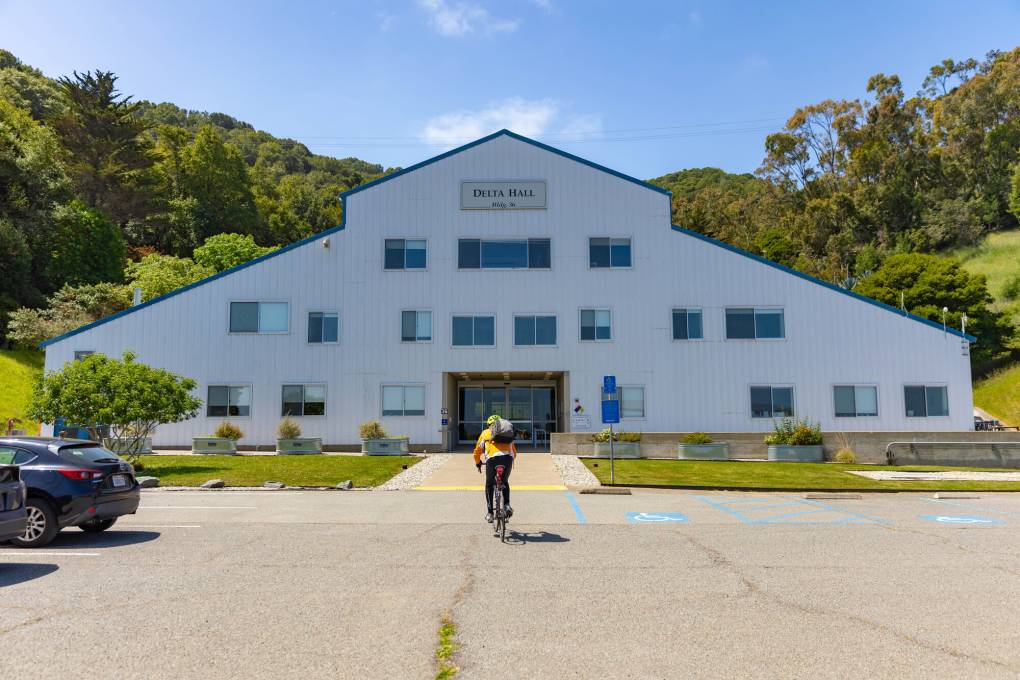
window.__INITIAL_STATE__={
"attachmentsReducer": {
"audio_0": {
"type": "attachments",
"id": "audio_0",
"imgSizes": {
"kqedFullSize": {
"file": "https://ww2.kqed.org/news/wp-content/themes/KQED-unified/img/audio_bgs/background0.jpg"
}
}
},
"audio_1": {
"type": "attachments",
"id": "audio_1",
"imgSizes": {
"kqedFullSize": {
"file": "https://ww2.kqed.org/news/wp-content/themes/KQED-unified/img/audio_bgs/background1.jpg"
}
}
},
"audio_2": {
"type": "attachments",
"id": "audio_2",
"imgSizes": {
"kqedFullSize": {
"file": "https://ww2.kqed.org/news/wp-content/themes/KQED-unified/img/audio_bgs/background2.jpg"
}
}
},
"audio_3": {
"type": "attachments",
"id": "audio_3",
"imgSizes": {
"kqedFullSize": {
"file": "https://ww2.kqed.org/news/wp-content/themes/KQED-unified/img/audio_bgs/background3.jpg"
}
}
},
"audio_4": {
"type": "attachments",
"id": "audio_4",
"imgSizes": {
"kqedFullSize": {
"file": "https://ww2.kqed.org/news/wp-content/themes/KQED-unified/img/audio_bgs/background4.jpg"
}
}
},
"placeholder": {
"type": "attachments",
"id": "placeholder",
"imgSizes": {
"thumbnail": {
"file": "https://cdn.kqed.org/wp-content/uploads/2024/12/KQED-Default-Image-816638274-2000x1333-1-160x107.jpg",
"width": 160,
"height": 107,
"mimeType": "image/jpeg"
},
"medium": {
"file": "https://cdn.kqed.org/wp-content/uploads/2024/12/KQED-Default-Image-816638274-2000x1333-1-800x533.jpg",
"width": 800,
"height": 533,
"mimeType": "image/jpeg"
},
"medium_large": {
"file": "https://cdn.kqed.org/wp-content/uploads/2024/12/KQED-Default-Image-816638274-2000x1333-1-768x512.jpg",
"width": 768,
"height": 512,
"mimeType": "image/jpeg"
},
"large": {
"file": "https://cdn.kqed.org/wp-content/uploads/2024/12/KQED-Default-Image-816638274-2000x1333-1-1020x680.jpg",
"width": 1020,
"height": 680,
"mimeType": "image/jpeg"
},
"1536x1536": {
"file": "https://cdn.kqed.org/wp-content/uploads/2024/12/KQED-Default-Image-816638274-2000x1333-1-1536x1024.jpg",
"width": 1536,
"height": 1024,
"mimeType": "image/jpeg"
},
"fd-lrg": {
"file": "https://cdn.kqed.org/wp-content/uploads/2024/12/KQED-Default-Image-816638274-2000x1333-1-1536x1024.jpg",
"width": 1536,
"height": 1024,
"mimeType": "image/jpeg"
},
"fd-med": {
"file": "https://cdn.kqed.org/wp-content/uploads/2024/12/KQED-Default-Image-816638274-2000x1333-1-1020x680.jpg",
"width": 1020,
"height": 680,
"mimeType": "image/jpeg"
},
"fd-sm": {
"file": "https://cdn.kqed.org/wp-content/uploads/2024/12/KQED-Default-Image-816638274-2000x1333-1-800x533.jpg",
"width": 800,
"height": 533,
"mimeType": "image/jpeg"
},
"post-thumbnail": {
"file": "https://cdn.kqed.org/wp-content/uploads/2024/12/KQED-Default-Image-816638274-2000x1333-1-672x372.jpg",
"width": 672,
"height": 372,
"mimeType": "image/jpeg"
},
"twentyfourteen-full-width": {
"file": "https://cdn.kqed.org/wp-content/uploads/2024/12/KQED-Default-Image-816638274-2000x1333-1-1038x576.jpg",
"width": 1038,
"height": 576,
"mimeType": "image/jpeg"
},
"xxsmall": {
"file": "https://cdn.kqed.org/wp-content/uploads/2024/12/KQED-Default-Image-816638274-2000x1333-1-160x107.jpg",
"width": 160,
"height": 107,
"mimeType": "image/jpeg"
},
"xsmall": {
"file": "https://cdn.kqed.org/wp-content/uploads/2024/12/KQED-Default-Image-816638274-2000x1333-1-672x372.jpg",
"width": 672,
"height": 372,
"mimeType": "image/jpeg"
},
"small": {
"file": "https://cdn.kqed.org/wp-content/uploads/2024/12/KQED-Default-Image-816638274-2000x1333-1-672x372.jpg",
"width": 672,
"height": 372,
"mimeType": "image/jpeg"
},
"xlarge": {
"file": "https://cdn.kqed.org/wp-content/uploads/2024/12/KQED-Default-Image-816638274-2000x1333-1-1020x680.jpg",
"width": 1020,
"height": 680,
"mimeType": "image/jpeg"
},
"full-width": {
"file": "https://cdn.kqed.org/wp-content/uploads/2024/12/KQED-Default-Image-816638274-2000x1333-1-1920x1280.jpg",
"width": 1920,
"height": 1280,
"mimeType": "image/jpeg"
},
"guest-author-32": {
"file": "https://cdn.kqed.org/wp-content/uploads/2025/01/KQED-Default-Image-816638274-1333x1333-1-160x160.jpg",
"width": 32,
"height": 32,
"mimeType": "image/jpeg"
},
"guest-author-50": {
"file": "https://cdn.kqed.org/wp-content/uploads/2025/01/KQED-Default-Image-816638274-1333x1333-1-160x160.jpg",
"width": 50,
"height": 50,
"mimeType": "image/jpeg"
},
"guest-author-64": {
"file": "https://cdn.kqed.org/wp-content/uploads/2025/01/KQED-Default-Image-816638274-1333x1333-1-160x160.jpg",
"width": 64,
"height": 64,
"mimeType": "image/jpeg"
},
"guest-author-96": {
"file": "https://cdn.kqed.org/wp-content/uploads/2025/01/KQED-Default-Image-816638274-1333x1333-1-160x160.jpg",
"width": 96,
"height": 96,
"mimeType": "image/jpeg"
},
"guest-author-128": {
"file": "https://cdn.kqed.org/wp-content/uploads/2025/01/KQED-Default-Image-816638274-1333x1333-1-160x160.jpg",
"width": 128,
"height": 128,
"mimeType": "image/jpeg"
},
"detail": {
"file": "https://cdn.kqed.org/wp-content/uploads/2025/01/KQED-Default-Image-816638274-1333x1333-1-160x160.jpg",
"width": 160,
"height": 160,
"mimeType": "image/jpeg"
},
"kqedFullSize": {
"file": "https://cdn.kqed.org/wp-content/uploads/2024/12/KQED-Default-Image-816638274-2000x1333-1.jpg",
"width": 2000,
"height": 1333
}
}
},
"news_12038612": {
"type": "attachments",
"id": "news_12038612",
"meta": {
"index": "attachments_1716263798",
"site": "news",
"id": "12038612",
"found": true
},
"title": "20250423_MarineLab_GC-16_qed",
"publishDate": 1746220170,
"status": "inherit",
"parent": 12038610,
"modified": 1746231821,
"caption": "A cyclist heads into Delta Hall, where the marine labs are, at San Francisco State University’s Estuary and Ocean Science center, in Tiburon on April 23, 2025. The center is the only marine research facility in the San Francisco Bay, and it will soon phase out operations after failing to secure the funding needed to cover its costs.",
"credit": "Gina Castro/KQED",
"altTag": null,
"description": null,
"imgSizes": {
"medium": {
"file": "https://cdn.kqed.org/wp-content/uploads/sites/10/2025/05/20250423_MarineLab_GC-16_qed-800x533.jpg",
"width": 800,
"height": 533,
"mimeType": "image/jpeg"
},
"large": {
"file": "https://cdn.kqed.org/wp-content/uploads/sites/10/2025/05/20250423_MarineLab_GC-16_qed-1020x680.jpg",
"width": 1020,
"height": 680,
"mimeType": "image/jpeg"
},
"thumbnail": {
"file": "https://cdn.kqed.org/wp-content/uploads/sites/10/2025/05/20250423_MarineLab_GC-16_qed-160x107.jpg",
"width": 160,
"height": 107,
"mimeType": "image/jpeg"
},
"1536x1536": {
"file": "https://cdn.kqed.org/wp-content/uploads/sites/10/2025/05/20250423_MarineLab_GC-16_qed-1536x1024.jpg",
"width": 1536,
"height": 1024,
"mimeType": "image/jpeg"
},
"post-thumbnail": {
"file": "https://cdn.kqed.org/wp-content/uploads/sites/10/2025/05/20250423_MarineLab_GC-16_qed-672x372.jpg",
"width": 672,
"height": 372,
"mimeType": "image/jpeg"
},
"twentyfourteen-full-width": {
"file": "https://cdn.kqed.org/wp-content/uploads/sites/10/2025/05/20250423_MarineLab_GC-16_qed-1038x576.jpg",
"width": 1038,
"height": 576,
"mimeType": "image/jpeg"
},
"full-width": {
"file": "https://cdn.kqed.org/wp-content/uploads/sites/10/2025/05/20250423_MarineLab_GC-16_qed-1920x1280.jpg",
"width": 1920,
"height": 1280,
"mimeType": "image/jpeg"
},
"kqedFullSize": {
"file": "https://cdn.kqed.org/wp-content/uploads/sites/10/2025/05/20250423_MarineLab_GC-16_qed.jpg",
"width": 2000,
"height": 1333
}
},
"isLoading": false,
"fetchFailed": false
},
"news_12038580": {
"type": "attachments",
"id": "news_12038580",
"meta": {
"index": "attachments_1716263798",
"site": "news",
"id": "12038580",
"found": true
},
"title": "US-POLITICS-MEDIA-PROTEST",
"publishDate": 1746211740,
"status": "inherit",
"parent": 12038576,
"modified": 1746222740,
"caption": "People participate in a rally to call on Congress to protect funding for U.S. public broadcasters, Public Broadcasting Service (PBS) and National Public Radio (NPR), outside the NPR headquarters in Washington, D.C., on March 26, 2025. ",
"credit": "Saul Loeb/AFP via Getty Images",
"altTag": null,
"description": null,
"imgSizes": {
"medium": {
"file": "https://cdn.kqed.org/wp-content/uploads/sites/10/2025/05/GettyImages-2206434879-800x534.jpg",
"width": 800,
"height": 534,
"mimeType": "image/jpeg"
},
"large": {
"file": "https://cdn.kqed.org/wp-content/uploads/sites/10/2025/05/GettyImages-2206434879-1020x680.jpg",
"width": 1020,
"height": 680,
"mimeType": "image/jpeg"
},
"thumbnail": {
"file": "https://cdn.kqed.org/wp-content/uploads/sites/10/2025/05/GettyImages-2206434879-160x107.jpg",
"width": 160,
"height": 107,
"mimeType": "image/jpeg"
},
"post-thumbnail": {
"file": "https://cdn.kqed.org/wp-content/uploads/sites/10/2025/05/GettyImages-2206434879-672x372.jpg",
"width": 672,
"height": 372,
"mimeType": "image/jpeg"
},
"twentyfourteen-full-width": {
"file": "https://cdn.kqed.org/wp-content/uploads/sites/10/2025/05/GettyImages-2206434879-1024x576.jpg",
"width": 1024,
"height": 576,
"mimeType": "image/jpeg"
},
"kqedFullSize": {
"file": "https://cdn.kqed.org/wp-content/uploads/sites/10/2025/05/GettyImages-2206434879.jpg",
"width": 1024,
"height": 683
}
},
"isLoading": false,
"fetchFailed": false
},
"news_12038484": {
"type": "attachments",
"id": "news_12038484",
"meta": {
"index": "attachments_1716263798",
"site": "news",
"id": "12038484",
"found": true
},
"title": "npr.brightspotcdn copy",
"publishDate": 1746144469,
"status": "inherit",
"parent": 12038483,
"modified": 1746144490,
"caption": "In his first 100 days in office President Trump has signed just five bills into law while issuing over 100 executive actions, a pattern that fits with his vision of a more powerful executive.",
"credit": "Kayla Bartkowski/Getty Images",
"altTag": null,
"description": null,
"imgSizes": {
"medium": {
"file": "https://cdn.kqed.org/wp-content/uploads/sites/10/2025/05/npr.brightspotcdn-copy-800x534.jpg",
"width": 800,
"height": 534,
"mimeType": "image/jpeg"
},
"large": {
"file": "https://cdn.kqed.org/wp-content/uploads/sites/10/2025/05/npr.brightspotcdn-copy-1020x680.jpg",
"width": 1020,
"height": 680,
"mimeType": "image/jpeg"
},
"thumbnail": {
"file": "https://cdn.kqed.org/wp-content/uploads/sites/10/2025/05/npr.brightspotcdn-copy-160x107.jpg",
"width": 160,
"height": 107,
"mimeType": "image/jpeg"
},
"1536x1536": {
"file": "https://cdn.kqed.org/wp-content/uploads/sites/10/2025/05/npr.brightspotcdn-copy-1536x1024.jpg",
"width": 1536,
"height": 1024,
"mimeType": "image/jpeg"
},
"post-thumbnail": {
"file": "https://cdn.kqed.org/wp-content/uploads/sites/10/2025/05/npr.brightspotcdn-copy-672x372.jpg",
"width": 672,
"height": 372,
"mimeType": "image/jpeg"
},
"twentyfourteen-full-width": {
"file": "https://cdn.kqed.org/wp-content/uploads/sites/10/2025/05/npr.brightspotcdn-copy-1038x576.jpg",
"width": 1038,
"height": 576,
"mimeType": "image/jpeg"
},
"kqedFullSize": {
"file": "https://cdn.kqed.org/wp-content/uploads/sites/10/2025/05/npr.brightspotcdn-copy.jpg",
"width": 1600,
"height": 1067
}
},
"isLoading": false,
"fetchFailed": false
},
"news_12038527": {
"type": "attachments",
"id": "news_12038527",
"meta": {
"index": "attachments_1716263798",
"site": "news",
"id": "12038527",
"found": true
},
"title": "US-BUSINESS-NPR",
"publishDate": 1746196973,
"status": "inherit",
"parent": 12038524,
"modified": 1746197058,
"caption": "The headquarters for National Public Radio, or NPR, are seen in Washington, DC, September 17, 2013. The USD 201 million building, which opened in 2013, serves as the headquarters of the media organization that creates and distributes news, information and music programming to 975 independent radio stations throughout the US, reaching 26 million listeners each week. ",
"credit": "Saul Loeb /AFP via Getty Image",
"altTag": null,
"description": null,
"imgSizes": {
"medium": {
"file": "https://cdn.kqed.org/wp-content/uploads/sites/10/2025/05/GettyImages-180967643_qed-800x562.jpg",
"width": 800,
"height": 562,
"mimeType": "image/jpeg"
},
"large": {
"file": "https://cdn.kqed.org/wp-content/uploads/sites/10/2025/05/GettyImages-180967643_qed-1020x716.jpg",
"width": 1020,
"height": 716,
"mimeType": "image/jpeg"
},
"thumbnail": {
"file": "https://cdn.kqed.org/wp-content/uploads/sites/10/2025/05/GettyImages-180967643_qed-160x112.jpg",
"width": 160,
"height": 112,
"mimeType": "image/jpeg"
},
"1536x1536": {
"file": "https://cdn.kqed.org/wp-content/uploads/sites/10/2025/05/GettyImages-180967643_qed-1536x1079.jpg",
"width": 1536,
"height": 1079,
"mimeType": "image/jpeg"
},
"post-thumbnail": {
"file": "https://cdn.kqed.org/wp-content/uploads/sites/10/2025/05/GettyImages-180967643_qed-672x372.jpg",
"width": 672,
"height": 372,
"mimeType": "image/jpeg"
},
"twentyfourteen-full-width": {
"file": "https://cdn.kqed.org/wp-content/uploads/sites/10/2025/05/GettyImages-180967643_qed-1038x576.jpg",
"width": 1038,
"height": 576,
"mimeType": "image/jpeg"
},
"kqedFullSize": {
"file": "https://cdn.kqed.org/wp-content/uploads/sites/10/2025/05/GettyImages-180967643_qed.jpg",
"width": 1898,
"height": 1333
}
},
"isLoading": false,
"fetchFailed": false
},
"news_12038393": {
"type": "attachments",
"id": "news_12038393",
"meta": {
"index": "attachments_1716263798",
"site": "news",
"id": "12038393",
"found": true
},
"title": "October Heat Wave Brings Temperatures Close To Triple Digits Around Los Angeles",
"publishDate": 1746121585,
"status": "inherit",
"parent": 12038392,
"modified": 1746121593,
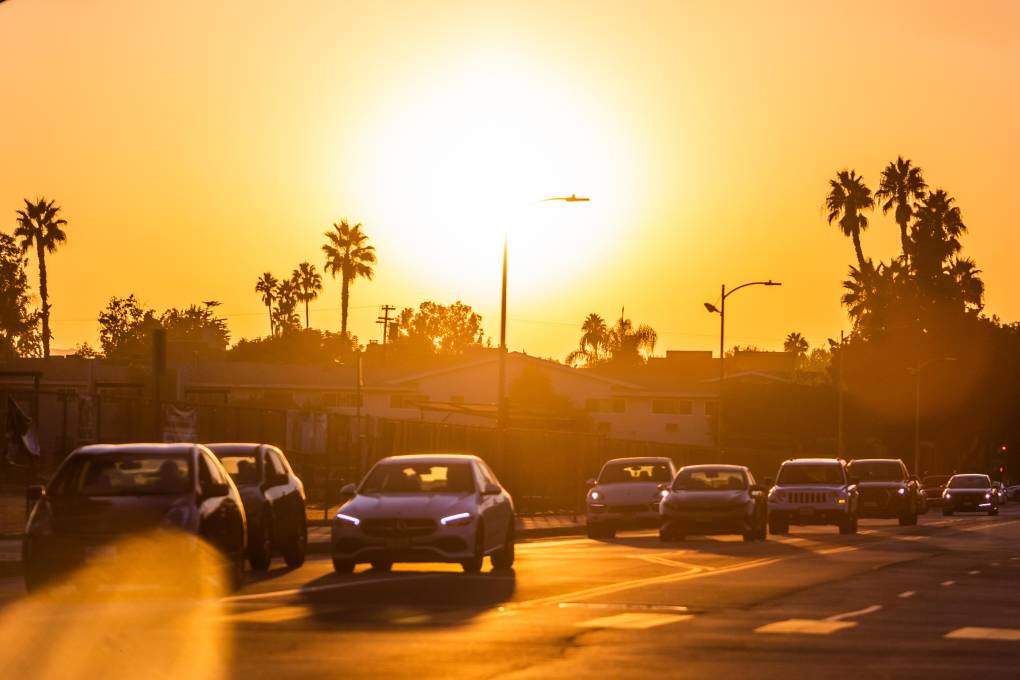
"caption": "Vehicles drive along the 101 Freeway in Los Angeles, Calif., during a heat wave in October 2024. California has ambitious rules requiring automakers to phase out gas-powered vehicles (except for plug-in hybrids), to combat air pollution and climate change. The Trump administration has vowed to overturn California's stringent standards.",
"credit": null,
"altTag": null,
"description": "SHERMAN OAKS, CALIFORNIA - OCTOBER 3: A view shows vehicles passing along the 101 Freeway in Studio City, seen from the Mulholland Drive on October 3, 2024 in Los Angeles, California. A heatwave is continuing to bring temperatures above 100 dreeges and an increased fire threat to Southern California. (Photo by Apu Gomes/Getty Images)",
"imgSizes": {
"medium": {
"file": "https://cdn.kqed.org/wp-content/uploads/sites/10/2025/05/gettyimages-2175702824-800x533.jpeg",
"width": 800,
"height": 533,
"mimeType": "image/jpeg"
},
"large": {
"file": "https://cdn.kqed.org/wp-content/uploads/sites/10/2025/05/gettyimages-2175702824-1020x680.jpeg",
"width": 1020,
"height": 680,
"mimeType": "image/jpeg"
},
"thumbnail": {
"file": "https://cdn.kqed.org/wp-content/uploads/sites/10/2025/05/gettyimages-2175702824-160x107.jpeg",
"width": 160,
"height": 107,
"mimeType": "image/jpeg"
},
"1536x1536": {
"file": "https://cdn.kqed.org/wp-content/uploads/sites/10/2025/05/gettyimages-2175702824-1536x1024.jpeg",
"width": 1536,
"height": 1024,
"mimeType": "image/jpeg"
},
"2048x2048": {
"file": "https://cdn.kqed.org/wp-content/uploads/sites/10/2025/05/gettyimages-2175702824-2048x1365.jpeg",
"width": 2048,
"height": 1365,
"mimeType": "image/jpeg"
},
"post-thumbnail": {
"file": "https://cdn.kqed.org/wp-content/uploads/sites/10/2025/05/gettyimages-2175702824-672x372.jpeg",
"width": 672,
"height": 372,
"mimeType": "image/jpeg"
},
"twentyfourteen-full-width": {
"file": "https://cdn.kqed.org/wp-content/uploads/sites/10/2025/05/gettyimages-2175702824-1038x576.jpeg",
"width": 1038,
"height": 576,
"mimeType": "image/jpeg"
},
"full-width": {
"file": "https://cdn.kqed.org/wp-content/uploads/sites/10/2025/05/gettyimages-2175702824-1920x1280.jpeg",
"width": 1920,
"height": 1280,
"mimeType": "image/jpeg"
},
"kqedFullSize": {
"file": "https://cdn.kqed.org/wp-content/uploads/sites/10/2025/05/gettyimages-2175702824-scaled.jpeg",
"width": 2560,
"height": 1707
}
},
"isLoading": false,
"fetchFailed": false
},
"news_12038382": {
"type": "attachments",
"id": "news_12038382",
"meta": {
"index": "attachments_1716263798",
"site": "news",
"id": "12038382",
"found": true
},
"title": "Kamala Harris Speaks At The Emerge Gala In San Francisco",
"publishDate": 1746118359,
"status": "inherit",
"parent": 12030198,
"modified": 1751318190,
"caption": "Former Vice President Kamala Harris delivers a keynote address during the Emerge 20th anniversary gala at the Palace Hotel on April 30, 2025, in San Francisco. It was her first major political speech since leaving office in January.",
"credit": "Justin Sullivan/Getty Images",
"altTag": null,
"description": null,
"imgSizes": {
"medium": {
"file": "https://cdn.kqed.org/wp-content/uploads/sites/10/2025/05/GETTYIMAGES-2212828202-KQED-800x530.jpg",
"width": 800,
"height": 530,
"mimeType": "image/jpeg"
},
"large": {
"file": "https://cdn.kqed.org/wp-content/uploads/sites/10/2025/05/GETTYIMAGES-2212828202-KQED-1020x676.jpg",
"width": 1020,
"height": 676,
"mimeType": "image/jpeg"
},
"thumbnail": {
"file": "https://cdn.kqed.org/wp-content/uploads/sites/10/2025/05/GETTYIMAGES-2212828202-KQED-160x106.jpg",
"width": 160,
"height": 106,
"mimeType": "image/jpeg"
},
"1536x1536": {
"file": "https://cdn.kqed.org/wp-content/uploads/sites/10/2025/05/GETTYIMAGES-2212828202-KQED-1536x1018.jpg",
"width": 1536,
"height": 1018,
"mimeType": "image/jpeg"
},
"post-thumbnail": {
"file": "https://cdn.kqed.org/wp-content/uploads/sites/10/2025/05/GETTYIMAGES-2212828202-KQED-672x372.jpg",
"width": 672,
"height": 372,
"mimeType": "image/jpeg"
},
"twentyfourteen-full-width": {
"file": "https://cdn.kqed.org/wp-content/uploads/sites/10/2025/05/GETTYIMAGES-2212828202-KQED-1038x576.jpg",
"width": 1038,
"height": 576,
"mimeType": "image/jpeg"
},
"full-width": {
"file": "https://cdn.kqed.org/wp-content/uploads/sites/10/2025/05/GETTYIMAGES-2212828202-KQED-1920x1273.jpg",
"width": 1920,
"height": 1273,
"mimeType": "image/jpeg"
},
"kqedFullSize": {
"file": "https://cdn.kqed.org/wp-content/uploads/sites/10/2025/05/GETTYIMAGES-2212828202-KQED.jpg",
"width": 2000,
"height": 1326
}
},
"isLoading": false,
"fetchFailed": false
},
"news_12038365": {
"type": "attachments",
"id": "news_12038365",
"meta": {
"index": "attachments_1716263798",
"site": "news",
"id": "12038365",
"found": true
},
"title": "TOPSHOT-US-POLITICS-TRUMP",
"publishDate": 1746104213,
"status": "inherit",
"parent": 12038363,
"modified": 1746104278,
"caption": "TOPSHOT - US President Donald Trump arrives to deliver a speech marking his 100th day in office at Macomb County Community College Sports Expo Center in Warren, Michigan, on April 29, 2025. Trump celebrated the first 100 days of what is already one of the most radical and far-reaching presidencies in US history, but polls show Americans becoming disenchanted with the economic and political tumult. ",
"credit": "Photo by Jim WATSON / AFP",
"altTag": null,
"description": null,
"imgSizes": {
"medium": {
"file": "https://cdn.kqed.org/wp-content/uploads/sites/10/2025/05/GettyImages-2212089787-800x533.jpg",
"width": 800,
"height": 533,
"mimeType": "image/jpeg"
},
"large": {
"file": "https://cdn.kqed.org/wp-content/uploads/sites/10/2025/05/GettyImages-2212089787-1020x680.jpg",
"width": 1020,
"height": 680,
"mimeType": "image/jpeg"
},
"thumbnail": {
"file": "https://cdn.kqed.org/wp-content/uploads/sites/10/2025/05/GettyImages-2212089787-160x107.jpg",
"width": 160,
"height": 107,
"mimeType": "image/jpeg"
},
"1536x1536": {
"file": "https://cdn.kqed.org/wp-content/uploads/sites/10/2025/05/GettyImages-2212089787-1536x1024.jpg",
"width": 1536,
"height": 1024,
"mimeType": "image/jpeg"
},
"2048x2048": {
"file": "https://cdn.kqed.org/wp-content/uploads/sites/10/2025/05/GettyImages-2212089787-2048x1365.jpg",
"width": 2048,
"height": 1365,
"mimeType": "image/jpeg"
},
"post-thumbnail": {
"file": "https://cdn.kqed.org/wp-content/uploads/sites/10/2025/05/GettyImages-2212089787-672x372.jpg",
"width": 672,
"height": 372,
"mimeType": "image/jpeg"
},
"twentyfourteen-full-width": {
"file": "https://cdn.kqed.org/wp-content/uploads/sites/10/2025/05/GettyImages-2212089787-1038x576.jpg",
"width": 1038,
"height": 576,
"mimeType": "image/jpeg"
},
"full-width": {
"file": "https://cdn.kqed.org/wp-content/uploads/sites/10/2025/05/GettyImages-2212089787-1920x1280.jpg",
"width": 1920,
"height": 1280,
"mimeType": "image/jpeg"
},
"kqedFullSize": {
"file": "https://cdn.kqed.org/wp-content/uploads/sites/10/2025/05/GettyImages-2212089787-scaled.jpg",
"width": 2560,
"height": 1707
}
},
"isLoading": false,
"fetchFailed": false
},
"news_12036403": {
"type": "attachments",
"id": "news_12036403",
"meta": {
"index": "attachments_1716263798",
"site": "news",
"id": "12036403",
"found": true
},
"title": "Trucks leave the Port of Oakland on Sept. 28, 2023.",
"publishDate": 1744909907,
"status": "inherit",
"parent": 12036199,
"modified": 1744910003,
"caption": "Trucks leave the Port of Oakland on Sept. 28, 2023.",
"credit": "Martin do Nascimento/KQED",
"altTag": null,
"description": null,
"imgSizes": {
"medium": {
"file": "https://cdn.kqed.org/wp-content/uploads/sites/10/2025/04/230928-EAGLE-ROCK-SETTLE-MD-09_qed-800x533.jpg",
"width": 800,
"height": 533,
"mimeType": "image/jpeg"
},
"large": {
"file": "https://cdn.kqed.org/wp-content/uploads/sites/10/2025/04/230928-EAGLE-ROCK-SETTLE-MD-09_qed-1020x680.jpg",
"width": 1020,
"height": 680,
"mimeType": "image/jpeg"
},
"thumbnail": {
"file": "https://cdn.kqed.org/wp-content/uploads/sites/10/2025/04/230928-EAGLE-ROCK-SETTLE-MD-09_qed-160x107.jpg",
"width": 160,
"height": 107,
"mimeType": "image/jpeg"
},
"1536x1536": {
"file": "https://cdn.kqed.org/wp-content/uploads/sites/10/2025/04/230928-EAGLE-ROCK-SETTLE-MD-09_qed-1536x1024.jpg",
"width": 1536,
"height": 1024,
"mimeType": "image/jpeg"
},
"post-thumbnail": {
"file": "https://cdn.kqed.org/wp-content/uploads/sites/10/2025/04/230928-EAGLE-ROCK-SETTLE-MD-09_qed-672x372.jpg",
"width": 672,
"height": 372,
"mimeType": "image/jpeg"
},
"twentyfourteen-full-width": {
"file": "https://cdn.kqed.org/wp-content/uploads/sites/10/2025/04/230928-EAGLE-ROCK-SETTLE-MD-09_qed-1038x576.jpg",
"width": 1038,
"height": 576,
"mimeType": "image/jpeg"
},
"full-width": {
"file": "https://cdn.kqed.org/wp-content/uploads/sites/10/2025/04/230928-EAGLE-ROCK-SETTLE-MD-09_qed-1920x1280.jpg",
"width": 1920,
"height": 1280,
"mimeType": "image/jpeg"
},
"kqedFullSize": {
"file": "https://cdn.kqed.org/wp-content/uploads/sites/10/2025/04/230928-EAGLE-ROCK-SETTLE-MD-09_qed.jpg",
"width": 2000,
"height": 1333
}
},
"isLoading": false,
"fetchFailed": false
},
"news_11888806": {
"type": "attachments",
"id": "news_11888806",
"meta": {
"index": "attachments_1716263798",
"site": "news",
"id": "11888806",
"found": true
},
"title": "Father And Son From Honduras Seeking Asylum In The U.S. Await The Court's Decision On Their Status",
"publishDate": 1631785462,
"status": "inherit",
"parent": 11888754,
"modified": 1749678492,
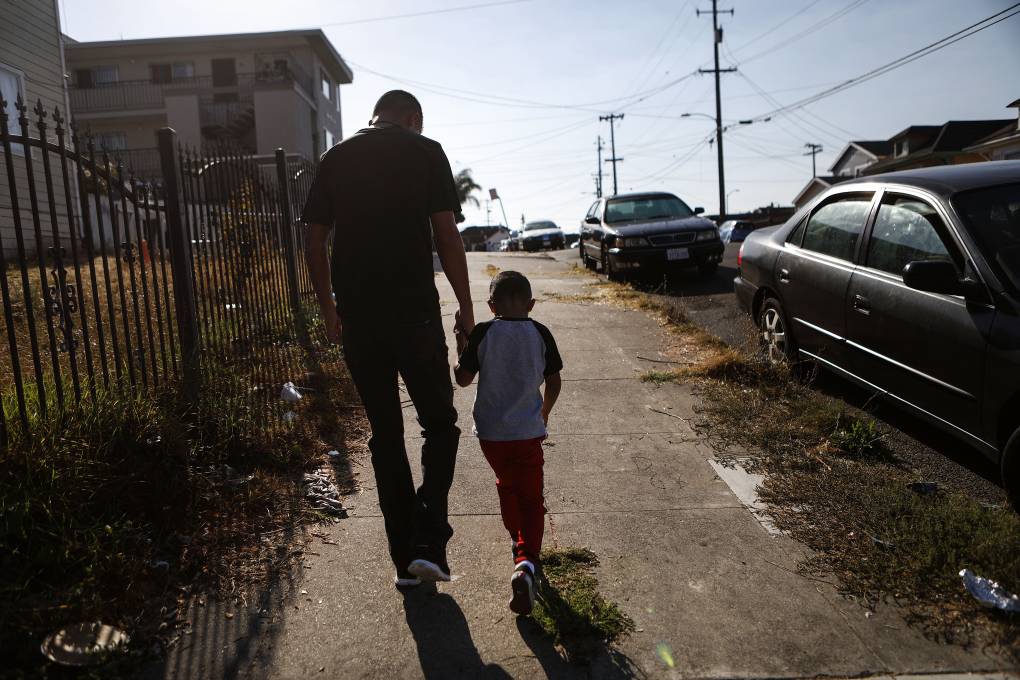
"caption": "A Honduran father and his 6-year-old son walk to Sunday Mass on Sept. 9, 2018, in Oakland, California. They were one of almost 2,600 families separated due to the Trump administration's \"zero tolerance\" immigration policy. ",
"credit": "Mario Tama/Getty Images",
"altTag": "A man and young boy hold hands as they walk in silhouette on an urban sidewalk in early morning sun.",
"description": "Honduran father Juan and his six-year-old son Anthony walk on their way to attend Sunday Mass on September 9, 2018 in Oakland, California. They fled their country, leaving many family members behind, and crossed the U.S. border in April at a lawful port of entry in Brownsville, Texas seeking asylum. They were soon separated and spent the next 85 days apart in detention. Juan was sent to Tulsa, Oklahoma, while his son was sent to a detention shelter New York. They were one of almost 2,600 families separated due to the Trump administration's \"zero tolerance\" immigration policy. Juan said it took six weeks from the time of separation until he was able to make a phone call to his son. They were finally reunited in July 2018.",
"imgSizes": {
"medium": {
"file": "https://cdn.kqed.org/wp-content/uploads/sites/10/2021/09/GettyImages-1031228044-800x533.jpg",
"width": 800,
"height": 533,
"mimeType": "image/jpeg"
},
"large": {
"file": "https://cdn.kqed.org/wp-content/uploads/sites/10/2021/09/GettyImages-1031228044-1020x680.jpg",
"width": 1020,
"height": 680,
"mimeType": "image/jpeg"
},
"thumbnail": {
"file": "https://cdn.kqed.org/wp-content/uploads/sites/10/2021/09/GettyImages-1031228044-160x107.jpg",
"width": 160,
"height": 107,
"mimeType": "image/jpeg"
},
"1536x1536": {
"file": "https://cdn.kqed.org/wp-content/uploads/sites/10/2021/09/GettyImages-1031228044-1536x1024.jpg",
"width": 1536,
"height": 1024,
"mimeType": "image/jpeg"
},
"2048x2048": {
"file": "https://cdn.kqed.org/wp-content/uploads/sites/10/2021/09/GettyImages-1031228044-2048x1365.jpg",
"width": 2048,
"height": 1365,
"mimeType": "image/jpeg"
},
"post-thumbnail": {
"file": "https://cdn.kqed.org/wp-content/uploads/sites/10/2021/09/GettyImages-1031228044-672x372.jpg",
"width": 672,
"height": 372,
"mimeType": "image/jpeg"
},
"twentyfourteen-full-width": {
"file": "https://cdn.kqed.org/wp-content/uploads/sites/10/2021/09/GettyImages-1031228044-1038x576.jpg",
"width": 1038,
"height": 576,
"mimeType": "image/jpeg"
},
"full-width": {
"file": "https://cdn.kqed.org/wp-content/uploads/sites/10/2021/09/GettyImages-1031228044-1920x1280.jpg",
"width": 1920,
"height": 1280,
"mimeType": "image/jpeg"
},
"kqedFullSize": {
"file": "https://cdn.kqed.org/wp-content/uploads/sites/10/2021/09/GettyImages-1031228044-scaled-e1776901494677.jpg",
"width": 2000,
"height": 1334
}
},
"isLoading": false,
"fetchFailed": false
},
"news_12037556": {
"type": "attachments",
"id": "news_12037556",
"meta": {
"index": "attachments_1716263798",
"site": "news",
"id": "12037556",
"found": true
},
"title": "npr.brightspotcdn copy",
"publishDate": 1745533268,
"status": "inherit",
"parent": 12037553,
"modified": 1745533296,
"caption": "President Donald Trump speaks with reporters at the White House on Wednesday in Washington. Many oil and gas company executives, particularly the larger ones, initially celebrated Trump's return as president. But lately, that optimism for higher oil company profits appears to have faded amid growing fears of a recession.",
"credit": "Alex Brandon/AP",
"altTag": null,
"description": null,
"imgSizes": {
"medium": {
"file": "https://cdn.kqed.org/wp-content/uploads/sites/10/2025/04/npr.brightspotcdn-copy-21-800x534.jpg",
"width": 800,
"height": 534,
"mimeType": "image/jpeg"
},
"large": {
"file": "https://cdn.kqed.org/wp-content/uploads/sites/10/2025/04/npr.brightspotcdn-copy-21-1020x680.jpg",
"width": 1020,
"height": 680,
"mimeType": "image/jpeg"
},
"thumbnail": {
"file": "https://cdn.kqed.org/wp-content/uploads/sites/10/2025/04/npr.brightspotcdn-copy-21-160x107.jpg",
"width": 160,
"height": 107,
"mimeType": "image/jpeg"
},
"1536x1536": {
"file": "https://cdn.kqed.org/wp-content/uploads/sites/10/2025/04/npr.brightspotcdn-copy-21-1536x1024.jpg",
"width": 1536,
"height": 1024,
"mimeType": "image/jpeg"
},
"post-thumbnail": {
"file": "https://cdn.kqed.org/wp-content/uploads/sites/10/2025/04/npr.brightspotcdn-copy-21-672x372.jpg",
"width": 672,
"height": 372,
"mimeType": "image/jpeg"
},
"twentyfourteen-full-width": {
"file": "https://cdn.kqed.org/wp-content/uploads/sites/10/2025/04/npr.brightspotcdn-copy-21-1038x576.jpg",
"width": 1038,
"height": 576,
"mimeType": "image/jpeg"
},
"kqedFullSize": {
"file": "https://cdn.kqed.org/wp-content/uploads/sites/10/2025/04/npr.brightspotcdn-copy-21.jpg",
"width": 1600,
"height": 1067
}
},
"isLoading": false,
"fetchFailed": false
},
"news_12037244": {
"type": "attachments",
"id": "news_12037244",
"meta": {
"index": "attachments_1716263798",
"site": "news",
"id": "12037244",
"found": true
},
"title": "250421-CHINATOWNTARIFFS-30-BL-KQED",
"publishDate": 1745410870,
"status": "inherit",
"parent": 0,
"modified": 1745411036,
"caption": "Jian Wen Ma, owner of Powell Trading Company, stands in the shop in San Francisco’s Chinatown neighborhood on April 21, 2025.",
"credit": "Beth LaBerge/KQED",
"altTag": null,
"description": null,
"imgSizes": {
"medium": {
"file": "https://cdn.kqed.org/wp-content/uploads/sites/10/2025/04/250421-CHINATOWNTARIFFS-30-BL-KQED-800x533.jpg",
"width": 800,
"height": 533,
"mimeType": "image/jpeg"
},
"large": {
"file": "https://cdn.kqed.org/wp-content/uploads/sites/10/2025/04/250421-CHINATOWNTARIFFS-30-BL-KQED-1020x680.jpg",
"width": 1020,
"height": 680,
"mimeType": "image/jpeg"
},
"thumbnail": {
"file": "https://cdn.kqed.org/wp-content/uploads/sites/10/2025/04/250421-CHINATOWNTARIFFS-30-BL-KQED-160x107.jpg",
"width": 160,
"height": 107,
"mimeType": "image/jpeg"
},
"1536x1536": {
"file": "https://cdn.kqed.org/wp-content/uploads/sites/10/2025/04/250421-CHINATOWNTARIFFS-30-BL-KQED-1536x1024.jpg",
"width": 1536,
"height": 1024,
"mimeType": "image/jpeg"
},
"post-thumbnail": {
"file": "https://cdn.kqed.org/wp-content/uploads/sites/10/2025/04/250421-CHINATOWNTARIFFS-30-BL-KQED-672x372.jpg",
"width": 672,
"height": 372,
"mimeType": "image/jpeg"
},
"twentyfourteen-full-width": {
"file": "https://cdn.kqed.org/wp-content/uploads/sites/10/2025/04/250421-CHINATOWNTARIFFS-30-BL-KQED-1038x576.jpg",
"width": 1038,
"height": 576,
"mimeType": "image/jpeg"
},
"full-width": {
"file": "https://cdn.kqed.org/wp-content/uploads/sites/10/2025/04/250421-CHINATOWNTARIFFS-30-BL-KQED-1920x1280.jpg",
"width": 1920,
"height": 1280,
"mimeType": "image/jpeg"
},
"kqedFullSize": {
"file": "https://cdn.kqed.org/wp-content/uploads/sites/10/2025/04/250421-CHINATOWNTARIFFS-30-BL-KQED.jpg",
"width": 2000,
"height": 1333
}
},
"isLoading": false,
"fetchFailed": false
},
"news_12002386": {
"type": "attachments",
"id": "news_12002386",
"meta": {
"index": "attachments_1716263798",
"site": "news",
"id": "12002386",
"found": true
},
"title": "LOGO_THEBAY",
"publishDate": 1724964767,
"status": "inherit",
"parent": 12002385,
"modified": 1724964767,
"caption": null,
"credit": null,
"altTag": null,
"description": null,
"imgSizes": {
"thumbnail": {
"file": "https://cdn.kqed.org/wp-content/uploads/sites/10/2024/08/LOGO_THEBAY-160x160.png",
"width": 160,
"height": 160,
"mimeType": "image/png"
},
"kqedFullSize": {
"file": "https://cdn.kqed.org/wp-content/uploads/sites/10/2024/08/LOGO_THEBAY.png",
"width": 300,
"height": 300
}
},
"isLoading": false,
"fetchFailed": false
}
},
"audioPlayerReducer": {
"postId": "stream_live",
"isPaused": true,
"isPlaying": false,
"pfsActive": false,
"pledgeModalIsOpen": true,
"playerDrawerIsOpen": false,
"liveAudioPlayStartedAt": 0,
"liveAudioPlayContext": ""
},
"authorsReducer": {
"byline_news_12038610": {
"type": "authors",
"id": "byline_news_12038610",
"meta": {
"override": true
},
"slug": "byline_news_12038610",
"name": "\u003ca href=\"https://www.kqed.org/author/matthewgreen\">Matthew Green\u003c/a> and Anna FitzGerald Guth",
"isLoading": false
},
"byline_news_12038483": {
"type": "authors",
"id": "byline_news_12038483",
"meta": {
"override": true
},
"slug": "byline_news_12038483",
"name": "\u003ca href=\"https://www.npr.org/people/467975902/susan-davis\">Susan Davis\u003c/a>, NPR",
"isLoading": false
},
"byline_news_12038524": {
"type": "authors",
"id": "byline_news_12038524",
"meta": {
"override": true
},
"slug": "byline_news_12038524",
"name": "David Folkenflik",
"isLoading": false
},
"byline_news_12038392": {
"type": "authors",
"id": "byline_news_12038392",
"meta": {
"override": true
},
"slug": "byline_news_12038392",
"name": "Camila Domonoske, NPR",
"isLoading": false
},
"byline_news_12038327": {
"type": "authors",
"id": "byline_news_12038327",
"meta": {
"override": true
},
"slug": "byline_news_12038327",
"name": "Mark Betancourt, The California Newsroom",
"isLoading": false
},
"byline_news_12038128": {
"type": "authors",
"id": "byline_news_12038128",
"meta": {
"override": true
},
"slug": "byline_news_12038128",
"name": "Megan Larson of The California Newsroom, Vicki Gonzalez of CapRadio and David Brown of the Texas Standard",
"isLoading": false
},
"scottshafer": {
"type": "authors",
"id": "255",
"meta": {
"index": "authors_1716337520",
"id": "255",
"found": true
},
"name": "Scott Shafer",
"firstName": "Scott",
"lastName": "Shafer",
"slug": "scottshafer",
"email": "sshafer@kqed.org",
"display_author_email": false,
"staff_mastheads": [
"news"
],
"title": "KQED Contributor",
"bio": "Scott Shafer is a senior editor with the KQED Politics and Government desk. He is co-host of Political Breakdown, the award-winning radio show and podcast with a personal take on the world of politics. Scott came to KQED in 1998 to host the statewide\u003cem> California Report\u003c/em>. Prior to that he had extended stints in politics and government\u003cem>.\u003c/em> He uses that inside experience at KQED in his, reporting, hosting and analysis for the politics desk. Scott collaborated \u003cem>Political Breakdown a\u003c/em>nd on \u003cem>The Political Mind of Jerry Brown, \u003c/em>an eight-part series about the life and extraordinary political career of the former governor. For fun, he plays water polo with the San Francisco Tsunami.",
"avatar": "https://secure.gravatar.com/avatar/a62ebae45b79d7aed1a39a0e3bf68104?s=600&d=blank&r=g",
"twitter": "scottshafer",
"bluesky": null,
"facebook": null,
"instagram": null,
"linkedin": null,
"sites": [
{
"site": "news",
"roles": [
"editor"
]
},
{
"site": "stateofhealth",
"roles": [
"author"
]
},
{
"site": "science",
"roles": [
"author"
]
},
{
"site": "forum",
"roles": [
"subscriber"
]
},
{
"site": "liveblog",
"roles": [
"author"
]
}
],
"headData": {
"title": "Scott Shafer | KQED",
"description": "KQED Contributor",
"ogImgSrc": "https://secure.gravatar.com/avatar/a62ebae45b79d7aed1a39a0e3bf68104?s=600&d=blank&r=g",
"twImgSrc": "https://secure.gravatar.com/avatar/a62ebae45b79d7aed1a39a0e3bf68104?s=600&d=blank&r=g"
},
"isLoading": false,
"link": "/author/scottshafer"
},
"matthewgreen": {
"type": "authors",
"id": "1263",
"meta": {
"index": "authors_1716337520",
"id": "1263",
"found": true
},
"name": "Matthew Green",
"firstName": "Matthew",
"lastName": "Green",
"slug": "matthewgreen",
"email": "mgreen@kqed.org",
"display_author_email": false,
"staff_mastheads": [],
"title": "KQED Editor/Reporter",
"bio": "Matthew Green is a digital media producer for KQED News. He previously produced \u003ca href=\"http://www.kqed.org/lowdown\">The Lowdown\u003c/a>, KQED’s multimedia news education blog. Matthew's written for numerous Bay Area publications, including the Oakland Tribune and San Francisco Chronicle. He also taught journalism classes at Fremont High School in East Oakland.\r\n\r\nEmail: mgreen@kqed.org; Twitter: @MGreenKQED",
"avatar": "https://secure.gravatar.com/avatar/3bf498d1267ca02c8494f33d8cfc575e?s=600&d=blank&r=g",
"twitter": "MGreenKQED",
"facebook": null,
"instagram": null,
"linkedin": null,
"sites": [
{
"site": "news",
"roles": []
},
{
"site": "lowdown",
"roles": []
},
{
"site": "science",
"roles": []
},
{
"site": "education",
"roles": []
},
{
"site": "quest",
"roles": []
},
{
"site": "liveblog",
"roles": []
}
],
"headData": {
"title": "Matthew Green | KQED",
"description": "KQED Editor/Reporter",
"ogImgSrc": "https://secure.gravatar.com/avatar/3bf498d1267ca02c8494f33d8cfc575e?s=600&d=blank&r=g",
"twImgSrc": "https://secure.gravatar.com/avatar/3bf498d1267ca02c8494f33d8cfc575e?s=600&d=blank&r=g"
},
"isLoading": false,
"link": "/author/matthewgreen"
},
"lklivans": {
"type": "authors",
"id": "8648",
"meta": {
"index": "authors_1716337520",
"id": "8648",
"found": true
},
"name": "Laura Klivans",
"firstName": "Laura",
"lastName": "Klivans",
"slug": "lklivans",
"email": "lklivans@kqed.org",
"display_author_email": true,
"staff_mastheads": [
"news",
"science"
],
"title": "Reporter",
"bio": "Laura Klivans is an award-winning science reporter for KQED News, where she covers climate change with an eye on both groundbreaking progress and gaps in action. She is the former host of KQED's blockbuster video series about tiny, amazing animals, \u003cem>Deep Look\u003c/em>. Her work reaches national audiences through NPR, \u003cem>Here & Now, \u003c/em>PRI, and other major outlets. \r\n\r\nLaura’s won five Northern California Area Emmy Awards for Deep Look and First Place in the Greater Bay Area Journalism Awards for a podcast exploring how one Oakland neighborhood teamed up to reduce planet-heating pollution.\r\n\r\nBeyond her reporting, she hosts and moderates events. In the past, she taught audio storytelling at the UC Berkeley Graduate School of Journalism, led international education programs, worked with immigrants and refugees along the Thai-Burmese border, taught high schoolers sex ed, and was an actress. \r\n\r\nShe's a former UC Berkeley Human Rights Fellow, USC Center for Health Journalism's California Fellow and Coro Fellow in Public Affairs. Laura has a master’s in journalism from UC Berkeley, a master’s in education from Harvard, and an undergraduate degree from Northwestern University.\r\n\r\nShe loves trying to riddle the meaning out of vanity license plates.",
"avatar": "https://secure.gravatar.com/avatar/af8e757bb8ce7b7fee6160ba66e37327?s=600&d=blank&r=g",
"twitter": "lauraklivans",
"facebook": null,
"instagram": null,
"linkedin": null,
"sites": [
{
"site": "news",
"roles": [
"editor"
]
},
{
"site": "stateofhealth",
"roles": [
"contributor",
"editor"
]
},
{
"site": "science",
"roles": [
"editor"
]
},
{
"site": "forum",
"roles": [
"editor"
]
}
],
"headData": {
"title": "Laura Klivans | KQED",
"description": "Reporter",
"ogImgSrc": "https://secure.gravatar.com/avatar/af8e757bb8ce7b7fee6160ba66e37327?s=600&d=blank&r=g",
"twImgSrc": "https://secure.gravatar.com/avatar/af8e757bb8ce7b7fee6160ba66e37327?s=600&d=blank&r=g"
},
"isLoading": false,
"link": "/author/lklivans"
},
"ecruzguevarra": {
"type": "authors",
"id": "8654",
"meta": {
"index": "authors_1716337520",
"id": "8654",
"found": true
},
"name": "Ericka Cruz Guevarra",
"firstName": "Ericka",
"lastName": "Cruz Guevarra",
"slug": "ecruzguevarra",
"email": "ecruzguevarra@kqed.org",
"display_author_email": true,
"staff_mastheads": [
"news"
],
"title": "Producer, The Bay Podcast",
"bio": "Ericka Cruz Guevarra is host of \u003ca href=\"https://www.kqed.org/podcasts/thebay\">\u003cem>The Bay\u003c/em>\u003c/a> podcast at KQED. Before host, she was the show’s producer. Her work in that capacity includes a three-part reported series on policing in Vallejo, which won a 2020 excellence in journalism award from the Society of Professional Journalists. Ericka has worked as a breaking news reporter at Oregon Public Broadcasting, helped produce the Code Switch podcast, and was KQED’s inaugural Raul Ramirez Diversity Fund intern. She’s also an alumna of NPR’s Next Generation Radio program. Send her an email if you have strong feelings about whether Fairfield and Suisun City are the Bay. Ericka is represented by SAG-AFTRA.",
"avatar": "https://secure.gravatar.com/avatar/25e5ab8d3d53fad2dcc7bb2b5c506b1a?s=600&d=blank&r=g",
"twitter": "NotoriousECG",
"facebook": null,
"instagram": null,
"linkedin": null,
"sites": [
{
"site": "arts",
"roles": [
"subscriber"
]
},
{
"site": "news",
"roles": [
"editor",
"manage_categories"
]
},
{
"site": "futureofyou",
"roles": [
"subscriber"
]
},
{
"site": "stateofhealth",
"roles": [
"subscriber"
]
},
{
"site": "science",
"roles": [
"editor"
]
},
{
"site": "forum",
"roles": [
"subscriber"
]
}
],
"headData": {
"title": "Ericka Cruz Guevarra | KQED",
"description": "Producer, The Bay Podcast",
"ogImgSrc": "https://secure.gravatar.com/avatar/25e5ab8d3d53fad2dcc7bb2b5c506b1a?s=600&d=blank&r=g",
"twImgSrc": "https://secure.gravatar.com/avatar/25e5ab8d3d53fad2dcc7bb2b5c506b1a?s=600&d=blank&r=g"
},
"isLoading": false,
"link": "/author/ecruzguevarra"
},
"amontecillo": {
"type": "authors",
"id": "11649",
"meta": {
"index": "authors_1716337520",
"id": "11649",
"found": true
},
"name": "Alan Montecillo",
"firstName": "Alan",
"lastName": "Montecillo",
"slug": "amontecillo",
"email": "amontecillo@kqed.org",
"display_author_email": false,
"staff_mastheads": [
"news"
],
"title": "KQED Contributor",
"bio": "Alan Montecillo is the senior editor of \u003cem>\u003ca href=\"http://kqed.org/thebay\">The Bay\u003c/a>, \u003c/em> KQED's local news podcast. Before moving to the Bay Area, he worked as a senior talk show producer for WILL in Champaign-Urbana, Illinois and at Oregon Public Broadcasting in Portland, Oregon. He has won journalism awards from the Society of Professional Journalists Northern California, the Public Media Journalists Association, The Signal Awards, and has also received a regional Edward R. Murrow award. Alan is a Filipino American from Hong Kong and a graduate of Reed College.",
"avatar": "https://secure.gravatar.com/avatar/d5e4e7a76481969ccba76f4e2b5ccabc?s=600&d=blank&r=g",
"twitter": "alanmontecillo",
"facebook": null,
"instagram": null,
"linkedin": null,
"sites": [
{
"site": "",
"roles": [
"editor"
]
},
{
"site": "news",
"roles": [
"editor",
"manage_categories"
]
}
],
"headData": {
"title": "Alan Montecillo | KQED",
"description": "KQED Contributor",
"ogImgSrc": "https://secure.gravatar.com/avatar/d5e4e7a76481969ccba76f4e2b5ccabc?s=600&d=blank&r=g",
"twImgSrc": "https://secure.gravatar.com/avatar/d5e4e7a76481969ccba76f4e2b5ccabc?s=600&d=blank&r=g"
},
"isLoading": false,
"link": "/author/amontecillo"
},
"kmizuguchi": {
"type": "authors",
"id": "11739",
"meta": {
"index": "authors_1716337520",
"id": "11739",
"found": true
},
"name": "Keith Mizuguchi",
"firstName": "Keith",
"lastName": "Mizuguchi",
"slug": "kmizuguchi",
"email": "kmizuguchi@kqed.org",
"display_author_email": false,
"staff_mastheads": [],
"title": "KQED Contributor",
"bio": null,
"avatar": "https://secure.gravatar.com/avatar/64d8a7de0723d4099b9fe4e915136103febcc20809abce228ee4415bcb237023?s=600&d=blank&r=g",
"twitter": null,
"bluesky": null,
"facebook": null,
"instagram": null,
"linkedin": null,
"sites": [
{
"site": "news",
"roles": [
"editor"
]
},
{
"site": "science",
"roles": [
"editor"
]
}
],
"headData": {
"title": "Keith Mizuguchi | KQED",
"description": "KQED Contributor",
"ogImgSrc": "https://secure.gravatar.com/avatar/64d8a7de0723d4099b9fe4e915136103febcc20809abce228ee4415bcb237023?s=600&d=blank&r=g",
"twImgSrc": "https://secure.gravatar.com/avatar/64d8a7de0723d4099b9fe4e915136103febcc20809abce228ee4415bcb237023?s=600&d=blank&r=g"
},
"isLoading": false,
"link": "/author/kmizuguchi"
},
"jessicakariisa": {
"type": "authors",
"id": "11831",
"meta": {
"index": "authors_1716337520",
"id": "11831",
"found": true
},
"name": "Jessica Kariisa",
"firstName": "Jessica",
"lastName": "Kariisa",
"slug": "jessicakariisa",
"email": "jkariisa@kqed.org",
"display_author_email": false,
"staff_mastheads": [],
"title": "Producer, The Bay",
"bio": "Jessica Kariisa is the producer of The Bay. She first joined KQED as an intern for The California Report Magazine, after which she became an on-call producer. She reported a Bay Curious episode on the use of rap lyrics in criminal trials which won a Society of Professional Journalists award in 2023 for Excellence in Features Journalism and the 2023 Signal Award for Best Conversation Starter. She’s worked on podcasts for Snap Judgment and American Public Media. Before embarking on her audio career, she was a music journalist.\r\n\r\nJessica Kariisa is represented by SAG-AFTRA.",
"avatar": "https://secure.gravatar.com/avatar/522e97b28ac0b3d411621c0fde8f3419c7b71ea2c5c262c57c4bb600963f328c?s=600&d=blank&r=g",
"twitter": null,
"bluesky": null,
"facebook": null,
"instagram": null,
"linkedin": null,
"sites": [
{
"site": "arts",
"roles": [
"author"
]
},
{
"site": "news",
"roles": [
"editor",
"manage_categories"
]
}
],
"headData": {
"title": "Jessica Kariisa | KQED",
"description": "Producer, The Bay",
"ogImgSrc": "https://secure.gravatar.com/avatar/522e97b28ac0b3d411621c0fde8f3419c7b71ea2c5c262c57c4bb600963f328c?s=600&d=blank&r=g",
"twImgSrc": "https://secure.gravatar.com/avatar/522e97b28ac0b3d411621c0fde8f3419c7b71ea2c5c262c57c4bb600963f328c?s=600&d=blank&r=g"
},
"isLoading": false,
"link": "/author/jessicakariisa"
},
"kdebenedetti": {
"type": "authors",
"id": "11913",
"meta": {
"index": "authors_1716337520",
"id": "11913",
"found": true
},
"name": "Katie DeBenedetti",
"firstName": "Katie",
"lastName": "DeBenedetti",
"slug": "kdebenedetti",
"email": "kdebenedetti@kqed.org",
"display_author_email": false,
"staff_mastheads": [
"news",
"science"
],
"title": "KQED Contributor",
"bio": "Katie DeBenedetti is a digital reporter covering daily news for the Express Desk. Prior to joining KQED as a culture reporting intern in January 2024, she covered education and city government for the Napa Valley Register.",
"avatar": "https://secure.gravatar.com/avatar/6e31073cb8f7e4214ab03f42771d0f45?s=600&d=blank&r=g",
"twitter": null,
"facebook": null,
"instagram": null,
"linkedin": null,
"sites": [
{
"site": "news",
"roles": [
"author"
]
},
{
"site": "science",
"roles": [
"author"
]
},
{
"site": "liveblog",
"roles": [
"author"
]
}
],
"headData": {
"title": "Katie DeBenedetti | KQED",
"description": "KQED Contributor",
"ogImgSrc": "https://secure.gravatar.com/avatar/6e31073cb8f7e4214ab03f42771d0f45?s=600&d=blank&r=g",
"twImgSrc": "https://secure.gravatar.com/avatar/6e31073cb8f7e4214ab03f42771d0f45?s=600&d=blank&r=g"
},
"isLoading": false,
"link": "/author/kdebenedetti"
},
"mvelasquez": {
"type": "authors",
"id": "11939",
"meta": {
"index": "authors_1716337520",
"id": "11939",
"found": true
},
"name": "Mel Velasquez",
"firstName": "Mel",
"lastName": "Velasquez",
"slug": "mvelasquez",
"email": "mvelasquez@kqed.org",
"display_author_email": false,
"staff_mastheads": [],
"title": "KQED Contributor",
"bio": null,
"avatar": "https://secure.gravatar.com/avatar/409094312d56fab09fef4251e949ffa6?s=600&d=blank&r=g",
"twitter": null,
"facebook": null,
"instagram": null,
"linkedin": "www.linkedin.com/in/melanievelasquezz",
"sites": [
{
"site": "news",
"roles": [
"editor"
]
}
],
"headData": {
"title": "Mel Velasquez | KQED",
"description": "KQED Contributor",
"ogImgSrc": "https://secure.gravatar.com/avatar/409094312d56fab09fef4251e949ffa6?s=600&d=blank&r=g",
"twImgSrc": "https://secure.gravatar.com/avatar/409094312d56fab09fef4251e949ffa6?s=600&d=blank&r=g"
},
"isLoading": false,
"link": "/author/mvelasquez"
}
},
"pagesReducer": {
"news_tag_donald-trump": {
"type": "terms",
"id": "news_1323",
"meta": {
"index": "terms_1716263798",
"site": "news",
"id": "1323",
"score": 8.5546055
},
"featImg": null,
"name": "Donald Trump",
"description": null,
"taxonomy": "tag",
"headData": {
"twImgId": null,
"twTitle": null,
"ogTitle": null,
"ogImgId": null,
"twDescription": null,
"description": null,
"title": "Donald Trump Archives | KQED News",
"ogDescription": null
},
"ttid": 1335,
"slug": "donald-trump",
"isLoading": false,
"title": "Donald Trump",
"pageMeta": {
"site": "news",
"WpPageTemplate": "page-topic-editorial",
"currentPage": 39
},
"blocks": [
{
"blockName": "kqed/post-list",
"attrs": {
"layout": "cardArticle2",
"query": "posts/news?tag=donald-trump",
"seeMore": false,
"paginated": true,
"page": 39
}
},
{
"blockName": "kqed/ad"
}
]
}
},
"pfsSessionReducer": {},
"postsReducer": {
"stream_live": {
"type": "live",
"id": "stream_live",
"audioUrl": "https://streams.kqed.org/kqedradio",
"title": "Live Stream",
"excerpt": "Live Stream information currently unavailable.",
"link": "/radio",
"featImg": "",
"label": {
"name": "KQED Live",
"link": "/"
}
},
"stream_kqedNewscast": {
"type": "posts",
"id": "stream_kqedNewscast",
"audioUrl": "https://www.kqed.org/.stream/anon/radio/RDnews/newscast.mp3?_=1",
"title": "KQED Newscast",
"featImg": "",
"label": {
"name": "88.5 FM",
"link": "/"
}
},
"news_12038610": {
"type": "posts",
"id": "news_12038610",
"meta": {
"index": "posts_1716263798",
"site": "news",
"id": "12038610",
"score": null,
"sort": [
1746282639000
]
},
"guestAuthors": [],
"slug": "san-francisco-bays-only-marine-lab-on-verge-of-closing-threatening-decades-of-coastal-research",
"title": "San Francisco Bay’s Only Marine Lab on Verge of Closing, Threatening Decades of Coastal Research",
"publishDate": 1746282639,
"format": "standard",
"headTitle": "San Francisco Bay’s Only Marine Lab on Verge of Closing, Threatening Decades of Coastal Research | KQED",
"labelTerm": {
"site": "news"
},
"content": "\u003cp>The only marine lab on the San Francisco Bay is \u003ca href=\"https://www.kqed.org/news/12036970/unique-san-francisco-bay-marine-lab-faces-closure-has-days-raise-millions\">on the brink of shuttering\u003c/a>, after failing to secure the funds necessary to cover its operating and maintenance costs.\u003c/p>\n\u003cp>San Francisco State University’s \u003ca href=\"https://eoscenter.sfsu.edu/\">Estuary and Ocean Science Center\u003c/a>, which has conducted critical marine research in Tiburon for nearly half a century, failed to raise the $10 million the cash-strapped university said was needed by the end of April to keep the lab open, at least in the short term.\u003c/p>\n\u003cp>“My deadline was yesterday,” said Katharyn Boyer, an SF State ecology professor, who is the interim director of the center.\u003c/p>\n\u003cp>[ad fullwidth]\u003c/p>\n\u003cp>Boyer said she recently found out her last-ditch grant proposal had been rejected.\u003c/p>\n\u003cp>Without that funding, the school is likely to begin phasing out the center’s operations over the next six months. Boyer, two other tenured faculty and their graduate students will move back to the university’s main campus.\u003c/p>\n\u003cp>About 12 adjunct faculty and employees who are not funded through the university could lose their jobs, Boyer said.\u003c/p>\n\u003cp>Scientists, conservationists and community members have \u003ca href=\"https://www.friendsofeosc.org/\">rallied\u003c/a> to save the center since the university announced in February that it could \u003ca href=\"https://www.kqed.org/news/12025961/sonoma-state-1st-csu-slash-programs-likely-wont-be-last\">no longer afford\u003c/a> to keep the doors open on its 53-acre Tiburon campus.\u003c/p>\n\u003cp>[aside postID=news_12036970 hero='https://cdn.kqed.org/wp-content/uploads/sites/10/2025/04/20250423_MARINELAB_GC-2-KQED-1020x680.jpg']\u003c/p>\n\u003cp>The center’s turmoil is a result of San Francisco State’s \u003ca href=\"https://www.kqed.org/news/12016316/sf-state-lecturers-rattled-by-looming-job-cuts-enrollment-slides\">deep financial troubles\u003c/a>. With dropping enrollment and new \u003ca href=\"https://www.kqed.org/news/12020389/newsom-projects-slight-budget-surplus-with-focus-on-saving-accountability\">reductions\u003c/a> to state university funding, \u003ca href=\"https://www.kqed.org/news/12030322/sf-state-joins-wave-of-csu-campuses-making-deep-spending-cuts\">the school announced\u003c/a> it would need to slash spending by some $25 million next year.\u003c/p>\n\u003cp>Boyer said her frenzied fundraising efforts over the last few months have brought in about $3.2 million, just shy of the $3.5 million she said is needed to keep the center operating for the next three years. However, that alone is unlikely to sway university administrators, who note that aside from the operating budget, the center also needs millions of dollars in maintenance and repairs to continue functioning properly.\u003c/p>\n\u003cp>“I presented a plan to the university leadership for how we would cover our costs so that there would be no cost to the general fund for the next three years,” Boyer said, a day after meeting with administrators. “They don’t pay for anything then. We cover our costs entirely.”\u003c/p>\n\u003cp>Boyer said that the school was also deterred by her “bake-sale” fundraising approach, which involved collecting multiple smaller donations, rather than securing a large — and potentially sustaining — grant from a single source.\u003c/p>\n\u003cp>“So even though it was I think by all accounts a heroic effort to fundraise that amount in a couple of months time, it still might not be considered a successful campaign,” she said.\u003c/p>\n\u003cp>That said, she noted that if someone donated an additional $300,000 or so, “like today, it wouldn’t hurt.”\u003c/p>\n\u003cp>“But I don’t know if it’s going to change anybody’s mind at this point,” she said. “I mean, if we had a bigger donor who could step up, that to me is what would change their minds.”\u003c/p>\n\u003cfigure id=\"attachment_12038613\" class=\"wp-caption aligncenter\" style=\"max-width: 2000px\">\u003cimg loading=\"lazy\" decoding=\"async\" class=\"size-full wp-image-12038613\" src=\"https://cdn.kqed.org/wp-content/uploads/sites/10/2025/05/20250423_MarineLab_GC-7_qed.jpg\" alt=\"\" width=\"2000\" height=\"1333\" srcset=\"https://cdn.kqed.org/wp-content/uploads/sites/10/2025/05/20250423_MarineLab_GC-7_qed.jpg 2000w, https://cdn.kqed.org/wp-content/uploads/sites/10/2025/05/20250423_MarineLab_GC-7_qed-800x533.jpg 800w, https://cdn.kqed.org/wp-content/uploads/sites/10/2025/05/20250423_MarineLab_GC-7_qed-1020x680.jpg 1020w, https://cdn.kqed.org/wp-content/uploads/sites/10/2025/05/20250423_MarineLab_GC-7_qed-160x107.jpg 160w, https://cdn.kqed.org/wp-content/uploads/sites/10/2025/05/20250423_MarineLab_GC-7_qed-1536x1024.jpg 1536w, https://cdn.kqed.org/wp-content/uploads/sites/10/2025/05/20250423_MarineLab_GC-7_qed-1920x1280.jpg 1920w\" sizes=\"auto, (max-width: 2000px) 100vw, 2000px\">\u003cfigcaption class=\"wp-caption-text\">Katharyn Boyer, interim EOS executive director and professor of biology, talks about tanks used for ocean acidification projects, at San Francisco State’s Estuary and Ocean Science center, in Tiburon on April 23, 2025. \u003ccite>(Gina Castro/KQED)\u003c/cite>\u003c/figcaption>\u003c/figure>\n\u003cp>Robert King, a spokesperson for SF State, said the amount Boyer has raised “wouldn’t address the long-term issues with the site.”\u003c/p>\n\u003cp>He emphasized that, absent a funding miracle, the site will close, but the center’s work would continue at the school’s main campus.\u003c/p>\n\u003cp>“The effort to find additional funding sources or a partner to help shoulder the burden of the location dates back several years and includes SF State administrators, EOS staff and even assistance from the CSU Chancellor’s Office,” he said in an email. “In addition to the operating fund shortfall, the [university] estimated $3.97 million needed funds just for safety repairs if we found a partner to continue operations.”\u003c/p>\n\u003cp>The university began research at the Romberg Tiburon Campus, once a U.S. Navy base, in 1978. Although many of the defunct military structures are in disrepair, the university’s main lab buildings serve as a regional science hub. The site is also home to the \u003ca href=\"https://coast.noaa.gov/nerrs/reserves/san-francisco-bay.html\">San Francisco Bay National Estuarine Research Reserve\u003c/a> and the \u003ca href=\"https://serc.si.edu/\">Smithsonian Environmental Research Center\u003c/a>.\u003c/p>\n\u003cp>“It’s the only marine biology center in San Francisco Bay, and it’s leading the innovation of how to use nature for sea-level rise resilience,” said Evyan Borgnis Sloane, deputy executive officer of the California State Coastal Conservancy and a San Francisco State alum who studied at the center. “If you don’t want to see the bay shoreline where you kayak, walk and swim be transformed over time to concrete sea walls, then you should care about this center closing.”[aside postID=news_12038576 hero='https://cdn.kqed.org/wp-content/uploads/sites/10/2025/05/GettyImages-2206434879-1020x680.jpg']Ironically, if the center closes, Boyer might have to return millions of dollars in research funding, including out of a recent \u003ca href=\"https://news.sfsu.edu/news/eos-center-aims-expand-workforce-empowerment-increase-local-coastal-resiliency\">$4.3 million grant\u003c/a> from the California State Coastal Conservancy for climate change adaptation and education projects. Boyer said she would also have to give back $5.8 million awarded by the National Oceanic and Atmospheric Administration for a new aquatic research facility.\u003c/p>\n\u003cp>If the site shuts down, Boyer said, the university would likely fence it off and hire security guards to monitor it, at a cost of about $500,000 a year, while they tried to sell it.\u003c/p>\n\u003cp>Stakeholders from across California have joined the Friends of the Estuary and Ocean Science Center, reaching out to their representatives and the university to voice their strong support for the center.\u003c/p>\n\u003cp>“All the agencies responsible for managing California’s coasts and oceans owe a lot to the studies, education and leadership of the Estuary and Ocean Science Center,” said Rebecca Schwartz Lesberg, the president of consulting firm \u003ca href=\"https://www.coastalpolicysolutions.com/about\">Coastal Policy Solutions\u003c/a>, who organized the coalition.\u003c/p>\n\u003cp>“We provide a service and we do it well, and we’re valued for it, but somehow we just can’t seem to convince the outside community that has the means to make a difference that they should,” Boyer said.\u003c/p>\n\u003cp>While San Francisco State values the work of the center, she added, they just can’t afford to fund it anymore.\u003c/p>\n\u003cp>“There are so many people who are like, ‘I can’t believe the only marine lab on San Francisco Bay could close,’” Boyer said. “We should be outraged, right? It’s unbelievable to me, anyway, to be in this kind of dire situation and to have had so much press and to have people not step up.\u003c/p>\n\u003cp>“I just have to think that our region has different priorities than what I would have expected.”\u003c/p>\n\u003cp>[ad floatright]\u003c/p>\n",
"blocks": [],
"excerpt": "San Francisco State University’s Estuary and Ocean Science Center will soon phase out operations after failing to secure funding.",
"status": "publish",
"parent": 0,
"modified": 1746233231,
"stats": {
"hasAudio": false,
"hasVideo": false,
"hasChartOrMap": false,
"iframeSrcs": [],
"hasGoogleForm": false,
"hasGallery": false,
"hasHearkenModule": false,
"hasPolis": false,
"paragraphCount": 29,
"wordCount": 1209
},
"headData": {
"title": "San Francisco Bay’s Only Marine Lab on Verge of Closing, Threatening Decades of Coastal Research | KQED",
"description": "San Francisco State University’s Estuary and Ocean Science Center will soon phase out operations after failing to secure funding.",
"ogTitle": "",
"ogDescription": "",
"ogImgId": "",
"twTitle": "",
"twDescription": "",
"twImgId": "",
"schema": {
"@context": "https://schema.org",
"@type": "NewsArticle",
"headline": "San Francisco Bay’s Only Marine Lab on Verge of Closing, Threatening Decades of Coastal Research",
"datePublished": "2025-05-03T07:30:39-07:00",
"dateModified": "2025-05-02T17:47:11-07:00",
"image": "https://cdn.kqed.org/wp-content/uploads/2020/02/KQED-OG-Image@1x.png",
"isAccessibleForFree": "True",
"publisher": {
"@type": "NewsMediaOrganization",
"@id": "https://www.kqed.org/#organization",
"name": "KQED",
"logo": "https://cdn.kqed.org/wp-content/uploads/2020/02/KQED-OG-Image@1x.png",
"url": "https://www.kqed.org",
"sameAs": [
"https://www.facebook.com/KQED",
"https://twitter.com/KQED",
"https://www.instagram.com/kqed/",
"https://www.tiktok.com/@kqedofficial",
"https://www.linkedin.com/company/kqed",
"https://www.youtube.com/channel/UCeC0IOo7i1P_61zVUWbJ4nw"
]
}
}
},
"sticky": false,
"nprByline": "\u003ca href=\"https://www.kqed.org/author/matthewgreen\">Matthew Green\u003c/a> and Anna FitzGerald Guth",
"templateType": "standard",
"featuredImageType": "standard",
"excludeFromSiteSearch": "Include",
"showOnAuthorArchivePages": "No",
"articleAge": "0",
"path": "/news/12038610/san-francisco-bays-only-marine-lab-on-verge-of-closing-threatening-decades-of-coastal-research",
"audioTrackLength": null,
"parsedContent": [
{
"type": "contentString",
"content": "\u003cdiv class=\"post-body\">\u003cp>\u003cp>The only marine lab on the San Francisco Bay is \u003ca href=\"https://www.kqed.org/news/12036970/unique-san-francisco-bay-marine-lab-faces-closure-has-days-raise-millions\">on the brink of shuttering\u003c/a>, after failing to secure the funds necessary to cover its operating and maintenance costs.\u003c/p>\n\u003cp>San Francisco State University’s \u003ca href=\"https://eoscenter.sfsu.edu/\">Estuary and Ocean Science Center\u003c/a>, which has conducted critical marine research in Tiburon for nearly half a century, failed to raise the $10 million the cash-strapped university said was needed by the end of April to keep the lab open, at least in the short term.\u003c/p>\n\u003cp>“My deadline was yesterday,” said Katharyn Boyer, an SF State ecology professor, who is the interim director of the center.\u003c/p>\n\u003cp>\u003c/p>\u003c/div>",
"attributes": {
"named": {},
"numeric": []
}
},
{
"type": "component",
"content": "",
"name": "ad",
"attributes": {
"named": {
"label": "fullwidth"
},
"numeric": [
"fullwidth"
]
}
},
{
"type": "contentString",
"content": "\u003cdiv class=\"post-body\">\u003cp>\u003c/p>\n\u003cp>Boyer said she recently found out her last-ditch grant proposal had been rejected.\u003c/p>\n\u003cp>Without that funding, the school is likely to begin phasing out the center’s operations over the next six months. Boyer, two other tenured faculty and their graduate students will move back to the university’s main campus.\u003c/p>\n\u003cp>About 12 adjunct faculty and employees who are not funded through the university could lose their jobs, Boyer said.\u003c/p>\n\u003cp>Scientists, conservationists and community members have \u003ca href=\"https://www.friendsofeosc.org/\">rallied\u003c/a> to save the center since the university announced in February that it could \u003ca href=\"https://www.kqed.org/news/12025961/sonoma-state-1st-csu-slash-programs-likely-wont-be-last\">no longer afford\u003c/a> to keep the doors open on its 53-acre Tiburon campus.\u003c/p>\n\u003cp>\u003c/p>\u003c/div>",
"attributes": {
"named": {},
"numeric": []
}
},
{
"type": "component",
"content": "",
"name": "aside",
"attributes": {
"named": {
"postid": "news_12036970",
"hero": "https://cdn.kqed.org/wp-content/uploads/sites/10/2025/04/20250423_MARINELAB_GC-2-KQED-1020x680.jpg",
"label": ""
},
"numeric": []
}
},
{
"type": "contentString",
"content": "\u003cdiv class=\"post-body\">\u003cp>\u003c/p>\n\u003cp>The center’s turmoil is a result of San Francisco State’s \u003ca href=\"https://www.kqed.org/news/12016316/sf-state-lecturers-rattled-by-looming-job-cuts-enrollment-slides\">deep financial troubles\u003c/a>. With dropping enrollment and new \u003ca href=\"https://www.kqed.org/news/12020389/newsom-projects-slight-budget-surplus-with-focus-on-saving-accountability\">reductions\u003c/a> to state university funding, \u003ca href=\"https://www.kqed.org/news/12030322/sf-state-joins-wave-of-csu-campuses-making-deep-spending-cuts\">the school announced\u003c/a> it would need to slash spending by some $25 million next year.\u003c/p>\n\u003cp>Boyer said her frenzied fundraising efforts over the last few months have brought in about $3.2 million, just shy of the $3.5 million she said is needed to keep the center operating for the next three years. However, that alone is unlikely to sway university administrators, who note that aside from the operating budget, the center also needs millions of dollars in maintenance and repairs to continue functioning properly.\u003c/p>\n\u003cp>“I presented a plan to the university leadership for how we would cover our costs so that there would be no cost to the general fund for the next three years,” Boyer said, a day after meeting with administrators. “They don’t pay for anything then. We cover our costs entirely.”\u003c/p>\n\u003cp>Boyer said that the school was also deterred by her “bake-sale” fundraising approach, which involved collecting multiple smaller donations, rather than securing a large — and potentially sustaining — grant from a single source.\u003c/p>\n\u003cp>“So even though it was I think by all accounts a heroic effort to fundraise that amount in a couple of months time, it still might not be considered a successful campaign,” she said.\u003c/p>\n\u003cp>That said, she noted that if someone donated an additional $300,000 or so, “like today, it wouldn’t hurt.”\u003c/p>\n\u003cp>“But I don’t know if it’s going to change anybody’s mind at this point,” she said. “I mean, if we had a bigger donor who could step up, that to me is what would change their minds.”\u003c/p>\n\u003cfigure id=\"attachment_12038613\" class=\"wp-caption aligncenter\" style=\"max-width: 2000px\">\u003cimg loading=\"lazy\" decoding=\"async\" class=\"size-full wp-image-12038613\" src=\"https://cdn.kqed.org/wp-content/uploads/sites/10/2025/05/20250423_MarineLab_GC-7_qed.jpg\" alt=\"\" width=\"2000\" height=\"1333\" srcset=\"https://cdn.kqed.org/wp-content/uploads/sites/10/2025/05/20250423_MarineLab_GC-7_qed.jpg 2000w, https://cdn.kqed.org/wp-content/uploads/sites/10/2025/05/20250423_MarineLab_GC-7_qed-800x533.jpg 800w, https://cdn.kqed.org/wp-content/uploads/sites/10/2025/05/20250423_MarineLab_GC-7_qed-1020x680.jpg 1020w, https://cdn.kqed.org/wp-content/uploads/sites/10/2025/05/20250423_MarineLab_GC-7_qed-160x107.jpg 160w, https://cdn.kqed.org/wp-content/uploads/sites/10/2025/05/20250423_MarineLab_GC-7_qed-1536x1024.jpg 1536w, https://cdn.kqed.org/wp-content/uploads/sites/10/2025/05/20250423_MarineLab_GC-7_qed-1920x1280.jpg 1920w\" sizes=\"auto, (max-width: 2000px) 100vw, 2000px\">\u003cfigcaption class=\"wp-caption-text\">Katharyn Boyer, interim EOS executive director and professor of biology, talks about tanks used for ocean acidification projects, at San Francisco State’s Estuary and Ocean Science center, in Tiburon on April 23, 2025. \u003ccite>(Gina Castro/KQED)\u003c/cite>\u003c/figcaption>\u003c/figure>\n\u003cp>Robert King, a spokesperson for SF State, said the amount Boyer has raised “wouldn’t address the long-term issues with the site.”\u003c/p>\n\u003cp>He emphasized that, absent a funding miracle, the site will close, but the center’s work would continue at the school’s main campus.\u003c/p>\n\u003cp>“The effort to find additional funding sources or a partner to help shoulder the burden of the location dates back several years and includes SF State administrators, EOS staff and even assistance from the CSU Chancellor’s Office,” he said in an email. “In addition to the operating fund shortfall, the [university] estimated $3.97 million needed funds just for safety repairs if we found a partner to continue operations.”\u003c/p>\n\u003cp>The university began research at the Romberg Tiburon Campus, once a U.S. Navy base, in 1978. Although many of the defunct military structures are in disrepair, the university’s main lab buildings serve as a regional science hub. The site is also home to the \u003ca href=\"https://coast.noaa.gov/nerrs/reserves/san-francisco-bay.html\">San Francisco Bay National Estuarine Research Reserve\u003c/a> and the \u003ca href=\"https://serc.si.edu/\">Smithsonian Environmental Research Center\u003c/a>.\u003c/p>\n\u003cp>“It’s the only marine biology center in San Francisco Bay, and it’s leading the innovation of how to use nature for sea-level rise resilience,” said Evyan Borgnis Sloane, deputy executive officer of the California State Coastal Conservancy and a San Francisco State alum who studied at the center. “If you don’t want to see the bay shoreline where you kayak, walk and swim be transformed over time to concrete sea walls, then you should care about this center closing.”\u003c/p>\u003c/div>",
"attributes": {
"named": {},
"numeric": []
}
},
{
"type": "component",
"content": "",
"name": "aside",
"attributes": {
"named": {
"postid": "news_12038576",
"hero": "https://cdn.kqed.org/wp-content/uploads/sites/10/2025/05/GettyImages-2206434879-1020x680.jpg",
"label": ""
},
"numeric": []
}
},
{
"type": "contentString",
"content": "\u003cdiv class=\"post-body\">\u003cp>Ironically, if the center closes, Boyer might have to return millions of dollars in research funding, including out of a recent \u003ca href=\"https://news.sfsu.edu/news/eos-center-aims-expand-workforce-empowerment-increase-local-coastal-resiliency\">$4.3 million grant\u003c/a> from the California State Coastal Conservancy for climate change adaptation and education projects. Boyer said she would also have to give back $5.8 million awarded by the National Oceanic and Atmospheric Administration for a new aquatic research facility.\u003c/p>\n\u003cp>If the site shuts down, Boyer said, the university would likely fence it off and hire security guards to monitor it, at a cost of about $500,000 a year, while they tried to sell it.\u003c/p>\n\u003cp>Stakeholders from across California have joined the Friends of the Estuary and Ocean Science Center, reaching out to their representatives and the university to voice their strong support for the center.\u003c/p>\n\u003cp>“All the agencies responsible for managing California’s coasts and oceans owe a lot to the studies, education and leadership of the Estuary and Ocean Science Center,” said Rebecca Schwartz Lesberg, the president of consulting firm \u003ca href=\"https://www.coastalpolicysolutions.com/about\">Coastal Policy Solutions\u003c/a>, who organized the coalition.\u003c/p>\n\u003cp>“We provide a service and we do it well, and we’re valued for it, but somehow we just can’t seem to convince the outside community that has the means to make a difference that they should,” Boyer said.\u003c/p>\n\u003cp>While San Francisco State values the work of the center, she added, they just can’t afford to fund it anymore.\u003c/p>\n\u003cp>“There are so many people who are like, ‘I can’t believe the only marine lab on San Francisco Bay could close,’” Boyer said. “We should be outraged, right? It’s unbelievable to me, anyway, to be in this kind of dire situation and to have had so much press and to have people not step up.\u003c/p>\n\u003cp>“I just have to think that our region has different priorities than what I would have expected.”\u003c/p>\n\u003cp>\u003c/p>\u003c/div>",
"attributes": {
"named": {},
"numeric": []
}
},
{
"type": "component",
"content": "",
"name": "ad",
"attributes": {
"named": {
"label": "floatright"
},
"numeric": [
"floatright"
]
}
},
{
"type": "contentString",
"content": "\u003cdiv class=\"post-body\">\u003cp>\u003c/p>\n\u003c/div>\u003c/p>",
"attributes": {
"named": {},
"numeric": []
}
}
],
"link": "/news/12038610/san-francisco-bays-only-marine-lab-on-verge-of-closing-threatening-decades-of-coastal-research",
"authors": [
"byline_news_12038610"
],
"categories": [
"news_31795",
"news_34165",
"news_8",
"news_13",
"news_356"
],
"tags": [
"news_1386",
"news_18538",
"news_19204",
"news_1323",
"news_27626",
"news_34377",
"news_28199",
"news_3613",
"news_17968",
"news_3187"
],
"featImg": "news_12038612",
"label": "news"
},
"news_12038576": {
"type": "posts",
"id": "news_12038576",
"meta": {
"index": "posts_1716263798",
"site": "news",
"id": "12038576",
"score": null,
"sort": [
1746216028000
]
},
"guestAuthors": [],
"slug": "trump-targets-npr-pbs-funding-small-local-stations-brace-fallout",
"title": "As Trump Targets NPR and PBS Funding, Small Local Stations Brace for Fallout",
"publishDate": 1746216028,
"format": "standard",
"headTitle": "As Trump Targets NPR and PBS Funding, Small Local Stations Brace for Fallout | KQED",
"labelTerm": {
"site": "news"
},
"content": "\u003cp>Northern California public radio stations and journalism organizations are raising the alarm after President Trump signed an executive order on Thursday night aiming to \u003ca href=\"https://www.kqed.org/news/12038524/trump-targets-public-media-orders-end-to-federal-funding-for-npr-and-pbs\">cut off federal funding for NPR and PBS\u003c/a>.\u003c/p>\n\u003cp>The \u003ca href=\"https://www.whitehouse.gov/presidential-actions/2025/05/ending-taxpayer-subsidization-of-biased-media/\">order\u003c/a> directs the board of the federally funded Corporation for Public Broadcasting and all federal agencies to withhold money for the nation’s primary public broadcasters, saying that government funding for the news services is “corrosive to the appearance of journalistic independence.”\u003c/p>\n\u003cp>While the order does not call on CPB to halt funding for local member stations such as KQED, Trump has signaled his desire to ask Congress to rescind nearly all funding for CPB, which distributes funds to more than 1,500 locally owned stations across the country in addition to NPR and PBS. The loss of such funding could put local, rural news outlets in jeopardy and interfere with emergency and disaster alert systems that rely on broadcast partners.\u003c/p>\n\u003cp>[ad fullwidth]\u003c/p>\n\u003cp>At small stations like KZYX in Mendocino County, CPB money makes up about a quarter of the budget, leaving them especially vulnerable to federal funding cuts.\u003c/p>\n\u003cp>“We are tiny,” said Dina Polkinghorne, the interim general manager of KZYX. “There’s threadbare staff, threadbare operational funds, and a 25% [cut] to our revenues — it’s beyond devastating. There’s nothing to cut to make up for it.”\u003c/p>\n\u003cp>CPB leadership asserted that Trump’s executive order overstepped his authority, and both NPR and PBS have \u003ca href=\"https://www.npr.org/2025/05/02/nx-s1-5384790/trump-orders-end-to-federal-funding-for-npr-and-pbs\">vowed to challenge it\u003c/a>, leaving the actual effect of the order still unclear.\u003c/p>\n\u003cfigure id=\"attachment_12038527\" class=\"wp-caption aligncenter\" style=\"max-width: 1898px\">\u003cimg loading=\"lazy\" decoding=\"async\" class=\"size-full wp-image-12038527\" src=\"https://cdn.kqed.org/wp-content/uploads/sites/10/2025/05/GettyImages-180967643_qed.jpg\" alt=\"\" width=\"1898\" height=\"1333\" srcset=\"https://cdn.kqed.org/wp-content/uploads/sites/10/2025/05/GettyImages-180967643_qed.jpg 1898w, https://cdn.kqed.org/wp-content/uploads/sites/10/2025/05/GettyImages-180967643_qed-800x562.jpg 800w, https://cdn.kqed.org/wp-content/uploads/sites/10/2025/05/GettyImages-180967643_qed-1020x716.jpg 1020w, https://cdn.kqed.org/wp-content/uploads/sites/10/2025/05/GettyImages-180967643_qed-160x112.jpg 160w, https://cdn.kqed.org/wp-content/uploads/sites/10/2025/05/GettyImages-180967643_qed-1536x1079.jpg 1536w\" sizes=\"auto, (max-width: 1898px) 100vw, 1898px\">\u003cfigcaption class=\"wp-caption-text\">The headquarters for National Public Radio, or NPR, are seen in Washington, DC, September 17, 2013. The USD 201 million building, which opened in 2013, serves as the headquarters of the media organization that creates and distributes news, information and music programming to 975 independent radio stations throughout the US, reaching 26 million listeners each week. \u003ccite>(Saul Loeb /AFP via Getty Image)\u003c/cite>\u003c/figcaption>\u003c/figure>\n\u003cp>Still, if federal funding were to dry up for small local stations, they might be unable to keep up operations, threatening to exacerbate the growing problem of “news deserts” in rural areas across California and the country.\u003c/p>\n\u003cp>KQED also receives CPB funding, which made up 7.6% of the organization’s 2024 budget, but smaller stations like KAZU in Monterey County and KZYX collected 13% and 22% of their revenue in 2023 from CPB, respectively, according to financial statements.\u003c/p>\n\u003cp>“The backbone of our local democracy is smaller news outlets, local news outlets, particularly in far-flung parts of California, rural parts of California, suburban parts of California, where large outlets don’t necessarily have as much reach,” said Joe Fitzgerald Rodriguez, the president of the Society of Professional Journalists’ Northern California chapter.\u003c/p>\n\u003cp>“All the research points to the fact that … more bribery, more scandal emerges from local government, state government, government in general, when you don’t have a robust press playing a check on them,” he continued.[aside postID=news_12038481 hero='https://cdn.kqed.org/wp-content/uploads/sites/10/2025/05/250501-MAYDAYRALLYSF-14-BL-KQED-1020x680.jpg']Polkinghorne said Mendocino residents rely on KZYX to get news in isolated parts of the sprawling Northern California county, where there isn’t a dedicated public television station.\u003c/p>\n\u003cp>“We have people who call us, they don’t decide what to wear that day until they hear our weather report in the morning,” she said.\u003c/p>\n\u003cp>Trump has repeatedly accused NPR and PBS of left-wing bias, spurring a tense \u003ca href=\"https://www.kqed.org/news/12033078/watch-live-npr-pbs-heads-answer-lawmakers-allegations-of-bias\">congressional hearing\u003c/a> in March during which Republicans criticized the organizations’ CEOs over their news coverage. NPR CEO Katherine Maher was also asked about posts she made on social media criticizing Trump during the 2020 election, before she was the head of the organization.\u003c/p>\n\u003cp>Trump’s executive order not only targets direct CPB funding of NPR and PBS; it also instructs CPB to ensure local stations do not use any federal funds to pay the national networks. Under their current agreements, member stations contribute fees to NPR and PBS in exchange for access to their programming, like \u003cem>Morning Edition \u003c/em>and \u003cem>All Things Considered\u003c/em>.\u003c/p>\n\u003cp>Maher said that programming provided by NPR, which gets about 2% of its budget from the federal government through direct and indirect means, generates about 25% of local stations’ content and 50% of their listenership. Every $1 NPR receives in federal funding makes sevenfold in revenue from local sources, according to her statement.\u003c/p>\n\u003cp>“The local-national partnership between NPR and its Member stations is essential to maintaining the viability and strength of a nationwide public media network,” it reads.\u003c/p>\n\u003cp>In a statement, KQED said that it was disappointed by the executive action and concerned about the far-reaching impacts it could have.\u003c/p>\n\u003cfigure id=\"attachment_12034660\" class=\"wp-caption aligncenter\" style=\"max-width: 1999px\">\u003cimg loading=\"lazy\" decoding=\"async\" class=\"size-full wp-image-12034660\" src=\"https://cdn.kqed.org/wp-content/uploads/sites/10/2025/04/IMG_1404.jpeg\" alt=\"\" width=\"1999\" height=\"1333\" srcset=\"https://cdn.kqed.org/wp-content/uploads/sites/10/2025/04/IMG_1404.jpeg 1999w, https://cdn.kqed.org/wp-content/uploads/sites/10/2025/04/IMG_1404-800x533.jpeg 800w, https://cdn.kqed.org/wp-content/uploads/sites/10/2025/04/IMG_1404-1020x680.jpeg 1020w, https://cdn.kqed.org/wp-content/uploads/sites/10/2025/04/IMG_1404-160x107.jpeg 160w, https://cdn.kqed.org/wp-content/uploads/sites/10/2025/04/IMG_1404-1536x1024.jpeg 1536w, https://cdn.kqed.org/wp-content/uploads/sites/10/2025/04/IMG_1404-1920x1280.jpeg 1920w\" sizes=\"auto, (max-width: 1999px) 100vw, 1999px\">\u003cfigcaption class=\"wp-caption-text\">A demonstrator dresses as the Statue of Liberty during a protest against Elon Musk and Donald Trump in Oakland on April 5, 2025. \u003ccite>(Aryk Copley for KQED)\u003c/cite>\u003c/figcaption>\u003c/figure>\n\u003cp>“The order is at odds with the opinions of Americans who feel that public media is a worthy use of federal funds,” spokesperson Peter Cavagnaro said. “If executed, the order would impact the emergency alert system which helps keep our country safe; impair access to free educational programming and resources for our youngest and most vulnerable children; and would erode public media’s ability to tell the stories of the people, places and history that are the fabric of our local communities.”\u003c/p>\n\u003cp>KALW, another San Francisco-based station, called the order dangerous and shortsighted.\u003c/p>\n\u003cp>“Our station provides essential services to the Bay Area and beyond — from trusted journalism to music and cultural programming, to training the next generation of media makers,” executive director James Kass said in a statement. “Without federal support and a thriving NPR, we cannot continue this critical work — and our democracy is weaker for it.”[aside postID=forum_2010101909136 hero='https://cdn.kqed.org/wp-content/uploads/sites/43/2025/03/GettyImages-2199675544-1-1020x574.jpg']CPB said Friday that because it is not a federal executive agency, the president does not have the right to dictate how it spends money.\u003c/p>\n\u003cp>“Congress directly authorized and funded CPB to be a private nonprofit corporation wholly independent of the federal government,” CEO Patricia Harrison said in a statement, citing the Public Broadcasting Act of 1967, which forbade government officials and departments from directing, supervising or controlling CPB or its grantees.\u003c/p>\n\u003cp>CPB is already suing the Trump administration over its attempt to fire three of its five board members earlier this week, which the corporation said is unlawful since it is not a government agency.\u003c/p>\n\u003cp>But the rescission package is still on the table, and stations like KZYX in Mendocino are looking even further ahead — considering the possibility that they might lose federal support in Congress’ next biennial budget and have to forgo CPB funds completely in the next four years.\u003c/p>\n\u003cp>“We’re going to work on a placeholder that assumes everything’s fine, if you will, and then behind the scenes, so to speak, we’ll be working on scenarios that address the 25% cut,” Polkinghorne said of preparing the station’s budget for the next fiscal year, which begins in July. “We have just begun that process, and it’s a conversation nobody wants to have, but starting with meetings next week, that’s on the table.”\u003c/p>\n\u003cp>\u003cem>This story was reported and written by KQED reporter \u003ca href=\"https://www.kqed.org/author/kdebenedetti\">Katie DeBenedetti\u003c/a> and edited by KQED Senior Editor \u003ca href=\"https://www.kqed.org/author/jservantez\">Jared Servantez\u003c/a>. Under KQED’s standard practices for reporting on itself, no member of KQED management or its news executives reviewed this story before it was posted publicly.\u003c/em>\u003c/p>\n\u003cp>[ad floatright]\u003c/p>\n",
"blocks": [],
"excerpt": "President Trump’s executive order aims to cut off federal funding for NPR and PBS, but smaller member stations could be the most at risk if money dries up.",
"status": "publish",
"parent": 0,
"modified": 1746223667,
"stats": {
"hasAudio": false,
"hasVideo": false,
"hasChartOrMap": false,
"iframeSrcs": [],
"hasGoogleForm": false,
"hasGallery": false,
"hasHearkenModule": false,
"hasPolis": false,
"paragraphCount": 26,
"wordCount": 1307
},
"headData": {
"title": "As Trump Targets NPR and PBS Funding, Small Local Stations Brace for Fallout | KQED",
"description": "President Trump’s executive order aims to cut off federal funding for NPR and PBS, but smaller member stations could be the most at risk if money dries up.",
"ogTitle": "",
"ogDescription": "",
"ogImgId": "",
"twTitle": "",
"twDescription": "",
"twImgId": "",
"schema": {
"@context": "https://schema.org",
"@type": "NewsArticle",
"headline": "As Trump Targets NPR and PBS Funding, Small Local Stations Brace for Fallout",
"datePublished": "2025-05-02T13:00:28-07:00",
"dateModified": "2025-05-02T15:07:47-07:00",
"image": "https://cdn.kqed.org/wp-content/uploads/2020/02/KQED-OG-Image@1x.png",
"isAccessibleForFree": "True",
"publisher": {
"@type": "NewsMediaOrganization",
"@id": "https://www.kqed.org/#organization",
"name": "KQED",
"logo": "https://cdn.kqed.org/wp-content/uploads/2020/02/KQED-OG-Image@1x.png",
"url": "https://www.kqed.org",
"sameAs": [
"https://www.facebook.com/KQED",
"https://twitter.com/KQED",
"https://www.instagram.com/kqed/",
"https://www.tiktok.com/@kqedofficial",
"https://www.linkedin.com/company/kqed",
"https://www.youtube.com/channel/UCeC0IOo7i1P_61zVUWbJ4nw"
]
}
}
},
"sticky": false,
"nprStoryId": "kqed-12038576",
"templateType": "standard",
"featuredImageType": "standard",
"excludeFromSiteSearch": "Include",
"articleAge": "0",
"path": "/news/12038576/trump-targets-npr-pbs-funding-small-local-stations-brace-fallout",
"audioTrackLength": null,
"parsedContent": [
{
"type": "contentString",
"content": "\u003cdiv class=\"post-body\">\u003cp>\u003cp>Northern California public radio stations and journalism organizations are raising the alarm after President Trump signed an executive order on Thursday night aiming to \u003ca href=\"https://www.kqed.org/news/12038524/trump-targets-public-media-orders-end-to-federal-funding-for-npr-and-pbs\">cut off federal funding for NPR and PBS\u003c/a>.\u003c/p>\n\u003cp>The \u003ca href=\"https://www.whitehouse.gov/presidential-actions/2025/05/ending-taxpayer-subsidization-of-biased-media/\">order\u003c/a> directs the board of the federally funded Corporation for Public Broadcasting and all federal agencies to withhold money for the nation’s primary public broadcasters, saying that government funding for the news services is “corrosive to the appearance of journalistic independence.”\u003c/p>\n\u003cp>While the order does not call on CPB to halt funding for local member stations such as KQED, Trump has signaled his desire to ask Congress to rescind nearly all funding for CPB, which distributes funds to more than 1,500 locally owned stations across the country in addition to NPR and PBS. The loss of such funding could put local, rural news outlets in jeopardy and interfere with emergency and disaster alert systems that rely on broadcast partners.\u003c/p>\n\u003cp>\u003c/p>\u003c/div>",
"attributes": {
"named": {},
"numeric": []
}
},
{
"type": "component",
"content": "",
"name": "ad",
"attributes": {
"named": {
"label": "fullwidth"
},
"numeric": [
"fullwidth"
]
}
},
{
"type": "contentString",
"content": "\u003cdiv class=\"post-body\">\u003cp>\u003c/p>\n\u003cp>At small stations like KZYX in Mendocino County, CPB money makes up about a quarter of the budget, leaving them especially vulnerable to federal funding cuts.\u003c/p>\n\u003cp>“We are tiny,” said Dina Polkinghorne, the interim general manager of KZYX. “There’s threadbare staff, threadbare operational funds, and a 25% [cut] to our revenues — it’s beyond devastating. There’s nothing to cut to make up for it.”\u003c/p>\n\u003cp>CPB leadership asserted that Trump’s executive order overstepped his authority, and both NPR and PBS have \u003ca href=\"https://www.npr.org/2025/05/02/nx-s1-5384790/trump-orders-end-to-federal-funding-for-npr-and-pbs\">vowed to challenge it\u003c/a>, leaving the actual effect of the order still unclear.\u003c/p>\n\u003cfigure id=\"attachment_12038527\" class=\"wp-caption aligncenter\" style=\"max-width: 1898px\">\u003cimg loading=\"lazy\" decoding=\"async\" class=\"size-full wp-image-12038527\" src=\"https://cdn.kqed.org/wp-content/uploads/sites/10/2025/05/GettyImages-180967643_qed.jpg\" alt=\"\" width=\"1898\" height=\"1333\" srcset=\"https://cdn.kqed.org/wp-content/uploads/sites/10/2025/05/GettyImages-180967643_qed.jpg 1898w, https://cdn.kqed.org/wp-content/uploads/sites/10/2025/05/GettyImages-180967643_qed-800x562.jpg 800w, https://cdn.kqed.org/wp-content/uploads/sites/10/2025/05/GettyImages-180967643_qed-1020x716.jpg 1020w, https://cdn.kqed.org/wp-content/uploads/sites/10/2025/05/GettyImages-180967643_qed-160x112.jpg 160w, https://cdn.kqed.org/wp-content/uploads/sites/10/2025/05/GettyImages-180967643_qed-1536x1079.jpg 1536w\" sizes=\"auto, (max-width: 1898px) 100vw, 1898px\">\u003cfigcaption class=\"wp-caption-text\">The headquarters for National Public Radio, or NPR, are seen in Washington, DC, September 17, 2013. The USD 201 million building, which opened in 2013, serves as the headquarters of the media organization that creates and distributes news, information and music programming to 975 independent radio stations throughout the US, reaching 26 million listeners each week. \u003ccite>(Saul Loeb /AFP via Getty Image)\u003c/cite>\u003c/figcaption>\u003c/figure>\n\u003cp>Still, if federal funding were to dry up for small local stations, they might be unable to keep up operations, threatening to exacerbate the growing problem of “news deserts” in rural areas across California and the country.\u003c/p>\n\u003cp>KQED also receives CPB funding, which made up 7.6% of the organization’s 2024 budget, but smaller stations like KAZU in Monterey County and KZYX collected 13% and 22% of their revenue in 2023 from CPB, respectively, according to financial statements.\u003c/p>\n\u003cp>“The backbone of our local democracy is smaller news outlets, local news outlets, particularly in far-flung parts of California, rural parts of California, suburban parts of California, where large outlets don’t necessarily have as much reach,” said Joe Fitzgerald Rodriguez, the president of the Society of Professional Journalists’ Northern California chapter.\u003c/p>\n\u003cp>“All the research points to the fact that … more bribery, more scandal emerges from local government, state government, government in general, when you don’t have a robust press playing a check on them,” he continued.\u003c/p>\u003c/div>",
"attributes": {
"named": {},
"numeric": []
}
},
{
"type": "component",
"content": "",
"name": "aside",
"attributes": {
"named": {
"postid": "news_12038481",
"hero": "https://cdn.kqed.org/wp-content/uploads/sites/10/2025/05/250501-MAYDAYRALLYSF-14-BL-KQED-1020x680.jpg",
"label": ""
},
"numeric": []
}
},
{
"type": "contentString",
"content": "\u003cdiv class=\"post-body\">\u003cp>Polkinghorne said Mendocino residents rely on KZYX to get news in isolated parts of the sprawling Northern California county, where there isn’t a dedicated public television station.\u003c/p>\n\u003cp>“We have people who call us, they don’t decide what to wear that day until they hear our weather report in the morning,” she said.\u003c/p>\n\u003cp>Trump has repeatedly accused NPR and PBS of left-wing bias, spurring a tense \u003ca href=\"https://www.kqed.org/news/12033078/watch-live-npr-pbs-heads-answer-lawmakers-allegations-of-bias\">congressional hearing\u003c/a> in March during which Republicans criticized the organizations’ CEOs over their news coverage. NPR CEO Katherine Maher was also asked about posts she made on social media criticizing Trump during the 2020 election, before she was the head of the organization.\u003c/p>\n\u003cp>Trump’s executive order not only targets direct CPB funding of NPR and PBS; it also instructs CPB to ensure local stations do not use any federal funds to pay the national networks. Under their current agreements, member stations contribute fees to NPR and PBS in exchange for access to their programming, like \u003cem>Morning Edition \u003c/em>and \u003cem>All Things Considered\u003c/em>.\u003c/p>\n\u003cp>Maher said that programming provided by NPR, which gets about 2% of its budget from the federal government through direct and indirect means, generates about 25% of local stations’ content and 50% of their listenership. Every $1 NPR receives in federal funding makes sevenfold in revenue from local sources, according to her statement.\u003c/p>\n\u003cp>“The local-national partnership between NPR and its Member stations is essential to maintaining the viability and strength of a nationwide public media network,” it reads.\u003c/p>\n\u003cp>In a statement, KQED said that it was disappointed by the executive action and concerned about the far-reaching impacts it could have.\u003c/p>\n\u003cfigure id=\"attachment_12034660\" class=\"wp-caption aligncenter\" style=\"max-width: 1999px\">\u003cimg loading=\"lazy\" decoding=\"async\" class=\"size-full wp-image-12034660\" src=\"https://cdn.kqed.org/wp-content/uploads/sites/10/2025/04/IMG_1404.jpeg\" alt=\"\" width=\"1999\" height=\"1333\" srcset=\"https://cdn.kqed.org/wp-content/uploads/sites/10/2025/04/IMG_1404.jpeg 1999w, https://cdn.kqed.org/wp-content/uploads/sites/10/2025/04/IMG_1404-800x533.jpeg 800w, https://cdn.kqed.org/wp-content/uploads/sites/10/2025/04/IMG_1404-1020x680.jpeg 1020w, https://cdn.kqed.org/wp-content/uploads/sites/10/2025/04/IMG_1404-160x107.jpeg 160w, https://cdn.kqed.org/wp-content/uploads/sites/10/2025/04/IMG_1404-1536x1024.jpeg 1536w, https://cdn.kqed.org/wp-content/uploads/sites/10/2025/04/IMG_1404-1920x1280.jpeg 1920w\" sizes=\"auto, (max-width: 1999px) 100vw, 1999px\">\u003cfigcaption class=\"wp-caption-text\">A demonstrator dresses as the Statue of Liberty during a protest against Elon Musk and Donald Trump in Oakland on April 5, 2025. \u003ccite>(Aryk Copley for KQED)\u003c/cite>\u003c/figcaption>\u003c/figure>\n\u003cp>“The order is at odds with the opinions of Americans who feel that public media is a worthy use of federal funds,” spokesperson Peter Cavagnaro said. “If executed, the order would impact the emergency alert system which helps keep our country safe; impair access to free educational programming and resources for our youngest and most vulnerable children; and would erode public media’s ability to tell the stories of the people, places and history that are the fabric of our local communities.”\u003c/p>\n\u003cp>KALW, another San Francisco-based station, called the order dangerous and shortsighted.\u003c/p>\n\u003cp>“Our station provides essential services to the Bay Area and beyond — from trusted journalism to music and cultural programming, to training the next generation of media makers,” executive director James Kass said in a statement. “Without federal support and a thriving NPR, we cannot continue this critical work — and our democracy is weaker for it.”\u003c/p>\u003c/div>",
"attributes": {
"named": {},
"numeric": []
}
},
{
"type": "component",
"content": "",
"name": "aside",
"attributes": {
"named": {
"postid": "forum_2010101909136",
"hero": "https://cdn.kqed.org/wp-content/uploads/sites/43/2025/03/GettyImages-2199675544-1-1020x574.jpg",
"label": ""
},
"numeric": []
}
},
{
"type": "contentString",
"content": "\u003cdiv class=\"post-body\">\u003cp>CPB said Friday that because it is not a federal executive agency, the president does not have the right to dictate how it spends money.\u003c/p>\n\u003cp>“Congress directly authorized and funded CPB to be a private nonprofit corporation wholly independent of the federal government,” CEO Patricia Harrison said in a statement, citing the Public Broadcasting Act of 1967, which forbade government officials and departments from directing, supervising or controlling CPB or its grantees.\u003c/p>\n\u003cp>CPB is already suing the Trump administration over its attempt to fire three of its five board members earlier this week, which the corporation said is unlawful since it is not a government agency.\u003c/p>\n\u003cp>But the rescission package is still on the table, and stations like KZYX in Mendocino are looking even further ahead — considering the possibility that they might lose federal support in Congress’ next biennial budget and have to forgo CPB funds completely in the next four years.\u003c/p>\n\u003cp>“We’re going to work on a placeholder that assumes everything’s fine, if you will, and then behind the scenes, so to speak, we’ll be working on scenarios that address the 25% cut,” Polkinghorne said of preparing the station’s budget for the next fiscal year, which begins in July. “We have just begun that process, and it’s a conversation nobody wants to have, but starting with meetings next week, that’s on the table.”\u003c/p>\n\u003cp>\u003cem>This story was reported and written by KQED reporter \u003ca href=\"https://www.kqed.org/author/kdebenedetti\">Katie DeBenedetti\u003c/a> and edited by KQED Senior Editor \u003ca href=\"https://www.kqed.org/author/jservantez\">Jared Servantez\u003c/a>. Under KQED’s standard practices for reporting on itself, no member of KQED management or its news executives reviewed this story before it was posted publicly.\u003c/em>\u003c/p>\n\u003cp>\u003c/p>\u003c/div>",
"attributes": {
"named": {},
"numeric": []
}
},
{
"type": "component",
"content": "",
"name": "ad",
"attributes": {
"named": {
"label": "floatright"
},
"numeric": [
"floatright"
]
}
},
{
"type": "contentString",
"content": "\u003cdiv class=\"post-body\">\u003cp>\u003c/p>\n\u003c/div>\u003c/p>",
"attributes": {
"named": {},
"numeric": []
}
}
],
"link": "/news/12038576/trump-targets-npr-pbs-funding-small-local-stations-brace-fallout",
"authors": [
"11913"
],
"categories": [
"news_31795",
"news_8",
"news_13"
],
"tags": [
"news_1323",
"news_20466",
"news_27626",
"news_34377",
"news_35063",
"news_23960",
"news_2670",
"news_9",
"news_18542",
"news_1400",
"news_17968",
"news_1401"
],
"featImg": "news_12038580",
"label": "news"
},
"news_12038483": {
"type": "posts",
"id": "news_12038483",
"meta": {
"index": "posts_1716263798",
"site": "news",
"id": "12038483",
"score": null,
"sort": [
1746205257000
]
},
"guestAuthors": [],
"slug": "so-far-congress-has-stayed-out-of-trumps-way-but-pressure-tests-lie-ahead",
"title": "So Far Congress Has Stayed Out of Trump's Way, but Pressure Tests Lie Ahead",
"publishDate": 1746205257,
"format": "standard",
"headTitle": "So Far Congress Has Stayed Out of Trump’s Way, but Pressure Tests Lie Ahead | KQED",
"labelTerm": {
"term": 253,
"site": "news"
},
"content": "\u003cp>If President Trump has adopted the Silicon Valley ethos of “move fast and break things” for his second term, then “move slow and get out of the way” could be the corresponding marching orders on Capitol Hill.\u003c/p>\n\u003cp>Trump has taken about 140 executive actions in his first 100 days in office — a rapid pace that rivals the 162 actions President Biden took in his entire time in office.\u003c/p>\n\u003cp>Consider in the same period of time, Congress has enacted just \u003ca href=\"https://legiscan.com/US/legislation?status=passed\">five laws\u003c/a>, a low watermark in modern congressional history for this time period.\u003c/p>\n\u003cp>To a large extent, Trump is enjoying the spoils of unilateral party control of Washington, where there has been no significant pushback as he legislates through executive actions on everything from immigration to election law, ignores statutes that require the White House to inform the Senate on certain actions before taking them, upends the economy with tariffs that Congress could technically block and, most notably, allowed billionaire Elon Musk to lead a government “department” — without confirmation hearings before the Senate — that has unilaterally slashed and cut agencies and programs funded by Congress through its constitutional authority to determine how taxpayer dollars get spent.\u003c/p>\n\u003cp>[ad fullwidth]\u003c/p>\n\u003cp>In a testament to the strength of Trump’s party loyalty, GOP leaders have taken little issue with it.\u003c/p>\n\u003cp>“I think there’s a gross overreaction in the media to what is happening,” Speaker Mike Johnson, R-La., told reporters earlier this year when asked whether Musk’s government slashing efforts were trampling on congressional turf.\u003c/p>\n\u003cp>Johnson has said the president has the authority to make sure dollars in the executive agencies are well spent. “It looks radical, it’s not. I call it stewardship.”\u003c/p>\n\u003cp>But there are signals that all is not well with some in Congress.\u003c/p>\n\u003cp>Sen. Lisa Murkowski, R-Alaska, made a stunning admission at an event in Anchorage during the last congressional recess.\u003c/p>\n\u003cp>“We are all afraid,” she told constituents. “It’s quite a statement, but we are in a time and a place where I certainly have not been before, and I’ll tell ya, I’m oftentimes very anxious myself about using my voice, because retaliation is real. And that’s not right.”\u003c/p>\n\u003ch2>Meet the new Congress, same as the old Congress\u003c/h2>\n\u003cp>Trump didn’t start this, said Joseph Postell, an associate professor of politics at Hillsdale College, but he is benefiting from it.\u003c/p>\n\u003cp>“Congress has for decades kind of ceded its authority, including authority over fiscal matters, appropriations, budgets, things like that,” he told NPR. “I think it’s a huge concern in this Congress, the extent to which Trump has been able to lead the Congress on fiscal questions, but I also don’t think that’s out of keeping with the way Congress has performed or conducted itself over the last few decades.”\u003c/p>\n\u003cp>[aside postID=forum_2010101909333 hero='https://cdn.kqed.org/wp-content/uploads/sites/43/2025/03/Luke-Broadwater-Annie-Karni-1020x574.png']\u003c/p>\n\u003cp>Congress is designed to be a co-equal branch of government and a check on executive power, but in practice when the same party controls the White House, lawmakers in the modern era have proven willing to go along with the usurpation of their legislative power.\u003c/p>\n\u003cp>The dynamic applies to both parties — like when Democrats cheered Biden’s executive actions to create a student loan forgiveness program, which the Supreme Court later ruled unconstitutional.\u003c/p>\n\u003cp>It was this fertile ground that has allowed Musk’s team to institute cuts across departments, agencies and programs with little pushback from the GOP-led Congress.\u003c/p>\n\u003cp>Congressional scholars like Postell say a government that functions like this is a cause for concern. “I see the decline of a Congress that legislates as a serious constitutional crisis that anybody who believes in republican government should be concerned about. So I tend not to see this as just a neutral change. I see it as a serious constitutional concern.”\u003c/p>\n\u003ch2>Show them the money\u003c/h2>\n\u003cp>Lawmakers also need to decide how they are going to approve the spending bills for fiscal year 2026 — which starts Oct. 1 — after punting on this year’s bills.\u003c/p>\n\u003cp>Kevin Kosar, a congressional scholar with the right-leaning American Enterprise Institute, said it was understandable for Congress to want to clear the decks at the start of this Congress, but the real test of congressional muscle under Trump will be how they handle next year’s spending bills.\u003c/p>\n\u003cp>“The patient we know as Congress, I do not think is wholly dead,” Kosar said, adding that House and Senate lawmakers will want some assurances that the money is actually going to be spent, because otherwise it’s a futile process. “I would think, ultimately, the appropriators’ desire for power would kick in. I mean, it’s going to have to kick in at some point. Otherwise, what’s the point of being an appropriator?” Kosar said.\u003c/p>\n\u003cp>Sarah Binder, a congressional scholar with the centrist Brookings Institution, agrees. “You don’t want to overuse the word, but it is kind of existential for Congress,” she said. “It’s really hard to get around the single most important power that Congress has as the power of the purse, and if the parties can’t be sure that the administration is going to abide by those pots of money that they set into statute, that they put into law, then the jig is up, right?”\u003c/p>\n\u003cp>Kosar also nodded to the political reality of the moment, where the House GOP majority is on the line in 2026. Historically, the party in power in the White House tends to lose seats in the midterms. Republicans hold a slim two-seat majority.\u003c/p>\n\u003cp>“I do feel like the administration and congressional Republicans, to a degree, really are operating within a two-year window, and so the amount of deference that legislators are showing is to some degree, like, ‘we just have to do this to see if we can rack up as many wins as possible, because those midterms are probably not going to go our way.'”\u003c/p>\n\u003cp>To that end, Speaker Johnson has gone so far as to use parliamentary rules to effectively block the House’s ability to vote to repeal Trump’s tariffs, as well as any effort to vote on a resolution calling for an investigation into Defense Secretary Pete Hegseth’s use of the Signal messaging app to discuss sensitive military operations. “I think it’s an overreach here,” said Rep. Mary Scanlon, D-Pa., on Monday, “I think it’s simply for the purpose of having to avoid tough votes.”\u003c/p>\n\u003cp>For his part, newly minted Senate Majority Leader John Thune, R-S.D., told reporters on Tuesday that Republicans want to be “good partners” to a president who Thune reiterated has a mandate — “It was clear, it was decisive” — to enact his policy goals.\u003c/p>\n\u003ch2>A near-term policy fight that could upend the Senate indefinitely\u003c/h2>\n\u003cp>Thune has been working judiciously with Senate Republicans to make those policy goals a reality in the one “big, beautiful bill” Trump has demanded.\u003c/p>\n\u003cp>That massive undertaking is intended to make Trump’s 2017 tax cuts permanent, as well as include border security and energy provision using a budget process called reconciliation that allows the majority party to skirt the filibuster, the chamber’s 60-vote threshold to pass most legislation, and advance the package without Democratic votes.\u003c/p>\n\u003cp>Thune has already described it as an “arduous” process that typically involves relying on the Senate parliamentarian to referee what can and what fits the strict rules for a reconciliation bill.\u003c/p>\n\u003cp>The parliamentarian is a nonpartisan Senate staffer tasked with safeguarding Senate rules. In the past, reconciliation has been guided by that person’s judgment. For instance, Democrats wanted to include a $15 federal minimum wage hike in a 2021 pandemic relief package that advanced under reconciliation rules. But the parliamentarian nixed the policy because it did not comply with the complicated rules for what is allowed in such a bill.\u003c/p>\n\u003cp>For instance, in order for a bill to qualify for reconciliation and the lower, 50-vote threshold for passage, it generally cannot increase the federal deficit over the next decade.\u003c/p>\n\u003cp>But Republicans, backed by Majority Leader Thune, are already looking to bypass that rule — and the parliamentarian — to use a favorable analysis for the deficit impact of the tax cuts. In reality, trillions will be added to the U.S. national debt over the next decade if Trump’s tax cuts are extended without ways to pay for them.\u003c/p>\n\u003cp>Binder says ignoring the parliamentarian can be consequential. “If you just ignore parliamentary history, it’s really, for a lack of a better term, it’s really “\u003ca href=\"https://tvtropes.org/pmwiki/pmwiki.php/Main/Calvinball\">\u003cu>Calvin ball\u003c/u>\u003c/a>\u003cu>,\u003c/u>” where you choose your rules solely for the purpose of getting the outcome that you want, and that’s quite destabilizing to the U.S. Congress.”\u003c/p>\n\u003cp>Thune will also likely face pressure to overrule the parliamentarian if the official rules that provisions on immigration or energy policy do not comply with budget rules. Thune has said publicly he does not wish to overrule the parliamentarian, but he could face a pressure campaign from Trump to get what the president wants in that bill.\u003c/p>\n\u003cp>Democrats warn that doing so would amount to going “nuclear” and threaten the foundational pillar of minority rule in the Senate: the filibuster. “They are tramping all over the rules that have governed the Senate for decades in order to give massive tax cuts for their billionaire friends,” said Minority Leader Chuck Schumer on the Senate floor earlier this month.\u003c/p>\n\u003cp>[ad floatright]\u003c/p>\n",
"blocks": [],
"excerpt": "Trump is enjoying the spoils of unilateral party control of Washington, where there has been no significant pushback as he legislates through executive actions on everything from immigration to election law.",
"status": "publish",
"parent": 0,
"modified": 1746145322,
"stats": {
"hasAudio": false,
"hasVideo": false,
"hasChartOrMap": false,
"iframeSrcs": [],
"hasGoogleForm": false,
"hasGallery": false,
"hasHearkenModule": false,
"hasPolis": false,
"paragraphCount": 36,
"wordCount": 1687
},
"headData": {
"title": "So Far Congress Has Stayed Out of Trump's Way, but Pressure Tests Lie Ahead | KQED",
"description": "Trump is enjoying the spoils of unilateral party control of Washington, where there has been no significant pushback as he legislates through executive actions on everything from immigration to election law.",
"ogTitle": "",
"ogDescription": "",
"ogImgId": "",
"twTitle": "",
"twDescription": "",
"twImgId": "",
"schema": {
"@context": "https://schema.org",
"@type": "NewsArticle",
"headline": "So Far Congress Has Stayed Out of Trump's Way, but Pressure Tests Lie Ahead",
"datePublished": "2025-05-02T10:00:57-07:00",
"dateModified": "2025-05-01T17:22:02-07:00",
"image": "https://cdn.kqed.org/wp-content/uploads/2020/02/KQED-OG-Image@1x.png",
"isAccessibleForFree": "True",
"publisher": {
"@type": "NewsMediaOrganization",
"@id": "https://www.kqed.org/#organization",
"name": "KQED",
"logo": "https://cdn.kqed.org/wp-content/uploads/2020/02/KQED-OG-Image@1x.png",
"url": "https://www.kqed.org",
"sameAs": [
"https://www.facebook.com/KQED",
"https://twitter.com/KQED",
"https://www.instagram.com/kqed/",
"https://www.tiktok.com/@kqedofficial",
"https://www.linkedin.com/company/kqed",
"https://www.youtube.com/channel/UCeC0IOo7i1P_61zVUWbJ4nw"
]
}
}
},
"sticky": false,
"nprByline": "\u003ca href=\"https://www.npr.org/people/467975902/susan-davis\">Susan Davis\u003c/a>, NPR",
"templateType": "standard",
"featuredImageType": "standard",
"excludeFromSiteSearch": "Include",
"showOnAuthorArchivePages": "No",
"articleAge": "0",
"path": "/news/12038483/so-far-congress-has-stayed-out-of-trumps-way-but-pressure-tests-lie-ahead",
"audioTrackLength": null,
"parsedContent": [
{
"type": "contentString",
"content": "\u003cdiv class=\"post-body\">\u003cp>\u003cp>If President Trump has adopted the Silicon Valley ethos of “move fast and break things” for his second term, then “move slow and get out of the way” could be the corresponding marching orders on Capitol Hill.\u003c/p>\n\u003cp>Trump has taken about 140 executive actions in his first 100 days in office — a rapid pace that rivals the 162 actions President Biden took in his entire time in office.\u003c/p>\n\u003cp>Consider in the same period of time, Congress has enacted just \u003ca href=\"https://legiscan.com/US/legislation?status=passed\">five laws\u003c/a>, a low watermark in modern congressional history for this time period.\u003c/p>\n\u003cp>To a large extent, Trump is enjoying the spoils of unilateral party control of Washington, where there has been no significant pushback as he legislates through executive actions on everything from immigration to election law, ignores statutes that require the White House to inform the Senate on certain actions before taking them, upends the economy with tariffs that Congress could technically block and, most notably, allowed billionaire Elon Musk to lead a government “department” — without confirmation hearings before the Senate — that has unilaterally slashed and cut agencies and programs funded by Congress through its constitutional authority to determine how taxpayer dollars get spent.\u003c/p>\n\u003cp>\u003c/p>\u003c/div>",
"attributes": {
"named": {},
"numeric": []
}
},
{
"type": "component",
"content": "",
"name": "ad",
"attributes": {
"named": {
"label": "fullwidth"
},
"numeric": [
"fullwidth"
]
}
},
{
"type": "contentString",
"content": "\u003cdiv class=\"post-body\">\u003cp>\u003c/p>\n\u003cp>In a testament to the strength of Trump’s party loyalty, GOP leaders have taken little issue with it.\u003c/p>\n\u003cp>“I think there’s a gross overreaction in the media to what is happening,” Speaker Mike Johnson, R-La., told reporters earlier this year when asked whether Musk’s government slashing efforts were trampling on congressional turf.\u003c/p>\n\u003cp>Johnson has said the president has the authority to make sure dollars in the executive agencies are well spent. “It looks radical, it’s not. I call it stewardship.”\u003c/p>\n\u003cp>But there are signals that all is not well with some in Congress.\u003c/p>\n\u003cp>Sen. Lisa Murkowski, R-Alaska, made a stunning admission at an event in Anchorage during the last congressional recess.\u003c/p>\n\u003cp>“We are all afraid,” she told constituents. “It’s quite a statement, but we are in a time and a place where I certainly have not been before, and I’ll tell ya, I’m oftentimes very anxious myself about using my voice, because retaliation is real. And that’s not right.”\u003c/p>\n\u003ch2>Meet the new Congress, same as the old Congress\u003c/h2>\n\u003cp>Trump didn’t start this, said Joseph Postell, an associate professor of politics at Hillsdale College, but he is benefiting from it.\u003c/p>\n\u003cp>“Congress has for decades kind of ceded its authority, including authority over fiscal matters, appropriations, budgets, things like that,” he told NPR. “I think it’s a huge concern in this Congress, the extent to which Trump has been able to lead the Congress on fiscal questions, but I also don’t think that’s out of keeping with the way Congress has performed or conducted itself over the last few decades.”\u003c/p>\n\u003cp>\u003c/p>\u003c/div>",
"attributes": {
"named": {},
"numeric": []
}
},
{
"type": "component",
"content": "",
"name": "aside",
"attributes": {
"named": {
"postid": "forum_2010101909333",
"hero": "https://cdn.kqed.org/wp-content/uploads/sites/43/2025/03/Luke-Broadwater-Annie-Karni-1020x574.png",
"label": ""
},
"numeric": []
}
},
{
"type": "contentString",
"content": "\u003cdiv class=\"post-body\">\u003cp>\u003c/p>\n\u003cp>Congress is designed to be a co-equal branch of government and a check on executive power, but in practice when the same party controls the White House, lawmakers in the modern era have proven willing to go along with the usurpation of their legislative power.\u003c/p>\n\u003cp>The dynamic applies to both parties — like when Democrats cheered Biden’s executive actions to create a student loan forgiveness program, which the Supreme Court later ruled unconstitutional.\u003c/p>\n\u003cp>It was this fertile ground that has allowed Musk’s team to institute cuts across departments, agencies and programs with little pushback from the GOP-led Congress.\u003c/p>\n\u003cp>Congressional scholars like Postell say a government that functions like this is a cause for concern. “I see the decline of a Congress that legislates as a serious constitutional crisis that anybody who believes in republican government should be concerned about. So I tend not to see this as just a neutral change. I see it as a serious constitutional concern.”\u003c/p>\n\u003ch2>Show them the money\u003c/h2>\n\u003cp>Lawmakers also need to decide how they are going to approve the spending bills for fiscal year 2026 — which starts Oct. 1 — after punting on this year’s bills.\u003c/p>\n\u003cp>Kevin Kosar, a congressional scholar with the right-leaning American Enterprise Institute, said it was understandable for Congress to want to clear the decks at the start of this Congress, but the real test of congressional muscle under Trump will be how they handle next year’s spending bills.\u003c/p>\n\u003cp>“The patient we know as Congress, I do not think is wholly dead,” Kosar said, adding that House and Senate lawmakers will want some assurances that the money is actually going to be spent, because otherwise it’s a futile process. “I would think, ultimately, the appropriators’ desire for power would kick in. I mean, it’s going to have to kick in at some point. Otherwise, what’s the point of being an appropriator?” Kosar said.\u003c/p>\n\u003cp>Sarah Binder, a congressional scholar with the centrist Brookings Institution, agrees. “You don’t want to overuse the word, but it is kind of existential for Congress,” she said. “It’s really hard to get around the single most important power that Congress has as the power of the purse, and if the parties can’t be sure that the administration is going to abide by those pots of money that they set into statute, that they put into law, then the jig is up, right?”\u003c/p>\n\u003cp>Kosar also nodded to the political reality of the moment, where the House GOP majority is on the line in 2026. Historically, the party in power in the White House tends to lose seats in the midterms. Republicans hold a slim two-seat majority.\u003c/p>\n\u003cp>“I do feel like the administration and congressional Republicans, to a degree, really are operating within a two-year window, and so the amount of deference that legislators are showing is to some degree, like, ‘we just have to do this to see if we can rack up as many wins as possible, because those midterms are probably not going to go our way.'”\u003c/p>\n\u003cp>To that end, Speaker Johnson has gone so far as to use parliamentary rules to effectively block the House’s ability to vote to repeal Trump’s tariffs, as well as any effort to vote on a resolution calling for an investigation into Defense Secretary Pete Hegseth’s use of the Signal messaging app to discuss sensitive military operations. “I think it’s an overreach here,” said Rep. Mary Scanlon, D-Pa., on Monday, “I think it’s simply for the purpose of having to avoid tough votes.”\u003c/p>\n\u003cp>For his part, newly minted Senate Majority Leader John Thune, R-S.D., told reporters on Tuesday that Republicans want to be “good partners” to a president who Thune reiterated has a mandate — “It was clear, it was decisive” — to enact his policy goals.\u003c/p>\n\u003ch2>A near-term policy fight that could upend the Senate indefinitely\u003c/h2>\n\u003cp>Thune has been working judiciously with Senate Republicans to make those policy goals a reality in the one “big, beautiful bill” Trump has demanded.\u003c/p>\n\u003cp>That massive undertaking is intended to make Trump’s 2017 tax cuts permanent, as well as include border security and energy provision using a budget process called reconciliation that allows the majority party to skirt the filibuster, the chamber’s 60-vote threshold to pass most legislation, and advance the package without Democratic votes.\u003c/p>\n\u003cp>Thune has already described it as an “arduous” process that typically involves relying on the Senate parliamentarian to referee what can and what fits the strict rules for a reconciliation bill.\u003c/p>\n\u003cp>The parliamentarian is a nonpartisan Senate staffer tasked with safeguarding Senate rules. In the past, reconciliation has been guided by that person’s judgment. For instance, Democrats wanted to include a $15 federal minimum wage hike in a 2021 pandemic relief package that advanced under reconciliation rules. But the parliamentarian nixed the policy because it did not comply with the complicated rules for what is allowed in such a bill.\u003c/p>\n\u003cp>For instance, in order for a bill to qualify for reconciliation and the lower, 50-vote threshold for passage, it generally cannot increase the federal deficit over the next decade.\u003c/p>\n\u003cp>But Republicans, backed by Majority Leader Thune, are already looking to bypass that rule — and the parliamentarian — to use a favorable analysis for the deficit impact of the tax cuts. In reality, trillions will be added to the U.S. national debt over the next decade if Trump’s tax cuts are extended without ways to pay for them.\u003c/p>\n\u003cp>Binder says ignoring the parliamentarian can be consequential. “If you just ignore parliamentary history, it’s really, for a lack of a better term, it’s really “\u003ca href=\"https://tvtropes.org/pmwiki/pmwiki.php/Main/Calvinball\">\u003cu>Calvin ball\u003c/u>\u003c/a>\u003cu>,\u003c/u>” where you choose your rules solely for the purpose of getting the outcome that you want, and that’s quite destabilizing to the U.S. Congress.”\u003c/p>\n\u003cp>Thune will also likely face pressure to overrule the parliamentarian if the official rules that provisions on immigration or energy policy do not comply with budget rules. Thune has said publicly he does not wish to overrule the parliamentarian, but he could face a pressure campaign from Trump to get what the president wants in that bill.\u003c/p>\n\u003cp>Democrats warn that doing so would amount to going “nuclear” and threaten the foundational pillar of minority rule in the Senate: the filibuster. “They are tramping all over the rules that have governed the Senate for decades in order to give massive tax cuts for their billionaire friends,” said Minority Leader Chuck Schumer on the Senate floor earlier this month.\u003c/p>\n\u003cp>\u003c/p>\u003c/div>",
"attributes": {
"named": {},
"numeric": []
}
},
{
"type": "component",
"content": "",
"name": "ad",
"attributes": {
"named": {
"label": "floatright"
},
"numeric": [
"floatright"
]
}
},
{
"type": "contentString",
"content": "\u003cdiv class=\"post-body\">\u003cp>\u003c/p>\n\u003c/div>\u003c/p>",
"attributes": {
"named": {},
"numeric": []
}
}
],
"link": "/news/12038483/so-far-congress-has-stayed-out-of-trumps-way-but-pressure-tests-lie-ahead",
"authors": [
"byline_news_12038483"
],
"categories": [
"news_8",
"news_13"
],
"tags": [
"news_20149",
"news_1323",
"news_387",
"news_17628"
],
"affiliates": [
"news_253"
],
"featImg": "news_12038484",
"label": "news_253"
},
"news_12038524": {
"type": "posts",
"id": "news_12038524",
"meta": {
"index": "posts_1716263798",
"site": "news",
"id": "12038524",
"score": null,
"sort": [
1746197747000
]
},
"guestAuthors": [],
"slug": "trump-targets-public-media-orders-end-to-federal-funding-for-npr-and-pbs",
"title": "Trump Targets Public Media, Orders End to Federal Funding for NPR and PBS",
"publishDate": 1746197747,
"format": "standard",
"headTitle": "Trump Targets Public Media, Orders End to Federal Funding for NPR and PBS | KQED",
"labelTerm": {},
"content": "\u003cp>\u003ca href=\"https://www.kqed.org/news/tag/donald-trump\">President Donald Trump\u003c/a> signed an executive order on Thursday directing the Corporation for Public Broadcasting’s board of directors to “cease federal funding for NPR and PBS,” the nation’s primary public broadcasters. Trump contends that news coverage by NPR and PBS contains a left-wing bias. Congress appropriates the federal funding for NPR and PBS.\u003c/p>\n\u003cp>The executive order, like many that the president has signed, could be challenged in court.\u003c/p>\n\u003cp>“Which viewpoints NPR and PBS promote does not matter,” the executive order said. “What does matter is that neither entity presents a fair, accurate or unbiased portrayal of current events to tax-paying citizens.”\u003c/p>\n\u003cp>[ad fullwidth]\u003c/p>\n\u003cp>On social media platforms, Trump recently \u003ca href=\"https://truthsocial.com/@realDonaldTrump/114264549657133828\">blasted\u003c/a> the two primary public broadcasting networks, posting in all caps: “REPUBLICANS MUST DEFUND AND TOTALLY DISASSOCIATE THEMSELVES FROM NPR & PBS, THE RADICAL LEFT ‘MONSTERS’ THAT SO BADLY HURT OUR COUNTRY!”\u003c/p>\n\u003cp>In the executive order, Trump instructs the CPB and executive branch departments and agencies to cease direct and indirect funding of NPR and PBS.\u003c/p>\n\u003cp>“The CPB Board shall cancel existing direct funding to the maximum extent allowed by law and shall decline to provide future funding,” the order said.\u003c/p>\n\u003cp>NPR’s President and CEO Katherine Maher defended coverage and addressed the need for funding in a \u003ca href=\"https://www.npr.org/2025/04/16/nx-s1-5366040/npr-federal-funding-katherine-maher\">recent interview\u003c/a> on All Things Considered.\u003c/p>\n\u003cp>“I think that it’s important for public media to be able to continue to be relevant in a time where there is a lot of coverage of different issues and areas of interest,” she said.\u003c/p>\n\u003cfigure id=\"attachment_12033465\" class=\"wp-caption aligncenter\" style=\"max-width: 2000px\">\u003cimg loading=\"lazy\" decoding=\"async\" class=\"size-full wp-image-12033465\" src=\"https://cdn.kqed.org/wp-content/uploads/sites/10/2025/03/DonaldTrump100DaysGetty.jpg\" alt=\"\" width=\"2000\" height=\"1333\" srcset=\"https://cdn.kqed.org/wp-content/uploads/sites/10/2025/03/DonaldTrump100DaysGetty.jpg 2000w, https://cdn.kqed.org/wp-content/uploads/sites/10/2025/03/DonaldTrump100DaysGetty-800x533.jpg 800w, https://cdn.kqed.org/wp-content/uploads/sites/10/2025/03/DonaldTrump100DaysGetty-1020x680.jpg 1020w, https://cdn.kqed.org/wp-content/uploads/sites/10/2025/03/DonaldTrump100DaysGetty-160x107.jpg 160w, https://cdn.kqed.org/wp-content/uploads/sites/10/2025/03/DonaldTrump100DaysGetty-1536x1024.jpg 1536w, https://cdn.kqed.org/wp-content/uploads/sites/10/2025/03/DonaldTrump100DaysGetty-1920x1280.jpg 1920w\" sizes=\"auto, (max-width: 2000px) 100vw, 2000px\">\u003cfigcaption class=\"wp-caption-text\">President Donald Trump speaks alongside U.S. Secretary of Defense Pete Hegseth in the Oval Office of the White House on March 21, 2025, in Washington, D.C. \u003ccite>(Anna Moneymaker/Getty Images)\u003c/cite>\u003c/figcaption>\u003c/figure>\n\u003cp>NPR did not immediately respond to requests for comment on the executive order.\u003c/p>\n\u003cp>The leaders of NPR and PBS \u003ca href=\"https://www.npr.org/2025/03/26/nx-s1-5339951/npr-pbs-congress-hearing\">testified at a House oversight committee hearing\u003c/a> in late March on allegations of ideological bias in public broadcasting.\u003c/p>\n\u003cp>Maher was assailed for her past political postings on social media, and the network’s news judgment was almost entirely based on tweets and stories that preceded her March 2024 arrival at the network by years.\u003c/p>\n\u003cp>PBS’ Paula Kerger found herself queried about a video involving a performer in drag singing a variation on a children’s song for a young audience. (Kerger testified that the video was posted on the website of PBS’ New York City member station and never aired on television.)\u003c/p>\n\u003cp>Federal funding for public media flows through the congressionally chartered Corporation for Public Broadcasting. Congress allocated $535 million for the CPB for the current fiscal year — an amount affirmed in a recent stop-gap bill passed by the Republican-controlled U.S. House and Senate.\u003c/p>\n\u003cp>The CPB’s budget is approved by Congress on a two-year cycle in large part to insulate it from political pressures; according to the Corporation for Public Broadcasting, Congress has fully funded it through Sept 30, 2027.\u003c/p>\n\u003cp>At the hearing in late March, heads of both networks spoke of the mission to provide nonpartisan news and programming to the American public, without charge.[aside postID=news_12037919 hero='https://cdn.kqed.org/wp-content/uploads/sites/10/2025/05/GETTYIMAGES-2212828202-KQED.jpg']\u003c/p>\n\u003cp>NPR receives about 1% of its funding directly from the federal government, and a slightly greater amount indirectly; its 246 member institutions, operating more than 1,300 stations, receive on average 8% to 10% of their funds from CPB.\u003c/p>\n\u003cp>By contrast, PBS and its stations receive about 15% of their revenues from CPB’s federal funds. Most of the funds for public media go to local stations, and most to subsidize television, which is more expensive than radio.\u003c/p>\n\u003cp>The networks say they have been encouraged repeatedly by the agency and Congress to develop private financial support and have worked assiduously for years with the FCC to ensure that content falls within FCC guidelines.\u003c/p>\n\u003cp>PBS offers a heavy amount of educational fare; NPR relies more on news and music. Both provide locally grounded content and reach more than 99% of the population at no cost. And in many states and communities, the stations serve as a key component of emergency and disaster response systems.\u003c/p>\n\u003cp>President Trump opened up a new front in his assault on public media on Monday, asserting that he was removing three of the five board members of the Corporation for Public Broadcasting.\u003c/p>\n\u003cp>The corporation \u003ca href=\"https://www.documentcloud.org/documents/25921425-cpb-v-trump-complaint/\">sued Trump on Tuesday morning\u003c/a> in response, pointing to federal law and a U.S. Supreme Court ruling to contend that he does not have the power to take these actions.\u003cbr>\nLast month, the White House said it was going to send a request to Congress for a rescission of funding for NPR and PBS.\u003c/p>\n\u003cp>Additionally, the Federal Communications Commission has launched an investigation of NPR and PBS, saying it appears that their corporate underwriting spots violate laws banning commercial advertisements.\u003c/p>\n\u003cp>\u003cem>Disclosure: This story was reported and written by NPR Media Correspondent David Folkenflik and edited by Deputy Business Editor Emily Kopp, Managing Editor Gerry Holmes and Managing Editor Vickie Walton-James. Under NPR’s protocol for reporting on itself, no corporate official or news executive reviewed this story before it was posted publicly.\u003c/em>\u003c/p>\n\u003cp>\u003c/p>\n",
"blocks": [],
"excerpt": "In an executive order, President Trump directs the Corporation for Public Broadcasting to stop funding NPR and PBS, the nation's primary public broadcasters.",
"status": "publish",
"parent": 0,
"modified": 1746208831,
"stats": {
"hasAudio": false,
"hasVideo": false,
"hasChartOrMap": false,
"iframeSrcs": [],
"hasGoogleForm": false,
"hasGallery": false,
"hasHearkenModule": false,
"hasPolis": false,
"paragraphCount": 25,
"wordCount": 891
},
"headData": {
"title": "Trump Targets Public Media, Orders End to Federal Funding for NPR and PBS | KQED",
"description": "In an executive order, President Trump directs the Corporation for Public Broadcasting to stop funding NPR and PBS, the nation's primary public broadcasters.",
"ogTitle": "",
"ogDescription": "",
"ogImgId": "",
"twTitle": "",
"twDescription": "",
"twImgId": "",
"schema": {
"@context": "https://schema.org",
"@type": "NewsArticle",
"headline": "Trump Targets Public Media, Orders End to Federal Funding for NPR and PBS",
"datePublished": "2025-05-02T07:55:47-07:00",
"dateModified": "2025-05-02T11:00:31-07:00",
"image": "https://cdn.kqed.org/wp-content/uploads/2020/02/KQED-OG-Image@1x.png",
"isAccessibleForFree": "True",
"publisher": {
"@type": "NewsMediaOrganization",
"@id": "https://www.kqed.org/#organization",
"name": "KQED",
"logo": "https://cdn.kqed.org/wp-content/uploads/2020/02/KQED-OG-Image@1x.png",
"url": "https://www.kqed.org",
"sameAs": [
"https://www.facebook.com/KQED",
"https://twitter.com/KQED",
"https://www.instagram.com/kqed/",
"https://www.tiktok.com/@kqedofficial",
"https://www.linkedin.com/company/kqed",
"https://www.youtube.com/channel/UCeC0IOo7i1P_61zVUWbJ4nw"
]
}
}
},
"source": "NPR",
"sticky": false,
"nprByline": "David Folkenflik",
"nprStoryId": "kqed-12038524",
"templateType": "standard",
"featuredImageType": "standard",
"excludeFromSiteSearch": "Include",
"showOnAuthorArchivePages": "No",
"articleAge": "0",
"path": "/news/12038524/trump-targets-public-media-orders-end-to-federal-funding-for-npr-and-pbs",
"audioTrackLength": null,
"parsedContent": [
{
"type": "contentString",
"content": "\u003cdiv class=\"post-body\">\u003cp>\u003cp>\u003ca href=\"https://www.kqed.org/news/tag/donald-trump\">President Donald Trump\u003c/a> signed an executive order on Thursday directing the Corporation for Public Broadcasting’s board of directors to “cease federal funding for NPR and PBS,” the nation’s primary public broadcasters. Trump contends that news coverage by NPR and PBS contains a left-wing bias. Congress appropriates the federal funding for NPR and PBS.\u003c/p>\n\u003cp>The executive order, like many that the president has signed, could be challenged in court.\u003c/p>\n\u003cp>“Which viewpoints NPR and PBS promote does not matter,” the executive order said. “What does matter is that neither entity presents a fair, accurate or unbiased portrayal of current events to tax-paying citizens.”\u003c/p>\n\u003cp>\u003c/p>\u003c/div>",
"attributes": {
"named": {},
"numeric": []
}
},
{
"type": "component",
"content": "",
"name": "ad",
"attributes": {
"named": {
"label": "fullwidth"
},
"numeric": [
"fullwidth"
]
}
},
{
"type": "contentString",
"content": "\u003cdiv class=\"post-body\">\u003cp>\u003c/p>\n\u003cp>On social media platforms, Trump recently \u003ca href=\"https://truthsocial.com/@realDonaldTrump/114264549657133828\">blasted\u003c/a> the two primary public broadcasting networks, posting in all caps: “REPUBLICANS MUST DEFUND AND TOTALLY DISASSOCIATE THEMSELVES FROM NPR & PBS, THE RADICAL LEFT ‘MONSTERS’ THAT SO BADLY HURT OUR COUNTRY!”\u003c/p>\n\u003cp>In the executive order, Trump instructs the CPB and executive branch departments and agencies to cease direct and indirect funding of NPR and PBS.\u003c/p>\n\u003cp>“The CPB Board shall cancel existing direct funding to the maximum extent allowed by law and shall decline to provide future funding,” the order said.\u003c/p>\n\u003cp>NPR’s President and CEO Katherine Maher defended coverage and addressed the need for funding in a \u003ca href=\"https://www.npr.org/2025/04/16/nx-s1-5366040/npr-federal-funding-katherine-maher\">recent interview\u003c/a> on All Things Considered.\u003c/p>\n\u003cp>“I think that it’s important for public media to be able to continue to be relevant in a time where there is a lot of coverage of different issues and areas of interest,” she said.\u003c/p>\n\u003cfigure id=\"attachment_12033465\" class=\"wp-caption aligncenter\" style=\"max-width: 2000px\">\u003cimg loading=\"lazy\" decoding=\"async\" class=\"size-full wp-image-12033465\" src=\"https://cdn.kqed.org/wp-content/uploads/sites/10/2025/03/DonaldTrump100DaysGetty.jpg\" alt=\"\" width=\"2000\" height=\"1333\" srcset=\"https://cdn.kqed.org/wp-content/uploads/sites/10/2025/03/DonaldTrump100DaysGetty.jpg 2000w, https://cdn.kqed.org/wp-content/uploads/sites/10/2025/03/DonaldTrump100DaysGetty-800x533.jpg 800w, https://cdn.kqed.org/wp-content/uploads/sites/10/2025/03/DonaldTrump100DaysGetty-1020x680.jpg 1020w, https://cdn.kqed.org/wp-content/uploads/sites/10/2025/03/DonaldTrump100DaysGetty-160x107.jpg 160w, https://cdn.kqed.org/wp-content/uploads/sites/10/2025/03/DonaldTrump100DaysGetty-1536x1024.jpg 1536w, https://cdn.kqed.org/wp-content/uploads/sites/10/2025/03/DonaldTrump100DaysGetty-1920x1280.jpg 1920w\" sizes=\"auto, (max-width: 2000px) 100vw, 2000px\">\u003cfigcaption class=\"wp-caption-text\">President Donald Trump speaks alongside U.S. Secretary of Defense Pete Hegseth in the Oval Office of the White House on March 21, 2025, in Washington, D.C. \u003ccite>(Anna Moneymaker/Getty Images)\u003c/cite>\u003c/figcaption>\u003c/figure>\n\u003cp>NPR did not immediately respond to requests for comment on the executive order.\u003c/p>\n\u003cp>The leaders of NPR and PBS \u003ca href=\"https://www.npr.org/2025/03/26/nx-s1-5339951/npr-pbs-congress-hearing\">testified at a House oversight committee hearing\u003c/a> in late March on allegations of ideological bias in public broadcasting.\u003c/p>\n\u003cp>Maher was assailed for her past political postings on social media, and the network’s news judgment was almost entirely based on tweets and stories that preceded her March 2024 arrival at the network by years.\u003c/p>\n\u003cp>PBS’ Paula Kerger found herself queried about a video involving a performer in drag singing a variation on a children’s song for a young audience. (Kerger testified that the video was posted on the website of PBS’ New York City member station and never aired on television.)\u003c/p>\n\u003cp>Federal funding for public media flows through the congressionally chartered Corporation for Public Broadcasting. Congress allocated $535 million for the CPB for the current fiscal year — an amount affirmed in a recent stop-gap bill passed by the Republican-controlled U.S. House and Senate.\u003c/p>\n\u003cp>The CPB’s budget is approved by Congress on a two-year cycle in large part to insulate it from political pressures; according to the Corporation for Public Broadcasting, Congress has fully funded it through Sept 30, 2027.\u003c/p>\n\u003cp>At the hearing in late March, heads of both networks spoke of the mission to provide nonpartisan news and programming to the American public, without charge.\u003c/p>\u003c/div>",
"attributes": {
"named": {},
"numeric": []
}
},
{
"type": "component",
"content": "",
"name": "aside",
"attributes": {
"named": {
"postid": "news_12037919",
"hero": "https://cdn.kqed.org/wp-content/uploads/sites/10/2025/05/GETTYIMAGES-2212828202-KQED.jpg",
"label": ""
},
"numeric": []
}
},
{
"type": "contentString",
"content": "\u003cdiv class=\"post-body\">\u003cp>\u003c/p>\n\u003cp>NPR receives about 1% of its funding directly from the federal government, and a slightly greater amount indirectly; its 246 member institutions, operating more than 1,300 stations, receive on average 8% to 10% of their funds from CPB.\u003c/p>\n\u003cp>By contrast, PBS and its stations receive about 15% of their revenues from CPB’s federal funds. Most of the funds for public media go to local stations, and most to subsidize television, which is more expensive than radio.\u003c/p>\n\u003cp>The networks say they have been encouraged repeatedly by the agency and Congress to develop private financial support and have worked assiduously for years with the FCC to ensure that content falls within FCC guidelines.\u003c/p>\n\u003cp>PBS offers a heavy amount of educational fare; NPR relies more on news and music. Both provide locally grounded content and reach more than 99% of the population at no cost. And in many states and communities, the stations serve as a key component of emergency and disaster response systems.\u003c/p>\n\u003cp>President Trump opened up a new front in his assault on public media on Monday, asserting that he was removing three of the five board members of the Corporation for Public Broadcasting.\u003c/p>\n\u003cp>The corporation \u003ca href=\"https://www.documentcloud.org/documents/25921425-cpb-v-trump-complaint/\">sued Trump on Tuesday morning\u003c/a> in response, pointing to federal law and a U.S. Supreme Court ruling to contend that he does not have the power to take these actions.\u003cbr>\nLast month, the White House said it was going to send a request to Congress for a rescission of funding for NPR and PBS.\u003c/p>\n\u003cp>Additionally, the Federal Communications Commission has launched an investigation of NPR and PBS, saying it appears that their corporate underwriting spots violate laws banning commercial advertisements.\u003c/p>\n\u003cp>\u003cem>Disclosure: This story was reported and written by NPR Media Correspondent David Folkenflik and edited by Deputy Business Editor Emily Kopp, Managing Editor Gerry Holmes and Managing Editor Vickie Walton-James. Under NPR’s protocol for reporting on itself, no corporate official or news executive reviewed this story before it was posted publicly.\u003c/em>\u003c/p>\n\u003cp>\u003c/p>\n\u003c/div>\u003c/p>",
"attributes": {
"named": {},
"numeric": []
}
}
],
"link": "/news/12038524/trump-targets-public-media-orders-end-to-federal-funding-for-npr-and-pbs",
"authors": [
"byline_news_12038524"
],
"categories": [
"news_31795",
"news_8",
"news_13"
],
"tags": [
"news_1323",
"news_20466",
"news_18542",
"news_17968"
],
"featImg": "news_12038527",
"label": "source_news_12038524"
},
"news_12038392": {
"type": "posts",
"id": "news_12038392",
"meta": {
"index": "posts_1716263798",
"site": "news",
"id": "12038392",
"score": null,
"sort": [
1746123224000
]
},
"guestAuthors": [],
"slug": "the-house-strikes-a-blow-against-california-in-a-fight-over-evs",
"title": "The House Strikes a Blow Against California in a Fight Over EVs",
"publishDate": 1746123224,
"format": "standard",
"headTitle": "The House Strikes a Blow Against California in a Fight Over EVs | KQED",
"labelTerm": {
"term": 253,
"site": "news"
},
"content": "\u003cp>The U.S. House of Representatives has voted to undo three federal waivers that let\u003ca href=\"https://www.kqed.org/news/tag/california\"> California\u003c/a> set strict vehicle \u003ca href=\"https://www.kqed.org/news/tag/pollution\">pollution\u003c/a> standards. On Wednesday, the House voted against two waivers involving heavy trucking, and on Thursday, it voted to reverse a state rule that would require all new vehicles in the state to be zero-emission by 2035.\u003c/p>\n\u003cp>Two nonpartisan government entities have advised Congress that it can’t actually reverse those waivers through the mechanism it’s using. The Senate now needs to decide whether to follow that guidance — or follow the House.\u003c/p>\n\u003cp>California’s standards have been described by supporters as ambitious, and by critics as unrealistic. Beginning with model year 2026, the state requires 35% of new cars sold by any given automaker to be zero-emission. Currently, about 25% of new cars sold in California are electric; the national average is closer to 10%.\u003c/p>\n\u003cp>[ad fullwidth]\u003c/p>\n\u003cp>These rules are not something automakers can brush off or overlook. California is a huge state and a major auto market. Other states can’t set their own standards, but they can opt to follow California’s, and about a dozen have adopted its zero-emission rule. The result is that more than 30% of the U.S. auto market is governed by California’s policies.\u003c/p>\n\u003cp>“California’s waiver has a massive impact,” Stephanie Brinley, the associate director of AutoIntelligence at S&P Global Mobility, wrote in a report in January 2025.\u003c/p>\n\u003cfigure id=\"attachment_12032226\" class=\"wp-caption aligncenter\" style=\"max-width: 2000px\">\u003cimg loading=\"lazy\" decoding=\"async\" class=\"size-full wp-image-12032226\" src=\"https://cdn.kqed.org/wp-content/uploads/sites/10/2025/03/IMG_6860_qed.jpg\" alt=\"\" width=\"2000\" height=\"1333\" srcset=\"https://cdn.kqed.org/wp-content/uploads/sites/10/2025/03/IMG_6860_qed.jpg 2000w, https://cdn.kqed.org/wp-content/uploads/sites/10/2025/03/IMG_6860_qed-800x533.jpg 800w, https://cdn.kqed.org/wp-content/uploads/sites/10/2025/03/IMG_6860_qed-1020x680.jpg 1020w, https://cdn.kqed.org/wp-content/uploads/sites/10/2025/03/IMG_6860_qed-160x107.jpg 160w, https://cdn.kqed.org/wp-content/uploads/sites/10/2025/03/IMG_6860_qed-1536x1024.jpg 1536w, https://cdn.kqed.org/wp-content/uploads/sites/10/2025/03/IMG_6860_qed-1920x1280.jpg 1920w\" sizes=\"auto, (max-width: 2000px) 100vw, 2000px\">\u003cfigcaption class=\"wp-caption-text\">Traffic on Interstate 550 in Oakland flowing with cars, but without large diesel trucks, which are prohibited from driving on this interstate. \u003ccite>(Joyce Tsai/KQED)\u003c/cite>\u003c/figcaption>\u003c/figure>\n\u003cp>The Alliance for Automotive Innovation, a trade group representing automakers, had pushed hard for Congress to step in and overrule California because they argue that consumer demand for EVs is not strong enough to support California’s targets. John Bozzella, the trade group’s president, has warned that meeting the requirements \u003ca href=\"https://www.autosinnovate.org/posts/papers-reports/December%202024%20Memo%20-%20California%20and%20states%20with%20EV%20sales%20requirements.pdf\" target=\"_blank\" rel=\"noopener\">\u003cu>would “take a miracle”\u003c/u>\u003c/a> and said in a statement Wednesday that “thousands of American auto jobs and millions of units of U.S. auto production are at stake.”\u003c/p>\n\u003cp>Environmental groups such as the Union of Concerned Scientists argue that flexibilities built into the rules make them \u003ca href=\"https://blog.ucs.org/dave-reichmuth/what-the-auto-industry-isnt-telling-you-about-californias-clean-vehicle-rules/\" target=\"_blank\" rel=\"noopener\">\u003cu>more achievable than they seem\u003c/u>\u003c/a>. And they say stricter regulations are important for protecting public health and the climate.\u003c/p>\n\u003cp>“This vote is an unprecedented and reckless attack on states’ legal authority to address the vehicle pollution causing asthma, lung disease and heart conditions,” Kathy Harris, Director of Clean Vehicles at the Natural Resources Defense Council, wrote in a statement.\u003c/p>\n\u003cp>Here’s how we got here, and what’s next.\u003c/p>\n\u003ch2>What is a ‘California waiver’?\u003c/h2>\n\u003cp>Picture Los Angeles in the 1940s and ’50s. Beautiful beaches, palm trees and picturesque homes — that were impossible to see behind a thick haze. That choking smog was fueled by air pollution from cars and industry, which became trapped mid-air by mountains and wind patterns.\u003c/p>\n\u003cp>Facing this unusually severe problem, the state began regulating air pollution well before the federal government did. As a result, California has a unique privilege: It, alone among U.S. states, can impose its own emissions standards that are stricter than the nation’s.\u003c/p>\n\u003cp>Each time California wants to add a new, stricter rule, it has to obtain a waiver from the EPA. It’s done that more than 75 times.[aside postID=news_12037646 hero='https://cdn.kqed.org/wp-content/uploads/sites/10/2025/04/230928-EAGLE-ROCK-SETTLE-MD-09_qed-1020x680.jpg']Today, the House voted to rescind the waiver that let California issue its zero-emission rule for passenger cars, along with two more that allow California to set rules for heavy trucks. One rule would require more heavy trucks to be electric, while the other would require new diesel vehicles to become cleaner.\u003c/p>\n\u003cp>Those three California rules aren’t \u003cem>just \u003c/em>about reducing smog. Cars and trucks are a major source of carbon dioxide emissions that are warming the planet. Increasingly, California has become a \u003ca href=\"https://www.npr.org/2015/11/24/456650555/california-an-environmental-leader-eyes-a-key-role-in-climate-talks\" target=\"_blank\" rel=\"noopener\">\u003cu>global leader\u003c/u>\u003c/a> in reducing the carbon emissions that fuel climate change, and zero-emission vehicles are a key part of those climate policies.\u003c/p>\n\u003cp>California’s climate-minded vehicle regulations, far more aggressive than the federal standards and explicitly designed to fight climate change, have long \u003ca href=\"https://rollcall.com/factbase/trump/transcript/donald-trump-speech-political-rally-green-bay-wisconsin-april-2-2024/#85\" target=\"_blank\" rel=\"noopener\">\u003cu>outraged\u003c/u>\u003c/a> President Trump and his \u003ca href=\"https://www.governing.com/resilience/a-blow-against-californias-ev-tyranny\" target=\"_blank\" rel=\"noopener\">\u003cu>allies\u003c/u>\u003c/a>. Trump has dismissed climate concerns and \u003ca href=\"https://www.npr.org/2025/02/01/nx-s1-5273496/trump-biden-climate-change-energy-fossil-fuels-paris-agreement\" target=\"_blank\" rel=\"noopener\">\u003cu>prioritized the domestic fossil fuel industry\u003c/u>\u003c/a>, and \u003ca href=\"https://www.npr.org/2025/03/12/nx-s1-5326354/trump-epa-environmental-rules-rollback-deregulation\" target=\"_blank\" rel=\"noopener\">\u003cu>opposes regulations\u003c/u>\u003c/a> that he describes as limiting consumer choice.\u003c/p>\n\u003cp>The Trump administration is working to eliminate a number of the Biden administration’s pro-EV policies, from \u003ca href=\"https://www.npr.org/2025/02/07/nx-s1-5289922/trump-transportation-department-ev-charging-halt\" target=\"_blank\" rel=\"noopener\">\u003cu>freezing EV charger funding\u003c/u>\u003c/a> to \u003ca href=\"https://www.npr.org/2025/01/30/nx-s1-5272749/donald-trump-ev-electric-vehicles-subsidies-auto-industry\" target=\"_blank\" rel=\"noopener\">\u003cu>reconsidering federal vehicle standards\u003c/u>\u003c/a>.\u003c/p>\n\u003cp>But even if the administration eases federal standards, California’s tougher rules still push the auto industry to move aggressively toward EVs. That’s why reversing these waivers is a key part of the Trump administration’s broader deregulation plan.\u003c/p>\n\u003ch2>Wait, didn’t this happen before?\u003c/h2>\n\u003cp>Yes. During the first Trump presidency, the federal government revoked a waiver that allowed California to set its own vehicle standards. That had never been done before, and triggered years of litigation.\u003c/p>\n\u003cp>It also split the auto industry. Some companies that had already made costly investments based on existing rules, and that were looking for some consistency among flip-flopping policies, sided with California. They agreed to follow the state’s rules regardless of whether they were legally required to. Others sided with the Trump administration. The whole situation was messy, chaotic and, ultimately, temporary.\u003c/p>\n\u003cp>When Biden took office, the waiver was reinstated. Over the next few years, California made its rules even stricter, requiring a new waiver to be granted — the one on passenger vehicles that the House just voted to nix.\u003c/p>\n\u003ch2>What’s different this time?\u003c/h2>\n\u003cp>The new Trump administration is now trying a different tactic to eliminate these waivers.\u003c/p>\n\u003cp>The EPA grants them. In the first Trump term, it was also the EPA that revoked the passenger vehicle waiver. As soon as Biden was in office, the EPA just issued the waiver again. That flip-flopping could, hypothetically, continue with each new administration, unless something changes.\u003c/p>\n\u003cfigure id=\"attachment_12035189\" class=\"wp-caption aligncenter\" style=\"max-width: 1600px\">\u003cimg loading=\"lazy\" decoding=\"async\" class=\"size-full wp-image-12035189\" src=\"https://cdn.kqed.org/wp-content/uploads/sites/10/2025/04/npr.brightspotcdn-copy-6.jpg\" alt=\"\" width=\"1600\" height=\"1044\" srcset=\"https://cdn.kqed.org/wp-content/uploads/sites/10/2025/04/npr.brightspotcdn-copy-6.jpg 1600w, https://cdn.kqed.org/wp-content/uploads/sites/10/2025/04/npr.brightspotcdn-copy-6-800x522.jpg 800w, https://cdn.kqed.org/wp-content/uploads/sites/10/2025/04/npr.brightspotcdn-copy-6-1020x666.jpg 1020w, https://cdn.kqed.org/wp-content/uploads/sites/10/2025/04/npr.brightspotcdn-copy-6-160x104.jpg 160w, https://cdn.kqed.org/wp-content/uploads/sites/10/2025/04/npr.brightspotcdn-copy-6-1536x1002.jpg 1536w\" sizes=\"auto, (max-width: 1600px) 100vw, 1600px\">\u003cfigcaption class=\"wp-caption-text\">President Trump answers a reporter’s question in the Oval Office on Monday. \u003ccite>(Kevin Dietsch/Getty Images)\u003c/cite>\u003c/figcaption>\u003c/figure>\n\u003cp>This time, Congress is attempting to use the Congressional Review Act to reverse the EPA’s decision to grant these waivers in the first place. It’s a little bit like pressing an “undo” button, wiping the waivers out of existence.\u003c/p>\n\u003cp>It’s only an option within a narrow window of time — and it only works if the president’s party controls Congress. (Trump used this tool heavily in his \u003ca href=\"https://www.npr.org/2017/04/09/523064408/republicans-are-using-an-obscure-law-to-repeal-some-obama-era-regulations\" target=\"_blank\" rel=\"noopener\">\u003cu>first administration\u003c/u>\u003c/a>.) Significantly, rules that are reversed under the CRA \u003ca href=\"https://www.congress.gov/crs-product/R43992\" target=\"_blank\" rel=\"noopener\">\u003cu>may not be reissued\u003c/u>\u003c/a> in “substantially the same form” unless Congress passes a new law authorizing that specific rule.\u003c/p>\n\u003cp>The Congressional Review Act also states that actions taken under it are not subject to judicial review, meaning that courts can’t overturn Congress’ decision. But if the California waiver is in fact revoked under the CRA, expect legal challenges anyway.\u003c/p>\n\u003cp>“It’s guaranteed,” says Christopher “Smitty” Smith, an environmental lawyer in California. “And that’s something I’m willing to state: It’s \u003cem>guaranteed \u003c/em>to result in litigation.”\u003c/p>\n\u003ch2>What’s next?\u003c/h2>\n\u003cp>Now, the Senate has a decision to make.\u003c/p>\n\u003cp>The Government Accountability Office, a federal agency, believes the waiver is \u003ca href=\"https://www.gao.gov/products/b-337179\" target=\"_blank\" rel=\"noopener\">\u003cu>not actually eligible\u003c/u>\u003c/a> for this kind of reversal. So does the Senate parliamentarian, a sort of referee over what Congress can and can’t do according to its own rules. \u003ca href=\"https://www.schiff.senate.gov/news/press-releases/statement-whitehouse-padilla-schiff-on-senate-parliamentarian-reaffirming-californias-clean-air-act-waivers-not-subject-to-cra/\" target=\"_blank\" rel=\"noopener\">\u003cu>Three Democratic senators\u003c/u>\u003c/a> say the parliamentarian “reaffirmed” in early April that the waiver is not subject to the Congressional Review Act.\u003c/p>\n\u003cp>The parliamentarian is not elected, and while her rulings hold significant weight in the Senate, they are not binding.\u003c/p>\n\u003cp>But overruling the parliamentarian violates long-held Senate norms — the same norms that keep the filibuster in place.\u003c/p>\n\u003cp>Reports \u003ca href=\"https://www.eenews.net/articles/senators-weigh-next-move-on-california-clean-car-rules/\" target=\"_blank\" rel=\"noopener\">\u003cu>indicate\u003c/u>\u003c/a> that some Republican senators have been weighing whether eliminating the California rules justifies breaking that norm.\u003c/p>\n\u003cp>Lobbying on this issue has been intense, with traditional automakers and the oil industry pushing hard for Congress to eliminate the rules, and public health groups like the American Lung Association joining environmental and EV groups to defend California’s policies.\u003c/p>\n\u003cp>[ad floatright]\u003c/p>\n",
"blocks": [],
"excerpt": "California, which has the unique ability to set vehicle standards, has set ambitious rules requiring all new cars to be zero-emission by 2035. The fate of those rules is now up to the Senate.",
"status": "publish",
"parent": 0,
"modified": 1746123224,
"stats": {
"hasAudio": false,
"hasVideo": false,
"hasChartOrMap": false,
"iframeSrcs": [],
"hasGoogleForm": false,
"hasGallery": false,
"hasHearkenModule": false,
"hasPolis": false,
"paragraphCount": 33,
"wordCount": 1428
},
"headData": {
"title": "The House Strikes a Blow Against California in a Fight Over EVs | KQED",
"description": "California, which has the unique ability to set vehicle standards, has set ambitious rules requiring all new cars to be zero-emission by 2035. The fate of those rules is now up to the Senate.",
"ogTitle": "",
"ogDescription": "",
"ogImgId": "",
"twTitle": "",
"twDescription": "",
"twImgId": "",
"schema": {
"@context": "https://schema.org",
"@type": "NewsArticle",
"headline": "The House Strikes a Blow Against California in a Fight Over EVs",
"datePublished": "2025-05-01T11:13:44-07:00",
"dateModified": "2025-05-01T11:13:44-07:00",
"image": "https://cdn.kqed.org/wp-content/uploads/2020/02/KQED-OG-Image@1x.png",
"isAccessibleForFree": "True",
"publisher": {
"@type": "NewsMediaOrganization",
"@id": "https://www.kqed.org/#organization",
"name": "KQED",
"logo": "https://cdn.kqed.org/wp-content/uploads/2020/02/KQED-OG-Image@1x.png",
"url": "https://www.kqed.org",
"sameAs": [
"https://www.facebook.com/KQED",
"https://twitter.com/KQED",
"https://www.instagram.com/kqed/",
"https://www.tiktok.com/@kqedofficial",
"https://www.linkedin.com/company/kqed",
"https://www.youtube.com/channel/UCeC0IOo7i1P_61zVUWbJ4nw"
]
}
}
},
"sticky": false,
"nprByline": "Camila Domonoske, NPR",
"nprStoryId": "nx-s1-5330912",
"nprHtmlLink": "https://www.npr.org/2025/04/30/nx-s1-5330912/california-emissions-waiver-ev-mandate",
"nprRetrievedStory": "1",
"nprPubDate": "2025-05-01T04:34:55.509-04:00",
"nprStoryDate": "2025-05-01T04:34:55.509-04:00",
"nprLastModifiedDate": "2025-05-01T13:31:33.552-04:00",
"nprAudio": "https://ondemand.npr.org/anon.npr-mp3/npr/me/2025/05/20250501_me_the_house_strikes_a_blow_against_california_in_a_fight_over_evs.mp3?size=3566490&d=222853&e=nx-s1-5330912",
"templateType": "standard",
"featuredImageType": "standard",
"excludeFromSiteSearch": "Include",
"showOnAuthorArchivePages": "No",
"articleAge": "0",
"path": "/news/12038392/the-house-strikes-a-blow-against-california-in-a-fight-over-evs",
"audioUrl": "https://ondemand.npr.org/anon.npr-mp3/npr/me/2025/05/20250501_me_the_house_strikes_a_blow_against_california_in_a_fight_over_evs.mp3?size=3566490&d=222853&e=nx-s1-5330912",
"audioTrackLength": null,
"parsedContent": [
{
"type": "contentString",
"content": "\u003cdiv class=\"post-body\">\u003cp>\u003cp>The U.S. House of Representatives has voted to undo three federal waivers that let\u003ca href=\"https://www.kqed.org/news/tag/california\"> California\u003c/a> set strict vehicle \u003ca href=\"https://www.kqed.org/news/tag/pollution\">pollution\u003c/a> standards. On Wednesday, the House voted against two waivers involving heavy trucking, and on Thursday, it voted to reverse a state rule that would require all new vehicles in the state to be zero-emission by 2035.\u003c/p>\n\u003cp>Two nonpartisan government entities have advised Congress that it can’t actually reverse those waivers through the mechanism it’s using. The Senate now needs to decide whether to follow that guidance — or follow the House.\u003c/p>\n\u003cp>California’s standards have been described by supporters as ambitious, and by critics as unrealistic. Beginning with model year 2026, the state requires 35% of new cars sold by any given automaker to be zero-emission. Currently, about 25% of new cars sold in California are electric; the national average is closer to 10%.\u003c/p>\n\u003cp>\u003c/p>\u003c/div>",
"attributes": {
"named": {},
"numeric": []
}
},
{
"type": "component",
"content": "",
"name": "ad",
"attributes": {
"named": {
"label": "fullwidth"
},
"numeric": [
"fullwidth"
]
}
},
{
"type": "contentString",
"content": "\u003cdiv class=\"post-body\">\u003cp>\u003c/p>\n\u003cp>These rules are not something automakers can brush off or overlook. California is a huge state and a major auto market. Other states can’t set their own standards, but they can opt to follow California’s, and about a dozen have adopted its zero-emission rule. The result is that more than 30% of the U.S. auto market is governed by California’s policies.\u003c/p>\n\u003cp>“California’s waiver has a massive impact,” Stephanie Brinley, the associate director of AutoIntelligence at S&P Global Mobility, wrote in a report in January 2025.\u003c/p>\n\u003cfigure id=\"attachment_12032226\" class=\"wp-caption aligncenter\" style=\"max-width: 2000px\">\u003cimg loading=\"lazy\" decoding=\"async\" class=\"size-full wp-image-12032226\" src=\"https://cdn.kqed.org/wp-content/uploads/sites/10/2025/03/IMG_6860_qed.jpg\" alt=\"\" width=\"2000\" height=\"1333\" srcset=\"https://cdn.kqed.org/wp-content/uploads/sites/10/2025/03/IMG_6860_qed.jpg 2000w, https://cdn.kqed.org/wp-content/uploads/sites/10/2025/03/IMG_6860_qed-800x533.jpg 800w, https://cdn.kqed.org/wp-content/uploads/sites/10/2025/03/IMG_6860_qed-1020x680.jpg 1020w, https://cdn.kqed.org/wp-content/uploads/sites/10/2025/03/IMG_6860_qed-160x107.jpg 160w, https://cdn.kqed.org/wp-content/uploads/sites/10/2025/03/IMG_6860_qed-1536x1024.jpg 1536w, https://cdn.kqed.org/wp-content/uploads/sites/10/2025/03/IMG_6860_qed-1920x1280.jpg 1920w\" sizes=\"auto, (max-width: 2000px) 100vw, 2000px\">\u003cfigcaption class=\"wp-caption-text\">Traffic on Interstate 550 in Oakland flowing with cars, but without large diesel trucks, which are prohibited from driving on this interstate. \u003ccite>(Joyce Tsai/KQED)\u003c/cite>\u003c/figcaption>\u003c/figure>\n\u003cp>The Alliance for Automotive Innovation, a trade group representing automakers, had pushed hard for Congress to step in and overrule California because they argue that consumer demand for EVs is not strong enough to support California’s targets. John Bozzella, the trade group’s president, has warned that meeting the requirements \u003ca href=\"https://www.autosinnovate.org/posts/papers-reports/December%202024%20Memo%20-%20California%20and%20states%20with%20EV%20sales%20requirements.pdf\" target=\"_blank\" rel=\"noopener\">\u003cu>would “take a miracle”\u003c/u>\u003c/a> and said in a statement Wednesday that “thousands of American auto jobs and millions of units of U.S. auto production are at stake.”\u003c/p>\n\u003cp>Environmental groups such as the Union of Concerned Scientists argue that flexibilities built into the rules make them \u003ca href=\"https://blog.ucs.org/dave-reichmuth/what-the-auto-industry-isnt-telling-you-about-californias-clean-vehicle-rules/\" target=\"_blank\" rel=\"noopener\">\u003cu>more achievable than they seem\u003c/u>\u003c/a>. And they say stricter regulations are important for protecting public health and the climate.\u003c/p>\n\u003cp>“This vote is an unprecedented and reckless attack on states’ legal authority to address the vehicle pollution causing asthma, lung disease and heart conditions,” Kathy Harris, Director of Clean Vehicles at the Natural Resources Defense Council, wrote in a statement.\u003c/p>\n\u003cp>Here’s how we got here, and what’s next.\u003c/p>\n\u003ch2>What is a ‘California waiver’?\u003c/h2>\n\u003cp>Picture Los Angeles in the 1940s and ’50s. Beautiful beaches, palm trees and picturesque homes — that were impossible to see behind a thick haze. That choking smog was fueled by air pollution from cars and industry, which became trapped mid-air by mountains and wind patterns.\u003c/p>\n\u003cp>Facing this unusually severe problem, the state began regulating air pollution well before the federal government did. As a result, California has a unique privilege: It, alone among U.S. states, can impose its own emissions standards that are stricter than the nation’s.\u003c/p>\n\u003cp>Each time California wants to add a new, stricter rule, it has to obtain a waiver from the EPA. It’s done that more than 75 times.\u003c/p>\u003c/div>",
"attributes": {
"named": {},
"numeric": []
}
},
{
"type": "component",
"content": "",
"name": "aside",
"attributes": {
"named": {
"postid": "news_12037646",
"hero": "https://cdn.kqed.org/wp-content/uploads/sites/10/2025/04/230928-EAGLE-ROCK-SETTLE-MD-09_qed-1020x680.jpg",
"label": ""
},
"numeric": []
}
},
{
"type": "contentString",
"content": "\u003cdiv class=\"post-body\">\u003cp>Today, the House voted to rescind the waiver that let California issue its zero-emission rule for passenger cars, along with two more that allow California to set rules for heavy trucks. One rule would require more heavy trucks to be electric, while the other would require new diesel vehicles to become cleaner.\u003c/p>\n\u003cp>Those three California rules aren’t \u003cem>just \u003c/em>about reducing smog. Cars and trucks are a major source of carbon dioxide emissions that are warming the planet. Increasingly, California has become a \u003ca href=\"https://www.npr.org/2015/11/24/456650555/california-an-environmental-leader-eyes-a-key-role-in-climate-talks\" target=\"_blank\" rel=\"noopener\">\u003cu>global leader\u003c/u>\u003c/a> in reducing the carbon emissions that fuel climate change, and zero-emission vehicles are a key part of those climate policies.\u003c/p>\n\u003cp>California’s climate-minded vehicle regulations, far more aggressive than the federal standards and explicitly designed to fight climate change, have long \u003ca href=\"https://rollcall.com/factbase/trump/transcript/donald-trump-speech-political-rally-green-bay-wisconsin-april-2-2024/#85\" target=\"_blank\" rel=\"noopener\">\u003cu>outraged\u003c/u>\u003c/a> President Trump and his \u003ca href=\"https://www.governing.com/resilience/a-blow-against-californias-ev-tyranny\" target=\"_blank\" rel=\"noopener\">\u003cu>allies\u003c/u>\u003c/a>. Trump has dismissed climate concerns and \u003ca href=\"https://www.npr.org/2025/02/01/nx-s1-5273496/trump-biden-climate-change-energy-fossil-fuels-paris-agreement\" target=\"_blank\" rel=\"noopener\">\u003cu>prioritized the domestic fossil fuel industry\u003c/u>\u003c/a>, and \u003ca href=\"https://www.npr.org/2025/03/12/nx-s1-5326354/trump-epa-environmental-rules-rollback-deregulation\" target=\"_blank\" rel=\"noopener\">\u003cu>opposes regulations\u003c/u>\u003c/a> that he describes as limiting consumer choice.\u003c/p>\n\u003cp>The Trump administration is working to eliminate a number of the Biden administration’s pro-EV policies, from \u003ca href=\"https://www.npr.org/2025/02/07/nx-s1-5289922/trump-transportation-department-ev-charging-halt\" target=\"_blank\" rel=\"noopener\">\u003cu>freezing EV charger funding\u003c/u>\u003c/a> to \u003ca href=\"https://www.npr.org/2025/01/30/nx-s1-5272749/donald-trump-ev-electric-vehicles-subsidies-auto-industry\" target=\"_blank\" rel=\"noopener\">\u003cu>reconsidering federal vehicle standards\u003c/u>\u003c/a>.\u003c/p>\n\u003cp>But even if the administration eases federal standards, California’s tougher rules still push the auto industry to move aggressively toward EVs. That’s why reversing these waivers is a key part of the Trump administration’s broader deregulation plan.\u003c/p>\n\u003ch2>Wait, didn’t this happen before?\u003c/h2>\n\u003cp>Yes. During the first Trump presidency, the federal government revoked a waiver that allowed California to set its own vehicle standards. That had never been done before, and triggered years of litigation.\u003c/p>\n\u003cp>It also split the auto industry. Some companies that had already made costly investments based on existing rules, and that were looking for some consistency among flip-flopping policies, sided with California. They agreed to follow the state’s rules regardless of whether they were legally required to. Others sided with the Trump administration. The whole situation was messy, chaotic and, ultimately, temporary.\u003c/p>\n\u003cp>When Biden took office, the waiver was reinstated. Over the next few years, California made its rules even stricter, requiring a new waiver to be granted — the one on passenger vehicles that the House just voted to nix.\u003c/p>\n\u003ch2>What’s different this time?\u003c/h2>\n\u003cp>The new Trump administration is now trying a different tactic to eliminate these waivers.\u003c/p>\n\u003cp>The EPA grants them. In the first Trump term, it was also the EPA that revoked the passenger vehicle waiver. As soon as Biden was in office, the EPA just issued the waiver again. That flip-flopping could, hypothetically, continue with each new administration, unless something changes.\u003c/p>\n\u003cfigure id=\"attachment_12035189\" class=\"wp-caption aligncenter\" style=\"max-width: 1600px\">\u003cimg loading=\"lazy\" decoding=\"async\" class=\"size-full wp-image-12035189\" src=\"https://cdn.kqed.org/wp-content/uploads/sites/10/2025/04/npr.brightspotcdn-copy-6.jpg\" alt=\"\" width=\"1600\" height=\"1044\" srcset=\"https://cdn.kqed.org/wp-content/uploads/sites/10/2025/04/npr.brightspotcdn-copy-6.jpg 1600w, https://cdn.kqed.org/wp-content/uploads/sites/10/2025/04/npr.brightspotcdn-copy-6-800x522.jpg 800w, https://cdn.kqed.org/wp-content/uploads/sites/10/2025/04/npr.brightspotcdn-copy-6-1020x666.jpg 1020w, https://cdn.kqed.org/wp-content/uploads/sites/10/2025/04/npr.brightspotcdn-copy-6-160x104.jpg 160w, https://cdn.kqed.org/wp-content/uploads/sites/10/2025/04/npr.brightspotcdn-copy-6-1536x1002.jpg 1536w\" sizes=\"auto, (max-width: 1600px) 100vw, 1600px\">\u003cfigcaption class=\"wp-caption-text\">President Trump answers a reporter’s question in the Oval Office on Monday. \u003ccite>(Kevin Dietsch/Getty Images)\u003c/cite>\u003c/figcaption>\u003c/figure>\n\u003cp>This time, Congress is attempting to use the Congressional Review Act to reverse the EPA’s decision to grant these waivers in the first place. It’s a little bit like pressing an “undo” button, wiping the waivers out of existence.\u003c/p>\n\u003cp>It’s only an option within a narrow window of time — and it only works if the president’s party controls Congress. (Trump used this tool heavily in his \u003ca href=\"https://www.npr.org/2017/04/09/523064408/republicans-are-using-an-obscure-law-to-repeal-some-obama-era-regulations\" target=\"_blank\" rel=\"noopener\">\u003cu>first administration\u003c/u>\u003c/a>.) Significantly, rules that are reversed under the CRA \u003ca href=\"https://www.congress.gov/crs-product/R43992\" target=\"_blank\" rel=\"noopener\">\u003cu>may not be reissued\u003c/u>\u003c/a> in “substantially the same form” unless Congress passes a new law authorizing that specific rule.\u003c/p>\n\u003cp>The Congressional Review Act also states that actions taken under it are not subject to judicial review, meaning that courts can’t overturn Congress’ decision. But if the California waiver is in fact revoked under the CRA, expect legal challenges anyway.\u003c/p>\n\u003cp>“It’s guaranteed,” says Christopher “Smitty” Smith, an environmental lawyer in California. “And that’s something I’m willing to state: It’s \u003cem>guaranteed \u003c/em>to result in litigation.”\u003c/p>\n\u003ch2>What’s next?\u003c/h2>\n\u003cp>Now, the Senate has a decision to make.\u003c/p>\n\u003cp>The Government Accountability Office, a federal agency, believes the waiver is \u003ca href=\"https://www.gao.gov/products/b-337179\" target=\"_blank\" rel=\"noopener\">\u003cu>not actually eligible\u003c/u>\u003c/a> for this kind of reversal. So does the Senate parliamentarian, a sort of referee over what Congress can and can’t do according to its own rules. \u003ca href=\"https://www.schiff.senate.gov/news/press-releases/statement-whitehouse-padilla-schiff-on-senate-parliamentarian-reaffirming-californias-clean-air-act-waivers-not-subject-to-cra/\" target=\"_blank\" rel=\"noopener\">\u003cu>Three Democratic senators\u003c/u>\u003c/a> say the parliamentarian “reaffirmed” in early April that the waiver is not subject to the Congressional Review Act.\u003c/p>\n\u003cp>The parliamentarian is not elected, and while her rulings hold significant weight in the Senate, they are not binding.\u003c/p>\n\u003cp>But overruling the parliamentarian violates long-held Senate norms — the same norms that keep the filibuster in place.\u003c/p>\n\u003cp>Reports \u003ca href=\"https://www.eenews.net/articles/senators-weigh-next-move-on-california-clean-car-rules/\" target=\"_blank\" rel=\"noopener\">\u003cu>indicate\u003c/u>\u003c/a> that some Republican senators have been weighing whether eliminating the California rules justifies breaking that norm.\u003c/p>\n\u003cp>Lobbying on this issue has been intense, with traditional automakers and the oil industry pushing hard for Congress to eliminate the rules, and public health groups like the American Lung Association joining environmental and EV groups to defend California’s policies.\u003c/p>\n\u003cp>\u003c/p>\u003c/div>",
"attributes": {
"named": {},
"numeric": []
}
},
{
"type": "component",
"content": "",
"name": "ad",
"attributes": {
"named": {
"label": "floatright"
},
"numeric": [
"floatright"
]
}
},
{
"type": "contentString",
"content": "\u003cdiv class=\"post-body\">\u003cp>\u003c/p>\n\u003c/div>\u003c/p>",
"attributes": {
"named": {},
"numeric": []
}
}
],
"link": "/news/12038392/the-house-strikes-a-blow-against-california-in-a-fight-over-evs",
"authors": [
"byline_news_12038392"
],
"categories": [
"news_34165",
"news_8",
"news_13"
],
"tags": [
"news_2036",
"news_18538",
"news_1202",
"news_20149",
"news_1323",
"news_35396",
"news_20023",
"news_21506",
"news_35397",
"news_17968"
],
"affiliates": [
"news_253"
],
"featImg": "news_12038393",
"label": "news_253"
},
"news_12037919": {
"type": "posts",
"id": "news_12037919",
"meta": {
"index": "posts_1716263798",
"site": "news",
"id": "12037919",
"score": null,
"sort": [
1746110875000
]
},
"guestAuthors": [],
"slug": "san-francisco-kamala-harris-speech-warns-constitutional-crisis",
"title": "In SF, Kamala Harris Retakes Political Stage to Warn of Constitutional Crisis",
"publishDate": 1746110875,
"format": "standard",
"headTitle": "In SF, Kamala Harris Retakes Political Stage to Warn of Constitutional Crisis | KQED",
"labelTerm": {
"site": "news"
},
"content": "\u003cp>In her first major political speech since leaving office in January, former \u003ca href=\"https://www.kqed.org/news/tag/kamala-harris\">Vice President Kamala Harris\u003c/a> warned that in the first 100 days of the Trump administration, the constitutional system of checks and balances “have begun to buckle.”\u003c/p>\n\u003cp>“And if that happens,” she said, warning of a constitutional crisis, “the one check, the balance, the power that must not fail is the voice of the people.”\u003c/p>\n\u003cp>Her remarks at the Palace Hotel in San Francisco on Wednesday night were delivered at the 20th anniversary gala of Emerge America, a nonprofit that recruits and trains Democratic women to run for political office.\u003c/p>\n\u003cp>[ad fullwidth]\u003c/p>\n\u003cp>“What we are, in fact, witnessing is a high-velocity event,” Harris said. “Where a vessel is being used for the swift implementation of an agenda that has been decades in the making.”\u003c/p>\n\u003cp>Harris sharply criticized Trump’s “reckless” tariffs and said they are \u003ca href=\"https://www.kqed.org/news/12037850/how-trump-tariffs-could-upend-california-farms-wine-businesses-and-ports\">hurting workers and families,\u003c/a> calling it “the greatest man-made economic crisis in modern presidential history.”\u003c/p>\n\u003cp>She told the crowd that Trump and his allies are counting on fear to divide the country.\u003c/p>\n\u003cp>“But what they’re overlooking, what they have overlooked, is that fear is not the only thing that’s contagious,” she said. “Courage is contagious.”\u003c/p>\n\u003cp>She pointed to examples of resistance she found inspiring — including Americans protesting possible cuts to Social Security and Medicaid, and elected officials like Sens. Cory Booker and Bernie Sanders and Rep. Alexandria Ocasio-Cortez, who have been vocal against Trump’s policies.\u003c/p>\n\u003cp>Harris did not reveal what her political future holds, but in a surprise appearance at a national conference of Black women leaders in Orange County earlier this month, she said: “I’ll see you out there. I’m not going anywhere.”\u003c/p>\n\u003cp>Sources close to Harris say she’s \u003ca href=\"https://www.kqed.org/news/12026900/could-kamala-harris-shake-up-californias-governor-race-democrats-weigh-in\">mulling a run for California governor\u003c/a>. \u003ca href=\"https://www.politico.com/news/2025/03/07/kamala-harris-california-governor-decision-deadline-00216737\">Politico reported\u003c/a> last month that she plans to make a decision by the end of summer.\u003c/p>\n\u003cp>A run for governor would preclude another race for president in 2028, since the presidential campaign will be well underway by the time Californians vote for governor in 2026.\u003c/p>\n\u003cp>Amanda Gallo of Oakland, who attended the San Francisco event, said that she liked the speech and that the message of uniting against Trump’s agenda resonated with her.\u003c/p>\n\u003cp>“She didn’t win the office, but she’s still leading — by example, leading by the values of our country,” Gallo said. “I can’t wait to see what she does next.” Gallo added that she hopes Harris runs for governor.\u003c/p>\n\u003cp>Andrea Dew Steele, who founded Emerge America in 2005, helped Harris in her first run for office, a successful campaign for San Francisco district attorney in 2003. That same year, she co-founded Emerge California, whose graduates include former San Francisco Mayor London Breed and former Oakland Mayor Libby Schaff.\u003c/p>\n\u003cp>Steele said she’s excited by the prospect of Harris running for governor.\u003c/p>\n\u003cp>[aside postID=news_12037185 hero='https://cdn.kqed.org/wp-content/uploads/sites/10/2025/04/gettyimages-2210243092-1020x680.jpeg']\u003c/p>\n\u003cp>“We need somebody who can go toe-to-toe with Donald Trump,” Steele said. “And we saw her do that during the election, during the debate. She is a prosecutor. I think she could really prosecute that case — as governor of California. I certainly would love to see her run.”\u003c/p>\n\u003cp>If Harris runs, it could upend the gubernatorial campaign for one Emerge graduate: Lt. Gov. Eleni Kounalakis.\u003c/p>\n\u003cp>“I adore Eleni and I’d love to see her as governor as well,” said Steele, but “it’s going to be really tough” to run against Harris’ statewide name recognition, fundraising network and history of electoral wins.\u003c/p>\n\u003cp>Kounalakis, who attended the Emerge event, called Harris a close friend, adding that “it’s absolutely appropriate that she have time to get readjusted and figure out what her leadership can mean to the country and in the state of California.”\u003c/p>\n\u003cp>Two other Democrats already in the governor’s race — former Health and Human Services Secretary \u003ca href=\"https://www.kqed.org/news/12034105/xavier-becerra-enters-california-governors-race-citing-break-glass-moment\">Xavier Becerra\u003c/a> and former Los Angeles Mayor Antonio Villaraigosa — have signaled they’ll remain in the race whether or not Harris decides to run. Another announced candidate, \u003ca href=\"https://www.kqed.org/news/12030744/porter-enters-crowded-field-for-california-governor-as-kamala-harris-weighs-run\">former Rep. Katie Porter\u003c/a>, attended Wednesday night’s event. Her campaign has indicated she would not run against Harris.\u003c/p>\n\u003cp>A \u003ca href=\"https://emersoncollegepolling.com/february-2025-california-poll-kamala-harris-emerges-as-democratic-frontrunner-for-governor/\">recent poll\u003c/a> by Emerson College Polling/Inside California Politics/The Hill shows Harris would be an instant front-runner if she enters the gubernatorial race. But, as \u003ca href=\"https://www.youtube.com/watch?v=Eu7gRDFfuA8\">Richard Nixon\u003c/a> discovered in 1962, being vice president does not guarantee you can run for governor of California and win.\u003c/p>\n\u003cp>Harris’ choice to deliver remarks in San Francisco, the city that launched her political career, also represented something of a homecoming. She has kept a relatively low profile since losing the November election, with Wednesday’s speech marking her strongest rebuke of Trump’s presidency.\u003c/p>\n\u003cp>“Things are probably going to get worse before they get better,” Harris told the crowd in closing. “But we are ready for it.”\u003c/p>\n\u003cp>\u003c/p>\n",
"blocks": [],
"excerpt": "In her first major speech since leaving office, Harris delivered a sharp critique of President Trump and rallied Democrats to fight back.",
"status": "publish",
"parent": 0,
"modified": 1746131857,
"stats": {
"hasAudio": false,
"hasVideo": false,
"hasChartOrMap": false,
"iframeSrcs": [],
"hasGoogleForm": false,
"hasGallery": false,
"hasHearkenModule": false,
"hasPolis": false,
"paragraphCount": 26,
"wordCount": 886
},
"headData": {
"title": "In SF, Kamala Harris Retakes Political Stage to Warn of Constitutional Crisis | KQED",
"description": "In her first major speech since leaving office, Harris delivered a sharp critique of President Trump and rallied Democrats to fight back.",
"ogTitle": "",
"ogDescription": "",
"ogImgId": "",
"twTitle": "",
"twDescription": "",
"twImgId": "",
"schema": {
"@context": "https://schema.org",
"@type": "NewsArticle",
"headline": "In SF, Kamala Harris Retakes Political Stage to Warn of Constitutional Crisis",
"datePublished": "2025-05-01T07:47:55-07:00",
"dateModified": "2025-05-01T13:37:37-07:00",
"image": "https://cdn.kqed.org/wp-content/uploads/2020/02/KQED-OG-Image@1x.png",
"isAccessibleForFree": "True",
"publisher": {
"@type": "NewsMediaOrganization",
"@id": "https://www.kqed.org/#organization",
"name": "KQED",
"logo": "https://cdn.kqed.org/wp-content/uploads/2020/02/KQED-OG-Image@1x.png",
"url": "https://www.kqed.org",
"sameAs": [
"https://www.facebook.com/KQED",
"https://twitter.com/KQED",
"https://www.instagram.com/kqed/",
"https://www.tiktok.com/@kqedofficial",
"https://www.linkedin.com/company/kqed",
"https://www.youtube.com/channel/UCeC0IOo7i1P_61zVUWbJ4nw"
]
}
}
},
"sticky": false,
"nprStoryId": "kqed-12037919",
"templateType": "standard",
"featuredImageType": "standard",
"excludeFromSiteSearch": "Include",
"articleAge": "0",
"path": "/news/12037919/san-francisco-kamala-harris-speech-warns-constitutional-crisis",
"audioTrackLength": null,
"parsedContent": [
{
"type": "contentString",
"content": "\u003cdiv class=\"post-body\">\u003cp>\u003cp>In her first major political speech since leaving office in January, former \u003ca href=\"https://www.kqed.org/news/tag/kamala-harris\">Vice President Kamala Harris\u003c/a> warned that in the first 100 days of the Trump administration, the constitutional system of checks and balances “have begun to buckle.”\u003c/p>\n\u003cp>“And if that happens,” she said, warning of a constitutional crisis, “the one check, the balance, the power that must not fail is the voice of the people.”\u003c/p>\n\u003cp>Her remarks at the Palace Hotel in San Francisco on Wednesday night were delivered at the 20th anniversary gala of Emerge America, a nonprofit that recruits and trains Democratic women to run for political office.\u003c/p>\n\u003cp>\u003c/p>\u003c/div>",
"attributes": {
"named": {},
"numeric": []
}
},
{
"type": "component",
"content": "",
"name": "ad",
"attributes": {
"named": {
"label": "fullwidth"
},
"numeric": [
"fullwidth"
]
}
},
{
"type": "contentString",
"content": "\u003cdiv class=\"post-body\">\u003cp>\u003c/p>\n\u003cp>“What we are, in fact, witnessing is a high-velocity event,” Harris said. “Where a vessel is being used for the swift implementation of an agenda that has been decades in the making.”\u003c/p>\n\u003cp>Harris sharply criticized Trump’s “reckless” tariffs and said they are \u003ca href=\"https://www.kqed.org/news/12037850/how-trump-tariffs-could-upend-california-farms-wine-businesses-and-ports\">hurting workers and families,\u003c/a> calling it “the greatest man-made economic crisis in modern presidential history.”\u003c/p>\n\u003cp>She told the crowd that Trump and his allies are counting on fear to divide the country.\u003c/p>\n\u003cp>“But what they’re overlooking, what they have overlooked, is that fear is not the only thing that’s contagious,” she said. “Courage is contagious.”\u003c/p>\n\u003cp>She pointed to examples of resistance she found inspiring — including Americans protesting possible cuts to Social Security and Medicaid, and elected officials like Sens. Cory Booker and Bernie Sanders and Rep. Alexandria Ocasio-Cortez, who have been vocal against Trump’s policies.\u003c/p>\n\u003cp>Harris did not reveal what her political future holds, but in a surprise appearance at a national conference of Black women leaders in Orange County earlier this month, she said: “I’ll see you out there. I’m not going anywhere.”\u003c/p>\n\u003cp>Sources close to Harris say she’s \u003ca href=\"https://www.kqed.org/news/12026900/could-kamala-harris-shake-up-californias-governor-race-democrats-weigh-in\">mulling a run for California governor\u003c/a>. \u003ca href=\"https://www.politico.com/news/2025/03/07/kamala-harris-california-governor-decision-deadline-00216737\">Politico reported\u003c/a> last month that she plans to make a decision by the end of summer.\u003c/p>\n\u003cp>A run for governor would preclude another race for president in 2028, since the presidential campaign will be well underway by the time Californians vote for governor in 2026.\u003c/p>\n\u003cp>Amanda Gallo of Oakland, who attended the San Francisco event, said that she liked the speech and that the message of uniting against Trump’s agenda resonated with her.\u003c/p>\n\u003cp>“She didn’t win the office, but she’s still leading — by example, leading by the values of our country,” Gallo said. “I can’t wait to see what she does next.” Gallo added that she hopes Harris runs for governor.\u003c/p>\n\u003cp>Andrea Dew Steele, who founded Emerge America in 2005, helped Harris in her first run for office, a successful campaign for San Francisco district attorney in 2003. That same year, she co-founded Emerge California, whose graduates include former San Francisco Mayor London Breed and former Oakland Mayor Libby Schaff.\u003c/p>\n\u003cp>Steele said she’s excited by the prospect of Harris running for governor.\u003c/p>\n\u003cp>\u003c/p>\u003c/div>",
"attributes": {
"named": {},
"numeric": []
}
},
{
"type": "component",
"content": "",
"name": "aside",
"attributes": {
"named": {
"postid": "news_12037185",
"hero": "https://cdn.kqed.org/wp-content/uploads/sites/10/2025/04/gettyimages-2210243092-1020x680.jpeg",
"label": ""
},
"numeric": []
}
},
{
"type": "contentString",
"content": "\u003cdiv class=\"post-body\">\u003cp>\u003c/p>\n\u003cp>“We need somebody who can go toe-to-toe with Donald Trump,” Steele said. “And we saw her do that during the election, during the debate. She is a prosecutor. I think she could really prosecute that case — as governor of California. I certainly would love to see her run.”\u003c/p>\n\u003cp>If Harris runs, it could upend the gubernatorial campaign for one Emerge graduate: Lt. Gov. Eleni Kounalakis.\u003c/p>\n\u003cp>“I adore Eleni and I’d love to see her as governor as well,” said Steele, but “it’s going to be really tough” to run against Harris’ statewide name recognition, fundraising network and history of electoral wins.\u003c/p>\n\u003cp>Kounalakis, who attended the Emerge event, called Harris a close friend, adding that “it’s absolutely appropriate that she have time to get readjusted and figure out what her leadership can mean to the country and in the state of California.”\u003c/p>\n\u003cp>Two other Democrats already in the governor’s race — former Health and Human Services Secretary \u003ca href=\"https://www.kqed.org/news/12034105/xavier-becerra-enters-california-governors-race-citing-break-glass-moment\">Xavier Becerra\u003c/a> and former Los Angeles Mayor Antonio Villaraigosa — have signaled they’ll remain in the race whether or not Harris decides to run. Another announced candidate, \u003ca href=\"https://www.kqed.org/news/12030744/porter-enters-crowded-field-for-california-governor-as-kamala-harris-weighs-run\">former Rep. Katie Porter\u003c/a>, attended Wednesday night’s event. Her campaign has indicated she would not run against Harris.\u003c/p>\n\u003cp>A \u003ca href=\"https://emersoncollegepolling.com/february-2025-california-poll-kamala-harris-emerges-as-democratic-frontrunner-for-governor/\">recent poll\u003c/a> by Emerson College Polling/Inside California Politics/The Hill shows Harris would be an instant front-runner if she enters the gubernatorial race. But, as \u003ca href=\"https://www.youtube.com/watch?v=Eu7gRDFfuA8\">Richard Nixon\u003c/a> discovered in 1962, being vice president does not guarantee you can run for governor of California and win.\u003c/p>\n\u003cp>Harris’ choice to deliver remarks in San Francisco, the city that launched her political career, also represented something of a homecoming. She has kept a relatively low profile since losing the November election, with Wednesday’s speech marking her strongest rebuke of Trump’s presidency.\u003c/p>\n\u003cp>“Things are probably going to get worse before they get better,” Harris told the crowd in closing. “But we are ready for it.”\u003c/p>\n\u003cp>\u003c/p>\n\u003c/div>\u003c/p>",
"attributes": {
"named": {},
"numeric": []
}
}
],
"link": "/news/12037919/san-francisco-kamala-harris-speech-warns-constitutional-crisis",
"authors": [
"255"
],
"categories": [
"news_28250",
"news_8",
"news_13"
],
"tags": [
"news_1386",
"news_1323",
"news_34377",
"news_61",
"news_17968",
"news_38"
],
"featImg": "news_12038382",
"label": "news"
},
"news_12038363": {
"type": "posts",
"id": "news_12038363",
"meta": {
"index": "posts_1716263798",
"site": "news",
"id": "12038363",
"score": null,
"sort": [
1746108644000
]
},
"guestAuthors": [],
"slug": "most-california-republican-voters-still-confident-in-trump-administration",
"title": "Most California Republican Voters Still Confident In Trump Administration",
"publishDate": 1746108644,
"format": "audio",
"headTitle": "Most California Republican Voters Still Confident In Trump Administration | KQED",
"labelTerm": {},
"content": "\u003cp>\u003cb>Here are the morning’s top stories on Thursday, May 1, 2025…\u003c/b>\u003c/p>\n\u003cul>\n\u003cli style=\"font-weight: 400\">\u003cspan style=\"font-weight: 400\">Nearly 40% of Californians voted for President Donald Trump in the 2024 election. Now, \u003c/span>\u003ca href=\"https://www.npr.org/2025/04/30/nx-s1-5379594/trump-100-days\">\u003cspan style=\"font-weight: 400\">100 days into his second term\u003c/span>\u003c/a>\u003cspan style=\"font-weight: 400\">, how do they feel? \u003c/span>\u003c/li>\n\u003cli style=\"font-weight: 400\">\u003cspan style=\"font-weight: 400\">In San Francisco \u003c/span>\u003ca href=\"https://www.npr.org/2025/04/30/nx-s1-5382563/kamala-harris-first-speech-trump\">\u003cspan style=\"font-weight: 400\">Wednesday night\u003c/span>\u003c/a>\u003cspan style=\"font-weight: 400\">, former Vice President Kamala Harris laid into President Donald Trump at the 100 day mark of his presidency.\u003c/span>\u003c/li>\n\u003cli>As Congress reconvenes this week, Republicans are proposing $880 billion in Medicaid cuts over the next decade. A \u003ca href=\"https://laborcenter.berkeley.edu/california-could-lose-up-to-217000-jobs-if-congress-cuts-medicaid/\">new UC Berkeley Labor Center report\u003c/a> warns the move would not only jeopardize healthcare for 15 million Californians, but could cost the state up to 217,000 jobs.\u003c/li>\n\u003c/ul>\n\u003ch2>\u003cstrong>100 Days In, Most California Trump Voters Still Back The President\u003c/strong>\u003c/h2>\n\u003cp>So much has happened in the first 100 days of President Trump’s second term. On Day 1, he signed a \u003ca href=\"https://www.npr.org/2025/01/20/g-s1-43698/trump-inauguration-executive-orders-2025-day-1\" target=\"_blank\" rel=\"noopener\">slew of executive orders\u003c/a> aimed at, among other things, creating DOGE, his government-slashing informal Department of Government Efficiency, erasing diversity, equity and inclusion efforts, getting rid of \u003ca href=\"https://www.npr.org/2025/01/23/nx-s1-5270572/birthright-citizenship-trump-executive-order\" target=\"_blank\" rel=\"noopener\">birthright citizenship\u003c/a> for people born in the U.S. to parents without permanent legal status, \u003ca href=\"https://www.npr.org/2025/01/20/g-s1-43650/trump-inauguration-day-one-immigration\" target=\"_blank\" rel=\"noopener\">declaring an emergency\u003c/a> at the southern border and recognizing only \u003ca href=\"https://www.npr.org/2025/01/20/g-s1-43955/trumps-anti-transgender-order-defines-male-and-female\" target=\"_blank\" rel=\"noopener\">“two sexes – male and female.”\u003c/a>\u003c/p>\n\u003cp>He’s also moved aggressively to implement tariffs on imported goods, restructure the federal government and tighten his grip on power, carry out deportations, reposition the United States on the world stage, and punish perceived political enemies.\u003c/p>\n\u003cp>In California, nearly 40% of voters backed President Trump in the 2024 election. And most remain fully behind him. Ben Pino was a lifelong Democrat, before voting for Trump in 2020 and again last year. “It’s kind of funny because I was like all these people that are losing their minds right now over this guy, going crazy and losing sleep,” he said. Pino said he supports most of the president’s policies, including on the economy and immigration. But he does have one criticism — President’s Trump’s rhetoric on transgender issues. His friend recently transitioned and Pino thinks Trump hurts the entire Republican Party when he disparages the transgender community.\u003c/p>\n\u003cp>Of the two dozen Trump voters we interviewed for this story, only one expressed buyer’s remorse. Emerson Green from El Dorado County initially liked Trump’s pledge to shrink the federal workforce. But he didn’t think that would include an across-the-board hiring freeze. Green’s mom had just landed a job at the IRS when her offer was rescinded. “And I just think that’s a really big sort of middle finger to the American working class,” Green said. If he had to do it all over again, Green said he likely would not have voted for either candidate in 2024.\u003c/p>\n\u003ch2>\u003ca href=\"https://www.npr.org/2025/04/30/nx-s1-5382563/kamala-harris-first-speech-trump\">Kamala Harris Slams Trump Tariffs In Her First Major Speech Since He Took Office\u003c/a>\u003c/h2>\n\u003cp>Former Vice President Kamala Harris, in her first major public remarks since leaving the White House, criticized President Trump’s \u003ca href=\"https://www.npr.org/2025/04/09/nx-s1-5357645/trump-tariffs-paused\" target=\"_blank\" rel=\"noopener\">\u003cu>tariff policies\u003c/u>\u003c/a> as “reckless,” saying they pose the risk of taking the country into recession.\u003c/p>\n\u003cp>[ad fullwidth]\u003c/p>\n\u003cp>“Some people are describing what’s been happening in recent months as absolute chaos. And of course I understand why. It’s certainly true of those tariffs. Tariffs that — as I predicted — are clearly inviting a recession,” Harris said.\u003c/p>\n\u003cp>She called it the “greatest man-made economic crisis in modern presidential history” and applauded Americans who are rallying against the tariffs, saying they will increase everyday costs and impact retirement accounts and small businesses.\u003c/p>\n\u003cp>The former vice president who failed in her race against Trump last year was speaking in San Francisco at a gala event for the organization Emerge America, which helps women run for office. Her comments come as Trump hits the \u003ca href=\"https://www.npr.org/2025/04/30/nx-s1-5379594/trump-100-days\" target=\"_blank\" rel=\"noopener\">\u003cu>100-day\u003c/u>\u003c/a> mark of his second term, and as reports show the U.S. economy is \u003ca href=\"https://www.npr.org/2025/04/30/nx-s1-5380204/trump-economy-gdp-tariffs-recession-consumers\" target=\"_blank\" rel=\"noopener\">\u003cu>contracting.\u003c/u>\u003c/a>\u003c/p>\n\u003ch2>\u003cstrong>UC Berkeley Report Paints Bleak Picture If Medicaid Cuts Are Approved \u003c/strong>\u003c/h2>\n\u003cp>\u003cspan style=\"font-weight: 400\">Republicans in Congress are weighing steep cuts to Medicaid as part of \u003ca href=\"https://www.npr.org/2025/04/28/g-s1-62678/trump-needs-unity-among-republicans-to-pass-his-budget-bill-can-he-get-it\">a wide-ranging budget package\u003c/a>. Medicaid is \u003c/span>\u003cspan style=\"font-weight: 400\">the federal-state \u003c/span>\u003ca href=\"https://www.npr.org/2025/04/14/g-s1-59261/medicaid-cuts-long-term-care-caregivers\">\u003cspan style=\"font-weight: 400\">health insurance program for people with disabilities and low-income adults\u003c/span>\u003c/a>\u003cspan style=\"font-weight: 400\">. The House instructed the Energy and Commerce Committee, which has jurisdiction over the program, to find $880 billion in savings over the next 10 years.\u003c/span>\u003c/p>\n\u003cp>\u003cspan style=\"font-weight: 400\">There is some GOP opposition. A dozen House Republicans recently wrote a letter to the chairman of the Energy and Commerce Committee along with House leadership, warning they won’t support a bill that includes “any reduction in Medicaid coverage for vulnerable populations.”\u003c/span>\u003c/p>\n\u003cp>\u003c/p>\n\u003cp>In California, any cuts to Medicaid would have huge impacts. \u003ca href=\"https://laborcenter.berkeley.edu/california-could-lose-up-to-217000-jobs-if-congress-cuts-medicaid/\">New analysis\u003c/a> from the UC Berkeley Labor Center found that California could expect to see between $10 billion and $20 billion fewer federal dollars per year coming to Medi-Cal, the state’s Medicaid program. And that in turn would lead to major job losses — in the range of 100,000-200,000 jobs. About two-thirds of the job losses would be in the health care sector.\u003c/p>\n\n",
"blocks": [],
"excerpt": "Nearly 40% of California voters backed President Trump in the 2024 election.",
"status": "publish",
"parent": 0,
"modified": 1746109051,
"stats": {
"hasAudio": false,
"hasVideo": false,
"hasChartOrMap": false,
"iframeSrcs": [],
"hasGoogleForm": false,
"hasGallery": false,
"hasHearkenModule": false,
"hasPolis": false,
"paragraphCount": 14,
"wordCount": 875
},
"headData": {
"title": "Most California Republican Voters Still Confident In Trump Administration | KQED",
"description": "Nearly 40% of California voters backed President Trump in the 2024 election.",
"ogTitle": "",
"ogDescription": "",
"ogImgId": "",
"twTitle": "",
"twDescription": "",
"twImgId": "",
"schema": {
"@context": "https://schema.org",
"@type": "NewsArticle",
"headline": "Most California Republican Voters Still Confident In Trump Administration",
"datePublished": "2025-05-01T07:10:44-07:00",
"dateModified": "2025-05-01T07:17:31-07:00",
"image": "https://cdn.kqed.org/wp-content/uploads/2020/02/KQED-OG-Image@1x.png",
"isAccessibleForFree": "True",
"publisher": {
"@type": "NewsMediaOrganization",
"@id": "https://www.kqed.org/#organization",
"name": "KQED",
"logo": "https://cdn.kqed.org/wp-content/uploads/2020/02/KQED-OG-Image@1x.png",
"url": "https://www.kqed.org",
"sameAs": [
"https://www.facebook.com/KQED",
"https://twitter.com/KQED",
"https://www.instagram.com/kqed/",
"https://www.tiktok.com/@kqedofficial",
"https://www.linkedin.com/company/kqed",
"https://www.youtube.com/channel/UCeC0IOo7i1P_61zVUWbJ4nw"
]
}
}
},
"source": "The California Report",
"sourceUrl": "https://www.kqed.org/news/tag/tcrarchive/",
"audioUrl": "https://www.podtrac.com/pts/redirect.mp3/chrt.fm/track/G6C7C3/traffic.megaphone.fm/KQINC2057369713.mp3?updated=1746107352",
"sticky": false,
"nprStoryId": "kqed-12038363",
"templateType": "standard",
"featuredImageType": "standard",
"excludeFromSiteSearch": "Include",
"articleAge": "0",
"path": "/news/12038363/most-california-republican-voters-still-confident-in-trump-administration",
"audioTrackLength": null,
"parsedContent": [
{
"type": "contentString",
"content": "\u003cdiv class=\"post-body\">\u003cp>\u003cp>\u003cb>Here are the morning’s top stories on Thursday, May 1, 2025…\u003c/b>\u003c/p>\n\u003cul>\n\u003cli style=\"font-weight: 400\">\u003cspan style=\"font-weight: 400\">Nearly 40% of Californians voted for President Donald Trump in the 2024 election. Now, \u003c/span>\u003ca href=\"https://www.npr.org/2025/04/30/nx-s1-5379594/trump-100-days\">\u003cspan style=\"font-weight: 400\">100 days into his second term\u003c/span>\u003c/a>\u003cspan style=\"font-weight: 400\">, how do they feel? \u003c/span>\u003c/li>\n\u003cli style=\"font-weight: 400\">\u003cspan style=\"font-weight: 400\">In San Francisco \u003c/span>\u003ca href=\"https://www.npr.org/2025/04/30/nx-s1-5382563/kamala-harris-first-speech-trump\">\u003cspan style=\"font-weight: 400\">Wednesday night\u003c/span>\u003c/a>\u003cspan style=\"font-weight: 400\">, former Vice President Kamala Harris laid into President Donald Trump at the 100 day mark of his presidency.\u003c/span>\u003c/li>\n\u003cli>As Congress reconvenes this week, Republicans are proposing $880 billion in Medicaid cuts over the next decade. A \u003ca href=\"https://laborcenter.berkeley.edu/california-could-lose-up-to-217000-jobs-if-congress-cuts-medicaid/\">new UC Berkeley Labor Center report\u003c/a> warns the move would not only jeopardize healthcare for 15 million Californians, but could cost the state up to 217,000 jobs.\u003c/li>\n\u003c/ul>\n\u003ch2>\u003cstrong>100 Days In, Most California Trump Voters Still Back The President\u003c/strong>\u003c/h2>\n\u003cp>So much has happened in the first 100 days of President Trump’s second term. On Day 1, he signed a \u003ca href=\"https://www.npr.org/2025/01/20/g-s1-43698/trump-inauguration-executive-orders-2025-day-1\" target=\"_blank\" rel=\"noopener\">slew of executive orders\u003c/a> aimed at, among other things, creating DOGE, his government-slashing informal Department of Government Efficiency, erasing diversity, equity and inclusion efforts, getting rid of \u003ca href=\"https://www.npr.org/2025/01/23/nx-s1-5270572/birthright-citizenship-trump-executive-order\" target=\"_blank\" rel=\"noopener\">birthright citizenship\u003c/a> for people born in the U.S. to parents without permanent legal status, \u003ca href=\"https://www.npr.org/2025/01/20/g-s1-43650/trump-inauguration-day-one-immigration\" target=\"_blank\" rel=\"noopener\">declaring an emergency\u003c/a> at the southern border and recognizing only \u003ca href=\"https://www.npr.org/2025/01/20/g-s1-43955/trumps-anti-transgender-order-defines-male-and-female\" target=\"_blank\" rel=\"noopener\">“two sexes – male and female.”\u003c/a>\u003c/p>\n\u003cp>He’s also moved aggressively to implement tariffs on imported goods, restructure the federal government and tighten his grip on power, carry out deportations, reposition the United States on the world stage, and punish perceived political enemies.\u003c/p>\n\u003cp>In California, nearly 40% of voters backed President Trump in the 2024 election. And most remain fully behind him. Ben Pino was a lifelong Democrat, before voting for Trump in 2020 and again last year. “It’s kind of funny because I was like all these people that are losing their minds right now over this guy, going crazy and losing sleep,” he said. Pino said he supports most of the president’s policies, including on the economy and immigration. But he does have one criticism — President’s Trump’s rhetoric on transgender issues. His friend recently transitioned and Pino thinks Trump hurts the entire Republican Party when he disparages the transgender community.\u003c/p>\n\u003cp>Of the two dozen Trump voters we interviewed for this story, only one expressed buyer’s remorse. Emerson Green from El Dorado County initially liked Trump’s pledge to shrink the federal workforce. But he didn’t think that would include an across-the-board hiring freeze. Green’s mom had just landed a job at the IRS when her offer was rescinded. “And I just think that’s a really big sort of middle finger to the American working class,” Green said. If he had to do it all over again, Green said he likely would not have voted for either candidate in 2024.\u003c/p>\n\u003ch2>\u003ca href=\"https://www.npr.org/2025/04/30/nx-s1-5382563/kamala-harris-first-speech-trump\">Kamala Harris Slams Trump Tariffs In Her First Major Speech Since He Took Office\u003c/a>\u003c/h2>\n\u003cp>Former Vice President Kamala Harris, in her first major public remarks since leaving the White House, criticized President Trump’s \u003ca href=\"https://www.npr.org/2025/04/09/nx-s1-5357645/trump-tariffs-paused\" target=\"_blank\" rel=\"noopener\">\u003cu>tariff policies\u003c/u>\u003c/a> as “reckless,” saying they pose the risk of taking the country into recession.\u003c/p>\n\u003cp>\u003c/p>\u003c/div>",
"attributes": {
"named": {},
"numeric": []
}
},
{
"type": "component",
"content": "",
"name": "ad",
"attributes": {
"named": {
"label": "fullwidth"
},
"numeric": [
"fullwidth"
]
}
},
{
"type": "contentString",
"content": "\u003cdiv class=\"post-body\">\u003cp>\u003c/p>\n\u003cp>“Some people are describing what’s been happening in recent months as absolute chaos. And of course I understand why. It’s certainly true of those tariffs. Tariffs that — as I predicted — are clearly inviting a recession,” Harris said.\u003c/p>\n\u003cp>She called it the “greatest man-made economic crisis in modern presidential history” and applauded Americans who are rallying against the tariffs, saying they will increase everyday costs and impact retirement accounts and small businesses.\u003c/p>\n\u003cp>The former vice president who failed in her race against Trump last year was speaking in San Francisco at a gala event for the organization Emerge America, which helps women run for office. Her comments come as Trump hits the \u003ca href=\"https://www.npr.org/2025/04/30/nx-s1-5379594/trump-100-days\" target=\"_blank\" rel=\"noopener\">\u003cu>100-day\u003c/u>\u003c/a> mark of his second term, and as reports show the U.S. economy is \u003ca href=\"https://www.npr.org/2025/04/30/nx-s1-5380204/trump-economy-gdp-tariffs-recession-consumers\" target=\"_blank\" rel=\"noopener\">\u003cu>contracting.\u003c/u>\u003c/a>\u003c/p>\n\u003ch2>\u003cstrong>UC Berkeley Report Paints Bleak Picture If Medicaid Cuts Are Approved \u003c/strong>\u003c/h2>\n\u003cp>\u003cspan style=\"font-weight: 400\">Republicans in Congress are weighing steep cuts to Medicaid as part of \u003ca href=\"https://www.npr.org/2025/04/28/g-s1-62678/trump-needs-unity-among-republicans-to-pass-his-budget-bill-can-he-get-it\">a wide-ranging budget package\u003c/a>. Medicaid is \u003c/span>\u003cspan style=\"font-weight: 400\">the federal-state \u003c/span>\u003ca href=\"https://www.npr.org/2025/04/14/g-s1-59261/medicaid-cuts-long-term-care-caregivers\">\u003cspan style=\"font-weight: 400\">health insurance program for people with disabilities and low-income adults\u003c/span>\u003c/a>\u003cspan style=\"font-weight: 400\">. The House instructed the Energy and Commerce Committee, which has jurisdiction over the program, to find $880 billion in savings over the next 10 years.\u003c/span>\u003c/p>\n\u003cp>\u003cspan style=\"font-weight: 400\">There is some GOP opposition. A dozen House Republicans recently wrote a letter to the chairman of the Energy and Commerce Committee along with House leadership, warning they won’t support a bill that includes “any reduction in Medicaid coverage for vulnerable populations.”\u003c/span>\u003c/p>\n\u003cp>\u003c/p>\n\u003cp>In California, any cuts to Medicaid would have huge impacts. \u003ca href=\"https://laborcenter.berkeley.edu/california-could-lose-up-to-217000-jobs-if-congress-cuts-medicaid/\">New analysis\u003c/a> from the UC Berkeley Labor Center found that California could expect to see between $10 billion and $20 billion fewer federal dollars per year coming to Medi-Cal, the state’s Medicaid program. And that in turn would lead to major job losses — in the range of 100,000-200,000 jobs. About two-thirds of the job losses would be in the health care sector.\u003c/p>\n\n\u003c/div>\u003c/p>",
"attributes": {
"named": {},
"numeric": []
}
}
],
"link": "/news/12038363/most-california-republican-voters-still-confident-in-trump-administration",
"authors": [
"11739"
],
"programs": [
"news_72"
],
"categories": [
"news_33520",
"news_34018"
],
"tags": [
"news_20149",
"news_1323",
"news_61",
"news_20666",
"news_386",
"news_21998",
"news_21268"
],
"featImg": "news_12038365",
"label": "source_news_12038363"
},
"news_12037646": {
"type": "posts",
"id": "news_12037646",
"meta": {
"index": "posts_1716263798",
"site": "news",
"id": "12037646",
"score": null,
"sort": [
1746104455000
]
},
"guestAuthors": [],
"slug": "california-regulators-move-roll-back-parts-controversial-clean-truck-rule",
"title": "California Regulators Move to Roll Back Parts of Controversial Clean Truck Rule",
"publishDate": 1746104455,
"format": "standard",
"headTitle": "California Regulators Move to Roll Back Parts of Controversial Clean Truck Rule | KQED",
"labelTerm": {
"site": "news"
},
"content": "\u003cp>California plans to erase parts of a rule created to clean up the state’s dirty air from \u003ca href=\"https://www.kqed.org/news/12032217/caltrans-launches-long-awaited-study-on-i-580-truck-ban-and-pollution-impact\">truck pollution\u003c/a>. The action comes in response to a lawsuit from the California Trucking Association and strong headwinds from the Trump administration.\u003c/p>\n\u003cp>The \u003ca href=\"https://ww2.arb.ca.gov/our-work/programs/advanced-clean-fleets\">Advanced Clean Fleet rule\u003c/a>, adopted in 2023, would have phased out diesel trucks used by large companies, state and local governments, as well as ports and railroad yards. It would have eliminated new gas-fueled truck sales by 2036 and mandated that large trucking fleets go electric or hydrogen-powered by 2042.\u003c/p>\n\u003cp>In response to the trade group’s lawsuit, the California Air Resources Board plans to propose repealing parts of the rule that applies to trucks serving ports, rail yards and large companies this year. California’s requirements that state and local governments increasingly move towards all-electric vehicles — and that all new truck sales be electric by 2036 — will remain, so long as the federal government approves that policy.\u003c/p>\n\u003cp>[ad fullwidth]\u003c/p>\n\u003cp>The state adopted the clean truck regulation during the Biden administration, but did not get the necessary green light from the EPA before the Trump Administration took office this year. State officials withdrew their request for federal approval in January, meaning the state was largely unable to enforce the truck rules.\u003c/p>\n\u003cp>CARB confirmed the legal updates to KQED and a spokeswoman wrote that the agency “remains committed to protecting public health using new and alternative approaches,” in an email.\u003c/p>\n\u003cp>“We’re pleased to have reached agreement with the Air Resources Board on this stipulation,” Eric Sauer, head of the California Trucking Association, wrote in an email.\u003c/p>\n\u003cfigure id=\"attachment_11930567\" class=\"wp-caption aligncenter\" style=\"max-width: 2560px\">\u003cimg loading=\"lazy\" decoding=\"async\" class=\"size-full wp-image-11930567\" src=\"https://cdn.kqed.org/wp-content/uploads/sites/10/2022/10/GettyImages-1396887368-scaled.jpg\" alt=\"\" width=\"2560\" height=\"1440\" srcset=\"https://cdn.kqed.org/wp-content/uploads/sites/10/2022/10/GettyImages-1396887368-scaled.jpg 2560w, https://cdn.kqed.org/wp-content/uploads/sites/10/2022/10/GettyImages-1396887368-800x450.jpg 800w, https://cdn.kqed.org/wp-content/uploads/sites/10/2022/10/GettyImages-1396887368-1020x574.jpg 1020w, https://cdn.kqed.org/wp-content/uploads/sites/10/2022/10/GettyImages-1396887368-160x90.jpg 160w, https://cdn.kqed.org/wp-content/uploads/sites/10/2022/10/GettyImages-1396887368-1536x864.jpg 1536w, https://cdn.kqed.org/wp-content/uploads/sites/10/2022/10/GettyImages-1396887368-2048x1152.jpg 2048w, https://cdn.kqed.org/wp-content/uploads/sites/10/2022/10/GettyImages-1396887368-1920x1080.jpg 1920w\" sizes=\"auto, (max-width: 2560px) 100vw, 2560px\">\u003cfigcaption class=\"wp-caption-text\">Close-up of a hydrogen fuel cell truck driving on a road. According to the California Air Resources Board, heavy-duty fossil-fuel trucks spew 70% of the state’s smog-forming gases and 80% of carcinogenic diesel pollutants. \u003ccite>(Aranga87/Getty Images)\u003c/cite>\u003c/figcaption>\u003c/figure>\n\u003cp>Sam Wilson, who works on clean transportation at the Union of Concerned Scientists, called the move “disappointing,” but “more of an administrative action than anything else.”\u003c/p>\n\u003cp>“The repeal of Advanced Clean Fleets has nothing to do with the rule’s real-world viability, but rather the political climate we find ourselves in today,” Wilson said.\u003c/p>\n\u003cp>While the rule would have accelerated the state’s transition to clean vehicles, Wilson is “confident that commercial vehicle electrification will continue, although at a slower pace.” The state can use other incentives to spur electric truck adoption, like requiring warehouses to track pollution and reduce it through electric heavy-duty vehicles, he added.\u003c/p>\n\u003cp>The court order between CARB and the California Trucking Association noted that the state will not require that new truck sales must be electric by 2036 without the approval of the federal government.[aside postID=news_12036063 hero='https://cdn.kqed.org/wp-content/uploads/sites/10/2025/04/GavinNewsom1AP-1020x680.jpg']Wilson viewed the mention of the 2036 goal positively — a sign CARB officials were not abandoning the idea.\u003c/p>\n\u003cp>Should the state officially remove the entire rule from California’s regulatory code, it would need to entirely rewrite a new version and relaunch a lengthy regulatory process to pursue similar actions in the future.\u003c/p>\n\u003cp>CARB is also resolving litigation from trade groups representing railroads, which would have limited idling times and retired older locomotives, among other things. The \u003ca href=\"https://ww2.arb.ca.gov/our-work/programs/reducing-rail-emissions-california/locomotive-fact-sheets\">rule\u003c/a> was aimed at reducing pollution from diesel-powered trains, but it also failed to receive EPA approval.\u003c/p>\n\u003cp>The majority of planet-warming emissions produced by the \u003ca href=\"https://www.epa.gov/ghgemissions/sources-greenhouse-gas-emissions\">U.S.\u003c/a> come from transportation, and the same is true for \u003ca href=\"https://ww2.arb.ca.gov/ghg-inventory-graphs\">California\u003c/a>.\u003c/p>\n\u003cp>California was the first state to regulate tailpipe emissions in the \u003ca href=\"https://ww2.arb.ca.gov/about/history#:~:text=In%201966%20California%20established%20the,Air%20Resources%20Board%20was%20established.\">1960s\u003c/a>, as it struggled to bring harmful air pollution under control.\u003c/p>\n\u003cp>President Richard Nixon signed the Clean Air Act into law in 1970, giving the EPA the authority to regulate air pollution from cars. The law bars states from enacting their own regulations, except California, given its unique air pollution problems.\u003c/p>\n\u003cfigure id=\"attachment_11880116\" class=\"wp-caption aligncenter\" style=\"max-width: 1920px\">\u003cimg loading=\"lazy\" decoding=\"async\" class=\"size-full wp-image-11880116\" src=\"https://cdn.kqed.org/wp-content/uploads/sites/10/2021/07/trucks-I880.jpg\" alt=\"Cars and trucks fill the lanes on I-80 near Berkeley on June 28, 2021. A ban against heavy trucks on I-580, another freeway running through Oakland, pushes most diesel truck traffic onto I-880.\" width=\"1920\" height=\"1280\" srcset=\"https://cdn.kqed.org/wp-content/uploads/sites/10/2021/07/trucks-I880.jpg 1920w, https://cdn.kqed.org/wp-content/uploads/sites/10/2021/07/trucks-I880-800x533.jpg 800w, https://cdn.kqed.org/wp-content/uploads/sites/10/2021/07/trucks-I880-1020x680.jpg 1020w, https://cdn.kqed.org/wp-content/uploads/sites/10/2021/07/trucks-I880-160x107.jpg 160w, https://cdn.kqed.org/wp-content/uploads/sites/10/2021/07/trucks-I880-1536x1024.jpg 1536w\" sizes=\"auto, (max-width: 1920px) 100vw, 1920px\">\u003cfigcaption class=\"wp-caption-text\">Cars and trucks fill the lanes on I-80 near Berkeley on June 28, 2021. A ban against heavy trucks on I-580, another freeway running through Oakland, pushes most diesel truck traffic onto I-880. \u003ccite>(Joyce Tsai/KQED)\u003c/cite>\u003c/figcaption>\u003c/figure>\n\u003cp>California’s standards must be at least as strict as federal law and are considered necessary “to meet compelling and extraordinary conditions.” While other states can’t set their own standards, they can adopt California’s.\u003c/p>\n\u003cp>The EPA has granted California waivers for decades, with only one of its requests being initially denied in 2008 by the George W. Bush administration, then later granted by the Obama administration.\u003c/p>\n\u003cp>Trump’s EPA first revoked California’s waiver for tailpipe emissions in his first term, but California sued in response. That lawsuit became moot when Biden took office and reinstated the waiver.\u003c/p>\n\u003cp>In the final months of the Biden administration, the EPA approved two of California’s waivers, a ban on the sale of new gas-powered cars by 2035 and a regulation setting stricter emissions standards for heavy-duty trucks. However, the agency did not approve a handful of other waivers, including some applying to heavy-duty trucks and trains, before administrations changed.\u003c/p>\n\u003cp>\u003c/p>\n",
"blocks": [],
"excerpt": "The state withdrew the regulation from federal review in January as Trump was unlikely to support it. Now, California is moving to repeal parts of the directive from the state code. ",
"status": "publish",
"parent": 0,
"modified": 1746105359,
"stats": {
"hasAudio": false,
"hasVideo": false,
"hasChartOrMap": false,
"iframeSrcs": [],
"hasGoogleForm": false,
"hasGallery": false,
"hasHearkenModule": false,
"hasPolis": false,
"paragraphCount": 21,
"wordCount": 882
},
"headData": {
"title": "California Regulators Move to Roll Back Parts of Controversial Clean Truck Rule | KQED",
"description": "The state withdrew the regulation from federal review in January as Trump was unlikely to support it. Now, California is moving to repeal parts of the directive from the state code. ",
"ogTitle": "",
"ogDescription": "",
"ogImgId": "",
"twTitle": "",
"twDescription": "",
"twImgId": "",
"schema": {
"@context": "https://schema.org",
"@type": "NewsArticle",
"headline": "California Regulators Move to Roll Back Parts of Controversial Clean Truck Rule",
"datePublished": "2025-05-01T06:00:55-07:00",
"dateModified": "2025-05-01T06:15:59-07:00",
"image": "https://cdn.kqed.org/wp-content/uploads/2020/02/KQED-OG-Image@1x.png",
"isAccessibleForFree": "True",
"publisher": {
"@type": "NewsMediaOrganization",
"@id": "https://www.kqed.org/#organization",
"name": "KQED",
"logo": "https://cdn.kqed.org/wp-content/uploads/2020/02/KQED-OG-Image@1x.png",
"url": "https://www.kqed.org",
"sameAs": [
"https://www.facebook.com/KQED",
"https://twitter.com/KQED",
"https://www.instagram.com/kqed/",
"https://www.tiktok.com/@kqedofficial",
"https://www.linkedin.com/company/kqed",
"https://www.youtube.com/channel/UCeC0IOo7i1P_61zVUWbJ4nw"
]
}
}
},
"sticky": false,
"nprStoryId": "kqed-12037646",
"templateType": "standard",
"featuredImageType": "standard",
"excludeFromSiteSearch": "Include",
"articleAge": "0",
"path": "/news/12037646/california-regulators-move-roll-back-parts-controversial-clean-truck-rule",
"audioTrackLength": null,
"parsedContent": [
{
"type": "contentString",
"content": "\u003cdiv class=\"post-body\">\u003cp>\u003cp>California plans to erase parts of a rule created to clean up the state’s dirty air from \u003ca href=\"https://www.kqed.org/news/12032217/caltrans-launches-long-awaited-study-on-i-580-truck-ban-and-pollution-impact\">truck pollution\u003c/a>. The action comes in response to a lawsuit from the California Trucking Association and strong headwinds from the Trump administration.\u003c/p>\n\u003cp>The \u003ca href=\"https://ww2.arb.ca.gov/our-work/programs/advanced-clean-fleets\">Advanced Clean Fleet rule\u003c/a>, adopted in 2023, would have phased out diesel trucks used by large companies, state and local governments, as well as ports and railroad yards. It would have eliminated new gas-fueled truck sales by 2036 and mandated that large trucking fleets go electric or hydrogen-powered by 2042.\u003c/p>\n\u003cp>In response to the trade group’s lawsuit, the California Air Resources Board plans to propose repealing parts of the rule that applies to trucks serving ports, rail yards and large companies this year. California’s requirements that state and local governments increasingly move towards all-electric vehicles — and that all new truck sales be electric by 2036 — will remain, so long as the federal government approves that policy.\u003c/p>\n\u003cp>\u003c/p>\u003c/div>",
"attributes": {
"named": {},
"numeric": []
}
},
{
"type": "component",
"content": "",
"name": "ad",
"attributes": {
"named": {
"label": "fullwidth"
},
"numeric": [
"fullwidth"
]
}
},
{
"type": "contentString",
"content": "\u003cdiv class=\"post-body\">\u003cp>\u003c/p>\n\u003cp>The state adopted the clean truck regulation during the Biden administration, but did not get the necessary green light from the EPA before the Trump Administration took office this year. State officials withdrew their request for federal approval in January, meaning the state was largely unable to enforce the truck rules.\u003c/p>\n\u003cp>CARB confirmed the legal updates to KQED and a spokeswoman wrote that the agency “remains committed to protecting public health using new and alternative approaches,” in an email.\u003c/p>\n\u003cp>“We’re pleased to have reached agreement with the Air Resources Board on this stipulation,” Eric Sauer, head of the California Trucking Association, wrote in an email.\u003c/p>\n\u003cfigure id=\"attachment_11930567\" class=\"wp-caption aligncenter\" style=\"max-width: 2560px\">\u003cimg loading=\"lazy\" decoding=\"async\" class=\"size-full wp-image-11930567\" src=\"https://cdn.kqed.org/wp-content/uploads/sites/10/2022/10/GettyImages-1396887368-scaled.jpg\" alt=\"\" width=\"2560\" height=\"1440\" srcset=\"https://cdn.kqed.org/wp-content/uploads/sites/10/2022/10/GettyImages-1396887368-scaled.jpg 2560w, https://cdn.kqed.org/wp-content/uploads/sites/10/2022/10/GettyImages-1396887368-800x450.jpg 800w, https://cdn.kqed.org/wp-content/uploads/sites/10/2022/10/GettyImages-1396887368-1020x574.jpg 1020w, https://cdn.kqed.org/wp-content/uploads/sites/10/2022/10/GettyImages-1396887368-160x90.jpg 160w, https://cdn.kqed.org/wp-content/uploads/sites/10/2022/10/GettyImages-1396887368-1536x864.jpg 1536w, https://cdn.kqed.org/wp-content/uploads/sites/10/2022/10/GettyImages-1396887368-2048x1152.jpg 2048w, https://cdn.kqed.org/wp-content/uploads/sites/10/2022/10/GettyImages-1396887368-1920x1080.jpg 1920w\" sizes=\"auto, (max-width: 2560px) 100vw, 2560px\">\u003cfigcaption class=\"wp-caption-text\">Close-up of a hydrogen fuel cell truck driving on a road. According to the California Air Resources Board, heavy-duty fossil-fuel trucks spew 70% of the state’s smog-forming gases and 80% of carcinogenic diesel pollutants. \u003ccite>(Aranga87/Getty Images)\u003c/cite>\u003c/figcaption>\u003c/figure>\n\u003cp>Sam Wilson, who works on clean transportation at the Union of Concerned Scientists, called the move “disappointing,” but “more of an administrative action than anything else.”\u003c/p>\n\u003cp>“The repeal of Advanced Clean Fleets has nothing to do with the rule’s real-world viability, but rather the political climate we find ourselves in today,” Wilson said.\u003c/p>\n\u003cp>While the rule would have accelerated the state’s transition to clean vehicles, Wilson is “confident that commercial vehicle electrification will continue, although at a slower pace.” The state can use other incentives to spur electric truck adoption, like requiring warehouses to track pollution and reduce it through electric heavy-duty vehicles, he added.\u003c/p>\n\u003cp>The court order between CARB and the California Trucking Association noted that the state will not require that new truck sales must be electric by 2036 without the approval of the federal government.\u003c/p>\u003c/div>",
"attributes": {
"named": {},
"numeric": []
}
},
{
"type": "component",
"content": "",
"name": "aside",
"attributes": {
"named": {
"postid": "news_12036063",
"hero": "https://cdn.kqed.org/wp-content/uploads/sites/10/2025/04/GavinNewsom1AP-1020x680.jpg",
"label": ""
},
"numeric": []
}
},
{
"type": "contentString",
"content": "\u003cdiv class=\"post-body\">\u003cp>Wilson viewed the mention of the 2036 goal positively — a sign CARB officials were not abandoning the idea.\u003c/p>\n\u003cp>Should the state officially remove the entire rule from California’s regulatory code, it would need to entirely rewrite a new version and relaunch a lengthy regulatory process to pursue similar actions in the future.\u003c/p>\n\u003cp>CARB is also resolving litigation from trade groups representing railroads, which would have limited idling times and retired older locomotives, among other things. The \u003ca href=\"https://ww2.arb.ca.gov/our-work/programs/reducing-rail-emissions-california/locomotive-fact-sheets\">rule\u003c/a> was aimed at reducing pollution from diesel-powered trains, but it also failed to receive EPA approval.\u003c/p>\n\u003cp>The majority of planet-warming emissions produced by the \u003ca href=\"https://www.epa.gov/ghgemissions/sources-greenhouse-gas-emissions\">U.S.\u003c/a> come from transportation, and the same is true for \u003ca href=\"https://ww2.arb.ca.gov/ghg-inventory-graphs\">California\u003c/a>.\u003c/p>\n\u003cp>California was the first state to regulate tailpipe emissions in the \u003ca href=\"https://ww2.arb.ca.gov/about/history#:~:text=In%201966%20California%20established%20the,Air%20Resources%20Board%20was%20established.\">1960s\u003c/a>, as it struggled to bring harmful air pollution under control.\u003c/p>\n\u003cp>President Richard Nixon signed the Clean Air Act into law in 1970, giving the EPA the authority to regulate air pollution from cars. The law bars states from enacting their own regulations, except California, given its unique air pollution problems.\u003c/p>\n\u003cfigure id=\"attachment_11880116\" class=\"wp-caption aligncenter\" style=\"max-width: 1920px\">\u003cimg loading=\"lazy\" decoding=\"async\" class=\"size-full wp-image-11880116\" src=\"https://cdn.kqed.org/wp-content/uploads/sites/10/2021/07/trucks-I880.jpg\" alt=\"Cars and trucks fill the lanes on I-80 near Berkeley on June 28, 2021. A ban against heavy trucks on I-580, another freeway running through Oakland, pushes most diesel truck traffic onto I-880.\" width=\"1920\" height=\"1280\" srcset=\"https://cdn.kqed.org/wp-content/uploads/sites/10/2021/07/trucks-I880.jpg 1920w, https://cdn.kqed.org/wp-content/uploads/sites/10/2021/07/trucks-I880-800x533.jpg 800w, https://cdn.kqed.org/wp-content/uploads/sites/10/2021/07/trucks-I880-1020x680.jpg 1020w, https://cdn.kqed.org/wp-content/uploads/sites/10/2021/07/trucks-I880-160x107.jpg 160w, https://cdn.kqed.org/wp-content/uploads/sites/10/2021/07/trucks-I880-1536x1024.jpg 1536w\" sizes=\"auto, (max-width: 1920px) 100vw, 1920px\">\u003cfigcaption class=\"wp-caption-text\">Cars and trucks fill the lanes on I-80 near Berkeley on June 28, 2021. A ban against heavy trucks on I-580, another freeway running through Oakland, pushes most diesel truck traffic onto I-880. \u003ccite>(Joyce Tsai/KQED)\u003c/cite>\u003c/figcaption>\u003c/figure>\n\u003cp>California’s standards must be at least as strict as federal law and are considered necessary “to meet compelling and extraordinary conditions.” While other states can’t set their own standards, they can adopt California’s.\u003c/p>\n\u003cp>The EPA has granted California waivers for decades, with only one of its requests being initially denied in 2008 by the George W. Bush administration, then later granted by the Obama administration.\u003c/p>\n\u003cp>Trump’s EPA first revoked California’s waiver for tailpipe emissions in his first term, but California sued in response. That lawsuit became moot when Biden took office and reinstated the waiver.\u003c/p>\n\u003cp>In the final months of the Biden administration, the EPA approved two of California’s waivers, a ban on the sale of new gas-powered cars by 2035 and a regulation setting stricter emissions standards for heavy-duty trucks. However, the agency did not approve a handful of other waivers, including some applying to heavy-duty trucks and trains, before administrations changed.\u003c/p>\n\u003cp>\u003c/p>\n\u003c/div>\u003c/p>",
"attributes": {
"named": {},
"numeric": []
}
}
],
"link": "/news/12037646/california-regulators-move-roll-back-parts-controversial-clean-truck-rule",
"authors": [
"8648"
],
"categories": [
"news_31795",
"news_34165",
"news_19906",
"news_8",
"news_356"
],
"tags": [
"news_2036",
"news_2928",
"news_18538",
"news_21349",
"news_255",
"news_1323",
"news_31830",
"news_20466",
"news_28199",
"news_16",
"news_17968",
"news_3187"
],
"featImg": "news_12036403",
"label": "news"
},
"news_12038327": {
"type": "posts",
"id": "news_12038327",
"meta": {
"index": "posts_1716263798",
"site": "news",
"id": "12038327",
"score": null,
"sort": [
1746097248000
]
},
"guestAuthors": [],
"slug": "doj-proposes-giving-legal-advice-to-immigrants-in-cases-it-oversees",
"title": "DOJ Proposes Giving Legal Advice to Immigrants in Cases It Oversees",
"publishDate": 1746097248,
"format": "standard",
"headTitle": "DOJ Proposes Giving Legal Advice to Immigrants in Cases It Oversees | KQED",
"labelTerm": {
"site": "news"
},
"content": "\u003cp>After abruptly declining to renew a contract with a nonprofit to provide \u003ca href=\"https://www.kqed.org/news/12026959/families-separated-at-the-border-are-protected-by-a-2023-settlement-will-trump-honor-it\">court-ordered legal assistance\u003c/a> to families separated at the border under the first Trump administration, the U.S. Department of Justice has proposed providing that service itself.\u003c/p>\n\u003cp>Experts worry that’s a conflict of interest that could put those families at risk of deportation and being separated again.\u003c/p>\n\u003cp>“[Families are] being asked to trust the government that harmed them to tell them how to move forward in the best way for them,” said Sara Van Hofwegen, managing director of legal access programs at Acacia Center for Justice, which has provided the services for the past year. “The government hasn’t shown them that they have their interests in mind.”\u003c/p>\n\u003cp>[ad fullwidth]\u003c/p>\n\u003cp>At a Wednesday hearing in federal court, the American Civil Liberties Union contended that the government is not prepared to provide legal advice to what could be as many as 8,000 individuals with complex cases and looming immigration deadlines.\u003c/p>\n\u003cp>The DOJ did not immediately respond to a request for comment.\u003c/p>\n\u003cp>The ACLU in 2018 filed a class-action lawsuit, \u003cem>\u003ca href=\"https://www.aclu.org/cases/ms-l-v-ice\">Ms. L v. ICE\u003c/a>\u003c/em>, against the federal government for illegally separating migrant families at the U.S.-Mexico border, and reached a settlement agreement with the Biden administration in 2023. The agreement provides a pathway to a temporary immigration status called parole and asylum for families who were separated, along with certain other relatives, as well as legal assistance in navigating the byzantine immigration system.[aside postID=news_12037508 hero='https://cdn.kqed.org/wp-content/uploads/sites/10/2021/12/026_SanJose_Immigration_08232021.jpg']\u003c/p>\n\u003cp>Until now, that assistance, which includes legal advice and help with immigration applications, as well as referrals to pro bono attorneys, has been provided through Acacia, a nonprofit immigrant legal defense organization, which distributed federal funding to nine subcontractor organizations around the country, including two based in California. Earlier this month, the Department of Justice abruptly informed Acacia it would not renew that contract. The contract ended yesterday.\u003c/p>\n\u003cp>Last week, \u003ca href=\"https://www.kqed.org/news/12037508/aclu-fights-trump-court-preserve-legal-aid-border-separated-families\">the ACLU asked U.S. District Court Judge Dana Sabraw\u003c/a> of the Southern District of California, who approved the settlement agreement, to intervene.\u003c/p>\n\u003cp>On Friday, the DOJ specified in court filings that its Executive Office for Immigration Review, which is part of the DOJ, plans to provide legal services to formerly separated families directly “to maximize efficiency in the delivery of the program services.”\u003c/p>\n\u003cfigure id=\"attachment_11764527\" class=\"wp-caption aligncenter\" style=\"max-width: 1920px\">\u003cimg loading=\"lazy\" decoding=\"async\" class=\"size-full wp-image-11764527\" src=\"https://cdn.kqed.org/wp-content/uploads/sites/10/2019/07/GettyImages-1159806928-e1564588162357.jpg\" alt=\"\" width=\"1920\" height=\"1280\">\u003cfigcaption class=\"wp-caption-text\">After abruptly declining to renew a contract with a nonprofit to provide court-ordered legal assistance to families separated at the border under the first Trump administration, the U.S. Department of Justice has proposed providing that service itself. \u003ccite>(John Moore/Getty Images)\u003c/cite>\u003c/figcaption>\u003c/figure>\n\u003cp>David Super, a professor of constitutional and administrative law at Georgetown University Law Center, said that EOIR’s plan is likely illegal, violating families’ constitutional right to due process.\u003c/p>\n\u003cp>“It is about as extreme a conflict of interest as you can imagine for the party that is adjudicating matters to provide legal advice,” he said, adding that he knows of no precedent for EOIR’s proposal. “The government ordinarily is quite careful to not put itself in the position of providing this sort of advice in legal matters.\u003c/p>\n\u003cp>“The only analogy that I can think of is when police officers play good cop, bad cop in the interrogation room. But that’s not legal representation and they certainly are not allowed to present themselves as the attorney for the suspects they’re questioning.”\u003c/p>\n\u003cp>In court filings, EOIR has provided little detail about how it will deliver legal services to class members, noting that by May 15, it “will begin providing regularly scheduled group sessions and self-help workshops” to “equip them with the knowledge and information to successfully navigate their immigration proceedings.”[aside postID=news_12037889 hero='https://cdn.kqed.org/wp-content/uploads/sites/10/2025/04/TravisAirForceBaseGetty.jpg']\u003c/p>\n\u003cp>In interviews, legal service providers worried that group sessions would not provide the “ in-depth individualized consultations” required under the settlement agreement and could make it difficult to serve families who speak different languages.\u003c/p>\n\u003cp>EOIR said in a court document filed yesterday that it will refer Ms. L class members to private pro bono attorneys who can provide individualized advice. Lee Gelernt, lead counsel for the ACLU in the case, contended during the hearing that this is unrealistic.\u003c/p>\n\u003cp>“We’re talking about thousands of cases,” Gelernt told the judge. “It takes a lot of work to get a firm to take one [pro bono] case.”\u003c/p>\n\u003cp>The settlement agreement required that the government “ensure that the Program is adequately resourced and funded to provide services for all unrepresented Ms. L. Settlement Class members, with the ability to increase funding to meet projected needs.”\u003c/p>\n\u003cp>Acacia has pointed out that, even under its existing contract, the government only supplied enough funding to provide legal services for about 12% of those who qualify.\u003c/p>\n\u003cp>The organization maintains a waitlist with the names and contact information of class members who are eligible for legal services under the settlement agreement, but have not yet received it. Van Hofwegen said that EOIR, communicating for the first time with Acacia, asked for a copy of the waitlist on Tuesday.\u003c/p>\n\u003cp>Van Hofwegen said that subcontracted providers have already told families they’ve been advising that services are no longer available starting May 1.\u003c/p>\n\u003cp>“There were people who were scheduled for appointments next week to finish their parole applications or to help them get ready for court hearings that are coming up,” she said. “Those appointments have been canceled.”\u003c/p>\n\u003cfigure id=\"attachment_11738375\" class=\"wp-caption aligncenter\" style=\"max-width: 1920px\">\u003cimg loading=\"lazy\" decoding=\"async\" class=\"size-full wp-image-11738375\" src=\"https://cdn.kqed.org/wp-content/uploads/sites/10/2019/04/RS36430_GettyImages-978854834-qut.jpg\" alt=\"A young girl holds a sign during a demonstration outside of the San Francisco office of the Immigration and Customs Enforcement (ICE) on June 19, 2018 in San Francisco over the Trump administration family separation policy.\" width=\"1920\" height=\"1276\" srcset=\"https://cdn.kqed.org/wp-content/uploads/sites/10/2019/04/RS36430_GettyImages-978854834-qut.jpg 1920w, https://cdn.kqed.org/wp-content/uploads/sites/10/2019/04/RS36430_GettyImages-978854834-qut-160x106.jpg 160w, https://cdn.kqed.org/wp-content/uploads/sites/10/2019/04/RS36430_GettyImages-978854834-qut-800x532.jpg 800w, https://cdn.kqed.org/wp-content/uploads/sites/10/2019/04/RS36430_GettyImages-978854834-qut-1020x678.jpg 1020w, https://cdn.kqed.org/wp-content/uploads/sites/10/2019/04/RS36430_GettyImages-978854834-qut-1200x798.jpg 1200w\" sizes=\"auto, (max-width: 1920px) 100vw, 1920px\">\u003cfigcaption class=\"wp-caption-text\">A young girl holds a sign during a demonstration outside of the San Francisco office of the Immigration and Customs Enforcement on June 19, 2018, in San Francisco over the first Trump administration’s family separation policy. \u003ccite>(Justin Sullivan/Getty Images)\u003c/cite>\u003c/figcaption>\u003c/figure>\n\u003cp>Immigration Center for Women and Children, one of Acacia’s subcontractors, has said it cannot abandon the cases of about 10 families who face immediate court deadlines and will continue to provide them legal services on its own dime, but they’re not taking on new participants. “As of 5-1, we’re operating without any funding,” said ICWC’s directing attorney, Danielle Fritz.\u003c/p>\n\u003cp>Among Van Hofwegen’s concerns is that EOIR, which has already suffered \u003ca href=\"https://www.npr.org/2025/04/08/nx-s1-5335523/trump-immigration-judges\">staffing cuts\u003c/a>, may not have the capacity to handle the difficult cases presented by separated families. “These are people who have been through a lot, who have really complicated immigration histories, really complicated options of how to move forward,” she said.\u003c/p>\n\u003cp>Further, Fritz of ICWC worried that if services are provided directly by the EOIR from now on, program participants may be reluctant to divulge sensitive information, as they normally would as part of a legal consultation.\u003c/p>\n\u003cp>“We always emphasize in our services that even though we’re funded by the government and we have certain reporting requirements, we don’t reveal the content of our appointments or what we’re advising them,” she said. “There are going to be questions, of course, lack of trust, people may be unwilling to participate.”\u003c/p>\n\u003cp>Super, the Georgetown law professor, said that’s a reasonable fear, given that the government is essentially these families’ opposition in court, as well as the adjudicator of their cases.[aside postID=news_12038128 hero='https://cdn.kqed.org/wp-content/uploads/sites/10/2025/04/npr.brightspotcdn-copy-21.jpg']\u003c/p>\n\u003cp>“There certainly is a risk that this is going to be used to trick people into sharing information that might seem to weaken their case, when they have no representation to clarify it,” he said, citing the government’s recent use of allegedly gang-related evidence like tattoos to justify deportations.\u003c/p>\n\u003cp>“This administration is already taking information out of context,” he continued. “Putting them in a position to purport to provide legal services for immigrants facing deportation or incarceration opens the door wide for them [to get] more information they can distort.”\u003c/p>\n\u003cp>But at the hearing yesterday, Sabraw did not address the conflict-of-interest issue. Instead, he noted that the ACLU asked for relief from harms that haven’t happened yet, including the potential loss of legal status or deportation for separated family members.\u003c/p>\n\u003cp>The judge said that if class members miss important deadlines for parole or work authorization because they did not get legal services, the ACLU can ask the government, and then the court, for relief on a case-by-case basis.\u003c/p>\n\u003cp>Sabraw set a new hearing date for May 15, two weeks after the end of Acacia’s contract. He asked the ACLU to then bring any evidence that the government is failing to meet its obligations under the settlement agreement.\u003c/p>\n\u003cp>\u003cem>\u003ca href=\"https://www.kqed.org/californianewsroom#:~:text=About%20the%20California%20Newsroom&text=The%20California%20Newsroom%3A&text=provides%20one%2Don%2Done%20mentorship,UC%20Berkeley%20Journalism%20Fellows%20program.\">The California Newsroom\u003c/a> is a collaboration of public media outlets throughout the state, with NPR as its national partner\u003c/em>.\u003c/p>\n\u003cp>[ad floatright]\u003c/p>\n",
"blocks": [],
"excerpt": "Earlier this month, the Trump administration said it wouldn’t renew a contract with a legal services provider that helps separated families. Now it says the DOJ should provide the services. Experts and advocates say it’s a conflict of interest.",
"status": "publish",
"parent": 0,
"modified": 1746123007,
"stats": {
"hasAudio": false,
"hasVideo": false,
"hasChartOrMap": false,
"iframeSrcs": [],
"hasGoogleForm": false,
"hasGallery": false,
"hasHearkenModule": false,
"hasPolis": false,
"paragraphCount": 34,
"wordCount": 1518
},
"headData": {
"title": "DOJ Proposes Giving Legal Advice to Immigrants in Cases It Oversees | KQED",
"description": "Earlier this month, the Trump administration said it wouldn’t renew a contract with a legal services provider that helps separated families. Now it says the DOJ should provide the services. Experts and advocates say it’s a conflict of interest.",
"ogTitle": "",
"ogDescription": "",
"ogImgId": "",
"twTitle": "",
"twDescription": "",
"twImgId": "",
"schema": {
"@context": "https://schema.org",
"@type": "NewsArticle",
"headline": "DOJ Proposes Giving Legal Advice to Immigrants in Cases It Oversees",
"datePublished": "2025-05-01T04:00:48-07:00",
"dateModified": "2025-05-01T11:10:07-07:00",
"image": "https://cdn.kqed.org/wp-content/uploads/2020/02/KQED-OG-Image@1x.png",
"isAccessibleForFree": "True",
"publisher": {
"@type": "NewsMediaOrganization",
"@id": "https://www.kqed.org/#organization",
"name": "KQED",
"logo": "https://cdn.kqed.org/wp-content/uploads/2020/02/KQED-OG-Image@1x.png",
"url": "https://www.kqed.org",
"sameAs": [
"https://www.facebook.com/KQED",
"https://twitter.com/KQED",
"https://www.instagram.com/kqed/",
"https://www.tiktok.com/@kqedofficial",
"https://www.linkedin.com/company/kqed",
"https://www.youtube.com/channel/UCeC0IOo7i1P_61zVUWbJ4nw"
]
}
}
},
"sticky": false,
"nprByline": "Mark Betancourt, The California Newsroom",
"nprStoryId": "kqed-12038327",
"templateType": "standard",
"featuredImageType": "standard",
"excludeFromSiteSearch": "Include",
"showOnAuthorArchivePages": "No",
"articleAge": "0",
"path": "/news/12038327/doj-proposes-giving-legal-advice-to-immigrants-in-cases-it-oversees",
"audioTrackLength": null,
"parsedContent": [
{
"type": "contentString",
"content": "\u003cdiv class=\"post-body\">\u003cp>\u003cp>After abruptly declining to renew a contract with a nonprofit to provide \u003ca href=\"https://www.kqed.org/news/12026959/families-separated-at-the-border-are-protected-by-a-2023-settlement-will-trump-honor-it\">court-ordered legal assistance\u003c/a> to families separated at the border under the first Trump administration, the U.S. Department of Justice has proposed providing that service itself.\u003c/p>\n\u003cp>Experts worry that’s a conflict of interest that could put those families at risk of deportation and being separated again.\u003c/p>\n\u003cp>“[Families are] being asked to trust the government that harmed them to tell them how to move forward in the best way for them,” said Sara Van Hofwegen, managing director of legal access programs at Acacia Center for Justice, which has provided the services for the past year. “The government hasn’t shown them that they have their interests in mind.”\u003c/p>\n\u003cp>\u003c/p>\u003c/div>",
"attributes": {
"named": {},
"numeric": []
}
},
{
"type": "component",
"content": "",
"name": "ad",
"attributes": {
"named": {
"label": "fullwidth"
},
"numeric": [
"fullwidth"
]
}
},
{
"type": "contentString",
"content": "\u003cdiv class=\"post-body\">\u003cp>\u003c/p>\n\u003cp>At a Wednesday hearing in federal court, the American Civil Liberties Union contended that the government is not prepared to provide legal advice to what could be as many as 8,000 individuals with complex cases and looming immigration deadlines.\u003c/p>\n\u003cp>The DOJ did not immediately respond to a request for comment.\u003c/p>\n\u003cp>The ACLU in 2018 filed a class-action lawsuit, \u003cem>\u003ca href=\"https://www.aclu.org/cases/ms-l-v-ice\">Ms. L v. ICE\u003c/a>\u003c/em>, against the federal government for illegally separating migrant families at the U.S.-Mexico border, and reached a settlement agreement with the Biden administration in 2023. The agreement provides a pathway to a temporary immigration status called parole and asylum for families who were separated, along with certain other relatives, as well as legal assistance in navigating the byzantine immigration system.\u003c/p>\u003c/div>",
"attributes": {
"named": {},
"numeric": []
}
},
{
"type": "component",
"content": "",
"name": "aside",
"attributes": {
"named": {
"postid": "news_12037508",
"hero": "https://cdn.kqed.org/wp-content/uploads/sites/10/2021/12/026_SanJose_Immigration_08232021.jpg",
"label": ""
},
"numeric": []
}
},
{
"type": "contentString",
"content": "\u003cdiv class=\"post-body\">\u003cp>\u003c/p>\n\u003cp>Until now, that assistance, which includes legal advice and help with immigration applications, as well as referrals to pro bono attorneys, has been provided through Acacia, a nonprofit immigrant legal defense organization, which distributed federal funding to nine subcontractor organizations around the country, including two based in California. Earlier this month, the Department of Justice abruptly informed Acacia it would not renew that contract. The contract ended yesterday.\u003c/p>\n\u003cp>Last week, \u003ca href=\"https://www.kqed.org/news/12037508/aclu-fights-trump-court-preserve-legal-aid-border-separated-families\">the ACLU asked U.S. District Court Judge Dana Sabraw\u003c/a> of the Southern District of California, who approved the settlement agreement, to intervene.\u003c/p>\n\u003cp>On Friday, the DOJ specified in court filings that its Executive Office for Immigration Review, which is part of the DOJ, plans to provide legal services to formerly separated families directly “to maximize efficiency in the delivery of the program services.”\u003c/p>\n\u003cfigure id=\"attachment_11764527\" class=\"wp-caption aligncenter\" style=\"max-width: 1920px\">\u003cimg loading=\"lazy\" decoding=\"async\" class=\"size-full wp-image-11764527\" src=\"https://cdn.kqed.org/wp-content/uploads/sites/10/2019/07/GettyImages-1159806928-e1564588162357.jpg\" alt=\"\" width=\"1920\" height=\"1280\">\u003cfigcaption class=\"wp-caption-text\">After abruptly declining to renew a contract with a nonprofit to provide court-ordered legal assistance to families separated at the border under the first Trump administration, the U.S. Department of Justice has proposed providing that service itself. \u003ccite>(John Moore/Getty Images)\u003c/cite>\u003c/figcaption>\u003c/figure>\n\u003cp>David Super, a professor of constitutional and administrative law at Georgetown University Law Center, said that EOIR’s plan is likely illegal, violating families’ constitutional right to due process.\u003c/p>\n\u003cp>“It is about as extreme a conflict of interest as you can imagine for the party that is adjudicating matters to provide legal advice,” he said, adding that he knows of no precedent for EOIR’s proposal. “The government ordinarily is quite careful to not put itself in the position of providing this sort of advice in legal matters.\u003c/p>\n\u003cp>“The only analogy that I can think of is when police officers play good cop, bad cop in the interrogation room. But that’s not legal representation and they certainly are not allowed to present themselves as the attorney for the suspects they’re questioning.”\u003c/p>\n\u003cp>In court filings, EOIR has provided little detail about how it will deliver legal services to class members, noting that by May 15, it “will begin providing regularly scheduled group sessions and self-help workshops” to “equip them with the knowledge and information to successfully navigate their immigration proceedings.”\u003c/p>\u003c/div>",
"attributes": {
"named": {},
"numeric": []
}
},
{
"type": "component",
"content": "",
"name": "aside",
"attributes": {
"named": {
"postid": "news_12037889",
"hero": "https://cdn.kqed.org/wp-content/uploads/sites/10/2025/04/TravisAirForceBaseGetty.jpg",
"label": ""
},
"numeric": []
}
},
{
"type": "contentString",
"content": "\u003cdiv class=\"post-body\">\u003cp>\u003c/p>\n\u003cp>In interviews, legal service providers worried that group sessions would not provide the “ in-depth individualized consultations” required under the settlement agreement and could make it difficult to serve families who speak different languages.\u003c/p>\n\u003cp>EOIR said in a court document filed yesterday that it will refer Ms. L class members to private pro bono attorneys who can provide individualized advice. Lee Gelernt, lead counsel for the ACLU in the case, contended during the hearing that this is unrealistic.\u003c/p>\n\u003cp>“We’re talking about thousands of cases,” Gelernt told the judge. “It takes a lot of work to get a firm to take one [pro bono] case.”\u003c/p>\n\u003cp>The settlement agreement required that the government “ensure that the Program is adequately resourced and funded to provide services for all unrepresented Ms. L. Settlement Class members, with the ability to increase funding to meet projected needs.”\u003c/p>\n\u003cp>Acacia has pointed out that, even under its existing contract, the government only supplied enough funding to provide legal services for about 12% of those who qualify.\u003c/p>\n\u003cp>The organization maintains a waitlist with the names and contact information of class members who are eligible for legal services under the settlement agreement, but have not yet received it. Van Hofwegen said that EOIR, communicating for the first time with Acacia, asked for a copy of the waitlist on Tuesday.\u003c/p>\n\u003cp>Van Hofwegen said that subcontracted providers have already told families they’ve been advising that services are no longer available starting May 1.\u003c/p>\n\u003cp>“There were people who were scheduled for appointments next week to finish their parole applications or to help them get ready for court hearings that are coming up,” she said. “Those appointments have been canceled.”\u003c/p>\n\u003cfigure id=\"attachment_11738375\" class=\"wp-caption aligncenter\" style=\"max-width: 1920px\">\u003cimg loading=\"lazy\" decoding=\"async\" class=\"size-full wp-image-11738375\" src=\"https://cdn.kqed.org/wp-content/uploads/sites/10/2019/04/RS36430_GettyImages-978854834-qut.jpg\" alt=\"A young girl holds a sign during a demonstration outside of the San Francisco office of the Immigration and Customs Enforcement (ICE) on June 19, 2018 in San Francisco over the Trump administration family separation policy.\" width=\"1920\" height=\"1276\" srcset=\"https://cdn.kqed.org/wp-content/uploads/sites/10/2019/04/RS36430_GettyImages-978854834-qut.jpg 1920w, https://cdn.kqed.org/wp-content/uploads/sites/10/2019/04/RS36430_GettyImages-978854834-qut-160x106.jpg 160w, https://cdn.kqed.org/wp-content/uploads/sites/10/2019/04/RS36430_GettyImages-978854834-qut-800x532.jpg 800w, https://cdn.kqed.org/wp-content/uploads/sites/10/2019/04/RS36430_GettyImages-978854834-qut-1020x678.jpg 1020w, https://cdn.kqed.org/wp-content/uploads/sites/10/2019/04/RS36430_GettyImages-978854834-qut-1200x798.jpg 1200w\" sizes=\"auto, (max-width: 1920px) 100vw, 1920px\">\u003cfigcaption class=\"wp-caption-text\">A young girl holds a sign during a demonstration outside of the San Francisco office of the Immigration and Customs Enforcement on June 19, 2018, in San Francisco over the first Trump administration’s family separation policy. \u003ccite>(Justin Sullivan/Getty Images)\u003c/cite>\u003c/figcaption>\u003c/figure>\n\u003cp>Immigration Center for Women and Children, one of Acacia’s subcontractors, has said it cannot abandon the cases of about 10 families who face immediate court deadlines and will continue to provide them legal services on its own dime, but they’re not taking on new participants. “As of 5-1, we’re operating without any funding,” said ICWC’s directing attorney, Danielle Fritz.\u003c/p>\n\u003cp>Among Van Hofwegen’s concerns is that EOIR, which has already suffered \u003ca href=\"https://www.npr.org/2025/04/08/nx-s1-5335523/trump-immigration-judges\">staffing cuts\u003c/a>, may not have the capacity to handle the difficult cases presented by separated families. “These are people who have been through a lot, who have really complicated immigration histories, really complicated options of how to move forward,” she said.\u003c/p>\n\u003cp>Further, Fritz of ICWC worried that if services are provided directly by the EOIR from now on, program participants may be reluctant to divulge sensitive information, as they normally would as part of a legal consultation.\u003c/p>\n\u003cp>“We always emphasize in our services that even though we’re funded by the government and we have certain reporting requirements, we don’t reveal the content of our appointments or what we’re advising them,” she said. “There are going to be questions, of course, lack of trust, people may be unwilling to participate.”\u003c/p>\n\u003cp>Super, the Georgetown law professor, said that’s a reasonable fear, given that the government is essentially these families’ opposition in court, as well as the adjudicator of their cases.\u003c/p>\u003c/div>",
"attributes": {
"named": {},
"numeric": []
}
},
{
"type": "component",
"content": "",
"name": "aside",
"attributes": {
"named": {
"postid": "news_12038128",
"hero": "https://cdn.kqed.org/wp-content/uploads/sites/10/2025/04/npr.brightspotcdn-copy-21.jpg",
"label": ""
},
"numeric": []
}
},
{
"type": "contentString",
"content": "\u003cdiv class=\"post-body\">\u003cp>\u003c/p>\n\u003cp>“There certainly is a risk that this is going to be used to trick people into sharing information that might seem to weaken their case, when they have no representation to clarify it,” he said, citing the government’s recent use of allegedly gang-related evidence like tattoos to justify deportations.\u003c/p>\n\u003cp>“This administration is already taking information out of context,” he continued. “Putting them in a position to purport to provide legal services for immigrants facing deportation or incarceration opens the door wide for them [to get] more information they can distort.”\u003c/p>\n\u003cp>But at the hearing yesterday, Sabraw did not address the conflict-of-interest issue. Instead, he noted that the ACLU asked for relief from harms that haven’t happened yet, including the potential loss of legal status or deportation for separated family members.\u003c/p>\n\u003cp>The judge said that if class members miss important deadlines for parole or work authorization because they did not get legal services, the ACLU can ask the government, and then the court, for relief on a case-by-case basis.\u003c/p>\n\u003cp>Sabraw set a new hearing date for May 15, two weeks after the end of Acacia’s contract. He asked the ACLU to then bring any evidence that the government is failing to meet its obligations under the settlement agreement.\u003c/p>\n\u003cp>\u003cem>\u003ca href=\"https://www.kqed.org/californianewsroom#:~:text=About%20the%20California%20Newsroom&text=The%20California%20Newsroom%3A&text=provides%20one%2Don%2Done%20mentorship,UC%20Berkeley%20Journalism%20Fellows%20program.\">The California Newsroom\u003c/a> is a collaboration of public media outlets throughout the state, with NPR as its national partner\u003c/em>.\u003c/p>\n\u003cp>\u003c/p>\u003c/div>",
"attributes": {
"named": {},
"numeric": []
}
},
{
"type": "component",
"content": "",
"name": "ad",
"attributes": {
"named": {
"label": "floatright"
},
"numeric": [
"floatright"
]
}
},
{
"type": "contentString",
"content": "\u003cdiv class=\"post-body\">\u003cp>\u003c/p>\n\u003c/div>\u003c/p>",
"attributes": {
"named": {},
"numeric": []
}
}
],
"link": "/news/12038327/doj-proposes-giving-legal-advice-to-immigrants-in-cases-it-oversees",
"authors": [
"byline_news_12038327"
],
"categories": [
"news_1169",
"news_8",
"news_13"
],
"tags": [
"news_350",
"news_1323",
"news_23456",
"news_27626",
"news_34377",
"news_20202",
"news_17968"
],
"featImg": "news_11888806",
"label": "news"
},
"news_12038128": {
"type": "posts",
"id": "news_12038128",
"meta": {
"index": "posts_1716263798",
"site": "news",
"id": "12038128",
"score": null,
"sort": [
1746032417000
]
},
"guestAuthors": [],
"slug": "100-days-2-americas-assessing-the-impact-of-trumps-policies-on-california-and-texas",
"title": "100 Days, 2 Americas: Assessing the Impact of Trump’s Policies on California and Texas",
"publishDate": 1746032417,
"format": "standard",
"headTitle": "100 Days, 2 Americas: Assessing the Impact of Trump’s Policies on California and Texas | KQED",
"labelTerm": {
"site": "news"
},
"content": "\u003cp>The 100-day marker for presidential administrations is really nothing more than that: A marker.\u003c/p>\n\u003cp>The benchmark was established during Franklin D. Roosevelt’s first term because \u003ca href=\"https://www.npr.org/2017/04/23/525310208/the-first-100-days-presidential-benchmark-goes-back-to-fdr-and-napoleon\">he got a lot done\u003c/a> in those first few months as president.\u003c/p>\n\u003cp>His moves in a relatively short amount of time — helped by a Congress controlled by Democrats — has since defined a period where presidents are expected to show what they are initially accomplishing in the job.\u003c/p>\n\u003cp>[ad fullwidth]\u003c/p>\n\u003cp>Now it’s Trump’s turn, again.\u003c/p>\n\u003cp>This time around, we’ve witnessed a reshaping of how the United States \u003ca href=\"https://www.npr.org/2025/04/18/nx-s1-5357511/state-department-human-rights-report-cuts\">deals with the world\u003c/a>, a dismantling of \u003ca href=\"https://www.npr.org/2025/03/18/nx-s1-5332274/judge-ruling-usaid-shutdown\">multiple federal agencies\u003c/a>, \u003ca href=\"https://www.npr.org/2025/03/15/nx-s1-5328721/reduction-in-force-rif-federal-workers-job-cuts-musk-doge-layoffs\">mass\u003c/a> \u003ca href=\"https://www.npr.org/sections/shots-health-news/2025/04/18/nx-s1-5364544/fda-inspections-layoffs-food-and-drug-supply-less-safe\">layoffs\u003c/a> of \u003ca href=\"https://www.npr.org/2025/04/17/nx-s1-5349435/us-census-bureau-data-decennial\">government workers\u003c/a>, and \u003ca href=\"https://www.npr.org/2025/04/14/nx-s1-5361461/fentanyl-medicaid-addiction\">deep cuts\u003c/a> to administrative functions and funds that support a \u003ca href=\"https://www.npr.org/2025/03/24/nx-s1-5337999/elon-musk-doge-social-security-cuts\">variety of programs\u003c/a> that serve millions of people.\u003c/p>\n\u003cfigure id=\"attachment_12014668\" class=\"wp-caption aligncenter\" style=\"max-width: 2000px\">\u003ca href=\"https://cdn.kqed.org/wp-content/uploads/sites/10/2024/11/TrumpOilGasRegulationsAP.jpg\">\u003cimg loading=\"lazy\" decoding=\"async\" class=\"size-full wp-image-12014668\" src=\"https://cdn.kqed.org/wp-content/uploads/sites/10/2024/11/TrumpOilGasRegulationsAP.jpg\" alt=\"\" width=\"2000\" height=\"1333\" srcset=\"https://cdn.kqed.org/wp-content/uploads/sites/10/2024/11/TrumpOilGasRegulationsAP.jpg 2000w, https://cdn.kqed.org/wp-content/uploads/sites/10/2024/11/TrumpOilGasRegulationsAP-800x533.jpg 800w, https://cdn.kqed.org/wp-content/uploads/sites/10/2024/11/TrumpOilGasRegulationsAP-1020x680.jpg 1020w, https://cdn.kqed.org/wp-content/uploads/sites/10/2024/11/TrumpOilGasRegulationsAP-160x107.jpg 160w, https://cdn.kqed.org/wp-content/uploads/sites/10/2024/11/TrumpOilGasRegulationsAP-1536x1024.jpg 1536w, https://cdn.kqed.org/wp-content/uploads/sites/10/2024/11/TrumpOilGasRegulationsAP-1920x1280.jpg 1920w\" sizes=\"auto, (max-width: 2000px) 100vw, 2000px\">\u003c/a>\u003cfigcaption class=\"wp-caption-text\">President Donald Trump arrives to deliver remarks about American energy production during a visit to the Double Eagle Energy Oil Rig on July 29, 2020, in Midland, Texas. \u003ccite>(Evan Vucci/AP Photo)\u003c/cite>\u003c/figcaption>\u003c/figure>\n\u003cp>In these first 100 days, we’ve heard a lot from D.C. pundits. Today, we’re looking at how those decisions are hitting home. We’re focusing on two of America’s biggest and most complex states: Texas and California. Two states with enormous economic power, deep diversity and very different politics.\u003c/p>\n\u003cp>In Texas, the Republican leadership controls \u003ca href=\"https://www.texasstandard.org/stories/donald-trump-texas-republicans-future-policy/\">both houses in the Legislature and the governor’s office\u003c/a>, and they’ve largely aligned themselves with President Trump’s second-term agenda. In California, where Democrats hold a supermajority, the \u003ca href=\"https://www.kqed.org/news/12036199/trumps-tariffs-could-wreck-californias-economy-the-state-is-suing\">state’s pushing back\u003c/a>.\u003c/p>\n\u003cp>In many cities across both Texas and California, you’ll find plenty of people who share a skepticism — if not scorn — for the second Trump administration. However, in more rural areas of both states, support for Trump’s direction is strong, especially when it comes to issues like immigration or cutting what some see as government waste.\u003c/p>\n\u003cp>Still, this change is happening so quickly that it can be hard to keep up. The ripple effects of mass layoffs, deportations and trade threats are making many people anxious, and that fear seems to be crossing clear party lines.\u003c/p>\n\u003cp>Journalists at public radio stations and nonprofit newsrooms in California and Texas spoke with dozens of residents, reporters and political observers to dig into that uncertainty. Not just the economics, but across the board — where it’s coming from and what it means.\u003c/p>\n\u003ch2>California, Texas respond to second Trump administration\u003c/h2>\n\u003cp>California and Texas are similar by size and population metrics, but politically, the two states are opposites. In the 2024 presidential election, for example, roughly 58.5% of Californians voted for Kamala Harris, while 56.14% of Texans voted for Trump.\u003c/p>\n\u003cp>Richard Pineda is an associate professor of communications with a focus on politics at the University of Texas at El Paso. He said Texas leaders at all levels seem to be in “lockstep” with President Trump. But that’s not the case across the state, he added, especially in areas that tend to vote blue — like El Paso and Travis counties.\u003c/p>\n\u003cp>“I think that there is a tremendous amount of concern about some of these changes, especially when you see shifts that are happening politically rolling into things like the University of Texas system,” Pineda said.\u003c/p>\n\u003cp>[aside postID=news_12037889 hero='https://cdn.kqed.org/wp-content/uploads/sites/10/2025/04/TravisAirForceBaseGetty-1020x602.jpg']\u003c/p>\n\u003cp>Some traditionally blue counties are starting to see increases in Republican voters, he added. That can be seen in \u003ca href=\"https://www.texastribune.org/2024/11/06/donald-trump-near-sweep-texas-border-counties/\">Starr, Hidalgo, Willacy and Cameron counties\u003c/a> — all of which are border counties that have historically voted blue.\u003c/p>\n\u003cp>“It’s not to a point that the county will change anytime soon, but even short shifts means that the state is becoming even redder than before,” he said.\u003c/p>\n\u003cp>Paul Mitchell is the vice president of \u003ca href=\"https://politicaldata.com/\">Political Data, Inc.\u003c/a>, a voter data firm in California. He said the state, which was seen as the resistance state during Trump’s first term — filing \u003ca href=\"https://calmatters.org/politics/2025/01/california-lawsuits-against-donald-trump/\">over 120 lawsuits against his administration\u003c/a> — hasn’t had the same “clear point of focus” this time around.\u003c/p>\n\u003cp>“A lot of what Trump tried to do early on (in his first term) that really galvanized support from Democrats in California was he was trying to undo Obamacare,” Mitchell said. “In this first 100 days, you’ve seen him \u003ca href=\"https://calmatters.org/politics/2025/03/newsom-transgender-athletes/\">go after transgender issues\u003c/a>, and a lot of Democrats don’t know necessarily what to do with that.”\u003c/p>\n\u003cp>Many of the Californians polled by journalists working on this project expressed deep concern over the president’s actions, while others said they were “cautiously optimistic.” Some in the latter category suggested that their backing of President Trump had to do with frustration over state and local governments, more than the federal government.\u003c/p>\n\u003cp>Mitchell said the 2024 election came at the “perfect time” for those frustrated by these issues in California.\u003c/p>\n\u003cp>“A lot of voters saw what he was proposing as real action, where they look at California policy makers — whether they’re looking at the lack of action on high-speed rail or these other promises that lawmakers have made — and they say, ‘Well, they’re not delivering here in California, this guy is offering to make big real change,’” Mitchell said. “And I think that that was important to his victory.”\u003c/p>\n\u003cp>Texas is booming right now: There’s a huge \u003ca href=\"https://www.tpr.org/government-politics/2023-01-09/texas-has-an-unprecedented-budget-surplus-what-can-be-done-with-the-billions-of-dollars\">budget surplus\u003c/a>, \u003ca href=\"https://www.keranews.org/news/2024-12-02/texas-leads-nation-net-migration-census\">population is growing\u003c/a> and \u003ca href=\"https://www.houstonpublicmedia.org/articles/technology/2025/04/14/518779/nvidia-houston-ai-supercomputer-manufacturing-plant-amid-tariff-concerns/\">business is moving there\u003c/a>. In fact, Elon Musk has picked up \u003ca href=\"https://www.kut.org/business/2024-07-16/elon-musk-twitter-spacex-california-relocate-austin-texas\">most of his operations\u003c/a> and moved them out of California to Texas.\u003c/p>\n\u003cfigure id=\"attachment_12038133\" class=\"wp-caption aligncenter\" style=\"max-width: 2000px\">\u003ca href=\"https://cdn.kqed.org/wp-content/uploads/sites/10/2025/04/AP20089833722736-scaled-e1745962998545.jpg\">\u003cimg loading=\"lazy\" decoding=\"async\" class=\"size-full wp-image-12038133\" src=\"https://cdn.kqed.org/wp-content/uploads/sites/10/2025/04/AP20089833722736-scaled-e1745962998545.jpg\" alt=\"\" width=\"2000\" height=\"1180\">\u003c/a>\u003cfigcaption class=\"wp-caption-text\">Vehicles merge onto I-10 on Sunday, March 29, 2020, in Orange, Texas, near the Louisiana border. \u003ccite>(AP Photo/David J. Phillip)\u003c/cite>\u003c/figcaption>\u003c/figure>\n\u003cp>Pineda said Texas business leaders have been encouraged by state leadership’s support of the Trump administration’s move to dismantle diversity, equity and inclusion initiatives.\u003c/p>\n\u003cp>“The governor and the lieutenant governor taking an active stance to try to undercut those [DEI practices] has allowed some businesses to move without having to worry about having those policies or maintaining those policies,” he said. “That then comes on top of the president pushing against these things, and that’s a good climate for these particular businesses.”\u003c/p>\n\u003cp>However, overall, he said, growth hasn’t remained consistent for all regions of Texas.\u003c/p>\n\u003cp>“What you’re seeing is developments in these sort of core communities, some of the bigger cities,” he said. “There’s still a lot of rural development that has not happened. We’ve looked to try to expand a \u003ca href=\"https://www.texasrailadvocates.org/post/txdots-2024-texas-rail-plan-to-be-released-by-years-end\">rail infrastructure\u003c/a> that seems to come up every couple of years and die down. I do think that the move to bring some of these companies in dovetails with limitations on previously held restrictions.”\u003c/p>\n\u003ch2>Trade and tariffs\u003c/h2>\n\u003cp>President Trump is no stranger to tariffs — and the battles that come with changing them. During his first term, Trump imposed a number of tariffs on goods imported from China, \u003ca href=\"https://www.piie.com/blogs/trade-and-investment-policy-watch/2018/trumps-trade-war-timeline-date-guide\">sparking a trade war in 2018\u003c/a>.\u003c/p>\n\u003cp>And starting on his first day back in the White House, Trump promised immediate action on the price of imported goods. Since then, news about tariffs has moved quickly. Over the last three months, Trump has imposed, rescinded and reinstated tariffs worldwide.\u003c/p>\n\u003cp>[aside postID=news_12037649 hero='https://cdn.kqed.org/wp-content/uploads/sites/10/2025/04/250306-PORT-OF-OAKLAND-MD-02_qed-1020x680.jpg']\u003c/p>\n\u003cp>Whether tariffs are active or on hold, California and Texas will feel it. Of all the U.S. states, these two do the most trade with other countries — and \u003ca href=\"https://www.axios.com/2025/04/09/map-us-exports-to-china-states-agriculture\">China\u003c/a>, \u003ca href=\"https://www.worldatlas.com/economics/which-us-states-trade-the-most-with-mexico.html\">Mexico\u003c/a> and Canada are at the top of the list.\u003c/p>\n\u003cp>Texas and Mexico’s economies are greatly intertwined — in 2023, trade between Texas and Mexico topped $272 billion, ranking \u003ca href=\"https://gov.texas.gov/uploads/files/business/Mexico-Profile.pdf\">Mexico as Texas’ no. 1 trading partner\u003c/a>.\u003c/p>\n\u003cp>\u003ca href=\"https://nmbia.org/about-us/board-of-directors/\">Jerry Pacheco\u003c/a>, president of the Border Industrial Association, said the first 100 days of the second Trump administration has felt like “chaos” for both himself and the members of his organization.\u003c/p>\n\u003cp>“I mean, my world has just been… I get up every day and wonder what’s going to happen,” Pacheco said. “Are we going to lose a prospect that we had close to signing the dotted line? Are we going to see businesses in our industrial base, related particularly to the automotive industry, shuttered?”\u003c/p>\n\u003cp>California has a similar trade relationship with Mexico, with a highly integrated supply chain that sees individual pieces of larger products often travel back and forth across the border.\u003c/p>\n\u003cp>Tijuana, for example, hosts a number of car manufacturing plants, \u003ca href=\"https://www.toyota.com/usa/operations/map/tmmbc\">including one owned by Toyota\u003c/a>. But not all pieces of these vehicles are made in Mexico: Individual parts of each vehicle can cross the border multiple times — and there’s a tariff each time it crosses back and forth. Seat leather, for example, could be produced in one country, processed in another, then finished in another.\u003c/p>\n\u003cp>San Diego business professionals echoed the sentiment of their counterparts in Texas, many of whom said they feel uncertain about the future.\u003c/p>\n\u003cp>“We have a relationship with Mexico where we’re not just trading together, we’re producing together,” said Jessica Anderson, the interim CEO and president of the \u003ca href=\"https://sdchamber.org/about/team/jessica-anderson/\">San Diego Regional Chamber of Commerce\u003c/a>. “This is not a tax on just Mexican companies. This is a tax on U.S. businesses and on U.S. companies directly.”\u003c/p>\n\u003cp>The \u003ca href=\"https://data.imf.org/en/Data-Explorer?datasetUrn=IMF.RES:WEO(6.0.0)\">International Monetary Fund\u003c/a> and the \u003ca href=\"https://www.bea.gov/data/gdp/gdp-state\">U.S. Bureau of Economic Analysis\u003c/a> announced recently that California had surpassed Japan to become the \u003ca href=\"https://www.gov.ca.gov/2025/04/23/california-is-now-the-4th-largest-economy-in-the-world/\">fourth-largest economy\u003c/a> in the world.\u003c/p>\n\u003cp>State legislative leaders say California’s booming economy is the driving force behind their \u003ca href=\"https://www.npr.org/2025/04/23/g-s1-62417/trump-tariff-lawsuits-states\">tariff-related lawsuit\u003c/a> against the Trump administration. They’ve also said the fluctuating stock market is a risk to California’s budget, which is highly dependent on income tax revenue from capital gains.\u003c/p>\n\u003ch2>Immigration\u003c/h2>\n\u003cp>Within hours after his second inauguration in January, President Trump signed dozens of executive orders, including \u003ca href=\"https://www.texastribune.org/2025/02/07/donald-trump-immigration-executive-orders/\">10 aimed at the immigration system\u003c/a>.\u003c/p>\n\u003cfigure id=\"attachment_12038131\" class=\"wp-caption aligncenter\" style=\"max-width: 2000px\">\u003ca href=\"https://cdn.kqed.org/wp-content/uploads/sites/10/2025/04/AP25115031458660-scaled-e1745963102151.jpg\">\u003cimg loading=\"lazy\" decoding=\"async\" class=\"size-full wp-image-12038131\" src=\"https://cdn.kqed.org/wp-content/uploads/sites/10/2025/04/AP25115031458660-scaled-e1745963102151.jpg\" alt=\"\" width=\"2000\" height=\"1334\">\u003c/a>\u003cfigcaption class=\"wp-caption-text\">A U.S. Border Patrol agent walks past four men being detained after crossing the border through a gap in the walls separating Mexico and the United States, Jan. 23, 2025, in San Diego. \u003ccite>(AP Photo/Gregory Bull)\u003c/cite>\u003c/figcaption>\u003c/figure>\n\u003cp>Among other actions, these orders pledge to \u003ca href=\"https://www.nbcnews.com/data-graphics/us-immigration-tracker-follow-arrests-detentions-border-crossings-rcna189148\">detain and deport undocumented immigrants\u003c/a> accused of crimes and stop the resettlement of refugees from countries like Afghanistan.\u003c/p>\n\u003cp>All of it has – or at least promises to have – a deep impact on Texas and California, hugely diverse states with some of the largest undocumented and refugee populations in the U.S.\u003c/p>\n\u003cp>Response to these orders has been mixed, largely across party lines:\u003c/p>\n\u003cp>“I mean, I live here on the border and I’ve seen firsthand what happened the last several years with immigration, and now it’s the numbers have plummeted,” said Tim Wilkins of McAllen, Texas. “I mean, it’s almost zero activity.”\u003c/p>\n\u003cp>“The way that the Trump administration is handling this is frightening — deporting people to El Salvador and some of those people are not the gang members that they say they are and there’s no due process,” said Jane Demian, who lives in Los Angeles.\u003c/p>\n\u003cp>In California, ICE raids and enforcement actions by federal agents in cities like San Diego, Pomona and Los Angeles have heightened fears in immigrant communities. In Texas, agents from multiple federal agencies \u003ca href=\"https://www.texastribune.org/2025/01/26/texas-immigration-deportation-ice-austin-san-antonio/\">began carrying out immigration enforcement operations\u003c/a> in late January in a number of cities, including Austin, Dallas-Fort Worth and San Antonio.\u003c/p>\n\u003cp>Reactions to these operations have mixed — Texans in conservative areas are largely supportive, while Texas immigration advocates and professionals are concerned.\u003c/p>\n\u003cp>“Many people in the immigrant community, many clients, fear for their future in this country, even lawful permanent residents and naturalized citizens,” said Irving-based immigration attorney \u003ca href=\"https://www.haimvasquezlegal.com/\">Haim Vasquez\u003c/a>.\u003c/p>\n\u003cp>Since Inauguration Day, a number of university students have \u003ca href=\"https://www.texastribune.org/2025/04/09/texas-universities-international-students-legal-status/\">had their visas canceled\u003c/a>. Some international students around the country have \u003ca href=\"https://www.nbcnews.com/news/asian-america/international-students-revoked-visas-reasons-why-rcna200313\">even been detained\u003c/a>.\u003c/p>\n\u003cp>A number of these California students are \u003ca href=\"https://www.kqed.org/news/12034742/california-students-visa-cancellations-sue-trump-administration\">suing the Trump administration\u003c/a>. In recent days, a handful \u003ca href=\"https://www.kqed.org/news/12037662/ice-is-reversing-termination-of-legal-status-for-international-students-around-us-lawyer-says\">have won temporary restraining orders\u003c/a> with federal judges saying they must not be detained or deported while their cases are heard.\u003c/p>\n\u003cp>[aside postID=news_12037900 hero='https://cdn.kqed.org/wp-content/uploads/sites/10/2016/01/3527_transform-1440x960.jpg']\u003c/p>\n\u003cp>“I would say everybody is scared right now,” Zahra Biloo, director for the \u003ca href=\"https://ca.cair.com/staff/zahra-billoo/\">Bay Area chapter of the Council on American Islamic Relations,\u003c/a> said. “The most challenging types of calls we are receiving are from U.S. citizens, and so I think to myself, if U.S. citizens with as much privilege and safety as they carry are scared, so, too, then are student visa-holders as well as undocumented students.”\u003c/p>\n\u003cp>California leaders are no strangers to taking action against the Trump administration. This time around, California Attorney General staff \u003ca href=\"https://www.capradio.org/articles/2024/11/07/prepared-for-trumps-comeback-californias-attorney-general-is-ready-to-fight/\">began writing briefs before Inauguration Day\u003c/a>, and in early February, Gov. Gavin Newsom approved \u003ca href=\"https://calmatters.org/politics/2025/02/newsom-lawsuit-fund-california-trump/\">$25 million to sue the Trump administration\u003c/a>.\u003c/p>\n\u003cp>The response from Texas leaders has looked a bit different: Texas Attorney General Ken Paxton announced recently that he was \u003ca href=\"https://www.keranews.org/government/2025-03-13/dallas-sanctuary-city-ken-paxton-investigation\">opening an investigation into the city of Dallas\u003c/a>, accusing it of having “sanctuary city” policies, or policies that would not allow city staff to cooperate with federal law enforcement in arresting or detaining undocumented immigrants.\u003c/p>\n\u003ch2>Agriculture and business\u003c/h2>\n\u003cp>All eyes are on the economy. The Trump administration’s approach to tariffs and other economic policies has a lot of people wondering where things are headed.\u003c/p>\n\u003cp>For some, that uncertainty brings on a whole lot of anxiety: “Because he enacted a policy that made me lose my job, yeah, I’m anxious, I’m worried, my budget’s completely changed, and, you know, [I’m] living off beans and rice,” said Benjamin Dechard of Austin.\u003c/p>\n\u003cp>Others are bullish about the president’s actions: “People are willing to start investing again in their businesses, not holding cash back as a reserve, but now using this as an opportunity to make those investments,” said David Stein from Tyler, Texas.\u003c/p>\n\u003cp>Agriculture is one business sector that’s got some questions. It’s a huge economic driver in both states: Texas sold about \u003ca href=\"https://www.texasstandard.org/stories/texas-farm-ranch-working-dogs/#:~:text=Texas%20livestock%20farms%3F-,Some%20ranchers%20are%20turning%20to%20dogs%20for%20help,work%20with%20sheep%20or%20cattle.\">$32 billion in agricultural products\u003c/a> in 2022, and California, the nation’s largest supplier, sold a little more than \u003ca href=\"https://www.nass.usda.gov/AgCensus/\">$59 billion worth of goods\u003c/a> in the same year. A big chunk of that money comes from exports to countries like Mexico, Canada, and China.\u003c/p>\n\u003cp>The biggest exports coming out of Texas are \u003ca href=\"https://agrilifetoday.tamu.edu/2021/03/18/texas-tops-all-u-s-states-in-exports-for-19th-consecutive-year/\">beef and cotton\u003c/a>, amounting to roughly $2.6 billion every year. However, the state also imports and takes in a lot of goods, and farmers are concerned about tariffs affecting the cost to raise their crops.\u003c/p>\n\u003cfigure id=\"attachment_12038132\" class=\"wp-caption aligncenter\" style=\"max-width: 2000px\">\u003ca href=\"https://cdn.kqed.org/wp-content/uploads/sites/10/2025/04/AP25117835043903-scaled-e1745963195295.jpg\">\u003cimg loading=\"lazy\" decoding=\"async\" class=\"size-full wp-image-12038132\" src=\"https://cdn.kqed.org/wp-content/uploads/sites/10/2025/04/AP25117835043903-scaled-e1745963195295.jpg\" alt=\"\" width=\"2000\" height=\"1334\">\u003c/a>\u003cfigcaption class=\"wp-caption-text\">Workers harvest cabbage on Wednesday, March 5, 2025, on a field less than ten miles from the border with Mexico, in Holtville, Calif. (AP Photo/Gregory Bull)\u003c/figcaption>\u003c/figure>\n\u003cp>Materials like \u003ca href=\"https://www.dtnpf.com/agriculture/web/ag/crops/article/2025/04/09/uan32-continues-lead-higher-prices-8\">fertilizer\u003c/a>, insecticides, seeds and parts for farm equipment are imported and have begun to rise in price, he added.\u003c/p>\n\u003cp>“I apologize, I don’t mean to sound ignorant, but there’s probably more unknowns than known,” said Dale Murden, a citrus farmer in the Rio Grande Valley. “I’m like… ‘Uh, wait a minute, my fertilizer cost just tripled. Where’d that come from?’”\u003c/p>\n\u003cp>There’s been a lot of back and forth over tariffs. But the ongoing battle is with China, whose leaders responded with their own levies on U.S. goods.\u003c/p>\n\u003cp>Texas sends a \u003ca href=\"https://stories.tamu.edu/news/2018/04/12/economist-china-commodities-tariffs-would-hit-texas-cotton-sorghum-hardest/\">large share of its cotton\u003c/a>, beef and rice to China. Market leaders are concerned that these U.S.-made goods may become prohibitively expensive for Chinese consumers, and push other exporting countries to swoop in.\u003c/p>\n\u003cp>“The last time there was a Trump tariff issue, cotton did get caught up in that, and it just caused this great reshuffle,” said \u003ca href=\"https://agecon.tamu.edu/people/robinson-john-r-c/\">John Robinson\u003c/a>, a cotton market specialist with Texas A&M University. “We actually sent more of our cotton to Vietnam, and Brazil took our market share formerly with China. Great big reshuffle. It’s inefficient.”\u003c/p>\n\u003cp>California’s largest exports are nuts and dairy — the state produces 80% of the world’s almonds — and a lot of that goes to China. Some California farmers share concerns about the state of the industry as tariffs are set to go into effect, though not all of them are sure of what to expect.\u003c/p>\n\u003cp>Jenny Holtermann, a fourth-generation farmer in Kern County, said she’s “worried and sort of not worried,” though she ultimately supports Trump’s tariffs.\u003c/p>\n\u003cp>She said that even if her almond farm takes a hit, she’s hoping tariffs will bring business back to the U.S. However, she mentioned she is facing higher costs and she’s already made adjustments in her farm operations because of them. The last time Trump was president and imposed tariffs, \u003ca href=\"https://calmatters.org/economy/2025/04/tariffs-california-agriculture-wine/\">exports of California almonds and pistachios fell 20%\u003c/a>.\u003c/p>\n\u003cp>However, Holtermann said she’s in a better place than others because she has another job and doesn’t rely on the farm as her family’s sole income. Almonds are also not as perishable as other crops, so she has a little bit more flexibility.\u003c/p>\n\u003cp>“Eighty percent of the world’s supply of almonds come from California,” Holtermann said. “At some point, well, if they want almonds, they have to get them from California.”\u003c/p>\n\u003cp>Ryan Talley, who owns a \u003ca href=\"https://talleyfarms.com/\">medium-sized farm\u003c/a> that his grandfather started in the 1940s in Arroyo Grande, said he hasn’t seen a big direct impact yet because he sells most of his crops inside the U.S. However, he does sell spinach to Canada — and he’s planning on selling bell peppers in that market, too.\u003c/p>\n\u003cp>But because the Trump administration is constantly changing its mind about the tariffs, he’s worried because, unlike almond-growers, his crops have a shorter shelf life.\u003c/p>\n\u003cp>“They’re highly perishable,” Talley said of his produce. “We don’t have the ability to hold our products for a month or two to wait for the tariffs to go away.”\u003c/p>\n\u003cp>On the flip side, some folks in the agriculture business are seeing positive impacts as a result of tariffs. In Texas, people who harvest shrimp and oysters see the tariffs as a bulwark against overseas competition.\u003c/p>\n\u003ch2>Education\u003c/h2>\n\u003cp>In March, the U.S. Department of Agriculture announced plans to cut a federal program that provides around \u003ca href=\"https://www.cbsnews.com/news/usda-cancels-local-food-purchasing-food-banks-school-meals/\">$660 million for schools\u003c/a> to buy fresh food directly from farms.\u003c/p>\n\u003cp>In California, the Local Food for Schools program served up about \u003ca href=\"https://www.cde.ca.gov/ls/nu/localfoodforschools.asp\">$23 million\u003c/a> of meals around the state. It was about the same amount of money for Texas.\u003c/p>\n\u003cp>[aside postID=news_12038026 hero='https://cdn.kqed.org/wp-content/uploads/sites/10/2024/08/240815-CITYATTORNEYDEEPFAKES-06-BL-KQED-1020x680.jpg']\u003c/p>\n\u003cp>Both were part of a broader set of pandemic-era initiatives designed to address food insecurity and support local agriculture during COVID-19 disruptions. The USDA now said these programs no longer line up with priorities.\u003c/p>\n\u003cp>These cuts have already begun affecting residents of both states. In California’s San Bernardino and Riverside counties, the program will expire at the end of this school year. More than $600,000 was awarded for the region to provide organic strawberries, citrus fruits, apples, and lettuce that ends up in school salads, along with produce like dragon fruit and bok choy.\u003c/p>\n\u003cp>California has attempted to recreate the program on its own, but schools have to apply to receive grant funding, while the federal program was opt-in.\u003c/p>\n\u003cp>In Texas, these federal grants amounted to less than a tenth of what state schools were previously spending for local food. However, if states don’t step in to subsidize these programs, some students could lose an important lifeline.\u003c/p>\n\u003cp>Many farmers are in a tough situation because they’ve planted their crops with this program in mind. In one case, a California farmer plowed under fields of kale and collard greens because they were no longer contracted and replanted an easier crop to offload. In another case, a local poultry farm that had a contract to provide about 160 cases of chicken wings each month to a school stands to lose $13,000 a month in revenue.\u003c/p>\n\u003ch2>Overall impact on California and Texas? You tell us.\u003c/h2>\n\u003cp>The idea for this joint statewide special developed during a transformative time for our country.\u003c/p>\n\u003cp>Collectively, it’s difficult — and perhaps even unfair — to find the right words that capture what is unfolding. It’s still too early to tell what the true impact will be.\u003c/p>\n\u003cp>We know reactions in California and Texas are different — they’re bound to be — different states with different budget demands, different priorities, different cultures and different political views among the majority of voters.\u003c/p>\n\u003cp>Today, granular polling so far in both states is rather lean.\u003c/p>\n\u003cp>So, what’s the impact of the first 100 days on California and Texas? You tell us. It’ll help us in our coverage going forward, too.\u003c/p>\n\u003cp>You can reach the Texas Standard by emailing \u003ca href=\"mailto:texasstandard@kut.org\">texasstandard@kut.org\u003c/a> and the California Newsroom by emailing \u003ca href=\"mailto:CaliforniaNewsroom@kqed.org\">CaliforniaNewsroom@kqed.org\u003c/a>.\u003c/p>\n\u003cp>\u003cem>This story includes reporting from Angela Korcherga of KTEP in El Paso, Michael Marks of the Texas Standard, Levi Sumagaysay and Carolyn Jones of CalMatters in Sacramento, Stella Chávez of the Texas Newsroom, Gustavo Solis of KPBS in San Diego, Tyche Hendricks of KQED in San Francisco, and Jessica Greenwell of KVCR in Riverside, California.\u003c/em>\u003c/p>\n\u003cp>[ad floatright]\u003c/p>\n",
"blocks": [],
"excerpt": "In an hour-long special, the California Newsroom and the Texas Standard team up to examine how the Trump administration is changing life in two of the nation’s largest states.\r\n",
"status": "publish",
"parent": 0,
"modified": 1746117081,
"stats": {
"hasAudio": false,
"hasVideo": false,
"hasChartOrMap": false,
"iframeSrcs": [],
"hasGoogleForm": false,
"hasGallery": false,
"hasHearkenModule": false,
"hasPolis": false,
"paragraphCount": 90,
"wordCount": 3711
},
"headData": {
"title": "100 Days, 2 Americas: Assessing the Impact of Trump’s Policies on California and Texas | KQED",
"description": "In an hour-long special, the California Newsroom and the Texas Standard team up to examine how the Trump administration is changing life in two of the nation’s largest states.\r\n",
"ogTitle": "",
"ogDescription": "",
"ogImgId": "",
"twTitle": "",
"twDescription": "",
"twImgId": "",
"schema": {
"@context": "https://schema.org",
"@type": "NewsArticle",
"headline": "100 Days, 2 Americas: Assessing the Impact of Trump’s Policies on California and Texas",
"datePublished": "2025-04-30T10:00:17-07:00",
"dateModified": "2025-05-01T09:31:21-07:00",
"image": "https://cdn.kqed.org/wp-content/uploads/2020/02/KQED-OG-Image@1x.png",
"isAccessibleForFree": "True",
"publisher": {
"@type": "NewsMediaOrganization",
"@id": "https://www.kqed.org/#organization",
"name": "KQED",
"logo": "https://cdn.kqed.org/wp-content/uploads/2020/02/KQED-OG-Image@1x.png",
"url": "https://www.kqed.org",
"sameAs": [
"https://www.facebook.com/KQED",
"https://twitter.com/KQED",
"https://www.instagram.com/kqed/",
"https://www.tiktok.com/@kqedofficial",
"https://www.linkedin.com/company/kqed",
"https://www.youtube.com/channel/UCeC0IOo7i1P_61zVUWbJ4nw"
]
}
}
},
"audioUrl": "https://traffic.omny.fm/d/clips/0af137ef-751e-4b19-a055-aaef00d2d578/ffca7e9f-6831-4[…]f-aaef00f5a073/b0433fb4-3ae1-4f30-a2ee-b2cf015cd406/audio.mp3",
"sticky": false,
"nprByline": "Megan Larson of The California Newsroom, Vicki Gonzalez of CapRadio and David Brown of the Texas Standard",
"nprStoryId": "kqed-12038128",
"templateType": "standard",
"featuredImageType": "standard",
"excludeFromSiteSearch": "Include",
"showOnAuthorArchivePages": "No",
"articleAge": "0",
"path": "/news/12038128/100-days-2-americas-assessing-the-impact-of-trumps-policies-on-california-and-texas",
"audioTrackLength": null,
"parsedContent": [
{
"type": "contentString",
"content": "\u003cdiv class=\"post-body\">\u003cp>\u003cp>The 100-day marker for presidential administrations is really nothing more than that: A marker.\u003c/p>\n\u003cp>The benchmark was established during Franklin D. Roosevelt’s first term because \u003ca href=\"https://www.npr.org/2017/04/23/525310208/the-first-100-days-presidential-benchmark-goes-back-to-fdr-and-napoleon\">he got a lot done\u003c/a> in those first few months as president.\u003c/p>\n\u003cp>His moves in a relatively short amount of time — helped by a Congress controlled by Democrats — has since defined a period where presidents are expected to show what they are initially accomplishing in the job.\u003c/p>\n\u003cp>\u003c/p>\u003c/div>",
"attributes": {
"named": {},
"numeric": []
}
},
{
"type": "component",
"content": "",
"name": "ad",
"attributes": {
"named": {
"label": "fullwidth"
},
"numeric": [
"fullwidth"
]
}
},
{
"type": "contentString",
"content": "\u003cdiv class=\"post-body\">\u003cp>\u003c/p>\n\u003cp>Now it’s Trump’s turn, again.\u003c/p>\n\u003cp>This time around, we’ve witnessed a reshaping of how the United States \u003ca href=\"https://www.npr.org/2025/04/18/nx-s1-5357511/state-department-human-rights-report-cuts\">deals with the world\u003c/a>, a dismantling of \u003ca href=\"https://www.npr.org/2025/03/18/nx-s1-5332274/judge-ruling-usaid-shutdown\">multiple federal agencies\u003c/a>, \u003ca href=\"https://www.npr.org/2025/03/15/nx-s1-5328721/reduction-in-force-rif-federal-workers-job-cuts-musk-doge-layoffs\">mass\u003c/a> \u003ca href=\"https://www.npr.org/sections/shots-health-news/2025/04/18/nx-s1-5364544/fda-inspections-layoffs-food-and-drug-supply-less-safe\">layoffs\u003c/a> of \u003ca href=\"https://www.npr.org/2025/04/17/nx-s1-5349435/us-census-bureau-data-decennial\">government workers\u003c/a>, and \u003ca href=\"https://www.npr.org/2025/04/14/nx-s1-5361461/fentanyl-medicaid-addiction\">deep cuts\u003c/a> to administrative functions and funds that support a \u003ca href=\"https://www.npr.org/2025/03/24/nx-s1-5337999/elon-musk-doge-social-security-cuts\">variety of programs\u003c/a> that serve millions of people.\u003c/p>\n\u003cfigure id=\"attachment_12014668\" class=\"wp-caption aligncenter\" style=\"max-width: 2000px\">\u003ca href=\"https://cdn.kqed.org/wp-content/uploads/sites/10/2024/11/TrumpOilGasRegulationsAP.jpg\">\u003cimg loading=\"lazy\" decoding=\"async\" class=\"size-full wp-image-12014668\" src=\"https://cdn.kqed.org/wp-content/uploads/sites/10/2024/11/TrumpOilGasRegulationsAP.jpg\" alt=\"\" width=\"2000\" height=\"1333\" srcset=\"https://cdn.kqed.org/wp-content/uploads/sites/10/2024/11/TrumpOilGasRegulationsAP.jpg 2000w, https://cdn.kqed.org/wp-content/uploads/sites/10/2024/11/TrumpOilGasRegulationsAP-800x533.jpg 800w, https://cdn.kqed.org/wp-content/uploads/sites/10/2024/11/TrumpOilGasRegulationsAP-1020x680.jpg 1020w, https://cdn.kqed.org/wp-content/uploads/sites/10/2024/11/TrumpOilGasRegulationsAP-160x107.jpg 160w, https://cdn.kqed.org/wp-content/uploads/sites/10/2024/11/TrumpOilGasRegulationsAP-1536x1024.jpg 1536w, https://cdn.kqed.org/wp-content/uploads/sites/10/2024/11/TrumpOilGasRegulationsAP-1920x1280.jpg 1920w\" sizes=\"auto, (max-width: 2000px) 100vw, 2000px\">\u003c/a>\u003cfigcaption class=\"wp-caption-text\">President Donald Trump arrives to deliver remarks about American energy production during a visit to the Double Eagle Energy Oil Rig on July 29, 2020, in Midland, Texas. \u003ccite>(Evan Vucci/AP Photo)\u003c/cite>\u003c/figcaption>\u003c/figure>\n\u003cp>In these first 100 days, we’ve heard a lot from D.C. pundits. Today, we’re looking at how those decisions are hitting home. We’re focusing on two of America’s biggest and most complex states: Texas and California. Two states with enormous economic power, deep diversity and very different politics.\u003c/p>\n\u003cp>In Texas, the Republican leadership controls \u003ca href=\"https://www.texasstandard.org/stories/donald-trump-texas-republicans-future-policy/\">both houses in the Legislature and the governor’s office\u003c/a>, and they’ve largely aligned themselves with President Trump’s second-term agenda. In California, where Democrats hold a supermajority, the \u003ca href=\"https://www.kqed.org/news/12036199/trumps-tariffs-could-wreck-californias-economy-the-state-is-suing\">state’s pushing back\u003c/a>.\u003c/p>\n\u003cp>In many cities across both Texas and California, you’ll find plenty of people who share a skepticism — if not scorn — for the second Trump administration. However, in more rural areas of both states, support for Trump’s direction is strong, especially when it comes to issues like immigration or cutting what some see as government waste.\u003c/p>\n\u003cp>Still, this change is happening so quickly that it can be hard to keep up. The ripple effects of mass layoffs, deportations and trade threats are making many people anxious, and that fear seems to be crossing clear party lines.\u003c/p>\n\u003cp>Journalists at public radio stations and nonprofit newsrooms in California and Texas spoke with dozens of residents, reporters and political observers to dig into that uncertainty. Not just the economics, but across the board — where it’s coming from and what it means.\u003c/p>\n\u003ch2>California, Texas respond to second Trump administration\u003c/h2>\n\u003cp>California and Texas are similar by size and population metrics, but politically, the two states are opposites. In the 2024 presidential election, for example, roughly 58.5% of Californians voted for Kamala Harris, while 56.14% of Texans voted for Trump.\u003c/p>\n\u003cp>Richard Pineda is an associate professor of communications with a focus on politics at the University of Texas at El Paso. He said Texas leaders at all levels seem to be in “lockstep” with President Trump. But that’s not the case across the state, he added, especially in areas that tend to vote blue — like El Paso and Travis counties.\u003c/p>\n\u003cp>“I think that there is a tremendous amount of concern about some of these changes, especially when you see shifts that are happening politically rolling into things like the University of Texas system,” Pineda said.\u003c/p>\n\u003cp>\u003c/p>\u003c/div>",
"attributes": {
"named": {},
"numeric": []
}
},
{
"type": "component",
"content": "",
"name": "aside",
"attributes": {
"named": {
"postid": "news_12037889",
"hero": "https://cdn.kqed.org/wp-content/uploads/sites/10/2025/04/TravisAirForceBaseGetty-1020x602.jpg",
"label": ""
},
"numeric": []
}
},
{
"type": "contentString",
"content": "\u003cdiv class=\"post-body\">\u003cp>\u003c/p>\n\u003cp>Some traditionally blue counties are starting to see increases in Republican voters, he added. That can be seen in \u003ca href=\"https://www.texastribune.org/2024/11/06/donald-trump-near-sweep-texas-border-counties/\">Starr, Hidalgo, Willacy and Cameron counties\u003c/a> — all of which are border counties that have historically voted blue.\u003c/p>\n\u003cp>“It’s not to a point that the county will change anytime soon, but even short shifts means that the state is becoming even redder than before,” he said.\u003c/p>\n\u003cp>Paul Mitchell is the vice president of \u003ca href=\"https://politicaldata.com/\">Political Data, Inc.\u003c/a>, a voter data firm in California. He said the state, which was seen as the resistance state during Trump’s first term — filing \u003ca href=\"https://calmatters.org/politics/2025/01/california-lawsuits-against-donald-trump/\">over 120 lawsuits against his administration\u003c/a> — hasn’t had the same “clear point of focus” this time around.\u003c/p>\n\u003cp>“A lot of what Trump tried to do early on (in his first term) that really galvanized support from Democrats in California was he was trying to undo Obamacare,” Mitchell said. “In this first 100 days, you’ve seen him \u003ca href=\"https://calmatters.org/politics/2025/03/newsom-transgender-athletes/\">go after transgender issues\u003c/a>, and a lot of Democrats don’t know necessarily what to do with that.”\u003c/p>\n\u003cp>Many of the Californians polled by journalists working on this project expressed deep concern over the president’s actions, while others said they were “cautiously optimistic.” Some in the latter category suggested that their backing of President Trump had to do with frustration over state and local governments, more than the federal government.\u003c/p>\n\u003cp>Mitchell said the 2024 election came at the “perfect time” for those frustrated by these issues in California.\u003c/p>\n\u003cp>“A lot of voters saw what he was proposing as real action, where they look at California policy makers — whether they’re looking at the lack of action on high-speed rail or these other promises that lawmakers have made — and they say, ‘Well, they’re not delivering here in California, this guy is offering to make big real change,’” Mitchell said. “And I think that that was important to his victory.”\u003c/p>\n\u003cp>Texas is booming right now: There’s a huge \u003ca href=\"https://www.tpr.org/government-politics/2023-01-09/texas-has-an-unprecedented-budget-surplus-what-can-be-done-with-the-billions-of-dollars\">budget surplus\u003c/a>, \u003ca href=\"https://www.keranews.org/news/2024-12-02/texas-leads-nation-net-migration-census\">population is growing\u003c/a> and \u003ca href=\"https://www.houstonpublicmedia.org/articles/technology/2025/04/14/518779/nvidia-houston-ai-supercomputer-manufacturing-plant-amid-tariff-concerns/\">business is moving there\u003c/a>. In fact, Elon Musk has picked up \u003ca href=\"https://www.kut.org/business/2024-07-16/elon-musk-twitter-spacex-california-relocate-austin-texas\">most of his operations\u003c/a> and moved them out of California to Texas.\u003c/p>\n\u003cfigure id=\"attachment_12038133\" class=\"wp-caption aligncenter\" style=\"max-width: 2000px\">\u003ca href=\"https://cdn.kqed.org/wp-content/uploads/sites/10/2025/04/AP20089833722736-scaled-e1745962998545.jpg\">\u003cimg loading=\"lazy\" decoding=\"async\" class=\"size-full wp-image-12038133\" src=\"https://cdn.kqed.org/wp-content/uploads/sites/10/2025/04/AP20089833722736-scaled-e1745962998545.jpg\" alt=\"\" width=\"2000\" height=\"1180\">\u003c/a>\u003cfigcaption class=\"wp-caption-text\">Vehicles merge onto I-10 on Sunday, March 29, 2020, in Orange, Texas, near the Louisiana border. \u003ccite>(AP Photo/David J. Phillip)\u003c/cite>\u003c/figcaption>\u003c/figure>\n\u003cp>Pineda said Texas business leaders have been encouraged by state leadership’s support of the Trump administration’s move to dismantle diversity, equity and inclusion initiatives.\u003c/p>\n\u003cp>“The governor and the lieutenant governor taking an active stance to try to undercut those [DEI practices] has allowed some businesses to move without having to worry about having those policies or maintaining those policies,” he said. “That then comes on top of the president pushing against these things, and that’s a good climate for these particular businesses.”\u003c/p>\n\u003cp>However, overall, he said, growth hasn’t remained consistent for all regions of Texas.\u003c/p>\n\u003cp>“What you’re seeing is developments in these sort of core communities, some of the bigger cities,” he said. “There’s still a lot of rural development that has not happened. We’ve looked to try to expand a \u003ca href=\"https://www.texasrailadvocates.org/post/txdots-2024-texas-rail-plan-to-be-released-by-years-end\">rail infrastructure\u003c/a> that seems to come up every couple of years and die down. I do think that the move to bring some of these companies in dovetails with limitations on previously held restrictions.”\u003c/p>\n\u003ch2>Trade and tariffs\u003c/h2>\n\u003cp>President Trump is no stranger to tariffs — and the battles that come with changing them. During his first term, Trump imposed a number of tariffs on goods imported from China, \u003ca href=\"https://www.piie.com/blogs/trade-and-investment-policy-watch/2018/trumps-trade-war-timeline-date-guide\">sparking a trade war in 2018\u003c/a>.\u003c/p>\n\u003cp>And starting on his first day back in the White House, Trump promised immediate action on the price of imported goods. Since then, news about tariffs has moved quickly. Over the last three months, Trump has imposed, rescinded and reinstated tariffs worldwide.\u003c/p>\n\u003cp>\u003c/p>\u003c/div>",
"attributes": {
"named": {},
"numeric": []
}
},
{
"type": "component",
"content": "",
"name": "aside",
"attributes": {
"named": {
"postid": "news_12037649",
"hero": "https://cdn.kqed.org/wp-content/uploads/sites/10/2025/04/250306-PORT-OF-OAKLAND-MD-02_qed-1020x680.jpg",
"label": ""
},
"numeric": []
}
},
{
"type": "contentString",
"content": "\u003cdiv class=\"post-body\">\u003cp>\u003c/p>\n\u003cp>Whether tariffs are active or on hold, California and Texas will feel it. Of all the U.S. states, these two do the most trade with other countries — and \u003ca href=\"https://www.axios.com/2025/04/09/map-us-exports-to-china-states-agriculture\">China\u003c/a>, \u003ca href=\"https://www.worldatlas.com/economics/which-us-states-trade-the-most-with-mexico.html\">Mexico\u003c/a> and Canada are at the top of the list.\u003c/p>\n\u003cp>Texas and Mexico’s economies are greatly intertwined — in 2023, trade between Texas and Mexico topped $272 billion, ranking \u003ca href=\"https://gov.texas.gov/uploads/files/business/Mexico-Profile.pdf\">Mexico as Texas’ no. 1 trading partner\u003c/a>.\u003c/p>\n\u003cp>\u003ca href=\"https://nmbia.org/about-us/board-of-directors/\">Jerry Pacheco\u003c/a>, president of the Border Industrial Association, said the first 100 days of the second Trump administration has felt like “chaos” for both himself and the members of his organization.\u003c/p>\n\u003cp>“I mean, my world has just been… I get up every day and wonder what’s going to happen,” Pacheco said. “Are we going to lose a prospect that we had close to signing the dotted line? Are we going to see businesses in our industrial base, related particularly to the automotive industry, shuttered?”\u003c/p>\n\u003cp>California has a similar trade relationship with Mexico, with a highly integrated supply chain that sees individual pieces of larger products often travel back and forth across the border.\u003c/p>\n\u003cp>Tijuana, for example, hosts a number of car manufacturing plants, \u003ca href=\"https://www.toyota.com/usa/operations/map/tmmbc\">including one owned by Toyota\u003c/a>. But not all pieces of these vehicles are made in Mexico: Individual parts of each vehicle can cross the border multiple times — and there’s a tariff each time it crosses back and forth. Seat leather, for example, could be produced in one country, processed in another, then finished in another.\u003c/p>\n\u003cp>San Diego business professionals echoed the sentiment of their counterparts in Texas, many of whom said they feel uncertain about the future.\u003c/p>\n\u003cp>“We have a relationship with Mexico where we’re not just trading together, we’re producing together,” said Jessica Anderson, the interim CEO and president of the \u003ca href=\"https://sdchamber.org/about/team/jessica-anderson/\">San Diego Regional Chamber of Commerce\u003c/a>. “This is not a tax on just Mexican companies. This is a tax on U.S. businesses and on U.S. companies directly.”\u003c/p>\n\u003cp>The \u003ca href=\"https://data.imf.org/en/Data-Explorer?datasetUrn=IMF.RES:WEO(6.0.0)\">International Monetary Fund\u003c/a> and the \u003ca href=\"https://www.bea.gov/data/gdp/gdp-state\">U.S. Bureau of Economic Analysis\u003c/a> announced recently that California had surpassed Japan to become the \u003ca href=\"https://www.gov.ca.gov/2025/04/23/california-is-now-the-4th-largest-economy-in-the-world/\">fourth-largest economy\u003c/a> in the world.\u003c/p>\n\u003cp>State legislative leaders say California’s booming economy is the driving force behind their \u003ca href=\"https://www.npr.org/2025/04/23/g-s1-62417/trump-tariff-lawsuits-states\">tariff-related lawsuit\u003c/a> against the Trump administration. They’ve also said the fluctuating stock market is a risk to California’s budget, which is highly dependent on income tax revenue from capital gains.\u003c/p>\n\u003ch2>Immigration\u003c/h2>\n\u003cp>Within hours after his second inauguration in January, President Trump signed dozens of executive orders, including \u003ca href=\"https://www.texastribune.org/2025/02/07/donald-trump-immigration-executive-orders/\">10 aimed at the immigration system\u003c/a>.\u003c/p>\n\u003cfigure id=\"attachment_12038131\" class=\"wp-caption aligncenter\" style=\"max-width: 2000px\">\u003ca href=\"https://cdn.kqed.org/wp-content/uploads/sites/10/2025/04/AP25115031458660-scaled-e1745963102151.jpg\">\u003cimg loading=\"lazy\" decoding=\"async\" class=\"size-full wp-image-12038131\" src=\"https://cdn.kqed.org/wp-content/uploads/sites/10/2025/04/AP25115031458660-scaled-e1745963102151.jpg\" alt=\"\" width=\"2000\" height=\"1334\">\u003c/a>\u003cfigcaption class=\"wp-caption-text\">A U.S. Border Patrol agent walks past four men being detained after crossing the border through a gap in the walls separating Mexico and the United States, Jan. 23, 2025, in San Diego. \u003ccite>(AP Photo/Gregory Bull)\u003c/cite>\u003c/figcaption>\u003c/figure>\n\u003cp>Among other actions, these orders pledge to \u003ca href=\"https://www.nbcnews.com/data-graphics/us-immigration-tracker-follow-arrests-detentions-border-crossings-rcna189148\">detain and deport undocumented immigrants\u003c/a> accused of crimes and stop the resettlement of refugees from countries like Afghanistan.\u003c/p>\n\u003cp>All of it has – or at least promises to have – a deep impact on Texas and California, hugely diverse states with some of the largest undocumented and refugee populations in the U.S.\u003c/p>\n\u003cp>Response to these orders has been mixed, largely across party lines:\u003c/p>\n\u003cp>“I mean, I live here on the border and I’ve seen firsthand what happened the last several years with immigration, and now it’s the numbers have plummeted,” said Tim Wilkins of McAllen, Texas. “I mean, it’s almost zero activity.”\u003c/p>\n\u003cp>“The way that the Trump administration is handling this is frightening — deporting people to El Salvador and some of those people are not the gang members that they say they are and there’s no due process,” said Jane Demian, who lives in Los Angeles.\u003c/p>\n\u003cp>In California, ICE raids and enforcement actions by federal agents in cities like San Diego, Pomona and Los Angeles have heightened fears in immigrant communities. In Texas, agents from multiple federal agencies \u003ca href=\"https://www.texastribune.org/2025/01/26/texas-immigration-deportation-ice-austin-san-antonio/\">began carrying out immigration enforcement operations\u003c/a> in late January in a number of cities, including Austin, Dallas-Fort Worth and San Antonio.\u003c/p>\n\u003cp>Reactions to these operations have mixed — Texans in conservative areas are largely supportive, while Texas immigration advocates and professionals are concerned.\u003c/p>\n\u003cp>“Many people in the immigrant community, many clients, fear for their future in this country, even lawful permanent residents and naturalized citizens,” said Irving-based immigration attorney \u003ca href=\"https://www.haimvasquezlegal.com/\">Haim Vasquez\u003c/a>.\u003c/p>\n\u003cp>Since Inauguration Day, a number of university students have \u003ca href=\"https://www.texastribune.org/2025/04/09/texas-universities-international-students-legal-status/\">had their visas canceled\u003c/a>. Some international students around the country have \u003ca href=\"https://www.nbcnews.com/news/asian-america/international-students-revoked-visas-reasons-why-rcna200313\">even been detained\u003c/a>.\u003c/p>\n\u003cp>A number of these California students are \u003ca href=\"https://www.kqed.org/news/12034742/california-students-visa-cancellations-sue-trump-administration\">suing the Trump administration\u003c/a>. In recent days, a handful \u003ca href=\"https://www.kqed.org/news/12037662/ice-is-reversing-termination-of-legal-status-for-international-students-around-us-lawyer-says\">have won temporary restraining orders\u003c/a> with federal judges saying they must not be detained or deported while their cases are heard.\u003c/p>\n\u003cp>\u003c/p>\u003c/div>",
"attributes": {
"named": {},
"numeric": []
}
},
{
"type": "component",
"content": "",
"name": "aside",
"attributes": {
"named": {
"postid": "news_12037900",
"hero": "https://cdn.kqed.org/wp-content/uploads/sites/10/2016/01/3527_transform-1440x960.jpg",
"label": ""
},
"numeric": []
}
},
{
"type": "contentString",
"content": "\u003cdiv class=\"post-body\">\u003cp>\u003c/p>\n\u003cp>“I would say everybody is scared right now,” Zahra Biloo, director for the \u003ca href=\"https://ca.cair.com/staff/zahra-billoo/\">Bay Area chapter of the Council on American Islamic Relations,\u003c/a> said. “The most challenging types of calls we are receiving are from U.S. citizens, and so I think to myself, if U.S. citizens with as much privilege and safety as they carry are scared, so, too, then are student visa-holders as well as undocumented students.”\u003c/p>\n\u003cp>California leaders are no strangers to taking action against the Trump administration. This time around, California Attorney General staff \u003ca href=\"https://www.capradio.org/articles/2024/11/07/prepared-for-trumps-comeback-californias-attorney-general-is-ready-to-fight/\">began writing briefs before Inauguration Day\u003c/a>, and in early February, Gov. Gavin Newsom approved \u003ca href=\"https://calmatters.org/politics/2025/02/newsom-lawsuit-fund-california-trump/\">$25 million to sue the Trump administration\u003c/a>.\u003c/p>\n\u003cp>The response from Texas leaders has looked a bit different: Texas Attorney General Ken Paxton announced recently that he was \u003ca href=\"https://www.keranews.org/government/2025-03-13/dallas-sanctuary-city-ken-paxton-investigation\">opening an investigation into the city of Dallas\u003c/a>, accusing it of having “sanctuary city” policies, or policies that would not allow city staff to cooperate with federal law enforcement in arresting or detaining undocumented immigrants.\u003c/p>\n\u003ch2>Agriculture and business\u003c/h2>\n\u003cp>All eyes are on the economy. The Trump administration’s approach to tariffs and other economic policies has a lot of people wondering where things are headed.\u003c/p>\n\u003cp>For some, that uncertainty brings on a whole lot of anxiety: “Because he enacted a policy that made me lose my job, yeah, I’m anxious, I’m worried, my budget’s completely changed, and, you know, [I’m] living off beans and rice,” said Benjamin Dechard of Austin.\u003c/p>\n\u003cp>Others are bullish about the president’s actions: “People are willing to start investing again in their businesses, not holding cash back as a reserve, but now using this as an opportunity to make those investments,” said David Stein from Tyler, Texas.\u003c/p>\n\u003cp>Agriculture is one business sector that’s got some questions. It’s a huge economic driver in both states: Texas sold about \u003ca href=\"https://www.texasstandard.org/stories/texas-farm-ranch-working-dogs/#:~:text=Texas%20livestock%20farms%3F-,Some%20ranchers%20are%20turning%20to%20dogs%20for%20help,work%20with%20sheep%20or%20cattle.\">$32 billion in agricultural products\u003c/a> in 2022, and California, the nation’s largest supplier, sold a little more than \u003ca href=\"https://www.nass.usda.gov/AgCensus/\">$59 billion worth of goods\u003c/a> in the same year. A big chunk of that money comes from exports to countries like Mexico, Canada, and China.\u003c/p>\n\u003cp>The biggest exports coming out of Texas are \u003ca href=\"https://agrilifetoday.tamu.edu/2021/03/18/texas-tops-all-u-s-states-in-exports-for-19th-consecutive-year/\">beef and cotton\u003c/a>, amounting to roughly $2.6 billion every year. However, the state also imports and takes in a lot of goods, and farmers are concerned about tariffs affecting the cost to raise their crops.\u003c/p>\n\u003cfigure id=\"attachment_12038132\" class=\"wp-caption aligncenter\" style=\"max-width: 2000px\">\u003ca href=\"https://cdn.kqed.org/wp-content/uploads/sites/10/2025/04/AP25117835043903-scaled-e1745963195295.jpg\">\u003cimg loading=\"lazy\" decoding=\"async\" class=\"size-full wp-image-12038132\" src=\"https://cdn.kqed.org/wp-content/uploads/sites/10/2025/04/AP25117835043903-scaled-e1745963195295.jpg\" alt=\"\" width=\"2000\" height=\"1334\">\u003c/a>\u003cfigcaption class=\"wp-caption-text\">Workers harvest cabbage on Wednesday, March 5, 2025, on a field less than ten miles from the border with Mexico, in Holtville, Calif. (AP Photo/Gregory Bull)\u003c/figcaption>\u003c/figure>\n\u003cp>Materials like \u003ca href=\"https://www.dtnpf.com/agriculture/web/ag/crops/article/2025/04/09/uan32-continues-lead-higher-prices-8\">fertilizer\u003c/a>, insecticides, seeds and parts for farm equipment are imported and have begun to rise in price, he added.\u003c/p>\n\u003cp>“I apologize, I don’t mean to sound ignorant, but there’s probably more unknowns than known,” said Dale Murden, a citrus farmer in the Rio Grande Valley. “I’m like… ‘Uh, wait a minute, my fertilizer cost just tripled. Where’d that come from?’”\u003c/p>\n\u003cp>There’s been a lot of back and forth over tariffs. But the ongoing battle is with China, whose leaders responded with their own levies on U.S. goods.\u003c/p>\n\u003cp>Texas sends a \u003ca href=\"https://stories.tamu.edu/news/2018/04/12/economist-china-commodities-tariffs-would-hit-texas-cotton-sorghum-hardest/\">large share of its cotton\u003c/a>, beef and rice to China. Market leaders are concerned that these U.S.-made goods may become prohibitively expensive for Chinese consumers, and push other exporting countries to swoop in.\u003c/p>\n\u003cp>“The last time there was a Trump tariff issue, cotton did get caught up in that, and it just caused this great reshuffle,” said \u003ca href=\"https://agecon.tamu.edu/people/robinson-john-r-c/\">John Robinson\u003c/a>, a cotton market specialist with Texas A&M University. “We actually sent more of our cotton to Vietnam, and Brazil took our market share formerly with China. Great big reshuffle. It’s inefficient.”\u003c/p>\n\u003cp>California’s largest exports are nuts and dairy — the state produces 80% of the world’s almonds — and a lot of that goes to China. Some California farmers share concerns about the state of the industry as tariffs are set to go into effect, though not all of them are sure of what to expect.\u003c/p>\n\u003cp>Jenny Holtermann, a fourth-generation farmer in Kern County, said she’s “worried and sort of not worried,” though she ultimately supports Trump’s tariffs.\u003c/p>\n\u003cp>She said that even if her almond farm takes a hit, she’s hoping tariffs will bring business back to the U.S. However, she mentioned she is facing higher costs and she’s already made adjustments in her farm operations because of them. The last time Trump was president and imposed tariffs, \u003ca href=\"https://calmatters.org/economy/2025/04/tariffs-california-agriculture-wine/\">exports of California almonds and pistachios fell 20%\u003c/a>.\u003c/p>\n\u003cp>However, Holtermann said she’s in a better place than others because she has another job and doesn’t rely on the farm as her family’s sole income. Almonds are also not as perishable as other crops, so she has a little bit more flexibility.\u003c/p>\n\u003cp>“Eighty percent of the world’s supply of almonds come from California,” Holtermann said. “At some point, well, if they want almonds, they have to get them from California.”\u003c/p>\n\u003cp>Ryan Talley, who owns a \u003ca href=\"https://talleyfarms.com/\">medium-sized farm\u003c/a> that his grandfather started in the 1940s in Arroyo Grande, said he hasn’t seen a big direct impact yet because he sells most of his crops inside the U.S. However, he does sell spinach to Canada — and he’s planning on selling bell peppers in that market, too.\u003c/p>\n\u003cp>But because the Trump administration is constantly changing its mind about the tariffs, he’s worried because, unlike almond-growers, his crops have a shorter shelf life.\u003c/p>\n\u003cp>“They’re highly perishable,” Talley said of his produce. “We don’t have the ability to hold our products for a month or two to wait for the tariffs to go away.”\u003c/p>\n\u003cp>On the flip side, some folks in the agriculture business are seeing positive impacts as a result of tariffs. In Texas, people who harvest shrimp and oysters see the tariffs as a bulwark against overseas competition.\u003c/p>\n\u003ch2>Education\u003c/h2>\n\u003cp>In March, the U.S. Department of Agriculture announced plans to cut a federal program that provides around \u003ca href=\"https://www.cbsnews.com/news/usda-cancels-local-food-purchasing-food-banks-school-meals/\">$660 million for schools\u003c/a> to buy fresh food directly from farms.\u003c/p>\n\u003cp>In California, the Local Food for Schools program served up about \u003ca href=\"https://www.cde.ca.gov/ls/nu/localfoodforschools.asp\">$23 million\u003c/a> of meals around the state. It was about the same amount of money for Texas.\u003c/p>\n\u003cp>\u003c/p>\u003c/div>",
"attributes": {
"named": {},
"numeric": []
}
},
{
"type": "component",
"content": "",
"name": "aside",
"attributes": {
"named": {
"postid": "news_12038026",
"hero": "https://cdn.kqed.org/wp-content/uploads/sites/10/2024/08/240815-CITYATTORNEYDEEPFAKES-06-BL-KQED-1020x680.jpg",
"label": ""
},
"numeric": []
}
},
{
"type": "contentString",
"content": "\u003cdiv class=\"post-body\">\u003cp>\u003c/p>\n\u003cp>Both were part of a broader set of pandemic-era initiatives designed to address food insecurity and support local agriculture during COVID-19 disruptions. The USDA now said these programs no longer line up with priorities.\u003c/p>\n\u003cp>These cuts have already begun affecting residents of both states. In California’s San Bernardino and Riverside counties, the program will expire at the end of this school year. More than $600,000 was awarded for the region to provide organic strawberries, citrus fruits, apples, and lettuce that ends up in school salads, along with produce like dragon fruit and bok choy.\u003c/p>\n\u003cp>California has attempted to recreate the program on its own, but schools have to apply to receive grant funding, while the federal program was opt-in.\u003c/p>\n\u003cp>In Texas, these federal grants amounted to less than a tenth of what state schools were previously spending for local food. However, if states don’t step in to subsidize these programs, some students could lose an important lifeline.\u003c/p>\n\u003cp>Many farmers are in a tough situation because they’ve planted their crops with this program in mind. In one case, a California farmer plowed under fields of kale and collard greens because they were no longer contracted and replanted an easier crop to offload. In another case, a local poultry farm that had a contract to provide about 160 cases of chicken wings each month to a school stands to lose $13,000 a month in revenue.\u003c/p>\n\u003ch2>Overall impact on California and Texas? You tell us.\u003c/h2>\n\u003cp>The idea for this joint statewide special developed during a transformative time for our country.\u003c/p>\n\u003cp>Collectively, it’s difficult — and perhaps even unfair — to find the right words that capture what is unfolding. It’s still too early to tell what the true impact will be.\u003c/p>\n\u003cp>We know reactions in California and Texas are different — they’re bound to be — different states with different budget demands, different priorities, different cultures and different political views among the majority of voters.\u003c/p>\n\u003cp>Today, granular polling so far in both states is rather lean.\u003c/p>\n\u003cp>So, what’s the impact of the first 100 days on California and Texas? You tell us. It’ll help us in our coverage going forward, too.\u003c/p>\n\u003cp>You can reach the Texas Standard by emailing \u003ca href=\"mailto:texasstandard@kut.org\">texasstandard@kut.org\u003c/a> and the California Newsroom by emailing \u003ca href=\"mailto:CaliforniaNewsroom@kqed.org\">CaliforniaNewsroom@kqed.org\u003c/a>.\u003c/p>\n\u003cp>\u003cem>This story includes reporting from Angela Korcherga of KTEP in El Paso, Michael Marks of the Texas Standard, Levi Sumagaysay and Carolyn Jones of CalMatters in Sacramento, Stella Chávez of the Texas Newsroom, Gustavo Solis of KPBS in San Diego, Tyche Hendricks of KQED in San Francisco, and Jessica Greenwell of KVCR in Riverside, California.\u003c/em>\u003c/p>\n\u003cp>\u003c/p>\u003c/div>",
"attributes": {
"named": {},
"numeric": []
}
},
{
"type": "component",
"content": "",
"name": "ad",
"attributes": {
"named": {
"label": "floatright"
},
"numeric": [
"floatright"
]
}
},
{
"type": "contentString",
"content": "\u003cdiv class=\"post-body\">\u003cp>\u003c/p>\n\u003c/div>\u003c/p>",
"attributes": {
"named": {},
"numeric": []
}
}
],
"link": "/news/12038128/100-days-2-americas-assessing-the-impact-of-trumps-policies-on-california-and-texas",
"authors": [
"byline_news_12038128"
],
"categories": [
"news_31795",
"news_8",
"news_13"
],
"tags": [
"news_18538",
"news_1323",
"news_32839",
"news_27626",
"news_34377",
"news_17996",
"news_35337",
"news_21540"
],
"featImg": "news_12037556",
"label": "news"
},
"news_12038033": {
"type": "posts",
"id": "news_12038033",
"meta": {
"index": "posts_1716263798",
"site": "news",
"id": "12038033",
"score": null,
"sort": [
1746018040000
]
},
"guestAuthors": [],
"slug": "san-francisco-chinatown-leaders-push-back-against-trumps-trade-war",
"title": "San Francisco Chinatown Leaders Push Back Against Trump’s Trade War",
"publishDate": 1746018040,
"format": "standard",
"headTitle": "San Francisco Chinatown Leaders Push Back Against Trump’s Trade War | KQED",
"labelTerm": {
"site": "news"
},
"content": "\u003cp>The Trump administration’s \u003ca href=\"https://www.kqed.org/news/12036939/san-francisco-chinatown-businesses-survival-mode-trade-war\">trade war\u003c/a> with China could prove to be even more devastating to businesses in San Francisco’s Chinatown than the pandemic.\u003c/p>\n\u003cp>That’s according to Donald Luu, president of the San Francisco Chinese Chamber of Commerce, who told KQED \u003ca href=\"https://www.kqed.org/news/tag/donald-trump\">the administration’s\u003c/a> steep tariffs on Chinese goods — of up to 145% — are creating a nearly impossible situation for the more than 1,000 mostly small businesses in this historic immigrant community.\u003c/p>\n\u003cp>Speaking at a Tuesday press event on Clay Street, in the heart of Chinatown, Luu said about 90% of goods sold there are from China, and the tariffs have already forced many merchants to raise their prices by at least 30%.\u003c/p>\n\u003cp>[ad fullwidth]\u003c/p>\n\u003cp>“With this economic trade war, we feel that the effect’s going to be long-lasting and it’s going to threaten the very fabric of Chinatown,” said Luu, flanked by local business leaders and state Assemblymember Matt Haney, who represents the community.\u003c/p>\n\u003cp>Magan Li, the owner of Lion Trading, which sells religious and spiritual items, said nearly all the products lining her shelves come from China. As costs skyrocket, she said she can only increase prices so much before customers refuse to pay.\u003c/p>\n\u003cfigure id=\"attachment_12037241\" class=\"wp-caption aligncenter\" style=\"max-width: 2000px\">\u003cimg loading=\"lazy\" decoding=\"async\" class=\"size-full wp-image-12037241\" src=\"https://cdn.kqed.org/wp-content/uploads/sites/10/2025/04/250421-CHINATOWNTARIFFS-22-BL-KQED.jpg\" alt=\"\" width=\"2000\" height=\"1333\" srcset=\"https://cdn.kqed.org/wp-content/uploads/sites/10/2025/04/250421-CHINATOWNTARIFFS-22-BL-KQED.jpg 2000w, https://cdn.kqed.org/wp-content/uploads/sites/10/2025/04/250421-CHINATOWNTARIFFS-22-BL-KQED-800x533.jpg 800w, https://cdn.kqed.org/wp-content/uploads/sites/10/2025/04/250421-CHINATOWNTARIFFS-22-BL-KQED-1020x680.jpg 1020w, https://cdn.kqed.org/wp-content/uploads/sites/10/2025/04/250421-CHINATOWNTARIFFS-22-BL-KQED-160x107.jpg 160w, https://cdn.kqed.org/wp-content/uploads/sites/10/2025/04/250421-CHINATOWNTARIFFS-22-BL-KQED-1536x1024.jpg 1536w, https://cdn.kqed.org/wp-content/uploads/sites/10/2025/04/250421-CHINATOWNTARIFFS-22-BL-KQED-1920x1280.jpg 1920w\" sizes=\"auto, (max-width: 2000px) 100vw, 2000px\">\u003cfigcaption class=\"wp-caption-text\">Grant Avenue in San Francisco’s Chinatown neighborhood on April 21, 2025. \u003ccite>(Beth LaBerge/KQED)\u003c/cite>\u003c/figcaption>\u003c/figure>\n\u003cp>“This is a very, very big blow to our small business,” said Li in Cantonese. “We’re at risk of losing the traditions that the community has spent so much time protecting. And so I hope that the government will work something out and help small businesses like us to continue to thrive.”\u003c/p>\n\u003cp>Chinese exports to the U.S. have plummeted amid the administration’s outsized tariffs (and China’s reciprocal 125% import duties on U.S. products), prompting major U.S. retailers and small businesses alike to sound the alarm about imminent \u003ca href=\"https://www.cbsnews.com/news/china-exports-to-us-drop-sharply/\">supply shortages\u003c/a>. The Port of Los Angeles, a major entry point for Chinese goods, has seen that drop firsthand, leading its director to recently predict that cargo shipments to the port will drop by 35% within a few weeks.\u003c/p>\n\u003cp>None of that bodes well for businesses in San Francisco’s Chinatown, the oldest and largest of its kind in the country, which has been reluctantly thrust onto the frontlines of Trump’s escalating trade war.[aside postID=news_12036939 hero='https://cdn.kqed.org/wp-content/uploads/sites/10/2025/04/250421-CHINATOWNTARIFFS-32-BL-KQED-1020x680.jpg']“I think Chinatown is at the center of why these tariffs are so harmful and how devastating they’re going to be — not to another country’s government, but to us here, in our country,” Haney said on Tuesday.\u003c/p>\n\u003cp>Many products sold here can’t be found anywhere else in the city, he said.\u003c/p>\n\u003cp>“This is a direct attack on these businesses, and it’s a direct attack on our residents who rely on this community,” Haney said. “This is where they get their medicine. This is where they get their clothing. This is where they get their goods to cook.”\u003c/p>\n\u003cp>Haney said that if the administration refuses to relent on the tariffs, \u003ca href=\"https://www.kqed.org/news/tag/gavin-newsom\">Gov. Gavin Newsom\u003c/a> has indicated he would begin negotiating directly with China on a California trade agreement.\u003c/p>\n\u003cp>“It’s unfortunate that California is increasingly having to act like our own country, negotiating trade agreements with countries and trying to find ways to reduce the cost of these imports,” said Haney, who noted California’s \u003ca href=\"https://www.kqed.org/news/12036199/trumps-tariffs-could-wreck-californias-economy-the-state-is-suing\">recent lawsuit\u003c/a> against the administration over the tariffs. “Because our businesses, our economy, cannot survive without these imports, especially coming from Asia.”\u003c/p>\n\u003cp>The trade war has pushed Chinatown merchants into an existential crisis, Malcolm Yeung, executive director of the Chinatown Community Development Center, \u003ca href=\"https://www.kqed.org/news/12036939/san-francisco-chinatown-businesses-survival-mode-trade-war\">told KQED\u003c/a> for a recent story profiling several local business owners.\u003c/p>\n\u003cp>“ This has always been a community that has been built around trade,” he said, noting the resiliency of the district throughout its long history. “Trade created an opportunity for upward economic mobility for people through owning stores, or by leveraging relationships that they have back in China.”\u003c/p>\n\u003cp>\u003cem>KQED’s \u003c/em>\u003ca href=\"https://twitter.com/camiiddominguez\">\u003cem>Cami Dominguez\u003c/em>\u003c/a>\u003cem> and \u003c/em>\u003ca href=\"https://www.kqed.org/author/adahlstromeckman\">\u003cem>Azul Dahlstrom-Eckman\u003c/em>\u003c/a>\u003cem> contributed reporting.\u003c/em>\u003c/p>\n\u003cp>\u003c/p>\n",
"blocks": [],
"excerpt": "Chinese American small business owners say that the Trump administration’s tariffs will hurt the local economy, not China. ",
"status": "publish",
"parent": 0,
"modified": 1746021647,
"stats": {
"hasAudio": false,
"hasVideo": false,
"hasChartOrMap": false,
"iframeSrcs": [],
"hasGoogleForm": false,
"hasGallery": false,
"hasHearkenModule": false,
"hasPolis": false,
"paragraphCount": 17,
"wordCount": 728
},
"headData": {
"title": "San Francisco Chinatown Leaders Push Back Against Trump’s Trade War | KQED",
"description": "Chinese American small business owners say that the Trump administration’s tariffs will hurt the local economy, not China. ",
"ogTitle": "",
"ogDescription": "",
"ogImgId": "",
"twTitle": "",
"twDescription": "",
"twImgId": "",
"schema": {
"@context": "https://schema.org",
"@type": "NewsArticle",
"headline": "San Francisco Chinatown Leaders Push Back Against Trump’s Trade War",
"datePublished": "2025-04-30T06:00:40-07:00",
"dateModified": "2025-04-30T07:00:47-07:00",
"image": "https://cdn.kqed.org/wp-content/uploads/2020/02/KQED-OG-Image@1x.png",
"isAccessibleForFree": "True",
"publisher": {
"@type": "NewsMediaOrganization",
"@id": "https://www.kqed.org/#organization",
"name": "KQED",
"logo": "https://cdn.kqed.org/wp-content/uploads/2020/02/KQED-OG-Image@1x.png",
"url": "https://www.kqed.org",
"sameAs": [
"https://www.facebook.com/KQED",
"https://twitter.com/KQED",
"https://www.instagram.com/kqed/",
"https://www.tiktok.com/@kqedofficial",
"https://www.linkedin.com/company/kqed",
"https://www.youtube.com/channel/UCeC0IOo7i1P_61zVUWbJ4nw"
]
}
}
},
"sticky": false,
"nprStoryId": "kqed-12038033",
"templateType": "standard",
"featuredImageType": "standard",
"excludeFromSiteSearch": "Include",
"articleAge": "0",
"path": "/news/12038033/san-francisco-chinatown-leaders-push-back-against-trumps-trade-war",
"audioTrackLength": null,
"parsedContent": [
{
"type": "contentString",
"content": "\u003cdiv class=\"post-body\">\u003cp>\u003cp>The Trump administration’s \u003ca href=\"https://www.kqed.org/news/12036939/san-francisco-chinatown-businesses-survival-mode-trade-war\">trade war\u003c/a> with China could prove to be even more devastating to businesses in San Francisco’s Chinatown than the pandemic.\u003c/p>\n\u003cp>That’s according to Donald Luu, president of the San Francisco Chinese Chamber of Commerce, who told KQED \u003ca href=\"https://www.kqed.org/news/tag/donald-trump\">the administration’s\u003c/a> steep tariffs on Chinese goods — of up to 145% — are creating a nearly impossible situation for the more than 1,000 mostly small businesses in this historic immigrant community.\u003c/p>\n\u003cp>Speaking at a Tuesday press event on Clay Street, in the heart of Chinatown, Luu said about 90% of goods sold there are from China, and the tariffs have already forced many merchants to raise their prices by at least 30%.\u003c/p>\n\u003cp>\u003c/p>\u003c/div>",
"attributes": {
"named": {},
"numeric": []
}
},
{
"type": "component",
"content": "",
"name": "ad",
"attributes": {
"named": {
"label": "fullwidth"
},
"numeric": [
"fullwidth"
]
}
},
{
"type": "contentString",
"content": "\u003cdiv class=\"post-body\">\u003cp>\u003c/p>\n\u003cp>“With this economic trade war, we feel that the effect’s going to be long-lasting and it’s going to threaten the very fabric of Chinatown,” said Luu, flanked by local business leaders and state Assemblymember Matt Haney, who represents the community.\u003c/p>\n\u003cp>Magan Li, the owner of Lion Trading, which sells religious and spiritual items, said nearly all the products lining her shelves come from China. As costs skyrocket, she said she can only increase prices so much before customers refuse to pay.\u003c/p>\n\u003cfigure id=\"attachment_12037241\" class=\"wp-caption aligncenter\" style=\"max-width: 2000px\">\u003cimg loading=\"lazy\" decoding=\"async\" class=\"size-full wp-image-12037241\" src=\"https://cdn.kqed.org/wp-content/uploads/sites/10/2025/04/250421-CHINATOWNTARIFFS-22-BL-KQED.jpg\" alt=\"\" width=\"2000\" height=\"1333\" srcset=\"https://cdn.kqed.org/wp-content/uploads/sites/10/2025/04/250421-CHINATOWNTARIFFS-22-BL-KQED.jpg 2000w, https://cdn.kqed.org/wp-content/uploads/sites/10/2025/04/250421-CHINATOWNTARIFFS-22-BL-KQED-800x533.jpg 800w, https://cdn.kqed.org/wp-content/uploads/sites/10/2025/04/250421-CHINATOWNTARIFFS-22-BL-KQED-1020x680.jpg 1020w, https://cdn.kqed.org/wp-content/uploads/sites/10/2025/04/250421-CHINATOWNTARIFFS-22-BL-KQED-160x107.jpg 160w, https://cdn.kqed.org/wp-content/uploads/sites/10/2025/04/250421-CHINATOWNTARIFFS-22-BL-KQED-1536x1024.jpg 1536w, https://cdn.kqed.org/wp-content/uploads/sites/10/2025/04/250421-CHINATOWNTARIFFS-22-BL-KQED-1920x1280.jpg 1920w\" sizes=\"auto, (max-width: 2000px) 100vw, 2000px\">\u003cfigcaption class=\"wp-caption-text\">Grant Avenue in San Francisco’s Chinatown neighborhood on April 21, 2025. \u003ccite>(Beth LaBerge/KQED)\u003c/cite>\u003c/figcaption>\u003c/figure>\n\u003cp>“This is a very, very big blow to our small business,” said Li in Cantonese. “We’re at risk of losing the traditions that the community has spent so much time protecting. And so I hope that the government will work something out and help small businesses like us to continue to thrive.”\u003c/p>\n\u003cp>Chinese exports to the U.S. have plummeted amid the administration’s outsized tariffs (and China’s reciprocal 125% import duties on U.S. products), prompting major U.S. retailers and small businesses alike to sound the alarm about imminent \u003ca href=\"https://www.cbsnews.com/news/china-exports-to-us-drop-sharply/\">supply shortages\u003c/a>. The Port of Los Angeles, a major entry point for Chinese goods, has seen that drop firsthand, leading its director to recently predict that cargo shipments to the port will drop by 35% within a few weeks.\u003c/p>\n\u003cp>None of that bodes well for businesses in San Francisco’s Chinatown, the oldest and largest of its kind in the country, which has been reluctantly thrust onto the frontlines of Trump’s escalating trade war.\u003c/p>\u003c/div>",
"attributes": {
"named": {},
"numeric": []
}
},
{
"type": "component",
"content": "",
"name": "aside",
"attributes": {
"named": {
"postid": "news_12036939",
"hero": "https://cdn.kqed.org/wp-content/uploads/sites/10/2025/04/250421-CHINATOWNTARIFFS-32-BL-KQED-1020x680.jpg",
"label": ""
},
"numeric": []
}
},
{
"type": "contentString",
"content": "\u003cdiv class=\"post-body\">\u003cp>“I think Chinatown is at the center of why these tariffs are so harmful and how devastating they’re going to be — not to another country’s government, but to us here, in our country,” Haney said on Tuesday.\u003c/p>\n\u003cp>Many products sold here can’t be found anywhere else in the city, he said.\u003c/p>\n\u003cp>“This is a direct attack on these businesses, and it’s a direct attack on our residents who rely on this community,” Haney said. “This is where they get their medicine. This is where they get their clothing. This is where they get their goods to cook.”\u003c/p>\n\u003cp>Haney said that if the administration refuses to relent on the tariffs, \u003ca href=\"https://www.kqed.org/news/tag/gavin-newsom\">Gov. Gavin Newsom\u003c/a> has indicated he would begin negotiating directly with China on a California trade agreement.\u003c/p>\n\u003cp>“It’s unfortunate that California is increasingly having to act like our own country, negotiating trade agreements with countries and trying to find ways to reduce the cost of these imports,” said Haney, who noted California’s \u003ca href=\"https://www.kqed.org/news/12036199/trumps-tariffs-could-wreck-californias-economy-the-state-is-suing\">recent lawsuit\u003c/a> against the administration over the tariffs. “Because our businesses, our economy, cannot survive without these imports, especially coming from Asia.”\u003c/p>\n\u003cp>The trade war has pushed Chinatown merchants into an existential crisis, Malcolm Yeung, executive director of the Chinatown Community Development Center, \u003ca href=\"https://www.kqed.org/news/12036939/san-francisco-chinatown-businesses-survival-mode-trade-war\">told KQED\u003c/a> for a recent story profiling several local business owners.\u003c/p>\n\u003cp>“ This has always been a community that has been built around trade,” he said, noting the resiliency of the district throughout its long history. “Trade created an opportunity for upward economic mobility for people through owning stores, or by leveraging relationships that they have back in China.”\u003c/p>\n\u003cp>\u003cem>KQED’s \u003c/em>\u003ca href=\"https://twitter.com/camiiddominguez\">\u003cem>Cami Dominguez\u003c/em>\u003c/a>\u003cem> and \u003c/em>\u003ca href=\"https://www.kqed.org/author/adahlstromeckman\">\u003cem>Azul Dahlstrom-Eckman\u003c/em>\u003c/a>\u003cem> contributed reporting.\u003c/em>\u003c/p>\n\u003cp>\u003c/p>\n\u003c/div>\u003c/p>",
"attributes": {
"named": {},
"numeric": []
}
}
],
"link": "/news/12038033/san-francisco-chinatown-leaders-push-back-against-trumps-trade-war",
"authors": [
"1263"
],
"categories": [
"news_31795",
"news_8",
"news_13"
],
"tags": [
"news_1386",
"news_18538",
"news_393",
"news_1323",
"news_34377",
"news_35341",
"news_29160",
"news_17968",
"news_30076",
"news_27734",
"news_23908"
],
"featImg": "news_12037244",
"label": "news"
},
"news_12038066": {
"type": "posts",
"id": "news_12038066",
"meta": {
"index": "posts_1716263798",
"site": "news",
"id": "12038066",
"score": null,
"sort": [
1746007202000
]
},
"guestAuthors": [],
"slug": "a-nailbiter-in-san-jose-trumps-tariffs-hit-sf-chinatown-and-new-fire-prevention-rules-in-the-berkeley-hills",
"title": "A Nailbiter in San José, Trump’s Tariffs Hit SF Chinatown, and New Fire Prevention Rules in the Berkeley Hills",
"publishDate": 1746007202,
"format": "audio",
"headTitle": "A Nailbiter in San José, Trump’s Tariffs Hit SF Chinatown, and New Fire Prevention Rules in the Berkeley Hills | KQED",
"labelTerm": {},
"content": "\u003cp>In this edition of The Bay’s monthly news roundup, we unpack the razor-thin \u003ca href=\"https://www.kqed.org/news/12037469/after-recount-tordillos-advances-to-runoff-election-for-san-jose-council-seat\">election results in San José’s District 3\u003c/a> and \u003ca href=\"https://www.kqed.org/news/12036939/san-francisco-chinatown-businesses-survival-mode-trade-war\">the impact of President Donald Trump’s tariffs in San Francisco’s Chinatown\u003c/a>. Plus, we learn more about how roughly 900 \u003ca href=\"https://www.kqed.org/news/12035866/berkeley-considers-controversial-plan-require-vegetation-removal-near-homes-fire-zones\">Berkeley homeowners will need to clear vegetation in order to protect their houses against wildfire damage\u003c/a>.\u003c/p>\n\u003cp>\u003c!-- iframe plugin v.4.3 wordpress.org/plugins/iframe/ -->\u003cbr>\n\u003ciframe loading=\"lazy\" frameborder=\"0\" height=\"200\" scrolling=\"no\" src=\"https://playlist.megaphone.fm?e=KQINC6806377143&light=true\" width=\"100%\" class=\"iframe-class\">\u003c/iframe>\u003c/p>\n\u003cp>\u003cem>\u003ci>Some members of the KQED podcast team are represented by The Screen Actors Guild, American Federation of Television and Radio Artists. San Francisco Northern California Local.\u003c/i>\u003c/em>\u003c/p>\n\u003cp>\u003cem>This is a computer-generated transcript. While our team has reviewed it, there may be errors.\u003c/em>\u003c/p>\n\u003cp>\u003cstrong>Ericka Cruz Guevarra \u003c/strong>[00:00:06] I’m Ericka Cruz Guevara, and welcome to The Bay, local news to keep you rooted. And welcome to our April news roundup, where we talk about some of the other stories that we, the Bay team, have been following this month. I’m joined by our senior editor, Alan Montecillo. and producer, Jessica Kariisa. I was just saying earlier in the office, I can’t believe we’re already approaching May, but I’ve just been looking back also at some of the things that we’ve been covering this month, quite the range. We’ve covered the potential closure of the Valero refinery in Benicia, Barbara Lee’s mayoral win in Oakland, and we also celebrated Youth Takeover week here at KQED. It’s this KQED-wide initiative to basically uplift the voices of young people around the Bay Area. And we did this really fun episode with four young people from across the Bay area. Jessica, I wonder if you can talk a little bit more about that one. It was a really fun one that we got to produce with Bay Curious.\u003c/p>\n\u003cp>[ad fullwidth]\u003c/p>\n\u003cp>\u003cstrong>Jessica Kariisa \u003c/strong>[00:01:17] Yeah, Youth Takeover was a super fun project that we did with high school students who are part of the Youth Advisory Board at KQED. And basically what happened was they sent us some audio diaries over the past few months, and we listened to them and we cut them down into an episode basically about what it’s like to be a high schooler in the Bay Area. We had two juniors and two seniors who live all across the Bay Area, sharing their stories about everything from dreams of designing a web comic to picking colleges, to what it’s gonna mean to not have their parents around or their teachers around when they go off to school. It’s just crazy to see some of the same concerns, even though so much has changed in the over decade that I’ve been in high school, but I could definitely relate to a lot of the things that they were going through.\u003c/p>\n\u003cp>\u003cstrong>Alan Montecillo \u003c/strong>[00:02:16] I think one thing I appreciated about this process was how open-ended it was compared to the ways that high school students, college students, younger people are often in the news, or even in our stories, you know, usually they are talked about or quoted directly in reference to some news story, maybe it’s about education policy, maybe its about, you know student protests. But I think that one thing that was both really cool and honestly a big contrast from how we usually do things is that this played out over a long period of time. And we didn’t say, hey, we really want to hear your opinion on this thing that is happening. It really was about just tell us what’s going on in your life. So I mean, it was really impressed with the four students, Abby, Oumou, Olivia, and Riya. I’m glad that we made the time to do it, and we’ll do it again. Can I ask a question? As you listened back to the episode, which, I guess, teenage anxiety or emotion did you resonate with the most?\u003c/p>\n\u003cp>\u003cstrong>Ericka Cruz Guevarra \u003c/strong>[00:03:17] Definitely Oumou’s angst and the way that she uses music to process her feelings was very, very relatable to me.\u003c/p>\n\u003cp>\u003cstrong>Jessica Kariisa \u003c/strong>[00:03:32] I think for me, there’s a moment where Abby talks about having some FOMO around missing school events because of sports and those particular commitments in her life and I definitely felt that. It just sort of took me back to like school dances and things that other kids were doing that I wasn’t able to attend sometimes and just like the angst and just the worry of like, no, I’m gonna regress socially.\u003c/p>\n\u003cp>\u003cstrong>Alan Montecillo \u003c/strong>[00:04:01] Still relatable, unfortunately.\u003c/p>\n\u003cp>\u003cstrong>Ericka Cruz Guevarra \u003c/strong>[00:04:04] Maybe even more so relatable now. Oh gosh. What about you, Alan?\u003c/p>\n\u003cp>\u003cstrong>Alan Montecillo \u003c/strong>[00:04:09] If I had to pick one, I mean, it was present for everybody, but particularly for Riya, is just the anxiety around college admissions. I remember being so excited, so ready to get out of high school and experience college. And it felt like that, at that point, that was the most important decision I’d ever made in my entire life. And in some respects, you could say that it was, but knowing intellectually that like, it’s probably bad that I’m comparing myself to my peers and where I get in is not a measure of how smart I am, how valuable I am but you almost can’t help it and so just that anxiety and around the waiting, waiting too, what’s challenging then is still challenging now.\u003c/p>\n\u003cp>\u003cstrong>Ericka Cruz Guevarra \u003c/strong>[00:04:48] Well, if you haven’t listened to this episode already, make sure to go back and listen to it. It’s a really fun listen. When we come back, we’ll dig into some of the other stories from around the Bay Area that we have been watching this month. Stay with us.\u003c/p>\n\u003cp>\u003cstrong>Ericka Cruz Guevarra \u003c/strong>[00:05:15] And welcome back to The Bay’s Monthly News Roundup, where we discuss some of the other stories that we have been following this month. Jessica, let’s have you kick us off.\u003c/p>\n\u003cp>\u003cstrong>Jessica Kariisa \u003c/strong>[00:05:24] So for listeners of The Bay, we have talked a few times about the special election in San Jose D3, which encompasses downtown and Japantown and is actually where I live. So just a quick little recap. The former council member for D3 Omar Torres resigned after he was charged with sexual abuse and an interim council member was appointed. And there was a special election held earlier this month, and we just got the results. You know, this city council race for District 3 was really important, and we did an episode on this, actually, with politics reporter, Guy Marzorati, because it really makes a difference as to whether or not Mayor Matt Mahan is able to really pushed through a lot of things on his agenda faster, specifically around permanently moving funds towards short-term interim housing, as opposed to permanent affordable housing, and also around homelessness. You know, there have been some controversial proposals around arresting people who refuse shelter three times within 18 months. And so this race and who ends up in this seat is a really big deal as to how far Mayor Mahan can go.\u003c/p>\n\u003cp>\u003cstrong>Jessica Kariisa \u003c/strong>[00:06:46] Gabby Chavez Lopez, the executive director of the Latina Coalition of Silicon Valley, ended up getting about 30% of the vote. That was not enough to declare an outright victory, and so it’s going to be a runoff. But what was really interesting was second place was up for grabs because it was really, really close between Anthony Tordillos, who is the head of San Jose’s planning commission and also works at YouTube. Matthew Quevedo, who is Matt Mahan’s deputy chief of staff. Earlier this week, Santa Clara County election officials have officially said that Anthony Tordillos got second place with a six vote lead over Matthew Quevedo. And so he is gonna be going into the runoff with Gabby Chavez Lopez on June 24th.\u003c/p>\n\u003cp>\u003cstrong>Alan Montecillo \u003c/strong>[00:07:36] What does it mean that Tordillos has made it to the runoff and not Matthew Quevedo?\u003c/p>\n\u003cp>\u003cstrong>Jessica Kariisa \u003c/strong>[00:07:43] So, Matthew Quevedo being Mayhan’s deputy chief of staff, if he ended up in this seat, it was expected to be validation of the mayor’s agenda. You know, Quevedo talked about being the sixth vote on the council to help push Mayhan’s plan specifically around short-term interim housing and shifting funds from permanent affordable housing to short- term interim housing. But with Tordillos and Chavez-Lopez advancing, they’re more on the progressive side. They’ve also pushed more for permanent affordable housing. So it’s not a total rejection of Mahan, but it does signal that it might be a bit harder for him moving forward to streamline his agenda.\u003c/p>\n\u003cp>\u003cstrong>Ericka Cruz Guevarra \u003c/strong>[00:08:30] I’m still not over the six vote difference.\u003c/p>\n\u003cp>\u003cstrong>Jessica Kariisa \u003c/strong>[00:08:33] I know, it’s crazy.\u003c/p>\n\u003cp>\u003cstrong>Jessica Kariisa \u003c/strong>[00:08:36] Vote people, it matters. So this is going to a runoff. Jessica, what happens next?\u003c/p>\n\u003cp>\u003cstrong>Jessica Kariisa \u003c/strong>[00:08:43] So starting end of May, ballots are gonna be sent out for the runoff, which is officially on June 24th between Chavez-Lopez and Tordillos. We’ll see who comes out on top. Is Tordillos going to collect the more conservative votes that were distributed between Quevedo and the rest of the people who were running? Or will something else happen? It’s unclear, but we’ll have to wait and see.\u003c/p>\n\u003cp>\u003cstrong>Ericka Cruz Guevarra \u003c/strong>[00:09:13] Jessica, thank you.\u003c/p>\n\u003cp>\u003cstrong>Ericka Cruz Guevarra \u003c/strong>[00:09:14] Thank you so much.\u003c/p>\n\u003cp>\u003cstrong>Ericka Cruz Guevarra \u003c/strong>[00:09:22] And next, we’re going to talk about the story that I’ve been following this month. I’ve be thinking a lot about the impact of Trump’s tariffs on certain communities here in the Bay Area. I’ve thinking about Little Saigon in San Jose and Chinatown in San Francisco, where right now many businesses have sort of entered survival mode. Our colleague Azul Dahlstrom-Eckman has been talking with business owners in San Francisco Chinatown specifically, who are really, really struggling right now. They’re dealing with declining sales and really an uncertain future as the U.S.-China trade war drags on.\u003c/p>\n\u003cp>\u003cstrong>Jessica Kariisa \u003c/strong>[00:10:08] Yeah, I mean, tariffs have dominated the news cycle, and it’s definitely made me wonder about local businesses here as well. Do you know, like, what exactly business owners are experiencing at their shops? Like, have prices already gone up? Like, what’s going on?\u003c/p>\n\u003cp>\u003cstrong>Ericka Cruz Guevarra \u003c/strong>[00:10:24] Yeah, our colleague Azul talked with business owners in Chinatown, including the owner of Mei’s Groceries on Stockton Street, Mei Zhu. She’s been the owner there for the past 11 years. And 90% of her goods at the store are imported. We’re talking about like dry noodles, candies, cookies. And now these items are subject to tariffs as high as 245%, she told Azul, which has meant that she’s had to raise her prices for some of her items by 50%. Some items cost 145% more, so she just stopped stocking them entirely. And for the remaining stock, she says that higher prices are really just driving customers away. I mean, if you can imagine, we’ve been talking about the high cost of groceries. For a long time now, this as sort of an added bonus has really affected her business. She told Azul that sales are down 30%. And I mean, when Azul talked with other business owners, in Chinatown that’s really kind of reflected across the board, a lot of these businesses are just really having a hard time right now.\u003c/p>\n\u003cp>\u003cstrong>Alan Montecillo \u003c/strong>[00:11:45] It’s hard for me not to think about specifically what San Francisco’s Chinatown has been through in the last five years or so, particularly with COVID, you know, anti-Asian hate. This is a neighborhood that’s just been through a lot, even before the tariffs. I wonder how much of that, if at all, was present in some of the conversations that Azul was having with people.\u003c/p>\n\u003cp>\u003cstrong>Ericka Cruz Guevarra \u003c/strong>[00:12:05] Yeah, totally. Azul talked with Malcolm Young, who’s the executive director of the Chinatown Community Development Center. And, you know, he says Chinatown is really built around trade. Many business owners have basically been able to create an opportunity for upward mobility using their relationships home back in China. And these are the same businesses who’ve really gone through hard times before. And he does see this as just kind of another hump that the community has to go through and that Chinatown has overcome a lot, but it also really needs our help right now. Zhu from Mei’s Groceries said that if things continue like this for another month or two, the only option for her is to close her business and to stop operating. And other owners really echoed this. And customers who Azul also talked with say that they’re not really encouraged to shop at these stores with these prices. So the end result is kind of obvious, but there’s sort of this feeling of like wanting to remain hopeful and that the community’s already been through so much and we can get to go through this again, but really it needs our help right now. Well, that is it for my story and I want to pivot to our last story here from senior editor Alan Montecillo. What have you been following this month?\u003c/p>\n\u003cp>\u003cstrong>Alan Montecillo \u003c/strong>[00:13:40] Well, this story takes place in Berkeley, specifically around the Berkeley Hills. There’s a story on KQED’s website that was reported by Matthew Green and Samantha Kennedy. Earlier this month, the city approved rules that would require about 900 homes around Tilden Park to essentially remove vegetation and flammable materials around their homes to reduce fire risk. They are among some of the most stringent in the state. They are amongst some of, the first of their kind in the state as well.\u003c/p>\n\u003cp>\u003cstrong>Jessica Kariisa \u003c/strong>[00:14:10] So how exactly would this work? Is the total responsibility on the homeowners, is the city gonna offer any resources or guides to help people figure out even what exactly they need to get rid of?\u003c/p>\n\u003cp>\u003cstrong>Alan Montecillo \u003c/strong>[00:14:24] So the proposal is pretty clear that what we’re talking about is any vegetation or flammable material within a five feet perimeter of one’s home, and that needs to be removed by January. So there is time. The reason that it’s these 900 homes specifically around Tilden Park is that these are homes that are sort of deemed to have the highest wildfire risk. There is funding to help. The city said that they have about a million dollar grant from CAL FIRE, and they’re trying to get other funds from the state, like Prop 4, which last November, it has to do with climate funds. So the city is saying that there will be resources, but obviously a lot of the responsibility and time will be on the homeowners to actually clear out all this vegetation. I think anyone who’s been in the Berkeley Hills knows that a lot these homes are very beautiful and Berkeley residents love their vegetation and foliage and growing things, etc. So it is going to be some amount of work. But the folks who were really pushing this, I mean this proposal was drafted by the department. Are saying that this is really, really important to try and prevent tragedies like what we saw in Southern California.\u003c/p>\n\u003cp>\u003cstrong>Ericka Cruz Guevarra \u003c/strong>[00:15:32] 900 homes, it’s a lot of people, I imagine, who are gonna be affected, who are going to have to do some work on their homes. Was this a controversial idea or proposal, or yeah, what were the vibes, I guess, at the city council meeting?\u003c/p>\n\u003cp>\u003cstrong>Alan Montecillo \u003c/strong>[00:15:48] Well, I think one might expect the city council meeting to be pretty contentious, pretty controversial. But while there was some opposition, I think overall, most residents who spoke were in favor of these rules, who said that these were really necessary to protect the safety of the neighborhood, of the community. This actually passed the council unanimously early this month. There’s a second reading in early May, and it’s essentially a sure thing at this point.\u003c/p>\n\u003cp>\u003cstrong>Ericka Cruz Guevarra \u003c/strong>[00:16:15] What happens if you don’t clear the vegetation around your home?\u003c/p>\n\u003cp>\u003cstrong>Alan Montecillo \u003c/strong>[00:16:20] There could be fines if you don’t comply with this. I think that the hope from city officials is that it doesn’t get to that point. Council member Brent Blackaby who sort of lives in this area, and I should say also voted for this, I think really sums up the feeling among a lot of people, which is this can be frustrating for a lot of homeowners, but most people understand the risk, people understand the threat of climate change and that doing this kind of proactive work really matters.\u003c/p>\n\u003cp>[ad floatright]\u003c/p>\n\u003cp>\u003cstrong>Brent Blackaby \u003c/strong>[00:16:48] We’re only making the big ask because it’s a big threat. You know, I’ve lived in the same home for 20 years. I’m in this zone, so I’ll have to be doing the same kind of defensible space work around my home. And sometimes change is hard.\u003c/p>\n\n",
"blocks": [],
"excerpt": "In this edition of The Bay’s monthly news roundup, we unpack the razor-thin election results in San José’s District 3 and the impact of President Donald Trump’s tariffs in San Francisco’s Chinatown. Plus, we learn more about how roughly 900 Berkeley homeowners will need to clear vegetation in order to protect their houses against wildfire damage. ",
"status": "publish",
"parent": 0,
"modified": 1746040085,
"stats": {
"hasAudio": true,
"hasVideo": false,
"hasChartOrMap": false,
"iframeSrcs": [],
"hasGoogleForm": false,
"hasGallery": false,
"hasHearkenModule": false,
"hasPolis": false,
"paragraphCount": 39,
"wordCount": 3076
},
"headData": {
"title": "A Nailbiter in San José, Trump’s Tariffs Hit SF Chinatown, and New Fire Prevention Rules in the Berkeley Hills | KQED",
"description": "In this edition of The Bay’s monthly news roundup, we unpack the razor-thin election results in San José’s District 3 and the impact of President Donald Trump’s tariffs in San Francisco’s Chinatown. Plus, we learn more about how roughly 900 Berkeley homeowners will need to clear vegetation in order to protect their houses against wildfire damage. ",
"ogTitle": "",
"ogDescription": "",
"ogImgId": "",
"twTitle": "",
"twDescription": "",
"twImgId": "",
"schema": {
"@context": "https://schema.org",
"@type": "NewsArticle",
"headline": "A Nailbiter in San José, Trump’s Tariffs Hit SF Chinatown, and New Fire Prevention Rules in the Berkeley Hills",
"datePublished": "2025-04-30T03:00:02-07:00",
"dateModified": "2025-04-30T12:08:05-07:00",
"image": "https://cdn.kqed.org/wp-content/uploads/2020/02/KQED-OG-Image@1x.png",
"isAccessibleForFree": "True",
"publisher": {
"@type": "NewsMediaOrganization",
"@id": "https://www.kqed.org/#organization",
"name": "KQED",
"logo": "https://cdn.kqed.org/wp-content/uploads/2020/02/KQED-OG-Image@1x.png",
"url": "https://www.kqed.org",
"sameAs": [
"https://www.facebook.com/KQED",
"https://twitter.com/KQED",
"https://www.instagram.com/kqed/",
"https://www.tiktok.com/@kqedofficial",
"https://www.linkedin.com/company/kqed",
"https://www.youtube.com/channel/UCeC0IOo7i1P_61zVUWbJ4nw"
]
}
}
},
"source": "The Bay",
"sourceUrl": "https://www.kqed.org/podcasts/thebay",
"audioUrl": "https://www.podtrac.com/pts/redirect.mp3/chrt.fm/track/G6C7C3/traffic.megaphone.fm/KQINC6806377143.mp3?updated=1745951581",
"sticky": false,
"nprStoryId": "kqed-12038066",
"templateType": "standard",
"featuredImageType": "standard",
"excludeFromSiteSearch": "Include",
"articleAge": "0",
"path": "/news/12038066/a-nailbiter-in-san-jose-trumps-tariffs-hit-sf-chinatown-and-new-fire-prevention-rules-in-the-berkeley-hills",
"audioTrackLength": null,
"parsedContent": [
{
"type": "contentString",
"content": "\u003cdiv class=\"post-body\">\u003cp>\u003cp>In this edition of The Bay’s monthly news roundup, we unpack the razor-thin \u003ca href=\"https://www.kqed.org/news/12037469/after-recount-tordillos-advances-to-runoff-election-for-san-jose-council-seat\">election results in San José’s District 3\u003c/a> and \u003ca href=\"https://www.kqed.org/news/12036939/san-francisco-chinatown-businesses-survival-mode-trade-war\">the impact of President Donald Trump’s tariffs in San Francisco’s Chinatown\u003c/a>. Plus, we learn more about how roughly 900 \u003ca href=\"https://www.kqed.org/news/12035866/berkeley-considers-controversial-plan-require-vegetation-removal-near-homes-fire-zones\">Berkeley homeowners will need to clear vegetation in order to protect their houses against wildfire damage\u003c/a>.\u003c/p>\n\u003cp>\u003c!-- iframe plugin v.4.3 wordpress.org/plugins/iframe/ -->\u003cbr>\n\u003ciframe loading=\"lazy\" frameborder=\"0\" height=\"200\" scrolling=\"no\" src=\"https://playlist.megaphone.fm?e=KQINC6806377143&light=true\" width=\"100%\" class=\"iframe-class\">\u003c/iframe>\u003c/p>\n\u003cp>\u003cem>\u003ci>Some members of the KQED podcast team are represented by The Screen Actors Guild, American Federation of Television and Radio Artists. San Francisco Northern California Local.\u003c/i>\u003c/em>\u003c/p>\n\u003cp>\u003cem>This is a computer-generated transcript. While our team has reviewed it, there may be errors.\u003c/em>\u003c/p>\n\u003cp>\u003cstrong>Ericka Cruz Guevarra \u003c/strong>[00:00:06] I’m Ericka Cruz Guevara, and welcome to The Bay, local news to keep you rooted. And welcome to our April news roundup, where we talk about some of the other stories that we, the Bay team, have been following this month. I’m joined by our senior editor, Alan Montecillo. and producer, Jessica Kariisa. I was just saying earlier in the office, I can’t believe we’re already approaching May, but I’ve just been looking back also at some of the things that we’ve been covering this month, quite the range. We’ve covered the potential closure of the Valero refinery in Benicia, Barbara Lee’s mayoral win in Oakland, and we also celebrated Youth Takeover week here at KQED. It’s this KQED-wide initiative to basically uplift the voices of young people around the Bay Area. And we did this really fun episode with four young people from across the Bay area. Jessica, I wonder if you can talk a little bit more about that one. It was a really fun one that we got to produce with Bay Curious.\u003c/p>\n\u003cp>\u003c/p>\u003c/div>",
"attributes": {
"named": {},
"numeric": []
}
},
{
"type": "component",
"content": "",
"name": "ad",
"attributes": {
"named": {
"label": "fullwidth"
},
"numeric": [
"fullwidth"
]
}
},
{
"type": "contentString",
"content": "\u003cdiv class=\"post-body\">\u003cp>\u003c/p>\n\u003cp>\u003cstrong>Jessica Kariisa \u003c/strong>[00:01:17] Yeah, Youth Takeover was a super fun project that we did with high school students who are part of the Youth Advisory Board at KQED. And basically what happened was they sent us some audio diaries over the past few months, and we listened to them and we cut them down into an episode basically about what it’s like to be a high schooler in the Bay Area. We had two juniors and two seniors who live all across the Bay Area, sharing their stories about everything from dreams of designing a web comic to picking colleges, to what it’s gonna mean to not have their parents around or their teachers around when they go off to school. It’s just crazy to see some of the same concerns, even though so much has changed in the over decade that I’ve been in high school, but I could definitely relate to a lot of the things that they were going through.\u003c/p>\n\u003cp>\u003cstrong>Alan Montecillo \u003c/strong>[00:02:16] I think one thing I appreciated about this process was how open-ended it was compared to the ways that high school students, college students, younger people are often in the news, or even in our stories, you know, usually they are talked about or quoted directly in reference to some news story, maybe it’s about education policy, maybe its about, you know student protests. But I think that one thing that was both really cool and honestly a big contrast from how we usually do things is that this played out over a long period of time. And we didn’t say, hey, we really want to hear your opinion on this thing that is happening. It really was about just tell us what’s going on in your life. So I mean, it was really impressed with the four students, Abby, Oumou, Olivia, and Riya. I’m glad that we made the time to do it, and we’ll do it again. Can I ask a question? As you listened back to the episode, which, I guess, teenage anxiety or emotion did you resonate with the most?\u003c/p>\n\u003cp>\u003cstrong>Ericka Cruz Guevarra \u003c/strong>[00:03:17] Definitely Oumou’s angst and the way that she uses music to process her feelings was very, very relatable to me.\u003c/p>\n\u003cp>\u003cstrong>Jessica Kariisa \u003c/strong>[00:03:32] I think for me, there’s a moment where Abby talks about having some FOMO around missing school events because of sports and those particular commitments in her life and I definitely felt that. It just sort of took me back to like school dances and things that other kids were doing that I wasn’t able to attend sometimes and just like the angst and just the worry of like, no, I’m gonna regress socially.\u003c/p>\n\u003cp>\u003cstrong>Alan Montecillo \u003c/strong>[00:04:01] Still relatable, unfortunately.\u003c/p>\n\u003cp>\u003cstrong>Ericka Cruz Guevarra \u003c/strong>[00:04:04] Maybe even more so relatable now. Oh gosh. What about you, Alan?\u003c/p>\n\u003cp>\u003cstrong>Alan Montecillo \u003c/strong>[00:04:09] If I had to pick one, I mean, it was present for everybody, but particularly for Riya, is just the anxiety around college admissions. I remember being so excited, so ready to get out of high school and experience college. And it felt like that, at that point, that was the most important decision I’d ever made in my entire life. And in some respects, you could say that it was, but knowing intellectually that like, it’s probably bad that I’m comparing myself to my peers and where I get in is not a measure of how smart I am, how valuable I am but you almost can’t help it and so just that anxiety and around the waiting, waiting too, what’s challenging then is still challenging now.\u003c/p>\n\u003cp>\u003cstrong>Ericka Cruz Guevarra \u003c/strong>[00:04:48] Well, if you haven’t listened to this episode already, make sure to go back and listen to it. It’s a really fun listen. When we come back, we’ll dig into some of the other stories from around the Bay Area that we have been watching this month. Stay with us.\u003c/p>\n\u003cp>\u003cstrong>Ericka Cruz Guevarra \u003c/strong>[00:05:15] And welcome back to The Bay’s Monthly News Roundup, where we discuss some of the other stories that we have been following this month. Jessica, let’s have you kick us off.\u003c/p>\n\u003cp>\u003cstrong>Jessica Kariisa \u003c/strong>[00:05:24] So for listeners of The Bay, we have talked a few times about the special election in San Jose D3, which encompasses downtown and Japantown and is actually where I live. So just a quick little recap. The former council member for D3 Omar Torres resigned after he was charged with sexual abuse and an interim council member was appointed. And there was a special election held earlier this month, and we just got the results. You know, this city council race for District 3 was really important, and we did an episode on this, actually, with politics reporter, Guy Marzorati, because it really makes a difference as to whether or not Mayor Matt Mahan is able to really pushed through a lot of things on his agenda faster, specifically around permanently moving funds towards short-term interim housing, as opposed to permanent affordable housing, and also around homelessness. You know, there have been some controversial proposals around arresting people who refuse shelter three times within 18 months. And so this race and who ends up in this seat is a really big deal as to how far Mayor Mahan can go.\u003c/p>\n\u003cp>\u003cstrong>Jessica Kariisa \u003c/strong>[00:06:46] Gabby Chavez Lopez, the executive director of the Latina Coalition of Silicon Valley, ended up getting about 30% of the vote. That was not enough to declare an outright victory, and so it’s going to be a runoff. But what was really interesting was second place was up for grabs because it was really, really close between Anthony Tordillos, who is the head of San Jose’s planning commission and also works at YouTube. Matthew Quevedo, who is Matt Mahan’s deputy chief of staff. Earlier this week, Santa Clara County election officials have officially said that Anthony Tordillos got second place with a six vote lead over Matthew Quevedo. And so he is gonna be going into the runoff with Gabby Chavez Lopez on June 24th.\u003c/p>\n\u003cp>\u003cstrong>Alan Montecillo \u003c/strong>[00:07:36] What does it mean that Tordillos has made it to the runoff and not Matthew Quevedo?\u003c/p>\n\u003cp>\u003cstrong>Jessica Kariisa \u003c/strong>[00:07:43] So, Matthew Quevedo being Mayhan’s deputy chief of staff, if he ended up in this seat, it was expected to be validation of the mayor’s agenda. You know, Quevedo talked about being the sixth vote on the council to help push Mayhan’s plan specifically around short-term interim housing and shifting funds from permanent affordable housing to short- term interim housing. But with Tordillos and Chavez-Lopez advancing, they’re more on the progressive side. They’ve also pushed more for permanent affordable housing. So it’s not a total rejection of Mahan, but it does signal that it might be a bit harder for him moving forward to streamline his agenda.\u003c/p>\n\u003cp>\u003cstrong>Ericka Cruz Guevarra \u003c/strong>[00:08:30] I’m still not over the six vote difference.\u003c/p>\n\u003cp>\u003cstrong>Jessica Kariisa \u003c/strong>[00:08:33] I know, it’s crazy.\u003c/p>\n\u003cp>\u003cstrong>Jessica Kariisa \u003c/strong>[00:08:36] Vote people, it matters. So this is going to a runoff. Jessica, what happens next?\u003c/p>\n\u003cp>\u003cstrong>Jessica Kariisa \u003c/strong>[00:08:43] So starting end of May, ballots are gonna be sent out for the runoff, which is officially on June 24th between Chavez-Lopez and Tordillos. We’ll see who comes out on top. Is Tordillos going to collect the more conservative votes that were distributed between Quevedo and the rest of the people who were running? Or will something else happen? It’s unclear, but we’ll have to wait and see.\u003c/p>\n\u003cp>\u003cstrong>Ericka Cruz Guevarra \u003c/strong>[00:09:13] Jessica, thank you.\u003c/p>\n\u003cp>\u003cstrong>Ericka Cruz Guevarra \u003c/strong>[00:09:14] Thank you so much.\u003c/p>\n\u003cp>\u003cstrong>Ericka Cruz Guevarra \u003c/strong>[00:09:22] And next, we’re going to talk about the story that I’ve been following this month. I’ve be thinking a lot about the impact of Trump’s tariffs on certain communities here in the Bay Area. I’ve thinking about Little Saigon in San Jose and Chinatown in San Francisco, where right now many businesses have sort of entered survival mode. Our colleague Azul Dahlstrom-Eckman has been talking with business owners in San Francisco Chinatown specifically, who are really, really struggling right now. They’re dealing with declining sales and really an uncertain future as the U.S.-China trade war drags on.\u003c/p>\n\u003cp>\u003cstrong>Jessica Kariisa \u003c/strong>[00:10:08] Yeah, I mean, tariffs have dominated the news cycle, and it’s definitely made me wonder about local businesses here as well. Do you know, like, what exactly business owners are experiencing at their shops? Like, have prices already gone up? Like, what’s going on?\u003c/p>\n\u003cp>\u003cstrong>Ericka Cruz Guevarra \u003c/strong>[00:10:24] Yeah, our colleague Azul talked with business owners in Chinatown, including the owner of Mei’s Groceries on Stockton Street, Mei Zhu. She’s been the owner there for the past 11 years. And 90% of her goods at the store are imported. We’re talking about like dry noodles, candies, cookies. And now these items are subject to tariffs as high as 245%, she told Azul, which has meant that she’s had to raise her prices for some of her items by 50%. Some items cost 145% more, so she just stopped stocking them entirely. And for the remaining stock, she says that higher prices are really just driving customers away. I mean, if you can imagine, we’ve been talking about the high cost of groceries. For a long time now, this as sort of an added bonus has really affected her business. She told Azul that sales are down 30%. And I mean, when Azul talked with other business owners, in Chinatown that’s really kind of reflected across the board, a lot of these businesses are just really having a hard time right now.\u003c/p>\n\u003cp>\u003cstrong>Alan Montecillo \u003c/strong>[00:11:45] It’s hard for me not to think about specifically what San Francisco’s Chinatown has been through in the last five years or so, particularly with COVID, you know, anti-Asian hate. This is a neighborhood that’s just been through a lot, even before the tariffs. I wonder how much of that, if at all, was present in some of the conversations that Azul was having with people.\u003c/p>\n\u003cp>\u003cstrong>Ericka Cruz Guevarra \u003c/strong>[00:12:05] Yeah, totally. Azul talked with Malcolm Young, who’s the executive director of the Chinatown Community Development Center. And, you know, he says Chinatown is really built around trade. Many business owners have basically been able to create an opportunity for upward mobility using their relationships home back in China. And these are the same businesses who’ve really gone through hard times before. And he does see this as just kind of another hump that the community has to go through and that Chinatown has overcome a lot, but it also really needs our help right now. Zhu from Mei’s Groceries said that if things continue like this for another month or two, the only option for her is to close her business and to stop operating. And other owners really echoed this. And customers who Azul also talked with say that they’re not really encouraged to shop at these stores with these prices. So the end result is kind of obvious, but there’s sort of this feeling of like wanting to remain hopeful and that the community’s already been through so much and we can get to go through this again, but really it needs our help right now. Well, that is it for my story and I want to pivot to our last story here from senior editor Alan Montecillo. What have you been following this month?\u003c/p>\n\u003cp>\u003cstrong>Alan Montecillo \u003c/strong>[00:13:40] Well, this story takes place in Berkeley, specifically around the Berkeley Hills. There’s a story on KQED’s website that was reported by Matthew Green and Samantha Kennedy. Earlier this month, the city approved rules that would require about 900 homes around Tilden Park to essentially remove vegetation and flammable materials around their homes to reduce fire risk. They are among some of the most stringent in the state. They are amongst some of, the first of their kind in the state as well.\u003c/p>\n\u003cp>\u003cstrong>Jessica Kariisa \u003c/strong>[00:14:10] So how exactly would this work? Is the total responsibility on the homeowners, is the city gonna offer any resources or guides to help people figure out even what exactly they need to get rid of?\u003c/p>\n\u003cp>\u003cstrong>Alan Montecillo \u003c/strong>[00:14:24] So the proposal is pretty clear that what we’re talking about is any vegetation or flammable material within a five feet perimeter of one’s home, and that needs to be removed by January. So there is time. The reason that it’s these 900 homes specifically around Tilden Park is that these are homes that are sort of deemed to have the highest wildfire risk. There is funding to help. The city said that they have about a million dollar grant from CAL FIRE, and they’re trying to get other funds from the state, like Prop 4, which last November, it has to do with climate funds. So the city is saying that there will be resources, but obviously a lot of the responsibility and time will be on the homeowners to actually clear out all this vegetation. I think anyone who’s been in the Berkeley Hills knows that a lot these homes are very beautiful and Berkeley residents love their vegetation and foliage and growing things, etc. So it is going to be some amount of work. But the folks who were really pushing this, I mean this proposal was drafted by the department. Are saying that this is really, really important to try and prevent tragedies like what we saw in Southern California.\u003c/p>\n\u003cp>\u003cstrong>Ericka Cruz Guevarra \u003c/strong>[00:15:32] 900 homes, it’s a lot of people, I imagine, who are gonna be affected, who are going to have to do some work on their homes. Was this a controversial idea or proposal, or yeah, what were the vibes, I guess, at the city council meeting?\u003c/p>\n\u003cp>\u003cstrong>Alan Montecillo \u003c/strong>[00:15:48] Well, I think one might expect the city council meeting to be pretty contentious, pretty controversial. But while there was some opposition, I think overall, most residents who spoke were in favor of these rules, who said that these were really necessary to protect the safety of the neighborhood, of the community. This actually passed the council unanimously early this month. There’s a second reading in early May, and it’s essentially a sure thing at this point.\u003c/p>\n\u003cp>\u003cstrong>Ericka Cruz Guevarra \u003c/strong>[00:16:15] What happens if you don’t clear the vegetation around your home?\u003c/p>\n\u003cp>\u003cstrong>Alan Montecillo \u003c/strong>[00:16:20] There could be fines if you don’t comply with this. I think that the hope from city officials is that it doesn’t get to that point. Council member Brent Blackaby who sort of lives in this area, and I should say also voted for this, I think really sums up the feeling among a lot of people, which is this can be frustrating for a lot of homeowners, but most people understand the risk, people understand the threat of climate change and that doing this kind of proactive work really matters.\u003c/p>\n\u003cp>\u003c/p>\u003c/div>",
"attributes": {
"named": {},
"numeric": []
}
},
{
"type": "component",
"content": "",
"name": "ad",
"attributes": {
"named": {
"label": "floatright"
},
"numeric": [
"floatright"
]
}
},
{
"type": "contentString",
"content": "\u003cdiv class=\"post-body\">\u003cp>\u003c/p>\n\u003cp>\u003cstrong>Brent Blackaby \u003c/strong>[00:16:48] We’re only making the big ask because it’s a big threat. You know, I’ve lived in the same home for 20 years. I’m in this zone, so I’ll have to be doing the same kind of defensible space work around my home. And sometimes change is hard.\u003c/p>\n\n\u003c/div>\u003c/p>",
"attributes": {
"named": {},
"numeric": []
}
}
],
"link": "/news/12038066/a-nailbiter-in-san-jose-trumps-tariffs-hit-sf-chinatown-and-new-fire-prevention-rules-in-the-berkeley-hills",
"authors": [
"8654",
"11831",
"11649",
"11939"
],
"categories": [
"news_8"
],
"tags": [
"news_129",
"news_1323",
"news_33812",
"news_30076",
"news_18541",
"news_23908",
"news_22598",
"news_34684"
],
"featImg": "news_12002386",
"label": "source_news_12038066"
}
},
"podcastsReducer": {
"isFetching": false,
"fetchFailed": false,
"hasFetched": false,
"podcasts": {}
},
"radioProgramsReducer": {
"isFetching": false,
"fetchFailed": false,
"hasFetched": false,
"radioPrograms": {}
},
"programsReducer": {
"all-things-considered": {
"id": "all-things-considered",
"title": "All Things Considered",
"info": "Every weekday, \u003cem>All Things Considered\u003c/em> hosts Robert Siegel, Audie Cornish, Ari Shapiro, and Kelly McEvers present the program's trademark mix of news, interviews, commentaries, reviews, and offbeat features. Michel Martin hosts on the weekends.",
"airtime": "MON-FRI 1pm-2pm, 4:30pm-6:30pm\u003cbr />SAT-SUN 5pm-6pm",
"imageSrc": "https://cdn.kqed.org/wp-content/uploads/2024/04/All-Things-Considered-Podcast-Tile-360x360-1.jpg",
"officialWebsiteLink": "https://www.npr.org/programs/all-things-considered/",
"meta": {
"site": "news",
"source": "npr"
},
"link": "/radio/program/all-things-considered"
},
"american-suburb-podcast": {
"id": "american-suburb-podcast",
"title": "American Suburb: The Podcast",
"tagline": "The flip side of gentrification, told through one town",
"info": "Gentrification is changing cities across America, forcing people from neighborhoods they have long called home. Call them the displaced. Now those priced out of the Bay Area are looking for a better life in an unlikely place. American Suburb follows this migration to one California town along the Delta, 45 miles from San Francisco. But is this once sleepy suburb ready for them?",
"imageSrc": "https://cdn.kqed.org/wp-content/uploads/2024/04/American-Suburb-Podcast-Tile-703x703-1.jpg",
"officialWebsiteLink": "/news/series/american-suburb-podcast",
"meta": {
"site": "news",
"source": "kqed",
"order": 19
},
"link": "/news/series/american-suburb-podcast/",
"subscribe": {
"npr": "https://rpb3r.app.goo.gl/RBrW",
"apple": "https://itunes.apple.com/WebObjects/MZStore.woa/wa/viewPodcast?mt=2&id=1287748328",
"tuneIn": "https://tunein.com/radio/American-Suburb-p1086805/",
"rss": "https://ww2.kqed.org/news/series/american-suburb-podcast/feed/podcast",
"google": "https://podcasts.google.com/feed/aHR0cHM6Ly9mZWVkcy5tZWdhcGhvbmUuZm0vS1FJTkMzMDExODgxNjA5"
}
},
"baycurious": {
"id": "baycurious",
"title": "Bay Curious",
"tagline": "Exploring the Bay Area, one question at a time",
"info": "KQED’s new podcast, Bay Curious, gets to the bottom of the mysteries — both profound and peculiar — that give the Bay Area its unique identity. And we’ll do it with your help! You ask the questions. You decide what Bay Curious investigates. And you join us on the journey to find the answers.",
"imageSrc": "https://cdn.kqed.org/wp-content/uploads/2024/04/Bay-Curious-Podcast-Tile-703x703-1.jpg",
"imageAlt": "KQED Bay Curious",
"officialWebsiteLink": "/news/series/baycurious",
"meta": {
"site": "news",
"source": "kqed",
"order": 3
},
"link": "/podcasts/baycurious",
"subscribe": {
"apple": "https://podcasts.apple.com/us/podcast/bay-curious/id1172473406",
"npr": "https://www.npr.org/podcasts/500557090/bay-curious",
"rss": "https://ww2.kqed.org/news/category/bay-curious-podcast/feed/podcast",
"amazon": "https://music.amazon.com/podcasts/9a90d476-aa04-455d-9a4c-0871ed6216d4/bay-curious",
"stitcher": "https://www.stitcher.com/podcast/kqed/bay-curious",
"spotify": "https://open.spotify.com/show/6O76IdmhixfijmhTZLIJ8k"
}
},
"bbc-world-service": {
"id": "bbc-world-service",
"title": "BBC World Service",
"info": "The day's top stories from BBC News compiled twice daily in the week, once at weekends.",
"airtime": "MON-FRI 9pm-10pm, TUE-FRI 1am-2am",
"imageSrc": "https://cdn.kqed.org/wp-content/uploads/2024/04/BBC-World-Service-Podcast-Tile-360x360-1.jpg",
"officialWebsiteLink": "https://www.bbc.co.uk/sounds/play/live:bbc_world_service",
"meta": {
"site": "news",
"source": "BBC World Service"
},
"link": "/radio/program/bbc-world-service",
"subscribe": {
"apple": "https://itunes.apple.com/us/podcast/global-news-podcast/id135067274?mt=2",
"tuneIn": "https://tunein.com/radio/BBC-World-Service-p455581/",
"rss": "https://podcasts.files.bbci.co.uk/p02nq0gn.rss"
}
},
"californiareport": {
"id": "californiareport",
"title": "The California Report",
"tagline": "California, day by day",
"info": "KQED’s statewide radio news program providing daily coverage of issues, trends and public policy decisions.",
"imageSrc": "https://cdn.kqed.org/wp-content/uploads/2024/04/The-California-Report-Podcast-Tile-703x703-1.jpg",
"imageAlt": "KQED The California Report",
"officialWebsiteLink": "/californiareport",
"meta": {
"site": "news",
"source": "kqed",
"order": 8
},
"link": "/californiareport",
"subscribe": {
"apple": "https://podcasts.apple.com/us/podcast/kqeds-the-california-report/id79681292",
"amazon": "https://music.amazon.com/podcasts/26099305-72af-4542-9dde-ac1807fe36d5/kqed-s-the-california-report",
"npr": "https://www.npr.org/podcasts/432285393/the-california-report",
"stitcher": "https://www.stitcher.com/podcast/kqedfm-kqeds-the-california-report-podcast-8838",
"rss": "https://ww2.kqed.org/news/tag/tcram/feed/podcast"
}
},
"californiareportmagazine": {
"id": "californiareportmagazine",
"title": "The California Report Magazine",
"tagline": "Your state, your stories",
"info": "Every week, The California Report Magazine takes you on a road trip for the ears: to visit the places and meet the people who make California unique. The in-depth storytelling podcast from the California Report.",
"airtime": "FRI 4:30pm-5pm, 6:30pm-7pm, 11pm-11:30pm",
"imageSrc": "https://cdn.kqed.org/wp-content/uploads/2024/04/The-California-Report-Magazine-Podcast-Tile-703x703-1.jpg",
"imageAlt": "KQED The California Report Magazine",
"officialWebsiteLink": "/californiareportmagazine",
"meta": {
"site": "news",
"source": "kqed",
"order": 10
},
"link": "/californiareportmagazine",
"subscribe": {
"apple": "https://podcasts.apple.com/us/podcast/the-california-report-magazine/id1314750545",
"google": "https://podcasts.google.com/feed/aHR0cHM6Ly9mZWVkcy5tZWdhcGhvbmUuZm0vS1FJTkM3NjkwNjk1OTAz",
"npr": "https://www.npr.org/podcasts/564733126/the-california-report-magazine",
"stitcher": "https://www.stitcher.com/podcast/kqed/the-california-report-magazine",
"rss": "https://ww2.kqed.org/news/tag/tcrmag/feed/podcast"
}
},
"city-arts": {
"id": "city-arts",
"title": "City Arts & Lectures",
"info": "A one-hour radio program to hear celebrated writers, artists and thinkers address contemporary ideas and values, often discussing the creative process. Please note: tapes or transcripts are not available",
"imageSrc": "https://ww2.kqed.org/radio/wp-content/uploads/sites/50/2018/05/cityartsandlecture-300x300.jpg",
"officialWebsiteLink": "https://www.cityarts.net/",
"airtime": "SUN 1pm-2pm, TUE 10pm, WED 1am",
"meta": {
"site": "news",
"source": "City Arts & Lectures"
},
"link": "https://www.cityarts.net",
"subscribe": {
"tuneIn": "https://tunein.com/radio/City-Arts-and-Lectures-p692/",
"rss": "https://www.cityarts.net/feed/"
}
},
"closealltabs": {
"id": "closealltabs",
"title": "Close All Tabs",
"tagline": "Your irreverent guide to the trends redefining our world",
"info": "Close All Tabs breaks down how digital culture shapes our world through thoughtful insights and irreverent humor.",
"imageSrc": "https://cdn.kqed.org/wp-content/uploads/2025/02/CAT_2_Tile-scaled.jpg",
"imageAlt": "KQED Close All Tabs",
"officialWebsiteLink": "/podcasts/closealltabs",
"meta": {
"site": "news",
"source": "kqed",
"order": 1
},
"link": "/podcasts/closealltabs",
"subscribe": {
"apple": "https://podcasts.apple.com/us/podcast/close-all-tabs/id214663465",
"rss": "https://feeds.megaphone.fm/KQINC6993880386",
"amazon": "https://music.amazon.com/podcasts/92d9d4ac-67a3-4eed-b10a-fb45d45b1ef2/close-all-tabs",
"spotify": "https://open.spotify.com/show/6LAJFHnGK1pYXYzv6SIol6?si=deb0cae19813417c"
}
},
"code-switch-life-kit": {
"id": "code-switch-life-kit",
"title": "Code Switch / Life Kit",
"info": "\u003cem>Code Switch\u003c/em>, which listeners will hear in the first part of the hour, has fearless and much-needed conversations about race. Hosted by journalists of color, the show tackles the subject of race head-on, exploring how it impacts every part of society — from politics and pop culture to history, sports and more.\u003cbr />\u003cbr />\u003cem>Life Kit\u003c/em>, which will be in the second part of the hour, guides you through spaces and feelings no one prepares you for — from finances to mental health, from workplace microaggressions to imposter syndrome, from relationships to parenting. The show features experts with real world experience and shares their knowledge. Because everyone needs a little help being human.\u003cbr />\u003cbr />\u003ca href=\"https://www.npr.org/podcasts/510312/codeswitch\">\u003cem>Code Switch\u003c/em> offical site and podcast\u003c/a>\u003cbr />\u003ca href=\"https://www.npr.org/lifekit\">\u003cem>Life Kit\u003c/em> offical site and podcast\u003c/a>\u003cbr />",
"airtime": "SUN 9pm-10pm",
"imageSrc": "https://cdn.kqed.org/wp-content/uploads/2024/04/Code-Switch-Life-Kit-Podcast-Tile-360x360-1.jpg",
"meta": {
"site": "radio",
"source": "npr"
},
"link": "/radio/program/code-switch-life-kit",
"subscribe": {
"apple": "https://podcasts.apple.com/podcast/1112190608?mt=2&at=11l79Y&ct=nprdirectory",
"google": "https://podcasts.google.com/feed/aHR0cHM6Ly93d3cubnByLm9yZy9yc3MvcG9kY2FzdC5waHA_aWQ9NTEwMzEy",
"spotify": "https://open.spotify.com/show/3bExJ9JQpkwNhoHvaIIuyV",
"rss": "https://feeds.npr.org/510312/podcast.xml"
}
},
"commonwealth-club": {
"id": "commonwealth-club",
"title": "Commonwealth Club of California Podcast",
"info": "The Commonwealth Club of California is the nation's oldest and largest public affairs forum. As a non-partisan forum, The Club brings to the public airwaves diverse viewpoints on important topics. The Club's weekly radio broadcast - the oldest in the U.S., dating back to 1924 - is carried across the nation on public radio stations and is now podcasting. Our website archive features audio of our recent programs, as well as selected speeches from our long and distinguished history. This podcast feed is usually updated twice a week and is always un-edited.",
"airtime": "THU 10pm, FRI 1am",
"imageSrc": "https://cdn.kqed.org/wp-content/uploads/2024/04/Commonwealth-Club-Podcast-Tile-360x360-1.jpg",
"officialWebsiteLink": "https://www.commonwealthclub.org/podcasts",
"meta": {
"site": "news",
"source": "Commonwealth Club of California"
},
"link": "/radio/program/commonwealth-club",
"subscribe": {
"apple": "https://itunes.apple.com/us/podcast/commonwealth-club-of-california-podcast/id976334034?mt=2",
"google": "https://podcasts.google.com/feed/aHR0cDovL3d3dy5jb21tb253ZWFsdGhjbHViLm9yZy9hdWRpby9wb2RjYXN0L3dlZWtseS54bWw",
"tuneIn": "https://tunein.com/radio/Commonwealth-Club-of-California-p1060/"
}
},
"forum": {
"id": "forum",
"title": "Forum",
"tagline": "The conversation starts here",
"info": "KQED’s live call-in program discussing local, state, national and international issues, as well as in-depth interviews.",
"airtime": "MON-FRI 9am-11am, 10pm-11pm",
"imageSrc": "https://cdn.kqed.org/wp-content/uploads/2024/04/Forum-Podcast-Tile-703x703-1.jpg",
"imageAlt": "KQED Forum with Mina Kim and Alexis Madrigal",
"officialWebsiteLink": "/forum",
"meta": {
"site": "news",
"source": "kqed",
"order": 9
},
"link": "/forum",
"subscribe": {
"apple": "https://podcasts.apple.com/us/podcast/kqeds-forum/id73329719",
"google": "https://podcasts.google.com/feed/aHR0cHM6Ly9mZWVkcy5tZWdhcGhvbmUuZm0vS1FJTkM5NTU3MzgxNjMz",
"npr": "https://www.npr.org/podcasts/432307980/forum",
"stitcher": "https://www.stitcher.com/podcast/kqedfm-kqeds-forum-podcast",
"rss": "https://feeds.megaphone.fm/KQINC9557381633"
}
},
"freakonomics-radio": {
"id": "freakonomics-radio",
"title": "Freakonomics Radio",
"info": "Freakonomics Radio is a one-hour award-winning podcast and public-radio project hosted by Stephen Dubner, with co-author Steve Levitt as a regular guest. It is produced in partnership with WNYC.",
"imageSrc": "https://ww2.kqed.org/news/wp-content/uploads/sites/10/2018/05/freakonomicsRadio.png",
"officialWebsiteLink": "http://freakonomics.com/",
"airtime": "SUN 1am-2am, SAT 3pm-4pm",
"meta": {
"site": "radio",
"source": "WNYC"
},
"link": "/radio/program/freakonomics-radio",
"subscribe": {
"npr": "https://rpb3r.app.goo.gl/4s8b",
"apple": "https://itunes.apple.com/us/podcast/freakonomics-radio/id354668519",
"tuneIn": "https://tunein.com/podcasts/WNYC-Podcasts/Freakonomics-Radio-p272293/",
"rss": "https://feeds.feedburner.com/freakonomicsradio"
}
},
"fresh-air": {
"id": "fresh-air",
"title": "Fresh Air",
"info": "Hosted by Terry Gross, \u003cem>Fresh Air from WHYY\u003c/em> is the Peabody Award-winning weekday magazine of contemporary arts and issues. One of public radio's most popular programs, Fresh Air features intimate conversations with today's biggest luminaries.",
"airtime": "MON-FRI 7pm-8pm",
"imageSrc": "https://cdn.kqed.org/wp-content/uploads/2024/04/Fresh-Air-Podcast-Tile-360x360-1.jpg",
"officialWebsiteLink": "https://www.npr.org/programs/fresh-air/",
"meta": {
"site": "radio",
"source": "npr"
},
"link": "/radio/program/fresh-air",
"subscribe": {
"npr": "https://rpb3r.app.goo.gl/4s8b",
"apple": "https://itunes.apple.com/WebObjects/MZStore.woa/wa/viewPodcast?s=143441&mt=2&id=214089682&at=11l79Y&ct=nprdirectory",
"tuneIn": "https://tunein.com/radio/Fresh-Air-p17/",
"rss": "https://feeds.npr.org/381444908/podcast.xml"
}
},
"here-and-now": {
"id": "here-and-now",
"title": "Here & Now",
"info": "A live production of NPR and WBUR Boston, in collaboration with stations across the country, Here & Now reflects the fluid world of news as it's happening in the middle of the day, with timely, in-depth news, interviews and conversation. Hosted by Robin Young, Jeremy Hobson and Tonya Mosley.",
"airtime": "MON-THU 11am-12pm",
"imageSrc": "https://cdn.kqed.org/wp-content/uploads/2024/04/Here-And-Now-Podcast-Tile-360x360-1.jpg",
"officialWebsiteLink": "http://www.wbur.org/hereandnow",
"meta": {
"site": "news",
"source": "npr"
},
"link": "/radio/program/here-and-now",
"subsdcribe": {
"apple": "https://itunes.apple.com/WebObjects/MZStore.woa/wa/viewPodcast?mt=2&id=426698661",
"tuneIn": "https://tunein.com/radio/Here--Now-p211/",
"rss": "https://feeds.npr.org/510051/podcast.xml"
}
},
"hidden-brain": {
"id": "hidden-brain",
"title": "Hidden Brain",
"info": "Shankar Vedantam uses science and storytelling to reveal the unconscious patterns that drive human behavior, shape our choices and direct our relationships.",
"imageSrc": "https://ww2.kqed.org/radio/wp-content/uploads/sites/50/2018/05/hiddenbrain.jpg",
"officialWebsiteLink": "https://www.npr.org/series/423302056/hidden-brain",
"airtime": "SUN 7pm-8pm",
"meta": {
"site": "news",
"source": "NPR"
},
"link": "/radio/program/hidden-brain",
"subscribe": {
"apple": "https://itunes.apple.com/us/podcast/hidden-brain/id1028908750?mt=2",
"tuneIn": "https://tunein.com/podcasts/Science-Podcasts/Hidden-Brain-p787503/",
"rss": "https://feeds.npr.org/510308/podcast.xml"
}
},
"how-i-built-this": {
"id": "how-i-built-this",
"title": "How I Built This with Guy Raz",
"info": "Guy Raz dives into the stories behind some of the world's best known companies. How I Built This weaves a narrative journey about innovators, entrepreneurs and idealists—and the movements they built.",
"imageSrc": "https://ww2.kqed.org/news/wp-content/uploads/sites/10/2018/05/howIBuiltThis.png",
"officialWebsiteLink": "https://www.npr.org/podcasts/510313/how-i-built-this",
"airtime": "SUN 7:30pm-8pm",
"meta": {
"site": "news",
"source": "npr"
},
"link": "/radio/program/how-i-built-this",
"subscribe": {
"npr": "https://rpb3r.app.goo.gl/3zxy",
"apple": "https://itunes.apple.com/us/podcast/how-i-built-this-with-guy-raz/id1150510297?mt=2",
"tuneIn": "https://tunein.com/podcasts/Arts--Culture-Podcasts/How-I-Built-This-p910896/",
"rss": "https://feeds.npr.org/510313/podcast.xml"
}
},
"hyphenacion": {
"id": "hyphenacion",
"title": "Hyphenación",
"tagline": "Where conversation and cultura meet",
"info": "What kind of no sabo word is Hyphenación? For us, it’s about living within a hyphenation. Like being a third-gen Mexican-American from the Texas border now living that Bay Area Chicano life. Like Xorje! Each week we bring together a couple of hyphenated Latinos to talk all about personal life choices: family, careers, relationships, belonging … everything is on the table. ",
"imageSrc": "https://cdn.kqed.org/wp-content/uploads/2025/03/Hyphenacion_FinalAssets_PodcastTile.png",
"imageAlt": "KQED Hyphenación",
"officialWebsiteLink": "/podcasts/hyphenacion",
"meta": {
"site": "news",
"source": "kqed",
"order": 15
},
"link": "/podcasts/hyphenacion",
"subscribe": {
"apple": "https://podcasts.apple.com/us/podcast/hyphenaci%C3%B3n/id1191591838",
"spotify": "https://open.spotify.com/show/2p3Fifq96nw9BPcmFdIq0o?si=39209f7b25774f38",
"youtube": "https://www.youtube.com/c/kqedarts",
"amazon": "https://music.amazon.com/podcasts/6c3dd23c-93fb-4aab-97ba-1725fa6315f1/hyphenaci%C3%B3n",
"rss": "https://feeds.megaphone.fm/KQINC2275451163"
}
},
"jerrybrown": {
"id": "jerrybrown",
"title": "The Political Mind of Jerry Brown",
"tagline": "Lessons from a lifetime in politics",
"info": "The Political Mind of Jerry Brown brings listeners the wisdom of the former Governor, Mayor, and presidential candidate. Scott Shafer interviewed Brown for more than 40 hours, covering the former governor's life and half-century in the political game – and Brown has some lessons he'd like to share. ",
"imageSrc": "https://cdn.kqed.org/wp-content/uploads/2024/04/The-Political-Mind-of-Jerry-Brown-Podcast-Tile-703x703-1.jpg",
"imageAlt": "KQED The Political Mind of Jerry Brown",
"officialWebsiteLink": "/podcasts/jerrybrown",
"meta": {
"site": "news",
"source": "kqed",
"order": 18
},
"link": "/podcasts/jerrybrown",
"subscribe": {
"npr": "https://www.npr.org/podcasts/790253322/the-political-mind-of-jerry-brown",
"apple": "https://itunes.apple.com/us/podcast/id1492194549",
"rss": "https://ww2.kqed.org/news/series/jerrybrown/feed/podcast/",
"tuneIn": "http://tun.in/pjGcK",
"stitcher": "https://www.stitcher.com/podcast/kqed/the-political-mind-of-jerry-brown",
"spotify": "https://open.spotify.com/show/54C1dmuyFyKMFttY6X2j6r?si=K8SgRCoISNK6ZbjpXrX5-w",
"amazon": "https://music.amazon.com/podcasts/44420f75-3b0e-4301-ab3b-16da6b09e543/the-political-mind-of-jerry-brown"
}
},
"latino-usa": {
"id": "latino-usa",
"title": "Latino USA",
"airtime": "MON 1am-2am, SUN 6pm-7pm",
"info": "Latino USA, the radio journal of news and culture, is the only national, English-language radio program produced from a Latino perspective.",
"imageSrc": "https://ww2.kqed.org/radio/wp-content/uploads/sites/50/2018/04/latinoUsa.jpg",
"officialWebsiteLink": "http://latinousa.org/",
"meta": {
"site": "news",
"source": "npr"
},
"link": "/radio/program/latino-usa",
"subscribe": {
"npr": "https://rpb3r.app.goo.gl/xtTd",
"apple": "https://itunes.apple.com/WebObjects/MZStore.woa/wa/viewPodcast?s=143441&mt=2&id=79681317&at=11l79Y&ct=nprdirectory",
"tuneIn": "https://tunein.com/radio/Latino-USA-p621/",
"rss": "https://feeds.npr.org/510016/podcast.xml"
}
},
"marketplace": {
"id": "marketplace",
"title": "Marketplace",
"info": "Our flagship program, helmed by Kai Ryssdal, examines what the day in money delivered, through stories, conversations, newsworthy numbers and more. Updated Monday through Friday at about 3:30 p.m. PT.",
"airtime": "MON-FRI 4pm-4:30pm, MON-WED 6:30pm-7pm",
"imageSrc": "https://cdn.kqed.org/wp-content/uploads/2024/04/Marketplace-Podcast-Tile-360x360-1.jpg",
"officialWebsiteLink": "https://www.marketplace.org/",
"meta": {
"site": "news",
"source": "American Public Media"
},
"link": "/radio/program/marketplace",
"subscribe": {
"apple": "https://itunes.apple.com/WebObjects/MZStore.woa/wa/viewPodcast?s=143441&mt=2&id=201853034&at=11l79Y&ct=nprdirectory",
"tuneIn": "https://tunein.com/radio/APM-Marketplace-p88/",
"rss": "https://feeds.publicradio.org/public_feeds/marketplace-pm/rss/rss"
}
},
"masters-of-scale": {
"id": "masters-of-scale",
"title": "Masters of Scale",
"info": "Masters of Scale is an original podcast in which LinkedIn co-founder and Greylock Partner Reid Hoffman sets out to describe and prove theories that explain how great entrepreneurs take their companies from zero to a gazillion in ingenious fashion.",
"airtime": "Every other Wednesday June 12 through October 16 at 8pm (repeats Thursdays at 2am)",
"imageSrc": "https://cdn.kqed.org/wp-content/uploads/2024/04/Masters-of-Scale-Podcast-Tile-360x360-1.jpg",
"officialWebsiteLink": "https://mastersofscale.com/",
"meta": {
"site": "radio",
"source": "WaitWhat"
},
"link": "/radio/program/masters-of-scale",
"subscribe": {
"apple": "http://mastersofscale.app.link/",
"rss": "https://rss.art19.com/masters-of-scale"
}
},
"mindshift": {
"id": "mindshift",
"title": "MindShift",
"tagline": "A podcast about the future of learning and how we raise our kids",
"info": "The MindShift podcast explores the innovations in education that are shaping how kids learn. Hosts Ki Sung and Katrina Schwartz introduce listeners to educators, researchers, parents and students who are developing effective ways to improve how kids learn. We cover topics like how fed-up administrators are developing surprising tactics to deal with classroom disruptions; how listening to podcasts are helping kids develop reading skills; the consequences of overparenting; and why interdisciplinary learning can engage students on all ends of the traditional achievement spectrum. This podcast is part of the MindShift education site, a division of KQED News. KQED is an NPR/PBS member station based in San Francisco. You can also visit the MindShift website for episodes and supplemental blog posts or tweet us \u003ca href=\"https://twitter.com/MindShiftKQED\">@MindShiftKQED\u003c/a> or visit us at \u003ca href=\"/mindshift\">MindShift.KQED.org\u003c/a>",
"imageSrc": "https://cdn.kqed.org/wp-content/uploads/2024/04/Mindshift-Podcast-Tile-703x703-1.jpg",
"imageAlt": "KQED MindShift: How We Will Learn",
"officialWebsiteLink": "/mindshift/",
"meta": {
"site": "news",
"source": "kqed",
"order": 12
},
"link": "/podcasts/mindshift",
"subscribe": {
"apple": "https://podcasts.apple.com/us/podcast/mindshift-podcast/id1078765985",
"google": "https://podcasts.google.com/feed/aHR0cHM6Ly9mZWVkcy5tZWdhcGhvbmUuZm0vS1FJTkM1NzY0NjAwNDI5",
"npr": "https://www.npr.org/podcasts/464615685/mind-shift-podcast",
"stitcher": "https://www.stitcher.com/podcast/kqed/stories-teachers-share",
"spotify": "https://open.spotify.com/show/0MxSpNYZKNprFLCl7eEtyx"
}
},
"morning-edition": {
"id": "morning-edition",
"title": "Morning Edition",
"info": "\u003cem>Morning Edition\u003c/em> takes listeners around the country and the world with multi-faceted stories and commentaries every weekday. Hosts Steve Inskeep, David Greene and Rachel Martin bring you the latest breaking news and features to prepare you for the day.",
"airtime": "MON-FRI 3am-9am",
"imageSrc": "https://cdn.kqed.org/wp-content/uploads/2024/04/Morning-Edition-Podcast-Tile-360x360-1.jpg",
"officialWebsiteLink": "https://www.npr.org/programs/morning-edition/",
"meta": {
"site": "news",
"source": "npr"
},
"link": "/radio/program/morning-edition"
},
"onourwatch": {
"id": "onourwatch",
"title": "On Our Watch",
"tagline": "Deeply-reported investigative journalism",
"info": "For decades, the process for how police police themselves has been inconsistent – if not opaque. In some states, like California, these proceedings were completely hidden. After a new police transparency law unsealed scores of internal affairs files, our reporters set out to examine these cases and the shadow world of police discipline. On Our Watch brings listeners into the rooms where officers are questioned and witnesses are interrogated to find out who this system is really protecting. Is it the officers, or the public they've sworn to serve?",
"imageSrc": "https://cdn.kqed.org/wp-content/uploads/2024/04/On-Our-Watch-Podcast-Tile-703x703-1.jpg",
"imageAlt": "On Our Watch from NPR and KQED",
"officialWebsiteLink": "/podcasts/onourwatch",
"meta": {
"site": "news",
"source": "kqed",
"order": 11
},
"link": "/podcasts/onourwatch",
"subscribe": {
"apple": "https://podcasts.apple.com/podcast/id1567098962",
"google": "https://podcasts.google.com/feed/aHR0cHM6Ly9mZWVkcy5ucHIub3JnLzUxMDM2MC9wb2RjYXN0LnhtbD9zYz1nb29nbGVwb2RjYXN0cw",
"npr": "https://rpb3r.app.goo.gl/onourwatch",
"spotify": "https://open.spotify.com/show/0OLWoyizopu6tY1XiuX70x",
"tuneIn": "https://tunein.com/radio/On-Our-Watch-p1436229/",
"stitcher": "https://www.stitcher.com/show/on-our-watch",
"rss": "https://feeds.npr.org/510360/podcast.xml"
}
},
"on-the-media": {
"id": "on-the-media",
"title": "On The Media",
"info": "Our weekly podcast explores how the media 'sausage' is made, casts an incisive eye on fluctuations in the marketplace of ideas, and examines threats to the freedom of information and expression in America and abroad. For one hour a week, the show tries to lift the veil from the process of \"making media,\" especially news media, because it's through that lens that we see the world and the world sees us",
"airtime": "SUN 2pm-3pm, MON 12am-1am",
"imageSrc": "https://ww2.kqed.org/radio/wp-content/uploads/sites/50/2018/04/onTheMedia.png",
"officialWebsiteLink": "https://www.wnycstudios.org/shows/otm",
"meta": {
"site": "news",
"source": "wnyc"
},
"link": "/radio/program/on-the-media",
"subscribe": {
"apple": "https://itunes.apple.com/us/podcast/on-the-media/id73330715?mt=2",
"tuneIn": "https://tunein.com/radio/On-the-Media-p69/",
"rss": "http://feeds.wnyc.org/onthemedia"
}
},
"pbs-newshour": {
"id": "pbs-newshour",
"title": "PBS NewsHour",
"info": "Analysis, background reports and updates from the PBS NewsHour putting today's news in context.",
"airtime": "MON-FRI 3pm-4pm",
"imageSrc": "https://cdn.kqed.org/wp-content/uploads/2024/04/PBS-News-Hour-Podcast-Tile-360x360-1.jpg",
"officialWebsiteLink": "https://www.pbs.org/newshour/",
"meta": {
"site": "news",
"source": "pbs"
},
"link": "/radio/program/pbs-newshour",
"subscribe": {
"apple": "https://itunes.apple.com/us/podcast/pbs-newshour-full-show/id394432287?mt=2",
"tuneIn": "https://tunein.com/radio/PBS-NewsHour---Full-Show-p425698/",
"rss": "https://www.pbs.org/newshour/feeds/rss/podcasts/show"
}
},
"perspectives": {
"id": "perspectives",
"title": "Perspectives",
"tagline": "KQED's series of daily listener commentaries since 1991",
"info": "KQED's series of daily listener commentaries since 1991.",
"imageSrc": "https://cdn.kqed.org/wp-content/uploads/2025/01/Perspectives_Tile_Final.jpg",
"imageAlt": "KQED Perspectives",
"officialWebsiteLink": "/perspectives/",
"meta": {
"site": "radio",
"source": "kqed",
"order": 14
},
"link": "/perspectives",
"subscribe": {
"apple": "https://podcasts.apple.com/us/podcast/id73801135",
"npr": "https://www.npr.org/podcasts/432309616/perspectives",
"rss": "https://ww2.kqed.org/perspectives/category/perspectives/feed/",
"google": "https://podcasts.google.com/feed/aHR0cHM6Ly93dzIua3FlZC5vcmcvcGVyc3BlY3RpdmVzL2NhdGVnb3J5L3BlcnNwZWN0aXZlcy9mZWVkLw"
}
},
"planet-money": {
"id": "planet-money",
"title": "Planet Money",
"info": "The economy explained. Imagine you could call up a friend and say, Meet me at the bar and tell me what's going on with the economy. Now imagine that's actually a fun evening.",
"airtime": "SUN 3pm-4pm",
"imageSrc": "https://ww2.kqed.org/radio/wp-content/uploads/sites/50/2018/04/planetmoney.jpg",
"officialWebsiteLink": "https://www.npr.org/sections/money/",
"meta": {
"site": "news",
"source": "npr"
},
"link": "/radio/program/planet-money",
"subscribe": {
"npr": "https://rpb3r.app.goo.gl/M4f5",
"apple": "https://itunes.apple.com/us/podcast/planet-money/id290783428?mt=2",
"tuneIn": "https://tunein.com/podcasts/Business--Economics-Podcasts/Planet-Money-p164680/",
"rss": "https://feeds.npr.org/510289/podcast.xml"
}
},
"politicalbreakdown": {
"id": "politicalbreakdown",
"title": "Political Breakdown",
"tagline": "Politics from a personal perspective",
"info": "Political Breakdown is a new series that explores the political intersection of California and the nation. Each week hosts Scott Shafer and Marisa Lagos are joined with a new special guest to unpack politics -- with personality — and offer an insider’s glimpse at how politics happens.",
"airtime": "THU 6:30pm-7pm",
"imageSrc": "https://cdn.kqed.org/wp-content/uploads/2024/04/Political-Breakdown-2024-Podcast-Tile-703x703-1.jpg",
"imageAlt": "KQED Political Breakdown",
"officialWebsiteLink": "/podcasts/politicalbreakdown",
"meta": {
"site": "radio",
"source": "kqed",
"order": 5
},
"link": "/podcasts/politicalbreakdown",
"subscribe": {
"apple": "https://podcasts.apple.com/us/podcast/political-breakdown/id1327641087",
"amazon": "https://music.amazon.com/podcasts/e0c2d153-ad36-4c8d-901d-f1da6a724824/political-breakdown",
"npr": "https://www.npr.org/podcasts/572155894/political-breakdown",
"stitcher": "https://www.stitcher.com/podcast/kqed/political-breakdown",
"spotify": "https://open.spotify.com/show/07RVyIjIdk2WDuVehvBMoN",
"rss": "https://ww2.kqed.org/news/tag/political-breakdown/feed/podcast"
}
},
"possible": {
"id": "possible",
"title": "Possible",
"info": "Possible is hosted by entrepreneur Reid Hoffman and writer Aria Finger. Together in Possible, Hoffman and Finger lead enlightening discussions about building a brighter collective future. The show features interviews with visionary guests like Trevor Noah, Sam Altman and Janette Sadik-Khan. Possible paints an optimistic portrait of the world we can create through science, policy, business, art and our shared humanity. It asks: What if everything goes right for once? How can we get there? Each episode also includes a short fiction story generated by advanced AI GPT-4, serving as a thought-provoking springboard to speculate how humanity could leverage technology for good.",
"airtime": "SUN 2pm",
"imageSrc": "https://cdn.kqed.org/wp-content/uploads/2024/04/Possible-Podcast-Tile-360x360-1.jpg",
"officialWebsiteLink": "https://www.possible.fm/",
"meta": {
"site": "news",
"source": "Possible"
},
"link": "/radio/program/possible",
"subscribe": {
"apple": "https://podcasts.apple.com/us/podcast/possible/id1677184070",
"spotify": "https://open.spotify.com/show/730YpdUSNlMyPQwNnyjp4k"
}
},
"pri-the-world": {
"id": "pri-the-world",
"title": "PRI's The World: Latest Edition",
"info": "Each weekday, host Marco Werman and his team of producers bring you the world's most interesting stories in an hour of radio that reminds us just how small our planet really is.",
"airtime": "MON-FRI 2pm-3pm",
"imageSrc": "https://cdn.kqed.org/wp-content/uploads/2024/04/The-World-Podcast-Tile-360x360-1.jpg",
"officialWebsiteLink": "https://www.pri.org/programs/the-world",
"meta": {
"site": "news",
"source": "PRI"
},
"link": "/radio/program/pri-the-world",
"subscribe": {
"apple": "https://itunes.apple.com/us/podcast/pris-the-world-latest-edition/id278196007?mt=2",
"tuneIn": "https://tunein.com/podcasts/News--Politics-Podcasts/PRIs-The-World-p24/",
"rss": "http://feeds.feedburner.com/pri/theworld"
}
},
"radiolab": {
"id": "radiolab",
"title": "Radiolab",
"info": "A two-time Peabody Award-winner, Radiolab is an investigation told through sounds and stories, and centered around one big idea. In the Radiolab world, information sounds like music and science and culture collide. Hosted by Jad Abumrad and Robert Krulwich, the show is designed for listeners who demand skepticism, but appreciate wonder. WNYC Studios is the producer of other leading podcasts including Freakonomics Radio, Death, Sex & Money, On the Media and many more.",
"airtime": "SUN 12am-1am, SAT 2pm-3pm",
"imageSrc": "https://ww2.kqed.org/radio/wp-content/uploads/sites/50/2018/04/radiolab1400.png",
"officialWebsiteLink": "https://www.wnycstudios.org/shows/radiolab/",
"meta": {
"site": "science",
"source": "WNYC"
},
"link": "/radio/program/radiolab",
"subscribe": {
"apple": "https://itunes.apple.com/us/podcast/radiolab/id152249110?mt=2",
"tuneIn": "https://tunein.com/radio/RadioLab-p68032/",
"rss": "https://feeds.wnyc.org/radiolab"
}
},
"reveal": {
"id": "reveal",
"title": "Reveal",
"info": "Created by The Center for Investigative Reporting and PRX, Reveal is public radios first one-hour weekly radio show and podcast dedicated to investigative reporting. Credible, fact based and without a partisan agenda, Reveal combines the power and artistry of driveway moment storytelling with data-rich reporting on critically important issues. The result is stories that inform and inspire, arming our listeners with information to right injustices, hold the powerful accountable and improve lives.Reveal is hosted by Al Letson and showcases the award-winning work of CIR and newsrooms large and small across the nation. In a radio and podcast market crowded with choices, Reveal focuses on important and often surprising stories that illuminate the world for our listeners.",
"airtime": "SAT 4pm-5pm",
"imageSrc": "https://ww2.kqed.org/radio/wp-content/uploads/sites/50/2018/04/reveal300px.png",
"officialWebsiteLink": "https://www.revealnews.org/episodes/",
"meta": {
"site": "news",
"source": "npr"
},
"link": "/radio/program/reveal",
"subscribe": {
"apple": "https://itunes.apple.com/us/podcast/reveal/id886009669",
"tuneIn": "https://tunein.com/radio/Reveal-p679597/",
"rss": "http://feeds.revealradio.org/revealpodcast"
}
},
"rightnowish": {
"id": "rightnowish",
"title": "Rightnowish",
"tagline": "Art is where you find it",
"info": "Rightnowish digs into life in the Bay Area right now… ish. Journalist Pendarvis Harshaw takes us to galleries painted on the sides of liquor stores in West Oakland. We'll dance in warehouses in the Bayview, make smoothies with kids in South Berkeley, and listen to classical music in a 1984 Cutlass Supreme in Richmond. Every week, Pen talks to movers and shakers about how the Bay Area shapes what they create, and how they shape the place we call home.",
"imageSrc": "https://cdn.kqed.org/wp-content/uploads/2024/04/Rightnowish-Podcast-Tile-500x500-1.jpg",
"imageAlt": "KQED Rightnowish with Pendarvis Harshaw",
"officialWebsiteLink": "/podcasts/rightnowish",
"meta": {
"site": "arts",
"source": "kqed",
"order": 16
},
"link": "/podcasts/rightnowish",
"subscribe": {
"npr": "https://www.npr.org/podcasts/721590300/rightnowish",
"rss": "https://ww2.kqed.org/arts/programs/rightnowish/feed/podcast",
"apple": "https://podcasts.apple.com/us/podcast/rightnowish/id1482187648",
"stitcher": "https://www.stitcher.com/podcast/kqed/rightnowish",
"google": "https://podcasts.google.com/feed/aHR0cHM6Ly9mZWVkcy5tZWdhcGhvbmUuZm0vS1FJTkMxMjU5MTY3NDc4",
"spotify": "https://open.spotify.com/show/7kEJuafTzTVan7B78ttz1I"
}
},
"science-friday": {
"id": "science-friday",
"title": "Science Friday",
"info": "Science Friday is a weekly science talk show, broadcast live over public radio stations nationwide. Each week, the show focuses on science topics that are in the news and tries to bring an educated, balanced discussion to bear on the scientific issues at hand. Panels of expert guests join host Ira Flatow, a veteran science journalist, to discuss science and to take questions from listeners during the call-in portion of the program.",
"airtime": "FRI 11am-1pm",
"imageSrc": "https://cdn.kqed.org/wp-content/uploads/2024/04/Science-Friday-Podcast-Tile-360x360-1.jpg",
"officialWebsiteLink": "https://www.wnycstudios.org/shows/science-friday",
"meta": {
"site": "news",
"source": "npr"
},
"link": "/radio/program/science-friday",
"subscribe": {
"apple": "https://itunes.apple.com/WebObjects/MZStore.woa/wa/viewPodcast?s=143441&mt=2&id=73329284&at=11l79Y&ct=nprdirectory",
"tuneIn": "https://tunein.com/radio/Science-Friday-p394/",
"rss": "http://feeds.wnyc.org/science-friday"
}
},
"snap-judgment": {
"id": "snap-judgment",
"title": "Snap Judgment",
"tagline": "Real stories with killer beats",
"info": "The Snap Judgment radio show and podcast mixes real stories with killer beats to produce cinematic, dramatic radio. Snap's musical brand of storytelling dares listeners to see the world through the eyes of another. This is storytelling... with a BEAT!! Snap first aired on public radio stations nationwide in July 2010. Today, Snap Judgment airs on over 450 public radio stations and is brought to the airwaves by KQED & PRX.",
"airtime": "SAT 1pm-2pm, 9pm-10pm",
"imageSrc": "https://cdn.kqed.org/wp-content/uploads/2024/05/Snap-Judgment-Podcast-Tile-703x703-1.jpg",
"imageAlt": "KQED Snap Judgment",
"officialWebsiteLink": "https://snapjudgment.org",
"meta": {
"site": "arts",
"source": "kqed",
"order": 4
},
"link": "https://snapjudgment.org",
"subscribe": {
"apple": "https://podcasts.apple.com/us/podcast/snap-judgment/id283657561",
"npr": "https://www.npr.org/podcasts/449018144/snap-judgment",
"stitcher": "https://www.pandora.com/podcast/snap-judgment/PC:241?source=stitcher-sunset",
"spotify": "https://open.spotify.com/show/3Cct7ZWmxHNAtLgBTqjC5v",
"rss": "https://snap.feed.snapjudgment.org/"
}
},
"soldout": {
"id": "soldout",
"title": "SOLD OUT: Rethinking Housing in America",
"tagline": "A new future for housing",
"info": "Sold Out: Rethinking Housing in America",
"imageSrc": "https://cdn.kqed.org/wp-content/uploads/2024/04/Sold-Out-Podcast-Tile-703x703-1.jpg",
"imageAlt": "KQED Sold Out: Rethinking Housing in America",
"officialWebsiteLink": "/podcasts/soldout",
"meta": {
"site": "news",
"source": "kqed",
"order": 13
},
"link": "/podcasts/soldout",
"subscribe": {
"npr": "https://www.npr.org/podcasts/911586047/s-o-l-d-o-u-t-a-new-future-for-housing",
"apple": "https://podcasts.apple.com/us/podcast/introducing-sold-out-rethinking-housing-in-america/id1531354937",
"rss": "https://feeds.megaphone.fm/soldout",
"spotify": "https://open.spotify.com/show/38dTBSk2ISFoPiyYNoKn1X",
"stitcher": "https://www.stitcher.com/podcast/kqed/sold-out-rethinking-housing-in-america",
"tunein": "https://tunein.com/radio/SOLD-OUT-Rethinking-Housing-in-America-p1365871/"
}
},
"spooked": {
"id": "spooked",
"title": "Spooked",
"tagline": "True-life supernatural stories",
"info": "",
"imageSrc": "https://cdn.kqed.org/wp-content/uploads/2024/10/Spooked-Podcast-Tile-703x703-1.jpg",
"imageAlt": "KQED Spooked",
"officialWebsiteLink": "https://spookedpodcast.org/",
"meta": {
"site": "news",
"source": "kqed",
"order": 7
},
"link": "https://spookedpodcast.org/",
"subscribe": {
"apple": "https://podcasts.apple.com/us/podcast/spooked/id1279361017",
"npr": "https://www.npr.org/podcasts/549547848/snap-judgment-presents-spooked",
"spotify": "https://open.spotify.com/show/76571Rfl3m7PLJQZKQIGCT",
"rss": "https://feeds.simplecast.com/TBotaapn"
}
},
"tech-nation": {
"id": "tech-nation",
"title": "Tech Nation Radio Podcast",
"info": "Tech Nation is a weekly public radio program, hosted by Dr. Moira Gunn. Founded in 1993, it has grown from a simple interview show to a multi-faceted production, featuring conversations with noted technology and science leaders, and a weekly science and technology-related commentary.",
"airtime": "FRI 10pm",
"imageSrc": "https://cdn.kqed.org/wp-content/uploads/2024/04/Tech-Nation-Radio-Podcast-Tile-360x360-1.jpg",
"officialWebsiteLink": "http://technation.podomatic.com/",
"meta": {
"site": "science",
"source": "Tech Nation Media"
},
"link": "/radio/program/tech-nation",
"subscribe": {
"rss": "https://technation.podomatic.com/rss2.xml"
}
},
"ted-radio-hour": {
"id": "ted-radio-hour",
"title": "TED Radio Hour",
"info": "The TED Radio Hour is a journey through fascinating ideas, astonishing inventions, fresh approaches to old problems, and new ways to think and create.",
"airtime": "SUN 3pm-4pm, SAT 10pm-11pm",
"imageSrc": "https://ww2.kqed.org/radio/wp-content/uploads/sites/50/2018/04/tedRadioHour.jpg",
"officialWebsiteLink": "https://www.npr.org/programs/ted-radio-hour/?showDate=2018-06-22",
"meta": {
"site": "news",
"source": "npr"
},
"link": "/radio/program/ted-radio-hour",
"subscribe": {
"npr": "https://rpb3r.app.goo.gl/8vsS",
"apple": "https://itunes.apple.com/WebObjects/MZStore.woa/wa/viewPodcast?s=143441&mt=2&id=523121474&at=11l79Y&ct=nprdirectory",
"tuneIn": "https://tunein.com/radio/TED-Radio-Hour-p418021/",
"rss": "https://feeds.npr.org/510298/podcast.xml"
}
},
"thebay": {
"id": "thebay",
"title": "The Bay",
"tagline": "Local news to keep you rooted",
"info": "Host Devin Katayama walks you through the biggest story of the day with reporters and newsmakers.",
"imageSrc": "https://cdn.kqed.org/wp-content/uploads/2024/04/The-Bay-Podcast-Tile-703x703-1.jpg",
"imageAlt": "KQED The Bay",
"officialWebsiteLink": "/podcasts/thebay",
"meta": {
"site": "radio",
"source": "kqed",
"order": 2
},
"link": "/podcasts/thebay",
"subscribe": {
"apple": "https://podcasts.apple.com/us/podcast/the-bay/id1350043452",
"amazon": "https://music.amazon.com/podcasts/d800ea4c-7a2c-42f2-b861-edaf78a5db0b/the-bay",
"npr": "https://www.npr.org/podcasts/586725995/the-bay",
"stitcher": "https://www.stitcher.com/podcast/kqed/the-bay",
"spotify": "https://open.spotify.com/show/4BIKBKIujizLHlIlBNaAqQ",
"rss": "https://feeds.megaphone.fm/KQINC8259786327"
}
},
"thelatest": {
"id": "thelatest",
"title": "The Latest",
"tagline": "Trusted local news in real time",
"info": "",
"imageSrc": "https://cdn.kqed.org/wp-content/uploads/2025/05/The-Latest-2025-Podcast-Tile-703x703-1.jpg",
"imageAlt": "KQED The Latest",
"officialWebsiteLink": "/thelatest",
"meta": {
"site": "news",
"source": "kqed",
"order": 6
},
"link": "/thelatest",
"subscribe": {
"apple": "https://podcasts.apple.com/us/podcast/the-latest-from-kqed/id1197721799",
"npr": "https://www.npr.org/podcasts/1257949365/the-latest-from-k-q-e-d",
"spotify": "https://open.spotify.com/show/5KIIXMgM9GTi5AepwOYvIZ?si=bd3053fec7244dba",
"rss": "https://feeds.megaphone.fm/KQINC9137121918"
}
},
"theleap": {
"id": "theleap",
"title": "The Leap",
"tagline": "What if you closed your eyes, and jumped?",
"info": "Stories about people making dramatic, risky changes, told by award-winning public radio reporter Judy Campbell.",
"imageSrc": "https://cdn.kqed.org/wp-content/uploads/2024/04/The-Leap-Podcast-Tile-703x703-1.jpg",
"imageAlt": "KQED The Leap",
"officialWebsiteLink": "/podcasts/theleap",
"meta": {
"site": "news",
"source": "kqed",
"order": 17
},
"link": "/podcasts/theleap",
"subscribe": {
"apple": "https://podcasts.apple.com/us/podcast/the-leap/id1046668171",
"npr": "https://www.npr.org/podcasts/447248267/the-leap",
"stitcher": "https://www.stitcher.com/podcast/kqed/the-leap",
"spotify": "https://open.spotify.com/show/3sSlVHHzU0ytLwuGs1SD1U",
"rss": "https://ww2.kqed.org/news/programs/the-leap/feed/podcast"
}
},
"the-moth-radio-hour": {
"id": "the-moth-radio-hour",
"title": "The Moth Radio Hour",
"info": "Since its launch in 1997, The Moth has presented thousands of true stories, told live and without notes, to standing-room-only crowds worldwide. Moth storytellers stand alone, under a spotlight, with only a microphone and a roomful of strangers. The storyteller and the audience embark on a high-wire act of shared experience which is both terrifying and exhilarating. Since 2008, The Moth podcast has featured many of our favorite stories told live on Moth stages around the country. For information on all of our programs and live events, visit themoth.org.",
"airtime": "SAT 8pm-9pm and SUN 11am-12pm",
"imageSrc": "https://ww2.kqed.org/radio/wp-content/uploads/sites/50/2018/04/theMoth.jpg",
"officialWebsiteLink": "https://themoth.org/",
"meta": {
"site": "arts",
"source": "prx"
},
"link": "/radio/program/the-moth-radio-hour",
"subscribe": {
"apple": "https://itunes.apple.com/us/podcast/the-moth-podcast/id275699983?mt=2",
"tuneIn": "https://tunein.com/radio/The-Moth-p273888/",
"rss": "http://feeds.themoth.org/themothpodcast"
}
},
"the-new-yorker-radio-hour": {
"id": "the-new-yorker-radio-hour",
"title": "The New Yorker Radio Hour",
"info": "The New Yorker Radio Hour is a weekly program presented by the magazine's editor, David Remnick, and produced by WNYC Studios and The New Yorker. Each episode features a diverse mix of interviews, profiles, storytelling, and an occasional burst of humor inspired by the magazine, and shaped by its writers, artists, and editors. This isn't a radio version of a magazine, but something all its own, reflecting the rich possibilities of audio storytelling and conversation. Theme music for the show was composed and performed by Merrill Garbus of tUnE-YArDs.",
"airtime": "SAT 10am-11am",
"imageSrc": "https://cdn.kqed.org/wp-content/uploads/2024/04/The-New-Yorker-Podcast-Tile-360x360-1.jpg",
"officialWebsiteLink": "https://www.wnycstudios.org/shows/tnyradiohour",
"meta": {
"site": "arts",
"source": "WNYC"
},
"link": "/radio/program/the-new-yorker-radio-hour",
"subscribe": {
"apple": "https://itunes.apple.com/us/podcast/id1050430296",
"tuneIn": "https://tunein.com/podcasts/WNYC-Podcasts/New-Yorker-Radio-Hour-p803804/",
"rss": "https://feeds.feedburner.com/newyorkerradiohour"
}
},
"the-sam-sanders-show": {
"id": "the-sam-sanders-show",
"title": "The Sam Sanders Show",
"info": "One of public radio's most dynamic voices, Sam Sanders helped launch The NPR Politics Podcast and hosted NPR's hit show It's Been A Minute. Now, the award-winning host returns with something brand new, The Sam Sanders Show. Every week, Sam Sanders and friends dig into the culture that shapes our lives: what's driving the biggest trends, how artists really think, and even the memes you can't stop scrolling past. Sam is beloved for his way of unpacking the world and bringing you up close to fresh currents and engaging conversations. The Sam Sanders Show is smart, funny and always a good time.",
"airtime": "FRI 12-1pm AND SAT 11am-12pm",
"imageSrc": "https://cdn.kqed.org/wp-content/uploads/2025/11/The-Sam-Sanders-Show-Podcast-Tile-400x400-1.jpg",
"officialWebsiteLink": "https://www.kcrw.com/shows/the-sam-sanders-show/latest",
"meta": {
"site": "arts",
"source": "KCRW"
},
"link": "https://www.kcrw.com/shows/the-sam-sanders-show/latest",
"subscribe": {
"rss": "https://feed.cdnstream1.com/zjb/feed/download/ac/28/59/ac28594c-e1d0-4231-8728-61865cdc80e8.xml"
}
},
"the-splendid-table": {
"id": "the-splendid-table",
"title": "The Splendid Table",
"info": "\u003cem>The Splendid Table\u003c/em> hosts our nation's conversations about cooking, sustainability and food culture.",
"imageSrc": "https://cdn.kqed.org/wp-content/uploads/2024/04/The-Splendid-Table-Podcast-Tile-360x360-1.jpg",
"officialWebsiteLink": "https://www.splendidtable.org/",
"airtime": "SUN 10-11 pm",
"meta": {
"site": "radio",
"source": "npr"
},
"link": "/radio/program/the-splendid-table"
},
"this-american-life": {
"id": "this-american-life",
"title": "This American Life",
"info": "This American Life is a weekly public radio show, heard by 2.2 million people on more than 500 stations. Another 2.5 million people download the weekly podcast. It is hosted by Ira Glass, produced in collaboration with Chicago Public Media, delivered to stations by PRX The Public Radio Exchange, and has won all of the major broadcasting awards.",
"airtime": "SAT 12pm-1pm, 7pm-8pm",
"imageSrc": "https://ww2.kqed.org/radio/wp-content/uploads/sites/50/2018/04/thisAmericanLife.png",
"officialWebsiteLink": "https://www.thisamericanlife.org/",
"meta": {
"site": "news",
"source": "wbez"
},
"link": "/radio/program/this-american-life",
"subscribe": {
"apple": "https://itunes.apple.com/WebObjects/MZStore.woa/wa/viewPodcast?s=143441&mt=2&id=201671138&at=11l79Y&ct=nprdirectory",
"rss": "https://www.thisamericanlife.org/podcast/rss.xml"
}
},
"tinydeskradio": {
"id": "tinydeskradio",
"title": "Tiny Desk Radio",
"info": "We're bringing the best of Tiny Desk to the airwaves, only on public radio.",
"airtime": "SUN 8pm and SAT 9pm",
"imageSrc": "https://cdn.kqed.org/wp-content/uploads/2025/04/300x300-For-Member-Station-Logo-Tiny-Desk-Radio-@2x.png",
"officialWebsiteLink": "https://www.npr.org/series/g-s1-52030/tiny-desk-radio",
"meta": {
"site": "news",
"source": "npr"
},
"link": "/radio/program/tinydeskradio",
"subscribe": {
"rss": "https://feeds.npr.org/g-s1-52030/rss.xml"
}
},
"wait-wait-dont-tell-me": {
"id": "wait-wait-dont-tell-me",
"title": "Wait Wait... Don't Tell Me!",
"info": "Peter Sagal and Bill Kurtis host the weekly NPR News quiz show alongside some of the best and brightest news and entertainment personalities.",
"airtime": "SUN 10am-11am, SAT 11am-12pm, SAT 6pm-7pm",
"imageSrc": "https://cdn.kqed.org/wp-content/uploads/2024/04/Wait-Wait-Podcast-Tile-300x300-1.jpg",
"officialWebsiteLink": "https://www.npr.org/programs/wait-wait-dont-tell-me/",
"meta": {
"site": "news",
"source": "npr"
},
"link": "/radio/program/wait-wait-dont-tell-me",
"subscribe": {
"npr": "https://rpb3r.app.goo.gl/Xogv",
"apple": "https://itunes.apple.com/WebObjects/MZStore.woa/wa/viewPodcast?s=143441&mt=2&id=121493804&at=11l79Y&ct=nprdirectory",
"tuneIn": "https://tunein.com/radio/Wait-Wait-Dont-Tell-Me-p46/",
"rss": "https://feeds.npr.org/344098539/podcast.xml"
}
},
"weekend-edition-saturday": {
"id": "weekend-edition-saturday",
"title": "Weekend Edition Saturday",
"info": "Weekend Edition Saturday wraps up the week's news and offers a mix of analysis and features on a wide range of topics, including arts, sports, entertainment, and human interest stories. The two-hour program is hosted by NPR's Peabody Award-winning Scott Simon.",
"airtime": "SAT 5am-10am",
"imageSrc": "https://cdn.kqed.org/wp-content/uploads/2024/04/Weekend-Edition-Podcast-Tile-360x360-1.jpg",
"officialWebsiteLink": "https://www.npr.org/programs/weekend-edition-saturday/",
"meta": {
"site": "news",
"source": "npr"
},
"link": "/radio/program/weekend-edition-saturday"
},
"weekend-edition-sunday": {
"id": "weekend-edition-sunday",
"title": "Weekend Edition Sunday",
"info": "Weekend Edition Sunday features interviews with newsmakers, artists, scientists, politicians, musicians, writers, theologians and historians. The program has covered news events from Nelson Mandela's 1990 release from a South African prison to the capture of Saddam Hussein.",
"airtime": "SUN 5am-10am",
"imageSrc": "https://cdn.kqed.org/wp-content/uploads/2024/04/Weekend-Edition-Podcast-Tile-360x360-1.jpg",
"officialWebsiteLink": "https://www.npr.org/programs/weekend-edition-sunday/",
"meta": {
"site": "news",
"source": "npr"
},
"link": "/radio/program/weekend-edition-sunday"
}
},
"racesReducer": {},
"racesGenElectionReducer": {},
"racesGenElection2026Reducer": {},
"radioSchedulesReducer": {},
"listsReducer": {
"posts/news?tag=donald-trump": {
"isFetching": false,
"latestQuery": {
"from": 456,
"size": 12
},
"vitalsOnly": false,
"totalRequested": 12,
"isLoading": false,
"isLoadingMore": true,
"total": {
"value": 2272,
"relation": "eq"
},
"items": [
"news_12038610",
"news_12038576",
"news_12038483",
"news_12038524",
"news_12038392",
"news_12037919",
"news_12038363",
"news_12037646",
"news_12038327",
"news_12038128",
"news_12038033",
"news_12038066"
],
"complete": true
}
},
"recallGuideReducer": {
"intros": {},
"policy": {},
"candidates": {}
},
"savedArticleReducer": {
"articles": [],
"status": {}
},
"newslettersReducer": {
"isFetching": false,
"fetchFailed": false,
"hasFetched": false,
"newsletters": {},
"isSubscribing": false,
"isUnsubscribing": false,
"subscribedNewsletters": {}
},
"termsReducer": {
"about": {
"name": "About",
"type": "terms",
"id": "about",
"slug": "about",
"link": "/about",
"taxonomy": "site"
},
"arts": {
"name": "Arts & Culture",
"grouping": [
"arts",
"pop",
"trulyca"
],
"description": "KQED Arts provides daily in-depth coverage of the Bay Area's music, art, film, performing arts, literature and arts news, as well as cultural commentary and criticism.",
"type": "terms",
"id": "arts",
"slug": "arts",
"link": "/arts",
"taxonomy": "site"
},
"artschool": {
"name": "Art School",
"parent": "arts",
"type": "terms",
"id": "artschool",
"slug": "artschool",
"link": "/artschool",
"taxonomy": "site"
},
"bayareabites": {
"name": "KQED food",
"grouping": [
"food",
"bayareabites",
"checkplease"
],
"parent": "food",
"type": "terms",
"id": "bayareabites",
"slug": "bayareabites",
"link": "/food",
"taxonomy": "site"
},
"bayareahiphop": {
"name": "Bay Area Hiphop",
"type": "terms",
"id": "bayareahiphop",
"slug": "bayareahiphop",
"link": "/bayareahiphop",
"taxonomy": "site"
},
"campaign21": {
"name": "Campaign 21",
"type": "terms",
"id": "campaign21",
"slug": "campaign21",
"link": "/campaign21",
"taxonomy": "site"
},
"careers": {
"name": "Careers",
"type": "terms",
"id": "careers",
"slug": "careers",
"link": "/careers",
"taxonomy": "site"
},
"checkplease": {
"name": "KQED food",
"grouping": [
"food",
"bayareabites",
"checkplease"
],
"parent": "food",
"type": "terms",
"id": "checkplease",
"slug": "checkplease",
"link": "/food",
"taxonomy": "site"
},
"education": {
"name": "Education",
"grouping": [
"education"
],
"type": "terms",
"id": "education",
"slug": "education",
"link": "/education",
"taxonomy": "site"
},
"elections": {
"name": "Elections",
"type": "terms",
"id": "elections",
"slug": "elections",
"link": "/elections",
"taxonomy": "site"
},
"events": {
"name": "Events",
"type": "terms",
"id": "events",
"slug": "events",
"link": "/events",
"taxonomy": "site"
},
"event": {
"name": "Event",
"alias": "events",
"type": "terms",
"id": "event",
"slug": "event",
"link": "/event",
"taxonomy": "site"
},
"filmschoolshorts": {
"name": "Film School Shorts",
"type": "terms",
"id": "filmschoolshorts",
"slug": "filmschoolshorts",
"link": "/filmschoolshorts",
"taxonomy": "site"
},
"food": {
"name": "KQED food",
"grouping": [
"food",
"bayareabites",
"checkplease"
],
"type": "terms",
"id": "food",
"slug": "food",
"link": "/food",
"taxonomy": "site"
},
"forum": {
"name": "Forum",
"relatedContentQuery": "posts/forum?",
"parent": "news",
"type": "terms",
"id": "forum",
"slug": "forum",
"link": "/forum",
"taxonomy": "site"
},
"futureofyou": {
"name": "Future of You",
"grouping": [
"science",
"futureofyou"
],
"parent": "science",
"type": "terms",
"id": "futureofyou",
"slug": "futureofyou",
"link": "/futureofyou",
"taxonomy": "site"
},
"jpepinheart": {
"name": "KQED food",
"relatedContentQuery": "posts/food,bayareabites,checkplease",
"parent": "food",
"type": "terms",
"id": "jpepinheart",
"slug": "jpepinheart",
"link": "/food",
"taxonomy": "site"
},
"liveblog": {
"name": "Live Blog",
"type": "terms",
"id": "liveblog",
"slug": "liveblog",
"link": "/liveblog",
"taxonomy": "site"
},
"livetv": {
"name": "Live TV",
"parent": "tv",
"type": "terms",
"id": "livetv",
"slug": "livetv",
"link": "/livetv",
"taxonomy": "site"
},
"lowdown": {
"name": "The Lowdown",
"relatedContentQuery": "posts/lowdown?",
"parent": "news",
"type": "terms",
"id": "lowdown",
"slug": "lowdown",
"link": "/lowdown",
"taxonomy": "site"
},
"mindshift": {
"name": "Mindshift",
"parent": "news",
"description": "MindShift explores the future of education by highlighting the innovative – and sometimes counterintuitive – ways educators and parents are helping all children succeed.",
"type": "terms",
"id": "mindshift",
"slug": "mindshift",
"link": "/mindshift",
"taxonomy": "site"
},
"news": {
"name": "News",
"grouping": [
"news",
"forum"
],
"type": "terms",
"id": "news",
"slug": "news",
"link": "/news",
"taxonomy": "site"
},
"newsletters": {
"name": "newsletters",
"type": "terms",
"id": "newsletters",
"slug": "newsletters",
"link": "/newsletters",
"taxonomy": "site"
},
"perspectives": {
"name": "Perspectives",
"parent": "radio",
"type": "terms",
"id": "perspectives",
"slug": "perspectives",
"link": "/perspectives",
"taxonomy": "site"
},
"podcasts": {
"name": "Podcasts",
"type": "terms",
"id": "podcasts",
"slug": "podcasts",
"link": "/podcasts",
"taxonomy": "site"
},
"pop": {
"name": "Pop",
"parent": "arts",
"type": "terms",
"id": "pop",
"slug": "pop",
"link": "/pop",
"taxonomy": "site"
},
"pressroom": {
"name": "Pressroom",
"type": "terms",
"id": "pressroom",
"slug": "pressroom",
"link": "/pressroom",
"taxonomy": "site"
},
"quest": {
"name": "Quest",
"parent": "science",
"type": "terms",
"id": "quest",
"slug": "quest",
"link": "/quest",
"taxonomy": "site"
},
"radio": {
"name": "Radio",
"grouping": [
"forum",
"perspectives"
],
"description": "Listen to KQED Public Radio – home of Forum and The California Report – on 88.5 FM in San Francisco, 89.3 FM in Sacramento, 88.3 FM in Santa Rosa and 88.1 FM in Martinez.",
"type": "terms",
"id": "radio",
"slug": "radio",
"link": "/radio",
"taxonomy": "site"
},
"root": {
"name": "KQED",
"image": "https://ww2.kqed.org/app/uploads/2020/02/KQED-OG-Image@1x.png",
"imageWidth": 1200,
"imageHeight": 630,
"headData": {
"title": "KQED | News, Radio, Podcasts, TV | Public Media for Northern California",
"description": "KQED provides public radio, television, and independent reporting on issues that matter to the Bay Area. We’re the NPR and PBS member station for Northern California."
},
"type": "terms",
"id": "root",
"slug": "root",
"link": "/root",
"taxonomy": "site"
},
"science": {
"name": "Science",
"grouping": [
"science",
"futureofyou"
],
"description": "KQED Science brings you award-winning science and environment coverage from the Bay Area and beyond.",
"type": "terms",
"id": "science",
"slug": "science",
"link": "/science",
"taxonomy": "site"
},
"stateofhealth": {
"name": "State of Health",
"parent": "science",
"type": "terms",
"id": "stateofhealth",
"slug": "stateofhealth",
"link": "/stateofhealth",
"taxonomy": "site"
},
"support": {
"name": "Support",
"type": "terms",
"id": "support",
"slug": "support",
"link": "/support",
"taxonomy": "site"
},
"thedolist": {
"name": "The Do List",
"parent": "arts",
"type": "terms",
"id": "thedolist",
"slug": "thedolist",
"link": "/thedolist",
"taxonomy": "site"
},
"trulyca": {
"name": "Truly CA",
"grouping": [
"arts",
"pop",
"trulyca"
],
"parent": "arts",
"type": "terms",
"id": "trulyca",
"slug": "trulyca",
"link": "/trulyca",
"taxonomy": "site"
},
"tv": {
"name": "TV",
"type": "terms",
"id": "tv",
"slug": "tv",
"link": "/tv",
"taxonomy": "site"
},
"voterguide": {
"name": "Voter Guide",
"parent": "elections",
"alias": "elections",
"type": "terms",
"id": "voterguide",
"slug": "voterguide",
"link": "/voterguide",
"taxonomy": "site"
},
"guiaelectoral": {
"name": "Guia Electoral",
"parent": "elections",
"alias": "elections",
"type": "terms",
"id": "guiaelectoral",
"slug": "guiaelectoral",
"link": "/guiaelectoral",
"taxonomy": "site"
},
"news_tag_donald-trump": {
"isLoading": true
},
"news_1323": {
"type": "terms",
"id": "news_1323",
"meta": {
"index": "terms_1716263798",
"site": "news",
"id": "1323",
"found": true
},
"relationships": {},
"featImg": null,
"name": "Donald Trump",
"description": null,
"taxonomy": "tag",
"headData": {
"twImgId": null,
"twTitle": null,
"ogTitle": null,
"ogImgId": null,
"twDescription": null,
"description": null,
"title": "Donald Trump Archives | KQED News",
"ogDescription": null
},
"ttid": 1335,
"slug": "donald-trump",
"isLoading": false,
"link": "/news/tag/donald-trump"
},
"source_news_12038524": {
"type": "terms",
"id": "source_news_12038524",
"meta": {
"override": true
},
"name": "NPR",
"isLoading": false
},
"source_news_12038363": {
"type": "terms",
"id": "source_news_12038363",
"meta": {
"override": true
},
"name": "The California Report",
"link": "https://www.kqed.org/news/tag/tcrarchive/",
"isLoading": false
},
"source_news_12038066": {
"type": "terms",
"id": "source_news_12038066",
"meta": {
"override": true
},
"name": "The Bay",
"link": "https://www.kqed.org/podcasts/thebay",
"isLoading": false
},
"news_31795": {
"type": "terms",
"id": "news_31795",
"meta": {
"index": "terms_1716263798",
"site": "news",
"id": "31795",
"found": true
},
"relationships": {},
"featImg": null,
"name": "California",
"description": null,
"taxonomy": "category",
"headData": {
"twImgId": null,
"twTitle": null,
"ogTitle": null,
"ogImgId": null,
"twDescription": null,
"description": null,
"title": "California Archives | KQED News",
"ogDescription": null
},
"ttid": 31812,
"slug": "california",
"isLoading": false,
"link": "/news/category/california"
},
"news_34165": {
"type": "terms",
"id": "news_34165",
"meta": {
"index": "terms_1716263798",
"site": "news",
"id": "34165",
"found": true
},
"relationships": {},
"name": "Climate",
"slug": "climate",
"taxonomy": "category",
"description": null,
"featImg": null,
"headData": {
"title": "Climate Archives | KQED News",
"description": null,
"ogTitle": null,
"ogDescription": null,
"ogImgId": null,
"twTitle": null,
"twDescription": null,
"twImgId": null
},
"ttid": 34182,
"isLoading": false,
"link": "/news/category/climate"
},
"news_8": {
"type": "terms",
"id": "news_8",
"meta": {
"index": "terms_1716263798",
"site": "news",
"id": "8",
"found": true
},
"relationships": {},
"featImg": null,
"name": "News",
"description": null,
"taxonomy": "category",
"headData": {
"twImgId": null,
"twTitle": null,
"ogTitle": null,
"ogImgId": null,
"twDescription": null,
"description": null,
"title": "News Archives | KQED News",
"ogDescription": null
},
"ttid": 8,
"slug": "news",
"isLoading": false,
"link": "/news/category/news"
},
"news_13": {
"type": "terms",
"id": "news_13",
"meta": {
"index": "terms_1716263798",
"site": "news",
"id": "13",
"found": true
},
"relationships": {},
"name": "Politics",
"slug": "politics",
"taxonomy": "category",
"description": null,
"featImg": null,
"headData": {
"title": "Politics | KQED News",
"description": null,
"ogTitle": null,
"ogDescription": null,
"ogImgId": null,
"twTitle": null,
"twDescription": null,
"twImgId": null
},
"ttid": 13,
"isLoading": false,
"link": "/news/category/politics"
},
"news_356": {
"type": "terms",
"id": "news_356",
"meta": {
"index": "terms_1716263798",
"site": "news",
"id": "356",
"found": true
},
"relationships": {},
"featImg": null,
"name": "Science",
"description": null,
"taxonomy": "category",
"headData": {
"twImgId": null,
"twTitle": null,
"ogTitle": null,
"ogImgId": null,
"twDescription": null,
"description": null,
"title": "Science Archives | KQED News",
"ogDescription": null
},
"ttid": 364,
"slug": "science",
"isLoading": false,
"link": "/news/category/science"
},
"news_1386": {
"type": "terms",
"id": "news_1386",
"meta": {
"index": "terms_1716263798",
"site": "news",
"id": "1386",
"found": true
},
"relationships": {},
"featImg": null,
"name": "Bay Area",
"description": null,
"taxonomy": "tag",
"headData": {
"twImgId": null,
"twTitle": null,
"ogTitle": null,
"ogImgId": null,
"twDescription": null,
"description": null,
"title": "Bay Area Archives | KQED News",
"ogDescription": null
},
"ttid": 1398,
"slug": "bay-area",
"isLoading": false,
"link": "/news/tag/bay-area"
},
"news_18538": {
"type": "terms",
"id": "news_18538",
"meta": {
"index": "terms_1716263798",
"site": "news",
"id": "18538",
"found": true
},
"relationships": {},
"featImg": null,
"name": "California",
"description": null,
"taxonomy": "tag",
"headData": {
"twImgId": null,
"twTitle": null,
"ogTitle": null,
"ogImgId": null,
"twDescription": null,
"description": null,
"title": "California Archives | KQED News",
"ogDescription": null
},
"ttid": 31,
"slug": "california",
"isLoading": false,
"link": "/news/tag/california"
},
"news_19204": {
"type": "terms",
"id": "news_19204",
"meta": {
"index": "terms_1716263798",
"site": "news",
"id": "19204",
"found": true
},
"relationships": {},
"featImg": null,
"name": "climate",
"description": null,
"taxonomy": "tag",
"headData": {
"twImgId": null,
"twTitle": null,
"ogTitle": null,
"ogImgId": null,
"twDescription": null,
"description": null,
"title": "climate Archives | KQED News",
"ogDescription": null
},
"ttid": 19221,
"slug": "climate",
"isLoading": false,
"link": "/news/tag/climate"
},
"news_27626": {
"type": "terms",
"id": "news_27626",
"meta": {
"index": "terms_1716263798",
"site": "news",
"id": "27626",
"found": true
},
"relationships": {},
"featImg": null,
"name": "featured-news",
"description": null,
"taxonomy": "tag",
"headData": {
"twImgId": null,
"twTitle": null,
"ogTitle": null,
"ogImgId": null,
"twDescription": null,
"description": null,
"title": "featured-news Archives | KQED News",
"ogDescription": null
},
"ttid": 27643,
"slug": "featured-news",
"isLoading": false,
"link": "/news/tag/featured-news"
},
"news_34377": {
"type": "terms",
"id": "news_34377",
"meta": {
"index": "terms_1716263798",
"site": "news",
"id": "34377",
"found": true
},
"relationships": {},
"name": "featured-politics",
"slug": "featured-politics",
"taxonomy": "tag",
"description": null,
"featImg": null,
"headData": {
"title": "featured-politics Archives | KQED News",
"description": null,
"ogTitle": null,
"ogDescription": null,
"ogImgId": null,
"twTitle": null,
"twDescription": null,
"twImgId": null
},
"ttid": 34394,
"isLoading": false,
"link": "/news/tag/featured-politics"
},
"news_28199": {
"type": "terms",
"id": "news_28199",
"meta": {
"index": "terms_1716263798",
"site": "news",
"id": "28199",
"found": true
},
"relationships": {},
"featImg": null,
"name": "featured-science",
"description": null,
"taxonomy": "tag",
"headData": {
"twImgId": null,
"twTitle": null,
"ogTitle": null,
"ogImgId": null,
"twDescription": null,
"description": null,
"title": "featured-science Archives | KQED News",
"ogDescription": null
},
"ttid": 28216,
"slug": "featured-science",
"isLoading": false,
"link": "/news/tag/featured-science"
},
"news_3613": {
"type": "terms",
"id": "news_3613",
"meta": {
"index": "terms_1716263798",
"site": "news",
"id": "3613",
"found": true
},
"relationships": {},
"featImg": null,
"name": "marine sanctuary",
"description": null,
"taxonomy": "tag",
"headData": {
"twImgId": null,
"twTitle": null,
"ogTitle": null,
"ogImgId": null,
"twDescription": null,
"description": null,
"title": "marine sanctuary Archives | KQED News",
"ogDescription": null
},
"ttid": 3631,
"slug": "marine-sanctuary",
"isLoading": false,
"link": "/news/tag/marine-sanctuary"
},
"news_17968": {
"type": "terms",
"id": "news_17968",
"meta": {
"index": "terms_1716263798",
"site": "news",
"id": "17968",
"found": true
},
"relationships": {},
"name": "Politics",
"slug": "politics",
"taxonomy": "tag",
"description": null,
"featImg": null,
"headData": {
"title": "Politics | KQED News",
"description": null,
"ogTitle": null,
"ogDescription": null,
"ogImgId": null,
"twTitle": null,
"twDescription": null,
"twImgId": null
},
"ttid": 18002,
"isLoading": false,
"link": "/news/tag/politics"
},
"news_3187": {
"type": "terms",
"id": "news_3187",
"meta": {
"index": "terms_1716263798",
"site": "news",
"id": "3187",
"found": true
},
"relationships": {},
"featImg": null,
"name": "science",
"description": null,
"taxonomy": "tag",
"headData": {
"twImgId": null,
"twTitle": null,
"ogTitle": null,
"ogImgId": null,
"twDescription": null,
"description": null,
"title": "science Archives | KQED News",
"ogDescription": null
},
"ttid": 3205,
"slug": "science-2",
"isLoading": false,
"link": "/news/tag/science-2"
},
"news_33750": {
"type": "terms",
"id": "news_33750",
"meta": {
"index": "terms_1716263798",
"site": "news",
"id": "33750",
"found": true
},
"relationships": {},
"featImg": null,
"name": "Climate",
"description": null,
"taxonomy": "interest",
"headData": {
"twImgId": null,
"twTitle": null,
"ogTitle": null,
"ogImgId": null,
"twDescription": null,
"description": null,
"title": "Climate Archives | KQED News",
"ogDescription": null
},
"ttid": 33767,
"slug": "climate",
"isLoading": false,
"link": "/news/interest/climate"
},
"news_33733": {
"type": "terms",
"id": "news_33733",
"meta": {
"index": "terms_1716263798",
"site": "news",
"id": "33733",
"found": true
},
"relationships": {},
"featImg": null,
"name": "News",
"description": null,
"taxonomy": "interest",
"headData": {
"twImgId": null,
"twTitle": null,
"ogTitle": null,
"ogImgId": null,
"twDescription": null,
"description": null,
"title": "News Archives | KQED News",
"ogDescription": null
},
"ttid": 33750,
"slug": "news",
"isLoading": false,
"link": "/news/interest/news"
},
"news_33737": {
"type": "terms",
"id": "news_33737",
"meta": {
"index": "terms_1716263798",
"site": "news",
"id": "33737",
"found": true
},
"relationships": {},
"featImg": null,
"name": "Science",
"description": null,
"taxonomy": "interest",
"headData": {
"twImgId": null,
"twTitle": null,
"ogTitle": null,
"ogImgId": null,
"twDescription": null,
"description": null,
"title": "Science Archives | KQED News",
"ogDescription": null
},
"ttid": 33754,
"slug": "science",
"isLoading": false,
"link": "/news/interest/science"
},
"news_20466": {
"type": "terms",
"id": "news_20466",
"meta": {
"index": "terms_1716263798",
"site": "news",
"id": "20466",
"found": true
},
"relationships": {},
"featImg": null,
"name": "Executive Order",
"description": null,
"taxonomy": "tag",
"headData": {
"twImgId": null,
"twTitle": null,
"ogTitle": null,
"ogImgId": null,
"twDescription": null,
"description": null,
"title": "Executive Order Archives | KQED News",
"ogDescription": null
},
"ttid": 20483,
"slug": "executive-order",
"isLoading": false,
"link": "/news/tag/executive-order"
},
"news_35063": {
"type": "terms",
"id": "news_35063",
"meta": {
"index": "terms_1716263798",
"site": "news",
"id": "35063",
"found": true
},
"relationships": {},
"name": "federal funding",
"slug": "federal-funding",
"taxonomy": "tag",
"description": null,
"featImg": null,
"headData": {
"title": "federal funding | KQED News",
"description": null,
"ogTitle": null,
"ogDescription": null,
"ogImgId": null,
"twTitle": null,
"twDescription": null,
"twImgId": null
},
"ttid": 35080,
"isLoading": false,
"link": "/news/tag/federal-funding"
},
"news_23960": {
"type": "terms",
"id": "news_23960",
"meta": {
"index": "terms_1716263798",
"site": "news",
"id": "23960",
"found": true
},
"relationships": {},
"featImg": null,
"name": "First Amendment",
"description": null,
"taxonomy": "tag",
"headData": {
"twImgId": null,
"twTitle": null,
"ogTitle": null,
"ogImgId": null,
"twDescription": null,
"description": null,
"title": "First Amendment Archives | KQED News",
"ogDescription": null
},
"ttid": 23977,
"slug": "first-amendment",
"isLoading": false,
"link": "/news/tag/first-amendment"
},
"news_2670": {
"type": "terms",
"id": "news_2670",
"meta": {
"index": "terms_1716263798",
"site": "news",
"id": "2670",
"found": true
},
"relationships": {},
"featImg": null,
"name": "journalism",
"description": null,
"taxonomy": "tag",
"headData": {
"twImgId": null,
"twTitle": null,
"ogTitle": null,
"ogImgId": null,
"twDescription": null,
"description": null,
"title": "journalism Archives | KQED News",
"ogDescription": null
},
"ttid": 2687,
"slug": "journalism",
"isLoading": false,
"link": "/news/tag/journalism"
},
"news_9": {
"type": "terms",
"id": "news_9",
"meta": {
"index": "terms_1716263798",
"site": "news",
"id": "9",
"found": true
},
"relationships": {},
"featImg": null,
"name": "KQED",
"description": null,
"taxonomy": "tag",
"headData": {
"twImgId": null,
"twTitle": null,
"ogTitle": null,
"ogImgId": null,
"twDescription": null,
"description": null,
"title": "KQED Archives | KQED News",
"ogDescription": null
},
"ttid": 150,
"slug": "kqed",
"isLoading": false,
"link": "/news/tag/kqed"
},
"news_18542": {
"type": "terms",
"id": "news_18542",
"meta": {
"index": "terms_1716263798",
"site": "news",
"id": "18542",
"found": true
},
"relationships": {},
"featImg": null,
"name": "NPR",
"description": null,
"taxonomy": "tag",
"headData": {
"twImgId": null,
"twTitle": null,
"ogTitle": null,
"ogImgId": null,
"twDescription": null,
"description": null,
"title": "NPR Archives | KQED News",
"ogDescription": null
},
"ttid": 261,
"slug": "npr",
"isLoading": false,
"link": "/news/tag/npr"
},
"news_1400": {
"type": "terms",
"id": "news_1400",
"meta": {
"index": "terms_1716263798",
"site": "news",
"id": "1400",
"found": true
},
"relationships": {},
"featImg": null,
"name": "pbs",
"description": null,
"taxonomy": "tag",
"headData": {
"twImgId": null,
"twTitle": null,
"ogTitle": null,
"ogImgId": null,
"twDescription": null,
"description": null,
"title": "pbs Archives | KQED News",
"ogDescription": null
},
"ttid": 1412,
"slug": "pbs",
"isLoading": false,
"link": "/news/tag/pbs"
},
"news_1401": {
"type": "terms",
"id": "news_1401",
"meta": {
"index": "terms_1716263798",
"site": "news",
"id": "1401",
"found": true
},
"relationships": {},
"featImg": null,
"name": "public media",
"description": null,
"taxonomy": "tag",
"headData": {
"twImgId": null,
"twTitle": null,
"ogTitle": null,
"ogImgId": null,
"twDescription": null,
"description": null,
"title": "public media Archives | KQED News",
"ogDescription": null
},
"ttid": 1413,
"slug": "public-media",
"isLoading": false,
"link": "/news/tag/public-media"
},
"news_33738": {
"type": "terms",
"id": "news_33738",
"meta": {
"index": "terms_1716263798",
"site": "news",
"id": "33738",
"found": true
},
"relationships": {},
"featImg": null,
"name": "California",
"description": null,
"taxonomy": "interest",
"headData": {
"twImgId": null,
"twTitle": null,
"ogTitle": null,
"ogImgId": null,
"twDescription": null,
"description": null,
"title": "California Archives | KQED News",
"ogDescription": null
},
"ttid": 33755,
"slug": "california",
"isLoading": false,
"link": "/news/interest/california"
},
"news_33734": {
"type": "terms",
"id": "news_33734",
"meta": {
"index": "terms_1716263798",
"site": "news",
"id": "33734",
"found": true
},
"relationships": {},
"featImg": null,
"name": "Local Politics",
"description": null,
"taxonomy": "interest",
"headData": {
"twImgId": null,
"twTitle": null,
"ogTitle": null,
"ogImgId": null,
"twDescription": null,
"description": null,
"title": "Local Politics Archives | KQED News",
"ogDescription": null
},
"ttid": 33751,
"slug": "local-politics",
"isLoading": false,
"link": "/news/interest/local-politics"
},
"news_20149": {
"type": "terms",
"id": "news_20149",
"meta": {
"index": "terms_1716263798",
"site": "news",
"id": "20149",
"found": true
},
"relationships": {},
"featImg": null,
"name": "Congress",
"description": null,
"taxonomy": "tag",
"headData": {
"twImgId": null,
"twTitle": null,
"ogTitle": null,
"ogImgId": null,
"twDescription": null,
"description": null,
"title": "Congress Archives | KQED News",
"ogDescription": null
},
"ttid": 20166,
"slug": "congress",
"isLoading": false,
"link": "/news/tag/congress"
},
"news_387": {
"type": "terms",
"id": "news_387",
"meta": {
"index": "terms_1716263798",
"site": "news",
"id": "387",
"found": true
},
"relationships": {},
"featImg": null,
"name": "U.S. House of Representatives",
"description": null,
"taxonomy": "tag",
"headData": {
"twImgId": null,
"twTitle": null,
"ogTitle": null,
"ogImgId": null,
"twDescription": null,
"description": null,
"title": "U.S. House of Representatives Archives | KQED News",
"ogDescription": null
},
"ttid": 395,
"slug": "u-s-house-of-representatives",
"isLoading": false,
"link": "/news/tag/u-s-house-of-representatives"
},
"news_17628": {
"type": "terms",
"id": "news_17628",
"meta": {
"index": "terms_1716263798",
"site": "news",
"id": "17628",
"found": true
},
"relationships": {},
"featImg": null,
"name": "U.S. Senate",
"description": null,
"taxonomy": "tag",
"headData": {
"twImgId": null,
"twTitle": null,
"ogTitle": null,
"ogImgId": null,
"twDescription": null,
"description": null,
"title": "U.S. Senate Archives | KQED News",
"ogDescription": null
},
"ttid": 17662,
"slug": "u-s-senate",
"isLoading": false,
"link": "/news/tag/u-s-senate"
},
"news_253": {
"type": "terms",
"id": "news_253",
"meta": {
"index": "terms_1716263798",
"site": "news",
"id": "253",
"found": true
},
"relationships": {},
"featImg": null,
"name": "NPR",
"description": null,
"taxonomy": "affiliate",
"headData": {
"twImgId": null,
"twTitle": null,
"ogTitle": null,
"ogImgId": null,
"twDescription": null,
"description": "KQED is the NPR station for the Bay Area, providing award-winning news, programming, and community engagement.",
"title": "NPR Archives - Get the Latest News and Reports from California | KQED",
"ogDescription": null
},
"ttid": 7083,
"slug": "npr",
"isLoading": false,
"link": "/news/affiliate/npr"
},
"news_2036": {
"type": "terms",
"id": "news_2036",
"meta": {
"index": "terms_1716263798",
"site": "news",
"id": "2036",
"found": true
},
"relationships": {},
"featImg": null,
"name": "air pollution",
"description": null,
"taxonomy": "tag",
"headData": {
"twImgId": null,
"twTitle": null,
"ogTitle": null,
"ogImgId": null,
"twDescription": null,
"description": null,
"title": "air pollution Archives | KQED News",
"ogDescription": null
},
"ttid": 2051,
"slug": "air-pollution",
"isLoading": false,
"link": "/news/tag/air-pollution"
},
"news_1202": {
"type": "terms",
"id": "news_1202",
"meta": {
"index": "terms_1716263798",
"site": "news",
"id": "1202",
"found": true
},
"relationships": {},
"featImg": null,
"name": "cars",
"description": null,
"taxonomy": "tag",
"headData": {
"twImgId": null,
"twTitle": null,
"ogTitle": null,
"ogImgId": null,
"twDescription": null,
"description": null,
"title": "cars Archives | KQED News",
"ogDescription": null
},
"ttid": 1214,
"slug": "cars",
"isLoading": false,
"link": "/news/tag/cars"
},
"news_35396": {
"type": "terms",
"id": "news_35396",
"meta": {
"index": "terms_1716263798",
"site": "news",
"id": "35396",
"found": true
},
"relationships": {},
"name": "emissions standards",
"slug": "emissions-standards",
"taxonomy": "tag",
"description": null,
"featImg": null,
"headData": {
"title": "emissions standards | KQED News",
"description": null,
"ogTitle": null,
"ogDescription": null,
"ogImgId": null,
"twTitle": null,
"twDescription": null,
"twImgId": null
},
"ttid": 35413,
"isLoading": false,
"link": "/news/tag/emissions-standards"
},
"news_20023": {
"type": "terms",
"id": "news_20023",
"meta": {
"index": "terms_1716263798",
"site": "news",
"id": "20023",
"found": true
},
"relationships": {},
"featImg": null,
"name": "environment",
"description": null,
"taxonomy": "tag",
"headData": {
"twImgId": null,
"twTitle": null,
"ogTitle": null,
"ogImgId": null,
"twDescription": null,
"description": null,
"title": "environment Archives | KQED News",
"ogDescription": null
},
"ttid": 20040,
"slug": "environment",
"isLoading": false,
"link": "/news/tag/environment"
},
"news_21506": {
"type": "terms",
"id": "news_21506",
"meta": {
"index": "terms_1716263798",
"site": "news",
"id": "21506",
"found": true
},
"relationships": {},
"featImg": null,
"name": "Environmental Protection Agency",
"description": null,
"taxonomy": "tag",
"headData": {
"twImgId": null,
"twTitle": null,
"ogTitle": null,
"ogImgId": null,
"twDescription": null,
"description": null,
"title": "Environmental Protection Agency Archives | KQED News",
"ogDescription": null
},
"ttid": 21523,
"slug": "environmental-protection-agency",
"isLoading": false,
"link": "/news/tag/environmental-protection-agency"
},
"news_35397": {
"type": "terms",
"id": "news_35397",
"meta": {
"index": "terms_1716263798",
"site": "news",
"id": "35397",
"found": true
},
"relationships": {},
"name": "federal government",
"slug": "federal-government",
"taxonomy": "tag",
"description": null,
"featImg": null,
"headData": {
"title": "federal government | KQED News",
"description": null,
"ogTitle": null,
"ogDescription": null,
"ogImgId": null,
"twTitle": null,
"twDescription": null,
"twImgId": null
},
"ttid": 35414,
"isLoading": false,
"link": "/news/tag/federal-government"
},
"news_28250": {
"type": "terms",
"id": "news_28250",
"meta": {
"index": "terms_1716263798",
"site": "news",
"id": "28250",
"found": true
},
"relationships": {},
"featImg": null,
"name": "Local",
"description": null,
"taxonomy": "category",
"headData": {
"twImgId": null,
"twTitle": null,
"ogTitle": null,
"ogImgId": null,
"twDescription": null,
"description": null,
"title": "Local Archives | KQED News",
"ogDescription": null
},
"ttid": 28267,
"slug": "local",
"isLoading": false,
"link": "/news/category/local"
},
"news_61": {
"type": "terms",
"id": "news_61",
"meta": {
"index": "terms_1716263798",
"site": "news",
"id": "61",
"found": true
},
"relationships": {},
"name": "Kamala Harris",
"slug": "kamala-harris",
"taxonomy": "tag",
"description": "Browse all our stories on Vice President Kamala Harris, including archive coverage of her accomplishments — and controversies — during her time in Bay Area and California politics before 2020.\r\n\r\nThe Oakland-born, Berkeley-raised Harris was San Francisco district attorney from 2004–10, California attorney general from 2011–17 and United States senator for California from 2017–21. In 2020, she became the first woman, the first Black woman and the first South Asian woman to be elected to vice president.",
"featImg": null,
"headData": {
"title": "Kamala Harris Archives | KQED News",
"description": "Browse all our stories on Vice President Kamala Harris, including archive coverage of her accomplishments — and controversies — during her time in Bay Area and California politics before 2020. The Oakland-born, Berkeley-raised Harris was San Francisco district attorney from 2004–10, California attorney general from 2011–17 and United States senator for California from 2017–21. In 2020, she became the first woman, the first Black woman and the first South Asian woman to be elected to vice president.",
"ogTitle": null,
"ogDescription": null,
"ogImgId": null,
"twTitle": null,
"twDescription": null,
"twImgId": null
},
"ttid": 62,
"isLoading": false,
"link": "/news/tag/kamala-harris"
},
"news_38": {
"type": "terms",
"id": "news_38",
"meta": {
"index": "terms_1716263798",
"site": "news",
"id": "38",
"found": true
},
"relationships": {},
"featImg": null,
"name": "San Francisco",
"description": null,
"taxonomy": "tag",
"headData": {
"twImgId": null,
"twTitle": null,
"ogTitle": null,
"ogImgId": null,
"twDescription": null,
"description": null,
"title": "San Francisco Archives | KQED News",
"ogDescription": null
},
"ttid": 58,
"slug": "san-francisco",
"isLoading": false,
"link": "/news/tag/san-francisco"
},
"news_33729": {
"type": "terms",
"id": "news_33729",
"meta": {
"index": "terms_1716263798",
"site": "news",
"id": "33729",
"found": true
},
"relationships": {},
"featImg": null,
"name": "San Francisco",
"description": null,
"taxonomy": "interest",
"headData": {
"twImgId": null,
"twTitle": null,
"ogTitle": null,
"ogImgId": null,
"twDescription": null,
"description": null,
"title": "San Francisco Archives | KQED News",
"ogDescription": null
},
"ttid": 33746,
"slug": "san-francisco",
"isLoading": false,
"link": "/news/interest/san-francisco"
},
"news_72": {
"type": "terms",
"id": "news_72",
"meta": {
"index": "terms_1716263798",
"site": "news",
"id": "72",
"found": true
},
"relationships": {},
"featImg": "https://ww2.kqed.org/app/uploads/sites/10/2014/10/TCR-2-Logo-Web-Banners-03.png",
"name": "The California Report",
"description": null,
"taxonomy": "program",
"headData": {
"twImgId": null,
"twTitle": null,
"ogTitle": null,
"ogImgId": null,
"twDescription": null,
"description": null,
"title": "The California Report Archives | KQED News",
"ogDescription": null
},
"ttid": 6969,
"slug": "the-california-report",
"isLoading": false,
"link": "/news/program/the-california-report"
},
"news_33520": {
"type": "terms",
"id": "news_33520",
"meta": {
"index": "terms_1716263798",
"site": "news",
"id": "33520",
"found": true
},
"relationships": {},
"featImg": null,
"name": "Podcast",
"description": null,
"taxonomy": "category",
"headData": {
"twImgId": null,
"twTitle": null,
"ogTitle": null,
"ogImgId": null,
"twDescription": null,
"description": null,
"title": "Podcast Archives | KQED News",
"ogDescription": null
},
"ttid": 33537,
"slug": "podcast",
"isLoading": false,
"link": "/news/category/podcast"
},
"news_34018": {
"type": "terms",
"id": "news_34018",
"meta": {
"index": "terms_1716263798",
"site": "news",
"id": "34018",
"found": true
},
"relationships": {},
"featImg": null,
"name": "tcr",
"description": null,
"taxonomy": "category",
"headData": {
"twImgId": null,
"twTitle": null,
"ogTitle": null,
"ogImgId": null,
"twDescription": null,
"description": null,
"title": "tcr Archives | KQED News",
"ogDescription": null
},
"ttid": 34035,
"slug": "tcr",
"isLoading": false,
"link": "/news/category/tcr"
},
"news_20666": {
"type": "terms",
"id": "news_20666",
"meta": {
"index": "terms_1716263798",
"site": "news",
"id": "20666",
"found": true
},
"relationships": {},
"featImg": null,
"name": "Medicaid",
"description": null,
"taxonomy": "tag",
"headData": {
"twImgId": null,
"twTitle": null,
"ogTitle": null,
"ogImgId": null,
"twDescription": null,
"description": null,
"title": "Medicaid Archives | KQED News",
"ogDescription": null
},
"ttid": 20683,
"slug": "medicaid",
"isLoading": false,
"link": "/news/tag/medicaid"
},
"news_386": {
"type": "terms",
"id": "news_386",
"meta": {
"index": "terms_1716263798",
"site": "news",
"id": "386",
"found": true
},
"relationships": {},
"featImg": null,
"name": "Republicans",
"description": null,
"taxonomy": "tag",
"headData": {
"twImgId": null,
"twTitle": null,
"ogTitle": null,
"ogImgId": null,
"twDescription": null,
"description": null,
"title": "Republicans Archives | KQED News",
"ogDescription": null
},
"ttid": 394,
"slug": "republicans",
"isLoading": false,
"link": "/news/tag/republicans"
},
"news_21998": {
"type": "terms",
"id": "news_21998",
"meta": {
"index": "terms_1716263798",
"site": "news",
"id": "21998",
"found": true
},
"relationships": {},
"featImg": null,
"name": "TCRAM",
"description": null,
"taxonomy": "tag",
"headData": {
"twImgId": null,
"twTitle": null,
"ogTitle": null,
"ogImgId": null,
"twDescription": null,
"description": null,
"title": "TCRAM Archives | KQED News",
"ogDescription": null
},
"ttid": 22015,
"slug": "tcram",
"isLoading": false,
"link": "/news/tag/tcram"
},
"news_21268": {
"type": "terms",
"id": "news_21268",
"meta": {
"index": "terms_1716263798",
"site": "news",
"id": "21268",
"found": true
},
"relationships": {},
"featImg": null,
"name": "tcrarchive",
"description": null,
"taxonomy": "tag",
"headData": {
"twImgId": null,
"twTitle": null,
"ogTitle": null,
"ogImgId": null,
"twDescription": null,
"description": null,
"title": "tcrarchive Archives | KQED News",
"ogDescription": null
},
"ttid": 21285,
"slug": "tcrarchive",
"isLoading": false,
"link": "/news/tag/tcrarchive"
},
"news_19906": {
"type": "terms",
"id": "news_19906",
"meta": {
"index": "terms_1716263798",
"site": "news",
"id": "19906",
"found": true
},
"relationships": {},
"featImg": null,
"name": "Environment",
"description": null,
"taxonomy": "category",
"headData": {
"twImgId": null,
"twTitle": null,
"ogTitle": null,
"ogImgId": null,
"twDescription": null,
"description": null,
"title": "Environment Archives | KQED News",
"ogDescription": null
},
"ttid": 19923,
"slug": "environment",
"isLoading": false,
"link": "/news/category/environment"
},
"news_2928": {
"type": "terms",
"id": "news_2928",
"meta": {
"index": "terms_1716263798",
"site": "news",
"id": "2928",
"found": true
},
"relationships": {},
"featImg": null,
"name": "air quality",
"description": null,
"taxonomy": "tag",
"headData": {
"twImgId": null,
"twTitle": null,
"ogTitle": null,
"ogImgId": null,
"twDescription": null,
"description": null,
"title": "air quality Archives | KQED News",
"ogDescription": null
},
"ttid": 2946,
"slug": "air-quality",
"isLoading": false,
"link": "/news/tag/air-quality"
},
"news_21349": {
"type": "terms",
"id": "news_21349",
"meta": {
"index": "terms_1716263798",
"site": "news",
"id": "21349",
"found": true
},
"relationships": {},
"featImg": null,
"name": "clean energy",
"description": null,
"taxonomy": "tag",
"headData": {
"twImgId": null,
"twTitle": null,
"ogTitle": null,
"ogImgId": null,
"twDescription": null,
"description": null,
"title": "clean energy Archives | KQED News",
"ogDescription": null
},
"ttid": 21366,
"slug": "clean-energy",
"isLoading": false,
"link": "/news/tag/clean-energy"
},
"news_255": {
"type": "terms",
"id": "news_255",
"meta": {
"index": "terms_1716263798",
"site": "news",
"id": "255",
"found": true
},
"relationships": {},
"featImg": null,
"name": "climate change",
"description": null,
"taxonomy": "tag",
"headData": {
"twImgId": null,
"twTitle": null,
"ogTitle": null,
"ogImgId": null,
"twDescription": null,
"description": null,
"title": "climate change Archives | KQED News",
"ogDescription": null
},
"ttid": 263,
"slug": "climate-change",
"isLoading": false,
"link": "/news/tag/climate-change"
},
"news_31830": {
"type": "terms",
"id": "news_31830",
"meta": {
"index": "terms_1716263798",
"site": "news",
"id": "31830",
"found": true
},
"relationships": {},
"featImg": null,
"name": "environmental pollution",
"description": null,
"taxonomy": "tag",
"headData": {
"twImgId": null,
"twTitle": null,
"ogTitle": null,
"ogImgId": null,
"twDescription": null,
"description": null,
"title": "environmental pollution Archives | KQED News",
"ogDescription": null
},
"ttid": 31847,
"slug": "environmental-pollution",
"isLoading": false,
"link": "/news/tag/environmental-pollution"
},
"news_16": {
"type": "terms",
"id": "news_16",
"meta": {
"index": "terms_1716263798",
"site": "news",
"id": "16",
"found": true
},
"relationships": {},
"featImg": null,
"name": "Gavin Newsom",
"description": null,
"taxonomy": "tag",
"headData": {
"twImgId": null,
"twTitle": null,
"ogTitle": null,
"ogImgId": null,
"twDescription": null,
"description": null,
"title": "Gavin Newsom Archives | KQED News",
"ogDescription": null
},
"ttid": 16,
"slug": "gavin-newsom",
"isLoading": false,
"link": "/news/tag/gavin-newsom"
},
"news_1169": {
"type": "terms",
"id": "news_1169",
"meta": {
"index": "terms_1716263798",
"site": "news",
"id": "1169",
"found": true
},
"relationships": {},
"featImg": null,
"name": "Immigration",
"description": null,
"taxonomy": "category",
"headData": {
"twImgId": null,
"twTitle": null,
"ogTitle": null,
"ogImgId": null,
"twDescription": null,
"description": null,
"title": "Immigration Archives | KQED News",
"ogDescription": null
},
"ttid": 1180,
"slug": "immigration",
"isLoading": false,
"link": "/news/category/immigration"
},
"news_350": {
"type": "terms",
"id": "news_350",
"meta": {
"index": "terms_1716263798",
"site": "news",
"id": "350",
"found": true
},
"relationships": {},
"featImg": null,
"name": "ACLU",
"description": null,
"taxonomy": "tag",
"headData": {
"twImgId": null,
"twTitle": null,
"ogTitle": null,
"ogImgId": null,
"twDescription": null,
"description": null,
"title": "ACLU Archives | KQED News",
"ogDescription": null
},
"ttid": 358,
"slug": "aclu",
"isLoading": false,
"link": "/news/tag/aclu"
},
"news_23456": {
"type": "terms",
"id": "news_23456",
"meta": {
"index": "terms_1716263798",
"site": "news",
"id": "23456",
"found": true
},
"relationships": {},
"featImg": null,
"name": "family separation",
"description": null,
"taxonomy": "tag",
"headData": {
"twImgId": null,
"twTitle": null,
"ogTitle": null,
"ogImgId": null,
"twDescription": null,
"description": null,
"title": "family separation Archives | KQED News",
"ogDescription": null
},
"ttid": 23473,
"slug": "family-separation",
"isLoading": false,
"link": "/news/tag/family-separation"
},
"news_20202": {
"type": "terms",
"id": "news_20202",
"meta": {
"index": "terms_1716263798",
"site": "news",
"id": "20202",
"found": true
},
"relationships": {},
"featImg": null,
"name": "immigration",
"description": null,
"taxonomy": "tag",
"headData": {
"twImgId": null,
"twTitle": null,
"ogTitle": null,
"ogImgId": null,
"twDescription": null,
"description": null,
"title": "immigration Archives | KQED News",
"ogDescription": null
},
"ttid": 20219,
"slug": "immigration",
"isLoading": false,
"link": "/news/tag/immigration"
},
"news_33748": {
"type": "terms",
"id": "news_33748",
"meta": {
"index": "terms_1716263798",
"site": "news",
"id": "33748",
"found": true
},
"relationships": {},
"featImg": null,
"name": "Immigration",
"description": null,
"taxonomy": "interest",
"headData": {
"twImgId": null,
"twTitle": null,
"ogTitle": null,
"ogImgId": null,
"twDescription": null,
"description": null,
"title": "Immigration Archives | KQED News",
"ogDescription": null
},
"ttid": 33765,
"slug": "immigration",
"isLoading": false,
"link": "/news/interest/immigration"
},
"news_32839": {
"type": "terms",
"id": "news_32839",
"meta": {
"index": "terms_1716263798",
"site": "news",
"id": "32839",
"found": true
},
"relationships": {},
"featImg": null,
"name": "Election 2024",
"description": null,
"taxonomy": "tag",
"headData": {
"twImgId": null,
"twTitle": null,
"ogTitle": null,
"ogImgId": null,
"twDescription": null,
"description": null,
"title": "Election 2024 Archives | KQED News",
"ogDescription": null
},
"ttid": 32856,
"slug": "election-2024",
"isLoading": false,
"link": "/news/tag/election-2024"
},
"news_17996": {
"type": "terms",
"id": "news_17996",
"meta": {
"index": "terms_1716263798",
"site": "news",
"id": "17996",
"found": true
},
"relationships": {},
"featImg": null,
"name": "News",
"description": null,
"taxonomy": "tag",
"headData": {
"twImgId": null,
"twTitle": null,
"ogTitle": null,
"ogImgId": null,
"twDescription": null,
"description": null,
"title": "News Archives | KQED News",
"ogDescription": null
},
"ttid": 18030,
"slug": "news",
"isLoading": false,
"link": "/news/tag/news"
},
"news_35337": {
"type": "terms",
"id": "news_35337",
"meta": {
"index": "terms_1716263798",
"site": "news",
"id": "35337",
"found": true
},
"relationships": {},
"name": "President Donald Trump",
"slug": "president-donald-trump",
"taxonomy": "tag",
"description": null,
"featImg": null,
"headData": {
"title": "President Donald Trump | KQED News",
"description": null,
"ogTitle": null,
"ogDescription": null,
"ogImgId": null,
"twTitle": null,
"twDescription": null,
"twImgId": null
},
"ttid": 35354,
"isLoading": false,
"link": "/news/tag/president-donald-trump"
},
"news_21540": {
"type": "terms",
"id": "news_21540",
"meta": {
"index": "terms_1716263798",
"site": "news",
"id": "21540",
"found": true
},
"relationships": {},
"featImg": null,
"name": "Texas",
"description": null,
"taxonomy": "tag",
"headData": {
"twImgId": null,
"twTitle": null,
"ogTitle": null,
"ogImgId": null,
"twDescription": null,
"description": null,
"title": "Texas Archives | KQED News",
"ogDescription": null
},
"ttid": 21557,
"slug": "texas",
"isLoading": false,
"link": "/news/tag/texas"
},
"news_393": {
"type": "terms",
"id": "news_393",
"meta": {
"index": "terms_1716263798",
"site": "news",
"id": "393",
"found": true
},
"relationships": {},
"featImg": null,
"name": "Chinatown",
"description": null,
"taxonomy": "tag",
"headData": {
"twImgId": null,
"twTitle": null,
"ogTitle": null,
"ogImgId": null,
"twDescription": null,
"description": null,
"title": "Chinatown Archives | KQED News",
"ogDescription": null
},
"ttid": 401,
"slug": "chinatown",
"isLoading": false,
"link": "/news/tag/chinatown"
},
"news_35341": {
"type": "terms",
"id": "news_35341",
"meta": {
"index": "terms_1716263798",
"site": "news",
"id": "35341",
"found": true
},
"relationships": {},
"name": "imports",
"slug": "imports",
"taxonomy": "tag",
"description": null,
"featImg": null,
"headData": {
"title": "imports | KQED News",
"description": null,
"ogTitle": null,
"ogDescription": null,
"ogImgId": null,
"twTitle": null,
"twDescription": null,
"twImgId": null
},
"ttid": 35358,
"isLoading": false,
"link": "/news/tag/imports"
},
"news_29160": {
"type": "terms",
"id": "news_29160",
"meta": {
"index": "terms_1716263798",
"site": "news",
"id": "29160",
"found": true
},
"relationships": {},
"featImg": null,
"name": "Oakland Chinatown",
"description": null,
"taxonomy": "tag",
"headData": {
"twImgId": null,
"twTitle": null,
"ogTitle": null,
"ogImgId": null,
"twDescription": null,
"description": null,
"title": "Oakland Chinatown Archives | KQED News",
"ogDescription": null
},
"ttid": 29177,
"slug": "oakland-chinatown",
"isLoading": false,
"link": "/news/tag/oakland-chinatown"
},
"news_30076": {
"type": "terms",
"id": "news_30076",
"meta": {
"index": "terms_1716263798",
"site": "news",
"id": "30076",
"found": true
},
"relationships": {},
"featImg": null,
"name": "San Francisco Chinatown",
"description": null,
"taxonomy": "tag",
"headData": {
"twImgId": null,
"twTitle": null,
"ogTitle": null,
"ogImgId": null,
"twDescription": null,
"description": null,
"title": "San Francisco Chinatown Archives | KQED News",
"ogDescription": null
},
"ttid": 30093,
"slug": "san-francisco-chinatown",
"isLoading": false,
"link": "/news/tag/san-francisco-chinatown"
},
"news_27734": {
"type": "terms",
"id": "news_27734",
"meta": {
"index": "terms_1716263798",
"site": "news",
"id": "27734",
"found": true
},
"relationships": {},
"featImg": null,
"name": "small businesses",
"description": null,
"taxonomy": "tag",
"headData": {
"twImgId": null,
"twTitle": null,
"ogTitle": null,
"ogImgId": null,
"twDescription": null,
"description": null,
"title": "small businesses Archives | KQED News",
"ogDescription": null
},
"ttid": 27751,
"slug": "small-businesses",
"isLoading": false,
"link": "/news/tag/small-businesses"
},
"news_23908": {
"type": "terms",
"id": "news_23908",
"meta": {
"index": "terms_1716263798",
"site": "news",
"id": "23908",
"found": true
},
"relationships": {},
"featImg": null,
"name": "tariffs",
"description": null,
"taxonomy": "tag",
"headData": {
"twImgId": null,
"twTitle": null,
"ogTitle": null,
"ogImgId": null,
"twDescription": null,
"description": null,
"title": "tariffs Archives | KQED News",
"ogDescription": null
},
"ttid": 23925,
"slug": "tariffs",
"isLoading": false,
"link": "/news/tag/tariffs"
},
"news_129": {
"type": "terms",
"id": "news_129",
"meta": {
"index": "terms_1716263798",
"site": "news",
"id": "129",
"found": true
},
"relationships": {},
"featImg": null,
"name": "Berkeley",
"description": null,
"taxonomy": "tag",
"headData": {
"twImgId": null,
"twTitle": null,
"ogTitle": null,
"ogImgId": null,
"twDescription": null,
"description": null,
"title": "Berkeley Archives | KQED News",
"ogDescription": null
},
"ttid": 133,
"slug": "berkeley",
"isLoading": false,
"link": "/news/tag/berkeley"
},
"news_33812": {
"type": "terms",
"id": "news_33812",
"meta": {
"index": "terms_1716263798",
"site": "news",
"id": "33812",
"found": true
},
"relationships": {},
"featImg": null,
"name": "Interests",
"description": null,
"taxonomy": "tag",
"headData": {
"twImgId": null,
"twTitle": null,
"ogTitle": null,
"ogImgId": null,
"twDescription": null,
"description": null,
"title": "Interests Archives | KQED News",
"ogDescription": null
},
"ttid": 33829,
"slug": "interests",
"isLoading": false,
"link": "/news/tag/interests"
},
"news_18541": {
"type": "terms",
"id": "news_18541",
"meta": {
"index": "terms_1716263798",
"site": "news",
"id": "18541",
"found": true
},
"relationships": {},
"featImg": null,
"name": "San Jose",
"description": null,
"taxonomy": "tag",
"headData": {
"twImgId": null,
"twTitle": null,
"ogTitle": null,
"ogImgId": null,
"twDescription": null,
"description": null,
"title": "San Jose Archives | KQED News",
"ogDescription": null
},
"ttid": 91,
"slug": "san-jose",
"isLoading": false,
"link": "/news/tag/san-jose"
},
"news_22598": {
"type": "terms",
"id": "news_22598",
"meta": {
"index": "terms_1716263798",
"site": "news",
"id": "22598",
"found": true
},
"relationships": {},
"featImg": null,
"name": "The Bay",
"description": "\u003cimg class=\"alignnone size-medium wp-image-11638190\" src=\"https://ww2.kqed.org/news/wp-content/uploads/sites/10/2018/02/TheBay_1200x6301.png\" alt=\"\" />\r\n\u003cbr/>\r\n\r\nEvery good story starts local. So that’s where we start. \u003ci>The Bay\u003c/i> is storytelling for daily news. KQED host Devin Katayama talks with reporters to help us make sense of what’s happening in the Bay Area. One story. One conversation. One idea.\r\n\r\n\u003cstrong>Subscribe to The Bay:\u003c/strong>\r\n\r\n\u003ca href=\"https://itunes.apple.com/us/podcast/the-bay/id1350043452?mt=2\">\u003cimg src=\"https://ww2.kqed.org/news/wp-content/uploads/sites/10/2018/01/Listen_on_Apple_Podcasts_sRGB_US-e1515635079510.png\" />\u003c/a>",
"taxonomy": "tag",
"headData": {
"twImgId": null,
"twTitle": null,
"ogTitle": null,
"ogImgId": null,
"twDescription": null,
"description": "Every good story starts local. So that’s where we start. The Bay is storytelling for daily news. KQED host Devin Katayama talks with reporters to help us make sense of what’s happening in the Bay Area. One story. One conversation. One idea. Subscribe to The Bay:",
"title": "The Bay Archives | KQED News",
"ogDescription": null
},
"ttid": 22615,
"slug": "the-bay",
"isLoading": false,
"link": "/news/tag/the-bay"
},
"news_34684": {
"type": "terms",
"id": "news_34684",
"meta": {
"index": "terms_1716263798",
"site": "news",
"id": "34684",
"found": true
},
"relationships": {},
"name": "wildfire",
"slug": "wildfire",
"taxonomy": "tag",
"description": null,
"featImg": null,
"headData": {
"title": "wildfire | KQED News",
"description": null,
"ogTitle": null,
"ogDescription": null,
"ogImgId": null,
"twTitle": null,
"twDescription": null,
"twImgId": null
},
"ttid": 34701,
"isLoading": false,
"link": "/news/tag/wildfire"
}
},
"userPermissionsReducer": {
"wpLoggedIn": false
},
"eventsReducer": {},
"fssReducer": {},
"tvDailyScheduleReducer": {},
"tvWeeklyScheduleReducer": {},
"tvPrimetimeScheduleReducer": {},
"tvMonthlyScheduleReducer": {},
"userAccountReducer": {
"user": {
"email": null,
"emailStatus": "EMAIL_UNVALIDATED",
"loggedStatus": "LOGGED_OUT",
"loggingChecked": false,
"articles": [],
"firstName": null,
"lastName": null,
"phoneNumber": null,
"fetchingMembership": false,
"membershipError": false,
"memberships": [
{
"id": null,
"startDate": null,
"firstName": null,
"lastName": null,
"familyNumber": null,
"memberNumber": null,
"memberSince": null,
"expirationDate": null,
"pfsEligible": false,
"isSustaining": false,
"membershipLevel": "Prospect",
"membershipStatus": "Non Member",
"lastGiftDate": null,
"renewalDate": null,
"lastDonationAmount": null
}
]
},
"authModal": {
"isOpen": false,
"view": "LANDING_VIEW"
},
"error": null
},
"youthMediaReducer": {},
"checkPleaseReducer": {
"filterData": {
"region": {
"key": "Restaurant Region",
"filters": [
"Any Region"
]
},
"cuisine": {
"key": "Restaurant Cuisine",
"filters": [
"Any Cuisine"
]
}
},
"restaurantDataById": {},
"restaurantIdsSorted": [],
"error": null
},
"userAgentReducer": {
"userAgent": "Mozilla/5.0 AppleWebKit/537.36 (KHTML, like Gecko; compatible; ClaudeBot/1.0; +claudebot@anthropic.com)",
"isBot": true
}
}