window.__IS_SSR__=true
window.__INITIAL_STATE__={
"attachmentsReducer": {
"audio_0": {
"type": "attachments",
"id": "audio_0",
"imgSizes": {
"kqedFullSize": {
"file": "https://ww2.kqed.org/news/wp-content/themes/KQED-unified/img/audio_bgs/background0.jpg"
}
}
},
"audio_1": {
"type": "attachments",
"id": "audio_1",
"imgSizes": {
"kqedFullSize": {
"file": "https://ww2.kqed.org/news/wp-content/themes/KQED-unified/img/audio_bgs/background1.jpg"
}
}
},
"audio_2": {
"type": "attachments",
"id": "audio_2",
"imgSizes": {
"kqedFullSize": {
"file": "https://ww2.kqed.org/news/wp-content/themes/KQED-unified/img/audio_bgs/background2.jpg"
}
}
},
"audio_3": {
"type": "attachments",
"id": "audio_3",
"imgSizes": {
"kqedFullSize": {
"file": "https://ww2.kqed.org/news/wp-content/themes/KQED-unified/img/audio_bgs/background3.jpg"
}
}
},
"audio_4": {
"type": "attachments",
"id": "audio_4",
"imgSizes": {
"kqedFullSize": {
"file": "https://ww2.kqed.org/news/wp-content/themes/KQED-unified/img/audio_bgs/background4.jpg"
}
}
},
"placeholder": {
"type": "attachments",
"id": "placeholder",
"imgSizes": {
"thumbnail": {
"file": "https://cdn.kqed.org/wp-content/uploads/2024/12/KQED-Default-Image-816638274-2000x1333-1-160x107.jpg",
"width": 160,
"height": 107,
"mimeType": "image/jpeg"
},
"medium": {
"file": "https://cdn.kqed.org/wp-content/uploads/2024/12/KQED-Default-Image-816638274-2000x1333-1-800x533.jpg",
"width": 800,
"height": 533,
"mimeType": "image/jpeg"
},
"medium_large": {
"file": "https://cdn.kqed.org/wp-content/uploads/2024/12/KQED-Default-Image-816638274-2000x1333-1-768x512.jpg",
"width": 768,
"height": 512,
"mimeType": "image/jpeg"
},
"large": {
"file": "https://cdn.kqed.org/wp-content/uploads/2024/12/KQED-Default-Image-816638274-2000x1333-1-1020x680.jpg",
"width": 1020,
"height": 680,
"mimeType": "image/jpeg"
},
"1536x1536": {
"file": "https://cdn.kqed.org/wp-content/uploads/2024/12/KQED-Default-Image-816638274-2000x1333-1-1536x1024.jpg",
"width": 1536,
"height": 1024,
"mimeType": "image/jpeg"
},
"fd-lrg": {
"file": "https://cdn.kqed.org/wp-content/uploads/2024/12/KQED-Default-Image-816638274-2000x1333-1-1536x1024.jpg",
"width": 1536,
"height": 1024,
"mimeType": "image/jpeg"
},
"fd-med": {
"file": "https://cdn.kqed.org/wp-content/uploads/2024/12/KQED-Default-Image-816638274-2000x1333-1-1020x680.jpg",
"width": 1020,
"height": 680,
"mimeType": "image/jpeg"
},
"fd-sm": {
"file": "https://cdn.kqed.org/wp-content/uploads/2024/12/KQED-Default-Image-816638274-2000x1333-1-800x533.jpg",
"width": 800,
"height": 533,
"mimeType": "image/jpeg"
},
"post-thumbnail": {
"file": "https://cdn.kqed.org/wp-content/uploads/2024/12/KQED-Default-Image-816638274-2000x1333-1-672x372.jpg",
"width": 672,
"height": 372,
"mimeType": "image/jpeg"
},
"twentyfourteen-full-width": {
"file": "https://cdn.kqed.org/wp-content/uploads/2024/12/KQED-Default-Image-816638274-2000x1333-1-1038x576.jpg",
"width": 1038,
"height": 576,
"mimeType": "image/jpeg"
},
"xxsmall": {
"file": "https://cdn.kqed.org/wp-content/uploads/2024/12/KQED-Default-Image-816638274-2000x1333-1-160x107.jpg",
"width": 160,
"height": 107,
"mimeType": "image/jpeg"
},
"xsmall": {
"file": "https://cdn.kqed.org/wp-content/uploads/2024/12/KQED-Default-Image-816638274-2000x1333-1-672x372.jpg",
"width": 672,
"height": 372,
"mimeType": "image/jpeg"
},
"small": {
"file": "https://cdn.kqed.org/wp-content/uploads/2024/12/KQED-Default-Image-816638274-2000x1333-1-672x372.jpg",
"width": 672,
"height": 372,
"mimeType": "image/jpeg"
},
"xlarge": {
"file": "https://cdn.kqed.org/wp-content/uploads/2024/12/KQED-Default-Image-816638274-2000x1333-1-1020x680.jpg",
"width": 1020,
"height": 680,
"mimeType": "image/jpeg"
},
"full-width": {
"file": "https://cdn.kqed.org/wp-content/uploads/2024/12/KQED-Default-Image-816638274-2000x1333-1-1920x1280.jpg",
"width": 1920,
"height": 1280,
"mimeType": "image/jpeg"
},
"guest-author-32": {
"file": "https://cdn.kqed.org/wp-content/uploads/2025/01/KQED-Default-Image-816638274-1333x1333-1-160x160.jpg",
"width": 32,
"height": 32,
"mimeType": "image/jpeg"
},
"guest-author-50": {
"file": "https://cdn.kqed.org/wp-content/uploads/2025/01/KQED-Default-Image-816638274-1333x1333-1-160x160.jpg",
"width": 50,
"height": 50,
"mimeType": "image/jpeg"
},
"guest-author-64": {
"file": "https://cdn.kqed.org/wp-content/uploads/2025/01/KQED-Default-Image-816638274-1333x1333-1-160x160.jpg",
"width": 64,
"height": 64,
"mimeType": "image/jpeg"
},
"guest-author-96": {
"file": "https://cdn.kqed.org/wp-content/uploads/2025/01/KQED-Default-Image-816638274-1333x1333-1-160x160.jpg",
"width": 96,
"height": 96,
"mimeType": "image/jpeg"
},
"guest-author-128": {
"file": "https://cdn.kqed.org/wp-content/uploads/2025/01/KQED-Default-Image-816638274-1333x1333-1-160x160.jpg",
"width": 128,
"height": 128,
"mimeType": "image/jpeg"
},
"detail": {
"file": "https://cdn.kqed.org/wp-content/uploads/2025/01/KQED-Default-Image-816638274-1333x1333-1-160x160.jpg",
"width": 160,
"height": 160,
"mimeType": "image/jpeg"
},
"kqedFullSize": {
"file": "https://cdn.kqed.org/wp-content/uploads/2024/12/KQED-Default-Image-816638274-2000x1333-1.jpg",
"width": 2000,
"height": 1333
}
}
},
"news_11599252": {
"type": "attachments",
"id": "news_11599252",
"meta": {
"index": "attachments_1716263798",
"site": "news",
"id": "11599252",
"found": true
},
"parent": 11599227,
"imgSizes": {
"small": {
"file": "https://ww2.kqed.org/app/uploads/sites/10/2017/07/nr441-web-graphic-marguee-520x293.jpg",
"width": 520,
"mimeType": "image/jpeg",
"height": 293
},
"twentyfourteen-full-width": {
"file": "https://ww2.kqed.org/app/uploads/sites/10/2017/07/nr441-web-graphic-marguee-1038x576.jpg",
"width": 1038,
"mimeType": "image/jpeg",
"height": 576
},
"thumbnail": {
"file": "https://ww2.kqed.org/app/uploads/sites/10/2017/07/nr441-web-graphic-marguee-160x90.jpg",
"width": 160,
"mimeType": "image/jpeg",
"height": 90
},
"fd-sm": {
"file": "https://ww2.kqed.org/app/uploads/sites/10/2017/07/nr441-web-graphic-marguee-960x540.jpg",
"width": 960,
"mimeType": "image/jpeg",
"height": 540
},
"post-thumbnail": {
"file": "https://ww2.kqed.org/app/uploads/sites/10/2017/07/nr441-web-graphic-marguee-672x372.jpg",
"width": 672,
"mimeType": "image/jpeg",
"height": 372
},
"xsmall": {
"file": "https://ww2.kqed.org/app/uploads/sites/10/2017/07/nr441-web-graphic-marguee-375x211.jpg",
"width": 375,
"mimeType": "image/jpeg",
"height": 211
},
"kqedFullSize": {
"file": "https://ww2.kqed.org/app/uploads/sites/10/2017/07/nr441-web-graphic-marguee.jpg",
"width": 1280,
"height": 720
},
"large": {
"file": "https://ww2.kqed.org/app/uploads/sites/10/2017/07/nr441-web-graphic-marguee-1020x574.jpg",
"width": 1020,
"mimeType": "image/jpeg",
"height": 574
},
"xlarge": {
"file": "https://ww2.kqed.org/app/uploads/sites/10/2017/07/nr441-web-graphic-marguee-1180x664.jpg",
"width": 1180,
"mimeType": "image/jpeg",
"height": 664
},
"guest-author-50": {
"file": "https://ww2.kqed.org/app/uploads/sites/10/2017/07/nr441-web-graphic-marguee-50x50.jpg",
"width": 50,
"mimeType": "image/jpeg",
"height": 50
},
"guest-author-96": {
"file": "https://ww2.kqed.org/app/uploads/sites/10/2017/07/nr441-web-graphic-marguee-96x96.jpg",
"width": 96,
"mimeType": "image/jpeg",
"height": 96
},
"medium": {
"file": "https://ww2.kqed.org/app/uploads/sites/10/2017/07/nr441-web-graphic-marguee-800x450.jpg",
"width": 800,
"mimeType": "image/jpeg",
"height": 450
},
"guest-author-64": {
"file": "https://ww2.kqed.org/app/uploads/sites/10/2017/07/nr441-web-graphic-marguee-64x64.jpg",
"width": 64,
"mimeType": "image/jpeg",
"height": 64
},
"guest-author-32": {
"file": "https://ww2.kqed.org/app/uploads/sites/10/2017/07/nr441-web-graphic-marguee-32x32.jpg",
"width": 32,
"mimeType": "image/jpeg",
"height": 32
},
"fd-med": {
"file": "https://ww2.kqed.org/app/uploads/sites/10/2017/07/nr441-web-graphic-marguee-1180x664.jpg",
"width": 1180,
"mimeType": "image/jpeg",
"height": 664
},
"detail": {
"file": "https://ww2.kqed.org/app/uploads/sites/10/2017/07/nr441-web-graphic-marguee-150x150.jpg",
"width": 150,
"mimeType": "image/jpeg",
"height": 150
},
"guest-author-128": {
"file": "https://ww2.kqed.org/app/uploads/sites/10/2017/07/nr441-web-graphic-marguee-128x128.jpg",
"width": 128,
"mimeType": "image/jpeg",
"height": 128
},
"xxsmall": {
"file": "https://ww2.kqed.org/app/uploads/sites/10/2017/07/nr441-web-graphic-marguee-240x135.jpg",
"width": 240,
"mimeType": "image/jpeg",
"height": 135
}
},
"publishDate": 1501286012,
"modified": 1501286012,
"caption": null,
"description": null,
"title": "nr441 web graphic marguee",
"credit": null,
"status": "inherit",
"isLoading": false,
"fetchFailed": false
},
"news_11599032": {
"type": "attachments",
"id": "news_11599032",
"meta": {
"index": "attachments_1716263798",
"site": "news",
"id": "11599032",
"found": true
},
"parent": 11599026,
"imgSizes": {
"small": {
"file": "https://ww2.kqed.org/app/uploads/sites/10/2017/07/ReinceOut-520x338.jpg",
"width": 520,
"mimeType": "image/jpeg",
"height": 338
},
"twentyfourteen-full-width": {
"file": "https://ww2.kqed.org/app/uploads/sites/10/2017/07/ReinceOut-1038x576.jpg",
"width": 1038,
"mimeType": "image/jpeg",
"height": 576
},
"thumbnail": {
"file": "https://ww2.kqed.org/app/uploads/sites/10/2017/07/ReinceOut-160x104.jpg",
"width": 160,
"mimeType": "image/jpeg",
"height": 104
},
"fd-sm": {
"file": "https://ww2.kqed.org/app/uploads/sites/10/2017/07/ReinceOut-960x625.jpg",
"width": 960,
"mimeType": "image/jpeg",
"height": 625
},
"post-thumbnail": {
"file": "https://ww2.kqed.org/app/uploads/sites/10/2017/07/ReinceOut-672x372.jpg",
"width": 672,
"mimeType": "image/jpeg",
"height": 372
},
"xsmall": {
"file": "https://ww2.kqed.org/app/uploads/sites/10/2017/07/ReinceOut-375x244.jpg",
"width": 375,
"mimeType": "image/jpeg",
"height": 244
},
"kqedFullSize": {
"file": "https://ww2.kqed.org/app/uploads/sites/10/2017/07/ReinceOut.jpg",
"width": 1920,
"height": 1249
},
"large": {
"file": "https://ww2.kqed.org/app/uploads/sites/10/2017/07/ReinceOut-1020x664.jpg",
"width": 1020,
"mimeType": "image/jpeg",
"height": 664
},
"xlarge": {
"file": "https://ww2.kqed.org/app/uploads/sites/10/2017/07/ReinceOut-1180x768.jpg",
"width": 1180,
"mimeType": "image/jpeg",
"height": 768
},
"guest-author-50": {
"file": "https://ww2.kqed.org/app/uploads/sites/10/2017/07/ReinceOut-50x50.jpg",
"width": 50,
"mimeType": "image/jpeg",
"height": 50
},
"guest-author-96": {
"file": "https://ww2.kqed.org/app/uploads/sites/10/2017/07/ReinceOut-96x96.jpg",
"width": 96,
"mimeType": "image/jpeg",
"height": 96
},
"medium": {
"file": "https://ww2.kqed.org/app/uploads/sites/10/2017/07/ReinceOut-800x520.jpg",
"width": 800,
"mimeType": "image/jpeg",
"height": 520
},
"guest-author-64": {
"file": "https://ww2.kqed.org/app/uploads/sites/10/2017/07/ReinceOut-64x64.jpg",
"width": 64,
"mimeType": "image/jpeg",
"height": 64
},
"guest-author-32": {
"file": "https://ww2.kqed.org/app/uploads/sites/10/2017/07/ReinceOut-32x32.jpg",
"width": 32,
"mimeType": "image/jpeg",
"height": 32
},
"fd-lrg": {
"file": "https://ww2.kqed.org/app/uploads/sites/10/2017/07/ReinceOut-1920x1249.jpg",
"width": 1920,
"mimeType": "image/jpeg",
"height": 1249
},
"fd-med": {
"file": "https://ww2.kqed.org/app/uploads/sites/10/2017/07/ReinceOut-1180x768.jpg",
"width": 1180,
"mimeType": "image/jpeg",
"height": 768
},
"full-width": {
"file": "https://ww2.kqed.org/app/uploads/sites/10/2017/07/ReinceOut-1920x1249.jpg",
"width": 1920,
"mimeType": "image/jpeg",
"height": 1249
},
"detail": {
"file": "https://ww2.kqed.org/app/uploads/sites/10/2017/07/ReinceOut-150x150.jpg",
"width": 150,
"mimeType": "image/jpeg",
"height": 150
},
"guest-author-128": {
"file": "https://ww2.kqed.org/app/uploads/sites/10/2017/07/ReinceOut-128x128.jpg",
"width": 128,
"mimeType": "image/jpeg",
"height": 128
},
"xxsmall": {
"file": "https://ww2.kqed.org/app/uploads/sites/10/2017/07/ReinceOut-240x156.jpg",
"width": 240,
"mimeType": "image/jpeg",
"height": 156
}
},
"publishDate": 1501276830,
"modified": 1501276919,
"caption": "Former White House Chief of Staff Reince Priebus arrives for an event at the White House on July 27, 2017.",
"description": "Former White House Chief of Staff Reince Priebus arrives for an event at the White House on July 27, 2017.",
"title": "ReinceOut",
"credit": "SAUL LOEB/AFP/Getty Images",
"status": "inherit",
"isLoading": false,
"fetchFailed": false
},
"news_11598664": {
"type": "attachments",
"id": "news_11598664",
"meta": {
"index": "attachments_1716263798",
"site": "news",
"id": "11598664",
"found": true
},
"parent": 11597836,
"imgSizes": {
"small": {
"file": "https://ww2.kqed.org/app/uploads/sites/10/2017/07/MCCAIN-520x345.jpg",
"width": 520,
"mimeType": "image/jpeg",
"height": 345
},
"twentyfourteen-full-width": {
"file": "https://ww2.kqed.org/app/uploads/sites/10/2017/07/MCCAIN-1038x576.jpg",
"width": 1038,
"mimeType": "image/jpeg",
"height": 576
},
"thumbnail": {
"file": "https://ww2.kqed.org/app/uploads/sites/10/2017/07/MCCAIN-160x106.jpg",
"width": 160,
"mimeType": "image/jpeg",
"height": 106
},
"fd-sm": {
"file": "https://ww2.kqed.org/app/uploads/sites/10/2017/07/MCCAIN-960x636.jpg",
"width": 960,
"mimeType": "image/jpeg",
"height": 636
},
"post-thumbnail": {
"file": "https://ww2.kqed.org/app/uploads/sites/10/2017/07/MCCAIN-672x372.jpg",
"width": 672,
"mimeType": "image/jpeg",
"height": 372
},
"xsmall": {
"file": "https://ww2.kqed.org/app/uploads/sites/10/2017/07/MCCAIN-375x248.jpg",
"width": 375,
"mimeType": "image/jpeg",
"height": 248
},
"kqedFullSize": {
"file": "https://ww2.kqed.org/app/uploads/sites/10/2017/07/MCCAIN.jpg",
"width": 1920,
"height": 1272
},
"large": {
"file": "https://ww2.kqed.org/app/uploads/sites/10/2017/07/MCCAIN-1020x676.jpg",
"width": 1020,
"mimeType": "image/jpeg",
"height": 676
},
"xlarge": {
"file": "https://ww2.kqed.org/app/uploads/sites/10/2017/07/MCCAIN-1180x782.jpg",
"width": 1180,
"mimeType": "image/jpeg",
"height": 782
},
"guest-author-50": {
"file": "https://ww2.kqed.org/app/uploads/sites/10/2017/07/MCCAIN-50x50.jpg",
"width": 50,
"mimeType": "image/jpeg",
"height": 50
},
"guest-author-96": {
"file": "https://ww2.kqed.org/app/uploads/sites/10/2017/07/MCCAIN-96x96.jpg",
"width": 96,
"mimeType": "image/jpeg",
"height": 96
},
"medium": {
"file": "https://ww2.kqed.org/app/uploads/sites/10/2017/07/MCCAIN-800x530.jpg",
"width": 800,
"mimeType": "image/jpeg",
"height": 530
},
"guest-author-64": {
"file": "https://ww2.kqed.org/app/uploads/sites/10/2017/07/MCCAIN-64x64.jpg",
"width": 64,
"mimeType": "image/jpeg",
"height": 64
},
"guest-author-32": {
"file": "https://ww2.kqed.org/app/uploads/sites/10/2017/07/MCCAIN-32x32.jpg",
"width": 32,
"mimeType": "image/jpeg",
"height": 32
},
"fd-lrg": {
"file": "https://ww2.kqed.org/app/uploads/sites/10/2017/07/MCCAIN-1920x1272.jpg",
"width": 1920,
"mimeType": "image/jpeg",
"height": 1272
},
"fd-med": {
"file": "https://ww2.kqed.org/app/uploads/sites/10/2017/07/MCCAIN-1180x782.jpg",
"width": 1180,
"mimeType": "image/jpeg",
"height": 782
},
"full-width": {
"file": "https://ww2.kqed.org/app/uploads/sites/10/2017/07/MCCAIN-1920x1272.jpg",
"width": 1920,
"mimeType": "image/jpeg",
"height": 1272
},
"detail": {
"file": "https://ww2.kqed.org/app/uploads/sites/10/2017/07/MCCAIN-150x150.jpg",
"width": 150,
"mimeType": "image/jpeg",
"height": 150
},
"guest-author-128": {
"file": "https://ww2.kqed.org/app/uploads/sites/10/2017/07/MCCAIN-128x128.jpg",
"width": 128,
"mimeType": "image/jpeg",
"height": 128
},
"xxsmall": {
"file": "https://ww2.kqed.org/app/uploads/sites/10/2017/07/MCCAIN-240x159.jpg",
"width": 240,
"mimeType": "image/jpeg",
"height": 159
}
},
"publishDate": 1501263911,
"modified": 1501283508,
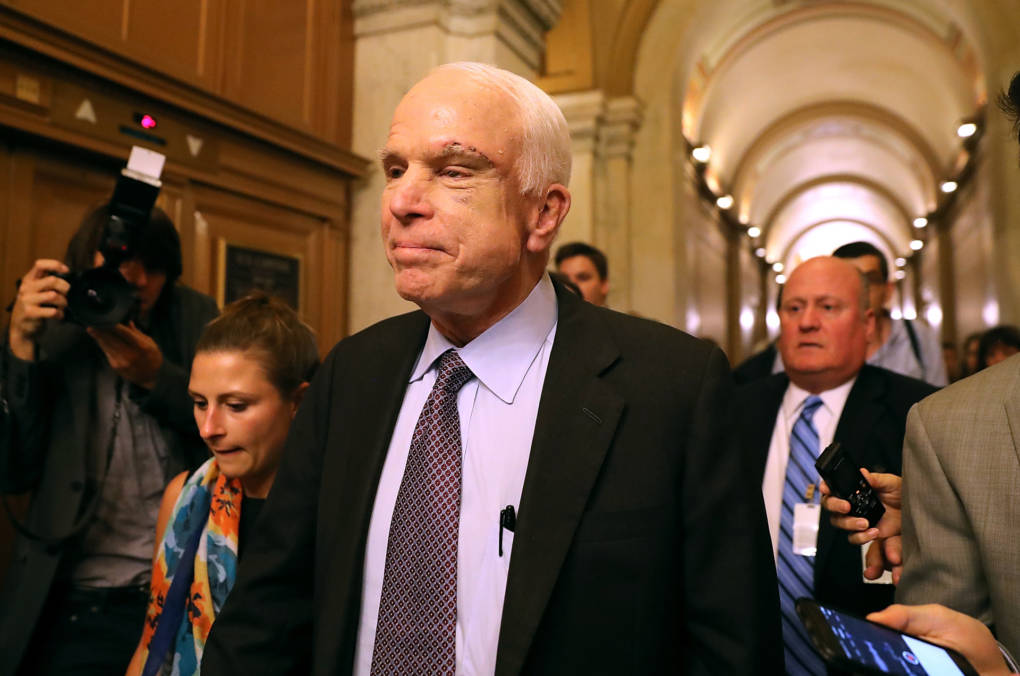
"caption": "Sen. John McCain leaves the Senate chamber at the Capitol after voting 'no' on the GOP 'Skinny Repeal' health care bill on July 28, 2017.",
"description": "Sen. John McCain leaves the the Senate chamber at the Capitol after voting 'no' on the GOP 'Skinny Repeal' health care bill on July 28, 2017.",
"title": "MCCAIN",
"credit": "Justin Sullivan/Getty Images",
"status": "inherit",
"isLoading": false,
"fetchFailed": false
},
"news_11597161": {
"type": "attachments",
"id": "news_11597161",
"meta": {
"index": "attachments_1716263798",
"site": "news",
"id": "11597161",
"found": true
},
"parent": 11597160,
"imgSizes": {
"small": {
"file": "https://ww2.kqed.org/app/uploads/sites/10/2017/07/gettyimages-821843798_wide-55dc6ed2a01d699f45a03022eeb82bc1b5120f9d-520x292.jpg",
"width": 520,
"mimeType": "image/jpeg",
"height": 292
},
"twentyfourteen-full-width": {
"file": "https://ww2.kqed.org/app/uploads/sites/10/2017/07/gettyimages-821843798_wide-55dc6ed2a01d699f45a03022eeb82bc1b5120f9d-1038x576.jpg",
"width": 1038,
"mimeType": "image/jpeg",
"height": 576
},
"thumbnail": {
"file": "https://ww2.kqed.org/app/uploads/sites/10/2017/07/gettyimages-821843798_wide-55dc6ed2a01d699f45a03022eeb82bc1b5120f9d-160x90.jpg",
"width": 160,
"mimeType": "image/jpeg",
"height": 90
},
"fd-sm": {
"file": "https://ww2.kqed.org/app/uploads/sites/10/2017/07/gettyimages-821843798_wide-55dc6ed2a01d699f45a03022eeb82bc1b5120f9d-960x540.jpg",
"width": 960,
"mimeType": "image/jpeg",
"height": 540
},
"post-thumbnail": {
"file": "https://ww2.kqed.org/app/uploads/sites/10/2017/07/gettyimages-821843798_wide-55dc6ed2a01d699f45a03022eeb82bc1b5120f9d-672x372.jpg",
"width": 672,
"mimeType": "image/jpeg",
"height": 372
},
"xsmall": {
"file": "https://ww2.kqed.org/app/uploads/sites/10/2017/07/gettyimages-821843798_wide-55dc6ed2a01d699f45a03022eeb82bc1b5120f9d-375x211.jpg",
"width": 375,
"mimeType": "image/jpeg",
"height": 211
},
"kqedFullSize": {
"file": "https://ww2.kqed.org/app/uploads/sites/10/2017/07/gettyimages-821843798_wide-55dc6ed2a01d699f45a03022eeb82bc1b5120f9d.jpg",
"width": 3000,
"height": 1687
},
"large": {
"file": "https://ww2.kqed.org/app/uploads/sites/10/2017/07/gettyimages-821843798_wide-55dc6ed2a01d699f45a03022eeb82bc1b5120f9d-1020x574.jpg",
"width": 1020,
"mimeType": "image/jpeg",
"height": 574
},
"xlarge": {
"file": "https://ww2.kqed.org/app/uploads/sites/10/2017/07/gettyimages-821843798_wide-55dc6ed2a01d699f45a03022eeb82bc1b5120f9d-1180x664.jpg",
"width": 1180,
"mimeType": "image/jpeg",
"height": 664
},
"guest-author-50": {
"file": "https://ww2.kqed.org/app/uploads/sites/10/2017/07/gettyimages-821843798_wide-55dc6ed2a01d699f45a03022eeb82bc1b5120f9d-50x50.jpg",
"width": 50,
"mimeType": "image/jpeg",
"height": 50
},
"guest-author-96": {
"file": "https://ww2.kqed.org/app/uploads/sites/10/2017/07/gettyimages-821843798_wide-55dc6ed2a01d699f45a03022eeb82bc1b5120f9d-96x96.jpg",
"width": 96,
"mimeType": "image/jpeg",
"height": 96
},
"medium": {
"file": "https://ww2.kqed.org/app/uploads/sites/10/2017/07/gettyimages-821843798_wide-55dc6ed2a01d699f45a03022eeb82bc1b5120f9d-800x450.jpg",
"width": 800,
"mimeType": "image/jpeg",
"height": 450
},
"guest-author-64": {
"file": "https://ww2.kqed.org/app/uploads/sites/10/2017/07/gettyimages-821843798_wide-55dc6ed2a01d699f45a03022eeb82bc1b5120f9d-64x64.jpg",
"width": 64,
"mimeType": "image/jpeg",
"height": 64
},
"guest-author-32": {
"file": "https://ww2.kqed.org/app/uploads/sites/10/2017/07/gettyimages-821843798_wide-55dc6ed2a01d699f45a03022eeb82bc1b5120f9d-32x32.jpg",
"width": 32,
"mimeType": "image/jpeg",
"height": 32
},
"fd-lrg": {
"file": "https://ww2.kqed.org/app/uploads/sites/10/2017/07/gettyimages-821843798_wide-55dc6ed2a01d699f45a03022eeb82bc1b5120f9d-1920x1080.jpg",
"width": 1920,
"mimeType": "image/jpeg",
"height": 1080
},
"fd-med": {
"file": "https://ww2.kqed.org/app/uploads/sites/10/2017/07/gettyimages-821843798_wide-55dc6ed2a01d699f45a03022eeb82bc1b5120f9d-1180x664.jpg",
"width": 1180,
"mimeType": "image/jpeg",
"height": 664
},
"full-width": {
"file": "https://ww2.kqed.org/app/uploads/sites/10/2017/07/gettyimages-821843798_wide-55dc6ed2a01d699f45a03022eeb82bc1b5120f9d-1920x1080.jpg",
"width": 1920,
"mimeType": "image/jpeg",
"height": 1080
},
"detail": {
"file": "https://ww2.kqed.org/app/uploads/sites/10/2017/07/gettyimages-821843798_wide-55dc6ed2a01d699f45a03022eeb82bc1b5120f9d-150x150.jpg",
"width": 150,
"mimeType": "image/jpeg",
"height": 150
},
"guest-author-128": {
"file": "https://ww2.kqed.org/app/uploads/sites/10/2017/07/gettyimages-821843798_wide-55dc6ed2a01d699f45a03022eeb82bc1b5120f9d-128x128.jpg",
"width": 128,
"mimeType": "image/jpeg",
"height": 128
},
"xxsmall": {
"file": "https://ww2.kqed.org/app/uploads/sites/10/2017/07/gettyimages-821843798_wide-55dc6ed2a01d699f45a03022eeb82bc1b5120f9d-240x135.jpg",
"width": 240,
"mimeType": "image/jpeg",
"height": 135
}
},
"publishDate": 1501190768,
"modified": 1501191282,
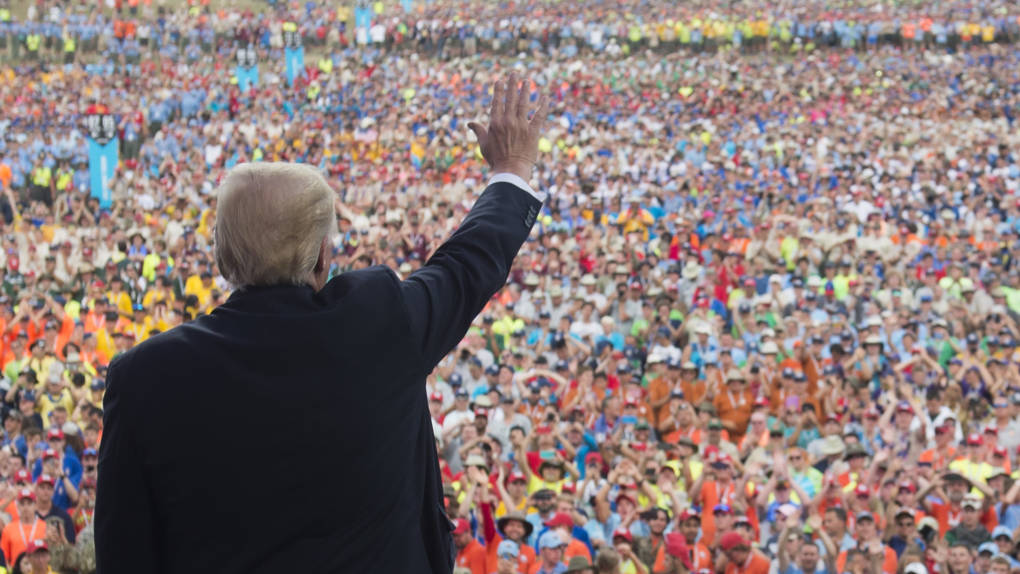
"caption": "President Trump waves to the crowd after his speech during the National Boy Scout Jamboree on Monday.",
"description": "President Trump waves to the crowd after his speech during the National Boy Scout Jamboree on Monday",
"title": "President Trump waves to the crowd after his speech during the National Boy Scout Jamboree on Monday.",
"credit": "Saul Loeb/AFP/Getty Images",
"status": "inherit",
"isLoading": false,
"fetchFailed": false
},
"news_11595665": {
"type": "attachments",
"id": "news_11595665",
"meta": {
"index": "attachments_1716263798",
"site": "news",
"id": "11595665",
"found": true
},
"parent": 11595066,
"imgSizes": {
"small": {
"file": "https://ww2.kqed.org/app/uploads/sites/10/2017/07/Transgender_SF__IMG_1331-qut-520x390.jpg",
"width": 520,
"mimeType": "image/jpeg",
"height": 390
},
"twentyfourteen-full-width": {
"file": "https://ww2.kqed.org/app/uploads/sites/10/2017/07/Transgender_SF__IMG_1331-qut-1038x576.jpg",
"width": 1038,
"mimeType": "image/jpeg",
"height": 576
},
"thumbnail": {
"file": "https://ww2.kqed.org/app/uploads/sites/10/2017/07/Transgender_SF__IMG_1331-qut-160x120.jpg",
"width": 160,
"mimeType": "image/jpeg",
"height": 120
},
"fd-sm": {
"file": "https://ww2.kqed.org/app/uploads/sites/10/2017/07/Transgender_SF__IMG_1331-qut-960x720.jpg",
"width": 960,
"mimeType": "image/jpeg",
"height": 720
},
"post-thumbnail": {
"file": "https://ww2.kqed.org/app/uploads/sites/10/2017/07/Transgender_SF__IMG_1331-qut-672x372.jpg",
"width": 672,
"mimeType": "image/jpeg",
"height": 372
},
"xsmall": {
"file": "https://ww2.kqed.org/app/uploads/sites/10/2017/07/Transgender_SF__IMG_1331-qut-375x281.jpg",
"width": 375,
"mimeType": "image/jpeg",
"height": 281
},
"kqedFullSize": {
"file": "https://ww2.kqed.org/app/uploads/sites/10/2017/07/Transgender_SF__IMG_1331-qut.jpg",
"width": 1920,
"height": 1440
},
"large": {
"file": "https://ww2.kqed.org/app/uploads/sites/10/2017/07/Transgender_SF__IMG_1331-qut-1020x765.jpg",
"width": 1020,
"mimeType": "image/jpeg",
"height": 765
},
"xlarge": {
"file": "https://ww2.kqed.org/app/uploads/sites/10/2017/07/Transgender_SF__IMG_1331-qut-1180x885.jpg",
"width": 1180,
"mimeType": "image/jpeg",
"height": 885
},
"guest-author-50": {
"file": "https://ww2.kqed.org/app/uploads/sites/10/2017/07/Transgender_SF__IMG_1331-qut-50x50.jpg",
"width": 50,
"mimeType": "image/jpeg",
"height": 50
},
"guest-author-96": {
"file": "https://ww2.kqed.org/app/uploads/sites/10/2017/07/Transgender_SF__IMG_1331-qut-96x96.jpg",
"width": 96,
"mimeType": "image/jpeg",
"height": 96
},
"medium": {
"file": "https://ww2.kqed.org/app/uploads/sites/10/2017/07/Transgender_SF__IMG_1331-qut-800x600.jpg",
"width": 800,
"mimeType": "image/jpeg",
"height": 600
},
"guest-author-64": {
"file": "https://ww2.kqed.org/app/uploads/sites/10/2017/07/Transgender_SF__IMG_1331-qut-64x64.jpg",
"width": 64,
"mimeType": "image/jpeg",
"height": 64
},
"guest-author-32": {
"file": "https://ww2.kqed.org/app/uploads/sites/10/2017/07/Transgender_SF__IMG_1331-qut-32x32.jpg",
"width": 32,
"mimeType": "image/jpeg",
"height": 32
},
"fd-lrg": {
"file": "https://ww2.kqed.org/app/uploads/sites/10/2017/07/Transgender_SF__IMG_1331-qut-1920x1440.jpg",
"width": 1920,
"mimeType": "image/jpeg",
"height": 1440
},
"fd-med": {
"file": "https://ww2.kqed.org/app/uploads/sites/10/2017/07/Transgender_SF__IMG_1331-qut-1180x885.jpg",
"width": 1180,
"mimeType": "image/jpeg",
"height": 885
},
"full-width": {
"file": "https://ww2.kqed.org/app/uploads/sites/10/2017/07/Transgender_SF__IMG_1331-qut-1920x1440.jpg",
"width": 1920,
"mimeType": "image/jpeg",
"height": 1440
},
"detail": {
"file": "https://ww2.kqed.org/app/uploads/sites/10/2017/07/Transgender_SF__IMG_1331-qut-150x150.jpg",
"width": 150,
"mimeType": "image/jpeg",
"height": 150
},
"guest-author-128": {
"file": "https://ww2.kqed.org/app/uploads/sites/10/2017/07/Transgender_SF__IMG_1331-qut-128x128.jpg",
"width": 128,
"mimeType": "image/jpeg",
"height": 128
},
"xxsmall": {
"file": "https://ww2.kqed.org/app/uploads/sites/10/2017/07/Transgender_SF__IMG_1331-qut-240x180.jpg",
"width": 240,
"mimeType": "image/jpeg",
"height": 180
}
},
"publishDate": 1501121473,
"modified": 1509386660,
"caption": "People protest President Donald Trump's decision to bar transgender people from serving in the military, in a march through San Francisco's Castro neighborhood on July 26, 2017.",
"description": null,
"title": "Transgender_SF__IMG_1331-qut",
"credit": "Polly Stryker/KQED",
"status": "inherit",
"isLoading": false,
"fetchFailed": false
},
"news_11594969": {
"type": "attachments",
"id": "news_11594969",
"meta": {
"index": "attachments_1716263798",
"site": "news",
"id": "11594969",
"found": true
},
"parent": 11594890,
"imgSizes": {
"small": {
"file": "https://ww2.kqed.org/app/uploads/sites/10/2017/07/trans_072617_final-520x520.jpg",
"width": 520,
"mimeType": "image/jpeg",
"height": 520
},
"twentyfourteen-full-width": {
"file": "https://ww2.kqed.org/app/uploads/sites/10/2017/07/trans_072617_final-1038x576.jpg",
"width": 1038,
"mimeType": "image/jpeg",
"height": 576
},
"thumbnail": {
"file": "https://ww2.kqed.org/app/uploads/sites/10/2017/07/trans_072617_final-160x160.jpg",
"width": 160,
"mimeType": "image/jpeg",
"height": 160
},
"fd-sm": {
"file": "https://ww2.kqed.org/app/uploads/sites/10/2017/07/trans_072617_final-960x960.jpg",
"width": 960,
"mimeType": "image/jpeg",
"height": 960
},
"post-thumbnail": {
"file": "https://ww2.kqed.org/app/uploads/sites/10/2017/07/trans_072617_final-672x372.jpg",
"width": 672,
"mimeType": "image/jpeg",
"height": 372
},
"xsmall": {
"file": "https://ww2.kqed.org/app/uploads/sites/10/2017/07/trans_072617_final-375x375.jpg",
"width": 375,
"mimeType": "image/jpeg",
"height": 375
},
"kqedFullSize": {
"file": "https://ww2.kqed.org/app/uploads/sites/10/2017/07/trans_072617_final.jpg",
"width": 1920,
"height": 1920
},
"large": {
"file": "https://ww2.kqed.org/app/uploads/sites/10/2017/07/trans_072617_final-1020x1020.jpg",
"width": 1020,
"mimeType": "image/jpeg",
"height": 1020
},
"xlarge": {
"file": "https://ww2.kqed.org/app/uploads/sites/10/2017/07/trans_072617_final-1180x1180.jpg",
"width": 1180,
"mimeType": "image/jpeg",
"height": 1180
},
"guest-author-50": {
"file": "https://ww2.kqed.org/app/uploads/sites/10/2017/07/trans_072617_final-50x50.jpg",
"width": 50,
"mimeType": "image/jpeg",
"height": 50
},
"guest-author-96": {
"file": "https://ww2.kqed.org/app/uploads/sites/10/2017/07/trans_072617_final-96x96.jpg",
"width": 96,
"mimeType": "image/jpeg",
"height": 96
},
"medium": {
"file": "https://ww2.kqed.org/app/uploads/sites/10/2017/07/trans_072617_final-800x800.jpg",
"width": 800,
"mimeType": "image/jpeg",
"height": 800
},
"guest-author-64": {
"file": "https://ww2.kqed.org/app/uploads/sites/10/2017/07/trans_072617_final-64x64.jpg",
"width": 64,
"mimeType": "image/jpeg",
"height": 64
},
"guest-author-32": {
"file": "https://ww2.kqed.org/app/uploads/sites/10/2017/07/trans_072617_final-32x32.jpg",
"width": 32,
"mimeType": "image/jpeg",
"height": 32
},
"fd-lrg": {
"file": "https://ww2.kqed.org/app/uploads/sites/10/2017/07/trans_072617_final-1920x1920.jpg",
"width": 1920,
"mimeType": "image/jpeg",
"height": 1920
},
"fd-med": {
"file": "https://ww2.kqed.org/app/uploads/sites/10/2017/07/trans_072617_final-1180x1180.jpg",
"width": 1180,
"mimeType": "image/jpeg",
"height": 1180
},
"full-width": {
"file": "https://ww2.kqed.org/app/uploads/sites/10/2017/07/trans_072617_final-1920x1920.jpg",
"width": 1920,
"mimeType": "image/jpeg",
"height": 1920
},
"detail": {
"file": "https://ww2.kqed.org/app/uploads/sites/10/2017/07/trans_072617_final-150x150.jpg",
"width": 150,
"mimeType": "image/jpeg",
"height": 150
},
"guest-author-128": {
"file": "https://ww2.kqed.org/app/uploads/sites/10/2017/07/trans_072617_final-128x128.jpg",
"width": 128,
"mimeType": "image/jpeg",
"height": 128
},
"xxsmall": {
"file": "https://ww2.kqed.org/app/uploads/sites/10/2017/07/trans_072617_final-240x240.jpg",
"width": 240,
"mimeType": "image/jpeg",
"height": 240
}
},
"publishDate": 1501092089,
"modified": 1501092120,
"caption": null,
"description": null,
"title": "trans_072617_final",
"credit": null,
"status": "inherit",
"isLoading": false,
"fetchFailed": false
},
"news_11594718": {
"type": "attachments",
"id": "news_11594718",
"meta": {
"index": "attachments_1716263798",
"site": "news",
"id": "11594718",
"found": true
},
"parent": 11594717,
"imgSizes": {
"small": {
"file": "https://ww2.kqed.org/app/uploads/sites/10/2017/07/gettyimages-822681896_custom-e8b648f25a6255ec61449c77acef79caf6132498-520x347.jpg",
"width": 520,
"mimeType": "image/jpeg",
"height": 347
},
"twentyfourteen-full-width": {
"file": "https://ww2.kqed.org/app/uploads/sites/10/2017/07/gettyimages-822681896_custom-e8b648f25a6255ec61449c77acef79caf6132498-1038x576.jpg",
"width": 1038,
"mimeType": "image/jpeg",
"height": 576
},
"thumbnail": {
"file": "https://ww2.kqed.org/app/uploads/sites/10/2017/07/gettyimages-822681896_custom-e8b648f25a6255ec61449c77acef79caf6132498-160x107.jpg",
"width": 160,
"mimeType": "image/jpeg",
"height": 107
},
"fd-sm": {
"file": "https://ww2.kqed.org/app/uploads/sites/10/2017/07/gettyimages-822681896_custom-e8b648f25a6255ec61449c77acef79caf6132498-960x641.jpg",
"width": 960,
"mimeType": "image/jpeg",
"height": 641
},
"post-thumbnail": {
"file": "https://ww2.kqed.org/app/uploads/sites/10/2017/07/gettyimages-822681896_custom-e8b648f25a6255ec61449c77acef79caf6132498-672x372.jpg",
"width": 672,
"mimeType": "image/jpeg",
"height": 372
},
"xsmall": {
"file": "https://ww2.kqed.org/app/uploads/sites/10/2017/07/gettyimages-822681896_custom-e8b648f25a6255ec61449c77acef79caf6132498-375x250.jpg",
"width": 375,
"mimeType": "image/jpeg",
"height": 250
},
"kqedFullSize": {
"file": "https://ww2.kqed.org/app/uploads/sites/10/2017/07/gettyimages-822681896_custom-e8b648f25a6255ec61449c77acef79caf6132498-e1501093048141.jpg",
"width": 1920,
"height": 1282
},
"large": {
"file": "https://ww2.kqed.org/app/uploads/sites/10/2017/07/gettyimages-822681896_custom-e8b648f25a6255ec61449c77acef79caf6132498-1020x681.jpg",
"width": 1020,
"mimeType": "image/jpeg",
"height": 681
},
"xlarge": {
"file": "https://ww2.kqed.org/app/uploads/sites/10/2017/07/gettyimages-822681896_custom-e8b648f25a6255ec61449c77acef79caf6132498-1180x788.jpg",
"width": 1180,
"mimeType": "image/jpeg",
"height": 788
},
"guest-author-50": {
"file": "https://ww2.kqed.org/app/uploads/sites/10/2017/07/gettyimages-822681896_custom-e8b648f25a6255ec61449c77acef79caf6132498-50x50.jpg",
"width": 50,
"mimeType": "image/jpeg",
"height": 50
},
"guest-author-96": {
"file": "https://ww2.kqed.org/app/uploads/sites/10/2017/07/gettyimages-822681896_custom-e8b648f25a6255ec61449c77acef79caf6132498-96x96.jpg",
"width": 96,
"mimeType": "image/jpeg",
"height": 96
},
"medium": {
"file": "https://ww2.kqed.org/app/uploads/sites/10/2017/07/gettyimages-822681896_custom-e8b648f25a6255ec61449c77acef79caf6132498-800x534.jpg",
"width": 800,
"mimeType": "image/jpeg",
"height": 534
},
"guest-author-64": {
"file": "https://ww2.kqed.org/app/uploads/sites/10/2017/07/gettyimages-822681896_custom-e8b648f25a6255ec61449c77acef79caf6132498-64x64.jpg",
"width": 64,
"mimeType": "image/jpeg",
"height": 64
},
"guest-author-32": {
"file": "https://ww2.kqed.org/app/uploads/sites/10/2017/07/gettyimages-822681896_custom-e8b648f25a6255ec61449c77acef79caf6132498-32x32.jpg",
"width": 32,
"mimeType": "image/jpeg",
"height": 32
},
"fd-lrg": {
"file": "https://ww2.kqed.org/app/uploads/sites/10/2017/07/gettyimages-822681896_custom-e8b648f25a6255ec61449c77acef79caf6132498-1920x1282.jpg",
"width": 1920,
"mimeType": "image/jpeg",
"height": 1282
},
"fd-med": {
"file": "https://ww2.kqed.org/app/uploads/sites/10/2017/07/gettyimages-822681896_custom-e8b648f25a6255ec61449c77acef79caf6132498-1180x788.jpg",
"width": 1180,
"mimeType": "image/jpeg",
"height": 788
},
"full-width": {
"file": "https://ww2.kqed.org/app/uploads/sites/10/2017/07/gettyimages-822681896_custom-e8b648f25a6255ec61449c77acef79caf6132498-1920x1282.jpg",
"width": 1920,
"mimeType": "image/jpeg",
"height": 1282
},
"detail": {
"file": "https://ww2.kqed.org/app/uploads/sites/10/2017/07/gettyimages-822681896_custom-e8b648f25a6255ec61449c77acef79caf6132498-150x150.jpg",
"width": 150,
"mimeType": "image/jpeg",
"height": 150
},
"guest-author-128": {
"file": "https://ww2.kqed.org/app/uploads/sites/10/2017/07/gettyimages-822681896_custom-e8b648f25a6255ec61449c77acef79caf6132498-128x128.jpg",
"width": 128,
"mimeType": "image/jpeg",
"height": 128
},
"xxsmall": {
"file": "https://ww2.kqed.org/app/uploads/sites/10/2017/07/gettyimages-822681896_custom-e8b648f25a6255ec61449c77acef79caf6132498-240x160.jpg",
"width": 240,
"mimeType": "image/jpeg",
"height": 160
}
},
"publishDate": 1501078816,
"modified": 1503709551,
"caption": "In a tweet in July, President Trump reversed a policy set under the Obama administration allowing transgender people to serve.",
"description": "President Trump's tweets reverse a year-old policy set under the Obama administration.",
"title": "President Trump's tweets reverse a year-old policy set under the Obama administration.",
"credit": "Justin Merriman/Getty Images",
"status": "inherit",
"isLoading": false,
"fetchFailed": false
},
"news_11580908": {
"type": "attachments",
"id": "news_11580908",
"meta": {
"index": "attachments_1716263798",
"site": "news",
"id": "11580908",
"found": true
},
"parent": 11580713,
"imgSizes": {
"small": {
"file": "https://ww2.kqed.org/app/uploads/sites/10/2017/07/NR440_MARQUEE-520x293.jpg",
"width": 520,
"mimeType": "image/jpeg",
"height": 293
},
"twentyfourteen-full-width": {
"file": "https://ww2.kqed.org/app/uploads/sites/10/2017/07/NR440_MARQUEE-1038x576.jpg",
"width": 1038,
"mimeType": "image/jpeg",
"height": 576
},
"thumbnail": {
"file": "https://ww2.kqed.org/app/uploads/sites/10/2017/07/NR440_MARQUEE-160x90.jpg",
"width": 160,
"mimeType": "image/jpeg",
"height": 90
},
"fd-sm": {
"file": "https://ww2.kqed.org/app/uploads/sites/10/2017/07/NR440_MARQUEE-960x540.jpg",
"width": 960,
"mimeType": "image/jpeg",
"height": 540
},
"post-thumbnail": {
"file": "https://ww2.kqed.org/app/uploads/sites/10/2017/07/NR440_MARQUEE-672x372.jpg",
"width": 672,
"mimeType": "image/jpeg",
"height": 372
},
"xsmall": {
"file": "https://ww2.kqed.org/app/uploads/sites/10/2017/07/NR440_MARQUEE-375x211.jpg",
"width": 375,
"mimeType": "image/jpeg",
"height": 211
},
"kqedFullSize": {
"file": "https://ww2.kqed.org/app/uploads/sites/10/2017/07/NR440_MARQUEE.jpg",
"width": 1280,
"height": 720
},
"large": {
"file": "https://ww2.kqed.org/app/uploads/sites/10/2017/07/NR440_MARQUEE-1020x574.jpg",
"width": 1020,
"mimeType": "image/jpeg",
"height": 574
},
"xlarge": {
"file": "https://ww2.kqed.org/app/uploads/sites/10/2017/07/NR440_MARQUEE-1180x664.jpg",
"width": 1180,
"mimeType": "image/jpeg",
"height": 664
},
"guest-author-50": {
"file": "https://ww2.kqed.org/app/uploads/sites/10/2017/07/NR440_MARQUEE-50x50.jpg",
"width": 50,
"mimeType": "image/jpeg",
"height": 50
},
"guest-author-96": {
"file": "https://ww2.kqed.org/app/uploads/sites/10/2017/07/NR440_MARQUEE-96x96.jpg",
"width": 96,
"mimeType": "image/jpeg",
"height": 96
},
"medium": {
"file": "https://ww2.kqed.org/app/uploads/sites/10/2017/07/NR440_MARQUEE-800x450.jpg",
"width": 800,
"mimeType": "image/jpeg",
"height": 450
},
"guest-author-64": {
"file": "https://ww2.kqed.org/app/uploads/sites/10/2017/07/NR440_MARQUEE-64x64.jpg",
"width": 64,
"mimeType": "image/jpeg",
"height": 64
},
"guest-author-32": {
"file": "https://ww2.kqed.org/app/uploads/sites/10/2017/07/NR440_MARQUEE-32x32.jpg",
"width": 32,
"mimeType": "image/jpeg",
"height": 32
},
"fd-med": {
"file": "https://ww2.kqed.org/app/uploads/sites/10/2017/07/NR440_MARQUEE-1180x664.jpg",
"width": 1180,
"mimeType": "image/jpeg",
"height": 664
},
"detail": {
"file": "https://ww2.kqed.org/app/uploads/sites/10/2017/07/NR440_MARQUEE-150x150.jpg",
"width": 150,
"mimeType": "image/jpeg",
"height": 150
},
"guest-author-128": {
"file": "https://ww2.kqed.org/app/uploads/sites/10/2017/07/NR440_MARQUEE-128x128.jpg",
"width": 128,
"mimeType": "image/jpeg",
"height": 128
},
"xxsmall": {
"file": "https://ww2.kqed.org/app/uploads/sites/10/2017/07/NR440_MARQUEE-240x135.jpg",
"width": 240,
"mimeType": "image/jpeg",
"height": 135
}
},
"publishDate": 1500680885,
"modified": 1500680885,
"caption": null,
"description": null,
"title": "NR440_MARQUEE",
"credit": null,
"status": "inherit",
"isLoading": false,
"fetchFailed": false
},
"news_11579630": {
"type": "attachments",
"id": "news_11579630",
"meta": {
"index": "attachments_1716263798",
"site": "news",
"id": "11579630",
"found": true
},
"parent": 11579621,
"imgSizes": {
"small": {
"file": "https://ww2.kqed.org/app/uploads/sites/10/2017/07/tour_072117_final-520x520.jpg",
"width": 520,
"mimeType": "image/jpeg",
"height": 520
},
"twentyfourteen-full-width": {
"file": "https://ww2.kqed.org/app/uploads/sites/10/2017/07/tour_072117_final-1038x576.jpg",
"width": 1038,
"mimeType": "image/jpeg",
"height": 576
},
"thumbnail": {
"file": "https://ww2.kqed.org/app/uploads/sites/10/2017/07/tour_072117_final-160x160.jpg",
"width": 160,
"mimeType": "image/jpeg",
"height": 160
},
"fd-sm": {
"file": "https://ww2.kqed.org/app/uploads/sites/10/2017/07/tour_072117_final-960x960.jpg",
"width": 960,
"mimeType": "image/jpeg",
"height": 960
},
"post-thumbnail": {
"file": "https://ww2.kqed.org/app/uploads/sites/10/2017/07/tour_072117_final-672x372.jpg",
"width": 672,
"mimeType": "image/jpeg",
"height": 372
},
"xsmall": {
"file": "https://ww2.kqed.org/app/uploads/sites/10/2017/07/tour_072117_final-375x375.jpg",
"width": 375,
"mimeType": "image/jpeg",
"height": 375
},
"kqedFullSize": {
"file": "https://ww2.kqed.org/app/uploads/sites/10/2017/07/tour_072117_final.jpg",
"width": 1920,
"height": 1920
},
"large": {
"file": "https://ww2.kqed.org/app/uploads/sites/10/2017/07/tour_072117_final-1020x1020.jpg",
"width": 1020,
"mimeType": "image/jpeg",
"height": 1020
},
"xlarge": {
"file": "https://ww2.kqed.org/app/uploads/sites/10/2017/07/tour_072117_final-1180x1180.jpg",
"width": 1180,
"mimeType": "image/jpeg",
"height": 1180
},
"guest-author-50": {
"file": "https://ww2.kqed.org/app/uploads/sites/10/2017/07/tour_072117_final-50x50.jpg",
"width": 50,
"mimeType": "image/jpeg",
"height": 50
},
"guest-author-96": {
"file": "https://ww2.kqed.org/app/uploads/sites/10/2017/07/tour_072117_final-96x96.jpg",
"width": 96,
"mimeType": "image/jpeg",
"height": 96
},
"medium": {
"file": "https://ww2.kqed.org/app/uploads/sites/10/2017/07/tour_072117_final-800x800.jpg",
"width": 800,
"mimeType": "image/jpeg",
"height": 800
},
"guest-author-64": {
"file": "https://ww2.kqed.org/app/uploads/sites/10/2017/07/tour_072117_final-64x64.jpg",
"width": 64,
"mimeType": "image/jpeg",
"height": 64
},
"guest-author-32": {
"file": "https://ww2.kqed.org/app/uploads/sites/10/2017/07/tour_072117_final-32x32.jpg",
"width": 32,
"mimeType": "image/jpeg",
"height": 32
},
"fd-lrg": {
"file": "https://ww2.kqed.org/app/uploads/sites/10/2017/07/tour_072117_final-1920x1920.jpg",
"width": 1920,
"mimeType": "image/jpeg",
"height": 1920
},
"fd-med": {
"file": "https://ww2.kqed.org/app/uploads/sites/10/2017/07/tour_072117_final-1180x1180.jpg",
"width": 1180,
"mimeType": "image/jpeg",
"height": 1180
},
"full-width": {
"file": "https://ww2.kqed.org/app/uploads/sites/10/2017/07/tour_072117_final-1920x1920.jpg",
"width": 1920,
"mimeType": "image/jpeg",
"height": 1920
},
"detail": {
"file": "https://ww2.kqed.org/app/uploads/sites/10/2017/07/tour_072117_final-150x150.jpg",
"width": 150,
"mimeType": "image/jpeg",
"height": 150
},
"guest-author-128": {
"file": "https://ww2.kqed.org/app/uploads/sites/10/2017/07/tour_072117_final-128x128.jpg",
"width": 128,
"mimeType": "image/jpeg",
"height": 128
},
"xxsmall": {
"file": "https://ww2.kqed.org/app/uploads/sites/10/2017/07/tour_072117_final-240x240.jpg",
"width": 240,
"mimeType": "image/jpeg",
"height": 240
}
},
"publishDate": 1500669342,
"modified": 1500669375,
"caption": null,
"description": null,
"title": "tour_072117_final",
"credit": null,
"status": "inherit",
"isLoading": false,
"fetchFailed": false
},
"news_11579604": {
"type": "attachments",
"id": "news_11579604",
"meta": {
"index": "attachments_1716263798",
"site": "news",
"id": "11579604",
"found": true
},
"parent": 11579535,
"imgSizes": {
"small": {
"file": "https://ww2.kqed.org/app/uploads/sites/10/2018/07/RS25113_20170501_MayDay_credit_BertJohnson-2-qut-520x347.jpg",
"width": 520,
"mimeType": "image/jpeg",
"height": 347
},
"twentyfourteen-full-width": {
"file": "https://ww2.kqed.org/app/uploads/sites/10/2018/07/RS25113_20170501_MayDay_credit_BertJohnson-2-qut-1038x576.jpg",
"width": 1038,
"mimeType": "image/jpeg",
"height": 576
},
"thumbnail": {
"file": "https://ww2.kqed.org/app/uploads/sites/10/2018/07/RS25113_20170501_MayDay_credit_BertJohnson-2-qut-160x107.jpg",
"width": 160,
"mimeType": "image/jpeg",
"height": 107
},
"fd-sm": {
"file": "https://ww2.kqed.org/app/uploads/sites/10/2018/07/RS25113_20170501_MayDay_credit_BertJohnson-2-qut-960x640.jpg",
"width": 960,
"mimeType": "image/jpeg",
"height": 640
},
"post-thumbnail": {
"file": "https://ww2.kqed.org/app/uploads/sites/10/2018/07/RS25113_20170501_MayDay_credit_BertJohnson-2-qut-672x372.jpg",
"width": 672,
"mimeType": "image/jpeg",
"height": 372
},
"xsmall": {
"file": "https://ww2.kqed.org/app/uploads/sites/10/2018/07/RS25113_20170501_MayDay_credit_BertJohnson-2-qut-375x250.jpg",
"width": 375,
"mimeType": "image/jpeg",
"height": 250
},
"kqedFullSize": {
"file": "https://ww2.kqed.org/app/uploads/sites/10/2018/07/RS25113_20170501_MayDay_credit_BertJohnson-2-qut.jpg",
"width": 1920,
"height": 1280
},
"large": {
"file": "https://ww2.kqed.org/app/uploads/sites/10/2018/07/RS25113_20170501_MayDay_credit_BertJohnson-2-qut-1020x680.jpg",
"width": 1020,
"mimeType": "image/jpeg",
"height": 680
},
"xlarge": {
"file": "https://ww2.kqed.org/app/uploads/sites/10/2018/07/RS25113_20170501_MayDay_credit_BertJohnson-2-qut-1180x787.jpg",
"width": 1180,
"mimeType": "image/jpeg",
"height": 787
},
"guest-author-50": {
"file": "https://ww2.kqed.org/app/uploads/sites/10/2018/07/RS25113_20170501_MayDay_credit_BertJohnson-2-qut-50x50.jpg",
"width": 50,
"mimeType": "image/jpeg",
"height": 50
},
"guest-author-96": {
"file": "https://ww2.kqed.org/app/uploads/sites/10/2018/07/RS25113_20170501_MayDay_credit_BertJohnson-2-qut-96x96.jpg",
"width": 96,
"mimeType": "image/jpeg",
"height": 96
},
"medium": {
"file": "https://ww2.kqed.org/app/uploads/sites/10/2018/07/RS25113_20170501_MayDay_credit_BertJohnson-2-qut-800x533.jpg",
"width": 800,
"mimeType": "image/jpeg",
"height": 533
},
"guest-author-64": {
"file": "https://ww2.kqed.org/app/uploads/sites/10/2018/07/RS25113_20170501_MayDay_credit_BertJohnson-2-qut-64x64.jpg",
"width": 64,
"mimeType": "image/jpeg",
"height": 64
},
"guest-author-32": {
"file": "https://ww2.kqed.org/app/uploads/sites/10/2018/07/RS25113_20170501_MayDay_credit_BertJohnson-2-qut-32x32.jpg",
"width": 32,
"mimeType": "image/jpeg",
"height": 32
},
"fd-lrg": {
"file": "https://ww2.kqed.org/app/uploads/sites/10/2018/07/RS25113_20170501_MayDay_credit_BertJohnson-2-qut-1920x1280.jpg",
"width": 1920,
"mimeType": "image/jpeg",
"height": 1280
},
"fd-med": {
"file": "https://ww2.kqed.org/app/uploads/sites/10/2018/07/RS25113_20170501_MayDay_credit_BertJohnson-2-qut-1180x787.jpg",
"width": 1180,
"mimeType": "image/jpeg",
"height": 787
},
"full-width": {
"file": "https://ww2.kqed.org/app/uploads/sites/10/2018/07/RS25113_20170501_MayDay_credit_BertJohnson-2-qut-1920x1280.jpg",
"width": 1920,
"mimeType": "image/jpeg",
"height": 1280
},
"detail": {
"file": "https://ww2.kqed.org/app/uploads/sites/10/2018/07/RS25113_20170501_MayDay_credit_BertJohnson-2-qut-150x150.jpg",
"width": 150,
"mimeType": "image/jpeg",
"height": 150
},
"guest-author-128": {
"file": "https://ww2.kqed.org/app/uploads/sites/10/2018/07/RS25113_20170501_MayDay_credit_BertJohnson-2-qut-128x128.jpg",
"width": 128,
"mimeType": "image/jpeg",
"height": 128
},
"xxsmall": {
"file": "https://ww2.kqed.org/app/uploads/sites/10/2018/07/RS25113_20170501_MayDay_credit_BertJohnson-2-qut-240x160.jpg",
"width": 240,
"mimeType": "image/jpeg",
"height": 160
}
},
"publishDate": 1500667297,
"modified": 1500667387,
"caption": "Activists with the Bay Resistance coalition blocked the entrance to a parking lot behind the San Francisco ICE building during May Day protests on May 1, 2017. The day's events were called \"A Day Without Immigrants\" to highlight the pressures immigrant workers say they face under a Trump administration.",
"description": "Activists with the Bay Resistance coalition blocked the entrance to a parking lot behind the San Francisco ICE building during May Day protests on May 1, 2017. The day's events were called \"A Day Without Immigrants\" to highlight the pressures immigrant workers say they face under a Trump administration.",
"title": "RS25113_20170501_MayDay_credit_BertJohnson-2-qut",
"credit": "Bert Johnson/KQED",
"status": "inherit",
"isLoading": false,
"fetchFailed": false
},
"news_11579310": {
"type": "attachments",
"id": "news_11579310",
"meta": {
"index": "attachments_1716263798",
"site": "news",
"id": "11579310",
"found": true
},
"parent": 11579307,
"imgSizes": {
"small": {
"file": "https://ww2.kqed.org/app/uploads/sites/10/2017/07/GettyImages-801418354-520x381.jpg",
"width": 520,
"mimeType": "image/jpeg",
"height": 381
},
"twentyfourteen-full-width": {
"file": "https://ww2.kqed.org/app/uploads/sites/10/2017/07/GettyImages-801418354-1038x576.jpg",
"width": 1038,
"mimeType": "image/jpeg",
"height": 576
},
"thumbnail": {
"file": "https://ww2.kqed.org/app/uploads/sites/10/2017/07/GettyImages-801418354-160x117.jpg",
"width": 160,
"mimeType": "image/jpeg",
"height": 117
},
"fd-sm": {
"file": "https://ww2.kqed.org/app/uploads/sites/10/2017/07/GettyImages-801418354-960x703.jpg",
"width": 960,
"mimeType": "image/jpeg",
"height": 703
},
"post-thumbnail": {
"file": "https://ww2.kqed.org/app/uploads/sites/10/2017/07/GettyImages-801418354-672x372.jpg",
"width": 672,
"mimeType": "image/jpeg",
"height": 372
},
"xsmall": {
"file": "https://ww2.kqed.org/app/uploads/sites/10/2017/07/GettyImages-801418354-375x275.jpg",
"width": 375,
"mimeType": "image/jpeg",
"height": 275
},
"kqedFullSize": {
"file": "https://ww2.kqed.org/app/uploads/sites/10/2017/07/GettyImages-801418354.jpg",
"width": 3000,
"height": 2198
},
"large": {
"file": "https://ww2.kqed.org/app/uploads/sites/10/2017/07/GettyImages-801418354-1020x747.jpg",
"width": 1020,
"mimeType": "image/jpeg",
"height": 747
},
"xlarge": {
"file": "https://ww2.kqed.org/app/uploads/sites/10/2017/07/GettyImages-801418354-1180x865.jpg",
"width": 1180,
"mimeType": "image/jpeg",
"height": 865
},
"guest-author-50": {
"file": "https://ww2.kqed.org/app/uploads/sites/10/2017/07/GettyImages-801418354-50x50.jpg",
"width": 50,
"mimeType": "image/jpeg",
"height": 50
},
"guest-author-96": {
"file": "https://ww2.kqed.org/app/uploads/sites/10/2017/07/GettyImages-801418354-96x96.jpg",
"width": 96,
"mimeType": "image/jpeg",
"height": 96
},
"medium": {
"file": "https://ww2.kqed.org/app/uploads/sites/10/2017/07/GettyImages-801418354-800x586.jpg",
"width": 800,
"mimeType": "image/jpeg",
"height": 586
},
"guest-author-64": {
"file": "https://ww2.kqed.org/app/uploads/sites/10/2017/07/GettyImages-801418354-64x64.jpg",
"width": 64,
"mimeType": "image/jpeg",
"height": 64
},
"guest-author-32": {
"file": "https://ww2.kqed.org/app/uploads/sites/10/2017/07/GettyImages-801418354-32x32.jpg",
"width": 32,
"mimeType": "image/jpeg",
"height": 32
},
"fd-lrg": {
"file": "https://ww2.kqed.org/app/uploads/sites/10/2017/07/GettyImages-801418354-1920x1407.jpg",
"width": 1920,
"mimeType": "image/jpeg",
"height": 1407
},
"fd-med": {
"file": "https://ww2.kqed.org/app/uploads/sites/10/2017/07/GettyImages-801418354-1180x865.jpg",
"width": 1180,
"mimeType": "image/jpeg",
"height": 865
},
"full-width": {
"file": "https://ww2.kqed.org/app/uploads/sites/10/2017/07/GettyImages-801418354-1920x1407.jpg",
"width": 1920,
"mimeType": "image/jpeg",
"height": 1407
},
"detail": {
"file": "https://ww2.kqed.org/app/uploads/sites/10/2017/07/GettyImages-801418354-150x150.jpg",
"width": 150,
"mimeType": "image/jpeg",
"height": 150
},
"guest-author-128": {
"file": "https://ww2.kqed.org/app/uploads/sites/10/2017/07/GettyImages-801418354-128x128.jpg",
"width": 128,
"mimeType": "image/jpeg",
"height": 128
},
"xxsmall": {
"file": "https://ww2.kqed.org/app/uploads/sites/10/2017/07/GettyImages-801418354-240x176.jpg",
"width": 240,
"mimeType": "image/jpeg",
"height": 176
}
},
"publishDate": 1500655810,
"modified": 1500675849,
"caption": "White House Press Secretary Sean Spicer briefs members of the media during a daily briefing at the White House June 26, 2017, in Washington, D.C. Spicer answered a range of questions relating to President Trump's health care proposal during the briefing.",
"description": null,
"title": "White House Press Secretary Sean Spicer Holds Daily Briefing Without TV Coverage",
"credit": "Mark Wilson/Getty Images",
"status": "inherit",
"isLoading": false,
"fetchFailed": false
},
"news_11524723": {
"type": "attachments",
"id": "news_11524723",
"meta": {
"index": "attachments_1716263798",
"site": "news",
"id": "11524723",
"found": true
},
"parent": 11524710,
"imgSizes": {
"small": {
"file": "https://ww2.kqed.org/app/uploads/sites/10/2017/06/RS25761_Sara_Schaefer-5_Online-qut-520x347.jpg",
"width": 520,
"mimeType": "image/jpeg",
"height": 347
},
"twentyfourteen-full-width": {
"file": "https://ww2.kqed.org/app/uploads/sites/10/2017/06/RS25761_Sara_Schaefer-5_Online-qut-1038x576.jpg",
"width": 1038,
"mimeType": "image/jpeg",
"height": 576
},
"thumbnail": {
"file": "https://ww2.kqed.org/app/uploads/sites/10/2017/06/RS25761_Sara_Schaefer-5_Online-qut-160x107.jpg",
"width": 160,
"mimeType": "image/jpeg",
"height": 107
},
"fd-sm": {
"file": "https://ww2.kqed.org/app/uploads/sites/10/2017/06/RS25761_Sara_Schaefer-5_Online-qut-960x640.jpg",
"width": 960,
"mimeType": "image/jpeg",
"height": 640
},
"post-thumbnail": {
"file": "https://ww2.kqed.org/app/uploads/sites/10/2017/06/RS25761_Sara_Schaefer-5_Online-qut-672x372.jpg",
"width": 672,
"mimeType": "image/jpeg",
"height": 372
},
"xsmall": {
"file": "https://ww2.kqed.org/app/uploads/sites/10/2017/06/RS25761_Sara_Schaefer-5_Online-qut-375x250.jpg",
"width": 375,
"mimeType": "image/jpeg",
"height": 250
},
"kqedFullSize": {
"file": "https://ww2.kqed.org/app/uploads/sites/10/2017/06/RS25761_Sara_Schaefer-5_Online-qut.jpg",
"width": 1920,
"height": 1280
},
"large": {
"file": "https://ww2.kqed.org/app/uploads/sites/10/2017/06/RS25761_Sara_Schaefer-5_Online-qut-1020x680.jpg",
"width": 1020,
"mimeType": "image/jpeg",
"height": 680
},
"xlarge": {
"file": "https://ww2.kqed.org/app/uploads/sites/10/2017/06/RS25761_Sara_Schaefer-5_Online-qut-1180x787.jpg",
"width": 1180,
"mimeType": "image/jpeg",
"height": 787
},
"guest-author-50": {
"file": "https://ww2.kqed.org/app/uploads/sites/10/2017/06/RS25761_Sara_Schaefer-5_Online-qut-50x50.jpg",
"width": 50,
"mimeType": "image/jpeg",
"height": 50
},
"guest-author-96": {
"file": "https://ww2.kqed.org/app/uploads/sites/10/2017/06/RS25761_Sara_Schaefer-5_Online-qut-96x96.jpg",
"width": 96,
"mimeType": "image/jpeg",
"height": 96
},
"medium": {
"file": "https://ww2.kqed.org/app/uploads/sites/10/2017/06/RS25761_Sara_Schaefer-5_Online-qut-800x533.jpg",
"width": 800,
"mimeType": "image/jpeg",
"height": 533
},
"guest-author-64": {
"file": "https://ww2.kqed.org/app/uploads/sites/10/2017/06/RS25761_Sara_Schaefer-5_Online-qut-64x64.jpg",
"width": 64,
"mimeType": "image/jpeg",
"height": 64
},
"guest-author-32": {
"file": "https://ww2.kqed.org/app/uploads/sites/10/2017/06/RS25761_Sara_Schaefer-5_Online-qut-32x32.jpg",
"width": 32,
"mimeType": "image/jpeg",
"height": 32
},
"fd-lrg": {
"file": "https://ww2.kqed.org/app/uploads/sites/10/2017/06/RS25761_Sara_Schaefer-5_Online-qut-1920x1280.jpg",
"width": 1920,
"mimeType": "image/jpeg",
"height": 1280
},
"fd-med": {
"file": "https://ww2.kqed.org/app/uploads/sites/10/2017/06/RS25761_Sara_Schaefer-5_Online-qut-1180x787.jpg",
"width": 1180,
"mimeType": "image/jpeg",
"height": 787
},
"full-width": {
"file": "https://ww2.kqed.org/app/uploads/sites/10/2017/06/RS25761_Sara_Schaefer-5_Online-qut-1920x1280.jpg",
"width": 1920,
"mimeType": "image/jpeg",
"height": 1280
},
"detail": {
"file": "https://ww2.kqed.org/app/uploads/sites/10/2017/06/RS25761_Sara_Schaefer-5_Online-qut-150x150.jpg",
"width": 150,
"mimeType": "image/jpeg",
"height": 150
},
"guest-author-128": {
"file": "https://ww2.kqed.org/app/uploads/sites/10/2017/06/RS25761_Sara_Schaefer-5_Online-qut-128x128.jpg",
"width": 128,
"mimeType": "image/jpeg",
"height": 128
},
"xxsmall": {
"file": "https://ww2.kqed.org/app/uploads/sites/10/2017/06/RS25761_Sara_Schaefer-5_Online-qut-240x160.jpg",
"width": 240,
"mimeType": "image/jpeg",
"height": 160
}
},
"publishDate": 1498085736,
"modified": 1500944115,
"caption": "Sara Schaefer has spent the first few months of the Trump presidency traveling around the U.S. performing stand-up at universities. The L.A.-based comic is trying out some new political comedy inspired by the era of Donald Trump. ",
"description": "Sara Schaefer spent the first few months traveling around the U.S. performing stand-up at universities. The L.A.-based comic is trying out some new political comedy inspired by the era of Donald Trump. ",
"title": "RS25761_Sara_Schaefer-5_Online-qut",
"credit": "Courtesy Kim Newmoney",
"status": "inherit",
"isLoading": false,
"fetchFailed": false
}
},
"audioPlayerReducer": {
"postId": "stream_live",
"isPaused": true,
"isPlaying": false,
"pfsActive": false,
"pledgeModalIsOpen": true,
"playerDrawerIsOpen": false,
"liveAudioPlayStartedAt": 0,
"liveAudioPlayContext": ""
},
"authorsReducer": {
"byline_news_11599026": {
"type": "authors",
"id": "byline_news_11599026",
"meta": {
"override": true
},
"slug": "byline_news_11599026",
"name": "Domenico Montanaro",
"isLoading": false
},
"byline_news_11597836": {
"type": "authors",
"id": "byline_news_11597836",
"meta": {
"override": true
},
"slug": "byline_news_11597836",
"name": "\u003cstrong>Susan Davis\u003c/strong> and \u003cstrong>Domenico Montanaro\u003c/strong>",
"isLoading": false
},
"byline_news_11597160": {
"type": "authors",
"id": "byline_news_11597160",
"meta": {
"override": true
},
"slug": "byline_news_11597160",
"name": "\u003cstrong>Colin Dwyer\u003c/strong>",
"isLoading": false
},
"byline_news_11594717": {
"type": "authors",
"id": "byline_news_11594717",
"meta": {
"override": true
},
"slug": "byline_news_11594717",
"name": "\u003cstrong>Laurel Wamsley\u003c/strong>",
"isLoading": false
},
"byline_news_11579535": {
"type": "authors",
"id": "byline_news_11579535",
"meta": {
"override": true
},
"slug": "byline_news_11579535",
"name": "\u003cstrong>Bill Chappell\u003c/strong>",
"isLoading": false
},
"byline_news_11579307": {
"type": "authors",
"id": "byline_news_11579307",
"meta": {
"override": true
},
"slug": "byline_news_11579307",
"name": "\u003cstrong>\u003ca href=”http://www.npr.org/people/2100941/brian-naylor”>Brian Naylor\u003c/a>\u003cbr />\u003ca href=”npr.org”>NPR\u003c/a>\u003c/strong>",
"isLoading": false
},
"byline_news_11524710": {
"type": "authors",
"id": "byline_news_11524710",
"meta": {
"override": true
},
"slug": "byline_news_11524710",
"name": "Joanna Clay",
"isLoading": false
},
"kqed": {
"type": "authors",
"id": "236",
"meta": {
"index": "authors_1716337520",
"id": "236",
"found": true
},
"name": "KQED News Staff",
"firstName": "KQED News Staff",
"lastName": null,
"slug": "kqed",
"email": "faq@kqed.org",
"display_author_email": false,
"staff_mastheads": [],
"title": null,
"bio": null,
"avatar": "https://secure.gravatar.com/avatar/ef0e801a68c4c54afa9180db14084167?s=600&d=blank&r=g",
"twitter": null,
"facebook": null,
"instagram": null,
"linkedin": null,
"sites": [
{
"site": "arts",
"roles": [
"contributor"
]
},
{
"site": "news",
"roles": [
"editor"
]
},
{
"site": "futureofyou",
"roles": [
"author"
]
}
],
"headData": {
"title": "KQED News Staff | KQED",
"description": null,
"ogImgSrc": "https://secure.gravatar.com/avatar/ef0e801a68c4c54afa9180db14084167?s=600&d=blank&r=g",
"twImgSrc": "https://secure.gravatar.com/avatar/ef0e801a68c4c54afa9180db14084167?s=600&d=blank&r=g"
},
"isLoading": false,
"link": "/author/kqed"
},
"markfiore": {
"type": "authors",
"id": "3236",
"meta": {
"index": "authors_1716337520",
"id": "3236",
"found": true
},
"name": "Mark Fiore",
"firstName": "Mark",
"lastName": "Fiore",
"slug": "markfiore",
"email": "mark@markfiore.com",
"display_author_email": false,
"staff_mastheads": [
"news"
],
"title": "KQED News Cartoonist",
"bio": "\u003ca href=\"http://www.MarkFiore.com\">MarkFiore.com\u003c/a> | \u003ca href=\"https://twitter.com/markfiore\">Follow on Twitter\u003c/a> | \u003ca href=\"https://www.facebook.com/pages/Mark-Fiore-Animated-Political-Cartoons/94451707396?ref=bookmarks\">Facebook\u003c/a> | \u003ca href=\"mailto:mark@markfiore.com\">email\u003c/a>\r\n\r\nPulitzer Prize-winner, Mark Fiore, who the Wall Street Journal has called “the undisputed guru of the form,” creates animated political cartoons in San Francisco, where his work has been featured regularly on the San Francisco Chronicle’s web site, SFGate.com. His work has appeared on Newsweek.com, Slate.com, CBSNews.com, MotherJones.com, DailyKos.com and NPR’s web site. Fiore’s political animation has appeared on CNN, Frontline, Bill Moyers Journal, Salon.com and cable and broadcast outlets across the globe.\r\n\r\nBeginning his professional life by drawing traditional political cartoons for newspapers, Fiore’s work appeared in publications ranging from the Washington Post to the Los Angeles Times. In the late 1990s, he began to experiment with animating political cartoons and, after a short stint at the San Jose Mercury News as their staff cartoonist, Fiore devoted all his energies to animation.\r\nGrowing up in California, Fiore also spent a good portion of his life in the backwoods of Idaho. It was this combination that shaped him politically. Mark majored in political science at Colorado College, where, in a perfect send-off for a cartoonist, he received his diploma in 1991 as commencement speaker Dick Cheney smiled approvingly.\r\nMark Fiore was awarded the Pulitzer Prize for political cartooning in 2010, a Robert F. Kennedy Journalism Award in 2004 and has twice received an Online Journalism Award for commentary from the Online News Association (2002, 2008). Fiore has received two awards for his work in new media from the National Cartoonists Society (2001, 2002), and in 2006 received The James Madison Freedom of Information Award from The Society of Professional Journalists.",
"avatar": "https://secure.gravatar.com/avatar/fc4e2a612b15b67bad0c6f0e1db4ca9b?s=600&d=blank&r=g",
"twitter": "MarkFiore",
"facebook": null,
"instagram": "https://www.instagram.com/markfiore/?hl=en",
"linkedin": null,
"sites": [
{
"site": "arts",
"roles": [
"contributor"
]
},
{
"site": "news",
"roles": [
"editor"
]
},
{
"site": "futureofyou",
"roles": [
"editor"
]
},
{
"site": "science",
"roles": [
"editor"
]
}
],
"headData": {
"title": "Mark Fiore | KQED",
"description": "KQED News Cartoonist",
"ogImgSrc": "https://secure.gravatar.com/avatar/fc4e2a612b15b67bad0c6f0e1db4ca9b?s=600&d=blank&r=g",
"twImgSrc": "https://secure.gravatar.com/avatar/fc4e2a612b15b67bad0c6f0e1db4ca9b?s=600&d=blank&r=g"
},
"isLoading": false,
"link": "/author/markfiore"
},
"mleitsinger": {
"type": "authors",
"id": "11310",
"meta": {
"index": "authors_1716337520",
"id": "11310",
"found": true
},
"name": "Miranda Leitsinger",
"firstName": "Miranda",
"lastName": "Leitsinger",
"slug": "mleitsinger",
"email": "mleitsinger@KQED.org",
"display_author_email": false,
"staff_mastheads": [
"news"
],
"title": "KQED Contributor",
"bio": "Miranda Leitsinger has worked in journalism as a reporter and editor since 2000, including seven years at The Associated Press in locales such as Cambodia and Puerto Rico, four years at NBC News Digital in New York and 2.5 years at CNN.com International in Hong Kong. Major stories she has covered included sexual abuse in the yoga community, the rise of women in local politics post-2016 election, the struggle over LGBTQ inclusion in the Boy Scouts, aftermath of the 2004 and 2011 tsunamis, the Aurora movie theater attack, the Newtown school shooting, Superstorm Sandy and the Boston Marathon bombing.",
"avatar": "https://secure.gravatar.com/avatar/cdd00de7be92aab3b7fd3d915e02033d?s=600&d=blank&r=g",
"twitter": "mimileitsinger",
"facebook": null,
"instagram": null,
"linkedin": null,
"sites": [
{
"site": "arts",
"roles": [
"author"
]
},
{
"site": "news",
"roles": [
"subscriber"
]
},
{
"site": "futureofyou",
"roles": [
"editor"
]
},
{
"site": "stateofhealth",
"roles": [
"editor"
]
}
],
"headData": {
"title": "Miranda Leitsinger | KQED",
"description": "KQED Contributor",
"ogImgSrc": "https://secure.gravatar.com/avatar/cdd00de7be92aab3b7fd3d915e02033d?s=600&d=blank&r=g",
"twImgSrc": "https://secure.gravatar.com/avatar/cdd00de7be92aab3b7fd3d915e02033d?s=600&d=blank&r=g"
},
"isLoading": false,
"link": "/author/mleitsinger"
}
},
"pagesReducer": {
"news_tag_donald-trump": {
"type": "terms",
"id": "news_1323",
"meta": {
"index": "terms_1716263798",
"site": "news",
"id": "1323",
"score": 8.557401
},
"featImg": null,
"name": "Donald Trump",
"description": null,
"taxonomy": "tag",
"headData": {
"twImgId": null,
"twTitle": null,
"ogTitle": null,
"ogImgId": null,
"twDescription": null,
"description": null,
"title": "Donald Trump Archives | KQED News",
"ogDescription": null
},
"ttid": 1335,
"slug": "donald-trump",
"isLoading": false,
"title": "Donald Trump",
"pageMeta": {
"site": "news",
"WpPageTemplate": "page-topic-editorial",
"currentPage": 152
},
"blocks": [
{
"blockName": "kqed/post-list",
"attrs": {
"layout": "cardArticle2",
"query": "posts/news?tag=donald-trump",
"seeMore": false,
"paginated": true,
"page": 152
}
},
{
"blockName": "kqed/ad"
}
]
}
},
"pfsSessionReducer": {},
"postsReducer": {
"stream_live": {
"type": "live",
"id": "stream_live",
"audioUrl": "https://streams.kqed.org/kqedradio",
"title": "Live Stream",
"excerpt": "Live Stream information currently unavailable.",
"link": "/radio",
"featImg": "",
"label": {
"name": "KQED Live",
"link": "/"
}
},
"stream_kqedNewscast": {
"type": "posts",
"id": "stream_kqedNewscast",
"audioUrl": "https://www.kqed.org/.stream/anon/radio/RDnews/newscast.mp3?_=1",
"title": "KQED Newscast",
"featImg": "",
"label": {
"name": "88.5 FM",
"link": "/"
}
},
"news_11599227": {
"type": "posts",
"id": "news_11599227",
"meta": {
"index": "posts_1716263798",
"site": "news",
"id": "11599227",
"score": null,
"sort": [
1501291347000
]
},
"guestAuthors": [],
"slug": "turmoil-in-the-trump-administration-david-chiu-interview-artist-sophie-calle",
"title": "Turmoil in the Trump Administration, David Chiu Interview, Artist Sophie Calle",
"publishDate": 1501291347,
"format": "video",
"headTitle": "Turmoil in the Trump Administration, David Chiu Interview, Artist Sophie Calle | KQED",
"labelTerm": {
"term": 7052,
"site": "news"
},
"content": "\u003cp>\u003cstrong>Turmoil in the Trump Administration\u003c/strong>\u003c/p>\n\u003cp>In signs of continuing turmoil in the Trump administration, the president announced today that he is replacing White House Chief of Staff Reince Priebus with Homeland Security Secretary John Kelly. And in the early hours Friday, the Senate’s latest attempt to dismantle Obamacare failed after three key Republicans voted against it. Earlier this week, President Trump announced via Twitter that he would bar transgender people from serving openly in the United States military.\u003c/p>\n\u003cp>Guests:\u003c/p>\n\u003cul>\n\u003cli> Lisa Garcia Bedolla, UC Berkeley political science professor\u003c/li>\n\u003cli> Joe Garofoli, San Francisco Chronicle senior political writer\u003c/li>\n\u003cli> Sean Walsh, Wilson Walsh Consulting\u003c/li>\n\u003c/ul>\n\u003cp>\u003cstrong>David Chiu Interview\u003c/strong>\u003c/p>\n\u003cp>Gov. Jerry Brown and Democratic leaders say they are turning their attention to the state’s housing crisis when they return from a midsummer recess. California Assemblyman David Chiu (D-San Francisco) discusses the legislation that he’s backing.\u003c/p>\n\u003cp>[ad fullwidth]\u003c/p>\n\u003cp>\u003cstrong>Artist Sophie Calle\u003c/strong>\u003c/p>\n\u003cp>\u003c/p>\n\u003cp>French artist Sophie Calle’s new exhibition at the Fort Mason Center for Arts and Culture explores themes of disappearance and loss. Calle has a strong connection to the Bay Area — she got her start in Bolinas, where she recently made the unusual move of buying herself a grave plot. KQED Senior Arts Editor Chloe Veltman caught up with Calle among the gravestones.\u003c/p>\n\n",
"blocks": [],
"excerpt": "The Senate’s latest attempt to dismantle Obamacare failed after three key Republicans voted against it.",
"status": "publish",
"parent": 0,
"modified": 1738777807,
"stats": {
"hasAudio": false,
"hasVideo": false,
"hasChartOrMap": false,
"iframeSrcs": [],
"hasGoogleForm": false,
"hasGallery": false,
"hasHearkenModule": false,
"hasPolis": false,
"paragraphCount": 9,
"wordCount": 240
},
"headData": {
"title": "Turmoil in the Trump Administration, David Chiu Interview, Artist Sophie Calle | KQED",
"description": "The Senate’s latest attempt to dismantle Obamacare failed after three key Republicans voted against it.",
"ogTitle": "",
"ogDescription": "",
"ogImgId": "",
"twTitle": "",
"twDescription": "",
"twImgId": "",
"schema": {
"@context": "https://schema.org",
"@type": "NewsArticle",
"headline": "Turmoil in the Trump Administration, David Chiu Interview, Artist Sophie Calle",
"datePublished": "2017-07-28T18:22:27-07:00",
"dateModified": "2025-02-05T09:50:07-08:00",
"image": "https://cdn.kqed.org/wp-content/uploads/2020/02/KQED-OG-Image@1x.png",
"isAccessibleForFree": "True",
"publisher": {
"@type": "NewsMediaOrganization",
"@id": "https://www.kqed.org/#organization",
"name": "KQED",
"logo": "https://cdn.kqed.org/wp-content/uploads/2020/02/KQED-OG-Image@1x.png",
"url": "https://www.kqed.org",
"sameAs": [
"https://www.facebook.com/KQED",
"https://twitter.com/KQED",
"https://www.instagram.com/kqed/",
"https://www.tiktok.com/@kqedofficial",
"https://www.linkedin.com/company/kqed",
"https://www.youtube.com/channel/UCeC0IOo7i1P_61zVUWbJ4nw"
]
}
}
},
"videoEmbed": "https://youtu.be/XY9Rfle33BQ",
"sticky": false,
"path": "/news/11599227/turmoil-in-the-trump-administration-david-chiu-interview-artist-sophie-calle",
"audioTrackLength": null,
"parsedContent": [
{
"type": "contentString",
"content": "\u003cdiv class=\"post-body\">\u003cp>\u003cp>\u003cstrong>Turmoil in the Trump Administration\u003c/strong>\u003c/p>\n\u003cp>In signs of continuing turmoil in the Trump administration, the president announced today that he is replacing White House Chief of Staff Reince Priebus with Homeland Security Secretary John Kelly. And in the early hours Friday, the Senate’s latest attempt to dismantle Obamacare failed after three key Republicans voted against it. Earlier this week, President Trump announced via Twitter that he would bar transgender people from serving openly in the United States military.\u003c/p>\n\u003cp>Guests:\u003c/p>\n\u003cul>\n\u003cli> Lisa Garcia Bedolla, UC Berkeley political science professor\u003c/li>\n\u003cli> Joe Garofoli, San Francisco Chronicle senior political writer\u003c/li>\n\u003cli> Sean Walsh, Wilson Walsh Consulting\u003c/li>\n\u003c/ul>\n\u003cp>\u003cstrong>David Chiu Interview\u003c/strong>\u003c/p>\n\u003cp>Gov. Jerry Brown and Democratic leaders say they are turning their attention to the state’s housing crisis when they return from a midsummer recess. California Assemblyman David Chiu (D-San Francisco) discusses the legislation that he’s backing.\u003c/p>\n\u003cp>\u003c/p>\u003c/div>",
"attributes": {
"named": {},
"numeric": []
}
},
{
"type": "component",
"content": "",
"name": "ad",
"attributes": {
"named": {
"label": "fullwidth"
},
"numeric": [
"fullwidth"
]
}
},
{
"type": "contentString",
"content": "\u003cdiv class=\"post-body\">\u003cp>\u003c/p>\n\u003cp>\u003cstrong>Artist Sophie Calle\u003c/strong>\u003c/p>\n\u003cp>\u003c/p>\n\u003cp>French artist Sophie Calle’s new exhibition at the Fort Mason Center for Arts and Culture explores themes of disappearance and loss. Calle has a strong connection to the Bay Area — she got her start in Bolinas, where she recently made the unusual move of buying herself a grave plot. KQED Senior Arts Editor Chloe Veltman caught up with Calle among the gravestones.\u003c/p>\n\n\u003c/div>\u003c/p>",
"attributes": {
"named": {},
"numeric": []
}
}
],
"link": "/news/11599227/turmoil-in-the-trump-administration-david-chiu-interview-artist-sophie-calle",
"authors": [
"236"
],
"programs": [
"news_7052"
],
"categories": [
"news_223",
"news_6266",
"news_8",
"news_13"
],
"tags": [
"news_167",
"news_1323",
"news_21358",
"news_21264",
"news_4593",
"news_20297",
"news_19177",
"news_3890",
"news_17968",
"news_38",
"news_2486"
],
"featImg": "news_11599252",
"label": "news_7052"
},
"news_11599026": {
"type": "posts",
"id": "news_11599026",
"meta": {
"index": "posts_1716263798",
"site": "news",
"id": "11599026",
"score": null,
"sort": [
1501277487000
]
},
"guestAuthors": [],
"slug": "trump-chief-of-staff-priebus-is-out-in-biggest-white-house-staff-shake-up-yet",
"title": "Trump Chief of Staff Priebus Is Out — In Biggest White House Staff Shake-Up Yet",
"publishDate": 1501277487,
"format": "standard",
"headTitle": "Trump Chief of Staff Priebus Is Out — In Biggest White House Staff Shake-Up Yet | KQED",
"labelTerm": {},
"content": "\u003cp>He rose from relative state-party obscurity and reached an unlikely pinnacle as the man responsible for the agenda of the president of the United States.\u003c/p>\n\u003cp>Now, Reince Priebus is out of that job as White House chief of staff in the most significant shake-up of the rocky Trump presidency.\u003c/p>\n\u003cp>Trump \u003ca href=\"https://twitter.com/realDonaldTrump/status/891038014314598400\">announced on Twitter\u003c/a> that Homeland Security Secretary John Kelly has been named as Priebus’ replacement.\u003c/p>\n\u003cp>https://twitter.com/realDonaldTrump/status/891038014314598400\u003c/p>\n\u003cp>https://twitter.com/realDonaldTrump/status/891039237319143424\u003c/p>\n\u003cp>[ad fullwidth]\u003c/p>\n\u003cp>https://twitter.com/realDonaldTrump/status/891040645581873152\u003c/p>\n\u003cp>As chairman of the Republican National Committee during the 2016 presidential campaign, Priebus’ team supplanted a thin Trump campaign with money and staff to help Trump win the presidency. That brought Trump and Priebus close, but it was never a natural fit — the mild-mannered, careful former Wisconsin Republican Party leader with the Midwestern accent, once critically described as the “\u003ca href=\"https://spectator.org/60700_scorpion-and-gerbil/\">nebbish’s nebbish\u003c/a>,” and the flashy, cavalier New York billionaire.\u003c/p>\n\u003cp>Priebus’ exit indicates the full decline in the White House of the RNC-led Washington wing. Priebus was the last of the high-profile RNC staffers to exit the West Wing. Months ago, Priebus’ deputy, Katie Walsh, a former RNC chief of staff, \u003ca href=\"http://www.breitbart.com/big-government/2017/03/31/sources-white-house-leaks-center-discussions-katie-walsh-replacement/\">accused of being a leaker \u003c/a>by rivals inside the White House, left to work on an outside PAC supporting Trump. Then it was Sean Spicer, the beleaguered press secretary doubling as communication director, who left the day Trump brought on board New York financier Anthony Scaramucci as communications director.\u003c/p>\n\u003cp>Priebus’ tenure lasted just seven months, an unusually short stint for a president’s first chief of staff.\u003c/p>\n\u003cfigure id=\"attachment_11599029\" class=\"wp-caption aligncenter\" style=\"max-width: 800px\">\u003cimg loading=\"lazy\" decoding=\"async\" class=\"size-medium wp-image-11599029\" src=\"https://ww2.kqed.org/news/wp-content/uploads/sites/10/2017/07/gettyimages-822299952-13725d4fc6bc62911b851c90590e172a1f8d8b11-800x599.jpg\" alt=\"Former White House Press Secretary Sean Spicer entering the White House in July.\" width=\"800\" height=\"599\">\u003cfigcaption class=\"wp-caption-text\">Former White House Press Secretary Sean Spicer entering the White House in July. \u003ccite>(Chip Somodevilla/Getty Images)\u003c/cite>\u003c/figcaption>\u003c/figure>\n\u003cp>\u003cstrong>Priebus and ‘The Mooch’\u003c/strong>\u003c/p>\n\u003cp>Despite lauding Priebus in his first appearance in the White House Briefing Room, Scaramucci days later revealed simmering tensions with the then-chief of staff. Those tensions burst wide open into public view Thursday when Scaramucci, who refers to himself as “The Mooch,” called a reporter and unloaded on Priebus.\u003c/p>\n\u003cp>“Reince is … a paranoiac,” Scaramucci told \u003cem>The New Yorker\u003c/em>‘s Ryan Lizza. Scaramucci was annoyed, thinking his financial disclosure was leaked to the media. It turns out, a Politico reporter obtained it through a public information request.\u003c/p>\n\u003cfigure id=\"attachment_11599037\" class=\"wp-caption aligncenter\" style=\"max-width: 800px\">\u003cimg loading=\"lazy\" decoding=\"async\" class=\"size-medium wp-image-11599037\" src=\"https://ww2.kqed.org/news/wp-content/uploads/sites/10/2017/07/TheMooch-800x579.jpg\" alt=\"White House Communications Director Anthony Scaramucci talks with the media outside the White House on July 25.\" width=\"800\" height=\"579\" srcset=\"https://cdn.kqed.org/wp-content/uploads/sites/10/2017/07/TheMooch-800x579.jpg 800w, https://cdn.kqed.org/wp-content/uploads/sites/10/2017/07/TheMooch-160x116.jpg 160w, https://cdn.kqed.org/wp-content/uploads/sites/10/2017/07/TheMooch-1020x738.jpg 1020w, https://cdn.kqed.org/wp-content/uploads/sites/10/2017/07/TheMooch.jpg 1920w, https://cdn.kqed.org/wp-content/uploads/sites/10/2017/07/TheMooch-1180x854.jpg 1180w, https://cdn.kqed.org/wp-content/uploads/sites/10/2017/07/TheMooch-960x695.jpg 960w, https://cdn.kqed.org/wp-content/uploads/sites/10/2017/07/TheMooch-240x174.jpg 240w, https://cdn.kqed.org/wp-content/uploads/sites/10/2017/07/TheMooch-375x271.jpg 375w, https://cdn.kqed.org/wp-content/uploads/sites/10/2017/07/TheMooch-520x376.jpg 520w\" sizes=\"(max-width: 800px) 100vw, 800px\">\u003cfigcaption class=\"wp-caption-text\">White House Communications Director Anthony Scaramucci talks with the media outside the White House on July 25. \u003ccite>(TASOS KATOPODIS/AFP/Getty Images)\u003c/cite>\u003c/figcaption>\u003c/figure>\n\u003cp>Fearful of an unscheduled meeting or phone call or even a rogue tweet at the thumbs of the president, Priebus made it a point of keeping close by Trump’s side. But there were signs that Priebus was, at times, out of the loop, like when Trump decided to hire Scaramucci. Both Priebus and senior adviser Steve Bannon reportedly objected strenuously to the move.\u003c/p>\n\u003cp>The fact that Priebus is the one who is out certainly lends credence to the idea that the New York wing, which believes in letting Trump be Trump, is ascendant in the White House.\u003c/p>\n\u003cp>\u003cstrong>Embracing the Tornado\u003c/strong>\u003c/p>\n\u003cp>As chairman of the RNC, Priebus had the unenviable role of trying to keep the roof on the Republican Party house with Trump, an outsider tornado, spiraling toward it.\u003c/p>\n\u003cp>Priebus tried to contain the tornado, getting Trump to agree to a pledge not to run third party in the fall, if he lost the nomination. But the tornado of Trump only got stronger, and no amount of plywood and nails would keep the house in order.\u003c/p>\n\u003cp>Instead, Priebus opened the doors and arguably did more than anyone else in the party to embrace the coming force.\u003c/p>\n\u003cp>That didn’t mean he wasn’t critical.\u003c/p>\n\u003cp>“No woman should ever be described in these terms or talked about in this manner. Ever,” Priebus said in October when the \u003cem>Access Hollywood\u003c/em> video was revealed. Trump was caught on tape bragging about grabbing women “by the p****,” because “when you’re a star, they let you do anything.”\u003c/p>\n\u003cp>But Priebus had to temper his criticisms throughout the campaign, so he didn’t suffer Trump’s wrath — and the party didn’t implode. During the general-election campaign, Priebus’ RNC wound up supplementing Trump’s skeleton campaign with millions of dollars in resources and hundreds of field workers in key states.\u003c/p>\n\u003cp>\u003cstrong>Loss of an Ally\u003c/strong>\u003c/p>\n\u003cp>Priebus wound up winning over Trump. Perhaps it was a calculated decision to get support from someone with ties to a crucial state. Trump needed Priebus, a member of the so-called “Cheesehead Mafia.” Priebus is close with House Speaker Paul Ryan, a fellow Wisconsinite. (Ryan is actually Priebus’ congressman.)\u003c/p>\n\u003cp>Why make an enemy of Priebus, when he could be a critical ally, as Trump tried to get his agenda passed? But the wheels have been anything but greased. Priebus’ exit comes a day after Republicans’ health care efforts were sunk in Congress, at least for now.\u003c/p>\n\u003cp>[contextly_sidebar id=”exDvf9BaPZZNVkbaPxlLpIPn8kskxmrr”]\u003c/p>\n\u003cp>A tax overhaul hasn’t materialized, despite pledges of addressing it by the summer. And a conversation on infrastructure is only talk of the future.\u003c/p>\n\u003cp>A chief of staff traditionally is the gatekeeper for the president, but despite his best efforts, Priebus struggled to be that.\u003c/p>\n\u003cp>\u003c/p>\n\u003cp>Trump has veered off-message in tweets, his handling of the Russia investigation, the firing of James Comey as FBI director (arguably his most high-profile political miscue) and with his public shaming of Attorney General Jeff Sessions, which turned many congressional Republicans on the president.\u003c/p>\n\u003cdiv class=\"fullattribution\">Copyright 2017 NPR. To see more, visit http://www.npr.org/.\u003cimg decoding=\"async\" src=\"https://www.google-analytics.com/__utm.gif?utmac=UA-5828686-4&utmdt=Trump+Chief+Of+Staff+Priebus+Is+Out+%E2%80%94+In+Biggest+White+House+Staff+Shake-Up+Yet&utme=8(APIKey)9(MDAxOTAwOTE4MDEyMTkxMDAzNjczZDljZA004)\">\u003c/div>\n\n",
"blocks": [],
"excerpt": "The former Republican National Committee chairman, a mild-mannered Wisconsonite, was never a natural fit with the flashy billionaire president.",
"status": "publish",
"parent": 0,
"modified": 1721111218,
"stats": {
"hasAudio": false,
"hasVideo": false,
"hasChartOrMap": false,
"iframeSrcs": [],
"hasGoogleForm": false,
"hasGallery": false,
"hasHearkenModule": false,
"hasPolis": false,
"paragraphCount": 27,
"wordCount": 953
},
"headData": {
"title": "Trump Chief of Staff Priebus Is Out — In Biggest White House Staff Shake-Up Yet | KQED",
"description": "The former Republican National Committee chairman, a mild-mannered Wisconsonite, was never a natural fit with the flashy billionaire president.",
"ogTitle": "",
"ogDescription": "",
"ogImgId": "",
"twTitle": "",
"twDescription": "",
"twImgId": "",
"schema": {
"@context": "https://schema.org",
"@type": "NewsArticle",
"headline": "Trump Chief of Staff Priebus Is Out — In Biggest White House Staff Shake-Up Yet",
"datePublished": "2017-07-28T14:31:27-07:00",
"dateModified": "2024-07-15T23:26:58-07:00",
"image": "https://cdn.kqed.org/wp-content/uploads/2020/02/KQED-OG-Image@1x.png",
"isAccessibleForFree": "True",
"publisher": {
"@type": "NewsMediaOrganization",
"@id": "https://www.kqed.org/#organization",
"name": "KQED",
"logo": "https://cdn.kqed.org/wp-content/uploads/2020/02/KQED-OG-Image@1x.png",
"url": "https://www.kqed.org",
"sameAs": [
"https://www.facebook.com/KQED",
"https://twitter.com/KQED",
"https://www.instagram.com/kqed/",
"https://www.tiktok.com/@kqedofficial",
"https://www.linkedin.com/company/kqed",
"https://www.youtube.com/channel/UCeC0IOo7i1P_61zVUWbJ4nw"
]
}
}
},
"source": "NPR",
"sourceUrl": "http://www.npr.org/",
"sticky": false,
"nprImageCredit": "Andrew Harnik",
"nprByline": "Domenico Montanaro",
"nprImageAgency": "AP",
"nprStoryId": "531082618",
"nprApiLink": "http://api.npr.org/query?id=531082618&apiKey=MDAxOTAwOTE4MDEyMTkxMDAzNjczZDljZA004",
"nprHtmlLink": "http://www.npr.org/2017/07/28/531082618/trump-chief-of-staff-priebus-is-out-in-biggest-white-house-staff-shakeup-yet?ft=nprml&f=531082618",
"nprRetrievedStory": "1",
"nprPubDate": "Fri, 28 Jul 2017 17:02:00 -0400",
"nprStoryDate": "Fri, 28 Jul 2017 17:01:16 -0400",
"nprLastModifiedDate": "Fri, 28 Jul 2017 17:02:53 -0400",
"path": "/news/11599026/trump-chief-of-staff-priebus-is-out-in-biggest-white-house-staff-shake-up-yet",
"audioTrackLength": null,
"parsedContent": [
{
"type": "contentString",
"content": "\u003cdiv class=\"post-body\">\u003cp>\u003cp>He rose from relative state-party obscurity and reached an unlikely pinnacle as the man responsible for the agenda of the president of the United States.\u003c/p>\n\u003cp>Now, Reince Priebus is out of that job as White House chief of staff in the most significant shake-up of the rocky Trump presidency.\u003c/p>\n\u003cp>Trump \u003ca href=\"https://twitter.com/realDonaldTrump/status/891038014314598400\">announced on Twitter\u003c/a> that Homeland Security Secretary John Kelly has been named as Priebus’ replacement.\u003c/p>\u003c/p>\u003c/div>",
"attributes": {
"named": {},
"numeric": []
}
},
{
"type": "component",
"content": "",
"name": "singleTwitterStatus",
"attributes": {
"named": {
"id": "891038014314598400"
},
"numeric": []
}
},
{
"type": "contentString",
"content": "\u003cdiv class=\"post-body\">\u003cp>\u003c/p>\u003c/div>",
"attributes": {
"named": {},
"numeric": []
}
},
{
"type": "component",
"content": "",
"name": "singleTwitterStatus",
"attributes": {
"named": {
"id": "891039237319143424"
},
"numeric": []
}
},
{
"type": "contentString",
"content": "\u003cdiv class=\"post-body\">\u003cp>\n\u003cp>\u003c/p>\u003c/div>",
"attributes": {
"named": {},
"numeric": []
}
},
{
"type": "component",
"content": "",
"name": "ad",
"attributes": {
"named": {
"label": "fullwidth"
},
"numeric": [
"fullwidth"
]
}
},
{
"type": "contentString",
"content": "\u003cdiv class=\"post-body\">\u003cp>\u003c/p>\u003c/p>\u003c/div>",
"attributes": {
"named": {},
"numeric": []
}
},
{
"type": "component",
"content": "",
"name": "singleTwitterStatus",
"attributes": {
"named": {
"id": "891040645581873152"
},
"numeric": []
}
},
{
"type": "contentString",
"content": "\u003cdiv class=\"post-body\">\u003cp>\n\u003cp>As chairman of the Republican National Committee during the 2016 presidential campaign, Priebus’ team supplanted a thin Trump campaign with money and staff to help Trump win the presidency. That brought Trump and Priebus close, but it was never a natural fit — the mild-mannered, careful former Wisconsin Republican Party leader with the Midwestern accent, once critically described as the “\u003ca href=\"https://spectator.org/60700_scorpion-and-gerbil/\">nebbish’s nebbish\u003c/a>,” and the flashy, cavalier New York billionaire.\u003c/p>\n\u003cp>Priebus’ exit indicates the full decline in the White House of the RNC-led Washington wing. Priebus was the last of the high-profile RNC staffers to exit the West Wing. Months ago, Priebus’ deputy, Katie Walsh, a former RNC chief of staff, \u003ca href=\"http://www.breitbart.com/big-government/2017/03/31/sources-white-house-leaks-center-discussions-katie-walsh-replacement/\">accused of being a leaker \u003c/a>by rivals inside the White House, left to work on an outside PAC supporting Trump. Then it was Sean Spicer, the beleaguered press secretary doubling as communication director, who left the day Trump brought on board New York financier Anthony Scaramucci as communications director.\u003c/p>\n\u003cp>Priebus’ tenure lasted just seven months, an unusually short stint for a president’s first chief of staff.\u003c/p>\n\u003cfigure id=\"attachment_11599029\" class=\"wp-caption aligncenter\" style=\"max-width: 800px\">\u003cimg loading=\"lazy\" decoding=\"async\" class=\"size-medium wp-image-11599029\" src=\"https://ww2.kqed.org/news/wp-content/uploads/sites/10/2017/07/gettyimages-822299952-13725d4fc6bc62911b851c90590e172a1f8d8b11-800x599.jpg\" alt=\"Former White House Press Secretary Sean Spicer entering the White House in July.\" width=\"800\" height=\"599\">\u003cfigcaption class=\"wp-caption-text\">Former White House Press Secretary Sean Spicer entering the White House in July. \u003ccite>(Chip Somodevilla/Getty Images)\u003c/cite>\u003c/figcaption>\u003c/figure>\n\u003cp>\u003cstrong>Priebus and ‘The Mooch’\u003c/strong>\u003c/p>\n\u003cp>Despite lauding Priebus in his first appearance in the White House Briefing Room, Scaramucci days later revealed simmering tensions with the then-chief of staff. Those tensions burst wide open into public view Thursday when Scaramucci, who refers to himself as “The Mooch,” called a reporter and unloaded on Priebus.\u003c/p>\n\u003cp>“Reince is … a paranoiac,” Scaramucci told \u003cem>The New Yorker\u003c/em>‘s Ryan Lizza. Scaramucci was annoyed, thinking his financial disclosure was leaked to the media. It turns out, a Politico reporter obtained it through a public information request.\u003c/p>\n\u003cfigure id=\"attachment_11599037\" class=\"wp-caption aligncenter\" style=\"max-width: 800px\">\u003cimg loading=\"lazy\" decoding=\"async\" class=\"size-medium wp-image-11599037\" src=\"https://ww2.kqed.org/news/wp-content/uploads/sites/10/2017/07/TheMooch-800x579.jpg\" alt=\"White House Communications Director Anthony Scaramucci talks with the media outside the White House on July 25.\" width=\"800\" height=\"579\" srcset=\"https://cdn.kqed.org/wp-content/uploads/sites/10/2017/07/TheMooch-800x579.jpg 800w, https://cdn.kqed.org/wp-content/uploads/sites/10/2017/07/TheMooch-160x116.jpg 160w, https://cdn.kqed.org/wp-content/uploads/sites/10/2017/07/TheMooch-1020x738.jpg 1020w, https://cdn.kqed.org/wp-content/uploads/sites/10/2017/07/TheMooch.jpg 1920w, https://cdn.kqed.org/wp-content/uploads/sites/10/2017/07/TheMooch-1180x854.jpg 1180w, https://cdn.kqed.org/wp-content/uploads/sites/10/2017/07/TheMooch-960x695.jpg 960w, https://cdn.kqed.org/wp-content/uploads/sites/10/2017/07/TheMooch-240x174.jpg 240w, https://cdn.kqed.org/wp-content/uploads/sites/10/2017/07/TheMooch-375x271.jpg 375w, https://cdn.kqed.org/wp-content/uploads/sites/10/2017/07/TheMooch-520x376.jpg 520w\" sizes=\"(max-width: 800px) 100vw, 800px\">\u003cfigcaption class=\"wp-caption-text\">White House Communications Director Anthony Scaramucci talks with the media outside the White House on July 25. \u003ccite>(TASOS KATOPODIS/AFP/Getty Images)\u003c/cite>\u003c/figcaption>\u003c/figure>\n\u003cp>Fearful of an unscheduled meeting or phone call or even a rogue tweet at the thumbs of the president, Priebus made it a point of keeping close by Trump’s side. But there were signs that Priebus was, at times, out of the loop, like when Trump decided to hire Scaramucci. Both Priebus and senior adviser Steve Bannon reportedly objected strenuously to the move.\u003c/p>\n\u003cp>The fact that Priebus is the one who is out certainly lends credence to the idea that the New York wing, which believes in letting Trump be Trump, is ascendant in the White House.\u003c/p>\n\u003cp>\u003cstrong>Embracing the Tornado\u003c/strong>\u003c/p>\n\u003cp>As chairman of the RNC, Priebus had the unenviable role of trying to keep the roof on the Republican Party house with Trump, an outsider tornado, spiraling toward it.\u003c/p>\n\u003cp>Priebus tried to contain the tornado, getting Trump to agree to a pledge not to run third party in the fall, if he lost the nomination. But the tornado of Trump only got stronger, and no amount of plywood and nails would keep the house in order.\u003c/p>\n\u003cp>Instead, Priebus opened the doors and arguably did more than anyone else in the party to embrace the coming force.\u003c/p>\n\u003cp>That didn’t mean he wasn’t critical.\u003c/p>\n\u003cp>“No woman should ever be described in these terms or talked about in this manner. Ever,” Priebus said in October when the \u003cem>Access Hollywood\u003c/em> video was revealed. Trump was caught on tape bragging about grabbing women “by the p****,” because “when you’re a star, they let you do anything.”\u003c/p>\n\u003cp>But Priebus had to temper his criticisms throughout the campaign, so he didn’t suffer Trump’s wrath — and the party didn’t implode. During the general-election campaign, Priebus’ RNC wound up supplementing Trump’s skeleton campaign with millions of dollars in resources and hundreds of field workers in key states.\u003c/p>\n\u003cp>\u003cstrong>Loss of an Ally\u003c/strong>\u003c/p>\n\u003cp>Priebus wound up winning over Trump. Perhaps it was a calculated decision to get support from someone with ties to a crucial state. Trump needed Priebus, a member of the so-called “Cheesehead Mafia.” Priebus is close with House Speaker Paul Ryan, a fellow Wisconsinite. (Ryan is actually Priebus’ congressman.)\u003c/p>\n\u003cp>Why make an enemy of Priebus, when he could be a critical ally, as Trump tried to get his agenda passed? But the wheels have been anything but greased. Priebus’ exit comes a day after Republicans’ health care efforts were sunk in Congress, at least for now.\u003c/p>\n\u003cp>\u003c/p>\u003cp>\u003c/p>\u003cp>\u003c/p>\n\u003cp>A tax overhaul hasn’t materialized, despite pledges of addressing it by the summer. And a conversation on infrastructure is only talk of the future.\u003c/p>\n\u003cp>A chief of staff traditionally is the gatekeeper for the president, but despite his best efforts, Priebus struggled to be that.\u003c/p>\n\u003cp>\u003c/p>\n\u003cp>Trump has veered off-message in tweets, his handling of the Russia investigation, the firing of James Comey as FBI director (arguably his most high-profile political miscue) and with his public shaming of Attorney General Jeff Sessions, which turned many congressional Republicans on the president.\u003c/p>\n\u003cdiv class=\"fullattribution\">Copyright 2017 NPR. To see more, visit http://www.npr.org/.\u003cimg decoding=\"async\" src=\"https://www.google-analytics.com/__utm.gif?utmac=UA-5828686-4&utmdt=Trump+Chief+Of+Staff+Priebus+Is+Out+%E2%80%94+In+Biggest+White+House+Staff+Shake-Up+Yet&utme=8(APIKey)9(MDAxOTAwOTE4MDEyMTkxMDAzNjczZDljZA004)\">\u003c/div>\n\n\u003c/div>\u003c/p>",
"attributes": {
"named": {},
"numeric": []
}
}
],
"link": "/news/11599026/trump-chief-of-staff-priebus-is-out-in-biggest-white-house-staff-shake-up-yet",
"authors": [
"byline_news_11599026"
],
"programs": [
"news_6944",
"news_72"
],
"categories": [
"news_8",
"news_13"
],
"tags": [
"news_1323",
"news_19542",
"news_17968"
],
"featImg": "news_11599032",
"label": "source_news_11599026"
},
"news_11597836": {
"type": "posts",
"id": "news_11597836",
"meta": {
"index": "posts_1716263798",
"site": "news",
"id": "11597836",
"score": null,
"sort": [
1501224360000
]
},
"parent": 0,
"labelTerm": {},
"blocks": [],
"publishDate": 1501224360,
"format": "standard",
"disqusTitle": "McCain Votes No, Dealing Potential Death Blow to Republican Health Care Efforts",
"title": "McCain Votes No, Dealing Potential Death Blow to Republican Health Care Efforts",
"headTitle": "The California Report | KQED News",
"content": "\u003cp>In a moment of unexpected high drama, Republicans were stymied once again in their effort to repeal the Affordable Care Act — and they have John McCain to thank for it.\u003c/p>\n\u003cp>In the early morning hours Friday, the senator showed why he earned the nickname \"Maverick\" over his long tenure.\u003c/p>\n\u003cp>McCain, who was diagnosed with brain cancer and returned to Washington to advance the health care bill, turned around and bucked his party's leadership — and President Trump — by joining two moderate Republicans, two independents and every Democrat in voting against the so-called skinny repeal of the Affordable Care Act, also known as Obamacare.\u003c/p>\n\u003cp>https://www.youtube.com/watch?v=DWeayFHsH90\u003c/p>\n\u003cp>McCain's office released a statement from the senator on his reasoning:\u003c/p>\n\u003cblockquote>\u003cp>\"From the beginning, I have believed that Obamacare should be repealed and replaced with a solution that increases competition, lowers costs, and improves care for the American people. The so-called 'skinny repeal' amendment the Senate voted on today would not accomplish those goals. While the amendment would have repealed some of Obamacare's most burdensome regulations, it offered no replacement to actually reform our health care system and deliver affordable, quality health care to our citizens. The Speaker's statement that the House would be 'willing' to go to conference does not ease my concern that this shell of a bill could be taken up and passed at any time.\"\u003c/p>\u003c/blockquote>\n\u003cp>McCain continued, calling on lawmakers to \"return to the correct way of legislating and send the bill back to committee, hold hearings, receive input from both sides of aisle, heed the recommendations of nation's governors, and produce a bill that finally delivers affordable health care for the American people.\"\u003c/p>\n\u003cp>[ad fullwidth]\u003c/p>\n\u003cp>The Senate voted 51-49 against the legislation aimed at dismantling the Affordable Care Act.\u003c/p>\n\u003cp>\"This is clearly a disappointing moment,\" Republican Senate leader Mitch McConnell of Kentucky said immediately after the bill failed. He added, \"I regret that our efforts simply were not enough this time.\"\u003c/p>\n\u003cp>McConnell, who seemed to exhaust every trick in the procedural playbook to get to this point, seemed surprised and undercut by the result.\u003c/p>\n\u003cp>The defeat ends — for now — the health care debate in Congress. The chamber adjourned following the defeat, and there are no further Senate votes this week. In the short term, the Senate intends to move on to defense legislation and the nomination of Christopher Wray to be the next FBI director.\u003c/p>\n\u003cp>In a written statement from McConnell's office after the vote, he seemed to indicate a GOP-only effort on health care may be dead.\u003c/p>\n\u003cp>\"We look forward to our colleagues on the other side suggesting what they have in mind,\" McConnell said in the statement.\u003c/p>\n\u003cp>Republican senators said there was no consensus and no plan for what comes next on health care. Sen. Ted Cruz, R-Texas, warned of potentially severe political consequences for Republicans for failing to deliver on what has been the GOP's unifying campaign pledge for the previous three elections.\u003c/p>\n\u003cp>\"I sadly feel a great many Americans will feel betrayed,\" Cruz told reporters, \"that they were lied to, and that sentiment will not be unjustified.\"\u003c/p>\n\u003cp>The \"skinny repeal\" was a pared-down version of Republican proposals to undo Obamacare with no plan for what to replace it with. It would have eliminated the individual and employer mandate and key taxes, defunded Planned Parenthood for a year and eliminated key protections of health benefits that were required under Obamacare.\u003c/p>\n\u003cp>The bill was deeply unpopular, but GOP leaders worked to assure members it would never become law. Instead, they wanted the Senate to pass it in order to advance the legislation to a third round of negotiations with the House to try to craft a final bill both chambers could pass.\u003c/p>\n\u003cp>McCain was not moved by these assurances, including a private meeting with House Speaker Paul Ryan on Thursday prior to the Senate vote. After the vote, McCain quickly left the Capitol and declined to comment to reporters.\u003c/p>\n\u003cp>Something seemed afoot before the vote. It was delayed. McCain was seen huddling with Democrats. Vice President Mike Pence, who had come to the Capitol expecting to be the tie-breaking vote, personally — and unsuccessfully — lobbied McCain on the floor to try to win his vote.\u003c/p>\n\u003cp>With McCain's vote apparently gone, Republicans were seen trying to persuade Alaska's Lisa Murkowski to vote for the bill — to no avail. She eventually also voted no (as originally expected) along with Maine's Susan Collins.\u003c/p>\n\u003cp>Some GOP senators worried the measure would go back to the House, where leaders would put it on the floor, pass it and send it to Trump — who has said he would sign whatever lands on his desk when it comes to Republican-passed health care legislation.\u003c/p>\n\u003cp>Before the vote, at 10:43 p.m. ET, Trump was rooting them on in a tweet: \"Go Republican Senators. Go!\"\u003c/p>\n\u003cp>https://twitter.com/realDonaldTrump/status/890764622852173826\u003c/p>\n\u003cp>Afterward, it was a different story, with the president tweeting at 2:25 a.m. ET that those who voted no had \"let the American people down.\"\u003c/p>\n\u003cp>https://twitter.com/realDonaldTrump/status/890820505330212864\u003c/p>\n\u003cp>It's somewhat ironic that McCain was the one to derail what seemed like a sure Trump victory (even if only a short-term one). After all, Trump's comments about the former prisoner of war were among the earliest to land the then-candidate in controversy.\u003c/p>\n\u003cp>\"He's not a war hero,\" Trump said in 2015 of McCain. \"He was a war hero, because he was captured. I like people who weren't captured. He's been losing so long he doesn't know how to win anymore.\"\u003c/p>\n\u003cp>\u003c/p>\n\u003cp>That was likely never lost on McCain.\u003c/p>\n\u003cdiv class=\"fullattribution\">Copyright 2017 NPR. To see more, visit http://www.npr.org/.\u003cimg src=\"https://www.google-analytics.com/__utm.gif?utmac=UA-5828686-4&utmdt=McCain+Votes+No%2C+Dealing+Potential+Death+Blow+To+Republican+Health+Care+Efforts&utme=8(APIKey)9(MDAxOTAwOTE4MDEyMTkxMDAzNjczZDljZA004)\">\u003c/div>\n\n",
"disqusIdentifier": "11597836 https://ww2.kqed.org/news/?p=11597836",
"disqusUrl": "https://ww2.kqed.org/news/2017/07/27/republican-health-care-efforts-dealt-potential-death-blow-as-mccain-votes-no/",
"stats": {
"hasVideo": true,
"hasChartOrMap": false,
"hasAudio": false,
"hasPolis": false,
"wordCount": 975,
"hasGoogleForm": false,
"hasGallery": false,
"hasHearkenModule": false,
"iframeSrcs": [],
"paragraphCount": 27
},
"modified": 1501283570,
"excerpt": "After a week of high drama, another played out in the early hours of Friday with Sen. John McCain joining two moderate Republicans, two independents and every Democrat in voting against the bill.",
"headData": {
"twImgId": "",
"twTitle": "",
"ogTitle": "",
"ogImgId": "",
"twDescription": "",
"description": "After a week of high drama, another played out in the early hours of Friday with Sen. John McCain joining two moderate Republicans, two independents and every Democrat in voting against the bill.",
"title": "McCain Votes No, Dealing Potential Death Blow to Republican Health Care Efforts | KQED",
"ogDescription": "",
"schema": {
"@context": "https://schema.org",
"@type": "NewsArticle",
"headline": "McCain Votes No, Dealing Potential Death Blow to Republican Health Care Efforts",
"datePublished": "2017-07-27T23:46:00-07:00",
"dateModified": "2017-07-28T16:12:50-07:00",
"image": "https://cdn.kqed.org/wp-content/uploads/2020/02/KQED-OG-Image@1x.png",
"isAccessibleForFree": "True",
"publisher": {
"@type": "NewsMediaOrganization",
"@id": "https://www.kqed.org/#organization",
"name": "KQED",
"logo": "https://cdn.kqed.org/wp-content/uploads/2020/02/KQED-OG-Image@1x.png",
"url": "https://www.kqed.org",
"sameAs": [
"https://www.facebook.com/KQED",
"https://twitter.com/KQED",
"https://www.instagram.com/kqed/",
"https://www.tiktok.com/@kqedofficial",
"https://www.linkedin.com/company/kqed",
"https://www.youtube.com/channel/UCeC0IOo7i1P_61zVUWbJ4nw"
]
}
}
},
"guestAuthors": [],
"slug": "republican-health-care-efforts-dealt-potential-death-blow-as-mccain-votes-no",
"status": "publish",
"sourceUrl": "www.npr.org",
"nprApiLink": "http://api.npr.org/query?id=539907467&apiKey=MDAxOTAwOTE4MDEyMTkxMDAzNjczZDljZA004",
"nprByline": "\u003cstrong>Susan Davis\u003c/strong> and \u003cstrong>Domenico Montanaro\u003c/strong>",
"nprStoryDate": "Thu, 27 Jul 2017 23:46:00 -0400",
"nprLastModifiedDate": "Fri, 28 Jul 2017 11:41:30 -0400",
"nprHtmlLink": "http://www.npr.org/2017/07/27/539907467/senate-careens-toward-high-drama-midnight-health-care-vote?ft=nprml&f=539907467",
"nprImageAgency": "Getty Images",
"nprImageCredit": "Zach Gibson",
"source": "NPR",
"nprStoryId": "539907467",
"nprRetrievedStory": "1",
"nprPubDate": "Fri, 28 Jul 2017 11:41:00 -0400",
"path": "/news/11597836/republican-health-care-efforts-dealt-potential-death-blow-as-mccain-votes-no",
"audioTrackLength": null,
"parsedContent": [
{
"type": "contentString",
"content": "\u003cdiv class=\"post-body\">\u003cp>\u003cp>In a moment of unexpected high drama, Republicans were stymied once again in their effort to repeal the Affordable Care Act — and they have John McCain to thank for it.\u003c/p>\n\u003cp>In the early morning hours Friday, the senator showed why he earned the nickname \"Maverick\" over his long tenure.\u003c/p>\n\u003cp>McCain, who was diagnosed with brain cancer and returned to Washington to advance the health care bill, turned around and bucked his party's leadership — and President Trump — by joining two moderate Republicans, two independents and every Democrat in voting against the so-called skinny repeal of the Affordable Care Act, also known as Obamacare.\u003c/p>\u003c/p>\u003cp>\u003cspan class='utils-parseShortcode-shortcodes-__youtubeShortcode__embedYoutube'>\n \u003cspan class='utils-parseShortcode-shortcodes-__youtubeShortcode__embedYoutubeInside'>\n \u003ciframe\n loading='lazy'\n class='utils-parseShortcode-shortcodes-__youtubeShortcode__youtubePlayer'\n type='text/html'\n src='//www.youtube.com/embed/DWeayFHsH90'\n title='//www.youtube.com/embed/DWeayFHsH90'\n allowfullscreen='true'\n style='border:0;'>\u003c/iframe>\n \u003c/span>\n \u003c/span>\u003c/p>\u003cp>\u003cp>McCain's office released a statement from the senator on his reasoning:\u003c/p>\n\u003cblockquote>\u003cp>\"From the beginning, I have believed that Obamacare should be repealed and replaced with a solution that increases competition, lowers costs, and improves care for the American people. The so-called 'skinny repeal' amendment the Senate voted on today would not accomplish those goals. While the amendment would have repealed some of Obamacare's most burdensome regulations, it offered no replacement to actually reform our health care system and deliver affordable, quality health care to our citizens. The Speaker's statement that the House would be 'willing' to go to conference does not ease my concern that this shell of a bill could be taken up and passed at any time.\"\u003c/p>\u003c/blockquote>\n\u003cp>McCain continued, calling on lawmakers to \"return to the correct way of legislating and send the bill back to committee, hold hearings, receive input from both sides of aisle, heed the recommendations of nation's governors, and produce a bill that finally delivers affordable health care for the American people.\"\u003c/p>\n\u003cp>\u003c/p>\u003c/div>",
"attributes": {
"named": {},
"numeric": []
}
},
{
"type": "component",
"content": "",
"name": "ad",
"attributes": {
"named": {
"label": "fullwidth"
},
"numeric": [
"fullwidth"
]
}
},
{
"type": "contentString",
"content": "\u003cdiv class=\"post-body\">\u003cp>\u003c/p>\n\u003cp>The Senate voted 51-49 against the legislation aimed at dismantling the Affordable Care Act.\u003c/p>\n\u003cp>\"This is clearly a disappointing moment,\" Republican Senate leader Mitch McConnell of Kentucky said immediately after the bill failed. He added, \"I regret that our efforts simply were not enough this time.\"\u003c/p>\n\u003cp>McConnell, who seemed to exhaust every trick in the procedural playbook to get to this point, seemed surprised and undercut by the result.\u003c/p>\n\u003cp>The defeat ends — for now — the health care debate in Congress. The chamber adjourned following the defeat, and there are no further Senate votes this week. In the short term, the Senate intends to move on to defense legislation and the nomination of Christopher Wray to be the next FBI director.\u003c/p>\n\u003cp>In a written statement from McConnell's office after the vote, he seemed to indicate a GOP-only effort on health care may be dead.\u003c/p>\n\u003cp>\"We look forward to our colleagues on the other side suggesting what they have in mind,\" McConnell said in the statement.\u003c/p>\n\u003cp>Republican senators said there was no consensus and no plan for what comes next on health care. Sen. Ted Cruz, R-Texas, warned of potentially severe political consequences for Republicans for failing to deliver on what has been the GOP's unifying campaign pledge for the previous three elections.\u003c/p>\n\u003cp>\"I sadly feel a great many Americans will feel betrayed,\" Cruz told reporters, \"that they were lied to, and that sentiment will not be unjustified.\"\u003c/p>\n\u003cp>The \"skinny repeal\" was a pared-down version of Republican proposals to undo Obamacare with no plan for what to replace it with. It would have eliminated the individual and employer mandate and key taxes, defunded Planned Parenthood for a year and eliminated key protections of health benefits that were required under Obamacare.\u003c/p>\n\u003cp>The bill was deeply unpopular, but GOP leaders worked to assure members it would never become law. Instead, they wanted the Senate to pass it in order to advance the legislation to a third round of negotiations with the House to try to craft a final bill both chambers could pass.\u003c/p>\n\u003cp>McCain was not moved by these assurances, including a private meeting with House Speaker Paul Ryan on Thursday prior to the Senate vote. After the vote, McCain quickly left the Capitol and declined to comment to reporters.\u003c/p>\n\u003cp>Something seemed afoot before the vote. It was delayed. McCain was seen huddling with Democrats. Vice President Mike Pence, who had come to the Capitol expecting to be the tie-breaking vote, personally — and unsuccessfully — lobbied McCain on the floor to try to win his vote.\u003c/p>\n\u003cp>With McCain's vote apparently gone, Republicans were seen trying to persuade Alaska's Lisa Murkowski to vote for the bill — to no avail. She eventually also voted no (as originally expected) along with Maine's Susan Collins.\u003c/p>\n\u003cp>Some GOP senators worried the measure would go back to the House, where leaders would put it on the floor, pass it and send it to Trump — who has said he would sign whatever lands on his desk when it comes to Republican-passed health care legislation.\u003c/p>\n\u003cp>Before the vote, at 10:43 p.m. ET, Trump was rooting them on in a tweet: \"Go Republican Senators. Go!\"\u003c/p>\u003c/p>\u003c/div>",
"attributes": {
"named": {},
"numeric": []
}
},
{
"type": "component",
"content": "",
"name": "singleTwitterStatus",
"attributes": {
"named": {
"id": "890764622852173826"
},
"numeric": []
}
},
{
"type": "contentString",
"content": "\u003cdiv class=\"post-body\">\u003cp>\n\u003cp>Afterward, it was a different story, with the president tweeting at 2:25 a.m. ET that those who voted no had \"let the American people down.\"\u003c/p>\u003c/p>\u003c/div>",
"attributes": {
"named": {},
"numeric": []
}
},
{
"type": "component",
"content": "",
"name": "singleTwitterStatus",
"attributes": {
"named": {
"id": "890820505330212864"
},
"numeric": []
}
},
{
"type": "contentString",
"content": "\u003cdiv class=\"post-body\">\u003cp>\n\u003cp>It's somewhat ironic that McCain was the one to derail what seemed like a sure Trump victory (even if only a short-term one). After all, Trump's comments about the former prisoner of war were among the earliest to land the then-candidate in controversy.\u003c/p>\n\u003cp>\"He's not a war hero,\" Trump said in 2015 of McCain. \"He was a war hero, because he was captured. I like people who weren't captured. He's been losing so long he doesn't know how to win anymore.\"\u003c/p>\n\u003cp>\u003c/p>\n\u003cp>That was likely never lost on McCain.\u003c/p>\n\u003cdiv class=\"fullattribution\">Copyright 2017 NPR. To see more, visit http://www.npr.org/.\u003cimg src=\"https://www.google-analytics.com/__utm.gif?utmac=UA-5828686-4&utmdt=McCain+Votes+No%2C+Dealing+Potential+Death+Blow+To+Republican+Health+Care+Efforts&utme=8(APIKey)9(MDAxOTAwOTE4MDEyMTkxMDAzNjczZDljZA004)\">\u003c/div>\n\n\u003c/div>\u003c/p>",
"attributes": {
"named": {},
"numeric": []
}
}
],
"link": "/news/11597836/republican-health-care-efforts-dealt-potential-death-blow-as-mccain-votes-no",
"authors": [
"byline_news_11597836"
],
"programs": [
"news_6944",
"news_72"
],
"categories": [
"news_457",
"news_8",
"news_13"
],
"tags": [
"news_2409",
"news_1323",
"news_19542",
"news_21264",
"news_3890",
"news_17286",
"news_17041"
],
"featImg": "news_11598664",
"label": "source_news_11597836"
},
"news_11597160": {
"type": "posts",
"id": "news_11597160",
"meta": {
"index": "posts_1716263798",
"site": "news",
"id": "11597160",
"score": null,
"sort": [
1501191454000
]
},
"parent": 0,
"labelTerm": {},
"blocks": [],
"publishDate": 1501191454,
"format": "standard",
"disqusTitle": "Boy Scouts Chief Apologizes For 'Political Rhetoric' In Trump's Speech",
"title": "Boy Scouts Chief Apologizes For 'Political Rhetoric' In Trump's Speech",
"headTitle": "The California Report | KQED News",
"content": "\u003cp>The head of the Boy Scouts of America apologized Thursday to the organization's members, telling them that the group did not intend to showcase the \"political rhetoric\" in President Trump's speech to the National Jamboree earlier this week.\u003c/p>\n\u003cp>\"I want to extend my sincere apologies to those in our Scouting family who were offended by the political rhetoric that was inserted into the jamboree. That was never our intent,\" Michael Surbaugh, the chief Scout executive for the group, wrote in \u003ca href=\"http://scoutingwire.org/chief-perspective-presidential-visit/\">a statement posted Thursday\u003c/a>.\u003c/p>\n\u003cp>The speech, delivered Monday at a national gathering of Scouts, staff and volunteers in West Virginia, drew fire from critics who felt the president inappropriately brought partisan arguments to a typically nonpartisan setting — despite Trump's early promise to \"put aside all of the policy fights in Washington, D.C.\"\u003c/p>\n\u003cp>In the course of Trump's remarks, the president called on his secretary of health and human services to \"start our path toward killing this horrible thing known as Obamacare that's really hurting us.\"\u003c/p>\n\u003cp>Tom Price \"better get Sen. [Shelley Moore] Capito to vote for it,\" Trump said, referencing the Republican senator from West Virginia. \"He better get the other senators to vote for it. It's time. You know, after seven years of saying 'repeal and replace Obamacare,' we have a chance to now do it. They better do it. Hopefully, they'll do it.\"\u003c/p>\n\u003cp>[ad fullwidth]\u003c/p>\n\u003cp>Then he reminisced (in detail) about his Electoral College victory in November.\u003c/p>\n\u003cp>All told, \u003ca href=\"http://www.npr.org/2017/07/25/539241800/trump-s-boy-scouts-speech-and-the-thin-line-between-openness-and-recklessness\">NPR's Domenico Montanaro reports\u003c/a> Trump touched on the latest jobs report, the \"fake media\" and his promises of \"billions and billions and billions\" in increased military spending.\u003c/p>\n\u003cp>But many parents, former Scouts and onlookers \u003ca href=\"http://www.bbc.com/news/world-us-canada-40715185\">raised a chorus of criticism\u003c/a> about the contents of the speech — perhaps nowhere more loudly than in \u003ca href=\"https://www.facebook.com/theboyscoutsofamerica/\">comments on the organization's Facebook page\u003c/a>.\u003c/p>\n\u003cp>\"As a former Scout, as well as a former employee of Philmont Scout Ranch, I am beyond appalled that the Jamboree was turned into a political rally tonight,\" one parent \u003ca href=\"https://www.facebook.com/theboyscoutsofamerica/videos/10154492669421650/?comment_id=10154494241226650&comment_tracking=%7B%22tn%22%3A%22R%22%7D\">noted on Monday\u003c/a>. \"Unless the BSA condemns the President's conduct (which included bullying, name-calling, and swearing) in strong and clear terms, I will know that there is no place for my two sons in scouting.\"\u003c/p>\n\u003cp>On Thursday, Surbaugh said the invitation to Trump was not meant as an endorsement of his — or any politician's — policies.\u003c/p>\n\u003cp>\"The invitation for the sitting U.S. President to visit the National Jamboree is a long-standing tradition that has been extended to the leader of our nation that has had a Jamboree during his term since 1937. It is in no way an endorsement of any person, party or policies,\" he said.\u003c/p>\n\u003cp>\"For years, people have called upon us to take a position on political issues, and we have steadfastly remained non-partisan and refused to comment on political matters. We sincerely regret that politics were inserted into the Scouting program.\"\u003c/p>\n\u003cp>And he called for the Boy Scouts to play a role in political healing.\u003c/p>\n\u003cp>\"In a time when differences seem to separate our country, we hope the true spirit of Scouting will empower our next generation of leaders to bring people together to do good in the world.\"\u003c/p>\n\u003cp>Asked about Surbaugh's statement Thursday, White House press secretary Sarah Huckabee Sanders said she had not seen it — but did note that on Monday, she saw \"probably one of the most energetic crowds I've seen in front of the president.\"\u003c/p>\n\u003cp>\u003c/p>\n\u003cp>\"I was at that event, and I saw nothing but roughly 40,000 to 45,000 Boy Scouts cheering the president on throughout his remarks,\" she said, \"and I think they were pretty excited that he was there and happy to hear him speak to them.\"\u003c/p>\n\n",
"disqusIdentifier": "11597160 https://ww2.kqed.org/news/?p=11597160",
"disqusUrl": "https://ww2.kqed.org/news/2017/07/27/boy-scouts-chief-apologizes-for-political-rhetoric-in-trumps-speech/",
"stats": {
"hasVideo": false,
"hasChartOrMap": false,
"hasAudio": false,
"hasPolis": false,
"wordCount": 629,
"hasGoogleForm": false,
"hasGallery": false,
"hasHearkenModule": false,
"iframeSrcs": [],
"paragraphCount": 18
},
"modified": 1501192581,
"excerpt": "\"We sincerely regret that politics were inserted into the Scouting program,\" Michael Surbaugh said. His apology came after Trump derided Obamacare and \"fake media\" in remarks to the National Jamboree.",
"headData": {
"twImgId": "",
"twTitle": "",
"ogTitle": "",
"ogImgId": "",
"twDescription": "",
"description": ""We sincerely regret that politics were inserted into the Scouting program," Michael Surbaugh said. His apology came after Trump derided Obamacare and "fake media" in remarks to the National Jamboree.",
"title": "Boy Scouts Chief Apologizes For 'Political Rhetoric' In Trump's Speech | KQED",
"ogDescription": "",
"schema": {
"@context": "https://schema.org",
"@type": "NewsArticle",
"headline": "Boy Scouts Chief Apologizes For 'Political Rhetoric' In Trump's Speech",
"datePublished": "2017-07-27T14:37:34-07:00",
"dateModified": "2017-07-27T14:56:21-07:00",
"image": "https://cdn.kqed.org/wp-content/uploads/2020/02/KQED-OG-Image@1x.png",
"isAccessibleForFree": "True",
"publisher": {
"@type": "NewsMediaOrganization",
"@id": "https://www.kqed.org/#organization",
"name": "KQED",
"logo": "https://cdn.kqed.org/wp-content/uploads/2020/02/KQED-OG-Image@1x.png",
"url": "https://www.kqed.org",
"sameAs": [
"https://www.facebook.com/KQED",
"https://twitter.com/KQED",
"https://www.instagram.com/kqed/",
"https://www.tiktok.com/@kqedofficial",
"https://www.linkedin.com/company/kqed",
"https://www.youtube.com/channel/UCeC0IOo7i1P_61zVUWbJ4nw"
]
}
}
},
"guestAuthors": [],
"slug": "boy-scouts-chief-apologizes-for-political-rhetoric-in-trumps-speech",
"status": "publish",
"sourceUrl": "http://www.npr.org/",
"nprApiLink": "http://api.npr.org/query?id=539802987&apiKey=MDAxOTAwOTE4MDEyMTkxMDAzNjczZDljZA004",
"nprByline": "\u003cstrong>Colin Dwyer\u003c/strong>",
"nprStoryDate": "Thu, 27 Jul 2017 15:25:00 -0400",
"nprLastModifiedDate": "Thu, 27 Jul 2017 17:13:54 -0400",
"nprHtmlLink": "http://www.npr.org/sections/thetwo-way/2017/07/27/539802987/boy-scouts-chief-apologizes-for-political-rhetoric-in-trumps-speech?ft=nprml&f=539802987",
"nprImageAgency": "AFP/Getty Images",
"nprImageCredit": "Saul Loeb",
"source": "NPR",
"nprStoryId": "539802987",
"nprRetrievedStory": "1",
"nprPubDate": "Thu, 27 Jul 2017 17:13:00 -0400",
"path": "/news/11597160/boy-scouts-chief-apologizes-for-political-rhetoric-in-trumps-speech",
"audioTrackLength": null,
"parsedContent": [
{
"type": "contentString",
"content": "\u003cdiv class=\"post-body\">\u003cp>\u003cp>The head of the Boy Scouts of America apologized Thursday to the organization's members, telling them that the group did not intend to showcase the \"political rhetoric\" in President Trump's speech to the National Jamboree earlier this week.\u003c/p>\n\u003cp>\"I want to extend my sincere apologies to those in our Scouting family who were offended by the political rhetoric that was inserted into the jamboree. That was never our intent,\" Michael Surbaugh, the chief Scout executive for the group, wrote in \u003ca href=\"http://scoutingwire.org/chief-perspective-presidential-visit/\">a statement posted Thursday\u003c/a>.\u003c/p>\n\u003cp>The speech, delivered Monday at a national gathering of Scouts, staff and volunteers in West Virginia, drew fire from critics who felt the president inappropriately brought partisan arguments to a typically nonpartisan setting — despite Trump's early promise to \"put aside all of the policy fights in Washington, D.C.\"\u003c/p>\n\u003cp>In the course of Trump's remarks, the president called on his secretary of health and human services to \"start our path toward killing this horrible thing known as Obamacare that's really hurting us.\"\u003c/p>\n\u003cp>Tom Price \"better get Sen. [Shelley Moore] Capito to vote for it,\" Trump said, referencing the Republican senator from West Virginia. \"He better get the other senators to vote for it. It's time. You know, after seven years of saying 'repeal and replace Obamacare,' we have a chance to now do it. They better do it. Hopefully, they'll do it.\"\u003c/p>\n\u003cp>\u003c/p>\u003c/div>",
"attributes": {
"named": {},
"numeric": []
}
},
{
"type": "component",
"content": "",
"name": "ad",
"attributes": {
"named": {
"label": "fullwidth"
},
"numeric": [
"fullwidth"
]
}
},
{
"type": "contentString",
"content": "\u003cdiv class=\"post-body\">\u003cp>\u003c/p>\n\u003cp>Then he reminisced (in detail) about his Electoral College victory in November.\u003c/p>\n\u003cp>All told, \u003ca href=\"http://www.npr.org/2017/07/25/539241800/trump-s-boy-scouts-speech-and-the-thin-line-between-openness-and-recklessness\">NPR's Domenico Montanaro reports\u003c/a> Trump touched on the latest jobs report, the \"fake media\" and his promises of \"billions and billions and billions\" in increased military spending.\u003c/p>\n\u003cp>But many parents, former Scouts and onlookers \u003ca href=\"http://www.bbc.com/news/world-us-canada-40715185\">raised a chorus of criticism\u003c/a> about the contents of the speech — perhaps nowhere more loudly than in \u003ca href=\"https://www.facebook.com/theboyscoutsofamerica/\">comments on the organization's Facebook page\u003c/a>.\u003c/p>\n\u003cp>\"As a former Scout, as well as a former employee of Philmont Scout Ranch, I am beyond appalled that the Jamboree was turned into a political rally tonight,\" one parent \u003ca href=\"https://www.facebook.com/theboyscoutsofamerica/videos/10154492669421650/?comment_id=10154494241226650&comment_tracking=%7B%22tn%22%3A%22R%22%7D\">noted on Monday\u003c/a>. \"Unless the BSA condemns the President's conduct (which included bullying, name-calling, and swearing) in strong and clear terms, I will know that there is no place for my two sons in scouting.\"\u003c/p>\n\u003cp>On Thursday, Surbaugh said the invitation to Trump was not meant as an endorsement of his — or any politician's — policies.\u003c/p>\n\u003cp>\"The invitation for the sitting U.S. President to visit the National Jamboree is a long-standing tradition that has been extended to the leader of our nation that has had a Jamboree during his term since 1937. It is in no way an endorsement of any person, party or policies,\" he said.\u003c/p>\n\u003cp>\"For years, people have called upon us to take a position on political issues, and we have steadfastly remained non-partisan and refused to comment on political matters. We sincerely regret that politics were inserted into the Scouting program.\"\u003c/p>\n\u003cp>And he called for the Boy Scouts to play a role in political healing.\u003c/p>\n\u003cp>\"In a time when differences seem to separate our country, we hope the true spirit of Scouting will empower our next generation of leaders to bring people together to do good in the world.\"\u003c/p>\n\u003cp>Asked about Surbaugh's statement Thursday, White House press secretary Sarah Huckabee Sanders said she had not seen it — but did note that on Monday, she saw \"probably one of the most energetic crowds I've seen in front of the president.\"\u003c/p>\n\u003cp>\u003c/p>\n\u003cp>\"I was at that event, and I saw nothing but roughly 40,000 to 45,000 Boy Scouts cheering the president on throughout his remarks,\" she said, \"and I think they were pretty excited that he was there and happy to hear him speak to them.\"\u003c/p>\n\n\u003c/div>\u003c/p>",
"attributes": {
"named": {},
"numeric": []
}
}
],
"link": "/news/11597160/boy-scouts-chief-apologizes-for-political-rhetoric-in-trumps-speech",
"authors": [
"byline_news_11597160"
],
"programs": [
"news_6944",
"news_72"
],
"categories": [
"news_8"
],
"tags": [
"news_3812",
"news_1323"
],
"featImg": "news_11597161",
"label": "source_news_11597160"
},
"news_11595066": {
"type": "posts",
"id": "news_11595066",
"meta": {
"index": "posts_1716263798",
"site": "news",
"id": "11595066",
"score": null,
"sort": [
1501111270000
]
},
"parent": 0,
"labelTerm": {
"site": "news",
"term": 72
},
"blocks": [],
"publishDate": 1501111270,
"format": "standard",
"disqusTitle": "'You Don't Just Quit': California Hits Back at Trump's Transgender Military Ban",
"title": "'You Don't Just Quit': California Hits Back at Trump's Transgender Military Ban",
"headTitle": "The California Report | KQED News",
"content": "\u003cp>President Donald Trump's \u003ca href=\"https://ww2.kqed.org/news/2017/07/26/trump-says-transgender-people-cant-serve-in-military/\" target=\"_blank\" rel=\"noopener noreferrer\">announcement early Wednesday\u003c/a> that transgender people would no longer be allowed to serve was met with swift reaction and strong opposition among California's transgender military community and congressional delegation.\u003c/p>\n\u003cp>Trump made the announcement in a series of tweets, concluding with: \"Our military must be focused on decisive and overwhelming ... victory and cannot be burdened with the tremendous medical costs and disruption that transgender in the military would entail.\"\u003c/p>\n\u003cp>The decision comes after the Obama administration announced last year that transgender people could serve openly in the military.\u003c/p>\n\u003cp>[audio src=\"http://www.kqed.org/.stream/anon/radio/tcr/2017/07/2017-07-27a-tcr.mp3\" Image=\"https://ww2.kqed.org/news/wp-content/uploads/sites/10/2017/07/GettyImages-662110526-qut-1020x765.jpg\" Title=\"'You Don't Just Quit': California Hits Back at Trump's Transgender Military Ban\" program=\"The California Report\"]\u003c/p>\n\u003cp>The news brought Rudy Akbarian to tears. Akbarian said he was a transgender service member of more than five years, and that he enlisted because he loves the United States and \"wanted to be part of something greater than myself.\"\u003c/p>\n\u003cp>[ad fullwidth]\u003c/p>\n\u003cp>\"The military has taught me so much. It has empowered me to channel the strengths that I never knew I had. In the military, there is no giving up. You don't just quit. I've had too many people supporting me to just give up, so I don't plan on doing that,\" he told a crowd at a rally at the \u003ca href=\"https://lalgbtcenter.org/\">Los Angeles LGBT Center.\u003c/a>\u003c/p>\n\u003cp>\"We are not a disruption to the military. In fact, we're a vital part of it,\" he added. \"I have to ask: Why would any president prevent those who want to serve our country, who are willing to lay down their lives for our country, from doing so? We deserve the right to fight for what we love. As a trans service member, I have fought very long and hard to be my authentic self. No one is going to take that passion or my love (for) this country away from me.\"\u003c/p>\n\u003cp>[contextly_sidebar id=\"XfZOK48F2r4ylcqggBCArMs48XUrBWcA\"]\u003c/p>\n\u003cp>A RAND \u003ca href=\"https://www.rand.org/pubs/research_reports/RR1530.html\">study\u003c/a> from 2016 estimated that there were between 1,300 and nearly 6,700 transgender service members in active duty, and from 830 to 4,160 in the selected reserve. Not all transgender service members would seek gender transition-related health care, the study found, but for those who did, health care costs to the military would increase by between $2.4 million and $8.4 million a year -- or a 0.04 to 0.13 percent increase in active-duty health care expenditures.\u003c/p>\n\u003cp>California's congressional delegation -- mostly Democrats -- denounced Trump's move.\u003c/p>\n\u003cp>\u003cspan style=\"font-weight: 400\">\"On this very day in 1948, President Harry Truman signed the executive order desegregating the U.S. military. Sixty-nine years later, President Trump has chosen this day to unleash a vile and hateful agenda that will blindside thousands of patriotic Americans already serving with honor and bravery,\" Rep. Nancy Pelosi (D-San Francisco) said in a statement. \"It is a cruel and arbitrary decision designed to humiliate transgender Americans who stepped forward to serve our country.\"\u003c/span>\u003c/p>\n\u003cp>But Republican Rep. Duncan Hunter, of Lakeside in San Diego County, applauded the decision.\u003c/p>\n\u003cp>“The President’s decision was the absolute right decision. National security should trump social experimentation, always,\" he said in a statement. \"It’s about time that a decision is made to restore the warrior culture and allow the U.S. military to get back to business.”\u003c/p>\n\u003cp>\u003ca href=\"http://www.palmcenter.org/\">Palm Center,\u003c/a> a San Francisco-based independent institute whose work includes research on sexual minorities in the military, said Trump was \"\u003cspan style=\"font-weight: 400\">creating a worse version of ‘Don’t Ask, Don’t Tell' \" -- the Clinton-era policy banning gay men and women from serving openly that was repealed in 2010. \u003c/span>\u003c/p>\n\u003cp>\u003cspan style=\"font-weight: 400\">\"As we know from the sad history of that discredited policy, discrimination harms military readiness. This is a shocking and ignorant attack on our military and on transgender troops who have been serving honorably and effectively for the past year,\" the center said in a statement.\u003c/span>\u003c/p>\n\u003cp>The Pentagon referred questions about the policy reversal to the White House.\u003c/p>\n\u003cp>\"We will continue to work closely with the White House to address the new guidance provided by the Commander-in-Chief on transgender individuals serving the military. We will provide revised guidance to the Department in the near future,\" said Navy Capt. Jeff Davis, Pentagon spokesman.\u003c/p>\n\u003cp>The decision reverberated throughout California's transgender community.\u003c/p>\n\u003cp>The Oakland-based Transgender Law Center said Trump had tweeted \"highly inaccurate and offensive statements about transgender people, citing the ‘disruption’ our existence creates to try to set military policy.\u003c/p>\n\u003cp>\u003cspan style=\"font-weight: 400\">\"Sadly, this is just one in a series of his attacks on our community -- one of the most dangerous this week being his continued push to rob millions of people of health care, which would be a death sentence for many transgender people who rely on the Affordable Care Act for basic preventative care and life-saving treatment,\" the group said.\u003c/span>\u003c/p>\n\u003cp>Late Wednesday, people marched from S.F.'s Castro neighborhood to City Hall to protest against Trump's decision and to support the transgender community.\u003c/p>\n\u003cp>https://twitter.com/cesarjsaldana/status/890414890438975490\u003c/p>\n\u003cp>\u003c/p>\n\u003cp>\u003cem>KQED's Polly Stryker, Cesar Saldaña, Peter Arcuni and Scott Shafer, and Jenny Hamel of KCRW contributed to this report.\u003c/em>\u003c/p>\n\n",
"disqusIdentifier": "11595066 https://ww2.kqed.org/news/?p=11595066",
"disqusUrl": "https://ww2.kqed.org/news/2017/07/26/you-dont-just-quit-california-hits-back-at-trumps-transgender-military-ban/",
"stats": {
"hasVideo": false,
"hasChartOrMap": false,
"hasAudio": true,
"hasPolis": false,
"wordCount": 915,
"hasGoogleForm": false,
"hasGallery": false,
"hasHearkenModule": false,
"iframeSrcs": [],
"paragraphCount": 23
},
"modified": 1501179242,
"excerpt": "A RAND study from 2016 estimated that there were between 1,300 and nearly 6,700 transgender service members in active duty.",
"headData": {
"twImgId": "",
"twTitle": "",
"ogTitle": "",
"ogImgId": "",
"twDescription": "",
"description": "A RAND study from 2016 estimated that there were between 1,300 and nearly 6,700 transgender service members in active duty.",
"title": "'You Don't Just Quit': California Hits Back at Trump's Transgender Military Ban | KQED",
"ogDescription": "",
"schema": {
"@context": "https://schema.org",
"@type": "NewsArticle",
"headline": "'You Don't Just Quit': California Hits Back at Trump's Transgender Military Ban",
"datePublished": "2017-07-26T16:21:10-07:00",
"dateModified": "2017-07-27T11:14:02-07:00",
"image": "https://cdn.kqed.org/wp-content/uploads/2020/02/KQED-OG-Image@1x.png",
"isAccessibleForFree": "True",
"publisher": {
"@type": "NewsMediaOrganization",
"@id": "https://www.kqed.org/#organization",
"name": "KQED",
"logo": "https://cdn.kqed.org/wp-content/uploads/2020/02/KQED-OG-Image@1x.png",
"url": "https://www.kqed.org",
"sameAs": [
"https://www.facebook.com/KQED",
"https://twitter.com/KQED",
"https://www.instagram.com/kqed/",
"https://www.tiktok.com/@kqedofficial",
"https://www.linkedin.com/company/kqed",
"https://www.youtube.com/channel/UCeC0IOo7i1P_61zVUWbJ4nw"
]
}
}
},
"guestAuthors": [],
"slug": "you-dont-just-quit-california-hits-back-at-trumps-transgender-military-ban",
"status": "publish",
"path": "/news/11595066/you-dont-just-quit-california-hits-back-at-trumps-transgender-military-ban",
"audioTrackLength": null,
"parsedContent": [
{
"type": "contentString",
"content": "\u003cdiv class=\"post-body\">\u003cp>\u003cp>President Donald Trump's \u003ca href=\"https://ww2.kqed.org/news/2017/07/26/trump-says-transgender-people-cant-serve-in-military/\" target=\"_blank\" rel=\"noopener noreferrer\">announcement early Wednesday\u003c/a> that transgender people would no longer be allowed to serve was met with swift reaction and strong opposition among California's transgender military community and congressional delegation.\u003c/p>\n\u003cp>Trump made the announcement in a series of tweets, concluding with: \"Our military must be focused on decisive and overwhelming ... victory and cannot be burdened with the tremendous medical costs and disruption that transgender in the military would entail.\"\u003c/p>\n\u003cp>The decision comes after the Obama administration announced last year that transgender people could serve openly in the military.\u003c/p>\n\u003cp>\u003c/p>\u003c/div>",
"attributes": {
"named": {},
"numeric": []
}
},
{
"type": "component",
"content": "",
"name": "audio",
"attributes": {
"named": {
"src": "http://www.kqed.org/.stream/anon/radio/tcr/2017/07/2017-07-27a-tcr.mp3",
"image": "https://ww2.kqed.org/news/wp-content/uploads/sites/10/2017/07/GettyImages-662110526-qut-1020x765.jpg",
"title": "'You Don't Just Quit': California Hits Back at Trump's Transgender Military Ban",
"program": "The California Report",
"label": ""
},
"numeric": []
}
},
{
"type": "contentString",
"content": "\u003cdiv class=\"post-body\">\u003cp>\u003c/p>\n\u003cp>The news brought Rudy Akbarian to tears. Akbarian said he was a transgender service member of more than five years, and that he enlisted because he loves the United States and \"wanted to be part of something greater than myself.\"\u003c/p>\n\u003cp>\u003c/p>\u003c/div>",
"attributes": {
"named": {},
"numeric": []
}
},
{
"type": "component",
"content": "",
"name": "ad",
"attributes": {
"named": {
"label": "fullwidth"
},
"numeric": [
"fullwidth"
]
}
},
{
"type": "contentString",
"content": "\u003cdiv class=\"post-body\">\u003cp>\u003c/p>\n\u003cp>\"The military has taught me so much. It has empowered me to channel the strengths that I never knew I had. In the military, there is no giving up. You don't just quit. I've had too many people supporting me to just give up, so I don't plan on doing that,\" he told a crowd at a rally at the \u003ca href=\"https://lalgbtcenter.org/\">Los Angeles LGBT Center.\u003c/a>\u003c/p>\n\u003cp>\"We are not a disruption to the military. In fact, we're a vital part of it,\" he added. \"I have to ask: Why would any president prevent those who want to serve our country, who are willing to lay down their lives for our country, from doing so? We deserve the right to fight for what we love. As a trans service member, I have fought very long and hard to be my authentic self. No one is going to take that passion or my love (for) this country away from me.\"\u003c/p>\n\u003cp>\u003c/p>\u003cp>\u003c/p>\u003cp>\u003c/p>\n\u003cp>A RAND \u003ca href=\"https://www.rand.org/pubs/research_reports/RR1530.html\">study\u003c/a> from 2016 estimated that there were between 1,300 and nearly 6,700 transgender service members in active duty, and from 830 to 4,160 in the selected reserve. Not all transgender service members would seek gender transition-related health care, the study found, but for those who did, health care costs to the military would increase by between $2.4 million and $8.4 million a year -- or a 0.04 to 0.13 percent increase in active-duty health care expenditures.\u003c/p>\n\u003cp>California's congressional delegation -- mostly Democrats -- denounced Trump's move.\u003c/p>\n\u003cp>\u003cspan style=\"font-weight: 400\">\"On this very day in 1948, President Harry Truman signed the executive order desegregating the U.S. military. Sixty-nine years later, President Trump has chosen this day to unleash a vile and hateful agenda that will blindside thousands of patriotic Americans already serving with honor and bravery,\" Rep. Nancy Pelosi (D-San Francisco) said in a statement. \"It is a cruel and arbitrary decision designed to humiliate transgender Americans who stepped forward to serve our country.\"\u003c/span>\u003c/p>\n\u003cp>But Republican Rep. Duncan Hunter, of Lakeside in San Diego County, applauded the decision.\u003c/p>\n\u003cp>“The President’s decision was the absolute right decision. National security should trump social experimentation, always,\" he said in a statement. \"It’s about time that a decision is made to restore the warrior culture and allow the U.S. military to get back to business.”\u003c/p>\n\u003cp>\u003ca href=\"http://www.palmcenter.org/\">Palm Center,\u003c/a> a San Francisco-based independent institute whose work includes research on sexual minorities in the military, said Trump was \"\u003cspan style=\"font-weight: 400\">creating a worse version of ‘Don’t Ask, Don’t Tell' \" -- the Clinton-era policy banning gay men and women from serving openly that was repealed in 2010. \u003c/span>\u003c/p>\n\u003cp>\u003cspan style=\"font-weight: 400\">\"As we know from the sad history of that discredited policy, discrimination harms military readiness. This is a shocking and ignorant attack on our military and on transgender troops who have been serving honorably and effectively for the past year,\" the center said in a statement.\u003c/span>\u003c/p>\n\u003cp>The Pentagon referred questions about the policy reversal to the White House.\u003c/p>\n\u003cp>\"We will continue to work closely with the White House to address the new guidance provided by the Commander-in-Chief on transgender individuals serving the military. We will provide revised guidance to the Department in the near future,\" said Navy Capt. Jeff Davis, Pentagon spokesman.\u003c/p>\n\u003cp>The decision reverberated throughout California's transgender community.\u003c/p>\n\u003cp>The Oakland-based Transgender Law Center said Trump had tweeted \"highly inaccurate and offensive statements about transgender people, citing the ‘disruption’ our existence creates to try to set military policy.\u003c/p>\n\u003cp>\u003cspan style=\"font-weight: 400\">\"Sadly, this is just one in a series of his attacks on our community -- one of the most dangerous this week being his continued push to rob millions of people of health care, which would be a death sentence for many transgender people who rely on the Affordable Care Act for basic preventative care and life-saving treatment,\" the group said.\u003c/span>\u003c/p>\n\u003cp>Late Wednesday, people marched from S.F.'s Castro neighborhood to City Hall to protest against Trump's decision and to support the transgender community.\u003c/p>\u003c/p>\u003c/div>",
"attributes": {
"named": {},
"numeric": []
}
},
{
"type": "component",
"content": "",
"name": "singleTwitterStatus",
"attributes": {
"named": {
"id": "890414890438975490"
},
"numeric": []
}
},
{
"type": "contentString",
"content": "\u003cdiv class=\"post-body\">\u003cp>\n\u003cp>\u003c/p>\n\u003cp>\u003cem>KQED's Polly Stryker, Cesar Saldaña, Peter Arcuni and Scott Shafer, and Jenny Hamel of KCRW contributed to this report.\u003c/em>\u003c/p>\n\n\u003c/div>\u003c/p>",
"attributes": {
"named": {},
"numeric": []
}
}
],
"link": "/news/11595066/you-dont-just-quit-california-hits-back-at-trumps-transgender-military-ban",
"authors": [
"11310"
],
"programs": [
"news_6944",
"news_72"
],
"categories": [
"news_6188",
"news_8",
"news_13"
],
"tags": [
"news_1323",
"news_19542",
"news_80",
"news_17041",
"news_2486"
],
"featImg": "news_11595665",
"label": "news_72"
},
"news_11594890": {
"type": "posts",
"id": "news_11594890",
"meta": {
"index": "posts_1716263798",
"site": "news",
"id": "11594890",
"score": null,
"sort": [
1501093585000
]
},
"guestAuthors": [],
"slug": "trump-says-no-to-transgender-people-in-military",
"title": "Trump Says No to Transgender People in Military",
"publishDate": 1501093585,
"format": "standard",
"headTitle": "Trump Says No to Transgender People in Military | KQED",
"labelTerm": {
"term": 18515,
"site": "news"
},
"content": "\u003cp>President Trump announced in a series of morning tweets that transgender people are \u003ca href=\"https://ww2.kqed.org/news/2017/07/26/trump-says-transgender-people-cant-serve-in-military/\">no longer allowed to serve in the U.S. military\u003c/a>.\u003c/p>\n\u003cp>Trump did not specify what would happen with the thousands of transgender people currently serving their country in the armed forces.\u003c/p>\n\u003cp>[ad fullwidth]\u003c/p>\u003cp>\u003c/p>\n",
"blocks": [],
"excerpt": "President Trump announced in a series of morning tweets that transgender people are no longer allowed to serve in the U.S. military. ",
"status": "publish",
"parent": 0,
"modified": 1727476367,
"stats": {
"hasAudio": false,
"hasVideo": false,
"hasChartOrMap": false,
"iframeSrcs": [],
"hasGoogleForm": false,
"hasGallery": false,
"hasHearkenModule": false,
"hasPolis": false,
"paragraphCount": 4,
"wordCount": 47
},
"headData": {
"title": "Trump Says No to Transgender People in Military | KQED",
"description": "President Trump announced in a series of morning tweets that transgender people are no longer allowed to serve in the U.S. military. ",
"ogTitle": "",
"ogDescription": "",
"ogImgId": "",
"twTitle": "",
"twDescription": "",
"twImgId": "",
"schema": {
"@context": "https://schema.org",
"@type": "NewsArticle",
"headline": "Trump Says No to Transgender People in Military",
"datePublished": "2017-07-26T11:26:25-07:00",
"dateModified": "2024-09-27T15:32:47-07:00",
"image": "https://cdn.kqed.org/wp-content/uploads/2020/02/KQED-OG-Image@1x.png",
"isAccessibleForFree": "True",
"publisher": {
"@type": "NewsMediaOrganization",
"@id": "https://www.kqed.org/#organization",
"name": "KQED",
"logo": "https://cdn.kqed.org/wp-content/uploads/2020/02/KQED-OG-Image@1x.png",
"url": "https://www.kqed.org",
"sameAs": [
"https://www.facebook.com/KQED",
"https://twitter.com/KQED",
"https://www.instagram.com/kqed/",
"https://www.tiktok.com/@kqedofficial",
"https://www.linkedin.com/company/kqed",
"https://www.youtube.com/channel/UCeC0IOo7i1P_61zVUWbJ4nw"
]
}
}
},
"sticky": false,
"path": "/news/11594890/trump-says-no-to-transgender-people-in-military",
"audioTrackLength": null,
"parsedContent": [
{
"type": "contentString",
"content": "\u003cdiv class=\"post-body\">\u003cp>\u003cp>President Trump announced in a series of morning tweets that transgender people are \u003ca href=\"https://ww2.kqed.org/news/2017/07/26/trump-says-transgender-people-cant-serve-in-military/\">no longer allowed to serve in the U.S. military\u003c/a>.\u003c/p>\n\u003cp>Trump did not specify what would happen with the thousands of transgender people currently serving their country in the armed forces.\u003c/p>\n\u003cp>\u003c/p>\u003c/div>",
"attributes": {
"named": {},
"numeric": []
}
},
{
"type": "component",
"content": "",
"name": "ad",
"attributes": {
"named": {
"label": "fullwidth"
},
"numeric": [
"fullwidth"
]
}
},
{
"type": "contentString",
"content": "\u003cdiv class=\"post-body\">\u003cp>\u003c/p>\u003cp>\u003c/p>\n\u003c/div>\u003c/p>",
"attributes": {
"named": {},
"numeric": []
}
}
],
"link": "/news/11594890/trump-says-no-to-transgender-people-in-military",
"authors": [
"3236"
],
"series": [
"news_18515"
],
"categories": [
"news_6188",
"news_8",
"news_13"
],
"tags": [
"news_1323",
"news_20150",
"news_82",
"news_20004",
"news_20949",
"news_80",
"news_2486"
],
"featImg": "news_11594969",
"label": "news_18515"
},
"news_11594717": {
"type": "posts",
"id": "news_11594717",
"meta": {
"index": "posts_1716263798",
"site": "news",
"id": "11594717",
"score": null,
"sort": [
1501086300000
]
},
"parent": 0,
"labelTerm": {},
"blocks": [],
"publishDate": 1501086300,
"format": "standard",
"disqusTitle": "Trump Says Transgender People Can't Serve in Military",
"title": "Trump Says Transgender People Can't Serve in Military",
"headTitle": "The California Report | KQED News",
"content": "\u003cp>\u003cstrong>Updated at 4:30 p.m. ET\u003c/strong>\u003c/p>\n\u003cp>President Trump has announced that the government will not allow transgender people to serve in the U.S. military, a year after the Pentagon lifted its ban on transgender service members.\u003c/p>\n\u003cp>In a series of tweets on Wednesday morning, he wrote:\u003c/p>\n\u003cp>https://twitter.com/realDonaldTrump/status/890193981585444864\u003c/p>\n\u003cp>https://twitter.com/realDonaldTrump/status/890196164313833472\u003c/p>\n\u003cp>[ad fullwidth]\u003c/p>\n\u003cp>https://twitter.com/realDonaldTrump/status/890197095151546369\u003c/p>\n\u003cp>\"After consultation with my Generals and military experts, please be advised that the United States Government will not accept or allow ... Transgender individuals to serve in any capacity in the U.S. Military. Our military must be focused on decisive and overwhelming ... victory and cannot be burdened with the tremendous medical costs and disruption that transgender in the military would entail. Thank you.\"\u003c/p>\n\u003cp>Transgender people already serve in the military. It's not immediately clear how Trump intends to implement the ban, but the Pentagon announced Wednesday that it will defer enlistments by transgender applicants.\u003c/p>\n\u003cp>\"Secretary [James] Mattis today approved a recommendation by the services to defer accessing transgender applicants into the military until Jan. 1, 2018,\" chief Pentagon spokeswoman Dana White said in a statement. \"The services will review their accession plans and provide input on the impact to the readiness and lethality of our forces.\"\u003c/p>\n\u003cp>In a briefing on Wednesday afternoon, White House press secretary Sarah Sanders said Trump made this decision \"after extensive discussions with his national security team to end this Obama policy,\" which she called \"expensive and disruptive.\"\u003c/p>\n\u003cp>The Pentagon had \u003ca href=\"https://www.defense.gov/News/Speeches/Speech-View/Article/821833/remarks-on-ending-the-ban-on-transgender-service-in-the-us-military/\">lifted the ban\u003c/a> on transgender service members in June 2016.\u003c/p>\n\u003cp>The president \"came to the conclusion that it erodes military readiness and unit cohesion and made his decision based on that,\" said Sanders, adding that the White House and the Pentagon will work together to implement the new policy \"lawfully,\" including what it will mean for current transgender service members.\u003c/p>\n\u003cp>\"It's obviously a very difficult decision, not a simple one, but the president thinks it's the best one for the military,\" she said.\u003c/p>\n\u003cp>\"When the president made the decision yesterday, the secretary of defense was immediately informed, as was the rest of the national security team,\" said Sanders, responding to reports that the Pentagon had been caught off-guard by the announcement. \"Once he made the decision, he didn't think it was necessary to hold that decision.\"\u003c/p>\n\u003cp>Republican Sen. John McCain, chairman of the Senate Armed Services Committee, said in a statement that the president's tweets are \"yet another example of why major policy announcements should not be made via Twitter.\"\u003c/p>\n\u003cp>\"The Department of Defense has already decided to allow currently-serving transgender individuals to stay in the military, and many are serving honorably today,\" McCain said. \"Any American who meets current medical and readiness standards should be allowed to continue serving. There is no reason to force service members who are able to fight, train, and deploy to leave the military —regardless of their gender identity.\"\u003c/p>\n\u003cp>McCain added that Pentagon is conducting a study on \"the medical obligations it would incur, the impact on military readiness and related questions\" associated with the enlistment of transgender people not yet in the military. \"I do not believe that any new policy decision is appropriate until that study is complete and thoroughly reviewed by the Secretary of Defense, our military leadership, and the Congress,\" he said.\u003c/p>\n\u003cp>Trump's announcement comes exactly 69 years after President Harry Truman \u003ca href=\"https://www.trumanlibrary.org/anniversaries/desegblurb.htm\">issued an executive order\u003c/a> desegregating the military.\u003c/p>\n\u003cp>As NPR's Merrit Kennedy \u003ca href=\"http://www.npr.org/sections/thetwo-way/2016/06/30/484192442/pentagon-says-transgender-troops-can-now-serve-openly\">reported\u003c/a> last year when the ban was lifted, then-Secretary of Defense Ash Carter said the key reason for the change was \"that the Defense Department and the military need to avail ourselves of all talent possible in order to remain what we are now — the finest fighting force the world has ever known.\"\u003c/p>\n\u003cp>The move was an acknowledgement of the transgender people already in the military. Carter said Rand Corp. researchers estimated that \"about 2,500 people out of approximately 825,000 reserve service members are transgender, with the upper end of their range of estimates of around 7,000 in the active component and 4,000 in the reserves.\"\u003c/p>\n\u003cp>Trump's announcement will likely be seen as running counter to \u003ca href=\"https://twitter.com/realDonaldTrump/status/742771576039460864\">a tweet\u003c/a> he posted in 2016, in which Trump thanked the LGBT community. \"I will fight for you while Hillary brings in more people that will threaten your freedoms and beliefs,\" he pledged.\u003c/p>\n\u003cp>Much of the early reaction to Trump's announcement was critical.\u003c/p>\n\u003cp>The Human Rights Campaign immediately \u003ca href=\"https://twitter.com/HRC/status/890201773620813825\">tweeted\u003c/a> its disapproval. \"Threatening 15K currently serving troops who put their lives at risk is unpatriotic and dangerous,\" the LGBTQ rights organization said.\u003c/p>\n\u003cp>https://twitter.com/HRC/status/890201773620813825\u003c/p>\n\u003cp>The American Civil Liberties Union put out a call to transgender service members affected by the announcement. \"This is an outrageous and desperate action,\" the civil liberties group said in \u003ca href=\"https://www.aclu.org/news/aclu-statement-trump-banning-transgender-military-service-members\">a statement\u003c/a>. \"This has been studied extensively, and the consensus is clear: There are no cost or military readiness drawbacks associated with allowing trans people to fight for their country. The president is trying to score cheap political points on the backs of military personnel who have put their lives on the line for their country.\"\u003c/p>\n\u003cp>\"Every patriotic American who is qualified to serve in our military should be able to serve. Full stop,\" \u003ca href=\"https://twitter.com/JoeBiden/status/890218086909063169\">tweeted\u003c/a> former Vice President Joe Biden.\u003c/p>\n\u003cp>https://twitter.com/JoeBiden/status/890218086909063169\u003c/p>\n\u003cp>\"Quality people in uniform are what make our military the finest fighting force the world has ever seen,\" said Carter in a statement. \"I continue to maintain that what matters in choosing those who serve is that they are best qualified. To choose service members on other grounds than military qualifications is social policy and has no place in our military. There are already transgender individuals who are serving capably and honorably. This action would also send the wrong signal to a younger generation thinking about military service.\"\u003c/p>\n\u003cp>Ileana Ros-Lehtinen, a Republican congresswoman from Florida, \u003ca href=\"https://twitter.com/RosLehtinen/status/890204203930570754\">tweeted\u003c/a> her disapproval: \"No American, no matter their sexual orientation or gender identity, should be prohibited from honor + privilege of serving our nation #LGBT.\"\u003c/p>\n\u003cp>[ad floatright]\u003c/p>\n\u003cp>Congressman Ted Lieu, a Democrat from California, released \u003ca href=\"https://lieu.house.gov/media-center/press-releases/rep-lieu-statement-trump-s-decision-bar-transgender-americans-us\">a statement\u003c/a> critical of the announcement. \"The President's exclusion of Americans who happen to be transgender from serving in the military is not based on facts, it is based on naked bigotry. I know because I served on active duty. The military doesn't care what your sexual orientation or identity is, or who you love. It cares about whether you can shoot straight and complete the mission. The President's discriminatory decision harms our military readiness for our volunteer-based military.\" \u003c/p>\n\u003cdiv class=\"fullattribution\">Copyright 2017 NPR. To see more, visit http://www.npr.org/.\u003cimg src=\"https://www.google-analytics.com/__utm.gif?utmac=UA-5828686-4&utmdt=Trump+Says+Transgender+People+Can%27t+Serve+In+Military&utme=8(APIKey)9(MDAxOTAwOTE4MDEyMTkxMDAzNjczZDljZA004)\">\u003c/div>\n\n",
"disqusIdentifier": "11594717 https://ww2.kqed.org/news/?p=11594717",
"disqusUrl": "https://ww2.kqed.org/news/2017/07/26/trump-says-transgender-people-cant-serve-in-military/",
"stats": {
"hasVideo": false,
"hasChartOrMap": false,
"hasAudio": false,
"hasPolis": false,
"wordCount": 1127,
"hasGoogleForm": false,
"hasGallery": false,
"hasHearkenModule": false,
"iframeSrcs": [],
"paragraphCount": 27
},
"modified": 1501106530,
"excerpt": "'The United States Government will not accept or allow ... Transgender individuals to serve in any capacity in the U.S. Military,' Trump tweeted. Transgender people already serve in the military.",
"headData": {
"twImgId": "",
"twTitle": "",
"ogTitle": "",
"ogImgId": "",
"twDescription": "",
"description": "'The United States Government will not accept or allow ... Transgender individuals to serve in any capacity in the U.S. Military,' Trump tweeted. Transgender people already serve in the military.",
"title": "Trump Says Transgender People Can't Serve in Military | KQED",
"ogDescription": "",
"schema": {
"@context": "https://schema.org",
"@type": "NewsArticle",
"headline": "Trump Says Transgender People Can't Serve in Military",
"datePublished": "2017-07-26T09:25:00-07:00",
"dateModified": "2017-07-26T15:02:10-07:00",
"image": "https://cdn.kqed.org/wp-content/uploads/2020/02/KQED-OG-Image@1x.png",
"isAccessibleForFree": "True",
"publisher": {
"@type": "NewsMediaOrganization",
"@id": "https://www.kqed.org/#organization",
"name": "KQED",
"logo": "https://cdn.kqed.org/wp-content/uploads/2020/02/KQED-OG-Image@1x.png",
"url": "https://www.kqed.org",
"sameAs": [
"https://www.facebook.com/KQED",
"https://twitter.com/KQED",
"https://www.instagram.com/kqed/",
"https://www.tiktok.com/@kqedofficial",
"https://www.linkedin.com/company/kqed",
"https://www.youtube.com/channel/UCeC0IOo7i1P_61zVUWbJ4nw"
]
}
}
},
"guestAuthors": [],
"slug": "trump-says-transgender-people-cant-serve-in-military",
"status": "publish",
"sourceUrl": "http://www.npr.org",
"nprApiLink": "http://api.npr.org/query?id=539470211&apiKey=MDAxOTAwOTE4MDEyMTkxMDAzNjczZDljZA004",
"nprByline": "\u003cstrong>Laurel Wamsley\u003c/strong>",
"nprStoryDate": "Wed, 26 Jul 2017 09:25:00 -0400",
"nprLastModifiedDate": "Wed, 26 Jul 2017 17:38:15 -0400",
"nprHtmlLink": "http://www.npr.org/sections/thetwo-way/2017/07/26/539470211/trump-says-transgender-people-cant-serve-in-military?ft=nprml&f=539470211",
"nprImageAgency": "Getty Images",
"nprImageCredit": "Justin Merriman",
"source": "NPR",
"nprStoryId": "539470211",
"nprRetrievedStory": "1",
"nprPubDate": "Wed, 26 Jul 2017 17:38:00 -0400",
"path": "/news/11594717/trump-says-transgender-people-cant-serve-in-military",
"audioTrackLength": null,
"parsedContent": [
{
"type": "contentString",
"content": "\u003cdiv class=\"post-body\">\u003cp>\u003cp>\u003cstrong>Updated at 4:30 p.m. ET\u003c/strong>\u003c/p>\n\u003cp>President Trump has announced that the government will not allow transgender people to serve in the U.S. military, a year after the Pentagon lifted its ban on transgender service members.\u003c/p>\n\u003cp>In a series of tweets on Wednesday morning, he wrote:\u003c/p>\u003c/p>\u003c/div>",
"attributes": {
"named": {},
"numeric": []
}
},
{
"type": "component",
"content": "",
"name": "singleTwitterStatus",
"attributes": {
"named": {
"id": "890193981585444864"
},
"numeric": []
}
},
{
"type": "contentString",
"content": "\u003cdiv class=\"post-body\">\u003cp>\u003c/p>\u003c/div>",
"attributes": {
"named": {},
"numeric": []
}
},
{
"type": "component",
"content": "",
"name": "singleTwitterStatus",
"attributes": {
"named": {
"id": "890196164313833472"
},
"numeric": []
}
},
{
"type": "contentString",
"content": "\u003cdiv class=\"post-body\">\u003cp>\n\u003cp>\u003c/p>\u003c/div>",
"attributes": {
"named": {},
"numeric": []
}
},
{
"type": "component",
"content": "",
"name": "ad",
"attributes": {
"named": {
"label": "fullwidth"
},
"numeric": [
"fullwidth"
]
}
},
{
"type": "contentString",
"content": "\u003cdiv class=\"post-body\">\u003cp>\u003c/p>\u003c/p>\u003c/div>",
"attributes": {
"named": {},
"numeric": []
}
},
{
"type": "component",
"content": "",
"name": "singleTwitterStatus",
"attributes": {
"named": {
"id": "890197095151546369"
},
"numeric": []
}
},
{
"type": "contentString",
"content": "\u003cdiv class=\"post-body\">\u003cp>\n\u003cp>\"After consultation with my Generals and military experts, please be advised that the United States Government will not accept or allow ... Transgender individuals to serve in any capacity in the U.S. Military. Our military must be focused on decisive and overwhelming ... victory and cannot be burdened with the tremendous medical costs and disruption that transgender in the military would entail. Thank you.\"\u003c/p>\n\u003cp>Transgender people already serve in the military. It's not immediately clear how Trump intends to implement the ban, but the Pentagon announced Wednesday that it will defer enlistments by transgender applicants.\u003c/p>\n\u003cp>\"Secretary [James] Mattis today approved a recommendation by the services to defer accessing transgender applicants into the military until Jan. 1, 2018,\" chief Pentagon spokeswoman Dana White said in a statement. \"The services will review their accession plans and provide input on the impact to the readiness and lethality of our forces.\"\u003c/p>\n\u003cp>In a briefing on Wednesday afternoon, White House press secretary Sarah Sanders said Trump made this decision \"after extensive discussions with his national security team to end this Obama policy,\" which she called \"expensive and disruptive.\"\u003c/p>\n\u003cp>The Pentagon had \u003ca href=\"https://www.defense.gov/News/Speeches/Speech-View/Article/821833/remarks-on-ending-the-ban-on-transgender-service-in-the-us-military/\">lifted the ban\u003c/a> on transgender service members in June 2016.\u003c/p>\n\u003cp>The president \"came to the conclusion that it erodes military readiness and unit cohesion and made his decision based on that,\" said Sanders, adding that the White House and the Pentagon will work together to implement the new policy \"lawfully,\" including what it will mean for current transgender service members.\u003c/p>\n\u003cp>\"It's obviously a very difficult decision, not a simple one, but the president thinks it's the best one for the military,\" she said.\u003c/p>\n\u003cp>\"When the president made the decision yesterday, the secretary of defense was immediately informed, as was the rest of the national security team,\" said Sanders, responding to reports that the Pentagon had been caught off-guard by the announcement. \"Once he made the decision, he didn't think it was necessary to hold that decision.\"\u003c/p>\n\u003cp>Republican Sen. John McCain, chairman of the Senate Armed Services Committee, said in a statement that the president's tweets are \"yet another example of why major policy announcements should not be made via Twitter.\"\u003c/p>\n\u003cp>\"The Department of Defense has already decided to allow currently-serving transgender individuals to stay in the military, and many are serving honorably today,\" McCain said. \"Any American who meets current medical and readiness standards should be allowed to continue serving. There is no reason to force service members who are able to fight, train, and deploy to leave the military —regardless of their gender identity.\"\u003c/p>\n\u003cp>McCain added that Pentagon is conducting a study on \"the medical obligations it would incur, the impact on military readiness and related questions\" associated with the enlistment of transgender people not yet in the military. \"I do not believe that any new policy decision is appropriate until that study is complete and thoroughly reviewed by the Secretary of Defense, our military leadership, and the Congress,\" he said.\u003c/p>\n\u003cp>Trump's announcement comes exactly 69 years after President Harry Truman \u003ca href=\"https://www.trumanlibrary.org/anniversaries/desegblurb.htm\">issued an executive order\u003c/a> desegregating the military.\u003c/p>\n\u003cp>As NPR's Merrit Kennedy \u003ca href=\"http://www.npr.org/sections/thetwo-way/2016/06/30/484192442/pentagon-says-transgender-troops-can-now-serve-openly\">reported\u003c/a> last year when the ban was lifted, then-Secretary of Defense Ash Carter said the key reason for the change was \"that the Defense Department and the military need to avail ourselves of all talent possible in order to remain what we are now — the finest fighting force the world has ever known.\"\u003c/p>\n\u003cp>The move was an acknowledgement of the transgender people already in the military. Carter said Rand Corp. researchers estimated that \"about 2,500 people out of approximately 825,000 reserve service members are transgender, with the upper end of their range of estimates of around 7,000 in the active component and 4,000 in the reserves.\"\u003c/p>\n\u003cp>Trump's announcement will likely be seen as running counter to \u003ca href=\"https://twitter.com/realDonaldTrump/status/742771576039460864\">a tweet\u003c/a> he posted in 2016, in which Trump thanked the LGBT community. \"I will fight for you while Hillary brings in more people that will threaten your freedoms and beliefs,\" he pledged.\u003c/p>\n\u003cp>Much of the early reaction to Trump's announcement was critical.\u003c/p>\n\u003cp>The Human Rights Campaign immediately \u003ca href=\"https://twitter.com/HRC/status/890201773620813825\">tweeted\u003c/a> its disapproval. \"Threatening 15K currently serving troops who put their lives at risk is unpatriotic and dangerous,\" the LGBTQ rights organization said.\u003c/p>\u003c/p>\u003c/div>",
"attributes": {
"named": {},
"numeric": []
}
},
{
"type": "component",
"content": "",
"name": "singleTwitterStatus",
"attributes": {
"named": {
"id": "890201773620813825"
},
"numeric": []
}
},
{
"type": "contentString",
"content": "\u003cdiv class=\"post-body\">\u003cp>\n\u003cp>The American Civil Liberties Union put out a call to transgender service members affected by the announcement. \"This is an outrageous and desperate action,\" the civil liberties group said in \u003ca href=\"https://www.aclu.org/news/aclu-statement-trump-banning-transgender-military-service-members\">a statement\u003c/a>. \"This has been studied extensively, and the consensus is clear: There are no cost or military readiness drawbacks associated with allowing trans people to fight for their country. The president is trying to score cheap political points on the backs of military personnel who have put their lives on the line for their country.\"\u003c/p>\n\u003cp>\"Every patriotic American who is qualified to serve in our military should be able to serve. Full stop,\" \u003ca href=\"https://twitter.com/JoeBiden/status/890218086909063169\">tweeted\u003c/a> former Vice President Joe Biden.\u003c/p>\u003c/p>\u003c/div>",
"attributes": {
"named": {},
"numeric": []
}
},
{
"type": "component",
"content": "",
"name": "singleTwitterStatus",
"attributes": {
"named": {
"id": "890218086909063169"
},
"numeric": []
}
},
{
"type": "contentString",
"content": "\u003cdiv class=\"post-body\">\u003cp>\n\u003cp>\"Quality people in uniform are what make our military the finest fighting force the world has ever seen,\" said Carter in a statement. \"I continue to maintain that what matters in choosing those who serve is that they are best qualified. To choose service members on other grounds than military qualifications is social policy and has no place in our military. There are already transgender individuals who are serving capably and honorably. This action would also send the wrong signal to a younger generation thinking about military service.\"\u003c/p>\n\u003cp>Ileana Ros-Lehtinen, a Republican congresswoman from Florida, \u003ca href=\"https://twitter.com/RosLehtinen/status/890204203930570754\">tweeted\u003c/a> her disapproval: \"No American, no matter their sexual orientation or gender identity, should be prohibited from honor + privilege of serving our nation #LGBT.\"\u003c/p>\n\u003cp>\u003c/p>\u003c/div>",
"attributes": {
"named": {},
"numeric": []
}
},
{
"type": "component",
"content": "",
"name": "ad",
"attributes": {
"named": {
"label": "floatright"
},
"numeric": [
"floatright"
]
}
},
{
"type": "contentString",
"content": "\u003cdiv class=\"post-body\">\u003cp>\u003c/p>\n\u003cp>Congressman Ted Lieu, a Democrat from California, released \u003ca href=\"https://lieu.house.gov/media-center/press-releases/rep-lieu-statement-trump-s-decision-bar-transgender-americans-us\">a statement\u003c/a> critical of the announcement. \"The President's exclusion of Americans who happen to be transgender from serving in the military is not based on facts, it is based on naked bigotry. I know because I served on active duty. The military doesn't care what your sexual orientation or identity is, or who you love. It cares about whether you can shoot straight and complete the mission. The President's discriminatory decision harms our military readiness for our volunteer-based military.\" \u003c/p>\n\u003cdiv class=\"fullattribution\">Copyright 2017 NPR. To see more, visit http://www.npr.org/.\u003cimg src=\"https://www.google-analytics.com/__utm.gif?utmac=UA-5828686-4&utmdt=Trump+Says+Transgender+People+Can%27t+Serve+In+Military&utme=8(APIKey)9(MDAxOTAwOTE4MDEyMTkxMDAzNjczZDljZA004)\">\u003c/div>\n\n\u003c/div>\u003c/p>",
"attributes": {
"named": {},
"numeric": []
}
}
],
"link": "/news/11594717/trump-says-transgender-people-cant-serve-in-military",
"authors": [
"byline_news_11594717"
],
"programs": [
"news_6944",
"news_72"
],
"categories": [
"news_6188",
"news_8",
"news_13"
],
"tags": [
"news_1323",
"news_19542",
"news_82",
"news_80",
"news_17041",
"news_2486"
],
"featImg": "news_11594718",
"label": "source_news_11594717"
},
"news_11580713": {
"type": "posts",
"id": "news_11580713",
"meta": {
"index": "posts_1716263798",
"site": "news",
"id": "11580713",
"score": null,
"sort": [
1500686087000
]
},
"guestAuthors": [],
"slug": "political-analysis-bay-area-native-sings-hamilton-self-driving-cars",
"title": "Political Analysis, Self-Driving Cars, Bay Area Native Sings 'Hamilton'",
"publishDate": 1500686087,
"format": "video",
"headTitle": "Political Analysis, Self-Driving Cars, Bay Area Native Sings ‘Hamilton’ | KQED",
"labelTerm": {
"term": 7052,
"site": "news"
},
"content": "\u003cp>\u003cstrong>Political Analysis\u003c/strong>\u003c/p>\n\u003cp>Chaos within the Trump administration was back in the spotlight this morning, when White House Press Secretary Sean Spicer resigned, saying he strongly disagreed with the president’s pick for communications director. We also discuss continuing fallout over the investigation into alleged ties between Russia and the Trump administration, the GOP’s efforts to dismantle Obamacare, and Gov. Jerry Brown’s success in lobbying for an extension of California’s cap-and-trade program.\u003c/p>\n\u003cp>Guests:\u003c/p>\n\u003cul>\n\u003cli> Marisa Lagos, KQED politics and government reporter\u003c/li>\n\u003cli> Carla Marinucci, Politico senior writer\u003c/li>\n\u003cli> Sean Walsh, Wilson Walsh Consulting\u003c/li>\n\u003c/ul>\n\u003cp> \u003c/p>\n\u003cp>\u003cstrong>Self-Driving Cars\u003c/strong>\u003c/p>\n\u003cp>[ad fullwidth]\u003c/p>\n\u003cp>Big automakers and tech companies are racing to perfect technology to make self-driving cars a reality. Much of the innovation is happening here in the Bay Area, fueled by engineering talent, Silicon Valley startup culture and putting prototypes through their paces.\u003c/p>\n\u003cp>Guests:\u003c/p>\n\u003cul>\n\u003cli> David Baker & Carolyn Said, San Francisco Chronicle business reporters\u003c/li>\n\u003c/ul>\n\u003cp>\u003cstrong>Bay Area Native Sings ‘Hamilton’\u003c/strong>\u003c/p>\n\u003cp>\u003c/p>\n\u003cp>The hip-hop musical “Hamilton” has been breaking box office records and stealing hearts with its diverse cast bringing to life the story of one of America’s founding fathers. Bay Area native Ryan Vasquez got his start at the Children’s Musical Theater in San Jose, and is now performing in the Tony-Award winning show’s San Francisco run.\u003c/p>\n\n",
"blocks": [],
"excerpt": "Chaos within the Trump administration was back in the spotlight this morning, when White House Press Secretary Sean Spicer resigned, saying he strongly disagreed with the president’s pick for communications director. ",
"status": "publish",
"parent": 0,
"modified": 1738109493,
"stats": {
"hasAudio": false,
"hasVideo": false,
"hasChartOrMap": false,
"iframeSrcs": [],
"hasGoogleForm": false,
"hasGallery": false,
"hasHearkenModule": false,
"hasPolis": false,
"paragraphCount": 10,
"wordCount": 256
},
"headData": {
"title": "Political Analysis, Self-Driving Cars, Bay Area Native Sings 'Hamilton' | KQED",
"description": "Chaos within the Trump administration was back in the spotlight this morning, when White House Press Secretary Sean Spicer resigned, saying he strongly disagreed with the president’s pick for communications director. ",
"ogTitle": "",
"ogDescription": "",
"ogImgId": "",
"twTitle": "",
"twDescription": "",
"twImgId": "",
"schema": {
"@context": "https://schema.org",
"@type": "NewsArticle",
"headline": "Political Analysis, Self-Driving Cars, Bay Area Native Sings 'Hamilton'",
"datePublished": "2017-07-21T18:14:47-07:00",
"dateModified": "2025-01-28T16:11:33-08:00",
"image": "https://cdn.kqed.org/wp-content/uploads/2020/02/KQED-OG-Image@1x.png",
"isAccessibleForFree": "True",
"publisher": {
"@type": "NewsMediaOrganization",
"@id": "https://www.kqed.org/#organization",
"name": "KQED",
"logo": "https://cdn.kqed.org/wp-content/uploads/2020/02/KQED-OG-Image@1x.png",
"url": "https://www.kqed.org",
"sameAs": [
"https://www.facebook.com/KQED",
"https://twitter.com/KQED",
"https://www.instagram.com/kqed/",
"https://www.tiktok.com/@kqedofficial",
"https://www.linkedin.com/company/kqed",
"https://www.youtube.com/channel/UCeC0IOo7i1P_61zVUWbJ4nw"
]
}
}
},
"videoEmbed": "https://youtu.be/T7HQ0OpjmJA",
"sticky": false,
"path": "/news/11580713/political-analysis-bay-area-native-sings-hamilton-self-driving-cars",
"audioTrackLength": null,
"parsedContent": [
{
"type": "contentString",
"content": "\u003cdiv class=\"post-body\">\u003cp>\u003cp>\u003cstrong>Political Analysis\u003c/strong>\u003c/p>\n\u003cp>Chaos within the Trump administration was back in the spotlight this morning, when White House Press Secretary Sean Spicer resigned, saying he strongly disagreed with the president’s pick for communications director. We also discuss continuing fallout over the investigation into alleged ties between Russia and the Trump administration, the GOP’s efforts to dismantle Obamacare, and Gov. Jerry Brown’s success in lobbying for an extension of California’s cap-and-trade program.\u003c/p>\n\u003cp>Guests:\u003c/p>\n\u003cul>\n\u003cli> Marisa Lagos, KQED politics and government reporter\u003c/li>\n\u003cli> Carla Marinucci, Politico senior writer\u003c/li>\n\u003cli> Sean Walsh, Wilson Walsh Consulting\u003c/li>\n\u003c/ul>\n\u003cp> \u003c/p>\n\u003cp>\u003cstrong>Self-Driving Cars\u003c/strong>\u003c/p>\n\u003cp>\u003c/p>\u003c/div>",
"attributes": {
"named": {},
"numeric": []
}
},
{
"type": "component",
"content": "",
"name": "ad",
"attributes": {
"named": {
"label": "fullwidth"
},
"numeric": [
"fullwidth"
]
}
},
{
"type": "contentString",
"content": "\u003cdiv class=\"post-body\">\u003cp>\u003c/p>\n\u003cp>Big automakers and tech companies are racing to perfect technology to make self-driving cars a reality. Much of the innovation is happening here in the Bay Area, fueled by engineering talent, Silicon Valley startup culture and putting prototypes through their paces.\u003c/p>\n\u003cp>Guests:\u003c/p>\n\u003cul>\n\u003cli> David Baker & Carolyn Said, San Francisco Chronicle business reporters\u003c/li>\n\u003c/ul>\n\u003cp>\u003cstrong>Bay Area Native Sings ‘Hamilton’\u003c/strong>\u003c/p>\n\u003cp>\u003c/p>\n\u003cp>The hip-hop musical “Hamilton” has been breaking box office records and stealing hearts with its diverse cast bringing to life the story of one of America’s founding fathers. Bay Area native Ryan Vasquez got his start at the Children’s Musical Theater in San Jose, and is now performing in the Tony-Award winning show’s San Francisco run.\u003c/p>\n\n\u003c/div>\u003c/p>",
"attributes": {
"named": {},
"numeric": []
}
}
],
"link": "/news/11580713/political-analysis-bay-area-native-sings-hamilton-self-driving-cars",
"authors": [
"236"
],
"programs": [
"news_7052"
],
"categories": [
"news_223",
"news_18540",
"news_457",
"news_6188",
"news_8",
"news_13",
"news_248",
"news_1397"
],
"tags": [
"news_19133",
"news_782",
"news_262",
"news_1323",
"news_20297",
"news_19177",
"news_20562",
"news_3890",
"news_17968",
"news_2011",
"news_20871",
"news_18078",
"news_1631",
"news_4592"
],
"featImg": "news_11580908",
"label": "news_7052"
},
"news_11579621": {
"type": "posts",
"id": "news_11579621",
"meta": {
"index": "posts_1716263798",
"site": "news",
"id": "11579621",
"score": null,
"sort": [
1500679722000
]
},
"guestAuthors": [],
"slug": "nothin-to-see-here",
"title": "Nothin' to See Here!",
"publishDate": 1500679722,
"format": "standard",
"headTitle": "Nothin’ to See Here! | KQED",
"labelTerm": {
"term": 18515,
"site": "news"
},
"content": "\u003cp>Higher-ups at the \u003ca href=\"https://ww2.kqed.org/news/2017/07/21/trumps-interior-department-pulls-glacier-chief-from-zuckerbergs-park-tour/\" target=\"_blank\" rel=\"noopener\">Interior Department prevented\u003c/a> Mark Zuckerberg from touring Glacier National Park with the park’s superintendent and a noted climate change scientist. Interior Department Secretary Ryan Zinke’s spokeswoman attributed the decision to using “tax dollars responsibly.” Beautiful Glacier National Park is becoming politicized by climate change in part because scientists estimate the park’s glaciers will be largely melted and gone by 2030.\u003c/p>\n\u003cp>[ad fullwidth]\u003c/p>\u003cp>\u003c/p>\n",
"blocks": [],
"excerpt": "Higher-ups at the Interior Department prevented Mark Zuckerberg from touring Glacier National Park with the park's superintendent and a noted climate change scientist.",
"status": "publish",
"parent": 0,
"modified": 1738180337,
"stats": {
"hasAudio": false,
"hasVideo": false,
"hasChartOrMap": false,
"iframeSrcs": [],
"hasGoogleForm": false,
"hasGallery": false,
"hasHearkenModule": false,
"hasPolis": false,
"paragraphCount": 3,
"wordCount": 74
},
"headData": {
"title": "Nothin' to See Here! | KQED",
"description": "Higher-ups at the Interior Department prevented Mark Zuckerberg from touring Glacier National Park with the park's superintendent and a noted climate change scientist.",
"ogTitle": "",
"ogDescription": "",
"ogImgId": "",
"twTitle": "",
"twDescription": "",
"twImgId": "",
"schema": {
"@context": "https://schema.org",
"@type": "NewsArticle",
"headline": "Nothin' to See Here!",
"datePublished": "2017-07-21T16:28:42-07:00",
"dateModified": "2025-01-29T11:52:17-08:00",
"image": "https://cdn.kqed.org/wp-content/uploads/2020/02/KQED-OG-Image@1x.png",
"isAccessibleForFree": "True",
"publisher": {
"@type": "NewsMediaOrganization",
"@id": "https://www.kqed.org/#organization",
"name": "KQED",
"logo": "https://cdn.kqed.org/wp-content/uploads/2020/02/KQED-OG-Image@1x.png",
"url": "https://www.kqed.org",
"sameAs": [
"https://www.facebook.com/KQED",
"https://twitter.com/KQED",
"https://www.instagram.com/kqed/",
"https://www.tiktok.com/@kqedofficial",
"https://www.linkedin.com/company/kqed",
"https://www.youtube.com/channel/UCeC0IOo7i1P_61zVUWbJ4nw"
]
}
}
},
"sticky": false,
"path": "/news/11579621/nothin-to-see-here",
"audioTrackLength": null,
"parsedContent": [
{
"type": "contentString",
"content": "\u003cdiv class=\"post-body\">\u003cp>\u003cp>Higher-ups at the \u003ca href=\"https://ww2.kqed.org/news/2017/07/21/trumps-interior-department-pulls-glacier-chief-from-zuckerbergs-park-tour/\" target=\"_blank\" rel=\"noopener\">Interior Department prevented\u003c/a> Mark Zuckerberg from touring Glacier National Park with the park’s superintendent and a noted climate change scientist. Interior Department Secretary Ryan Zinke’s spokeswoman attributed the decision to using “tax dollars responsibly.” Beautiful Glacier National Park is becoming politicized by climate change in part because scientists estimate the park’s glaciers will be largely melted and gone by 2030.\u003c/p>\n\u003cp>\u003c/p>\u003c/div>",
"attributes": {
"named": {},
"numeric": []
}
},
{
"type": "component",
"content": "",
"name": "ad",
"attributes": {
"named": {
"label": "fullwidth"
},
"numeric": [
"fullwidth"
]
}
},
{
"type": "contentString",
"content": "\u003cdiv class=\"post-body\">\u003cp>\u003c/p>\u003cp>\u003c/p>\n\u003c/div>\u003c/p>",
"attributes": {
"named": {},
"numeric": []
}
}
],
"link": "/news/11579621/nothin-to-see-here",
"authors": [
"3236"
],
"series": [
"news_18515"
],
"categories": [
"news_34165",
"news_19906",
"news_8",
"news_356",
"news_248"
],
"tags": [
"news_255",
"news_1323",
"news_20150",
"news_249",
"news_328",
"news_250",
"news_20949",
"news_17898",
"news_2715",
"news_17968"
],
"featImg": "news_11579630",
"label": "news_18515"
},
"news_11579535": {
"type": "posts",
"id": "news_11579535",
"meta": {
"index": "posts_1716263798",
"site": "news",
"id": "11579535",
"score": null,
"sort": [
1500665344000
]
},
"guestAuthors": [],
"slug": "california-urges-trump-to-affirm-american-values-keep-daca",
"title": "California Urges Trump To 'Affirm American Values,' Keep DACA",
"publishDate": 1500665344,
"format": "standard",
"headTitle": "California Urges Trump To ‘Affirm American Values,’ Keep DACA | KQED",
"labelTerm": {},
"content": "\u003cp>Citing concern for the nearly 800,000 young immigrants who have been granted protections under the Deferred Action for Childhood Arrivals program, California Attorney General Xavier Becerra and 19 of his colleagues are asking President Trump to keep the program running.\u003c/p>\n\u003cp>In \u003ca href=\"https://oag.ca.gov/system/files/attachments/press_releases/7-21-17%20%20Letter%20from%20State%20AGs%20to%20President%20Trump%20re%20DACA.final_.pdf\">a letter to the president\u003c/a>, Becerra and the other attorneys general are urging Trump to refuse a request from Texas and nine other states that wrote to Attorney General Jeff Sessions, asking the Trump administration to rescind DACA, which was established by President Barack Obama in a June 15, 2012, memorandum.\u003c/p>\n\u003cp>Instead, the state officials say, the president should defend the program that benefits “Dreamers” — people brought to the U.S. illegally as children — by providing a legal framework for them to live and work in the country. More than 200,000 DACA grantees live in California.\u003c/p>\n\u003cp>Becerra wrote to Trump:\u003c/p>\n\u003cblockquote>\u003cp>“You have repeatedly expressed your support for Dreamers. Today, we join together to urge you not to capitulate to the demands Texas and nine other states set forth in their June 29, 2017, letter to Attorney General Jeff Sessions. That letter demands, under threat of litigation, that your Administration end the DACA initiative. The arguments set forth in that letter are wrong as a matter of law and policy.”\u003c/p>\u003c/blockquote>\n\u003cp>In that \u003ca href=\"https://www.texasattorneygeneral.gov/files/epress/DACA_letter_6_29_2017.pdf?cachebuster:5\">June 29 letter\u003c/a>, Texas Attorney General Ken Paxton said the DACA program is unlawful, writing that it “covers over one million otherwise unlawfully present aliens.”\u003c/p>\n\u003cp>[ad fullwidth]\u003c/p>\n\u003cp>Paxton and his allies from Tennessee, Louisiana and other states sent the letter after Trump made headlines by \u003ca href=\"http://www.npr.org/2017/06/16/533255575/trump-allows-dreamers-to-stay-removes-protections-for-parents\">reversing himself on a campaign promise\u003c/a> to dismantle DACA. In June, the Department of Homeland Security revoked DAPA — the similar Obama-era program that protected the parents of U.S. citizens and legal residents — but the agency left DACA intact.\u003c/p>\n\u003cp>“We’re going to take care of everybody,” Trump told ABC at the time. “But I will tell you, we’re looking at this, the whole immigration situation, we’re looking at it with great heart.”\u003c/p>\n\u003cp>In the letter Becerra sent to the White House on Friday, he wrote:\u003c/p>\n\u003cblockquote>\u003cp>“Mr. President, now is the time to affirm the commitment you made, both to the ‘incredible kids’ who benefit from DACA and to their families and our communities, to handle this issue ‘with heart.’ You said Dreamers should ‘rest easy.’ We urge you to affirm America’s values and tradition as a nation of immigrants and make clear that you will not only continue DACA, but that you will defend it.”\u003c/p>\u003c/blockquote>\n\u003cp>Becerra was joined by attorneys general from Connecticut, Delaware, Hawaii, Illinois, Iowa, Maine, Maryland, Massachusetts, Minnesota, New Mexico, New York, North Carolina, Oregon, Pennsylvania, Rhode Island, Virginia, Vermont, Washington and Washington, D.C.\u003c/p>\n\u003cfigure id=\"attachment_11579539\" class=\"wp-caption alignright\" style=\"max-width: 800px\">\u003cimg loading=\"lazy\" decoding=\"async\" class=\"size-medium wp-image-11579539\" src=\"https://ww2.kqed.org/news/wp-content/uploads/sites/10/2017/07/RS25430_20170515_StateCapitol_AG_XavierBecerra_credit_BertJohnson-3-qut-800x533.jpg\" alt=\"California Attorney General Xavier Becerra spoke to journalists in Sacramento on May 15, 2017.\" width=\"800\" height=\"533\" srcset=\"https://cdn.kqed.org/wp-content/uploads/sites/10/2017/07/RS25430_20170515_StateCapitol_AG_XavierBecerra_credit_BertJohnson-3-qut-800x533.jpg 800w, https://cdn.kqed.org/wp-content/uploads/sites/10/2017/07/RS25430_20170515_StateCapitol_AG_XavierBecerra_credit_BertJohnson-3-qut-160x107.jpg 160w, https://cdn.kqed.org/wp-content/uploads/sites/10/2017/07/RS25430_20170515_StateCapitol_AG_XavierBecerra_credit_BertJohnson-3-qut-1020x680.jpg 1020w, https://cdn.kqed.org/wp-content/uploads/sites/10/2017/07/RS25430_20170515_StateCapitol_AG_XavierBecerra_credit_BertJohnson-3-qut.jpg 1920w, https://cdn.kqed.org/wp-content/uploads/sites/10/2017/07/RS25430_20170515_StateCapitol_AG_XavierBecerra_credit_BertJohnson-3-qut-1180x787.jpg 1180w, https://cdn.kqed.org/wp-content/uploads/sites/10/2017/07/RS25430_20170515_StateCapitol_AG_XavierBecerra_credit_BertJohnson-3-qut-960x640.jpg 960w, https://cdn.kqed.org/wp-content/uploads/sites/10/2017/07/RS25430_20170515_StateCapitol_AG_XavierBecerra_credit_BertJohnson-3-qut-240x160.jpg 240w, https://cdn.kqed.org/wp-content/uploads/sites/10/2017/07/RS25430_20170515_StateCapitol_AG_XavierBecerra_credit_BertJohnson-3-qut-375x250.jpg 375w, https://cdn.kqed.org/wp-content/uploads/sites/10/2017/07/RS25430_20170515_StateCapitol_AG_XavierBecerra_credit_BertJohnson-3-qut-520x347.jpg 520w\" sizes=\"auto, (max-width: 800px) 100vw, 800px\">\u003cfigcaption class=\"wp-caption-text\">California Attorney General Xavier Becerra spoke to journalists in Sacramento on May 15, 2017. \u003ccite>(Bert Johnson/KQED)\u003c/cite>\u003c/figcaption>\u003c/figure>\n\u003cp>The issue is also the subject of new legislation on Capitol Hill. On Thursday, the bipartisan “Dream Act” was \u003ca href=\"https://www.washingtonpost.com/local/immigration/durbin-graham-file-dream-act-hoping-to-ward-off-legal-challenge-to-daca/2017/07/20/19ade326-6cd4-11e7-b9e2-2056e768a7e5_story.html?utm_term=.7e0eab467776\">introduced in the Senate\u003c/a> by Sen. Richard Durbin, D-Ill., and Sen. Lindsey Graham, R-S.C., who want to offer a path to permanent legal status to people who arrived in the U.S. as children, can pass a background check, and otherwise fit the DACA criteria.\u003c/p>\n\u003cp>Graham also said he’s unsure how a federal court might rule on the legal challenge to the president’s power to grant legal residency to hundreds of thousands of immigrants. But, he said, “These DACA kids have come out of the shadows at the invitation of their government.”\u003c/p>\n\u003cp>\u003c/p>\n\u003cp>Saying those young people deserve to be treated fairly, Graham added, “If you told them to go back home, they would go to where they were raised. They’re no more connected with a foreign country than I am.”\u003c/p>\n\n",
"blocks": [],
"excerpt": "\"You have repeatedly expressed your support for Dreamers. Today, we join together to urge you not to capitulate,\" California AG Xavier Becerra tells President Trump.",
"status": "publish",
"parent": 0,
"modified": 1738180342,
"stats": {
"hasAudio": false,
"hasVideo": false,
"hasChartOrMap": false,
"iframeSrcs": [],
"hasGoogleForm": false,
"hasGallery": false,
"hasHearkenModule": false,
"hasPolis": false,
"paragraphCount": 16,
"wordCount": 659
},
"headData": {
"title": "California Urges Trump To 'Affirm American Values,' Keep DACA | KQED",
"description": ""You have repeatedly expressed your support for Dreamers. Today, we join together to urge you not to capitulate," California AG Xavier Becerra tells President Trump.",
"ogTitle": "",
"ogDescription": "",
"ogImgId": "",
"twTitle": "",
"twDescription": "",
"twImgId": "",
"schema": {
"@context": "https://schema.org",
"@type": "NewsArticle",
"headline": "California Urges Trump To 'Affirm American Values,' Keep DACA",
"datePublished": "2017-07-21T12:29:04-07:00",
"dateModified": "2025-01-29T11:52:22-08:00",
"image": "https://cdn.kqed.org/wp-content/uploads/2020/02/KQED-OG-Image@1x.png",
"isAccessibleForFree": "True",
"publisher": {
"@type": "NewsMediaOrganization",
"@id": "https://www.kqed.org/#organization",
"name": "KQED",
"logo": "https://cdn.kqed.org/wp-content/uploads/2020/02/KQED-OG-Image@1x.png",
"url": "https://www.kqed.org",
"sameAs": [
"https://www.facebook.com/KQED",
"https://twitter.com/KQED",
"https://www.instagram.com/kqed/",
"https://www.tiktok.com/@kqedofficial",
"https://www.linkedin.com/company/kqed",
"https://www.youtube.com/channel/UCeC0IOo7i1P_61zVUWbJ4nw"
]
}
}
},
"source": "NPR",
"sourceUrl": "http://www.npr.org",
"sticky": false,
"nprByline": "\u003cstrong>Bill Chappell\u003c/strong>",
"nprStoryId": "538583044",
"nprApiLink": "http://api.npr.org/query?id=538583044&apiKey=MDAxOTAwOTE4MDEyMTkxMDAzNjczZDljZA004",
"nprHtmlLink": "http://www.npr.org/sections/thetwo-way/2017/07/21/538583044/20-attorneys-general-write-to-trump-urging-him-to-keep-daca?ft=nprml&f=538583044",
"nprRetrievedStory": "1",
"nprPubDate": "Fri, 21 Jul 2017 15:13:00 -0400",
"nprStoryDate": "Fri, 21 Jul 2017 14:27:00 -0400",
"nprLastModifiedDate": "Fri, 21 Jul 2017 15:13:58 -0400",
"path": "/news/11579535/california-urges-trump-to-affirm-american-values-keep-daca",
"audioTrackLength": null,
"parsedContent": [
{
"type": "contentString",
"content": "\u003cdiv class=\"post-body\">\u003cp>\u003cp>Citing concern for the nearly 800,000 young immigrants who have been granted protections under the Deferred Action for Childhood Arrivals program, California Attorney General Xavier Becerra and 19 of his colleagues are asking President Trump to keep the program running.\u003c/p>\n\u003cp>In \u003ca href=\"https://oag.ca.gov/system/files/attachments/press_releases/7-21-17%20%20Letter%20from%20State%20AGs%20to%20President%20Trump%20re%20DACA.final_.pdf\">a letter to the president\u003c/a>, Becerra and the other attorneys general are urging Trump to refuse a request from Texas and nine other states that wrote to Attorney General Jeff Sessions, asking the Trump administration to rescind DACA, which was established by President Barack Obama in a June 15, 2012, memorandum.\u003c/p>\n\u003cp>Instead, the state officials say, the president should defend the program that benefits “Dreamers” — people brought to the U.S. illegally as children — by providing a legal framework for them to live and work in the country. More than 200,000 DACA grantees live in California.\u003c/p>\n\u003cp>Becerra wrote to Trump:\u003c/p>\n\u003cblockquote>\u003cp>“You have repeatedly expressed your support for Dreamers. Today, we join together to urge you not to capitulate to the demands Texas and nine other states set forth in their June 29, 2017, letter to Attorney General Jeff Sessions. That letter demands, under threat of litigation, that your Administration end the DACA initiative. The arguments set forth in that letter are wrong as a matter of law and policy.”\u003c/p>\u003c/blockquote>\n\u003cp>In that \u003ca href=\"https://www.texasattorneygeneral.gov/files/epress/DACA_letter_6_29_2017.pdf?cachebuster:5\">June 29 letter\u003c/a>, Texas Attorney General Ken Paxton said the DACA program is unlawful, writing that it “covers over one million otherwise unlawfully present aliens.”\u003c/p>\n\u003cp>\u003c/p>\u003c/div>",
"attributes": {
"named": {},
"numeric": []
}
},
{
"type": "component",
"content": "",
"name": "ad",
"attributes": {
"named": {
"label": "fullwidth"
},
"numeric": [
"fullwidth"
]
}
},
{
"type": "contentString",
"content": "\u003cdiv class=\"post-body\">\u003cp>\u003c/p>\n\u003cp>Paxton and his allies from Tennessee, Louisiana and other states sent the letter after Trump made headlines by \u003ca href=\"http://www.npr.org/2017/06/16/533255575/trump-allows-dreamers-to-stay-removes-protections-for-parents\">reversing himself on a campaign promise\u003c/a> to dismantle DACA. In June, the Department of Homeland Security revoked DAPA — the similar Obama-era program that protected the parents of U.S. citizens and legal residents — but the agency left DACA intact.\u003c/p>\n\u003cp>“We’re going to take care of everybody,” Trump told ABC at the time. “But I will tell you, we’re looking at this, the whole immigration situation, we’re looking at it with great heart.”\u003c/p>\n\u003cp>In the letter Becerra sent to the White House on Friday, he wrote:\u003c/p>\n\u003cblockquote>\u003cp>“Mr. President, now is the time to affirm the commitment you made, both to the ‘incredible kids’ who benefit from DACA and to their families and our communities, to handle this issue ‘with heart.’ You said Dreamers should ‘rest easy.’ We urge you to affirm America’s values and tradition as a nation of immigrants and make clear that you will not only continue DACA, but that you will defend it.”\u003c/p>\u003c/blockquote>\n\u003cp>Becerra was joined by attorneys general from Connecticut, Delaware, Hawaii, Illinois, Iowa, Maine, Maryland, Massachusetts, Minnesota, New Mexico, New York, North Carolina, Oregon, Pennsylvania, Rhode Island, Virginia, Vermont, Washington and Washington, D.C.\u003c/p>\n\u003cfigure id=\"attachment_11579539\" class=\"wp-caption alignright\" style=\"max-width: 800px\">\u003cimg loading=\"lazy\" decoding=\"async\" class=\"size-medium wp-image-11579539\" src=\"https://ww2.kqed.org/news/wp-content/uploads/sites/10/2017/07/RS25430_20170515_StateCapitol_AG_XavierBecerra_credit_BertJohnson-3-qut-800x533.jpg\" alt=\"California Attorney General Xavier Becerra spoke to journalists in Sacramento on May 15, 2017.\" width=\"800\" height=\"533\" srcset=\"https://cdn.kqed.org/wp-content/uploads/sites/10/2017/07/RS25430_20170515_StateCapitol_AG_XavierBecerra_credit_BertJohnson-3-qut-800x533.jpg 800w, https://cdn.kqed.org/wp-content/uploads/sites/10/2017/07/RS25430_20170515_StateCapitol_AG_XavierBecerra_credit_BertJohnson-3-qut-160x107.jpg 160w, https://cdn.kqed.org/wp-content/uploads/sites/10/2017/07/RS25430_20170515_StateCapitol_AG_XavierBecerra_credit_BertJohnson-3-qut-1020x680.jpg 1020w, https://cdn.kqed.org/wp-content/uploads/sites/10/2017/07/RS25430_20170515_StateCapitol_AG_XavierBecerra_credit_BertJohnson-3-qut.jpg 1920w, https://cdn.kqed.org/wp-content/uploads/sites/10/2017/07/RS25430_20170515_StateCapitol_AG_XavierBecerra_credit_BertJohnson-3-qut-1180x787.jpg 1180w, https://cdn.kqed.org/wp-content/uploads/sites/10/2017/07/RS25430_20170515_StateCapitol_AG_XavierBecerra_credit_BertJohnson-3-qut-960x640.jpg 960w, https://cdn.kqed.org/wp-content/uploads/sites/10/2017/07/RS25430_20170515_StateCapitol_AG_XavierBecerra_credit_BertJohnson-3-qut-240x160.jpg 240w, https://cdn.kqed.org/wp-content/uploads/sites/10/2017/07/RS25430_20170515_StateCapitol_AG_XavierBecerra_credit_BertJohnson-3-qut-375x250.jpg 375w, https://cdn.kqed.org/wp-content/uploads/sites/10/2017/07/RS25430_20170515_StateCapitol_AG_XavierBecerra_credit_BertJohnson-3-qut-520x347.jpg 520w\" sizes=\"auto, (max-width: 800px) 100vw, 800px\">\u003cfigcaption class=\"wp-caption-text\">California Attorney General Xavier Becerra spoke to journalists in Sacramento on May 15, 2017. \u003ccite>(Bert Johnson/KQED)\u003c/cite>\u003c/figcaption>\u003c/figure>\n\u003cp>The issue is also the subject of new legislation on Capitol Hill. On Thursday, the bipartisan “Dream Act” was \u003ca href=\"https://www.washingtonpost.com/local/immigration/durbin-graham-file-dream-act-hoping-to-ward-off-legal-challenge-to-daca/2017/07/20/19ade326-6cd4-11e7-b9e2-2056e768a7e5_story.html?utm_term=.7e0eab467776\">introduced in the Senate\u003c/a> by Sen. Richard Durbin, D-Ill., and Sen. Lindsey Graham, R-S.C., who want to offer a path to permanent legal status to people who arrived in the U.S. as children, can pass a background check, and otherwise fit the DACA criteria.\u003c/p>\n\u003cp>Graham also said he’s unsure how a federal court might rule on the legal challenge to the president’s power to grant legal residency to hundreds of thousands of immigrants. But, he said, “These DACA kids have come out of the shadows at the invitation of their government.”\u003c/p>\n\u003cp>\u003c/p>\n\u003cp>Saying those young people deserve to be treated fairly, Graham added, “If you told them to go back home, they would go to where they were raised. They’re no more connected with a foreign country than I am.”\u003c/p>\n\n\u003c/div>\u003c/p>",
"attributes": {
"named": {},
"numeric": []
}
}
],
"link": "/news/11579535/california-urges-trump-to-affirm-american-values-keep-daca",
"authors": [
"byline_news_11579535"
],
"programs": [
"news_6944",
"news_72"
],
"categories": [
"news_1169",
"news_6188",
"news_8",
"news_33520",
"news_13"
],
"tags": [
"news_20226",
"news_1323",
"news_278",
"news_20202",
"news_17968",
"news_17286",
"news_20378"
],
"featImg": "news_11579604",
"label": "source_news_11579535"
},
"news_11579307": {
"type": "posts",
"id": "news_11579307",
"meta": {
"index": "posts_1716263798",
"site": "news",
"id": "11579307",
"score": null,
"sort": [
1500656729000
]
},
"guestAuthors": [],
"slug": "reports-sean-spicer-resigns-as-white-house-press-secretary",
"title": "Sean Spicer Resigns As White House Press Secretary",
"publishDate": 1500656729,
"format": "standard",
"headTitle": "Sean Spicer Resigns As White House Press Secretary | KQED",
"labelTerm": {},
"content": "\u003cp>\u003cstrong>Updated at 1:55 p.m. ET\u003c/strong>\u003c/p>\n\u003cp>Sean Spicer is out as White House press secretary. Spicer formally tweeted word of his resignation after it had been reported by multiple media reports.\u003c/p>\n\u003cp>Spicer resigned Friday morning, after President Trump appointed Anthony Scaramucci, a wealthy New York financier, as his communications director.\u003c/p>\n\u003cp>Prior to joining the Trump administration, Spicer had been communications director for the Republican National Committee after stints as spokesman for House Republicans and for George W. Bush’s trade representative.\u003c/p>\n\u003cp>As Trump’s spokesman, Spicer has had a embattled tenure at the White House. His briefings with reporters were contentious from the president’s first days in office, when Spicer falsely said the size of the crowds at Trump’s inauguration was larger than at President Barack Obama’s.\u003c/p>\n\u003cp>[ad fullwidth]\u003c/p>\n\u003cp>He was mocked on NBC’s \u003cem>Saturday Night Live\u003c/em> in a caricature played by Melissa McCarthy. As Spicer, she confessed the press secretary and the press corps had gotten off to a rocky start: “When I say rocky start, I mean in the sense of \u003cem>Rocky,\u003c/em> the movie. Because I came out to punch you in the face. And also, I don’t talk so good.”\u003c/p>\n\u003cp>Spicer faced a difficult task at the White House, called on to defend and explain Trump’s tweetstorms, while under the constant gaze of his boss, who at one point was said to have been unhappy with Spicer’s wardrobe.\u003c/p>\n\u003cp>A devout Catholic, Spicer was kept out of Trump’s audience with Pope Francis during a recent overseas trip.\u003c/p>\n\u003cp>\u003c/p>\n\u003cp>In recent days, many of the White House briefings have been conducted by Sarah Sanders and off-camera.\u003c/p>\n\u003cdiv class=\"fullattribution\">Copyright 2017 NPR. To see more, visit http://www.npr.org/.\u003cimg decoding=\"async\" src=\"https://www.google-analytics.com/__utm.gif?utmac=UA-5828686-4&utmdt=Sean+Spicer+Resigns+As+White+House+Press+Secretary&utme=8(APIKey)9(MDAxOTAwOTE4MDEyMTkxMDAzNjczZDljZA004)\">\u003c/div>\n\n",
"blocks": [],
"excerpt": "Spicer, who has had an embattled tenure as President Trump's lead spokesperson, confirms departure in tweet.",
"status": "publish",
"parent": 0,
"modified": 1721152961,
"stats": {
"hasAudio": false,
"hasVideo": false,
"hasChartOrMap": false,
"iframeSrcs": [],
"hasGoogleForm": false,
"hasGallery": false,
"hasHearkenModule": false,
"hasPolis": false,
"paragraphCount": 11,
"wordCount": 299
},
"headData": {
"title": "Sean Spicer Resigns As White House Press Secretary | KQED",
"description": "Spicer, who has had an embattled tenure as President Trump's lead spokesperson, confirms departure in tweet.",
"ogTitle": "",
"ogDescription": "",
"ogImgId": "",
"twTitle": "",
"twDescription": "",
"twImgId": "",
"schema": {
"@context": "https://schema.org",
"@type": "NewsArticle",
"headline": "Sean Spicer Resigns As White House Press Secretary",
"datePublished": "2017-07-21T10:05:29-07:00",
"dateModified": "2024-07-16T11:02:41-07:00",
"image": "https://cdn.kqed.org/wp-content/uploads/2020/02/KQED-OG-Image@1x.png",
"isAccessibleForFree": "True",
"publisher": {
"@type": "NewsMediaOrganization",
"@id": "https://www.kqed.org/#organization",
"name": "KQED",
"logo": "https://cdn.kqed.org/wp-content/uploads/2020/02/KQED-OG-Image@1x.png",
"url": "https://www.kqed.org",
"sameAs": [
"https://www.facebook.com/KQED",
"https://twitter.com/KQED",
"https://www.instagram.com/kqed/",
"https://www.tiktok.com/@kqedofficial",
"https://www.linkedin.com/company/kqed",
"https://www.youtube.com/channel/UCeC0IOo7i1P_61zVUWbJ4nw"
]
}
}
},
"source": "NPR",
"sourceUrl": "npr.org",
"sticky": false,
"nprImageCredit": "Alex Brandon",
"nprByline": "\u003cstrong>\u003ca href=”http://www.npr.org/people/2100941/brian-naylor”>Brian Naylor\u003c/a>\u003cbr />\u003ca href=”npr.org”>NPR\u003c/a>\u003c/strong>",
"nprImageAgency": "AP",
"nprStoryId": "538548367",
"nprApiLink": "http://api.npr.org/query?id=538548367&apiKey=MDAxOTAwOTE4MDEyMTkxMDAzNjczZDljZA004",
"nprHtmlLink": "http://www.npr.org/2017/07/21/538548367/sean-spicer-resigns-as-white-house-press-secretary?ft=nprml&f=538548367",
"nprRetrievedStory": "1",
"nprPubDate": "Fri, 21 Jul 2017 14:03:00 -0400",
"nprStoryDate": "Fri, 21 Jul 2017 12:32:00 -0400",
"nprLastModifiedDate": "Fri, 21 Jul 2017 14:03:17 -0400",
"path": "/news/11579307/reports-sean-spicer-resigns-as-white-house-press-secretary",
"audioTrackLength": null,
"parsedContent": [
{
"type": "contentString",
"content": "\u003cdiv class=\"post-body\">\u003cp>\u003cp>\u003cstrong>Updated at 1:55 p.m. ET\u003c/strong>\u003c/p>\n\u003cp>Sean Spicer is out as White House press secretary. Spicer formally tweeted word of his resignation after it had been reported by multiple media reports.\u003c/p>\n\u003cp>Spicer resigned Friday morning, after President Trump appointed Anthony Scaramucci, a wealthy New York financier, as his communications director.\u003c/p>\n\u003cp>Prior to joining the Trump administration, Spicer had been communications director for the Republican National Committee after stints as spokesman for House Republicans and for George W. Bush’s trade representative.\u003c/p>\n\u003cp>As Trump’s spokesman, Spicer has had a embattled tenure at the White House. His briefings with reporters were contentious from the president’s first days in office, when Spicer falsely said the size of the crowds at Trump’s inauguration was larger than at President Barack Obama’s.\u003c/p>\n\u003cp>\u003c/p>\u003c/div>",
"attributes": {
"named": {},
"numeric": []
}
},
{
"type": "component",
"content": "",
"name": "ad",
"attributes": {
"named": {
"label": "fullwidth"
},
"numeric": [
"fullwidth"
]
}
},
{
"type": "contentString",
"content": "\u003cdiv class=\"post-body\">\u003cp>\u003c/p>\n\u003cp>He was mocked on NBC’s \u003cem>Saturday Night Live\u003c/em> in a caricature played by Melissa McCarthy. As Spicer, she confessed the press secretary and the press corps had gotten off to a rocky start: “When I say rocky start, I mean in the sense of \u003cem>Rocky,\u003c/em> the movie. Because I came out to punch you in the face. And also, I don’t talk so good.”\u003c/p>\n\u003cp>Spicer faced a difficult task at the White House, called on to defend and explain Trump’s tweetstorms, while under the constant gaze of his boss, who at one point was said to have been unhappy with Spicer’s wardrobe.\u003c/p>\n\u003cp>A devout Catholic, Spicer was kept out of Trump’s audience with Pope Francis during a recent overseas trip.\u003c/p>\n\u003cp>\u003c/p>\n\u003cp>In recent days, many of the White House briefings have been conducted by Sarah Sanders and off-camera.\u003c/p>\n\u003cdiv class=\"fullattribution\">Copyright 2017 NPR. To see more, visit http://www.npr.org/.\u003cimg decoding=\"async\" src=\"https://www.google-analytics.com/__utm.gif?utmac=UA-5828686-4&utmdt=Sean+Spicer+Resigns+As+White+House+Press+Secretary&utme=8(APIKey)9(MDAxOTAwOTE4MDEyMTkxMDAzNjczZDljZA004)\">\u003c/div>\n\n\u003c/div>\u003c/p>",
"attributes": {
"named": {},
"numeric": []
}
}
],
"link": "/news/11579307/reports-sean-spicer-resigns-as-white-house-press-secretary",
"authors": [
"byline_news_11579307"
],
"programs": [
"news_6944",
"news_72"
],
"categories": [
"news_8",
"news_13"
],
"tags": [
"news_1323"
],
"featImg": "news_11579310",
"label": "source_news_11579307"
},
"news_11524710": {
"type": "posts",
"id": "news_11524710",
"meta": {
"index": "posts_1716263798",
"site": "news",
"id": "11524710",
"score": null,
"sort": [
1500519667000
]
},
"parent": 0,
"labelTerm": {
"site": "news",
"term": 72
},
"blocks": [],
"publishDate": 1500519667,
"format": "standard",
"disqusTitle": "Why This L.A. Comic No Longer Avoids Trump Territory on the Road",
"title": "Why This L.A. Comic No Longer Avoids Trump Territory on the Road",
"headTitle": "The California Report | KQED News",
"content": "\u003cp>\u003cem>This story is part of “\u003ca href=\"http://annenberg.usc.edu/news/students/usc-annenberg-student-journalists-kqeds-california-report-publish-joint-investigation\">At Risk in the Trump Era\u003c/a>,” a four-month investigation by advanced radio students at the USC Annenberg School for Communication and Journalism, exploring how vulnerable communities across Southern California have reacted to the first months of Donald Trump’s presidency. The series profiles individuals burdened by new worries — looking for work, registering for school, or even deciding whether to publicly express their sexual orientation or religious affiliation.\u003c/em>\u003c/p>\n\u003cp>\u003cem>\u003ca href=\"https://www.linkedin.com/in/joannaclay/.\">Joanna Clay \u003c/a>brings us the story of Sara Schaefer. She's a comedian who had always tried to avoid jokes about politics. That is, until the 2016 presidential election. \u003c/em>\u003c/p>\n\u003cp>Sara Schaefer stands in the back of an East Hollywood pizza parlor, test-driving her material before she takes it out on the road.\u003c/p>\n\u003cp>\"I legitimately saw my therapist do a little victory dance during therapy recently,\" she tells the crowd. \"I was like, 'I think people are having total mental breakdowns right now. They're so anxious about all the news.' And she was like 'great for business!' And she did a little dance.\"\u003c/p>\n\u003cp>Politics have long been fodder for comics: take \u003ca href=\"http://www.nbc.com/saturday-night-live/video/george-w-bush-cold-open/2953423?snl=1\">Will Ferrell’s President George W. Bush impersonation\u003c/a> or \u003ca href=\"https://www.youtube.com/watch?v=UWuc18xISwI\">Melissa McCarthy’s portrayal of White House spokesman Sean Spicer on SNL\u003c/a>.\u003c/p>\n\u003cp>[ad fullwidth]\u003c/p>\n\u003cp>For others, like Schaefer, politics might not be a big part of their comedic repertoire. But the current political climate is pushing comics to step into new territory: Trump territory.\u003c/p>\n\u003cp>[soundcloud url=\"https://api.soundcloud.com/tracks/333938277\" params=\"auto_play=false&hide_related=false&show_comments=true&show_user=true&show_reposts=false&visual=true\" width=\"100%\" height=\"500\" iframe=\"true\" /]\u003c/p>\n\u003cp>Schaefer is a stand-up comedian and writer for Comedy Central’s \"\u003ca href=\"http://www.cc.com/shows/problematic-with-moshe-kasher\" target=\"_blank\" rel=\"noopener noreferrer\">Problematic\u003c/a>.\" Prior to the election, she’d touch on politics lightly, like encouraging people to vote. But it wasn’t heavy-handed.\u003c/p>\n\u003cp>But come January, that shifted. She wanted to make an impact with her work. Get people to wake up a bit.\u003c/p>\n\u003cp>“Politics are just dominating everything,” she says. “It’s hard not to write about Donald Trump and what’s happening. It's my only option. It's all I think about.”\u003c/p>\n\u003cp>Schaefer, based in Los Angeles, is known for observational comedy. She talks about personal experience, embarrassing moments, what she sees on TV. But now she’s also pondering alternative facts and the “post-truth” world.\u003c/p>\n\u003cp>“Sean Spicer apparently has had this long-waged war with Dippin' Dots,” she said. “These are the people in charge. How can you not make fun of this stuff?”\u003c/p>\n\u003cp>[contextly_sidebar id=\"ucXDOA9UrHXX4cCziiC5V02r0XK96TIx\"]\u003c/p>\n\u003cp>But that doesn’t come without trepidation. Schaefer calls herself a liberal feminist. She knows she may not always share the same views as her audience, especially while touring small towns in the Midwest. And entertaining that audience is priority number one.\u003c/p>\n\u003cp>“I want to find a way to talk about that stuff that doesn’t make people stop listening or think that I’m getting up there wagging my finger at them,” she says. “I think that doesn’t really work.”\u003c/p>\n\u003cp>She’s trying out her new material with a very specific audience, one she thinks is really pivotal in this moment in time: college students.\u003c/p>\n\u003cp>\"They're going to be a big, powerful block of change,\" says Schaefer. \"If they equip themselves, they can potentially save us from some of this craziness that we're in.\"\u003c/p>\n\u003cp>For the first few months of Trump’s presidency, she left her safe liberal haven of Los Angeles for universities big and small in Wisconsin, Maine and Minnesota, to name a few.\u003c/p>\n\u003cp>It was a chance to feel out this new material and find a way to get people to listen -- regardless of their politics -- and not be turned off.\u003c/p>\n\u003cp>At a performance earlier this year in Minneapolis, Schaefer tested out a new joke.\u003c/p>\n\u003cp>“One thing I’ve also noticed is that there’s been a plethora of articles about Trump voters,” she started out. “We need to understand their feelings, their hopes, their special, special needs.”\u003c/p>\n\u003cp>[contextly_sidebar id=\"PssluSyBNsi9BXh9NjxR9UgfCGledWQr\"]\u003c/p>\n\u003cp>And then, a moment later, the punch line.\u003c/p>\n\u003cp>“I 100 percent think, like face-to-face contact, like kissing and licking and things like that, empathy are all the ways that we're going to get through this mess. The polarized sides need to come together. We need to talk. We need to have real conversations. I am all for that. These articles are all about that,” she said, as the crowd laughed. “And I agree. Just because you voted for Trump doesn’t mean you’re a racist, You might also be a sexist.”\u003c/p>\n\u003cp>Abigail Mills, a student in the audience, often feels the political divide in her own family. They're conservative and she’s a liberal lesbian.\u003c/p>\n\u003cp>\u003c/p>\n\u003cp>“You know, joking about those issues, it helps cut the tension for me,” she said, with a laugh.\u003c/p>\n\n",
"disqusIdentifier": "11524710 https://ww2.kqed.org/news/?p=11524710",
"disqusUrl": "https://ww2.kqed.org/news/2017/07/19/why-this-l-a-comic-no-longer-avoids-trump-territory-on-the-road/",
"stats": {
"hasVideo": false,
"hasChartOrMap": false,
"hasAudio": false,
"hasPolis": false,
"wordCount": 870,
"hasGoogleForm": false,
"hasGallery": false,
"hasHearkenModule": false,
"iframeSrcs": [],
"paragraphCount": 28
},
"modified": 1500944120,
"excerpt": "Sara Schaefer is tackling political comedy for the first time, with some trepidation. ",
"headData": {
"twImgId": "",
"twTitle": "",
"ogTitle": "",
"ogImgId": "",
"twDescription": "",
"description": "Sara Schaefer is tackling political comedy for the first time, with some trepidation. ",
"title": "Why This L.A. Comic No Longer Avoids Trump Territory on the Road | KQED",
"ogDescription": "",
"schema": {
"@context": "https://schema.org",
"@type": "NewsArticle",
"headline": "Why This L.A. Comic No Longer Avoids Trump Territory on the Road",
"datePublished": "2017-07-19T20:01:07-07:00",
"dateModified": "2017-07-24T17:55:20-07:00",
"image": "https://cdn.kqed.org/wp-content/uploads/2020/02/KQED-OG-Image@1x.png",
"isAccessibleForFree": "True",
"publisher": {
"@type": "NewsMediaOrganization",
"@id": "https://www.kqed.org/#organization",
"name": "KQED",
"logo": "https://cdn.kqed.org/wp-content/uploads/2020/02/KQED-OG-Image@1x.png",
"url": "https://www.kqed.org",
"sameAs": [
"https://www.facebook.com/KQED",
"https://twitter.com/KQED",
"https://www.instagram.com/kqed/",
"https://www.tiktok.com/@kqedofficial",
"https://www.linkedin.com/company/kqed",
"https://www.youtube.com/channel/UCeC0IOo7i1P_61zVUWbJ4nw"
]
}
}
},
"guestAuthors": [],
"slug": "why-this-l-a-comic-no-longer-avoids-trump-territory-on-the-road",
"status": "publish",
"nprByline": "Joanna Clay",
"path": "/news/11524710/why-this-l-a-comic-no-longer-avoids-trump-territory-on-the-road",
"audioTrackLength": null,
"parsedContent": [
{
"type": "contentString",
"content": "\u003cdiv class=\"post-body\">\u003cp>\u003cp>\u003cem>This story is part of “\u003ca href=\"http://annenberg.usc.edu/news/students/usc-annenberg-student-journalists-kqeds-california-report-publish-joint-investigation\">At Risk in the Trump Era\u003c/a>,” a four-month investigation by advanced radio students at the USC Annenberg School for Communication and Journalism, exploring how vulnerable communities across Southern California have reacted to the first months of Donald Trump’s presidency. The series profiles individuals burdened by new worries — looking for work, registering for school, or even deciding whether to publicly express their sexual orientation or religious affiliation.\u003c/em>\u003c/p>\n\u003cp>\u003cem>\u003ca href=\"https://www.linkedin.com/in/joannaclay/.\">Joanna Clay \u003c/a>brings us the story of Sara Schaefer. She's a comedian who had always tried to avoid jokes about politics. That is, until the 2016 presidential election. \u003c/em>\u003c/p>\n\u003cp>Sara Schaefer stands in the back of an East Hollywood pizza parlor, test-driving her material before she takes it out on the road.\u003c/p>\n\u003cp>\"I legitimately saw my therapist do a little victory dance during therapy recently,\" she tells the crowd. \"I was like, 'I think people are having total mental breakdowns right now. They're so anxious about all the news.' And she was like 'great for business!' And she did a little dance.\"\u003c/p>\n\u003cp>Politics have long been fodder for comics: take \u003ca href=\"http://www.nbc.com/saturday-night-live/video/george-w-bush-cold-open/2953423?snl=1\">Will Ferrell’s President George W. Bush impersonation\u003c/a> or \u003ca href=\"https://www.youtube.com/watch?v=UWuc18xISwI\">Melissa McCarthy’s portrayal of White House spokesman Sean Spicer on SNL\u003c/a>.\u003c/p>\n\u003cp>\u003c/p>\u003c/div>",
"attributes": {
"named": {},
"numeric": []
}
},
{
"type": "component",
"content": "",
"name": "ad",
"attributes": {
"named": {
"label": "fullwidth"
},
"numeric": [
"fullwidth"
]
}
},
{
"type": "contentString",
"content": "\u003cdiv class=\"post-body\">\u003cp>\u003c/p>\n\u003cp>For others, like Schaefer, politics might not be a big part of their comedic repertoire. But the current political climate is pushing comics to step into new territory: Trump territory.\u003c/p>\n\u003cp>\u003c/p>\u003cp>\u003cdiv class='utils-parseShortcode-shortcodes-__shortcodes__shortcodeWrapper'>\n \u003ciframe width='100%' height='500'\n scrolling='no' frameborder='no'\n src='https://w.soundcloud.com/player/?url=https://api.soundcloud.com/tracks/333938277&visual=true&auto_play=false&hide_related=false&show_comments=true&show_user=true&show_reposts=false&visual=true'\n title='https://api.soundcloud.com/tracks/333938277'>\n \u003c/iframe>\n \u003c/div>\u003c/p>\u003cp>\u003c/p>\n\u003cp>Schaefer is a stand-up comedian and writer for Comedy Central’s \"\u003ca href=\"http://www.cc.com/shows/problematic-with-moshe-kasher\" target=\"_blank\" rel=\"noopener noreferrer\">Problematic\u003c/a>.\" Prior to the election, she’d touch on politics lightly, like encouraging people to vote. But it wasn’t heavy-handed.\u003c/p>\n\u003cp>But come January, that shifted. She wanted to make an impact with her work. Get people to wake up a bit.\u003c/p>\n\u003cp>“Politics are just dominating everything,” she says. “It’s hard not to write about Donald Trump and what’s happening. It's my only option. It's all I think about.”\u003c/p>\n\u003cp>Schaefer, based in Los Angeles, is known for observational comedy. She talks about personal experience, embarrassing moments, what she sees on TV. But now she’s also pondering alternative facts and the “post-truth” world.\u003c/p>\n\u003cp>“Sean Spicer apparently has had this long-waged war with Dippin' Dots,” she said. “These are the people in charge. How can you not make fun of this stuff?”\u003c/p>\n\u003cp>\u003c/p>\u003cp>\u003c/p>\u003cp>\u003c/p>\n\u003cp>But that doesn’t come without trepidation. Schaefer calls herself a liberal feminist. She knows she may not always share the same views as her audience, especially while touring small towns in the Midwest. And entertaining that audience is priority number one.\u003c/p>\n\u003cp>“I want to find a way to talk about that stuff that doesn’t make people stop listening or think that I’m getting up there wagging my finger at them,” she says. “I think that doesn’t really work.”\u003c/p>\n\u003cp>She’s trying out her new material with a very specific audience, one she thinks is really pivotal in this moment in time: college students.\u003c/p>\n\u003cp>\"They're going to be a big, powerful block of change,\" says Schaefer. \"If they equip themselves, they can potentially save us from some of this craziness that we're in.\"\u003c/p>\n\u003cp>For the first few months of Trump’s presidency, she left her safe liberal haven of Los Angeles for universities big and small in Wisconsin, Maine and Minnesota, to name a few.\u003c/p>\n\u003cp>It was a chance to feel out this new material and find a way to get people to listen -- regardless of their politics -- and not be turned off.\u003c/p>\n\u003cp>At a performance earlier this year in Minneapolis, Schaefer tested out a new joke.\u003c/p>\n\u003cp>“One thing I’ve also noticed is that there’s been a plethora of articles about Trump voters,” she started out. “We need to understand their feelings, their hopes, their special, special needs.”\u003c/p>\n\u003cp>\u003c/p>\u003cp>\u003c/p>\u003cp>\u003c/p>\n\u003cp>And then, a moment later, the punch line.\u003c/p>\n\u003cp>“I 100 percent think, like face-to-face contact, like kissing and licking and things like that, empathy are all the ways that we're going to get through this mess. The polarized sides need to come together. We need to talk. We need to have real conversations. I am all for that. These articles are all about that,” she said, as the crowd laughed. “And I agree. Just because you voted for Trump doesn’t mean you’re a racist, You might also be a sexist.”\u003c/p>\n\u003cp>Abigail Mills, a student in the audience, often feels the political divide in her own family. They're conservative and she’s a liberal lesbian.\u003c/p>\n\u003cp>\u003c/p>\n\u003cp>“You know, joking about those issues, it helps cut the tension for me,” she said, with a laugh.\u003c/p>\n\n\u003c/div>\u003c/p>",
"attributes": {
"named": {},
"numeric": []
}
}
],
"link": "/news/11524710/why-this-l-a-comic-no-longer-avoids-trump-territory-on-the-road",
"authors": [
"byline_news_11524710"
],
"programs": [
"news_72"
],
"categories": [
"news_223",
"news_8",
"news_13"
],
"tags": [
"news_21022",
"news_1323",
"news_4",
"news_17286"
],
"affiliates": [
"news_21178"
],
"featImg": "news_11524723",
"label": "news_72"
}
},
"podcastsReducer": {
"isFetching": false,
"fetchFailed": false,
"hasFetched": false,
"podcasts": {}
},
"radioProgramsReducer": {
"isFetching": false,
"fetchFailed": false,
"hasFetched": false,
"radioPrograms": {}
},
"radioSearchSegmentsReducer": {},
"programsReducer": {
"all-things-considered": {
"id": "all-things-considered",
"title": "All Things Considered",
"info": "Every weekday, \u003cem>All Things Considered\u003c/em> hosts Robert Siegel, Audie Cornish, Ari Shapiro, and Kelly McEvers present the program's trademark mix of news, interviews, commentaries, reviews, and offbeat features. Michel Martin hosts on the weekends.",
"airtime": "MON-FRI 1pm-2pm, 4:30pm-6:30pm\u003cbr />SAT-SUN 5pm-6pm",
"imageSrc": "https://cdn.kqed.org/wp-content/uploads/2024/04/All-Things-Considered-Podcast-Tile-360x360-1.jpg",
"officialWebsiteLink": "https://www.npr.org/programs/all-things-considered/",
"meta": {
"site": "news",
"source": "npr"
},
"link": "/radio/program/all-things-considered"
},
"american-suburb-podcast": {
"id": "american-suburb-podcast",
"title": "American Suburb: The Podcast",
"tagline": "The flip side of gentrification, told through one town",
"info": "Gentrification is changing cities across America, forcing people from neighborhoods they have long called home. Call them the displaced. Now those priced out of the Bay Area are looking for a better life in an unlikely place. American Suburb follows this migration to one California town along the Delta, 45 miles from San Francisco. But is this once sleepy suburb ready for them?",
"imageSrc": "https://cdn.kqed.org/wp-content/uploads/2024/04/American-Suburb-Podcast-Tile-703x703-1.jpg",
"officialWebsiteLink": "/news/series/american-suburb-podcast",
"meta": {
"site": "news",
"source": "kqed",
"order": 19
},
"link": "/news/series/american-suburb-podcast/",
"subscribe": {
"npr": "https://rpb3r.app.goo.gl/RBrW",
"apple": "https://itunes.apple.com/WebObjects/MZStore.woa/wa/viewPodcast?mt=2&id=1287748328",
"tuneIn": "https://tunein.com/radio/American-Suburb-p1086805/",
"rss": "https://ww2.kqed.org/news/series/american-suburb-podcast/feed/podcast",
"google": "https://podcasts.google.com/feed/aHR0cHM6Ly9mZWVkcy5tZWdhcGhvbmUuZm0vS1FJTkMzMDExODgxNjA5"
}
},
"baycurious": {
"id": "baycurious",
"title": "Bay Curious",
"tagline": "Exploring the Bay Area, one question at a time",
"info": "KQED’s new podcast, Bay Curious, gets to the bottom of the mysteries — both profound and peculiar — that give the Bay Area its unique identity. And we’ll do it with your help! You ask the questions. You decide what Bay Curious investigates. And you join us on the journey to find the answers.",
"imageSrc": "https://cdn.kqed.org/wp-content/uploads/2024/04/Bay-Curious-Podcast-Tile-703x703-1.jpg",
"imageAlt": "KQED Bay Curious",
"officialWebsiteLink": "/news/series/baycurious",
"meta": {
"site": "news",
"source": "kqed",
"order": 3
},
"link": "/podcasts/baycurious",
"subscribe": {
"apple": "https://podcasts.apple.com/us/podcast/bay-curious/id1172473406",
"npr": "https://www.npr.org/podcasts/500557090/bay-curious",
"rss": "https://ww2.kqed.org/news/category/bay-curious-podcast/feed/podcast",
"amazon": "https://music.amazon.com/podcasts/9a90d476-aa04-455d-9a4c-0871ed6216d4/bay-curious",
"stitcher": "https://www.stitcher.com/podcast/kqed/bay-curious",
"spotify": "https://open.spotify.com/show/6O76IdmhixfijmhTZLIJ8k"
}
},
"bbc-world-service": {
"id": "bbc-world-service",
"title": "BBC World Service",
"info": "The day's top stories from BBC News compiled twice daily in the week, once at weekends.",
"airtime": "MON-FRI 9pm-10pm, TUE-FRI 1am-2am",
"imageSrc": "https://cdn.kqed.org/wp-content/uploads/2024/04/BBC-World-Service-Podcast-Tile-360x360-1.jpg",
"officialWebsiteLink": "https://www.bbc.co.uk/sounds/play/live:bbc_world_service",
"meta": {
"site": "news",
"source": "BBC World Service"
},
"link": "/radio/program/bbc-world-service",
"subscribe": {
"apple": "https://itunes.apple.com/us/podcast/global-news-podcast/id135067274?mt=2",
"tuneIn": "https://tunein.com/radio/BBC-World-Service-p455581/",
"rss": "https://podcasts.files.bbci.co.uk/p02nq0gn.rss"
}
},
"californiareport": {
"id": "californiareport",
"title": "The California Report",
"tagline": "California, day by day",
"info": "KQED’s statewide radio news program providing daily coverage of issues, trends and public policy decisions.",
"imageSrc": "https://cdn.kqed.org/wp-content/uploads/2024/04/The-California-Report-Podcast-Tile-703x703-1.jpg",
"imageAlt": "KQED The California Report",
"officialWebsiteLink": "/californiareport",
"meta": {
"site": "news",
"source": "kqed",
"order": 8
},
"link": "/californiareport",
"subscribe": {
"apple": "https://podcasts.apple.com/us/podcast/kqeds-the-california-report/id79681292",
"amazon": "https://music.amazon.com/podcasts/26099305-72af-4542-9dde-ac1807fe36d5/kqed-s-the-california-report",
"npr": "https://www.npr.org/podcasts/432285393/the-california-report",
"stitcher": "https://www.stitcher.com/podcast/kqedfm-kqeds-the-california-report-podcast-8838",
"rss": "https://ww2.kqed.org/news/tag/tcram/feed/podcast"
}
},
"californiareportmagazine": {
"id": "californiareportmagazine",
"title": "The California Report Magazine",
"tagline": "Your state, your stories",
"info": "Every week, The California Report Magazine takes you on a road trip for the ears: to visit the places and meet the people who make California unique. The in-depth storytelling podcast from the California Report.",
"airtime": "FRI 4:30pm-5pm, 6:30pm-7pm, 11pm-11:30pm",
"imageSrc": "https://cdn.kqed.org/wp-content/uploads/2024/04/The-California-Report-Magazine-Podcast-Tile-703x703-1.jpg",
"imageAlt": "KQED The California Report Magazine",
"officialWebsiteLink": "/californiareportmagazine",
"meta": {
"site": "news",
"source": "kqed",
"order": 10
},
"link": "/californiareportmagazine",
"subscribe": {
"apple": "https://podcasts.apple.com/us/podcast/the-california-report-magazine/id1314750545",
"google": "https://podcasts.google.com/feed/aHR0cHM6Ly9mZWVkcy5tZWdhcGhvbmUuZm0vS1FJTkM3NjkwNjk1OTAz",
"npr": "https://www.npr.org/podcasts/564733126/the-california-report-magazine",
"stitcher": "https://www.stitcher.com/podcast/kqed/the-california-report-magazine",
"rss": "https://ww2.kqed.org/news/tag/tcrmag/feed/podcast"
}
},
"city-arts": {
"id": "city-arts",
"title": "City Arts & Lectures",
"info": "A one-hour radio program to hear celebrated writers, artists and thinkers address contemporary ideas and values, often discussing the creative process. Please note: tapes or transcripts are not available",
"imageSrc": "https://ww2.kqed.org/radio/wp-content/uploads/sites/50/2018/05/cityartsandlecture-300x300.jpg",
"officialWebsiteLink": "https://www.cityarts.net/",
"airtime": "SUN 1pm-2pm, TUE 10pm, WED 1am",
"meta": {
"site": "news",
"source": "City Arts & Lectures"
},
"link": "https://www.cityarts.net",
"subscribe": {
"tuneIn": "https://tunein.com/radio/City-Arts-and-Lectures-p692/",
"rss": "https://www.cityarts.net/feed/"
}
},
"closealltabs": {
"id": "closealltabs",
"title": "Close All Tabs",
"tagline": "Your irreverent guide to the trends redefining our world",
"info": "Close All Tabs breaks down how digital culture shapes our world through thoughtful insights and irreverent humor.",
"imageSrc": "https://cdn.kqed.org/wp-content/uploads/2025/02/CAT_2_Tile-scaled.jpg",
"imageAlt": "KQED Close All Tabs",
"officialWebsiteLink": "/podcasts/closealltabs",
"meta": {
"site": "news",
"source": "kqed",
"order": 1
},
"link": "/podcasts/closealltabs",
"subscribe": {
"apple": "https://podcasts.apple.com/us/podcast/close-all-tabs/id214663465",
"rss": "https://feeds.megaphone.fm/KQINC6993880386",
"amazon": "https://music.amazon.com/podcasts/92d9d4ac-67a3-4eed-b10a-fb45d45b1ef2/close-all-tabs",
"spotify": "https://open.spotify.com/show/6LAJFHnGK1pYXYzv6SIol6?si=deb0cae19813417c"
}
},
"code-switch-life-kit": {
"id": "code-switch-life-kit",
"title": "Code Switch / Life Kit",
"info": "\u003cem>Code Switch\u003c/em>, which listeners will hear in the first part of the hour, has fearless and much-needed conversations about race. Hosted by journalists of color, the show tackles the subject of race head-on, exploring how it impacts every part of society — from politics and pop culture to history, sports and more.\u003cbr />\u003cbr />\u003cem>Life Kit\u003c/em>, which will be in the second part of the hour, guides you through spaces and feelings no one prepares you for — from finances to mental health, from workplace microaggressions to imposter syndrome, from relationships to parenting. The show features experts with real world experience and shares their knowledge. Because everyone needs a little help being human.\u003cbr />\u003cbr />\u003ca href=\"https://www.npr.org/podcasts/510312/codeswitch\">\u003cem>Code Switch\u003c/em> offical site and podcast\u003c/a>\u003cbr />\u003ca href=\"https://www.npr.org/lifekit\">\u003cem>Life Kit\u003c/em> offical site and podcast\u003c/a>\u003cbr />",
"airtime": "SUN 9pm-10pm",
"imageSrc": "https://cdn.kqed.org/wp-content/uploads/2024/04/Code-Switch-Life-Kit-Podcast-Tile-360x360-1.jpg",
"meta": {
"site": "radio",
"source": "npr"
},
"link": "/radio/program/code-switch-life-kit",
"subscribe": {
"apple": "https://podcasts.apple.com/podcast/1112190608?mt=2&at=11l79Y&ct=nprdirectory",
"google": "https://podcasts.google.com/feed/aHR0cHM6Ly93d3cubnByLm9yZy9yc3MvcG9kY2FzdC5waHA_aWQ9NTEwMzEy",
"spotify": "https://open.spotify.com/show/3bExJ9JQpkwNhoHvaIIuyV",
"rss": "https://feeds.npr.org/510312/podcast.xml"
}
},
"commonwealth-club": {
"id": "commonwealth-club",
"title": "Commonwealth Club of California Podcast",
"info": "The Commonwealth Club of California is the nation's oldest and largest public affairs forum. As a non-partisan forum, The Club brings to the public airwaves diverse viewpoints on important topics. The Club's weekly radio broadcast - the oldest in the U.S., dating back to 1924 - is carried across the nation on public radio stations and is now podcasting. Our website archive features audio of our recent programs, as well as selected speeches from our long and distinguished history. This podcast feed is usually updated twice a week and is always un-edited.",
"airtime": "THU 10pm, FRI 1am",
"imageSrc": "https://cdn.kqed.org/wp-content/uploads/2024/04/Commonwealth-Club-Podcast-Tile-360x360-1.jpg",
"officialWebsiteLink": "https://www.commonwealthclub.org/podcasts",
"meta": {
"site": "news",
"source": "Commonwealth Club of California"
},
"link": "/radio/program/commonwealth-club",
"subscribe": {
"apple": "https://itunes.apple.com/us/podcast/commonwealth-club-of-california-podcast/id976334034?mt=2",
"google": "https://podcasts.google.com/feed/aHR0cDovL3d3dy5jb21tb253ZWFsdGhjbHViLm9yZy9hdWRpby9wb2RjYXN0L3dlZWtseS54bWw",
"tuneIn": "https://tunein.com/radio/Commonwealth-Club-of-California-p1060/"
}
},
"forum": {
"id": "forum",
"title": "Forum",
"tagline": "The conversation starts here",
"info": "KQED’s live call-in program discussing local, state, national and international issues, as well as in-depth interviews.",
"airtime": "MON-FRI 9am-11am, 10pm-11pm",
"imageSrc": "https://cdn.kqed.org/wp-content/uploads/2024/04/Forum-Podcast-Tile-703x703-1.jpg",
"imageAlt": "KQED Forum with Mina Kim and Alexis Madrigal",
"officialWebsiteLink": "/forum",
"meta": {
"site": "news",
"source": "kqed",
"order": 9
},
"link": "/forum",
"subscribe": {
"apple": "https://podcasts.apple.com/us/podcast/kqeds-forum/id73329719",
"google": "https://podcasts.google.com/feed/aHR0cHM6Ly9mZWVkcy5tZWdhcGhvbmUuZm0vS1FJTkM5NTU3MzgxNjMz",
"npr": "https://www.npr.org/podcasts/432307980/forum",
"stitcher": "https://www.stitcher.com/podcast/kqedfm-kqeds-forum-podcast",
"rss": "https://feeds.megaphone.fm/KQINC9557381633"
}
},
"freakonomics-radio": {
"id": "freakonomics-radio",
"title": "Freakonomics Radio",
"info": "Freakonomics Radio is a one-hour award-winning podcast and public-radio project hosted by Stephen Dubner, with co-author Steve Levitt as a regular guest. It is produced in partnership with WNYC.",
"imageSrc": "https://ww2.kqed.org/news/wp-content/uploads/sites/10/2018/05/freakonomicsRadio.png",
"officialWebsiteLink": "http://freakonomics.com/",
"airtime": "SUN 1am-2am, SAT 3pm-4pm",
"meta": {
"site": "radio",
"source": "WNYC"
},
"link": "/radio/program/freakonomics-radio",
"subscribe": {
"npr": "https://rpb3r.app.goo.gl/4s8b",
"apple": "https://itunes.apple.com/us/podcast/freakonomics-radio/id354668519",
"tuneIn": "https://tunein.com/podcasts/WNYC-Podcasts/Freakonomics-Radio-p272293/",
"rss": "https://feeds.feedburner.com/freakonomicsradio"
}
},
"fresh-air": {
"id": "fresh-air",
"title": "Fresh Air",
"info": "Hosted by Terry Gross, \u003cem>Fresh Air from WHYY\u003c/em> is the Peabody Award-winning weekday magazine of contemporary arts and issues. One of public radio's most popular programs, Fresh Air features intimate conversations with today's biggest luminaries.",
"airtime": "MON-FRI 7pm-8pm",
"imageSrc": "https://cdn.kqed.org/wp-content/uploads/2024/04/Fresh-Air-Podcast-Tile-360x360-1.jpg",
"officialWebsiteLink": "https://www.npr.org/programs/fresh-air/",
"meta": {
"site": "radio",
"source": "npr"
},
"link": "/radio/program/fresh-air",
"subscribe": {
"npr": "https://rpb3r.app.goo.gl/4s8b",
"apple": "https://itunes.apple.com/WebObjects/MZStore.woa/wa/viewPodcast?s=143441&mt=2&id=214089682&at=11l79Y&ct=nprdirectory",
"tuneIn": "https://tunein.com/radio/Fresh-Air-p17/",
"rss": "https://feeds.npr.org/381444908/podcast.xml"
}
},
"here-and-now": {
"id": "here-and-now",
"title": "Here & Now",
"info": "A live production of NPR and WBUR Boston, in collaboration with stations across the country, Here & Now reflects the fluid world of news as it's happening in the middle of the day, with timely, in-depth news, interviews and conversation. Hosted by Robin Young, Jeremy Hobson and Tonya Mosley.",
"airtime": "MON-THU 11am-12pm",
"imageSrc": "https://cdn.kqed.org/wp-content/uploads/2024/04/Here-And-Now-Podcast-Tile-360x360-1.jpg",
"officialWebsiteLink": "http://www.wbur.org/hereandnow",
"meta": {
"site": "news",
"source": "npr"
},
"link": "/radio/program/here-and-now",
"subsdcribe": {
"apple": "https://itunes.apple.com/WebObjects/MZStore.woa/wa/viewPodcast?mt=2&id=426698661",
"tuneIn": "https://tunein.com/radio/Here--Now-p211/",
"rss": "https://feeds.npr.org/510051/podcast.xml"
}
},
"hidden-brain": {
"id": "hidden-brain",
"title": "Hidden Brain",
"info": "Shankar Vedantam uses science and storytelling to reveal the unconscious patterns that drive human behavior, shape our choices and direct our relationships.",
"imageSrc": "https://ww2.kqed.org/radio/wp-content/uploads/sites/50/2018/05/hiddenbrain.jpg",
"officialWebsiteLink": "https://www.npr.org/series/423302056/hidden-brain",
"airtime": "SUN 7pm-8pm",
"meta": {
"site": "news",
"source": "NPR"
},
"link": "/radio/program/hidden-brain",
"subscribe": {
"apple": "https://itunes.apple.com/us/podcast/hidden-brain/id1028908750?mt=2",
"tuneIn": "https://tunein.com/podcasts/Science-Podcasts/Hidden-Brain-p787503/",
"rss": "https://feeds.npr.org/510308/podcast.xml"
}
},
"how-i-built-this": {
"id": "how-i-built-this",
"title": "How I Built This with Guy Raz",
"info": "Guy Raz dives into the stories behind some of the world's best known companies. How I Built This weaves a narrative journey about innovators, entrepreneurs and idealists—and the movements they built.",
"imageSrc": "https://ww2.kqed.org/news/wp-content/uploads/sites/10/2018/05/howIBuiltThis.png",
"officialWebsiteLink": "https://www.npr.org/podcasts/510313/how-i-built-this",
"airtime": "SUN 7:30pm-8pm",
"meta": {
"site": "news",
"source": "npr"
},
"link": "/radio/program/how-i-built-this",
"subscribe": {
"npr": "https://rpb3r.app.goo.gl/3zxy",
"apple": "https://itunes.apple.com/us/podcast/how-i-built-this-with-guy-raz/id1150510297?mt=2",
"tuneIn": "https://tunein.com/podcasts/Arts--Culture-Podcasts/How-I-Built-This-p910896/",
"rss": "https://feeds.npr.org/510313/podcast.xml"
}
},
"hyphenacion": {
"id": "hyphenacion",
"title": "Hyphenación",
"tagline": "Where conversation and cultura meet",
"info": "What kind of no sabo word is Hyphenación? For us, it’s about living within a hyphenation. Like being a third-gen Mexican-American from the Texas border now living that Bay Area Chicano life. Like Xorje! Each week we bring together a couple of hyphenated Latinos to talk all about personal life choices: family, careers, relationships, belonging … everything is on the table. ",
"imageSrc": "https://cdn.kqed.org/wp-content/uploads/2025/03/Hyphenacion_FinalAssets_PodcastTile.png",
"imageAlt": "KQED Hyphenación",
"officialWebsiteLink": "/podcasts/hyphenacion",
"meta": {
"site": "news",
"source": "kqed",
"order": 15
},
"link": "/podcasts/hyphenacion",
"subscribe": {
"apple": "https://podcasts.apple.com/us/podcast/hyphenaci%C3%B3n/id1191591838",
"spotify": "https://open.spotify.com/show/2p3Fifq96nw9BPcmFdIq0o?si=39209f7b25774f38",
"youtube": "https://www.youtube.com/c/kqedarts",
"amazon": "https://music.amazon.com/podcasts/6c3dd23c-93fb-4aab-97ba-1725fa6315f1/hyphenaci%C3%B3n",
"rss": "https://feeds.megaphone.fm/KQINC2275451163"
}
},
"jerrybrown": {
"id": "jerrybrown",
"title": "The Political Mind of Jerry Brown",
"tagline": "Lessons from a lifetime in politics",
"info": "The Political Mind of Jerry Brown brings listeners the wisdom of the former Governor, Mayor, and presidential candidate. Scott Shafer interviewed Brown for more than 40 hours, covering the former governor's life and half-century in the political game – and Brown has some lessons he'd like to share. ",
"imageSrc": "https://cdn.kqed.org/wp-content/uploads/2024/04/The-Political-Mind-of-Jerry-Brown-Podcast-Tile-703x703-1.jpg",
"imageAlt": "KQED The Political Mind of Jerry Brown",
"officialWebsiteLink": "/podcasts/jerrybrown",
"meta": {
"site": "news",
"source": "kqed",
"order": 18
},
"link": "/podcasts/jerrybrown",
"subscribe": {
"npr": "https://www.npr.org/podcasts/790253322/the-political-mind-of-jerry-brown",
"apple": "https://itunes.apple.com/us/podcast/id1492194549",
"rss": "https://ww2.kqed.org/news/series/jerrybrown/feed/podcast/",
"tuneIn": "http://tun.in/pjGcK",
"stitcher": "https://www.stitcher.com/podcast/kqed/the-political-mind-of-jerry-brown",
"spotify": "https://open.spotify.com/show/54C1dmuyFyKMFttY6X2j6r?si=K8SgRCoISNK6ZbjpXrX5-w",
"amazon": "https://music.amazon.com/podcasts/44420f75-3b0e-4301-ab3b-16da6b09e543/the-political-mind-of-jerry-brown"
}
},
"latino-usa": {
"id": "latino-usa",
"title": "Latino USA",
"airtime": "MON 1am-2am, SUN 6pm-7pm",
"info": "Latino USA, the radio journal of news and culture, is the only national, English-language radio program produced from a Latino perspective.",
"imageSrc": "https://ww2.kqed.org/radio/wp-content/uploads/sites/50/2018/04/latinoUsa.jpg",
"officialWebsiteLink": "http://latinousa.org/",
"meta": {
"site": "news",
"source": "npr"
},
"link": "/radio/program/latino-usa",
"subscribe": {
"npr": "https://rpb3r.app.goo.gl/xtTd",
"apple": "https://itunes.apple.com/WebObjects/MZStore.woa/wa/viewPodcast?s=143441&mt=2&id=79681317&at=11l79Y&ct=nprdirectory",
"tuneIn": "https://tunein.com/radio/Latino-USA-p621/",
"rss": "https://feeds.npr.org/510016/podcast.xml"
}
},
"marketplace": {
"id": "marketplace",
"title": "Marketplace",
"info": "Our flagship program, helmed by Kai Ryssdal, examines what the day in money delivered, through stories, conversations, newsworthy numbers and more. Updated Monday through Friday at about 3:30 p.m. PT.",
"airtime": "MON-FRI 4pm-4:30pm, MON-WED 6:30pm-7pm",
"imageSrc": "https://cdn.kqed.org/wp-content/uploads/2024/04/Marketplace-Podcast-Tile-360x360-1.jpg",
"officialWebsiteLink": "https://www.marketplace.org/",
"meta": {
"site": "news",
"source": "American Public Media"
},
"link": "/radio/program/marketplace",
"subscribe": {
"apple": "https://itunes.apple.com/WebObjects/MZStore.woa/wa/viewPodcast?s=143441&mt=2&id=201853034&at=11l79Y&ct=nprdirectory",
"tuneIn": "https://tunein.com/radio/APM-Marketplace-p88/",
"rss": "https://feeds.publicradio.org/public_feeds/marketplace-pm/rss/rss"
}
},
"masters-of-scale": {
"id": "masters-of-scale",
"title": "Masters of Scale",
"info": "Masters of Scale is an original podcast in which LinkedIn co-founder and Greylock Partner Reid Hoffman sets out to describe and prove theories that explain how great entrepreneurs take their companies from zero to a gazillion in ingenious fashion.",
"airtime": "Every other Wednesday June 12 through October 16 at 8pm (repeats Thursdays at 2am)",
"imageSrc": "https://cdn.kqed.org/wp-content/uploads/2024/04/Masters-of-Scale-Podcast-Tile-360x360-1.jpg",
"officialWebsiteLink": "https://mastersofscale.com/",
"meta": {
"site": "radio",
"source": "WaitWhat"
},
"link": "/radio/program/masters-of-scale",
"subscribe": {
"apple": "http://mastersofscale.app.link/",
"rss": "https://rss.art19.com/masters-of-scale"
}
},
"mindshift": {
"id": "mindshift",
"title": "MindShift",
"tagline": "A podcast about the future of learning and how we raise our kids",
"info": "The MindShift podcast explores the innovations in education that are shaping how kids learn. Hosts Ki Sung and Katrina Schwartz introduce listeners to educators, researchers, parents and students who are developing effective ways to improve how kids learn. We cover topics like how fed-up administrators are developing surprising tactics to deal with classroom disruptions; how listening to podcasts are helping kids develop reading skills; the consequences of overparenting; and why interdisciplinary learning can engage students on all ends of the traditional achievement spectrum. This podcast is part of the MindShift education site, a division of KQED News. KQED is an NPR/PBS member station based in San Francisco. You can also visit the MindShift website for episodes and supplemental blog posts or tweet us \u003ca href=\"https://twitter.com/MindShiftKQED\">@MindShiftKQED\u003c/a> or visit us at \u003ca href=\"/mindshift\">MindShift.KQED.org\u003c/a>",
"imageSrc": "https://cdn.kqed.org/wp-content/uploads/2024/04/Mindshift-Podcast-Tile-703x703-1.jpg",
"imageAlt": "KQED MindShift: How We Will Learn",
"officialWebsiteLink": "/mindshift/",
"meta": {
"site": "news",
"source": "kqed",
"order": 12
},
"link": "/podcasts/mindshift",
"subscribe": {
"apple": "https://podcasts.apple.com/us/podcast/mindshift-podcast/id1078765985",
"google": "https://podcasts.google.com/feed/aHR0cHM6Ly9mZWVkcy5tZWdhcGhvbmUuZm0vS1FJTkM1NzY0NjAwNDI5",
"npr": "https://www.npr.org/podcasts/464615685/mind-shift-podcast",
"stitcher": "https://www.stitcher.com/podcast/kqed/stories-teachers-share",
"spotify": "https://open.spotify.com/show/0MxSpNYZKNprFLCl7eEtyx"
}
},
"morning-edition": {
"id": "morning-edition",
"title": "Morning Edition",
"info": "\u003cem>Morning Edition\u003c/em> takes listeners around the country and the world with multi-faceted stories and commentaries every weekday. Hosts Steve Inskeep, David Greene and Rachel Martin bring you the latest breaking news and features to prepare you for the day.",
"airtime": "MON-FRI 3am-9am",
"imageSrc": "https://cdn.kqed.org/wp-content/uploads/2024/04/Morning-Edition-Podcast-Tile-360x360-1.jpg",
"officialWebsiteLink": "https://www.npr.org/programs/morning-edition/",
"meta": {
"site": "news",
"source": "npr"
},
"link": "/radio/program/morning-edition"
},
"onourwatch": {
"id": "onourwatch",
"title": "On Our Watch",
"tagline": "Deeply-reported investigative journalism",
"info": "For decades, the process for how police police themselves has been inconsistent – if not opaque. In some states, like California, these proceedings were completely hidden. After a new police transparency law unsealed scores of internal affairs files, our reporters set out to examine these cases and the shadow world of police discipline. On Our Watch brings listeners into the rooms where officers are questioned and witnesses are interrogated to find out who this system is really protecting. Is it the officers, or the public they've sworn to serve?",
"imageSrc": "https://cdn.kqed.org/wp-content/uploads/2024/04/On-Our-Watch-Podcast-Tile-703x703-1.jpg",
"imageAlt": "On Our Watch from NPR and KQED",
"officialWebsiteLink": "/podcasts/onourwatch",
"meta": {
"site": "news",
"source": "kqed",
"order": 11
},
"link": "/podcasts/onourwatch",
"subscribe": {
"apple": "https://podcasts.apple.com/podcast/id1567098962",
"google": "https://podcasts.google.com/feed/aHR0cHM6Ly9mZWVkcy5ucHIub3JnLzUxMDM2MC9wb2RjYXN0LnhtbD9zYz1nb29nbGVwb2RjYXN0cw",
"npr": "https://rpb3r.app.goo.gl/onourwatch",
"spotify": "https://open.spotify.com/show/0OLWoyizopu6tY1XiuX70x",
"tuneIn": "https://tunein.com/radio/On-Our-Watch-p1436229/",
"stitcher": "https://www.stitcher.com/show/on-our-watch",
"rss": "https://feeds.npr.org/510360/podcast.xml"
}
},
"on-the-media": {
"id": "on-the-media",
"title": "On The Media",
"info": "Our weekly podcast explores how the media 'sausage' is made, casts an incisive eye on fluctuations in the marketplace of ideas, and examines threats to the freedom of information and expression in America and abroad. For one hour a week, the show tries to lift the veil from the process of \"making media,\" especially news media, because it's through that lens that we see the world and the world sees us",
"airtime": "SUN 2pm-3pm, MON 12am-1am",
"imageSrc": "https://ww2.kqed.org/radio/wp-content/uploads/sites/50/2018/04/onTheMedia.png",
"officialWebsiteLink": "https://www.wnycstudios.org/shows/otm",
"meta": {
"site": "news",
"source": "wnyc"
},
"link": "/radio/program/on-the-media",
"subscribe": {
"apple": "https://itunes.apple.com/us/podcast/on-the-media/id73330715?mt=2",
"tuneIn": "https://tunein.com/radio/On-the-Media-p69/",
"rss": "http://feeds.wnyc.org/onthemedia"
}
},
"pbs-newshour": {
"id": "pbs-newshour",
"title": "PBS NewsHour",
"info": "Analysis, background reports and updates from the PBS NewsHour putting today's news in context.",
"airtime": "MON-FRI 3pm-4pm",
"imageSrc": "https://cdn.kqed.org/wp-content/uploads/2024/04/PBS-News-Hour-Podcast-Tile-360x360-1.jpg",
"officialWebsiteLink": "https://www.pbs.org/newshour/",
"meta": {
"site": "news",
"source": "pbs"
},
"link": "/radio/program/pbs-newshour",
"subscribe": {
"apple": "https://itunes.apple.com/us/podcast/pbs-newshour-full-show/id394432287?mt=2",
"tuneIn": "https://tunein.com/radio/PBS-NewsHour---Full-Show-p425698/",
"rss": "https://www.pbs.org/newshour/feeds/rss/podcasts/show"
}
},
"perspectives": {
"id": "perspectives",
"title": "Perspectives",
"tagline": "KQED's series of daily listener commentaries since 1991",
"info": "KQED's series of daily listener commentaries since 1991.",
"imageSrc": "https://cdn.kqed.org/wp-content/uploads/2025/01/Perspectives_Tile_Final.jpg",
"imageAlt": "KQED Perspectives",
"officialWebsiteLink": "/perspectives/",
"meta": {
"site": "radio",
"source": "kqed",
"order": 14
},
"link": "/perspectives",
"subscribe": {
"apple": "https://podcasts.apple.com/us/podcast/id73801135",
"npr": "https://www.npr.org/podcasts/432309616/perspectives",
"rss": "https://ww2.kqed.org/perspectives/category/perspectives/feed/",
"google": "https://podcasts.google.com/feed/aHR0cHM6Ly93dzIua3FlZC5vcmcvcGVyc3BlY3RpdmVzL2NhdGVnb3J5L3BlcnNwZWN0aXZlcy9mZWVkLw"
}
},
"planet-money": {
"id": "planet-money",
"title": "Planet Money",
"info": "The economy explained. Imagine you could call up a friend and say, Meet me at the bar and tell me what's going on with the economy. Now imagine that's actually a fun evening.",
"airtime": "SUN 3pm-4pm",
"imageSrc": "https://ww2.kqed.org/radio/wp-content/uploads/sites/50/2018/04/planetmoney.jpg",
"officialWebsiteLink": "https://www.npr.org/sections/money/",
"meta": {
"site": "news",
"source": "npr"
},
"link": "/radio/program/planet-money",
"subscribe": {
"npr": "https://rpb3r.app.goo.gl/M4f5",
"apple": "https://itunes.apple.com/us/podcast/planet-money/id290783428?mt=2",
"tuneIn": "https://tunein.com/podcasts/Business--Economics-Podcasts/Planet-Money-p164680/",
"rss": "https://feeds.npr.org/510289/podcast.xml"
}
},
"politicalbreakdown": {
"id": "politicalbreakdown",
"title": "Political Breakdown",
"tagline": "Politics from a personal perspective",
"info": "Political Breakdown is a new series that explores the political intersection of California and the nation. Each week hosts Scott Shafer and Marisa Lagos are joined with a new special guest to unpack politics -- with personality — and offer an insider’s glimpse at how politics happens.",
"airtime": "THU 6:30pm-7pm",
"imageSrc": "https://cdn.kqed.org/wp-content/uploads/2024/04/Political-Breakdown-2024-Podcast-Tile-703x703-1.jpg",
"imageAlt": "KQED Political Breakdown",
"officialWebsiteLink": "/podcasts/politicalbreakdown",
"meta": {
"site": "radio",
"source": "kqed",
"order": 5
},
"link": "/podcasts/politicalbreakdown",
"subscribe": {
"apple": "https://podcasts.apple.com/us/podcast/political-breakdown/id1327641087",
"amazon": "https://music.amazon.com/podcasts/e0c2d153-ad36-4c8d-901d-f1da6a724824/political-breakdown",
"npr": "https://www.npr.org/podcasts/572155894/political-breakdown",
"stitcher": "https://www.stitcher.com/podcast/kqed/political-breakdown",
"spotify": "https://open.spotify.com/show/07RVyIjIdk2WDuVehvBMoN",
"rss": "https://ww2.kqed.org/news/tag/political-breakdown/feed/podcast"
}
},
"possible": {
"id": "possible",
"title": "Possible",
"info": "Possible is hosted by entrepreneur Reid Hoffman and writer Aria Finger. Together in Possible, Hoffman and Finger lead enlightening discussions about building a brighter collective future. The show features interviews with visionary guests like Trevor Noah, Sam Altman and Janette Sadik-Khan. Possible paints an optimistic portrait of the world we can create through science, policy, business, art and our shared humanity. It asks: What if everything goes right for once? How can we get there? Each episode also includes a short fiction story generated by advanced AI GPT-4, serving as a thought-provoking springboard to speculate how humanity could leverage technology for good.",
"airtime": "SUN 2pm",
"imageSrc": "https://cdn.kqed.org/wp-content/uploads/2024/04/Possible-Podcast-Tile-360x360-1.jpg",
"officialWebsiteLink": "https://www.possible.fm/",
"meta": {
"site": "news",
"source": "Possible"
},
"link": "/radio/program/possible",
"subscribe": {
"apple": "https://podcasts.apple.com/us/podcast/possible/id1677184070",
"spotify": "https://open.spotify.com/show/730YpdUSNlMyPQwNnyjp4k"
}
},
"pri-the-world": {
"id": "pri-the-world",
"title": "PRI's The World: Latest Edition",
"info": "Each weekday, host Marco Werman and his team of producers bring you the world's most interesting stories in an hour of radio that reminds us just how small our planet really is.",
"airtime": "MON-FRI 2pm-3pm",
"imageSrc": "https://cdn.kqed.org/wp-content/uploads/2024/04/The-World-Podcast-Tile-360x360-1.jpg",
"officialWebsiteLink": "https://www.pri.org/programs/the-world",
"meta": {
"site": "news",
"source": "PRI"
},
"link": "/radio/program/pri-the-world",
"subscribe": {
"apple": "https://itunes.apple.com/us/podcast/pris-the-world-latest-edition/id278196007?mt=2",
"tuneIn": "https://tunein.com/podcasts/News--Politics-Podcasts/PRIs-The-World-p24/",
"rss": "http://feeds.feedburner.com/pri/theworld"
}
},
"radiolab": {
"id": "radiolab",
"title": "Radiolab",
"info": "A two-time Peabody Award-winner, Radiolab is an investigation told through sounds and stories, and centered around one big idea. In the Radiolab world, information sounds like music and science and culture collide. Hosted by Jad Abumrad and Robert Krulwich, the show is designed for listeners who demand skepticism, but appreciate wonder. WNYC Studios is the producer of other leading podcasts including Freakonomics Radio, Death, Sex & Money, On the Media and many more.",
"airtime": "SUN 12am-1am, SAT 2pm-3pm",
"imageSrc": "https://ww2.kqed.org/radio/wp-content/uploads/sites/50/2018/04/radiolab1400.png",
"officialWebsiteLink": "https://www.wnycstudios.org/shows/radiolab/",
"meta": {
"site": "science",
"source": "WNYC"
},
"link": "/radio/program/radiolab",
"subscribe": {
"apple": "https://itunes.apple.com/us/podcast/radiolab/id152249110?mt=2",
"tuneIn": "https://tunein.com/radio/RadioLab-p68032/",
"rss": "https://feeds.wnyc.org/radiolab"
}
},
"reveal": {
"id": "reveal",
"title": "Reveal",
"info": "Created by The Center for Investigative Reporting and PRX, Reveal is public radios first one-hour weekly radio show and podcast dedicated to investigative reporting. Credible, fact based and without a partisan agenda, Reveal combines the power and artistry of driveway moment storytelling with data-rich reporting on critically important issues. The result is stories that inform and inspire, arming our listeners with information to right injustices, hold the powerful accountable and improve lives.Reveal is hosted by Al Letson and showcases the award-winning work of CIR and newsrooms large and small across the nation. In a radio and podcast market crowded with choices, Reveal focuses on important and often surprising stories that illuminate the world for our listeners.",
"airtime": "SAT 4pm-5pm",
"imageSrc": "https://ww2.kqed.org/radio/wp-content/uploads/sites/50/2018/04/reveal300px.png",
"officialWebsiteLink": "https://www.revealnews.org/episodes/",
"meta": {
"site": "news",
"source": "npr"
},
"link": "/radio/program/reveal",
"subscribe": {
"apple": "https://itunes.apple.com/us/podcast/reveal/id886009669",
"tuneIn": "https://tunein.com/radio/Reveal-p679597/",
"rss": "http://feeds.revealradio.org/revealpodcast"
}
},
"rightnowish": {
"id": "rightnowish",
"title": "Rightnowish",
"tagline": "Art is where you find it",
"info": "Rightnowish digs into life in the Bay Area right now… ish. Journalist Pendarvis Harshaw takes us to galleries painted on the sides of liquor stores in West Oakland. We'll dance in warehouses in the Bayview, make smoothies with kids in South Berkeley, and listen to classical music in a 1984 Cutlass Supreme in Richmond. Every week, Pen talks to movers and shakers about how the Bay Area shapes what they create, and how they shape the place we call home.",
"imageSrc": "https://cdn.kqed.org/wp-content/uploads/2024/04/Rightnowish-Podcast-Tile-500x500-1.jpg",
"imageAlt": "KQED Rightnowish with Pendarvis Harshaw",
"officialWebsiteLink": "/podcasts/rightnowish",
"meta": {
"site": "arts",
"source": "kqed",
"order": 16
},
"link": "/podcasts/rightnowish",
"subscribe": {
"npr": "https://www.npr.org/podcasts/721590300/rightnowish",
"rss": "https://ww2.kqed.org/arts/programs/rightnowish/feed/podcast",
"apple": "https://podcasts.apple.com/us/podcast/rightnowish/id1482187648",
"stitcher": "https://www.stitcher.com/podcast/kqed/rightnowish",
"google": "https://podcasts.google.com/feed/aHR0cHM6Ly9mZWVkcy5tZWdhcGhvbmUuZm0vS1FJTkMxMjU5MTY3NDc4",
"spotify": "https://open.spotify.com/show/7kEJuafTzTVan7B78ttz1I"
}
},
"science-friday": {
"id": "science-friday",
"title": "Science Friday",
"info": "Science Friday is a weekly science talk show, broadcast live over public radio stations nationwide. Each week, the show focuses on science topics that are in the news and tries to bring an educated, balanced discussion to bear on the scientific issues at hand. Panels of expert guests join host Ira Flatow, a veteran science journalist, to discuss science and to take questions from listeners during the call-in portion of the program.",
"airtime": "FRI 11am-1pm",
"imageSrc": "https://cdn.kqed.org/wp-content/uploads/2024/04/Science-Friday-Podcast-Tile-360x360-1.jpg",
"officialWebsiteLink": "https://www.wnycstudios.org/shows/science-friday",
"meta": {
"site": "news",
"source": "npr"
},
"link": "/radio/program/science-friday",
"subscribe": {
"apple": "https://itunes.apple.com/WebObjects/MZStore.woa/wa/viewPodcast?s=143441&mt=2&id=73329284&at=11l79Y&ct=nprdirectory",
"tuneIn": "https://tunein.com/radio/Science-Friday-p394/",
"rss": "http://feeds.wnyc.org/science-friday"
}
},
"snap-judgment": {
"id": "snap-judgment",
"title": "Snap Judgment",
"tagline": "Real stories with killer beats",
"info": "The Snap Judgment radio show and podcast mixes real stories with killer beats to produce cinematic, dramatic radio. Snap's musical brand of storytelling dares listeners to see the world through the eyes of another. This is storytelling... with a BEAT!! Snap first aired on public radio stations nationwide in July 2010. Today, Snap Judgment airs on over 450 public radio stations and is brought to the airwaves by KQED & PRX.",
"airtime": "SAT 1pm-2pm, 9pm-10pm",
"imageSrc": "https://cdn.kqed.org/wp-content/uploads/2024/05/Snap-Judgment-Podcast-Tile-703x703-1.jpg",
"imageAlt": "KQED Snap Judgment",
"officialWebsiteLink": "https://snapjudgment.org",
"meta": {
"site": "arts",
"source": "kqed",
"order": 4
},
"link": "https://snapjudgment.org",
"subscribe": {
"apple": "https://podcasts.apple.com/us/podcast/snap-judgment/id283657561",
"npr": "https://www.npr.org/podcasts/449018144/snap-judgment",
"stitcher": "https://www.pandora.com/podcast/snap-judgment/PC:241?source=stitcher-sunset",
"spotify": "https://open.spotify.com/show/3Cct7ZWmxHNAtLgBTqjC5v",
"rss": "https://snap.feed.snapjudgment.org/"
}
},
"soldout": {
"id": "soldout",
"title": "SOLD OUT: Rethinking Housing in America",
"tagline": "A new future for housing",
"info": "Sold Out: Rethinking Housing in America",
"imageSrc": "https://cdn.kqed.org/wp-content/uploads/2024/04/Sold-Out-Podcast-Tile-703x703-1.jpg",
"imageAlt": "KQED Sold Out: Rethinking Housing in America",
"officialWebsiteLink": "/podcasts/soldout",
"meta": {
"site": "news",
"source": "kqed",
"order": 13
},
"link": "/podcasts/soldout",
"subscribe": {
"npr": "https://www.npr.org/podcasts/911586047/s-o-l-d-o-u-t-a-new-future-for-housing",
"apple": "https://podcasts.apple.com/us/podcast/introducing-sold-out-rethinking-housing-in-america/id1531354937",
"rss": "https://feeds.megaphone.fm/soldout",
"spotify": "https://open.spotify.com/show/38dTBSk2ISFoPiyYNoKn1X",
"stitcher": "https://www.stitcher.com/podcast/kqed/sold-out-rethinking-housing-in-america",
"tunein": "https://tunein.com/radio/SOLD-OUT-Rethinking-Housing-in-America-p1365871/"
}
},
"spooked": {
"id": "spooked",
"title": "Spooked",
"tagline": "True-life supernatural stories",
"info": "",
"imageSrc": "https://cdn.kqed.org/wp-content/uploads/2024/10/Spooked-Podcast-Tile-703x703-1.jpg",
"imageAlt": "KQED Spooked",
"officialWebsiteLink": "https://spookedpodcast.org/",
"meta": {
"site": "news",
"source": "kqed",
"order": 7
},
"link": "https://spookedpodcast.org/",
"subscribe": {
"apple": "https://podcasts.apple.com/us/podcast/spooked/id1279361017",
"npr": "https://www.npr.org/podcasts/549547848/snap-judgment-presents-spooked",
"spotify": "https://open.spotify.com/show/76571Rfl3m7PLJQZKQIGCT",
"rss": "https://feeds.simplecast.com/TBotaapn"
}
},
"tech-nation": {
"id": "tech-nation",
"title": "Tech Nation Radio Podcast",
"info": "Tech Nation is a weekly public radio program, hosted by Dr. Moira Gunn. Founded in 1993, it has grown from a simple interview show to a multi-faceted production, featuring conversations with noted technology and science leaders, and a weekly science and technology-related commentary.",
"airtime": "FRI 10pm",
"imageSrc": "https://cdn.kqed.org/wp-content/uploads/2024/04/Tech-Nation-Radio-Podcast-Tile-360x360-1.jpg",
"officialWebsiteLink": "http://technation.podomatic.com/",
"meta": {
"site": "science",
"source": "Tech Nation Media"
},
"link": "/radio/program/tech-nation",
"subscribe": {
"rss": "https://technation.podomatic.com/rss2.xml"
}
},
"ted-radio-hour": {
"id": "ted-radio-hour",
"title": "TED Radio Hour",
"info": "The TED Radio Hour is a journey through fascinating ideas, astonishing inventions, fresh approaches to old problems, and new ways to think and create.",
"airtime": "SUN 3pm-4pm, SAT 10pm-11pm",
"imageSrc": "https://ww2.kqed.org/radio/wp-content/uploads/sites/50/2018/04/tedRadioHour.jpg",
"officialWebsiteLink": "https://www.npr.org/programs/ted-radio-hour/?showDate=2018-06-22",
"meta": {
"site": "news",
"source": "npr"
},
"link": "/radio/program/ted-radio-hour",
"subscribe": {
"npr": "https://rpb3r.app.goo.gl/8vsS",
"apple": "https://itunes.apple.com/WebObjects/MZStore.woa/wa/viewPodcast?s=143441&mt=2&id=523121474&at=11l79Y&ct=nprdirectory",
"tuneIn": "https://tunein.com/radio/TED-Radio-Hour-p418021/",
"rss": "https://feeds.npr.org/510298/podcast.xml"
}
},
"thebay": {
"id": "thebay",
"title": "The Bay",
"tagline": "Local news to keep you rooted",
"info": "Host Devin Katayama walks you through the biggest story of the day with reporters and newsmakers.",
"imageSrc": "https://cdn.kqed.org/wp-content/uploads/2024/04/The-Bay-Podcast-Tile-703x703-1.jpg",
"imageAlt": "KQED The Bay",
"officialWebsiteLink": "/podcasts/thebay",
"meta": {
"site": "radio",
"source": "kqed",
"order": 2
},
"link": "/podcasts/thebay",
"subscribe": {
"apple": "https://podcasts.apple.com/us/podcast/the-bay/id1350043452",
"amazon": "https://music.amazon.com/podcasts/d800ea4c-7a2c-42f2-b861-edaf78a5db0b/the-bay",
"npr": "https://www.npr.org/podcasts/586725995/the-bay",
"stitcher": "https://www.stitcher.com/podcast/kqed/the-bay",
"spotify": "https://open.spotify.com/show/4BIKBKIujizLHlIlBNaAqQ",
"rss": "https://feeds.megaphone.fm/KQINC8259786327"
}
},
"thelatest": {
"id": "thelatest",
"title": "The Latest",
"tagline": "Trusted local news in real time",
"info": "",
"imageSrc": "https://cdn.kqed.org/wp-content/uploads/2025/05/The-Latest-2025-Podcast-Tile-703x703-1.jpg",
"imageAlt": "KQED The Latest",
"officialWebsiteLink": "/thelatest",
"meta": {
"site": "news",
"source": "kqed",
"order": 6
},
"link": "/thelatest",
"subscribe": {
"apple": "https://podcasts.apple.com/us/podcast/the-latest-from-kqed/id1197721799",
"npr": "https://www.npr.org/podcasts/1257949365/the-latest-from-k-q-e-d",
"spotify": "https://open.spotify.com/show/5KIIXMgM9GTi5AepwOYvIZ?si=bd3053fec7244dba",
"rss": "https://feeds.megaphone.fm/KQINC9137121918"
}
},
"theleap": {
"id": "theleap",
"title": "The Leap",
"tagline": "What if you closed your eyes, and jumped?",
"info": "Stories about people making dramatic, risky changes, told by award-winning public radio reporter Judy Campbell.",
"imageSrc": "https://cdn.kqed.org/wp-content/uploads/2024/04/The-Leap-Podcast-Tile-703x703-1.jpg",
"imageAlt": "KQED The Leap",
"officialWebsiteLink": "/podcasts/theleap",
"meta": {
"site": "news",
"source": "kqed",
"order": 17
},
"link": "/podcasts/theleap",
"subscribe": {
"apple": "https://podcasts.apple.com/us/podcast/the-leap/id1046668171",
"npr": "https://www.npr.org/podcasts/447248267/the-leap",
"stitcher": "https://www.stitcher.com/podcast/kqed/the-leap",
"spotify": "https://open.spotify.com/show/3sSlVHHzU0ytLwuGs1SD1U",
"rss": "https://ww2.kqed.org/news/programs/the-leap/feed/podcast"
}
},
"the-moth-radio-hour": {
"id": "the-moth-radio-hour",
"title": "The Moth Radio Hour",
"info": "Since its launch in 1997, The Moth has presented thousands of true stories, told live and without notes, to standing-room-only crowds worldwide. Moth storytellers stand alone, under a spotlight, with only a microphone and a roomful of strangers. The storyteller and the audience embark on a high-wire act of shared experience which is both terrifying and exhilarating. Since 2008, The Moth podcast has featured many of our favorite stories told live on Moth stages around the country. For information on all of our programs and live events, visit themoth.org.",
"airtime": "SAT 8pm-9pm and SUN 11am-12pm",
"imageSrc": "https://ww2.kqed.org/radio/wp-content/uploads/sites/50/2018/04/theMoth.jpg",
"officialWebsiteLink": "https://themoth.org/",
"meta": {
"site": "arts",
"source": "prx"
},
"link": "/radio/program/the-moth-radio-hour",
"subscribe": {
"apple": "https://itunes.apple.com/us/podcast/the-moth-podcast/id275699983?mt=2",
"tuneIn": "https://tunein.com/radio/The-Moth-p273888/",
"rss": "http://feeds.themoth.org/themothpodcast"
}
},
"the-new-yorker-radio-hour": {
"id": "the-new-yorker-radio-hour",
"title": "The New Yorker Radio Hour",
"info": "The New Yorker Radio Hour is a weekly program presented by the magazine's editor, David Remnick, and produced by WNYC Studios and The New Yorker. Each episode features a diverse mix of interviews, profiles, storytelling, and an occasional burst of humor inspired by the magazine, and shaped by its writers, artists, and editors. This isn't a radio version of a magazine, but something all its own, reflecting the rich possibilities of audio storytelling and conversation. Theme music for the show was composed and performed by Merrill Garbus of tUnE-YArDs.",
"airtime": "SAT 10am-11am",
"imageSrc": "https://cdn.kqed.org/wp-content/uploads/2024/04/The-New-Yorker-Podcast-Tile-360x360-1.jpg",
"officialWebsiteLink": "https://www.wnycstudios.org/shows/tnyradiohour",
"meta": {
"site": "arts",
"source": "WNYC"
},
"link": "/radio/program/the-new-yorker-radio-hour",
"subscribe": {
"apple": "https://itunes.apple.com/us/podcast/id1050430296",
"tuneIn": "https://tunein.com/podcasts/WNYC-Podcasts/New-Yorker-Radio-Hour-p803804/",
"rss": "https://feeds.feedburner.com/newyorkerradiohour"
}
},
"the-sam-sanders-show": {
"id": "the-sam-sanders-show",
"title": "The Sam Sanders Show",
"info": "One of public radio's most dynamic voices, Sam Sanders helped launch The NPR Politics Podcast and hosted NPR's hit show It's Been A Minute. Now, the award-winning host returns with something brand new, The Sam Sanders Show. Every week, Sam Sanders and friends dig into the culture that shapes our lives: what's driving the biggest trends, how artists really think, and even the memes you can't stop scrolling past. Sam is beloved for his way of unpacking the world and bringing you up close to fresh currents and engaging conversations. The Sam Sanders Show is smart, funny and always a good time.",
"airtime": "FRI 12-1pm AND SAT 11am-12pm",
"imageSrc": "https://cdn.kqed.org/wp-content/uploads/2025/11/The-Sam-Sanders-Show-Podcast-Tile-400x400-1.jpg",
"officialWebsiteLink": "https://www.kcrw.com/shows/the-sam-sanders-show/latest",
"meta": {
"site": "arts",
"source": "KCRW"
},
"link": "https://www.kcrw.com/shows/the-sam-sanders-show/latest",
"subscribe": {
"rss": "https://feed.cdnstream1.com/zjb/feed/download/ac/28/59/ac28594c-e1d0-4231-8728-61865cdc80e8.xml"
}
},
"the-splendid-table": {
"id": "the-splendid-table",
"title": "The Splendid Table",
"info": "\u003cem>The Splendid Table\u003c/em> hosts our nation's conversations about cooking, sustainability and food culture.",
"imageSrc": "https://cdn.kqed.org/wp-content/uploads/2024/04/The-Splendid-Table-Podcast-Tile-360x360-1.jpg",
"officialWebsiteLink": "https://www.splendidtable.org/",
"airtime": "SUN 10-11 pm",
"meta": {
"site": "radio",
"source": "npr"
},
"link": "/radio/program/the-splendid-table"
},
"this-american-life": {
"id": "this-american-life",
"title": "This American Life",
"info": "This American Life is a weekly public radio show, heard by 2.2 million people on more than 500 stations. Another 2.5 million people download the weekly podcast. It is hosted by Ira Glass, produced in collaboration with Chicago Public Media, delivered to stations by PRX The Public Radio Exchange, and has won all of the major broadcasting awards.",
"airtime": "SAT 12pm-1pm, 7pm-8pm",
"imageSrc": "https://ww2.kqed.org/radio/wp-content/uploads/sites/50/2018/04/thisAmericanLife.png",
"officialWebsiteLink": "https://www.thisamericanlife.org/",
"meta": {
"site": "news",
"source": "wbez"
},
"link": "/radio/program/this-american-life",
"subscribe": {
"apple": "https://itunes.apple.com/WebObjects/MZStore.woa/wa/viewPodcast?s=143441&mt=2&id=201671138&at=11l79Y&ct=nprdirectory",
"rss": "https://www.thisamericanlife.org/podcast/rss.xml"
}
},
"tinydeskradio": {
"id": "tinydeskradio",
"title": "Tiny Desk Radio",
"info": "We're bringing the best of Tiny Desk to the airwaves, only on public radio.",
"airtime": "SUN 8pm and SAT 9pm",
"imageSrc": "https://cdn.kqed.org/wp-content/uploads/2025/04/300x300-For-Member-Station-Logo-Tiny-Desk-Radio-@2x.png",
"officialWebsiteLink": "https://www.npr.org/series/g-s1-52030/tiny-desk-radio",
"meta": {
"site": "news",
"source": "npr"
},
"link": "/radio/program/tinydeskradio",
"subscribe": {
"rss": "https://feeds.npr.org/g-s1-52030/rss.xml"
}
},
"wait-wait-dont-tell-me": {
"id": "wait-wait-dont-tell-me",
"title": "Wait Wait... Don't Tell Me!",
"info": "Peter Sagal and Bill Kurtis host the weekly NPR News quiz show alongside some of the best and brightest news and entertainment personalities.",
"airtime": "SUN 10am-11am, SAT 11am-12pm, SAT 6pm-7pm",
"imageSrc": "https://cdn.kqed.org/wp-content/uploads/2024/04/Wait-Wait-Podcast-Tile-300x300-1.jpg",
"officialWebsiteLink": "https://www.npr.org/programs/wait-wait-dont-tell-me/",
"meta": {
"site": "news",
"source": "npr"
},
"link": "/radio/program/wait-wait-dont-tell-me",
"subscribe": {
"npr": "https://rpb3r.app.goo.gl/Xogv",
"apple": "https://itunes.apple.com/WebObjects/MZStore.woa/wa/viewPodcast?s=143441&mt=2&id=121493804&at=11l79Y&ct=nprdirectory",
"tuneIn": "https://tunein.com/radio/Wait-Wait-Dont-Tell-Me-p46/",
"rss": "https://feeds.npr.org/344098539/podcast.xml"
}
},
"weekend-edition-saturday": {
"id": "weekend-edition-saturday",
"title": "Weekend Edition Saturday",
"info": "Weekend Edition Saturday wraps up the week's news and offers a mix of analysis and features on a wide range of topics, including arts, sports, entertainment, and human interest stories. The two-hour program is hosted by NPR's Peabody Award-winning Scott Simon.",
"airtime": "SAT 5am-10am",
"imageSrc": "https://cdn.kqed.org/wp-content/uploads/2024/04/Weekend-Edition-Podcast-Tile-360x360-1.jpg",
"officialWebsiteLink": "https://www.npr.org/programs/weekend-edition-saturday/",
"meta": {
"site": "news",
"source": "npr"
},
"link": "/radio/program/weekend-edition-saturday"
},
"weekend-edition-sunday": {
"id": "weekend-edition-sunday",
"title": "Weekend Edition Sunday",
"info": "Weekend Edition Sunday features interviews with newsmakers, artists, scientists, politicians, musicians, writers, theologians and historians. The program has covered news events from Nelson Mandela's 1990 release from a South African prison to the capture of Saddam Hussein.",
"airtime": "SUN 5am-10am",
"imageSrc": "https://cdn.kqed.org/wp-content/uploads/2024/04/Weekend-Edition-Podcast-Tile-360x360-1.jpg",
"officialWebsiteLink": "https://www.npr.org/programs/weekend-edition-sunday/",
"meta": {
"site": "news",
"source": "npr"
},
"link": "/radio/program/weekend-edition-sunday"
}
},
"racesReducer": {},
"racesGenElectionReducer": {},
"racesGenElection2026Reducer": {},
"radioSchedulesReducer": {},
"listsReducer": {
"posts/news?tag=donald-trump": {
"isFetching": false,
"latestQuery": {
"from": 1812,
"size": 12
},
"vitalsOnly": false,
"totalRequested": 12,
"isLoading": false,
"isLoadingMore": true,
"total": {
"value": 2293,
"relation": "eq"
},
"items": [
"news_11599227",
"news_11599026",
"news_11597836",
"news_11597160",
"news_11595066",
"news_11594890",
"news_11594717",
"news_11580713",
"news_11579621",
"news_11579535",
"news_11579307",
"news_11524710"
],
"complete": true
}
},
"recallGuideReducer": {
"intros": {},
"policy": {},
"candidates": {}
},
"savedArticleReducer": {
"articles": [],
"status": {}
},
"newslettersReducer": {
"isFetching": false,
"fetchFailed": false,
"hasFetched": false,
"newsletters": {},
"isSubscribing": false,
"isUnsubscribing": false,
"subscribedNewsletters": {}
},
"termsReducer": {
"about": {
"name": "About",
"type": "terms",
"id": "about",
"slug": "about",
"link": "/about",
"taxonomy": "site"
},
"arts": {
"name": "Arts & Culture",
"grouping": [
"arts",
"pop",
"trulyca"
],
"description": "KQED Arts provides daily in-depth coverage of the Bay Area's music, art, film, performing arts, literature and arts news, as well as cultural commentary and criticism.",
"type": "terms",
"id": "arts",
"slug": "arts",
"link": "/arts",
"taxonomy": "site"
},
"artschool": {
"name": "Art School",
"parent": "arts",
"type": "terms",
"id": "artschool",
"slug": "artschool",
"link": "/artschool",
"taxonomy": "site"
},
"bayareabites": {
"name": "KQED food",
"grouping": [
"food",
"bayareabites",
"checkplease"
],
"parent": "food",
"type": "terms",
"id": "bayareabites",
"slug": "bayareabites",
"link": "/food",
"taxonomy": "site"
},
"bayareahiphop": {
"name": "Bay Area Hiphop",
"type": "terms",
"id": "bayareahiphop",
"slug": "bayareahiphop",
"link": "/bayareahiphop",
"taxonomy": "site"
},
"campaign21": {
"name": "Campaign 21",
"type": "terms",
"id": "campaign21",
"slug": "campaign21",
"link": "/campaign21",
"taxonomy": "site"
},
"careers": {
"name": "Careers",
"type": "terms",
"id": "careers",
"slug": "careers",
"link": "/careers",
"taxonomy": "site"
},
"checkplease": {
"name": "KQED food",
"grouping": [
"food",
"bayareabites",
"checkplease"
],
"parent": "food",
"type": "terms",
"id": "checkplease",
"slug": "checkplease",
"link": "/food",
"taxonomy": "site"
},
"education": {
"name": "Education",
"grouping": [
"education"
],
"type": "terms",
"id": "education",
"slug": "education",
"link": "/education",
"taxonomy": "site"
},
"elections": {
"name": "Elections",
"type": "terms",
"id": "elections",
"slug": "elections",
"link": "/elections",
"taxonomy": "site"
},
"events": {
"name": "Events",
"type": "terms",
"id": "events",
"slug": "events",
"link": "/events",
"taxonomy": "site"
},
"event": {
"name": "Event",
"alias": "events",
"type": "terms",
"id": "event",
"slug": "event",
"link": "/event",
"taxonomy": "site"
},
"filmschoolshorts": {
"name": "Film School Shorts",
"type": "terms",
"id": "filmschoolshorts",
"slug": "filmschoolshorts",
"link": "/filmschoolshorts",
"taxonomy": "site"
},
"food": {
"name": "KQED food",
"grouping": [
"food",
"bayareabites",
"checkplease"
],
"type": "terms",
"id": "food",
"slug": "food",
"link": "/food",
"taxonomy": "site"
},
"forum": {
"name": "Forum",
"relatedContentQuery": "posts/forum?",
"parent": "news",
"type": "terms",
"id": "forum",
"slug": "forum",
"link": "/forum",
"taxonomy": "site"
},
"futureofyou": {
"name": "Future of You",
"grouping": [
"science",
"futureofyou"
],
"parent": "science",
"type": "terms",
"id": "futureofyou",
"slug": "futureofyou",
"link": "/futureofyou",
"taxonomy": "site"
},
"jpepinheart": {
"name": "KQED food",
"relatedContentQuery": "posts/food,bayareabites,checkplease",
"parent": "food",
"type": "terms",
"id": "jpepinheart",
"slug": "jpepinheart",
"link": "/food",
"taxonomy": "site"
},
"liveblog": {
"name": "Live Blog",
"type": "terms",
"id": "liveblog",
"slug": "liveblog",
"link": "/liveblog",
"taxonomy": "site"
},
"livetv": {
"name": "Live TV",
"parent": "tv",
"type": "terms",
"id": "livetv",
"slug": "livetv",
"link": "/livetv",
"taxonomy": "site"
},
"lowdown": {
"name": "The Lowdown",
"relatedContentQuery": "posts/lowdown?",
"parent": "news",
"type": "terms",
"id": "lowdown",
"slug": "lowdown",
"link": "/lowdown",
"taxonomy": "site"
},
"mindshift": {
"name": "Mindshift",
"parent": "news",
"description": "MindShift explores the future of education by highlighting the innovative – and sometimes counterintuitive – ways educators and parents are helping all children succeed.",
"type": "terms",
"id": "mindshift",
"slug": "mindshift",
"link": "/mindshift",
"taxonomy": "site"
},
"news": {
"name": "News",
"grouping": [
"news",
"forum"
],
"type": "terms",
"id": "news",
"slug": "news",
"link": "/news",
"taxonomy": "site"
},
"newsletters": {
"name": "newsletters",
"type": "terms",
"id": "newsletters",
"slug": "newsletters",
"link": "/newsletters",
"taxonomy": "site"
},
"perspectives": {
"name": "Perspectives",
"parent": "radio",
"type": "terms",
"id": "perspectives",
"slug": "perspectives",
"link": "/perspectives",
"taxonomy": "site"
},
"podcasts": {
"name": "Podcasts",
"type": "terms",
"id": "podcasts",
"slug": "podcasts",
"link": "/podcasts",
"taxonomy": "site"
},
"pop": {
"name": "Pop",
"parent": "arts",
"type": "terms",
"id": "pop",
"slug": "pop",
"link": "/pop",
"taxonomy": "site"
},
"pressroom": {
"name": "Pressroom",
"type": "terms",
"id": "pressroom",
"slug": "pressroom",
"link": "/pressroom",
"taxonomy": "site"
},
"quest": {
"name": "Quest",
"parent": "science",
"type": "terms",
"id": "quest",
"slug": "quest",
"link": "/quest",
"taxonomy": "site"
},
"radio": {
"name": "Radio",
"grouping": [
"forum",
"perspectives"
],
"description": "Listen to KQED Public Radio – home of Forum and The California Report – on 88.5 FM in San Francisco, 89.3 FM in Sacramento, 88.3 FM in Santa Rosa and 88.1 FM in Martinez.",
"type": "terms",
"id": "radio",
"slug": "radio",
"link": "/radio",
"taxonomy": "site"
},
"root": {
"name": "KQED",
"image": "https://ww2.kqed.org/app/uploads/2020/02/KQED-OG-Image@1x.png",
"imageWidth": 1200,
"imageHeight": 630,
"headData": {
"title": "KQED | News, Radio, Podcasts, TV | Public Media for Northern California",
"description": "KQED provides public radio, television, and independent reporting on issues that matter to the Bay Area. We’re the NPR and PBS member station for Northern California."
},
"type": "terms",
"id": "root",
"slug": "root",
"link": "/root",
"taxonomy": "site"
},
"science": {
"name": "Science",
"grouping": [
"science",
"futureofyou"
],
"description": "KQED Science brings you award-winning science and environment coverage from the Bay Area and beyond.",
"type": "terms",
"id": "science",
"slug": "science",
"link": "/science",
"taxonomy": "site"
},
"stateofhealth": {
"name": "State of Health",
"parent": "science",
"type": "terms",
"id": "stateofhealth",
"slug": "stateofhealth",
"link": "/stateofhealth",
"taxonomy": "site"
},
"support": {
"name": "Support",
"type": "terms",
"id": "support",
"slug": "support",
"link": "/support",
"taxonomy": "site"
},
"thedolist": {
"name": "The Do List",
"parent": "arts",
"type": "terms",
"id": "thedolist",
"slug": "thedolist",
"link": "/thedolist",
"taxonomy": "site"
},
"trulyca": {
"name": "Truly CA",
"grouping": [
"arts",
"pop",
"trulyca"
],
"parent": "arts",
"type": "terms",
"id": "trulyca",
"slug": "trulyca",
"link": "/trulyca",
"taxonomy": "site"
},
"tv": {
"name": "TV",
"type": "terms",
"id": "tv",
"slug": "tv",
"link": "/tv",
"taxonomy": "site"
},
"voterguide": {
"name": "Voter Guide",
"parent": "elections",
"alias": "elections",
"type": "terms",
"id": "voterguide",
"slug": "voterguide",
"link": "/voterguide",
"taxonomy": "site"
},
"guiaelectoral": {
"name": "Guia Electoral",
"parent": "elections",
"alias": "elections",
"type": "terms",
"id": "guiaelectoral",
"slug": "guiaelectoral",
"link": "/guiaelectoral",
"taxonomy": "site"
},
"news_tag_donald-trump": {
"isLoading": true
},
"news_1323": {
"type": "terms",
"id": "news_1323",
"meta": {
"index": "terms_1716263798",
"site": "news",
"id": "1323",
"found": true
},
"relationships": {},
"featImg": null,
"name": "Donald Trump",
"description": null,
"taxonomy": "tag",
"headData": {
"twImgId": null,
"twTitle": null,
"ogTitle": null,
"ogImgId": null,
"twDescription": null,
"description": null,
"title": "Donald Trump Archives | KQED News",
"ogDescription": null
},
"ttid": 1335,
"slug": "donald-trump",
"isLoading": false,
"link": "/news/tag/donald-trump"
},
"source_news_11599026": {
"type": "terms",
"id": "source_news_11599026",
"meta": {
"override": true
},
"name": "NPR",
"link": "http://www.npr.org/",
"isLoading": false
},
"source_news_11597836": {
"type": "terms",
"id": "source_news_11597836",
"meta": {
"override": true
},
"name": "NPR",
"link": "www.npr.org",
"isLoading": false
},
"source_news_11597160": {
"type": "terms",
"id": "source_news_11597160",
"meta": {
"override": true
},
"name": "NPR",
"link": "http://www.npr.org/",
"isLoading": false
},
"source_news_11594717": {
"type": "terms",
"id": "source_news_11594717",
"meta": {
"override": true
},
"name": "NPR",
"link": "http://www.npr.org",
"isLoading": false
},
"source_news_11579535": {
"type": "terms",
"id": "source_news_11579535",
"meta": {
"override": true
},
"name": "NPR",
"link": "http://www.npr.org",
"isLoading": false
},
"source_news_11579307": {
"type": "terms",
"id": "source_news_11579307",
"meta": {
"override": true
},
"name": "NPR",
"link": "npr.org",
"isLoading": false
},
"news_7052": {
"type": "terms",
"id": "news_7052",
"meta": {
"index": "terms_1716263798",
"site": "news",
"id": "7052",
"found": true
},
"relationships": {
"ogImgId": {
"data": {
"type": "attachments",
"id": "news_117396"
}
}
},
"featImg": "https://ww2.kqed.org/app/uploads/sites/10/2014/10/KQED-Newsroom-Logo-Web-Banners-051.png",
"name": "KQED Newsroom",
"description": null,
"taxonomy": "program",
"headData": {
"twImgId": null,
"twTitle": null,
"ogTitle": "KQED Newsroom",
"ogImgId": "news_117396",
"twDescription": null,
"description": "KQED Newsroom airs every Friday on KQED-9",
"title": "KQED Newsroom | KQED Arts",
"ogDescription": "KQED Newsroom is our weekly show highlighting the issues that matter most to the people of Northern California."
},
"ttid": 7078,
"slug": "kqed-newsroom",
"isLoading": false,
"link": "/news/program/kqed-newsroom"
},
"news_223": {
"type": "terms",
"id": "news_223",
"meta": {
"index": "terms_1716263798",
"site": "news",
"id": "223",
"found": true
},
"relationships": {},
"featImg": null,
"name": "Arts and Culture",
"description": null,
"taxonomy": "category",
"headData": {
"twImgId": null,
"twTitle": null,
"ogTitle": null,
"ogImgId": null,
"twDescription": null,
"description": null,
"title": "Arts and Culture Archives | KQED News",
"ogDescription": null
},
"ttid": 231,
"slug": "arts-and-culture",
"isLoading": false,
"link": "/news/category/arts-and-culture"
},
"news_6266": {
"type": "terms",
"id": "news_6266",
"meta": {
"index": "terms_1716263798",
"site": "news",
"id": "6266",
"found": true
},
"relationships": {},
"featImg": null,
"name": "Housing",
"description": null,
"taxonomy": "category",
"headData": {
"twImgId": null,
"twTitle": null,
"ogTitle": null,
"ogImgId": null,
"twDescription": null,
"description": null,
"title": "Housing Archives | KQED News",
"ogDescription": null
},
"ttid": 6290,
"slug": "housing",
"isLoading": false,
"link": "/news/category/housing"
},
"news_8": {
"type": "terms",
"id": "news_8",
"meta": {
"index": "terms_1716263798",
"site": "news",
"id": "8",
"found": true
},
"relationships": {},
"featImg": null,
"name": "News",
"description": null,
"taxonomy": "category",
"headData": {
"twImgId": null,
"twTitle": null,
"ogTitle": null,
"ogImgId": null,
"twDescription": null,
"description": null,
"title": "News Archives | KQED News",
"ogDescription": null
},
"ttid": 8,
"slug": "news",
"isLoading": false,
"link": "/news/category/news"
},
"news_13": {
"type": "terms",
"id": "news_13",
"meta": {
"index": "terms_1716263798",
"site": "news",
"id": "13",
"found": true
},
"relationships": {},
"name": "Politics",
"slug": "politics",
"taxonomy": "category",
"description": null,
"featImg": null,
"headData": {
"title": "Politics | KQED News",
"description": null,
"ogTitle": null,
"ogDescription": null,
"ogImgId": null,
"twTitle": null,
"twDescription": null,
"twImgId": null
},
"ttid": 13,
"isLoading": false,
"link": "/news/category/politics"
},
"news_167": {
"type": "terms",
"id": "news_167",
"meta": {
"index": "terms_1716263798",
"site": "news",
"id": "167",
"found": true
},
"relationships": {},
"featImg": null,
"name": "David Chiu",
"description": null,
"taxonomy": "tag",
"headData": {
"twImgId": null,
"twTitle": null,
"ogTitle": null,
"ogImgId": null,
"twDescription": null,
"description": null,
"title": "David Chiu Archives | KQED News",
"ogDescription": null
},
"ttid": 174,
"slug": "david-chiu",
"isLoading": false,
"link": "/news/tag/david-chiu"
},
"news_21358": {
"type": "terms",
"id": "news_21358",
"meta": {
"index": "terms_1716263798",
"site": "news",
"id": "21358",
"found": true
},
"relationships": {},
"featImg": null,
"name": "housing crisis",
"description": null,
"taxonomy": "tag",
"headData": {
"twImgId": null,
"twTitle": null,
"ogTitle": null,
"ogImgId": null,
"twDescription": null,
"description": null,
"title": "housing crisis Archives | KQED News",
"ogDescription": null
},
"ttid": 21375,
"slug": "housing-crisis",
"isLoading": false,
"link": "/news/tag/housing-crisis"
},
"news_21264": {
"type": "terms",
"id": "news_21264",
"meta": {
"index": "terms_1716263798",
"site": "news",
"id": "21264",
"found": true
},
"relationships": {},
"featImg": null,
"name": "John McCain",
"description": null,
"taxonomy": "tag",
"headData": {
"twImgId": null,
"twTitle": null,
"ogTitle": null,
"ogImgId": null,
"twDescription": null,
"description": null,
"title": "John McCain Archives | KQED News",
"ogDescription": null
},
"ttid": 21281,
"slug": "john-mccain",
"isLoading": false,
"link": "/news/tag/john-mccain"
},
"news_4593": {
"type": "terms",
"id": "news_4593",
"meta": {
"index": "terms_1716263798",
"site": "news",
"id": "4593",
"found": true
},
"relationships": {},
"featImg": null,
"name": "KQED newsroom",
"description": null,
"taxonomy": "tag",
"headData": {
"twImgId": null,
"twTitle": null,
"ogTitle": null,
"ogImgId": null,
"twDescription": null,
"description": null,
"title": "KQED newsroom Archives | KQED News",
"ogDescription": null
},
"ttid": 4612,
"slug": "newsroom-kqed",
"isLoading": false,
"link": "/news/tag/newsroom-kqed"
},
"news_20297": {
"type": "terms",
"id": "news_20297",
"meta": {
"index": "terms_1716263798",
"site": "news",
"id": "20297",
"found": true
},
"relationships": {},
"featImg": "https://ww2.kqed.org/app/uploads/sites/10/2014/10/KQED-Newsroom-Logo-Web-Banners-051.png",
"name": "KQED Newsroom Full Episodes",
"description": null,
"taxonomy": "tag",
"headData": {
"twImgId": null,
"twTitle": null,
"ogTitle": null,
"ogImgId": null,
"twDescription": null,
"description": null,
"title": "KQED Newsroom Full Episodes Archives | KQED News",
"ogDescription": null
},
"ttid": 20314,
"slug": "kqed-newsroom-episode",
"isLoading": false,
"link": "/news/tag/kqed-newsroom-episode"
},
"news_19177": {
"type": "terms",
"id": "news_19177",
"meta": {
"index": "terms_1716263798",
"site": "news",
"id": "19177",
"found": true
},
"relationships": {},
"featImg": null,
"name": "kqed-newsroom-featured",
"description": null,
"taxonomy": "tag",
"headData": {
"twImgId": null,
"twTitle": null,
"ogTitle": null,
"ogImgId": null,
"twDescription": null,
"description": null,
"title": "kqed-newsroom-featured Archives | KQED News",
"ogDescription": null
},
"ttid": 19194,
"slug": "kqed-newsroom-featured",
"isLoading": false,
"link": "/news/tag/kqed-newsroom-featured"
},
"news_3890": {
"type": "terms",
"id": "news_3890",
"meta": {
"index": "terms_1716263798",
"site": "news",
"id": "3890",
"found": true
},
"relationships": {},
"featImg": null,
"name": "Obamacare",
"description": null,
"taxonomy": "tag",
"headData": {
"twImgId": null,
"twTitle": null,
"ogTitle": null,
"ogImgId": null,
"twDescription": null,
"description": null,
"title": "Obamacare Archives | KQED News",
"ogDescription": null
},
"ttid": 3909,
"slug": "obamacare",
"isLoading": false,
"link": "/news/tag/obamacare"
},
"news_17968": {
"type": "terms",
"id": "news_17968",
"meta": {
"index": "terms_1716263798",
"site": "news",
"id": "17968",
"found": true
},
"relationships": {},
"name": "Politics",
"slug": "politics",
"taxonomy": "tag",
"description": null,
"featImg": null,
"headData": {
"title": "Politics | KQED News",
"description": null,
"ogTitle": null,
"ogDescription": null,
"ogImgId": null,
"twTitle": null,
"twDescription": null,
"twImgId": null
},
"ttid": 18002,
"isLoading": false,
"link": "/news/tag/politics"
},
"news_38": {
"type": "terms",
"id": "news_38",
"meta": {
"index": "terms_1716263798",
"site": "news",
"id": "38",
"found": true
},
"relationships": {},
"featImg": null,
"name": "San Francisco",
"description": null,
"taxonomy": "tag",
"headData": {
"twImgId": null,
"twTitle": null,
"ogTitle": null,
"ogImgId": null,
"twDescription": null,
"description": null,
"title": "San Francisco Archives | KQED News",
"ogDescription": null
},
"ttid": 58,
"slug": "san-francisco",
"isLoading": false,
"link": "/news/tag/san-francisco"
},
"news_2486": {
"type": "terms",
"id": "news_2486",
"meta": {
"index": "terms_1716263798",
"site": "news",
"id": "2486",
"found": true
},
"relationships": {},
"featImg": null,
"name": "transgender",
"description": null,
"taxonomy": "tag",
"headData": {
"twImgId": null,
"twTitle": null,
"ogTitle": null,
"ogImgId": null,
"twDescription": null,
"description": null,
"title": "transgender Archives | KQED News",
"ogDescription": null
},
"ttid": 2501,
"slug": "transgender",
"isLoading": false,
"link": "/news/tag/transgender"
},
"news_6944": {
"type": "terms",
"id": "news_6944",
"meta": {
"index": "terms_1716263798",
"site": "news",
"id": "6944",
"found": true
},
"relationships": {},
"featImg": "https://ww2.kqed.org/app/uploads/sites/10/2014/10/News-Fix-Logo-Web-Banners-04.png",
"name": "News Fix",
"description": null,
"taxonomy": "program",
"headData": {
"twImgId": null,
"twTitle": null,
"ogTitle": null,
"ogImgId": null,
"twDescription": null,
"description": "The News Fix is a daily news podcast from KQED that breaks down the latest headlines and provides in-depth analysis of the stories that matter to the Bay Area.",
"title": "News Fix - Daily Dose of Bay Area News | KQED",
"ogDescription": null
},
"ttid": 6968,
"slug": "news-fix",
"isLoading": false,
"link": "/news/program/news-fix"
},
"news_72": {
"type": "terms",
"id": "news_72",
"meta": {
"index": "terms_1716263798",
"site": "news",
"id": "72",
"found": true
},
"relationships": {},
"featImg": "https://ww2.kqed.org/app/uploads/sites/10/2014/10/TCR-2-Logo-Web-Banners-03.png",
"name": "The California Report",
"description": null,
"taxonomy": "program",
"headData": {
"twImgId": null,
"twTitle": null,
"ogTitle": null,
"ogImgId": null,
"twDescription": null,
"description": null,
"title": "The California Report Archives | KQED News",
"ogDescription": null
},
"ttid": 6969,
"slug": "the-california-report",
"isLoading": false,
"link": "/news/program/the-california-report"
},
"news_19542": {
"type": "terms",
"id": "news_19542",
"meta": {
"index": "terms_1716263798",
"site": "news",
"id": "19542",
"found": true
},
"relationships": {},
"featImg": null,
"name": "featured",
"description": null,
"taxonomy": "tag",
"headData": {
"twImgId": null,
"twTitle": null,
"ogTitle": null,
"ogImgId": null,
"twDescription": null,
"description": null,
"title": "featured Archives | KQED News",
"ogDescription": null
},
"ttid": 19559,
"slug": "featured",
"isLoading": false,
"link": "/news/tag/featured"
},
"news_457": {
"type": "terms",
"id": "news_457",
"meta": {
"index": "terms_1716263798",
"site": "news",
"id": "457",
"found": true
},
"relationships": {},
"featImg": null,
"name": "Health",
"description": null,
"taxonomy": "category",
"headData": {
"twImgId": null,
"twTitle": null,
"ogTitle": null,
"ogImgId": null,
"twDescription": null,
"description": null,
"title": "Health Archives | KQED News",
"ogDescription": null
},
"ttid": 16998,
"slug": "health",
"isLoading": false,
"link": "/news/category/health"
},
"news_2409": {
"type": "terms",
"id": "news_2409",
"meta": {
"index": "terms_1716263798",
"site": "news",
"id": "2409",
"found": true
},
"relationships": {},
"featImg": null,
"name": "Affordable Care Act",
"description": null,
"taxonomy": "tag",
"headData": {
"twImgId": null,
"twTitle": null,
"ogTitle": null,
"ogImgId": null,
"twDescription": null,
"description": null,
"title": "Affordable Care Act Archives | KQED News",
"ogDescription": null
},
"ttid": 2424,
"slug": "affordable-care-act",
"isLoading": false,
"link": "/news/tag/affordable-care-act"
},
"news_17286": {
"type": "terms",
"id": "news_17286",
"meta": {
"index": "terms_1716263798",
"site": "news",
"id": "17286",
"found": true
},
"relationships": {},
"featImg": null,
"name": "tcr",
"description": null,
"taxonomy": "tag",
"headData": {
"twImgId": null,
"twTitle": null,
"ogTitle": null,
"ogImgId": null,
"twDescription": null,
"description": null,
"title": "tcr Archives | KQED News",
"ogDescription": null
},
"ttid": 17318,
"slug": "tcr",
"isLoading": false,
"link": "/news/tag/tcr"
},
"news_17041": {
"type": "terms",
"id": "news_17041",
"meta": {
"index": "terms_1716263798",
"site": "news",
"id": "17041",
"found": true
},
"relationships": {},
"featImg": null,
"name": "the-california-report-featured",
"description": null,
"taxonomy": "tag",
"headData": {
"twImgId": null,
"twTitle": null,
"ogTitle": null,
"ogImgId": null,
"twDescription": null,
"description": null,
"title": "the-california-report-featured Archives | KQED News",
"ogDescription": null
},
"ttid": 17067,
"slug": "the-california-report-featured",
"isLoading": false,
"link": "/news/tag/the-california-report-featured"
},
"news_3812": {
"type": "terms",
"id": "news_3812",
"meta": {
"index": "terms_1716263798",
"site": "news",
"id": "3812",
"found": true
},
"relationships": {},
"featImg": null,
"name": "Boy Scouts of America",
"description": null,
"taxonomy": "tag",
"headData": {
"twImgId": null,
"twTitle": null,
"ogTitle": null,
"ogImgId": null,
"twDescription": null,
"description": null,
"title": "Boy Scouts of America Archives | KQED News",
"ogDescription": null
},
"ttid": 3831,
"slug": "boy-scouts-of-america",
"isLoading": false,
"link": "/news/tag/boy-scouts-of-america"
},
"news_6188": {
"type": "terms",
"id": "news_6188",
"meta": {
"index": "terms_1716263798",
"site": "news",
"id": "6188",
"found": true
},
"relationships": {},
"featImg": null,
"name": "Law and Justice",
"description": null,
"taxonomy": "category",
"headData": {
"twImgId": null,
"twTitle": null,
"ogTitle": null,
"ogImgId": null,
"twDescription": null,
"description": null,
"title": "Law and Justice Archives | KQED News",
"ogDescription": null
},
"ttid": 6212,
"slug": "law-and-justice",
"isLoading": false,
"link": "/news/category/law-and-justice"
},
"news_80": {
"type": "terms",
"id": "news_80",
"meta": {
"index": "terms_1716263798",
"site": "news",
"id": "80",
"found": true
},
"relationships": {},
"featImg": null,
"name": "Military",
"description": null,
"taxonomy": "tag",
"headData": {
"twImgId": null,
"twTitle": null,
"ogTitle": null,
"ogImgId": null,
"twDescription": null,
"description": null,
"title": "Military Archives | KQED News",
"ogDescription": null
},
"ttid": 81,
"slug": "military",
"isLoading": false,
"link": "/news/tag/military"
},
"news_18515": {
"type": "terms",
"id": "news_18515",
"meta": {
"index": "terms_1716263798",
"site": "news",
"id": "18515",
"found": true
},
"relationships": {},
"featImg": "https://ww2.kqed.org/app/uploads/sites/10/2015/09/DrawnBayHeader.jpg",
"name": "Mark Fiore: Drawn to the Bay",
"description": "\"Mark Fiore: Drawn to the Bay\" is a look at the Bay Area through the eyes of a longtime local cartoonist. Sometimes current, sometimes quirky, always interesting and engaging, you can find Drawn to the Bay here and on KQED’s Facebook, Twitter and Instagram feeds Monday through Friday. Mark Fiore is a Pulitzer Prize-winning political animator and cartoonist who hatched in California before the Intertubes were even invented.\r\n",
"taxonomy": "series",
"headData": {
"twImgId": null,
"twTitle": null,
"ogTitle": null,
"ogImgId": null,
"twDescription": null,
"description": "\"Mark Fiore: Drawn to the Bay\" is a look at the Bay Area through the eyes of a longtime local cartoonist. Sometimes current, sometimes quirky, always interesting and engaging, you can find Drawn to the Bay here and on KQED’s Facebook, Twitter and Instagram feeds Monday through Friday. Mark Fiore is a Pulitzer Prize-winning political animator and cartoonist who hatched in California before the Intertubes were even invented.",
"title": "Mark Fiore: Drawn to the Bay Archives | KQED News",
"ogDescription": null
},
"ttid": 18549,
"slug": "mark-fiore-drawn-to-the-bay",
"isLoading": false,
"link": "/news/series/mark-fiore-drawn-to-the-bay"
},
"news_20150": {
"type": "terms",
"id": "news_20150",
"meta": {
"index": "terms_1716263798",
"site": "news",
"id": "20150",
"found": true
},
"relationships": {},
"featImg": null,
"name": "exclude",
"description": null,
"taxonomy": "tag",
"headData": {
"twImgId": null,
"twTitle": null,
"ogTitle": null,
"ogImgId": null,
"twDescription": null,
"description": null,
"title": "exclude Archives | KQED News",
"ogDescription": null
},
"ttid": 20167,
"slug": "exclude",
"isLoading": false,
"link": "/news/tag/exclude"
},
"news_82": {
"type": "terms",
"id": "news_82",
"meta": {
"index": "terms_1716263798",
"site": "news",
"id": "82",
"found": true
},
"relationships": {},
"featImg": null,
"name": "LGBT",
"description": null,
"taxonomy": "tag",
"headData": {
"twImgId": null,
"twTitle": null,
"ogTitle": null,
"ogImgId": null,
"twDescription": null,
"description": null,
"title": "LGBT Archives | KQED News",
"ogDescription": null
},
"ttid": 83,
"slug": "lgbt",
"isLoading": false,
"link": "/news/tag/lgbt"
},
"news_20004": {
"type": "terms",
"id": "news_20004",
"meta": {
"index": "terms_1716263798",
"site": "news",
"id": "20004",
"found": true
},
"relationships": {},
"featImg": null,
"name": "LGBTQ",
"description": null,
"taxonomy": "tag",
"headData": {
"twImgId": null,
"twTitle": null,
"ogTitle": null,
"ogImgId": null,
"twDescription": null,
"description": null,
"title": "LGBTQ Archives | KQED News",
"ogDescription": null
},
"ttid": 20021,
"slug": "lgbtq",
"isLoading": false,
"link": "/news/tag/lgbtq"
},
"news_20949": {
"type": "terms",
"id": "news_20949",
"meta": {
"index": "terms_1716263798",
"site": "news",
"id": "20949",
"found": true
},
"relationships": {},
"featImg": null,
"name": "mark-fiore-drawn-to-the-bay-featured",
"description": null,
"taxonomy": "tag",
"headData": {
"twImgId": null,
"twTitle": null,
"ogTitle": null,
"ogImgId": null,
"twDescription": null,
"description": null,
"title": "mark-fiore-drawn-to-the-bay-featured Archives | KQED News",
"ogDescription": null
},
"ttid": 20966,
"slug": "mark-fiore-drawn-to-the-bay-featured",
"isLoading": false,
"link": "/news/tag/mark-fiore-drawn-to-the-bay-featured"
},
"news_18540": {
"type": "terms",
"id": "news_18540",
"meta": {
"index": "terms_1716263798",
"site": "news",
"id": "18540",
"found": true
},
"relationships": {},
"featImg": null,
"name": "Education",
"description": null,
"taxonomy": "category",
"headData": {
"twImgId": null,
"twTitle": null,
"ogTitle": null,
"ogImgId": null,
"twDescription": null,
"description": null,
"title": "Education Archives | KQED News",
"ogDescription": null
},
"ttid": 2595,
"slug": "education",
"isLoading": false,
"link": "/news/category/education"
},
"news_248": {
"type": "terms",
"id": "news_248",
"meta": {
"index": "terms_1716263798",
"site": "news",
"id": "248",
"found": true
},
"relationships": {},
"featImg": null,
"name": "Technology",
"description": null,
"taxonomy": "category",
"headData": {
"twImgId": null,
"twTitle": null,
"ogTitle": null,
"ogImgId": null,
"twDescription": null,
"description": null,
"title": "Technology Archives | KQED News",
"ogDescription": null
},
"ttid": 256,
"slug": "technology",
"isLoading": false,
"link": "/news/category/technology"
},
"news_1397": {
"type": "terms",
"id": "news_1397",
"meta": {
"index": "terms_1716263798",
"site": "news",
"id": "1397",
"found": true
},
"relationships": {},
"featImg": null,
"name": "Transportation",
"description": null,
"taxonomy": "category",
"headData": {
"twImgId": null,
"twTitle": null,
"ogTitle": null,
"ogImgId": null,
"twDescription": null,
"description": null,
"title": "Transportation Archives | KQED News",
"ogDescription": null
},
"ttid": 1409,
"slug": "transportation",
"isLoading": false,
"link": "/news/category/transportation"
},
"news_19133": {
"type": "terms",
"id": "news_19133",
"meta": {
"index": "terms_1716263798",
"site": "news",
"id": "19133",
"found": true
},
"relationships": {},
"featImg": null,
"name": "Arts",
"description": null,
"taxonomy": "tag",
"headData": {
"twImgId": null,
"twTitle": null,
"ogTitle": null,
"ogImgId": null,
"twDescription": null,
"description": null,
"title": "Arts Archives | KQED News",
"ogDescription": null
},
"ttid": 19150,
"slug": "arts",
"isLoading": false,
"link": "/news/tag/arts"
},
"news_782": {
"type": "terms",
"id": "news_782",
"meta": {
"index": "terms_1716263798",
"site": "news",
"id": "782",
"found": true
},
"relationships": {},
"featImg": null,
"name": "cap and trade",
"description": null,
"taxonomy": "tag",
"headData": {
"twImgId": null,
"twTitle": null,
"ogTitle": null,
"ogImgId": null,
"twDescription": null,
"description": null,
"title": "cap and trade Archives | KQED News",
"ogDescription": null
},
"ttid": 791,
"slug": "cap-and-trade",
"isLoading": false,
"link": "/news/tag/cap-and-trade"
},
"news_262": {
"type": "terms",
"id": "news_262",
"meta": {
"index": "terms_1716263798",
"site": "news",
"id": "262",
"found": true
},
"relationships": {},
"featImg": null,
"name": "Carla Marinucci",
"description": null,
"taxonomy": "tag",
"headData": {
"twImgId": null,
"twTitle": null,
"ogTitle": null,
"ogImgId": null,
"twDescription": null,
"description": null,
"title": "Carla Marinucci Archives | KQED News",
"ogDescription": null
},
"ttid": 270,
"slug": "carla-marinucci",
"isLoading": false,
"link": "/news/tag/carla-marinucci"
},
"news_20562": {
"type": "terms",
"id": "news_20562",
"meta": {
"index": "terms_1716263798",
"site": "news",
"id": "20562",
"found": true
},
"relationships": {},
"featImg": null,
"name": "Marisa Lagos",
"description": null,
"taxonomy": "tag",
"headData": {
"twImgId": null,
"twTitle": null,
"ogTitle": null,
"ogImgId": null,
"twDescription": null,
"description": null,
"title": "Marisa Lagos Archives | KQED News",
"ogDescription": null
},
"ttid": 20579,
"slug": "marisa-lagos",
"isLoading": false,
"link": "/news/tag/marisa-lagos"
},
"news_2011": {
"type": "terms",
"id": "news_2011",
"meta": {
"index": "terms_1716263798",
"site": "news",
"id": "2011",
"found": true
},
"relationships": {},
"featImg": null,
"name": "Rachael Myrow",
"description": null,
"taxonomy": "tag",
"headData": {
"twImgId": null,
"twTitle": null,
"ogTitle": null,
"ogImgId": null,
"twDescription": null,
"description": null,
"title": "Rachael Myrow Archives | KQED News",
"ogDescription": null
},
"ttid": 2026,
"slug": "rachael-myrow-2",
"isLoading": false,
"link": "/news/tag/rachael-myrow-2"
},
"news_20871": {
"type": "terms",
"id": "news_20871",
"meta": {
"index": "terms_1716263798",
"site": "news",
"id": "20871",
"found": true
},
"relationships": {},
"featImg": null,
"name": "sean walsh",
"description": null,
"taxonomy": "tag",
"headData": {
"twImgId": null,
"twTitle": null,
"ogTitle": null,
"ogImgId": null,
"twDescription": null,
"description": null,
"title": "sean walsh Archives | KQED News",
"ogDescription": null
},
"ttid": 20888,
"slug": "sean-walsh",
"isLoading": false,
"link": "/news/tag/sean-walsh"
},
"news_18078": {
"type": "terms",
"id": "news_18078",
"meta": {
"index": "terms_1716263798",
"site": "news",
"id": "18078",
"found": true
},
"relationships": {},
"featImg": null,
"name": "self-driving cars",
"description": null,
"taxonomy": "tag",
"headData": {
"twImgId": null,
"twTitle": null,
"ogTitle": null,
"ogImgId": null,
"twDescription": null,
"description": null,
"title": "self-driving cars Archives | KQED News",
"ogDescription": null
},
"ttid": 18112,
"slug": "self-driving-cars",
"isLoading": false,
"link": "/news/tag/self-driving-cars"
},
"news_1631": {
"type": "terms",
"id": "news_1631",
"meta": {
"index": "terms_1716263798",
"site": "news",
"id": "1631",
"found": true
},
"relationships": {},
"name": "Technology",
"slug": "technology",
"taxonomy": "tag",
"description": null,
"featImg": null,
"headData": {
"title": "Technology | KQED News",
"description": null,
"ogTitle": null,
"ogDescription": null,
"ogImgId": null,
"twTitle": null,
"twDescription": null,
"twImgId": null
},
"ttid": 1643,
"isLoading": false,
"link": "/news/tag/technology"
},
"news_4592": {
"type": "terms",
"id": "news_4592",
"meta": {
"index": "terms_1716263798",
"site": "news",
"id": "4592",
"found": true
},
"relationships": {},
"featImg": null,
"name": "thuy vu",
"description": null,
"taxonomy": "tag",
"headData": {
"twImgId": null,
"twTitle": null,
"ogTitle": null,
"ogImgId": null,
"twDescription": null,
"description": null,
"title": "thuy vu Archives | KQED News",
"ogDescription": null
},
"ttid": 4611,
"slug": "thuy-vu",
"isLoading": false,
"link": "/news/tag/thuy-vu"
},
"news_34165": {
"type": "terms",
"id": "news_34165",
"meta": {
"index": "terms_1716263798",
"site": "news",
"id": "34165",
"found": true
},
"relationships": {},
"name": "Climate",
"slug": "climate",
"taxonomy": "category",
"description": null,
"featImg": null,
"headData": {
"title": "Climate Archives | KQED News",
"description": null,
"ogTitle": null,
"ogDescription": null,
"ogImgId": null,
"twTitle": null,
"twDescription": null,
"twImgId": null
},
"ttid": 34182,
"isLoading": false,
"link": "/news/category/climate"
},
"news_19906": {
"type": "terms",
"id": "news_19906",
"meta": {
"index": "terms_1716263798",
"site": "news",
"id": "19906",
"found": true
},
"relationships": {},
"featImg": null,
"name": "Environment",
"description": null,
"taxonomy": "category",
"headData": {
"twImgId": null,
"twTitle": null,
"ogTitle": null,
"ogImgId": null,
"twDescription": null,
"description": null,
"title": "Environment Archives | KQED News",
"ogDescription": null
},
"ttid": 19923,
"slug": "environment",
"isLoading": false,
"link": "/news/category/environment"
},
"news_356": {
"type": "terms",
"id": "news_356",
"meta": {
"index": "terms_1716263798",
"site": "news",
"id": "356",
"found": true
},
"relationships": {},
"featImg": null,
"name": "Science",
"description": null,
"taxonomy": "category",
"headData": {
"twImgId": null,
"twTitle": null,
"ogTitle": null,
"ogImgId": null,
"twDescription": null,
"description": null,
"title": "Science Archives | KQED News",
"ogDescription": null
},
"ttid": 364,
"slug": "science",
"isLoading": false,
"link": "/news/category/science"
},
"news_255": {
"type": "terms",
"id": "news_255",
"meta": {
"index": "terms_1716263798",
"site": "news",
"id": "255",
"found": true
},
"relationships": {},
"featImg": null,
"name": "climate change",
"description": null,
"taxonomy": "tag",
"headData": {
"twImgId": null,
"twTitle": null,
"ogTitle": null,
"ogImgId": null,
"twDescription": null,
"description": null,
"title": "climate change Archives | KQED News",
"ogDescription": null
},
"ttid": 263,
"slug": "climate-change",
"isLoading": false,
"link": "/news/tag/climate-change"
},
"news_249": {
"type": "terms",
"id": "news_249",
"meta": {
"index": "terms_1716263798",
"site": "news",
"id": "249",
"found": true
},
"relationships": {},
"featImg": null,
"name": "Facebook",
"description": null,
"taxonomy": "tag",
"headData": {
"twImgId": null,
"twTitle": null,
"ogTitle": null,
"ogImgId": null,
"twDescription": null,
"description": null,
"title": "Facebook Archives | KQED News",
"ogDescription": null
},
"ttid": 257,
"slug": "facebook",
"isLoading": false,
"link": "/news/tag/facebook"
},
"news_328": {
"type": "terms",
"id": "news_328",
"meta": {
"index": "terms_1716263798",
"site": "news",
"id": "328",
"found": true
},
"relationships": {},
"featImg": null,
"name": "global warming",
"description": null,
"taxonomy": "tag",
"headData": {
"twImgId": null,
"twTitle": null,
"ogTitle": null,
"ogImgId": null,
"twDescription": null,
"description": null,
"title": "global warming Archives | KQED News",
"ogDescription": null
},
"ttid": 336,
"slug": "global-warming",
"isLoading": false,
"link": "/news/tag/global-warming"
},
"news_250": {
"type": "terms",
"id": "news_250",
"meta": {
"index": "terms_1716263798",
"site": "news",
"id": "250",
"found": true
},
"relationships": {},
"featImg": null,
"name": "Mark Zuckerberg",
"description": null,
"taxonomy": "tag",
"headData": {
"twImgId": null,
"twTitle": null,
"ogTitle": null,
"ogImgId": null,
"twDescription": null,
"description": null,
"title": "Mark Zuckerberg Archives | KQED News",
"ogDescription": null
},
"ttid": 258,
"slug": "mark-zuckerberg",
"isLoading": false,
"link": "/news/tag/mark-zuckerberg"
},
"news_17898": {
"type": "terms",
"id": "news_17898",
"meta": {
"index": "terms_1716263798",
"site": "news",
"id": "17898",
"found": true
},
"relationships": {},
"featImg": null,
"name": "National Park Service",
"description": null,
"taxonomy": "tag",
"headData": {
"twImgId": null,
"twTitle": null,
"ogTitle": null,
"ogImgId": null,
"twDescription": null,
"description": null,
"title": "National Park Service Archives | KQED News",
"ogDescription": null
},
"ttid": 17932,
"slug": "national-park-service",
"isLoading": false,
"link": "/news/tag/national-park-service"
},
"news_2715": {
"type": "terms",
"id": "news_2715",
"meta": {
"index": "terms_1716263798",
"site": "news",
"id": "2715",
"found": true
},
"relationships": {},
"featImg": null,
"name": "national parks",
"description": null,
"taxonomy": "tag",
"headData": {
"twImgId": null,
"twTitle": null,
"ogTitle": null,
"ogImgId": null,
"twDescription": null,
"description": null,
"title": "national parks Archives | KQED News",
"ogDescription": null
},
"ttid": 2733,
"slug": "national-parks",
"isLoading": false,
"link": "/news/tag/national-parks"
},
"news_1169": {
"type": "terms",
"id": "news_1169",
"meta": {
"index": "terms_1716263798",
"site": "news",
"id": "1169",
"found": true
},
"relationships": {},
"featImg": null,
"name": "Immigration",
"description": null,
"taxonomy": "category",
"headData": {
"twImgId": null,
"twTitle": null,
"ogTitle": null,
"ogImgId": null,
"twDescription": null,
"description": null,
"title": "Immigration Archives | KQED News",
"ogDescription": null
},
"ttid": 1180,
"slug": "immigration",
"isLoading": false,
"link": "/news/category/immigration"
},
"news_33520": {
"type": "terms",
"id": "news_33520",
"meta": {
"index": "terms_1716263798",
"site": "news",
"id": "33520",
"found": true
},
"relationships": {},
"featImg": null,
"name": "Podcast",
"description": null,
"taxonomy": "category",
"headData": {
"twImgId": null,
"twTitle": null,
"ogTitle": null,
"ogImgId": null,
"twDescription": null,
"description": null,
"title": "Podcast Archives | KQED News",
"ogDescription": null
},
"ttid": 33537,
"slug": "podcast",
"isLoading": false,
"link": "/news/category/podcast"
},
"news_20226": {
"type": "terms",
"id": "news_20226",
"meta": {
"index": "terms_1716263798",
"site": "news",
"id": "20226",
"found": true
},
"relationships": {},
"featImg": null,
"name": "DACA",
"description": null,
"taxonomy": "tag",
"headData": {
"twImgId": null,
"twTitle": null,
"ogTitle": null,
"ogImgId": null,
"twDescription": null,
"description": null,
"title": "DACA Archives | KQED News",
"ogDescription": null
},
"ttid": 20243,
"slug": "daca",
"isLoading": false,
"link": "/news/tag/daca"
},
"news_278": {
"type": "terms",
"id": "news_278",
"meta": {
"index": "terms_1716263798",
"site": "news",
"id": "278",
"found": true
},
"relationships": {},
"featImg": null,
"name": "DREAM Act",
"description": null,
"taxonomy": "tag",
"headData": {
"twImgId": null,
"twTitle": null,
"ogTitle": null,
"ogImgId": null,
"twDescription": null,
"description": null,
"title": "DREAM Act Archives | KQED News",
"ogDescription": null
},
"ttid": 286,
"slug": "dream-act",
"isLoading": false,
"link": "/news/tag/dream-act"
},
"news_20202": {
"type": "terms",
"id": "news_20202",
"meta": {
"index": "terms_1716263798",
"site": "news",
"id": "20202",
"found": true
},
"relationships": {},
"featImg": null,
"name": "immigration",
"description": null,
"taxonomy": "tag",
"headData": {
"twImgId": null,
"twTitle": null,
"ogTitle": null,
"ogImgId": null,
"twDescription": null,
"description": null,
"title": "immigration Archives | KQED News",
"ogDescription": null
},
"ttid": 20219,
"slug": "immigration",
"isLoading": false,
"link": "/news/tag/immigration"
},
"news_20378": {
"type": "terms",
"id": "news_20378",
"meta": {
"index": "terms_1716263798",
"site": "news",
"id": "20378",
"found": true
},
"relationships": {},
"featImg": null,
"name": "Xavier Becerra",
"description": null,
"taxonomy": "tag",
"headData": {
"twImgId": null,
"twTitle": null,
"ogTitle": null,
"ogImgId": null,
"twDescription": null,
"description": null,
"title": "Xavier Becerra Archives | KQED News",
"ogDescription": null
},
"ttid": 20395,
"slug": "xavier-becerra",
"isLoading": false,
"link": "/news/tag/xavier-becerra"
},
"news_21022": {
"type": "terms",
"id": "news_21022",
"meta": {
"index": "terms_1716263798",
"site": "news",
"id": "21022",
"found": true
},
"relationships": {},
"featImg": null,
"name": "comedy",
"description": null,
"taxonomy": "tag",
"headData": {
"twImgId": null,
"twTitle": null,
"ogTitle": null,
"ogImgId": null,
"twDescription": null,
"description": null,
"title": "comedy Archives | KQED News",
"ogDescription": null
},
"ttid": 21039,
"slug": "comedy",
"isLoading": false,
"link": "/news/tag/comedy"
},
"news_4": {
"type": "terms",
"id": "news_4",
"meta": {
"index": "terms_1716263798",
"site": "news",
"id": "4",
"found": true
},
"relationships": {},
"featImg": null,
"name": "los angeles",
"description": null,
"taxonomy": "tag",
"headData": {
"twImgId": null,
"twTitle": null,
"ogTitle": null,
"ogImgId": null,
"twDescription": null,
"description": null,
"title": "los angeles Archives | KQED News",
"ogDescription": null
},
"ttid": 4,
"slug": "los-angeles",
"isLoading": false,
"link": "/news/tag/los-angeles"
},
"news_21178": {
"type": "terms",
"id": "news_21178",
"meta": {
"index": "terms_1716263798",
"site": "news",
"id": "21178",
"found": true
},
"relationships": {},
"featImg": null,
"name": "USC",
"description": null,
"taxonomy": "affiliate",
"headData": {
"twImgId": null,
"twTitle": null,
"ogTitle": null,
"ogImgId": null,
"twDescription": null,
"description": null,
"title": "USC Archives | KQED Arts",
"ogDescription": null
},
"ttid": 21195,
"slug": "usc",
"isLoading": false,
"link": "/news/affiliate/usc"
}
},
"userPermissionsReducer": {
"wpLoggedIn": false
},
"eventsReducer": {},
"fssReducer": {},
"tvDailyScheduleReducer": {},
"tvWeeklyScheduleReducer": {},
"tvPrimetimeScheduleReducer": {},
"tvMonthlyScheduleReducer": {},
"userAccountReducer": {
"user": {
"email": null,
"emailStatus": "EMAIL_UNVALIDATED",
"loggedStatus": "LOGGED_OUT",
"loggingChecked": false,
"articles": [],
"firstName": null,
"lastName": null,
"phoneNumber": null,
"fetchingMembership": false,
"membershipError": false,
"memberships": [
{
"id": null,
"startDate": null,
"firstName": null,
"lastName": null,
"familyNumber": null,
"memberNumber": null,
"memberSince": null,
"expirationDate": null,
"pfsEligible": false,
"isSustaining": false,
"membershipLevel": "Prospect",
"membershipStatus": "Non Member",
"lastGiftDate": null,
"renewalDate": null,
"lastDonationAmount": null
}
]
},
"authModal": {
"isOpen": false,
"view": "LANDING_VIEW"
},
"error": null
},
"youthMediaReducer": {},
"checkPleaseReducer": {
"filterData": {
"region": {
"key": "Restaurant Region",
"filters": [
"Any Region"
]
},
"cuisine": {
"key": "Restaurant Cuisine",
"filters": [
"Any Cuisine"
]
}
},
"restaurantDataById": {},
"restaurantIdsSorted": [],
"error": null
},
"userAgentReducer": {
"userAgent": "Mozilla/5.0 AppleWebKit/537.36 (KHTML, like Gecko; compatible; ClaudeBot/1.0; +claudebot@anthropic.com)",
"isBot": true
},
"requestOutcomesReducer": {
"notFound": []
}
}