window.__IS_SSR__=true
window.__INITIAL_STATE__={
"attachmentsReducer": {
"audio_0": {
"type": "attachments",
"id": "audio_0",
"imgSizes": {
"kqedFullSize": {
"file": "https://ww2.kqed.org/news/wp-content/themes/KQED-unified/img/audio_bgs/background0.jpg"
}
}
},
"audio_1": {
"type": "attachments",
"id": "audio_1",
"imgSizes": {
"kqedFullSize": {
"file": "https://ww2.kqed.org/news/wp-content/themes/KQED-unified/img/audio_bgs/background1.jpg"
}
}
},
"audio_2": {
"type": "attachments",
"id": "audio_2",
"imgSizes": {
"kqedFullSize": {
"file": "https://ww2.kqed.org/news/wp-content/themes/KQED-unified/img/audio_bgs/background2.jpg"
}
}
},
"audio_3": {
"type": "attachments",
"id": "audio_3",
"imgSizes": {
"kqedFullSize": {
"file": "https://ww2.kqed.org/news/wp-content/themes/KQED-unified/img/audio_bgs/background3.jpg"
}
}
},
"audio_4": {
"type": "attachments",
"id": "audio_4",
"imgSizes": {
"kqedFullSize": {
"file": "https://ww2.kqed.org/news/wp-content/themes/KQED-unified/img/audio_bgs/background4.jpg"
}
}
},
"placeholder": {
"type": "attachments",
"id": "placeholder",
"imgSizes": {
"thumbnail": {
"file": "https://cdn.kqed.org/wp-content/uploads/2024/12/KQED-Default-Image-816638274-2000x1333-1-160x107.jpg",
"width": 160,
"height": 107,
"mimeType": "image/jpeg"
},
"medium": {
"file": "https://cdn.kqed.org/wp-content/uploads/2024/12/KQED-Default-Image-816638274-2000x1333-1-800x533.jpg",
"width": 800,
"height": 533,
"mimeType": "image/jpeg"
},
"medium_large": {
"file": "https://cdn.kqed.org/wp-content/uploads/2024/12/KQED-Default-Image-816638274-2000x1333-1-768x512.jpg",
"width": 768,
"height": 512,
"mimeType": "image/jpeg"
},
"large": {
"file": "https://cdn.kqed.org/wp-content/uploads/2024/12/KQED-Default-Image-816638274-2000x1333-1-1020x680.jpg",
"width": 1020,
"height": 680,
"mimeType": "image/jpeg"
},
"1536x1536": {
"file": "https://cdn.kqed.org/wp-content/uploads/2024/12/KQED-Default-Image-816638274-2000x1333-1-1536x1024.jpg",
"width": 1536,
"height": 1024,
"mimeType": "image/jpeg"
},
"fd-lrg": {
"file": "https://cdn.kqed.org/wp-content/uploads/2024/12/KQED-Default-Image-816638274-2000x1333-1-1536x1024.jpg",
"width": 1536,
"height": 1024,
"mimeType": "image/jpeg"
},
"fd-med": {
"file": "https://cdn.kqed.org/wp-content/uploads/2024/12/KQED-Default-Image-816638274-2000x1333-1-1020x680.jpg",
"width": 1020,
"height": 680,
"mimeType": "image/jpeg"
},
"fd-sm": {
"file": "https://cdn.kqed.org/wp-content/uploads/2024/12/KQED-Default-Image-816638274-2000x1333-1-800x533.jpg",
"width": 800,
"height": 533,
"mimeType": "image/jpeg"
},
"post-thumbnail": {
"file": "https://cdn.kqed.org/wp-content/uploads/2024/12/KQED-Default-Image-816638274-2000x1333-1-672x372.jpg",
"width": 672,
"height": 372,
"mimeType": "image/jpeg"
},
"twentyfourteen-full-width": {
"file": "https://cdn.kqed.org/wp-content/uploads/2024/12/KQED-Default-Image-816638274-2000x1333-1-1038x576.jpg",
"width": 1038,
"height": 576,
"mimeType": "image/jpeg"
},
"xxsmall": {
"file": "https://cdn.kqed.org/wp-content/uploads/2024/12/KQED-Default-Image-816638274-2000x1333-1-160x107.jpg",
"width": 160,
"height": 107,
"mimeType": "image/jpeg"
},
"xsmall": {
"file": "https://cdn.kqed.org/wp-content/uploads/2024/12/KQED-Default-Image-816638274-2000x1333-1-672x372.jpg",
"width": 672,
"height": 372,
"mimeType": "image/jpeg"
},
"small": {
"file": "https://cdn.kqed.org/wp-content/uploads/2024/12/KQED-Default-Image-816638274-2000x1333-1-672x372.jpg",
"width": 672,
"height": 372,
"mimeType": "image/jpeg"
},
"xlarge": {
"file": "https://cdn.kqed.org/wp-content/uploads/2024/12/KQED-Default-Image-816638274-2000x1333-1-1020x680.jpg",
"width": 1020,
"height": 680,
"mimeType": "image/jpeg"
},
"full-width": {
"file": "https://cdn.kqed.org/wp-content/uploads/2024/12/KQED-Default-Image-816638274-2000x1333-1-1920x1280.jpg",
"width": 1920,
"height": 1280,
"mimeType": "image/jpeg"
},
"guest-author-32": {
"file": "https://cdn.kqed.org/wp-content/uploads/2025/01/KQED-Default-Image-816638274-1333x1333-1-160x160.jpg",
"width": 32,
"height": 32,
"mimeType": "image/jpeg"
},
"guest-author-50": {
"file": "https://cdn.kqed.org/wp-content/uploads/2025/01/KQED-Default-Image-816638274-1333x1333-1-160x160.jpg",
"width": 50,
"height": 50,
"mimeType": "image/jpeg"
},
"guest-author-64": {
"file": "https://cdn.kqed.org/wp-content/uploads/2025/01/KQED-Default-Image-816638274-1333x1333-1-160x160.jpg",
"width": 64,
"height": 64,
"mimeType": "image/jpeg"
},
"guest-author-96": {
"file": "https://cdn.kqed.org/wp-content/uploads/2025/01/KQED-Default-Image-816638274-1333x1333-1-160x160.jpg",
"width": 96,
"height": 96,
"mimeType": "image/jpeg"
},
"guest-author-128": {
"file": "https://cdn.kqed.org/wp-content/uploads/2025/01/KQED-Default-Image-816638274-1333x1333-1-160x160.jpg",
"width": 128,
"height": 128,
"mimeType": "image/jpeg"
},
"detail": {
"file": "https://cdn.kqed.org/wp-content/uploads/2025/01/KQED-Default-Image-816638274-1333x1333-1-160x160.jpg",
"width": 160,
"height": 160,
"mimeType": "image/jpeg"
},
"kqedFullSize": {
"file": "https://cdn.kqed.org/wp-content/uploads/2024/12/KQED-Default-Image-816638274-2000x1333-1.jpg",
"width": 2000,
"height": 1333
}
}
},
"news_11630842": {
"type": "attachments",
"id": "news_11630842",
"meta": {
"index": "attachments_1716263798",
"site": "news",
"id": "11630842",
"found": true
},
"parent": 11630641,
"imgSizes": {
"small": {
"file": "https://ww2.kqed.org/app/uploads/sites/10/2017/11/BorderAgentWall-520x428.jpg",
"width": 520,
"mimeType": "image/jpeg",
"height": 428
},
"twentyfourteen-full-width": {
"file": "https://ww2.kqed.org/app/uploads/sites/10/2017/11/BorderAgentWall-1038x576.jpg",
"width": 1038,
"mimeType": "image/jpeg",
"height": 576
},
"thumbnail": {
"file": "https://ww2.kqed.org/app/uploads/sites/10/2017/11/BorderAgentWall-160x132.jpg",
"width": 160,
"mimeType": "image/jpeg",
"height": 132
},
"fd-sm": {
"file": "https://ww2.kqed.org/app/uploads/sites/10/2017/11/BorderAgentWall-960x790.jpg",
"width": 960,
"mimeType": "image/jpeg",
"height": 790
},
"post-thumbnail": {
"file": "https://ww2.kqed.org/app/uploads/sites/10/2017/11/BorderAgentWall-672x372.jpg",
"width": 672,
"mimeType": "image/jpeg",
"height": 372
},
"xsmall": {
"file": "https://ww2.kqed.org/app/uploads/sites/10/2017/11/BorderAgentWall-375x309.jpg",
"width": 375,
"mimeType": "image/jpeg",
"height": 309
},
"kqedFullSize": {
"file": "https://ww2.kqed.org/app/uploads/sites/10/2017/11/BorderAgentWall.jpg",
"width": 1920,
"height": 1580
},
"large": {
"file": "https://ww2.kqed.org/app/uploads/sites/10/2017/11/BorderAgentWall-1020x839.jpg",
"width": 1020,
"mimeType": "image/jpeg",
"height": 839
},
"xlarge": {
"file": "https://ww2.kqed.org/app/uploads/sites/10/2017/11/BorderAgentWall-1180x971.jpg",
"width": 1180,
"mimeType": "image/jpeg",
"height": 971
},
"guest-author-50": {
"file": "https://ww2.kqed.org/app/uploads/sites/10/2017/11/BorderAgentWall-50x50.jpg",
"width": 50,
"mimeType": "image/jpeg",
"height": 50
},
"guest-author-96": {
"file": "https://ww2.kqed.org/app/uploads/sites/10/2017/11/BorderAgentWall-96x96.jpg",
"width": 96,
"mimeType": "image/jpeg",
"height": 96
},
"medium": {
"file": "https://ww2.kqed.org/app/uploads/sites/10/2017/11/BorderAgentWall-800x658.jpg",
"width": 800,
"mimeType": "image/jpeg",
"height": 658
},
"guest-author-64": {
"file": "https://ww2.kqed.org/app/uploads/sites/10/2017/11/BorderAgentWall-64x64.jpg",
"width": 64,
"mimeType": "image/jpeg",
"height": 64
},
"guest-author-32": {
"file": "https://ww2.kqed.org/app/uploads/sites/10/2017/11/BorderAgentWall-32x32.jpg",
"width": 32,
"mimeType": "image/jpeg",
"height": 32
},
"fd-lrg": {
"file": "https://ww2.kqed.org/app/uploads/sites/10/2017/11/BorderAgentWall-1920x1580.jpg",
"width": 1920,
"mimeType": "image/jpeg",
"height": 1580
},
"fd-med": {
"file": "https://ww2.kqed.org/app/uploads/sites/10/2017/11/BorderAgentWall-1180x971.jpg",
"width": 1180,
"mimeType": "image/jpeg",
"height": 971
},
"full-width": {
"file": "https://ww2.kqed.org/app/uploads/sites/10/2017/11/BorderAgentWall-1920x1580.jpg",
"width": 1920,
"mimeType": "image/jpeg",
"height": 1580
},
"detail": {
"file": "https://ww2.kqed.org/app/uploads/sites/10/2017/11/BorderAgentWall-150x150.jpg",
"width": 150,
"mimeType": "image/jpeg",
"height": 150
},
"guest-author-128": {
"file": "https://ww2.kqed.org/app/uploads/sites/10/2017/11/BorderAgentWall-128x128.jpg",
"width": 128,
"mimeType": "image/jpeg",
"height": 128
},
"xxsmall": {
"file": "https://ww2.kqed.org/app/uploads/sites/10/2017/11/BorderAgentWall-240x198.jpg",
"width": 240,
"mimeType": "image/jpeg",
"height": 198
}
},
"publishDate": 1510693774,
"modified": 1510693813,
"caption": "A U.S. Border Patrol agent stands next to the U.S.-Mexico border.",
"description": "A U.S. Border Patrol agent stands next to the U.S.-Mexico border.",
"title": "BorderAgentWall",
"credit": "Brandon Quester/inewsource",
"status": "inherit",
"isLoading": false,
"fetchFailed": false
},
"news_11630709": {
"type": "attachments",
"id": "news_11630709",
"meta": {
"index": "attachments_1716263798",
"site": "news",
"id": "11630709",
"found": true
},
"parent": 11630705,
"imgSizes": {
"small": {
"file": "https://ww2.kqed.org/app/uploads/sites/10/2017/11/GettyImages-803682698-520x347.jpg",
"width": 520,
"mimeType": "image/jpeg",
"height": 347
},
"twentyfourteen-full-width": {
"file": "https://ww2.kqed.org/app/uploads/sites/10/2017/11/GettyImages-803682698-1038x576.jpg",
"width": 1038,
"mimeType": "image/jpeg",
"height": 576
},
"thumbnail": {
"file": "https://ww2.kqed.org/app/uploads/sites/10/2017/11/GettyImages-803682698-160x107.jpg",
"width": 160,
"mimeType": "image/jpeg",
"height": 107
},
"fd-sm": {
"file": "https://ww2.kqed.org/app/uploads/sites/10/2017/11/GettyImages-803682698-960x640.jpg",
"width": 960,
"mimeType": "image/jpeg",
"height": 640
},
"post-thumbnail": {
"file": "https://ww2.kqed.org/app/uploads/sites/10/2017/11/GettyImages-803682698-672x372.jpg",
"width": 672,
"mimeType": "image/jpeg",
"height": 372
},
"xsmall": {
"file": "https://ww2.kqed.org/app/uploads/sites/10/2017/11/GettyImages-803682698-375x250.jpg",
"width": 375,
"mimeType": "image/jpeg",
"height": 250
},
"kqedFullSize": {
"file": "https://ww2.kqed.org/app/uploads/sites/10/2017/11/GettyImages-803682698-e1510681748444.jpg",
"width": 1920,
"height": 1280
},
"large": {
"file": "https://ww2.kqed.org/app/uploads/sites/10/2017/11/GettyImages-803682698-1020x680.jpg",
"width": 1020,
"mimeType": "image/jpeg",
"height": 680
},
"xlarge": {
"file": "https://ww2.kqed.org/app/uploads/sites/10/2017/11/GettyImages-803682698-1180x787.jpg",
"width": 1180,
"mimeType": "image/jpeg",
"height": 787
},
"guest-author-50": {
"file": "https://ww2.kqed.org/app/uploads/sites/10/2017/11/GettyImages-803682698-50x50.jpg",
"width": 50,
"mimeType": "image/jpeg",
"height": 50
},
"guest-author-96": {
"file": "https://ww2.kqed.org/app/uploads/sites/10/2017/11/GettyImages-803682698-96x96.jpg",
"width": 96,
"mimeType": "image/jpeg",
"height": 96
},
"medium": {
"file": "https://ww2.kqed.org/app/uploads/sites/10/2017/11/GettyImages-803682698-800x533.jpg",
"width": 800,
"mimeType": "image/jpeg",
"height": 533
},
"guest-author-64": {
"file": "https://ww2.kqed.org/app/uploads/sites/10/2017/11/GettyImages-803682698-64x64.jpg",
"width": 64,
"mimeType": "image/jpeg",
"height": 64
},
"guest-author-32": {
"file": "https://ww2.kqed.org/app/uploads/sites/10/2017/11/GettyImages-803682698-32x32.jpg",
"width": 32,
"mimeType": "image/jpeg",
"height": 32
},
"fd-lrg": {
"file": "https://ww2.kqed.org/app/uploads/sites/10/2017/11/GettyImages-803682698-1920x1280.jpg",
"width": 1920,
"mimeType": "image/jpeg",
"height": 1280
},
"fd-med": {
"file": "https://ww2.kqed.org/app/uploads/sites/10/2017/11/GettyImages-803682698-1180x787.jpg",
"width": 1180,
"mimeType": "image/jpeg",
"height": 787
},
"full-width": {
"file": "https://ww2.kqed.org/app/uploads/sites/10/2017/11/GettyImages-803682698-1920x1280.jpg",
"width": 1920,
"mimeType": "image/jpeg",
"height": 1280
},
"detail": {
"file": "https://ww2.kqed.org/app/uploads/sites/10/2017/11/GettyImages-803682698-150x150.jpg",
"width": 150,
"mimeType": "image/jpeg",
"height": 150
},
"guest-author-128": {
"file": "https://ww2.kqed.org/app/uploads/sites/10/2017/11/GettyImages-803682698-128x128.jpg",
"width": 128,
"mimeType": "image/jpeg",
"height": 128
},
"xxsmall": {
"file": "https://ww2.kqed.org/app/uploads/sites/10/2017/11/GettyImages-803682698-240x160.jpg",
"width": 240,
"mimeType": "image/jpeg",
"height": 160
}
},
"publishDate": 1510681661,
"modified": 1510682022,
"caption": "John Wider carries a welcome sign near arriving Sikh travelers on the first day of the the partial reinstatement of the Trump travel ban, temporarily barring travelers from six Muslim-majority nations from entering the U.S., at Los Angeles International Airport (LAX) on June 29, 2017 in Los Angeles, California. Under a Supreme Court order, foreigners who do not have a so-called \"bona fide relationship\" with a person or entity in the United States can be banned. ",
"description": null,
"title": "President Trump's Revised Travel Ban Goes Into Effect, After Supreme Court Partially Revives It",
"credit": "David McNew/Getty Images",
"status": "inherit",
"isLoading": false,
"fetchFailed": false
},
"news_11630098": {
"type": "attachments",
"id": "news_11630098",
"meta": {
"index": "attachments_1716263798",
"site": "news",
"id": "11630098",
"found": true
},
"parent": 11629549,
"imgSizes": {
"small": {
"file": "https://ww2.kqed.org/app/uploads/sites/10/2017/11/RS27951_968E66C0-7F05-4A61-9987-4FDCFDC7C5AE-qut-e1510431562425-520x308.jpg",
"width": 520,
"mimeType": "image/jpeg",
"height": 308
},
"twentyfourteen-full-width": {
"file": "https://ww2.kqed.org/app/uploads/sites/10/2017/11/RS27951_968E66C0-7F05-4A61-9987-4FDCFDC7C5AE-qut-e1510431562425-1038x576.jpg",
"width": 1038,
"mimeType": "image/jpeg",
"height": 576
},
"thumbnail": {
"file": "https://ww2.kqed.org/app/uploads/sites/10/2017/11/RS27951_968E66C0-7F05-4A61-9987-4FDCFDC7C5AE-qut-e1510431562425-160x95.jpg",
"width": 160,
"mimeType": "image/jpeg",
"height": 95
},
"fd-sm": {
"file": "https://ww2.kqed.org/app/uploads/sites/10/2017/11/RS27951_968E66C0-7F05-4A61-9987-4FDCFDC7C5AE-qut-e1510431562425-960x570.jpg",
"width": 960,
"mimeType": "image/jpeg",
"height": 570
},
"post-thumbnail": {
"file": "https://ww2.kqed.org/app/uploads/sites/10/2017/11/RS27951_968E66C0-7F05-4A61-9987-4FDCFDC7C5AE-qut-e1510431562425-672x372.jpg",
"width": 672,
"mimeType": "image/jpeg",
"height": 372
},
"xsmall": {
"file": "https://ww2.kqed.org/app/uploads/sites/10/2017/11/RS27951_968E66C0-7F05-4A61-9987-4FDCFDC7C5AE-qut-e1510431562425-375x222.jpg",
"width": 375,
"mimeType": "image/jpeg",
"height": 222
},
"kqedFullSize": {
"file": "https://ww2.kqed.org/app/uploads/sites/10/2017/11/RS27951_968E66C0-7F05-4A61-9987-4FDCFDC7C5AE-qut-e1510431562425.jpg",
"width": 1920,
"height": 1139
},
"large": {
"file": "https://ww2.kqed.org/app/uploads/sites/10/2017/11/RS27951_968E66C0-7F05-4A61-9987-4FDCFDC7C5AE-qut-e1510431562425-1020x605.jpg",
"width": 1020,
"mimeType": "image/jpeg",
"height": 605
},
"xlarge": {
"file": "https://ww2.kqed.org/app/uploads/sites/10/2017/11/RS27951_968E66C0-7F05-4A61-9987-4FDCFDC7C5AE-qut-e1510431562425-1180x700.jpg",
"width": 1180,
"mimeType": "image/jpeg",
"height": 700
},
"guest-author-50": {
"file": "https://ww2.kqed.org/app/uploads/sites/10/2017/11/RS27951_968E66C0-7F05-4A61-9987-4FDCFDC7C5AE-qut-e1510431562425-50x50.jpg",
"width": 50,
"mimeType": "image/jpeg",
"height": 50
},
"guest-author-96": {
"file": "https://ww2.kqed.org/app/uploads/sites/10/2017/11/RS27951_968E66C0-7F05-4A61-9987-4FDCFDC7C5AE-qut-e1510431562425-96x96.jpg",
"width": 96,
"mimeType": "image/jpeg",
"height": 96
},
"medium": {
"file": "https://ww2.kqed.org/app/uploads/sites/10/2017/11/RS27951_968E66C0-7F05-4A61-9987-4FDCFDC7C5AE-qut-e1510431562425-800x475.jpg",
"width": 800,
"mimeType": "image/jpeg",
"height": 475
},
"guest-author-64": {
"file": "https://ww2.kqed.org/app/uploads/sites/10/2017/11/RS27951_968E66C0-7F05-4A61-9987-4FDCFDC7C5AE-qut-e1510431562425-64x64.jpg",
"width": 64,
"mimeType": "image/jpeg",
"height": 64
},
"guest-author-32": {
"file": "https://ww2.kqed.org/app/uploads/sites/10/2017/11/RS27951_968E66C0-7F05-4A61-9987-4FDCFDC7C5AE-qut-e1510431562425-32x32.jpg",
"width": 32,
"mimeType": "image/jpeg",
"height": 32
},
"fd-lrg": {
"file": "https://ww2.kqed.org/app/uploads/sites/10/2017/11/RS27951_968E66C0-7F05-4A61-9987-4FDCFDC7C5AE-qut-e1510431562425-1920x1139.jpg",
"width": 1920,
"mimeType": "image/jpeg",
"height": 1139
},
"fd-med": {
"file": "https://ww2.kqed.org/app/uploads/sites/10/2017/11/RS27951_968E66C0-7F05-4A61-9987-4FDCFDC7C5AE-qut-e1510431562425-1180x700.jpg",
"width": 1180,
"mimeType": "image/jpeg",
"height": 700
},
"full-width": {
"file": "https://ww2.kqed.org/app/uploads/sites/10/2017/11/RS27951_968E66C0-7F05-4A61-9987-4FDCFDC7C5AE-qut-e1510431562425-1920x1139.jpg",
"width": 1920,
"mimeType": "image/jpeg",
"height": 1139
},
"detail": {
"file": "https://ww2.kqed.org/app/uploads/sites/10/2017/11/RS27951_968E66C0-7F05-4A61-9987-4FDCFDC7C5AE-qut-e1510431562425-150x150.jpg",
"width": 150,
"mimeType": "image/jpeg",
"height": 150
},
"guest-author-128": {
"file": "https://ww2.kqed.org/app/uploads/sites/10/2017/11/RS27951_968E66C0-7F05-4A61-9987-4FDCFDC7C5AE-qut-e1510431562425-128x128.jpg",
"width": 128,
"mimeType": "image/jpeg",
"height": 128
},
"xxsmall": {
"file": "https://ww2.kqed.org/app/uploads/sites/10/2017/11/RS27951_968E66C0-7F05-4A61-9987-4FDCFDC7C5AE-qut-e1510431562425-240x142.jpg",
"width": 240,
"mimeType": "image/jpeg",
"height": 142
}
},
"publishDate": 1510431475,
"modified": 1510431531,
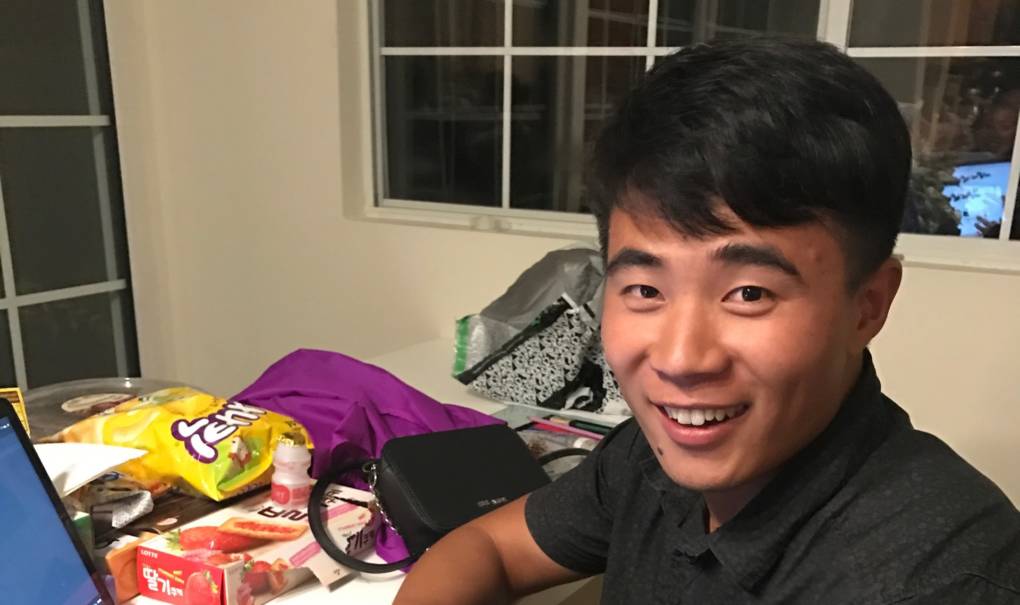
"caption": "Cheol \"Charlie\" Ryu pours through computer code at his home in Rancho Palos Verdes. He says he is studying to become a software engineer.",
"description": "Cheol \"Charlie\" Ryu pours through computer code at his home in Rancho Palos Verdes. He says he is studying to become a software engineer.",
"title": "RS27951_968E66C0-7F05-4A61-9987-4FDCFDC7C5AE-qut",
"credit": "Benjamin Gottlieb/KQED",
"status": "inherit",
"isLoading": false,
"fetchFailed": false
},
"news_11630066": {
"type": "attachments",
"id": "news_11630066",
"meta": {
"index": "attachments_1716263798",
"site": "news",
"id": "11630066",
"found": true
},
"parent": 11630049,
"imgSizes": {
"small": {
"file": "https://ww2.kqed.org/app/uploads/sites/10/2017/11/donnab2-520x289.jpg",
"width": 520,
"mimeType": "image/jpeg",
"height": 289
},
"twentyfourteen-full-width": {
"file": "https://ww2.kqed.org/app/uploads/sites/10/2017/11/donnab2-1038x576.jpg",
"width": 1038,
"mimeType": "image/jpeg",
"height": 576
},
"thumbnail": {
"file": "https://ww2.kqed.org/app/uploads/sites/10/2017/11/donnab2-160x89.jpg",
"width": 160,
"mimeType": "image/jpeg",
"height": 89
},
"fd-sm": {
"file": "https://ww2.kqed.org/app/uploads/sites/10/2017/11/donnab2-960x534.jpg",
"width": 960,
"mimeType": "image/jpeg",
"height": 534
},
"post-thumbnail": {
"file": "https://ww2.kqed.org/app/uploads/sites/10/2017/11/donnab2-672x372.jpg",
"width": 672,
"mimeType": "image/jpeg",
"height": 372
},
"xsmall": {
"file": "https://ww2.kqed.org/app/uploads/sites/10/2017/11/donnab2-375x209.jpg",
"width": 375,
"mimeType": "image/jpeg",
"height": 209
},
"kqedFullSize": {
"file": "https://ww2.kqed.org/app/uploads/sites/10/2017/11/donnab2.jpg",
"width": 1674,
"height": 931
},
"large": {
"file": "https://ww2.kqed.org/app/uploads/sites/10/2017/11/donnab2-1020x567.jpg",
"width": 1020,
"mimeType": "image/jpeg",
"height": 567
},
"xlarge": {
"file": "https://ww2.kqed.org/app/uploads/sites/10/2017/11/donnab2-1180x656.jpg",
"width": 1180,
"mimeType": "image/jpeg",
"height": 656
},
"guest-author-50": {
"file": "https://ww2.kqed.org/app/uploads/sites/10/2017/11/donnab2-50x50.jpg",
"width": 50,
"mimeType": "image/jpeg",
"height": 50
},
"guest-author-96": {
"file": "https://ww2.kqed.org/app/uploads/sites/10/2017/11/donnab2-96x96.jpg",
"width": 96,
"mimeType": "image/jpeg",
"height": 96
},
"medium": {
"file": "https://ww2.kqed.org/app/uploads/sites/10/2017/11/donnab2-800x445.jpg",
"width": 800,
"mimeType": "image/jpeg",
"height": 445
},
"guest-author-64": {
"file": "https://ww2.kqed.org/app/uploads/sites/10/2017/11/donnab2-64x64.jpg",
"width": 64,
"mimeType": "image/jpeg",
"height": 64
},
"guest-author-32": {
"file": "https://ww2.kqed.org/app/uploads/sites/10/2017/11/donnab2-32x32.jpg",
"width": 32,
"mimeType": "image/jpeg",
"height": 32
},
"fd-med": {
"file": "https://ww2.kqed.org/app/uploads/sites/10/2017/11/donnab2-1180x656.jpg",
"width": 1180,
"mimeType": "image/jpeg",
"height": 656
},
"detail": {
"file": "https://ww2.kqed.org/app/uploads/sites/10/2017/11/donnab2-150x150.jpg",
"width": 150,
"mimeType": "image/jpeg",
"height": 150
},
"guest-author-128": {
"file": "https://ww2.kqed.org/app/uploads/sites/10/2017/11/donnab2-128x128.jpg",
"width": 128,
"mimeType": "image/jpeg",
"height": 128
},
"xxsmall": {
"file": "https://ww2.kqed.org/app/uploads/sites/10/2017/11/donnab2-240x133.jpg",
"width": 240,
"mimeType": "image/jpeg",
"height": 133
}
},
"publishDate": 1510361248,
"modified": 1510361248,
"caption": null,
"description": null,
"title": "donnab2",
"credit": null,
"status": "inherit",
"isLoading": false,
"fetchFailed": false
},
"news_11630375": {
"type": "attachments",
"id": "news_11630375",
"meta": {
"index": "attachments_1716263798",
"site": "news",
"id": "11630375",
"found": true
},
"parent": 11630364,
"imgSizes": {
"small": {
"file": "https://ww2.kqed.org/app/uploads/sites/10/2017/11/donnab3-520x290.jpg",
"width": 520,
"mimeType": "image/jpeg",
"height": 290
},
"twentyfourteen-full-width": {
"file": "https://ww2.kqed.org/app/uploads/sites/10/2017/11/donnab3-1038x576.jpg",
"width": 1038,
"mimeType": "image/jpeg",
"height": 576
},
"thumbnail": {
"file": "https://ww2.kqed.org/app/uploads/sites/10/2017/11/donnab3-160x89.jpg",
"width": 160,
"mimeType": "image/jpeg",
"height": 89
},
"fd-sm": {
"file": "https://ww2.kqed.org/app/uploads/sites/10/2017/11/donnab3-960x535.jpg",
"width": 960,
"mimeType": "image/jpeg",
"height": 535
},
"post-thumbnail": {
"file": "https://ww2.kqed.org/app/uploads/sites/10/2017/11/donnab3-672x372.jpg",
"width": 672,
"mimeType": "image/jpeg",
"height": 372
},
"xsmall": {
"file": "https://ww2.kqed.org/app/uploads/sites/10/2017/11/donnab3-375x209.jpg",
"width": 375,
"mimeType": "image/jpeg",
"height": 209
},
"kqedFullSize": {
"file": "https://ww2.kqed.org/app/uploads/sites/10/2017/11/donnab3.jpg",
"width": 1669,
"height": 930
},
"large": {
"file": "https://ww2.kqed.org/app/uploads/sites/10/2017/11/donnab3-1020x568.jpg",
"width": 1020,
"mimeType": "image/jpeg",
"height": 568
},
"xlarge": {
"file": "https://ww2.kqed.org/app/uploads/sites/10/2017/11/donnab3-1180x658.jpg",
"width": 1180,
"mimeType": "image/jpeg",
"height": 658
},
"guest-author-50": {
"file": "https://ww2.kqed.org/app/uploads/sites/10/2017/11/donnab3-50x50.jpg",
"width": 50,
"mimeType": "image/jpeg",
"height": 50
},
"guest-author-96": {
"file": "https://ww2.kqed.org/app/uploads/sites/10/2017/11/donnab3-96x96.jpg",
"width": 96,
"mimeType": "image/jpeg",
"height": 96
},
"medium": {
"file": "https://ww2.kqed.org/app/uploads/sites/10/2017/11/donnab3-800x446.jpg",
"width": 800,
"mimeType": "image/jpeg",
"height": 446
},
"guest-author-64": {
"file": "https://ww2.kqed.org/app/uploads/sites/10/2017/11/donnab3-64x64.jpg",
"width": 64,
"mimeType": "image/jpeg",
"height": 64
},
"guest-author-32": {
"file": "https://ww2.kqed.org/app/uploads/sites/10/2017/11/donnab3-32x32.jpg",
"width": 32,
"mimeType": "image/jpeg",
"height": 32
},
"fd-med": {
"file": "https://ww2.kqed.org/app/uploads/sites/10/2017/11/donnab3-1180x658.jpg",
"width": 1180,
"mimeType": "image/jpeg",
"height": 658
},
"detail": {
"file": "https://ww2.kqed.org/app/uploads/sites/10/2017/11/donnab3-150x150.jpg",
"width": 150,
"mimeType": "image/jpeg",
"height": 150
},
"guest-author-128": {
"file": "https://ww2.kqed.org/app/uploads/sites/10/2017/11/donnab3-128x128.jpg",
"width": 128,
"mimeType": "image/jpeg",
"height": 128
},
"xxsmall": {
"file": "https://ww2.kqed.org/app/uploads/sites/10/2017/11/donnab3-240x134.jpg",
"width": 240,
"mimeType": "image/jpeg",
"height": 134
}
},
"publishDate": 1510603595,
"modified": 1510603595,
"caption": null,
"description": null,
"title": "donnab3",
"credit": null,
"status": "inherit",
"isLoading": false,
"fetchFailed": false
},
"news_11629288": {
"type": "attachments",
"id": "news_11629288",
"meta": {
"index": "attachments_1716263798",
"site": "news",
"id": "11629288",
"found": true
},
"parent": 11629280,
"imgSizes": {
"small": {
"file": "https://ww2.kqed.org/app/uploads/sites/10/2017/11/DonaldTrump-520x347.jpg",
"width": 520,
"mimeType": "image/jpeg",
"height": 347
},
"twentyfourteen-full-width": {
"file": "https://ww2.kqed.org/app/uploads/sites/10/2017/11/DonaldTrump-1038x576.jpg",
"width": 1038,
"mimeType": "image/jpeg",
"height": 576
},
"thumbnail": {
"file": "https://ww2.kqed.org/app/uploads/sites/10/2017/11/DonaldTrump-160x107.jpg",
"width": 160,
"mimeType": "image/jpeg",
"height": 107
},
"fd-sm": {
"file": "https://ww2.kqed.org/app/uploads/sites/10/2017/11/DonaldTrump-960x640.jpg",
"width": 960,
"mimeType": "image/jpeg",
"height": 640
},
"post-thumbnail": {
"file": "https://ww2.kqed.org/app/uploads/sites/10/2017/11/DonaldTrump-672x372.jpg",
"width": 672,
"mimeType": "image/jpeg",
"height": 372
},
"xsmall": {
"file": "https://ww2.kqed.org/app/uploads/sites/10/2017/11/DonaldTrump-375x250.jpg",
"width": 375,
"mimeType": "image/jpeg",
"height": 250
},
"kqedFullSize": {
"file": "https://ww2.kqed.org/app/uploads/sites/10/2017/11/DonaldTrump.jpg",
"width": 1920,
"height": 1280
},
"large": {
"file": "https://ww2.kqed.org/app/uploads/sites/10/2017/11/DonaldTrump-1020x680.jpg",
"width": 1020,
"mimeType": "image/jpeg",
"height": 680
},
"xlarge": {
"file": "https://ww2.kqed.org/app/uploads/sites/10/2017/11/DonaldTrump-1180x787.jpg",
"width": 1180,
"mimeType": "image/jpeg",
"height": 787
},
"guest-author-50": {
"file": "https://ww2.kqed.org/app/uploads/sites/10/2017/11/DonaldTrump-50x50.jpg",
"width": 50,
"mimeType": "image/jpeg",
"height": 50
},
"guest-author-96": {
"file": "https://ww2.kqed.org/app/uploads/sites/10/2017/11/DonaldTrump-96x96.jpg",
"width": 96,
"mimeType": "image/jpeg",
"height": 96
},
"medium": {
"file": "https://ww2.kqed.org/app/uploads/sites/10/2017/11/DonaldTrump-800x533.jpg",
"width": 800,
"mimeType": "image/jpeg",
"height": 533
},
"guest-author-64": {
"file": "https://ww2.kqed.org/app/uploads/sites/10/2017/11/DonaldTrump-64x64.jpg",
"width": 64,
"mimeType": "image/jpeg",
"height": 64
},
"guest-author-32": {
"file": "https://ww2.kqed.org/app/uploads/sites/10/2017/11/DonaldTrump-32x32.jpg",
"width": 32,
"mimeType": "image/jpeg",
"height": 32
},
"fd-lrg": {
"file": "https://ww2.kqed.org/app/uploads/sites/10/2017/11/DonaldTrump-1920x1280.jpg",
"width": 1920,
"mimeType": "image/jpeg",
"height": 1280
},
"fd-med": {
"file": "https://ww2.kqed.org/app/uploads/sites/10/2017/11/DonaldTrump-1180x787.jpg",
"width": 1180,
"mimeType": "image/jpeg",
"height": 787
},
"full-width": {
"file": "https://ww2.kqed.org/app/uploads/sites/10/2017/11/DonaldTrump-1920x1280.jpg",
"width": 1920,
"mimeType": "image/jpeg",
"height": 1280
},
"detail": {
"file": "https://ww2.kqed.org/app/uploads/sites/10/2017/11/DonaldTrump-150x150.jpg",
"width": 150,
"mimeType": "image/jpeg",
"height": 150
},
"guest-author-128": {
"file": "https://ww2.kqed.org/app/uploads/sites/10/2017/11/DonaldTrump-128x128.jpg",
"width": 128,
"mimeType": "image/jpeg",
"height": 128
},
"xxsmall": {
"file": "https://ww2.kqed.org/app/uploads/sites/10/2017/11/DonaldTrump-240x160.jpg",
"width": 240,
"mimeType": "image/jpeg",
"height": 160
}
},
"publishDate": 1510182585,
"modified": 1510182629,
"caption": "Some Twitter users argue President Trump is violating the First Amendment by blocking people from his feed after they posted negative comments.",
"description": "Some Twitter users argue President Trump is violating the First Amendment by blocking people from his feed after they posted negative comments.",
"title": "DonaldTrump",
"credit": "JIM WATSON/AFP/Getty Images",
"status": "inherit",
"isLoading": false,
"fetchFailed": false
},
"news_11116433": {
"type": "attachments",
"id": "news_11116433",
"meta": {
"index": "attachments_1716263798",
"site": "news",
"id": "11116433",
"found": true
},
"parent": 11114626,
"imgSizes": {
"twentyfourteen-full-width": {
"file": "https://ww2.kqed.org/app/uploads/sites/10/2016/10/Boxer-1038x576.jpg",
"width": 1038,
"mimeType": "image/jpeg",
"height": 576
},
"thumbnail": {
"file": "https://ww2.kqed.org/app/uploads/sites/10/2016/10/Boxer-400x246.jpg",
"width": 400,
"mimeType": "image/jpeg",
"height": 246
},
"fd-sm": {
"file": "https://ww2.kqed.org/app/uploads/sites/10/2016/10/Boxer-960x592.jpg",
"width": 960,
"mimeType": "image/jpeg",
"height": 592
},
"post-thumbnail": {
"file": "https://ww2.kqed.org/app/uploads/sites/10/2016/10/Boxer-672x372.jpg",
"width": 672,
"mimeType": "image/jpeg",
"height": 372
},
"kqedFullSize": {
"file": "https://ww2.kqed.org/app/uploads/sites/10/2016/10/Boxer.jpg",
"width": 1920,
"height": 1183
},
"large": {
"file": "https://ww2.kqed.org/app/uploads/sites/10/2016/10/Boxer-1920x1183.jpg",
"width": 1920,
"mimeType": "image/jpeg",
"height": 1183
},
"guest-author-50": {
"file": "https://ww2.kqed.org/app/uploads/sites/10/2016/10/Boxer-50x50.jpg",
"width": 50,
"mimeType": "image/jpeg",
"height": 50
},
"guest-author-96": {
"file": "https://ww2.kqed.org/app/uploads/sites/10/2016/10/Boxer-96x96.jpg",
"width": 96,
"mimeType": "image/jpeg",
"height": 96
},
"medium": {
"file": "https://ww2.kqed.org/app/uploads/sites/10/2016/10/Boxer-800x493.jpg",
"width": 800,
"mimeType": "image/jpeg",
"height": 493
},
"guest-author-64": {
"file": "https://ww2.kqed.org/app/uploads/sites/10/2016/10/Boxer-64x64.jpg",
"width": 64,
"mimeType": "image/jpeg",
"height": 64
},
"guest-author-32": {
"file": "https://ww2.kqed.org/app/uploads/sites/10/2016/10/Boxer-32x32.jpg",
"width": 32,
"mimeType": "image/jpeg",
"height": 32
},
"jmtc-small-thumb": {
"file": "https://ww2.kqed.org/app/uploads/sites/10/2016/10/Boxer-280x150.jpg",
"width": 280,
"mimeType": "image/jpeg",
"height": 150
},
"fd-lrg": {
"file": "https://ww2.kqed.org/app/uploads/sites/10/2016/10/Boxer-1920x1183.jpg",
"width": 1920,
"mimeType": "image/jpeg",
"height": 1183
},
"fd-med": {
"file": "https://ww2.kqed.org/app/uploads/sites/10/2016/10/Boxer-1180x727.jpg",
"width": 1180,
"mimeType": "image/jpeg",
"height": 727
},
"detail": {
"file": "https://ww2.kqed.org/app/uploads/sites/10/2016/10/Boxer-150x150.jpg",
"width": 150,
"mimeType": "image/jpeg",
"height": 150
},
"guest-author-128": {
"file": "https://ww2.kqed.org/app/uploads/sites/10/2016/10/Boxer-128x128.jpg",
"width": 128,
"mimeType": "image/jpeg",
"height": 128
}
},
"publishDate": 1475629889,
"modified": 1509752930,
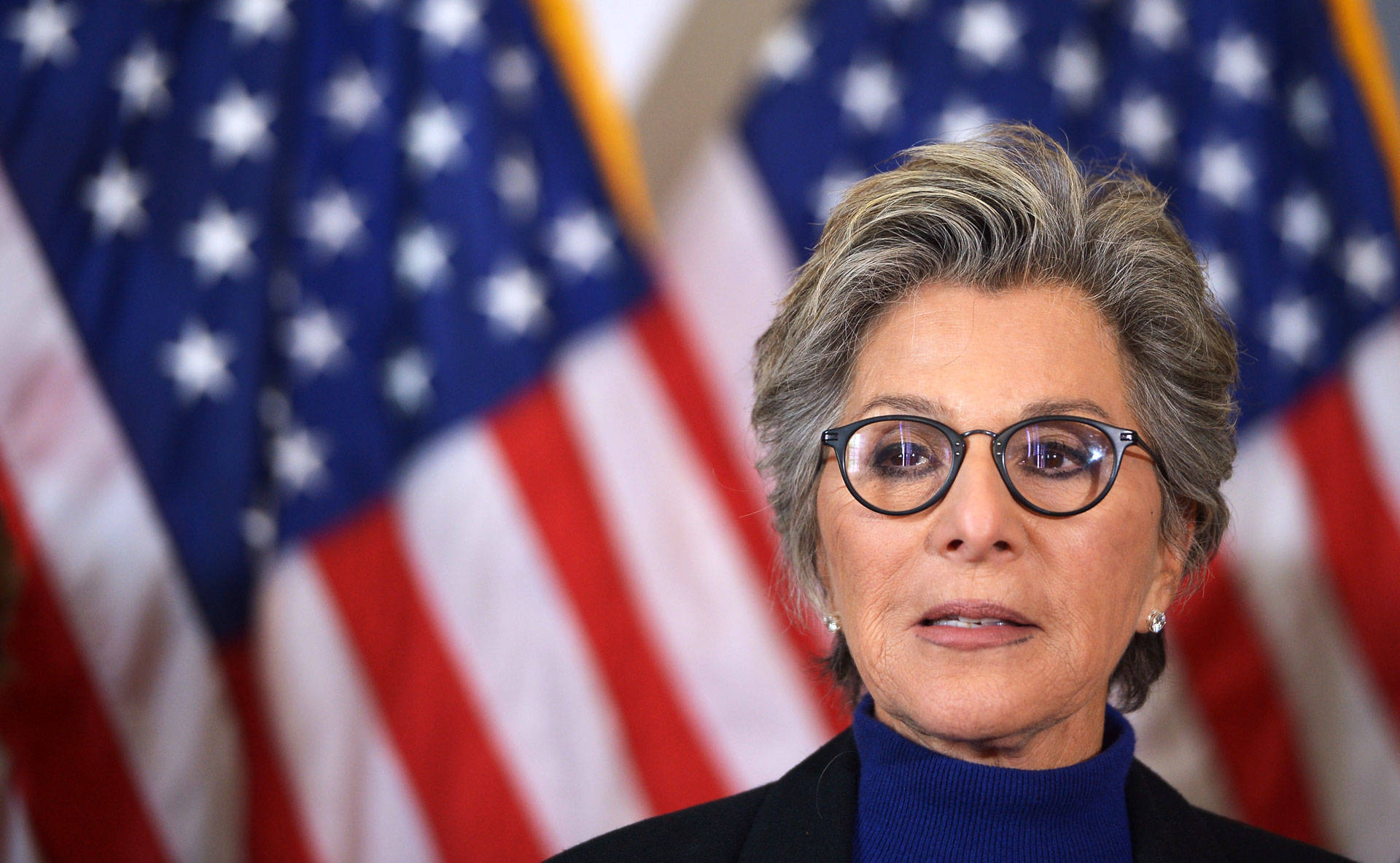
"caption": "Former U.S. Sen. Barbara Boxer.",
"description": "Retiring U.S. Senator Barbara Boxer.",
"title": "Boxer",
"credit": "Mandel Ngan/AFP/Getty Images",
"status": "inherit",
"isLoading": false,
"fetchFailed": false
},
"news_11628007": {
"type": "attachments",
"id": "news_11628007",
"meta": {
"index": "attachments_1716263798",
"site": "news",
"id": "11628007",
"found": true
},
"parent": 11627988,
"imgSizes": {
"small": {
"file": "https://ww2.kqed.org/app/uploads/sites/10/2017/11/twitterprez_110317_final-520x520.jpg",
"width": 520,
"mimeType": "image/jpeg",
"height": 520
},
"twentyfourteen-full-width": {
"file": "https://ww2.kqed.org/app/uploads/sites/10/2017/11/twitterprez_110317_final-1038x576.jpg",
"width": 1038,
"mimeType": "image/jpeg",
"height": 576
},
"thumbnail": {
"file": "https://ww2.kqed.org/app/uploads/sites/10/2017/11/twitterprez_110317_final-160x160.jpg",
"width": 160,
"mimeType": "image/jpeg",
"height": 160
},
"fd-sm": {
"file": "https://ww2.kqed.org/app/uploads/sites/10/2017/11/twitterprez_110317_final-960x960.jpg",
"width": 960,
"mimeType": "image/jpeg",
"height": 960
},
"post-thumbnail": {
"file": "https://ww2.kqed.org/app/uploads/sites/10/2017/11/twitterprez_110317_final-672x372.jpg",
"width": 672,
"mimeType": "image/jpeg",
"height": 372
},
"xsmall": {
"file": "https://ww2.kqed.org/app/uploads/sites/10/2017/11/twitterprez_110317_final-375x375.jpg",
"width": 375,
"mimeType": "image/jpeg",
"height": 375
},
"kqedFullSize": {
"file": "https://ww2.kqed.org/app/uploads/sites/10/2017/11/twitterprez_110317_final.jpg",
"width": 1920,
"height": 1920
},
"large": {
"file": "https://ww2.kqed.org/app/uploads/sites/10/2017/11/twitterprez_110317_final-1020x1020.jpg",
"width": 1020,
"mimeType": "image/jpeg",
"height": 1020
},
"xlarge": {
"file": "https://ww2.kqed.org/app/uploads/sites/10/2017/11/twitterprez_110317_final-1180x1180.jpg",
"width": 1180,
"mimeType": "image/jpeg",
"height": 1180
},
"guest-author-50": {
"file": "https://ww2.kqed.org/app/uploads/sites/10/2017/11/twitterprez_110317_final-50x50.jpg",
"width": 50,
"mimeType": "image/jpeg",
"height": 50
},
"guest-author-96": {
"file": "https://ww2.kqed.org/app/uploads/sites/10/2017/11/twitterprez_110317_final-96x96.jpg",
"width": 96,
"mimeType": "image/jpeg",
"height": 96
},
"medium": {
"file": "https://ww2.kqed.org/app/uploads/sites/10/2017/11/twitterprez_110317_final-800x800.jpg",
"width": 800,
"mimeType": "image/jpeg",
"height": 800
},
"guest-author-64": {
"file": "https://ww2.kqed.org/app/uploads/sites/10/2017/11/twitterprez_110317_final-64x64.jpg",
"width": 64,
"mimeType": "image/jpeg",
"height": 64
},
"guest-author-32": {
"file": "https://ww2.kqed.org/app/uploads/sites/10/2017/11/twitterprez_110317_final-32x32.jpg",
"width": 32,
"mimeType": "image/jpeg",
"height": 32
},
"fd-lrg": {
"file": "https://ww2.kqed.org/app/uploads/sites/10/2017/11/twitterprez_110317_final-1920x1920.jpg",
"width": 1920,
"mimeType": "image/jpeg",
"height": 1920
},
"fd-med": {
"file": "https://ww2.kqed.org/app/uploads/sites/10/2017/11/twitterprez_110317_final-1180x1180.jpg",
"width": 1180,
"mimeType": "image/jpeg",
"height": 1180
},
"full-width": {
"file": "https://ww2.kqed.org/app/uploads/sites/10/2017/11/twitterprez_110317_final-1920x1920.jpg",
"width": 1920,
"mimeType": "image/jpeg",
"height": 1920
},
"detail": {
"file": "https://ww2.kqed.org/app/uploads/sites/10/2017/11/twitterprez_110317_final-150x150.jpg",
"width": 150,
"mimeType": "image/jpeg",
"height": 150
},
"guest-author-128": {
"file": "https://ww2.kqed.org/app/uploads/sites/10/2017/11/twitterprez_110317_final-128x128.jpg",
"width": 128,
"mimeType": "image/jpeg",
"height": 128
},
"xxsmall": {
"file": "https://ww2.kqed.org/app/uploads/sites/10/2017/11/twitterprez_110317_final-240x240.jpg",
"width": 240,
"mimeType": "image/jpeg",
"height": 240
}
},
"publishDate": 1509743391,
"modified": 1509743421,
"caption": null,
"description": null,
"title": "twitterprez_110317_final",
"credit": null,
"status": "inherit",
"isLoading": false,
"fetchFailed": false
},
"news_11627872": {
"type": "attachments",
"id": "news_11627872",
"meta": {
"index": "attachments_1716263798",
"site": "news",
"id": "11627872",
"found": true
},
"parent": 11627868,
"imgSizes": {
"small": {
"file": "https://ww2.kqed.org/app/uploads/sites/10/2017/11/RS27829_GettyImages-828901238-qut-520x347.jpg",
"width": 520,
"mimeType": "image/jpeg",
"height": 347
},
"twentyfourteen-full-width": {
"file": "https://ww2.kqed.org/app/uploads/sites/10/2017/11/RS27829_GettyImages-828901238-qut-1038x576.jpg",
"width": 1038,
"mimeType": "image/jpeg",
"height": 576
},
"thumbnail": {
"file": "https://ww2.kqed.org/app/uploads/sites/10/2017/11/RS27829_GettyImages-828901238-qut-160x107.jpg",
"width": 160,
"mimeType": "image/jpeg",
"height": 107
},
"fd-sm": {
"file": "https://ww2.kqed.org/app/uploads/sites/10/2017/11/RS27829_GettyImages-828901238-qut-960x640.jpg",
"width": 960,
"mimeType": "image/jpeg",
"height": 640
},
"post-thumbnail": {
"file": "https://ww2.kqed.org/app/uploads/sites/10/2017/11/RS27829_GettyImages-828901238-qut-672x372.jpg",
"width": 672,
"mimeType": "image/jpeg",
"height": 372
},
"xsmall": {
"file": "https://ww2.kqed.org/app/uploads/sites/10/2017/11/RS27829_GettyImages-828901238-qut-375x250.jpg",
"width": 375,
"mimeType": "image/jpeg",
"height": 250
},
"kqedFullSize": {
"file": "https://ww2.kqed.org/app/uploads/sites/10/2017/11/RS27829_GettyImages-828901238-qut.jpg",
"width": 1920,
"height": 1280
},
"large": {
"file": "https://ww2.kqed.org/app/uploads/sites/10/2017/11/RS27829_GettyImages-828901238-qut-1020x680.jpg",
"width": 1020,
"mimeType": "image/jpeg",
"height": 680
},
"xlarge": {
"file": "https://ww2.kqed.org/app/uploads/sites/10/2017/11/RS27829_GettyImages-828901238-qut-1180x787.jpg",
"width": 1180,
"mimeType": "image/jpeg",
"height": 787
},
"guest-author-50": {
"file": "https://ww2.kqed.org/app/uploads/sites/10/2017/11/RS27829_GettyImages-828901238-qut-50x50.jpg",
"width": 50,
"mimeType": "image/jpeg",
"height": 50
},
"guest-author-96": {
"file": "https://ww2.kqed.org/app/uploads/sites/10/2017/11/RS27829_GettyImages-828901238-qut-96x96.jpg",
"width": 96,
"mimeType": "image/jpeg",
"height": 96
},
"medium": {
"file": "https://ww2.kqed.org/app/uploads/sites/10/2017/11/RS27829_GettyImages-828901238-qut-800x533.jpg",
"width": 800,
"mimeType": "image/jpeg",
"height": 533
},
"guest-author-64": {
"file": "https://ww2.kqed.org/app/uploads/sites/10/2017/11/RS27829_GettyImages-828901238-qut-64x64.jpg",
"width": 64,
"mimeType": "image/jpeg",
"height": 64
},
"guest-author-32": {
"file": "https://ww2.kqed.org/app/uploads/sites/10/2017/11/RS27829_GettyImages-828901238-qut-32x32.jpg",
"width": 32,
"mimeType": "image/jpeg",
"height": 32
},
"fd-lrg": {
"file": "https://ww2.kqed.org/app/uploads/sites/10/2017/11/RS27829_GettyImages-828901238-qut-1920x1280.jpg",
"width": 1920,
"mimeType": "image/jpeg",
"height": 1280
},
"fd-med": {
"file": "https://ww2.kqed.org/app/uploads/sites/10/2017/11/RS27829_GettyImages-828901238-qut-1180x787.jpg",
"width": 1180,
"mimeType": "image/jpeg",
"height": 787
},
"full-width": {
"file": "https://ww2.kqed.org/app/uploads/sites/10/2017/11/RS27829_GettyImages-828901238-qut-1920x1280.jpg",
"width": 1920,
"mimeType": "image/jpeg",
"height": 1280
},
"detail": {
"file": "https://ww2.kqed.org/app/uploads/sites/10/2017/11/RS27829_GettyImages-828901238-qut-150x150.jpg",
"width": 150,
"mimeType": "image/jpeg",
"height": 150
},
"guest-author-128": {
"file": "https://ww2.kqed.org/app/uploads/sites/10/2017/11/RS27829_GettyImages-828901238-qut-128x128.jpg",
"width": 128,
"mimeType": "image/jpeg",
"height": 128
},
"xxsmall": {
"file": "https://ww2.kqed.org/app/uploads/sites/10/2017/11/RS27829_GettyImages-828901238-qut-240x160.jpg",
"width": 240,
"mimeType": "image/jpeg",
"height": 160
}
},
"publishDate": 1509723085,
"modified": 1509723139,
"caption": "In this photo illustration, the logo for the Twitter social media network is projected onto a man on Aug 9, 2017 in London.",
"description": null,
"title": "Cyber Security Concerns In The Global Wake of Hacking Threat",
"credit": "Leon Neal/Getty Images",
"status": "inherit",
"isLoading": false,
"fetchFailed": false
},
"news_11610169": {
"type": "attachments",
"id": "news_11610169",
"meta": {
"index": "attachments_1716263798",
"site": "news",
"id": "11610169",
"found": true
},
"parent": 11610165,
"imgSizes": {
"small": {
"file": "https://ww2.kqed.org/app/uploads/sites/10/2017/08/RobertMueller-520x346.jpg",
"width": 520,
"mimeType": "image/jpeg",
"height": 346
},
"twentyfourteen-full-width": {
"file": "https://ww2.kqed.org/app/uploads/sites/10/2017/08/RobertMueller-1038x576.jpg",
"width": 1038,
"mimeType": "image/jpeg",
"height": 576
},
"thumbnail": {
"file": "https://ww2.kqed.org/app/uploads/sites/10/2017/08/RobertMueller-160x106.jpg",
"width": 160,
"mimeType": "image/jpeg",
"height": 106
},
"fd-sm": {
"file": "https://ww2.kqed.org/app/uploads/sites/10/2017/08/RobertMueller-960x638.jpg",
"width": 960,
"mimeType": "image/jpeg",
"height": 638
},
"post-thumbnail": {
"file": "https://ww2.kqed.org/app/uploads/sites/10/2017/08/RobertMueller-672x372.jpg",
"width": 672,
"mimeType": "image/jpeg",
"height": 372
},
"xsmall": {
"file": "https://ww2.kqed.org/app/uploads/sites/10/2017/08/RobertMueller-375x249.jpg",
"width": 375,
"mimeType": "image/jpeg",
"height": 249
},
"kqedFullSize": {
"file": "https://ww2.kqed.org/app/uploads/sites/10/2017/08/RobertMueller.jpg",
"width": 1920,
"height": 1276
},
"large": {
"file": "https://ww2.kqed.org/app/uploads/sites/10/2017/08/RobertMueller-1020x678.jpg",
"width": 1020,
"mimeType": "image/jpeg",
"height": 678
},
"xlarge": {
"file": "https://ww2.kqed.org/app/uploads/sites/10/2017/08/RobertMueller-1180x784.jpg",
"width": 1180,
"mimeType": "image/jpeg",
"height": 784
},
"guest-author-50": {
"file": "https://ww2.kqed.org/app/uploads/sites/10/2017/08/RobertMueller-50x50.jpg",
"width": 50,
"mimeType": "image/jpeg",
"height": 50
},
"guest-author-96": {
"file": "https://ww2.kqed.org/app/uploads/sites/10/2017/08/RobertMueller-96x96.jpg",
"width": 96,
"mimeType": "image/jpeg",
"height": 96
},
"medium": {
"file": "https://ww2.kqed.org/app/uploads/sites/10/2017/08/RobertMueller-800x532.jpg",
"width": 800,
"mimeType": "image/jpeg",
"height": 532
},
"guest-author-64": {
"file": "https://ww2.kqed.org/app/uploads/sites/10/2017/08/RobertMueller-64x64.jpg",
"width": 64,
"mimeType": "image/jpeg",
"height": 64
},
"guest-author-32": {
"file": "https://ww2.kqed.org/app/uploads/sites/10/2017/08/RobertMueller-32x32.jpg",
"width": 32,
"mimeType": "image/jpeg",
"height": 32
},
"fd-lrg": {
"file": "https://ww2.kqed.org/app/uploads/sites/10/2017/08/RobertMueller-1920x1276.jpg",
"width": 1920,
"mimeType": "image/jpeg",
"height": 1276
},
"fd-med": {
"file": "https://ww2.kqed.org/app/uploads/sites/10/2017/08/RobertMueller-1180x784.jpg",
"width": 1180,
"mimeType": "image/jpeg",
"height": 784
},
"full-width": {
"file": "https://ww2.kqed.org/app/uploads/sites/10/2017/08/RobertMueller-1920x1276.jpg",
"width": 1920,
"mimeType": "image/jpeg",
"height": 1276
},
"detail": {
"file": "https://ww2.kqed.org/app/uploads/sites/10/2017/08/RobertMueller-150x150.jpg",
"width": 150,
"mimeType": "image/jpeg",
"height": 150
},
"guest-author-128": {
"file": "https://ww2.kqed.org/app/uploads/sites/10/2017/08/RobertMueller-128x128.jpg",
"width": 128,
"mimeType": "image/jpeg",
"height": 128
},
"xxsmall": {
"file": "https://ww2.kqed.org/app/uploads/sites/10/2017/08/RobertMueller-240x160.jpg",
"width": 240,
"mimeType": "image/jpeg",
"height": 160
}
},
"publishDate": 1501870808,
"modified": 1501870863,
"caption": "Special counsel Robert Mueller leaves after a closed meeting with members of the Senate Judiciary Committee on June 21, 2017.",
"description": "Special counsel Robert Mueller leaves after a closed meeting with members of the Senate Judiciary Committee on June 21, 2017.",
"title": "RobertMueller",
"credit": "Alex Wong/Getty Images",
"status": "inherit",
"isLoading": false,
"fetchFailed": false
},
"news_11595665": {
"type": "attachments",
"id": "news_11595665",
"meta": {
"index": "attachments_1716263798",
"site": "news",
"id": "11595665",
"found": true
},
"parent": 11595066,
"imgSizes": {
"small": {
"file": "https://ww2.kqed.org/app/uploads/sites/10/2017/07/Transgender_SF__IMG_1331-qut-520x390.jpg",
"width": 520,
"mimeType": "image/jpeg",
"height": 390
},
"twentyfourteen-full-width": {
"file": "https://ww2.kqed.org/app/uploads/sites/10/2017/07/Transgender_SF__IMG_1331-qut-1038x576.jpg",
"width": 1038,
"mimeType": "image/jpeg",
"height": 576
},
"thumbnail": {
"file": "https://ww2.kqed.org/app/uploads/sites/10/2017/07/Transgender_SF__IMG_1331-qut-160x120.jpg",
"width": 160,
"mimeType": "image/jpeg",
"height": 120
},
"fd-sm": {
"file": "https://ww2.kqed.org/app/uploads/sites/10/2017/07/Transgender_SF__IMG_1331-qut-960x720.jpg",
"width": 960,
"mimeType": "image/jpeg",
"height": 720
},
"post-thumbnail": {
"file": "https://ww2.kqed.org/app/uploads/sites/10/2017/07/Transgender_SF__IMG_1331-qut-672x372.jpg",
"width": 672,
"mimeType": "image/jpeg",
"height": 372
},
"xsmall": {
"file": "https://ww2.kqed.org/app/uploads/sites/10/2017/07/Transgender_SF__IMG_1331-qut-375x281.jpg",
"width": 375,
"mimeType": "image/jpeg",
"height": 281
},
"kqedFullSize": {
"file": "https://ww2.kqed.org/app/uploads/sites/10/2017/07/Transgender_SF__IMG_1331-qut.jpg",
"width": 1920,
"height": 1440
},
"large": {
"file": "https://ww2.kqed.org/app/uploads/sites/10/2017/07/Transgender_SF__IMG_1331-qut-1020x765.jpg",
"width": 1020,
"mimeType": "image/jpeg",
"height": 765
},
"xlarge": {
"file": "https://ww2.kqed.org/app/uploads/sites/10/2017/07/Transgender_SF__IMG_1331-qut-1180x885.jpg",
"width": 1180,
"mimeType": "image/jpeg",
"height": 885
},
"guest-author-50": {
"file": "https://ww2.kqed.org/app/uploads/sites/10/2017/07/Transgender_SF__IMG_1331-qut-50x50.jpg",
"width": 50,
"mimeType": "image/jpeg",
"height": 50
},
"guest-author-96": {
"file": "https://ww2.kqed.org/app/uploads/sites/10/2017/07/Transgender_SF__IMG_1331-qut-96x96.jpg",
"width": 96,
"mimeType": "image/jpeg",
"height": 96
},
"medium": {
"file": "https://ww2.kqed.org/app/uploads/sites/10/2017/07/Transgender_SF__IMG_1331-qut-800x600.jpg",
"width": 800,
"mimeType": "image/jpeg",
"height": 600
},
"guest-author-64": {
"file": "https://ww2.kqed.org/app/uploads/sites/10/2017/07/Transgender_SF__IMG_1331-qut-64x64.jpg",
"width": 64,
"mimeType": "image/jpeg",
"height": 64
},
"guest-author-32": {
"file": "https://ww2.kqed.org/app/uploads/sites/10/2017/07/Transgender_SF__IMG_1331-qut-32x32.jpg",
"width": 32,
"mimeType": "image/jpeg",
"height": 32
},
"fd-lrg": {
"file": "https://ww2.kqed.org/app/uploads/sites/10/2017/07/Transgender_SF__IMG_1331-qut-1920x1440.jpg",
"width": 1920,
"mimeType": "image/jpeg",
"height": 1440
},
"fd-med": {
"file": "https://ww2.kqed.org/app/uploads/sites/10/2017/07/Transgender_SF__IMG_1331-qut-1180x885.jpg",
"width": 1180,
"mimeType": "image/jpeg",
"height": 885
},
"full-width": {
"file": "https://ww2.kqed.org/app/uploads/sites/10/2017/07/Transgender_SF__IMG_1331-qut-1920x1440.jpg",
"width": 1920,
"mimeType": "image/jpeg",
"height": 1440
},
"detail": {
"file": "https://ww2.kqed.org/app/uploads/sites/10/2017/07/Transgender_SF__IMG_1331-qut-150x150.jpg",
"width": 150,
"mimeType": "image/jpeg",
"height": 150
},
"guest-author-128": {
"file": "https://ww2.kqed.org/app/uploads/sites/10/2017/07/Transgender_SF__IMG_1331-qut-128x128.jpg",
"width": 128,
"mimeType": "image/jpeg",
"height": 128
},
"xxsmall": {
"file": "https://ww2.kqed.org/app/uploads/sites/10/2017/07/Transgender_SF__IMG_1331-qut-240x180.jpg",
"width": 240,
"mimeType": "image/jpeg",
"height": 180
}
},
"publishDate": 1501121473,
"modified": 1509386660,
"caption": "People protest President Donald Trump's decision to bar transgender people from serving in the military, in a march through San Francisco's Castro neighborhood on July 26, 2017.",
"description": null,
"title": "Transgender_SF__IMG_1331-qut",
"credit": "Polly Stryker/KQED",
"status": "inherit",
"isLoading": false,
"fetchFailed": false
},
"news_11370867": {
"type": "attachments",
"id": "news_11370867",
"meta": {
"index": "attachments_1716263798",
"site": "news",
"id": "11370867",
"found": true
},
"parent": 11370866,
"imgSizes": {
"small": {
"file": "https://ww2.kqed.org/app/uploads/sites/10/2017/03/gettyimages-542133994_wide-f68faa9c736130372a3be64f0c35b359fc267a2d-520x292.jpg",
"width": 520,
"mimeType": "image/jpeg",
"height": 292
},
"twentyfourteen-full-width": {
"file": "https://ww2.kqed.org/app/uploads/sites/10/2017/03/gettyimages-542133994_wide-f68faa9c736130372a3be64f0c35b359fc267a2d-1038x576.jpg",
"width": 1038,
"mimeType": "image/jpeg",
"height": 576
},
"thumbnail": {
"file": "https://ww2.kqed.org/app/uploads/sites/10/2017/03/gettyimages-542133994_wide-f68faa9c736130372a3be64f0c35b359fc267a2d-160x90.jpg",
"width": 160,
"mimeType": "image/jpeg",
"height": 90
},
"fd-sm": {
"file": "https://ww2.kqed.org/app/uploads/sites/10/2017/03/gettyimages-542133994_wide-f68faa9c736130372a3be64f0c35b359fc267a2d-960x540.jpg",
"width": 960,
"mimeType": "image/jpeg",
"height": 540
},
"post-thumbnail": {
"file": "https://ww2.kqed.org/app/uploads/sites/10/2017/03/gettyimages-542133994_wide-f68faa9c736130372a3be64f0c35b359fc267a2d-672x372.jpg",
"width": 672,
"mimeType": "image/jpeg",
"height": 372
},
"xsmall": {
"file": "https://ww2.kqed.org/app/uploads/sites/10/2017/03/gettyimages-542133994_wide-f68faa9c736130372a3be64f0c35b359fc267a2d-375x211.jpg",
"width": 375,
"mimeType": "image/jpeg",
"height": 211
},
"kqedFullSize": {
"file": "https://ww2.kqed.org/app/uploads/sites/10/2017/03/gettyimages-542133994_wide-f68faa9c736130372a3be64f0c35b359fc267a2d.jpg",
"width": 4122,
"height": 2318
},
"large": {
"file": "https://ww2.kqed.org/app/uploads/sites/10/2017/03/gettyimages-542133994_wide-f68faa9c736130372a3be64f0c35b359fc267a2d-1020x574.jpg",
"width": 1020,
"mimeType": "image/jpeg",
"height": 574
},
"xlarge": {
"file": "https://ww2.kqed.org/app/uploads/sites/10/2017/03/gettyimages-542133994_wide-f68faa9c736130372a3be64f0c35b359fc267a2d-1180x664.jpg",
"width": 1180,
"mimeType": "image/jpeg",
"height": 664
},
"guest-author-50": {
"file": "https://ww2.kqed.org/app/uploads/sites/10/2017/03/gettyimages-542133994_wide-f68faa9c736130372a3be64f0c35b359fc267a2d-50x50.jpg",
"width": 50,
"mimeType": "image/jpeg",
"height": 50
},
"guest-author-96": {
"file": "https://ww2.kqed.org/app/uploads/sites/10/2017/03/gettyimages-542133994_wide-f68faa9c736130372a3be64f0c35b359fc267a2d-96x96.jpg",
"width": 96,
"mimeType": "image/jpeg",
"height": 96
},
"medium": {
"file": "https://ww2.kqed.org/app/uploads/sites/10/2017/03/gettyimages-542133994_wide-f68faa9c736130372a3be64f0c35b359fc267a2d-800x450.jpg",
"width": 800,
"mimeType": "image/jpeg",
"height": 450
},
"guest-author-64": {
"file": "https://ww2.kqed.org/app/uploads/sites/10/2017/03/gettyimages-542133994_wide-f68faa9c736130372a3be64f0c35b359fc267a2d-64x64.jpg",
"width": 64,
"mimeType": "image/jpeg",
"height": 64
},
"guest-author-32": {
"file": "https://ww2.kqed.org/app/uploads/sites/10/2017/03/gettyimages-542133994_wide-f68faa9c736130372a3be64f0c35b359fc267a2d-32x32.jpg",
"width": 32,
"mimeType": "image/jpeg",
"height": 32
},
"fd-lrg": {
"file": "https://ww2.kqed.org/app/uploads/sites/10/2017/03/gettyimages-542133994_wide-f68faa9c736130372a3be64f0c35b359fc267a2d-1920x1080.jpg",
"width": 1920,
"mimeType": "image/jpeg",
"height": 1080
},
"fd-med": {
"file": "https://ww2.kqed.org/app/uploads/sites/10/2017/03/gettyimages-542133994_wide-f68faa9c736130372a3be64f0c35b359fc267a2d-1180x664.jpg",
"width": 1180,
"mimeType": "image/jpeg",
"height": 664
},
"full-width": {
"file": "https://ww2.kqed.org/app/uploads/sites/10/2017/03/gettyimages-542133994_wide-f68faa9c736130372a3be64f0c35b359fc267a2d-1920x1080.jpg",
"width": 1920,
"mimeType": "image/jpeg",
"height": 1080
},
"detail": {
"file": "https://ww2.kqed.org/app/uploads/sites/10/2017/03/gettyimages-542133994_wide-f68faa9c736130372a3be64f0c35b359fc267a2d-150x150.jpg",
"width": 150,
"mimeType": "image/jpeg",
"height": 150
},
"guest-author-128": {
"file": "https://ww2.kqed.org/app/uploads/sites/10/2017/03/gettyimages-542133994_wide-f68faa9c736130372a3be64f0c35b359fc267a2d-128x128.jpg",
"width": 128,
"mimeType": "image/jpeg",
"height": 128
},
"xxsmall": {
"file": "https://ww2.kqed.org/app/uploads/sites/10/2017/03/gettyimages-542133994_wide-f68faa9c736130372a3be64f0c35b359fc267a2d-240x135.jpg",
"width": 240,
"mimeType": "image/jpeg",
"height": 135
}
},
"publishDate": 1490199550,
"modified": 1509376458,
"caption": "Mueller, who has been indicted on federal charges ranging from conspiracy against the United States to conspiracy to launder money, is now in federal custody, along with his longtime deputy.",
"description": "Former Donald Trump campaign chairman Paul Manafort, seen here last June, was paid millions of dollars to advance a pro-Russian agenda, the AP reports.",
"title": "Former Donald Trump campaign chairman Paul Manafort, seen here last June, was paid millions of dollars to advance a pro-Russian agenda, the AP reports.",
"credit": "Drew Angerer/Getty Images",
"status": "inherit",
"isLoading": false,
"fetchFailed": false
}
},
"audioPlayerReducer": {
"postId": "stream_live",
"isPaused": true,
"isPlaying": false,
"pfsActive": false,
"pledgeModalIsOpen": true,
"playerDrawerIsOpen": false,
"liveAudioPlayStartedAt": 0,
"liveAudioPlayContext": ""
},
"authorsReducer": {
"byline_news_11630641": {
"type": "authors",
"id": "byline_news_11630641",
"meta": {
"override": true
},
"slug": "byline_news_11630641",
"name": "\u003cstrong>\u003ca href=\"http://www.kpbs.org/staff/jean-guerrero/\">Jean Guerrero\u003c/a>\u003c/strong> and \u003cstrong>\u003ca href=\"http://www.kpbs.org/staff/leo-castaneda/\">Leonardo Castañeda\u003c/a>\u003c/strong>",
"isLoading": false
},
"byline_news_11630705": {
"type": "authors",
"id": "byline_news_11630705",
"meta": {
"override": true
},
"slug": "byline_news_11630705",
"name": "\u003cstrong/>Richard Gonzales\u003cstrong>",
"isLoading": false
},
"byline_news_11629549": {
"type": "authors",
"id": "byline_news_11629549",
"meta": {
"override": true
},
"slug": "byline_news_11629549",
"name": "\u003cstrong>\u003ca href=\"https://www.kcrw.com/people/benjamin-gottlieb\">Benjamin Gottlieb\u003c/a>\u003c/strong>",
"isLoading": false
},
"byline_news_11629280": {
"type": "authors",
"id": "byline_news_11629280",
"meta": {
"override": true
},
"slug": "byline_news_11629280",
"name": "Laura Sydell",
"isLoading": false
},
"byline_news_11627868": {
"type": "authors",
"id": "byline_news_11627868",
"meta": {
"override": true
},
"slug": "byline_news_11627868",
"name": "\u003cstrong>Scott Neuman\u003c/strong>",
"isLoading": false
},
"byline_news_11626778": {
"type": "authors",
"id": "byline_news_11626778",
"meta": {
"override": true
},
"slug": "byline_news_11626778",
"name": "Domenico Montanaro",
"isLoading": false
},
"byline_news_11626803": {
"type": "authors",
"id": "byline_news_11626803",
"meta": {
"override": true
},
"slug": "byline_news_11626803",
"name": "Camila Domonoske",
"isLoading": false
},
"byline_news_11626784": {
"type": "authors",
"id": "byline_news_11626784",
"meta": {
"override": true
},
"slug": "byline_news_11626784",
"name": "Bill Chappell",
"isLoading": false
},
"kqed": {
"type": "authors",
"id": "236",
"meta": {
"index": "authors_1716337520",
"id": "236",
"found": true
},
"name": "KQED News Staff",
"firstName": "KQED News Staff",
"lastName": null,
"slug": "kqed",
"email": "faq@kqed.org",
"display_author_email": false,
"staff_mastheads": [],
"title": null,
"bio": null,
"avatar": "https://secure.gravatar.com/avatar/ef0e801a68c4c54afa9180db14084167?s=600&d=blank&r=g",
"twitter": null,
"facebook": null,
"instagram": null,
"linkedin": null,
"sites": [
{
"site": "arts",
"roles": [
"contributor"
]
},
{
"site": "news",
"roles": [
"editor"
]
},
{
"site": "futureofyou",
"roles": [
"author"
]
}
],
"headData": {
"title": "KQED News Staff | KQED",
"description": null,
"ogImgSrc": "https://secure.gravatar.com/avatar/ef0e801a68c4c54afa9180db14084167?s=600&d=blank&r=g",
"twImgSrc": "https://secure.gravatar.com/avatar/ef0e801a68c4c54afa9180db14084167?s=600&d=blank&r=g"
},
"isLoading": false,
"link": "/author/kqed"
},
"markfiore": {
"type": "authors",
"id": "3236",
"meta": {
"index": "authors_1716337520",
"id": "3236",
"found": true
},
"name": "Mark Fiore",
"firstName": "Mark",
"lastName": "Fiore",
"slug": "markfiore",
"email": "mark@markfiore.com",
"display_author_email": false,
"staff_mastheads": [
"news"
],
"title": "KQED News Cartoonist",
"bio": "\u003ca href=\"http://www.MarkFiore.com\">MarkFiore.com\u003c/a> | \u003ca href=\"https://twitter.com/markfiore\">Follow on Twitter\u003c/a> | \u003ca href=\"https://www.facebook.com/pages/Mark-Fiore-Animated-Political-Cartoons/94451707396?ref=bookmarks\">Facebook\u003c/a> | \u003ca href=\"mailto:mark@markfiore.com\">email\u003c/a>\r\n\r\nPulitzer Prize-winner, Mark Fiore, who the Wall Street Journal has called “the undisputed guru of the form,” creates animated political cartoons in San Francisco, where his work has been featured regularly on the San Francisco Chronicle’s web site, SFGate.com. His work has appeared on Newsweek.com, Slate.com, CBSNews.com, MotherJones.com, DailyKos.com and NPR’s web site. Fiore’s political animation has appeared on CNN, Frontline, Bill Moyers Journal, Salon.com and cable and broadcast outlets across the globe.\r\n\r\nBeginning his professional life by drawing traditional political cartoons for newspapers, Fiore’s work appeared in publications ranging from the Washington Post to the Los Angeles Times. In the late 1990s, he began to experiment with animating political cartoons and, after a short stint at the San Jose Mercury News as their staff cartoonist, Fiore devoted all his energies to animation.\r\nGrowing up in California, Fiore also spent a good portion of his life in the backwoods of Idaho. It was this combination that shaped him politically. Mark majored in political science at Colorado College, where, in a perfect send-off for a cartoonist, he received his diploma in 1991 as commencement speaker Dick Cheney smiled approvingly.\r\nMark Fiore was awarded the Pulitzer Prize for political cartooning in 2010, a Robert F. Kennedy Journalism Award in 2004 and has twice received an Online Journalism Award for commentary from the Online News Association (2002, 2008). Fiore has received two awards for his work in new media from the National Cartoonists Society (2001, 2002), and in 2006 received The James Madison Freedom of Information Award from The Society of Professional Journalists.",
"avatar": "https://secure.gravatar.com/avatar/fc4e2a612b15b67bad0c6f0e1db4ca9b?s=600&d=blank&r=g",
"twitter": "MarkFiore",
"facebook": null,
"instagram": "https://www.instagram.com/markfiore/?hl=en",
"linkedin": null,
"sites": [
{
"site": "arts",
"roles": [
"contributor"
]
},
{
"site": "news",
"roles": [
"editor"
]
},
{
"site": "futureofyou",
"roles": [
"editor"
]
},
{
"site": "science",
"roles": [
"editor"
]
}
],
"headData": {
"title": "Mark Fiore | KQED",
"description": "KQED News Cartoonist",
"ogImgSrc": "https://secure.gravatar.com/avatar/fc4e2a612b15b67bad0c6f0e1db4ca9b?s=600&d=blank&r=g",
"twImgSrc": "https://secure.gravatar.com/avatar/fc4e2a612b15b67bad0c6f0e1db4ca9b?s=600&d=blank&r=g"
},
"isLoading": false,
"link": "/author/markfiore"
},
"korr": {
"type": "authors",
"id": "11200",
"meta": {
"index": "authors_1716337520",
"id": "11200",
"found": true
},
"name": "Katie Orr",
"firstName": "Katie",
"lastName": "Orr",
"slug": "korr",
"email": "korr@kqed.org",
"display_author_email": false,
"staff_mastheads": [],
"title": "KQED Contributor",
"bio": "Katie Orr was a Sacramento-based reporter for KQED's Politics and Government Desk, covering the state Capitol and a variety of issues including women in politics, voting and elections and legislation. Prior to joining KQED in 2016, Katie was state government reporter for Capital Public Radio in Sacramento. She's also worked for KPBS in San Diego, where she covered City Hall.\r\n\r\nKatie received her masters degree in political science from San Diego State University and holds a Bachelors degree in broadcast journalism from Arizona State University.\r\n\r\nIn 2015 Katie won a national Clarion Award for a series of stories she did on women in California politics. She's been honored by the Society for Professional Journalists and, in 2013, was named by \u003cem>The Washington Post\u003c/em> as one of the country's top state Capitol reporters. She's also reported for the award-winning documentary series \u003cem>The View from Here \u003c/em>and was part of the team that won national PRNDI and Gabriel Awards in 2015. She lives in Sacramento with her husband. Twitter: @1KatieOrr",
"avatar": "https://secure.gravatar.com/avatar/41a40b25845adc78f50808670860449e?s=600&d=blank&r=g",
"twitter": "1katieorr",
"facebook": null,
"instagram": null,
"linkedin": null,
"sites": [
{
"site": "news",
"roles": [
"subscriber"
]
},
{
"site": "stateofhealth",
"roles": [
"author"
]
},
{
"site": "forum",
"roles": [
"author"
]
}
],
"headData": {
"title": "Katie Orr | KQED",
"description": "KQED Contributor",
"ogImgSrc": "https://secure.gravatar.com/avatar/41a40b25845adc78f50808670860449e?s=600&d=blank&r=g",
"twImgSrc": "https://secure.gravatar.com/avatar/41a40b25845adc78f50808670860449e?s=600&d=blank&r=g"
},
"isLoading": false,
"link": "/author/korr"
}
},
"pagesReducer": {
"news_tag_donald-trump": {
"type": "terms",
"id": "news_1323",
"meta": {
"index": "terms_1716263798",
"site": "news",
"id": "1323",
"score": 8.557382
},
"featImg": null,
"name": "Donald Trump",
"description": null,
"taxonomy": "tag",
"headData": {
"twImgId": null,
"twTitle": null,
"ogTitle": null,
"ogImgId": null,
"twDescription": null,
"description": null,
"title": "Donald Trump Archives | KQED News",
"ogDescription": null
},
"ttid": 1335,
"slug": "donald-trump",
"isLoading": false,
"title": "Donald Trump",
"pageMeta": {
"site": "news",
"WpPageTemplate": "page-topic-editorial",
"currentPage": 144
},
"blocks": [
{
"blockName": "kqed/post-list",
"attrs": {
"layout": "cardArticle2",
"query": "posts/news?tag=donald-trump",
"seeMore": false,
"paginated": true,
"page": 144
}
},
{
"blockName": "kqed/ad"
}
]
}
},
"pfsSessionReducer": {},
"postsReducer": {
"stream_live": {
"type": "live",
"id": "stream_live",
"audioUrl": "https://streams.kqed.org/kqedradio",
"title": "Live Stream",
"excerpt": "Live Stream information currently unavailable.",
"link": "/radio",
"featImg": "",
"label": {
"name": "KQED Live",
"link": "/"
}
},
"stream_kqedNewscast": {
"type": "posts",
"id": "stream_kqedNewscast",
"audioUrl": "https://www.kqed.org/.stream/anon/radio/RDnews/newscast.mp3?_=1",
"title": "KQED Newscast",
"featImg": "",
"label": {
"name": "88.5 FM",
"link": "/"
}
},
"news_11630641": {
"type": "posts",
"id": "news_11630641",
"meta": {
"index": "posts_1716263798",
"site": "news",
"id": "11630641",
"score": null,
"sort": [
1510693904000
]
},
"parent": 0,
"labelTerm": {},
"blocks": [],
"publishDate": 1510693904,
"format": "standard",
"disqusTitle": "America's Wall: The Decades-Long Struggle to Secure the U.S.-Mexico Border",
"title": "America's Wall: The Decades-Long Struggle to Secure the U.S.-Mexico Border",
"headTitle": "The California Report | KQED News",
"content": "\u003cp>Before President Donald Trump’s promises of an “impenetrable” wall at the U.S.-Mexico border, there was America’s wall.\u003c/p>\n\u003cp>As it stands today, the wall is imperfect. It is a hodgepodge of steel gates, concrete pillars, hip-high vehicle barricades and other materials. It is marred with cuts and patches; bypassed beneath by tunnels and overhead by drug-delivering catapults and drones; interrupted by long stretches of desert where thousands of people have died trying to enter the U.S. illegally on foot; and cradled on the east and the west by vast expanses of water where people swim, scuba dive and sail around the border.\u003c/p>\n\u003cp>It’s also new. Almost 90 percent of what is there today was built in the past 12 years under Republican President George W. Bush and Democratic President Barack Obama.\u003c/p>\n\u003cp>[audio src=\"https://www.kqed.org/.stream/anon/radio/tcr/2017/11/BorderWall2way.mp3\" Image=\"https://ww2.kqed.org/news/wp-content/uploads/sites/10/2017/11/BorderAgentWall-1180x971.jpg\" Title=\"America's Wall: The Decades-Long Struggle to Secure the U.S.-Mexico Border\" program=\"The California Report\"]\u003c/p>\n\u003cp>Trump plans to begin his wall by \u003ca href=\"http://www.kpbs.org/news/2017/oct/20/trumps-border-wall-models-take-shape-san-diego/\">removing and replacing 14 miles of fencing in San Diego\u003c/a>, beginning at the coast, a U.S. Customs and Border Protection spokesman said. So far, the administration has secured $102 million for that replacement project, but if the president can get more funding he aims to lengthen America’s wall.\u003c/p>\n\u003cp>[ad fullwidth]\u003c/p>\n\u003cp>The goal of building walls and fences at the U.S.-Mexico border has always been to curtail illegal immigration and drug trafficking. So, has the wall done its job? Will a new one do it better? \u003c/p>\n\u003cp>This border wall that stretches from California through Texas has been covered exhaustively by media the world over. But in this \u003ca href=\"http://www.kpbs.org/news/2017/nov/13/americas-wall/\">story of America’s wall\u003c/a>, a collaboration of \u003ca href=\"http://www.kpbs.org/\">KPBS\u003c/a> and \u003ca href=\"https://inewsource.org/\">\u003ci>inewsource\u003c/i>\u003c/a>, we were able to demonstrate with data what has previously been shown only through approximations and anecdotes: the impact of the wall over time.\u003c/p>\n\u003cp>Using newly disclosed details obtained from Customs and Border Protection, we created an interactive map showing every piece of existing fencing and when it was built. By layering that with more data, we connected the dots to show how construction of America’s wall is intertwined with the ongoing story of illegal immigration.\u003c/p>\n\u003cp>\u003c!-- iframe plugin v.4.3 wordpress.org/plugins/iframe/ -->\u003cbr>\n\u003ciframe style=\"border: none;\" src=\"https://dataprocessing.inewsource.org/border-wall\" width=\"100%\" height=\"1170px\" align=\"center\" scrolling=\"yes\" class=\"iframe-class\" frameborder=\"0\">\u003c/iframe>\u003c/p>\n\u003cp>The mapping data shows America’s wall stretches for 653 discontinuous miles along the 1,954-mile U.S.-Mexico border. The strength of that wall varies. Some 37 miles of the main wall are backed up by a secondary fence. The most heavily fortified states are California, Arizona and New Mexico. In Texas, hundreds of miles separate sections of fencing.\u003c/p>\n\u003cp>Our most conspicuous finding is a pattern we identified in the history of America’s wall: As it became stronger and longer, illegal cross-border flows of people plummeted wherever the barriers were built. But they didn’t stop. Instead, migrants and drug smugglers took different paths -- into the desert, into the ocean, into the sky and underground.\u003c/p>\n\u003cp>To read the full special report, go to \u003ca href=\"http://www.kpbs.org/\">KPBS\u003c/a> or \u003ca href=\"https://inewsource.org/\">\u003ci>inewsource\u003c/i>\u003c/a>.\u003c/p>\n\u003cp>\u003c/p>\n\u003cp>https://www.youtube.com/watch?v=8HffD_gd5lg\u003c/p>\n\n",
"disqusIdentifier": "11630641 https://ww2.kqed.org/news/?p=11630641",
"disqusUrl": "https://ww2.kqed.org/news/2017/11/14/americas-wall-the-decades-long-struggle-to-secure-the-u-s-mexico-border/",
"stats": {
"hasVideo": true,
"hasChartOrMap": false,
"hasAudio": true,
"hasPolis": false,
"wordCount": 540,
"hasGoogleForm": false,
"hasGallery": false,
"hasHearkenModule": false,
"iframeSrcs": [],
"paragraphCount": 13
},
"modified": 1510699038,
"excerpt": "As the existing border wall became stronger and longer, illegal cross-border flows of people plummeted wherever the barriers were built. But they didn’t stop.",
"headData": {
"twImgId": "",
"twTitle": "",
"ogTitle": "",
"ogImgId": "",
"twDescription": "",
"description": "As the existing border wall became stronger and longer, illegal cross-border flows of people plummeted wherever the barriers were built. But they didn’t stop.",
"title": "America's Wall: The Decades-Long Struggle to Secure the U.S.-Mexico Border | KQED",
"ogDescription": "",
"schema": {
"@context": "https://schema.org",
"@type": "NewsArticle",
"headline": "America's Wall: The Decades-Long Struggle to Secure the U.S.-Mexico Border",
"datePublished": "2017-11-14T13:11:44-08:00",
"dateModified": "2017-11-14T14:37:18-08:00",
"image": "https://cdn.kqed.org/wp-content/uploads/2020/02/KQED-OG-Image@1x.png",
"isAccessibleForFree": "True",
"publisher": {
"@type": "NewsMediaOrganization",
"@id": "https://www.kqed.org/#organization",
"name": "KQED",
"logo": "https://cdn.kqed.org/wp-content/uploads/2020/02/KQED-OG-Image@1x.png",
"url": "https://www.kqed.org",
"sameAs": [
"https://www.facebook.com/KQED",
"https://twitter.com/KQED",
"https://www.instagram.com/kqed/",
"https://www.tiktok.com/@kqedofficial",
"https://www.linkedin.com/company/kqed",
"https://www.youtube.com/channel/UCeC0IOo7i1P_61zVUWbJ4nw"
]
}
}
},
"guestAuthors": [],
"slug": "americas-wall-the-decades-long-struggle-to-secure-the-u-s-mexico-border",
"status": "publish",
"sourceUrl": "http://www.kpbs.org/news/2017/nov/13/about-americas-wall/",
"audioUrl": "https://www.kqed.org/.stream/anon/radio/tcr/2017/11/BorderWall2way.mp3",
"nprByline": "\u003cstrong>\u003ca href=\"http://www.kpbs.org/staff/jean-guerrero/\">Jean Guerrero\u003c/a>\u003c/strong> and \u003cstrong>\u003ca href=\"http://www.kpbs.org/staff/leo-castaneda/\">Leonardo Castañeda\u003c/a>\u003c/strong>",
"source": "KPBS",
"path": "/news/11630641/americas-wall-the-decades-long-struggle-to-secure-the-u-s-mexico-border",
"audioDuration": 241000,
"audioTrackLength": null,
"parsedContent": [
{
"type": "contentString",
"content": "\u003cdiv class=\"post-body\">\u003cp>\u003cp>Before President Donald Trump’s promises of an “impenetrable” wall at the U.S.-Mexico border, there was America’s wall.\u003c/p>\n\u003cp>As it stands today, the wall is imperfect. It is a hodgepodge of steel gates, concrete pillars, hip-high vehicle barricades and other materials. It is marred with cuts and patches; bypassed beneath by tunnels and overhead by drug-delivering catapults and drones; interrupted by long stretches of desert where thousands of people have died trying to enter the U.S. illegally on foot; and cradled on the east and the west by vast expanses of water where people swim, scuba dive and sail around the border.\u003c/p>\n\u003cp>It’s also new. Almost 90 percent of what is there today was built in the past 12 years under Republican President George W. Bush and Democratic President Barack Obama.\u003c/p>\n\u003cp>\u003c/p>\u003c/div>",
"attributes": {
"named": {},
"numeric": []
}
},
{
"type": "component",
"content": "",
"name": "audio",
"attributes": {
"named": {
"src": "https://www.kqed.org/.stream/anon/radio/tcr/2017/11/BorderWall2way.mp3",
"image": "https://ww2.kqed.org/news/wp-content/uploads/sites/10/2017/11/BorderAgentWall-1180x971.jpg",
"title": "America's Wall: The Decades-Long Struggle to Secure the U.S.-Mexico Border",
"program": "The California Report",
"label": ""
},
"numeric": []
}
},
{
"type": "contentString",
"content": "\u003cdiv class=\"post-body\">\u003cp>\u003c/p>\n\u003cp>Trump plans to begin his wall by \u003ca href=\"http://www.kpbs.org/news/2017/oct/20/trumps-border-wall-models-take-shape-san-diego/\">removing and replacing 14 miles of fencing in San Diego\u003c/a>, beginning at the coast, a U.S. Customs and Border Protection spokesman said. So far, the administration has secured $102 million for that replacement project, but if the president can get more funding he aims to lengthen America’s wall.\u003c/p>\n\u003cp>\u003c/p>\u003c/div>",
"attributes": {
"named": {},
"numeric": []
}
},
{
"type": "component",
"content": "",
"name": "ad",
"attributes": {
"named": {
"label": "fullwidth"
},
"numeric": [
"fullwidth"
]
}
},
{
"type": "contentString",
"content": "\u003cdiv class=\"post-body\">\u003cp>\u003c/p>\n\u003cp>The goal of building walls and fences at the U.S.-Mexico border has always been to curtail illegal immigration and drug trafficking. So, has the wall done its job? Will a new one do it better? \u003c/p>\n\u003cp>This border wall that stretches from California through Texas has been covered exhaustively by media the world over. But in this \u003ca href=\"http://www.kpbs.org/news/2017/nov/13/americas-wall/\">story of America’s wall\u003c/a>, a collaboration of \u003ca href=\"http://www.kpbs.org/\">KPBS\u003c/a> and \u003ca href=\"https://inewsource.org/\">\u003ci>inewsource\u003c/i>\u003c/a>, we were able to demonstrate with data what has previously been shown only through approximations and anecdotes: the impact of the wall over time.\u003c/p>\n\u003cp>Using newly disclosed details obtained from Customs and Border Protection, we created an interactive map showing every piece of existing fencing and when it was built. By layering that with more data, we connected the dots to show how construction of America’s wall is intertwined with the ongoing story of illegal immigration.\u003c/p>\n\u003cp>\u003c!-- iframe plugin v.4.3 wordpress.org/plugins/iframe/ -->\u003cbr>\n\u003ciframe style=\"border: none;\" src=\"https://dataprocessing.inewsource.org/border-wall\" width=\"100%\" height=\"1170px\" align=\"center\" scrolling=\"yes\" class=\"iframe-class\" frameborder=\"0\">\u003c/iframe>\u003c/p>\n\u003cp>The mapping data shows America’s wall stretches for 653 discontinuous miles along the 1,954-mile U.S.-Mexico border. The strength of that wall varies. Some 37 miles of the main wall are backed up by a secondary fence. The most heavily fortified states are California, Arizona and New Mexico. In Texas, hundreds of miles separate sections of fencing.\u003c/p>\n\u003cp>Our most conspicuous finding is a pattern we identified in the history of America’s wall: As it became stronger and longer, illegal cross-border flows of people plummeted wherever the barriers were built. But they didn’t stop. Instead, migrants and drug smugglers took different paths -- into the desert, into the ocean, into the sky and underground.\u003c/p>\n\u003cp>To read the full special report, go to \u003ca href=\"http://www.kpbs.org/\">KPBS\u003c/a> or \u003ca href=\"https://inewsource.org/\">\u003ci>inewsource\u003c/i>\u003c/a>.\u003c/p>\n\u003cp>\u003c/p>\u003c/p>\u003cp>\u003cspan class='utils-parseShortcode-shortcodes-__youtubeShortcode__embedYoutube'>\n \u003cspan class='utils-parseShortcode-shortcodes-__youtubeShortcode__embedYoutubeInside'>\n \u003ciframe\n loading='lazy'\n class='utils-parseShortcode-shortcodes-__youtubeShortcode__youtubePlayer'\n type='text/html'\n src='//www.youtube.com/embed/8HffD_gd5lg'\n title='//www.youtube.com/embed/8HffD_gd5lg'\n allowfullscreen='true'\n style='border:0;'>\u003c/iframe>\n \u003c/span>\n \u003c/span>\u003c/p>\u003cp>\n\u003c/div>\u003c/p>",
"attributes": {
"named": {},
"numeric": []
}
}
],
"link": "/news/11630641/americas-wall-the-decades-long-struggle-to-secure-the-u-s-mexico-border",
"authors": [
"byline_news_11630641"
],
"programs": [
"news_6944",
"news_72"
],
"categories": [
"news_1169",
"news_6188",
"news_8",
"news_13"
],
"tags": [
"news_20446",
"news_1323",
"news_17286",
"news_21038"
],
"affiliates": [
"news_7054"
],
"featImg": "news_11630842",
"label": "source_news_11630641"
},
"news_11630705": {
"type": "posts",
"id": "news_11630705",
"meta": {
"index": "posts_1716263798",
"site": "news",
"id": "11630705",
"score": null,
"sort": [
1510682086000
]
},
"parent": 0,
"labelTerm": {},
"blocks": [],
"publishDate": 1510682086,
"format": "standard",
"disqusTitle": "Trump Travel Ban Allowed to Take Partial Effect",
"title": "Trump Travel Ban Allowed to Take Partial Effect",
"headTitle": "The California Report | KQED News",
"content": "\u003cp>A federal appeals court in California has \u003ca href=\"http://cdn.ca9.uscourts.gov/datastore/general/2017/11/13/17-17168%20order%2011-13.pdf\" target=\"_blank\" rel=\"noopener\">ruled\u003c/a> that the Trump administration's long-delayed travel ban can go into partial effect, allowing the government to temporarily keep travelers from six Muslim-majority countries from entering the United States.\u003c/p>\n\u003cp>A three-judge panel of the U.S. Court of Appeals for the Ninth Circuit puts on hold a lower court ruling \u003ca href=\"https://www.npr.org/sections/thetwo-way/2017/10/17/558354914/federal-judge-in-hawaii-blocks-trumps-third-attempt-at-travel-ban\" target=\"_blank\" rel=\"noopener\">last month\u003c/a> that blocked the administration's ban against travelers from Syria, Iran, Libya, Yemen, Somalia, and Chad.\u003c/p>\n\u003cp>The appellate panel, all Clinton appointees, ruled that a preliminary injunction issued by District Judge Derrick Watson in Honolulu may not go into full effect. But it would allow \"foreign nationals who have a credible claim of a bona fide relationship with a person or entity in the United States.\" The panel said that would include \"grandparents, grandchildren, brothers-in-law, sisters-in-law, aunts, uncles, nieces, nephews, and cousins.\"\u003c/p>\n\u003cp>[contextly_sidebar id=\"GKT6Y2IvLApUZGbpwEn2jAX3kMdqiCyU\"]\u003c/p>\n\u003cp>Judge Watson's ruling came in response to a challenge filed by the state of Hawaii. Neither the appellate nor the lower court rulings affect travelers from North Korea and Venezuela. In his preliminary injunction, Watson did not include people from those two countries.\u003c/p>\n\u003cp>[ad fullwidth]\u003c/p>\n\u003cp>In a statement, Hawaii Attorney General Douglas Chin said, \"Today's decision today closely tracks guidance previously issued by the Supreme Court. I'm pleased that family ties to the U. S., including grandparents, will be respected.\"\u003c/p>\n\u003cp>A spokesperson for the Department of Justice, Lauren Ehrsam, said, \"We are reviewing the court's order and the government will begin enforcing the travel proclamation consistent with the partial stay. We believe that the proclamation should be allowed to take effect in its entirety.\"\u003c/p>\n\u003cp>[contextly_sidebar id=\"DyFDcqq5j5aNqpKfTUDfUP4N2iaIzmT3\"]\u003c/p>\n\u003cp>This latest legal development tests whether Trump Travel Ban 3.0 will withstand judicial scrutiny. The first was blocked by the courts and the second expired before it could win court approval.\u003c/p>\n\u003cp>There is a \u003ca href=\"https://www.washingtonpost.com/world/national-security/second-judge-rules-against-latest-travel-ban-saying-trumps-own-words-show-it-was-aimed-at-muslims/2017/10/18/5ecdaa44-b3ed-11e7-9e58-e6288544af98_story.html?tid=a_inl&utm_term=.7a751170267a\" target=\"_blank\" rel=\"noopener\">parallel case\u003c/a> winding through the federal court in Maryland where a judge also blocked Trump's travel ban in mid-October. U.S. District Judge Theodore D. Chuang's order was less sweeping, although it also favored travelers with a \"bona fide\" relationship with a person or entity in the United States.\u003c/p>\n\u003cp>As the Two-Way \u003ca href=\"https://www.npr.org/sections/thetwo-way/2017/10/18/558501163/federal-judge-in-maryland-blocks-trumps-latest-travel-ban-attempt\" target=\"_blank\" rel=\"noopener\">reported\u003c/a>, \"In his ruling, Chuang wrote that President Trump's own tweets helped convince him that the latest policy is an 'inextricable re-animation of the twice-enjoined Muslim ban' that Trump called for on the campaign trail and is therefore likely to be found unconstitutional.\"\u003c/p>\n\u003cp>[contextly_sidebar id=\"IdFM26GxoKcL4hsQQCAyijP5Mipmttxy\"]\u003c/p>\n\u003cp>An appeal of that ruling will be heard by the U.S. Court of Appeals for the 4th Circuit on December 8.\u003c/p>\n\u003cp>The 9th Circuit Appeals Court will reexamine the case on December 6.\u003c/p>\n\u003cp>\u003c/p>\n\u003cp>As the Washington Post \u003ca href=\"https://www.washingtonpost.com/world/national-security/federal-appeals-court-allows-trumps-third-travel-ban-partially-to-take-effect/2017/11/13/c3c15cf4-c89a-11e7-aa96-54417592cf72_story.html?utm_term=.e5d436988dac\" target=\"_blank\" rel=\"noopener\">points out\u003c/a>, in order to survive, the travel ban would need a green light from both appeals courts.\u003c/p>\n\u003cdiv class=\"fullattribution\">Copyright 2017 NPR. To see more, visit http://www.npr.org/.\u003cimg src=\"https://www.google-analytics.com/__utm.gif?utmac=UA-5828686-4&utmdt=Trump+Travel+Ban+Allowed+To+Take+Partial+Effect&utme=8(APIKey)9(MDAxOTAwOTE4MDEyMTkxMDAzNjczZDljZA004)\">\u003c/div>\n\n",
"disqusIdentifier": "11630705 https://ww2.kqed.org/news/?p=11630705",
"disqusUrl": "https://ww2.kqed.org/news/2017/11/14/trump-travel-ban-allowed-to-take-partial-effect/",
"stats": {
"hasVideo": false,
"hasChartOrMap": false,
"hasAudio": false,
"hasPolis": false,
"wordCount": 489,
"hasGoogleForm": false,
"hasGallery": false,
"hasHearkenModule": false,
"iframeSrcs": [],
"paragraphCount": 17
},
"modified": 1510682334,
"excerpt": "Travelers from six Muslim-majority nations may be temporarily barred entry into the U.S. without a \"bona fide relationship with a person or entity in this country.\"",
"headData": {
"twImgId": "",
"twTitle": "",
"ogTitle": "",
"ogImgId": "",
"twDescription": "",
"description": "Travelers from six Muslim-majority nations may be temporarily barred entry into the U.S. without a "bona fide relationship with a person or entity in this country."",
"title": "Trump Travel Ban Allowed to Take Partial Effect | KQED",
"ogDescription": "",
"schema": {
"@context": "https://schema.org",
"@type": "NewsArticle",
"headline": "Trump Travel Ban Allowed to Take Partial Effect",
"datePublished": "2017-11-14T09:54:46-08:00",
"dateModified": "2017-11-14T09:58:54-08:00",
"image": "https://cdn.kqed.org/wp-content/uploads/2020/02/KQED-OG-Image@1x.png",
"isAccessibleForFree": "True",
"publisher": {
"@type": "NewsMediaOrganization",
"@id": "https://www.kqed.org/#organization",
"name": "KQED",
"logo": "https://cdn.kqed.org/wp-content/uploads/2020/02/KQED-OG-Image@1x.png",
"url": "https://www.kqed.org",
"sameAs": [
"https://www.facebook.com/KQED",
"https://twitter.com/KQED",
"https://www.instagram.com/kqed/",
"https://www.tiktok.com/@kqedofficial",
"https://www.linkedin.com/company/kqed",
"https://www.youtube.com/channel/UCeC0IOo7i1P_61zVUWbJ4nw"
]
}
}
},
"guestAuthors": [],
"slug": "trump-travel-ban-allowed-to-take-partial-effect",
"status": "publish",
"nprApiLink": "http://api.npr.org/query?id=563923136&apiKey=MDAxOTAwOTE4MDEyMTkxMDAzNjczZDljZA004",
"nprStoryDate": "Mon, 13 Nov 2017 18:51:00 -0500",
"nprLastModifiedDate": "Tue, 14 Nov 2017 10:31:30 -0500",
"nprHtmlLink": "https://www.npr.org/sections/thetwo-way/2017/11/13/563923136/trump-travel-ban-allowed-to-take-partial-effect?ft=nprml&f=563923136",
"nprAudio": "https://ondemand.npr.org/anon.npr-mp3/npr/me/2017/11/20171114_me_trump_travel_ban_allowed_to_take_partial_effect.mp3?orgId=1&topicId=1070&d=125&p=3&story=563923136&ft=nprml&f=563923136",
"nprImageAgency": "AP",
"source": "NPR",
"nprAudioM3u": "http://api.npr.org/m3u/1564006508-350bc0.m3u?orgId=1&topicId=1070&d=125&p=3&story=563923136&ft=nprml&f=563923136",
"nprStoryId": "563923136",
"sourceUrl": "www.npr.org",
"nprByline": "\u003cstrong/>Richard Gonzales\u003cstrong>",
"nprImageCredit": "Manuel Balce Ceneta",
"nprRetrievedStory": "1",
"nprPubDate": "Tue, 14 Nov 2017 07:51:00 -0500",
"path": "/news/11630705/trump-travel-ban-allowed-to-take-partial-effect",
"audioUrl": "https://ondemand.npr.org/anon.npr-mp3/npr/me/2017/11/20171114_me_trump_travel_ban_allowed_to_take_partial_effect.mp3?orgId=1&topicId=1070&d=125&p=3&story=563923136&ft=nprml&f=563923136",
"audioTrackLength": null,
"parsedContent": [
{
"type": "contentString",
"content": "\u003cdiv class=\"post-body\">\u003cp>\u003cp>A federal appeals court in California has \u003ca href=\"http://cdn.ca9.uscourts.gov/datastore/general/2017/11/13/17-17168%20order%2011-13.pdf\" target=\"_blank\" rel=\"noopener\">ruled\u003c/a> that the Trump administration's long-delayed travel ban can go into partial effect, allowing the government to temporarily keep travelers from six Muslim-majority countries from entering the United States.\u003c/p>\n\u003cp>A three-judge panel of the U.S. Court of Appeals for the Ninth Circuit puts on hold a lower court ruling \u003ca href=\"https://www.npr.org/sections/thetwo-way/2017/10/17/558354914/federal-judge-in-hawaii-blocks-trumps-third-attempt-at-travel-ban\" target=\"_blank\" rel=\"noopener\">last month\u003c/a> that blocked the administration's ban against travelers from Syria, Iran, Libya, Yemen, Somalia, and Chad.\u003c/p>\n\u003cp>The appellate panel, all Clinton appointees, ruled that a preliminary injunction issued by District Judge Derrick Watson in Honolulu may not go into full effect. But it would allow \"foreign nationals who have a credible claim of a bona fide relationship with a person or entity in the United States.\" The panel said that would include \"grandparents, grandchildren, brothers-in-law, sisters-in-law, aunts, uncles, nieces, nephews, and cousins.\"\u003c/p>\n\u003cp>\u003c/p>\u003cp>\u003c/p>\u003cp>\u003c/p>\n\u003cp>Judge Watson's ruling came in response to a challenge filed by the state of Hawaii. Neither the appellate nor the lower court rulings affect travelers from North Korea and Venezuela. In his preliminary injunction, Watson did not include people from those two countries.\u003c/p>\n\u003cp>\u003c/p>\u003c/div>",
"attributes": {
"named": {},
"numeric": []
}
},
{
"type": "component",
"content": "",
"name": "ad",
"attributes": {
"named": {
"label": "fullwidth"
},
"numeric": [
"fullwidth"
]
}
},
{
"type": "contentString",
"content": "\u003cdiv class=\"post-body\">\u003cp>\u003c/p>\n\u003cp>In a statement, Hawaii Attorney General Douglas Chin said, \"Today's decision today closely tracks guidance previously issued by the Supreme Court. I'm pleased that family ties to the U. S., including grandparents, will be respected.\"\u003c/p>\n\u003cp>A spokesperson for the Department of Justice, Lauren Ehrsam, said, \"We are reviewing the court's order and the government will begin enforcing the travel proclamation consistent with the partial stay. We believe that the proclamation should be allowed to take effect in its entirety.\"\u003c/p>\n\u003cp>\u003c/p>\u003cp>\u003c/p>\u003cp>\u003c/p>\n\u003cp>This latest legal development tests whether Trump Travel Ban 3.0 will withstand judicial scrutiny. The first was blocked by the courts and the second expired before it could win court approval.\u003c/p>\n\u003cp>There is a \u003ca href=\"https://www.washingtonpost.com/world/national-security/second-judge-rules-against-latest-travel-ban-saying-trumps-own-words-show-it-was-aimed-at-muslims/2017/10/18/5ecdaa44-b3ed-11e7-9e58-e6288544af98_story.html?tid=a_inl&utm_term=.7a751170267a\" target=\"_blank\" rel=\"noopener\">parallel case\u003c/a> winding through the federal court in Maryland where a judge also blocked Trump's travel ban in mid-October. U.S. District Judge Theodore D. Chuang's order was less sweeping, although it also favored travelers with a \"bona fide\" relationship with a person or entity in the United States.\u003c/p>\n\u003cp>As the Two-Way \u003ca href=\"https://www.npr.org/sections/thetwo-way/2017/10/18/558501163/federal-judge-in-maryland-blocks-trumps-latest-travel-ban-attempt\" target=\"_blank\" rel=\"noopener\">reported\u003c/a>, \"In his ruling, Chuang wrote that President Trump's own tweets helped convince him that the latest policy is an 'inextricable re-animation of the twice-enjoined Muslim ban' that Trump called for on the campaign trail and is therefore likely to be found unconstitutional.\"\u003c/p>\n\u003cp>\u003c/p>\u003cp>\u003c/p>\u003cp>\u003c/p>\n\u003cp>An appeal of that ruling will be heard by the U.S. Court of Appeals for the 4th Circuit on December 8.\u003c/p>\n\u003cp>The 9th Circuit Appeals Court will reexamine the case on December 6.\u003c/p>\n\u003cp>\u003c/p>\n\u003cp>As the Washington Post \u003ca href=\"https://www.washingtonpost.com/world/national-security/federal-appeals-court-allows-trumps-third-travel-ban-partially-to-take-effect/2017/11/13/c3c15cf4-c89a-11e7-aa96-54417592cf72_story.html?utm_term=.e5d436988dac\" target=\"_blank\" rel=\"noopener\">points out\u003c/a>, in order to survive, the travel ban would need a green light from both appeals courts.\u003c/p>\n\u003cdiv class=\"fullattribution\">Copyright 2017 NPR. To see more, visit http://www.npr.org/.\u003cimg src=\"https://www.google-analytics.com/__utm.gif?utmac=UA-5828686-4&utmdt=Trump+Travel+Ban+Allowed+To+Take+Partial+Effect&utme=8(APIKey)9(MDAxOTAwOTE4MDEyMTkxMDAzNjczZDljZA004)\">\u003c/div>\n\n\u003c/div>\u003c/p>",
"attributes": {
"named": {},
"numeric": []
}
}
],
"link": "/news/11630705/trump-travel-ban-allowed-to-take-partial-effect",
"authors": [
"byline_news_11630705"
],
"programs": [
"news_6944",
"news_72"
],
"categories": [
"news_1169",
"news_6188",
"news_8"
],
"tags": [
"news_1323",
"news_19006",
"news_17286",
"news_20467"
],
"featImg": "news_11630709",
"label": "source_news_11630705"
},
"news_11629549": {
"type": "posts",
"id": "news_11629549",
"meta": {
"index": "posts_1716263798",
"site": "news",
"id": "11629549",
"score": null,
"sort": [
1510432516000
]
},
"guestAuthors": [],
"slug": "north-korean-refugee-recalls-harrowing-journey-to-new-life-in-california",
"title": "North Korean Refugee Recalls Harrowing Journey to New Life in California",
"publishDate": 1510432516,
"format": "audio",
"headTitle": "North Korean Refugee Recalls Harrowing Journey to New Life in California | KQED",
"labelTerm": {
"term": 72,
"site": "news"
},
"content": "\u003cp>Cheol W. Ryu says he will never forget the first time he thought about defecting from North Korea.\u003c/p>\n\u003cp>The country was consumed by famine, he says, and his mother had recently died of starvation. He was just 11 years old. His father left his family years prior to her death and so Charlie – as his friends call him – went to live with his aunt.\u003c/p>\n\u003cp>“It was really difficult because there was not enough food for their family,” Charlie says. “So I got kicked out every night. And then I would spend the night, winter cold, outside, so I was always alone and being homeless.”\u003c/p>\n\u003cp>He is now 23, and living in the southern California community of Rancho Palos Verdes. He has a head of thick black hair and a broad smile that fills his face. If you didn’t ask him, it would be tough to tell that he has stared death in the face on multiple occasions and refused to give in.\u003cbr>\n[contextly_sidebar id=”2CSaF13jB1d0esTBmuTSJX2xeG2A45Og”]\u003cbr>\n“There was one day that I was working on the side of the road, and then I saw when people vomit on the street,” Charlie recalls. “And it was so hot that the vomit was dried out. And there [were] pieces of rice. And I remember picking up the pieces of rice.”\u003c/p>\n\u003cp>Charlie escaped from North Korea twice. The first time, in 2008, he went to his father’s house in nearby China, where he says his father has Chinese citizenship.\u003c/p>\n\u003cp>[ad fullwidth]\u003c/p>\n\u003cp>But soon after, neighbors informed the local authorities, and Charlie was sent back to North Korea, where the regime put him into a labor camp.\u003c/p>\n\u003cp>“I was really hungry,” he says, recalling his time at the camp. “I couldn’t even think that I am going to escape this labor camp because I was really hungry and couldn’t run.”\u003c/p>\n\u003cp>At one point, Charlie says he was so weak that the guards at the camp left him to die. But he survived.\u003c/p>\n\u003cp>He would later find a job at a coal mine near his hometown. It is the first time, he says, in his life that he could expect three meals a day. Despite that level of relative comfort, Charlie says he could see how his life would end up if he stayed at the mine.\u003c/p>\n\u003cp>“I saw a lot of people dying…smashed into the rocks, losing their arms, legs, accidents, everything,” he says. “And I couldn’t help thinking, ‘That is going to be me one day.’ That’s what [made] me escape again.”\u003c/p>\n\u003cfigure id=\"attachment_11630099\" class=\"wp-caption alignright\" style=\"max-width: 800px\">\u003ca href=\"https://ww2.kqed.org/news/wp-content/uploads/sites/10/2017/11/RS27952_83C1AB9A-7C61-4F5C-8FDE-E5344BB77CA0-qut.jpg\">\u003cimg loading=\"lazy\" decoding=\"async\" src=\"https://ww2.kqed.org/news/wp-content/uploads/sites/10/2017/11/RS27952_83C1AB9A-7C61-4F5C-8FDE-E5344BB77CA0-qut-800x1067.jpg\" alt='In the offices of LiNK (Liberty in North Korea), Cheol \"Charlie\" Ryu points at the approximate spot, on the Chinese-North Korean border, where he crossed the Yalu River to defect.' width=\"800\" height=\"1067\" class=\"size-medium wp-image-11630099\" srcset=\"https://cdn.kqed.org/wp-content/uploads/sites/10/2017/11/RS27952_83C1AB9A-7C61-4F5C-8FDE-E5344BB77CA0-qut-800x1067.jpg 800w, https://cdn.kqed.org/wp-content/uploads/sites/10/2017/11/RS27952_83C1AB9A-7C61-4F5C-8FDE-E5344BB77CA0-qut-160x213.jpg 160w, https://cdn.kqed.org/wp-content/uploads/sites/10/2017/11/RS27952_83C1AB9A-7C61-4F5C-8FDE-E5344BB77CA0-qut-1020x1360.jpg 1020w, https://cdn.kqed.org/wp-content/uploads/sites/10/2017/11/RS27952_83C1AB9A-7C61-4F5C-8FDE-E5344BB77CA0-qut.jpg 1920w, https://cdn.kqed.org/wp-content/uploads/sites/10/2017/11/RS27952_83C1AB9A-7C61-4F5C-8FDE-E5344BB77CA0-qut-1180x1573.jpg 1180w, https://cdn.kqed.org/wp-content/uploads/sites/10/2017/11/RS27952_83C1AB9A-7C61-4F5C-8FDE-E5344BB77CA0-qut-960x1280.jpg 960w, https://cdn.kqed.org/wp-content/uploads/sites/10/2017/11/RS27952_83C1AB9A-7C61-4F5C-8FDE-E5344BB77CA0-qut-240x320.jpg 240w, https://cdn.kqed.org/wp-content/uploads/sites/10/2017/11/RS27952_83C1AB9A-7C61-4F5C-8FDE-E5344BB77CA0-qut-375x500.jpg 375w, https://cdn.kqed.org/wp-content/uploads/sites/10/2017/11/RS27952_83C1AB9A-7C61-4F5C-8FDE-E5344BB77CA0-qut-520x693.jpg 520w\" sizes=\"auto, (max-width: 800px) 100vw, 800px\">\u003c/a>\u003cfigcaption class=\"wp-caption-text\">In the offices of LiNK (Liberty in North Korea), Cheol “Charlie” Ryu points at the approximate spot, on the Chinese-North Korean border, where he crossed the Yalu River to defect. \u003ccite>(Benjamin Gottlieb/KQED)\u003c/cite>\u003c/figcaption>\u003c/figure>\n\u003cp>He escaped from the coal mine and made his way to the Yalu River, which runs along the Chinese‐North Korean border.\u003c/p>\n\u003cp>“There are guards that are posted [there], looking for people trying to defect,” says Hannah Song, the director of \u003ca href=\"https://www.libertyinnorthkorea.org/\" target=\"_blank\" rel=\"noopener\">Liberty in North Korea, \u003c/a>which helps North Korean refugees escape. “They have every opportunity to shoot on sight if they see someone trying to defect across the river there.”\u003c/p>\n\u003cp>While he was crossing the river, Charlie says he felt a bright light shine over his head.\u003c/p>\n\u003cp>“I heard screaming like, ‘Hey, you! Come back here. I will shoot you,’” he recalls. “And I was terrified, but at the same time I was really like, ‘I want to keep going. It doesn’t matter, I am going to keep going. If you shoot me, whatever.’”\u003c/p>\n\u003cp>That guard never fired his weapon.\u003c/p>\n\u003cp>Charlie made it across the Yalu and into neighboring China where he would soon begin the long journey from northern China to Thailand. In Thailand he was granted refugee status, which eventually allowed him to come to the U.S.\u003c/p>\n\u003caside class=\"pullquote alignright\">\n“I heard screaming like, ‘Hey, you! Come back here. I will shoot you.’”\u003cbr>\n\u003ccite>Cheol “Charlie” Ryu, recalling his second escape from North Korea\u003c/cite>\u003cbr>\n\u003c/aside>\n\u003cp>Most North Korean defectors resettle in South Korea – an \u003ca href=\"https://www.nytimes.com/2017/08/05/world/asia/north-korea-defector-south-korea.html?_r=1\" target=\"_blank\" rel=\"noopener\">estimated 30,000 \u003c/a>– because the language is very similar and, at least culturally, it’s an easier transition. But because of some family issues involving his father and other relatives, the government in Seoul would not accept Charlie.\u003c/p>\n\u003cp>That’s when he says another refugee suggested he should try his luck with the United States, where the number of refugees trying to enter is not nearly as high.\u003c/p>\n\u003cp>Song says there are between 200 and 250 North Korean refugees that have resettled in the U.S. legally and another 1,000 or so that have come to the country illegally, most often by overstaying their visas. When Charlie came to the U.S. in 2012 at the age of 17, he was \u003ca href=\"http://www.mercurynews.com/2017/05/06/refugee-youth-archbishop-mitty-teens-find-unity-on-the-soccer-field/\" target=\"_blank\" rel=\"noopener\">settled in the Bay Area, \u003c/a>where the local chapter of \u003ca href=\"https://www.catholiccharitiesscc.org/sites/default/files/VOH_September2017.pdf\" target=\"_blank\" rel=\"noopener\">Catholic Charities\u003c/a> set him up with a foster family.\u003c/p>\n\u003cfigure id=\"attachment_11630100\" class=\"wp-caption aligncenter\" style=\"max-width: 800px\">\u003ca href=\"https://ww2.kqed.org/news/wp-content/uploads/sites/10/2017/11/RS27950_A3636F2B-3942-47C2-8FCB-54120B626BB3-qut-e1510432235334.jpg\">\u003cimg loading=\"lazy\" decoding=\"async\" src=\"https://ww2.kqed.org/news/wp-content/uploads/sites/10/2017/11/RS27950_A3636F2B-3942-47C2-8FCB-54120B626BB3-qut-e1510432235334-800x749.jpg\" alt='Cheol \"Charlie\" Ryu gets teased by one of his housemates in Rancho Palos Verdes. He lives there with a group of college-aged adults that work at LiNK (Liberty in North Korea), which helps refugees escape from North Korea.' width=\"800\" height=\"749\" class=\"size-medium wp-image-11630100\" srcset=\"https://cdn.kqed.org/wp-content/uploads/sites/10/2017/11/RS27950_A3636F2B-3942-47C2-8FCB-54120B626BB3-qut-e1510432235334-800x749.jpg 800w, https://cdn.kqed.org/wp-content/uploads/sites/10/2017/11/RS27950_A3636F2B-3942-47C2-8FCB-54120B626BB3-qut-e1510432235334-160x150.jpg 160w, https://cdn.kqed.org/wp-content/uploads/sites/10/2017/11/RS27950_A3636F2B-3942-47C2-8FCB-54120B626BB3-qut-e1510432235334-1020x955.jpg 1020w, https://cdn.kqed.org/wp-content/uploads/sites/10/2017/11/RS27950_A3636F2B-3942-47C2-8FCB-54120B626BB3-qut-e1510432235334.jpg 1920w, https://cdn.kqed.org/wp-content/uploads/sites/10/2017/11/RS27950_A3636F2B-3942-47C2-8FCB-54120B626BB3-qut-e1510432235334-1180x1105.jpg 1180w, https://cdn.kqed.org/wp-content/uploads/sites/10/2017/11/RS27950_A3636F2B-3942-47C2-8FCB-54120B626BB3-qut-e1510432235334-960x899.jpg 960w, https://cdn.kqed.org/wp-content/uploads/sites/10/2017/11/RS27950_A3636F2B-3942-47C2-8FCB-54120B626BB3-qut-e1510432235334-240x225.jpg 240w, https://cdn.kqed.org/wp-content/uploads/sites/10/2017/11/RS27950_A3636F2B-3942-47C2-8FCB-54120B626BB3-qut-e1510432235334-375x351.jpg 375w, https://cdn.kqed.org/wp-content/uploads/sites/10/2017/11/RS27950_A3636F2B-3942-47C2-8FCB-54120B626BB3-qut-e1510432235334-520x487.jpg 520w\" sizes=\"auto, (max-width: 800px) 100vw, 800px\">\u003c/a>\u003cfigcaption class=\"wp-caption-text\">Cheol “Charlie” Ryu gets teased by one of his housemates in Rancho Palos Verdes. He lives there with a group of college-aged adults that work at LiNK (Liberty in North Korea), which helps refugees escape from North Korea. \u003ccite>(Benjamin Gottlieb/KQED)\u003c/cite>\u003c/figcaption>\u003c/figure>\n\u003cp>As remarkable as Charlie’s story is, he says there are thousands more just like him still suffering in his home country.\u003c/p>\n\u003cp>“We haven’t accepted any North Korean refugees since January,” says David Kang, Director of Korean Studies Institute at the University of Southern California. “So the numbers are very small and, now, they are vanishingly small, that come to the United States.”\u003c/p>\n\u003cp>The Trump administration \u003ca href=\"https://www.whitehouse.gov/the-press-office/2017/10/24/presidential-executive-order-resuming-united-states-refugee-admissions\" target=\"_blank\" rel=\"noopener\">put a hold \u003c/a>on the nation’s refugee program when it first came to power, and 11 nations are now on a list of those \u003ca href=\"https://www.nytimes.com/2017/10/24/us/politics/trump-lifts-refugee-suspension.html?_r=0\" target=\"_blank\" rel=\"noopener\">being reviewed \u003c/a>even further. That list includes North Korea.\u003c/p>\n\u003cp>According to the new executive order, refugee admissions from those nations will only be allowed on a case‐by‐case basis, and only if that person’s entry is in the U.S. national interest.\u003c/p>\n\u003cp>It is a tough pill to swallow for Charlie, when he thinks about all of his friends that he left behind in North Korea.\u003c/p>\n\u003cp>[ad floatright]\u003c/p>\n\u003cp>“I want to see all those North Korean people,” he says. “My friends that are in North Korea, starving to death, going to military and abused, beat to death, and froze to death all those friends that I had and still going through those hardships in North Korea. I want them to be free.”\u003c/p>\n\n",
"blocks": [],
"excerpt": "Cheol W. Ryu escaped North Korea twice and traveled thousands of miles before finding a home in California. ",
"status": "publish",
"parent": 0,
"modified": 1738180249,
"stats": {
"hasAudio": false,
"hasVideo": false,
"hasChartOrMap": false,
"iframeSrcs": [],
"hasGoogleForm": false,
"hasGallery": false,
"hasHearkenModule": false,
"hasPolis": false,
"paragraphCount": 27,
"wordCount": 1144
},
"headData": {
"title": "North Korean Refugee Recalls Harrowing Journey to New Life in California | KQED",
"description": "Cheol W. Ryu escaped North Korea twice and traveled thousands of miles before finding a home in California. ",
"ogTitle": "",
"ogDescription": "",
"ogImgId": "",
"twTitle": "",
"twDescription": "",
"twImgId": "",
"schema": {
"@context": "https://schema.org",
"@type": "NewsArticle",
"headline": "North Korean Refugee Recalls Harrowing Journey to New Life in California",
"datePublished": "2017-11-11T12:35:16-08:00",
"dateModified": "2025-01-29T11:50:49-08:00",
"image": "https://cdn.kqed.org/wp-content/uploads/2020/02/KQED-OG-Image@1x.png",
"isAccessibleForFree": "True",
"publisher": {
"@type": "NewsMediaOrganization",
"@id": "https://www.kqed.org/#organization",
"name": "KQED",
"logo": "https://cdn.kqed.org/wp-content/uploads/2020/02/KQED-OG-Image@1x.png",
"url": "https://www.kqed.org",
"sameAs": [
"https://www.facebook.com/KQED",
"https://twitter.com/KQED",
"https://www.instagram.com/kqed/",
"https://www.tiktok.com/@kqedofficial",
"https://www.linkedin.com/company/kqed",
"https://www.youtube.com/channel/UCeC0IOo7i1P_61zVUWbJ4nw"
]
}
}
},
"audioUrl": "https://www.kqed.org/.stream/anon/radio/tcrmag/2017/11/NorthKoreanRefugee.mp3",
"sticky": false,
"nprByline": "\u003cstrong>\u003ca href=\"https://www.kcrw.com/people/benjamin-gottlieb\">Benjamin Gottlieb\u003c/a>\u003c/strong>",
"path": "/news/11629549/north-korean-refugee-recalls-harrowing-journey-to-new-life-in-california",
"audioTrackLength": null,
"parsedContent": [
{
"type": "contentString",
"content": "\u003cdiv class=\"post-body\">\u003cp>\u003cp>Cheol W. Ryu says he will never forget the first time he thought about defecting from North Korea.\u003c/p>\n\u003cp>The country was consumed by famine, he says, and his mother had recently died of starvation. He was just 11 years old. His father left his family years prior to her death and so Charlie – as his friends call him – went to live with his aunt.\u003c/p>\n\u003cp>“It was really difficult because there was not enough food for their family,” Charlie says. “So I got kicked out every night. And then I would spend the night, winter cold, outside, so I was always alone and being homeless.”\u003c/p>\n\u003cp>He is now 23, and living in the southern California community of Rancho Palos Verdes. He has a head of thick black hair and a broad smile that fills his face. If you didn’t ask him, it would be tough to tell that he has stared death in the face on multiple occasions and refused to give in.\u003cbr>\n\u003c/p>\u003cp>\u003c/p>\u003cp>\u003cbr>\n“There was one day that I was working on the side of the road, and then I saw when people vomit on the street,” Charlie recalls. “And it was so hot that the vomit was dried out. And there [were] pieces of rice. And I remember picking up the pieces of rice.”\u003c/p>\n\u003cp>Charlie escaped from North Korea twice. The first time, in 2008, he went to his father’s house in nearby China, where he says his father has Chinese citizenship.\u003c/p>\n\u003cp>\u003c/p>\u003c/div>",
"attributes": {
"named": {},
"numeric": []
}
},
{
"type": "component",
"content": "",
"name": "ad",
"attributes": {
"named": {
"label": "fullwidth"
},
"numeric": [
"fullwidth"
]
}
},
{
"type": "contentString",
"content": "\u003cdiv class=\"post-body\">\u003cp>\u003c/p>\n\u003cp>But soon after, neighbors informed the local authorities, and Charlie was sent back to North Korea, where the regime put him into a labor camp.\u003c/p>\n\u003cp>“I was really hungry,” he says, recalling his time at the camp. “I couldn’t even think that I am going to escape this labor camp because I was really hungry and couldn’t run.”\u003c/p>\n\u003cp>At one point, Charlie says he was so weak that the guards at the camp left him to die. But he survived.\u003c/p>\n\u003cp>He would later find a job at a coal mine near his hometown. It is the first time, he says, in his life that he could expect three meals a day. Despite that level of relative comfort, Charlie says he could see how his life would end up if he stayed at the mine.\u003c/p>\n\u003cp>“I saw a lot of people dying…smashed into the rocks, losing their arms, legs, accidents, everything,” he says. “And I couldn’t help thinking, ‘That is going to be me one day.’ That’s what [made] me escape again.”\u003c/p>\n\u003cfigure id=\"attachment_11630099\" class=\"wp-caption alignright\" style=\"max-width: 800px\">\u003ca href=\"https://ww2.kqed.org/news/wp-content/uploads/sites/10/2017/11/RS27952_83C1AB9A-7C61-4F5C-8FDE-E5344BB77CA0-qut.jpg\">\u003cimg loading=\"lazy\" decoding=\"async\" src=\"https://ww2.kqed.org/news/wp-content/uploads/sites/10/2017/11/RS27952_83C1AB9A-7C61-4F5C-8FDE-E5344BB77CA0-qut-800x1067.jpg\" alt='In the offices of LiNK (Liberty in North Korea), Cheol \"Charlie\" Ryu points at the approximate spot, on the Chinese-North Korean border, where he crossed the Yalu River to defect.' width=\"800\" height=\"1067\" class=\"size-medium wp-image-11630099\" srcset=\"https://cdn.kqed.org/wp-content/uploads/sites/10/2017/11/RS27952_83C1AB9A-7C61-4F5C-8FDE-E5344BB77CA0-qut-800x1067.jpg 800w, https://cdn.kqed.org/wp-content/uploads/sites/10/2017/11/RS27952_83C1AB9A-7C61-4F5C-8FDE-E5344BB77CA0-qut-160x213.jpg 160w, https://cdn.kqed.org/wp-content/uploads/sites/10/2017/11/RS27952_83C1AB9A-7C61-4F5C-8FDE-E5344BB77CA0-qut-1020x1360.jpg 1020w, https://cdn.kqed.org/wp-content/uploads/sites/10/2017/11/RS27952_83C1AB9A-7C61-4F5C-8FDE-E5344BB77CA0-qut.jpg 1920w, https://cdn.kqed.org/wp-content/uploads/sites/10/2017/11/RS27952_83C1AB9A-7C61-4F5C-8FDE-E5344BB77CA0-qut-1180x1573.jpg 1180w, https://cdn.kqed.org/wp-content/uploads/sites/10/2017/11/RS27952_83C1AB9A-7C61-4F5C-8FDE-E5344BB77CA0-qut-960x1280.jpg 960w, https://cdn.kqed.org/wp-content/uploads/sites/10/2017/11/RS27952_83C1AB9A-7C61-4F5C-8FDE-E5344BB77CA0-qut-240x320.jpg 240w, https://cdn.kqed.org/wp-content/uploads/sites/10/2017/11/RS27952_83C1AB9A-7C61-4F5C-8FDE-E5344BB77CA0-qut-375x500.jpg 375w, https://cdn.kqed.org/wp-content/uploads/sites/10/2017/11/RS27952_83C1AB9A-7C61-4F5C-8FDE-E5344BB77CA0-qut-520x693.jpg 520w\" sizes=\"auto, (max-width: 800px) 100vw, 800px\">\u003c/a>\u003cfigcaption class=\"wp-caption-text\">In the offices of LiNK (Liberty in North Korea), Cheol “Charlie” Ryu points at the approximate spot, on the Chinese-North Korean border, where he crossed the Yalu River to defect. \u003ccite>(Benjamin Gottlieb/KQED)\u003c/cite>\u003c/figcaption>\u003c/figure>\n\u003cp>He escaped from the coal mine and made his way to the Yalu River, which runs along the Chinese‐North Korean border.\u003c/p>\n\u003cp>“There are guards that are posted [there], looking for people trying to defect,” says Hannah Song, the director of \u003ca href=\"https://www.libertyinnorthkorea.org/\" target=\"_blank\" rel=\"noopener\">Liberty in North Korea, \u003c/a>which helps North Korean refugees escape. “They have every opportunity to shoot on sight if they see someone trying to defect across the river there.”\u003c/p>\n\u003cp>While he was crossing the river, Charlie says he felt a bright light shine over his head.\u003c/p>\n\u003cp>“I heard screaming like, ‘Hey, you! Come back here. I will shoot you,’” he recalls. “And I was terrified, but at the same time I was really like, ‘I want to keep going. It doesn’t matter, I am going to keep going. If you shoot me, whatever.’”\u003c/p>\n\u003cp>That guard never fired his weapon.\u003c/p>\n\u003cp>Charlie made it across the Yalu and into neighboring China where he would soon begin the long journey from northern China to Thailand. In Thailand he was granted refugee status, which eventually allowed him to come to the U.S.\u003c/p>\n\u003caside class=\"pullquote alignright\">\n“I heard screaming like, ‘Hey, you! Come back here. I will shoot you.’”\u003cbr>\n\u003ccite>Cheol “Charlie” Ryu, recalling his second escape from North Korea\u003c/cite>\u003cbr>\n\u003c/aside>\n\u003cp>Most North Korean defectors resettle in South Korea – an \u003ca href=\"https://www.nytimes.com/2017/08/05/world/asia/north-korea-defector-south-korea.html?_r=1\" target=\"_blank\" rel=\"noopener\">estimated 30,000 \u003c/a>– because the language is very similar and, at least culturally, it’s an easier transition. But because of some family issues involving his father and other relatives, the government in Seoul would not accept Charlie.\u003c/p>\n\u003cp>That’s when he says another refugee suggested he should try his luck with the United States, where the number of refugees trying to enter is not nearly as high.\u003c/p>\n\u003cp>Song says there are between 200 and 250 North Korean refugees that have resettled in the U.S. legally and another 1,000 or so that have come to the country illegally, most often by overstaying their visas. When Charlie came to the U.S. in 2012 at the age of 17, he was \u003ca href=\"http://www.mercurynews.com/2017/05/06/refugee-youth-archbishop-mitty-teens-find-unity-on-the-soccer-field/\" target=\"_blank\" rel=\"noopener\">settled in the Bay Area, \u003c/a>where the local chapter of \u003ca href=\"https://www.catholiccharitiesscc.org/sites/default/files/VOH_September2017.pdf\" target=\"_blank\" rel=\"noopener\">Catholic Charities\u003c/a> set him up with a foster family.\u003c/p>\n\u003cfigure id=\"attachment_11630100\" class=\"wp-caption aligncenter\" style=\"max-width: 800px\">\u003ca href=\"https://ww2.kqed.org/news/wp-content/uploads/sites/10/2017/11/RS27950_A3636F2B-3942-47C2-8FCB-54120B626BB3-qut-e1510432235334.jpg\">\u003cimg loading=\"lazy\" decoding=\"async\" src=\"https://ww2.kqed.org/news/wp-content/uploads/sites/10/2017/11/RS27950_A3636F2B-3942-47C2-8FCB-54120B626BB3-qut-e1510432235334-800x749.jpg\" alt='Cheol \"Charlie\" Ryu gets teased by one of his housemates in Rancho Palos Verdes. He lives there with a group of college-aged adults that work at LiNK (Liberty in North Korea), which helps refugees escape from North Korea.' width=\"800\" height=\"749\" class=\"size-medium wp-image-11630100\" srcset=\"https://cdn.kqed.org/wp-content/uploads/sites/10/2017/11/RS27950_A3636F2B-3942-47C2-8FCB-54120B626BB3-qut-e1510432235334-800x749.jpg 800w, https://cdn.kqed.org/wp-content/uploads/sites/10/2017/11/RS27950_A3636F2B-3942-47C2-8FCB-54120B626BB3-qut-e1510432235334-160x150.jpg 160w, https://cdn.kqed.org/wp-content/uploads/sites/10/2017/11/RS27950_A3636F2B-3942-47C2-8FCB-54120B626BB3-qut-e1510432235334-1020x955.jpg 1020w, https://cdn.kqed.org/wp-content/uploads/sites/10/2017/11/RS27950_A3636F2B-3942-47C2-8FCB-54120B626BB3-qut-e1510432235334.jpg 1920w, https://cdn.kqed.org/wp-content/uploads/sites/10/2017/11/RS27950_A3636F2B-3942-47C2-8FCB-54120B626BB3-qut-e1510432235334-1180x1105.jpg 1180w, https://cdn.kqed.org/wp-content/uploads/sites/10/2017/11/RS27950_A3636F2B-3942-47C2-8FCB-54120B626BB3-qut-e1510432235334-960x899.jpg 960w, https://cdn.kqed.org/wp-content/uploads/sites/10/2017/11/RS27950_A3636F2B-3942-47C2-8FCB-54120B626BB3-qut-e1510432235334-240x225.jpg 240w, https://cdn.kqed.org/wp-content/uploads/sites/10/2017/11/RS27950_A3636F2B-3942-47C2-8FCB-54120B626BB3-qut-e1510432235334-375x351.jpg 375w, https://cdn.kqed.org/wp-content/uploads/sites/10/2017/11/RS27950_A3636F2B-3942-47C2-8FCB-54120B626BB3-qut-e1510432235334-520x487.jpg 520w\" sizes=\"auto, (max-width: 800px) 100vw, 800px\">\u003c/a>\u003cfigcaption class=\"wp-caption-text\">Cheol “Charlie” Ryu gets teased by one of his housemates in Rancho Palos Verdes. He lives there with a group of college-aged adults that work at LiNK (Liberty in North Korea), which helps refugees escape from North Korea. \u003ccite>(Benjamin Gottlieb/KQED)\u003c/cite>\u003c/figcaption>\u003c/figure>\n\u003cp>As remarkable as Charlie’s story is, he says there are thousands more just like him still suffering in his home country.\u003c/p>\n\u003cp>“We haven’t accepted any North Korean refugees since January,” says David Kang, Director of Korean Studies Institute at the University of Southern California. “So the numbers are very small and, now, they are vanishingly small, that come to the United States.”\u003c/p>\n\u003cp>The Trump administration \u003ca href=\"https://www.whitehouse.gov/the-press-office/2017/10/24/presidential-executive-order-resuming-united-states-refugee-admissions\" target=\"_blank\" rel=\"noopener\">put a hold \u003c/a>on the nation’s refugee program when it first came to power, and 11 nations are now on a list of those \u003ca href=\"https://www.nytimes.com/2017/10/24/us/politics/trump-lifts-refugee-suspension.html?_r=0\" target=\"_blank\" rel=\"noopener\">being reviewed \u003c/a>even further. That list includes North Korea.\u003c/p>\n\u003cp>According to the new executive order, refugee admissions from those nations will only be allowed on a case‐by‐case basis, and only if that person’s entry is in the U.S. national interest.\u003c/p>\n\u003cp>It is a tough pill to swallow for Charlie, when he thinks about all of his friends that he left behind in North Korea.\u003c/p>\n\u003cp>\u003c/p>\u003c/div>",
"attributes": {
"named": {},
"numeric": []
}
},
{
"type": "component",
"content": "",
"name": "ad",
"attributes": {
"named": {
"label": "floatright"
},
"numeric": [
"floatright"
]
}
},
{
"type": "contentString",
"content": "\u003cdiv class=\"post-body\">\u003cp>\u003c/p>\n\u003cp>“I want to see all those North Korean people,” he says. “My friends that are in North Korea, starving to death, going to military and abused, beat to death, and froze to death all those friends that I had and still going through those hardships in North Korea. I want them to be free.”\u003c/p>\n\n\u003c/div>\u003c/p>",
"attributes": {
"named": {},
"numeric": []
}
}
],
"link": "/news/11629549/north-korean-refugee-recalls-harrowing-journey-to-new-life-in-california",
"authors": [
"byline_news_11629549"
],
"programs": [
"news_6944",
"news_72"
],
"categories": [
"news_1169",
"news_8",
"news_33520",
"news_13"
],
"tags": [
"news_1323",
"news_20202",
"news_2166",
"news_19006",
"news_856",
"news_6148",
"news_17286"
],
"featImg": "news_11630098",
"label": "news_72"
},
"news_11630049": {
"type": "posts",
"id": "news_11630049",
"meta": {
"index": "posts_1716263798",
"site": "news",
"id": "11630049",
"score": null,
"sort": [
1510361574000
]
},
"guestAuthors": [],
"slug": "donna-brazile-dishes-on-the-democratic-party-democratic-wins-and-gop-tax-reform-bill-nyes-new-role-defending-science",
"title": "Donna Brazile Dishes on the Democratic Party, Democratic Wins and GOP Tax Reform, Bill Nye’s New Role: Defending Science",
"publishDate": 1510361574,
"format": "video",
"headTitle": "Donna Brazile Dishes on the Democratic Party, Democratic Wins and GOP Tax Reform, Bill Nye’s New Role: Defending Science | KQED",
"labelTerm": {
"term": 7052,
"site": "news"
},
"content": "\u003cp>\u003cstrong>Donna Brazile Dishes on the Democratic Party\u003cbr>\n\u003c/strong>Former Interim Chair of the Democratic National Committee, Donna Brazile, talks about the behind the scenes deals that she says allowed Donald Trump to win the presidential election. Brazile responds to Democratic critics who say she is opening old wounds and explains why she wanted to write her explosive new book,\u003cem> Hacks: The Inside Story of the Break-ins and Breakdowns That Put Donald Trump in the White House. \u003c/em>\u003c/p>\n\u003cp>\u003cstrong>Democratic Wins and GOP Tax Reform\u003cbr>\n\u003c/strong>Tuesday’s elections brought big wins for Democrats, transgender and minority candidates across the country. But do these off-year election results mean a true comeback for the Democratic Party? Meanwhile, California Republicans face tough decisions ahead as the Senate and House negotiate tax reform proposals that threaten to hit many Californians hard.\u003c/p>\n\u003cp>Guests:\u003c/p>\n\u003cul>\n\u003cli>Aimee Allison, Color in Democracy president\u003c/li>\n\u003cli>Sean T. Walsh, Wilson Walsh Consulting\u003c/li>\n\u003c/ul>\n\u003cp>\u003cstrong>Bill Nye’s New Role: Defending Science\u003cbr>\n\u003c/strong>A generation of kids fell in love with science in the ‘90s, thanks to Bill Nye “The Science Guy.” Now the former PBS host has a new role, taking on what he calls the anti-science movement. A new documentary, “Bill Nye: Science Guy,” reveals the man behind the bow tie and what drives him to defend science and the planet from the threat of climate change. KQED’s Sheraz Sadiq caught up with Bill Nye and filmmaker Jason Sussberg, who co-directed the film.\u003c/p>\n\u003cp>[ad fullwidth]\u003c/p>\u003cp>\u003c/p>\n",
"blocks": [],
"excerpt": "Former Interim Chair of the Democratic National Committee, Donna Brazile, talks about the behind the scenes deals that she says allowed Donald Trump to win the presidential election.",
"status": "publish",
"parent": 0,
"modified": 1721113071,
"stats": {
"hasAudio": false,
"hasVideo": false,
"hasChartOrMap": false,
"iframeSrcs": [],
"hasGoogleForm": false,
"hasGallery": false,
"hasHearkenModule": false,
"hasPolis": false,
"paragraphCount": 6,
"wordCount": 251
},
"headData": {
"title": "Donna Brazile Dishes on the Democratic Party, Democratic Wins and GOP Tax Reform, Bill Nye’s New Role: Defending Science | KQED",
"description": "Former Interim Chair of the Democratic National Committee, Donna Brazile, talks about the behind the scenes deals that she says allowed Donald Trump to win the presidential election.",
"ogTitle": "",
"ogDescription": "",
"ogImgId": "",
"twTitle": "",
"twDescription": "",
"twImgId": "",
"schema": {
"@context": "https://schema.org",
"@type": "NewsArticle",
"headline": "Donna Brazile Dishes on the Democratic Party, Democratic Wins and GOP Tax Reform, Bill Nye’s New Role: Defending Science",
"datePublished": "2017-11-10T16:52:54-08:00",
"dateModified": "2024-07-15T23:57:51-07:00",
"image": "https://cdn.kqed.org/wp-content/uploads/2020/02/KQED-OG-Image@1x.png",
"isAccessibleForFree": "True",
"publisher": {
"@type": "NewsMediaOrganization",
"@id": "https://www.kqed.org/#organization",
"name": "KQED",
"logo": "https://cdn.kqed.org/wp-content/uploads/2020/02/KQED-OG-Image@1x.png",
"url": "https://www.kqed.org",
"sameAs": [
"https://www.facebook.com/KQED",
"https://twitter.com/KQED",
"https://www.instagram.com/kqed/",
"https://www.tiktok.com/@kqedofficial",
"https://www.linkedin.com/company/kqed",
"https://www.youtube.com/channel/UCeC0IOo7i1P_61zVUWbJ4nw"
]
}
}
},
"videoEmbed": "https://youtu.be/M21RfqUhuCA",
"sticky": false,
"path": "/news/11630049/donna-brazile-dishes-on-the-democratic-party-democratic-wins-and-gop-tax-reform-bill-nyes-new-role-defending-science",
"audioTrackLength": null,
"parsedContent": [
{
"type": "contentString",
"content": "\u003cdiv class=\"post-body\">\u003cp>\u003cp>\u003cstrong>Donna Brazile Dishes on the Democratic Party\u003cbr>\n\u003c/strong>Former Interim Chair of the Democratic National Committee, Donna Brazile, talks about the behind the scenes deals that she says allowed Donald Trump to win the presidential election. Brazile responds to Democratic critics who say she is opening old wounds and explains why she wanted to write her explosive new book,\u003cem> Hacks: The Inside Story of the Break-ins and Breakdowns That Put Donald Trump in the White House. \u003c/em>\u003c/p>\n\u003cp>\u003cstrong>Democratic Wins and GOP Tax Reform\u003cbr>\n\u003c/strong>Tuesday’s elections brought big wins for Democrats, transgender and minority candidates across the country. But do these off-year election results mean a true comeback for the Democratic Party? Meanwhile, California Republicans face tough decisions ahead as the Senate and House negotiate tax reform proposals that threaten to hit many Californians hard.\u003c/p>\n\u003cp>Guests:\u003c/p>\n\u003cul>\n\u003cli>Aimee Allison, Color in Democracy president\u003c/li>\n\u003cli>Sean T. Walsh, Wilson Walsh Consulting\u003c/li>\n\u003c/ul>\n\u003cp>\u003cstrong>Bill Nye’s New Role: Defending Science\u003cbr>\n\u003c/strong>A generation of kids fell in love with science in the ‘90s, thanks to Bill Nye “The Science Guy.” Now the former PBS host has a new role, taking on what he calls the anti-science movement. A new documentary, “Bill Nye: Science Guy,” reveals the man behind the bow tie and what drives him to defend science and the planet from the threat of climate change. KQED’s Sheraz Sadiq caught up with Bill Nye and filmmaker Jason Sussberg, who co-directed the film.\u003c/p>\n\u003cp>\u003c/p>\u003c/div>",
"attributes": {
"named": {},
"numeric": []
}
},
{
"type": "component",
"content": "",
"name": "ad",
"attributes": {
"named": {
"label": "fullwidth"
},
"numeric": [
"fullwidth"
]
}
},
{
"type": "contentString",
"content": "\u003cdiv class=\"post-body\">\u003cp>\u003c/p>\u003cp>\u003c/p>\n\u003c/div>\u003c/p>",
"attributes": {
"named": {},
"numeric": []
}
}
],
"link": "/news/11630049/donna-brazile-dishes-on-the-democratic-party-democratic-wins-and-gop-tax-reform-bill-nyes-new-role-defending-science",
"authors": [
"236"
],
"programs": [
"news_7052"
],
"categories": [
"news_1758",
"news_19906",
"news_6188",
"news_8",
"news_13",
"news_356"
],
"tags": [
"news_21962",
"news_255",
"news_1323",
"news_1866",
"news_20297",
"news_20052",
"news_19177",
"news_17968",
"news_3187",
"news_21110"
],
"featImg": "news_11630066",
"label": "news_7052"
},
"news_11630364": {
"type": "posts",
"id": "news_11630364",
"meta": {
"index": "posts_1716263798",
"site": "news",
"id": "11630364",
"score": null,
"sort": [
1510343796000
]
},
"guestAuthors": [],
"slug": "donna-brazile-dishes-on-the-democratic-party",
"title": "Donna Brazile Dishes on the Democratic Party",
"publishDate": 1510343796,
"format": "video",
"headTitle": "Donna Brazile Dishes on the Democratic Party | KQED",
"labelTerm": {
"term": 7052,
"site": "news"
},
"content": "\u003cp>Former Interim Chair of the Democratic National Committee, Donna Brazile, talks about the behind the scenes deals that she says allowed Donald Trump to win the presidential election. Brazile responds to Democratic critics who say she is opening old wounds and explains why she wanted to write her explosive new book,\u003cem> Hacks: The Inside Story of the Break-ins and Breakdowns That Put Donald Trump in the White House.\u003c/em>\u003c/p>\n\u003cp>[ad fullwidth]\u003c/p>\u003cp>\u003c/p>\n",
"blocks": [],
"excerpt": "Brazile responds to Democratic critics who say she is opening old wounds and explains why she wanted to write her explosive new book.",
"status": "publish",
"parent": 0,
"modified": 1727476288,
"stats": {
"hasAudio": false,
"hasVideo": false,
"hasChartOrMap": false,
"iframeSrcs": [],
"hasGoogleForm": false,
"hasGallery": false,
"hasHearkenModule": false,
"hasPolis": false,
"paragraphCount": 3,
"wordCount": 71
},
"headData": {
"title": "Donna Brazile Dishes on the Democratic Party | KQED",
"description": "Brazile responds to Democratic critics who say she is opening old wounds and explains why she wanted to write her explosive new book.",
"ogTitle": "",
"ogDescription": "",
"ogImgId": "",
"twTitle": "",
"twDescription": "",
"twImgId": "",
"schema": {
"@context": "https://schema.org",
"@type": "NewsArticle",
"headline": "Donna Brazile Dishes on the Democratic Party",
"datePublished": "2017-11-10T11:56:36-08:00",
"dateModified": "2024-09-27T15:31:28-07:00",
"image": "https://cdn.kqed.org/wp-content/uploads/2020/02/KQED-OG-Image@1x.png",
"isAccessibleForFree": "True",
"publisher": {
"@type": "NewsMediaOrganization",
"@id": "https://www.kqed.org/#organization",
"name": "KQED",
"logo": "https://cdn.kqed.org/wp-content/uploads/2020/02/KQED-OG-Image@1x.png",
"url": "https://www.kqed.org",
"sameAs": [
"https://www.facebook.com/KQED",
"https://twitter.com/KQED",
"https://www.instagram.com/kqed/",
"https://www.tiktok.com/@kqedofficial",
"https://www.linkedin.com/company/kqed",
"https://www.youtube.com/channel/UCeC0IOo7i1P_61zVUWbJ4nw"
]
}
}
},
"videoEmbed": "https://youtu.be/auvyIRzCAqQ",
"sticky": false,
"path": "/news/11630364/donna-brazile-dishes-on-the-democratic-party",
"audioTrackLength": null,
"parsedContent": [
{
"type": "contentString",
"content": "\u003cdiv class=\"post-body\">\u003cp>\u003cp>Former Interim Chair of the Democratic National Committee, Donna Brazile, talks about the behind the scenes deals that she says allowed Donald Trump to win the presidential election. Brazile responds to Democratic critics who say she is opening old wounds and explains why she wanted to write her explosive new book,\u003cem> Hacks: The Inside Story of the Break-ins and Breakdowns That Put Donald Trump in the White House.\u003c/em>\u003c/p>\n\u003cp>\u003c/p>\u003c/div>",
"attributes": {
"named": {},
"numeric": []
}
},
{
"type": "component",
"content": "",
"name": "ad",
"attributes": {
"named": {
"label": "fullwidth"
},
"numeric": [
"fullwidth"
]
}
},
{
"type": "contentString",
"content": "\u003cdiv class=\"post-body\">\u003cp>\u003c/p>\u003cp>\u003c/p>\n\u003c/div>\u003c/p>",
"attributes": {
"named": {},
"numeric": []
}
}
],
"link": "/news/11630364/donna-brazile-dishes-on-the-democratic-party",
"authors": [
"236"
],
"programs": [
"news_7052"
],
"categories": [
"news_13"
],
"tags": [
"news_19442",
"news_21983",
"news_1323",
"news_23394",
"news_1866",
"news_4593",
"news_20052",
"news_17968",
"news_329"
],
"featImg": "news_11630375",
"label": "news_7052"
},
"news_11629280": {
"type": "posts",
"id": "news_11629280",
"meta": {
"index": "posts_1716263798",
"site": "news",
"id": "11629280",
"score": null,
"sort": [
1510182855000
]
},
"parent": 0,
"labelTerm": {},
"blocks": [],
"publishDate": 1510182855,
"format": "standard",
"disqusTitle": "First Amendment Advocates Charge Trump Can't Block Critics on Twitter",
"title": "First Amendment Advocates Charge Trump Can't Block Critics on Twitter",
"headTitle": "The California Report | KQED News",
"content": "\u003cp>President Trump is \u003ca href=\"https://www.npr.org/sections/thetwo-way/2017/07/12/536842197/lawsuit-says-its-unconstitutional-for-president-trump-to-block-critics-on-twitte\">facing a lawsuit\u003c/a> for blocking people from his Twitter account.\u003c/p>\n\u003cp>This week some First Amendment advocates joined the suit — and they are making a novel argument about the right to communicate with the president in the digital age.\u003c/p>\n\u003cp>One of the plaintiffs in the suit is Philip Cohen, a sociology professor at University of Maryland. Just like Trump, Cohen likes to tweet. He saw an opportunity to express himself to the president by tweeting to the account \u003ca href=\"https://twitter.com/realdonaldtrump\">@realDonaldTrump\u003c/a>.\u003c/p>\n\u003cp>\"I noticed right away that his Twitter feed was a place that people congregated and exchanged views,\" he says. \"So that was the place to go to express myself.\"\u003c/p>\n\u003cp>\u003c!-- iframe plugin v.4.3 wordpress.org/plugins/iframe/ -->\u003cbr>\n\u003ciframe src=\"https://www.npr.org/player/embed/562619874/562619875\" width=\"100%\" height=\"290\" frameborder=\"0\" scrolling=\"no\" title=\"NPR embedded audio player\" class=\"iframe-class\">\u003c/iframe>\u003c/p>\n\u003cp>[ad fullwidth]\u003c/p>\n\u003cp>Cohen has a \u003ca href=\"https://twitter.com/familyunequal\">verified account\u003c/a> on Twitter — that's when you have a following and they confirm you are who you say you are. That means his tweets got to the top of the president's feed. Cohen set up an alert so that he could know when Trump tweeted.\u003c/p>\n\u003cp>\"If I replied right away, I could get lucky and have a lot of people read my tweets,\" he says.\u003c/p>\n\u003cp>But then, one day the president blocked him. Cohen was surprised. He says he wasn't trolling the president.\u003c/p>\n\u003cp>\"I was basically civil,\" he says. \"I didn't use a lot of profanity. I didn't harass people individually. I mostly made graphical memes with slogans on them like 'corrupt,' 'incompetent,' and 'authoritarian.' \"\u003c/p>\n\u003cp>Cohen says that once he was blocked, his tweets about the president reached fewer people. So he believes the blocking is censoring his ability to criticize the government.\u003c/p>\n\u003cp>[contextly_sidebar id=\"Soe6aHxo0WQfSKh4czKkZtb4byshYd0D\"]\u003c/p>\n\u003cp>Cohen is now one of the plaintiffs in a groundbreaking lawsuit brought by the \u003ca href=\"https://knightcolumbia.org/\">Knight First Amendment Institute\u003c/a> at Columbia University.\u003c/p>\n\u003cp>Katie Fallow, a \u003ca href=\"https://knightcolumbia.org/directory/katie-fallow\">senior attorney\u003c/a> at the institute, says the suit is based on long-standing First Amendment principles, \"where if the government opens up a space or hosts a kind of public forum where they allow the public to speak, they can't exclude someone from that forum based on their views.\"\u003c/p>\n\u003cp>The Twitter account @realDonaldTrump is the president's personal account. It was created before he became president. But Fallow says the president has used it to make official announcements.\u003c/p>\n\u003cp>\"Like the replacement for the FBI director after he fired James Comey, and the transgender ban,\" as well as a lot of other policy announcements, says Fallow.\u003c/p>\n\u003cp>But it isn't just that Trump uses the account to make official announcements. He also uses it to interact with the public.\u003c/p>\n\u003cp>Josh Geltzer, the founding executive director of the \u003ca href=\"https://www.law.georgetown.edu/academics/centers-institutes/constitutional-advocacy-protection/our-team.cfm\">Institute for Constitutional Advocacy and Protection\u003c/a> at Georgetown University Law Center, says it's like a virtual town hall.\u003c/p>\n\u003cp>The institute filed a brief in support of the blocked Twitter users. He says you can exclude people from a town hall for lack of space, but not for their opinions. He points to a \u003ca href=\"https://docs.justia.com/cases/federal/district-courts/virginia/vaedce/1:2016cv00932/348006/132\">recent case in Virginia\u003c/a> where a federal court found the country could not block an individual from an official county Facebook page.\u003c/p>\n\u003cp>Geltzer says the case was similar to this one. He says the county was trying to \"shut out voices that weren't obscene or bullying, but voices that simply expressed criticism or unwanted viewpoints.\"\u003c/p>\n\u003cp>No one from the Justice Department was available in time to speak to NPR. However, in its \u003ca href=\"https://knightcolumbia.org/sites/default/files/content/Knight_v_Trump_WH_opening_brief.pdf\">brief\u003c/a>, the government argues that this is the president's private Twitter account. He's using it just like everyone else. Twitter is a private platform with its own rules. The president has a right to block people.\u003c/p>\n\u003cp>\u003c/p>\n\u003cp>All this makes for a novel case in the digital age. If the court finds against the president, it could certainly have implications on how government officials chose to use social media in the future.\u003c/p>\n\u003cdiv class=\"fullattribution\">Copyright 2017 NPR. To see more, visit http://www.npr.org/.\u003cimg src=\"https://www.google-analytics.com/__utm.gif?utmac=UA-5828686-4&utmdt=First+Amendment+Advocates+Charge+Trump+Can%27t+Block+Critics+On+Twitter&utme=8(APIKey)9(MDAxOTAwOTE4MDEyMTkxMDAzNjczZDljZA004)\">\u003c/div>\n\n",
"disqusIdentifier": "11629280 https://ww2.kqed.org/news/?p=11629280",
"disqusUrl": "https://ww2.kqed.org/news/2017/11/08/first-amendment-advocates-charge-trump-cant-block-critics-on-twitter/",
"stats": {
"hasVideo": false,
"hasChartOrMap": false,
"hasAudio": false,
"hasPolis": false,
"wordCount": 640,
"hasGoogleForm": false,
"hasGallery": false,
"hasHearkenModule": false,
"iframeSrcs": [],
"paragraphCount": 23
},
"modified": 1510185340,
"excerpt": "Some First Amendment advocates joined a suit against the president for blocking people from his Twitter account — and they are making a novel argument about the right to communicate in a digital age.",
"headData": {
"twImgId": "",
"twTitle": "",
"ogTitle": "",
"ogImgId": "",
"twDescription": "",
"description": "Some First Amendment advocates joined a suit against the president for blocking people from his Twitter account — and they are making a novel argument about the right to communicate in a digital age.",
"title": "First Amendment Advocates Charge Trump Can't Block Critics on Twitter | KQED",
"ogDescription": "",
"schema": {
"@context": "https://schema.org",
"@type": "NewsArticle",
"headline": "First Amendment Advocates Charge Trump Can't Block Critics on Twitter",
"datePublished": "2017-11-08T15:14:15-08:00",
"dateModified": "2017-11-08T15:55:40-08:00",
"image": "https://cdn.kqed.org/wp-content/uploads/2020/02/KQED-OG-Image@1x.png",
"isAccessibleForFree": "True",
"publisher": {
"@type": "NewsMediaOrganization",
"@id": "https://www.kqed.org/#organization",
"name": "KQED",
"logo": "https://cdn.kqed.org/wp-content/uploads/2020/02/KQED-OG-Image@1x.png",
"url": "https://www.kqed.org",
"sameAs": [
"https://www.facebook.com/KQED",
"https://twitter.com/KQED",
"https://www.instagram.com/kqed/",
"https://www.tiktok.com/@kqedofficial",
"https://www.linkedin.com/company/kqed",
"https://www.youtube.com/channel/UCeC0IOo7i1P_61zVUWbJ4nw"
]
}
}
},
"guestAuthors": [],
"slug": "first-amendment-advocates-charge-trump-cant-block-critics-on-twitter",
"status": "publish",
"nprApiLink": "http://api.npr.org/query?id=562619874&apiKey=MDAxOTAwOTE4MDEyMTkxMDAzNjczZDljZA004",
"nprStoryDate": "Tue, 07 Nov 2017 16:54:00 -0500",
"nprLastModifiedDate": "Wed, 08 Nov 2017 10:02:11 -0500",
"nprHtmlLink": "https://www.npr.org/sections/alltechconsidered/2017/11/07/562619874/first-amendment-advocates-charge-trump-cant-block-critics-on-twitter?ft=nprml&f=562619874",
"nprAudio": "https://ondemand.npr.org/anon.npr-mp3/npr/atc/2017/11/20171107_atc_twitter_users_have_sued_trump_over_his_practice_of_blocking_critics.mp3?orgId=1&topicId=1019&d=212&p=2&story=562619874&ft=nprml&f=562619874",
"nprImageAgency": "AP",
"source": "NPR",
"nprAudioM3u": "http://api.npr.org/m3u/1562619875-ca1aeb.m3u?orgId=1&topicId=1019&d=212&p=2&story=562619874&ft=nprml&f=562619874",
"nprStoryId": "562619874",
"sourceUrl": "https://www.npr.org/",
"nprByline": "Laura Sydell",
"nprImageCredit": "J. David Ake",
"nprRetrievedStory": "1",
"nprPubDate": "Wed, 08 Nov 2017 10:02:00 -0500",
"path": "/news/11629280/first-amendment-advocates-charge-trump-cant-block-critics-on-twitter",
"audioUrl": "https://ondemand.npr.org/anon.npr-mp3/npr/atc/2017/11/20171107_atc_twitter_users_have_sued_trump_over_his_practice_of_blocking_critics.mp3?orgId=1&topicId=1019&d=212&p=2&story=562619874&ft=nprml&f=562619874",
"audioTrackLength": null,
"parsedContent": [
{
"type": "contentString",
"content": "\u003cdiv class=\"post-body\">\u003cp>\u003cp>President Trump is \u003ca href=\"https://www.npr.org/sections/thetwo-way/2017/07/12/536842197/lawsuit-says-its-unconstitutional-for-president-trump-to-block-critics-on-twitte\">facing a lawsuit\u003c/a> for blocking people from his Twitter account.\u003c/p>\n\u003cp>This week some First Amendment advocates joined the suit — and they are making a novel argument about the right to communicate with the president in the digital age.\u003c/p>\n\u003cp>One of the plaintiffs in the suit is Philip Cohen, a sociology professor at University of Maryland. Just like Trump, Cohen likes to tweet. He saw an opportunity to express himself to the president by tweeting to the account \u003ca href=\"https://twitter.com/realdonaldtrump\">@realDonaldTrump\u003c/a>.\u003c/p>\n\u003cp>\"I noticed right away that his Twitter feed was a place that people congregated and exchanged views,\" he says. \"So that was the place to go to express myself.\"\u003c/p>\n\u003cp>\u003c!-- iframe plugin v.4.3 wordpress.org/plugins/iframe/ -->\u003cbr>\n\u003ciframe src=\"https://www.npr.org/player/embed/562619874/562619875\" width=\"100%\" height=\"290\" frameborder=\"0\" scrolling=\"no\" title=\"NPR embedded audio player\" class=\"iframe-class\">\u003c/iframe>\u003c/p>\n\u003cp>\u003c/p>\u003c/div>",
"attributes": {
"named": {},
"numeric": []
}
},
{
"type": "component",
"content": "",
"name": "ad",
"attributes": {
"named": {
"label": "fullwidth"
},
"numeric": [
"fullwidth"
]
}
},
{
"type": "contentString",
"content": "\u003cdiv class=\"post-body\">\u003cp>\u003c/p>\n\u003cp>Cohen has a \u003ca href=\"https://twitter.com/familyunequal\">verified account\u003c/a> on Twitter — that's when you have a following and they confirm you are who you say you are. That means his tweets got to the top of the president's feed. Cohen set up an alert so that he could know when Trump tweeted.\u003c/p>\n\u003cp>\"If I replied right away, I could get lucky and have a lot of people read my tweets,\" he says.\u003c/p>\n\u003cp>But then, one day the president blocked him. Cohen was surprised. He says he wasn't trolling the president.\u003c/p>\n\u003cp>\"I was basically civil,\" he says. \"I didn't use a lot of profanity. I didn't harass people individually. I mostly made graphical memes with slogans on them like 'corrupt,' 'incompetent,' and 'authoritarian.' \"\u003c/p>\n\u003cp>Cohen says that once he was blocked, his tweets about the president reached fewer people. So he believes the blocking is censoring his ability to criticize the government.\u003c/p>\n\u003cp>\u003c/p>\u003cp>\u003c/p>\u003cp>\u003c/p>\n\u003cp>Cohen is now one of the plaintiffs in a groundbreaking lawsuit brought by the \u003ca href=\"https://knightcolumbia.org/\">Knight First Amendment Institute\u003c/a> at Columbia University.\u003c/p>\n\u003cp>Katie Fallow, a \u003ca href=\"https://knightcolumbia.org/directory/katie-fallow\">senior attorney\u003c/a> at the institute, says the suit is based on long-standing First Amendment principles, \"where if the government opens up a space or hosts a kind of public forum where they allow the public to speak, they can't exclude someone from that forum based on their views.\"\u003c/p>\n\u003cp>The Twitter account @realDonaldTrump is the president's personal account. It was created before he became president. But Fallow says the president has used it to make official announcements.\u003c/p>\n\u003cp>\"Like the replacement for the FBI director after he fired James Comey, and the transgender ban,\" as well as a lot of other policy announcements, says Fallow.\u003c/p>\n\u003cp>But it isn't just that Trump uses the account to make official announcements. He also uses it to interact with the public.\u003c/p>\n\u003cp>Josh Geltzer, the founding executive director of the \u003ca href=\"https://www.law.georgetown.edu/academics/centers-institutes/constitutional-advocacy-protection/our-team.cfm\">Institute for Constitutional Advocacy and Protection\u003c/a> at Georgetown University Law Center, says it's like a virtual town hall.\u003c/p>\n\u003cp>The institute filed a brief in support of the blocked Twitter users. He says you can exclude people from a town hall for lack of space, but not for their opinions. He points to a \u003ca href=\"https://docs.justia.com/cases/federal/district-courts/virginia/vaedce/1:2016cv00932/348006/132\">recent case in Virginia\u003c/a> where a federal court found the country could not block an individual from an official county Facebook page.\u003c/p>\n\u003cp>Geltzer says the case was similar to this one. He says the county was trying to \"shut out voices that weren't obscene or bullying, but voices that simply expressed criticism or unwanted viewpoints.\"\u003c/p>\n\u003cp>No one from the Justice Department was available in time to speak to NPR. However, in its \u003ca href=\"https://knightcolumbia.org/sites/default/files/content/Knight_v_Trump_WH_opening_brief.pdf\">brief\u003c/a>, the government argues that this is the president's private Twitter account. He's using it just like everyone else. Twitter is a private platform with its own rules. The president has a right to block people.\u003c/p>\n\u003cp>\u003c/p>\n\u003cp>All this makes for a novel case in the digital age. If the court finds against the president, it could certainly have implications on how government officials chose to use social media in the future.\u003c/p>\n\u003cdiv class=\"fullattribution\">Copyright 2017 NPR. To see more, visit http://www.npr.org/.\u003cimg src=\"https://www.google-analytics.com/__utm.gif?utmac=UA-5828686-4&utmdt=First+Amendment+Advocates+Charge+Trump+Can%27t+Block+Critics+On+Twitter&utme=8(APIKey)9(MDAxOTAwOTE4MDEyMTkxMDAzNjczZDljZA004)\">\u003c/div>\n\n\u003c/div>\u003c/p>",
"attributes": {
"named": {},
"numeric": []
}
}
],
"link": "/news/11629280/first-amendment-advocates-charge-trump-cant-block-critics-on-twitter",
"authors": [
"byline_news_11629280"
],
"programs": [
"news_6944",
"news_72"
],
"categories": [
"news_6188",
"news_8",
"news_13",
"news_248"
],
"tags": [
"news_1323",
"news_17286",
"news_346"
],
"affiliates": [
"news_253"
],
"featImg": "news_11629288",
"label": "source_news_11629280"
},
"news_11628066": {
"type": "posts",
"id": "news_11628066",
"meta": {
"index": "posts_1716263798",
"site": "news",
"id": "11628066",
"score": null,
"sort": [
1509753973000
]
},
"guestAuthors": [],
"slug": "barbara-boxer-speaks-out-on-sexual-harassment-in-congress",
"title": "Barbara Boxer Speaks Out on Sexual Harassment in Congress",
"publishDate": 1509753973,
"format": "standard",
"headTitle": "Barbara Boxer Speaks Out on Sexual Harassment in Congress | KQED",
"labelTerm": {
"term": 72,
"site": "news"
},
"content": "\u003cp>Women across the nation have spoken out against sexual harassment in recent weeks, and now current and former \u003ca href=\"https://ww2.kqed.org/news/2017/11/03/female-lawmakers-allege-harassment-by-colleagues-in-house/\" target=\"_blank\" rel=\"noopener\">members of Congress\u003c/a> are joining them. Former California Sen. Barbara Boxer said that when she was first elected to the U.S. House of Representatives in the 1980s, a male colleague made a suggestive comment about her while she was presenting a bill in committee.\u003c/p>\n\u003cp>“I went right to the chairman and said this kind of talk is not OK,” Boxer says. “And he said, ‘Why we were just complimenting you.’ I said, ‘It’s not a compliment.’ ”\u003c/p>\n\u003cp>Boxer says harassment is about people asserting their power. She thought things would change when \u003ca href=\"http://chnm.gmu.edu/courses/122/hill/hillframe.htm\" target=\"_blank\" rel=\"noopener\">Anita Hill\u003c/a> accused now-Supreme Court Justice Clarence Thomas of sexual harassment in 1991. Then Boxer was sure things would change in 1995 when Oregon \u003ca href=\"http://www.nytimes.com/1993/08/29/magazine/the-trials-of-bob-packwood.html?pagewanted=all\" target=\"_blank\" rel=\"noopener\">Sen. Bob Packwood\u003c/a> resigned following sexual abuse claims from multiple women. But neither episode altered much. Boxer says there needs to be a culture shift.\u003c/p>\n\u003cp>“I do think we’re at a moment here where everybody has to take a look inside themselves,” she says. “And I also think we’re at a moment where the good men have to step up and help us. We women cannot win this on our own.”\u003c/p>\n\u003cp>Boxer says the election of President Trump, who has been accused by multiple women of harassment, has not helped the situation. But she says she believes a majority of people oppose such behavior and will continue to speak out against it.\u003c/p>\n\u003cp>[ad fullwidth]\u003c/p>\n\u003cp>\u003c/p>\n\u003cp>The issue came into sharper focus in California recently when 140 of the state’s most powerful women in politics \u003ca href=\"https://ww2.kqed.org/news/2017/10/17/enough-californias-women-in-politics-call-out-sexual-harassment/\" target=\"_blank\" rel=\"noopener\">signed a letter\u003c/a> decrying an atmosphere of sexual harassment in and around the state Capitol. The state Senate has launched an\u003ca href=\"https://ww2.kqed.org/news/2017/10/23/state-senate-hires-outside-firms-to-investigate-sexual-harassment/\" target=\"_blank\" rel=\"noopener\"> independent investigation\u003c/a>. The Assembly will \u003ca href=\"https://ww2.kqed.org/news/2017/10/24/state-assembly-hearings-will-address-sexual-harassment/\" target=\"_blank\" rel=\"noopener\">hold hearings\u003c/a> on the issue Nov. 28.\u003c/p>\n\n",
"blocks": [],
"excerpt": "Former senator from California says male colleague made a suggestive comment about her while she was presenting a bill in committee as a member of the House.",
"status": "publish",
"parent": 0,
"modified": 1727476295,
"stats": {
"hasAudio": false,
"hasVideo": false,
"hasChartOrMap": false,
"iframeSrcs": [],
"hasGoogleForm": false,
"hasGallery": false,
"hasHearkenModule": false,
"hasPolis": false,
"paragraphCount": 8,
"wordCount": 323
},
"headData": {
"title": "Barbara Boxer Speaks Out on Sexual Harassment in Congress | KQED",
"description": "Former senator from California says male colleague made a suggestive comment about her while she was presenting a bill in committee as a member of the House.",
"ogTitle": "",
"ogDescription": "",
"ogImgId": "",
"twTitle": "",
"twDescription": "",
"twImgId": "",
"schema": {
"@context": "https://schema.org",
"@type": "NewsArticle",
"headline": "Barbara Boxer Speaks Out on Sexual Harassment in Congress",
"datePublished": "2017-11-03T17:06:13-07:00",
"dateModified": "2024-09-27T15:31:35-07:00",
"image": "https://cdn.kqed.org/wp-content/uploads/2020/02/KQED-OG-Image@1x.png",
"isAccessibleForFree": "True",
"publisher": {
"@type": "NewsMediaOrganization",
"@id": "https://www.kqed.org/#organization",
"name": "KQED",
"logo": "https://cdn.kqed.org/wp-content/uploads/2020/02/KQED-OG-Image@1x.png",
"url": "https://www.kqed.org",
"sameAs": [
"https://www.facebook.com/KQED",
"https://twitter.com/KQED",
"https://www.instagram.com/kqed/",
"https://www.tiktok.com/@kqedofficial",
"https://www.linkedin.com/company/kqed",
"https://www.youtube.com/channel/UCeC0IOo7i1P_61zVUWbJ4nw"
]
}
}
},
"sticky": false,
"path": "/news/11628066/barbara-boxer-speaks-out-on-sexual-harassment-in-congress",
"audioTrackLength": null,
"parsedContent": [
{
"type": "contentString",
"content": "\u003cdiv class=\"post-body\">\u003cp>\u003cp>Women across the nation have spoken out against sexual harassment in recent weeks, and now current and former \u003ca href=\"https://ww2.kqed.org/news/2017/11/03/female-lawmakers-allege-harassment-by-colleagues-in-house/\" target=\"_blank\" rel=\"noopener\">members of Congress\u003c/a> are joining them. Former California Sen. Barbara Boxer said that when she was first elected to the U.S. House of Representatives in the 1980s, a male colleague made a suggestive comment about her while she was presenting a bill in committee.\u003c/p>\n\u003cp>“I went right to the chairman and said this kind of talk is not OK,” Boxer says. “And he said, ‘Why we were just complimenting you.’ I said, ‘It’s not a compliment.’ ”\u003c/p>\n\u003cp>Boxer says harassment is about people asserting their power. She thought things would change when \u003ca href=\"http://chnm.gmu.edu/courses/122/hill/hillframe.htm\" target=\"_blank\" rel=\"noopener\">Anita Hill\u003c/a> accused now-Supreme Court Justice Clarence Thomas of sexual harassment in 1991. Then Boxer was sure things would change in 1995 when Oregon \u003ca href=\"http://www.nytimes.com/1993/08/29/magazine/the-trials-of-bob-packwood.html?pagewanted=all\" target=\"_blank\" rel=\"noopener\">Sen. Bob Packwood\u003c/a> resigned following sexual abuse claims from multiple women. But neither episode altered much. Boxer says there needs to be a culture shift.\u003c/p>\n\u003cp>“I do think we’re at a moment here where everybody has to take a look inside themselves,” she says. “And I also think we’re at a moment where the good men have to step up and help us. We women cannot win this on our own.”\u003c/p>\n\u003cp>Boxer says the election of President Trump, who has been accused by multiple women of harassment, has not helped the situation. But she says she believes a majority of people oppose such behavior and will continue to speak out against it.\u003c/p>\n\u003cp>\u003c/p>\u003c/div>",
"attributes": {
"named": {},
"numeric": []
}
},
{
"type": "component",
"content": "",
"name": "ad",
"attributes": {
"named": {
"label": "fullwidth"
},
"numeric": [
"fullwidth"
]
}
},
{
"type": "contentString",
"content": "\u003cdiv class=\"post-body\">\u003cp>\u003c/p>\n\u003cp>\u003c/p>\n\u003cp>The issue came into sharper focus in California recently when 140 of the state’s most powerful women in politics \u003ca href=\"https://ww2.kqed.org/news/2017/10/17/enough-californias-women-in-politics-call-out-sexual-harassment/\" target=\"_blank\" rel=\"noopener\">signed a letter\u003c/a> decrying an atmosphere of sexual harassment in and around the state Capitol. The state Senate has launched an\u003ca href=\"https://ww2.kqed.org/news/2017/10/23/state-senate-hires-outside-firms-to-investigate-sexual-harassment/\" target=\"_blank\" rel=\"noopener\"> independent investigation\u003c/a>. The Assembly will \u003ca href=\"https://ww2.kqed.org/news/2017/10/24/state-assembly-hearings-will-address-sexual-harassment/\" target=\"_blank\" rel=\"noopener\">hold hearings\u003c/a> on the issue Nov. 28.\u003c/p>\n\n\u003c/div>\u003c/p>",
"attributes": {
"named": {},
"numeric": []
}
}
],
"link": "/news/11628066/barbara-boxer-speaks-out-on-sexual-harassment-in-congress",
"authors": [
"11200"
],
"programs": [
"news_6944",
"news_72"
],
"categories": [
"news_6188",
"news_8",
"news_33520",
"news_13"
],
"tags": [
"news_34",
"news_20149",
"news_1323",
"news_2838",
"news_17286"
],
"featImg": "news_11116433",
"label": "news_72"
},
"news_11627988": {
"type": "posts",
"id": "news_11627988",
"meta": {
"index": "posts_1716263798",
"site": "news",
"id": "11627988",
"score": null,
"sort": [
1509745066000
]
},
"guestAuthors": [],
"slug": "sorry-that-president-doesnt-exist",
"title": "Sorry, That President Doesn't Exist",
"publishDate": 1509745066,
"format": "standard",
"headTitle": "Sorry, That President Doesn’t Exist | KQED",
"labelTerm": {
"term": 18515,
"site": "news"
},
"content": "\u003cp>For eleven 11 minutes last night, President Trump’s favorite \u003ca href=\"https://ww2.kqed.org/news/2017/11/03/twitter-employee-blamed-for-deleting-presidents-account/\">window to the world went dark\u003c/a>.\u003c/p>\n\u003cp>Twitter users were greeted with a message saying “that page doesn’t exist” if they visited \u003ca href=\"https://twitter.com/realDonaldTrump\">@realDonaldTrump’s \u003c/a>Twitter account.\u003c/p>\n\u003cp>The company announced the president’s account was shut off by a customer support employee on the employee’s last day.\u003c/p>\n\u003cp>https://twitter.com/twittergov/status/926267806261407744\u003c/p>\n\u003cp>Twitter later tweeted that it wouldn’t happen again.\u003c/p>\n\u003cp>[ad fullwidth]\u003c/p>\n\u003cp>https://twitter.com/TwitterGov/status/926506730468642819\u003c/p>\n\u003cp>\u003c/p>\n\u003cp> \u003c/p>\n\n",
"blocks": [],
"excerpt": "For eleven 11 minutes last night, President Trump's favorite window to the world went dark.",
"status": "publish",
"parent": 0,
"modified": 1738109450,
"stats": {
"hasAudio": false,
"hasVideo": false,
"hasChartOrMap": false,
"iframeSrcs": [],
"hasGoogleForm": false,
"hasGallery": false,
"hasHearkenModule": false,
"hasPolis": false,
"paragraphCount": 6,
"wordCount": 89
},
"headData": {
"title": "Sorry, That President Doesn't Exist | KQED",
"description": "For eleven 11 minutes last night, President Trump's favorite window to the world went dark.",
"ogTitle": "",
"ogDescription": "",
"ogImgId": "",
"twTitle": "",
"twDescription": "",
"twImgId": "",
"schema": {
"@context": "https://schema.org",
"@type": "NewsArticle",
"headline": "Sorry, That President Doesn't Exist",
"datePublished": "2017-11-03T14:37:46-07:00",
"dateModified": "2025-01-28T16:10:50-08:00",
"image": "https://cdn.kqed.org/wp-content/uploads/2020/02/KQED-OG-Image@1x.png",
"isAccessibleForFree": "True",
"publisher": {
"@type": "NewsMediaOrganization",
"@id": "https://www.kqed.org/#organization",
"name": "KQED",
"logo": "https://cdn.kqed.org/wp-content/uploads/2020/02/KQED-OG-Image@1x.png",
"url": "https://www.kqed.org",
"sameAs": [
"https://www.facebook.com/KQED",
"https://twitter.com/KQED",
"https://www.instagram.com/kqed/",
"https://www.tiktok.com/@kqedofficial",
"https://www.linkedin.com/company/kqed",
"https://www.youtube.com/channel/UCeC0IOo7i1P_61zVUWbJ4nw"
]
}
}
},
"sticky": false,
"path": "/news/11627988/sorry-that-president-doesnt-exist",
"audioTrackLength": null,
"parsedContent": [
{
"type": "contentString",
"content": "\u003cdiv class=\"post-body\">\u003cp>\u003cp>For eleven 11 minutes last night, President Trump’s favorite \u003ca href=\"https://ww2.kqed.org/news/2017/11/03/twitter-employee-blamed-for-deleting-presidents-account/\">window to the world went dark\u003c/a>.\u003c/p>\n\u003cp>Twitter users were greeted with a message saying “that page doesn’t exist” if they visited \u003ca href=\"https://twitter.com/realDonaldTrump\">@realDonaldTrump’s \u003c/a>Twitter account.\u003c/p>\n\u003cp>The company announced the president’s account was shut off by a customer support employee on the employee’s last day.\u003c/p>\u003c/p>\u003c/div>",
"attributes": {
"named": {},
"numeric": []
}
},
{
"type": "component",
"content": "",
"name": "singleTwitterStatus",
"attributes": {
"named": {
"id": "926267806261407744"
},
"numeric": []
}
},
{
"type": "contentString",
"content": "\u003cdiv class=\"post-body\">\u003cp>\n\u003cp>Twitter later tweeted that it wouldn’t happen again.\u003c/p>\n\u003cp>\u003c/p>\u003c/div>",
"attributes": {
"named": {},
"numeric": []
}
},
{
"type": "component",
"content": "",
"name": "ad",
"attributes": {
"named": {
"label": "fullwidth"
},
"numeric": [
"fullwidth"
]
}
},
{
"type": "contentString",
"content": "\u003cdiv class=\"post-body\">\u003cp>\u003c/p>\u003c/p>\u003c/div>",
"attributes": {
"named": {},
"numeric": []
}
},
{
"type": "component",
"content": "",
"name": "singleTwitterStatus",
"attributes": {
"named": {
"id": "926506730468642819"
},
"numeric": []
}
},
{
"type": "contentString",
"content": "\u003cdiv class=\"post-body\">\u003cp>\n\u003cp>\u003c/p>\n\u003cp> \u003c/p>\n\n\u003c/div>\u003c/p>",
"attributes": {
"named": {},
"numeric": []
}
}
],
"link": "/news/11627988/sorry-that-president-doesnt-exist",
"authors": [
"3236"
],
"series": [
"news_18515"
],
"categories": [
"news_223",
"news_8",
"news_13"
],
"tags": [
"news_1323",
"news_20150",
"news_20949",
"news_346"
],
"featImg": "news_11628007",
"label": "news_18515"
},
"news_11627868": {
"type": "posts",
"id": "news_11627868",
"meta": {
"index": "posts_1716263798",
"site": "news",
"id": "11627868",
"score": null,
"sort": [
1509699120000
]
},
"parent": 0,
"labelTerm": {},
"blocks": [],
"publishDate": 1509699120,
"format": "standard",
"disqusTitle": "Twitter Employee Blamed for Deleting President's Account",
"title": "Twitter Employee Blamed for Deleting President's Account",
"headTitle": "The California Report | KQED News",
"content": "\u003cp>With the push of a button, an employee at Twitter accomplished for a brief few minutes on Thursday what President Trump's closest \u003ca href=\"https://mobile.nytimes.com/2017/05/31/us/politics/trump-twitter-russia.html?_r=0&referer=http://theweek.com/speedreads/702686/heres-how-trumps-staff-tries-keep-twitter\" target=\"_blank\">advisors have reportedly been trying\u003c/a> unsuccessfully to do for months: shut down the seemingly never-ending tweet stream at \u003ca href=\"https://twitter.com/realDonaldTrump?ref_src=twsrc%5Egoogle%7Ctwcamp%5Eserp%7Ctwgr%5Eauthor\" target=\"_blank\">@realDonaldTrump.\u003c/a>\u003c/p>\n\u003cp>Perhaps it was an act of civil disobedience, or maybe just a \"take this job and shove it\" moment, but shortly before 7 p.m., the president's personal account kicked back the error message \"does not exist.\" By 7:03 p.m., it was up and running again and within about a half-hour, new presidential tweets were forthcoming.\u003c/p>\n\u003cblockquote class=\"twitter-tweet\">\n\u003cp lang=\"en\" dir=\"ltr\">Earlier today \u003ca href=\"https://twitter.com/realDonaldTrump?ref_src=twsrc%5Etfw\">@realdonaldtrump\u003c/a>’s account was inadvertently deactivated due to human error by a Twitter employee. The account was down for 11 minutes, and has since been restored. We are continuing to investigate and are taking steps to prevent this from happening again.\u003c/p>\n\u003cp>— Twitter Government (@TwitterGov) \u003ca href=\"https://twitter.com/TwitterGov/status/926238960594178048?ref_src=twsrc%5Etfw\">November 3, 2017\u003c/a>\u003c/p>\u003c/blockquote>\n\u003cp>The folks at Twitter leapt into action to find out what had happened. At first, they attributed the problem to \"human error.\" But later the company, with no references to error or accident, said that an employee deactivated the account on his or her last day on the job.\u003c/p>\n\u003cblockquote class=\"twitter-tweet\">\n\u003cp lang=\"en\" dir=\"ltr\">Through our investigation we have learned that this was done by a Twitter customer support employee who did this on the employee’s last day. We are conducting a full internal review. \u003ca href=\"https://t.co/mlarOgiaRF\">https://t.co/mlarOgiaRF\u003c/a>\u003c/p>\n\u003cp>— Twitter Government (@TwitterGov) \u003ca href=\"https://twitter.com/TwitterGov/status/926267806261407744?ref_src=twsrc%5Etfw\">November 3, 2017\u003c/a>\u003c/p>\u003c/blockquote>\n\u003cp>Not surprisingly, the brief outage has spawned an amusing array of reactions.\u003c/p>\n\u003cp>And the president himself chimed in:\u003c/p>\n\u003cblockquote class=\"twitter-tweet\">\n\u003cp lang=\"en\" dir=\"ltr\">My Twitter account was taken down for 11 minutes by a rogue employee. I guess the word must finally be getting out-and having an impact.\u003c/p>\n\u003cp>— Donald J. Trump (@realDonaldTrump) \u003ca href=\"https://twitter.com/realDonaldTrump/status/926401530013642765?ref_src=twsrc%5Etfw\">November 3, 2017\u003c/a>\u003c/p>\u003c/blockquote>\n\u003cp>As for formal reactions, a spokesperson for the White House did not immediately respond to requests for comment, according to The Associated Press.\u003c/p>\n\u003cp>[ad fullwidth]\u003c/p>\n\u003cp>\u003c/p>\n\u003cp>Copyright 2017 NPR. To see more, visit http://www.npr.org/.\u003c/p>\n\n",
"disqusIdentifier": "11627868 https://ww2.kqed.org/news/?p=11627868",
"disqusUrl": "https://ww2.kqed.org/news/2017/11/03/twitter-employee-blamed-for-deleting-presidents-account/",
"stats": {
"hasVideo": false,
"hasChartOrMap": false,
"hasAudio": false,
"hasPolis": false,
"wordCount": 335,
"hasGoogleForm": false,
"hasGallery": false,
"hasHearkenModule": false,
"iframeSrcs": [],
"paragraphCount": 12
},
"modified": 1509814586,
"excerpt": "For 11 minutes around 7 p.m. on Thursday, Trump's Twitter feed fell silent. Twitter says it was the work of a \"customer support employee\" on their last day on the job.",
"headData": {
"twImgId": "",
"twTitle": "",
"ogTitle": "",
"ogImgId": "",
"twDescription": "",
"description": "For 11 minutes around 7 p.m. on Thursday, Trump's Twitter feed fell silent. Twitter says it was the work of a "customer support employee" on their last day on the job.",
"title": "Twitter Employee Blamed for Deleting President's Account | KQED",
"ogDescription": "",
"schema": {
"@context": "https://schema.org",
"@type": "NewsArticle",
"headline": "Twitter Employee Blamed for Deleting President's Account",
"datePublished": "2017-11-03T01:52:00-07:00",
"dateModified": "2017-11-04T09:56:26-07:00",
"image": "https://cdn.kqed.org/wp-content/uploads/2020/02/KQED-OG-Image@1x.png",
"isAccessibleForFree": "True",
"publisher": {
"@type": "NewsMediaOrganization",
"@id": "https://www.kqed.org/#organization",
"name": "KQED",
"logo": "https://cdn.kqed.org/wp-content/uploads/2020/02/KQED-OG-Image@1x.png",
"url": "https://www.kqed.org",
"sameAs": [
"https://www.facebook.com/KQED",
"https://twitter.com/KQED",
"https://www.instagram.com/kqed/",
"https://www.tiktok.com/@kqedofficial",
"https://www.linkedin.com/company/kqed",
"https://www.youtube.com/channel/UCeC0IOo7i1P_61zVUWbJ4nw"
]
}
}
},
"guestAuthors": [],
"slug": "twitter-employee-blamed-for-deleting-presidents-account",
"status": "publish",
"sourceUrl": "http://www.npr.org/",
"nprApiLink": "http://api.npr.org/query?id=561770603&apiKey=MDAxOTAwOTE4MDEyMTkxMDAzNjczZDljZA004",
"nprByline": "\u003cstrong>Scott Neuman\u003c/strong>",
"nprStoryDate": "Fri, 03 Nov 2017 01:52:00 -0400",
"nprLastModifiedDate": "Fri, 03 Nov 2017 09:21:36 -0400",
"nprHtmlLink": "http://www.npr.org/sections/thetwo-way/2017/11/03/561770603/twitter-employee-blamed-for-deleting-presidents-account?ft=nprml&f=561770603",
"source": "NPR",
"nprStoryId": "561770603",
"nprRetrievedStory": "1",
"nprPubDate": "Fri, 03 Nov 2017 09:20:00 -0400",
"path": "/news/11627868/twitter-employee-blamed-for-deleting-presidents-account",
"audioTrackLength": null,
"parsedContent": [
{
"type": "contentString",
"content": "\u003cdiv class=\"post-body\">\u003cp>\u003cp>With the push of a button, an employee at Twitter accomplished for a brief few minutes on Thursday what President Trump's closest \u003ca href=\"https://mobile.nytimes.com/2017/05/31/us/politics/trump-twitter-russia.html?_r=0&referer=http://theweek.com/speedreads/702686/heres-how-trumps-staff-tries-keep-twitter\" target=\"_blank\">advisors have reportedly been trying\u003c/a> unsuccessfully to do for months: shut down the seemingly never-ending tweet stream at \u003ca href=\"https://twitter.com/realDonaldTrump?ref_src=twsrc%5Egoogle%7Ctwcamp%5Eserp%7Ctwgr%5Eauthor\" target=\"_blank\">@realDonaldTrump.\u003c/a>\u003c/p>\n\u003cp>Perhaps it was an act of civil disobedience, or maybe just a \"take this job and shove it\" moment, but shortly before 7 p.m., the president's personal account kicked back the error message \"does not exist.\" By 7:03 p.m., it was up and running again and within about a half-hour, new presidential tweets were forthcoming.\u003c/p>\n\u003cblockquote class=\"twitter-tweet\">\n\u003cp lang=\"en\" dir=\"ltr\">Earlier today \u003ca href=\"https://twitter.com/realDonaldTrump?ref_src=twsrc%5Etfw\">@realdonaldtrump\u003c/a>’s account was inadvertently deactivated due to human error by a Twitter employee. The account was down for 11 minutes, and has since been restored. We are continuing to investigate and are taking steps to prevent this from happening again.\u003c/p>\n\u003cp>— Twitter Government (@TwitterGov) \u003ca href=\"https://twitter.com/TwitterGov/status/926238960594178048?ref_src=twsrc%5Etfw\">November 3, 2017\u003c/a>\u003c/p>\u003c/blockquote>\n\u003cp>The folks at Twitter leapt into action to find out what had happened. At first, they attributed the problem to \"human error.\" But later the company, with no references to error or accident, said that an employee deactivated the account on his or her last day on the job.\u003c/p>\n\u003cblockquote class=\"twitter-tweet\">\n\u003cp lang=\"en\" dir=\"ltr\">Through our investigation we have learned that this was done by a Twitter customer support employee who did this on the employee’s last day. We are conducting a full internal review. \u003ca href=\"https://t.co/mlarOgiaRF\">https://t.co/mlarOgiaRF\u003c/a>\u003c/p>\n\u003cp>— Twitter Government (@TwitterGov) \u003ca href=\"https://twitter.com/TwitterGov/status/926267806261407744?ref_src=twsrc%5Etfw\">November 3, 2017\u003c/a>\u003c/p>\u003c/blockquote>\n\u003cp>Not surprisingly, the brief outage has spawned an amusing array of reactions.\u003c/p>\n\u003cp>And the president himself chimed in:\u003c/p>\n\u003cblockquote class=\"twitter-tweet\">\n\u003cp lang=\"en\" dir=\"ltr\">My Twitter account was taken down for 11 minutes by a rogue employee. I guess the word must finally be getting out-and having an impact.\u003c/p>\n\u003cp>— Donald J. Trump (@realDonaldTrump) \u003ca href=\"https://twitter.com/realDonaldTrump/status/926401530013642765?ref_src=twsrc%5Etfw\">November 3, 2017\u003c/a>\u003c/p>\u003c/blockquote>\n\u003cp>As for formal reactions, a spokesperson for the White House did not immediately respond to requests for comment, according to The Associated Press.\u003c/p>\n\u003cp>\u003c/p>\u003c/div>",
"attributes": {
"named": {},
"numeric": []
}
},
{
"type": "component",
"content": "",
"name": "ad",
"attributes": {
"named": {
"label": "fullwidth"
},
"numeric": [
"fullwidth"
]
}
},
{
"type": "contentString",
"content": "\u003cdiv class=\"post-body\">\u003cp>\u003c/p>\n\u003cp>\u003c/p>\n\u003cp>Copyright 2017 NPR. To see more, visit http://www.npr.org/.\u003c/p>\n\n\u003c/div>\u003c/p>",
"attributes": {
"named": {},
"numeric": []
}
}
],
"link": "/news/11627868/twitter-employee-blamed-for-deleting-presidents-account",
"authors": [
"byline_news_11627868"
],
"programs": [
"news_6944",
"news_72"
],
"categories": [
"news_8"
],
"tags": [
"news_1323",
"news_346"
],
"featImg": "news_11627872",
"label": "source_news_11627868"
},
"news_11626778": {
"type": "posts",
"id": "news_11626778",
"meta": {
"index": "posts_1716263798",
"site": "news",
"id": "11626778",
"score": null,
"sort": [
1509395100000
]
},
"parent": 0,
"labelTerm": {},
"blocks": [],
"publishDate": 1509395100,
"format": "standard",
"disqusTitle": "Russia Tried to Infiltrate Trump Campaign, Mueller Documents Confirm",
"title": "Russia Tried to Infiltrate Trump Campaign, Mueller Documents Confirm",
"headTitle": "The California Report | KQED News",
"content": "\u003cp>\u003cstrong>Updated at 4:20 p.m. ET\u003c/strong>\u003c/p>\n\u003cp>Apparent Russian agents began reaching out to Donald Trump's presidential campaign as early as March of 2016, the Justice Department established in documents released Monday, with appeals for partnership and offers of help including \"dirt\" on Trump's opponent, Hillary Clinton.\u003c/p>\n\u003cp>That case is made in charging documents in the case of then-Trump foreign policy adviser George Papadopoulos, who pleaded guilty to lying to the FBI.\u003c/p>\n\u003cp>The court documents got a little less focus early in the day than other indictments involving Trump's one-time campaign chairman, Paul Manafort, and a top aide, Rick Gates, who was Manafort's deputy and a business partner. Manafort and Gates pleaded not guilty in federal court Monday to all the charges announced earlier Monday, NPR's Barbara Sprunt reports. The two men were deemed a flight risk and put under house arrest. Both told the court they have a difficult time \"assessing their assets at this point.\"\u003c/p>\n\u003cp>[contextly_sidebar id=\"aE2LHRTYJWqjXHl7gtEDAAaMOfuoboDV\"]\u003c/p>\n\u003cp>But the Papadopoulos matter speaks to the heart of the mandate for Justice Department special counsel Robert Mueller — to examine potential connections between people in the Trump campaign and Russian influence-mongers.\u003c/p>\n\u003cp>[ad fullwidth]\u003c/p>\n\u003cp>What is now known is that Russia tried to infiltrate the Trump campaign — and did so successfully, at least at some level. Put in context of other reporting around the Russia story, it is a remarkable establishment.\u003c/p>\n\u003cp>The court documents also establish that Russia promised \"thousands of emails\" that would have \"dirt\" on Hillary Clinton to Papadopoulos in April 2016. A trove of hacked Democratic emails was released by WikiLeaks three months later — in the midst of the Democratic National Convention.\u003c/p>\n\u003cp>\"I will tell you this, Russia: If you're listening, I hope you're able to find the 30,000 emails that are missing,\" Trump said, appearing to encourage Russia to continue digging. His campaign denied he was doing that. \"I think you will probably be rewarded mightily by our press.\"\u003c/p>\n\u003cp>Papadopoulos tried to set up additional meetings or contacts between people in the Trump campaign and Russians. There were many contacts, according to the court documents, which describe meetings or messages between Papadopoulos and at least two Russians, a \"professor\" in London and a woman.\u003c/p>\n\u003cp>But what remains unknown is who are the high-ranking campaign officials Papadopoulos contacted and what did those other officials do, if anything, with information Papadopoulos shared?\u003c/p>\n\u003cp>It is known, however, that Donald Trump Jr., the son of the billionaire, organized and took a meeting with Russian nationals, who also promised dirt on Clinton.\u003c/p>\n\u003cp>\"If it's what you say,\" Trump Jr. wrote to the associate who set up the meeting, \"I love it.\"\u003c/p>\n\u003cp>Manafort and Jared Kushner, Trump's son-in-law and a key adviser, also attended the meeting at Trump Tower in June 2016.\u003c/p>\n\u003cp>This is the first time a connection between the Trump campaign and Russia's attempt to interfere in the 2016 election has been established by an ironclad official government source. Reporting that has linked the Trump campaign and Russia's effort has been dismissed by the White House and the president as \"fake news.\"\u003c/p>\n\u003cp>Shortly after the charges against Manafort and Gates were announced, President Trump dismissed their significance.\u003c/p>\n\u003cp>https://twitter.com/realDonaldTrump/status/925005659569041409\u003c/p>\n\u003cp>https://twitter.com/realDonaldTrump/status/925006418989715456\u003c/p>\n\u003cp>Papadopoulos' guilty plea is going to be more difficult for him to downplay, although the White House tried to do so on Monday.\u003c/p>\n\u003cp>\"Today's announcement has nothing to do with the president or the campaign or campaign activity,\" White House press secretary Sarah Huckabee Sanders said at a White House press briefing.\u003c/p>\n\u003cp>Of course, that is not true. Trump named Papadopoulos as a foreign-policy adviser to the campaign. Sanders, however, dismissed him merely a \"volunteer member of an advisory council that met one time.\"\u003c/p>\n\u003cp>Sanders tried to pivot to the Clinton campaign instead, alleging it \"colluded\" with Russian intelligence to craft the so-called \"Steele Dossier.\" The dossier, which collected opposition research on Trump that eventually focused on his ties to Russia, was initially paid for by the conservative Washington Free Beacon website. The site \u003ca href=\"https://www.nytimes.com/2017/10/27/us/politics/trump-dossier-paul-singer.html\">is funded in large part \u003c/a>by conservative donor Paul Singer, who was a Trump skeptic and backer of Florida Republican Sen. Marco Rubio for president.\u003c/p>\n\u003cp>Research for the dossier was conducted by a firm called Fusion GPS, run by two former investigative reporters. They hired Chris Steele, a former British spy turned private investigator. He has ties to U.S. intelligence and is known as a Russia expert. As a specialist, they hired him to find more information about Trump's ties in Russia that they couldn't get.\u003c/p>\n\u003cp>When the primaries were over, the Clinton campaign and the Democratic National Committee picked up the tab to keep the research going.\u003c/p>\n\u003cp>Sanders called the dossier as \"false information.\" Some of it has been confirmed by some news outlets. Some of it is incendiary and has not been independently confirmed. Sanders dismissed the meeting at Trump Tower between Trump Jr. and Russian nationals as simply \"a meeting that took place\" and \"routine.\"\u003c/p>\n\u003cp>It was not routine. Opposition research is, but not seeking it from foreign governments.\u003c/p>\n\u003cp>Sanders, though, contended the Clinton campaign's and DNC's \"millions of dollars\" paid for the oppo-research file (that it never used) was far worse that Trump Jr.'s meeting — or anything coming out of Monday's court documents.\u003c/p>\n\u003cp>\"They took one meeting, and nothing came of it,\" she said.\u003c/p>\n\u003cp>Sanders also said the president had \"no reaction,\" because \"it doesn't have anything to do with us.\"\u003c/p>\n\u003cp>\u003cstrong>Not the end of the Mueller investigation\u003c/strong>\u003c/p>\n\u003cp>There could be more details to come either from Mueller or the congressional committees that are investigating the Russia imbroglio. Court documents indicate that Papadopoulos has met with the government \"on numerous occasions to provide information and answer questions.\"\u003c/p>\n\u003cp>Sen. Mark Warner of Virginia, the top Democrat on the Senate Intelligence Committee, which is also investigating Russia-Trump ties, called Monday's developments in a statement \"a significant and sobering step in what will be a complex and likely lengthy investigation by the Special Counsel. That is why it is imperative that Congress take action now to protect the independence of the Special Counsel, wherever or however high his investigation may lead.\"\u003c/p>\n\u003cp>His office also said he wants bipartisan members of Congress to \"make clear\" to President Trump \"that issuing pardons to any of his associates or to himself would be unacceptable, and result in immediate, bipartisan action by Congress.\"\u003c/p>\n\u003cp>The president has the unfettered ability to pardon anyone from federal crimes. But that only applies to \u003cem>federal \u003c/em>crimes. Some officials, including Manafort, could also face charges at the state level — in New York, for example.\u003c/p>\n\u003cp>Warner also put the guilty plea and indictments in the context of broader developments on the Trump-Russia investigation over the last several months.\u003c/p>\n\u003cp>\"This is just the latest in a series of undisclosed contacts, misleading public statements, potentially compromising information, and highly questionable actions from the time of the Trump campaign that together, remain a cause for deep concern and continued investigation,\" he said.\u003c/p>\n\u003cp>And there are indications that Papadopoulos is cooperating with federal agents.\u003c/p>\n\u003cp>\"It is in the best interest of our client, George Papadopoulos, that we refrain from commenting on George's case,\" his lawyers, Thomas M. Breen and Robert W. Stanley, said in a short statement obtained by NPR's Carrie Johnson.\u003c/p>\n\u003cp>They then added: \"We will have the opportunity to comment on George's involvement when called upon by the Court at a later date. We look forward to telling all of the details of George's story at that time.\"\u003c/p>\n\u003cp>Trump and other conservatives have tried to sully Mueller's name, hoping to delegitimize his findings as politically motivated. One Mueller ally, fired former FBI Director James Comey, took to his newly revealed Twitter account to seemingly — and cryptically — back up the special counsel:\u003c/p>\n\u003cp>https://twitter.com/FormerBu/status/925070993692987394\u003c/p>\n\u003cp>\u003cstrong>The charges\u003c/strong>\u003c/p>\n\u003cp>Manafort and Gates, were charged with \"conspiracy against the United States,\" \"conspiracy to launder money\" and other offenses. The two were expected in court in Washington by the afternoon.\u003c/p>\n\u003cp>The Justice Department indictment on Manafort and Gates contains 12 counts: \"conspiracy against the United States, conspiracy to launder money, unregistered agent of a foreign principal, false and misleading FARA statements, false statements, and seven counts of failure to file reports of foreign bank and financial accounts.\"\u003c/p>\n\u003cp>Papadopoulos\u003ca href=\"http://www.npr.org/sections/thetwo-way/2017/10/30/560816481/trumps-former-foreign-policy-advisor-pleads-guilty-to-lying-to-the-fbi\"> pleaded guilty to making false statements\u003c/a> to the FBI.\u003c/p>\n\u003cp>The Manafort and Gates indictment unsealed on Monday morning does not make any reference to Russia's influence campaign against the presidential election, but it does allege extensive financial ties between Manafort and Gates and powerful Ukrainians.\u003c/p>\n\u003cp>The Papadopoulos materials, on the other hand, detail the many contacts investigators say he had with Russian-linked operatives. He met at least two people, a man and a woman, who the FBI says were working for the Russian government and had boasted to him about the help it could offer the Trump campaign against Clinton.\u003c/p>\n\u003cp>Manafort and Gates \u003ca href=\"http://www.npr.org/sections/thetwo-way/2017/10/30/560782357/paul-manafort-is-reportedly-told-to-surrender-to-federal-agents\">turned themselves in to the FBI\u003c/a> on Monday morning. Papadopoulos' status was unclear.\u003c/p>\n\u003cp>Manafort appeared at the FBI's Washington field office just after 8 a.m. with his lawyer, Kevin Downing. Manafort was escorted into the building by an FBI agent.\u003c/p>\n\u003cp>Appearing after his client's plea, however, Downing sounded like his client and the Trump campaign were one and the same.\u003c/p>\n\u003cp>\"Well, I think you all saw today that President Donald Trump was correct — there is no evidence that Mr. Manafort or the Trump campaign colluded with the Russian government,\" Downing said outside federal court, per NPR's Miles Parks.\u003c/p>\n\u003cp>He contended that Manafort was merely representing \"pro-European Union campaigns for the Ukrainian--.\" He added that \"he was seeking to further democracy and to help the Ukraine come closer to the United States and the EU.\" He then pointed out that his client's work in Ukraine ended in 2014 \"over two years before Mr. Manafort served in the Trump campaign.\"\u003c/p>\n\u003cp>He said the indictment was being brought \"using a very novel theory,\" regarding a federal filing under the Foreign Agents Registration Act. He noted that FARA has only been used half a dozen times in the last 50 years and with only one conviction. He's right that the act is seldom-used.\u003c/p>\n\u003cp>Downing then thundered, \"The second thing about this indictment that I myself find most ridiculous is the claim that maintaining offshore accounts to bring all your funds into the United States as a scheme to conceal from the United States government is ridiculous.\"\u003c/p>\n\u003cp>A spokesman for the special counsel declined to comment to NPR.\u003c/p>\n\u003cp>[contextly_sidebar id=\"yCv1Q6F0dBXv40CZSzEFwLnIOIrqrjQk\"]\u003c/p>\n\u003cp>The materials \u003ca href=\"https://www.justice.gov/sco\">are online here\u003c/a>.\u003c/p>\n\u003cp>The Papadopoulos court documents \u003ca href=\"https://apps.npr.org/documents/document.html?id=4163471-George-Papadopoulos-Documents\">are available here\u003c/a>.\u003c/p>\n\u003cp>\u003cstrong>The Ukraine connection\u003c/strong>\u003c/p>\n\u003cp>Manafort headed Trump's campaign from June to August of 2016. He stepped down after reports emerged about his business relationship with pro-Russian leaders in Ukraine, allegedly replete with millions of dollars in cash payments and undisclosed lobbying efforts.\u003c/p>\n\u003cp>The indictment released on Monday charges Manafort and Gates with the extensive use of offshore bank accounts, through which flowed more than $75 million. The document alleges that Manafort laundered more than $18 million of that to conceal it from U.S. authorities and Gates transferred more than $3 million.\u003c/p>\n\u003cp>Manafort grew wealthy over a colorful career in his four decades as a Republican operative and lobbyist.\u003c/p>\n\u003cp>He worked for Republican campaigns in the late 1970s and early 1980s before moving into the lucrative world of international lobbying, where he teamed up with Roger Stone to found the firm Black, Manafort, Stone & Kelly.\u003c/p>\n\u003cp>Manafort represented a host of unsavory characters over the years, including Angolan rebel leader Jonas Savimbi, Philippines President Ferdinand Marcos and Zaire's leader Mobutu Sese Seko.\u003c/p>\n\u003cp>In the early 2000s, Manafort headed to Ukraine to work as an adviser to the pro-Russian politician Viktor Yanukovych, helping him win the presidency in 2010. Yanukovych was overthrown by a wave of popular protests four years later. He fled to Russia.\u003c/p>\n\u003cp>Manafort later became an early backer of Trump, eventually assuming the role of chairman of his insurgent presidential campaign. Trump and the White House have lately downplayed the role that Manafort played in the 2016 operation. But at the time, their relationship was said to be close.\u003c/p>\n\u003cp>Manafort is \"the one person in the room that calls him 'Donald,' \" as Republican operative Scott Reed \u003ca href=\"http://www.npr.org/2016/07/16/486085582/meet-paul-manafort-the-washington-insider-running-trumps-campaign\">told NPR last year\u003c/a>. \"It's not 'Mr. Trump.' It's 'Donald.' 'Come on, Donald; we've got to do the right thing here.\"\u003c/p>\n\u003cp>A spokesman for Manafort did not respond to a request for comment.\u003c/p>\n\u003cp>\u003ca href=\"https://apps.npr.org/documents/document.html?id=4163376-Manafort-Gates-Indictment-Filed-and-Redacted\">Read the full Manafort indictment here\u003c/a>.\u003c/p>\n\u003cp>[ad floatright]\u003c/p>\n\u003cp>\u003ca href=\"https://apps.npr.org/documents/document.html?id=4163471-George-Papadopoulos-Documents\">Read the court documents related to Papadopoulos here\u003c/a>. \u003c/p>\n\u003cdiv class=\"fullattribution\">Copyright 2017 NPR. To see more, visit http://www.npr.org/.\u003cimg src=\"https://www.google-analytics.com/__utm.gif?utmac=UA-5828686-4&utmdt=Russia+Tried+To+Infiltrate+Trump+Campaign%2C+Mueller+Documents+Confirm&utme=8(APIKey)9(MDAxOTAwOTE4MDEyMTkxMDAzNjczZDljZA004)\">\u003c/div>\n\n",
"disqusIdentifier": "11626778 https://ww2.kqed.org/news/?p=11626778",
"disqusUrl": "https://ww2.kqed.org/news/2017/10/30/special-counsel-mueller-unveils-charges-against-3-trump-aides/",
"stats": {
"hasVideo": false,
"hasChartOrMap": false,
"hasAudio": false,
"hasPolis": false,
"wordCount": 2158,
"hasGoogleForm": false,
"hasGallery": false,
"hasHearkenModule": false,
"iframeSrcs": [],
"paragraphCount": 69
},
"modified": 1509396171,
"excerpt": "Trump's former campaign chairman and a top aide are charged with money laundering; a former foreign policy aide has pleaded guilty to lying to FBI.",
"headData": {
"twImgId": "",
"twTitle": "",
"ogTitle": "",
"ogImgId": "",
"twDescription": "",
"description": "Trump's former campaign chairman and a top aide are charged with money laundering; a former foreign policy aide has pleaded guilty to lying to FBI.",
"title": "Russia Tried to Infiltrate Trump Campaign, Mueller Documents Confirm | KQED",
"ogDescription": "",
"schema": {
"@context": "https://schema.org",
"@type": "NewsArticle",
"headline": "Russia Tried to Infiltrate Trump Campaign, Mueller Documents Confirm",
"datePublished": "2017-10-30T13:25:00-07:00",
"dateModified": "2017-10-30T13:42:51-07:00",
"image": "https://cdn.kqed.org/wp-content/uploads/2020/02/KQED-OG-Image@1x.png",
"isAccessibleForFree": "True",
"publisher": {
"@type": "NewsMediaOrganization",
"@id": "https://www.kqed.org/#organization",
"name": "KQED",
"logo": "https://cdn.kqed.org/wp-content/uploads/2020/02/KQED-OG-Image@1x.png",
"url": "https://www.kqed.org",
"sameAs": [
"https://www.facebook.com/KQED",
"https://twitter.com/KQED",
"https://www.instagram.com/kqed/",
"https://www.tiktok.com/@kqedofficial",
"https://www.linkedin.com/company/kqed",
"https://www.youtube.com/channel/UCeC0IOo7i1P_61zVUWbJ4nw"
]
}
}
},
"guestAuthors": [],
"slug": "special-counsel-mueller-unveils-charges-against-3-trump-aides",
"status": "publish",
"sourceUrl": "http://www.npr.org/",
"nprApiLink": "http://api.npr.org/query?id=560786546&apiKey=MDAxOTAwOTE4MDEyMTkxMDAzNjczZDljZA004",
"nprByline": "Domenico Montanaro",
"nprStoryDate": "Mon, 30 Oct 2017 08:41:00 -0400",
"nprLastModifiedDate": "Mon, 30 Oct 2017 16:22:52 -0400",
"nprHtmlLink": "http://www.npr.org/2017/10/30/560786546/grand-jury-approves-first-charges-in-muellers-russia-investigation?ft=nprml&f=560786546",
"nprImageAgency": "AP",
"nprImageCredit": "Andrew Harnik",
"source": "NPR",
"nprStoryId": "560786546",
"nprRetrievedStory": "1",
"nprPubDate": "Mon, 30 Oct 2017 16:22:00 -0400",
"path": "/news/11626778/special-counsel-mueller-unveils-charges-against-3-trump-aides",
"audioTrackLength": null,
"parsedContent": [
{
"type": "contentString",
"content": "\u003cdiv class=\"post-body\">\u003cp>\u003cp>\u003cstrong>Updated at 4:20 p.m. ET\u003c/strong>\u003c/p>\n\u003cp>Apparent Russian agents began reaching out to Donald Trump's presidential campaign as early as March of 2016, the Justice Department established in documents released Monday, with appeals for partnership and offers of help including \"dirt\" on Trump's opponent, Hillary Clinton.\u003c/p>\n\u003cp>That case is made in charging documents in the case of then-Trump foreign policy adviser George Papadopoulos, who pleaded guilty to lying to the FBI.\u003c/p>\n\u003cp>The court documents got a little less focus early in the day than other indictments involving Trump's one-time campaign chairman, Paul Manafort, and a top aide, Rick Gates, who was Manafort's deputy and a business partner. Manafort and Gates pleaded not guilty in federal court Monday to all the charges announced earlier Monday, NPR's Barbara Sprunt reports. The two men were deemed a flight risk and put under house arrest. Both told the court they have a difficult time \"assessing their assets at this point.\"\u003c/p>\n\u003cp>\u003c/p>\u003cp>\u003c/p>\u003cp>\u003c/p>\n\u003cp>But the Papadopoulos matter speaks to the heart of the mandate for Justice Department special counsel Robert Mueller — to examine potential connections between people in the Trump campaign and Russian influence-mongers.\u003c/p>\n\u003cp>\u003c/p>\u003c/div>",
"attributes": {
"named": {},
"numeric": []
}
},
{
"type": "component",
"content": "",
"name": "ad",
"attributes": {
"named": {
"label": "fullwidth"
},
"numeric": [
"fullwidth"
]
}
},
{
"type": "contentString",
"content": "\u003cdiv class=\"post-body\">\u003cp>\u003c/p>\n\u003cp>What is now known is that Russia tried to infiltrate the Trump campaign — and did so successfully, at least at some level. Put in context of other reporting around the Russia story, it is a remarkable establishment.\u003c/p>\n\u003cp>The court documents also establish that Russia promised \"thousands of emails\" that would have \"dirt\" on Hillary Clinton to Papadopoulos in April 2016. A trove of hacked Democratic emails was released by WikiLeaks three months later — in the midst of the Democratic National Convention.\u003c/p>\n\u003cp>\"I will tell you this, Russia: If you're listening, I hope you're able to find the 30,000 emails that are missing,\" Trump said, appearing to encourage Russia to continue digging. His campaign denied he was doing that. \"I think you will probably be rewarded mightily by our press.\"\u003c/p>\n\u003cp>Papadopoulos tried to set up additional meetings or contacts between people in the Trump campaign and Russians. There were many contacts, according to the court documents, which describe meetings or messages between Papadopoulos and at least two Russians, a \"professor\" in London and a woman.\u003c/p>\n\u003cp>But what remains unknown is who are the high-ranking campaign officials Papadopoulos contacted and what did those other officials do, if anything, with information Papadopoulos shared?\u003c/p>\n\u003cp>It is known, however, that Donald Trump Jr., the son of the billionaire, organized and took a meeting with Russian nationals, who also promised dirt on Clinton.\u003c/p>\n\u003cp>\"If it's what you say,\" Trump Jr. wrote to the associate who set up the meeting, \"I love it.\"\u003c/p>\n\u003cp>Manafort and Jared Kushner, Trump's son-in-law and a key adviser, also attended the meeting at Trump Tower in June 2016.\u003c/p>\n\u003cp>This is the first time a connection between the Trump campaign and Russia's attempt to interfere in the 2016 election has been established by an ironclad official government source. Reporting that has linked the Trump campaign and Russia's effort has been dismissed by the White House and the president as \"fake news.\"\u003c/p>\n\u003cp>Shortly after the charges against Manafort and Gates were announced, President Trump dismissed their significance.\u003c/p>\u003c/p>\u003c/div>",
"attributes": {
"named": {},
"numeric": []
}
},
{
"type": "component",
"content": "",
"name": "singleTwitterStatus",
"attributes": {
"named": {
"id": "925005659569041409"
},
"numeric": []
}
},
{
"type": "contentString",
"content": "\u003cdiv class=\"post-body\">\u003cp>\u003c/p>\u003c/div>",
"attributes": {
"named": {},
"numeric": []
}
},
{
"type": "component",
"content": "",
"name": "singleTwitterStatus",
"attributes": {
"named": {
"id": "925006418989715456"
},
"numeric": []
}
},
{
"type": "contentString",
"content": "\u003cdiv class=\"post-body\">\u003cp>\n\u003cp>Papadopoulos' guilty plea is going to be more difficult for him to downplay, although the White House tried to do so on Monday.\u003c/p>\n\u003cp>\"Today's announcement has nothing to do with the president or the campaign or campaign activity,\" White House press secretary Sarah Huckabee Sanders said at a White House press briefing.\u003c/p>\n\u003cp>Of course, that is not true. Trump named Papadopoulos as a foreign-policy adviser to the campaign. Sanders, however, dismissed him merely a \"volunteer member of an advisory council that met one time.\"\u003c/p>\n\u003cp>Sanders tried to pivot to the Clinton campaign instead, alleging it \"colluded\" with Russian intelligence to craft the so-called \"Steele Dossier.\" The dossier, which collected opposition research on Trump that eventually focused on his ties to Russia, was initially paid for by the conservative Washington Free Beacon website. The site \u003ca href=\"https://www.nytimes.com/2017/10/27/us/politics/trump-dossier-paul-singer.html\">is funded in large part \u003c/a>by conservative donor Paul Singer, who was a Trump skeptic and backer of Florida Republican Sen. Marco Rubio for president.\u003c/p>\n\u003cp>Research for the dossier was conducted by a firm called Fusion GPS, run by two former investigative reporters. They hired Chris Steele, a former British spy turned private investigator. He has ties to U.S. intelligence and is known as a Russia expert. As a specialist, they hired him to find more information about Trump's ties in Russia that they couldn't get.\u003c/p>\n\u003cp>When the primaries were over, the Clinton campaign and the Democratic National Committee picked up the tab to keep the research going.\u003c/p>\n\u003cp>Sanders called the dossier as \"false information.\" Some of it has been confirmed by some news outlets. Some of it is incendiary and has not been independently confirmed. Sanders dismissed the meeting at Trump Tower between Trump Jr. and Russian nationals as simply \"a meeting that took place\" and \"routine.\"\u003c/p>\n\u003cp>It was not routine. Opposition research is, but not seeking it from foreign governments.\u003c/p>\n\u003cp>Sanders, though, contended the Clinton campaign's and DNC's \"millions of dollars\" paid for the oppo-research file (that it never used) was far worse that Trump Jr.'s meeting — or anything coming out of Monday's court documents.\u003c/p>\n\u003cp>\"They took one meeting, and nothing came of it,\" she said.\u003c/p>\n\u003cp>Sanders also said the president had \"no reaction,\" because \"it doesn't have anything to do with us.\"\u003c/p>\n\u003cp>\u003cstrong>Not the end of the Mueller investigation\u003c/strong>\u003c/p>\n\u003cp>There could be more details to come either from Mueller or the congressional committees that are investigating the Russia imbroglio. Court documents indicate that Papadopoulos has met with the government \"on numerous occasions to provide information and answer questions.\"\u003c/p>\n\u003cp>Sen. Mark Warner of Virginia, the top Democrat on the Senate Intelligence Committee, which is also investigating Russia-Trump ties, called Monday's developments in a statement \"a significant and sobering step in what will be a complex and likely lengthy investigation by the Special Counsel. That is why it is imperative that Congress take action now to protect the independence of the Special Counsel, wherever or however high his investigation may lead.\"\u003c/p>\n\u003cp>His office also said he wants bipartisan members of Congress to \"make clear\" to President Trump \"that issuing pardons to any of his associates or to himself would be unacceptable, and result in immediate, bipartisan action by Congress.\"\u003c/p>\n\u003cp>The president has the unfettered ability to pardon anyone from federal crimes. But that only applies to \u003cem>federal \u003c/em>crimes. Some officials, including Manafort, could also face charges at the state level — in New York, for example.\u003c/p>\n\u003cp>Warner also put the guilty plea and indictments in the context of broader developments on the Trump-Russia investigation over the last several months.\u003c/p>\n\u003cp>\"This is just the latest in a series of undisclosed contacts, misleading public statements, potentially compromising information, and highly questionable actions from the time of the Trump campaign that together, remain a cause for deep concern and continued investigation,\" he said.\u003c/p>\n\u003cp>And there are indications that Papadopoulos is cooperating with federal agents.\u003c/p>\n\u003cp>\"It is in the best interest of our client, George Papadopoulos, that we refrain from commenting on George's case,\" his lawyers, Thomas M. Breen and Robert W. Stanley, said in a short statement obtained by NPR's Carrie Johnson.\u003c/p>\n\u003cp>They then added: \"We will have the opportunity to comment on George's involvement when called upon by the Court at a later date. We look forward to telling all of the details of George's story at that time.\"\u003c/p>\n\u003cp>Trump and other conservatives have tried to sully Mueller's name, hoping to delegitimize his findings as politically motivated. One Mueller ally, fired former FBI Director James Comey, took to his newly revealed Twitter account to seemingly — and cryptically — back up the special counsel:\u003c/p>\u003c/p>\u003c/div>",
"attributes": {
"named": {},
"numeric": []
}
},
{
"type": "component",
"content": "",
"name": "singleTwitterStatus",
"attributes": {
"named": {
"id": "925070993692987394"
},
"numeric": []
}
},
{
"type": "contentString",
"content": "\u003cdiv class=\"post-body\">\u003cp>\n\u003cp>\u003cstrong>The charges\u003c/strong>\u003c/p>\n\u003cp>Manafort and Gates, were charged with \"conspiracy against the United States,\" \"conspiracy to launder money\" and other offenses. The two were expected in court in Washington by the afternoon.\u003c/p>\n\u003cp>The Justice Department indictment on Manafort and Gates contains 12 counts: \"conspiracy against the United States, conspiracy to launder money, unregistered agent of a foreign principal, false and misleading FARA statements, false statements, and seven counts of failure to file reports of foreign bank and financial accounts.\"\u003c/p>\n\u003cp>Papadopoulos\u003ca href=\"http://www.npr.org/sections/thetwo-way/2017/10/30/560816481/trumps-former-foreign-policy-advisor-pleads-guilty-to-lying-to-the-fbi\"> pleaded guilty to making false statements\u003c/a> to the FBI.\u003c/p>\n\u003cp>The Manafort and Gates indictment unsealed on Monday morning does not make any reference to Russia's influence campaign against the presidential election, but it does allege extensive financial ties between Manafort and Gates and powerful Ukrainians.\u003c/p>\n\u003cp>The Papadopoulos materials, on the other hand, detail the many contacts investigators say he had with Russian-linked operatives. He met at least two people, a man and a woman, who the FBI says were working for the Russian government and had boasted to him about the help it could offer the Trump campaign against Clinton.\u003c/p>\n\u003cp>Manafort and Gates \u003ca href=\"http://www.npr.org/sections/thetwo-way/2017/10/30/560782357/paul-manafort-is-reportedly-told-to-surrender-to-federal-agents\">turned themselves in to the FBI\u003c/a> on Monday morning. Papadopoulos' status was unclear.\u003c/p>\n\u003cp>Manafort appeared at the FBI's Washington field office just after 8 a.m. with his lawyer, Kevin Downing. Manafort was escorted into the building by an FBI agent.\u003c/p>\n\u003cp>Appearing after his client's plea, however, Downing sounded like his client and the Trump campaign were one and the same.\u003c/p>\n\u003cp>\"Well, I think you all saw today that President Donald Trump was correct — there is no evidence that Mr. Manafort or the Trump campaign colluded with the Russian government,\" Downing said outside federal court, per NPR's Miles Parks.\u003c/p>\n\u003cp>He contended that Manafort was merely representing \"pro-European Union campaigns for the Ukrainian--.\" He added that \"he was seeking to further democracy and to help the Ukraine come closer to the United States and the EU.\" He then pointed out that his client's work in Ukraine ended in 2014 \"over two years before Mr. Manafort served in the Trump campaign.\"\u003c/p>\n\u003cp>He said the indictment was being brought \"using a very novel theory,\" regarding a federal filing under the Foreign Agents Registration Act. He noted that FARA has only been used half a dozen times in the last 50 years and with only one conviction. He's right that the act is seldom-used.\u003c/p>\n\u003cp>Downing then thundered, \"The second thing about this indictment that I myself find most ridiculous is the claim that maintaining offshore accounts to bring all your funds into the United States as a scheme to conceal from the United States government is ridiculous.\"\u003c/p>\n\u003cp>A spokesman for the special counsel declined to comment to NPR.\u003c/p>\n\u003cp>\u003c/p>\u003cp>\u003c/p>\u003cp>\u003c/p>\n\u003cp>The materials \u003ca href=\"https://www.justice.gov/sco\">are online here\u003c/a>.\u003c/p>\n\u003cp>The Papadopoulos court documents \u003ca href=\"https://apps.npr.org/documents/document.html?id=4163471-George-Papadopoulos-Documents\">are available here\u003c/a>.\u003c/p>\n\u003cp>\u003cstrong>The Ukraine connection\u003c/strong>\u003c/p>\n\u003cp>Manafort headed Trump's campaign from June to August of 2016. He stepped down after reports emerged about his business relationship with pro-Russian leaders in Ukraine, allegedly replete with millions of dollars in cash payments and undisclosed lobbying efforts.\u003c/p>\n\u003cp>The indictment released on Monday charges Manafort and Gates with the extensive use of offshore bank accounts, through which flowed more than $75 million. The document alleges that Manafort laundered more than $18 million of that to conceal it from U.S. authorities and Gates transferred more than $3 million.\u003c/p>\n\u003cp>Manafort grew wealthy over a colorful career in his four decades as a Republican operative and lobbyist.\u003c/p>\n\u003cp>He worked for Republican campaigns in the late 1970s and early 1980s before moving into the lucrative world of international lobbying, where he teamed up with Roger Stone to found the firm Black, Manafort, Stone & Kelly.\u003c/p>\n\u003cp>Manafort represented a host of unsavory characters over the years, including Angolan rebel leader Jonas Savimbi, Philippines President Ferdinand Marcos and Zaire's leader Mobutu Sese Seko.\u003c/p>\n\u003cp>In the early 2000s, Manafort headed to Ukraine to work as an adviser to the pro-Russian politician Viktor Yanukovych, helping him win the presidency in 2010. Yanukovych was overthrown by a wave of popular protests four years later. He fled to Russia.\u003c/p>\n\u003cp>Manafort later became an early backer of Trump, eventually assuming the role of chairman of his insurgent presidential campaign. Trump and the White House have lately downplayed the role that Manafort played in the 2016 operation. But at the time, their relationship was said to be close.\u003c/p>\n\u003cp>Manafort is \"the one person in the room that calls him 'Donald,' \" as Republican operative Scott Reed \u003ca href=\"http://www.npr.org/2016/07/16/486085582/meet-paul-manafort-the-washington-insider-running-trumps-campaign\">told NPR last year\u003c/a>. \"It's not 'Mr. Trump.' It's 'Donald.' 'Come on, Donald; we've got to do the right thing here.\"\u003c/p>\n\u003cp>A spokesman for Manafort did not respond to a request for comment.\u003c/p>\n\u003cp>\u003ca href=\"https://apps.npr.org/documents/document.html?id=4163376-Manafort-Gates-Indictment-Filed-and-Redacted\">Read the full Manafort indictment here\u003c/a>.\u003c/p>\n\u003cp>\u003c/p>\u003c/div>",
"attributes": {
"named": {},
"numeric": []
}
},
{
"type": "component",
"content": "",
"name": "ad",
"attributes": {
"named": {
"label": "floatright"
},
"numeric": [
"floatright"
]
}
},
{
"type": "contentString",
"content": "\u003cdiv class=\"post-body\">\u003cp>\u003c/p>\n\u003cp>\u003ca href=\"https://apps.npr.org/documents/document.html?id=4163471-George-Papadopoulos-Documents\">Read the court documents related to Papadopoulos here\u003c/a>. \u003c/p>\n\u003cdiv class=\"fullattribution\">Copyright 2017 NPR. To see more, visit http://www.npr.org/.\u003cimg src=\"https://www.google-analytics.com/__utm.gif?utmac=UA-5828686-4&utmdt=Russia+Tried+To+Infiltrate+Trump+Campaign%2C+Mueller+Documents+Confirm&utme=8(APIKey)9(MDAxOTAwOTE4MDEyMTkxMDAzNjczZDljZA004)\">\u003c/div>\n\n\u003c/div>\u003c/p>",
"attributes": {
"named": {},
"numeric": []
}
}
],
"link": "/news/11626778/special-counsel-mueller-unveils-charges-against-3-trump-aides",
"authors": [
"byline_news_11626778"
],
"programs": [
"news_6944",
"news_72"
],
"categories": [
"news_6188",
"news_8",
"news_13"
],
"tags": [
"news_1323",
"news_19542",
"news_20696",
"news_20963",
"news_20279",
"news_21254",
"news_17041"
],
"affiliates": [
"news_253"
],
"featImg": "news_11610169",
"label": "source_news_11626778"
},
"news_11626803": {
"type": "posts",
"id": "news_11626803",
"meta": {
"index": "posts_1716263798",
"site": "news",
"id": "11626803",
"score": null,
"sort": [
1509393600000
]
},
"parent": 0,
"labelTerm": {},
"blocks": [],
"publishDate": 1509393600,
"format": "standard",
"disqusTitle": "Federal Judge Blocks Trump's Ban on Transgender Service Members",
"title": "Federal Judge Blocks Trump's Ban on Transgender Service Members",
"headTitle": "The California Report | KQED News",
"content": "\u003cp>\u003cstrong>Updated at 2:30 p.m. ET\u003c/strong>\u003c/p>\n\u003cp>President Trump's would-be ban on transgender service members in the military has been blocked from going into effect for the foreseeable future.\u003c/p>\n\u003cp>A U.S. district judge in Washington, D.C., decided on Monday that trans members of the military have a strong case that the president's ban would violate their Fifth Amendment rights. Judge Colleen Kollar-Kotelly granted a preliminary injunction to keep the policy from going into effect while the court case moves forward.\u003c/p>\n\u003cp>As a result of her injunction, the military policy on transgender service members will \"revert to the status quo,\" Kollar-Kotelly writes — that is, \u003ca href=\"http://www.npr.org/sections/thetwo-way/2016/06/30/484192442/pentagon-says-transgender-troops-can-now-serve-openly\">the policy that was in place\u003c/a> before Trump's announcement. That policy allowed trans members currently in the military to serve openly, and for openly trans people to be admitted to serve in the future.\u003c/p>\n\u003cp>Kollar-Kotelly did not block the portion of the presidential memorandum that blocked military resources from being used to fund \"sex reassignment surgical procedures,\" saying her court does not have jurisdiction over that policy.\u003c/p>\n\u003cp>[ad fullwidth]\u003c/p>\n\u003cp>Before 2016, service members who came out as trans were \"caught in limbo,\" as NPR has \u003ca href=\"http://www.npr.org/sections/thetwo-way/2016/06/30/484192442/pentagon-says-transgender-troops-can-now-serve-openly\">previously reported\u003c/a>. They weren't eligible for promotion, and were treated according to their gender assigned at birth. Troops who came out as trans could be discharged purely on the basis of their gender identity. Aspiring soldiers who were openly trans were considered unfit for duty.\u003c/p>\n\u003cp>[contextly_sidebar id=\"afiaLYWGFXakoUOoXCnKxgi1yXnTAkmj\"]\u003c/p>\n\u003cp>In June 2016, after lengthy deliberation, the Pentagon announced a policy change. \"Effective immediately, transgender Americans may serve openly,\" then-Secretary of Defense Ash Carter said. And within a year, he said, the military would no longer turn away recruits on the basis of trans identity. (The deadline was later extended by six months.)\u003c/p>\n\u003cp>Then, this July, Trump \u003ca href=\"http://www.npr.org/sections/thetwo-way/2017/07/26/539470211/trump-says-transgender-people-cant-serve-in-military\">tweeted\u003c/a> that \"the United States Government will not accept or allow transgender individuals to serve in any capacity in the U.S. Military,\" an announcement that caught many people (including leaders at the Defense Department) \u003ca href=\"http://www.npr.org/2017/07/27/539559582/5-unanswered-questions-about-trumps-ban-on-transgender-troops\">by surprise\u003c/a>.\u003c/p>\n\u003cp>The tweet was followed by an official \u003ca href=\"https://www.whitehouse.gov/the-press-office/2017/08/25/presidential-memorandum-secretary-defense-and-secretary-homeland\">presidential memo\u003c/a> in August. The memo called for trans members of the military to, once again, be eligible for discharge based on their gender identity, and for would-be service members who are openly trans to be prohibited from joining the military, effective on Jan. 1, 2018.\u003c/p>\n\u003cp>The memo did not go as far as Trump's tweets. For instance, whether or not individuals currently serving \u003cem>would \u003c/em>be discharged, among other elements of implementing the ban, would be up to Secretary of Defense Jim Mattis, according to the memo. Any steps taken should be \"appropriate and consistent with military effectiveness and lethality, budgetary constraints and applicable law,\" the instructions stated.\u003c/p>\n\u003cp>[contextly_sidebar id=\"0OAdV6xJ7hfhPyVKbrm32s9Q4ugW2YFF\"]\u003c/p>\n\u003cp>Under the new preliminary injunction, this portion of the memo is unenforceable and the Pentagon policy is once again in effect. That means, unless the policy changes again, openly trans people could begin joining the military on Jan. 1.\u003c/p>\n\u003cp>The lawsuit against the Trump administration was initially filed by five anonymous service members, \"Jane Doe\" 1-5, from different branches, with decades of collective service and multiple overseas deployments between them. The \"Jane Doe\" plaintiffs were later joined by a \"John Doe.\"\u003c/p>\n\u003cp>Two named plaintiffs, one at the Naval Academy and another in the Army ROTC, also joined the lawsuit as aspiring service members who, as openly transgender individuals, would be blocked from their career path by the president's memorandum.\u003c/p>\n\u003cp>The judge ruled that the plaintiffs have persuasive claims that their Fifth Amendment rights are being violated, and have a good chance of succeeding in their court case. She noted, among other things, that the president's policy was announced with little apparent deliberation, \"disfavors a class of historically persecuted and politically powerless individuals\" and contradicts the conclusions of military leaders.\u003c/p>\n\u003cp>She also wrote \"the reasons given for [the directives] do not appear to be supported by any facts\" — for instance, there is \"practically no explanation at all\" about how trans service members would harm \"unit cohesion,\" she wrote.\u003c/p>\n\u003cp>The memo released by the president also prohibits the military from spending any resources on surgeries related to a service member's gender transition. Covering transition-related health needs was one of the policy changes the Pentagon announced in 2016.\u003c/p>\n\u003cp>Kollar-Kotelly said she could not issue a preliminary injunction on that element of the memo, because none of the plaintiffs in this case had proven that they would personally be harmed by that clause.\u003c/p>\n\u003cp>The Human Rights Campaign called the injunction \"an important step in the ongoing efforts to protect transgender service members.\"\u003c/p>\n\u003cp>This case is not the only challenge to Trump's trans service member ban. The ACLU has a separate challenge pending in Maryland, on behalf of several named active service members.\u003c/p>\n\u003cp>\u003c/p>\n\u003cp>\"As all of these cases move forward, we will continue to work to ensure that transgender service members are treated with the equal treatment they deserve,\"ACLU senior staff attorney Joshua Block said in a statement. \u003c/p>\n\u003cdiv class=\"fullattribution\">Copyright 2017 NPR. To see more, visit http://www.npr.org/.\u003cimg src=\"https://www.google-analytics.com/__utm.gif?utmac=UA-5828686-4&utmdt=Federal+Judge+Blocks+Trump%27s+Ban+On+Transgender+Service+Members&utme=8(APIKey)9(MDAxOTAwOTE4MDEyMTkxMDAzNjczZDljZA004)\">\u003c/div>\n\n",
"disqusIdentifier": "11626803 https://ww2.kqed.org/news/?p=11626803",
"disqusUrl": "https://ww2.kqed.org/news/2017/10/30/judge-blocks-trumps-ban-on-transgender-service-members/",
"stats": {
"hasVideo": false,
"hasChartOrMap": false,
"hasAudio": false,
"hasPolis": false,
"wordCount": 855,
"hasGoogleForm": false,
"hasGallery": false,
"hasHearkenModule": false,
"iframeSrcs": [],
"paragraphCount": 24
},
"modified": 1509395114,
"excerpt": "A judge in Washington, D.C., has issued a temporary injunction to prevent President Trump' prohibition on transgender members of the military from being enforced for the foreseeable future.",
"headData": {
"twImgId": "",
"twTitle": "",
"ogTitle": "",
"ogImgId": "",
"twDescription": "",
"description": "A judge in Washington, D.C., has issued a temporary injunction to prevent President Trump' prohibition on transgender members of the military from being enforced for the foreseeable future.",
"title": "Federal Judge Blocks Trump's Ban on Transgender Service Members | KQED",
"ogDescription": "",
"schema": {
"@context": "https://schema.org",
"@type": "NewsArticle",
"headline": "Federal Judge Blocks Trump's Ban on Transgender Service Members",
"datePublished": "2017-10-30T13:00:00-07:00",
"dateModified": "2017-10-30T13:25:14-07:00",
"image": "https://cdn.kqed.org/wp-content/uploads/2020/02/KQED-OG-Image@1x.png",
"isAccessibleForFree": "True",
"publisher": {
"@type": "NewsMediaOrganization",
"@id": "https://www.kqed.org/#organization",
"name": "KQED",
"logo": "https://cdn.kqed.org/wp-content/uploads/2020/02/KQED-OG-Image@1x.png",
"url": "https://www.kqed.org",
"sameAs": [
"https://www.facebook.com/KQED",
"https://twitter.com/KQED",
"https://www.instagram.com/kqed/",
"https://www.tiktok.com/@kqedofficial",
"https://www.linkedin.com/company/kqed",
"https://www.youtube.com/channel/UCeC0IOo7i1P_61zVUWbJ4nw"
]
}
}
},
"guestAuthors": [],
"slug": "judge-blocks-trumps-ban-on-transgender-service-members",
"status": "publish",
"sourceUrl": "www.npr.org",
"nprApiLink": "http://api.npr.org/query?id=560847850&apiKey=MDAxOTAwOTE4MDEyMTkxMDAzNjczZDljZA004",
"nprByline": "Camila Domonoske",
"nprStoryDate": "Mon, 30 Oct 2017 13:49:00 -0400",
"nprLastModifiedDate": "Mon, 30 Oct 2017 14:35:04 -0400",
"nprHtmlLink": "http://www.npr.org/sections/thetwo-way/2017/10/30/560847850/federal-judge-blocks-trumps-ban-on-transgender-service-members?ft=nprml&f=560847850",
"source": "NPR",
"nprStoryId": "560847850",
"nprRetrievedStory": "1",
"nprPubDate": "Mon, 30 Oct 2017 14:35:00 -0400",
"path": "/news/11626803/judge-blocks-trumps-ban-on-transgender-service-members",
"audioTrackLength": null,
"parsedContent": [
{
"type": "contentString",
"content": "\u003cdiv class=\"post-body\">\u003cp>\u003cp>\u003cstrong>Updated at 2:30 p.m. ET\u003c/strong>\u003c/p>\n\u003cp>President Trump's would-be ban on transgender service members in the military has been blocked from going into effect for the foreseeable future.\u003c/p>\n\u003cp>A U.S. district judge in Washington, D.C., decided on Monday that trans members of the military have a strong case that the president's ban would violate their Fifth Amendment rights. Judge Colleen Kollar-Kotelly granted a preliminary injunction to keep the policy from going into effect while the court case moves forward.\u003c/p>\n\u003cp>As a result of her injunction, the military policy on transgender service members will \"revert to the status quo,\" Kollar-Kotelly writes — that is, \u003ca href=\"http://www.npr.org/sections/thetwo-way/2016/06/30/484192442/pentagon-says-transgender-troops-can-now-serve-openly\">the policy that was in place\u003c/a> before Trump's announcement. That policy allowed trans members currently in the military to serve openly, and for openly trans people to be admitted to serve in the future.\u003c/p>\n\u003cp>Kollar-Kotelly did not block the portion of the presidential memorandum that blocked military resources from being used to fund \"sex reassignment surgical procedures,\" saying her court does not have jurisdiction over that policy.\u003c/p>\n\u003cp>\u003c/p>\u003c/div>",
"attributes": {
"named": {},
"numeric": []
}
},
{
"type": "component",
"content": "",
"name": "ad",
"attributes": {
"named": {
"label": "fullwidth"
},
"numeric": [
"fullwidth"
]
}
},
{
"type": "contentString",
"content": "\u003cdiv class=\"post-body\">\u003cp>\u003c/p>\n\u003cp>Before 2016, service members who came out as trans were \"caught in limbo,\" as NPR has \u003ca href=\"http://www.npr.org/sections/thetwo-way/2016/06/30/484192442/pentagon-says-transgender-troops-can-now-serve-openly\">previously reported\u003c/a>. They weren't eligible for promotion, and were treated according to their gender assigned at birth. Troops who came out as trans could be discharged purely on the basis of their gender identity. Aspiring soldiers who were openly trans were considered unfit for duty.\u003c/p>\n\u003cp>\u003c/p>\u003cp>\u003c/p>\u003cp>\u003c/p>\n\u003cp>In June 2016, after lengthy deliberation, the Pentagon announced a policy change. \"Effective immediately, transgender Americans may serve openly,\" then-Secretary of Defense Ash Carter said. And within a year, he said, the military would no longer turn away recruits on the basis of trans identity. (The deadline was later extended by six months.)\u003c/p>\n\u003cp>Then, this July, Trump \u003ca href=\"http://www.npr.org/sections/thetwo-way/2017/07/26/539470211/trump-says-transgender-people-cant-serve-in-military\">tweeted\u003c/a> that \"the United States Government will not accept or allow transgender individuals to serve in any capacity in the U.S. Military,\" an announcement that caught many people (including leaders at the Defense Department) \u003ca href=\"http://www.npr.org/2017/07/27/539559582/5-unanswered-questions-about-trumps-ban-on-transgender-troops\">by surprise\u003c/a>.\u003c/p>\n\u003cp>The tweet was followed by an official \u003ca href=\"https://www.whitehouse.gov/the-press-office/2017/08/25/presidential-memorandum-secretary-defense-and-secretary-homeland\">presidential memo\u003c/a> in August. The memo called for trans members of the military to, once again, be eligible for discharge based on their gender identity, and for would-be service members who are openly trans to be prohibited from joining the military, effective on Jan. 1, 2018.\u003c/p>\n\u003cp>The memo did not go as far as Trump's tweets. For instance, whether or not individuals currently serving \u003cem>would \u003c/em>be discharged, among other elements of implementing the ban, would be up to Secretary of Defense Jim Mattis, according to the memo. Any steps taken should be \"appropriate and consistent with military effectiveness and lethality, budgetary constraints and applicable law,\" the instructions stated.\u003c/p>\n\u003cp>\u003c/p>\u003cp>\u003c/p>\u003cp>\u003c/p>\n\u003cp>Under the new preliminary injunction, this portion of the memo is unenforceable and the Pentagon policy is once again in effect. That means, unless the policy changes again, openly trans people could begin joining the military on Jan. 1.\u003c/p>\n\u003cp>The lawsuit against the Trump administration was initially filed by five anonymous service members, \"Jane Doe\" 1-5, from different branches, with decades of collective service and multiple overseas deployments between them. The \"Jane Doe\" plaintiffs were later joined by a \"John Doe.\"\u003c/p>\n\u003cp>Two named plaintiffs, one at the Naval Academy and another in the Army ROTC, also joined the lawsuit as aspiring service members who, as openly transgender individuals, would be blocked from their career path by the president's memorandum.\u003c/p>\n\u003cp>The judge ruled that the plaintiffs have persuasive claims that their Fifth Amendment rights are being violated, and have a good chance of succeeding in their court case. She noted, among other things, that the president's policy was announced with little apparent deliberation, \"disfavors a class of historically persecuted and politically powerless individuals\" and contradicts the conclusions of military leaders.\u003c/p>\n\u003cp>She also wrote \"the reasons given for [the directives] do not appear to be supported by any facts\" — for instance, there is \"practically no explanation at all\" about how trans service members would harm \"unit cohesion,\" she wrote.\u003c/p>\n\u003cp>The memo released by the president also prohibits the military from spending any resources on surgeries related to a service member's gender transition. Covering transition-related health needs was one of the policy changes the Pentagon announced in 2016.\u003c/p>\n\u003cp>Kollar-Kotelly said she could not issue a preliminary injunction on that element of the memo, because none of the plaintiffs in this case had proven that they would personally be harmed by that clause.\u003c/p>\n\u003cp>The Human Rights Campaign called the injunction \"an important step in the ongoing efforts to protect transgender service members.\"\u003c/p>\n\u003cp>This case is not the only challenge to Trump's trans service member ban. The ACLU has a separate challenge pending in Maryland, on behalf of several named active service members.\u003c/p>\n\u003cp>\u003c/p>\n\u003cp>\"As all of these cases move forward, we will continue to work to ensure that transgender service members are treated with the equal treatment they deserve,\"ACLU senior staff attorney Joshua Block said in a statement. \u003c/p>\n\u003cdiv class=\"fullattribution\">Copyright 2017 NPR. To see more, visit http://www.npr.org/.\u003cimg src=\"https://www.google-analytics.com/__utm.gif?utmac=UA-5828686-4&utmdt=Federal+Judge+Blocks+Trump%27s+Ban+On+Transgender+Service+Members&utme=8(APIKey)9(MDAxOTAwOTE4MDEyMTkxMDAzNjczZDljZA004)\">\u003c/div>\n\n\u003c/div>\u003c/p>",
"attributes": {
"named": {},
"numeric": []
}
}
],
"link": "/news/11626803/judge-blocks-trumps-ban-on-transgender-service-members",
"authors": [
"byline_news_11626803"
],
"programs": [
"news_6944",
"news_72"
],
"categories": [
"news_6188",
"news_8",
"news_13"
],
"tags": [
"news_1323",
"news_20004",
"news_17286",
"news_2486"
],
"featImg": "news_11595665",
"label": "source_news_11626803"
},
"news_11626784": {
"type": "posts",
"id": "news_11626784",
"meta": {
"index": "posts_1716263798",
"site": "news",
"id": "11626784",
"score": null,
"sort": [
1509376020000
]
},
"parent": 0,
"labelTerm": {},
"blocks": [],
"publishDate": 1509376020,
"format": "standard",
"disqusTitle": "Manafort Surrenders to FBI; Indicted in New Phase of Mueller Inquiry",
"title": "Manafort Surrenders to FBI; Indicted in New Phase of Mueller Inquiry",
"headTitle": "The California Report | KQED News",
"content": "\u003cp>\u003cstrong>Updated at 3:40 p.m. ET\u003c/strong>\u003c/p>\n\u003cp>Paul Manafort, President Trump's former campaign chairman, has been indicted on federal charges that range from conspiracy against the United States to conspiracy to launder money. He was taken into federal custody Monday morning, along with his longtime deputy.\u003c/p>\n\u003cp>In a court hearing around midday, both Manafort and his co-defendant, Rick Gates, pleaded not guilty.\u003c/p>\n\u003cp>They were released after their hearing, with a $10 million unsecured bond for Manafort and a $5 million unsecured bond for Gates, NPR's Barbara Sprunt reports. A hearing has been scheduled for Nov. 2; meanwhile, the two men, who surrendered their passports to the FBI, must report to the court every day.\u003c/p>\n\u003cp>Responding to news that Manafort was under indictment because of his financial dealings and work on behalf of Ukraine's government, \u003ca href=\"https://twitter.com/realDonaldTrump/status/925005659569041409\">President Trump said via Twitter\u003c/a>, \"Sorry, but this is years ago, before Paul Manafort was part of the Trump campaign.\"\u003c/p>\n\u003cp>[ad fullwidth]\u003c/p>\n\u003cp>https://twitter.com/realDonaldTrump/status/925005659569041409\u003c/p>\n\u003cp>In what has become a familiar theme, the president added, \"But why aren't Crooked Hillary & the Dems the focus????\"\u003c/p>\n\u003cp>Kevin Downing, Manafort's attorney, told reporters that his client's work with Ukraine was \"seeking to further democracy\" and called financial allegations in the indictment \"ridiculous.\"\u003c/p>\n\u003cp>Shortly after news of Manafort's indictment arrived Monday, the office of special counsel Robert Mueller said that a third figure in its investigation of Russia's involvement in U.S. politics, George Papadopoulos, had \u003ca href=\"http://www.npr.org/sections/thetwo-way/2017/10/30/560816481/trumps-former-foreign-policy-advisor-pleads-guilty-to-lying-to-the-fbi\">pleaded guilty to lying to FBI agents\u003c/a> and acknowledged trying to get \"dirt\" on Hillary Clinton.\u003c/p>\n\u003cp>Papadopoulos, 30, of Chicago, had been a foreign policy adviser to President Trump's campaign. The Department of Justice says he lied \"about the timing, extent, and nature of his relationships and interactions with certain foreign nationals whom he understood to have close connections with senior Russian government officials.\"\u003c/p>\n\u003cp>[contextly_sidebar id=\"Q3JxVo6e4ca2veilOfhUT1eIH0rFD0CH\"]\u003c/p>\n\u003cp>Manafort, 68, surrendered himself to federal law enforcement authorities on Monday morning, a Justice Department source \u003ca href=\"http://www.npr.org/2017/10/30/560786546/grand-jury-approves-first-charges-in-muellers-russia-investigation\">tells NPR's Ryan Lucas\u003c/a>, representing a new phase of the investigations into figures from Trump's inner circle.\u003c/p>\n\u003cp>Both Manafort and Gates, 45, were indicted by a federal grand jury on Friday, according to a news release from Mueller's office.\u003c/p>\n\u003cp>From a Justice Department statement:\u003c/p>\n\u003cblockquote>\n\u003cp>\"The indictment contains 12 counts: conspiracy against the United States, conspiracy to launder money, unregistered agent of a foreign principal, false and misleading FARA statements, false statements, and seven counts of failure to file reports of foreign bank and financial accounts.\"\u003c/p>\n\u003c/blockquote>\n\u003cp>The grand jury's indictment was unsealed on Monday morning, shortly after Manafort was seen entering an FBI field office.\u003c/p>\n\u003cp>Manafort was taken into federal custody days after news emerged that a federal grand jury assembled by Mueller had voted to indict a figure in Mueller's investigation into possible coordination between Russia and people close to the Trump campaign in last year's presidential election.\u003c/p>\n\u003cp>In addition to the main focus on Russia's efforts to tamper with the U.S. democratic process, Mueller's mandate also allows his team to probe any other criminal matters that arise during the course of its investigation.\u003c/p>\n\u003cp>\u003ca href=\"http://www.npr.org/sections/thetwo-way/2017/08/09/542394568/fbi-agents-conducted-a-raid-on-paul-manaforts-residence\">FBI agents raided Manafort's home\u003c/a> in Alexandria, Va., over the summer; weeks earlier, he and Gates had registered with the U.S. government as foreign agents.\u003c/p>\n\u003cp>Manafort resigned from the Trump campaign after revelations that he \u003ca href=\"http://www.npr.org/2017/06/28/534765010/paul-manaforts-firm-received-17-1-million-from-ukrainian-political-party\">made more than $17 million in two years\u003c/a> while working for the pro-Russia political party that once controlled Ukraine's government.\u003c/p>\n\u003cp>\u003c/p>\n\u003cp>If you need a recap of recent developments in the Russia investigations, \u003ca href=\"http://www.npr.org/2017/10/29/560431220/the-russia-investigations-countdown-to-the-big-show-republicans-strike-back\">NPR's Philip Ewing covers them here\u003c/a>, discussing claims and counterclaims — such as word that the \"Trump campaign data firm's guru tried to link up with WikiLeaks and that [Hillary] Clinton, DNC helped pay for infamous dossier on Trump.\" \u003c/p>\n\u003cdiv class=\"fullattribution\">Copyright 2017 NPR. To see more, visit http://www.npr.org/.\u003cimg src=\"https://www.google-analytics.com/__utm.gif?utmac=UA-5828686-4&utmdt=Manafort+Surrenders+To+FBI%3B+Indicted+In+New+Phase+Of+Mueller+Inquiry&utme=8(APIKey)9(MDAxOTAwOTE4MDEyMTkxMDAzNjczZDljZA004)\">\u003c/div>\n\n",
"disqusIdentifier": "11626784 https://ww2.kqed.org/news/?p=11626784",
"disqusUrl": "https://ww2.kqed.org/news/2017/10/30/manafort-surrenders-to-fbi-indicted-in-new-phase-of-mueller-inquiry/",
"stats": {
"hasVideo": false,
"hasChartOrMap": false,
"hasAudio": false,
"hasPolis": false,
"wordCount": 649,
"hasGoogleForm": false,
"hasGallery": false,
"hasHearkenModule": false,
"iframeSrcs": [],
"paragraphCount": 22
},
"modified": 1509395665,
"excerpt": "Paul Manafort, who was President Trump's campaign chairman, and a longtime deputy are named in a 12-count indictment. They pleaded not guilty. Manafort's attorney called the allegations \"ridiculous.\"",
"headData": {
"twImgId": "",
"twTitle": "",
"ogTitle": "",
"ogImgId": "",
"twDescription": "",
"description": "Paul Manafort, who was President Trump's campaign chairman, and a longtime deputy are named in a 12-count indictment. They pleaded not guilty. Manafort's attorney called the allegations "ridiculous."",
"title": "Manafort Surrenders to FBI; Indicted in New Phase of Mueller Inquiry | KQED",
"ogDescription": "",
"schema": {
"@context": "https://schema.org",
"@type": "NewsArticle",
"headline": "Manafort Surrenders to FBI; Indicted in New Phase of Mueller Inquiry",
"datePublished": "2017-10-30T08:07:00-07:00",
"dateModified": "2017-10-30T13:34:25-07:00",
"image": "https://cdn.kqed.org/wp-content/uploads/2020/02/KQED-OG-Image@1x.png",
"isAccessibleForFree": "True",
"publisher": {
"@type": "NewsMediaOrganization",
"@id": "https://www.kqed.org/#organization",
"name": "KQED",
"logo": "https://cdn.kqed.org/wp-content/uploads/2020/02/KQED-OG-Image@1x.png",
"url": "https://www.kqed.org",
"sameAs": [
"https://www.facebook.com/KQED",
"https://twitter.com/KQED",
"https://www.instagram.com/kqed/",
"https://www.tiktok.com/@kqedofficial",
"https://www.linkedin.com/company/kqed",
"https://www.youtube.com/channel/UCeC0IOo7i1P_61zVUWbJ4nw"
]
}
}
},
"guestAuthors": [],
"slug": "manafort-surrenders-to-fbi-indicted-in-new-phase-of-mueller-inquiry",
"status": "publish",
"sourceUrl": "www.npr.org",
"nprApiLink": "http://api.npr.org/query?id=560782357&apiKey=MDAxOTAwOTE4MDEyMTkxMDAzNjczZDljZA004",
"nprByline": "Bill Chappell",
"nprStoryDate": "Mon, 30 Oct 2017 08:07:00 -0400",
"nprLastModifiedDate": "Mon, 30 Oct 2017 16:22:34 -0400",
"nprHtmlLink": "http://www.npr.org/sections/thetwo-way/2017/10/30/560782357/paul-manafort-is-reportedly-told-to-surrender-to-federal-agents?ft=nprml&f=560782357",
"nprImageAgency": "AP",
"nprImageCredit": "Andrew Harnik",
"source": "NPR",
"nprStoryId": "560782357",
"nprRetrievedStory": "1",
"nprPubDate": "Mon, 30 Oct 2017 16:22:00 -0400",
"path": "/news/11626784/manafort-surrenders-to-fbi-indicted-in-new-phase-of-mueller-inquiry",
"audioTrackLength": null,
"parsedContent": [
{
"type": "contentString",
"content": "\u003cdiv class=\"post-body\">\u003cp>\u003cp>\u003cstrong>Updated at 3:40 p.m. ET\u003c/strong>\u003c/p>\n\u003cp>Paul Manafort, President Trump's former campaign chairman, has been indicted on federal charges that range from conspiracy against the United States to conspiracy to launder money. He was taken into federal custody Monday morning, along with his longtime deputy.\u003c/p>\n\u003cp>In a court hearing around midday, both Manafort and his co-defendant, Rick Gates, pleaded not guilty.\u003c/p>\n\u003cp>They were released after their hearing, with a $10 million unsecured bond for Manafort and a $5 million unsecured bond for Gates, NPR's Barbara Sprunt reports. A hearing has been scheduled for Nov. 2; meanwhile, the two men, who surrendered their passports to the FBI, must report to the court every day.\u003c/p>\n\u003cp>Responding to news that Manafort was under indictment because of his financial dealings and work on behalf of Ukraine's government, \u003ca href=\"https://twitter.com/realDonaldTrump/status/925005659569041409\">President Trump said via Twitter\u003c/a>, \"Sorry, but this is years ago, before Paul Manafort was part of the Trump campaign.\"\u003c/p>\n\u003cp>\u003c/p>\u003c/div>",
"attributes": {
"named": {},
"numeric": []
}
},
{
"type": "component",
"content": "",
"name": "ad",
"attributes": {
"named": {
"label": "fullwidth"
},
"numeric": [
"fullwidth"
]
}
},
{
"type": "contentString",
"content": "\u003cdiv class=\"post-body\">\u003cp>\u003c/p>\u003c/p>\u003c/div>",
"attributes": {
"named": {},
"numeric": []
}
},
{
"type": "component",
"content": "",
"name": "singleTwitterStatus",
"attributes": {
"named": {
"id": "925005659569041409"
},
"numeric": []
}
},
{
"type": "contentString",
"content": "\u003cdiv class=\"post-body\">\u003cp>\n\u003cp>In what has become a familiar theme, the president added, \"But why aren't Crooked Hillary & the Dems the focus????\"\u003c/p>\n\u003cp>Kevin Downing, Manafort's attorney, told reporters that his client's work with Ukraine was \"seeking to further democracy\" and called financial allegations in the indictment \"ridiculous.\"\u003c/p>\n\u003cp>Shortly after news of Manafort's indictment arrived Monday, the office of special counsel Robert Mueller said that a third figure in its investigation of Russia's involvement in U.S. politics, George Papadopoulos, had \u003ca href=\"http://www.npr.org/sections/thetwo-way/2017/10/30/560816481/trumps-former-foreign-policy-advisor-pleads-guilty-to-lying-to-the-fbi\">pleaded guilty to lying to FBI agents\u003c/a> and acknowledged trying to get \"dirt\" on Hillary Clinton.\u003c/p>\n\u003cp>Papadopoulos, 30, of Chicago, had been a foreign policy adviser to President Trump's campaign. The Department of Justice says he lied \"about the timing, extent, and nature of his relationships and interactions with certain foreign nationals whom he understood to have close connections with senior Russian government officials.\"\u003c/p>\n\u003cp>\u003c/p>\u003cp>\u003c/p>\u003cp>\u003c/p>\n\u003cp>Manafort, 68, surrendered himself to federal law enforcement authorities on Monday morning, a Justice Department source \u003ca href=\"http://www.npr.org/2017/10/30/560786546/grand-jury-approves-first-charges-in-muellers-russia-investigation\">tells NPR's Ryan Lucas\u003c/a>, representing a new phase of the investigations into figures from Trump's inner circle.\u003c/p>\n\u003cp>Both Manafort and Gates, 45, were indicted by a federal grand jury on Friday, according to a news release from Mueller's office.\u003c/p>\n\u003cp>From a Justice Department statement:\u003c/p>\n\u003cblockquote>\n\u003cp>\"The indictment contains 12 counts: conspiracy against the United States, conspiracy to launder money, unregistered agent of a foreign principal, false and misleading FARA statements, false statements, and seven counts of failure to file reports of foreign bank and financial accounts.\"\u003c/p>\n\u003c/blockquote>\n\u003cp>The grand jury's indictment was unsealed on Monday morning, shortly after Manafort was seen entering an FBI field office.\u003c/p>\n\u003cp>Manafort was taken into federal custody days after news emerged that a federal grand jury assembled by Mueller had voted to indict a figure in Mueller's investigation into possible coordination between Russia and people close to the Trump campaign in last year's presidential election.\u003c/p>\n\u003cp>In addition to the main focus on Russia's efforts to tamper with the U.S. democratic process, Mueller's mandate also allows his team to probe any other criminal matters that arise during the course of its investigation.\u003c/p>\n\u003cp>\u003ca href=\"http://www.npr.org/sections/thetwo-way/2017/08/09/542394568/fbi-agents-conducted-a-raid-on-paul-manaforts-residence\">FBI agents raided Manafort's home\u003c/a> in Alexandria, Va., over the summer; weeks earlier, he and Gates had registered with the U.S. government as foreign agents.\u003c/p>\n\u003cp>Manafort resigned from the Trump campaign after revelations that he \u003ca href=\"http://www.npr.org/2017/06/28/534765010/paul-manaforts-firm-received-17-1-million-from-ukrainian-political-party\">made more than $17 million in two years\u003c/a> while working for the pro-Russia political party that once controlled Ukraine's government.\u003c/p>\n\u003cp>\u003c/p>\n\u003cp>If you need a recap of recent developments in the Russia investigations, \u003ca href=\"http://www.npr.org/2017/10/29/560431220/the-russia-investigations-countdown-to-the-big-show-republicans-strike-back\">NPR's Philip Ewing covers them here\u003c/a>, discussing claims and counterclaims — such as word that the \"Trump campaign data firm's guru tried to link up with WikiLeaks and that [Hillary] Clinton, DNC helped pay for infamous dossier on Trump.\" \u003c/p>\n\u003cdiv class=\"fullattribution\">Copyright 2017 NPR. To see more, visit http://www.npr.org/.\u003cimg src=\"https://www.google-analytics.com/__utm.gif?utmac=UA-5828686-4&utmdt=Manafort+Surrenders+To+FBI%3B+Indicted+In+New+Phase+Of+Mueller+Inquiry&utme=8(APIKey)9(MDAxOTAwOTE4MDEyMTkxMDAzNjczZDljZA004)\">\u003c/div>\n\n\u003c/div>\u003c/p>",
"attributes": {
"named": {},
"numeric": []
}
}
],
"link": "/news/11626784/manafort-surrenders-to-fbi-indicted-in-new-phase-of-mueller-inquiry",
"authors": [
"byline_news_11626784"
],
"programs": [
"news_6944",
"news_72"
],
"categories": [
"news_6188",
"news_8",
"news_13"
],
"tags": [
"news_1323",
"news_19542",
"news_20696",
"news_20279",
"news_21254",
"news_17041"
],
"affiliates": [
"news_253"
],
"featImg": "news_11370867",
"label": "source_news_11626784"
}
},
"podcastsReducer": {
"isFetching": false,
"fetchFailed": false,
"hasFetched": false,
"podcasts": {}
},
"radioProgramsReducer": {
"isFetching": false,
"fetchFailed": false,
"hasFetched": false,
"radioPrograms": {}
},
"radioSearchSegmentsReducer": {},
"programsReducer": {
"all-things-considered": {
"id": "all-things-considered",
"title": "All Things Considered",
"info": "Every weekday, \u003cem>All Things Considered\u003c/em> hosts Robert Siegel, Audie Cornish, Ari Shapiro, and Kelly McEvers present the program's trademark mix of news, interviews, commentaries, reviews, and offbeat features. Michel Martin hosts on the weekends.",
"airtime": "MON-FRI 1pm-2pm, 4:30pm-6:30pm\u003cbr />SAT-SUN 5pm-6pm",
"imageSrc": "https://cdn.kqed.org/wp-content/uploads/2024/04/All-Things-Considered-Podcast-Tile-360x360-1.jpg",
"officialWebsiteLink": "https://www.npr.org/programs/all-things-considered/",
"meta": {
"site": "news",
"source": "npr"
},
"link": "/radio/program/all-things-considered"
},
"american-suburb-podcast": {
"id": "american-suburb-podcast",
"title": "American Suburb: The Podcast",
"tagline": "The flip side of gentrification, told through one town",
"info": "Gentrification is changing cities across America, forcing people from neighborhoods they have long called home. Call them the displaced. Now those priced out of the Bay Area are looking for a better life in an unlikely place. American Suburb follows this migration to one California town along the Delta, 45 miles from San Francisco. But is this once sleepy suburb ready for them?",
"imageSrc": "https://cdn.kqed.org/wp-content/uploads/2024/04/American-Suburb-Podcast-Tile-703x703-1.jpg",
"officialWebsiteLink": "/news/series/american-suburb-podcast",
"meta": {
"site": "news",
"source": "kqed",
"order": 19
},
"link": "/news/series/american-suburb-podcast/",
"subscribe": {
"npr": "https://rpb3r.app.goo.gl/RBrW",
"apple": "https://itunes.apple.com/WebObjects/MZStore.woa/wa/viewPodcast?mt=2&id=1287748328",
"tuneIn": "https://tunein.com/radio/American-Suburb-p1086805/",
"rss": "https://ww2.kqed.org/news/series/american-suburb-podcast/feed/podcast",
"google": "https://podcasts.google.com/feed/aHR0cHM6Ly9mZWVkcy5tZWdhcGhvbmUuZm0vS1FJTkMzMDExODgxNjA5"
}
},
"baycurious": {
"id": "baycurious",
"title": "Bay Curious",
"tagline": "Exploring the Bay Area, one question at a time",
"info": "KQED’s new podcast, Bay Curious, gets to the bottom of the mysteries — both profound and peculiar — that give the Bay Area its unique identity. And we’ll do it with your help! You ask the questions. You decide what Bay Curious investigates. And you join us on the journey to find the answers.",
"imageSrc": "https://cdn.kqed.org/wp-content/uploads/2024/04/Bay-Curious-Podcast-Tile-703x703-1.jpg",
"imageAlt": "KQED Bay Curious",
"officialWebsiteLink": "/news/series/baycurious",
"meta": {
"site": "news",
"source": "kqed",
"order": 3
},
"link": "/podcasts/baycurious",
"subscribe": {
"apple": "https://podcasts.apple.com/us/podcast/bay-curious/id1172473406",
"npr": "https://www.npr.org/podcasts/500557090/bay-curious",
"rss": "https://ww2.kqed.org/news/category/bay-curious-podcast/feed/podcast",
"amazon": "https://music.amazon.com/podcasts/9a90d476-aa04-455d-9a4c-0871ed6216d4/bay-curious",
"stitcher": "https://www.stitcher.com/podcast/kqed/bay-curious",
"spotify": "https://open.spotify.com/show/6O76IdmhixfijmhTZLIJ8k"
}
},
"bbc-world-service": {
"id": "bbc-world-service",
"title": "BBC World Service",
"info": "The day's top stories from BBC News compiled twice daily in the week, once at weekends.",
"airtime": "MON-FRI 9pm-10pm, TUE-FRI 1am-2am",
"imageSrc": "https://cdn.kqed.org/wp-content/uploads/2024/04/BBC-World-Service-Podcast-Tile-360x360-1.jpg",
"officialWebsiteLink": "https://www.bbc.co.uk/sounds/play/live:bbc_world_service",
"meta": {
"site": "news",
"source": "BBC World Service"
},
"link": "/radio/program/bbc-world-service",
"subscribe": {
"apple": "https://itunes.apple.com/us/podcast/global-news-podcast/id135067274?mt=2",
"tuneIn": "https://tunein.com/radio/BBC-World-Service-p455581/",
"rss": "https://podcasts.files.bbci.co.uk/p02nq0gn.rss"
}
},
"californiareport": {
"id": "californiareport",
"title": "The California Report",
"tagline": "California, day by day",
"info": "KQED’s statewide radio news program providing daily coverage of issues, trends and public policy decisions.",
"imageSrc": "https://cdn.kqed.org/wp-content/uploads/2024/04/The-California-Report-Podcast-Tile-703x703-1.jpg",
"imageAlt": "KQED The California Report",
"officialWebsiteLink": "/californiareport",
"meta": {
"site": "news",
"source": "kqed",
"order": 8
},
"link": "/californiareport",
"subscribe": {
"apple": "https://podcasts.apple.com/us/podcast/kqeds-the-california-report/id79681292",
"amazon": "https://music.amazon.com/podcasts/26099305-72af-4542-9dde-ac1807fe36d5/kqed-s-the-california-report",
"npr": "https://www.npr.org/podcasts/432285393/the-california-report",
"stitcher": "https://www.stitcher.com/podcast/kqedfm-kqeds-the-california-report-podcast-8838",
"rss": "https://ww2.kqed.org/news/tag/tcram/feed/podcast"
}
},
"californiareportmagazine": {
"id": "californiareportmagazine",
"title": "The California Report Magazine",
"tagline": "Your state, your stories",
"info": "Every week, The California Report Magazine takes you on a road trip for the ears: to visit the places and meet the people who make California unique. The in-depth storytelling podcast from the California Report.",
"airtime": "FRI 4:30pm-5pm, 6:30pm-7pm, 11pm-11:30pm",
"imageSrc": "https://cdn.kqed.org/wp-content/uploads/2024/04/The-California-Report-Magazine-Podcast-Tile-703x703-1.jpg",
"imageAlt": "KQED The California Report Magazine",
"officialWebsiteLink": "/californiareportmagazine",
"meta": {
"site": "news",
"source": "kqed",
"order": 10
},
"link": "/californiareportmagazine",
"subscribe": {
"apple": "https://podcasts.apple.com/us/podcast/the-california-report-magazine/id1314750545",
"google": "https://podcasts.google.com/feed/aHR0cHM6Ly9mZWVkcy5tZWdhcGhvbmUuZm0vS1FJTkM3NjkwNjk1OTAz",
"npr": "https://www.npr.org/podcasts/564733126/the-california-report-magazine",
"stitcher": "https://www.stitcher.com/podcast/kqed/the-california-report-magazine",
"rss": "https://ww2.kqed.org/news/tag/tcrmag/feed/podcast"
}
},
"city-arts": {
"id": "city-arts",
"title": "City Arts & Lectures",
"info": "A one-hour radio program to hear celebrated writers, artists and thinkers address contemporary ideas and values, often discussing the creative process. Please note: tapes or transcripts are not available",
"imageSrc": "https://ww2.kqed.org/radio/wp-content/uploads/sites/50/2018/05/cityartsandlecture-300x300.jpg",
"officialWebsiteLink": "https://www.cityarts.net/",
"airtime": "SUN 1pm-2pm, TUE 10pm, WED 1am",
"meta": {
"site": "news",
"source": "City Arts & Lectures"
},
"link": "https://www.cityarts.net",
"subscribe": {
"tuneIn": "https://tunein.com/radio/City-Arts-and-Lectures-p692/",
"rss": "https://www.cityarts.net/feed/"
}
},
"closealltabs": {
"id": "closealltabs",
"title": "Close All Tabs",
"tagline": "Your irreverent guide to the trends redefining our world",
"info": "Close All Tabs breaks down how digital culture shapes our world through thoughtful insights and irreverent humor.",
"imageSrc": "https://cdn.kqed.org/wp-content/uploads/2025/02/CAT_2_Tile-scaled.jpg",
"imageAlt": "KQED Close All Tabs",
"officialWebsiteLink": "/podcasts/closealltabs",
"meta": {
"site": "news",
"source": "kqed",
"order": 1
},
"link": "/podcasts/closealltabs",
"subscribe": {
"apple": "https://podcasts.apple.com/us/podcast/close-all-tabs/id214663465",
"rss": "https://feeds.megaphone.fm/KQINC6993880386",
"amazon": "https://music.amazon.com/podcasts/92d9d4ac-67a3-4eed-b10a-fb45d45b1ef2/close-all-tabs",
"spotify": "https://open.spotify.com/show/6LAJFHnGK1pYXYzv6SIol6?si=deb0cae19813417c"
}
},
"code-switch-life-kit": {
"id": "code-switch-life-kit",
"title": "Code Switch / Life Kit",
"info": "\u003cem>Code Switch\u003c/em>, which listeners will hear in the first part of the hour, has fearless and much-needed conversations about race. Hosted by journalists of color, the show tackles the subject of race head-on, exploring how it impacts every part of society — from politics and pop culture to history, sports and more.\u003cbr />\u003cbr />\u003cem>Life Kit\u003c/em>, which will be in the second part of the hour, guides you through spaces and feelings no one prepares you for — from finances to mental health, from workplace microaggressions to imposter syndrome, from relationships to parenting. The show features experts with real world experience and shares their knowledge. Because everyone needs a little help being human.\u003cbr />\u003cbr />\u003ca href=\"https://www.npr.org/podcasts/510312/codeswitch\">\u003cem>Code Switch\u003c/em> offical site and podcast\u003c/a>\u003cbr />\u003ca href=\"https://www.npr.org/lifekit\">\u003cem>Life Kit\u003c/em> offical site and podcast\u003c/a>\u003cbr />",
"airtime": "SUN 9pm-10pm",
"imageSrc": "https://cdn.kqed.org/wp-content/uploads/2024/04/Code-Switch-Life-Kit-Podcast-Tile-360x360-1.jpg",
"meta": {
"site": "radio",
"source": "npr"
},
"link": "/radio/program/code-switch-life-kit",
"subscribe": {
"apple": "https://podcasts.apple.com/podcast/1112190608?mt=2&at=11l79Y&ct=nprdirectory",
"google": "https://podcasts.google.com/feed/aHR0cHM6Ly93d3cubnByLm9yZy9yc3MvcG9kY2FzdC5waHA_aWQ9NTEwMzEy",
"spotify": "https://open.spotify.com/show/3bExJ9JQpkwNhoHvaIIuyV",
"rss": "https://feeds.npr.org/510312/podcast.xml"
}
},
"commonwealth-club": {
"id": "commonwealth-club",
"title": "Commonwealth Club of California Podcast",
"info": "The Commonwealth Club of California is the nation's oldest and largest public affairs forum. As a non-partisan forum, The Club brings to the public airwaves diverse viewpoints on important topics. The Club's weekly radio broadcast - the oldest in the U.S., dating back to 1924 - is carried across the nation on public radio stations and is now podcasting. Our website archive features audio of our recent programs, as well as selected speeches from our long and distinguished history. This podcast feed is usually updated twice a week and is always un-edited.",
"airtime": "THU 10pm, FRI 1am",
"imageSrc": "https://cdn.kqed.org/wp-content/uploads/2024/04/Commonwealth-Club-Podcast-Tile-360x360-1.jpg",
"officialWebsiteLink": "https://www.commonwealthclub.org/podcasts",
"meta": {
"site": "news",
"source": "Commonwealth Club of California"
},
"link": "/radio/program/commonwealth-club",
"subscribe": {
"apple": "https://itunes.apple.com/us/podcast/commonwealth-club-of-california-podcast/id976334034?mt=2",
"google": "https://podcasts.google.com/feed/aHR0cDovL3d3dy5jb21tb253ZWFsdGhjbHViLm9yZy9hdWRpby9wb2RjYXN0L3dlZWtseS54bWw",
"tuneIn": "https://tunein.com/radio/Commonwealth-Club-of-California-p1060/"
}
},
"forum": {
"id": "forum",
"title": "Forum",
"tagline": "The conversation starts here",
"info": "KQED’s live call-in program discussing local, state, national and international issues, as well as in-depth interviews.",
"airtime": "MON-FRI 9am-11am, 10pm-11pm",
"imageSrc": "https://cdn.kqed.org/wp-content/uploads/2024/04/Forum-Podcast-Tile-703x703-1.jpg",
"imageAlt": "KQED Forum with Mina Kim and Alexis Madrigal",
"officialWebsiteLink": "/forum",
"meta": {
"site": "news",
"source": "kqed",
"order": 9
},
"link": "/forum",
"subscribe": {
"apple": "https://podcasts.apple.com/us/podcast/kqeds-forum/id73329719",
"google": "https://podcasts.google.com/feed/aHR0cHM6Ly9mZWVkcy5tZWdhcGhvbmUuZm0vS1FJTkM5NTU3MzgxNjMz",
"npr": "https://www.npr.org/podcasts/432307980/forum",
"stitcher": "https://www.stitcher.com/podcast/kqedfm-kqeds-forum-podcast",
"rss": "https://feeds.megaphone.fm/KQINC9557381633"
}
},
"freakonomics-radio": {
"id": "freakonomics-radio",
"title": "Freakonomics Radio",
"info": "Freakonomics Radio is a one-hour award-winning podcast and public-radio project hosted by Stephen Dubner, with co-author Steve Levitt as a regular guest. It is produced in partnership with WNYC.",
"imageSrc": "https://ww2.kqed.org/news/wp-content/uploads/sites/10/2018/05/freakonomicsRadio.png",
"officialWebsiteLink": "http://freakonomics.com/",
"airtime": "SUN 1am-2am, SAT 3pm-4pm",
"meta": {
"site": "radio",
"source": "WNYC"
},
"link": "/radio/program/freakonomics-radio",
"subscribe": {
"npr": "https://rpb3r.app.goo.gl/4s8b",
"apple": "https://itunes.apple.com/us/podcast/freakonomics-radio/id354668519",
"tuneIn": "https://tunein.com/podcasts/WNYC-Podcasts/Freakonomics-Radio-p272293/",
"rss": "https://feeds.feedburner.com/freakonomicsradio"
}
},
"fresh-air": {
"id": "fresh-air",
"title": "Fresh Air",
"info": "Hosted by Terry Gross, \u003cem>Fresh Air from WHYY\u003c/em> is the Peabody Award-winning weekday magazine of contemporary arts and issues. One of public radio's most popular programs, Fresh Air features intimate conversations with today's biggest luminaries.",
"airtime": "MON-FRI 7pm-8pm",
"imageSrc": "https://cdn.kqed.org/wp-content/uploads/2024/04/Fresh-Air-Podcast-Tile-360x360-1.jpg",
"officialWebsiteLink": "https://www.npr.org/programs/fresh-air/",
"meta": {
"site": "radio",
"source": "npr"
},
"link": "/radio/program/fresh-air",
"subscribe": {
"npr": "https://rpb3r.app.goo.gl/4s8b",
"apple": "https://itunes.apple.com/WebObjects/MZStore.woa/wa/viewPodcast?s=143441&mt=2&id=214089682&at=11l79Y&ct=nprdirectory",
"tuneIn": "https://tunein.com/radio/Fresh-Air-p17/",
"rss": "https://feeds.npr.org/381444908/podcast.xml"
}
},
"here-and-now": {
"id": "here-and-now",
"title": "Here & Now",
"info": "A live production of NPR and WBUR Boston, in collaboration with stations across the country, Here & Now reflects the fluid world of news as it's happening in the middle of the day, with timely, in-depth news, interviews and conversation. Hosted by Robin Young, Jeremy Hobson and Tonya Mosley.",
"airtime": "MON-THU 11am-12pm",
"imageSrc": "https://cdn.kqed.org/wp-content/uploads/2024/04/Here-And-Now-Podcast-Tile-360x360-1.jpg",
"officialWebsiteLink": "http://www.wbur.org/hereandnow",
"meta": {
"site": "news",
"source": "npr"
},
"link": "/radio/program/here-and-now",
"subsdcribe": {
"apple": "https://itunes.apple.com/WebObjects/MZStore.woa/wa/viewPodcast?mt=2&id=426698661",
"tuneIn": "https://tunein.com/radio/Here--Now-p211/",
"rss": "https://feeds.npr.org/510051/podcast.xml"
}
},
"hidden-brain": {
"id": "hidden-brain",
"title": "Hidden Brain",
"info": "Shankar Vedantam uses science and storytelling to reveal the unconscious patterns that drive human behavior, shape our choices and direct our relationships.",
"imageSrc": "https://ww2.kqed.org/radio/wp-content/uploads/sites/50/2018/05/hiddenbrain.jpg",
"officialWebsiteLink": "https://www.npr.org/series/423302056/hidden-brain",
"airtime": "SUN 7pm-8pm",
"meta": {
"site": "news",
"source": "NPR"
},
"link": "/radio/program/hidden-brain",
"subscribe": {
"apple": "https://itunes.apple.com/us/podcast/hidden-brain/id1028908750?mt=2",
"tuneIn": "https://tunein.com/podcasts/Science-Podcasts/Hidden-Brain-p787503/",
"rss": "https://feeds.npr.org/510308/podcast.xml"
}
},
"how-i-built-this": {
"id": "how-i-built-this",
"title": "How I Built This with Guy Raz",
"info": "Guy Raz dives into the stories behind some of the world's best known companies. How I Built This weaves a narrative journey about innovators, entrepreneurs and idealists—and the movements they built.",
"imageSrc": "https://ww2.kqed.org/news/wp-content/uploads/sites/10/2018/05/howIBuiltThis.png",
"officialWebsiteLink": "https://www.npr.org/podcasts/510313/how-i-built-this",
"airtime": "SUN 7:30pm-8pm",
"meta": {
"site": "news",
"source": "npr"
},
"link": "/radio/program/how-i-built-this",
"subscribe": {
"npr": "https://rpb3r.app.goo.gl/3zxy",
"apple": "https://itunes.apple.com/us/podcast/how-i-built-this-with-guy-raz/id1150510297?mt=2",
"tuneIn": "https://tunein.com/podcasts/Arts--Culture-Podcasts/How-I-Built-This-p910896/",
"rss": "https://feeds.npr.org/510313/podcast.xml"
}
},
"hyphenacion": {
"id": "hyphenacion",
"title": "Hyphenación",
"tagline": "Where conversation and cultura meet",
"info": "What kind of no sabo word is Hyphenación? For us, it’s about living within a hyphenation. Like being a third-gen Mexican-American from the Texas border now living that Bay Area Chicano life. Like Xorje! Each week we bring together a couple of hyphenated Latinos to talk all about personal life choices: family, careers, relationships, belonging … everything is on the table. ",
"imageSrc": "https://cdn.kqed.org/wp-content/uploads/2025/03/Hyphenacion_FinalAssets_PodcastTile.png",
"imageAlt": "KQED Hyphenación",
"officialWebsiteLink": "/podcasts/hyphenacion",
"meta": {
"site": "news",
"source": "kqed",
"order": 15
},
"link": "/podcasts/hyphenacion",
"subscribe": {
"apple": "https://podcasts.apple.com/us/podcast/hyphenaci%C3%B3n/id1191591838",
"spotify": "https://open.spotify.com/show/2p3Fifq96nw9BPcmFdIq0o?si=39209f7b25774f38",
"youtube": "https://www.youtube.com/c/kqedarts",
"amazon": "https://music.amazon.com/podcasts/6c3dd23c-93fb-4aab-97ba-1725fa6315f1/hyphenaci%C3%B3n",
"rss": "https://feeds.megaphone.fm/KQINC2275451163"
}
},
"jerrybrown": {
"id": "jerrybrown",
"title": "The Political Mind of Jerry Brown",
"tagline": "Lessons from a lifetime in politics",
"info": "The Political Mind of Jerry Brown brings listeners the wisdom of the former Governor, Mayor, and presidential candidate. Scott Shafer interviewed Brown for more than 40 hours, covering the former governor's life and half-century in the political game – and Brown has some lessons he'd like to share. ",
"imageSrc": "https://cdn.kqed.org/wp-content/uploads/2024/04/The-Political-Mind-of-Jerry-Brown-Podcast-Tile-703x703-1.jpg",
"imageAlt": "KQED The Political Mind of Jerry Brown",
"officialWebsiteLink": "/podcasts/jerrybrown",
"meta": {
"site": "news",
"source": "kqed",
"order": 18
},
"link": "/podcasts/jerrybrown",
"subscribe": {
"npr": "https://www.npr.org/podcasts/790253322/the-political-mind-of-jerry-brown",
"apple": "https://itunes.apple.com/us/podcast/id1492194549",
"rss": "https://ww2.kqed.org/news/series/jerrybrown/feed/podcast/",
"tuneIn": "http://tun.in/pjGcK",
"stitcher": "https://www.stitcher.com/podcast/kqed/the-political-mind-of-jerry-brown",
"spotify": "https://open.spotify.com/show/54C1dmuyFyKMFttY6X2j6r?si=K8SgRCoISNK6ZbjpXrX5-w",
"amazon": "https://music.amazon.com/podcasts/44420f75-3b0e-4301-ab3b-16da6b09e543/the-political-mind-of-jerry-brown"
}
},
"latino-usa": {
"id": "latino-usa",
"title": "Latino USA",
"airtime": "MON 1am-2am, SUN 6pm-7pm",
"info": "Latino USA, the radio journal of news and culture, is the only national, English-language radio program produced from a Latino perspective.",
"imageSrc": "https://ww2.kqed.org/radio/wp-content/uploads/sites/50/2018/04/latinoUsa.jpg",
"officialWebsiteLink": "http://latinousa.org/",
"meta": {
"site": "news",
"source": "npr"
},
"link": "/radio/program/latino-usa",
"subscribe": {
"npr": "https://rpb3r.app.goo.gl/xtTd",
"apple": "https://itunes.apple.com/WebObjects/MZStore.woa/wa/viewPodcast?s=143441&mt=2&id=79681317&at=11l79Y&ct=nprdirectory",
"tuneIn": "https://tunein.com/radio/Latino-USA-p621/",
"rss": "https://feeds.npr.org/510016/podcast.xml"
}
},
"marketplace": {
"id": "marketplace",
"title": "Marketplace",
"info": "Our flagship program, helmed by Kai Ryssdal, examines what the day in money delivered, through stories, conversations, newsworthy numbers and more. Updated Monday through Friday at about 3:30 p.m. PT.",
"airtime": "MON-FRI 4pm-4:30pm, MON-WED 6:30pm-7pm",
"imageSrc": "https://cdn.kqed.org/wp-content/uploads/2024/04/Marketplace-Podcast-Tile-360x360-1.jpg",
"officialWebsiteLink": "https://www.marketplace.org/",
"meta": {
"site": "news",
"source": "American Public Media"
},
"link": "/radio/program/marketplace",
"subscribe": {
"apple": "https://itunes.apple.com/WebObjects/MZStore.woa/wa/viewPodcast?s=143441&mt=2&id=201853034&at=11l79Y&ct=nprdirectory",
"tuneIn": "https://tunein.com/radio/APM-Marketplace-p88/",
"rss": "https://feeds.publicradio.org/public_feeds/marketplace-pm/rss/rss"
}
},
"masters-of-scale": {
"id": "masters-of-scale",
"title": "Masters of Scale",
"info": "Masters of Scale is an original podcast in which LinkedIn co-founder and Greylock Partner Reid Hoffman sets out to describe and prove theories that explain how great entrepreneurs take their companies from zero to a gazillion in ingenious fashion.",
"airtime": "Every other Wednesday June 12 through October 16 at 8pm (repeats Thursdays at 2am)",
"imageSrc": "https://cdn.kqed.org/wp-content/uploads/2024/04/Masters-of-Scale-Podcast-Tile-360x360-1.jpg",
"officialWebsiteLink": "https://mastersofscale.com/",
"meta": {
"site": "radio",
"source": "WaitWhat"
},
"link": "/radio/program/masters-of-scale",
"subscribe": {
"apple": "http://mastersofscale.app.link/",
"rss": "https://rss.art19.com/masters-of-scale"
}
},
"mindshift": {
"id": "mindshift",
"title": "MindShift",
"tagline": "A podcast about the future of learning and how we raise our kids",
"info": "The MindShift podcast explores the innovations in education that are shaping how kids learn. Hosts Ki Sung and Katrina Schwartz introduce listeners to educators, researchers, parents and students who are developing effective ways to improve how kids learn. We cover topics like how fed-up administrators are developing surprising tactics to deal with classroom disruptions; how listening to podcasts are helping kids develop reading skills; the consequences of overparenting; and why interdisciplinary learning can engage students on all ends of the traditional achievement spectrum. This podcast is part of the MindShift education site, a division of KQED News. KQED is an NPR/PBS member station based in San Francisco. You can also visit the MindShift website for episodes and supplemental blog posts or tweet us \u003ca href=\"https://twitter.com/MindShiftKQED\">@MindShiftKQED\u003c/a> or visit us at \u003ca href=\"/mindshift\">MindShift.KQED.org\u003c/a>",
"imageSrc": "https://cdn.kqed.org/wp-content/uploads/2024/04/Mindshift-Podcast-Tile-703x703-1.jpg",
"imageAlt": "KQED MindShift: How We Will Learn",
"officialWebsiteLink": "/mindshift/",
"meta": {
"site": "news",
"source": "kqed",
"order": 12
},
"link": "/podcasts/mindshift",
"subscribe": {
"apple": "https://podcasts.apple.com/us/podcast/mindshift-podcast/id1078765985",
"google": "https://podcasts.google.com/feed/aHR0cHM6Ly9mZWVkcy5tZWdhcGhvbmUuZm0vS1FJTkM1NzY0NjAwNDI5",
"npr": "https://www.npr.org/podcasts/464615685/mind-shift-podcast",
"stitcher": "https://www.stitcher.com/podcast/kqed/stories-teachers-share",
"spotify": "https://open.spotify.com/show/0MxSpNYZKNprFLCl7eEtyx"
}
},
"morning-edition": {
"id": "morning-edition",
"title": "Morning Edition",
"info": "\u003cem>Morning Edition\u003c/em> takes listeners around the country and the world with multi-faceted stories and commentaries every weekday. Hosts Steve Inskeep, David Greene and Rachel Martin bring you the latest breaking news and features to prepare you for the day.",
"airtime": "MON-FRI 3am-9am",
"imageSrc": "https://cdn.kqed.org/wp-content/uploads/2024/04/Morning-Edition-Podcast-Tile-360x360-1.jpg",
"officialWebsiteLink": "https://www.npr.org/programs/morning-edition/",
"meta": {
"site": "news",
"source": "npr"
},
"link": "/radio/program/morning-edition"
},
"onourwatch": {
"id": "onourwatch",
"title": "On Our Watch",
"tagline": "Deeply-reported investigative journalism",
"info": "For decades, the process for how police police themselves has been inconsistent – if not opaque. In some states, like California, these proceedings were completely hidden. After a new police transparency law unsealed scores of internal affairs files, our reporters set out to examine these cases and the shadow world of police discipline. On Our Watch brings listeners into the rooms where officers are questioned and witnesses are interrogated to find out who this system is really protecting. Is it the officers, or the public they've sworn to serve?",
"imageSrc": "https://cdn.kqed.org/wp-content/uploads/2024/04/On-Our-Watch-Podcast-Tile-703x703-1.jpg",
"imageAlt": "On Our Watch from NPR and KQED",
"officialWebsiteLink": "/podcasts/onourwatch",
"meta": {
"site": "news",
"source": "kqed",
"order": 11
},
"link": "/podcasts/onourwatch",
"subscribe": {
"apple": "https://podcasts.apple.com/podcast/id1567098962",
"google": "https://podcasts.google.com/feed/aHR0cHM6Ly9mZWVkcy5ucHIub3JnLzUxMDM2MC9wb2RjYXN0LnhtbD9zYz1nb29nbGVwb2RjYXN0cw",
"npr": "https://rpb3r.app.goo.gl/onourwatch",
"spotify": "https://open.spotify.com/show/0OLWoyizopu6tY1XiuX70x",
"tuneIn": "https://tunein.com/radio/On-Our-Watch-p1436229/",
"stitcher": "https://www.stitcher.com/show/on-our-watch",
"rss": "https://feeds.npr.org/510360/podcast.xml"
}
},
"on-the-media": {
"id": "on-the-media",
"title": "On The Media",
"info": "Our weekly podcast explores how the media 'sausage' is made, casts an incisive eye on fluctuations in the marketplace of ideas, and examines threats to the freedom of information and expression in America and abroad. For one hour a week, the show tries to lift the veil from the process of \"making media,\" especially news media, because it's through that lens that we see the world and the world sees us",
"airtime": "SUN 2pm-3pm, MON 12am-1am",
"imageSrc": "https://ww2.kqed.org/radio/wp-content/uploads/sites/50/2018/04/onTheMedia.png",
"officialWebsiteLink": "https://www.wnycstudios.org/shows/otm",
"meta": {
"site": "news",
"source": "wnyc"
},
"link": "/radio/program/on-the-media",
"subscribe": {
"apple": "https://itunes.apple.com/us/podcast/on-the-media/id73330715?mt=2",
"tuneIn": "https://tunein.com/radio/On-the-Media-p69/",
"rss": "http://feeds.wnyc.org/onthemedia"
}
},
"pbs-newshour": {
"id": "pbs-newshour",
"title": "PBS NewsHour",
"info": "Analysis, background reports and updates from the PBS NewsHour putting today's news in context.",
"airtime": "MON-FRI 3pm-4pm",
"imageSrc": "https://cdn.kqed.org/wp-content/uploads/2024/04/PBS-News-Hour-Podcast-Tile-360x360-1.jpg",
"officialWebsiteLink": "https://www.pbs.org/newshour/",
"meta": {
"site": "news",
"source": "pbs"
},
"link": "/radio/program/pbs-newshour",
"subscribe": {
"apple": "https://itunes.apple.com/us/podcast/pbs-newshour-full-show/id394432287?mt=2",
"tuneIn": "https://tunein.com/radio/PBS-NewsHour---Full-Show-p425698/",
"rss": "https://www.pbs.org/newshour/feeds/rss/podcasts/show"
}
},
"perspectives": {
"id": "perspectives",
"title": "Perspectives",
"tagline": "KQED's series of daily listener commentaries since 1991",
"info": "KQED's series of daily listener commentaries since 1991.",
"imageSrc": "https://cdn.kqed.org/wp-content/uploads/2025/01/Perspectives_Tile_Final.jpg",
"imageAlt": "KQED Perspectives",
"officialWebsiteLink": "/perspectives/",
"meta": {
"site": "radio",
"source": "kqed",
"order": 14
},
"link": "/perspectives",
"subscribe": {
"apple": "https://podcasts.apple.com/us/podcast/id73801135",
"npr": "https://www.npr.org/podcasts/432309616/perspectives",
"rss": "https://ww2.kqed.org/perspectives/category/perspectives/feed/",
"google": "https://podcasts.google.com/feed/aHR0cHM6Ly93dzIua3FlZC5vcmcvcGVyc3BlY3RpdmVzL2NhdGVnb3J5L3BlcnNwZWN0aXZlcy9mZWVkLw"
}
},
"planet-money": {
"id": "planet-money",
"title": "Planet Money",
"info": "The economy explained. Imagine you could call up a friend and say, Meet me at the bar and tell me what's going on with the economy. Now imagine that's actually a fun evening.",
"airtime": "SUN 3pm-4pm",
"imageSrc": "https://ww2.kqed.org/radio/wp-content/uploads/sites/50/2018/04/planetmoney.jpg",
"officialWebsiteLink": "https://www.npr.org/sections/money/",
"meta": {
"site": "news",
"source": "npr"
},
"link": "/radio/program/planet-money",
"subscribe": {
"npr": "https://rpb3r.app.goo.gl/M4f5",
"apple": "https://itunes.apple.com/us/podcast/planet-money/id290783428?mt=2",
"tuneIn": "https://tunein.com/podcasts/Business--Economics-Podcasts/Planet-Money-p164680/",
"rss": "https://feeds.npr.org/510289/podcast.xml"
}
},
"politicalbreakdown": {
"id": "politicalbreakdown",
"title": "Political Breakdown",
"tagline": "Politics from a personal perspective",
"info": "Political Breakdown is a new series that explores the political intersection of California and the nation. Each week hosts Scott Shafer and Marisa Lagos are joined with a new special guest to unpack politics -- with personality — and offer an insider’s glimpse at how politics happens.",
"airtime": "THU 6:30pm-7pm",
"imageSrc": "https://cdn.kqed.org/wp-content/uploads/2024/04/Political-Breakdown-2024-Podcast-Tile-703x703-1.jpg",
"imageAlt": "KQED Political Breakdown",
"officialWebsiteLink": "/podcasts/politicalbreakdown",
"meta": {
"site": "radio",
"source": "kqed",
"order": 5
},
"link": "/podcasts/politicalbreakdown",
"subscribe": {
"apple": "https://podcasts.apple.com/us/podcast/political-breakdown/id1327641087",
"amazon": "https://music.amazon.com/podcasts/e0c2d153-ad36-4c8d-901d-f1da6a724824/political-breakdown",
"npr": "https://www.npr.org/podcasts/572155894/political-breakdown",
"stitcher": "https://www.stitcher.com/podcast/kqed/political-breakdown",
"spotify": "https://open.spotify.com/show/07RVyIjIdk2WDuVehvBMoN",
"rss": "https://ww2.kqed.org/news/tag/political-breakdown/feed/podcast"
}
},
"possible": {
"id": "possible",
"title": "Possible",
"info": "Possible is hosted by entrepreneur Reid Hoffman and writer Aria Finger. Together in Possible, Hoffman and Finger lead enlightening discussions about building a brighter collective future. The show features interviews with visionary guests like Trevor Noah, Sam Altman and Janette Sadik-Khan. Possible paints an optimistic portrait of the world we can create through science, policy, business, art and our shared humanity. It asks: What if everything goes right for once? How can we get there? Each episode also includes a short fiction story generated by advanced AI GPT-4, serving as a thought-provoking springboard to speculate how humanity could leverage technology for good.",
"airtime": "SUN 2pm",
"imageSrc": "https://cdn.kqed.org/wp-content/uploads/2024/04/Possible-Podcast-Tile-360x360-1.jpg",
"officialWebsiteLink": "https://www.possible.fm/",
"meta": {
"site": "news",
"source": "Possible"
},
"link": "/radio/program/possible",
"subscribe": {
"apple": "https://podcasts.apple.com/us/podcast/possible/id1677184070",
"spotify": "https://open.spotify.com/show/730YpdUSNlMyPQwNnyjp4k"
}
},
"pri-the-world": {
"id": "pri-the-world",
"title": "PRI's The World: Latest Edition",
"info": "Each weekday, host Marco Werman and his team of producers bring you the world's most interesting stories in an hour of radio that reminds us just how small our planet really is.",
"airtime": "MON-FRI 2pm-3pm",
"imageSrc": "https://cdn.kqed.org/wp-content/uploads/2024/04/The-World-Podcast-Tile-360x360-1.jpg",
"officialWebsiteLink": "https://www.pri.org/programs/the-world",
"meta": {
"site": "news",
"source": "PRI"
},
"link": "/radio/program/pri-the-world",
"subscribe": {
"apple": "https://itunes.apple.com/us/podcast/pris-the-world-latest-edition/id278196007?mt=2",
"tuneIn": "https://tunein.com/podcasts/News--Politics-Podcasts/PRIs-The-World-p24/",
"rss": "http://feeds.feedburner.com/pri/theworld"
}
},
"radiolab": {
"id": "radiolab",
"title": "Radiolab",
"info": "A two-time Peabody Award-winner, Radiolab is an investigation told through sounds and stories, and centered around one big idea. In the Radiolab world, information sounds like music and science and culture collide. Hosted by Jad Abumrad and Robert Krulwich, the show is designed for listeners who demand skepticism, but appreciate wonder. WNYC Studios is the producer of other leading podcasts including Freakonomics Radio, Death, Sex & Money, On the Media and many more.",
"airtime": "SUN 12am-1am, SAT 2pm-3pm",
"imageSrc": "https://ww2.kqed.org/radio/wp-content/uploads/sites/50/2018/04/radiolab1400.png",
"officialWebsiteLink": "https://www.wnycstudios.org/shows/radiolab/",
"meta": {
"site": "science",
"source": "WNYC"
},
"link": "/radio/program/radiolab",
"subscribe": {
"apple": "https://itunes.apple.com/us/podcast/radiolab/id152249110?mt=2",
"tuneIn": "https://tunein.com/radio/RadioLab-p68032/",
"rss": "https://feeds.wnyc.org/radiolab"
}
},
"reveal": {
"id": "reveal",
"title": "Reveal",
"info": "Created by The Center for Investigative Reporting and PRX, Reveal is public radios first one-hour weekly radio show and podcast dedicated to investigative reporting. Credible, fact based and without a partisan agenda, Reveal combines the power and artistry of driveway moment storytelling with data-rich reporting on critically important issues. The result is stories that inform and inspire, arming our listeners with information to right injustices, hold the powerful accountable and improve lives.Reveal is hosted by Al Letson and showcases the award-winning work of CIR and newsrooms large and small across the nation. In a radio and podcast market crowded with choices, Reveal focuses on important and often surprising stories that illuminate the world for our listeners.",
"airtime": "SAT 4pm-5pm",
"imageSrc": "https://ww2.kqed.org/radio/wp-content/uploads/sites/50/2018/04/reveal300px.png",
"officialWebsiteLink": "https://www.revealnews.org/episodes/",
"meta": {
"site": "news",
"source": "npr"
},
"link": "/radio/program/reveal",
"subscribe": {
"apple": "https://itunes.apple.com/us/podcast/reveal/id886009669",
"tuneIn": "https://tunein.com/radio/Reveal-p679597/",
"rss": "http://feeds.revealradio.org/revealpodcast"
}
},
"rightnowish": {
"id": "rightnowish",
"title": "Rightnowish",
"tagline": "Art is where you find it",
"info": "Rightnowish digs into life in the Bay Area right now… ish. Journalist Pendarvis Harshaw takes us to galleries painted on the sides of liquor stores in West Oakland. We'll dance in warehouses in the Bayview, make smoothies with kids in South Berkeley, and listen to classical music in a 1984 Cutlass Supreme in Richmond. Every week, Pen talks to movers and shakers about how the Bay Area shapes what they create, and how they shape the place we call home.",
"imageSrc": "https://cdn.kqed.org/wp-content/uploads/2024/04/Rightnowish-Podcast-Tile-500x500-1.jpg",
"imageAlt": "KQED Rightnowish with Pendarvis Harshaw",
"officialWebsiteLink": "/podcasts/rightnowish",
"meta": {
"site": "arts",
"source": "kqed",
"order": 16
},
"link": "/podcasts/rightnowish",
"subscribe": {
"npr": "https://www.npr.org/podcasts/721590300/rightnowish",
"rss": "https://ww2.kqed.org/arts/programs/rightnowish/feed/podcast",
"apple": "https://podcasts.apple.com/us/podcast/rightnowish/id1482187648",
"stitcher": "https://www.stitcher.com/podcast/kqed/rightnowish",
"google": "https://podcasts.google.com/feed/aHR0cHM6Ly9mZWVkcy5tZWdhcGhvbmUuZm0vS1FJTkMxMjU5MTY3NDc4",
"spotify": "https://open.spotify.com/show/7kEJuafTzTVan7B78ttz1I"
}
},
"science-friday": {
"id": "science-friday",
"title": "Science Friday",
"info": "Science Friday is a weekly science talk show, broadcast live over public radio stations nationwide. Each week, the show focuses on science topics that are in the news and tries to bring an educated, balanced discussion to bear on the scientific issues at hand. Panels of expert guests join host Ira Flatow, a veteran science journalist, to discuss science and to take questions from listeners during the call-in portion of the program.",
"airtime": "FRI 11am-1pm",
"imageSrc": "https://cdn.kqed.org/wp-content/uploads/2024/04/Science-Friday-Podcast-Tile-360x360-1.jpg",
"officialWebsiteLink": "https://www.wnycstudios.org/shows/science-friday",
"meta": {
"site": "news",
"source": "npr"
},
"link": "/radio/program/science-friday",
"subscribe": {
"apple": "https://itunes.apple.com/WebObjects/MZStore.woa/wa/viewPodcast?s=143441&mt=2&id=73329284&at=11l79Y&ct=nprdirectory",
"tuneIn": "https://tunein.com/radio/Science-Friday-p394/",
"rss": "http://feeds.wnyc.org/science-friday"
}
},
"snap-judgment": {
"id": "snap-judgment",
"title": "Snap Judgment",
"tagline": "Real stories with killer beats",
"info": "The Snap Judgment radio show and podcast mixes real stories with killer beats to produce cinematic, dramatic radio. Snap's musical brand of storytelling dares listeners to see the world through the eyes of another. This is storytelling... with a BEAT!! Snap first aired on public radio stations nationwide in July 2010. Today, Snap Judgment airs on over 450 public radio stations and is brought to the airwaves by KQED & PRX.",
"airtime": "SAT 1pm-2pm, 9pm-10pm",
"imageSrc": "https://cdn.kqed.org/wp-content/uploads/2024/05/Snap-Judgment-Podcast-Tile-703x703-1.jpg",
"imageAlt": "KQED Snap Judgment",
"officialWebsiteLink": "https://snapjudgment.org",
"meta": {
"site": "arts",
"source": "kqed",
"order": 4
},
"link": "https://snapjudgment.org",
"subscribe": {
"apple": "https://podcasts.apple.com/us/podcast/snap-judgment/id283657561",
"npr": "https://www.npr.org/podcasts/449018144/snap-judgment",
"stitcher": "https://www.pandora.com/podcast/snap-judgment/PC:241?source=stitcher-sunset",
"spotify": "https://open.spotify.com/show/3Cct7ZWmxHNAtLgBTqjC5v",
"rss": "https://snap.feed.snapjudgment.org/"
}
},
"soldout": {
"id": "soldout",
"title": "SOLD OUT: Rethinking Housing in America",
"tagline": "A new future for housing",
"info": "Sold Out: Rethinking Housing in America",
"imageSrc": "https://cdn.kqed.org/wp-content/uploads/2024/04/Sold-Out-Podcast-Tile-703x703-1.jpg",
"imageAlt": "KQED Sold Out: Rethinking Housing in America",
"officialWebsiteLink": "/podcasts/soldout",
"meta": {
"site": "news",
"source": "kqed",
"order": 13
},
"link": "/podcasts/soldout",
"subscribe": {
"npr": "https://www.npr.org/podcasts/911586047/s-o-l-d-o-u-t-a-new-future-for-housing",
"apple": "https://podcasts.apple.com/us/podcast/introducing-sold-out-rethinking-housing-in-america/id1531354937",
"rss": "https://feeds.megaphone.fm/soldout",
"spotify": "https://open.spotify.com/show/38dTBSk2ISFoPiyYNoKn1X",
"stitcher": "https://www.stitcher.com/podcast/kqed/sold-out-rethinking-housing-in-america",
"tunein": "https://tunein.com/radio/SOLD-OUT-Rethinking-Housing-in-America-p1365871/"
}
},
"spooked": {
"id": "spooked",
"title": "Spooked",
"tagline": "True-life supernatural stories",
"info": "",
"imageSrc": "https://cdn.kqed.org/wp-content/uploads/2024/10/Spooked-Podcast-Tile-703x703-1.jpg",
"imageAlt": "KQED Spooked",
"officialWebsiteLink": "https://spookedpodcast.org/",
"meta": {
"site": "news",
"source": "kqed",
"order": 7
},
"link": "https://spookedpodcast.org/",
"subscribe": {
"apple": "https://podcasts.apple.com/us/podcast/spooked/id1279361017",
"npr": "https://www.npr.org/podcasts/549547848/snap-judgment-presents-spooked",
"spotify": "https://open.spotify.com/show/76571Rfl3m7PLJQZKQIGCT",
"rss": "https://feeds.simplecast.com/TBotaapn"
}
},
"tech-nation": {
"id": "tech-nation",
"title": "Tech Nation Radio Podcast",
"info": "Tech Nation is a weekly public radio program, hosted by Dr. Moira Gunn. Founded in 1993, it has grown from a simple interview show to a multi-faceted production, featuring conversations with noted technology and science leaders, and a weekly science and technology-related commentary.",
"airtime": "FRI 10pm",
"imageSrc": "https://cdn.kqed.org/wp-content/uploads/2024/04/Tech-Nation-Radio-Podcast-Tile-360x360-1.jpg",
"officialWebsiteLink": "http://technation.podomatic.com/",
"meta": {
"site": "science",
"source": "Tech Nation Media"
},
"link": "/radio/program/tech-nation",
"subscribe": {
"rss": "https://technation.podomatic.com/rss2.xml"
}
},
"ted-radio-hour": {
"id": "ted-radio-hour",
"title": "TED Radio Hour",
"info": "The TED Radio Hour is a journey through fascinating ideas, astonishing inventions, fresh approaches to old problems, and new ways to think and create.",
"airtime": "SUN 3pm-4pm, SAT 10pm-11pm",
"imageSrc": "https://ww2.kqed.org/radio/wp-content/uploads/sites/50/2018/04/tedRadioHour.jpg",
"officialWebsiteLink": "https://www.npr.org/programs/ted-radio-hour/?showDate=2018-06-22",
"meta": {
"site": "news",
"source": "npr"
},
"link": "/radio/program/ted-radio-hour",
"subscribe": {
"npr": "https://rpb3r.app.goo.gl/8vsS",
"apple": "https://itunes.apple.com/WebObjects/MZStore.woa/wa/viewPodcast?s=143441&mt=2&id=523121474&at=11l79Y&ct=nprdirectory",
"tuneIn": "https://tunein.com/radio/TED-Radio-Hour-p418021/",
"rss": "https://feeds.npr.org/510298/podcast.xml"
}
},
"thebay": {
"id": "thebay",
"title": "The Bay",
"tagline": "Local news to keep you rooted",
"info": "Host Devin Katayama walks you through the biggest story of the day with reporters and newsmakers.",
"imageSrc": "https://cdn.kqed.org/wp-content/uploads/2024/04/The-Bay-Podcast-Tile-703x703-1.jpg",
"imageAlt": "KQED The Bay",
"officialWebsiteLink": "/podcasts/thebay",
"meta": {
"site": "radio",
"source": "kqed",
"order": 2
},
"link": "/podcasts/thebay",
"subscribe": {
"apple": "https://podcasts.apple.com/us/podcast/the-bay/id1350043452",
"amazon": "https://music.amazon.com/podcasts/d800ea4c-7a2c-42f2-b861-edaf78a5db0b/the-bay",
"npr": "https://www.npr.org/podcasts/586725995/the-bay",
"stitcher": "https://www.stitcher.com/podcast/kqed/the-bay",
"spotify": "https://open.spotify.com/show/4BIKBKIujizLHlIlBNaAqQ",
"rss": "https://feeds.megaphone.fm/KQINC8259786327"
}
},
"thelatest": {
"id": "thelatest",
"title": "The Latest",
"tagline": "Trusted local news in real time",
"info": "",
"imageSrc": "https://cdn.kqed.org/wp-content/uploads/2025/05/The-Latest-2025-Podcast-Tile-703x703-1.jpg",
"imageAlt": "KQED The Latest",
"officialWebsiteLink": "/thelatest",
"meta": {
"site": "news",
"source": "kqed",
"order": 6
},
"link": "/thelatest",
"subscribe": {
"apple": "https://podcasts.apple.com/us/podcast/the-latest-from-kqed/id1197721799",
"npr": "https://www.npr.org/podcasts/1257949365/the-latest-from-k-q-e-d",
"spotify": "https://open.spotify.com/show/5KIIXMgM9GTi5AepwOYvIZ?si=bd3053fec7244dba",
"rss": "https://feeds.megaphone.fm/KQINC9137121918"
}
},
"theleap": {
"id": "theleap",
"title": "The Leap",
"tagline": "What if you closed your eyes, and jumped?",
"info": "Stories about people making dramatic, risky changes, told by award-winning public radio reporter Judy Campbell.",
"imageSrc": "https://cdn.kqed.org/wp-content/uploads/2024/04/The-Leap-Podcast-Tile-703x703-1.jpg",
"imageAlt": "KQED The Leap",
"officialWebsiteLink": "/podcasts/theleap",
"meta": {
"site": "news",
"source": "kqed",
"order": 17
},
"link": "/podcasts/theleap",
"subscribe": {
"apple": "https://podcasts.apple.com/us/podcast/the-leap/id1046668171",
"npr": "https://www.npr.org/podcasts/447248267/the-leap",
"stitcher": "https://www.stitcher.com/podcast/kqed/the-leap",
"spotify": "https://open.spotify.com/show/3sSlVHHzU0ytLwuGs1SD1U",
"rss": "https://ww2.kqed.org/news/programs/the-leap/feed/podcast"
}
},
"the-moth-radio-hour": {
"id": "the-moth-radio-hour",
"title": "The Moth Radio Hour",
"info": "Since its launch in 1997, The Moth has presented thousands of true stories, told live and without notes, to standing-room-only crowds worldwide. Moth storytellers stand alone, under a spotlight, with only a microphone and a roomful of strangers. The storyteller and the audience embark on a high-wire act of shared experience which is both terrifying and exhilarating. Since 2008, The Moth podcast has featured many of our favorite stories told live on Moth stages around the country. For information on all of our programs and live events, visit themoth.org.",
"airtime": "SAT 8pm-9pm and SUN 11am-12pm",
"imageSrc": "https://ww2.kqed.org/radio/wp-content/uploads/sites/50/2018/04/theMoth.jpg",
"officialWebsiteLink": "https://themoth.org/",
"meta": {
"site": "arts",
"source": "prx"
},
"link": "/radio/program/the-moth-radio-hour",
"subscribe": {
"apple": "https://itunes.apple.com/us/podcast/the-moth-podcast/id275699983?mt=2",
"tuneIn": "https://tunein.com/radio/The-Moth-p273888/",
"rss": "http://feeds.themoth.org/themothpodcast"
}
},
"the-new-yorker-radio-hour": {
"id": "the-new-yorker-radio-hour",
"title": "The New Yorker Radio Hour",
"info": "The New Yorker Radio Hour is a weekly program presented by the magazine's editor, David Remnick, and produced by WNYC Studios and The New Yorker. Each episode features a diverse mix of interviews, profiles, storytelling, and an occasional burst of humor inspired by the magazine, and shaped by its writers, artists, and editors. This isn't a radio version of a magazine, but something all its own, reflecting the rich possibilities of audio storytelling and conversation. Theme music for the show was composed and performed by Merrill Garbus of tUnE-YArDs.",
"airtime": "SAT 10am-11am",
"imageSrc": "https://cdn.kqed.org/wp-content/uploads/2024/04/The-New-Yorker-Podcast-Tile-360x360-1.jpg",
"officialWebsiteLink": "https://www.wnycstudios.org/shows/tnyradiohour",
"meta": {
"site": "arts",
"source": "WNYC"
},
"link": "/radio/program/the-new-yorker-radio-hour",
"subscribe": {
"apple": "https://itunes.apple.com/us/podcast/id1050430296",
"tuneIn": "https://tunein.com/podcasts/WNYC-Podcasts/New-Yorker-Radio-Hour-p803804/",
"rss": "https://feeds.feedburner.com/newyorkerradiohour"
}
},
"the-sam-sanders-show": {
"id": "the-sam-sanders-show",
"title": "The Sam Sanders Show",
"info": "One of public radio's most dynamic voices, Sam Sanders helped launch The NPR Politics Podcast and hosted NPR's hit show It's Been A Minute. Now, the award-winning host returns with something brand new, The Sam Sanders Show. Every week, Sam Sanders and friends dig into the culture that shapes our lives: what's driving the biggest trends, how artists really think, and even the memes you can't stop scrolling past. Sam is beloved for his way of unpacking the world and bringing you up close to fresh currents and engaging conversations. The Sam Sanders Show is smart, funny and always a good time.",
"airtime": "FRI 12-1pm AND SAT 11am-12pm",
"imageSrc": "https://cdn.kqed.org/wp-content/uploads/2025/11/The-Sam-Sanders-Show-Podcast-Tile-400x400-1.jpg",
"officialWebsiteLink": "https://www.kcrw.com/shows/the-sam-sanders-show/latest",
"meta": {
"site": "arts",
"source": "KCRW"
},
"link": "https://www.kcrw.com/shows/the-sam-sanders-show/latest",
"subscribe": {
"rss": "https://feed.cdnstream1.com/zjb/feed/download/ac/28/59/ac28594c-e1d0-4231-8728-61865cdc80e8.xml"
}
},
"the-splendid-table": {
"id": "the-splendid-table",
"title": "The Splendid Table",
"info": "\u003cem>The Splendid Table\u003c/em> hosts our nation's conversations about cooking, sustainability and food culture.",
"imageSrc": "https://cdn.kqed.org/wp-content/uploads/2024/04/The-Splendid-Table-Podcast-Tile-360x360-1.jpg",
"officialWebsiteLink": "https://www.splendidtable.org/",
"airtime": "SUN 10-11 pm",
"meta": {
"site": "radio",
"source": "npr"
},
"link": "/radio/program/the-splendid-table"
},
"this-american-life": {
"id": "this-american-life",
"title": "This American Life",
"info": "This American Life is a weekly public radio show, heard by 2.2 million people on more than 500 stations. Another 2.5 million people download the weekly podcast. It is hosted by Ira Glass, produced in collaboration with Chicago Public Media, delivered to stations by PRX The Public Radio Exchange, and has won all of the major broadcasting awards.",
"airtime": "SAT 12pm-1pm, 7pm-8pm",
"imageSrc": "https://ww2.kqed.org/radio/wp-content/uploads/sites/50/2018/04/thisAmericanLife.png",
"officialWebsiteLink": "https://www.thisamericanlife.org/",
"meta": {
"site": "news",
"source": "wbez"
},
"link": "/radio/program/this-american-life",
"subscribe": {
"apple": "https://itunes.apple.com/WebObjects/MZStore.woa/wa/viewPodcast?s=143441&mt=2&id=201671138&at=11l79Y&ct=nprdirectory",
"rss": "https://www.thisamericanlife.org/podcast/rss.xml"
}
},
"tinydeskradio": {
"id": "tinydeskradio",
"title": "Tiny Desk Radio",
"info": "We're bringing the best of Tiny Desk to the airwaves, only on public radio.",
"airtime": "SUN 8pm and SAT 9pm",
"imageSrc": "https://cdn.kqed.org/wp-content/uploads/2025/04/300x300-For-Member-Station-Logo-Tiny-Desk-Radio-@2x.png",
"officialWebsiteLink": "https://www.npr.org/series/g-s1-52030/tiny-desk-radio",
"meta": {
"site": "news",
"source": "npr"
},
"link": "/radio/program/tinydeskradio",
"subscribe": {
"rss": "https://feeds.npr.org/g-s1-52030/rss.xml"
}
},
"wait-wait-dont-tell-me": {
"id": "wait-wait-dont-tell-me",
"title": "Wait Wait... Don't Tell Me!",
"info": "Peter Sagal and Bill Kurtis host the weekly NPR News quiz show alongside some of the best and brightest news and entertainment personalities.",
"airtime": "SUN 10am-11am, SAT 11am-12pm, SAT 6pm-7pm",
"imageSrc": "https://cdn.kqed.org/wp-content/uploads/2024/04/Wait-Wait-Podcast-Tile-300x300-1.jpg",
"officialWebsiteLink": "https://www.npr.org/programs/wait-wait-dont-tell-me/",
"meta": {
"site": "news",
"source": "npr"
},
"link": "/radio/program/wait-wait-dont-tell-me",
"subscribe": {
"npr": "https://rpb3r.app.goo.gl/Xogv",
"apple": "https://itunes.apple.com/WebObjects/MZStore.woa/wa/viewPodcast?s=143441&mt=2&id=121493804&at=11l79Y&ct=nprdirectory",
"tuneIn": "https://tunein.com/radio/Wait-Wait-Dont-Tell-Me-p46/",
"rss": "https://feeds.npr.org/344098539/podcast.xml"
}
},
"weekend-edition-saturday": {
"id": "weekend-edition-saturday",
"title": "Weekend Edition Saturday",
"info": "Weekend Edition Saturday wraps up the week's news and offers a mix of analysis and features on a wide range of topics, including arts, sports, entertainment, and human interest stories. The two-hour program is hosted by NPR's Peabody Award-winning Scott Simon.",
"airtime": "SAT 5am-10am",
"imageSrc": "https://cdn.kqed.org/wp-content/uploads/2024/04/Weekend-Edition-Podcast-Tile-360x360-1.jpg",
"officialWebsiteLink": "https://www.npr.org/programs/weekend-edition-saturday/",
"meta": {
"site": "news",
"source": "npr"
},
"link": "/radio/program/weekend-edition-saturday"
},
"weekend-edition-sunday": {
"id": "weekend-edition-sunday",
"title": "Weekend Edition Sunday",
"info": "Weekend Edition Sunday features interviews with newsmakers, artists, scientists, politicians, musicians, writers, theologians and historians. The program has covered news events from Nelson Mandela's 1990 release from a South African prison to the capture of Saddam Hussein.",
"airtime": "SUN 5am-10am",
"imageSrc": "https://cdn.kqed.org/wp-content/uploads/2024/04/Weekend-Edition-Podcast-Tile-360x360-1.jpg",
"officialWebsiteLink": "https://www.npr.org/programs/weekend-edition-sunday/",
"meta": {
"site": "news",
"source": "npr"
},
"link": "/radio/program/weekend-edition-sunday"
}
},
"racesReducer": {},
"racesGenElectionReducer": {},
"racesGenElection2026Reducer": {},
"radioSchedulesReducer": {},
"listsReducer": {
"posts/news?tag=donald-trump": {
"isFetching": false,
"latestQuery": {
"from": 1716,
"size": 12
},
"vitalsOnly": false,
"totalRequested": 12,
"isLoading": false,
"isLoadingMore": true,
"total": {
"value": 2293,
"relation": "eq"
},
"items": [
"news_11630641",
"news_11630705",
"news_11629549",
"news_11630049",
"news_11630364",
"news_11629280",
"news_11628066",
"news_11627988",
"news_11627868",
"news_11626778",
"news_11626803",
"news_11626784"
],
"complete": true
}
},
"recallGuideReducer": {
"intros": {},
"policy": {},
"candidates": {}
},
"savedArticleReducer": {
"articles": [],
"status": {}
},
"newslettersReducer": {
"isFetching": false,
"fetchFailed": false,
"hasFetched": false,
"newsletters": {},
"isSubscribing": false,
"isUnsubscribing": false,
"subscribedNewsletters": {}
},
"termsReducer": {
"about": {
"name": "About",
"type": "terms",
"id": "about",
"slug": "about",
"link": "/about",
"taxonomy": "site"
},
"arts": {
"name": "Arts & Culture",
"grouping": [
"arts",
"pop",
"trulyca"
],
"description": "KQED Arts provides daily in-depth coverage of the Bay Area's music, art, film, performing arts, literature and arts news, as well as cultural commentary and criticism.",
"type": "terms",
"id": "arts",
"slug": "arts",
"link": "/arts",
"taxonomy": "site"
},
"artschool": {
"name": "Art School",
"parent": "arts",
"type": "terms",
"id": "artschool",
"slug": "artschool",
"link": "/artschool",
"taxonomy": "site"
},
"bayareabites": {
"name": "KQED food",
"grouping": [
"food",
"bayareabites",
"checkplease"
],
"parent": "food",
"type": "terms",
"id": "bayareabites",
"slug": "bayareabites",
"link": "/food",
"taxonomy": "site"
},
"bayareahiphop": {
"name": "Bay Area Hiphop",
"type": "terms",
"id": "bayareahiphop",
"slug": "bayareahiphop",
"link": "/bayareahiphop",
"taxonomy": "site"
},
"campaign21": {
"name": "Campaign 21",
"type": "terms",
"id": "campaign21",
"slug": "campaign21",
"link": "/campaign21",
"taxonomy": "site"
},
"careers": {
"name": "Careers",
"type": "terms",
"id": "careers",
"slug": "careers",
"link": "/careers",
"taxonomy": "site"
},
"checkplease": {
"name": "KQED food",
"grouping": [
"food",
"bayareabites",
"checkplease"
],
"parent": "food",
"type": "terms",
"id": "checkplease",
"slug": "checkplease",
"link": "/food",
"taxonomy": "site"
},
"education": {
"name": "Education",
"grouping": [
"education"
],
"type": "terms",
"id": "education",
"slug": "education",
"link": "/education",
"taxonomy": "site"
},
"elections": {
"name": "Elections",
"type": "terms",
"id": "elections",
"slug": "elections",
"link": "/elections",
"taxonomy": "site"
},
"events": {
"name": "Events",
"type": "terms",
"id": "events",
"slug": "events",
"link": "/events",
"taxonomy": "site"
},
"event": {
"name": "Event",
"alias": "events",
"type": "terms",
"id": "event",
"slug": "event",
"link": "/event",
"taxonomy": "site"
},
"filmschoolshorts": {
"name": "Film School Shorts",
"type": "terms",
"id": "filmschoolshorts",
"slug": "filmschoolshorts",
"link": "/filmschoolshorts",
"taxonomy": "site"
},
"food": {
"name": "KQED food",
"grouping": [
"food",
"bayareabites",
"checkplease"
],
"type": "terms",
"id": "food",
"slug": "food",
"link": "/food",
"taxonomy": "site"
},
"forum": {
"name": "Forum",
"relatedContentQuery": "posts/forum?",
"parent": "news",
"type": "terms",
"id": "forum",
"slug": "forum",
"link": "/forum",
"taxonomy": "site"
},
"futureofyou": {
"name": "Future of You",
"grouping": [
"science",
"futureofyou"
],
"parent": "science",
"type": "terms",
"id": "futureofyou",
"slug": "futureofyou",
"link": "/futureofyou",
"taxonomy": "site"
},
"jpepinheart": {
"name": "KQED food",
"relatedContentQuery": "posts/food,bayareabites,checkplease",
"parent": "food",
"type": "terms",
"id": "jpepinheart",
"slug": "jpepinheart",
"link": "/food",
"taxonomy": "site"
},
"liveblog": {
"name": "Live Blog",
"type": "terms",
"id": "liveblog",
"slug": "liveblog",
"link": "/liveblog",
"taxonomy": "site"
},
"livetv": {
"name": "Live TV",
"parent": "tv",
"type": "terms",
"id": "livetv",
"slug": "livetv",
"link": "/livetv",
"taxonomy": "site"
},
"lowdown": {
"name": "The Lowdown",
"relatedContentQuery": "posts/lowdown?",
"parent": "news",
"type": "terms",
"id": "lowdown",
"slug": "lowdown",
"link": "/lowdown",
"taxonomy": "site"
},
"mindshift": {
"name": "Mindshift",
"parent": "news",
"description": "MindShift explores the future of education by highlighting the innovative – and sometimes counterintuitive – ways educators and parents are helping all children succeed.",
"type": "terms",
"id": "mindshift",
"slug": "mindshift",
"link": "/mindshift",
"taxonomy": "site"
},
"news": {
"name": "News",
"grouping": [
"news",
"forum"
],
"type": "terms",
"id": "news",
"slug": "news",
"link": "/news",
"taxonomy": "site"
},
"newsletters": {
"name": "newsletters",
"type": "terms",
"id": "newsletters",
"slug": "newsletters",
"link": "/newsletters",
"taxonomy": "site"
},
"perspectives": {
"name": "Perspectives",
"parent": "radio",
"type": "terms",
"id": "perspectives",
"slug": "perspectives",
"link": "/perspectives",
"taxonomy": "site"
},
"podcasts": {
"name": "Podcasts",
"type": "terms",
"id": "podcasts",
"slug": "podcasts",
"link": "/podcasts",
"taxonomy": "site"
},
"pop": {
"name": "Pop",
"parent": "arts",
"type": "terms",
"id": "pop",
"slug": "pop",
"link": "/pop",
"taxonomy": "site"
},
"pressroom": {
"name": "Pressroom",
"type": "terms",
"id": "pressroom",
"slug": "pressroom",
"link": "/pressroom",
"taxonomy": "site"
},
"quest": {
"name": "Quest",
"parent": "science",
"type": "terms",
"id": "quest",
"slug": "quest",
"link": "/quest",
"taxonomy": "site"
},
"radio": {
"name": "Radio",
"grouping": [
"forum",
"perspectives"
],
"description": "Listen to KQED Public Radio – home of Forum and The California Report – on 88.5 FM in San Francisco, 89.3 FM in Sacramento, 88.3 FM in Santa Rosa and 88.1 FM in Martinez.",
"type": "terms",
"id": "radio",
"slug": "radio",
"link": "/radio",
"taxonomy": "site"
},
"root": {
"name": "KQED",
"image": "https://ww2.kqed.org/app/uploads/2020/02/KQED-OG-Image@1x.png",
"imageWidth": 1200,
"imageHeight": 630,
"headData": {
"title": "KQED | News, Radio, Podcasts, TV | Public Media for Northern California",
"description": "KQED provides public radio, television, and independent reporting on issues that matter to the Bay Area. We’re the NPR and PBS member station for Northern California."
},
"type": "terms",
"id": "root",
"slug": "root",
"link": "/root",
"taxonomy": "site"
},
"science": {
"name": "Science",
"grouping": [
"science",
"futureofyou"
],
"description": "KQED Science brings you award-winning science and environment coverage from the Bay Area and beyond.",
"type": "terms",
"id": "science",
"slug": "science",
"link": "/science",
"taxonomy": "site"
},
"stateofhealth": {
"name": "State of Health",
"parent": "science",
"type": "terms",
"id": "stateofhealth",
"slug": "stateofhealth",
"link": "/stateofhealth",
"taxonomy": "site"
},
"support": {
"name": "Support",
"type": "terms",
"id": "support",
"slug": "support",
"link": "/support",
"taxonomy": "site"
},
"thedolist": {
"name": "The Do List",
"parent": "arts",
"type": "terms",
"id": "thedolist",
"slug": "thedolist",
"link": "/thedolist",
"taxonomy": "site"
},
"trulyca": {
"name": "Truly CA",
"grouping": [
"arts",
"pop",
"trulyca"
],
"parent": "arts",
"type": "terms",
"id": "trulyca",
"slug": "trulyca",
"link": "/trulyca",
"taxonomy": "site"
},
"tv": {
"name": "TV",
"type": "terms",
"id": "tv",
"slug": "tv",
"link": "/tv",
"taxonomy": "site"
},
"voterguide": {
"name": "Voter Guide",
"parent": "elections",
"alias": "elections",
"type": "terms",
"id": "voterguide",
"slug": "voterguide",
"link": "/voterguide",
"taxonomy": "site"
},
"guiaelectoral": {
"name": "Guia Electoral",
"parent": "elections",
"alias": "elections",
"type": "terms",
"id": "guiaelectoral",
"slug": "guiaelectoral",
"link": "/guiaelectoral",
"taxonomy": "site"
},
"news_tag_donald-trump": {
"isLoading": true
},
"news_1323": {
"type": "terms",
"id": "news_1323",
"meta": {
"index": "terms_1716263798",
"site": "news",
"id": "1323",
"found": true
},
"relationships": {},
"featImg": null,
"name": "Donald Trump",
"description": null,
"taxonomy": "tag",
"headData": {
"twImgId": null,
"twTitle": null,
"ogTitle": null,
"ogImgId": null,
"twDescription": null,
"description": null,
"title": "Donald Trump Archives | KQED News",
"ogDescription": null
},
"ttid": 1335,
"slug": "donald-trump",
"isLoading": false,
"link": "/news/tag/donald-trump"
},
"source_news_11630641": {
"type": "terms",
"id": "source_news_11630641",
"meta": {
"override": true
},
"name": "KPBS",
"link": "http://www.kpbs.org/news/2017/nov/13/about-americas-wall/",
"isLoading": false
},
"source_news_11630705": {
"type": "terms",
"id": "source_news_11630705",
"meta": {
"override": true
},
"name": "NPR",
"link": "www.npr.org",
"isLoading": false
},
"source_news_11629280": {
"type": "terms",
"id": "source_news_11629280",
"meta": {
"override": true
},
"name": "NPR",
"link": "https://www.npr.org/",
"isLoading": false
},
"source_news_11627868": {
"type": "terms",
"id": "source_news_11627868",
"meta": {
"override": true
},
"name": "NPR",
"link": "http://www.npr.org/",
"isLoading": false
},
"source_news_11626778": {
"type": "terms",
"id": "source_news_11626778",
"meta": {
"override": true
},
"name": "NPR",
"link": "http://www.npr.org/",
"isLoading": false
},
"source_news_11626803": {
"type": "terms",
"id": "source_news_11626803",
"meta": {
"override": true
},
"name": "NPR",
"link": "www.npr.org",
"isLoading": false
},
"source_news_11626784": {
"type": "terms",
"id": "source_news_11626784",
"meta": {
"override": true
},
"name": "NPR",
"link": "www.npr.org",
"isLoading": false
},
"news_6944": {
"type": "terms",
"id": "news_6944",
"meta": {
"index": "terms_1716263798",
"site": "news",
"id": "6944",
"found": true
},
"relationships": {},
"featImg": "https://ww2.kqed.org/app/uploads/sites/10/2014/10/News-Fix-Logo-Web-Banners-04.png",
"name": "News Fix",
"description": null,
"taxonomy": "program",
"headData": {
"twImgId": null,
"twTitle": null,
"ogTitle": null,
"ogImgId": null,
"twDescription": null,
"description": "The News Fix is a daily news podcast from KQED that breaks down the latest headlines and provides in-depth analysis of the stories that matter to the Bay Area.",
"title": "News Fix - Daily Dose of Bay Area News | KQED",
"ogDescription": null
},
"ttid": 6968,
"slug": "news-fix",
"isLoading": false,
"link": "/news/program/news-fix"
},
"news_72": {
"type": "terms",
"id": "news_72",
"meta": {
"index": "terms_1716263798",
"site": "news",
"id": "72",
"found": true
},
"relationships": {},
"featImg": "https://ww2.kqed.org/app/uploads/sites/10/2014/10/TCR-2-Logo-Web-Banners-03.png",
"name": "The California Report",
"description": null,
"taxonomy": "program",
"headData": {
"twImgId": null,
"twTitle": null,
"ogTitle": null,
"ogImgId": null,
"twDescription": null,
"description": null,
"title": "The California Report Archives | KQED News",
"ogDescription": null
},
"ttid": 6969,
"slug": "the-california-report",
"isLoading": false,
"link": "/news/program/the-california-report"
},
"news_1169": {
"type": "terms",
"id": "news_1169",
"meta": {
"index": "terms_1716263798",
"site": "news",
"id": "1169",
"found": true
},
"relationships": {},
"featImg": null,
"name": "Immigration",
"description": null,
"taxonomy": "category",
"headData": {
"twImgId": null,
"twTitle": null,
"ogTitle": null,
"ogImgId": null,
"twDescription": null,
"description": null,
"title": "Immigration Archives | KQED News",
"ogDescription": null
},
"ttid": 1180,
"slug": "immigration",
"isLoading": false,
"link": "/news/category/immigration"
},
"news_6188": {
"type": "terms",
"id": "news_6188",
"meta": {
"index": "terms_1716263798",
"site": "news",
"id": "6188",
"found": true
},
"relationships": {},
"featImg": null,
"name": "Law and Justice",
"description": null,
"taxonomy": "category",
"headData": {
"twImgId": null,
"twTitle": null,
"ogTitle": null,
"ogImgId": null,
"twDescription": null,
"description": null,
"title": "Law and Justice Archives | KQED News",
"ogDescription": null
},
"ttid": 6212,
"slug": "law-and-justice",
"isLoading": false,
"link": "/news/category/law-and-justice"
},
"news_8": {
"type": "terms",
"id": "news_8",
"meta": {
"index": "terms_1716263798",
"site": "news",
"id": "8",
"found": true
},
"relationships": {},
"featImg": null,
"name": "News",
"description": null,
"taxonomy": "category",
"headData": {
"twImgId": null,
"twTitle": null,
"ogTitle": null,
"ogImgId": null,
"twDescription": null,
"description": null,
"title": "News Archives | KQED News",
"ogDescription": null
},
"ttid": 8,
"slug": "news",
"isLoading": false,
"link": "/news/category/news"
},
"news_13": {
"type": "terms",
"id": "news_13",
"meta": {
"index": "terms_1716263798",
"site": "news",
"id": "13",
"found": true
},
"relationships": {},
"name": "Politics",
"slug": "politics",
"taxonomy": "category",
"description": null,
"featImg": null,
"headData": {
"title": "Politics | KQED News",
"description": null,
"ogTitle": null,
"ogDescription": null,
"ogImgId": null,
"twTitle": null,
"twDescription": null,
"twImgId": null
},
"ttid": 13,
"isLoading": false,
"link": "/news/category/politics"
},
"news_20446": {
"type": "terms",
"id": "news_20446",
"meta": {
"index": "terms_1716263798",
"site": "news",
"id": "20446",
"found": true
},
"relationships": {},
"featImg": null,
"name": "Border Wall",
"description": null,
"taxonomy": "tag",
"headData": {
"twImgId": null,
"twTitle": null,
"ogTitle": null,
"ogImgId": null,
"twDescription": null,
"description": null,
"title": "Border Wall Archives | KQED News",
"ogDescription": null
},
"ttid": 20463,
"slug": "border-wall",
"isLoading": false,
"link": "/news/tag/border-wall"
},
"news_17286": {
"type": "terms",
"id": "news_17286",
"meta": {
"index": "terms_1716263798",
"site": "news",
"id": "17286",
"found": true
},
"relationships": {},
"featImg": null,
"name": "tcr",
"description": null,
"taxonomy": "tag",
"headData": {
"twImgId": null,
"twTitle": null,
"ogTitle": null,
"ogImgId": null,
"twDescription": null,
"description": null,
"title": "tcr Archives | KQED News",
"ogDescription": null
},
"ttid": 17318,
"slug": "tcr",
"isLoading": false,
"link": "/news/tag/tcr"
},
"news_21038": {
"type": "terms",
"id": "news_21038",
"meta": {
"index": "terms_1716263798",
"site": "news",
"id": "21038",
"found": true
},
"relationships": {},
"featImg": null,
"name": "U.S. Mexico border",
"description": null,
"taxonomy": "tag",
"headData": {
"twImgId": null,
"twTitle": null,
"ogTitle": null,
"ogImgId": null,
"twDescription": null,
"description": null,
"title": "U.S. Mexico border Archives | KQED News",
"ogDescription": null
},
"ttid": 21055,
"slug": "u-s-mexico-border",
"isLoading": false,
"link": "/news/tag/u-s-mexico-border"
},
"news_7054": {
"type": "terms",
"id": "news_7054",
"meta": {
"index": "terms_1716263798",
"site": "news",
"id": "7054",
"found": true
},
"relationships": {},
"featImg": null,
"name": "KPBS",
"description": null,
"taxonomy": "affiliate",
"headData": {
"twImgId": null,
"twTitle": null,
"ogTitle": null,
"ogImgId": null,
"twDescription": null,
"description": null,
"title": "KPBS Archives | KQED Arts",
"ogDescription": null
},
"ttid": 7081,
"slug": "kpbs",
"isLoading": false,
"link": "/news/affiliate/kpbs"
},
"news_19006": {
"type": "terms",
"id": "news_19006",
"meta": {
"index": "terms_1716263798",
"site": "news",
"id": "19006",
"found": true
},
"relationships": {},
"featImg": null,
"name": "refugees",
"description": null,
"taxonomy": "tag",
"headData": {
"twImgId": null,
"twTitle": null,
"ogTitle": null,
"ogImgId": null,
"twDescription": null,
"description": null,
"title": "refugees Archives | KQED News",
"ogDescription": null
},
"ttid": 19023,
"slug": "refugees",
"isLoading": false,
"link": "/news/tag/refugees"
},
"news_20467": {
"type": "terms",
"id": "news_20467",
"meta": {
"index": "terms_1716263798",
"site": "news",
"id": "20467",
"found": true
},
"relationships": {},
"featImg": null,
"name": "Travel Ban",
"description": null,
"taxonomy": "tag",
"headData": {
"twImgId": null,
"twTitle": null,
"ogTitle": null,
"ogImgId": null,
"twDescription": null,
"description": null,
"title": "Travel Ban Archives | KQED News",
"ogDescription": null
},
"ttid": 20484,
"slug": "travel-ban",
"isLoading": false,
"link": "/news/tag/travel-ban"
},
"news_33520": {
"type": "terms",
"id": "news_33520",
"meta": {
"index": "terms_1716263798",
"site": "news",
"id": "33520",
"found": true
},
"relationships": {},
"featImg": null,
"name": "Podcast",
"description": null,
"taxonomy": "category",
"headData": {
"twImgId": null,
"twTitle": null,
"ogTitle": null,
"ogImgId": null,
"twDescription": null,
"description": null,
"title": "Podcast Archives | KQED News",
"ogDescription": null
},
"ttid": 33537,
"slug": "podcast",
"isLoading": false,
"link": "/news/category/podcast"
},
"news_20202": {
"type": "terms",
"id": "news_20202",
"meta": {
"index": "terms_1716263798",
"site": "news",
"id": "20202",
"found": true
},
"relationships": {},
"featImg": null,
"name": "immigration",
"description": null,
"taxonomy": "tag",
"headData": {
"twImgId": null,
"twTitle": null,
"ogTitle": null,
"ogImgId": null,
"twDescription": null,
"description": null,
"title": "immigration Archives | KQED News",
"ogDescription": null
},
"ttid": 20219,
"slug": "immigration",
"isLoading": false,
"link": "/news/tag/immigration"
},
"news_2166": {
"type": "terms",
"id": "news_2166",
"meta": {
"index": "terms_1716263798",
"site": "news",
"id": "2166",
"found": true
},
"relationships": {},
"featImg": null,
"name": "North Korea",
"description": null,
"taxonomy": "tag",
"headData": {
"twImgId": null,
"twTitle": null,
"ogTitle": null,
"ogImgId": null,
"twDescription": null,
"description": null,
"title": "North Korea Archives | KQED News",
"ogDescription": null
},
"ttid": 2181,
"slug": "north-korea",
"isLoading": false,
"link": "/news/tag/north-korea"
},
"news_856": {
"type": "terms",
"id": "news_856",
"meta": {
"index": "terms_1716263798",
"site": "news",
"id": "856",
"found": true
},
"relationships": {},
"featImg": null,
"name": "Religion",
"description": null,
"taxonomy": "tag",
"headData": {
"twImgId": null,
"twTitle": null,
"ogTitle": null,
"ogImgId": null,
"twDescription": null,
"description": null,
"title": "Religion Archives | KQED News",
"ogDescription": null
},
"ttid": 866,
"slug": "religion",
"isLoading": false,
"link": "/news/tag/religion"
},
"news_6148": {
"type": "terms",
"id": "news_6148",
"meta": {
"index": "terms_1716263798",
"site": "news",
"id": "6148",
"found": true
},
"relationships": {},
"featImg": null,
"name": "South Korea",
"description": null,
"taxonomy": "tag",
"headData": {
"twImgId": null,
"twTitle": null,
"ogTitle": null,
"ogImgId": null,
"twDescription": null,
"description": null,
"title": "South Korea Archives | KQED News",
"ogDescription": null
},
"ttid": 6172,
"slug": "south-korea",
"isLoading": false,
"link": "/news/tag/south-korea"
},
"news_7052": {
"type": "terms",
"id": "news_7052",
"meta": {
"index": "terms_1716263798",
"site": "news",
"id": "7052",
"found": true
},
"relationships": {
"ogImgId": {
"data": {
"type": "attachments",
"id": "news_117396"
}
}
},
"featImg": "https://ww2.kqed.org/app/uploads/sites/10/2014/10/KQED-Newsroom-Logo-Web-Banners-051.png",
"name": "KQED Newsroom",
"description": null,
"taxonomy": "program",
"headData": {
"twImgId": null,
"twTitle": null,
"ogTitle": "KQED Newsroom",
"ogImgId": "news_117396",
"twDescription": null,
"description": "KQED Newsroom airs every Friday on KQED-9",
"title": "KQED Newsroom | KQED Arts",
"ogDescription": "KQED Newsroom is our weekly show highlighting the issues that matter most to the people of Northern California."
},
"ttid": 7078,
"slug": "kqed-newsroom",
"isLoading": false,
"link": "/news/program/kqed-newsroom"
},
"news_1758": {
"type": "terms",
"id": "news_1758",
"meta": {
"index": "terms_1716263798",
"site": "news",
"id": "1758",
"found": true
},
"relationships": {},
"featImg": null,
"name": "Economy",
"description": null,
"taxonomy": "category",
"headData": {
"twImgId": null,
"twTitle": null,
"ogTitle": null,
"ogImgId": null,
"twDescription": null,
"description": "Full coverage of the economy",
"title": "Economy Archives | KQED News",
"ogDescription": null
},
"ttid": 2648,
"slug": "economy",
"isLoading": false,
"link": "/news/category/economy"
},
"news_19906": {
"type": "terms",
"id": "news_19906",
"meta": {
"index": "terms_1716263798",
"site": "news",
"id": "19906",
"found": true
},
"relationships": {},
"featImg": null,
"name": "Environment",
"description": null,
"taxonomy": "category",
"headData": {
"twImgId": null,
"twTitle": null,
"ogTitle": null,
"ogImgId": null,
"twDescription": null,
"description": null,
"title": "Environment Archives | KQED News",
"ogDescription": null
},
"ttid": 19923,
"slug": "environment",
"isLoading": false,
"link": "/news/category/environment"
},
"news_356": {
"type": "terms",
"id": "news_356",
"meta": {
"index": "terms_1716263798",
"site": "news",
"id": "356",
"found": true
},
"relationships": {},
"featImg": null,
"name": "Science",
"description": null,
"taxonomy": "category",
"headData": {
"twImgId": null,
"twTitle": null,
"ogTitle": null,
"ogImgId": null,
"twDescription": null,
"description": null,
"title": "Science Archives | KQED News",
"ogDescription": null
},
"ttid": 364,
"slug": "science",
"isLoading": false,
"link": "/news/category/science"
},
"news_21962": {
"type": "terms",
"id": "news_21962",
"meta": {
"index": "terms_1716263798",
"site": "news",
"id": "21962",
"found": true
},
"relationships": {},
"featImg": null,
"name": "aimee allison",
"description": null,
"taxonomy": "tag",
"headData": {
"twImgId": null,
"twTitle": null,
"ogTitle": null,
"ogImgId": null,
"twDescription": null,
"description": null,
"title": "aimee allison Archives | KQED News",
"ogDescription": null
},
"ttid": 21979,
"slug": "aimee-allison",
"isLoading": false,
"link": "/news/tag/aimee-allison"
},
"news_255": {
"type": "terms",
"id": "news_255",
"meta": {
"index": "terms_1716263798",
"site": "news",
"id": "255",
"found": true
},
"relationships": {},
"featImg": null,
"name": "climate change",
"description": null,
"taxonomy": "tag",
"headData": {
"twImgId": null,
"twTitle": null,
"ogTitle": null,
"ogImgId": null,
"twDescription": null,
"description": null,
"title": "climate change Archives | KQED News",
"ogDescription": null
},
"ttid": 263,
"slug": "climate-change",
"isLoading": false,
"link": "/news/tag/climate-change"
},
"news_1866": {
"type": "terms",
"id": "news_1866",
"meta": {
"index": "terms_1716263798",
"site": "news",
"id": "1866",
"found": true
},
"relationships": {},
"featImg": null,
"name": "Hillary Clinton",
"description": null,
"taxonomy": "tag",
"headData": {
"twImgId": null,
"twTitle": null,
"ogTitle": null,
"ogImgId": null,
"twDescription": null,
"description": null,
"title": "Hillary Clinton Archives | KQED News",
"ogDescription": null
},
"ttid": 1881,
"slug": "hillary-clinton",
"isLoading": false,
"link": "/news/tag/hillary-clinton"
},
"news_20297": {
"type": "terms",
"id": "news_20297",
"meta": {
"index": "terms_1716263798",
"site": "news",
"id": "20297",
"found": true
},
"relationships": {},
"featImg": "https://ww2.kqed.org/app/uploads/sites/10/2014/10/KQED-Newsroom-Logo-Web-Banners-051.png",
"name": "KQED Newsroom Full Episodes",
"description": null,
"taxonomy": "tag",
"headData": {
"twImgId": null,
"twTitle": null,
"ogTitle": null,
"ogImgId": null,
"twDescription": null,
"description": null,
"title": "KQED Newsroom Full Episodes Archives | KQED News",
"ogDescription": null
},
"ttid": 20314,
"slug": "kqed-newsroom-episode",
"isLoading": false,
"link": "/news/tag/kqed-newsroom-episode"
},
"news_20052": {
"type": "terms",
"id": "news_20052",
"meta": {
"index": "terms_1716263798",
"site": "news",
"id": "20052",
"found": true
},
"relationships": {},
"featImg": null,
"name": "KQED Newsroom Segments",
"description": null,
"taxonomy": "tag",
"headData": {
"twImgId": null,
"twTitle": null,
"ogTitle": null,
"ogImgId": null,
"twDescription": null,
"description": null,
"title": "KQED Newsroom Segments Archives | KQED News",
"ogDescription": null
},
"ttid": 20069,
"slug": "kqed-newsroom-video",
"isLoading": false,
"link": "/news/tag/kqed-newsroom-video"
},
"news_19177": {
"type": "terms",
"id": "news_19177",
"meta": {
"index": "terms_1716263798",
"site": "news",
"id": "19177",
"found": true
},
"relationships": {},
"featImg": null,
"name": "kqed-newsroom-featured",
"description": null,
"taxonomy": "tag",
"headData": {
"twImgId": null,
"twTitle": null,
"ogTitle": null,
"ogImgId": null,
"twDescription": null,
"description": null,
"title": "kqed-newsroom-featured Archives | KQED News",
"ogDescription": null
},
"ttid": 19194,
"slug": "kqed-newsroom-featured",
"isLoading": false,
"link": "/news/tag/kqed-newsroom-featured"
},
"news_17968": {
"type": "terms",
"id": "news_17968",
"meta": {
"index": "terms_1716263798",
"site": "news",
"id": "17968",
"found": true
},
"relationships": {},
"name": "Politics",
"slug": "politics",
"taxonomy": "tag",
"description": null,
"featImg": null,
"headData": {
"title": "Politics | KQED News",
"description": null,
"ogTitle": null,
"ogDescription": null,
"ogImgId": null,
"twTitle": null,
"twDescription": null,
"twImgId": null
},
"ttid": 18002,
"isLoading": false,
"link": "/news/tag/politics"
},
"news_3187": {
"type": "terms",
"id": "news_3187",
"meta": {
"index": "terms_1716263798",
"site": "news",
"id": "3187",
"found": true
},
"relationships": {},
"featImg": null,
"name": "science",
"description": null,
"taxonomy": "tag",
"headData": {
"twImgId": null,
"twTitle": null,
"ogTitle": null,
"ogImgId": null,
"twDescription": null,
"description": null,
"title": "science Archives | KQED News",
"ogDescription": null
},
"ttid": 3205,
"slug": "science-2",
"isLoading": false,
"link": "/news/tag/science-2"
},
"news_21110": {
"type": "terms",
"id": "news_21110",
"meta": {
"index": "terms_1716263798",
"site": "news",
"id": "21110",
"found": true
},
"relationships": {},
"name": "Sean T. Walsh",
"slug": "sean-t-walsh",
"taxonomy": "tag",
"description": null,
"featImg": null,
"headData": {
"title": "Sean T. Walsh | KQED News",
"description": null,
"ogTitle": null,
"ogDescription": null,
"ogImgId": null,
"twTitle": null,
"twDescription": null,
"twImgId": null,
"metaRobotsNoIndex": "noindex"
},
"ttid": 21127,
"isLoading": false,
"link": "/news/tag/sean-t-walsh"
},
"news_19442": {
"type": "terms",
"id": "news_19442",
"meta": {
"index": "terms_1716263798",
"site": "news",
"id": "19442",
"found": true
},
"relationships": {},
"featImg": null,
"name": "Bernie Sanders",
"description": null,
"taxonomy": "tag",
"headData": {
"twImgId": null,
"twTitle": null,
"ogTitle": null,
"ogImgId": null,
"twDescription": null,
"description": null,
"title": "Bernie Sanders Archives | KQED News",
"ogDescription": null
},
"ttid": 19459,
"slug": "bernie-sanders",
"isLoading": false,
"link": "/news/tag/bernie-sanders"
},
"news_21983": {
"type": "terms",
"id": "news_21983",
"meta": {
"index": "terms_1716263798",
"site": "news",
"id": "21983",
"found": true
},
"relationships": {},
"featImg": null,
"name": "democratic party",
"description": null,
"taxonomy": "tag",
"headData": {
"twImgId": null,
"twTitle": null,
"ogTitle": null,
"ogImgId": null,
"twDescription": null,
"description": null,
"title": "democratic party Archives | KQED News",
"ogDescription": null
},
"ttid": 22000,
"slug": "democratic-party",
"isLoading": false,
"link": "/news/tag/democratic-party"
},
"news_23394": {
"type": "terms",
"id": "news_23394",
"meta": {
"index": "terms_1716263798",
"site": "news",
"id": "23394",
"found": true
},
"relationships": {},
"featImg": null,
"name": "elections",
"description": null,
"taxonomy": "tag",
"headData": {
"twImgId": null,
"twTitle": null,
"ogTitle": null,
"ogImgId": null,
"twDescription": null,
"description": null,
"title": "elections Archives | KQED News",
"ogDescription": null
},
"ttid": 23411,
"slug": "elections",
"isLoading": false,
"link": "/news/tag/elections"
},
"news_4593": {
"type": "terms",
"id": "news_4593",
"meta": {
"index": "terms_1716263798",
"site": "news",
"id": "4593",
"found": true
},
"relationships": {},
"featImg": null,
"name": "KQED newsroom",
"description": null,
"taxonomy": "tag",
"headData": {
"twImgId": null,
"twTitle": null,
"ogTitle": null,
"ogImgId": null,
"twDescription": null,
"description": null,
"title": "KQED newsroom Archives | KQED News",
"ogDescription": null
},
"ttid": 4612,
"slug": "newsroom-kqed",
"isLoading": false,
"link": "/news/tag/newsroom-kqed"
},
"news_329": {
"type": "terms",
"id": "news_329",
"meta": {
"index": "terms_1716263798",
"site": "news",
"id": "329",
"found": true
},
"relationships": {},
"featImg": null,
"name": "Wikileaks",
"description": null,
"taxonomy": "tag",
"headData": {
"twImgId": null,
"twTitle": null,
"ogTitle": null,
"ogImgId": null,
"twDescription": null,
"description": null,
"title": "Wikileaks Archives | KQED News",
"ogDescription": null
},
"ttid": 337,
"slug": "wikileaks",
"isLoading": false,
"link": "/news/tag/wikileaks"
},
"news_248": {
"type": "terms",
"id": "news_248",
"meta": {
"index": "terms_1716263798",
"site": "news",
"id": "248",
"found": true
},
"relationships": {},
"featImg": null,
"name": "Technology",
"description": null,
"taxonomy": "category",
"headData": {
"twImgId": null,
"twTitle": null,
"ogTitle": null,
"ogImgId": null,
"twDescription": null,
"description": null,
"title": "Technology Archives | KQED News",
"ogDescription": null
},
"ttid": 256,
"slug": "technology",
"isLoading": false,
"link": "/news/category/technology"
},
"news_346": {
"type": "terms",
"id": "news_346",
"meta": {
"index": "terms_1716263798",
"site": "news",
"id": "346",
"found": true
},
"relationships": {},
"featImg": null,
"name": "Twitter",
"description": null,
"taxonomy": "tag",
"headData": {
"twImgId": null,
"twTitle": null,
"ogTitle": null,
"ogImgId": null,
"twDescription": null,
"description": null,
"title": "Twitter Archives | KQED News",
"ogDescription": null
},
"ttid": 354,
"slug": "twitter",
"isLoading": false,
"link": "/news/tag/twitter"
},
"news_253": {
"type": "terms",
"id": "news_253",
"meta": {
"index": "terms_1716263798",
"site": "news",
"id": "253",
"found": true
},
"relationships": {},
"featImg": null,
"name": "NPR",
"description": null,
"taxonomy": "affiliate",
"headData": {
"twImgId": null,
"twTitle": null,
"ogTitle": null,
"ogImgId": null,
"twDescription": null,
"description": "KQED is the NPR station for the Bay Area, providing award-winning news, programming, and community engagement.",
"title": "NPR Archives - Get the Latest News and Reports from California | KQED",
"ogDescription": null
},
"ttid": 7083,
"slug": "npr",
"isLoading": false,
"link": "/news/affiliate/npr"
},
"news_34": {
"type": "terms",
"id": "news_34",
"meta": {
"index": "terms_1716263798",
"site": "news",
"id": "34",
"found": true
},
"relationships": {},
"featImg": null,
"name": "Barbara Boxer",
"description": null,
"taxonomy": "tag",
"headData": {
"twImgId": null,
"twTitle": null,
"ogTitle": null,
"ogImgId": null,
"twDescription": null,
"description": null,
"title": "Barbara Boxer Archives | KQED News",
"ogDescription": null
},
"ttid": 34,
"slug": "barbara-boxer",
"isLoading": false,
"link": "/news/tag/barbara-boxer"
},
"news_20149": {
"type": "terms",
"id": "news_20149",
"meta": {
"index": "terms_1716263798",
"site": "news",
"id": "20149",
"found": true
},
"relationships": {},
"featImg": null,
"name": "Congress",
"description": null,
"taxonomy": "tag",
"headData": {
"twImgId": null,
"twTitle": null,
"ogTitle": null,
"ogImgId": null,
"twDescription": null,
"description": null,
"title": "Congress Archives | KQED News",
"ogDescription": null
},
"ttid": 20166,
"slug": "congress",
"isLoading": false,
"link": "/news/tag/congress"
},
"news_2838": {
"type": "terms",
"id": "news_2838",
"meta": {
"index": "terms_1716263798",
"site": "news",
"id": "2838",
"found": true
},
"relationships": {},
"featImg": null,
"name": "sexual harassment",
"description": null,
"taxonomy": "tag",
"headData": {
"twImgId": null,
"twTitle": null,
"ogTitle": null,
"ogImgId": null,
"twDescription": null,
"description": null,
"title": "sexual harassment Archives | KQED News",
"ogDescription": null
},
"ttid": 2856,
"slug": "sexual-harassment",
"isLoading": false,
"link": "/news/tag/sexual-harassment"
},
"news_18515": {
"type": "terms",
"id": "news_18515",
"meta": {
"index": "terms_1716263798",
"site": "news",
"id": "18515",
"found": true
},
"relationships": {},
"featImg": "https://ww2.kqed.org/app/uploads/sites/10/2015/09/DrawnBayHeader.jpg",
"name": "Mark Fiore: Drawn to the Bay",
"description": "\"Mark Fiore: Drawn to the Bay\" is a look at the Bay Area through the eyes of a longtime local cartoonist. Sometimes current, sometimes quirky, always interesting and engaging, you can find Drawn to the Bay here and on KQED’s Facebook, Twitter and Instagram feeds Monday through Friday. Mark Fiore is a Pulitzer Prize-winning political animator and cartoonist who hatched in California before the Intertubes were even invented.\r\n",
"taxonomy": "series",
"headData": {
"twImgId": null,
"twTitle": null,
"ogTitle": null,
"ogImgId": null,
"twDescription": null,
"description": "\"Mark Fiore: Drawn to the Bay\" is a look at the Bay Area through the eyes of a longtime local cartoonist. Sometimes current, sometimes quirky, always interesting and engaging, you can find Drawn to the Bay here and on KQED’s Facebook, Twitter and Instagram feeds Monday through Friday. Mark Fiore is a Pulitzer Prize-winning political animator and cartoonist who hatched in California before the Intertubes were even invented.",
"title": "Mark Fiore: Drawn to the Bay Archives | KQED News",
"ogDescription": null
},
"ttid": 18549,
"slug": "mark-fiore-drawn-to-the-bay",
"isLoading": false,
"link": "/news/series/mark-fiore-drawn-to-the-bay"
},
"news_223": {
"type": "terms",
"id": "news_223",
"meta": {
"index": "terms_1716263798",
"site": "news",
"id": "223",
"found": true
},
"relationships": {},
"featImg": null,
"name": "Arts and Culture",
"description": null,
"taxonomy": "category",
"headData": {
"twImgId": null,
"twTitle": null,
"ogTitle": null,
"ogImgId": null,
"twDescription": null,
"description": null,
"title": "Arts and Culture Archives | KQED News",
"ogDescription": null
},
"ttid": 231,
"slug": "arts-and-culture",
"isLoading": false,
"link": "/news/category/arts-and-culture"
},
"news_20150": {
"type": "terms",
"id": "news_20150",
"meta": {
"index": "terms_1716263798",
"site": "news",
"id": "20150",
"found": true
},
"relationships": {},
"featImg": null,
"name": "exclude",
"description": null,
"taxonomy": "tag",
"headData": {
"twImgId": null,
"twTitle": null,
"ogTitle": null,
"ogImgId": null,
"twDescription": null,
"description": null,
"title": "exclude Archives | KQED News",
"ogDescription": null
},
"ttid": 20167,
"slug": "exclude",
"isLoading": false,
"link": "/news/tag/exclude"
},
"news_20949": {
"type": "terms",
"id": "news_20949",
"meta": {
"index": "terms_1716263798",
"site": "news",
"id": "20949",
"found": true
},
"relationships": {},
"featImg": null,
"name": "mark-fiore-drawn-to-the-bay-featured",
"description": null,
"taxonomy": "tag",
"headData": {
"twImgId": null,
"twTitle": null,
"ogTitle": null,
"ogImgId": null,
"twDescription": null,
"description": null,
"title": "mark-fiore-drawn-to-the-bay-featured Archives | KQED News",
"ogDescription": null
},
"ttid": 20966,
"slug": "mark-fiore-drawn-to-the-bay-featured",
"isLoading": false,
"link": "/news/tag/mark-fiore-drawn-to-the-bay-featured"
},
"news_19542": {
"type": "terms",
"id": "news_19542",
"meta": {
"index": "terms_1716263798",
"site": "news",
"id": "19542",
"found": true
},
"relationships": {},
"featImg": null,
"name": "featured",
"description": null,
"taxonomy": "tag",
"headData": {
"twImgId": null,
"twTitle": null,
"ogTitle": null,
"ogImgId": null,
"twDescription": null,
"description": null,
"title": "featured Archives | KQED News",
"ogDescription": null
},
"ttid": 19559,
"slug": "featured",
"isLoading": false,
"link": "/news/tag/featured"
},
"news_20696": {
"type": "terms",
"id": "news_20696",
"meta": {
"index": "terms_1716263798",
"site": "news",
"id": "20696",
"found": true
},
"relationships": {},
"featImg": null,
"name": "Paul Manafort",
"description": null,
"taxonomy": "tag",
"headData": {
"twImgId": null,
"twTitle": null,
"ogTitle": null,
"ogImgId": null,
"twDescription": null,
"description": null,
"title": "Paul Manafort Archives | KQED News",
"ogDescription": null
},
"ttid": 20713,
"slug": "paul-manafort",
"isLoading": false,
"link": "/news/tag/paul-manafort"
},
"news_20963": {
"type": "terms",
"id": "news_20963",
"meta": {
"index": "terms_1716263798",
"site": "news",
"id": "20963",
"found": true
},
"relationships": {},
"featImg": null,
"name": "Robert Mueller",
"description": null,
"taxonomy": "tag",
"headData": {
"twImgId": null,
"twTitle": null,
"ogTitle": null,
"ogImgId": null,
"twDescription": null,
"description": null,
"title": "Robert Mueller Archives | KQED News",
"ogDescription": null
},
"ttid": 20980,
"slug": "robert-mueller",
"isLoading": false,
"link": "/news/tag/robert-mueller"
},
"news_20279": {
"type": "terms",
"id": "news_20279",
"meta": {
"index": "terms_1716263798",
"site": "news",
"id": "20279",
"found": true
},
"relationships": {},
"featImg": null,
"name": "Russia",
"description": null,
"taxonomy": "tag",
"headData": {
"twImgId": null,
"twTitle": null,
"ogTitle": null,
"ogImgId": null,
"twDescription": null,
"description": null,
"title": "Russia Archives | KQED News",
"ogDescription": null
},
"ttid": 20296,
"slug": "russia",
"isLoading": false,
"link": "/news/tag/russia"
},
"news_21254": {
"type": "terms",
"id": "news_21254",
"meta": {
"index": "terms_1716263798",
"site": "news",
"id": "21254",
"found": true
},
"relationships": {},
"featImg": null,
"name": "Russian meddling",
"description": null,
"taxonomy": "tag",
"headData": {
"twImgId": null,
"twTitle": null,
"ogTitle": null,
"ogImgId": null,
"twDescription": null,
"description": null,
"title": "Russian meddling Archives | KQED News",
"ogDescription": null
},
"ttid": 21271,
"slug": "russian-meddling",
"isLoading": false,
"link": "/news/tag/russian-meddling"
},
"news_17041": {
"type": "terms",
"id": "news_17041",
"meta": {
"index": "terms_1716263798",
"site": "news",
"id": "17041",
"found": true
},
"relationships": {},
"featImg": null,
"name": "the-california-report-featured",
"description": null,
"taxonomy": "tag",
"headData": {
"twImgId": null,
"twTitle": null,
"ogTitle": null,
"ogImgId": null,
"twDescription": null,
"description": null,
"title": "the-california-report-featured Archives | KQED News",
"ogDescription": null
},
"ttid": 17067,
"slug": "the-california-report-featured",
"isLoading": false,
"link": "/news/tag/the-california-report-featured"
},
"news_20004": {
"type": "terms",
"id": "news_20004",
"meta": {
"index": "terms_1716263798",
"site": "news",
"id": "20004",
"found": true
},
"relationships": {},
"featImg": null,
"name": "LGBTQ",
"description": null,
"taxonomy": "tag",
"headData": {
"twImgId": null,
"twTitle": null,
"ogTitle": null,
"ogImgId": null,
"twDescription": null,
"description": null,
"title": "LGBTQ Archives | KQED News",
"ogDescription": null
},
"ttid": 20021,
"slug": "lgbtq",
"isLoading": false,
"link": "/news/tag/lgbtq"
},
"news_2486": {
"type": "terms",
"id": "news_2486",
"meta": {
"index": "terms_1716263798",
"site": "news",
"id": "2486",
"found": true
},
"relationships": {},
"featImg": null,
"name": "transgender",
"description": null,
"taxonomy": "tag",
"headData": {
"twImgId": null,
"twTitle": null,
"ogTitle": null,
"ogImgId": null,
"twDescription": null,
"description": null,
"title": "transgender Archives | KQED News",
"ogDescription": null
},
"ttid": 2501,
"slug": "transgender",
"isLoading": false,
"link": "/news/tag/transgender"
}
},
"userPermissionsReducer": {
"wpLoggedIn": false
},
"eventsReducer": {},
"fssReducer": {},
"tvDailyScheduleReducer": {},
"tvWeeklyScheduleReducer": {},
"tvPrimetimeScheduleReducer": {},
"tvMonthlyScheduleReducer": {},
"userAccountReducer": {
"user": {
"email": null,
"emailStatus": "EMAIL_UNVALIDATED",
"loggedStatus": "LOGGED_OUT",
"loggingChecked": false,
"articles": [],
"firstName": null,
"lastName": null,
"phoneNumber": null,
"fetchingMembership": false,
"membershipError": false,
"memberships": [
{
"id": null,
"startDate": null,
"firstName": null,
"lastName": null,
"familyNumber": null,
"memberNumber": null,
"memberSince": null,
"expirationDate": null,
"pfsEligible": false,
"isSustaining": false,
"membershipLevel": "Prospect",
"membershipStatus": "Non Member",
"lastGiftDate": null,
"renewalDate": null,
"lastDonationAmount": null
}
]
},
"authModal": {
"isOpen": false,
"view": "LANDING_VIEW"
},
"error": null
},
"youthMediaReducer": {},
"checkPleaseReducer": {
"filterData": {
"region": {
"key": "Restaurant Region",
"filters": [
"Any Region"
]
},
"cuisine": {
"key": "Restaurant Cuisine",
"filters": [
"Any Cuisine"
]
}
},
"restaurantDataById": {},
"restaurantIdsSorted": [],
"error": null
},
"userAgentReducer": {
"userAgent": "Mozilla/5.0 AppleWebKit/537.36 (KHTML, like Gecko; compatible; ClaudeBot/1.0; +claudebot@anthropic.com)",
"isBot": true
},
"requestOutcomesReducer": {
"notFound": []
}
}