window.__IS_SSR__=true
window.__INITIAL_STATE__={
"attachmentsReducer": {
"audio_0": {
"type": "attachments",
"id": "audio_0",
"imgSizes": {
"kqedFullSize": {
"file": "https://ww2.kqed.org/news/wp-content/themes/KQED-unified/img/audio_bgs/background0.jpg"
}
}
},
"audio_1": {
"type": "attachments",
"id": "audio_1",
"imgSizes": {
"kqedFullSize": {
"file": "https://ww2.kqed.org/news/wp-content/themes/KQED-unified/img/audio_bgs/background1.jpg"
}
}
},
"audio_2": {
"type": "attachments",
"id": "audio_2",
"imgSizes": {
"kqedFullSize": {
"file": "https://ww2.kqed.org/news/wp-content/themes/KQED-unified/img/audio_bgs/background2.jpg"
}
}
},
"audio_3": {
"type": "attachments",
"id": "audio_3",
"imgSizes": {
"kqedFullSize": {
"file": "https://ww2.kqed.org/news/wp-content/themes/KQED-unified/img/audio_bgs/background3.jpg"
}
}
},
"audio_4": {
"type": "attachments",
"id": "audio_4",
"imgSizes": {
"kqedFullSize": {
"file": "https://ww2.kqed.org/news/wp-content/themes/KQED-unified/img/audio_bgs/background4.jpg"
}
}
},
"placeholder": {
"type": "attachments",
"id": "placeholder",
"imgSizes": {
"thumbnail": {
"file": "https://cdn.kqed.org/wp-content/uploads/2024/12/KQED-Default-Image-816638274-2000x1333-1-160x107.jpg",
"width": 160,
"height": 107,
"mimeType": "image/jpeg"
},
"medium": {
"file": "https://cdn.kqed.org/wp-content/uploads/2024/12/KQED-Default-Image-816638274-2000x1333-1-800x533.jpg",
"width": 800,
"height": 533,
"mimeType": "image/jpeg"
},
"medium_large": {
"file": "https://cdn.kqed.org/wp-content/uploads/2024/12/KQED-Default-Image-816638274-2000x1333-1-768x512.jpg",
"width": 768,
"height": 512,
"mimeType": "image/jpeg"
},
"large": {
"file": "https://cdn.kqed.org/wp-content/uploads/2024/12/KQED-Default-Image-816638274-2000x1333-1-1020x680.jpg",
"width": 1020,
"height": 680,
"mimeType": "image/jpeg"
},
"1536x1536": {
"file": "https://cdn.kqed.org/wp-content/uploads/2024/12/KQED-Default-Image-816638274-2000x1333-1-1536x1024.jpg",
"width": 1536,
"height": 1024,
"mimeType": "image/jpeg"
},
"fd-lrg": {
"file": "https://cdn.kqed.org/wp-content/uploads/2024/12/KQED-Default-Image-816638274-2000x1333-1-1536x1024.jpg",
"width": 1536,
"height": 1024,
"mimeType": "image/jpeg"
},
"fd-med": {
"file": "https://cdn.kqed.org/wp-content/uploads/2024/12/KQED-Default-Image-816638274-2000x1333-1-1020x680.jpg",
"width": 1020,
"height": 680,
"mimeType": "image/jpeg"
},
"fd-sm": {
"file": "https://cdn.kqed.org/wp-content/uploads/2024/12/KQED-Default-Image-816638274-2000x1333-1-800x533.jpg",
"width": 800,
"height": 533,
"mimeType": "image/jpeg"
},
"post-thumbnail": {
"file": "https://cdn.kqed.org/wp-content/uploads/2024/12/KQED-Default-Image-816638274-2000x1333-1-672x372.jpg",
"width": 672,
"height": 372,
"mimeType": "image/jpeg"
},
"twentyfourteen-full-width": {
"file": "https://cdn.kqed.org/wp-content/uploads/2024/12/KQED-Default-Image-816638274-2000x1333-1-1038x576.jpg",
"width": 1038,
"height": 576,
"mimeType": "image/jpeg"
},
"xxsmall": {
"file": "https://cdn.kqed.org/wp-content/uploads/2024/12/KQED-Default-Image-816638274-2000x1333-1-160x107.jpg",
"width": 160,
"height": 107,
"mimeType": "image/jpeg"
},
"xsmall": {
"file": "https://cdn.kqed.org/wp-content/uploads/2024/12/KQED-Default-Image-816638274-2000x1333-1-672x372.jpg",
"width": 672,
"height": 372,
"mimeType": "image/jpeg"
},
"small": {
"file": "https://cdn.kqed.org/wp-content/uploads/2024/12/KQED-Default-Image-816638274-2000x1333-1-672x372.jpg",
"width": 672,
"height": 372,
"mimeType": "image/jpeg"
},
"xlarge": {
"file": "https://cdn.kqed.org/wp-content/uploads/2024/12/KQED-Default-Image-816638274-2000x1333-1-1020x680.jpg",
"width": 1020,
"height": 680,
"mimeType": "image/jpeg"
},
"full-width": {
"file": "https://cdn.kqed.org/wp-content/uploads/2024/12/KQED-Default-Image-816638274-2000x1333-1-1920x1280.jpg",
"width": 1920,
"height": 1280,
"mimeType": "image/jpeg"
},
"guest-author-32": {
"file": "https://cdn.kqed.org/wp-content/uploads/2025/01/KQED-Default-Image-816638274-1333x1333-1-160x160.jpg",
"width": 32,
"height": 32,
"mimeType": "image/jpeg"
},
"guest-author-50": {
"file": "https://cdn.kqed.org/wp-content/uploads/2025/01/KQED-Default-Image-816638274-1333x1333-1-160x160.jpg",
"width": 50,
"height": 50,
"mimeType": "image/jpeg"
},
"guest-author-64": {
"file": "https://cdn.kqed.org/wp-content/uploads/2025/01/KQED-Default-Image-816638274-1333x1333-1-160x160.jpg",
"width": 64,
"height": 64,
"mimeType": "image/jpeg"
},
"guest-author-96": {
"file": "https://cdn.kqed.org/wp-content/uploads/2025/01/KQED-Default-Image-816638274-1333x1333-1-160x160.jpg",
"width": 96,
"height": 96,
"mimeType": "image/jpeg"
},
"guest-author-128": {
"file": "https://cdn.kqed.org/wp-content/uploads/2025/01/KQED-Default-Image-816638274-1333x1333-1-160x160.jpg",
"width": 128,
"height": 128,
"mimeType": "image/jpeg"
},
"detail": {
"file": "https://cdn.kqed.org/wp-content/uploads/2025/01/KQED-Default-Image-816638274-1333x1333-1-160x160.jpg",
"width": 160,
"height": 160,
"mimeType": "image/jpeg"
},
"kqedFullSize": {
"file": "https://cdn.kqed.org/wp-content/uploads/2024/12/KQED-Default-Image-816638274-2000x1333-1.jpg",
"width": 2000,
"height": 1333
}
}
},
"news_11659704": {
"type": "attachments",
"id": "news_11659704",
"meta": {
"index": "attachments_1716263798",
"site": "news",
"id": "11659704",
"found": true
},
"parent": 11659698,
"imgSizes": {
"small": {
"file": "https://ww2.kqed.org/app/uploads/sites/10/2018/04/RS10854_481763249-520x347.jpg",
"width": 520,
"mimeType": "image/jpeg",
"height": 347
},
"twentyfourteen-full-width": {
"file": "https://ww2.kqed.org/app/uploads/sites/10/2018/04/RS10854_481763249-1038x576.jpg",
"width": 1038,
"mimeType": "image/jpeg",
"height": 576
},
"thumbnail": {
"file": "https://ww2.kqed.org/app/uploads/sites/10/2018/04/RS10854_481763249-160x107.jpg",
"width": 160,
"mimeType": "image/jpeg",
"height": 107
},
"fd-sm": {
"file": "https://ww2.kqed.org/app/uploads/sites/10/2018/04/RS10854_481763249-960x640.jpg",
"width": 960,
"mimeType": "image/jpeg",
"height": 640
},
"post-thumbnail": {
"file": "https://ww2.kqed.org/app/uploads/sites/10/2018/04/RS10854_481763249-672x372.jpg",
"width": 672,
"mimeType": "image/jpeg",
"height": 372
},
"xsmall": {
"file": "https://ww2.kqed.org/app/uploads/sites/10/2018/04/RS10854_481763249-375x250.jpg",
"width": 375,
"mimeType": "image/jpeg",
"height": 250
},
"kqedFullSize": {
"file": "https://ww2.kqed.org/app/uploads/sites/10/2018/04/RS10854_481763249.jpg",
"width": 3000,
"height": 2001
},
"large": {
"file": "https://ww2.kqed.org/app/uploads/sites/10/2018/04/RS10854_481763249-1020x680.jpg",
"width": 1020,
"mimeType": "image/jpeg",
"height": 680
},
"xlarge": {
"file": "https://ww2.kqed.org/app/uploads/sites/10/2018/04/RS10854_481763249-1180x787.jpg",
"width": 1180,
"mimeType": "image/jpeg",
"height": 787
},
"guest-author-50": {
"file": "https://ww2.kqed.org/app/uploads/sites/10/2018/04/RS10854_481763249-50x50.jpg",
"width": 50,
"mimeType": "image/jpeg",
"height": 50
},
"guest-author-96": {
"file": "https://ww2.kqed.org/app/uploads/sites/10/2018/04/RS10854_481763249-96x96.jpg",
"width": 96,
"mimeType": "image/jpeg",
"height": 96
},
"medium": {
"file": "https://ww2.kqed.org/app/uploads/sites/10/2018/04/RS10854_481763249-800x534.jpg",
"width": 800,
"mimeType": "image/jpeg",
"height": 534
},
"guest-author-64": {
"file": "https://ww2.kqed.org/app/uploads/sites/10/2018/04/RS10854_481763249-64x64.jpg",
"width": 64,
"mimeType": "image/jpeg",
"height": 64
},
"guest-author-32": {
"file": "https://ww2.kqed.org/app/uploads/sites/10/2018/04/RS10854_481763249-32x32.jpg",
"width": 32,
"mimeType": "image/jpeg",
"height": 32
},
"fd-lrg": {
"file": "https://ww2.kqed.org/app/uploads/sites/10/2018/04/RS10854_481763249-1920x1281.jpg",
"width": 1920,
"mimeType": "image/jpeg",
"height": 1281
},
"fd-med": {
"file": "https://ww2.kqed.org/app/uploads/sites/10/2018/04/RS10854_481763249-1180x787.jpg",
"width": 1180,
"mimeType": "image/jpeg",
"height": 787
},
"full-width": {
"file": "https://ww2.kqed.org/app/uploads/sites/10/2018/04/RS10854_481763249-1920x1281.jpg",
"width": 1920,
"mimeType": "image/jpeg",
"height": 1281
},
"detail": {
"file": "https://ww2.kqed.org/app/uploads/sites/10/2018/04/RS10854_481763249-150x150.jpg",
"width": 150,
"mimeType": "image/jpeg",
"height": 150
},
"guest-author-128": {
"file": "https://ww2.kqed.org/app/uploads/sites/10/2018/04/RS10854_481763249-128x128.jpg",
"width": 128,
"mimeType": "image/jpeg",
"height": 128
},
"xxsmall": {
"file": "https://ww2.kqed.org/app/uploads/sites/10/2018/04/RS10854_481763249-240x160.jpg",
"width": 240,
"mimeType": "image/jpeg",
"height": 160
}
},
"publishDate": 1522792929,
"modified": 1522793181,
"caption": "A coalition called Care4All California has formed to push for expanded Medi-Cal coverage and higher subsidies, among other things.",
"description": null,
"title": "Americans Register For Health Care On Final Day of ACA Enrollment Drive",
"credit": "Justin Sullivan/Getty",
"status": "inherit",
"isLoading": false,
"fetchFailed": false
},
"stateofhealth_362589": {
"type": "attachments",
"id": "stateofhealth_362589",
"meta": {
"index": "attachments_1716263798",
"site": "stateofhealth",
"id": "362589",
"found": true
},
"parent": 362576,
"imgSizes": {
"small": {
"file": "https://ww2.kqed.org/app/uploads/sites/27/2018/01/RS29075_mon1-qut-e1517448142759-520x321.jpg",
"width": 520,
"mimeType": "image/jpeg",
"height": 321
},
"twentyfourteen-full-width": {
"file": "https://ww2.kqed.org/app/uploads/sites/27/2018/01/RS29075_mon1-qut-e1517448142759-1038x576.jpg",
"width": 1038,
"mimeType": "image/jpeg",
"height": 576
},
"thumbnail": {
"file": "https://ww2.kqed.org/app/uploads/sites/27/2018/01/RS29075_mon1-qut-e1517448142759-160x99.jpg",
"width": 160,
"mimeType": "image/jpeg",
"height": 99
},
"fd-sm": {
"file": "https://ww2.kqed.org/app/uploads/sites/27/2018/01/RS29075_mon1-qut-e1517448142759-960x593.jpg",
"width": 960,
"mimeType": "image/jpeg",
"height": 593
},
"post-thumbnail": {
"file": "https://ww2.kqed.org/app/uploads/sites/27/2018/01/RS29075_mon1-qut-e1517448142759-672x372.jpg",
"width": 672,
"mimeType": "image/jpeg",
"height": 372
},
"xsmall": {
"file": "https://ww2.kqed.org/app/uploads/sites/27/2018/01/RS29075_mon1-qut-e1517448142759-375x232.jpg",
"width": 375,
"mimeType": "image/jpeg",
"height": 232
},
"kqedFullSize": {
"file": "https://ww2.kqed.org/app/uploads/sites/27/2018/01/RS29075_mon1-qut-e1517448142759.jpg",
"width": 1910,
"height": 1180
},
"large": {
"file": "https://ww2.kqed.org/app/uploads/sites/27/2018/01/RS29075_mon1-qut-e1517448142759-1020x630.jpg",
"width": 1020,
"mimeType": "image/jpeg",
"height": 630
},
"xlarge": {
"file": "https://ww2.kqed.org/app/uploads/sites/27/2018/01/RS29075_mon1-qut-e1517448142759-1180x729.jpg",
"width": 1180,
"mimeType": "image/jpeg",
"height": 729
},
"guest-author-50": {
"file": "https://ww2.kqed.org/app/uploads/sites/27/2018/01/RS29075_mon1-qut-e1517448142759-50x50.jpg",
"width": 50,
"mimeType": "image/jpeg",
"height": 50
},
"guest-author-96": {
"file": "https://ww2.kqed.org/app/uploads/sites/27/2018/01/RS29075_mon1-qut-e1517448142759-96x96.jpg",
"width": 96,
"mimeType": "image/jpeg",
"height": 96
},
"medium": {
"file": "https://ww2.kqed.org/app/uploads/sites/27/2018/01/RS29075_mon1-qut-e1517448142759-800x494.jpg",
"width": 800,
"mimeType": "image/jpeg",
"height": 494
},
"guest-author-64": {
"file": "https://ww2.kqed.org/app/uploads/sites/27/2018/01/RS29075_mon1-qut-e1517448142759-64x64.jpg",
"width": 64,
"mimeType": "image/jpeg",
"height": 64
},
"guest-author-32": {
"file": "https://ww2.kqed.org/app/uploads/sites/27/2018/01/RS29075_mon1-qut-e1517448142759-32x32.jpg",
"width": 32,
"mimeType": "image/jpeg",
"height": 32
},
"fd-lrg": {
"file": "https://ww2.kqed.org/app/uploads/sites/27/2018/01/RS29075_mon1-qut-1920x1440.jpg",
"width": 1920,
"mimeType": "image/jpeg",
"height": 1440
},
"fd-med": {
"file": "https://ww2.kqed.org/app/uploads/sites/27/2018/01/RS29075_mon1-qut-e1517448142759-1180x729.jpg",
"width": 1180,
"mimeType": "image/jpeg",
"height": 729
},
"full-width": {
"file": "https://ww2.kqed.org/app/uploads/sites/27/2018/01/RS29075_mon1-qut-1920x1440.jpg",
"width": 1920,
"mimeType": "image/jpeg",
"height": 1440
},
"detail": {
"file": "https://ww2.kqed.org/app/uploads/sites/27/2018/01/RS29075_mon1-qut-e1517448142759-150x150.jpg",
"width": 150,
"mimeType": "image/jpeg",
"height": 150
},
"medium_large": {
"file": "https://ww2.kqed.org/app/uploads/sites/27/2018/01/RS29075_mon1-qut-e1517448142759-768x474.jpg",
"width": 768,
"mimeType": "image/jpeg",
"height": 474
},
"guest-author-128": {
"file": "https://ww2.kqed.org/app/uploads/sites/27/2018/01/RS29075_mon1-qut-e1517448142759-128x128.jpg",
"width": 128,
"mimeType": "image/jpeg",
"height": 128
},
"xxsmall": {
"file": "https://ww2.kqed.org/app/uploads/sites/27/2018/01/RS29075_mon1-qut-e1517448142759-240x148.jpg",
"width": 240,
"mimeType": "image/jpeg",
"height": 148
}
},
"publishDate": 1517363763,
"modified": 1517442087,
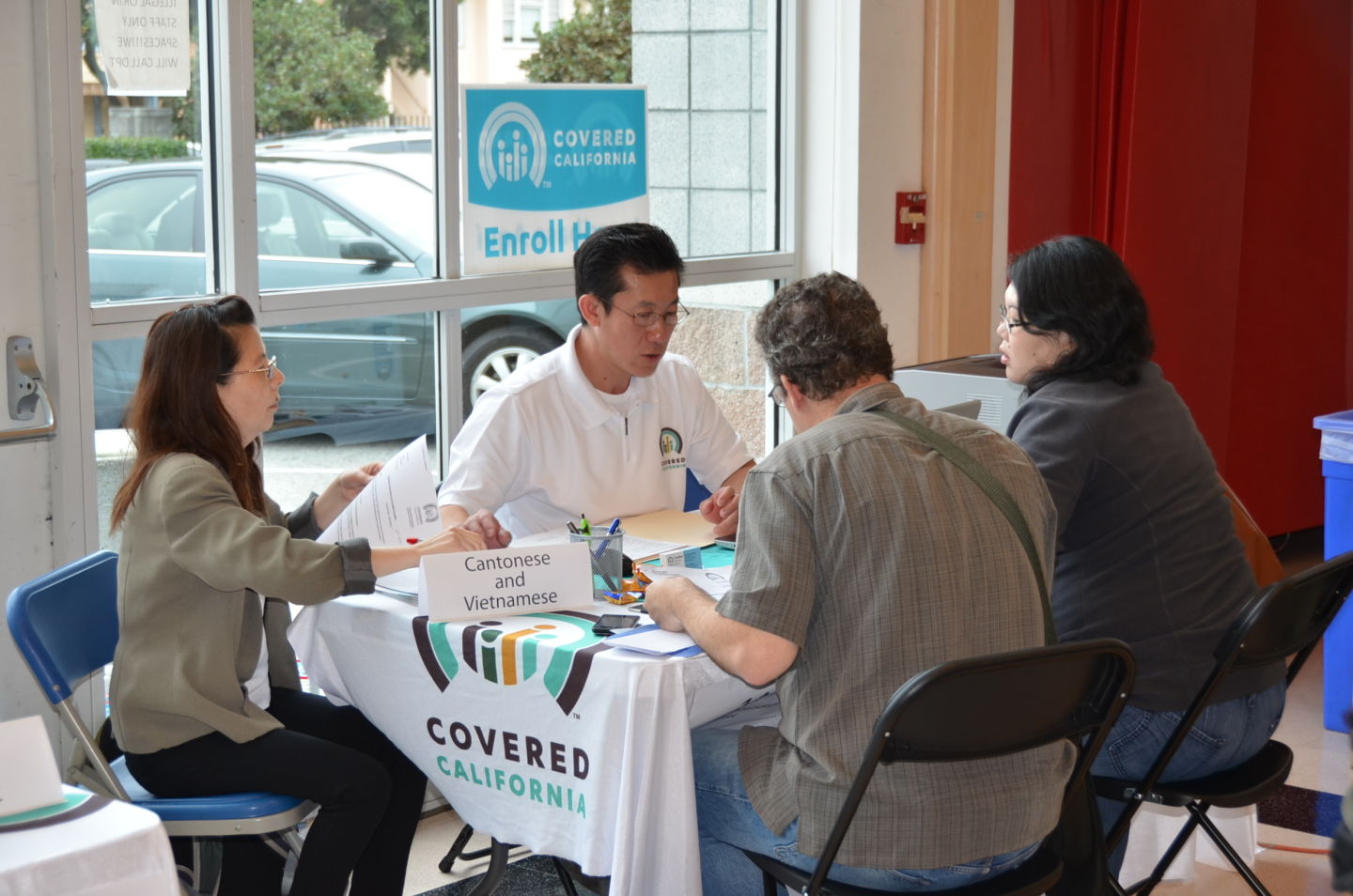
"caption": "Certified insurance agent for Covered California Monica Tracht (left) speaks to Marie Crinnion (right) about health insurance options. ",
"description": "Certified insurance agent for Covered California Monica Tracht (left) speaks to Marie Crinnion (right) about health insurance options. ",
"title": "RS29075_mon1-qut",
"credit": "Laura Klivans/KQED",
"status": "inherit",
"isLoading": false,
"fetchFailed": false
},
"news_11638984": {
"type": "attachments",
"id": "news_11638984",
"meta": {
"index": "attachments_1716263798",
"site": "news",
"id": "11638984",
"found": true
},
"parent": 11638983,
"imgSizes": {
"small": {
"file": "https://ww2.kqed.org/app/uploads/sites/10/2017/12/gettyimages-893690068_custom-47dec34cdbdccf9e5576cf8cfa13a56656da32b5-520x344.jpg",
"width": 520,
"mimeType": "image/jpeg",
"height": 344
},
"twentyfourteen-full-width": {
"file": "https://ww2.kqed.org/app/uploads/sites/10/2017/12/gettyimages-893690068_custom-47dec34cdbdccf9e5576cf8cfa13a56656da32b5-1024x576.jpg",
"width": 1024,
"mimeType": "image/jpeg",
"height": 576
},
"thumbnail": {
"file": "https://ww2.kqed.org/app/uploads/sites/10/2017/12/gettyimages-893690068_custom-47dec34cdbdccf9e5576cf8cfa13a56656da32b5-160x106.jpg",
"width": 160,
"mimeType": "image/jpeg",
"height": 106
},
"fd-sm": {
"file": "https://ww2.kqed.org/app/uploads/sites/10/2017/12/gettyimages-893690068_custom-47dec34cdbdccf9e5576cf8cfa13a56656da32b5-960x636.jpg",
"width": 960,
"mimeType": "image/jpeg",
"height": 636
},
"post-thumbnail": {
"file": "https://ww2.kqed.org/app/uploads/sites/10/2017/12/gettyimages-893690068_custom-47dec34cdbdccf9e5576cf8cfa13a56656da32b5-672x372.jpg",
"width": 672,
"mimeType": "image/jpeg",
"height": 372
},
"xsmall": {
"file": "https://ww2.kqed.org/app/uploads/sites/10/2017/12/gettyimages-893690068_custom-47dec34cdbdccf9e5576cf8cfa13a56656da32b5-375x248.jpg",
"width": 375,
"mimeType": "image/jpeg",
"height": 248
},
"kqedFullSize": {
"file": "https://ww2.kqed.org/app/uploads/sites/10/2017/12/gettyimages-893690068_custom-47dec34cdbdccf9e5576cf8cfa13a56656da32b5-e1513962168800.jpg",
"width": 1024,
"height": 678
},
"large": {
"file": "https://ww2.kqed.org/app/uploads/sites/10/2017/12/gettyimages-893690068_custom-47dec34cdbdccf9e5576cf8cfa13a56656da32b5-1020x675.jpg",
"width": 1020,
"mimeType": "image/jpeg",
"height": 675
},
"guest-author-50": {
"file": "https://ww2.kqed.org/app/uploads/sites/10/2017/12/gettyimages-893690068_custom-47dec34cdbdccf9e5576cf8cfa13a56656da32b5-50x50.jpg",
"width": 50,
"mimeType": "image/jpeg",
"height": 50
},
"guest-author-96": {
"file": "https://ww2.kqed.org/app/uploads/sites/10/2017/12/gettyimages-893690068_custom-47dec34cdbdccf9e5576cf8cfa13a56656da32b5-96x96.jpg",
"width": 96,
"mimeType": "image/jpeg",
"height": 96
},
"medium": {
"file": "https://ww2.kqed.org/app/uploads/sites/10/2017/12/gettyimages-893690068_custom-47dec34cdbdccf9e5576cf8cfa13a56656da32b5-800x530.jpg",
"width": 800,
"mimeType": "image/jpeg",
"height": 530
},
"guest-author-64": {
"file": "https://ww2.kqed.org/app/uploads/sites/10/2017/12/gettyimages-893690068_custom-47dec34cdbdccf9e5576cf8cfa13a56656da32b5-64x64.jpg",
"width": 64,
"mimeType": "image/jpeg",
"height": 64
},
"guest-author-32": {
"file": "https://ww2.kqed.org/app/uploads/sites/10/2017/12/gettyimages-893690068_custom-47dec34cdbdccf9e5576cf8cfa13a56656da32b5-32x32.jpg",
"width": 32,
"mimeType": "image/jpeg",
"height": 32
},
"detail": {
"file": "https://ww2.kqed.org/app/uploads/sites/10/2017/12/gettyimages-893690068_custom-47dec34cdbdccf9e5576cf8cfa13a56656da32b5-150x150.jpg",
"width": 150,
"mimeType": "image/jpeg",
"height": 150
},
"guest-author-128": {
"file": "https://ww2.kqed.org/app/uploads/sites/10/2017/12/gettyimages-893690068_custom-47dec34cdbdccf9e5576cf8cfa13a56656da32b5-128x128.jpg",
"width": 128,
"mimeType": "image/jpeg",
"height": 128
},
"xxsmall": {
"file": "https://ww2.kqed.org/app/uploads/sites/10/2017/12/gettyimages-893690068_custom-47dec34cdbdccf9e5576cf8cfa13a56656da32b5-240x159.jpg",
"width": 240,
"mimeType": "image/jpeg",
"height": 159
}
},
"publishDate": 1513962044,
"modified": 1513962397,
"caption": "Kelley Mui helps a client sign up for health insurance through the Affordable Care Act on Dec. 15, 2013, at the Midwest Asian Health Association in Chicago.",
"description": "Kelley Mui helps a client sign up for health insurance through the Affordable Care Act on Dec. 15 at the Midwest Asian Health Association in Chicago.",
"title": "Kelley Mui helps a client sign up for health insurance through the Affordable Care Act on Dec. 15 at the Midwest Asian Health Association in Chicago.",
"credit": "David McNew/Getty Images",
"status": "inherit",
"isLoading": false,
"fetchFailed": false
},
"stateofhealth_360144": {
"type": "attachments",
"id": "stateofhealth_360144",
"meta": {
"index": "attachments_1716263798",
"site": "stateofhealth",
"id": "360144",
"found": true
},
"parent": 360142,
"imgSizes": {
"small": {
"file": "https://ww2.kqed.org/app/uploads/sites/27/2017/08/Cov-Cal-logo-520x346.png",
"width": 520,
"mimeType": "image/png",
"height": 346
},
"twentyfourteen-full-width": {
"file": "https://ww2.kqed.org/app/uploads/sites/27/2017/08/Cov-Cal-logo-1024x576.png",
"width": 1024,
"mimeType": "image/png",
"height": 576
},
"thumbnail": {
"file": "https://ww2.kqed.org/app/uploads/sites/27/2017/08/Cov-Cal-logo-160x107.png",
"width": 160,
"mimeType": "image/png",
"height": 107
},
"fd-sm": {
"file": "https://ww2.kqed.org/app/uploads/sites/27/2017/08/Cov-Cal-logo-960x639.png",
"width": 960,
"mimeType": "image/png",
"height": 639
},
"post-thumbnail": {
"file": "https://ww2.kqed.org/app/uploads/sites/27/2017/08/Cov-Cal-logo-672x372.png",
"width": 672,
"mimeType": "image/png",
"height": 372
},
"xsmall": {
"file": "https://ww2.kqed.org/app/uploads/sites/27/2017/08/Cov-Cal-logo-375x250.png",
"width": 375,
"mimeType": "image/png",
"height": 250
},
"kqedFullSize": {
"file": "https://ww2.kqed.org/app/uploads/sites/27/2017/08/Cov-Cal-logo-e1501627792333.png",
"width": 1024,
"height": 682
},
"large": {
"file": "https://ww2.kqed.org/app/uploads/sites/27/2017/08/Cov-Cal-logo-1020x679.png",
"width": 1020,
"mimeType": "image/png",
"height": 679
},
"guest-author-50": {
"file": "https://ww2.kqed.org/app/uploads/sites/27/2017/08/Cov-Cal-logo-50x50.png",
"width": 50,
"mimeType": "image/png",
"height": 50
},
"guest-author-96": {
"file": "https://ww2.kqed.org/app/uploads/sites/27/2017/08/Cov-Cal-logo-96x96.png",
"width": 96,
"mimeType": "image/png",
"height": 96
},
"medium": {
"file": "https://ww2.kqed.org/app/uploads/sites/27/2017/08/Cov-Cal-logo-800x533.png",
"width": 800,
"mimeType": "image/png",
"height": 533
},
"guest-author-64": {
"file": "https://ww2.kqed.org/app/uploads/sites/27/2017/08/Cov-Cal-logo-64x64.png",
"width": 64,
"mimeType": "image/png",
"height": 64
},
"guest-author-32": {
"file": "https://ww2.kqed.org/app/uploads/sites/27/2017/08/Cov-Cal-logo-32x32.png",
"width": 32,
"mimeType": "image/png",
"height": 32
},
"detail": {
"file": "https://ww2.kqed.org/app/uploads/sites/27/2017/08/Cov-Cal-logo-150x150.png",
"width": 150,
"mimeType": "image/png",
"height": 150
},
"medium_large": {
"file": "https://ww2.kqed.org/app/uploads/sites/27/2017/08/Cov-Cal-logo-768x512.png",
"width": 768,
"mimeType": "image/png",
"height": 512
},
"guest-author-128": {
"file": "https://ww2.kqed.org/app/uploads/sites/27/2017/08/Cov-Cal-logo-128x128.png",
"width": 128,
"mimeType": "image/png",
"height": 128
},
"xxsmall": {
"file": "https://ww2.kqed.org/app/uploads/sites/27/2017/08/Cov-Cal-logo-240x160.png",
"width": 240,
"mimeType": "image/png",
"height": 160
}
},
"publishDate": 1501624598,
"modified": 1501624598,
"caption": null,
"description": null,
"title": "Cov Cal logo",
"credit": null,
"status": "inherit",
"isLoading": false,
"fetchFailed": false
},
"news_11599219": {
"type": "attachments",
"id": "news_11599219",
"meta": {
"index": "attachments_1716263798",
"site": "news",
"id": "11599219",
"found": true
},
"parent": 0,
"imgSizes": {
"small": {
"file": "https://ww2.kqed.org/app/uploads/sites/10/2017/07/GettyImages-823749768-520x347.jpg",
"width": 520,
"mimeType": "image/jpeg",
"height": 347
},
"twentyfourteen-full-width": {
"file": "https://ww2.kqed.org/app/uploads/sites/10/2017/07/GettyImages-823749768-1024x576.jpg",
"width": 1024,
"mimeType": "image/jpeg",
"height": 576
},
"thumbnail": {
"file": "https://ww2.kqed.org/app/uploads/sites/10/2017/07/GettyImages-823749768-160x107.jpg",
"width": 160,
"mimeType": "image/jpeg",
"height": 107
},
"fd-sm": {
"file": "https://ww2.kqed.org/app/uploads/sites/10/2017/07/GettyImages-823749768-960x640.jpg",
"width": 960,
"mimeType": "image/jpeg",
"height": 640
},
"post-thumbnail": {
"file": "https://ww2.kqed.org/app/uploads/sites/10/2017/07/GettyImages-823749768-672x372.jpg",
"width": 672,
"mimeType": "image/jpeg",
"height": 372
},
"xsmall": {
"file": "https://ww2.kqed.org/app/uploads/sites/10/2017/07/GettyImages-823749768-375x250.jpg",
"width": 375,
"mimeType": "image/jpeg",
"height": 250
},
"kqedFullSize": {
"file": "https://ww2.kqed.org/app/uploads/sites/10/2017/07/GettyImages-823749768.jpg",
"width": 1024,
"height": 683
},
"large": {
"file": "https://ww2.kqed.org/app/uploads/sites/10/2017/07/GettyImages-823749768-1020x680.jpg",
"width": 1020,
"mimeType": "image/jpeg",
"height": 680
},
"guest-author-50": {
"file": "https://ww2.kqed.org/app/uploads/sites/10/2017/07/GettyImages-823749768-50x50.jpg",
"width": 50,
"mimeType": "image/jpeg",
"height": 50
},
"guest-author-96": {
"file": "https://ww2.kqed.org/app/uploads/sites/10/2017/07/GettyImages-823749768-96x96.jpg",
"width": 96,
"mimeType": "image/jpeg",
"height": 96
},
"medium": {
"file": "https://ww2.kqed.org/app/uploads/sites/10/2017/07/GettyImages-823749768-800x534.jpg",
"width": 800,
"mimeType": "image/jpeg",
"height": 534
},
"guest-author-64": {
"file": "https://ww2.kqed.org/app/uploads/sites/10/2017/07/GettyImages-823749768-64x64.jpg",
"width": 64,
"mimeType": "image/jpeg",
"height": 64
},
"guest-author-32": {
"file": "https://ww2.kqed.org/app/uploads/sites/10/2017/07/GettyImages-823749768-32x32.jpg",
"width": 32,
"mimeType": "image/jpeg",
"height": 32
},
"detail": {
"file": "https://ww2.kqed.org/app/uploads/sites/10/2017/07/GettyImages-823749768-150x150.jpg",
"width": 150,
"mimeType": "image/jpeg",
"height": 150
},
"guest-author-128": {
"file": "https://ww2.kqed.org/app/uploads/sites/10/2017/07/GettyImages-823749768-128x128.jpg",
"width": 128,
"mimeType": "image/jpeg",
"height": 128
},
"xxsmall": {
"file": "https://ww2.kqed.org/app/uploads/sites/10/2017/07/GettyImages-823749768-240x160.jpg",
"width": 240,
"mimeType": "image/jpeg",
"height": 160
}
},
"publishDate": 1501283968,
"modified": 1501285590,
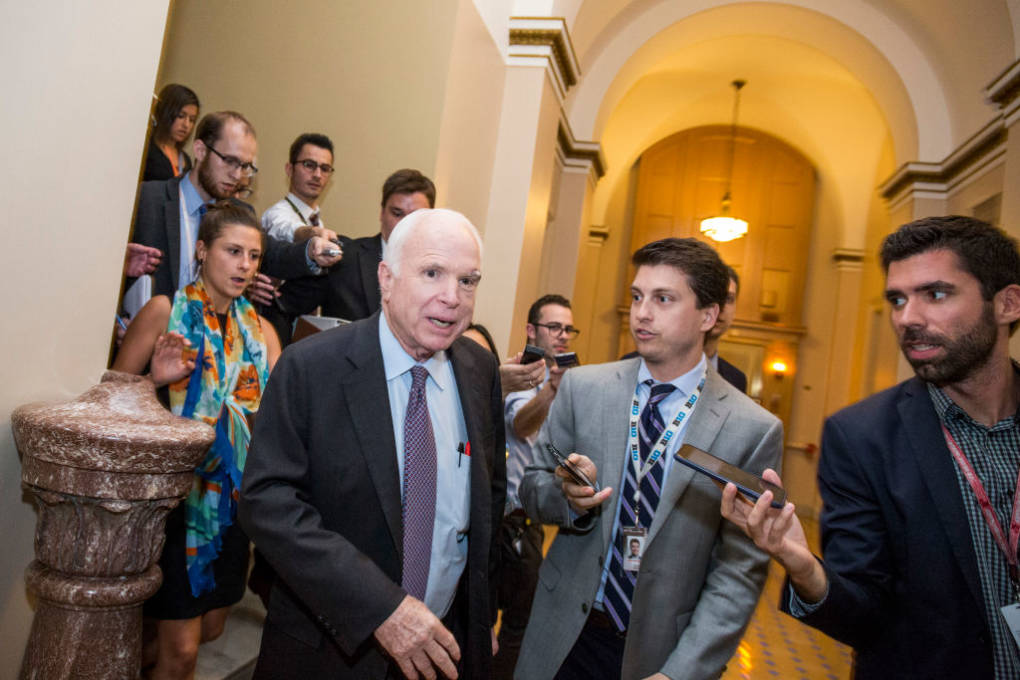
"caption": "Sen John McCain (R-AZ) leaves the Senate Chamber after a vote on a stripped-down, or 'Skinny Repeal,' version of Obamacare reform on July 28, 2017, in Washington, D.C. McCain was one of three Republican senators to vote against the measure. ",
"description": null,
"title": "GettyImages-823749768",
"credit": "Zach Gibson/Getty Images",
"status": "inherit",
"isLoading": false,
"fetchFailed": false
},
"news_11597365": {
"type": "attachments",
"id": "news_11597365",
"meta": {
"index": "attachments_1716263798",
"site": "news",
"id": "11597365",
"found": true
},
"parent": 11597148,
"imgSizes": {
"small": {
"file": "https://ww2.kqed.org/app/uploads/sites/10/2017/07/RS7703_187909355-520x347.jpg",
"width": 520,
"mimeType": "image/jpeg",
"height": 347
},
"twentyfourteen-full-width": {
"file": "https://ww2.kqed.org/app/uploads/sites/10/2017/07/RS7703_187909355-1038x576.jpg",
"width": 1038,
"mimeType": "image/jpeg",
"height": 576
},
"thumbnail": {
"file": "https://ww2.kqed.org/app/uploads/sites/10/2017/07/RS7703_187909355-160x107.jpg",
"width": 160,
"mimeType": "image/jpeg",
"height": 107
},
"fd-sm": {
"file": "https://ww2.kqed.org/app/uploads/sites/10/2017/07/RS7703_187909355-960x640.jpg",
"width": 960,
"mimeType": "image/jpeg",
"height": 640
},
"post-thumbnail": {
"file": "https://ww2.kqed.org/app/uploads/sites/10/2017/07/RS7703_187909355-672x372.jpg",
"width": 672,
"mimeType": "image/jpeg",
"height": 372
},
"xsmall": {
"file": "https://ww2.kqed.org/app/uploads/sites/10/2017/07/RS7703_187909355-375x250.jpg",
"width": 375,
"mimeType": "image/jpeg",
"height": 250
},
"kqedFullSize": {
"file": "https://ww2.kqed.org/app/uploads/sites/10/2017/07/RS7703_187909355-e1501199517930.jpg",
"width": 1920,
"height": 1280
},
"large": {
"file": "https://ww2.kqed.org/app/uploads/sites/10/2017/07/RS7703_187909355-1020x680.jpg",
"width": 1020,
"mimeType": "image/jpeg",
"height": 680
},
"xlarge": {
"file": "https://ww2.kqed.org/app/uploads/sites/10/2017/07/RS7703_187909355-1180x787.jpg",
"width": 1180,
"mimeType": "image/jpeg",
"height": 787
},
"guest-author-50": {
"file": "https://ww2.kqed.org/app/uploads/sites/10/2017/07/RS7703_187909355-50x50.jpg",
"width": 50,
"mimeType": "image/jpeg",
"height": 50
},
"guest-author-96": {
"file": "https://ww2.kqed.org/app/uploads/sites/10/2017/07/RS7703_187909355-96x96.jpg",
"width": 96,
"mimeType": "image/jpeg",
"height": 96
},
"medium": {
"file": "https://ww2.kqed.org/app/uploads/sites/10/2017/07/RS7703_187909355-800x533.jpg",
"width": 800,
"mimeType": "image/jpeg",
"height": 533
},
"guest-author-64": {
"file": "https://ww2.kqed.org/app/uploads/sites/10/2017/07/RS7703_187909355-64x64.jpg",
"width": 64,
"mimeType": "image/jpeg",
"height": 64
},
"guest-author-32": {
"file": "https://ww2.kqed.org/app/uploads/sites/10/2017/07/RS7703_187909355-32x32.jpg",
"width": 32,
"mimeType": "image/jpeg",
"height": 32
},
"fd-lrg": {
"file": "https://ww2.kqed.org/app/uploads/sites/10/2017/07/RS7703_187909355-1920x1280.jpg",
"width": 1920,
"mimeType": "image/jpeg",
"height": 1280
},
"fd-med": {
"file": "https://ww2.kqed.org/app/uploads/sites/10/2017/07/RS7703_187909355-1180x787.jpg",
"width": 1180,
"mimeType": "image/jpeg",
"height": 787
},
"full-width": {
"file": "https://ww2.kqed.org/app/uploads/sites/10/2017/07/RS7703_187909355-1920x1280.jpg",
"width": 1920,
"mimeType": "image/jpeg",
"height": 1280
},
"detail": {
"file": "https://ww2.kqed.org/app/uploads/sites/10/2017/07/RS7703_187909355-150x150.jpg",
"width": 150,
"mimeType": "image/jpeg",
"height": 150
},
"guest-author-128": {
"file": "https://ww2.kqed.org/app/uploads/sites/10/2017/07/RS7703_187909355-128x128.jpg",
"width": 128,
"mimeType": "image/jpeg",
"height": 128
},
"xxsmall": {
"file": "https://ww2.kqed.org/app/uploads/sites/10/2017/07/RS7703_187909355-240x160.jpg",
"width": 240,
"mimeType": "image/jpeg",
"height": 160
}
},
"publishDate": 1501199426,
"modified": 1501199921,
"caption": "Covered California Executive Director Peter Lee speaks during a press conference in 2013 regarding the number of new health care enrollees through CoveredCA.com, the health insurance exchange for the state of California.",
"description": null,
"title": "California Releases Health Care Enrollment Numbers For Month Of October",
"credit": "Max Whittaker/Getty Images",
"status": "inherit",
"isLoading": false,
"fetchFailed": false
},
"news_11576610": {
"type": "attachments",
"id": "news_11576610",
"meta": {
"index": "attachments_1716263798",
"site": "news",
"id": "11576610",
"found": true
},
"parent": 11576607,
"imgSizes": {
"small": {
"file": "https://ww2.kqed.org/app/uploads/sites/10/2017/07/BloodPress-520x347.jpg",
"width": 520,
"mimeType": "image/jpeg",
"height": 347
},
"twentyfourteen-full-width": {
"file": "https://ww2.kqed.org/app/uploads/sites/10/2017/07/BloodPress-1038x576.jpg",
"width": 1038,
"mimeType": "image/jpeg",
"height": 576
},
"thumbnail": {
"file": "https://ww2.kqed.org/app/uploads/sites/10/2017/07/BloodPress-160x107.jpg",
"width": 160,
"mimeType": "image/jpeg",
"height": 107
},
"fd-sm": {
"file": "https://ww2.kqed.org/app/uploads/sites/10/2017/07/BloodPress-960x640.jpg",
"width": 960,
"mimeType": "image/jpeg",
"height": 640
},
"post-thumbnail": {
"file": "https://ww2.kqed.org/app/uploads/sites/10/2017/07/BloodPress-672x372.jpg",
"width": 672,
"mimeType": "image/jpeg",
"height": 372
},
"xsmall": {
"file": "https://ww2.kqed.org/app/uploads/sites/10/2017/07/BloodPress-375x250.jpg",
"width": 375,
"mimeType": "image/jpeg",
"height": 250
},
"kqedFullSize": {
"file": "https://ww2.kqed.org/app/uploads/sites/10/2017/07/BloodPress.jpg",
"width": 1920,
"height": 1280
},
"large": {
"file": "https://ww2.kqed.org/app/uploads/sites/10/2017/07/BloodPress-1020x680.jpg",
"width": 1020,
"mimeType": "image/jpeg",
"height": 680
},
"xlarge": {
"file": "https://ww2.kqed.org/app/uploads/sites/10/2017/07/BloodPress-1180x787.jpg",
"width": 1180,
"mimeType": "image/jpeg",
"height": 787
},
"guest-author-50": {
"file": "https://ww2.kqed.org/app/uploads/sites/10/2017/07/BloodPress-50x50.jpg",
"width": 50,
"mimeType": "image/jpeg",
"height": 50
},
"guest-author-96": {
"file": "https://ww2.kqed.org/app/uploads/sites/10/2017/07/BloodPress-96x96.jpg",
"width": 96,
"mimeType": "image/jpeg",
"height": 96
},
"medium": {
"file": "https://ww2.kqed.org/app/uploads/sites/10/2017/07/BloodPress-800x533.jpg",
"width": 800,
"mimeType": "image/jpeg",
"height": 533
},
"guest-author-64": {
"file": "https://ww2.kqed.org/app/uploads/sites/10/2017/07/BloodPress-64x64.jpg",
"width": 64,
"mimeType": "image/jpeg",
"height": 64
},
"guest-author-32": {
"file": "https://ww2.kqed.org/app/uploads/sites/10/2017/07/BloodPress-32x32.jpg",
"width": 32,
"mimeType": "image/jpeg",
"height": 32
},
"fd-lrg": {
"file": "https://ww2.kqed.org/app/uploads/sites/10/2017/07/BloodPress-1920x1280.jpg",
"width": 1920,
"mimeType": "image/jpeg",
"height": 1280
},
"fd-med": {
"file": "https://ww2.kqed.org/app/uploads/sites/10/2017/07/BloodPress-1180x787.jpg",
"width": 1180,
"mimeType": "image/jpeg",
"height": 787
},
"full-width": {
"file": "https://ww2.kqed.org/app/uploads/sites/10/2017/07/BloodPress-1920x1280.jpg",
"width": 1920,
"mimeType": "image/jpeg",
"height": 1280
},
"detail": {
"file": "https://ww2.kqed.org/app/uploads/sites/10/2017/07/BloodPress-150x150.jpg",
"width": 150,
"mimeType": "image/jpeg",
"height": 150
},
"guest-author-128": {
"file": "https://ww2.kqed.org/app/uploads/sites/10/2017/07/BloodPress-128x128.jpg",
"width": 128,
"mimeType": "image/jpeg",
"height": 128
},
"xxsmall": {
"file": "https://ww2.kqed.org/app/uploads/sites/10/2017/07/BloodPress-240x160.jpg",
"width": 240,
"mimeType": "image/jpeg",
"height": 160
}
},
"publishDate": 1500515302,
"modified": 1500515373,
"caption": "While Washington ponders the future of the Affordable Care Act, health insurers need to decide right now what to charge people for health insurance in 2018. 'It's insane,' says one CEO.",
"description": "While Washington ponders the future of the Affordable Care Act, health insurers need to decide right now what to charge people for health insurance in 2018. 'It's insane,' says one CEO.",
"title": "BloodPress",
"credit": "David McNew/Getty Images",
"status": "inherit",
"isLoading": false,
"fetchFailed": false
},
"news_11440373": {
"type": "attachments",
"id": "news_11440373",
"meta": {
"index": "attachments_1716263798",
"site": "news",
"id": "11440373",
"found": true
},
"parent": 11440368,
"imgSizes": {
"small": {
"file": "https://ww2.kqed.org/app/uploads/sites/10/2017/05/Health_Nurse2_GettyImages-656418986-qut-520x347.jpg",
"width": 520,
"mimeType": "image/jpeg",
"height": 347
},
"twentyfourteen-full-width": {
"file": "https://ww2.kqed.org/app/uploads/sites/10/2017/05/Health_Nurse2_GettyImages-656418986-qut-1038x576.jpg",
"width": 1038,
"mimeType": "image/jpeg",
"height": 576
},
"thumbnail": {
"file": "https://ww2.kqed.org/app/uploads/sites/10/2017/05/Health_Nurse2_GettyImages-656418986-qut-160x107.jpg",
"width": 160,
"mimeType": "image/jpeg",
"height": 107
},
"fd-sm": {
"file": "https://ww2.kqed.org/app/uploads/sites/10/2017/05/Health_Nurse2_GettyImages-656418986-qut-960x640.jpg",
"width": 960,
"mimeType": "image/jpeg",
"height": 640
},
"post-thumbnail": {
"file": "https://ww2.kqed.org/app/uploads/sites/10/2017/05/Health_Nurse2_GettyImages-656418986-qut-672x372.jpg",
"width": 672,
"mimeType": "image/jpeg",
"height": 372
},
"xsmall": {
"file": "https://ww2.kqed.org/app/uploads/sites/10/2017/05/Health_Nurse2_GettyImages-656418986-qut-375x250.jpg",
"width": 375,
"mimeType": "image/jpeg",
"height": 250
},
"kqedFullSize": {
"file": "https://ww2.kqed.org/app/uploads/sites/10/2017/05/Health_Nurse2_GettyImages-656418986-qut.jpg",
"width": 1920,
"height": 1280
},
"large": {
"file": "https://ww2.kqed.org/app/uploads/sites/10/2017/05/Health_Nurse2_GettyImages-656418986-qut-1020x680.jpg",
"width": 1020,
"mimeType": "image/jpeg",
"height": 680
},
"xlarge": {
"file": "https://ww2.kqed.org/app/uploads/sites/10/2017/05/Health_Nurse2_GettyImages-656418986-qut-1180x787.jpg",
"width": 1180,
"mimeType": "image/jpeg",
"height": 787
},
"guest-author-50": {
"file": "https://ww2.kqed.org/app/uploads/sites/10/2017/05/Health_Nurse2_GettyImages-656418986-qut-50x50.jpg",
"width": 50,
"mimeType": "image/jpeg",
"height": 50
},
"guest-author-96": {
"file": "https://ww2.kqed.org/app/uploads/sites/10/2017/05/Health_Nurse2_GettyImages-656418986-qut-96x96.jpg",
"width": 96,
"mimeType": "image/jpeg",
"height": 96
},
"medium": {
"file": "https://ww2.kqed.org/app/uploads/sites/10/2017/05/Health_Nurse2_GettyImages-656418986-qut-800x533.jpg",
"width": 800,
"mimeType": "image/jpeg",
"height": 533
},
"guest-author-64": {
"file": "https://ww2.kqed.org/app/uploads/sites/10/2017/05/Health_Nurse2_GettyImages-656418986-qut-64x64.jpg",
"width": 64,
"mimeType": "image/jpeg",
"height": 64
},
"guest-author-32": {
"file": "https://ww2.kqed.org/app/uploads/sites/10/2017/05/Health_Nurse2_GettyImages-656418986-qut-32x32.jpg",
"width": 32,
"mimeType": "image/jpeg",
"height": 32
},
"fd-lrg": {
"file": "https://ww2.kqed.org/app/uploads/sites/10/2017/05/Health_Nurse2_GettyImages-656418986-qut-1920x1280.jpg",
"width": 1920,
"mimeType": "image/jpeg",
"height": 1280
},
"fd-med": {
"file": "https://ww2.kqed.org/app/uploads/sites/10/2017/05/Health_Nurse2_GettyImages-656418986-qut-1180x787.jpg",
"width": 1180,
"mimeType": "image/jpeg",
"height": 787
},
"full-width": {
"file": "https://ww2.kqed.org/app/uploads/sites/10/2017/05/Health_Nurse2_GettyImages-656418986-qut-1920x1280.jpg",
"width": 1920,
"mimeType": "image/jpeg",
"height": 1280
},
"detail": {
"file": "https://ww2.kqed.org/app/uploads/sites/10/2017/05/Health_Nurse2_GettyImages-656418986-qut-150x150.jpg",
"width": 150,
"mimeType": "image/jpeg",
"height": 150
},
"guest-author-128": {
"file": "https://ww2.kqed.org/app/uploads/sites/10/2017/05/Health_Nurse2_GettyImages-656418986-qut-128x128.jpg",
"width": 128,
"mimeType": "image/jpeg",
"height": 128
},
"xxsmall": {
"file": "https://ww2.kqed.org/app/uploads/sites/10/2017/05/Health_Nurse2_GettyImages-656418986-qut-240x160.jpg",
"width": 240,
"mimeType": "image/jpeg",
"height": 160
}
},
"publishDate": 1493925282,
"modified": 1493933628,
"caption": "Nurse Katie Baker examines patient Mildred Arce at the Esperanza Health Center in Philadelphia, Pennsylvania, on March 13, 2017.",
"description": null,
"title": "US-HEALTH-CARE-POVERTY-MEDICARE",
"credit": "DOMINICK REUTER/AFP/Getty Images",
"status": "inherit",
"isLoading": false,
"fetchFailed": false
},
"news_11359481": {
"type": "attachments",
"id": "news_11359481",
"meta": {
"index": "attachments_1716263798",
"site": "news",
"id": "11359481",
"found": true
},
"parent": 11348726,
"imgSizes": {
"small": {
"file": "https://ww2.kqed.org/app/uploads/sites/10/2017/03/health-care-1920-520x347.jpg",
"width": 520,
"mimeType": "image/jpeg",
"height": 347
},
"twentyfourteen-full-width": {
"file": "https://ww2.kqed.org/app/uploads/sites/10/2017/03/health-care-1920-1038x576.jpg",
"width": 1038,
"mimeType": "image/jpeg",
"height": 576
},
"thumbnail": {
"file": "https://ww2.kqed.org/app/uploads/sites/10/2017/03/health-care-1920-160x107.jpg",
"width": 160,
"mimeType": "image/jpeg",
"height": 107
},
"fd-sm": {
"file": "https://ww2.kqed.org/app/uploads/sites/10/2017/03/health-care-1920-960x640.jpg",
"width": 960,
"mimeType": "image/jpeg",
"height": 640
},
"post-thumbnail": {
"file": "https://ww2.kqed.org/app/uploads/sites/10/2017/03/health-care-1920-672x372.jpg",
"width": 672,
"mimeType": "image/jpeg",
"height": 372
},
"xsmall": {
"file": "https://ww2.kqed.org/app/uploads/sites/10/2017/03/health-care-1920-375x250.jpg",
"width": 375,
"mimeType": "image/jpeg",
"height": 250
},
"kqedFullSize": {
"file": "https://ww2.kqed.org/app/uploads/sites/10/2017/03/health-care-1920.jpg",
"width": 1920,
"height": 1280
},
"large": {
"file": "https://ww2.kqed.org/app/uploads/sites/10/2017/03/health-care-1920-1020x680.jpg",
"width": 1020,
"mimeType": "image/jpeg",
"height": 680
},
"xlarge": {
"file": "https://ww2.kqed.org/app/uploads/sites/10/2017/03/health-care-1920-1180x787.jpg",
"width": 1180,
"mimeType": "image/jpeg",
"height": 787
},
"guest-author-50": {
"file": "https://ww2.kqed.org/app/uploads/sites/10/2017/03/health-care-1920-50x50.jpg",
"width": 50,
"mimeType": "image/jpeg",
"height": 50
},
"guest-author-96": {
"file": "https://ww2.kqed.org/app/uploads/sites/10/2017/03/health-care-1920-96x96.jpg",
"width": 96,
"mimeType": "image/jpeg",
"height": 96
},
"medium": {
"file": "https://ww2.kqed.org/app/uploads/sites/10/2017/03/health-care-1920-800x533.jpg",
"width": 800,
"mimeType": "image/jpeg",
"height": 533
},
"guest-author-64": {
"file": "https://ww2.kqed.org/app/uploads/sites/10/2017/03/health-care-1920-64x64.jpg",
"width": 64,
"mimeType": "image/jpeg",
"height": 64
},
"guest-author-32": {
"file": "https://ww2.kqed.org/app/uploads/sites/10/2017/03/health-care-1920-32x32.jpg",
"width": 32,
"mimeType": "image/jpeg",
"height": 32
},
"fd-lrg": {
"file": "https://ww2.kqed.org/app/uploads/sites/10/2017/03/health-care-1920-1920x1280.jpg",
"width": 1920,
"mimeType": "image/jpeg",
"height": 1280
},
"fd-med": {
"file": "https://ww2.kqed.org/app/uploads/sites/10/2017/03/health-care-1920-1180x787.jpg",
"width": 1180,
"mimeType": "image/jpeg",
"height": 787
},
"full-width": {
"file": "https://ww2.kqed.org/app/uploads/sites/10/2017/03/health-care-1920-1920x1280.jpg",
"width": 1920,
"mimeType": "image/jpeg",
"height": 1280
},
"detail": {
"file": "https://ww2.kqed.org/app/uploads/sites/10/2017/03/health-care-1920-150x150.jpg",
"width": 150,
"mimeType": "image/jpeg",
"height": 150
},
"guest-author-128": {
"file": "https://ww2.kqed.org/app/uploads/sites/10/2017/03/health-care-1920-128x128.jpg",
"width": 128,
"mimeType": "image/jpeg",
"height": 128
},
"xxsmall": {
"file": "https://ww2.kqed.org/app/uploads/sites/10/2017/03/health-care-1920-240x160.jpg",
"width": 240,
"mimeType": "image/jpeg",
"height": 160
}
},
"publishDate": 1489532383,
"modified": 1489532447,
"caption": null,
"description": null,
"title": "health-care-1920",
"credit": "David McNew/Getty Images",
"status": "inherit",
"isLoading": false,
"fetchFailed": false
},
"news_11024825": {
"type": "attachments",
"id": "news_11024825",
"meta": {
"index": "attachments_1716263798",
"site": "news",
"id": "11024825",
"found": true
},
"parent": 11024255,
"imgSizes": {
"twentyfourteen-full-width": {
"file": "https://ww2.kqed.org/app/uploads/sites/10/2016/07/CoveredCA-1038x576.jpg",
"width": 1038,
"mimeType": "image/jpeg",
"height": 576
},
"thumbnail": {
"file": "https://ww2.kqed.org/app/uploads/sites/10/2016/07/CoveredCA-400x267.jpg",
"width": 400,
"mimeType": "image/jpeg",
"height": 267
},
"fd-sm": {
"file": "https://ww2.kqed.org/app/uploads/sites/10/2016/07/CoveredCA-960x640.jpg",
"width": 960,
"mimeType": "image/jpeg",
"height": 640
},
"post-thumbnail": {
"file": "https://ww2.kqed.org/app/uploads/sites/10/2016/07/CoveredCA-672x372.jpg",
"width": 672,
"mimeType": "image/jpeg",
"height": 372
},
"kqedFullSize": {
"file": "https://ww2.kqed.org/app/uploads/sites/10/2016/07/CoveredCA.jpg",
"width": 1920,
"height": 1280
},
"large": {
"file": "https://ww2.kqed.org/app/uploads/sites/10/2016/07/CoveredCA-1920x1280.jpg",
"width": 1920,
"mimeType": "image/jpeg",
"height": 1280
},
"guest-author-50": {
"file": "https://ww2.kqed.org/app/uploads/sites/10/2016/07/CoveredCA-50x50.jpg",
"width": 50,
"mimeType": "image/jpeg",
"height": 50
},
"guest-author-96": {
"file": "https://ww2.kqed.org/app/uploads/sites/10/2016/07/CoveredCA-96x96.jpg",
"width": 96,
"mimeType": "image/jpeg",
"height": 96
},
"medium": {
"file": "https://ww2.kqed.org/app/uploads/sites/10/2016/07/CoveredCA-800x533.jpg",
"width": 800,
"mimeType": "image/jpeg",
"height": 533
},
"guest-author-64": {
"file": "https://ww2.kqed.org/app/uploads/sites/10/2016/07/CoveredCA-64x64.jpg",
"width": 64,
"mimeType": "image/jpeg",
"height": 64
},
"guest-author-32": {
"file": "https://ww2.kqed.org/app/uploads/sites/10/2016/07/CoveredCA-32x32.jpg",
"width": 32,
"mimeType": "image/jpeg",
"height": 32
},
"jmtc-small-thumb": {
"file": "https://ww2.kqed.org/app/uploads/sites/10/2016/07/CoveredCA-280x150.jpg",
"width": 280,
"mimeType": "image/jpeg",
"height": 150
},
"fd-lrg": {
"file": "https://ww2.kqed.org/app/uploads/sites/10/2016/07/CoveredCA-1920x1280.jpg",
"width": 1920,
"mimeType": "image/jpeg",
"height": 1280
},
"fd-med": {
"file": "https://ww2.kqed.org/app/uploads/sites/10/2016/07/CoveredCA-1180x787.jpg",
"width": 1180,
"mimeType": "image/jpeg",
"height": 787
},
"detail": {
"file": "https://ww2.kqed.org/app/uploads/sites/10/2016/07/CoveredCA-150x150.jpg",
"width": 150,
"mimeType": "image/jpeg",
"height": 150
},
"guest-author-128": {
"file": "https://ww2.kqed.org/app/uploads/sites/10/2016/07/CoveredCA-128x128.jpg",
"width": 128,
"mimeType": "image/jpeg",
"height": 128
}
},
"publishDate": 1468947065,
"modified": 1468947094,
"caption": "Certified specialist helps a consumer apply to Covered California at a free enrollment fair at Pasadena City College. ",
"description": "Certified specialist helps a consumer apply to Covered California at a free enrollment fair at Pasadena City College. ",
"title": "CoveredCA",
"credit": "David McNew/Getty Images",
"status": "inherit",
"isLoading": false,
"fetchFailed": false
},
"stateofhealth_183356": {
"type": "attachments",
"id": "stateofhealth_183356",
"meta": {
"index": "attachments_1716263798",
"site": "stateofhealth",
"id": "183356",
"found": true
},
"parent": 183348,
"imgSizes": {
"twentyfourteen-full-width": {
"file": "https://ww2.kqed.org/app/uploads/sites/27/2016/05/Screen-Shot-2016-05-11-at-10.44.10-AM-1038x539.png",
"width": 1038,
"mimeType": "image/png",
"height": 539
},
"thumbnail": {
"file": "https://ww2.kqed.org/app/uploads/sites/27/2016/05/Screen-Shot-2016-05-11-at-10.44.10-AM-400x197.png",
"width": 400,
"mimeType": "image/png",
"height": 197
},
"fd-sm": {
"file": "https://ww2.kqed.org/app/uploads/sites/27/2016/05/Screen-Shot-2016-05-11-at-10.44.10-AM-960x474.png",
"width": 960,
"mimeType": "image/png",
"height": 474
},
"post-thumbnail": {
"file": "https://ww2.kqed.org/app/uploads/sites/27/2016/05/Screen-Shot-2016-05-11-at-10.44.10-AM-672x372.png",
"width": 672,
"mimeType": "image/png",
"height": 372
},
"kqedFullSize": {
"file": "https://ww2.kqed.org/app/uploads/sites/27/2016/05/Screen-Shot-2016-05-11-at-10.44.10-AM.png",
"width": 1092,
"height": 539
},
"guest-author-96": {
"file": "https://ww2.kqed.org/app/uploads/sites/27/2016/05/Screen-Shot-2016-05-11-at-10.44.10-AM-96x96.png",
"width": 96,
"mimeType": "image/png",
"height": 96
},
"medium": {
"file": "https://ww2.kqed.org/app/uploads/sites/27/2016/05/Screen-Shot-2016-05-11-at-10.44.10-AM-800x395.png",
"width": 800,
"mimeType": "image/png",
"height": 395
},
"guest-author-64": {
"file": "https://ww2.kqed.org/app/uploads/sites/27/2016/05/Screen-Shot-2016-05-11-at-10.44.10-AM-64x64.png",
"width": 64,
"mimeType": "image/png",
"height": 64
},
"guest-author-32": {
"file": "https://ww2.kqed.org/app/uploads/sites/27/2016/05/Screen-Shot-2016-05-11-at-10.44.10-AM-32x32.png",
"width": 32,
"mimeType": "image/png",
"height": 32
},
"jmtc-small-thumb": {
"file": "https://ww2.kqed.org/app/uploads/sites/27/2016/05/Screen-Shot-2016-05-11-at-10.44.10-AM-280x150.png",
"width": 280,
"mimeType": "image/png",
"height": 150
},
"detail": {
"file": "https://ww2.kqed.org/app/uploads/sites/27/2016/05/Screen-Shot-2016-05-11-at-10.44.10-AM-150x150.png",
"width": 150,
"mimeType": "image/png",
"height": 150
},
"medium_large": {
"file": "https://ww2.kqed.org/app/uploads/sites/27/2016/05/Screen-Shot-2016-05-11-at-10.44.10-AM-768x379.png",
"width": 768,
"mimeType": "image/png",
"height": 379
},
"guest-author-128": {
"file": "https://ww2.kqed.org/app/uploads/sites/27/2016/05/Screen-Shot-2016-05-11-at-10.44.10-AM-128x128.png",
"width": 128,
"mimeType": "image/png",
"height": 128
}
},
"publishDate": 1462988682,
"modified": 1462988717,
"caption": null,
"description": null,
"title": "Screen Shot 2016-05-11 at 10.44.10 AM",
"credit": "Screenshot from coveredca.com",
"status": "inherit",
"isLoading": false,
"fetchFailed": false
},
"stateofhealth_102096": {
"type": "attachments",
"id": "stateofhealth_102096",
"meta": {
"index": "attachments_1716263798",
"site": "stateofhealth",
"id": "102096",
"found": true
},
"parent": 102095,
"imgSizes": {
"twentyfourteen-full-width": {
"file": "https://ww2.kqed.org/app/uploads/sites/27/2015/11/DSC_2466-1038x576.jpg",
"width": 1038,
"mimeType": "image/jpeg",
"height": 576
},
"thumbnail": {
"file": "https://ww2.kqed.org/app/uploads/sites/27/2015/11/DSC_2466-400x265.jpg",
"width": 400,
"mimeType": "image/jpeg",
"height": 265
},
"fd-sm": {
"file": "https://ww2.kqed.org/app/uploads/sites/27/2015/11/DSC_2466-960x636.jpg",
"width": 960,
"mimeType": "image/jpeg",
"height": 636
},
"post-thumbnail": {
"file": "https://ww2.kqed.org/app/uploads/sites/27/2015/11/DSC_2466-672x372.jpg",
"width": 672,
"mimeType": "image/jpeg",
"height": 372
},
"kqedFullSize": {
"file": "https://ww2.kqed.org/app/uploads/sites/27/2015/11/DSC_2466-e1446489354155.jpg",
"width": 1920,
"height": 1272
},
"large": {
"file": "https://ww2.kqed.org/app/uploads/sites/27/2015/11/DSC_2466-1440x954.jpg",
"width": 1440,
"mimeType": "image/jpeg",
"height": 954
},
"guest-author-96": {
"file": "https://ww2.kqed.org/app/uploads/sites/27/2015/11/DSC_2466-96x96.jpg",
"width": 96,
"mimeType": "image/jpeg",
"height": 96
},
"medium": {
"file": "https://ww2.kqed.org/app/uploads/sites/27/2015/11/DSC_2466-800x530.jpg",
"width": 800,
"mimeType": "image/jpeg",
"height": 530
},
"guest-author-64": {
"file": "https://ww2.kqed.org/app/uploads/sites/27/2015/11/DSC_2466-64x64.jpg",
"width": 64,
"mimeType": "image/jpeg",
"height": 64
},
"guest-author-32": {
"file": "https://ww2.kqed.org/app/uploads/sites/27/2015/11/DSC_2466-32x32.jpg",
"width": 32,
"mimeType": "image/jpeg",
"height": 32
},
"jmtc-small-thumb": {
"file": "https://ww2.kqed.org/app/uploads/sites/27/2015/11/DSC_2466-280x150.jpg",
"width": 280,
"mimeType": "image/jpeg",
"height": 150
},
"fd-lrg": {
"file": "https://ww2.kqed.org/app/uploads/sites/27/2015/11/DSC_2466-1920x1272.jpg",
"width": 1920,
"mimeType": "image/jpeg",
"height": 1272
},
"fd-med": {
"file": "https://ww2.kqed.org/app/uploads/sites/27/2015/11/DSC_2466-1180x782.jpg",
"width": 1180,
"mimeType": "image/jpeg",
"height": 782
},
"detail": {
"file": "https://ww2.kqed.org/app/uploads/sites/27/2015/11/DSC_2466-75x75.jpg",
"width": 75,
"mimeType": "image/jpeg",
"height": 75
},
"guest-author-128": {
"file": "https://ww2.kqed.org/app/uploads/sites/27/2015/11/DSC_2466-128x128.jpg",
"width": 128,
"mimeType": "image/jpeg",
"height": 128
}
},
"publishDate": 1446489336,
"modified": 1454695959,
"caption": "Covered California enrollment fair in San Francisco's Richmond District, November 2015. ",
"description": "Covered California",
"title": "DSC_2466",
"credit": "Courtesy: Phil Ting",
"status": "inherit",
"isLoading": false,
"fetchFailed": false
}
},
"audioPlayerReducer": {
"postId": "stream_live",
"isPaused": true,
"isPlaying": false,
"pfsActive": false,
"pledgeModalIsOpen": true,
"playerDrawerIsOpen": false,
"liveAudioPlayStartedAt": 0,
"liveAudioPlayContext": ""
},
"authorsReducer": {
"byline_news_11659698": {
"type": "authors",
"id": "byline_news_11659698",
"meta": {
"override": true
},
"slug": "byline_news_11659698",
"name": "\u003ca href=\"http://www.calhealthreport.org/author/cboydbarrett/\" rel=\"noopener\" target=\"_blank\">Claudia Boyd-Barrett\u003c/a>, \u003ca href=\"http://www.calhealthreport.org/\" rel=\"noopener\" target=\"_blank\">The California Health Report\u003c/a>",
"isLoading": false
},
"byline_news_11638983": {
"type": "authors",
"id": "byline_news_11638983",
"meta": {
"override": true
},
"slug": "byline_news_11638983",
"name": "Julie Rovner",
"isLoading": false
},
"byline_news_11576607": {
"type": "authors",
"id": "byline_news_11576607",
"meta": {
"override": true
},
"slug": "byline_news_11576607",
"name": "Julie Appleby, Kaiser Health News",
"isLoading": false
},
"byline_stateofhealth_183348": {
"type": "authors",
"id": "byline_stateofhealth_183348",
"meta": {
"override": true
},
"slug": "byline_stateofhealth_183348",
"name": "Chad Terhune\u003cbr />\u003ca href=\"http://californiahealthline.org/\">California Healthline\u003c/a>",
"isLoading": false
},
"lisaaliferis": {
"type": "authors",
"id": "240",
"meta": {
"index": "authors_1716337520",
"id": "240",
"found": true
},
"name": "Lisa Aliferis",
"firstName": "Lisa",
"lastName": "Aliferis",
"slug": "lisaaliferis",
"email": "laliferis@kqed.org",
"display_author_email": false,
"staff_mastheads": [],
"title": "KQED Contributor",
"bio": "Lisa Aliferis is the founding editor of KQED's \u003cem>State of Health\u003c/em> blog. Since 2011, she's been writing and editing stories for the site. Before taking up blogging, she toiled for many years (more than we can count) producing health stories for television, including\u003cem> Dateline NBC\u003c/em> and San Francisco's CBS affiliate, KPIX-TV. She also wrote up a \u003ca title=\"http://www.kqed.org/news/health/obamacare/obamacare-guide.jsp\" href=\"http://www.kqed.org/news/health/obamacare/obamacare-guide.jsp\">handy guide to the Affordable Care Act\u003c/a>, especially for Californians. Her work has been honored for many awards. Most recently she was a finalist for \"Best Topical Reporting\" from the Online News Association. You can follow her on Twitter: \u003ca title=\"https://twitter.com/laliferis\" href=\"https://twitter.com/laliferis\">@laliferis\u003c/a>",
"avatar": "https://secure.gravatar.com/avatar/86c339d5cdcb0dcd2b6cf5d7c3f5886b?s=600&d=mm&r=g",
"twitter": "laliferis",
"facebook": null,
"instagram": null,
"linkedin": null,
"sites": [
{
"site": "news",
"roles": [
"subscriber"
]
},
{
"site": "futureofyou",
"roles": [
"subscriber"
]
},
{
"site": "stateofhealth",
"roles": [
"subscriber"
]
},
{
"site": "science",
"roles": [
"subscriber"
]
},
{
"site": "food",
"roles": []
}
],
"headData": {
"title": "Lisa Aliferis | KQED",
"description": "KQED Contributor",
"ogImgSrc": "https://secure.gravatar.com/avatar/86c339d5cdcb0dcd2b6cf5d7c3f5886b?s=600&d=mm&r=g",
"twImgSrc": "https://secure.gravatar.com/avatar/86c339d5cdcb0dcd2b6cf5d7c3f5886b?s=600&d=mm&r=g"
},
"isLoading": false,
"link": "/author/lisaaliferis"
},
"adembosky": {
"type": "authors",
"id": "3205",
"meta": {
"index": "authors_1716337520",
"id": "3205",
"found": true
},
"name": "April Dembosky",
"firstName": "April",
"lastName": "Dembosky",
"slug": "adembosky",
"email": "adembosky@kqed.org",
"display_author_email": false,
"staff_mastheads": [
"news",
"science"
],
"title": "KQED Health Correspondent",
"bio": "April Dembosky is the health correspondent for KQED News and a regular contributor to NPR. She specializes in covering altered states of mind, from postpartum depression to methamphetamine-induced psychosis to the insanity defense. Her investigative series on insurance companies sidestepping mental health laws won multiple awards, including first place in beat reporting from the national Association of Health Care Journalists. She is the recipient of numerous other prizes and fellowships, including a national Edward R. Murrow award for investigative reporting, a Society of Professional Journalists award for long-form storytelling, and a Carter Center Fellowship for Mental Health Journalism.\r\n\r\nDembosky reported and produced \u003cem>Soundtrack of Silence\u003c/em>, an audio documentary about music and memory that is currently being made into a feature film by Paramount Pictures.\r\n\r\nBefore joining KQED in 2013, Dembosky covered technology and Silicon Valley for \u003cem>The Financial Times of London,\u003c/em> and contributed business and arts stories to \u003cem>Marketplace \u003c/em>and \u003cem>The New York Times.\u003c/em> She got her undergraduate degree in philosophy from Smith College and her master's in journalism from the University of California, Berkeley. She is a classically trained violinist and proud alum of the first symphony orchestra at Burning Man.",
"avatar": "https://secure.gravatar.com/avatar/ef92999be4ceb9ea60701e7dc276f813?s=600&d=blank&r=g",
"twitter": "adembosky",
"facebook": null,
"instagram": null,
"linkedin": null,
"sites": [
{
"site": "arts",
"roles": [
"author"
]
},
{
"site": "news",
"roles": [
"editor"
]
},
{
"site": "futureofyou",
"roles": [
"author"
]
},
{
"site": "stateofhealth",
"roles": [
"editor"
]
},
{
"site": "science",
"roles": [
"editor"
]
},
{
"site": "forum",
"roles": [
"editor"
]
}
],
"headData": {
"title": "April Dembosky | KQED",
"description": "KQED Health Correspondent",
"ogImgSrc": "https://secure.gravatar.com/avatar/ef92999be4ceb9ea60701e7dc276f813?s=600&d=blank&r=g",
"twImgSrc": "https://secure.gravatar.com/avatar/ef92999be4ceb9ea60701e7dc276f813?s=600&d=blank&r=g"
},
"isLoading": false,
"link": "/author/adembosky"
},
"lklivans": {
"type": "authors",
"id": "8648",
"meta": {
"index": "authors_1716337520",
"id": "8648",
"found": true
},
"name": "Laura Klivans",
"firstName": "Laura",
"lastName": "Klivans",
"slug": "lklivans",
"email": "lklivans@kqed.org",
"display_author_email": true,
"staff_mastheads": [
"news",
"science"
],
"title": "Reporter",
"bio": "Laura Klivans is an award-winning science reporter for KQED News, where she covers climate change with an eye on both groundbreaking progress and gaps in action. She is the former host of KQED's blockbuster video series about tiny, amazing animals, \u003cem>Deep Look\u003c/em>. Her work reaches national audiences through NPR, \u003cem>Here & Now, \u003c/em>PRI, and other major outlets. \r\n\r\nLaura’s won five Northern California Area Emmy Awards for Deep Look and First Place in the Greater Bay Area Journalism Awards for a podcast exploring how one Oakland neighborhood teamed up to reduce planet-heating pollution.\r\n\r\nBeyond her reporting, she hosts and moderates events. In the past, she taught audio storytelling at the UC Berkeley Graduate School of Journalism, led international education programs, worked with immigrants and refugees along the Thai-Burmese border, taught high schoolers sex ed, and was an actress. \r\n\r\nShe's a former UC Berkeley Human Rights Fellow, USC Center for Health Journalism's California Fellow and Coro Fellow in Public Affairs. Laura has a master’s in journalism from UC Berkeley, a master’s in education from Harvard, and an undergraduate degree from Northwestern University.\r\n\r\nShe loves trying to riddle the meaning out of vanity license plates.",
"avatar": "https://secure.gravatar.com/avatar/2d2ecd1550a494cc10ad4a503406965585902124739e775a9b3817eebf1d88be?s=600&d=blank&r=g",
"twitter": "lauraklivans",
"bluesky": null,
"facebook": null,
"instagram": null,
"linkedin": null,
"sites": [
{
"site": "news",
"roles": [
"editor"
]
},
{
"site": "stateofhealth",
"roles": [
"contributor",
"editor"
]
},
{
"site": "science",
"roles": [
"editor"
]
},
{
"site": "forum",
"roles": [
"editor"
]
}
],
"headData": {
"title": "Laura Klivans | KQED",
"description": "Reporter",
"ogImgSrc": "https://secure.gravatar.com/avatar/2d2ecd1550a494cc10ad4a503406965585902124739e775a9b3817eebf1d88be?s=600&d=blank&r=g",
"twImgSrc": "https://secure.gravatar.com/avatar/2d2ecd1550a494cc10ad4a503406965585902124739e775a9b3817eebf1d88be?s=600&d=blank&r=g"
},
"isLoading": false,
"link": "/author/lklivans"
},
"cfeibel": {
"type": "authors",
"id": "11314",
"meta": {
"index": "authors_1716337520",
"id": "11314",
"found": true
},
"name": "Carrie Feibel",
"firstName": "Carrie",
"lastName": "Feibel",
"slug": "cfeibel",
"email": "cfeibel@KQED.org",
"display_author_email": false,
"staff_mastheads": [],
"title": "KQED Contributor",
"bio": "Carrie Feibel is a former health editor at KQED, where she has also reported for radio and online. Her stories have appeared on the national NPR shows \u003cem>Morning Edition\u003c/em>, \u003cem>All Things Considered\u003c/em>, and \u003cem>Here & Now\u003c/em>, and on the national website, Kaiser Health News. Her print career included stints at the \u003cem>Houston Chronicle\u003c/em>, \u003cem>The (Bergen) Record,\u003c/em> and the Associated Press in New York City. A native of St. Louis, Feibel attended Cornell University, and earned a master's in journalism from Columbia University.",
"avatar": "https://secure.gravatar.com/avatar/c64a7e3c9a910e1bffd4ad32a5264aa9?s=600&d=blank&r=g",
"twitter": "KQEDHealth",
"facebook": null,
"instagram": null,
"linkedin": null,
"sites": [
{
"site": "news",
"roles": [
"subscriber"
]
},
{
"site": "stateofhealth",
"roles": [
"administrator"
]
}
],
"headData": {
"title": "Carrie Feibel | KQED",
"description": "KQED Contributor",
"ogImgSrc": "https://secure.gravatar.com/avatar/c64a7e3c9a910e1bffd4ad32a5264aa9?s=600&d=blank&r=g",
"twImgSrc": "https://secure.gravatar.com/avatar/c64a7e3c9a910e1bffd4ad32a5264aa9?s=600&d=blank&r=g"
},
"isLoading": false,
"link": "/author/cfeibel"
},
"scraig": {
"type": "authors",
"id": "11327",
"meta": {
"index": "authors_1716337520",
"id": "11327",
"found": true
},
"name": "Sarah Craig",
"firstName": "Sarah",
"lastName": "Craig",
"slug": "scraig",
"email": "scraig@KQED.org",
"display_author_email": false,
"staff_mastheads": [],
"title": "KQED Contributor",
"bio": "Sarah Craig is a freelance radio reporter and documentary photographer. She is currently working on \u003cem>Dreams of Dust\u003c/em>, @dreamsofdust, a multimedia project that documents stories of climate migration in California’s Central Valley, previously funded by the California Humanities. Her completed projects include \u003cem>\u003ca href=\"http://www.facesoffracking.org/\" target=\"_blank\" rel=\"nofollow noopener noreferrer\">Faces of Fracking\u003c/a>,\u003c/em> an investigation into the impact of fracking on the people and places of California, and \u003cem>\u003ca href=\"http://sarahcraig.visura.co/gulf-disaster-2\" target=\"_blank\" rel=\"nofollow noopener noreferrer\">The Gulf Disaster\u003c/a>,\u003c/em> stories on the lives of fishermen in the aftermath of the BP spill. Her work has been published by Marketplace, KQED's Bay Curious and Q'ed Up podcasts, KQED's California Report Magazine, KALW's Crosscurrents, Grist.org, High Country News, Earth Island Journal, and others. Sarah received a B.A. in Geography at Vassar College and attended the \u003ca href=\"http://www.salt.edu/\" target=\"_blank\" rel=\"nofollow noopener noreferrer\">Salt Institute of Documentary Studies\u003c/a> in Portland, ME. She recently received an Excellence in Journalism Award from the NorCal Society of Professional Journalists for her documentary radio piece, \u003ca href=\"http://kalw.org/post/215-will-water-come#stream/0\">\"Will the Water Come.\"\u003c/a> Email: scraig@kqed.org Twitter: @sarahcraigmedia Website: sarahcraigmedia.com",
"avatar": "https://secure.gravatar.com/avatar/97f17950c828429d3df9f2907412a50b?s=600&d=blank&r=g",
"twitter": null,
"facebook": null,
"instagram": null,
"linkedin": null,
"sites": [
{
"site": "news",
"roles": [
"subscriber"
]
},
{
"site": "science",
"roles": [
"editor"
]
}
],
"headData": {
"title": "Sarah Craig | KQED",
"description": "KQED Contributor",
"ogImgSrc": "https://secure.gravatar.com/avatar/97f17950c828429d3df9f2907412a50b?s=600&d=blank&r=g",
"twImgSrc": "https://secure.gravatar.com/avatar/97f17950c828429d3df9f2907412a50b?s=600&d=blank&r=g"
},
"isLoading": false,
"link": "/author/scraig"
}
},
"pagesReducer": {
"news_tag_covered-california": {
"type": "terms",
"id": "news_5164",
"meta": {
"index": "terms_1716263798",
"site": "news",
"id": "5164",
"score": 9.892993
},
"featImg": null,
"name": "Covered California",
"description": null,
"taxonomy": "tag",
"headData": {
"twImgId": null,
"twTitle": null,
"ogTitle": null,
"ogImgId": null,
"twDescription": null,
"description": null,
"title": "Covered California Archives | KQED News",
"ogDescription": null
},
"ttid": 5185,
"slug": "covered-california",
"isLoading": false,
"title": "Covered California",
"pageMeta": {
"site": "news",
"WpPageTemplate": "page-topic-editorial",
"currentPage": 3
},
"blocks": [
{
"blockName": "kqed/post-list",
"attrs": {
"layout": "cardArticle2",
"query": "posts/news?tag=covered-california",
"seeMore": false,
"paginated": true,
"page": 3
}
},
{
"blockName": "kqed/ad"
}
]
}
},
"pfsSessionReducer": {},
"postsReducer": {
"stream_live": {
"type": "live",
"id": "stream_live",
"audioUrl": "https://streams.kqed.org/kqedradio",
"title": "Live Stream",
"excerpt": "Live Stream information currently unavailable.",
"link": "/radio",
"featImg": "",
"label": {
"name": "KQED Live",
"link": "/"
}
},
"stream_kqedNewscast": {
"type": "posts",
"id": "stream_kqedNewscast",
"audioUrl": "https://www.kqed.org/.stream/anon/radio/RDnews/newscast.mp3?_=1",
"title": "KQED Newscast",
"featImg": "",
"label": {
"name": "88.5 FM",
"link": "/"
}
},
"news_11659698": {
"type": "posts",
"id": "news_11659698",
"meta": {
"index": "posts_1716263798",
"site": "news",
"id": "11659698",
"score": null,
"sort": [
1522793770000
]
},
"guestAuthors": [],
"slug": "coalition-pursuing-package-of-laws-to-expand-health-care-access-reduce-cost",
"title": "Coalition Pursuing Package of Laws to Expand Health Care Access, Reduce Cost",
"publishDate": 1522793770,
"format": "standard",
"headTitle": "Coalition Pursuing Package of Laws to Expand Health Care Access, Reduce Cost | KQED",
"labelTerm": {
"term": 72,
"site": "news"
},
"content": "\u003cp>Disgusted with federal attacks on Obama-era health reforms, a broad coalition of organizations and advocacy groups is pushing the state Legislature to enact a series of bills designed to expand health coverage in California and make it more affordable.\u003c/p>\n\u003cp>Labor unions, women’s groups, medical organizations, and immigrant and community activists are part of the more than 50 members of the Care4All California coalition. The top of their agenda is expanding Medi-Cal eligibility to all undocumented immigrants and increasing subsidies for people who purchase health insurance plans through the Covered California exchange.\u003c/p>\n\u003cp>The plan is not designed to compete with proposals for a single-payer health care system, said Anthony Wright, executive director of Health Access California, which is leading the campaign. Instead, it would allow California to move closer to achieving universal health care coverage at a time when the federal government is unlikely to sign off on allowing the state to pursue a single-payer plan, he said.\u003c/p>\n\u003cp>“We feel the opportunity and the urgency of getting more people covered and addressing issues of cost and equality in the health care system, and doing so in the short term without the need for federal approval,” Wright explained. “If we can forestall the repeal efforts at the federal level, then there’s real progress we can make in California, and that does not require us to run into a brick wall with the Trump administration.”\u003c/p>\n\u003cp>Altogether, the plan includes at least 20 pieces of legislation and budget items, some of which have been debated in the past and already introduced. Wright said the remaining pieces would be rolled out in the next couple of weeks. He said the coalition is confident many of the changes can be accomplished this year.\u003c/p>\n\u003cp>[ad fullwidth]\u003c/p>\n\u003cp>Expanding Medi-Cal eligibility to undocumented immigrants and increasing subsidies to make Covered California plans more affordable could reduce the state’s uninsured rate from its current 7 percent to 1 or 2 percent, Wright predicted. California’s high cost of living means some families still can’t afford health insurance, even if they’re eligible for subsidies, he said.\u003c/p>\n\u003cp>Other proposals in the package include measures to regulate health insurance company profits, cap co-pays for prescription drugs, and establish more oversight of health company mergers. Some components aim to undermine federal efforts to weaken the Affordable Care Act. These include banning lower-quality plans favored by the Trump administration and imposing a state-level individual mandate to purchase health insurance, replacing the federal mandate repealed in the Republican tax bill.\u003c/p>\n\u003cp>The cost of these changes and how they’d be paid for has yet to be determined, Wright said. Some could be accomplished within the state’s current budget, he added.\u003c/p>\n\u003cp>Gerald Kominski, director of the UCLA Center for Health Policy Research, said the coalition’s approach is a good strategy.\u003c/p>\n\u003cp>“If you can’t do everything at once, it’s better to do something to move things forward than to sit on the sideline and say, well we can’t have complete dramatic change, so therefore we’re not going to do anything,” he said. “I think there are millions of Californians who continue to suffer every day because they don’t have adequate access to health care, and anything we can do this year to reduce that suffering is a good thing.”\u003c/p>\n\u003cp>In a statement, the California Medical Association offered its support for several pieces of the proposed legislation, including expanding Medi-Cal access to undocumented adults, and further regulating for-profit insurers. The organization added that the state should also take measures to address a shortage of health care workers in many California counties.\u003c/p>\n\u003cp>Meanwhile, the California Nurses Association, which sponsored the single-payer bill, criticized the Care4All effort. Stephanie Roberson, director of government relations for the CAN, said the proposals are a “piecemeal approach to a problem that needs a global, comprehensive solution.” Specifically, the plan wouldn’t help Californians who have insurance but can’t afford to use it, she said.\u003c/p>\n\u003cp>“We’re skeptical,” she said. “There’s nothing in the … package that this coalition is moving forward that will actually fix the growing crisis for people who pay for insurance and skip needed care due to high out-of-pocket costs, deductibles and co-pays.”\u003c/p>\n\u003cp>\u003c/p>\n\u003cp>\u003ci>\u003ca href=\"http://www.calhealthreport.org/\" target=\"_blank\" rel=\"noopener\">The California Health Report\u003c/a> is a statewide nonprofit news service that covers health and health policy.\u003c/i>\u003c/p>\n\n",
"blocks": [],
"excerpt": "More than 50 groups are banding together to push for expanded Medi-Cal eligibility and higher Covered California subsidies.",
"status": "publish",
"parent": 0,
"modified": 1738186979,
"stats": {
"hasAudio": false,
"hasVideo": false,
"hasChartOrMap": false,
"iframeSrcs": [],
"hasGoogleForm": false,
"hasGallery": false,
"hasHearkenModule": false,
"hasPolis": false,
"paragraphCount": 16,
"wordCount": 767
},
"headData": {
"title": "Coalition Pursuing Package of Laws to Expand Health Care Access, Reduce Cost | KQED",
"description": "More than 50 groups are banding together to push for expanded Medi-Cal eligibility and higher Covered California subsidies.",
"ogTitle": "",
"ogDescription": "",
"ogImgId": "",
"twTitle": "",
"twDescription": "",
"twImgId": "",
"schema": {
"@context": "https://schema.org",
"@type": "NewsArticle",
"headline": "Coalition Pursuing Package of Laws to Expand Health Care Access, Reduce Cost",
"datePublished": "2018-04-03T15:16:10-07:00",
"dateModified": "2025-01-29T13:42:59-08:00",
"image": "https://cdn.kqed.org/wp-content/uploads/2020/02/KQED-OG-Image@1x.png",
"isAccessibleForFree": "True",
"publisher": {
"@type": "NewsMediaOrganization",
"@id": "https://www.kqed.org/#organization",
"name": "KQED",
"logo": "https://cdn.kqed.org/wp-content/uploads/2020/02/KQED-OG-Image@1x.png",
"url": "https://www.kqed.org",
"sameAs": [
"https://www.facebook.com/KQED",
"https://twitter.com/KQED",
"https://www.instagram.com/kqed/",
"https://www.tiktok.com/@kqedofficial",
"https://www.linkedin.com/company/kqed",
"https://www.youtube.com/channel/UCeC0IOo7i1P_61zVUWbJ4nw"
]
}
}
},
"sticky": false,
"nprByline": "\u003ca href=\"http://www.calhealthreport.org/author/cboydbarrett/\" rel=\"noopener\" target=\"_blank\">Claudia Boyd-Barrett\u003c/a>, \u003ca href=\"http://www.calhealthreport.org/\" rel=\"noopener\" target=\"_blank\">The California Health Report\u003c/a>",
"path": "/news/11659698/coalition-pursuing-package-of-laws-to-expand-health-care-access-reduce-cost",
"audioTrackLength": null,
"parsedContent": [
{
"type": "contentString",
"content": "\u003cdiv class=\"post-body\">\u003cp>\u003cp>Disgusted with federal attacks on Obama-era health reforms, a broad coalition of organizations and advocacy groups is pushing the state Legislature to enact a series of bills designed to expand health coverage in California and make it more affordable.\u003c/p>\n\u003cp>Labor unions, women’s groups, medical organizations, and immigrant and community activists are part of the more than 50 members of the Care4All California coalition. The top of their agenda is expanding Medi-Cal eligibility to all undocumented immigrants and increasing subsidies for people who purchase health insurance plans through the Covered California exchange.\u003c/p>\n\u003cp>The plan is not designed to compete with proposals for a single-payer health care system, said Anthony Wright, executive director of Health Access California, which is leading the campaign. Instead, it would allow California to move closer to achieving universal health care coverage at a time when the federal government is unlikely to sign off on allowing the state to pursue a single-payer plan, he said.\u003c/p>\n\u003cp>“We feel the opportunity and the urgency of getting more people covered and addressing issues of cost and equality in the health care system, and doing so in the short term without the need for federal approval,” Wright explained. “If we can forestall the repeal efforts at the federal level, then there’s real progress we can make in California, and that does not require us to run into a brick wall with the Trump administration.”\u003c/p>\n\u003cp>Altogether, the plan includes at least 20 pieces of legislation and budget items, some of which have been debated in the past and already introduced. Wright said the remaining pieces would be rolled out in the next couple of weeks. He said the coalition is confident many of the changes can be accomplished this year.\u003c/p>\n\u003cp>\u003c/p>\u003c/div>",
"attributes": {
"named": {},
"numeric": []
}
},
{
"type": "component",
"content": "",
"name": "ad",
"attributes": {
"named": {
"label": "fullwidth"
},
"numeric": [
"fullwidth"
]
}
},
{
"type": "contentString",
"content": "\u003cdiv class=\"post-body\">\u003cp>\u003c/p>\n\u003cp>Expanding Medi-Cal eligibility to undocumented immigrants and increasing subsidies to make Covered California plans more affordable could reduce the state’s uninsured rate from its current 7 percent to 1 or 2 percent, Wright predicted. California’s high cost of living means some families still can’t afford health insurance, even if they’re eligible for subsidies, he said.\u003c/p>\n\u003cp>Other proposals in the package include measures to regulate health insurance company profits, cap co-pays for prescription drugs, and establish more oversight of health company mergers. Some components aim to undermine federal efforts to weaken the Affordable Care Act. These include banning lower-quality plans favored by the Trump administration and imposing a state-level individual mandate to purchase health insurance, replacing the federal mandate repealed in the Republican tax bill.\u003c/p>\n\u003cp>The cost of these changes and how they’d be paid for has yet to be determined, Wright said. Some could be accomplished within the state’s current budget, he added.\u003c/p>\n\u003cp>Gerald Kominski, director of the UCLA Center for Health Policy Research, said the coalition’s approach is a good strategy.\u003c/p>\n\u003cp>“If you can’t do everything at once, it’s better to do something to move things forward than to sit on the sideline and say, well we can’t have complete dramatic change, so therefore we’re not going to do anything,” he said. “I think there are millions of Californians who continue to suffer every day because they don’t have adequate access to health care, and anything we can do this year to reduce that suffering is a good thing.”\u003c/p>\n\u003cp>In a statement, the California Medical Association offered its support for several pieces of the proposed legislation, including expanding Medi-Cal access to undocumented adults, and further regulating for-profit insurers. The organization added that the state should also take measures to address a shortage of health care workers in many California counties.\u003c/p>\n\u003cp>Meanwhile, the California Nurses Association, which sponsored the single-payer bill, criticized the Care4All effort. Stephanie Roberson, director of government relations for the CAN, said the proposals are a “piecemeal approach to a problem that needs a global, comprehensive solution.” Specifically, the plan wouldn’t help Californians who have insurance but can’t afford to use it, she said.\u003c/p>\n\u003cp>“We’re skeptical,” she said. “There’s nothing in the … package that this coalition is moving forward that will actually fix the growing crisis for people who pay for insurance and skip needed care due to high out-of-pocket costs, deductibles and co-pays.”\u003c/p>\n\u003cp>\u003c/p>\n\u003cp>\u003ci>\u003ca href=\"http://www.calhealthreport.org/\" target=\"_blank\" rel=\"noopener\">The California Health Report\u003c/a> is a statewide nonprofit news service that covers health and health policy.\u003c/i>\u003c/p>\n\n\u003c/div>\u003c/p>",
"attributes": {
"named": {},
"numeric": []
}
}
],
"link": "/news/11659698/coalition-pursuing-package-of-laws-to-expand-health-care-access-reduce-cost",
"authors": [
"byline_news_11659698"
],
"programs": [
"news_72"
],
"categories": [
"news_457",
"news_8",
"news_33520"
],
"tags": [
"news_5164",
"news_18543",
"news_1054"
],
"featImg": "news_11659704",
"label": "news_72"
},
"stateofhealth_362576": {
"type": "posts",
"id": "stateofhealth_362576",
"meta": {
"index": "posts_1716263798",
"site": "stateofhealth",
"id": "362576",
"score": null,
"sort": [
1517442197000
]
},
"parent": 0,
"labelTerm": {
"site": "stateofhealth"
},
"blocks": [],
"publishDate": 1517442197,
"format": "audio",
"disqusTitle": "A Rush to Get Health Insurance for 2018, Before California Deadline",
"title": "A Rush to Get Health Insurance for 2018, Before California Deadline",
"headTitle": "State of Health | KQED News",
"content": "\u003cp>\u003cspan style=\"font-weight: 400\">The open enrollment period to get insurance through \u003ca href=\"https://www.coveredca.com/\" target=\"_blank\" rel=\"noopener\">Covered California\u003c/a> closes at midnight tonight. \u003c/span>\u003c/p>\n\u003cp>\u003cspan style=\"font-weight: 400\">Agents like Monica Tracht are feeling the looming deadline. \u003c/span>Tracht is a certified insurance agent for Covered California, based in San Francisco. She's spent recent nights fielding calls, at home, even past 10 p.m. At her office, she's booked back-to-back appointments, between which she accommodates walk-ins.\u003c/p>\n\u003cp>\u003cspan style=\"font-weight: 400\">San Francisco insurance brokers like Tracht are logging extra hours to sign up new enrollees for Covered California in 2018. These enrollment numbers, which \u003ca href=\"https://coveredcanews.blogspot.com/2018/01/covered-california-announces-continued.html\" target=\"_blank\" rel=\"noopener\">surpass last year's numbers\u003c/a>, are strong — despite actions by President Trump and Congressional Republicans that have weakened the Affordable Care Act (ACA). \u003c/span>\u003c/p>\n\u003cp>Tracht runs a \u003ca href=\"http://storefronts.coveredca.com/agent-signage/\" target=\"_blank\" rel=\"noopener\">Covered California \"Storefront,\"\u003c/a> a permanent location open to walk-in traffic with Covered California signage. The \"Storefront\" designation also means her office is prominently listed on the health care exchange website. Tracht says that's how most of her clients find her.\u003c/p>\n\u003cp>\"I'd advertised in a local magazine in Spanish,\" Tracht said, \"A couple people came because of the magazine.\" But Tracht realized she could save her advertising money, because Covered California was promoting the health care coverage for her. \"They're everywhere,\" she said. \"The TV, the radio, the newspapers.\"\u003c/p>\n\u003cp>[ad fullwidth]\u003c/p>\n\u003cp>While the Trump Administration cut advertising budgets for the ACA, Covered California officials boosted their own marketing budget, to more than $100 million.\u003c/p>\n\u003cfigure id=\"attachment_362588\" class=\"wp-caption aligncenter\" style=\"max-width: 800px\">\u003cimg class=\"wp-image-362588 size-medium\" src=\"https://ww2.kqed.org/stateofhealth/wp-content/uploads/sites/27/2018/01/RS29076_mon2-qut-800x600.jpg\" alt=\"Monica Tracht used to advertise her health insurance business in a local, Spanish language magazine. But she's found she no longer needs to. Her clients find her through Covered California's own marketing efforts.\" width=\"800\" height=\"600\" srcset=\"https://ww2.kqed.org/app/uploads/sites/27/2018/01/RS29076_mon2-qut-800x600.jpg 800w, https://ww2.kqed.org/app/uploads/sites/27/2018/01/RS29076_mon2-qut-160x120.jpg 160w, https://ww2.kqed.org/app/uploads/sites/27/2018/01/RS29076_mon2-qut-768x576.jpg 768w, https://ww2.kqed.org/app/uploads/sites/27/2018/01/RS29076_mon2-qut-1020x765.jpg 1020w, https://ww2.kqed.org/app/uploads/sites/27/2018/01/RS29076_mon2-qut-1180x885.jpg 1180w, https://ww2.kqed.org/app/uploads/sites/27/2018/01/RS29076_mon2-qut-960x720.jpg 960w, https://ww2.kqed.org/app/uploads/sites/27/2018/01/RS29076_mon2-qut-240x180.jpg 240w, https://ww2.kqed.org/app/uploads/sites/27/2018/01/RS29076_mon2-qut-375x281.jpg 375w, https://ww2.kqed.org/app/uploads/sites/27/2018/01/RS29076_mon2-qut-520x390.jpg 520w\" sizes=\"(max-width: 800px) 100vw, 800px\">\u003cfigcaption class=\"wp-caption-text\">Monica Tracht used to advertise her health insurance business in a local, Spanish language magazine. But she's found she no longer needs to. Her clients find her through Covered California's own marketing efforts. \u003ccite>(Laura Klivans/KQED)\u003c/cite>\u003c/figcaption>\u003c/figure>\n\u003cp>Marie Crinnion had an appointment with Tracht the day before the deadline. Crinnion is currently enrolled in\u003cspan style=\"font-weight: 400\"> \u003ca href=\"https://www.medi-cal.ca.gov/\" target=\"_blank\" rel=\"noopener\">Medi-Cal,\u003c/a> a government insurance program for low-income people, but thinks she will no longer qualify this year because her income will increase. Crinnion's mother died recently and now, Crinnion will collect rent from a property she inherited. \u003c/span>\u003c/p>\n\u003cp>\"I looked online for an actual person to be able to talk to, because my insurance situation is changing and it’s a little complicated,\" Crinnion said. \"I wanted to be able to explain it to a live person and get advice.\"\u003c/p>\n\u003cp>\u003cspan style=\"font-weight: 400\">Crinnion wants to avoid a lapse in coverage because she has chronic immune problems and is partially blind. After going over her options with Tracht for a half hour, she learned her income will be too high this year to qualify for any insurance subsidies offered through Covered California. Crinnion felt she'd get a better deal by shopping outside of the Covered California exchange. She was especially interested in some of the individual plans offered by a local organization, \u003ca href=\"https://www.cchphealthplan.com/\" target=\"_blank\" rel=\"noopener\">Chinese Community Health Plan\u003c/a>. \u003c/span>\u003c/p>\n\u003cp>\u003cspan style=\"font-weight: 400\">In many other states, where consumers are using the federally-run marketplace, enrollment ended on Dec. 15. The Trump Administration shortened the enrollment period on the federal exchange from three months to six weeks. \u003c/span>\u003c/p>\n\u003cp>But all states will be affected by another new change to the ACA -- the Congressional tax bill, which removed the penalty for not having health insurance, starting in 2019.\u003c/p>\n\u003cp>\u003cspan style=\"font-weight: 400\">Tracht said some consumers were a bit confused about the different deadlines, but said no one had questions about whether the penalty was still in effect. It is for 2018. \u003c/span>\u003c/p>\n\u003cp>Covered California officials are trying to accommodate last-minute sign-ups. Although the official deadline is January 31st, if consumers have started an application before midnight, but are struggling to complete it, they \"will be allowed to finish the process on Thursday or Friday with a certified enroller,\" according to James Scullary, a spokesman for Covered California.\u003c/p>\n\u003cp>\u003c/p>\n\u003cp>People who complete applications by February 2 will have coverage beginning on March 1.\u003c/p>\n\n",
"disqusIdentifier": "362576 https://ww2.kqed.org/stateofhealth/?p=362576",
"disqusUrl": "https://ww2.kqed.org/stateofhealth/2018/01/31/a-rush-to-get-health-insurance-for-2018-before-california-deadline/",
"stats": {
"hasVideo": false,
"hasChartOrMap": false,
"hasAudio": false,
"hasPolis": false,
"wordCount": 637,
"hasGoogleForm": false,
"hasGallery": false,
"hasHearkenModule": false,
"iframeSrcs": [],
"paragraphCount": 16
},
"modified": 1517448156,
"excerpt": "Midnight on January 31 is the cutoff for enrolling in a Covered California plan this year.",
"headData": {
"twImgId": "",
"twTitle": "",
"ogTitle": "",
"ogImgId": "",
"twDescription": "",
"description": "Midnight on January 31 is the cutoff for enrolling in a Covered California plan this year.",
"title": "A Rush to Get Health Insurance for 2018, Before California Deadline | KQED",
"ogDescription": "",
"schema": {
"@context": "https://schema.org",
"@type": "Article",
"headline": "A Rush to Get Health Insurance for 2018, Before California Deadline",
"datePublished": "2018-01-31T15:43:17-08:00",
"dateModified": "2018-01-31T17:22:36-08:00",
"image": "https://cdn.kqed.org/wp-content/uploads/2020/02/KQED-OG-Image@1x.png"
}
},
"guestAuthors": [],
"slug": "a-rush-to-get-health-insurance-for-2018-before-california-deadline",
"status": "publish",
"audioUrl": "https://www.kqed.org/.stream/anon/radio/tcr/2018/01/CoveredCADeadlineKlivans.mp3",
"path": "/stateofhealth/362576/a-rush-to-get-health-insurance-for-2018-before-california-deadline",
"audioDuration": null,
"audioTrackLength": null,
"parsedContent": [
{
"type": "contentString",
"content": "\u003cdiv class=\"post-body\">\u003cp>\u003cp>\u003cspan style=\"font-weight: 400\">The open enrollment period to get insurance through \u003ca href=\"https://www.coveredca.com/\" target=\"_blank\" rel=\"noopener\">Covered California\u003c/a> closes at midnight tonight. \u003c/span>\u003c/p>\n\u003cp>\u003cspan style=\"font-weight: 400\">Agents like Monica Tracht are feeling the looming deadline. \u003c/span>Tracht is a certified insurance agent for Covered California, based in San Francisco. She's spent recent nights fielding calls, at home, even past 10 p.m. At her office, she's booked back-to-back appointments, between which she accommodates walk-ins.\u003c/p>\n\u003cp>\u003cspan style=\"font-weight: 400\">San Francisco insurance brokers like Tracht are logging extra hours to sign up new enrollees for Covered California in 2018. These enrollment numbers, which \u003ca href=\"https://coveredcanews.blogspot.com/2018/01/covered-california-announces-continued.html\" target=\"_blank\" rel=\"noopener\">surpass last year's numbers\u003c/a>, are strong — despite actions by President Trump and Congressional Republicans that have weakened the Affordable Care Act (ACA). \u003c/span>\u003c/p>\n\u003cp>Tracht runs a \u003ca href=\"http://storefronts.coveredca.com/agent-signage/\" target=\"_blank\" rel=\"noopener\">Covered California \"Storefront,\"\u003c/a> a permanent location open to walk-in traffic with Covered California signage. The \"Storefront\" designation also means her office is prominently listed on the health care exchange website. Tracht says that's how most of her clients find her.\u003c/p>\n\u003cp>\"I'd advertised in a local magazine in Spanish,\" Tracht said, \"A couple people came because of the magazine.\" But Tracht realized she could save her advertising money, because Covered California was promoting the health care coverage for her. \"They're everywhere,\" she said. \"The TV, the radio, the newspapers.\"\u003c/p>\n\u003cp>\u003c/p>\u003c/div>",
"attributes": {
"named": {},
"numeric": []
}
},
{
"type": "component",
"content": "",
"name": "ad",
"attributes": {
"named": {
"label": "fullwidth"
},
"numeric": [
"fullwidth"
]
}
},
{
"type": "contentString",
"content": "\u003cdiv class=\"post-body\">\u003cp>\u003c/p>\n\u003cp>While the Trump Administration cut advertising budgets for the ACA, Covered California officials boosted their own marketing budget, to more than $100 million.\u003c/p>\n\u003cfigure id=\"attachment_362588\" class=\"wp-caption aligncenter\" style=\"max-width: 800px\">\u003cimg class=\"wp-image-362588 size-medium\" src=\"https://ww2.kqed.org/stateofhealth/wp-content/uploads/sites/27/2018/01/RS29076_mon2-qut-800x600.jpg\" alt=\"Monica Tracht used to advertise her health insurance business in a local, Spanish language magazine. But she's found she no longer needs to. Her clients find her through Covered California's own marketing efforts.\" width=\"800\" height=\"600\" srcset=\"https://ww2.kqed.org/app/uploads/sites/27/2018/01/RS29076_mon2-qut-800x600.jpg 800w, https://ww2.kqed.org/app/uploads/sites/27/2018/01/RS29076_mon2-qut-160x120.jpg 160w, https://ww2.kqed.org/app/uploads/sites/27/2018/01/RS29076_mon2-qut-768x576.jpg 768w, https://ww2.kqed.org/app/uploads/sites/27/2018/01/RS29076_mon2-qut-1020x765.jpg 1020w, https://ww2.kqed.org/app/uploads/sites/27/2018/01/RS29076_mon2-qut-1180x885.jpg 1180w, https://ww2.kqed.org/app/uploads/sites/27/2018/01/RS29076_mon2-qut-960x720.jpg 960w, https://ww2.kqed.org/app/uploads/sites/27/2018/01/RS29076_mon2-qut-240x180.jpg 240w, https://ww2.kqed.org/app/uploads/sites/27/2018/01/RS29076_mon2-qut-375x281.jpg 375w, https://ww2.kqed.org/app/uploads/sites/27/2018/01/RS29076_mon2-qut-520x390.jpg 520w\" sizes=\"(max-width: 800px) 100vw, 800px\">\u003cfigcaption class=\"wp-caption-text\">Monica Tracht used to advertise her health insurance business in a local, Spanish language magazine. But she's found she no longer needs to. Her clients find her through Covered California's own marketing efforts. \u003ccite>(Laura Klivans/KQED)\u003c/cite>\u003c/figcaption>\u003c/figure>\n\u003cp>Marie Crinnion had an appointment with Tracht the day before the deadline. Crinnion is currently enrolled in\u003cspan style=\"font-weight: 400\"> \u003ca href=\"https://www.medi-cal.ca.gov/\" target=\"_blank\" rel=\"noopener\">Medi-Cal,\u003c/a> a government insurance program for low-income people, but thinks she will no longer qualify this year because her income will increase. Crinnion's mother died recently and now, Crinnion will collect rent from a property she inherited. \u003c/span>\u003c/p>\n\u003cp>\"I looked online for an actual person to be able to talk to, because my insurance situation is changing and it’s a little complicated,\" Crinnion said. \"I wanted to be able to explain it to a live person and get advice.\"\u003c/p>\n\u003cp>\u003cspan style=\"font-weight: 400\">Crinnion wants to avoid a lapse in coverage because she has chronic immune problems and is partially blind. After going over her options with Tracht for a half hour, she learned her income will be too high this year to qualify for any insurance subsidies offered through Covered California. Crinnion felt she'd get a better deal by shopping outside of the Covered California exchange. She was especially interested in some of the individual plans offered by a local organization, \u003ca href=\"https://www.cchphealthplan.com/\" target=\"_blank\" rel=\"noopener\">Chinese Community Health Plan\u003c/a>. \u003c/span>\u003c/p>\n\u003cp>\u003cspan style=\"font-weight: 400\">In many other states, where consumers are using the federally-run marketplace, enrollment ended on Dec. 15. The Trump Administration shortened the enrollment period on the federal exchange from three months to six weeks. \u003c/span>\u003c/p>\n\u003cp>But all states will be affected by another new change to the ACA -- the Congressional tax bill, which removed the penalty for not having health insurance, starting in 2019.\u003c/p>\n\u003cp>\u003cspan style=\"font-weight: 400\">Tracht said some consumers were a bit confused about the different deadlines, but said no one had questions about whether the penalty was still in effect. It is for 2018. \u003c/span>\u003c/p>\n\u003cp>Covered California officials are trying to accommodate last-minute sign-ups. Although the official deadline is January 31st, if consumers have started an application before midnight, but are struggling to complete it, they \"will be allowed to finish the process on Thursday or Friday with a certified enroller,\" according to James Scullary, a spokesman for Covered California.\u003c/p>\n\u003cp>\u003c/p>\n\u003cp>People who complete applications by February 2 will have coverage beginning on March 1.\u003c/p>\n\n\u003c/div>\u003c/p>",
"attributes": {
"named": {},
"numeric": []
}
}
],
"link": "/stateofhealth/362576/a-rush-to-get-health-insurance-for-2018-before-california-deadline",
"authors": [
"8648"
],
"categories": [
"stateofhealth_2442",
"stateofhealth_15",
"stateofhealth_14",
"stateofhealth_1"
],
"tags": [
"stateofhealth_368",
"stateofhealth_2808",
"stateofhealth_2519",
"stateofhealth_3217"
],
"featImg": "stateofhealth_362589",
"label": "stateofhealth"
},
"news_11638983": {
"type": "posts",
"id": "news_11638983",
"meta": {
"index": "posts_1716263798",
"site": "news",
"id": "11638983",
"score": null,
"sort": [
1513962532000
]
},
"guestAuthors": [],
"slug": "robust-affordable-care-act-sign-ups-surprise-supporters-and-opponents",
"title": "Robust Affordable Care Act Sign-Ups Surprise Supporters and Opponents",
"publishDate": 1513962532,
"format": "standard",
"headTitle": "Robust Affordable Care Act Sign-Ups Surprise Supporters and Opponents | KQED",
"labelTerm": {},
"content": "\u003cp>A day after President Trump said the Affordable Care Act “has been repealed,” officials reported that 8.8 million Americans have signed up for coverage on the federal insurance exchange in 2018 — nearly reaching 2017’s number in half the sign-up time.\u003c/p>\n\u003cp>That total is far from complete. Enrollment is still open in parts of seven states, including Florida and Texas, that use the federal healthcare.gov exchange but were affected by hurricanes earlier this year.\u003c/p>\n\u003cp>The \u003ca href=\"https://www.cms.gov/Newsroom/MediaReleaseDatabase/Fact-sheets/2017-Fact-Sheet-items/2017-12-21.html\">numbers released Thursday\u003c/a> by the Department of Health and Human Services also did not include those who signed up between midnight Dec. 15 and 3 a.m. ET on Dec. 16, the final deadline for 2018 coverage, as well as those who could not finish enrolling before the deadline and left their phone number for a call back.\u003c/p>\n\u003cp>And enrollment has not yet closed in 11 states, including California and New York, as well as Washington, D.C., that run their own insurance exchanges. Those states are expected to add several million more enrollees.\u003c/p>\n\u003cp>The robust numbers for sign-ups on the federal exchange — 96 percent of last year’s total — surprised both supporters and opponents of the health law, who almost universally thought the numbers would be lower. Not only was the sign-up period reduced by half, but the Trump administration dramatically cut \u003ca href=\"https://www.politico.com/story/2017/10/29/obamacare-enrollment-confusion-republicans-trump-244267\">funding for advertising and enrollment aid\u003c/a>. Republicans in Congress spent much of the year trying to repeal and replace the law, while Trump repeatedly declared the health law dead, leading to widespread confusion.\u003c/p>\n\u003cp>[ad fullwidth]\u003c/p>\n\u003cp>On the other hand, a Trump decision aimed at hurting the exchanges may have backfired. When he canceled federal subsidies to help insurers offer discounts to their lowest-income customers, it produced some \u003ca href=\"https://www.apnews.com/9fc1b9c7854e499c837718a636fde988\">surprising bargains\u003c/a> for those who qualify for federal premium help. That may have boosted enrollment.\u003c/p>\n\u003cp>“Enrollment defied expectations, and the Trump administration’s efforts to undermine it,” says Lori Lodes, a former Obama administration health official who joined with other Obama alumni to try to promote enrollment in the absence of federal outreach efforts. “The demand for affordable coverage speaks volumes — proving yet again the staying power of the marketplaces.”\u003c/p>\n\u003cp>“The ACA is not repealed and not going away,” tweeted Andy Slavitt, who oversaw the ACA under President Barack Obama.\u003c/p>\n\u003cp>The tax bill passed by Congress this week repeals the fines for those who fail to obtain health coverage, but those fines do not go away until 2019. Still, that has added to the confusion surrounding 2018 coverage.\u003c/p>\n\u003cp>And it remains unclear whether Congress will make another attempt to repeal the law in 2018.\u003c/p>\n\u003cp>“I think we’ll probably move on to other issues,” Senate Majority Leader Mitch McConnell, R-Ky., said in an \u003ca href=\"https://www.npr.org/2017/12/21/572588692/mcconnell-wants-bipartisanship-in-2018-on-entitlements-immigration-and-more?utm_content=buffer70b7a&utm_medium=social&utm_source=twitter.com&utm_campaign=buffer\">interview Thursday with NPR\u003c/a>.\u003c/p>\n\u003cp>\u003c/p>\n\u003cp>\u003ca href=\"http://www.kaiserhealthnews.org/\">\u003cem>Kaiser Health News\u003c/em>\u003c/a>\u003cem> (KHN) is a national health policy news service. It is an editorially independent program of the \u003c/em>\u003ca href=\"http://www.kff.org/\">\u003cem>Henry J. Kaiser Family Foundation\u003c/em>\u003c/a>\u003cem>.\u003c/em>\u003c/p>\n\n",
"blocks": [],
"excerpt": "Nearly 9 million people have signed up for Obamacare so far in 2018 -- about the same as last year -- despite an enrollment period that was half as long.",
"status": "publish",
"parent": 0,
"modified": 1738187002,
"stats": {
"hasAudio": false,
"hasVideo": false,
"hasChartOrMap": false,
"iframeSrcs": [],
"hasGoogleForm": false,
"hasGallery": false,
"hasHearkenModule": false,
"hasPolis": false,
"paragraphCount": 14,
"wordCount": 501
},
"headData": {
"title": "Robust Affordable Care Act Sign-Ups Surprise Supporters and Opponents | KQED",
"description": "Nearly 9 million people have signed up for Obamacare so far in 2018 -- about the same as last year -- despite an enrollment period that was half as long.",
"ogTitle": "",
"ogDescription": "",
"ogImgId": "",
"twTitle": "",
"twDescription": "",
"twImgId": "",
"schema": {
"@context": "https://schema.org",
"@type": "NewsArticle",
"headline": "Robust Affordable Care Act Sign-Ups Surprise Supporters and Opponents",
"datePublished": "2017-12-22T09:08:52-08:00",
"dateModified": "2025-01-29T13:43:22-08:00",
"image": "https://cdn.kqed.org/wp-content/uploads/2020/02/KQED-OG-Image@1x.png",
"isAccessibleForFree": "True",
"publisher": {
"@type": "NewsMediaOrganization",
"@id": "https://www.kqed.org/#organization",
"name": "KQED",
"logo": "https://cdn.kqed.org/wp-content/uploads/2020/02/KQED-OG-Image@1x.png",
"url": "https://www.kqed.org",
"sameAs": [
"https://www.facebook.com/KQED",
"https://twitter.com/KQED",
"https://www.instagram.com/kqed/",
"https://www.tiktok.com/@kqedofficial",
"https://www.linkedin.com/company/kqed",
"https://www.youtube.com/channel/UCeC0IOo7i1P_61zVUWbJ4nw"
]
}
}
},
"source": "NPR",
"sourceUrl": "http://www.npr.org/",
"sticky": false,
"nprImageCredit": "Scott Olson",
"nprByline": "Julie Rovner",
"nprImageAgency": "Getty Images",
"nprStoryId": "572825803",
"nprApiLink": "http://api.npr.org/query?id=572825803&apiKey=MDAxOTAwOTE4MDEyMTkxMDAzNjczZDljZA004",
"nprHtmlLink": "https://www.npr.org/sections/health-shots/2017/12/22/572825803/robust-health-insurance-sign-ups-surprise-supporters-and-opponents?ft=nprml&f=572825803",
"nprRetrievedStory": "1",
"nprPubDate": "Fri, 22 Dec 2017 09:22:00 -0500",
"nprStoryDate": "Fri, 22 Dec 2017 09:09:00 -0500",
"nprLastModifiedDate": "Fri, 22 Dec 2017 09:23:13 -0500",
"path": "/news/11638983/robust-affordable-care-act-sign-ups-surprise-supporters-and-opponents",
"audioTrackLength": null,
"parsedContent": [
{
"type": "contentString",
"content": "\u003cdiv class=\"post-body\">\u003cp>\u003cp>A day after President Trump said the Affordable Care Act “has been repealed,” officials reported that 8.8 million Americans have signed up for coverage on the federal insurance exchange in 2018 — nearly reaching 2017’s number in half the sign-up time.\u003c/p>\n\u003cp>That total is far from complete. Enrollment is still open in parts of seven states, including Florida and Texas, that use the federal healthcare.gov exchange but were affected by hurricanes earlier this year.\u003c/p>\n\u003cp>The \u003ca href=\"https://www.cms.gov/Newsroom/MediaReleaseDatabase/Fact-sheets/2017-Fact-Sheet-items/2017-12-21.html\">numbers released Thursday\u003c/a> by the Department of Health and Human Services also did not include those who signed up between midnight Dec. 15 and 3 a.m. ET on Dec. 16, the final deadline for 2018 coverage, as well as those who could not finish enrolling before the deadline and left their phone number for a call back.\u003c/p>\n\u003cp>And enrollment has not yet closed in 11 states, including California and New York, as well as Washington, D.C., that run their own insurance exchanges. Those states are expected to add several million more enrollees.\u003c/p>\n\u003cp>The robust numbers for sign-ups on the federal exchange — 96 percent of last year’s total — surprised both supporters and opponents of the health law, who almost universally thought the numbers would be lower. Not only was the sign-up period reduced by half, but the Trump administration dramatically cut \u003ca href=\"https://www.politico.com/story/2017/10/29/obamacare-enrollment-confusion-republicans-trump-244267\">funding for advertising and enrollment aid\u003c/a>. Republicans in Congress spent much of the year trying to repeal and replace the law, while Trump repeatedly declared the health law dead, leading to widespread confusion.\u003c/p>\n\u003cp>\u003c/p>\u003c/div>",
"attributes": {
"named": {},
"numeric": []
}
},
{
"type": "component",
"content": "",
"name": "ad",
"attributes": {
"named": {
"label": "fullwidth"
},
"numeric": [
"fullwidth"
]
}
},
{
"type": "contentString",
"content": "\u003cdiv class=\"post-body\">\u003cp>\u003c/p>\n\u003cp>On the other hand, a Trump decision aimed at hurting the exchanges may have backfired. When he canceled federal subsidies to help insurers offer discounts to their lowest-income customers, it produced some \u003ca href=\"https://www.apnews.com/9fc1b9c7854e499c837718a636fde988\">surprising bargains\u003c/a> for those who qualify for federal premium help. That may have boosted enrollment.\u003c/p>\n\u003cp>“Enrollment defied expectations, and the Trump administration’s efforts to undermine it,” says Lori Lodes, a former Obama administration health official who joined with other Obama alumni to try to promote enrollment in the absence of federal outreach efforts. “The demand for affordable coverage speaks volumes — proving yet again the staying power of the marketplaces.”\u003c/p>\n\u003cp>“The ACA is not repealed and not going away,” tweeted Andy Slavitt, who oversaw the ACA under President Barack Obama.\u003c/p>\n\u003cp>The tax bill passed by Congress this week repeals the fines for those who fail to obtain health coverage, but those fines do not go away until 2019. Still, that has added to the confusion surrounding 2018 coverage.\u003c/p>\n\u003cp>And it remains unclear whether Congress will make another attempt to repeal the law in 2018.\u003c/p>\n\u003cp>“I think we’ll probably move on to other issues,” Senate Majority Leader Mitch McConnell, R-Ky., said in an \u003ca href=\"https://www.npr.org/2017/12/21/572588692/mcconnell-wants-bipartisanship-in-2018-on-entitlements-immigration-and-more?utm_content=buffer70b7a&utm_medium=social&utm_source=twitter.com&utm_campaign=buffer\">interview Thursday with NPR\u003c/a>.\u003c/p>\n\u003cp>\u003c/p>\n\u003cp>\u003ca href=\"http://www.kaiserhealthnews.org/\">\u003cem>Kaiser Health News\u003c/em>\u003c/a>\u003cem> (KHN) is a national health policy news service. It is an editorially independent program of the \u003c/em>\u003ca href=\"http://www.kff.org/\">\u003cem>Henry J. Kaiser Family Foundation\u003c/em>\u003c/a>\u003cem>.\u003c/em>\u003c/p>\n\n\u003c/div>\u003c/p>",
"attributes": {
"named": {},
"numeric": []
}
}
],
"link": "/news/11638983/robust-affordable-care-act-sign-ups-surprise-supporters-and-opponents",
"authors": [
"byline_news_11638983"
],
"programs": [
"news_6944",
"news_72"
],
"categories": [
"news_8",
"news_33520"
],
"tags": [
"news_2409",
"news_5164",
"news_18543",
"news_1054",
"news_3890"
],
"featImg": "news_11638984",
"label": "source_news_11638983"
},
"stateofhealth_360160": {
"type": "posts",
"id": "stateofhealth_360160",
"meta": {
"index": "posts_1716263798",
"site": "stateofhealth",
"id": "360160",
"score": null,
"sort": [
1501633399000
]
},
"parent": 0,
"labelTerm": {
"site": "stateofhealth"
},
"blocks": [],
"publishDate": 1501633399,
"format": "standard",
"disqusTitle": "Health Premiums Go Up 12.5% in 2018, and Anthem Exits Much of California",
"title": "Health Premiums Go Up 12.5% in 2018, and Anthem Exits Much of California",
"headTitle": "State of Health | KQED News",
"content": "\u003cp>More than half of the Californians who have an individual health insurance policy from Anthem Blue Cross will have to shop for a new plan next year.\u003c/p>\n\u003cp>The company is pulling out of the individual market in all but three regions of the state, abandoning 153,000 of its customers. Of those, 30,000 will be left with just one plan on offer through Covered California.\u003c/p>\n\u003cp>But the former Anthem customers who do have a choice of plans will be able to find reasonable alternatives.\u003c/p>\n\u003cp>“In a number of areas where consumers in Anthem will now be forced to shop, they will find much more cost-competitive options,” said Peter Lee, executive director of Covered California.\u003c/p>\n\u003cp>Statewide, premium rates will go up an average 12.5 percent in 2018 in the state’s Affordable Care Act marketplace. But in San Francisco, the average premium increase will be just 6.6 percent. In Fresno, Kings, and Madera counties, the average increase will be 4.7 percent.\u003c/p>\n\u003cp>[ad fullwidth]\u003c/p>\n\u003cp>Anthem customers can keep their plan if they live in the far rural northern part of the state, parts of the Central Valley, and Santa Clara County. But in areas where Anthem is one of only two plans offered for sale – like Modoc, Lassen, and Siskiyou counties in the far north – customers will pay as much as 54 percent more for their Anthem plan. The alternative, Blue Shield, will charge up to 24 percent more next year.\u003c/p>\n\u003cp>In a statement, Anthem said its price increases and partial departure from the market are due largely to federal changes and uncertainty around the future of the Affordable Care Act.\u003c/p>\n\u003cp>“Planning and pricing for ACA-compliant health plans has become increasingly difficult,” it said, because of “continual changes in federal operations, rules and guidance.”\u003c/p>\n\u003cp>The overall lack of predictability “simply does not provide a sustainable path forward to providing affordable plan choices for all California consumers,” the company said.\u003c/p>\n\u003cp>Uncertainty also affected the prices the remaining marketplace insurers plan to charge next year. Of the overall 12.5 percent average increase, 3 percent is due to uncertainty alone, Lee said.\u003c/p>\n\u003cp>Lee warned that some plans will see an additional 12 percent surcharge, on top of the 12.5 percent average increase, if President Trump makes good on his threat to stop so-called \"Cost-Sharing Reduction\" payments to insurers. These CSR payments help insurers provide discounts on co-pays and deductibles for low-income consumers, as they are required to do by the Affordable Care Act.\u003c/p>\n\u003cp>But even if the Trump administration withdraws the money, and insurers add the surcharge to premiums, Lee says most Californians won’t feel it, because the federal subsidy will also go up in kind, covering most of the premium increase.\u003c/p>\n\u003cp>“We do not want to implement this workaround,” Lee said. “It will cause unnecessary confusion, and ultimately cost the federal government billions of dollars more than they would have spent by [just] making the CSR payments directly to health plans.”\u003c/p>\n\u003cp>Covered California submitted \u003ca href=\"http://www.coveredca.com/news/pdfs/CoveredCA_CL_2018_Rates-HHSLetter.pdf\">a letter\u003c/a> to federal health officials, saying there's an urgent need to get clarity on the future of the cost-sharing reduction payments. California will have to decide by the end of August whether to add the surcharge to monthly premiums or not. After that, it cannot make changes to \u003ca href=\"http://www.coveredca.com/news/PDFs/CoveredCA_2018_Plans_and_Rates_8-1-2017.pdf\">2018 rates\u003c/a>.\u003c/p>\n\u003cp>\"I'm expecting to be dealing with a lot of angry and frustrated consumers as we head into 2018 open enrollment,\" said Jonathan Greer, a health insurance broker with Rockridge Health Benefits in Oakland. \"Unfortunately, many consumers will experience sticker shock this year, especially if the Trump Administration stops making the cost-sharing payments.\"\u003c/p>\n\u003cp>Insurers are also worried that the federal government will make changes to the Affordable Care Act in the middle of next year, after rates are locked in. In addition to the CSR payments, they are concerned the IRS will stop enforcing the individual mandate, the ACA's requirement that almost all Americans buy insurance. The mandate helps balance insurance \"risk pools\" by ensuring young, healthy people also buy policies, to help cover the costs of care for the sick.\u003c/p>\n\u003cp>Covered California had to fend off requests for premium increases well beyond the 12.5 percent average because of these fears.\u003c/p>\n\u003cp>“One of the things that many of the health plans said to us is ‘What if policies change mid-year? Our actuaries are saying, ‘Be really conservative and bump rates a boatload,’” Peter Lee said, recalling the tensions underlying the negotiations. “We said, ‘Take a deep breath. Before you bump up rates a boatload, instead, what can we do to help you plan over the long term?’”\u003c/p>\n\u003cp>The agency convinced insurers to keep the increases in check by drafting a plan that would allow them to make up for any 2018 losses in subsequent years. This backup plan, which still has to be approved by state regulators, wouldn’t cost the state money, Lee said. But it would allow insurers to shift costs internally so they could replenish the coffers in later years.\u003c/p>\n\u003cp>But Lee predicts the state probably won’t have to implement the backup plan. By keeping increases relatively low this year, more people will sign up for health plans, which will give insurers the stability they need to keep prices low in 2019 and beyond.\u003c/p>\n\u003cp> \u003c/p>\n\u003cp>\u003c/p>\n\u003cp> \u003c/p>\n\n",
"disqusIdentifier": "360160 https://ww2.kqed.org/stateofhealth/?p=360160",
"disqusUrl": "https://ww2.kqed.org/stateofhealth/2017/08/01/health-premiums-go-up-12-5-in-2018-and-anthem-exits-much-of-california/",
"stats": {
"hasVideo": false,
"hasChartOrMap": false,
"hasAudio": false,
"hasPolis": false,
"wordCount": 922,
"hasGoogleForm": false,
"hasGallery": false,
"hasHearkenModule": false,
"iframeSrcs": [],
"paragraphCount": 22
},
"modified": 1501635400,
"excerpt": "Uncertainty around the Affordable Care Act is pushing rates higher in California and has Anthem scaling back coverage.",
"headData": {
"twImgId": "",
"twTitle": "",
"ogTitle": "",
"ogImgId": "",
"twDescription": "",
"description": "Uncertainty around the Affordable Care Act is pushing rates higher in California and has Anthem scaling back coverage.",
"title": "Health Premiums Go Up 12.5% in 2018, and Anthem Exits Much of California | KQED",
"ogDescription": "",
"schema": {
"@context": "https://schema.org",
"@type": "Article",
"headline": "Health Premiums Go Up 12.5% in 2018, and Anthem Exits Much of California",
"datePublished": "2017-08-01T17:23:19-07:00",
"dateModified": "2017-08-01T17:56:40-07:00",
"image": "https://cdn.kqed.org/wp-content/uploads/2020/02/KQED-OG-Image@1x.png"
}
},
"guestAuthors": [],
"slug": "health-premiums-go-up-12-5-in-2018-and-anthem-exits-much-of-california",
"status": "publish",
"path": "/stateofhealth/360160/health-premiums-go-up-12-5-in-2018-and-anthem-exits-much-of-california",
"audioTrackLength": null,
"parsedContent": [
{
"type": "contentString",
"content": "\u003cdiv class=\"post-body\">\u003cp>\u003cp>More than half of the Californians who have an individual health insurance policy from Anthem Blue Cross will have to shop for a new plan next year.\u003c/p>\n\u003cp>The company is pulling out of the individual market in all but three regions of the state, abandoning 153,000 of its customers. Of those, 30,000 will be left with just one plan on offer through Covered California.\u003c/p>\n\u003cp>But the former Anthem customers who do have a choice of plans will be able to find reasonable alternatives.\u003c/p>\n\u003cp>“In a number of areas where consumers in Anthem will now be forced to shop, they will find much more cost-competitive options,” said Peter Lee, executive director of Covered California.\u003c/p>\n\u003cp>Statewide, premium rates will go up an average 12.5 percent in 2018 in the state’s Affordable Care Act marketplace. But in San Francisco, the average premium increase will be just 6.6 percent. In Fresno, Kings, and Madera counties, the average increase will be 4.7 percent.\u003c/p>\n\u003cp>\u003c/p>\u003c/div>",
"attributes": {
"named": {},
"numeric": []
}
},
{
"type": "component",
"content": "",
"name": "ad",
"attributes": {
"named": {
"label": "fullwidth"
},
"numeric": [
"fullwidth"
]
}
},
{
"type": "contentString",
"content": "\u003cdiv class=\"post-body\">\u003cp>\u003c/p>\n\u003cp>Anthem customers can keep their plan if they live in the far rural northern part of the state, parts of the Central Valley, and Santa Clara County. But in areas where Anthem is one of only two plans offered for sale – like Modoc, Lassen, and Siskiyou counties in the far north – customers will pay as much as 54 percent more for their Anthem plan. The alternative, Blue Shield, will charge up to 24 percent more next year.\u003c/p>\n\u003cp>In a statement, Anthem said its price increases and partial departure from the market are due largely to federal changes and uncertainty around the future of the Affordable Care Act.\u003c/p>\n\u003cp>“Planning and pricing for ACA-compliant health plans has become increasingly difficult,” it said, because of “continual changes in federal operations, rules and guidance.”\u003c/p>\n\u003cp>The overall lack of predictability “simply does not provide a sustainable path forward to providing affordable plan choices for all California consumers,” the company said.\u003c/p>\n\u003cp>Uncertainty also affected the prices the remaining marketplace insurers plan to charge next year. Of the overall 12.5 percent average increase, 3 percent is due to uncertainty alone, Lee said.\u003c/p>\n\u003cp>Lee warned that some plans will see an additional 12 percent surcharge, on top of the 12.5 percent average increase, if President Trump makes good on his threat to stop so-called \"Cost-Sharing Reduction\" payments to insurers. These CSR payments help insurers provide discounts on co-pays and deductibles for low-income consumers, as they are required to do by the Affordable Care Act.\u003c/p>\n\u003cp>But even if the Trump administration withdraws the money, and insurers add the surcharge to premiums, Lee says most Californians won’t feel it, because the federal subsidy will also go up in kind, covering most of the premium increase.\u003c/p>\n\u003cp>“We do not want to implement this workaround,” Lee said. “It will cause unnecessary confusion, and ultimately cost the federal government billions of dollars more than they would have spent by [just] making the CSR payments directly to health plans.”\u003c/p>\n\u003cp>Covered California submitted \u003ca href=\"http://www.coveredca.com/news/pdfs/CoveredCA_CL_2018_Rates-HHSLetter.pdf\">a letter\u003c/a> to federal health officials, saying there's an urgent need to get clarity on the future of the cost-sharing reduction payments. California will have to decide by the end of August whether to add the surcharge to monthly premiums or not. After that, it cannot make changes to \u003ca href=\"http://www.coveredca.com/news/PDFs/CoveredCA_2018_Plans_and_Rates_8-1-2017.pdf\">2018 rates\u003c/a>.\u003c/p>\n\u003cp>\"I'm expecting to be dealing with a lot of angry and frustrated consumers as we head into 2018 open enrollment,\" said Jonathan Greer, a health insurance broker with Rockridge Health Benefits in Oakland. \"Unfortunately, many consumers will experience sticker shock this year, especially if the Trump Administration stops making the cost-sharing payments.\"\u003c/p>\n\u003cp>Insurers are also worried that the federal government will make changes to the Affordable Care Act in the middle of next year, after rates are locked in. In addition to the CSR payments, they are concerned the IRS will stop enforcing the individual mandate, the ACA's requirement that almost all Americans buy insurance. The mandate helps balance insurance \"risk pools\" by ensuring young, healthy people also buy policies, to help cover the costs of care for the sick.\u003c/p>\n\u003cp>Covered California had to fend off requests for premium increases well beyond the 12.5 percent average because of these fears.\u003c/p>\n\u003cp>“One of the things that many of the health plans said to us is ‘What if policies change mid-year? Our actuaries are saying, ‘Be really conservative and bump rates a boatload,’” Peter Lee said, recalling the tensions underlying the negotiations. “We said, ‘Take a deep breath. Before you bump up rates a boatload, instead, what can we do to help you plan over the long term?’”\u003c/p>\n\u003cp>The agency convinced insurers to keep the increases in check by drafting a plan that would allow them to make up for any 2018 losses in subsequent years. This backup plan, which still has to be approved by state regulators, wouldn’t cost the state money, Lee said. But it would allow insurers to shift costs internally so they could replenish the coffers in later years.\u003c/p>\n\u003cp>But Lee predicts the state probably won’t have to implement the backup plan. By keeping increases relatively low this year, more people will sign up for health plans, which will give insurers the stability they need to keep prices low in 2019 and beyond.\u003c/p>\n\u003cp> \u003c/p>\n\u003cp>\u003c/p>\n\u003cp> \u003c/p>\n\n\u003c/div>\u003c/p>",
"attributes": {
"named": {},
"numeric": []
}
}
],
"link": "/stateofhealth/360160/health-premiums-go-up-12-5-in-2018-and-anthem-exits-much-of-california",
"authors": [
"3205"
],
"categories": [
"stateofhealth_15",
"stateofhealth_14"
],
"tags": [
"stateofhealth_38",
"stateofhealth_368",
"stateofhealth_2808",
"stateofhealth_28",
"stateofhealth_2519",
"stateofhealth_365",
"stateofhealth_3143"
],
"featImg": "stateofhealth_360144",
"label": "stateofhealth"
},
"news_11598843": {
"type": "posts",
"id": "news_11598843",
"meta": {
"index": "posts_1716263798",
"site": "news",
"id": "11598843",
"score": null,
"sort": [
1501284542000
]
},
"guestAuthors": [],
"slug": "after-gop-defeat-dems-relieved-that-millions-in-californians-can-keep-their-coverage",
"title": "After GOP Defeat, Dems Relieved Millions of Californians Can Keep Their Coverage",
"publishDate": 1501284542,
"format": "standard",
"headTitle": "After GOP Defeat, Dems Relieved Millions of Californians Can Keep Their Coverage | KQED",
"labelTerm": {
"term": 72,
"site": "news"
},
"content": "\u003cp>A last-ditch effort by struggling Senate Republicans to dismantle a few key provisions of the Affordable Care Act — an approach known as “skinny repeal” — failed in a dramatic fashion early Friday morning, around 1:30 EDT. The 49-51 vote was a major disappointment for the GOP, but a great relief for the state’s Democrats.\u003c/p>\n\u003cp>“Health care is a matter of life and death. It affects every person in this country,” said Sen. \u003ca href=\"https://www.feinstein.senate.gov/public/\" target=\"_blank\" rel=\"noopener noreferrer\">Dianne Feinstein\u003c/a> (D-California) in a statement she released less than an hour after the vote.\u003c/p>\n\u003cp>Feinstein lambasted Republicans for their secretive process, which bypassed the usual committees and public hearings.\u003c/p>\n\u003cp>“Their closed process, which shut out doctors, patients, families, hospitals, health plans and advocates, yielded terrible bill after terrible bill,” she said.\u003c/p>\n\u003cp>In California, which eagerly embraced the ACA and erected a resilient insurance exchange known as “\u003ca href=\"http://www.coveredca.com/\" target=\"_blank\" rel=\"noopener noreferrer\">Covered California\u003c/a>,” the relief was particularly strong on Friday.\u003c/p>\n\u003cp>[ad fullwidth]\u003c/p>\n\u003cp>Under “skinny repeal,” 700,000 fewer Californians would been covered through individual plans sold on the exchange, according to a Covered California statement. An additional 300,000 Californians were expected to drop out of Medi-Cal due to the elimination of the individual mandate.\u003c/p>\n\u003cp>[contextly_sidebar id=”XsNSDpLjXrZDgcH6ktvPhh8huwRkIzCQ”]\u003c/p>\n\u003cp>“Covered California and the Medi-Cal expansion are safe for now, and we can feel more secure knowing that our families, friends and employees won’t lose their health insurance,” said Jonathan Greer, an independent health insurance broker in Oakland.\u003c/p>\n\u003cp>Greer said watching the prolonged legislative battle in D.C. was agonizing: “It was like watching a good friend or relative suffer in the hospital, not knowing if they would recover.”\u003c/p>\n\u003cp>California’s Democrats applauded Sen. John McCain’s \u003ca href=\"https://www.mccain.senate.gov/public/index.cfm/press-releases?ID=A952CCCA-66D2-4570-9D57-514561BF3D4D\" target=\"_blank\" rel=\"noopener noreferrer\">call\u003c/a> for a return to bipartisanship after his thumbs-down “no” vote.\u003c/p>\n\u003cp>“I could not agree more, ” said \u003ca href=\"https://bera.house.gov/\" target=\"_blank\" rel=\"noopener noreferrer\">congressman Ami Bera\u003c/a> (D-Elk Grove). Bera, an internist. He’s one of two Democratic doctors in Congress. Earlier this month, Bera pushed an \u003ca href=\"https://newdemocratcoalition-himes.house.gov/media-center/press-releases/new-democrat-coalition-healthcare-task-force-leads-release-of-market\" target=\"_blank\" rel=\"noopener noreferrer\">alternate plan\u003c/a> to improve the Affordable Care Act, which now has the support of more than 80 House Democrats.\u003c/p>\n\u003cp>“We are ready and willing to come to the table with solutions,” Bera said. “I hope to work with my Republican colleagues in the coming weeks to put patients first, cut costs, and increase the number of people insured.”\u003c/p>\n\u003cp>Nearly 3.7 million individuals have health coverage through the ACA’s Medi-Cal expansion, and more than 1.4 million people are insured through Covered California.\u003c/p>\n\u003cp>California has experienced the largest decline in its uninsured rate in the country — dropping from 17.2 percent in 2013 to 7.1 percent in 2016.\u003c/p>\n\u003cp>But attempts to undermine the effectiveness of the Affordable Care Act could continue, said Sandra R. Hernández, president and CEO of the \u003ca href=\"http://www.chcf.org/\" target=\"_blank\" rel=\"noopener noreferrer\">California Health Care Foundation\u003c/a>.\u003c/p>\n\u003cp>“Danger still lies ahead,” she \u003ca href=\"http://www.chcf.org/media/press-releases/2017/aca-law-land\" target=\"_blank\" rel=\"noopener noreferrer\">warned\u003c/a>. “They will try to make enrollment more difficult, and cut back on public outreach. We especially need to keep a bright light on the budget and appropriations process and on tax reform efforts.”\u003c/p>\n\u003cp>Hernández predicts there will also be more attempts to slash funding for Medicaid and other medical safety-net programs.\u003c/p>\n\u003cp>But Rep. \u003ca href=\"https://calvert.house.gov/district/\" target=\"_blank\" rel=\"noopener noreferrer\">Ken Calvert\u003c/a> (R-Riverside County) says the status quo is a problem too big to ignore. “Despite political drama in the Senate, we must not lose sight of the fact that Obamacare premiums continue to rise and health insurance providers are dropping out of exchanges across the country.”\u003c/p>\n\u003cp>\u003c/p>\n\u003cp>Calvert urged Congress to keep working to provide Americans with the relief they need.\u003c/p>\n\n",
"blocks": [],
"excerpt": "Friday's rejection of the 'skinny repeal' has brought a renewed call for bipartisanship among California lawmakers. ",
"status": "publish",
"parent": 0,
"modified": 1726009348,
"stats": {
"hasAudio": false,
"hasVideo": false,
"hasChartOrMap": false,
"iframeSrcs": [],
"hasGoogleForm": false,
"hasGallery": false,
"hasHearkenModule": false,
"hasPolis": false,
"paragraphCount": 21,
"wordCount": 635
},
"headData": {
"title": "After GOP Defeat, Dems Relieved Millions of Californians Can Keep Their Coverage | KQED",
"description": "Friday's rejection of the 'skinny repeal' has brought a renewed call for bipartisanship among California lawmakers. ",
"ogTitle": "",
"ogDescription": "",
"ogImgId": "",
"twTitle": "",
"twDescription": "",
"twImgId": "",
"schema": {
"@context": "https://schema.org",
"@type": "NewsArticle",
"headline": "After GOP Defeat, Dems Relieved Millions of Californians Can Keep Their Coverage",
"datePublished": "2017-07-28T16:29:02-07:00",
"dateModified": "2024-09-10T16:02:28-07:00",
"image": "https://cdn.kqed.org/wp-content/uploads/2020/02/KQED-OG-Image@1x.png",
"isAccessibleForFree": "True",
"publisher": {
"@type": "NewsMediaOrganization",
"@id": "https://www.kqed.org/#organization",
"name": "KQED",
"logo": "https://cdn.kqed.org/wp-content/uploads/2020/02/KQED-OG-Image@1x.png",
"url": "https://www.kqed.org",
"sameAs": [
"https://www.facebook.com/KQED",
"https://twitter.com/KQED",
"https://www.instagram.com/kqed/",
"https://www.tiktok.com/@kqedofficial",
"https://www.linkedin.com/company/kqed",
"https://www.youtube.com/channel/UCeC0IOo7i1P_61zVUWbJ4nw"
]
}
}
},
"sticky": false,
"path": "/news/11598843/after-gop-defeat-dems-relieved-that-millions-in-californians-can-keep-their-coverage",
"audioTrackLength": null,
"parsedContent": [
{
"type": "contentString",
"content": "\u003cdiv class=\"post-body\">\u003cp>\u003cp>A last-ditch effort by struggling Senate Republicans to dismantle a few key provisions of the Affordable Care Act — an approach known as “skinny repeal” — failed in a dramatic fashion early Friday morning, around 1:30 EDT. The 49-51 vote was a major disappointment for the GOP, but a great relief for the state’s Democrats.\u003c/p>\n\u003cp>“Health care is a matter of life and death. It affects every person in this country,” said Sen. \u003ca href=\"https://www.feinstein.senate.gov/public/\" target=\"_blank\" rel=\"noopener noreferrer\">Dianne Feinstein\u003c/a> (D-California) in a statement she released less than an hour after the vote.\u003c/p>\n\u003cp>Feinstein lambasted Republicans for their secretive process, which bypassed the usual committees and public hearings.\u003c/p>\n\u003cp>“Their closed process, which shut out doctors, patients, families, hospitals, health plans and advocates, yielded terrible bill after terrible bill,” she said.\u003c/p>\n\u003cp>In California, which eagerly embraced the ACA and erected a resilient insurance exchange known as “\u003ca href=\"http://www.coveredca.com/\" target=\"_blank\" rel=\"noopener noreferrer\">Covered California\u003c/a>,” the relief was particularly strong on Friday.\u003c/p>\n\u003cp>\u003c/p>\u003c/div>",
"attributes": {
"named": {},
"numeric": []
}
},
{
"type": "component",
"content": "",
"name": "ad",
"attributes": {
"named": {
"label": "fullwidth"
},
"numeric": [
"fullwidth"
]
}
},
{
"type": "contentString",
"content": "\u003cdiv class=\"post-body\">\u003cp>\u003c/p>\n\u003cp>Under “skinny repeal,” 700,000 fewer Californians would been covered through individual plans sold on the exchange, according to a Covered California statement. An additional 300,000 Californians were expected to drop out of Medi-Cal due to the elimination of the individual mandate.\u003c/p>\n\u003cp>\u003c/p>\u003cp>\u003c/p>\u003cp>\u003c/p>\n\u003cp>“Covered California and the Medi-Cal expansion are safe for now, and we can feel more secure knowing that our families, friends and employees won’t lose their health insurance,” said Jonathan Greer, an independent health insurance broker in Oakland.\u003c/p>\n\u003cp>Greer said watching the prolonged legislative battle in D.C. was agonizing: “It was like watching a good friend or relative suffer in the hospital, not knowing if they would recover.”\u003c/p>\n\u003cp>California’s Democrats applauded Sen. John McCain’s \u003ca href=\"https://www.mccain.senate.gov/public/index.cfm/press-releases?ID=A952CCCA-66D2-4570-9D57-514561BF3D4D\" target=\"_blank\" rel=\"noopener noreferrer\">call\u003c/a> for a return to bipartisanship after his thumbs-down “no” vote.\u003c/p>\n\u003cp>“I could not agree more, ” said \u003ca href=\"https://bera.house.gov/\" target=\"_blank\" rel=\"noopener noreferrer\">congressman Ami Bera\u003c/a> (D-Elk Grove). Bera, an internist. He’s one of two Democratic doctors in Congress. Earlier this month, Bera pushed an \u003ca href=\"https://newdemocratcoalition-himes.house.gov/media-center/press-releases/new-democrat-coalition-healthcare-task-force-leads-release-of-market\" target=\"_blank\" rel=\"noopener noreferrer\">alternate plan\u003c/a> to improve the Affordable Care Act, which now has the support of more than 80 House Democrats.\u003c/p>\n\u003cp>“We are ready and willing to come to the table with solutions,” Bera said. “I hope to work with my Republican colleagues in the coming weeks to put patients first, cut costs, and increase the number of people insured.”\u003c/p>\n\u003cp>Nearly 3.7 million individuals have health coverage through the ACA’s Medi-Cal expansion, and more than 1.4 million people are insured through Covered California.\u003c/p>\n\u003cp>California has experienced the largest decline in its uninsured rate in the country — dropping from 17.2 percent in 2013 to 7.1 percent in 2016.\u003c/p>\n\u003cp>But attempts to undermine the effectiveness of the Affordable Care Act could continue, said Sandra R. Hernández, president and CEO of the \u003ca href=\"http://www.chcf.org/\" target=\"_blank\" rel=\"noopener noreferrer\">California Health Care Foundation\u003c/a>.\u003c/p>\n\u003cp>“Danger still lies ahead,” she \u003ca href=\"http://www.chcf.org/media/press-releases/2017/aca-law-land\" target=\"_blank\" rel=\"noopener noreferrer\">warned\u003c/a>. “They will try to make enrollment more difficult, and cut back on public outreach. We especially need to keep a bright light on the budget and appropriations process and on tax reform efforts.”\u003c/p>\n\u003cp>Hernández predicts there will also be more attempts to slash funding for Medicaid and other medical safety-net programs.\u003c/p>\n\u003cp>But Rep. \u003ca href=\"https://calvert.house.gov/district/\" target=\"_blank\" rel=\"noopener noreferrer\">Ken Calvert\u003c/a> (R-Riverside County) says the status quo is a problem too big to ignore. “Despite political drama in the Senate, we must not lose sight of the fact that Obamacare premiums continue to rise and health insurance providers are dropping out of exchanges across the country.”\u003c/p>\n\u003cp>\u003c/p>\n\u003cp>Calvert urged Congress to keep working to provide Americans with the relief they need.\u003c/p>\n\n\u003c/div>\u003c/p>",
"attributes": {
"named": {},
"numeric": []
}
}
],
"link": "/news/11598843/after-gop-defeat-dems-relieved-that-millions-in-californians-can-keep-their-coverage",
"authors": [
"11327"
],
"programs": [
"news_6944",
"news_72"
],
"categories": [
"news_457",
"news_8",
"news_13"
],
"tags": [
"news_5164",
"news_18543",
"news_21264",
"news_3890"
],
"featImg": "news_11599219",
"label": "news_72"
},
"news_11597148": {
"type": "posts",
"id": "news_11597148",
"meta": {
"index": "posts_1716263798",
"site": "news",
"id": "11597148",
"score": null,
"sort": [
1501196795000
]
},
"guestAuthors": [],
"slug": "what-skinny-repeal-means-for-california-one-million-fewer-people-covered",
"title": "What 'Skinny Repeal' Means for California: One Million Fewer People Covered",
"publishDate": 1501196795,
"format": "standard",
"headTitle": "What ‘Skinny Repeal’ Means for California: One Million Fewer People Covered | KQED",
"labelTerm": {
"term": 72,
"site": "news"
},
"content": "\u003cp>Senate Republicans have cast two separate votes this week trying to dismantle the Affordable Care Act. The first bill to be voted down was a “repeal-only” proposal and the second was a plan for replacement.\u003c/p>\n\u003cp>With their options narrowed, Senate Republicans are now trying to remove some key provisions of Obamacare in what’s being called the “skinny repeal.”\u003c/p>\n\u003cp>The language is not yet final, but one version of the repeal bill would remove the requirement for individuals and businesses to buy health insurance. This is a key feature that works to expand risk pools and lower costs. The GOP plan would also get rid of the medical device tax — a revenue source for the current health law.\u003c/p>\n\u003cp>But what does this all mean for California?\u003c/p>\n\u003cp>“The implications for 2018 are stark,” said Peter V. Lee in a statement Thursday. He’s the executive director of Covered California, the state’s health insurance marketplace. About 700,000 fewer Californians would have individual coverage, he said.\u003c/p>\n\u003cp>[ad fullwidth]\u003c/p>\n\u003cp>[contextly_sidebar id=”jK8MqzTl6jlFnyIrRhm5pDjP5YI9ZqOa”]\u003c/p>\n\u003cp>“Many of those people would drop coverage not because there is no penalty but because the increase in premiums could be as much as 20 percent more due to a less healthy risk mix,” Lee said in the statement.\u003c/p>\n\u003cp>Apart from those coverage losses in the individual market, 300,000 Californians would likely not enroll in Medicaid due to the elimination of the individual mandate, the group said, noting its analysis was consistent with prior \u003ca href=\"http://board.coveredca.com/meetings/2016/5-12/Covered%20CA%20and%20PwC%20Market%20Planning%20and%20Analysis_Board%20Draft.pdf\" target=\"_blank\" rel=\"noopener noreferrer\">estimates\u003c/a> of the elimination of the mandate developed for it by PricewaterhouseCoopers.\u003c/p>\n\u003cp>In short, Covered California said the “skinny repeal” would lead to increases in uncompensated care that would have implications for the entire state.\u003c/p>\n\u003cp>Sen. Dianne Feinstein, citing the group’s findings, said Thursday she was concerned the Republican bill would “take California backward in terms of coverage gains achieved over the last four years.”\u003c/p>\n\u003cp>The Senate is expected to debate the bill through late Thursday, following fast-track budget rules that limit the negotiations to 20 hours. But amendments can still be added.\u003c/p>\n\u003cp>When debate time expires, those amendments are voted on in what Senators call a “vote-a-rama.” This could turn into an all-night session tonight, where the Senate Republican definition of skinny could keep evolving.\u003c/p>\n\u003cp>\u003c/p>\n\u003cp>California’s 55-member congressional delegation has split along party lines on the health care votes, with all 14 House Republicans supporting GOP legislation to roll back Obamacare and their Democratic counterparts, including the state’s two senators, remaining opposed to such efforts.\u003c/p>\n\n",
"blocks": [],
"excerpt": "According to Covered California, the 'skinny repeal' would leave about 700,000 fewer Californians with individual coverage.",
"status": "publish",
"parent": 0,
"modified": 1721108299,
"stats": {
"hasAudio": false,
"hasVideo": false,
"hasChartOrMap": false,
"iframeSrcs": [],
"hasGoogleForm": false,
"hasGallery": false,
"hasHearkenModule": false,
"hasPolis": false,
"paragraphCount": 15,
"wordCount": 459
},
"headData": {
"title": "What 'Skinny Repeal' Means for California: One Million Fewer People Covered | KQED",
"description": "According to Covered California, the 'skinny repeal' would leave about 700,000 fewer Californians with individual coverage.",
"ogTitle": "",
"ogDescription": "",
"ogImgId": "",
"twTitle": "",
"twDescription": "",
"twImgId": "",
"schema": {
"@context": "https://schema.org",
"@type": "NewsArticle",
"headline": "What 'Skinny Repeal' Means for California: One Million Fewer People Covered",
"datePublished": "2017-07-27T16:06:35-07:00",
"dateModified": "2024-07-15T22:38:19-07:00",
"image": "https://cdn.kqed.org/wp-content/uploads/2020/02/KQED-OG-Image@1x.png",
"isAccessibleForFree": "True",
"publisher": {
"@type": "NewsMediaOrganization",
"@id": "https://www.kqed.org/#organization",
"name": "KQED",
"logo": "https://cdn.kqed.org/wp-content/uploads/2020/02/KQED-OG-Image@1x.png",
"url": "https://www.kqed.org",
"sameAs": [
"https://www.facebook.com/KQED",
"https://twitter.com/KQED",
"https://www.instagram.com/kqed/",
"https://www.tiktok.com/@kqedofficial",
"https://www.linkedin.com/company/kqed",
"https://www.youtube.com/channel/UCeC0IOo7i1P_61zVUWbJ4nw"
]
}
}
},
"sticky": false,
"path": "/news/11597148/what-skinny-repeal-means-for-california-one-million-fewer-people-covered",
"audioTrackLength": null,
"parsedContent": [
{
"type": "contentString",
"content": "\u003cdiv class=\"post-body\">\u003cp>\u003cp>Senate Republicans have cast two separate votes this week trying to dismantle the Affordable Care Act. The first bill to be voted down was a “repeal-only” proposal and the second was a plan for replacement.\u003c/p>\n\u003cp>With their options narrowed, Senate Republicans are now trying to remove some key provisions of Obamacare in what’s being called the “skinny repeal.”\u003c/p>\n\u003cp>The language is not yet final, but one version of the repeal bill would remove the requirement for individuals and businesses to buy health insurance. This is a key feature that works to expand risk pools and lower costs. The GOP plan would also get rid of the medical device tax — a revenue source for the current health law.\u003c/p>\n\u003cp>But what does this all mean for California?\u003c/p>\n\u003cp>“The implications for 2018 are stark,” said Peter V. Lee in a statement Thursday. He’s the executive director of Covered California, the state’s health insurance marketplace. About 700,000 fewer Californians would have individual coverage, he said.\u003c/p>\n\u003cp>\u003c/p>\u003c/div>",
"attributes": {
"named": {},
"numeric": []
}
},
{
"type": "component",
"content": "",
"name": "ad",
"attributes": {
"named": {
"label": "fullwidth"
},
"numeric": [
"fullwidth"
]
}
},
{
"type": "contentString",
"content": "\u003cdiv class=\"post-body\">\u003cp>\u003c/p>\n\u003cp>\u003c/p>\u003cp>\u003c/p>\u003cp>\u003c/p>\n\u003cp>“Many of those people would drop coverage not because there is no penalty but because the increase in premiums could be as much as 20 percent more due to a less healthy risk mix,” Lee said in the statement.\u003c/p>\n\u003cp>Apart from those coverage losses in the individual market, 300,000 Californians would likely not enroll in Medicaid due to the elimination of the individual mandate, the group said, noting its analysis was consistent with prior \u003ca href=\"http://board.coveredca.com/meetings/2016/5-12/Covered%20CA%20and%20PwC%20Market%20Planning%20and%20Analysis_Board%20Draft.pdf\" target=\"_blank\" rel=\"noopener noreferrer\">estimates\u003c/a> of the elimination of the mandate developed for it by PricewaterhouseCoopers.\u003c/p>\n\u003cp>In short, Covered California said the “skinny repeal” would lead to increases in uncompensated care that would have implications for the entire state.\u003c/p>\n\u003cp>Sen. Dianne Feinstein, citing the group’s findings, said Thursday she was concerned the Republican bill would “take California backward in terms of coverage gains achieved over the last four years.”\u003c/p>\n\u003cp>The Senate is expected to debate the bill through late Thursday, following fast-track budget rules that limit the negotiations to 20 hours. But amendments can still be added.\u003c/p>\n\u003cp>When debate time expires, those amendments are voted on in what Senators call a “vote-a-rama.” This could turn into an all-night session tonight, where the Senate Republican definition of skinny could keep evolving.\u003c/p>\n\u003cp>\u003c/p>\n\u003cp>California’s 55-member congressional delegation has split along party lines on the health care votes, with all 14 House Republicans supporting GOP legislation to roll back Obamacare and their Democratic counterparts, including the state’s two senators, remaining opposed to such efforts.\u003c/p>\n\n\u003c/div>\u003c/p>",
"attributes": {
"named": {},
"numeric": []
}
}
],
"link": "/news/11597148/what-skinny-repeal-means-for-california-one-million-fewer-people-covered",
"authors": [
"11327"
],
"programs": [
"news_6944",
"news_72"
],
"categories": [
"news_457",
"news_6188",
"news_8",
"news_13"
],
"tags": [
"news_2409",
"news_5164",
"news_274",
"news_23394",
"news_17286",
"news_17041"
],
"featImg": "news_11597365",
"label": "news_72"
},
"news_11576607": {
"type": "posts",
"id": "news_11576607",
"meta": {
"index": "posts_1716263798",
"site": "news",
"id": "11576607",
"score": null,
"sort": [
1500535803000
]
},
"parent": 0,
"labelTerm": {},
"blocks": [],
"publishDate": 1500535803,
"format": "standard",
"disqusTitle": "Uncertainty Over Obamacare Leaves Next Year's Rates in Limbo",
"title": "Uncertainty Over Obamacare Leaves Next Year's Rates in Limbo",
"headTitle": "The California Report | KQED News",
"content": "\u003cp>California's Obamacare exchange scrubbed its annual rate announcement this week, the latest sign of how the ongoing political drama over the Affordable Care Act is roiling insurance markets nationwide.\u003c/p>\n\u003cp>The exchange, Covered California, might not wrap up negotiations with insurers and announce 2018 premiums for its 1.4 million customers until mid-August — about a month later than usual. Similar scenarios are playing out across the country as state officials and insurers demand clarity on health care rules and funding, with deadlines fast approaching for the start of open enrollment this fall.\u003c/p>\n\u003cp>\"It's insane,\" says John Baackes, CEO of L.A. Care Health Plan, which has about 26,000 customers on the California exchange. \"Here we are in the middle of July, and we don't even know what rules we will be operating under for open enrollment. It is not how you want to run a business.\"\u003c/p>\n\u003cp>\u003c!-- iframe plugin v.4.3 wordpress.org/plugins/iframe/ -->\u003cbr>\n\u003ciframe src=\"https://www.npr.org/player/embed/538099050/538148888\" width=\"100%\" height=\"290\" frameborder=\"0\" scrolling=\"no\" title=\"NPR embedded audio player\" class=\"iframe-class\">\u003c/iframe>\u003c/p>\n\u003cp>Individuals could face sharply higher premiums and fewer choices if more health insurers leave the insurance marketplaces because of lingering uncertainty. State and industry officials around the United States are concerned that the federal government could stop funding so-called \u003ca href=\"https://www.healthcare.gov/glossary/cost-sharing-reduction/\">cost-sharing subsidies\u003c/a> that reduce out-of-pocket costs for people with lower incomes. And they worry the Trump administration won't enforce the individual mandate that requires people to purchase health coverage or pay a penalty.\u003c/p>\n\u003cp>[ad fullwidth]\u003c/p>\n\u003cp>Amid those concerns, there was a sense of relief Tuesday among many exchange officials and insurers after the U.S. Senate's latest attempt to replace the Affordable Care Act failed.\u003c/p>\n\u003cp>[contextly_sidebar id=\"bm3c8oHiENgCA4FqaK8OlPTCy2vF0O26\"]\u003c/p>\n\u003cp>Two large insurer trade groups bluntly warned last week that parts of the Senate plan were \"unworkable\" and could plunge the market into chaos. In a letter to the Senate, America's Health Insurance Plans and the Blue Cross Blue Shield Association \u003ca href=\"https://www.ahip.org/wp-content/uploads/2017/07/Joint-AHIP-BCBSA-Consumer-Freedom-Option-Letter-FINAL-071417.pdf\" target=\"_blank\" rel=\"noopener noreferrer\">particularly objected\u003c/a> to an amendment by Sen. Ted Cruz, R-Texas, that would have allowed insurers to sell bare-bones health plans to people who wanted cheaper premiums. That provision, the insurers said, would split the market between the healthy and the sick, driving up costs for people with pre-existing conditions.\u003c/p>\n\u003cp>However, the Republicans' failure to pass that replacement plan did not resolve questions swirling around the current health law.\u003c/p>\n\u003cp>Tuesday, \u003ca href=\"http://www.cnbc.com/2017/07/18/trump-well-just-let-obamacare-fail.html\" target=\"_blank\" rel=\"noopener noreferrer\">President Trump expressed disappointment\u003c/a> in the outcome in the Senate, telling reporters, \"We'll let Obamacare fail and then the Democrats are going to come to us and they're going to say, 'How do we fix it?' \"\u003c/p>\n\u003cp>Some Senate Republicans struck a more conciliatory tone, suggesting that lawmakers should work on a bipartisan measure that would help stabilize the individual insurance markets.\u003c/p>\n\u003cp>Sen. Lamar Alexander, R-Tenn., chairman of the Senate Committee on Health, Education, Labor and Pensions, says he plans to hold hearings in the coming weeks on ways to shore up the individual insurance market. Lawmakers may look at creating a new stabilization fund that helps compensate insurers for higher-cost patients. Such a fund would be similar to one that existed during the first three years of the Affordable Care Act exchanges.\u003c/p>\n\u003cp>[contextly_sidebar id=\"y1ybGndEWDjWP7eczDbajnRjVTw6llOS\"]\u003c/p>\n\u003cp>Some insurance industry executives welcomed the talk of bipartisanship, but they said action must be taken quickly to resolve key issues affecting consumers.\u003c/p>\n\u003cp>\"We are running out of time, and we need a resolution on what we are charging for 2018,\" says Gary Cohen, vice president of public affairs at Blue Shield of California in San Francisco, the \u003ca href=\"http://californiahealthline.org/news/blue-shield-has-highest-share-of-enrollees-in-covered-california/\">largest Covered California insurer by enrollment\u003c/a>.\u003c/p>\n\u003cp>Cohen, who helped launch the exchanges in 2014 as an official in the Obama administration, noted that the Republican bills in both the House and Senate included money for reinsurance that can help lower premiums industrywide. Those provisions are among the \"immediate steps Congress and the Trump administration need to take in order for markets to provide coverage that is affordable,\" Cohen says.\u003c/p>\n\u003cp>Lawmakers could also appropriate federal funds for the cost-sharing subsidies, which have a price tag of about $7 billion a year. Those payments, made directly to insurers, help reduce deductibles and other out-of-pocket costs for policyholders who earn up to 250 percent of the federal poverty level. This year, that's up to about $29,000 for an individual or around $61,000 for a family of four. More than half of the people enrolled in exchanges nationwide qualify for this financial assistance.\u003c/p>\n\u003cp>Without it, many people would face annual deductibles of $2,000 or more when visiting the doctor or undergoing medical tests. That would make people far less likely to sign up with participating insurers.\u003c/p>\n\u003cp>Conservatives generally oppose the subsidies, calling them a bailout of the insurance industry and arguing that the Obama administration didn't have the authority to pay them. \u003ca href=\"http://www.politico.com/story/2017/07/18/trump-obamacare-markets-subsidies-cut-240684\" target=\"_blank\" rel=\"noopener noreferrer\">Trump has repeatedly threatened\u003c/a> to cut off those cost-sharing subsidies as well.\u003c/p>\n\u003cp>With the future of cost-sharing subsidies up in the air, some states, including California and Pennsylvania, have allowed insurers to submit two sets of proposed premiums. One filing reflects continued federal funding of those subsidies, and a separate one assumes they are eliminated and their cost is included in health plan premiums.\u003c/p>\n\u003cp>In Pennsylvania, premiums next year without the subsidies would increase by an average of 20 percent, compared with 9 percent if they remain intact.\u003c/p>\n\u003cp>Pennsylvania Insurance Commissioner Teresa Miller says the market in her state would be in good shape were it not for the uncertainty over federal policy.\u003c/p>\n\u003cp>\"The only thing right now keeping everyone on edge is what's going to happen in Washington, D.C.,\" Miller says. \"If things calm down in D.C. and if we don't see further changes, then Pennsylvania's market really is stabilizing.\"\u003c/p>\n\u003cp>On Tuesday, Covered California officials said the two different rate filings its health plans submitted will be released Aug. 1. The exchange may announce that same day what the final premiums are, or it could postpone the decision for several more weeks if Congress has begun to pursue fixes to the ACA.\u003c/p>\n\u003cp>[contextly_sidebar id=\"5rsh2AhtmI5avdhhlSQpij2OqvMsdJsd\"]\u003c/p>\n\u003cp>\"This decision is based on the ongoing federal uncertainty around the repeal and replacement attempts of the Affordable Care Act and the dramatic potential impacts such uncertainty has on the rates and on California consumers,\" exchange officials said in a statement.\u003c/p>\n\u003cp>A \u003ca href=\"http://www.coveredca.com/news/pdfs/CoveredCA_Consequences_of_Terminating_CSR.pdf\" target=\"_blank\" rel=\"noopener noreferrer\">recent analysis\u003c/a> commissioned by Covered California estimated that premiums for silver-tier plans would jump by 16.6 percent if the federal government stopped paying cost-sharing subsidies. That would be in addition to normal increases meant to cover rising medical costs. An exchange spokeswoman declined to comment further Tuesday, citing the ongoing developments in Washington.\u003c/p>\n\u003cp>In the Florida exchange market, health insurers have sought an average rate increase of nearly 18 percent. But Florida Blue, the state's largest health insurer, said those rates would go even higher if the cost-sharing reduction payments disappeared.\u003c/p>\n\u003cp>Robert Laszewski, an industry consultant in Virginia and a frequent ACA critic, said the exchange markets aren't imploding, despite what the Trump administration has often said. But their premiums will continue to rise unless more young and healthy people are persuaded to buy coverage, he said.\u003c/p>\n\u003cp>\"I think most insurance companies will at least break even, or even make a profit, in 2018,\" Laszewski says. \"Coverage will be 'stable,' but it will stabilize at a horrific premium rate level.\"\u003c/p>\n\u003chr>\n\u003cp>\u003cem>Eric Whitney of Montana Public Radio, Abe Aboraya of WMFE and Ben Allen of WITF contributed to this story.\u003c/em>\u003c/p>\n\u003cp>[ad floatright]\u003c/p>\n\u003cp>\u003cem>This story was produced as part of a partnership with\u003c/em> \u003ca href=\"http://khn.org/\">Kaiser Health News\u003c/a>,\u003cem> a nonprofit health newsroom and editorially independent part of the Kaiser Family Foundation.\u003c/em>\u003c/p>\n\u003cdiv class=\"fullattribution\">Copyright 2017 NPR. To see more, visit http://www.npr.org/.\u003cimg src=\"https://www.google-analytics.com/__utm.gif?utmac=UA-5828686-4&utmdt=Uncertainty+Over+Obamacare+Leaves+Next+Year%27s+Rates+In+Limbo&utme=8(APIKey)9(MDAxOTAwOTE4MDEyMTkxMDAzNjczZDljZA004)\">\u003c/div>\n\n",
"disqusIdentifier": "11576607 https://ww2.kqed.org/news/?p=11576607",
"disqusUrl": "https://ww2.kqed.org/news/2017/07/20/uncertainty-over-obamacare-leaves-next-years-rates-in-limbo/",
"stats": {
"hasVideo": false,
"hasChartOrMap": false,
"hasAudio": false,
"hasPolis": false,
"wordCount": 1280,
"hasGoogleForm": false,
"hasGallery": false,
"hasHearkenModule": false,
"iframeSrcs": [],
"paragraphCount": 34
},
"modified": 1500942303,
"excerpt": "While Washington ponders the future of the Affordable Care Act, health insurers need to decide right now what to charge people for health insurance in 2018. 'It's insane,' says one CEO.",
"headData": {
"twImgId": "",
"twTitle": "",
"ogTitle": "",
"ogImgId": "",
"twDescription": "",
"description": "While Washington ponders the future of the Affordable Care Act, health insurers need to decide right now what to charge people for health insurance in 2018. 'It's insane,' says one CEO.",
"title": "Uncertainty Over Obamacare Leaves Next Year's Rates in Limbo | KQED",
"ogDescription": "",
"schema": {
"@context": "https://schema.org",
"@type": "NewsArticle",
"headline": "Uncertainty Over Obamacare Leaves Next Year's Rates in Limbo",
"datePublished": "2017-07-20T00:30:03-07:00",
"dateModified": "2017-07-24T17:25:03-07:00",
"image": "https://cdn.kqed.org/wp-content/uploads/2020/02/KQED-OG-Image@1x.png",
"isAccessibleForFree": "True",
"publisher": {
"@type": "NewsMediaOrganization",
"@id": "https://www.kqed.org/#organization",
"name": "KQED",
"logo": "https://cdn.kqed.org/wp-content/uploads/2020/02/KQED-OG-Image@1x.png",
"url": "https://www.kqed.org",
"sameAs": [
"https://www.facebook.com/KQED",
"https://twitter.com/KQED",
"https://www.instagram.com/kqed/",
"https://www.tiktok.com/@kqedofficial",
"https://www.linkedin.com/company/kqed",
"https://www.youtube.com/channel/UCeC0IOo7i1P_61zVUWbJ4nw"
]
}
}
},
"guestAuthors": [],
"slug": "uncertainty-over-obamacare-leaves-next-years-rates-in-limbo",
"status": "publish",
"sourceUrl": "http://www.npr.org/",
"nprApiLink": "http://api.npr.org/query?id=538099050&apiKey=MDAxOTAwOTE4MDEyMTkxMDAzNjczZDljZA004",
"nprByline": "Julie Appleby, Kaiser Health News",
"nprStoryDate": "Wed, 19 Jul 2017 15:50:00 -0400",
"nprLastModifiedDate": "Wed, 19 Jul 2017 17:35:35 -0400",
"nprHtmlLink": "http://www.npr.org/sections/health-shots/2017/07/19/538099050/uncertainty-over-obamacare-leaves-next-years-rates-in-limbo?ft=nprml&f=538099050",
"nprAudio": "https://ondemand.npr.org/anon.npr-mp3/npr/atc/2017/07/20170719_atc_uncertainty_over_obamacare_funding_leaves_insurance_companies_in_limbo.mp3?orgId=1&topicId=1128&d=260&p=2&story=538099050&t=progseg&e=538051467&seg=4&ft=nprml&f=538099050",
"source": "NPR",
"nprAudioM3u": "http://api.npr.org/m3u/1538148888-330e9b.m3u?orgId=1&topicId=1128&d=260&p=2&story=538099050&t=progseg&e=538051467&seg=4&ft=nprml&f=538099050",
"nprStoryId": "538099050",
"nprRetrievedStory": "1",
"nprPubDate": "Wed, 19 Jul 2017 17:35:00 -0400",
"path": "/news/11576607/uncertainty-over-obamacare-leaves-next-years-rates-in-limbo",
"audioUrl": "https://ondemand.npr.org/anon.npr-mp3/npr/atc/2017/07/20170719_atc_uncertainty_over_obamacare_funding_leaves_insurance_companies_in_limbo.mp3?orgId=1&topicId=1128&d=260&p=2&story=538099050&t=progseg&e=538051467&seg=4&ft=nprml&f=538099050",
"audioTrackLength": null,
"parsedContent": [
{
"type": "contentString",
"content": "\u003cdiv class=\"post-body\">\u003cp>\u003cp>California's Obamacare exchange scrubbed its annual rate announcement this week, the latest sign of how the ongoing political drama over the Affordable Care Act is roiling insurance markets nationwide.\u003c/p>\n\u003cp>The exchange, Covered California, might not wrap up negotiations with insurers and announce 2018 premiums for its 1.4 million customers until mid-August — about a month later than usual. Similar scenarios are playing out across the country as state officials and insurers demand clarity on health care rules and funding, with deadlines fast approaching for the start of open enrollment this fall.\u003c/p>\n\u003cp>\"It's insane,\" says John Baackes, CEO of L.A. Care Health Plan, which has about 26,000 customers on the California exchange. \"Here we are in the middle of July, and we don't even know what rules we will be operating under for open enrollment. It is not how you want to run a business.\"\u003c/p>\n\u003cp>\u003c!-- iframe plugin v.4.3 wordpress.org/plugins/iframe/ -->\u003cbr>\n\u003ciframe src=\"https://www.npr.org/player/embed/538099050/538148888\" width=\"100%\" height=\"290\" frameborder=\"0\" scrolling=\"no\" title=\"NPR embedded audio player\" class=\"iframe-class\">\u003c/iframe>\u003c/p>\n\u003cp>Individuals could face sharply higher premiums and fewer choices if more health insurers leave the insurance marketplaces because of lingering uncertainty. State and industry officials around the United States are concerned that the federal government could stop funding so-called \u003ca href=\"https://www.healthcare.gov/glossary/cost-sharing-reduction/\">cost-sharing subsidies\u003c/a> that reduce out-of-pocket costs for people with lower incomes. And they worry the Trump administration won't enforce the individual mandate that requires people to purchase health coverage or pay a penalty.\u003c/p>\n\u003cp>\u003c/p>\u003c/div>",
"attributes": {
"named": {},
"numeric": []
}
},
{
"type": "component",
"content": "",
"name": "ad",
"attributes": {
"named": {
"label": "fullwidth"
},
"numeric": [
"fullwidth"
]
}
},
{
"type": "contentString",
"content": "\u003cdiv class=\"post-body\">\u003cp>\u003c/p>\n\u003cp>Amid those concerns, there was a sense of relief Tuesday among many exchange officials and insurers after the U.S. Senate's latest attempt to replace the Affordable Care Act failed.\u003c/p>\n\u003cp>\u003c/p>\u003cp>\u003c/p>\u003cp>\u003c/p>\n\u003cp>Two large insurer trade groups bluntly warned last week that parts of the Senate plan were \"unworkable\" and could plunge the market into chaos. In a letter to the Senate, America's Health Insurance Plans and the Blue Cross Blue Shield Association \u003ca href=\"https://www.ahip.org/wp-content/uploads/2017/07/Joint-AHIP-BCBSA-Consumer-Freedom-Option-Letter-FINAL-071417.pdf\" target=\"_blank\" rel=\"noopener noreferrer\">particularly objected\u003c/a> to an amendment by Sen. Ted Cruz, R-Texas, that would have allowed insurers to sell bare-bones health plans to people who wanted cheaper premiums. That provision, the insurers said, would split the market between the healthy and the sick, driving up costs for people with pre-existing conditions.\u003c/p>\n\u003cp>However, the Republicans' failure to pass that replacement plan did not resolve questions swirling around the current health law.\u003c/p>\n\u003cp>Tuesday, \u003ca href=\"http://www.cnbc.com/2017/07/18/trump-well-just-let-obamacare-fail.html\" target=\"_blank\" rel=\"noopener noreferrer\">President Trump expressed disappointment\u003c/a> in the outcome in the Senate, telling reporters, \"We'll let Obamacare fail and then the Democrats are going to come to us and they're going to say, 'How do we fix it?' \"\u003c/p>\n\u003cp>Some Senate Republicans struck a more conciliatory tone, suggesting that lawmakers should work on a bipartisan measure that would help stabilize the individual insurance markets.\u003c/p>\n\u003cp>Sen. Lamar Alexander, R-Tenn., chairman of the Senate Committee on Health, Education, Labor and Pensions, says he plans to hold hearings in the coming weeks on ways to shore up the individual insurance market. Lawmakers may look at creating a new stabilization fund that helps compensate insurers for higher-cost patients. Such a fund would be similar to one that existed during the first three years of the Affordable Care Act exchanges.\u003c/p>\n\u003cp>\u003c/p>\u003cp>\u003c/p>\u003cp>\u003c/p>\n\u003cp>Some insurance industry executives welcomed the talk of bipartisanship, but they said action must be taken quickly to resolve key issues affecting consumers.\u003c/p>\n\u003cp>\"We are running out of time, and we need a resolution on what we are charging for 2018,\" says Gary Cohen, vice president of public affairs at Blue Shield of California in San Francisco, the \u003ca href=\"http://californiahealthline.org/news/blue-shield-has-highest-share-of-enrollees-in-covered-california/\">largest Covered California insurer by enrollment\u003c/a>.\u003c/p>\n\u003cp>Cohen, who helped launch the exchanges in 2014 as an official in the Obama administration, noted that the Republican bills in both the House and Senate included money for reinsurance that can help lower premiums industrywide. Those provisions are among the \"immediate steps Congress and the Trump administration need to take in order for markets to provide coverage that is affordable,\" Cohen says.\u003c/p>\n\u003cp>Lawmakers could also appropriate federal funds for the cost-sharing subsidies, which have a price tag of about $7 billion a year. Those payments, made directly to insurers, help reduce deductibles and other out-of-pocket costs for policyholders who earn up to 250 percent of the federal poverty level. This year, that's up to about $29,000 for an individual or around $61,000 for a family of four. More than half of the people enrolled in exchanges nationwide qualify for this financial assistance.\u003c/p>\n\u003cp>Without it, many people would face annual deductibles of $2,000 or more when visiting the doctor or undergoing medical tests. That would make people far less likely to sign up with participating insurers.\u003c/p>\n\u003cp>Conservatives generally oppose the subsidies, calling them a bailout of the insurance industry and arguing that the Obama administration didn't have the authority to pay them. \u003ca href=\"http://www.politico.com/story/2017/07/18/trump-obamacare-markets-subsidies-cut-240684\" target=\"_blank\" rel=\"noopener noreferrer\">Trump has repeatedly threatened\u003c/a> to cut off those cost-sharing subsidies as well.\u003c/p>\n\u003cp>With the future of cost-sharing subsidies up in the air, some states, including California and Pennsylvania, have allowed insurers to submit two sets of proposed premiums. One filing reflects continued federal funding of those subsidies, and a separate one assumes they are eliminated and their cost is included in health plan premiums.\u003c/p>\n\u003cp>In Pennsylvania, premiums next year without the subsidies would increase by an average of 20 percent, compared with 9 percent if they remain intact.\u003c/p>\n\u003cp>Pennsylvania Insurance Commissioner Teresa Miller says the market in her state would be in good shape were it not for the uncertainty over federal policy.\u003c/p>\n\u003cp>\"The only thing right now keeping everyone on edge is what's going to happen in Washington, D.C.,\" Miller says. \"If things calm down in D.C. and if we don't see further changes, then Pennsylvania's market really is stabilizing.\"\u003c/p>\n\u003cp>On Tuesday, Covered California officials said the two different rate filings its health plans submitted will be released Aug. 1. The exchange may announce that same day what the final premiums are, or it could postpone the decision for several more weeks if Congress has begun to pursue fixes to the ACA.\u003c/p>\n\u003cp>\u003c/p>\u003cp>\u003c/p>\u003cp>\u003c/p>\n\u003cp>\"This decision is based on the ongoing federal uncertainty around the repeal and replacement attempts of the Affordable Care Act and the dramatic potential impacts such uncertainty has on the rates and on California consumers,\" exchange officials said in a statement.\u003c/p>\n\u003cp>A \u003ca href=\"http://www.coveredca.com/news/pdfs/CoveredCA_Consequences_of_Terminating_CSR.pdf\" target=\"_blank\" rel=\"noopener noreferrer\">recent analysis\u003c/a> commissioned by Covered California estimated that premiums for silver-tier plans would jump by 16.6 percent if the federal government stopped paying cost-sharing subsidies. That would be in addition to normal increases meant to cover rising medical costs. An exchange spokeswoman declined to comment further Tuesday, citing the ongoing developments in Washington.\u003c/p>\n\u003cp>In the Florida exchange market, health insurers have sought an average rate increase of nearly 18 percent. But Florida Blue, the state's largest health insurer, said those rates would go even higher if the cost-sharing reduction payments disappeared.\u003c/p>\n\u003cp>Robert Laszewski, an industry consultant in Virginia and a frequent ACA critic, said the exchange markets aren't imploding, despite what the Trump administration has often said. But their premiums will continue to rise unless more young and healthy people are persuaded to buy coverage, he said.\u003c/p>\n\u003cp>\"I think most insurance companies will at least break even, or even make a profit, in 2018,\" Laszewski says. \"Coverage will be 'stable,' but it will stabilize at a horrific premium rate level.\"\u003c/p>\n\u003chr>\n\u003cp>\u003cem>Eric Whitney of Montana Public Radio, Abe Aboraya of WMFE and Ben Allen of WITF contributed to this story.\u003c/em>\u003c/p>\n\u003cp>\u003c/p>\u003c/div>",
"attributes": {
"named": {},
"numeric": []
}
},
{
"type": "component",
"content": "",
"name": "ad",
"attributes": {
"named": {
"label": "floatright"
},
"numeric": [
"floatright"
]
}
},
{
"type": "contentString",
"content": "\u003cdiv class=\"post-body\">\u003cp>\u003c/p>\n\u003cp>\u003cem>This story was produced as part of a partnership with\u003c/em> \u003ca href=\"http://khn.org/\">Kaiser Health News\u003c/a>,\u003cem> a nonprofit health newsroom and editorially independent part of the Kaiser Family Foundation.\u003c/em>\u003c/p>\n\u003cdiv class=\"fullattribution\">Copyright 2017 NPR. To see more, visit http://www.npr.org/.\u003cimg src=\"https://www.google-analytics.com/__utm.gif?utmac=UA-5828686-4&utmdt=Uncertainty+Over+Obamacare+Leaves+Next+Year%27s+Rates+In+Limbo&utme=8(APIKey)9(MDAxOTAwOTE4MDEyMTkxMDAzNjczZDljZA004)\">\u003c/div>\n\n\u003c/div>\u003c/p>",
"attributes": {
"named": {},
"numeric": []
}
}
],
"link": "/news/11576607/uncertainty-over-obamacare-leaves-next-years-rates-in-limbo",
"authors": [
"byline_news_11576607"
],
"programs": [
"news_6944",
"news_72"
],
"categories": [
"news_1758",
"news_457",
"news_8",
"news_13"
],
"tags": [
"news_2409",
"news_5164",
"news_3890",
"news_17286"
],
"affiliates": [
"news_253"
],
"featImg": "news_11576610",
"label": "source_news_11576607"
},
"news_11440368": {
"type": "posts",
"id": "news_11440368",
"meta": {
"index": "posts_1716263798",
"site": "news",
"id": "11440368",
"score": null,
"sort": [
1493925419000
]
},
"parent": 0,
"labelTerm": {
"site": "news",
"term": 72
},
"blocks": [],
"publishDate": 1493925419,
"format": "audio",
"disqusTitle": "Your Guide: What Does New GOP Health Bill Mean for Californians?",
"title": "Your Guide: What Does New GOP Health Bill Mean for Californians?",
"headTitle": "The California Report | KQED News",
"content": "\u003cp>The House on Thursday narrowly voted to approve a Republican-drafted bill that would eliminate many of the provisions of the Affordable Care Act. It was the first step toward keeping one of President Trump’s campaign pledges and a victory for GOP lawmakers who have long railed against Obamacare, as the ACA is commonly known. The vote was 217-213.\u003c/p>\n\u003cp>The measure moves to the Senate, where its fate is far from certain. But what could it mean for California?\u003c/p>\n\u003cp>Nothing immediately for patients, but insurance companies in the state are in the middle of setting premium rates for 2018. Even the uncertainty about the bill's fate could prompt more insurance companies to drop out of Covered California -- or raise rates to hedge against that uncertainty.\u003c/p>\n\u003cp>\u003cstrong>If the current bill becomes law, here is how it could affect different categories of patients:\u003c/strong>\u003c/p>\n\u003cul>\n\u003cli>\u003cstrong>Those with pre-existing conditions who buy their own insurance:\u003c/strong> The bill pushes decisions about their fate back onto the states. Each state could decide whether to keep consumer protections for patients with pre-existing conditions, or ditch them by asking the Trump administration for a \"waiver.\" Given California’s Democratic leadership, the state would probably keep those protections. But in states that opt to remove the protections and grant insurers more flexibility on pricing, insurance premiums for patients with pre-existing conditions could skyrocket.\u003c/li>\n\u003cli>\u003cstrong>Californians on Medi-Cal:\u003c/strong> Like the earlier version, this bill radically restructures how the federal government helps pay for Medicaid (Medi-Cal). California has calculated it would lose $24 billion/year for Medi-Cal funding by 2027. \u003cstrong>Where would it find the money to backfill that loss?\u003c/strong> Medi-Cal services might be cut, or eligibility rules tightened. It's estimated that the 3.7 million Californians who gained Medi-Cal coverage under the Affordable Care Act (Obamacare), would eventually lose that coverage.\u003c/li>\n\u003cli>\u003cstrong>Californians who buy plans on Covered California:\u003c/strong> The federal tax credits that help these Californians buy health plans would be restructured. The tax credits would range from $2,000 to $4,000, depending on your age. \u003cstrong>Who would lose?\u003c/strong> Poorer consumers who get thousands of dollars more right now, under the Affordable Care Act, would get less of that financial assistance. Some younger consumers could get more money. But the maximum assistance would be $4,000 a year for premiums, which doesn't go far in many parts of California.\u003c/li>\n\u003c/ul>\n\u003cp>[ad fullwidth]\u003c/p>\u003cp>\u003c/p>\n",
"disqusIdentifier": "11440368 https://ww2.kqed.org/news/?p=11440368",
"disqusUrl": "https://ww2.kqed.org/news/2017/05/04/your-guide-what-does-new-gop-bill-mean-for-californians/",
"stats": {
"hasVideo": false,
"hasChartOrMap": false,
"hasAudio": false,
"hasPolis": false,
"wordCount": 409,
"hasGoogleForm": false,
"hasGallery": false,
"hasHearkenModule": false,
"iframeSrcs": [],
"paragraphCount": 6
},
"modified": 1494010810,
"excerpt": "Nothing immediately, but uncertainty about the bill's fate could prompt more insurance companies to drop out of Covered California -- or raise rates to hedge against that uncertainty. ",
"headData": {
"twImgId": "",
"twTitle": "",
"ogTitle": "",
"ogImgId": "",
"twDescription": "",
"description": "Nothing immediately, but uncertainty about the bill's fate could prompt more insurance companies to drop out of Covered California -- or raise rates to hedge against that uncertainty. ",
"title": "Your Guide: What Does New GOP Health Bill Mean for Californians? | KQED",
"ogDescription": "",
"schema": {
"@context": "https://schema.org",
"@type": "NewsArticle",
"headline": "Your Guide: What Does New GOP Health Bill Mean for Californians?",
"datePublished": "2017-05-04T12:16:59-07:00",
"dateModified": "2017-05-05T12:00:10-07:00",
"image": "https://cdn.kqed.org/wp-content/uploads/2020/02/KQED-OG-Image@1x.png",
"isAccessibleForFree": "True",
"publisher": {
"@type": "NewsMediaOrganization",
"@id": "https://www.kqed.org/#organization",
"name": "KQED",
"logo": "https://cdn.kqed.org/wp-content/uploads/2020/02/KQED-OG-Image@1x.png",
"url": "https://www.kqed.org",
"sameAs": [
"https://www.facebook.com/KQED",
"https://twitter.com/KQED",
"https://www.instagram.com/kqed/",
"https://www.tiktok.com/@kqedofficial",
"https://www.linkedin.com/company/kqed",
"https://www.youtube.com/channel/UCeC0IOo7i1P_61zVUWbJ4nw"
]
}
}
},
"guestAuthors": [],
"slug": "your-guide-what-does-new-gop-bill-mean-for-californians",
"status": "publish",
"audioUrl": "http://www.kqed.org/.stream/anon/radio/tcr/2017/05/2017-05-05c-tcr.mp3",
"guestFields": "0",
"path": "/news/11440368/your-guide-what-does-new-gop-bill-mean-for-californians",
"audioTrackLength": null,
"parsedContent": [
{
"type": "contentString",
"content": "\u003cdiv class=\"post-body\">\u003cp>\u003cp>The House on Thursday narrowly voted to approve a Republican-drafted bill that would eliminate many of the provisions of the Affordable Care Act. It was the first step toward keeping one of President Trump’s campaign pledges and a victory for GOP lawmakers who have long railed against Obamacare, as the ACA is commonly known. The vote was 217-213.\u003c/p>\n\u003cp>The measure moves to the Senate, where its fate is far from certain. But what could it mean for California?\u003c/p>\n\u003cp>Nothing immediately for patients, but insurance companies in the state are in the middle of setting premium rates for 2018. Even the uncertainty about the bill's fate could prompt more insurance companies to drop out of Covered California -- or raise rates to hedge against that uncertainty.\u003c/p>\n\u003cp>\u003cstrong>If the current bill becomes law, here is how it could affect different categories of patients:\u003c/strong>\u003c/p>\n\u003cul>\n\u003cli>\u003cstrong>Those with pre-existing conditions who buy their own insurance:\u003c/strong> The bill pushes decisions about their fate back onto the states. Each state could decide whether to keep consumer protections for patients with pre-existing conditions, or ditch them by asking the Trump administration for a \"waiver.\" Given California’s Democratic leadership, the state would probably keep those protections. But in states that opt to remove the protections and grant insurers more flexibility on pricing, insurance premiums for patients with pre-existing conditions could skyrocket.\u003c/li>\n\u003cli>\u003cstrong>Californians on Medi-Cal:\u003c/strong> Like the earlier version, this bill radically restructures how the federal government helps pay for Medicaid (Medi-Cal). California has calculated it would lose $24 billion/year for Medi-Cal funding by 2027. \u003cstrong>Where would it find the money to backfill that loss?\u003c/strong> Medi-Cal services might be cut, or eligibility rules tightened. It's estimated that the 3.7 million Californians who gained Medi-Cal coverage under the Affordable Care Act (Obamacare), would eventually lose that coverage.\u003c/li>\n\u003cli>\u003cstrong>Californians who buy plans on Covered California:\u003c/strong> The federal tax credits that help these Californians buy health plans would be restructured. The tax credits would range from $2,000 to $4,000, depending on your age. \u003cstrong>Who would lose?\u003c/strong> Poorer consumers who get thousands of dollars more right now, under the Affordable Care Act, would get less of that financial assistance. Some younger consumers could get more money. But the maximum assistance would be $4,000 a year for premiums, which doesn't go far in many parts of California.\u003c/li>\n\u003c/ul>\n\u003cp>\u003c/p>\u003c/div>",
"attributes": {
"named": {},
"numeric": []
}
},
{
"type": "component",
"content": "",
"name": "ad",
"attributes": {
"named": {
"label": "fullwidth"
},
"numeric": [
"fullwidth"
]
}
},
{
"type": "contentString",
"content": "\u003cdiv class=\"post-body\">\u003cp>\u003c/p>\u003cp>\u003c/p>\n\u003c/div>\u003c/p>",
"attributes": {
"named": {},
"numeric": []
}
}
],
"link": "/news/11440368/your-guide-what-does-new-gop-bill-mean-for-californians",
"authors": [
"11314"
],
"programs": [
"news_6944",
"news_72"
],
"categories": [
"news_457",
"news_6188",
"news_8",
"news_13"
],
"tags": [
"news_20890",
"news_5164",
"news_3890"
],
"featImg": "news_11440373",
"label": "news_72"
},
"news_11348726": {
"type": "posts",
"id": "news_11348726",
"meta": {
"index": "posts_1716263798",
"site": "news",
"id": "11348726",
"score": null,
"sort": [
1489531551000
]
},
"parent": 0,
"labelTerm": {
"site": "news",
"term": 72
},
"blocks": [],
"publishDate": 1489531551,
"format": "standard",
"disqusTitle": "Your Cheat Sheet on the Republican Health Care Plan (And Its Impact on California)",
"title": "Your Cheat Sheet on the Republican Health Care Plan (And Its Impact on California)",
"headTitle": "The California Report | KQED News",
"content": "\u003cp>\u003cstrong>Updated Tuesday, March 14, 3 p.m.:\u003c/strong> California health officials are sounding the alarm about the potential impacts of the Republican health proposal on the state's uninsured rate.\u003c/p>\n\u003cp>\"We are deeply troubled,\" said Covered California's executive director, Peter V. Lee. He was referring to the latest numbers from the Congressional Budget Office, which on Monday estimated the GOP bill would cause 24 million Americans to lose health coverage by 2026.\u003c/p>\n\u003cp>Lee's staff is still analyzing exactly how many of those 24 million will be Californians.\u003c/p>\n\u003cp>But the CBO analysis does reveal that the average federal subsidy —to help lower-income Americans purchase health insurance on exchanges like Covered California — would drop 40 percent under the Republican bill as currently written.\u003c/p>\n\u003cp>Those consumers include 1.7 million Californians.\u003c/p>\n\u003cp>[ad fullwidth]\u003c/p>\n\u003cp>\"While we are still doing an analysis ... the likely effect of basing subsidies on age alone — rather than considering income and where an individual lives — is that it will make coverage unaffordable and in many cases, put coverage out of reach,” Lee said Tuesday.\u003cem> \u003c/em>\u003c/p>\n\u003cp>By embracing President Obama's Affordable Care Act, California decreased its uninsured rate from 17 percent to 7 percent. Twelve percent of Covered California enrollees receive more than $10,000 per household, and 16 percent of individuals receive more than $6,000 per year in tax credits.\u003c/p>\n\u003cp>\u003cstrong>Original post, March 7: \u003c/strong>The Republican bill is complicated. But don't worry. We’ve dug into the details to simplify this complex issue and create a cheat sheet for you.\u003c/p>\n\u003cp>\u003cstrong>What does the Republican bill do?\u003c/strong>\u003c/p>\n\u003cul>\n\u003cli>No more individual mandate, meaning no tax penalty for not being covered.\u003c/li>\n\u003cli>Large employers don’t have to cover workers anymore, and there isn't a penalty if they don’t.\u003c/li>\n\u003cli>Eliminates federal funding for expansion of Medicaid, which 31 states took advantage of. Starting in 2020, no more people who qualify as \"expansion\" adults can join.\u003c/li>\n\u003cli>Caps the subsidies that people can get to buy their own individual coverage on insurance marketplaces (known as \u003cem>Covered California \u003c/em>here.) Subsidies are flat tax credits that vary only by age: younger people will get $2,000 and the amount rises to a maximum of $4,000 for people over 60. Subsidies under the Affordable Care Act (ACA) took into account income and the local price of health insurance. They could be as high as 10,000 or more.\n\u003cul>\n\u003cli>What does this mean? People who previously got subsidies could pay more for their health plans than they were paying in the past.\u003c/li>\n\u003cli>Who won't be able to get those new subsidies? Individuals making more than $75,000 a year or more and couples making more than $150,000 a year.\u003c/li>\n\u003c/ul>\n\u003c/li>\n\u003cli>Bans federal funding for providers that offer abortion, like Planned Parenthood, for one year. That provision would eliminate 80 percent of California Planned Parenthood’s total budget. Since federal funds don't generally pay for abortion anyway, the bill is talking about cutting federal funds for all of Planned Parenthood's \u003cem>other \u003c/em>services: contraception, cervical cancer screenings, etc.\u003c/li>\n\u003cli>Cuts taxes that were put in place by the ACA to pay for the subsidies and Medicaid expansion. Specifically, it cuts those taxes on insurance, pharmaceutical and medical device companies, and wealthy families.\u003c/li>\n\u003cli>\u003cstrong>What \u003cem>doesn't\u003c/em> the bill do? It \u003cem>does not\u003c/em> eliminate some ACA favorites: \u003c/strong>\u003c/li>\n\u003c/ul>\n\u003cul>\n\u003cli>Children can stay on their parents' insurance until age 26.\u003c/li>\n\u003cli>Insurers still can't put dollar caps on annual medical expenses or lifetime medical expenses.\u003c/li>\n\u003c/ul>\n\u003cp>\u003cstrong>What are some other important changes?\u003c/strong>\u003c/p>\n\u003cul>\n\u003cli>People with pre-existing conditions still cannot be denied coverage (like under the ACA) — but if they have a gap in their coverage they will have to pay 30 percent more for the insurance than other consumers, for one year.\u003c/li>\n\u003cli>ACA allowed insurers to charge older people \u003cem>three times\u003c/em> as much for insurance premiums as younger people. The new bill allows them to charge up to \u003cem>five times\u003c/em> as much. This is significant because the new bill only offers subsidies for older people that are, at most, \u003cem>twice\u003c/em> as much as those offered younger people. It appears at first that older adults get more money in tax credits, but those dollars won't go as far towards purchasing the higher-priced insurance they will be offered.\u003c/li>\n\u003cli>How Medicaid is funded overall, even for traditional patients. The federal government will give each state a fixed amount, called a “cap,” for each Medicaid patient’s yearly care, and no more (that cap could go up every year, but only by the rate of medical inflation in cities).\u003cstrong> \u003c/strong>Right now, Medicaid pays all the medical bills, no matter the cost. This will affect a group of very poor and/or disabled people that were never affected by ACA in the first place, experts say.\u003c/li>\n\u003cli>Some Medicaid plans may no longer offers some benefits, such as substance abuse. This has raised alarm bells because of the country's ongoing problem with opioid abuse.\u003c/li>\n\u003c/ul>\n\u003cp>\u003cstrong>What's notably missing from the bill?\u003c/strong>\u003c/p>\n\u003cul>\n\u003cli>It does not include any analysis of the bill’s effect on insurance coverage, but an \u003ca href=\"http://www.npr.org/sections/health-shots/2017/03/06/518864390/gop-bill-would-repeal-obamacare-taxes-and-penalties-keep-some-subsidies\" target=\"_blank\">outside analysis\u003c/a> (from \u003ca href=\"http://www.mckinsey.com/\" target=\"_blank\">McKinsey & Company\u003c/a> and \u003ca href=\"http://avalere.com/\" target=\"_blank\">Avalere Health\u003c/a>\u003cstrong>) \u003c/strong>has predicted millions could lose coverage.\u003c/li>\n\u003cli>It\u003cstrong> \u003c/strong>does not include a cost estimate, so it's unknown what the effect on the deficit would be.\u003c/li>\n\u003c/ul>\n\u003cp>\u003cstrong>How could California be affected? \u003c/strong>\u003c/p>\n\u003cp>Twenty million Americans got coverage through the law — one quarter of those, nearly 5 million, are in California. So the impact here will be huge.\u003c/p>\n\u003cul>\n\u003cli>The uninsured rate in California fell from 17 percent in 2013 to a historic low of 7.1 percent in 2016.\u003c/li>\n\u003cli>Latinos benefited most: The number of Latinos in California who were uninsured fell by 1.5 million, and the uninsured rate in this population fell from 23 percent to 12 percent.\u003c/li>\n\u003cli>In San Francisco, the uninsured rate \u003ca href=\"http://caph.org/wp-content/uploads/2017/02/sfhn-aca-final-profile.pdf\" target=\"_blank\">fell \u003c/a>from 9.2 percent to 4.8 percent.\n\u003cul>\n\u003cli>What is this bill’s effect on San Francisco Health Network, the citywide system of 14 public clinics that also includes Zuckerberg San Francisco General Hospital? That system would \u003ca href=\"http://caph.org/wp-content/uploads/2017/02/sfhn-aca-final-profile.pdf\" target=\"_blank\">lose \u003c/a>$125 million a year in revenue\u003cstrong>.\u003c/strong>\u003c/li>\n\u003c/ul>\n\u003c/li>\n\u003c/ul>\n\u003cp>Overall, the new bill is likely to significantly increase the number of people who are uninsured. And in the past, when there were more uninsured, it significantly increased the personal bankruptcy rate and pushed the burden of care into ERs and safety-net clinics — which ultimately are paid for by the\u003cstrong> \u003c/strong>state and local taxpayers. Insurance costs also increase for everyone.\u003c/p>\n\u003cp>\u003cstrong>How does the Affordable Care Act work in California now, and what would change?\u003c/strong>\u003c/p>\n\u003cp>Under the current law, 3.7 million adults became newly eligible for Medi-Cal. The new bill would stop federal payment for those newly eligible adults by 2020. If California decided on its own to keep those people on the insurance rolls, it would cost the state an additional $8 billion a year in federal funding.\u003c/p>\n\u003cp>An additional 1.2 million Californians get financial help from the ACA to buy individual insurance policies through Covered California. Those Californians are getting about $5 billion in federal aid, in the form of monthly subsidies and other assistance. The Republican bill would replace those subsidies, which track the cost of health care in California, with flat tax credits across the U.S. The credits would give an individual between $2,000 and $4,000 to buy a plan (depending on their age), no matter the cost of the plan.\u003c/p>\n\u003cp>\u003cstrong>What is the potential economic impact? \u003c/strong>\u003c/p>\n\u003cp>A \u003ca href=\"http://laborcenter.berkeley.edu/pdf/2016/Californias-Projected-Economic-Losses-under-ACA-Repeal.pdf\" target=\"_blank\">net loss\u003c/a> of 209,000 jobs in California, according to the UC Berkeley Labor Center. The majority of jobs would be lost from the health care industry, but ripple effects would be felt in food service, janitorial services and accounting firms.\u003c/p>\n\u003cp>[ad floatright]\u003c/p>\n\u003cp>\u003cem>\u003cstrong>Sources: \u003c/strong>California Health Care Foundation, Kaiser Family Foundation, UC Berkeley Labor Center, House of Representatives Ways and Means Committee, House of Representatives Energy and Commerce Committee, news reports.\u003c/em>\u003c/p>\n\n",
"disqusIdentifier": "11348726 https://ww2.kqed.org/news/?p=11348726",
"disqusUrl": "https://ww2.kqed.org/news/2017/03/14/your-cheat-sheet-on-the-republican-health-care-plan-and-its-impact-on-california/",
"stats": {
"hasVideo": false,
"hasChartOrMap": false,
"hasAudio": false,
"hasPolis": false,
"wordCount": 1358,
"hasGoogleForm": false,
"hasGallery": false,
"hasHearkenModule": false,
"iframeSrcs": [],
"paragraphCount": 22
},
"modified": 1489534347,
"excerpt": "There have been many questions about the specifics of the proposal to replace Obamacare and its impact on Californians.",
"headData": {
"twImgId": "",
"twTitle": "",
"ogTitle": "",
"ogImgId": "",
"twDescription": "",
"description": "There have been many questions about the specifics of the proposal to replace Obamacare and its impact on Californians.",
"title": "Your Cheat Sheet on the Republican Health Care Plan (And Its Impact on California) | KQED",
"ogDescription": "",
"schema": {
"@context": "https://schema.org",
"@type": "NewsArticle",
"headline": "Your Cheat Sheet on the Republican Health Care Plan (And Its Impact on California)",
"datePublished": "2017-03-14T15:45:51-07:00",
"dateModified": "2017-03-14T16:32:27-07:00",
"image": "https://cdn.kqed.org/wp-content/uploads/2020/02/KQED-OG-Image@1x.png",
"isAccessibleForFree": "True",
"publisher": {
"@type": "NewsMediaOrganization",
"@id": "https://www.kqed.org/#organization",
"name": "KQED",
"logo": "https://cdn.kqed.org/wp-content/uploads/2020/02/KQED-OG-Image@1x.png",
"url": "https://www.kqed.org",
"sameAs": [
"https://www.facebook.com/KQED",
"https://twitter.com/KQED",
"https://www.instagram.com/kqed/",
"https://www.tiktok.com/@kqedofficial",
"https://www.linkedin.com/company/kqed",
"https://www.youtube.com/channel/UCeC0IOo7i1P_61zVUWbJ4nw"
]
}
}
},
"guestAuthors": [],
"slug": "your-cheat-sheet-on-the-republican-health-care-plan-and-its-impact-on-california",
"status": "publish",
"customPermalink": "2017/03/07/your-cheat-sheet-on-the-republican-health-care-plan-and-its-impact-on-california/",
"path": "/news/11348726/your-cheat-sheet-on-the-republican-health-care-plan-and-its-impact-on-california",
"audioTrackLength": null,
"parsedContent": [
{
"type": "contentString",
"content": "\u003cdiv class=\"post-body\">\u003cp>\u003cp>\u003cstrong>Updated Tuesday, March 14, 3 p.m.:\u003c/strong> California health officials are sounding the alarm about the potential impacts of the Republican health proposal on the state's uninsured rate.\u003c/p>\n\u003cp>\"We are deeply troubled,\" said Covered California's executive director, Peter V. Lee. He was referring to the latest numbers from the Congressional Budget Office, which on Monday estimated the GOP bill would cause 24 million Americans to lose health coverage by 2026.\u003c/p>\n\u003cp>Lee's staff is still analyzing exactly how many of those 24 million will be Californians.\u003c/p>\n\u003cp>But the CBO analysis does reveal that the average federal subsidy —to help lower-income Americans purchase health insurance on exchanges like Covered California — would drop 40 percent under the Republican bill as currently written.\u003c/p>\n\u003cp>Those consumers include 1.7 million Californians.\u003c/p>\n\u003cp>\u003c/p>\u003c/div>",
"attributes": {
"named": {},
"numeric": []
}
},
{
"type": "component",
"content": "",
"name": "ad",
"attributes": {
"named": {
"label": "fullwidth"
},
"numeric": [
"fullwidth"
]
}
},
{
"type": "contentString",
"content": "\u003cdiv class=\"post-body\">\u003cp>\u003c/p>\n\u003cp>\"While we are still doing an analysis ... the likely effect of basing subsidies on age alone — rather than considering income and where an individual lives — is that it will make coverage unaffordable and in many cases, put coverage out of reach,” Lee said Tuesday.\u003cem> \u003c/em>\u003c/p>\n\u003cp>By embracing President Obama's Affordable Care Act, California decreased its uninsured rate from 17 percent to 7 percent. Twelve percent of Covered California enrollees receive more than $10,000 per household, and 16 percent of individuals receive more than $6,000 per year in tax credits.\u003c/p>\n\u003cp>\u003cstrong>Original post, March 7: \u003c/strong>The Republican bill is complicated. But don't worry. We’ve dug into the details to simplify this complex issue and create a cheat sheet for you.\u003c/p>\n\u003cp>\u003cstrong>What does the Republican bill do?\u003c/strong>\u003c/p>\n\u003cul>\n\u003cli>No more individual mandate, meaning no tax penalty for not being covered.\u003c/li>\n\u003cli>Large employers don’t have to cover workers anymore, and there isn't a penalty if they don’t.\u003c/li>\n\u003cli>Eliminates federal funding for expansion of Medicaid, which 31 states took advantage of. Starting in 2020, no more people who qualify as \"expansion\" adults can join.\u003c/li>\n\u003cli>Caps the subsidies that people can get to buy their own individual coverage on insurance marketplaces (known as \u003cem>Covered California \u003c/em>here.) Subsidies are flat tax credits that vary only by age: younger people will get $2,000 and the amount rises to a maximum of $4,000 for people over 60. Subsidies under the Affordable Care Act (ACA) took into account income and the local price of health insurance. They could be as high as 10,000 or more.\n\u003cul>\n\u003cli>What does this mean? People who previously got subsidies could pay more for their health plans than they were paying in the past.\u003c/li>\n\u003cli>Who won't be able to get those new subsidies? Individuals making more than $75,000 a year or more and couples making more than $150,000 a year.\u003c/li>\n\u003c/ul>\n\u003c/li>\n\u003cli>Bans federal funding for providers that offer abortion, like Planned Parenthood, for one year. That provision would eliminate 80 percent of California Planned Parenthood’s total budget. Since federal funds don't generally pay for abortion anyway, the bill is talking about cutting federal funds for all of Planned Parenthood's \u003cem>other \u003c/em>services: contraception, cervical cancer screenings, etc.\u003c/li>\n\u003cli>Cuts taxes that were put in place by the ACA to pay for the subsidies and Medicaid expansion. Specifically, it cuts those taxes on insurance, pharmaceutical and medical device companies, and wealthy families.\u003c/li>\n\u003cli>\u003cstrong>What \u003cem>doesn't\u003c/em> the bill do? It \u003cem>does not\u003c/em> eliminate some ACA favorites: \u003c/strong>\u003c/li>\n\u003c/ul>\n\u003cul>\n\u003cli>Children can stay on their parents' insurance until age 26.\u003c/li>\n\u003cli>Insurers still can't put dollar caps on annual medical expenses or lifetime medical expenses.\u003c/li>\n\u003c/ul>\n\u003cp>\u003cstrong>What are some other important changes?\u003c/strong>\u003c/p>\n\u003cul>\n\u003cli>People with pre-existing conditions still cannot be denied coverage (like under the ACA) — but if they have a gap in their coverage they will have to pay 30 percent more for the insurance than other consumers, for one year.\u003c/li>\n\u003cli>ACA allowed insurers to charge older people \u003cem>three times\u003c/em> as much for insurance premiums as younger people. The new bill allows them to charge up to \u003cem>five times\u003c/em> as much. This is significant because the new bill only offers subsidies for older people that are, at most, \u003cem>twice\u003c/em> as much as those offered younger people. It appears at first that older adults get more money in tax credits, but those dollars won't go as far towards purchasing the higher-priced insurance they will be offered.\u003c/li>\n\u003cli>How Medicaid is funded overall, even for traditional patients. The federal government will give each state a fixed amount, called a “cap,” for each Medicaid patient’s yearly care, and no more (that cap could go up every year, but only by the rate of medical inflation in cities).\u003cstrong> \u003c/strong>Right now, Medicaid pays all the medical bills, no matter the cost. This will affect a group of very poor and/or disabled people that were never affected by ACA in the first place, experts say.\u003c/li>\n\u003cli>Some Medicaid plans may no longer offers some benefits, such as substance abuse. This has raised alarm bells because of the country's ongoing problem with opioid abuse.\u003c/li>\n\u003c/ul>\n\u003cp>\u003cstrong>What's notably missing from the bill?\u003c/strong>\u003c/p>\n\u003cul>\n\u003cli>It does not include any analysis of the bill’s effect on insurance coverage, but an \u003ca href=\"http://www.npr.org/sections/health-shots/2017/03/06/518864390/gop-bill-would-repeal-obamacare-taxes-and-penalties-keep-some-subsidies\" target=\"_blank\">outside analysis\u003c/a> (from \u003ca href=\"http://www.mckinsey.com/\" target=\"_blank\">McKinsey & Company\u003c/a> and \u003ca href=\"http://avalere.com/\" target=\"_blank\">Avalere Health\u003c/a>\u003cstrong>) \u003c/strong>has predicted millions could lose coverage.\u003c/li>\n\u003cli>It\u003cstrong> \u003c/strong>does not include a cost estimate, so it's unknown what the effect on the deficit would be.\u003c/li>\n\u003c/ul>\n\u003cp>\u003cstrong>How could California be affected? \u003c/strong>\u003c/p>\n\u003cp>Twenty million Americans got coverage through the law — one quarter of those, nearly 5 million, are in California. So the impact here will be huge.\u003c/p>\n\u003cul>\n\u003cli>The uninsured rate in California fell from 17 percent in 2013 to a historic low of 7.1 percent in 2016.\u003c/li>\n\u003cli>Latinos benefited most: The number of Latinos in California who were uninsured fell by 1.5 million, and the uninsured rate in this population fell from 23 percent to 12 percent.\u003c/li>\n\u003cli>In San Francisco, the uninsured rate \u003ca href=\"http://caph.org/wp-content/uploads/2017/02/sfhn-aca-final-profile.pdf\" target=\"_blank\">fell \u003c/a>from 9.2 percent to 4.8 percent.\n\u003cul>\n\u003cli>What is this bill’s effect on San Francisco Health Network, the citywide system of 14 public clinics that also includes Zuckerberg San Francisco General Hospital? That system would \u003ca href=\"http://caph.org/wp-content/uploads/2017/02/sfhn-aca-final-profile.pdf\" target=\"_blank\">lose \u003c/a>$125 million a year in revenue\u003cstrong>.\u003c/strong>\u003c/li>\n\u003c/ul>\n\u003c/li>\n\u003c/ul>\n\u003cp>Overall, the new bill is likely to significantly increase the number of people who are uninsured. And in the past, when there were more uninsured, it significantly increased the personal bankruptcy rate and pushed the burden of care into ERs and safety-net clinics — which ultimately are paid for by the\u003cstrong> \u003c/strong>state and local taxpayers. Insurance costs also increase for everyone.\u003c/p>\n\u003cp>\u003cstrong>How does the Affordable Care Act work in California now, and what would change?\u003c/strong>\u003c/p>\n\u003cp>Under the current law, 3.7 million adults became newly eligible for Medi-Cal. The new bill would stop federal payment for those newly eligible adults by 2020. If California decided on its own to keep those people on the insurance rolls, it would cost the state an additional $8 billion a year in federal funding.\u003c/p>\n\u003cp>An additional 1.2 million Californians get financial help from the ACA to buy individual insurance policies through Covered California. Those Californians are getting about $5 billion in federal aid, in the form of monthly subsidies and other assistance. The Republican bill would replace those subsidies, which track the cost of health care in California, with flat tax credits across the U.S. The credits would give an individual between $2,000 and $4,000 to buy a plan (depending on their age), no matter the cost of the plan.\u003c/p>\n\u003cp>\u003cstrong>What is the potential economic impact? \u003c/strong>\u003c/p>\n\u003cp>A \u003ca href=\"http://laborcenter.berkeley.edu/pdf/2016/Californias-Projected-Economic-Losses-under-ACA-Repeal.pdf\" target=\"_blank\">net loss\u003c/a> of 209,000 jobs in California, according to the UC Berkeley Labor Center. The majority of jobs would be lost from the health care industry, but ripple effects would be felt in food service, janitorial services and accounting firms.\u003c/p>\n\u003cp>\u003c/p>\u003c/div>",
"attributes": {
"named": {},
"numeric": []
}
},
{
"type": "component",
"content": "",
"name": "ad",
"attributes": {
"named": {
"label": "floatright"
},
"numeric": [
"floatright"
]
}
},
{
"type": "contentString",
"content": "\u003cdiv class=\"post-body\">\u003cp>\u003c/p>\n\u003cp>\u003cem>\u003cstrong>Sources: \u003c/strong>California Health Care Foundation, Kaiser Family Foundation, UC Berkeley Labor Center, House of Representatives Ways and Means Committee, House of Representatives Energy and Commerce Committee, news reports.\u003c/em>\u003c/p>\n\n\u003c/div>\u003c/p>",
"attributes": {
"named": {},
"numeric": []
}
}
],
"link": "/news/11348726/your-cheat-sheet-on-the-republican-health-care-plan-and-its-impact-on-california",
"authors": [
"11314"
],
"programs": [
"news_6944",
"news_72"
],
"categories": [
"news_457",
"news_8",
"news_13"
],
"tags": [
"news_20578",
"news_5164",
"news_19542",
"news_1054",
"news_3890"
],
"featImg": "news_11359481",
"label": "news_72"
},
"news_11024255": {
"type": "posts",
"id": "news_11024255",
"meta": {
"index": "posts_1716263798",
"site": "news",
"id": "11024255",
"score": null,
"sort": [
1468947242000
]
},
"parent": 0,
"labelTerm": {
"site": "stateofhealth"
},
"blocks": [],
"publishDate": 1468947242,
"format": "standard",
"disqusTitle": "Covered California Premiums Going Up 13.2 Percent Next Year. Here’s Why.",
"title": "Covered California Premiums Going Up 13.2 Percent Next Year. Here’s Why.",
"headTitle": "The California Report | KQED News",
"content": "\u003cp>California's Obamacare customers can expect a hefty increase in their monthly health insurance premiums next year. Covered California will announce new 2017 rates Tuesday morning for people who buy their plan through the state marketplace, and experts are predicting that increases will be double or even triple what they were last year.\u003c/p>\n\u003cp>“2017 is going to be a transition year,” said Peter Lee, executive director of Covered California, testifying before Congress last week. “We expect our rates to be higher than we saw in our first two years.”\u003c/p>\n\u003cp>In \u003ca target=\"_blank\" rel=\"nofollow\" href=\"https://ww2.kqed.org/stateofhealth/2014/07/31/californias-2015-obamacare-premiums-will-increase-modestly/\">2015\u003c/a> and \u003ca target=\"_blank\" rel=\"nofollow\" href=\"https://ww2.kqed.org/stateofhealth/2015/07/27/covered-california-2016-premiums-to-increase-modestly/\">2016\u003c/a>, marketplace premiums increased an average of 4 percent – a rate celebrated by consumer advocates as “modest,” even “\u003ca target=\"_blank\" rel=\"nofollow\" href=\"http://ww2.kqed.org/stateofhealth/2015/07/27/covered-california-2016-premiums-to-increase-modestly/\">terrific\u003c/a>.”\u003c/p>\n\u003cp>Covered California's proposed budget for 2017, released in May, \u003ca target=\"_blank\" rel=\"nofollow\" href=\"https://ww2.kqed.org/stateofhealth/2016/05/11/californias-obamacare-premiums-may-rise-8-percent-next-year/\">projected average rate increases of 8 percent\u003c/a>. Industry insiders are suggesting the average jump could be even higher.\u003c/p>\n\u003cp>There are three key reasons why.\u003c/p>\n\u003cp>[ad fullwidth]\u003c/p>\n\u003cp>\u003cstrong>One: Medical Costs are Up\u003c/strong>\u003c/p>\n\u003cp>Insurance companies say premium prices are going up, because medical costs are going up. Doctors, hospitals, labs, and pharmaceutical companies are all raising their prices.\u003c/p>\n\u003cp>“Unquestionably, runaway drug prices remain a serious problem,” said Charles Bacchi, president and CEO of the California Association of Health Plans, a trade group for insurers. “We're seeing new drugs coming out with blockbuster prices, and we've seen drugs that have been around for 30 years double and triple in price for no reason.”\u003c/p>\n\u003cp>Northern Californians have felt the burden of higher medical costs more so than people in Southern California because the \u003ca target=\"_blank\" rel=\"nofollow\" href=\"http://ww2.kqed.org/stateofhealth/2013/12/03/why-health-insurance-in-the-bay-area-costs-more-than-in-southern-california-hospital-prices/\">hospital market is more consolidated\u003c/a>, giving hospitals more bargaining power with insurers.\u003c/p>\n\u003cp>Early rate filings from other states indicate rising medical costs could contribute to premium increases anywhere from three to nine percent.\u003c/p>\n\u003cp>California regulators will have a chance to review the proposed rate increases, and consumer advocacy groups say they look forward \u003ca href=\"http://ww2.kqed.org/stateofhealth/2016/07/18/why-obamacare-covered-california-premiums-going-up/\" target=\"_blank\" rel=\"nofollow\" id=\"rssmi_more\">Read More ...\u003c/a> \u003c/p>\n\u003cp>\u003c/p>\n\u003cp>Source:: \u003ca href=\"http://ww2.kqed.org/stateofhealth/2016/07/18/why-obamacare-covered-california-premiums-going-up/\" target=\"_blank\" title=\"Your Obamacare Premiums Are Probably Going Up Next Year. Here’s Why.\" rel=\"nofollow\">Health\u003c/a>\u003c/p>\n\n",
"disqusIdentifier": "11024255 http://ww2.kqed.org/news/?p=11024255",
"disqusUrl": "https://ww2.kqed.org/news/2016/07/19/your-obamacare-premiums-are-probably-going-up-next-year-heres-why/",
"stats": {
"hasVideo": false,
"hasChartOrMap": false,
"hasAudio": false,
"hasPolis": false,
"wordCount": 322,
"hasGoogleForm": false,
"hasGallery": false,
"hasHearkenModule": false,
"iframeSrcs": [],
"paragraphCount": 14
},
"modified": 1468953665,
"excerpt": "Officials with Covered California will release 2017 rates on Tuesday, and the average increase is expected to be much higher than last year's.",
"headData": {
"twImgId": "",
"twTitle": "",
"ogTitle": "",
"ogImgId": "",
"twDescription": "",
"description": "Officials with Covered California will release 2017 rates on Tuesday, and the average increase is expected to be much higher than last year's.",
"title": "Covered California Premiums Going Up 13.2 Percent Next Year. Here’s Why. | KQED",
"ogDescription": "",
"schema": {
"@context": "https://schema.org",
"@type": "NewsArticle",
"headline": "Covered California Premiums Going Up 13.2 Percent Next Year. Here’s Why.",
"datePublished": "2016-07-19T09:54:02-07:00",
"dateModified": "2016-07-19T11:41:05-07:00",
"image": "https://cdn.kqed.org/wp-content/uploads/2020/02/KQED-OG-Image@1x.png",
"isAccessibleForFree": "True",
"publisher": {
"@type": "NewsMediaOrganization",
"@id": "https://www.kqed.org/#organization",
"name": "KQED",
"logo": "https://cdn.kqed.org/wp-content/uploads/2020/02/KQED-OG-Image@1x.png",
"url": "https://www.kqed.org",
"sameAs": [
"https://www.facebook.com/KQED",
"https://twitter.com/KQED",
"https://www.instagram.com/kqed/",
"https://www.tiktok.com/@kqedofficial",
"https://www.linkedin.com/company/kqed",
"https://www.youtube.com/channel/UCeC0IOo7i1P_61zVUWbJ4nw"
]
}
}
},
"guestAuthors": [],
"slug": "your-obamacare-premiums-are-probably-going-up-next-year-heres-why",
"status": "publish",
"redirect": {
"type": "external",
"url": "http://ww2.kqed.org/stateofhealth/2016/07/18/why-obamacare-covered-california-premiums-going-up/"
},
"rssmiSourceLink": "http://ww2.kqed.org/stateofhealth/2016/07/18/why-obamacare-covered-california-premiums-going-up/",
"path": "/news/11024255/your-obamacare-premiums-are-probably-going-up-next-year-heres-why",
"audioTrackLength": null,
"parsedContent": [
{
"type": "contentString",
"content": "\u003cdiv class=\"post-body\">\u003cp>\u003cp>California's Obamacare customers can expect a hefty increase in their monthly health insurance premiums next year. Covered California will announce new 2017 rates Tuesday morning for people who buy their plan through the state marketplace, and experts are predicting that increases will be double or even triple what they were last year.\u003c/p>\n\u003cp>“2017 is going to be a transition year,” said Peter Lee, executive director of Covered California, testifying before Congress last week. “We expect our rates to be higher than we saw in our first two years.”\u003c/p>\n\u003cp>In \u003ca target=\"_blank\" rel=\"nofollow\" href=\"https://ww2.kqed.org/stateofhealth/2014/07/31/californias-2015-obamacare-premiums-will-increase-modestly/\">2015\u003c/a> and \u003ca target=\"_blank\" rel=\"nofollow\" href=\"https://ww2.kqed.org/stateofhealth/2015/07/27/covered-california-2016-premiums-to-increase-modestly/\">2016\u003c/a>, marketplace premiums increased an average of 4 percent – a rate celebrated by consumer advocates as “modest,” even “\u003ca target=\"_blank\" rel=\"nofollow\" href=\"http://ww2.kqed.org/stateofhealth/2015/07/27/covered-california-2016-premiums-to-increase-modestly/\">terrific\u003c/a>.”\u003c/p>\n\u003cp>Covered California's proposed budget for 2017, released in May, \u003ca target=\"_blank\" rel=\"nofollow\" href=\"https://ww2.kqed.org/stateofhealth/2016/05/11/californias-obamacare-premiums-may-rise-8-percent-next-year/\">projected average rate increases of 8 percent\u003c/a>. Industry insiders are suggesting the average jump could be even higher.\u003c/p>\n\u003cp>There are three key reasons why.\u003c/p>\n\u003cp>\u003c/p>\u003c/div>",
"attributes": {
"named": {},
"numeric": []
}
},
{
"type": "component",
"content": "",
"name": "ad",
"attributes": {
"named": {
"label": "fullwidth"
},
"numeric": [
"fullwidth"
]
}
},
{
"type": "contentString",
"content": "\u003cdiv class=\"post-body\">\u003cp>\u003c/p>\n\u003cp>\u003cstrong>One: Medical Costs are Up\u003c/strong>\u003c/p>\n\u003cp>Insurance companies say premium prices are going up, because medical costs are going up. Doctors, hospitals, labs, and pharmaceutical companies are all raising their prices.\u003c/p>\n\u003cp>“Unquestionably, runaway drug prices remain a serious problem,” said Charles Bacchi, president and CEO of the California Association of Health Plans, a trade group for insurers. “We're seeing new drugs coming out with blockbuster prices, and we've seen drugs that have been around for 30 years double and triple in price for no reason.”\u003c/p>\n\u003cp>Northern Californians have felt the burden of higher medical costs more so than people in Southern California because the \u003ca target=\"_blank\" rel=\"nofollow\" href=\"http://ww2.kqed.org/stateofhealth/2013/12/03/why-health-insurance-in-the-bay-area-costs-more-than-in-southern-california-hospital-prices/\">hospital market is more consolidated\u003c/a>, giving hospitals more bargaining power with insurers.\u003c/p>\n\u003cp>Early rate filings from other states indicate rising medical costs could contribute to premium increases anywhere from three to nine percent.\u003c/p>\n\u003cp>California regulators will have a chance to review the proposed rate increases, and consumer advocacy groups say they look forward \u003ca href=\"http://ww2.kqed.org/stateofhealth/2016/07/18/why-obamacare-covered-california-premiums-going-up/\" target=\"_blank\" rel=\"nofollow\" id=\"rssmi_more\">Read More ...\u003c/a> \u003c/p>\n\u003cp>\u003c/p>\n\u003cp>Source:: \u003ca href=\"http://ww2.kqed.org/stateofhealth/2016/07/18/why-obamacare-covered-california-premiums-going-up/\" target=\"_blank\" title=\"Your Obamacare Premiums Are Probably Going Up Next Year. Here’s Why.\" rel=\"nofollow\">Health\u003c/a>\u003c/p>\n\n\u003c/div>\u003c/p>",
"attributes": {
"named": {},
"numeric": []
}
}
],
"link": "http://ww2.kqed.org/stateofhealth/2016/07/18/why-obamacare-covered-california-premiums-going-up/",
"authors": [
"3205"
],
"programs": [
"news_72"
],
"categories": [
"news_8"
],
"tags": [
"news_5164"
],
"featImg": "news_11024825",
"label": "news"
},
"stateofhealth_183348": {
"type": "posts",
"id": "stateofhealth_183348",
"meta": {
"index": "posts_1716263798",
"site": "stateofhealth",
"id": "183348",
"score": null,
"sort": [
1462988900000
]
},
"parent": 0,
"labelTerm": {
"site": "stateofhealth"
},
"blocks": [],
"publishDate": 1462988900,
"format": "standard",
"disqusTitle": "California's Obamacare Premiums May Rise 8 Percent Next Year",
"title": "California's Obamacare Premiums May Rise 8 Percent Next Year",
"headTitle": "State of Health | KQED News",
"content": "\u003cp>California’s health insurance exchange estimates that its Obamacare premiums may rise 8 percent on average next year, which would end two consecutive years of more modest 4 percent increases.\u003c/p>\n\u003caside class=\"pullquote alignright\">Final rates won’t be known until July after Covered California conducts private negotiations with health plans\u003c/aside>\n\u003cp>The projected rate increase in California, included in the \u003ca href=\"http://board.coveredca.com/meetings/2016/5-12/2016-17-CoveredCA-Proposed-Budget.pdf\" target=\"_blank\">exchange’s proposed annual budget\u003c/a>, comes amid growing nationwide concern about insurers seeking double-digit premium hikes in the health law’s insurance marketplaces.\u003c/p>\n\u003cp>Any increases in California, a closely watched state in the health law rollout, are sure to draw intense scrutiny during a presidential election. Republicans are quick to seize on rate hikes as further proof that President Barack Obama’s signature law isn’t doing enough to hold down health care costs for the average consumer.\u003c/p>\n\u003cp>Insurers in California have submitted initial rates for 2017, but the final figures won’t be known until July after state officials conduct private negotiations.\u003c/p>\n\u003cp>Peter Lee, executive director of Covered California, underscored that the estimate was preliminary but said some one-time factors under the Affordable Care Act mean “2017 will be an adjustment year” for rates.\u003c/p>\n\u003cp>[ad fullwidth]\u003c/p>\n\u003cp>“We shouldn’t put too much focus on this 8 percent number when we will know the reality in two months,” Lee told California Healthline on Tuesday. “There are a number of reasons 2017 will have higher rate increases than the last few years. But we believe in California we won’t see the significant headwinds many other states are experiencing.”\u003c/p>\n\u003cp>[contextly_sidebar id=\"Xh5FmUmlPmuJ7DvqU73CGLqck09caN8t\"]Lee said the expiration this year of two federal programs that have helped health insurers offset expensive medical claims and cover sick patients in general will affect premium rates across the country. In addition, he cited ever-increasing medical costs, particularly for expensive specialty drugs.\u003c/p>\n\u003cp>The nation’s largest health insurer, UnitedHealth Group, already has said it will exit all but a handful of state exchanges after suffering substantial losses on individual policies.\u003c/p>\n\u003cp>Lee declined to comment on whether UnitedHealth has submitted a bid to continue selling in Covered California next year.\u003c/p>\n\u003cp>Health-policy experts said the California rate projection mirrors an upward trend around the country as health insurers reassess their pricing and strategy under Obamacare.\u003c/p>\n\u003cp>“None of us should be surprised to see average rate increases that are slightly higher than last year,” said Sabrina Corlette, a research professor at Georgetown University’s Center on Health Insurance Reforms. “It’s still really difficult to discern where we will end up.”\u003c/p>\n\u003cp>Robert Laszewski, a health care consultant in Alexandria, Virginia, and a frequent critic of Covered California, said Californians will be fortunate if the 8 percent projection holds up.\u003c/p>\n\u003cp>“That is not a troubling rate increase,” he said. “California is coming back toward the average. A bunch of states would die for just an 8 percent increase in 2017.”\u003c/p>\n\u003cp>A bigger concern, Laszewski said, is the tepid growth in Covered California’s enrollment and what that may mean for future premiums.\u003c/p>\n\u003cp>As part of its proposed budget for the next fiscal year, starting July 1, the state exchange expects its annual enrollment to grow by only 2 percent over the next year to 1.34 million. Covered California counts about 1.4 million as currently enrolled but that figure is expected to drop to 1.32 million as of June 30 through normal attrition as people get insurance elsewhere or drop coverage.\u003c/p>\n\u003cp>Sign-ups are crucial for keeping a diverse mix of enrollees and spreading the insurance costs across a pool of healthy and sick policyholders.\u003c/p>\n\u003cp>About 3 million Californians remain uninsured, but fewer than 1.4 million of them are eligible for premium subsidies under the Affordable Care Act, according to the exchange’s proposed budget.\u003c/p>\n\u003cp>[contextly_sidebar id=\"nFru5suNyUJbvUf5pa4fLByUhvOyuk0V\"]Lee said California already boasts one of the healthiest risk pools in the country, which insurers have cited as a main reason for the lower-than-average rate increases the past two years. He said the exchange signs up hundreds of thousands of new enrollees each year, but that’s offset by high turnover as many people leave the marketplace for job-based coverage, Medicare or Medicaid.\u003c/p>\n\u003cp>The average tenure of a Covered California enrollee is about 25 months, according to exchange data.\u003c/p>\n\u003cp>Over time, Covered California expects the gradual increases in the state’s minimum wage to $15 an hour could shift more low-income people from Medi-Cal, the state’s Medicaid program, to subsidized exchange policies as their pay increases. By 2020, the exchange expects to reach enrollment of 1.52 million.\u003c/p>\n\u003cp>“California grew very rapidly in the first few years and now we have reached a cruising altitude after three years. We are projecting modest net growth,” Lee said. “I think any questions about the sustainability [of exchanges] are just pure hot air.”\u003c/p>\n\u003cp>Covered California’s five-member board will discuss the proposed $308 million budget at a meeting Thursday and vote on it next month.\u003c/p>\n\u003cp>The proposed budget for 2017 is 8 percent lower than the current year budget, reflecting the slower enrollment growth and the fact that Covered California must operate next year without federal startup funds for the first time.\u003c/p>\n\u003cp>The exchange is planning to draw on $58 million in reserves for operations, and it wants to raise its surcharge on customer policies to 4 percent of premiums, up from 3.4 percent now, or $13.95 per member per month.\u003c/p>\n\u003cp>Covered California doesn’t receive money from the state’s general fund and relies on policyholder assessments to pay for marketing, service center operations and other expenses.\u003c/p>\n\u003cp>Health insurers have urged the exchange not to pass on any unnecessary costs to consumers.\u003c/p>\n\u003cp>[contextly_sidebar id=\"lRHYKQKJ0CMGRRDG5ZwtNzoEhBbgJplp\"]“Price is the number one factor impacting consumers when they enroll, so we must always keep an eye toward affordability,” said Charles Bacchi, chief executive of the California Association of Health Plans. “We urge Covered California to move cautiously before increasing this fee and look for cost savings.”\u003c/p>\n\u003cp>The exchange is proposing to spend $2 million to establish an ombudsman program to help resolve customer service problems.\u003c/p>\n\u003cp>Consumer groups have criticized Covered California for failing to fix long-standing enrollment and tax-related errors that have blocked people from getting coverage and left some with unforeseen bills.\u003c/p>\n\u003cp>Last month, \u003ca href=\"http://californiahealthline.org/news/lawmakers-demand-quick-action-on-covered-california-pregnancy-snafu/\" target=\"_blank\">federal lawmakers called on Covered California\u003c/a> to resolve a problem that has caused some pregnant women to be dropped from their health plans and enrolled in Medi-Cal without notice or consent.\u003c/p>\n\u003cp>[ad floatright]\u003c/p>\n\u003cp>“Absolutely, some consumers have had problems with customer service,” Lee said. “We are making significant investments to do better.”\u003c/p>\n\n",
"disqusIdentifier": "183348 http://ww2.kqed.org/stateofhealth/?p=183348",
"disqusUrl": "https://ww2.kqed.org/stateofhealth/2016/05/11/californias-obamacare-premiums-may-rise-8-percent-next-year/",
"stats": {
"hasVideo": false,
"hasChartOrMap": false,
"hasAudio": false,
"hasPolis": false,
"wordCount": 1156,
"hasGoogleForm": false,
"hasGallery": false,
"hasHearkenModule": false,
"iframeSrcs": [],
"paragraphCount": 33
},
"modified": 1462989258,
"excerpt": "Final rates won’t be known until July after Covered California conducts private negotiations with health plans.",
"headData": {
"twImgId": "",
"twTitle": "",
"ogTitle": "",
"ogImgId": "",
"twDescription": "",
"description": "Final rates won’t be known until July after Covered California conducts private negotiations with health plans.",
"title": "California's Obamacare Premiums May Rise 8 Percent Next Year | KQED",
"ogDescription": "",
"schema": {
"@context": "https://schema.org",
"@type": "Article",
"headline": "California's Obamacare Premiums May Rise 8 Percent Next Year",
"datePublished": "2016-05-11T10:48:20-07:00",
"dateModified": "2016-05-11T10:54:18-07:00",
"image": "https://cdn.kqed.org/wp-content/uploads/2020/02/KQED-OG-Image@1x.png"
}
},
"guestAuthors": [],
"slug": "californias-obamacare-premiums-may-rise-8-percent-next-year",
"status": "publish",
"nprByline": "Chad Terhune\u003cbr />\u003ca href=\"http://californiahealthline.org/\">California Healthline\u003c/a>",
"path": "/stateofhealth/183348/californias-obamacare-premiums-may-rise-8-percent-next-year",
"audioTrackLength": null,
"parsedContent": [
{
"type": "contentString",
"content": "\u003cdiv class=\"post-body\">\u003cp>\u003cp>California’s health insurance exchange estimates that its Obamacare premiums may rise 8 percent on average next year, which would end two consecutive years of more modest 4 percent increases.\u003c/p>\n\u003caside class=\"pullquote alignright\">Final rates won’t be known until July after Covered California conducts private negotiations with health plans\u003c/aside>\n\u003cp>The projected rate increase in California, included in the \u003ca href=\"http://board.coveredca.com/meetings/2016/5-12/2016-17-CoveredCA-Proposed-Budget.pdf\" target=\"_blank\">exchange’s proposed annual budget\u003c/a>, comes amid growing nationwide concern about insurers seeking double-digit premium hikes in the health law’s insurance marketplaces.\u003c/p>\n\u003cp>Any increases in California, a closely watched state in the health law rollout, are sure to draw intense scrutiny during a presidential election. Republicans are quick to seize on rate hikes as further proof that President Barack Obama’s signature law isn’t doing enough to hold down health care costs for the average consumer.\u003c/p>\n\u003cp>Insurers in California have submitted initial rates for 2017, but the final figures won’t be known until July after state officials conduct private negotiations.\u003c/p>\n\u003cp>Peter Lee, executive director of Covered California, underscored that the estimate was preliminary but said some one-time factors under the Affordable Care Act mean “2017 will be an adjustment year” for rates.\u003c/p>\n\u003cp>\u003c/p>\u003c/div>",
"attributes": {
"named": {},
"numeric": []
}
},
{
"type": "component",
"content": "",
"name": "ad",
"attributes": {
"named": {
"label": "fullwidth"
},
"numeric": [
"fullwidth"
]
}
},
{
"type": "contentString",
"content": "\u003cdiv class=\"post-body\">\u003cp>\u003c/p>\n\u003cp>“We shouldn’t put too much focus on this 8 percent number when we will know the reality in two months,” Lee told California Healthline on Tuesday. “There are a number of reasons 2017 will have higher rate increases than the last few years. But we believe in California we won’t see the significant headwinds many other states are experiencing.”\u003c/p>\n\u003cp>\u003c/p>\u003cp>\u003c/p>\u003cp>Lee said the expiration this year of two federal programs that have helped health insurers offset expensive medical claims and cover sick patients in general will affect premium rates across the country. In addition, he cited ever-increasing medical costs, particularly for expensive specialty drugs.\u003c/p>\n\u003cp>The nation’s largest health insurer, UnitedHealth Group, already has said it will exit all but a handful of state exchanges after suffering substantial losses on individual policies.\u003c/p>\n\u003cp>Lee declined to comment on whether UnitedHealth has submitted a bid to continue selling in Covered California next year.\u003c/p>\n\u003cp>Health-policy experts said the California rate projection mirrors an upward trend around the country as health insurers reassess their pricing and strategy under Obamacare.\u003c/p>\n\u003cp>“None of us should be surprised to see average rate increases that are slightly higher than last year,” said Sabrina Corlette, a research professor at Georgetown University’s Center on Health Insurance Reforms. “It’s still really difficult to discern where we will end up.”\u003c/p>\n\u003cp>Robert Laszewski, a health care consultant in Alexandria, Virginia, and a frequent critic of Covered California, said Californians will be fortunate if the 8 percent projection holds up.\u003c/p>\n\u003cp>“That is not a troubling rate increase,” he said. “California is coming back toward the average. A bunch of states would die for just an 8 percent increase in 2017.”\u003c/p>\n\u003cp>A bigger concern, Laszewski said, is the tepid growth in Covered California’s enrollment and what that may mean for future premiums.\u003c/p>\n\u003cp>As part of its proposed budget for the next fiscal year, starting July 1, the state exchange expects its annual enrollment to grow by only 2 percent over the next year to 1.34 million. Covered California counts about 1.4 million as currently enrolled but that figure is expected to drop to 1.32 million as of June 30 through normal attrition as people get insurance elsewhere or drop coverage.\u003c/p>\n\u003cp>Sign-ups are crucial for keeping a diverse mix of enrollees and spreading the insurance costs across a pool of healthy and sick policyholders.\u003c/p>\n\u003cp>About 3 million Californians remain uninsured, but fewer than 1.4 million of them are eligible for premium subsidies under the Affordable Care Act, according to the exchange’s proposed budget.\u003c/p>\n\u003cp>\u003c/p>\u003cp>\u003c/p>\u003cp>Lee said California already boasts one of the healthiest risk pools in the country, which insurers have cited as a main reason for the lower-than-average rate increases the past two years. He said the exchange signs up hundreds of thousands of new enrollees each year, but that’s offset by high turnover as many people leave the marketplace for job-based coverage, Medicare or Medicaid.\u003c/p>\n\u003cp>The average tenure of a Covered California enrollee is about 25 months, according to exchange data.\u003c/p>\n\u003cp>Over time, Covered California expects the gradual increases in the state’s minimum wage to $15 an hour could shift more low-income people from Medi-Cal, the state’s Medicaid program, to subsidized exchange policies as their pay increases. By 2020, the exchange expects to reach enrollment of 1.52 million.\u003c/p>\n\u003cp>“California grew very rapidly in the first few years and now we have reached a cruising altitude after three years. We are projecting modest net growth,” Lee said. “I think any questions about the sustainability [of exchanges] are just pure hot air.”\u003c/p>\n\u003cp>Covered California’s five-member board will discuss the proposed $308 million budget at a meeting Thursday and vote on it next month.\u003c/p>\n\u003cp>The proposed budget for 2017 is 8 percent lower than the current year budget, reflecting the slower enrollment growth and the fact that Covered California must operate next year without federal startup funds for the first time.\u003c/p>\n\u003cp>The exchange is planning to draw on $58 million in reserves for operations, and it wants to raise its surcharge on customer policies to 4 percent of premiums, up from 3.4 percent now, or $13.95 per member per month.\u003c/p>\n\u003cp>Covered California doesn’t receive money from the state’s general fund and relies on policyholder assessments to pay for marketing, service center operations and other expenses.\u003c/p>\n\u003cp>Health insurers have urged the exchange not to pass on any unnecessary costs to consumers.\u003c/p>\n\u003cp>\u003c/p>\u003cp>\u003c/p>\u003cp>“Price is the number one factor impacting consumers when they enroll, so we must always keep an eye toward affordability,” said Charles Bacchi, chief executive of the California Association of Health Plans. “We urge Covered California to move cautiously before increasing this fee and look for cost savings.”\u003c/p>\n\u003cp>The exchange is proposing to spend $2 million to establish an ombudsman program to help resolve customer service problems.\u003c/p>\n\u003cp>Consumer groups have criticized Covered California for failing to fix long-standing enrollment and tax-related errors that have blocked people from getting coverage and left some with unforeseen bills.\u003c/p>\n\u003cp>Last month, \u003ca href=\"http://californiahealthline.org/news/lawmakers-demand-quick-action-on-covered-california-pregnancy-snafu/\" target=\"_blank\">federal lawmakers called on Covered California\u003c/a> to resolve a problem that has caused some pregnant women to be dropped from their health plans and enrolled in Medi-Cal without notice or consent.\u003c/p>\n\u003cp>\u003c/p>\u003c/div>",
"attributes": {
"named": {},
"numeric": []
}
},
{
"type": "component",
"content": "",
"name": "ad",
"attributes": {
"named": {
"label": "floatright"
},
"numeric": [
"floatright"
]
}
},
{
"type": "contentString",
"content": "\u003cdiv class=\"post-body\">\u003cp>\u003c/p>\n\u003cp>“Absolutely, some consumers have had problems with customer service,” Lee said. “We are making significant investments to do better.”\u003c/p>\n\n\u003c/div>\u003c/p>",
"attributes": {
"named": {},
"numeric": []
}
}
],
"link": "/stateofhealth/183348/californias-obamacare-premiums-may-rise-8-percent-next-year",
"authors": [
"byline_stateofhealth_183348"
],
"categories": [
"stateofhealth_2442",
"stateofhealth_15"
],
"tags": [
"stateofhealth_368",
"stateofhealth_2519"
],
"featImg": "stateofhealth_183356",
"label": "stateofhealth"
},
"stateofhealth_179437": {
"type": "posts",
"id": "stateofhealth_179437",
"meta": {
"index": "posts_1716263798",
"site": "stateofhealth",
"id": "179437",
"score": null,
"sort": [
1462249374000
]
},
"parent": 0,
"labelTerm": {
"site": "stateofhealth"
},
"blocks": [],
"publishDate": 1462249374,
"format": "standard",
"disqusTitle": "Covered California Helps Keep Premiums in Check, UC Berkeley Study Finds",
"title": "Covered California Helps Keep Premiums in Check, UC Berkeley Study Finds",
"headTitle": "State of Health | KQED News",
"content": "\u003cp>Covered California's Obamacare exchange has helped consumers get a better deal on health insurance in part because of its negotiating power -- power that other Affordable Care Act marketplaces don't have -- according to a \u003ca href=\"http://content.healthaffairs.org/content/35/5/880.abstract?rss=1&related-urls=yes&legid=healthaff;35/5/880\" target=\"_blank\">new analysis\u003c/a> published Monday.\u003c/p>\n\u003cp>California is one of the few states that created an \"active purchaser\" exchange, where the marketplace negotiates premiums and benefits with insurers. Most other states, as well as the federal healthcare.gov, accept any plan that seeks to participate.\u003c/p>\n\u003cp>Researchers compared California and New York and looked at the growth in premiums in 2014 and 2015 in the face of hospital competition and health plan competition.\u003c/p>\n\u003cp>While less hospital competition was associated with higher premium increases in both states, the effect of reduced insurance plan competition played out differently.\u003c/p>\n\u003cp>In New York, less competition in insurance resulted in higher premium growth. But in California, similar \"low competition\" areas had a slower rise in premiums.\u003c/p>\n\u003cp>[ad fullwidth]\u003c/p>\n\u003cp>Richard Scheffler, a health economist at UC Berkeley and lead author of the study, said one reason for the slower growth is California's negotiating power.\u003c/p>\n\u003cp>\"What happens here is an exchange that's competitive, but is helped by regulation,\" Scheffler said, \"that clears up the market in the sense that consumers can make apples-to-apples choices.\"\u003c/p>\n\u003cp>Scheffler called it \"a problem\" that in New York, there were so many plans available \"that it became very difficult, if not impossible, for a lot of consumers to be able to make good choices.\"\u003c/p>\n\u003cp>The two states' experiences highlight a division in the two visions in running an exchange, says Anthony Wright, executive director of Health Access, an advocacy group.\u003c/p>\n\u003cp>\"The approach of not negotiating, of just letting any insurer sell its wares, some would call it 'the free market,' \" Wright said. \"We call it the 'flea market' approach.\"\u003c/p>\n\u003cp>He likened Covered California to a human resources department for the \"rest of us that don't work at Google.\"\u003c/p>\n\u003cp>Covered California plans \u003ca href=\"https://www.coveredca.com/PDFs/2016-Health-Benefits-table.pdf\" target=\"_blank\">all have identical benefits\u003c/a>. The only difference between plans are price and the hospital and physician networks, making comparison straightforward.\u003c/p>\n\u003cp>\"We create a marketplace where consumers are in the driving seat,\" said Covered California executive director Peter Lee. \"[In] New York City, the consumers would be picking between 50 different products. What's the difference between them? Tweaks on co-insurance and insurance babble that most consumers don't understand.\"\u003c/p>\n\u003cp>\"The folklore in economics is that more choice is better,\" economist Scheffler said. If offered too many choices in health insurance, \"it becomes too much for consumers to look at and analyze and really absorb. So you're better off having a smaller number of choices to plan on and pick from.\"\u003c/p>\n\u003cp>\u003c/p>\n\u003cp>Scheffler and his co-authors say that the Affordable Care Act marketplaces provide a \"natural laboratory\" to continue studying the effects of competition among hospitals and insurers.\u003c/p>\n\n",
"disqusIdentifier": "179437 http://ww2.kqed.org/stateofhealth/?p=179437",
"disqusUrl": "https://ww2.kqed.org/stateofhealth/2016/05/02/covered-california-helps-keep-premiums-in-check-uc-berkeley-study-finds/",
"stats": {
"hasVideo": false,
"hasChartOrMap": false,
"hasAudio": false,
"hasPolis": false,
"wordCount": 477,
"hasGoogleForm": false,
"hasGallery": false,
"hasHearkenModule": false,
"iframeSrcs": [],
"paragraphCount": 17
},
"modified": 1462249374,
"excerpt": "Covered California actively negotiates with insurers before permitting them to offer plans on the exchange, in contrast to most other states.",
"headData": {
"twImgId": "",
"twTitle": "",
"ogTitle": "",
"ogImgId": "",
"twDescription": "",
"description": "Covered California actively negotiates with insurers before permitting them to offer plans on the exchange, in contrast to most other states.",
"title": "Covered California Helps Keep Premiums in Check, UC Berkeley Study Finds | KQED",
"ogDescription": "",
"schema": {
"@context": "https://schema.org",
"@type": "Article",
"headline": "Covered California Helps Keep Premiums in Check, UC Berkeley Study Finds",
"datePublished": "2016-05-02T21:22:54-07:00",
"dateModified": "2016-05-02T21:22:54-07:00",
"image": "https://cdn.kqed.org/wp-content/uploads/2020/02/KQED-OG-Image@1x.png"
}
},
"guestAuthors": [],
"slug": "covered-california-helps-keep-premiums-in-check-uc-berkeley-study-finds",
"status": "publish",
"path": "/stateofhealth/179437/covered-california-helps-keep-premiums-in-check-uc-berkeley-study-finds",
"audioTrackLength": null,
"parsedContent": [
{
"type": "contentString",
"content": "\u003cdiv class=\"post-body\">\u003cp>\u003cp>Covered California's Obamacare exchange has helped consumers get a better deal on health insurance in part because of its negotiating power -- power that other Affordable Care Act marketplaces don't have -- according to a \u003ca href=\"http://content.healthaffairs.org/content/35/5/880.abstract?rss=1&related-urls=yes&legid=healthaff;35/5/880\" target=\"_blank\">new analysis\u003c/a> published Monday.\u003c/p>\n\u003cp>California is one of the few states that created an \"active purchaser\" exchange, where the marketplace negotiates premiums and benefits with insurers. Most other states, as well as the federal healthcare.gov, accept any plan that seeks to participate.\u003c/p>\n\u003cp>Researchers compared California and New York and looked at the growth in premiums in 2014 and 2015 in the face of hospital competition and health plan competition.\u003c/p>\n\u003cp>While less hospital competition was associated with higher premium increases in both states, the effect of reduced insurance plan competition played out differently.\u003c/p>\n\u003cp>In New York, less competition in insurance resulted in higher premium growth. But in California, similar \"low competition\" areas had a slower rise in premiums.\u003c/p>\n\u003cp>\u003c/p>\u003c/div>",
"attributes": {
"named": {},
"numeric": []
}
},
{
"type": "component",
"content": "",
"name": "ad",
"attributes": {
"named": {
"label": "fullwidth"
},
"numeric": [
"fullwidth"
]
}
},
{
"type": "contentString",
"content": "\u003cdiv class=\"post-body\">\u003cp>\u003c/p>\n\u003cp>Richard Scheffler, a health economist at UC Berkeley and lead author of the study, said one reason for the slower growth is California's negotiating power.\u003c/p>\n\u003cp>\"What happens here is an exchange that's competitive, but is helped by regulation,\" Scheffler said, \"that clears up the market in the sense that consumers can make apples-to-apples choices.\"\u003c/p>\n\u003cp>Scheffler called it \"a problem\" that in New York, there were so many plans available \"that it became very difficult, if not impossible, for a lot of consumers to be able to make good choices.\"\u003c/p>\n\u003cp>The two states' experiences highlight a division in the two visions in running an exchange, says Anthony Wright, executive director of Health Access, an advocacy group.\u003c/p>\n\u003cp>\"The approach of not negotiating, of just letting any insurer sell its wares, some would call it 'the free market,' \" Wright said. \"We call it the 'flea market' approach.\"\u003c/p>\n\u003cp>He likened Covered California to a human resources department for the \"rest of us that don't work at Google.\"\u003c/p>\n\u003cp>Covered California plans \u003ca href=\"https://www.coveredca.com/PDFs/2016-Health-Benefits-table.pdf\" target=\"_blank\">all have identical benefits\u003c/a>. The only difference between plans are price and the hospital and physician networks, making comparison straightforward.\u003c/p>\n\u003cp>\"We create a marketplace where consumers are in the driving seat,\" said Covered California executive director Peter Lee. \"[In] New York City, the consumers would be picking between 50 different products. What's the difference between them? Tweaks on co-insurance and insurance babble that most consumers don't understand.\"\u003c/p>\n\u003cp>\"The folklore in economics is that more choice is better,\" economist Scheffler said. If offered too many choices in health insurance, \"it becomes too much for consumers to look at and analyze and really absorb. So you're better off having a smaller number of choices to plan on and pick from.\"\u003c/p>\n\u003cp>\u003c/p>\n\u003cp>Scheffler and his co-authors say that the Affordable Care Act marketplaces provide a \"natural laboratory\" to continue studying the effects of competition among hospitals and insurers.\u003c/p>\n\n\u003c/div>\u003c/p>",
"attributes": {
"named": {},
"numeric": []
}
}
],
"link": "/stateofhealth/179437/covered-california-helps-keep-premiums-in-check-uc-berkeley-study-finds",
"authors": [
"240"
],
"categories": [
"stateofhealth_2442",
"stateofhealth_15"
],
"tags": [
"stateofhealth_368",
"stateofhealth_2519"
],
"featImg": "stateofhealth_102096",
"label": "stateofhealth"
}
},
"podcastsReducer": {
"isFetching": false,
"fetchFailed": false,
"hasFetched": false,
"podcasts": {}
},
"radioProgramsReducer": {
"isFetching": false,
"fetchFailed": false,
"hasFetched": false,
"radioPrograms": {}
},
"radioSearchSegmentsReducer": {},
"programsReducer": {
"all-things-considered": {
"id": "all-things-considered",
"title": "All Things Considered",
"info": "Every weekday, \u003cem>All Things Considered\u003c/em> hosts Robert Siegel, Audie Cornish, Ari Shapiro, and Kelly McEvers present the program's trademark mix of news, interviews, commentaries, reviews, and offbeat features. Michel Martin hosts on the weekends.",
"airtime": "MON-FRI 1pm-2pm, 4:30pm-6:30pm\u003cbr />SAT-SUN 5pm-6pm",
"imageSrc": "https://cdn.kqed.org/wp-content/uploads/2024/04/All-Things-Considered-Podcast-Tile-360x360-1.jpg",
"officialWebsiteLink": "https://www.npr.org/programs/all-things-considered/",
"meta": {
"site": "news",
"source": "npr"
},
"link": "/radio/program/all-things-considered"
},
"american-suburb-podcast": {
"id": "american-suburb-podcast",
"title": "American Suburb: The Podcast",
"tagline": "The flip side of gentrification, told through one town",
"info": "Gentrification is changing cities across America, forcing people from neighborhoods they have long called home. Call them the displaced. Now those priced out of the Bay Area are looking for a better life in an unlikely place. American Suburb follows this migration to one California town along the Delta, 45 miles from San Francisco. But is this once sleepy suburb ready for them?",
"imageSrc": "https://cdn.kqed.org/wp-content/uploads/2024/04/American-Suburb-Podcast-Tile-703x703-1.jpg",
"officialWebsiteLink": "/news/series/american-suburb-podcast",
"meta": {
"site": "news",
"source": "kqed",
"order": 19
},
"link": "/news/series/american-suburb-podcast/",
"subscribe": {
"npr": "https://rpb3r.app.goo.gl/RBrW",
"apple": "https://itunes.apple.com/WebObjects/MZStore.woa/wa/viewPodcast?mt=2&id=1287748328",
"tuneIn": "https://tunein.com/radio/American-Suburb-p1086805/",
"rss": "https://ww2.kqed.org/news/series/american-suburb-podcast/feed/podcast",
"google": "https://podcasts.google.com/feed/aHR0cHM6Ly9mZWVkcy5tZWdhcGhvbmUuZm0vS1FJTkMzMDExODgxNjA5"
}
},
"baycurious": {
"id": "baycurious",
"title": "Bay Curious",
"tagline": "Exploring the Bay Area, one question at a time",
"info": "KQED’s new podcast, Bay Curious, gets to the bottom of the mysteries — both profound and peculiar — that give the Bay Area its unique identity. And we’ll do it with your help! You ask the questions. You decide what Bay Curious investigates. And you join us on the journey to find the answers.",
"imageSrc": "https://cdn.kqed.org/wp-content/uploads/2024/04/Bay-Curious-Podcast-Tile-703x703-1.jpg",
"imageAlt": "KQED Bay Curious",
"officialWebsiteLink": "/news/series/baycurious",
"meta": {
"site": "news",
"source": "kqed",
"order": 3
},
"link": "/podcasts/baycurious",
"subscribe": {
"apple": "https://podcasts.apple.com/us/podcast/bay-curious/id1172473406",
"npr": "https://www.npr.org/podcasts/500557090/bay-curious",
"rss": "https://ww2.kqed.org/news/category/bay-curious-podcast/feed/podcast",
"amazon": "https://music.amazon.com/podcasts/9a90d476-aa04-455d-9a4c-0871ed6216d4/bay-curious",
"stitcher": "https://www.stitcher.com/podcast/kqed/bay-curious",
"spotify": "https://open.spotify.com/show/6O76IdmhixfijmhTZLIJ8k"
}
},
"bbc-world-service": {
"id": "bbc-world-service",
"title": "BBC World Service",
"info": "The day's top stories from BBC News compiled twice daily in the week, once at weekends.",
"airtime": "MON-FRI 9pm-10pm, TUE-FRI 1am-2am",
"imageSrc": "https://cdn.kqed.org/wp-content/uploads/2024/04/BBC-World-Service-Podcast-Tile-360x360-1.jpg",
"officialWebsiteLink": "https://www.bbc.co.uk/sounds/play/live:bbc_world_service",
"meta": {
"site": "news",
"source": "BBC World Service"
},
"link": "/radio/program/bbc-world-service",
"subscribe": {
"apple": "https://itunes.apple.com/us/podcast/global-news-podcast/id135067274?mt=2",
"tuneIn": "https://tunein.com/radio/BBC-World-Service-p455581/",
"rss": "https://podcasts.files.bbci.co.uk/p02nq0gn.rss"
}
},
"californiareport": {
"id": "californiareport",
"title": "The California Report",
"tagline": "California, day by day",
"info": "KQED’s statewide radio news program providing daily coverage of issues, trends and public policy decisions.",
"imageSrc": "https://cdn.kqed.org/wp-content/uploads/2024/04/The-California-Report-Podcast-Tile-703x703-1.jpg",
"imageAlt": "KQED The California Report",
"officialWebsiteLink": "/californiareport",
"meta": {
"site": "news",
"source": "kqed",
"order": 8
},
"link": "/californiareport",
"subscribe": {
"apple": "https://podcasts.apple.com/us/podcast/kqeds-the-california-report/id79681292",
"amazon": "https://music.amazon.com/podcasts/26099305-72af-4542-9dde-ac1807fe36d5/kqed-s-the-california-report",
"npr": "https://www.npr.org/podcasts/432285393/the-california-report",
"stitcher": "https://www.stitcher.com/podcast/kqedfm-kqeds-the-california-report-podcast-8838",
"rss": "https://ww2.kqed.org/news/tag/tcram/feed/podcast"
}
},
"californiareportmagazine": {
"id": "californiareportmagazine",
"title": "The California Report Magazine",
"tagline": "Your state, your stories",
"info": "Every week, The California Report Magazine takes you on a road trip for the ears: to visit the places and meet the people who make California unique. The in-depth storytelling podcast from the California Report.",
"airtime": "FRI 4:30pm-5pm, 6:30pm-7pm, 11pm-11:30pm",
"imageSrc": "https://cdn.kqed.org/wp-content/uploads/2024/04/The-California-Report-Magazine-Podcast-Tile-703x703-1.jpg",
"imageAlt": "KQED The California Report Magazine",
"officialWebsiteLink": "/californiareportmagazine",
"meta": {
"site": "news",
"source": "kqed",
"order": 10
},
"link": "/californiareportmagazine",
"subscribe": {
"apple": "https://podcasts.apple.com/us/podcast/the-california-report-magazine/id1314750545",
"google": "https://podcasts.google.com/feed/aHR0cHM6Ly9mZWVkcy5tZWdhcGhvbmUuZm0vS1FJTkM3NjkwNjk1OTAz",
"npr": "https://www.npr.org/podcasts/564733126/the-california-report-magazine",
"stitcher": "https://www.stitcher.com/podcast/kqed/the-california-report-magazine",
"rss": "https://ww2.kqed.org/news/tag/tcrmag/feed/podcast"
}
},
"city-arts": {
"id": "city-arts",
"title": "City Arts & Lectures",
"info": "A one-hour radio program to hear celebrated writers, artists and thinkers address contemporary ideas and values, often discussing the creative process. Please note: tapes or transcripts are not available",
"imageSrc": "https://ww2.kqed.org/radio/wp-content/uploads/sites/50/2018/05/cityartsandlecture-300x300.jpg",
"officialWebsiteLink": "https://www.cityarts.net/",
"airtime": "SUN 1pm-2pm, TUE 10pm, WED 1am",
"meta": {
"site": "news",
"source": "City Arts & Lectures"
},
"link": "https://www.cityarts.net",
"subscribe": {
"tuneIn": "https://tunein.com/radio/City-Arts-and-Lectures-p692/",
"rss": "https://www.cityarts.net/feed/"
}
},
"closealltabs": {
"id": "closealltabs",
"title": "Close All Tabs",
"tagline": "Your irreverent guide to the trends redefining our world",
"info": "Close All Tabs breaks down how digital culture shapes our world through thoughtful insights and irreverent humor.",
"imageSrc": "https://cdn.kqed.org/wp-content/uploads/2025/02/CAT_2_Tile-scaled.jpg",
"imageAlt": "KQED Close All Tabs",
"officialWebsiteLink": "/podcasts/closealltabs",
"meta": {
"site": "news",
"source": "kqed",
"order": 1
},
"link": "/podcasts/closealltabs",
"subscribe": {
"apple": "https://podcasts.apple.com/us/podcast/close-all-tabs/id214663465",
"rss": "https://feeds.megaphone.fm/KQINC6993880386",
"amazon": "https://music.amazon.com/podcasts/92d9d4ac-67a3-4eed-b10a-fb45d45b1ef2/close-all-tabs",
"spotify": "https://open.spotify.com/show/6LAJFHnGK1pYXYzv6SIol6?si=deb0cae19813417c"
}
},
"code-switch-life-kit": {
"id": "code-switch-life-kit",
"title": "Code Switch / Life Kit",
"info": "\u003cem>Code Switch\u003c/em>, which listeners will hear in the first part of the hour, has fearless and much-needed conversations about race. Hosted by journalists of color, the show tackles the subject of race head-on, exploring how it impacts every part of society — from politics and pop culture to history, sports and more.\u003cbr />\u003cbr />\u003cem>Life Kit\u003c/em>, which will be in the second part of the hour, guides you through spaces and feelings no one prepares you for — from finances to mental health, from workplace microaggressions to imposter syndrome, from relationships to parenting. The show features experts with real world experience and shares their knowledge. Because everyone needs a little help being human.\u003cbr />\u003cbr />\u003ca href=\"https://www.npr.org/podcasts/510312/codeswitch\">\u003cem>Code Switch\u003c/em> offical site and podcast\u003c/a>\u003cbr />\u003ca href=\"https://www.npr.org/lifekit\">\u003cem>Life Kit\u003c/em> offical site and podcast\u003c/a>\u003cbr />",
"airtime": "SUN 9pm-10pm",
"imageSrc": "https://cdn.kqed.org/wp-content/uploads/2024/04/Code-Switch-Life-Kit-Podcast-Tile-360x360-1.jpg",
"meta": {
"site": "radio",
"source": "npr"
},
"link": "/radio/program/code-switch-life-kit",
"subscribe": {
"apple": "https://podcasts.apple.com/podcast/1112190608?mt=2&at=11l79Y&ct=nprdirectory",
"google": "https://podcasts.google.com/feed/aHR0cHM6Ly93d3cubnByLm9yZy9yc3MvcG9kY2FzdC5waHA_aWQ9NTEwMzEy",
"spotify": "https://open.spotify.com/show/3bExJ9JQpkwNhoHvaIIuyV",
"rss": "https://feeds.npr.org/510312/podcast.xml"
}
},
"commonwealth-club": {
"id": "commonwealth-club",
"title": "Commonwealth Club of California Podcast",
"info": "The Commonwealth Club of California is the nation's oldest and largest public affairs forum. As a non-partisan forum, The Club brings to the public airwaves diverse viewpoints on important topics. The Club's weekly radio broadcast - the oldest in the U.S., dating back to 1924 - is carried across the nation on public radio stations and is now podcasting. Our website archive features audio of our recent programs, as well as selected speeches from our long and distinguished history. This podcast feed is usually updated twice a week and is always un-edited.",
"airtime": "THU 10pm, FRI 1am",
"imageSrc": "https://cdn.kqed.org/wp-content/uploads/2024/04/Commonwealth-Club-Podcast-Tile-360x360-1.jpg",
"officialWebsiteLink": "https://www.commonwealthclub.org/podcasts",
"meta": {
"site": "news",
"source": "Commonwealth Club of California"
},
"link": "/radio/program/commonwealth-club",
"subscribe": {
"apple": "https://itunes.apple.com/us/podcast/commonwealth-club-of-california-podcast/id976334034?mt=2",
"google": "https://podcasts.google.com/feed/aHR0cDovL3d3dy5jb21tb253ZWFsdGhjbHViLm9yZy9hdWRpby9wb2RjYXN0L3dlZWtseS54bWw",
"tuneIn": "https://tunein.com/radio/Commonwealth-Club-of-California-p1060/"
}
},
"forum": {
"id": "forum",
"title": "Forum",
"tagline": "The conversation starts here",
"info": "KQED’s live call-in program discussing local, state, national and international issues, as well as in-depth interviews.",
"airtime": "MON-FRI 9am-11am, 10pm-11pm",
"imageSrc": "https://cdn.kqed.org/wp-content/uploads/2024/04/Forum-Podcast-Tile-703x703-1.jpg",
"imageAlt": "KQED Forum with Mina Kim and Alexis Madrigal",
"officialWebsiteLink": "/forum",
"meta": {
"site": "news",
"source": "kqed",
"order": 9
},
"link": "/forum",
"subscribe": {
"apple": "https://podcasts.apple.com/us/podcast/kqeds-forum/id73329719",
"google": "https://podcasts.google.com/feed/aHR0cHM6Ly9mZWVkcy5tZWdhcGhvbmUuZm0vS1FJTkM5NTU3MzgxNjMz",
"npr": "https://www.npr.org/podcasts/432307980/forum",
"stitcher": "https://www.stitcher.com/podcast/kqedfm-kqeds-forum-podcast",
"rss": "https://feeds.megaphone.fm/KQINC9557381633"
}
},
"freakonomics-radio": {
"id": "freakonomics-radio",
"title": "Freakonomics Radio",
"info": "Freakonomics Radio is a one-hour award-winning podcast and public-radio project hosted by Stephen Dubner, with co-author Steve Levitt as a regular guest. It is produced in partnership with WNYC.",
"imageSrc": "https://ww2.kqed.org/news/wp-content/uploads/sites/10/2018/05/freakonomicsRadio.png",
"officialWebsiteLink": "http://freakonomics.com/",
"airtime": "SUN 1am-2am, SAT 3pm-4pm",
"meta": {
"site": "radio",
"source": "WNYC"
},
"link": "/radio/program/freakonomics-radio",
"subscribe": {
"npr": "https://rpb3r.app.goo.gl/4s8b",
"apple": "https://itunes.apple.com/us/podcast/freakonomics-radio/id354668519",
"tuneIn": "https://tunein.com/podcasts/WNYC-Podcasts/Freakonomics-Radio-p272293/",
"rss": "https://feeds.feedburner.com/freakonomicsradio"
}
},
"fresh-air": {
"id": "fresh-air",
"title": "Fresh Air",
"info": "Hosted by Terry Gross, \u003cem>Fresh Air from WHYY\u003c/em> is the Peabody Award-winning weekday magazine of contemporary arts and issues. One of public radio's most popular programs, Fresh Air features intimate conversations with today's biggest luminaries.",
"airtime": "MON-FRI 7pm-8pm",
"imageSrc": "https://cdn.kqed.org/wp-content/uploads/2024/04/Fresh-Air-Podcast-Tile-360x360-1.jpg",
"officialWebsiteLink": "https://www.npr.org/programs/fresh-air/",
"meta": {
"site": "radio",
"source": "npr"
},
"link": "/radio/program/fresh-air",
"subscribe": {
"npr": "https://rpb3r.app.goo.gl/4s8b",
"apple": "https://itunes.apple.com/WebObjects/MZStore.woa/wa/viewPodcast?s=143441&mt=2&id=214089682&at=11l79Y&ct=nprdirectory",
"tuneIn": "https://tunein.com/radio/Fresh-Air-p17/",
"rss": "https://feeds.npr.org/381444908/podcast.xml"
}
},
"here-and-now": {
"id": "here-and-now",
"title": "Here & Now",
"info": "A live production of NPR and WBUR Boston, in collaboration with stations across the country, Here & Now reflects the fluid world of news as it's happening in the middle of the day, with timely, in-depth news, interviews and conversation. Hosted by Robin Young, Jeremy Hobson and Tonya Mosley.",
"airtime": "MON-THU 11am-12pm",
"imageSrc": "https://cdn.kqed.org/wp-content/uploads/2024/04/Here-And-Now-Podcast-Tile-360x360-1.jpg",
"officialWebsiteLink": "http://www.wbur.org/hereandnow",
"meta": {
"site": "news",
"source": "npr"
},
"link": "/radio/program/here-and-now",
"subsdcribe": {
"apple": "https://itunes.apple.com/WebObjects/MZStore.woa/wa/viewPodcast?mt=2&id=426698661",
"tuneIn": "https://tunein.com/radio/Here--Now-p211/",
"rss": "https://feeds.npr.org/510051/podcast.xml"
}
},
"hidden-brain": {
"id": "hidden-brain",
"title": "Hidden Brain",
"info": "Shankar Vedantam uses science and storytelling to reveal the unconscious patterns that drive human behavior, shape our choices and direct our relationships.",
"imageSrc": "https://ww2.kqed.org/radio/wp-content/uploads/sites/50/2018/05/hiddenbrain.jpg",
"officialWebsiteLink": "https://www.npr.org/series/423302056/hidden-brain",
"airtime": "SUN 7pm-8pm",
"meta": {
"site": "news",
"source": "NPR"
},
"link": "/radio/program/hidden-brain",
"subscribe": {
"apple": "https://itunes.apple.com/us/podcast/hidden-brain/id1028908750?mt=2",
"tuneIn": "https://tunein.com/podcasts/Science-Podcasts/Hidden-Brain-p787503/",
"rss": "https://feeds.npr.org/510308/podcast.xml"
}
},
"how-i-built-this": {
"id": "how-i-built-this",
"title": "How I Built This with Guy Raz",
"info": "Guy Raz dives into the stories behind some of the world's best known companies. How I Built This weaves a narrative journey about innovators, entrepreneurs and idealists—and the movements they built.",
"imageSrc": "https://ww2.kqed.org/news/wp-content/uploads/sites/10/2018/05/howIBuiltThis.png",
"officialWebsiteLink": "https://www.npr.org/podcasts/510313/how-i-built-this",
"airtime": "SUN 7:30pm-8pm",
"meta": {
"site": "news",
"source": "npr"
},
"link": "/radio/program/how-i-built-this",
"subscribe": {
"npr": "https://rpb3r.app.goo.gl/3zxy",
"apple": "https://itunes.apple.com/us/podcast/how-i-built-this-with-guy-raz/id1150510297?mt=2",
"tuneIn": "https://tunein.com/podcasts/Arts--Culture-Podcasts/How-I-Built-This-p910896/",
"rss": "https://feeds.npr.org/510313/podcast.xml"
}
},
"hyphenacion": {
"id": "hyphenacion",
"title": "Hyphenación",
"tagline": "Where conversation and cultura meet",
"info": "What kind of no sabo word is Hyphenación? For us, it’s about living within a hyphenation. Like being a third-gen Mexican-American from the Texas border now living that Bay Area Chicano life. Like Xorje! Each week we bring together a couple of hyphenated Latinos to talk all about personal life choices: family, careers, relationships, belonging … everything is on the table. ",
"imageSrc": "https://cdn.kqed.org/wp-content/uploads/2025/03/Hyphenacion_FinalAssets_PodcastTile.png",
"imageAlt": "KQED Hyphenación",
"officialWebsiteLink": "/podcasts/hyphenacion",
"meta": {
"site": "news",
"source": "kqed",
"order": 15
},
"link": "/podcasts/hyphenacion",
"subscribe": {
"apple": "https://podcasts.apple.com/us/podcast/hyphenaci%C3%B3n/id1191591838",
"spotify": "https://open.spotify.com/show/2p3Fifq96nw9BPcmFdIq0o?si=39209f7b25774f38",
"youtube": "https://www.youtube.com/c/kqedarts",
"amazon": "https://music.amazon.com/podcasts/6c3dd23c-93fb-4aab-97ba-1725fa6315f1/hyphenaci%C3%B3n",
"rss": "https://feeds.megaphone.fm/KQINC2275451163"
}
},
"jerrybrown": {
"id": "jerrybrown",
"title": "The Political Mind of Jerry Brown",
"tagline": "Lessons from a lifetime in politics",
"info": "The Political Mind of Jerry Brown brings listeners the wisdom of the former Governor, Mayor, and presidential candidate. Scott Shafer interviewed Brown for more than 40 hours, covering the former governor's life and half-century in the political game – and Brown has some lessons he'd like to share. ",
"imageSrc": "https://cdn.kqed.org/wp-content/uploads/2024/04/The-Political-Mind-of-Jerry-Brown-Podcast-Tile-703x703-1.jpg",
"imageAlt": "KQED The Political Mind of Jerry Brown",
"officialWebsiteLink": "/podcasts/jerrybrown",
"meta": {
"site": "news",
"source": "kqed",
"order": 18
},
"link": "/podcasts/jerrybrown",
"subscribe": {
"npr": "https://www.npr.org/podcasts/790253322/the-political-mind-of-jerry-brown",
"apple": "https://itunes.apple.com/us/podcast/id1492194549",
"rss": "https://ww2.kqed.org/news/series/jerrybrown/feed/podcast/",
"tuneIn": "http://tun.in/pjGcK",
"stitcher": "https://www.stitcher.com/podcast/kqed/the-political-mind-of-jerry-brown",
"spotify": "https://open.spotify.com/show/54C1dmuyFyKMFttY6X2j6r?si=K8SgRCoISNK6ZbjpXrX5-w",
"amazon": "https://music.amazon.com/podcasts/44420f75-3b0e-4301-ab3b-16da6b09e543/the-political-mind-of-jerry-brown"
}
},
"latino-usa": {
"id": "latino-usa",
"title": "Latino USA",
"airtime": "MON 1am-2am, SUN 6pm-7pm",
"info": "Latino USA, the radio journal of news and culture, is the only national, English-language radio program produced from a Latino perspective.",
"imageSrc": "https://ww2.kqed.org/radio/wp-content/uploads/sites/50/2018/04/latinoUsa.jpg",
"officialWebsiteLink": "http://latinousa.org/",
"meta": {
"site": "news",
"source": "npr"
},
"link": "/radio/program/latino-usa",
"subscribe": {
"npr": "https://rpb3r.app.goo.gl/xtTd",
"apple": "https://itunes.apple.com/WebObjects/MZStore.woa/wa/viewPodcast?s=143441&mt=2&id=79681317&at=11l79Y&ct=nprdirectory",
"tuneIn": "https://tunein.com/radio/Latino-USA-p621/",
"rss": "https://feeds.npr.org/510016/podcast.xml"
}
},
"marketplace": {
"id": "marketplace",
"title": "Marketplace",
"info": "Our flagship program, helmed by Kai Ryssdal, examines what the day in money delivered, through stories, conversations, newsworthy numbers and more. Updated Monday through Friday at about 3:30 p.m. PT.",
"airtime": "MON-FRI 4pm-4:30pm, MON-WED 6:30pm-7pm",
"imageSrc": "https://cdn.kqed.org/wp-content/uploads/2024/04/Marketplace-Podcast-Tile-360x360-1.jpg",
"officialWebsiteLink": "https://www.marketplace.org/",
"meta": {
"site": "news",
"source": "American Public Media"
},
"link": "/radio/program/marketplace",
"subscribe": {
"apple": "https://itunes.apple.com/WebObjects/MZStore.woa/wa/viewPodcast?s=143441&mt=2&id=201853034&at=11l79Y&ct=nprdirectory",
"tuneIn": "https://tunein.com/radio/APM-Marketplace-p88/",
"rss": "https://feeds.publicradio.org/public_feeds/marketplace-pm/rss/rss"
}
},
"masters-of-scale": {
"id": "masters-of-scale",
"title": "Masters of Scale",
"info": "Masters of Scale is an original podcast in which LinkedIn co-founder and Greylock Partner Reid Hoffman sets out to describe and prove theories that explain how great entrepreneurs take their companies from zero to a gazillion in ingenious fashion.",
"airtime": "Every other Wednesday June 12 through October 16 at 8pm (repeats Thursdays at 2am)",
"imageSrc": "https://cdn.kqed.org/wp-content/uploads/2024/04/Masters-of-Scale-Podcast-Tile-360x360-1.jpg",
"officialWebsiteLink": "https://mastersofscale.com/",
"meta": {
"site": "radio",
"source": "WaitWhat"
},
"link": "/radio/program/masters-of-scale",
"subscribe": {
"apple": "http://mastersofscale.app.link/",
"rss": "https://rss.art19.com/masters-of-scale"
}
},
"mindshift": {
"id": "mindshift",
"title": "MindShift",
"tagline": "A podcast about the future of learning and how we raise our kids",
"info": "The MindShift podcast explores the innovations in education that are shaping how kids learn. Hosts Ki Sung and Katrina Schwartz introduce listeners to educators, researchers, parents and students who are developing effective ways to improve how kids learn. We cover topics like how fed-up administrators are developing surprising tactics to deal with classroom disruptions; how listening to podcasts are helping kids develop reading skills; the consequences of overparenting; and why interdisciplinary learning can engage students on all ends of the traditional achievement spectrum. This podcast is part of the MindShift education site, a division of KQED News. KQED is an NPR/PBS member station based in San Francisco. You can also visit the MindShift website for episodes and supplemental blog posts or tweet us \u003ca href=\"https://twitter.com/MindShiftKQED\">@MindShiftKQED\u003c/a> or visit us at \u003ca href=\"/mindshift\">MindShift.KQED.org\u003c/a>",
"imageSrc": "https://cdn.kqed.org/wp-content/uploads/2024/04/Mindshift-Podcast-Tile-703x703-1.jpg",
"imageAlt": "KQED MindShift: How We Will Learn",
"officialWebsiteLink": "/mindshift/",
"meta": {
"site": "news",
"source": "kqed",
"order": 12
},
"link": "/podcasts/mindshift",
"subscribe": {
"apple": "https://podcasts.apple.com/us/podcast/mindshift-podcast/id1078765985",
"google": "https://podcasts.google.com/feed/aHR0cHM6Ly9mZWVkcy5tZWdhcGhvbmUuZm0vS1FJTkM1NzY0NjAwNDI5",
"npr": "https://www.npr.org/podcasts/464615685/mind-shift-podcast",
"stitcher": "https://www.stitcher.com/podcast/kqed/stories-teachers-share",
"spotify": "https://open.spotify.com/show/0MxSpNYZKNprFLCl7eEtyx"
}
},
"morning-edition": {
"id": "morning-edition",
"title": "Morning Edition",
"info": "\u003cem>Morning Edition\u003c/em> takes listeners around the country and the world with multi-faceted stories and commentaries every weekday. Hosts Steve Inskeep, David Greene and Rachel Martin bring you the latest breaking news and features to prepare you for the day.",
"airtime": "MON-FRI 3am-9am",
"imageSrc": "https://cdn.kqed.org/wp-content/uploads/2024/04/Morning-Edition-Podcast-Tile-360x360-1.jpg",
"officialWebsiteLink": "https://www.npr.org/programs/morning-edition/",
"meta": {
"site": "news",
"source": "npr"
},
"link": "/radio/program/morning-edition"
},
"onourwatch": {
"id": "onourwatch",
"title": "On Our Watch",
"tagline": "Deeply-reported investigative journalism",
"info": "For decades, the process for how police police themselves has been inconsistent – if not opaque. In some states, like California, these proceedings were completely hidden. After a new police transparency law unsealed scores of internal affairs files, our reporters set out to examine these cases and the shadow world of police discipline. On Our Watch brings listeners into the rooms where officers are questioned and witnesses are interrogated to find out who this system is really protecting. Is it the officers, or the public they've sworn to serve?",
"imageSrc": "https://cdn.kqed.org/wp-content/uploads/2024/04/On-Our-Watch-Podcast-Tile-703x703-1.jpg",
"imageAlt": "On Our Watch from NPR and KQED",
"officialWebsiteLink": "/podcasts/onourwatch",
"meta": {
"site": "news",
"source": "kqed",
"order": 11
},
"link": "/podcasts/onourwatch",
"subscribe": {
"apple": "https://podcasts.apple.com/podcast/id1567098962",
"google": "https://podcasts.google.com/feed/aHR0cHM6Ly9mZWVkcy5ucHIub3JnLzUxMDM2MC9wb2RjYXN0LnhtbD9zYz1nb29nbGVwb2RjYXN0cw",
"npr": "https://rpb3r.app.goo.gl/onourwatch",
"spotify": "https://open.spotify.com/show/0OLWoyizopu6tY1XiuX70x",
"tuneIn": "https://tunein.com/radio/On-Our-Watch-p1436229/",
"stitcher": "https://www.stitcher.com/show/on-our-watch",
"rss": "https://feeds.npr.org/510360/podcast.xml"
}
},
"on-the-media": {
"id": "on-the-media",
"title": "On The Media",
"info": "Our weekly podcast explores how the media 'sausage' is made, casts an incisive eye on fluctuations in the marketplace of ideas, and examines threats to the freedom of information and expression in America and abroad. For one hour a week, the show tries to lift the veil from the process of \"making media,\" especially news media, because it's through that lens that we see the world and the world sees us",
"airtime": "SUN 2pm-3pm, MON 12am-1am",
"imageSrc": "https://ww2.kqed.org/radio/wp-content/uploads/sites/50/2018/04/onTheMedia.png",
"officialWebsiteLink": "https://www.wnycstudios.org/shows/otm",
"meta": {
"site": "news",
"source": "wnyc"
},
"link": "/radio/program/on-the-media",
"subscribe": {
"apple": "https://itunes.apple.com/us/podcast/on-the-media/id73330715?mt=2",
"tuneIn": "https://tunein.com/radio/On-the-Media-p69/",
"rss": "http://feeds.wnyc.org/onthemedia"
}
},
"pbs-newshour": {
"id": "pbs-newshour",
"title": "PBS NewsHour",
"info": "Analysis, background reports and updates from the PBS NewsHour putting today's news in context.",
"airtime": "MON-FRI 3pm-4pm",
"imageSrc": "https://cdn.kqed.org/wp-content/uploads/2024/04/PBS-News-Hour-Podcast-Tile-360x360-1.jpg",
"officialWebsiteLink": "https://www.pbs.org/newshour/",
"meta": {
"site": "news",
"source": "pbs"
},
"link": "/radio/program/pbs-newshour",
"subscribe": {
"apple": "https://itunes.apple.com/us/podcast/pbs-newshour-full-show/id394432287?mt=2",
"tuneIn": "https://tunein.com/radio/PBS-NewsHour---Full-Show-p425698/",
"rss": "https://www.pbs.org/newshour/feeds/rss/podcasts/show"
}
},
"perspectives": {
"id": "perspectives",
"title": "Perspectives",
"tagline": "KQED's series of daily listener commentaries since 1991",
"info": "KQED's series of daily listener commentaries since 1991.",
"imageSrc": "https://cdn.kqed.org/wp-content/uploads/2025/01/Perspectives_Tile_Final.jpg",
"imageAlt": "KQED Perspectives",
"officialWebsiteLink": "/perspectives/",
"meta": {
"site": "radio",
"source": "kqed",
"order": 14
},
"link": "/perspectives",
"subscribe": {
"apple": "https://podcasts.apple.com/us/podcast/id73801135",
"npr": "https://www.npr.org/podcasts/432309616/perspectives",
"rss": "https://ww2.kqed.org/perspectives/category/perspectives/feed/",
"google": "https://podcasts.google.com/feed/aHR0cHM6Ly93dzIua3FlZC5vcmcvcGVyc3BlY3RpdmVzL2NhdGVnb3J5L3BlcnNwZWN0aXZlcy9mZWVkLw"
}
},
"planet-money": {
"id": "planet-money",
"title": "Planet Money",
"info": "The economy explained. Imagine you could call up a friend and say, Meet me at the bar and tell me what's going on with the economy. Now imagine that's actually a fun evening.",
"airtime": "SUN 3pm-4pm",
"imageSrc": "https://ww2.kqed.org/radio/wp-content/uploads/sites/50/2018/04/planetmoney.jpg",
"officialWebsiteLink": "https://www.npr.org/sections/money/",
"meta": {
"site": "news",
"source": "npr"
},
"link": "/radio/program/planet-money",
"subscribe": {
"npr": "https://rpb3r.app.goo.gl/M4f5",
"apple": "https://itunes.apple.com/us/podcast/planet-money/id290783428?mt=2",
"tuneIn": "https://tunein.com/podcasts/Business--Economics-Podcasts/Planet-Money-p164680/",
"rss": "https://feeds.npr.org/510289/podcast.xml"
}
},
"politicalbreakdown": {
"id": "politicalbreakdown",
"title": "Political Breakdown",
"tagline": "Politics from a personal perspective",
"info": "Political Breakdown is a new series that explores the political intersection of California and the nation. Each week hosts Scott Shafer and Marisa Lagos are joined with a new special guest to unpack politics -- with personality — and offer an insider’s glimpse at how politics happens.",
"airtime": "THU 6:30pm-7pm",
"imageSrc": "https://cdn.kqed.org/wp-content/uploads/2024/04/Political-Breakdown-2024-Podcast-Tile-703x703-1.jpg",
"imageAlt": "KQED Political Breakdown",
"officialWebsiteLink": "/podcasts/politicalbreakdown",
"meta": {
"site": "radio",
"source": "kqed",
"order": 5
},
"link": "/podcasts/politicalbreakdown",
"subscribe": {
"apple": "https://podcasts.apple.com/us/podcast/political-breakdown/id1327641087",
"amazon": "https://music.amazon.com/podcasts/e0c2d153-ad36-4c8d-901d-f1da6a724824/political-breakdown",
"npr": "https://www.npr.org/podcasts/572155894/political-breakdown",
"stitcher": "https://www.stitcher.com/podcast/kqed/political-breakdown",
"spotify": "https://open.spotify.com/show/07RVyIjIdk2WDuVehvBMoN",
"rss": "https://ww2.kqed.org/news/tag/political-breakdown/feed/podcast"
}
},
"possible": {
"id": "possible",
"title": "Possible",
"info": "Possible is hosted by entrepreneur Reid Hoffman and writer Aria Finger. Together in Possible, Hoffman and Finger lead enlightening discussions about building a brighter collective future. The show features interviews with visionary guests like Trevor Noah, Sam Altman and Janette Sadik-Khan. Possible paints an optimistic portrait of the world we can create through science, policy, business, art and our shared humanity. It asks: What if everything goes right for once? How can we get there? Each episode also includes a short fiction story generated by advanced AI GPT-4, serving as a thought-provoking springboard to speculate how humanity could leverage technology for good.",
"airtime": "SUN 2pm",
"imageSrc": "https://cdn.kqed.org/wp-content/uploads/2024/04/Possible-Podcast-Tile-360x360-1.jpg",
"officialWebsiteLink": "https://www.possible.fm/",
"meta": {
"site": "news",
"source": "Possible"
},
"link": "/radio/program/possible",
"subscribe": {
"apple": "https://podcasts.apple.com/us/podcast/possible/id1677184070",
"spotify": "https://open.spotify.com/show/730YpdUSNlMyPQwNnyjp4k"
}
},
"pri-the-world": {
"id": "pri-the-world",
"title": "PRI's The World: Latest Edition",
"info": "Each weekday, host Marco Werman and his team of producers bring you the world's most interesting stories in an hour of radio that reminds us just how small our planet really is.",
"airtime": "MON-FRI 2pm-3pm",
"imageSrc": "https://cdn.kqed.org/wp-content/uploads/2024/04/The-World-Podcast-Tile-360x360-1.jpg",
"officialWebsiteLink": "https://www.pri.org/programs/the-world",
"meta": {
"site": "news",
"source": "PRI"
},
"link": "/radio/program/pri-the-world",
"subscribe": {
"apple": "https://itunes.apple.com/us/podcast/pris-the-world-latest-edition/id278196007?mt=2",
"tuneIn": "https://tunein.com/podcasts/News--Politics-Podcasts/PRIs-The-World-p24/",
"rss": "http://feeds.feedburner.com/pri/theworld"
}
},
"radiolab": {
"id": "radiolab",
"title": "Radiolab",
"info": "A two-time Peabody Award-winner, Radiolab is an investigation told through sounds and stories, and centered around one big idea. In the Radiolab world, information sounds like music and science and culture collide. Hosted by Jad Abumrad and Robert Krulwich, the show is designed for listeners who demand skepticism, but appreciate wonder. WNYC Studios is the producer of other leading podcasts including Freakonomics Radio, Death, Sex & Money, On the Media and many more.",
"airtime": "SUN 12am-1am, SAT 2pm-3pm",
"imageSrc": "https://ww2.kqed.org/radio/wp-content/uploads/sites/50/2018/04/radiolab1400.png",
"officialWebsiteLink": "https://www.wnycstudios.org/shows/radiolab/",
"meta": {
"site": "science",
"source": "WNYC"
},
"link": "/radio/program/radiolab",
"subscribe": {
"apple": "https://itunes.apple.com/us/podcast/radiolab/id152249110?mt=2",
"tuneIn": "https://tunein.com/radio/RadioLab-p68032/",
"rss": "https://feeds.wnyc.org/radiolab"
}
},
"reveal": {
"id": "reveal",
"title": "Reveal",
"info": "Created by The Center for Investigative Reporting and PRX, Reveal is public radios first one-hour weekly radio show and podcast dedicated to investigative reporting. Credible, fact based and without a partisan agenda, Reveal combines the power and artistry of driveway moment storytelling with data-rich reporting on critically important issues. The result is stories that inform and inspire, arming our listeners with information to right injustices, hold the powerful accountable and improve lives.Reveal is hosted by Al Letson and showcases the award-winning work of CIR and newsrooms large and small across the nation. In a radio and podcast market crowded with choices, Reveal focuses on important and often surprising stories that illuminate the world for our listeners.",
"airtime": "SAT 4pm-5pm",
"imageSrc": "https://ww2.kqed.org/radio/wp-content/uploads/sites/50/2018/04/reveal300px.png",
"officialWebsiteLink": "https://www.revealnews.org/episodes/",
"meta": {
"site": "news",
"source": "npr"
},
"link": "/radio/program/reveal",
"subscribe": {
"apple": "https://itunes.apple.com/us/podcast/reveal/id886009669",
"tuneIn": "https://tunein.com/radio/Reveal-p679597/",
"rss": "http://feeds.revealradio.org/revealpodcast"
}
},
"rightnowish": {
"id": "rightnowish",
"title": "Rightnowish",
"tagline": "Art is where you find it",
"info": "Rightnowish digs into life in the Bay Area right now… ish. Journalist Pendarvis Harshaw takes us to galleries painted on the sides of liquor stores in West Oakland. We'll dance in warehouses in the Bayview, make smoothies with kids in South Berkeley, and listen to classical music in a 1984 Cutlass Supreme in Richmond. Every week, Pen talks to movers and shakers about how the Bay Area shapes what they create, and how they shape the place we call home.",
"imageSrc": "https://cdn.kqed.org/wp-content/uploads/2024/04/Rightnowish-Podcast-Tile-500x500-1.jpg",
"imageAlt": "KQED Rightnowish with Pendarvis Harshaw",
"officialWebsiteLink": "/podcasts/rightnowish",
"meta": {
"site": "arts",
"source": "kqed",
"order": 16
},
"link": "/podcasts/rightnowish",
"subscribe": {
"npr": "https://www.npr.org/podcasts/721590300/rightnowish",
"rss": "https://ww2.kqed.org/arts/programs/rightnowish/feed/podcast",
"apple": "https://podcasts.apple.com/us/podcast/rightnowish/id1482187648",
"stitcher": "https://www.stitcher.com/podcast/kqed/rightnowish",
"google": "https://podcasts.google.com/feed/aHR0cHM6Ly9mZWVkcy5tZWdhcGhvbmUuZm0vS1FJTkMxMjU5MTY3NDc4",
"spotify": "https://open.spotify.com/show/7kEJuafTzTVan7B78ttz1I"
}
},
"science-friday": {
"id": "science-friday",
"title": "Science Friday",
"info": "Science Friday is a weekly science talk show, broadcast live over public radio stations nationwide. Each week, the show focuses on science topics that are in the news and tries to bring an educated, balanced discussion to bear on the scientific issues at hand. Panels of expert guests join host Ira Flatow, a veteran science journalist, to discuss science and to take questions from listeners during the call-in portion of the program.",
"airtime": "FRI 11am-1pm",
"imageSrc": "https://cdn.kqed.org/wp-content/uploads/2024/04/Science-Friday-Podcast-Tile-360x360-1.jpg",
"officialWebsiteLink": "https://www.wnycstudios.org/shows/science-friday",
"meta": {
"site": "news",
"source": "npr"
},
"link": "/radio/program/science-friday",
"subscribe": {
"apple": "https://itunes.apple.com/WebObjects/MZStore.woa/wa/viewPodcast?s=143441&mt=2&id=73329284&at=11l79Y&ct=nprdirectory",
"tuneIn": "https://tunein.com/radio/Science-Friday-p394/",
"rss": "http://feeds.wnyc.org/science-friday"
}
},
"snap-judgment": {
"id": "snap-judgment",
"title": "Snap Judgment",
"tagline": "Real stories with killer beats",
"info": "The Snap Judgment radio show and podcast mixes real stories with killer beats to produce cinematic, dramatic radio. Snap's musical brand of storytelling dares listeners to see the world through the eyes of another. This is storytelling... with a BEAT!! Snap first aired on public radio stations nationwide in July 2010. Today, Snap Judgment airs on over 450 public radio stations and is brought to the airwaves by KQED & PRX.",
"airtime": "SAT 1pm-2pm, 9pm-10pm",
"imageSrc": "https://cdn.kqed.org/wp-content/uploads/2024/05/Snap-Judgment-Podcast-Tile-703x703-1.jpg",
"imageAlt": "KQED Snap Judgment",
"officialWebsiteLink": "https://snapjudgment.org",
"meta": {
"site": "arts",
"source": "kqed",
"order": 4
},
"link": "https://snapjudgment.org",
"subscribe": {
"apple": "https://podcasts.apple.com/us/podcast/snap-judgment/id283657561",
"npr": "https://www.npr.org/podcasts/449018144/snap-judgment",
"stitcher": "https://www.pandora.com/podcast/snap-judgment/PC:241?source=stitcher-sunset",
"spotify": "https://open.spotify.com/show/3Cct7ZWmxHNAtLgBTqjC5v",
"rss": "https://snap.feed.snapjudgment.org/"
}
},
"soldout": {
"id": "soldout",
"title": "SOLD OUT: Rethinking Housing in America",
"tagline": "A new future for housing",
"info": "Sold Out: Rethinking Housing in America",
"imageSrc": "https://cdn.kqed.org/wp-content/uploads/2024/04/Sold-Out-Podcast-Tile-703x703-1.jpg",
"imageAlt": "KQED Sold Out: Rethinking Housing in America",
"officialWebsiteLink": "/podcasts/soldout",
"meta": {
"site": "news",
"source": "kqed",
"order": 13
},
"link": "/podcasts/soldout",
"subscribe": {
"npr": "https://www.npr.org/podcasts/911586047/s-o-l-d-o-u-t-a-new-future-for-housing",
"apple": "https://podcasts.apple.com/us/podcast/introducing-sold-out-rethinking-housing-in-america/id1531354937",
"rss": "https://feeds.megaphone.fm/soldout",
"spotify": "https://open.spotify.com/show/38dTBSk2ISFoPiyYNoKn1X",
"stitcher": "https://www.stitcher.com/podcast/kqed/sold-out-rethinking-housing-in-america",
"tunein": "https://tunein.com/radio/SOLD-OUT-Rethinking-Housing-in-America-p1365871/"
}
},
"spooked": {
"id": "spooked",
"title": "Spooked",
"tagline": "True-life supernatural stories",
"info": "",
"imageSrc": "https://cdn.kqed.org/wp-content/uploads/2024/10/Spooked-Podcast-Tile-703x703-1.jpg",
"imageAlt": "KQED Spooked",
"officialWebsiteLink": "https://spookedpodcast.org/",
"meta": {
"site": "news",
"source": "kqed",
"order": 7
},
"link": "https://spookedpodcast.org/",
"subscribe": {
"apple": "https://podcasts.apple.com/us/podcast/spooked/id1279361017",
"npr": "https://www.npr.org/podcasts/549547848/snap-judgment-presents-spooked",
"spotify": "https://open.spotify.com/show/76571Rfl3m7PLJQZKQIGCT",
"rss": "https://feeds.simplecast.com/TBotaapn"
}
},
"tech-nation": {
"id": "tech-nation",
"title": "Tech Nation Radio Podcast",
"info": "Tech Nation is a weekly public radio program, hosted by Dr. Moira Gunn. Founded in 1993, it has grown from a simple interview show to a multi-faceted production, featuring conversations with noted technology and science leaders, and a weekly science and technology-related commentary.",
"airtime": "FRI 10pm",
"imageSrc": "https://cdn.kqed.org/wp-content/uploads/2024/04/Tech-Nation-Radio-Podcast-Tile-360x360-1.jpg",
"officialWebsiteLink": "http://technation.podomatic.com/",
"meta": {
"site": "science",
"source": "Tech Nation Media"
},
"link": "/radio/program/tech-nation",
"subscribe": {
"rss": "https://technation.podomatic.com/rss2.xml"
}
},
"ted-radio-hour": {
"id": "ted-radio-hour",
"title": "TED Radio Hour",
"info": "The TED Radio Hour is a journey through fascinating ideas, astonishing inventions, fresh approaches to old problems, and new ways to think and create.",
"airtime": "SUN 3pm-4pm, SAT 10pm-11pm",
"imageSrc": "https://ww2.kqed.org/radio/wp-content/uploads/sites/50/2018/04/tedRadioHour.jpg",
"officialWebsiteLink": "https://www.npr.org/programs/ted-radio-hour/?showDate=2018-06-22",
"meta": {
"site": "news",
"source": "npr"
},
"link": "/radio/program/ted-radio-hour",
"subscribe": {
"npr": "https://rpb3r.app.goo.gl/8vsS",
"apple": "https://itunes.apple.com/WebObjects/MZStore.woa/wa/viewPodcast?s=143441&mt=2&id=523121474&at=11l79Y&ct=nprdirectory",
"tuneIn": "https://tunein.com/radio/TED-Radio-Hour-p418021/",
"rss": "https://feeds.npr.org/510298/podcast.xml"
}
},
"thebay": {
"id": "thebay",
"title": "The Bay",
"tagline": "Local news to keep you rooted",
"info": "Host Devin Katayama walks you through the biggest story of the day with reporters and newsmakers.",
"imageSrc": "https://cdn.kqed.org/wp-content/uploads/2024/04/The-Bay-Podcast-Tile-703x703-1.jpg",
"imageAlt": "KQED The Bay",
"officialWebsiteLink": "/podcasts/thebay",
"meta": {
"site": "radio",
"source": "kqed",
"order": 2
},
"link": "/podcasts/thebay",
"subscribe": {
"apple": "https://podcasts.apple.com/us/podcast/the-bay/id1350043452",
"amazon": "https://music.amazon.com/podcasts/d800ea4c-7a2c-42f2-b861-edaf78a5db0b/the-bay",
"npr": "https://www.npr.org/podcasts/586725995/the-bay",
"stitcher": "https://www.stitcher.com/podcast/kqed/the-bay",
"spotify": "https://open.spotify.com/show/4BIKBKIujizLHlIlBNaAqQ",
"rss": "https://feeds.megaphone.fm/KQINC8259786327"
}
},
"thelatest": {
"id": "thelatest",
"title": "The Latest",
"tagline": "Trusted local news in real time",
"info": "",
"imageSrc": "https://cdn.kqed.org/wp-content/uploads/2025/05/The-Latest-2025-Podcast-Tile-703x703-1.jpg",
"imageAlt": "KQED The Latest",
"officialWebsiteLink": "/thelatest",
"meta": {
"site": "news",
"source": "kqed",
"order": 6
},
"link": "/thelatest",
"subscribe": {
"apple": "https://podcasts.apple.com/us/podcast/the-latest-from-kqed/id1197721799",
"npr": "https://www.npr.org/podcasts/1257949365/the-latest-from-k-q-e-d",
"spotify": "https://open.spotify.com/show/5KIIXMgM9GTi5AepwOYvIZ?si=bd3053fec7244dba",
"rss": "https://feeds.megaphone.fm/KQINC9137121918"
}
},
"theleap": {
"id": "theleap",
"title": "The Leap",
"tagline": "What if you closed your eyes, and jumped?",
"info": "Stories about people making dramatic, risky changes, told by award-winning public radio reporter Judy Campbell.",
"imageSrc": "https://cdn.kqed.org/wp-content/uploads/2024/04/The-Leap-Podcast-Tile-703x703-1.jpg",
"imageAlt": "KQED The Leap",
"officialWebsiteLink": "/podcasts/theleap",
"meta": {
"site": "news",
"source": "kqed",
"order": 17
},
"link": "/podcasts/theleap",
"subscribe": {
"apple": "https://podcasts.apple.com/us/podcast/the-leap/id1046668171",
"npr": "https://www.npr.org/podcasts/447248267/the-leap",
"stitcher": "https://www.stitcher.com/podcast/kqed/the-leap",
"spotify": "https://open.spotify.com/show/3sSlVHHzU0ytLwuGs1SD1U",
"rss": "https://ww2.kqed.org/news/programs/the-leap/feed/podcast"
}
},
"the-moth-radio-hour": {
"id": "the-moth-radio-hour",
"title": "The Moth Radio Hour",
"info": "Since its launch in 1997, The Moth has presented thousands of true stories, told live and without notes, to standing-room-only crowds worldwide. Moth storytellers stand alone, under a spotlight, with only a microphone and a roomful of strangers. The storyteller and the audience embark on a high-wire act of shared experience which is both terrifying and exhilarating. Since 2008, The Moth podcast has featured many of our favorite stories told live on Moth stages around the country. For information on all of our programs and live events, visit themoth.org.",
"airtime": "SAT 8pm-9pm and SUN 11am-12pm",
"imageSrc": "https://ww2.kqed.org/radio/wp-content/uploads/sites/50/2018/04/theMoth.jpg",
"officialWebsiteLink": "https://themoth.org/",
"meta": {
"site": "arts",
"source": "prx"
},
"link": "/radio/program/the-moth-radio-hour",
"subscribe": {
"apple": "https://itunes.apple.com/us/podcast/the-moth-podcast/id275699983?mt=2",
"tuneIn": "https://tunein.com/radio/The-Moth-p273888/",
"rss": "http://feeds.themoth.org/themothpodcast"
}
},
"the-new-yorker-radio-hour": {
"id": "the-new-yorker-radio-hour",
"title": "The New Yorker Radio Hour",
"info": "The New Yorker Radio Hour is a weekly program presented by the magazine's editor, David Remnick, and produced by WNYC Studios and The New Yorker. Each episode features a diverse mix of interviews, profiles, storytelling, and an occasional burst of humor inspired by the magazine, and shaped by its writers, artists, and editors. This isn't a radio version of a magazine, but something all its own, reflecting the rich possibilities of audio storytelling and conversation. Theme music for the show was composed and performed by Merrill Garbus of tUnE-YArDs.",
"airtime": "SAT 10am-11am",
"imageSrc": "https://cdn.kqed.org/wp-content/uploads/2024/04/The-New-Yorker-Podcast-Tile-360x360-1.jpg",
"officialWebsiteLink": "https://www.wnycstudios.org/shows/tnyradiohour",
"meta": {
"site": "arts",
"source": "WNYC"
},
"link": "/radio/program/the-new-yorker-radio-hour",
"subscribe": {
"apple": "https://itunes.apple.com/us/podcast/id1050430296",
"tuneIn": "https://tunein.com/podcasts/WNYC-Podcasts/New-Yorker-Radio-Hour-p803804/",
"rss": "https://feeds.feedburner.com/newyorkerradiohour"
}
},
"the-sam-sanders-show": {
"id": "the-sam-sanders-show",
"title": "The Sam Sanders Show",
"info": "One of public radio's most dynamic voices, Sam Sanders helped launch The NPR Politics Podcast and hosted NPR's hit show It's Been A Minute. Now, the award-winning host returns with something brand new, The Sam Sanders Show. Every week, Sam Sanders and friends dig into the culture that shapes our lives: what's driving the biggest trends, how artists really think, and even the memes you can't stop scrolling past. Sam is beloved for his way of unpacking the world and bringing you up close to fresh currents and engaging conversations. The Sam Sanders Show is smart, funny and always a good time.",
"airtime": "FRI 12-1pm AND SAT 11am-12pm",
"imageSrc": "https://cdn.kqed.org/wp-content/uploads/2025/11/The-Sam-Sanders-Show-Podcast-Tile-400x400-1.jpg",
"officialWebsiteLink": "https://www.kcrw.com/shows/the-sam-sanders-show/latest",
"meta": {
"site": "arts",
"source": "KCRW"
},
"link": "https://www.kcrw.com/shows/the-sam-sanders-show/latest",
"subscribe": {
"rss": "https://feed.cdnstream1.com/zjb/feed/download/ac/28/59/ac28594c-e1d0-4231-8728-61865cdc80e8.xml"
}
},
"the-splendid-table": {
"id": "the-splendid-table",
"title": "The Splendid Table",
"info": "\u003cem>The Splendid Table\u003c/em> hosts our nation's conversations about cooking, sustainability and food culture.",
"imageSrc": "https://cdn.kqed.org/wp-content/uploads/2024/04/The-Splendid-Table-Podcast-Tile-360x360-1.jpg",
"officialWebsiteLink": "https://www.splendidtable.org/",
"airtime": "SUN 10-11 pm",
"meta": {
"site": "radio",
"source": "npr"
},
"link": "/radio/program/the-splendid-table"
},
"this-american-life": {
"id": "this-american-life",
"title": "This American Life",
"info": "This American Life is a weekly public radio show, heard by 2.2 million people on more than 500 stations. Another 2.5 million people download the weekly podcast. It is hosted by Ira Glass, produced in collaboration with Chicago Public Media, delivered to stations by PRX The Public Radio Exchange, and has won all of the major broadcasting awards.",
"airtime": "SAT 12pm-1pm, 7pm-8pm",
"imageSrc": "https://ww2.kqed.org/radio/wp-content/uploads/sites/50/2018/04/thisAmericanLife.png",
"officialWebsiteLink": "https://www.thisamericanlife.org/",
"meta": {
"site": "news",
"source": "wbez"
},
"link": "/radio/program/this-american-life",
"subscribe": {
"apple": "https://itunes.apple.com/WebObjects/MZStore.woa/wa/viewPodcast?s=143441&mt=2&id=201671138&at=11l79Y&ct=nprdirectory",
"rss": "https://www.thisamericanlife.org/podcast/rss.xml"
}
},
"tinydeskradio": {
"id": "tinydeskradio",
"title": "Tiny Desk Radio",
"info": "We're bringing the best of Tiny Desk to the airwaves, only on public radio.",
"airtime": "SUN 8pm and SAT 9pm",
"imageSrc": "https://cdn.kqed.org/wp-content/uploads/2025/04/300x300-For-Member-Station-Logo-Tiny-Desk-Radio-@2x.png",
"officialWebsiteLink": "https://www.npr.org/series/g-s1-52030/tiny-desk-radio",
"meta": {
"site": "news",
"source": "npr"
},
"link": "/radio/program/tinydeskradio",
"subscribe": {
"rss": "https://feeds.npr.org/g-s1-52030/rss.xml"
}
},
"wait-wait-dont-tell-me": {
"id": "wait-wait-dont-tell-me",
"title": "Wait Wait... Don't Tell Me!",
"info": "Peter Sagal and Bill Kurtis host the weekly NPR News quiz show alongside some of the best and brightest news and entertainment personalities.",
"airtime": "SUN 10am-11am, SAT 11am-12pm, SAT 6pm-7pm",
"imageSrc": "https://cdn.kqed.org/wp-content/uploads/2024/04/Wait-Wait-Podcast-Tile-300x300-1.jpg",
"officialWebsiteLink": "https://www.npr.org/programs/wait-wait-dont-tell-me/",
"meta": {
"site": "news",
"source": "npr"
},
"link": "/radio/program/wait-wait-dont-tell-me",
"subscribe": {
"npr": "https://rpb3r.app.goo.gl/Xogv",
"apple": "https://itunes.apple.com/WebObjects/MZStore.woa/wa/viewPodcast?s=143441&mt=2&id=121493804&at=11l79Y&ct=nprdirectory",
"tuneIn": "https://tunein.com/radio/Wait-Wait-Dont-Tell-Me-p46/",
"rss": "https://feeds.npr.org/344098539/podcast.xml"
}
},
"weekend-edition-saturday": {
"id": "weekend-edition-saturday",
"title": "Weekend Edition Saturday",
"info": "Weekend Edition Saturday wraps up the week's news and offers a mix of analysis and features on a wide range of topics, including arts, sports, entertainment, and human interest stories. The two-hour program is hosted by NPR's Peabody Award-winning Scott Simon.",
"airtime": "SAT 5am-10am",
"imageSrc": "https://cdn.kqed.org/wp-content/uploads/2024/04/Weekend-Edition-Podcast-Tile-360x360-1.jpg",
"officialWebsiteLink": "https://www.npr.org/programs/weekend-edition-saturday/",
"meta": {
"site": "news",
"source": "npr"
},
"link": "/radio/program/weekend-edition-saturday"
},
"weekend-edition-sunday": {
"id": "weekend-edition-sunday",
"title": "Weekend Edition Sunday",
"info": "Weekend Edition Sunday features interviews with newsmakers, artists, scientists, politicians, musicians, writers, theologians and historians. The program has covered news events from Nelson Mandela's 1990 release from a South African prison to the capture of Saddam Hussein.",
"airtime": "SUN 5am-10am",
"imageSrc": "https://cdn.kqed.org/wp-content/uploads/2024/04/Weekend-Edition-Podcast-Tile-360x360-1.jpg",
"officialWebsiteLink": "https://www.npr.org/programs/weekend-edition-sunday/",
"meta": {
"site": "news",
"source": "npr"
},
"link": "/radio/program/weekend-edition-sunday"
}
},
"racesReducer": {},
"racesGenElectionReducer": {},
"racesGenElection2026Reducer": {},
"radioSchedulesReducer": {},
"listsReducer": {
"posts/news?tag=covered-california": {
"isFetching": false,
"latestQuery": {
"from": 24,
"size": 12
},
"vitalsOnly": false,
"totalRequested": 12,
"isLoading": false,
"isLoadingMore": true,
"total": {
"value": 49,
"relation": "eq"
},
"items": [
"news_11659698",
"stateofhealth_362576",
"news_11638983",
"stateofhealth_360160",
"news_11598843",
"news_11597148",
"news_11576607",
"news_11440368",
"news_11348726",
"news_11024255",
"stateofhealth_183348",
"stateofhealth_179437"
],
"complete": true
}
},
"recallGuideReducer": {
"intros": {},
"policy": {},
"candidates": {}
},
"savedArticleReducer": {
"articles": [],
"status": {}
},
"newslettersReducer": {
"isFetching": false,
"fetchFailed": false,
"hasFetched": false,
"newsletters": {},
"isSubscribing": false,
"isUnsubscribing": false,
"subscribedNewsletters": {}
},
"termsReducer": {
"about": {
"name": "About",
"type": "terms",
"id": "about",
"slug": "about",
"link": "/about",
"taxonomy": "site"
},
"arts": {
"name": "Arts & Culture",
"grouping": [
"arts",
"pop",
"trulyca"
],
"description": "KQED Arts provides daily in-depth coverage of the Bay Area's music, art, film, performing arts, literature and arts news, as well as cultural commentary and criticism.",
"type": "terms",
"id": "arts",
"slug": "arts",
"link": "/arts",
"taxonomy": "site"
},
"artschool": {
"name": "Art School",
"parent": "arts",
"type": "terms",
"id": "artschool",
"slug": "artschool",
"link": "/artschool",
"taxonomy": "site"
},
"bayareabites": {
"name": "KQED food",
"grouping": [
"food",
"bayareabites",
"checkplease"
],
"parent": "food",
"type": "terms",
"id": "bayareabites",
"slug": "bayareabites",
"link": "/food",
"taxonomy": "site"
},
"bayareahiphop": {
"name": "Bay Area Hiphop",
"type": "terms",
"id": "bayareahiphop",
"slug": "bayareahiphop",
"link": "/bayareahiphop",
"taxonomy": "site"
},
"campaign21": {
"name": "Campaign 21",
"type": "terms",
"id": "campaign21",
"slug": "campaign21",
"link": "/campaign21",
"taxonomy": "site"
},
"careers": {
"name": "Careers",
"type": "terms",
"id": "careers",
"slug": "careers",
"link": "/careers",
"taxonomy": "site"
},
"checkplease": {
"name": "KQED food",
"grouping": [
"food",
"bayareabites",
"checkplease"
],
"parent": "food",
"type": "terms",
"id": "checkplease",
"slug": "checkplease",
"link": "/food",
"taxonomy": "site"
},
"education": {
"name": "Education",
"grouping": [
"education"
],
"type": "terms",
"id": "education",
"slug": "education",
"link": "/education",
"taxonomy": "site"
},
"elections": {
"name": "Elections",
"type": "terms",
"id": "elections",
"slug": "elections",
"link": "/elections",
"taxonomy": "site"
},
"events": {
"name": "Events",
"type": "terms",
"id": "events",
"slug": "events",
"link": "/events",
"taxonomy": "site"
},
"event": {
"name": "Event",
"alias": "events",
"type": "terms",
"id": "event",
"slug": "event",
"link": "/event",
"taxonomy": "site"
},
"filmschoolshorts": {
"name": "Film School Shorts",
"type": "terms",
"id": "filmschoolshorts",
"slug": "filmschoolshorts",
"link": "/filmschoolshorts",
"taxonomy": "site"
},
"food": {
"name": "KQED food",
"grouping": [
"food",
"bayareabites",
"checkplease"
],
"type": "terms",
"id": "food",
"slug": "food",
"link": "/food",
"taxonomy": "site"
},
"forum": {
"name": "Forum",
"relatedContentQuery": "posts/forum?",
"parent": "news",
"type": "terms",
"id": "forum",
"slug": "forum",
"link": "/forum",
"taxonomy": "site"
},
"futureofyou": {
"name": "Future of You",
"grouping": [
"science",
"futureofyou"
],
"parent": "science",
"type": "terms",
"id": "futureofyou",
"slug": "futureofyou",
"link": "/futureofyou",
"taxonomy": "site"
},
"jpepinheart": {
"name": "KQED food",
"relatedContentQuery": "posts/food,bayareabites,checkplease",
"parent": "food",
"type": "terms",
"id": "jpepinheart",
"slug": "jpepinheart",
"link": "/food",
"taxonomy": "site"
},
"liveblog": {
"name": "Live Blog",
"type": "terms",
"id": "liveblog",
"slug": "liveblog",
"link": "/liveblog",
"taxonomy": "site"
},
"livetv": {
"name": "Live TV",
"parent": "tv",
"type": "terms",
"id": "livetv",
"slug": "livetv",
"link": "/livetv",
"taxonomy": "site"
},
"lowdown": {
"name": "The Lowdown",
"relatedContentQuery": "posts/lowdown?",
"parent": "news",
"type": "terms",
"id": "lowdown",
"slug": "lowdown",
"link": "/lowdown",
"taxonomy": "site"
},
"mindshift": {
"name": "Mindshift",
"parent": "news",
"description": "MindShift explores the future of education by highlighting the innovative – and sometimes counterintuitive – ways educators and parents are helping all children succeed.",
"type": "terms",
"id": "mindshift",
"slug": "mindshift",
"link": "/mindshift",
"taxonomy": "site"
},
"news": {
"name": "News",
"grouping": [
"news",
"forum"
],
"type": "terms",
"id": "news",
"slug": "news",
"link": "/news",
"taxonomy": "site"
},
"newsletters": {
"name": "newsletters",
"type": "terms",
"id": "newsletters",
"slug": "newsletters",
"link": "/newsletters",
"taxonomy": "site"
},
"perspectives": {
"name": "Perspectives",
"parent": "radio",
"type": "terms",
"id": "perspectives",
"slug": "perspectives",
"link": "/perspectives",
"taxonomy": "site"
},
"podcasts": {
"name": "Podcasts",
"type": "terms",
"id": "podcasts",
"slug": "podcasts",
"link": "/podcasts",
"taxonomy": "site"
},
"pop": {
"name": "Pop",
"parent": "arts",
"type": "terms",
"id": "pop",
"slug": "pop",
"link": "/pop",
"taxonomy": "site"
},
"pressroom": {
"name": "Pressroom",
"type": "terms",
"id": "pressroom",
"slug": "pressroom",
"link": "/pressroom",
"taxonomy": "site"
},
"quest": {
"name": "Quest",
"parent": "science",
"type": "terms",
"id": "quest",
"slug": "quest",
"link": "/quest",
"taxonomy": "site"
},
"radio": {
"name": "Radio",
"grouping": [
"forum",
"perspectives"
],
"description": "Listen to KQED Public Radio – home of Forum and The California Report – on 88.5 FM in San Francisco, 89.3 FM in Sacramento, 88.3 FM in Santa Rosa and 88.1 FM in Martinez.",
"type": "terms",
"id": "radio",
"slug": "radio",
"link": "/radio",
"taxonomy": "site"
},
"root": {
"name": "KQED",
"image": "https://ww2.kqed.org/app/uploads/2020/02/KQED-OG-Image@1x.png",
"imageWidth": 1200,
"imageHeight": 630,
"headData": {
"title": "KQED | News, Radio, Podcasts, TV | Public Media for Northern California",
"description": "KQED provides public radio, television, and independent reporting on issues that matter to the Bay Area. We’re the NPR and PBS member station for Northern California."
},
"type": "terms",
"id": "root",
"slug": "root",
"link": "/root",
"taxonomy": "site"
},
"science": {
"name": "Science",
"grouping": [
"science",
"futureofyou"
],
"description": "KQED Science brings you award-winning science and environment coverage from the Bay Area and beyond.",
"type": "terms",
"id": "science",
"slug": "science",
"link": "/science",
"taxonomy": "site"
},
"stateofhealth": {
"name": "State of Health",
"parent": "science",
"type": "terms",
"id": "stateofhealth",
"slug": "stateofhealth",
"link": "/stateofhealth",
"taxonomy": "site"
},
"support": {
"name": "Support",
"type": "terms",
"id": "support",
"slug": "support",
"link": "/support",
"taxonomy": "site"
},
"thedolist": {
"name": "The Do List",
"parent": "arts",
"type": "terms",
"id": "thedolist",
"slug": "thedolist",
"link": "/thedolist",
"taxonomy": "site"
},
"trulyca": {
"name": "Truly CA",
"grouping": [
"arts",
"pop",
"trulyca"
],
"parent": "arts",
"type": "terms",
"id": "trulyca",
"slug": "trulyca",
"link": "/trulyca",
"taxonomy": "site"
},
"tv": {
"name": "TV",
"type": "terms",
"id": "tv",
"slug": "tv",
"link": "/tv",
"taxonomy": "site"
},
"voterguide": {
"name": "Voter Guide",
"parent": "elections",
"alias": "elections",
"type": "terms",
"id": "voterguide",
"slug": "voterguide",
"link": "/voterguide",
"taxonomy": "site"
},
"guiaelectoral": {
"name": "Guia Electoral",
"parent": "elections",
"alias": "elections",
"type": "terms",
"id": "guiaelectoral",
"slug": "guiaelectoral",
"link": "/guiaelectoral",
"taxonomy": "site"
},
"news_tag_covered-california": {
"isLoading": true
},
"news_5164": {
"type": "terms",
"id": "news_5164",
"meta": {
"index": "terms_1716263798",
"site": "news",
"id": "5164",
"found": true
},
"relationships": {},
"featImg": null,
"name": "Covered California",
"description": null,
"taxonomy": "tag",
"headData": {
"twImgId": null,
"twTitle": null,
"ogTitle": null,
"ogImgId": null,
"twDescription": null,
"description": null,
"title": "Covered California Archives | KQED News",
"ogDescription": null
},
"ttid": 5185,
"slug": "covered-california",
"isLoading": false,
"link": "/news/tag/covered-california"
},
"source_news_11638983": {
"type": "terms",
"id": "source_news_11638983",
"meta": {
"override": true
},
"name": "NPR",
"link": "http://www.npr.org/",
"isLoading": false
},
"source_news_11576607": {
"type": "terms",
"id": "source_news_11576607",
"meta": {
"override": true
},
"name": "NPR",
"link": "http://www.npr.org/",
"isLoading": false
},
"news_72": {
"type": "terms",
"id": "news_72",
"meta": {
"index": "terms_1716263798",
"site": "news",
"id": "72",
"found": true
},
"relationships": {},
"featImg": "https://ww2.kqed.org/app/uploads/sites/10/2014/10/TCR-2-Logo-Web-Banners-03.png",
"name": "The California Report",
"description": null,
"taxonomy": "program",
"headData": {
"twImgId": null,
"twTitle": null,
"ogTitle": null,
"ogImgId": null,
"twDescription": null,
"description": null,
"title": "The California Report Archives | KQED News",
"ogDescription": null
},
"ttid": 6969,
"slug": "the-california-report",
"isLoading": false,
"link": "/news/program/the-california-report"
},
"news_457": {
"type": "terms",
"id": "news_457",
"meta": {
"index": "terms_1716263798",
"site": "news",
"id": "457",
"found": true
},
"relationships": {},
"featImg": null,
"name": "Health",
"description": null,
"taxonomy": "category",
"headData": {
"twImgId": null,
"twTitle": null,
"ogTitle": null,
"ogImgId": null,
"twDescription": null,
"description": null,
"title": "Health Archives | KQED News",
"ogDescription": null
},
"ttid": 16998,
"slug": "health",
"isLoading": false,
"link": "/news/category/health"
},
"news_8": {
"type": "terms",
"id": "news_8",
"meta": {
"index": "terms_1716263798",
"site": "news",
"id": "8",
"found": true
},
"relationships": {},
"featImg": null,
"name": "News",
"description": null,
"taxonomy": "category",
"headData": {
"twImgId": null,
"twTitle": null,
"ogTitle": null,
"ogImgId": null,
"twDescription": null,
"description": null,
"title": "News Archives | KQED News",
"ogDescription": null
},
"ttid": 8,
"slug": "news",
"isLoading": false,
"link": "/news/category/news"
},
"news_33520": {
"type": "terms",
"id": "news_33520",
"meta": {
"index": "terms_1716263798",
"site": "news",
"id": "33520",
"found": true
},
"relationships": {},
"featImg": null,
"name": "Podcast",
"description": null,
"taxonomy": "category",
"headData": {
"twImgId": null,
"twTitle": null,
"ogTitle": null,
"ogImgId": null,
"twDescription": null,
"description": null,
"title": "Podcast Archives | KQED News",
"ogDescription": null
},
"ttid": 33537,
"slug": "podcast",
"isLoading": false,
"link": "/news/category/podcast"
},
"news_18543": {
"type": "terms",
"id": "news_18543",
"meta": {
"index": "terms_1716263798",
"site": "news",
"id": "18543",
"found": true
},
"relationships": {},
"featImg": null,
"name": "Health",
"description": null,
"taxonomy": "tag",
"headData": {
"twImgId": null,
"twTitle": null,
"ogTitle": null,
"ogImgId": null,
"twDescription": null,
"description": null,
"title": "Health Archives | KQED News",
"ogDescription": null
},
"ttid": 466,
"slug": "health",
"isLoading": false,
"link": "/news/tag/health"
},
"news_1054": {
"type": "terms",
"id": "news_1054",
"meta": {
"index": "terms_1716263798",
"site": "news",
"id": "1054",
"found": true
},
"relationships": {},
"featImg": null,
"name": "health insurance",
"description": null,
"taxonomy": "tag",
"headData": {
"twImgId": null,
"twTitle": null,
"ogTitle": null,
"ogImgId": null,
"twDescription": null,
"description": null,
"title": "health insurance Archives | KQED News",
"ogDescription": null
},
"ttid": 1065,
"slug": "health-insurance",
"isLoading": false,
"link": "/news/tag/health-insurance"
},
"stateofhealth_2442": {
"type": "terms",
"id": "stateofhealth_2442",
"meta": {
"index": "terms_1716263798",
"site": "stateofhealth",
"id": "2442",
"found": true
},
"relationships": {},
"featImg": null,
"name": "Health Insurance",
"description": null,
"taxonomy": "category",
"headData": {
"twImgId": null,
"twTitle": null,
"ogTitle": null,
"ogImgId": null,
"twDescription": null,
"description": null,
"title": "Health Insurance Archives | KQED Arts",
"ogDescription": null
},
"ttid": 2453,
"slug": "health-insurance",
"isLoading": false,
"link": "/stateofhealth/category/health-insurance"
},
"stateofhealth_15": {
"type": "terms",
"id": "stateofhealth_15",
"meta": {
"index": "terms_1716263798",
"site": "stateofhealth",
"id": "15",
"found": true
},
"relationships": {},
"featImg": null,
"name": "Obamacare",
"description": "The Affordable Care Act celebrates its seventh birthday this year. California has embraced the law, but will it survive a new Congress and President? \r\n",
"taxonomy": "category",
"headData": {
"twImgId": null,
"twTitle": null,
"ogTitle": null,
"ogImgId": null,
"twDescription": null,
"description": "The Affordable Care Act celebrates its seventh birthday this year. California has embraced the law, but will it survive a new Congress and President?",
"title": "Obamacare Archives | KQED Arts",
"ogDescription": null
},
"ttid": 15,
"slug": "reform",
"isLoading": false,
"link": "/stateofhealth/category/reform"
},
"stateofhealth_14": {
"type": "terms",
"id": "stateofhealth_14",
"meta": {
"index": "terms_1716263798",
"site": "stateofhealth",
"id": "14",
"found": true
},
"relationships": {},
"featImg": null,
"name": "Policy",
"description": "Actions by people in power – lawmakers, regulators and the like – can make a difference to your health, for better or for worse. We keep you informed",
"taxonomy": "category",
"headData": {
"twImgId": null,
"twTitle": null,
"ogTitle": null,
"ogImgId": null,
"twDescription": null,
"description": "Actions by people in power – lawmakers, regulators and the like – can make a difference to your health, for better or for worse. We keep you informed",
"title": "Policy Archives | KQED Arts",
"ogDescription": null
},
"ttid": 14,
"slug": "policy",
"isLoading": false,
"link": "/stateofhealth/category/policy"
},
"stateofhealth_1": {
"type": "terms",
"id": "stateofhealth_1",
"meta": {
"index": "terms_1716263798",
"site": "stateofhealth",
"id": "1",
"found": true
},
"relationships": {},
"featImg": null,
"name": "Uncategorized",
"description": null,
"taxonomy": "category",
"headData": {
"twImgId": null,
"twTitle": null,
"ogTitle": null,
"ogImgId": null,
"twDescription": null,
"description": null,
"title": "Uncategorized Archives | KQED Arts",
"ogDescription": null
},
"ttid": 1,
"slug": "uncategorized",
"isLoading": false,
"link": "/stateofhealth/category/uncategorized"
},
"stateofhealth_368": {
"type": "terms",
"id": "stateofhealth_368",
"meta": {
"index": "terms_1716263798",
"site": "stateofhealth",
"id": "368",
"found": true
},
"relationships": {},
"featImg": null,
"name": "Covered California",
"description": null,
"taxonomy": "tag",
"headData": {
"twImgId": null,
"twTitle": null,
"ogTitle": null,
"ogImgId": null,
"twDescription": null,
"description": null,
"title": "Covered California Archives | KQED Arts",
"ogDescription": null
},
"ttid": 369,
"slug": "covered-california",
"isLoading": false,
"link": "/stateofhealth/tag/covered-california"
},
"stateofhealth_2808": {
"type": "terms",
"id": "stateofhealth_2808",
"meta": {
"index": "terms_1716263798",
"site": "stateofhealth",
"id": "2808",
"found": true
},
"relationships": {},
"featImg": null,
"name": "featured",
"description": null,
"taxonomy": "tag",
"headData": {
"twImgId": null,
"twTitle": null,
"ogTitle": null,
"ogImgId": null,
"twDescription": null,
"description": null,
"title": "featured Archives | KQED Arts",
"ogDescription": null
},
"ttid": 2817,
"slug": "featured",
"isLoading": false,
"link": "/stateofhealth/tag/featured"
},
"stateofhealth_2519": {
"type": "terms",
"id": "stateofhealth_2519",
"meta": {
"index": "terms_1716263798",
"site": "stateofhealth",
"id": "2519",
"found": true
},
"relationships": {},
"featImg": null,
"name": "News",
"description": null,
"taxonomy": "tag",
"headData": {
"twImgId": null,
"twTitle": null,
"ogTitle": null,
"ogImgId": null,
"twDescription": null,
"description": null,
"title": "News Archives | KQED Arts",
"ogDescription": null
},
"ttid": 2528,
"slug": "news",
"isLoading": false,
"link": "/stateofhealth/tag/news"
},
"stateofhealth_3217": {
"type": "terms",
"id": "stateofhealth_3217",
"meta": {
"index": "terms_1716263798",
"site": "stateofhealth",
"id": "3217",
"found": true
},
"relationships": {},
"featImg": null,
"name": "Open Enrollment",
"description": null,
"taxonomy": "tag",
"headData": {
"twImgId": null,
"twTitle": null,
"ogTitle": null,
"ogImgId": null,
"twDescription": null,
"description": null,
"title": "Open Enrollment Archives | KQED Arts",
"ogDescription": null
},
"ttid": 3226,
"slug": "open-enrollment",
"isLoading": false,
"link": "/stateofhealth/tag/open-enrollment"
},
"news_6944": {
"type": "terms",
"id": "news_6944",
"meta": {
"index": "terms_1716263798",
"site": "news",
"id": "6944",
"found": true
},
"relationships": {},
"featImg": "https://ww2.kqed.org/app/uploads/sites/10/2014/10/News-Fix-Logo-Web-Banners-04.png",
"name": "News Fix",
"description": null,
"taxonomy": "program",
"headData": {
"twImgId": null,
"twTitle": null,
"ogTitle": null,
"ogImgId": null,
"twDescription": null,
"description": "The News Fix is a daily news podcast from KQED that breaks down the latest headlines and provides in-depth analysis of the stories that matter to the Bay Area.",
"title": "News Fix - Daily Dose of Bay Area News | KQED",
"ogDescription": null
},
"ttid": 6968,
"slug": "news-fix",
"isLoading": false,
"link": "/news/program/news-fix"
},
"news_2409": {
"type": "terms",
"id": "news_2409",
"meta": {
"index": "terms_1716263798",
"site": "news",
"id": "2409",
"found": true
},
"relationships": {},
"featImg": null,
"name": "Affordable Care Act",
"description": null,
"taxonomy": "tag",
"headData": {
"twImgId": null,
"twTitle": null,
"ogTitle": null,
"ogImgId": null,
"twDescription": null,
"description": null,
"title": "Affordable Care Act Archives | KQED News",
"ogDescription": null
},
"ttid": 2424,
"slug": "affordable-care-act",
"isLoading": false,
"link": "/news/tag/affordable-care-act"
},
"news_3890": {
"type": "terms",
"id": "news_3890",
"meta": {
"index": "terms_1716263798",
"site": "news",
"id": "3890",
"found": true
},
"relationships": {},
"featImg": null,
"name": "Obamacare",
"description": null,
"taxonomy": "tag",
"headData": {
"twImgId": null,
"twTitle": null,
"ogTitle": null,
"ogImgId": null,
"twDescription": null,
"description": null,
"title": "Obamacare Archives | KQED News",
"ogDescription": null
},
"ttid": 3909,
"slug": "obamacare",
"isLoading": false,
"link": "/news/tag/obamacare"
},
"stateofhealth_38": {
"type": "terms",
"id": "stateofhealth_38",
"meta": {
"index": "terms_1716263798",
"site": "stateofhealth",
"id": "38",
"found": true
},
"relationships": {},
"featImg": null,
"name": "Affordable Care Act",
"description": null,
"taxonomy": "tag",
"headData": {
"twImgId": null,
"twTitle": null,
"ogTitle": null,
"ogImgId": null,
"twDescription": null,
"description": null,
"title": "Affordable Care Act Archives | KQED Arts",
"ogDescription": null
},
"ttid": 38,
"slug": "affordable-care-act",
"isLoading": false,
"link": "/stateofhealth/tag/affordable-care-act"
},
"stateofhealth_28": {
"type": "terms",
"id": "stateofhealth_28",
"meta": {
"index": "terms_1716263798",
"site": "stateofhealth",
"id": "28",
"found": true
},
"relationships": {},
"featImg": null,
"name": "health insurance",
"description": null,
"taxonomy": "tag",
"headData": {
"twImgId": null,
"twTitle": null,
"ogTitle": null,
"ogImgId": null,
"twDescription": null,
"description": null,
"title": "health insurance Archives | KQED Arts",
"ogDescription": null
},
"ttid": 28,
"slug": "health-insurance",
"isLoading": false,
"link": "/stateofhealth/tag/health-insurance"
},
"stateofhealth_365": {
"type": "terms",
"id": "stateofhealth_365",
"meta": {
"index": "terms_1716263798",
"site": "stateofhealth",
"id": "365",
"found": true
},
"relationships": {},
"featImg": null,
"name": "Obamacare",
"description": null,
"taxonomy": "tag",
"headData": {
"twImgId": null,
"twTitle": null,
"ogTitle": null,
"ogImgId": null,
"twDescription": null,
"description": null,
"title": "Obamacare Archives | KQED Arts",
"ogDescription": null
},
"ttid": 366,
"slug": "obamacare",
"isLoading": false,
"link": "/stateofhealth/tag/obamacare"
},
"stateofhealth_3143": {
"type": "terms",
"id": "stateofhealth_3143",
"meta": {
"index": "terms_1716263798",
"site": "stateofhealth",
"id": "3143",
"found": true
},
"relationships": {},
"featImg": null,
"name": "uncertainty",
"description": null,
"taxonomy": "tag",
"headData": {
"twImgId": null,
"twTitle": null,
"ogTitle": null,
"ogImgId": null,
"twDescription": null,
"description": null,
"title": "uncertainty Archives | KQED Arts",
"ogDescription": null
},
"ttid": 3152,
"slug": "uncertainty",
"isLoading": false,
"link": "/stateofhealth/tag/uncertainty"
},
"news_13": {
"type": "terms",
"id": "news_13",
"meta": {
"index": "terms_1716263798",
"site": "news",
"id": "13",
"found": true
},
"relationships": {},
"name": "Politics",
"slug": "politics",
"taxonomy": "category",
"description": null,
"featImg": null,
"headData": {
"title": "Politics | KQED News",
"description": null,
"ogTitle": null,
"ogDescription": null,
"ogImgId": null,
"twTitle": null,
"twDescription": null,
"twImgId": null
},
"ttid": 13,
"isLoading": false,
"link": "/news/category/politics"
},
"news_21264": {
"type": "terms",
"id": "news_21264",
"meta": {
"index": "terms_1716263798",
"site": "news",
"id": "21264",
"found": true
},
"relationships": {},
"featImg": null,
"name": "John McCain",
"description": null,
"taxonomy": "tag",
"headData": {
"twImgId": null,
"twTitle": null,
"ogTitle": null,
"ogImgId": null,
"twDescription": null,
"description": null,
"title": "John McCain Archives | KQED News",
"ogDescription": null
},
"ttid": 21281,
"slug": "john-mccain",
"isLoading": false,
"link": "/news/tag/john-mccain"
},
"news_6188": {
"type": "terms",
"id": "news_6188",
"meta": {
"index": "terms_1716263798",
"site": "news",
"id": "6188",
"found": true
},
"relationships": {},
"featImg": null,
"name": "Law and Justice",
"description": null,
"taxonomy": "category",
"headData": {
"twImgId": null,
"twTitle": null,
"ogTitle": null,
"ogImgId": null,
"twDescription": null,
"description": null,
"title": "Law and Justice Archives | KQED News",
"ogDescription": null
},
"ttid": 6212,
"slug": "law-and-justice",
"isLoading": false,
"link": "/news/category/law-and-justice"
},
"news_274": {
"type": "terms",
"id": "news_274",
"meta": {
"index": "terms_1716263798",
"site": "news",
"id": "274",
"found": true
},
"relationships": {},
"featImg": null,
"name": "Dianne Feinstein",
"description": null,
"taxonomy": "tag",
"headData": {
"twImgId": null,
"twTitle": null,
"ogTitle": null,
"ogImgId": null,
"twDescription": null,
"description": null,
"title": "Dianne Feinstein Archives | KQED News",
"ogDescription": null
},
"ttid": 282,
"slug": "dianne-feinstein",
"isLoading": false,
"link": "/news/tag/dianne-feinstein"
},
"news_23394": {
"type": "terms",
"id": "news_23394",
"meta": {
"index": "terms_1716263798",
"site": "news",
"id": "23394",
"found": true
},
"relationships": {},
"featImg": null,
"name": "elections",
"description": null,
"taxonomy": "tag",
"headData": {
"twImgId": null,
"twTitle": null,
"ogTitle": null,
"ogImgId": null,
"twDescription": null,
"description": null,
"title": "elections Archives | KQED News",
"ogDescription": null
},
"ttid": 23411,
"slug": "elections",
"isLoading": false,
"link": "/news/tag/elections"
},
"news_17286": {
"type": "terms",
"id": "news_17286",
"meta": {
"index": "terms_1716263798",
"site": "news",
"id": "17286",
"found": true
},
"relationships": {},
"featImg": null,
"name": "tcr",
"description": null,
"taxonomy": "tag",
"headData": {
"twImgId": null,
"twTitle": null,
"ogTitle": null,
"ogImgId": null,
"twDescription": null,
"description": null,
"title": "tcr Archives | KQED News",
"ogDescription": null
},
"ttid": 17318,
"slug": "tcr",
"isLoading": false,
"link": "/news/tag/tcr"
},
"news_17041": {
"type": "terms",
"id": "news_17041",
"meta": {
"index": "terms_1716263798",
"site": "news",
"id": "17041",
"found": true
},
"relationships": {},
"featImg": null,
"name": "the-california-report-featured",
"description": null,
"taxonomy": "tag",
"headData": {
"twImgId": null,
"twTitle": null,
"ogTitle": null,
"ogImgId": null,
"twDescription": null,
"description": null,
"title": "the-california-report-featured Archives | KQED News",
"ogDescription": null
},
"ttid": 17067,
"slug": "the-california-report-featured",
"isLoading": false,
"link": "/news/tag/the-california-report-featured"
},
"news_1758": {
"type": "terms",
"id": "news_1758",
"meta": {
"index": "terms_1716263798",
"site": "news",
"id": "1758",
"found": true
},
"relationships": {},
"featImg": null,
"name": "Economy",
"description": null,
"taxonomy": "category",
"headData": {
"twImgId": null,
"twTitle": null,
"ogTitle": null,
"ogImgId": null,
"twDescription": null,
"description": "Full coverage of the economy",
"title": "Economy Archives | KQED News",
"ogDescription": null
},
"ttid": 2648,
"slug": "economy",
"isLoading": false,
"link": "/news/category/economy"
},
"news_253": {
"type": "terms",
"id": "news_253",
"meta": {
"index": "terms_1716263798",
"site": "news",
"id": "253",
"found": true
},
"relationships": {},
"featImg": null,
"name": "NPR",
"description": null,
"taxonomy": "affiliate",
"headData": {
"twImgId": null,
"twTitle": null,
"ogTitle": null,
"ogImgId": null,
"twDescription": null,
"description": "KQED is the NPR station for the Bay Area, providing award-winning news, programming, and community engagement.",
"title": "NPR Archives - Get the Latest News and Reports from California | KQED",
"ogDescription": null
},
"ttid": 7083,
"slug": "npr",
"isLoading": false,
"link": "/news/affiliate/npr"
},
"news_20890": {
"type": "terms",
"id": "news_20890",
"meta": {
"index": "terms_1716263798",
"site": "news",
"id": "20890",
"found": true
},
"relationships": {},
"name": "ahca",
"slug": "ahca",
"taxonomy": "tag",
"description": null,
"featImg": null,
"headData": {
"title": "ahca | KQED News",
"description": null,
"ogTitle": null,
"ogDescription": null,
"ogImgId": null,
"twTitle": null,
"twDescription": null,
"twImgId": null,
"metaRobotsNoIndex": "noindex"
},
"ttid": 20907,
"isLoading": false,
"link": "/news/tag/ahca"
},
"news_20578": {
"type": "terms",
"id": "news_20578",
"meta": {
"index": "terms_1716263798",
"site": "news",
"id": "20578",
"found": true
},
"relationships": {},
"featImg": null,
"name": "ACA",
"description": null,
"taxonomy": "tag",
"headData": {
"twImgId": null,
"twTitle": null,
"ogTitle": null,
"ogImgId": null,
"twDescription": null,
"description": null,
"title": "ACA Archives | KQED News",
"ogDescription": null
},
"ttid": 20595,
"slug": "aca",
"isLoading": false,
"link": "/news/tag/aca"
},
"news_19542": {
"type": "terms",
"id": "news_19542",
"meta": {
"index": "terms_1716263798",
"site": "news",
"id": "19542",
"found": true
},
"relationships": {},
"featImg": null,
"name": "featured",
"description": null,
"taxonomy": "tag",
"headData": {
"twImgId": null,
"twTitle": null,
"ogTitle": null,
"ogImgId": null,
"twDescription": null,
"description": null,
"title": "featured Archives | KQED News",
"ogDescription": null
},
"ttid": 19559,
"slug": "featured",
"isLoading": false,
"link": "/news/tag/featured"
}
},
"userPermissionsReducer": {
"wpLoggedIn": false
},
"eventsReducer": {},
"fssReducer": {},
"tvDailyScheduleReducer": {},
"tvWeeklyScheduleReducer": {},
"tvPrimetimeScheduleReducer": {},
"tvMonthlyScheduleReducer": {},
"userAccountReducer": {
"user": {
"email": null,
"emailStatus": "EMAIL_UNVALIDATED",
"loggedStatus": "LOGGED_OUT",
"loggingChecked": false,
"articles": [],
"firstName": null,
"lastName": null,
"phoneNumber": null,
"fetchingMembership": false,
"membershipError": false,
"memberships": [
{
"id": null,
"startDate": null,
"firstName": null,
"lastName": null,
"familyNumber": null,
"memberNumber": null,
"memberSince": null,
"expirationDate": null,
"pfsEligible": false,
"isSustaining": false,
"membershipLevel": "Prospect",
"membershipStatus": "Non Member",
"lastGiftDate": null,
"renewalDate": null,
"lastDonationAmount": null
}
]
},
"authModal": {
"isOpen": false,
"view": "LANDING_VIEW"
},
"error": null
},
"youthMediaReducer": {},
"checkPleaseReducer": {
"filterData": {
"region": {
"key": "Restaurant Region",
"filters": [
"Any Region"
]
},
"cuisine": {
"key": "Restaurant Cuisine",
"filters": [
"Any Cuisine"
]
}
},
"restaurantDataById": {},
"restaurantIdsSorted": [],
"error": null
},
"userAgentReducer": {
"userAgent": "Mozilla/5.0 AppleWebKit/537.36 (KHTML, like Gecko; compatible; ClaudeBot/1.0; +claudebot@anthropic.com)",
"isBot": true
},
"requestOutcomesReducer": {
"notFound": []
}
}