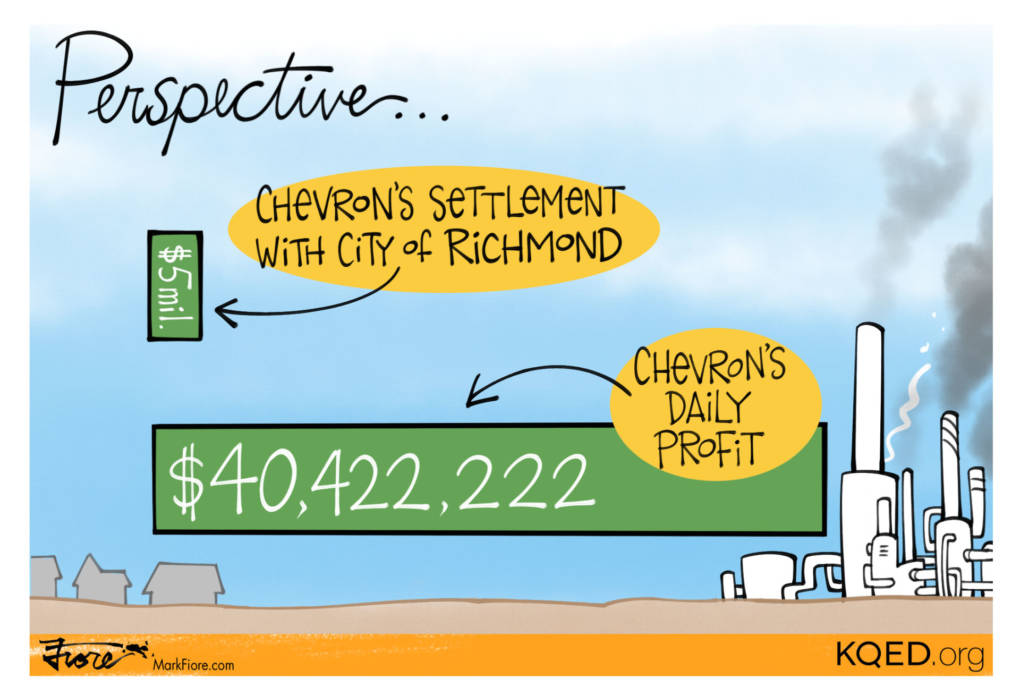
window.__IS_SSR__=true
window.__INITIAL_STATE__={
"attachmentsReducer": {
"audio_0": {
"type": "attachments",
"id": "audio_0",
"imgSizes": {
"kqedFullSize": {
"file": "https://ww2.kqed.org/news/wp-content/themes/KQED-unified/img/audio_bgs/background0.jpg"
}
}
},
"audio_1": {
"type": "attachments",
"id": "audio_1",
"imgSizes": {
"kqedFullSize": {
"file": "https://ww2.kqed.org/news/wp-content/themes/KQED-unified/img/audio_bgs/background1.jpg"
}
}
},
"audio_2": {
"type": "attachments",
"id": "audio_2",
"imgSizes": {
"kqedFullSize": {
"file": "https://ww2.kqed.org/news/wp-content/themes/KQED-unified/img/audio_bgs/background2.jpg"
}
}
},
"audio_3": {
"type": "attachments",
"id": "audio_3",
"imgSizes": {
"kqedFullSize": {
"file": "https://ww2.kqed.org/news/wp-content/themes/KQED-unified/img/audio_bgs/background3.jpg"
}
}
},
"audio_4": {
"type": "attachments",
"id": "audio_4",
"imgSizes": {
"kqedFullSize": {
"file": "https://ww2.kqed.org/news/wp-content/themes/KQED-unified/img/audio_bgs/background4.jpg"
}
}
},
"placeholder": {
"type": "attachments",
"id": "placeholder",
"imgSizes": {
"thumbnail": {
"file": "https://cdn.kqed.org/wp-content/uploads/2024/12/KQED-Default-Image-816638274-2000x1333-1-160x107.jpg",
"width": 160,
"height": 107,
"mimeType": "image/jpeg"
},
"medium": {
"file": "https://cdn.kqed.org/wp-content/uploads/2024/12/KQED-Default-Image-816638274-2000x1333-1-800x533.jpg",
"width": 800,
"height": 533,
"mimeType": "image/jpeg"
},
"medium_large": {
"file": "https://cdn.kqed.org/wp-content/uploads/2024/12/KQED-Default-Image-816638274-2000x1333-1-768x512.jpg",
"width": 768,
"height": 512,
"mimeType": "image/jpeg"
},
"large": {
"file": "https://cdn.kqed.org/wp-content/uploads/2024/12/KQED-Default-Image-816638274-2000x1333-1-1020x680.jpg",
"width": 1020,
"height": 680,
"mimeType": "image/jpeg"
},
"1536x1536": {
"file": "https://cdn.kqed.org/wp-content/uploads/2024/12/KQED-Default-Image-816638274-2000x1333-1-1536x1024.jpg",
"width": 1536,
"height": 1024,
"mimeType": "image/jpeg"
},
"fd-lrg": {
"file": "https://cdn.kqed.org/wp-content/uploads/2024/12/KQED-Default-Image-816638274-2000x1333-1-1536x1024.jpg",
"width": 1536,
"height": 1024,
"mimeType": "image/jpeg"
},
"fd-med": {
"file": "https://cdn.kqed.org/wp-content/uploads/2024/12/KQED-Default-Image-816638274-2000x1333-1-1020x680.jpg",
"width": 1020,
"height": 680,
"mimeType": "image/jpeg"
},
"fd-sm": {
"file": "https://cdn.kqed.org/wp-content/uploads/2024/12/KQED-Default-Image-816638274-2000x1333-1-800x533.jpg",
"width": 800,
"height": 533,
"mimeType": "image/jpeg"
},
"post-thumbnail": {
"file": "https://cdn.kqed.org/wp-content/uploads/2024/12/KQED-Default-Image-816638274-2000x1333-1-672x372.jpg",
"width": 672,
"height": 372,
"mimeType": "image/jpeg"
},
"twentyfourteen-full-width": {
"file": "https://cdn.kqed.org/wp-content/uploads/2024/12/KQED-Default-Image-816638274-2000x1333-1-1038x576.jpg",
"width": 1038,
"height": 576,
"mimeType": "image/jpeg"
},
"xxsmall": {
"file": "https://cdn.kqed.org/wp-content/uploads/2024/12/KQED-Default-Image-816638274-2000x1333-1-160x107.jpg",
"width": 160,
"height": 107,
"mimeType": "image/jpeg"
},
"xsmall": {
"file": "https://cdn.kqed.org/wp-content/uploads/2024/12/KQED-Default-Image-816638274-2000x1333-1-672x372.jpg",
"width": 672,
"height": 372,
"mimeType": "image/jpeg"
},
"small": {
"file": "https://cdn.kqed.org/wp-content/uploads/2024/12/KQED-Default-Image-816638274-2000x1333-1-672x372.jpg",
"width": 672,
"height": 372,
"mimeType": "image/jpeg"
},
"xlarge": {
"file": "https://cdn.kqed.org/wp-content/uploads/2024/12/KQED-Default-Image-816638274-2000x1333-1-1020x680.jpg",
"width": 1020,
"height": 680,
"mimeType": "image/jpeg"
},
"full-width": {
"file": "https://cdn.kqed.org/wp-content/uploads/2024/12/KQED-Default-Image-816638274-2000x1333-1-1920x1280.jpg",
"width": 1920,
"height": 1280,
"mimeType": "image/jpeg"
},
"guest-author-32": {
"file": "https://cdn.kqed.org/wp-content/uploads/2025/01/KQED-Default-Image-816638274-1333x1333-1-160x160.jpg",
"width": 32,
"height": 32,
"mimeType": "image/jpeg"
},
"guest-author-50": {
"file": "https://cdn.kqed.org/wp-content/uploads/2025/01/KQED-Default-Image-816638274-1333x1333-1-160x160.jpg",
"width": 50,
"height": 50,
"mimeType": "image/jpeg"
},
"guest-author-64": {
"file": "https://cdn.kqed.org/wp-content/uploads/2025/01/KQED-Default-Image-816638274-1333x1333-1-160x160.jpg",
"width": 64,
"height": 64,
"mimeType": "image/jpeg"
},
"guest-author-96": {
"file": "https://cdn.kqed.org/wp-content/uploads/2025/01/KQED-Default-Image-816638274-1333x1333-1-160x160.jpg",
"width": 96,
"height": 96,
"mimeType": "image/jpeg"
},
"guest-author-128": {
"file": "https://cdn.kqed.org/wp-content/uploads/2025/01/KQED-Default-Image-816638274-1333x1333-1-160x160.jpg",
"width": 128,
"height": 128,
"mimeType": "image/jpeg"
},
"detail": {
"file": "https://cdn.kqed.org/wp-content/uploads/2025/01/KQED-Default-Image-816638274-1333x1333-1-160x160.jpg",
"width": 160,
"height": 160,
"mimeType": "image/jpeg"
},
"kqedFullSize": {
"file": "https://cdn.kqed.org/wp-content/uploads/2024/12/KQED-Default-Image-816638274-2000x1333-1.jpg",
"width": 2000,
"height": 1333
}
}
},
"news_11666446": {
"type": "attachments",
"id": "news_11666446",
"meta": {
"index": "attachments_1716263798",
"site": "news",
"id": "11666446",
"found": true
},
"parent": 11666438,
"imgSizes": {
"small": {
"file": "https://ww2.kqed.org/app/uploads/sites/10/2018/05/perspective_horiz_050418_final-520x354.jpg",
"width": 520,
"mimeType": "image/jpeg",
"height": 354
},
"twentyfourteen-full-width": {
"file": "https://ww2.kqed.org/app/uploads/sites/10/2018/05/perspective_horiz_050418_final-1038x576.jpg",
"width": 1038,
"mimeType": "image/jpeg",
"height": 576
},
"thumbnail": {
"file": "https://ww2.kqed.org/app/uploads/sites/10/2018/05/perspective_horiz_050418_final-160x109.jpg",
"width": 160,
"mimeType": "image/jpeg",
"height": 109
},
"fd-sm": {
"file": "https://ww2.kqed.org/app/uploads/sites/10/2018/05/perspective_horiz_050418_final-960x654.jpg",
"width": 960,
"mimeType": "image/jpeg",
"height": 654
},
"post-thumbnail": {
"file": "https://ww2.kqed.org/app/uploads/sites/10/2018/05/perspective_horiz_050418_final-672x372.jpg",
"width": 672,
"mimeType": "image/jpeg",
"height": 372
},
"xsmall": {
"file": "https://ww2.kqed.org/app/uploads/sites/10/2018/05/perspective_horiz_050418_final-375x255.jpg",
"width": 375,
"mimeType": "image/jpeg",
"height": 255
},
"kqedFullSize": {
"file": "https://ww2.kqed.org/app/uploads/sites/10/2018/05/perspective_horiz_050418_final.jpg",
"width": 1920,
"height": 1308
},
"large": {
"file": "https://ww2.kqed.org/app/uploads/sites/10/2018/05/perspective_horiz_050418_final-1020x695.jpg",
"width": 1020,
"mimeType": "image/jpeg",
"height": 695
},
"xlarge": {
"file": "https://ww2.kqed.org/app/uploads/sites/10/2018/05/perspective_horiz_050418_final-1180x804.jpg",
"width": 1180,
"mimeType": "image/jpeg",
"height": 804
},
"complete_open_graph": {
"file": "https://ww2.kqed.org/app/uploads/sites/10/2018/05/perspective_horiz_050418_final-1200x818.jpg",
"width": 1200,
"mimeType": "image/jpeg",
"height": 818
},
"guest-author-50": {
"file": "https://ww2.kqed.org/app/uploads/sites/10/2018/05/perspective_horiz_050418_final-50x50.jpg",
"width": 50,
"mimeType": "image/jpeg",
"height": 50
},
"guest-author-96": {
"file": "https://ww2.kqed.org/app/uploads/sites/10/2018/05/perspective_horiz_050418_final-96x96.jpg",
"width": 96,
"mimeType": "image/jpeg",
"height": 96
},
"medium": {
"file": "https://ww2.kqed.org/app/uploads/sites/10/2018/05/perspective_horiz_050418_final-800x545.jpg",
"width": 800,
"mimeType": "image/jpeg",
"height": 545
},
"guest-author-64": {
"file": "https://ww2.kqed.org/app/uploads/sites/10/2018/05/perspective_horiz_050418_final-64x64.jpg",
"width": 64,
"mimeType": "image/jpeg",
"height": 64
},
"guest-author-32": {
"file": "https://ww2.kqed.org/app/uploads/sites/10/2018/05/perspective_horiz_050418_final-32x32.jpg",
"width": 32,
"mimeType": "image/jpeg",
"height": 32
},
"fd-lrg": {
"file": "https://ww2.kqed.org/app/uploads/sites/10/2018/05/perspective_horiz_050418_final-1920x1308.jpg",
"width": 1920,
"mimeType": "image/jpeg",
"height": 1308
},
"fd-med": {
"file": "https://ww2.kqed.org/app/uploads/sites/10/2018/05/perspective_horiz_050418_final-1180x804.jpg",
"width": 1180,
"mimeType": "image/jpeg",
"height": 804
},
"full-width": {
"file": "https://ww2.kqed.org/app/uploads/sites/10/2018/05/perspective_horiz_050418_final-1920x1308.jpg",
"width": 1920,
"mimeType": "image/jpeg",
"height": 1308
},
"detail": {
"file": "https://ww2.kqed.org/app/uploads/sites/10/2018/05/perspective_horiz_050418_final-150x150.jpg",
"width": 150,
"mimeType": "image/jpeg",
"height": 150
},
"guest-author-128": {
"file": "https://ww2.kqed.org/app/uploads/sites/10/2018/05/perspective_horiz_050418_final-128x128.jpg",
"width": 128,
"mimeType": "image/jpeg",
"height": 128
},
"xxsmall": {
"file": "https://ww2.kqed.org/app/uploads/sites/10/2018/05/perspective_horiz_050418_final-240x164.jpg",
"width": 240,
"mimeType": "image/jpeg",
"height": 164
}
},
"publishDate": 1525455253,
"modified": 1525455271,
"caption": null,
"description": null,
"title": "perspective_horiz_050418_final",
"credit": null,
"status": "inherit",
"isLoading": false,
"fetchFailed": false
},
"news_120958": {
"type": "attachments",
"id": "news_120958",
"meta": {
"index": "attachments_1716263798",
"site": "news",
"id": "120958",
"found": true
},
"parent": 120953,
"imgSizes": {
"kqedFullSize": {
"file": "https://ww2.kqed.org/app/uploads/sites/10/2013/12/RS268_chevron20120810.jpg",
"width": 1024,
"height": 728
}
},
"publishDate": 1387243939,
"modified": 1489785393,
"caption": "The Chevron refinery fire in Richmond in August 2012 sent smoke across the Bay Area. ",
"description": null,
"title": "RS268_chevron20120810",
"credit": "Stephen Schiller/Flickr",
"status": "inherit",
"isLoading": false,
"fetchFailed": false
},
"news_11612986": {
"type": "attachments",
"id": "news_11612986",
"meta": {
"index": "attachments_1716263798",
"site": "news",
"id": "11612986",
"found": true
},
"parent": 11612691,
"imgSizes": {
"small": {
"file": "https://ww2.kqed.org/app/uploads/sites/10/2017/08/RS26277_GettyImages-108323683-qut-520x352.jpg",
"width": 520,
"mimeType": "image/jpeg",
"height": 352
},
"twentyfourteen-full-width": {
"file": "https://ww2.kqed.org/app/uploads/sites/10/2017/08/RS26277_GettyImages-108323683-qut-1038x576.jpg",
"width": 1038,
"mimeType": "image/jpeg",
"height": 576
},
"thumbnail": {
"file": "https://ww2.kqed.org/app/uploads/sites/10/2017/08/RS26277_GettyImages-108323683-qut-160x108.jpg",
"width": 160,
"mimeType": "image/jpeg",
"height": 108
},
"fd-sm": {
"file": "https://ww2.kqed.org/app/uploads/sites/10/2017/08/RS26277_GettyImages-108323683-qut-960x650.jpg",
"width": 960,
"mimeType": "image/jpeg",
"height": 650
},
"post-thumbnail": {
"file": "https://ww2.kqed.org/app/uploads/sites/10/2017/08/RS26277_GettyImages-108323683-qut-672x372.jpg",
"width": 672,
"mimeType": "image/jpeg",
"height": 372
},
"xsmall": {
"file": "https://ww2.kqed.org/app/uploads/sites/10/2017/08/RS26277_GettyImages-108323683-qut-375x254.jpg",
"width": 375,
"mimeType": "image/jpeg",
"height": 254
},
"kqedFullSize": {
"file": "https://ww2.kqed.org/app/uploads/sites/10/2017/08/RS26277_GettyImages-108323683-qut.jpg",
"width": 1920,
"height": 1300
},
"large": {
"file": "https://ww2.kqed.org/app/uploads/sites/10/2017/08/RS26277_GettyImages-108323683-qut-1020x691.jpg",
"width": 1020,
"mimeType": "image/jpeg",
"height": 691
},
"xlarge": {
"file": "https://ww2.kqed.org/app/uploads/sites/10/2017/08/RS26277_GettyImages-108323683-qut-1180x799.jpg",
"width": 1180,
"mimeType": "image/jpeg",
"height": 799
},
"guest-author-50": {
"file": "https://ww2.kqed.org/app/uploads/sites/10/2017/08/RS26277_GettyImages-108323683-qut-50x50.jpg",
"width": 50,
"mimeType": "image/jpeg",
"height": 50
},
"guest-author-96": {
"file": "https://ww2.kqed.org/app/uploads/sites/10/2017/08/RS26277_GettyImages-108323683-qut-96x96.jpg",
"width": 96,
"mimeType": "image/jpeg",
"height": 96
},
"medium": {
"file": "https://ww2.kqed.org/app/uploads/sites/10/2017/08/RS26277_GettyImages-108323683-qut-800x542.jpg",
"width": 800,
"mimeType": "image/jpeg",
"height": 542
},
"guest-author-64": {
"file": "https://ww2.kqed.org/app/uploads/sites/10/2017/08/RS26277_GettyImages-108323683-qut-64x64.jpg",
"width": 64,
"mimeType": "image/jpeg",
"height": 64
},
"guest-author-32": {
"file": "https://ww2.kqed.org/app/uploads/sites/10/2017/08/RS26277_GettyImages-108323683-qut-32x32.jpg",
"width": 32,
"mimeType": "image/jpeg",
"height": 32
},
"fd-lrg": {
"file": "https://ww2.kqed.org/app/uploads/sites/10/2017/08/RS26277_GettyImages-108323683-qut-1920x1300.jpg",
"width": 1920,
"mimeType": "image/jpeg",
"height": 1300
},
"fd-med": {
"file": "https://ww2.kqed.org/app/uploads/sites/10/2017/08/RS26277_GettyImages-108323683-qut-1180x799.jpg",
"width": 1180,
"mimeType": "image/jpeg",
"height": 799
},
"full-width": {
"file": "https://ww2.kqed.org/app/uploads/sites/10/2017/08/RS26277_GettyImages-108323683-qut-1920x1300.jpg",
"width": 1920,
"mimeType": "image/jpeg",
"height": 1300
},
"detail": {
"file": "https://ww2.kqed.org/app/uploads/sites/10/2017/08/RS26277_GettyImages-108323683-qut-150x150.jpg",
"width": 150,
"mimeType": "image/jpeg",
"height": 150
},
"guest-author-128": {
"file": "https://ww2.kqed.org/app/uploads/sites/10/2017/08/RS26277_GettyImages-108323683-qut-128x128.jpg",
"width": 128,
"mimeType": "image/jpeg",
"height": 128
},
"xxsmall": {
"file": "https://ww2.kqed.org/app/uploads/sites/10/2017/08/RS26277_GettyImages-108323683-qut-240x163.jpg",
"width": 240,
"mimeType": "image/jpeg",
"height": 163
}
},
"publishDate": 1503094275,
"modified": 1631233209,
"caption": "The Chevron refinery in Richmond.",
"description": null,
"title": "Gas Prices Continue To Rise, Inching Up Over Last Two Weeks",
"credit": "Justin Sullivan/Getty Images",
"status": "inherit",
"altTag": "About a dozen cement smokestacks rise amid low-lying building beyond a freeway.",
"isLoading": false,
"fetchFailed": false
},
"news_11255678": {
"type": "attachments",
"id": "news_11255678",
"meta": {
"index": "attachments_1716263798",
"site": "news",
"id": "11255678",
"found": true
},
"parent": 11253567,
"imgSizes": {
"small": {
"file": "https://ww2.kqed.org/app/uploads/sites/10/2017/01/RS9538_Chevron032714-JoshC-5264-520x347.jpg",
"width": 520,
"mimeType": "image/jpeg",
"height": 347
},
"twentyfourteen-full-width": {
"file": "https://ww2.kqed.org/app/uploads/sites/10/2017/01/RS9538_Chevron032714-JoshC-5264-1038x576.jpg",
"width": 1038,
"mimeType": "image/jpeg",
"height": 576
},
"thumbnail": {
"file": "https://ww2.kqed.org/app/uploads/sites/10/2017/01/RS9538_Chevron032714-JoshC-5264-160x107.jpg",
"width": 160,
"mimeType": "image/jpeg",
"height": 107
},
"fd-sm": {
"file": "https://ww2.kqed.org/app/uploads/sites/10/2017/01/RS9538_Chevron032714-JoshC-5264-960x640.jpg",
"width": 960,
"mimeType": "image/jpeg",
"height": 640
},
"post-thumbnail": {
"file": "https://ww2.kqed.org/app/uploads/sites/10/2017/01/RS9538_Chevron032714-JoshC-5264-672x372.jpg",
"width": 672,
"mimeType": "image/jpeg",
"height": 372
},
"xsmall": {
"file": "https://ww2.kqed.org/app/uploads/sites/10/2017/01/RS9538_Chevron032714-JoshC-5264-375x250.jpg",
"width": 375,
"mimeType": "image/jpeg",
"height": 250
},
"kqedFullSize": {
"file": "https://ww2.kqed.org/app/uploads/sites/10/2017/01/RS9538_Chevron032714-JoshC-5264-e1483662593117.jpg",
"width": 1920,
"height": 1280
},
"large": {
"file": "https://ww2.kqed.org/app/uploads/sites/10/2017/01/RS9538_Chevron032714-JoshC-5264-1020x680.jpg",
"width": 1020,
"mimeType": "image/jpeg",
"height": 680
},
"xlarge": {
"file": "https://ww2.kqed.org/app/uploads/sites/10/2017/01/RS9538_Chevron032714-JoshC-5264-1180x787.jpg",
"width": 1180,
"mimeType": "image/jpeg",
"height": 787
},
"guest-author-50": {
"file": "https://ww2.kqed.org/app/uploads/sites/10/2017/01/RS9538_Chevron032714-JoshC-5264-50x50.jpg",
"width": 50,
"mimeType": "image/jpeg",
"height": 50
},
"guest-author-96": {
"file": "https://ww2.kqed.org/app/uploads/sites/10/2017/01/RS9538_Chevron032714-JoshC-5264-96x96.jpg",
"width": 96,
"mimeType": "image/jpeg",
"height": 96
},
"medium": {
"file": "https://ww2.kqed.org/app/uploads/sites/10/2017/01/RS9538_Chevron032714-JoshC-5264-800x533.jpg",
"width": 800,
"mimeType": "image/jpeg",
"height": 533
},
"guest-author-64": {
"file": "https://ww2.kqed.org/app/uploads/sites/10/2017/01/RS9538_Chevron032714-JoshC-5264-64x64.jpg",
"width": 64,
"mimeType": "image/jpeg",
"height": 64
},
"guest-author-32": {
"file": "https://ww2.kqed.org/app/uploads/sites/10/2017/01/RS9538_Chevron032714-JoshC-5264-32x32.jpg",
"width": 32,
"mimeType": "image/jpeg",
"height": 32
},
"jmtc-small-thumb": {
"file": "https://ww2.kqed.org/app/uploads/sites/10/2017/01/RS9538_Chevron032714-JoshC-5264-280x150.jpg",
"width": 280,
"mimeType": "image/jpeg",
"height": 150
},
"fd-lrg": {
"file": "https://ww2.kqed.org/app/uploads/sites/10/2017/01/RS9538_Chevron032714-JoshC-5264-1920x1280.jpg",
"width": 1920,
"mimeType": "image/jpeg",
"height": 1280
},
"fd-med": {
"file": "https://ww2.kqed.org/app/uploads/sites/10/2017/01/RS9538_Chevron032714-JoshC-5264-1180x787.jpg",
"width": 1180,
"mimeType": "image/jpeg",
"height": 787
},
"full-width": {
"file": "https://ww2.kqed.org/app/uploads/sites/10/2017/01/RS9538_Chevron032714-JoshC-5264-1920x1280.jpg",
"width": 1920,
"mimeType": "image/jpeg",
"height": 1280
},
"detail": {
"file": "https://ww2.kqed.org/app/uploads/sites/10/2017/01/RS9538_Chevron032714-JoshC-5264-150x150.jpg",
"width": 150,
"mimeType": "image/jpeg",
"height": 150
},
"guest-author-128": {
"file": "https://ww2.kqed.org/app/uploads/sites/10/2017/01/RS9538_Chevron032714-JoshC-5264-128x128.jpg",
"width": 128,
"mimeType": "image/jpeg",
"height": 128
},
"xxsmall": {
"file": "https://ww2.kqed.org/app/uploads/sites/10/2017/01/RS9538_Chevron032714-JoshC-5264-240x160.jpg",
"width": 240,
"mimeType": "image/jpeg",
"height": 160
}
},
"publishDate": 1483662561,
"modified": 1483662701,
"caption": "For many residents of Point Richmond, the Chevron oil refinery is rarely out of sight. This photo was taken in 2014. ",
"description": "For many residents of Point Richmond, the Chevron oil refinery is rarely out of sight. This photo was taken in 2014. ",
"title": "rs9538_chevron032714-joshc-5264",
"credit": "Josh Cassidy/KQED",
"status": "inherit",
"isLoading": false,
"fetchFailed": false
},
"news_105541": {
"type": "attachments",
"id": "news_105541",
"meta": {
"index": "attachments_1716263798",
"site": "news",
"id": "105541",
"found": true
},
"parent": 105538,
"imgSizes": {
"kqedFullSize": {
"file": "https://ww2.kqed.org/app/uploads/sites/10/2013/08/RS5932_005-scr.jpg",
"width": 850,
"height": 567
}
},
"publishDate": 1375647993,
"modified": 1488573125,
"caption": "Chevron's refinery complex in Richmond. ",
"description": null,
"title": "Chevron Richmond Refinery",
"credit": "Deborah Svoboda/KQED",
"status": "inherit",
"isLoading": false,
"fetchFailed": false
},
"news_141513": {
"type": "attachments",
"id": "news_141513",
"meta": {
"index": "attachments_1716263798",
"site": "news",
"id": "141513",
"found": true
},
"parent": 141502,
"imgSizes": {
"kqedFullSize": {
"file": "https://ww2.kqed.org/app/uploads/sites/10/2014/07/RS9516_Chevron032714-JoshC-5177-lpr-e1478109513540.jpg",
"width": 1920,
"height": 1280
}
},
"publishDate": 1405024797,
"modified": 1612213302,
"caption": "A section of Chevron’s Richmond oil refinery.",
"description": "A section of Chevron’s Richmond oil refinery. ",
"title": "Richmond-Chevron Refinery",
"credit": "Josh Cassidy/KQED",
"status": "inherit",
"altTag": null,
"isLoading": false,
"fetchFailed": false
},
"news_10343290": {
"type": "attachments",
"id": "news_10343290",
"meta": {
"index": "attachments_1716263798",
"site": "news",
"id": "10343290",
"found": true
},
"parent": 10343286,
"imgSizes": {
"twentyfourteen-full-width": {
"file": "https://ww2.kqed.org/app/uploads/sites/10/2014/10/RS5932_005-lpr-1038x576.jpg",
"width": 1038,
"mimeType": "image/jpeg",
"height": 576
},
"thumbnail": {
"file": "https://ww2.kqed.org/app/uploads/sites/10/2014/10/RS5932_005-lpr-400x266.jpg",
"width": 400,
"mimeType": "image/jpeg",
"height": 266
},
"post-thumbnail": {
"file": "https://ww2.kqed.org/app/uploads/sites/10/2014/10/RS5932_005-lpr-672x372.jpg",
"width": 672,
"mimeType": "image/jpeg",
"height": 372
},
"kqedFullSize": {
"file": "https://ww2.kqed.org/app/uploads/sites/10/2014/10/RS5932_005-lpr-e1523913796319.jpg",
"width": 1920,
"height": 1281
},
"large": {
"file": "https://ww2.kqed.org/app/uploads/sites/10/2014/10/RS5932_005-lpr-1440x960.jpg",
"width": 1440,
"mimeType": "image/jpeg",
"height": 960
},
"guest-author-96": {
"file": "https://ww2.kqed.org/app/uploads/sites/10/2014/10/RS5932_005-lpr-96x96.jpg",
"width": 96,
"mimeType": "image/jpeg",
"height": 96
},
"medium": {
"file": "https://ww2.kqed.org/app/uploads/sites/10/2014/10/RS5932_005-lpr-800x533.jpg",
"width": 800,
"mimeType": "image/jpeg",
"height": 533
},
"guest-author-64": {
"file": "https://ww2.kqed.org/app/uploads/sites/10/2014/10/RS5932_005-lpr-64x64.jpg",
"width": 64,
"mimeType": "image/jpeg",
"height": 64
},
"detail": {
"file": "https://ww2.kqed.org/app/uploads/sites/10/2014/10/RS5932_005-lpr-75x75.jpg",
"width": 75,
"mimeType": "image/jpeg",
"height": 75
},
"guest-author-32": {
"file": "https://ww2.kqed.org/app/uploads/sites/10/2014/10/RS5932_005-lpr-32x32.jpg",
"width": 32,
"mimeType": "image/jpeg",
"height": 32
},
"guest-author-128": {
"file": "https://ww2.kqed.org/app/uploads/sites/10/2014/10/RS5932_005-lpr-128x128.jpg",
"width": 128,
"mimeType": "image/jpeg",
"height": 128
}
},
"publishDate": 1412972477,
"modified": 1473201929,
"caption": "The Chevron oil refinery in Richmond. ",
"description": null,
"title": "RS5932_005-lpr",
"credit": "Deborah Svoboda/KQED",
"status": "inherit",
"isLoading": false,
"fetchFailed": false
},
"news_10384140": {
"type": "attachments",
"id": "news_10384140",
"meta": {
"index": "attachments_1716263798",
"site": "news",
"id": "10384140",
"found": true
},
"parent": 10383888,
"imgSizes": {
"twentyfourteen-full-width": {
"file": "https://ww2.kqed.org/app/uploads/sites/10/2014/12/Chevron-Flare-Sized-1038x576.jpg",
"width": 1038,
"mimeType": "image/jpeg",
"height": 576
},
"thumbnail": {
"file": "https://ww2.kqed.org/app/uploads/sites/10/2014/12/Chevron-Flare-Sized-400x266.jpg",
"width": 400,
"mimeType": "image/jpeg",
"height": 266
},
"post-thumbnail": {
"file": "https://ww2.kqed.org/app/uploads/sites/10/2014/12/Chevron-Flare-Sized-672x372.jpg",
"width": 672,
"mimeType": "image/jpeg",
"height": 372
},
"kqedFullSize": {
"file": "https://ww2.kqed.org/app/uploads/sites/10/2014/12/Chevron-Flare-Sized.jpg",
"width": 1440,
"height": 960
},
"guest-author-96": {
"file": "https://ww2.kqed.org/app/uploads/sites/10/2014/12/Chevron-Flare-Sized-96x96.jpg",
"width": 96,
"mimeType": "image/jpeg",
"height": 96
},
"medium": {
"file": "https://ww2.kqed.org/app/uploads/sites/10/2014/12/Chevron-Flare-Sized-800x533.jpg",
"width": 800,
"mimeType": "image/jpeg",
"height": 533
},
"guest-author-64": {
"file": "https://ww2.kqed.org/app/uploads/sites/10/2014/12/Chevron-Flare-Sized-64x64.jpg",
"width": 64,
"mimeType": "image/jpeg",
"height": 64
},
"detail": {
"file": "https://ww2.kqed.org/app/uploads/sites/10/2014/12/Chevron-Flare-Sized-75x75.jpg",
"width": 75,
"mimeType": "image/jpeg",
"height": 75
},
"guest-author-32": {
"file": "https://ww2.kqed.org/app/uploads/sites/10/2014/12/Chevron-Flare-Sized-32x32.jpg",
"width": 32,
"mimeType": "image/jpeg",
"height": 32
},
"guest-author-128": {
"file": "https://ww2.kqed.org/app/uploads/sites/10/2014/12/Chevron-Flare-Sized-128x128.jpg",
"width": 128,
"mimeType": "image/jpeg",
"height": 128
}
},
"publishDate": 1419022845,
"modified": 1419022915,
"caption": "A cloud of smoke or steam wraps around the flames from a second round of flaring emanating from Chevron's Richmond refinery on Dec. 18, 2014. ",
"description": "A cloud of smoke or steam wraps around the flames from a second round of flaring emanating from Chevron's Richmond refinery on Dec. 18, 2014. ",
"title": "Chevron Flare Sized",
"credit": "Courtesy of Jeremy Miller",
"status": "inherit",
"isLoading": false,
"fetchFailed": false
},
"news_10346080": {
"type": "attachments",
"id": "news_10346080",
"meta": {
"index": "attachments_1716263798",
"site": "news",
"id": "10346080",
"found": true
},
"parent": 10346057,
"imgSizes": {
"twentyfourteen-full-width": {
"file": "https://ww2.kqed.org/app/uploads/sites/10/2014/10/RS9537_Chevron032714-JoshC-5263-lpr-1038x576.jpg",
"width": 1038,
"mimeType": "image/jpeg",
"height": 576
},
"thumbnail": {
"file": "https://ww2.kqed.org/app/uploads/sites/10/2014/10/RS9537_Chevron032714-JoshC-5263-lpr-400x266.jpg",
"width": 400,
"mimeType": "image/jpeg",
"height": 266
},
"post-thumbnail": {
"file": "https://ww2.kqed.org/app/uploads/sites/10/2014/10/RS9537_Chevron032714-JoshC-5263-lpr-672x372.jpg",
"width": 672,
"mimeType": "image/jpeg",
"height": 372
},
"kqedFullSize": {
"file": "https://ww2.kqed.org/app/uploads/sites/10/2014/10/RS9537_Chevron032714-JoshC-5263-lpr-e1414699542283.jpg",
"width": 1440,
"height": 960
},
"large": {
"file": "https://ww2.kqed.org/app/uploads/sites/10/2014/10/RS9537_Chevron032714-JoshC-5263-lpr-1440x959.jpg",
"width": 1440,
"mimeType": "image/jpeg",
"height": 959
},
"guest-author-96": {
"file": "https://ww2.kqed.org/app/uploads/sites/10/2014/10/RS9537_Chevron032714-JoshC-5263-lpr-96x96.jpg",
"width": 96,
"mimeType": "image/jpeg",
"height": 96
},
"medium": {
"file": "https://ww2.kqed.org/app/uploads/sites/10/2014/10/RS9537_Chevron032714-JoshC-5263-lpr-800x533.jpg",
"width": 800,
"mimeType": "image/jpeg",
"height": 533
},
"guest-author-64": {
"file": "https://ww2.kqed.org/app/uploads/sites/10/2014/10/RS9537_Chevron032714-JoshC-5263-lpr-64x64.jpg",
"width": 64,
"mimeType": "image/jpeg",
"height": 64
},
"detail": {
"file": "https://ww2.kqed.org/app/uploads/sites/10/2014/10/RS9537_Chevron032714-JoshC-5263-lpr-75x75.jpg",
"width": 75,
"mimeType": "image/jpeg",
"height": 75
},
"guest-author-32": {
"file": "https://ww2.kqed.org/app/uploads/sites/10/2014/10/RS9537_Chevron032714-JoshC-5263-lpr-32x32.jpg",
"width": 32,
"mimeType": "image/jpeg",
"height": 32
},
"guest-author-128": {
"file": "https://ww2.kqed.org/app/uploads/sites/10/2014/10/RS9537_Chevron032714-JoshC-5263-lpr-128x128.jpg",
"width": 128,
"mimeType": "image/jpeg",
"height": 128
}
},
"publishDate": 1414699516,
"modified": 1483748257,
"caption": "The Point Richmond section of the East Bay city of Richmond, near Chevron's refinery.",
"description": "The Point Richmond section of the East Bay city of Richmond, near Chevron's refinery. (Josh Cassidy/KQED News)",
"title": "Point Richmond-Chevron",
"credit": "Josh Cassidy/KQED News",
"status": "inherit",
"isLoading": false,
"fetchFailed": false
},
"news_112027": {
"type": "attachments",
"id": "news_112027",
"meta": {
"index": "attachments_1716263798",
"site": "news",
"id": "112027",
"found": true
},
"parent": 112023,
"imgSizes": {
"kqedFullSize": {
"file": "https://ww2.kqed.org/app/uploads/sites/10/2013/09/chevron.jpg",
"width": 620,
"height": 382
}
},
"publishDate": 1379702568,
"modified": 1379702568,
"caption": "The Chevron refinery has long been a physical presence in Richmond. But this election year, more so than any time in the company’s history here, Chevron has nakedly embedded itself in local politics. (Deborah Svoboda/KQED)",
"description": "A section of Chevron's Richmond oil refinery. (Deborah Svoboda/KQED)",
"title": "Richmond-Chevron Refinery",
"credit": null,
"status": "inherit",
"isLoading": false,
"fetchFailed": false
}
},
"audioPlayerReducer": {
"postId": "stream_live",
"isPaused": true,
"isPlaying": false,
"pfsActive": false,
"pledgeModalIsOpen": true,
"playerDrawerIsOpen": false,
"liveAudioPlayStartedAt": 0,
"liveAudioPlayContext": ""
},
"authorsReducer": {
"byline_news_11648044": {
"type": "authors",
"id": "byline_news_11648044",
"meta": {
"override": true
},
"slug": "byline_news_11648044",
"name": "\u003cstrong>\u003ca href=\"https://calmatters.org/articles/author/julie-cart/\">Julie Cart\u003c/a>\u003cbr />\u003ca href=\"https://calmatters.org/\">CALmatters\u003c/a>\u003c/strong>",
"isLoading": false
},
"byline_news_10345429": {
"type": "authors",
"id": "byline_news_10345429",
"meta": {
"override": true
},
"slug": "byline_news_10345429",
"name": "Brett Murphy and Bonnie Chan, \u003ca href=\"http://richmondconfidential.org/2014/10/27/why-chevrons-trying-to-buy-richmonds-elections/\">Richmond Confidential\u003c/a>",
"isLoading": false
},
"danbrekke": {
"type": "authors",
"id": "222",
"meta": {
"index": "authors_1716337520",
"id": "222",
"found": true
},
"name": "Dan Brekke",
"firstName": "Dan",
"lastName": "Brekke",
"slug": "danbrekke",
"email": "dbrekke@kqed.org",
"display_author_email": true,
"staff_mastheads": [
"news",
"science"
],
"title": "KQED Editor and Reporter",
"bio": "Dan Brekke is a reporter and editor for KQED News, responsible for coverage of topics ranging from California water issues to the Bay Area's transportation challenges. In a newsroom career that began in Chicago in 1972, Dan has worked for \u003cem>The San Francisco Examiner,\u003c/em> Wired and TechTV and has been published in The New York Times, The New York Times Magazine, Business 2.0, Salon and elsewhere.\r\n\r\nSince joining KQED in 2007, Dan has reported, edited and produced both radio and online features and breaking news pieces. He has shared as both editor and reporter in four Society of Professional Journalists Norcal Excellence in Journalism awards and one Edward R. Murrow regional award. He was chosen for a spring 2017 residency at the Mesa Refuge to advance his research on California salmon.\r\n\r\nEmail Dan at: \u003ca href=\"mailto:dbrekke@kqed.org\">dbrekke@kqed.org\u003c/a>\r\n\r\n\u003cstrong>Twitter:\u003c/strong> \u003ca href=\"https://twitter.com/danbrekke\" rel=\"noopener noreferrer\">twitter.com/danbrekke\u003c/a>\r\n\u003cstrong>Facebook:\u003c/strong> \u003ca href=\"https://www.facebook.com/danbrekke\" rel=\"noopener noreferrer\">www.facebook.com/danbrekke\u003c/a>\r\n\u003cstrong>LinkedIn:\u003c/strong> \u003ca href=\"https://www.linkedin.com/in/danbrekke\" rel=\"noopener noreferrer\">www.linkedin.com/in/danbrekke\u003c/a>",
"avatar": "https://secure.gravatar.com/avatar/c8126230345efca3f7aa89b1a402be45?s=600&d=mm&r=g",
"twitter": "danbrekke",
"facebook": null,
"instagram": "https://www.instagram.com/dan.brekke/",
"linkedin": "https://www.linkedin.com/in/danbrekke/",
"sites": [
{
"site": "news",
"roles": [
"administrator",
"create_posts"
]
},
{
"site": "stateofhealth",
"roles": [
"editor"
]
},
{
"site": "science",
"roles": [
"editor"
]
},
{
"site": "quest",
"roles": [
"contributor"
]
},
{
"site": "food",
"roles": [
"contributor"
]
},
{
"site": "forum",
"roles": [
"contributor"
]
},
{
"site": "liveblog",
"roles": [
"editor"
]
}
],
"headData": {
"title": "Dan Brekke | KQED",
"description": "KQED Editor and Reporter",
"ogImgSrc": "https://secure.gravatar.com/avatar/c8126230345efca3f7aa89b1a402be45?s=600&d=mm&r=g",
"twImgSrc": "https://secure.gravatar.com/avatar/c8126230345efca3f7aa89b1a402be45?s=600&d=mm&r=g"
},
"isLoading": false,
"link": "/author/danbrekke"
},
"iangell": {
"type": "authors",
"id": "229",
"meta": {
"index": "authors_1716337520",
"id": "229",
"found": true
},
"name": "Isabel Angell",
"firstName": "Isabel",
"lastName": "Angell",
"slug": "iangell",
"email": "iangell@KQED.org",
"display_author_email": false,
"staff_mastheads": [],
"title": null,
"bio": "Isabel Angell is an on-call reporter for KQED. She joined the station as a newsroom intern in 2013. \u003ca href=\"https://twitter.com/IsabeltheAngell\" target=\"_blank\" rel=\"noopener\">@IsabeltheAngell \u003c/a>",
"avatar": "https://secure.gravatar.com/avatar/e5d0b523fbffce6592a52f1dccafabe5?s=600&d=blank&r=g",
"twitter": null,
"facebook": null,
"instagram": null,
"linkedin": null,
"sites": [
{
"site": "news",
"roles": [
"subscriber"
]
}
],
"headData": {
"title": "Isabel Angell | KQED",
"description": null,
"ogImgSrc": "https://secure.gravatar.com/avatar/e5d0b523fbffce6592a52f1dccafabe5?s=600&d=blank&r=g",
"twImgSrc": "https://secure.gravatar.com/avatar/e5d0b523fbffce6592a52f1dccafabe5?s=600&d=blank&r=g"
},
"isLoading": false,
"link": "/author/iangell"
},
"tgoldberg": {
"type": "authors",
"id": "258",
"meta": {
"index": "authors_1716337520",
"id": "258",
"found": true
},
"name": "Ted Goldberg",
"firstName": "Ted",
"lastName": "Goldberg",
"slug": "tgoldberg",
"email": "tgoldberg@kqed.org",
"display_author_email": true,
"staff_mastheads": [
"news"
],
"title": "KQED Managing Editor, News and Newscasts",
"bio": "Ted Goldberg is Managing Editor of News and Newscasts at KQED. His main reporting beat is the Bay Area's oil refining industry.\r\n\r\nPrior to joining KQED in 2014, Ted worked at CBS News and WCBS AM in New York and Bay City News and KCBS Radio in San Francisco. He graduated from Oberlin College in Ohio in 1998.",
"avatar": "https://secure.gravatar.com/avatar/30ce2e4fe89135e104f89be2394d16225b9d36c121b5b3cb7651ce642978b96f?s=600&d=blank&r=g",
"twitter": "TedrickG",
"bluesky": null,
"facebook": null,
"instagram": null,
"linkedin": null,
"sites": [
{
"site": "news",
"roles": [
"editor"
]
},
{
"site": "science",
"roles": [
"editor"
]
}
],
"headData": {
"title": "Ted Goldberg | KQED",
"description": "KQED Managing Editor, News and Newscasts",
"ogImgSrc": "https://secure.gravatar.com/avatar/30ce2e4fe89135e104f89be2394d16225b9d36c121b5b3cb7651ce642978b96f?s=600&d=blank&r=g",
"twImgSrc": "https://secure.gravatar.com/avatar/30ce2e4fe89135e104f89be2394d16225b9d36c121b5b3cb7651ce642978b96f?s=600&d=blank&r=g"
},
"isLoading": false,
"link": "/author/tgoldberg"
},
"shossaini": {
"type": "authors",
"id": "3214",
"meta": {
"index": "authors_1716337520",
"id": "3214",
"found": true
},
"name": "Sara Hossaini",
"firstName": "Sara",
"lastName": "Hossaini",
"slug": "shossaini",
"email": "shossaini@kqed.org",
"display_author_email": true,
"staff_mastheads": [
"news"
],
"title": "KQED Reporter",
"bio": "Sara Hossaini came to general assignment reporting at KQED in 2013 after two winters reporting at Wyoming Public Radio. She holds a bachelor's degree in broadcast journalism from the University of Nebraska-Lincoln. Her radio romance began after a bitter breakup with documentary film (Ok, maybe it's still complicated). Her first simultaneous jobs in San Francisco were as Associate Producer on a PBS film series through the Center for Asian American Media and as a butler. She likes to trot, plot and make things with her hands.",
"avatar": "https://secure.gravatar.com/avatar/060e9f56b9554e17942e89f413242774?s=600&d=blank&r=g",
"twitter": "mshossaini",
"facebook": null,
"instagram": null,
"linkedin": null,
"sites": [
{
"site": "news",
"roles": [
"author"
]
},
{
"site": "stateofhealth",
"roles": [
"author"
]
}
],
"headData": {
"title": "Sara Hossaini | KQED",
"description": "KQED Reporter",
"ogImgSrc": "https://secure.gravatar.com/avatar/060e9f56b9554e17942e89f413242774?s=600&d=blank&r=g",
"twImgSrc": "https://secure.gravatar.com/avatar/060e9f56b9554e17942e89f413242774?s=600&d=blank&r=g"
},
"isLoading": false,
"link": "/author/shossaini"
},
"markfiore": {
"type": "authors",
"id": "3236",
"meta": {
"index": "authors_1716337520",
"id": "3236",
"found": true
},
"name": "Mark Fiore",
"firstName": "Mark",
"lastName": "Fiore",
"slug": "markfiore",
"email": "mark@markfiore.com",
"display_author_email": false,
"staff_mastheads": [
"news"
],
"title": "KQED News Cartoonist",
"bio": "\u003ca href=\"http://www.MarkFiore.com\">MarkFiore.com\u003c/a> | \u003ca href=\"https://twitter.com/markfiore\">Follow on Twitter\u003c/a> | \u003ca href=\"https://www.facebook.com/pages/Mark-Fiore-Animated-Political-Cartoons/94451707396?ref=bookmarks\">Facebook\u003c/a> | \u003ca href=\"mailto:mark@markfiore.com\">email\u003c/a>\r\n\r\nPulitzer Prize-winner, Mark Fiore, who the Wall Street Journal has called “the undisputed guru of the form,” creates animated political cartoons in San Francisco, where his work has been featured regularly on the San Francisco Chronicle’s web site, SFGate.com. His work has appeared on Newsweek.com, Slate.com, CBSNews.com, MotherJones.com, DailyKos.com and NPR’s web site. Fiore’s political animation has appeared on CNN, Frontline, Bill Moyers Journal, Salon.com and cable and broadcast outlets across the globe.\r\n\r\nBeginning his professional life by drawing traditional political cartoons for newspapers, Fiore’s work appeared in publications ranging from the Washington Post to the Los Angeles Times. In the late 1990s, he began to experiment with animating political cartoons and, after a short stint at the San Jose Mercury News as their staff cartoonist, Fiore devoted all his energies to animation.\r\nGrowing up in California, Fiore also spent a good portion of his life in the backwoods of Idaho. It was this combination that shaped him politically. Mark majored in political science at Colorado College, where, in a perfect send-off for a cartoonist, he received his diploma in 1991 as commencement speaker Dick Cheney smiled approvingly.\r\nMark Fiore was awarded the Pulitzer Prize for political cartooning in 2010, a Robert F. Kennedy Journalism Award in 2004 and has twice received an Online Journalism Award for commentary from the Online News Association (2002, 2008). Fiore has received two awards for his work in new media from the National Cartoonists Society (2001, 2002), and in 2006 received The James Madison Freedom of Information Award from The Society of Professional Journalists.",
"avatar": "https://secure.gravatar.com/avatar/fc4e2a612b15b67bad0c6f0e1db4ca9b?s=600&d=blank&r=g",
"twitter": "MarkFiore",
"facebook": null,
"instagram": "https://www.instagram.com/markfiore/?hl=en",
"linkedin": null,
"sites": [
{
"site": "arts",
"roles": [
"contributor"
]
},
{
"site": "news",
"roles": [
"editor"
]
},
{
"site": "futureofyou",
"roles": [
"editor"
]
},
{
"site": "science",
"roles": [
"editor"
]
}
],
"headData": {
"title": "Mark Fiore | KQED",
"description": "KQED News Cartoonist",
"ogImgSrc": "https://secure.gravatar.com/avatar/fc4e2a612b15b67bad0c6f0e1db4ca9b?s=600&d=blank&r=g",
"twImgSrc": "https://secure.gravatar.com/avatar/fc4e2a612b15b67bad0c6f0e1db4ca9b?s=600&d=blank&r=g"
},
"isLoading": false,
"link": "/author/markfiore"
}
},
"pagesReducer": {
"news_tag_chevron": {
"type": "terms",
"id": "news_424",
"meta": {
"index": "terms_1716263798",
"site": "news",
"id": "424",
"score": 9.304781
},
"featImg": null,
"name": "Chevron",
"description": null,
"taxonomy": "tag",
"headData": {
"twImgId": null,
"twTitle": null,
"ogTitle": null,
"ogImgId": null,
"twDescription": null,
"description": null,
"title": "Chevron Archives | KQED News",
"ogDescription": null
},
"ttid": 433,
"slug": "chevron",
"isLoading": false,
"title": "Chevron",
"pageMeta": {
"site": "news",
"WpPageTemplate": "page-topic-editorial",
"currentPage": 7
},
"blocks": [
{
"blockName": "kqed/post-list",
"attrs": {
"layout": "cardArticle2",
"query": "posts/news?tag=chevron",
"seeMore": false,
"paginated": true,
"page": 7
}
},
{
"blockName": "kqed/ad"
}
]
}
},
"pfsSessionReducer": {},
"postsReducer": {
"stream_live": {
"type": "live",
"id": "stream_live",
"audioUrl": "https://streams.kqed.org/kqedradio",
"title": "Live Stream",
"excerpt": "Live Stream information currently unavailable.",
"link": "/radio",
"featImg": "",
"label": {
"name": "KQED Live",
"link": "/"
}
},
"stream_kqedNewscast": {
"type": "posts",
"id": "stream_kqedNewscast",
"audioUrl": "https://www.kqed.org/.stream/anon/radio/RDnews/newscast.mp3?_=1",
"title": "KQED Newscast",
"featImg": "",
"label": {
"name": "88.5 FM",
"link": "/"
}
},
"news_11666438": {
"type": "posts",
"id": "news_11666438",
"meta": {
"index": "posts_1716263798",
"site": "news",
"id": "11666438",
"score": null,
"sort": [
1525467607000
]
},
"parent": 0,
"labelTerm": {
"site": "news",
"term": 18515
},
"blocks": [],
"publishDate": 1525467607,
"format": "standard",
"disqusTitle": "From 'Shelter in Place' to Settlement in Place",
"title": "From 'Shelter in Place' to Settlement in Place",
"headTitle": "Mark Fiore: Drawn to the Bay | KQED News",
"content": "\u003cp>Chevron and the city of Richmond \u003ca href=\"http://bit.ly/fiorechevronsettlement\">settled for $5 million\u003c/a> to end a lawsuit over a 2012 refinery fire that caused 15,000 nearby residents to seek medical treatment.\u003c/p>\n\u003cp>Amid rising oil prices, Chevron reported first quarter profits of \u003ca href=\"https://chevroncorp.gcs-web.com/static-files/a82bac31-8a7a-42f8-8533-dd737a8a2652\">over $3.6 billion\u003c/a>.\u003c/p>\n\u003cp>At the rate the oil giant realized profits in the first three months of 2018, it made enough money to pay the $5 million settlement in just under three hours.\u003c/p>\n\u003cp>[ad fullwidth]\u003c/p>\u003cp>\u003c/p>\n",
"disqusIdentifier": "11666438 https://ww2.kqed.org/news/?p=11666438",
"disqusUrl": "https://ww2.kqed.org/news/2018/05/04/from-shelter-in-place-to-settlement-in-place/",
"stats": {
"hasVideo": false,
"hasChartOrMap": false,
"hasAudio": false,
"hasPolis": false,
"wordCount": 75,
"hasGoogleForm": false,
"hasGallery": false,
"hasHearkenModule": false,
"iframeSrcs": [],
"paragraphCount": 5
},
"modified": 1525737323,
"excerpt": "Chevron and the city of Richmond settled for $5 million to end a lawsuit over a 2012 refinery fire that caused 15,000 nearby residents to seek medical treatment.",
"headData": {
"twImgId": "",
"twTitle": "",
"ogTitle": "",
"ogImgId": "",
"twDescription": "",
"description": "Chevron and the city of Richmond settled for $5 million to end a lawsuit over a 2012 refinery fire that caused 15,000 nearby residents to seek medical treatment.",
"title": "From 'Shelter in Place' to Settlement in Place | KQED",
"ogDescription": "",
"schema": {
"@context": "https://schema.org",
"@type": "NewsArticle",
"headline": "From 'Shelter in Place' to Settlement in Place",
"datePublished": "2018-05-04T14:00:07-07:00",
"dateModified": "2018-05-07T16:55:23-07:00",
"image": "https://cdn.kqed.org/wp-content/uploads/2020/02/KQED-OG-Image@1x.png",
"isAccessibleForFree": "True",
"publisher": {
"@type": "NewsMediaOrganization",
"@id": "https://www.kqed.org/#organization",
"name": "KQED",
"logo": "https://cdn.kqed.org/wp-content/uploads/2020/02/KQED-OG-Image@1x.png",
"url": "https://www.kqed.org",
"sameAs": [
"https://www.facebook.com/KQED",
"https://twitter.com/KQED",
"https://www.instagram.com/kqed/",
"https://www.tiktok.com/@kqedofficial",
"https://www.linkedin.com/company/kqed",
"https://www.youtube.com/channel/UCeC0IOo7i1P_61zVUWbJ4nw"
]
}
}
},
"guestAuthors": [],
"slug": "from-shelter-in-place-to-settlement-in-place",
"status": "publish",
"path": "/news/11666438/from-shelter-in-place-to-settlement-in-place",
"audioTrackLength": null,
"parsedContent": [
{
"type": "contentString",
"content": "\u003cdiv class=\"post-body\">\u003cp>\u003cp>Chevron and the city of Richmond \u003ca href=\"http://bit.ly/fiorechevronsettlement\">settled for $5 million\u003c/a> to end a lawsuit over a 2012 refinery fire that caused 15,000 nearby residents to seek medical treatment.\u003c/p>\n\u003cp>Amid rising oil prices, Chevron reported first quarter profits of \u003ca href=\"https://chevroncorp.gcs-web.com/static-files/a82bac31-8a7a-42f8-8533-dd737a8a2652\">over $3.6 billion\u003c/a>.\u003c/p>\n\u003cp>At the rate the oil giant realized profits in the first three months of 2018, it made enough money to pay the $5 million settlement in just under three hours.\u003c/p>\n\u003cp>\u003c/p>\u003c/div>",
"attributes": {
"named": {},
"numeric": []
}
},
{
"type": "component",
"content": "",
"name": "ad",
"attributes": {
"named": {
"label": "fullwidth"
},
"numeric": [
"fullwidth"
]
}
},
{
"type": "contentString",
"content": "\u003cdiv class=\"post-body\">\u003cp>\u003c/p>\u003cp>\u003c/p>\n\u003c/div>\u003c/p>",
"attributes": {
"named": {},
"numeric": []
}
}
],
"link": "/news/11666438/from-shelter-in-place-to-settlement-in-place",
"authors": [
"3236"
],
"series": [
"news_18515"
],
"categories": [
"news_19906",
"news_6188",
"news_8",
"news_13",
"news_1397"
],
"tags": [
"news_424",
"news_2918",
"news_4223",
"news_20150",
"news_20949",
"news_226",
"news_579",
"news_4276"
],
"featImg": "news_11666446",
"label": "news_18515"
},
"news_11666210": {
"type": "posts",
"id": "news_11666210",
"meta": {
"index": "posts_1716263798",
"site": "news",
"id": "11666210",
"score": null,
"sort": [
1525389676000
]
},
"parent": 0,
"labelTerm": {
"site": "news",
"term": 72
},
"blocks": [],
"publishDate": 1525389676,
"format": "standard",
"disqusTitle": "Environmentalists Decry Chevron, Richmond Settlement Over 2012 Refinery Fire",
"title": "Environmentalists Decry Chevron, Richmond Settlement Over 2012 Refinery Fire",
"headTitle": "The California Report | KQED News",
"content": "\u003cp>Representatives of four environmental organizations expressed outrage Thursday over a $5 million settlement the Chevron Corp. reached with city of Richmond this week to end a lawsuit filed over a major fire at the refinery six years ago that sent thousands of people to the hospital.\u003c/p>\n\u003cp>The Sierra Club, the Center for Biological Diversity, Communities for a Better Environment and San Francisco Baykeeper say the \u003ca href=\"https://www.kqed.org/news/11665999/chevron-richmond-move-to-settle-lawsuit-over-2012-refinery-fire-that-sickened-thousands\" target=\"_blank\" rel=\"noopener\">agreement\u003c/a> does not come close to repairing the damage caused by one of the worst refinery accidents in the Bay Area in decades.\u003c/p>\n\u003cp>\"The settlement is just a drop in the bucket compared to the damage that the Chevron refinery has heaped on the community of Richmond,\" said Luis Amezcua, of the Sierra Club San Francisco Bay chapter.\u003c/p>\n\u003cp>Sejal Choksi-Chugh, executive director of San Francisco Baykeeper, said the organization was deeply disappointed that the settlement does not include extra safety changes at the refinery.\u003c/p>\n\u003cp>\"The monetary fine was a slap on the wrist that will not incentivize meaningful reforms,\" Choksi-Chugh said.\u003c/p>\n\u003cp>[ad fullwidth]\u003c/p>\n\u003cp>Richmond's residents living in the shadow of the refinery deserve more, according to Hollin Kretzmann, staff attorney at the Center for Biological Diversity.\u003c/p>\n\u003cp>\"Five million is chump change for Chevron,\" Kretzmann said.\u003c/p>\n\u003cp>The settlement is too low to prevent another major refinery accident, said Greg Karras, a senior scientist with Communities for a Better Environment, an environmental justice organization that advocates for residents who live near the Bay Area's refineries.\u003c/p>\n\u003cp>\"There's no justice here,\" said Karras, who emphasized that he had yet to see details of the agreement.\u003c/p>\n\u003cp>The Richmond City Council voted 5-0 Tuesday night in closed session to approve the settlement that ends its lawsuit over the Aug. 6, 2012 blaze that sent up a huge plume of black smoke over a large swath of the East Bay. Some 15,000 nearby residents sought medical treatment, mostly for breathing problems, after the incident.\u003c/p>\n\u003cp>The settlement was reached days before the trial was expected to begin.\u003c/p>\n\u003cp>Richmond City Manager Bill Lindsay said he was happy the city achieved a deal with Chevron, but acknowledged a larger payout would have been better.\u003c/p>\n\u003cp>\"More is always better than less ... but it is something that we negotiated, and both parties worked to get an agreement, something we thought would be fair to both sides,\" Lindsay said in an interview.\u003c/p>\n\u003cp>The lawsuit's aim was not to achieve reforms, Lindsay said. Improving safety at the refinery after the fire was the job of state and federal regulators, he said.\u003c/p>\n\u003cp>The fire prompted an investigation by the federal Chemical Safety Board. In 2013, the California Division of Occupational Safety and Health (Cal/OSHA) issued more than two dozen citations against the company.\u003c/p>\n\u003cp>Last year, new regulations to strengthen workplace and environmental safety at the state's refineries took effect.\u003c/p>\n\u003cp>Lindsay, responding to criticism that the settlement was too low, said the city learned over time that the legal system does not provide financial damages to a city for an accident like Chevron's 2012 fire.\u003c/p>\n\u003cp>\"It doesn't recognize the fact that we were damaged with property taxes,\" Lindsay said. \"That's not something that's recoverable.\"\u003c/p>\n\u003cp>Richmond couldn't recoup losses from damage to its reputation either, he said.\u003c/p>\n\u003cp>The city is paying its lawyers close to $1.5 million from the settlement, so it's left with around $3.5 million that's expected to go toward capital improvements like rehabilitating city-owned buildings and parks.\u003c/p>\n\u003cp>Chevron has called the settlement a \"fair resolution,\" and on Wednesday afternoon a company representative responded to critics of the deal.\u003c/p>\n\u003cp>\"Since the fire, Chevron has worked to address the underlying issues identified in their investigation report, the U.S. Chemical Safety Board's findings, and the issues raised by Cal/OSHA, including completing 100 percent component inspection of carbon steel piping systems as potentially susceptible to sulfidation corrosion,\" Chevron spokeswoman Patricia Canessa wrote in an email.\u003c/p>\n\u003cp>\"Lawsuits and settlements do not spur actions to prevent incidents,\" Canessa said. \"We have been working on improvements for years. Since the fire, we have investigated ways to improve and have cooperated with all investigators and agencies that regulate our operations. We are proud of the progress we have made.\"\u003c/p>\n\u003cp>\u003c/p>\n\u003cp>You can see a copy of the settlement \u003ca href=\"https://www.ci.richmond.ca.us/DocumentCenter/View/46468/2018-05-03-CHEVRON-SETTLEMENT-AGREEMENT-ALL-SIGNED\" target=\"_blank\" rel=\"noopener\">here\u003c/a>.\u003c/p>\n\n",
"disqusIdentifier": "11666210 https://ww2.kqed.org/news/?p=11666210",
"disqusUrl": "https://ww2.kqed.org/news/2018/05/03/environmentalists-decry-chevron-richmond-settlement-over-2012-refinery-fire/",
"stats": {
"hasVideo": false,
"hasChartOrMap": false,
"hasAudio": false,
"hasPolis": false,
"wordCount": 718,
"hasGoogleForm": false,
"hasGallery": false,
"hasHearkenModule": false,
"iframeSrcs": [],
"paragraphCount": 26
},
"modified": 1525439272,
"excerpt": "'Five million is chump change for Chevron,' said Hollin Kretzmann, staff attorney at the Center for Biological Diversity. ",
"headData": {
"twImgId": "",
"twTitle": "",
"ogTitle": "",
"ogImgId": "",
"twDescription": "",
"description": "'Five million is chump change for Chevron,' said Hollin Kretzmann, staff attorney at the Center for Biological Diversity. ",
"title": "Environmentalists Decry Chevron, Richmond Settlement Over 2012 Refinery Fire | KQED",
"ogDescription": "",
"schema": {
"@context": "https://schema.org",
"@type": "NewsArticle",
"headline": "Environmentalists Decry Chevron, Richmond Settlement Over 2012 Refinery Fire",
"datePublished": "2018-05-03T16:21:16-07:00",
"dateModified": "2018-05-04T06:07:52-07:00",
"image": "https://cdn.kqed.org/wp-content/uploads/2020/02/KQED-OG-Image@1x.png",
"isAccessibleForFree": "True",
"publisher": {
"@type": "NewsMediaOrganization",
"@id": "https://www.kqed.org/#organization",
"name": "KQED",
"logo": "https://cdn.kqed.org/wp-content/uploads/2020/02/KQED-OG-Image@1x.png",
"url": "https://www.kqed.org",
"sameAs": [
"https://www.facebook.com/KQED",
"https://twitter.com/KQED",
"https://www.instagram.com/kqed/",
"https://www.tiktok.com/@kqedofficial",
"https://www.linkedin.com/company/kqed",
"https://www.youtube.com/channel/UCeC0IOo7i1P_61zVUWbJ4nw"
]
}
}
},
"guestAuthors": [],
"slug": "environmentalists-decry-chevron-richmond-settlement-over-2012-refinery-fire",
"status": "publish",
"path": "/news/11666210/environmentalists-decry-chevron-richmond-settlement-over-2012-refinery-fire",
"audioTrackLength": null,
"parsedContent": [
{
"type": "contentString",
"content": "\u003cdiv class=\"post-body\">\u003cp>\u003cp>Representatives of four environmental organizations expressed outrage Thursday over a $5 million settlement the Chevron Corp. reached with city of Richmond this week to end a lawsuit filed over a major fire at the refinery six years ago that sent thousands of people to the hospital.\u003c/p>\n\u003cp>The Sierra Club, the Center for Biological Diversity, Communities for a Better Environment and San Francisco Baykeeper say the \u003ca href=\"https://www.kqed.org/news/11665999/chevron-richmond-move-to-settle-lawsuit-over-2012-refinery-fire-that-sickened-thousands\" target=\"_blank\" rel=\"noopener\">agreement\u003c/a> does not come close to repairing the damage caused by one of the worst refinery accidents in the Bay Area in decades.\u003c/p>\n\u003cp>\"The settlement is just a drop in the bucket compared to the damage that the Chevron refinery has heaped on the community of Richmond,\" said Luis Amezcua, of the Sierra Club San Francisco Bay chapter.\u003c/p>\n\u003cp>Sejal Choksi-Chugh, executive director of San Francisco Baykeeper, said the organization was deeply disappointed that the settlement does not include extra safety changes at the refinery.\u003c/p>\n\u003cp>\"The monetary fine was a slap on the wrist that will not incentivize meaningful reforms,\" Choksi-Chugh said.\u003c/p>\n\u003cp>\u003c/p>\u003c/div>",
"attributes": {
"named": {},
"numeric": []
}
},
{
"type": "component",
"content": "",
"name": "ad",
"attributes": {
"named": {
"label": "fullwidth"
},
"numeric": [
"fullwidth"
]
}
},
{
"type": "contentString",
"content": "\u003cdiv class=\"post-body\">\u003cp>\u003c/p>\n\u003cp>Richmond's residents living in the shadow of the refinery deserve more, according to Hollin Kretzmann, staff attorney at the Center for Biological Diversity.\u003c/p>\n\u003cp>\"Five million is chump change for Chevron,\" Kretzmann said.\u003c/p>\n\u003cp>The settlement is too low to prevent another major refinery accident, said Greg Karras, a senior scientist with Communities for a Better Environment, an environmental justice organization that advocates for residents who live near the Bay Area's refineries.\u003c/p>\n\u003cp>\"There's no justice here,\" said Karras, who emphasized that he had yet to see details of the agreement.\u003c/p>\n\u003cp>The Richmond City Council voted 5-0 Tuesday night in closed session to approve the settlement that ends its lawsuit over the Aug. 6, 2012 blaze that sent up a huge plume of black smoke over a large swath of the East Bay. Some 15,000 nearby residents sought medical treatment, mostly for breathing problems, after the incident.\u003c/p>\n\u003cp>The settlement was reached days before the trial was expected to begin.\u003c/p>\n\u003cp>Richmond City Manager Bill Lindsay said he was happy the city achieved a deal with Chevron, but acknowledged a larger payout would have been better.\u003c/p>\n\u003cp>\"More is always better than less ... but it is something that we negotiated, and both parties worked to get an agreement, something we thought would be fair to both sides,\" Lindsay said in an interview.\u003c/p>\n\u003cp>The lawsuit's aim was not to achieve reforms, Lindsay said. Improving safety at the refinery after the fire was the job of state and federal regulators, he said.\u003c/p>\n\u003cp>The fire prompted an investigation by the federal Chemical Safety Board. In 2013, the California Division of Occupational Safety and Health (Cal/OSHA) issued more than two dozen citations against the company.\u003c/p>\n\u003cp>Last year, new regulations to strengthen workplace and environmental safety at the state's refineries took effect.\u003c/p>\n\u003cp>Lindsay, responding to criticism that the settlement was too low, said the city learned over time that the legal system does not provide financial damages to a city for an accident like Chevron's 2012 fire.\u003c/p>\n\u003cp>\"It doesn't recognize the fact that we were damaged with property taxes,\" Lindsay said. \"That's not something that's recoverable.\"\u003c/p>\n\u003cp>Richmond couldn't recoup losses from damage to its reputation either, he said.\u003c/p>\n\u003cp>The city is paying its lawyers close to $1.5 million from the settlement, so it's left with around $3.5 million that's expected to go toward capital improvements like rehabilitating city-owned buildings and parks.\u003c/p>\n\u003cp>Chevron has called the settlement a \"fair resolution,\" and on Wednesday afternoon a company representative responded to critics of the deal.\u003c/p>\n\u003cp>\"Since the fire, Chevron has worked to address the underlying issues identified in their investigation report, the U.S. Chemical Safety Board's findings, and the issues raised by Cal/OSHA, including completing 100 percent component inspection of carbon steel piping systems as potentially susceptible to sulfidation corrosion,\" Chevron spokeswoman Patricia Canessa wrote in an email.\u003c/p>\n\u003cp>\"Lawsuits and settlements do not spur actions to prevent incidents,\" Canessa said. \"We have been working on improvements for years. Since the fire, we have investigated ways to improve and have cooperated with all investigators and agencies that regulate our operations. We are proud of the progress we have made.\"\u003c/p>\n\u003cp>\u003c/p>\n\u003cp>You can see a copy of the settlement \u003ca href=\"https://www.ci.richmond.ca.us/DocumentCenter/View/46468/2018-05-03-CHEVRON-SETTLEMENT-AGREEMENT-ALL-SIGNED\" target=\"_blank\" rel=\"noopener\">here\u003c/a>.\u003c/p>\n\n\u003c/div>\u003c/p>",
"attributes": {
"named": {},
"numeric": []
}
}
],
"link": "/news/11666210/environmentalists-decry-chevron-richmond-settlement-over-2012-refinery-fire",
"authors": [
"258"
],
"programs": [
"news_72"
],
"categories": [
"news_19906",
"news_457",
"news_6188",
"news_8",
"news_13"
],
"tags": [
"news_424",
"news_579"
],
"featImg": "news_120958",
"label": "news_72"
},
"news_11665999": {
"type": "posts",
"id": "news_11665999",
"meta": {
"index": "posts_1716263798",
"site": "news",
"id": "11665999",
"score": null,
"sort": [
1525330901000
]
},
"parent": 0,
"labelTerm": {
"site": "news",
"term": 72
},
"blocks": [],
"publishDate": 1525330901,
"format": "standard",
"disqusTitle": "Chevron, Richmond Settle Lawsuit Over 2012 Refinery Fire",
"title": "Chevron, Richmond Settle Lawsuit Over 2012 Refinery Fire",
"headTitle": "The California Report | KQED News",
"content": "\u003cp>The Chevron Corp. plans to pay the city of Richmond $5 million to settle a lawsuit filed by the city over one of the worst refinery accidents in the Bay Area in recent decades.\u003c/p>\n\u003cp>The Richmond City Council voted Tuesday night 5-0 in closed session to approve a deal that ends its litigation over an Aug. 6, 2012, fire that sent up a huge plume of black smoke over a large swath of the East Bay. Some 15,000 nearby residents sought medical treatment, mostly for breathing problems, after the incident.\u003c/p>\n\u003cp>The company is expected to pay the settlement funds within 15 business days after the agreement is finalized, City Attorney Bruce Goodmiller said at Tuesday's council session.\u003c/p>\n\u003cp>A Chevron representative said it could take a few days for all of the parties to sign off on the deal.\u003c/p>\n\u003cp>\"Chevron believes the settlement is a fair resolution and looks forward to continuing a cooperative relationship,\" company spokeswoman Patricia Canessa said in an emailed statement.\u003c/p>\n\u003cp>[ad fullwidth]\u003c/p>\n\u003cp>Details of the agreement have not been released, but Richmond city officials said Wednesday the oil company is not admitting fault in connection with the fire and the deal does not force any reforms at the refinery.\u003c/p>\n\u003cp>Richmond Mayor Tom Butt said money from the settlement will go toward capital improvements like rehabilitating city-owned buildings and parks. Chevron's Canessa said the funds would be used for public safety, education and economic development.\u003c/p>\n\u003cp>The settlement once again highlights tensions between the mayor, the city's former mayor and more progressive members of the City Council.\u003c/p>\n\u003cp>Butt said he believes the city lost a chance several years ago, when there was more attention placed on the refinery fire, to get more money from Chevron.\u003c/p>\n\u003cp>\"We could have settled this lawsuit for probably $30 million,\" Butt said.\u003c/p>\n\u003cp>The case dragged on and then last February the judge hearing the case, Contra Costa County Superior Court Judge Barry Goode, dismissed two of Richmond's claims against Chevron.\u003c/p>\n\u003cp>https://youtu.be/QiILbGbk8Qk\u003c/p>\n\u003cp>Goode ruled that the city failed to show the oil company was engaged in \"ultrahazardous activity\" that led to the fire. He also dismissed the city's claim for damages due to lost property tax revenue stemming from the blaze.\u003c/p>\n\u003cp>Butt blames former Mayor Gayle McLaughlin and other members of the Richmond Progressive Alliance for the missing the opportunity for a larger settlement.\u003c/p>\n\u003cp>\"McLaughlin and her RPA buddies thought this was a $1 billion lawsuit,\" Butt said. \"They were really unwilling to even consider settling it for tens of millions of dollars.\"\u003c/p>\n\u003cp>McLaughlin, who is running for lieutenant governor, said in an email that the agreement represents \"a small settlement for what our community went through\" and is \"not a good settlement in my view.\"\u003c/p>\n\u003cp>She also rejected Butt's charges, saying she has \"absolutely no idea\" what the mayor is talking about.\u003c/p>\n\u003cp>\"I think it is pretty typical of Tom Butt to put out false accusations,\" McLaughlin said. \"It is another example of him doing dirty politics.\"\u003c/p>\n\u003cp>Councilwoman Jovanka Beckles, an RPA member running for the state Assembly who last week got into a public \u003ca href=\"https://www.kqed.org/news/11664626/a-political-spat-boils-over-in-richmond-with-angry-mayor-walking-out-of-council-meeting\" target=\"_blank\" rel=\"noopener\">spat\u003c/a> with Butt, was the only member of the council to abstain from voting on the settlement.\u003c/p>\n\u003cp>\"We certainly deserve more than $5 million,\" Beckles said in an interview Wednesday. \"I also don't like the fact that there were no reforms to the refinery at all.\"\u003c/p>\n\u003cp>Like McLaughlin, Beckles challenged Butt's claim that progressive councilmembers are to blame for the low settlement figure. \u003c/p>\n\u003cp>\"The mayor often shares information that's not true,\" she said.\u003c/p>\n\u003cp>Investigators determined that the fire broke out after a severely corroded pipe in one of Chevron's crude units began leaking.\u003c/p>\n\u003cp>The fire prompted an investigation by the federal \u003ca href=\"https://www.csb.gov/chevron-refinery-fire/\" target=\"_blank\" rel=\"noopener\">Chemical Safety Board\u003c/a> . In 2013, the California Division of Occupational Safety and Health \u003ca href=\"https://www.dir.ca.gov/DIRNews/2013/IR2013-06.html\" target=\"_blank\" rel=\"noopener\">issued 25 citations\u003c/a> against the company in what the agency described as the highest penalties in its history.\u003c/p>\n\u003cp>Cal/OSHA find that Chevron did not follow the recommendations of its own inspectors to replace the corroded pipe and that it did not follow its own emergency shutdown procedures.\u003c/p>\n\u003cp>Last October \u003ca href=\"https://www.dir.ca.gov/DIRNews/2017/2017-71.pdf\" target=\"_blank\" rel=\"noopener\">new regulations\u003c/a> to strengthen workplace and environmental safety at the state's refineries took effect.\u003c/p>\n\u003cp>Chevron and Richmond city officials, are expected to issue an official announcement about the settlement this week.\u003c/p>\n\u003cp>\u003c/p>\n\u003cp>\u003cem>KQED's Alex Emslie contributed reporting to this story. \u003c/em>\u003c/p>\n\n",
"disqusIdentifier": "11665999 https://ww2.kqed.org/news/?p=11665999",
"disqusUrl": "https://ww2.kqed.org/news/2018/05/03/chevron-richmond-move-to-settle-lawsuit-over-2012-refinery-fire-that-sickened-thousands/",
"stats": {
"hasVideo": false,
"hasChartOrMap": false,
"hasAudio": false,
"hasPolis": false,
"wordCount": 735,
"hasGoogleForm": false,
"hasGallery": false,
"hasHearkenModule": false,
"iframeSrcs": [],
"paragraphCount": 29
},
"modified": 1525322634,
"excerpt": "The deal ends a legal dispute over one of the Bay Area's worst recent refinery accidents.",
"headData": {
"twImgId": "",
"twTitle": "",
"ogTitle": "",
"ogImgId": "",
"twDescription": "",
"description": "The deal ends a legal dispute over one of the Bay Area's worst recent refinery accidents.",
"title": "Chevron, Richmond Settle Lawsuit Over 2012 Refinery Fire | KQED",
"ogDescription": "",
"schema": {
"@context": "https://schema.org",
"@type": "NewsArticle",
"headline": "Chevron, Richmond Settle Lawsuit Over 2012 Refinery Fire",
"datePublished": "2018-05-03T00:01:41-07:00",
"dateModified": "2018-05-02T21:43:54-07:00",
"image": "https://cdn.kqed.org/wp-content/uploads/2020/02/KQED-OG-Image@1x.png",
"isAccessibleForFree": "True",
"publisher": {
"@type": "NewsMediaOrganization",
"@id": "https://www.kqed.org/#organization",
"name": "KQED",
"logo": "https://cdn.kqed.org/wp-content/uploads/2020/02/KQED-OG-Image@1x.png",
"url": "https://www.kqed.org",
"sameAs": [
"https://www.facebook.com/KQED",
"https://twitter.com/KQED",
"https://www.instagram.com/kqed/",
"https://www.tiktok.com/@kqedofficial",
"https://www.linkedin.com/company/kqed",
"https://www.youtube.com/channel/UCeC0IOo7i1P_61zVUWbJ4nw"
]
}
}
},
"guestAuthors": [],
"slug": "chevron-richmond-move-to-settle-lawsuit-over-2012-refinery-fire-that-sickened-thousands",
"status": "publish",
"path": "/news/11665999/chevron-richmond-move-to-settle-lawsuit-over-2012-refinery-fire-that-sickened-thousands",
"audioTrackLength": null,
"parsedContent": [
{
"type": "contentString",
"content": "\u003cdiv class=\"post-body\">\u003cp>\u003cp>The Chevron Corp. plans to pay the city of Richmond $5 million to settle a lawsuit filed by the city over one of the worst refinery accidents in the Bay Area in recent decades.\u003c/p>\n\u003cp>The Richmond City Council voted Tuesday night 5-0 in closed session to approve a deal that ends its litigation over an Aug. 6, 2012, fire that sent up a huge plume of black smoke over a large swath of the East Bay. Some 15,000 nearby residents sought medical treatment, mostly for breathing problems, after the incident.\u003c/p>\n\u003cp>The company is expected to pay the settlement funds within 15 business days after the agreement is finalized, City Attorney Bruce Goodmiller said at Tuesday's council session.\u003c/p>\n\u003cp>A Chevron representative said it could take a few days for all of the parties to sign off on the deal.\u003c/p>\n\u003cp>\"Chevron believes the settlement is a fair resolution and looks forward to continuing a cooperative relationship,\" company spokeswoman Patricia Canessa said in an emailed statement.\u003c/p>\n\u003cp>\u003c/p>\u003c/div>",
"attributes": {
"named": {},
"numeric": []
}
},
{
"type": "component",
"content": "",
"name": "ad",
"attributes": {
"named": {
"label": "fullwidth"
},
"numeric": [
"fullwidth"
]
}
},
{
"type": "contentString",
"content": "\u003cdiv class=\"post-body\">\u003cp>\u003c/p>\n\u003cp>Details of the agreement have not been released, but Richmond city officials said Wednesday the oil company is not admitting fault in connection with the fire and the deal does not force any reforms at the refinery.\u003c/p>\n\u003cp>Richmond Mayor Tom Butt said money from the settlement will go toward capital improvements like rehabilitating city-owned buildings and parks. Chevron's Canessa said the funds would be used for public safety, education and economic development.\u003c/p>\n\u003cp>The settlement once again highlights tensions between the mayor, the city's former mayor and more progressive members of the City Council.\u003c/p>\n\u003cp>Butt said he believes the city lost a chance several years ago, when there was more attention placed on the refinery fire, to get more money from Chevron.\u003c/p>\n\u003cp>\"We could have settled this lawsuit for probably $30 million,\" Butt said.\u003c/p>\n\u003cp>The case dragged on and then last February the judge hearing the case, Contra Costa County Superior Court Judge Barry Goode, dismissed two of Richmond's claims against Chevron.\u003c/p>\u003c/p>\u003cp>\u003cspan class='utils-parseShortcode-shortcodes-__youtubeShortcode__embedYoutube'>\n \u003cspan class='utils-parseShortcode-shortcodes-__youtubeShortcode__embedYoutubeInside'>\n \u003ciframe\n loading='lazy'\n class='utils-parseShortcode-shortcodes-__youtubeShortcode__youtubePlayer'\n type='text/html'\n src='//www.youtube.com/embed/QiILbGbk8Qk'\n title='//www.youtube.com/embed/QiILbGbk8Qk'\n allowfullscreen='true'\n style='border:0;'>\u003c/iframe>\n \u003c/span>\n \u003c/span>\u003c/p>\u003cp>\u003cp>Goode ruled that the city failed to show the oil company was engaged in \"ultrahazardous activity\" that led to the fire. He also dismissed the city's claim for damages due to lost property tax revenue stemming from the blaze.\u003c/p>\n\u003cp>Butt blames former Mayor Gayle McLaughlin and other members of the Richmond Progressive Alliance for the missing the opportunity for a larger settlement.\u003c/p>\n\u003cp>\"McLaughlin and her RPA buddies thought this was a $1 billion lawsuit,\" Butt said. \"They were really unwilling to even consider settling it for tens of millions of dollars.\"\u003c/p>\n\u003cp>McLaughlin, who is running for lieutenant governor, said in an email that the agreement represents \"a small settlement for what our community went through\" and is \"not a good settlement in my view.\"\u003c/p>\n\u003cp>She also rejected Butt's charges, saying she has \"absolutely no idea\" what the mayor is talking about.\u003c/p>\n\u003cp>\"I think it is pretty typical of Tom Butt to put out false accusations,\" McLaughlin said. \"It is another example of him doing dirty politics.\"\u003c/p>\n\u003cp>Councilwoman Jovanka Beckles, an RPA member running for the state Assembly who last week got into a public \u003ca href=\"https://www.kqed.org/news/11664626/a-political-spat-boils-over-in-richmond-with-angry-mayor-walking-out-of-council-meeting\" target=\"_blank\" rel=\"noopener\">spat\u003c/a> with Butt, was the only member of the council to abstain from voting on the settlement.\u003c/p>\n\u003cp>\"We certainly deserve more than $5 million,\" Beckles said in an interview Wednesday. \"I also don't like the fact that there were no reforms to the refinery at all.\"\u003c/p>\n\u003cp>Like McLaughlin, Beckles challenged Butt's claim that progressive councilmembers are to blame for the low settlement figure. \u003c/p>\n\u003cp>\"The mayor often shares information that's not true,\" she said.\u003c/p>\n\u003cp>Investigators determined that the fire broke out after a severely corroded pipe in one of Chevron's crude units began leaking.\u003c/p>\n\u003cp>The fire prompted an investigation by the federal \u003ca href=\"https://www.csb.gov/chevron-refinery-fire/\" target=\"_blank\" rel=\"noopener\">Chemical Safety Board\u003c/a> . In 2013, the California Division of Occupational Safety and Health \u003ca href=\"https://www.dir.ca.gov/DIRNews/2013/IR2013-06.html\" target=\"_blank\" rel=\"noopener\">issued 25 citations\u003c/a> against the company in what the agency described as the highest penalties in its history.\u003c/p>\n\u003cp>Cal/OSHA find that Chevron did not follow the recommendations of its own inspectors to replace the corroded pipe and that it did not follow its own emergency shutdown procedures.\u003c/p>\n\u003cp>Last October \u003ca href=\"https://www.dir.ca.gov/DIRNews/2017/2017-71.pdf\" target=\"_blank\" rel=\"noopener\">new regulations\u003c/a> to strengthen workplace and environmental safety at the state's refineries took effect.\u003c/p>\n\u003cp>Chevron and Richmond city officials, are expected to issue an official announcement about the settlement this week.\u003c/p>\n\u003cp>\u003c/p>\n\u003cp>\u003cem>KQED's Alex Emslie contributed reporting to this story. \u003c/em>\u003c/p>\n\n\u003c/div>\u003c/p>",
"attributes": {
"named": {},
"numeric": []
}
}
],
"link": "/news/11665999/chevron-richmond-move-to-settle-lawsuit-over-2012-refinery-fire-that-sickened-thousands",
"authors": [
"258"
],
"programs": [
"news_72"
],
"categories": [
"news_19906",
"news_8",
"news_356"
],
"tags": [
"news_424",
"news_579",
"news_17286"
],
"featImg": "news_120958",
"label": "news_72"
},
"news_11656859": {
"type": "posts",
"id": "news_11656859",
"meta": {
"index": "posts_1716263798",
"site": "news",
"id": "11656859",
"score": null,
"sort": [
1521753330000
]
},
"parent": 0,
"labelTerm": {
"site": "news",
"term": 72
},
"blocks": [],
"publishDate": 1521753330,
"format": "standard",
"disqusTitle": "Richmond, Benicia Mayors Say Refinery Penalty Bill Not Strong Enough",
"title": "Richmond, Benicia Mayors Say Refinery Penalty Bill Not Strong Enough",
"headTitle": "The California Report | KQED News",
"content": "\u003cp>The mayors of Richmond and Benicia, home to the Chevron and Valero refineries, say a bill that could triple penalties for oil companies that violate air quality laws needs to be tougher.\u003c/p>\n\u003cp>Last month, state Sen. Bill Dodd, D-Napa, introduced \u003ca href=\"https://www.kqed.org/news/11649505/state-senate-bill-would-triple-penalties-for-refinery-air-violations\" target=\"_blank\" rel=\"noopener\">legislation\u003c/a> that would raise penalties local air districts can levy against refinery operators when they violate emissions rules.\u003c/p>\n\u003cp>Currently, air regulators can slap oil companies with fines up to $10,000 a day for the most common infractions -- essentially any time a refinery releases pollutants that violate existing state or regional air-quality standards or operating permits. \u003c/p>\n\u003cp>Dodd's \u003ca href=\"https://leginfo.legislature.ca.gov/faces/billNavClient.xhtml?bill_id=201720180SB1144\" target=\"_blank\" rel=\"noopener\">bill\u003c/a> would increase those penalties to as much as $30,000 a day. For less common violations, including those found to be due to negligence or those due to \"willful and intentional\" acts by refinery operators, penalties range as high as $250,000 a day. \u003c/p>\n\u003cp>Dodd has said the \u003ca href=\"https://www.kqed.org/news/11630350/benicia-still-looking-for-answers-from-valero-six-months-after-refinery-outage\" target=\"_blank\" rel=\"noopener\">release of more than 80,000 pounds of sulfur dioxide\u003c/a> from Valero's Benicia refinery last May is one of the main reasons he proposed the the bill. \u003c/p>\n\u003cp>[ad fullwidth]\u003c/p>\n\u003cp>But Benicia Mayor Elizabeth Patterson believes the bill is not strong enough.\u003c/p>\n\u003cp>\"It's weak in many areas,\" Patterson said in an interview. \"I don't think it's an effective measure to prevent these incidents that are public health threats and traumatizing.\"\u003c/p>\n\u003cp>\"The fines as proposed are still the cost of doing business,\" Patterson said.\u003c/p>\n\u003cp>She said air district fines should lead to refinery reforms aimed at preventing repeated malfunctions, and communities affected by incidents that lead to shelter-in-place orders should be compensated.\u003c/p>\n\u003cp>\"Why are we even considering a bill to increase fines that result in absolutely no guarantee of a change of behavior?\" Patterson asked.\u003c/p>\n\u003cp>Patterson says she hopes Dodd includes amendments to the bill that give it more teeth in the coming weeks.\u003c/p>\n\u003cp>Patterson's comments came hours before the Benicia City Council was scheduled to vote on a \u003ca href=\"https://legistarweb-production.s3.amazonaws.com/uploads/attachment/pdf/162927/Staff_Report_-_Support_of_SB_1144.pdf\" target=\"_blank\" rel=\"noopener\">resolution\u003c/a> endorsing the bill.\u003c/p>\n\u003cp>However, the council decided Tuesday night to postpone the vote, in part, because of the mayor's concerns.\u003c/p>\n\u003cp>Richmond Mayor Tom Butt, a longtime critic of the city's Chevron refinery, agrees that the air district fines are currently too small and says the new proposal to increase them does not go far enough.\u003c/p>\n\u003cp>\"What Dodd is proposing might help, but it's still way too small,\" Butt said in an email.\u003c/p>\n\u003cp>Malfunctions at the Chevron refinery have led to a number of shelter-in-place orders over the years. Typically, such orders can affect thousands of Richmond residents, according to Butt.\u003c/p>\n\u003cp>\"A shelter-in-place alert is not much different than home detention,\" Butt said. \"It is difficult to place a dollar cost on this.\"\u003c/p>\n\u003cp>Dodd's office has yet to respond to the mayors' criticism.\u003c/p>\n\u003cp>The Western State Petroleum Association, which has lobbied against previous efforts to increase refinery fines, is opposed to the bill.\u003c/p>\n\u003cp>\u003c/p>\n\u003cp>The\u003ca href=\"http://senv.senate.ca.gov/agenda\" target=\"_blank\" rel=\"noopener\"> state Senate's Environmental Quality Committee\u003c/a> is scheduled to consider the legislation on April 4.\u003c/p>\n\n",
"disqusIdentifier": "11656859 https://ww2.kqed.org/news/?p=11656859",
"disqusUrl": "https://ww2.kqed.org/news/2018/03/22/richmond-benicia-mayors-say-refinery-penalty-bill-not-strong-enough/",
"stats": {
"hasVideo": false,
"hasChartOrMap": false,
"hasAudio": false,
"hasPolis": false,
"wordCount": 502,
"hasGoogleForm": false,
"hasGallery": false,
"hasHearkenModule": false,
"iframeSrcs": [],
"paragraphCount": 22
},
"modified": 1521753330,
"excerpt": "City leaders say bill should include dramatically higher penalties for refinery operators and compensation for communities affected by major pollution incidents. ",
"headData": {
"twImgId": "",
"twTitle": "",
"ogTitle": "",
"ogImgId": "",
"twDescription": "",
"description": "City leaders say bill should include dramatically higher penalties for refinery operators and compensation for communities affected by major pollution incidents. ",
"title": "Richmond, Benicia Mayors Say Refinery Penalty Bill Not Strong Enough | KQED",
"ogDescription": "",
"schema": {
"@context": "https://schema.org",
"@type": "NewsArticle",
"headline": "Richmond, Benicia Mayors Say Refinery Penalty Bill Not Strong Enough",
"datePublished": "2018-03-22T14:15:30-07:00",
"dateModified": "2018-03-22T14:15:30-07:00",
"image": "https://cdn.kqed.org/wp-content/uploads/2020/02/KQED-OG-Image@1x.png",
"isAccessibleForFree": "True",
"publisher": {
"@type": "NewsMediaOrganization",
"@id": "https://www.kqed.org/#organization",
"name": "KQED",
"logo": "https://cdn.kqed.org/wp-content/uploads/2020/02/KQED-OG-Image@1x.png",
"url": "https://www.kqed.org",
"sameAs": [
"https://www.facebook.com/KQED",
"https://twitter.com/KQED",
"https://www.instagram.com/kqed/",
"https://www.tiktok.com/@kqedofficial",
"https://www.linkedin.com/company/kqed",
"https://www.youtube.com/channel/UCeC0IOo7i1P_61zVUWbJ4nw"
]
}
}
},
"guestAuthors": [],
"slug": "richmond-benicia-mayors-say-refinery-penalty-bill-not-strong-enough",
"status": "publish",
"path": "/news/11656859/richmond-benicia-mayors-say-refinery-penalty-bill-not-strong-enough",
"audioTrackLength": null,
"parsedContent": [
{
"type": "contentString",
"content": "\u003cdiv class=\"post-body\">\u003cp>\u003cp>The mayors of Richmond and Benicia, home to the Chevron and Valero refineries, say a bill that could triple penalties for oil companies that violate air quality laws needs to be tougher.\u003c/p>\n\u003cp>Last month, state Sen. Bill Dodd, D-Napa, introduced \u003ca href=\"https://www.kqed.org/news/11649505/state-senate-bill-would-triple-penalties-for-refinery-air-violations\" target=\"_blank\" rel=\"noopener\">legislation\u003c/a> that would raise penalties local air districts can levy against refinery operators when they violate emissions rules.\u003c/p>\n\u003cp>Currently, air regulators can slap oil companies with fines up to $10,000 a day for the most common infractions -- essentially any time a refinery releases pollutants that violate existing state or regional air-quality standards or operating permits. \u003c/p>\n\u003cp>Dodd's \u003ca href=\"https://leginfo.legislature.ca.gov/faces/billNavClient.xhtml?bill_id=201720180SB1144\" target=\"_blank\" rel=\"noopener\">bill\u003c/a> would increase those penalties to as much as $30,000 a day. For less common violations, including those found to be due to negligence or those due to \"willful and intentional\" acts by refinery operators, penalties range as high as $250,000 a day. \u003c/p>\n\u003cp>Dodd has said the \u003ca href=\"https://www.kqed.org/news/11630350/benicia-still-looking-for-answers-from-valero-six-months-after-refinery-outage\" target=\"_blank\" rel=\"noopener\">release of more than 80,000 pounds of sulfur dioxide\u003c/a> from Valero's Benicia refinery last May is one of the main reasons he proposed the the bill. \u003c/p>\n\u003cp>\u003c/p>\u003c/div>",
"attributes": {
"named": {},
"numeric": []
}
},
{
"type": "component",
"content": "",
"name": "ad",
"attributes": {
"named": {
"label": "fullwidth"
},
"numeric": [
"fullwidth"
]
}
},
{
"type": "contentString",
"content": "\u003cdiv class=\"post-body\">\u003cp>\u003c/p>\n\u003cp>But Benicia Mayor Elizabeth Patterson believes the bill is not strong enough.\u003c/p>\n\u003cp>\"It's weak in many areas,\" Patterson said in an interview. \"I don't think it's an effective measure to prevent these incidents that are public health threats and traumatizing.\"\u003c/p>\n\u003cp>\"The fines as proposed are still the cost of doing business,\" Patterson said.\u003c/p>\n\u003cp>She said air district fines should lead to refinery reforms aimed at preventing repeated malfunctions, and communities affected by incidents that lead to shelter-in-place orders should be compensated.\u003c/p>\n\u003cp>\"Why are we even considering a bill to increase fines that result in absolutely no guarantee of a change of behavior?\" Patterson asked.\u003c/p>\n\u003cp>Patterson says she hopes Dodd includes amendments to the bill that give it more teeth in the coming weeks.\u003c/p>\n\u003cp>Patterson's comments came hours before the Benicia City Council was scheduled to vote on a \u003ca href=\"https://legistarweb-production.s3.amazonaws.com/uploads/attachment/pdf/162927/Staff_Report_-_Support_of_SB_1144.pdf\" target=\"_blank\" rel=\"noopener\">resolution\u003c/a> endorsing the bill.\u003c/p>\n\u003cp>However, the council decided Tuesday night to postpone the vote, in part, because of the mayor's concerns.\u003c/p>\n\u003cp>Richmond Mayor Tom Butt, a longtime critic of the city's Chevron refinery, agrees that the air district fines are currently too small and says the new proposal to increase them does not go far enough.\u003c/p>\n\u003cp>\"What Dodd is proposing might help, but it's still way too small,\" Butt said in an email.\u003c/p>\n\u003cp>Malfunctions at the Chevron refinery have led to a number of shelter-in-place orders over the years. Typically, such orders can affect thousands of Richmond residents, according to Butt.\u003c/p>\n\u003cp>\"A shelter-in-place alert is not much different than home detention,\" Butt said. \"It is difficult to place a dollar cost on this.\"\u003c/p>\n\u003cp>Dodd's office has yet to respond to the mayors' criticism.\u003c/p>\n\u003cp>The Western State Petroleum Association, which has lobbied against previous efforts to increase refinery fines, is opposed to the bill.\u003c/p>\n\u003cp>\u003c/p>\n\u003cp>The\u003ca href=\"http://senv.senate.ca.gov/agenda\" target=\"_blank\" rel=\"noopener\"> state Senate's Environmental Quality Committee\u003c/a> is scheduled to consider the legislation on April 4.\u003c/p>\n\n\u003c/div>\u003c/p>",
"attributes": {
"named": {},
"numeric": []
}
}
],
"link": "/news/11656859/richmond-benicia-mayors-say-refinery-penalty-bill-not-strong-enough",
"authors": [
"258"
],
"programs": [
"news_72"
],
"categories": [
"news_457",
"news_8",
"news_13"
],
"tags": [
"news_20902",
"news_424",
"news_579",
"news_18897",
"news_20022"
],
"featImg": "news_120958",
"label": "news_72"
},
"news_11648044": {
"type": "posts",
"id": "news_11648044",
"meta": {
"index": "posts_1716263798",
"site": "news",
"id": "11648044",
"score": null,
"sort": [
1517857469000
]
},
"parent": 0,
"labelTerm": {},
"blocks": [],
"publishDate": 1517857469,
"format": "standard",
"disqusTitle": "Could Oil Firms Be Forced to Pay for Climate Change? California Cities Hope So",
"title": "Could Oil Firms Be Forced to Pay for Climate Change? California Cities Hope So",
"headTitle": "The California Report | KQED News",
"content": "\u003cp>The Bay Area city of Richmond recently made an unlikely move that got the attention of its largest employer and taxpayer, Chevron.\u003c/p>\n\u003cp>It followed other municipalities and counties across California that have filed lawsuits against oil companies, alleging that the energy giants knowingly contributed to climate change and should begin paying for it. Literally.\u003c/p>\n\u003cp>Employing the legal strategy that brought states major payouts from tobacco companies decades ago, the plaintiffs are demanding that oil interests begin writing checks to protect Californians against rising seas, crippling drought and harmful air.\u003c/p>\n\u003cp>The legal viability of the lawsuits is unclear; the cases are in early stages. But if any succeed, the implications are profound: The state is already spending hundreds of millions of dollars to shore up coastlines, protect infrastructure and retrofit roads and bridges in response to rising seas. And if companies are persuaded to drill and refine less oil, California has a much better chance of reducing greenhouse-gas emissions on the schedule it has set.\u003c/p>\n\u003cp>Besides Richmond, plaintiffs include the cities of Imperial Beach, Oakland, Santa Cruz and \u003ca href=\"https://www.hbsslaw.com/uploads/case_downloads/climate_change/2017-09-19complaintforpublicnuisance.pdf\" target=\"_blank\" rel=\"noopener\">San Francisco,\u003c/a> and the counties of Marin, San Mateo and Santa Cruz. The Los Angeles City Council is considering its own suit.\u003c/p>\n\u003cp>[ad fullwidth]\u003c/p>\n\u003cp>The state has not joined in, something environmental groups say is a failure of leadership.\u003c/p>\n\u003cp>“Accountability is critical,” said Kassie Siegel, director of the Climate Law Institute at the Center for Biological Diversity. “The state of California can and should file a case seeking money damages and also an injunction against ongoing activities.”\u003c/p>\n\u003cp>The California Department of Justice has sued the Trump administration two dozen times over policies that include several related to the environment. Asked whether the state would join the cities and counties or consider filing its own suit against the oil companies, the Justice Department declined to comment about potential future action.\u003c/p>\n\u003cp>The city-county suits began six months ago when Imperial Beach, in southern San Diego County, sued a handful of oil companies. Richmond, surrounded on three sides by water and imperiled by rising seas, joined the fight Jan. 22. Its city council voted unanimously to \u003ca href=\"http://blogs2.law.columbia.edu/climate-change-litigation/wp-content/uploads/sites/16/case-documents/2018/20180122_docket-C18-00055_complaint.pdf\" target=\"_blank\" rel=\"noopener\">sue\u003c/a> 29 oil producers, even if it meant taking on Chevron, whose tax payments -- $45 million in 2016 -- account for 25 percent of the city’s general fund.\u003c/p>\n\u003cp>“They are a pretty important corporate citizen,” Richmond Mayor Tom Butt said.\u003c/p>\n\u003cp>However, “we are a waterfront city -- Richmond has 32 miles of shoreline on the bay. Part of our city is vulnerable to sea-level rise: our transportation systems, neighborhoods and commercial areas, and thousands of acres of waterfront park.”\u003c/p>\n\u003cp>Among those vulnerable venues is Chevron’s refinery, which sits at the edge of San Francisco Bay. Completed in 1902, this refinery, the state’s largest, was immediately dubbed “the colossus.” The facility today employs more than 3,400 people.\u003c/p>\n\u003cfigure id=\"attachment_11648046\" class=\"wp-caption alignright\" style=\"max-width: 600px\">\u003cimg class=\"size-full wp-image-11648046\" src=\"https://ww2.kqed.org/news/wp-content/uploads/sites/10/2018/02/tomButtwater-600x532.jpg\" alt=\"\" width=\"600\" height=\"532\" srcset=\"https://ww2.kqed.org/app/uploads/sites/10/2018/02/tomButtwater-600x532.jpg 600w, https://ww2.kqed.org/app/uploads/sites/10/2018/02/tomButtwater-600x532-160x142.jpg 160w, https://ww2.kqed.org/app/uploads/sites/10/2018/02/tomButtwater-600x532-240x213.jpg 240w, https://ww2.kqed.org/app/uploads/sites/10/2018/02/tomButtwater-600x532-375x333.jpg 375w, https://ww2.kqed.org/app/uploads/sites/10/2018/02/tomButtwater-600x532-520x461.jpg 520w\" sizes=\"(max-width: 600px) 100vw, 600px\">\u003cfigcaption class=\"wp-caption-text\">“Our city is vulnerable to sea-level rise,” Richmond Mayor Tom Butt said. \u003ccite>(Julie Cart/CALmatters)\u003c/cite>\u003c/figcaption>\u003c/figure>\n\u003cp>Leah Casey, the spokeswoman for Chevron’s Richmond refinery, said in a statement that lawsuits like the local ones “will do nothing to address the serious issue of climate change. Reducing greenhouse-gas emissions is a global issue that requires global engagement.”\u003c/p>\n\u003cp>Butt said the city sued “out of frustration, because I know that these fossil fuel companies are aware of the long-term costs and damage of the widespread consumption of fossil fuel.” He said Richmond was already planning for the sea’s rise but had not yet calculated mitigation costs.\u003c/p>\n\u003cp>The suits are filed in state court under California’s public nuisance law, which allows legal actions against activities that are “injurious to health.”\u003c/p>\n\u003cp>New York City filed a similar claim against five of the world’s largest oil companies in federal court, asking that the cost of mitigating damage done by the companies as a result of their contribution to climate change be charged to them.\u003c/p>\n\u003cp>The legal challenges also assert that the oil industry has known for decades that burning fossil fuels accelerates climate change. The Richmond complaint states, “The industry has known for decades that business-as-usual combustion of their products could be ‘severe’ or even ‘catastrophic.’\u003c/p>\n\u003cp>“Companies were so certain of the threat that some even took steps to protect their own assets from rising seas and more extreme storms,” the complaint goes on, “and they developed new technologies to profit from drilling in a soon-to-be-ice-free Arctic. Yet instead of taking steps to reduce the threat to others, the industry actually increased production while spending billions on public relations, lobbying, and campaign contributions to hide the truth.”\u003c/p>\n\u003cp>The slow unraveling of the decades-long industry cover-up of the medical harm from cigarettes turned the tide in the tobacco cases, according to Ann Carlson, an environmental law professor at the Emmett Institute on Climate Change and the Environment at the UCLA School of Law.\u003c/p>\n\u003cp>Carlson, who is advising some of the plaintiffs’ lawyers, said that courts will take into account the oil-industry-funded campaign to discredit climate science.\u003c/p>\n\u003cp>“That matters in California,” she said. “If you can show evidence that a defendant engaged in a campaign to obfuscate, it’s more than just a nice detail. Evidence helps.”\u003c/p>\n\u003cp>With much at stake, oil companies are pushing back hard. ExxonMobil has responded with a \u003ca href=\"https://www.documentcloud.org/documents/4345487-Exxon-Texas-Petition-Jan-2018.html\" target=\"_blank\" rel=\"noopener\">demand\u003c/a> to depose lawyers representing the California cities and counties.\u003c/p>\n\u003cp>The company says it is a victim of a conspiracy, and cities and counties are being disingenuous: When they issue municipal bonds, they portray risk from climate change as unpredictable, not the fault of oil firms, as the lawsuits claim.\u003c/p>\n\u003cp>The companies have also filed motions to move the cases to federal courts, where they believe there are precedents more favorable to them.\u003c/p>\n\u003cp>The number of legal claims intended to monetize the consequences of a warming planet is growing. Carlson said greater scientific certainty about attributing climate change impacts to specific industries and companies has created a legal opening.\u003c/p>\n\u003cp>“The courts were uncomfortable that they couldn’t trace the harm,” she said.\u003c/p>\n\u003cp>California is the epicenter of so-called climate-attribution science, said Peter Frumhoff, director of science and policy for the Union of Concerned Scientists.\u003c/p>\n\u003cp>“There’s really a quite robust ability to characterize the extent to which climate change impacts have worsened,” he said.\u003c/p>\n\u003cp>Further, by collating data taken from oil companies’ annual accounting and national and international energy agencies’ reports, “one can then connect the dots and assign a cost. That tees up the question, ‘Who is responsible and who should pay?’ ” Frumhoff said.\u003c/p>\n\u003cp>[ad floatright]\u003c/p>\n\u003cp>“This is where the science is taking us, with increasing specificity and confidence,” he said.\u003c/p>\n\n",
"disqusIdentifier": "11648044 https://ww2.kqed.org/news/?p=11648044",
"disqusUrl": "https://ww2.kqed.org/news/2018/02/05/could-oil-firms-be-forced-to-pay-for-climate-change-california-cities-hope-so/",
"stats": {
"hasVideo": false,
"hasChartOrMap": false,
"hasAudio": false,
"hasPolis": false,
"wordCount": 1160,
"hasGoogleForm": false,
"hasGallery": false,
"hasHearkenModule": false,
"iframeSrcs": [],
"paragraphCount": 32
},
"modified": 1517960468,
"excerpt": "Employing the legal strategy that brought states major payouts from tobacco companies decades ago, the plaintiffs are demanding that oil interests begin writing checks to protect Californians against rising seas, crippling drought and harmful air.",
"headData": {
"twImgId": "",
"twTitle": "",
"ogTitle": "",
"ogImgId": "",
"twDescription": "",
"description": "Employing the legal strategy that brought states major payouts from tobacco companies decades ago, the plaintiffs are demanding that oil interests begin writing checks to protect Californians against rising seas, crippling drought and harmful air.",
"title": "Could Oil Firms Be Forced to Pay for Climate Change? California Cities Hope So | KQED",
"ogDescription": "",
"schema": {
"@context": "https://schema.org",
"@type": "NewsArticle",
"headline": "Could Oil Firms Be Forced to Pay for Climate Change? California Cities Hope So",
"datePublished": "2018-02-05T11:04:29-08:00",
"dateModified": "2018-02-06T15:41:08-08:00",
"image": "https://cdn.kqed.org/wp-content/uploads/2020/02/KQED-OG-Image@1x.png",
"isAccessibleForFree": "True",
"publisher": {
"@type": "NewsMediaOrganization",
"@id": "https://www.kqed.org/#organization",
"name": "KQED",
"logo": "https://cdn.kqed.org/wp-content/uploads/2020/02/KQED-OG-Image@1x.png",
"url": "https://www.kqed.org",
"sameAs": [
"https://www.facebook.com/KQED",
"https://twitter.com/KQED",
"https://www.instagram.com/kqed/",
"https://www.tiktok.com/@kqedofficial",
"https://www.linkedin.com/company/kqed",
"https://www.youtube.com/channel/UCeC0IOo7i1P_61zVUWbJ4nw"
]
}
}
},
"guestAuthors": [],
"slug": "could-oil-firms-be-forced-to-pay-for-climate-change-california-cities-hope-so",
"status": "publish",
"sourceUrl": "https://calmatters.org/",
"nprByline": "\u003cstrong>\u003ca href=\"https://calmatters.org/articles/author/julie-cart/\">Julie Cart\u003c/a>\u003cbr />\u003ca href=\"https://calmatters.org/\">CALmatters\u003c/a>\u003c/strong>",
"source": "CALmatters",
"path": "/news/11648044/could-oil-firms-be-forced-to-pay-for-climate-change-california-cities-hope-so",
"audioTrackLength": null,
"parsedContent": [
{
"type": "contentString",
"content": "\u003cdiv class=\"post-body\">\u003cp>\u003cp>The Bay Area city of Richmond recently made an unlikely move that got the attention of its largest employer and taxpayer, Chevron.\u003c/p>\n\u003cp>It followed other municipalities and counties across California that have filed lawsuits against oil companies, alleging that the energy giants knowingly contributed to climate change and should begin paying for it. Literally.\u003c/p>\n\u003cp>Employing the legal strategy that brought states major payouts from tobacco companies decades ago, the plaintiffs are demanding that oil interests begin writing checks to protect Californians against rising seas, crippling drought and harmful air.\u003c/p>\n\u003cp>The legal viability of the lawsuits is unclear; the cases are in early stages. But if any succeed, the implications are profound: The state is already spending hundreds of millions of dollars to shore up coastlines, protect infrastructure and retrofit roads and bridges in response to rising seas. And if companies are persuaded to drill and refine less oil, California has a much better chance of reducing greenhouse-gas emissions on the schedule it has set.\u003c/p>\n\u003cp>Besides Richmond, plaintiffs include the cities of Imperial Beach, Oakland, Santa Cruz and \u003ca href=\"https://www.hbsslaw.com/uploads/case_downloads/climate_change/2017-09-19complaintforpublicnuisance.pdf\" target=\"_blank\" rel=\"noopener\">San Francisco,\u003c/a> and the counties of Marin, San Mateo and Santa Cruz. The Los Angeles City Council is considering its own suit.\u003c/p>\n\u003cp>\u003c/p>\u003c/div>",
"attributes": {
"named": {},
"numeric": []
}
},
{
"type": "component",
"content": "",
"name": "ad",
"attributes": {
"named": {
"label": "fullwidth"
},
"numeric": [
"fullwidth"
]
}
},
{
"type": "contentString",
"content": "\u003cdiv class=\"post-body\">\u003cp>\u003c/p>\n\u003cp>The state has not joined in, something environmental groups say is a failure of leadership.\u003c/p>\n\u003cp>“Accountability is critical,” said Kassie Siegel, director of the Climate Law Institute at the Center for Biological Diversity. “The state of California can and should file a case seeking money damages and also an injunction against ongoing activities.”\u003c/p>\n\u003cp>The California Department of Justice has sued the Trump administration two dozen times over policies that include several related to the environment. Asked whether the state would join the cities and counties or consider filing its own suit against the oil companies, the Justice Department declined to comment about potential future action.\u003c/p>\n\u003cp>The city-county suits began six months ago when Imperial Beach, in southern San Diego County, sued a handful of oil companies. Richmond, surrounded on three sides by water and imperiled by rising seas, joined the fight Jan. 22. Its city council voted unanimously to \u003ca href=\"http://blogs2.law.columbia.edu/climate-change-litigation/wp-content/uploads/sites/16/case-documents/2018/20180122_docket-C18-00055_complaint.pdf\" target=\"_blank\" rel=\"noopener\">sue\u003c/a> 29 oil producers, even if it meant taking on Chevron, whose tax payments -- $45 million in 2016 -- account for 25 percent of the city’s general fund.\u003c/p>\n\u003cp>“They are a pretty important corporate citizen,” Richmond Mayor Tom Butt said.\u003c/p>\n\u003cp>However, “we are a waterfront city -- Richmond has 32 miles of shoreline on the bay. Part of our city is vulnerable to sea-level rise: our transportation systems, neighborhoods and commercial areas, and thousands of acres of waterfront park.”\u003c/p>\n\u003cp>Among those vulnerable venues is Chevron’s refinery, which sits at the edge of San Francisco Bay. Completed in 1902, this refinery, the state’s largest, was immediately dubbed “the colossus.” The facility today employs more than 3,400 people.\u003c/p>\n\u003cfigure id=\"attachment_11648046\" class=\"wp-caption alignright\" style=\"max-width: 600px\">\u003cimg class=\"size-full wp-image-11648046\" src=\"https://ww2.kqed.org/news/wp-content/uploads/sites/10/2018/02/tomButtwater-600x532.jpg\" alt=\"\" width=\"600\" height=\"532\" srcset=\"https://ww2.kqed.org/app/uploads/sites/10/2018/02/tomButtwater-600x532.jpg 600w, https://ww2.kqed.org/app/uploads/sites/10/2018/02/tomButtwater-600x532-160x142.jpg 160w, https://ww2.kqed.org/app/uploads/sites/10/2018/02/tomButtwater-600x532-240x213.jpg 240w, https://ww2.kqed.org/app/uploads/sites/10/2018/02/tomButtwater-600x532-375x333.jpg 375w, https://ww2.kqed.org/app/uploads/sites/10/2018/02/tomButtwater-600x532-520x461.jpg 520w\" sizes=\"(max-width: 600px) 100vw, 600px\">\u003cfigcaption class=\"wp-caption-text\">“Our city is vulnerable to sea-level rise,” Richmond Mayor Tom Butt said. \u003ccite>(Julie Cart/CALmatters)\u003c/cite>\u003c/figcaption>\u003c/figure>\n\u003cp>Leah Casey, the spokeswoman for Chevron’s Richmond refinery, said in a statement that lawsuits like the local ones “will do nothing to address the serious issue of climate change. Reducing greenhouse-gas emissions is a global issue that requires global engagement.”\u003c/p>\n\u003cp>Butt said the city sued “out of frustration, because I know that these fossil fuel companies are aware of the long-term costs and damage of the widespread consumption of fossil fuel.” He said Richmond was already planning for the sea’s rise but had not yet calculated mitigation costs.\u003c/p>\n\u003cp>The suits are filed in state court under California’s public nuisance law, which allows legal actions against activities that are “injurious to health.”\u003c/p>\n\u003cp>New York City filed a similar claim against five of the world’s largest oil companies in federal court, asking that the cost of mitigating damage done by the companies as a result of their contribution to climate change be charged to them.\u003c/p>\n\u003cp>The legal challenges also assert that the oil industry has known for decades that burning fossil fuels accelerates climate change. The Richmond complaint states, “The industry has known for decades that business-as-usual combustion of their products could be ‘severe’ or even ‘catastrophic.’\u003c/p>\n\u003cp>“Companies were so certain of the threat that some even took steps to protect their own assets from rising seas and more extreme storms,” the complaint goes on, “and they developed new technologies to profit from drilling in a soon-to-be-ice-free Arctic. Yet instead of taking steps to reduce the threat to others, the industry actually increased production while spending billions on public relations, lobbying, and campaign contributions to hide the truth.”\u003c/p>\n\u003cp>The slow unraveling of the decades-long industry cover-up of the medical harm from cigarettes turned the tide in the tobacco cases, according to Ann Carlson, an environmental law professor at the Emmett Institute on Climate Change and the Environment at the UCLA School of Law.\u003c/p>\n\u003cp>Carlson, who is advising some of the plaintiffs’ lawyers, said that courts will take into account the oil-industry-funded campaign to discredit climate science.\u003c/p>\n\u003cp>“That matters in California,” she said. “If you can show evidence that a defendant engaged in a campaign to obfuscate, it’s more than just a nice detail. Evidence helps.”\u003c/p>\n\u003cp>With much at stake, oil companies are pushing back hard. ExxonMobil has responded with a \u003ca href=\"https://www.documentcloud.org/documents/4345487-Exxon-Texas-Petition-Jan-2018.html\" target=\"_blank\" rel=\"noopener\">demand\u003c/a> to depose lawyers representing the California cities and counties.\u003c/p>\n\u003cp>The company says it is a victim of a conspiracy, and cities and counties are being disingenuous: When they issue municipal bonds, they portray risk from climate change as unpredictable, not the fault of oil firms, as the lawsuits claim.\u003c/p>\n\u003cp>The companies have also filed motions to move the cases to federal courts, where they believe there are precedents more favorable to them.\u003c/p>\n\u003cp>The number of legal claims intended to monetize the consequences of a warming planet is growing. Carlson said greater scientific certainty about attributing climate change impacts to specific industries and companies has created a legal opening.\u003c/p>\n\u003cp>“The courts were uncomfortable that they couldn’t trace the harm,” she said.\u003c/p>\n\u003cp>California is the epicenter of so-called climate-attribution science, said Peter Frumhoff, director of science and policy for the Union of Concerned Scientists.\u003c/p>\n\u003cp>“There’s really a quite robust ability to characterize the extent to which climate change impacts have worsened,” he said.\u003c/p>\n\u003cp>Further, by collating data taken from oil companies’ annual accounting and national and international energy agencies’ reports, “one can then connect the dots and assign a cost. That tees up the question, ‘Who is responsible and who should pay?’ ” Frumhoff said.\u003c/p>\n\u003cp>\u003c/p>\u003c/div>",
"attributes": {
"named": {},
"numeric": []
}
},
{
"type": "component",
"content": "",
"name": "ad",
"attributes": {
"named": {
"label": "floatright"
},
"numeric": [
"floatright"
]
}
},
{
"type": "contentString",
"content": "\u003cdiv class=\"post-body\">\u003cp>\u003c/p>\n\u003cp>“This is where the science is taking us, with increasing specificity and confidence,” he said.\u003c/p>\n\n\u003c/div>\u003c/p>",
"attributes": {
"named": {},
"numeric": []
}
}
],
"link": "/news/11648044/could-oil-firms-be-forced-to-pay-for-climate-change-california-cities-hope-so",
"authors": [
"byline_news_11648044"
],
"programs": [
"news_6944",
"news_72"
],
"categories": [
"news_1758",
"news_19906",
"news_6188",
"news_8",
"news_356"
],
"tags": [
"news_424",
"news_255",
"news_19542",
"news_18",
"news_579",
"news_38",
"news_721",
"news_17286",
"news_17041"
],
"affiliates": [
"news_18481"
],
"featImg": "news_11612986",
"label": "source_news_11648044"
},
"news_11465002": {
"type": "posts",
"id": "news_11465002",
"meta": {
"index": "posts_1716263798",
"site": "news",
"id": "11465002",
"score": null,
"sort": [
1495437337000
]
},
"parent": 0,
"labelTerm": {
"site": "news",
"term": 72
},
"blocks": [],
"publishDate": 1495437337,
"format": "standard",
"disqusTitle": "More of Bay Area May Be Vulnerable to Refinery Mishaps Than Previously Believed",
"title": "More of Bay Area May Be Vulnerable to Refinery Mishaps Than Previously Believed",
"headTitle": "The California Report | KQED News",
"content": "\u003cp>The recent conclusion by local air regulators that malfunctions at \u003ca href=\"https://ww2.kqed.org/news/2017/05/17/air-district-blames-chevrons-richmond-refinery-for-s-f-odor/\" target=\"_blank\" rel=\"noopener noreferrer\">Chevron's Richmond facility sent toxic gas 11 miles across San Francisco Bay\u003c/a> late last year means that a larger part of the region may be vulnerable to refinery malfunctions than many previously believed, environmentalists and experts say.\u003c/p>\n\u003cp>\"There's a greater risk here than people realized,\" said Patrick Sullivan, a spokesman for the Center for Biological Diversity. \"We have to have a different calculus of how these refineries affect communities.\"\u003c/p>\n\u003cp>Last week, \u003ca href=\"http://www.baaqmd.gov/\" target=\"_blank\" rel=\"noopener noreferrer\">the Bay Area Air Quality Management District\u003c/a> issued four notices of violation against Chevron for problems at the refinery in late December that prompted flaring, moments before residents in San Francisco complained of a sulfurlike odor. The district concluded that the smell was caused by releases of hydrogen sulfide from the Chevron refinery.\u003c/p>\n\u003cp>The mysterious smell in San Francisco came two months after dozens of Vallejo residents sought medical treatment \u003ca href=\"https://ww2.kqed.org/news/2016/12/02/oil-spill-sickening-odor-prompt-vallejo-to-consider-buying-new-air-monitors/\" target=\"_blank\" rel=\"noopener noreferrer\">from an odor that spread through that city\u003c/a>. The sickening fumes appear to have coincided with an oil spill on the other side of the Carquinez Strait near the Phillips 66 refinery in Rodeo.\u003c/p>\n\u003cp>And the district's announcement came less than two weeks after a \u003ca href=\"https://ww2.kqed.org/news/2017/05/05/benicia-refinery-power-outage-triggers-evacuations/\" target=\"_blank\" rel=\"noopener noreferrer\">power outage at Valero's Benicia refinery\u003c/a> sent a huge plume of smoke and toxic gas into the sky. The initial flaring there sent at least 12 people to the hospital and prompted a series of evacuation and shelter-in-place orders.\u003c/p>\n\u003cp>[ad fullwidth]\u003c/p>\n\u003cp>The chances that a problem at a refinery on one side of the bay could send toxic gas to another depends in part on which way the wind blows.\u003c/p>\n\u003cp>\"If the wind direction is not blowing the air towards you, you're not going to smell it,\" said Anthony Wexler, director of \u003ca href=\"https://aqrc.ucdavis.edu/\" target=\"_blank\" rel=\"noopener noreferrer\">the Air Quality Research Center at UC Davis\u003c/a>.\u003c/p>\n\u003cp>The winds the night of the Chevron malfunction were blowing between 5 and 10 mph from the north-northeast to the south-southwest, according to Jan Null, a meteorologist with Golden Gate Weather Services.\u003c/p>\n\u003cp>There are other weather facts at play, according to Wexler. If plumes of smoke and gas that erupt during refinery flaring don't mix well enough into the atmosphere, they can travel and affect a larger area, he said.\u003c/p>\n\u003cp>The Chevron case involved hydrogen sulfide, which smells like rotten eggs.\u003c/p>\n\u003cp>\"Given that Chevron's own monitors apparently measured a high concentration of hydrogen sulfide shortly before people smelled an odor in San Francisco, and winds can blow a rotten smell 10 miles in 10-20 minutes, I strongly suspect the San Francisco odor was caused by Chevron's refinery,\" said Mark Jacobson, a professor of civil and environmental engineering at Stanford University and director of the school's Atmosphere and Energy Program.\u003c/p>\n\u003cp>Some residents of Richmond, Rodeo, Benicia and Martinez—cities where local refineries are located—have complained for years about unhealthy air coming from their oil industry neighbors.\u003c/p>\n\u003cp>But residents in large parts of the rest of the region might not feel a refinery can affect them.\u003c/p>\n\u003cp>\"Unfortunately, the source at Chevron has had issues like this before. The difference here is that it affected a wider area, including San Francisco,\" said John Gioia, a Contra Costa County supervisor and member of the Bay Area Air Quality Management District's board of directors.\u003c/p>\n\u003cp>\"We've been used to some of these odor issues in Richmond,\" Gioia said.\u003c/p>\n\u003cp>The Center of Biological Diversity's Sullivan says the Chevron incident means there's a bigger risk to a larger part of the Bay Area.\u003c/p>\n\u003cp>\"We've always viewed these refineries as a serious hazard to the people who live around them, often those are low-income people, people of color who seem to bear the brunt of this sort of pollution,\" Sullivan said.\u003c/p>\n\u003cp>Chevron questions the air district's findings, in part because its refinery is so far away from San Francisco.\u003c/p>\n\u003cp>\"This is a complex issue, but given the small amount of H2S (hydrogen sulfide) released, the 11-mile distance across the bay, and the wide geography of the odor complaints, we believe it is unlikely that the flaring was the source of the odors,\" said Chevron spokeswoman Leah Casey.\u003c/p>\n\u003cp>The distance made it tougher for local air regulators to identify the source.\u003c/p>\n\u003cp>\"This was really a complicated issue, because it did span quite a distance and affect a big part of the Bay Area,\" said Tom Flannigan, an air district spokesman.\u003c/p>\n\u003cp>\"When such a large area is affected, we really have to look closely at all the sources that could have caused it,\" Flannigan said in an interview. \"In this case, that meant more time, that meant more energy, that meant more analysis. That meant more data review.\"\u003c/p>\n\u003cp>San Francisco officials will now tackle the issue. Now that the air district investigation is complete, a Board of Supervisors committee is expected to hold a hearing on the refinery malfunction in the coming weeks.\u003c/p>\n\u003cp>\u003c/p>\n\u003cp>\"Chevron must be held accountable for the toxic gas that lingered in the air,\" said Supervisor Mark Farrell, who called for the hearing. \"Reforms must be implemented immediately to ensure this never happens again.\"\u003c/p>\n\n",
"disqusIdentifier": "11465002 https://ww2.kqed.org/news/?p=11465002",
"disqusUrl": "https://ww2.kqed.org/news/2017/05/22/more-of-the-bay-area-may-be-vulnerable-to-refinery-mishaps-than-was-thought/",
"stats": {
"hasVideo": false,
"hasChartOrMap": false,
"hasAudio": false,
"hasPolis": false,
"wordCount": 877,
"hasGoogleForm": false,
"hasGallery": false,
"hasHearkenModule": false,
"iframeSrcs": [],
"paragraphCount": 26
},
"modified": 1495477439,
"excerpt": "'There's a greater risk here than people realized. We have to have a different calculus of how these refineries affect communities.'",
"headData": {
"twImgId": "",
"twTitle": "",
"ogTitle": "",
"ogImgId": "",
"twDescription": "",
"description": "'There's a greater risk here than people realized. We have to have a different calculus of how these refineries affect communities.'",
"title": "More of Bay Area May Be Vulnerable to Refinery Mishaps Than Previously Believed | KQED",
"ogDescription": "",
"schema": {
"@context": "https://schema.org",
"@type": "NewsArticle",
"headline": "More of Bay Area May Be Vulnerable to Refinery Mishaps Than Previously Believed",
"datePublished": "2017-05-22T00:15:37-07:00",
"dateModified": "2017-05-22T11:23:59-07:00",
"image": "https://cdn.kqed.org/wp-content/uploads/2020/02/KQED-OG-Image@1x.png",
"isAccessibleForFree": "True",
"publisher": {
"@type": "NewsMediaOrganization",
"@id": "https://www.kqed.org/#organization",
"name": "KQED",
"logo": "https://cdn.kqed.org/wp-content/uploads/2020/02/KQED-OG-Image@1x.png",
"url": "https://www.kqed.org",
"sameAs": [
"https://www.facebook.com/KQED",
"https://twitter.com/KQED",
"https://www.instagram.com/kqed/",
"https://www.tiktok.com/@kqedofficial",
"https://www.linkedin.com/company/kqed",
"https://www.youtube.com/channel/UCeC0IOo7i1P_61zVUWbJ4nw"
]
}
}
},
"guestAuthors": [],
"slug": "more-of-the-bay-area-may-be-vulnerable-to-refinery-mishaps-than-was-thought",
"status": "publish",
"path": "/news/11465002/more-of-the-bay-area-may-be-vulnerable-to-refinery-mishaps-than-was-thought",
"audioTrackLength": null,
"parsedContent": [
{
"type": "contentString",
"content": "\u003cdiv class=\"post-body\">\u003cp>\u003cp>The recent conclusion by local air regulators that malfunctions at \u003ca href=\"https://ww2.kqed.org/news/2017/05/17/air-district-blames-chevrons-richmond-refinery-for-s-f-odor/\" target=\"_blank\" rel=\"noopener noreferrer\">Chevron's Richmond facility sent toxic gas 11 miles across San Francisco Bay\u003c/a> late last year means that a larger part of the region may be vulnerable to refinery malfunctions than many previously believed, environmentalists and experts say.\u003c/p>\n\u003cp>\"There's a greater risk here than people realized,\" said Patrick Sullivan, a spokesman for the Center for Biological Diversity. \"We have to have a different calculus of how these refineries affect communities.\"\u003c/p>\n\u003cp>Last week, \u003ca href=\"http://www.baaqmd.gov/\" target=\"_blank\" rel=\"noopener noreferrer\">the Bay Area Air Quality Management District\u003c/a> issued four notices of violation against Chevron for problems at the refinery in late December that prompted flaring, moments before residents in San Francisco complained of a sulfurlike odor. The district concluded that the smell was caused by releases of hydrogen sulfide from the Chevron refinery.\u003c/p>\n\u003cp>The mysterious smell in San Francisco came two months after dozens of Vallejo residents sought medical treatment \u003ca href=\"https://ww2.kqed.org/news/2016/12/02/oil-spill-sickening-odor-prompt-vallejo-to-consider-buying-new-air-monitors/\" target=\"_blank\" rel=\"noopener noreferrer\">from an odor that spread through that city\u003c/a>. The sickening fumes appear to have coincided with an oil spill on the other side of the Carquinez Strait near the Phillips 66 refinery in Rodeo.\u003c/p>\n\u003cp>And the district's announcement came less than two weeks after a \u003ca href=\"https://ww2.kqed.org/news/2017/05/05/benicia-refinery-power-outage-triggers-evacuations/\" target=\"_blank\" rel=\"noopener noreferrer\">power outage at Valero's Benicia refinery\u003c/a> sent a huge plume of smoke and toxic gas into the sky. The initial flaring there sent at least 12 people to the hospital and prompted a series of evacuation and shelter-in-place orders.\u003c/p>\n\u003cp>\u003c/p>\u003c/div>",
"attributes": {
"named": {},
"numeric": []
}
},
{
"type": "component",
"content": "",
"name": "ad",
"attributes": {
"named": {
"label": "fullwidth"
},
"numeric": [
"fullwidth"
]
}
},
{
"type": "contentString",
"content": "\u003cdiv class=\"post-body\">\u003cp>\u003c/p>\n\u003cp>The chances that a problem at a refinery on one side of the bay could send toxic gas to another depends in part on which way the wind blows.\u003c/p>\n\u003cp>\"If the wind direction is not blowing the air towards you, you're not going to smell it,\" said Anthony Wexler, director of \u003ca href=\"https://aqrc.ucdavis.edu/\" target=\"_blank\" rel=\"noopener noreferrer\">the Air Quality Research Center at UC Davis\u003c/a>.\u003c/p>\n\u003cp>The winds the night of the Chevron malfunction were blowing between 5 and 10 mph from the north-northeast to the south-southwest, according to Jan Null, a meteorologist with Golden Gate Weather Services.\u003c/p>\n\u003cp>There are other weather facts at play, according to Wexler. If plumes of smoke and gas that erupt during refinery flaring don't mix well enough into the atmosphere, they can travel and affect a larger area, he said.\u003c/p>\n\u003cp>The Chevron case involved hydrogen sulfide, which smells like rotten eggs.\u003c/p>\n\u003cp>\"Given that Chevron's own monitors apparently measured a high concentration of hydrogen sulfide shortly before people smelled an odor in San Francisco, and winds can blow a rotten smell 10 miles in 10-20 minutes, I strongly suspect the San Francisco odor was caused by Chevron's refinery,\" said Mark Jacobson, a professor of civil and environmental engineering at Stanford University and director of the school's Atmosphere and Energy Program.\u003c/p>\n\u003cp>Some residents of Richmond, Rodeo, Benicia and Martinez—cities where local refineries are located—have complained for years about unhealthy air coming from their oil industry neighbors.\u003c/p>\n\u003cp>But residents in large parts of the rest of the region might not feel a refinery can affect them.\u003c/p>\n\u003cp>\"Unfortunately, the source at Chevron has had issues like this before. The difference here is that it affected a wider area, including San Francisco,\" said John Gioia, a Contra Costa County supervisor and member of the Bay Area Air Quality Management District's board of directors.\u003c/p>\n\u003cp>\"We've been used to some of these odor issues in Richmond,\" Gioia said.\u003c/p>\n\u003cp>The Center of Biological Diversity's Sullivan says the Chevron incident means there's a bigger risk to a larger part of the Bay Area.\u003c/p>\n\u003cp>\"We've always viewed these refineries as a serious hazard to the people who live around them, often those are low-income people, people of color who seem to bear the brunt of this sort of pollution,\" Sullivan said.\u003c/p>\n\u003cp>Chevron questions the air district's findings, in part because its refinery is so far away from San Francisco.\u003c/p>\n\u003cp>\"This is a complex issue, but given the small amount of H2S (hydrogen sulfide) released, the 11-mile distance across the bay, and the wide geography of the odor complaints, we believe it is unlikely that the flaring was the source of the odors,\" said Chevron spokeswoman Leah Casey.\u003c/p>\n\u003cp>The distance made it tougher for local air regulators to identify the source.\u003c/p>\n\u003cp>\"This was really a complicated issue, because it did span quite a distance and affect a big part of the Bay Area,\" said Tom Flannigan, an air district spokesman.\u003c/p>\n\u003cp>\"When such a large area is affected, we really have to look closely at all the sources that could have caused it,\" Flannigan said in an interview. \"In this case, that meant more time, that meant more energy, that meant more analysis. That meant more data review.\"\u003c/p>\n\u003cp>San Francisco officials will now tackle the issue. Now that the air district investigation is complete, a Board of Supervisors committee is expected to hold a hearing on the refinery malfunction in the coming weeks.\u003c/p>\n\u003cp>\u003c/p>\n\u003cp>\"Chevron must be held accountable for the toxic gas that lingered in the air,\" said Supervisor Mark Farrell, who called for the hearing. \"Reforms must be implemented immediately to ensure this never happens again.\"\u003c/p>\n\n\u003c/div>\u003c/p>",
"attributes": {
"named": {},
"numeric": []
}
}
],
"link": "/news/11465002/more-of-the-bay-area-may-be-vulnerable-to-refinery-mishaps-than-was-thought",
"authors": [
"258"
],
"programs": [
"news_6944",
"news_72"
],
"categories": [
"news_8"
],
"tags": [
"news_20902",
"news_424",
"news_579",
"news_38",
"news_20022"
],
"featImg": "news_11255678",
"label": "news_72"
},
"news_11329945": {
"type": "posts",
"id": "news_11329945",
"meta": {
"index": "posts_1716263798",
"site": "news",
"id": "11329945",
"score": null,
"sort": [
1488788156000
]
},
"parent": 0,
"labelTerm": {
"site": "news",
"term": 72
},
"blocks": [],
"publishDate": 1488788156,
"format": "standard",
"disqusTitle": "Chevron Releases Causes of Flaring That May Have Sent Toxic Gas to S.F.",
"title": "Chevron Releases Causes of Flaring That May Have Sent Toxic Gas to S.F.",
"headTitle": "The California Report | KQED News",
"content": "\u003cp>Two separate malfunctions at Chevron's Richmond refinery that \u003ca href=\"https://ww2.kqed.org/news/2017/01/06/air-district-says-chevron-refinery-in-richmond-probably-caused-mysterious-s-f-odors/\" target=\"_blank\">may have sent toxic gas to San Francisco\u003c/a> in December were caused by a communication breakdown between plant workers and a clogged pump line, the company has revealed.\u003c/p>\n\u003cp>Chevron recently handed over two reports to Contra Costa County health officials on flaring incidents that air regulators believe could have sent large amounts of hydrogen sulfide into the air hours before dozens of residents on the other side of San Francisco Bay complained of a sulfurlike smell.\u003c/p>\n\u003cp>The odors are \u003ca href=\"https://ww2.kqed.org/news/2016/12/28/air-district-launches-investigation-into-san-francisco-sulfur-smell/\" target=\"_blank\">under investigation by the Bay Area Air Quality Management District\u003c/a>, and the refinery breakdowns are believed to have \u003ca href=\"https://ww2.kqed.org/news/2017/01/13/bay-area-refinery-malfunctions-lead-to-jump-in-gasoline-prices/\" target=\"_blank\">contributed to a temporary increase\u003c/a> in the state's average cost of a gallon of gasoline.\u003c/p>\n\u003cp>Prompted by KQED's reporting on the probes into the fumes, San Francisco Supervisor Mark Farrell \u003ca href=\"https://ww2.kqed.org/news/2017/01/10/s-f-supervisor-wants-answers-from-chevron-on-toxic-gas-release-and-odor/\" target=\"_blank\">called for a hearing\u003c/a> into the Chevron malfunctions and their potential link to the odors across the bay.\u003c/p>\n\u003cp>The problems have prompted Chevron to order its contract workers to do a better job of sticking by the company's standards on certain devices installed in the refinery, and they've led the company to consider upgrading some of the plant's alarm systems.\u003c/p>\n\u003cp>[ad fullwidth]\u003c/p>\n\u003cp>But the reports do not explain what led to those high toxic gas levels, disappointing Randy Sawyer, the county's chief environmental health and hazardous materials officer.\u003c/p>\n\u003cp>\"They did not address that issue,\" Sawyer said in a recent interview.\u003c/p>\n\u003cp>He asked the refinery why abnormally high amounts of hydrogen sulfide were detected by one of Chevron's air monitors in Point Richmond after at least one of the flaring incidents. Last week Chevron told his office that it had not completed its investigation into that issue.\u003c/p>\n\u003cp>\u003cstrong>First Malfunction\u003c/strong>\u003c/p>\n\u003cp>The initial refinery breakdown took place at 11:45 p.m. on Dec. 27 when a gas compressor tripped offline.\u003c/p>\n\u003cp>The company says the problem centered on a tank known as a liquid knockout drum -- a unit that strips liquid from gas before it enters a compressor. A line that automatically empties the drum became clogged.\u003c/p>\n\u003cp>Flow was restricted due to plugging in the 2-inch line, \u003ca href=\"https://www.documentcloud.org/documents/3480587-30-Day-Report-12-27-Flare-Attachment.html\" target=\"_blank\">Chevron's report stated\u003c/a>.\u003c/p>\n\u003cp>Too much liquid then filled the tank. That high liquid level triggered an alarm, shut down the flare gas compressor for an hour and activated the refinery's backup flaring system.\u003c/p>\n\u003cp>\"There's always the potential for goo to plug up a line,\" said Eric Smith, associate director of the Tulane Energy Institute. Smith read the company's reports for KQED and specializes in oil and gas production.\u003c/p>\n\u003cp>Chevron did not say what caused the line to get clogged, which troubles Sawyer.\u003c/p>\n\u003cp>\"You would like to find out what caused the plug so you can prevent that from happening,\" Sawyer said. \"It does not look like they're investigating what actually caused the plug.\"\u003c/p>\n\u003cp>To avoid a repeat, the refinery is considering making its alarm system in its knockout drum more sensitive to the presence of liquid and adding a flow meter that could give a heads up before a similar line gets clogged.\u003c/p>\n\u003cp>\u003cstrong>Second Malfunction\u003c/strong>\u003c/p>\n\u003cp>The second problem took place 16 hours later, lasted much longer and was the result of human error.\u003c/p>\n\u003cp>As the refinery was restarting a unit that was shut down for maintenance, a compressor became \"starved for gas, which is why it started surging and acting up,\" Smith said. \"The compressor had nothing to compress.\"\u003c/p>\n\u003cp>The lack of high pressure activated the flaring system. Crews shut down the compressor, a closure that lasted more than three days.\u003c/p>\n\u003cp>Chevron later learned that the problem centered on a device placed between two sections of pipe used to isolate the system during maintenance. A steel plate, called a blind flange, was left in the line that was feeding gas to the compressor after repairs were complete and the compressor had been reinstalled, the company said.\u003c/p>\n\u003cp>Chevron's standards call for such devices to have \"T\" shaped tabs so they're easily recognized. But, the blind flange used in this case did not have that tab.\u003c/p>\n\u003cp>That's because, \u003ca href=\"https://www.documentcloud.org/documents/3480588-30-Day-Report-12-28-Flaring-Event.html\" target=\"_blank\">the company's report found\u003c/a>, when the refinery \"turnaround\" took place, one contracting company wasn't aware of the refinery's protocol.\u003c/p>\n\u003cp>\"The original contracting company knew the blind installed was different than the Chevron standard but failed to communicate this information,\" the company's report said.\u003c/p>\n\u003cp>\u003c/p>\n\u003cp>The episode prompted the refinery to make sure all such devices were correctly identified and lectured contractors to ensure they're abiding by Chevron's standards regarding flanges.\u003c/p>\n\n",
"disqusIdentifier": "11329945 https://ww2.kqed.org/news/?p=11329945",
"disqusUrl": "https://ww2.kqed.org/news/2017/03/06/chevron-releases-causes-of-flaring-that-may-have-sent-toxic-gas-to-s-f/",
"stats": {
"hasVideo": false,
"hasChartOrMap": false,
"hasAudio": false,
"hasPolis": false,
"wordCount": 782,
"hasGoogleForm": false,
"hasGallery": false,
"hasHearkenModule": false,
"iframeSrcs": [],
"paragraphCount": 28
},
"modified": 1488822350,
"excerpt": "Two separate incidents were caused by a communication breakdown between plant workers and a clogged pump line.",
"headData": {
"twImgId": "",
"twTitle": "",
"ogTitle": "",
"ogImgId": "",
"twDescription": "",
"description": "Two separate incidents were caused by a communication breakdown between plant workers and a clogged pump line.",
"title": "Chevron Releases Causes of Flaring That May Have Sent Toxic Gas to S.F. | KQED",
"ogDescription": "",
"schema": {
"@context": "https://schema.org",
"@type": "NewsArticle",
"headline": "Chevron Releases Causes of Flaring That May Have Sent Toxic Gas to S.F.",
"datePublished": "2017-03-06T00:15:56-08:00",
"dateModified": "2017-03-06T09:45:50-08:00",
"image": "https://cdn.kqed.org/wp-content/uploads/2020/02/KQED-OG-Image@1x.png",
"isAccessibleForFree": "True",
"publisher": {
"@type": "NewsMediaOrganization",
"@id": "https://www.kqed.org/#organization",
"name": "KQED",
"logo": "https://cdn.kqed.org/wp-content/uploads/2020/02/KQED-OG-Image@1x.png",
"url": "https://www.kqed.org",
"sameAs": [
"https://www.facebook.com/KQED",
"https://twitter.com/KQED",
"https://www.instagram.com/kqed/",
"https://www.tiktok.com/@kqedofficial",
"https://www.linkedin.com/company/kqed",
"https://www.youtube.com/channel/UCeC0IOo7i1P_61zVUWbJ4nw"
]
}
}
},
"guestAuthors": [],
"slug": "chevron-releases-causes-of-flaring-that-may-have-sent-toxic-gas-to-s-f",
"status": "publish",
"path": "/news/11329945/chevron-releases-causes-of-flaring-that-may-have-sent-toxic-gas-to-s-f",
"audioTrackLength": null,
"parsedContent": [
{
"type": "contentString",
"content": "\u003cdiv class=\"post-body\">\u003cp>\u003cp>Two separate malfunctions at Chevron's Richmond refinery that \u003ca href=\"https://ww2.kqed.org/news/2017/01/06/air-district-says-chevron-refinery-in-richmond-probably-caused-mysterious-s-f-odors/\" target=\"_blank\">may have sent toxic gas to San Francisco\u003c/a> in December were caused by a communication breakdown between plant workers and a clogged pump line, the company has revealed.\u003c/p>\n\u003cp>Chevron recently handed over two reports to Contra Costa County health officials on flaring incidents that air regulators believe could have sent large amounts of hydrogen sulfide into the air hours before dozens of residents on the other side of San Francisco Bay complained of a sulfurlike smell.\u003c/p>\n\u003cp>The odors are \u003ca href=\"https://ww2.kqed.org/news/2016/12/28/air-district-launches-investigation-into-san-francisco-sulfur-smell/\" target=\"_blank\">under investigation by the Bay Area Air Quality Management District\u003c/a>, and the refinery breakdowns are believed to have \u003ca href=\"https://ww2.kqed.org/news/2017/01/13/bay-area-refinery-malfunctions-lead-to-jump-in-gasoline-prices/\" target=\"_blank\">contributed to a temporary increase\u003c/a> in the state's average cost of a gallon of gasoline.\u003c/p>\n\u003cp>Prompted by KQED's reporting on the probes into the fumes, San Francisco Supervisor Mark Farrell \u003ca href=\"https://ww2.kqed.org/news/2017/01/10/s-f-supervisor-wants-answers-from-chevron-on-toxic-gas-release-and-odor/\" target=\"_blank\">called for a hearing\u003c/a> into the Chevron malfunctions and their potential link to the odors across the bay.\u003c/p>\n\u003cp>The problems have prompted Chevron to order its contract workers to do a better job of sticking by the company's standards on certain devices installed in the refinery, and they've led the company to consider upgrading some of the plant's alarm systems.\u003c/p>\n\u003cp>\u003c/p>\u003c/div>",
"attributes": {
"named": {},
"numeric": []
}
},
{
"type": "component",
"content": "",
"name": "ad",
"attributes": {
"named": {
"label": "fullwidth"
},
"numeric": [
"fullwidth"
]
}
},
{
"type": "contentString",
"content": "\u003cdiv class=\"post-body\">\u003cp>\u003c/p>\n\u003cp>But the reports do not explain what led to those high toxic gas levels, disappointing Randy Sawyer, the county's chief environmental health and hazardous materials officer.\u003c/p>\n\u003cp>\"They did not address that issue,\" Sawyer said in a recent interview.\u003c/p>\n\u003cp>He asked the refinery why abnormally high amounts of hydrogen sulfide were detected by one of Chevron's air monitors in Point Richmond after at least one of the flaring incidents. Last week Chevron told his office that it had not completed its investigation into that issue.\u003c/p>\n\u003cp>\u003cstrong>First Malfunction\u003c/strong>\u003c/p>\n\u003cp>The initial refinery breakdown took place at 11:45 p.m. on Dec. 27 when a gas compressor tripped offline.\u003c/p>\n\u003cp>The company says the problem centered on a tank known as a liquid knockout drum -- a unit that strips liquid from gas before it enters a compressor. A line that automatically empties the drum became clogged.\u003c/p>\n\u003cp>Flow was restricted due to plugging in the 2-inch line, \u003ca href=\"https://www.documentcloud.org/documents/3480587-30-Day-Report-12-27-Flare-Attachment.html\" target=\"_blank\">Chevron's report stated\u003c/a>.\u003c/p>\n\u003cp>Too much liquid then filled the tank. That high liquid level triggered an alarm, shut down the flare gas compressor for an hour and activated the refinery's backup flaring system.\u003c/p>\n\u003cp>\"There's always the potential for goo to plug up a line,\" said Eric Smith, associate director of the Tulane Energy Institute. Smith read the company's reports for KQED and specializes in oil and gas production.\u003c/p>\n\u003cp>Chevron did not say what caused the line to get clogged, which troubles Sawyer.\u003c/p>\n\u003cp>\"You would like to find out what caused the plug so you can prevent that from happening,\" Sawyer said. \"It does not look like they're investigating what actually caused the plug.\"\u003c/p>\n\u003cp>To avoid a repeat, the refinery is considering making its alarm system in its knockout drum more sensitive to the presence of liquid and adding a flow meter that could give a heads up before a similar line gets clogged.\u003c/p>\n\u003cp>\u003cstrong>Second Malfunction\u003c/strong>\u003c/p>\n\u003cp>The second problem took place 16 hours later, lasted much longer and was the result of human error.\u003c/p>\n\u003cp>As the refinery was restarting a unit that was shut down for maintenance, a compressor became \"starved for gas, which is why it started surging and acting up,\" Smith said. \"The compressor had nothing to compress.\"\u003c/p>\n\u003cp>The lack of high pressure activated the flaring system. Crews shut down the compressor, a closure that lasted more than three days.\u003c/p>\n\u003cp>Chevron later learned that the problem centered on a device placed between two sections of pipe used to isolate the system during maintenance. A steel plate, called a blind flange, was left in the line that was feeding gas to the compressor after repairs were complete and the compressor had been reinstalled, the company said.\u003c/p>\n\u003cp>Chevron's standards call for such devices to have \"T\" shaped tabs so they're easily recognized. But, the blind flange used in this case did not have that tab.\u003c/p>\n\u003cp>That's because, \u003ca href=\"https://www.documentcloud.org/documents/3480588-30-Day-Report-12-28-Flaring-Event.html\" target=\"_blank\">the company's report found\u003c/a>, when the refinery \"turnaround\" took place, one contracting company wasn't aware of the refinery's protocol.\u003c/p>\n\u003cp>\"The original contracting company knew the blind installed was different than the Chevron standard but failed to communicate this information,\" the company's report said.\u003c/p>\n\u003cp>\u003c/p>\n\u003cp>The episode prompted the refinery to make sure all such devices were correctly identified and lectured contractors to ensure they're abiding by Chevron's standards regarding flanges.\u003c/p>\n\n\u003c/div>\u003c/p>",
"attributes": {
"named": {},
"numeric": []
}
}
],
"link": "/news/11329945/chevron-releases-causes-of-flaring-that-may-have-sent-toxic-gas-to-s-f",
"authors": [
"258"
],
"programs": [
"news_6944",
"news_72"
],
"categories": [
"news_19906",
"news_457",
"news_8",
"news_356"
],
"tags": [
"news_424",
"news_19542",
"news_579",
"news_17041"
],
"featImg": "news_105541",
"label": "news_72"
},
"news_11243163": {
"type": "posts",
"id": "news_11243163",
"meta": {
"index": "posts_1716263798",
"site": "news",
"id": "11243163",
"score": null,
"sort": [
1483034085000
]
},
"parent": 0,
"labelTerm": {
"site": "news",
"term": 6944
},
"blocks": [],
"publishDate": 1483034085,
"format": "standard",
"disqusTitle": "Chevron Flaring Two Days in a Row, Now Suspect in Sulfur Smell",
"title": "Chevron Flaring Two Days in a Row, Now Suspect in Sulfur Smell",
"headTitle": "News Fix | KQED News",
"content": "\u003cp>\u003cem>Updated Thursday, 12:40 p.m.\u003c/em>\u003c/p>\n\u003cp>Could a flaring incident at the Chevron refinery in Richmond on Tuesday be the source of a pungent odor that spread across parts of San Francisco hours later?\u003c/p>\n\u003cp>After more than 70 complaints of a \"rotten egg\" smell in San Francisco on Wednesday morning, local air regulators are trying to pinpoint its cause. The flaring incident is now a possible suspect.\u003c/p>\n\u003cp>\"We are investigating the Chevron flaring incident ... to determine if it could be the potential source,\" said Bay Area Air Quality Management District spokeswoman Lisa Fasano late Wednesday.\u003c/p>\n\u003cp>Chevron did not initially report the flaring to Contra Costa County, but hours later acknowledged the incident.\u003c/p>\n\u003cp>[ad fullwidth]\u003c/p>\n\u003cp>[contextly_sidebar id=\"OEYIT0E8RoOxl8GPphdzlj1DynvWbolV\"]\u003c/p>\n\u003cp>On Wednesday, a Chevron representative refuted the idea that the refinery problem could be blamed for the smell on the other side of San Francisco Bay, more than 10 miles away.\u003c/p>\n\u003cp>\"We experienced some minor flaring,\" Chevron spokeswoman Leah Casey said in an email. \"Our initial investigation shows no connection between the flaring incident and the odors recently detected in San Francisco.\"\u003c/p>\n\u003cp>For the slim possibility that a chemical-like sulfur dioxide could have traveled in the air for such a long distance, the weather conditions would have to be just right.\u003c/p>\n\u003cp>The winds Tuesday night were gusting between 5 and 10 mph from the north-northeast to the south-southwest, according to Jan Null, a meteorologist with Golden Gate Weather Services.\u003c/p>\n\u003cp>\"However, the distance is about 11 miles and it would have been very diluted,\" Null said in an email.\u003c/p>\n\u003ch3>Another night, another incident, more odor complaints\u003c/h3>\n\u003cp>Chevron had another flaring incident at its refinery Wednesday night. There was some sort of \"process upset\" at 7 p.m., according to a report the company filed with the Governor's Office of Emergency Services.\u003c/p>\n\u003cp>Chevron's Casey said Thursday morning that company officials and air district representatives were meeting to \"understand if there is a connection to the source of the odor.\"\u003c/p>\n\u003cp>Hours after the new refinery incident, PG&E received another round of odor complaints in San Francisco. More than a dozen people around the city called the utility between 11 p.m. Wednesday and 1 a.m. Thursday, according to PG&E spokesman J.D. Guidi.\u003c/p>\n\u003cp>The city's Fire Department responded to seven calls overnight, according to that agency's spokesman, Jonathan Baxter.\u003c/p>\n\u003cp>The air district is investigating Chevron's second flaring incident, according to agency spokesman Ralph Borrmann.\u003c/p>\n\u003cp>\"We are investigating all possible angles. No conclusions have been reached yet,\" Borrmann wrote in an email when asked if there might be ties to another round of smell complaints in San Francisco.\u003c/p>\n\u003cp>On Thursday the district revealed that it received \"rotten egg\" complaints in Richmond as well.\u003c/p>\n\u003cp>The agency is also looking into other potential sources that include ships, area landfills and wastewater treatment facilities, agency officials said in a statement.\u003c/p>\n\u003cp>But, preliminary data gathered from Chevron's fence line ground-level and nearby air quality monitors showed that sulfur was released during Chevron's first flaring incident.\u003c/p>\n\u003cp>Another odor culprit could be the West Contra Costa Sanitary Landfill, said Randy Sawyer, the county's chief environmental health and hazardous materials officer.\u003c/p>\n\u003cp>\"There have been odor complaints the last few months coming from the landfill,\" Sawyer said in an email. \"They have material that is composting and has turned anaerobic. This becomes very odorous.\"\u003c/p>\n\u003cp>\u003c/p>\n\u003cp>Contra Costa County's environmental health department is working with the landfill to get the problem under control, Sawyer said.\u003c/p>\n\n",
"disqusIdentifier": "11243163 http://ww2.kqed.org/news/?p=11243163",
"disqusUrl": "https://ww2.kqed.org/news/2016/12/29/chevron-flaring-two-days-in-a-row-now-suspect-in-sulfur-smell/",
"stats": {
"hasVideo": false,
"hasChartOrMap": false,
"hasAudio": false,
"hasPolis": false,
"wordCount": 592,
"hasGoogleForm": false,
"hasGallery": false,
"hasHearkenModule": false,
"iframeSrcs": [],
"paragraphCount": 25
},
"modified": 1483053758,
"excerpt": "After complaints of a 'rotten eggs' smell in S.F., local air regulators are trying to pinpoint the cause. ",
"headData": {
"twImgId": "",
"twTitle": "",
"ogTitle": "",
"ogImgId": "",
"twDescription": "",
"description": "After complaints of a 'rotten eggs' smell in S.F., local air regulators are trying to pinpoint the cause. ",
"title": "Chevron Flaring Two Days in a Row, Now Suspect in Sulfur Smell | KQED",
"ogDescription": "",
"schema": {
"@context": "https://schema.org",
"@type": "NewsArticle",
"headline": "Chevron Flaring Two Days in a Row, Now Suspect in Sulfur Smell",
"datePublished": "2016-12-29T09:54:45-08:00",
"dateModified": "2016-12-29T15:22:38-08:00",
"image": "https://cdn.kqed.org/wp-content/uploads/2020/02/KQED-OG-Image@1x.png",
"isAccessibleForFree": "True",
"publisher": {
"@type": "NewsMediaOrganization",
"@id": "https://www.kqed.org/#organization",
"name": "KQED",
"logo": "https://cdn.kqed.org/wp-content/uploads/2020/02/KQED-OG-Image@1x.png",
"url": "https://www.kqed.org",
"sameAs": [
"https://www.facebook.com/KQED",
"https://twitter.com/KQED",
"https://www.instagram.com/kqed/",
"https://www.tiktok.com/@kqedofficial",
"https://www.linkedin.com/company/kqed",
"https://www.youtube.com/channel/UCeC0IOo7i1P_61zVUWbJ4nw"
]
}
}
},
"guestAuthors": [],
"slug": "chevron-flaring-two-days-in-a-row-now-suspect-in-sulfur-smell",
"status": "publish",
"path": "/news/11243163/chevron-flaring-two-days-in-a-row-now-suspect-in-sulfur-smell",
"audioTrackLength": null,
"parsedContent": [
{
"type": "contentString",
"content": "\u003cdiv class=\"post-body\">\u003cp>\u003cp>\u003cem>Updated Thursday, 12:40 p.m.\u003c/em>\u003c/p>\n\u003cp>Could a flaring incident at the Chevron refinery in Richmond on Tuesday be the source of a pungent odor that spread across parts of San Francisco hours later?\u003c/p>\n\u003cp>After more than 70 complaints of a \"rotten egg\" smell in San Francisco on Wednesday morning, local air regulators are trying to pinpoint its cause. The flaring incident is now a possible suspect.\u003c/p>\n\u003cp>\"We are investigating the Chevron flaring incident ... to determine if it could be the potential source,\" said Bay Area Air Quality Management District spokeswoman Lisa Fasano late Wednesday.\u003c/p>\n\u003cp>Chevron did not initially report the flaring to Contra Costa County, but hours later acknowledged the incident.\u003c/p>\n\u003cp>\u003c/p>\u003c/div>",
"attributes": {
"named": {},
"numeric": []
}
},
{
"type": "component",
"content": "",
"name": "ad",
"attributes": {
"named": {
"label": "fullwidth"
},
"numeric": [
"fullwidth"
]
}
},
{
"type": "contentString",
"content": "\u003cdiv class=\"post-body\">\u003cp>\u003c/p>\n\u003cp>\u003c/p>\u003cp>\u003c/p>\u003cp>\u003c/p>\n\u003cp>On Wednesday, a Chevron representative refuted the idea that the refinery problem could be blamed for the smell on the other side of San Francisco Bay, more than 10 miles away.\u003c/p>\n\u003cp>\"We experienced some minor flaring,\" Chevron spokeswoman Leah Casey said in an email. \"Our initial investigation shows no connection between the flaring incident and the odors recently detected in San Francisco.\"\u003c/p>\n\u003cp>For the slim possibility that a chemical-like sulfur dioxide could have traveled in the air for such a long distance, the weather conditions would have to be just right.\u003c/p>\n\u003cp>The winds Tuesday night were gusting between 5 and 10 mph from the north-northeast to the south-southwest, according to Jan Null, a meteorologist with Golden Gate Weather Services.\u003c/p>\n\u003cp>\"However, the distance is about 11 miles and it would have been very diluted,\" Null said in an email.\u003c/p>\n\u003ch3>Another night, another incident, more odor complaints\u003c/h3>\n\u003cp>Chevron had another flaring incident at its refinery Wednesday night. There was some sort of \"process upset\" at 7 p.m., according to a report the company filed with the Governor's Office of Emergency Services.\u003c/p>\n\u003cp>Chevron's Casey said Thursday morning that company officials and air district representatives were meeting to \"understand if there is a connection to the source of the odor.\"\u003c/p>\n\u003cp>Hours after the new refinery incident, PG&E received another round of odor complaints in San Francisco. More than a dozen people around the city called the utility between 11 p.m. Wednesday and 1 a.m. Thursday, according to PG&E spokesman J.D. Guidi.\u003c/p>\n\u003cp>The city's Fire Department responded to seven calls overnight, according to that agency's spokesman, Jonathan Baxter.\u003c/p>\n\u003cp>The air district is investigating Chevron's second flaring incident, according to agency spokesman Ralph Borrmann.\u003c/p>\n\u003cp>\"We are investigating all possible angles. No conclusions have been reached yet,\" Borrmann wrote in an email when asked if there might be ties to another round of smell complaints in San Francisco.\u003c/p>\n\u003cp>On Thursday the district revealed that it received \"rotten egg\" complaints in Richmond as well.\u003c/p>\n\u003cp>The agency is also looking into other potential sources that include ships, area landfills and wastewater treatment facilities, agency officials said in a statement.\u003c/p>\n\u003cp>But, preliminary data gathered from Chevron's fence line ground-level and nearby air quality monitors showed that sulfur was released during Chevron's first flaring incident.\u003c/p>\n\u003cp>Another odor culprit could be the West Contra Costa Sanitary Landfill, said Randy Sawyer, the county's chief environmental health and hazardous materials officer.\u003c/p>\n\u003cp>\"There have been odor complaints the last few months coming from the landfill,\" Sawyer said in an email. \"They have material that is composting and has turned anaerobic. This becomes very odorous.\"\u003c/p>\n\u003cp>\u003c/p>\n\u003cp>Contra Costa County's environmental health department is working with the landfill to get the problem under control, Sawyer said.\u003c/p>\n\n\u003c/div>\u003c/p>",
"attributes": {
"named": {},
"numeric": []
}
}
],
"link": "/news/11243163/chevron-flaring-two-days-in-a-row-now-suspect-in-sulfur-smell",
"authors": [
"258"
],
"programs": [
"news_6944"
],
"categories": [
"news_19906",
"news_457",
"news_8",
"news_356"
],
"tags": [
"news_424",
"news_4223"
],
"featImg": "news_141513",
"label": "news_6944"
},
"news_11076685": {
"type": "posts",
"id": "news_11076685",
"meta": {
"index": "posts_1716263798",
"site": "news",
"id": "11076685",
"score": null,
"sort": [
1473201952000
]
},
"parent": 0,
"labelTerm": {
"site": "news",
"term": 6944
},
"blocks": [],
"publishDate": 1473201952,
"format": "standard",
"disqusTitle": "Supervisor Pressures County to Get More Data on Chevron Refinery Flaring",
"title": "Supervisor Pressures County to Get More Data on Chevron Refinery Flaring",
"headTitle": "News Fix | KQED News",
"content": "\u003cp>For the third time in the last six months, local air regulators and Contra Costa County health officials are looking into a problem at Chevron's Richmond refinery.\u003c/p>\n\u003cp>Large flames and black smoke shot out of the facility for three hours on Saturday morning after one of the refinery's hydrocracking units, which helps turn gas-oil into gasoline, failed.\u003c/p>\n\u003cp>\"The refinery lost one of its hydrocrackers and sent a lot of fuel to the flares,\" said Randy Sawyer, Contra Costa's chief environmental health and hazardous materials officer.\u003c/p>\n\u003cp>That \"upset\" built up pressure inside the unit, leading to \"some intermittent flaring,\" Chevron spokeswoman Leah Casey said.\u003c/p>\n\u003cp>The Bay Area Air Quality Management District is investigating and could penalize Chevron if it violated air regulations.\u003c/p>\n\u003cfigure id=\"attachment_11076796\" class=\"wp-caption alignright\" style=\"max-width: 472px\">\u003cimg class=\"wp-image-11076796 size-full\" src=\"http://ww2.kqed.org/news/wp-content/uploads/sites/10/2016/09/FullSizeRender1-1.jpg\" alt=\"Photo of the flare at the Chevron Refinery on Sept. 3, 2016\" width=\"472\" height=\"424\" srcset=\"https://ww2.kqed.org/app/uploads/sites/10/2016/09/FullSizeRender1-1.jpg 472w, https://ww2.kqed.org/app/uploads/sites/10/2016/09/FullSizeRender1-1-400x359.jpg 400w\" sizes=\"(max-width: 472px) 100vw, 472px\">\u003cfigcaption class=\"wp-caption-text\">Photo of the flare at the Chevron refinery on Sept. 3, 2016 \u003ccite>(Courtesy of John Gioia)\u003c/cite>\u003c/figcaption>\u003c/figure>\n\u003cp>Initially, the county did not plan on asking Chevron for a 72-hour report on the incident because it was not expected to have a health impact on the community, Sawyer said Tuesday morning.\u003c/p>\n\u003cp>[ad fullwidth]\u003c/p>\n\u003cp>\"Any smoke in the environment is not good, but this situation did not warrant a health advisory,\" he said.\u003c/p>\n\u003cp>But that worried Supervisor John Gioia, who represents the area.\u003c/p>\n\u003cp>\"It was a pretty visible flaring event,\" Gioia said in an interview. \"It clearly was seen and impacted the broader community,\" he said. \"I'm concerned because ... there was an underlying equipment failure and ... there was a release of gas through flares.\"\u003c/p>\n\u003cp>Sawyer then changed his mind.\u003c/p>\n\u003cp>\"After discussing the incident with Supervisor Gioia, I decided that a 72-hour report was warranted,\" Sawyer said in an email Tuesday afternoon.\u003c/p>\n\u003cp>Chevron is now required to send the report to the county by the close of business on Friday.\u003c/p>\n\u003cp>The company says it promptly reported the flaring to the local government agencies that oversee the refinery and said that the incident was not a threat to public health.\u003c/p>\n\u003cp>\"We understand that the sight of the flare may have caused concern, but we want to assure our neighbors that occasional flaring is an important part of keeping the refinery running safely,\" Casey said in an email.\u003c/p>\n\u003cp>She emphasized that flares help the refinery operate safely and that the part of the refinery that had trouble on Saturday is back online.\u003c/p>\n\u003cp>\"The unit is performing at a safe posture and the refinery continues to supply the market and fulfill commitments to our customers,\" Casey said.\u003c/p>\n\u003cp>But it took three days for Chevron to reveal information about Saturday's upset, a delay that frustrates Gioia.\u003c/p>\n\u003cp>\"I have been in contact with Chevron over this and other flaring incidents,\" Gioia said. \"You need to be honest and transparent with the public about what's happening when these events occur. They should not be minimizing the significance of what happened.\"\u003c/p>\n\u003cp>Saturday's incident is the \u003ca href=\"https://ww2.kqed.org/news/2016/06/30/local-air-regulators-investigating-three-separate-recent-refinery-problems/\">third problem in the last six months\u003c/a> at Chevron.\u003c/p>\n\u003cp>On \u003ca href=\"http://cchealth.org/hazmat/pdf/chevron-incident-2016-0329-72hr-report.pdf\">March 29\u003c/a> and June 19, the refinery had separate processing unit problems that led to unplanned flaring.\u003c/p>\n\u003cp>\u003c/p>\n\u003cp>\"It is normal for those of us who live in Richmond and see the flare to wonder what's going on,\" Gioia said. \"Having these flaring events on these occasions is bad for Chevron, and it's not something the community wants to accept.\"\u003c/p>\n\n",
"disqusIdentifier": "11076685 http://ww2.kqed.org/news/?p=11076685",
"disqusUrl": "https://ww2.kqed.org/news/2016/09/06/supervisor-pressures-county-to-get-more-data-on-chevron-refinery-flaring/",
"stats": {
"hasVideo": false,
"hasChartOrMap": false,
"hasAudio": false,
"hasPolis": false,
"wordCount": 547,
"hasGoogleForm": false,
"hasGallery": false,
"hasHearkenModule": false,
"iframeSrcs": [],
"paragraphCount": 23
},
"modified": 1473204293,
"excerpt": "Large flames and black smoke shot out of the facility for three hours on Saturday morning after one of the refinery's hydrocracking units failed.",
"headData": {
"twImgId": "",
"twTitle": "",
"ogTitle": "",
"ogImgId": "",
"twDescription": "",
"description": "Large flames and black smoke shot out of the facility for three hours on Saturday morning after one of the refinery's hydrocracking units failed.",
"title": "Supervisor Pressures County to Get More Data on Chevron Refinery Flaring | KQED",
"ogDescription": "",
"schema": {
"@context": "https://schema.org",
"@type": "NewsArticle",
"headline": "Supervisor Pressures County to Get More Data on Chevron Refinery Flaring",
"datePublished": "2016-09-06T15:45:52-07:00",
"dateModified": "2016-09-06T16:24:53-07:00",
"image": "https://cdn.kqed.org/wp-content/uploads/2020/02/KQED-OG-Image@1x.png",
"isAccessibleForFree": "True",
"publisher": {
"@type": "NewsMediaOrganization",
"@id": "https://www.kqed.org/#organization",
"name": "KQED",
"logo": "https://cdn.kqed.org/wp-content/uploads/2020/02/KQED-OG-Image@1x.png",
"url": "https://www.kqed.org",
"sameAs": [
"https://www.facebook.com/KQED",
"https://twitter.com/KQED",
"https://www.instagram.com/kqed/",
"https://www.tiktok.com/@kqedofficial",
"https://www.linkedin.com/company/kqed",
"https://www.youtube.com/channel/UCeC0IOo7i1P_61zVUWbJ4nw"
]
}
}
},
"guestAuthors": [],
"slug": "supervisor-pressures-county-to-get-more-data-on-chevron-refinery-flaring",
"status": "publish",
"nprStoryId": "492887154",
"path": "/news/11076685/supervisor-pressures-county-to-get-more-data-on-chevron-refinery-flaring",
"audioTrackLength": null,
"parsedContent": [
{
"type": "contentString",
"content": "\u003cdiv class=\"post-body\">\u003cp>\u003cp>For the third time in the last six months, local air regulators and Contra Costa County health officials are looking into a problem at Chevron's Richmond refinery.\u003c/p>\n\u003cp>Large flames and black smoke shot out of the facility for three hours on Saturday morning after one of the refinery's hydrocracking units, which helps turn gas-oil into gasoline, failed.\u003c/p>\n\u003cp>\"The refinery lost one of its hydrocrackers and sent a lot of fuel to the flares,\" said Randy Sawyer, Contra Costa's chief environmental health and hazardous materials officer.\u003c/p>\n\u003cp>That \"upset\" built up pressure inside the unit, leading to \"some intermittent flaring,\" Chevron spokeswoman Leah Casey said.\u003c/p>\n\u003cp>The Bay Area Air Quality Management District is investigating and could penalize Chevron if it violated air regulations.\u003c/p>\n\u003cfigure id=\"attachment_11076796\" class=\"wp-caption alignright\" style=\"max-width: 472px\">\u003cimg class=\"wp-image-11076796 size-full\" src=\"http://ww2.kqed.org/news/wp-content/uploads/sites/10/2016/09/FullSizeRender1-1.jpg\" alt=\"Photo of the flare at the Chevron Refinery on Sept. 3, 2016\" width=\"472\" height=\"424\" srcset=\"https://ww2.kqed.org/app/uploads/sites/10/2016/09/FullSizeRender1-1.jpg 472w, https://ww2.kqed.org/app/uploads/sites/10/2016/09/FullSizeRender1-1-400x359.jpg 400w\" sizes=\"(max-width: 472px) 100vw, 472px\">\u003cfigcaption class=\"wp-caption-text\">Photo of the flare at the Chevron refinery on Sept. 3, 2016 \u003ccite>(Courtesy of John Gioia)\u003c/cite>\u003c/figcaption>\u003c/figure>\n\u003cp>Initially, the county did not plan on asking Chevron for a 72-hour report on the incident because it was not expected to have a health impact on the community, Sawyer said Tuesday morning.\u003c/p>\n\u003cp>\u003c/p>\u003c/div>",
"attributes": {
"named": {},
"numeric": []
}
},
{
"type": "component",
"content": "",
"name": "ad",
"attributes": {
"named": {
"label": "fullwidth"
},
"numeric": [
"fullwidth"
]
}
},
{
"type": "contentString",
"content": "\u003cdiv class=\"post-body\">\u003cp>\u003c/p>\n\u003cp>\"Any smoke in the environment is not good, but this situation did not warrant a health advisory,\" he said.\u003c/p>\n\u003cp>But that worried Supervisor John Gioia, who represents the area.\u003c/p>\n\u003cp>\"It was a pretty visible flaring event,\" Gioia said in an interview. \"It clearly was seen and impacted the broader community,\" he said. \"I'm concerned because ... there was an underlying equipment failure and ... there was a release of gas through flares.\"\u003c/p>\n\u003cp>Sawyer then changed his mind.\u003c/p>\n\u003cp>\"After discussing the incident with Supervisor Gioia, I decided that a 72-hour report was warranted,\" Sawyer said in an email Tuesday afternoon.\u003c/p>\n\u003cp>Chevron is now required to send the report to the county by the close of business on Friday.\u003c/p>\n\u003cp>The company says it promptly reported the flaring to the local government agencies that oversee the refinery and said that the incident was not a threat to public health.\u003c/p>\n\u003cp>\"We understand that the sight of the flare may have caused concern, but we want to assure our neighbors that occasional flaring is an important part of keeping the refinery running safely,\" Casey said in an email.\u003c/p>\n\u003cp>She emphasized that flares help the refinery operate safely and that the part of the refinery that had trouble on Saturday is back online.\u003c/p>\n\u003cp>\"The unit is performing at a safe posture and the refinery continues to supply the market and fulfill commitments to our customers,\" Casey said.\u003c/p>\n\u003cp>But it took three days for Chevron to reveal information about Saturday's upset, a delay that frustrates Gioia.\u003c/p>\n\u003cp>\"I have been in contact with Chevron over this and other flaring incidents,\" Gioia said. \"You need to be honest and transparent with the public about what's happening when these events occur. They should not be minimizing the significance of what happened.\"\u003c/p>\n\u003cp>Saturday's incident is the \u003ca href=\"https://ww2.kqed.org/news/2016/06/30/local-air-regulators-investigating-three-separate-recent-refinery-problems/\">third problem in the last six months\u003c/a> at Chevron.\u003c/p>\n\u003cp>On \u003ca href=\"http://cchealth.org/hazmat/pdf/chevron-incident-2016-0329-72hr-report.pdf\">March 29\u003c/a> and June 19, the refinery had separate processing unit problems that led to unplanned flaring.\u003c/p>\n\u003cp>\u003c/p>\n\u003cp>\"It is normal for those of us who live in Richmond and see the flare to wonder what's going on,\" Gioia said. \"Having these flaring events on these occasions is bad for Chevron, and it's not something the community wants to accept.\"\u003c/p>\n\n\u003c/div>\u003c/p>",
"attributes": {
"named": {},
"numeric": []
}
}
],
"link": "/news/11076685/supervisor-pressures-county-to-get-more-data-on-chevron-refinery-flaring",
"authors": [
"258"
],
"programs": [
"news_6944"
],
"categories": [
"news_19906",
"news_457",
"news_8",
"news_356"
],
"tags": [
"news_424",
"news_2919",
"news_579"
],
"featImg": "news_10343290",
"label": "news_6944"
},
"news_10383888": {
"type": "posts",
"id": "news_10383888",
"meta": {
"index": "posts_1716263798",
"site": "news",
"id": "10383888",
"score": null,
"sort": [
1419033328000
]
},
"parent": 0,
"labelTerm": {
"site": "news",
"term": 6944
},
"blocks": [],
"publishDate": 1419033328,
"format": "image",
"disqusTitle": "Chevron Richmond Refinery and Local Officials Investigating Flare Incident ",
"title": "Chevron Richmond Refinery and Local Officials Investigating Flare Incident ",
"headTitle": "News Fix | KQED News",
"content": "\u003cp>\u003cem>This post is followed by a \u003ca href=\"#editorsnote\">clarification\u003c/a>. \u003c/em>\u003c/p>\n\u003cp>\u003cstrong>Update, 3:55 p.m.:\u003c/strong> Here's more detail on the malfunction that led to the spectacular flare at Chevron's Richmond refinery on Thursday night.\u003c/p>\n\u003cp>Local officials have said the problem occurred in the refinery's solvent deasphalting unit. That's a part of the refinery that receives the heaviest material, or fraction, left over from the crude oil distillation process, and then treats it with solvents to help break it down further into components like lube oil, fuel oil and tar.\u003c/p>\n\u003cp>Randy Sawyer, the chief environmental health and hazardous materials officer for Contra Costa County, has a simpler description of the material the solvent deasphalting unit, or SDA, handles: \"real heavy, oily, tarry stuff.\"\u003c/p>\n\u003cp>Sawyer, one of the local officials looking into what happened at the refinery Thursday night, said a malfunction in the SDA caused some of that tarry material to flow into pipes routed through a cooling unit. That caused the material to solidify, plugging up the pipes.\u003c/p>\n\u003cp>[ad fullwidth]\u003c/p>\n\u003cp>\"When that happened, pressure began building up,\" Sawyer said, triggering safety devices that relieved the pressure by venting and burning off gases that had built up in the unit.\u003c/p>\n\u003cp>Flaring \"is actually a protection so that the unit would not overpressurize. The gases all went to the flare instead,\" Sawyer said.\u003c/p>\n\u003cp>He added that burning off gases through the flares produces substances \"that could be toxic or could be hazardous to people's health.\" He added that the process is intended to disperse toxins so they don't reach hazardous levels for surrounding communities.\u003c/p>\n\u003cp>\"The advantage of the flares is that they're way up in the air and ... basically, the gases were going straight up in the air that night because there was very little wind, and then what there was was going over the bay,\" Sawyer said. \"So, by the time it got to the ground, wherever that might have been, it would have been dissipated to where there's no expected health concerns for the community.\"\u003c/p>\n\u003cp>The Bay Area Air Quality Management District said Friday it has opened an investigation into the Thursday night \"plant upset\" -- the industry term for incidents like this. The inquiry is expected to last a month or more.\u003c/p>\n\u003cp>Chevron spokesman Braden Reddall said that while the flaring was not a normal part of how the refinery functions, \"you'll see all refineries have to do it from time to time.\"\u003c/p>\n\u003cp>As to what led to the flaring, Reddall said, \"We usually don't discuss the exact details of refinery operations. That's due to commercial sensitivity.\"\u003c/p>\n\u003cp>Contra Costa County Supervisor John Gioia, a Richmond resident, criticized Chevron for its initial public statements about the flare.\u003c/p>\n\u003cp>\"It seemed to me that Chevron was downplaying the seriousness of this flaring event,\" Gioia said Friday. \"They were calling it normal flaring and normal operations. It was not normal flaring. It was flaring due to a problem in a unit, and this [measure] was taken for safety reasons.\"\u003c/p>\n\u003cp>Via Twitter and Facebook, the company at first merely acknowledged that the flaring, which could be seen for miles in Marin, Contra Costa, Alameda and San Francisco counties, was visible outside the refinery:\u003c/p>\n\u003cp>https://twitter.com/ChevronRichmond/status/545786528635441152\u003c/p>\n\u003cp>Two hours later, the company issued another statement on social media that suggested the flaring was not producing smoke. Here's one of a series of four tweets from the company:\u003c/p>\n\u003cp>https://twitter.com/ChevronRichmond/status/545821141856571392\u003c/p>\n\u003cp>Denny Larson, executive director of \u003ca href=\"http://www.gcmonitor.org/\" target=\"_blank\">Global Community Monitor\u003c/a>, an El Cerrito environmental organization that contracted with the city of Richmond to help set up half a dozen air monitors near the refinery, said it was \"absolutely clear\" that the flaring caused elevated levels of particulate matter, black carbon and hydrogen sulfide on Thursday evening.\u003c/p>\n\u003cp>Larson said he believes the impact was local, not just up and over the bay. \"What goes up must come down,\" he said.\u003c/p>\n\u003cp>Contra Costa County's Sawyer confirmed that air monitors in the vicinity of the refinery had detected fine particulates -- microscopic bits of carbon and other material that can cause respiratory problems and other health issues -- on Thursday evening. But he added that the source of the particulates was still being investigated.\u003c/p>\n\u003cp>He said a county response team did smell smoke during the incident, \"but it was like wood smoke, like ... from a [fireplace] fire. And that could be causing the particulates, but we don't know that yet.\"\u003c/p>\n\u003cp>\u003cstrong>Original post: \u003c/strong> An official with Chevron's Richmond refinery says the company is investigating a Thursday night malfunction that prompted a shutdown of part of the facility and produced a flare that could be seen in much of the central Bay Area.\u003c/p>\n\u003cp>Bay Area air quality regulators are also investigating the incident and expect to release a preliminary report later Friday.\u003c/p>\n\u003cp>The company official, whose name we've agreed not to use, said a problem in the refinery's \"solvent deasphalting unit\" led to the flaring operation. That's a section of the refinery that uses solvents to break down the heaviest material produced in the crude oil distillation process.\u003c/p>\n\u003cp>The official said it was unclear Friday why the unit malfunctioned. Flaring began about 6:30 p.m. and continued through about 10 p.m.\u003c/p>\n\u003cp>The company said in statements Thursday evening that the event did not represent a health or safety threat to the community. Contra Costa County health officials reported elevated levels of fine particulates at monitors around the refinery, but not high enough to prompt a shelter-in-place order. Long-term exposure to fine particulates -- tiny bits of carbon and other material that can be inhaled deep into the lungs -- can lead to respiratory and heart disease and other health problems.\u003c/p>\n\u003cp>The main reason for widespread public concern over the flare -- beyond the fact that huge flames were leaping high into the night sky -- is the August 2012 fire at the refinery. \u003ca href=\"http://ww2.kqed.org/news/2013/04/21/how-the-chevron-richmond-fire-happened-feds-release-blow-by-blow-animation-of-accident\" target=\"_blank\">That incident\u003c/a>, triggered when a deteriorating section of pipe in the facility ruptured, led to about 15,000 people in the area seeking medical treatment, mostly for breathing problems.\u003c/p>\n\u003cp>Both the company and people in the community took to Facebook as Thursday night's event unfolded. The company statement \u003ca href=\"https://www.facebook.com/chevronrichmond/posts/10152758324934039\" target=\"_blank\">posted there\u003c/a> said:\u003c/p>\n\u003cblockquote>\u003cp>There has been visible flaring from the Richmond refinery this evening. We understand that the community has been concerned about the flaring activity.\u003c/p>\n\u003cp>We had a process unit that needed to be depressurized, creating a visible flare. The flare is part of a safety system which enables us to safely shut down a unit. We are in the process of shutting down this unit now.\u003cbr>\nIn flaring conditions, it is normal practice to release quantities of water vapor (steam) to assist with the flare quality. This can take on the appearance of smoke.\u003c/p>\n\u003cp>The flaring has now stopped. There may be intermittent flaring this evening as we continue to safely bring down the unit.\u003c/p>\n\u003cp>There has been no impact to the community.\u003c/p>\u003c/blockquote>\n\u003cp>Contra Costa County Supervisor John Gioia, a Richmond resident, was also on Facebook \u003ca href=\"https://www.facebook.com/johngioia1958/posts/10205569783309080\" target=\"_blank\">responding to the incident:\u003c/a>\u003c/p>\n\u003cblockquote>\u003cp>Some observations of the Chevron flaring event -- this is not a normal flaring event. It is emergency flaring. According to the Contra Costa Hazardous Materials Division, there was a problem in the de-asphalting unit at the refinery. Gases were sent out through multiple flares. There is a more extensive network of fenceline/ground level air monitors in place around the refinery that did not exist during the 2012 Chevron fire. Haz Mat investigators have been monitoring the readings of these air monitors as well as the direction of the gases/smoke from the flaring. It is important to note that the gases released into the air are hazardous materials. The Health Department is continually monitoring whether any of these hazardous gases are at ground level where residents can breathe them and be exposed to them. They have determined, so far, that a shelter in place is not necessary. I'm sure they will be monitoring the air quality at ground level throughout the night.\u003c/p>\u003c/blockquote>\n\u003cp>[ad floatright]\u003c/p>\n\u003cp>\u003ca id=\"editorsnote\">\u003cem>Clarification\u003c/em>\u003c/a>: This article has been updated to include specific title information for Denny Larson, to include the name of the organization he's affiliated with, Global Community Monitor, and to clarify the group's role in setting up the Richmond Community Air-Monitoring Program.\u003c/p>\n\n",
"disqusIdentifier": "10383888 http://ww2.kqed.org/news/?p=10383888",
"disqusUrl": "https://ww2.kqed.org/news/2014/12/19/chevron-richmond-refinery-investigating-problem-that-led-to-spectacular-flare/",
"stats": {
"hasVideo": false,
"hasChartOrMap": false,
"hasAudio": false,
"hasPolis": false,
"wordCount": 1392,
"hasGoogleForm": false,
"hasGallery": false,
"hasHearkenModule": false,
"iframeSrcs": [],
"paragraphCount": 36
},
"modified": 1419189491,
"excerpt": "Amid indications of elevated pollution levels, company says incident posed no threat to public.",
"headData": {
"twImgId": "",
"twTitle": "",
"ogTitle": "",
"ogImgId": "",
"twDescription": "",
"description": "Amid indications of elevated pollution levels, company says incident posed no threat to public.",
"title": "Chevron Richmond Refinery and Local Officials Investigating Flare Incident | KQED",
"ogDescription": "",
"schema": {
"@context": "https://schema.org",
"@type": "NewsArticle",
"headline": "Chevron Richmond Refinery and Local Officials Investigating Flare Incident ",
"datePublished": "2014-12-19T15:55:28-08:00",
"dateModified": "2014-12-21T11:18:11-08:00",
"image": "https://cdn.kqed.org/wp-content/uploads/2020/02/KQED-OG-Image@1x.png",
"isAccessibleForFree": "True",
"publisher": {
"@type": "NewsMediaOrganization",
"@id": "https://www.kqed.org/#organization",
"name": "KQED",
"logo": "https://cdn.kqed.org/wp-content/uploads/2020/02/KQED-OG-Image@1x.png",
"url": "https://www.kqed.org",
"sameAs": [
"https://www.facebook.com/KQED",
"https://twitter.com/KQED",
"https://www.instagram.com/kqed/",
"https://www.tiktok.com/@kqedofficial",
"https://www.linkedin.com/company/kqed",
"https://www.youtube.com/channel/UCeC0IOo7i1P_61zVUWbJ4nw"
]
}
}
},
"guestAuthors": [],
"slug": "chevron-richmond-refinery-investigating-problem-that-led-to-spectacular-flare",
"status": "publish",
"path": "/news/10383888/chevron-richmond-refinery-investigating-problem-that-led-to-spectacular-flare",
"audioTrackLength": null,
"parsedContent": [
{
"type": "contentString",
"content": "\u003cdiv class=\"post-body\">\u003cp>\u003cp>\u003cem>This post is followed by a \u003ca href=\"#editorsnote\">clarification\u003c/a>. \u003c/em>\u003c/p>\n\u003cp>\u003cstrong>Update, 3:55 p.m.:\u003c/strong> Here's more detail on the malfunction that led to the spectacular flare at Chevron's Richmond refinery on Thursday night.\u003c/p>\n\u003cp>Local officials have said the problem occurred in the refinery's solvent deasphalting unit. That's a part of the refinery that receives the heaviest material, or fraction, left over from the crude oil distillation process, and then treats it with solvents to help break it down further into components like lube oil, fuel oil and tar.\u003c/p>\n\u003cp>Randy Sawyer, the chief environmental health and hazardous materials officer for Contra Costa County, has a simpler description of the material the solvent deasphalting unit, or SDA, handles: \"real heavy, oily, tarry stuff.\"\u003c/p>\n\u003cp>Sawyer, one of the local officials looking into what happened at the refinery Thursday night, said a malfunction in the SDA caused some of that tarry material to flow into pipes routed through a cooling unit. That caused the material to solidify, plugging up the pipes.\u003c/p>\n\u003cp>\u003c/p>\u003c/div>",
"attributes": {
"named": {},
"numeric": []
}
},
{
"type": "component",
"content": "",
"name": "ad",
"attributes": {
"named": {
"label": "fullwidth"
},
"numeric": [
"fullwidth"
]
}
},
{
"type": "contentString",
"content": "\u003cdiv class=\"post-body\">\u003cp>\u003c/p>\n\u003cp>\"When that happened, pressure began building up,\" Sawyer said, triggering safety devices that relieved the pressure by venting and burning off gases that had built up in the unit.\u003c/p>\n\u003cp>Flaring \"is actually a protection so that the unit would not overpressurize. The gases all went to the flare instead,\" Sawyer said.\u003c/p>\n\u003cp>He added that burning off gases through the flares produces substances \"that could be toxic or could be hazardous to people's health.\" He added that the process is intended to disperse toxins so they don't reach hazardous levels for surrounding communities.\u003c/p>\n\u003cp>\"The advantage of the flares is that they're way up in the air and ... basically, the gases were going straight up in the air that night because there was very little wind, and then what there was was going over the bay,\" Sawyer said. \"So, by the time it got to the ground, wherever that might have been, it would have been dissipated to where there's no expected health concerns for the community.\"\u003c/p>\n\u003cp>The Bay Area Air Quality Management District said Friday it has opened an investigation into the Thursday night \"plant upset\" -- the industry term for incidents like this. The inquiry is expected to last a month or more.\u003c/p>\n\u003cp>Chevron spokesman Braden Reddall said that while the flaring was not a normal part of how the refinery functions, \"you'll see all refineries have to do it from time to time.\"\u003c/p>\n\u003cp>As to what led to the flaring, Reddall said, \"We usually don't discuss the exact details of refinery operations. That's due to commercial sensitivity.\"\u003c/p>\n\u003cp>Contra Costa County Supervisor John Gioia, a Richmond resident, criticized Chevron for its initial public statements about the flare.\u003c/p>\n\u003cp>\"It seemed to me that Chevron was downplaying the seriousness of this flaring event,\" Gioia said Friday. \"They were calling it normal flaring and normal operations. It was not normal flaring. It was flaring due to a problem in a unit, and this [measure] was taken for safety reasons.\"\u003c/p>\n\u003cp>Via Twitter and Facebook, the company at first merely acknowledged that the flaring, which could be seen for miles in Marin, Contra Costa, Alameda and San Francisco counties, was visible outside the refinery:\u003c/p>\u003c/p>\u003c/div>",
"attributes": {
"named": {},
"numeric": []
}
},
{
"type": "component",
"content": "",
"name": "singleTwitterStatus",
"attributes": {
"named": {
"id": "545786528635441152"
},
"numeric": []
}
},
{
"type": "contentString",
"content": "\u003cdiv class=\"post-body\">\u003cp>\n\u003cp>Two hours later, the company issued another statement on social media that suggested the flaring was not producing smoke. Here's one of a series of four tweets from the company:\u003c/p>\u003c/p>\u003c/div>",
"attributes": {
"named": {},
"numeric": []
}
},
{
"type": "component",
"content": "",
"name": "singleTwitterStatus",
"attributes": {
"named": {
"id": "545821141856571392"
},
"numeric": []
}
},
{
"type": "contentString",
"content": "\u003cdiv class=\"post-body\">\u003cp>\n\u003cp>Denny Larson, executive director of \u003ca href=\"http://www.gcmonitor.org/\" target=\"_blank\">Global Community Monitor\u003c/a>, an El Cerrito environmental organization that contracted with the city of Richmond to help set up half a dozen air monitors near the refinery, said it was \"absolutely clear\" that the flaring caused elevated levels of particulate matter, black carbon and hydrogen sulfide on Thursday evening.\u003c/p>\n\u003cp>Larson said he believes the impact was local, not just up and over the bay. \"What goes up must come down,\" he said.\u003c/p>\n\u003cp>Contra Costa County's Sawyer confirmed that air monitors in the vicinity of the refinery had detected fine particulates -- microscopic bits of carbon and other material that can cause respiratory problems and other health issues -- on Thursday evening. But he added that the source of the particulates was still being investigated.\u003c/p>\n\u003cp>He said a county response team did smell smoke during the incident, \"but it was like wood smoke, like ... from a [fireplace] fire. And that could be causing the particulates, but we don't know that yet.\"\u003c/p>\n\u003cp>\u003cstrong>Original post: \u003c/strong> An official with Chevron's Richmond refinery says the company is investigating a Thursday night malfunction that prompted a shutdown of part of the facility and produced a flare that could be seen in much of the central Bay Area.\u003c/p>\n\u003cp>Bay Area air quality regulators are also investigating the incident and expect to release a preliminary report later Friday.\u003c/p>\n\u003cp>The company official, whose name we've agreed not to use, said a problem in the refinery's \"solvent deasphalting unit\" led to the flaring operation. That's a section of the refinery that uses solvents to break down the heaviest material produced in the crude oil distillation process.\u003c/p>\n\u003cp>The official said it was unclear Friday why the unit malfunctioned. Flaring began about 6:30 p.m. and continued through about 10 p.m.\u003c/p>\n\u003cp>The company said in statements Thursday evening that the event did not represent a health or safety threat to the community. Contra Costa County health officials reported elevated levels of fine particulates at monitors around the refinery, but not high enough to prompt a shelter-in-place order. Long-term exposure to fine particulates -- tiny bits of carbon and other material that can be inhaled deep into the lungs -- can lead to respiratory and heart disease and other health problems.\u003c/p>\n\u003cp>The main reason for widespread public concern over the flare -- beyond the fact that huge flames were leaping high into the night sky -- is the August 2012 fire at the refinery. \u003ca href=\"http://ww2.kqed.org/news/2013/04/21/how-the-chevron-richmond-fire-happened-feds-release-blow-by-blow-animation-of-accident\" target=\"_blank\">That incident\u003c/a>, triggered when a deteriorating section of pipe in the facility ruptured, led to about 15,000 people in the area seeking medical treatment, mostly for breathing problems.\u003c/p>\n\u003cp>Both the company and people in the community took to Facebook as Thursday night's event unfolded. The company statement \u003ca href=\"https://www.facebook.com/chevronrichmond/posts/10152758324934039\" target=\"_blank\">posted there\u003c/a> said:\u003c/p>\n\u003cblockquote>\u003cp>There has been visible flaring from the Richmond refinery this evening. We understand that the community has been concerned about the flaring activity.\u003c/p>\n\u003cp>We had a process unit that needed to be depressurized, creating a visible flare. The flare is part of a safety system which enables us to safely shut down a unit. We are in the process of shutting down this unit now.\u003cbr>\nIn flaring conditions, it is normal practice to release quantities of water vapor (steam) to assist with the flare quality. This can take on the appearance of smoke.\u003c/p>\n\u003cp>The flaring has now stopped. There may be intermittent flaring this evening as we continue to safely bring down the unit.\u003c/p>\n\u003cp>There has been no impact to the community.\u003c/p>\u003c/blockquote>\n\u003cp>Contra Costa County Supervisor John Gioia, a Richmond resident, was also on Facebook \u003ca href=\"https://www.facebook.com/johngioia1958/posts/10205569783309080\" target=\"_blank\">responding to the incident:\u003c/a>\u003c/p>\n\u003cblockquote>\u003cp>Some observations of the Chevron flaring event -- this is not a normal flaring event. It is emergency flaring. According to the Contra Costa Hazardous Materials Division, there was a problem in the de-asphalting unit at the refinery. Gases were sent out through multiple flares. There is a more extensive network of fenceline/ground level air monitors in place around the refinery that did not exist during the 2012 Chevron fire. Haz Mat investigators have been monitoring the readings of these air monitors as well as the direction of the gases/smoke from the flaring. It is important to note that the gases released into the air are hazardous materials. The Health Department is continually monitoring whether any of these hazardous gases are at ground level where residents can breathe them and be exposed to them. They have determined, so far, that a shelter in place is not necessary. I'm sure they will be monitoring the air quality at ground level throughout the night.\u003c/p>\u003c/blockquote>\n\u003cp>\u003c/p>\u003c/div>",
"attributes": {
"named": {},
"numeric": []
}
},
{
"type": "component",
"content": "",
"name": "ad",
"attributes": {
"named": {
"label": "floatright"
},
"numeric": [
"floatright"
]
}
},
{
"type": "contentString",
"content": "\u003cdiv class=\"post-body\">\u003cp>\u003c/p>\n\u003cp>\u003ca id=\"editorsnote\">\u003cem>Clarification\u003c/em>\u003c/a>: This article has been updated to include specific title information for Denny Larson, to include the name of the organization he's affiliated with, Global Community Monitor, and to clarify the group's role in setting up the Richmond Community Air-Monitoring Program.\u003c/p>\n\n\u003c/div>\u003c/p>",
"attributes": {
"named": {},
"numeric": []
}
}
],
"link": "/news/10383888/chevron-richmond-refinery-investigating-problem-that-led-to-spectacular-flare",
"authors": [
"222",
"258",
"3214"
],
"programs": [
"news_6944"
],
"categories": [
"news_8"
],
"tags": [
"news_424",
"news_579"
],
"featImg": "news_10384140",
"label": "news_6944"
},
"news_10346057": {
"type": "posts",
"id": "news_10346057",
"meta": {
"index": "posts_1716263798",
"site": "news",
"id": "10346057",
"score": null,
"sort": [
1415090117000
]
},
"parent": 0,
"labelTerm": {
"site": "news",
"term": 6944
},
"blocks": [],
"publishDate": 1415090117,
"format": "standard",
"disqusTitle": "Tom Butt, Progressives Widen Lead Over Chevron Slate in Richmond",
"title": "Tom Butt, Progressives Widen Lead Over Chevron Slate in Richmond",
"headTitle": "California Election Watch 2014 | News Fix | KQED News",
"content": "\u003cp>\u003cstrong>Update, 12:25 a.m.\u003c/strong> Wednesday: With all of Richmond's 53 precincts reporting, it appears that City Councilman Tom Butt has been elected mayor of Richmond. Butt, backed by the city's progressive faction, has 51.4 percent of the vote. Nat Bates, a longtime councilman backed by Chevron, has 35.4 percent of the vote. Butt can avoid a runoff by finishing with over 50 percent; final numbers won't be known until unprocessed mail ballots are processed -- probably sometime later this week. \u003c/p>\n\u003cp>In the City Council race, a slate of progressive candidates appears to have swept the three available seats. Gayle McLaughlin, the city's termed-out mayor, finished with 16.9 percent, ahead of Jovanka Beckles (16.2) and Eduardo Martinez (14.6).\u003c/p>\n\u003cp>\u003cstrong>Update, 11:30 p.m. Tuesday:\u003c/strong> With about half of the city's 53 precincts reporting, progressive-backed City Councilman Tom Butt is widening his lead in the race for mayor. He now has 50.6 percent of the vote, a 14-point lead over Nat Bates, a longtime councilman heavily funded by Chevron. \u003c/p>\n\u003cp>The third candidate, Uche Uwahemu, has just over 12 percent of the vote.\u003c/p>\n\u003cp>The City Council race has changed dramatically as votes: Termed-out Mayor Gayle McLaughlin now holds the lead, with over 16 percent of the vote. Her fellow Richmond Progressive Alliance candidates, incumbent Jovanka Beckles and newcomer Eduardo Martinez are in second and third place. Chevron-backed Donna Powers has dropped to fifth place, putting her out of a seat if the results hold. \u003c/p>\n\u003cp>[ad fullwidth]\u003c/p>\n\u003cp> Incumbent Jim Rogers currently is in fourth place and out of a winning spot, with just under 14 percent.\u003c/p>\n\u003cp>In the race for a two-year term on the City Council, RPA-backed Jael Myrick, an incumbent, is holding a sizable lead against fellow Councilman Corky Booze, who was also backed by Chevron.\u003c/p>\n\u003cp>That means there are currently no Chevron-backed candidates in position to win. There are still a lot of votes to be counted, but if the results hold this will be a big loss for the oil giant, which poured at least $3.1 million into this election in Richmond.\u003c/p>\n\u003cp>\u003cstrong>Update, 10:20 p.m.: \u003c/strong>\u003c/p>\n\u003cp>The first results for the Richmond City Council and mayoral races are trickling in, and so far the results are tight. With nearly 4,300 votes counted (mostly vote-by-mail), Councilman Tom Butt has a 300-vote lead over fellow Councilman Nat Bates.\u003c/p>\n\u003cp>Butt's campaign manager, Alex Knox, said he's cautiously optimistic at this point, but he thinks it might be a close race.\u003c/p>\n\u003cp>\"So far it's really good. Our initial results are great, but nobody's taking that as any sort of serious indication yet,\" Knox said.\u003c/p>\n\u003cp>And while the results are very early --probably just 20 percent of the total expected-- this might not be good news for Chevron, which spent over $500,000 on billboards, mailers and television ads supporting Bates.\u003c/p>\n\u003cp>In the council races, current Mayor Gayle McLaughlin is holding second place spot for now. She's a member of the Richmond Progressive Alliance, and was the target of a large-scale negative campaign funded by Chevron. The two other RPA candidates --including incumbent Jovanka Beckles-- are behind.\u003c/p>\n\u003cp>Chevron-backed council candidate Donna Powers is in third place. If those results hold, she would win a seat.\u003c/p>\n\u003cp>\u003cstrong>Original story:\u003c/strong>\u003c/p>\n\u003cp>There's a mayoral race in Richmond this election season, and current Mayor Gayle McLaughlin is termed out.\u003c/p>\n\u003cp>McLaughlin, the first Green Party candidate elected mayor of a major city, is part of the Richmond Progressive Alliance, or RPA.\u003c/p>\n\u003cp>That’s the group behind a lot of attention-getting stories out of Richmond recently, like the soda tax bill and the attempt to use eminent domain to buy up underwater mortgages. But no one from the RPA is running for mayor this time around. Instead, two long-time city councilmen are squaring off: Nat Bates and Tom Butt.\u003c/p>\n\u003cfigure id=\"attachment_10346545\" class=\"wp-caption alignright\" style=\"max-width: 400px\">\u003ca href=\"http://ww2.kqed.org/news/wp-content/uploads/sites/10/2014/11/bates-butt-richmond-mayor.jpg\">\u003cimg class=\"wp-image-10346545 size-thumbnail\" src=\"http://ww2.kqed.org/news/wp-content/uploads/sites/10/2014/11/bates-butt-richmond-mayor-400x225.jpg\" alt=\"Nat Bates and Tom Butt square off in the Richmond Mayors race. \" width=\"400\" height=\"225\" srcset=\"https://ww2.kqed.org/app/uploads/sites/10/2014/11/bates-butt-richmond-mayor-400x225.jpg 400w, https://ww2.kqed.org/app/uploads/sites/10/2014/11/bates-butt-richmond-mayor.jpg 640w\" sizes=\"(max-width: 400px) 100vw, 400px\">\u003c/a>\u003cfigcaption class=\"wp-caption-text\">Nat Bates and Tom Butt square off in the Richmond Mayors race.\u003c/figcaption>\u003c/figure>\n\u003cp>Bates is 82 years old, and part of an established faction of pro-business, moderate politicians in the city. He served on the council in the '60s and '70s, and was re-elected in 1995. Bates is heavily supported by Chevron in this race, which has a large refinery in Richmond. The company would like to see someone more sympathetic at the head of the City Council, after McLaughlin took a decidedly adversarial stance against the oil giant.\u003c/p>\n\u003cp>Butt is 72, and he's been on the council since 1995. McLaughlin and the RPA are endorsing him in this race because he often votes with the progressives on the council, even if he's not officially part of the alliance. He has often worked on compromising with Chevron, most recently on the company's $1 billion refinery modernization project. In that case, he and two other council members helped secure a $90 million community benefits package from the company in exchange for the votes to approve the project.\u003c/p>\n\u003cp>The two men have been on the City Council for a combined 54 years.\u003c/p>\n\u003cp>\"The candidates in some ways are more similar than not,\" said Robert C. Smith, a political science professor at San Francisco State. He’s been following Richmond politics for decades. \"So it’s not like to elect either one is going to bring about change, so to speak.\"\u003c/p>\n\u003cp>The fresh face in this race is Uche Uwahemu, a businessman and former social worker.\u003c/p>\n\u003cp>\"They’ve had their opportunity to lead,\" Uwahemu said, referring to Bates and Butt. \"You can’t keep recycling the same folks all the time.\"\u003c/p>\n\u003cfigure id=\"attachment_10346539\" class=\"wp-caption alignleft\" style=\"max-width: 300px\">\u003ca href=\"http://ww2.kqed.org/news/wp-content/uploads/sites/10/2014/11/uwahemu.jpg\">\u003cimg class=\"size-full wp-image-10346539\" src=\"http://ww2.kqed.org/news/wp-content/uploads/sites/10/2014/11/uwahemu.jpg\" alt=\"Candidate Uche Justin Uwahemu. Courtesty Uche for Richmond Mayor 2014.\" width=\"300\" height=\"375\">\u003c/a>\u003cfigcaption class=\"wp-caption-text\">Candidate Uche Justin Uwahemu. (Courtesy Uche for Richmond Mayor 2014).\u003c/figcaption>\u003c/figure>\n\u003cp>Uwahemu has got a lot of ideas, from a technical high school that teaches computer skills to a technology incubator that would fund tech startups in Richmond. But when it comes to funding those ideas, he’s a bit fuzzy. He also wants to beef up Richmond's port, which he says is underutilized.\u003c/p>\n\u003cp>But Uwehamu has little campaign cash to spend, and really, little chance of winning this race. Bates, on the other hand, is getting a big chunk of funds from a \u003ca href=\"http://richmondconfidential.org/2014/10/10/3-million-in-chevrons-moving-forward-war-chest/\" target=\"_blank\">$1.3 million super PAC created by Chevron to influence Richmond politics\u003c/a>.\u003c/p>\n\u003cp>Chevron has poured a total of $3 million into super PACs. A lot of that money is going to negative campaigning against McLaughlin --who's running for council -- and the other RPA council candidates.\u003c/p>\n\u003cp>\"I think if Bates and those forces win, it will be evidence the money made the difference,\" Smith said.\u003c/p>\n\u003cp>Bates is running on a pro-business platform and promises to get Richmond out of its $7 million deficit, even if it means laying off city workers.\u003c/p>\n\u003cp>\"You can’t move a city and you can’t operate a city if you have that kind of tremendous deficit. It’s just like a household,\" he explained.\u003c/p>\n\u003cp>In years past Bates has attracted support from many of Richmond’s African-American voters, who make up 14 percent of the city's registered voters -- like Frances Adams, an elementary school teacher.\u003c/p>\n\u003cp>\"He's always been there when we need things for the school, he's always been there to come and talk to the children at school, and I feel that he's served the city of Richmond very well,\" Adams said after a debate.\u003c/p>\n\u003cp>Butt has prioritized building and maintaining parks, preserving historical buildings and adding bike lanes.\u003c/p>\n\u003cp>\"These are all things that make Richmond attractive to businesses, attractive to residents and make Richmond thrive -- at least thrive better than they would without them,\" he said.\u003c/p>\n\u003cp>One of Butt's supporters, Jessie West, agreed.\u003c/p>\n\u003cp>\"The progressive government we’ve had these last years has done wonderful things for Richmond and we’re really on a roll,\" she said.\u003c/p>\n\u003cp>She said that if Bates gets elected, the progressive agenda will fade.\u003c/p>\n\u003cp>Chevron has been attacking that agenda relentlessly with messages on billboards, the airwaves and mailboxes.\u003c/p>\n\u003cp>The corporation would like to see McLaughlin fail at her bid for City Council and for Bates to take over as mayor.\u003c/p>\n\u003cp>But residents have seen their city improve under McLaughlin, as the economy has picked up. Unemployment has dropped to 10 percent, though it's still higher than the rest of the Bay Area. And the crime rate has dropped. 2013 had the \u003ca href=\"http://www.contracostatimes.com/west-county-times/ci_24856239/richmond-reports-lowest-homicide-total-33-years-credits\" target=\"_blank\">fewest homicides in over 30 years\u003c/a>.\u003c/p>\n\u003cp>There is really no hot-button issue this time around, like the soda tax that failed two years ago. Smith predicts turn out will be low. And that usually benefits the progressives.\u003c/p>\n\u003cp>\"It’s not clear where that vote comes from in terms of ethnically, class or whatever,\" Smith said about the RPA's constituency. \"But it is clear that on the basis of past elections that they have a pretty good grass-roots mobilization get-out-the-vote campaign.\"\u003c/p>\n\u003cp>[ad floatright]\u003c/p>\n\u003cp>Smith says that if you look at Richmond’s politics over time, the rise of McLaughlin and her Richmond Progressive Alliance has actually been surprising. He says the winner of this election will signify whether the city wants to continue this progressive agenda, or return to a more moderate, pro-business leadership.\u003c/p>\n\n",
"disqusIdentifier": "10346057 http://ww2.kqed.org/news/?p=10346057",
"disqusUrl": "https://ww2.kqed.org/news/2014/11/04/richmond-mayoral-race-may-decide-citys-ideological-future/",
"stats": {
"hasVideo": false,
"hasChartOrMap": false,
"hasAudio": false,
"hasPolis": false,
"wordCount": 1572,
"hasGoogleForm": false,
"hasGallery": false,
"hasHearkenModule": false,
"iframeSrcs": [],
"paragraphCount": 46
},
"modified": 1415185837,
"excerpt": "A slate of candidates backed by oil giant trails with about half the city's precincts reporting. ",
"headData": {
"twImgId": "",
"twTitle": "",
"ogTitle": "",
"ogImgId": "",
"twDescription": "",
"description": "A slate of candidates backed by oil giant trails with about half the city's precincts reporting. ",
"title": "Tom Butt, Progressives Widen Lead Over Chevron Slate in Richmond | KQED",
"ogDescription": "",
"schema": {
"@context": "https://schema.org",
"@type": "NewsArticle",
"headline": "Tom Butt, Progressives Widen Lead Over Chevron Slate in Richmond",
"datePublished": "2014-11-04T00:35:17-08:00",
"dateModified": "2014-11-05T03:10:37-08:00",
"image": "https://cdn.kqed.org/wp-content/uploads/2020/02/KQED-OG-Image@1x.png",
"isAccessibleForFree": "True",
"publisher": {
"@type": "NewsMediaOrganization",
"@id": "https://www.kqed.org/#organization",
"name": "KQED",
"logo": "https://cdn.kqed.org/wp-content/uploads/2020/02/KQED-OG-Image@1x.png",
"url": "https://www.kqed.org",
"sameAs": [
"https://www.facebook.com/KQED",
"https://twitter.com/KQED",
"https://www.instagram.com/kqed/",
"https://www.tiktok.com/@kqedofficial",
"https://www.linkedin.com/company/kqed",
"https://www.youtube.com/channel/UCeC0IOo7i1P_61zVUWbJ4nw"
]
}
}
},
"guestAuthors": [],
"slug": "richmond-mayoral-race-may-decide-citys-ideological-future",
"status": "publish",
"customPermalink": "2014/11/04/richmond-mayoral-race-may-decide-citys-ideological-future/",
"path": "/news/10346057/richmond-mayoral-race-may-decide-citys-ideological-future",
"audioTrackLength": null,
"parsedContent": [
{
"type": "contentString",
"content": "\u003cdiv class=\"post-body\">\u003cp>\u003cp>\u003cstrong>Update, 12:25 a.m.\u003c/strong> Wednesday: With all of Richmond's 53 precincts reporting, it appears that City Councilman Tom Butt has been elected mayor of Richmond. Butt, backed by the city's progressive faction, has 51.4 percent of the vote. Nat Bates, a longtime councilman backed by Chevron, has 35.4 percent of the vote. Butt can avoid a runoff by finishing with over 50 percent; final numbers won't be known until unprocessed mail ballots are processed -- probably sometime later this week. \u003c/p>\n\u003cp>In the City Council race, a slate of progressive candidates appears to have swept the three available seats. Gayle McLaughlin, the city's termed-out mayor, finished with 16.9 percent, ahead of Jovanka Beckles (16.2) and Eduardo Martinez (14.6).\u003c/p>\n\u003cp>\u003cstrong>Update, 11:30 p.m. Tuesday:\u003c/strong> With about half of the city's 53 precincts reporting, progressive-backed City Councilman Tom Butt is widening his lead in the race for mayor. He now has 50.6 percent of the vote, a 14-point lead over Nat Bates, a longtime councilman heavily funded by Chevron. \u003c/p>\n\u003cp>The third candidate, Uche Uwahemu, has just over 12 percent of the vote.\u003c/p>\n\u003cp>The City Council race has changed dramatically as votes: Termed-out Mayor Gayle McLaughlin now holds the lead, with over 16 percent of the vote. Her fellow Richmond Progressive Alliance candidates, incumbent Jovanka Beckles and newcomer Eduardo Martinez are in second and third place. Chevron-backed Donna Powers has dropped to fifth place, putting her out of a seat if the results hold. \u003c/p>\n\u003cp>\u003c/p>\u003c/div>",
"attributes": {
"named": {},
"numeric": []
}
},
{
"type": "component",
"content": "",
"name": "ad",
"attributes": {
"named": {
"label": "fullwidth"
},
"numeric": [
"fullwidth"
]
}
},
{
"type": "contentString",
"content": "\u003cdiv class=\"post-body\">\u003cp>\u003c/p>\n\u003cp> Incumbent Jim Rogers currently is in fourth place and out of a winning spot, with just under 14 percent.\u003c/p>\n\u003cp>In the race for a two-year term on the City Council, RPA-backed Jael Myrick, an incumbent, is holding a sizable lead against fellow Councilman Corky Booze, who was also backed by Chevron.\u003c/p>\n\u003cp>That means there are currently no Chevron-backed candidates in position to win. There are still a lot of votes to be counted, but if the results hold this will be a big loss for the oil giant, which poured at least $3.1 million into this election in Richmond.\u003c/p>\n\u003cp>\u003cstrong>Update, 10:20 p.m.: \u003c/strong>\u003c/p>\n\u003cp>The first results for the Richmond City Council and mayoral races are trickling in, and so far the results are tight. With nearly 4,300 votes counted (mostly vote-by-mail), Councilman Tom Butt has a 300-vote lead over fellow Councilman Nat Bates.\u003c/p>\n\u003cp>Butt's campaign manager, Alex Knox, said he's cautiously optimistic at this point, but he thinks it might be a close race.\u003c/p>\n\u003cp>\"So far it's really good. Our initial results are great, but nobody's taking that as any sort of serious indication yet,\" Knox said.\u003c/p>\n\u003cp>And while the results are very early --probably just 20 percent of the total expected-- this might not be good news for Chevron, which spent over $500,000 on billboards, mailers and television ads supporting Bates.\u003c/p>\n\u003cp>In the council races, current Mayor Gayle McLaughlin is holding second place spot for now. She's a member of the Richmond Progressive Alliance, and was the target of a large-scale negative campaign funded by Chevron. The two other RPA candidates --including incumbent Jovanka Beckles-- are behind.\u003c/p>\n\u003cp>Chevron-backed council candidate Donna Powers is in third place. If those results hold, she would win a seat.\u003c/p>\n\u003cp>\u003cstrong>Original story:\u003c/strong>\u003c/p>\n\u003cp>There's a mayoral race in Richmond this election season, and current Mayor Gayle McLaughlin is termed out.\u003c/p>\n\u003cp>McLaughlin, the first Green Party candidate elected mayor of a major city, is part of the Richmond Progressive Alliance, or RPA.\u003c/p>\n\u003cp>That’s the group behind a lot of attention-getting stories out of Richmond recently, like the soda tax bill and the attempt to use eminent domain to buy up underwater mortgages. But no one from the RPA is running for mayor this time around. Instead, two long-time city councilmen are squaring off: Nat Bates and Tom Butt.\u003c/p>\n\u003cfigure id=\"attachment_10346545\" class=\"wp-caption alignright\" style=\"max-width: 400px\">\u003ca href=\"http://ww2.kqed.org/news/wp-content/uploads/sites/10/2014/11/bates-butt-richmond-mayor.jpg\">\u003cimg class=\"wp-image-10346545 size-thumbnail\" src=\"http://ww2.kqed.org/news/wp-content/uploads/sites/10/2014/11/bates-butt-richmond-mayor-400x225.jpg\" alt=\"Nat Bates and Tom Butt square off in the Richmond Mayors race. \" width=\"400\" height=\"225\" srcset=\"https://ww2.kqed.org/app/uploads/sites/10/2014/11/bates-butt-richmond-mayor-400x225.jpg 400w, https://ww2.kqed.org/app/uploads/sites/10/2014/11/bates-butt-richmond-mayor.jpg 640w\" sizes=\"(max-width: 400px) 100vw, 400px\">\u003c/a>\u003cfigcaption class=\"wp-caption-text\">Nat Bates and Tom Butt square off in the Richmond Mayors race.\u003c/figcaption>\u003c/figure>\n\u003cp>Bates is 82 years old, and part of an established faction of pro-business, moderate politicians in the city. He served on the council in the '60s and '70s, and was re-elected in 1995. Bates is heavily supported by Chevron in this race, which has a large refinery in Richmond. The company would like to see someone more sympathetic at the head of the City Council, after McLaughlin took a decidedly adversarial stance against the oil giant.\u003c/p>\n\u003cp>Butt is 72, and he's been on the council since 1995. McLaughlin and the RPA are endorsing him in this race because he often votes with the progressives on the council, even if he's not officially part of the alliance. He has often worked on compromising with Chevron, most recently on the company's $1 billion refinery modernization project. In that case, he and two other council members helped secure a $90 million community benefits package from the company in exchange for the votes to approve the project.\u003c/p>\n\u003cp>The two men have been on the City Council for a combined 54 years.\u003c/p>\n\u003cp>\"The candidates in some ways are more similar than not,\" said Robert C. Smith, a political science professor at San Francisco State. He’s been following Richmond politics for decades. \"So it’s not like to elect either one is going to bring about change, so to speak.\"\u003c/p>\n\u003cp>The fresh face in this race is Uche Uwahemu, a businessman and former social worker.\u003c/p>\n\u003cp>\"They’ve had their opportunity to lead,\" Uwahemu said, referring to Bates and Butt. \"You can’t keep recycling the same folks all the time.\"\u003c/p>\n\u003cfigure id=\"attachment_10346539\" class=\"wp-caption alignleft\" style=\"max-width: 300px\">\u003ca href=\"http://ww2.kqed.org/news/wp-content/uploads/sites/10/2014/11/uwahemu.jpg\">\u003cimg class=\"size-full wp-image-10346539\" src=\"http://ww2.kqed.org/news/wp-content/uploads/sites/10/2014/11/uwahemu.jpg\" alt=\"Candidate Uche Justin Uwahemu. Courtesty Uche for Richmond Mayor 2014.\" width=\"300\" height=\"375\">\u003c/a>\u003cfigcaption class=\"wp-caption-text\">Candidate Uche Justin Uwahemu. (Courtesy Uche for Richmond Mayor 2014).\u003c/figcaption>\u003c/figure>\n\u003cp>Uwahemu has got a lot of ideas, from a technical high school that teaches computer skills to a technology incubator that would fund tech startups in Richmond. But when it comes to funding those ideas, he’s a bit fuzzy. He also wants to beef up Richmond's port, which he says is underutilized.\u003c/p>\n\u003cp>But Uwehamu has little campaign cash to spend, and really, little chance of winning this race. Bates, on the other hand, is getting a big chunk of funds from a \u003ca href=\"http://richmondconfidential.org/2014/10/10/3-million-in-chevrons-moving-forward-war-chest/\" target=\"_blank\">$1.3 million super PAC created by Chevron to influence Richmond politics\u003c/a>.\u003c/p>\n\u003cp>Chevron has poured a total of $3 million into super PACs. A lot of that money is going to negative campaigning against McLaughlin --who's running for council -- and the other RPA council candidates.\u003c/p>\n\u003cp>\"I think if Bates and those forces win, it will be evidence the money made the difference,\" Smith said.\u003c/p>\n\u003cp>Bates is running on a pro-business platform and promises to get Richmond out of its $7 million deficit, even if it means laying off city workers.\u003c/p>\n\u003cp>\"You can’t move a city and you can’t operate a city if you have that kind of tremendous deficit. It’s just like a household,\" he explained.\u003c/p>\n\u003cp>In years past Bates has attracted support from many of Richmond’s African-American voters, who make up 14 percent of the city's registered voters -- like Frances Adams, an elementary school teacher.\u003c/p>\n\u003cp>\"He's always been there when we need things for the school, he's always been there to come and talk to the children at school, and I feel that he's served the city of Richmond very well,\" Adams said after a debate.\u003c/p>\n\u003cp>Butt has prioritized building and maintaining parks, preserving historical buildings and adding bike lanes.\u003c/p>\n\u003cp>\"These are all things that make Richmond attractive to businesses, attractive to residents and make Richmond thrive -- at least thrive better than they would without them,\" he said.\u003c/p>\n\u003cp>One of Butt's supporters, Jessie West, agreed.\u003c/p>\n\u003cp>\"The progressive government we’ve had these last years has done wonderful things for Richmond and we’re really on a roll,\" she said.\u003c/p>\n\u003cp>She said that if Bates gets elected, the progressive agenda will fade.\u003c/p>\n\u003cp>Chevron has been attacking that agenda relentlessly with messages on billboards, the airwaves and mailboxes.\u003c/p>\n\u003cp>The corporation would like to see McLaughlin fail at her bid for City Council and for Bates to take over as mayor.\u003c/p>\n\u003cp>But residents have seen their city improve under McLaughlin, as the economy has picked up. Unemployment has dropped to 10 percent, though it's still higher than the rest of the Bay Area. And the crime rate has dropped. 2013 had the \u003ca href=\"http://www.contracostatimes.com/west-county-times/ci_24856239/richmond-reports-lowest-homicide-total-33-years-credits\" target=\"_blank\">fewest homicides in over 30 years\u003c/a>.\u003c/p>\n\u003cp>There is really no hot-button issue this time around, like the soda tax that failed two years ago. Smith predicts turn out will be low. And that usually benefits the progressives.\u003c/p>\n\u003cp>\"It’s not clear where that vote comes from in terms of ethnically, class or whatever,\" Smith said about the RPA's constituency. \"But it is clear that on the basis of past elections that they have a pretty good grass-roots mobilization get-out-the-vote campaign.\"\u003c/p>\n\u003cp>\u003c/p>\u003c/div>",
"attributes": {
"named": {},
"numeric": []
}
},
{
"type": "component",
"content": "",
"name": "ad",
"attributes": {
"named": {
"label": "floatright"
},
"numeric": [
"floatright"
]
}
},
{
"type": "contentString",
"content": "\u003cdiv class=\"post-body\">\u003cp>\u003c/p>\n\u003cp>Smith says that if you look at Richmond’s politics over time, the rise of McLaughlin and her Richmond Progressive Alliance has actually been surprising. He says the winner of this election will signify whether the city wants to continue this progressive agenda, or return to a more moderate, pro-business leadership.\u003c/p>\n\n\u003c/div>\u003c/p>",
"attributes": {
"named": {},
"numeric": []
}
}
],
"link": "/news/10346057/richmond-mayoral-race-may-decide-citys-ideological-future",
"authors": [
"229"
],
"programs": [
"news_6944"
],
"series": [
"news_6304"
],
"categories": [
"news_13"
],
"tags": [
"news_424",
"news_579"
],
"featImg": "news_10346080",
"label": "news_6944"
},
"news_10345429": {
"type": "posts",
"id": "news_10345429",
"meta": {
"index": "posts_1716263798",
"site": "news",
"id": "10345429",
"score": null,
"sort": [
1414508445000
]
},
"parent": 0,
"labelTerm": {
"site": "news",
"term": 6944
},
"blocks": [],
"publishDate": 1414508445,
"format": "standard",
"disqusTitle": "What Does Chevron Stand to Gain From Big Spending in Richmond Elections?",
"title": "What Does Chevron Stand to Gain From Big Spending in Richmond Elections?",
"headTitle": "California Election Watch 2014 | News Fix | KQED News",
"content": "\u003cp>Chevron has poured millions into a campaign committee to influence Richmond’s mayoral and City Council elections, and the unprecedented spending has fueled questions about what the oil titan hopes to achieve with the best city government its money can buy.\u003c/p>\n\u003cp>Why so much and why now?\u003c/p>\n\u003cp>“If you’re Chevron, you’re probably asking yourself, ‘Why not?’ ” said current council member and mayoral candidate Tom Butt. “There’s no reason you wouldn’t want to control the city that in turn has regulatory control on your investment.”\u003c/p>\n\u003cp>Robert Smith, a political scientist at San Francisco State University who’s been watching Richmond closely, said Chevron’s thinly veiled influence this election season might backfire and draw new, unsympathetic voters to the booth.\u003c/p>\n\u003cp>Such large amounts of money might “offend people’s democratic sensibilities, people who might otherwise be uninterested,” he said. “Throwing your weight around that excessively is just going beyond the pale.”\u003c/p>\n\u003cp>[ad fullwidth]\u003c/p>\n\u003cp>That weight has already amounted to about $3 million in the company’s campaign committee, Moving Forward. The money supports Nat Bates for mayor and Donna Powers, Al Martinez and Charles Ramsey for City Council. Almost $1 million of the chest has funded a flurry of hit pieces and commercials denigrating their opponents, candidates who are members of the Richmond Progressive Alliance.\u003c/p>\n\u003cp>The $3 million this year is a further escalation of big spending since 2010, when the council came under non-Chevron control for the first time ever. In 2012, Chevron spent $1.4 million trying to fill three council seats with its three favored candidates, while opposing progressive candidates Eduardo Martinez and Marilyn Langlois. In that race, two of the Chevron-backed candidates, Nat Bates and Gary Bell, won. But Bell fell ill and died before he could take his seat. Martinez and Langlois finished fourth and fifth, respectively.\u003c/p>\n\u003cp>The RPA, spearheaded by Mayor Gayle McLaughlin, points to two likely reasons Chevron seems so bent on gaining a majority of the council (four of seven) on this next term. First, the company wants selective, soft oversight on its $1 billion modernization project. Second, a Chevron-sympathetic council could reduce the asking price on the 2012 refinery fire lawsuit—or throw it out altogether.\u003c/p>\n\u003cp>“They don’t want us to put a critical eye on refinery operations,” McLaughlin said.\u003c/p>\n\u003cp>Chevron spokesman Braden Reddall said the company’s campaign is focused on an effort to ensure a business-friendly Richmond.\u003c/p>\n\u003cp>“Chevron supports city leaders who share our commitment to policies that foster an economic environment,” he wrote in an email, “where business can thrive and create jobs to make Richmond an even more attractive place to live and work.”\u003c/p>\n\u003cp>McLaughlin said that even before the smoke from the refinery fire rose in 2012, a stigma lingered in Richmond’s air.\u003c/p>\n\u003cp>“Businesses and families think twice about coming here,” she said.\u003c/p>\n\u003cp>Progressives say the company has fueled that stigma with a history of cutting corners and substandard environmental and safety considerations. But if the city holds Chevron’s nose to the grindstone, the modernization project could be an opportunity to reverse the trend.\u003c/p>\n\u003cp>Jeff Kilbreth, a planning commissioner and member of the RPA, said the modernization project at this point modernizes only 20 percent of the refinery.\u003c/p>\n\u003cp>Chevron gets more than 10 percent of its global sales from the Richmond refinery, Kilbreth wrote in an email. “And it spends around a fourth of one percent of its capital budget maintaining and upgrading it to world-class standards.”\u003c/p>\n\u003cp>Last year, Chevron Corp. reported more than $21 billion in net income and $220 billion in revenue. Kilbreth said the company has the resources, but not the desire, to improve efficiency and reduce pollution at its refinery.\u003c/p>\n\u003cp>“Pollution is free, so there is no economic reason to reduce it,” Kilbreth wrote.\u003c/p>\n\u003cp>The city is looking to make sure no such discount will apply to the refinery fire lawsuit, which could cost the company hundreds of millions.\u003c/p>\n\u003cp>The fire, caused by a pipe rupture, shut down the refinery’s No. 4 crude unit for months and sent about 15,000 residents to nearby hospitals complaining of respiratory ailments and other maladies.\u003c/p>\n\u003cp>The City Council voted unanimously to sue Chevron after failing to reach a settlement with company executives. It was the first time the city has ever sued its largest taxpayer.\u003c/p>\n\u003cp>Richmond chose a law firm, Burlingame-based law firm Cotchett, Pitre & McCarthy (CPM), with a proven track record of holding companies accountable to the cities in which they operate.\u003c/p>\n\u003cp>The firm successfully sued PG&E for $70 million following a 2010 gas line explosion in San Bruno. CPM could not be reached for comment.\u003c/p>\n\u003cp>The same month the city’s civil suit was filed, Chevron agreed in a criminal suit to pay $2 million in fines and restitution after pleading no contest to six misdemeanor criminal charges stemming from the refinery fire.\u003c/p>\n\u003cp>According to the suit, the city is seeking financial compensation for economic losses incurred from emergency response to the fire, environmental harm and stigma that causes loss of value in city property.\u003c/p>\n\u003cp>The company has argued that economic growth is exactly why so much money has moved from the refinery into Richmond’s political and economic channels.\u003c/p>\n\u003cp>According to a 22-page report released earlier this year by Beacon Economics, which was commissioned by Chevron, the refinery accounts for $76.5 million in total economic output in Richmond every year—millions of which percolates through various nonprofits in the city.\u003c/p>\n\u003cp>McLaughlin called Chevron’s discretionary support of local organizations a “buying neighborhoods” tactic to prevent blowback for bigger projects.\u003c/p>\n\u003cp>But Moving Forward, echoing Chevron’s sentiment, maintained that the committee supports candidates who would help to grow the local economy.\u003c/p>\n\u003cp>\u003c/p>\n\u003cp>“This is an important election for Richmond’s future,” spokeswoman Alex Doniach wrote in an email. “Our hope is that…voters will elect representatives who are best suited to continue to improve the local economy and therefore the overall quality of life in Richmond.”\u003c/p>\n\n",
"disqusIdentifier": "10345429 http://ww2.kqed.org/news/?p=10345429",
"disqusUrl": "https://ww2.kqed.org/news/2014/10/28/what-does-chevron-stand-to-gain-from-big-spending-in-richmond-elections/",
"stats": {
"hasVideo": false,
"hasChartOrMap": false,
"hasAudio": false,
"hasPolis": false,
"wordCount": 1050,
"hasGoogleForm": false,
"hasGallery": false,
"hasHearkenModule": false,
"iframeSrcs": [],
"paragraphCount": 32
},
"modified": 1414452392,
"excerpt": "Richmond City Council has the power to regulate many of Chevron's business operations.",
"headData": {
"twImgId": "",
"twTitle": "",
"ogTitle": "",
"ogImgId": "",
"twDescription": "",
"description": "Richmond City Council has the power to regulate many of Chevron's business operations.",
"title": "What Does Chevron Stand to Gain From Big Spending in Richmond Elections? | KQED",
"ogDescription": "",
"schema": {
"@context": "https://schema.org",
"@type": "NewsArticle",
"headline": "What Does Chevron Stand to Gain From Big Spending in Richmond Elections?",
"datePublished": "2014-10-28T08:00:45-07:00",
"dateModified": "2014-10-27T16:26:32-07:00",
"image": "https://cdn.kqed.org/wp-content/uploads/2020/02/KQED-OG-Image@1x.png",
"isAccessibleForFree": "True",
"publisher": {
"@type": "NewsMediaOrganization",
"@id": "https://www.kqed.org/#organization",
"name": "KQED",
"logo": "https://cdn.kqed.org/wp-content/uploads/2020/02/KQED-OG-Image@1x.png",
"url": "https://www.kqed.org",
"sameAs": [
"https://www.facebook.com/KQED",
"https://twitter.com/KQED",
"https://www.instagram.com/kqed/",
"https://www.tiktok.com/@kqedofficial",
"https://www.linkedin.com/company/kqed",
"https://www.youtube.com/channel/UCeC0IOo7i1P_61zVUWbJ4nw"
]
}
}
},
"guestAuthors": [],
"slug": "what-does-chevron-stand-to-gain-from-big-spending-in-richmond-elections",
"status": "publish",
"customPermalink": "2014/10/27/Richmond-Chevron-election-spending-city-council/",
"nprByline": "Brett Murphy and Bonnie Chan, \u003ca href=\"http://richmondconfidential.org/2014/10/27/why-chevrons-trying-to-buy-richmonds-elections/\">Richmond Confidential\u003c/a>",
"path": "/news/10345429/what-does-chevron-stand-to-gain-from-big-spending-in-richmond-elections",
"audioTrackLength": null,
"parsedContent": [
{
"type": "contentString",
"content": "\u003cdiv class=\"post-body\">\u003cp>\u003cp>Chevron has poured millions into a campaign committee to influence Richmond’s mayoral and City Council elections, and the unprecedented spending has fueled questions about what the oil titan hopes to achieve with the best city government its money can buy.\u003c/p>\n\u003cp>Why so much and why now?\u003c/p>\n\u003cp>“If you’re Chevron, you’re probably asking yourself, ‘Why not?’ ” said current council member and mayoral candidate Tom Butt. “There’s no reason you wouldn’t want to control the city that in turn has regulatory control on your investment.”\u003c/p>\n\u003cp>Robert Smith, a political scientist at San Francisco State University who’s been watching Richmond closely, said Chevron’s thinly veiled influence this election season might backfire and draw new, unsympathetic voters to the booth.\u003c/p>\n\u003cp>Such large amounts of money might “offend people’s democratic sensibilities, people who might otherwise be uninterested,” he said. “Throwing your weight around that excessively is just going beyond the pale.”\u003c/p>\n\u003cp>\u003c/p>\u003c/div>",
"attributes": {
"named": {},
"numeric": []
}
},
{
"type": "component",
"content": "",
"name": "ad",
"attributes": {
"named": {
"label": "fullwidth"
},
"numeric": [
"fullwidth"
]
}
},
{
"type": "contentString",
"content": "\u003cdiv class=\"post-body\">\u003cp>\u003c/p>\n\u003cp>That weight has already amounted to about $3 million in the company’s campaign committee, Moving Forward. The money supports Nat Bates for mayor and Donna Powers, Al Martinez and Charles Ramsey for City Council. Almost $1 million of the chest has funded a flurry of hit pieces and commercials denigrating their opponents, candidates who are members of the Richmond Progressive Alliance.\u003c/p>\n\u003cp>The $3 million this year is a further escalation of big spending since 2010, when the council came under non-Chevron control for the first time ever. In 2012, Chevron spent $1.4 million trying to fill three council seats with its three favored candidates, while opposing progressive candidates Eduardo Martinez and Marilyn Langlois. In that race, two of the Chevron-backed candidates, Nat Bates and Gary Bell, won. But Bell fell ill and died before he could take his seat. Martinez and Langlois finished fourth and fifth, respectively.\u003c/p>\n\u003cp>The RPA, spearheaded by Mayor Gayle McLaughlin, points to two likely reasons Chevron seems so bent on gaining a majority of the council (four of seven) on this next term. First, the company wants selective, soft oversight on its $1 billion modernization project. Second, a Chevron-sympathetic council could reduce the asking price on the 2012 refinery fire lawsuit—or throw it out altogether.\u003c/p>\n\u003cp>“They don’t want us to put a critical eye on refinery operations,” McLaughlin said.\u003c/p>\n\u003cp>Chevron spokesman Braden Reddall said the company’s campaign is focused on an effort to ensure a business-friendly Richmond.\u003c/p>\n\u003cp>“Chevron supports city leaders who share our commitment to policies that foster an economic environment,” he wrote in an email, “where business can thrive and create jobs to make Richmond an even more attractive place to live and work.”\u003c/p>\n\u003cp>McLaughlin said that even before the smoke from the refinery fire rose in 2012, a stigma lingered in Richmond’s air.\u003c/p>\n\u003cp>“Businesses and families think twice about coming here,” she said.\u003c/p>\n\u003cp>Progressives say the company has fueled that stigma with a history of cutting corners and substandard environmental and safety considerations. But if the city holds Chevron’s nose to the grindstone, the modernization project could be an opportunity to reverse the trend.\u003c/p>\n\u003cp>Jeff Kilbreth, a planning commissioner and member of the RPA, said the modernization project at this point modernizes only 20 percent of the refinery.\u003c/p>\n\u003cp>Chevron gets more than 10 percent of its global sales from the Richmond refinery, Kilbreth wrote in an email. “And it spends around a fourth of one percent of its capital budget maintaining and upgrading it to world-class standards.”\u003c/p>\n\u003cp>Last year, Chevron Corp. reported more than $21 billion in net income and $220 billion in revenue. Kilbreth said the company has the resources, but not the desire, to improve efficiency and reduce pollution at its refinery.\u003c/p>\n\u003cp>“Pollution is free, so there is no economic reason to reduce it,” Kilbreth wrote.\u003c/p>\n\u003cp>The city is looking to make sure no such discount will apply to the refinery fire lawsuit, which could cost the company hundreds of millions.\u003c/p>\n\u003cp>The fire, caused by a pipe rupture, shut down the refinery’s No. 4 crude unit for months and sent about 15,000 residents to nearby hospitals complaining of respiratory ailments and other maladies.\u003c/p>\n\u003cp>The City Council voted unanimously to sue Chevron after failing to reach a settlement with company executives. It was the first time the city has ever sued its largest taxpayer.\u003c/p>\n\u003cp>Richmond chose a law firm, Burlingame-based law firm Cotchett, Pitre & McCarthy (CPM), with a proven track record of holding companies accountable to the cities in which they operate.\u003c/p>\n\u003cp>The firm successfully sued PG&E for $70 million following a 2010 gas line explosion in San Bruno. CPM could not be reached for comment.\u003c/p>\n\u003cp>The same month the city’s civil suit was filed, Chevron agreed in a criminal suit to pay $2 million in fines and restitution after pleading no contest to six misdemeanor criminal charges stemming from the refinery fire.\u003c/p>\n\u003cp>According to the suit, the city is seeking financial compensation for economic losses incurred from emergency response to the fire, environmental harm and stigma that causes loss of value in city property.\u003c/p>\n\u003cp>The company has argued that economic growth is exactly why so much money has moved from the refinery into Richmond’s political and economic channels.\u003c/p>\n\u003cp>According to a 22-page report released earlier this year by Beacon Economics, which was commissioned by Chevron, the refinery accounts for $76.5 million in total economic output in Richmond every year—millions of which percolates through various nonprofits in the city.\u003c/p>\n\u003cp>McLaughlin called Chevron’s discretionary support of local organizations a “buying neighborhoods” tactic to prevent blowback for bigger projects.\u003c/p>\n\u003cp>But Moving Forward, echoing Chevron’s sentiment, maintained that the committee supports candidates who would help to grow the local economy.\u003c/p>\n\u003cp>\u003c/p>\n\u003cp>“This is an important election for Richmond’s future,” spokeswoman Alex Doniach wrote in an email. “Our hope is that…voters will elect representatives who are best suited to continue to improve the local economy and therefore the overall quality of life in Richmond.”\u003c/p>\n\n\u003c/div>\u003c/p>",
"attributes": {
"named": {},
"numeric": []
}
}
],
"link": "/news/10345429/what-does-chevron-stand-to-gain-from-big-spending-in-richmond-elections",
"authors": [
"byline_news_10345429"
],
"programs": [
"news_6944"
],
"series": [
"news_6304"
],
"categories": [
"news_8",
"news_13"
],
"tags": [
"news_424"
],
"affiliates": [
"news_4912"
],
"featImg": "news_112027",
"label": "news_6944"
}
},
"podcastsReducer": {
"isFetching": false,
"fetchFailed": false,
"hasFetched": false,
"podcasts": {}
},
"radioProgramsReducer": {
"isFetching": false,
"fetchFailed": false,
"hasFetched": false,
"radioPrograms": {}
},
"radioSearchSegmentsReducer": {},
"programsReducer": {
"all-things-considered": {
"id": "all-things-considered",
"title": "All Things Considered",
"info": "Every weekday, \u003cem>All Things Considered\u003c/em> hosts Robert Siegel, Audie Cornish, Ari Shapiro, and Kelly McEvers present the program's trademark mix of news, interviews, commentaries, reviews, and offbeat features. Michel Martin hosts on the weekends.",
"airtime": "MON-FRI 1pm-2pm, 4:30pm-6:30pm\u003cbr />SAT-SUN 5pm-6pm",
"imageSrc": "https://cdn.kqed.org/wp-content/uploads/2024/04/All-Things-Considered-Podcast-Tile-360x360-1.jpg",
"officialWebsiteLink": "https://www.npr.org/programs/all-things-considered/",
"meta": {
"site": "news",
"source": "npr"
},
"link": "/radio/program/all-things-considered"
},
"american-suburb-podcast": {
"id": "american-suburb-podcast",
"title": "American Suburb: The Podcast",
"tagline": "The flip side of gentrification, told through one town",
"info": "Gentrification is changing cities across America, forcing people from neighborhoods they have long called home. Call them the displaced. Now those priced out of the Bay Area are looking for a better life in an unlikely place. American Suburb follows this migration to one California town along the Delta, 45 miles from San Francisco. But is this once sleepy suburb ready for them?",
"imageSrc": "https://cdn.kqed.org/wp-content/uploads/2024/04/American-Suburb-Podcast-Tile-703x703-1.jpg",
"officialWebsiteLink": "/news/series/american-suburb-podcast",
"meta": {
"site": "news",
"source": "kqed",
"order": 19
},
"link": "/news/series/american-suburb-podcast/",
"subscribe": {
"npr": "https://rpb3r.app.goo.gl/RBrW",
"apple": "https://itunes.apple.com/WebObjects/MZStore.woa/wa/viewPodcast?mt=2&id=1287748328",
"tuneIn": "https://tunein.com/radio/American-Suburb-p1086805/",
"rss": "https://ww2.kqed.org/news/series/american-suburb-podcast/feed/podcast",
"google": "https://podcasts.google.com/feed/aHR0cHM6Ly9mZWVkcy5tZWdhcGhvbmUuZm0vS1FJTkMzMDExODgxNjA5"
}
},
"baycurious": {
"id": "baycurious",
"title": "Bay Curious",
"tagline": "Exploring the Bay Area, one question at a time",
"info": "KQED’s new podcast, Bay Curious, gets to the bottom of the mysteries — both profound and peculiar — that give the Bay Area its unique identity. And we’ll do it with your help! You ask the questions. You decide what Bay Curious investigates. And you join us on the journey to find the answers.",
"imageSrc": "https://cdn.kqed.org/wp-content/uploads/2024/04/Bay-Curious-Podcast-Tile-703x703-1.jpg",
"imageAlt": "KQED Bay Curious",
"officialWebsiteLink": "/news/series/baycurious",
"meta": {
"site": "news",
"source": "kqed",
"order": 3
},
"link": "/podcasts/baycurious",
"subscribe": {
"apple": "https://podcasts.apple.com/us/podcast/bay-curious/id1172473406",
"npr": "https://www.npr.org/podcasts/500557090/bay-curious",
"rss": "https://ww2.kqed.org/news/category/bay-curious-podcast/feed/podcast",
"amazon": "https://music.amazon.com/podcasts/9a90d476-aa04-455d-9a4c-0871ed6216d4/bay-curious",
"stitcher": "https://www.stitcher.com/podcast/kqed/bay-curious",
"spotify": "https://open.spotify.com/show/6O76IdmhixfijmhTZLIJ8k"
}
},
"bbc-world-service": {
"id": "bbc-world-service",
"title": "BBC World Service",
"info": "The day's top stories from BBC News compiled twice daily in the week, once at weekends.",
"airtime": "MON-FRI 9pm-10pm, TUE-FRI 1am-2am",
"imageSrc": "https://cdn.kqed.org/wp-content/uploads/2024/04/BBC-World-Service-Podcast-Tile-360x360-1.jpg",
"officialWebsiteLink": "https://www.bbc.co.uk/sounds/play/live:bbc_world_service",
"meta": {
"site": "news",
"source": "BBC World Service"
},
"link": "/radio/program/bbc-world-service",
"subscribe": {
"apple": "https://itunes.apple.com/us/podcast/global-news-podcast/id135067274?mt=2",
"tuneIn": "https://tunein.com/radio/BBC-World-Service-p455581/",
"rss": "https://podcasts.files.bbci.co.uk/p02nq0gn.rss"
}
},
"californiareport": {
"id": "californiareport",
"title": "The California Report",
"tagline": "California, day by day",
"info": "KQED’s statewide radio news program providing daily coverage of issues, trends and public policy decisions.",
"imageSrc": "https://cdn.kqed.org/wp-content/uploads/2024/04/The-California-Report-Podcast-Tile-703x703-1.jpg",
"imageAlt": "KQED The California Report",
"officialWebsiteLink": "/californiareport",
"meta": {
"site": "news",
"source": "kqed",
"order": 8
},
"link": "/californiareport",
"subscribe": {
"apple": "https://podcasts.apple.com/us/podcast/kqeds-the-california-report/id79681292",
"amazon": "https://music.amazon.com/podcasts/26099305-72af-4542-9dde-ac1807fe36d5/kqed-s-the-california-report",
"npr": "https://www.npr.org/podcasts/432285393/the-california-report",
"stitcher": "https://www.stitcher.com/podcast/kqedfm-kqeds-the-california-report-podcast-8838",
"rss": "https://ww2.kqed.org/news/tag/tcram/feed/podcast"
}
},
"californiareportmagazine": {
"id": "californiareportmagazine",
"title": "The California Report Magazine",
"tagline": "Your state, your stories",
"info": "Every week, The California Report Magazine takes you on a road trip for the ears: to visit the places and meet the people who make California unique. The in-depth storytelling podcast from the California Report.",
"airtime": "FRI 4:30pm-5pm, 6:30pm-7pm, 11pm-11:30pm",
"imageSrc": "https://cdn.kqed.org/wp-content/uploads/2024/04/The-California-Report-Magazine-Podcast-Tile-703x703-1.jpg",
"imageAlt": "KQED The California Report Magazine",
"officialWebsiteLink": "/californiareportmagazine",
"meta": {
"site": "news",
"source": "kqed",
"order": 10
},
"link": "/californiareportmagazine",
"subscribe": {
"apple": "https://podcasts.apple.com/us/podcast/the-california-report-magazine/id1314750545",
"google": "https://podcasts.google.com/feed/aHR0cHM6Ly9mZWVkcy5tZWdhcGhvbmUuZm0vS1FJTkM3NjkwNjk1OTAz",
"npr": "https://www.npr.org/podcasts/564733126/the-california-report-magazine",
"stitcher": "https://www.stitcher.com/podcast/kqed/the-california-report-magazine",
"rss": "https://ww2.kqed.org/news/tag/tcrmag/feed/podcast"
}
},
"city-arts": {
"id": "city-arts",
"title": "City Arts & Lectures",
"info": "A one-hour radio program to hear celebrated writers, artists and thinkers address contemporary ideas and values, often discussing the creative process. Please note: tapes or transcripts are not available",
"imageSrc": "https://ww2.kqed.org/radio/wp-content/uploads/sites/50/2018/05/cityartsandlecture-300x300.jpg",
"officialWebsiteLink": "https://www.cityarts.net/",
"airtime": "SUN 1pm-2pm, TUE 10pm, WED 1am",
"meta": {
"site": "news",
"source": "City Arts & Lectures"
},
"link": "https://www.cityarts.net",
"subscribe": {
"tuneIn": "https://tunein.com/radio/City-Arts-and-Lectures-p692/",
"rss": "https://www.cityarts.net/feed/"
}
},
"closealltabs": {
"id": "closealltabs",
"title": "Close All Tabs",
"tagline": "Your irreverent guide to the trends redefining our world",
"info": "Close All Tabs breaks down how digital culture shapes our world through thoughtful insights and irreverent humor.",
"imageSrc": "https://cdn.kqed.org/wp-content/uploads/2025/02/CAT_2_Tile-scaled.jpg",
"imageAlt": "KQED Close All Tabs",
"officialWebsiteLink": "/podcasts/closealltabs",
"meta": {
"site": "news",
"source": "kqed",
"order": 1
},
"link": "/podcasts/closealltabs",
"subscribe": {
"apple": "https://podcasts.apple.com/us/podcast/close-all-tabs/id214663465",
"rss": "https://feeds.megaphone.fm/KQINC6993880386",
"amazon": "https://music.amazon.com/podcasts/92d9d4ac-67a3-4eed-b10a-fb45d45b1ef2/close-all-tabs",
"spotify": "https://open.spotify.com/show/6LAJFHnGK1pYXYzv6SIol6?si=deb0cae19813417c"
}
},
"code-switch-life-kit": {
"id": "code-switch-life-kit",
"title": "Code Switch / Life Kit",
"info": "\u003cem>Code Switch\u003c/em>, which listeners will hear in the first part of the hour, has fearless and much-needed conversations about race. Hosted by journalists of color, the show tackles the subject of race head-on, exploring how it impacts every part of society — from politics and pop culture to history, sports and more.\u003cbr />\u003cbr />\u003cem>Life Kit\u003c/em>, which will be in the second part of the hour, guides you through spaces and feelings no one prepares you for — from finances to mental health, from workplace microaggressions to imposter syndrome, from relationships to parenting. The show features experts with real world experience and shares their knowledge. Because everyone needs a little help being human.\u003cbr />\u003cbr />\u003ca href=\"https://www.npr.org/podcasts/510312/codeswitch\">\u003cem>Code Switch\u003c/em> offical site and podcast\u003c/a>\u003cbr />\u003ca href=\"https://www.npr.org/lifekit\">\u003cem>Life Kit\u003c/em> offical site and podcast\u003c/a>\u003cbr />",
"airtime": "SUN 9pm-10pm",
"imageSrc": "https://cdn.kqed.org/wp-content/uploads/2024/04/Code-Switch-Life-Kit-Podcast-Tile-360x360-1.jpg",
"meta": {
"site": "radio",
"source": "npr"
},
"link": "/radio/program/code-switch-life-kit",
"subscribe": {
"apple": "https://podcasts.apple.com/podcast/1112190608?mt=2&at=11l79Y&ct=nprdirectory",
"google": "https://podcasts.google.com/feed/aHR0cHM6Ly93d3cubnByLm9yZy9yc3MvcG9kY2FzdC5waHA_aWQ9NTEwMzEy",
"spotify": "https://open.spotify.com/show/3bExJ9JQpkwNhoHvaIIuyV",
"rss": "https://feeds.npr.org/510312/podcast.xml"
}
},
"commonwealth-club": {
"id": "commonwealth-club",
"title": "Commonwealth Club of California Podcast",
"info": "The Commonwealth Club of California is the nation's oldest and largest public affairs forum. As a non-partisan forum, The Club brings to the public airwaves diverse viewpoints on important topics. The Club's weekly radio broadcast - the oldest in the U.S., dating back to 1924 - is carried across the nation on public radio stations and is now podcasting. Our website archive features audio of our recent programs, as well as selected speeches from our long and distinguished history. This podcast feed is usually updated twice a week and is always un-edited.",
"airtime": "THU 10pm, FRI 1am",
"imageSrc": "https://cdn.kqed.org/wp-content/uploads/2024/04/Commonwealth-Club-Podcast-Tile-360x360-1.jpg",
"officialWebsiteLink": "https://www.commonwealthclub.org/podcasts",
"meta": {
"site": "news",
"source": "Commonwealth Club of California"
},
"link": "/radio/program/commonwealth-club",
"subscribe": {
"apple": "https://itunes.apple.com/us/podcast/commonwealth-club-of-california-podcast/id976334034?mt=2",
"google": "https://podcasts.google.com/feed/aHR0cDovL3d3dy5jb21tb253ZWFsdGhjbHViLm9yZy9hdWRpby9wb2RjYXN0L3dlZWtseS54bWw",
"tuneIn": "https://tunein.com/radio/Commonwealth-Club-of-California-p1060/"
}
},
"forum": {
"id": "forum",
"title": "Forum",
"tagline": "The conversation starts here",
"info": "KQED’s live call-in program discussing local, state, national and international issues, as well as in-depth interviews.",
"airtime": "MON-FRI 9am-11am, 10pm-11pm",
"imageSrc": "https://cdn.kqed.org/wp-content/uploads/2024/04/Forum-Podcast-Tile-703x703-1.jpg",
"imageAlt": "KQED Forum with Mina Kim and Alexis Madrigal",
"officialWebsiteLink": "/forum",
"meta": {
"site": "news",
"source": "kqed",
"order": 9
},
"link": "/forum",
"subscribe": {
"apple": "https://podcasts.apple.com/us/podcast/kqeds-forum/id73329719",
"google": "https://podcasts.google.com/feed/aHR0cHM6Ly9mZWVkcy5tZWdhcGhvbmUuZm0vS1FJTkM5NTU3MzgxNjMz",
"npr": "https://www.npr.org/podcasts/432307980/forum",
"stitcher": "https://www.stitcher.com/podcast/kqedfm-kqeds-forum-podcast",
"rss": "https://feeds.megaphone.fm/KQINC9557381633"
}
},
"freakonomics-radio": {
"id": "freakonomics-radio",
"title": "Freakonomics Radio",
"info": "Freakonomics Radio is a one-hour award-winning podcast and public-radio project hosted by Stephen Dubner, with co-author Steve Levitt as a regular guest. It is produced in partnership with WNYC.",
"imageSrc": "https://ww2.kqed.org/news/wp-content/uploads/sites/10/2018/05/freakonomicsRadio.png",
"officialWebsiteLink": "http://freakonomics.com/",
"airtime": "SUN 1am-2am, SAT 3pm-4pm",
"meta": {
"site": "radio",
"source": "WNYC"
},
"link": "/radio/program/freakonomics-radio",
"subscribe": {
"npr": "https://rpb3r.app.goo.gl/4s8b",
"apple": "https://itunes.apple.com/us/podcast/freakonomics-radio/id354668519",
"tuneIn": "https://tunein.com/podcasts/WNYC-Podcasts/Freakonomics-Radio-p272293/",
"rss": "https://feeds.feedburner.com/freakonomicsradio"
}
},
"fresh-air": {
"id": "fresh-air",
"title": "Fresh Air",
"info": "Hosted by Terry Gross, \u003cem>Fresh Air from WHYY\u003c/em> is the Peabody Award-winning weekday magazine of contemporary arts and issues. One of public radio's most popular programs, Fresh Air features intimate conversations with today's biggest luminaries.",
"airtime": "MON-FRI 7pm-8pm",
"imageSrc": "https://cdn.kqed.org/wp-content/uploads/2024/04/Fresh-Air-Podcast-Tile-360x360-1.jpg",
"officialWebsiteLink": "https://www.npr.org/programs/fresh-air/",
"meta": {
"site": "radio",
"source": "npr"
},
"link": "/radio/program/fresh-air",
"subscribe": {
"npr": "https://rpb3r.app.goo.gl/4s8b",
"apple": "https://itunes.apple.com/WebObjects/MZStore.woa/wa/viewPodcast?s=143441&mt=2&id=214089682&at=11l79Y&ct=nprdirectory",
"tuneIn": "https://tunein.com/radio/Fresh-Air-p17/",
"rss": "https://feeds.npr.org/381444908/podcast.xml"
}
},
"here-and-now": {
"id": "here-and-now",
"title": "Here & Now",
"info": "A live production of NPR and WBUR Boston, in collaboration with stations across the country, Here & Now reflects the fluid world of news as it's happening in the middle of the day, with timely, in-depth news, interviews and conversation. Hosted by Robin Young, Jeremy Hobson and Tonya Mosley.",
"airtime": "MON-THU 11am-12pm",
"imageSrc": "https://cdn.kqed.org/wp-content/uploads/2024/04/Here-And-Now-Podcast-Tile-360x360-1.jpg",
"officialWebsiteLink": "http://www.wbur.org/hereandnow",
"meta": {
"site": "news",
"source": "npr"
},
"link": "/radio/program/here-and-now",
"subsdcribe": {
"apple": "https://itunes.apple.com/WebObjects/MZStore.woa/wa/viewPodcast?mt=2&id=426698661",
"tuneIn": "https://tunein.com/radio/Here--Now-p211/",
"rss": "https://feeds.npr.org/510051/podcast.xml"
}
},
"hidden-brain": {
"id": "hidden-brain",
"title": "Hidden Brain",
"info": "Shankar Vedantam uses science and storytelling to reveal the unconscious patterns that drive human behavior, shape our choices and direct our relationships.",
"imageSrc": "https://ww2.kqed.org/radio/wp-content/uploads/sites/50/2018/05/hiddenbrain.jpg",
"officialWebsiteLink": "https://www.npr.org/series/423302056/hidden-brain",
"airtime": "SUN 7pm-8pm",
"meta": {
"site": "news",
"source": "NPR"
},
"link": "/radio/program/hidden-brain",
"subscribe": {
"apple": "https://itunes.apple.com/us/podcast/hidden-brain/id1028908750?mt=2",
"tuneIn": "https://tunein.com/podcasts/Science-Podcasts/Hidden-Brain-p787503/",
"rss": "https://feeds.npr.org/510308/podcast.xml"
}
},
"how-i-built-this": {
"id": "how-i-built-this",
"title": "How I Built This with Guy Raz",
"info": "Guy Raz dives into the stories behind some of the world's best known companies. How I Built This weaves a narrative journey about innovators, entrepreneurs and idealists—and the movements they built.",
"imageSrc": "https://ww2.kqed.org/news/wp-content/uploads/sites/10/2018/05/howIBuiltThis.png",
"officialWebsiteLink": "https://www.npr.org/podcasts/510313/how-i-built-this",
"airtime": "SUN 7:30pm-8pm",
"meta": {
"site": "news",
"source": "npr"
},
"link": "/radio/program/how-i-built-this",
"subscribe": {
"npr": "https://rpb3r.app.goo.gl/3zxy",
"apple": "https://itunes.apple.com/us/podcast/how-i-built-this-with-guy-raz/id1150510297?mt=2",
"tuneIn": "https://tunein.com/podcasts/Arts--Culture-Podcasts/How-I-Built-This-p910896/",
"rss": "https://feeds.npr.org/510313/podcast.xml"
}
},
"hyphenacion": {
"id": "hyphenacion",
"title": "Hyphenación",
"tagline": "Where conversation and cultura meet",
"info": "What kind of no sabo word is Hyphenación? For us, it’s about living within a hyphenation. Like being a third-gen Mexican-American from the Texas border now living that Bay Area Chicano life. Like Xorje! Each week we bring together a couple of hyphenated Latinos to talk all about personal life choices: family, careers, relationships, belonging … everything is on the table. ",
"imageSrc": "https://cdn.kqed.org/wp-content/uploads/2025/03/Hyphenacion_FinalAssets_PodcastTile.png",
"imageAlt": "KQED Hyphenación",
"officialWebsiteLink": "/podcasts/hyphenacion",
"meta": {
"site": "news",
"source": "kqed",
"order": 15
},
"link": "/podcasts/hyphenacion",
"subscribe": {
"apple": "https://podcasts.apple.com/us/podcast/hyphenaci%C3%B3n/id1191591838",
"spotify": "https://open.spotify.com/show/2p3Fifq96nw9BPcmFdIq0o?si=39209f7b25774f38",
"youtube": "https://www.youtube.com/c/kqedarts",
"amazon": "https://music.amazon.com/podcasts/6c3dd23c-93fb-4aab-97ba-1725fa6315f1/hyphenaci%C3%B3n",
"rss": "https://feeds.megaphone.fm/KQINC2275451163"
}
},
"jerrybrown": {
"id": "jerrybrown",
"title": "The Political Mind of Jerry Brown",
"tagline": "Lessons from a lifetime in politics",
"info": "The Political Mind of Jerry Brown brings listeners the wisdom of the former Governor, Mayor, and presidential candidate. Scott Shafer interviewed Brown for more than 40 hours, covering the former governor's life and half-century in the political game – and Brown has some lessons he'd like to share. ",
"imageSrc": "https://cdn.kqed.org/wp-content/uploads/2024/04/The-Political-Mind-of-Jerry-Brown-Podcast-Tile-703x703-1.jpg",
"imageAlt": "KQED The Political Mind of Jerry Brown",
"officialWebsiteLink": "/podcasts/jerrybrown",
"meta": {
"site": "news",
"source": "kqed",
"order": 18
},
"link": "/podcasts/jerrybrown",
"subscribe": {
"npr": "https://www.npr.org/podcasts/790253322/the-political-mind-of-jerry-brown",
"apple": "https://itunes.apple.com/us/podcast/id1492194549",
"rss": "https://ww2.kqed.org/news/series/jerrybrown/feed/podcast/",
"tuneIn": "http://tun.in/pjGcK",
"stitcher": "https://www.stitcher.com/podcast/kqed/the-political-mind-of-jerry-brown",
"spotify": "https://open.spotify.com/show/54C1dmuyFyKMFttY6X2j6r?si=K8SgRCoISNK6ZbjpXrX5-w",
"amazon": "https://music.amazon.com/podcasts/44420f75-3b0e-4301-ab3b-16da6b09e543/the-political-mind-of-jerry-brown"
}
},
"latino-usa": {
"id": "latino-usa",
"title": "Latino USA",
"airtime": "MON 1am-2am, SUN 6pm-7pm",
"info": "Latino USA, the radio journal of news and culture, is the only national, English-language radio program produced from a Latino perspective.",
"imageSrc": "https://ww2.kqed.org/radio/wp-content/uploads/sites/50/2018/04/latinoUsa.jpg",
"officialWebsiteLink": "http://latinousa.org/",
"meta": {
"site": "news",
"source": "npr"
},
"link": "/radio/program/latino-usa",
"subscribe": {
"npr": "https://rpb3r.app.goo.gl/xtTd",
"apple": "https://itunes.apple.com/WebObjects/MZStore.woa/wa/viewPodcast?s=143441&mt=2&id=79681317&at=11l79Y&ct=nprdirectory",
"tuneIn": "https://tunein.com/radio/Latino-USA-p621/",
"rss": "https://feeds.npr.org/510016/podcast.xml"
}
},
"marketplace": {
"id": "marketplace",
"title": "Marketplace",
"info": "Our flagship program, helmed by Kai Ryssdal, examines what the day in money delivered, through stories, conversations, newsworthy numbers and more. Updated Monday through Friday at about 3:30 p.m. PT.",
"airtime": "MON-FRI 4pm-4:30pm, MON-WED 6:30pm-7pm",
"imageSrc": "https://cdn.kqed.org/wp-content/uploads/2024/04/Marketplace-Podcast-Tile-360x360-1.jpg",
"officialWebsiteLink": "https://www.marketplace.org/",
"meta": {
"site": "news",
"source": "American Public Media"
},
"link": "/radio/program/marketplace",
"subscribe": {
"apple": "https://itunes.apple.com/WebObjects/MZStore.woa/wa/viewPodcast?s=143441&mt=2&id=201853034&at=11l79Y&ct=nprdirectory",
"tuneIn": "https://tunein.com/radio/APM-Marketplace-p88/",
"rss": "https://feeds.publicradio.org/public_feeds/marketplace-pm/rss/rss"
}
},
"masters-of-scale": {
"id": "masters-of-scale",
"title": "Masters of Scale",
"info": "Masters of Scale is an original podcast in which LinkedIn co-founder and Greylock Partner Reid Hoffman sets out to describe and prove theories that explain how great entrepreneurs take their companies from zero to a gazillion in ingenious fashion.",
"airtime": "Every other Wednesday June 12 through October 16 at 8pm (repeats Thursdays at 2am)",
"imageSrc": "https://cdn.kqed.org/wp-content/uploads/2024/04/Masters-of-Scale-Podcast-Tile-360x360-1.jpg",
"officialWebsiteLink": "https://mastersofscale.com/",
"meta": {
"site": "radio",
"source": "WaitWhat"
},
"link": "/radio/program/masters-of-scale",
"subscribe": {
"apple": "http://mastersofscale.app.link/",
"rss": "https://rss.art19.com/masters-of-scale"
}
},
"mindshift": {
"id": "mindshift",
"title": "MindShift",
"tagline": "A podcast about the future of learning and how we raise our kids",
"info": "The MindShift podcast explores the innovations in education that are shaping how kids learn. Hosts Ki Sung and Katrina Schwartz introduce listeners to educators, researchers, parents and students who are developing effective ways to improve how kids learn. We cover topics like how fed-up administrators are developing surprising tactics to deal with classroom disruptions; how listening to podcasts are helping kids develop reading skills; the consequences of overparenting; and why interdisciplinary learning can engage students on all ends of the traditional achievement spectrum. This podcast is part of the MindShift education site, a division of KQED News. KQED is an NPR/PBS member station based in San Francisco. You can also visit the MindShift website for episodes and supplemental blog posts or tweet us \u003ca href=\"https://twitter.com/MindShiftKQED\">@MindShiftKQED\u003c/a> or visit us at \u003ca href=\"/mindshift\">MindShift.KQED.org\u003c/a>",
"imageSrc": "https://cdn.kqed.org/wp-content/uploads/2024/04/Mindshift-Podcast-Tile-703x703-1.jpg",
"imageAlt": "KQED MindShift: How We Will Learn",
"officialWebsiteLink": "/mindshift/",
"meta": {
"site": "news",
"source": "kqed",
"order": 12
},
"link": "/podcasts/mindshift",
"subscribe": {
"apple": "https://podcasts.apple.com/us/podcast/mindshift-podcast/id1078765985",
"google": "https://podcasts.google.com/feed/aHR0cHM6Ly9mZWVkcy5tZWdhcGhvbmUuZm0vS1FJTkM1NzY0NjAwNDI5",
"npr": "https://www.npr.org/podcasts/464615685/mind-shift-podcast",
"stitcher": "https://www.stitcher.com/podcast/kqed/stories-teachers-share",
"spotify": "https://open.spotify.com/show/0MxSpNYZKNprFLCl7eEtyx"
}
},
"morning-edition": {
"id": "morning-edition",
"title": "Morning Edition",
"info": "\u003cem>Morning Edition\u003c/em> takes listeners around the country and the world with multi-faceted stories and commentaries every weekday. Hosts Steve Inskeep, David Greene and Rachel Martin bring you the latest breaking news and features to prepare you for the day.",
"airtime": "MON-FRI 3am-9am",
"imageSrc": "https://cdn.kqed.org/wp-content/uploads/2024/04/Morning-Edition-Podcast-Tile-360x360-1.jpg",
"officialWebsiteLink": "https://www.npr.org/programs/morning-edition/",
"meta": {
"site": "news",
"source": "npr"
},
"link": "/radio/program/morning-edition"
},
"onourwatch": {
"id": "onourwatch",
"title": "On Our Watch",
"tagline": "Deeply-reported investigative journalism",
"info": "For decades, the process for how police police themselves has been inconsistent – if not opaque. In some states, like California, these proceedings were completely hidden. After a new police transparency law unsealed scores of internal affairs files, our reporters set out to examine these cases and the shadow world of police discipline. On Our Watch brings listeners into the rooms where officers are questioned and witnesses are interrogated to find out who this system is really protecting. Is it the officers, or the public they've sworn to serve?",
"imageSrc": "https://cdn.kqed.org/wp-content/uploads/2024/04/On-Our-Watch-Podcast-Tile-703x703-1.jpg",
"imageAlt": "On Our Watch from NPR and KQED",
"officialWebsiteLink": "/podcasts/onourwatch",
"meta": {
"site": "news",
"source": "kqed",
"order": 11
},
"link": "/podcasts/onourwatch",
"subscribe": {
"apple": "https://podcasts.apple.com/podcast/id1567098962",
"google": "https://podcasts.google.com/feed/aHR0cHM6Ly9mZWVkcy5ucHIub3JnLzUxMDM2MC9wb2RjYXN0LnhtbD9zYz1nb29nbGVwb2RjYXN0cw",
"npr": "https://rpb3r.app.goo.gl/onourwatch",
"spotify": "https://open.spotify.com/show/0OLWoyizopu6tY1XiuX70x",
"tuneIn": "https://tunein.com/radio/On-Our-Watch-p1436229/",
"stitcher": "https://www.stitcher.com/show/on-our-watch",
"rss": "https://feeds.npr.org/510360/podcast.xml"
}
},
"on-the-media": {
"id": "on-the-media",
"title": "On The Media",
"info": "Our weekly podcast explores how the media 'sausage' is made, casts an incisive eye on fluctuations in the marketplace of ideas, and examines threats to the freedom of information and expression in America and abroad. For one hour a week, the show tries to lift the veil from the process of \"making media,\" especially news media, because it's through that lens that we see the world and the world sees us",
"airtime": "SUN 2pm-3pm, MON 12am-1am",
"imageSrc": "https://ww2.kqed.org/radio/wp-content/uploads/sites/50/2018/04/onTheMedia.png",
"officialWebsiteLink": "https://www.wnycstudios.org/shows/otm",
"meta": {
"site": "news",
"source": "wnyc"
},
"link": "/radio/program/on-the-media",
"subscribe": {
"apple": "https://itunes.apple.com/us/podcast/on-the-media/id73330715?mt=2",
"tuneIn": "https://tunein.com/radio/On-the-Media-p69/",
"rss": "http://feeds.wnyc.org/onthemedia"
}
},
"pbs-newshour": {
"id": "pbs-newshour",
"title": "PBS NewsHour",
"info": "Analysis, background reports and updates from the PBS NewsHour putting today's news in context.",
"airtime": "MON-FRI 3pm-4pm",
"imageSrc": "https://cdn.kqed.org/wp-content/uploads/2024/04/PBS-News-Hour-Podcast-Tile-360x360-1.jpg",
"officialWebsiteLink": "https://www.pbs.org/newshour/",
"meta": {
"site": "news",
"source": "pbs"
},
"link": "/radio/program/pbs-newshour",
"subscribe": {
"apple": "https://itunes.apple.com/us/podcast/pbs-newshour-full-show/id394432287?mt=2",
"tuneIn": "https://tunein.com/radio/PBS-NewsHour---Full-Show-p425698/",
"rss": "https://www.pbs.org/newshour/feeds/rss/podcasts/show"
}
},
"perspectives": {
"id": "perspectives",
"title": "Perspectives",
"tagline": "KQED's series of daily listener commentaries since 1991",
"info": "KQED's series of daily listener commentaries since 1991.",
"imageSrc": "https://cdn.kqed.org/wp-content/uploads/2025/01/Perspectives_Tile_Final.jpg",
"imageAlt": "KQED Perspectives",
"officialWebsiteLink": "/perspectives/",
"meta": {
"site": "radio",
"source": "kqed",
"order": 14
},
"link": "/perspectives",
"subscribe": {
"apple": "https://podcasts.apple.com/us/podcast/id73801135",
"npr": "https://www.npr.org/podcasts/432309616/perspectives",
"rss": "https://ww2.kqed.org/perspectives/category/perspectives/feed/",
"google": "https://podcasts.google.com/feed/aHR0cHM6Ly93dzIua3FlZC5vcmcvcGVyc3BlY3RpdmVzL2NhdGVnb3J5L3BlcnNwZWN0aXZlcy9mZWVkLw"
}
},
"planet-money": {
"id": "planet-money",
"title": "Planet Money",
"info": "The economy explained. Imagine you could call up a friend and say, Meet me at the bar and tell me what's going on with the economy. Now imagine that's actually a fun evening.",
"airtime": "SUN 3pm-4pm",
"imageSrc": "https://ww2.kqed.org/radio/wp-content/uploads/sites/50/2018/04/planetmoney.jpg",
"officialWebsiteLink": "https://www.npr.org/sections/money/",
"meta": {
"site": "news",
"source": "npr"
},
"link": "/radio/program/planet-money",
"subscribe": {
"npr": "https://rpb3r.app.goo.gl/M4f5",
"apple": "https://itunes.apple.com/us/podcast/planet-money/id290783428?mt=2",
"tuneIn": "https://tunein.com/podcasts/Business--Economics-Podcasts/Planet-Money-p164680/",
"rss": "https://feeds.npr.org/510289/podcast.xml"
}
},
"politicalbreakdown": {
"id": "politicalbreakdown",
"title": "Political Breakdown",
"tagline": "Politics from a personal perspective",
"info": "Political Breakdown is a new series that explores the political intersection of California and the nation. Each week hosts Scott Shafer and Marisa Lagos are joined with a new special guest to unpack politics -- with personality — and offer an insider’s glimpse at how politics happens.",
"airtime": "THU 6:30pm-7pm",
"imageSrc": "https://cdn.kqed.org/wp-content/uploads/2024/04/Political-Breakdown-2024-Podcast-Tile-703x703-1.jpg",
"imageAlt": "KQED Political Breakdown",
"officialWebsiteLink": "/podcasts/politicalbreakdown",
"meta": {
"site": "radio",
"source": "kqed",
"order": 5
},
"link": "/podcasts/politicalbreakdown",
"subscribe": {
"apple": "https://podcasts.apple.com/us/podcast/political-breakdown/id1327641087",
"amazon": "https://music.amazon.com/podcasts/e0c2d153-ad36-4c8d-901d-f1da6a724824/political-breakdown",
"npr": "https://www.npr.org/podcasts/572155894/political-breakdown",
"stitcher": "https://www.stitcher.com/podcast/kqed/political-breakdown",
"spotify": "https://open.spotify.com/show/07RVyIjIdk2WDuVehvBMoN",
"rss": "https://ww2.kqed.org/news/tag/political-breakdown/feed/podcast"
}
},
"possible": {
"id": "possible",
"title": "Possible",
"info": "Possible is hosted by entrepreneur Reid Hoffman and writer Aria Finger. Together in Possible, Hoffman and Finger lead enlightening discussions about building a brighter collective future. The show features interviews with visionary guests like Trevor Noah, Sam Altman and Janette Sadik-Khan. Possible paints an optimistic portrait of the world we can create through science, policy, business, art and our shared humanity. It asks: What if everything goes right for once? How can we get there? Each episode also includes a short fiction story generated by advanced AI GPT-4, serving as a thought-provoking springboard to speculate how humanity could leverage technology for good.",
"airtime": "SUN 2pm",
"imageSrc": "https://cdn.kqed.org/wp-content/uploads/2024/04/Possible-Podcast-Tile-360x360-1.jpg",
"officialWebsiteLink": "https://www.possible.fm/",
"meta": {
"site": "news",
"source": "Possible"
},
"link": "/radio/program/possible",
"subscribe": {
"apple": "https://podcasts.apple.com/us/podcast/possible/id1677184070",
"spotify": "https://open.spotify.com/show/730YpdUSNlMyPQwNnyjp4k"
}
},
"pri-the-world": {
"id": "pri-the-world",
"title": "PRI's The World: Latest Edition",
"info": "Each weekday, host Marco Werman and his team of producers bring you the world's most interesting stories in an hour of radio that reminds us just how small our planet really is.",
"airtime": "MON-FRI 2pm-3pm",
"imageSrc": "https://cdn.kqed.org/wp-content/uploads/2024/04/The-World-Podcast-Tile-360x360-1.jpg",
"officialWebsiteLink": "https://www.pri.org/programs/the-world",
"meta": {
"site": "news",
"source": "PRI"
},
"link": "/radio/program/pri-the-world",
"subscribe": {
"apple": "https://itunes.apple.com/us/podcast/pris-the-world-latest-edition/id278196007?mt=2",
"tuneIn": "https://tunein.com/podcasts/News--Politics-Podcasts/PRIs-The-World-p24/",
"rss": "http://feeds.feedburner.com/pri/theworld"
}
},
"radiolab": {
"id": "radiolab",
"title": "Radiolab",
"info": "A two-time Peabody Award-winner, Radiolab is an investigation told through sounds and stories, and centered around one big idea. In the Radiolab world, information sounds like music and science and culture collide. Hosted by Jad Abumrad and Robert Krulwich, the show is designed for listeners who demand skepticism, but appreciate wonder. WNYC Studios is the producer of other leading podcasts including Freakonomics Radio, Death, Sex & Money, On the Media and many more.",
"airtime": "SUN 12am-1am, SAT 2pm-3pm",
"imageSrc": "https://ww2.kqed.org/radio/wp-content/uploads/sites/50/2018/04/radiolab1400.png",
"officialWebsiteLink": "https://www.wnycstudios.org/shows/radiolab/",
"meta": {
"site": "science",
"source": "WNYC"
},
"link": "/radio/program/radiolab",
"subscribe": {
"apple": "https://itunes.apple.com/us/podcast/radiolab/id152249110?mt=2",
"tuneIn": "https://tunein.com/radio/RadioLab-p68032/",
"rss": "https://feeds.wnyc.org/radiolab"
}
},
"reveal": {
"id": "reveal",
"title": "Reveal",
"info": "Created by The Center for Investigative Reporting and PRX, Reveal is public radios first one-hour weekly radio show and podcast dedicated to investigative reporting. Credible, fact based and without a partisan agenda, Reveal combines the power and artistry of driveway moment storytelling with data-rich reporting on critically important issues. The result is stories that inform and inspire, arming our listeners with information to right injustices, hold the powerful accountable and improve lives.Reveal is hosted by Al Letson and showcases the award-winning work of CIR and newsrooms large and small across the nation. In a radio and podcast market crowded with choices, Reveal focuses on important and often surprising stories that illuminate the world for our listeners.",
"airtime": "SAT 4pm-5pm",
"imageSrc": "https://ww2.kqed.org/radio/wp-content/uploads/sites/50/2018/04/reveal300px.png",
"officialWebsiteLink": "https://www.revealnews.org/episodes/",
"meta": {
"site": "news",
"source": "npr"
},
"link": "/radio/program/reveal",
"subscribe": {
"apple": "https://itunes.apple.com/us/podcast/reveal/id886009669",
"tuneIn": "https://tunein.com/radio/Reveal-p679597/",
"rss": "http://feeds.revealradio.org/revealpodcast"
}
},
"rightnowish": {
"id": "rightnowish",
"title": "Rightnowish",
"tagline": "Art is where you find it",
"info": "Rightnowish digs into life in the Bay Area right now… ish. Journalist Pendarvis Harshaw takes us to galleries painted on the sides of liquor stores in West Oakland. We'll dance in warehouses in the Bayview, make smoothies with kids in South Berkeley, and listen to classical music in a 1984 Cutlass Supreme in Richmond. Every week, Pen talks to movers and shakers about how the Bay Area shapes what they create, and how they shape the place we call home.",
"imageSrc": "https://cdn.kqed.org/wp-content/uploads/2024/04/Rightnowish-Podcast-Tile-500x500-1.jpg",
"imageAlt": "KQED Rightnowish with Pendarvis Harshaw",
"officialWebsiteLink": "/podcasts/rightnowish",
"meta": {
"site": "arts",
"source": "kqed",
"order": 16
},
"link": "/podcasts/rightnowish",
"subscribe": {
"npr": "https://www.npr.org/podcasts/721590300/rightnowish",
"rss": "https://ww2.kqed.org/arts/programs/rightnowish/feed/podcast",
"apple": "https://podcasts.apple.com/us/podcast/rightnowish/id1482187648",
"stitcher": "https://www.stitcher.com/podcast/kqed/rightnowish",
"google": "https://podcasts.google.com/feed/aHR0cHM6Ly9mZWVkcy5tZWdhcGhvbmUuZm0vS1FJTkMxMjU5MTY3NDc4",
"spotify": "https://open.spotify.com/show/7kEJuafTzTVan7B78ttz1I"
}
},
"science-friday": {
"id": "science-friday",
"title": "Science Friday",
"info": "Science Friday is a weekly science talk show, broadcast live over public radio stations nationwide. Each week, the show focuses on science topics that are in the news and tries to bring an educated, balanced discussion to bear on the scientific issues at hand. Panels of expert guests join host Ira Flatow, a veteran science journalist, to discuss science and to take questions from listeners during the call-in portion of the program.",
"airtime": "FRI 11am-1pm",
"imageSrc": "https://cdn.kqed.org/wp-content/uploads/2024/04/Science-Friday-Podcast-Tile-360x360-1.jpg",
"officialWebsiteLink": "https://www.wnycstudios.org/shows/science-friday",
"meta": {
"site": "news",
"source": "npr"
},
"link": "/radio/program/science-friday",
"subscribe": {
"apple": "https://itunes.apple.com/WebObjects/MZStore.woa/wa/viewPodcast?s=143441&mt=2&id=73329284&at=11l79Y&ct=nprdirectory",
"tuneIn": "https://tunein.com/radio/Science-Friday-p394/",
"rss": "http://feeds.wnyc.org/science-friday"
}
},
"snap-judgment": {
"id": "snap-judgment",
"title": "Snap Judgment",
"tagline": "Real stories with killer beats",
"info": "The Snap Judgment radio show and podcast mixes real stories with killer beats to produce cinematic, dramatic radio. Snap's musical brand of storytelling dares listeners to see the world through the eyes of another. This is storytelling... with a BEAT!! Snap first aired on public radio stations nationwide in July 2010. Today, Snap Judgment airs on over 450 public radio stations and is brought to the airwaves by KQED & PRX.",
"airtime": "SAT 1pm-2pm, 9pm-10pm",
"imageSrc": "https://cdn.kqed.org/wp-content/uploads/2024/05/Snap-Judgment-Podcast-Tile-703x703-1.jpg",
"imageAlt": "KQED Snap Judgment",
"officialWebsiteLink": "https://snapjudgment.org",
"meta": {
"site": "arts",
"source": "kqed",
"order": 4
},
"link": "https://snapjudgment.org",
"subscribe": {
"apple": "https://podcasts.apple.com/us/podcast/snap-judgment/id283657561",
"npr": "https://www.npr.org/podcasts/449018144/snap-judgment",
"stitcher": "https://www.pandora.com/podcast/snap-judgment/PC:241?source=stitcher-sunset",
"spotify": "https://open.spotify.com/show/3Cct7ZWmxHNAtLgBTqjC5v",
"rss": "https://snap.feed.snapjudgment.org/"
}
},
"soldout": {
"id": "soldout",
"title": "SOLD OUT: Rethinking Housing in America",
"tagline": "A new future for housing",
"info": "Sold Out: Rethinking Housing in America",
"imageSrc": "https://cdn.kqed.org/wp-content/uploads/2024/04/Sold-Out-Podcast-Tile-703x703-1.jpg",
"imageAlt": "KQED Sold Out: Rethinking Housing in America",
"officialWebsiteLink": "/podcasts/soldout",
"meta": {
"site": "news",
"source": "kqed",
"order": 13
},
"link": "/podcasts/soldout",
"subscribe": {
"npr": "https://www.npr.org/podcasts/911586047/s-o-l-d-o-u-t-a-new-future-for-housing",
"apple": "https://podcasts.apple.com/us/podcast/introducing-sold-out-rethinking-housing-in-america/id1531354937",
"rss": "https://feeds.megaphone.fm/soldout",
"spotify": "https://open.spotify.com/show/38dTBSk2ISFoPiyYNoKn1X",
"stitcher": "https://www.stitcher.com/podcast/kqed/sold-out-rethinking-housing-in-america",
"tunein": "https://tunein.com/radio/SOLD-OUT-Rethinking-Housing-in-America-p1365871/"
}
},
"spooked": {
"id": "spooked",
"title": "Spooked",
"tagline": "True-life supernatural stories",
"info": "",
"imageSrc": "https://cdn.kqed.org/wp-content/uploads/2024/10/Spooked-Podcast-Tile-703x703-1.jpg",
"imageAlt": "KQED Spooked",
"officialWebsiteLink": "https://spookedpodcast.org/",
"meta": {
"site": "news",
"source": "kqed",
"order": 7
},
"link": "https://spookedpodcast.org/",
"subscribe": {
"apple": "https://podcasts.apple.com/us/podcast/spooked/id1279361017",
"npr": "https://www.npr.org/podcasts/549547848/snap-judgment-presents-spooked",
"spotify": "https://open.spotify.com/show/76571Rfl3m7PLJQZKQIGCT",
"rss": "https://feeds.simplecast.com/TBotaapn"
}
},
"tech-nation": {
"id": "tech-nation",
"title": "Tech Nation Radio Podcast",
"info": "Tech Nation is a weekly public radio program, hosted by Dr. Moira Gunn. Founded in 1993, it has grown from a simple interview show to a multi-faceted production, featuring conversations with noted technology and science leaders, and a weekly science and technology-related commentary.",
"airtime": "FRI 10pm",
"imageSrc": "https://cdn.kqed.org/wp-content/uploads/2024/04/Tech-Nation-Radio-Podcast-Tile-360x360-1.jpg",
"officialWebsiteLink": "http://technation.podomatic.com/",
"meta": {
"site": "science",
"source": "Tech Nation Media"
},
"link": "/radio/program/tech-nation",
"subscribe": {
"rss": "https://technation.podomatic.com/rss2.xml"
}
},
"ted-radio-hour": {
"id": "ted-radio-hour",
"title": "TED Radio Hour",
"info": "The TED Radio Hour is a journey through fascinating ideas, astonishing inventions, fresh approaches to old problems, and new ways to think and create.",
"airtime": "SUN 3pm-4pm, SAT 10pm-11pm",
"imageSrc": "https://ww2.kqed.org/radio/wp-content/uploads/sites/50/2018/04/tedRadioHour.jpg",
"officialWebsiteLink": "https://www.npr.org/programs/ted-radio-hour/?showDate=2018-06-22",
"meta": {
"site": "news",
"source": "npr"
},
"link": "/radio/program/ted-radio-hour",
"subscribe": {
"npr": "https://rpb3r.app.goo.gl/8vsS",
"apple": "https://itunes.apple.com/WebObjects/MZStore.woa/wa/viewPodcast?s=143441&mt=2&id=523121474&at=11l79Y&ct=nprdirectory",
"tuneIn": "https://tunein.com/radio/TED-Radio-Hour-p418021/",
"rss": "https://feeds.npr.org/510298/podcast.xml"
}
},
"thebay": {
"id": "thebay",
"title": "The Bay",
"tagline": "Local news to keep you rooted",
"info": "Host Devin Katayama walks you through the biggest story of the day with reporters and newsmakers.",
"imageSrc": "https://cdn.kqed.org/wp-content/uploads/2024/04/The-Bay-Podcast-Tile-703x703-1.jpg",
"imageAlt": "KQED The Bay",
"officialWebsiteLink": "/podcasts/thebay",
"meta": {
"site": "radio",
"source": "kqed",
"order": 2
},
"link": "/podcasts/thebay",
"subscribe": {
"apple": "https://podcasts.apple.com/us/podcast/the-bay/id1350043452",
"amazon": "https://music.amazon.com/podcasts/d800ea4c-7a2c-42f2-b861-edaf78a5db0b/the-bay",
"npr": "https://www.npr.org/podcasts/586725995/the-bay",
"stitcher": "https://www.stitcher.com/podcast/kqed/the-bay",
"spotify": "https://open.spotify.com/show/4BIKBKIujizLHlIlBNaAqQ",
"rss": "https://feeds.megaphone.fm/KQINC8259786327"
}
},
"thelatest": {
"id": "thelatest",
"title": "The Latest",
"tagline": "Trusted local news in real time",
"info": "",
"imageSrc": "https://cdn.kqed.org/wp-content/uploads/2025/05/The-Latest-2025-Podcast-Tile-703x703-1.jpg",
"imageAlt": "KQED The Latest",
"officialWebsiteLink": "/thelatest",
"meta": {
"site": "news",
"source": "kqed",
"order": 6
},
"link": "/thelatest",
"subscribe": {
"apple": "https://podcasts.apple.com/us/podcast/the-latest-from-kqed/id1197721799",
"npr": "https://www.npr.org/podcasts/1257949365/the-latest-from-k-q-e-d",
"spotify": "https://open.spotify.com/show/5KIIXMgM9GTi5AepwOYvIZ?si=bd3053fec7244dba",
"rss": "https://feeds.megaphone.fm/KQINC9137121918"
}
},
"theleap": {
"id": "theleap",
"title": "The Leap",
"tagline": "What if you closed your eyes, and jumped?",
"info": "Stories about people making dramatic, risky changes, told by award-winning public radio reporter Judy Campbell.",
"imageSrc": "https://cdn.kqed.org/wp-content/uploads/2024/04/The-Leap-Podcast-Tile-703x703-1.jpg",
"imageAlt": "KQED The Leap",
"officialWebsiteLink": "/podcasts/theleap",
"meta": {
"site": "news",
"source": "kqed",
"order": 17
},
"link": "/podcasts/theleap",
"subscribe": {
"apple": "https://podcasts.apple.com/us/podcast/the-leap/id1046668171",
"npr": "https://www.npr.org/podcasts/447248267/the-leap",
"stitcher": "https://www.stitcher.com/podcast/kqed/the-leap",
"spotify": "https://open.spotify.com/show/3sSlVHHzU0ytLwuGs1SD1U",
"rss": "https://ww2.kqed.org/news/programs/the-leap/feed/podcast"
}
},
"the-moth-radio-hour": {
"id": "the-moth-radio-hour",
"title": "The Moth Radio Hour",
"info": "Since its launch in 1997, The Moth has presented thousands of true stories, told live and without notes, to standing-room-only crowds worldwide. Moth storytellers stand alone, under a spotlight, with only a microphone and a roomful of strangers. The storyteller and the audience embark on a high-wire act of shared experience which is both terrifying and exhilarating. Since 2008, The Moth podcast has featured many of our favorite stories told live on Moth stages around the country. For information on all of our programs and live events, visit themoth.org.",
"airtime": "SAT 8pm-9pm and SUN 11am-12pm",
"imageSrc": "https://ww2.kqed.org/radio/wp-content/uploads/sites/50/2018/04/theMoth.jpg",
"officialWebsiteLink": "https://themoth.org/",
"meta": {
"site": "arts",
"source": "prx"
},
"link": "/radio/program/the-moth-radio-hour",
"subscribe": {
"apple": "https://itunes.apple.com/us/podcast/the-moth-podcast/id275699983?mt=2",
"tuneIn": "https://tunein.com/radio/The-Moth-p273888/",
"rss": "http://feeds.themoth.org/themothpodcast"
}
},
"the-new-yorker-radio-hour": {
"id": "the-new-yorker-radio-hour",
"title": "The New Yorker Radio Hour",
"info": "The New Yorker Radio Hour is a weekly program presented by the magazine's editor, David Remnick, and produced by WNYC Studios and The New Yorker. Each episode features a diverse mix of interviews, profiles, storytelling, and an occasional burst of humor inspired by the magazine, and shaped by its writers, artists, and editors. This isn't a radio version of a magazine, but something all its own, reflecting the rich possibilities of audio storytelling and conversation. Theme music for the show was composed and performed by Merrill Garbus of tUnE-YArDs.",
"airtime": "SAT 10am-11am",
"imageSrc": "https://cdn.kqed.org/wp-content/uploads/2024/04/The-New-Yorker-Podcast-Tile-360x360-1.jpg",
"officialWebsiteLink": "https://www.wnycstudios.org/shows/tnyradiohour",
"meta": {
"site": "arts",
"source": "WNYC"
},
"link": "/radio/program/the-new-yorker-radio-hour",
"subscribe": {
"apple": "https://itunes.apple.com/us/podcast/id1050430296",
"tuneIn": "https://tunein.com/podcasts/WNYC-Podcasts/New-Yorker-Radio-Hour-p803804/",
"rss": "https://feeds.feedburner.com/newyorkerradiohour"
}
},
"the-sam-sanders-show": {
"id": "the-sam-sanders-show",
"title": "The Sam Sanders Show",
"info": "One of public radio's most dynamic voices, Sam Sanders helped launch The NPR Politics Podcast and hosted NPR's hit show It's Been A Minute. Now, the award-winning host returns with something brand new, The Sam Sanders Show. Every week, Sam Sanders and friends dig into the culture that shapes our lives: what's driving the biggest trends, how artists really think, and even the memes you can't stop scrolling past. Sam is beloved for his way of unpacking the world and bringing you up close to fresh currents and engaging conversations. The Sam Sanders Show is smart, funny and always a good time.",
"airtime": "FRI 12-1pm AND SAT 11am-12pm",
"imageSrc": "https://cdn.kqed.org/wp-content/uploads/2025/11/The-Sam-Sanders-Show-Podcast-Tile-400x400-1.jpg",
"officialWebsiteLink": "https://www.kcrw.com/shows/the-sam-sanders-show/latest",
"meta": {
"site": "arts",
"source": "KCRW"
},
"link": "https://www.kcrw.com/shows/the-sam-sanders-show/latest",
"subscribe": {
"rss": "https://feed.cdnstream1.com/zjb/feed/download/ac/28/59/ac28594c-e1d0-4231-8728-61865cdc80e8.xml"
}
},
"the-splendid-table": {
"id": "the-splendid-table",
"title": "The Splendid Table",
"info": "\u003cem>The Splendid Table\u003c/em> hosts our nation's conversations about cooking, sustainability and food culture.",
"imageSrc": "https://cdn.kqed.org/wp-content/uploads/2024/04/The-Splendid-Table-Podcast-Tile-360x360-1.jpg",
"officialWebsiteLink": "https://www.splendidtable.org/",
"airtime": "SUN 10-11 pm",
"meta": {
"site": "radio",
"source": "npr"
},
"link": "/radio/program/the-splendid-table"
},
"this-american-life": {
"id": "this-american-life",
"title": "This American Life",
"info": "This American Life is a weekly public radio show, heard by 2.2 million people on more than 500 stations. Another 2.5 million people download the weekly podcast. It is hosted by Ira Glass, produced in collaboration with Chicago Public Media, delivered to stations by PRX The Public Radio Exchange, and has won all of the major broadcasting awards.",
"airtime": "SAT 12pm-1pm, 7pm-8pm",
"imageSrc": "https://ww2.kqed.org/radio/wp-content/uploads/sites/50/2018/04/thisAmericanLife.png",
"officialWebsiteLink": "https://www.thisamericanlife.org/",
"meta": {
"site": "news",
"source": "wbez"
},
"link": "/radio/program/this-american-life",
"subscribe": {
"apple": "https://itunes.apple.com/WebObjects/MZStore.woa/wa/viewPodcast?s=143441&mt=2&id=201671138&at=11l79Y&ct=nprdirectory",
"rss": "https://www.thisamericanlife.org/podcast/rss.xml"
}
},
"tinydeskradio": {
"id": "tinydeskradio",
"title": "Tiny Desk Radio",
"info": "We're bringing the best of Tiny Desk to the airwaves, only on public radio.",
"airtime": "SUN 8pm and SAT 9pm",
"imageSrc": "https://cdn.kqed.org/wp-content/uploads/2025/04/300x300-For-Member-Station-Logo-Tiny-Desk-Radio-@2x.png",
"officialWebsiteLink": "https://www.npr.org/series/g-s1-52030/tiny-desk-radio",
"meta": {
"site": "news",
"source": "npr"
},
"link": "/radio/program/tinydeskradio",
"subscribe": {
"rss": "https://feeds.npr.org/g-s1-52030/rss.xml"
}
},
"wait-wait-dont-tell-me": {
"id": "wait-wait-dont-tell-me",
"title": "Wait Wait... Don't Tell Me!",
"info": "Peter Sagal and Bill Kurtis host the weekly NPR News quiz show alongside some of the best and brightest news and entertainment personalities.",
"airtime": "SUN 10am-11am, SAT 11am-12pm, SAT 6pm-7pm",
"imageSrc": "https://cdn.kqed.org/wp-content/uploads/2024/04/Wait-Wait-Podcast-Tile-300x300-1.jpg",
"officialWebsiteLink": "https://www.npr.org/programs/wait-wait-dont-tell-me/",
"meta": {
"site": "news",
"source": "npr"
},
"link": "/radio/program/wait-wait-dont-tell-me",
"subscribe": {
"npr": "https://rpb3r.app.goo.gl/Xogv",
"apple": "https://itunes.apple.com/WebObjects/MZStore.woa/wa/viewPodcast?s=143441&mt=2&id=121493804&at=11l79Y&ct=nprdirectory",
"tuneIn": "https://tunein.com/radio/Wait-Wait-Dont-Tell-Me-p46/",
"rss": "https://feeds.npr.org/344098539/podcast.xml"
}
},
"weekend-edition-saturday": {
"id": "weekend-edition-saturday",
"title": "Weekend Edition Saturday",
"info": "Weekend Edition Saturday wraps up the week's news and offers a mix of analysis and features on a wide range of topics, including arts, sports, entertainment, and human interest stories. The two-hour program is hosted by NPR's Peabody Award-winning Scott Simon.",
"airtime": "SAT 5am-10am",
"imageSrc": "https://cdn.kqed.org/wp-content/uploads/2024/04/Weekend-Edition-Podcast-Tile-360x360-1.jpg",
"officialWebsiteLink": "https://www.npr.org/programs/weekend-edition-saturday/",
"meta": {
"site": "news",
"source": "npr"
},
"link": "/radio/program/weekend-edition-saturday"
},
"weekend-edition-sunday": {
"id": "weekend-edition-sunday",
"title": "Weekend Edition Sunday",
"info": "Weekend Edition Sunday features interviews with newsmakers, artists, scientists, politicians, musicians, writers, theologians and historians. The program has covered news events from Nelson Mandela's 1990 release from a South African prison to the capture of Saddam Hussein.",
"airtime": "SUN 5am-10am",
"imageSrc": "https://cdn.kqed.org/wp-content/uploads/2024/04/Weekend-Edition-Podcast-Tile-360x360-1.jpg",
"officialWebsiteLink": "https://www.npr.org/programs/weekend-edition-sunday/",
"meta": {
"site": "news",
"source": "npr"
},
"link": "/radio/program/weekend-edition-sunday"
}
},
"racesReducer": {},
"racesGenElectionReducer": {},
"racesGenElection2026Reducer": {},
"radioSchedulesReducer": {},
"listsReducer": {
"posts/news?tag=chevron": {
"isFetching": false,
"latestQuery": {
"from": 72,
"size": 12
},
"vitalsOnly": false,
"totalRequested": 12,
"isLoading": false,
"isLoadingMore": true,
"total": {
"value": 121,
"relation": "eq"
},
"items": [
"news_11666438",
"news_11666210",
"news_11665999",
"news_11656859",
"news_11648044",
"news_11465002",
"news_11329945",
"news_11243163",
"news_11076685",
"news_10383888",
"news_10346057",
"news_10345429"
],
"complete": true
}
},
"recallGuideReducer": {
"intros": {},
"policy": {},
"candidates": {}
},
"savedArticleReducer": {
"articles": [],
"status": {}
},
"newslettersReducer": {
"isFetching": false,
"fetchFailed": false,
"hasFetched": false,
"newsletters": {},
"isSubscribing": false,
"isUnsubscribing": false,
"subscribedNewsletters": {}
},
"termsReducer": {
"about": {
"name": "About",
"type": "terms",
"id": "about",
"slug": "about",
"link": "/about",
"taxonomy": "site"
},
"arts": {
"name": "Arts & Culture",
"grouping": [
"arts",
"pop",
"trulyca"
],
"description": "KQED Arts provides daily in-depth coverage of the Bay Area's music, art, film, performing arts, literature and arts news, as well as cultural commentary and criticism.",
"type": "terms",
"id": "arts",
"slug": "arts",
"link": "/arts",
"taxonomy": "site"
},
"artschool": {
"name": "Art School",
"parent": "arts",
"type": "terms",
"id": "artschool",
"slug": "artschool",
"link": "/artschool",
"taxonomy": "site"
},
"bayareabites": {
"name": "KQED food",
"grouping": [
"food",
"bayareabites",
"checkplease"
],
"parent": "food",
"type": "terms",
"id": "bayareabites",
"slug": "bayareabites",
"link": "/food",
"taxonomy": "site"
},
"bayareahiphop": {
"name": "Bay Area Hiphop",
"type": "terms",
"id": "bayareahiphop",
"slug": "bayareahiphop",
"link": "/bayareahiphop",
"taxonomy": "site"
},
"campaign21": {
"name": "Campaign 21",
"type": "terms",
"id": "campaign21",
"slug": "campaign21",
"link": "/campaign21",
"taxonomy": "site"
},
"careers": {
"name": "Careers",
"type": "terms",
"id": "careers",
"slug": "careers",
"link": "/careers",
"taxonomy": "site"
},
"checkplease": {
"name": "KQED food",
"grouping": [
"food",
"bayareabites",
"checkplease"
],
"parent": "food",
"type": "terms",
"id": "checkplease",
"slug": "checkplease",
"link": "/food",
"taxonomy": "site"
},
"education": {
"name": "Education",
"grouping": [
"education"
],
"type": "terms",
"id": "education",
"slug": "education",
"link": "/education",
"taxonomy": "site"
},
"elections": {
"name": "Elections",
"type": "terms",
"id": "elections",
"slug": "elections",
"link": "/elections",
"taxonomy": "site"
},
"events": {
"name": "Events",
"type": "terms",
"id": "events",
"slug": "events",
"link": "/events",
"taxonomy": "site"
},
"event": {
"name": "Event",
"alias": "events",
"type": "terms",
"id": "event",
"slug": "event",
"link": "/event",
"taxonomy": "site"
},
"filmschoolshorts": {
"name": "Film School Shorts",
"type": "terms",
"id": "filmschoolshorts",
"slug": "filmschoolshorts",
"link": "/filmschoolshorts",
"taxonomy": "site"
},
"food": {
"name": "KQED food",
"grouping": [
"food",
"bayareabites",
"checkplease"
],
"type": "terms",
"id": "food",
"slug": "food",
"link": "/food",
"taxonomy": "site"
},
"forum": {
"name": "Forum",
"relatedContentQuery": "posts/forum?",
"parent": "news",
"type": "terms",
"id": "forum",
"slug": "forum",
"link": "/forum",
"taxonomy": "site"
},
"futureofyou": {
"name": "Future of You",
"grouping": [
"science",
"futureofyou"
],
"parent": "science",
"type": "terms",
"id": "futureofyou",
"slug": "futureofyou",
"link": "/futureofyou",
"taxonomy": "site"
},
"jpepinheart": {
"name": "KQED food",
"relatedContentQuery": "posts/food,bayareabites,checkplease",
"parent": "food",
"type": "terms",
"id": "jpepinheart",
"slug": "jpepinheart",
"link": "/food",
"taxonomy": "site"
},
"liveblog": {
"name": "Live Blog",
"type": "terms",
"id": "liveblog",
"slug": "liveblog",
"link": "/liveblog",
"taxonomy": "site"
},
"livetv": {
"name": "Live TV",
"parent": "tv",
"type": "terms",
"id": "livetv",
"slug": "livetv",
"link": "/livetv",
"taxonomy": "site"
},
"lowdown": {
"name": "The Lowdown",
"relatedContentQuery": "posts/lowdown?",
"parent": "news",
"type": "terms",
"id": "lowdown",
"slug": "lowdown",
"link": "/lowdown",
"taxonomy": "site"
},
"mindshift": {
"name": "Mindshift",
"parent": "news",
"description": "MindShift explores the future of education by highlighting the innovative – and sometimes counterintuitive – ways educators and parents are helping all children succeed.",
"type": "terms",
"id": "mindshift",
"slug": "mindshift",
"link": "/mindshift",
"taxonomy": "site"
},
"news": {
"name": "News",
"grouping": [
"news",
"forum"
],
"type": "terms",
"id": "news",
"slug": "news",
"link": "/news",
"taxonomy": "site"
},
"newsletters": {
"name": "newsletters",
"type": "terms",
"id": "newsletters",
"slug": "newsletters",
"link": "/newsletters",
"taxonomy": "site"
},
"perspectives": {
"name": "Perspectives",
"parent": "radio",
"type": "terms",
"id": "perspectives",
"slug": "perspectives",
"link": "/perspectives",
"taxonomy": "site"
},
"podcasts": {
"name": "Podcasts",
"type": "terms",
"id": "podcasts",
"slug": "podcasts",
"link": "/podcasts",
"taxonomy": "site"
},
"pop": {
"name": "Pop",
"parent": "arts",
"type": "terms",
"id": "pop",
"slug": "pop",
"link": "/pop",
"taxonomy": "site"
},
"pressroom": {
"name": "Pressroom",
"type": "terms",
"id": "pressroom",
"slug": "pressroom",
"link": "/pressroom",
"taxonomy": "site"
},
"quest": {
"name": "Quest",
"parent": "science",
"type": "terms",
"id": "quest",
"slug": "quest",
"link": "/quest",
"taxonomy": "site"
},
"radio": {
"name": "Radio",
"grouping": [
"forum",
"perspectives"
],
"description": "Listen to KQED Public Radio – home of Forum and The California Report – on 88.5 FM in San Francisco, 89.3 FM in Sacramento, 88.3 FM in Santa Rosa and 88.1 FM in Martinez.",
"type": "terms",
"id": "radio",
"slug": "radio",
"link": "/radio",
"taxonomy": "site"
},
"root": {
"name": "KQED",
"image": "https://ww2.kqed.org/app/uploads/2020/02/KQED-OG-Image@1x.png",
"imageWidth": 1200,
"imageHeight": 630,
"headData": {
"title": "KQED | News, Radio, Podcasts, TV | Public Media for Northern California",
"description": "KQED provides public radio, television, and independent reporting on issues that matter to the Bay Area. We’re the NPR and PBS member station for Northern California."
},
"type": "terms",
"id": "root",
"slug": "root",
"link": "/root",
"taxonomy": "site"
},
"science": {
"name": "Science",
"grouping": [
"science",
"futureofyou"
],
"description": "KQED Science brings you award-winning science and environment coverage from the Bay Area and beyond.",
"type": "terms",
"id": "science",
"slug": "science",
"link": "/science",
"taxonomy": "site"
},
"stateofhealth": {
"name": "State of Health",
"parent": "science",
"type": "terms",
"id": "stateofhealth",
"slug": "stateofhealth",
"link": "/stateofhealth",
"taxonomy": "site"
},
"support": {
"name": "Support",
"type": "terms",
"id": "support",
"slug": "support",
"link": "/support",
"taxonomy": "site"
},
"thedolist": {
"name": "The Do List",
"parent": "arts",
"type": "terms",
"id": "thedolist",
"slug": "thedolist",
"link": "/thedolist",
"taxonomy": "site"
},
"trulyca": {
"name": "Truly CA",
"grouping": [
"arts",
"pop",
"trulyca"
],
"parent": "arts",
"type": "terms",
"id": "trulyca",
"slug": "trulyca",
"link": "/trulyca",
"taxonomy": "site"
},
"tv": {
"name": "TV",
"type": "terms",
"id": "tv",
"slug": "tv",
"link": "/tv",
"taxonomy": "site"
},
"voterguide": {
"name": "Voter Guide",
"parent": "elections",
"alias": "elections",
"type": "terms",
"id": "voterguide",
"slug": "voterguide",
"link": "/voterguide",
"taxonomy": "site"
},
"guiaelectoral": {
"name": "Guia Electoral",
"parent": "elections",
"alias": "elections",
"type": "terms",
"id": "guiaelectoral",
"slug": "guiaelectoral",
"link": "/guiaelectoral",
"taxonomy": "site"
},
"news_tag_chevron": {
"isLoading": true
},
"news_424": {
"type": "terms",
"id": "news_424",
"meta": {
"index": "terms_1716263798",
"site": "news",
"id": "424",
"found": true
},
"relationships": {},
"featImg": null,
"name": "Chevron",
"description": null,
"taxonomy": "tag",
"headData": {
"twImgId": null,
"twTitle": null,
"ogTitle": null,
"ogImgId": null,
"twDescription": null,
"description": null,
"title": "Chevron Archives | KQED News",
"ogDescription": null
},
"ttid": 433,
"slug": "chevron",
"isLoading": false,
"link": "/news/tag/chevron"
},
"source_news_11648044": {
"type": "terms",
"id": "source_news_11648044",
"meta": {
"override": true
},
"name": "CALmatters",
"link": "https://calmatters.org/",
"isLoading": false
},
"news_18515": {
"type": "terms",
"id": "news_18515",
"meta": {
"index": "terms_1716263798",
"site": "news",
"id": "18515",
"found": true
},
"relationships": {},
"featImg": "https://ww2.kqed.org/app/uploads/sites/10/2015/09/DrawnBayHeader.jpg",
"name": "Mark Fiore: Drawn to the Bay",
"description": "\"Mark Fiore: Drawn to the Bay\" is a look at the Bay Area through the eyes of a longtime local cartoonist. Sometimes current, sometimes quirky, always interesting and engaging, you can find Drawn to the Bay here and on KQED’s Facebook, Twitter and Instagram feeds Monday through Friday. Mark Fiore is a Pulitzer Prize-winning political animator and cartoonist who hatched in California before the Intertubes were even invented.\r\n",
"taxonomy": "series",
"headData": {
"twImgId": null,
"twTitle": null,
"ogTitle": null,
"ogImgId": null,
"twDescription": null,
"description": "\"Mark Fiore: Drawn to the Bay\" is a look at the Bay Area through the eyes of a longtime local cartoonist. Sometimes current, sometimes quirky, always interesting and engaging, you can find Drawn to the Bay here and on KQED’s Facebook, Twitter and Instagram feeds Monday through Friday. Mark Fiore is a Pulitzer Prize-winning political animator and cartoonist who hatched in California before the Intertubes were even invented.",
"title": "Mark Fiore: Drawn to the Bay Archives | KQED News",
"ogDescription": null
},
"ttid": 18549,
"slug": "mark-fiore-drawn-to-the-bay",
"isLoading": false,
"link": "/news/series/mark-fiore-drawn-to-the-bay"
},
"news_19906": {
"type": "terms",
"id": "news_19906",
"meta": {
"index": "terms_1716263798",
"site": "news",
"id": "19906",
"found": true
},
"relationships": {},
"featImg": null,
"name": "Environment",
"description": null,
"taxonomy": "category",
"headData": {
"twImgId": null,
"twTitle": null,
"ogTitle": null,
"ogImgId": null,
"twDescription": null,
"description": null,
"title": "Environment Archives | KQED News",
"ogDescription": null
},
"ttid": 19923,
"slug": "environment",
"isLoading": false,
"link": "/news/category/environment"
},
"news_6188": {
"type": "terms",
"id": "news_6188",
"meta": {
"index": "terms_1716263798",
"site": "news",
"id": "6188",
"found": true
},
"relationships": {},
"featImg": null,
"name": "Law and Justice",
"description": null,
"taxonomy": "category",
"headData": {
"twImgId": null,
"twTitle": null,
"ogTitle": null,
"ogImgId": null,
"twDescription": null,
"description": null,
"title": "Law and Justice Archives | KQED News",
"ogDescription": null
},
"ttid": 6212,
"slug": "law-and-justice",
"isLoading": false,
"link": "/news/category/law-and-justice"
},
"news_8": {
"type": "terms",
"id": "news_8",
"meta": {
"index": "terms_1716263798",
"site": "news",
"id": "8",
"found": true
},
"relationships": {},
"featImg": null,
"name": "News",
"description": null,
"taxonomy": "category",
"headData": {
"twImgId": null,
"twTitle": null,
"ogTitle": null,
"ogImgId": null,
"twDescription": null,
"description": null,
"title": "News Archives | KQED News",
"ogDescription": null
},
"ttid": 8,
"slug": "news",
"isLoading": false,
"link": "/news/category/news"
},
"news_13": {
"type": "terms",
"id": "news_13",
"meta": {
"index": "terms_1716263798",
"site": "news",
"id": "13",
"found": true
},
"relationships": {},
"name": "Politics",
"slug": "politics",
"taxonomy": "category",
"description": null,
"featImg": null,
"headData": {
"title": "Politics | KQED News",
"description": null,
"ogTitle": null,
"ogDescription": null,
"ogImgId": null,
"twTitle": null,
"twDescription": null,
"twImgId": null
},
"ttid": 13,
"isLoading": false,
"link": "/news/category/politics"
},
"news_1397": {
"type": "terms",
"id": "news_1397",
"meta": {
"index": "terms_1716263798",
"site": "news",
"id": "1397",
"found": true
},
"relationships": {},
"featImg": null,
"name": "Transportation",
"description": null,
"taxonomy": "category",
"headData": {
"twImgId": null,
"twTitle": null,
"ogTitle": null,
"ogImgId": null,
"twDescription": null,
"description": null,
"title": "Transportation Archives | KQED News",
"ogDescription": null
},
"ttid": 1409,
"slug": "transportation",
"isLoading": false,
"link": "/news/category/transportation"
},
"news_2918": {
"type": "terms",
"id": "news_2918",
"meta": {
"index": "terms_1716263798",
"site": "news",
"id": "2918",
"found": true
},
"relationships": {},
"featImg": null,
"name": "Chevron fire",
"description": null,
"taxonomy": "tag",
"headData": {
"twImgId": null,
"twTitle": null,
"ogTitle": null,
"ogImgId": null,
"twDescription": null,
"description": null,
"title": "Chevron fire Archives | KQED News",
"ogDescription": null
},
"ttid": 2936,
"slug": "chevron-fire",
"isLoading": false,
"link": "/news/tag/chevron-fire"
},
"news_4223": {
"type": "terms",
"id": "news_4223",
"meta": {
"index": "terms_1716263798",
"site": "news",
"id": "4223",
"found": true
},
"relationships": {},
"featImg": null,
"name": "Chevron refinery",
"description": null,
"taxonomy": "tag",
"headData": {
"twImgId": null,
"twTitle": null,
"ogTitle": null,
"ogImgId": null,
"twDescription": null,
"description": null,
"title": "Chevron refinery Archives | KQED News",
"ogDescription": null
},
"ttid": 4242,
"slug": "chevron-refinery",
"isLoading": false,
"link": "/news/tag/chevron-refinery"
},
"news_20150": {
"type": "terms",
"id": "news_20150",
"meta": {
"index": "terms_1716263798",
"site": "news",
"id": "20150",
"found": true
},
"relationships": {},
"featImg": null,
"name": "exclude",
"description": null,
"taxonomy": "tag",
"headData": {
"twImgId": null,
"twTitle": null,
"ogTitle": null,
"ogImgId": null,
"twDescription": null,
"description": null,
"title": "exclude Archives | KQED News",
"ogDescription": null
},
"ttid": 20167,
"slug": "exclude",
"isLoading": false,
"link": "/news/tag/exclude"
},
"news_20949": {
"type": "terms",
"id": "news_20949",
"meta": {
"index": "terms_1716263798",
"site": "news",
"id": "20949",
"found": true
},
"relationships": {},
"featImg": null,
"name": "mark-fiore-drawn-to-the-bay-featured",
"description": null,
"taxonomy": "tag",
"headData": {
"twImgId": null,
"twTitle": null,
"ogTitle": null,
"ogImgId": null,
"twDescription": null,
"description": null,
"title": "mark-fiore-drawn-to-the-bay-featured Archives | KQED News",
"ogDescription": null
},
"ttid": 20966,
"slug": "mark-fiore-drawn-to-the-bay-featured",
"isLoading": false,
"link": "/news/tag/mark-fiore-drawn-to-the-bay-featured"
},
"news_226": {
"type": "terms",
"id": "news_226",
"meta": {
"index": "terms_1716263798",
"site": "news",
"id": "226",
"found": true
},
"relationships": {},
"featImg": null,
"name": "oil refinery",
"description": null,
"taxonomy": "tag",
"headData": {
"twImgId": null,
"twTitle": null,
"ogTitle": null,
"ogImgId": null,
"twDescription": null,
"description": null,
"title": "oil refinery Archives | KQED News",
"ogDescription": null
},
"ttid": 234,
"slug": "oil-refinery",
"isLoading": false,
"link": "/news/tag/oil-refinery"
},
"news_579": {
"type": "terms",
"id": "news_579",
"meta": {
"index": "terms_1716263798",
"site": "news",
"id": "579",
"found": true
},
"relationships": {},
"featImg": null,
"name": "Richmond",
"description": null,
"taxonomy": "tag",
"headData": {
"twImgId": null,
"twTitle": null,
"ogTitle": null,
"ogImgId": null,
"twDescription": null,
"description": null,
"title": "Richmond Archives | KQED News",
"ogDescription": null
},
"ttid": 2717,
"slug": "richmond",
"isLoading": false,
"link": "/news/tag/richmond"
},
"news_4276": {
"type": "terms",
"id": "news_4276",
"meta": {
"index": "terms_1716263798",
"site": "news",
"id": "4276",
"found": true
},
"relationships": {},
"featImg": null,
"name": "richmond refinery",
"description": null,
"taxonomy": "tag",
"headData": {
"twImgId": null,
"twTitle": null,
"ogTitle": null,
"ogImgId": null,
"twDescription": null,
"description": null,
"title": "richmond refinery Archives | KQED News",
"ogDescription": null
},
"ttid": 4295,
"slug": "richmond-refinery",
"isLoading": false,
"link": "/news/tag/richmond-refinery"
},
"news_72": {
"type": "terms",
"id": "news_72",
"meta": {
"index": "terms_1716263798",
"site": "news",
"id": "72",
"found": true
},
"relationships": {},
"featImg": "https://ww2.kqed.org/app/uploads/sites/10/2014/10/TCR-2-Logo-Web-Banners-03.png",
"name": "The California Report",
"description": null,
"taxonomy": "program",
"headData": {
"twImgId": null,
"twTitle": null,
"ogTitle": null,
"ogImgId": null,
"twDescription": null,
"description": null,
"title": "The California Report Archives | KQED News",
"ogDescription": null
},
"ttid": 6969,
"slug": "the-california-report",
"isLoading": false,
"link": "/news/program/the-california-report"
},
"news_457": {
"type": "terms",
"id": "news_457",
"meta": {
"index": "terms_1716263798",
"site": "news",
"id": "457",
"found": true
},
"relationships": {},
"featImg": null,
"name": "Health",
"description": null,
"taxonomy": "category",
"headData": {
"twImgId": null,
"twTitle": null,
"ogTitle": null,
"ogImgId": null,
"twDescription": null,
"description": null,
"title": "Health Archives | KQED News",
"ogDescription": null
},
"ttid": 16998,
"slug": "health",
"isLoading": false,
"link": "/news/category/health"
},
"news_356": {
"type": "terms",
"id": "news_356",
"meta": {
"index": "terms_1716263798",
"site": "news",
"id": "356",
"found": true
},
"relationships": {},
"featImg": null,
"name": "Science",
"description": null,
"taxonomy": "category",
"headData": {
"twImgId": null,
"twTitle": null,
"ogTitle": null,
"ogImgId": null,
"twDescription": null,
"description": null,
"title": "Science Archives | KQED News",
"ogDescription": null
},
"ttid": 364,
"slug": "science",
"isLoading": false,
"link": "/news/category/science"
},
"news_17286": {
"type": "terms",
"id": "news_17286",
"meta": {
"index": "terms_1716263798",
"site": "news",
"id": "17286",
"found": true
},
"relationships": {},
"featImg": null,
"name": "tcr",
"description": null,
"taxonomy": "tag",
"headData": {
"twImgId": null,
"twTitle": null,
"ogTitle": null,
"ogImgId": null,
"twDescription": null,
"description": null,
"title": "tcr Archives | KQED News",
"ogDescription": null
},
"ttid": 17318,
"slug": "tcr",
"isLoading": false,
"link": "/news/tag/tcr"
},
"news_20902": {
"type": "terms",
"id": "news_20902",
"meta": {
"index": "terms_1716263798",
"site": "news",
"id": "20902",
"found": true
},
"relationships": {},
"featImg": null,
"name": "Benicia",
"description": null,
"taxonomy": "tag",
"headData": {
"twImgId": null,
"twTitle": null,
"ogTitle": null,
"ogImgId": null,
"twDescription": null,
"description": null,
"title": "Benicia Archives | KQED News",
"ogDescription": null
},
"ttid": 20919,
"slug": "benicia",
"isLoading": false,
"link": "/news/tag/benicia"
},
"news_18897": {
"type": "terms",
"id": "news_18897",
"meta": {
"index": "terms_1716263798",
"site": "news",
"id": "18897",
"found": true
},
"relationships": {},
"featImg": null,
"name": "Tom Butt",
"description": null,
"taxonomy": "tag",
"headData": {
"twImgId": null,
"twTitle": null,
"ogTitle": null,
"ogImgId": null,
"twDescription": null,
"description": null,
"title": "Tom Butt Archives | KQED News",
"ogDescription": null
},
"ttid": 18914,
"slug": "tom-butt",
"isLoading": false,
"link": "/news/tag/tom-butt"
},
"news_20022": {
"type": "terms",
"id": "news_20022",
"meta": {
"index": "terms_1716263798",
"site": "news",
"id": "20022",
"found": true
},
"relationships": {},
"featImg": null,
"name": "Valero",
"description": null,
"taxonomy": "tag",
"headData": {
"twImgId": null,
"twTitle": null,
"ogTitle": null,
"ogImgId": null,
"twDescription": null,
"description": null,
"title": "Valero Archives | KQED News",
"ogDescription": null
},
"ttid": 20039,
"slug": "valero",
"isLoading": false,
"link": "/news/tag/valero"
},
"news_6944": {
"type": "terms",
"id": "news_6944",
"meta": {
"index": "terms_1716263798",
"site": "news",
"id": "6944",
"found": true
},
"relationships": {},
"featImg": "https://ww2.kqed.org/app/uploads/sites/10/2014/10/News-Fix-Logo-Web-Banners-04.png",
"name": "News Fix",
"description": null,
"taxonomy": "program",
"headData": {
"twImgId": null,
"twTitle": null,
"ogTitle": null,
"ogImgId": null,
"twDescription": null,
"description": "The News Fix is a daily news podcast from KQED that breaks down the latest headlines and provides in-depth analysis of the stories that matter to the Bay Area.",
"title": "News Fix - Daily Dose of Bay Area News | KQED",
"ogDescription": null
},
"ttid": 6968,
"slug": "news-fix",
"isLoading": false,
"link": "/news/program/news-fix"
},
"news_1758": {
"type": "terms",
"id": "news_1758",
"meta": {
"index": "terms_1716263798",
"site": "news",
"id": "1758",
"found": true
},
"relationships": {},
"featImg": null,
"name": "Economy",
"description": null,
"taxonomy": "category",
"headData": {
"twImgId": null,
"twTitle": null,
"ogTitle": null,
"ogImgId": null,
"twDescription": null,
"description": "Full coverage of the economy",
"title": "Economy Archives | KQED News",
"ogDescription": null
},
"ttid": 2648,
"slug": "economy",
"isLoading": false,
"link": "/news/category/economy"
},
"news_255": {
"type": "terms",
"id": "news_255",
"meta": {
"index": "terms_1716263798",
"site": "news",
"id": "255",
"found": true
},
"relationships": {},
"featImg": null,
"name": "climate change",
"description": null,
"taxonomy": "tag",
"headData": {
"twImgId": null,
"twTitle": null,
"ogTitle": null,
"ogImgId": null,
"twDescription": null,
"description": null,
"title": "climate change Archives | KQED News",
"ogDescription": null
},
"ttid": 263,
"slug": "climate-change",
"isLoading": false,
"link": "/news/tag/climate-change"
},
"news_19542": {
"type": "terms",
"id": "news_19542",
"meta": {
"index": "terms_1716263798",
"site": "news",
"id": "19542",
"found": true
},
"relationships": {},
"featImg": null,
"name": "featured",
"description": null,
"taxonomy": "tag",
"headData": {
"twImgId": null,
"twTitle": null,
"ogTitle": null,
"ogImgId": null,
"twDescription": null,
"description": null,
"title": "featured Archives | KQED News",
"ogDescription": null
},
"ttid": 19559,
"slug": "featured",
"isLoading": false,
"link": "/news/tag/featured"
},
"news_38": {
"type": "terms",
"id": "news_38",
"meta": {
"index": "terms_1716263798",
"site": "news",
"id": "38",
"found": true
},
"relationships": {},
"featImg": null,
"name": "San Francisco",
"description": null,
"taxonomy": "tag",
"headData": {
"twImgId": null,
"twTitle": null,
"ogTitle": null,
"ogImgId": null,
"twDescription": null,
"description": null,
"title": "San Francisco Archives | KQED News",
"ogDescription": null
},
"ttid": 58,
"slug": "san-francisco",
"isLoading": false,
"link": "/news/tag/san-francisco"
},
"news_721": {
"type": "terms",
"id": "news_721",
"meta": {
"index": "terms_1716263798",
"site": "news",
"id": "721",
"found": true
},
"relationships": {},
"featImg": null,
"name": "Santa Cruz",
"description": null,
"taxonomy": "tag",
"headData": {
"twImgId": null,
"twTitle": null,
"ogTitle": null,
"ogImgId": null,
"twDescription": null,
"description": null,
"title": "Santa Cruz Archives | KQED News",
"ogDescription": null
},
"ttid": 730,
"slug": "santa-cruz",
"isLoading": false,
"link": "/news/tag/santa-cruz"
},
"news_17041": {
"type": "terms",
"id": "news_17041",
"meta": {
"index": "terms_1716263798",
"site": "news",
"id": "17041",
"found": true
},
"relationships": {},
"featImg": null,
"name": "the-california-report-featured",
"description": null,
"taxonomy": "tag",
"headData": {
"twImgId": null,
"twTitle": null,
"ogTitle": null,
"ogImgId": null,
"twDescription": null,
"description": null,
"title": "the-california-report-featured Archives | KQED News",
"ogDescription": null
},
"ttid": 17067,
"slug": "the-california-report-featured",
"isLoading": false,
"link": "/news/tag/the-california-report-featured"
},
"news_18481": {
"type": "terms",
"id": "news_18481",
"meta": {
"index": "terms_1716263798",
"site": "news",
"id": "18481",
"found": true
},
"relationships": {},
"featImg": null,
"name": "CALmatters",
"description": null,
"taxonomy": "affiliate",
"headData": {
"twImgId": null,
"twTitle": null,
"ogTitle": null,
"ogImgId": null,
"twDescription": null,
"description": null,
"title": "CALmatters Archives | KQED Arts",
"ogDescription": null
},
"ttid": 18515,
"slug": "calmatters",
"isLoading": false,
"link": "/news/affiliate/calmatters"
},
"news_2919": {
"type": "terms",
"id": "news_2919",
"meta": {
"index": "terms_1716263798",
"site": "news",
"id": "2919",
"found": true
},
"relationships": {},
"featImg": null,
"name": "refinery",
"description": null,
"taxonomy": "tag",
"headData": {
"twImgId": null,
"twTitle": null,
"ogTitle": null,
"ogImgId": null,
"twDescription": null,
"description": null,
"title": "refinery Archives | KQED News",
"ogDescription": null
},
"ttid": 2937,
"slug": "refinery",
"isLoading": false,
"link": "/news/tag/refinery"
},
"news_6304": {
"type": "terms",
"id": "news_6304",
"meta": {
"index": "terms_1716263798",
"site": "news",
"id": "6304",
"found": true
},
"relationships": {},
"featImg": null,
"name": "California Election Watch 2014",
"description": "\u003cstyle>\r\n.column-left{ float: left; width: 33%; }\r\n.column-right{ float: right; width: 33%; }\r\n.column-center{ display: inline-block; width: 33%; }\r\n.archive-title{display:none;}\r\n@media screen and (max-width: 680px) {\r\n.column-left, .column-right, .column-center { float: none; width: auto; }\r\n}\r\n\u003c/style>\r\n\u003cimg class=\"aligncenter size-medium wp-image-10343791\" src=\"http://u.s.kqed.net/2014/10/14/cewseries.png\" alt=\"\" width=\"500px\" />\r\n\u003cdiv class=\"column-left\">\r\n\u003ch3>Get The Latest\u003c/h3>\r\n\u003cul>\r\n\u003cli>\u003ca href=\"https://twitter.com/kqednews\" target=\"_blank\">Follow @KQEDNews\u003c/a>\u003c/li>\r\n\u003c/ul>\r\n\u003ch3>Propositions\u003c/h3>\r\n\u003cul>\r\n\u003cli>\u003ca href=\"http://ww2.kqed.org/news/tag/proposition-1/\" target=\"_blank\">Prop 1\u003c/a>\u003c/li>\r\n\u003cli>\u003ca href=\"http://ww2.kqed.org/news/tag/proposition-2/\" target=\"_blank\">Prop 2\u003c/a>\u003c/li>\r\n\u003cli>\u003ca href=\"http://ww2.kqed.org/news/tag/proposition-45/\" target=\"_blank\">Prop 45\u003c/a>\u003c/li>\r\n\u003cli>\u003ca href=\"http://ww2.kqed.org/news/tag/proposition-46/\" target=\"_blank\">Prop 46\u003c/a>\u003c/li>\r\n\u003cli>\u003ca href=\"http://ww2.kqed.org/news/tag/proposition-47/\" target=\"_blank\">Prop 47\u003c/a>\u003c/li>\r\n\u003cli>\u003ca href=\"http://ww2.kqed.org/news/tag/proposition-48/\" target=\"_blank\">Prop 48\u003c/a>\u003c/li>\r\n\u003c/ul>\r\n\u003c/div>\r\n\u003cdiv class=\"column-center\">\r\n\u003ch3>Statewide Races\u003c/h3>\r\n\u003cul>\r\n\u003cli>\u003ca href=\"http://ww2.kqed.org/news/tag/governor/\" target=\"_blank\">Governor\u003c/a>\u003c/li>\r\n\u003cli>\u003ca href=\"http://ww2.kqed.org/news/tag/lieutenant-governor/\" target=\"_blank\">Lieutenant Governor\u003c/a>\u003c/li>\r\n\u003cli>\u003ca href=\"http://ww2.kqed.org/news/tag/attorney-general/\" target=\"_blank\">Attorney General\u003c/a>\u003c/li>\r\n\u003cli>\u003ca href=\"http://ww2.kqed.org/news/tag/secretary-of-state\" target=\"_blank\">Secretary of State\u003c/a>\u003c/li>\r\n\u003cli>\u003ca href=\"http://ww2.kqed.org/news/tag/controller\" target=\"_blank\">Controller\u003c/a>\u003c/li>\r\n\u003cli>\u003ca href=\"http://ww2.kqed.org/news/tag/treasurer\" target=\"_blank\">Treasurer\u003c/a>\u003c/li>\r\n\u003cli>\u003ca href=\"http://ww2.kqed.org/news/tag/insurance-commissioner\" target=\"_blank\">Insurance Commissioner\u003c/a>\u003c/li>\r\n\u003cli>\u003ca href=\"http://ww2.kqed.org/news/tag/Superintendent-of-Public-Instruction\" target=\"_blank\">Superintendent of Public Instruction\u003c/a>\u003c/li>\r\n\u003c/ul>\r\n\u003c/div>\r\n\u003cdiv class=\"column-right\">\r\n\u003ch3>Local Measures & Races\u003c/h3>\r\n\u003cul>\r\n\u003cli>\u003ca href=\"http://ww2.kqed.org/news/tag/soda-tax\" target=\"_blank\">Soda Tax\u003c/a>\u003c/li>\r\n\u003cli>\u003ca href=\"http://ww2.kqed.org/news/tag/17th-congressional-district\" target=\"_blank\">Congressional District 17\u003c/a>\u003c/li>\r\n\u003cli>\u003ca href=\"http://ww2.kqed.org/news/tag/district-17\" target=\"_blank\">Assembly District 17\u003c/a>\u003c/li>\r\n\u003cli>\u003ca href=\"http://ww2.kqed.org/news/tag/oakland-mayor\" target=\"_blank\">Oakland Mayoral\u003c/a>\u003c/li>\r\n\u003cli>\u003ca href=\"http://ww2.kqed.org/news/tag/san-jose-mayor\" target=\"_blank\">San Jose Mayoral\u003c/a>\u003c/li>\r\n\u003c/ul>\r\n\u003ch3>Guides\u003c/h3>\r\n\u003cul>\r\n\u003cli>\u003ca href=\"http://ww2.kqed.org/news/2014/10/03/california-watch-2014-election-guide\" target=\"_blank\">KQED Election Guide\u003c/a>\u003c/li>\r\n\u003cbr />\r\n\u003c/ul>\r\n\u003c/div>\r\n\u003ch2>Latest Coverage\u003c/h2>",
"taxonomy": "series",
"headData": {
"twImgId": null,
"twTitle": null,
"ogTitle": null,
"ogImgId": null,
"twDescription": null,
"description": "Get The Latest Follow @KQEDNews Propositions Prop 1 Prop 2 Prop 45 Prop 46 Prop 47 Prop 48 Statewide Races Governor Lieutenant Governor Attorney General Secretary of State Controller Treasurer Insurance Commissioner Superintendent of Public Instruction Local Measures & Races Soda Tax Congressional District 17 Assembly District 17 Oakland Mayoral San Jose Mayoral Guides KQED Election Guide Latest Coverage",
"title": "California Election Watch 2014 Archives | KQED News",
"ogDescription": null
},
"ttid": 6328,
"slug": "election-watch-2014",
"isLoading": false,
"link": "/news/series/election-watch-2014"
},
"news_4912": {
"type": "terms",
"id": "news_4912",
"meta": {
"index": "terms_1716263798",
"site": "news",
"id": "4912",
"found": true
},
"relationships": {},
"featImg": null,
"name": "Richmond Confidential",
"description": null,
"taxonomy": "affiliate",
"headData": {
"twImgId": null,
"twTitle": null,
"ogTitle": null,
"ogImgId": null,
"twDescription": null,
"description": null,
"title": "Richmond Confidential Archives | KQED Arts",
"ogDescription": null
},
"ttid": 7086,
"slug": "richmond-confidential",
"isLoading": false,
"link": "/news/affiliate/richmond-confidential"
}
},
"userPermissionsReducer": {
"wpLoggedIn": false
},
"eventsReducer": {},
"fssReducer": {},
"tvDailyScheduleReducer": {},
"tvWeeklyScheduleReducer": {},
"tvPrimetimeScheduleReducer": {},
"tvMonthlyScheduleReducer": {},
"userAccountReducer": {
"user": {
"email": null,
"emailStatus": "EMAIL_UNVALIDATED",
"loggedStatus": "LOGGED_OUT",
"loggingChecked": false,
"articles": [],
"firstName": null,
"lastName": null,
"phoneNumber": null,
"fetchingMembership": false,
"membershipError": false,
"memberships": [
{
"id": null,
"startDate": null,
"firstName": null,
"lastName": null,
"familyNumber": null,
"memberNumber": null,
"memberSince": null,
"expirationDate": null,
"pfsEligible": false,
"isSustaining": false,
"membershipLevel": "Prospect",
"membershipStatus": "Non Member",
"lastGiftDate": null,
"renewalDate": null,
"lastDonationAmount": null
}
]
},
"authModal": {
"isOpen": false,
"view": "LANDING_VIEW"
},
"error": null
},
"youthMediaReducer": {},
"checkPleaseReducer": {
"filterData": {
"region": {
"key": "Restaurant Region",
"filters": [
"Any Region"
]
},
"cuisine": {
"key": "Restaurant Cuisine",
"filters": [
"Any Cuisine"
]
}
},
"restaurantDataById": {},
"restaurantIdsSorted": [],
"error": null
},
"userAgentReducer": {
"userAgent": "Mozilla/5.0 AppleWebKit/537.36 (KHTML, like Gecko; compatible; ClaudeBot/1.0; +claudebot@anthropic.com)",
"isBot": true
},
"requestOutcomesReducer": {
"notFound": []
}
}