window.__IS_SSR__=true
window.__INITIAL_STATE__={
"attachmentsReducer": {
"audio_0": {
"type": "attachments",
"id": "audio_0",
"imgSizes": {
"kqedFullSize": {
"file": "https://ww2.kqed.org/news/wp-content/themes/KQED-unified/img/audio_bgs/background0.jpg"
}
}
},
"audio_1": {
"type": "attachments",
"id": "audio_1",
"imgSizes": {
"kqedFullSize": {
"file": "https://ww2.kqed.org/news/wp-content/themes/KQED-unified/img/audio_bgs/background1.jpg"
}
}
},
"audio_2": {
"type": "attachments",
"id": "audio_2",
"imgSizes": {
"kqedFullSize": {
"file": "https://ww2.kqed.org/news/wp-content/themes/KQED-unified/img/audio_bgs/background2.jpg"
}
}
},
"audio_3": {
"type": "attachments",
"id": "audio_3",
"imgSizes": {
"kqedFullSize": {
"file": "https://ww2.kqed.org/news/wp-content/themes/KQED-unified/img/audio_bgs/background3.jpg"
}
}
},
"audio_4": {
"type": "attachments",
"id": "audio_4",
"imgSizes": {
"kqedFullSize": {
"file": "https://ww2.kqed.org/news/wp-content/themes/KQED-unified/img/audio_bgs/background4.jpg"
}
}
},
"placeholder": {
"type": "attachments",
"id": "placeholder",
"imgSizes": {
"thumbnail": {
"file": "https://cdn.kqed.org/wp-content/uploads/2024/12/KQED-Default-Image-816638274-2000x1333-1-160x107.jpg",
"width": 160,
"height": 107,
"mimeType": "image/jpeg"
},
"medium": {
"file": "https://cdn.kqed.org/wp-content/uploads/2024/12/KQED-Default-Image-816638274-2000x1333-1-800x533.jpg",
"width": 800,
"height": 533,
"mimeType": "image/jpeg"
},
"medium_large": {
"file": "https://cdn.kqed.org/wp-content/uploads/2024/12/KQED-Default-Image-816638274-2000x1333-1-768x512.jpg",
"width": 768,
"height": 512,
"mimeType": "image/jpeg"
},
"large": {
"file": "https://cdn.kqed.org/wp-content/uploads/2024/12/KQED-Default-Image-816638274-2000x1333-1-1020x680.jpg",
"width": 1020,
"height": 680,
"mimeType": "image/jpeg"
},
"1536x1536": {
"file": "https://cdn.kqed.org/wp-content/uploads/2024/12/KQED-Default-Image-816638274-2000x1333-1-1536x1024.jpg",
"width": 1536,
"height": 1024,
"mimeType": "image/jpeg"
},
"fd-lrg": {
"file": "https://cdn.kqed.org/wp-content/uploads/2024/12/KQED-Default-Image-816638274-2000x1333-1-1536x1024.jpg",
"width": 1536,
"height": 1024,
"mimeType": "image/jpeg"
},
"fd-med": {
"file": "https://cdn.kqed.org/wp-content/uploads/2024/12/KQED-Default-Image-816638274-2000x1333-1-1020x680.jpg",
"width": 1020,
"height": 680,
"mimeType": "image/jpeg"
},
"fd-sm": {
"file": "https://cdn.kqed.org/wp-content/uploads/2024/12/KQED-Default-Image-816638274-2000x1333-1-800x533.jpg",
"width": 800,
"height": 533,
"mimeType": "image/jpeg"
},
"post-thumbnail": {
"file": "https://cdn.kqed.org/wp-content/uploads/2024/12/KQED-Default-Image-816638274-2000x1333-1-672x372.jpg",
"width": 672,
"height": 372,
"mimeType": "image/jpeg"
},
"twentyfourteen-full-width": {
"file": "https://cdn.kqed.org/wp-content/uploads/2024/12/KQED-Default-Image-816638274-2000x1333-1-1038x576.jpg",
"width": 1038,
"height": 576,
"mimeType": "image/jpeg"
},
"xxsmall": {
"file": "https://cdn.kqed.org/wp-content/uploads/2024/12/KQED-Default-Image-816638274-2000x1333-1-160x107.jpg",
"width": 160,
"height": 107,
"mimeType": "image/jpeg"
},
"xsmall": {
"file": "https://cdn.kqed.org/wp-content/uploads/2024/12/KQED-Default-Image-816638274-2000x1333-1-672x372.jpg",
"width": 672,
"height": 372,
"mimeType": "image/jpeg"
},
"small": {
"file": "https://cdn.kqed.org/wp-content/uploads/2024/12/KQED-Default-Image-816638274-2000x1333-1-672x372.jpg",
"width": 672,
"height": 372,
"mimeType": "image/jpeg"
},
"xlarge": {
"file": "https://cdn.kqed.org/wp-content/uploads/2024/12/KQED-Default-Image-816638274-2000x1333-1-1020x680.jpg",
"width": 1020,
"height": 680,
"mimeType": "image/jpeg"
},
"full-width": {
"file": "https://cdn.kqed.org/wp-content/uploads/2024/12/KQED-Default-Image-816638274-2000x1333-1-1920x1280.jpg",
"width": 1920,
"height": 1280,
"mimeType": "image/jpeg"
},
"guest-author-32": {
"file": "https://cdn.kqed.org/wp-content/uploads/2025/01/KQED-Default-Image-816638274-1333x1333-1-160x160.jpg",
"width": 32,
"height": 32,
"mimeType": "image/jpeg"
},
"guest-author-50": {
"file": "https://cdn.kqed.org/wp-content/uploads/2025/01/KQED-Default-Image-816638274-1333x1333-1-160x160.jpg",
"width": 50,
"height": 50,
"mimeType": "image/jpeg"
},
"guest-author-64": {
"file": "https://cdn.kqed.org/wp-content/uploads/2025/01/KQED-Default-Image-816638274-1333x1333-1-160x160.jpg",
"width": 64,
"height": 64,
"mimeType": "image/jpeg"
},
"guest-author-96": {
"file": "https://cdn.kqed.org/wp-content/uploads/2025/01/KQED-Default-Image-816638274-1333x1333-1-160x160.jpg",
"width": 96,
"height": 96,
"mimeType": "image/jpeg"
},
"guest-author-128": {
"file": "https://cdn.kqed.org/wp-content/uploads/2025/01/KQED-Default-Image-816638274-1333x1333-1-160x160.jpg",
"width": 128,
"height": 128,
"mimeType": "image/jpeg"
},
"detail": {
"file": "https://cdn.kqed.org/wp-content/uploads/2025/01/KQED-Default-Image-816638274-1333x1333-1-160x160.jpg",
"width": 160,
"height": 160,
"mimeType": "image/jpeg"
},
"kqedFullSize": {
"file": "https://cdn.kqed.org/wp-content/uploads/2024/12/KQED-Default-Image-816638274-2000x1333-1.jpg",
"width": 2000,
"height": 1333
}
}
},
"news_12036043": {
"type": "attachments",
"id": "news_12036043",
"meta": {
"index": "attachments_1716263798",
"site": "news",
"id": "12036043",
"found": true
},
"title": "A home in the Berkeley hills on April 15, 2025.",
"publishDate": 1744743884,
"status": "inherit",
"parent": 0,
"modified": 1744744011,
"caption": "A home in the Berkeley Hills on April 15, 2025. Under the EMBER proposal, drafted by the city’s fire department after January’s devastating Los Angeles fires, about 900 homes near Tilden Regional Park — located in the highest fire-risk areas — would be required to remove most vegetation within 5 feet of their homes.",
"credit": "Martin do Nascimento/KQED",
"altTag": null,
"description": null,
"imgSizes": {
"medium": {
"file": "https://cdn.kqed.org/wp-content/uploads/sites/10/2025/04/250415-BERKELEY-PLANTS-MD-04-KQED-800x533.jpg",
"width": 800,
"height": 533,
"mimeType": "image/jpeg"
},
"large": {
"file": "https://cdn.kqed.org/wp-content/uploads/sites/10/2025/04/250415-BERKELEY-PLANTS-MD-04-KQED-1020x680.jpg",
"width": 1020,
"height": 680,
"mimeType": "image/jpeg"
},
"thumbnail": {
"file": "https://cdn.kqed.org/wp-content/uploads/sites/10/2025/04/250415-BERKELEY-PLANTS-MD-04-KQED-160x107.jpg",
"width": 160,
"height": 107,
"mimeType": "image/jpeg"
},
"1536x1536": {
"file": "https://cdn.kqed.org/wp-content/uploads/sites/10/2025/04/250415-BERKELEY-PLANTS-MD-04-KQED-1536x1024.jpg",
"width": 1536,
"height": 1024,
"mimeType": "image/jpeg"
},
"post-thumbnail": {
"file": "https://cdn.kqed.org/wp-content/uploads/sites/10/2025/04/250415-BERKELEY-PLANTS-MD-04-KQED-672x372.jpg",
"width": 672,
"height": 372,
"mimeType": "image/jpeg"
},
"twentyfourteen-full-width": {
"file": "https://cdn.kqed.org/wp-content/uploads/sites/10/2025/04/250415-BERKELEY-PLANTS-MD-04-KQED-1038x576.jpg",
"width": 1038,
"height": 576,
"mimeType": "image/jpeg"
},
"full-width": {
"file": "https://cdn.kqed.org/wp-content/uploads/sites/10/2025/04/250415-BERKELEY-PLANTS-MD-04-KQED-1920x1280.jpg",
"width": 1920,
"height": 1280,
"mimeType": "image/jpeg"
},
"kqedFullSize": {
"file": "https://cdn.kqed.org/wp-content/uploads/sites/10/2025/04/250415-BERKELEY-PLANTS-MD-04-KQED.jpg",
"width": 2000,
"height": 1333
}
},
"isLoading": false,
"fetchFailed": false
},
"news_12034753": {
"type": "attachments",
"id": "news_12034753",
"meta": {
"index": "attachments_1716263798",
"site": "news",
"id": "12034753",
"found": true
},
"title": "20250129_UCBerkeleyRally_GC-72_qed",
"publishDate": 1744048834,
"status": "inherit",
"parent": 12034742,
"modified": 1744048856,
"caption": "Hundreds of students and supporters rally, in solidarity with their undocumented classmates as the Trump administration begins to carry out mass deportations, at Sproul Plaza at UC Berkeley on Jan. 29, 2025.",
"credit": "Gina Castro/KQED",
"altTag": null,
"description": null,
"imgSizes": {
"medium": {
"file": "https://cdn.kqed.org/wp-content/uploads/sites/10/2025/04/20250129_UCBerkeleyRally_GC-72_qed-800x533.jpg",
"width": 800,
"height": 533,
"mimeType": "image/jpeg"
},
"large": {
"file": "https://cdn.kqed.org/wp-content/uploads/sites/10/2025/04/20250129_UCBerkeleyRally_GC-72_qed-1020x680.jpg",
"width": 1020,
"height": 680,
"mimeType": "image/jpeg"
},
"thumbnail": {
"file": "https://cdn.kqed.org/wp-content/uploads/sites/10/2025/04/20250129_UCBerkeleyRally_GC-72_qed-160x107.jpg",
"width": 160,
"height": 107,
"mimeType": "image/jpeg"
},
"1536x1536": {
"file": "https://cdn.kqed.org/wp-content/uploads/sites/10/2025/04/20250129_UCBerkeleyRally_GC-72_qed-1536x1024.jpg",
"width": 1536,
"height": 1024,
"mimeType": "image/jpeg"
},
"post-thumbnail": {
"file": "https://cdn.kqed.org/wp-content/uploads/sites/10/2025/04/20250129_UCBerkeleyRally_GC-72_qed-672x372.jpg",
"width": 672,
"height": 372,
"mimeType": "image/jpeg"
},
"twentyfourteen-full-width": {
"file": "https://cdn.kqed.org/wp-content/uploads/sites/10/2025/04/20250129_UCBerkeleyRally_GC-72_qed-1038x576.jpg",
"width": 1038,
"height": 576,
"mimeType": "image/jpeg"
},
"full-width": {
"file": "https://cdn.kqed.org/wp-content/uploads/sites/10/2025/04/20250129_UCBerkeleyRally_GC-72_qed-1920x1280.jpg",
"width": 1920,
"height": 1280,
"mimeType": "image/jpeg"
},
"kqedFullSize": {
"file": "https://cdn.kqed.org/wp-content/uploads/sites/10/2025/04/20250129_UCBerkeleyRally_GC-72_qed.jpg",
"width": 2000,
"height": 1333
}
},
"isLoading": false,
"fetchFailed": false
},
"news_12027170": {
"type": "attachments",
"id": "news_12027170",
"meta": {
"index": "attachments_1716263798",
"site": "news",
"id": "12027170",
"found": true
},
"title": "250211-BERKELEYDUMP-05-BL-KQED",
"publishDate": 1739557555,
"status": "inherit",
"parent": 0,
"modified": 1743549653,
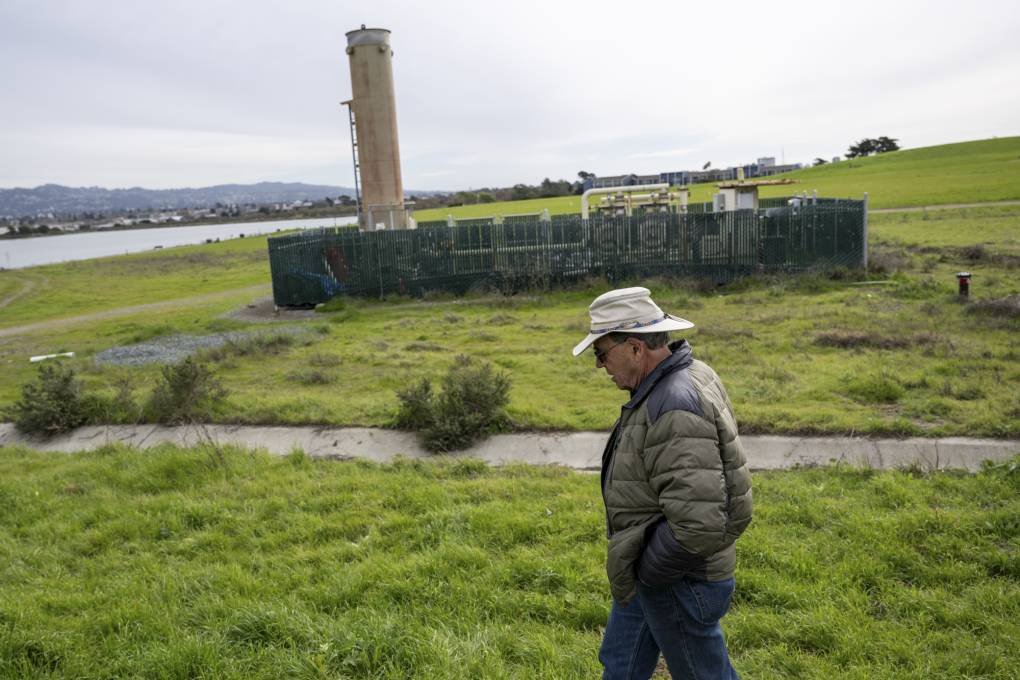
"caption": "John Roberts, a landscape architect, walks near a flare station in César Chávez Park, a 90-acre park in Berkeley with panoramic views of the San Francisco Bay, on Feb. 11, 2025. Built on a former landfill that operated until the 1980s, the park has a flare station that burns methane from decomposing organic material underground to help control emissions.",
"credit": "Beth LaBerge/KQED",
"altTag": null,
"description": null,
"imgSizes": {
"medium": {
"file": "https://cdn.kqed.org/wp-content/uploads/sites/10/2025/02/250211-BERKELEYDUMP-05-BL-KQED-800x533.jpg",
"width": 800,
"height": 533,
"mimeType": "image/jpeg"
},
"large": {
"file": "https://cdn.kqed.org/wp-content/uploads/sites/10/2025/02/250211-BERKELEYDUMP-05-BL-KQED-1020x680.jpg",
"width": 1020,
"height": 680,
"mimeType": "image/jpeg"
},
"thumbnail": {
"file": "https://cdn.kqed.org/wp-content/uploads/sites/10/2025/02/250211-BERKELEYDUMP-05-BL-KQED-160x107.jpg",
"width": 160,
"height": 107,
"mimeType": "image/jpeg"
},
"1536x1536": {
"file": "https://cdn.kqed.org/wp-content/uploads/sites/10/2025/02/250211-BERKELEYDUMP-05-BL-KQED-1536x1024.jpg",
"width": 1536,
"height": 1024,
"mimeType": "image/jpeg"
},
"post-thumbnail": {
"file": "https://cdn.kqed.org/wp-content/uploads/sites/10/2025/02/250211-BERKELEYDUMP-05-BL-KQED-672x372.jpg",
"width": 672,
"height": 372,
"mimeType": "image/jpeg"
},
"twentyfourteen-full-width": {
"file": "https://cdn.kqed.org/wp-content/uploads/sites/10/2025/02/250211-BERKELEYDUMP-05-BL-KQED-1038x576.jpg",
"width": 1038,
"height": 576,
"mimeType": "image/jpeg"
},
"full-width": {
"file": "https://cdn.kqed.org/wp-content/uploads/sites/10/2025/02/250211-BERKELEYDUMP-05-BL-KQED-1920x1280.jpg",
"width": 1920,
"height": 1280,
"mimeType": "image/jpeg"
},
"kqedFullSize": {
"file": "https://cdn.kqed.org/wp-content/uploads/sites/10/2025/02/250211-BERKELEYDUMP-05-BL-KQED.jpg",
"width": 2000,
"height": 1333
}
},
"isLoading": false,
"fetchFailed": false
},
"news_12030406": {
"type": "attachments",
"id": "news_12030406",
"meta": {
"index": "attachments_1716263798",
"site": "news",
"id": "12030406",
"found": true
},
"title": "250307-BERKELEY SCIENCE PROTEST-MD-06-KQED",
"publishDate": 1741387524,
"status": "inherit",
"parent": 12030313,
"modified": 1741396036,
"caption": "Fred Dillon cheers at a rally at UC Berkeley in association with the national Stand Up for Science day of action in Berkeley on March 7, 2025.",
"credit": "Martin do Nascimento/KQED",
"altTag": null,
"description": null,
"imgSizes": {
"medium": {
"file": "https://cdn.kqed.org/wp-content/uploads/sites/10/2025/03/250307-BERKELEY-SCIENCE-PROTEST-MD-06-KQED-800x533.jpg",
"width": 800,
"height": 533,
"mimeType": "image/jpeg"
},
"large": {
"file": "https://cdn.kqed.org/wp-content/uploads/sites/10/2025/03/250307-BERKELEY-SCIENCE-PROTEST-MD-06-KQED-1020x680.jpg",
"width": 1020,
"height": 680,
"mimeType": "image/jpeg"
},
"thumbnail": {
"file": "https://cdn.kqed.org/wp-content/uploads/sites/10/2025/03/250307-BERKELEY-SCIENCE-PROTEST-MD-06-KQED-160x107.jpg",
"width": 160,
"height": 107,
"mimeType": "image/jpeg"
},
"1536x1536": {
"file": "https://cdn.kqed.org/wp-content/uploads/sites/10/2025/03/250307-BERKELEY-SCIENCE-PROTEST-MD-06-KQED-1536x1024.jpg",
"width": 1536,
"height": 1024,
"mimeType": "image/jpeg"
},
"post-thumbnail": {
"file": "https://cdn.kqed.org/wp-content/uploads/sites/10/2025/03/250307-BERKELEY-SCIENCE-PROTEST-MD-06-KQED-672x372.jpg",
"width": 672,
"height": 372,
"mimeType": "image/jpeg"
},
"twentyfourteen-full-width": {
"file": "https://cdn.kqed.org/wp-content/uploads/sites/10/2025/03/250307-BERKELEY-SCIENCE-PROTEST-MD-06-KQED-1038x576.jpg",
"width": 1038,
"height": 576,
"mimeType": "image/jpeg"
},
"full-width": {
"file": "https://cdn.kqed.org/wp-content/uploads/sites/10/2025/03/250307-BERKELEY-SCIENCE-PROTEST-MD-06-KQED-1920x1280.jpg",
"width": 1920,
"height": 1280,
"mimeType": "image/jpeg"
},
"kqedFullSize": {
"file": "https://cdn.kqed.org/wp-content/uploads/sites/10/2025/03/250307-BERKELEY-SCIENCE-PROTEST-MD-06-KQED.jpg",
"width": 2000,
"height": 1333
}
},
"isLoading": false,
"fetchFailed": false
},
"news_12028811": {
"type": "attachments",
"id": "news_12028811",
"meta": {
"index": "attachments_1716263798",
"site": "news",
"id": "12028811",
"found": true
},
"title": "250226-UC STRIKE-MD-08",
"publishDate": 1740605238,
"status": "inherit",
"parent": 12028446,
"modified": 1740614905,
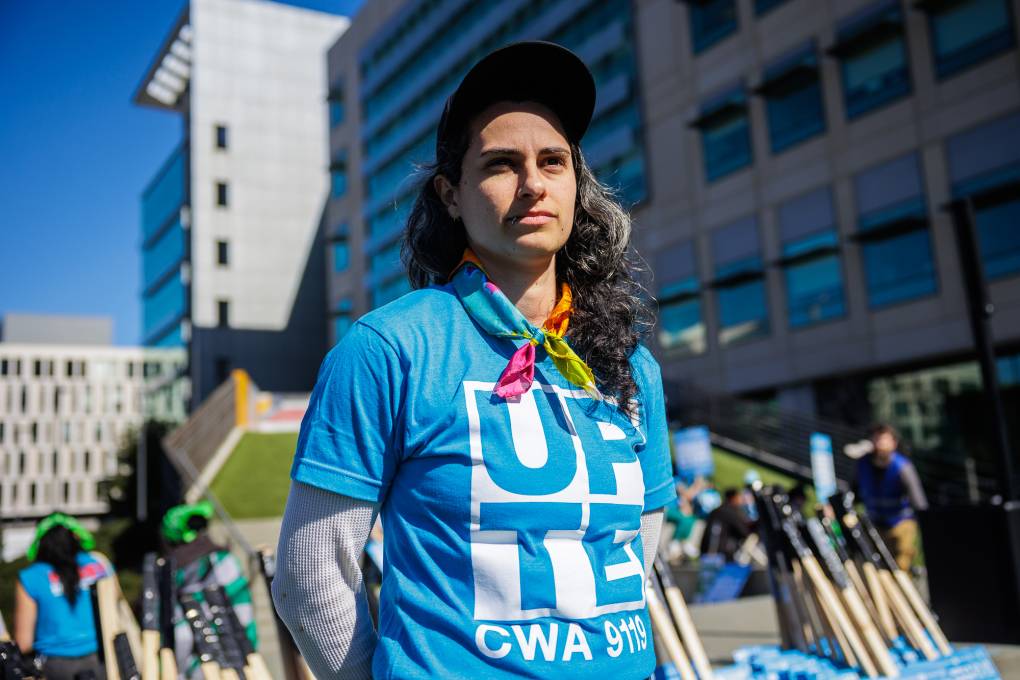
"caption": "Sarah Roberts, a medical interpreter at UCSF, and other members of the University Professional and Technical Employees Local 9119 and the American Federation of State County and Municipal Employees Local 3299 strike at the UCSF Medical Center at Mission Bay in San Francisco on Feb. 26, 2025. The strike represents the latest escalation in a conflict over top union concerns such as staffing levels and compensation that sparked a two-day work stoppage at UC San Francisco in November.",
"credit": "Martin do Nascimento/KQED",
"altTag": null,
"description": null,
"imgSizes": {
"medium": {
"file": "https://cdn.kqed.org/wp-content/uploads/sites/10/2025/02/250226-UC-STRIKE-MD-08-800x533.jpg",
"width": 800,
"height": 533,
"mimeType": "image/jpeg"
},
"large": {
"file": "https://cdn.kqed.org/wp-content/uploads/sites/10/2025/02/250226-UC-STRIKE-MD-08-1020x680.jpg",
"width": 1020,
"height": 680,
"mimeType": "image/jpeg"
},
"thumbnail": {
"file": "https://cdn.kqed.org/wp-content/uploads/sites/10/2025/02/250226-UC-STRIKE-MD-08-160x107.jpg",
"width": 160,
"height": 107,
"mimeType": "image/jpeg"
},
"1536x1536": {
"file": "https://cdn.kqed.org/wp-content/uploads/sites/10/2025/02/250226-UC-STRIKE-MD-08-1536x1024.jpg",
"width": 1536,
"height": 1024,
"mimeType": "image/jpeg"
},
"post-thumbnail": {
"file": "https://cdn.kqed.org/wp-content/uploads/sites/10/2025/02/250226-UC-STRIKE-MD-08-672x372.jpg",
"width": 672,
"height": 372,
"mimeType": "image/jpeg"
},
"twentyfourteen-full-width": {
"file": "https://cdn.kqed.org/wp-content/uploads/sites/10/2025/02/250226-UC-STRIKE-MD-08-1038x576.jpg",
"width": 1038,
"height": 576,
"mimeType": "image/jpeg"
},
"full-width": {
"file": "https://cdn.kqed.org/wp-content/uploads/sites/10/2025/02/250226-UC-STRIKE-MD-08-1920x1280.jpg",
"width": 1920,
"height": 1280,
"mimeType": "image/jpeg"
},
"kqedFullSize": {
"file": "https://cdn.kqed.org/wp-content/uploads/sites/10/2025/02/250226-UC-STRIKE-MD-08.jpg",
"width": 2000,
"height": 1333
}
},
"isLoading": false,
"fetchFailed": false
},
"news_12032513": {
"type": "attachments",
"id": "news_12032513",
"meta": {
"index": "attachments_1716263798",
"site": "news",
"id": "12032513",
"found": true
},
"title": "Natera_Daylaborers_250214_22a",
"publishDate": 1742590793,
"status": "inherit",
"parent": 12032505,
"modified": 1742590843,
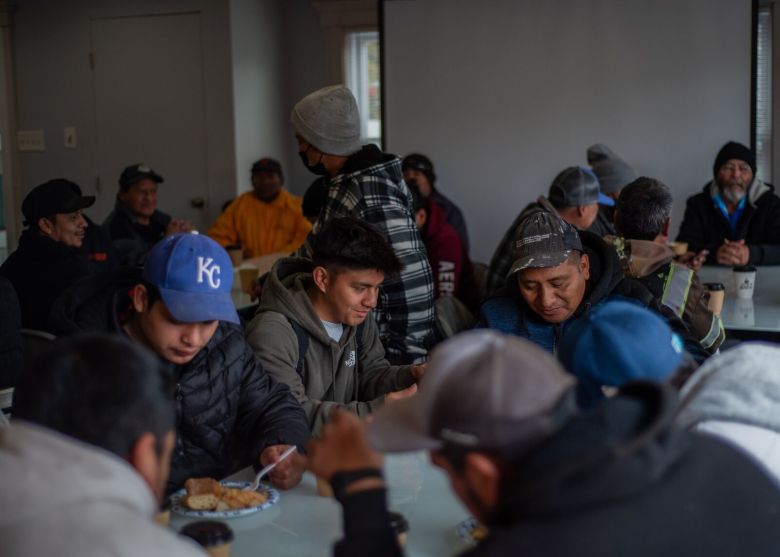
"caption": "Day laborers, jornaleros in Spanish, have breakfast at the Multicultural Institute on Friday, February 14.",
"credit": "Ximena Natera, Berkeleyside/CatchLight Local",
"altTag": null,
"description": null,
"imgSizes": {
"thumbnail": {
"file": "https://cdn.kqed.org/wp-content/uploads/sites/10/2025/03/Natera_Daylaborers_250214_22a-160x114.jpeg",
"width": 160,
"height": 114,
"mimeType": "image/jpeg"
},
"post-thumbnail": {
"file": "https://cdn.kqed.org/wp-content/uploads/sites/10/2025/03/Natera_Daylaborers_250214_22a-672x372.jpeg",
"width": 672,
"height": 372,
"mimeType": "image/jpeg"
},
"kqedFullSize": {
"file": "https://cdn.kqed.org/wp-content/uploads/sites/10/2025/03/Natera_Daylaborers_250214_22a.jpeg",
"width": 780,
"height": 557
}
},
"isLoading": false,
"fetchFailed": false
},
"news_12032262": {
"type": "attachments",
"id": "news_12032262",
"meta": {
"index": "attachments_1716263798",
"site": "news",
"id": "12032262",
"found": true
},
"title": "REI Sign",
"publishDate": 1742496205,
"status": "inherit",
"parent": 12032259,
"modified": 1742496290,
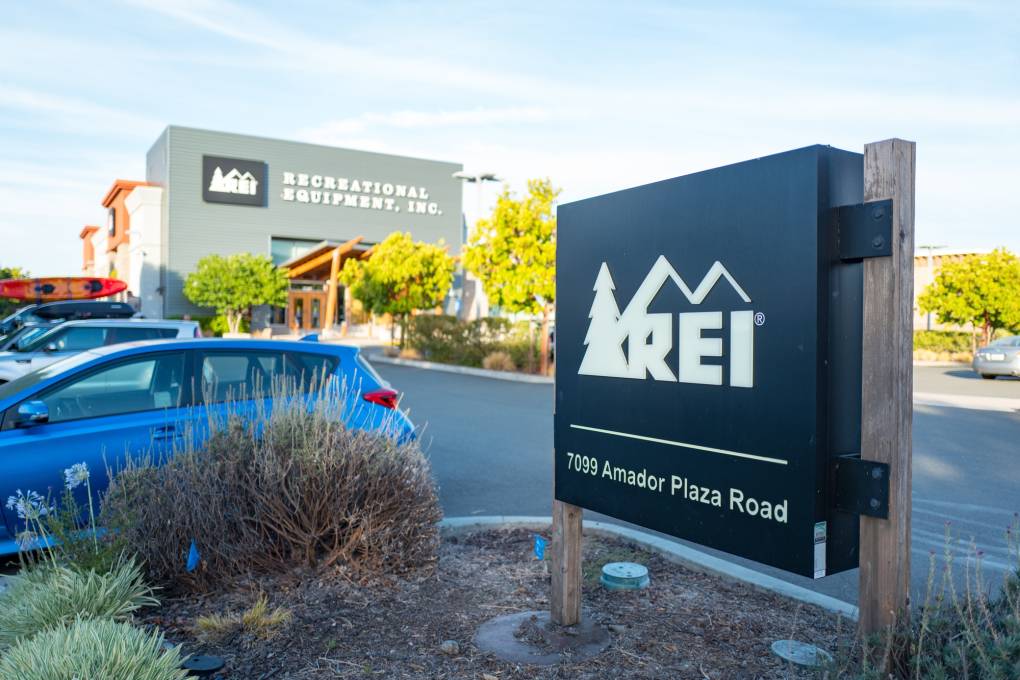
"caption": "The Recreational Equipment Incorporated (REI) outdoor clothing store in Dublin, California, July 23, 2018. ",
"credit": "Smith Collection/Gado/Getty Images",
"altTag": null,
"description": null,
"imgSizes": {
"medium": {
"file": "https://cdn.kqed.org/wp-content/uploads/sites/10/2025/03/REIDublinGetty-800x533.jpg",
"width": 800,
"height": 533,
"mimeType": "image/jpeg"
},
"large": {
"file": "https://cdn.kqed.org/wp-content/uploads/sites/10/2025/03/REIDublinGetty-1020x680.jpg",
"width": 1020,
"height": 680,
"mimeType": "image/jpeg"
},
"thumbnail": {
"file": "https://cdn.kqed.org/wp-content/uploads/sites/10/2025/03/REIDublinGetty-160x107.jpg",
"width": 160,
"height": 107,
"mimeType": "image/jpeg"
},
"1536x1536": {
"file": "https://cdn.kqed.org/wp-content/uploads/sites/10/2025/03/REIDublinGetty-1536x1024.jpg",
"width": 1536,
"height": 1024,
"mimeType": "image/jpeg"
},
"post-thumbnail": {
"file": "https://cdn.kqed.org/wp-content/uploads/sites/10/2025/03/REIDublinGetty-672x372.jpg",
"width": 672,
"height": 372,
"mimeType": "image/jpeg"
},
"twentyfourteen-full-width": {
"file": "https://cdn.kqed.org/wp-content/uploads/sites/10/2025/03/REIDublinGetty-1038x576.jpg",
"width": 1038,
"height": 576,
"mimeType": "image/jpeg"
},
"full-width": {
"file": "https://cdn.kqed.org/wp-content/uploads/sites/10/2025/03/REIDublinGetty-1920x1280.jpg",
"width": 1920,
"height": 1280,
"mimeType": "image/jpeg"
},
"kqedFullSize": {
"file": "https://cdn.kqed.org/wp-content/uploads/sites/10/2025/03/REIDublinGetty.jpg",
"width": 2000,
"height": 1333
}
},
"isLoading": false,
"fetchFailed": false
},
"news_12032118": {
"type": "attachments",
"id": "news_12032118",
"meta": {
"index": "attachments_1716263798",
"site": "news",
"id": "12032118",
"found": true
},
"title": "250319-UCBerkeleyProtest-13-BL",
"publishDate": 1742420513,
"status": "inherit",
"parent": 12056908,
"modified": 1758321320,
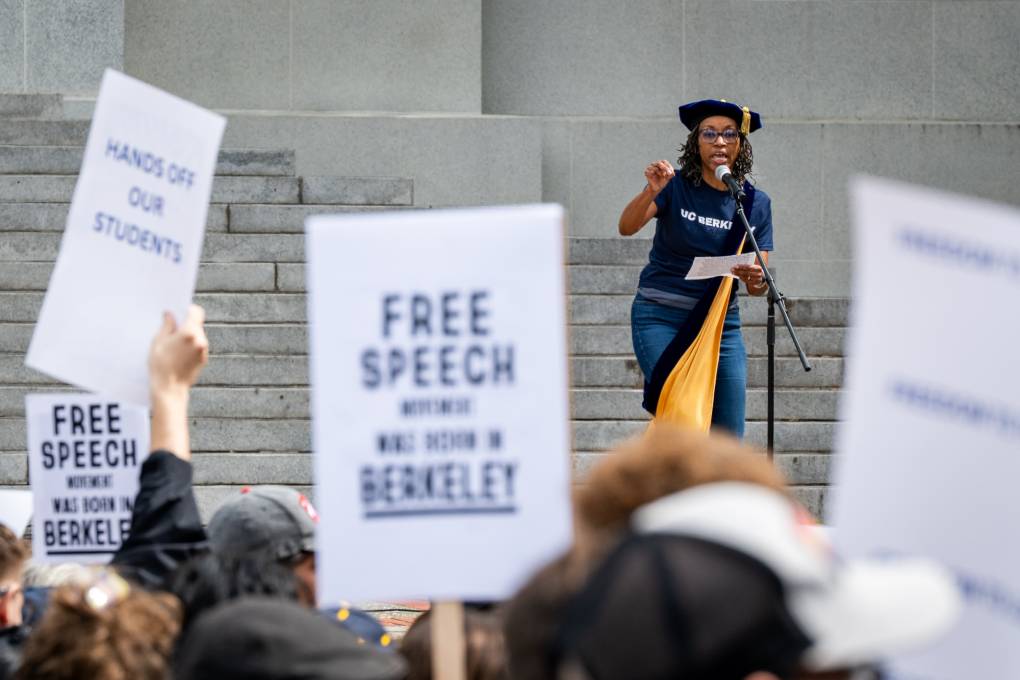
"caption": "Ula Taylor, professor of African American studies, speaks during a rally in Sproul Plaza at UC Berkeley on March 19, 2025, to protest the Trump administration's scrutiny of campus protests and curriculum nationwide. The demonstration comes amid broader concerns over federal funding cuts and actions perceived as threats to academic freedom.",
"credit": "Beth LaBerge/KQED",
"altTag": null,
"description": null,
"imgSizes": {
"medium": {
"file": "https://cdn.kqed.org/wp-content/uploads/sites/10/2025/03/250319-UCBerkeleyProtest-13-BL-800x533.jpg",
"width": 800,
"height": 533,
"mimeType": "image/jpeg"
},
"large": {
"file": "https://cdn.kqed.org/wp-content/uploads/sites/10/2025/03/250319-UCBerkeleyProtest-13-BL-1020x680.jpg",
"width": 1020,
"height": 680,
"mimeType": "image/jpeg"
},
"thumbnail": {
"file": "https://cdn.kqed.org/wp-content/uploads/sites/10/2025/03/250319-UCBerkeleyProtest-13-BL-160x107.jpg",
"width": 160,
"height": 107,
"mimeType": "image/jpeg"
},
"1536x1536": {
"file": "https://cdn.kqed.org/wp-content/uploads/sites/10/2025/03/250319-UCBerkeleyProtest-13-BL-1536x1024.jpg",
"width": 1536,
"height": 1024,
"mimeType": "image/jpeg"
},
"post-thumbnail": {
"file": "https://cdn.kqed.org/wp-content/uploads/sites/10/2025/03/250319-UCBerkeleyProtest-13-BL-672x372.jpg",
"width": 672,
"height": 372,
"mimeType": "image/jpeg"
},
"twentyfourteen-full-width": {
"file": "https://cdn.kqed.org/wp-content/uploads/sites/10/2025/03/250319-UCBerkeleyProtest-13-BL-1038x576.jpg",
"width": 1038,
"height": 576,
"mimeType": "image/jpeg"
},
"full-width": {
"file": "https://cdn.kqed.org/wp-content/uploads/sites/10/2025/03/250319-UCBerkeleyProtest-13-BL-1920x1280.jpg",
"width": 1920,
"height": 1280,
"mimeType": "image/jpeg"
},
"kqedFullSize": {
"file": "https://cdn.kqed.org/wp-content/uploads/sites/10/2025/03/250319-UCBerkeleyProtest-13-BL.jpg",
"width": 2000,
"height": 1333
}
},
"isLoading": false,
"fetchFailed": false
},
"news_11734231": {
"type": "attachments",
"id": "news_11734231",
"meta": {
"index": "attachments_1716263798",
"site": "news",
"id": "11734231",
"found": true
},
"title": "RS36031_Image from iOS (14)-qut",
"publishDate": 1553110882,
"status": "inherit",
"parent": 11733926,
"modified": 1742229157,
"caption": "Wildflowers atop Mount Davidson in San Francisco on March 20, 2019.",
"credit": "TheRealWBTC/Twitter",
"altTag": null,
"description": null,
"imgSizes": {
"thumbnail": {
"file": "https://cdn.kqed.org/wp-content/uploads/sites/10/2019/03/RS36031_Image-from-iOS-14-qut-160x120.jpg",
"width": 160,
"height": 120,
"mimeType": "image/jpeg"
},
"medium": {
"file": "https://cdn.kqed.org/wp-content/uploads/sites/10/2019/03/RS36031_Image-from-iOS-14-qut-800x600.jpg",
"width": 800,
"height": 600,
"mimeType": "image/jpeg"
},
"large": {
"file": "https://cdn.kqed.org/wp-content/uploads/sites/10/2019/03/RS36031_Image-from-iOS-14-qut-1020x765.jpg",
"width": 1020,
"height": 765,
"mimeType": "image/jpeg"
},
"complete_open_graph": {
"file": "https://cdn.kqed.org/wp-content/uploads/sites/10/2019/03/RS36031_Image-from-iOS-14-qut-1200x900.jpg",
"width": 1200,
"height": 900,
"mimeType": "image/jpeg"
},
"post-thumbnail": {
"file": "https://cdn.kqed.org/wp-content/uploads/sites/10/2019/03/RS36031_Image-from-iOS-14-qut-672x372.jpg",
"width": 672,
"height": 372,
"mimeType": "image/jpeg"
},
"twentyfourteen-full-width": {
"file": "https://cdn.kqed.org/wp-content/uploads/sites/10/2019/03/RS36031_Image-from-iOS-14-qut-1038x576.jpg",
"width": 1038,
"height": 576,
"mimeType": "image/jpeg"
},
"full-width": {
"file": "https://cdn.kqed.org/wp-content/uploads/sites/10/2019/03/RS36031_Image-from-iOS-14-qut-1920x1440.jpg",
"width": 1920,
"height": 1440,
"mimeType": "image/jpeg"
},
"guest-author-32": {
"file": "https://cdn.kqed.org/wp-content/uploads/sites/10/2019/03/RS36031_Image-from-iOS-14-qut-32x32.jpg",
"width": 32,
"height": 32,
"mimeType": "image/jpeg"
},
"guest-author-50": {
"file": "https://cdn.kqed.org/wp-content/uploads/sites/10/2019/03/RS36031_Image-from-iOS-14-qut-50x50.jpg",
"width": 50,
"height": 50,
"mimeType": "image/jpeg"
},
"guest-author-64": {
"file": "https://cdn.kqed.org/wp-content/uploads/sites/10/2019/03/RS36031_Image-from-iOS-14-qut-64x64.jpg",
"width": 64,
"height": 64,
"mimeType": "image/jpeg"
},
"guest-author-96": {
"file": "https://cdn.kqed.org/wp-content/uploads/sites/10/2019/03/RS36031_Image-from-iOS-14-qut-96x96.jpg",
"width": 96,
"height": 96,
"mimeType": "image/jpeg"
},
"guest-author-128": {
"file": "https://cdn.kqed.org/wp-content/uploads/sites/10/2019/03/RS36031_Image-from-iOS-14-qut-128x128.jpg",
"width": 128,
"height": 128,
"mimeType": "image/jpeg"
},
"apple_news_ca_landscape_12_9": {
"file": "https://cdn.kqed.org/wp-content/uploads/sites/10/2019/03/RS36031_Image-from-iOS-14-qut-1832x1374.jpg",
"width": 1832,
"height": 1374,
"mimeType": "image/jpeg"
},
"apple_news_ca_landscape_9_7": {
"file": "https://cdn.kqed.org/wp-content/uploads/sites/10/2019/03/RS36031_Image-from-iOS-14-qut-1376x1032.jpg",
"width": 1376,
"height": 1032,
"mimeType": "image/jpeg"
},
"apple_news_ca_landscape_5_5": {
"file": "https://cdn.kqed.org/wp-content/uploads/sites/10/2019/03/RS36031_Image-from-iOS-14-qut-1044x783.jpg",
"width": 1044,
"height": 783,
"mimeType": "image/jpeg"
},
"apple_news_ca_landscape_4_7": {
"file": "https://cdn.kqed.org/wp-content/uploads/sites/10/2019/03/RS36031_Image-from-iOS-14-qut-632x474.jpg",
"width": 632,
"height": 474,
"mimeType": "image/jpeg"
},
"apple_news_ca_landscape_4_0": {
"file": "https://cdn.kqed.org/wp-content/uploads/sites/10/2019/03/RS36031_Image-from-iOS-14-qut-536x402.jpg",
"width": 536,
"height": 402,
"mimeType": "image/jpeg"
},
"apple_news_ca_portrait_12_9": {
"file": "https://cdn.kqed.org/wp-content/uploads/sites/10/2019/03/RS36031_Image-from-iOS-14-qut-1122x1440.jpg",
"width": 1122,
"height": 1440,
"mimeType": "image/jpeg"
},
"apple_news_ca_portrait_9_7": {
"file": "https://cdn.kqed.org/wp-content/uploads/sites/10/2019/03/RS36031_Image-from-iOS-14-qut-840x1120.jpg",
"width": 840,
"height": 1120,
"mimeType": "image/jpeg"
},
"apple_news_ca_portrait_5_5": {
"file": "https://cdn.kqed.org/wp-content/uploads/sites/10/2019/03/RS36031_Image-from-iOS-14-qut-687x916.jpg",
"width": 687,
"height": 916,
"mimeType": "image/jpeg"
},
"apple_news_ca_portrait_4_7": {
"file": "https://cdn.kqed.org/wp-content/uploads/sites/10/2019/03/RS36031_Image-from-iOS-14-qut-414x552.jpg",
"width": 414,
"height": 552,
"mimeType": "image/jpeg"
},
"apple_news_ca_portrait_4_0": {
"file": "https://cdn.kqed.org/wp-content/uploads/sites/10/2019/03/RS36031_Image-from-iOS-14-qut-354x472.jpg",
"width": 354,
"height": 472,
"mimeType": "image/jpeg"
},
"apple_news_ca_square_12_9": {
"file": "https://cdn.kqed.org/wp-content/uploads/sites/10/2019/03/RS36031_Image-from-iOS-14-qut-1472x1440.jpg",
"width": 1472,
"height": 1440,
"mimeType": "image/jpeg"
},
"apple_news_ca_square_9_7": {
"file": "https://cdn.kqed.org/wp-content/uploads/sites/10/2019/03/RS36031_Image-from-iOS-14-qut-1104x1104.jpg",
"width": 1104,
"height": 1104,
"mimeType": "image/jpeg"
},
"apple_news_ca_square_5_5": {
"file": "https://cdn.kqed.org/wp-content/uploads/sites/10/2019/03/RS36031_Image-from-iOS-14-qut-912x912.jpg",
"width": 912,
"height": 912,
"mimeType": "image/jpeg"
},
"apple_news_ca_square_4_7": {
"file": "https://cdn.kqed.org/wp-content/uploads/sites/10/2019/03/RS36031_Image-from-iOS-14-qut-550x550.jpg",
"width": 550,
"height": 550,
"mimeType": "image/jpeg"
},
"apple_news_ca_square_4_0": {
"file": "https://cdn.kqed.org/wp-content/uploads/sites/10/2019/03/RS36031_Image-from-iOS-14-qut-470x470.jpg",
"width": 470,
"height": 470,
"mimeType": "image/jpeg"
},
"kqedFullSize": {
"file": "https://cdn.kqed.org/wp-content/uploads/sites/10/2019/03/RS36031_Image-from-iOS-14-qut.jpg",
"width": 1920,
"height": 1440
}
},
"isLoading": false,
"fetchFailed": false
},
"news_12029009": {
"type": "attachments",
"id": "news_12029009",
"meta": {
"index": "attachments_1716263798",
"site": "news",
"id": "12029009",
"found": true
},
"title": "20250226_Youth-Vote_DMB_00479",
"publishDate": 1740684079,
"status": "inherit",
"parent": 0,
"modified": 1740701783,
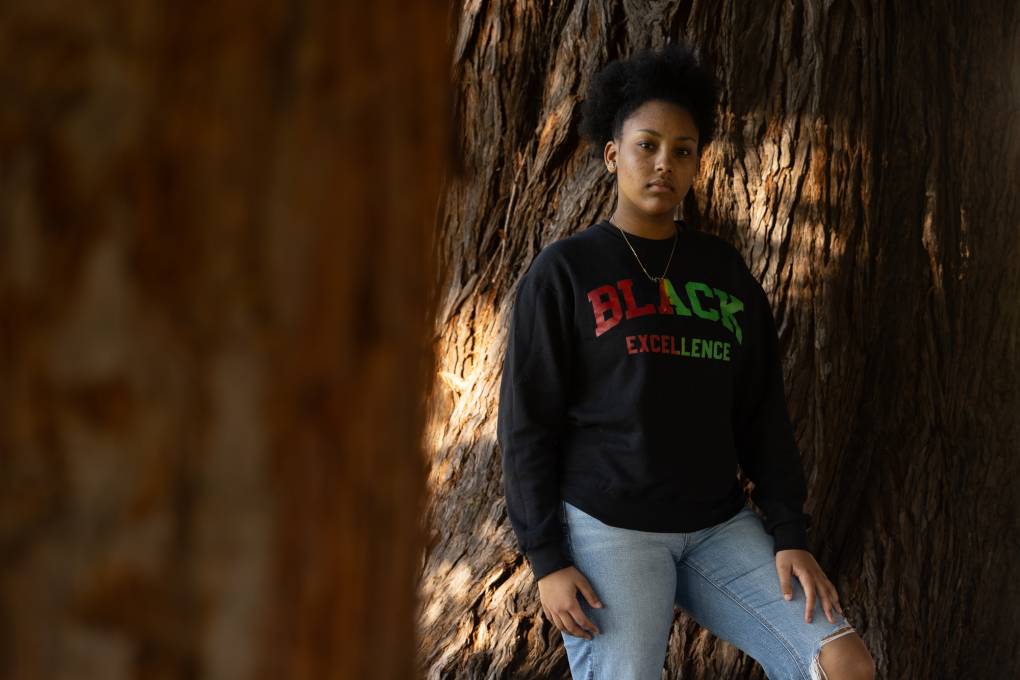
"caption": "Zamahra Winta Clark at Willard Park in Berkeley, on Wednesday, Feb. 26, 2025. Clark is a senior at Berkeley High who organized registration efforts among youth voters in her city and was a first-time youth voter in the 2024 election.",
"credit": "David M. Barreda/KQED",
"altTag": null,
"description": null,
"imgSizes": {
"medium": {
"file": "https://cdn.kqed.org/wp-content/uploads/sites/10/2025/02/20250226_Youth-Vote_DMB_00479-800x534.jpg",
"width": 800,
"height": 534,
"mimeType": "image/jpeg"
},
"large": {
"file": "https://cdn.kqed.org/wp-content/uploads/sites/10/2025/02/20250226_Youth-Vote_DMB_00479-1020x680.jpg",
"width": 1020,
"height": 680,
"mimeType": "image/jpeg"
},
"thumbnail": {
"file": "https://cdn.kqed.org/wp-content/uploads/sites/10/2025/02/20250226_Youth-Vote_DMB_00479-160x107.jpg",
"width": 160,
"height": 107,
"mimeType": "image/jpeg"
},
"1536x1536": {
"file": "https://cdn.kqed.org/wp-content/uploads/sites/10/2025/02/20250226_Youth-Vote_DMB_00479-1536x1025.jpg",
"width": 1536,
"height": 1025,
"mimeType": "image/jpeg"
},
"post-thumbnail": {
"file": "https://cdn.kqed.org/wp-content/uploads/sites/10/2025/02/20250226_Youth-Vote_DMB_00479-672x372.jpg",
"width": 672,
"height": 372,
"mimeType": "image/jpeg"
},
"twentyfourteen-full-width": {
"file": "https://cdn.kqed.org/wp-content/uploads/sites/10/2025/02/20250226_Youth-Vote_DMB_00479-1038x576.jpg",
"width": 1038,
"height": 576,
"mimeType": "image/jpeg"
},
"full-width": {
"file": "https://cdn.kqed.org/wp-content/uploads/sites/10/2025/02/20250226_Youth-Vote_DMB_00479-1920x1281.jpg",
"width": 1920,
"height": 1281,
"mimeType": "image/jpeg"
},
"kqedFullSize": {
"file": "https://cdn.kqed.org/wp-content/uploads/sites/10/2025/02/20250226_Youth-Vote_DMB_00479.jpg",
"width": 2000,
"height": 1334
}
},
"isLoading": false,
"fetchFailed": false
},
"news_12002386": {
"type": "attachments",
"id": "news_12002386",
"meta": {
"index": "attachments_1716263798",
"site": "news",
"id": "12002386",
"found": true
},
"title": "LOGO_THEBAY",
"publishDate": 1724964767,
"status": "inherit",
"parent": 12002385,
"modified": 1724964767,
"caption": null,
"credit": null,
"altTag": null,
"description": null,
"imgSizes": {
"thumbnail": {
"file": "https://cdn.kqed.org/wp-content/uploads/sites/10/2024/08/LOGO_THEBAY-160x160.png",
"width": 160,
"height": 160,
"mimeType": "image/png"
},
"kqedFullSize": {
"file": "https://cdn.kqed.org/wp-content/uploads/sites/10/2024/08/LOGO_THEBAY.png",
"width": 300,
"height": 300
}
},
"isLoading": false,
"fetchFailed": false
},
"news_12028220": {
"type": "attachments",
"id": "news_12028220",
"meta": {
"index": "attachments_1716263798",
"site": "news",
"id": "12028220",
"found": true
},
"title": "IMG_8506",
"publishDate": 1740180132,
"status": "inherit",
"parent": 12028116,
"modified": 1740181542,
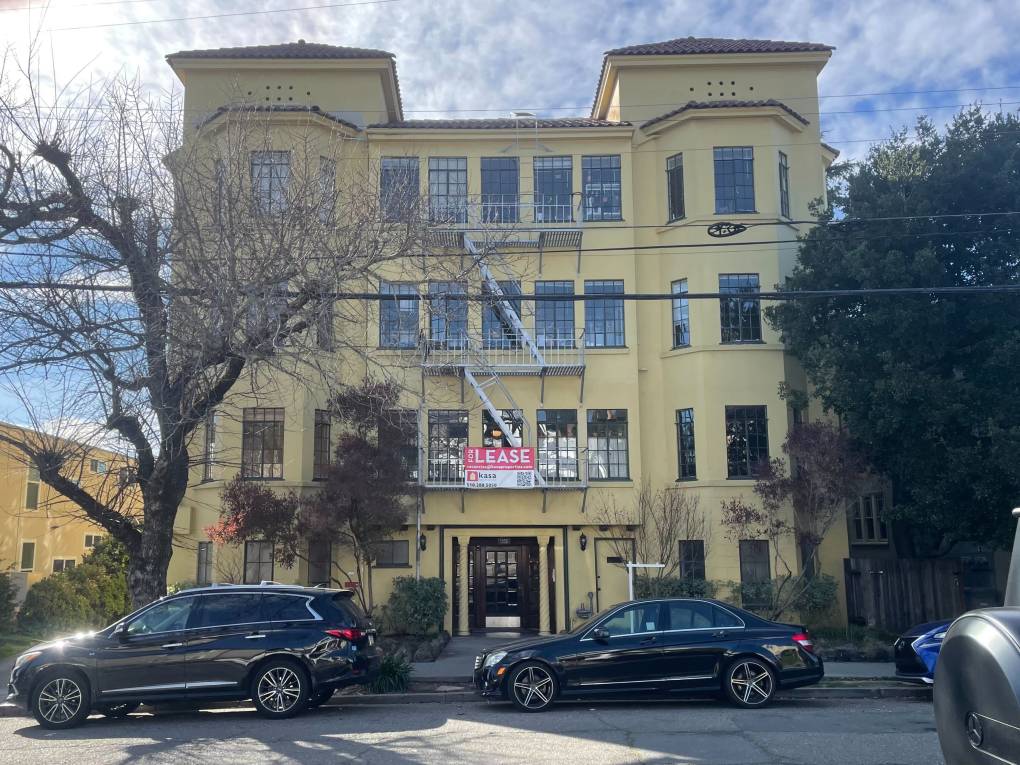
"caption": "Residents of an apartment building on 1332 Shattuck Ave. complained of persistent issues with mold, leaks and electricity. In Jan. 2025, they organized under new rights codified in a November ballot measure.\n",
"credit": null,
"altTag": null,
"description": null,
"imgSizes": {
"medium": {
"file": "https://cdn.kqed.org/wp-content/uploads/sites/10/2025/02/IMG_8506-800x600.jpg",
"width": 800,
"height": 600,
"mimeType": "image/jpeg"
},
"large": {
"file": "https://cdn.kqed.org/wp-content/uploads/sites/10/2025/02/IMG_8506-1020x765.jpg",
"width": 1020,
"height": 765,
"mimeType": "image/jpeg"
},
"thumbnail": {
"file": "https://cdn.kqed.org/wp-content/uploads/sites/10/2025/02/IMG_8506-160x120.jpg",
"width": 160,
"height": 120,
"mimeType": "image/jpeg"
},
"1536x1536": {
"file": "https://cdn.kqed.org/wp-content/uploads/sites/10/2025/02/IMG_8506-1536x1152.jpg",
"width": 1536,
"height": 1152,
"mimeType": "image/jpeg"
},
"2048x2048": {
"file": "https://cdn.kqed.org/wp-content/uploads/sites/10/2025/02/IMG_8506-2048x1536.jpg",
"width": 2048,
"height": 1536,
"mimeType": "image/jpeg"
},
"post-thumbnail": {
"file": "https://cdn.kqed.org/wp-content/uploads/sites/10/2025/02/IMG_8506-672x372.jpg",
"width": 672,
"height": 372,
"mimeType": "image/jpeg"
},
"twentyfourteen-full-width": {
"file": "https://cdn.kqed.org/wp-content/uploads/sites/10/2025/02/IMG_8506-1038x576.jpg",
"width": 1038,
"height": 576,
"mimeType": "image/jpeg"
},
"full-width": {
"file": "https://cdn.kqed.org/wp-content/uploads/sites/10/2025/02/IMG_8506-1920x1440.jpg",
"width": 1920,
"height": 1440,
"mimeType": "image/jpeg"
},
"kqedFullSize": {
"file": "https://cdn.kqed.org/wp-content/uploads/sites/10/2025/02/IMG_8506-scaled-e1740181827494.jpg",
"width": 2000,
"height": 1500
}
},
"isLoading": false,
"fetchFailed": false
}
},
"audioPlayerReducer": {
"postId": "stream_live",
"isPaused": true,
"isPlaying": false,
"pfsActive": false,
"pledgeModalIsOpen": true,
"playerDrawerIsOpen": false,
"liveAudioPlayStartedAt": 0,
"liveAudioPlayContext": ""
},
"authorsReducer": {
"matthewgreen": {
"type": "authors",
"id": "1263",
"meta": {
"index": "authors_1716337520",
"id": "1263",
"found": true
},
"name": "Matthew Green",
"firstName": "Matthew",
"lastName": "Green",
"slug": "matthewgreen",
"email": "mgreen@kqed.org",
"display_author_email": false,
"staff_mastheads": [],
"title": "KQED Editor/Reporter",
"bio": "Matthew Green is a digital media producer for KQED News. He previously produced \u003ca href=\"http://www.kqed.org/lowdown\">The Lowdown\u003c/a>, KQED’s multimedia news education blog. Matthew's written for numerous Bay Area publications, including the Oakland Tribune and San Francisco Chronicle. He also taught journalism classes at Fremont High School in East Oakland.\r\n\r\nEmail: mgreen@kqed.org; Twitter: @MGreenKQED",
"avatar": "https://secure.gravatar.com/avatar/3bf498d1267ca02c8494f33d8cfc575e?s=600&d=blank&r=g",
"twitter": "MGreenKQED",
"facebook": null,
"instagram": null,
"linkedin": null,
"sites": [
{
"site": "news",
"roles": []
},
{
"site": "lowdown",
"roles": []
},
{
"site": "science",
"roles": []
},
{
"site": "education",
"roles": []
},
{
"site": "quest",
"roles": []
},
{
"site": "liveblog",
"roles": []
}
],
"headData": {
"title": "Matthew Green | KQED",
"description": "KQED Editor/Reporter",
"ogImgSrc": "https://secure.gravatar.com/avatar/3bf498d1267ca02c8494f33d8cfc575e?s=600&d=blank&r=g",
"twImgSrc": "https://secure.gravatar.com/avatar/3bf498d1267ca02c8494f33d8cfc575e?s=600&d=blank&r=g"
},
"isLoading": false,
"link": "/author/matthewgreen"
},
"ecruzguevarra": {
"type": "authors",
"id": "8654",
"meta": {
"index": "authors_1716337520",
"id": "8654",
"found": true
},
"name": "Ericka Cruz Guevarra",
"firstName": "Ericka",
"lastName": "Cruz Guevarra",
"slug": "ecruzguevarra",
"email": "ecruzguevarra@kqed.org",
"display_author_email": true,
"staff_mastheads": [
"news"
],
"title": "Producer, The Bay Podcast",
"bio": "Ericka Cruz Guevarra is host of \u003ca href=\"https://www.kqed.org/podcasts/thebay\">\u003cem>The Bay\u003c/em>\u003c/a> podcast at KQED. Before host, she was the show’s producer. Her work in that capacity includes a three-part reported series on policing in Vallejo, which won a 2020 excellence in journalism award from the Society of Professional Journalists. Ericka has worked as a breaking news reporter at Oregon Public Broadcasting, helped produce the Code Switch podcast, and was KQED’s inaugural Raul Ramirez Diversity Fund intern. She’s also an alumna of NPR’s Next Generation Radio program. Send her an email if you have strong feelings about whether Fairfield and Suisun City are the Bay. Ericka is represented by SAG-AFTRA.",
"avatar": "https://secure.gravatar.com/avatar/accefc1de4bafc7e234b69bcb9b6f6536c130fd84709bc3069ef11a78787e1bb?s=600&d=blank&r=g",
"twitter": "NotoriousECG",
"bluesky": null,
"facebook": null,
"instagram": null,
"linkedin": null,
"sites": [
{
"site": "arts",
"roles": [
"subscriber"
]
},
{
"site": "news",
"roles": [
"editor",
"manage_categories"
]
},
{
"site": "futureofyou",
"roles": [
"subscriber"
]
},
{
"site": "stateofhealth",
"roles": [
"subscriber"
]
},
{
"site": "science",
"roles": [
"editor"
]
},
{
"site": "forum",
"roles": [
"subscriber"
]
}
],
"headData": {
"title": "Ericka Cruz Guevarra | KQED",
"description": "Producer, The Bay Podcast",
"ogImgSrc": "https://secure.gravatar.com/avatar/accefc1de4bafc7e234b69bcb9b6f6536c130fd84709bc3069ef11a78787e1bb?s=600&d=blank&r=g",
"twImgSrc": "https://secure.gravatar.com/avatar/accefc1de4bafc7e234b69bcb9b6f6536c130fd84709bc3069ef11a78787e1bb?s=600&d=blank&r=g"
},
"isLoading": false,
"link": "/author/ecruzguevarra"
},
"fjhabvala": {
"type": "authors",
"id": "8659",
"meta": {
"index": "authors_1716337520",
"id": "8659",
"found": true
},
"name": "Farida Jhabvala Romero",
"firstName": "Farida",
"lastName": "Jhabvala Romero",
"slug": "fjhabvala",
"email": "fjhabvala@kqed.org",
"display_author_email": true,
"staff_mastheads": [
"news"
],
"title": "KQED Contributor",
"bio": "Farida Jhabvala Romero is a Labor Correspondent for KQED. She previously covered immigration. Farida was \u003ca href=\"https://www.ccnma.org/2022-most-influential-latina-journalists\">named\u003c/a> one of the 10 Most Influential Latina Journalists in California in 2022 by the California Chicano News Media Association. Her work has won awards from the Society of Professional Journalists (Northern California), as well as a national and regional Edward M. Murrow Award for the collaborative reporting projects “Dangerous Air” and “Graying California.” Before joining KQED, Farida worked as a producer at Radio Bilingüe, a national public radio network. Farida earned her master’s degree in journalism from Stanford University.",
"avatar": "https://secure.gravatar.com/avatar/f9f022d4e2609741874222a1e9d41f48fea74011aa7c615eef91d9a50c944ebe?s=600&d=blank&r=g",
"twitter": "FaridaJhabvala",
"bluesky": null,
"facebook": null,
"instagram": null,
"linkedin": "https://www.linkedin.com/in/faridajhabvala/",
"sites": [
{
"site": "news",
"roles": [
"editor"
]
},
{
"site": "stateofhealth",
"roles": [
"author"
]
},
{
"site": "liveblog",
"roles": [
"author"
]
}
],
"headData": {
"title": "Farida Jhabvala Romero | KQED",
"description": "KQED Contributor",
"ogImgSrc": "https://secure.gravatar.com/avatar/f9f022d4e2609741874222a1e9d41f48fea74011aa7c615eef91d9a50c944ebe?s=600&d=blank&r=g",
"twImgSrc": "https://secure.gravatar.com/avatar/f9f022d4e2609741874222a1e9d41f48fea74011aa7c615eef91d9a50c944ebe?s=600&d=blank&r=g"
},
"isLoading": false,
"link": "/author/fjhabvala"
},
"dcronin": {
"type": "authors",
"id": "11362",
"meta": {
"index": "authors_1716337520",
"id": "11362",
"found": true
},
"name": "Dana Cronin",
"firstName": "Dana",
"lastName": "Cronin",
"slug": "dcronin",
"email": "dcronin@KQED.org",
"display_author_email": true,
"staff_mastheads": [],
"title": "KQED Contributor",
"bio": "Dana Cronin is a reporter for KQED News. She loves writing stories about climate change, environmental issues, food and agriculture. She's reported across the country, from Colorado to Washington D.C. to Illinois, and has won numerous awards for her coverage. Her work is regularly featured on national broadcasts, including NPR’s Morning Edition, All Things Considered, PBS Newshour and Science Friday. She lives in Oakland and has an avocado tree in her back yard.",
"avatar": "https://secure.gravatar.com/avatar/bcf89e3455ff7235f96ab6fa7258dd95?s=600&d=blank&r=g",
"twitter": "DanaHCronin",
"facebook": null,
"instagram": null,
"linkedin": null,
"sites": [
{
"site": "arts",
"roles": [
"author"
]
},
{
"site": "news",
"roles": [
"editor"
]
},
{
"site": "science",
"roles": [
"author"
]
},
{
"site": "liveblog",
"roles": [
"author"
]
}
],
"headData": {
"title": "Dana Cronin | KQED",
"description": "KQED Contributor",
"ogImgSrc": "https://secure.gravatar.com/avatar/bcf89e3455ff7235f96ab6fa7258dd95?s=600&d=blank&r=g",
"twImgSrc": "https://secure.gravatar.com/avatar/bcf89e3455ff7235f96ab6fa7258dd95?s=600&d=blank&r=g"
},
"isLoading": false,
"link": "/author/dcronin"
},
"amontecillo": {
"type": "authors",
"id": "11649",
"meta": {
"index": "authors_1716337520",
"id": "11649",
"found": true
},
"name": "Alan Montecillo",
"firstName": "Alan",
"lastName": "Montecillo",
"slug": "amontecillo",
"email": "amontecillo@kqed.org",
"display_author_email": false,
"staff_mastheads": [
"news"
],
"title": "KQED Contributor",
"bio": "Alan Montecillo is the senior editor of \u003cem>\u003ca href=\"http://kqed.org/thebay\">The Bay\u003c/a>, \u003c/em> KQED's local news podcast. Before moving to the Bay Area, he worked as a senior talk show producer for WILL in Champaign-Urbana, Illinois and at Oregon Public Broadcasting in Portland, Oregon. He has won journalism awards from the Society of Professional Journalists Northern California, the Public Media Journalists Association, The Signal Awards, and has also received a regional Edward R. Murrow award. Alan is a Filipino American from Hong Kong and a graduate of Reed College.",
"avatar": "https://secure.gravatar.com/avatar/268f53a2066899ea9efdd8a5900218b17c822d9862cbc9326cccec53ef41d349?s=600&d=blank&r=g",
"twitter": "alanmontecillo",
"bluesky": null,
"facebook": null,
"instagram": null,
"linkedin": null,
"sites": [
{
"site": "",
"roles": [
"editor"
]
},
{
"site": "news",
"roles": [
"editor",
"manage_categories"
]
}
],
"headData": {
"title": "Alan Montecillo | KQED",
"description": "KQED Contributor",
"ogImgSrc": "https://secure.gravatar.com/avatar/268f53a2066899ea9efdd8a5900218b17c822d9862cbc9326cccec53ef41d349?s=600&d=blank&r=g",
"twImgSrc": "https://secure.gravatar.com/avatar/268f53a2066899ea9efdd8a5900218b17c822d9862cbc9326cccec53ef41d349?s=600&d=blank&r=g"
},
"isLoading": false,
"link": "/author/amontecillo"
},
"jessicakariisa": {
"type": "authors",
"id": "11831",
"meta": {
"index": "authors_1716337520",
"id": "11831",
"found": true
},
"name": "Jessica Kariisa",
"firstName": "Jessica",
"lastName": "Kariisa",
"slug": "jessicakariisa",
"email": "jkariisa@kqed.org",
"display_author_email": false,
"staff_mastheads": [],
"title": "Producer, The Bay",
"bio": "Jessica Kariisa is the producer of The Bay. She first joined KQED as an intern for The California Report Magazine, after which she became an on-call producer. She reported a Bay Curious episode on the use of rap lyrics in criminal trials which won a Society of Professional Journalists award in 2023 for Excellence in Features Journalism and the 2023 Signal Award for Best Conversation Starter. She’s worked on podcasts for Snap Judgment and American Public Media. Before embarking on her audio career, she was a music journalist.\r\n\r\nJessica Kariisa is represented by SAG-AFTRA.",
"avatar": "https://secure.gravatar.com/avatar/522e97b28ac0b3d411621c0fde8f3419c7b71ea2c5c262c57c4bb600963f328c?s=600&d=blank&r=g",
"twitter": null,
"bluesky": null,
"facebook": null,
"instagram": null,
"linkedin": null,
"sites": [
{
"site": "arts",
"roles": [
"author"
]
},
{
"site": "news",
"roles": [
"editor",
"manage_categories"
]
}
],
"headData": {
"title": "Jessica Kariisa | KQED",
"description": "Producer, The Bay",
"ogImgSrc": "https://secure.gravatar.com/avatar/522e97b28ac0b3d411621c0fde8f3419c7b71ea2c5c262c57c4bb600963f328c?s=600&d=blank&r=g",
"twImgSrc": "https://secure.gravatar.com/avatar/522e97b28ac0b3d411621c0fde8f3419c7b71ea2c5c262c57c4bb600963f328c?s=600&d=blank&r=g"
},
"isLoading": false,
"link": "/author/jessicakariisa"
},
"bsiavoshy": {
"type": "authors",
"id": "11890",
"meta": {
"index": "authors_1716337520",
"id": "11890",
"found": true
},
"name": "Bejan Siavoshy",
"firstName": "Bejan",
"lastName": "Siavoshy",
"slug": "bsiavoshy",
"email": "bsiavoshy@kqed.org",
"display_author_email": false,
"staff_mastheads": [],
"title": "KQED Contributor",
"bio": null,
"avatar": "https://secure.gravatar.com/avatar/ead3e7c509634b37a73b1f57677e49f9?s=600&d=blank&r=g",
"twitter": null,
"facebook": null,
"instagram": null,
"linkedin": null,
"sites": [
{
"site": "news",
"roles": [
"editor"
]
}
],
"headData": {
"title": "Bejan Siavoshy | KQED",
"description": "KQED Contributor",
"ogImgSrc": "https://secure.gravatar.com/avatar/ead3e7c509634b37a73b1f57677e49f9?s=600&d=blank&r=g",
"twImgSrc": "https://secure.gravatar.com/avatar/ead3e7c509634b37a73b1f57677e49f9?s=600&d=blank&r=g"
},
"isLoading": false,
"link": "/author/bsiavoshy"
},
"kdebenedetti": {
"type": "authors",
"id": "11913",
"meta": {
"index": "authors_1716337520",
"id": "11913",
"found": true
},
"name": "Katie DeBenedetti",
"firstName": "Katie",
"lastName": "DeBenedetti",
"slug": "kdebenedetti",
"email": "kdebenedetti@kqed.org",
"display_author_email": false,
"staff_mastheads": [
"news",
"science"
],
"title": "KQED Contributor",
"bio": "Katie DeBenedetti is a digital reporter covering daily news for the Express Desk. Prior to joining KQED as a culture reporting intern in January 2024, she covered education and city government for the Napa Valley Register.",
"avatar": "https://secure.gravatar.com/avatar/6e31073cb8f7e4214ab03f42771d0f45?s=600&d=blank&r=g",
"twitter": null,
"facebook": null,
"instagram": null,
"linkedin": null,
"sites": [
{
"site": "news",
"roles": [
"author"
]
},
{
"site": "science",
"roles": [
"author"
]
},
{
"site": "liveblog",
"roles": [
"author"
]
}
],
"headData": {
"title": "Katie DeBenedetti | KQED",
"description": "KQED Contributor",
"ogImgSrc": "https://secure.gravatar.com/avatar/6e31073cb8f7e4214ab03f42771d0f45?s=600&d=blank&r=g",
"twImgSrc": "https://secure.gravatar.com/avatar/6e31073cb8f7e4214ab03f42771d0f45?s=600&d=blank&r=g"
},
"isLoading": false,
"link": "/author/kdebenedetti"
},
"rcooke": {
"type": "authors",
"id": "11921",
"meta": {
"index": "authors_1716337520",
"id": "11921",
"found": true
},
"name": "Riley Cooke",
"firstName": "Riley",
"lastName": "Cooke",
"slug": "rcooke",
"email": "rcooke@kqed.org",
"display_author_email": true,
"staff_mastheads": [
"news"
],
"title": "KQED Contributor",
"bio": "Riley is a senior at UC Berkeley, where she studies political science and journalism. Her work has appeared in SFGate, NBC Bay Area, Local News Matters and more. She enjoys reporting on politics, housing and homelessness — and using as many em dashes as her editors will allow.",
"avatar": "https://secure.gravatar.com/avatar/792f98c126cc5e270a8a96f77f7224ea?s=600&d=blank&r=g",
"twitter": "rrileycooke",
"facebook": null,
"instagram": null,
"linkedin": null,
"sites": [
{
"site": "arts",
"roles": [
"author"
]
},
{
"site": "news",
"roles": [
"author"
]
}
],
"headData": {
"title": "Riley Cooke | KQED",
"description": "KQED Contributor",
"ogImgSrc": "https://secure.gravatar.com/avatar/792f98c126cc5e270a8a96f77f7224ea?s=600&d=blank&r=g",
"twImgSrc": "https://secure.gravatar.com/avatar/792f98c126cc5e270a8a96f77f7224ea?s=600&d=blank&r=g"
},
"isLoading": false,
"link": "/author/rcooke"
},
"mvelasquez": {
"type": "authors",
"id": "11939",
"meta": {
"index": "authors_1716337520",
"id": "11939",
"found": true
},
"name": "Mel Velasquez",
"firstName": "Mel",
"lastName": "Velasquez",
"slug": "mvelasquez",
"email": "mvelasquez@kqed.org",
"display_author_email": false,
"staff_mastheads": [],
"title": "KQED Contributor",
"bio": null,
"avatar": "https://secure.gravatar.com/avatar/409094312d56fab09fef4251e949ffa6?s=600&d=blank&r=g",
"twitter": null,
"facebook": null,
"instagram": null,
"linkedin": "www.linkedin.com/in/melanievelasquezz",
"sites": [
{
"site": "news",
"roles": [
"editor"
]
}
],
"headData": {
"title": "Mel Velasquez | KQED",
"description": "KQED Contributor",
"ogImgSrc": "https://secure.gravatar.com/avatar/409094312d56fab09fef4251e949ffa6?s=600&d=blank&r=g",
"twImgSrc": "https://secure.gravatar.com/avatar/409094312d56fab09fef4251e949ffa6?s=600&d=blank&r=g"
},
"isLoading": false,
"link": "/author/mvelasquez"
},
"tpaoli": {
"type": "authors",
"id": "11945",
"meta": {
"index": "authors_1716337520",
"id": "11945",
"found": true
},
"name": "Tessa Paoli",
"firstName": "Tessa",
"lastName": "Paoli",
"slug": "tpaoli",
"email": "tpaoli@kqed.org",
"display_author_email": false,
"staff_mastheads": [],
"title": "KQED Contributor",
"bio": null,
"avatar": "https://secure.gravatar.com/avatar/cf3572a84291e4bdfdf32ea2d72a79f6?s=600&d=blank&r=g",
"twitter": null,
"facebook": null,
"instagram": null,
"linkedin": null,
"sites": [
{
"site": "news",
"roles": [
"author"
]
}
],
"headData": {
"title": "Tessa Paoli | KQED",
"description": "KQED Contributor",
"ogImgSrc": "https://secure.gravatar.com/avatar/cf3572a84291e4bdfdf32ea2d72a79f6?s=600&d=blank&r=g",
"twImgSrc": "https://secure.gravatar.com/avatar/cf3572a84291e4bdfdf32ea2d72a79f6?s=600&d=blank&r=g"
},
"isLoading": false,
"link": "/author/tpaoli"
}
},
"pagesReducer": {
"news_tag_berkeley": {
"type": "terms",
"id": "news_129",
"meta": {
"index": "terms_1716263798",
"site": "news",
"id": "129",
"score": 6.9285083
},
"featImg": null,
"name": "Berkeley",
"description": null,
"taxonomy": "tag",
"headData": {
"twImgId": null,
"twTitle": null,
"ogTitle": null,
"ogImgId": null,
"twDescription": null,
"description": null,
"title": "Berkeley Archives | KQED News",
"ogDescription": null
},
"ttid": 133,
"slug": "berkeley",
"isLoading": false,
"title": "Berkeley",
"pageMeta": {
"site": "news",
"WpPageTemplate": "page-topic-editorial",
"currentPage": 5
},
"blocks": [
{
"blockName": "kqed/post-list",
"attrs": {
"layout": "cardArticle2",
"query": "posts/news?tag=berkeley",
"seeMore": false,
"paginated": true,
"page": 5
}
},
{
"blockName": "kqed/ad"
}
]
}
},
"pfsSessionReducer": {},
"postsReducer": {
"stream_live": {
"type": "live",
"id": "stream_live",
"audioUrl": "https://streams.kqed.org/kqedradio",
"title": "Live Stream",
"excerpt": "Live Stream information currently unavailable.",
"link": "/radio",
"featImg": "",
"label": {
"name": "KQED Live",
"link": "/"
}
},
"stream_kqedNewscast": {
"type": "posts",
"id": "stream_kqedNewscast",
"audioUrl": "https://www.kqed.org/.stream/anon/radio/RDnews/newscast.mp3?_=1",
"title": "KQED Newscast",
"featImg": "",
"label": {
"name": "88.5 FM",
"link": "/"
}
},
"news_12035866": {
"type": "posts",
"id": "news_12035866",
"meta": {
"index": "posts_1716263798",
"site": "news",
"id": "12035866",
"score": null,
"sort": [
1744846253000
]
},
"guestAuthors": [],
"slug": "berkeley-considers-controversial-plan-require-vegetation-removal-near-homes-fire-zones",
"title": "Berkeley Moves to Require Vegetation Removal Near Homes in Fire Zones",
"publishDate": 1744846253,
"format": "standard",
"headTitle": "Berkeley Moves to Require Vegetation Removal Near Homes in Fire Zones | KQED",
"labelTerm": {
"site": "news"
},
"content": "\u003cp>\u003cem>Updated at 4:15 p.m. April 16\u003c/em>\u003c/p>\n\u003cp>The \u003ca href=\"https://www.kqed.org/news/tag/berkeley\">Berkeley\u003c/a> City Council unanimously approved a proposal Tuesday night to require a 5-foot buffer zone around houses, decks and outbuildings in a section of the Berkeley Hills with the highest wildfire risk — making it one of the first cities in the state to adopt such stringent landscaping rules.\u003c/p>\n\u003cp>If the council signs off on the second and final reading of the ordinance next month, which is all be assured, some 900 hundred homes in neighborhoods bordering Tilden Regional Park will have to remove nearly all vegetation and other flammable materials from their immediate perimeters by January, when the new rules take effect.\u003c/p>\n\u003cp>Contrary to the expectations of many observers — this reporter included — the meeting remained largely positive and non-confrontational, with most public commenters voicing support for the proposed rules.\u003c/p>\n\u003cp>Under what’s known as the \u003ca href=\"https://berkeleyca.gov/sites/default/files/city-council-meetings/2025-04-15%20Special%20Agenda%20Packet%20-%20Council%20-%20WEB.pdf\" target=\"_blank\" rel=\"noopener\">EMBER proposal\u003c/a>, drafted by the city’s fire department, Berkeley would change its fire code to require residents living in areas with the highest fire risk to remove most vegetation within 5 feet of their homes.\u003c/p>\n\u003cp>The proposed rules, prompted by the \u003ca href=\"https://www.kqed.org/news/tag/eaton-fire\" target=\"_blank\" rel=\"noopener\">catastrophic fires\u003c/a> in Los Angeles in January, would initially apply to homes mostly between Grizzly Peak Boulevard and Wildcat Canyon Road, as well as the Panoramic Hill neighborhood. The rules would also likely extend in the coming year to adjacent neighborhoods a bit further down the hill.\u003c/p>\n\u003cp>[ad fullwidth]\u003c/p>\n\u003cp>Supporters argue the 5-foot buffer zone — referred to as “zone zero” — is essential to help prevent embers from igniting homes during the kind of wind-driven wildfires that incinerated LA’s Pacific Palisades and Altadena communities.\u003c/p>\n\u003cp>“We’re trying to prevent the embers that fly out in these ember storms from igniting anything near your house that will then catch the house on fire and create a structure-to-structure fire,” said Brent Blackaby, a Berkeley City Council member who worked closely with the city’s fire department on the ordinance.\u003c/p>\n\u003cp>He noted that wildfire danger in the area has grown dramatically in recent decades amid a longer, hotter dry season and the rapid accumulation of fuels in the neighboring forest.\u003c/p>\n\u003cfigure id=\"attachment_12036096\" class=\"wp-caption aligncenter\" style=\"max-width: 2000px\">\u003cimg loading=\"lazy\" decoding=\"async\" class=\"wp-image-12036096 size-full\" src=\"https://cdn.kqed.org/wp-content/uploads/sites/10/2025/04/250415-BERKELEY-PLANTS-MD-01-KQED-2.jpg\" alt=\"\" width=\"2000\" height=\"1333\" srcset=\"https://cdn.kqed.org/wp-content/uploads/sites/10/2025/04/250415-BERKELEY-PLANTS-MD-01-KQED-2.jpg 2000w, https://cdn.kqed.org/wp-content/uploads/sites/10/2025/04/250415-BERKELEY-PLANTS-MD-01-KQED-2-800x533.jpg 800w, https://cdn.kqed.org/wp-content/uploads/sites/10/2025/04/250415-BERKELEY-PLANTS-MD-01-KQED-2-1020x680.jpg 1020w, https://cdn.kqed.org/wp-content/uploads/sites/10/2025/04/250415-BERKELEY-PLANTS-MD-01-KQED-2-160x107.jpg 160w, https://cdn.kqed.org/wp-content/uploads/sites/10/2025/04/250415-BERKELEY-PLANTS-MD-01-KQED-2-1536x1024.jpg 1536w, https://cdn.kqed.org/wp-content/uploads/sites/10/2025/04/250415-BERKELEY-PLANTS-MD-01-KQED-2-1920x1280.jpg 1920w\" sizes=\"auto, (max-width: 2000px) 100vw, 2000px\">\u003cfigcaption class=\"wp-caption-text\">Berkeley City Councilmember Brent Blackaby in front of Berkeley City Hall on April 15, 2025. \u003ccite>(Martin do Nascimento/KQED)\u003c/cite>\u003c/figcaption>\u003c/figure>\n\u003cp>“The reality has changed,” Blackaby told KQED. “The facts of where we are in terms of climate change are not going to change. The only thing that can change is our response and our preparedness to it.”\u003c/p>\n\u003cp>The latest version of the proposal, introduced last week, would also require homeowners in the area to remove all combustible materials within zone zero, including wood or vinyl fences, playsets, trellises, trash bins and attached window boxes. Trees in the zone would also have to be torn out unless they are taller than the house and their lowest branches are at least 10 feet above the roof.\u003c/p>\n\u003cp>Berkeley Fire Chief David Sprague called the proposal a science-based, “holistic community” approach to reducing the risk of wind-blown embers igniting combustible material.\u003c/p>\n\u003cp>“When those receptive fuel beds have connectivity to a structure, the structure is far more likely to burn,” he said in a statement to KQED, citing separate \u003ca href=\"https://ibhs.org/wildfire/near-building-noncombustible-zone/\" target=\"_blank\" rel=\"noopener\">wildfire-mitigation studies.\u003c/a>\u003c/p>\n\u003cfigure id=\"attachment_12036033\" class=\"wp-caption aligncenter\" style=\"max-width: 2000px\">\u003cimg loading=\"lazy\" decoding=\"async\" class=\"size-full wp-image-12036033\" src=\"https://cdn.kqed.org/wp-content/uploads/sites/10/2025/04/Fire-map-2.png\" alt=\"\" width=\"2000\" height=\"1386\" srcset=\"https://cdn.kqed.org/wp-content/uploads/sites/10/2025/04/Fire-map-2.png 2000w, https://cdn.kqed.org/wp-content/uploads/sites/10/2025/04/Fire-map-2-800x554.png 800w, https://cdn.kqed.org/wp-content/uploads/sites/10/2025/04/Fire-map-2-1020x707.png 1020w, https://cdn.kqed.org/wp-content/uploads/sites/10/2025/04/Fire-map-2-160x111.png 160w, https://cdn.kqed.org/wp-content/uploads/sites/10/2025/04/Fire-map-2-1536x1064.png 1536w, https://cdn.kqed.org/wp-content/uploads/sites/10/2025/04/Fire-map-2-1920x1331.png 1920w\" sizes=\"auto, (max-width: 2000px) 100vw, 2000px\">\u003cfigcaption class=\"wp-caption-text\">Under proposed fire safety rules, about 900 homes in Berkeley Hills’ highest fire risk zone (shown in red) would be required to clear most vegetation within 5 feet of their structures. The regulations are set to take effect in January, with similar measures expected for adjacent zones in the future. \u003ccite>(Courtesy of the city of Berkeley)\u003c/cite>\u003c/figcaption>\u003c/figure>\n\u003cp>In a \u003ca href=\"https://berkeleyca.gov/sites/default/files/documents/2025-02-11%20Special%20Item%2001a%20Effective%20Mitigations%20for%20Berkeley%E2%80%99s%20Ember%20-%20Fire%20Code.pdf\" target=\"_blank\" rel=\"noopener\">previous draft \u003c/a>(PDF) of the proposal, Sprague said the city had “a moral imperative to shift our focus away from only the response,” noting that the hills around Berkeley experience a “significant wildfire” about once every 20 years — and are well past due for another.\u003c/p>\n\u003cp>“It is time to voraciously engage with what we know will save homes and lives,” he wrote.\u003c/p>\n\u003cp>The proposed new rules would go into effect next January, with the city offering some financial and physical assistance to help lower-income residents comply, Blackaby added.\u003c/p>\n\u003cp>“The great part is if we pass this here, we’ve got at least six months of preparation time and ramp-up time until the new standards officially go into place. I think of this more about providing lots of carrots as opposed to sticks,” he said. “Yes, there will be enforcement … yes, there will be fines. But my hope is that we don’t get to that point.”\u003c/p>\n\u003cp>But that comes as cold comfort to some residents in the high-risk zone, many of whom have lived there for decades and lovingly nurtured the bougainvillea vines, camellia trees and other foliage that fringe the homes of their leafy, affluent neighborhoods.\u003c/p>\n\u003cfigure id=\"attachment_12036044\" class=\"wp-caption aligncenter\" style=\"max-width: 2000px\">\u003cimg loading=\"lazy\" decoding=\"async\" class=\"size-full wp-image-12036044\" src=\"https://cdn.kqed.org/wp-content/uploads/sites/10/2025/04/250415-BERKELEY-PLANTS-MD-05-KQED.jpg\" alt=\"\" width=\"2000\" height=\"1333\" srcset=\"https://cdn.kqed.org/wp-content/uploads/sites/10/2025/04/250415-BERKELEY-PLANTS-MD-05-KQED.jpg 2000w, https://cdn.kqed.org/wp-content/uploads/sites/10/2025/04/250415-BERKELEY-PLANTS-MD-05-KQED-800x533.jpg 800w, https://cdn.kqed.org/wp-content/uploads/sites/10/2025/04/250415-BERKELEY-PLANTS-MD-05-KQED-1020x680.jpg 1020w, https://cdn.kqed.org/wp-content/uploads/sites/10/2025/04/250415-BERKELEY-PLANTS-MD-05-KQED-160x107.jpg 160w, https://cdn.kqed.org/wp-content/uploads/sites/10/2025/04/250415-BERKELEY-PLANTS-MD-05-KQED-1536x1024.jpg 1536w, https://cdn.kqed.org/wp-content/uploads/sites/10/2025/04/250415-BERKELEY-PLANTS-MD-05-KQED-1920x1280.jpg 1920w\" sizes=\"auto, (max-width: 2000px) 100vw, 2000px\">\u003cfigcaption class=\"wp-caption-text\">Homes in the Berkeley Hills on April 15, 2025. \u003ccite>(Martin do Nascimento/KQED)\u003c/cite>\u003c/figcaption>\u003c/figure>\n\u003cp>Ruth Langridge was among the slew of residents who wrote letters to the City Council opposing the proposal. The focus, she argued, should be on “not letting the fire happen in the first place” through better fire management in Tilden and more brush removal near power lines.\u003c/p>\n\u003cp>“If my wonderful pear tree remains in zone 0 and next to a stucco wall (a tree that I have nurtured for over 20 years and supplies me with abundant delicious pears each year), it will not be the cause of my house burning down in a fire,” she wrote.\u003c/p>\n\u003cp>Janice Thomas, vice president of the Panoramic Hill Association, said the proposal was developed without adequate public input and goes well beyond what’s required in the state fire code.[aside postID=news_12035344 hero='https://cdn.kqed.org/wp-content/uploads/sites/10/2025/04/250408-CAL-TECH-TESTING-113-ZS-KQED-1020x680.jpg']“This is really extreme,” she told KQED, arguing that stripping out vegetation in the 5-foot zone would also create serious drainage issues.\u003c/p>\n\u003cp>“We’re a hillside neighborhood. And if you have no vegetation 5 feet from the house, there’s a real concern about where that water will go and how it flows and what you have to do to capture it,” she said.\u003c/p>\n\u003cp>However, Cindy Rosenthal, who lives in nearby Park Hills and is president of its neighborhood association, said she supports the proposal because the situation calls for collective action, no matter how unpleasant that may be.\u003c/p>\n\u003cp>“The reality is that we can do everything possible to try to protect our homes, but if our neighbors are not also doing the things that they need to do to mitigate risk, then no one is safe,” she said.\u003c/p>\n\u003cp>Henry DeNero, president of the Berkeley FireSafe Council, whose group has agreed to help some residents remove their plants, said the proposed rules are essential first steps in a longer series of actions to manage vegetation and harden homes in the highest-risk neighborhoods.\u003c/p>\n\u003cfigure id=\"attachment_12036042\" class=\"wp-caption aligncenter\" style=\"max-width: 2000px\">\u003cimg loading=\"lazy\" decoding=\"async\" class=\"wp-image-12036042 size-full\" src=\"https://cdn.kqed.org/wp-content/uploads/sites/10/2025/04/250415-BERKELEY-PLANTS-MD-03-KQED.jpg\" alt=\"\" width=\"2000\" height=\"1333\" srcset=\"https://cdn.kqed.org/wp-content/uploads/sites/10/2025/04/250415-BERKELEY-PLANTS-MD-03-KQED.jpg 2000w, https://cdn.kqed.org/wp-content/uploads/sites/10/2025/04/250415-BERKELEY-PLANTS-MD-03-KQED-800x533.jpg 800w, https://cdn.kqed.org/wp-content/uploads/sites/10/2025/04/250415-BERKELEY-PLANTS-MD-03-KQED-1020x680.jpg 1020w, https://cdn.kqed.org/wp-content/uploads/sites/10/2025/04/250415-BERKELEY-PLANTS-MD-03-KQED-160x107.jpg 160w, https://cdn.kqed.org/wp-content/uploads/sites/10/2025/04/250415-BERKELEY-PLANTS-MD-03-KQED-1536x1024.jpg 1536w, https://cdn.kqed.org/wp-content/uploads/sites/10/2025/04/250415-BERKELEY-PLANTS-MD-03-KQED-1920x1280.jpg 1920w\" sizes=\"auto, (max-width: 2000px) 100vw, 2000px\">\u003cfigcaption class=\"wp-caption-text\">A home in the Berkeley Hills on April 15, 2025. \u003ccite>(Martin do Nascimento/KQED)\u003c/cite>\u003c/figcaption>\u003c/figure>\n\u003cp>“One of the number one causes of a structure igniting is vegetation burning right next to the structure that eventually ignites the structure,” said DeNero, who lives in the hills just below the targeted zone. “It’s the most important element to prevent houses from igniting in an ember storm, which is what happened in Altadena and Pacific Palisades.”\u003c/p>\n\u003cp>And regardless, DeNero added, insurance companies may soon insist that homeowners do it anyway if they want to keep their policies.\u003c/p>\n\u003cp>“It’s highly likely that these measures will be required in order to maintain your insurance in the near future,” he said. “That’s one of the things I think people aren’t thinking about. The Berkeley Fire Department’s trying to get out ahead of this, and I applaud them for that.”\u003c/p>\n\u003cp>Blackaby is hardly surprised by the opposition the proposal has generated, particularly in a city where many residents are \u003ca href=\"https://www.wbur.org/hereandnow/2018/08/08/yimby-bay-area-housing-regulations\" target=\"_blank\" rel=\"noopener\">passionate about their flora\u003c/a>.\u003c/p>\n\u003cp>“I mean, look, this is a hard ask. I get it,” he said. “I’ve lived in the same home for 20 years. I’m in this zone, so I’ll have to be doing the same kind of defensible space work around my home.\u003c/p>\n\u003cp>“Sometimes, change is hard.”\u003c/p>\n\u003cp>\u003cem>KQED’s \u003c/em>\u003ca href=\"https://www.kqed.org/author/skennedy?gad_source=1&gbraid=0AAAAACreV8g5aIxmhJvUk7AZMatAGIv0X&gclid=Cj0KCQjwh_i_BhCzARIsANimeoHs2shckqVFGJjLR4jomGmlKiW5KGyHTMdNCkarfqkuvYswkpL5UcsaAvLBEALw_wcB\" target=\"_blank\" rel=\"noopener\">\u003cem>Samantha Kennedy\u003c/em>\u003c/a>\u003cem> contributed reporting.\u003c/em>\u003c/p>\n\u003cp>[ad floatright]\u003c/p>\n",
"blocks": [],
"excerpt": "The proposal, prompted by January’s catastrophic fires in Los Angeles, won unanimous support Tuesday night and will initially apply to about 900 homes near Tilden Regional Park — pending final approval next month.",
"status": "publish",
"parent": 0,
"modified": 1745536784,
"stats": {
"hasAudio": false,
"hasVideo": false,
"hasChartOrMap": false,
"iframeSrcs": [],
"hasGoogleForm": false,
"hasGallery": false,
"hasHearkenModule": false,
"hasPolis": false,
"paragraphCount": 34,
"wordCount": 1442
},
"headData": {
"title": "Berkeley Moves to Require Vegetation Removal Near Homes in Fire Zones | KQED",
"description": "The proposal, prompted by January’s catastrophic fires in Los Angeles, won unanimous support Tuesday night and will initially apply to about 900 homes near Tilden Regional Park — pending final approval next month.",
"ogTitle": "",
"ogDescription": "",
"ogImgId": "",
"twTitle": "",
"twDescription": "",
"twImgId": "",
"schema": {
"@context": "https://schema.org",
"@type": "NewsArticle",
"headline": "Berkeley Moves to Require Vegetation Removal Near Homes in Fire Zones",
"datePublished": "2025-04-16T16:30:53-07:00",
"dateModified": "2025-04-24T16:19:44-07:00",
"image": "https://cdn.kqed.org/wp-content/uploads/2020/02/KQED-OG-Image@1x.png",
"isAccessibleForFree": "True",
"publisher": {
"@type": "NewsMediaOrganization",
"@id": "https://www.kqed.org/#organization",
"name": "KQED",
"logo": "https://cdn.kqed.org/wp-content/uploads/2020/02/KQED-OG-Image@1x.png",
"url": "https://www.kqed.org",
"sameAs": [
"https://www.facebook.com/KQED",
"https://twitter.com/KQED",
"https://www.instagram.com/kqed/",
"https://www.tiktok.com/@kqedofficial",
"https://www.linkedin.com/company/kqed",
"https://www.youtube.com/channel/UCeC0IOo7i1P_61zVUWbJ4nw"
]
}
}
},
"audioUrl": "https://traffic.omny.fm/d/clips/0af137ef-751e-4b19-a055-aaef00d2d578/ffca7e9f-6831-41c5-bcaf-aaef00f5a073/a8393ef8-1813-4823-9fa2-b2c9010336e1/audio.mp3",
"sticky": false,
"nprStoryId": "kqed-12035866",
"templateType": "standard",
"featuredImageType": "standard",
"excludeFromSiteSearch": "Include",
"articleAge": "0",
"path": "/news/12035866/berkeley-considers-controversial-plan-require-vegetation-removal-near-homes-fire-zones",
"audioTrackLength": null,
"parsedContent": [
{
"type": "contentString",
"content": "\u003cdiv class=\"post-body\">\u003cp>\u003cp>\u003cem>Updated at 4:15 p.m. April 16\u003c/em>\u003c/p>\n\u003cp>The \u003ca href=\"https://www.kqed.org/news/tag/berkeley\">Berkeley\u003c/a> City Council unanimously approved a proposal Tuesday night to require a 5-foot buffer zone around houses, decks and outbuildings in a section of the Berkeley Hills with the highest wildfire risk — making it one of the first cities in the state to adopt such stringent landscaping rules.\u003c/p>\n\u003cp>If the council signs off on the second and final reading of the ordinance next month, which is all be assured, some 900 hundred homes in neighborhoods bordering Tilden Regional Park will have to remove nearly all vegetation and other flammable materials from their immediate perimeters by January, when the new rules take effect.\u003c/p>\n\u003cp>Contrary to the expectations of many observers — this reporter included — the meeting remained largely positive and non-confrontational, with most public commenters voicing support for the proposed rules.\u003c/p>\n\u003cp>Under what’s known as the \u003ca href=\"https://berkeleyca.gov/sites/default/files/city-council-meetings/2025-04-15%20Special%20Agenda%20Packet%20-%20Council%20-%20WEB.pdf\" target=\"_blank\" rel=\"noopener\">EMBER proposal\u003c/a>, drafted by the city’s fire department, Berkeley would change its fire code to require residents living in areas with the highest fire risk to remove most vegetation within 5 feet of their homes.\u003c/p>\n\u003cp>The proposed rules, prompted by the \u003ca href=\"https://www.kqed.org/news/tag/eaton-fire\" target=\"_blank\" rel=\"noopener\">catastrophic fires\u003c/a> in Los Angeles in January, would initially apply to homes mostly between Grizzly Peak Boulevard and Wildcat Canyon Road, as well as the Panoramic Hill neighborhood. The rules would also likely extend in the coming year to adjacent neighborhoods a bit further down the hill.\u003c/p>\n\u003cp>\u003c/p>\u003c/div>",
"attributes": {
"named": {},
"numeric": []
}
},
{
"type": "component",
"content": "",
"name": "ad",
"attributes": {
"named": {
"label": "fullwidth"
},
"numeric": [
"fullwidth"
]
}
},
{
"type": "contentString",
"content": "\u003cdiv class=\"post-body\">\u003cp>\u003c/p>\n\u003cp>Supporters argue the 5-foot buffer zone — referred to as “zone zero” — is essential to help prevent embers from igniting homes during the kind of wind-driven wildfires that incinerated LA’s Pacific Palisades and Altadena communities.\u003c/p>\n\u003cp>“We’re trying to prevent the embers that fly out in these ember storms from igniting anything near your house that will then catch the house on fire and create a structure-to-structure fire,” said Brent Blackaby, a Berkeley City Council member who worked closely with the city’s fire department on the ordinance.\u003c/p>\n\u003cp>He noted that wildfire danger in the area has grown dramatically in recent decades amid a longer, hotter dry season and the rapid accumulation of fuels in the neighboring forest.\u003c/p>\n\u003cfigure id=\"attachment_12036096\" class=\"wp-caption aligncenter\" style=\"max-width: 2000px\">\u003cimg loading=\"lazy\" decoding=\"async\" class=\"wp-image-12036096 size-full\" src=\"https://cdn.kqed.org/wp-content/uploads/sites/10/2025/04/250415-BERKELEY-PLANTS-MD-01-KQED-2.jpg\" alt=\"\" width=\"2000\" height=\"1333\" srcset=\"https://cdn.kqed.org/wp-content/uploads/sites/10/2025/04/250415-BERKELEY-PLANTS-MD-01-KQED-2.jpg 2000w, https://cdn.kqed.org/wp-content/uploads/sites/10/2025/04/250415-BERKELEY-PLANTS-MD-01-KQED-2-800x533.jpg 800w, https://cdn.kqed.org/wp-content/uploads/sites/10/2025/04/250415-BERKELEY-PLANTS-MD-01-KQED-2-1020x680.jpg 1020w, https://cdn.kqed.org/wp-content/uploads/sites/10/2025/04/250415-BERKELEY-PLANTS-MD-01-KQED-2-160x107.jpg 160w, https://cdn.kqed.org/wp-content/uploads/sites/10/2025/04/250415-BERKELEY-PLANTS-MD-01-KQED-2-1536x1024.jpg 1536w, https://cdn.kqed.org/wp-content/uploads/sites/10/2025/04/250415-BERKELEY-PLANTS-MD-01-KQED-2-1920x1280.jpg 1920w\" sizes=\"auto, (max-width: 2000px) 100vw, 2000px\">\u003cfigcaption class=\"wp-caption-text\">Berkeley City Councilmember Brent Blackaby in front of Berkeley City Hall on April 15, 2025. \u003ccite>(Martin do Nascimento/KQED)\u003c/cite>\u003c/figcaption>\u003c/figure>\n\u003cp>“The reality has changed,” Blackaby told KQED. “The facts of where we are in terms of climate change are not going to change. The only thing that can change is our response and our preparedness to it.”\u003c/p>\n\u003cp>The latest version of the proposal, introduced last week, would also require homeowners in the area to remove all combustible materials within zone zero, including wood or vinyl fences, playsets, trellises, trash bins and attached window boxes. Trees in the zone would also have to be torn out unless they are taller than the house and their lowest branches are at least 10 feet above the roof.\u003c/p>\n\u003cp>Berkeley Fire Chief David Sprague called the proposal a science-based, “holistic community” approach to reducing the risk of wind-blown embers igniting combustible material.\u003c/p>\n\u003cp>“When those receptive fuel beds have connectivity to a structure, the structure is far more likely to burn,” he said in a statement to KQED, citing separate \u003ca href=\"https://ibhs.org/wildfire/near-building-noncombustible-zone/\" target=\"_blank\" rel=\"noopener\">wildfire-mitigation studies.\u003c/a>\u003c/p>\n\u003cfigure id=\"attachment_12036033\" class=\"wp-caption aligncenter\" style=\"max-width: 2000px\">\u003cimg loading=\"lazy\" decoding=\"async\" class=\"size-full wp-image-12036033\" src=\"https://cdn.kqed.org/wp-content/uploads/sites/10/2025/04/Fire-map-2.png\" alt=\"\" width=\"2000\" height=\"1386\" srcset=\"https://cdn.kqed.org/wp-content/uploads/sites/10/2025/04/Fire-map-2.png 2000w, https://cdn.kqed.org/wp-content/uploads/sites/10/2025/04/Fire-map-2-800x554.png 800w, https://cdn.kqed.org/wp-content/uploads/sites/10/2025/04/Fire-map-2-1020x707.png 1020w, https://cdn.kqed.org/wp-content/uploads/sites/10/2025/04/Fire-map-2-160x111.png 160w, https://cdn.kqed.org/wp-content/uploads/sites/10/2025/04/Fire-map-2-1536x1064.png 1536w, https://cdn.kqed.org/wp-content/uploads/sites/10/2025/04/Fire-map-2-1920x1331.png 1920w\" sizes=\"auto, (max-width: 2000px) 100vw, 2000px\">\u003cfigcaption class=\"wp-caption-text\">Under proposed fire safety rules, about 900 homes in Berkeley Hills’ highest fire risk zone (shown in red) would be required to clear most vegetation within 5 feet of their structures. The regulations are set to take effect in January, with similar measures expected for adjacent zones in the future. \u003ccite>(Courtesy of the city of Berkeley)\u003c/cite>\u003c/figcaption>\u003c/figure>\n\u003cp>In a \u003ca href=\"https://berkeleyca.gov/sites/default/files/documents/2025-02-11%20Special%20Item%2001a%20Effective%20Mitigations%20for%20Berkeley%E2%80%99s%20Ember%20-%20Fire%20Code.pdf\" target=\"_blank\" rel=\"noopener\">previous draft \u003c/a>(PDF) of the proposal, Sprague said the city had “a moral imperative to shift our focus away from only the response,” noting that the hills around Berkeley experience a “significant wildfire” about once every 20 years — and are well past due for another.\u003c/p>\n\u003cp>“It is time to voraciously engage with what we know will save homes and lives,” he wrote.\u003c/p>\n\u003cp>The proposed new rules would go into effect next January, with the city offering some financial and physical assistance to help lower-income residents comply, Blackaby added.\u003c/p>\n\u003cp>“The great part is if we pass this here, we’ve got at least six months of preparation time and ramp-up time until the new standards officially go into place. I think of this more about providing lots of carrots as opposed to sticks,” he said. “Yes, there will be enforcement … yes, there will be fines. But my hope is that we don’t get to that point.”\u003c/p>\n\u003cp>But that comes as cold comfort to some residents in the high-risk zone, many of whom have lived there for decades and lovingly nurtured the bougainvillea vines, camellia trees and other foliage that fringe the homes of their leafy, affluent neighborhoods.\u003c/p>\n\u003cfigure id=\"attachment_12036044\" class=\"wp-caption aligncenter\" style=\"max-width: 2000px\">\u003cimg loading=\"lazy\" decoding=\"async\" class=\"size-full wp-image-12036044\" src=\"https://cdn.kqed.org/wp-content/uploads/sites/10/2025/04/250415-BERKELEY-PLANTS-MD-05-KQED.jpg\" alt=\"\" width=\"2000\" height=\"1333\" srcset=\"https://cdn.kqed.org/wp-content/uploads/sites/10/2025/04/250415-BERKELEY-PLANTS-MD-05-KQED.jpg 2000w, https://cdn.kqed.org/wp-content/uploads/sites/10/2025/04/250415-BERKELEY-PLANTS-MD-05-KQED-800x533.jpg 800w, https://cdn.kqed.org/wp-content/uploads/sites/10/2025/04/250415-BERKELEY-PLANTS-MD-05-KQED-1020x680.jpg 1020w, https://cdn.kqed.org/wp-content/uploads/sites/10/2025/04/250415-BERKELEY-PLANTS-MD-05-KQED-160x107.jpg 160w, https://cdn.kqed.org/wp-content/uploads/sites/10/2025/04/250415-BERKELEY-PLANTS-MD-05-KQED-1536x1024.jpg 1536w, https://cdn.kqed.org/wp-content/uploads/sites/10/2025/04/250415-BERKELEY-PLANTS-MD-05-KQED-1920x1280.jpg 1920w\" sizes=\"auto, (max-width: 2000px) 100vw, 2000px\">\u003cfigcaption class=\"wp-caption-text\">Homes in the Berkeley Hills on April 15, 2025. \u003ccite>(Martin do Nascimento/KQED)\u003c/cite>\u003c/figcaption>\u003c/figure>\n\u003cp>Ruth Langridge was among the slew of residents who wrote letters to the City Council opposing the proposal. The focus, she argued, should be on “not letting the fire happen in the first place” through better fire management in Tilden and more brush removal near power lines.\u003c/p>\n\u003cp>“If my wonderful pear tree remains in zone 0 and next to a stucco wall (a tree that I have nurtured for over 20 years and supplies me with abundant delicious pears each year), it will not be the cause of my house burning down in a fire,” she wrote.\u003c/p>\n\u003cp>Janice Thomas, vice president of the Panoramic Hill Association, said the proposal was developed without adequate public input and goes well beyond what’s required in the state fire code.\u003c/p>\u003c/div>",
"attributes": {
"named": {},
"numeric": []
}
},
{
"type": "component",
"content": "",
"name": "aside",
"attributes": {
"named": {
"postid": "news_12035344",
"hero": "https://cdn.kqed.org/wp-content/uploads/sites/10/2025/04/250408-CAL-TECH-TESTING-113-ZS-KQED-1020x680.jpg",
"label": ""
},
"numeric": []
}
},
{
"type": "contentString",
"content": "\u003cdiv class=\"post-body\">\u003cp>“This is really extreme,” she told KQED, arguing that stripping out vegetation in the 5-foot zone would also create serious drainage issues.\u003c/p>\n\u003cp>“We’re a hillside neighborhood. And if you have no vegetation 5 feet from the house, there’s a real concern about where that water will go and how it flows and what you have to do to capture it,” she said.\u003c/p>\n\u003cp>However, Cindy Rosenthal, who lives in nearby Park Hills and is president of its neighborhood association, said she supports the proposal because the situation calls for collective action, no matter how unpleasant that may be.\u003c/p>\n\u003cp>“The reality is that we can do everything possible to try to protect our homes, but if our neighbors are not also doing the things that they need to do to mitigate risk, then no one is safe,” she said.\u003c/p>\n\u003cp>Henry DeNero, president of the Berkeley FireSafe Council, whose group has agreed to help some residents remove their plants, said the proposed rules are essential first steps in a longer series of actions to manage vegetation and harden homes in the highest-risk neighborhoods.\u003c/p>\n\u003cfigure id=\"attachment_12036042\" class=\"wp-caption aligncenter\" style=\"max-width: 2000px\">\u003cimg loading=\"lazy\" decoding=\"async\" class=\"wp-image-12036042 size-full\" src=\"https://cdn.kqed.org/wp-content/uploads/sites/10/2025/04/250415-BERKELEY-PLANTS-MD-03-KQED.jpg\" alt=\"\" width=\"2000\" height=\"1333\" srcset=\"https://cdn.kqed.org/wp-content/uploads/sites/10/2025/04/250415-BERKELEY-PLANTS-MD-03-KQED.jpg 2000w, https://cdn.kqed.org/wp-content/uploads/sites/10/2025/04/250415-BERKELEY-PLANTS-MD-03-KQED-800x533.jpg 800w, https://cdn.kqed.org/wp-content/uploads/sites/10/2025/04/250415-BERKELEY-PLANTS-MD-03-KQED-1020x680.jpg 1020w, https://cdn.kqed.org/wp-content/uploads/sites/10/2025/04/250415-BERKELEY-PLANTS-MD-03-KQED-160x107.jpg 160w, https://cdn.kqed.org/wp-content/uploads/sites/10/2025/04/250415-BERKELEY-PLANTS-MD-03-KQED-1536x1024.jpg 1536w, https://cdn.kqed.org/wp-content/uploads/sites/10/2025/04/250415-BERKELEY-PLANTS-MD-03-KQED-1920x1280.jpg 1920w\" sizes=\"auto, (max-width: 2000px) 100vw, 2000px\">\u003cfigcaption class=\"wp-caption-text\">A home in the Berkeley Hills on April 15, 2025. \u003ccite>(Martin do Nascimento/KQED)\u003c/cite>\u003c/figcaption>\u003c/figure>\n\u003cp>“One of the number one causes of a structure igniting is vegetation burning right next to the structure that eventually ignites the structure,” said DeNero, who lives in the hills just below the targeted zone. “It’s the most important element to prevent houses from igniting in an ember storm, which is what happened in Altadena and Pacific Palisades.”\u003c/p>\n\u003cp>And regardless, DeNero added, insurance companies may soon insist that homeowners do it anyway if they want to keep their policies.\u003c/p>\n\u003cp>“It’s highly likely that these measures will be required in order to maintain your insurance in the near future,” he said. “That’s one of the things I think people aren’t thinking about. The Berkeley Fire Department’s trying to get out ahead of this, and I applaud them for that.”\u003c/p>\n\u003cp>Blackaby is hardly surprised by the opposition the proposal has generated, particularly in a city where many residents are \u003ca href=\"https://www.wbur.org/hereandnow/2018/08/08/yimby-bay-area-housing-regulations\" target=\"_blank\" rel=\"noopener\">passionate about their flora\u003c/a>.\u003c/p>\n\u003cp>“I mean, look, this is a hard ask. I get it,” he said. “I’ve lived in the same home for 20 years. I’m in this zone, so I’ll have to be doing the same kind of defensible space work around my home.\u003c/p>\n\u003cp>“Sometimes, change is hard.”\u003c/p>\n\u003cp>\u003cem>KQED’s \u003c/em>\u003ca href=\"https://www.kqed.org/author/skennedy?gad_source=1&gbraid=0AAAAACreV8g5aIxmhJvUk7AZMatAGIv0X&gclid=Cj0KCQjwh_i_BhCzARIsANimeoHs2shckqVFGJjLR4jomGmlKiW5KGyHTMdNCkarfqkuvYswkpL5UcsaAvLBEALw_wcB\" target=\"_blank\" rel=\"noopener\">\u003cem>Samantha Kennedy\u003c/em>\u003c/a>\u003cem> contributed reporting.\u003c/em>\u003c/p>\n\u003cp>\u003c/p>\u003c/div>",
"attributes": {
"named": {},
"numeric": []
}
},
{
"type": "component",
"content": "",
"name": "ad",
"attributes": {
"named": {
"label": "floatright"
},
"numeric": [
"floatright"
]
}
},
{
"type": "contentString",
"content": "\u003cdiv class=\"post-body\">\u003cp>\u003c/p>\n\u003c/div>\u003c/p>",
"attributes": {
"named": {},
"numeric": []
}
}
],
"link": "/news/12035866/berkeley-considers-controversial-plan-require-vegetation-removal-near-homes-fire-zones",
"authors": [
"1263"
],
"categories": [
"news_34165",
"news_19906",
"news_8"
],
"tags": [
"news_129",
"news_673",
"news_18538",
"news_18352",
"news_23518",
"news_2595",
"news_4463",
"news_20730"
],
"featImg": "news_12036043",
"label": "news"
},
"news_12035610": {
"type": "posts",
"id": "news_12035610",
"meta": {
"index": "posts_1716263798",
"site": "news",
"id": "12035610",
"score": null,
"sort": [
1744393431000
]
},
"guestAuthors": [],
"slug": "as-trump-targets-schools-for-deportation-sweeps-undocumented-uc-berkeley-students-call-for-more-support",
"title": "As Trump Targets Schools for Deportation Sweeps, Undocumented UC Berkeley Students Call For More Support",
"publishDate": 1744393431,
"format": "audio",
"headTitle": "As Trump Targets Schools for Deportation Sweeps, Undocumented UC Berkeley Students Call For More Support | KQED",
"labelTerm": {},
"content": "\u003cp>\u003cstrong>Here are the top stories this morning for Friday, April 11th, 2025:\u003c/strong>\u003c/p>\n\u003cul>\n\u003cli>President Trump says he will not limit the scope of his deportation efforts, going so far as to say \u003ca href=\"https://apnews.com/article/trump-immigration-ice-raids-school-2d899678264f44fe1021847ee385fd15\">schools across the country will also be targeted\u003c/a> in sweeps and raids by Immigrations and Customs Enforcement agents. That looming threat has undocumented students attending UC Berkeley calling on the university to issue a strong statement of support for them.\u003c/li>\n\u003cli>Santa Clara County’s District Attorney is moving forward with pressing charges against a dozen students that took part in \u003ca href=\"https://www.kqed.org/news/11984203/pro-palestinian-protests-sweep-california-college-campuses-amid-israel-hamas-war\">last year’s on-campus pro-Palestinian protests,\u003c/a> where demonstrators occupied the office of the campus resident. The Santa Clara DA alleges that the students are responsible for thousands of dollars in damages, and are facing felony vandalism and trespassing related charges.\u003c/li>\n\u003cli>The Trump Administration’s trade war with China is heating up, and that may not bode well for California’s \u003ca href=\"https://www.theguardian.com/environment/2025/apr/11/trump-china-tariffs-california-farms\">agriculture businesses\u003c/a> in the Central Valley.\u003c/li>\n\u003c/ul>\n\u003cp>\u003cstrong>Undocumented UC Berkeley Students Want Same Support The School Showed in First Trump Term \u003c/strong>\u003c/p>\n\u003cp>When President Trump was expressing his aspirations to deport undocumented immigrants from the US en masse \u003ca href=\"https://www.kqed.org/news/11341338/how-trump-could-detain-more-immigrants-in-california\">during his first term\u003c/a>, UC Berkeley did not mince words about \u003ca href=\"https://news.berkeley.edu/2016/11/23/chancellors-message-support-for-undocumented-students/\">supporting its undocumented student\u003c/a>.\u003c/p>\n\u003cp>But the university has taken a \u003ca href=\"https://www.universityofcalifornia.edu/frequently-asked-questions-university-employees-about-possible-federal-immigration-enforcement\">less conspicuous approach\u003c/a> to voicing its concern for potential raids on its campus. This comes as the Trump Administration has threatened to pull funding from UC Berkeley and other California universities over any policies it deems promotes DEI, as well as claims that school officials allowed antisemitism to run rampant because of last year’s pro-Palestinian protests. The threats sparked \u003ca href=\"https://www.kqed.org/news/12032030/uc-berkeley-faculty-rally-to-defend-free-speech-and-protest-cuts\">faculty and student protests\u003c/a> against in February against the funding cuts.\u003c/p>\n\u003cp>Since the new administration aims to ramp up immigration sweeps and target spaces that were once deemed sanctuaries for the undocumented, those students at UC Berkeley are asking university officials to \u003ca href=\"https://www.kqed.org/news/12024593/uc-berkeley-students-march-for-undocumented-classmates-say-school-isnt-doing-enough\">match the same energy it had in 2017\u003c/a> and take a stronger stance against the Trump Administration’s deportation policies.\u003c/p>\n\u003cp>[ad fullwidth]\u003c/p>\n\u003cp>\u003cstrong>California’s Central Valley Could Become Collateral Damage in China-US Trade War Escalation\u003c/strong>\u003c/p>\n\u003cp>China has placed a \u003ca href=\"https://www.npr.org/2025/04/11/nx-s1-5361056/china-us-trade-war-tariffs-escalation\">125 percent tariff\u003c/a> on all US imports. It was a direct response to the Trump Administration calling for a 145 percent tariff to be placed on all Chinese imports.\u003c/p>\n\u003cp>\u003c/p>\n\u003cp>The tit-for-tat has already shaken up some of California’s biggest industries, like \u003ca href=\"https://www.kqed.org/news/12034730/trump-tariffs-shake-world-economy-rattling-silicon-valley\">Silicon Valley\u003c/a> and \u003ca href=\"https://www.reuters.com/business/media-telecom/beijing-bites-back-us-tariffs-by-curbing-hollywood-imports-2025-04-10/\">Hollywood\u003c/a>, but the state’s agriculture sector is in flux over the tariff battle. \u003ca href=\"https://ww2.kqed.org/news/wp-admin/post.php?post=12035610&action=edit&classic-editor\">Ag businesses in the Central Valley\u003c/a> are already lamenting how these tariffs will impact revenues.\u003c/p>\n\n",
"blocks": [],
"excerpt": null,
"status": "publish",
"parent": 0,
"modified": 1744393431,
"stats": {
"hasAudio": false,
"hasVideo": false,
"hasChartOrMap": false,
"iframeSrcs": [],
"hasGoogleForm": false,
"hasGallery": false,
"hasHearkenModule": false,
"hasPolis": false,
"paragraphCount": 10,
"wordCount": 440
},
"headData": {
"title": "As Trump Targets Schools for Deportation Sweeps, Undocumented UC Berkeley Students Call For More Support | KQED",
"description": "Here are the top stories this morning for Friday, April 11th, 2025: President Trump says he will not limit the scope of his deportation efforts, going so far as to say schools across the country will also be targeted in sweeps and raids by Immigrations and Customs Enforcement agents. That looming threat has undocumented students attending UC Berkeley calling on the university to issue a strong statement of support for them. Santa Clara County's District Attorney is moving forward with pressing charges against a dozen students that took part in last year's on-campus pro-Palestinian protests, where demonstrators occupied the office",
"ogTitle": "",
"ogDescription": "",
"ogImgId": "",
"twTitle": "",
"twDescription": "",
"twImgId": "",
"schema": {
"@context": "https://schema.org",
"@type": "NewsArticle",
"headline": "As Trump Targets Schools for Deportation Sweeps, Undocumented UC Berkeley Students Call For More Support",
"datePublished": "2025-04-11T10:43:51-07:00",
"dateModified": "2025-04-11T10:43:51-07:00",
"image": "https://cdn.kqed.org/wp-content/uploads/2020/02/KQED-OG-Image@1x.png",
"isAccessibleForFree": "True",
"publisher": {
"@type": "NewsMediaOrganization",
"@id": "https://www.kqed.org/#organization",
"name": "KQED",
"logo": "https://cdn.kqed.org/wp-content/uploads/2020/02/KQED-OG-Image@1x.png",
"url": "https://www.kqed.org",
"sameAs": [
"https://www.facebook.com/KQED",
"https://twitter.com/KQED",
"https://www.instagram.com/kqed/",
"https://www.tiktok.com/@kqedofficial",
"https://www.linkedin.com/company/kqed",
"https://www.youtube.com/channel/UCeC0IOo7i1P_61zVUWbJ4nw"
]
}
}
},
"source": "The California Report",
"sourceUrl": "https://www.kqed.org/news/tag/tcrarchive/",
"audioUrl": "https://www.podtrac.com/pts/redirect.mp3/chrt.fm/track/G6C7C3/traffic.megaphone.fm/KQINC7986858985.mp3?updated=1744393576",
"sticky": false,
"nprStoryId": "kqed-12035610",
"templateType": "standard",
"featuredImageType": "standard",
"excludeFromSiteSearch": "Include",
"episodeImage": "12034753",
"articleAge": "0",
"path": "/news/12035610/as-trump-targets-schools-for-deportation-sweeps-undocumented-uc-berkeley-students-call-for-more-support",
"audioTrackLength": null,
"parsedContent": [
{
"type": "contentString",
"content": "\u003cdiv class=\"post-body\">\u003cp>\u003cp>\u003cstrong>Here are the top stories this morning for Friday, April 11th, 2025:\u003c/strong>\u003c/p>\n\u003cul>\n\u003cli>President Trump says he will not limit the scope of his deportation efforts, going so far as to say \u003ca href=\"https://apnews.com/article/trump-immigration-ice-raids-school-2d899678264f44fe1021847ee385fd15\">schools across the country will also be targeted\u003c/a> in sweeps and raids by Immigrations and Customs Enforcement agents. That looming threat has undocumented students attending UC Berkeley calling on the university to issue a strong statement of support for them.\u003c/li>\n\u003cli>Santa Clara County’s District Attorney is moving forward with pressing charges against a dozen students that took part in \u003ca href=\"https://www.kqed.org/news/11984203/pro-palestinian-protests-sweep-california-college-campuses-amid-israel-hamas-war\">last year’s on-campus pro-Palestinian protests,\u003c/a> where demonstrators occupied the office of the campus resident. The Santa Clara DA alleges that the students are responsible for thousands of dollars in damages, and are facing felony vandalism and trespassing related charges.\u003c/li>\n\u003cli>The Trump Administration’s trade war with China is heating up, and that may not bode well for California’s \u003ca href=\"https://www.theguardian.com/environment/2025/apr/11/trump-china-tariffs-california-farms\">agriculture businesses\u003c/a> in the Central Valley.\u003c/li>\n\u003c/ul>\n\u003cp>\u003cstrong>Undocumented UC Berkeley Students Want Same Support The School Showed in First Trump Term \u003c/strong>\u003c/p>\n\u003cp>When President Trump was expressing his aspirations to deport undocumented immigrants from the US en masse \u003ca href=\"https://www.kqed.org/news/11341338/how-trump-could-detain-more-immigrants-in-california\">during his first term\u003c/a>, UC Berkeley did not mince words about \u003ca href=\"https://news.berkeley.edu/2016/11/23/chancellors-message-support-for-undocumented-students/\">supporting its undocumented student\u003c/a>.\u003c/p>\n\u003cp>But the university has taken a \u003ca href=\"https://www.universityofcalifornia.edu/frequently-asked-questions-university-employees-about-possible-federal-immigration-enforcement\">less conspicuous approach\u003c/a> to voicing its concern for potential raids on its campus. This comes as the Trump Administration has threatened to pull funding from UC Berkeley and other California universities over any policies it deems promotes DEI, as well as claims that school officials allowed antisemitism to run rampant because of last year’s pro-Palestinian protests. The threats sparked \u003ca href=\"https://www.kqed.org/news/12032030/uc-berkeley-faculty-rally-to-defend-free-speech-and-protest-cuts\">faculty and student protests\u003c/a> against in February against the funding cuts.\u003c/p>\n\u003cp>Since the new administration aims to ramp up immigration sweeps and target spaces that were once deemed sanctuaries for the undocumented, those students at UC Berkeley are asking university officials to \u003ca href=\"https://www.kqed.org/news/12024593/uc-berkeley-students-march-for-undocumented-classmates-say-school-isnt-doing-enough\">match the same energy it had in 2017\u003c/a> and take a stronger stance against the Trump Administration’s deportation policies.\u003c/p>\n\u003cp>\u003c/p>\u003c/div>",
"attributes": {
"named": {},
"numeric": []
}
},
{
"type": "component",
"content": "",
"name": "ad",
"attributes": {
"named": {
"label": "fullwidth"
},
"numeric": [
"fullwidth"
]
}
},
{
"type": "contentString",
"content": "\u003cdiv class=\"post-body\">\u003cp>\u003c/p>\n\u003cp>\u003cstrong>California’s Central Valley Could Become Collateral Damage in China-US Trade War Escalation\u003c/strong>\u003c/p>\n\u003cp>China has placed a \u003ca href=\"https://www.npr.org/2025/04/11/nx-s1-5361056/china-us-trade-war-tariffs-escalation\">125 percent tariff\u003c/a> on all US imports. It was a direct response to the Trump Administration calling for a 145 percent tariff to be placed on all Chinese imports.\u003c/p>\n\u003cp>\u003c/p>\n\u003cp>The tit-for-tat has already shaken up some of California’s biggest industries, like \u003ca href=\"https://www.kqed.org/news/12034730/trump-tariffs-shake-world-economy-rattling-silicon-valley\">Silicon Valley\u003c/a> and \u003ca href=\"https://www.reuters.com/business/media-telecom/beijing-bites-back-us-tariffs-by-curbing-hollywood-imports-2025-04-10/\">Hollywood\u003c/a>, but the state’s agriculture sector is in flux over the tariff battle. \u003ca href=\"https://ww2.kqed.org/news/wp-admin/post.php?post=12035610&action=edit&classic-editor\">Ag businesses in the Central Valley\u003c/a> are already lamenting how these tariffs will impact revenues.\u003c/p>\n\n\u003c/div>\u003c/p>",
"attributes": {
"named": {},
"numeric": []
}
}
],
"link": "/news/12035610/as-trump-targets-schools-for-deportation-sweeps-undocumented-uc-berkeley-students-call-for-more-support",
"authors": [
"11890"
],
"programs": [
"news_72"
],
"categories": [
"news_33520",
"news_34018"
],
"tags": [
"news_129",
"news_316",
"news_35287",
"news_35288",
"news_35289",
"news_35291",
"news_18123",
"news_1323",
"news_21027",
"news_20202",
"news_35292",
"news_35293",
"news_745",
"news_35108",
"news_3457",
"news_21998",
"news_21268",
"news_20851",
"news_20529",
"news_17597",
"news_35290",
"news_35286",
"news_25305",
"news_35285",
"news_33765",
"news_206"
],
"featImg": "news_12034753",
"label": "source_news_12035610"
},
"news_12034143": {
"type": "posts",
"id": "news_12034143",
"meta": {
"index": "posts_1716263798",
"site": "news",
"id": "12034143",
"score": null,
"sort": [
1743674459000
]
},
"guestAuthors": [],
"slug": "the-trashy-history-of-berkeleys-cesar-chavez-park",
"title": "The 'Trashy' History of Berkeley’s César Chávez Park",
"publishDate": 1743674459,
"format": "standard",
"headTitle": "The ‘Trashy’ History of Berkeley’s César Chávez Park | KQED",
"labelTerm": {
"term": 33523,
"site": "news"
},
"content": "\u003cp>\u003cem>\u003ca href=\"#A\">View the full episode transcript.\u003c/a>\u003c/em>\u003c/p>\n\u003cp>Bay Curious listener Tom Rauch grew up in Berkeley in the 1960s. Some of his most vivid memories from that time are of the old Berkeley dump.\u003c/p>\n\u003cp>“It really was just this big, giant pit where you backed up your car, opened up your trunk and just shoveled whatever you had into this open pit,” he said.\u003c/p>\n\u003cp>[baycuriousbug]\u003c/p>\n\u003cp>The dump was located on Berkeley’s waterfront. Rauch remembers it as the Wild West. It smelled rank and was loud, with big bulldozers constantly shifting and compacting the garbage. Seagulls were ever-present, squawking above the roar of the machinery.\u003c/p>\n\u003cp>“As a little kid, of course, I was fascinated by this because there were all manner of things,” Rauch said. “There [were] refrigerators and lumber and whatever people didn’t want. It was just sitting right there, and the bulldozers would come and push it over.”\u003c/p>\n\u003cp>Fast forward to today, and the dump is long gone. In its place is César Chávez Park, a big grassy expanse with sweeping views of the entire bay.\u003c/p>\n\u003cp>Rauch visits the park from time to time, and he recently started to wonder about the old dump. How did it go from a squalid mass of junk to a beautiful shoreline park where people go to walk their dogs, fly kites and have picnics?\u003c/p>\n\u003cp>[ad fullwidth]\u003c/p>\n\u003ch2>\u003cstrong>Transition from dump to park\u003c/strong>\u003c/h2>\n\u003cp>The city of Berkeley operated the 90-acre landfill site from the mid-1950s until 1983, when it stopped receiving waste.\u003c/p>\n\u003cp>The site, like much of the bay’s shoreline, was \u003ca href=\"https://baynature.org/article/east-bay-shoreline-became-park-people/\">saved from development\u003c/a> thanks in large part to environmental activists like Sylvia McLaughlin, \u003ca href=\"https://www.kqed.org/news/11991017/transcript-how-environmental-activism-that-saved-the-bay\">co-founder of what’s now known as Save the Bay.\u003c/a>\u003c/p>\n\u003cp>City officials decided to turn the spit of land into a park. But to do that, they had to seal off the garbage to ensure nothing would leak out and contaminate the environment. They capped the landfill with soil and clay.\u003c/p>\n\u003cfigure id=\"attachment_12034169\" class=\"wp-caption alignright\" style=\"max-width: 800px\">\u003ca href=\"https://cdn.kqed.org/wp-content/uploads/sites/10/2025/04/1975-1988-Berkeley-Landfill-Records_Page_08-800x1035.jpg\">\u003cimg loading=\"lazy\" decoding=\"async\" class=\"size-medium wp-image-12034169\" src=\"https://cdn.kqed.org/wp-content/uploads/sites/10/2025/04/1975-1988-Berkeley-Landfill-Records_Page_08-800x1035.jpg\" alt=\"\" width=\"800\" height=\"1035\" srcset=\"https://cdn.kqed.org/wp-content/uploads/sites/10/2025/04/1975-1988-Berkeley-Landfill-Records_Page_08-800x1035.jpg 800w, https://cdn.kqed.org/wp-content/uploads/sites/10/2025/04/1975-1988-Berkeley-Landfill-Records_Page_08-1020x1320.jpg 1020w, https://cdn.kqed.org/wp-content/uploads/sites/10/2025/04/1975-1988-Berkeley-Landfill-Records_Page_08-160x207.jpg 160w, https://cdn.kqed.org/wp-content/uploads/sites/10/2025/04/1975-1988-Berkeley-Landfill-Records_Page_08-1187x1536.jpg 1187w, https://cdn.kqed.org/wp-content/uploads/sites/10/2025/04/1975-1988-Berkeley-Landfill-Records_Page_08-1583x2048.jpg 1583w, https://cdn.kqed.org/wp-content/uploads/sites/10/2025/04/1975-1988-Berkeley-Landfill-Records_Page_08.jpg 1700w\" sizes=\"auto, (max-width: 800px) 100vw, 800px\">\u003c/a>\u003cfigcaption class=\"wp-caption-text\">Berkeley Landfill on May 3, 1979. \u003ccite>(Berkeley Landfill Records)\u003c/cite>\u003c/figcaption>\u003c/figure>\n\u003cp>If you take a cross section of the park’s underground, you’d see a layer cake of soil and garbage: starting from the bottom, about four feet of garbage, two feet of clean soil, two feet of compacted clay and about a foot of topsoil on top of that, all capped with grass.\u003c/p>\n\u003cp>This means the garbage remains to this day. Those grassy, green hills you see when you visit the park? It’s just grass-covered garbage.\u003c/p>\n\u003cp>But that wasn’t always the plan for the park.\u003c/p>\n\u003cp>After it capped the dump, city officials started to think about how to landscape and develop the open space. Should it have tennis courts, a redwood tree grove, a playground?\u003c/p>\n\u003cp>They decided to solicit design proposals from landscape architects and eventually settled on a local designer named John Roberts. Roberts studied landscape architecture at UC Berkeley, where he graduated in 1974. \u003ca href=\"https://johnnorthmoreroberts.com/\">His firm focuses\u003c/a> on ecological and socially conscious landscape design. And he had all kinds of ideas for the park.\u003c/p>\n\u003cp>He was collaborating with another consultant based in Seattle \u003ca href=\"https://www.tclf.org/pioneer/richard-haag\">named Richard Haag\u003c/a>, who had worked on landfill conversions before.\u003c/p>\n\u003cp>“What was revelatory to me was what Rich Haag had done in Seattle, which was to treat the landfill as a giant compost pile,” Roberts said.\u003c/p>\n\u003cp>In other words, instead of capping and forgetting about the garbage, they proposed digging it up, cleaning it up and encouraging it to break down naturally, with the help of the already-existing bacteria and microbes.\u003c/p>\n\u003cfigure id=\"attachment_12027171\" class=\"wp-caption aligncenter\" style=\"max-width: 2000px\">\u003cimg loading=\"lazy\" decoding=\"async\" class=\"size-full wp-image-12027171\" src=\"https://cdn.kqed.org/wp-content/uploads/sites/10/2025/02/250211-BERKELEYDUMP-06-BL-KQED.jpg\" alt=\"\" width=\"2000\" height=\"1333\" srcset=\"https://cdn.kqed.org/wp-content/uploads/sites/10/2025/02/250211-BERKELEYDUMP-06-BL-KQED.jpg 2000w, https://cdn.kqed.org/wp-content/uploads/sites/10/2025/02/250211-BERKELEYDUMP-06-BL-KQED-800x533.jpg 800w, https://cdn.kqed.org/wp-content/uploads/sites/10/2025/02/250211-BERKELEYDUMP-06-BL-KQED-1020x680.jpg 1020w, https://cdn.kqed.org/wp-content/uploads/sites/10/2025/02/250211-BERKELEYDUMP-06-BL-KQED-160x107.jpg 160w, https://cdn.kqed.org/wp-content/uploads/sites/10/2025/02/250211-BERKELEYDUMP-06-BL-KQED-1536x1024.jpg 1536w, https://cdn.kqed.org/wp-content/uploads/sites/10/2025/02/250211-BERKELEYDUMP-06-BL-KQED-1920x1280.jpg 1920w\" sizes=\"auto, (max-width: 2000px) 100vw, 2000px\">\u003cfigcaption class=\"wp-caption-text\">John Roberts, a landscape architect, walks through César Chávez Park on Feb. 11, 2025. \u003ccite>(Beth LaBerge/KQED)\u003c/cite>\u003c/figcaption>\u003c/figure>\n\u003cp>“The garbage is being cleaned up by the bugs that are here, and we could use that to our advantage,” he said.\u003c/p>\n\u003cp>Roberts and his collaborators wanted to return the land to as close to its original form as they could before it was inundated with garbage. Their proposal included things like cultivating native plant species, dedicating space to wetland habitat and even building a beach where humans and animals could access the bay more easily.[aside postID=news_11799297 hero='https://ww2.kqed.org/app/uploads/sites/10/2020/01/GettyImages-1583045-1020x687.jpg']Roberts spent seven years on the project. However, when it came time for approval, the city decided not to move forward with the proposal.\u003c/p>\n\u003cp>“They had a 57-word phrase that said how much they liked the plan and how it reflected all their values, but they couldn’t approve it,” Roberts said.\u003c/p>\n\u003cp>The proposal was bold and broke a lot of norms for landfill restoration. Roberts suspects it was too much of a hassle for the city and that money was probably a factor, too.\u003c/p>\n\u003cp>He was extremely disappointed.\u003c/p>\n\u003cp>“I didn’t come out here for 15 years,” he said. “I could see what it could have been. It could have been something so much different.”\u003c/p>\n\u003cfigure id=\"attachment_12027173\" class=\"wp-caption aligncenter\" style=\"max-width: 2000px\">\u003cimg loading=\"lazy\" decoding=\"async\" class=\"size-full wp-image-12027173\" src=\"https://cdn.kqed.org/wp-content/uploads/sites/10/2025/02/250211-BERKELEYDUMP-11-BL-KQED.jpg\" alt=\"\" width=\"2000\" height=\"1333\" srcset=\"https://cdn.kqed.org/wp-content/uploads/sites/10/2025/02/250211-BERKELEYDUMP-11-BL-KQED.jpg 2000w, https://cdn.kqed.org/wp-content/uploads/sites/10/2025/02/250211-BERKELEYDUMP-11-BL-KQED-800x533.jpg 800w, https://cdn.kqed.org/wp-content/uploads/sites/10/2025/02/250211-BERKELEYDUMP-11-BL-KQED-1020x680.jpg 1020w, https://cdn.kqed.org/wp-content/uploads/sites/10/2025/02/250211-BERKELEYDUMP-11-BL-KQED-160x107.jpg 160w, https://cdn.kqed.org/wp-content/uploads/sites/10/2025/02/250211-BERKELEYDUMP-11-BL-KQED-1536x1024.jpg 1536w, https://cdn.kqed.org/wp-content/uploads/sites/10/2025/02/250211-BERKELEYDUMP-11-BL-KQED-1920x1280.jpg 1920w\" sizes=\"auto, (max-width: 2000px) 100vw, 2000px\">\u003cfigcaption class=\"wp-caption-text\">People walk through César Chávez Park on Feb. 11, 2025. \u003ccite>(Beth LaBerge/KQED)\u003c/cite>\u003c/figcaption>\u003c/figure>\n\u003ch2>\u003cstrong>Bumps in the road\u003c/strong>\u003c/h2>\n\u003cp>Leaving all that trash underground has led to some complications for the city of Berkeley.\u003c/p>\n\u003cp>As it breaks down, the garbage produces methane, which is a combustible gas. Leaving it there is dangerous, so instead, the city installed a series of underground pipes to collect the gas and send it to a flaring station, where it burns off.\u003c/p>\n\u003cp>The flaring station is located on the east side of the park, near the dog area. It’s a bit of an eyesore — and it can also be dangerous.\u003c/p>\n\u003cp>The Bay Area Air District has issued numerous notices of violation to the city of Berkeley over its management of the landfill flaring. Violations include missing gas collection wells, severe methane leaks and failure to continuously operate the system during power outages.\u003c/p>\n\u003cfigure id=\"attachment_12027175\" class=\"wp-caption aligncenter\" style=\"max-width: 2000px\">\u003cimg loading=\"lazy\" decoding=\"async\" class=\"size-full wp-image-12027175\" src=\"https://cdn.kqed.org/wp-content/uploads/sites/10/2025/02/250211-BERKELEYDUMP-16-BL-KQED.jpg\" alt=\"\" width=\"2000\" height=\"1333\" srcset=\"https://cdn.kqed.org/wp-content/uploads/sites/10/2025/02/250211-BERKELEYDUMP-16-BL-KQED.jpg 2000w, https://cdn.kqed.org/wp-content/uploads/sites/10/2025/02/250211-BERKELEYDUMP-16-BL-KQED-800x533.jpg 800w, https://cdn.kqed.org/wp-content/uploads/sites/10/2025/02/250211-BERKELEYDUMP-16-BL-KQED-1020x680.jpg 1020w, https://cdn.kqed.org/wp-content/uploads/sites/10/2025/02/250211-BERKELEYDUMP-16-BL-KQED-160x107.jpg 160w, https://cdn.kqed.org/wp-content/uploads/sites/10/2025/02/250211-BERKELEYDUMP-16-BL-KQED-1536x1024.jpg 1536w, https://cdn.kqed.org/wp-content/uploads/sites/10/2025/02/250211-BERKELEYDUMP-16-BL-KQED-1920x1280.jpg 1920w\" sizes=\"auto, (max-width: 2000px) 100vw, 2000px\">\u003cfigcaption class=\"wp-caption-text\">Information about the former landfill at what is now César Chávez Park on Feb. 11, 2025.\u003c/figcaption>\u003c/figure>\n\u003cp>Last year, the air district \u003ca href=\"https://www.berkeleyside.org/2024/04/04/cesar-chavez-park-methane-gas-bay-area-air-quality-management-district\">fined the city $130,000\u003c/a> for air quality violations at César Chávez Park.\u003c/p>\n\u003cp>Berkeley city officials declined a request for an interview for this story.\u003c/p>\n\u003cp>In addition to air regulators, water regulators have also kept close tabs on the park. That’s after \u003ca href=\"https://documents.geotracker.waterboards.ca.gov/regulators/deliverable_documents/9874448478/Berkeley%20Landfill%2013267%20Letter%201-18-2024.pdf\">archival documents emerged (PDF)\u003c/a> showing that more than 11,000 tons of industrial waste believed to contain radioactive material was disposed of at the Berkeley dump in the 1960s and ’70s.[aside postID=news_11868474 hero='https://ww2.kqed.org/app/uploads/sites/10/2021/04/Recology-bins-1020x574.jpg']It all started in May 2023, when Keith Roberson, who oversees landfills for the San Francisco Bay Regional Water Quality Control Board, was talking on the phone with a colleague at the EPA’s Department of Toxic Substances Control (DTSC), which oversees hazardous waste sites.\u003c/p>\n\u003cp>“My counterpart at DTSC mentioned, you know, ‘By the way, I have run across a document that I want to share with you that indicates that the Berkeley landfill apparently had accepted some material from a chemical plant in Richmond that was known as Stauffer Chemical,’” Roberson said.\u003c/p>\n\u003cp>The water board immediately sent a letter to the city of Berkeley asking them to conduct radiation testing at the park, \u003ca href=\"https://www.berkeleyside.org/2024/09/11/radiation-testing-to-start-this-month-at-cesar-chavez-park\">which they did late last year\u003c/a>. With the help of UC Berkeley experts, the city attached a highly sensitive radiation sensor to a drone and flew it over the park.\u003c/p>\n\u003cp>“There’s really no indication from the Gamma survey that there are any places on the surface of the Berkeley landfill that pose a threat to human health,” Roberson said.\u003c/p>\n\u003cp>However, the city also collected water samples during its survey, and those results showed elevated concentrations of radium-226 — a radioactive compound.\u003c/p>\n\u003cp>“Whether or not that poses any threat to humans above the surface, we don’t think so,” Roberson said. “Does it pose a threat to water quality in the bay? We don’t think so. But we’re still in the process of analyzing that.”\u003c/p>\n\u003cfigure id=\"attachment_12027174\" class=\"wp-caption aligncenter\" style=\"max-width: 2000px\">\u003cimg loading=\"lazy\" decoding=\"async\" class=\"size-full wp-image-12027174\" src=\"https://cdn.kqed.org/wp-content/uploads/sites/10/2025/02/250211-BERKELEYDUMP-13-BL-KQED.jpg\" alt=\"\" width=\"2000\" height=\"1333\" srcset=\"https://cdn.kqed.org/wp-content/uploads/sites/10/2025/02/250211-BERKELEYDUMP-13-BL-KQED.jpg 2000w, https://cdn.kqed.org/wp-content/uploads/sites/10/2025/02/250211-BERKELEYDUMP-13-BL-KQED-800x533.jpg 800w, https://cdn.kqed.org/wp-content/uploads/sites/10/2025/02/250211-BERKELEYDUMP-13-BL-KQED-1020x680.jpg 1020w, https://cdn.kqed.org/wp-content/uploads/sites/10/2025/02/250211-BERKELEYDUMP-13-BL-KQED-160x107.jpg 160w, https://cdn.kqed.org/wp-content/uploads/sites/10/2025/02/250211-BERKELEYDUMP-13-BL-KQED-1536x1024.jpg 1536w, https://cdn.kqed.org/wp-content/uploads/sites/10/2025/02/250211-BERKELEYDUMP-13-BL-KQED-1920x1280.jpg 1920w\" sizes=\"auto, (max-width: 2000px) 100vw, 2000px\">\u003cfigcaption class=\"wp-caption-text\">A dog walker gives treats to a group of dogs at César Chávez Park on Feb. 11, 2025. \u003ccite>(Beth LaBerge/KQED)\u003c/cite>\u003c/figcaption>\u003c/figure>\n\u003ch2>\u003cstrong>Alternate uses for shuttered landfills\u003c/strong>\u003c/h2>\n\u003cp>César Chávez Park isn’t the only former landfill-turned-beautiful park in the Bay Area.\u003c/p>\n\u003cp>The Albany Bulb, for example, used to be a dumping ground for construction debris. The Bulb was also recently tested for radiation, and levels there were also not dangerous to human health.\u003c/p>\n\u003cp>The \u003ca href=\"https://www.petaluma360.com/article/news/where-the-tails-are-wagging/\">Petaluma dog park\u003c/a>, \u003ca href=\"https://www.cityofpaloalto.org/Departments/Public-Works/Engineering-Services/Engineering-Projects/Byxbee-Park\">Byxbee Park\u003c/a> in Palo Alto, are also former dumps!\u003c/p>\n\u003cp>“From the water board’s perspective, that’s probably our preferred usage,” Roberson said.[aside postID=news_11991017 hero='https://cdn.kqed.org/wp-content/uploads/sites/10/2024/06/GettyImages-492064784_qut-1020x665.jpg']Turning former landfills into open space is generally a low-risk use, said Roberson, especially compared to something like commercial development.\u003c/p>\n\u003cp>However, due to the high cost of land in the Bay Area, some cities are doing just that.\u003c/p>\n\u003cp>The city of Santa Clara, for example, \u003ca href=\"https://www.kqed.org/news/12016083/santa-clara-approves-major-housing-and-office-development-could-take-25-years-to-build\">approved a plan late last year\u003c/a> to put a shopping center, office space and even condominiums on a former landfill site near Levi’s Stadium.\u003c/p>\n\u003cp>That’s more concerning, Roberson said.\u003c/p>\n\u003cp>“Landfills contain organic material that’s decomposing,” he said. “So the landfill surface is subsiding, and it doesn’t subside evenly. Some parts may drop four feet, some parts may drop 12 feet. So you get this very uneven hummocky surface.”\u003c/p>\n\u003cp>It takes a lot of additional planning to safely put a building on top of a former landfill, and even then, it’s risky — especially for the groundwater.\u003c/p>\n\u003cp>Not to mention, many former landfill sites in the Bay Area are located directly on the water line, which poses a risk as the climate changes and \u003ca href=\"https://www.kqed.org/news/12027540/land-sinking-fast-around-bay-area-worsening-effects-sea-level-rise\">sea levels rise\u003c/a>.\u003c/p>\n\u003cfigure id=\"attachment_12027172\" class=\"wp-caption aligncenter\" style=\"max-width: 2000px\">\u003cimg loading=\"lazy\" decoding=\"async\" class=\"size-full wp-image-12027172\" src=\"https://cdn.kqed.org/wp-content/uploads/sites/10/2025/02/250211-BERKELEYDUMP-07-BL-KQED.jpg\" alt=\"\" width=\"2000\" height=\"1333\" srcset=\"https://cdn.kqed.org/wp-content/uploads/sites/10/2025/02/250211-BERKELEYDUMP-07-BL-KQED.jpg 2000w, https://cdn.kqed.org/wp-content/uploads/sites/10/2025/02/250211-BERKELEYDUMP-07-BL-KQED-800x533.jpg 800w, https://cdn.kqed.org/wp-content/uploads/sites/10/2025/02/250211-BERKELEYDUMP-07-BL-KQED-1020x680.jpg 1020w, https://cdn.kqed.org/wp-content/uploads/sites/10/2025/02/250211-BERKELEYDUMP-07-BL-KQED-160x107.jpg 160w, https://cdn.kqed.org/wp-content/uploads/sites/10/2025/02/250211-BERKELEYDUMP-07-BL-KQED-1536x1024.jpg 1536w, https://cdn.kqed.org/wp-content/uploads/sites/10/2025/02/250211-BERKELEYDUMP-07-BL-KQED-1920x1280.jpg 1920w\" sizes=\"auto, (max-width: 2000px) 100vw, 2000px\">\u003cfigcaption class=\"wp-caption-text\">A flare station in César Chávez Park on Feb. 11, 2025. \u003ccite>(Beth LaBerge/KQED)\u003c/cite>\u003c/figcaption>\u003c/figure>\n\u003ch2>\u003cstrong>A nostalgic place\u003c/strong>\u003c/h2>\n\u003cp>Tom Rauch, our question-asker, went on a walk at César Chávez Park recently. He wanted to refresh his memory of the place. It was a cold, rainy day. He said he was struck by how beautiful it looked and at the outstanding views of the San Francisco Bay.\u003c/p>\n\u003cp>But there was something tugging at him.\u003c/p>\n\u003cp>“I know we shouldn’t have this, but it would be so much fun if you could still drive your car to the mouth of this pit and just shovel away and have the seagulls and the bulldozers keeping you company.”\u003c/p>\n\u003cp>A landfill right on the water isn’t a great idea these days, he gets that. But Rauch said he’s glad his memories remain.\u003c/p>\n\u003cp>“There are a lot of us who grew up in that Berkeley experience that are starting to remember fondly those kinds of Berkeley days.”\u003c/p>\n\u003cp>[baycuriousquestion]\u003c/p>\n\u003ch2>\u003ca id=\"A\">\u003c/a>Episode Transcript\u003c/h2>\n\u003cp>\u003cem>This is a computer-generated transcript. While our team has reviewed it, there may be errors.\u003c/em>\u003c/p>\n\u003cp>\u003cstrong>Olivia Allen-Price: \u003c/strong>Tom Rauch grew up in Berkeley in the 1960s.\u003c/p>\n\u003cp>He has vivid memories of that time. His mom worked at UC Berkeley and his dad was a grad student there, so he and his brother spent many days riding their bikes around campus.\u003c/p>\n\u003cp>Another memory he still thinks about to this day… one of his most vivid… is going to the Berkeley dump.\u003c/p>\n\u003cp>\u003cstrong>Tom Rauch: \u003c/strong>It really was just this big, giant pit where you backed up your car. You know, you turned around, you backed up your car, opened up your trunk and just shoveled whatever you had into this open pit.\u003c/p>\n\u003cp>\u003cstrong>Olivia Allen-Price: \u003c/strong>It was on the west side of Berkeley, right on the water. It was like the Wild West. It smelled rank. It was loud, with big bull dozers shifting and compacting the garbage. And then there were the birds! Hundreds of sea gulls squawking above the roar of the machinery…\u003c/p>\n\u003cp>Tom says back then, it seemed like the dump stretched for miles.\u003c/p>\n\u003cp>\u003cstrong>Tom Rauch: \u003c/strong>And as a little kid, of course, I was fascinated by this because there was all manner of things. You know, there’s refrigerators and lumber and whatever people didn’t want. It was just sitting right there and the bulldozers would come and, of course, you know, push it over.\u003c/p>\n\u003cp>\u003cstrong>Olivia Allen-Price: \u003c/strong>Now… fast forward to today… and the dump is long gone. In its place is Cesar Chavez park… a big grassy expanse with sweeping views of the entire bay. And Tom still visits! He goes once a month or so with his family… to walk around and take in the views. But he recently started to wonder about the old dump. Was it really the way he remembers it? How could it go from a squalid mass of junk… to this beautiful shoreline park, where people go to walk their dogs, fly kites and have picnics? So, he did some research. Or, he tried.\u003c/p>\n\u003cp>\u003cstrong>Tom Rauch: \u003c/strong>There is a surprisingly almost nonexistent amount of information about it there. Really. I couldn’t, maybe there are, but I couldn’t find any images of it. I couldn’t find any kind of recollections of it, any historical documents associated with it.\u003c/p>\n\u003cp>\u003cstrong>Olivia Allen-Price: \u003c/strong>So, he did what any Bay Area resident does when they have questions they can’t find the answers to: He reached out to Bay Curious.\u003c/p>\n\u003cp>\u003cem>Theme music\u003c/em>\u003c/p>\n\u003cp>\u003cstrong>Olivia Allen-Price: \u003c/strong>I’m Olivia Allen-Price and on today’s episode of Bay Curious… how did Berkeley’s former landfill site become one of its most popular public parks? And what are some of the challenges of turning a big pile of trash into a recreational space? All that, after this break.\u003c/p>\n\u003cp>\u003cem>Sponsor message\u003c/em>\u003c/p>\n\u003cp>\u003cstrong>Olivia Allen-Price: \u003c/strong>To uncover the mystery of the Berkeley dump we asked reporter Dana Cronin to see what she could dig up.\u003c/p>\n\u003cp>\u003cstrong>Dana Cronin:\u003c/strong> As a frequent visitor to Cesar Chavez park… I was excited about this one. I love taking my dog there to run the perimeter of the park. On a clear day, I don’t think there’s a better view of the Golden Gate Bridge. But… I was not around in the 1960s, and had no idea about the park’s former life as a landfill.\u003c/p>\n\u003cp>So, I called someone who does.\u003c/p>\n\u003cp>\u003cstrong>John Roberts:\u003c/strong> It was pretty thrilling to come down and just dump stuff out. And I don’t. You didn’t do it. I guess you were it before your time.\u003c/p>\n\u003cp>\u003cstrong>Dana\u003c/strong> \u003cstrong>(laughing)\u003c/strong>: Yes.\u003c/p>\n\u003cp>\u003cstrong>Dana Cronin:\u003c/strong> This is John Roberts. He’s a landscape architect here in Berkeley. I meet him … surprise surprise… at Cesar Chavez park.\u003c/p>\n\u003cp>\u003cem>Park sounds\u003c/em>\u003c/p>\n\u003cp>\u003cstrong>Dana Cronin:\u003c/strong> It’s a slightly cool and breezy morning, and we’re sitting on a park bench overlooking the bay. Ground squirrels dart around us, birds fly overhead, and a sea lion pops its head out of the water. It’s beautiful out here. But, as John likes to remind me…\u003c/p>\n\u003cp>\u003cstrong>John Roberts:\u003c/strong> This is garbage. We’re on our garbage.\u003c/p>\n\u003cp>\u003cstrong>Dana Cronin:\u003c/strong> And let me just say, talking with John has totally changed how I think about this park. Before I met him, I thought of it as a beautiful green park with great views. But John still sees it as a big pile of trash, covered in grass. He says it could have been so much more.\u003c/p>\n\u003cp>\u003ci>Music\u003c/i>\u003c/p>\n\u003cp>\u003cstrong>Dana Cronin:\u003c/strong> The Berkeley dump stopped receiving waste in the mid-80’s, and the city decided to landscape it and turn it into a park.\u003c/p>\n\u003cp>To do that, they had to seal off the garbage… to prevent leakage and contamination. So, they trucked in a whole lot of soil.\u003c/p>\n\u003cp>\u003cstrong>John Roberts:\u003c/strong> There’s a four foot cross section of garbage. Then there’s two feet of clean soil and two feet of compacted clay and a foot of a foot of topsoil on top of that.\u003c/p>\n\u003cp>\u003cstrong>Dana Cronin:\u003c/strong> This layer cake of garbage and soil was capped with grass. And that’s pretty much how it looks to this day. Those rolling, green grassy hills? It’s all just grass-covered garbage.\u003c/p>\n\u003cp>But this wasn’t always the plan. After it capped the pile of trash, the city started to think about how to develop the space. Should it have tennis courts, a redwood tree grove, a playground?\u003c/p>\n\u003cp>The city put out a call to landscape architects for design proposals.\u003c/p>\n\u003cp>That’s where John comes in.\u003c/p>\n\u003cp>\u003cstrong>John Roberts:\u003c/strong> 1986 or ’87, something like that, there was a call for proposals and I was selected as the prime consultant\u003cem>.\u003c/em>\u003c/p>\n\u003cp>\u003cstrong>Dana Cronin:\u003c/strong> He had all kinds of ideas. He was working with another consultant based in Seattle, who had worked on landfills before. And he had the idea to treat this site like a big compost pile.\u003c/p>\n\u003cp>In other words, instead of capping and forgetting about the garbage… they would dig it up, clean it up, and encourage it to break down naturally… with the help of the already-existing bacteria and microbes.\u003c/p>\n\u003cp>\u003cstrong>John Roberts:\u003c/strong> The garbage is being cleaned up by the bugs that are here. And we could use that to our advantage.\u003c/p>\n\u003cp>\u003cstrong>Dana Cronin:\u003c/strong> Ultimately, John wanted to return this spit of land to its original form — before all the garbage. Or at least, as close as he could get.\u003c/p>\n\u003cp>The area used to be all marsh so John wanted to cultivate native plant species… dedicate space to wetland habitat… maybe even build a beach where humans and animals could access the bay more easily.\u003c/p>\n\u003cp>But… as you may have guessed by now… none of that stuff happened.\u003c/p>\n\u003cp>After spending about seven years on this project, the city of Berkeley decided NOT to move forward with John’s proposal.\u003c/p>\n\u003cp>\u003cstrong>John Roberts:\u003c/strong> They found a 57-word phrase that said how much they liked the plan and how it reflected all their values, but they couldn’t approve it.\u003cem> \u003c/em>\u003c/p>\n\u003cp>\u003cstrong>Dana Cronin:\u003c/strong> The proposal was bold and broke a lot of norms for landfill restoration. John says he thinks it was just too complicated and too much of a hassle for the city. He says money was probably a factor too.\u003c/p>\n\u003cp>\u003cstrong>Dana Cronin (to John in tape):\u003c/strong> How did it feel at that final vote when they endorsed but, you know, chose not to move forward with the project. How did you feel after having worked on it for so long?\u003c/p>\n\u003cp>\u003cstrong>John Roberts:\u003c/strong> Disappointed. I didn’t come out here for 15 years, I could see what it could have been. It could have been something so much different.\u003c/p>\n\u003cp>\u003cem>Music\u003c/em>\u003c/p>\n\u003cp>\u003cstrong>Dana Cronin: \u003c/strong>Had the city moved forward with John’s proposal, the park would look much different than it does today.\u003c/p>\n\u003cp>It also potentially could have saved the city of Berkeley from a lot of maintenance issues that have cropped up over the last several years.\u003c/p>\n\u003cp>Because, as it turns out, that decision to keep the garbage underground has led to some complications.\u003c/p>\n\u003cp>First of all as it breaks down the garbage is producing methane. Methane is a combustible gas, so they can’t just leave it there.\u003c/p>\n\u003cp>Instead, they’ve put in a series of pipes underground to collect it. If you visit and look for them, you can see white access pipes sticking out of the ground every 200 feet or so throughout the park.\u003c/p>\n\u003cp>\u003cstrong>John Roberts:\u003c/strong> So here we are. There’s a white pipe there. You see another white pipe over there, the white pipe sticking up all over the place.\u003c/p>\n\u003cp>\u003cstrong>Dana Cronin: \u003c/strong>All that methane is sent to a flaring station on the east side of the park, near the dog area, where it burns off.\u003c/p>\n\u003cp>\u003cem>Flaring station ambi\u003c/em>\u003c/p>\n\u003cp>\u003cstrong>Dana Cronin: \u003c/strong>The flaring station is a bit of an eyesore. And it can also be dangerous. Air regulators have issued numerous notices of violation to the city of Berkeley over its management of the landfill flaring. Violations include missing gas collection wells, severe methane leaks, and failure to continuously operate the system during power outages.\u003c/p>\n\u003cp>Last year the air district fined the city 130-thousand dollars for air quality violations. I did reach out to Berkeley city officials for this story. They declined my request for an interview.\u003c/p>\n\u003cp>\u003cem>Music\u003c/em>\u003c/p>\n\u003cp>\u003cstrong>Dana Cronin: \u003c/strong>Now, it’s not just air regulators that have been keeping a close eye on the park. Water regulators are too. Specifically this guy…\u003c/p>\n\u003cp>\u003cstrong>Keith Roberson: \u003c/strong>Hi, my name is Keith Roberson.\u003c/p>\n\u003cp>\u003cstrong>Dana Cronin: \u003c/strong>Keith works for the San Francisco Bay Regional Water Quality Control Board. He’s responsible for overseeing landfills — both active and closed — to ensure they’re not contaminating the bay. Two years ago, he started to worry about the old Berkeley dump.\u003c/p>\n\u003cp>\u003cstrong>Keith Roberson: \u003c/strong>In May of 2023, I was having a phone conversation with one of my colleagues at the DTSC.\u003c/p>\n\u003cp>\u003cstrong>Dana Cronin: \u003c/strong>DTSC is the Department of Toxic Substances Control. It’s a part of the EPA, and it’s in charge of landfills that house hazardous waste.\u003c/p>\n\u003cp>\u003cstrong>Keith Roberson: \u003c/strong>My counterpart at DTSC mentioned, you know, by the way, I have run across a document that I want to share with you that indicates that the Berkeley landfill and the Albany landfill as well apparently had accepted some material from a chemical plant in Richmond that was known as Stauffer Chemical.\u003c/p>\n\u003cp>\u003cstrong>Dana Cronin: \u003c/strong>Hazardous material, that is. This letter was from the 1980’s, from the Stauffer Chemical company… and indicated that waste from one of their pesticide manufacturing facilities had likely ended up at the Berkeley landfill.\u003c/p>\n\u003cp>\u003cstrong>Keith Roberson: \u003c/strong>That’s when we first learned that, you know, there was a possibility or a likelihood that the Berkeley and Albany landfills had accepted some radioactive material\u003cem>.\u003c/em>\u003c/p>\n\u003cp>\u003cstrong>Dana Cronin: \u003c/strong>Stauffer processed aluminum ore in their pesticide production, and the type of ore they used contains some naturally occurring radioactive elements. And this changed everything. Prior to this letter, there hadn’t been any indication that the Berkeley landfill contained any hazardous material. This was a matter of public safety.\u003c/p>\n\u003cp>So, Keith sent letters to both cities, asking them to do some radiation testing at their respective parks.\u003c/p>\n\u003cp>And late last year, Berkeley did just that. With the help of UC Berkeley experts, the city attached a highly sensitive radiation sensor to a drone, and flew it over the park.\u003c/p>\n\u003cp>And then, the results were in.\u003c/p>\n\u003cp>\u003cstrong>Keith Roberson: \u003c/strong>They did not find any spectral variation in the gamma signal.\u003c/p>\n\u003cp>\u003cstrong>Dana Cronin: \u003c/strong>In other words…\u003c/p>\n\u003cp>\u003cstrong>Keith Roberson: \u003c/strong>There’s really no indication from the Gamma survey that there are any places on the surface of the Berkeley landfill that pose a threat to human health.\u003cem> \u003c/em>\u003c/p>\n\u003cp>\u003cstrong>Dana Cronin: \u003c/strong>So, that’s obviously a relief. But, the city also took some water samples during this survey. And Keith says, those results were a bit more concerning.\u003c/p>\n\u003cp>\u003cstrong>Keith Roberson: \u003c/strong>They did find elevated concentrations of radium 226 in their water samples.\u003c/p>\n\u003cp>\u003cstrong>Dana Cronin: \u003c/strong>Radium 226 is a radioactive compound, which, with enough exposure, can cause cancer and even death in humans. But Keith says they didn’t detect concentrations that high at the park.\u003c/p>\n\u003cp>\u003cstrong>Keith Roberson: \u003c/strong>Now, whether or not that poses any threat to humans above the surface, we don’t think so. Does it pose a threat to water quality in the bay? We don’t think so. But we’re still in the process of analyzing that.\u003c/p>\n\u003cp>\u003cstrong>Dana Cronin: \u003c/strong>But, Keith says, clearly there’s something buried in that pile of trash that’s starting to leak out.\u003c/p>\n\u003cp>\u003cem>Music\u003c/em>\u003c/p>\n\u003cp>\u003cstrong>Dana Cronin: \u003c/strong>Now, Cesar Chavez park isn’t the only former landfill site-turned beautiful park in the Bay Area. The Albany Bulb — for example — used to be a landfill for construction debris. And, as Keith mentioned earlier, the Bulb was also tested for radiation. Luckily, levels there were also not dangerous to human health.\u003c/p>\n\u003cp>The Petaluma dog park… Byxbee Park in Palo Alto… all former dumps!\u003c/p>\n\u003cp>Keith says yes, there are risks with turning a landfill into open space, but…\u003c/p>\n\u003cp>\u003cstrong>Keith Roberson: \u003c/strong>From the water board’s perspective, that’s probably our preferred usage.\u003c/p>\n\u003cp>\u003cstrong>Dana Cronin: \u003c/strong>What’s more risky, he says, is trying to convert a former landfill site into, say, a commercial space. But, given the high value of land here in the Bay Area, some cities are doing just that.\u003c/p>\n\u003cp>The city of Santa Clara, for example, recently decided to move forward with a proposal to put a shopping center, office space and even condominiums on a former landfill site, near Levi’s Stadium.\u003c/p>\n\u003cp>That’s a little more concerning, Keith says.\u003c/p>\n\u003cp>\u003cstrong>Keith Roberson: \u003c/strong>Landfills contain organic material that’s decomposing. So the landfill surface is subsiding and it doesn’t subside evenly. You know, some parts may drop four feet, some parts may drop 12ft. So you get this very uneven hummocky surface.\u003c/p>\n\u003cp>\u003cstrong>Dana Cronin: \u003c/strong>He says it takes a lot of planning to put a building on top of a former landfill and, even then, it’s risky — especially for the groundwater. Also, a lot of these former landfill sites lie right on the water line, which poses a real risk with climate change and sea level rise.\u003c/p>\n\u003cp>\u003cem>Music\u003c/em>\u003c/p>\n\u003cp>\u003cstrong>Dana Cronin: \u003c/strong>Tom, our question-asker, went on a walk in Cesar Chavez park recently. He says he wanted to refresh his memory of the place.\u003c/p>\n\u003cp>It was a cold and rainy day. He says he was struck by how beautiful it looked… and at the outstanding views of the San Francisco Bay.\u003c/p>\n\u003cp>\u003cstrong>Tom Rauch:\u003c/strong> And at the same time, there was that little tug about, well, you know, I know we shouldn’t have this, but it would be so much fun if you could still drive your car to the mouth of this pit and just shovel away and have the seagulls and the bulldozers keeping you company.\u003c/p>\n\u003cp>\u003cstrong>Dana Cronin: \u003c/strong>Tom says he gets that these days a landfill right on the water isn’t a great idea. And even though the Berkeley dump is long gone… his vivid memories of the smells, the sounds, the whole experience of the place… remain.\u003c/p>\n\u003cp>\u003cem>Music\u003c/em>\u003c/p>\n\u003cp>\u003cstrong>Olivia Allen-Price: \u003c/strong>That was KQED’s Dana Cronin. Thanks to Tom Rauch for asking this week’s question. You can check out what the old Berkeley dump used to look like by heading over to Baycurious.org. We’ve got archival photos and new ones too! And while you’re there, why not sign up for the Bay Curious newsletter? We answer even more of your questions there and it only comes once a month, so it won’t clog your inbox.\u003c/p>\n\u003cp>Bay Curious is made in San Francisco at member-supported KQED.\u003c/p>\n\u003cp>Our show is produced by Katrina Schwartz, Christopher Beale and me, Olivia Allen-Price. Extra support from Jen Chien, Katie Sprenger, Alana Walker, Maha Sanad, Holly Kernan and the whole KQED Family.\u003c/p>\n\u003cp>Some members of the KQED podcast team are represented by The Screen Actors Guild, American Federation of Television and Radio Artists. San Francisco Northern California Local.\u003c/p>\n\u003cp>Have a great week.\u003c/p>\n\u003cp>[ad floatright]\u003c/p>\n",
"blocks": [],
"excerpt": "Sitting on Berkeley’s beautiful waterfront, César Chávez Park offers visitors sweeping vistas and rolling green hills. The site used to be the city’s dumping ground.",
"status": "publish",
"parent": 0,
"modified": 1743711761,
"stats": {
"hasAudio": false,
"hasVideo": false,
"hasChartOrMap": false,
"iframeSrcs": [],
"hasGoogleForm": false,
"hasGallery": false,
"hasHearkenModule": true,
"hasPolis": false,
"paragraphCount": 152,
"wordCount": 4679
},
"headData": {
"title": "The 'Trashy' History of Berkeley’s César Chávez Park | KQED",
"description": "Sitting on Berkeley’s beautiful waterfront, César Chávez Park offers visitors sweeping vistas and rolling green hills. The site used to be the city’s dumping ground.",
"ogTitle": "",
"ogDescription": "",
"ogImgId": "",
"twTitle": "",
"twDescription": "",
"twImgId": "",
"schema": {
"@context": "https://schema.org",
"@type": "NewsArticle",
"headline": "The 'Trashy' History of Berkeley’s César Chávez Park",
"datePublished": "2025-04-03T03:00:59-07:00",
"dateModified": "2025-04-03T13:22:41-07:00",
"image": "https://cdn.kqed.org/wp-content/uploads/2020/02/KQED-OG-Image@1x.png",
"isAccessibleForFree": "True",
"publisher": {
"@type": "NewsMediaOrganization",
"@id": "https://www.kqed.org/#organization",
"name": "KQED",
"logo": "https://cdn.kqed.org/wp-content/uploads/2020/02/KQED-OG-Image@1x.png",
"url": "https://www.kqed.org",
"sameAs": [
"https://www.facebook.com/KQED",
"https://twitter.com/KQED",
"https://www.instagram.com/kqed/",
"https://www.tiktok.com/@kqedofficial",
"https://www.linkedin.com/company/kqed",
"https://www.youtube.com/channel/UCeC0IOo7i1P_61zVUWbJ4nw"
]
}
}
},
"audioUrl": "https://cdn.kqed.org/wp-content/uploads/sites/10/2025/04/KQINC8852020015.mp3",
"sticky": false,
"nprStoryId": "kqed-12034143",
"templateType": "standard",
"featuredImageType": "standard",
"excludeFromSiteSearch": "Include",
"articleAge": "0",
"path": "/news/12034143/the-trashy-history-of-berkeleys-cesar-chavez-park",
"audioTrackLength": null,
"parsedContent": [
{
"type": "contentString",
"content": "\u003cdiv class=\"post-body\">\u003cp>\u003cp>\u003cem>\u003ca href=\"#A\">View the full episode transcript.\u003c/a>\u003c/em>\u003c/p>\n\u003cp>Bay Curious listener Tom Rauch grew up in Berkeley in the 1960s. Some of his most vivid memories from that time are of the old Berkeley dump.\u003c/p>\n\u003cp>“It really was just this big, giant pit where you backed up your car, opened up your trunk and just shoveled whatever you had into this open pit,” he said.\u003c/p>\n\u003cp>\u003c/p>\u003cp>\u003caside class=\"alignleft utils-parseShortcode-shortcodes-__bayCuriousPodcastShortcode__bayCurious\">\u003cimg src=https://cdn.kqed.org/wp-content/uploads/2023/02/bayCuriousLogo.png alt=\"Bay Curious Podcast\" loading=\"lazy\" />\n What do you wonder about the Bay Area, its culture or people that you want KQED to investigate?\n \u003ca href=\"/news/series/baycurious\">Ask Bay Curious.\u003c/a>\u003c/aside>\u003c/p>\u003cp>\u003c/p>\n\u003cp>The dump was located on Berkeley’s waterfront. Rauch remembers it as the Wild West. It smelled rank and was loud, with big bulldozers constantly shifting and compacting the garbage. Seagulls were ever-present, squawking above the roar of the machinery.\u003c/p>\n\u003cp>“As a little kid, of course, I was fascinated by this because there were all manner of things,” Rauch said. “There [were] refrigerators and lumber and whatever people didn’t want. It was just sitting right there, and the bulldozers would come and push it over.”\u003c/p>\n\u003cp>Fast forward to today, and the dump is long gone. In its place is César Chávez Park, a big grassy expanse with sweeping views of the entire bay.\u003c/p>\n\u003cp>Rauch visits the park from time to time, and he recently started to wonder about the old dump. How did it go from a squalid mass of junk to a beautiful shoreline park where people go to walk their dogs, fly kites and have picnics?\u003c/p>\n\u003cp>\u003c/p>\u003c/div>",
"attributes": {
"named": {},
"numeric": []
}
},
{
"type": "component",
"content": "",
"name": "ad",
"attributes": {
"named": {
"label": "fullwidth"
},
"numeric": [
"fullwidth"
]
}
},
{
"type": "contentString",
"content": "\u003cdiv class=\"post-body\">\u003cp>\u003c/p>\n\u003ch2>\u003cstrong>Transition from dump to park\u003c/strong>\u003c/h2>\n\u003cp>The city of Berkeley operated the 90-acre landfill site from the mid-1950s until 1983, when it stopped receiving waste.\u003c/p>\n\u003cp>The site, like much of the bay’s shoreline, was \u003ca href=\"https://baynature.org/article/east-bay-shoreline-became-park-people/\">saved from development\u003c/a> thanks in large part to environmental activists like Sylvia McLaughlin, \u003ca href=\"https://www.kqed.org/news/11991017/transcript-how-environmental-activism-that-saved-the-bay\">co-founder of what’s now known as Save the Bay.\u003c/a>\u003c/p>\n\u003cp>City officials decided to turn the spit of land into a park. But to do that, they had to seal off the garbage to ensure nothing would leak out and contaminate the environment. They capped the landfill with soil and clay.\u003c/p>\n\u003cfigure id=\"attachment_12034169\" class=\"wp-caption alignright\" style=\"max-width: 800px\">\u003ca href=\"https://cdn.kqed.org/wp-content/uploads/sites/10/2025/04/1975-1988-Berkeley-Landfill-Records_Page_08-800x1035.jpg\">\u003cimg loading=\"lazy\" decoding=\"async\" class=\"size-medium wp-image-12034169\" src=\"https://cdn.kqed.org/wp-content/uploads/sites/10/2025/04/1975-1988-Berkeley-Landfill-Records_Page_08-800x1035.jpg\" alt=\"\" width=\"800\" height=\"1035\" srcset=\"https://cdn.kqed.org/wp-content/uploads/sites/10/2025/04/1975-1988-Berkeley-Landfill-Records_Page_08-800x1035.jpg 800w, https://cdn.kqed.org/wp-content/uploads/sites/10/2025/04/1975-1988-Berkeley-Landfill-Records_Page_08-1020x1320.jpg 1020w, https://cdn.kqed.org/wp-content/uploads/sites/10/2025/04/1975-1988-Berkeley-Landfill-Records_Page_08-160x207.jpg 160w, https://cdn.kqed.org/wp-content/uploads/sites/10/2025/04/1975-1988-Berkeley-Landfill-Records_Page_08-1187x1536.jpg 1187w, https://cdn.kqed.org/wp-content/uploads/sites/10/2025/04/1975-1988-Berkeley-Landfill-Records_Page_08-1583x2048.jpg 1583w, https://cdn.kqed.org/wp-content/uploads/sites/10/2025/04/1975-1988-Berkeley-Landfill-Records_Page_08.jpg 1700w\" sizes=\"auto, (max-width: 800px) 100vw, 800px\">\u003c/a>\u003cfigcaption class=\"wp-caption-text\">Berkeley Landfill on May 3, 1979. \u003ccite>(Berkeley Landfill Records)\u003c/cite>\u003c/figcaption>\u003c/figure>\n\u003cp>If you take a cross section of the park’s underground, you’d see a layer cake of soil and garbage: starting from the bottom, about four feet of garbage, two feet of clean soil, two feet of compacted clay and about a foot of topsoil on top of that, all capped with grass.\u003c/p>\n\u003cp>This means the garbage remains to this day. Those grassy, green hills you see when you visit the park? It’s just grass-covered garbage.\u003c/p>\n\u003cp>But that wasn’t always the plan for the park.\u003c/p>\n\u003cp>After it capped the dump, city officials started to think about how to landscape and develop the open space. Should it have tennis courts, a redwood tree grove, a playground?\u003c/p>\n\u003cp>They decided to solicit design proposals from landscape architects and eventually settled on a local designer named John Roberts. Roberts studied landscape architecture at UC Berkeley, where he graduated in 1974. \u003ca href=\"https://johnnorthmoreroberts.com/\">His firm focuses\u003c/a> on ecological and socially conscious landscape design. And he had all kinds of ideas for the park.\u003c/p>\n\u003cp>He was collaborating with another consultant based in Seattle \u003ca href=\"https://www.tclf.org/pioneer/richard-haag\">named Richard Haag\u003c/a>, who had worked on landfill conversions before.\u003c/p>\n\u003cp>“What was revelatory to me was what Rich Haag had done in Seattle, which was to treat the landfill as a giant compost pile,” Roberts said.\u003c/p>\n\u003cp>In other words, instead of capping and forgetting about the garbage, they proposed digging it up, cleaning it up and encouraging it to break down naturally, with the help of the already-existing bacteria and microbes.\u003c/p>\n\u003cfigure id=\"attachment_12027171\" class=\"wp-caption aligncenter\" style=\"max-width: 2000px\">\u003cimg loading=\"lazy\" decoding=\"async\" class=\"size-full wp-image-12027171\" src=\"https://cdn.kqed.org/wp-content/uploads/sites/10/2025/02/250211-BERKELEYDUMP-06-BL-KQED.jpg\" alt=\"\" width=\"2000\" height=\"1333\" srcset=\"https://cdn.kqed.org/wp-content/uploads/sites/10/2025/02/250211-BERKELEYDUMP-06-BL-KQED.jpg 2000w, https://cdn.kqed.org/wp-content/uploads/sites/10/2025/02/250211-BERKELEYDUMP-06-BL-KQED-800x533.jpg 800w, https://cdn.kqed.org/wp-content/uploads/sites/10/2025/02/250211-BERKELEYDUMP-06-BL-KQED-1020x680.jpg 1020w, https://cdn.kqed.org/wp-content/uploads/sites/10/2025/02/250211-BERKELEYDUMP-06-BL-KQED-160x107.jpg 160w, https://cdn.kqed.org/wp-content/uploads/sites/10/2025/02/250211-BERKELEYDUMP-06-BL-KQED-1536x1024.jpg 1536w, https://cdn.kqed.org/wp-content/uploads/sites/10/2025/02/250211-BERKELEYDUMP-06-BL-KQED-1920x1280.jpg 1920w\" sizes=\"auto, (max-width: 2000px) 100vw, 2000px\">\u003cfigcaption class=\"wp-caption-text\">John Roberts, a landscape architect, walks through César Chávez Park on Feb. 11, 2025. \u003ccite>(Beth LaBerge/KQED)\u003c/cite>\u003c/figcaption>\u003c/figure>\n\u003cp>“The garbage is being cleaned up by the bugs that are here, and we could use that to our advantage,” he said.\u003c/p>\n\u003cp>Roberts and his collaborators wanted to return the land to as close to its original form as they could before it was inundated with garbage. Their proposal included things like cultivating native plant species, dedicating space to wetland habitat and even building a beach where humans and animals could access the bay more easily.\u003c/p>\u003c/div>",
"attributes": {
"named": {},
"numeric": []
}
},
{
"type": "component",
"content": "",
"name": "aside",
"attributes": {
"named": {
"postid": "news_11799297",
"hero": "https://ww2.kqed.org/app/uploads/sites/10/2020/01/GettyImages-1583045-1020x687.jpg",
"label": ""
},
"numeric": []
}
},
{
"type": "contentString",
"content": "\u003cdiv class=\"post-body\">\u003cp>Roberts spent seven years on the project. However, when it came time for approval, the city decided not to move forward with the proposal.\u003c/p>\n\u003cp>“They had a 57-word phrase that said how much they liked the plan and how it reflected all their values, but they couldn’t approve it,” Roberts said.\u003c/p>\n\u003cp>The proposal was bold and broke a lot of norms for landfill restoration. Roberts suspects it was too much of a hassle for the city and that money was probably a factor, too.\u003c/p>\n\u003cp>He was extremely disappointed.\u003c/p>\n\u003cp>“I didn’t come out here for 15 years,” he said. “I could see what it could have been. It could have been something so much different.”\u003c/p>\n\u003cfigure id=\"attachment_12027173\" class=\"wp-caption aligncenter\" style=\"max-width: 2000px\">\u003cimg loading=\"lazy\" decoding=\"async\" class=\"size-full wp-image-12027173\" src=\"https://cdn.kqed.org/wp-content/uploads/sites/10/2025/02/250211-BERKELEYDUMP-11-BL-KQED.jpg\" alt=\"\" width=\"2000\" height=\"1333\" srcset=\"https://cdn.kqed.org/wp-content/uploads/sites/10/2025/02/250211-BERKELEYDUMP-11-BL-KQED.jpg 2000w, https://cdn.kqed.org/wp-content/uploads/sites/10/2025/02/250211-BERKELEYDUMP-11-BL-KQED-800x533.jpg 800w, https://cdn.kqed.org/wp-content/uploads/sites/10/2025/02/250211-BERKELEYDUMP-11-BL-KQED-1020x680.jpg 1020w, https://cdn.kqed.org/wp-content/uploads/sites/10/2025/02/250211-BERKELEYDUMP-11-BL-KQED-160x107.jpg 160w, https://cdn.kqed.org/wp-content/uploads/sites/10/2025/02/250211-BERKELEYDUMP-11-BL-KQED-1536x1024.jpg 1536w, https://cdn.kqed.org/wp-content/uploads/sites/10/2025/02/250211-BERKELEYDUMP-11-BL-KQED-1920x1280.jpg 1920w\" sizes=\"auto, (max-width: 2000px) 100vw, 2000px\">\u003cfigcaption class=\"wp-caption-text\">People walk through César Chávez Park on Feb. 11, 2025. \u003ccite>(Beth LaBerge/KQED)\u003c/cite>\u003c/figcaption>\u003c/figure>\n\u003ch2>\u003cstrong>Bumps in the road\u003c/strong>\u003c/h2>\n\u003cp>Leaving all that trash underground has led to some complications for the city of Berkeley.\u003c/p>\n\u003cp>As it breaks down, the garbage produces methane, which is a combustible gas. Leaving it there is dangerous, so instead, the city installed a series of underground pipes to collect the gas and send it to a flaring station, where it burns off.\u003c/p>\n\u003cp>The flaring station is located on the east side of the park, near the dog area. It’s a bit of an eyesore — and it can also be dangerous.\u003c/p>\n\u003cp>The Bay Area Air District has issued numerous notices of violation to the city of Berkeley over its management of the landfill flaring. Violations include missing gas collection wells, severe methane leaks and failure to continuously operate the system during power outages.\u003c/p>\n\u003cfigure id=\"attachment_12027175\" class=\"wp-caption aligncenter\" style=\"max-width: 2000px\">\u003cimg loading=\"lazy\" decoding=\"async\" class=\"size-full wp-image-12027175\" src=\"https://cdn.kqed.org/wp-content/uploads/sites/10/2025/02/250211-BERKELEYDUMP-16-BL-KQED.jpg\" alt=\"\" width=\"2000\" height=\"1333\" srcset=\"https://cdn.kqed.org/wp-content/uploads/sites/10/2025/02/250211-BERKELEYDUMP-16-BL-KQED.jpg 2000w, https://cdn.kqed.org/wp-content/uploads/sites/10/2025/02/250211-BERKELEYDUMP-16-BL-KQED-800x533.jpg 800w, https://cdn.kqed.org/wp-content/uploads/sites/10/2025/02/250211-BERKELEYDUMP-16-BL-KQED-1020x680.jpg 1020w, https://cdn.kqed.org/wp-content/uploads/sites/10/2025/02/250211-BERKELEYDUMP-16-BL-KQED-160x107.jpg 160w, https://cdn.kqed.org/wp-content/uploads/sites/10/2025/02/250211-BERKELEYDUMP-16-BL-KQED-1536x1024.jpg 1536w, https://cdn.kqed.org/wp-content/uploads/sites/10/2025/02/250211-BERKELEYDUMP-16-BL-KQED-1920x1280.jpg 1920w\" sizes=\"auto, (max-width: 2000px) 100vw, 2000px\">\u003cfigcaption class=\"wp-caption-text\">Information about the former landfill at what is now César Chávez Park on Feb. 11, 2025.\u003c/figcaption>\u003c/figure>\n\u003cp>Last year, the air district \u003ca href=\"https://www.berkeleyside.org/2024/04/04/cesar-chavez-park-methane-gas-bay-area-air-quality-management-district\">fined the city $130,000\u003c/a> for air quality violations at César Chávez Park.\u003c/p>\n\u003cp>Berkeley city officials declined a request for an interview for this story.\u003c/p>\n\u003cp>In addition to air regulators, water regulators have also kept close tabs on the park. That’s after \u003ca href=\"https://documents.geotracker.waterboards.ca.gov/regulators/deliverable_documents/9874448478/Berkeley%20Landfill%2013267%20Letter%201-18-2024.pdf\">archival documents emerged (PDF)\u003c/a> showing that more than 11,000 tons of industrial waste believed to contain radioactive material was disposed of at the Berkeley dump in the 1960s and ’70s.\u003c/p>\u003c/div>",
"attributes": {
"named": {},
"numeric": []
}
},
{
"type": "component",
"content": "",
"name": "aside",
"attributes": {
"named": {
"postid": "news_11868474",
"hero": "https://ww2.kqed.org/app/uploads/sites/10/2021/04/Recology-bins-1020x574.jpg",
"label": ""
},
"numeric": []
}
},
{
"type": "contentString",
"content": "\u003cdiv class=\"post-body\">\u003cp>It all started in May 2023, when Keith Roberson, who oversees landfills for the San Francisco Bay Regional Water Quality Control Board, was talking on the phone with a colleague at the EPA’s Department of Toxic Substances Control (DTSC), which oversees hazardous waste sites.\u003c/p>\n\u003cp>“My counterpart at DTSC mentioned, you know, ‘By the way, I have run across a document that I want to share with you that indicates that the Berkeley landfill apparently had accepted some material from a chemical plant in Richmond that was known as Stauffer Chemical,’” Roberson said.\u003c/p>\n\u003cp>The water board immediately sent a letter to the city of Berkeley asking them to conduct radiation testing at the park, \u003ca href=\"https://www.berkeleyside.org/2024/09/11/radiation-testing-to-start-this-month-at-cesar-chavez-park\">which they did late last year\u003c/a>. With the help of UC Berkeley experts, the city attached a highly sensitive radiation sensor to a drone and flew it over the park.\u003c/p>\n\u003cp>“There’s really no indication from the Gamma survey that there are any places on the surface of the Berkeley landfill that pose a threat to human health,” Roberson said.\u003c/p>\n\u003cp>However, the city also collected water samples during its survey, and those results showed elevated concentrations of radium-226 — a radioactive compound.\u003c/p>\n\u003cp>“Whether or not that poses any threat to humans above the surface, we don’t think so,” Roberson said. “Does it pose a threat to water quality in the bay? We don’t think so. But we’re still in the process of analyzing that.”\u003c/p>\n\u003cfigure id=\"attachment_12027174\" class=\"wp-caption aligncenter\" style=\"max-width: 2000px\">\u003cimg loading=\"lazy\" decoding=\"async\" class=\"size-full wp-image-12027174\" src=\"https://cdn.kqed.org/wp-content/uploads/sites/10/2025/02/250211-BERKELEYDUMP-13-BL-KQED.jpg\" alt=\"\" width=\"2000\" height=\"1333\" srcset=\"https://cdn.kqed.org/wp-content/uploads/sites/10/2025/02/250211-BERKELEYDUMP-13-BL-KQED.jpg 2000w, https://cdn.kqed.org/wp-content/uploads/sites/10/2025/02/250211-BERKELEYDUMP-13-BL-KQED-800x533.jpg 800w, https://cdn.kqed.org/wp-content/uploads/sites/10/2025/02/250211-BERKELEYDUMP-13-BL-KQED-1020x680.jpg 1020w, https://cdn.kqed.org/wp-content/uploads/sites/10/2025/02/250211-BERKELEYDUMP-13-BL-KQED-160x107.jpg 160w, https://cdn.kqed.org/wp-content/uploads/sites/10/2025/02/250211-BERKELEYDUMP-13-BL-KQED-1536x1024.jpg 1536w, https://cdn.kqed.org/wp-content/uploads/sites/10/2025/02/250211-BERKELEYDUMP-13-BL-KQED-1920x1280.jpg 1920w\" sizes=\"auto, (max-width: 2000px) 100vw, 2000px\">\u003cfigcaption class=\"wp-caption-text\">A dog walker gives treats to a group of dogs at César Chávez Park on Feb. 11, 2025. \u003ccite>(Beth LaBerge/KQED)\u003c/cite>\u003c/figcaption>\u003c/figure>\n\u003ch2>\u003cstrong>Alternate uses for shuttered landfills\u003c/strong>\u003c/h2>\n\u003cp>César Chávez Park isn’t the only former landfill-turned-beautiful park in the Bay Area.\u003c/p>\n\u003cp>The Albany Bulb, for example, used to be a dumping ground for construction debris. The Bulb was also recently tested for radiation, and levels there were also not dangerous to human health.\u003c/p>\n\u003cp>The \u003ca href=\"https://www.petaluma360.com/article/news/where-the-tails-are-wagging/\">Petaluma dog park\u003c/a>, \u003ca href=\"https://www.cityofpaloalto.org/Departments/Public-Works/Engineering-Services/Engineering-Projects/Byxbee-Park\">Byxbee Park\u003c/a> in Palo Alto, are also former dumps!\u003c/p>\n\u003cp>“From the water board’s perspective, that’s probably our preferred usage,” Roberson said.\u003c/p>\u003c/div>",
"attributes": {
"named": {},
"numeric": []
}
},
{
"type": "component",
"content": "",
"name": "aside",
"attributes": {
"named": {
"postid": "news_11991017",
"hero": "https://cdn.kqed.org/wp-content/uploads/sites/10/2024/06/GettyImages-492064784_qut-1020x665.jpg",
"label": ""
},
"numeric": []
}
},
{
"type": "contentString",
"content": "\u003cdiv class=\"post-body\">\u003cp>Turning former landfills into open space is generally a low-risk use, said Roberson, especially compared to something like commercial development.\u003c/p>\n\u003cp>However, due to the high cost of land in the Bay Area, some cities are doing just that.\u003c/p>\n\u003cp>The city of Santa Clara, for example, \u003ca href=\"https://www.kqed.org/news/12016083/santa-clara-approves-major-housing-and-office-development-could-take-25-years-to-build\">approved a plan late last year\u003c/a> to put a shopping center, office space and even condominiums on a former landfill site near Levi’s Stadium.\u003c/p>\n\u003cp>That’s more concerning, Roberson said.\u003c/p>\n\u003cp>“Landfills contain organic material that’s decomposing,” he said. “So the landfill surface is subsiding, and it doesn’t subside evenly. Some parts may drop four feet, some parts may drop 12 feet. So you get this very uneven hummocky surface.”\u003c/p>\n\u003cp>It takes a lot of additional planning to safely put a building on top of a former landfill, and even then, it’s risky — especially for the groundwater.\u003c/p>\n\u003cp>Not to mention, many former landfill sites in the Bay Area are located directly on the water line, which poses a risk as the climate changes and \u003ca href=\"https://www.kqed.org/news/12027540/land-sinking-fast-around-bay-area-worsening-effects-sea-level-rise\">sea levels rise\u003c/a>.\u003c/p>\n\u003cfigure id=\"attachment_12027172\" class=\"wp-caption aligncenter\" style=\"max-width: 2000px\">\u003cimg loading=\"lazy\" decoding=\"async\" class=\"size-full wp-image-12027172\" src=\"https://cdn.kqed.org/wp-content/uploads/sites/10/2025/02/250211-BERKELEYDUMP-07-BL-KQED.jpg\" alt=\"\" width=\"2000\" height=\"1333\" srcset=\"https://cdn.kqed.org/wp-content/uploads/sites/10/2025/02/250211-BERKELEYDUMP-07-BL-KQED.jpg 2000w, https://cdn.kqed.org/wp-content/uploads/sites/10/2025/02/250211-BERKELEYDUMP-07-BL-KQED-800x533.jpg 800w, https://cdn.kqed.org/wp-content/uploads/sites/10/2025/02/250211-BERKELEYDUMP-07-BL-KQED-1020x680.jpg 1020w, https://cdn.kqed.org/wp-content/uploads/sites/10/2025/02/250211-BERKELEYDUMP-07-BL-KQED-160x107.jpg 160w, https://cdn.kqed.org/wp-content/uploads/sites/10/2025/02/250211-BERKELEYDUMP-07-BL-KQED-1536x1024.jpg 1536w, https://cdn.kqed.org/wp-content/uploads/sites/10/2025/02/250211-BERKELEYDUMP-07-BL-KQED-1920x1280.jpg 1920w\" sizes=\"auto, (max-width: 2000px) 100vw, 2000px\">\u003cfigcaption class=\"wp-caption-text\">A flare station in César Chávez Park on Feb. 11, 2025. \u003ccite>(Beth LaBerge/KQED)\u003c/cite>\u003c/figcaption>\u003c/figure>\n\u003ch2>\u003cstrong>A nostalgic place\u003c/strong>\u003c/h2>\n\u003cp>Tom Rauch, our question-asker, went on a walk at César Chávez Park recently. He wanted to refresh his memory of the place. It was a cold, rainy day. He said he was struck by how beautiful it looked and at the outstanding views of the San Francisco Bay.\u003c/p>\n\u003cp>But there was something tugging at him.\u003c/p>\n\u003cp>“I know we shouldn’t have this, but it would be so much fun if you could still drive your car to the mouth of this pit and just shovel away and have the seagulls and the bulldozers keeping you company.”\u003c/p>\n\u003cp>A landfill right on the water isn’t a great idea these days, he gets that. But Rauch said he’s glad his memories remain.\u003c/p>\n\u003cp>“There are a lot of us who grew up in that Berkeley experience that are starting to remember fondly those kinds of Berkeley days.”\u003c/p>\n\u003cp>\u003c/p>\u003c/div>",
"attributes": {
"named": {},
"numeric": []
}
},
{
"type": "component",
"content": "",
"name": "baycuriousquestion",
"attributes": {
"named": {
"label": ""
},
"numeric": []
}
},
{
"type": "contentString",
"content": "\u003cdiv class=\"post-body\">\u003cp>\u003c/p>\n\u003ch2>\u003ca id=\"A\">\u003c/a>Episode Transcript\u003c/h2>\n\u003cp>\u003cem>This is a computer-generated transcript. While our team has reviewed it, there may be errors.\u003c/em>\u003c/p>\n\u003cp>\u003cstrong>Olivia Allen-Price: \u003c/strong>Tom Rauch grew up in Berkeley in the 1960s.\u003c/p>\n\u003cp>He has vivid memories of that time. His mom worked at UC Berkeley and his dad was a grad student there, so he and his brother spent many days riding their bikes around campus.\u003c/p>\n\u003cp>Another memory he still thinks about to this day… one of his most vivid… is going to the Berkeley dump.\u003c/p>\n\u003cp>\u003cstrong>Tom Rauch: \u003c/strong>It really was just this big, giant pit where you backed up your car. You know, you turned around, you backed up your car, opened up your trunk and just shoveled whatever you had into this open pit.\u003c/p>\n\u003cp>\u003cstrong>Olivia Allen-Price: \u003c/strong>It was on the west side of Berkeley, right on the water. It was like the Wild West. It smelled rank. It was loud, with big bull dozers shifting and compacting the garbage. And then there were the birds! Hundreds of sea gulls squawking above the roar of the machinery…\u003c/p>\n\u003cp>Tom says back then, it seemed like the dump stretched for miles.\u003c/p>\n\u003cp>\u003cstrong>Tom Rauch: \u003c/strong>And as a little kid, of course, I was fascinated by this because there was all manner of things. You know, there’s refrigerators and lumber and whatever people didn’t want. It was just sitting right there and the bulldozers would come and, of course, you know, push it over.\u003c/p>\n\u003cp>\u003cstrong>Olivia Allen-Price: \u003c/strong>Now… fast forward to today… and the dump is long gone. In its place is Cesar Chavez park… a big grassy expanse with sweeping views of the entire bay. And Tom still visits! He goes once a month or so with his family… to walk around and take in the views. But he recently started to wonder about the old dump. Was it really the way he remembers it? How could it go from a squalid mass of junk… to this beautiful shoreline park, where people go to walk their dogs, fly kites and have picnics? So, he did some research. Or, he tried.\u003c/p>\n\u003cp>\u003cstrong>Tom Rauch: \u003c/strong>There is a surprisingly almost nonexistent amount of information about it there. Really. I couldn’t, maybe there are, but I couldn’t find any images of it. I couldn’t find any kind of recollections of it, any historical documents associated with it.\u003c/p>\n\u003cp>\u003cstrong>Olivia Allen-Price: \u003c/strong>So, he did what any Bay Area resident does when they have questions they can’t find the answers to: He reached out to Bay Curious.\u003c/p>\n\u003cp>\u003cem>Theme music\u003c/em>\u003c/p>\n\u003cp>\u003cstrong>Olivia Allen-Price: \u003c/strong>I’m Olivia Allen-Price and on today’s episode of Bay Curious… how did Berkeley’s former landfill site become one of its most popular public parks? And what are some of the challenges of turning a big pile of trash into a recreational space? All that, after this break.\u003c/p>\n\u003cp>\u003cem>Sponsor message\u003c/em>\u003c/p>\n\u003cp>\u003cstrong>Olivia Allen-Price: \u003c/strong>To uncover the mystery of the Berkeley dump we asked reporter Dana Cronin to see what she could dig up.\u003c/p>\n\u003cp>\u003cstrong>Dana Cronin:\u003c/strong> As a frequent visitor to Cesar Chavez park… I was excited about this one. I love taking my dog there to run the perimeter of the park. On a clear day, I don’t think there’s a better view of the Golden Gate Bridge. But… I was not around in the 1960s, and had no idea about the park’s former life as a landfill.\u003c/p>\n\u003cp>So, I called someone who does.\u003c/p>\n\u003cp>\u003cstrong>John Roberts:\u003c/strong> It was pretty thrilling to come down and just dump stuff out. And I don’t. You didn’t do it. I guess you were it before your time.\u003c/p>\n\u003cp>\u003cstrong>Dana\u003c/strong> \u003cstrong>(laughing)\u003c/strong>: Yes.\u003c/p>\n\u003cp>\u003cstrong>Dana Cronin:\u003c/strong> This is John Roberts. He’s a landscape architect here in Berkeley. I meet him … surprise surprise… at Cesar Chavez park.\u003c/p>\n\u003cp>\u003cem>Park sounds\u003c/em>\u003c/p>\n\u003cp>\u003cstrong>Dana Cronin:\u003c/strong> It’s a slightly cool and breezy morning, and we’re sitting on a park bench overlooking the bay. Ground squirrels dart around us, birds fly overhead, and a sea lion pops its head out of the water. It’s beautiful out here. But, as John likes to remind me…\u003c/p>\n\u003cp>\u003cstrong>John Roberts:\u003c/strong> This is garbage. We’re on our garbage.\u003c/p>\n\u003cp>\u003cstrong>Dana Cronin:\u003c/strong> And let me just say, talking with John has totally changed how I think about this park. Before I met him, I thought of it as a beautiful green park with great views. But John still sees it as a big pile of trash, covered in grass. He says it could have been so much more.\u003c/p>\n\u003cp>\u003ci>Music\u003c/i>\u003c/p>\n\u003cp>\u003cstrong>Dana Cronin:\u003c/strong> The Berkeley dump stopped receiving waste in the mid-80’s, and the city decided to landscape it and turn it into a park.\u003c/p>\n\u003cp>To do that, they had to seal off the garbage… to prevent leakage and contamination. So, they trucked in a whole lot of soil.\u003c/p>\n\u003cp>\u003cstrong>John Roberts:\u003c/strong> There’s a four foot cross section of garbage. Then there’s two feet of clean soil and two feet of compacted clay and a foot of a foot of topsoil on top of that.\u003c/p>\n\u003cp>\u003cstrong>Dana Cronin:\u003c/strong> This layer cake of garbage and soil was capped with grass. And that’s pretty much how it looks to this day. Those rolling, green grassy hills? It’s all just grass-covered garbage.\u003c/p>\n\u003cp>But this wasn’t always the plan. After it capped the pile of trash, the city started to think about how to develop the space. Should it have tennis courts, a redwood tree grove, a playground?\u003c/p>\n\u003cp>The city put out a call to landscape architects for design proposals.\u003c/p>\n\u003cp>That’s where John comes in.\u003c/p>\n\u003cp>\u003cstrong>John Roberts:\u003c/strong> 1986 or ’87, something like that, there was a call for proposals and I was selected as the prime consultant\u003cem>.\u003c/em>\u003c/p>\n\u003cp>\u003cstrong>Dana Cronin:\u003c/strong> He had all kinds of ideas. He was working with another consultant based in Seattle, who had worked on landfills before. And he had the idea to treat this site like a big compost pile.\u003c/p>\n\u003cp>In other words, instead of capping and forgetting about the garbage… they would dig it up, clean it up, and encourage it to break down naturally… with the help of the already-existing bacteria and microbes.\u003c/p>\n\u003cp>\u003cstrong>John Roberts:\u003c/strong> The garbage is being cleaned up by the bugs that are here. And we could use that to our advantage.\u003c/p>\n\u003cp>\u003cstrong>Dana Cronin:\u003c/strong> Ultimately, John wanted to return this spit of land to its original form — before all the garbage. Or at least, as close as he could get.\u003c/p>\n\u003cp>The area used to be all marsh so John wanted to cultivate native plant species… dedicate space to wetland habitat… maybe even build a beach where humans and animals could access the bay more easily.\u003c/p>\n\u003cp>But… as you may have guessed by now… none of that stuff happened.\u003c/p>\n\u003cp>After spending about seven years on this project, the city of Berkeley decided NOT to move forward with John’s proposal.\u003c/p>\n\u003cp>\u003cstrong>John Roberts:\u003c/strong> They found a 57-word phrase that said how much they liked the plan and how it reflected all their values, but they couldn’t approve it.\u003cem> \u003c/em>\u003c/p>\n\u003cp>\u003cstrong>Dana Cronin:\u003c/strong> The proposal was bold and broke a lot of norms for landfill restoration. John says he thinks it was just too complicated and too much of a hassle for the city. He says money was probably a factor too.\u003c/p>\n\u003cp>\u003cstrong>Dana Cronin (to John in tape):\u003c/strong> How did it feel at that final vote when they endorsed but, you know, chose not to move forward with the project. How did you feel after having worked on it for so long?\u003c/p>\n\u003cp>\u003cstrong>John Roberts:\u003c/strong> Disappointed. I didn’t come out here for 15 years, I could see what it could have been. It could have been something so much different.\u003c/p>\n\u003cp>\u003cem>Music\u003c/em>\u003c/p>\n\u003cp>\u003cstrong>Dana Cronin: \u003c/strong>Had the city moved forward with John’s proposal, the park would look much different than it does today.\u003c/p>\n\u003cp>It also potentially could have saved the city of Berkeley from a lot of maintenance issues that have cropped up over the last several years.\u003c/p>\n\u003cp>Because, as it turns out, that decision to keep the garbage underground has led to some complications.\u003c/p>\n\u003cp>First of all as it breaks down the garbage is producing methane. Methane is a combustible gas, so they can’t just leave it there.\u003c/p>\n\u003cp>Instead, they’ve put in a series of pipes underground to collect it. If you visit and look for them, you can see white access pipes sticking out of the ground every 200 feet or so throughout the park.\u003c/p>\n\u003cp>\u003cstrong>John Roberts:\u003c/strong> So here we are. There’s a white pipe there. You see another white pipe over there, the white pipe sticking up all over the place.\u003c/p>\n\u003cp>\u003cstrong>Dana Cronin: \u003c/strong>All that methane is sent to a flaring station on the east side of the park, near the dog area, where it burns off.\u003c/p>\n\u003cp>\u003cem>Flaring station ambi\u003c/em>\u003c/p>\n\u003cp>\u003cstrong>Dana Cronin: \u003c/strong>The flaring station is a bit of an eyesore. And it can also be dangerous. Air regulators have issued numerous notices of violation to the city of Berkeley over its management of the landfill flaring. Violations include missing gas collection wells, severe methane leaks, and failure to continuously operate the system during power outages.\u003c/p>\n\u003cp>Last year the air district fined the city 130-thousand dollars for air quality violations. I did reach out to Berkeley city officials for this story. They declined my request for an interview.\u003c/p>\n\u003cp>\u003cem>Music\u003c/em>\u003c/p>\n\u003cp>\u003cstrong>Dana Cronin: \u003c/strong>Now, it’s not just air regulators that have been keeping a close eye on the park. Water regulators are too. Specifically this guy…\u003c/p>\n\u003cp>\u003cstrong>Keith Roberson: \u003c/strong>Hi, my name is Keith Roberson.\u003c/p>\n\u003cp>\u003cstrong>Dana Cronin: \u003c/strong>Keith works for the San Francisco Bay Regional Water Quality Control Board. He’s responsible for overseeing landfills — both active and closed — to ensure they’re not contaminating the bay. Two years ago, he started to worry about the old Berkeley dump.\u003c/p>\n\u003cp>\u003cstrong>Keith Roberson: \u003c/strong>In May of 2023, I was having a phone conversation with one of my colleagues at the DTSC.\u003c/p>\n\u003cp>\u003cstrong>Dana Cronin: \u003c/strong>DTSC is the Department of Toxic Substances Control. It’s a part of the EPA, and it’s in charge of landfills that house hazardous waste.\u003c/p>\n\u003cp>\u003cstrong>Keith Roberson: \u003c/strong>My counterpart at DTSC mentioned, you know, by the way, I have run across a document that I want to share with you that indicates that the Berkeley landfill and the Albany landfill as well apparently had accepted some material from a chemical plant in Richmond that was known as Stauffer Chemical.\u003c/p>\n\u003cp>\u003cstrong>Dana Cronin: \u003c/strong>Hazardous material, that is. This letter was from the 1980’s, from the Stauffer Chemical company… and indicated that waste from one of their pesticide manufacturing facilities had likely ended up at the Berkeley landfill.\u003c/p>\n\u003cp>\u003cstrong>Keith Roberson: \u003c/strong>That’s when we first learned that, you know, there was a possibility or a likelihood that the Berkeley and Albany landfills had accepted some radioactive material\u003cem>.\u003c/em>\u003c/p>\n\u003cp>\u003cstrong>Dana Cronin: \u003c/strong>Stauffer processed aluminum ore in their pesticide production, and the type of ore they used contains some naturally occurring radioactive elements. And this changed everything. Prior to this letter, there hadn’t been any indication that the Berkeley landfill contained any hazardous material. This was a matter of public safety.\u003c/p>\n\u003cp>So, Keith sent letters to both cities, asking them to do some radiation testing at their respective parks.\u003c/p>\n\u003cp>And late last year, Berkeley did just that. With the help of UC Berkeley experts, the city attached a highly sensitive radiation sensor to a drone, and flew it over the park.\u003c/p>\n\u003cp>And then, the results were in.\u003c/p>\n\u003cp>\u003cstrong>Keith Roberson: \u003c/strong>They did not find any spectral variation in the gamma signal.\u003c/p>\n\u003cp>\u003cstrong>Dana Cronin: \u003c/strong>In other words…\u003c/p>\n\u003cp>\u003cstrong>Keith Roberson: \u003c/strong>There’s really no indication from the Gamma survey that there are any places on the surface of the Berkeley landfill that pose a threat to human health.\u003cem> \u003c/em>\u003c/p>\n\u003cp>\u003cstrong>Dana Cronin: \u003c/strong>So, that’s obviously a relief. But, the city also took some water samples during this survey. And Keith says, those results were a bit more concerning.\u003c/p>\n\u003cp>\u003cstrong>Keith Roberson: \u003c/strong>They did find elevated concentrations of radium 226 in their water samples.\u003c/p>\n\u003cp>\u003cstrong>Dana Cronin: \u003c/strong>Radium 226 is a radioactive compound, which, with enough exposure, can cause cancer and even death in humans. But Keith says they didn’t detect concentrations that high at the park.\u003c/p>\n\u003cp>\u003cstrong>Keith Roberson: \u003c/strong>Now, whether or not that poses any threat to humans above the surface, we don’t think so. Does it pose a threat to water quality in the bay? We don’t think so. But we’re still in the process of analyzing that.\u003c/p>\n\u003cp>\u003cstrong>Dana Cronin: \u003c/strong>But, Keith says, clearly there’s something buried in that pile of trash that’s starting to leak out.\u003c/p>\n\u003cp>\u003cem>Music\u003c/em>\u003c/p>\n\u003cp>\u003cstrong>Dana Cronin: \u003c/strong>Now, Cesar Chavez park isn’t the only former landfill site-turned beautiful park in the Bay Area. The Albany Bulb — for example — used to be a landfill for construction debris. And, as Keith mentioned earlier, the Bulb was also tested for radiation. Luckily, levels there were also not dangerous to human health.\u003c/p>\n\u003cp>The Petaluma dog park… Byxbee Park in Palo Alto… all former dumps!\u003c/p>\n\u003cp>Keith says yes, there are risks with turning a landfill into open space, but…\u003c/p>\n\u003cp>\u003cstrong>Keith Roberson: \u003c/strong>From the water board’s perspective, that’s probably our preferred usage.\u003c/p>\n\u003cp>\u003cstrong>Dana Cronin: \u003c/strong>What’s more risky, he says, is trying to convert a former landfill site into, say, a commercial space. But, given the high value of land here in the Bay Area, some cities are doing just that.\u003c/p>\n\u003cp>The city of Santa Clara, for example, recently decided to move forward with a proposal to put a shopping center, office space and even condominiums on a former landfill site, near Levi’s Stadium.\u003c/p>\n\u003cp>That’s a little more concerning, Keith says.\u003c/p>\n\u003cp>\u003cstrong>Keith Roberson: \u003c/strong>Landfills contain organic material that’s decomposing. So the landfill surface is subsiding and it doesn’t subside evenly. You know, some parts may drop four feet, some parts may drop 12ft. So you get this very uneven hummocky surface.\u003c/p>\n\u003cp>\u003cstrong>Dana Cronin: \u003c/strong>He says it takes a lot of planning to put a building on top of a former landfill and, even then, it’s risky — especially for the groundwater. Also, a lot of these former landfill sites lie right on the water line, which poses a real risk with climate change and sea level rise.\u003c/p>\n\u003cp>\u003cem>Music\u003c/em>\u003c/p>\n\u003cp>\u003cstrong>Dana Cronin: \u003c/strong>Tom, our question-asker, went on a walk in Cesar Chavez park recently. He says he wanted to refresh his memory of the place.\u003c/p>\n\u003cp>It was a cold and rainy day. He says he was struck by how beautiful it looked… and at the outstanding views of the San Francisco Bay.\u003c/p>\n\u003cp>\u003cstrong>Tom Rauch:\u003c/strong> And at the same time, there was that little tug about, well, you know, I know we shouldn’t have this, but it would be so much fun if you could still drive your car to the mouth of this pit and just shovel away and have the seagulls and the bulldozers keeping you company.\u003c/p>\n\u003cp>\u003cstrong>Dana Cronin: \u003c/strong>Tom says he gets that these days a landfill right on the water isn’t a great idea. And even though the Berkeley dump is long gone… his vivid memories of the smells, the sounds, the whole experience of the place… remain.\u003c/p>\n\u003cp>\u003cem>Music\u003c/em>\u003c/p>\n\u003cp>\u003cstrong>Olivia Allen-Price: \u003c/strong>That was KQED’s Dana Cronin. Thanks to Tom Rauch for asking this week’s question. You can check out what the old Berkeley dump used to look like by heading over to Baycurious.org. We’ve got archival photos and new ones too! And while you’re there, why not sign up for the Bay Curious newsletter? We answer even more of your questions there and it only comes once a month, so it won’t clog your inbox.\u003c/p>\n\u003cp>Bay Curious is made in San Francisco at member-supported KQED.\u003c/p>\n\u003cp>Our show is produced by Katrina Schwartz, Christopher Beale and me, Olivia Allen-Price. Extra support from Jen Chien, Katie Sprenger, Alana Walker, Maha Sanad, Holly Kernan and the whole KQED Family.\u003c/p>\n\u003cp>Some members of the KQED podcast team are represented by The Screen Actors Guild, American Federation of Television and Radio Artists. San Francisco Northern California Local.\u003c/p>\n\u003cp>Have a great week.\u003c/p>\n\u003cp>\u003c/p>\u003c/div>",
"attributes": {
"named": {},
"numeric": []
}
},
{
"type": "component",
"content": "",
"name": "ad",
"attributes": {
"named": {
"label": "floatright"
},
"numeric": [
"floatright"
]
}
},
{
"type": "contentString",
"content": "\u003cdiv class=\"post-body\">\u003cp>\u003c/p>\n\u003c/div>\u003c/p>",
"attributes": {
"named": {},
"numeric": []
}
}
],
"link": "/news/12034143/the-trashy-history-of-berkeleys-cesar-chavez-park",
"authors": [
"11362"
],
"programs": [
"news_33523"
],
"series": [
"news_17986"
],
"categories": [
"news_223",
"news_8"
],
"tags": [
"news_18426",
"news_129",
"news_5796",
"news_4265",
"news_1568"
],
"featImg": "news_12027170",
"label": "news_33523"
},
"news_12034221": {
"type": "posts",
"id": "news_12034221",
"meta": {
"index": "posts_1716263798",
"site": "news",
"id": "12034221",
"score": null,
"sort": [
1743627381000
]
},
"guestAuthors": [],
"slug": "trump-administration-subpoenas-uc-faculty-information-antisemitism-investigation",
"title": "Trump Administration Subpoenas UC Faculty Information in Antisemitism Investigation",
"publishDate": 1743627381,
"format": "standard",
"headTitle": "Trump Administration Subpoenas UC Faculty Information in Antisemitism Investigation | KQED",
"labelTerm": {
"site": "news"
},
"content": "\u003cp>\u003cem>Updated 9:15 a.m. Thursday\u003c/em>\u003c/p>\n\u003cp>Hundreds of University of California employees could have their personal information turned over to the federal government as part of the Trump administration’s \u003ca href=\"https://www.kqed.org/news/12029887/trump-doj-investigate-university-california-over-antisemitism-allegations\">investigation into allegations of antisemitism\u003c/a> on college campuses.\u003c/p>\n\u003cp>The Equal Employment Opportunity Commission, which enforces workplace anti-discrimination laws, last week subpoenaed the university system for information about some employees as part of the probe, according to a letter from the UC’s general counsel to affected faculty and staff members.\u003c/p>\n\u003cp>Severin Borenstein, a professor at UC Berkeley’s Haas School of Business, is among those whose information the EEOC is seeking because he signed an open letter to the campus’s administration decrying Hamas’s attack in Israel on Oct. 7, 2023.\u003c/p>\n\u003cp>[ad fullwidth]\u003c/p>\n\u003cp>“I was certainly unsettled by the fact that the EEOC was asking for my personal email and personal phone number due to my signing a letter that in no way could be interpreted as supporting violence or undermining the federal government,” Borenstein told KQED.\u003c/p>\n\u003cp>He said he received a message from the UC president’s office last Thursday informing him that the EEOC had subpoenaed his name, position, personal email and phone number, along with other employment information.\u003c/p>\n\u003cfigure id=\"attachment_12034299\" class=\"wp-caption aligncenter\" style=\"max-width: 2000px\">\u003cimg loading=\"lazy\" decoding=\"async\" class=\"size-full wp-image-12034299\" src=\"https://cdn.kqed.org/wp-content/uploads/sites/10/2025/04/DSC8380_qed.jpg\" alt=\"\" width=\"2000\" height=\"1333\" srcset=\"https://cdn.kqed.org/wp-content/uploads/sites/10/2025/04/DSC8380_qed.jpg 2000w, https://cdn.kqed.org/wp-content/uploads/sites/10/2025/04/DSC8380_qed-800x533.jpg 800w, https://cdn.kqed.org/wp-content/uploads/sites/10/2025/04/DSC8380_qed-1020x680.jpg 1020w, https://cdn.kqed.org/wp-content/uploads/sites/10/2025/04/DSC8380_qed-160x107.jpg 160w, https://cdn.kqed.org/wp-content/uploads/sites/10/2025/04/DSC8380_qed-1536x1024.jpg 1536w, https://cdn.kqed.org/wp-content/uploads/sites/10/2025/04/DSC8380_qed-1920x1280.jpg 1920w\" sizes=\"auto, (max-width: 2000px) 100vw, 2000px\">\u003cfigcaption class=\"wp-caption-text\">Students hold up homemade signs and shirts to protest against UC Berkeley during the 2024 commencement ceremony at the California Memorial Stadium in Berkeley, California, on May 11, 2024. \u003ccite>(Aryk Copley/KQED)\u003c/cite>\u003c/figcaption>\u003c/figure>\n\u003cp>The request applies to all signatories of two open letters. The one Borenstein signed, along with more than 360 professors and lecturers in October 2023, calls for support for Jewish staff and students and also wishes safety for students and faculty with Palestinian family and ties in Gaza. The other, signed by about 500 faculty members, was addressed to the UC regents in May 2024 and alleges that campus antisemitism had put Jewish students and faculty in danger after \u003ca href=\"https://www.kqed.org/news/12007970/1-year-later-the-impact-of-oct-7-siege-of-gaza-on-life-in-the-bay-area\">pro-Palestinian protests\u003c/a> spread over Israel’s war on Gaza.\u003c/p>\n\u003cp>“This notice is to inform you that, because your signature appears on one of these letters, your information on file with the University is being produced to the EEOC in response to this subpoena,” read the message from UC general counsel Charles Robinson to those who signed the letters.[aside postID=news_12032030 hero='https://cdn.kqed.org/wp-content/uploads/sites/10/2025/03/250319-UCBerkeleyProtest-13-BL-1020x680.jpg']It also said that a member of the EEOC staff could reach out to UC employees “regarding [their] own experiences at the university” as part of its investigation.\u003c/p>\n\u003cp>Borenstein, who is Jewish, said he was initially puzzled by his inclusion in the subpoena because the letters were “not the sort of thing that so far the \u003ca href=\"https://www.kqed.org/news/12032030/uc-berkeley-faculty-rally-to-defend-free-speech-and-protest-cuts\">Trump administration has been targeting\u003c/a>.”\u003c/p>\n\u003cp>“One possibility is they are actually looking for allies within the academic community, and the people who signed this letter might be allies to whatever policies they expect to put into place in punishing the University of California,” he told KQED. “The other possibility was that even expressing any sympathy towards the people of Gaza would potentially bring down the wrath of the Trump administration.”\u003c/p>\n\u003cp>The UC Office of the President said in a statement that it “remains committed to protecting the privacy of its community members, while complying with its legal obligation in responding to the agency requests.” The EEOC did not respond to requests for comment.\u003c/p>\n\u003cp>The subpoena follows investigations that the Trump administration has launched into alleged antisemitism at Columbia and Harvard universities, both of which have affected federal funding at the schools.\u003c/p>\n\u003cfigure id=\"attachment_11984899\" class=\"wp-caption aligncenter\" style=\"max-width: 1920px\">\u003cimg loading=\"lazy\" decoding=\"async\" class=\"size-full wp-image-11984899\" src=\"https://cdn.kqed.org/wp-content/uploads/sites/10/2024/05/AP24123503256182_qut.jpg\" alt=\"Five college students sit on the ground with laptops\" width=\"1920\" height=\"1280\" srcset=\"https://cdn.kqed.org/wp-content/uploads/sites/10/2024/05/AP24123503256182_qut.jpg 1920w, https://cdn.kqed.org/wp-content/uploads/sites/10/2024/05/AP24123503256182_qut-800x533.jpg 800w, https://cdn.kqed.org/wp-content/uploads/sites/10/2024/05/AP24123503256182_qut-1020x680.jpg 1020w, https://cdn.kqed.org/wp-content/uploads/sites/10/2024/05/AP24123503256182_qut-160x107.jpg 160w, https://cdn.kqed.org/wp-content/uploads/sites/10/2024/05/AP24123503256182_qut-1536x1024.jpg 1536w\" sizes=\"auto, (max-width: 1920px) 100vw, 1920px\">\u003cfigcaption class=\"wp-caption-text\">Staff members of the Columbia Daily Spectator, the college newspaper, work into the night as police cleared out demonstrators from Columbia University’s campus, late Tuesday, April 30, 2024, in New York. \u003ccite>(Jake Offenhartz/Associated Press)\u003c/cite>\u003c/figcaption>\u003c/figure>\n\u003cp>In a letter to its members this week, a UC faculty association said those cases have set a clear precedent “that the Trump administration is using these investigations as pretext to make multimillion dollar cuts to research funding in higher education.”\u003c/p>\n\u003cp>Even after complying with the administration’s demands, neither Columbia nor Harvard has had its funding restored, UC-AFT Local 1474 President Katie Rodger wrote in the message, which demanded that the UC system protect employees’ privacy and decline to respond to the subpoena.\u003c/p>\n\u003cp>A federal antisemitism task force this week launched a review of more than $255 million in contracts and grants between Harvard, its partners and the government.[aside postID=news_12033446 hero='https://cdn.kqed.org/wp-content/uploads/sites/10/2025/03/DonaldTrump100DaysGetty-1020x680.jpg']The same task force in March canceled $400 million in research funding from federal sources to Columbia. In response, the university agreed to make changes to its student disciplinary process, put limitations on protests and stepped up oversight of its Middle Eastern studies program, among other changes.\u003c/p>\n\u003cp>“I think it’s pretty clear that the Trump administration is using antisemitism as a smoke screen to go after academic institutions for what they think is a liberal bias and possibly just to suppress intellectual learning,” Borenstein said. “I believe that the general antagonism towards universities and the cutting off of grants on completely non-political subjects and research that very much benefits people of all political persuasion has nothing to do with antisemitism.”\u003c/p>\n\u003cp>Borenstein said that although the war in the Middle East has spurred heated and contentious debate on college campuses, “the role of a university is to allow open debate,” even when it’s uncomfortable.\u003c/p>\n\u003cp>“This has very little, if anything, to do with the Trump administration’s focus on universities,” he said of the investigations. “I think that’s made clear by the broad brush punishment that they are suggesting towards entire universities and organizations that have no political implication whatsoever.”\u003c/p>\n\u003cp>\u003c/p>\n",
"blocks": [],
"excerpt": "Hundreds of University of California employees who signed open letters could have their personal information turned over in a federal probe into allegations of campus antisemitism.",
"status": "publish",
"parent": 0,
"modified": 1743697713,
"stats": {
"hasAudio": false,
"hasVideo": false,
"hasChartOrMap": false,
"iframeSrcs": [],
"hasGoogleForm": false,
"hasGallery": false,
"hasHearkenModule": false,
"hasPolis": false,
"paragraphCount": 20,
"wordCount": 999
},
"headData": {
"title": "Trump Administration Subpoenas UC Faculty Information in Antisemitism Investigation | KQED",
"description": "Hundreds of University of California employees who signed open letters could have their personal information turned over in a federal probe into allegations of campus antisemitism.",
"ogTitle": "",
"ogDescription": "",
"ogImgId": "",
"twTitle": "",
"twDescription": "",
"twImgId": "",
"schema": {
"@context": "https://schema.org",
"@type": "NewsArticle",
"headline": "Trump Administration Subpoenas UC Faculty Information in Antisemitism Investigation",
"datePublished": "2025-04-02T13:56:21-07:00",
"dateModified": "2025-04-03T09:28:33-07:00",
"image": "https://cdn.kqed.org/wp-content/uploads/2020/02/KQED-OG-Image@1x.png",
"isAccessibleForFree": "True",
"publisher": {
"@type": "NewsMediaOrganization",
"@id": "https://www.kqed.org/#organization",
"name": "KQED",
"logo": "https://cdn.kqed.org/wp-content/uploads/2020/02/KQED-OG-Image@1x.png",
"url": "https://www.kqed.org",
"sameAs": [
"https://www.facebook.com/KQED",
"https://twitter.com/KQED",
"https://www.instagram.com/kqed/",
"https://www.tiktok.com/@kqedofficial",
"https://www.linkedin.com/company/kqed",
"https://www.youtube.com/channel/UCeC0IOo7i1P_61zVUWbJ4nw"
]
}
}
},
"sticky": false,
"nprStoryId": "kqed-12034221",
"templateType": "standard",
"featuredImageType": "standard",
"excludeFromSiteSearch": "Include",
"articleAge": "0",
"path": "/news/12034221/trump-administration-subpoenas-uc-faculty-information-antisemitism-investigation",
"audioTrackLength": null,
"parsedContent": [
{
"type": "contentString",
"content": "\u003cdiv class=\"post-body\">\u003cp>\u003cp>\u003cem>Updated 9:15 a.m. Thursday\u003c/em>\u003c/p>\n\u003cp>Hundreds of University of California employees could have their personal information turned over to the federal government as part of the Trump administration’s \u003ca href=\"https://www.kqed.org/news/12029887/trump-doj-investigate-university-california-over-antisemitism-allegations\">investigation into allegations of antisemitism\u003c/a> on college campuses.\u003c/p>\n\u003cp>The Equal Employment Opportunity Commission, which enforces workplace anti-discrimination laws, last week subpoenaed the university system for information about some employees as part of the probe, according to a letter from the UC’s general counsel to affected faculty and staff members.\u003c/p>\n\u003cp>Severin Borenstein, a professor at UC Berkeley’s Haas School of Business, is among those whose information the EEOC is seeking because he signed an open letter to the campus’s administration decrying Hamas’s attack in Israel on Oct. 7, 2023.\u003c/p>\n\u003cp>\u003c/p>\u003c/div>",
"attributes": {
"named": {},
"numeric": []
}
},
{
"type": "component",
"content": "",
"name": "ad",
"attributes": {
"named": {
"label": "fullwidth"
},
"numeric": [
"fullwidth"
]
}
},
{
"type": "contentString",
"content": "\u003cdiv class=\"post-body\">\u003cp>\u003c/p>\n\u003cp>“I was certainly unsettled by the fact that the EEOC was asking for my personal email and personal phone number due to my signing a letter that in no way could be interpreted as supporting violence or undermining the federal government,” Borenstein told KQED.\u003c/p>\n\u003cp>He said he received a message from the UC president’s office last Thursday informing him that the EEOC had subpoenaed his name, position, personal email and phone number, along with other employment information.\u003c/p>\n\u003cfigure id=\"attachment_12034299\" class=\"wp-caption aligncenter\" style=\"max-width: 2000px\">\u003cimg loading=\"lazy\" decoding=\"async\" class=\"size-full wp-image-12034299\" src=\"https://cdn.kqed.org/wp-content/uploads/sites/10/2025/04/DSC8380_qed.jpg\" alt=\"\" width=\"2000\" height=\"1333\" srcset=\"https://cdn.kqed.org/wp-content/uploads/sites/10/2025/04/DSC8380_qed.jpg 2000w, https://cdn.kqed.org/wp-content/uploads/sites/10/2025/04/DSC8380_qed-800x533.jpg 800w, https://cdn.kqed.org/wp-content/uploads/sites/10/2025/04/DSC8380_qed-1020x680.jpg 1020w, https://cdn.kqed.org/wp-content/uploads/sites/10/2025/04/DSC8380_qed-160x107.jpg 160w, https://cdn.kqed.org/wp-content/uploads/sites/10/2025/04/DSC8380_qed-1536x1024.jpg 1536w, https://cdn.kqed.org/wp-content/uploads/sites/10/2025/04/DSC8380_qed-1920x1280.jpg 1920w\" sizes=\"auto, (max-width: 2000px) 100vw, 2000px\">\u003cfigcaption class=\"wp-caption-text\">Students hold up homemade signs and shirts to protest against UC Berkeley during the 2024 commencement ceremony at the California Memorial Stadium in Berkeley, California, on May 11, 2024. \u003ccite>(Aryk Copley/KQED)\u003c/cite>\u003c/figcaption>\u003c/figure>\n\u003cp>The request applies to all signatories of two open letters. The one Borenstein signed, along with more than 360 professors and lecturers in October 2023, calls for support for Jewish staff and students and also wishes safety for students and faculty with Palestinian family and ties in Gaza. The other, signed by about 500 faculty members, was addressed to the UC regents in May 2024 and alleges that campus antisemitism had put Jewish students and faculty in danger after \u003ca href=\"https://www.kqed.org/news/12007970/1-year-later-the-impact-of-oct-7-siege-of-gaza-on-life-in-the-bay-area\">pro-Palestinian protests\u003c/a> spread over Israel’s war on Gaza.\u003c/p>\n\u003cp>“This notice is to inform you that, because your signature appears on one of these letters, your information on file with the University is being produced to the EEOC in response to this subpoena,” read the message from UC general counsel Charles Robinson to those who signed the letters.\u003c/p>\u003c/div>",
"attributes": {
"named": {},
"numeric": []
}
},
{
"type": "component",
"content": "",
"name": "aside",
"attributes": {
"named": {
"postid": "news_12032030",
"hero": "https://cdn.kqed.org/wp-content/uploads/sites/10/2025/03/250319-UCBerkeleyProtest-13-BL-1020x680.jpg",
"label": ""
},
"numeric": []
}
},
{
"type": "contentString",
"content": "\u003cdiv class=\"post-body\">\u003cp>It also said that a member of the EEOC staff could reach out to UC employees “regarding [their] own experiences at the university” as part of its investigation.\u003c/p>\n\u003cp>Borenstein, who is Jewish, said he was initially puzzled by his inclusion in the subpoena because the letters were “not the sort of thing that so far the \u003ca href=\"https://www.kqed.org/news/12032030/uc-berkeley-faculty-rally-to-defend-free-speech-and-protest-cuts\">Trump administration has been targeting\u003c/a>.”\u003c/p>\n\u003cp>“One possibility is they are actually looking for allies within the academic community, and the people who signed this letter might be allies to whatever policies they expect to put into place in punishing the University of California,” he told KQED. “The other possibility was that even expressing any sympathy towards the people of Gaza would potentially bring down the wrath of the Trump administration.”\u003c/p>\n\u003cp>The UC Office of the President said in a statement that it “remains committed to protecting the privacy of its community members, while complying with its legal obligation in responding to the agency requests.” The EEOC did not respond to requests for comment.\u003c/p>\n\u003cp>The subpoena follows investigations that the Trump administration has launched into alleged antisemitism at Columbia and Harvard universities, both of which have affected federal funding at the schools.\u003c/p>\n\u003cfigure id=\"attachment_11984899\" class=\"wp-caption aligncenter\" style=\"max-width: 1920px\">\u003cimg loading=\"lazy\" decoding=\"async\" class=\"size-full wp-image-11984899\" src=\"https://cdn.kqed.org/wp-content/uploads/sites/10/2024/05/AP24123503256182_qut.jpg\" alt=\"Five college students sit on the ground with laptops\" width=\"1920\" height=\"1280\" srcset=\"https://cdn.kqed.org/wp-content/uploads/sites/10/2024/05/AP24123503256182_qut.jpg 1920w, https://cdn.kqed.org/wp-content/uploads/sites/10/2024/05/AP24123503256182_qut-800x533.jpg 800w, https://cdn.kqed.org/wp-content/uploads/sites/10/2024/05/AP24123503256182_qut-1020x680.jpg 1020w, https://cdn.kqed.org/wp-content/uploads/sites/10/2024/05/AP24123503256182_qut-160x107.jpg 160w, https://cdn.kqed.org/wp-content/uploads/sites/10/2024/05/AP24123503256182_qut-1536x1024.jpg 1536w\" sizes=\"auto, (max-width: 1920px) 100vw, 1920px\">\u003cfigcaption class=\"wp-caption-text\">Staff members of the Columbia Daily Spectator, the college newspaper, work into the night as police cleared out demonstrators from Columbia University’s campus, late Tuesday, April 30, 2024, in New York. \u003ccite>(Jake Offenhartz/Associated Press)\u003c/cite>\u003c/figcaption>\u003c/figure>\n\u003cp>In a letter to its members this week, a UC faculty association said those cases have set a clear precedent “that the Trump administration is using these investigations as pretext to make multimillion dollar cuts to research funding in higher education.”\u003c/p>\n\u003cp>Even after complying with the administration’s demands, neither Columbia nor Harvard has had its funding restored, UC-AFT Local 1474 President Katie Rodger wrote in the message, which demanded that the UC system protect employees’ privacy and decline to respond to the subpoena.\u003c/p>\n\u003cp>A federal antisemitism task force this week launched a review of more than $255 million in contracts and grants between Harvard, its partners and the government.\u003c/p>\u003c/div>",
"attributes": {
"named": {},
"numeric": []
}
},
{
"type": "component",
"content": "",
"name": "aside",
"attributes": {
"named": {
"postid": "news_12033446",
"hero": "https://cdn.kqed.org/wp-content/uploads/sites/10/2025/03/DonaldTrump100DaysGetty-1020x680.jpg",
"label": ""
},
"numeric": []
}
},
{
"type": "contentString",
"content": "\u003cdiv class=\"post-body\">\u003cp>The same task force in March canceled $400 million in research funding from federal sources to Columbia. In response, the university agreed to make changes to its student disciplinary process, put limitations on protests and stepped up oversight of its Middle Eastern studies program, among other changes.\u003c/p>\n\u003cp>“I think it’s pretty clear that the Trump administration is using antisemitism as a smoke screen to go after academic institutions for what they think is a liberal bias and possibly just to suppress intellectual learning,” Borenstein said. “I believe that the general antagonism towards universities and the cutting off of grants on completely non-political subjects and research that very much benefits people of all political persuasion has nothing to do with antisemitism.”\u003c/p>\n\u003cp>Borenstein said that although the war in the Middle East has spurred heated and contentious debate on college campuses, “the role of a university is to allow open debate,” even when it’s uncomfortable.\u003c/p>\n\u003cp>“This has very little, if anything, to do with the Trump administration’s focus on universities,” he said of the investigations. “I think that’s made clear by the broad brush punishment that they are suggesting towards entire universities and organizations that have no political implication whatsoever.”\u003c/p>\n\u003cp>\u003c/p>\n\u003c/div>\u003c/p>",
"attributes": {
"named": {},
"numeric": []
}
}
],
"link": "/news/12034221/trump-administration-subpoenas-uc-faculty-information-antisemitism-investigation",
"authors": [
"11913"
],
"categories": [
"news_31795",
"news_8",
"news_13"
],
"tags": [
"news_24276",
"news_129",
"news_1323",
"news_20013",
"news_20466",
"news_34377",
"news_35063",
"news_6631",
"news_4843",
"news_33333",
"news_17968",
"news_17597",
"news_206"
],
"featImg": "news_12030406",
"label": "news"
},
"news_12034098": {
"type": "posts",
"id": "news_12034098",
"meta": {
"index": "posts_1716263798",
"site": "news",
"id": "12034098",
"score": null,
"sort": [
1743543727000
]
},
"guestAuthors": [],
"slug": "nearly-60000-uc-workers-hit-picket-lines-in-3rd-statewide-strike-in-recent-months",
"title": "UC Workers Hit Picket Lines in Third Statewide Strike in Recent Months",
"publishDate": 1743543727,
"format": "standard",
"headTitle": "UC Workers Hit Picket Lines in Third Statewide Strike in Recent Months | KQED",
"labelTerm": {
"site": "news"
},
"content": "\u003cp>Tens of thousands of workers in health care, service, research and other roles at the \u003ca href=\"https://www.kqed.org/news/12027153/uc-workers-vote-to-strike-amid-federal-funding-threats\">University of California\u003c/a> walked off the job on Tuesday for the third time in five months as contentious contract negotiations drag on.\u003c/p>\n\u003cp>Labor experts said \u003ca href=\"https://www.kqed.org/news/12028446/tens-of-thousands-uc-workers-strike-disrupting-campuses-hospitals-labs\">yet another strike\u003c/a> across all UC campuses, hospitals and laboratories — this one limited to a single day — points to a high level of frustration with the state’s second-largest employer as workers push for improved wages and staffing.\u003c/p>\n\u003cp>“These workers — who are community members but also patients in the health care system — are determined to make sure that these jobs are sustainable and that they can remain in these jobs,” said Rebecca Givan, a professor of labor studies and employment relations at Rutgers University who has followed the health care industry for decades.\u003c/p>\n\u003cp>[ad fullwidth]\u003c/p>\n\u003cp>Tuesday’s walkout over UC’s alleged unfair labor practices was initiated by the University Professional and Technical Employees (UPTE), which represents about 20,000 physician assistants, pharmacists, IT analysts and others. An additional 37,000 patient care, technical and service workers represented by the American Federation of State, County and Municipal Employees (AFSCME) joined the strike in solidarity.\u003c/p>\n\u003cp>Both unions have repeatedly gone to state regulators to accuse the UC system of unlawful bad-faith bargaining, which the university strongly denies. The California Public Employment Relations Board is investigating the allegations.\u003c/p>\n\u003cp>At UC Berkeley on Tuesday, a long line of workers marched around campus, holding signs that read “For our patients, for our research, for our students,” and “On Strike,” before a midday rally.\u003c/p>\n\u003cp>[aside postID=news_12032232 hero='https://cdn.kqed.org/wp-content/uploads/sites/10/2025/03/GettyImages-2201544551-1020x729.jpg']\u003c/p>\n\u003cp>“All we want is to be able to have adequate staffing, to have enough co-workers to accomplish whatever our mission is at our worksite,” said Catherine Callaway, a UC Berkeley museum scientist and UPTE worksite representative. “What it feels like day to day is looking at all the things that you can’t possibly get done, watching your co-workers slowly burn out, watching people leave before they should really have to.”\u003c/p>\n\u003cp>UPTE members \u003ca href=\"https://upte.org/ucstrike\">argue that the university’s plans\u003c/a> to increase their health care costs without bargaining over the changes will exacerbate a recruitment and retention crisis that is hurting patient care and research. The university denies that a staffing crisis is taking place, \u003ca href=\"https://labor.universityofcalifornia.edu/_files/upte-2025-fact-sheet.pdf\">pointing (PDF)\u003c/a> to lower turnover rates and increasing headcounts.\u003c/p>\n\u003cp>Last month, UC President Michael Drake announced \u003ca href=\"https://www.kqed.org/news/12032232/head-of-ucs-largest-union-blasts-top-brass-for-hiring-freeze-amid-massive-vacancy-crisis\">a systemwide hiring freeze\u003c/a> and other cost-saving measures as the university faces threats to its federal and state funding. Since contract negotiations with AFSCME and UPTE began in January and June 2024, respectively, UC has offered “generous wage increases,” expanded sick leave and other benefits to try to avoid strike disruptions, according to a \u003ca href=\"https://www.universityofcalifornia.edu/press-room/statement-april-1-upte-and-afscme-strike\">statement\u003c/a> by the university.\u003c/p>\n\u003cp>“These strikes cost the University system millions of dollars, at a time when federal and state funding is uncertain,” the UC statement read. “UPTE and AFSCME are not being forthright in their characterizations, which is upsetting since we’ve made sincere efforts to find mutually beneficial solutions. Regardless, we are hopeful AFSCME and UPTE will make meaningful efforts to settle these contracts soon.”\u003c/p>\n\u003cfigure id=\"attachment_12034103\" class=\"wp-caption aligncenter\" style=\"max-width: 2000px\">\u003cimg loading=\"lazy\" decoding=\"async\" class=\"size-full wp-image-12034103\" src=\"https://cdn.kqed.org/wp-content/uploads/sites/10/2025/04/250226-UC-STRIKE-MD-12_qed.jpg\" alt=\"\" width=\"2000\" height=\"1333\" srcset=\"https://cdn.kqed.org/wp-content/uploads/sites/10/2025/04/250226-UC-STRIKE-MD-12_qed.jpg 2000w, https://cdn.kqed.org/wp-content/uploads/sites/10/2025/04/250226-UC-STRIKE-MD-12_qed-800x533.jpg 800w, https://cdn.kqed.org/wp-content/uploads/sites/10/2025/04/250226-UC-STRIKE-MD-12_qed-1020x680.jpg 1020w, https://cdn.kqed.org/wp-content/uploads/sites/10/2025/04/250226-UC-STRIKE-MD-12_qed-160x107.jpg 160w, https://cdn.kqed.org/wp-content/uploads/sites/10/2025/04/250226-UC-STRIKE-MD-12_qed-1536x1024.jpg 1536w, https://cdn.kqed.org/wp-content/uploads/sites/10/2025/04/250226-UC-STRIKE-MD-12_qed-1920x1280.jpg 1920w\" sizes=\"auto, (max-width: 2000px) 100vw, 2000px\">\u003cfigcaption class=\"wp-caption-text\">Members of the University Professional and Technical Employees Local 9119 and the American Federation of State County and Municipal Employees Local 3299 strike at the UC Mission Bay Campus in San Francisco on Feb. 26, 2025. \u003ccite>(Martin do Nascimento/KQED)\u003c/cite>\u003c/figcaption>\u003c/figure>\n\u003cp>The unions argue that even if budget reductions are necessary, the cuts should not be disproportionately shouldered by their members’ paychecks and working conditions. They have noted that the university approved big raises for campus chancellors last year and continued to invest in new hospital buildings and other large capital projects.\u003c/p>\n\u003cp>AFSCME and UC representatives are scheduled to meet in the coming weeks, according to a university spokesperson. State regulators have intervened in the UPTE negotiations after that union declared in January that talks with UC broke down.\u003c/p>\n\u003cp>The strikes by UPTE and AFSCME, including for a few days in November and February, have been the largest in the country in 2024 and so far this year, according to Johnnie Kallas, who directs the \u003ca href=\"https://striketracker.ilr.cornell.edu/\">Labor Action Tracker\u003c/a>, a project by Cornell University and the University of Illinois.\u003c/p>\n\u003cp>In health care, education and other settings, limited-duration strikes are much more common than indefinite walkouts, which tend to be more disruptive for employers as well as workers who forgo their paychecks, Kallas added.\u003c/p>\n\u003cp>“Workers and their representatives in the unions are very frustrated that UC hasn’t — at least in their mind — meaningfully come to the table to resolve their outstanding issues,” he said. “But it hasn’t reached the point where, for a variety of reasons, the union and the workers have decided they want to go on an even longer strike, which would be even more disruptive.”\u003c/p>\n\u003cp>\u003cem>KQED’s \u003c/em>\u003ca href=\"https://www.kqed.org/author/bkrans\">\u003cem>Brian Krans\u003c/em>\u003c/a>\u003cem> contributed to this report.\u003c/em>\u003c/p>\n\u003cp>\u003c/p>\n",
"blocks": [],
"excerpt": "Another strike by University of California workers in health care, service research and other roles — limited to a single day — underscores the frustration over contract negotiations.",
"status": "publish",
"parent": 0,
"modified": 1744125573,
"stats": {
"hasAudio": false,
"hasVideo": false,
"hasChartOrMap": false,
"iframeSrcs": [],
"hasGoogleForm": false,
"hasGallery": false,
"hasHearkenModule": false,
"hasPolis": false,
"paragraphCount": 19,
"wordCount": 856
},
"headData": {
"title": "UC Workers Hit Picket Lines in Third Statewide Strike in Recent Months | KQED",
"description": "Another strike by University of California workers in health care, service research and other roles — limited to a single day — underscores the frustration over contract negotiations.",
"ogTitle": "",
"ogDescription": "",
"ogImgId": "",
"twTitle": "",
"twDescription": "",
"twImgId": "",
"schema": {
"@context": "https://schema.org",
"@type": "NewsArticle",
"headline": "UC Workers Hit Picket Lines in Third Statewide Strike in Recent Months",
"datePublished": "2025-04-01T14:42:07-07:00",
"dateModified": "2025-04-08T08:19:33-07:00",
"image": "https://cdn.kqed.org/wp-content/uploads/2020/02/KQED-OG-Image@1x.png",
"isAccessibleForFree": "True",
"publisher": {
"@type": "NewsMediaOrganization",
"@id": "https://www.kqed.org/#organization",
"name": "KQED",
"logo": "https://cdn.kqed.org/wp-content/uploads/2020/02/KQED-OG-Image@1x.png",
"url": "https://www.kqed.org",
"sameAs": [
"https://www.facebook.com/KQED",
"https://twitter.com/KQED",
"https://www.instagram.com/kqed/",
"https://www.tiktok.com/@kqedofficial",
"https://www.linkedin.com/company/kqed",
"https://www.youtube.com/channel/UCeC0IOo7i1P_61zVUWbJ4nw"
]
}
}
},
"audioUrl": "https://cdn.kqed.org/wp-content/uploads/sites/10/2025/04/Nearly-60000-UC-Workers-Walk-Off-Job-Again-Today.mp3",
"sticky": false,
"nprStoryId": "kqed-12034098",
"templateType": "standard",
"featuredImageType": "standard",
"excludeFromSiteSearch": "Include",
"articleAge": "0",
"path": "/news/12034098/nearly-60000-uc-workers-hit-picket-lines-in-3rd-statewide-strike-in-recent-months",
"audioTrackLength": null,
"parsedContent": [
{
"type": "contentString",
"content": "\u003cdiv class=\"post-body\">\u003cp>\u003cp>Tens of thousands of workers in health care, service, research and other roles at the \u003ca href=\"https://www.kqed.org/news/12027153/uc-workers-vote-to-strike-amid-federal-funding-threats\">University of California\u003c/a> walked off the job on Tuesday for the third time in five months as contentious contract negotiations drag on.\u003c/p>\n\u003cp>Labor experts said \u003ca href=\"https://www.kqed.org/news/12028446/tens-of-thousands-uc-workers-strike-disrupting-campuses-hospitals-labs\">yet another strike\u003c/a> across all UC campuses, hospitals and laboratories — this one limited to a single day — points to a high level of frustration with the state’s second-largest employer as workers push for improved wages and staffing.\u003c/p>\n\u003cp>“These workers — who are community members but also patients in the health care system — are determined to make sure that these jobs are sustainable and that they can remain in these jobs,” said Rebecca Givan, a professor of labor studies and employment relations at Rutgers University who has followed the health care industry for decades.\u003c/p>\n\u003cp>\u003c/p>\u003c/div>",
"attributes": {
"named": {},
"numeric": []
}
},
{
"type": "component",
"content": "",
"name": "ad",
"attributes": {
"named": {
"label": "fullwidth"
},
"numeric": [
"fullwidth"
]
}
},
{
"type": "contentString",
"content": "\u003cdiv class=\"post-body\">\u003cp>\u003c/p>\n\u003cp>Tuesday’s walkout over UC’s alleged unfair labor practices was initiated by the University Professional and Technical Employees (UPTE), which represents about 20,000 physician assistants, pharmacists, IT analysts and others. An additional 37,000 patient care, technical and service workers represented by the American Federation of State, County and Municipal Employees (AFSCME) joined the strike in solidarity.\u003c/p>\n\u003cp>Both unions have repeatedly gone to state regulators to accuse the UC system of unlawful bad-faith bargaining, which the university strongly denies. The California Public Employment Relations Board is investigating the allegations.\u003c/p>\n\u003cp>At UC Berkeley on Tuesday, a long line of workers marched around campus, holding signs that read “For our patients, for our research, for our students,” and “On Strike,” before a midday rally.\u003c/p>\n\u003cp>\u003c/p>\u003c/div>",
"attributes": {
"named": {},
"numeric": []
}
},
{
"type": "component",
"content": "",
"name": "aside",
"attributes": {
"named": {
"postid": "news_12032232",
"hero": "https://cdn.kqed.org/wp-content/uploads/sites/10/2025/03/GettyImages-2201544551-1020x729.jpg",
"label": ""
},
"numeric": []
}
},
{
"type": "contentString",
"content": "\u003cdiv class=\"post-body\">\u003cp>\u003c/p>\n\u003cp>“All we want is to be able to have adequate staffing, to have enough co-workers to accomplish whatever our mission is at our worksite,” said Catherine Callaway, a UC Berkeley museum scientist and UPTE worksite representative. “What it feels like day to day is looking at all the things that you can’t possibly get done, watching your co-workers slowly burn out, watching people leave before they should really have to.”\u003c/p>\n\u003cp>UPTE members \u003ca href=\"https://upte.org/ucstrike\">argue that the university’s plans\u003c/a> to increase their health care costs without bargaining over the changes will exacerbate a recruitment and retention crisis that is hurting patient care and research. The university denies that a staffing crisis is taking place, \u003ca href=\"https://labor.universityofcalifornia.edu/_files/upte-2025-fact-sheet.pdf\">pointing (PDF)\u003c/a> to lower turnover rates and increasing headcounts.\u003c/p>\n\u003cp>Last month, UC President Michael Drake announced \u003ca href=\"https://www.kqed.org/news/12032232/head-of-ucs-largest-union-blasts-top-brass-for-hiring-freeze-amid-massive-vacancy-crisis\">a systemwide hiring freeze\u003c/a> and other cost-saving measures as the university faces threats to its federal and state funding. Since contract negotiations with AFSCME and UPTE began in January and June 2024, respectively, UC has offered “generous wage increases,” expanded sick leave and other benefits to try to avoid strike disruptions, according to a \u003ca href=\"https://www.universityofcalifornia.edu/press-room/statement-april-1-upte-and-afscme-strike\">statement\u003c/a> by the university.\u003c/p>\n\u003cp>“These strikes cost the University system millions of dollars, at a time when federal and state funding is uncertain,” the UC statement read. “UPTE and AFSCME are not being forthright in their characterizations, which is upsetting since we’ve made sincere efforts to find mutually beneficial solutions. Regardless, we are hopeful AFSCME and UPTE will make meaningful efforts to settle these contracts soon.”\u003c/p>\n\u003cfigure id=\"attachment_12034103\" class=\"wp-caption aligncenter\" style=\"max-width: 2000px\">\u003cimg loading=\"lazy\" decoding=\"async\" class=\"size-full wp-image-12034103\" src=\"https://cdn.kqed.org/wp-content/uploads/sites/10/2025/04/250226-UC-STRIKE-MD-12_qed.jpg\" alt=\"\" width=\"2000\" height=\"1333\" srcset=\"https://cdn.kqed.org/wp-content/uploads/sites/10/2025/04/250226-UC-STRIKE-MD-12_qed.jpg 2000w, https://cdn.kqed.org/wp-content/uploads/sites/10/2025/04/250226-UC-STRIKE-MD-12_qed-800x533.jpg 800w, https://cdn.kqed.org/wp-content/uploads/sites/10/2025/04/250226-UC-STRIKE-MD-12_qed-1020x680.jpg 1020w, https://cdn.kqed.org/wp-content/uploads/sites/10/2025/04/250226-UC-STRIKE-MD-12_qed-160x107.jpg 160w, https://cdn.kqed.org/wp-content/uploads/sites/10/2025/04/250226-UC-STRIKE-MD-12_qed-1536x1024.jpg 1536w, https://cdn.kqed.org/wp-content/uploads/sites/10/2025/04/250226-UC-STRIKE-MD-12_qed-1920x1280.jpg 1920w\" sizes=\"auto, (max-width: 2000px) 100vw, 2000px\">\u003cfigcaption class=\"wp-caption-text\">Members of the University Professional and Technical Employees Local 9119 and the American Federation of State County and Municipal Employees Local 3299 strike at the UC Mission Bay Campus in San Francisco on Feb. 26, 2025. \u003ccite>(Martin do Nascimento/KQED)\u003c/cite>\u003c/figcaption>\u003c/figure>\n\u003cp>The unions argue that even if budget reductions are necessary, the cuts should not be disproportionately shouldered by their members’ paychecks and working conditions. They have noted that the university approved big raises for campus chancellors last year and continued to invest in new hospital buildings and other large capital projects.\u003c/p>\n\u003cp>AFSCME and UC representatives are scheduled to meet in the coming weeks, according to a university spokesperson. State regulators have intervened in the UPTE negotiations after that union declared in January that talks with UC broke down.\u003c/p>\n\u003cp>The strikes by UPTE and AFSCME, including for a few days in November and February, have been the largest in the country in 2024 and so far this year, according to Johnnie Kallas, who directs the \u003ca href=\"https://striketracker.ilr.cornell.edu/\">Labor Action Tracker\u003c/a>, a project by Cornell University and the University of Illinois.\u003c/p>\n\u003cp>In health care, education and other settings, limited-duration strikes are much more common than indefinite walkouts, which tend to be more disruptive for employers as well as workers who forgo their paychecks, Kallas added.\u003c/p>\n\u003cp>“Workers and their representatives in the unions are very frustrated that UC hasn’t — at least in their mind — meaningfully come to the table to resolve their outstanding issues,” he said. “But it hasn’t reached the point where, for a variety of reasons, the union and the workers have decided they want to go on an even longer strike, which would be even more disruptive.”\u003c/p>\n\u003cp>\u003cem>KQED’s \u003c/em>\u003ca href=\"https://www.kqed.org/author/bkrans\">\u003cem>Brian Krans\u003c/em>\u003c/a>\u003cem> contributed to this report.\u003c/em>\u003c/p>\n\u003cp>\u003c/p>\n\u003c/div>\u003c/p>",
"attributes": {
"named": {},
"numeric": []
}
}
],
"link": "/news/12034098/nearly-60000-uc-workers-hit-picket-lines-in-3rd-statewide-strike-in-recent-months",
"authors": [
"8659"
],
"categories": [
"news_31795",
"news_34551",
"news_8"
],
"tags": [
"news_129",
"news_18538",
"news_35118",
"news_24939",
"news_19904",
"news_24590",
"news_20482",
"news_17597",
"news_922",
"news_794",
"news_206"
],
"featImg": "news_12028811",
"label": "news"
},
"news_12032505": {
"type": "posts",
"id": "news_12032505",
"meta": {
"index": "posts_1716263798",
"site": "news",
"id": "12032505",
"score": null,
"sort": [
1742810421000
]
},
"guestAuthors": [],
"slug": "for-immigrant-day-laborers-hiding-is-not-a-viable-option",
"title": "For Immigrant Day Laborers, Hiding Is Not a Viable Option",
"publishDate": 1742810421,
"format": "audio",
"headTitle": "For Immigrant Day Laborers, Hiding Is Not a Viable Option | KQED",
"labelTerm": {},
"content": "\u003cp>\u003cspan style=\"font-weight: 400\">Day laborers, or jornaleros, can often be found standing at specific street corners, where they are hired on the spot for inexpensive manual labor. Most are Latino migrants and can be found all over the Bay Area.\u003c/span>\u003c/p>\n\u003cp>\u003cspan style=\"font-weight: 400\">Berkeleyside’s Ximena Natera joins us to talk about how jornaleros in Berkeley are dealing with increased fears of deportation, and where these workers are finding support in difficult times.\u003c/span>\u003c/p>\n\u003cp>\u003c!-- iframe plugin v.4.3 wordpress.org/plugins/iframe/ -->\u003cbr>\n\u003ciframe loading=\"lazy\" frameborder=\"0\" height=\"200\" scrolling=\"no\" src=\"https://playlist.megaphone.fm?e=KQINC5883367675\" width=\"100%\" class=\"iframe-class\">\u003c/iframe>\u003c/p>\n\u003cp>\u003cem>This is a computer-generated transcript. While our team has reviewed it, there may be errors.\u003c/em>\u003c/p>\n\u003cp>\u003cstrong>Ximena Natera \u003c/strong>[00:02:22] Jornaleros means jornada, which is like the day. So jornaleros is like, it’s literally day work.\u003c/p>\n\u003cp>[ad fullwidth]\u003c/p>\n\u003cp>\u003cstrong>Ericka Cruz Guevarra \u003c/strong>[00:02:30] Ximena Natera is a photojournalist at Berkeleyside. She reported this story with Berkeleyside reporter Vanessa Arredondo.\u003c/p>\n\u003cp>\u003cstrong>Ximena Natera \u003c/strong>[00:02:41] People are able to see mostly men standing along a couple of streets on Hearst Avenue in West Berkeley. It’s a seven street corridor where the city of Berkeley put up signs a few years ago that designates places where people can stand and wait for work and where clients can stop by and park their car and talk to the people. The scene is mostly younger men wearing like a backpack and they’re just like waiting either by small groups or they’re scattered around the corners along this first corridor.\u003c/p>\n\u003cp>\u003cstrong>Ericka Cruz Guevarra \u003c/strong>[00:03:28] And I have seen groups of day laborers in Vallejo, actually, where I live, and in other cities in the Bay Area. But I understand there’s a particular concentration of them in Berkeley. Why is that?\u003c/p>\n\u003cp>\u003cstrong>Ximena Natera \u003c/strong>[00:03:43] I think you can find jornaleros everywhere in the Bay. But Berkeley has its very particular group of people. I think it’s smaller. For many workers, they feel like it’s a good place because there’s less competition in contrast to Oakland, for example. A lot of people who go and hire jornaleros it’s like for garden keeping and bush keeping in big houses in the hills. So you know, people feel that it’s like a good area to go work.\u003c/p>\n\u003cp>\u003cstrong>Ericka Cruz Guevarra \u003c/strong>[00:04:17] This group of day laborers, are they mostly immigrants? Like who are we talking about is doing this work?\u003c/p>\n\u003cp>\u003cstrong>Ximena Natera \u003c/strong>[00:04:24] Many of the jornaleros may lack a legal authorization, but there is a mix of reasons. There’s people who are going through asylum cases and people who are on TPS, temporary protection status. There are even some, you know, like residents and citizens. Either people who recently arrived who have a language barrier or people who don’t have full work permits or who are in a little bit of a limbo in their immigration status. But it’s mostly for young men who are able to work many different things from landscaping to building houses.\u003c/p>\n\u003cp>\u003cstrong>Ángel \u003c/strong>[00:05:11] Well, I am from the city of Perote, Veracruz\u003c/p>\n\u003cp>\u003cstrong>Ximena Natera \u003c/strong>[00:05:15] We met Ángel who is a Mexican migrant. He’s I think 51. He is from El Perote, Veracruz. We decided to just identify the workers and the volunteers just by their first name as a way to ensure their safety. He has been in the U.S. I think a little bit over a year and a half and he is, you know, a jornalero through and through. He does landscaping, he does roof building, he does everything that he can with his hands.\u003c/p>\n\u003cp>\u003cstrong>Ángel \u003c/strong>[00:05:48] We do gardening, construction, whatever they give us, we will do it.\u003c/p>\n\u003cp>\u003cstrong>Ericka Cruz Guevarra \u003c/strong>[00:05:56] What exactly is his sort of day-to-day like and how much does he get paid for this work?\u003c/p>\n\u003cp>\u003cstrong>Ximena Natera \u003c/strong>[00:06:05] Ángel lives in Oakland. He shares a studio apartment with a few friends. They are all day laborers. He tries to arrive to Berkeley by 8 a.m. And then after that he finds a place that he is comfortable and then he just waits. 8 a .m. until 4 p.m., hopefully somebody will come and stop and ask him for like his rate and offer him a job. And if he does get a job, he will go with this person, go somewhere and like do the work and then get home and he goes to bed and then he goes, like he does the same thing the next day, six days a week. People can get to earn up to $600 a week, if it’s a good week.\u003c/p>\n\u003cp>\u003cstrong>Ericka Cruz Guevarra \u003c/strong>[00:06:54] Can you tell me a little bit about why he came to the US and what that has meant for his life?\u003c/p>\n\u003cp>\u003cstrong>Ximena Natera \u003c/strong>[00:07:04] Ángel came to the U.S. over a decade ago. He spent a brief time here working. He had like a young family back in Mexico. He wanted to support them and decided to go back because his family was there and he did not want to leave his family behind. So he went back and with whatever savings he had from his work here, he opened a business. He worked there, his family grew a little bit. And two years ago, his business was burned down by criminals.\u003c/p>\n\u003cp>\u003cstrong>Ángel \u003c/strong>[00:07:34] My motivation was because I had a business in Mexico and they burned it.\u003c/p>\n\u003cp>\u003cstrong>Ximena Natera \u003c/strong>[00:07:40] And a few months after that, he was assaulted, robbed, and stabbed. And he just thought that there was nothing else for him. He had lost every single backup plan that he had, and he still had to support his family. He has a young daughter, so he decided to come back.\u003c/p>\n\u003cp>\u003cstrong>Ángel \u003c/strong>[00:07:59] I was robbed and attacked, I was stabbed three times, so I decided to come here.\u003c/p>\n\u003cp>\u003cstrong>Ximena Natera \u003c/strong>[00:08:04] And Angel is in his fifties. Being a jornalero in your fifties, is pretty hard on the body, but he thought that it was one of the few things he was able to do, so he decided to come back.\u003c/p>\n\u003cp>\u003cstrong>Ericka Cruz Guevarra \u003c/strong>[00:08:20] It’s precarious, I imagine. It’s a precarious immigration status. And he’s also very visible outside in the same locations every single day. I guess how often are day laborers like him worrying about things like deportation?\u003c/p>\n\u003cp>\u003cstrong>Ximena Natera \u003c/strong>[00:08:40] I think there are a lot of stressors for jornaleros.\u003c/p>\n\u003cp>\u003cstrong>Ángel \u003c/strong>[00:08:43] Yes, it gives us fear, right? Because you say, well, if I go out and they get me, what am I going to do? They are going to deport me.\u003c/p>\n\u003cp>\u003cstrong>Ximena Natera \u003c/strong>[00:08:53] He was saying that, you know, in the past few years with this rise of anti-immigration rhetoric, he feels more afraid that somebody will do something to him just because of the way he looks. A few months ago, he was waiting with a group of friends and a couple of kids driving by shoot them with a BB gun.\u003c/p>\n\u003cp>\u003cstrong>Ángel \u003c/strong>[00:09:14] They shot us with plastic bullets. You get used to it, you can’t say anything, but you get use to it sometimes.\u003c/p>\n\u003cp>\u003cstrong>Ximena Natera \u003c/strong>[00:09:26] Definitely the mood was down for a lot of day laborers because while they’re not paying attention to exactly everything that is coming from the federal government, they can hear what their neighbors are saying, what people are saying on Facebook, and the worry is pretty high.\u003c/p>\n\u003cp>\u003cstrong>Ericka Cruz Guevarra \u003c/strong>[00:09:44] Has anything, I guess, changed for Angel since President Donald Trump entered office then? I mean, does he not show up to work as often or is life pretty much the same?\u003c/p>\n\u003cp>\u003cstrong>Ximena Natera \u003c/strong>[00:09:59] Life is technically pretty much the same just the fear is higher. That’s something that a lot of people told us like yes we are very worried but like we have to go out, we have to out and work we need to be outside we cannot just like not show up.\u003c/p>\n\u003cp>\u003cstrong>Ángel \u003c/strong>[00:10:14] But I have to go out because the bills are running, you have to pay rent, you have to call, you send some money to your relatives and you can’t be locked up all day. What would you do?\u003c/p>\n\u003cp>\u003cstrong>Ericka Cruz Guevarra \u003c/strong>[00:10:32] Besides the fear of deportation, day laborers are also vulnerable to potential abuse at work, like wage theft, not getting breaks, and even threats. And many workers don’t want to speak up for fear of retaliation or deportation. But another reason why there’s such a concentration of day laborers in Berkeley is the presence of a nonprofit there that supports day laborers, providing a sort of home base.\u003c/p>\n\u003cp>\u003cstrong>Ximena Natera \u003c/strong>[00:11:05] The Multicultural Institute is a nonprofit that is trying to be a little bit of a safe space for jornaleros in that area. They also have work in Oakland and in different places of the Alameda County. In Oakland, they have one space. It’s a house where people can go in the morning there and have coffee. People can go and charge their phones. They can use the bathroom. And this is something that is very useful for people who have most of their work is being outside waiting for people to come by. but they also bring some legal support, and also if somebody is not being paid on time or well, they can intervene. It’s a little bit of a backup to people in a safe space.\u003c/p>\n\u003cp>\u003cstrong>Juana \u003c/strong>[00:11:53] On Wednesdays, I helped with food distribution.\u003c/p>\n\u003cp>\u003cstrong>Ximena Natera \u003c/strong>[00:11:57] We talked to one volunteer, her name is Juana, she is 30 years old and she lives in Berkeley. She is from Mexico, but she is a resident in the U.S. She told us that she suffers from anxiety all the time. And one of the ways that she found that she can calm her anxiety is helping others.\u003c/p>\n\u003cp>\u003cstrong>Juana \u003c/strong>[00:12:25] I like to help people, I always like to help people.\u003c/p>\n\u003cp>\u003cstrong>Ximena Natera \u003c/strong>[00:12:28] And they also have helped people connect with health services. So Angel had a stroke last year, and the Multicultural Institute helped him get into Medicaid and help cover some of the big bills. And he was in a rush to be able to, like to heal, to be to go back into work. Because not being able to work for a few weeks or a month is like a crushing feeling for him.\u003c/p>\n\u003cp>\u003cstrong>Ericka Cruz Guevarra \u003c/strong>[00:13:01] I do want to come back to Angel, despite all the fear, despite the anxiety of this particular moment, what does he tell you about why it’s still so important for him to be out there?\u003c/p>\n\u003cp>\u003cstrong>Ximena Natera \u003c/strong>[00:13:16] He has a young daughter that for him every time, every year that he gets to work here will get her daughter closer to be able to go to college. I asked him, like, how would you compare the anxiety that you feel about being detained by ICE and migration compared to the anxiety of being persecuted by a narcotraffic criminal? He was like, I can’t compare them because when I go out here, I’m afraid that I’m going to be detained and deported. And when I’m in Mexico and I had to go out to work, I was afraid that was going to be killed or disappeared or murdered.\u003c/p>\n\u003cp>\u003cstrong>Ángel \u003c/strong>[00:13:56] The cartels are the same, maybe there is more fear there because you go out and they can rob you in any corner and here there is a little more security, that’s the difference.\u003c/p>\n\u003cp>\u003cstrong>Ericka Cruz Guevarra \u003c/strong>[00:14:12] And I understand that it was really important for you to ask some of these folks who are doing really difficult work every day, what do you like to do for fun? What did Angel tell you about that?\u003c/p>\n\u003cp>\u003cstrong>Ximena Natera \u003c/strong>[00:14:27] You know, I was trying to understand what his day-to-day looks like, how does his relationship with his roommates works. And he was like, well, we’re all usually very tired. We all just go to work and then go to bed. And that’s it. And then sometimes we cook and sometimes we buy some food and that’s. I was asking him, so what do you like to do? Like, can he mention that he really likes football? And I said, well the Bay is very famous for having pick-up leagues for football, you know, like, it’s very easy to find a team. And he was like, no, yeah. And I actually, I was a football player when I was younger and I’m pretty good. And I was like well, there you go. Why don’t you go play some football? And he’s like, well, I’m 50. What if I tore something, a muscle, or what if I twist my ankle? He’s like I can’t work. And if I can work, there’s nothing I can do.\u003c/p>\n\u003cp>\u003cstrong>Ángel \u003c/strong>[00:15:21] You don’t have insurance, who’s going to help you pay your rent?\u003c/p>\n\u003cp>\u003cstrong>Ximena Natera \u003c/strong>[00:15:27] You know, like this idea that he has to work and he has no backup is it like defines most of his life. I think we think of migration as this mass movement, people, faceless, and I think that it is very important for people to understand that these are our neighbors, that these people have their own lives and put like a face to these stories. These are singular stories. Everybody has a life and motivations. It’s very particular. So we wanted to put a lot of attention into personal stories and how these big fears impact people.\u003c/p>\n\u003cp>\u003cstrong>Ericka Cruz Guevarra \u003c/strong>[00:16:18] Well, Ximena, thank you so much for sharing your reporting with us. I appreciate it.\u003c/p>\n\u003cp>\u003cstrong>Ximena Natera \u003c/strong>[00:16:23] Thank you so much.\u003c/p>\n\u003cp>\u003cstrong>Ericka Cruz Guevarra \u003c/strong>[00:16:31] That was Ximena Natera, a photojournalist at Berkeleyside. Ximena reported this story with Berkeleyside’s Vanessa Arredondo. I’ll leave you a link to their story with Ximena’s photos in our show notes. This 30 minute conversation with Ximena was cut down and edited by senior editor, Alan Montecillo. It was produced and scored by Jessica Kariisa. The tape was translated by our intern, Mel Velasquez. Music courtesy of Audio Network, Blue Dot Sessions, and NPR. Some members of the KQED podcast team are represented by the Screen Actors Guild American Federation of Television and Radio Artists, San Francisco, Northern California Local. I’m Erika Cruz Guevarra, thanks so much for listening. Talk to you next time.\u003c/p>\n\u003cp>[ad floatright]\u003c/p>\n\u003cp>\u003cstrong>Links:\u003c/strong>\u003c/p>\n\u003cul>\n\u003cli class=\"entry-title entry-title--with-subtitle\">\u003ca href=\"https://www.berkeleyside.org/2025/02/19/for-berkeley-day-laborers-with-bills-and-fears-staying-home-is-not-an-option\">For Berkeley day laborers with bills and fears, staying home is not an option\u003c/a>\u003c/li>\n\u003cli>\n\u003cp class=\"entry-title entry-title--with-subtitle\">\u003ca href=\"https://www.berkeleyside.org/2025/02/20/jornaleros-berkeley-inmigracion-trump-instituto-multicultural\">Para los jornaleros de Berkeley, quedarse en casa no es opción, a pesar del miedo\u003c/a>\u003c/p>\n\u003c/li>\n\u003c/ul>\n\n",
"blocks": [],
"excerpt": "Berkeleyside’s Ximena Natera joins us to talk about how jornaleros in Berkeley are dealing with increased fears of deportation, and where these workers are finding support in difficult times.",
"status": "publish",
"parent": 0,
"modified": 1742838436,
"stats": {
"hasAudio": true,
"hasVideo": false,
"hasChartOrMap": false,
"iframeSrcs": [],
"hasGoogleForm": false,
"hasGallery": false,
"hasHearkenModule": false,
"hasPolis": false,
"paragraphCount": 50,
"wordCount": 2608
},
"headData": {
"title": "For Immigrant Day Laborers, Hiding Is Not a Viable Option | KQED",
"description": "Berkeleyside’s Ximena Natera joins us to talk about how jornaleros in Berkeley are dealing with increased fears of deportation, and where these workers are finding support in difficult times.",
"ogTitle": "",
"ogDescription": "",
"ogImgId": "",
"twTitle": "",
"twDescription": "",
"twImgId": "",
"schema": {
"@context": "https://schema.org",
"@type": "NewsArticle",
"headline": "For Immigrant Day Laborers, Hiding Is Not a Viable Option",
"datePublished": "2025-03-24T03:00:21-07:00",
"dateModified": "2025-03-24T10:47:16-07:00",
"image": "https://cdn.kqed.org/wp-content/uploads/2020/02/KQED-OG-Image@1x.png",
"isAccessibleForFree": "True",
"publisher": {
"@type": "NewsMediaOrganization",
"@id": "https://www.kqed.org/#organization",
"name": "KQED",
"logo": "https://cdn.kqed.org/wp-content/uploads/2020/02/KQED-OG-Image@1x.png",
"url": "https://www.kqed.org",
"sameAs": [
"https://www.facebook.com/KQED",
"https://twitter.com/KQED",
"https://www.instagram.com/kqed/",
"https://www.tiktok.com/@kqedofficial",
"https://www.linkedin.com/company/kqed",
"https://www.youtube.com/channel/UCeC0IOo7i1P_61zVUWbJ4nw"
]
}
}
},
"source": "The Bay",
"sourceUrl": "https://www.kqed.org/podcasts/thebay",
"audioUrl": "https://www.podtrac.com/pts/redirect.mp3/chrt.fm/track/G6C7C3/traffic.megaphone.fm/KQINC5883367675.mp3?updated=1742591422",
"sticky": false,
"nprStoryId": "kqed-12032505",
"templateType": "standard",
"featuredImageType": "standard",
"excludeFromSiteSearch": "Include",
"articleAge": "0",
"path": "/news/12032505/for-immigrant-day-laborers-hiding-is-not-a-viable-option",
"audioTrackLength": null,
"parsedContent": [
{
"type": "contentString",
"content": "\u003cdiv class=\"post-body\">\u003cp>\u003cp>\u003cspan style=\"font-weight: 400\">Day laborers, or jornaleros, can often be found standing at specific street corners, where they are hired on the spot for inexpensive manual labor. Most are Latino migrants and can be found all over the Bay Area.\u003c/span>\u003c/p>\n\u003cp>\u003cspan style=\"font-weight: 400\">Berkeleyside’s Ximena Natera joins us to talk about how jornaleros in Berkeley are dealing with increased fears of deportation, and where these workers are finding support in difficult times.\u003c/span>\u003c/p>\n\u003cp>\u003c!-- iframe plugin v.4.3 wordpress.org/plugins/iframe/ -->\u003cbr>\n\u003ciframe loading=\"lazy\" frameborder=\"0\" height=\"200\" scrolling=\"no\" src=\"https://playlist.megaphone.fm?e=KQINC5883367675\" width=\"100%\" class=\"iframe-class\">\u003c/iframe>\u003c/p>\n\u003cp>\u003cem>This is a computer-generated transcript. While our team has reviewed it, there may be errors.\u003c/em>\u003c/p>\n\u003cp>\u003cstrong>Ximena Natera \u003c/strong>[00:02:22] Jornaleros means jornada, which is like the day. So jornaleros is like, it’s literally day work.\u003c/p>\n\u003cp>\u003c/p>\u003c/div>",
"attributes": {
"named": {},
"numeric": []
}
},
{
"type": "component",
"content": "",
"name": "ad",
"attributes": {
"named": {
"label": "fullwidth"
},
"numeric": [
"fullwidth"
]
}
},
{
"type": "contentString",
"content": "\u003cdiv class=\"post-body\">\u003cp>\u003c/p>\n\u003cp>\u003cstrong>Ericka Cruz Guevarra \u003c/strong>[00:02:30] Ximena Natera is a photojournalist at Berkeleyside. She reported this story with Berkeleyside reporter Vanessa Arredondo.\u003c/p>\n\u003cp>\u003cstrong>Ximena Natera \u003c/strong>[00:02:41] People are able to see mostly men standing along a couple of streets on Hearst Avenue in West Berkeley. It’s a seven street corridor where the city of Berkeley put up signs a few years ago that designates places where people can stand and wait for work and where clients can stop by and park their car and talk to the people. The scene is mostly younger men wearing like a backpack and they’re just like waiting either by small groups or they’re scattered around the corners along this first corridor.\u003c/p>\n\u003cp>\u003cstrong>Ericka Cruz Guevarra \u003c/strong>[00:03:28] And I have seen groups of day laborers in Vallejo, actually, where I live, and in other cities in the Bay Area. But I understand there’s a particular concentration of them in Berkeley. Why is that?\u003c/p>\n\u003cp>\u003cstrong>Ximena Natera \u003c/strong>[00:03:43] I think you can find jornaleros everywhere in the Bay. But Berkeley has its very particular group of people. I think it’s smaller. For many workers, they feel like it’s a good place because there’s less competition in contrast to Oakland, for example. A lot of people who go and hire jornaleros it’s like for garden keeping and bush keeping in big houses in the hills. So you know, people feel that it’s like a good area to go work.\u003c/p>\n\u003cp>\u003cstrong>Ericka Cruz Guevarra \u003c/strong>[00:04:17] This group of day laborers, are they mostly immigrants? Like who are we talking about is doing this work?\u003c/p>\n\u003cp>\u003cstrong>Ximena Natera \u003c/strong>[00:04:24] Many of the jornaleros may lack a legal authorization, but there is a mix of reasons. There’s people who are going through asylum cases and people who are on TPS, temporary protection status. There are even some, you know, like residents and citizens. Either people who recently arrived who have a language barrier or people who don’t have full work permits or who are in a little bit of a limbo in their immigration status. But it’s mostly for young men who are able to work many different things from landscaping to building houses.\u003c/p>\n\u003cp>\u003cstrong>Ángel \u003c/strong>[00:05:11] Well, I am from the city of Perote, Veracruz\u003c/p>\n\u003cp>\u003cstrong>Ximena Natera \u003c/strong>[00:05:15] We met Ángel who is a Mexican migrant. He’s I think 51. He is from El Perote, Veracruz. We decided to just identify the workers and the volunteers just by their first name as a way to ensure their safety. He has been in the U.S. I think a little bit over a year and a half and he is, you know, a jornalero through and through. He does landscaping, he does roof building, he does everything that he can with his hands.\u003c/p>\n\u003cp>\u003cstrong>Ángel \u003c/strong>[00:05:48] We do gardening, construction, whatever they give us, we will do it.\u003c/p>\n\u003cp>\u003cstrong>Ericka Cruz Guevarra \u003c/strong>[00:05:56] What exactly is his sort of day-to-day like and how much does he get paid for this work?\u003c/p>\n\u003cp>\u003cstrong>Ximena Natera \u003c/strong>[00:06:05] Ángel lives in Oakland. He shares a studio apartment with a few friends. They are all day laborers. He tries to arrive to Berkeley by 8 a.m. And then after that he finds a place that he is comfortable and then he just waits. 8 a .m. until 4 p.m., hopefully somebody will come and stop and ask him for like his rate and offer him a job. And if he does get a job, he will go with this person, go somewhere and like do the work and then get home and he goes to bed and then he goes, like he does the same thing the next day, six days a week. People can get to earn up to $600 a week, if it’s a good week.\u003c/p>\n\u003cp>\u003cstrong>Ericka Cruz Guevarra \u003c/strong>[00:06:54] Can you tell me a little bit about why he came to the US and what that has meant for his life?\u003c/p>\n\u003cp>\u003cstrong>Ximena Natera \u003c/strong>[00:07:04] Ángel came to the U.S. over a decade ago. He spent a brief time here working. He had like a young family back in Mexico. He wanted to support them and decided to go back because his family was there and he did not want to leave his family behind. So he went back and with whatever savings he had from his work here, he opened a business. He worked there, his family grew a little bit. And two years ago, his business was burned down by criminals.\u003c/p>\n\u003cp>\u003cstrong>Ángel \u003c/strong>[00:07:34] My motivation was because I had a business in Mexico and they burned it.\u003c/p>\n\u003cp>\u003cstrong>Ximena Natera \u003c/strong>[00:07:40] And a few months after that, he was assaulted, robbed, and stabbed. And he just thought that there was nothing else for him. He had lost every single backup plan that he had, and he still had to support his family. He has a young daughter, so he decided to come back.\u003c/p>\n\u003cp>\u003cstrong>Ángel \u003c/strong>[00:07:59] I was robbed and attacked, I was stabbed three times, so I decided to come here.\u003c/p>\n\u003cp>\u003cstrong>Ximena Natera \u003c/strong>[00:08:04] And Angel is in his fifties. Being a jornalero in your fifties, is pretty hard on the body, but he thought that it was one of the few things he was able to do, so he decided to come back.\u003c/p>\n\u003cp>\u003cstrong>Ericka Cruz Guevarra \u003c/strong>[00:08:20] It’s precarious, I imagine. It’s a precarious immigration status. And he’s also very visible outside in the same locations every single day. I guess how often are day laborers like him worrying about things like deportation?\u003c/p>\n\u003cp>\u003cstrong>Ximena Natera \u003c/strong>[00:08:40] I think there are a lot of stressors for jornaleros.\u003c/p>\n\u003cp>\u003cstrong>Ángel \u003c/strong>[00:08:43] Yes, it gives us fear, right? Because you say, well, if I go out and they get me, what am I going to do? They are going to deport me.\u003c/p>\n\u003cp>\u003cstrong>Ximena Natera \u003c/strong>[00:08:53] He was saying that, you know, in the past few years with this rise of anti-immigration rhetoric, he feels more afraid that somebody will do something to him just because of the way he looks. A few months ago, he was waiting with a group of friends and a couple of kids driving by shoot them with a BB gun.\u003c/p>\n\u003cp>\u003cstrong>Ángel \u003c/strong>[00:09:14] They shot us with plastic bullets. You get used to it, you can’t say anything, but you get use to it sometimes.\u003c/p>\n\u003cp>\u003cstrong>Ximena Natera \u003c/strong>[00:09:26] Definitely the mood was down for a lot of day laborers because while they’re not paying attention to exactly everything that is coming from the federal government, they can hear what their neighbors are saying, what people are saying on Facebook, and the worry is pretty high.\u003c/p>\n\u003cp>\u003cstrong>Ericka Cruz Guevarra \u003c/strong>[00:09:44] Has anything, I guess, changed for Angel since President Donald Trump entered office then? I mean, does he not show up to work as often or is life pretty much the same?\u003c/p>\n\u003cp>\u003cstrong>Ximena Natera \u003c/strong>[00:09:59] Life is technically pretty much the same just the fear is higher. That’s something that a lot of people told us like yes we are very worried but like we have to go out, we have to out and work we need to be outside we cannot just like not show up.\u003c/p>\n\u003cp>\u003cstrong>Ángel \u003c/strong>[00:10:14] But I have to go out because the bills are running, you have to pay rent, you have to call, you send some money to your relatives and you can’t be locked up all day. What would you do?\u003c/p>\n\u003cp>\u003cstrong>Ericka Cruz Guevarra \u003c/strong>[00:10:32] Besides the fear of deportation, day laborers are also vulnerable to potential abuse at work, like wage theft, not getting breaks, and even threats. And many workers don’t want to speak up for fear of retaliation or deportation. But another reason why there’s such a concentration of day laborers in Berkeley is the presence of a nonprofit there that supports day laborers, providing a sort of home base.\u003c/p>\n\u003cp>\u003cstrong>Ximena Natera \u003c/strong>[00:11:05] The Multicultural Institute is a nonprofit that is trying to be a little bit of a safe space for jornaleros in that area. They also have work in Oakland and in different places of the Alameda County. In Oakland, they have one space. It’s a house where people can go in the morning there and have coffee. People can go and charge their phones. They can use the bathroom. And this is something that is very useful for people who have most of their work is being outside waiting for people to come by. but they also bring some legal support, and also if somebody is not being paid on time or well, they can intervene. It’s a little bit of a backup to people in a safe space.\u003c/p>\n\u003cp>\u003cstrong>Juana \u003c/strong>[00:11:53] On Wednesdays, I helped with food distribution.\u003c/p>\n\u003cp>\u003cstrong>Ximena Natera \u003c/strong>[00:11:57] We talked to one volunteer, her name is Juana, she is 30 years old and she lives in Berkeley. She is from Mexico, but she is a resident in the U.S. She told us that she suffers from anxiety all the time. And one of the ways that she found that she can calm her anxiety is helping others.\u003c/p>\n\u003cp>\u003cstrong>Juana \u003c/strong>[00:12:25] I like to help people, I always like to help people.\u003c/p>\n\u003cp>\u003cstrong>Ximena Natera \u003c/strong>[00:12:28] And they also have helped people connect with health services. So Angel had a stroke last year, and the Multicultural Institute helped him get into Medicaid and help cover some of the big bills. And he was in a rush to be able to, like to heal, to be to go back into work. Because not being able to work for a few weeks or a month is like a crushing feeling for him.\u003c/p>\n\u003cp>\u003cstrong>Ericka Cruz Guevarra \u003c/strong>[00:13:01] I do want to come back to Angel, despite all the fear, despite the anxiety of this particular moment, what does he tell you about why it’s still so important for him to be out there?\u003c/p>\n\u003cp>\u003cstrong>Ximena Natera \u003c/strong>[00:13:16] He has a young daughter that for him every time, every year that he gets to work here will get her daughter closer to be able to go to college. I asked him, like, how would you compare the anxiety that you feel about being detained by ICE and migration compared to the anxiety of being persecuted by a narcotraffic criminal? He was like, I can’t compare them because when I go out here, I’m afraid that I’m going to be detained and deported. And when I’m in Mexico and I had to go out to work, I was afraid that was going to be killed or disappeared or murdered.\u003c/p>\n\u003cp>\u003cstrong>Ángel \u003c/strong>[00:13:56] The cartels are the same, maybe there is more fear there because you go out and they can rob you in any corner and here there is a little more security, that’s the difference.\u003c/p>\n\u003cp>\u003cstrong>Ericka Cruz Guevarra \u003c/strong>[00:14:12] And I understand that it was really important for you to ask some of these folks who are doing really difficult work every day, what do you like to do for fun? What did Angel tell you about that?\u003c/p>\n\u003cp>\u003cstrong>Ximena Natera \u003c/strong>[00:14:27] You know, I was trying to understand what his day-to-day looks like, how does his relationship with his roommates works. And he was like, well, we’re all usually very tired. We all just go to work and then go to bed. And that’s it. And then sometimes we cook and sometimes we buy some food and that’s. I was asking him, so what do you like to do? Like, can he mention that he really likes football? And I said, well the Bay is very famous for having pick-up leagues for football, you know, like, it’s very easy to find a team. And he was like, no, yeah. And I actually, I was a football player when I was younger and I’m pretty good. And I was like well, there you go. Why don’t you go play some football? And he’s like, well, I’m 50. What if I tore something, a muscle, or what if I twist my ankle? He’s like I can’t work. And if I can work, there’s nothing I can do.\u003c/p>\n\u003cp>\u003cstrong>Ángel \u003c/strong>[00:15:21] You don’t have insurance, who’s going to help you pay your rent?\u003c/p>\n\u003cp>\u003cstrong>Ximena Natera \u003c/strong>[00:15:27] You know, like this idea that he has to work and he has no backup is it like defines most of his life. I think we think of migration as this mass movement, people, faceless, and I think that it is very important for people to understand that these are our neighbors, that these people have their own lives and put like a face to these stories. These are singular stories. Everybody has a life and motivations. It’s very particular. So we wanted to put a lot of attention into personal stories and how these big fears impact people.\u003c/p>\n\u003cp>\u003cstrong>Ericka Cruz Guevarra \u003c/strong>[00:16:18] Well, Ximena, thank you so much for sharing your reporting with us. I appreciate it.\u003c/p>\n\u003cp>\u003cstrong>Ximena Natera \u003c/strong>[00:16:23] Thank you so much.\u003c/p>\n\u003cp>\u003cstrong>Ericka Cruz Guevarra \u003c/strong>[00:16:31] That was Ximena Natera, a photojournalist at Berkeleyside. Ximena reported this story with Berkeleyside’s Vanessa Arredondo. I’ll leave you a link to their story with Ximena’s photos in our show notes. This 30 minute conversation with Ximena was cut down and edited by senior editor, Alan Montecillo. It was produced and scored by Jessica Kariisa. The tape was translated by our intern, Mel Velasquez. Music courtesy of Audio Network, Blue Dot Sessions, and NPR. Some members of the KQED podcast team are represented by the Screen Actors Guild American Federation of Television and Radio Artists, San Francisco, Northern California Local. I’m Erika Cruz Guevarra, thanks so much for listening. Talk to you next time.\u003c/p>\n\u003cp>\u003c/p>\u003c/div>",
"attributes": {
"named": {},
"numeric": []
}
},
{
"type": "component",
"content": "",
"name": "ad",
"attributes": {
"named": {
"label": "floatright"
},
"numeric": [
"floatright"
]
}
},
{
"type": "contentString",
"content": "\u003cdiv class=\"post-body\">\u003cp>\u003c/p>\n\u003cp>\u003cstrong>Links:\u003c/strong>\u003c/p>\n\u003cul>\n\u003cli class=\"entry-title entry-title--with-subtitle\">\u003ca href=\"https://www.berkeleyside.org/2025/02/19/for-berkeley-day-laborers-with-bills-and-fears-staying-home-is-not-an-option\">For Berkeley day laborers with bills and fears, staying home is not an option\u003c/a>\u003c/li>\n\u003cli>\n\u003cp class=\"entry-title entry-title--with-subtitle\">\u003ca href=\"https://www.berkeleyside.org/2025/02/20/jornaleros-berkeley-inmigracion-trump-instituto-multicultural\">Para los jornaleros de Berkeley, quedarse en casa no es opción, a pesar del miedo\u003c/a>\u003c/p>\n\u003c/li>\n\u003c/ul>\n\n\u003c/div>\u003c/p>",
"attributes": {
"named": {},
"numeric": []
}
}
],
"link": "/news/12032505/for-immigrant-day-laborers-hiding-is-not-a-viable-option",
"authors": [
"8654",
"11649",
"11939",
"11831"
],
"categories": [
"news_8"
],
"tags": [
"news_129",
"news_35134",
"news_20611",
"news_33812",
"news_19904",
"news_22598"
],
"featImg": "news_12032513",
"label": "source_news_12032505"
},
"news_12032259": {
"type": "posts",
"id": "news_12032259",
"meta": {
"index": "posts_1716263798",
"site": "news",
"id": "12032259",
"score": null,
"sort": [
1742587760000
]
},
"guestAuthors": [],
"slug": "rei-punished-unionized-workers-in-berkeley-by-holding-back-raises-labor-board-alleges",
"title": "REI Punished Unionized Workers in Berkeley by Holding Back Raises, Labor Board Alleges",
"publishDate": 1742587760,
"format": "standard",
"headTitle": "REI Punished Unionized Workers in Berkeley by Holding Back Raises, Labor Board Alleges | KQED",
"labelTerm": {
"site": "news"
},
"content": "\u003cp>National Labor Relations Board investigators allege that outdoor equipment retailer REI illegally excluded unionized employees in \u003ca href=\"https://www.kqed.org/news/tag/berkeley\">Berkeley\u003c/a> and elsewhere from pay increases and bonuses given to non-unionized workers, according to a new complaint.\u003c/p>\n\u003cp>The complaint, issued Wednesday by the NLRB’s regional director in Oakland, means investigators have found enough evidence to support charges that REI withheld those benefits from hundreds of employees at nine stores to discourage union membership. For years, the company has regularly rewarded workers with annual merit raises and bonuses.\u003c/p>\n\u003cp>“It’s vindication, vindication that the workers deserve this pay,” said Jim Araby, who directs strategic campaigns for United Food and Commercial Workers Local 5, which represents REI employees in Berkeley. “It is a violation of the status quo to not give a benefit to workers just because they organized, where all the other workers in the REI co-op have received this.”\u003c/p>\n\u003cp>[ad fullwidth]\u003c/p>\n\u003cp>By law, employers are \u003ca href=\"https://www.kqed.org/news/11940014/inside-the-long-uphill-battle-to-unionize-workers-at-one-bay-area-nonprofit\">prohibited from retaliating against workers\u003c/a> for coming together to try to improve job conditions and from unilaterally changing the terms of employment while bargaining with a union for an initial contract. Of the 11 REI stores that have unionized since 2022, not one has reached a labor contract with the retailer, which operates more than 180 stores in the U.S. and has more than 16,000 employees.\u003c/p>\n\u003cp>A company spokesperson said REI will continue to bargain in good faith with the stores now represented by UFCW locals. The NLRB complaint covers the first two locations that successfully unionized in New York City and Berkeley, plus seven others.\u003c/p>\n\u003cp>“Federal law requires us to bargain in good faith on all aspects of the employment agreement, including pay and benefits, rather than making unilateral changes. We’re actively negotiating these topics with the union, so no pay changes have been implemented — there’s nothing to ‘withhold,’” the spokesperson wrote in an email.\u003c/p>\n\u003cp>[aside postID=news_12031623 hero='https://cdn.kqed.org/wp-content/uploads/sites/10/2025/03/20250311_VTAStrikeDay2_GC-7_qed-1020x680.jpg']\u003c/p>\n\u003cp>A hearing before an NLRB administrative law judge is scheduled to begin Dec. 9 unless the company settles the case before then.\u003c/p>\n\u003cp>The complaint comes after REI, which brands itself as a consumer co-op, has faced dozens of accusations of unfair labor practices during contract negotiations that workers say have moved at a glacial pace.\u003c/p>\n\u003cp>In 2023, REI hired the law firm Morgan Lewis to represent the company in bargaining and against charges of unfair labor practices before the NLRB. Morgan Lewis is also representing SpaceX in a separate case \u003ca href=\"https://www.kqed.org/forum/2010101907450/lawsuits-against-national-labor-relations-board-could-cloud-future-of-organized-labor\">challenging the constitutionality of the 90-year-old agency in federal court\u003c/a>.\u003c/p>\n\u003cp>The REI complaint also comes at a tumultuous time for the NLRB. Last month, President Trump — himself a one-time Morgan Lewis client — \u003ca href=\"https://www.npr.org/2025/01/28/nx-s1-5277103/nlrb-trump-wilcox-abruzzo-democrats-labor\">fired Democratic board member Gwynne Wilcox\u003c/a> before her term had expired, giving him three vacant seats to fill on the five-member board, which essentially functions as a panel of appeals judges for workers’ complaints.\u003c/p>\n\u003cp>After Wilcox sued, a federal judge reinstated her on March 6, finding that the president didn’t have the authority to remove her without cause. The administration appealed that ruling.\u003c/p>\n\u003cp>Trump’s actions and the barrage of litigation by employers threatening the agency’s existence could make it more challenging for workers to assert their rights to organize, according to Wilma Liebman, who chaired the NLRB during President Obama’s administration.\u003c/p>\n\u003cp>[aside postID=news_12032232 hero='https://cdn.kqed.org/wp-content/uploads/sites/10/2025/03/GettyImages-2201544551-1020x729.jpg']\u003c/p>\n\u003cp>“It’s a very volatile period in the law and in government that, I think, doesn’t bode well for the enforcement of workers’ rights,” said Liebman, an adjunct law professor at New York University who also served on the NLRB under Presidents Bush and Clinton. “Hopefully, the system works well enough that a case like this [on REI] can proceed.”\u003c/p>\n\u003cp>Samuel Wirt, who works at the REI Berkeley store helping customers select camping and climbing gear, said he hopes the complaint by the agency’s investigators pressures the company to live up to its co-op values.\u003c/p>\n\u003cp>Unionized employees are asking customer members to reject candidates to REI’s board, which oversees executive decisions, in protest, Wirt said. The company’s board election, which started earlier this month, ends May 1.\u003c/p>\n\u003cp>“If they’re not interested in doing the right thing by us, then we’re going to make them do the right thing by us,” said Wirt, 35, a bargaining committee member. “It’s our place as workers to assert that we’re worth something.”\u003c/p>\n\u003cp>\u003c/p>\n",
"blocks": [],
"excerpt": "National Labor Relations Board investigators allege REI illegally excluded employees in Berkeley and eight other unionized stores from merit raises and bonuses.",
"status": "publish",
"parent": 0,
"modified": 1742695730,
"stats": {
"hasAudio": false,
"hasVideo": false,
"hasChartOrMap": false,
"iframeSrcs": [],
"hasGoogleForm": false,
"hasGallery": false,
"hasHearkenModule": false,
"hasPolis": false,
"paragraphCount": 20,
"wordCount": 799
},
"headData": {
"title": "REI Punished Unionized Workers in Berkeley by Holding Back Raises, Labor Board Alleges | KQED",
"description": "National Labor Relations Board investigators allege REI illegally excluded employees in Berkeley and eight other unionized stores from merit raises and bonuses.",
"ogTitle": "",
"ogDescription": "",
"ogImgId": "",
"twTitle": "",
"twDescription": "",
"twImgId": "",
"schema": {
"@context": "https://schema.org",
"@type": "NewsArticle",
"headline": "REI Punished Unionized Workers in Berkeley by Holding Back Raises, Labor Board Alleges",
"datePublished": "2025-03-21T13:09:20-07:00",
"dateModified": "2025-03-22T19:08:50-07:00",
"image": "https://cdn.kqed.org/wp-content/uploads/2020/02/KQED-OG-Image@1x.png",
"isAccessibleForFree": "True",
"publisher": {
"@type": "NewsMediaOrganization",
"@id": "https://www.kqed.org/#organization",
"name": "KQED",
"logo": "https://cdn.kqed.org/wp-content/uploads/2020/02/KQED-OG-Image@1x.png",
"url": "https://www.kqed.org",
"sameAs": [
"https://www.facebook.com/KQED",
"https://twitter.com/KQED",
"https://www.instagram.com/kqed/",
"https://www.tiktok.com/@kqedofficial",
"https://www.linkedin.com/company/kqed",
"https://www.youtube.com/channel/UCeC0IOo7i1P_61zVUWbJ4nw"
]
}
}
},
"sticky": false,
"nprStoryId": "kqed-12032259",
"templateType": "standard",
"featuredImageType": "standard",
"excludeFromSiteSearch": "Include",
"articleAge": "0",
"path": "/news/12032259/rei-punished-unionized-workers-in-berkeley-by-holding-back-raises-labor-board-alleges",
"audioTrackLength": null,
"parsedContent": [
{
"type": "contentString",
"content": "\u003cdiv class=\"post-body\">\u003cp>\u003cp>National Labor Relations Board investigators allege that outdoor equipment retailer REI illegally excluded unionized employees in \u003ca href=\"https://www.kqed.org/news/tag/berkeley\">Berkeley\u003c/a> and elsewhere from pay increases and bonuses given to non-unionized workers, according to a new complaint.\u003c/p>\n\u003cp>The complaint, issued Wednesday by the NLRB’s regional director in Oakland, means investigators have found enough evidence to support charges that REI withheld those benefits from hundreds of employees at nine stores to discourage union membership. For years, the company has regularly rewarded workers with annual merit raises and bonuses.\u003c/p>\n\u003cp>“It’s vindication, vindication that the workers deserve this pay,” said Jim Araby, who directs strategic campaigns for United Food and Commercial Workers Local 5, which represents REI employees in Berkeley. “It is a violation of the status quo to not give a benefit to workers just because they organized, where all the other workers in the REI co-op have received this.”\u003c/p>\n\u003cp>\u003c/p>\u003c/div>",
"attributes": {
"named": {},
"numeric": []
}
},
{
"type": "component",
"content": "",
"name": "ad",
"attributes": {
"named": {
"label": "fullwidth"
},
"numeric": [
"fullwidth"
]
}
},
{
"type": "contentString",
"content": "\u003cdiv class=\"post-body\">\u003cp>\u003c/p>\n\u003cp>By law, employers are \u003ca href=\"https://www.kqed.org/news/11940014/inside-the-long-uphill-battle-to-unionize-workers-at-one-bay-area-nonprofit\">prohibited from retaliating against workers\u003c/a> for coming together to try to improve job conditions and from unilaterally changing the terms of employment while bargaining with a union for an initial contract. Of the 11 REI stores that have unionized since 2022, not one has reached a labor contract with the retailer, which operates more than 180 stores in the U.S. and has more than 16,000 employees.\u003c/p>\n\u003cp>A company spokesperson said REI will continue to bargain in good faith with the stores now represented by UFCW locals. The NLRB complaint covers the first two locations that successfully unionized in New York City and Berkeley, plus seven others.\u003c/p>\n\u003cp>“Federal law requires us to bargain in good faith on all aspects of the employment agreement, including pay and benefits, rather than making unilateral changes. We’re actively negotiating these topics with the union, so no pay changes have been implemented — there’s nothing to ‘withhold,’” the spokesperson wrote in an email.\u003c/p>\n\u003cp>\u003c/p>\u003c/div>",
"attributes": {
"named": {},
"numeric": []
}
},
{
"type": "component",
"content": "",
"name": "aside",
"attributes": {
"named": {
"postid": "news_12031623",
"hero": "https://cdn.kqed.org/wp-content/uploads/sites/10/2025/03/20250311_VTAStrikeDay2_GC-7_qed-1020x680.jpg",
"label": ""
},
"numeric": []
}
},
{
"type": "contentString",
"content": "\u003cdiv class=\"post-body\">\u003cp>\u003c/p>\n\u003cp>A hearing before an NLRB administrative law judge is scheduled to begin Dec. 9 unless the company settles the case before then.\u003c/p>\n\u003cp>The complaint comes after REI, which brands itself as a consumer co-op, has faced dozens of accusations of unfair labor practices during contract negotiations that workers say have moved at a glacial pace.\u003c/p>\n\u003cp>In 2023, REI hired the law firm Morgan Lewis to represent the company in bargaining and against charges of unfair labor practices before the NLRB. Morgan Lewis is also representing SpaceX in a separate case \u003ca href=\"https://www.kqed.org/forum/2010101907450/lawsuits-against-national-labor-relations-board-could-cloud-future-of-organized-labor\">challenging the constitutionality of the 90-year-old agency in federal court\u003c/a>.\u003c/p>\n\u003cp>The REI complaint also comes at a tumultuous time for the NLRB. Last month, President Trump — himself a one-time Morgan Lewis client — \u003ca href=\"https://www.npr.org/2025/01/28/nx-s1-5277103/nlrb-trump-wilcox-abruzzo-democrats-labor\">fired Democratic board member Gwynne Wilcox\u003c/a> before her term had expired, giving him three vacant seats to fill on the five-member board, which essentially functions as a panel of appeals judges for workers’ complaints.\u003c/p>\n\u003cp>After Wilcox sued, a federal judge reinstated her on March 6, finding that the president didn’t have the authority to remove her without cause. The administration appealed that ruling.\u003c/p>\n\u003cp>Trump’s actions and the barrage of litigation by employers threatening the agency’s existence could make it more challenging for workers to assert their rights to organize, according to Wilma Liebman, who chaired the NLRB during President Obama’s administration.\u003c/p>\n\u003cp>\u003c/p>\u003c/div>",
"attributes": {
"named": {},
"numeric": []
}
},
{
"type": "component",
"content": "",
"name": "aside",
"attributes": {
"named": {
"postid": "news_12032232",
"hero": "https://cdn.kqed.org/wp-content/uploads/sites/10/2025/03/GettyImages-2201544551-1020x729.jpg",
"label": ""
},
"numeric": []
}
},
{
"type": "contentString",
"content": "\u003cdiv class=\"post-body\">\u003cp>\u003c/p>\n\u003cp>“It’s a very volatile period in the law and in government that, I think, doesn’t bode well for the enforcement of workers’ rights,” said Liebman, an adjunct law professor at New York University who also served on the NLRB under Presidents Bush and Clinton. “Hopefully, the system works well enough that a case like this [on REI] can proceed.”\u003c/p>\n\u003cp>Samuel Wirt, who works at the REI Berkeley store helping customers select camping and climbing gear, said he hopes the complaint by the agency’s investigators pressures the company to live up to its co-op values.\u003c/p>\n\u003cp>Unionized employees are asking customer members to reject candidates to REI’s board, which oversees executive decisions, in protest, Wirt said. The company’s board election, which started earlier this month, ends May 1.\u003c/p>\n\u003cp>“If they’re not interested in doing the right thing by us, then we’re going to make them do the right thing by us,” said Wirt, 35, a bargaining committee member. “It’s our place as workers to assert that we’re worth something.”\u003c/p>\n\u003cp>\u003c/p>\n\u003c/div>\u003c/p>",
"attributes": {
"named": {},
"numeric": []
}
}
],
"link": "/news/12032259/rei-punished-unionized-workers-in-berkeley-by-holding-back-raises-labor-board-alleges",
"authors": [
"8659"
],
"categories": [
"news_31795",
"news_34551",
"news_8"
],
"tags": [
"news_129",
"news_18538",
"news_18352",
"news_19904",
"news_20482",
"news_34054"
],
"featImg": "news_12032262",
"label": "news"
},
"news_12032030": {
"type": "posts",
"id": "news_12032030",
"meta": {
"index": "posts_1716263798",
"site": "news",
"id": "12032030",
"score": null,
"sort": [
1742475605000
]
},
"guestAuthors": [],
"slug": "uc-berkeley-faculty-rally-to-defend-free-speech-and-protest-cuts",
"title": "UC Berkeley Faculty Rally to Defend Free Speech and Protest Cuts",
"publishDate": 1742475605,
"format": "standard",
"headTitle": "UC Berkeley Faculty Rally to Defend Free Speech and Protest Cuts | KQED",
"labelTerm": {
"site": "news"
},
"content": "\u003cp>Hundreds of faculty and students flooded UC Berkeley’s Sproul Plaza on Wednesday to defend academic freedom and free speech amid \u003ca href=\"https://www.kqed.org/news/tag/donald-trump\">the Trump administration’s\u003c/a> escalating threats to withhold funding from the campus.\u003c/p>\n\u003cp>Both UC Berkeley and UCLA are among the 10 universities under investigation by the Federal Task Force to Combat Anti-Semitism after the Justice Department alleged that the schools failed to protect Jewish students during the widespread pro-Palestinian protests on college campuses last spring. UC Berkeley is also the subject of another investigation from the Department of Education over alleged “race-exclusionary practices” in its graduate programs.\u003c/p>\n\u003cfigure id=\"attachment_12032122\" class=\"wp-caption aligncenter\" style=\"max-width: 2000px\">\u003cimg loading=\"lazy\" decoding=\"async\" class=\"size-full wp-image-12032122\" src=\"https://cdn.kqed.org/wp-content/uploads/sites/10/2025/03/250319-UCBerkeleyProtest-03-BL.jpg\" alt=\"\" width=\"2000\" height=\"1333\" srcset=\"https://cdn.kqed.org/wp-content/uploads/sites/10/2025/03/250319-UCBerkeleyProtest-03-BL.jpg 2000w, https://cdn.kqed.org/wp-content/uploads/sites/10/2025/03/250319-UCBerkeleyProtest-03-BL-800x533.jpg 800w, https://cdn.kqed.org/wp-content/uploads/sites/10/2025/03/250319-UCBerkeleyProtest-03-BL-1020x680.jpg 1020w, https://cdn.kqed.org/wp-content/uploads/sites/10/2025/03/250319-UCBerkeleyProtest-03-BL-160x107.jpg 160w, https://cdn.kqed.org/wp-content/uploads/sites/10/2025/03/250319-UCBerkeleyProtest-03-BL-1536x1024.jpg 1536w, https://cdn.kqed.org/wp-content/uploads/sites/10/2025/03/250319-UCBerkeleyProtest-03-BL-1920x1280.jpg 1920w\" sizes=\"auto, (max-width: 2000px) 100vw, 2000px\">\u003cfigcaption class=\"wp-caption-text\">Faculty, students, and supporters gather in Sproul Plaza at UC Berkeley on March 19, 2025. \u003ccite>(Beth LaBerge/KQED)\u003c/cite>\u003c/figcaption>\u003c/figure>\n\u003cp>The Trump administration said both of these may be grounds to withhold federal funding from the university.\u003c/p>\n\u003cp>“Academic freedom is under assault,” African American studies professor Ula Taylor told the crowd at Sproul. “When we accepted the honor to teach and conduct research at this public university, we did so because of a long commitment to academic freedom.”\u003c/p>\n\u003cfigure id=\"attachment_12032123\" class=\"wp-caption aligncenter\" style=\"max-width: 2000px\">\u003cimg loading=\"lazy\" decoding=\"async\" class=\"size-full wp-image-12032123\" src=\"https://cdn.kqed.org/wp-content/uploads/sites/10/2025/03/250319-UCBerkeleyProtest-17-BL.jpg\" alt=\"\" width=\"2000\" height=\"1333\" srcset=\"https://cdn.kqed.org/wp-content/uploads/sites/10/2025/03/250319-UCBerkeleyProtest-17-BL.jpg 2000w, https://cdn.kqed.org/wp-content/uploads/sites/10/2025/03/250319-UCBerkeleyProtest-17-BL-800x533.jpg 800w, https://cdn.kqed.org/wp-content/uploads/sites/10/2025/03/250319-UCBerkeleyProtest-17-BL-1020x680.jpg 1020w, https://cdn.kqed.org/wp-content/uploads/sites/10/2025/03/250319-UCBerkeleyProtest-17-BL-160x107.jpg 160w, https://cdn.kqed.org/wp-content/uploads/sites/10/2025/03/250319-UCBerkeleyProtest-17-BL-1536x1024.jpg 1536w, https://cdn.kqed.org/wp-content/uploads/sites/10/2025/03/250319-UCBerkeleyProtest-17-BL-1920x1280.jpg 1920w\" sizes=\"auto, (max-width: 2000px) 100vw, 2000px\">\u003cfigcaption class=\"wp-caption-text\">Faculty, students, and supporters gather in Sproul Plaza at UC Berkeley on March 19, 2025. \u003ccite>(Beth LaBerge/KQED)\u003c/cite>\u003c/figcaption>\u003c/figure>\n\u003cp>Some speakers were scheduled to teach at the same time as the rally. Lecturer Matthew Parker’s solution was to bring his class to Sproul Plaza, where he spoke about the importance of maintaining an open dialogue — especially those with whom he “fruitfully disagrees.”\u003c/p>\n\u003cp>[ad fullwidth]\u003c/p>\n\u003cp>Professors also pointed to the university’s history of championing free speech and diversity efforts as a strength the federal administration is attacking. Demonstrators held signs that read “Education not censorship,” “We are the university” and “Free speech movement was born in Berkeley.”[aside postID=news_12032046 hero='https://cdn.kqed.org/wp-content/uploads/sites/10/2025/01/DonaldTrumpEOGetty-1020x664.jpg']“I love that here is where I first danced with a wheelchair-bound student who also taught me disability law,” Berkeley Law professor Claudia Polsky said. “I love that UC Berkeley science helped lead to the COVID vaccine, saving over 14 million lives. And best of all, I love that here, status cannot be bought: The only route to a personal parking space is to win a Nobel prize.”\u003c/p>\n\u003cp>UC Berkeley professors also spoke about their rising concern of political deportations after the detention of Columbia University graduate \u003ca href=\"https://www.kqed.org/news/12031867/israels-renewed-assault-gaza-draws-hundreds-streets-san-francisco\">Mahmoud Khalil\u003c/a> last week. Amid chants to free Khalil, Polsky urged faculty to protect those who are vulnerable to similar arrests for the purpose of deportation.\u003c/p>\n\u003cp>“Today, let us learn the lesson of good instincts that were deployed too late. Our time is right now,” she said. “Trump’s attacks on Columbia University are just the beginning.”\u003c/p>\n\u003cfigure id=\"attachment_12032120\" class=\"wp-caption aligncenter\" style=\"max-width: 2000px\">\u003cimg loading=\"lazy\" decoding=\"async\" class=\"size-full wp-image-12032120\" src=\"https://cdn.kqed.org/wp-content/uploads/sites/10/2025/03/250319-UCBerkeleyProtest-19-BL.jpg\" alt=\"\" width=\"2000\" height=\"1333\" srcset=\"https://cdn.kqed.org/wp-content/uploads/sites/10/2025/03/250319-UCBerkeleyProtest-19-BL.jpg 2000w, https://cdn.kqed.org/wp-content/uploads/sites/10/2025/03/250319-UCBerkeleyProtest-19-BL-800x533.jpg 800w, https://cdn.kqed.org/wp-content/uploads/sites/10/2025/03/250319-UCBerkeleyProtest-19-BL-1020x680.jpg 1020w, https://cdn.kqed.org/wp-content/uploads/sites/10/2025/03/250319-UCBerkeleyProtest-19-BL-160x107.jpg 160w, https://cdn.kqed.org/wp-content/uploads/sites/10/2025/03/250319-UCBerkeleyProtest-19-BL-1536x1024.jpg 1536w, https://cdn.kqed.org/wp-content/uploads/sites/10/2025/03/250319-UCBerkeleyProtest-19-BL-1920x1280.jpg 1920w\" sizes=\"auto, (max-width: 2000px) 100vw, 2000px\">\u003cfigcaption class=\"wp-caption-text\">Juana Maria Rodriguez, professor of ethnic studies, speaks at the rally in Sproul Plaza at the UC Berkeley on March 19, 2025. \u003ccite>(Beth LaBerge/KQED)\u003c/cite>\u003c/figcaption>\u003c/figure>\n\u003cp>Other professors also compared Khalil’s detention to the internment of Japanese Americans and the persecution of European Jews at the start of the Holocaust.\u003c/p>\n\u003cp>As faculty spoke at the rally, UC President Michael Drake was leading the UC Regents meeting in Los Angeles, where he announced a systemwide hiring freeze in anticipation of both state and federal funding cuts.\u003c/p>\n\u003cfigure id=\"attachment_12032117\" class=\"wp-caption aligncenter\" style=\"max-width: 2000px\">\u003cimg loading=\"lazy\" decoding=\"async\" class=\"size-full wp-image-12032117\" src=\"https://cdn.kqed.org/wp-content/uploads/sites/10/2025/03/250319-UCBerkeleyProtest-09-BL.jpg\" alt=\"\" width=\"2000\" height=\"1333\" srcset=\"https://cdn.kqed.org/wp-content/uploads/sites/10/2025/03/250319-UCBerkeleyProtest-09-BL.jpg 2000w, https://cdn.kqed.org/wp-content/uploads/sites/10/2025/03/250319-UCBerkeleyProtest-09-BL-800x533.jpg 800w, https://cdn.kqed.org/wp-content/uploads/sites/10/2025/03/250319-UCBerkeleyProtest-09-BL-1020x680.jpg 1020w, https://cdn.kqed.org/wp-content/uploads/sites/10/2025/03/250319-UCBerkeleyProtest-09-BL-160x107.jpg 160w, https://cdn.kqed.org/wp-content/uploads/sites/10/2025/03/250319-UCBerkeleyProtest-09-BL-1536x1024.jpg 1536w, https://cdn.kqed.org/wp-content/uploads/sites/10/2025/03/250319-UCBerkeleyProtest-09-BL-1920x1280.jpg 1920w\" sizes=\"auto, (max-width: 2000px) 100vw, 2000px\">\u003cfigcaption class=\"wp-caption-text\">Faculty, students, and supporters gather in Sproul Plaza at UC Berkeley on March 19, 2025. \u003ccite>(Beth LaBerge/KQED)\u003c/cite>\u003c/figcaption>\u003c/figure>\n\u003cp>Drake called the funding uncertainties and resulting hiring freeze a “lose-lose proposition” for the country.\u003c/p>\n\u003cp>Other universities, such as Harvard University, the University of Pennsylvania and the University of Washington, announced freezes this week, citing similar uncertainties about federal funding.\u003c/p>\n\u003cp>Faculty vowed to return to Sproul on April 8 as part of a national labor action to protest cuts to education and research.\u003c/p>\n\u003cp>\u003c/p>\n",
"blocks": [],
"excerpt": "Hundreds of UC Berkeley professors and students rallied in defense of academic freedom as President Donald Trump threatened to pull funding and “punish” higher education.",
"status": "publish",
"parent": 0,
"modified": 1742431652,
"stats": {
"hasAudio": false,
"hasVideo": false,
"hasChartOrMap": false,
"iframeSrcs": [],
"hasGoogleForm": false,
"hasGallery": false,
"hasHearkenModule": false,
"hasPolis": false,
"paragraphCount": 15,
"wordCount": 645
},
"headData": {
"title": "UC Berkeley Faculty Rally to Defend Free Speech and Protest Cuts | KQED",
"description": "Hundreds of UC Berkeley professors and students rallied in defense of academic freedom as President Donald Trump threatened to pull funding and “punish” higher education.",
"ogTitle": "",
"ogDescription": "",
"ogImgId": "",
"twTitle": "",
"twDescription": "",
"twImgId": "",
"schema": {
"@context": "https://schema.org",
"@type": "NewsArticle",
"headline": "UC Berkeley Faculty Rally to Defend Free Speech and Protest Cuts",
"datePublished": "2025-03-20T06:00:05-07:00",
"dateModified": "2025-03-19T17:47:32-07:00",
"image": "https://cdn.kqed.org/wp-content/uploads/2020/02/KQED-OG-Image@1x.png",
"isAccessibleForFree": "True",
"publisher": {
"@type": "NewsMediaOrganization",
"@id": "https://www.kqed.org/#organization",
"name": "KQED",
"logo": "https://cdn.kqed.org/wp-content/uploads/2020/02/KQED-OG-Image@1x.png",
"url": "https://www.kqed.org",
"sameAs": [
"https://www.facebook.com/KQED",
"https://twitter.com/KQED",
"https://www.instagram.com/kqed/",
"https://www.tiktok.com/@kqedofficial",
"https://www.linkedin.com/company/kqed",
"https://www.youtube.com/channel/UCeC0IOo7i1P_61zVUWbJ4nw"
]
}
}
},
"sticky": false,
"templateType": "standard",
"featuredImageType": "standard",
"excludeFromSiteSearch": "Include",
"articleAge": "0",
"path": "/news/12032030/uc-berkeley-faculty-rally-to-defend-free-speech-and-protest-cuts",
"audioTrackLength": null,
"parsedContent": [
{
"type": "contentString",
"content": "\u003cdiv class=\"post-body\">\u003cp>\u003cp>Hundreds of faculty and students flooded UC Berkeley’s Sproul Plaza on Wednesday to defend academic freedom and free speech amid \u003ca href=\"https://www.kqed.org/news/tag/donald-trump\">the Trump administration’s\u003c/a> escalating threats to withhold funding from the campus.\u003c/p>\n\u003cp>Both UC Berkeley and UCLA are among the 10 universities under investigation by the Federal Task Force to Combat Anti-Semitism after the Justice Department alleged that the schools failed to protect Jewish students during the widespread pro-Palestinian protests on college campuses last spring. UC Berkeley is also the subject of another investigation from the Department of Education over alleged “race-exclusionary practices” in its graduate programs.\u003c/p>\n\u003cfigure id=\"attachment_12032122\" class=\"wp-caption aligncenter\" style=\"max-width: 2000px\">\u003cimg loading=\"lazy\" decoding=\"async\" class=\"size-full wp-image-12032122\" src=\"https://cdn.kqed.org/wp-content/uploads/sites/10/2025/03/250319-UCBerkeleyProtest-03-BL.jpg\" alt=\"\" width=\"2000\" height=\"1333\" srcset=\"https://cdn.kqed.org/wp-content/uploads/sites/10/2025/03/250319-UCBerkeleyProtest-03-BL.jpg 2000w, https://cdn.kqed.org/wp-content/uploads/sites/10/2025/03/250319-UCBerkeleyProtest-03-BL-800x533.jpg 800w, https://cdn.kqed.org/wp-content/uploads/sites/10/2025/03/250319-UCBerkeleyProtest-03-BL-1020x680.jpg 1020w, https://cdn.kqed.org/wp-content/uploads/sites/10/2025/03/250319-UCBerkeleyProtest-03-BL-160x107.jpg 160w, https://cdn.kqed.org/wp-content/uploads/sites/10/2025/03/250319-UCBerkeleyProtest-03-BL-1536x1024.jpg 1536w, https://cdn.kqed.org/wp-content/uploads/sites/10/2025/03/250319-UCBerkeleyProtest-03-BL-1920x1280.jpg 1920w\" sizes=\"auto, (max-width: 2000px) 100vw, 2000px\">\u003cfigcaption class=\"wp-caption-text\">Faculty, students, and supporters gather in Sproul Plaza at UC Berkeley on March 19, 2025. \u003ccite>(Beth LaBerge/KQED)\u003c/cite>\u003c/figcaption>\u003c/figure>\n\u003cp>The Trump administration said both of these may be grounds to withhold federal funding from the university.\u003c/p>\n\u003cp>“Academic freedom is under assault,” African American studies professor Ula Taylor told the crowd at Sproul. “When we accepted the honor to teach and conduct research at this public university, we did so because of a long commitment to academic freedom.”\u003c/p>\n\u003cfigure id=\"attachment_12032123\" class=\"wp-caption aligncenter\" style=\"max-width: 2000px\">\u003cimg loading=\"lazy\" decoding=\"async\" class=\"size-full wp-image-12032123\" src=\"https://cdn.kqed.org/wp-content/uploads/sites/10/2025/03/250319-UCBerkeleyProtest-17-BL.jpg\" alt=\"\" width=\"2000\" height=\"1333\" srcset=\"https://cdn.kqed.org/wp-content/uploads/sites/10/2025/03/250319-UCBerkeleyProtest-17-BL.jpg 2000w, https://cdn.kqed.org/wp-content/uploads/sites/10/2025/03/250319-UCBerkeleyProtest-17-BL-800x533.jpg 800w, https://cdn.kqed.org/wp-content/uploads/sites/10/2025/03/250319-UCBerkeleyProtest-17-BL-1020x680.jpg 1020w, https://cdn.kqed.org/wp-content/uploads/sites/10/2025/03/250319-UCBerkeleyProtest-17-BL-160x107.jpg 160w, https://cdn.kqed.org/wp-content/uploads/sites/10/2025/03/250319-UCBerkeleyProtest-17-BL-1536x1024.jpg 1536w, https://cdn.kqed.org/wp-content/uploads/sites/10/2025/03/250319-UCBerkeleyProtest-17-BL-1920x1280.jpg 1920w\" sizes=\"auto, (max-width: 2000px) 100vw, 2000px\">\u003cfigcaption class=\"wp-caption-text\">Faculty, students, and supporters gather in Sproul Plaza at UC Berkeley on March 19, 2025. \u003ccite>(Beth LaBerge/KQED)\u003c/cite>\u003c/figcaption>\u003c/figure>\n\u003cp>Some speakers were scheduled to teach at the same time as the rally. Lecturer Matthew Parker’s solution was to bring his class to Sproul Plaza, where he spoke about the importance of maintaining an open dialogue — especially those with whom he “fruitfully disagrees.”\u003c/p>\n\u003cp>\u003c/p>\u003c/div>",
"attributes": {
"named": {},
"numeric": []
}
},
{
"type": "component",
"content": "",
"name": "ad",
"attributes": {
"named": {
"label": "fullwidth"
},
"numeric": [
"fullwidth"
]
}
},
{
"type": "contentString",
"content": "\u003cdiv class=\"post-body\">\u003cp>\u003c/p>\n\u003cp>Professors also pointed to the university’s history of championing free speech and diversity efforts as a strength the federal administration is attacking. Demonstrators held signs that read “Education not censorship,” “We are the university” and “Free speech movement was born in Berkeley.”\u003c/p>\u003c/div>",
"attributes": {
"named": {},
"numeric": []
}
},
{
"type": "component",
"content": "",
"name": "aside",
"attributes": {
"named": {
"postid": "news_12032046",
"hero": "https://cdn.kqed.org/wp-content/uploads/sites/10/2025/01/DonaldTrumpEOGetty-1020x664.jpg",
"label": ""
},
"numeric": []
}
},
{
"type": "contentString",
"content": "\u003cdiv class=\"post-body\">\u003cp>“I love that here is where I first danced with a wheelchair-bound student who also taught me disability law,” Berkeley Law professor Claudia Polsky said. “I love that UC Berkeley science helped lead to the COVID vaccine, saving over 14 million lives. And best of all, I love that here, status cannot be bought: The only route to a personal parking space is to win a Nobel prize.”\u003c/p>\n\u003cp>UC Berkeley professors also spoke about their rising concern of political deportations after the detention of Columbia University graduate \u003ca href=\"https://www.kqed.org/news/12031867/israels-renewed-assault-gaza-draws-hundreds-streets-san-francisco\">Mahmoud Khalil\u003c/a> last week. Amid chants to free Khalil, Polsky urged faculty to protect those who are vulnerable to similar arrests for the purpose of deportation.\u003c/p>\n\u003cp>“Today, let us learn the lesson of good instincts that were deployed too late. Our time is right now,” she said. “Trump’s attacks on Columbia University are just the beginning.”\u003c/p>\n\u003cfigure id=\"attachment_12032120\" class=\"wp-caption aligncenter\" style=\"max-width: 2000px\">\u003cimg loading=\"lazy\" decoding=\"async\" class=\"size-full wp-image-12032120\" src=\"https://cdn.kqed.org/wp-content/uploads/sites/10/2025/03/250319-UCBerkeleyProtest-19-BL.jpg\" alt=\"\" width=\"2000\" height=\"1333\" srcset=\"https://cdn.kqed.org/wp-content/uploads/sites/10/2025/03/250319-UCBerkeleyProtest-19-BL.jpg 2000w, https://cdn.kqed.org/wp-content/uploads/sites/10/2025/03/250319-UCBerkeleyProtest-19-BL-800x533.jpg 800w, https://cdn.kqed.org/wp-content/uploads/sites/10/2025/03/250319-UCBerkeleyProtest-19-BL-1020x680.jpg 1020w, https://cdn.kqed.org/wp-content/uploads/sites/10/2025/03/250319-UCBerkeleyProtest-19-BL-160x107.jpg 160w, https://cdn.kqed.org/wp-content/uploads/sites/10/2025/03/250319-UCBerkeleyProtest-19-BL-1536x1024.jpg 1536w, https://cdn.kqed.org/wp-content/uploads/sites/10/2025/03/250319-UCBerkeleyProtest-19-BL-1920x1280.jpg 1920w\" sizes=\"auto, (max-width: 2000px) 100vw, 2000px\">\u003cfigcaption class=\"wp-caption-text\">Juana Maria Rodriguez, professor of ethnic studies, speaks at the rally in Sproul Plaza at the UC Berkeley on March 19, 2025. \u003ccite>(Beth LaBerge/KQED)\u003c/cite>\u003c/figcaption>\u003c/figure>\n\u003cp>Other professors also compared Khalil’s detention to the internment of Japanese Americans and the persecution of European Jews at the start of the Holocaust.\u003c/p>\n\u003cp>As faculty spoke at the rally, UC President Michael Drake was leading the UC Regents meeting in Los Angeles, where he announced a systemwide hiring freeze in anticipation of both state and federal funding cuts.\u003c/p>\n\u003cfigure id=\"attachment_12032117\" class=\"wp-caption aligncenter\" style=\"max-width: 2000px\">\u003cimg loading=\"lazy\" decoding=\"async\" class=\"size-full wp-image-12032117\" src=\"https://cdn.kqed.org/wp-content/uploads/sites/10/2025/03/250319-UCBerkeleyProtest-09-BL.jpg\" alt=\"\" width=\"2000\" height=\"1333\" srcset=\"https://cdn.kqed.org/wp-content/uploads/sites/10/2025/03/250319-UCBerkeleyProtest-09-BL.jpg 2000w, https://cdn.kqed.org/wp-content/uploads/sites/10/2025/03/250319-UCBerkeleyProtest-09-BL-800x533.jpg 800w, https://cdn.kqed.org/wp-content/uploads/sites/10/2025/03/250319-UCBerkeleyProtest-09-BL-1020x680.jpg 1020w, https://cdn.kqed.org/wp-content/uploads/sites/10/2025/03/250319-UCBerkeleyProtest-09-BL-160x107.jpg 160w, https://cdn.kqed.org/wp-content/uploads/sites/10/2025/03/250319-UCBerkeleyProtest-09-BL-1536x1024.jpg 1536w, https://cdn.kqed.org/wp-content/uploads/sites/10/2025/03/250319-UCBerkeleyProtest-09-BL-1920x1280.jpg 1920w\" sizes=\"auto, (max-width: 2000px) 100vw, 2000px\">\u003cfigcaption class=\"wp-caption-text\">Faculty, students, and supporters gather in Sproul Plaza at UC Berkeley on March 19, 2025. \u003ccite>(Beth LaBerge/KQED)\u003c/cite>\u003c/figcaption>\u003c/figure>\n\u003cp>Drake called the funding uncertainties and resulting hiring freeze a “lose-lose proposition” for the country.\u003c/p>\n\u003cp>Other universities, such as Harvard University, the University of Pennsylvania and the University of Washington, announced freezes this week, citing similar uncertainties about federal funding.\u003c/p>\n\u003cp>Faculty vowed to return to Sproul on April 8 as part of a national labor action to protest cuts to education and research.\u003c/p>\n\u003cp>\u003c/p>\n\u003c/div>\u003c/p>",
"attributes": {
"named": {},
"numeric": []
}
}
],
"link": "/news/12032030/uc-berkeley-faculty-rally-to-defend-free-speech-and-protest-cuts",
"authors": [
"11921"
],
"categories": [
"news_18540",
"news_8",
"news_13"
],
"tags": [
"news_129",
"news_1323",
"news_20013",
"news_34377",
"news_17968",
"news_1100",
"news_17597"
],
"featImg": "news_12032118",
"label": "news"
},
"news_12031578": {
"type": "posts",
"id": "news_12031578",
"meta": {
"index": "posts_1716263798",
"site": "news",
"id": "12031578",
"score": null,
"sort": [
1742234294000
]
},
"guestAuthors": [],
"slug": "bay-area-set-for-sunny-spring-weekend-first-another-chance-rain",
"title": "Bay Area Is Set for a Sunny Spring Weekend. But First, Another Chance for Rain",
"publishDate": 1742234294,
"format": "standard",
"headTitle": "Bay Area Is Set for a Sunny Spring Weekend. But First, Another Chance for Rain | KQED",
"labelTerm": {
"site": "news"
},
"content": "\u003cp>After last week’s \u003ca href=\"https://www.kqed.org/news/12030575/bay-area-braces-for-rain-snow-potential-flooding\">conveyor belt of storms\u003c/a>, the Bay Area will see a few chances for showers and some chilly nights this week before making way for a sunny first weekend of spring.\u003c/p>\n\u003cp>Light rain that began Sunday night will pass through the South Bay by midmorning Monday, leaving behind clear, if cold, skies and capping off a wintry weather week in Northern California.\u003c/p>\n\u003cp>A string of dreary days last week didn’t produce record rainfall in the Bay Area, but the cold temperatures and scattered showers that blew through the region dropped major snow on the Sierra Nevada.\u003c/p>\n\u003cp>[ad fullwidth]\u003c/p>\n\u003cp>Last Tuesday marked the snowiest day in two years in the area north of Lake Tahoe — more than 10 inches of powder were recorded at \u003ca href=\"https://www.kqed.org/science/1995954/at-hidden-tahoe-lab-scientists-learn-the-art-of-measuring-snow\">UC Berkeley’s Central Sierra Snow Lab\u003c/a> in Soda Springs. In the last seven days, the area has gotten more than 4 feet of snow, and it’s expecting more Monday, according to Mark Deutschendorf at the weather service’s Reno office.\u003c/p>\n\u003cp>“Generally between 2 and 9 inches was the range of snow that fell overnight into early morning,” Deutschendorf said. “We’ll probably see another, maybe 6 to 10 inches for the rest of today.”\u003c/p>\n\u003cfigure id=\"attachment_11980519\" class=\"wp-caption aligncenter\" style=\"max-width: 1920px\">\u003cimg loading=\"lazy\" decoding=\"async\" class=\"wp-image-11980519 size-full\" src=\"https://cdn.kqed.org/wp-content/uploads/sites/10/2024/02/GettyImages-1244621245_qut.jpg\" alt=\"\" width=\"1920\" height=\"1280\" srcset=\"https://cdn.kqed.org/wp-content/uploads/sites/10/2024/02/GettyImages-1244621245_qut.jpg 1920w, https://cdn.kqed.org/wp-content/uploads/sites/10/2024/02/GettyImages-1244621245_qut-800x533.jpg 800w, https://cdn.kqed.org/wp-content/uploads/sites/10/2024/02/GettyImages-1244621245_qut-1020x680.jpg 1020w, https://cdn.kqed.org/wp-content/uploads/sites/10/2024/02/GettyImages-1244621245_qut-160x107.jpg 160w, https://cdn.kqed.org/wp-content/uploads/sites/10/2024/02/GettyImages-1244621245_qut-1536x1024.jpg 1536w\" sizes=\"auto, (max-width: 1920px) 100vw, 1920px\">\u003cfigcaption class=\"wp-caption-text\">Snow-blanketed South Lake Tahoe in California on Nov. 8, 2022. \u003ccite>(Tayfun Coskun/Anadolu Agency via Getty Images)\u003c/cite>\u003c/figcaption>\u003c/figure>\n\u003cp>He said that a short storm Wednesday into Thursday morning could drop 3 to 6 more inches of snow before the mountains enter a quieter weather period.\u003c/p>\n\u003cp>This week’s forecast back in the Bay Area looks to be a mixed bag as weeks of gloomy weather that \u003ca href=\"https://www.kqed.org/news/12026874/bay-area-heavy-rain-flooding-landslides-thousands-without-power\">first hit in February\u003c/a> start to subside. Monday brings a slight chance of thunderstorms as showers on the backside of Sunday’s storm move toward the Central Coast.\u003c/p>\n\u003cp>Tuesday is expected to be dry but cold, with overnight temperatures dipping into the 30s and 40s before rain makes a final return on Wednesday.[aside postID=science_1996323 hero='https://cdn.kqed.org/wp-content/uploads/sites/35/2023/03/GettyImages-1141101456-1020x680.jpg']That storm doesn’t look to be particularly impactful, with local forecasts predicting a few hundredths to a tenth of an inch of new rainfall, according to the weather service. The Sonoma County coast could see the most significant rains, totaling about half an inch.\u003c/p>\n\u003cp>After midweek, conditions should dry out, and NWS Bay Area meteorologist Nicole Sarment said the weekend looks “sunny and warm.”\u003c/p>\n\u003cp>“The Climate Prediction Center is highlighting us to be above average for temperatures and near normal for precipitation for the next two weeks,” Sarment said.\u003c/p>\n\u003cp>Temperatures should get up to the high 60s in San Francisco and the low 70s in the North Bay on Saturday and Sunday, so for the bravest among us, it could be a good time for a polar plunge.\u003c/p>\n\u003cp>\u003c/p>\n",
"blocks": [],
"excerpt": "After light rain moves through Northern California on Monday, another storm is forecast to bring a bit more rain — and Sierra snow — before dry, warmer weather.",
"status": "publish",
"parent": 0,
"modified": 1742236291,
"stats": {
"hasAudio": false,
"hasVideo": false,
"hasChartOrMap": false,
"iframeSrcs": [],
"hasGoogleForm": false,
"hasGallery": false,
"hasHearkenModule": false,
"hasPolis": false,
"paragraphCount": 13,
"wordCount": 488
},
"headData": {
"title": "Bay Area Is Set for a Sunny Spring Weekend. But First, Another Chance for Rain | KQED",
"description": "After light rain moves through Northern California on Monday, another storm is forecast to bring a bit more rain — and Sierra snow — before dry, warmer weather.",
"ogTitle": "",
"ogDescription": "",
"ogImgId": "",
"twTitle": "",
"twDescription": "",
"twImgId": "",
"schema": {
"@context": "https://schema.org",
"@type": "NewsArticle",
"headline": "Bay Area Is Set for a Sunny Spring Weekend. But First, Another Chance for Rain",
"datePublished": "2025-03-17T10:58:14-07:00",
"dateModified": "2025-03-17T11:31:31-07:00",
"image": "https://cdn.kqed.org/wp-content/uploads/2020/02/KQED-OG-Image@1x.png",
"isAccessibleForFree": "True",
"publisher": {
"@type": "NewsMediaOrganization",
"@id": "https://www.kqed.org/#organization",
"name": "KQED",
"logo": "https://cdn.kqed.org/wp-content/uploads/2020/02/KQED-OG-Image@1x.png",
"url": "https://www.kqed.org",
"sameAs": [
"https://www.facebook.com/KQED",
"https://twitter.com/KQED",
"https://www.instagram.com/kqed/",
"https://www.tiktok.com/@kqedofficial",
"https://www.linkedin.com/company/kqed",
"https://www.youtube.com/channel/UCeC0IOo7i1P_61zVUWbJ4nw"
]
}
}
},
"sticky": false,
"nprStoryId": "kqed-12031578",
"templateType": "standard",
"featuredImageType": "standard",
"excludeFromSiteSearch": "Include",
"articleAge": "0",
"path": "/news/12031578/bay-area-set-for-sunny-spring-weekend-first-another-chance-rain",
"audioTrackLength": null,
"parsedContent": [
{
"type": "contentString",
"content": "\u003cdiv class=\"post-body\">\u003cp>\u003cp>After last week’s \u003ca href=\"https://www.kqed.org/news/12030575/bay-area-braces-for-rain-snow-potential-flooding\">conveyor belt of storms\u003c/a>, the Bay Area will see a few chances for showers and some chilly nights this week before making way for a sunny first weekend of spring.\u003c/p>\n\u003cp>Light rain that began Sunday night will pass through the South Bay by midmorning Monday, leaving behind clear, if cold, skies and capping off a wintry weather week in Northern California.\u003c/p>\n\u003cp>A string of dreary days last week didn’t produce record rainfall in the Bay Area, but the cold temperatures and scattered showers that blew through the region dropped major snow on the Sierra Nevada.\u003c/p>\n\u003cp>\u003c/p>\u003c/div>",
"attributes": {
"named": {},
"numeric": []
}
},
{
"type": "component",
"content": "",
"name": "ad",
"attributes": {
"named": {
"label": "fullwidth"
},
"numeric": [
"fullwidth"
]
}
},
{
"type": "contentString",
"content": "\u003cdiv class=\"post-body\">\u003cp>\u003c/p>\n\u003cp>Last Tuesday marked the snowiest day in two years in the area north of Lake Tahoe — more than 10 inches of powder were recorded at \u003ca href=\"https://www.kqed.org/science/1995954/at-hidden-tahoe-lab-scientists-learn-the-art-of-measuring-snow\">UC Berkeley’s Central Sierra Snow Lab\u003c/a> in Soda Springs. In the last seven days, the area has gotten more than 4 feet of snow, and it’s expecting more Monday, according to Mark Deutschendorf at the weather service’s Reno office.\u003c/p>\n\u003cp>“Generally between 2 and 9 inches was the range of snow that fell overnight into early morning,” Deutschendorf said. “We’ll probably see another, maybe 6 to 10 inches for the rest of today.”\u003c/p>\n\u003cfigure id=\"attachment_11980519\" class=\"wp-caption aligncenter\" style=\"max-width: 1920px\">\u003cimg loading=\"lazy\" decoding=\"async\" class=\"wp-image-11980519 size-full\" src=\"https://cdn.kqed.org/wp-content/uploads/sites/10/2024/02/GettyImages-1244621245_qut.jpg\" alt=\"\" width=\"1920\" height=\"1280\" srcset=\"https://cdn.kqed.org/wp-content/uploads/sites/10/2024/02/GettyImages-1244621245_qut.jpg 1920w, https://cdn.kqed.org/wp-content/uploads/sites/10/2024/02/GettyImages-1244621245_qut-800x533.jpg 800w, https://cdn.kqed.org/wp-content/uploads/sites/10/2024/02/GettyImages-1244621245_qut-1020x680.jpg 1020w, https://cdn.kqed.org/wp-content/uploads/sites/10/2024/02/GettyImages-1244621245_qut-160x107.jpg 160w, https://cdn.kqed.org/wp-content/uploads/sites/10/2024/02/GettyImages-1244621245_qut-1536x1024.jpg 1536w\" sizes=\"auto, (max-width: 1920px) 100vw, 1920px\">\u003cfigcaption class=\"wp-caption-text\">Snow-blanketed South Lake Tahoe in California on Nov. 8, 2022. \u003ccite>(Tayfun Coskun/Anadolu Agency via Getty Images)\u003c/cite>\u003c/figcaption>\u003c/figure>\n\u003cp>He said that a short storm Wednesday into Thursday morning could drop 3 to 6 more inches of snow before the mountains enter a quieter weather period.\u003c/p>\n\u003cp>This week’s forecast back in the Bay Area looks to be a mixed bag as weeks of gloomy weather that \u003ca href=\"https://www.kqed.org/news/12026874/bay-area-heavy-rain-flooding-landslides-thousands-without-power\">first hit in February\u003c/a> start to subside. Monday brings a slight chance of thunderstorms as showers on the backside of Sunday’s storm move toward the Central Coast.\u003c/p>\n\u003cp>Tuesday is expected to be dry but cold, with overnight temperatures dipping into the 30s and 40s before rain makes a final return on Wednesday.\u003c/p>\u003c/div>",
"attributes": {
"named": {},
"numeric": []
}
},
{
"type": "component",
"content": "",
"name": "aside",
"attributes": {
"named": {
"postid": "science_1996323",
"hero": "https://cdn.kqed.org/wp-content/uploads/sites/35/2023/03/GettyImages-1141101456-1020x680.jpg",
"label": ""
},
"numeric": []
}
},
{
"type": "contentString",
"content": "\u003cdiv class=\"post-body\">\u003cp>That storm doesn’t look to be particularly impactful, with local forecasts predicting a few hundredths to a tenth of an inch of new rainfall, according to the weather service. The Sonoma County coast could see the most significant rains, totaling about half an inch.\u003c/p>\n\u003cp>After midweek, conditions should dry out, and NWS Bay Area meteorologist Nicole Sarment said the weekend looks “sunny and warm.”\u003c/p>\n\u003cp>“The Climate Prediction Center is highlighting us to be above average for temperatures and near normal for precipitation for the next two weeks,” Sarment said.\u003c/p>\n\u003cp>Temperatures should get up to the high 60s in San Francisco and the low 70s in the North Bay on Saturday and Sunday, so for the bravest among us, it could be a good time for a polar plunge.\u003c/p>\n\u003cp>\u003c/p>\n\u003c/div>\u003c/p>",
"attributes": {
"named": {},
"numeric": []
}
}
],
"link": "/news/12031578/bay-area-set-for-sunny-spring-weekend-first-another-chance-rain",
"authors": [
"11913"
],
"categories": [
"news_31795",
"news_34165",
"news_8"
],
"tags": [
"news_1386",
"news_34945",
"news_129",
"news_19204",
"news_28199",
"news_34054",
"news_465",
"news_30125",
"news_38",
"news_4747",
"news_466",
"news_25259",
"news_3"
],
"featImg": "news_11734231",
"label": "news"
},
"news_12028120": {
"type": "posts",
"id": "news_12028120",
"meta": {
"index": "posts_1716263798",
"site": "news",
"id": "12028120",
"score": null,
"sort": [
1740758435000
]
},
"guestAuthors": [],
"slug": "election-first-how-oakland-berkeley-youth-turned-out",
"title": "After Election 1st, Here’s How Oakland and Berkeley Youth Turned Out",
"publishDate": 1740758435,
"format": "standard",
"headTitle": "After Election 1st, Here’s How Oakland and Berkeley Youth Turned Out | KQED",
"labelTerm": {
"site": "news"
},
"content": "\u003cp>When Maximus Simmons cast his ballot in November, he could only fill it out for one election — his Oakland school board representative — because he was among the first 16- and 17-year-olds \u003ca href=\"https://www.kqed.org/news/12012537/young-people-in-oakland-and-berkeley-are-casting-ballots-for-the-first-time-heres-what-it-looks-like\">allowed to vote in Oakland and Berkeley\u003c/a>.\u003c/p>\n\u003cp>The East Bay cities allowed teens to vote in school board elections for the first time last year, following years of youth advocacy.\u003c/p>\n\u003cp>“Filling out the ballot is easy once you get it, but actually making sure to go and turn in your ballot, even I struggled with that a little bit,” said Simmons, who also serves as student director on the Oakland school board. “It was a matter of making time to drop it off and also figuring out how to drop it off because a lot of kids are on their parents’ schedule.”\u003c/p>\n\u003cp>Simmons said the experience empowered him and his peers.\u003c/p>\n\u003cp>[ad fullwidth]\u003c/p>\n\u003ch2>How was youth voter turnout?\u003c/h2>\n\u003cp>Nearly 1,500 youth voters were registered by Election Day in Berkeley and Oakland, with about a third casting ballots. The numbers are low compared to turnout among adults who voted in the same school board races.\u003c/p>\n\u003cp>The cities run their school board elections differently. In Oakland, residents select candidates based on the district they live in and only half of the districts are up for an election at any given time. In Berkeley’s at-large system, the candidates with the most votes overall are elected to available seats.\u003c/p>\n\u003cp>\u003c!-- iframe plugin v.4.3 wordpress.org/plugins/iframe/ -->\u003cbr>\n\u003ciframe loading=\"lazy\" title=\"Youth turnout in Oakland & Berkeley 2024 school board elections\" aria-label=\"Donut Chart\" id=\"datawrapper-chart-MJZF4\" src=\"https://datawrapper.dwcdn.net/MJZF4/7/\" scrolling=\"no\" frameborder=\"0\" style=\"border: none;\" width=\"800\" height=\"570\" data-external=\"1\" class=\"iframe-class\">\u003c/iframe>\u003c/p>\n\u003cp>Just under 600 young people exercised their right to vote in school board races. Those who did cast ballots had similar vote splits to the general population — except for one race in Oakland.\u003c/p>\n\u003cp>Oakland Unified School District 5, which includes the diverse Fruitvale and Jingletown neighborhoods with a large Spanish-speaking population, saw different voting patterns. While adults elected Patrice Berry, youth voters preferred Sasha Ritzie-Hernandez. Both candidates advocated for diversity and equity efforts in the school district.\u003c/p>\n\u003cp>Although the results in District 5 weren’t close enough to be affected by the youth vote, it was by far the tightest race: Just 885 votes separated Berry from Ritzie-Hernandez.\u003c/p>\n\u003ch2>Lessons from 2024\u003c/h2>\n\u003cp>The historic youth vote was \u003ca href=\"https://www.kqed.org/news/12002068/in-oakland-and-berkeley-16-and-17-year-olds-can-now-vote-for-school-board\">years in the making\u003c/a>. Berkeley passed \u003ca href=\"https://www.kqed.org/news/11921973/berkeley-and-oakland-passed-measures-to-let-16-and-17-year-olds-participate-in-school-board-elections-so-why-cant-they-vote-yet\">Measure Y1\u003c/a> in 2016, amending the city charter to allow teens to vote in school board races.\u003c/p>\n\u003cp>Three years later, students formed the Oakland Youth Vote Coalition to attempt the same thing with help from the nonprofit Oakland Kids First, led by executive director Lukas Brekke-Miesner.\u003c/p>\n\u003cfigure id=\"attachment_12029003\" class=\"wp-caption aligncenter\" style=\"max-width: 2000px\">\u003cimg loading=\"lazy\" decoding=\"async\" class=\"size-full wp-image-12029003\" src=\"https://cdn.kqed.org/wp-content/uploads/sites/10/2025/02/20250226_Youth-Vote_DMB_00048.jpg\" alt=\"\" width=\"2000\" height=\"1334\" srcset=\"https://cdn.kqed.org/wp-content/uploads/sites/10/2025/02/20250226_Youth-Vote_DMB_00048.jpg 2000w, https://cdn.kqed.org/wp-content/uploads/sites/10/2025/02/20250226_Youth-Vote_DMB_00048-800x534.jpg 800w, https://cdn.kqed.org/wp-content/uploads/sites/10/2025/02/20250226_Youth-Vote_DMB_00048-1020x680.jpg 1020w, https://cdn.kqed.org/wp-content/uploads/sites/10/2025/02/20250226_Youth-Vote_DMB_00048-160x107.jpg 160w, https://cdn.kqed.org/wp-content/uploads/sites/10/2025/02/20250226_Youth-Vote_DMB_00048-1536x1025.jpg 1536w, https://cdn.kqed.org/wp-content/uploads/sites/10/2025/02/20250226_Youth-Vote_DMB_00048-1920x1281.jpg 1920w\" sizes=\"auto, (max-width: 2000px) 100vw, 2000px\">\u003cfigcaption class=\"wp-caption-text\">Lukas Brekke-Miesner, executive director of Oakland Kids First, at Willard Park in Berkeley, on Wednesday, Feb. 26, 2025. He helped launch youth voting in Oakland back in 2019. \u003ccite>(David M. Barreda/KQED)\u003c/cite>\u003c/figcaption>\u003c/figure>\n\u003cp>It took another four years after Oakland’s 2020 measure for teens in both cities to vote, meaning most of the original student advocates had aged out of the youth voting category altogether.\u003c/p>\n\u003cp>“It’s always hard to know if something’s high or low when it’s the first time,” Brekke-Miesner said. “Generally, our feeling is overwhelmingly positive in the sense that every young person who voted was a young person who has never been able to vote before.”\u003c/p>\n\u003cp>[aside postID=news_12029001 hero='https://cdn.kqed.org/wp-content/uploads/sites/10/2024/12/20241211-OUSDMergerVote-JY-033-1020x679.jpg']\u003c/p>\n\u003cp>Logistical issues with the Alameda County Registrar of Voters delayed the implementation of youth voting, Brekke-Miesner said. He didn’t learn until August 2024 that the systems were ready for the upcoming election, a timeline that significantly impacted turnout.\u003c/p>\n\u003cp>Youth voters also do not appear on voter rolls because they are minors, Brekke-Miesner said, which meant that there was no way to track registration or follow up with potential voters ahead of the election.\u003c/p>\n\u003cp>“Everything about our ability to register voters, mobilize voters, educate voters, et cetera, was all condensed to a September, October timeline,” he said.\u003c/p>\n\u003cp>Much of the work, he noted, was led by teens and teachers. At Oakland High School, Simmons said civics teachers would set aside class time to educate students about how to register and fill out a ballot, with a curriculum from the League of Women Voters of Berkeley, Albany and Emeryville — a critical step to foster civic engagement early.\u003c/p>\n\u003cfigure id=\"attachment_12029006\" class=\"wp-caption aligncenter\" style=\"max-width: 2000px\">\u003cimg loading=\"lazy\" decoding=\"async\" class=\"wp-image-12029006 size-full\" src=\"https://cdn.kqed.org/wp-content/uploads/sites/10/2025/02/20250226_Youth-Vote_DMB_00300.jpg\" alt=\"\" width=\"2000\" height=\"1334\" srcset=\"https://cdn.kqed.org/wp-content/uploads/sites/10/2025/02/20250226_Youth-Vote_DMB_00300.jpg 2000w, https://cdn.kqed.org/wp-content/uploads/sites/10/2025/02/20250226_Youth-Vote_DMB_00300-800x534.jpg 800w, https://cdn.kqed.org/wp-content/uploads/sites/10/2025/02/20250226_Youth-Vote_DMB_00300-1020x680.jpg 1020w, https://cdn.kqed.org/wp-content/uploads/sites/10/2025/02/20250226_Youth-Vote_DMB_00300-160x107.jpg 160w, https://cdn.kqed.org/wp-content/uploads/sites/10/2025/02/20250226_Youth-Vote_DMB_00300-1536x1025.jpg 1536w, https://cdn.kqed.org/wp-content/uploads/sites/10/2025/02/20250226_Youth-Vote_DMB_00300-1920x1281.jpg 1920w\" sizes=\"auto, (max-width: 2000px) 100vw, 2000px\">\u003cfigcaption class=\"wp-caption-text\">Maximus Simmons, of Oakland, is a student director at Oakland Unified and was a first-time youth voter in the 2024 election. \u003ccite>(David M. Barreda/KQED)\u003c/cite>\u003c/figcaption>\u003c/figure>\n\u003cp>“Society is set up for young people to not care about voting,” said Simmons, a junior. “We don’t learn about it in school. We don’t learn about who our political party should be, what each political party means. We’re not taught why voting is important.”\u003c/p>\n\u003cp>Students in Oakland hosted candidate forums at several high schools, which they have done for the past few elections they couldn’t even vote in.\u003c/p>\n\u003cp>At Berkeley High School, Zamahra Winta Clark went from classroom to classroom with a curriculum developed by a school librarian to educate her peers about the registration process. Clark is also a student director on Berkeley’s school board.\u003c/p>\n\u003cp>“If students were able to vote in the mayoral election, I feel like it would be a way higher percentage of voter turnout for students,” Clark, a senior, said. “The majority of them were confused on not only how the process works, but how this affects them.”\u003c/p>\n\u003cp>Simmons added that the novelty of youth voting could play a role in limiting turnout since students aren’t familiar with the process yet. Simmons said he expects turnout to increase as it has in the few other cities in the U.S. that allow youth voting.\u003c/p>\n\u003ch2>Nationwide momentum\u003c/h2>\n\u003cp>Outside of the Bay Area, cities on the East Coast states of Vermont, Maryland and New Jersey allow youth voting in local elections. More than a dozen states have active campaigns supported by Vote16USA, a national organization that provides resources to local youth vote advocates.\u003c/p>\n\u003cp>“We see in places where we’ve lowered the voting age, 16- and 17-year-olds are voting at a much higher rate than those that are 18 and older,” said LaJuan Allen, the director of Vote16USA. “And not only that, but the voting turnout for folks that are 18 and older continued to increase every election cycle that 16- and 17-year-olds were able to vote.”\u003c/p>\n\u003cp>Takoma Park, Maryland, was the first municipality to expand youth voting in 2013. Only 59 young people cast ballots, marking turnout at 44%. By 2020, turnout had risen to 69%, surpassing the general population rate of 54%.\u003c/p>\n\u003cp>Allen said he expects a similar pattern in the Bay Area, especially as more cities in the region expand the right to vote.\u003c/p>\n\u003ch2>Albany is next\u003c/h2>\n\u003cp>The latest Bay Area city to expand youth voting rights is in neighboring Albany — and it goes a step further.\u003c/p>\n\u003cp>Vote16USA helped launch Albany’s youth voting ballot measure last year, which voters passed in November. The measure allows young people to cast ballots in school board races and municipal elections — the broadest expansion of youth voting rights on the West Coast.\u003c/p>\n\u003cfigure id=\"attachment_12029005\" class=\"wp-caption aligncenter\" style=\"max-width: 2000px\">\u003cimg loading=\"lazy\" decoding=\"async\" class=\"wp-image-12029005 size-full\" src=\"https://cdn.kqed.org/wp-content/uploads/sites/10/2025/02/20250226_Youth-Vote_DMB_00185.jpg\" alt=\"\" width=\"2000\" height=\"1334\" srcset=\"https://cdn.kqed.org/wp-content/uploads/sites/10/2025/02/20250226_Youth-Vote_DMB_00185.jpg 2000w, https://cdn.kqed.org/wp-content/uploads/sites/10/2025/02/20250226_Youth-Vote_DMB_00185-800x534.jpg 800w, https://cdn.kqed.org/wp-content/uploads/sites/10/2025/02/20250226_Youth-Vote_DMB_00185-1020x680.jpg 1020w, https://cdn.kqed.org/wp-content/uploads/sites/10/2025/02/20250226_Youth-Vote_DMB_00185-160x107.jpg 160w, https://cdn.kqed.org/wp-content/uploads/sites/10/2025/02/20250226_Youth-Vote_DMB_00185-1536x1025.jpg 1536w, https://cdn.kqed.org/wp-content/uploads/sites/10/2025/02/20250226_Youth-Vote_DMB_00185-1920x1281.jpg 1920w\" sizes=\"auto, (max-width: 2000px) 100vw, 2000px\">\u003cfigcaption class=\"wp-caption-text\">Lukas Brekke-Miesner, left, of Oakland, is the executive director of Oakland Kids First, which helped launch youth voting in Oakland back in 2019. Maximus Simmons, of Oakland, is a student director at Oakland Unified and was a first-time youth voter in the 2024 election. \u003ccite>(David M. Barreda/KQED)\u003c/cite>\u003c/figcaption>\u003c/figure>\n\u003cp>Alex Li, a freshman at Georgetown University, was a key organizer in the city’s campaign while attending Albany High School.\u003c/p>\n\u003cp>“It is traditional, and I guess more politically intuitive, to go just for school board because there’s that direct connection,” Li said. “But at the same time, it’s not as if we’re not citizens of the city, and we’re not impacted by what happens in the policymaking through ballot measures or the city council.”\u003c/p>\n\u003cp>While it’s unclear how quickly Albany can implement youth voting, Li said Berkeley and Oakland cut through much of the bureaucratic red tape at the registrar’s office. Brennen Brown, Albany’s public information officer, said the city is coordinating with the county to get that done before the next election.[aside postID=news_12012537 hero='https://cdn.kqed.org/wp-content/uploads/sites/10/2024/10/241009-OAKLAND-YOUTH-VOTE-MD-01-KQED-1020x680.jpg']More Bay Area cities are expected to follow. Students at the Alameda Science and Technology Institute are putting together a campaign with the help of Vote16USA and the League of Women Voters.\u003c/p>\n\u003cp>Not all Bay Area cities are embracing a lower voting age. A San Francisco measure to allow 16- and 17-year-olds the right to vote in city elections was rejected by voters in 2016 and 2020 — both times, the margin of defeat was slim. Youth advocates began launching a third attempt in April, but nothing tangible came of that effort by the November election.\u003c/p>\n\u003cp>Some advocates believe national politics could also play a role in expanding a lowered voting age. President Donald Trump’s second term is motivating many teens who feel democracy itself is at risk, according to Allen. He also noted that youth frustration with national politics is pushing many to look toward their own communities.\u003c/p>\n\u003cp>“Young people are very excited about what their impact could be on the local level as it relates to a more inclusive democracy,” Allen said. “But I think I would be remiss if I didn’t say that young people are disappointed and are thinking about what the next four years are going to look like.”\u003c/p>\n\u003cp>“Not only for them,” he added. “But for their communities and the people that they love and care about.”\u003c/p>\n\u003cp>[ad floatright]\u003c/p>\n",
"blocks": [],
"excerpt": "Nearly 1,500 youth voters were registered by Election Day in Berkeley and Oakland, with about a third casting ballots. ",
"status": "publish",
"parent": 0,
"modified": 1740859905,
"stats": {
"hasAudio": false,
"hasVideo": false,
"hasChartOrMap": true,
"iframeSrcs": [
"https://datawrapper.dwcdn.net/MJZF4/7/"
],
"hasGoogleForm": false,
"hasGallery": false,
"hasHearkenModule": false,
"hasPolis": false,
"paragraphCount": 39,
"wordCount": 1678
},
"headData": {
"title": "After Election 1st, Here’s How Oakland and Berkeley Youth Turned Out | KQED",
"description": "Nearly 1,500 youth voters were registered by Election Day in Berkeley and Oakland, with about a third casting ballots. ",
"ogTitle": "",
"ogDescription": "",
"ogImgId": "",
"twTitle": "",
"twDescription": "",
"twImgId": "",
"schema": {
"@context": "https://schema.org",
"@type": "NewsArticle",
"headline": "After Election 1st, Here’s How Oakland and Berkeley Youth Turned Out",
"datePublished": "2025-02-28T08:00:35-08:00",
"dateModified": "2025-03-01T12:11:45-08:00",
"image": "https://cdn.kqed.org/wp-content/uploads/2020/02/KQED-OG-Image@1x.png",
"isAccessibleForFree": "True",
"publisher": {
"@type": "NewsMediaOrganization",
"@id": "https://www.kqed.org/#organization",
"name": "KQED",
"logo": "https://cdn.kqed.org/wp-content/uploads/2020/02/KQED-OG-Image@1x.png",
"url": "https://www.kqed.org",
"sameAs": [
"https://www.facebook.com/KQED",
"https://twitter.com/KQED",
"https://www.instagram.com/kqed/",
"https://www.tiktok.com/@kqedofficial",
"https://www.linkedin.com/company/kqed",
"https://www.youtube.com/channel/UCeC0IOo7i1P_61zVUWbJ4nw"
]
}
}
},
"sticky": false,
"nprStoryId": "kqed-12028120",
"templateType": "standard",
"featuredImageType": "standard",
"excludeFromSiteSearch": "Include",
"articleAge": "0",
"path": "/news/12028120/election-first-how-oakland-berkeley-youth-turned-out",
"audioTrackLength": null,
"parsedContent": [
{
"type": "contentString",
"content": "\u003cdiv class=\"post-body\">\u003cp>\u003cp>When Maximus Simmons cast his ballot in November, he could only fill it out for one election — his Oakland school board representative — because he was among the first 16- and 17-year-olds \u003ca href=\"https://www.kqed.org/news/12012537/young-people-in-oakland-and-berkeley-are-casting-ballots-for-the-first-time-heres-what-it-looks-like\">allowed to vote in Oakland and Berkeley\u003c/a>.\u003c/p>\n\u003cp>The East Bay cities allowed teens to vote in school board elections for the first time last year, following years of youth advocacy.\u003c/p>\n\u003cp>“Filling out the ballot is easy once you get it, but actually making sure to go and turn in your ballot, even I struggled with that a little bit,” said Simmons, who also serves as student director on the Oakland school board. “It was a matter of making time to drop it off and also figuring out how to drop it off because a lot of kids are on their parents’ schedule.”\u003c/p>\n\u003cp>Simmons said the experience empowered him and his peers.\u003c/p>\n\u003cp>\u003c/p>\u003c/div>",
"attributes": {
"named": {},
"numeric": []
}
},
{
"type": "component",
"content": "",
"name": "ad",
"attributes": {
"named": {
"label": "fullwidth"
},
"numeric": [
"fullwidth"
]
}
},
{
"type": "contentString",
"content": "\u003cdiv class=\"post-body\">\u003cp>\u003c/p>\n\u003ch2>How was youth voter turnout?\u003c/h2>\n\u003cp>Nearly 1,500 youth voters were registered by Election Day in Berkeley and Oakland, with about a third casting ballots. The numbers are low compared to turnout among adults who voted in the same school board races.\u003c/p>\n\u003cp>The cities run their school board elections differently. In Oakland, residents select candidates based on the district they live in and only half of the districts are up for an election at any given time. In Berkeley’s at-large system, the candidates with the most votes overall are elected to available seats.\u003c/p>\n\u003cp>\u003c!-- iframe plugin v.4.3 wordpress.org/plugins/iframe/ -->\u003cbr>\n\u003ciframe loading=\"lazy\" title=\"Youth turnout in Oakland & Berkeley 2024 school board elections\" aria-label=\"Donut Chart\" id=\"datawrapper-chart-MJZF4\" src=\"https://datawrapper.dwcdn.net/MJZF4/7/\" scrolling=\"no\" frameborder=\"0\" style=\"border: none;\" width=\"800\" height=\"570\" data-external=\"1\" class=\"iframe-class\">\u003c/iframe>\u003c/p>\n\u003cp>Just under 600 young people exercised their right to vote in school board races. Those who did cast ballots had similar vote splits to the general population — except for one race in Oakland.\u003c/p>\n\u003cp>Oakland Unified School District 5, which includes the diverse Fruitvale and Jingletown neighborhoods with a large Spanish-speaking population, saw different voting patterns. While adults elected Patrice Berry, youth voters preferred Sasha Ritzie-Hernandez. Both candidates advocated for diversity and equity efforts in the school district.\u003c/p>\n\u003cp>Although the results in District 5 weren’t close enough to be affected by the youth vote, it was by far the tightest race: Just 885 votes separated Berry from Ritzie-Hernandez.\u003c/p>\n\u003ch2>Lessons from 2024\u003c/h2>\n\u003cp>The historic youth vote was \u003ca href=\"https://www.kqed.org/news/12002068/in-oakland-and-berkeley-16-and-17-year-olds-can-now-vote-for-school-board\">years in the making\u003c/a>. Berkeley passed \u003ca href=\"https://www.kqed.org/news/11921973/berkeley-and-oakland-passed-measures-to-let-16-and-17-year-olds-participate-in-school-board-elections-so-why-cant-they-vote-yet\">Measure Y1\u003c/a> in 2016, amending the city charter to allow teens to vote in school board races.\u003c/p>\n\u003cp>Three years later, students formed the Oakland Youth Vote Coalition to attempt the same thing with help from the nonprofit Oakland Kids First, led by executive director Lukas Brekke-Miesner.\u003c/p>\n\u003cfigure id=\"attachment_12029003\" class=\"wp-caption aligncenter\" style=\"max-width: 2000px\">\u003cimg loading=\"lazy\" decoding=\"async\" class=\"size-full wp-image-12029003\" src=\"https://cdn.kqed.org/wp-content/uploads/sites/10/2025/02/20250226_Youth-Vote_DMB_00048.jpg\" alt=\"\" width=\"2000\" height=\"1334\" srcset=\"https://cdn.kqed.org/wp-content/uploads/sites/10/2025/02/20250226_Youth-Vote_DMB_00048.jpg 2000w, https://cdn.kqed.org/wp-content/uploads/sites/10/2025/02/20250226_Youth-Vote_DMB_00048-800x534.jpg 800w, https://cdn.kqed.org/wp-content/uploads/sites/10/2025/02/20250226_Youth-Vote_DMB_00048-1020x680.jpg 1020w, https://cdn.kqed.org/wp-content/uploads/sites/10/2025/02/20250226_Youth-Vote_DMB_00048-160x107.jpg 160w, https://cdn.kqed.org/wp-content/uploads/sites/10/2025/02/20250226_Youth-Vote_DMB_00048-1536x1025.jpg 1536w, https://cdn.kqed.org/wp-content/uploads/sites/10/2025/02/20250226_Youth-Vote_DMB_00048-1920x1281.jpg 1920w\" sizes=\"auto, (max-width: 2000px) 100vw, 2000px\">\u003cfigcaption class=\"wp-caption-text\">Lukas Brekke-Miesner, executive director of Oakland Kids First, at Willard Park in Berkeley, on Wednesday, Feb. 26, 2025. He helped launch youth voting in Oakland back in 2019. \u003ccite>(David M. Barreda/KQED)\u003c/cite>\u003c/figcaption>\u003c/figure>\n\u003cp>It took another four years after Oakland’s 2020 measure for teens in both cities to vote, meaning most of the original student advocates had aged out of the youth voting category altogether.\u003c/p>\n\u003cp>“It’s always hard to know if something’s high or low when it’s the first time,” Brekke-Miesner said. “Generally, our feeling is overwhelmingly positive in the sense that every young person who voted was a young person who has never been able to vote before.”\u003c/p>\n\u003cp>\u003c/p>\u003c/div>",
"attributes": {
"named": {},
"numeric": []
}
},
{
"type": "component",
"content": "",
"name": "aside",
"attributes": {
"named": {
"postid": "news_12029001",
"hero": "https://cdn.kqed.org/wp-content/uploads/sites/10/2024/12/20241211-OUSDMergerVote-JY-033-1020x679.jpg",
"label": ""
},
"numeric": []
}
},
{
"type": "contentString",
"content": "\u003cdiv class=\"post-body\">\u003cp>\u003c/p>\n\u003cp>Logistical issues with the Alameda County Registrar of Voters delayed the implementation of youth voting, Brekke-Miesner said. He didn’t learn until August 2024 that the systems were ready for the upcoming election, a timeline that significantly impacted turnout.\u003c/p>\n\u003cp>Youth voters also do not appear on voter rolls because they are minors, Brekke-Miesner said, which meant that there was no way to track registration or follow up with potential voters ahead of the election.\u003c/p>\n\u003cp>“Everything about our ability to register voters, mobilize voters, educate voters, et cetera, was all condensed to a September, October timeline,” he said.\u003c/p>\n\u003cp>Much of the work, he noted, was led by teens and teachers. At Oakland High School, Simmons said civics teachers would set aside class time to educate students about how to register and fill out a ballot, with a curriculum from the League of Women Voters of Berkeley, Albany and Emeryville — a critical step to foster civic engagement early.\u003c/p>\n\u003cfigure id=\"attachment_12029006\" class=\"wp-caption aligncenter\" style=\"max-width: 2000px\">\u003cimg loading=\"lazy\" decoding=\"async\" class=\"wp-image-12029006 size-full\" src=\"https://cdn.kqed.org/wp-content/uploads/sites/10/2025/02/20250226_Youth-Vote_DMB_00300.jpg\" alt=\"\" width=\"2000\" height=\"1334\" srcset=\"https://cdn.kqed.org/wp-content/uploads/sites/10/2025/02/20250226_Youth-Vote_DMB_00300.jpg 2000w, https://cdn.kqed.org/wp-content/uploads/sites/10/2025/02/20250226_Youth-Vote_DMB_00300-800x534.jpg 800w, https://cdn.kqed.org/wp-content/uploads/sites/10/2025/02/20250226_Youth-Vote_DMB_00300-1020x680.jpg 1020w, https://cdn.kqed.org/wp-content/uploads/sites/10/2025/02/20250226_Youth-Vote_DMB_00300-160x107.jpg 160w, https://cdn.kqed.org/wp-content/uploads/sites/10/2025/02/20250226_Youth-Vote_DMB_00300-1536x1025.jpg 1536w, https://cdn.kqed.org/wp-content/uploads/sites/10/2025/02/20250226_Youth-Vote_DMB_00300-1920x1281.jpg 1920w\" sizes=\"auto, (max-width: 2000px) 100vw, 2000px\">\u003cfigcaption class=\"wp-caption-text\">Maximus Simmons, of Oakland, is a student director at Oakland Unified and was a first-time youth voter in the 2024 election. \u003ccite>(David M. Barreda/KQED)\u003c/cite>\u003c/figcaption>\u003c/figure>\n\u003cp>“Society is set up for young people to not care about voting,” said Simmons, a junior. “We don’t learn about it in school. We don’t learn about who our political party should be, what each political party means. We’re not taught why voting is important.”\u003c/p>\n\u003cp>Students in Oakland hosted candidate forums at several high schools, which they have done for the past few elections they couldn’t even vote in.\u003c/p>\n\u003cp>At Berkeley High School, Zamahra Winta Clark went from classroom to classroom with a curriculum developed by a school librarian to educate her peers about the registration process. Clark is also a student director on Berkeley’s school board.\u003c/p>\n\u003cp>“If students were able to vote in the mayoral election, I feel like it would be a way higher percentage of voter turnout for students,” Clark, a senior, said. “The majority of them were confused on not only how the process works, but how this affects them.”\u003c/p>\n\u003cp>Simmons added that the novelty of youth voting could play a role in limiting turnout since students aren’t familiar with the process yet. Simmons said he expects turnout to increase as it has in the few other cities in the U.S. that allow youth voting.\u003c/p>\n\u003ch2>Nationwide momentum\u003c/h2>\n\u003cp>Outside of the Bay Area, cities on the East Coast states of Vermont, Maryland and New Jersey allow youth voting in local elections. More than a dozen states have active campaigns supported by Vote16USA, a national organization that provides resources to local youth vote advocates.\u003c/p>\n\u003cp>“We see in places where we’ve lowered the voting age, 16- and 17-year-olds are voting at a much higher rate than those that are 18 and older,” said LaJuan Allen, the director of Vote16USA. “And not only that, but the voting turnout for folks that are 18 and older continued to increase every election cycle that 16- and 17-year-olds were able to vote.”\u003c/p>\n\u003cp>Takoma Park, Maryland, was the first municipality to expand youth voting in 2013. Only 59 young people cast ballots, marking turnout at 44%. By 2020, turnout had risen to 69%, surpassing the general population rate of 54%.\u003c/p>\n\u003cp>Allen said he expects a similar pattern in the Bay Area, especially as more cities in the region expand the right to vote.\u003c/p>\n\u003ch2>Albany is next\u003c/h2>\n\u003cp>The latest Bay Area city to expand youth voting rights is in neighboring Albany — and it goes a step further.\u003c/p>\n\u003cp>Vote16USA helped launch Albany’s youth voting ballot measure last year, which voters passed in November. The measure allows young people to cast ballots in school board races and municipal elections — the broadest expansion of youth voting rights on the West Coast.\u003c/p>\n\u003cfigure id=\"attachment_12029005\" class=\"wp-caption aligncenter\" style=\"max-width: 2000px\">\u003cimg loading=\"lazy\" decoding=\"async\" class=\"wp-image-12029005 size-full\" src=\"https://cdn.kqed.org/wp-content/uploads/sites/10/2025/02/20250226_Youth-Vote_DMB_00185.jpg\" alt=\"\" width=\"2000\" height=\"1334\" srcset=\"https://cdn.kqed.org/wp-content/uploads/sites/10/2025/02/20250226_Youth-Vote_DMB_00185.jpg 2000w, https://cdn.kqed.org/wp-content/uploads/sites/10/2025/02/20250226_Youth-Vote_DMB_00185-800x534.jpg 800w, https://cdn.kqed.org/wp-content/uploads/sites/10/2025/02/20250226_Youth-Vote_DMB_00185-1020x680.jpg 1020w, https://cdn.kqed.org/wp-content/uploads/sites/10/2025/02/20250226_Youth-Vote_DMB_00185-160x107.jpg 160w, https://cdn.kqed.org/wp-content/uploads/sites/10/2025/02/20250226_Youth-Vote_DMB_00185-1536x1025.jpg 1536w, https://cdn.kqed.org/wp-content/uploads/sites/10/2025/02/20250226_Youth-Vote_DMB_00185-1920x1281.jpg 1920w\" sizes=\"auto, (max-width: 2000px) 100vw, 2000px\">\u003cfigcaption class=\"wp-caption-text\">Lukas Brekke-Miesner, left, of Oakland, is the executive director of Oakland Kids First, which helped launch youth voting in Oakland back in 2019. Maximus Simmons, of Oakland, is a student director at Oakland Unified and was a first-time youth voter in the 2024 election. \u003ccite>(David M. Barreda/KQED)\u003c/cite>\u003c/figcaption>\u003c/figure>\n\u003cp>Alex Li, a freshman at Georgetown University, was a key organizer in the city’s campaign while attending Albany High School.\u003c/p>\n\u003cp>“It is traditional, and I guess more politically intuitive, to go just for school board because there’s that direct connection,” Li said. “But at the same time, it’s not as if we’re not citizens of the city, and we’re not impacted by what happens in the policymaking through ballot measures or the city council.”\u003c/p>\n\u003cp>While it’s unclear how quickly Albany can implement youth voting, Li said Berkeley and Oakland cut through much of the bureaucratic red tape at the registrar’s office. Brennen Brown, Albany’s public information officer, said the city is coordinating with the county to get that done before the next election.\u003c/p>\u003c/div>",
"attributes": {
"named": {},
"numeric": []
}
},
{
"type": "component",
"content": "",
"name": "aside",
"attributes": {
"named": {
"postid": "news_12012537",
"hero": "https://cdn.kqed.org/wp-content/uploads/sites/10/2024/10/241009-OAKLAND-YOUTH-VOTE-MD-01-KQED-1020x680.jpg",
"label": ""
},
"numeric": []
}
},
{
"type": "contentString",
"content": "\u003cdiv class=\"post-body\">\u003cp>More Bay Area cities are expected to follow. Students at the Alameda Science and Technology Institute are putting together a campaign with the help of Vote16USA and the League of Women Voters.\u003c/p>\n\u003cp>Not all Bay Area cities are embracing a lower voting age. A San Francisco measure to allow 16- and 17-year-olds the right to vote in city elections was rejected by voters in 2016 and 2020 — both times, the margin of defeat was slim. Youth advocates began launching a third attempt in April, but nothing tangible came of that effort by the November election.\u003c/p>\n\u003cp>Some advocates believe national politics could also play a role in expanding a lowered voting age. President Donald Trump’s second term is motivating many teens who feel democracy itself is at risk, according to Allen. He also noted that youth frustration with national politics is pushing many to look toward their own communities.\u003c/p>\n\u003cp>“Young people are very excited about what their impact could be on the local level as it relates to a more inclusive democracy,” Allen said. “But I think I would be remiss if I didn’t say that young people are disappointed and are thinking about what the next four years are going to look like.”\u003c/p>\n\u003cp>“Not only for them,” he added. “But for their communities and the people that they love and care about.”\u003c/p>\n\u003cp>\u003c/p>\u003c/div>",
"attributes": {
"named": {},
"numeric": []
}
},
{
"type": "component",
"content": "",
"name": "ad",
"attributes": {
"named": {
"label": "floatright"
},
"numeric": [
"floatright"
]
}
},
{
"type": "contentString",
"content": "\u003cdiv class=\"post-body\">\u003cp>\u003c/p>\n\u003c/div>\u003c/p>",
"attributes": {
"named": {},
"numeric": []
}
}
],
"link": "/news/12028120/election-first-how-oakland-berkeley-youth-turned-out",
"authors": [
"11921"
],
"categories": [
"news_31795",
"news_8",
"news_13"
],
"tags": [
"news_129",
"news_18538",
"news_18352",
"news_20013",
"news_27626",
"news_34377",
"news_34054",
"news_17968",
"news_24431"
],
"featImg": "news_12029009",
"label": "news"
},
"news_12028988": {
"type": "posts",
"id": "news_12028988",
"meta": {
"index": "posts_1716263798",
"site": "news",
"id": "12028988",
"score": null,
"sort": [
1740740401000
]
},
"guestAuthors": [],
"slug": "trump-targets-sfs-presidio-fastrak-scam-texts-and-missing-peregrine-falcons",
"title": "Trump Targets SF’s Presidio, FasTrak Scam Texts, and Missing Peregrine Falcons",
"publishDate": 1740740401,
"format": "audio",
"headTitle": "Trump Targets SF’s Presidio, FasTrak Scam Texts, and Missing Peregrine Falcons | KQED",
"labelTerm": {},
"content": "\u003cp>\u003cspan style=\"font-weight: 400\">In this edition of the Bay’s monthly news roundup, Alan, Jessica, and intern Mel talk about renewed fears of real estate development at San Francisco’s Presidio, an increase in FasTrak scam texts, and concerns around two famous peregrine falcons at UC Berkeley.\u003c/span>\u003c/p>\n\u003cp>\u003cb>Links:\u003c/b>\u003c/p>\n\u003cul>\n\u003cli>\u003ca href=\"https://www.kqed.org/news/12028300/trump-order-revives-fears-real-estate-push-san-franciscos-presidio\">Trump Order Revives Fears of Real Estate Push for San Francisco’s Presidio\u003c/a>\u003c/li>\n\u003cli>\u003ca href=\"https://www.sfchronicle.com/bayarea/article/fastrak-scam-texts-20184874.php\">Bay Area FasTrak scams are surging — again: ‘It’s been nonstop’\u003c/a>\u003c/li>\n\u003cli>\u003ca href=\"https://www.berkeleyside.org/2025/02/24/uc-berkeley-falcons-missing-avian-flu-annie-archie\">UC Berkeley falcons Annie and Archie are missing. Is bird flu the cause?\u003c/a>\u003c/li>\n\u003c/ul>\n\u003cp>\u003c!-- iframe plugin v.4.3 wordpress.org/plugins/iframe/ -->\u003cbr>\n\u003ciframe loading=\"lazy\" frameborder=\"0\" height=\"200\" scrolling=\"no\" src=\"https://playlist.megaphone.fm?e=KQINC2783029169&light=true\" width=\"100%\" class=\"iframe-class\">\u003c/iframe>\u003c/p>\n\u003cp>\u003cem>This is a computer-generated transcript. While our team has reviewed it, there may be errors.\u003c/em>\u003c/p>\n\u003cp style=\"font-weight: 400\">\u003cstrong>Alan Montecillo \u003c/strong>[00:00:31] I wanna thank all the people who filled in on the show throughout the month. That’s Cecilia Lei, Katrina Schwartz, Dana Cronin, Alex Gonzalez, and Tessa Paoli. If that feels like a long list of people filling in, it’s because both myself and Erica have been out for a good amount of the month. So thanks to all those folks for filling in and thank you both Mel and Jessica for holding it down. Okay, well, let’s jump into the news roundup. Let’s talk about some. stories that we’ve all been following. Actually, Mel, let’s start with you. What do you got for us?\u003c/p>\n\u003cp>[ad fullwidth]\u003c/p>\n\u003cp style=\"font-weight: 400\">\u003cstrong>Mel Velasquez \u003c/strong>[00:01:03] I have this story that was originally reported by KQED reporter Katie DeBenedetti. And last week, the Trump administration signed an executive order to dramatically cut federal agencies, including the Presidio Trust. That would mean that that land, the park, would no longer be public land and could be up for grabs to be developed by private companies. and they’re even asking for the $200 million given to the park through the Inflation Reduction Act back. It’s really devastating. It’s the first park I ever visited in San Francisco as a kid, and that was like stunning. And I was like, one day I’m gonna live in San Francisco. So that was kind of like my first kind of my source of love for the city. All around, this is just pretty shocking news to most San Franciscans.\u003c/p>\n\u003cp style=\"font-weight: 400\">\u003cstrong>Alan Montecillo \u003c/strong>[00:02:04] Obviously the Presidio is beloved. I mean, I used to live nearby. What are people worried could happen to the Presidio now?\u003c/p>\n\u003cp style=\"font-weight: 400\">\u003cstrong>Mel Velasquez \u003c/strong>[00:02:13] Yeah, so not only do people like really love this park, but they’re also worried that it could turn into a land grab for real estate developers to build city developments on. And this isn’t the first time that the Bayside has been like considered for more urban development. There is this idea for a city called Marincello in the Marin Headlands, and it was proposed in the 1960s. It was supposed to be a bustling city with 30 ,000 residents and tons of new developments. And the Marin County Board of Supervisors actually approved it, but the Golden Gate National Recreation Area was then established as a result of all the legal battles of environmental activists and environmental groups coming in and trying to push back against this proposed Maroncello. So then it just didn’t happen.\u003c/p>\n\u003cp style=\"font-weight: 400\">\u003cstrong>Alan Montecillo \u003c/strong>[00:03:15] So there’s this history of attempts to develop on this public land. Are there current plans to build stuff in this area? Are there people saying, Hey, if you get rid of the Presidio Trust, I would love to build something here.\u003c/p>\n\u003cp style=\"font-weight: 400\">\u003cstrong>Mel Velasquez \u003c/strong>[00:03:32] Well, actually, Trump proposed an idea for this concept called freedom cities. It would be like 10 different cities built on federal land. I think this was just mentioned during his campaign, but there’s this guy, the founder of Charter Cities Institute, which pretty much advocates for new independent cities with like different… methods of governing. It’s a little vague, but that’s what I’ve found on it. His name is Mark Lutter, and he actually was urging Trump on X to start developing a freedom city in the Presidio, but it’s not anything that’s actually happening right now. It’s just being talked about.\u003c/p>\n\u003cp style=\"font-weight: 400\">\u003cstrong>Jessica Kariisa \u003c/strong>[00:04:24] Yeah, I mean, it’s interesting, you know, we’ve obviously seen a slew of executive orders. We’ve also seen pushback in the courts. We’ve seen things walked back. With the Presidio, do you think that, you know, this could actually happen? Like, do you think that, you know, it could dramatically change from being this like public park to something private or are there other, you know, mechanisms or laws in place that are protecting it.\u003c/p>\n\u003cp style=\"font-weight: 400\">\u003cstrong>Mel Velasquez \u003c/strong>[00:04:52] So because it’s such a beloved piece of land, like, this would take a really long time to happen and is unlikely that this will happen because of something passed in 1996 called the Presidio Trust Act, which incorporates the Presidio land into the Golden Gate National Recreation Area, which protects it from being developed, which includes that a previous proposed Marincello area, which is the Marin Headlands, or what we know to be the Marin Headlands. So the Presidio is a part of that, and it would be very hard to work around that.\u003c/p>\n\u003cp style=\"font-weight: 400\">\u003cstrong>Alan Montecillo \u003c/strong>[00:05:37] Well, Mel, I appreciate you bringing this story to us and kind of like a history behind, you know, the sort of big headline grabby story about the Trump administration.\u003c/p>\n\u003cp style=\"font-weight: 400\">\u003cstrong>Mel Velasquez \u003c/strong>[00:05:48] Of course, thank you.\u003c/p>\n\u003cp style=\"font-weight: 400\">\u003cstrong>Alan Montecillo \u003c/strong>[00:05:52] We’re going to take a break. When we come back, we’ll talk about a fast track, scam texts, and where did the Falcons go in Berkeley? Stay with us.\u003c/p>\n\u003cp style=\"font-weight: 400\">\u003cstrong>Alan Montecillo \u003c/strong>[00:06:10] And you’re listening to The Bay. I’m Alan Montesilio in for Erika Cruz Guevara. And this is our news roundup for the month of February. I’m here with intern Mel Velasquez and producer Jessica Carissa. And next up, we have a story that I’ve been following. FasTrak scam texts appear to be on the rise. I don’t know, have either of you gotten a text from a number saying, Hey, you didn’t pay your FasTrak bill.\u003c/p>\n\u003cp style=\"font-weight: 400\">\u003cstrong>Jessica Kariisa \u003c/strong>[00:06:38] Oh, yeah.\u003c/p>\n\u003cp style=\"font-weight: 400\">\u003cstrong>Mel Velasquez \u003c/strong>[00:06:39] Literally, literally all the time.\u003c/p>\n\u003cp style=\"font-weight: 400\">\u003cstrong>Alan Montecillo \u003c/strong>[00:06:42] Yeah, I mean, apparently they are increasing. They’re getting more aggressive and more sophisticated even. I mean, I got one about three weeks ago. It was from a number in the Philippines. So I could, you know, kind of tell that it was not. to tell that it was not. Not legit, but it does say, you know, pay your fast track lane tolls by February 1st to avoid a fine and your license you can pay at, and then there’s a URL. So more and more of these, I think, attempted scams in general, but fast track in particular seems to be on the rise lately.\u003c/p>\n\u003cp style=\"font-weight: 400\">\u003cstrong>Jessica Kariisa \u003c/strong>[00:07:12] You know, I’ve noticed that I’ve gotten a lot of these texts. So how can you tell that this is a scam text?\u003c/p>\n\u003cp style=\"font-weight: 400\">\u003cstrong>Alan Montecillo \u003c/strong>[00:07:20] Well, currently there’s a few telltale signs. Um, one is, is oftentimes the phone number is, you know, from another country. A lot of times these messages will provide a URL to a website. Oftentimes those, that website URL will have like a series of numbers and letters. It’ll look kind of weird. Sometimes they’ll even try to imitate the URL of, you know, fast track or whatever the transit authorities try, you know, is in the region. The most recent ones I’ve gotten too, and not even just for fast track for, for texts I’ve gotten pretending to be the post office, they’ll say, please reply why then copy this link into your browser and activate it. So some of those signs are definitely there. One thing that folks have noticed recently is that the spelling in these texts has gotten much better. There are fewer mistakes. You know, usually you can tell if, if like the spelling is way off or the grammar is way off. This is probably not coming from, you know, Fast Track, but that’s gotten better. And the messaging has gotten more aggressive saying like, hey, if you don’t pay, you’re gonna lose your license. Hey, if you don’t pay, you know, you’re gonna pay a fine. But those are some of the signs, right? FasTrak has said, they will never ask you to pay over text. In fact, the only text I’ve ever gotten related to Fast Track come from 86557 and they’re only about when I’m trying to reset my online account. If it does happen to you, FasTrak says call your bank, call your credit card company. We know that law enforcement is obviously aware of this. And in fact, a spokesperson with Rob Bonta’s office, the attorney general said, don’t click on these, but they also couldn’t confirm or deny the existence of an investigation. So maybe they’re checking it out.\u003c/p>\n\u003cp style=\"font-weight: 400\">\u003cstrong>Jessica Kariisa \u003c/strong>[00:09:07] Yeah, I’ve definitely gotten those scams before And it always freaks me out because I’m always dipping into the fast track lane I guess how do we even know that they’re increasing? I guess it’s only been anecdotal for me, but is there a way to actually report this stuff or track it?\u003c/p>\n\u003cp style=\"font-weight: 400\">\u003cstrong>Alan Montecillo \u003c/strong>[00:09:24] I mean, data is a little hard, right? I mean, I just told you about a message I got. I did not report that to some agency. John Goodwin with Metropolitan Planning Commission, that’s the agency that handles transit, planning for regional projects. They also run the Bay Area seven bridges. He told the San Francisco Chronicle a few days ago that it’s been about nonstop for almost a year. There were also about 2000 reports to the FBI’s Internet Crime Complaint Center in about a two month span last year. So, you know, it is hard to, this is also a national thing. It’s not just a Bay area thing, right? In many states across the country, this is happening. So it is a little tough, but even just like having this conversation and even just in my own life, I’m noticing that I’m getting more of it. So, hard to be, you know, hard to put an exact number on it. But this is kind of, you know, I think just one of the features of our, you know, technological existence that we can get pinged by all these texts that say, you didn’t pay your bill. Have you ever like fallen for one of these or have you had to like help a relative sort of navigate this?\u003c/p>\n\u003cp style=\"font-weight: 400\">\u003cstrong>Mel Velasquez \u003c/strong>[00:10:29] I haven’t, but I know that my grandpa has unfortunately fallen for one of those internet security scams. For people who didn’t grow up with the technology, it can be really scary to receive a message like that, especially threatening ones being like, you owe this much money.\u003c/p>\n\u003cp style=\"font-weight: 400\">\u003cstrong>Alan Montecillo \u003c/strong>[00:10:52] Yeah. Stay vigilant.\u003c/p>\n\u003cp style=\"font-weight: 400\">\u003cstrong>Mel Velasquez \u003c/strong>[00:10:54] Stay vigilant. Yeah.\u003c/p>\n\u003cp style=\"font-weight: 400\">\u003cstrong>Alan Montecillo \u003c/strong>[00:11:00] Okay, and for our last story for the roundup, we have producer Jessica Kariisa. Jessica, what do you got?\u003c/p>\n\u003cp style=\"font-weight: 400\">\u003cstrong>Jessica Kariisa \u003c/strong>[00:11:06] Yeah, so there’s two Peregrine Falcons who live on top of the Bell Tower at UC Berkeley. Their names are Annie and Archie. And [2.1s] they haven’t been seen since January. I first saw this reported in Berkleyside, but quite a few other news outlets have picked it up at this point because it’s a big deal. They’re a big part of the campus community and they’re missing now.\u003c/p>\n\u003cp style=\"font-weight: 400\">\u003cstrong>Alan Montecillo \u003c/strong>[00:11:35] Maybe remind folks maybe who don’t live in Berkeley, who don’t walk through UC Berkeley, who are these Peregrine Falcons and why do they mean so much to people who live nearby?\u003c/p>\n\u003cp style=\"font-weight: 400\">\u003cstrong>Jessica Kariisa \u003c/strong>[00:11:44] Annie has been there since 2016. [00:11:48]She’s had different partners over the years. Archie is her latest partner. [3.7s] And they’re just a really beloved part of the community. First of all, they’re peregrine falcons, which I learned are some of the fastest animals in the world. They can go over 200 miles per hour when they die. Um, you know, they’re just like amazing birds and you know, they’ve built a huge following over the years. [00:12:11]There’s a 24 hour webcam. [0.8s] There’s a dedicated website for them. They have an Instagram page with over 18,000 followers. Um, they’ve been part of the community for so long and, uh, people really care about them.\u003c/p>\n\u003cp style=\"font-weight: 400\">\u003cstrong>Alan Montecillo \u003c/strong>[00:12:26] Do we know anything about why they’re missing?\u003c/p>\n\u003cp style=\"font-weight: 400\">\u003cstrong>Jessica Kariisa \u003c/strong>[00:12:29] We don’t have a clear definitive answer. [00:12:34]You know, there’s a 24 -hour webcam [1.2s] on their nesting site and a few other perches that they like to hang out at on the bell tower. But unfortunately, the big elephant in the room is definitely bird flu. You know, bird flu has devastated, you know, avian communities all around the country, all around the Bay Area especially, you know, Newsom instituted a state of emergency towards the end of last year around bird flu. So the longer that they go missing, it seems like that might be the culprit, but they also haven’t found them and it is possible that they could come back, but the longer the time goes, the less likely it is.\u003c/p>\n\u003cp style=\"font-weight: 400\">\u003cstrong>Jessica Kariisa \u003c/strong>[00:13:17] So they’re obviously beloved figures in Berkeley, but have they gone missing before?\u003c/p>\n\u003cp style=\"font-weight: 400\">\u003cstrong>Jessica Kariisa \u003c/strong>[00:13:26] They have gone missing before. In fact, they’ve even, Berkeley’s even written an obituary before for Annie when she was gone for about a week. It’s not uncommon for them to go on hunting trips, sometimes really extended hunting trips, and there’s still the possibility that that’s what this could be. But you know, it is quite long, and I don’t think that they’ve been gone this long before. So, you know, people are getting a little bit worried. They haven’t. made any definitive statements yet about what happened to them. But yeah, we’ll just have to wait and see. Thoughts and prayers for the birds.\u003c/p>\n\u003cp style=\"font-weight: 400\">\u003cstrong>Alan Montecillo \u003c/strong>[00:14:03] Yeah, come home Archie and Annie or just be safe.\u003c/p>\n\u003cp>[ad floatright]\u003c/p>\n\u003cp style=\"font-weight: 400\">\u003cstrong>Jessica Kariisa \u003c/strong>[00:14:08] Yeah, we miss you Archie and Annie, come home.\u003c/p>\n\n",
"blocks": [],
"excerpt": "The Bay team talks Trump targeting SF’s Presidio, Fastrak scam texts, and missing falcons in Berkeley.",
"status": "publish",
"parent": 0,
"modified": 1740764733,
"stats": {
"hasAudio": true,
"hasVideo": false,
"hasChartOrMap": false,
"iframeSrcs": [],
"hasGoogleForm": false,
"hasGallery": false,
"hasHearkenModule": false,
"hasPolis": false,
"paragraphCount": 6,
"wordCount": 2626
},
"headData": {
"title": "Trump Targets SF’s Presidio, FasTrak Scam Texts, and Missing Peregrine Falcons | KQED",
"description": "The Bay team talks Trump targeting SF’s Presidio, Fastrak scam texts, and missing falcons in Berkeley.",
"ogTitle": "",
"ogDescription": "",
"ogImgId": "",
"twTitle": "",
"twDescription": "",
"twImgId": "",
"schema": {
"@context": "https://schema.org",
"@type": "NewsArticle",
"headline": "Trump Targets SF’s Presidio, FasTrak Scam Texts, and Missing Peregrine Falcons",
"datePublished": "2025-02-28T03:00:01-08:00",
"dateModified": "2025-02-28T09:45:33-08:00",
"image": "https://cdn.kqed.org/wp-content/uploads/2020/02/KQED-OG-Image@1x.png",
"isAccessibleForFree": "True",
"publisher": {
"@type": "NewsMediaOrganization",
"@id": "https://www.kqed.org/#organization",
"name": "KQED",
"logo": "https://cdn.kqed.org/wp-content/uploads/2020/02/KQED-OG-Image@1x.png",
"url": "https://www.kqed.org",
"sameAs": [
"https://www.facebook.com/KQED",
"https://twitter.com/KQED",
"https://www.instagram.com/kqed/",
"https://www.tiktok.com/@kqedofficial",
"https://www.linkedin.com/company/kqed",
"https://www.youtube.com/channel/UCeC0IOo7i1P_61zVUWbJ4nw"
]
}
}
},
"source": "The Bay",
"sourceUrl": "https://www.kqed.org/podcasts/thebay",
"audioUrl": "https://www.podtrac.com/pts/redirect.mp3/chrt.fm/track/G6C7C3/traffic.megaphone.fm/KQINC2783029169.mp3?updated=1740699582",
"sticky": false,
"nprStoryId": "kqed-12028988",
"templateType": "standard",
"featuredImageType": "standard",
"excludeFromSiteSearch": "Include",
"articleAge": "0",
"path": "/news/12028988/trump-targets-sfs-presidio-fastrak-scam-texts-and-missing-peregrine-falcons",
"audioTrackLength": null,
"parsedContent": [
{
"type": "contentString",
"content": "\u003cdiv class=\"post-body\">\u003cp>\u003cp>\u003cspan style=\"font-weight: 400\">In this edition of the Bay’s monthly news roundup, Alan, Jessica, and intern Mel talk about renewed fears of real estate development at San Francisco’s Presidio, an increase in FasTrak scam texts, and concerns around two famous peregrine falcons at UC Berkeley.\u003c/span>\u003c/p>\n\u003cp>\u003cb>Links:\u003c/b>\u003c/p>\n\u003cul>\n\u003cli>\u003ca href=\"https://www.kqed.org/news/12028300/trump-order-revives-fears-real-estate-push-san-franciscos-presidio\">Trump Order Revives Fears of Real Estate Push for San Francisco’s Presidio\u003c/a>\u003c/li>\n\u003cli>\u003ca href=\"https://www.sfchronicle.com/bayarea/article/fastrak-scam-texts-20184874.php\">Bay Area FasTrak scams are surging — again: ‘It’s been nonstop’\u003c/a>\u003c/li>\n\u003cli>\u003ca href=\"https://www.berkeleyside.org/2025/02/24/uc-berkeley-falcons-missing-avian-flu-annie-archie\">UC Berkeley falcons Annie and Archie are missing. Is bird flu the cause?\u003c/a>\u003c/li>\n\u003c/ul>\n\u003cp>\u003c!-- iframe plugin v.4.3 wordpress.org/plugins/iframe/ -->\u003cbr>\n\u003ciframe loading=\"lazy\" frameborder=\"0\" height=\"200\" scrolling=\"no\" src=\"https://playlist.megaphone.fm?e=KQINC2783029169&light=true\" width=\"100%\" class=\"iframe-class\">\u003c/iframe>\u003c/p>\n\u003cp>\u003cem>This is a computer-generated transcript. While our team has reviewed it, there may be errors.\u003c/em>\u003c/p>\n\u003cp style=\"font-weight: 400\">\u003cstrong>Alan Montecillo \u003c/strong>[00:00:31] I wanna thank all the people who filled in on the show throughout the month. That’s Cecilia Lei, Katrina Schwartz, Dana Cronin, Alex Gonzalez, and Tessa Paoli. If that feels like a long list of people filling in, it’s because both myself and Erica have been out for a good amount of the month. So thanks to all those folks for filling in and thank you both Mel and Jessica for holding it down. Okay, well, let’s jump into the news roundup. Let’s talk about some. stories that we’ve all been following. Actually, Mel, let’s start with you. What do you got for us?\u003c/p>\n\u003cp>\u003c/p>\u003c/div>",
"attributes": {
"named": {},
"numeric": []
}
},
{
"type": "component",
"content": "",
"name": "ad",
"attributes": {
"named": {
"label": "fullwidth"
},
"numeric": [
"fullwidth"
]
}
},
{
"type": "contentString",
"content": "\u003cdiv class=\"post-body\">\u003cp>\u003c/p>\n\u003cp style=\"font-weight: 400\">\u003cstrong>Mel Velasquez \u003c/strong>[00:01:03] I have this story that was originally reported by KQED reporter Katie DeBenedetti. And last week, the Trump administration signed an executive order to dramatically cut federal agencies, including the Presidio Trust. That would mean that that land, the park, would no longer be public land and could be up for grabs to be developed by private companies. and they’re even asking for the $200 million given to the park through the Inflation Reduction Act back. It’s really devastating. It’s the first park I ever visited in San Francisco as a kid, and that was like stunning. And I was like, one day I’m gonna live in San Francisco. So that was kind of like my first kind of my source of love for the city. All around, this is just pretty shocking news to most San Franciscans.\u003c/p>\n\u003cp style=\"font-weight: 400\">\u003cstrong>Alan Montecillo \u003c/strong>[00:02:04] Obviously the Presidio is beloved. I mean, I used to live nearby. What are people worried could happen to the Presidio now?\u003c/p>\n\u003cp style=\"font-weight: 400\">\u003cstrong>Mel Velasquez \u003c/strong>[00:02:13] Yeah, so not only do people like really love this park, but they’re also worried that it could turn into a land grab for real estate developers to build city developments on. And this isn’t the first time that the Bayside has been like considered for more urban development. There is this idea for a city called Marincello in the Marin Headlands, and it was proposed in the 1960s. It was supposed to be a bustling city with 30 ,000 residents and tons of new developments. And the Marin County Board of Supervisors actually approved it, but the Golden Gate National Recreation Area was then established as a result of all the legal battles of environmental activists and environmental groups coming in and trying to push back against this proposed Maroncello. So then it just didn’t happen.\u003c/p>\n\u003cp style=\"font-weight: 400\">\u003cstrong>Alan Montecillo \u003c/strong>[00:03:15] So there’s this history of attempts to develop on this public land. Are there current plans to build stuff in this area? Are there people saying, Hey, if you get rid of the Presidio Trust, I would love to build something here.\u003c/p>\n\u003cp style=\"font-weight: 400\">\u003cstrong>Mel Velasquez \u003c/strong>[00:03:32] Well, actually, Trump proposed an idea for this concept called freedom cities. It would be like 10 different cities built on federal land. I think this was just mentioned during his campaign, but there’s this guy, the founder of Charter Cities Institute, which pretty much advocates for new independent cities with like different… methods of governing. It’s a little vague, but that’s what I’ve found on it. His name is Mark Lutter, and he actually was urging Trump on X to start developing a freedom city in the Presidio, but it’s not anything that’s actually happening right now. It’s just being talked about.\u003c/p>\n\u003cp style=\"font-weight: 400\">\u003cstrong>Jessica Kariisa \u003c/strong>[00:04:24] Yeah, I mean, it’s interesting, you know, we’ve obviously seen a slew of executive orders. We’ve also seen pushback in the courts. We’ve seen things walked back. With the Presidio, do you think that, you know, this could actually happen? Like, do you think that, you know, it could dramatically change from being this like public park to something private or are there other, you know, mechanisms or laws in place that are protecting it.\u003c/p>\n\u003cp style=\"font-weight: 400\">\u003cstrong>Mel Velasquez \u003c/strong>[00:04:52] So because it’s such a beloved piece of land, like, this would take a really long time to happen and is unlikely that this will happen because of something passed in 1996 called the Presidio Trust Act, which incorporates the Presidio land into the Golden Gate National Recreation Area, which protects it from being developed, which includes that a previous proposed Marincello area, which is the Marin Headlands, or what we know to be the Marin Headlands. So the Presidio is a part of that, and it would be very hard to work around that.\u003c/p>\n\u003cp style=\"font-weight: 400\">\u003cstrong>Alan Montecillo \u003c/strong>[00:05:37] Well, Mel, I appreciate you bringing this story to us and kind of like a history behind, you know, the sort of big headline grabby story about the Trump administration.\u003c/p>\n\u003cp style=\"font-weight: 400\">\u003cstrong>Mel Velasquez \u003c/strong>[00:05:48] Of course, thank you.\u003c/p>\n\u003cp style=\"font-weight: 400\">\u003cstrong>Alan Montecillo \u003c/strong>[00:05:52] We’re going to take a break. When we come back, we’ll talk about a fast track, scam texts, and where did the Falcons go in Berkeley? Stay with us.\u003c/p>\n\u003cp style=\"font-weight: 400\">\u003cstrong>Alan Montecillo \u003c/strong>[00:06:10] And you’re listening to The Bay. I’m Alan Montesilio in for Erika Cruz Guevara. And this is our news roundup for the month of February. I’m here with intern Mel Velasquez and producer Jessica Carissa. And next up, we have a story that I’ve been following. FasTrak scam texts appear to be on the rise. I don’t know, have either of you gotten a text from a number saying, Hey, you didn’t pay your FasTrak bill.\u003c/p>\n\u003cp style=\"font-weight: 400\">\u003cstrong>Jessica Kariisa \u003c/strong>[00:06:38] Oh, yeah.\u003c/p>\n\u003cp style=\"font-weight: 400\">\u003cstrong>Mel Velasquez \u003c/strong>[00:06:39] Literally, literally all the time.\u003c/p>\n\u003cp style=\"font-weight: 400\">\u003cstrong>Alan Montecillo \u003c/strong>[00:06:42] Yeah, I mean, apparently they are increasing. They’re getting more aggressive and more sophisticated even. I mean, I got one about three weeks ago. It was from a number in the Philippines. So I could, you know, kind of tell that it was not. to tell that it was not. Not legit, but it does say, you know, pay your fast track lane tolls by February 1st to avoid a fine and your license you can pay at, and then there’s a URL. So more and more of these, I think, attempted scams in general, but fast track in particular seems to be on the rise lately.\u003c/p>\n\u003cp style=\"font-weight: 400\">\u003cstrong>Jessica Kariisa \u003c/strong>[00:07:12] You know, I’ve noticed that I’ve gotten a lot of these texts. So how can you tell that this is a scam text?\u003c/p>\n\u003cp style=\"font-weight: 400\">\u003cstrong>Alan Montecillo \u003c/strong>[00:07:20] Well, currently there’s a few telltale signs. Um, one is, is oftentimes the phone number is, you know, from another country. A lot of times these messages will provide a URL to a website. Oftentimes those, that website URL will have like a series of numbers and letters. It’ll look kind of weird. Sometimes they’ll even try to imitate the URL of, you know, fast track or whatever the transit authorities try, you know, is in the region. The most recent ones I’ve gotten too, and not even just for fast track for, for texts I’ve gotten pretending to be the post office, they’ll say, please reply why then copy this link into your browser and activate it. So some of those signs are definitely there. One thing that folks have noticed recently is that the spelling in these texts has gotten much better. There are fewer mistakes. You know, usually you can tell if, if like the spelling is way off or the grammar is way off. This is probably not coming from, you know, Fast Track, but that’s gotten better. And the messaging has gotten more aggressive saying like, hey, if you don’t pay, you’re gonna lose your license. Hey, if you don’t pay, you know, you’re gonna pay a fine. But those are some of the signs, right? FasTrak has said, they will never ask you to pay over text. In fact, the only text I’ve ever gotten related to Fast Track come from 86557 and they’re only about when I’m trying to reset my online account. If it does happen to you, FasTrak says call your bank, call your credit card company. We know that law enforcement is obviously aware of this. And in fact, a spokesperson with Rob Bonta’s office, the attorney general said, don’t click on these, but they also couldn’t confirm or deny the existence of an investigation. So maybe they’re checking it out.\u003c/p>\n\u003cp style=\"font-weight: 400\">\u003cstrong>Jessica Kariisa \u003c/strong>[00:09:07] Yeah, I’ve definitely gotten those scams before And it always freaks me out because I’m always dipping into the fast track lane I guess how do we even know that they’re increasing? I guess it’s only been anecdotal for me, but is there a way to actually report this stuff or track it?\u003c/p>\n\u003cp style=\"font-weight: 400\">\u003cstrong>Alan Montecillo \u003c/strong>[00:09:24] I mean, data is a little hard, right? I mean, I just told you about a message I got. I did not report that to some agency. John Goodwin with Metropolitan Planning Commission, that’s the agency that handles transit, planning for regional projects. They also run the Bay Area seven bridges. He told the San Francisco Chronicle a few days ago that it’s been about nonstop for almost a year. There were also about 2000 reports to the FBI’s Internet Crime Complaint Center in about a two month span last year. So, you know, it is hard to, this is also a national thing. It’s not just a Bay area thing, right? In many states across the country, this is happening. So it is a little tough, but even just like having this conversation and even just in my own life, I’m noticing that I’m getting more of it. So, hard to be, you know, hard to put an exact number on it. But this is kind of, you know, I think just one of the features of our, you know, technological existence that we can get pinged by all these texts that say, you didn’t pay your bill. Have you ever like fallen for one of these or have you had to like help a relative sort of navigate this?\u003c/p>\n\u003cp style=\"font-weight: 400\">\u003cstrong>Mel Velasquez \u003c/strong>[00:10:29] I haven’t, but I know that my grandpa has unfortunately fallen for one of those internet security scams. For people who didn’t grow up with the technology, it can be really scary to receive a message like that, especially threatening ones being like, you owe this much money.\u003c/p>\n\u003cp style=\"font-weight: 400\">\u003cstrong>Alan Montecillo \u003c/strong>[00:10:52] Yeah. Stay vigilant.\u003c/p>\n\u003cp style=\"font-weight: 400\">\u003cstrong>Mel Velasquez \u003c/strong>[00:10:54] Stay vigilant. Yeah.\u003c/p>\n\u003cp style=\"font-weight: 400\">\u003cstrong>Alan Montecillo \u003c/strong>[00:11:00] Okay, and for our last story for the roundup, we have producer Jessica Kariisa. Jessica, what do you got?\u003c/p>\n\u003cp style=\"font-weight: 400\">\u003cstrong>Jessica Kariisa \u003c/strong>[00:11:06] Yeah, so there’s two Peregrine Falcons who live on top of the Bell Tower at UC Berkeley. Their names are Annie and Archie. And [2.1s] they haven’t been seen since January. I first saw this reported in Berkleyside, but quite a few other news outlets have picked it up at this point because it’s a big deal. They’re a big part of the campus community and they’re missing now.\u003c/p>\n\u003cp style=\"font-weight: 400\">\u003cstrong>Alan Montecillo \u003c/strong>[00:11:35] Maybe remind folks maybe who don’t live in Berkeley, who don’t walk through UC Berkeley, who are these Peregrine Falcons and why do they mean so much to people who live nearby?\u003c/p>\n\u003cp style=\"font-weight: 400\">\u003cstrong>Jessica Kariisa \u003c/strong>[00:11:44] Annie has been there since 2016. [00:11:48]She’s had different partners over the years. Archie is her latest partner. [3.7s] And they’re just a really beloved part of the community. First of all, they’re peregrine falcons, which I learned are some of the fastest animals in the world. They can go over 200 miles per hour when they die. Um, you know, they’re just like amazing birds and you know, they’ve built a huge following over the years. [00:12:11]There’s a 24 hour webcam. [0.8s] There’s a dedicated website for them. They have an Instagram page with over 18,000 followers. Um, they’ve been part of the community for so long and, uh, people really care about them.\u003c/p>\n\u003cp style=\"font-weight: 400\">\u003cstrong>Alan Montecillo \u003c/strong>[00:12:26] Do we know anything about why they’re missing?\u003c/p>\n\u003cp style=\"font-weight: 400\">\u003cstrong>Jessica Kariisa \u003c/strong>[00:12:29] We don’t have a clear definitive answer. [00:12:34]You know, there’s a 24 -hour webcam [1.2s] on their nesting site and a few other perches that they like to hang out at on the bell tower. But unfortunately, the big elephant in the room is definitely bird flu. You know, bird flu has devastated, you know, avian communities all around the country, all around the Bay Area especially, you know, Newsom instituted a state of emergency towards the end of last year around bird flu. So the longer that they go missing, it seems like that might be the culprit, but they also haven’t found them and it is possible that they could come back, but the longer the time goes, the less likely it is.\u003c/p>\n\u003cp style=\"font-weight: 400\">\u003cstrong>Jessica Kariisa \u003c/strong>[00:13:17] So they’re obviously beloved figures in Berkeley, but have they gone missing before?\u003c/p>\n\u003cp style=\"font-weight: 400\">\u003cstrong>Jessica Kariisa \u003c/strong>[00:13:26] They have gone missing before. In fact, they’ve even, Berkeley’s even written an obituary before for Annie when she was gone for about a week. It’s not uncommon for them to go on hunting trips, sometimes really extended hunting trips, and there’s still the possibility that that’s what this could be. But you know, it is quite long, and I don’t think that they’ve been gone this long before. So, you know, people are getting a little bit worried. They haven’t. made any definitive statements yet about what happened to them. But yeah, we’ll just have to wait and see. Thoughts and prayers for the birds.\u003c/p>\n\u003cp style=\"font-weight: 400\">\u003cstrong>Alan Montecillo \u003c/strong>[00:14:03] Yeah, come home Archie and Annie or just be safe.\u003c/p>\n\u003cp>\u003c/p>\u003c/div>",
"attributes": {
"named": {},
"numeric": []
}
},
{
"type": "component",
"content": "",
"name": "ad",
"attributes": {
"named": {
"label": "floatright"
},
"numeric": [
"floatright"
]
}
},
{
"type": "contentString",
"content": "\u003cdiv class=\"post-body\">\u003cp>\u003c/p>\n\u003cp style=\"font-weight: 400\">\u003cstrong>Jessica Kariisa \u003c/strong>[00:14:08] Yeah, we miss you Archie and Annie, come home.\u003c/p>\n\n\u003c/div>\u003c/p>",
"attributes": {
"named": {},
"numeric": []
}
}
],
"link": "/news/12028988/trump-targets-sfs-presidio-fastrak-scam-texts-and-missing-peregrine-falcons",
"authors": [
"11649",
"11939",
"11831",
"11945"
],
"programs": [
"news_28779"
],
"categories": [
"news_8",
"news_33520"
],
"tags": [
"news_129",
"news_33648",
"news_2426",
"news_23368",
"news_41",
"news_33812",
"news_6505",
"news_3729",
"news_5663",
"news_22598",
"news_17597"
],
"featImg": "news_12002386",
"label": "source_news_12028988"
},
"news_12028116": {
"type": "posts",
"id": "news_12028116",
"meta": {
"index": "posts_1716263798",
"site": "news",
"id": "12028116",
"score": null,
"sort": [
1740182311000
]
},
"guestAuthors": [],
"slug": "berkeley-residents-form-citys-first-tenants-union-under-new-renters-rights",
"title": "Berkeley Residents Form City’s 1st Tenants Union Under New Renters Rights",
"publishDate": 1740182311,
"format": "standard",
"headTitle": "Berkeley Residents Form City’s 1st Tenants Union Under New Renters Rights | KQED",
"labelTerm": {
"site": "news"
},
"content": "\u003cp>Residents of a building in North \u003ca href=\"https://www.kqed.org/news/tag/berkeley\">Berkeley\u003c/a> have formed the city’s first tenants association under expanded renters rights, which voters passed last year, they announced Friday.\u003c/p>\n\u003cp>At 1332 Shattuck Ave., tenants like Nikolas De Bremaeker said persistent maintenance issues regarding mold, leaks and electricity spurred him and his neighbors to form the Berkeley Tenants Union Local 1.\u003c/p>\n\u003cp>De Bremaeker helped organize his building starting in December after seeing a flyer about Measure BB, which changed Berkeley’s Rent Ordinance to codify tenants’ right to organize into collective bargaining units, among other protections.\u003c/p>\n\u003cp>[ad fullwidth]\u003c/p>\n\u003cp>Before the measure \u003ca href=\"https://www.kqed.org/news/12012553/californians-appear-to-reject-many-rent-control-measures\">passed in November\u003c/a>, there was no formal process for tenants to organize, and other collective actions like rent strikes are “functionally illegal” most of the time, said Avery Arbaugh of the citywide advocacy group Berkeley Tenants Union.\u003c/p>\n\u003cp>“Measure BB gives tenants the right to bring a landlord to the bargaining table in a similar way to a labor union,” Arbaugh said. “I hope that this union will be able to get the landlord to the bargaining table so that they’re able to address some of the major concerns that they’re having in their building.”\u003c/p>\n\u003cfigure id=\"attachment_12028250\" class=\"wp-caption alignnone\" style=\"max-width: 2000px\">\u003ca href=\"https://cdn.kqed.org/wp-content/uploads/sites/10/2025/02/IMG_8504-scaled.jpg\">\u003cimg loading=\"lazy\" decoding=\"async\" class=\"size-full wp-image-12028250\" src=\"https://cdn.kqed.org/wp-content/uploads/sites/10/2025/02/IMG_8504-scaled-e1740181994362.jpg\" alt=\"\" width=\"2000\" height=\"1500\">\u003c/a>\u003cfigcaption class=\"wp-caption-text\">Berkeley voters chose Measure BB as the route to amend the city’s rent ordinance. Tenants at 1332 Shattuck Ave. formed the city’s first tenants association under expanded renters rights that voters passed last year.\u003c/figcaption>\u003c/figure>\n\u003cp>De Bremaeker said he and other tenants quickly found the necessary signatures — in their building of 18 units, they needed nine.\u003c/p>\n\u003cp>“[Some neighbors] were so worried about joining the tenant association out of fear of repercussions from the landlord, so we submitted it when we had 10 signatures, but we definitely feel that there’s even broader support in the building,” De Bremaeker said.\u003c/p>\n\u003cp>Landlords are prohibited from retaliating against tenants who participate in a tenant association. However, De Bremaeker alleged that he and other members received an intimidating letter after they officially petitioned to form a union.\u003c/p>\n\u003cp>The landlord, BTP Capitol Avenue LLC, said in a statement through attorney Daniel Bornstein that they reject any claims of intimidation.\u003c/p>\n\u003cp>“We conduct our business in accordance with all applicable laws and ethical standards, ensuring that all interactions are handled with professionalism and respect,” the statement read.\u003c/p>\n\u003cp>[aside postID=news_12027578 hero='https://cdn.kqed.org/wp-content/uploads/sites/10/2025/02/IMG_5331_duo-1.jpg']\u003c/p>\n\u003cp>Arbaugh said that although some conflict is likely inevitable in the organizing process, the city’s Rent Board will have a “strong response” to any reports of retaliation and intimidation. Measure BB also stipulates that landlords and tenants bargain in good faith — and if the landlord fails to do so, tenants can petition the city for a rent reduction.\u003c/p>\n\u003cp>“Berkeley has a very strong, uniquely strong tenant union system,” Arbaugh said. “If there’s a violation of the lease, that really ought to go both ways.”\u003c/p>\n\u003cp>Arbaugh said tenants association members can operate on behalf of the entire building when it comes to better living conditions and more affordable rent.\u003c/p>\n\u003cp>“One of the main goals is just to put collective pressure on the leasing company and management company to kind of meet maintenance requests as well as the promises that were guaranteed in our lease,” said Hala El Solh, another member of the tenants association.\u003c/p>\n\u003cp>For example, El Solh said she didn’t know it was within her rights as a tenant to request an electrician until she talked to her neighbor, who did so successfully.\u003c/p>\n\u003cp>“That kind of information sharing is one of the primary reasons that we have this association,” she said.\u003c/p>\n\u003cp>Other tenant protections in Measure BB include a 5% cap on how much landlords can increase the rent each year, down from 7%, and a requirement that landlords provide a notice of tenants rights.\u003c/p>\n\u003cp>Measure BB passed with 56% of the vote in November. Unlike other ballot measures, BB was competing with an alternative proposal called Measure CC, whose primary backers were property owners associations.\u003c/p>\n\u003cp>Ultimately, voters chose BB as the route to amend the city’s rent ordinance, and tenants in the Shattuck Avenue building said they’re grateful for those protections.\u003c/p>\n\u003cp>“We feel stronger and we feel more empowered, and we feel like we can exercise our rights,” De Bremaeker said.\u003c/p>\n\u003cp>\u003c/p>\n",
"blocks": [],
"excerpt": "Residents at a building on Shattuck Avenue have complained of persistent issues with mold, leaks and electricity. They organized under new rights codified in a November ballot measure.\r\n",
"status": "publish",
"parent": 0,
"modified": 1740699786,
"stats": {
"hasAudio": false,
"hasVideo": false,
"hasChartOrMap": false,
"iframeSrcs": [],
"hasGoogleForm": false,
"hasGallery": false,
"hasHearkenModule": false,
"hasPolis": false,
"paragraphCount": 23,
"wordCount": 747
},
"headData": {
"title": "Berkeley Residents Form City’s 1st Tenants Union Under New Renters Rights | KQED",
"description": "Residents at a building on Shattuck Avenue have complained of persistent issues with mold, leaks and electricity. They organized under new rights codified in a November ballot measure.\r\n",
"ogTitle": "",
"ogDescription": "",
"ogImgId": "",
"twTitle": "",
"twDescription": "",
"twImgId": "",
"schema": {
"@context": "https://schema.org",
"@type": "NewsArticle",
"headline": "Berkeley Residents Form City’s 1st Tenants Union Under New Renters Rights",
"datePublished": "2025-02-21T15:58:31-08:00",
"dateModified": "2025-02-27T15:43:06-08:00",
"image": "https://cdn.kqed.org/wp-content/uploads/2020/02/KQED-OG-Image@1x.png",
"isAccessibleForFree": "True",
"publisher": {
"@type": "NewsMediaOrganization",
"@id": "https://www.kqed.org/#organization",
"name": "KQED",
"logo": "https://cdn.kqed.org/wp-content/uploads/2020/02/KQED-OG-Image@1x.png",
"url": "https://www.kqed.org",
"sameAs": [
"https://www.facebook.com/KQED",
"https://twitter.com/KQED",
"https://www.instagram.com/kqed/",
"https://www.tiktok.com/@kqedofficial",
"https://www.linkedin.com/company/kqed",
"https://www.youtube.com/channel/UCeC0IOo7i1P_61zVUWbJ4nw"
]
}
}
},
"sticky": false,
"nprStoryId": "kqed-12028116",
"excludeFromSiteSearch": "Include",
"articleAge": "0",
"path": "/news/12028116/berkeley-residents-form-citys-first-tenants-union-under-new-renters-rights",
"audioTrackLength": null,
"parsedContent": [
{
"type": "contentString",
"content": "\u003cdiv class=\"post-body\">\u003cp>\u003cp>Residents of a building in North \u003ca href=\"https://www.kqed.org/news/tag/berkeley\">Berkeley\u003c/a> have formed the city’s first tenants association under expanded renters rights, which voters passed last year, they announced Friday.\u003c/p>\n\u003cp>At 1332 Shattuck Ave., tenants like Nikolas De Bremaeker said persistent maintenance issues regarding mold, leaks and electricity spurred him and his neighbors to form the Berkeley Tenants Union Local 1.\u003c/p>\n\u003cp>De Bremaeker helped organize his building starting in December after seeing a flyer about Measure BB, which changed Berkeley’s Rent Ordinance to codify tenants’ right to organize into collective bargaining units, among other protections.\u003c/p>\n\u003cp>\u003c/p>\u003c/div>",
"attributes": {
"named": {},
"numeric": []
}
},
{
"type": "component",
"content": "",
"name": "ad",
"attributes": {
"named": {
"label": "fullwidth"
},
"numeric": [
"fullwidth"
]
}
},
{
"type": "contentString",
"content": "\u003cdiv class=\"post-body\">\u003cp>\u003c/p>\n\u003cp>Before the measure \u003ca href=\"https://www.kqed.org/news/12012553/californians-appear-to-reject-many-rent-control-measures\">passed in November\u003c/a>, there was no formal process for tenants to organize, and other collective actions like rent strikes are “functionally illegal” most of the time, said Avery Arbaugh of the citywide advocacy group Berkeley Tenants Union.\u003c/p>\n\u003cp>“Measure BB gives tenants the right to bring a landlord to the bargaining table in a similar way to a labor union,” Arbaugh said. “I hope that this union will be able to get the landlord to the bargaining table so that they’re able to address some of the major concerns that they’re having in their building.”\u003c/p>\n\u003cfigure id=\"attachment_12028250\" class=\"wp-caption alignnone\" style=\"max-width: 2000px\">\u003ca href=\"https://cdn.kqed.org/wp-content/uploads/sites/10/2025/02/IMG_8504-scaled.jpg\">\u003cimg loading=\"lazy\" decoding=\"async\" class=\"size-full wp-image-12028250\" src=\"https://cdn.kqed.org/wp-content/uploads/sites/10/2025/02/IMG_8504-scaled-e1740181994362.jpg\" alt=\"\" width=\"2000\" height=\"1500\">\u003c/a>\u003cfigcaption class=\"wp-caption-text\">Berkeley voters chose Measure BB as the route to amend the city’s rent ordinance. Tenants at 1332 Shattuck Ave. formed the city’s first tenants association under expanded renters rights that voters passed last year.\u003c/figcaption>\u003c/figure>\n\u003cp>De Bremaeker said he and other tenants quickly found the necessary signatures — in their building of 18 units, they needed nine.\u003c/p>\n\u003cp>“[Some neighbors] were so worried about joining the tenant association out of fear of repercussions from the landlord, so we submitted it when we had 10 signatures, but we definitely feel that there’s even broader support in the building,” De Bremaeker said.\u003c/p>\n\u003cp>Landlords are prohibited from retaliating against tenants who participate in a tenant association. However, De Bremaeker alleged that he and other members received an intimidating letter after they officially petitioned to form a union.\u003c/p>\n\u003cp>The landlord, BTP Capitol Avenue LLC, said in a statement through attorney Daniel Bornstein that they reject any claims of intimidation.\u003c/p>\n\u003cp>“We conduct our business in accordance with all applicable laws and ethical standards, ensuring that all interactions are handled with professionalism and respect,” the statement read.\u003c/p>\n\u003cp>\u003c/p>\u003c/div>",
"attributes": {
"named": {},
"numeric": []
}
},
{
"type": "component",
"content": "",
"name": "aside",
"attributes": {
"named": {
"postid": "news_12027578",
"hero": "https://cdn.kqed.org/wp-content/uploads/sites/10/2025/02/IMG_5331_duo-1.jpg",
"label": ""
},
"numeric": []
}
},
{
"type": "contentString",
"content": "\u003cdiv class=\"post-body\">\u003cp>\u003c/p>\n\u003cp>Arbaugh said that although some conflict is likely inevitable in the organizing process, the city’s Rent Board will have a “strong response” to any reports of retaliation and intimidation. Measure BB also stipulates that landlords and tenants bargain in good faith — and if the landlord fails to do so, tenants can petition the city for a rent reduction.\u003c/p>\n\u003cp>“Berkeley has a very strong, uniquely strong tenant union system,” Arbaugh said. “If there’s a violation of the lease, that really ought to go both ways.”\u003c/p>\n\u003cp>Arbaugh said tenants association members can operate on behalf of the entire building when it comes to better living conditions and more affordable rent.\u003c/p>\n\u003cp>“One of the main goals is just to put collective pressure on the leasing company and management company to kind of meet maintenance requests as well as the promises that were guaranteed in our lease,” said Hala El Solh, another member of the tenants association.\u003c/p>\n\u003cp>For example, El Solh said she didn’t know it was within her rights as a tenant to request an electrician until she talked to her neighbor, who did so successfully.\u003c/p>\n\u003cp>“That kind of information sharing is one of the primary reasons that we have this association,” she said.\u003c/p>\n\u003cp>Other tenant protections in Measure BB include a 5% cap on how much landlords can increase the rent each year, down from 7%, and a requirement that landlords provide a notice of tenants rights.\u003c/p>\n\u003cp>Measure BB passed with 56% of the vote in November. Unlike other ballot measures, BB was competing with an alternative proposal called Measure CC, whose primary backers were property owners associations.\u003c/p>\n\u003cp>Ultimately, voters chose BB as the route to amend the city’s rent ordinance, and tenants in the Shattuck Avenue building said they’re grateful for those protections.\u003c/p>\n\u003cp>“We feel stronger and we feel more empowered, and we feel like we can exercise our rights,” De Bremaeker said.\u003c/p>\n\u003cp>\u003c/p>\n\u003c/div>\u003c/p>",
"attributes": {
"named": {},
"numeric": []
}
}
],
"link": "/news/12028116/berkeley-residents-form-citys-first-tenants-union-under-new-renters-rights",
"authors": [
"11921"
],
"categories": [
"news_31795",
"news_6266",
"news_8"
],
"tags": [
"news_129",
"news_18538",
"news_1775",
"news_17996",
"news_17968",
"news_27707",
"news_794"
],
"featImg": "news_12028220",
"label": "news"
}
},
"podcastsReducer": {
"isFetching": false,
"fetchFailed": false,
"hasFetched": false,
"podcasts": {}
},
"radioProgramsReducer": {
"isFetching": false,
"fetchFailed": false,
"hasFetched": false,
"radioPrograms": {}
},
"radioSearchSegmentsReducer": {},
"programsReducer": {
"all-things-considered": {
"id": "all-things-considered",
"title": "All Things Considered",
"info": "Every weekday, \u003cem>All Things Considered\u003c/em> hosts Robert Siegel, Audie Cornish, Ari Shapiro, and Kelly McEvers present the program's trademark mix of news, interviews, commentaries, reviews, and offbeat features. Michel Martin hosts on the weekends.",
"airtime": "MON-FRI 1pm-2pm, 4:30pm-6:30pm\u003cbr />SAT-SUN 5pm-6pm",
"imageSrc": "https://cdn.kqed.org/wp-content/uploads/2024/04/All-Things-Considered-Podcast-Tile-360x360-1.jpg",
"officialWebsiteLink": "https://www.npr.org/programs/all-things-considered/",
"meta": {
"site": "news",
"source": "npr"
},
"link": "/radio/program/all-things-considered"
},
"american-suburb-podcast": {
"id": "american-suburb-podcast",
"title": "American Suburb: The Podcast",
"tagline": "The flip side of gentrification, told through one town",
"info": "Gentrification is changing cities across America, forcing people from neighborhoods they have long called home. Call them the displaced. Now those priced out of the Bay Area are looking for a better life in an unlikely place. American Suburb follows this migration to one California town along the Delta, 45 miles from San Francisco. But is this once sleepy suburb ready for them?",
"imageSrc": "https://cdn.kqed.org/wp-content/uploads/2024/04/American-Suburb-Podcast-Tile-703x703-1.jpg",
"officialWebsiteLink": "/news/series/american-suburb-podcast",
"meta": {
"site": "news",
"source": "kqed",
"order": 19
},
"link": "/news/series/american-suburb-podcast/",
"subscribe": {
"npr": "https://rpb3r.app.goo.gl/RBrW",
"apple": "https://itunes.apple.com/WebObjects/MZStore.woa/wa/viewPodcast?mt=2&id=1287748328",
"tuneIn": "https://tunein.com/radio/American-Suburb-p1086805/",
"rss": "https://ww2.kqed.org/news/series/american-suburb-podcast/feed/podcast",
"google": "https://podcasts.google.com/feed/aHR0cHM6Ly9mZWVkcy5tZWdhcGhvbmUuZm0vS1FJTkMzMDExODgxNjA5"
}
},
"baycurious": {
"id": "baycurious",
"title": "Bay Curious",
"tagline": "Exploring the Bay Area, one question at a time",
"info": "KQED’s new podcast, Bay Curious, gets to the bottom of the mysteries — both profound and peculiar — that give the Bay Area its unique identity. And we’ll do it with your help! You ask the questions. You decide what Bay Curious investigates. And you join us on the journey to find the answers.",
"imageSrc": "https://cdn.kqed.org/wp-content/uploads/2024/04/Bay-Curious-Podcast-Tile-703x703-1.jpg",
"imageAlt": "KQED Bay Curious",
"officialWebsiteLink": "/news/series/baycurious",
"meta": {
"site": "news",
"source": "kqed",
"order": 3
},
"link": "/podcasts/baycurious",
"subscribe": {
"apple": "https://podcasts.apple.com/us/podcast/bay-curious/id1172473406",
"npr": "https://www.npr.org/podcasts/500557090/bay-curious",
"rss": "https://ww2.kqed.org/news/category/bay-curious-podcast/feed/podcast",
"amazon": "https://music.amazon.com/podcasts/9a90d476-aa04-455d-9a4c-0871ed6216d4/bay-curious",
"stitcher": "https://www.stitcher.com/podcast/kqed/bay-curious",
"spotify": "https://open.spotify.com/show/6O76IdmhixfijmhTZLIJ8k"
}
},
"bbc-world-service": {
"id": "bbc-world-service",
"title": "BBC World Service",
"info": "The day's top stories from BBC News compiled twice daily in the week, once at weekends.",
"airtime": "MON-FRI 9pm-10pm, TUE-FRI 1am-2am",
"imageSrc": "https://cdn.kqed.org/wp-content/uploads/2024/04/BBC-World-Service-Podcast-Tile-360x360-1.jpg",
"officialWebsiteLink": "https://www.bbc.co.uk/sounds/play/live:bbc_world_service",
"meta": {
"site": "news",
"source": "BBC World Service"
},
"link": "/radio/program/bbc-world-service",
"subscribe": {
"apple": "https://itunes.apple.com/us/podcast/global-news-podcast/id135067274?mt=2",
"tuneIn": "https://tunein.com/radio/BBC-World-Service-p455581/",
"rss": "https://podcasts.files.bbci.co.uk/p02nq0gn.rss"
}
},
"californiareport": {
"id": "californiareport",
"title": "The California Report",
"tagline": "California, day by day",
"info": "KQED’s statewide radio news program providing daily coverage of issues, trends and public policy decisions.",
"imageSrc": "https://cdn.kqed.org/wp-content/uploads/2024/04/The-California-Report-Podcast-Tile-703x703-1.jpg",
"imageAlt": "KQED The California Report",
"officialWebsiteLink": "/californiareport",
"meta": {
"site": "news",
"source": "kqed",
"order": 8
},
"link": "/californiareport",
"subscribe": {
"apple": "https://podcasts.apple.com/us/podcast/kqeds-the-california-report/id79681292",
"amazon": "https://music.amazon.com/podcasts/26099305-72af-4542-9dde-ac1807fe36d5/kqed-s-the-california-report",
"npr": "https://www.npr.org/podcasts/432285393/the-california-report",
"stitcher": "https://www.stitcher.com/podcast/kqedfm-kqeds-the-california-report-podcast-8838",
"rss": "https://ww2.kqed.org/news/tag/tcram/feed/podcast"
}
},
"californiareportmagazine": {
"id": "californiareportmagazine",
"title": "The California Report Magazine",
"tagline": "Your state, your stories",
"info": "Every week, The California Report Magazine takes you on a road trip for the ears: to visit the places and meet the people who make California unique. The in-depth storytelling podcast from the California Report.",
"airtime": "FRI 4:30pm-5pm, 6:30pm-7pm, 11pm-11:30pm",
"imageSrc": "https://cdn.kqed.org/wp-content/uploads/2024/04/The-California-Report-Magazine-Podcast-Tile-703x703-1.jpg",
"imageAlt": "KQED The California Report Magazine",
"officialWebsiteLink": "/californiareportmagazine",
"meta": {
"site": "news",
"source": "kqed",
"order": 10
},
"link": "/californiareportmagazine",
"subscribe": {
"apple": "https://podcasts.apple.com/us/podcast/the-california-report-magazine/id1314750545",
"google": "https://podcasts.google.com/feed/aHR0cHM6Ly9mZWVkcy5tZWdhcGhvbmUuZm0vS1FJTkM3NjkwNjk1OTAz",
"npr": "https://www.npr.org/podcasts/564733126/the-california-report-magazine",
"stitcher": "https://www.stitcher.com/podcast/kqed/the-california-report-magazine",
"rss": "https://ww2.kqed.org/news/tag/tcrmag/feed/podcast"
}
},
"city-arts": {
"id": "city-arts",
"title": "City Arts & Lectures",
"info": "A one-hour radio program to hear celebrated writers, artists and thinkers address contemporary ideas and values, often discussing the creative process. Please note: tapes or transcripts are not available",
"imageSrc": "https://ww2.kqed.org/radio/wp-content/uploads/sites/50/2018/05/cityartsandlecture-300x300.jpg",
"officialWebsiteLink": "https://www.cityarts.net/",
"airtime": "SUN 1pm-2pm, TUE 10pm, WED 1am",
"meta": {
"site": "news",
"source": "City Arts & Lectures"
},
"link": "https://www.cityarts.net",
"subscribe": {
"tuneIn": "https://tunein.com/radio/City-Arts-and-Lectures-p692/",
"rss": "https://www.cityarts.net/feed/"
}
},
"closealltabs": {
"id": "closealltabs",
"title": "Close All Tabs",
"tagline": "Your irreverent guide to the trends redefining our world",
"info": "Close All Tabs breaks down how digital culture shapes our world through thoughtful insights and irreverent humor.",
"imageSrc": "https://cdn.kqed.org/wp-content/uploads/2025/02/CAT_2_Tile-scaled.jpg",
"imageAlt": "KQED Close All Tabs",
"officialWebsiteLink": "/podcasts/closealltabs",
"meta": {
"site": "news",
"source": "kqed",
"order": 1
},
"link": "/podcasts/closealltabs",
"subscribe": {
"apple": "https://podcasts.apple.com/us/podcast/close-all-tabs/id214663465",
"rss": "https://feeds.megaphone.fm/KQINC6993880386",
"amazon": "https://music.amazon.com/podcasts/92d9d4ac-67a3-4eed-b10a-fb45d45b1ef2/close-all-tabs",
"spotify": "https://open.spotify.com/show/6LAJFHnGK1pYXYzv6SIol6?si=deb0cae19813417c"
}
},
"code-switch-life-kit": {
"id": "code-switch-life-kit",
"title": "Code Switch / Life Kit",
"info": "\u003cem>Code Switch\u003c/em>, which listeners will hear in the first part of the hour, has fearless and much-needed conversations about race. Hosted by journalists of color, the show tackles the subject of race head-on, exploring how it impacts every part of society — from politics and pop culture to history, sports and more.\u003cbr />\u003cbr />\u003cem>Life Kit\u003c/em>, which will be in the second part of the hour, guides you through spaces and feelings no one prepares you for — from finances to mental health, from workplace microaggressions to imposter syndrome, from relationships to parenting. The show features experts with real world experience and shares their knowledge. Because everyone needs a little help being human.\u003cbr />\u003cbr />\u003ca href=\"https://www.npr.org/podcasts/510312/codeswitch\">\u003cem>Code Switch\u003c/em> offical site and podcast\u003c/a>\u003cbr />\u003ca href=\"https://www.npr.org/lifekit\">\u003cem>Life Kit\u003c/em> offical site and podcast\u003c/a>\u003cbr />",
"airtime": "SUN 9pm-10pm",
"imageSrc": "https://cdn.kqed.org/wp-content/uploads/2024/04/Code-Switch-Life-Kit-Podcast-Tile-360x360-1.jpg",
"meta": {
"site": "radio",
"source": "npr"
},
"link": "/radio/program/code-switch-life-kit",
"subscribe": {
"apple": "https://podcasts.apple.com/podcast/1112190608?mt=2&at=11l79Y&ct=nprdirectory",
"google": "https://podcasts.google.com/feed/aHR0cHM6Ly93d3cubnByLm9yZy9yc3MvcG9kY2FzdC5waHA_aWQ9NTEwMzEy",
"spotify": "https://open.spotify.com/show/3bExJ9JQpkwNhoHvaIIuyV",
"rss": "https://feeds.npr.org/510312/podcast.xml"
}
},
"commonwealth-club": {
"id": "commonwealth-club",
"title": "Commonwealth Club of California Podcast",
"info": "The Commonwealth Club of California is the nation's oldest and largest public affairs forum. As a non-partisan forum, The Club brings to the public airwaves diverse viewpoints on important topics. The Club's weekly radio broadcast - the oldest in the U.S., dating back to 1924 - is carried across the nation on public radio stations and is now podcasting. Our website archive features audio of our recent programs, as well as selected speeches from our long and distinguished history. This podcast feed is usually updated twice a week and is always un-edited.",
"airtime": "THU 10pm, FRI 1am",
"imageSrc": "https://cdn.kqed.org/wp-content/uploads/2024/04/Commonwealth-Club-Podcast-Tile-360x360-1.jpg",
"officialWebsiteLink": "https://www.commonwealthclub.org/podcasts",
"meta": {
"site": "news",
"source": "Commonwealth Club of California"
},
"link": "/radio/program/commonwealth-club",
"subscribe": {
"apple": "https://itunes.apple.com/us/podcast/commonwealth-club-of-california-podcast/id976334034?mt=2",
"google": "https://podcasts.google.com/feed/aHR0cDovL3d3dy5jb21tb253ZWFsdGhjbHViLm9yZy9hdWRpby9wb2RjYXN0L3dlZWtseS54bWw",
"tuneIn": "https://tunein.com/radio/Commonwealth-Club-of-California-p1060/"
}
},
"forum": {
"id": "forum",
"title": "Forum",
"tagline": "The conversation starts here",
"info": "KQED’s live call-in program discussing local, state, national and international issues, as well as in-depth interviews.",
"airtime": "MON-FRI 9am-11am, 10pm-11pm",
"imageSrc": "https://cdn.kqed.org/wp-content/uploads/2024/04/Forum-Podcast-Tile-703x703-1.jpg",
"imageAlt": "KQED Forum with Mina Kim and Alexis Madrigal",
"officialWebsiteLink": "/forum",
"meta": {
"site": "news",
"source": "kqed",
"order": 9
},
"link": "/forum",
"subscribe": {
"apple": "https://podcasts.apple.com/us/podcast/kqeds-forum/id73329719",
"google": "https://podcasts.google.com/feed/aHR0cHM6Ly9mZWVkcy5tZWdhcGhvbmUuZm0vS1FJTkM5NTU3MzgxNjMz",
"npr": "https://www.npr.org/podcasts/432307980/forum",
"stitcher": "https://www.stitcher.com/podcast/kqedfm-kqeds-forum-podcast",
"rss": "https://feeds.megaphone.fm/KQINC9557381633"
}
},
"freakonomics-radio": {
"id": "freakonomics-radio",
"title": "Freakonomics Radio",
"info": "Freakonomics Radio is a one-hour award-winning podcast and public-radio project hosted by Stephen Dubner, with co-author Steve Levitt as a regular guest. It is produced in partnership with WNYC.",
"imageSrc": "https://ww2.kqed.org/news/wp-content/uploads/sites/10/2018/05/freakonomicsRadio.png",
"officialWebsiteLink": "http://freakonomics.com/",
"airtime": "SUN 1am-2am, SAT 3pm-4pm",
"meta": {
"site": "radio",
"source": "WNYC"
},
"link": "/radio/program/freakonomics-radio",
"subscribe": {
"npr": "https://rpb3r.app.goo.gl/4s8b",
"apple": "https://itunes.apple.com/us/podcast/freakonomics-radio/id354668519",
"tuneIn": "https://tunein.com/podcasts/WNYC-Podcasts/Freakonomics-Radio-p272293/",
"rss": "https://feeds.feedburner.com/freakonomicsradio"
}
},
"fresh-air": {
"id": "fresh-air",
"title": "Fresh Air",
"info": "Hosted by Terry Gross, \u003cem>Fresh Air from WHYY\u003c/em> is the Peabody Award-winning weekday magazine of contemporary arts and issues. One of public radio's most popular programs, Fresh Air features intimate conversations with today's biggest luminaries.",
"airtime": "MON-FRI 7pm-8pm",
"imageSrc": "https://cdn.kqed.org/wp-content/uploads/2024/04/Fresh-Air-Podcast-Tile-360x360-1.jpg",
"officialWebsiteLink": "https://www.npr.org/programs/fresh-air/",
"meta": {
"site": "radio",
"source": "npr"
},
"link": "/radio/program/fresh-air",
"subscribe": {
"npr": "https://rpb3r.app.goo.gl/4s8b",
"apple": "https://itunes.apple.com/WebObjects/MZStore.woa/wa/viewPodcast?s=143441&mt=2&id=214089682&at=11l79Y&ct=nprdirectory",
"tuneIn": "https://tunein.com/radio/Fresh-Air-p17/",
"rss": "https://feeds.npr.org/381444908/podcast.xml"
}
},
"here-and-now": {
"id": "here-and-now",
"title": "Here & Now",
"info": "A live production of NPR and WBUR Boston, in collaboration with stations across the country, Here & Now reflects the fluid world of news as it's happening in the middle of the day, with timely, in-depth news, interviews and conversation. Hosted by Robin Young, Jeremy Hobson and Tonya Mosley.",
"airtime": "MON-THU 11am-12pm",
"imageSrc": "https://cdn.kqed.org/wp-content/uploads/2024/04/Here-And-Now-Podcast-Tile-360x360-1.jpg",
"officialWebsiteLink": "http://www.wbur.org/hereandnow",
"meta": {
"site": "news",
"source": "npr"
},
"link": "/radio/program/here-and-now",
"subsdcribe": {
"apple": "https://itunes.apple.com/WebObjects/MZStore.woa/wa/viewPodcast?mt=2&id=426698661",
"tuneIn": "https://tunein.com/radio/Here--Now-p211/",
"rss": "https://feeds.npr.org/510051/podcast.xml"
}
},
"hidden-brain": {
"id": "hidden-brain",
"title": "Hidden Brain",
"info": "Shankar Vedantam uses science and storytelling to reveal the unconscious patterns that drive human behavior, shape our choices and direct our relationships.",
"imageSrc": "https://ww2.kqed.org/radio/wp-content/uploads/sites/50/2018/05/hiddenbrain.jpg",
"officialWebsiteLink": "https://www.npr.org/series/423302056/hidden-brain",
"airtime": "SUN 7pm-8pm",
"meta": {
"site": "news",
"source": "NPR"
},
"link": "/radio/program/hidden-brain",
"subscribe": {
"apple": "https://itunes.apple.com/us/podcast/hidden-brain/id1028908750?mt=2",
"tuneIn": "https://tunein.com/podcasts/Science-Podcasts/Hidden-Brain-p787503/",
"rss": "https://feeds.npr.org/510308/podcast.xml"
}
},
"how-i-built-this": {
"id": "how-i-built-this",
"title": "How I Built This with Guy Raz",
"info": "Guy Raz dives into the stories behind some of the world's best known companies. How I Built This weaves a narrative journey about innovators, entrepreneurs and idealists—and the movements they built.",
"imageSrc": "https://ww2.kqed.org/news/wp-content/uploads/sites/10/2018/05/howIBuiltThis.png",
"officialWebsiteLink": "https://www.npr.org/podcasts/510313/how-i-built-this",
"airtime": "SUN 7:30pm-8pm",
"meta": {
"site": "news",
"source": "npr"
},
"link": "/radio/program/how-i-built-this",
"subscribe": {
"npr": "https://rpb3r.app.goo.gl/3zxy",
"apple": "https://itunes.apple.com/us/podcast/how-i-built-this-with-guy-raz/id1150510297?mt=2",
"tuneIn": "https://tunein.com/podcasts/Arts--Culture-Podcasts/How-I-Built-This-p910896/",
"rss": "https://feeds.npr.org/510313/podcast.xml"
}
},
"hyphenacion": {
"id": "hyphenacion",
"title": "Hyphenación",
"tagline": "Where conversation and cultura meet",
"info": "What kind of no sabo word is Hyphenación? For us, it’s about living within a hyphenation. Like being a third-gen Mexican-American from the Texas border now living that Bay Area Chicano life. Like Xorje! Each week we bring together a couple of hyphenated Latinos to talk all about personal life choices: family, careers, relationships, belonging … everything is on the table. ",
"imageSrc": "https://cdn.kqed.org/wp-content/uploads/2025/03/Hyphenacion_FinalAssets_PodcastTile.png",
"imageAlt": "KQED Hyphenación",
"officialWebsiteLink": "/podcasts/hyphenacion",
"meta": {
"site": "news",
"source": "kqed",
"order": 15
},
"link": "/podcasts/hyphenacion",
"subscribe": {
"apple": "https://podcasts.apple.com/us/podcast/hyphenaci%C3%B3n/id1191591838",
"spotify": "https://open.spotify.com/show/2p3Fifq96nw9BPcmFdIq0o?si=39209f7b25774f38",
"youtube": "https://www.youtube.com/c/kqedarts",
"amazon": "https://music.amazon.com/podcasts/6c3dd23c-93fb-4aab-97ba-1725fa6315f1/hyphenaci%C3%B3n",
"rss": "https://feeds.megaphone.fm/KQINC2275451163"
}
},
"jerrybrown": {
"id": "jerrybrown",
"title": "The Political Mind of Jerry Brown",
"tagline": "Lessons from a lifetime in politics",
"info": "The Political Mind of Jerry Brown brings listeners the wisdom of the former Governor, Mayor, and presidential candidate. Scott Shafer interviewed Brown for more than 40 hours, covering the former governor's life and half-century in the political game – and Brown has some lessons he'd like to share. ",
"imageSrc": "https://cdn.kqed.org/wp-content/uploads/2024/04/The-Political-Mind-of-Jerry-Brown-Podcast-Tile-703x703-1.jpg",
"imageAlt": "KQED The Political Mind of Jerry Brown",
"officialWebsiteLink": "/podcasts/jerrybrown",
"meta": {
"site": "news",
"source": "kqed",
"order": 18
},
"link": "/podcasts/jerrybrown",
"subscribe": {
"npr": "https://www.npr.org/podcasts/790253322/the-political-mind-of-jerry-brown",
"apple": "https://itunes.apple.com/us/podcast/id1492194549",
"rss": "https://ww2.kqed.org/news/series/jerrybrown/feed/podcast/",
"tuneIn": "http://tun.in/pjGcK",
"stitcher": "https://www.stitcher.com/podcast/kqed/the-political-mind-of-jerry-brown",
"spotify": "https://open.spotify.com/show/54C1dmuyFyKMFttY6X2j6r?si=K8SgRCoISNK6ZbjpXrX5-w",
"amazon": "https://music.amazon.com/podcasts/44420f75-3b0e-4301-ab3b-16da6b09e543/the-political-mind-of-jerry-brown"
}
},
"latino-usa": {
"id": "latino-usa",
"title": "Latino USA",
"airtime": "MON 1am-2am, SUN 6pm-7pm",
"info": "Latino USA, the radio journal of news and culture, is the only national, English-language radio program produced from a Latino perspective.",
"imageSrc": "https://ww2.kqed.org/radio/wp-content/uploads/sites/50/2018/04/latinoUsa.jpg",
"officialWebsiteLink": "http://latinousa.org/",
"meta": {
"site": "news",
"source": "npr"
},
"link": "/radio/program/latino-usa",
"subscribe": {
"npr": "https://rpb3r.app.goo.gl/xtTd",
"apple": "https://itunes.apple.com/WebObjects/MZStore.woa/wa/viewPodcast?s=143441&mt=2&id=79681317&at=11l79Y&ct=nprdirectory",
"tuneIn": "https://tunein.com/radio/Latino-USA-p621/",
"rss": "https://feeds.npr.org/510016/podcast.xml"
}
},
"marketplace": {
"id": "marketplace",
"title": "Marketplace",
"info": "Our flagship program, helmed by Kai Ryssdal, examines what the day in money delivered, through stories, conversations, newsworthy numbers and more. Updated Monday through Friday at about 3:30 p.m. PT.",
"airtime": "MON-FRI 4pm-4:30pm, MON-WED 6:30pm-7pm",
"imageSrc": "https://cdn.kqed.org/wp-content/uploads/2024/04/Marketplace-Podcast-Tile-360x360-1.jpg",
"officialWebsiteLink": "https://www.marketplace.org/",
"meta": {
"site": "news",
"source": "American Public Media"
},
"link": "/radio/program/marketplace",
"subscribe": {
"apple": "https://itunes.apple.com/WebObjects/MZStore.woa/wa/viewPodcast?s=143441&mt=2&id=201853034&at=11l79Y&ct=nprdirectory",
"tuneIn": "https://tunein.com/radio/APM-Marketplace-p88/",
"rss": "https://feeds.publicradio.org/public_feeds/marketplace-pm/rss/rss"
}
},
"masters-of-scale": {
"id": "masters-of-scale",
"title": "Masters of Scale",
"info": "Masters of Scale is an original podcast in which LinkedIn co-founder and Greylock Partner Reid Hoffman sets out to describe and prove theories that explain how great entrepreneurs take their companies from zero to a gazillion in ingenious fashion.",
"airtime": "Every other Wednesday June 12 through October 16 at 8pm (repeats Thursdays at 2am)",
"imageSrc": "https://cdn.kqed.org/wp-content/uploads/2024/04/Masters-of-Scale-Podcast-Tile-360x360-1.jpg",
"officialWebsiteLink": "https://mastersofscale.com/",
"meta": {
"site": "radio",
"source": "WaitWhat"
},
"link": "/radio/program/masters-of-scale",
"subscribe": {
"apple": "http://mastersofscale.app.link/",
"rss": "https://rss.art19.com/masters-of-scale"
}
},
"mindshift": {
"id": "mindshift",
"title": "MindShift",
"tagline": "A podcast about the future of learning and how we raise our kids",
"info": "The MindShift podcast explores the innovations in education that are shaping how kids learn. Hosts Ki Sung and Katrina Schwartz introduce listeners to educators, researchers, parents and students who are developing effective ways to improve how kids learn. We cover topics like how fed-up administrators are developing surprising tactics to deal with classroom disruptions; how listening to podcasts are helping kids develop reading skills; the consequences of overparenting; and why interdisciplinary learning can engage students on all ends of the traditional achievement spectrum. This podcast is part of the MindShift education site, a division of KQED News. KQED is an NPR/PBS member station based in San Francisco. You can also visit the MindShift website for episodes and supplemental blog posts or tweet us \u003ca href=\"https://twitter.com/MindShiftKQED\">@MindShiftKQED\u003c/a> or visit us at \u003ca href=\"/mindshift\">MindShift.KQED.org\u003c/a>",
"imageSrc": "https://cdn.kqed.org/wp-content/uploads/2024/04/Mindshift-Podcast-Tile-703x703-1.jpg",
"imageAlt": "KQED MindShift: How We Will Learn",
"officialWebsiteLink": "/mindshift/",
"meta": {
"site": "news",
"source": "kqed",
"order": 12
},
"link": "/podcasts/mindshift",
"subscribe": {
"apple": "https://podcasts.apple.com/us/podcast/mindshift-podcast/id1078765985",
"google": "https://podcasts.google.com/feed/aHR0cHM6Ly9mZWVkcy5tZWdhcGhvbmUuZm0vS1FJTkM1NzY0NjAwNDI5",
"npr": "https://www.npr.org/podcasts/464615685/mind-shift-podcast",
"stitcher": "https://www.stitcher.com/podcast/kqed/stories-teachers-share",
"spotify": "https://open.spotify.com/show/0MxSpNYZKNprFLCl7eEtyx"
}
},
"morning-edition": {
"id": "morning-edition",
"title": "Morning Edition",
"info": "\u003cem>Morning Edition\u003c/em> takes listeners around the country and the world with multi-faceted stories and commentaries every weekday. Hosts Steve Inskeep, David Greene and Rachel Martin bring you the latest breaking news and features to prepare you for the day.",
"airtime": "MON-FRI 3am-9am",
"imageSrc": "https://cdn.kqed.org/wp-content/uploads/2024/04/Morning-Edition-Podcast-Tile-360x360-1.jpg",
"officialWebsiteLink": "https://www.npr.org/programs/morning-edition/",
"meta": {
"site": "news",
"source": "npr"
},
"link": "/radio/program/morning-edition"
},
"onourwatch": {
"id": "onourwatch",
"title": "On Our Watch",
"tagline": "Deeply-reported investigative journalism",
"info": "For decades, the process for how police police themselves has been inconsistent – if not opaque. In some states, like California, these proceedings were completely hidden. After a new police transparency law unsealed scores of internal affairs files, our reporters set out to examine these cases and the shadow world of police discipline. On Our Watch brings listeners into the rooms where officers are questioned and witnesses are interrogated to find out who this system is really protecting. Is it the officers, or the public they've sworn to serve?",
"imageSrc": "https://cdn.kqed.org/wp-content/uploads/2024/04/On-Our-Watch-Podcast-Tile-703x703-1.jpg",
"imageAlt": "On Our Watch from NPR and KQED",
"officialWebsiteLink": "/podcasts/onourwatch",
"meta": {
"site": "news",
"source": "kqed",
"order": 11
},
"link": "/podcasts/onourwatch",
"subscribe": {
"apple": "https://podcasts.apple.com/podcast/id1567098962",
"google": "https://podcasts.google.com/feed/aHR0cHM6Ly9mZWVkcy5ucHIub3JnLzUxMDM2MC9wb2RjYXN0LnhtbD9zYz1nb29nbGVwb2RjYXN0cw",
"npr": "https://rpb3r.app.goo.gl/onourwatch",
"spotify": "https://open.spotify.com/show/0OLWoyizopu6tY1XiuX70x",
"tuneIn": "https://tunein.com/radio/On-Our-Watch-p1436229/",
"stitcher": "https://www.stitcher.com/show/on-our-watch",
"rss": "https://feeds.npr.org/510360/podcast.xml"
}
},
"on-the-media": {
"id": "on-the-media",
"title": "On The Media",
"info": "Our weekly podcast explores how the media 'sausage' is made, casts an incisive eye on fluctuations in the marketplace of ideas, and examines threats to the freedom of information and expression in America and abroad. For one hour a week, the show tries to lift the veil from the process of \"making media,\" especially news media, because it's through that lens that we see the world and the world sees us",
"airtime": "SUN 2pm-3pm, MON 12am-1am",
"imageSrc": "https://ww2.kqed.org/radio/wp-content/uploads/sites/50/2018/04/onTheMedia.png",
"officialWebsiteLink": "https://www.wnycstudios.org/shows/otm",
"meta": {
"site": "news",
"source": "wnyc"
},
"link": "/radio/program/on-the-media",
"subscribe": {
"apple": "https://itunes.apple.com/us/podcast/on-the-media/id73330715?mt=2",
"tuneIn": "https://tunein.com/radio/On-the-Media-p69/",
"rss": "http://feeds.wnyc.org/onthemedia"
}
},
"pbs-newshour": {
"id": "pbs-newshour",
"title": "PBS NewsHour",
"info": "Analysis, background reports and updates from the PBS NewsHour putting today's news in context.",
"airtime": "MON-FRI 3pm-4pm",
"imageSrc": "https://cdn.kqed.org/wp-content/uploads/2024/04/PBS-News-Hour-Podcast-Tile-360x360-1.jpg",
"officialWebsiteLink": "https://www.pbs.org/newshour/",
"meta": {
"site": "news",
"source": "pbs"
},
"link": "/radio/program/pbs-newshour",
"subscribe": {
"apple": "https://itunes.apple.com/us/podcast/pbs-newshour-full-show/id394432287?mt=2",
"tuneIn": "https://tunein.com/radio/PBS-NewsHour---Full-Show-p425698/",
"rss": "https://www.pbs.org/newshour/feeds/rss/podcasts/show"
}
},
"perspectives": {
"id": "perspectives",
"title": "Perspectives",
"tagline": "KQED's series of daily listener commentaries since 1991",
"info": "KQED's series of daily listener commentaries since 1991.",
"imageSrc": "https://cdn.kqed.org/wp-content/uploads/2025/01/Perspectives_Tile_Final.jpg",
"imageAlt": "KQED Perspectives",
"officialWebsiteLink": "/perspectives/",
"meta": {
"site": "radio",
"source": "kqed",
"order": 14
},
"link": "/perspectives",
"subscribe": {
"apple": "https://podcasts.apple.com/us/podcast/id73801135",
"npr": "https://www.npr.org/podcasts/432309616/perspectives",
"rss": "https://ww2.kqed.org/perspectives/category/perspectives/feed/",
"google": "https://podcasts.google.com/feed/aHR0cHM6Ly93dzIua3FlZC5vcmcvcGVyc3BlY3RpdmVzL2NhdGVnb3J5L3BlcnNwZWN0aXZlcy9mZWVkLw"
}
},
"planet-money": {
"id": "planet-money",
"title": "Planet Money",
"info": "The economy explained. Imagine you could call up a friend and say, Meet me at the bar and tell me what's going on with the economy. Now imagine that's actually a fun evening.",
"airtime": "SUN 3pm-4pm",
"imageSrc": "https://ww2.kqed.org/radio/wp-content/uploads/sites/50/2018/04/planetmoney.jpg",
"officialWebsiteLink": "https://www.npr.org/sections/money/",
"meta": {
"site": "news",
"source": "npr"
},
"link": "/radio/program/planet-money",
"subscribe": {
"npr": "https://rpb3r.app.goo.gl/M4f5",
"apple": "https://itunes.apple.com/us/podcast/planet-money/id290783428?mt=2",
"tuneIn": "https://tunein.com/podcasts/Business--Economics-Podcasts/Planet-Money-p164680/",
"rss": "https://feeds.npr.org/510289/podcast.xml"
}
},
"politicalbreakdown": {
"id": "politicalbreakdown",
"title": "Political Breakdown",
"tagline": "Politics from a personal perspective",
"info": "Political Breakdown is a new series that explores the political intersection of California and the nation. Each week hosts Scott Shafer and Marisa Lagos are joined with a new special guest to unpack politics -- with personality — and offer an insider’s glimpse at how politics happens.",
"airtime": "THU 6:30pm-7pm",
"imageSrc": "https://cdn.kqed.org/wp-content/uploads/2024/04/Political-Breakdown-2024-Podcast-Tile-703x703-1.jpg",
"imageAlt": "KQED Political Breakdown",
"officialWebsiteLink": "/podcasts/politicalbreakdown",
"meta": {
"site": "radio",
"source": "kqed",
"order": 5
},
"link": "/podcasts/politicalbreakdown",
"subscribe": {
"apple": "https://podcasts.apple.com/us/podcast/political-breakdown/id1327641087",
"amazon": "https://music.amazon.com/podcasts/e0c2d153-ad36-4c8d-901d-f1da6a724824/political-breakdown",
"npr": "https://www.npr.org/podcasts/572155894/political-breakdown",
"stitcher": "https://www.stitcher.com/podcast/kqed/political-breakdown",
"spotify": "https://open.spotify.com/show/07RVyIjIdk2WDuVehvBMoN",
"rss": "https://ww2.kqed.org/news/tag/political-breakdown/feed/podcast"
}
},
"possible": {
"id": "possible",
"title": "Possible",
"info": "Possible is hosted by entrepreneur Reid Hoffman and writer Aria Finger. Together in Possible, Hoffman and Finger lead enlightening discussions about building a brighter collective future. The show features interviews with visionary guests like Trevor Noah, Sam Altman and Janette Sadik-Khan. Possible paints an optimistic portrait of the world we can create through science, policy, business, art and our shared humanity. It asks: What if everything goes right for once? How can we get there? Each episode also includes a short fiction story generated by advanced AI GPT-4, serving as a thought-provoking springboard to speculate how humanity could leverage technology for good.",
"airtime": "SUN 2pm",
"imageSrc": "https://cdn.kqed.org/wp-content/uploads/2024/04/Possible-Podcast-Tile-360x360-1.jpg",
"officialWebsiteLink": "https://www.possible.fm/",
"meta": {
"site": "news",
"source": "Possible"
},
"link": "/radio/program/possible",
"subscribe": {
"apple": "https://podcasts.apple.com/us/podcast/possible/id1677184070",
"spotify": "https://open.spotify.com/show/730YpdUSNlMyPQwNnyjp4k"
}
},
"pri-the-world": {
"id": "pri-the-world",
"title": "PRI's The World: Latest Edition",
"info": "Each weekday, host Marco Werman and his team of producers bring you the world's most interesting stories in an hour of radio that reminds us just how small our planet really is.",
"airtime": "MON-FRI 2pm-3pm",
"imageSrc": "https://cdn.kqed.org/wp-content/uploads/2024/04/The-World-Podcast-Tile-360x360-1.jpg",
"officialWebsiteLink": "https://www.pri.org/programs/the-world",
"meta": {
"site": "news",
"source": "PRI"
},
"link": "/radio/program/pri-the-world",
"subscribe": {
"apple": "https://itunes.apple.com/us/podcast/pris-the-world-latest-edition/id278196007?mt=2",
"tuneIn": "https://tunein.com/podcasts/News--Politics-Podcasts/PRIs-The-World-p24/",
"rss": "http://feeds.feedburner.com/pri/theworld"
}
},
"radiolab": {
"id": "radiolab",
"title": "Radiolab",
"info": "A two-time Peabody Award-winner, Radiolab is an investigation told through sounds and stories, and centered around one big idea. In the Radiolab world, information sounds like music and science and culture collide. Hosted by Jad Abumrad and Robert Krulwich, the show is designed for listeners who demand skepticism, but appreciate wonder. WNYC Studios is the producer of other leading podcasts including Freakonomics Radio, Death, Sex & Money, On the Media and many more.",
"airtime": "SUN 12am-1am, SAT 2pm-3pm",
"imageSrc": "https://ww2.kqed.org/radio/wp-content/uploads/sites/50/2018/04/radiolab1400.png",
"officialWebsiteLink": "https://www.wnycstudios.org/shows/radiolab/",
"meta": {
"site": "science",
"source": "WNYC"
},
"link": "/radio/program/radiolab",
"subscribe": {
"apple": "https://itunes.apple.com/us/podcast/radiolab/id152249110?mt=2",
"tuneIn": "https://tunein.com/radio/RadioLab-p68032/",
"rss": "https://feeds.wnyc.org/radiolab"
}
},
"reveal": {
"id": "reveal",
"title": "Reveal",
"info": "Created by The Center for Investigative Reporting and PRX, Reveal is public radios first one-hour weekly radio show and podcast dedicated to investigative reporting. Credible, fact based and without a partisan agenda, Reveal combines the power and artistry of driveway moment storytelling with data-rich reporting on critically important issues. The result is stories that inform and inspire, arming our listeners with information to right injustices, hold the powerful accountable and improve lives.Reveal is hosted by Al Letson and showcases the award-winning work of CIR and newsrooms large and small across the nation. In a radio and podcast market crowded with choices, Reveal focuses on important and often surprising stories that illuminate the world for our listeners.",
"airtime": "SAT 4pm-5pm",
"imageSrc": "https://ww2.kqed.org/radio/wp-content/uploads/sites/50/2018/04/reveal300px.png",
"officialWebsiteLink": "https://www.revealnews.org/episodes/",
"meta": {
"site": "news",
"source": "npr"
},
"link": "/radio/program/reveal",
"subscribe": {
"apple": "https://itunes.apple.com/us/podcast/reveal/id886009669",
"tuneIn": "https://tunein.com/radio/Reveal-p679597/",
"rss": "http://feeds.revealradio.org/revealpodcast"
}
},
"rightnowish": {
"id": "rightnowish",
"title": "Rightnowish",
"tagline": "Art is where you find it",
"info": "Rightnowish digs into life in the Bay Area right now… ish. Journalist Pendarvis Harshaw takes us to galleries painted on the sides of liquor stores in West Oakland. We'll dance in warehouses in the Bayview, make smoothies with kids in South Berkeley, and listen to classical music in a 1984 Cutlass Supreme in Richmond. Every week, Pen talks to movers and shakers about how the Bay Area shapes what they create, and how they shape the place we call home.",
"imageSrc": "https://cdn.kqed.org/wp-content/uploads/2024/04/Rightnowish-Podcast-Tile-500x500-1.jpg",
"imageAlt": "KQED Rightnowish with Pendarvis Harshaw",
"officialWebsiteLink": "/podcasts/rightnowish",
"meta": {
"site": "arts",
"source": "kqed",
"order": 16
},
"link": "/podcasts/rightnowish",
"subscribe": {
"npr": "https://www.npr.org/podcasts/721590300/rightnowish",
"rss": "https://ww2.kqed.org/arts/programs/rightnowish/feed/podcast",
"apple": "https://podcasts.apple.com/us/podcast/rightnowish/id1482187648",
"stitcher": "https://www.stitcher.com/podcast/kqed/rightnowish",
"google": "https://podcasts.google.com/feed/aHR0cHM6Ly9mZWVkcy5tZWdhcGhvbmUuZm0vS1FJTkMxMjU5MTY3NDc4",
"spotify": "https://open.spotify.com/show/7kEJuafTzTVan7B78ttz1I"
}
},
"science-friday": {
"id": "science-friday",
"title": "Science Friday",
"info": "Science Friday is a weekly science talk show, broadcast live over public radio stations nationwide. Each week, the show focuses on science topics that are in the news and tries to bring an educated, balanced discussion to bear on the scientific issues at hand. Panels of expert guests join host Ira Flatow, a veteran science journalist, to discuss science and to take questions from listeners during the call-in portion of the program.",
"airtime": "FRI 11am-1pm",
"imageSrc": "https://cdn.kqed.org/wp-content/uploads/2024/04/Science-Friday-Podcast-Tile-360x360-1.jpg",
"officialWebsiteLink": "https://www.wnycstudios.org/shows/science-friday",
"meta": {
"site": "news",
"source": "npr"
},
"link": "/radio/program/science-friday",
"subscribe": {
"apple": "https://itunes.apple.com/WebObjects/MZStore.woa/wa/viewPodcast?s=143441&mt=2&id=73329284&at=11l79Y&ct=nprdirectory",
"tuneIn": "https://tunein.com/radio/Science-Friday-p394/",
"rss": "http://feeds.wnyc.org/science-friday"
}
},
"snap-judgment": {
"id": "snap-judgment",
"title": "Snap Judgment",
"tagline": "Real stories with killer beats",
"info": "The Snap Judgment radio show and podcast mixes real stories with killer beats to produce cinematic, dramatic radio. Snap's musical brand of storytelling dares listeners to see the world through the eyes of another. This is storytelling... with a BEAT!! Snap first aired on public radio stations nationwide in July 2010. Today, Snap Judgment airs on over 450 public radio stations and is brought to the airwaves by KQED & PRX.",
"airtime": "SAT 1pm-2pm, 9pm-10pm",
"imageSrc": "https://cdn.kqed.org/wp-content/uploads/2024/05/Snap-Judgment-Podcast-Tile-703x703-1.jpg",
"imageAlt": "KQED Snap Judgment",
"officialWebsiteLink": "https://snapjudgment.org",
"meta": {
"site": "arts",
"source": "kqed",
"order": 4
},
"link": "https://snapjudgment.org",
"subscribe": {
"apple": "https://podcasts.apple.com/us/podcast/snap-judgment/id283657561",
"npr": "https://www.npr.org/podcasts/449018144/snap-judgment",
"stitcher": "https://www.pandora.com/podcast/snap-judgment/PC:241?source=stitcher-sunset",
"spotify": "https://open.spotify.com/show/3Cct7ZWmxHNAtLgBTqjC5v",
"rss": "https://snap.feed.snapjudgment.org/"
}
},
"soldout": {
"id": "soldout",
"title": "SOLD OUT: Rethinking Housing in America",
"tagline": "A new future for housing",
"info": "Sold Out: Rethinking Housing in America",
"imageSrc": "https://cdn.kqed.org/wp-content/uploads/2024/04/Sold-Out-Podcast-Tile-703x703-1.jpg",
"imageAlt": "KQED Sold Out: Rethinking Housing in America",
"officialWebsiteLink": "/podcasts/soldout",
"meta": {
"site": "news",
"source": "kqed",
"order": 13
},
"link": "/podcasts/soldout",
"subscribe": {
"npr": "https://www.npr.org/podcasts/911586047/s-o-l-d-o-u-t-a-new-future-for-housing",
"apple": "https://podcasts.apple.com/us/podcast/introducing-sold-out-rethinking-housing-in-america/id1531354937",
"rss": "https://feeds.megaphone.fm/soldout",
"spotify": "https://open.spotify.com/show/38dTBSk2ISFoPiyYNoKn1X",
"stitcher": "https://www.stitcher.com/podcast/kqed/sold-out-rethinking-housing-in-america",
"tunein": "https://tunein.com/radio/SOLD-OUT-Rethinking-Housing-in-America-p1365871/"
}
},
"spooked": {
"id": "spooked",
"title": "Spooked",
"tagline": "True-life supernatural stories",
"info": "",
"imageSrc": "https://cdn.kqed.org/wp-content/uploads/2024/10/Spooked-Podcast-Tile-703x703-1.jpg",
"imageAlt": "KQED Spooked",
"officialWebsiteLink": "https://spookedpodcast.org/",
"meta": {
"site": "news",
"source": "kqed",
"order": 7
},
"link": "https://spookedpodcast.org/",
"subscribe": {
"apple": "https://podcasts.apple.com/us/podcast/spooked/id1279361017",
"npr": "https://www.npr.org/podcasts/549547848/snap-judgment-presents-spooked",
"spotify": "https://open.spotify.com/show/76571Rfl3m7PLJQZKQIGCT",
"rss": "https://feeds.simplecast.com/TBotaapn"
}
},
"tech-nation": {
"id": "tech-nation",
"title": "Tech Nation Radio Podcast",
"info": "Tech Nation is a weekly public radio program, hosted by Dr. Moira Gunn. Founded in 1993, it has grown from a simple interview show to a multi-faceted production, featuring conversations with noted technology and science leaders, and a weekly science and technology-related commentary.",
"airtime": "FRI 10pm",
"imageSrc": "https://cdn.kqed.org/wp-content/uploads/2024/04/Tech-Nation-Radio-Podcast-Tile-360x360-1.jpg",
"officialWebsiteLink": "http://technation.podomatic.com/",
"meta": {
"site": "science",
"source": "Tech Nation Media"
},
"link": "/radio/program/tech-nation",
"subscribe": {
"rss": "https://technation.podomatic.com/rss2.xml"
}
},
"ted-radio-hour": {
"id": "ted-radio-hour",
"title": "TED Radio Hour",
"info": "The TED Radio Hour is a journey through fascinating ideas, astonishing inventions, fresh approaches to old problems, and new ways to think and create.",
"airtime": "SUN 3pm-4pm, SAT 10pm-11pm",
"imageSrc": "https://ww2.kqed.org/radio/wp-content/uploads/sites/50/2018/04/tedRadioHour.jpg",
"officialWebsiteLink": "https://www.npr.org/programs/ted-radio-hour/?showDate=2018-06-22",
"meta": {
"site": "news",
"source": "npr"
},
"link": "/radio/program/ted-radio-hour",
"subscribe": {
"npr": "https://rpb3r.app.goo.gl/8vsS",
"apple": "https://itunes.apple.com/WebObjects/MZStore.woa/wa/viewPodcast?s=143441&mt=2&id=523121474&at=11l79Y&ct=nprdirectory",
"tuneIn": "https://tunein.com/radio/TED-Radio-Hour-p418021/",
"rss": "https://feeds.npr.org/510298/podcast.xml"
}
},
"thebay": {
"id": "thebay",
"title": "The Bay",
"tagline": "Local news to keep you rooted",
"info": "Host Devin Katayama walks you through the biggest story of the day with reporters and newsmakers.",
"imageSrc": "https://cdn.kqed.org/wp-content/uploads/2024/04/The-Bay-Podcast-Tile-703x703-1.jpg",
"imageAlt": "KQED The Bay",
"officialWebsiteLink": "/podcasts/thebay",
"meta": {
"site": "radio",
"source": "kqed",
"order": 2
},
"link": "/podcasts/thebay",
"subscribe": {
"apple": "https://podcasts.apple.com/us/podcast/the-bay/id1350043452",
"amazon": "https://music.amazon.com/podcasts/d800ea4c-7a2c-42f2-b861-edaf78a5db0b/the-bay",
"npr": "https://www.npr.org/podcasts/586725995/the-bay",
"stitcher": "https://www.stitcher.com/podcast/kqed/the-bay",
"spotify": "https://open.spotify.com/show/4BIKBKIujizLHlIlBNaAqQ",
"rss": "https://feeds.megaphone.fm/KQINC8259786327"
}
},
"thelatest": {
"id": "thelatest",
"title": "The Latest",
"tagline": "Trusted local news in real time",
"info": "",
"imageSrc": "https://cdn.kqed.org/wp-content/uploads/2025/05/The-Latest-2025-Podcast-Tile-703x703-1.jpg",
"imageAlt": "KQED The Latest",
"officialWebsiteLink": "/thelatest",
"meta": {
"site": "news",
"source": "kqed",
"order": 6
},
"link": "/thelatest",
"subscribe": {
"apple": "https://podcasts.apple.com/us/podcast/the-latest-from-kqed/id1197721799",
"npr": "https://www.npr.org/podcasts/1257949365/the-latest-from-k-q-e-d",
"spotify": "https://open.spotify.com/show/5KIIXMgM9GTi5AepwOYvIZ?si=bd3053fec7244dba",
"rss": "https://feeds.megaphone.fm/KQINC9137121918"
}
},
"theleap": {
"id": "theleap",
"title": "The Leap",
"tagline": "What if you closed your eyes, and jumped?",
"info": "Stories about people making dramatic, risky changes, told by award-winning public radio reporter Judy Campbell.",
"imageSrc": "https://cdn.kqed.org/wp-content/uploads/2024/04/The-Leap-Podcast-Tile-703x703-1.jpg",
"imageAlt": "KQED The Leap",
"officialWebsiteLink": "/podcasts/theleap",
"meta": {
"site": "news",
"source": "kqed",
"order": 17
},
"link": "/podcasts/theleap",
"subscribe": {
"apple": "https://podcasts.apple.com/us/podcast/the-leap/id1046668171",
"npr": "https://www.npr.org/podcasts/447248267/the-leap",
"stitcher": "https://www.stitcher.com/podcast/kqed/the-leap",
"spotify": "https://open.spotify.com/show/3sSlVHHzU0ytLwuGs1SD1U",
"rss": "https://ww2.kqed.org/news/programs/the-leap/feed/podcast"
}
},
"the-moth-radio-hour": {
"id": "the-moth-radio-hour",
"title": "The Moth Radio Hour",
"info": "Since its launch in 1997, The Moth has presented thousands of true stories, told live and without notes, to standing-room-only crowds worldwide. Moth storytellers stand alone, under a spotlight, with only a microphone and a roomful of strangers. The storyteller and the audience embark on a high-wire act of shared experience which is both terrifying and exhilarating. Since 2008, The Moth podcast has featured many of our favorite stories told live on Moth stages around the country. For information on all of our programs and live events, visit themoth.org.",
"airtime": "SAT 8pm-9pm and SUN 11am-12pm",
"imageSrc": "https://ww2.kqed.org/radio/wp-content/uploads/sites/50/2018/04/theMoth.jpg",
"officialWebsiteLink": "https://themoth.org/",
"meta": {
"site": "arts",
"source": "prx"
},
"link": "/radio/program/the-moth-radio-hour",
"subscribe": {
"apple": "https://itunes.apple.com/us/podcast/the-moth-podcast/id275699983?mt=2",
"tuneIn": "https://tunein.com/radio/The-Moth-p273888/",
"rss": "http://feeds.themoth.org/themothpodcast"
}
},
"the-new-yorker-radio-hour": {
"id": "the-new-yorker-radio-hour",
"title": "The New Yorker Radio Hour",
"info": "The New Yorker Radio Hour is a weekly program presented by the magazine's editor, David Remnick, and produced by WNYC Studios and The New Yorker. Each episode features a diverse mix of interviews, profiles, storytelling, and an occasional burst of humor inspired by the magazine, and shaped by its writers, artists, and editors. This isn't a radio version of a magazine, but something all its own, reflecting the rich possibilities of audio storytelling and conversation. Theme music for the show was composed and performed by Merrill Garbus of tUnE-YArDs.",
"airtime": "SAT 10am-11am",
"imageSrc": "https://cdn.kqed.org/wp-content/uploads/2024/04/The-New-Yorker-Podcast-Tile-360x360-1.jpg",
"officialWebsiteLink": "https://www.wnycstudios.org/shows/tnyradiohour",
"meta": {
"site": "arts",
"source": "WNYC"
},
"link": "/radio/program/the-new-yorker-radio-hour",
"subscribe": {
"apple": "https://itunes.apple.com/us/podcast/id1050430296",
"tuneIn": "https://tunein.com/podcasts/WNYC-Podcasts/New-Yorker-Radio-Hour-p803804/",
"rss": "https://feeds.feedburner.com/newyorkerradiohour"
}
},
"the-sam-sanders-show": {
"id": "the-sam-sanders-show",
"title": "The Sam Sanders Show",
"info": "One of public radio's most dynamic voices, Sam Sanders helped launch The NPR Politics Podcast and hosted NPR's hit show It's Been A Minute. Now, the award-winning host returns with something brand new, The Sam Sanders Show. Every week, Sam Sanders and friends dig into the culture that shapes our lives: what's driving the biggest trends, how artists really think, and even the memes you can't stop scrolling past. Sam is beloved for his way of unpacking the world and bringing you up close to fresh currents and engaging conversations. The Sam Sanders Show is smart, funny and always a good time.",
"airtime": "FRI 12-1pm AND SAT 11am-12pm",
"imageSrc": "https://cdn.kqed.org/wp-content/uploads/2025/11/The-Sam-Sanders-Show-Podcast-Tile-400x400-1.jpg",
"officialWebsiteLink": "https://www.kcrw.com/shows/the-sam-sanders-show/latest",
"meta": {
"site": "arts",
"source": "KCRW"
},
"link": "https://www.kcrw.com/shows/the-sam-sanders-show/latest",
"subscribe": {
"rss": "https://feed.cdnstream1.com/zjb/feed/download/ac/28/59/ac28594c-e1d0-4231-8728-61865cdc80e8.xml"
}
},
"the-splendid-table": {
"id": "the-splendid-table",
"title": "The Splendid Table",
"info": "\u003cem>The Splendid Table\u003c/em> hosts our nation's conversations about cooking, sustainability and food culture.",
"imageSrc": "https://cdn.kqed.org/wp-content/uploads/2024/04/The-Splendid-Table-Podcast-Tile-360x360-1.jpg",
"officialWebsiteLink": "https://www.splendidtable.org/",
"airtime": "SUN 10-11 pm",
"meta": {
"site": "radio",
"source": "npr"
},
"link": "/radio/program/the-splendid-table"
},
"this-american-life": {
"id": "this-american-life",
"title": "This American Life",
"info": "This American Life is a weekly public radio show, heard by 2.2 million people on more than 500 stations. Another 2.5 million people download the weekly podcast. It is hosted by Ira Glass, produced in collaboration with Chicago Public Media, delivered to stations by PRX The Public Radio Exchange, and has won all of the major broadcasting awards.",
"airtime": "SAT 12pm-1pm, 7pm-8pm",
"imageSrc": "https://ww2.kqed.org/radio/wp-content/uploads/sites/50/2018/04/thisAmericanLife.png",
"officialWebsiteLink": "https://www.thisamericanlife.org/",
"meta": {
"site": "news",
"source": "wbez"
},
"link": "/radio/program/this-american-life",
"subscribe": {
"apple": "https://itunes.apple.com/WebObjects/MZStore.woa/wa/viewPodcast?s=143441&mt=2&id=201671138&at=11l79Y&ct=nprdirectory",
"rss": "https://www.thisamericanlife.org/podcast/rss.xml"
}
},
"tinydeskradio": {
"id": "tinydeskradio",
"title": "Tiny Desk Radio",
"info": "We're bringing the best of Tiny Desk to the airwaves, only on public radio.",
"airtime": "SUN 8pm and SAT 9pm",
"imageSrc": "https://cdn.kqed.org/wp-content/uploads/2025/04/300x300-For-Member-Station-Logo-Tiny-Desk-Radio-@2x.png",
"officialWebsiteLink": "https://www.npr.org/series/g-s1-52030/tiny-desk-radio",
"meta": {
"site": "news",
"source": "npr"
},
"link": "/radio/program/tinydeskradio",
"subscribe": {
"rss": "https://feeds.npr.org/g-s1-52030/rss.xml"
}
},
"wait-wait-dont-tell-me": {
"id": "wait-wait-dont-tell-me",
"title": "Wait Wait... Don't Tell Me!",
"info": "Peter Sagal and Bill Kurtis host the weekly NPR News quiz show alongside some of the best and brightest news and entertainment personalities.",
"airtime": "SUN 10am-11am, SAT 11am-12pm, SAT 6pm-7pm",
"imageSrc": "https://cdn.kqed.org/wp-content/uploads/2024/04/Wait-Wait-Podcast-Tile-300x300-1.jpg",
"officialWebsiteLink": "https://www.npr.org/programs/wait-wait-dont-tell-me/",
"meta": {
"site": "news",
"source": "npr"
},
"link": "/radio/program/wait-wait-dont-tell-me",
"subscribe": {
"npr": "https://rpb3r.app.goo.gl/Xogv",
"apple": "https://itunes.apple.com/WebObjects/MZStore.woa/wa/viewPodcast?s=143441&mt=2&id=121493804&at=11l79Y&ct=nprdirectory",
"tuneIn": "https://tunein.com/radio/Wait-Wait-Dont-Tell-Me-p46/",
"rss": "https://feeds.npr.org/344098539/podcast.xml"
}
},
"weekend-edition-saturday": {
"id": "weekend-edition-saturday",
"title": "Weekend Edition Saturday",
"info": "Weekend Edition Saturday wraps up the week's news and offers a mix of analysis and features on a wide range of topics, including arts, sports, entertainment, and human interest stories. The two-hour program is hosted by NPR's Peabody Award-winning Scott Simon.",
"airtime": "SAT 5am-10am",
"imageSrc": "https://cdn.kqed.org/wp-content/uploads/2024/04/Weekend-Edition-Podcast-Tile-360x360-1.jpg",
"officialWebsiteLink": "https://www.npr.org/programs/weekend-edition-saturday/",
"meta": {
"site": "news",
"source": "npr"
},
"link": "/radio/program/weekend-edition-saturday"
},
"weekend-edition-sunday": {
"id": "weekend-edition-sunday",
"title": "Weekend Edition Sunday",
"info": "Weekend Edition Sunday features interviews with newsmakers, artists, scientists, politicians, musicians, writers, theologians and historians. The program has covered news events from Nelson Mandela's 1990 release from a South African prison to the capture of Saddam Hussein.",
"airtime": "SUN 5am-10am",
"imageSrc": "https://cdn.kqed.org/wp-content/uploads/2024/04/Weekend-Edition-Podcast-Tile-360x360-1.jpg",
"officialWebsiteLink": "https://www.npr.org/programs/weekend-edition-sunday/",
"meta": {
"site": "news",
"source": "npr"
},
"link": "/radio/program/weekend-edition-sunday"
}
},
"racesReducer": {},
"racesGenElectionReducer": {},
"racesGenElection2026Reducer": {},
"racesGenElection2026PresidentialReducer": {},
"radioSchedulesReducer": {},
"listsReducer": {
"posts/news?tag=berkeley": {
"isFetching": false,
"latestQuery": {
"from": 48,
"size": 12
},
"vitalsOnly": false,
"totalRequested": 12,
"isLoading": false,
"isLoadingMore": true,
"total": {
"value": 411,
"relation": "eq"
},
"items": [
"news_12035866",
"news_12035610",
"news_12034143",
"news_12034221",
"news_12034098",
"news_12032505",
"news_12032259",
"news_12032030",
"news_12031578",
"news_12028120",
"news_12028988",
"news_12028116"
],
"complete": true
}
},
"recallGuideReducer": {
"intros": {},
"policy": {},
"candidates": {}
},
"savedArticleReducer": {
"articles": [],
"status": {}
},
"newslettersReducer": {
"isFetching": false,
"fetchFailed": false,
"hasFetched": false,
"newsletters": {},
"isSubscribing": false,
"isUnsubscribing": false,
"subscribedNewsletters": {}
},
"termsReducer": {
"about": {
"name": "About",
"type": "terms",
"id": "about",
"slug": "about",
"link": "/about",
"taxonomy": "site"
},
"arts": {
"name": "Arts & Culture",
"grouping": [
"arts",
"pop",
"trulyca"
],
"description": "KQED Arts provides daily in-depth coverage of the Bay Area's music, art, film, performing arts, literature and arts news, as well as cultural commentary and criticism.",
"type": "terms",
"id": "arts",
"slug": "arts",
"link": "/arts",
"taxonomy": "site"
},
"artschool": {
"name": "Art School",
"parent": "arts",
"type": "terms",
"id": "artschool",
"slug": "artschool",
"link": "/artschool",
"taxonomy": "site"
},
"bayareabites": {
"name": "KQED food",
"grouping": [
"food",
"bayareabites",
"checkplease"
],
"parent": "food",
"type": "terms",
"id": "bayareabites",
"slug": "bayareabites",
"link": "/food",
"taxonomy": "site"
},
"bayareahiphop": {
"name": "Bay Area Hiphop",
"type": "terms",
"id": "bayareahiphop",
"slug": "bayareahiphop",
"link": "/bayareahiphop",
"taxonomy": "site"
},
"campaign21": {
"name": "Campaign 21",
"type": "terms",
"id": "campaign21",
"slug": "campaign21",
"link": "/campaign21",
"taxonomy": "site"
},
"careers": {
"name": "Careers",
"type": "terms",
"id": "careers",
"slug": "careers",
"link": "/careers",
"taxonomy": "site"
},
"checkplease": {
"name": "KQED food",
"grouping": [
"food",
"bayareabites",
"checkplease"
],
"parent": "food",
"type": "terms",
"id": "checkplease",
"slug": "checkplease",
"link": "/food",
"taxonomy": "site"
},
"education": {
"name": "Education",
"grouping": [
"education"
],
"type": "terms",
"id": "education",
"slug": "education",
"link": "/education",
"taxonomy": "site"
},
"elections": {
"name": "Elections",
"type": "terms",
"id": "elections",
"slug": "elections",
"link": "/elections",
"taxonomy": "site"
},
"events": {
"name": "Events",
"type": "terms",
"id": "events",
"slug": "events",
"link": "/events",
"taxonomy": "site"
},
"event": {
"name": "Event",
"alias": "events",
"type": "terms",
"id": "event",
"slug": "event",
"link": "/event",
"taxonomy": "site"
},
"filmschoolshorts": {
"name": "Film School Shorts",
"type": "terms",
"id": "filmschoolshorts",
"slug": "filmschoolshorts",
"link": "/filmschoolshorts",
"taxonomy": "site"
},
"food": {
"name": "KQED food",
"grouping": [
"food",
"bayareabites",
"checkplease"
],
"type": "terms",
"id": "food",
"slug": "food",
"link": "/food",
"taxonomy": "site"
},
"forum": {
"name": "Forum",
"relatedContentQuery": "posts/forum?",
"parent": "news",
"type": "terms",
"id": "forum",
"slug": "forum",
"link": "/forum",
"taxonomy": "site"
},
"futureofyou": {
"name": "Future of You",
"grouping": [
"science",
"futureofyou"
],
"parent": "science",
"type": "terms",
"id": "futureofyou",
"slug": "futureofyou",
"link": "/futureofyou",
"taxonomy": "site"
},
"jpepinheart": {
"name": "KQED food",
"relatedContentQuery": "posts/food,bayareabites,checkplease",
"parent": "food",
"type": "terms",
"id": "jpepinheart",
"slug": "jpepinheart",
"link": "/food",
"taxonomy": "site"
},
"liveblog": {
"name": "Live Blog",
"type": "terms",
"id": "liveblog",
"slug": "liveblog",
"link": "/liveblog",
"taxonomy": "site"
},
"livetv": {
"name": "Live TV",
"parent": "tv",
"type": "terms",
"id": "livetv",
"slug": "livetv",
"link": "/livetv",
"taxonomy": "site"
},
"lowdown": {
"name": "The Lowdown",
"relatedContentQuery": "posts/lowdown?",
"parent": "news",
"type": "terms",
"id": "lowdown",
"slug": "lowdown",
"link": "/lowdown",
"taxonomy": "site"
},
"mindshift": {
"name": "Mindshift",
"parent": "news",
"description": "MindShift explores the future of education by highlighting the innovative – and sometimes counterintuitive – ways educators and parents are helping all children succeed.",
"type": "terms",
"id": "mindshift",
"slug": "mindshift",
"link": "/mindshift",
"taxonomy": "site"
},
"news": {
"name": "News",
"grouping": [
"news",
"forum"
],
"type": "terms",
"id": "news",
"slug": "news",
"link": "/news",
"taxonomy": "site"
},
"newsletters": {
"name": "newsletters",
"type": "terms",
"id": "newsletters",
"slug": "newsletters",
"link": "/newsletters",
"taxonomy": "site"
},
"perspectives": {
"name": "Perspectives",
"parent": "radio",
"type": "terms",
"id": "perspectives",
"slug": "perspectives",
"link": "/perspectives",
"taxonomy": "site"
},
"podcasts": {
"name": "Podcasts",
"type": "terms",
"id": "podcasts",
"slug": "podcasts",
"link": "/podcasts",
"taxonomy": "site"
},
"pop": {
"name": "Pop",
"parent": "arts",
"type": "terms",
"id": "pop",
"slug": "pop",
"link": "/pop",
"taxonomy": "site"
},
"pressroom": {
"name": "Pressroom",
"type": "terms",
"id": "pressroom",
"slug": "pressroom",
"link": "/pressroom",
"taxonomy": "site"
},
"quest": {
"name": "Quest",
"parent": "science",
"type": "terms",
"id": "quest",
"slug": "quest",
"link": "/quest",
"taxonomy": "site"
},
"radio": {
"name": "Radio",
"grouping": [
"forum",
"perspectives"
],
"description": "Listen to KQED Public Radio – home of Forum and The California Report – on 88.5 FM in San Francisco, 89.3 FM in Sacramento, 88.3 FM in Santa Rosa and 88.1 FM in Martinez.",
"type": "terms",
"id": "radio",
"slug": "radio",
"link": "/radio",
"taxonomy": "site"
},
"root": {
"name": "KQED",
"image": "https://ww2.kqed.org/app/uploads/2020/02/KQED-OG-Image@1x.png",
"imageWidth": 1200,
"imageHeight": 630,
"headData": {
"title": "KQED | News, Radio, Podcasts, TV | Public Media for Northern California",
"description": "KQED provides public radio, television, and independent reporting on issues that matter to the Bay Area. We’re the NPR and PBS member station for Northern California."
},
"type": "terms",
"id": "root",
"slug": "root",
"link": "/root",
"taxonomy": "site"
},
"science": {
"name": "Science",
"grouping": [
"science",
"futureofyou"
],
"description": "KQED Science brings you award-winning science and environment coverage from the Bay Area and beyond.",
"type": "terms",
"id": "science",
"slug": "science",
"link": "/science",
"taxonomy": "site"
},
"stateofhealth": {
"name": "State of Health",
"parent": "science",
"type": "terms",
"id": "stateofhealth",
"slug": "stateofhealth",
"link": "/stateofhealth",
"taxonomy": "site"
},
"support": {
"name": "Support",
"type": "terms",
"id": "support",
"slug": "support",
"link": "/support",
"taxonomy": "site"
},
"thedolist": {
"name": "The Do List",
"parent": "arts",
"type": "terms",
"id": "thedolist",
"slug": "thedolist",
"link": "/thedolist",
"taxonomy": "site"
},
"trulyca": {
"name": "Truly CA",
"grouping": [
"arts",
"pop",
"trulyca"
],
"parent": "arts",
"type": "terms",
"id": "trulyca",
"slug": "trulyca",
"link": "/trulyca",
"taxonomy": "site"
},
"tv": {
"name": "TV",
"type": "terms",
"id": "tv",
"slug": "tv",
"link": "/tv",
"taxonomy": "site"
},
"voterguide": {
"name": "Voter Guide",
"parent": "elections",
"alias": "elections",
"type": "terms",
"id": "voterguide",
"slug": "voterguide",
"link": "/voterguide",
"taxonomy": "site"
},
"guiaelectoral": {
"name": "Guia Electoral",
"parent": "elections",
"alias": "elections",
"type": "terms",
"id": "guiaelectoral",
"slug": "guiaelectoral",
"link": "/guiaelectoral",
"taxonomy": "site"
},
"news_tag_berkeley": {
"isLoading": true
},
"news_129": {
"type": "terms",
"id": "news_129",
"meta": {
"index": "terms_1716263798",
"site": "news",
"id": "129",
"found": true
},
"relationships": {},
"featImg": null,
"name": "Berkeley",
"description": null,
"taxonomy": "tag",
"headData": {
"twImgId": null,
"twTitle": null,
"ogTitle": null,
"ogImgId": null,
"twDescription": null,
"description": null,
"title": "Berkeley Archives | KQED News",
"ogDescription": null
},
"ttid": 133,
"slug": "berkeley",
"isLoading": false,
"link": "/news/tag/berkeley"
},
"source_news_12035610": {
"type": "terms",
"id": "source_news_12035610",
"meta": {
"override": true
},
"name": "The California Report",
"link": "https://www.kqed.org/news/tag/tcrarchive/",
"isLoading": false
},
"source_news_12032505": {
"type": "terms",
"id": "source_news_12032505",
"meta": {
"override": true
},
"name": "The Bay",
"link": "https://www.kqed.org/podcasts/thebay",
"isLoading": false
},
"source_news_12028988": {
"type": "terms",
"id": "source_news_12028988",
"meta": {
"override": true
},
"name": "The Bay",
"link": "https://www.kqed.org/podcasts/thebay",
"isLoading": false
},
"news_34165": {
"type": "terms",
"id": "news_34165",
"meta": {
"index": "terms_1716263798",
"site": "news",
"id": "34165",
"found": true
},
"relationships": {},
"name": "Climate",
"slug": "climate",
"taxonomy": "category",
"description": null,
"featImg": null,
"headData": {
"title": "Climate Archives | KQED News",
"description": null,
"ogTitle": null,
"ogDescription": null,
"ogImgId": null,
"twTitle": null,
"twDescription": null,
"twImgId": null
},
"ttid": 34182,
"isLoading": false,
"link": "/news/category/climate"
},
"news_19906": {
"type": "terms",
"id": "news_19906",
"meta": {
"index": "terms_1716263798",
"site": "news",
"id": "19906",
"found": true
},
"relationships": {},
"featImg": null,
"name": "Environment",
"description": null,
"taxonomy": "category",
"headData": {
"twImgId": null,
"twTitle": null,
"ogTitle": null,
"ogImgId": null,
"twDescription": null,
"description": null,
"title": "Environment Archives | KQED News",
"ogDescription": null
},
"ttid": 19923,
"slug": "environment",
"isLoading": false,
"link": "/news/category/environment"
},
"news_8": {
"type": "terms",
"id": "news_8",
"meta": {
"index": "terms_1716263798",
"site": "news",
"id": "8",
"found": true
},
"relationships": {},
"featImg": null,
"name": "News",
"description": null,
"taxonomy": "category",
"headData": {
"twImgId": null,
"twTitle": null,
"ogTitle": null,
"ogImgId": null,
"twDescription": null,
"description": null,
"title": "News Archives | KQED News",
"ogDescription": null
},
"ttid": 8,
"slug": "news",
"isLoading": false,
"link": "/news/category/news"
},
"news_673": {
"type": "terms",
"id": "news_673",
"meta": {
"index": "terms_1716263798",
"site": "news",
"id": "673",
"found": true
},
"relationships": {},
"featImg": null,
"name": "Berkeley City Council",
"description": null,
"taxonomy": "tag",
"headData": {
"twImgId": null,
"twTitle": null,
"ogTitle": null,
"ogImgId": null,
"twDescription": null,
"description": null,
"title": "Berkeley City Council Archives | KQED News",
"ogDescription": null
},
"ttid": 682,
"slug": "berkeley-city-council",
"isLoading": false,
"link": "/news/tag/berkeley-city-council"
},
"news_18538": {
"type": "terms",
"id": "news_18538",
"meta": {
"index": "terms_1716263798",
"site": "news",
"id": "18538",
"found": true
},
"relationships": {},
"featImg": null,
"name": "California",
"description": null,
"taxonomy": "tag",
"headData": {
"twImgId": null,
"twTitle": null,
"ogTitle": null,
"ogImgId": null,
"twDescription": null,
"description": null,
"title": "California Archives | KQED News",
"ogDescription": null
},
"ttid": 31,
"slug": "california",
"isLoading": false,
"link": "/news/tag/california"
},
"news_18352": {
"type": "terms",
"id": "news_18352",
"meta": {
"index": "terms_1716263798",
"site": "news",
"id": "18352",
"found": true
},
"relationships": {},
"featImg": null,
"name": "East Bay",
"description": null,
"taxonomy": "tag",
"headData": {
"twImgId": null,
"twTitle": null,
"ogTitle": null,
"ogImgId": null,
"twDescription": null,
"description": null,
"title": "East Bay Archives | KQED News",
"ogDescription": null
},
"ttid": 18386,
"slug": "east-bay",
"isLoading": false,
"link": "/news/tag/east-bay"
},
"news_23518": {
"type": "terms",
"id": "news_23518",
"meta": {
"index": "terms_1716263798",
"site": "news",
"id": "23518",
"found": true
},
"relationships": {},
"featImg": null,
"name": "plants",
"description": null,
"taxonomy": "tag",
"headData": {
"twImgId": null,
"twTitle": null,
"ogTitle": null,
"ogImgId": null,
"twDescription": null,
"description": null,
"title": "plants Archives | KQED News",
"ogDescription": null
},
"ttid": 23535,
"slug": "plants",
"isLoading": false,
"link": "/news/tag/plants"
},
"news_2595": {
"type": "terms",
"id": "news_2595",
"meta": {
"index": "terms_1716263798",
"site": "news",
"id": "2595",
"found": true
},
"relationships": {},
"featImg": null,
"name": "trees",
"description": null,
"taxonomy": "tag",
"headData": {
"twImgId": null,
"twTitle": null,
"ogTitle": null,
"ogImgId": null,
"twDescription": null,
"description": null,
"title": "trees Archives | KQED News",
"ogDescription": null
},
"ttid": 2611,
"slug": "trees",
"isLoading": false,
"link": "/news/tag/trees"
},
"news_4463": {
"type": "terms",
"id": "news_4463",
"meta": {
"index": "terms_1716263798",
"site": "news",
"id": "4463",
"found": true
},
"relationships": {},
"featImg": null,
"name": "wildfires",
"description": null,
"taxonomy": "tag",
"headData": {
"twImgId": null,
"twTitle": null,
"ogTitle": null,
"ogImgId": null,
"twDescription": null,
"description": null,
"title": "wildfires Archives | KQED News",
"ogDescription": null
},
"ttid": 4482,
"slug": "wildfires",
"isLoading": false,
"link": "/news/tag/wildfires"
},
"news_20730": {
"type": "terms",
"id": "news_20730",
"meta": {
"index": "terms_1716263798",
"site": "news",
"id": "20730",
"found": true
},
"relationships": {},
"featImg": null,
"name": "wildflowers",
"description": null,
"taxonomy": "tag",
"headData": {
"twImgId": null,
"twTitle": null,
"ogTitle": null,
"ogImgId": null,
"twDescription": null,
"description": null,
"title": "wildflowers Archives | KQED News",
"ogDescription": null
},
"ttid": 20747,
"slug": "wildflowers",
"isLoading": false,
"link": "/news/tag/wildflowers"
},
"news_33742": {
"type": "terms",
"id": "news_33742",
"meta": {
"index": "terms_1716263798",
"site": "news",
"id": "33742",
"found": true
},
"relationships": {},
"featImg": null,
"name": "Berkeley",
"description": null,
"taxonomy": "interest",
"headData": {
"twImgId": null,
"twTitle": null,
"ogTitle": null,
"ogImgId": null,
"twDescription": null,
"description": null,
"title": "Berkeley Archives | KQED News",
"ogDescription": null
},
"ttid": 33759,
"slug": "berkeley",
"isLoading": false,
"link": "/news/interest/berkeley"
},
"news_33750": {
"type": "terms",
"id": "news_33750",
"meta": {
"index": "terms_1716263798",
"site": "news",
"id": "33750",
"found": true
},
"relationships": {},
"featImg": null,
"name": "Climate",
"description": null,
"taxonomy": "interest",
"headData": {
"twImgId": null,
"twTitle": null,
"ogTitle": null,
"ogImgId": null,
"twDescription": null,
"description": null,
"title": "Climate Archives | KQED News",
"ogDescription": null
},
"ttid": 33767,
"slug": "climate",
"isLoading": false,
"link": "/news/interest/climate"
},
"news_33733": {
"type": "terms",
"id": "news_33733",
"meta": {
"index": "terms_1716263798",
"site": "news",
"id": "33733",
"found": true
},
"relationships": {},
"featImg": null,
"name": "News",
"description": null,
"taxonomy": "interest",
"headData": {
"twImgId": null,
"twTitle": null,
"ogTitle": null,
"ogImgId": null,
"twDescription": null,
"description": null,
"title": "News Archives | KQED News",
"ogDescription": null
},
"ttid": 33750,
"slug": "news",
"isLoading": false,
"link": "/news/interest/news"
},
"news_72": {
"type": "terms",
"id": "news_72",
"meta": {
"index": "terms_1716263798",
"site": "news",
"id": "72",
"found": true
},
"relationships": {},
"featImg": "https://ww2.kqed.org/app/uploads/sites/10/2014/10/TCR-2-Logo-Web-Banners-03.png",
"name": "The California Report",
"description": null,
"taxonomy": "program",
"headData": {
"twImgId": null,
"twTitle": null,
"ogTitle": null,
"ogImgId": null,
"twDescription": null,
"description": null,
"title": "The California Report Archives | KQED News",
"ogDescription": null
},
"ttid": 6969,
"slug": "the-california-report",
"isLoading": false,
"link": "/news/program/the-california-report"
},
"news_33520": {
"type": "terms",
"id": "news_33520",
"meta": {
"index": "terms_1716263798",
"site": "news",
"id": "33520",
"found": true
},
"relationships": {},
"featImg": null,
"name": "Podcast",
"description": null,
"taxonomy": "category",
"headData": {
"twImgId": null,
"twTitle": null,
"ogTitle": null,
"ogImgId": null,
"twDescription": null,
"description": null,
"title": "Podcast Archives | KQED News",
"ogDescription": null
},
"ttid": 33537,
"slug": "podcast",
"isLoading": false,
"link": "/news/category/podcast"
},
"news_34018": {
"type": "terms",
"id": "news_34018",
"meta": {
"index": "terms_1716263798",
"site": "news",
"id": "34018",
"found": true
},
"relationships": {},
"featImg": null,
"name": "tcr",
"description": null,
"taxonomy": "category",
"headData": {
"twImgId": null,
"twTitle": null,
"ogTitle": null,
"ogImgId": null,
"twDescription": null,
"description": null,
"title": "tcr Archives | KQED News",
"ogDescription": null
},
"ttid": 34035,
"slug": "tcr",
"isLoading": false,
"link": "/news/category/tcr"
},
"news_316": {
"type": "terms",
"id": "news_316",
"meta": {
"index": "terms_1716263798",
"site": "news",
"id": "316",
"found": true
},
"relationships": {},
"featImg": null,
"name": "Cal",
"description": null,
"taxonomy": "tag",
"headData": {
"twImgId": null,
"twTitle": null,
"ogTitle": null,
"ogImgId": null,
"twDescription": null,
"description": null,
"title": "Cal Archives | KQED News",
"ogDescription": null
},
"ttid": 324,
"slug": "cal",
"isLoading": false,
"link": "/news/tag/cal"
},
"news_35287": {
"type": "terms",
"id": "news_35287",
"meta": {
"index": "terms_1716263798",
"site": "news",
"id": "35287",
"found": true
},
"relationships": {},
"name": "Cal Berkeley",
"slug": "cal-berkeley",
"taxonomy": "tag",
"description": null,
"featImg": null,
"headData": {
"title": "Cal Berkeley | KQED News",
"description": null,
"ogTitle": null,
"ogDescription": null,
"ogImgId": null,
"twTitle": null,
"twDescription": null,
"twImgId": null
},
"ttid": 35304,
"isLoading": false,
"link": "/news/tag/cal-berkeley"
},
"news_35288": {
"type": "terms",
"id": "news_35288",
"meta": {
"index": "terms_1716263798",
"site": "news",
"id": "35288",
"found": true
},
"relationships": {},
"name": "Cal students",
"slug": "cal-students",
"taxonomy": "tag",
"description": null,
"featImg": null,
"headData": {
"title": "Cal students | KQED News",
"description": null,
"ogTitle": null,
"ogDescription": null,
"ogImgId": null,
"twTitle": null,
"twDescription": null,
"twImgId": null
},
"ttid": 35305,
"isLoading": false,
"link": "/news/tag/cal-students"
},
"news_35289": {
"type": "terms",
"id": "news_35289",
"meta": {
"index": "terms_1716263798",
"site": "news",
"id": "35289",
"found": true
},
"relationships": {},
"name": "Cal undocumented students",
"slug": "cal-undocumented-students",
"taxonomy": "tag",
"description": null,
"featImg": null,
"headData": {
"title": "Cal undocumented students | KQED News",
"description": null,
"ogTitle": null,
"ogDescription": null,
"ogImgId": null,
"twTitle": null,
"twDescription": null,
"twImgId": null
},
"ttid": 35306,
"isLoading": false,
"link": "/news/tag/cal-undocumented-students"
},
"news_35291": {
"type": "terms",
"id": "news_35291",
"meta": {
"index": "terms_1716263798",
"site": "news",
"id": "35291",
"found": true
},
"relationships": {},
"name": "deport",
"slug": "deport",
"taxonomy": "tag",
"description": null,
"featImg": null,
"headData": {
"title": "deport | KQED News",
"description": null,
"ogTitle": null,
"ogDescription": null,
"ogImgId": null,
"twTitle": null,
"twDescription": null,
"twImgId": null
},
"ttid": 35308,
"isLoading": false,
"link": "/news/tag/deport"
},
"news_18123": {
"type": "terms",
"id": "news_18123",
"meta": {
"index": "terms_1716263798",
"site": "news",
"id": "18123",
"found": true
},
"relationships": {},
"featImg": null,
"name": "deportation",
"description": null,
"taxonomy": "tag",
"headData": {
"twImgId": null,
"twTitle": null,
"ogTitle": null,
"ogImgId": null,
"twDescription": null,
"description": null,
"title": "deportation Archives | KQED News",
"ogDescription": null
},
"ttid": 18157,
"slug": "deportation",
"isLoading": false,
"link": "/news/tag/deportation"
},
"news_1323": {
"type": "terms",
"id": "news_1323",
"meta": {
"index": "terms_1716263798",
"site": "news",
"id": "1323",
"found": true
},
"relationships": {},
"featImg": null,
"name": "Donald Trump",
"description": null,
"taxonomy": "tag",
"headData": {
"twImgId": null,
"twTitle": null,
"ogTitle": null,
"ogImgId": null,
"twDescription": null,
"description": null,
"title": "Donald Trump Archives | KQED News",
"ogDescription": null
},
"ttid": 1335,
"slug": "donald-trump",
"isLoading": false,
"link": "/news/tag/donald-trump"
},
"news_21027": {
"type": "terms",
"id": "news_21027",
"meta": {
"index": "terms_1716263798",
"site": "news",
"id": "21027",
"found": true
},
"relationships": {},
"featImg": null,
"name": "ICE",
"description": null,
"taxonomy": "tag",
"headData": {
"twImgId": null,
"twTitle": null,
"ogTitle": null,
"ogImgId": null,
"twDescription": null,
"description": null,
"title": "ICE Archives | KQED News",
"ogDescription": null
},
"ttid": 21044,
"slug": "ice",
"isLoading": false,
"link": "/news/tag/ice"
},
"news_20202": {
"type": "terms",
"id": "news_20202",
"meta": {
"index": "terms_1716263798",
"site": "news",
"id": "20202",
"found": true
},
"relationships": {},
"featImg": null,
"name": "immigration",
"description": null,
"taxonomy": "tag",
"headData": {
"twImgId": null,
"twTitle": null,
"ogTitle": null,
"ogImgId": null,
"twDescription": null,
"description": null,
"title": "immigration Archives | KQED News",
"ogDescription": null
},
"ttid": 20219,
"slug": "immigration",
"isLoading": false,
"link": "/news/tag/immigration"
},
"news_35292": {
"type": "terms",
"id": "news_35292",
"meta": {
"index": "terms_1716263798",
"site": "news",
"id": "35292",
"found": true
},
"relationships": {},
"name": "immigration sweeps",
"slug": "immigration-sweeps",
"taxonomy": "tag",
"description": null,
"featImg": null,
"headData": {
"title": "immigration sweeps | KQED News",
"description": null,
"ogTitle": null,
"ogDescription": null,
"ogImgId": null,
"twTitle": null,
"twDescription": null,
"twImgId": null
},
"ttid": 35309,
"isLoading": false,
"link": "/news/tag/immigration-sweeps"
},
"news_35293": {
"type": "terms",
"id": "news_35293",
"meta": {
"index": "terms_1716263798",
"site": "news",
"id": "35293",
"found": true
},
"relationships": {},
"name": "immigrations raids",
"slug": "immigrations-raids",
"taxonomy": "tag",
"description": null,
"featImg": null,
"headData": {
"title": "immigrations raids | KQED News",
"description": null,
"ogTitle": null,
"ogDescription": null,
"ogImgId": null,
"twTitle": null,
"twDescription": null,
"twImgId": null
},
"ttid": 35310,
"isLoading": false,
"link": "/news/tag/immigrations-raids"
},
"news_745": {
"type": "terms",
"id": "news_745",
"meta": {
"index": "terms_1716263798",
"site": "news",
"id": "745",
"found": true
},
"relationships": {},
"featImg": null,
"name": "protests",
"description": null,
"taxonomy": "tag",
"headData": {
"twImgId": null,
"twTitle": null,
"ogTitle": null,
"ogImgId": null,
"twDescription": null,
"description": null,
"title": "protests Archives | KQED News",
"ogDescription": null
},
"ttid": 754,
"slug": "protests",
"isLoading": false,
"link": "/news/tag/protests"
},
"news_35108": {
"type": "terms",
"id": "news_35108",
"meta": {
"index": "terms_1716263798",
"site": "news",
"id": "35108",
"found": true
},
"relationships": {},
"name": "raids",
"slug": "raids",
"taxonomy": "tag",
"description": null,
"featImg": null,
"headData": {
"title": "raids | KQED News",
"description": null,
"ogTitle": null,
"ogDescription": null,
"ogImgId": null,
"twTitle": null,
"twDescription": null,
"twImgId": null
},
"ttid": 35125,
"isLoading": false,
"link": "/news/tag/raids"
},
"news_3457": {
"type": "terms",
"id": "news_3457",
"meta": {
"index": "terms_1716263798",
"site": "news",
"id": "3457",
"found": true
},
"relationships": {},
"name": "Students",
"slug": "students",
"taxonomy": "tag",
"description": null,
"featImg": null,
"headData": {
"title": "Students | KQED News",
"description": null,
"ogTitle": null,
"ogDescription": null,
"ogImgId": null,
"twTitle": null,
"twDescription": null,
"twImgId": null
},
"ttid": 3475,
"isLoading": false,
"link": "/news/tag/students"
},
"news_21998": {
"type": "terms",
"id": "news_21998",
"meta": {
"index": "terms_1716263798",
"site": "news",
"id": "21998",
"found": true
},
"relationships": {},
"featImg": null,
"name": "TCRAM",
"description": null,
"taxonomy": "tag",
"headData": {
"twImgId": null,
"twTitle": null,
"ogTitle": null,
"ogImgId": null,
"twDescription": null,
"description": null,
"title": "TCRAM Archives | KQED News",
"ogDescription": null
},
"ttid": 22015,
"slug": "tcram",
"isLoading": false,
"link": "/news/tag/tcram"
},
"news_21268": {
"type": "terms",
"id": "news_21268",
"meta": {
"index": "terms_1716263798",
"site": "news",
"id": "21268",
"found": true
},
"relationships": {},
"featImg": null,
"name": "tcrarchive",
"description": null,
"taxonomy": "tag",
"headData": {
"twImgId": null,
"twTitle": null,
"ogTitle": null,
"ogImgId": null,
"twDescription": null,
"description": null,
"title": "tcrarchive Archives | KQED News",
"ogDescription": null
},
"ttid": 21285,
"slug": "tcrarchive",
"isLoading": false,
"link": "/news/tag/tcrarchive"
},
"news_20851": {
"type": "terms",
"id": "news_20851",
"meta": {
"index": "terms_1716263798",
"site": "news",
"id": "20851",
"found": true
},
"relationships": {},
"featImg": null,
"name": "The California Report",
"description": null,
"taxonomy": "tag",
"headData": {
"twImgId": null,
"twTitle": null,
"ogTitle": null,
"ogImgId": null,
"twDescription": null,
"description": null,
"title": "The California Report Archives | KQED News",
"ogDescription": null
},
"ttid": 20868,
"slug": "the-california-report",
"isLoading": false,
"link": "/news/tag/the-california-report"
},
"news_20529": {
"type": "terms",
"id": "news_20529",
"meta": {
"index": "terms_1716263798",
"site": "news",
"id": "20529",
"found": true
},
"relationships": {},
"featImg": null,
"name": "U.S. Immigration and Customs Enforcement",
"description": null,
"taxonomy": "tag",
"headData": {
"twImgId": null,
"twTitle": null,
"ogTitle": null,
"ogImgId": null,
"twDescription": null,
"description": null,
"title": "U.S. Immigration and Customs Enforcement Archives | KQED News",
"ogDescription": null
},
"ttid": 20546,
"slug": "u-s-immigration-and-customs-enforcement",
"isLoading": false,
"link": "/news/tag/u-s-immigration-and-customs-enforcement"
},
"news_17597": {
"type": "terms",
"id": "news_17597",
"meta": {
"index": "terms_1716263798",
"site": "news",
"id": "17597",
"found": true
},
"relationships": {},
"featImg": null,
"name": "UC Berkeley",
"description": null,
"taxonomy": "tag",
"headData": {
"twImgId": null,
"twTitle": null,
"ogTitle": null,
"ogImgId": null,
"twDescription": null,
"description": null,
"title": "UC Berkeley Archives | KQED News",
"ogDescription": null
},
"ttid": 17631,
"slug": "uc-berkeley",
"isLoading": false,
"link": "/news/tag/uc-berkeley"
},
"news_35290": {
"type": "terms",
"id": "news_35290",
"meta": {
"index": "terms_1716263798",
"site": "news",
"id": "35290",
"found": true
},
"relationships": {},
"name": "UC Berkeley undocumented students",
"slug": "uc-berkeley-undocumented-students",
"taxonomy": "tag",
"description": null,
"featImg": null,
"headData": {
"title": "UC Berkeley undocumented students | KQED News",
"description": null,
"ogTitle": null,
"ogDescription": null,
"ogImgId": null,
"twTitle": null,
"twDescription": null,
"twImgId": null
},
"ttid": 35307,
"isLoading": false,
"link": "/news/tag/uc-berkeley-undocumented-students"
},
"news_35286": {
"type": "terms",
"id": "news_35286",
"meta": {
"index": "terms_1716263798",
"site": "news",
"id": "35286",
"found": true
},
"relationships": {},
"name": "UCs",
"slug": "ucs",
"taxonomy": "tag",
"description": null,
"featImg": null,
"headData": {
"title": "UCs | KQED News",
"description": null,
"ogTitle": null,
"ogDescription": null,
"ogImgId": null,
"twTitle": null,
"twDescription": null,
"twImgId": null
},
"ttid": 35303,
"isLoading": false,
"link": "/news/tag/ucs"
},
"news_25305": {
"type": "terms",
"id": "news_25305",
"meta": {
"index": "terms_1716263798",
"site": "news",
"id": "25305",
"found": true
},
"relationships": {},
"featImg": null,
"name": "undocumented immigrant",
"description": null,
"taxonomy": "tag",
"headData": {
"twImgId": null,
"twTitle": null,
"ogTitle": null,
"ogImgId": null,
"twDescription": null,
"description": null,
"title": "undocumented immigrant Archives | KQED News",
"ogDescription": null
},
"ttid": 25322,
"slug": "undocumented-immigrant",
"isLoading": false,
"link": "/news/tag/undocumented-immigrant"
},
"news_35285": {
"type": "terms",
"id": "news_35285",
"meta": {
"index": "terms_1716263798",
"site": "news",
"id": "35285",
"found": true
},
"relationships": {},
"name": "undocumented students",
"slug": "undocumented-students",
"taxonomy": "tag",
"description": null,
"featImg": null,
"headData": {
"title": "undocumented students | KQED News",
"description": null,
"ogTitle": null,
"ogDescription": null,
"ogImgId": null,
"twTitle": null,
"twDescription": null,
"twImgId": null
},
"ttid": 35302,
"isLoading": false,
"link": "/news/tag/undocumented-students"
},
"news_33765": {
"type": "terms",
"id": "news_33765",
"meta": {
"index": "terms_1716263798",
"site": "news",
"id": "33765",
"found": true
},
"relationships": {},
"featImg": null,
"name": "universities",
"description": null,
"taxonomy": "tag",
"headData": {
"twImgId": null,
"twTitle": null,
"ogTitle": null,
"ogImgId": null,
"twDescription": null,
"description": null,
"title": "universities Archives | KQED News",
"ogDescription": null
},
"ttid": 33782,
"slug": "universities",
"isLoading": false,
"link": "/news/tag/universities"
},
"news_206": {
"type": "terms",
"id": "news_206",
"meta": {
"index": "terms_1716263798",
"site": "news",
"id": "206",
"found": true
},
"relationships": {},
"featImg": null,
"name": "University of California",
"description": null,
"taxonomy": "tag",
"headData": {
"twImgId": null,
"twTitle": null,
"ogTitle": null,
"ogImgId": null,
"twDescription": null,
"description": null,
"title": "University of California Archives | KQED News",
"ogDescription": null
},
"ttid": 214,
"slug": "university-of-california",
"isLoading": false,
"link": "/news/tag/university-of-california"
},
"news_33523": {
"type": "terms",
"id": "news_33523",
"meta": {
"index": "terms_1716263798",
"site": "news",
"id": "33523",
"found": true
},
"relationships": {},
"featImg": null,
"name": "Bay Curious",
"description": null,
"taxonomy": "program",
"headData": {
"twImgId": null,
"twTitle": null,
"ogTitle": null,
"ogImgId": null,
"twDescription": null,
"description": null,
"title": "Bay Curious Archives | KQED News",
"ogDescription": null
},
"ttid": 33540,
"slug": "bay-curious",
"isLoading": false,
"link": "/news/program/bay-curious"
},
"news_17986": {
"type": "terms",
"id": "news_17986",
"meta": {
"index": "terms_1716263798",
"site": "news",
"id": "17986",
"found": true
},
"relationships": {},
"featImg": "https://ww2.kqed.org/app/uploads/sites/10/2016/11/BayCuriousLogoFinal01-e1493662037229.png",
"name": "Bay Curious",
"description": "\u003ch2>A podcast exploring the Bay Area one question at a time\u003c/h2>\r\n\r\n\u003caside>\r\n\u003cdiv style=\"width: 100%; padding-right: 20px;\">\r\n\r\nKQED’s \u003cstrong>Bay Curious\u003c/strong> gets to the bottom of the mysteries — both profound and peculiar — that give the Bay Area its unique identity. And we’ll do it with your help! You ask the questions. You decide what Bay Curious investigates. And you join us on the journey to find the answers.\r\n\u003cbr />\r\n\u003cspan class=\"alignleft\">\u003ca href=\"https://itunes.apple.com/us/podcast/id1172473406\">\u003cimg width=\"75px\" src=\"https://ww2.kqed.org/news/wp-content/uploads/sites/10/2016/11/DownloadOniTunes_100x100.png\">\u003c/a> \u003ca href=\"https://goo.gl/app/playmusic?ibi=com.google.PlayMusic&isi=691797987&ius=googleplaymusic&link=https://play.google.com/music/m/Ipi2mc5aqfen4nr2daayiziiyuy?t%3DBay_Curious\">\u003cimg width=\"75px\" src=\"https://ww2.kqed.org/news/wp-content/uploads/sites/10/2016/11/Google_Play_100x100.png\">\u003c/a>\u003c/span>\u003c/div>\r\n\u003c/aside> \r\n\u003ch2>What's your question?\u003c/h2>\r\n\u003cdiv id=\"huxq6\" class=\"curiosity-module\" data-pym-src=\"//modules.wearehearken.com/kqed/curiosity_modules/133\">\u003c/div>\r\n\u003cscript src=\"//assets.wearehearken.com/production/thirdparty/p.m.js\">\u003c/script>\r\n\u003ch2>Bay Curious monthly newsletter\u003c/h2>\r\nWe're launching it soon! \u003ca href=\"https://docs.google.com/forms/d/e/1FAIpQLSdEtzbyNbSQkRHCCAkKhoGiAl3Bd0zWxhk0ZseJ1KH_o_ZDjQ/viewform\" target=\"_blank\">Sign up\u003c/a> so you don't miss it when it drops.\r\n",
"taxonomy": "series",
"headData": {
"twImgId": null,
"twTitle": null,
"ogTitle": null,
"ogImgId": null,
"twDescription": null,
"description": "A podcast exploring the Bay Area one question at a time KQED’s Bay Curious gets to the bottom of the mysteries — both profound and peculiar — that give the Bay Area its unique identity. And we’ll do it with your help! You ask the questions. You decide what Bay Curious investigates. And you join us on the journey to find the answers. What's your question? Bay Curious monthly newsletter We're launching it soon! Sign up so you don't miss it when it drops.",
"title": "Bay Curious Archives | KQED News",
"ogDescription": null
},
"ttid": 18020,
"slug": "baycurious",
"isLoading": false,
"link": "/news/series/baycurious"
},
"news_223": {
"type": "terms",
"id": "news_223",
"meta": {
"index": "terms_1716263798",
"site": "news",
"id": "223",
"found": true
},
"relationships": {},
"featImg": null,
"name": "Arts and Culture",
"description": null,
"taxonomy": "category",
"headData": {
"twImgId": null,
"twTitle": null,
"ogTitle": null,
"ogImgId": null,
"twDescription": null,
"description": null,
"title": "Arts and Culture Archives | KQED News",
"ogDescription": null
},
"ttid": 231,
"slug": "arts-and-culture",
"isLoading": false,
"link": "/news/category/arts-and-culture"
},
"news_18426": {
"type": "terms",
"id": "news_18426",
"meta": {
"index": "terms_1716263798",
"site": "news",
"id": "18426",
"found": true
},
"relationships": {},
"featImg": null,
"name": "Bay Curious",
"description": null,
"taxonomy": "tag",
"headData": {
"twImgId": null,
"twTitle": null,
"ogTitle": null,
"ogImgId": null,
"twDescription": null,
"description": null,
"title": "Bay Curious Archives | KQED News",
"ogDescription": null
},
"ttid": 18460,
"slug": "bay-curious",
"isLoading": false,
"link": "/news/tag/bay-curious"
},
"news_5796": {
"type": "terms",
"id": "news_5796",
"meta": {
"index": "terms_1716263798",
"site": "news",
"id": "5796",
"found": true
},
"relationships": {},
"featImg": null,
"name": "Cesar Chavez Park",
"description": null,
"taxonomy": "tag",
"headData": {
"twImgId": null,
"twTitle": null,
"ogTitle": null,
"ogImgId": null,
"twDescription": null,
"description": null,
"title": "Cesar Chavez Park Archives | KQED News",
"ogDescription": null
},
"ttid": 5820,
"slug": "cesar-chavez-park",
"isLoading": false,
"link": "/news/tag/cesar-chavez-park"
},
"news_4265": {
"type": "terms",
"id": "news_4265",
"meta": {
"index": "terms_1716263798",
"site": "news",
"id": "4265",
"found": true
},
"relationships": {},
"featImg": null,
"name": "garbage",
"description": null,
"taxonomy": "tag",
"headData": {
"twImgId": null,
"twTitle": null,
"ogTitle": null,
"ogImgId": null,
"twDescription": null,
"description": null,
"title": "garbage Archives | KQED News",
"ogDescription": null
},
"ttid": 4284,
"slug": "garbage",
"isLoading": false,
"link": "/news/tag/garbage"
},
"news_1568": {
"type": "terms",
"id": "news_1568",
"meta": {
"index": "terms_1716263798",
"site": "news",
"id": "1568",
"found": true
},
"relationships": {},
"featImg": null,
"name": "trash",
"description": null,
"taxonomy": "tag",
"headData": {
"twImgId": null,
"twTitle": null,
"ogTitle": null,
"ogImgId": null,
"twDescription": null,
"description": null,
"title": "trash Archives | KQED News",
"ogDescription": null
},
"ttid": 1580,
"slug": "trash",
"isLoading": false,
"link": "/news/tag/trash"
},
"news_31795": {
"type": "terms",
"id": "news_31795",
"meta": {
"index": "terms_1716263798",
"site": "news",
"id": "31795",
"found": true
},
"relationships": {},
"featImg": null,
"name": "California",
"description": null,
"taxonomy": "category",
"headData": {
"twImgId": null,
"twTitle": null,
"ogTitle": null,
"ogImgId": null,
"twDescription": null,
"description": null,
"title": "California Archives | KQED News",
"ogDescription": null
},
"ttid": 31812,
"slug": "california",
"isLoading": false,
"link": "/news/category/california"
},
"news_13": {
"type": "terms",
"id": "news_13",
"meta": {
"index": "terms_1716263798",
"site": "news",
"id": "13",
"found": true
},
"relationships": {},
"name": "Politics",
"slug": "politics",
"taxonomy": "category",
"description": null,
"featImg": null,
"headData": {
"title": "Politics | KQED News",
"description": null,
"ogTitle": null,
"ogDescription": null,
"ogImgId": null,
"twTitle": null,
"twDescription": null,
"twImgId": null
},
"ttid": 13,
"isLoading": false,
"link": "/news/category/politics"
},
"news_24276": {
"type": "terms",
"id": "news_24276",
"meta": {
"index": "terms_1716263798",
"site": "news",
"id": "24276",
"found": true
},
"relationships": {},
"featImg": null,
"name": "Anti-Semitism",
"description": null,
"taxonomy": "tag",
"headData": {
"twImgId": null,
"twTitle": null,
"ogTitle": null,
"ogImgId": null,
"twDescription": null,
"description": null,
"title": "Anti-Semitism Archives | KQED News",
"ogDescription": null
},
"ttid": 24293,
"slug": "anti-semitism",
"isLoading": false,
"link": "/news/tag/anti-semitism"
},
"news_20013": {
"type": "terms",
"id": "news_20013",
"meta": {
"index": "terms_1716263798",
"site": "news",
"id": "20013",
"found": true
},
"relationships": {},
"featImg": null,
"name": "education",
"description": null,
"taxonomy": "tag",
"headData": {
"twImgId": null,
"twTitle": null,
"ogTitle": null,
"ogImgId": null,
"twDescription": null,
"description": null,
"title": "education Archives | KQED News",
"ogDescription": null
},
"ttid": 20030,
"slug": "education",
"isLoading": false,
"link": "/news/tag/education"
},
"news_20466": {
"type": "terms",
"id": "news_20466",
"meta": {
"index": "terms_1716263798",
"site": "news",
"id": "20466",
"found": true
},
"relationships": {},
"featImg": null,
"name": "Executive Order",
"description": null,
"taxonomy": "tag",
"headData": {
"twImgId": null,
"twTitle": null,
"ogTitle": null,
"ogImgId": null,
"twDescription": null,
"description": null,
"title": "Executive Order Archives | KQED News",
"ogDescription": null
},
"ttid": 20483,
"slug": "executive-order",
"isLoading": false,
"link": "/news/tag/executive-order"
},
"news_34377": {
"type": "terms",
"id": "news_34377",
"meta": {
"index": "terms_1716263798",
"site": "news",
"id": "34377",
"found": true
},
"relationships": {},
"name": "featured-politics",
"slug": "featured-politics",
"taxonomy": "tag",
"description": null,
"featImg": null,
"headData": {
"title": "featured-politics Archives | KQED News",
"description": null,
"ogTitle": null,
"ogDescription": null,
"ogImgId": null,
"twTitle": null,
"twDescription": null,
"twImgId": null
},
"ttid": 34394,
"isLoading": false,
"link": "/news/tag/featured-politics"
},
"news_35063": {
"type": "terms",
"id": "news_35063",
"meta": {
"index": "terms_1716263798",
"site": "news",
"id": "35063",
"found": true
},
"relationships": {},
"name": "federal funding",
"slug": "federal-funding",
"taxonomy": "tag",
"description": null,
"featImg": null,
"headData": {
"title": "federal funding | KQED News",
"description": null,
"ogTitle": null,
"ogDescription": null,
"ogImgId": null,
"twTitle": null,
"twDescription": null,
"twImgId": null
},
"ttid": 35080,
"isLoading": false,
"link": "/news/tag/federal-funding"
},
"news_6631": {
"type": "terms",
"id": "news_6631",
"meta": {
"index": "terms_1716263798",
"site": "news",
"id": "6631",
"found": true
},
"relationships": {},
"featImg": null,
"name": "Gaza",
"description": null,
"taxonomy": "tag",
"headData": {
"twImgId": null,
"twTitle": null,
"ogTitle": null,
"ogImgId": null,
"twDescription": null,
"description": null,
"title": "Gaza Archives | KQED News",
"ogDescription": null
},
"ttid": 6655,
"slug": "gaza",
"isLoading": false,
"link": "/news/tag/gaza"
},
"news_4843": {
"type": "terms",
"id": "news_4843",
"meta": {
"index": "terms_1716263798",
"site": "news",
"id": "4843",
"found": true
},
"relationships": {},
"featImg": null,
"name": "higher education",
"description": null,
"taxonomy": "tag",
"headData": {
"twImgId": null,
"twTitle": null,
"ogTitle": null,
"ogImgId": null,
"twDescription": null,
"description": null,
"title": "higher education Archives | KQED News",
"ogDescription": null
},
"ttid": 4862,
"slug": "higher-education",
"isLoading": false,
"link": "/news/tag/higher-education"
},
"news_33333": {
"type": "terms",
"id": "news_33333",
"meta": {
"index": "terms_1716263798",
"site": "news",
"id": "33333",
"found": true
},
"relationships": {},
"featImg": null,
"name": "Israel-Hamas War",
"description": null,
"taxonomy": "tag",
"headData": {
"twImgId": null,
"twTitle": null,
"ogTitle": null,
"ogImgId": null,
"twDescription": null,
"description": null,
"title": "Israel-Hamas War Archives | KQED News",
"ogDescription": null
},
"ttid": 33350,
"slug": "israel-hamas-war",
"isLoading": false,
"link": "/news/tag/israel-hamas-war"
},
"news_17968": {
"type": "terms",
"id": "news_17968",
"meta": {
"index": "terms_1716263798",
"site": "news",
"id": "17968",
"found": true
},
"relationships": {},
"name": "Politics",
"slug": "politics",
"taxonomy": "tag",
"description": null,
"featImg": null,
"headData": {
"title": "Politics | KQED News",
"description": null,
"ogTitle": null,
"ogDescription": null,
"ogImgId": null,
"twTitle": null,
"twDescription": null,
"twImgId": null
},
"ttid": 18002,
"isLoading": false,
"link": "/news/tag/politics"
},
"news_33734": {
"type": "terms",
"id": "news_33734",
"meta": {
"index": "terms_1716263798",
"site": "news",
"id": "33734",
"found": true
},
"relationships": {},
"featImg": null,
"name": "Local Politics",
"description": null,
"taxonomy": "interest",
"headData": {
"twImgId": null,
"twTitle": null,
"ogTitle": null,
"ogImgId": null,
"twDescription": null,
"description": null,
"title": "Local Politics Archives | KQED News",
"ogDescription": null
},
"ttid": 33751,
"slug": "local-politics",
"isLoading": false,
"link": "/news/interest/local-politics"
},
"news_34551": {
"type": "terms",
"id": "news_34551",
"meta": {
"index": "terms_1716263798",
"site": "news",
"id": "34551",
"found": true
},
"relationships": {},
"name": "Labor",
"slug": "labor",
"taxonomy": "category",
"description": "We examine worker safety, workplace regulation, employment trends and union organizing.",
"featImg": null,
"headData": {
"title": "Labor | KQED News",
"description": "We examine worker safety, workplace regulation, employment trends and union organizing.",
"ogTitle": null,
"ogDescription": null,
"ogImgId": null,
"twTitle": null,
"twDescription": null,
"twImgId": null
},
"ttid": 34568,
"isLoading": false,
"link": "/news/category/labor"
},
"news_35118": {
"type": "terms",
"id": "news_35118",
"meta": {
"index": "terms_1716263798",
"site": "news",
"id": "35118",
"found": true
},
"relationships": {},
"name": "health care",
"slug": "health-care",
"taxonomy": "tag",
"description": null,
"featImg": null,
"headData": {
"title": "health care | KQED News",
"description": null,
"ogTitle": null,
"ogDescription": null,
"ogImgId": null,
"twTitle": null,
"twDescription": null,
"twImgId": null
},
"ttid": 35135,
"isLoading": false,
"link": "/news/tag/health-care"
},
"news_24939": {
"type": "terms",
"id": "news_24939",
"meta": {
"index": "terms_1716263798",
"site": "news",
"id": "24939",
"found": true
},
"relationships": {},
"featImg": null,
"name": "health care workers",
"description": null,
"taxonomy": "tag",
"headData": {
"twImgId": null,
"twTitle": null,
"ogTitle": null,
"ogImgId": null,
"twDescription": null,
"description": null,
"title": "health care workers Archives | KQED News",
"ogDescription": null
},
"ttid": 24956,
"slug": "health-care-workers",
"isLoading": false,
"link": "/news/tag/health-care-workers"
},
"news_19904": {
"type": "terms",
"id": "news_19904",
"meta": {
"index": "terms_1716263798",
"site": "news",
"id": "19904",
"found": true
},
"relationships": {},
"name": "Labor",
"slug": "labor",
"taxonomy": "tag",
"description": null,
"featImg": null,
"headData": {
"title": "Labor | KQED News",
"description": null,
"ogTitle": null,
"ogDescription": null,
"ogImgId": null,
"twTitle": null,
"twDescription": null,
"twImgId": null
},
"ttid": 19921,
"isLoading": false,
"link": "/news/tag/labor"
},
"news_24590": {
"type": "terms",
"id": "news_24590",
"meta": {
"index": "terms_1716263798",
"site": "news",
"id": "24590",
"found": true
},
"relationships": {},
"featImg": null,
"name": "labor strikes",
"description": null,
"taxonomy": "tag",
"headData": {
"twImgId": null,
"twTitle": null,
"ogTitle": null,
"ogImgId": null,
"twDescription": null,
"description": null,
"title": "labor strikes Archives | KQED News",
"ogDescription": null
},
"ttid": 24607,
"slug": "labor-strikes",
"isLoading": false,
"link": "/news/tag/labor-strikes"
},
"news_20482": {
"type": "terms",
"id": "news_20482",
"meta": {
"index": "terms_1716263798",
"site": "news",
"id": "20482",
"found": true
},
"relationships": {},
"featImg": null,
"name": "labor unions",
"description": null,
"taxonomy": "tag",
"headData": {
"twImgId": null,
"twTitle": null,
"ogTitle": null,
"ogImgId": null,
"twDescription": null,
"description": null,
"title": "labor unions Archives | KQED News",
"ogDescription": null
},
"ttid": 20499,
"slug": "labor-unions",
"isLoading": false,
"link": "/news/tag/labor-unions"
},
"news_922": {
"type": "terms",
"id": "news_922",
"meta": {
"index": "terms_1716263798",
"site": "news",
"id": "922",
"found": true
},
"relationships": {},
"featImg": null,
"name": "ucsf",
"description": null,
"taxonomy": "tag",
"headData": {
"twImgId": null,
"twTitle": null,
"ogTitle": null,
"ogImgId": null,
"twDescription": null,
"description": null,
"title": "ucsf Archives | KQED News",
"ogDescription": null
},
"ttid": 932,
"slug": "ucsf",
"isLoading": false,
"link": "/news/tag/ucsf"
},
"news_794": {
"type": "terms",
"id": "news_794",
"meta": {
"index": "terms_1716263798",
"site": "news",
"id": "794",
"found": true
},
"relationships": {},
"name": "Unions",
"slug": "unions",
"taxonomy": "tag",
"description": null,
"featImg": null,
"headData": {
"title": "Unions | KQED News",
"description": null,
"ogTitle": null,
"ogDescription": null,
"ogImgId": null,
"twTitle": null,
"twDescription": null,
"twImgId": null
},
"ttid": 804,
"isLoading": false,
"link": "/news/tag/unions"
},
"news_33746": {
"type": "terms",
"id": "news_33746",
"meta": {
"index": "terms_1716263798",
"site": "news",
"id": "33746",
"found": true
},
"relationships": {},
"featImg": null,
"name": "Education",
"description": null,
"taxonomy": "interest",
"headData": {
"twImgId": null,
"twTitle": null,
"ogTitle": null,
"ogImgId": null,
"twDescription": null,
"description": null,
"title": "Education Archives | KQED News",
"ogDescription": null
},
"ttid": 33763,
"slug": "education",
"isLoading": false,
"link": "/news/interest/education"
},
"news_35134": {
"type": "terms",
"id": "news_35134",
"meta": {
"index": "terms_1716263798",
"site": "news",
"id": "35134",
"found": true
},
"relationships": {},
"name": "day laborers",
"slug": "day-laborers",
"taxonomy": "tag",
"description": null,
"featImg": null,
"headData": {
"title": "day laborers | KQED News",
"description": null,
"ogTitle": null,
"ogDescription": null,
"ogImgId": null,
"twTitle": null,
"twDescription": null,
"twImgId": null
},
"ttid": 35151,
"isLoading": false,
"link": "/news/tag/day-laborers"
},
"news_20611": {
"type": "terms",
"id": "news_20611",
"meta": {
"index": "terms_1716263798",
"site": "news",
"id": "20611",
"found": true
},
"relationships": {},
"featImg": null,
"name": "immigrant",
"description": null,
"taxonomy": "tag",
"headData": {
"twImgId": null,
"twTitle": null,
"ogTitle": null,
"ogImgId": null,
"twDescription": null,
"description": null,
"title": "immigrant Archives | KQED News",
"ogDescription": null
},
"ttid": 20628,
"slug": "immigrant",
"isLoading": false,
"link": "/news/tag/immigrant"
},
"news_33812": {
"type": "terms",
"id": "news_33812",
"meta": {
"index": "terms_1716263798",
"site": "news",
"id": "33812",
"found": true
},
"relationships": {},
"featImg": null,
"name": "Interests",
"description": null,
"taxonomy": "tag",
"headData": {
"twImgId": null,
"twTitle": null,
"ogTitle": null,
"ogImgId": null,
"twDescription": null,
"description": null,
"title": "Interests Archives | KQED News",
"ogDescription": null
},
"ttid": 33829,
"slug": "interests",
"isLoading": false,
"link": "/news/tag/interests"
},
"news_22598": {
"type": "terms",
"id": "news_22598",
"meta": {
"index": "terms_1716263798",
"site": "news",
"id": "22598",
"found": true
},
"relationships": {},
"featImg": null,
"name": "The Bay",
"description": "\u003cimg class=\"alignnone size-medium wp-image-11638190\" src=\"https://ww2.kqed.org/news/wp-content/uploads/sites/10/2018/02/TheBay_1200x6301.png\" alt=\"\" />\r\n\u003cbr/>\r\n\r\nEvery good story starts local. So that’s where we start. \u003ci>The Bay\u003c/i> is storytelling for daily news. KQED host Devin Katayama talks with reporters to help us make sense of what’s happening in the Bay Area. One story. One conversation. One idea.\r\n\r\n\u003cstrong>Subscribe to The Bay:\u003c/strong>\r\n\r\n\u003ca href=\"https://itunes.apple.com/us/podcast/the-bay/id1350043452?mt=2\">\u003cimg src=\"https://ww2.kqed.org/news/wp-content/uploads/sites/10/2018/01/Listen_on_Apple_Podcasts_sRGB_US-e1515635079510.png\" />\u003c/a>",
"taxonomy": "tag",
"headData": {
"twImgId": null,
"twTitle": null,
"ogTitle": null,
"ogImgId": null,
"twDescription": null,
"description": "Every good story starts local. So that’s where we start. The Bay is storytelling for daily news. KQED host Devin Katayama talks with reporters to help us make sense of what’s happening in the Bay Area. One story. One conversation. One idea. Subscribe to The Bay:",
"title": "The Bay Archives | KQED News",
"ogDescription": null
},
"ttid": 22615,
"slug": "the-bay",
"isLoading": false,
"link": "/news/tag/the-bay"
},
"news_34054": {
"type": "terms",
"id": "news_34054",
"meta": {
"index": "terms_1716263798",
"site": "news",
"id": "34054",
"found": true
},
"relationships": {},
"featImg": null,
"name": "oakland",
"description": null,
"taxonomy": "tag",
"headData": {
"twImgId": null,
"twTitle": null,
"ogTitle": null,
"ogImgId": null,
"twDescription": null,
"description": null,
"title": "oakland Archives | KQED News",
"ogDescription": null
},
"ttid": 34071,
"slug": "oakland",
"isLoading": false,
"link": "/news/tag/oakland"
},
"news_33738": {
"type": "terms",
"id": "news_33738",
"meta": {
"index": "terms_1716263798",
"site": "news",
"id": "33738",
"found": true
},
"relationships": {},
"featImg": null,
"name": "California",
"description": null,
"taxonomy": "interest",
"headData": {
"twImgId": null,
"twTitle": null,
"ogTitle": null,
"ogImgId": null,
"twDescription": null,
"description": null,
"title": "California Archives | KQED News",
"ogDescription": null
},
"ttid": 33755,
"slug": "california",
"isLoading": false,
"link": "/news/interest/california"
},
"news_33730": {
"type": "terms",
"id": "news_33730",
"meta": {
"index": "terms_1716263798",
"site": "news",
"id": "33730",
"found": true
},
"relationships": {},
"featImg": null,
"name": "Oakland",
"description": null,
"taxonomy": "interest",
"headData": {
"twImgId": null,
"twTitle": null,
"ogTitle": null,
"ogImgId": null,
"twDescription": null,
"description": null,
"title": "Oakland Archives | KQED News",
"ogDescription": null
},
"ttid": 33747,
"slug": "oakland",
"isLoading": false,
"link": "/news/interest/oakland"
},
"news_18540": {
"type": "terms",
"id": "news_18540",
"meta": {
"index": "terms_1716263798",
"site": "news",
"id": "18540",
"found": true
},
"relationships": {},
"featImg": null,
"name": "Education",
"description": null,
"taxonomy": "category",
"headData": {
"twImgId": null,
"twTitle": null,
"ogTitle": null,
"ogImgId": null,
"twDescription": null,
"description": null,
"title": "Education Archives | KQED News",
"ogDescription": null
},
"ttid": 2595,
"slug": "education",
"isLoading": false,
"link": "/news/category/education"
},
"news_1100": {
"type": "terms",
"id": "news_1100",
"meta": {
"index": "terms_1716263798",
"site": "news",
"id": "1100",
"found": true
},
"relationships": {},
"featImg": null,
"name": "protest",
"description": null,
"taxonomy": "tag",
"headData": {
"twImgId": null,
"twTitle": null,
"ogTitle": null,
"ogImgId": null,
"twDescription": null,
"description": null,
"title": "protest Archives | KQED News",
"ogDescription": null
},
"ttid": 1111,
"slug": "protest",
"isLoading": false,
"link": "/news/tag/protest"
},
"news_1386": {
"type": "terms",
"id": "news_1386",
"meta": {
"index": "terms_1716263798",
"site": "news",
"id": "1386",
"found": true
},
"relationships": {},
"featImg": null,
"name": "Bay Area",
"description": null,
"taxonomy": "tag",
"headData": {
"twImgId": null,
"twTitle": null,
"ogTitle": null,
"ogImgId": null,
"twDescription": null,
"description": null,
"title": "Bay Area Archives | KQED News",
"ogDescription": null
},
"ttid": 1398,
"slug": "bay-area",
"isLoading": false,
"link": "/news/tag/bay-area"
},
"news_34945": {
"type": "terms",
"id": "news_34945",
"meta": {
"index": "terms_1716263798",
"site": "news",
"id": "34945",
"found": true
},
"relationships": {},
"name": "bay area weather",
"slug": "bay-area-weather",
"taxonomy": "tag",
"description": null,
"featImg": null,
"headData": {
"title": "bay area weather | KQED News",
"description": null,
"ogTitle": null,
"ogDescription": null,
"ogImgId": null,
"twTitle": null,
"twDescription": null,
"twImgId": null
},
"ttid": 34962,
"isLoading": false,
"link": "/news/tag/bay-area-weather"
},
"news_19204": {
"type": "terms",
"id": "news_19204",
"meta": {
"index": "terms_1716263798",
"site": "news",
"id": "19204",
"found": true
},
"relationships": {},
"featImg": null,
"name": "climate",
"description": null,
"taxonomy": "tag",
"headData": {
"twImgId": null,
"twTitle": null,
"ogTitle": null,
"ogImgId": null,
"twDescription": null,
"description": null,
"title": "climate Archives | KQED News",
"ogDescription": null
},
"ttid": 19221,
"slug": "climate",
"isLoading": false,
"link": "/news/tag/climate"
},
"news_28199": {
"type": "terms",
"id": "news_28199",
"meta": {
"index": "terms_1716263798",
"site": "news",
"id": "28199",
"found": true
},
"relationships": {},
"featImg": null,
"name": "featured-science",
"description": null,
"taxonomy": "tag",
"headData": {
"twImgId": null,
"twTitle": null,
"ogTitle": null,
"ogImgId": null,
"twDescription": null,
"description": null,
"title": "featured-science Archives | KQED News",
"ogDescription": null
},
"ttid": 28216,
"slug": "featured-science",
"isLoading": false,
"link": "/news/tag/featured-science"
},
"news_465": {
"type": "terms",
"id": "news_465",
"meta": {
"index": "terms_1716263798",
"site": "news",
"id": "465",
"found": true
},
"relationships": {},
"featImg": null,
"name": "rain",
"description": null,
"taxonomy": "tag",
"headData": {
"twImgId": null,
"twTitle": null,
"ogTitle": null,
"ogImgId": null,
"twDescription": null,
"description": null,
"title": "rain Archives | KQED News",
"ogDescription": null
},
"ttid": 474,
"slug": "rain",
"isLoading": false,
"link": "/news/tag/rain"
},
"news_30125": {
"type": "terms",
"id": "news_30125",
"meta": {
"index": "terms_1716263798",
"site": "news",
"id": "30125",
"found": true
},
"relationships": {},
"featImg": null,
"name": "rain storm",
"description": null,
"taxonomy": "tag",
"headData": {
"twImgId": null,
"twTitle": null,
"ogTitle": null,
"ogImgId": null,
"twDescription": null,
"description": null,
"title": "rain storm Archives | KQED News",
"ogDescription": null
},
"ttid": 30142,
"slug": "rain-storm",
"isLoading": false,
"link": "/news/tag/rain-storm"
},
"news_38": {
"type": "terms",
"id": "news_38",
"meta": {
"index": "terms_1716263798",
"site": "news",
"id": "38",
"found": true
},
"relationships": {},
"featImg": null,
"name": "San Francisco",
"description": null,
"taxonomy": "tag",
"headData": {
"twImgId": null,
"twTitle": null,
"ogTitle": null,
"ogImgId": null,
"twDescription": null,
"description": null,
"title": "San Francisco Archives | KQED News",
"ogDescription": null
},
"ttid": 58,
"slug": "san-francisco",
"isLoading": false,
"link": "/news/tag/san-francisco"
},
"news_4747": {
"type": "terms",
"id": "news_4747",
"meta": {
"index": "terms_1716263798",
"site": "news",
"id": "4747",
"found": true
},
"relationships": {},
"featImg": null,
"name": "Sierra Nevada",
"description": null,
"taxonomy": "tag",
"headData": {
"twImgId": null,
"twTitle": null,
"ogTitle": null,
"ogImgId": null,
"twDescription": null,
"description": null,
"title": "Sierra Nevada Archives | KQED News",
"ogDescription": null
},
"ttid": 4766,
"slug": "sierra-nevada",
"isLoading": false,
"link": "/news/tag/sierra-nevada"
},
"news_466": {
"type": "terms",
"id": "news_466",
"meta": {
"index": "terms_1716263798",
"site": "news",
"id": "466",
"found": true
},
"relationships": {},
"featImg": null,
"name": "snow",
"description": null,
"taxonomy": "tag",
"headData": {
"twImgId": null,
"twTitle": null,
"ogTitle": null,
"ogImgId": null,
"twDescription": null,
"description": null,
"title": "snow Archives | KQED News",
"ogDescription": null
},
"ttid": 475,
"slug": "snow",
"isLoading": false,
"link": "/news/tag/snow"
},
"news_25259": {
"type": "terms",
"id": "news_25259",
"meta": {
"index": "terms_1716263798",
"site": "news",
"id": "25259",
"found": true
},
"relationships": {},
"featImg": null,
"name": "South Lake Tahoe",
"description": null,
"taxonomy": "tag",
"headData": {
"twImgId": null,
"twTitle": null,
"ogTitle": null,
"ogImgId": null,
"twDescription": null,
"description": null,
"title": "South Lake Tahoe Archives | KQED News",
"ogDescription": null
},
"ttid": 25276,
"slug": "south-lake-tahoe",
"isLoading": false,
"link": "/news/tag/south-lake-tahoe"
},
"news_3": {
"type": "terms",
"id": "news_3",
"meta": {
"index": "terms_1716263798",
"site": "news",
"id": "3",
"found": true
},
"relationships": {},
"featImg": null,
"name": "weather",
"description": null,
"taxonomy": "tag",
"headData": {
"twImgId": null,
"twTitle": null,
"ogTitle": null,
"ogImgId": null,
"twDescription": null,
"description": null,
"title": "weather Archives | KQED News",
"ogDescription": null
},
"ttid": 3,
"slug": "weather",
"isLoading": false,
"link": "/news/tag/weather"
},
"news_27626": {
"type": "terms",
"id": "news_27626",
"meta": {
"index": "terms_1716263798",
"site": "news",
"id": "27626",
"found": true
},
"relationships": {},
"featImg": null,
"name": "featured-news",
"description": null,
"taxonomy": "tag",
"headData": {
"twImgId": null,
"twTitle": null,
"ogTitle": null,
"ogImgId": null,
"twDescription": null,
"description": null,
"title": "featured-news Archives | KQED News",
"ogDescription": null
},
"ttid": 27643,
"slug": "featured-news",
"isLoading": false,
"link": "/news/tag/featured-news"
},
"news_24431": {
"type": "terms",
"id": "news_24431",
"meta": {
"index": "terms_1716263798",
"site": "news",
"id": "24431",
"found": true
},
"relationships": {},
"featImg": null,
"name": "youth vote",
"description": null,
"taxonomy": "tag",
"headData": {
"twImgId": null,
"twTitle": null,
"ogTitle": null,
"ogImgId": null,
"twDescription": null,
"description": null,
"title": "youth vote Archives | KQED News",
"ogDescription": null
},
"ttid": 24448,
"slug": "youth-vote",
"isLoading": false,
"link": "/news/tag/youth-vote"
},
"news_28779": {
"type": "terms",
"id": "news_28779",
"meta": {
"index": "terms_1716263798",
"site": "news",
"id": "28779",
"found": true
},
"relationships": {},
"featImg": null,
"name": "The Bay",
"description": null,
"taxonomy": "program",
"headData": {
"twImgId": null,
"twTitle": null,
"ogTitle": null,
"ogImgId": null,
"twDescription": null,
"description": "The Bay is a daily news and culture program from KQED that covers the latest headlines, trends, and stories that matter to the Bay Area.",
"title": "The Bay Area Archives | KQED",
"ogDescription": null
},
"ttid": 28796,
"slug": "the-bay",
"isLoading": false,
"link": "/news/program/the-bay"
},
"news_33648": {
"type": "terms",
"id": "news_33648",
"meta": {
"index": "terms_1716263798",
"site": "news",
"id": "33648",
"found": true
},
"relationships": {},
"featImg": null,
"name": "bird flu",
"description": null,
"taxonomy": "tag",
"headData": {
"twImgId": null,
"twTitle": null,
"ogTitle": null,
"ogImgId": null,
"twDescription": null,
"description": null,
"title": "bird flu Archives | KQED News",
"ogDescription": null
},
"ttid": 33665,
"slug": "bird-flu",
"isLoading": false,
"link": "/news/tag/bird-flu"
},
"news_2426": {
"type": "terms",
"id": "news_2426",
"meta": {
"index": "terms_1716263798",
"site": "news",
"id": "2426",
"found": true
},
"relationships": {},
"featImg": null,
"name": "birds",
"description": null,
"taxonomy": "tag",
"headData": {
"twImgId": null,
"twTitle": null,
"ogTitle": null,
"ogImgId": null,
"twDescription": null,
"description": null,
"title": "birds Archives | KQED News",
"ogDescription": null
},
"ttid": 2441,
"slug": "birds",
"isLoading": false,
"link": "/news/tag/birds"
},
"news_23368": {
"type": "terms",
"id": "news_23368",
"meta": {
"index": "terms_1716263798",
"site": "news",
"id": "23368",
"found": true
},
"relationships": {},
"featImg": null,
"name": "bridge tolls",
"description": null,
"taxonomy": "tag",
"headData": {
"twImgId": null,
"twTitle": null,
"ogTitle": null,
"ogImgId": null,
"twDescription": null,
"description": null,
"title": "bridge tolls Archives | KQED News",
"ogDescription": null
},
"ttid": 23385,
"slug": "bridge-tolls",
"isLoading": false,
"link": "/news/tag/bridge-tolls"
},
"news_41": {
"type": "terms",
"id": "news_41",
"meta": {
"index": "terms_1716263798",
"site": "news",
"id": "41",
"found": true
},
"relationships": {},
"featImg": null,
"name": "Golden Gate National Recreation Area",
"description": null,
"taxonomy": "tag",
"headData": {
"twImgId": null,
"twTitle": null,
"ogTitle": null,
"ogImgId": null,
"twDescription": null,
"description": null,
"title": "Golden Gate National Recreation Area Archives | KQED News",
"ogDescription": null
},
"ttid": 41,
"slug": "golden-gate-national-recreation-area",
"isLoading": false,
"link": "/news/tag/golden-gate-national-recreation-area"
},
"news_6505": {
"type": "terms",
"id": "news_6505",
"meta": {
"index": "terms_1716263798",
"site": "news",
"id": "6505",
"found": true
},
"relationships": {},
"featImg": null,
"name": "Marin",
"description": null,
"taxonomy": "tag",
"headData": {
"twImgId": null,
"twTitle": null,
"ogTitle": null,
"ogImgId": null,
"twDescription": null,
"description": null,
"title": "Marin Archives | KQED News",
"ogDescription": null
},
"ttid": 6529,
"slug": "marin",
"isLoading": false,
"link": "/news/tag/marin"
},
"news_3729": {
"type": "terms",
"id": "news_3729",
"meta": {
"index": "terms_1716263798",
"site": "news",
"id": "3729",
"found": true
},
"relationships": {},
"featImg": null,
"name": "Marin County",
"description": null,
"taxonomy": "tag",
"headData": {
"twImgId": null,
"twTitle": null,
"ogTitle": null,
"ogImgId": null,
"twDescription": null,
"description": null,
"title": "Marin County Archives | KQED News",
"ogDescription": null
},
"ttid": 3747,
"slug": "marin-county",
"isLoading": false,
"link": "/news/tag/marin-county"
},
"news_5663": {
"type": "terms",
"id": "news_5663",
"meta": {
"index": "terms_1716263798",
"site": "news",
"id": "5663",
"found": true
},
"relationships": {},
"featImg": null,
"name": "Presidio",
"description": null,
"taxonomy": "tag",
"headData": {
"twImgId": null,
"twTitle": null,
"ogTitle": null,
"ogImgId": null,
"twDescription": null,
"description": null,
"title": "Presidio Archives | KQED News",
"ogDescription": null
},
"ttid": 5687,
"slug": "presidio",
"isLoading": false,
"link": "/news/tag/presidio"
},
"news_6266": {
"type": "terms",
"id": "news_6266",
"meta": {
"index": "terms_1716263798",
"site": "news",
"id": "6266",
"found": true
},
"relationships": {},
"featImg": null,
"name": "Housing",
"description": null,
"taxonomy": "category",
"headData": {
"twImgId": null,
"twTitle": null,
"ogTitle": null,
"ogImgId": null,
"twDescription": null,
"description": null,
"title": "Housing Archives | KQED News",
"ogDescription": null
},
"ttid": 6290,
"slug": "housing",
"isLoading": false,
"link": "/news/category/housing"
},
"news_1775": {
"type": "terms",
"id": "news_1775",
"meta": {
"index": "terms_1716263798",
"site": "news",
"id": "1775",
"found": true
},
"relationships": {},
"featImg": null,
"name": "housing",
"description": null,
"taxonomy": "tag",
"headData": {
"twImgId": null,
"twTitle": null,
"ogTitle": null,
"ogImgId": null,
"twDescription": null,
"description": null,
"title": "housing Archives | KQED News",
"ogDescription": null
},
"ttid": 1790,
"slug": "housing",
"isLoading": false,
"link": "/news/tag/housing"
},
"news_17996": {
"type": "terms",
"id": "news_17996",
"meta": {
"index": "terms_1716263798",
"site": "news",
"id": "17996",
"found": true
},
"relationships": {},
"featImg": null,
"name": "News",
"description": null,
"taxonomy": "tag",
"headData": {
"twImgId": null,
"twTitle": null,
"ogTitle": null,
"ogImgId": null,
"twDescription": null,
"description": null,
"title": "News Archives | KQED News",
"ogDescription": null
},
"ttid": 18030,
"slug": "news",
"isLoading": false,
"link": "/news/tag/news"
},
"news_27707": {
"type": "terms",
"id": "news_27707",
"meta": {
"index": "terms_1716263798",
"site": "news",
"id": "27707",
"found": true
},
"relationships": {},
"featImg": null,
"name": "tenants",
"description": null,
"taxonomy": "tag",
"headData": {
"twImgId": null,
"twTitle": null,
"ogTitle": null,
"ogImgId": null,
"twDescription": null,
"description": null,
"title": "tenants Archives | KQED News",
"ogDescription": null
},
"ttid": 27724,
"slug": "tenants",
"isLoading": false,
"link": "/news/tag/tenants"
},
"news_33741": {
"type": "terms",
"id": "news_33741",
"meta": {
"index": "terms_1716263798",
"site": "news",
"id": "33741",
"found": true
},
"relationships": {},
"featImg": null,
"name": "East Bay",
"description": null,
"taxonomy": "interest",
"headData": {
"twImgId": null,
"twTitle": null,
"ogTitle": null,
"ogImgId": null,
"twDescription": null,
"description": null,
"title": "East Bay Archives | KQED News",
"ogDescription": null
},
"ttid": 33758,
"slug": "east-bay",
"isLoading": false,
"link": "/news/interest/east-bay"
},
"news_33739": {
"type": "terms",
"id": "news_33739",
"meta": {
"index": "terms_1716263798",
"site": "news",
"id": "33739",
"found": true
},
"relationships": {},
"featImg": null,
"name": "Housing",
"description": null,
"taxonomy": "interest",
"headData": {
"twImgId": null,
"twTitle": null,
"ogTitle": null,
"ogImgId": null,
"twDescription": null,
"description": null,
"title": "Housing Archives | KQED News",
"ogDescription": null
},
"ttid": 33756,
"slug": "housing",
"isLoading": false,
"link": "/news/interest/housing"
}
},
"userPermissionsReducer": {
"wpLoggedIn": false
},
"eventsReducer": {},
"fssReducer": {},
"tvDailyScheduleReducer": {},
"tvWeeklyScheduleReducer": {},
"tvPrimetimeScheduleReducer": {},
"tvMonthlyScheduleReducer": {},
"userAccountReducer": {
"user": {
"email": null,
"emailStatus": "EMAIL_UNVALIDATED",
"loggedStatus": "LOGGED_OUT",
"loggingChecked": false,
"articles": [],
"firstName": null,
"lastName": null,
"phoneNumber": null,
"fetchingMembership": false,
"membershipError": false,
"memberships": [
{
"id": null,
"startDate": null,
"firstName": null,
"lastName": null,
"familyNumber": null,
"memberNumber": null,
"memberSince": null,
"expirationDate": null,
"pfsEligible": false,
"isSustaining": false,
"membershipLevel": "Prospect",
"membershipStatus": "Non Member",
"lastGiftDate": null,
"renewalDate": null,
"lastDonationAmount": null
}
]
},
"authModal": {
"isOpen": false,
"view": "LANDING_VIEW"
},
"error": null
},
"youthMediaReducer": {},
"checkPleaseReducer": {
"filterData": {
"region": {
"key": "Restaurant Region",
"filters": [
"Any Region"
]
},
"cuisine": {
"key": "Restaurant Cuisine",
"filters": [
"Any Cuisine"
]
}
},
"restaurantDataById": {},
"restaurantIdsSorted": [],
"error": null
},
"userAgentReducer": {
"userAgent": "Mozilla/5.0 AppleWebKit/537.36 (KHTML, like Gecko; compatible; ClaudeBot/1.0; +claudebot@anthropic.com)",
"isBot": true
},
"requestOutcomesReducer": {
"notFound": []
}
}