window.__IS_SSR__=true
window.__INITIAL_STATE__={
"attachmentsReducer": {
"audio_0": {
"type": "attachments",
"id": "audio_0",
"imgSizes": {
"kqedFullSize": {
"file": "https://ww2.kqed.org/news/wp-content/themes/KQED-unified/img/audio_bgs/background0.jpg"
}
}
},
"audio_1": {
"type": "attachments",
"id": "audio_1",
"imgSizes": {
"kqedFullSize": {
"file": "https://ww2.kqed.org/news/wp-content/themes/KQED-unified/img/audio_bgs/background1.jpg"
}
}
},
"audio_2": {
"type": "attachments",
"id": "audio_2",
"imgSizes": {
"kqedFullSize": {
"file": "https://ww2.kqed.org/news/wp-content/themes/KQED-unified/img/audio_bgs/background2.jpg"
}
}
},
"audio_3": {
"type": "attachments",
"id": "audio_3",
"imgSizes": {
"kqedFullSize": {
"file": "https://ww2.kqed.org/news/wp-content/themes/KQED-unified/img/audio_bgs/background3.jpg"
}
}
},
"audio_4": {
"type": "attachments",
"id": "audio_4",
"imgSizes": {
"kqedFullSize": {
"file": "https://ww2.kqed.org/news/wp-content/themes/KQED-unified/img/audio_bgs/background4.jpg"
}
}
},
"placeholder": {
"type": "attachments",
"id": "placeholder",
"imgSizes": {
"thumbnail": {
"file": "https://cdn.kqed.org/wp-content/uploads/2024/12/KQED-Default-Image-816638274-2000x1333-1-160x107.jpg",
"width": 160,
"height": 107,
"mimeType": "image/jpeg"
},
"medium": {
"file": "https://cdn.kqed.org/wp-content/uploads/2024/12/KQED-Default-Image-816638274-2000x1333-1-800x533.jpg",
"width": 800,
"height": 533,
"mimeType": "image/jpeg"
},
"medium_large": {
"file": "https://cdn.kqed.org/wp-content/uploads/2024/12/KQED-Default-Image-816638274-2000x1333-1-768x512.jpg",
"width": 768,
"height": 512,
"mimeType": "image/jpeg"
},
"large": {
"file": "https://cdn.kqed.org/wp-content/uploads/2024/12/KQED-Default-Image-816638274-2000x1333-1-1020x680.jpg",
"width": 1020,
"height": 680,
"mimeType": "image/jpeg"
},
"1536x1536": {
"file": "https://cdn.kqed.org/wp-content/uploads/2024/12/KQED-Default-Image-816638274-2000x1333-1-1536x1024.jpg",
"width": 1536,
"height": 1024,
"mimeType": "image/jpeg"
},
"fd-lrg": {
"file": "https://cdn.kqed.org/wp-content/uploads/2024/12/KQED-Default-Image-816638274-2000x1333-1-1536x1024.jpg",
"width": 1536,
"height": 1024,
"mimeType": "image/jpeg"
},
"fd-med": {
"file": "https://cdn.kqed.org/wp-content/uploads/2024/12/KQED-Default-Image-816638274-2000x1333-1-1020x680.jpg",
"width": 1020,
"height": 680,
"mimeType": "image/jpeg"
},
"fd-sm": {
"file": "https://cdn.kqed.org/wp-content/uploads/2024/12/KQED-Default-Image-816638274-2000x1333-1-800x533.jpg",
"width": 800,
"height": 533,
"mimeType": "image/jpeg"
},
"post-thumbnail": {
"file": "https://cdn.kqed.org/wp-content/uploads/2024/12/KQED-Default-Image-816638274-2000x1333-1-672x372.jpg",
"width": 672,
"height": 372,
"mimeType": "image/jpeg"
},
"twentyfourteen-full-width": {
"file": "https://cdn.kqed.org/wp-content/uploads/2024/12/KQED-Default-Image-816638274-2000x1333-1-1038x576.jpg",
"width": 1038,
"height": 576,
"mimeType": "image/jpeg"
},
"xxsmall": {
"file": "https://cdn.kqed.org/wp-content/uploads/2024/12/KQED-Default-Image-816638274-2000x1333-1-160x107.jpg",
"width": 160,
"height": 107,
"mimeType": "image/jpeg"
},
"xsmall": {
"file": "https://cdn.kqed.org/wp-content/uploads/2024/12/KQED-Default-Image-816638274-2000x1333-1-672x372.jpg",
"width": 672,
"height": 372,
"mimeType": "image/jpeg"
},
"small": {
"file": "https://cdn.kqed.org/wp-content/uploads/2024/12/KQED-Default-Image-816638274-2000x1333-1-672x372.jpg",
"width": 672,
"height": 372,
"mimeType": "image/jpeg"
},
"xlarge": {
"file": "https://cdn.kqed.org/wp-content/uploads/2024/12/KQED-Default-Image-816638274-2000x1333-1-1020x680.jpg",
"width": 1020,
"height": 680,
"mimeType": "image/jpeg"
},
"full-width": {
"file": "https://cdn.kqed.org/wp-content/uploads/2024/12/KQED-Default-Image-816638274-2000x1333-1-1920x1280.jpg",
"width": 1920,
"height": 1280,
"mimeType": "image/jpeg"
},
"guest-author-32": {
"file": "https://cdn.kqed.org/wp-content/uploads/2025/01/KQED-Default-Image-816638274-1333x1333-1-160x160.jpg",
"width": 32,
"height": 32,
"mimeType": "image/jpeg"
},
"guest-author-50": {
"file": "https://cdn.kqed.org/wp-content/uploads/2025/01/KQED-Default-Image-816638274-1333x1333-1-160x160.jpg",
"width": 50,
"height": 50,
"mimeType": "image/jpeg"
},
"guest-author-64": {
"file": "https://cdn.kqed.org/wp-content/uploads/2025/01/KQED-Default-Image-816638274-1333x1333-1-160x160.jpg",
"width": 64,
"height": 64,
"mimeType": "image/jpeg"
},
"guest-author-96": {
"file": "https://cdn.kqed.org/wp-content/uploads/2025/01/KQED-Default-Image-816638274-1333x1333-1-160x160.jpg",
"width": 96,
"height": 96,
"mimeType": "image/jpeg"
},
"guest-author-128": {
"file": "https://cdn.kqed.org/wp-content/uploads/2025/01/KQED-Default-Image-816638274-1333x1333-1-160x160.jpg",
"width": 128,
"height": 128,
"mimeType": "image/jpeg"
},
"detail": {
"file": "https://cdn.kqed.org/wp-content/uploads/2025/01/KQED-Default-Image-816638274-1333x1333-1-160x160.jpg",
"width": 160,
"height": 160,
"mimeType": "image/jpeg"
},
"kqedFullSize": {
"file": "https://cdn.kqed.org/wp-content/uploads/2024/12/KQED-Default-Image-816638274-2000x1333-1.jpg",
"width": 2000,
"height": 1333
}
}
},
"news_12063527": {
"type": "attachments",
"id": "news_12063527",
"meta": {
"index": "attachments_1716263798",
"site": "news",
"id": "12063527",
"found": true
},
"title": "251023-MAYOR LEE PRESSER-MD-02_qed",
"publishDate": 1762558007,
"status": "inherit",
"parent": 12063471,
"modified": 1762558017,
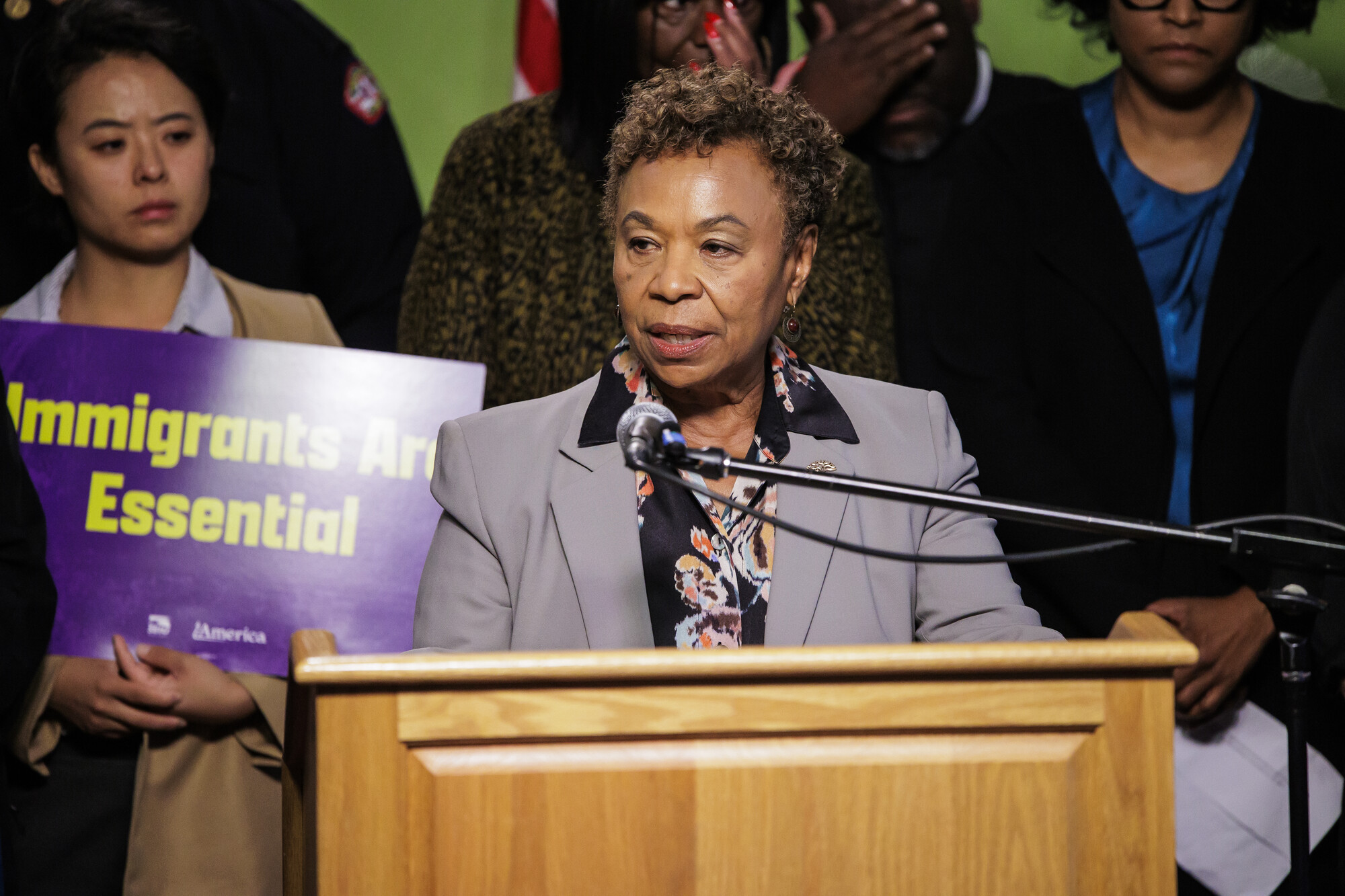
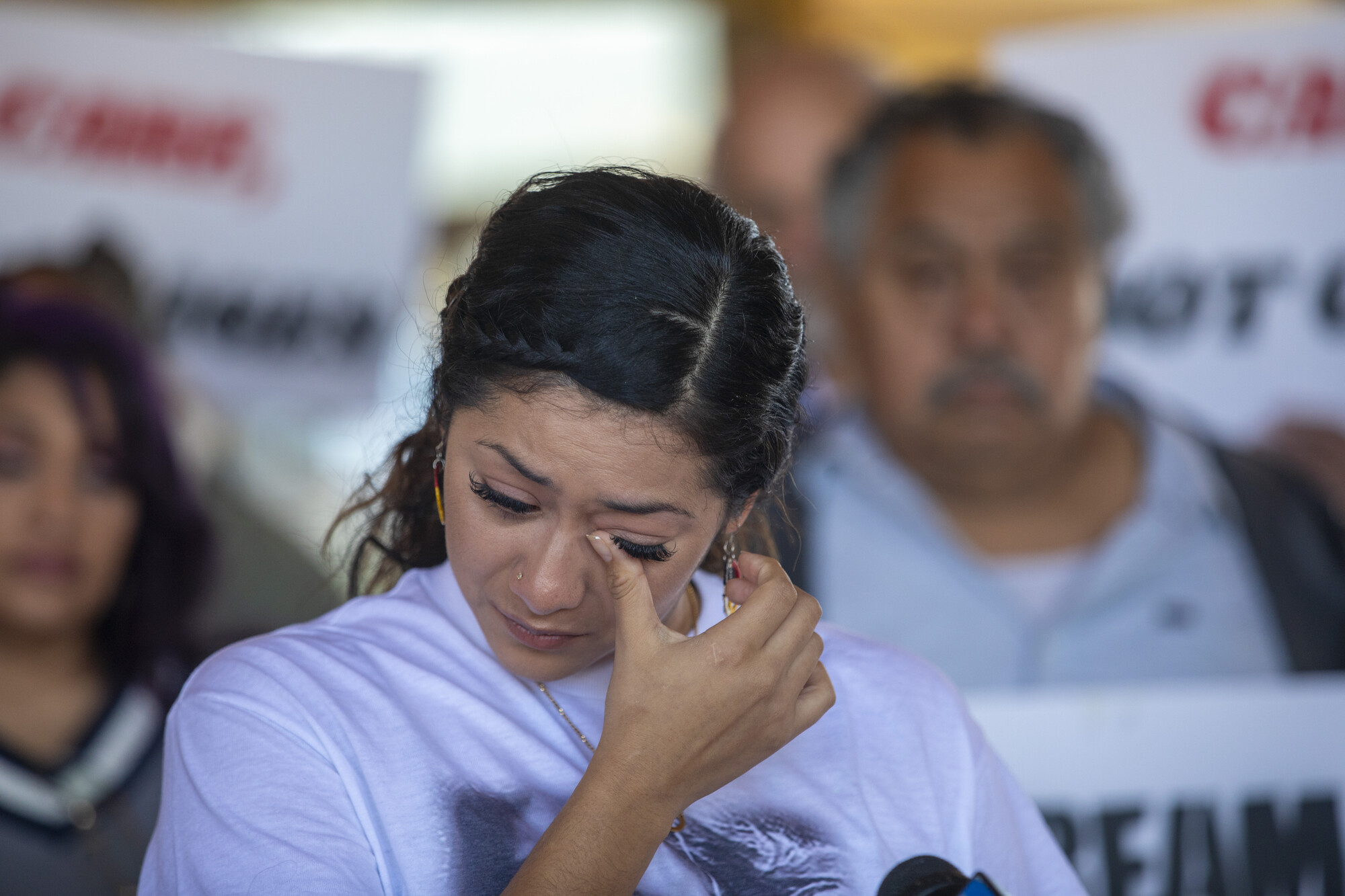
"caption": "Oakland Mayor Barbara Lee speaks at a press conference at Oakland City Hall on Oct. 23, 2025. Oakland currently owns the road and bridge that serves as the only public vehicle access to Coast Guard Island, where protests erupted last month. Mayor Lee is wary of the Coast Guard's wish to take over the road that leads to the base. ",
"credit": "Martin do Nascimento/KQED",
"altTag": null,
"description": null,
"imgSizes": {
"thumbnail": {
"file": "https://cdn.kqed.org/wp-content/uploads/sites/10/2025/11/251023-MAYOR-LEE-PRESSER-MD-02_qed-160x107.jpg",
"width": 160,
"height": 107,
"mimeType": "image/jpeg"
},
"1536x1536": {
"file": "https://cdn.kqed.org/wp-content/uploads/sites/10/2025/11/251023-MAYOR-LEE-PRESSER-MD-02_qed-1536x1024.jpg",
"width": 1536,
"height": 1024,
"mimeType": "image/jpeg"
},
"post-thumbnail": {
"file": "https://cdn.kqed.org/wp-content/uploads/sites/10/2025/11/251023-MAYOR-LEE-PRESSER-MD-02_qed-672x372.jpg",
"width": 672,
"height": 372,
"mimeType": "image/jpeg"
},
"twentyfourteen-full-width": {
"file": "https://cdn.kqed.org/wp-content/uploads/sites/10/2025/11/251023-MAYOR-LEE-PRESSER-MD-02_qed-1038x576.jpg",
"width": 1038,
"height": 576,
"mimeType": "image/jpeg"
},
"npr-cds-wide": {
"file": "https://cdn.kqed.org/wp-content/uploads/sites/10/2025/11/251023-MAYOR-LEE-PRESSER-MD-02_qed-1200x675.jpg",
"width": 1200,
"height": 675,
"mimeType": "image/jpeg"
},
"kqedFullSize": {
"file": "https://cdn.kqed.org/wp-content/uploads/sites/10/2025/11/251023-MAYOR-LEE-PRESSER-MD-02_qed.jpg",
"width": 2000,
"height": 1333
}
},
"isLoading": false,
"fetchFailed": false
},
"news_12063251": {
"type": "attachments",
"id": "news_12063251",
"meta": {
"index": "attachments_1716263798",
"site": "news",
"id": "12063251",
"found": true
},
"title": "Passengers sleep while waiting for their flight at Terminal 3 of San Francisco International Airport on Thursday, July 20, 2017 in San Francisco, Calif.",
"publishDate": 1762461164,
"status": "inherit",
"parent": 12063192,
"modified": 1762461205,
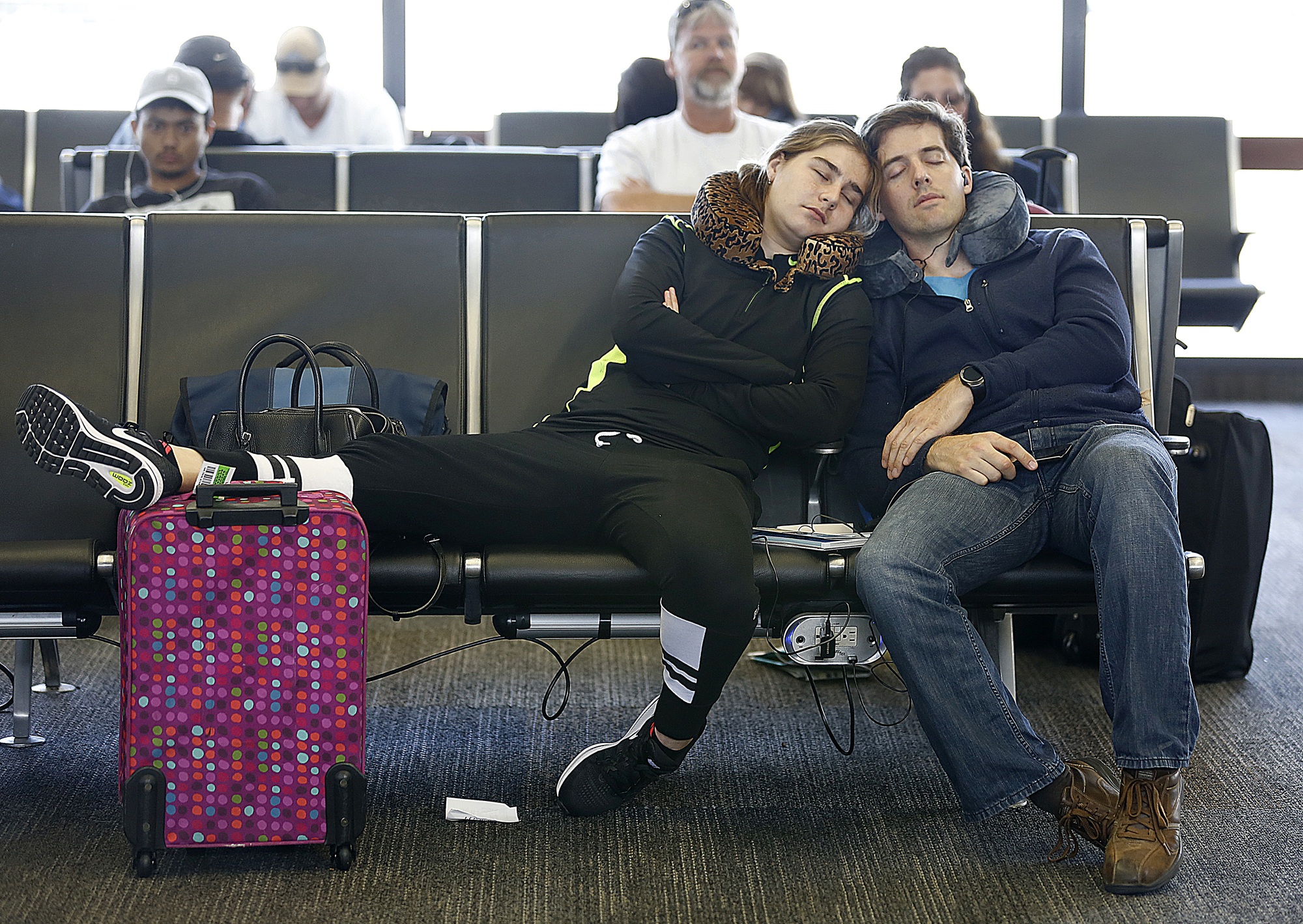
"caption": "Passengers sleep while waiting for their flight at Terminal 3 of San Francisco International Airport on July 20, 2017, in San Francisco, California.",
"credit": "Liz Hafalia/The San Francisco Chronicle via Getty Images",
"altTag": null,
"description": null,
"imgSizes": {
"thumbnail": {
"file": "https://cdn.kqed.org/wp-content/uploads/sites/10/2025/11/SFODelaysGetty2-160x114.jpg",
"width": 160,
"height": 114,
"mimeType": "image/jpeg"
},
"1536x1536": {
"file": "https://cdn.kqed.org/wp-content/uploads/sites/10/2025/11/SFODelaysGetty2-1536x1090.jpg",
"width": 1536,
"height": 1090,
"mimeType": "image/jpeg"
},
"post-thumbnail": {
"file": "https://cdn.kqed.org/wp-content/uploads/sites/10/2025/11/SFODelaysGetty2-672x372.jpg",
"width": 672,
"height": 372,
"mimeType": "image/jpeg"
},
"twentyfourteen-full-width": {
"file": "https://cdn.kqed.org/wp-content/uploads/sites/10/2025/11/SFODelaysGetty2-1038x576.jpg",
"width": 1038,
"height": 576,
"mimeType": "image/jpeg"
},
"npr-cds-wide": {
"file": "https://cdn.kqed.org/wp-content/uploads/sites/10/2025/11/SFODelaysGetty2-1200x675.jpg",
"width": 1200,
"height": 675,
"mimeType": "image/jpeg"
},
"kqedFullSize": {
"file": "https://cdn.kqed.org/wp-content/uploads/sites/10/2025/11/SFODelaysGetty2.jpg",
"width": 2000,
"height": 1419
}
},
"isLoading": false,
"fetchFailed": false
},
"news_12062943": {
"type": "attachments",
"id": "news_12062943",
"meta": {
"index": "attachments_1716263798",
"site": "news",
"id": "12062943",
"found": true
},
"title": "251104-BART SAN JOSE FUNDING CONCERNS-MD-04-KQED",
"publishDate": 1762301661,
"status": "inherit",
"parent": 0,
"modified": 1762391827,
"caption": "Construction crews work at the West Portal site as part of the project to bring BART through downtown San José on Nov. 4, 2025",
"credit": "Martin do Nascimento/KQED",
"altTag": null,
"description": null,
"imgSizes": {
"thumbnail": {
"file": "https://cdn.kqed.org/wp-content/uploads/sites/10/2025/11/251104-BART-SAN-JOSE-FUNDING-CONCERNS-MD-04-KQED-160x107.jpg",
"width": 160,
"height": 107,
"mimeType": "image/jpeg"
},
"1536x1536": {
"file": "https://cdn.kqed.org/wp-content/uploads/sites/10/2025/11/251104-BART-SAN-JOSE-FUNDING-CONCERNS-MD-04-KQED-1536x1024.jpg",
"width": 1536,
"height": 1024,
"mimeType": "image/jpeg"
},
"post-thumbnail": {
"file": "https://cdn.kqed.org/wp-content/uploads/sites/10/2025/11/251104-BART-SAN-JOSE-FUNDING-CONCERNS-MD-04-KQED-672x372.jpg",
"width": 672,
"height": 372,
"mimeType": "image/jpeg"
},
"twentyfourteen-full-width": {
"file": "https://cdn.kqed.org/wp-content/uploads/sites/10/2025/11/251104-BART-SAN-JOSE-FUNDING-CONCERNS-MD-04-KQED-1038x576.jpg",
"width": 1038,
"height": 576,
"mimeType": "image/jpeg"
},
"npr-cds-wide": {
"file": "https://cdn.kqed.org/wp-content/uploads/sites/10/2025/11/251104-BART-SAN-JOSE-FUNDING-CONCERNS-MD-04-KQED-1200x675.jpg",
"width": 1200,
"height": 675,
"mimeType": "image/jpeg"
},
"kqedFullSize": {
"file": "https://cdn.kqed.org/wp-content/uploads/sites/10/2025/11/251104-BART-SAN-JOSE-FUNDING-CONCERNS-MD-04-KQED.jpg",
"width": 2000,
"height": 1333
}
},
"isLoading": false,
"fetchFailed": false
},
"news_12062563": {
"type": "attachments",
"id": "news_12062563",
"meta": {
"index": "attachments_1716263798",
"site": "news",
"id": "12062563",
"found": true
},
"title": "251031-SFMARINFOODBANK-03-BL-KQED",
"publishDate": 1761943576,
"status": "inherit",
"parent": 12062685,
"modified": 1762280668,
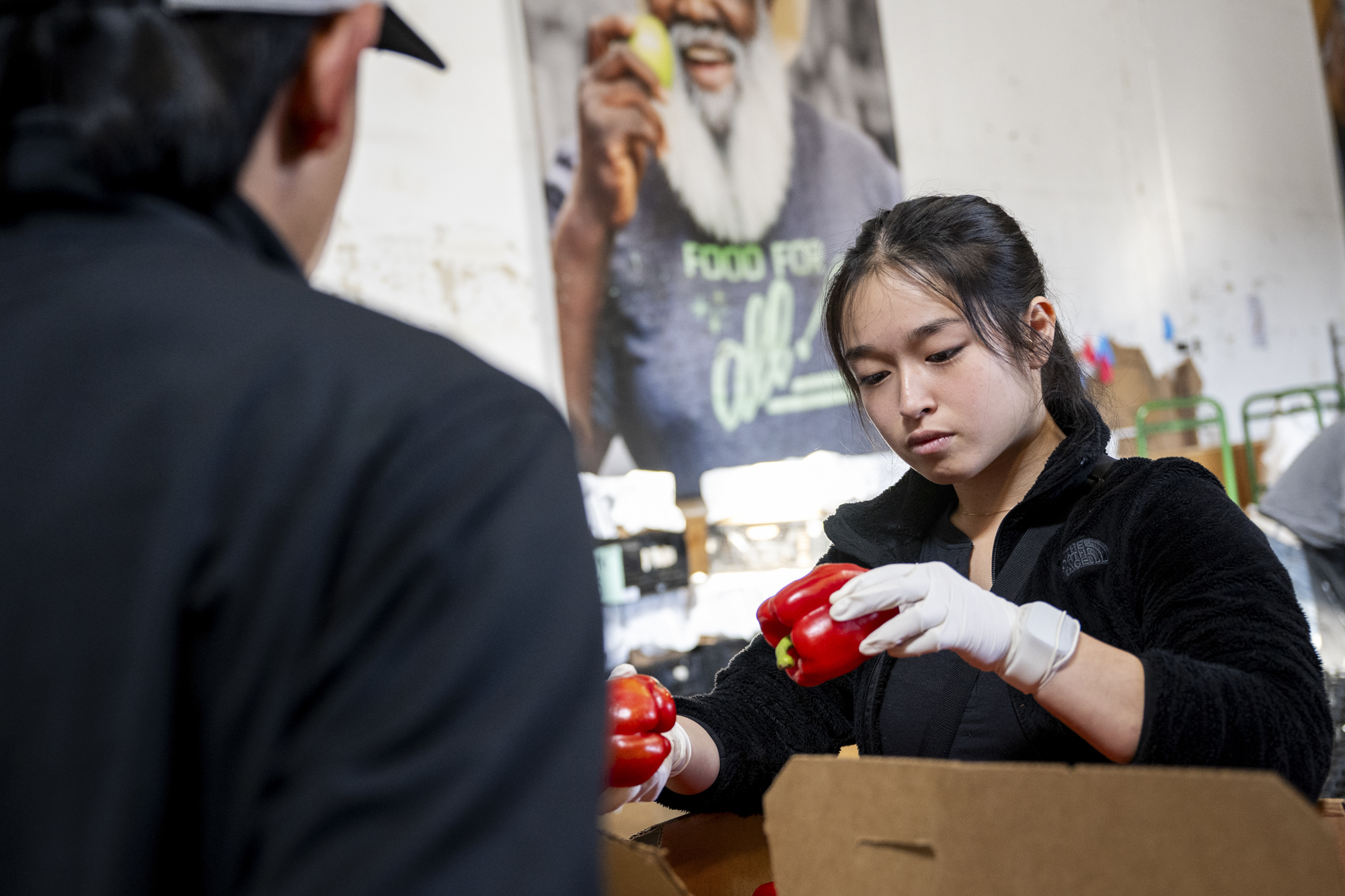
"caption": "Filmark Bernante (left) and Megan Feria inspect produce while sorting it into boxes at the San Francisco‑Marin Food Bank warehouse in San Francisco on Oct. 31, 2025.",
"credit": "Beth LaBerge/KQED",
"altTag": null,
"description": null,
"imgSizes": {
"thumbnail": {
"file": "https://cdn.kqed.org/wp-content/uploads/sites/10/2025/10/251031-SFMARINFOODBANK-03-BL-KQED-160x107.jpg",
"width": 160,
"height": 107,
"mimeType": "image/jpeg"
},
"1536x1536": {
"file": "https://cdn.kqed.org/wp-content/uploads/sites/10/2025/10/251031-SFMARINFOODBANK-03-BL-KQED-1536x1024.jpg",
"width": 1536,
"height": 1024,
"mimeType": "image/jpeg"
},
"post-thumbnail": {
"file": "https://cdn.kqed.org/wp-content/uploads/sites/10/2025/10/251031-SFMARINFOODBANK-03-BL-KQED-672x372.jpg",
"width": 672,
"height": 372,
"mimeType": "image/jpeg"
},
"twentyfourteen-full-width": {
"file": "https://cdn.kqed.org/wp-content/uploads/sites/10/2025/10/251031-SFMARINFOODBANK-03-BL-KQED-1038x576.jpg",
"width": 1038,
"height": 576,
"mimeType": "image/jpeg"
},
"npr-cds-wide": {
"file": "https://cdn.kqed.org/wp-content/uploads/sites/10/2025/10/251031-SFMARINFOODBANK-03-BL-KQED-1200x675.jpg",
"width": 1200,
"height": 675,
"mimeType": "image/jpeg"
},
"kqedFullSize": {
"file": "https://cdn.kqed.org/wp-content/uploads/sites/10/2025/10/251031-SFMARINFOODBANK-03-BL-KQED.jpg",
"width": 2000,
"height": 1333
}
},
"isLoading": false,
"fetchFailed": false
},
"news_12063252": {
"type": "attachments",
"id": "news_12063252",
"meta": {
"index": "attachments_1716263798",
"site": "news",
"id": "12063252",
"found": true
},
"title": "Delays And Cancellations Continue To Plague Airline Industry Heading Into Holiday Weekend",
"publishDate": 1762461535,
"status": "inherit",
"parent": 12063192,
"modified": 1762461575,
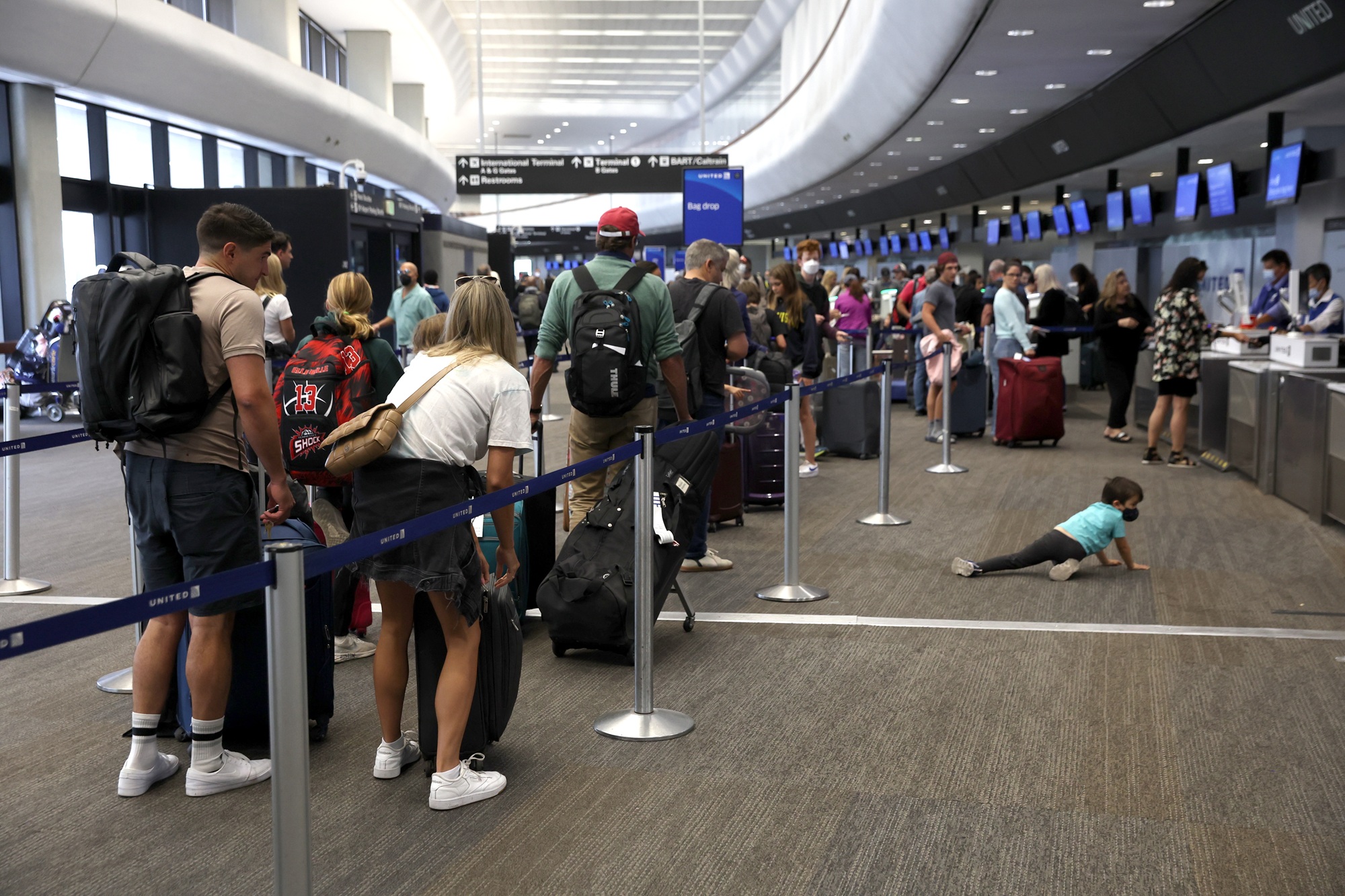
"caption": "Travelers line up to check in for United Airlines flights at San Francisco International Airport on July 1, 2022 ,in San Francisco, California. ",
"credit": "Justin Sullivan/Getty Images",
"altTag": null,
"description": null,
"imgSizes": {
"thumbnail": {
"file": "https://cdn.kqed.org/wp-content/uploads/sites/10/2025/11/SFODelaysGetty3-160x107.jpg",
"width": 160,
"height": 107,
"mimeType": "image/jpeg"
},
"1536x1536": {
"file": "https://cdn.kqed.org/wp-content/uploads/sites/10/2025/11/SFODelaysGetty3-1536x1024.jpg",
"width": 1536,
"height": 1024,
"mimeType": "image/jpeg"
},
"post-thumbnail": {
"file": "https://cdn.kqed.org/wp-content/uploads/sites/10/2025/11/SFODelaysGetty3-672x372.jpg",
"width": 672,
"height": 372,
"mimeType": "image/jpeg"
},
"twentyfourteen-full-width": {
"file": "https://cdn.kqed.org/wp-content/uploads/sites/10/2025/11/SFODelaysGetty3-1038x576.jpg",
"width": 1038,
"height": 576,
"mimeType": "image/jpeg"
},
"npr-cds-wide": {
"file": "https://cdn.kqed.org/wp-content/uploads/sites/10/2025/11/SFODelaysGetty3-1200x675.jpg",
"width": 1200,
"height": 675,
"mimeType": "image/jpeg"
},
"kqedFullSize": {
"file": "https://cdn.kqed.org/wp-content/uploads/sites/10/2025/11/SFODelaysGetty3.jpg",
"width": 2000,
"height": 1333
}
},
"isLoading": false,
"fetchFailed": false
},
"news_12063100": {
"type": "attachments",
"id": "news_12063100",
"meta": {
"index": "attachments_1716263798",
"site": "news",
"id": "12063100",
"found": true
},
"title": "Whip Its Drug",
"publishDate": 1762380008,
"status": "inherit",
"parent": 12063060,
"modified": 1762380073,
"caption": "Close-up of miniature cylinder of nitrous oxide, a drug of abuse referred to as \"Whip Its,\" \"Whipits\" or \"Whippets,\" discarded in a gutter in Walnut Creek, California, on March 13, 2020. ",
"credit": "Smith Collection/Gado via Getty Images",
"altTag": null,
"description": null,
"imgSizes": {
"thumbnail": {
"file": "https://cdn.kqed.org/wp-content/uploads/sites/10/2025/11/WhippetGetty-160x107.jpg",
"width": 160,
"height": 107,
"mimeType": "image/jpeg"
},
"1536x1536": {
"file": "https://cdn.kqed.org/wp-content/uploads/sites/10/2025/11/WhippetGetty-1536x1024.jpg",
"width": 1536,
"height": 1024,
"mimeType": "image/jpeg"
},
"post-thumbnail": {
"file": "https://cdn.kqed.org/wp-content/uploads/sites/10/2025/11/WhippetGetty-672x372.jpg",
"width": 672,
"height": 372,
"mimeType": "image/jpeg"
},
"twentyfourteen-full-width": {
"file": "https://cdn.kqed.org/wp-content/uploads/sites/10/2025/11/WhippetGetty-1038x576.jpg",
"width": 1038,
"height": 576,
"mimeType": "image/jpeg"
},
"npr-cds-wide": {
"file": "https://cdn.kqed.org/wp-content/uploads/sites/10/2025/11/WhippetGetty-1200x675.jpg",
"width": 1200,
"height": 675,
"mimeType": "image/jpeg"
},
"kqedFullSize": {
"file": "https://cdn.kqed.org/wp-content/uploads/sites/10/2025/11/WhippetGetty.jpg",
"width": 2000,
"height": 1333
}
},
"isLoading": false,
"fetchFailed": false
},
"news_12062567": {
"type": "attachments",
"id": "news_12062567",
"meta": {
"index": "attachments_1716263798",
"site": "news",
"id": "12062567",
"found": true
},
"title": "251031-SFMARINFOODBANK-24-BL-KQED",
"publishDate": 1761943592,
"status": "inherit",
"parent": 12062743,
"modified": 1762277859,
"caption": "Workers sort fresh produce into boxes at the San Francisco‑Marin Food Bank warehouse in San Francisco on Oct. 31, 2025.",
"credit": "Beth LaBerge/KQED",
"altTag": null,
"description": null,
"imgSizes": {
"thumbnail": {
"file": "https://cdn.kqed.org/wp-content/uploads/sites/10/2025/10/251031-SFMARINFOODBANK-24-BL-KQED-160x107.jpg",
"width": 160,
"height": 107,
"mimeType": "image/jpeg"
},
"1536x1536": {
"file": "https://cdn.kqed.org/wp-content/uploads/sites/10/2025/10/251031-SFMARINFOODBANK-24-BL-KQED-1536x1024.jpg",
"width": 1536,
"height": 1024,
"mimeType": "image/jpeg"
},
"post-thumbnail": {
"file": "https://cdn.kqed.org/wp-content/uploads/sites/10/2025/10/251031-SFMARINFOODBANK-24-BL-KQED-672x372.jpg",
"width": 672,
"height": 372,
"mimeType": "image/jpeg"
},
"twentyfourteen-full-width": {
"file": "https://cdn.kqed.org/wp-content/uploads/sites/10/2025/10/251031-SFMARINFOODBANK-24-BL-KQED-1038x576.jpg",
"width": 1038,
"height": 576,
"mimeType": "image/jpeg"
},
"npr-cds-wide": {
"file": "https://cdn.kqed.org/wp-content/uploads/sites/10/2025/10/251031-SFMARINFOODBANK-24-BL-KQED-1200x675.jpg",
"width": 1200,
"height": 675,
"mimeType": "image/jpeg"
},
"kqedFullSize": {
"file": "https://cdn.kqed.org/wp-content/uploads/sites/10/2025/10/251031-SFMARINFOODBANK-24-BL-KQED.jpg",
"width": 2000,
"height": 1333
}
},
"isLoading": false,
"fetchFailed": false
},
"news_12062913": {
"type": "attachments",
"id": "news_12062913",
"meta": {
"index": "attachments_1716263798",
"site": "news",
"id": "12062913",
"found": true
},
"title": "20251104_SF Waymo resolution_GH-2_qed",
"publishDate": 1762298020,
"status": "inherit",
"parent": 12062777,
"modified": 1762298044,
"caption": "A memorial for KitKat, a well-known neighborhood cat, is displayed outside Randa’s Market on Nov. 4, 2025, in San Francisco’s Mission District. Flowers and photos were placed at the base of a tree near the spot where a Waymo autonomous vehicle struck and killed the cat.",
"credit": "Gustavo Hernandez/KQED",
"altTag": null,
"description": null,
"imgSizes": {
"thumbnail": {
"file": "https://cdn.kqed.org/wp-content/uploads/sites/10/2025/11/20251104_SF-Waymo-resolution_GH-2_qed-160x107.jpg",
"width": 160,
"height": 107,
"mimeType": "image/jpeg"
},
"1536x1536": {
"file": "https://cdn.kqed.org/wp-content/uploads/sites/10/2025/11/20251104_SF-Waymo-resolution_GH-2_qed-1536x1024.jpg",
"width": 1536,
"height": 1024,
"mimeType": "image/jpeg"
},
"post-thumbnail": {
"file": "https://cdn.kqed.org/wp-content/uploads/sites/10/2025/11/20251104_SF-Waymo-resolution_GH-2_qed-672x372.jpg",
"width": 672,
"height": 372,
"mimeType": "image/jpeg"
},
"twentyfourteen-full-width": {
"file": "https://cdn.kqed.org/wp-content/uploads/sites/10/2025/11/20251104_SF-Waymo-resolution_GH-2_qed-1038x576.jpg",
"width": 1038,
"height": 576,
"mimeType": "image/jpeg"
},
"npr-cds-wide": {
"file": "https://cdn.kqed.org/wp-content/uploads/sites/10/2025/11/20251104_SF-Waymo-resolution_GH-2_qed-1200x675.jpg",
"width": 1200,
"height": 675,
"mimeType": "image/jpeg"
},
"kqedFullSize": {
"file": "https://cdn.kqed.org/wp-content/uploads/sites/10/2025/11/20251104_SF-Waymo-resolution_GH-2_qed.jpg",
"width": 2000,
"height": 1333
}
},
"isLoading": false,
"fetchFailed": false
},
"news_12062832": {
"type": "attachments",
"id": "news_12062832",
"meta": {
"index": "attachments_1716263798",
"site": "news",
"id": "12062832",
"found": true
},
"title": "23_Middleton20240211_KQEDSuperBowl_00461_qed",
"publishDate": 1762287356,
"status": "inherit",
"parent": 0,
"modified": 1762287386,
"caption": "A crowd cheers during the San Francisco 49ers vs. the Kansas City Chiefs NFL Super Bowl LVIII game inside Connecticut Yankee in San Francisco, California, on Sunday, Feb. 11, 2024.",
"credit": "Florence Middleton for KQED",
"altTag": null,
"description": null,
"imgSizes": {
"thumbnail": {
"file": "https://cdn.kqed.org/wp-content/uploads/sites/10/2025/11/23_Middleton20240211_KQEDSuperBowl_00461_qed-160x107.jpg",
"width": 160,
"height": 107,
"mimeType": "image/jpeg"
},
"1536x1536": {
"file": "https://cdn.kqed.org/wp-content/uploads/sites/10/2025/11/23_Middleton20240211_KQEDSuperBowl_00461_qed-1536x1025.jpg",
"width": 1536,
"height": 1025,
"mimeType": "image/jpeg"
},
"post-thumbnail": {
"file": "https://cdn.kqed.org/wp-content/uploads/sites/10/2025/11/23_Middleton20240211_KQEDSuperBowl_00461_qed-672x372.jpg",
"width": 672,
"height": 372,
"mimeType": "image/jpeg"
},
"twentyfourteen-full-width": {
"file": "https://cdn.kqed.org/wp-content/uploads/sites/10/2025/11/23_Middleton20240211_KQEDSuperBowl_00461_qed-1038x576.jpg",
"width": 1038,
"height": 576,
"mimeType": "image/jpeg"
},
"npr-cds-wide": {
"file": "https://cdn.kqed.org/wp-content/uploads/sites/10/2025/11/23_Middleton20240211_KQEDSuperBowl_00461_qed-1200x675.jpg",
"width": 1200,
"height": 675,
"mimeType": "image/jpeg"
},
"kqedFullSize": {
"file": "https://cdn.kqed.org/wp-content/uploads/sites/10/2025/11/23_Middleton20240211_KQEDSuperBowl_00461_qed.jpg",
"width": 1998,
"height": 1333
}
},
"isLoading": false,
"fetchFailed": false
},
"news_12062569": {
"type": "attachments",
"id": "news_12062569",
"meta": {
"index": "attachments_1716263798",
"site": "news",
"id": "12062569",
"found": true
},
"title": "251031-SFMARINFOODBANK-28-BL-KQED",
"publishDate": 1761943600,
"status": "inherit",
"parent": 12062743,
"modified": 1762278950,
"caption": "Maria Gudmundsdottir sorts fresh produce into boxes at the San Francisco‑Marin Food Bank warehouse in San Francisco on Oct. 31, 2025.",
"credit": "Beth LaBerge/KQED",
"altTag": null,
"description": null,
"imgSizes": {
"thumbnail": {
"file": "https://cdn.kqed.org/wp-content/uploads/sites/10/2025/10/251031-SFMARINFOODBANK-28-BL-KQED-160x107.jpg",
"width": 160,
"height": 107,
"mimeType": "image/jpeg"
},
"1536x1536": {
"file": "https://cdn.kqed.org/wp-content/uploads/sites/10/2025/10/251031-SFMARINFOODBANK-28-BL-KQED-1536x1024.jpg",
"width": 1536,
"height": 1024,
"mimeType": "image/jpeg"
},
"post-thumbnail": {
"file": "https://cdn.kqed.org/wp-content/uploads/sites/10/2025/10/251031-SFMARINFOODBANK-28-BL-KQED-672x372.jpg",
"width": 672,
"height": 372,
"mimeType": "image/jpeg"
},
"twentyfourteen-full-width": {
"file": "https://cdn.kqed.org/wp-content/uploads/sites/10/2025/10/251031-SFMARINFOODBANK-28-BL-KQED-1038x576.jpg",
"width": 1038,
"height": 576,
"mimeType": "image/jpeg"
},
"npr-cds-wide": {
"file": "https://cdn.kqed.org/wp-content/uploads/sites/10/2025/10/251031-SFMARINFOODBANK-28-BL-KQED-1200x675.jpg",
"width": 1200,
"height": 675,
"mimeType": "image/jpeg"
},
"kqedFullSize": {
"file": "https://cdn.kqed.org/wp-content/uploads/sites/10/2025/10/251031-SFMARINFOODBANK-28-BL-KQED.jpg",
"width": 2000,
"height": 1333
}
},
"isLoading": false,
"fetchFailed": false
},
"news_12062249": {
"type": "attachments",
"id": "news_12062249",
"meta": {
"index": "attachments_1716263798",
"site": "news",
"id": "12062249",
"found": true
},
"title": "RV1",
"publishDate": 1761844485,
"status": "inherit",
"parent": 12062202,
"modified": 1761844565,
"caption": "A collage that show the entrances of RVs that have begun to appear more and more on the street near Lake Merced in San Francisco, California, on April 9, 2025. After a uniquely working immigrant RV community was displaced in the nearby street of Winston, some families opted for Lake Merced or the Bayview.",
"credit": "Pablo Unzueta for El Tecolote/CatchLight Local",
"altTag": null,
"description": null,
"imgSizes": {
"thumbnail": {
"file": "https://cdn.kqed.org/wp-content/uploads/sites/10/2025/10/RV1-160x207.jpg",
"width": 160,
"height": 207,
"mimeType": "image/jpeg"
},
"1536x1536": {
"file": "https://cdn.kqed.org/wp-content/uploads/sites/10/2025/10/RV1-1187x1536.jpg",
"width": 1187,
"height": 1536,
"mimeType": "image/jpeg"
},
"2048x2048": {
"file": "https://cdn.kqed.org/wp-content/uploads/sites/10/2025/10/RV1-1583x2048.jpg",
"width": 1583,
"height": 2048,
"mimeType": "image/jpeg"
},
"post-thumbnail": {
"file": "https://cdn.kqed.org/wp-content/uploads/sites/10/2025/10/RV1-672x372.jpg",
"width": 672,
"height": 372,
"mimeType": "image/jpeg"
},
"twentyfourteen-full-width": {
"file": "https://cdn.kqed.org/wp-content/uploads/sites/10/2025/10/RV1-1038x576.jpg",
"width": 1038,
"height": 576,
"mimeType": "image/jpeg"
},
"npr-cds-wide": {
"file": "https://cdn.kqed.org/wp-content/uploads/sites/10/2025/10/RV1-1600x900.jpg",
"width": 1600,
"height": 900,
"mimeType": "image/jpeg"
},
"kqedFullSize": {
"file": "https://cdn.kqed.org/wp-content/uploads/sites/10/2025/10/RV1-scaled.jpg",
"width": 1978,
"height": 2560
}
},
"isLoading": false,
"fetchFailed": false
},
"news_12062379": {
"type": "attachments",
"id": "news_12062379",
"meta": {
"index": "attachments_1716263798",
"site": "news",
"id": "12062379",
"found": true
},
"title": "251030-marinmentalhealth00680_TV_qed",
"publishDate": 1761863560,
"status": "inherit",
"parent": 12062334,
"modified": 1761863587,
"caption": "Tonatiuh Beltran gets emotional as she speaks about her mother’s death outside the Marin County Superior Court during a press conference in San Rafael on Oct. 30, 2025. Olivia Beltran was killed by her daughter Tonatzyn Beltran during a mental health episode in 2024 and the family is calling on Marin County District Attorney’s office to pursue mental health treatment rather than criminal prosecution of Tonantzyn Beltran.",
"credit": "Tâm Vũ / KQED",
"altTag": null,
"description": null,
"imgSizes": {
"thumbnail": {
"file": "https://cdn.kqed.org/wp-content/uploads/sites/10/2025/10/251030-marinmentalhealth00680_TV_qed-160x107.jpg",
"width": 160,
"height": 107,
"mimeType": "image/jpeg"
},
"1536x1536": {
"file": "https://cdn.kqed.org/wp-content/uploads/sites/10/2025/10/251030-marinmentalhealth00680_TV_qed-1536x1024.jpg",
"width": 1536,
"height": 1024,
"mimeType": "image/jpeg"
},
"post-thumbnail": {
"file": "https://cdn.kqed.org/wp-content/uploads/sites/10/2025/10/251030-marinmentalhealth00680_TV_qed-672x372.jpg",
"width": 672,
"height": 372,
"mimeType": "image/jpeg"
},
"twentyfourteen-full-width": {
"file": "https://cdn.kqed.org/wp-content/uploads/sites/10/2025/10/251030-marinmentalhealth00680_TV_qed-1038x576.jpg",
"width": 1038,
"height": 576,
"mimeType": "image/jpeg"
},
"npr-cds-wide": {
"file": "https://cdn.kqed.org/wp-content/uploads/sites/10/2025/10/251030-marinmentalhealth00680_TV_qed-1200x675.jpg",
"width": 1200,
"height": 675,
"mimeType": "image/jpeg"
},
"kqedFullSize": {
"file": "https://cdn.kqed.org/wp-content/uploads/sites/10/2025/10/251030-marinmentalhealth00680_TV_qed.jpg",
"width": 2000,
"height": 1333
}
},
"isLoading": false,
"fetchFailed": false
}
},
"audioPlayerReducer": {
"postId": "stream_live",
"isPaused": true,
"isPlaying": false,
"pfsActive": false,
"pledgeModalIsOpen": true,
"playerDrawerIsOpen": false,
"liveAudioPlayStartedAt": 0,
"liveAudioPlayContext": ""
},
"authorsReducer": {
"byline_news_12062202": {
"type": "authors",
"id": "byline_news_12062202",
"meta": {
"override": true
},
"slug": "byline_news_12062202",
"name": "Mariana Duran, Pablo Unzueta, Yesica Prado, El Tecolote",
"isLoading": false
},
"aemslie": {
"type": "authors",
"id": "3206",
"meta": {
"index": "authors_1716337520",
"id": "3206",
"found": true
},
"name": "Alex Emslie",
"firstName": "Alex",
"lastName": "Emslie",
"slug": "aemslie",
"email": "aemslie@kqed.org",
"display_author_email": true,
"staff_mastheads": [
"news"
],
"title": "KQED Senior Editor",
"bio": "Alex Emslie is senior editor of talent and development at KQED, where he manages dozens of early career journalists and oversees news department internships.\r\n\r\nHe is a former carpenter and proud graduate of City College of San Francisco and San Francisco State University, where he studied journalism and criminal justice before joining KQED in 2013.\r\n\r\nAlex produced investigative journalism focused on \u003ca href=\"https://www.kqed.org/news/11667594/the-trials-of-marvin-mutch-video\">criminal justice\u003c/a> and policing for most of a decade. He has broken major stories about \u003ca href=\"https://www.kqed.org/news/135682/amid-a-series-of-vallejo-police-shootings-one-officers-name-stands-out\">police use of deadly force\u003c/a>, \u003ca href=\"https://www.kqed.org/news/10454955/racist-texts-prompt-sfpd-internal-investigation\">officer misconduct\u003c/a> and \u003ca href=\"https://www.kqed.org/news/11712239/terrorist-or-troll-judge-to-weigh-whether-oakland-man-really-intended-to-attack-bay-area\">other\u003c/a> \u003ca href=\"https://www.kqed.org/news/11221414/hayward-paid-159000-to-husband-of-retired-police-chief-documents-show\">high\u003c/a>-\u003ca href=\"https://www.kqed.org/news/10622762/the-forgotten-tracking-two-homicides-in-san-francisco-public-housing\">profile\u003c/a> \u003ca href=\"https://www.kqed.org/news/11624516/federal-agency-promoted-ranger-just-months-after-his-gun-was-stolen-and-used-in-steinle-killing\">cases\u003c/a>. He co-founded the \u003ca href=\"https://projects.scpr.org/california-reporting-project/\">California Reporting Project\u003c/a> in 2019 to obtain and report on previously confidential police internal investigations. The effort produced well over 100 original stories and changed the course of multiple criminal cases.\r\n\r\nHis work has been recognized with numerous journalism awards, including a national Edward R. Murrow award for several years of \u003ca href=\"https://www.kqed.org/news/11688481/sfpd-officers-in-mario-woods-case-recount-shooting-in-newly-filed-depositions\">reporting\u003c/a> on the San Francisco Police shooting of Mario Woods. His \u003ca href=\"https://www.kqed.org/news/147854/half-of-those-killed-by-san-francisco-police-are-mentally-ill\">reporting\u003c/a> on police killings of people in psychiatric crisis was cited in amicus briefs before the U.S. Supreme Court.\r\n\r\nAlex now enjoys mentoring the next generation of journalists at KQED.",
"avatar": "https://secure.gravatar.com/avatar/e691e65209f20e9da202bd730ead5663?s=600&d=blank&r=g",
"twitter": "SFNewsReporter",
"facebook": null,
"instagram": null,
"linkedin": null,
"sites": [
{
"site": "arts",
"roles": [
"editor"
]
},
{
"site": "news",
"roles": [
"editor"
]
},
{
"site": "mindshift",
"roles": [
"editor"
]
},
{
"site": "stateofhealth",
"roles": [
"editor"
]
},
{
"site": "science",
"roles": [
"administrator"
]
}
],
"headData": {
"title": "Alex Emslie | KQED",
"description": "KQED Senior Editor",
"ogImgSrc": "https://secure.gravatar.com/avatar/e691e65209f20e9da202bd730ead5663?s=600&d=blank&r=g",
"twImgSrc": "https://secure.gravatar.com/avatar/e691e65209f20e9da202bd730ead5663?s=600&d=blank&r=g"
},
"isLoading": false,
"link": "/author/aemslie"
},
"carlysevern": {
"type": "authors",
"id": "3243",
"meta": {
"index": "authors_1716337520",
"id": "3243",
"found": true
},
"name": "Carly Severn",
"firstName": "Carly",
"lastName": "Severn",
"slug": "carlysevern",
"email": "csevern@kqed.org",
"display_author_email": false,
"staff_mastheads": [
"news"
],
"title": "Senior Editor, Audience News ",
"bio": "Carly is KQED's Senior Editor of Audience News on the Digital News team, and has reported for the California Report Magazine, Bay Curious and KQED Arts. She's formerly the host of \u003ca href=\"http://ww2.kqed.org/pop/category/the-cooler/\" rel=\"noopener noreferrer\">The Cooler\u003c/a> podcast.",
"avatar": "https://secure.gravatar.com/avatar/54037bf5c128fe678f0ef26cec97a93f2e7f220a22d7285703328f12c42c1b1d?s=600&d=blank&r=g",
"twitter": "teacupinthebay",
"bluesky": null,
"facebook": null,
"instagram": null,
"linkedin": null,
"sites": [
{
"site": "",
"roles": [
"editor"
]
},
{
"site": "arts",
"roles": [
"editor"
]
},
{
"site": "news",
"roles": [
"administrator"
]
},
{
"site": "pop",
"roles": [
"editor"
]
},
{
"site": "futureofyou",
"roles": [
"editor"
]
},
{
"site": "about",
"roles": [
"administrator"
]
},
{
"site": "mindshift",
"roles": [
"editor"
]
},
{
"site": "bayareabites",
"roles": [
"editor"
]
},
{
"site": "stateofhealth",
"roles": [
"editor"
]
},
{
"site": "science",
"roles": [
"editor"
]
},
{
"site": "food",
"roles": [
"contributor"
]
},
{
"site": "forum",
"roles": [
"editor"
]
},
{
"site": "perspectives",
"roles": [
"administrator"
]
},
{
"site": "liveblog",
"roles": [
"editor"
]
}
],
"headData": {
"title": "Carly Severn | KQED",
"description": "Senior Editor, Audience News ",
"ogImgSrc": "https://secure.gravatar.com/avatar/54037bf5c128fe678f0ef26cec97a93f2e7f220a22d7285703328f12c42c1b1d?s=600&d=blank&r=g",
"twImgSrc": "https://secure.gravatar.com/avatar/54037bf5c128fe678f0ef26cec97a93f2e7f220a22d7285703328f12c42c1b1d?s=600&d=blank&r=g"
},
"isLoading": false,
"link": "/author/carlysevern"
},
"sjohnson": {
"type": "authors",
"id": "11840",
"meta": {
"index": "authors_1716337520",
"id": "11840",
"found": true
},
"name": "Sydney Johnson",
"firstName": "Sydney",
"lastName": "Johnson",
"slug": "sjohnson",
"email": "sjohnson@kqed.org",
"display_author_email": false,
"staff_mastheads": [
"news"
],
"title": "KQED Reporter",
"bio": "Sydney Johnson is a general assignment reporter at KQED. She previously reported on public health and city government at the San Francisco Examiner, and before that, she covered statewide education policy for EdSource. Her reporting has won multiple local, state and national awards. Sydney is a graduate of the University of California, Berkeley and lives in San Francisco.",
"avatar": "https://secure.gravatar.com/avatar/97855f2719b72ad6190b7c535fe642c8?s=600&d=blank&r=g",
"twitter": "sydneyfjohnson",
"facebook": null,
"instagram": null,
"linkedin": null,
"sites": [
{
"site": "news",
"roles": [
"editor"
]
}
],
"headData": {
"title": "Sydney Johnson | KQED",
"description": "KQED Reporter",
"ogImgSrc": "https://secure.gravatar.com/avatar/97855f2719b72ad6190b7c535fe642c8?s=600&d=blank&r=g",
"twImgSrc": "https://secure.gravatar.com/avatar/97855f2719b72ad6190b7c535fe642c8?s=600&d=blank&r=g"
},
"isLoading": false,
"link": "/author/sjohnson"
},
"jgeha": {
"type": "authors",
"id": "11906",
"meta": {
"index": "authors_1716337520",
"id": "11906",
"found": true
},
"name": "Joseph Geha",
"firstName": "Joseph",
"lastName": "Geha",
"slug": "jgeha",
"email": "jgeha@kqed.org",
"display_author_email": false,
"staff_mastheads": [
"news",
"science"
],
"title": "KQED Contributor",
"bio": null,
"avatar": "https://secure.gravatar.com/avatar/ea84d2b6dd93d6369d453edf19dd583f117cd1759d2d9c9c92f9de77017354fe?s=600&d=blank&r=g",
"twitter": null,
"bluesky": null,
"facebook": null,
"instagram": null,
"linkedin": null,
"sites": [
{
"site": "news",
"roles": [
"editor"
]
},
{
"site": "liveblog",
"roles": [
"author"
]
}
],
"headData": {
"title": "Joseph Geha | KQED",
"description": "KQED Contributor",
"ogImgSrc": "https://secure.gravatar.com/avatar/ea84d2b6dd93d6369d453edf19dd583f117cd1759d2d9c9c92f9de77017354fe?s=600&d=blank&r=g",
"twImgSrc": "https://secure.gravatar.com/avatar/ea84d2b6dd93d6369d453edf19dd583f117cd1759d2d9c9c92f9de77017354fe?s=600&d=blank&r=g"
},
"isLoading": false,
"link": "/author/jgeha"
},
"kdebenedetti": {
"type": "authors",
"id": "11913",
"meta": {
"index": "authors_1716337520",
"id": "11913",
"found": true
},
"name": "Katie DeBenedetti",
"firstName": "Katie",
"lastName": "DeBenedetti",
"slug": "kdebenedetti",
"email": "kdebenedetti@kqed.org",
"display_author_email": false,
"staff_mastheads": [
"news",
"science"
],
"title": "KQED Contributor",
"bio": "Katie DeBenedetti is a digital reporter covering daily news for the Express Desk. Prior to joining KQED as a culture reporting intern in January 2024, she covered education and city government for the Napa Valley Register.",
"avatar": "https://secure.gravatar.com/avatar/6e31073cb8f7e4214ab03f42771d0f45?s=600&d=blank&r=g",
"twitter": null,
"facebook": null,
"instagram": null,
"linkedin": null,
"sites": [
{
"site": "news",
"roles": [
"author"
]
},
{
"site": "science",
"roles": [
"author"
]
},
{
"site": "liveblog",
"roles": [
"author"
]
}
],
"headData": {
"title": "Katie DeBenedetti | KQED",
"description": "KQED Contributor",
"ogImgSrc": "https://secure.gravatar.com/avatar/6e31073cb8f7e4214ab03f42771d0f45?s=600&d=blank&r=g",
"twImgSrc": "https://secure.gravatar.com/avatar/6e31073cb8f7e4214ab03f42771d0f45?s=600&d=blank&r=g"
},
"isLoading": false,
"link": "/author/kdebenedetti"
},
"emanoukian": {
"type": "authors",
"id": "11925",
"meta": {
"index": "authors_1716337520",
"id": "11925",
"found": true
},
"name": "Elize Manoukian",
"firstName": "Elize",
"lastName": "Manoukian",
"slug": "emanoukian",
"email": "emanoukian@KQED.org",
"display_author_email": false,
"staff_mastheads": [
"news"
],
"title": "Digital News Editor",
"bio": "Elize Manoukian is an award-winning audio producer and Senior Editor on the Express Desk, KQED's digital news platform. Her work has appeared on KPFA, Interlochen Public Radio, Oregon Public Broadcast, the New York Daily News, LA Times and the San Diego Union-Tribune.",
"avatar": "https://secure.gravatar.com/avatar/4525f1a8e46ccb30933b32653d9772064cfefe3fa655eb45b3b3a80341f6bdad?s=600&d=blank&r=g",
"twitter": null,
"bluesky": null,
"facebook": null,
"instagram": null,
"linkedin": null,
"sites": [
{
"site": "arts",
"roles": [
"editor"
]
},
{
"site": "news",
"roles": [
"editor"
]
},
{
"site": "science",
"roles": [
"editor"
]
}
],
"headData": {
"title": "Elize Manoukian | KQED",
"description": "Digital News Editor",
"ogImgSrc": "https://secure.gravatar.com/avatar/4525f1a8e46ccb30933b32653d9772064cfefe3fa655eb45b3b3a80341f6bdad?s=600&d=blank&r=g",
"twImgSrc": "https://secure.gravatar.com/avatar/4525f1a8e46ccb30933b32653d9772064cfefe3fa655eb45b3b3a80341f6bdad?s=600&d=blank&r=g"
},
"isLoading": false,
"link": "/author/emanoukian"
},
"aaliahmad": {
"type": "authors",
"id": "11986",
"meta": {
"index": "authors_1716337520",
"id": "11986",
"found": true
},
"name": "Ayah Ali-Ahmad",
"firstName": "Ayah",
"lastName": "Ali-Ahmad",
"slug": "aaliahmad",
"email": "aaliahmad@KQED.org",
"display_author_email": false,
"staff_mastheads": [],
"title": "KQED Contributor",
"bio": null,
"avatar": "https://secure.gravatar.com/avatar/1cf54f187a5e1064b2cfef3f3d2f1e4f93e453395d56912aca6382a6071ec3ed?s=600&d=blank&r=g",
"twitter": "ayahaliahmad",
"bluesky": null,
"facebook": null,
"instagram": null,
"linkedin": null,
"sites": [
{
"site": "news",
"roles": [
"subscriber"
]
}
],
"headData": {
"title": "Ayah Ali-Ahmad | KQED",
"description": "KQED Contributor",
"ogImgSrc": "https://secure.gravatar.com/avatar/1cf54f187a5e1064b2cfef3f3d2f1e4f93e453395d56912aca6382a6071ec3ed?s=600&d=blank&r=g",
"twImgSrc": "https://secure.gravatar.com/avatar/1cf54f187a5e1064b2cfef3f3d2f1e4f93e453395d56912aca6382a6071ec3ed?s=600&d=blank&r=g"
},
"isLoading": false,
"link": "/author/aaliahmad"
}
},
"pagesReducer": {
"news_tag_bay-area": {
"type": "terms",
"id": "news_1386",
"meta": {
"index": "terms_1716263798",
"site": "news",
"id": "1386",
"score": 7.788433
},
"featImg": null,
"name": "Bay Area",
"description": null,
"taxonomy": "tag",
"headData": {
"twImgId": null,
"twTitle": null,
"ogTitle": null,
"ogImgId": null,
"twDescription": null,
"description": null,
"title": "Bay Area Archives | KQED News",
"ogDescription": null
},
"ttid": 1398,
"slug": "bay-area",
"isLoading": false,
"title": "Bay Area",
"pageMeta": {
"site": "news",
"WpPageTemplate": "page-topic-editorial",
"currentPage": 45
},
"blocks": [
{
"blockName": "kqed/post-list",
"attrs": {
"layout": "cardArticle2",
"query": "posts/news?tag=bay-area",
"seeMore": false,
"paginated": true,
"page": 45
}
},
{
"blockName": "kqed/ad"
}
]
}
},
"pfsSessionReducer": {},
"postsReducer": {
"stream_live": {
"type": "live",
"id": "stream_live",
"audioUrl": "https://streams.kqed.org/kqedradio",
"title": "Live Stream",
"excerpt": "Live Stream information currently unavailable.",
"link": "/radio",
"featImg": "",
"label": {
"name": "KQED Live",
"link": "/"
}
},
"stream_kqedNewscast": {
"type": "posts",
"id": "stream_kqedNewscast",
"audioUrl": "https://www.kqed.org/.stream/anon/radio/RDnews/newscast.mp3?_=1",
"title": "KQED Newscast",
"featImg": "",
"label": {
"name": "88.5 FM",
"link": "/"
}
},
"news_12063471": {
"type": "posts",
"id": "news_12063471",
"meta": {
"index": "posts_1716263798",
"site": "news",
"id": "12063471",
"score": null,
"sort": [
1762558267000
]
},
"guestAuthors": [],
"slug": "oakland-mayor-wary-of-coast-guards-wish-to-take-over-road-leading-to-island-base",
"title": "Oakland Mayor Wary of Coast Guard’s Wish to Take Over Road Leading to Island Base",
"publishDate": 1762558267,
"format": "standard",
"headTitle": "Oakland Mayor Wary of Coast Guard’s Wish to Take Over Road Leading to Island Base | KQED",
"labelTerm": {
"site": "news"
},
"content": "\u003cp>Oakland Mayor \u003ca href=\"https://www.kqed.org/news/tag/barbara-lee\">Barbara Lee\u003c/a> said Friday she was surprised to learn that the U.S. Coast Guard is looking to take control of a city-owned road and bridge to the agency’s Alameda base, where \u003ca href=\"https://www.kqed.org/news/12061191/activists-federal-agents-clash-at-coast-guard-base-during-immigration-crackdown\">protests erupted last month\u003c/a> over a planned immigration enforcement surge.\u003c/p>\n\u003cp>Lee told KQED that she found out about the Coast Guard’s request like everyone else: through the news, which the \u003cem>San Francisco Chronicle\u003c/em> first reported.\u003c/p>\n\u003cp>“We have a large immigrant community in Oakland. We don’t cooperate with ICE. This is something that we’re looking at and trying to understand what they’re talking about and why they would even think about doing this here,” she said. “They never called me.”\u003c/p>\n\u003cp>[ad fullwidth]\u003c/p>\n\u003cp>In a Monday email to Brendan Moriarty, Oakland’s director of real estate and special projects, Coast Guard Lt. Cmdr. Jordan Converse expressed interest in obtaining “permanent control of the roadway extending from the Embarcadero and Dennison St intersection back to the Port of Oakland Parcel Boundary.”\u003c/p>\n\u003cp>Converse, who heads the Coast Guard’s real estate management on the West Coast, said the agency was interested in purchasing the property through either a permanent easement or fee title to the property.\u003c/p>\n\u003cfigure id=\"attachment_12063475\" class=\"wp-caption aligncenter\" style=\"max-width: 2000px\">\u003cimg loading=\"lazy\" decoding=\"async\" class=\"size-full wp-image-12063475\" src=\"https://cdn.kqed.org/wp-content/uploads/sites/10/2025/11/UHaulAP2.jpg\" alt=\"\" width=\"2000\" height=\"1333\" srcset=\"https://cdn.kqed.org/wp-content/uploads/sites/10/2025/11/UHaulAP2.jpg 2000w, https://cdn.kqed.org/wp-content/uploads/sites/10/2025/11/UHaulAP2-160x107.jpg 160w, https://cdn.kqed.org/wp-content/uploads/sites/10/2025/11/UHaulAP2-1536x1024.jpg 1536w\" sizes=\"auto, (max-width: 2000px) 100vw, 2000px\">\u003cfigcaption class=\"wp-caption-text\">Law enforcement officers investigate the entrance to Coast Guard Base Alameda after shots were fired at a U-Haul truck, according to an officer at the scene on Oct. 24, 2025, in Oakland, California. \u003ccite>(Noah Berger/AP Photo)\u003c/cite>\u003c/figcaption>\u003c/figure>\n\u003cp>The road became a flashpoint late last month after the Trump administration planned to use Alameda’s Coast Guard Island as a staging ground for dozens of\u003ca href=\"https://www.kqed.org/news/12061080/federal-border-agents-to-arrive-in-bay-area-as-cities-brace-for-enforcement-surge\"> federal agents\u003c/a> as part of a widely anticipated ramp-up of immigration enforcement in the Bay Area. The action was \u003ca href=\"https://www.kqed.org/news/12061209/lurie-trump-is-calling-off-plans-to-send-federal-troops-to-san-francisco\">eventually called off\u003c/a> after President Trump said he spoke with San Francisco Mayor Daniel Lurie.\u003c/p>\n\u003cp>While the rally on the bridge on Oct. 23 was mostly peaceful, two people were arrested, and federal officers injured some protesters with less-lethal weapons.\u003c/p>\n\u003cp>\u003ca href=\"https://www.kqed.org/news/12061191/activists-federal-agents-clash-at-coast-guard-base-during-immigration-crackdown\">Tensions flared again at night\u003c/a> when some protesters refused to leave the bridge and a U-Haul truck backed toward the Coast Guard blockade, leading law enforcement to open fire, \u003ca href=\"https://www.kqed.org/news/12061436/2-injured-after-officers-shoot-at-truck-outside-alameda-base-following-day-of-protests\">injuring two people\u003c/a>. The suspected driver has \u003ca href=\"https://www.kqed.org/news/12062859/suspected-u-haul-driver-charged-with-assaulting-federal-officers-after-bay-area-protest\">been charged\u003c/a>.[aside postID=news_12062859 hero='https://cdn.kqed.org/wp-content/uploads/sites/10/2025/11/UHaulCoastGuardAlamedaAP.jpg']Sean Maher, a city spokesperson, said the request to give up the land would require review and City Council approval.\u003c/p>\n\u003cp>But the Coast Guard may already have an ally on Oakland City Council. Noel Gallo, whose district includes the road to the island, told KQED on Friday that he has been meeting with the Coast Guard “on a regular basis” and is willing to consider the request in exchange for “their help” with issues in their vicinity.\u003c/p>\n\u003cp>This includes a nascent idea to build a $25 million housing project for veterans near Union Point Park, south of the approach that the Coast Guard hopes to annex. Gallo also said he wants the Coast Guard to continue to help the city remove abandoned boats and debris from the Oakland Estuary.\u003c/p>\n\u003cp>Gallo met with Converse and two other Coast Guard officials on Friday afternoon at the road, which is currently managed by Oakland’s Department of Transportation and provides the only public vehicle access to the island.\u003c/p>\n\u003cp>“We need to work together, and that’s what’s missing within government,” Gallo said. “For me, it is very plain and very direct that I need to work with the Coast Guard. They’re asking for access to property that hasn’t been used for years.”\u003c/p>\n\u003cp>\u003c/p>\n",
"blocks": [],
"excerpt": "Oakland currently owns the road and bridge that serves as the only public vehicle access to Coast Guard Island, where protests erupted last month.",
"status": "publish",
"parent": 0,
"modified": 1762559333,
"stats": {
"hasAudio": false,
"hasVideo": false,
"hasChartOrMap": false,
"iframeSrcs": [],
"hasGoogleForm": false,
"hasGallery": false,
"hasHearkenModule": false,
"hasPolis": false,
"paragraphCount": 14,
"wordCount": 623
},
"headData": {
"title": "Oakland Mayor Wary of Coast Guard’s Wish to Take Over Road Leading to Island Base | KQED",
"description": "Oakland currently owns the road and bridge that serves as the only public vehicle access to Coast Guard Island, where protests erupted last month.",
"ogTitle": "",
"ogDescription": "",
"ogImgId": "",
"twTitle": "",
"twDescription": "",
"twImgId": "",
"schema": {
"@context": "https://schema.org",
"@type": "NewsArticle",
"headline": "Oakland Mayor Wary of Coast Guard’s Wish to Take Over Road Leading to Island Base",
"datePublished": "2025-11-07T15:31:07-08:00",
"dateModified": "2025-11-07T15:48:53-08:00",
"image": "https://cdn.kqed.org/wp-content/uploads/2020/02/KQED-OG-Image@1x.png",
"isAccessibleForFree": "True",
"publisher": {
"@type": "NewsMediaOrganization",
"@id": "https://www.kqed.org/#organization",
"name": "KQED",
"logo": "https://cdn.kqed.org/wp-content/uploads/2020/02/KQED-OG-Image@1x.png",
"url": "https://www.kqed.org",
"sameAs": [
"https://www.facebook.com/KQED",
"https://twitter.com/KQED",
"https://www.instagram.com/kqed/",
"https://www.tiktok.com/@kqedofficial",
"https://www.linkedin.com/company/kqed",
"https://www.youtube.com/channel/UCeC0IOo7i1P_61zVUWbJ4nw"
]
}
}
},
"primaryCategory": {
"termId": 1169,
"slug": "immigration",
"name": "Immigration"
},
"sticky": false,
"nprStoryId": "kqed-12063471",
"templateType": "standard",
"featuredImageType": "standard",
"excludeFromSiteSearch": "Include",
"articleAge": "0",
"path": "/news/12063471/oakland-mayor-wary-of-coast-guards-wish-to-take-over-road-leading-to-island-base",
"audioTrackLength": null,
"parsedContent": [
{
"type": "contentString",
"content": "\u003cdiv class=\"post-body\">\u003cp>\u003cp>Oakland Mayor \u003ca href=\"https://www.kqed.org/news/tag/barbara-lee\">Barbara Lee\u003c/a> said Friday she was surprised to learn that the U.S. Coast Guard is looking to take control of a city-owned road and bridge to the agency’s Alameda base, where \u003ca href=\"https://www.kqed.org/news/12061191/activists-federal-agents-clash-at-coast-guard-base-during-immigration-crackdown\">protests erupted last month\u003c/a> over a planned immigration enforcement surge.\u003c/p>\n\u003cp>Lee told KQED that she found out about the Coast Guard’s request like everyone else: through the news, which the \u003cem>San Francisco Chronicle\u003c/em> first reported.\u003c/p>\n\u003cp>“We have a large immigrant community in Oakland. We don’t cooperate with ICE. This is something that we’re looking at and trying to understand what they’re talking about and why they would even think about doing this here,” she said. “They never called me.”\u003c/p>\n\u003cp>\u003c/p>\u003c/div>",
"attributes": {
"named": {},
"numeric": []
}
},
{
"type": "component",
"content": "",
"name": "ad",
"attributes": {
"named": {
"label": "fullwidth"
},
"numeric": [
"fullwidth"
]
}
},
{
"type": "contentString",
"content": "\u003cdiv class=\"post-body\">\u003cp>\u003c/p>\n\u003cp>In a Monday email to Brendan Moriarty, Oakland’s director of real estate and special projects, Coast Guard Lt. Cmdr. Jordan Converse expressed interest in obtaining “permanent control of the roadway extending from the Embarcadero and Dennison St intersection back to the Port of Oakland Parcel Boundary.”\u003c/p>\n\u003cp>Converse, who heads the Coast Guard’s real estate management on the West Coast, said the agency was interested in purchasing the property through either a permanent easement or fee title to the property.\u003c/p>\n\u003cfigure id=\"attachment_12063475\" class=\"wp-caption aligncenter\" style=\"max-width: 2000px\">\u003cimg loading=\"lazy\" decoding=\"async\" class=\"size-full wp-image-12063475\" src=\"https://cdn.kqed.org/wp-content/uploads/sites/10/2025/11/UHaulAP2.jpg\" alt=\"\" width=\"2000\" height=\"1333\" srcset=\"https://cdn.kqed.org/wp-content/uploads/sites/10/2025/11/UHaulAP2.jpg 2000w, https://cdn.kqed.org/wp-content/uploads/sites/10/2025/11/UHaulAP2-160x107.jpg 160w, https://cdn.kqed.org/wp-content/uploads/sites/10/2025/11/UHaulAP2-1536x1024.jpg 1536w\" sizes=\"auto, (max-width: 2000px) 100vw, 2000px\">\u003cfigcaption class=\"wp-caption-text\">Law enforcement officers investigate the entrance to Coast Guard Base Alameda after shots were fired at a U-Haul truck, according to an officer at the scene on Oct. 24, 2025, in Oakland, California. \u003ccite>(Noah Berger/AP Photo)\u003c/cite>\u003c/figcaption>\u003c/figure>\n\u003cp>The road became a flashpoint late last month after the Trump administration planned to use Alameda’s Coast Guard Island as a staging ground for dozens of\u003ca href=\"https://www.kqed.org/news/12061080/federal-border-agents-to-arrive-in-bay-area-as-cities-brace-for-enforcement-surge\"> federal agents\u003c/a> as part of a widely anticipated ramp-up of immigration enforcement in the Bay Area. The action was \u003ca href=\"https://www.kqed.org/news/12061209/lurie-trump-is-calling-off-plans-to-send-federal-troops-to-san-francisco\">eventually called off\u003c/a> after President Trump said he spoke with San Francisco Mayor Daniel Lurie.\u003c/p>\n\u003cp>While the rally on the bridge on Oct. 23 was mostly peaceful, two people were arrested, and federal officers injured some protesters with less-lethal weapons.\u003c/p>\n\u003cp>\u003ca href=\"https://www.kqed.org/news/12061191/activists-federal-agents-clash-at-coast-guard-base-during-immigration-crackdown\">Tensions flared again at night\u003c/a> when some protesters refused to leave the bridge and a U-Haul truck backed toward the Coast Guard blockade, leading law enforcement to open fire, \u003ca href=\"https://www.kqed.org/news/12061436/2-injured-after-officers-shoot-at-truck-outside-alameda-base-following-day-of-protests\">injuring two people\u003c/a>. The suspected driver has \u003ca href=\"https://www.kqed.org/news/12062859/suspected-u-haul-driver-charged-with-assaulting-federal-officers-after-bay-area-protest\">been charged\u003c/a>.\u003c/p>\u003c/div>",
"attributes": {
"named": {},
"numeric": []
}
},
{
"type": "component",
"content": "",
"name": "aside",
"attributes": {
"named": {
"postid": "news_12062859",
"hero": "https://cdn.kqed.org/wp-content/uploads/sites/10/2025/11/UHaulCoastGuardAlamedaAP.jpg",
"label": ""
},
"numeric": []
}
},
{
"type": "contentString",
"content": "\u003cdiv class=\"post-body\">\u003cp>Sean Maher, a city spokesperson, said the request to give up the land would require review and City Council approval.\u003c/p>\n\u003cp>But the Coast Guard may already have an ally on Oakland City Council. Noel Gallo, whose district includes the road to the island, told KQED on Friday that he has been meeting with the Coast Guard “on a regular basis” and is willing to consider the request in exchange for “their help” with issues in their vicinity.\u003c/p>\n\u003cp>This includes a nascent idea to build a $25 million housing project for veterans near Union Point Park, south of the approach that the Coast Guard hopes to annex. Gallo also said he wants the Coast Guard to continue to help the city remove abandoned boats and debris from the Oakland Estuary.\u003c/p>\n\u003cp>Gallo met with Converse and two other Coast Guard officials on Friday afternoon at the road, which is currently managed by Oakland’s Department of Transportation and provides the only public vehicle access to the island.\u003c/p>\n\u003cp>“We need to work together, and that’s what’s missing within government,” Gallo said. “For me, it is very plain and very direct that I need to work with the Coast Guard. They’re asking for access to property that hasn’t been used for years.”\u003c/p>\n\u003cp>\u003c/p>\n\u003c/div>\u003c/p>",
"attributes": {
"named": {},
"numeric": []
}
}
],
"link": "/news/12063471/oakland-mayor-wary-of-coast-guards-wish-to-take-over-road-leading-to-island-base",
"authors": [
"11925",
"3206"
],
"categories": [
"news_31795",
"news_34167",
"news_1169",
"news_28250",
"news_8",
"news_13"
],
"tags": [
"news_260",
"news_22185",
"news_1386",
"news_18538",
"news_21130",
"news_17626",
"news_17725",
"news_1323",
"news_27626",
"news_35606",
"news_20202",
"news_34054",
"news_34661",
"news_22923",
"news_20529"
],
"featImg": "news_12063527",
"label": "news"
},
"news_12063451": {
"type": "posts",
"id": "news_12063451",
"meta": {
"index": "posts_1716263798",
"site": "news",
"id": "12063451",
"score": null,
"sort": [
1762548476000
]
},
"guestAuthors": [],
"slug": "flight-cuts-hit-bay-area-airports-with-more-to-come-over-the-next-week",
"title": "Flight Cuts Hit Bay Area Airports, With More to Come Over the Next Week",
"publishDate": 1762548476,
"format": "standard",
"headTitle": "Flight Cuts Hit Bay Area Airports, With More to Come Over the Next Week | KQED",
"labelTerm": {
"site": "news"
},
"content": "\u003cp>Flight cuts began to hit the Bay Area on Friday after the Federal Aviation Administration ordered airlines this week to \u003ca href=\"https://www.kqed.org/news/12063196/sfo-delays-could-worsen-under-trump-plans-to-cut-air-traffic-in-us-by-10\">reduce travel through major U.S. airports\u003c/a> as they deal with growing workforce strains amid the federal government shutdown.\u003c/p>\n\u003cp>Nearly 40 flights out of San Francisco International Airport have been canceled, along with nine through Oakland San Francisco Bay Airport, according to the airports’ spokespeople. That number could grow as airlines increase cuts from 4% Friday to 10% by the end of next week, in line with the FAA’s demand.\u003c/p>\n\u003cp>While travelers \u003ca href=\"https://www.kqed.org/news/12063192/faa-reducing-cutting-flights-cancellations-sfo-oak-delays-government-shutdown-refund-check-flight-status\">looking ahead to end-of-year trips\u003c/a> will almost certainly still reach their destinations, the economic impact of holiday flight cuts could put pressure on lawmakers to reopen the federal government, said Philip Mann, an adjunct professor at Embry-Riddle Aeronautical University.\u003c/p>\n\u003cp>[ad fullwidth]\u003c/p>\n\u003cp>“All the various economic factors that are tied to aviation travel, such as the tourism money and the money going to different cities — I think that’s where the biggest impact from this will show up: the reduction in holiday travel money getting into the economy,” he told KQED.\u003c/p>\n\u003cp>While the 2018–19 federal shutdown also led to major disruptions to air travel, which pressured the Trump administration to make a deal with congressional leaders to reopen the government after a little over a month, Mann said the holiday travel season was largely spared.\u003c/p>\n\u003cp>That funding lapse began the week of Christmas, so airport employees required to work without pay weren’t yet as fatigued.\u003c/p>\n\u003cfigure id=\"attachment_12063306\" class=\"wp-caption aligncenter\" style=\"max-width: 2000px\">\u003cimg loading=\"lazy\" decoding=\"async\" class=\"size-full wp-image-12063306\" src=\"https://cdn.kqed.org/wp-content/uploads/sites/10/2025/11/GETTYIMAGES-2239993360-KQED.jpg\" alt=\"\" width=\"2000\" height=\"1297\" srcset=\"https://cdn.kqed.org/wp-content/uploads/sites/10/2025/11/GETTYIMAGES-2239993360-KQED.jpg 2000w, https://cdn.kqed.org/wp-content/uploads/sites/10/2025/11/GETTYIMAGES-2239993360-KQED-160x104.jpg 160w, https://cdn.kqed.org/wp-content/uploads/sites/10/2025/11/GETTYIMAGES-2239993360-KQED-1536x996.jpg 1536w\" sizes=\"auto, (max-width: 2000px) 100vw, 2000px\">\u003cfigcaption class=\"wp-caption-text\">Planes line up on the runway to depart from San Francisco International Airport in San Francisco on Oct. 8, 2025. \u003ccite>(Justin Sullivan/Getty Images)\u003c/cite>\u003c/figcaption>\u003c/figure>\n\u003cp>“[When] controllers went into Christmas, they were still on a relatively normal schedule, relatively normal stress load,” Mann said.\u003c/p>\n\u003cp>Now, they’ve gone two paycheck cycles — more than a month — without any pay. “They’ve been at the edge of it for a while … so we’re going to see the effects of the compounded stress into the holidays,” Mann said.\u003c/p>\n\u003cp>Transportation Secretary Sean Duffy said Wednesday that as the shutdown drags into a sixth week, the specialized workers are increasingly calling out sick and missing shifts. Flight reductions, he told reporters, are necessary to prioritize safety with a limited workforce.\u003c/p>\n\u003cp>If the shutdown lasts until the full 10% air traffic cut takes effect next week, Mann said that could affect anywhere from 2,000 to 3,000 flights on a normal day, and up to 3,500 during the holiday season.[aside postID=news_12063192 hero='https://cdn.kqed.org/wp-content/uploads/sites/10/2025/11/SFODelaysGetty3.jpg']“Whether that is sufficient to get the airlines and the airports and the cities to call their senators, call their congressmen, and get them to start moving? I don’t know,” he said. But it’s what he thinks would be necessary for air travel interruptions to be the harbinger of ending the lapse in appropriations.\u003c/p>\n\u003cp>“In the current political climate, I think it’ll be more the airlines and the people that make their business in air travel that are going to be able to push it over the hill and get things actually moving,” he said.\u003c/p>\n\u003cp>In the meantime, most fliers should still be able to reach their destinations, though they might have to deal with delays of a few hours or longer at security checkpoint lines.\u003c/p>\n\u003cp>Since flights are being pre-emptively canceled, airlines should be able to rebook travelers onto others and mitigate the rippling effects of canceling flights last minute, like during major weather events.\u003c/p>\n\u003cp>“What people will see is kind of like [what] I’ve seen because I’m traveling over the holidays. … I actually got rebooked on a different flight, but to me, it just means I just have an hour difference in my flight, it’s not like I’m not flying,” Mann said.\u003c/p>\n\u003cp>Those with tight schedules might want to think about cutting their travel short or waiting until uncertainty dies down.\u003c/p>\n\u003cp>“If somebody’s on a super, super, super tight schedule, they might want to push that holiday trip off until maybe after the shutdown’s over,” Mann said. “Or they may want to … drive if they can, or get there some other way, versus trying to get into the system with an absolutely desperate schedule. That’s just not going to be a good time for anybody.”\u003c/p>\n\u003cp>\u003c/p>\n",
"blocks": [],
"excerpt": "Dozens of flights out of San Francisco and Oakland airports have been canceled for Friday, and the Trump administration has ordered cuts to ramp up by the end of next week.",
"status": "publish",
"parent": 0,
"modified": 1762552830,
"stats": {
"hasAudio": false,
"hasVideo": false,
"hasChartOrMap": false,
"iframeSrcs": [],
"hasGoogleForm": false,
"hasGallery": false,
"hasHearkenModule": false,
"hasPolis": false,
"paragraphCount": 18,
"wordCount": 773
},
"headData": {
"title": "Flight Cuts Hit Bay Area Airports, With More to Come Over the Next Week | KQED",
"description": "Dozens of flights out of San Francisco and Oakland airports have been canceled for Friday, and the Trump administration has ordered cuts to ramp up by the end of next week.",
"ogTitle": "",
"ogDescription": "",
"ogImgId": "",
"twTitle": "",
"twDescription": "",
"twImgId": "",
"schema": {
"@context": "https://schema.org",
"@type": "NewsArticle",
"headline": "Flight Cuts Hit Bay Area Airports, With More to Come Over the Next Week",
"datePublished": "2025-11-07T12:47:56-08:00",
"dateModified": "2025-11-07T14:00:30-08:00",
"image": "https://cdn.kqed.org/wp-content/uploads/2020/02/KQED-OG-Image@1x.png",
"isAccessibleForFree": "True",
"publisher": {
"@type": "NewsMediaOrganization",
"@id": "https://www.kqed.org/#organization",
"name": "KQED",
"logo": "https://cdn.kqed.org/wp-content/uploads/2020/02/KQED-OG-Image@1x.png",
"url": "https://www.kqed.org",
"sameAs": [
"https://www.facebook.com/KQED",
"https://twitter.com/KQED",
"https://www.instagram.com/kqed/",
"https://www.tiktok.com/@kqedofficial",
"https://www.linkedin.com/company/kqed",
"https://www.youtube.com/channel/UCeC0IOo7i1P_61zVUWbJ4nw"
]
}
}
},
"primaryCategory": {
"termId": 1397,
"slug": "transportation",
"name": "Transportation"
},
"sticky": false,
"nprStoryId": "kqed-12063451",
"templateType": "standard",
"featuredImageType": "standard",
"excludeFromSiteSearch": "Include",
"articleAge": "0",
"path": "/news/12063451/flight-cuts-hit-bay-area-airports-with-more-to-come-over-the-next-week",
"audioTrackLength": null,
"parsedContent": [
{
"type": "contentString",
"content": "\u003cdiv class=\"post-body\">\u003cp>\u003cp>Flight cuts began to hit the Bay Area on Friday after the Federal Aviation Administration ordered airlines this week to \u003ca href=\"https://www.kqed.org/news/12063196/sfo-delays-could-worsen-under-trump-plans-to-cut-air-traffic-in-us-by-10\">reduce travel through major U.S. airports\u003c/a> as they deal with growing workforce strains amid the federal government shutdown.\u003c/p>\n\u003cp>Nearly 40 flights out of San Francisco International Airport have been canceled, along with nine through Oakland San Francisco Bay Airport, according to the airports’ spokespeople. That number could grow as airlines increase cuts from 4% Friday to 10% by the end of next week, in line with the FAA’s demand.\u003c/p>\n\u003cp>While travelers \u003ca href=\"https://www.kqed.org/news/12063192/faa-reducing-cutting-flights-cancellations-sfo-oak-delays-government-shutdown-refund-check-flight-status\">looking ahead to end-of-year trips\u003c/a> will almost certainly still reach their destinations, the economic impact of holiday flight cuts could put pressure on lawmakers to reopen the federal government, said Philip Mann, an adjunct professor at Embry-Riddle Aeronautical University.\u003c/p>\n\u003cp>\u003c/p>\u003c/div>",
"attributes": {
"named": {},
"numeric": []
}
},
{
"type": "component",
"content": "",
"name": "ad",
"attributes": {
"named": {
"label": "fullwidth"
},
"numeric": [
"fullwidth"
]
}
},
{
"type": "contentString",
"content": "\u003cdiv class=\"post-body\">\u003cp>\u003c/p>\n\u003cp>“All the various economic factors that are tied to aviation travel, such as the tourism money and the money going to different cities — I think that’s where the biggest impact from this will show up: the reduction in holiday travel money getting into the economy,” he told KQED.\u003c/p>\n\u003cp>While the 2018–19 federal shutdown also led to major disruptions to air travel, which pressured the Trump administration to make a deal with congressional leaders to reopen the government after a little over a month, Mann said the holiday travel season was largely spared.\u003c/p>\n\u003cp>That funding lapse began the week of Christmas, so airport employees required to work without pay weren’t yet as fatigued.\u003c/p>\n\u003cfigure id=\"attachment_12063306\" class=\"wp-caption aligncenter\" style=\"max-width: 2000px\">\u003cimg loading=\"lazy\" decoding=\"async\" class=\"size-full wp-image-12063306\" src=\"https://cdn.kqed.org/wp-content/uploads/sites/10/2025/11/GETTYIMAGES-2239993360-KQED.jpg\" alt=\"\" width=\"2000\" height=\"1297\" srcset=\"https://cdn.kqed.org/wp-content/uploads/sites/10/2025/11/GETTYIMAGES-2239993360-KQED.jpg 2000w, https://cdn.kqed.org/wp-content/uploads/sites/10/2025/11/GETTYIMAGES-2239993360-KQED-160x104.jpg 160w, https://cdn.kqed.org/wp-content/uploads/sites/10/2025/11/GETTYIMAGES-2239993360-KQED-1536x996.jpg 1536w\" sizes=\"auto, (max-width: 2000px) 100vw, 2000px\">\u003cfigcaption class=\"wp-caption-text\">Planes line up on the runway to depart from San Francisco International Airport in San Francisco on Oct. 8, 2025. \u003ccite>(Justin Sullivan/Getty Images)\u003c/cite>\u003c/figcaption>\u003c/figure>\n\u003cp>“[When] controllers went into Christmas, they were still on a relatively normal schedule, relatively normal stress load,” Mann said.\u003c/p>\n\u003cp>Now, they’ve gone two paycheck cycles — more than a month — without any pay. “They’ve been at the edge of it for a while … so we’re going to see the effects of the compounded stress into the holidays,” Mann said.\u003c/p>\n\u003cp>Transportation Secretary Sean Duffy said Wednesday that as the shutdown drags into a sixth week, the specialized workers are increasingly calling out sick and missing shifts. Flight reductions, he told reporters, are necessary to prioritize safety with a limited workforce.\u003c/p>\n\u003cp>If the shutdown lasts until the full 10% air traffic cut takes effect next week, Mann said that could affect anywhere from 2,000 to 3,000 flights on a normal day, and up to 3,500 during the holiday season.\u003c/p>\u003c/div>",
"attributes": {
"named": {},
"numeric": []
}
},
{
"type": "component",
"content": "",
"name": "aside",
"attributes": {
"named": {
"postid": "news_12063192",
"hero": "https://cdn.kqed.org/wp-content/uploads/sites/10/2025/11/SFODelaysGetty3.jpg",
"label": ""
},
"numeric": []
}
},
{
"type": "contentString",
"content": "\u003cdiv class=\"post-body\">\u003cp>“Whether that is sufficient to get the airlines and the airports and the cities to call their senators, call their congressmen, and get them to start moving? I don’t know,” he said. But it’s what he thinks would be necessary for air travel interruptions to be the harbinger of ending the lapse in appropriations.\u003c/p>\n\u003cp>“In the current political climate, I think it’ll be more the airlines and the people that make their business in air travel that are going to be able to push it over the hill and get things actually moving,” he said.\u003c/p>\n\u003cp>In the meantime, most fliers should still be able to reach their destinations, though they might have to deal with delays of a few hours or longer at security checkpoint lines.\u003c/p>\n\u003cp>Since flights are being pre-emptively canceled, airlines should be able to rebook travelers onto others and mitigate the rippling effects of canceling flights last minute, like during major weather events.\u003c/p>\n\u003cp>“What people will see is kind of like [what] I’ve seen because I’m traveling over the holidays. … I actually got rebooked on a different flight, but to me, it just means I just have an hour difference in my flight, it’s not like I’m not flying,” Mann said.\u003c/p>\n\u003cp>Those with tight schedules might want to think about cutting their travel short or waiting until uncertainty dies down.\u003c/p>\n\u003cp>“If somebody’s on a super, super, super tight schedule, they might want to push that holiday trip off until maybe after the shutdown’s over,” Mann said. “Or they may want to … drive if they can, or get there some other way, versus trying to get into the system with an absolutely desperate schedule. That’s just not going to be a good time for anybody.”\u003c/p>\n\u003cp>\u003c/p>\n\u003c/div>\u003c/p>",
"attributes": {
"named": {},
"numeric": []
}
}
],
"link": "/news/12063451/flight-cuts-hit-bay-area-airports-with-more-to-come-over-the-next-week",
"authors": [
"11913"
],
"categories": [
"news_31795",
"news_34551",
"news_28250",
"news_8",
"news_13",
"news_1397"
],
"tags": [
"news_20281",
"news_1386",
"news_18538",
"news_1323",
"news_5647",
"news_1204",
"news_33915",
"news_508",
"news_2767",
"news_20517",
"news_1855"
],
"featImg": "news_12063251",
"label": "news"
},
"news_12063022": {
"type": "posts",
"id": "news_12063022",
"meta": {
"index": "posts_1716263798",
"site": "news",
"id": "12063022",
"score": null,
"sort": [
1762546304000
]
},
"guestAuthors": [],
"slug": "south-bay-transit-officials-working-on-plan-b-in-case-trump-cuts-bart-funding",
"title": "Could Trump Funding Cuts Doom BART Extension?",
"publishDate": 1762546304,
"format": "standard",
"headTitle": "Could Trump Funding Cuts Doom BART Extension? | KQED",
"labelTerm": {
"site": "news"
},
"content": "\u003cp>As \u003ca href=\"https://www.kqed.org/news/tag/south-bay\">South Bay\u003c/a> transit officials work to bring the long-awaited BART extension through downtown San José to life, they’re also scrambling to form a “Plan B” for how to keep the project moving if President \u003ca href=\"https://www.kqed.org/news/tag/donald-trump\">Donald Trump\u003c/a> derails a massive chunk of pledged federal funding.\u003c/p>\n\u003cp>While the extension still faces many hurdles and financial uncertainties, it’s currently estimated to cost about $12.7 billion and open in 2037. Under President Joe Biden, the Federal Transit Administration last year promised $5.1 billion to support it, and local officials had secured another roughly $7 billion.\u003c/p>\n\u003cp>Officials from the Santa Clara Valley Transportation Authority, which is building the six-mile, four-station extension for BART, at the time celebrated the commitment from Washington and said it would be critical to making the project a reality.\u003c/p>\n\u003cp>[ad fullwidth]\u003c/p>\n\u003cp>But during Trump’s second term, local leaders have grown increasingly concerned about the potential for the federal funding to be cut off or delayed, and have pressed top project officials to put together a backup plan.\u003c/p>\n\u003cp>“I’ve asked it every month recently, and I’ll continue to ask, what the status of a plan B is,” San José Mayor Matt Mahan, who chairs a VTA subcommittee intended to more closely oversee the project, said at an October meeting.\u003c/p>\n\u003cp>“We’re in uncharted waters in Washington. If it becomes clear that the [federal funding] may not be in the works for us for many years, what’s our progress on having a more … radical Plan B so that we continue to have a project?”\u003c/p>\n\u003cfigure id=\"attachment_12063142\" class=\"wp-caption alignleft\" style=\"max-width: 938px\">\u003cimg loading=\"lazy\" decoding=\"async\" class=\"wp-image-12063142 size-full\" src=\"https://cdn.kqed.org/wp-content/uploads/sites/10/2025/11/VTA_Graphic-Board_Aerial-Alignment-Map_0.jpg\" alt=\"\" width=\"938\" height=\"565\" srcset=\"https://cdn.kqed.org/wp-content/uploads/sites/10/2025/11/VTA_Graphic-Board_Aerial-Alignment-Map_0.jpg 938w, https://cdn.kqed.org/wp-content/uploads/sites/10/2025/11/VTA_Graphic-Board_Aerial-Alignment-Map_0-160x96.jpg 160w\" sizes=\"auto, (max-width: 938px) 100vw, 938px\">\u003cfigcaption class=\"wp-caption-text\">The four-station South Bay BART extension is expected to extend the system through San José and up to Santa Clara. \u003ccite>(Courtesy of Valley Transportation Authority)\u003c/cite>\u003c/figcaption>\u003c/figure>\n\u003cp>Responses from top project officials at VTA have so far left a lot to the imagination.\u003c/p>\n\u003cp>Tom Maguire, the chief megaprojects delivery officer leading the effort, said in October that after hearing from board members about the concerns, he and his team are working on what the agency calls an “adaptive plan” and expect to deliver it to the board next year.\u003c/p>\n\u003cp>“The adaptive plan will address the specific risk of not knowing when the federal share will be available. We will explore what options best address this risk and report back early next year,” Maguire said in an email to KQED.\u003c/p>\n\u003cp>But in an interview with KQED in early October, Maguire said it is “hard to see” what the specifics of a Plan B might look like, noting that the primary focus for the agency has been figuring out the logistics of building the 53-foot-diameter tunnel the extension will run through.\u003c/p>\n\u003cp>The project, earlier this year, began its first heavy construction, with crews building a “launch structure” — essentially a massive, reinforced hole in the ground where a future $76 million tunnel-boring machine can be dropped into the earth to begin digging.\u003c/p>\n\u003cfigure id=\"attachment_12062941\" class=\"wp-caption aligncenter\" style=\"max-width: 2000px\">\u003cimg loading=\"lazy\" decoding=\"async\" class=\"wp-image-12062941 size-full\" src=\"https://cdn.kqed.org/wp-content/uploads/sites/10/2025/11/251104-BART-SAN-JOSE-FUNDING-CONCERNS-MD-01-KQED.jpg\" alt=\"\" width=\"2000\" height=\"1333\" srcset=\"https://cdn.kqed.org/wp-content/uploads/sites/10/2025/11/251104-BART-SAN-JOSE-FUNDING-CONCERNS-MD-01-KQED.jpg 2000w, https://cdn.kqed.org/wp-content/uploads/sites/10/2025/11/251104-BART-SAN-JOSE-FUNDING-CONCERNS-MD-01-KQED-160x107.jpg 160w, https://cdn.kqed.org/wp-content/uploads/sites/10/2025/11/251104-BART-SAN-JOSE-FUNDING-CONCERNS-MD-01-KQED-1536x1024.jpg 1536w\" sizes=\"auto, (max-width: 2000px) 100vw, 2000px\">\u003cfigcaption class=\"wp-caption-text\">Construction crews work at the West Portal site as part of the project to bring BART through downtown San José on Nov. 4, 2025 \u003ccite>(Martin do Nascimento/KQED)\u003c/cite>\u003c/figcaption>\u003c/figure>\n\u003cp>Even with the $5.1 billion commitment from the federal government, combined with county taxes and state funds totaling nearly $7 billion, the six-mile, four-station extension is still over budget by roughly $700 million to $1 billion, officials say.\u003c/p>\n\u003cp>VTA staff have been working for the last year to slash costs to bring the project in line with the $12.1 billion in what they hope will be the available pot of money, through trims such as axing a maintenance yard and parking garages and simplifying station designs.\u003c/p>\n\u003cp>Some board members have raised the potential of harsher cuts — especially if federal funding doesn’t materialize soon — including cutting some stations out of the extension altogether.\u003c/p>\n\u003cp>The VTA must prove that it can build the project within a timeline and cost that Federal Transit Administration overseers approve in order to formally apply for the funding, something Maguire said the agency plans on doing in late 2026 or early 2027.[aside postID=news_12053738 hero='https://cdn.kqed.org/wp-content/uploads/sites/10/2025/08/250623-VTAWESTPORTAL-JG-4_qed.jpg']But if Trump or his Transportation Secretary Sean Duffy were to unilaterally pull back the funding commitment before then, it could deal another blow to a project that has already faced significant challenges, including yearslong delays, harsh internal audits and billions of dollars in cost increases.\u003c/p>\n\u003cp>While the level of concern about Trump’s potential influence is mixed among officials and experts, he has already intruded on other big transit projects, banking on significant federal support.\u003c/p>\n\u003cp>Trump’s administration earlier this year clawed back $4 billion from California’s in-progress high-speed rail project, denigrating the long-delayed infrastructure work in the process.\u003c/p>\n\u003cp>And in mid-October, remarks to reporters, Trump said a $16 billion rail project in New York and New Jersey, known as the Gateway project, was “terminated,” in part, analysts said, to politically punish Democratic Senate Minority Leader Chuck Schumer, who has championed it.\u003c/p>\n\u003cp>Since those initial comments, mixed signals from the administration about its intentions for the Gateway have only sown more \u003ca href=\"https://prospect.org/2025/10/27/another-rail-headache-for-new-york-new-jersey-courtesy-of-trump/\">concern and consternation, and fueled anxiety in the Bay Area.\u003c/a>\u003c/p>\n\u003cp>“It’s dire,” Santa Clara City Councilmember Suds Jain, a member of the VTA board and oversight subcommittee, told KQED about the president’s potential to complicate the South Bay project.\u003c/p>\n\u003cfigure id=\"attachment_12062944\" class=\"wp-caption aligncenter\" style=\"max-width: 2000px\">\u003cimg loading=\"lazy\" decoding=\"async\" class=\"size-full wp-image-12062944\" src=\"https://cdn.kqed.org/wp-content/uploads/sites/10/2025/11/251104-BART-SAN-JOSE-FUNDING-CONCERNS-MD-05-KQED.jpg\" alt=\"\" width=\"2000\" height=\"1333\" srcset=\"https://cdn.kqed.org/wp-content/uploads/sites/10/2025/11/251104-BART-SAN-JOSE-FUNDING-CONCERNS-MD-05-KQED.jpg 2000w, https://cdn.kqed.org/wp-content/uploads/sites/10/2025/11/251104-BART-SAN-JOSE-FUNDING-CONCERNS-MD-05-KQED-160x107.jpg 160w, https://cdn.kqed.org/wp-content/uploads/sites/10/2025/11/251104-BART-SAN-JOSE-FUNDING-CONCERNS-MD-05-KQED-1536x1024.jpg 1536w\" sizes=\"auto, (max-width: 2000px) 100vw, 2000px\">\u003cfigcaption class=\"wp-caption-text\">Construction crews work at the West Portal site as part of the project to bring BART through downtown San José on Nov. 4, 2025 \u003ccite>(Martin do Nascimento/KQED)\u003c/cite>\u003c/figcaption>\u003c/figure>\n\u003cp>“The Trump administration has been trying to penalize blue states,” he said. “So it’s not a great situation for this project because of how much power they have and how much control they have.”\u003c/p>\n\u003cp>Jain said he thinks the VTA’s only viable “Plan B” options would be to lobby California leaders, already struggling with a budget deficit, to help backfill the funding, or to simply “outlast” Trump, by using existing local and state funds to build portions of the project until the president is out of office, and then apply for the federal money.\u003c/p>\n\u003cp>Stacey Hendler Ross, a VTA spokesperson, told KQED the agency believes the project has strong support, based on reports from the agency’s lobbyists in Washington, D.C.\u003c/p>\n\u003cp>“It’s not a matter of if [the project] will receive federal funding, but when,” Hendler Ross said in an email.[aside postID=news_12059533 hero='https://cdn.kqed.org/wp-content/uploads/sites/10/2025/06/002_KQED_Housing_Oakland_02212020_3417_qed-1020x680.jpg']The Federal Transit Administration, in an emailed statement, said its staff is working with VTA to meet the requirements for the federal funding. “This involves multiple steps completed over several years,” the statement said.\u003c/p>\n\u003cp>Jacob Wasserman, a research program manager at the UCLA Institute of Transportation Studies, agreed he doesn’t think projects like VTA’s BART extension would be cut off entirely by the federal government. But there could still be trouble caused by any meddling with the funding, he said, and political leadership could play a big role.\u003c/p>\n\u003cp>“I don’t think they’ll ultimately be totally canceled for lack of federal funding, but it certainly will engender delays, which add cost,” Wasserman said. “I think if the Republican administration, an administration hostile to California, is still in power at the time they apply for their funds, it could be a huge issue.”\u003c/p>\n\u003cp>All of the uncertainty comes while questions about the feasibility of the project linger. The Trump administration aside, some VTA board members and other critics have raised concerns about the potential for more delays and even higher costs.\u003c/p>\n\u003cp>“This is going to turn into California’s version of the Boston Big Dig, where you start digging, you run out of money, and you’re going to have major delays, major cost increases,” Barney Smits, a retired engineer who worked for BART for 25 years, said at a public meeting.\u003c/p>\n\u003cp>The VTA decided in June to ditch its primary contractor on the project, a joint venture called Kiewit Shea Traylor, because of a dispute over the cost of tunneling and trackwork. That decision could add 18 months to the timeline before tunneling begins, which is currently pegged for 2029.\u003c/p>\n\u003cfigure id=\"attachment_12051900\" class=\"wp-caption aligncenter\" style=\"max-width: 2000px\">\u003cimg loading=\"lazy\" decoding=\"async\" class=\"size-full wp-image-12051900\" src=\"https://cdn.kqed.org/wp-content/uploads/sites/10/2025/08/250623-VTAWESTPORTAL-JG-3_qed.jpg\" alt=\"\" width=\"2000\" height=\"1333\" srcset=\"https://cdn.kqed.org/wp-content/uploads/sites/10/2025/08/250623-VTAWESTPORTAL-JG-3_qed.jpg 2000w, https://cdn.kqed.org/wp-content/uploads/sites/10/2025/08/250623-VTAWESTPORTAL-JG-3_qed-160x107.jpg 160w, https://cdn.kqed.org/wp-content/uploads/sites/10/2025/08/250623-VTAWESTPORTAL-JG-3_qed-1536x1024.jpg 1536w\" sizes=\"auto, (max-width: 2000px) 100vw, 2000px\">\u003cfigcaption class=\"wp-caption-text\">Workers and machinery are seen at VTA’s West Portal construction site in San José on June 23, 2025. \u003ccite>(Joseph Geha/KQED)\u003c/cite>\u003c/figcaption>\u003c/figure>\n\u003cp>Other transit agency experts brought in to review VTA’s progress suggested the agency consider keeping the original contractor or “major components of that team” to take on a new tunneling contract because of their expertise.\u003c/p>\n\u003cp>It’s unclear if the agency plans to reconsider its contracting decision.\u003c/p>\n\u003cp>Jain, in an October meeting, said the project has been marred by “rookie mistakes” and mismanagement, and he has “little confidence” it can be completed for $12.7 billion, let alone $12.1 billion.\u003c/p>\n\u003cp>Morgan Hill Mayor Mark Turner, a VTA board member, asked Maguire during a joint BART and VTA meeting in October about the prospect of added costs.\u003c/p>\n\u003cp>“We have years to go on this project. Are we possibly looking at a price tag of $15 to $20 billion? Are you saying we can hold this to $12 billion throughout the rest of the project?” he asked.\u003c/p>\n\u003cp>“The answer to that is yes, but it’s a qualified yes,” Maguire said. “Yes, if we continue to make decisions, get contracts out there, get contractors locked in at prices that are valid today so that we don’t lose any more time.”\u003c/p>\n\u003cp>[ad floatright]\u003c/p>\n",
"blocks": [],
"excerpt": "Officials working on the BART extension through downtown San José are creating a backup plan in case federal funding is delayed or cut off. ",
"status": "publish",
"parent": 0,
"modified": 1763668956,
"stats": {
"hasAudio": false,
"hasVideo": false,
"hasChartOrMap": false,
"iframeSrcs": [],
"hasGoogleForm": false,
"hasGallery": false,
"hasHearkenModule": false,
"hasPolis": false,
"paragraphCount": 37,
"wordCount": 1675
},
"headData": {
"title": "Could Trump Funding Cuts Doom BART Extension? | KQED",
"description": "Officials working on the BART extension through downtown San José are creating a backup plan in case federal funding is delayed or cut off. ",
"ogTitle": "",
"ogDescription": "",
"ogImgId": "",
"twTitle": "",
"twDescription": "",
"twImgId": "",
"schema": {
"@context": "https://schema.org",
"@type": "NewsArticle",
"headline": "Could Trump Funding Cuts Doom BART Extension?",
"datePublished": "2025-11-07T12:11:44-08:00",
"dateModified": "2025-11-20T12:02:36-08:00",
"image": "https://cdn.kqed.org/wp-content/uploads/2020/02/KQED-OG-Image@1x.png",
"isAccessibleForFree": "True",
"publisher": {
"@type": "NewsMediaOrganization",
"@id": "https://www.kqed.org/#organization",
"name": "KQED",
"logo": "https://cdn.kqed.org/wp-content/uploads/2020/02/KQED-OG-Image@1x.png",
"url": "https://www.kqed.org",
"sameAs": [
"https://www.facebook.com/KQED",
"https://twitter.com/KQED",
"https://www.instagram.com/kqed/",
"https://www.tiktok.com/@kqedofficial",
"https://www.linkedin.com/company/kqed",
"https://www.youtube.com/channel/UCeC0IOo7i1P_61zVUWbJ4nw"
]
}
}
},
"primaryCategory": {
"termId": 1397,
"slug": "transportation",
"name": "Transportation"
},
"audioUrl": "https://traffic.omny.fm/d/clips/0af137ef-751e-4b19-a055-aaef00d2d578/ffca7e9f-6831-41c5-bcaf-aaef00f5a073/bc24c1c8-7e5c-40fe-aae7-b39b011c1376/audio.mp3",
"sticky": false,
"nprStoryId": "kqed-12063022",
"templateType": "standard",
"featuredImageType": "standard",
"excludeFromSiteSearch": "Include",
"articleAge": "0",
"path": "/news/12063022/south-bay-transit-officials-working-on-plan-b-in-case-trump-cuts-bart-funding",
"audioTrackLength": null,
"parsedContent": [
{
"type": "contentString",
"content": "\u003cdiv class=\"post-body\">\u003cp>\u003cp>As \u003ca href=\"https://www.kqed.org/news/tag/south-bay\">South Bay\u003c/a> transit officials work to bring the long-awaited BART extension through downtown San José to life, they’re also scrambling to form a “Plan B” for how to keep the project moving if President \u003ca href=\"https://www.kqed.org/news/tag/donald-trump\">Donald Trump\u003c/a> derails a massive chunk of pledged federal funding.\u003c/p>\n\u003cp>While the extension still faces many hurdles and financial uncertainties, it’s currently estimated to cost about $12.7 billion and open in 2037. Under President Joe Biden, the Federal Transit Administration last year promised $5.1 billion to support it, and local officials had secured another roughly $7 billion.\u003c/p>\n\u003cp>Officials from the Santa Clara Valley Transportation Authority, which is building the six-mile, four-station extension for BART, at the time celebrated the commitment from Washington and said it would be critical to making the project a reality.\u003c/p>\n\u003cp>\u003c/p>\u003c/div>",
"attributes": {
"named": {},
"numeric": []
}
},
{
"type": "component",
"content": "",
"name": "ad",
"attributes": {
"named": {
"label": "fullwidth"
},
"numeric": [
"fullwidth"
]
}
},
{
"type": "contentString",
"content": "\u003cdiv class=\"post-body\">\u003cp>\u003c/p>\n\u003cp>But during Trump’s second term, local leaders have grown increasingly concerned about the potential for the federal funding to be cut off or delayed, and have pressed top project officials to put together a backup plan.\u003c/p>\n\u003cp>“I’ve asked it every month recently, and I’ll continue to ask, what the status of a plan B is,” San José Mayor Matt Mahan, who chairs a VTA subcommittee intended to more closely oversee the project, said at an October meeting.\u003c/p>\n\u003cp>“We’re in uncharted waters in Washington. If it becomes clear that the [federal funding] may not be in the works for us for many years, what’s our progress on having a more … radical Plan B so that we continue to have a project?”\u003c/p>\n\u003cfigure id=\"attachment_12063142\" class=\"wp-caption alignleft\" style=\"max-width: 938px\">\u003cimg loading=\"lazy\" decoding=\"async\" class=\"wp-image-12063142 size-full\" src=\"https://cdn.kqed.org/wp-content/uploads/sites/10/2025/11/VTA_Graphic-Board_Aerial-Alignment-Map_0.jpg\" alt=\"\" width=\"938\" height=\"565\" srcset=\"https://cdn.kqed.org/wp-content/uploads/sites/10/2025/11/VTA_Graphic-Board_Aerial-Alignment-Map_0.jpg 938w, https://cdn.kqed.org/wp-content/uploads/sites/10/2025/11/VTA_Graphic-Board_Aerial-Alignment-Map_0-160x96.jpg 160w\" sizes=\"auto, (max-width: 938px) 100vw, 938px\">\u003cfigcaption class=\"wp-caption-text\">The four-station South Bay BART extension is expected to extend the system through San José and up to Santa Clara. \u003ccite>(Courtesy of Valley Transportation Authority)\u003c/cite>\u003c/figcaption>\u003c/figure>\n\u003cp>Responses from top project officials at VTA have so far left a lot to the imagination.\u003c/p>\n\u003cp>Tom Maguire, the chief megaprojects delivery officer leading the effort, said in October that after hearing from board members about the concerns, he and his team are working on what the agency calls an “adaptive plan” and expect to deliver it to the board next year.\u003c/p>\n\u003cp>“The adaptive plan will address the specific risk of not knowing when the federal share will be available. We will explore what options best address this risk and report back early next year,” Maguire said in an email to KQED.\u003c/p>\n\u003cp>But in an interview with KQED in early October, Maguire said it is “hard to see” what the specifics of a Plan B might look like, noting that the primary focus for the agency has been figuring out the logistics of building the 53-foot-diameter tunnel the extension will run through.\u003c/p>\n\u003cp>The project, earlier this year, began its first heavy construction, with crews building a “launch structure” — essentially a massive, reinforced hole in the ground where a future $76 million tunnel-boring machine can be dropped into the earth to begin digging.\u003c/p>\n\u003cfigure id=\"attachment_12062941\" class=\"wp-caption aligncenter\" style=\"max-width: 2000px\">\u003cimg loading=\"lazy\" decoding=\"async\" class=\"wp-image-12062941 size-full\" src=\"https://cdn.kqed.org/wp-content/uploads/sites/10/2025/11/251104-BART-SAN-JOSE-FUNDING-CONCERNS-MD-01-KQED.jpg\" alt=\"\" width=\"2000\" height=\"1333\" srcset=\"https://cdn.kqed.org/wp-content/uploads/sites/10/2025/11/251104-BART-SAN-JOSE-FUNDING-CONCERNS-MD-01-KQED.jpg 2000w, https://cdn.kqed.org/wp-content/uploads/sites/10/2025/11/251104-BART-SAN-JOSE-FUNDING-CONCERNS-MD-01-KQED-160x107.jpg 160w, https://cdn.kqed.org/wp-content/uploads/sites/10/2025/11/251104-BART-SAN-JOSE-FUNDING-CONCERNS-MD-01-KQED-1536x1024.jpg 1536w\" sizes=\"auto, (max-width: 2000px) 100vw, 2000px\">\u003cfigcaption class=\"wp-caption-text\">Construction crews work at the West Portal site as part of the project to bring BART through downtown San José on Nov. 4, 2025 \u003ccite>(Martin do Nascimento/KQED)\u003c/cite>\u003c/figcaption>\u003c/figure>\n\u003cp>Even with the $5.1 billion commitment from the federal government, combined with county taxes and state funds totaling nearly $7 billion, the six-mile, four-station extension is still over budget by roughly $700 million to $1 billion, officials say.\u003c/p>\n\u003cp>VTA staff have been working for the last year to slash costs to bring the project in line with the $12.1 billion in what they hope will be the available pot of money, through trims such as axing a maintenance yard and parking garages and simplifying station designs.\u003c/p>\n\u003cp>Some board members have raised the potential of harsher cuts — especially if federal funding doesn’t materialize soon — including cutting some stations out of the extension altogether.\u003c/p>\n\u003cp>The VTA must prove that it can build the project within a timeline and cost that Federal Transit Administration overseers approve in order to formally apply for the funding, something Maguire said the agency plans on doing in late 2026 or early 2027.\u003c/p>\u003c/div>",
"attributes": {
"named": {},
"numeric": []
}
},
{
"type": "component",
"content": "",
"name": "aside",
"attributes": {
"named": {
"postid": "news_12053738",
"hero": "https://cdn.kqed.org/wp-content/uploads/sites/10/2025/08/250623-VTAWESTPORTAL-JG-4_qed.jpg",
"label": ""
},
"numeric": []
}
},
{
"type": "contentString",
"content": "\u003cdiv class=\"post-body\">\u003cp>But if Trump or his Transportation Secretary Sean Duffy were to unilaterally pull back the funding commitment before then, it could deal another blow to a project that has already faced significant challenges, including yearslong delays, harsh internal audits and billions of dollars in cost increases.\u003c/p>\n\u003cp>While the level of concern about Trump’s potential influence is mixed among officials and experts, he has already intruded on other big transit projects, banking on significant federal support.\u003c/p>\n\u003cp>Trump’s administration earlier this year clawed back $4 billion from California’s in-progress high-speed rail project, denigrating the long-delayed infrastructure work in the process.\u003c/p>\n\u003cp>And in mid-October, remarks to reporters, Trump said a $16 billion rail project in New York and New Jersey, known as the Gateway project, was “terminated,” in part, analysts said, to politically punish Democratic Senate Minority Leader Chuck Schumer, who has championed it.\u003c/p>\n\u003cp>Since those initial comments, mixed signals from the administration about its intentions for the Gateway have only sown more \u003ca href=\"https://prospect.org/2025/10/27/another-rail-headache-for-new-york-new-jersey-courtesy-of-trump/\">concern and consternation, and fueled anxiety in the Bay Area.\u003c/a>\u003c/p>\n\u003cp>“It’s dire,” Santa Clara City Councilmember Suds Jain, a member of the VTA board and oversight subcommittee, told KQED about the president’s potential to complicate the South Bay project.\u003c/p>\n\u003cfigure id=\"attachment_12062944\" class=\"wp-caption aligncenter\" style=\"max-width: 2000px\">\u003cimg loading=\"lazy\" decoding=\"async\" class=\"size-full wp-image-12062944\" src=\"https://cdn.kqed.org/wp-content/uploads/sites/10/2025/11/251104-BART-SAN-JOSE-FUNDING-CONCERNS-MD-05-KQED.jpg\" alt=\"\" width=\"2000\" height=\"1333\" srcset=\"https://cdn.kqed.org/wp-content/uploads/sites/10/2025/11/251104-BART-SAN-JOSE-FUNDING-CONCERNS-MD-05-KQED.jpg 2000w, https://cdn.kqed.org/wp-content/uploads/sites/10/2025/11/251104-BART-SAN-JOSE-FUNDING-CONCERNS-MD-05-KQED-160x107.jpg 160w, https://cdn.kqed.org/wp-content/uploads/sites/10/2025/11/251104-BART-SAN-JOSE-FUNDING-CONCERNS-MD-05-KQED-1536x1024.jpg 1536w\" sizes=\"auto, (max-width: 2000px) 100vw, 2000px\">\u003cfigcaption class=\"wp-caption-text\">Construction crews work at the West Portal site as part of the project to bring BART through downtown San José on Nov. 4, 2025 \u003ccite>(Martin do Nascimento/KQED)\u003c/cite>\u003c/figcaption>\u003c/figure>\n\u003cp>“The Trump administration has been trying to penalize blue states,” he said. “So it’s not a great situation for this project because of how much power they have and how much control they have.”\u003c/p>\n\u003cp>Jain said he thinks the VTA’s only viable “Plan B” options would be to lobby California leaders, already struggling with a budget deficit, to help backfill the funding, or to simply “outlast” Trump, by using existing local and state funds to build portions of the project until the president is out of office, and then apply for the federal money.\u003c/p>\n\u003cp>Stacey Hendler Ross, a VTA spokesperson, told KQED the agency believes the project has strong support, based on reports from the agency’s lobbyists in Washington, D.C.\u003c/p>\n\u003cp>“It’s not a matter of if [the project] will receive federal funding, but when,” Hendler Ross said in an email.\u003c/p>\u003c/div>",
"attributes": {
"named": {},
"numeric": []
}
},
{
"type": "component",
"content": "",
"name": "aside",
"attributes": {
"named": {
"postid": "news_12059533",
"hero": "https://cdn.kqed.org/wp-content/uploads/sites/10/2025/06/002_KQED_Housing_Oakland_02212020_3417_qed-1020x680.jpg",
"label": ""
},
"numeric": []
}
},
{
"type": "contentString",
"content": "\u003cdiv class=\"post-body\">\u003cp>The Federal Transit Administration, in an emailed statement, said its staff is working with VTA to meet the requirements for the federal funding. “This involves multiple steps completed over several years,” the statement said.\u003c/p>\n\u003cp>Jacob Wasserman, a research program manager at the UCLA Institute of Transportation Studies, agreed he doesn’t think projects like VTA’s BART extension would be cut off entirely by the federal government. But there could still be trouble caused by any meddling with the funding, he said, and political leadership could play a big role.\u003c/p>\n\u003cp>“I don’t think they’ll ultimately be totally canceled for lack of federal funding, but it certainly will engender delays, which add cost,” Wasserman said. “I think if the Republican administration, an administration hostile to California, is still in power at the time they apply for their funds, it could be a huge issue.”\u003c/p>\n\u003cp>All of the uncertainty comes while questions about the feasibility of the project linger. The Trump administration aside, some VTA board members and other critics have raised concerns about the potential for more delays and even higher costs.\u003c/p>\n\u003cp>“This is going to turn into California’s version of the Boston Big Dig, where you start digging, you run out of money, and you’re going to have major delays, major cost increases,” Barney Smits, a retired engineer who worked for BART for 25 years, said at a public meeting.\u003c/p>\n\u003cp>The VTA decided in June to ditch its primary contractor on the project, a joint venture called Kiewit Shea Traylor, because of a dispute over the cost of tunneling and trackwork. That decision could add 18 months to the timeline before tunneling begins, which is currently pegged for 2029.\u003c/p>\n\u003cfigure id=\"attachment_12051900\" class=\"wp-caption aligncenter\" style=\"max-width: 2000px\">\u003cimg loading=\"lazy\" decoding=\"async\" class=\"size-full wp-image-12051900\" src=\"https://cdn.kqed.org/wp-content/uploads/sites/10/2025/08/250623-VTAWESTPORTAL-JG-3_qed.jpg\" alt=\"\" width=\"2000\" height=\"1333\" srcset=\"https://cdn.kqed.org/wp-content/uploads/sites/10/2025/08/250623-VTAWESTPORTAL-JG-3_qed.jpg 2000w, https://cdn.kqed.org/wp-content/uploads/sites/10/2025/08/250623-VTAWESTPORTAL-JG-3_qed-160x107.jpg 160w, https://cdn.kqed.org/wp-content/uploads/sites/10/2025/08/250623-VTAWESTPORTAL-JG-3_qed-1536x1024.jpg 1536w\" sizes=\"auto, (max-width: 2000px) 100vw, 2000px\">\u003cfigcaption class=\"wp-caption-text\">Workers and machinery are seen at VTA’s West Portal construction site in San José on June 23, 2025. \u003ccite>(Joseph Geha/KQED)\u003c/cite>\u003c/figcaption>\u003c/figure>\n\u003cp>Other transit agency experts brought in to review VTA’s progress suggested the agency consider keeping the original contractor or “major components of that team” to take on a new tunneling contract because of their expertise.\u003c/p>\n\u003cp>It’s unclear if the agency plans to reconsider its contracting decision.\u003c/p>\n\u003cp>Jain, in an October meeting, said the project has been marred by “rookie mistakes” and mismanagement, and he has “little confidence” it can be completed for $12.7 billion, let alone $12.1 billion.\u003c/p>\n\u003cp>Morgan Hill Mayor Mark Turner, a VTA board member, asked Maguire during a joint BART and VTA meeting in October about the prospect of added costs.\u003c/p>\n\u003cp>“We have years to go on this project. Are we possibly looking at a price tag of $15 to $20 billion? Are you saying we can hold this to $12 billion throughout the rest of the project?” he asked.\u003c/p>\n\u003cp>“The answer to that is yes, but it’s a qualified yes,” Maguire said. “Yes, if we continue to make decisions, get contracts out there, get contractors locked in at prices that are valid today so that we don’t lose any more time.”\u003c/p>\n\u003cp>\u003c/p>\u003c/div>",
"attributes": {
"named": {},
"numeric": []
}
},
{
"type": "component",
"content": "",
"name": "ad",
"attributes": {
"named": {
"label": "floatright"
},
"numeric": [
"floatright"
]
}
},
{
"type": "contentString",
"content": "\u003cdiv class=\"post-body\">\u003cp>\u003c/p>\n\u003c/div>\u003c/p>",
"attributes": {
"named": {},
"numeric": []
}
}
],
"link": "/news/12063022/south-bay-transit-officials-working-on-plan-b-in-case-trump-cuts-bart-funding",
"authors": [
"11906"
],
"categories": [
"news_28250",
"news_8",
"news_13",
"news_1397"
],
"tags": [
"news_269",
"news_1386",
"news_17768",
"news_1323",
"news_35063",
"news_34388",
"news_1204",
"news_17968",
"news_1764",
"news_1533",
"news_18541",
"news_21285",
"news_20517"
],
"featImg": "news_12062943",
"label": "news"
},
"news_12062743": {
"type": "posts",
"id": "news_12062743",
"meta": {
"index": "posts_1716263798",
"site": "news",
"id": "12062743",
"score": null,
"sort": [
1762473918000
]
},
"guestAuthors": [],
"slug": "shutdown-san-francisco-sf-cal-fresh-snap-november-grocery-card-ebt-meals-prepaid-debit-contra-costa",
"title": "How San Francisco and Contra Costa SNAP Users Can Find Prepaid Grocery Cards",
"publishDate": 1762473918,
"format": "standard",
"headTitle": "How San Francisco and Contra Costa SNAP Users Can Find Prepaid Grocery Cards | KQED",
"labelTerm": {
"site": "news"
},
"content": "\u003cp>More than 644,000 Bay Area residents who use CalFresh — the state’s version of the Supplemental Nutrition Assistance Program, sometimes referred to as food stamps — have been \u003ca href=\"https://www.kqed.org/news/12061440/calfresh-snap-ebt-shutdown-find-food-banks-near-me-san-francisco-bay-area-alameda-oakland-contra-costa-newsom-national-guard\">hit by a delay in November SNAP payments\u003c/a> due to the \u003ca href=\"https://www.kqed.org/news/tag/government-shutdown\">ongoing federal government shutdown.\u003c/a>\u003c/p>\n\u003cp>But in \u003ca href=\"https://www.kqed.org/news/12062034/san-francisco-will-cover-full-snap-benefits-for-november-amid-federal-shutdown\">San Francisco \u003c/a>and Contra Costa County, residents will be receiving prepaid cards this month to cover at least some of their missing food funds.\u003c/p>\n\u003cp>The money will come at a time when it’s still unclear how soon SNAP payments will be distributed this month. On Thursday, Gov. Gavin Newsom’s office confirmed that \u003ca href=\"https://www.gov.ca.gov/2025/11/06/californians-are-beginning-to-see-cash-on-their-snap-cards-following-major-win-against-the-trump-administration/\">some CalFresh recipients have begun to see benefits payments\u003c/a> arrive in full onto their EBT cards, after a judge \u003ca href=\"https://apnews.com/live/donald-trump-news-updates-11-6-2025#0000019a-5af9-d003-addb-deffec620000\">ruled a second time that the White House must pay these benefits\u003c/a> in full by Friday. \u003ca href=\"https://www.fns.usda.gov/snap/updated-supplemental-nutrition-assistance-program-snap-november-benefit-issuance\">The U.S. Department of Agriculture also announced\u003c/a> Friday it will comply with the court order and start sending out full November SNAP benefits.\u003c/p>\n\u003cp>[ad fullwidth]\u003c/p>\n\u003cp>But it’s still not known exactly how these funds will continue to roll out, especially since \u003ca href=\"https://apnews.com/article/snap-food-government-shutdown-trump-a807e9f0c0a7213e203c074553dc1f9b\">the Trump administration asked a federal appeals court on Friday to block the judge’s order\u003c/a>, and has \u003ca href=\"https://www.nytimes.com/live/2025/11/07/us/trump-news-shutdown?smid=nytcore-ios-share&referringSource=articleShare\">now appealed to the Supreme Court\u003c/a> after that request was denied.\u003c/p>\n\u003cp>Amid all this uncertainty, if you’re on CalFresh and you live in San Francisco or Contra Costa County, here’s what to know about getting your prepaid card — from how to activate it to how much money the card will contain.\u003c/p>\n\u003cul>\n\u003cli>\u003cstrong>Jump straight to: \u003ca href=\"#HowContraCostaresidentsonCalFreshcanaccesstheirdebitcard\">How Contra Costa residents on CalFresh can access their debit card\u003c/a>\u003c/strong>\u003c/li>\n\u003c/ul>\n\u003ch2>I’m a San Francisco resident using CalFresh. When will my prepaid grocery card arrive?\u003c/h2>\n\u003cp>Roughly 112,000 people in San Francisco receive benefits through CalFresh.\u003c/p>\n\u003cp>According to the San Francisco Human Services Agency, all SNAP recipients in San Francisco will receive a letter in the mail this week — the first week of November — with instructions on how to receive their grocery card.\u003c/p>\n\u003cfigure id=\"attachment_12062567\" class=\"wp-caption aligncenter\" style=\"max-width: 2000px\">\u003cimg loading=\"lazy\" decoding=\"async\" class=\"size-full wp-image-12062567\" src=\"https://cdn.kqed.org/wp-content/uploads/sites/10/2025/10/251031-SFMARINFOODBANK-24-BL-KQED.jpg\" alt=\"\" width=\"2000\" height=\"1333\" srcset=\"https://cdn.kqed.org/wp-content/uploads/sites/10/2025/10/251031-SFMARINFOODBANK-24-BL-KQED.jpg 2000w, https://cdn.kqed.org/wp-content/uploads/sites/10/2025/10/251031-SFMARINFOODBANK-24-BL-KQED-160x107.jpg 160w, https://cdn.kqed.org/wp-content/uploads/sites/10/2025/10/251031-SFMARINFOODBANK-24-BL-KQED-1536x1024.jpg 1536w\" sizes=\"auto, (max-width: 2000px) 100vw, 2000px\">\u003cfigcaption class=\"wp-caption-text\">Workers sort fresh produce into boxes at the San Francisco‑Marin Food Bank warehouse in San Francisco on Oct. 31, 2025. \u003ccite>(Beth LaBerge/KQED)\u003c/cite>\u003c/figcaption>\u003c/figure>\n\u003cp>Trent Rhorer, executive director of the SFHSA, said that if you’re a CalFresh user living in San Francisco, your letter will most likely arrive on Wednesday.\u003c/p>\n\u003cp>You don’t need to contact the city to request your card — it’ll be mailed out automatically to you,\u003ca href=\"https://www.sfhsa.org/calfresh-emergency-grocery-card-program/calfresh-emergency-grocery-card-program-frequently-asked-questions\"> as long as you were signed up for CalFresh by the end of October.\u003c/a>\u003c/p>\n\u003cp>A SFHSA spokesperson told KQED that the agency isn’t publicizing the details of the instructions contained in the letter, “to help prevent fraud.”\u003c/p>\n\u003ch2>What if I don’t have a fixed address within San Francisco?\u003c/h2>\n\u003cp>An estimated 5,000–6,000 people experiencing homelessness in San Francisco use CalFresh, Rhorer said.\u003c/p>\n\u003cp>If you’re unhoused or currently living in a shelter, and if you have your mail delivered via general delivery to the Hyde St. post office, your letter about the grocery card will be delivered to that location, Rhorer said.\u003c/p>\n\u003cfigure id=\"attachment_12062568\" class=\"wp-caption aligncenter\" style=\"max-width: 2000px\">\u003cimg loading=\"lazy\" decoding=\"async\" class=\"size-full wp-image-12062568\" src=\"https://cdn.kqed.org/wp-content/uploads/sites/10/2025/10/251031-SFMARINFOODBANK-26-BL-KQED.jpg\" alt=\"\" width=\"2000\" height=\"1333\" srcset=\"https://cdn.kqed.org/wp-content/uploads/sites/10/2025/10/251031-SFMARINFOODBANK-26-BL-KQED.jpg 2000w, https://cdn.kqed.org/wp-content/uploads/sites/10/2025/10/251031-SFMARINFOODBANK-26-BL-KQED-160x107.jpg 160w, https://cdn.kqed.org/wp-content/uploads/sites/10/2025/10/251031-SFMARINFOODBANK-26-BL-KQED-1536x1024.jpg 1536w\" sizes=\"auto, (max-width: 2000px) 100vw, 2000px\">\u003cfigcaption class=\"wp-caption-text\">Workers sort fresh produce into boxes at the San Francisco‑Marin Food Bank warehouse in San Francisco on Oct. 31, 2025. \u003ccite>(Beth LaBerge/KQED)\u003c/cite>\u003c/figcaption>\u003c/figure>\n\u003cp>Alternatively, he said, you can speak to staff at the San Francisco community support agency, homeless shelter or Navigation Center you use, and they’ll be able to help you activate the card too.\u003c/p>\n\u003cp>“You don’t need to receive the letter to activate the card,” Rhorer said, since “you can actually call the call center with your personal identifying information, and they can activate the digital card right there.” Support staff at these agencies and shelters will provide the correct phone number for you to call.\u003c/p>\n\u003ch2>How can I access my grocery card?\u003c/h2>\n\u003cp>You won’t receive the actual grocery card itself in the mail. Instead, the letter will contain an activation code, which will be unique to you and which will allow you to access a digital gift card either online or by phone, Rhorer said.\u003c/p>\n\u003cp>You’ll then be able to load your card funds onto your phone through Apple Wallet or Google Play, he said. If you prefer, you can request a physical card in the mail, but this will take 5–7 business days to arrive, SFHSA said.\u003c/p>\n\u003cp>Only one card will be sent to San Francisco CalFresh users, and you’ll have to \u003ca href=\"https://www.sfhsa.org/calfresh-emergency-grocery-card-program/calfresh-emergency-grocery-card-program-frequently-asked-questions\">activate your card by Dec. 31 \u003c/a>for it to remain valid.\u003c/p>\n\u003ch2>What kind of information will I have to provide to access my card?\u003c/h2>\n\u003cp>You should follow the instructions in the letter to activate your card either online or through a call center, when you’ll be prompted to “enter personal identifying information,” Rhorer said.\u003c/p>\n\u003cfigure id=\"attachment_12062569\" class=\"wp-caption aligncenter\" style=\"max-width: 2000px\">\u003cimg loading=\"lazy\" decoding=\"async\" class=\"size-full wp-image-12062569\" src=\"https://cdn.kqed.org/wp-content/uploads/sites/10/2025/10/251031-SFMARINFOODBANK-28-BL-KQED.jpg\" alt=\"\" width=\"2000\" height=\"1333\" srcset=\"https://cdn.kqed.org/wp-content/uploads/sites/10/2025/10/251031-SFMARINFOODBANK-28-BL-KQED.jpg 2000w, https://cdn.kqed.org/wp-content/uploads/sites/10/2025/10/251031-SFMARINFOODBANK-28-BL-KQED-160x107.jpg 160w, https://cdn.kqed.org/wp-content/uploads/sites/10/2025/10/251031-SFMARINFOODBANK-28-BL-KQED-1536x1024.jpg 1536w\" sizes=\"auto, (max-width: 2000px) 100vw, 2000px\">\u003cfigcaption class=\"wp-caption-text\">Maria Gudmundsdottir sorts fresh produce into boxes at the San Francisco‑Marin Food Bank warehouse in San Francisco on Oct. 31, 2025. \u003ccite>(Beth LaBerge/KQED)\u003c/cite>\u003c/figcaption>\u003c/figure>\n\u003cp>This means that if your letter was stolen by someone else who attempted to use your activation code to access your gift card, they still won’t know your personal information to be able to complete the process, he said.\u003c/p>\n\u003cp>You’ll never be asked for your bank account details or Social Security information to redeem the grocery card, SFHSA said.\u003c/p>\n\u003ch2>Once I have my virtual or physical card, how do I spend the funds?\u003c/h2>\n\u003cp>SFHSA said that you’ll be able to use the prepaid grocery card at grocery stores and “most markets that accept EBT.”\u003c/p>\n\u003cp>“The replacement card will\u003ca href=\"https://www.sfhsa.org/services/food/calfresh/using-calfresh\"> work exactly as their CalFresh EBT card would have worked\u003c/a>,” Rhorer said.\u003c/p>\n\u003cp>Like EBT, your card’s funds “cannot be used to purchase sugary or alcoholic beverages or tobacco products,” SFHSA said.\u003c/p>\n\u003cp>[aside postID=arts_13982957 hero='https://cdn.kqed.org/wp-content/uploads/sites/2/2024/11/monster-pho-free-event-1020x947.jpg']\u003c/p>\n\u003ch2>How much money will I get through my prepaid grocery card?\u003c/h2>\n\u003cp>One thing to note: the amount on your grocery card might not match the amount you’d have normally received in November through your CalFresh benefits.\u003c/p>\n\u003cp>That’s because how much each household receives on their card has been calculated “based on the average CalFresh benefit amount for households of a similar size to yours,” SFHSA said.\u003c/p>\n\u003cp>\u003cstrong>The amount you’ll see on your card:\u003c/strong>\u003c/p>\n\u003cul>\n\u003cli> For a 1–2 person household: $200\u003c/li>\n\u003cli> For a 3–4 person household: $350\u003c/li>\n\u003cli> For a household with 5 or more people: $500\u003c/li>\n\u003c/ul>\n\u003cp>“Some households might get a little bit more in the gift card” than their regular EBT funds, Rhorer said — but “some households might get a little less.”\u003c/p>\n\u003ch2>Can I still use my card if the government shutdown ends or partial SNAP benefits are paid this month?\u003c/h2>\n\u003cp>Yes. The grocery card program is intended to “help offset the impact of federal actions that have delayed the reloading of EBT cards for CalFresh recipients,” SFHSA said, and \u003ca href=\"https://www.sfhsa.org/calfresh-emergency-grocery-card-program/calfresh-emergency-grocery-card-program-frequently-asked-questions\">will move ahead regardless \u003c/a>of what happens this month at the federal level.\u003c/p>\n\u003cp>Rhorer said that even if the federal government releases partial SNAP funds this month, he suspects that this might happen “maybe in mid-November or late November” — which would still be some time after CalFresh payments were meant to arrive, in the first 10 days of the month, and after San Francisco CalFresh households have accessed their prepaid gift cards.\u003c/p>\n\u003cfigure id=\"attachment_12060772\" class=\"wp-caption aligncenter\" style=\"max-width: 2000px\">\u003cimg loading=\"lazy\" decoding=\"async\" class=\"size-full wp-image-12060772\" src=\"https://cdn.kqed.org/wp-content/uploads/sites/10/2025/10/SNAPGetty.jpg\" alt=\"\" width=\"2000\" height=\"1333\" srcset=\"https://cdn.kqed.org/wp-content/uploads/sites/10/2025/10/SNAPGetty.jpg 2000w, https://cdn.kqed.org/wp-content/uploads/sites/10/2025/10/SNAPGetty-160x107.jpg 160w, https://cdn.kqed.org/wp-content/uploads/sites/10/2025/10/SNAPGetty-1536x1024.jpg 1536w\" sizes=\"auto, (max-width: 2000px) 100vw, 2000px\">\u003cfigcaption class=\"wp-caption-text\">SNAP and EBT Accepted here sign. SNAP and Food Stamps provide nutrition benefits to supplement the budgets of disadvantaged families. \u003ccite>(Jet City Image/iStock Editorial via Getty Images Plus)\u003c/cite>\u003c/figcaption>\u003c/figure>\n\u003cp>“So, hopefully, at the end of the day, the households are certainly made whole for their benefits in November,” Rhorer said. “And perhaps many households will receive a little bit more than they otherwise would have received.”\u003c/p>\n\u003cp>Even if the federal government announces the imminent release of SNAP dollars, “It’s going to be a 7–10 day delay,” he said. “We want people to be able to put food on the table.”\u003c/p>\n\u003ch2>What should I do if my card doesn’t arrive?\u003c/h2>\n\u003cp>A SFHSA spokesperson told KQED by email that if you’re a San Francisco resident receiving CalFresh and you don’t receive your letter by Monday, Nov. 10, reach out to the agency’s CalFresh call center at 855-355-5757.\u003c/p>\n\u003cp>You can \u003ca href=\"https://www.sfhsa.org/contact-us\">contact SFHSA directly by phone or email\u003c/a>, or \u003ca href=\"https://www.sfhsa.org/contact-us/locations\">visit an SFHSA office in person\u003c/a>.\u003c/p>\n\u003cp>For general questions about the grocery cards, San Francisco CalFresh users can call 3-1-1, according to SFHSA.\u003c/p>\n\u003ch2>\u003ca id=\"HowContraCostaresidentsonCalFreshcanaccesstheirdebitcard\">\u003c/a>I’m a Contra Costa County resident using CalFresh. When can I access my debit card?\u003c/h2>\n\u003cp>More than 65,000 households in Contra Costa County rely on CalFresh.\u003c/p>\n\u003cp>Starting Monday, Nov. 10, Contra Costa residents on SNAP can \u003ca href=\"https://ehsd.org/2025/11/05/county-declares-emergency-over-calfresh-funding-disruption-due-to-federal-shutdown/\">pick up a debit card in person from one of the county’s Employment and Human Services Department buildings\u003c/a>, located at:\u003c/p>\n\u003cul>\n\u003cli>1305 Macdonald Ave., Richmond\u003c/li>\n\u003cli>151 Linus Pauling Drive, Hercules\u003c/li>\n\u003cli>400 Ellinwood Way, Pleasant Hill\u003c/li>\n\u003cli>4545 Delta Fair Blvd., Antioch\u003c/li>\n\u003c/ul>\n\u003cfigure id=\"attachment_11953001\" class=\"wp-caption aligncenter\" style=\"max-width: 2000px\">\u003cimg loading=\"lazy\" decoding=\"async\" class=\"size-full wp-image-11953001\" src=\"https://cdn.kqed.org/wp-content/uploads/sites/10/2023/06/RS66299_230613-SFMarinFoodPantry-09-BL-KQED.jpg\" alt=\"Stacked brown cardboard boxes of cauliflower and sweet potatoes in a paved outdoor area.\" width=\"2000\" height=\"1333\" srcset=\"https://cdn.kqed.org/wp-content/uploads/sites/10/2023/06/RS66299_230613-SFMarinFoodPantry-09-BL-KQED.jpg 2000w, https://cdn.kqed.org/wp-content/uploads/sites/10/2023/06/RS66299_230613-SFMarinFoodPantry-09-BL-KQED-800x533.jpg 800w, https://cdn.kqed.org/wp-content/uploads/sites/10/2023/06/RS66299_230613-SFMarinFoodPantry-09-BL-KQED-1020x680.jpg 1020w, https://cdn.kqed.org/wp-content/uploads/sites/10/2023/06/RS66299_230613-SFMarinFoodPantry-09-BL-KQED-160x107.jpg 160w, https://cdn.kqed.org/wp-content/uploads/sites/10/2023/06/RS66299_230613-SFMarinFoodPantry-09-BL-KQED-1536x1024.jpg 1536w, https://cdn.kqed.org/wp-content/uploads/sites/10/2023/06/RS66299_230613-SFMarinFoodPantry-09-BL-KQED-1920x1280.jpg 1920w\" sizes=\"auto, (max-width: 2000px) 100vw, 2000px\">\u003cfigcaption class=\"wp-caption-text\">Boxes of vegetables await distribution at a San Francisco-Marin Food Bank pop-up pantry in the Richmond District of San Francisco on June 13, 2023. Volunteers at food pantries often help set up, build grocery bags, distribute food, check in participants, manage the line, and help with other tasks as needed. \u003ccite>(Beth LaBerge/KQED)\u003c/cite>\u003c/figcaption>\u003c/figure>\n\u003cp>Cards can be picked up every day starting Monday, between 7 a.m. and 7 p.m. The last day to pick up a debit card is Saturday, Nov. 15.\u003c/p>\n\u003cp>Angela Bullock-Hayes, director of the Workforce Services Bureau for the Contra Costa County Employment and Human Services Department, said that county residents will first receive a text message inviting them to an appointment at one of these locations — “to address shorter wait times, we hope.”\u003c/p>\n\u003cp>But if an appointment time isn’t convenient, “people are welcome to come whenever they need to, because we want to make sure that people have access to food,” she said.\u003c/p>\n\u003ch2>What if I can’t pick up my Contra Costa debit card in person that week?\u003c/h2>\n\u003cp>If circumstances mean you can’t come to one of those four offices to collect your card, you should \u003ca href=\"https://ehsd.org/overview/contact/\">contact the Contra Costa County Employment and Human Services Department\u003c/a> to arrange an alternative.\u003c/p>\n\u003cp>“We will provide support,” Bullock-Hayes said.\u003c/p>\n\u003ch2>What kind of information will I have to provide to access my debit card?\u003c/h2>\n\u003cp>You should bring your EBT card and a form of ID to pick up your Contra Costa debit card, Bullock-Hayes said.\u003c/p>\n\u003cp>Unlike San Francisco, which is only providing prepaid cards to residents who were already using CalFresh by October, Contra Costa County will also provide cards to residents who are eligible for CalFresh but who aren’t already signed up — after helping them apply for SNAP.\u003c/p>\n\u003ch2>Once I have my virtual or physical card, how do I spend the funds?\u003c/h2>\n\u003cp>After a Contra Costa County resident has picked up their physical grocery card, they should be able to “go to the grocery stores or [other] resources to purchase foods right away,” Bullock-Hayes said.\u003c/p>\n\u003cp>You’ll be able to use your debit card like you would have used your EBT card, and “it can be used at any retailer that sells food, and those retailers that usually carry and accept EBT cards,” she said.\u003c/p>\n\u003cp>As for which foods and items you can purchase using the debit card, Bullock-Hayes said you’ll be informed about those stipulations when you first access your debit card, which “will outline how the card should be used.”\u003c/p>\n\u003cp>[aside postID=news_12062018 hero='https://cdn.kqed.org/wp-content/uploads/sites/10/2025/10/FoodPantryGetty1.jpg']\u003c/p>\n\u003ch2>How much money will I get through my debit card?\u003c/h2>\n\u003cp>The dollar amount on your debit card will likely not match the amount you’d have normally received in November through your CalFresh benefits in Contra Costa, and will be based on household size.\u003c/p>\n\u003cp>Previously, \u003ca href=\"https://www.kqed.org/news/12062817/more-bay-area-counties-join-push-to-send-prepaid-grocery-cards-amid-federal-snap-lapse\">the county had planned to initially load the debit cards with 50% of the available funds\u003c/a> and reload the cards every week. But now, Contra Costa CalFresh recipients will have the full benefit amount available on their debit card when they pick it up, which is intended to last two weeks, Bullock-Hayes said.\u003c/p>\n\u003cp>But don’t throw your debit card away once you’ve used up the funds, she said. “After the two weeks, we will need to evaluate the status of the federal shutdown and what information we receive,” Bullock-Hayes said. “If additional benefits are available, then we will be able to add those to the cards.”\u003c/p>\n\u003ch2>Can I still use my card if the government shutdown ends or partial SNAP benefits are paid this month?\u003c/h2>\n\u003cp>Yes. “We are planning to move forward with issuing the cards and giving the money to residents to use,” said Bullock-Hayes, and the county has no plans to stop card usage if there are further developments at the federal level.\u003c/p>\n\u003cp>“We want people to go out and use the … benefits for the food that they need,” she said.\u003c/p>\n\u003cp>\u003cem>KQED’s \u003c/em>\u003ca href=\"https://www.kqed.org/author/aemslie\">\u003cem>Alex Emslie\u003c/em>\u003c/a>\u003cem> and \u003c/em>\u003ca href=\"https://www.kqed.org/author/kdebenedetti\">\u003cem>Katie DeBenedetti\u003c/em>\u003c/a>\u003cem> contributed to this report.\u003c/em>\u003c/p>\n\u003cp>[ad floatright]\u003c/p>\n",
"blocks": [],
"excerpt": "With November’s SNAP payments delayed, San Francisco — and now Contra Costa County — will cover the missing funds for CalFresh users in the city. Here’s how to redeem your grocery card.",
"status": "publish",
"parent": 0,
"modified": 1767830505,
"stats": {
"hasAudio": false,
"hasVideo": false,
"hasChartOrMap": false,
"iframeSrcs": [],
"hasGoogleForm": false,
"hasGallery": false,
"hasHearkenModule": false,
"hasPolis": false,
"paragraphCount": 56,
"wordCount": 2279
},
"headData": {
"title": "How San Francisco and Contra Costa SNAP Users Can Find Prepaid Grocery Cards | KQED",
"description": "With November’s SNAP payments delayed, San Francisco — and now Contra Costa County — will cover the missing funds for CalFresh users in the city. Here’s how to redeem your grocery card.",
"ogTitle": "",
"ogDescription": "",
"ogImgId": "",
"twTitle": "",
"twDescription": "",
"twImgId": "",
"schema": {
"@context": "https://schema.org",
"@type": "NewsArticle",
"headline": "How San Francisco and Contra Costa SNAP Users Can Find Prepaid Grocery Cards",
"datePublished": "2025-11-06T16:05:18-08:00",
"dateModified": "2026-01-07T16:01:45-08:00",
"image": "https://cdn.kqed.org/wp-content/uploads/2020/02/KQED-OG-Image@1x.png",
"isAccessibleForFree": "True",
"publisher": {
"@type": "NewsMediaOrganization",
"@id": "https://www.kqed.org/#organization",
"name": "KQED",
"logo": "https://cdn.kqed.org/wp-content/uploads/2020/02/KQED-OG-Image@1x.png",
"url": "https://www.kqed.org",
"sameAs": [
"https://www.facebook.com/KQED",
"https://twitter.com/KQED",
"https://www.instagram.com/kqed/",
"https://www.tiktok.com/@kqedofficial",
"https://www.linkedin.com/company/kqed",
"https://www.youtube.com/channel/UCeC0IOo7i1P_61zVUWbJ4nw"
]
}
}
},
"primaryCategory": {
"termId": 34168,
"slug": "guides-and-explainers",
"name": "Guides and Explainers"
},
"sticky": false,
"nprStoryId": "kqed-12062743",
"templateType": "standard",
"featuredImageType": "standard",
"excludeFromSiteSearch": "Include",
"articleAge": "0",
"path": "/news/12062743/shutdown-san-francisco-sf-cal-fresh-snap-november-grocery-card-ebt-meals-prepaid-debit-contra-costa",
"audioTrackLength": null,
"parsedContent": [
{
"type": "contentString",
"content": "\u003cdiv class=\"post-body\">\u003cp>\u003cp>More than 644,000 Bay Area residents who use CalFresh — the state’s version of the Supplemental Nutrition Assistance Program, sometimes referred to as food stamps — have been \u003ca href=\"https://www.kqed.org/news/12061440/calfresh-snap-ebt-shutdown-find-food-banks-near-me-san-francisco-bay-area-alameda-oakland-contra-costa-newsom-national-guard\">hit by a delay in November SNAP payments\u003c/a> due to the \u003ca href=\"https://www.kqed.org/news/tag/government-shutdown\">ongoing federal government shutdown.\u003c/a>\u003c/p>\n\u003cp>But in \u003ca href=\"https://www.kqed.org/news/12062034/san-francisco-will-cover-full-snap-benefits-for-november-amid-federal-shutdown\">San Francisco \u003c/a>and Contra Costa County, residents will be receiving prepaid cards this month to cover at least some of their missing food funds.\u003c/p>\n\u003cp>The money will come at a time when it’s still unclear how soon SNAP payments will be distributed this month. On Thursday, Gov. Gavin Newsom’s office confirmed that \u003ca href=\"https://www.gov.ca.gov/2025/11/06/californians-are-beginning-to-see-cash-on-their-snap-cards-following-major-win-against-the-trump-administration/\">some CalFresh recipients have begun to see benefits payments\u003c/a> arrive in full onto their EBT cards, after a judge \u003ca href=\"https://apnews.com/live/donald-trump-news-updates-11-6-2025#0000019a-5af9-d003-addb-deffec620000\">ruled a second time that the White House must pay these benefits\u003c/a> in full by Friday. \u003ca href=\"https://www.fns.usda.gov/snap/updated-supplemental-nutrition-assistance-program-snap-november-benefit-issuance\">The U.S. Department of Agriculture also announced\u003c/a> Friday it will comply with the court order and start sending out full November SNAP benefits.\u003c/p>\n\u003cp>\u003c/p>\u003c/div>",
"attributes": {
"named": {},
"numeric": []
}
},
{
"type": "component",
"content": "",
"name": "ad",
"attributes": {
"named": {
"label": "fullwidth"
},
"numeric": [
"fullwidth"
]
}
},
{
"type": "contentString",
"content": "\u003cdiv class=\"post-body\">\u003cp>\u003c/p>\n\u003cp>But it’s still not known exactly how these funds will continue to roll out, especially since \u003ca href=\"https://apnews.com/article/snap-food-government-shutdown-trump-a807e9f0c0a7213e203c074553dc1f9b\">the Trump administration asked a federal appeals court on Friday to block the judge’s order\u003c/a>, and has \u003ca href=\"https://www.nytimes.com/live/2025/11/07/us/trump-news-shutdown?smid=nytcore-ios-share&referringSource=articleShare\">now appealed to the Supreme Court\u003c/a> after that request was denied.\u003c/p>\n\u003cp>Amid all this uncertainty, if you’re on CalFresh and you live in San Francisco or Contra Costa County, here’s what to know about getting your prepaid card — from how to activate it to how much money the card will contain.\u003c/p>\n\u003cul>\n\u003cli>\u003cstrong>Jump straight to: \u003ca href=\"#HowContraCostaresidentsonCalFreshcanaccesstheirdebitcard\">How Contra Costa residents on CalFresh can access their debit card\u003c/a>\u003c/strong>\u003c/li>\n\u003c/ul>\n\u003ch2>I’m a San Francisco resident using CalFresh. When will my prepaid grocery card arrive?\u003c/h2>\n\u003cp>Roughly 112,000 people in San Francisco receive benefits through CalFresh.\u003c/p>\n\u003cp>According to the San Francisco Human Services Agency, all SNAP recipients in San Francisco will receive a letter in the mail this week — the first week of November — with instructions on how to receive their grocery card.\u003c/p>\n\u003cfigure id=\"attachment_12062567\" class=\"wp-caption aligncenter\" style=\"max-width: 2000px\">\u003cimg loading=\"lazy\" decoding=\"async\" class=\"size-full wp-image-12062567\" src=\"https://cdn.kqed.org/wp-content/uploads/sites/10/2025/10/251031-SFMARINFOODBANK-24-BL-KQED.jpg\" alt=\"\" width=\"2000\" height=\"1333\" srcset=\"https://cdn.kqed.org/wp-content/uploads/sites/10/2025/10/251031-SFMARINFOODBANK-24-BL-KQED.jpg 2000w, https://cdn.kqed.org/wp-content/uploads/sites/10/2025/10/251031-SFMARINFOODBANK-24-BL-KQED-160x107.jpg 160w, https://cdn.kqed.org/wp-content/uploads/sites/10/2025/10/251031-SFMARINFOODBANK-24-BL-KQED-1536x1024.jpg 1536w\" sizes=\"auto, (max-width: 2000px) 100vw, 2000px\">\u003cfigcaption class=\"wp-caption-text\">Workers sort fresh produce into boxes at the San Francisco‑Marin Food Bank warehouse in San Francisco on Oct. 31, 2025. \u003ccite>(Beth LaBerge/KQED)\u003c/cite>\u003c/figcaption>\u003c/figure>\n\u003cp>Trent Rhorer, executive director of the SFHSA, said that if you’re a CalFresh user living in San Francisco, your letter will most likely arrive on Wednesday.\u003c/p>\n\u003cp>You don’t need to contact the city to request your card — it’ll be mailed out automatically to you,\u003ca href=\"https://www.sfhsa.org/calfresh-emergency-grocery-card-program/calfresh-emergency-grocery-card-program-frequently-asked-questions\"> as long as you were signed up for CalFresh by the end of October.\u003c/a>\u003c/p>\n\u003cp>A SFHSA spokesperson told KQED that the agency isn’t publicizing the details of the instructions contained in the letter, “to help prevent fraud.”\u003c/p>\n\u003ch2>What if I don’t have a fixed address within San Francisco?\u003c/h2>\n\u003cp>An estimated 5,000–6,000 people experiencing homelessness in San Francisco use CalFresh, Rhorer said.\u003c/p>\n\u003cp>If you’re unhoused or currently living in a shelter, and if you have your mail delivered via general delivery to the Hyde St. post office, your letter about the grocery card will be delivered to that location, Rhorer said.\u003c/p>\n\u003cfigure id=\"attachment_12062568\" class=\"wp-caption aligncenter\" style=\"max-width: 2000px\">\u003cimg loading=\"lazy\" decoding=\"async\" class=\"size-full wp-image-12062568\" src=\"https://cdn.kqed.org/wp-content/uploads/sites/10/2025/10/251031-SFMARINFOODBANK-26-BL-KQED.jpg\" alt=\"\" width=\"2000\" height=\"1333\" srcset=\"https://cdn.kqed.org/wp-content/uploads/sites/10/2025/10/251031-SFMARINFOODBANK-26-BL-KQED.jpg 2000w, https://cdn.kqed.org/wp-content/uploads/sites/10/2025/10/251031-SFMARINFOODBANK-26-BL-KQED-160x107.jpg 160w, https://cdn.kqed.org/wp-content/uploads/sites/10/2025/10/251031-SFMARINFOODBANK-26-BL-KQED-1536x1024.jpg 1536w\" sizes=\"auto, (max-width: 2000px) 100vw, 2000px\">\u003cfigcaption class=\"wp-caption-text\">Workers sort fresh produce into boxes at the San Francisco‑Marin Food Bank warehouse in San Francisco on Oct. 31, 2025. \u003ccite>(Beth LaBerge/KQED)\u003c/cite>\u003c/figcaption>\u003c/figure>\n\u003cp>Alternatively, he said, you can speak to staff at the San Francisco community support agency, homeless shelter or Navigation Center you use, and they’ll be able to help you activate the card too.\u003c/p>\n\u003cp>“You don’t need to receive the letter to activate the card,” Rhorer said, since “you can actually call the call center with your personal identifying information, and they can activate the digital card right there.” Support staff at these agencies and shelters will provide the correct phone number for you to call.\u003c/p>\n\u003ch2>How can I access my grocery card?\u003c/h2>\n\u003cp>You won’t receive the actual grocery card itself in the mail. Instead, the letter will contain an activation code, which will be unique to you and which will allow you to access a digital gift card either online or by phone, Rhorer said.\u003c/p>\n\u003cp>You’ll then be able to load your card funds onto your phone through Apple Wallet or Google Play, he said. If you prefer, you can request a physical card in the mail, but this will take 5–7 business days to arrive, SFHSA said.\u003c/p>\n\u003cp>Only one card will be sent to San Francisco CalFresh users, and you’ll have to \u003ca href=\"https://www.sfhsa.org/calfresh-emergency-grocery-card-program/calfresh-emergency-grocery-card-program-frequently-asked-questions\">activate your card by Dec. 31 \u003c/a>for it to remain valid.\u003c/p>\n\u003ch2>What kind of information will I have to provide to access my card?\u003c/h2>\n\u003cp>You should follow the instructions in the letter to activate your card either online or through a call center, when you’ll be prompted to “enter personal identifying information,” Rhorer said.\u003c/p>\n\u003cfigure id=\"attachment_12062569\" class=\"wp-caption aligncenter\" style=\"max-width: 2000px\">\u003cimg loading=\"lazy\" decoding=\"async\" class=\"size-full wp-image-12062569\" src=\"https://cdn.kqed.org/wp-content/uploads/sites/10/2025/10/251031-SFMARINFOODBANK-28-BL-KQED.jpg\" alt=\"\" width=\"2000\" height=\"1333\" srcset=\"https://cdn.kqed.org/wp-content/uploads/sites/10/2025/10/251031-SFMARINFOODBANK-28-BL-KQED.jpg 2000w, https://cdn.kqed.org/wp-content/uploads/sites/10/2025/10/251031-SFMARINFOODBANK-28-BL-KQED-160x107.jpg 160w, https://cdn.kqed.org/wp-content/uploads/sites/10/2025/10/251031-SFMARINFOODBANK-28-BL-KQED-1536x1024.jpg 1536w\" sizes=\"auto, (max-width: 2000px) 100vw, 2000px\">\u003cfigcaption class=\"wp-caption-text\">Maria Gudmundsdottir sorts fresh produce into boxes at the San Francisco‑Marin Food Bank warehouse in San Francisco on Oct. 31, 2025. \u003ccite>(Beth LaBerge/KQED)\u003c/cite>\u003c/figcaption>\u003c/figure>\n\u003cp>This means that if your letter was stolen by someone else who attempted to use your activation code to access your gift card, they still won’t know your personal information to be able to complete the process, he said.\u003c/p>\n\u003cp>You’ll never be asked for your bank account details or Social Security information to redeem the grocery card, SFHSA said.\u003c/p>\n\u003ch2>Once I have my virtual or physical card, how do I spend the funds?\u003c/h2>\n\u003cp>SFHSA said that you’ll be able to use the prepaid grocery card at grocery stores and “most markets that accept EBT.”\u003c/p>\n\u003cp>“The replacement card will\u003ca href=\"https://www.sfhsa.org/services/food/calfresh/using-calfresh\"> work exactly as their CalFresh EBT card would have worked\u003c/a>,” Rhorer said.\u003c/p>\n\u003cp>Like EBT, your card’s funds “cannot be used to purchase sugary or alcoholic beverages or tobacco products,” SFHSA said.\u003c/p>\n\u003cp>\u003c/p>\u003c/div>",
"attributes": {
"named": {},
"numeric": []
}
},
{
"type": "component",
"content": "",
"name": "aside",
"attributes": {
"named": {
"postid": "arts_13982957",
"hero": "https://cdn.kqed.org/wp-content/uploads/sites/2/2024/11/monster-pho-free-event-1020x947.jpg",
"label": ""
},
"numeric": []
}
},
{
"type": "contentString",
"content": "\u003cdiv class=\"post-body\">\u003cp>\u003c/p>\n\u003ch2>How much money will I get through my prepaid grocery card?\u003c/h2>\n\u003cp>One thing to note: the amount on your grocery card might not match the amount you’d have normally received in November through your CalFresh benefits.\u003c/p>\n\u003cp>That’s because how much each household receives on their card has been calculated “based on the average CalFresh benefit amount for households of a similar size to yours,” SFHSA said.\u003c/p>\n\u003cp>\u003cstrong>The amount you’ll see on your card:\u003c/strong>\u003c/p>\n\u003cul>\n\u003cli> For a 1–2 person household: $200\u003c/li>\n\u003cli> For a 3–4 person household: $350\u003c/li>\n\u003cli> For a household with 5 or more people: $500\u003c/li>\n\u003c/ul>\n\u003cp>“Some households might get a little bit more in the gift card” than their regular EBT funds, Rhorer said — but “some households might get a little less.”\u003c/p>\n\u003ch2>Can I still use my card if the government shutdown ends or partial SNAP benefits are paid this month?\u003c/h2>\n\u003cp>Yes. The grocery card program is intended to “help offset the impact of federal actions that have delayed the reloading of EBT cards for CalFresh recipients,” SFHSA said, and \u003ca href=\"https://www.sfhsa.org/calfresh-emergency-grocery-card-program/calfresh-emergency-grocery-card-program-frequently-asked-questions\">will move ahead regardless \u003c/a>of what happens this month at the federal level.\u003c/p>\n\u003cp>Rhorer said that even if the federal government releases partial SNAP funds this month, he suspects that this might happen “maybe in mid-November or late November” — which would still be some time after CalFresh payments were meant to arrive, in the first 10 days of the month, and after San Francisco CalFresh households have accessed their prepaid gift cards.\u003c/p>\n\u003cfigure id=\"attachment_12060772\" class=\"wp-caption aligncenter\" style=\"max-width: 2000px\">\u003cimg loading=\"lazy\" decoding=\"async\" class=\"size-full wp-image-12060772\" src=\"https://cdn.kqed.org/wp-content/uploads/sites/10/2025/10/SNAPGetty.jpg\" alt=\"\" width=\"2000\" height=\"1333\" srcset=\"https://cdn.kqed.org/wp-content/uploads/sites/10/2025/10/SNAPGetty.jpg 2000w, https://cdn.kqed.org/wp-content/uploads/sites/10/2025/10/SNAPGetty-160x107.jpg 160w, https://cdn.kqed.org/wp-content/uploads/sites/10/2025/10/SNAPGetty-1536x1024.jpg 1536w\" sizes=\"auto, (max-width: 2000px) 100vw, 2000px\">\u003cfigcaption class=\"wp-caption-text\">SNAP and EBT Accepted here sign. SNAP and Food Stamps provide nutrition benefits to supplement the budgets of disadvantaged families. \u003ccite>(Jet City Image/iStock Editorial via Getty Images Plus)\u003c/cite>\u003c/figcaption>\u003c/figure>\n\u003cp>“So, hopefully, at the end of the day, the households are certainly made whole for their benefits in November,” Rhorer said. “And perhaps many households will receive a little bit more than they otherwise would have received.”\u003c/p>\n\u003cp>Even if the federal government announces the imminent release of SNAP dollars, “It’s going to be a 7–10 day delay,” he said. “We want people to be able to put food on the table.”\u003c/p>\n\u003ch2>What should I do if my card doesn’t arrive?\u003c/h2>\n\u003cp>A SFHSA spokesperson told KQED by email that if you’re a San Francisco resident receiving CalFresh and you don’t receive your letter by Monday, Nov. 10, reach out to the agency’s CalFresh call center at 855-355-5757.\u003c/p>\n\u003cp>You can \u003ca href=\"https://www.sfhsa.org/contact-us\">contact SFHSA directly by phone or email\u003c/a>, or \u003ca href=\"https://www.sfhsa.org/contact-us/locations\">visit an SFHSA office in person\u003c/a>.\u003c/p>\n\u003cp>For general questions about the grocery cards, San Francisco CalFresh users can call 3-1-1, according to SFHSA.\u003c/p>\n\u003ch2>\u003ca id=\"HowContraCostaresidentsonCalFreshcanaccesstheirdebitcard\">\u003c/a>I’m a Contra Costa County resident using CalFresh. When can I access my debit card?\u003c/h2>\n\u003cp>More than 65,000 households in Contra Costa County rely on CalFresh.\u003c/p>\n\u003cp>Starting Monday, Nov. 10, Contra Costa residents on SNAP can \u003ca href=\"https://ehsd.org/2025/11/05/county-declares-emergency-over-calfresh-funding-disruption-due-to-federal-shutdown/\">pick up a debit card in person from one of the county’s Employment and Human Services Department buildings\u003c/a>, located at:\u003c/p>\n\u003cul>\n\u003cli>1305 Macdonald Ave., Richmond\u003c/li>\n\u003cli>151 Linus Pauling Drive, Hercules\u003c/li>\n\u003cli>400 Ellinwood Way, Pleasant Hill\u003c/li>\n\u003cli>4545 Delta Fair Blvd., Antioch\u003c/li>\n\u003c/ul>\n\u003cfigure id=\"attachment_11953001\" class=\"wp-caption aligncenter\" style=\"max-width: 2000px\">\u003cimg loading=\"lazy\" decoding=\"async\" class=\"size-full wp-image-11953001\" src=\"https://cdn.kqed.org/wp-content/uploads/sites/10/2023/06/RS66299_230613-SFMarinFoodPantry-09-BL-KQED.jpg\" alt=\"Stacked brown cardboard boxes of cauliflower and sweet potatoes in a paved outdoor area.\" width=\"2000\" height=\"1333\" srcset=\"https://cdn.kqed.org/wp-content/uploads/sites/10/2023/06/RS66299_230613-SFMarinFoodPantry-09-BL-KQED.jpg 2000w, https://cdn.kqed.org/wp-content/uploads/sites/10/2023/06/RS66299_230613-SFMarinFoodPantry-09-BL-KQED-800x533.jpg 800w, https://cdn.kqed.org/wp-content/uploads/sites/10/2023/06/RS66299_230613-SFMarinFoodPantry-09-BL-KQED-1020x680.jpg 1020w, https://cdn.kqed.org/wp-content/uploads/sites/10/2023/06/RS66299_230613-SFMarinFoodPantry-09-BL-KQED-160x107.jpg 160w, https://cdn.kqed.org/wp-content/uploads/sites/10/2023/06/RS66299_230613-SFMarinFoodPantry-09-BL-KQED-1536x1024.jpg 1536w, https://cdn.kqed.org/wp-content/uploads/sites/10/2023/06/RS66299_230613-SFMarinFoodPantry-09-BL-KQED-1920x1280.jpg 1920w\" sizes=\"auto, (max-width: 2000px) 100vw, 2000px\">\u003cfigcaption class=\"wp-caption-text\">Boxes of vegetables await distribution at a San Francisco-Marin Food Bank pop-up pantry in the Richmond District of San Francisco on June 13, 2023. Volunteers at food pantries often help set up, build grocery bags, distribute food, check in participants, manage the line, and help with other tasks as needed. \u003ccite>(Beth LaBerge/KQED)\u003c/cite>\u003c/figcaption>\u003c/figure>\n\u003cp>Cards can be picked up every day starting Monday, between 7 a.m. and 7 p.m. The last day to pick up a debit card is Saturday, Nov. 15.\u003c/p>\n\u003cp>Angela Bullock-Hayes, director of the Workforce Services Bureau for the Contra Costa County Employment and Human Services Department, said that county residents will first receive a text message inviting them to an appointment at one of these locations — “to address shorter wait times, we hope.”\u003c/p>\n\u003cp>But if an appointment time isn’t convenient, “people are welcome to come whenever they need to, because we want to make sure that people have access to food,” she said.\u003c/p>\n\u003ch2>What if I can’t pick up my Contra Costa debit card in person that week?\u003c/h2>\n\u003cp>If circumstances mean you can’t come to one of those four offices to collect your card, you should \u003ca href=\"https://ehsd.org/overview/contact/\">contact the Contra Costa County Employment and Human Services Department\u003c/a> to arrange an alternative.\u003c/p>\n\u003cp>“We will provide support,” Bullock-Hayes said.\u003c/p>\n\u003ch2>What kind of information will I have to provide to access my debit card?\u003c/h2>\n\u003cp>You should bring your EBT card and a form of ID to pick up your Contra Costa debit card, Bullock-Hayes said.\u003c/p>\n\u003cp>Unlike San Francisco, which is only providing prepaid cards to residents who were already using CalFresh by October, Contra Costa County will also provide cards to residents who are eligible for CalFresh but who aren’t already signed up — after helping them apply for SNAP.\u003c/p>\n\u003ch2>Once I have my virtual or physical card, how do I spend the funds?\u003c/h2>\n\u003cp>After a Contra Costa County resident has picked up their physical grocery card, they should be able to “go to the grocery stores or [other] resources to purchase foods right away,” Bullock-Hayes said.\u003c/p>\n\u003cp>You’ll be able to use your debit card like you would have used your EBT card, and “it can be used at any retailer that sells food, and those retailers that usually carry and accept EBT cards,” she said.\u003c/p>\n\u003cp>As for which foods and items you can purchase using the debit card, Bullock-Hayes said you’ll be informed about those stipulations when you first access your debit card, which “will outline how the card should be used.”\u003c/p>\n\u003cp>\u003c/p>\u003c/div>",
"attributes": {
"named": {},
"numeric": []
}
},
{
"type": "component",
"content": "",
"name": "aside",
"attributes": {
"named": {
"postid": "news_12062018",
"hero": "https://cdn.kqed.org/wp-content/uploads/sites/10/2025/10/FoodPantryGetty1.jpg",
"label": ""
},
"numeric": []
}
},
{
"type": "contentString",
"content": "\u003cdiv class=\"post-body\">\u003cp>\u003c/p>\n\u003ch2>How much money will I get through my debit card?\u003c/h2>\n\u003cp>The dollar amount on your debit card will likely not match the amount you’d have normally received in November through your CalFresh benefits in Contra Costa, and will be based on household size.\u003c/p>\n\u003cp>Previously, \u003ca href=\"https://www.kqed.org/news/12062817/more-bay-area-counties-join-push-to-send-prepaid-grocery-cards-amid-federal-snap-lapse\">the county had planned to initially load the debit cards with 50% of the available funds\u003c/a> and reload the cards every week. But now, Contra Costa CalFresh recipients will have the full benefit amount available on their debit card when they pick it up, which is intended to last two weeks, Bullock-Hayes said.\u003c/p>\n\u003cp>But don’t throw your debit card away once you’ve used up the funds, she said. “After the two weeks, we will need to evaluate the status of the federal shutdown and what information we receive,” Bullock-Hayes said. “If additional benefits are available, then we will be able to add those to the cards.”\u003c/p>\n\u003ch2>Can I still use my card if the government shutdown ends or partial SNAP benefits are paid this month?\u003c/h2>\n\u003cp>Yes. “We are planning to move forward with issuing the cards and giving the money to residents to use,” said Bullock-Hayes, and the county has no plans to stop card usage if there are further developments at the federal level.\u003c/p>\n\u003cp>“We want people to go out and use the … benefits for the food that they need,” she said.\u003c/p>\n\u003cp>\u003cem>KQED’s \u003c/em>\u003ca href=\"https://www.kqed.org/author/aemslie\">\u003cem>Alex Emslie\u003c/em>\u003c/a>\u003cem> and \u003c/em>\u003ca href=\"https://www.kqed.org/author/kdebenedetti\">\u003cem>Katie DeBenedetti\u003c/em>\u003c/a>\u003cem> contributed to this report.\u003c/em>\u003c/p>\n\u003cp>\u003c/p>\u003c/div>",
"attributes": {
"named": {},
"numeric": []
}
},
{
"type": "component",
"content": "",
"name": "ad",
"attributes": {
"named": {
"label": "floatright"
},
"numeric": [
"floatright"
]
}
},
{
"type": "contentString",
"content": "\u003cdiv class=\"post-body\">\u003cp>\u003c/p>\n\u003c/div>\u003c/p>",
"attributes": {
"named": {},
"numeric": []
}
}
],
"link": "/news/12062743/shutdown-san-francisco-sf-cal-fresh-snap-november-grocery-card-ebt-meals-prepaid-debit-contra-costa",
"authors": [
"3243"
],
"categories": [
"news_31795",
"news_1758",
"news_24114",
"news_34168",
"news_457",
"news_28250",
"news_8"
],
"tags": [
"news_26598",
"news_32707",
"news_36020",
"news_1386",
"news_22578",
"news_18538",
"news_1467",
"news_29806",
"news_18545",
"news_23333",
"news_35888",
"news_333",
"news_23122",
"news_20337",
"news_21602",
"news_1204",
"news_17968",
"news_38",
"news_22992"
],
"featImg": "news_12062563",
"label": "news"
},
"news_12063192": {
"type": "posts",
"id": "news_12063192",
"meta": {
"index": "posts_1716263798",
"site": "news",
"id": "12063192",
"score": null,
"sort": [
1762464174000
]
},
"guestAuthors": [],
"slug": "faa-reducing-cutting-flights-cancellations-sfo-oak-delays-government-shutdown-refund-check-flight-status",
"title": "Flying Soon? What to Know About Shutdown Flight Cancellations",
"publishDate": 1762464174,
"format": "standard",
"headTitle": "Flying Soon? What to Know About Shutdown Flight Cancellations | KQED",
"labelTerm": {
"site": "news"
},
"content": "\u003cp>\u003ca href=\"https://www.kqed.org/news/12063196/sfo-delays-could-worsen-under-trump-plans-to-cut-air-traffic-in-us-by-10\">President Donald Trump’s plan to reduce air traffic by 10%\u003c/a> across the country starting Friday is already impacting Bay Area airports — and a total of 40 major airports nationwide.\u003c/p>\n\u003cp>Flight cancellations have already begun after the Federal Aviation Administration announced on Wednesday its intention to cut flights across “high-volume” markets to relieve pressure on air traffic controllers who are working without pay during \u003ca href=\"https://www.kqed.org/news/tag/government-shutdown\">the government shutdown\u003c/a>, and who’ve been increasingly calling off work. The move also comes as the Trump administration is ramping up pressure on Democrats in Congress to end the shutdown.\u003c/p>\n\u003cp>Ahead of the Veterans Day holiday weekend, dozens of flights out of both San Francisco International and Oakland San Francisco Bay International have already been canceled, according to the airports, and those numbers are likely to grow.\u003c/p>\n\u003cp>[ad fullwidth]\u003c/p>\n\u003cp>So if you’re planning to fly soon out of the Bay Area, what should you know — especially as the busy Thanksgiving travel period approaches?\u003c/p>\n\u003cp>Keep reading for what we know right now about flight cancellations during the federal government shutdown.\u003c/p>\n\u003cp>\u003cstrong>Jump straight to: \u003c/strong>\u003c/p>\n\u003cul>\n\u003cli>\u003cstrong>\u003ca href=\"#HowcanIfindoutifmyflightisaffected\">How can I find out if my flight is affected?\u003c/a>\u003cbr>\n\u003c/strong>\u003c/li>\n\u003cli>\u003cstrong>\u003ca href=\"#ShouldIbeworriedaboutThanksgivingtravelatthisstage\">Should I be worried about Thanksgiving travel at this stage?\u003c/a>\u003c/strong>\u003c/li>\n\u003c/ul>\n\u003ch2>Which airports will be affected?\u003c/h2>\n\u003cp>\u003ca href=\"https://apnews.com/article/faa-government-shutdown-flight-cuts-airports-list-a11237fe6d6e14bed0935930dffed72e\">According to a list distributed to airlines\u003c/a> by the FAA and seen by the Associated Press, 40 of the busiest airports around the U.S. would be subject to flight cancellations.\u003c/p>\n\u003cp>In the Bay Area, this would include San Francisco International Airport (SFO) and Oakland San Francisco Bay Airport (OAK).\u003c/p>\n\u003cfigure id=\"attachment_11985763\" class=\"wp-caption aligncenter\" style=\"max-width: 1920px\">\u003cimg loading=\"lazy\" decoding=\"async\" class=\"size-full wp-image-11985763\" src=\"https://cdn.kqed.org/wp-content/uploads/sites/10/2024/05/240412-OAKAirport-011-BL_qut.jpg\" alt=\"\" width=\"1920\" height=\"1280\" srcset=\"https://cdn.kqed.org/wp-content/uploads/sites/10/2024/05/240412-OAKAirport-011-BL_qut.jpg 1920w, https://cdn.kqed.org/wp-content/uploads/sites/10/2024/05/240412-OAKAirport-011-BL_qut-800x533.jpg 800w, https://cdn.kqed.org/wp-content/uploads/sites/10/2024/05/240412-OAKAirport-011-BL_qut-1020x680.jpg 1020w, https://cdn.kqed.org/wp-content/uploads/sites/10/2024/05/240412-OAKAirport-011-BL_qut-160x107.jpg 160w, https://cdn.kqed.org/wp-content/uploads/sites/10/2024/05/240412-OAKAirport-011-BL_qut-1536x1024.jpg 1536w\" sizes=\"auto, (max-width: 1920px) 100vw, 1920px\">\u003cfigcaption class=\"wp-caption-text\">Passengers walk into Oakland International Airport in Oakland on April 12, 2024. \u003ccite>(Beth LaBerge/KQED)\u003c/cite>\u003c/figcaption>\u003c/figure>\n\u003cp>The other California airports affected would be:\u003c/p>\n\u003cul>\n\u003cli>Los Angeles International Airport (LAX)\u003c/li>\n\u003cli>Ontario International Airport (ONT)\u003c/li>\n\u003cli>San Diego International Airport (SAN)\u003c/li>\n\u003c/ul>\n\u003ch2>Which kinds of flights will be canceled?\u003c/h2>\n\u003cp>\u003ca href=\"https://abcnews.go.com/US/flight-capacity-reduced-10-40-major-airports-faa/story?id=127235525\">According to an anonymous source who spoke to ABC News\u003c/a>, only domestic flights will be subject to cancellations, and international routes will be unaffected.\u003c/p>\n\u003cp>Airlines may handle the reduction in flights differently. On Wednesday, \u003ca href=\"https://www.united.com/en/us/newsroom/announcements/cision-125419\">United CEO Scott Kirby confirmed the airline would maintain international flights\u003c/a>, as well as \u003ca href=\"https://www.oag.com/blog/what-are-airport-hubs-and-what-is-their-significance-in-the-travel-industry-today\">“hub-to-hub” routes\u003c/a> between high-volume major airports, and\u003ca href=\"https://apnews.com/article/government-shutdown-travel-delays-canceled-flights-38bd3f9d066b064b5f2aa248864fe13b\"> focus the cuts on smaller regional routes \u003c/a>that use smaller planes like 737s.\u003c/p>\n\u003cp>“\u003ca href=\"https://news.delta.com/delta-cares-customers-reduces-flights-beginning-nov-7-compliance-faa-directive\">Delta expects to operate the vast majority of our flights as scheduled\u003c/a>, including all long-haul international service, and will work to minimize customer impact while keeping safety our top priority,” according to a statement by the airline.\u003c/p>\n\u003ch2>\u003ca id=\"HowcanIfindoutifmyflightisaffected\">\u003c/a>How can I find out if my flight is affected?\u003c/h2>\n\u003cp>Passengers should start to be notified about cancellations on Thursday. Airlines said they would try to minimize the impact on customers, some of whom will see weekend travel plans disrupted with little notice.[aside postID=news_12063196 hero='https://cdn.kqed.org/wp-content/uploads/sites/10/2025/11/SFODelaysGetty.jpg']SFO spokesperson Doug Yakel said that airlines would be handling the administration’s order to reduce flight traffic individually, and suggested passengers reach out directly to their airlines for information.\u003c/p>\n\u003cp>In its statement,\u003ca href=\"https://news.delta.com/delta-cares-customers-reduces-flights-beginning-nov-7-compliance-faa-directive\"> Delta said the airline would provide additional flexibility \u003c/a>for travelers to cancel or refund their flights when flying through impacted airports.\u003c/p>\n\u003cp>Make sure you’re signed up for email and text alerts from your airline if you’re traveling soon, so you can stay up-to-date with any cancellations — and be sure to check your flight status long before you leave for the airport.\u003c/p>\n\u003cp>You can also use tools like \u003ca href=\"https://www.flightaware.com/\">FlightAware.com\u003c/a> to track cancelations, as well as the FAA’s \u003ca href=\"https://nasstatus.faa.gov/\">National Airspace System Status\u003c/a> site which allows passengers to see “active airport events” that might affect their flight — including staffing issues and weather.\u003c/p>\n\u003ch2>What should I do if my flight is canceled?\u003c/h2>\n\u003cp>If you are already at the airport, it is time to find another flight.\u003c/p>\n\u003cp>Airlines will rebook you on a later flight for no additional charge. You can ask to be booked on another airline, but airlines aren’t required to put you on another carrier’s flight.\u003c/p>\n\u003cp>This process is, unfortunately, often hit or miss — but you might consider also asking if there are any alternative flight options at different, nearby airports.\u003c/p>\n\u003ch2>Will I be refunded or get compensation?\u003c/h2>\n\u003cp>If your flight is canceled and you no longer want to take the trip, or have found another way of getting to your destination, the airline is legally required to refund your money, even if you bought a nonrefundable ticket.\u003c/p>\n\u003cfigure id=\"attachment_12063251\" class=\"wp-caption aligncenter\" style=\"max-width: 2000px\">\u003cimg loading=\"lazy\" decoding=\"async\" class=\"size-full wp-image-12063251\" src=\"https://cdn.kqed.org/wp-content/uploads/sites/10/2025/11/SFODelaysGetty2.jpg\" alt=\"\" width=\"2000\" height=\"1419\" srcset=\"https://cdn.kqed.org/wp-content/uploads/sites/10/2025/11/SFODelaysGetty2.jpg 2000w, https://cdn.kqed.org/wp-content/uploads/sites/10/2025/11/SFODelaysGetty2-160x114.jpg 160w, https://cdn.kqed.org/wp-content/uploads/sites/10/2025/11/SFODelaysGetty2-1536x1090.jpg 1536w\" sizes=\"auto, (max-width: 2000px) 100vw, 2000px\">\u003cfigcaption class=\"wp-caption-text\">Passengers sleep while waiting for their flight at Terminal 3 of San Francisco International Airport on July 20, 2017, in San Francisco, California. \u003ccite>(Liz Hafalia/The San Francisco Chronicle via Getty Images)\u003c/cite>\u003c/figcaption>\u003c/figure>\n\u003cp>United, Delta Air Lines and American Airlines have said they will offer refunds to passengers who opt not to fly — even if they purchased tickets that aren’t normally refundable.\u003c/p>\n\u003cp>U.S. airlines are not required to pay additional cash compensation and cover lodging and meals for passengers who are stranded, even if a flight cancellation or a severe delay is the airline’s fault.\u003c/p>\n\u003ch2>Even if my flight isn’t canceled, what should I know about flying right now?\u003c/h2>\n\u003cp>Over the last month, the government shutdown has caused delays due to staffing issues at airports across the country.\u003c/p>\n\u003cfigure id=\"attachment_12050041\" class=\"wp-caption aligncenter\" style=\"max-width: 2000px\">\u003cimg loading=\"lazy\" decoding=\"async\" class=\"size-full wp-image-12050041\" src=\"https://cdn.kqed.org/wp-content/uploads/sites/10/2025/07/DeltaSFOGetty.jpg\" alt=\"\" width=\"2000\" height=\"1332\" srcset=\"https://cdn.kqed.org/wp-content/uploads/sites/10/2025/07/DeltaSFOGetty.jpg 2000w, https://cdn.kqed.org/wp-content/uploads/sites/10/2025/07/DeltaSFOGetty-160x107.jpg 160w, https://cdn.kqed.org/wp-content/uploads/sites/10/2025/07/DeltaSFOGetty-1536x1023.jpg 1536w\" sizes=\"auto, (max-width: 2000px) 100vw, 2000px\">\u003cfigcaption class=\"wp-caption-text\">A Delta Airlines plane lands at San Francisco International Airport (SFO) in San Francisco, California, on July 24, 2025. \u003ccite>(Tayfun Coskun/Anadolu via Getty Images)\u003c/cite>\u003c/figcaption>\u003c/figure>\n\u003cp>Transportation Security Administration staff are federal workers — except at SFO, where they’re private contractors working for TSA, who are still being paid during the shutdown — so you should plan for potentially long security lines and give yourself extra time to make your flight, as a rule.\u003c/p>\n\u003cp>Read our guide on\u003ca href=\"https://www.kqed.org/news/12058887/flight-delays-government-shutdown-air-traffic-controllers-sfo-oak-sjc\"> how to check for staffing-related flight delays during the shutdown.\u003c/a>\u003c/p>\n\u003ch2>How long could this go on? \u003ca id=\"ShouldIbeworriedaboutThanksgivingtravelatthisstage\">\u003c/a>Should I be worried about Thanksgiving travel?\u003c/h2>\n\u003cp>\u003ca href=\"https://www.npr.org/2025/11/06/nx-s1-5599582/government-shutdown-airport-thanksgiving-travel\">Aviation and travel experts told \u003cem>NPR\u003c/em>\u003c/a> that travelers can expect more delays and cancellations — as well as longer TSA lines — if the shutdown does not end before Thanksgiving.[aside postID=news_12058887 hero='https://cdn.kqed.org/wp-content/uploads/sites/10/2019/09/GettyImages-1173446702-1-1020x685.jpg']“During one of the busiest times of the year, an awful lot of folks are gonna get stranded,” said William J. McGee, a senior fellow for aviation and travel at anti-monopoly group the American Economic Liberties Project.\u003c/p>\n\u003cp>The days around Thanksgiving are some of the busiest times to travel, with the Sunday after Thanksgiving 2024 setting \u003ca href=\"https://www.facebook.com/watch/?v=942921390529380\">a record of nearly 3.09 million passengers screened by TSA.\u003c/a>\u003c/p>\n\u003cp>Katy Nastro, a representative of flight deals app Going, told NPR that anyone who hasn’t yet purchased their Thanksgiving flights should \u003ca href=\"https://www.npr.org/2025/11/06/nx-s1-5599582/government-shutdown-airport-thanksgiving-travel\">choose tickets that offer flight credits.\u003c/a>\u003c/p>\n\u003cp>Travelers should also consider opting for nonstop flights and early departures to minimize possible disruption, she said.\u003c/p>\n\u003ch2>Has something like this ever happened before?\u003c/h2>\n\u003cp>“I’m not aware in my 35-year history in the aviation market where we’ve had a situation where we’re taking these kinds of measures,” FAA administrator Bryan Bedford said Wednesday. “We’re in new territory in terms of government shutdowns.”\u003c/p>\n\u003cp>Until this week, the 2018–19 government shutdown was the longest in history. Disruptions to air travel have been widely credited as the impetus to finally end that shutdown, with Trump backing a stopgap spending bill to end that shutdown after \u003ca href=\"https://www.cnn.com/2019/02/06/politics/ten-air-traffic-controllers-shutdown\">air traffic controllers coordinated a sickout \u003c/a>that paused travel through LaGuardia Airport in New York and impacted several major airports.\u003c/p>\n\u003cp>\u003cem>This story contains reporting from KQED’s \u003ca href=\"https://www.kqed.org/author/kdebenedetti\">Katie DeBenedetti\u003c/a> and \u003ca href=\"https://apnews.com/\">The Associated Press\u003c/a>. \u003c/em>\u003c/p>\n\u003cp>\u003cem>Nov. 7: A previous version of this story said more than 700 flights were canceled at the San Francisco and Oakland airports Friday. That figure represents the total number of cancellations across the country. So far on Friday, San Francisco and Oakland have seen about 50 canceled flights.\u003c/em>\u003c/p>\n\u003cp>[ad floatright]\u003c/p>\n",
"blocks": [],
"excerpt": "As airlines plan to cancel flights to reduce air traffic across the country, here’s what to find out if your flight is canceled — and what to do about it.",
"status": "publish",
"parent": 0,
"modified": 1762541572,
"stats": {
"hasAudio": false,
"hasVideo": false,
"hasChartOrMap": false,
"iframeSrcs": [],
"hasGoogleForm": false,
"hasGallery": false,
"hasHearkenModule": false,
"hasPolis": false,
"paragraphCount": 35,
"wordCount": 1345
},
"headData": {
"title": "Flying Soon? What to Know About Shutdown Flight Cancellations | KQED",
"description": "As airlines plan to cancel flights to reduce air traffic across the country, here’s what to find out if your flight is canceled — and what to do about it.",
"ogTitle": "",
"ogDescription": "",
"ogImgId": "",
"twTitle": "",
"twDescription": "",
"twImgId": "",
"schema": {
"@context": "https://schema.org",
"@type": "NewsArticle",
"headline": "Flying Soon? What to Know About Shutdown Flight Cancellations",
"datePublished": "2025-11-06T13:22:54-08:00",
"dateModified": "2025-11-07T10:52:52-08:00",
"image": "https://cdn.kqed.org/wp-content/uploads/2020/02/KQED-OG-Image@1x.png",
"isAccessibleForFree": "True",
"publisher": {
"@type": "NewsMediaOrganization",
"@id": "https://www.kqed.org/#organization",
"name": "KQED",
"logo": "https://cdn.kqed.org/wp-content/uploads/2020/02/KQED-OG-Image@1x.png",
"url": "https://www.kqed.org",
"sameAs": [
"https://www.facebook.com/KQED",
"https://twitter.com/KQED",
"https://www.instagram.com/kqed/",
"https://www.tiktok.com/@kqedofficial",
"https://www.linkedin.com/company/kqed",
"https://www.youtube.com/channel/UCeC0IOo7i1P_61zVUWbJ4nw"
]
}
}
},
"primaryCategory": {
"termId": 34168,
"slug": "guides-and-explainers",
"name": "Guides and Explainers"
},
"sticky": false,
"nprStoryId": "kqed-12063192",
"templateType": "standard",
"featuredImageType": "standard",
"excludeFromSiteSearch": "Include",
"articleAge": "0",
"path": "/news/12063192/faa-reducing-cutting-flights-cancellations-sfo-oak-delays-government-shutdown-refund-check-flight-status",
"audioTrackLength": null,
"parsedContent": [
{
"type": "contentString",
"content": "\u003cdiv class=\"post-body\">\u003cp>\u003cp>\u003ca href=\"https://www.kqed.org/news/12063196/sfo-delays-could-worsen-under-trump-plans-to-cut-air-traffic-in-us-by-10\">President Donald Trump’s plan to reduce air traffic by 10%\u003c/a> across the country starting Friday is already impacting Bay Area airports — and a total of 40 major airports nationwide.\u003c/p>\n\u003cp>Flight cancellations have already begun after the Federal Aviation Administration announced on Wednesday its intention to cut flights across “high-volume” markets to relieve pressure on air traffic controllers who are working without pay during \u003ca href=\"https://www.kqed.org/news/tag/government-shutdown\">the government shutdown\u003c/a>, and who’ve been increasingly calling off work. The move also comes as the Trump administration is ramping up pressure on Democrats in Congress to end the shutdown.\u003c/p>\n\u003cp>Ahead of the Veterans Day holiday weekend, dozens of flights out of both San Francisco International and Oakland San Francisco Bay International have already been canceled, according to the airports, and those numbers are likely to grow.\u003c/p>\n\u003cp>\u003c/p>\u003c/div>",
"attributes": {
"named": {},
"numeric": []
}
},
{
"type": "component",
"content": "",
"name": "ad",
"attributes": {
"named": {
"label": "fullwidth"
},
"numeric": [
"fullwidth"
]
}
},
{
"type": "contentString",
"content": "\u003cdiv class=\"post-body\">\u003cp>\u003c/p>\n\u003cp>So if you’re planning to fly soon out of the Bay Area, what should you know — especially as the busy Thanksgiving travel period approaches?\u003c/p>\n\u003cp>Keep reading for what we know right now about flight cancellations during the federal government shutdown.\u003c/p>\n\u003cp>\u003cstrong>Jump straight to: \u003c/strong>\u003c/p>\n\u003cul>\n\u003cli>\u003cstrong>\u003ca href=\"#HowcanIfindoutifmyflightisaffected\">How can I find out if my flight is affected?\u003c/a>\u003cbr>\n\u003c/strong>\u003c/li>\n\u003cli>\u003cstrong>\u003ca href=\"#ShouldIbeworriedaboutThanksgivingtravelatthisstage\">Should I be worried about Thanksgiving travel at this stage?\u003c/a>\u003c/strong>\u003c/li>\n\u003c/ul>\n\u003ch2>Which airports will be affected?\u003c/h2>\n\u003cp>\u003ca href=\"https://apnews.com/article/faa-government-shutdown-flight-cuts-airports-list-a11237fe6d6e14bed0935930dffed72e\">According to a list distributed to airlines\u003c/a> by the FAA and seen by the Associated Press, 40 of the busiest airports around the U.S. would be subject to flight cancellations.\u003c/p>\n\u003cp>In the Bay Area, this would include San Francisco International Airport (SFO) and Oakland San Francisco Bay Airport (OAK).\u003c/p>\n\u003cfigure id=\"attachment_11985763\" class=\"wp-caption aligncenter\" style=\"max-width: 1920px\">\u003cimg loading=\"lazy\" decoding=\"async\" class=\"size-full wp-image-11985763\" src=\"https://cdn.kqed.org/wp-content/uploads/sites/10/2024/05/240412-OAKAirport-011-BL_qut.jpg\" alt=\"\" width=\"1920\" height=\"1280\" srcset=\"https://cdn.kqed.org/wp-content/uploads/sites/10/2024/05/240412-OAKAirport-011-BL_qut.jpg 1920w, https://cdn.kqed.org/wp-content/uploads/sites/10/2024/05/240412-OAKAirport-011-BL_qut-800x533.jpg 800w, https://cdn.kqed.org/wp-content/uploads/sites/10/2024/05/240412-OAKAirport-011-BL_qut-1020x680.jpg 1020w, https://cdn.kqed.org/wp-content/uploads/sites/10/2024/05/240412-OAKAirport-011-BL_qut-160x107.jpg 160w, https://cdn.kqed.org/wp-content/uploads/sites/10/2024/05/240412-OAKAirport-011-BL_qut-1536x1024.jpg 1536w\" sizes=\"auto, (max-width: 1920px) 100vw, 1920px\">\u003cfigcaption class=\"wp-caption-text\">Passengers walk into Oakland International Airport in Oakland on April 12, 2024. \u003ccite>(Beth LaBerge/KQED)\u003c/cite>\u003c/figcaption>\u003c/figure>\n\u003cp>The other California airports affected would be:\u003c/p>\n\u003cul>\n\u003cli>Los Angeles International Airport (LAX)\u003c/li>\n\u003cli>Ontario International Airport (ONT)\u003c/li>\n\u003cli>San Diego International Airport (SAN)\u003c/li>\n\u003c/ul>\n\u003ch2>Which kinds of flights will be canceled?\u003c/h2>\n\u003cp>\u003ca href=\"https://abcnews.go.com/US/flight-capacity-reduced-10-40-major-airports-faa/story?id=127235525\">According to an anonymous source who spoke to ABC News\u003c/a>, only domestic flights will be subject to cancellations, and international routes will be unaffected.\u003c/p>\n\u003cp>Airlines may handle the reduction in flights differently. On Wednesday, \u003ca href=\"https://www.united.com/en/us/newsroom/announcements/cision-125419\">United CEO Scott Kirby confirmed the airline would maintain international flights\u003c/a>, as well as \u003ca href=\"https://www.oag.com/blog/what-are-airport-hubs-and-what-is-their-significance-in-the-travel-industry-today\">“hub-to-hub” routes\u003c/a> between high-volume major airports, and\u003ca href=\"https://apnews.com/article/government-shutdown-travel-delays-canceled-flights-38bd3f9d066b064b5f2aa248864fe13b\"> focus the cuts on smaller regional routes \u003c/a>that use smaller planes like 737s.\u003c/p>\n\u003cp>“\u003ca href=\"https://news.delta.com/delta-cares-customers-reduces-flights-beginning-nov-7-compliance-faa-directive\">Delta expects to operate the vast majority of our flights as scheduled\u003c/a>, including all long-haul international service, and will work to minimize customer impact while keeping safety our top priority,” according to a statement by the airline.\u003c/p>\n\u003ch2>\u003ca id=\"HowcanIfindoutifmyflightisaffected\">\u003c/a>How can I find out if my flight is affected?\u003c/h2>\n\u003cp>Passengers should start to be notified about cancellations on Thursday. Airlines said they would try to minimize the impact on customers, some of whom will see weekend travel plans disrupted with little notice.\u003c/p>\u003c/div>",
"attributes": {
"named": {},
"numeric": []
}
},
{
"type": "component",
"content": "",
"name": "aside",
"attributes": {
"named": {
"postid": "news_12063196",
"hero": "https://cdn.kqed.org/wp-content/uploads/sites/10/2025/11/SFODelaysGetty.jpg",
"label": ""
},
"numeric": []
}
},
{
"type": "contentString",
"content": "\u003cdiv class=\"post-body\">\u003cp>SFO spokesperson Doug Yakel said that airlines would be handling the administration’s order to reduce flight traffic individually, and suggested passengers reach out directly to their airlines for information.\u003c/p>\n\u003cp>In its statement,\u003ca href=\"https://news.delta.com/delta-cares-customers-reduces-flights-beginning-nov-7-compliance-faa-directive\"> Delta said the airline would provide additional flexibility \u003c/a>for travelers to cancel or refund their flights when flying through impacted airports.\u003c/p>\n\u003cp>Make sure you’re signed up for email and text alerts from your airline if you’re traveling soon, so you can stay up-to-date with any cancellations — and be sure to check your flight status long before you leave for the airport.\u003c/p>\n\u003cp>You can also use tools like \u003ca href=\"https://www.flightaware.com/\">FlightAware.com\u003c/a> to track cancelations, as well as the FAA’s \u003ca href=\"https://nasstatus.faa.gov/\">National Airspace System Status\u003c/a> site which allows passengers to see “active airport events” that might affect their flight — including staffing issues and weather.\u003c/p>\n\u003ch2>What should I do if my flight is canceled?\u003c/h2>\n\u003cp>If you are already at the airport, it is time to find another flight.\u003c/p>\n\u003cp>Airlines will rebook you on a later flight for no additional charge. You can ask to be booked on another airline, but airlines aren’t required to put you on another carrier’s flight.\u003c/p>\n\u003cp>This process is, unfortunately, often hit or miss — but you might consider also asking if there are any alternative flight options at different, nearby airports.\u003c/p>\n\u003ch2>Will I be refunded or get compensation?\u003c/h2>\n\u003cp>If your flight is canceled and you no longer want to take the trip, or have found another way of getting to your destination, the airline is legally required to refund your money, even if you bought a nonrefundable ticket.\u003c/p>\n\u003cfigure id=\"attachment_12063251\" class=\"wp-caption aligncenter\" style=\"max-width: 2000px\">\u003cimg loading=\"lazy\" decoding=\"async\" class=\"size-full wp-image-12063251\" src=\"https://cdn.kqed.org/wp-content/uploads/sites/10/2025/11/SFODelaysGetty2.jpg\" alt=\"\" width=\"2000\" height=\"1419\" srcset=\"https://cdn.kqed.org/wp-content/uploads/sites/10/2025/11/SFODelaysGetty2.jpg 2000w, https://cdn.kqed.org/wp-content/uploads/sites/10/2025/11/SFODelaysGetty2-160x114.jpg 160w, https://cdn.kqed.org/wp-content/uploads/sites/10/2025/11/SFODelaysGetty2-1536x1090.jpg 1536w\" sizes=\"auto, (max-width: 2000px) 100vw, 2000px\">\u003cfigcaption class=\"wp-caption-text\">Passengers sleep while waiting for their flight at Terminal 3 of San Francisco International Airport on July 20, 2017, in San Francisco, California. \u003ccite>(Liz Hafalia/The San Francisco Chronicle via Getty Images)\u003c/cite>\u003c/figcaption>\u003c/figure>\n\u003cp>United, Delta Air Lines and American Airlines have said they will offer refunds to passengers who opt not to fly — even if they purchased tickets that aren’t normally refundable.\u003c/p>\n\u003cp>U.S. airlines are not required to pay additional cash compensation and cover lodging and meals for passengers who are stranded, even if a flight cancellation or a severe delay is the airline’s fault.\u003c/p>\n\u003ch2>Even if my flight isn’t canceled, what should I know about flying right now?\u003c/h2>\n\u003cp>Over the last month, the government shutdown has caused delays due to staffing issues at airports across the country.\u003c/p>\n\u003cfigure id=\"attachment_12050041\" class=\"wp-caption aligncenter\" style=\"max-width: 2000px\">\u003cimg loading=\"lazy\" decoding=\"async\" class=\"size-full wp-image-12050041\" src=\"https://cdn.kqed.org/wp-content/uploads/sites/10/2025/07/DeltaSFOGetty.jpg\" alt=\"\" width=\"2000\" height=\"1332\" srcset=\"https://cdn.kqed.org/wp-content/uploads/sites/10/2025/07/DeltaSFOGetty.jpg 2000w, https://cdn.kqed.org/wp-content/uploads/sites/10/2025/07/DeltaSFOGetty-160x107.jpg 160w, https://cdn.kqed.org/wp-content/uploads/sites/10/2025/07/DeltaSFOGetty-1536x1023.jpg 1536w\" sizes=\"auto, (max-width: 2000px) 100vw, 2000px\">\u003cfigcaption class=\"wp-caption-text\">A Delta Airlines plane lands at San Francisco International Airport (SFO) in San Francisco, California, on July 24, 2025. \u003ccite>(Tayfun Coskun/Anadolu via Getty Images)\u003c/cite>\u003c/figcaption>\u003c/figure>\n\u003cp>Transportation Security Administration staff are federal workers — except at SFO, where they’re private contractors working for TSA, who are still being paid during the shutdown — so you should plan for potentially long security lines and give yourself extra time to make your flight, as a rule.\u003c/p>\n\u003cp>Read our guide on\u003ca href=\"https://www.kqed.org/news/12058887/flight-delays-government-shutdown-air-traffic-controllers-sfo-oak-sjc\"> how to check for staffing-related flight delays during the shutdown.\u003c/a>\u003c/p>\n\u003ch2>How long could this go on? \u003ca id=\"ShouldIbeworriedaboutThanksgivingtravelatthisstage\">\u003c/a>Should I be worried about Thanksgiving travel?\u003c/h2>\n\u003cp>\u003ca href=\"https://www.npr.org/2025/11/06/nx-s1-5599582/government-shutdown-airport-thanksgiving-travel\">Aviation and travel experts told \u003cem>NPR\u003c/em>\u003c/a> that travelers can expect more delays and cancellations — as well as longer TSA lines — if the shutdown does not end before Thanksgiving.\u003c/p>\u003c/div>",
"attributes": {
"named": {},
"numeric": []
}
},
{
"type": "component",
"content": "",
"name": "aside",
"attributes": {
"named": {
"postid": "news_12058887",
"hero": "https://cdn.kqed.org/wp-content/uploads/sites/10/2019/09/GettyImages-1173446702-1-1020x685.jpg",
"label": ""
},
"numeric": []
}
},
{
"type": "contentString",
"content": "\u003cdiv class=\"post-body\">\u003cp>“During one of the busiest times of the year, an awful lot of folks are gonna get stranded,” said William J. McGee, a senior fellow for aviation and travel at anti-monopoly group the American Economic Liberties Project.\u003c/p>\n\u003cp>The days around Thanksgiving are some of the busiest times to travel, with the Sunday after Thanksgiving 2024 setting \u003ca href=\"https://www.facebook.com/watch/?v=942921390529380\">a record of nearly 3.09 million passengers screened by TSA.\u003c/a>\u003c/p>\n\u003cp>Katy Nastro, a representative of flight deals app Going, told NPR that anyone who hasn’t yet purchased their Thanksgiving flights should \u003ca href=\"https://www.npr.org/2025/11/06/nx-s1-5599582/government-shutdown-airport-thanksgiving-travel\">choose tickets that offer flight credits.\u003c/a>\u003c/p>\n\u003cp>Travelers should also consider opting for nonstop flights and early departures to minimize possible disruption, she said.\u003c/p>\n\u003ch2>Has something like this ever happened before?\u003c/h2>\n\u003cp>“I’m not aware in my 35-year history in the aviation market where we’ve had a situation where we’re taking these kinds of measures,” FAA administrator Bryan Bedford said Wednesday. “We’re in new territory in terms of government shutdowns.”\u003c/p>\n\u003cp>Until this week, the 2018–19 government shutdown was the longest in history. Disruptions to air travel have been widely credited as the impetus to finally end that shutdown, with Trump backing a stopgap spending bill to end that shutdown after \u003ca href=\"https://www.cnn.com/2019/02/06/politics/ten-air-traffic-controllers-shutdown\">air traffic controllers coordinated a sickout \u003c/a>that paused travel through LaGuardia Airport in New York and impacted several major airports.\u003c/p>\n\u003cp>\u003cem>This story contains reporting from KQED’s \u003ca href=\"https://www.kqed.org/author/kdebenedetti\">Katie DeBenedetti\u003c/a> and \u003ca href=\"https://apnews.com/\">The Associated Press\u003c/a>. \u003c/em>\u003c/p>\n\u003cp>\u003cem>Nov. 7: A previous version of this story said more than 700 flights were canceled at the San Francisco and Oakland airports Friday. That figure represents the total number of cancellations across the country. So far on Friday, San Francisco and Oakland have seen about 50 canceled flights.\u003c/em>\u003c/p>\n\u003cp>\u003c/p>\u003c/div>",
"attributes": {
"named": {},
"numeric": []
}
},
{
"type": "component",
"content": "",
"name": "ad",
"attributes": {
"named": {
"label": "floatright"
},
"numeric": [
"floatright"
]
}
},
{
"type": "contentString",
"content": "\u003cdiv class=\"post-body\">\u003cp>\u003c/p>\n\u003c/div>\u003c/p>",
"attributes": {
"named": {},
"numeric": []
}
}
],
"link": "/news/12063192/faa-reducing-cutting-flights-cancellations-sfo-oak-delays-government-shutdown-refund-check-flight-status",
"authors": [
"3243"
],
"categories": [
"news_31795",
"news_34168",
"news_28250",
"news_8",
"news_13",
"news_1397"
],
"tags": [
"news_20281",
"news_32707",
"news_36020",
"news_1386",
"news_18538",
"news_1323",
"news_35888",
"news_1204",
"news_17968",
"news_22456",
"news_38",
"news_2767",
"news_451",
"news_20517",
"news_1855"
],
"featImg": "news_12063252",
"label": "news"
},
"news_12063060": {
"type": "posts",
"id": "news_12063060",
"meta": {
"index": "posts_1716263798",
"site": "news",
"id": "12063060",
"score": null,
"sort": [
1762383375000
]
},
"guestAuthors": [],
"slug": "san-jose-is-cracking-down-on-smoke-shops-and-sales-of-nitrous-oxide-whip-its",
"title": "San José Is Cracking Down on Smoke Shops and Sales of Nitrous Oxide ‘Whip-Its’",
"publishDate": 1762383375,
"format": "standard",
"headTitle": "San José Is Cracking Down on Smoke Shops and Sales of Nitrous Oxide ‘Whip-Its’ | KQED",
"labelTerm": {
"site": "news"
},
"content": "\u003cp>San José lawmakers are aiming to crack down on the \u003ca href=\"https://www.kqed.org/news/12041847/san-jose-could-temporarily-ban-smoke-shops-citing-health-inequities\">proliferation of smoke shops\u003c/a> and the sale of nitrous oxide canisters, or “whip-its.”\u003c/p>\n\u003cp>The City Council unanimously passed two ordinances on Tuesday to tackle the twin problems. The first immediately \u003ca href=\"https://sanjose.legistar.com/LegislationDetail.aspx?ID=7710369&GUID=99837F0E-6766-4114-ADAD-4510693D8A9E\">bans the sale\u003c/a> and distribution of nitrous oxide in smoke shops and similar retail businesses, and the second enacts a \u003ca href=\"https://sanjose.legistar.com/LegislationDetail.aspx?ID=7710370&GUID=772A1285-6294-494F-A977-634B599CC563\">45-day moratorium\u003c/a> on the new tobacco retail licenses, a move designed to give the city time to strengthen its regulations.\u003c/p>\n\u003cp>Nitrous oxide, also known as laughing gas, can often be found in smoke shops, sold in small metallic cartridges meant for whipped cream dispensers or larger canisters with colorful labels and brand names like Galaxy Gas and Miami Magic. Although selling nitrous oxide for recreational use is illegal in California, these products are typically labeled for “culinary use” only.\u003c/p>\n\u003cp>[ad fullwidth]\u003c/p>\n\u003cp>Officials are calling it a growing public health issue among youth, especially due to its easy accessibility. Inhaling nitrous oxide recreationally, which can deliver a short, euphoric high, poses “serious health risks, including neurological damage and in some cases, death,” Rachel Roberts, San José’s deputy director of code enforcement, said during Tuesday’s meeting.\u003c/p>\n\u003cp>Council members argued the ordinances were a critical response to a “dramatic rise” in unregulated smoke shops, particularly in working-class neighborhoods, and are intended to fix what city memos called “historically weak” enforcement.\u003c/p>\n\u003cfigure id=\"attachment_12054095\" class=\"wp-caption aligncenter\" style=\"max-width: 2000px\">\u003cimg loading=\"lazy\" decoding=\"async\" class=\"size-full wp-image-12054095\" src=\"https://cdn.kqed.org/wp-content/uploads/sites/10/2025/08/250528-SJSMOKESHOPS-JG-9-KQED.jpg\" alt=\"\" width=\"2000\" height=\"1333\" srcset=\"https://cdn.kqed.org/wp-content/uploads/sites/10/2025/08/250528-SJSMOKESHOPS-JG-9-KQED.jpg 2000w, https://cdn.kqed.org/wp-content/uploads/sites/10/2025/08/250528-SJSMOKESHOPS-JG-9-KQED-160x107.jpg 160w, https://cdn.kqed.org/wp-content/uploads/sites/10/2025/08/250528-SJSMOKESHOPS-JG-9-KQED-1536x1024.jpg 1536w\" sizes=\"auto, (max-width: 2000px) 100vw, 2000px\">\u003cfigcaption class=\"wp-caption-text\">San José District 5 City Councilmember Peter Ortiz, right, listens as Santa Clara County Supervisor Sylvia Arenas speaks during a press conference in support of a temporary ban on new smoke shops in San José outside City Hall on May 28, 2025. \u003ccite>(Joseph Geha/KQED)\u003c/cite>\u003c/figcaption>\u003c/figure>\n\u003cp>“These two actions … are deeply connected,” said Councilmember Peter Ortiz, whose district includes East San José, which has the highest concentration of smoke shops in Santa Clara County. “Nitrous oxide is directly connected to these smoke shops because that’s where they’re being sold.”\u003c/p>\n\u003cp>The problem of overconcentration is stark, particularly in East San José. Data from this year’s Santa Clara County Latino Health Assessment cited by Ortiz shows his district has 6.7 tobacco retail outlets per square mile, “more than double the countywide average.”\u003c/p>\n\u003cp>“You throw a rock in East San José, you’re going to hit a smoke shop,” Ortiz said during the meeting, noting these businesses are “targeting our Latino community.”\u003c/p>\n\u003cp>The moratorium on new tobacco licenses is intended to pause this growth while the city addresses loopholes. Roberts reported that of 101 smoke shop businesses with active complaints, 30 are operating without a tobacco license and 35 have neither a tobacco retail license nor a business tax certificate.[aside postID=news_12062794 hero='https://cdn.kqed.org/wp-content/uploads/sites/10/2025/11/251104-MEASUREA-JG-1_qed.jpg']A memo co-signed by Councilmember Anthony Tordillos and others argued that past enforcement has been ineffective, with “modest fines that fail to deter repeat offenses.”\u003c/p>\n\u003cp>“Part of the reason there was the disconnects between different levels of government,” Tordillos said in an interview.\u003c/p>\n\u003cp>He explained that the state law banning recreational sales of nitrous oxide was not strongly enforced in San José, a gap the new city-level ban is designed to close. “It becomes much easier for SJPD and the Code Enforcement department to follow up,” Tordillos said.\u003c/p>\n\u003cp>Councilmember Michael Mulcahy agreed, adding that the city must send a message. “We have to make it clear that there’s a much greater risk than getting a ticket,” he said.\u003c/p>\n\u003cp>The new ordinances lay out a “two-pronged approach” for enforcement, coordinated between Code Enforcement for civil remedies and the Police Department for criminal matters, Roberts said. Penalties now include revoking tobacco licenses and holding property owners jointly liable for violations, a change Mulcahy called “another bit of insurance.”\u003c/p>\n\u003cp>Several council members warned that the issue is broader than just tobacco and whip-its, describing many shops as “front businesses.”\u003c/p>\n\u003cfigure id=\"attachment_12030417\" class=\"wp-caption aligncenter\" style=\"max-width: 2000px\">\u003cimg loading=\"lazy\" decoding=\"async\" class=\"size-full wp-image-12030417\" src=\"https://cdn.kqed.org/wp-content/uploads/sites/10/2025/03/20250306_SANJOSEDISTRICT3_GC-10-KQED.jpg\" alt=\"\" width=\"2000\" height=\"1288\" srcset=\"https://cdn.kqed.org/wp-content/uploads/sites/10/2025/03/20250306_SANJOSEDISTRICT3_GC-10-KQED.jpg 2000w, https://cdn.kqed.org/wp-content/uploads/sites/10/2025/03/20250306_SANJOSEDISTRICT3_GC-10-KQED-800x515.jpg 800w, https://cdn.kqed.org/wp-content/uploads/sites/10/2025/03/20250306_SANJOSEDISTRICT3_GC-10-KQED-1020x657.jpg 1020w, https://cdn.kqed.org/wp-content/uploads/sites/10/2025/03/20250306_SANJOSEDISTRICT3_GC-10-KQED-160x103.jpg 160w, https://cdn.kqed.org/wp-content/uploads/sites/10/2025/03/20250306_SANJOSEDISTRICT3_GC-10-KQED-1536x989.jpg 1536w, https://cdn.kqed.org/wp-content/uploads/sites/10/2025/03/20250306_SANJOSEDISTRICT3_GC-10-KQED-1920x1236.jpg 1920w\" sizes=\"auto, (max-width: 2000px) 100vw, 2000px\">\u003cfigcaption class=\"wp-caption-text\">Anthony Tordillos, a then-San José City Council District 3 candidate, speaks at a candidates forum at the San José Women’s Club in San José on March 6, 2025. \u003ccite>(Gina Castro/KQED)\u003c/cite>\u003c/figcaption>\u003c/figure>\n\u003cp>“We’ve seen unpermitted cannabis sales, [and the] growing risk posed by synthetic cannabis products,” Tordillos said. An August police raid, cited in the council memo, seized hundreds of nitrous oxide canisters alongside an illegal firearm.\u003c/p>\n\u003cp>But for proponents, the focus now shifts entirely to execution.\u003c/p>\n\u003cp>“A temporary pause isn’t enough,” resident Erica Murphy said during public comment. “San José needs regular proactive enforcement…. Right now, San José lacks the staffing to monitor even licensed shops.”\u003c/p>\n\u003cp>Ortiz echoed this sentiment.\u003c/p>\n\u003cp>“We need to make sure that we hire more code enforcement officers that are assigned to these specific projects. We need to have a wave of enforcement across the city,” he said.\u003c/p>\n\u003cp>\u003c/p>\n",
"blocks": [],
"excerpt": "The City Council passed twin ordinances to put a moratorium on new tobacco retail licenses and ban the sale of nitrous oxide at smoke shops.",
"status": "publish",
"parent": 0,
"modified": 1763421666,
"stats": {
"hasAudio": false,
"hasVideo": false,
"hasChartOrMap": false,
"iframeSrcs": [],
"hasGoogleForm": false,
"hasGallery": false,
"hasHearkenModule": false,
"hasPolis": false,
"paragraphCount": 21,
"wordCount": 866
},
"headData": {
"title": "San José Is Cracking Down on Smoke Shops and Sales of Nitrous Oxide ‘Whip-Its’ | KQED",
"description": "The City Council passed twin ordinances to put a moratorium on new tobacco retail licenses and ban the sale of nitrous oxide at smoke shops.",
"ogTitle": "",
"ogDescription": "",
"ogImgId": "",
"twTitle": "",
"twDescription": "",
"twImgId": "",
"schema": {
"@context": "https://schema.org",
"@type": "NewsArticle",
"headline": "San José Is Cracking Down on Smoke Shops and Sales of Nitrous Oxide ‘Whip-Its’",
"datePublished": "2025-11-05T14:56:15-08:00",
"dateModified": "2025-11-17T15:21:06-08:00",
"image": "https://cdn.kqed.org/wp-content/uploads/2020/02/KQED-OG-Image@1x.png",
"isAccessibleForFree": "True",
"publisher": {
"@type": "NewsMediaOrganization",
"@id": "https://www.kqed.org/#organization",
"name": "KQED",
"logo": "https://cdn.kqed.org/wp-content/uploads/2020/02/KQED-OG-Image@1x.png",
"url": "https://www.kqed.org",
"sameAs": [
"https://www.facebook.com/KQED",
"https://twitter.com/KQED",
"https://www.instagram.com/kqed/",
"https://www.tiktok.com/@kqedofficial",
"https://www.linkedin.com/company/kqed",
"https://www.youtube.com/channel/UCeC0IOo7i1P_61zVUWbJ4nw"
]
}
}
},
"primaryCategory": {
"termId": 457,
"slug": "health",
"name": "Health"
},
"sticky": false,
"nprStoryId": "kqed-12063060",
"templateType": "standard",
"featuredImageType": "standard",
"excludeFromSiteSearch": "Include",
"showOnAuthorArchivePages": "No",
"articleAge": "0",
"path": "/news/12063060/san-jose-is-cracking-down-on-smoke-shops-and-sales-of-nitrous-oxide-whip-its",
"audioTrackLength": null,
"parsedContent": [
{
"type": "contentString",
"content": "\u003cdiv class=\"post-body\">\u003cp>\u003cp>San José lawmakers are aiming to crack down on the \u003ca href=\"https://www.kqed.org/news/12041847/san-jose-could-temporarily-ban-smoke-shops-citing-health-inequities\">proliferation of smoke shops\u003c/a> and the sale of nitrous oxide canisters, or “whip-its.”\u003c/p>\n\u003cp>The City Council unanimously passed two ordinances on Tuesday to tackle the twin problems. The first immediately \u003ca href=\"https://sanjose.legistar.com/LegislationDetail.aspx?ID=7710369&GUID=99837F0E-6766-4114-ADAD-4510693D8A9E\">bans the sale\u003c/a> and distribution of nitrous oxide in smoke shops and similar retail businesses, and the second enacts a \u003ca href=\"https://sanjose.legistar.com/LegislationDetail.aspx?ID=7710370&GUID=772A1285-6294-494F-A977-634B599CC563\">45-day moratorium\u003c/a> on the new tobacco retail licenses, a move designed to give the city time to strengthen its regulations.\u003c/p>\n\u003cp>Nitrous oxide, also known as laughing gas, can often be found in smoke shops, sold in small metallic cartridges meant for whipped cream dispensers or larger canisters with colorful labels and brand names like Galaxy Gas and Miami Magic. Although selling nitrous oxide for recreational use is illegal in California, these products are typically labeled for “culinary use” only.\u003c/p>\n\u003cp>\u003c/p>\u003c/div>",
"attributes": {
"named": {},
"numeric": []
}
},
{
"type": "component",
"content": "",
"name": "ad",
"attributes": {
"named": {
"label": "fullwidth"
},
"numeric": [
"fullwidth"
]
}
},
{
"type": "contentString",
"content": "\u003cdiv class=\"post-body\">\u003cp>\u003c/p>\n\u003cp>Officials are calling it a growing public health issue among youth, especially due to its easy accessibility. Inhaling nitrous oxide recreationally, which can deliver a short, euphoric high, poses “serious health risks, including neurological damage and in some cases, death,” Rachel Roberts, San José’s deputy director of code enforcement, said during Tuesday’s meeting.\u003c/p>\n\u003cp>Council members argued the ordinances were a critical response to a “dramatic rise” in unregulated smoke shops, particularly in working-class neighborhoods, and are intended to fix what city memos called “historically weak” enforcement.\u003c/p>\n\u003cfigure id=\"attachment_12054095\" class=\"wp-caption aligncenter\" style=\"max-width: 2000px\">\u003cimg loading=\"lazy\" decoding=\"async\" class=\"size-full wp-image-12054095\" src=\"https://cdn.kqed.org/wp-content/uploads/sites/10/2025/08/250528-SJSMOKESHOPS-JG-9-KQED.jpg\" alt=\"\" width=\"2000\" height=\"1333\" srcset=\"https://cdn.kqed.org/wp-content/uploads/sites/10/2025/08/250528-SJSMOKESHOPS-JG-9-KQED.jpg 2000w, https://cdn.kqed.org/wp-content/uploads/sites/10/2025/08/250528-SJSMOKESHOPS-JG-9-KQED-160x107.jpg 160w, https://cdn.kqed.org/wp-content/uploads/sites/10/2025/08/250528-SJSMOKESHOPS-JG-9-KQED-1536x1024.jpg 1536w\" sizes=\"auto, (max-width: 2000px) 100vw, 2000px\">\u003cfigcaption class=\"wp-caption-text\">San José District 5 City Councilmember Peter Ortiz, right, listens as Santa Clara County Supervisor Sylvia Arenas speaks during a press conference in support of a temporary ban on new smoke shops in San José outside City Hall on May 28, 2025. \u003ccite>(Joseph Geha/KQED)\u003c/cite>\u003c/figcaption>\u003c/figure>\n\u003cp>“These two actions … are deeply connected,” said Councilmember Peter Ortiz, whose district includes East San José, which has the highest concentration of smoke shops in Santa Clara County. “Nitrous oxide is directly connected to these smoke shops because that’s where they’re being sold.”\u003c/p>\n\u003cp>The problem of overconcentration is stark, particularly in East San José. Data from this year’s Santa Clara County Latino Health Assessment cited by Ortiz shows his district has 6.7 tobacco retail outlets per square mile, “more than double the countywide average.”\u003c/p>\n\u003cp>“You throw a rock in East San José, you’re going to hit a smoke shop,” Ortiz said during the meeting, noting these businesses are “targeting our Latino community.”\u003c/p>\n\u003cp>The moratorium on new tobacco licenses is intended to pause this growth while the city addresses loopholes. Roberts reported that of 101 smoke shop businesses with active complaints, 30 are operating without a tobacco license and 35 have neither a tobacco retail license nor a business tax certificate.\u003c/p>\u003c/div>",
"attributes": {
"named": {},
"numeric": []
}
},
{
"type": "component",
"content": "",
"name": "aside",
"attributes": {
"named": {
"postid": "news_12062794",
"hero": "https://cdn.kqed.org/wp-content/uploads/sites/10/2025/11/251104-MEASUREA-JG-1_qed.jpg",
"label": ""
},
"numeric": []
}
},
{
"type": "contentString",
"content": "\u003cdiv class=\"post-body\">\u003cp>A memo co-signed by Councilmember Anthony Tordillos and others argued that past enforcement has been ineffective, with “modest fines that fail to deter repeat offenses.”\u003c/p>\n\u003cp>“Part of the reason there was the disconnects between different levels of government,” Tordillos said in an interview.\u003c/p>\n\u003cp>He explained that the state law banning recreational sales of nitrous oxide was not strongly enforced in San José, a gap the new city-level ban is designed to close. “It becomes much easier for SJPD and the Code Enforcement department to follow up,” Tordillos said.\u003c/p>\n\u003cp>Councilmember Michael Mulcahy agreed, adding that the city must send a message. “We have to make it clear that there’s a much greater risk than getting a ticket,” he said.\u003c/p>\n\u003cp>The new ordinances lay out a “two-pronged approach” for enforcement, coordinated between Code Enforcement for civil remedies and the Police Department for criminal matters, Roberts said. Penalties now include revoking tobacco licenses and holding property owners jointly liable for violations, a change Mulcahy called “another bit of insurance.”\u003c/p>\n\u003cp>Several council members warned that the issue is broader than just tobacco and whip-its, describing many shops as “front businesses.”\u003c/p>\n\u003cfigure id=\"attachment_12030417\" class=\"wp-caption aligncenter\" style=\"max-width: 2000px\">\u003cimg loading=\"lazy\" decoding=\"async\" class=\"size-full wp-image-12030417\" src=\"https://cdn.kqed.org/wp-content/uploads/sites/10/2025/03/20250306_SANJOSEDISTRICT3_GC-10-KQED.jpg\" alt=\"\" width=\"2000\" height=\"1288\" srcset=\"https://cdn.kqed.org/wp-content/uploads/sites/10/2025/03/20250306_SANJOSEDISTRICT3_GC-10-KQED.jpg 2000w, https://cdn.kqed.org/wp-content/uploads/sites/10/2025/03/20250306_SANJOSEDISTRICT3_GC-10-KQED-800x515.jpg 800w, https://cdn.kqed.org/wp-content/uploads/sites/10/2025/03/20250306_SANJOSEDISTRICT3_GC-10-KQED-1020x657.jpg 1020w, https://cdn.kqed.org/wp-content/uploads/sites/10/2025/03/20250306_SANJOSEDISTRICT3_GC-10-KQED-160x103.jpg 160w, https://cdn.kqed.org/wp-content/uploads/sites/10/2025/03/20250306_SANJOSEDISTRICT3_GC-10-KQED-1536x989.jpg 1536w, https://cdn.kqed.org/wp-content/uploads/sites/10/2025/03/20250306_SANJOSEDISTRICT3_GC-10-KQED-1920x1236.jpg 1920w\" sizes=\"auto, (max-width: 2000px) 100vw, 2000px\">\u003cfigcaption class=\"wp-caption-text\">Anthony Tordillos, a then-San José City Council District 3 candidate, speaks at a candidates forum at the San José Women’s Club in San José on March 6, 2025. \u003ccite>(Gina Castro/KQED)\u003c/cite>\u003c/figcaption>\u003c/figure>\n\u003cp>“We’ve seen unpermitted cannabis sales, [and the] growing risk posed by synthetic cannabis products,” Tordillos said. An August police raid, cited in the council memo, seized hundreds of nitrous oxide canisters alongside an illegal firearm.\u003c/p>\n\u003cp>But for proponents, the focus now shifts entirely to execution.\u003c/p>\n\u003cp>“A temporary pause isn’t enough,” resident Erica Murphy said during public comment. “San José needs regular proactive enforcement…. Right now, San José lacks the staffing to monitor even licensed shops.”\u003c/p>\n\u003cp>Ortiz echoed this sentiment.\u003c/p>\n\u003cp>“We need to make sure that we hire more code enforcement officers that are assigned to these specific projects. We need to have a wave of enforcement across the city,” he said.\u003c/p>\n\u003cp>\u003c/p>\n\u003c/div>\u003c/p>",
"attributes": {
"named": {},
"numeric": []
}
}
],
"link": "/news/12063060/san-jose-is-cracking-down-on-smoke-shops-and-sales-of-nitrous-oxide-whip-its",
"authors": [
"11986"
],
"categories": [
"news_457",
"news_28250",
"news_8"
],
"tags": [
"news_1386",
"news_18538",
"news_2587",
"news_18543",
"news_19960",
"news_18541",
"news_21285"
],
"featImg": "news_12063100",
"label": "news"
},
"news_12062817": {
"type": "posts",
"id": "news_12062817",
"meta": {
"index": "posts_1716263798",
"site": "news",
"id": "12062817",
"score": null,
"sort": [
1762370704000
]
},
"guestAuthors": [],
"slug": "more-bay-area-counties-join-push-to-send-prepaid-grocery-cards-amid-federal-snap-lapse",
"title": "More Bay Area Counties Join Push to Send Prepaid Grocery Cards Amid Federal SNAP Lapse",
"publishDate": 1762370704,
"format": "standard",
"headTitle": "More Bay Area Counties Join Push to Send Prepaid Grocery Cards Amid Federal SNAP Lapse | KQED",
"labelTerm": {
"site": "news"
},
"content": "\u003cp>Contra Costa County supervisors voted unanimously Tuesday to provide millions of dollars in direct funding to more than 65,000 households that rely on federal food assistance, joining \u003ca href=\"https://www.kqed.org/news/12062577/bay-area-counties-pour-millions-into-food-aid-assistance-as-clock-runs-out-on-snap\">similar efforts across the Bay Area\u003c/a> as benefits remain in limbo.\u003c/p>\n\u003cp>Although \u003ca href=\"https://www.kqed.org/news/12062530/judges-order-the-trump-administration-to-use-contingency-funds-for-snap-payments-during-the-shutdown\">multiple federal judges\u003c/a> ordered the Trump administration on Friday to continue operating the Supplemental Nutrition Assistance Program despite the lapse in appropriations since Oct. 1, when the federal government shut down, President Trump is still threatening to \u003ca href=\"https://truthsocial.com/@realDonaldTrump/posts/115492285081397189\">withhold any funds\u003c/a> until the shutdown ends.\u003c/p>\n\u003cp>Even if payments do go out this month, recipients across the country are expected to receive delayed and incomplete benefit transfers.\u003c/p>\n\u003cp>[ad fullwidth]\u003c/p>\n\u003cp>Amid the uncertainty, Contra Costa County will allocate up to $21 million to provide debit cards to households on CalFresh, California’s iteration of SNAP, beginning next week.\u003c/p>\n\u003cp>“The loss of CalFresh benefits threatens the food security of over 110,000 county residents,” said Marla Stuart, the director of East Bay County’s Employment & Human Services Department.\u003c/p>\n\u003cp>Even if the U.S. Department of Agriculture issues partial SNAP benefits for November, she said, those are not likely to hit recipients’ accounts during the usual window during the first 10 days of the month.\u003c/p>\n\u003cfigure id=\"attachment_12060772\" class=\"wp-caption aligncenter\" style=\"max-width: 2000px\">\u003cimg loading=\"lazy\" decoding=\"async\" class=\"size-full wp-image-12060772\" src=\"https://cdn.kqed.org/wp-content/uploads/sites/10/2025/10/SNAPGetty.jpg\" alt=\"\" width=\"2000\" height=\"1333\" srcset=\"https://cdn.kqed.org/wp-content/uploads/sites/10/2025/10/SNAPGetty.jpg 2000w, https://cdn.kqed.org/wp-content/uploads/sites/10/2025/10/SNAPGetty-160x107.jpg 160w, https://cdn.kqed.org/wp-content/uploads/sites/10/2025/10/SNAPGetty-1536x1024.jpg 1536w\" sizes=\"auto, (max-width: 2000px) 100vw, 2000px\">\u003cfigcaption class=\"wp-caption-text\">SNAP and EBT Accepted here sign. SNAP and Food Stamps provide nutrition benefits to supplement the budgets of disadvantaged families. \u003ccite>(Jet City Image/iStock Editorial via Getty Images Plus)\u003c/cite>\u003c/figcaption>\u003c/figure>\n\u003cp>“We do anticipate the best-case scenario at this point, and everything is changing, that we are several weeks away from any kind of distribution, if there is a distribution,” she said.\u003c/p>\n\u003cp>The cards will initially be loaded with 50% of the total funds, then reloaded with each half of the remaining funding weekly for the following two weeks. It wasn’t clear whether recipients would receive the full dollar amount they usually do through CalFresh, but Contra Costa County households received just over $21 million in electronic benefit transfers in September.\u003c/p>\n\u003cp>Recipients will be able to pick up the cards at the county’s Employment & Human Services Department (EHSD) buildings in Richmond, Hercules, Pleasant Hill and Antioch every weekday next week between 7 a.m. and 7 p.m. The supervisors asked EHSD staff to consider adding weekend hours to the pick-up schedule, though whether they will be able to do so wasn’t determined before the vote.[aside postID=news_12062685 hero='https://cdn.kqed.org/wp-content/uploads/sites/10/2025/11/251103-SNAP-RECIPIENTS-MD-03-KQED.jpg']To help households get through this week, Stuart said the county has already purchased the equivalent of 10,000 food boxes from the Food Bank of Contra Costa and Solano and begun distributing their contents. She said the food should be enough to serve about 40,000 people for two weeks, and estimated it would likely last through the middle of next week.\u003c/p>\n\u003cp>The county will load the debit cards using millions of dollars from COVID-19 reimbursement from the Federal Emergency Management Agency and other unallocated money in its general fund set aside for contingencies to pay for the cards.\u003c/p>\n\u003cp>While all of the supervisors agreed the lapse in CalFresh funding \u003ca href=\"https://www.kqed.org/news/12062685/eating-for-survival-with-november-snap-delays-how-will-bay-area-families-cope\">constituted a crisis\u003c/a> worth spending this funding on, multiple raised questions about the sustainability of spending such large sums to cover federal shortfalls.\u003c/p>\n\u003cp>“It’s clear that there’s an urgent need, and we are in a crisis in so many ways,” Supervisor Ken Carlson said. “I also want to be thinking that we’re 10 months into this crisis. We do not know what court order, what action [is coming]; what Congress, what this president will do. I want to be very thoughtful of how we proceed, because we might be here three months from now for a totally different issue.”\u003c/p>\n\u003cp>Elsewhere across the Bay Area, \u003ca href=\"https://www.kqed.org/news/12062577/bay-area-counties-pour-millions-into-food-aid-assistance-as-clock-runs-out-on-snap\">counties have taken similar steps\u003c/a> to support households whose usual electronic benefit transfers aren’t arriving this week.\u003c/p>\n\u003cfigure id=\"attachment_12062564\" class=\"wp-caption aligncenter\" style=\"max-width: 2000px\">\u003cimg loading=\"lazy\" decoding=\"async\" class=\"size-full wp-image-12062564\" src=\"https://cdn.kqed.org/wp-content/uploads/sites/10/2025/10/251031-SFMARINFOODBANK-11-BL-KQED.jpg\" alt=\"\" width=\"2000\" height=\"1333\" srcset=\"https://cdn.kqed.org/wp-content/uploads/sites/10/2025/10/251031-SFMARINFOODBANK-11-BL-KQED.jpg 2000w, https://cdn.kqed.org/wp-content/uploads/sites/10/2025/10/251031-SFMARINFOODBANK-11-BL-KQED-160x107.jpg 160w, https://cdn.kqed.org/wp-content/uploads/sites/10/2025/10/251031-SFMARINFOODBANK-11-BL-KQED-1536x1024.jpg 1536w\" sizes=\"auto, (max-width: 2000px) 100vw, 2000px\">\u003cfigcaption class=\"wp-caption-text\">Filmark Bernante (left) and Megan Feria sort fresh produce into boxes at the San Francisco‑Marin Food Bank warehouse in San Francisco on Oct. 31, 2025. \u003ccite>(Beth LaBerge/KQED)\u003c/cite>\u003c/figcaption>\u003c/figure>\n\u003cp>San Francisco is also providing direct aid, sending $18 million in \u003ca href=\"https://www.kqed.org/news/12062743/shutdown-san-francisco-sf-cal-fresh-snap-november-grocery-card-ebt-meals-prepaid-debit-contra-costa\">electronic gift cards\u003c/a> to CalFresh recipients. Alameda County, meanwhile, is sending $10 million in emergency funding to local food banks and food assistance programs, and it has raised an additional $1.5 million, partly through philanthropic support, for an emergency food program to support food banks and smaller, community-based organizations.\u003c/p>\n\u003cp>On Tuesday, Marin County supervisors allocated $800,000 to send prepaid cards to the county’s 15,000 CalFresh recipients. The program will be facilitated through the San Francisco-Marin Food Bank, and funding will be issued in $200,000 increments for four weeks.\u003c/p>\n\u003cp>While local jurisdictions and the state have quickly mobilized to help people continue to put food on the table, how long they’ll be able to do so is unclear.\u003c/p>\n\u003cp>“This is a Band-Aid,” Contra Costa Supervisor Diane Burgis said. “Are we also working on if this is to continue for another month or two, what we would do? This is four weeks. So what is the next plan after that?”\u003c/p>\n\u003cp>\u003c/p>\n",
"blocks": [],
"excerpt": "Contra Costa County will allocate up to $21 million for over 65,000 households that rely on federal food assistance, and Marin County allocated $800,000 for payments to 15,000 recipients.",
"status": "publish",
"parent": 0,
"modified": 1762374280,
"stats": {
"hasAudio": false,
"hasVideo": false,
"hasChartOrMap": false,
"iframeSrcs": [],
"hasGoogleForm": false,
"hasGallery": false,
"hasHearkenModule": false,
"hasPolis": false,
"paragraphCount": 19,
"wordCount": 882
},
"headData": {
"title": "More Bay Area Counties Join Push to Send Prepaid Grocery Cards Amid Federal SNAP Lapse | KQED",
"description": "Contra Costa County will allocate up to $21 million for over 65,000 households that rely on federal food assistance, and Marin County allocated $800,000 for payments to 15,000 recipients.",
"ogTitle": "",
"ogDescription": "",
"ogImgId": "",
"twTitle": "",
"twDescription": "",
"twImgId": "",
"schema": {
"@context": "https://schema.org",
"@type": "NewsArticle",
"headline": "More Bay Area Counties Join Push to Send Prepaid Grocery Cards Amid Federal SNAP Lapse",
"datePublished": "2025-11-05T11:25:04-08:00",
"dateModified": "2025-11-05T12:24:40-08:00",
"image": "https://cdn.kqed.org/wp-content/uploads/2020/02/KQED-OG-Image@1x.png",
"isAccessibleForFree": "True",
"publisher": {
"@type": "NewsMediaOrganization",
"@id": "https://www.kqed.org/#organization",
"name": "KQED",
"logo": "https://cdn.kqed.org/wp-content/uploads/2020/02/KQED-OG-Image@1x.png",
"url": "https://www.kqed.org",
"sameAs": [
"https://www.facebook.com/KQED",
"https://twitter.com/KQED",
"https://www.instagram.com/kqed/",
"https://www.tiktok.com/@kqedofficial",
"https://www.linkedin.com/company/kqed",
"https://www.youtube.com/channel/UCeC0IOo7i1P_61zVUWbJ4nw"
]
}
}
},
"primaryCategory": {
"termId": 457,
"slug": "health",
"name": "Health"
},
"sticky": false,
"nprStoryId": "kqed-12062817",
"templateType": "standard",
"featuredImageType": "standard",
"excludeFromSiteSearch": "Include",
"articleAge": "0",
"path": "/news/12062817/more-bay-area-counties-join-push-to-send-prepaid-grocery-cards-amid-federal-snap-lapse",
"audioTrackLength": null,
"parsedContent": [
{
"type": "contentString",
"content": "\u003cdiv class=\"post-body\">\u003cp>\u003cp>Contra Costa County supervisors voted unanimously Tuesday to provide millions of dollars in direct funding to more than 65,000 households that rely on federal food assistance, joining \u003ca href=\"https://www.kqed.org/news/12062577/bay-area-counties-pour-millions-into-food-aid-assistance-as-clock-runs-out-on-snap\">similar efforts across the Bay Area\u003c/a> as benefits remain in limbo.\u003c/p>\n\u003cp>Although \u003ca href=\"https://www.kqed.org/news/12062530/judges-order-the-trump-administration-to-use-contingency-funds-for-snap-payments-during-the-shutdown\">multiple federal judges\u003c/a> ordered the Trump administration on Friday to continue operating the Supplemental Nutrition Assistance Program despite the lapse in appropriations since Oct. 1, when the federal government shut down, President Trump is still threatening to \u003ca href=\"https://truthsocial.com/@realDonaldTrump/posts/115492285081397189\">withhold any funds\u003c/a> until the shutdown ends.\u003c/p>\n\u003cp>Even if payments do go out this month, recipients across the country are expected to receive delayed and incomplete benefit transfers.\u003c/p>\n\u003cp>\u003c/p>\u003c/div>",
"attributes": {
"named": {},
"numeric": []
}
},
{
"type": "component",
"content": "",
"name": "ad",
"attributes": {
"named": {
"label": "fullwidth"
},
"numeric": [
"fullwidth"
]
}
},
{
"type": "contentString",
"content": "\u003cdiv class=\"post-body\">\u003cp>\u003c/p>\n\u003cp>Amid the uncertainty, Contra Costa County will allocate up to $21 million to provide debit cards to households on CalFresh, California’s iteration of SNAP, beginning next week.\u003c/p>\n\u003cp>“The loss of CalFresh benefits threatens the food security of over 110,000 county residents,” said Marla Stuart, the director of East Bay County’s Employment & Human Services Department.\u003c/p>\n\u003cp>Even if the U.S. Department of Agriculture issues partial SNAP benefits for November, she said, those are not likely to hit recipients’ accounts during the usual window during the first 10 days of the month.\u003c/p>\n\u003cfigure id=\"attachment_12060772\" class=\"wp-caption aligncenter\" style=\"max-width: 2000px\">\u003cimg loading=\"lazy\" decoding=\"async\" class=\"size-full wp-image-12060772\" src=\"https://cdn.kqed.org/wp-content/uploads/sites/10/2025/10/SNAPGetty.jpg\" alt=\"\" width=\"2000\" height=\"1333\" srcset=\"https://cdn.kqed.org/wp-content/uploads/sites/10/2025/10/SNAPGetty.jpg 2000w, https://cdn.kqed.org/wp-content/uploads/sites/10/2025/10/SNAPGetty-160x107.jpg 160w, https://cdn.kqed.org/wp-content/uploads/sites/10/2025/10/SNAPGetty-1536x1024.jpg 1536w\" sizes=\"auto, (max-width: 2000px) 100vw, 2000px\">\u003cfigcaption class=\"wp-caption-text\">SNAP and EBT Accepted here sign. SNAP and Food Stamps provide nutrition benefits to supplement the budgets of disadvantaged families. \u003ccite>(Jet City Image/iStock Editorial via Getty Images Plus)\u003c/cite>\u003c/figcaption>\u003c/figure>\n\u003cp>“We do anticipate the best-case scenario at this point, and everything is changing, that we are several weeks away from any kind of distribution, if there is a distribution,” she said.\u003c/p>\n\u003cp>The cards will initially be loaded with 50% of the total funds, then reloaded with each half of the remaining funding weekly for the following two weeks. It wasn’t clear whether recipients would receive the full dollar amount they usually do through CalFresh, but Contra Costa County households received just over $21 million in electronic benefit transfers in September.\u003c/p>\n\u003cp>Recipients will be able to pick up the cards at the county’s Employment & Human Services Department (EHSD) buildings in Richmond, Hercules, Pleasant Hill and Antioch every weekday next week between 7 a.m. and 7 p.m. The supervisors asked EHSD staff to consider adding weekend hours to the pick-up schedule, though whether they will be able to do so wasn’t determined before the vote.\u003c/p>\u003c/div>",
"attributes": {
"named": {},
"numeric": []
}
},
{
"type": "component",
"content": "",
"name": "aside",
"attributes": {
"named": {
"postid": "news_12062685",
"hero": "https://cdn.kqed.org/wp-content/uploads/sites/10/2025/11/251103-SNAP-RECIPIENTS-MD-03-KQED.jpg",
"label": ""
},
"numeric": []
}
},
{
"type": "contentString",
"content": "\u003cdiv class=\"post-body\">\u003cp>To help households get through this week, Stuart said the county has already purchased the equivalent of 10,000 food boxes from the Food Bank of Contra Costa and Solano and begun distributing their contents. She said the food should be enough to serve about 40,000 people for two weeks, and estimated it would likely last through the middle of next week.\u003c/p>\n\u003cp>The county will load the debit cards using millions of dollars from COVID-19 reimbursement from the Federal Emergency Management Agency and other unallocated money in its general fund set aside for contingencies to pay for the cards.\u003c/p>\n\u003cp>While all of the supervisors agreed the lapse in CalFresh funding \u003ca href=\"https://www.kqed.org/news/12062685/eating-for-survival-with-november-snap-delays-how-will-bay-area-families-cope\">constituted a crisis\u003c/a> worth spending this funding on, multiple raised questions about the sustainability of spending such large sums to cover federal shortfalls.\u003c/p>\n\u003cp>“It’s clear that there’s an urgent need, and we are in a crisis in so many ways,” Supervisor Ken Carlson said. “I also want to be thinking that we’re 10 months into this crisis. We do not know what court order, what action [is coming]; what Congress, what this president will do. I want to be very thoughtful of how we proceed, because we might be here three months from now for a totally different issue.”\u003c/p>\n\u003cp>Elsewhere across the Bay Area, \u003ca href=\"https://www.kqed.org/news/12062577/bay-area-counties-pour-millions-into-food-aid-assistance-as-clock-runs-out-on-snap\">counties have taken similar steps\u003c/a> to support households whose usual electronic benefit transfers aren’t arriving this week.\u003c/p>\n\u003cfigure id=\"attachment_12062564\" class=\"wp-caption aligncenter\" style=\"max-width: 2000px\">\u003cimg loading=\"lazy\" decoding=\"async\" class=\"size-full wp-image-12062564\" src=\"https://cdn.kqed.org/wp-content/uploads/sites/10/2025/10/251031-SFMARINFOODBANK-11-BL-KQED.jpg\" alt=\"\" width=\"2000\" height=\"1333\" srcset=\"https://cdn.kqed.org/wp-content/uploads/sites/10/2025/10/251031-SFMARINFOODBANK-11-BL-KQED.jpg 2000w, https://cdn.kqed.org/wp-content/uploads/sites/10/2025/10/251031-SFMARINFOODBANK-11-BL-KQED-160x107.jpg 160w, https://cdn.kqed.org/wp-content/uploads/sites/10/2025/10/251031-SFMARINFOODBANK-11-BL-KQED-1536x1024.jpg 1536w\" sizes=\"auto, (max-width: 2000px) 100vw, 2000px\">\u003cfigcaption class=\"wp-caption-text\">Filmark Bernante (left) and Megan Feria sort fresh produce into boxes at the San Francisco‑Marin Food Bank warehouse in San Francisco on Oct. 31, 2025. \u003ccite>(Beth LaBerge/KQED)\u003c/cite>\u003c/figcaption>\u003c/figure>\n\u003cp>San Francisco is also providing direct aid, sending $18 million in \u003ca href=\"https://www.kqed.org/news/12062743/shutdown-san-francisco-sf-cal-fresh-snap-november-grocery-card-ebt-meals-prepaid-debit-contra-costa\">electronic gift cards\u003c/a> to CalFresh recipients. Alameda County, meanwhile, is sending $10 million in emergency funding to local food banks and food assistance programs, and it has raised an additional $1.5 million, partly through philanthropic support, for an emergency food program to support food banks and smaller, community-based organizations.\u003c/p>\n\u003cp>On Tuesday, Marin County supervisors allocated $800,000 to send prepaid cards to the county’s 15,000 CalFresh recipients. The program will be facilitated through the San Francisco-Marin Food Bank, and funding will be issued in $200,000 increments for four weeks.\u003c/p>\n\u003cp>While local jurisdictions and the state have quickly mobilized to help people continue to put food on the table, how long they’ll be able to do so is unclear.\u003c/p>\n\u003cp>“This is a Band-Aid,” Contra Costa Supervisor Diane Burgis said. “Are we also working on if this is to continue for another month or two, what we would do? This is four weeks. So what is the next plan after that?”\u003c/p>\n\u003cp>\u003c/p>\n\u003c/div>\u003c/p>",
"attributes": {
"named": {},
"numeric": []
}
}
],
"link": "/news/12062817/more-bay-area-counties-join-push-to-send-prepaid-grocery-cards-amid-federal-snap-lapse",
"authors": [
"11913"
],
"categories": [
"news_31795",
"news_24114",
"news_457",
"news_8",
"news_13"
],
"tags": [
"news_32707",
"news_1386",
"news_22578",
"news_18538",
"news_1467",
"news_1323",
"news_18352",
"news_29806",
"news_23122",
"news_21602",
"news_1204",
"news_22992"
],
"featImg": "news_12062567",
"label": "news"
},
"news_12062777": {
"type": "posts",
"id": "news_12062777",
"meta": {
"index": "posts_1716263798",
"site": "news",
"id": "12062777",
"score": null,
"sort": [
1762299950000
]
},
"guestAuthors": [],
"slug": "san-francisco-supervisor-calls-for-robotaxi-reform-after-waymo-kills-neighborhood-cat",
"title": "San Francisco Supervisor Calls for Robotaxi Reform After Waymo Kills Neighborhood Cat",
"publishDate": 1762299950,
"format": "standard",
"headTitle": "San Francisco Supervisor Calls for Robotaxi Reform After Waymo Kills Neighborhood Cat | KQED",
"labelTerm": {
"site": "news"
},
"content": "\u003cp>After a \u003ca href=\"https://www.kqed.org/news/tag/waymo\">Waymo\u003c/a> in \u003ca href=\"https://www.kqed.org/news/tag/san-francisco\">San Francisco\u003c/a>’s Mission District struck and killed a beloved local bodega cat called KitKat, a supervisor is calling for legislation to allow voters to decide whether robotaxis can operate locally. The move echoes concerns raised by other Bay Area officials about where and how autonomous vehicles drive.\u003c/p>\n\u003cp>State lawmakers put forward legislation in 2024 that would have let cities regulate autonomous vehicles like Waymo, which have proliferated in San Francisco in recent years and are now expanding to cities across the Bay Area and the country. But \u003ca href=\"https://www.mercurynews.com/2024/06/19/robotaxis-escape-legislative-move-to-let-cities-control-them/\">lawmakers pulled the bill, SB 915,\u003c/a> after the Assembly transportation committee attempted to gut and amend the proposal.\u003c/p>\n\u003cp>Supervisor Jackie Fielder is now urging the California State Legislature and Gov. Gavin Newsom to revive a similar type of legislation to give counties the ability to vote on robotaxi regulations.\u003c/p>\n\u003cp>[ad fullwidth]\u003c/p>\n\u003cp>“While Waymo and its parent company, Alphabet, also known as Google, may treat our communities as laboratories and human beings and our animals as data points, we in the Mission do not,” Fielder said at a press conference on Tuesday outside Randa’s Market, near where KitKat lived and was struck. “The fate of autonomous vehicles has been decided behind closed doors in Sacramento, largely by politicians in the pocket of big tech and tech billionaires.”\u003c/p>\n\u003cp>Currently, autonomous vehicle companies must obtain permits from the Department of Motor Vehicles and the California Public Utilities Commission before they can solicit passengers, but they do not need to get city or county approval.\u003c/p>\n\u003cfigure id=\"attachment_12062910\" class=\"wp-caption aligncenter\" style=\"max-width: 1999px\">\u003cimg loading=\"lazy\" decoding=\"async\" class=\"size-full wp-image-12062910\" src=\"https://cdn.kqed.org/wp-content/uploads/sites/10/2025/11/20251104_SF-Waymo-resolution_GH-9_qed.jpg\" alt=\"\" width=\"1999\" height=\"1333\" srcset=\"https://cdn.kqed.org/wp-content/uploads/sites/10/2025/11/20251104_SF-Waymo-resolution_GH-9_qed.jpg 1999w, https://cdn.kqed.org/wp-content/uploads/sites/10/2025/11/20251104_SF-Waymo-resolution_GH-9_qed-160x107.jpg 160w, https://cdn.kqed.org/wp-content/uploads/sites/10/2025/11/20251104_SF-Waymo-resolution_GH-9_qed-1536x1024.jpg 1536w\" sizes=\"auto, (max-width: 1999px) 100vw, 1999px\">\u003cfigcaption class=\"wp-caption-text\">Supervisor Jackie Fielder speaks alongside supporters and union representatives outside Randa’s Market on Nov. 4, 2025, in San Francisco’s Mission District. The press conference followed the death of KitKat, a neighborhood cat struck by a Waymo autonomous vehicle. \u003ccite>(Gustavo Hernandez/KQED)\u003c/cite>\u003c/figcaption>\u003c/figure>\n\u003cp>Fielder was set to introduce a resolution at the Board of Supervisors on Tuesday calling on state lawmakers to allow counties to decide whether autonomous vehicles should be allowed to operate on the road.\u003c/p>\n\u003cp>She acknowledged some of the challenges with SB 915, the brainchild of South Bay state Sen. Dave Cortese, which would have allowed cities to vote on robotaxi rules. Critics said the plan would create a patchwork of conflicting local regulations for robotaxi operators. Fielder said she hopes the state will come back to the table with a new proposal.\u003c/p>\n\u003cp>“California has hundreds of cities, but it only has dozens of counties, so the concerns are hopefully alleviated by that,” Fielder said.\u003c/p>\n\u003cp>Waymo declined to comment on the resolution. Last week, \u003ca href=\"https://missionlocal.org/2025/10/waymo-confirms-its-car-killed-kitkat-mission-bodega-cat/\">\u003cem>Mission Local\u003c/em> reported\u003c/a> that the company confirmed one of its vehicles struck and killed the cat.[aside postID=news_12060004 hero='https://cdn.kqed.org/wp-content/uploads/sites/10/2025/10/20231128-Muni-025-JY_qed.jpg']While autonomous vehicle companies have repeatedly insisted that they can operate safely, some have struggled. The DMV told Cruise, then a General Motors subsidiary, to \u003ca href=\"https://www.kqed.org/news/11965443/california-dmv-pumps-the-brakes-on-cruise-driverless-taxis-in-san-francisco\">stop operating in San Francisco\u003c/a> two years ago after its cars caused traffic jams, blocked emergency vehicles, and, in one incident, dragged a pedestrian along the street after a car accident, causing what the department said was a “risk to the public.” Cruise has since \u003ca href=\"https://www.kqed.org/news/11965752/cruise-suspends-driverless-robotaxi-service-nationwide\">suspended its driverless vehicles nationwide\u003c/a>.\u003c/p>\n\u003cp>Fielder said she hopes the resolution will put more attention and pressure on corporate control not only of traffic safety, but also vehicle dependency and diverting resources and riders away from public transportation.\u003c/p>\n\u003cp>The resolution comes as broader pushback to ride-hailing companies is mounting and amid funding challenges for public transit.\u003c/p>\n\u003cp>A 2018 study from the San Francisco County Transportation Authority found that transportation network companies, including Uber and Lyft, accounted for nearly 50% of the increase in traffic congestion between 2010 and 2016.\u003c/p>\n\u003cp>“I’m very heartened to see everyone out here today in solidarity, not just with those who loved KitKat, but for the people whose livelihood Waymo is trying to replace,” said Chris Arvin, vice chair of the SFMTA Citizens Advisory Council. “For all the people who ride the bus, and whose bus is delayed because of Waymos in front of it. And for people whose bus rides will be undermined by corporations trying to take people away from public transit.”\u003c/p>\n\u003cfigure id=\"attachment_12062929\" class=\"wp-caption aligncenter\" style=\"max-width: 2000px\">\u003cimg loading=\"lazy\" decoding=\"async\" class=\"size-full wp-image-12062929\" src=\"https://cdn.kqed.org/wp-content/uploads/sites/10/2025/11/20251104_SF-Waymo-resolution_GH-11_qed.jpg\" alt=\"\" width=\"2000\" height=\"1333\" srcset=\"https://cdn.kqed.org/wp-content/uploads/sites/10/2025/11/20251104_SF-Waymo-resolution_GH-11_qed.jpg 2000w, https://cdn.kqed.org/wp-content/uploads/sites/10/2025/11/20251104_SF-Waymo-resolution_GH-11_qed-160x107.jpg 160w, https://cdn.kqed.org/wp-content/uploads/sites/10/2025/11/20251104_SF-Waymo-resolution_GH-11_qed-1536x1024.jpg 1536w\" sizes=\"auto, (max-width: 2000px) 100vw, 2000px\">\u003cfigcaption class=\"wp-caption-text\">A person holds a sign on Nov. 4, 2025, in San Francisco’s Mission District. The sign references the recent death of KitKat, a neighborhood cat killed by a Waymo self-driving car, and draws attention to pedestrian safety goals under the city’s Vision Zero program. \u003ccite>(Gustavo Hernandez/KQED)\u003c/cite>\u003c/figcaption>\u003c/figure>\n\u003cp>SFMTA is currently facing a $300 million budget deficit. City leaders are already proposing ways to close the funding gap, with eyes on the November 2026 election.\u003c/p>\n\u003cp>Supervisor Connie Chan recently \u003ca href=\"https://www.kqed.org/news/12061967/sf-supervisors-propose-tax-on-wealthy-ceos-ride-hailing-companies-for-2026-ballot\">announced a ballot measure initiative\u003c/a> that would tax corporate executives in the city as well as ride-hailing companies like Uber, Lyft and Waymo, with funds going to a variety of city services that have suffered cuts under the Trump administration. Mayor Daniel Lurie is meanwhile pursuing a parcel tax measure to fund local transit.\u003c/p>\n\u003cp>The death of KitKat, who was affectionately known by locals as the “Mayor of 16th Street,” was a loss to many people in the Mission’s historic 16th Street corridor and has become a catalyzing force for some public transit advocates.\u003c/p>\n\u003cfigure id=\"attachment_12062907\" class=\"wp-caption aligncenter\" style=\"max-width: 2000px\">\u003cimg loading=\"lazy\" decoding=\"async\" class=\"size-full wp-image-12062907\" src=\"https://cdn.kqed.org/wp-content/uploads/sites/10/2025/11/20251104_SF-Waymo-resolution_GH-5_qed.jpg\" alt=\"\" width=\"2000\" height=\"1333\" srcset=\"https://cdn.kqed.org/wp-content/uploads/sites/10/2025/11/20251104_SF-Waymo-resolution_GH-5_qed.jpg 2000w, https://cdn.kqed.org/wp-content/uploads/sites/10/2025/11/20251104_SF-Waymo-resolution_GH-5_qed-160x107.jpg 160w, https://cdn.kqed.org/wp-content/uploads/sites/10/2025/11/20251104_SF-Waymo-resolution_GH-5_qed-1536x1024.jpg 1536w\" sizes=\"auto, (max-width: 2000px) 100vw, 2000px\">\u003cfigcaption class=\"wp-caption-text\">A Waymo autonomous vehicle passes Randa’s Market on 16th Street as supporters gather outside to mourn the death of KitKat, a well-known cat killed by one of the company’s cars, on Nov. 4, 2025, in San Francisco’s Mission District. \u003ccite>(Gustavo Hernandez/KQED)\u003c/cite>\u003c/figcaption>\u003c/figure>\n\u003cp>Margarita Lara lives around the corner from Randa’s Market and works at a nearby bar. She and other members of the community have erected a memorial altar with photos, candles and flowers outside the bodega.\u003c/p>\n\u003cp>“KitKat is irreplaceable to all of us,” she said. When asked if she would vote, if given the chance, to allow robotaxis to operate in the neighborhood, Lara said, “Absolutely not.”\u003c/p>\n\u003cp>Mike Zeidan, who owns Randa’s and took care of KitKat, said the community response was “remarkable and amazing.”\u003c/p>\n\u003cp>“I’m not a politician. I just hope they can make these cars safer for animals and for humans,” he said. “If I had to vote, I would vote for more censors underneath the car. That could have been a child in front.”\u003c/p>\n\u003cp>[ad floatright]\u003c/p>\n",
"blocks": [],
"excerpt": "State lawmakers pulled legislation in 2024 that would have allowed cities to vote on local autonomous vehicle regulations.",
"status": "publish",
"parent": 0,
"modified": 1763151813,
"stats": {
"hasAudio": false,
"hasVideo": false,
"hasChartOrMap": false,
"iframeSrcs": [],
"hasGoogleForm": false,
"hasGallery": false,
"hasHearkenModule": false,
"hasPolis": false,
"paragraphCount": 22,
"wordCount": 1089
},
"headData": {
"title": "San Francisco Supervisor Calls for Robotaxi Reform After Waymo Kills Neighborhood Cat | KQED",
"description": "State lawmakers pulled legislation in 2024 that would have allowed cities to vote on local autonomous vehicle regulations.",
"ogTitle": "",
"ogDescription": "",
"ogImgId": "",
"twTitle": "",
"twDescription": "",
"twImgId": "",
"schema": {
"@context": "https://schema.org",
"@type": "NewsArticle",
"headline": "San Francisco Supervisor Calls for Robotaxi Reform After Waymo Kills Neighborhood Cat",
"datePublished": "2025-11-04T15:45:50-08:00",
"dateModified": "2025-11-14T12:23:33-08:00",
"image": "https://cdn.kqed.org/wp-content/uploads/2020/02/KQED-OG-Image@1x.png",
"isAccessibleForFree": "True",
"publisher": {
"@type": "NewsMediaOrganization",
"@id": "https://www.kqed.org/#organization",
"name": "KQED",
"logo": "https://cdn.kqed.org/wp-content/uploads/2020/02/KQED-OG-Image@1x.png",
"url": "https://www.kqed.org",
"sameAs": [
"https://www.facebook.com/KQED",
"https://twitter.com/KQED",
"https://www.instagram.com/kqed/",
"https://www.tiktok.com/@kqedofficial",
"https://www.linkedin.com/company/kqed",
"https://www.youtube.com/channel/UCeC0IOo7i1P_61zVUWbJ4nw"
]
}
}
},
"primaryCategory": {
"termId": 1397,
"slug": "transportation",
"name": "Transportation"
},
"audioUrl": "https://traffic.omny.fm/d/clips/0af137ef-751e-4b19-a055-aaef00d2d578/ffca7e9f-6831-41c5-bcaf-aaef00f5a073/77884b5f-14f9-46c5-8350-b39501377fd1/audio.mp3",
"sticky": false,
"nprStoryId": "kqed-12062777",
"templateType": "standard",
"featuredImageType": "standard",
"excludeFromSiteSearch": "Include",
"articleAge": "0",
"path": "/news/12062777/san-francisco-supervisor-calls-for-robotaxi-reform-after-waymo-kills-neighborhood-cat",
"audioTrackLength": null,
"parsedContent": [
{
"type": "contentString",
"content": "\u003cdiv class=\"post-body\">\u003cp>\u003cp>After a \u003ca href=\"https://www.kqed.org/news/tag/waymo\">Waymo\u003c/a> in \u003ca href=\"https://www.kqed.org/news/tag/san-francisco\">San Francisco\u003c/a>’s Mission District struck and killed a beloved local bodega cat called KitKat, a supervisor is calling for legislation to allow voters to decide whether robotaxis can operate locally. The move echoes concerns raised by other Bay Area officials about where and how autonomous vehicles drive.\u003c/p>\n\u003cp>State lawmakers put forward legislation in 2024 that would have let cities regulate autonomous vehicles like Waymo, which have proliferated in San Francisco in recent years and are now expanding to cities across the Bay Area and the country. But \u003ca href=\"https://www.mercurynews.com/2024/06/19/robotaxis-escape-legislative-move-to-let-cities-control-them/\">lawmakers pulled the bill, SB 915,\u003c/a> after the Assembly transportation committee attempted to gut and amend the proposal.\u003c/p>\n\u003cp>Supervisor Jackie Fielder is now urging the California State Legislature and Gov. Gavin Newsom to revive a similar type of legislation to give counties the ability to vote on robotaxi regulations.\u003c/p>\n\u003cp>\u003c/p>\u003c/div>",
"attributes": {
"named": {},
"numeric": []
}
},
{
"type": "component",
"content": "",
"name": "ad",
"attributes": {
"named": {
"label": "fullwidth"
},
"numeric": [
"fullwidth"
]
}
},
{
"type": "contentString",
"content": "\u003cdiv class=\"post-body\">\u003cp>\u003c/p>\n\u003cp>“While Waymo and its parent company, Alphabet, also known as Google, may treat our communities as laboratories and human beings and our animals as data points, we in the Mission do not,” Fielder said at a press conference on Tuesday outside Randa’s Market, near where KitKat lived and was struck. “The fate of autonomous vehicles has been decided behind closed doors in Sacramento, largely by politicians in the pocket of big tech and tech billionaires.”\u003c/p>\n\u003cp>Currently, autonomous vehicle companies must obtain permits from the Department of Motor Vehicles and the California Public Utilities Commission before they can solicit passengers, but they do not need to get city or county approval.\u003c/p>\n\u003cfigure id=\"attachment_12062910\" class=\"wp-caption aligncenter\" style=\"max-width: 1999px\">\u003cimg loading=\"lazy\" decoding=\"async\" class=\"size-full wp-image-12062910\" src=\"https://cdn.kqed.org/wp-content/uploads/sites/10/2025/11/20251104_SF-Waymo-resolution_GH-9_qed.jpg\" alt=\"\" width=\"1999\" height=\"1333\" srcset=\"https://cdn.kqed.org/wp-content/uploads/sites/10/2025/11/20251104_SF-Waymo-resolution_GH-9_qed.jpg 1999w, https://cdn.kqed.org/wp-content/uploads/sites/10/2025/11/20251104_SF-Waymo-resolution_GH-9_qed-160x107.jpg 160w, https://cdn.kqed.org/wp-content/uploads/sites/10/2025/11/20251104_SF-Waymo-resolution_GH-9_qed-1536x1024.jpg 1536w\" sizes=\"auto, (max-width: 1999px) 100vw, 1999px\">\u003cfigcaption class=\"wp-caption-text\">Supervisor Jackie Fielder speaks alongside supporters and union representatives outside Randa’s Market on Nov. 4, 2025, in San Francisco’s Mission District. The press conference followed the death of KitKat, a neighborhood cat struck by a Waymo autonomous vehicle. \u003ccite>(Gustavo Hernandez/KQED)\u003c/cite>\u003c/figcaption>\u003c/figure>\n\u003cp>Fielder was set to introduce a resolution at the Board of Supervisors on Tuesday calling on state lawmakers to allow counties to decide whether autonomous vehicles should be allowed to operate on the road.\u003c/p>\n\u003cp>She acknowledged some of the challenges with SB 915, the brainchild of South Bay state Sen. Dave Cortese, which would have allowed cities to vote on robotaxi rules. Critics said the plan would create a patchwork of conflicting local regulations for robotaxi operators. Fielder said she hopes the state will come back to the table with a new proposal.\u003c/p>\n\u003cp>“California has hundreds of cities, but it only has dozens of counties, so the concerns are hopefully alleviated by that,” Fielder said.\u003c/p>\n\u003cp>Waymo declined to comment on the resolution. Last week, \u003ca href=\"https://missionlocal.org/2025/10/waymo-confirms-its-car-killed-kitkat-mission-bodega-cat/\">\u003cem>Mission Local\u003c/em> reported\u003c/a> that the company confirmed one of its vehicles struck and killed the cat.\u003c/p>\u003c/div>",
"attributes": {
"named": {},
"numeric": []
}
},
{
"type": "component",
"content": "",
"name": "aside",
"attributes": {
"named": {
"postid": "news_12060004",
"hero": "https://cdn.kqed.org/wp-content/uploads/sites/10/2025/10/20231128-Muni-025-JY_qed.jpg",
"label": ""
},
"numeric": []
}
},
{
"type": "contentString",
"content": "\u003cdiv class=\"post-body\">\u003cp>While autonomous vehicle companies have repeatedly insisted that they can operate safely, some have struggled. The DMV told Cruise, then a General Motors subsidiary, to \u003ca href=\"https://www.kqed.org/news/11965443/california-dmv-pumps-the-brakes-on-cruise-driverless-taxis-in-san-francisco\">stop operating in San Francisco\u003c/a> two years ago after its cars caused traffic jams, blocked emergency vehicles, and, in one incident, dragged a pedestrian along the street after a car accident, causing what the department said was a “risk to the public.” Cruise has since \u003ca href=\"https://www.kqed.org/news/11965752/cruise-suspends-driverless-robotaxi-service-nationwide\">suspended its driverless vehicles nationwide\u003c/a>.\u003c/p>\n\u003cp>Fielder said she hopes the resolution will put more attention and pressure on corporate control not only of traffic safety, but also vehicle dependency and diverting resources and riders away from public transportation.\u003c/p>\n\u003cp>The resolution comes as broader pushback to ride-hailing companies is mounting and amid funding challenges for public transit.\u003c/p>\n\u003cp>A 2018 study from the San Francisco County Transportation Authority found that transportation network companies, including Uber and Lyft, accounted for nearly 50% of the increase in traffic congestion between 2010 and 2016.\u003c/p>\n\u003cp>“I’m very heartened to see everyone out here today in solidarity, not just with those who loved KitKat, but for the people whose livelihood Waymo is trying to replace,” said Chris Arvin, vice chair of the SFMTA Citizens Advisory Council. “For all the people who ride the bus, and whose bus is delayed because of Waymos in front of it. And for people whose bus rides will be undermined by corporations trying to take people away from public transit.”\u003c/p>\n\u003cfigure id=\"attachment_12062929\" class=\"wp-caption aligncenter\" style=\"max-width: 2000px\">\u003cimg loading=\"lazy\" decoding=\"async\" class=\"size-full wp-image-12062929\" src=\"https://cdn.kqed.org/wp-content/uploads/sites/10/2025/11/20251104_SF-Waymo-resolution_GH-11_qed.jpg\" alt=\"\" width=\"2000\" height=\"1333\" srcset=\"https://cdn.kqed.org/wp-content/uploads/sites/10/2025/11/20251104_SF-Waymo-resolution_GH-11_qed.jpg 2000w, https://cdn.kqed.org/wp-content/uploads/sites/10/2025/11/20251104_SF-Waymo-resolution_GH-11_qed-160x107.jpg 160w, https://cdn.kqed.org/wp-content/uploads/sites/10/2025/11/20251104_SF-Waymo-resolution_GH-11_qed-1536x1024.jpg 1536w\" sizes=\"auto, (max-width: 2000px) 100vw, 2000px\">\u003cfigcaption class=\"wp-caption-text\">A person holds a sign on Nov. 4, 2025, in San Francisco’s Mission District. The sign references the recent death of KitKat, a neighborhood cat killed by a Waymo self-driving car, and draws attention to pedestrian safety goals under the city’s Vision Zero program. \u003ccite>(Gustavo Hernandez/KQED)\u003c/cite>\u003c/figcaption>\u003c/figure>\n\u003cp>SFMTA is currently facing a $300 million budget deficit. City leaders are already proposing ways to close the funding gap, with eyes on the November 2026 election.\u003c/p>\n\u003cp>Supervisor Connie Chan recently \u003ca href=\"https://www.kqed.org/news/12061967/sf-supervisors-propose-tax-on-wealthy-ceos-ride-hailing-companies-for-2026-ballot\">announced a ballot measure initiative\u003c/a> that would tax corporate executives in the city as well as ride-hailing companies like Uber, Lyft and Waymo, with funds going to a variety of city services that have suffered cuts under the Trump administration. Mayor Daniel Lurie is meanwhile pursuing a parcel tax measure to fund local transit.\u003c/p>\n\u003cp>The death of KitKat, who was affectionately known by locals as the “Mayor of 16th Street,” was a loss to many people in the Mission’s historic 16th Street corridor and has become a catalyzing force for some public transit advocates.\u003c/p>\n\u003cfigure id=\"attachment_12062907\" class=\"wp-caption aligncenter\" style=\"max-width: 2000px\">\u003cimg loading=\"lazy\" decoding=\"async\" class=\"size-full wp-image-12062907\" src=\"https://cdn.kqed.org/wp-content/uploads/sites/10/2025/11/20251104_SF-Waymo-resolution_GH-5_qed.jpg\" alt=\"\" width=\"2000\" height=\"1333\" srcset=\"https://cdn.kqed.org/wp-content/uploads/sites/10/2025/11/20251104_SF-Waymo-resolution_GH-5_qed.jpg 2000w, https://cdn.kqed.org/wp-content/uploads/sites/10/2025/11/20251104_SF-Waymo-resolution_GH-5_qed-160x107.jpg 160w, https://cdn.kqed.org/wp-content/uploads/sites/10/2025/11/20251104_SF-Waymo-resolution_GH-5_qed-1536x1024.jpg 1536w\" sizes=\"auto, (max-width: 2000px) 100vw, 2000px\">\u003cfigcaption class=\"wp-caption-text\">A Waymo autonomous vehicle passes Randa’s Market on 16th Street as supporters gather outside to mourn the death of KitKat, a well-known cat killed by one of the company’s cars, on Nov. 4, 2025, in San Francisco’s Mission District. \u003ccite>(Gustavo Hernandez/KQED)\u003c/cite>\u003c/figcaption>\u003c/figure>\n\u003cp>Margarita Lara lives around the corner from Randa’s Market and works at a nearby bar. She and other members of the community have erected a memorial altar with photos, candles and flowers outside the bodega.\u003c/p>\n\u003cp>“KitKat is irreplaceable to all of us,” she said. When asked if she would vote, if given the chance, to allow robotaxis to operate in the neighborhood, Lara said, “Absolutely not.”\u003c/p>\n\u003cp>Mike Zeidan, who owns Randa’s and took care of KitKat, said the community response was “remarkable and amazing.”\u003c/p>\n\u003cp>“I’m not a politician. I just hope they can make these cars safer for animals and for humans,” he said. “If I had to vote, I would vote for more censors underneath the car. That could have been a child in front.”\u003c/p>\n\u003cp>\u003c/p>\u003c/div>",
"attributes": {
"named": {},
"numeric": []
}
},
{
"type": "component",
"content": "",
"name": "ad",
"attributes": {
"named": {
"label": "floatright"
},
"numeric": [
"floatright"
]
}
},
{
"type": "contentString",
"content": "\u003cdiv class=\"post-body\">\u003cp>\u003c/p>\n\u003c/div>\u003c/p>",
"attributes": {
"named": {},
"numeric": []
}
}
],
"link": "/news/12062777/san-francisco-supervisor-calls-for-robotaxi-reform-after-waymo-kills-neighborhood-cat",
"authors": [
"11840"
],
"categories": [
"news_28250",
"news_8",
"news_13",
"news_1397"
],
"tags": [
"news_34043",
"news_1386",
"news_33010",
"news_17968",
"news_22456",
"news_1533",
"news_38",
"news_20517",
"news_20576"
],
"featImg": "news_12062913",
"label": "news"
},
"news_12062767": {
"type": "posts",
"id": "news_12062767",
"meta": {
"index": "posts_1716263798",
"site": "news",
"id": "12062767",
"score": null,
"sort": [
1762290993000
]
},
"guestAuthors": [],
"slug": "nfl-unveils-super-bowl-lx-events-spanning-san-francisco-san-jose-and-east-bay",
"title": "NFL Unveils Super Bowl LX Events Spanning San Francisco, San José and East Bay",
"publishDate": 1762290993,
"format": "standard",
"headTitle": "NFL Unveils Super Bowl LX Events Spanning San Francisco, San José and East Bay | KQED",
"labelTerm": {
"site": "news"
},
"content": "\u003cp>The NFL and the Bay Area Host Committee, or BAHC, announced the official \u003ca href=\"https://bayareahostcommittee.com/newsroom/official-lineup-of-super-bowl-lx-events-and-venues-revealed\">lineup of events \u003c/a>for Super Bowl LX on Monday, detailing a weeklong celebration centered in both San Francisco and San José, with partnerships extending into the East Bay.\u003c/p>\n\u003cp>The week, which kicks off Feb. 2, will feature several new activations. For the first time, the 2026 Pro Bowl Games will be relocated to Super Bowl week, taking place at San Francisco’s Moscone Center. A new Super Bowl LX Innovation Summit focused on technology will also be held at SFMOMA during the week.\u003c/p>\n\u003cp>“As we return to the Bay Area for Super Bowl LX, a decade after Super Bowl 50, we’re fully embracing the region’s unique energy and building something that feels true to the Bay,” said Peter O’Reilly, the NFL’s executive vice president of club business, major events and international, in a statement.\u003c/p>\n\u003cp>[ad fullwidth]\u003c/p>\n\u003cp>That energy, according to BAHC President and CEO Zaileen Janmohamed, comes from the region’s distinct character.\u003c/p>\n\u003cp>“The Bay Area is made up of nine counties … All counties have their own vibe, culture, and way that they behave every single day,” Janmohamed said at a virtual press conference on Monday. “And our job is to showcase that out to the world and then to bring the Super Bowl in to unite the region through that event.”\u003c/p>\n\u003cfigure id=\"attachment_12062834\" class=\"wp-caption aligncenter\" style=\"max-width: 1999px\">\u003cimg loading=\"lazy\" decoding=\"async\" class=\"size-full wp-image-12062834\" src=\"https://cdn.kqed.org/wp-content/uploads/sites/10/2025/11/006_KQED_SuperBowl_AlabamaSt_02022020_1255_qed.jpg\" alt=\"\" width=\"1999\" height=\"1333\" srcset=\"https://cdn.kqed.org/wp-content/uploads/sites/10/2025/11/006_KQED_SuperBowl_AlabamaSt_02022020_1255_qed.jpg 1999w, https://cdn.kqed.org/wp-content/uploads/sites/10/2025/11/006_KQED_SuperBowl_AlabamaSt_02022020_1255_qed-160x107.jpg 160w, https://cdn.kqed.org/wp-content/uploads/sites/10/2025/11/006_KQED_SuperBowl_AlabamaSt_02022020_1255_qed-1536x1024.jpg 1536w\" sizes=\"auto, (max-width: 1999px) 100vw, 1999px\">\u003cfigcaption class=\"wp-caption-text\">49ers fans at Pops Bar during the Super Bowl on Sunday in San Francisco’s Mission District. \u003ccite>(Beth LaBerge/KQED)\u003c/cite>\u003c/figcaption>\u003c/figure>\n\u003cp>O’Reilly called the Pro Bowl Games at Moscone a “significant deal” that serves as a major community engagement opportunity. The event will bring 88 of the NFL’s top players to the region to participate in a multi-day skills competition and a 7-on-7 flag football game, rather than a traditional tackle game.\u003c/p>\n\u003cp>O’Reilly emphasized the value of having that level of “star power” concentrated in the Bay, actively engaging in both fan activities and community events.\u003c/p>\n\u003cp>“At the heart of that Pro Bowl Games decision is all the momentum that exists around flag football,” he said.\u003c/p>\n\u003cp>That focus on broad fan access extends to the week’s other main events. The Super Bowl Experience at the Moscone Center from Feb. 3–7, which O’Reilly called an “NFL theme park,” will be free for kids 12 and under. The week will also feature multiple music events, including the BAHC Live! Concert Series at the Bill Graham Civic Auditorium and On Location’s Studio 60 Concert Series at the Palace of Fine Arts.[aside postID=news_11975357 hero='https://cdn.kqed.org/wp-content/uploads/sites/10/2024/02/240210-NANCY-PELOSI-SEATMATE-MD-01-KQED-1020x680.jpg']While San Francisco will host the main fan festival, the week’s festivities will officially begin in the South Bay. Super Bowl Opening Night is set for the San José Convention Center on Feb. 2. Janmohamed called this a deliberate “decision of inclusivity across the region.”\u003c/p>\n\u003cp>The decision was also logistical. John Poch, executive director of the San José Sports Authority, confirmed that both participating teams will be practicing in the South Bay.\u003c/p>\n\u003cp>“By having it here in San José makes it very accessible for both teams,” Poch said, adding it’s a “five-minute walk” for one team. He said the goal is to “create a Super Bowl experience for those that can’t go to the game.”\u003c/p>\n\u003cp>Beyond fan events, Janmohamed said the committee is leaning into the region’s identity as the “innovation capital of the world.” She noted that the Innovation Summit at SFMOMA was a foundational idea for the bid. “You can’t come into the Bay Area and not talk about technology innovation,” she said.\u003c/p>\n\u003cp>Though primary events are concentrated in San José and San Francisco, the BAHC has partnered with Visit Oakland and an East Bay Coalition representing Berkeley, Pleasant Hill, the Tri-Valley and Walnut Creek. Organizers confirmed that specific East Bay events are still being finalized and will be announced later.\u003c/p>\n\u003cfigure id=\"attachment_12015107\" class=\"wp-caption aligncenter\" style=\"max-width: 2000px\">\u003cimg loading=\"lazy\" decoding=\"async\" class=\"wp-image-12015107 size-full\" src=\"https://cdn.kqed.org/wp-content/uploads/sites/10/2024/11/OaklandGetty.jpg\" alt=\"\" width=\"2000\" height=\"1123\" srcset=\"https://cdn.kqed.org/wp-content/uploads/sites/10/2024/11/OaklandGetty.jpg 2000w, https://cdn.kqed.org/wp-content/uploads/sites/10/2024/11/OaklandGetty-800x449.jpg 800w, https://cdn.kqed.org/wp-content/uploads/sites/10/2024/11/OaklandGetty-1020x573.jpg 1020w, https://cdn.kqed.org/wp-content/uploads/sites/10/2024/11/OaklandGetty-160x90.jpg 160w, https://cdn.kqed.org/wp-content/uploads/sites/10/2024/11/OaklandGetty-1536x862.jpg 1536w, https://cdn.kqed.org/wp-content/uploads/sites/10/2024/11/OaklandGetty-1920x1078.jpg 1920w\" sizes=\"auto, (max-width: 2000px) 100vw, 2000px\">\u003cfigcaption class=\"wp-caption-text\">While most primary events will take place in San José and San Francisco, the BAHC is also collaborating with Visit Oakland and an East Bay coalition representing Berkeley, Pleasant Hill, the Tri-Valley and Walnut Creek. Details on East Bay events will be announced soon. \u003ccite>(Joe Sohm/Visions of America/Universal Images Group via Getty Images)\u003c/cite>\u003c/figcaption>\u003c/figure>\n\u003cp>Peter Gamez, president and CEO of Visit Oakland, said he anticipates a 20% increase in hotel occupancy for the city.\u003c/p>\n\u003cp>“Our city knows that when one section of the Bay Area is host to these major sporting events — we all rise because of it,” Gamez said in a statement.\u003c/p>\n\u003cp>The host committee also highlighted its community legacy projects, including the Bridge to Work workforce equity program and the Sports for All initiative. The latter is currently refurbishing a field in East Palo Alto, which Janmohamed described as “very much outdated” and in an area that “desperately needs support.”\u003c/p>\n\u003cp>The full schedule, including the NFL Culture Club and Taste of the NFL, will be available on the NFL OnePass app.\u003c/p>\n\u003cp>“When you touch down at San Jose Mineta International Airport, you’ll be just ten minutes from Levi’s Stadium and the NFL’s Opening Night,” San José Mayor Matt Mahan said in a statement. “We’re also organizing world-class concerts, drone shows and culinary experiences walking distance from Downtown so residents and visitors alike have an unforgettable Super Bowl experience right here in San Jose.”\u003c/p>\n\u003cp>\u003c/p>\n",
"blocks": [],
"excerpt": "Super Bowl LX organizers revealed new events for 2026, from Pro Bowl Games in San Francisco to concerts and community programs throughout the Bay Area. ",
"status": "publish",
"parent": 0,
"modified": 1763421630,
"stats": {
"hasAudio": false,
"hasVideo": false,
"hasChartOrMap": false,
"iframeSrcs": [],
"hasGoogleForm": false,
"hasGallery": false,
"hasHearkenModule": false,
"hasPolis": false,
"paragraphCount": 20,
"wordCount": 980
},
"headData": {
"title": "NFL Unveils Super Bowl LX Events Spanning San Francisco, San José and East Bay | KQED",
"description": "Super Bowl LX organizers revealed new events for 2026, from Pro Bowl Games in San Francisco to concerts and community programs throughout the Bay Area. ",
"ogTitle": "",
"ogDescription": "",
"ogImgId": "",
"twTitle": "",
"twDescription": "",
"twImgId": "",
"schema": {
"@context": "https://schema.org",
"@type": "NewsArticle",
"headline": "NFL Unveils Super Bowl LX Events Spanning San Francisco, San José and East Bay",
"datePublished": "2025-11-04T13:16:33-08:00",
"dateModified": "2025-11-17T15:20:30-08:00",
"image": "https://cdn.kqed.org/wp-content/uploads/2020/02/KQED-OG-Image@1x.png",
"isAccessibleForFree": "True",
"publisher": {
"@type": "NewsMediaOrganization",
"@id": "https://www.kqed.org/#organization",
"name": "KQED",
"logo": "https://cdn.kqed.org/wp-content/uploads/2020/02/KQED-OG-Image@1x.png",
"url": "https://www.kqed.org",
"sameAs": [
"https://www.facebook.com/KQED",
"https://twitter.com/KQED",
"https://www.instagram.com/kqed/",
"https://www.tiktok.com/@kqedofficial",
"https://www.linkedin.com/company/kqed",
"https://www.youtube.com/channel/UCeC0IOo7i1P_61zVUWbJ4nw"
]
}
}
},
"primaryCategory": {
"termId": 10,
"slug": "sports",
"name": "Sports"
},
"sticky": false,
"nprStoryId": "kqed-12062767",
"templateType": "standard",
"featuredImageType": "standard",
"excludeFromSiteSearch": "Include",
"showOnAuthorArchivePages": "No",
"articleAge": "0",
"path": "/news/12062767/nfl-unveils-super-bowl-lx-events-spanning-san-francisco-san-jose-and-east-bay",
"audioTrackLength": null,
"parsedContent": [
{
"type": "contentString",
"content": "\u003cdiv class=\"post-body\">\u003cp>\u003cp>The NFL and the Bay Area Host Committee, or BAHC, announced the official \u003ca href=\"https://bayareahostcommittee.com/newsroom/official-lineup-of-super-bowl-lx-events-and-venues-revealed\">lineup of events \u003c/a>for Super Bowl LX on Monday, detailing a weeklong celebration centered in both San Francisco and San José, with partnerships extending into the East Bay.\u003c/p>\n\u003cp>The week, which kicks off Feb. 2, will feature several new activations. For the first time, the 2026 Pro Bowl Games will be relocated to Super Bowl week, taking place at San Francisco’s Moscone Center. A new Super Bowl LX Innovation Summit focused on technology will also be held at SFMOMA during the week.\u003c/p>\n\u003cp>“As we return to the Bay Area for Super Bowl LX, a decade after Super Bowl 50, we’re fully embracing the region’s unique energy and building something that feels true to the Bay,” said Peter O’Reilly, the NFL’s executive vice president of club business, major events and international, in a statement.\u003c/p>\n\u003cp>\u003c/p>\u003c/div>",
"attributes": {
"named": {},
"numeric": []
}
},
{
"type": "component",
"content": "",
"name": "ad",
"attributes": {
"named": {
"label": "fullwidth"
},
"numeric": [
"fullwidth"
]
}
},
{
"type": "contentString",
"content": "\u003cdiv class=\"post-body\">\u003cp>\u003c/p>\n\u003cp>That energy, according to BAHC President and CEO Zaileen Janmohamed, comes from the region’s distinct character.\u003c/p>\n\u003cp>“The Bay Area is made up of nine counties … All counties have their own vibe, culture, and way that they behave every single day,” Janmohamed said at a virtual press conference on Monday. “And our job is to showcase that out to the world and then to bring the Super Bowl in to unite the region through that event.”\u003c/p>\n\u003cfigure id=\"attachment_12062834\" class=\"wp-caption aligncenter\" style=\"max-width: 1999px\">\u003cimg loading=\"lazy\" decoding=\"async\" class=\"size-full wp-image-12062834\" src=\"https://cdn.kqed.org/wp-content/uploads/sites/10/2025/11/006_KQED_SuperBowl_AlabamaSt_02022020_1255_qed.jpg\" alt=\"\" width=\"1999\" height=\"1333\" srcset=\"https://cdn.kqed.org/wp-content/uploads/sites/10/2025/11/006_KQED_SuperBowl_AlabamaSt_02022020_1255_qed.jpg 1999w, https://cdn.kqed.org/wp-content/uploads/sites/10/2025/11/006_KQED_SuperBowl_AlabamaSt_02022020_1255_qed-160x107.jpg 160w, https://cdn.kqed.org/wp-content/uploads/sites/10/2025/11/006_KQED_SuperBowl_AlabamaSt_02022020_1255_qed-1536x1024.jpg 1536w\" sizes=\"auto, (max-width: 1999px) 100vw, 1999px\">\u003cfigcaption class=\"wp-caption-text\">49ers fans at Pops Bar during the Super Bowl on Sunday in San Francisco’s Mission District. \u003ccite>(Beth LaBerge/KQED)\u003c/cite>\u003c/figcaption>\u003c/figure>\n\u003cp>O’Reilly called the Pro Bowl Games at Moscone a “significant deal” that serves as a major community engagement opportunity. The event will bring 88 of the NFL’s top players to the region to participate in a multi-day skills competition and a 7-on-7 flag football game, rather than a traditional tackle game.\u003c/p>\n\u003cp>O’Reilly emphasized the value of having that level of “star power” concentrated in the Bay, actively engaging in both fan activities and community events.\u003c/p>\n\u003cp>“At the heart of that Pro Bowl Games decision is all the momentum that exists around flag football,” he said.\u003c/p>\n\u003cp>That focus on broad fan access extends to the week’s other main events. The Super Bowl Experience at the Moscone Center from Feb. 3–7, which O’Reilly called an “NFL theme park,” will be free for kids 12 and under. The week will also feature multiple music events, including the BAHC Live! Concert Series at the Bill Graham Civic Auditorium and On Location’s Studio 60 Concert Series at the Palace of Fine Arts.\u003c/p>\u003c/div>",
"attributes": {
"named": {},
"numeric": []
}
},
{
"type": "component",
"content": "",
"name": "aside",
"attributes": {
"named": {
"postid": "news_11975357",
"hero": "https://cdn.kqed.org/wp-content/uploads/sites/10/2024/02/240210-NANCY-PELOSI-SEATMATE-MD-01-KQED-1020x680.jpg",
"label": ""
},
"numeric": []
}
},
{
"type": "contentString",
"content": "\u003cdiv class=\"post-body\">\u003cp>While San Francisco will host the main fan festival, the week’s festivities will officially begin in the South Bay. Super Bowl Opening Night is set for the San José Convention Center on Feb. 2. Janmohamed called this a deliberate “decision of inclusivity across the region.”\u003c/p>\n\u003cp>The decision was also logistical. John Poch, executive director of the San José Sports Authority, confirmed that both participating teams will be practicing in the South Bay.\u003c/p>\n\u003cp>“By having it here in San José makes it very accessible for both teams,” Poch said, adding it’s a “five-minute walk” for one team. He said the goal is to “create a Super Bowl experience for those that can’t go to the game.”\u003c/p>\n\u003cp>Beyond fan events, Janmohamed said the committee is leaning into the region’s identity as the “innovation capital of the world.” She noted that the Innovation Summit at SFMOMA was a foundational idea for the bid. “You can’t come into the Bay Area and not talk about technology innovation,” she said.\u003c/p>\n\u003cp>Though primary events are concentrated in San José and San Francisco, the BAHC has partnered with Visit Oakland and an East Bay Coalition representing Berkeley, Pleasant Hill, the Tri-Valley and Walnut Creek. Organizers confirmed that specific East Bay events are still being finalized and will be announced later.\u003c/p>\n\u003cfigure id=\"attachment_12015107\" class=\"wp-caption aligncenter\" style=\"max-width: 2000px\">\u003cimg loading=\"lazy\" decoding=\"async\" class=\"wp-image-12015107 size-full\" src=\"https://cdn.kqed.org/wp-content/uploads/sites/10/2024/11/OaklandGetty.jpg\" alt=\"\" width=\"2000\" height=\"1123\" srcset=\"https://cdn.kqed.org/wp-content/uploads/sites/10/2024/11/OaklandGetty.jpg 2000w, https://cdn.kqed.org/wp-content/uploads/sites/10/2024/11/OaklandGetty-800x449.jpg 800w, https://cdn.kqed.org/wp-content/uploads/sites/10/2024/11/OaklandGetty-1020x573.jpg 1020w, https://cdn.kqed.org/wp-content/uploads/sites/10/2024/11/OaklandGetty-160x90.jpg 160w, https://cdn.kqed.org/wp-content/uploads/sites/10/2024/11/OaklandGetty-1536x862.jpg 1536w, https://cdn.kqed.org/wp-content/uploads/sites/10/2024/11/OaklandGetty-1920x1078.jpg 1920w\" sizes=\"auto, (max-width: 2000px) 100vw, 2000px\">\u003cfigcaption class=\"wp-caption-text\">While most primary events will take place in San José and San Francisco, the BAHC is also collaborating with Visit Oakland and an East Bay coalition representing Berkeley, Pleasant Hill, the Tri-Valley and Walnut Creek. Details on East Bay events will be announced soon. \u003ccite>(Joe Sohm/Visions of America/Universal Images Group via Getty Images)\u003c/cite>\u003c/figcaption>\u003c/figure>\n\u003cp>Peter Gamez, president and CEO of Visit Oakland, said he anticipates a 20% increase in hotel occupancy for the city.\u003c/p>\n\u003cp>“Our city knows that when one section of the Bay Area is host to these major sporting events — we all rise because of it,” Gamez said in a statement.\u003c/p>\n\u003cp>The host committee also highlighted its community legacy projects, including the Bridge to Work workforce equity program and the Sports for All initiative. The latter is currently refurbishing a field in East Palo Alto, which Janmohamed described as “very much outdated” and in an area that “desperately needs support.”\u003c/p>\n\u003cp>The full schedule, including the NFL Culture Club and Taste of the NFL, will be available on the NFL OnePass app.\u003c/p>\n\u003cp>“When you touch down at San Jose Mineta International Airport, you’ll be just ten minutes from Levi’s Stadium and the NFL’s Opening Night,” San José Mayor Matt Mahan said in a statement. “We’re also organizing world-class concerts, drone shows and culinary experiences walking distance from Downtown so residents and visitors alike have an unforgettable Super Bowl experience right here in San Jose.”\u003c/p>\n\u003cp>\u003c/p>\n\u003c/div>\u003c/p>",
"attributes": {
"named": {},
"numeric": []
}
}
],
"link": "/news/12062767/nfl-unveils-super-bowl-lx-events-spanning-san-francisco-san-jose-and-east-bay",
"authors": [
"11986"
],
"categories": [
"news_29992",
"news_223",
"news_28250",
"news_8",
"news_10"
],
"tags": [
"news_1386",
"news_18538",
"news_18352",
"news_2231",
"news_499",
"news_1749",
"news_21285",
"news_783"
],
"featImg": "news_12062832",
"label": "news"
},
"news_12062577": {
"type": "posts",
"id": "news_12062577",
"meta": {
"index": "posts_1716263798",
"site": "news",
"id": "12062577",
"score": null,
"sort": [
1761949725000
]
},
"guestAuthors": [],
"slug": "bay-area-counties-pour-millions-into-food-aid-assistance-as-clock-runs-out-on-snap",
"title": "Bay Area Counties Pour Millions Into Food Aid Assistance as Clock Runs Out on SNAP",
"publishDate": 1761949725,
"format": "standard",
"headTitle": "Bay Area Counties Pour Millions Into Food Aid Assistance as Clock Runs Out on SNAP | KQED",
"labelTerm": {
"site": "news"
},
"content": "\u003cp>The Bay Area is bracing for federal food assistance to run out this weekend, even as federal judges rule that the Trump administration must continue to fund the Supplemental Nutrition Assistance Program during the ongoing federal shutdown.\u003c/p>\n\u003cp>Although \u003ca href=\"https://www.kqed.org/news/12062530/judges-order-the-trump-administration-to-use-contingency-funds-for-snap-payments-during-the-shutdown\">judges in Massachusetts and Rhode Island ordered\u003c/a> the U.S. Department of Agriculture on Friday to use contingency funding to continue paying for SNAP benefits in November, it’s unclear how quickly the department will respond.\u003c/p>\n\u003cp>The rulings, which offer the Trump administration leeway to only partially cover the program’s average $8 billion monthly cost, could also be met with legal challenges, local officials warned.\u003c/p>\n\u003cp>[ad fullwidth]\u003c/p>\n\u003cp>“We don’t know if [Trump] going to comply, we don’t if he is going to appeal, so what we can control in California is making sure that our food banks are strong and that no matter what the federal government does, that our food banks are able to provide food to folks in our community,” state Sen. Scott Wiener, D-San Francisco, said Friday. “That’s what we can do.”\u003c/p>\n\u003cp>Around the state, food banks are expecting demand to surge ahead of the looming deadline. To help meet need, counties across the Bay have directed additional resources to food banks and found funding alternatives to absorb at least part of the impending hit.\u003c/p>\n\u003cp>In San Francisco, Mayor Daniel Lurie announced Wednesday that the city plans to \u003ca href=\"https://www.kqed.org/news/12062034/san-francisco-will-cover-full-snap-benefits-for-november-amid-federal-shutdown\">cover $18 million in CalFresh benefits\u003c/a> in November, thanks to a public-private partnership with Crankstart, the family foundation of venture capitalist Michael Moritz and writer Harriet Heyman.\u003c/p>\n\u003cfigure id=\"attachment_12062564\" class=\"wp-caption aligncenter\" style=\"max-width: 2000px\">\u003cimg loading=\"lazy\" decoding=\"async\" class=\"size-full wp-image-12062564\" src=\"https://cdn.kqed.org/wp-content/uploads/sites/10/2025/10/251031-SFMARINFOODBANK-11-BL-KQED.jpg\" alt=\"\" width=\"2000\" height=\"1333\" srcset=\"https://cdn.kqed.org/wp-content/uploads/sites/10/2025/10/251031-SFMARINFOODBANK-11-BL-KQED.jpg 2000w, https://cdn.kqed.org/wp-content/uploads/sites/10/2025/10/251031-SFMARINFOODBANK-11-BL-KQED-160x107.jpg 160w, https://cdn.kqed.org/wp-content/uploads/sites/10/2025/10/251031-SFMARINFOODBANK-11-BL-KQED-1536x1024.jpg 1536w\" sizes=\"auto, (max-width: 2000px) 100vw, 2000px\">\u003cfigcaption class=\"wp-caption-text\">Filmark Bernante (left) and Megan Feria sort fresh produce into boxes at the San Francisco‑Marin Food Bank warehouse in San Francisco on Oct. 31, 2025. \u003ccite>(Beth LaBerge/KQED)\u003c/cite>\u003c/figcaption>\u003c/figure>\n\u003cp>While that funding will likely fall short of the full cost of covering the 112,000 city residents’ monthly allowances, other community organizations are also stepping up. The city’s \u003ca href=\"https://sffamilyservicesalliance.org/\">Family Services Alliance\u003c/a> and nonprofit Safe and Sound have announced a fund to help families losing access to SNAP and another federal supplemental nutrition program for women, infants and children, known as WIC.\u003c/p>\n\u003cp>It’s also significantly more robust than what counties elsewhere in the Bay Area have been able to provide.\u003c/p>\n\u003cp>“We are so grateful that here in San Francisco, 112,000 CalFresh recipients are going to have benefits,” said Tanis Crosby, executive director of San Francisco-Marin Food Bank.[aside postID=news_12062034 hero='https://cdn.kqed.org/wp-content/uploads/sites/10/2025/10/251029-SNAP-PRESSER-MD-02-KQED.jpg']“That’s not the same in every county in the Bay Area, and that’s certainly not the same across the country.”\u003c/p>\n\u003cp>Alameda County’s Board of Supervisors has approved about \u003ca href=\"https://simon.house.gov/media/in-the-news/berkeleyside-alameda-county-will-invest-10m-food-assistance-programs\">$10 million in emergency funding\u003c/a> for local food banks and food assistance programs, about $1.7 million of which will directly fund meals for seniors. More than $8 million will go to Alameda County Community Food Bank, which expects that an additional 13,000 to 19,000 people could begin seeking food assistance daily come November, on top of the 60,000 they usually serve, according to communications director Michael Altfest.\u003c/p>\n\u003cp>Supervisor Nikki Fortunato Bas announced Friday that the county had also raised an additional $1.5 million for an emergency food program to support food banks and smaller, community-based organizations. The funding was provided by Crankstart and Golden State Warriors star Steph Curry’s \u003ca href=\"https://www.eatlearnplay.org/\">Eat, Learn, Play\u003c/a> Foundation, along with contributions from Bas’s office and from the office of Alysse Castro, Alameda County’s Superintendent of Schools.\u003c/p>\n\u003cp>According to Oakland Mayor Barbara Lee, even with the contributions, the county isn’t able to cover the total benefits Alameda County residents receive each month.\u003c/p>\n\u003cp>“For every one meal the food bank provides, SNAP generally provides nine,” said Lee, who said she relied on CalFresh benefits while raising her two children.\u003c/p>\n\u003cfigure id=\"attachment_12062568\" class=\"wp-caption aligncenter\" style=\"max-width: 2000px\">\u003cimg loading=\"lazy\" decoding=\"async\" class=\"size-full wp-image-12062568\" src=\"https://cdn.kqed.org/wp-content/uploads/sites/10/2025/10/251031-SFMARINFOODBANK-26-BL-KQED.jpg\" alt=\"\" width=\"2000\" height=\"1333\" srcset=\"https://cdn.kqed.org/wp-content/uploads/sites/10/2025/10/251031-SFMARINFOODBANK-26-BL-KQED.jpg 2000w, https://cdn.kqed.org/wp-content/uploads/sites/10/2025/10/251031-SFMARINFOODBANK-26-BL-KQED-160x107.jpg 160w, https://cdn.kqed.org/wp-content/uploads/sites/10/2025/10/251031-SFMARINFOODBANK-26-BL-KQED-1536x1024.jpg 1536w\" sizes=\"auto, (max-width: 2000px) 100vw, 2000px\">\u003cfigcaption class=\"wp-caption-text\">Workers sort fresh produce into boxes at the San Francisco‑Marin Food Bank warehouse in San Francisco on Oct. 31, 2025. \u003ccite>(Beth LaBerge/KQED)\u003c/cite>\u003c/figcaption>\u003c/figure>\n\u003cp>“We usually think of food insecurity, famine in other countries. Here we are in this country, the wealthiest and most powerful country in the world, talking about how we mobilize to feed people,” she continued. “Shame and disgrace.”\u003c/p>\n\u003cp>\u003ca href=\"https://news.santaclaracounty.gov/county-santa-clara-takes-action-support-calfresh-beneficiaries-during-federal-government-shutdown\">Santa Clara County\u003c/a> announced Thursday that it would provide $4.5 million to support food aid programs in the county — offsetting just a fraction of the more than $25 million its 30,000 CalFresh recipients receive each month.\u003c/p>\n\u003cp>In Marin, county supervisors are expected to vote next week on a plan to allocate $800,000 in emergency funding to provide direct food assistance to their 15,500 CalFresh recipients.\u003c/p>\n\u003cp>Crosby said traffic on San Francisco-Marin Food Bank’s \u003ca href=\"https://www.sfmfoodbank.org/find-food/\">online food finder\u003c/a>, which helps people locate food pantries and assistance, has increased 250% in recent days. She expects the organization’s waitlist, which is already 8,000 people long, to grow.\u003c/p>\n\u003cfigure id=\"attachment_12062565\" class=\"wp-caption aligncenter\" style=\"max-width: 2000px\">\u003cimg loading=\"lazy\" decoding=\"async\" class=\"size-full wp-image-12062565\" src=\"https://cdn.kqed.org/wp-content/uploads/sites/10/2025/10/251031-SFMARINFOODBANK-12-BL-KQED.jpg\" alt=\"\" width=\"2000\" height=\"1333\" srcset=\"https://cdn.kqed.org/wp-content/uploads/sites/10/2025/10/251031-SFMARINFOODBANK-12-BL-KQED.jpg 2000w, https://cdn.kqed.org/wp-content/uploads/sites/10/2025/10/251031-SFMARINFOODBANK-12-BL-KQED-160x107.jpg 160w, https://cdn.kqed.org/wp-content/uploads/sites/10/2025/10/251031-SFMARINFOODBANK-12-BL-KQED-1536x1024.jpg 1536w\" sizes=\"auto, (max-width: 2000px) 100vw, 2000px\">\u003cfigcaption class=\"wp-caption-text\">Sen. Scott Wiener sorts fresh produce into boxes at the San Francisco‑Marin Food Bank warehouse in San Francisco on Oct. 31, 2025. \u003ccite>(Beth LaBerge/KQED)\u003c/cite>\u003c/figcaption>\u003c/figure>\n\u003cp>“Food insecurity is higher now than at the height of the pandemic,” she said. “That’s why it’s all hands on deck.\u003c/p>\n\u003cp>“We’re working so hard with our partners to boost capacity right now,” she continued. “We are activating and mobilizing and calling on our community to volunteer and join with us, because we want to double [our home delivered grocery] program in the days ahead.”\u003c/p>\n\u003cp>Restaurants across the Bay Area have announced that they will offer free and discounted meals to CalFresh recipients, and California is sending National Guard personnel to aid food banks throughout the state.\u003c/p>\n\u003cp>Gov. Gavin Newsom has also ordered that $80 million in emergency funding allocated for food assistance in this year’s state budget be expedited to reimburse organizations’ additional costs as they increase supply.\u003c/p>\n\u003cfigure id=\"attachment_12060772\" class=\"wp-caption aligncenter\" style=\"max-width: 2000px\">\u003cimg loading=\"lazy\" decoding=\"async\" class=\"size-full wp-image-12060772\" src=\"https://cdn.kqed.org/wp-content/uploads/sites/10/2025/10/SNAPGetty.jpg\" alt=\"\" width=\"2000\" height=\"1333\" srcset=\"https://cdn.kqed.org/wp-content/uploads/sites/10/2025/10/SNAPGetty.jpg 2000w, https://cdn.kqed.org/wp-content/uploads/sites/10/2025/10/SNAPGetty-160x107.jpg 160w, https://cdn.kqed.org/wp-content/uploads/sites/10/2025/10/SNAPGetty-1536x1024.jpg 1536w\" sizes=\"auto, (max-width: 2000px) 100vw, 2000px\">\u003cfigcaption class=\"wp-caption-text\">SNAP and EBT Accepted here sign. SNAP and Food Stamps provide nutrition benefits to supplement the budgets of disadvantaged families. \u003ccite>(Jet City Image/iStock Editorial via Getty Images Plus)\u003c/cite>\u003c/figcaption>\u003c/figure>\n\u003cp>Crosby said even when the federal shutdown comes to an end, the current scramble to keep food on hundreds of thousands of Bay Area residents’ tables will likely continue.\u003c/p>\n\u003cp>“There are cuts to SNAP that have already been approved,” she said, referring to\u003ca href=\"https://www.urban.org/urban-wire/snap-cuts-one-big-beautiful-bill-act-leave-almost-3-million-young-adults-vulnerable\"> changes in SNAP’s benefit levels\u003c/a> and work requirements included in Trump’s One Big Beautiful Bill this summer. Those changes are set to take effect in January.\u003c/p>\n\u003cp>“This program will be dismantled in the months and years ahead,” she continued. “What’s happening right now is a foreshadowing, a foreshadowing of the hurt that will happen without action.”\u003c/p>\n\u003cp>\u003cem>KQED’s \u003c/em>\u003ca href=\"https://www.kqed.org/author/jlara\">\u003cem>Juan Carlos Lara\u003c/em>\u003c/a>\u003cem> contributed to this report.\u003c/em>\u003c/p>\n\u003cp>[ad floatright]\u003c/p>\n",
"blocks": [],
"excerpt": "With the federal government shutdown, Bay Area officials and food banks are planning ahead of thousands losing CalFresh benefits, starting Saturday. ",
"status": "publish",
"parent": 0,
"modified": 1761951551,
"stats": {
"hasAudio": false,
"hasVideo": false,
"hasChartOrMap": false,
"iframeSrcs": [],
"hasGoogleForm": false,
"hasGallery": false,
"hasHearkenModule": false,
"hasPolis": false,
"paragraphCount": 27,
"wordCount": 1179
},
"headData": {
"title": "Bay Area Counties Pour Millions Into Food Aid Assistance as Clock Runs Out on SNAP | KQED",
"description": "With the federal government shutdown, Bay Area officials and food banks are planning ahead of thousands losing CalFresh benefits, starting Saturday. ",
"ogTitle": "",
"ogDescription": "",
"ogImgId": "",
"twTitle": "",
"twDescription": "",
"twImgId": "",
"schema": {
"@context": "https://schema.org",
"@type": "NewsArticle",
"headline": "Bay Area Counties Pour Millions Into Food Aid Assistance as Clock Runs Out on SNAP",
"datePublished": "2025-10-31T15:28:45-07:00",
"dateModified": "2025-10-31T15:59:11-07:00",
"image": "https://cdn.kqed.org/wp-content/uploads/2020/02/KQED-OG-Image@1x.png",
"isAccessibleForFree": "True",
"publisher": {
"@type": "NewsMediaOrganization",
"@id": "https://www.kqed.org/#organization",
"name": "KQED",
"logo": "https://cdn.kqed.org/wp-content/uploads/2020/02/KQED-OG-Image@1x.png",
"url": "https://www.kqed.org",
"sameAs": [
"https://www.facebook.com/KQED",
"https://twitter.com/KQED",
"https://www.instagram.com/kqed/",
"https://www.tiktok.com/@kqedofficial",
"https://www.linkedin.com/company/kqed",
"https://www.youtube.com/channel/UCeC0IOo7i1P_61zVUWbJ4nw"
]
}
}
},
"primaryCategory": {
"termId": 8,
"slug": "news",
"name": "News"
},
"sticky": false,
"nprStoryId": "kqed-12062577",
"templateType": "standard",
"featuredImageType": "standard",
"excludeFromSiteSearch": "Include",
"articleAge": "0",
"path": "/news/12062577/bay-area-counties-pour-millions-into-food-aid-assistance-as-clock-runs-out-on-snap",
"audioTrackLength": null,
"parsedContent": [
{
"type": "contentString",
"content": "\u003cdiv class=\"post-body\">\u003cp>\u003cp>The Bay Area is bracing for federal food assistance to run out this weekend, even as federal judges rule that the Trump administration must continue to fund the Supplemental Nutrition Assistance Program during the ongoing federal shutdown.\u003c/p>\n\u003cp>Although \u003ca href=\"https://www.kqed.org/news/12062530/judges-order-the-trump-administration-to-use-contingency-funds-for-snap-payments-during-the-shutdown\">judges in Massachusetts and Rhode Island ordered\u003c/a> the U.S. Department of Agriculture on Friday to use contingency funding to continue paying for SNAP benefits in November, it’s unclear how quickly the department will respond.\u003c/p>\n\u003cp>The rulings, which offer the Trump administration leeway to only partially cover the program’s average $8 billion monthly cost, could also be met with legal challenges, local officials warned.\u003c/p>\n\u003cp>\u003c/p>\u003c/div>",
"attributes": {
"named": {},
"numeric": []
}
},
{
"type": "component",
"content": "",
"name": "ad",
"attributes": {
"named": {
"label": "fullwidth"
},
"numeric": [
"fullwidth"
]
}
},
{
"type": "contentString",
"content": "\u003cdiv class=\"post-body\">\u003cp>\u003c/p>\n\u003cp>“We don’t know if [Trump] going to comply, we don’t if he is going to appeal, so what we can control in California is making sure that our food banks are strong and that no matter what the federal government does, that our food banks are able to provide food to folks in our community,” state Sen. Scott Wiener, D-San Francisco, said Friday. “That’s what we can do.”\u003c/p>\n\u003cp>Around the state, food banks are expecting demand to surge ahead of the looming deadline. To help meet need, counties across the Bay have directed additional resources to food banks and found funding alternatives to absorb at least part of the impending hit.\u003c/p>\n\u003cp>In San Francisco, Mayor Daniel Lurie announced Wednesday that the city plans to \u003ca href=\"https://www.kqed.org/news/12062034/san-francisco-will-cover-full-snap-benefits-for-november-amid-federal-shutdown\">cover $18 million in CalFresh benefits\u003c/a> in November, thanks to a public-private partnership with Crankstart, the family foundation of venture capitalist Michael Moritz and writer Harriet Heyman.\u003c/p>\n\u003cfigure id=\"attachment_12062564\" class=\"wp-caption aligncenter\" style=\"max-width: 2000px\">\u003cimg loading=\"lazy\" decoding=\"async\" class=\"size-full wp-image-12062564\" src=\"https://cdn.kqed.org/wp-content/uploads/sites/10/2025/10/251031-SFMARINFOODBANK-11-BL-KQED.jpg\" alt=\"\" width=\"2000\" height=\"1333\" srcset=\"https://cdn.kqed.org/wp-content/uploads/sites/10/2025/10/251031-SFMARINFOODBANK-11-BL-KQED.jpg 2000w, https://cdn.kqed.org/wp-content/uploads/sites/10/2025/10/251031-SFMARINFOODBANK-11-BL-KQED-160x107.jpg 160w, https://cdn.kqed.org/wp-content/uploads/sites/10/2025/10/251031-SFMARINFOODBANK-11-BL-KQED-1536x1024.jpg 1536w\" sizes=\"auto, (max-width: 2000px) 100vw, 2000px\">\u003cfigcaption class=\"wp-caption-text\">Filmark Bernante (left) and Megan Feria sort fresh produce into boxes at the San Francisco‑Marin Food Bank warehouse in San Francisco on Oct. 31, 2025. \u003ccite>(Beth LaBerge/KQED)\u003c/cite>\u003c/figcaption>\u003c/figure>\n\u003cp>While that funding will likely fall short of the full cost of covering the 112,000 city residents’ monthly allowances, other community organizations are also stepping up. The city’s \u003ca href=\"https://sffamilyservicesalliance.org/\">Family Services Alliance\u003c/a> and nonprofit Safe and Sound have announced a fund to help families losing access to SNAP and another federal supplemental nutrition program for women, infants and children, known as WIC.\u003c/p>\n\u003cp>It’s also significantly more robust than what counties elsewhere in the Bay Area have been able to provide.\u003c/p>\n\u003cp>“We are so grateful that here in San Francisco, 112,000 CalFresh recipients are going to have benefits,” said Tanis Crosby, executive director of San Francisco-Marin Food Bank.\u003c/p>\u003c/div>",
"attributes": {
"named": {},
"numeric": []
}
},
{
"type": "component",
"content": "",
"name": "aside",
"attributes": {
"named": {
"postid": "news_12062034",
"hero": "https://cdn.kqed.org/wp-content/uploads/sites/10/2025/10/251029-SNAP-PRESSER-MD-02-KQED.jpg",
"label": ""
},
"numeric": []
}
},
{
"type": "contentString",
"content": "\u003cdiv class=\"post-body\">\u003cp>“That’s not the same in every county in the Bay Area, and that’s certainly not the same across the country.”\u003c/p>\n\u003cp>Alameda County’s Board of Supervisors has approved about \u003ca href=\"https://simon.house.gov/media/in-the-news/berkeleyside-alameda-county-will-invest-10m-food-assistance-programs\">$10 million in emergency funding\u003c/a> for local food banks and food assistance programs, about $1.7 million of which will directly fund meals for seniors. More than $8 million will go to Alameda County Community Food Bank, which expects that an additional 13,000 to 19,000 people could begin seeking food assistance daily come November, on top of the 60,000 they usually serve, according to communications director Michael Altfest.\u003c/p>\n\u003cp>Supervisor Nikki Fortunato Bas announced Friday that the county had also raised an additional $1.5 million for an emergency food program to support food banks and smaller, community-based organizations. The funding was provided by Crankstart and Golden State Warriors star Steph Curry’s \u003ca href=\"https://www.eatlearnplay.org/\">Eat, Learn, Play\u003c/a> Foundation, along with contributions from Bas’s office and from the office of Alysse Castro, Alameda County’s Superintendent of Schools.\u003c/p>\n\u003cp>According to Oakland Mayor Barbara Lee, even with the contributions, the county isn’t able to cover the total benefits Alameda County residents receive each month.\u003c/p>\n\u003cp>“For every one meal the food bank provides, SNAP generally provides nine,” said Lee, who said she relied on CalFresh benefits while raising her two children.\u003c/p>\n\u003cfigure id=\"attachment_12062568\" class=\"wp-caption aligncenter\" style=\"max-width: 2000px\">\u003cimg loading=\"lazy\" decoding=\"async\" class=\"size-full wp-image-12062568\" src=\"https://cdn.kqed.org/wp-content/uploads/sites/10/2025/10/251031-SFMARINFOODBANK-26-BL-KQED.jpg\" alt=\"\" width=\"2000\" height=\"1333\" srcset=\"https://cdn.kqed.org/wp-content/uploads/sites/10/2025/10/251031-SFMARINFOODBANK-26-BL-KQED.jpg 2000w, https://cdn.kqed.org/wp-content/uploads/sites/10/2025/10/251031-SFMARINFOODBANK-26-BL-KQED-160x107.jpg 160w, https://cdn.kqed.org/wp-content/uploads/sites/10/2025/10/251031-SFMARINFOODBANK-26-BL-KQED-1536x1024.jpg 1536w\" sizes=\"auto, (max-width: 2000px) 100vw, 2000px\">\u003cfigcaption class=\"wp-caption-text\">Workers sort fresh produce into boxes at the San Francisco‑Marin Food Bank warehouse in San Francisco on Oct. 31, 2025. \u003ccite>(Beth LaBerge/KQED)\u003c/cite>\u003c/figcaption>\u003c/figure>\n\u003cp>“We usually think of food insecurity, famine in other countries. Here we are in this country, the wealthiest and most powerful country in the world, talking about how we mobilize to feed people,” she continued. “Shame and disgrace.”\u003c/p>\n\u003cp>\u003ca href=\"https://news.santaclaracounty.gov/county-santa-clara-takes-action-support-calfresh-beneficiaries-during-federal-government-shutdown\">Santa Clara County\u003c/a> announced Thursday that it would provide $4.5 million to support food aid programs in the county — offsetting just a fraction of the more than $25 million its 30,000 CalFresh recipients receive each month.\u003c/p>\n\u003cp>In Marin, county supervisors are expected to vote next week on a plan to allocate $800,000 in emergency funding to provide direct food assistance to their 15,500 CalFresh recipients.\u003c/p>\n\u003cp>Crosby said traffic on San Francisco-Marin Food Bank’s \u003ca href=\"https://www.sfmfoodbank.org/find-food/\">online food finder\u003c/a>, which helps people locate food pantries and assistance, has increased 250% in recent days. She expects the organization’s waitlist, which is already 8,000 people long, to grow.\u003c/p>\n\u003cfigure id=\"attachment_12062565\" class=\"wp-caption aligncenter\" style=\"max-width: 2000px\">\u003cimg loading=\"lazy\" decoding=\"async\" class=\"size-full wp-image-12062565\" src=\"https://cdn.kqed.org/wp-content/uploads/sites/10/2025/10/251031-SFMARINFOODBANK-12-BL-KQED.jpg\" alt=\"\" width=\"2000\" height=\"1333\" srcset=\"https://cdn.kqed.org/wp-content/uploads/sites/10/2025/10/251031-SFMARINFOODBANK-12-BL-KQED.jpg 2000w, https://cdn.kqed.org/wp-content/uploads/sites/10/2025/10/251031-SFMARINFOODBANK-12-BL-KQED-160x107.jpg 160w, https://cdn.kqed.org/wp-content/uploads/sites/10/2025/10/251031-SFMARINFOODBANK-12-BL-KQED-1536x1024.jpg 1536w\" sizes=\"auto, (max-width: 2000px) 100vw, 2000px\">\u003cfigcaption class=\"wp-caption-text\">Sen. Scott Wiener sorts fresh produce into boxes at the San Francisco‑Marin Food Bank warehouse in San Francisco on Oct. 31, 2025. \u003ccite>(Beth LaBerge/KQED)\u003c/cite>\u003c/figcaption>\u003c/figure>\n\u003cp>“Food insecurity is higher now than at the height of the pandemic,” she said. “That’s why it’s all hands on deck.\u003c/p>\n\u003cp>“We’re working so hard with our partners to boost capacity right now,” she continued. “We are activating and mobilizing and calling on our community to volunteer and join with us, because we want to double [our home delivered grocery] program in the days ahead.”\u003c/p>\n\u003cp>Restaurants across the Bay Area have announced that they will offer free and discounted meals to CalFresh recipients, and California is sending National Guard personnel to aid food banks throughout the state.\u003c/p>\n\u003cp>Gov. Gavin Newsom has also ordered that $80 million in emergency funding allocated for food assistance in this year’s state budget be expedited to reimburse organizations’ additional costs as they increase supply.\u003c/p>\n\u003cfigure id=\"attachment_12060772\" class=\"wp-caption aligncenter\" style=\"max-width: 2000px\">\u003cimg loading=\"lazy\" decoding=\"async\" class=\"size-full wp-image-12060772\" src=\"https://cdn.kqed.org/wp-content/uploads/sites/10/2025/10/SNAPGetty.jpg\" alt=\"\" width=\"2000\" height=\"1333\" srcset=\"https://cdn.kqed.org/wp-content/uploads/sites/10/2025/10/SNAPGetty.jpg 2000w, https://cdn.kqed.org/wp-content/uploads/sites/10/2025/10/SNAPGetty-160x107.jpg 160w, https://cdn.kqed.org/wp-content/uploads/sites/10/2025/10/SNAPGetty-1536x1024.jpg 1536w\" sizes=\"auto, (max-width: 2000px) 100vw, 2000px\">\u003cfigcaption class=\"wp-caption-text\">SNAP and EBT Accepted here sign. SNAP and Food Stamps provide nutrition benefits to supplement the budgets of disadvantaged families. \u003ccite>(Jet City Image/iStock Editorial via Getty Images Plus)\u003c/cite>\u003c/figcaption>\u003c/figure>\n\u003cp>Crosby said even when the federal shutdown comes to an end, the current scramble to keep food on hundreds of thousands of Bay Area residents’ tables will likely continue.\u003c/p>\n\u003cp>“There are cuts to SNAP that have already been approved,” she said, referring to\u003ca href=\"https://www.urban.org/urban-wire/snap-cuts-one-big-beautiful-bill-act-leave-almost-3-million-young-adults-vulnerable\"> changes in SNAP’s benefit levels\u003c/a> and work requirements included in Trump’s One Big Beautiful Bill this summer. Those changes are set to take effect in January.\u003c/p>\n\u003cp>“This program will be dismantled in the months and years ahead,” she continued. “What’s happening right now is a foreshadowing, a foreshadowing of the hurt that will happen without action.”\u003c/p>\n\u003cp>\u003cem>KQED’s \u003c/em>\u003ca href=\"https://www.kqed.org/author/jlara\">\u003cem>Juan Carlos Lara\u003c/em>\u003c/a>\u003cem> contributed to this report.\u003c/em>\u003c/p>\n\u003cp>\u003c/p>\u003c/div>",
"attributes": {
"named": {},
"numeric": []
}
},
{
"type": "component",
"content": "",
"name": "ad",
"attributes": {
"named": {
"label": "floatright"
},
"numeric": [
"floatright"
]
}
},
{
"type": "contentString",
"content": "\u003cdiv class=\"post-body\">\u003cp>\u003c/p>\n\u003c/div>\u003c/p>",
"attributes": {
"named": {},
"numeric": []
}
}
],
"link": "/news/12062577/bay-area-counties-pour-millions-into-food-aid-assistance-as-clock-runs-out-on-snap",
"authors": [
"11913"
],
"categories": [
"news_31795",
"news_24114",
"news_457",
"news_8",
"news_13"
],
"tags": [
"news_1386",
"news_20337",
"news_21602",
"news_19994",
"news_1204",
"news_18543",
"news_17996",
"news_38",
"news_22992"
],
"featImg": "news_12062569",
"label": "news"
},
"news_12062202": {
"type": "posts",
"id": "news_12062202",
"meta": {
"index": "posts_1716263798",
"site": "news",
"id": "12062202",
"score": null,
"sort": [
1761915602000
]
},
"guestAuthors": [],
"slug": "this-is-our-home-san-francisco-families-in-rvs-brace-for-new-city-crackdown",
"title": "‘This Is Our Home’: San Francisco Families in RVs Brace for New City Crackdown",
"publishDate": 1761915602,
"format": "standard",
"headTitle": "‘This Is Our Home’: San Francisco Families in RVs Brace for New City Crackdown | KQED",
"labelTerm": {
"term": 28184,
"site": "news"
},
"content": "\u003cp>\u003ca href=\"https://eltecolote.org/content/en/sf-rv-crackdown-fallout/\">\u003cem>El Tecolote originally published this story.\u003c/em>\u003c/a>\u003c/p>\n\u003cp>Along John Muir Drive, a winding road in \u003ca href=\"https://www.kqed.org/news/tag/san-francisco\">San Francisco\u003c/a>’s quiet Lake Merced neighborhood, more than a \u003ca href=\"https://www.kqed.org/news/12047562/please-just-let-us-be-san-francisco-rv-crackdown-advances-despite-families-pleas\">dozen RVs line the curb\u003c/a>. Inside one of them, Jessica Cuevas, 32, lives with her 8-year-old son.\u003c/p>\n\u003cp>After being evicted from her $3,800-a-month rental in late January, she bought an RV on Facebook Marketplace and parked near her son’s school in the Bayview. When parking tickets began piling up, she moved across the city to Lake Merced, joining other RV residents who, once again, may soon have to leave, this time having nowhere else to go.\u003c/p>\n\u003cp>As San Francisco steps up efforts to curb vehicular \u003ca href=\"https://www.kqed.org/news/tag/homelessness\">homelessness\u003c/a>, safe parking options for RV residents have dwindled. The crisis, which disproportionately impacts Latino\u003ca href=\"https://www.kqed.org/news/tag/immigrants\"> immigrants\u003c/a>, has pushed longtime residents hit hard by pandemic job loss and newcomers seeking sanctuary into two distinct neighborhoods: Lake Merced and the Bayview.\u003c/p>\n\u003cp>[ad fullwidth]\u003c/p>\n\u003cp>At the same time, more people are turning to oversized vehicles for shelter as San Francisco’s cost of living soars. Driven onto the same few streets, many RV residents have formed small communities of support.\u003c/p>\n\u003cp>Now, a new citywide policy could decide the future of hundreds of people and families who call RVs home. Starting Nov. 1, 2025, San Francisco will enforce a two-hour parking limit for large vehicles. Residents must obtain a \u003ca href=\"https://www.sf.gov/large-vehicle-refuge-permit-program\">Large Vehicle Refuge Permit\u003c/a> or face tickets and towing.\u003c/p>\n\u003cfigure id=\"attachment_12062252\" class=\"wp-caption aligncenter\" style=\"max-width: 2000px\">\u003cimg loading=\"lazy\" decoding=\"async\" class=\"wp-image-12062252 size-full\" src=\"https://cdn.kqed.org/wp-content/uploads/sites/10/2025/10/RV2.jpg\" alt=\"\" width=\"2000\" height=\"1330\" srcset=\"https://cdn.kqed.org/wp-content/uploads/sites/10/2025/10/RV2.jpg 2000w, https://cdn.kqed.org/wp-content/uploads/sites/10/2025/10/RV2-160x106.jpg 160w, https://cdn.kqed.org/wp-content/uploads/sites/10/2025/10/RV2-1536x1021.jpg 1536w\" sizes=\"auto, (max-width: 2000px) 100vw, 2000px\">\u003cfigcaption class=\"wp-caption-text\">The Lakewood Apartments serve as a backdrop to a row of RVs parked along the street near Lake Merced in San Francisco, California, on April 9, 2025. Some neighbors have voiced concerns about the RVs in online forums such as Reddit. \u003ccite>(Pablo Unzueta for El Tecolote/CatchLight Local)\u003c/cite>\u003c/figcaption>\u003c/figure>\n\u003cp>City officials say the program will connect eligible residents to housing assistance, but advocates warn it will uproot families and worsen conditions for working-class immigrants, seniors and people with disabilities already weathering the physical and mental health toll of displacement.\u003c/p>\n\u003cp>Over the past year, \u003cem>El Tecolote\u003c/em> has documented the informal support systems forged by RV residents in Lake Merced and the Bayview in the absence of city aid. Firsthand accounts and public records reveal that, despite the promised support, the city’s upcoming crackdown threatens to dismantle the fragile stability these households have found.\u003c/p>\n\u003ch2>This isn’t forever: Families find refuge in Lake Merced\u003c/h2>\n\u003cp>When Cuevas worked as a DoorDash delivery driver last year, she often drove past dozens of parked RVs around Lake Merced. The Mexican mother worked three jobs and shared a Visitacion Valley home with two roommates to cover $3,800 rent.\u003c/p>\n\u003cp>She had already been homeless once, when she first moved to the Bay Area in 2018 with a pending asylum application. After time in San Mateo County’s shelter system, a social worker helped her find housing in San Francisco.\u003c/p>\n\u003cfigure id=\"attachment_12062256\" class=\"wp-caption aligncenter\" style=\"max-width: 2000px\">\u003cimg loading=\"lazy\" decoding=\"async\" class=\"wp-image-12062256 size-full\" src=\"https://cdn.kqed.org/wp-content/uploads/sites/10/2025/10/RV3.jpg\" alt=\"\" width=\"2000\" height=\"1330\" srcset=\"https://cdn.kqed.org/wp-content/uploads/sites/10/2025/10/RV3.jpg 2000w, https://cdn.kqed.org/wp-content/uploads/sites/10/2025/10/RV3-160x106.jpg 160w, https://cdn.kqed.org/wp-content/uploads/sites/10/2025/10/RV3-1536x1021.jpg 1536w\" sizes=\"auto, (max-width: 2000px) 100vw, 2000px\">\u003cfigcaption class=\"wp-caption-text\">Jessica Cuevas, 32, stands outside her RV near Lake Merced holding her two guinea pigs in San Francisco, California, on April 9, 2025. “I like staying on this street because it feels safer than the Bayview, where we stayed for a short time,” she said. “It’s been really difficult to get any type of resources.” \u003ccite>(Pablo Unzueta for El Tecolote/CatchLight Local)\u003c/cite>\u003c/figcaption>\u003c/figure>\n\u003cp>By late January, an eviction over missed rent payments pushed her family back to the streets. Cuevas bought an RV and started parking near her 8-year-old son’s school in the Bayview, moving every 72 hours to avoid tickets. As the citations piled up, Cuevas remembered the motorhomes she’d seen in Lake Merced and headed west.\u003c/p>\n\u003cp>In March, Cuevas found a spot on John Muir Drive, a wide, quiet street facing the lake where dozens of other RVs were parked.\u003c/p>\n\u003cp>“We’re still here,” Cuevas said. “We’re trying to look for a better place. But we have to wait.”\u003c/p>\n\u003cfigure id=\"attachment_12062269\" class=\"wp-caption aligncenter\" style=\"max-width: 2000px\">\u003cimg loading=\"lazy\" decoding=\"async\" class=\"wp-image-12062269 size-full\" src=\"https://cdn.kqed.org/wp-content/uploads/sites/10/2025/10/RV4.jpg\" alt=\"\" width=\"2000\" height=\"1330\" srcset=\"https://cdn.kqed.org/wp-content/uploads/sites/10/2025/10/RV4.jpg 2000w, https://cdn.kqed.org/wp-content/uploads/sites/10/2025/10/RV4-160x106.jpg 160w, https://cdn.kqed.org/wp-content/uploads/sites/10/2025/10/RV4-1536x1021.jpg 1536w\" sizes=\"auto, (max-width: 2000px) 100vw, 2000px\">\u003cfigcaption class=\"wp-caption-text\">Nathan, 8, holds his guinea pig outside the RV he shares with his mother, Jessica Cuevas, near Lake Merced in San Francisco, California, on April 9, 2025. \u003ccite>(Pablo Unzueta for El Tecolote/CatchLight Local)\u003c/cite>\u003c/figcaption>\u003c/figure>\n\u003cp>Her RV is small and poorly insulated, and rain seeps through the roof. Inside, a single mattress fills most of the floor, and a plastic box holds her son’s two guinea pigs, Pepe and Greñas. Without electricity or plumbing, they rely on the park’s public restrooms and a propane stove.\u003c/p>\n\u003cp>This kind of unstable housing puts residents at greater risk of poor health outcomes, including respiratory and cardiac diseases, \u003ca href=\"https://pmc.ncbi.nlm.nih.gov/articles/PMC10203673/#Sec16\">public health experts warn\u003c/a>. It also makes it harder to manage chronic conditions.[aside postID=news_12062042 hero='https://cdn.kqed.org/wp-content/uploads/sites/10/2025/10/250519-AffordableHousingFile-13-BL_qed-1.jpg']San Francisco’s promise of housing support to RV residents is what Cuevas said she needs, though those options seem far from reach.\u003c/p>\n\u003cp>She’s been on the city’s backlogged family-shelter waitlist since January. In June, the Department of Homelessness and Supportive Housing \u003ca href=\"https://media.api.sf.gov/documents/Agenda_Item_8_Directors_Report_June_2025.pdf\">reported\u003c/a> that 295 families were waiting for shelter.\u003c/p>\n\u003cp>For now, Lake Merced feels more peaceful than anywhere else she’s parked.\u003c/p>\n\u003cp>The area is quiet, aside from chirping birds and the occasional car driving by. Between the line of RVs and the lake, residents take evening strolls along a walking path.\u003c/p>\n\u003cp>Many parked along the road have formed a sense of community. They look out for one another — Cuevas said she once drove a neighbor to the hospital after noticing she was limping — and work together to keep the area clean.\u003c/p>\n\u003cfigure id=\"attachment_12062280\" class=\"wp-caption aligncenter\" style=\"max-width: 2000px\">\u003cimg loading=\"lazy\" decoding=\"async\" class=\"wp-image-12062280 size-full\" src=\"https://cdn.kqed.org/wp-content/uploads/sites/10/2025/10/RV5.jpg\" alt=\"\" width=\"2000\" height=\"1330\" srcset=\"https://cdn.kqed.org/wp-content/uploads/sites/10/2025/10/RV5.jpg 2000w, https://cdn.kqed.org/wp-content/uploads/sites/10/2025/10/RV5-160x106.jpg 160w, https://cdn.kqed.org/wp-content/uploads/sites/10/2025/10/RV5-1536x1021.jpg 1536w\" sizes=\"auto, (max-width: 2000px) 100vw, 2000px\">\u003cfigcaption class=\"wp-caption-text\">The work boots of Rubén, 23, a Mexican immigrant who lives in an RV near Lake Merced, an area that has become a refuge for displaced working families in San Francisco, California, on April 9, 2025. \u003ccite>(Pablo Unzueta for El Tecolote/CatchLight Local)\u003c/cite>\u003c/figcaption>\u003c/figure>\n\u003cp>“This place is nice and we try to take care of it, because they’re letting us stay here,” said Rubén, a 23-year-old Mexican immigrant who lives a few RVs down. Unlike Cuevas, Rubén chose to move out of a shared apartment and invest in an RV, saving the wages he earns from a street-repavement company.\u003c/p>\n\u003cp>Residents are able to park on John Muir Drive for months largely due to sparse enforcement, moving their vehicles only for biweekly street sweeping.\u003c/p>\n\u003cp>Yet even that schedule brings stress, affecting their mental health.\u003c/p>\n\u003cfigure id=\"attachment_12062288\" class=\"wp-caption aligncenter\" style=\"max-width: 2000px\">\u003cimg loading=\"lazy\" decoding=\"async\" class=\"size-full wp-image-12062288\" src=\"https://cdn.kqed.org/wp-content/uploads/sites/10/2025/10/RV6.jpg\" alt=\"\" width=\"2000\" height=\"1330\" srcset=\"https://cdn.kqed.org/wp-content/uploads/sites/10/2025/10/RV6.jpg 2000w, https://cdn.kqed.org/wp-content/uploads/sites/10/2025/10/RV6-160x106.jpg 160w, https://cdn.kqed.org/wp-content/uploads/sites/10/2025/10/RV6-1536x1021.jpg 1536w\" sizes=\"auto, (max-width: 2000px) 100vw, 2000px\">\u003cfigcaption class=\"wp-caption-text\">Yuri S., 40, stands outside her RV near Lake Merced, an area that has become a parking refuge for working families in San Francisco, California, on April 9, 2025. \u003ccite>(Pablo Unzueta for El Tecolote/CatchLight Local)\u003c/cite>\u003c/figcaption>\u003c/figure>\n\u003cp>Yuri S., 40, watches her 1-year-old daughter during the day while her husband works, so she’s often in charge of moving the RV every other Monday, despite not knowing how to drive.\u003c/p>\n\u003cp>When spaces fill up after street sweeping, she sometimes has to park in other parts of Lake Merced that feel less safe, with heavier traffic and unfamiliar neighbors.\u003c/p>\n\u003cp>“Sometimes I just want to leave as fast as I can,” said Yuri, whose family was pushed out of a shared apartment in Daly City after having a baby last October. “I’m not used to this. Living here in the United States is completely different from anything I was used to.”\u003c/p>\n\u003ch2>Echoes of a displaced community\u003c/h2>\n\u003cp>Some residents now parked along John Muir Drive had previously spent years in even more established RV communities nearby, along Winston Drive and Lake Merced Boulevard. There, they had systems in place to discard water waste, organize trash pickups and coordinate child care.\u003c/p>\n\u003cp>But last summer, the tight-knit community of predominantly Latino families was dispersed to different parts of the city after one of San Francisco’s \u003ca href=\"https://eltecolote.org/content/en/sf-rv-crackdown-six-takeaways/\">most controversial crackdowns\u003c/a>. According to Lukas Illa, an organizer with the Coalition on Homelessness, the displacement placed them in even more precarious situations.\u003c/p>\n\u003cfigure id=\"attachment_12062289\" class=\"wp-caption aligncenter\" style=\"max-width: 2000px\">\u003cimg loading=\"lazy\" decoding=\"async\" class=\"size-full wp-image-12062289\" src=\"https://cdn.kqed.org/wp-content/uploads/sites/10/2025/10/RV8.jpg\" alt=\"\" width=\"2000\" height=\"1330\" srcset=\"https://cdn.kqed.org/wp-content/uploads/sites/10/2025/10/RV8.jpg 2000w, https://cdn.kqed.org/wp-content/uploads/sites/10/2025/10/RV8-160x106.jpg 160w, https://cdn.kqed.org/wp-content/uploads/sites/10/2025/10/RV8-1536x1021.jpg 1536w\" sizes=\"auto, (max-width: 2000px) 100vw, 2000px\">\u003cfigcaption class=\"wp-caption-text\">A row of RVs, where many working immigrant families live, lines a street near Lake Merced in San Francisco, California, on April 9, 2025. \u003ccite>(Pablo Unzueta for El Tecolote/CatchLight Local)\u003c/cite>\u003c/figcaption>\u003c/figure>\n\u003cp>“Sweeps are not only a means to displace people from a sidewalk, it is a means to break down communities and break down political power,” Illa told \u003cem>El Tecolote.\u003c/em> “It breaks down communication channels. It breaks down the community of trust and resource sharing.”\u003c/p>\n\u003cp>Illa said the mass eviction of a working-class community of families with children on Winston Drive exposed the limits of the city’s goodwill to find compassionate solutions. “We had the most humanizing population,” he said. “And still, nothing was done. It was seen as acceptable to displace them.”\u003c/p>\n\u003cp>District 7 Supervisor Myrna Melgar, who represents the neighborhood, has since become a leading voice in regulating and banning RVs citywide. Melgar has framed enforcement as a way to protect RV residents, who she said have faced harassment, vandalism and frequent calls to law enforcement, including Immigration and Customs Enforcement ICE.\u003c/p>\n\u003cfigure id=\"attachment_12062292\" class=\"wp-caption aligncenter\" style=\"max-width: 2000px\">\u003cimg loading=\"lazy\" decoding=\"async\" class=\"size-full wp-image-12062292\" src=\"https://cdn.kqed.org/wp-content/uploads/sites/10/2025/10/RV9.jpg\" alt=\"\" width=\"2000\" height=\"1330\" srcset=\"https://cdn.kqed.org/wp-content/uploads/sites/10/2025/10/RV9.jpg 2000w, https://cdn.kqed.org/wp-content/uploads/sites/10/2025/10/RV9-160x106.jpg 160w, https://cdn.kqed.org/wp-content/uploads/sites/10/2025/10/RV9-1536x1021.jpg 1536w\" sizes=\"auto, (max-width: 2000px) 100vw, 2000px\">\u003cfigcaption class=\"wp-caption-text\">Juan Sebastián, 25, a newcomer from Colombia, shows his neck tattoo in the Bayview neighborhood of San Francisco, California, on April 24, 2025. “I carried my two daughters in front of me with my suitcase on my back,” Sebastián said, recalling his migration through the Darién Gap from Colombia. He and his wife later saved enough money to apply for political asylum and obtain Social Security numbers. “It’s all been thanks to the RV,” he said. \u003ccite>(Pablo Unzueta for El Tecolote/CatchLight Local)\u003c/cite>\u003c/figcaption>\u003c/figure>\n\u003cp>“We do not have a system to not just regulate but also support these families in an adequate way,” Melgar said \u003ca href=\"https://sanfrancisco.granicus.com/player/clip/50412?view_id=10&redirect=true\">on July 15\u003c/a>, ahead of the vote to approve the new RV policy. “I think it’s on us to build the system to support people to success, and not pretend that by leaving them on the streets we are doing the progressive thing.”\u003c/p>\n\u003cp>Even in Lake Merced, where \u003ca href=\"https://journaliststudio.google.com/pinpoint/document-view?collection=d25e221763f99bd4&p=1&docid=2b28caa7a019a360_d25e221763f99bd4&page=1&capvm=2&dapvm=2\">complaints from neighbors\u003c/a> are driving an uptick in enforcement on certain streets, RV residents have continued to park and accrue tickets. Vidal Drive, for instance, limits parking to four hours without a permit but remains a refuge for residents like Beriuska Acosta.\u003c/p>\n\u003cp>“The tickets are piling up, but we have nowhere else to park,” Acosta said. Each one costs $102. “I get stressed out when I see the parking officers coming because you don’t know who you are going to get that day.”\u003c/p>\n\u003ch2>In the Bayview, RV residents are pushed to the brink\u003c/h2>\n\u003cp>While Lake Merced’s RVs sit near water and family housing, those in Bayview–Hunters Point make do in industrial corridors lined with warehouses and empty lots.\u003c/p>\n\u003cp>Along Jerrold and Barneveld avenues, rows of RVs sit wheel-to-wheel. Children’s bikes and barbecue grills rest outside. On Toland Street, a massive Amazon logo looms over the rows of vehicular homes.\u003c/p>\n\u003cp>For Laura C., 37, living in an RV is the only option for her family. She rents her vehicle for $1,000 a month from another resident and has been parking along the same Bayview Avenue for months.\u003c/p>\n\u003cfigure id=\"attachment_12062293\" class=\"wp-caption aligncenter\" style=\"max-width: 2000px\">\u003cimg loading=\"lazy\" decoding=\"async\" class=\"size-full wp-image-12062293\" src=\"https://cdn.kqed.org/wp-content/uploads/sites/10/2025/10/RV11.jpg\" alt=\"\" width=\"2000\" height=\"1333\" srcset=\"https://cdn.kqed.org/wp-content/uploads/sites/10/2025/10/RV11.jpg 2000w, https://cdn.kqed.org/wp-content/uploads/sites/10/2025/10/RV11-160x107.jpg 160w, https://cdn.kqed.org/wp-content/uploads/sites/10/2025/10/RV11-1536x1024.jpg 1536w\" sizes=\"auto, (max-width: 2000px) 100vw, 2000px\">\u003cfigcaption class=\"wp-caption-text\">RVs are parked in front of an Amazon warehouse in the industrial Bayview neighborhood, where a concentration of families are living inside their RVs, many who are working immigrants, in San Francisco, California, on Jan. 17, 2025. \u003ccite>(Pablo Unzueta for El Tecolote/CatchLight Local)\u003c/cite>\u003c/figcaption>\u003c/figure>\n\u003cp>“On one occasion, the city came to clear us out,” Laura said. “But to tell you the truth, we came back. There is nowhere else to park.”\u003c/p>\n\u003cp>District 10 Supervisor Shaman Walton, who oversees the Bayview, was one of two supervisors to vote against the new RV policy, arguing that an enforcement-first approach won’t solve the housing crisis that made RV living necessary.\u003c/p>\n\u003cp>“To say that someone living in a vehicle does not have a home is malicious when they have no other form of shelter,” Walton said during the board’s vote. “This legislation is alluding to supporting brick and mortar as the only possible home in the most expensive city on the planet.”\u003c/p>\n\u003cp>With 55% of the city’s RVs parked in the Bayview, Walton’s district is the epicenter of San Francisco’s RV crisis. In \u003ca href=\"https://journaliststudio.google.com/pinpoint/document-view?collection=d25e221763f99bd4&p=1&docid=7763a74df0eb275f_d25e221763f99bd4&page=1&capvm=2&dapvm=2\">emails obtained\u003c/a> by \u003cem>El Tecolote\u003c/em>, residents described RVs blocking hydrants and generating trash and noise, which they fear deters potential tenants.\u003c/p>\n\u003cfigure id=\"attachment_12062296\" class=\"wp-caption aligncenter\" style=\"max-width: 2000px\">\u003cimg loading=\"lazy\" decoding=\"async\" class=\"size-full wp-image-12062296\" src=\"https://cdn.kqed.org/wp-content/uploads/sites/10/2025/10/RV10.jpg\" alt=\"\" width=\"2000\" height=\"1330\" srcset=\"https://cdn.kqed.org/wp-content/uploads/sites/10/2025/10/RV10.jpg 2000w, https://cdn.kqed.org/wp-content/uploads/sites/10/2025/10/RV10-160x106.jpg 160w, https://cdn.kqed.org/wp-content/uploads/sites/10/2025/10/RV10-1536x1021.jpg 1536w\" sizes=\"auto, (max-width: 2000px) 100vw, 2000px\">\u003cfigcaption class=\"wp-caption-text\">Inside the RV the Clavejo family rents for $1,000 a month in the industrial Bayview neighborhood of San Francisco, California, on April 3, 2025. \u003ccite>(Pablo Unzueta for El Tecolote/CatchLight Local)\u003c/cite>\u003c/figcaption>\u003c/figure>\n\u003cp>Despite numerous 311 reports, many cases are quickly closed as “invalid” or “canceled,” fueling accusations of unequal enforcement compared with wealthier Lake Merced.\u003c/p>\n\u003cp>Meanwhile, along a number of streets in the Bayview, RV neighbors say they help each other find jobs, resources and care for each other’s pets. Some, like Laura, lend their shower or kitchen to neighbors living in cars.\u003c/p>\n\u003cp>In September, the SFMTA began taping notices on the windshields of the RVs, warning that vehicles longer than 22 feet or taller than seven feet will risk being towed. The flyers invited residents to informational events and permit workshops.\u003c/p>\n\u003cfigure id=\"attachment_12062298\" class=\"wp-caption aligncenter\" style=\"max-width: 2000px\">\u003cimg loading=\"lazy\" decoding=\"async\" class=\"size-full wp-image-12062298\" src=\"https://cdn.kqed.org/wp-content/uploads/sites/10/2025/10/RV12.jpg\" alt=\"\" width=\"2000\" height=\"1330\" srcset=\"https://cdn.kqed.org/wp-content/uploads/sites/10/2025/10/RV12.jpg 2000w, https://cdn.kqed.org/wp-content/uploads/sites/10/2025/10/RV12-160x106.jpg 160w, https://cdn.kqed.org/wp-content/uploads/sites/10/2025/10/RV12-1536x1021.jpg 1536w\" sizes=\"auto, (max-width: 2000px) 100vw, 2000px\">\u003cfigcaption class=\"wp-caption-text\">Sofía, 7, plays on a smartphone inside the RV her parents rent for $1,000 a month in the industrial Bayview neighborhood in San Francisco, California, on April 3, 2025. \u003ccite>(Pablo Unzueta for El Tecolote/CatchLight Local)\u003c/cite>\u003c/figcaption>\u003c/figure>\n\u003cp>The agency is offering six-month parking permits for people who were found parked in the city on May 31, as well as a limited number of housing subsidies.\u003c/p>\n\u003cp>Permits could be revoked if residents decline shelter services. The city will also have an optional buyback program, paying $175 per linear foot — $1,000 upfront, with the remainder after residents secure housing.\u003c/p>\n\u003cp>Laura and her husband said they feel reassured by the permit but are anxious that they might be required to give up their RV to qualify for housing, a rumor that has circled among RV communities.\u003c/p>\n\u003cfigure id=\"attachment_12062299\" class=\"wp-caption aligncenter\" style=\"max-width: 2000px\">\u003cimg loading=\"lazy\" decoding=\"async\" class=\"size-full wp-image-12062299\" src=\"https://cdn.kqed.org/wp-content/uploads/sites/10/2025/10/RV14.jpg\" alt=\"\" width=\"2000\" height=\"1330\" srcset=\"https://cdn.kqed.org/wp-content/uploads/sites/10/2025/10/RV14.jpg 2000w, https://cdn.kqed.org/wp-content/uploads/sites/10/2025/10/RV14-160x106.jpg 160w, https://cdn.kqed.org/wp-content/uploads/sites/10/2025/10/RV14-1536x1021.jpg 1536w\" sizes=\"auto, (max-width: 2000px) 100vw, 2000px\">\u003cfigcaption class=\"wp-caption-text\">Laura C., 37, checks her DoorDash app from her car in the Bayview neighborhood of San Francisco, California, on April 3, 2025. \u003ccite>(Pablo Unzueta for El Tecolote/CatchLight Local)\u003c/cite>\u003c/figcaption>\u003c/figure>\n\u003cp>A spokesperson with the Department of Emergency Management \u003ca href=\"https://drive.google.com/file/d/1v0axnUbwmWfMXKqYU3BFw7fvR6Dq_aaj/view?usp=drive_link\">clarified in an email\u003c/a> that residents can keep their RVs, though they must move them to storage or parking outside the city once the ban begins.\u003c/p>\n\u003cp>Still, Laura worries that housing subsidies won’t provide lasting relief. She and her husband have struggled to find steady work to cover a full month’s rent, and their rental assistance is \u003ca href=\"https://www.sf.gov/strategy-to-address-vehicular-homelessness-and-restore-public-spaces?\">temporary\u003c/a>.\u003c/p>\n\u003cp>“You adapt to a place,” Laura said. “We’ve already adapted to the calmness here. So going to a different place is difficult because you’re not sure if you can trust it, you can’t leave your children alone.”\u003c/p>\n\u003ch2>The toll of displacement on fragile communities\u003c/h2>\n\u003cp>As the ban looms closer, many RV residents feel mounting anxiety about their future. Lupe Velez, communications director at the Coalition on Homelessness, said some elderly immigrants she’s spoken with are so stressed they can’t sleep, unsure if they’ll qualify for permits.\u003c/p>\n\u003cp>“There’s really just so many barriers that they’re facing just to receive this information: cultural, language, generational,” she said. “It’s just really devastating.”\u003c/p>\n\u003cfigure id=\"attachment_12062302\" class=\"wp-caption aligncenter\" style=\"max-width: 2000px\">\u003cimg loading=\"lazy\" decoding=\"async\" class=\"size-full wp-image-12062302\" src=\"https://cdn.kqed.org/wp-content/uploads/sites/10/2025/10/RV15.jpg\" alt=\"\" width=\"2000\" height=\"1330\" srcset=\"https://cdn.kqed.org/wp-content/uploads/sites/10/2025/10/RV15.jpg 2000w, https://cdn.kqed.org/wp-content/uploads/sites/10/2025/10/RV15-160x106.jpg 160w, https://cdn.kqed.org/wp-content/uploads/sites/10/2025/10/RV15-1536x1021.jpg 1536w\" sizes=\"auto, (max-width: 2000px) 100vw, 2000px\">\u003cfigcaption class=\"wp-caption-text\">Laura C., 37, pours a spoonful of Gatorade into a cup while her two children eat lunch inside their RV in the Bayview neighborhood of San Francisco, California, on April 3, 2025. \u003ccite>(Pablo Unzueta for El Tecolote/CatchLight Local)\u003c/cite>\u003c/figcaption>\u003c/figure>\n\u003cp>For some residents, giving up their vehicle would mean surrendering their only source of stability. And frequent displacement can disrupt access to medication and healthcare visits, as well as take a steep mental toll.\u003c/p>\n\u003cp>A 2021 study on Oakland’s RV population, for instance, found that \u003ca href=\"https://homelessness.ucsf.edu/sites/default/files/resources/UCSF%20BHHI%20Oversized%20Vehicle%20Report.pdf\">RV residents were often reluctant\u003c/a> to seek healthcare or social services because they feared their vehicles might be towed while they were gone.\u003c/p>\n\u003cp>For Daniela, 37, who lost most of her belongings during a tent sweep five years ago, those fears are constant. She fears leaving her RV for too long, worried that it might get towed. She can’t fathom giving it up for a shelter bed, leaving her five pet dogs behind.\u003c/p>\n\u003cfigure id=\"attachment_12062315\" class=\"wp-caption aligncenter\" style=\"max-width: 2000px\">\u003cimg loading=\"lazy\" decoding=\"async\" class=\"size-full wp-image-12062315\" src=\"https://cdn.kqed.org/wp-content/uploads/sites/10/2025/10/RV16.jpg\" alt=\"\" width=\"2000\" height=\"1330\" srcset=\"https://cdn.kqed.org/wp-content/uploads/sites/10/2025/10/RV16.jpg 2000w, https://cdn.kqed.org/wp-content/uploads/sites/10/2025/10/RV16-160x106.jpg 160w, https://cdn.kqed.org/wp-content/uploads/sites/10/2025/10/RV16-1536x1021.jpg 1536w\" sizes=\"auto, (max-width: 2000px) 100vw, 2000px\">\u003cfigcaption class=\"wp-caption-text\">Samir, 8, walks past the RV where he lives with his family in the Bayview neighborhood of San Francisco, California, on April 24, 2025. He attends Buena Vista Horace Mann K–8 Community School, which operates an overnight shelter for students and families experiencing homelessness. \u003ccite>(Pablo Unzueta for El Tecolote/CatchLight Local)\u003c/cite>\u003c/figcaption>\u003c/figure>\n\u003cp>“Sometimes I have enough to eat, sometimes I don’t,” said Daniela, who parks her RV in the Bayview by an Amazon warehouse. “I’m always worried about the police coming and taking away my home because it’s the only thing I have.”\u003c/p>\n\u003cp>Others are cautiously optimistic. Asylum seeker Alexander, 33, and his wife live with their dog in an RV. Increased enforcement pushed them from Vidal Drive to John Muir Drive, and they’re now weighing the city’s permit program — or even its RV buyback offer.\u003c/p>\n\u003cp>“It’s nice that they’re giving us opportunities,” Alexander told \u003cem>El Tecolote\u003c/em>. “That they’re not just putting rules but that they’re giving us a way to move forward.”\u003c/p>\n\u003cfigure id=\"attachment_12062316\" class=\"wp-caption aligncenter\" style=\"max-width: 2000px\">\u003cimg loading=\"lazy\" decoding=\"async\" class=\"size-full wp-image-12062316\" src=\"https://cdn.kqed.org/wp-content/uploads/sites/10/2025/10/RV18.jpg\" alt=\"\" width=\"2000\" height=\"1330\" srcset=\"https://cdn.kqed.org/wp-content/uploads/sites/10/2025/10/RV18.jpg 2000w, https://cdn.kqed.org/wp-content/uploads/sites/10/2025/10/RV18-160x106.jpg 160w, https://cdn.kqed.org/wp-content/uploads/sites/10/2025/10/RV18-1536x1021.jpg 1536w\" sizes=\"auto, (max-width: 2000px) 100vw, 2000px\">\u003cfigcaption class=\"wp-caption-text\">Samir, 8, tries to juggle his soccer ball with his feet in the Bayview neighborhood in San Francisco, California, on April 24, 2025. \u003ccite>(Pablo Unzueta for El Tecolote/CatchLight Local)\u003c/cite>\u003c/figcaption>\u003c/figure>\n\u003cp>A few vehicles down, Mario and Nancy Guardin are more skeptical. They plan to apply for the permit but are wary of selling their RV, worried that once housing subsidies expire, they’ll face homelessness again.\u003c/p>\n\u003cp>“With a safe parking site, they would be able to solve all these problems,” Mario said. “But they don’t want that.”\u003c/p>\n\u003cp>With an enforcement deadline looming, the city is deciding where to place the new two-hour parking signs. Mayoral staffer Eufern Pan advised the SFMTA in \u003ca href=\"https://journaliststudio.google.com/pinpoint/document-view?collection=d25e221763f99bd4&p=1&docid=6a366498aa6e6557_d25e221763f99bd4&page=1&capvm=2&dapvm=2\">an email\u003c/a> to base the locations on four factors: where RVs are concentrated, where constituents complain most, 311 data, and input from police and parking officers who work on homelessness.\u003c/p>\n\u003cfigure id=\"attachment_12062324\" class=\"wp-caption aligncenter\" style=\"max-width: 2000px\">\u003cimg loading=\"lazy\" decoding=\"async\" class=\"size-full wp-image-12062324\" src=\"https://cdn.kqed.org/wp-content/uploads/sites/10/2025/10/RV19.jpg\" alt=\"\" width=\"2000\" height=\"1333\" srcset=\"https://cdn.kqed.org/wp-content/uploads/sites/10/2025/10/RV19.jpg 2000w, https://cdn.kqed.org/wp-content/uploads/sites/10/2025/10/RV19-160x107.jpg 160w, https://cdn.kqed.org/wp-content/uploads/sites/10/2025/10/RV19-1536x1024.jpg 1536w\" sizes=\"auto, (max-width: 2000px) 100vw, 2000px\">\u003cfigcaption class=\"wp-caption-text\">Pairs of shoes dangle above the Bayview neighborhood where a concentration of families are living inside their RVs, many who are working immigrants, in San Francisco, California, on Jan. 17, 2025. \u003ccite>(Pablo Unzueta for El Tecolote/CatchLight Local)\u003c/cite>\u003c/figcaption>\u003c/figure>\n\u003cp>For the dense communities of families living in RVs in Lake Merced and the Bayview, it’s unclear whether the new policy will stabilize their lives with more housing opportunities or uproot them entirely through constant tows.\u003c/p>\n\u003cp>“They have consolidated the RVs to two different spots. It’s the Bayview, it’s Lake Merced,” Illa said. “[It’ll make it easy] for cops to monitor every two hours.”\u003c/p>\n\u003cp>Illa said a ban on large RVs, a “visible sign of poverty,” will only encourage housed residents to report RVs in their neighborhoods and push families to seek refuge in cars and smaller vehicles.\u003c/p>\n\u003cfigure id=\"attachment_12062320\" class=\"wp-caption aligncenter\" style=\"max-width: 2000px\">\u003cimg loading=\"lazy\" decoding=\"async\" class=\"size-full wp-image-12062320\" src=\"https://cdn.kqed.org/wp-content/uploads/sites/10/2025/10/RV17.jpg\" alt=\"\" width=\"2000\" height=\"1330\" srcset=\"https://cdn.kqed.org/wp-content/uploads/sites/10/2025/10/RV17.jpg 2000w, https://cdn.kqed.org/wp-content/uploads/sites/10/2025/10/RV17-160x106.jpg 160w, https://cdn.kqed.org/wp-content/uploads/sites/10/2025/10/RV17-1536x1021.jpg 1536w\" sizes=\"auto, (max-width: 2000px) 100vw, 2000px\">\u003cfigcaption class=\"wp-caption-text\">Laura C., 37, looks out from the RV she rents for $1,000 a month in the Bayview neighborhood of San Francisco, California, on April 24, 2025. \u003ccite>(Pablo Unzueta for El Tecolote/CatchLight Local)\u003c/cite>\u003c/figcaption>\u003c/figure>\n\u003cp>“It’s a lot harder to stay vehicularly housed in an RV versus like a sedan because the image of an RV is so stigmatized, is so hyper policed, that it is reported the second that it is seen,” Illa said.\u003c/p>\n\u003cp>From the living room of her RV in the Bayview, Laura looks out over an industrial landscape. Her eyes widen when she thinks about a backup plan.\u003c/p>\n\u003cp>“This is our home. If they take our homes, we will end up in the street,” she said. “For me, this is my home.”\u003c/p>\n\u003cp>\u003cem>This project was supported by the USC Annenberg Center for Health Journalism, and is part of “Healing California,” a yearlong reporting Ethnic Media Collaborative venture with print, online and broadcast outlets across California.\u003c/em>\u003c/p>\n\u003cp>[ad floatright]\u003c/p>\n",
"blocks": [],
"excerpt": "Along Lake Merced and in the Bayview, families who turned to RVs for shelter face new city rules that could uproot the fragile communities they’ve built.",
"status": "publish",
"parent": 0,
"modified": 1761922410,
"stats": {
"hasAudio": false,
"hasVideo": false,
"hasChartOrMap": false,
"iframeSrcs": [],
"hasGoogleForm": false,
"hasGallery": false,
"hasHearkenModule": false,
"hasPolis": false,
"paragraphCount": 69,
"wordCount": 3450
},
"headData": {
"title": "‘This Is Our Home’: San Francisco Families in RVs Brace for New City Crackdown | KQED",
"description": "Along Lake Merced and in the Bayview, families who turned to RVs for shelter face new city rules that could uproot the fragile communities they’ve built.",
"ogTitle": "",
"ogDescription": "",
"ogImgId": "",
"twTitle": "",
"twDescription": "",
"twImgId": "",
"schema": {
"@context": "https://schema.org",
"@type": "NewsArticle",
"headline": "‘This Is Our Home’: San Francisco Families in RVs Brace for New City Crackdown",
"datePublished": "2025-10-31T06:00:02-07:00",
"dateModified": "2025-10-31T07:53:30-07:00",
"image": "https://cdn.kqed.org/wp-content/uploads/2020/02/KQED-OG-Image@1x.png",
"isAccessibleForFree": "True",
"publisher": {
"@type": "NewsMediaOrganization",
"@id": "https://www.kqed.org/#organization",
"name": "KQED",
"logo": "https://cdn.kqed.org/wp-content/uploads/2020/02/KQED-OG-Image@1x.png",
"url": "https://www.kqed.org",
"sameAs": [
"https://www.facebook.com/KQED",
"https://twitter.com/KQED",
"https://www.instagram.com/kqed/",
"https://www.tiktok.com/@kqedofficial",
"https://www.linkedin.com/company/kqed",
"https://www.youtube.com/channel/UCeC0IOo7i1P_61zVUWbJ4nw"
]
}
}
},
"primaryCategory": {
"termId": 6266,
"slug": "housing",
"name": "Housing"
},
"sticky": false,
"nprByline": "Mariana Duran, Pablo Unzueta, Yesica Prado, El Tecolote",
"nprStoryId": "kqed-12062202",
"templateType": "standard",
"featuredImageType": "standard",
"excludeFromSiteSearch": "Include",
"showOnAuthorArchivePages": "No",
"articleAge": "0",
"path": "/news/12062202/this-is-our-home-san-francisco-families-in-rvs-brace-for-new-city-crackdown",
"audioTrackLength": null,
"parsedContent": [
{
"type": "contentString",
"content": "\u003cdiv class=\"post-body\">\u003cp>\u003cp>\u003ca href=\"https://eltecolote.org/content/en/sf-rv-crackdown-fallout/\">\u003cem>El Tecolote originally published this story.\u003c/em>\u003c/a>\u003c/p>\n\u003cp>Along John Muir Drive, a winding road in \u003ca href=\"https://www.kqed.org/news/tag/san-francisco\">San Francisco\u003c/a>’s quiet Lake Merced neighborhood, more than a \u003ca href=\"https://www.kqed.org/news/12047562/please-just-let-us-be-san-francisco-rv-crackdown-advances-despite-families-pleas\">dozen RVs line the curb\u003c/a>. Inside one of them, Jessica Cuevas, 32, lives with her 8-year-old son.\u003c/p>\n\u003cp>After being evicted from her $3,800-a-month rental in late January, she bought an RV on Facebook Marketplace and parked near her son’s school in the Bayview. When parking tickets began piling up, she moved across the city to Lake Merced, joining other RV residents who, once again, may soon have to leave, this time having nowhere else to go.\u003c/p>\n\u003cp>As San Francisco steps up efforts to curb vehicular \u003ca href=\"https://www.kqed.org/news/tag/homelessness\">homelessness\u003c/a>, safe parking options for RV residents have dwindled. The crisis, which disproportionately impacts Latino\u003ca href=\"https://www.kqed.org/news/tag/immigrants\"> immigrants\u003c/a>, has pushed longtime residents hit hard by pandemic job loss and newcomers seeking sanctuary into two distinct neighborhoods: Lake Merced and the Bayview.\u003c/p>\n\u003cp>\u003c/p>\u003c/div>",
"attributes": {
"named": {},
"numeric": []
}
},
{
"type": "component",
"content": "",
"name": "ad",
"attributes": {
"named": {
"label": "fullwidth"
},
"numeric": [
"fullwidth"
]
}
},
{
"type": "contentString",
"content": "\u003cdiv class=\"post-body\">\u003cp>\u003c/p>\n\u003cp>At the same time, more people are turning to oversized vehicles for shelter as San Francisco’s cost of living soars. Driven onto the same few streets, many RV residents have formed small communities of support.\u003c/p>\n\u003cp>Now, a new citywide policy could decide the future of hundreds of people and families who call RVs home. Starting Nov. 1, 2025, San Francisco will enforce a two-hour parking limit for large vehicles. Residents must obtain a \u003ca href=\"https://www.sf.gov/large-vehicle-refuge-permit-program\">Large Vehicle Refuge Permit\u003c/a> or face tickets and towing.\u003c/p>\n\u003cfigure id=\"attachment_12062252\" class=\"wp-caption aligncenter\" style=\"max-width: 2000px\">\u003cimg loading=\"lazy\" decoding=\"async\" class=\"wp-image-12062252 size-full\" src=\"https://cdn.kqed.org/wp-content/uploads/sites/10/2025/10/RV2.jpg\" alt=\"\" width=\"2000\" height=\"1330\" srcset=\"https://cdn.kqed.org/wp-content/uploads/sites/10/2025/10/RV2.jpg 2000w, https://cdn.kqed.org/wp-content/uploads/sites/10/2025/10/RV2-160x106.jpg 160w, https://cdn.kqed.org/wp-content/uploads/sites/10/2025/10/RV2-1536x1021.jpg 1536w\" sizes=\"auto, (max-width: 2000px) 100vw, 2000px\">\u003cfigcaption class=\"wp-caption-text\">The Lakewood Apartments serve as a backdrop to a row of RVs parked along the street near Lake Merced in San Francisco, California, on April 9, 2025. Some neighbors have voiced concerns about the RVs in online forums such as Reddit. \u003ccite>(Pablo Unzueta for El Tecolote/CatchLight Local)\u003c/cite>\u003c/figcaption>\u003c/figure>\n\u003cp>City officials say the program will connect eligible residents to housing assistance, but advocates warn it will uproot families and worsen conditions for working-class immigrants, seniors and people with disabilities already weathering the physical and mental health toll of displacement.\u003c/p>\n\u003cp>Over the past year, \u003cem>El Tecolote\u003c/em> has documented the informal support systems forged by RV residents in Lake Merced and the Bayview in the absence of city aid. Firsthand accounts and public records reveal that, despite the promised support, the city’s upcoming crackdown threatens to dismantle the fragile stability these households have found.\u003c/p>\n\u003ch2>This isn’t forever: Families find refuge in Lake Merced\u003c/h2>\n\u003cp>When Cuevas worked as a DoorDash delivery driver last year, she often drove past dozens of parked RVs around Lake Merced. The Mexican mother worked three jobs and shared a Visitacion Valley home with two roommates to cover $3,800 rent.\u003c/p>\n\u003cp>She had already been homeless once, when she first moved to the Bay Area in 2018 with a pending asylum application. After time in San Mateo County’s shelter system, a social worker helped her find housing in San Francisco.\u003c/p>\n\u003cfigure id=\"attachment_12062256\" class=\"wp-caption aligncenter\" style=\"max-width: 2000px\">\u003cimg loading=\"lazy\" decoding=\"async\" class=\"wp-image-12062256 size-full\" src=\"https://cdn.kqed.org/wp-content/uploads/sites/10/2025/10/RV3.jpg\" alt=\"\" width=\"2000\" height=\"1330\" srcset=\"https://cdn.kqed.org/wp-content/uploads/sites/10/2025/10/RV3.jpg 2000w, https://cdn.kqed.org/wp-content/uploads/sites/10/2025/10/RV3-160x106.jpg 160w, https://cdn.kqed.org/wp-content/uploads/sites/10/2025/10/RV3-1536x1021.jpg 1536w\" sizes=\"auto, (max-width: 2000px) 100vw, 2000px\">\u003cfigcaption class=\"wp-caption-text\">Jessica Cuevas, 32, stands outside her RV near Lake Merced holding her two guinea pigs in San Francisco, California, on April 9, 2025. “I like staying on this street because it feels safer than the Bayview, where we stayed for a short time,” she said. “It’s been really difficult to get any type of resources.” \u003ccite>(Pablo Unzueta for El Tecolote/CatchLight Local)\u003c/cite>\u003c/figcaption>\u003c/figure>\n\u003cp>By late January, an eviction over missed rent payments pushed her family back to the streets. Cuevas bought an RV and started parking near her 8-year-old son’s school in the Bayview, moving every 72 hours to avoid tickets. As the citations piled up, Cuevas remembered the motorhomes she’d seen in Lake Merced and headed west.\u003c/p>\n\u003cp>In March, Cuevas found a spot on John Muir Drive, a wide, quiet street facing the lake where dozens of other RVs were parked.\u003c/p>\n\u003cp>“We’re still here,” Cuevas said. “We’re trying to look for a better place. But we have to wait.”\u003c/p>\n\u003cfigure id=\"attachment_12062269\" class=\"wp-caption aligncenter\" style=\"max-width: 2000px\">\u003cimg loading=\"lazy\" decoding=\"async\" class=\"wp-image-12062269 size-full\" src=\"https://cdn.kqed.org/wp-content/uploads/sites/10/2025/10/RV4.jpg\" alt=\"\" width=\"2000\" height=\"1330\" srcset=\"https://cdn.kqed.org/wp-content/uploads/sites/10/2025/10/RV4.jpg 2000w, https://cdn.kqed.org/wp-content/uploads/sites/10/2025/10/RV4-160x106.jpg 160w, https://cdn.kqed.org/wp-content/uploads/sites/10/2025/10/RV4-1536x1021.jpg 1536w\" sizes=\"auto, (max-width: 2000px) 100vw, 2000px\">\u003cfigcaption class=\"wp-caption-text\">Nathan, 8, holds his guinea pig outside the RV he shares with his mother, Jessica Cuevas, near Lake Merced in San Francisco, California, on April 9, 2025. \u003ccite>(Pablo Unzueta for El Tecolote/CatchLight Local)\u003c/cite>\u003c/figcaption>\u003c/figure>\n\u003cp>Her RV is small and poorly insulated, and rain seeps through the roof. Inside, a single mattress fills most of the floor, and a plastic box holds her son’s two guinea pigs, Pepe and Greñas. Without electricity or plumbing, they rely on the park’s public restrooms and a propane stove.\u003c/p>\n\u003cp>This kind of unstable housing puts residents at greater risk of poor health outcomes, including respiratory and cardiac diseases, \u003ca href=\"https://pmc.ncbi.nlm.nih.gov/articles/PMC10203673/#Sec16\">public health experts warn\u003c/a>. It also makes it harder to manage chronic conditions.\u003c/p>\u003c/div>",
"attributes": {
"named": {},
"numeric": []
}
},
{
"type": "component",
"content": "",
"name": "aside",
"attributes": {
"named": {
"postid": "news_12062042",
"hero": "https://cdn.kqed.org/wp-content/uploads/sites/10/2025/10/250519-AffordableHousingFile-13-BL_qed-1.jpg",
"label": ""
},
"numeric": []
}
},
{
"type": "contentString",
"content": "\u003cdiv class=\"post-body\">\u003cp>San Francisco’s promise of housing support to RV residents is what Cuevas said she needs, though those options seem far from reach.\u003c/p>\n\u003cp>She’s been on the city’s backlogged family-shelter waitlist since January. In June, the Department of Homelessness and Supportive Housing \u003ca href=\"https://media.api.sf.gov/documents/Agenda_Item_8_Directors_Report_June_2025.pdf\">reported\u003c/a> that 295 families were waiting for shelter.\u003c/p>\n\u003cp>For now, Lake Merced feels more peaceful than anywhere else she’s parked.\u003c/p>\n\u003cp>The area is quiet, aside from chirping birds and the occasional car driving by. Between the line of RVs and the lake, residents take evening strolls along a walking path.\u003c/p>\n\u003cp>Many parked along the road have formed a sense of community. They look out for one another — Cuevas said she once drove a neighbor to the hospital after noticing she was limping — and work together to keep the area clean.\u003c/p>\n\u003cfigure id=\"attachment_12062280\" class=\"wp-caption aligncenter\" style=\"max-width: 2000px\">\u003cimg loading=\"lazy\" decoding=\"async\" class=\"wp-image-12062280 size-full\" src=\"https://cdn.kqed.org/wp-content/uploads/sites/10/2025/10/RV5.jpg\" alt=\"\" width=\"2000\" height=\"1330\" srcset=\"https://cdn.kqed.org/wp-content/uploads/sites/10/2025/10/RV5.jpg 2000w, https://cdn.kqed.org/wp-content/uploads/sites/10/2025/10/RV5-160x106.jpg 160w, https://cdn.kqed.org/wp-content/uploads/sites/10/2025/10/RV5-1536x1021.jpg 1536w\" sizes=\"auto, (max-width: 2000px) 100vw, 2000px\">\u003cfigcaption class=\"wp-caption-text\">The work boots of Rubén, 23, a Mexican immigrant who lives in an RV near Lake Merced, an area that has become a refuge for displaced working families in San Francisco, California, on April 9, 2025. \u003ccite>(Pablo Unzueta for El Tecolote/CatchLight Local)\u003c/cite>\u003c/figcaption>\u003c/figure>\n\u003cp>“This place is nice and we try to take care of it, because they’re letting us stay here,” said Rubén, a 23-year-old Mexican immigrant who lives a few RVs down. Unlike Cuevas, Rubén chose to move out of a shared apartment and invest in an RV, saving the wages he earns from a street-repavement company.\u003c/p>\n\u003cp>Residents are able to park on John Muir Drive for months largely due to sparse enforcement, moving their vehicles only for biweekly street sweeping.\u003c/p>\n\u003cp>Yet even that schedule brings stress, affecting their mental health.\u003c/p>\n\u003cfigure id=\"attachment_12062288\" class=\"wp-caption aligncenter\" style=\"max-width: 2000px\">\u003cimg loading=\"lazy\" decoding=\"async\" class=\"size-full wp-image-12062288\" src=\"https://cdn.kqed.org/wp-content/uploads/sites/10/2025/10/RV6.jpg\" alt=\"\" width=\"2000\" height=\"1330\" srcset=\"https://cdn.kqed.org/wp-content/uploads/sites/10/2025/10/RV6.jpg 2000w, https://cdn.kqed.org/wp-content/uploads/sites/10/2025/10/RV6-160x106.jpg 160w, https://cdn.kqed.org/wp-content/uploads/sites/10/2025/10/RV6-1536x1021.jpg 1536w\" sizes=\"auto, (max-width: 2000px) 100vw, 2000px\">\u003cfigcaption class=\"wp-caption-text\">Yuri S., 40, stands outside her RV near Lake Merced, an area that has become a parking refuge for working families in San Francisco, California, on April 9, 2025. \u003ccite>(Pablo Unzueta for El Tecolote/CatchLight Local)\u003c/cite>\u003c/figcaption>\u003c/figure>\n\u003cp>Yuri S., 40, watches her 1-year-old daughter during the day while her husband works, so she’s often in charge of moving the RV every other Monday, despite not knowing how to drive.\u003c/p>\n\u003cp>When spaces fill up after street sweeping, she sometimes has to park in other parts of Lake Merced that feel less safe, with heavier traffic and unfamiliar neighbors.\u003c/p>\n\u003cp>“Sometimes I just want to leave as fast as I can,” said Yuri, whose family was pushed out of a shared apartment in Daly City after having a baby last October. “I’m not used to this. Living here in the United States is completely different from anything I was used to.”\u003c/p>\n\u003ch2>Echoes of a displaced community\u003c/h2>\n\u003cp>Some residents now parked along John Muir Drive had previously spent years in even more established RV communities nearby, along Winston Drive and Lake Merced Boulevard. There, they had systems in place to discard water waste, organize trash pickups and coordinate child care.\u003c/p>\n\u003cp>But last summer, the tight-knit community of predominantly Latino families was dispersed to different parts of the city after one of San Francisco’s \u003ca href=\"https://eltecolote.org/content/en/sf-rv-crackdown-six-takeaways/\">most controversial crackdowns\u003c/a>. According to Lukas Illa, an organizer with the Coalition on Homelessness, the displacement placed them in even more precarious situations.\u003c/p>\n\u003cfigure id=\"attachment_12062289\" class=\"wp-caption aligncenter\" style=\"max-width: 2000px\">\u003cimg loading=\"lazy\" decoding=\"async\" class=\"size-full wp-image-12062289\" src=\"https://cdn.kqed.org/wp-content/uploads/sites/10/2025/10/RV8.jpg\" alt=\"\" width=\"2000\" height=\"1330\" srcset=\"https://cdn.kqed.org/wp-content/uploads/sites/10/2025/10/RV8.jpg 2000w, https://cdn.kqed.org/wp-content/uploads/sites/10/2025/10/RV8-160x106.jpg 160w, https://cdn.kqed.org/wp-content/uploads/sites/10/2025/10/RV8-1536x1021.jpg 1536w\" sizes=\"auto, (max-width: 2000px) 100vw, 2000px\">\u003cfigcaption class=\"wp-caption-text\">A row of RVs, where many working immigrant families live, lines a street near Lake Merced in San Francisco, California, on April 9, 2025. \u003ccite>(Pablo Unzueta for El Tecolote/CatchLight Local)\u003c/cite>\u003c/figcaption>\u003c/figure>\n\u003cp>“Sweeps are not only a means to displace people from a sidewalk, it is a means to break down communities and break down political power,” Illa told \u003cem>El Tecolote.\u003c/em> “It breaks down communication channels. It breaks down the community of trust and resource sharing.”\u003c/p>\n\u003cp>Illa said the mass eviction of a working-class community of families with children on Winston Drive exposed the limits of the city’s goodwill to find compassionate solutions. “We had the most humanizing population,” he said. “And still, nothing was done. It was seen as acceptable to displace them.”\u003c/p>\n\u003cp>District 7 Supervisor Myrna Melgar, who represents the neighborhood, has since become a leading voice in regulating and banning RVs citywide. Melgar has framed enforcement as a way to protect RV residents, who she said have faced harassment, vandalism and frequent calls to law enforcement, including Immigration and Customs Enforcement ICE.\u003c/p>\n\u003cfigure id=\"attachment_12062292\" class=\"wp-caption aligncenter\" style=\"max-width: 2000px\">\u003cimg loading=\"lazy\" decoding=\"async\" class=\"size-full wp-image-12062292\" src=\"https://cdn.kqed.org/wp-content/uploads/sites/10/2025/10/RV9.jpg\" alt=\"\" width=\"2000\" height=\"1330\" srcset=\"https://cdn.kqed.org/wp-content/uploads/sites/10/2025/10/RV9.jpg 2000w, https://cdn.kqed.org/wp-content/uploads/sites/10/2025/10/RV9-160x106.jpg 160w, https://cdn.kqed.org/wp-content/uploads/sites/10/2025/10/RV9-1536x1021.jpg 1536w\" sizes=\"auto, (max-width: 2000px) 100vw, 2000px\">\u003cfigcaption class=\"wp-caption-text\">Juan Sebastián, 25, a newcomer from Colombia, shows his neck tattoo in the Bayview neighborhood of San Francisco, California, on April 24, 2025. “I carried my two daughters in front of me with my suitcase on my back,” Sebastián said, recalling his migration through the Darién Gap from Colombia. He and his wife later saved enough money to apply for political asylum and obtain Social Security numbers. “It’s all been thanks to the RV,” he said. \u003ccite>(Pablo Unzueta for El Tecolote/CatchLight Local)\u003c/cite>\u003c/figcaption>\u003c/figure>\n\u003cp>“We do not have a system to not just regulate but also support these families in an adequate way,” Melgar said \u003ca href=\"https://sanfrancisco.granicus.com/player/clip/50412?view_id=10&redirect=true\">on July 15\u003c/a>, ahead of the vote to approve the new RV policy. “I think it’s on us to build the system to support people to success, and not pretend that by leaving them on the streets we are doing the progressive thing.”\u003c/p>\n\u003cp>Even in Lake Merced, where \u003ca href=\"https://journaliststudio.google.com/pinpoint/document-view?collection=d25e221763f99bd4&p=1&docid=2b28caa7a019a360_d25e221763f99bd4&page=1&capvm=2&dapvm=2\">complaints from neighbors\u003c/a> are driving an uptick in enforcement on certain streets, RV residents have continued to park and accrue tickets. Vidal Drive, for instance, limits parking to four hours without a permit but remains a refuge for residents like Beriuska Acosta.\u003c/p>\n\u003cp>“The tickets are piling up, but we have nowhere else to park,” Acosta said. Each one costs $102. “I get stressed out when I see the parking officers coming because you don’t know who you are going to get that day.”\u003c/p>\n\u003ch2>In the Bayview, RV residents are pushed to the brink\u003c/h2>\n\u003cp>While Lake Merced’s RVs sit near water and family housing, those in Bayview–Hunters Point make do in industrial corridors lined with warehouses and empty lots.\u003c/p>\n\u003cp>Along Jerrold and Barneveld avenues, rows of RVs sit wheel-to-wheel. Children’s bikes and barbecue grills rest outside. On Toland Street, a massive Amazon logo looms over the rows of vehicular homes.\u003c/p>\n\u003cp>For Laura C., 37, living in an RV is the only option for her family. She rents her vehicle for $1,000 a month from another resident and has been parking along the same Bayview Avenue for months.\u003c/p>\n\u003cfigure id=\"attachment_12062293\" class=\"wp-caption aligncenter\" style=\"max-width: 2000px\">\u003cimg loading=\"lazy\" decoding=\"async\" class=\"size-full wp-image-12062293\" src=\"https://cdn.kqed.org/wp-content/uploads/sites/10/2025/10/RV11.jpg\" alt=\"\" width=\"2000\" height=\"1333\" srcset=\"https://cdn.kqed.org/wp-content/uploads/sites/10/2025/10/RV11.jpg 2000w, https://cdn.kqed.org/wp-content/uploads/sites/10/2025/10/RV11-160x107.jpg 160w, https://cdn.kqed.org/wp-content/uploads/sites/10/2025/10/RV11-1536x1024.jpg 1536w\" sizes=\"auto, (max-width: 2000px) 100vw, 2000px\">\u003cfigcaption class=\"wp-caption-text\">RVs are parked in front of an Amazon warehouse in the industrial Bayview neighborhood, where a concentration of families are living inside their RVs, many who are working immigrants, in San Francisco, California, on Jan. 17, 2025. \u003ccite>(Pablo Unzueta for El Tecolote/CatchLight Local)\u003c/cite>\u003c/figcaption>\u003c/figure>\n\u003cp>“On one occasion, the city came to clear us out,” Laura said. “But to tell you the truth, we came back. There is nowhere else to park.”\u003c/p>\n\u003cp>District 10 Supervisor Shaman Walton, who oversees the Bayview, was one of two supervisors to vote against the new RV policy, arguing that an enforcement-first approach won’t solve the housing crisis that made RV living necessary.\u003c/p>\n\u003cp>“To say that someone living in a vehicle does not have a home is malicious when they have no other form of shelter,” Walton said during the board’s vote. “This legislation is alluding to supporting brick and mortar as the only possible home in the most expensive city on the planet.”\u003c/p>\n\u003cp>With 55% of the city’s RVs parked in the Bayview, Walton’s district is the epicenter of San Francisco’s RV crisis. In \u003ca href=\"https://journaliststudio.google.com/pinpoint/document-view?collection=d25e221763f99bd4&p=1&docid=7763a74df0eb275f_d25e221763f99bd4&page=1&capvm=2&dapvm=2\">emails obtained\u003c/a> by \u003cem>El Tecolote\u003c/em>, residents described RVs blocking hydrants and generating trash and noise, which they fear deters potential tenants.\u003c/p>\n\u003cfigure id=\"attachment_12062296\" class=\"wp-caption aligncenter\" style=\"max-width: 2000px\">\u003cimg loading=\"lazy\" decoding=\"async\" class=\"size-full wp-image-12062296\" src=\"https://cdn.kqed.org/wp-content/uploads/sites/10/2025/10/RV10.jpg\" alt=\"\" width=\"2000\" height=\"1330\" srcset=\"https://cdn.kqed.org/wp-content/uploads/sites/10/2025/10/RV10.jpg 2000w, https://cdn.kqed.org/wp-content/uploads/sites/10/2025/10/RV10-160x106.jpg 160w, https://cdn.kqed.org/wp-content/uploads/sites/10/2025/10/RV10-1536x1021.jpg 1536w\" sizes=\"auto, (max-width: 2000px) 100vw, 2000px\">\u003cfigcaption class=\"wp-caption-text\">Inside the RV the Clavejo family rents for $1,000 a month in the industrial Bayview neighborhood of San Francisco, California, on April 3, 2025. \u003ccite>(Pablo Unzueta for El Tecolote/CatchLight Local)\u003c/cite>\u003c/figcaption>\u003c/figure>\n\u003cp>Despite numerous 311 reports, many cases are quickly closed as “invalid” or “canceled,” fueling accusations of unequal enforcement compared with wealthier Lake Merced.\u003c/p>\n\u003cp>Meanwhile, along a number of streets in the Bayview, RV neighbors say they help each other find jobs, resources and care for each other’s pets. Some, like Laura, lend their shower or kitchen to neighbors living in cars.\u003c/p>\n\u003cp>In September, the SFMTA began taping notices on the windshields of the RVs, warning that vehicles longer than 22 feet or taller than seven feet will risk being towed. The flyers invited residents to informational events and permit workshops.\u003c/p>\n\u003cfigure id=\"attachment_12062298\" class=\"wp-caption aligncenter\" style=\"max-width: 2000px\">\u003cimg loading=\"lazy\" decoding=\"async\" class=\"size-full wp-image-12062298\" src=\"https://cdn.kqed.org/wp-content/uploads/sites/10/2025/10/RV12.jpg\" alt=\"\" width=\"2000\" height=\"1330\" srcset=\"https://cdn.kqed.org/wp-content/uploads/sites/10/2025/10/RV12.jpg 2000w, https://cdn.kqed.org/wp-content/uploads/sites/10/2025/10/RV12-160x106.jpg 160w, https://cdn.kqed.org/wp-content/uploads/sites/10/2025/10/RV12-1536x1021.jpg 1536w\" sizes=\"auto, (max-width: 2000px) 100vw, 2000px\">\u003cfigcaption class=\"wp-caption-text\">Sofía, 7, plays on a smartphone inside the RV her parents rent for $1,000 a month in the industrial Bayview neighborhood in San Francisco, California, on April 3, 2025. \u003ccite>(Pablo Unzueta for El Tecolote/CatchLight Local)\u003c/cite>\u003c/figcaption>\u003c/figure>\n\u003cp>The agency is offering six-month parking permits for people who were found parked in the city on May 31, as well as a limited number of housing subsidies.\u003c/p>\n\u003cp>Permits could be revoked if residents decline shelter services. The city will also have an optional buyback program, paying $175 per linear foot — $1,000 upfront, with the remainder after residents secure housing.\u003c/p>\n\u003cp>Laura and her husband said they feel reassured by the permit but are anxious that they might be required to give up their RV to qualify for housing, a rumor that has circled among RV communities.\u003c/p>\n\u003cfigure id=\"attachment_12062299\" class=\"wp-caption aligncenter\" style=\"max-width: 2000px\">\u003cimg loading=\"lazy\" decoding=\"async\" class=\"size-full wp-image-12062299\" src=\"https://cdn.kqed.org/wp-content/uploads/sites/10/2025/10/RV14.jpg\" alt=\"\" width=\"2000\" height=\"1330\" srcset=\"https://cdn.kqed.org/wp-content/uploads/sites/10/2025/10/RV14.jpg 2000w, https://cdn.kqed.org/wp-content/uploads/sites/10/2025/10/RV14-160x106.jpg 160w, https://cdn.kqed.org/wp-content/uploads/sites/10/2025/10/RV14-1536x1021.jpg 1536w\" sizes=\"auto, (max-width: 2000px) 100vw, 2000px\">\u003cfigcaption class=\"wp-caption-text\">Laura C., 37, checks her DoorDash app from her car in the Bayview neighborhood of San Francisco, California, on April 3, 2025. \u003ccite>(Pablo Unzueta for El Tecolote/CatchLight Local)\u003c/cite>\u003c/figcaption>\u003c/figure>\n\u003cp>A spokesperson with the Department of Emergency Management \u003ca href=\"https://drive.google.com/file/d/1v0axnUbwmWfMXKqYU3BFw7fvR6Dq_aaj/view?usp=drive_link\">clarified in an email\u003c/a> that residents can keep their RVs, though they must move them to storage or parking outside the city once the ban begins.\u003c/p>\n\u003cp>Still, Laura worries that housing subsidies won’t provide lasting relief. She and her husband have struggled to find steady work to cover a full month’s rent, and their rental assistance is \u003ca href=\"https://www.sf.gov/strategy-to-address-vehicular-homelessness-and-restore-public-spaces?\">temporary\u003c/a>.\u003c/p>\n\u003cp>“You adapt to a place,” Laura said. “We’ve already adapted to the calmness here. So going to a different place is difficult because you’re not sure if you can trust it, you can’t leave your children alone.”\u003c/p>\n\u003ch2>The toll of displacement on fragile communities\u003c/h2>\n\u003cp>As the ban looms closer, many RV residents feel mounting anxiety about their future. Lupe Velez, communications director at the Coalition on Homelessness, said some elderly immigrants she’s spoken with are so stressed they can’t sleep, unsure if they’ll qualify for permits.\u003c/p>\n\u003cp>“There’s really just so many barriers that they’re facing just to receive this information: cultural, language, generational,” she said. “It’s just really devastating.”\u003c/p>\n\u003cfigure id=\"attachment_12062302\" class=\"wp-caption aligncenter\" style=\"max-width: 2000px\">\u003cimg loading=\"lazy\" decoding=\"async\" class=\"size-full wp-image-12062302\" src=\"https://cdn.kqed.org/wp-content/uploads/sites/10/2025/10/RV15.jpg\" alt=\"\" width=\"2000\" height=\"1330\" srcset=\"https://cdn.kqed.org/wp-content/uploads/sites/10/2025/10/RV15.jpg 2000w, https://cdn.kqed.org/wp-content/uploads/sites/10/2025/10/RV15-160x106.jpg 160w, https://cdn.kqed.org/wp-content/uploads/sites/10/2025/10/RV15-1536x1021.jpg 1536w\" sizes=\"auto, (max-width: 2000px) 100vw, 2000px\">\u003cfigcaption class=\"wp-caption-text\">Laura C., 37, pours a spoonful of Gatorade into a cup while her two children eat lunch inside their RV in the Bayview neighborhood of San Francisco, California, on April 3, 2025. \u003ccite>(Pablo Unzueta for El Tecolote/CatchLight Local)\u003c/cite>\u003c/figcaption>\u003c/figure>\n\u003cp>For some residents, giving up their vehicle would mean surrendering their only source of stability. And frequent displacement can disrupt access to medication and healthcare visits, as well as take a steep mental toll.\u003c/p>\n\u003cp>A 2021 study on Oakland’s RV population, for instance, found that \u003ca href=\"https://homelessness.ucsf.edu/sites/default/files/resources/UCSF%20BHHI%20Oversized%20Vehicle%20Report.pdf\">RV residents were often reluctant\u003c/a> to seek healthcare or social services because they feared their vehicles might be towed while they were gone.\u003c/p>\n\u003cp>For Daniela, 37, who lost most of her belongings during a tent sweep five years ago, those fears are constant. She fears leaving her RV for too long, worried that it might get towed. She can’t fathom giving it up for a shelter bed, leaving her five pet dogs behind.\u003c/p>\n\u003cfigure id=\"attachment_12062315\" class=\"wp-caption aligncenter\" style=\"max-width: 2000px\">\u003cimg loading=\"lazy\" decoding=\"async\" class=\"size-full wp-image-12062315\" src=\"https://cdn.kqed.org/wp-content/uploads/sites/10/2025/10/RV16.jpg\" alt=\"\" width=\"2000\" height=\"1330\" srcset=\"https://cdn.kqed.org/wp-content/uploads/sites/10/2025/10/RV16.jpg 2000w, https://cdn.kqed.org/wp-content/uploads/sites/10/2025/10/RV16-160x106.jpg 160w, https://cdn.kqed.org/wp-content/uploads/sites/10/2025/10/RV16-1536x1021.jpg 1536w\" sizes=\"auto, (max-width: 2000px) 100vw, 2000px\">\u003cfigcaption class=\"wp-caption-text\">Samir, 8, walks past the RV where he lives with his family in the Bayview neighborhood of San Francisco, California, on April 24, 2025. He attends Buena Vista Horace Mann K–8 Community School, which operates an overnight shelter for students and families experiencing homelessness. \u003ccite>(Pablo Unzueta for El Tecolote/CatchLight Local)\u003c/cite>\u003c/figcaption>\u003c/figure>\n\u003cp>“Sometimes I have enough to eat, sometimes I don’t,” said Daniela, who parks her RV in the Bayview by an Amazon warehouse. “I’m always worried about the police coming and taking away my home because it’s the only thing I have.”\u003c/p>\n\u003cp>Others are cautiously optimistic. Asylum seeker Alexander, 33, and his wife live with their dog in an RV. Increased enforcement pushed them from Vidal Drive to John Muir Drive, and they’re now weighing the city’s permit program — or even its RV buyback offer.\u003c/p>\n\u003cp>“It’s nice that they’re giving us opportunities,” Alexander told \u003cem>El Tecolote\u003c/em>. “That they’re not just putting rules but that they’re giving us a way to move forward.”\u003c/p>\n\u003cfigure id=\"attachment_12062316\" class=\"wp-caption aligncenter\" style=\"max-width: 2000px\">\u003cimg loading=\"lazy\" decoding=\"async\" class=\"size-full wp-image-12062316\" src=\"https://cdn.kqed.org/wp-content/uploads/sites/10/2025/10/RV18.jpg\" alt=\"\" width=\"2000\" height=\"1330\" srcset=\"https://cdn.kqed.org/wp-content/uploads/sites/10/2025/10/RV18.jpg 2000w, https://cdn.kqed.org/wp-content/uploads/sites/10/2025/10/RV18-160x106.jpg 160w, https://cdn.kqed.org/wp-content/uploads/sites/10/2025/10/RV18-1536x1021.jpg 1536w\" sizes=\"auto, (max-width: 2000px) 100vw, 2000px\">\u003cfigcaption class=\"wp-caption-text\">Samir, 8, tries to juggle his soccer ball with his feet in the Bayview neighborhood in San Francisco, California, on April 24, 2025. \u003ccite>(Pablo Unzueta for El Tecolote/CatchLight Local)\u003c/cite>\u003c/figcaption>\u003c/figure>\n\u003cp>A few vehicles down, Mario and Nancy Guardin are more skeptical. They plan to apply for the permit but are wary of selling their RV, worried that once housing subsidies expire, they’ll face homelessness again.\u003c/p>\n\u003cp>“With a safe parking site, they would be able to solve all these problems,” Mario said. “But they don’t want that.”\u003c/p>\n\u003cp>With an enforcement deadline looming, the city is deciding where to place the new two-hour parking signs. Mayoral staffer Eufern Pan advised the SFMTA in \u003ca href=\"https://journaliststudio.google.com/pinpoint/document-view?collection=d25e221763f99bd4&p=1&docid=6a366498aa6e6557_d25e221763f99bd4&page=1&capvm=2&dapvm=2\">an email\u003c/a> to base the locations on four factors: where RVs are concentrated, where constituents complain most, 311 data, and input from police and parking officers who work on homelessness.\u003c/p>\n\u003cfigure id=\"attachment_12062324\" class=\"wp-caption aligncenter\" style=\"max-width: 2000px\">\u003cimg loading=\"lazy\" decoding=\"async\" class=\"size-full wp-image-12062324\" src=\"https://cdn.kqed.org/wp-content/uploads/sites/10/2025/10/RV19.jpg\" alt=\"\" width=\"2000\" height=\"1333\" srcset=\"https://cdn.kqed.org/wp-content/uploads/sites/10/2025/10/RV19.jpg 2000w, https://cdn.kqed.org/wp-content/uploads/sites/10/2025/10/RV19-160x107.jpg 160w, https://cdn.kqed.org/wp-content/uploads/sites/10/2025/10/RV19-1536x1024.jpg 1536w\" sizes=\"auto, (max-width: 2000px) 100vw, 2000px\">\u003cfigcaption class=\"wp-caption-text\">Pairs of shoes dangle above the Bayview neighborhood where a concentration of families are living inside their RVs, many who are working immigrants, in San Francisco, California, on Jan. 17, 2025. \u003ccite>(Pablo Unzueta for El Tecolote/CatchLight Local)\u003c/cite>\u003c/figcaption>\u003c/figure>\n\u003cp>For the dense communities of families living in RVs in Lake Merced and the Bayview, it’s unclear whether the new policy will stabilize their lives with more housing opportunities or uproot them entirely through constant tows.\u003c/p>\n\u003cp>“They have consolidated the RVs to two different spots. It’s the Bayview, it’s Lake Merced,” Illa said. “[It’ll make it easy] for cops to monitor every two hours.”\u003c/p>\n\u003cp>Illa said a ban on large RVs, a “visible sign of poverty,” will only encourage housed residents to report RVs in their neighborhoods and push families to seek refuge in cars and smaller vehicles.\u003c/p>\n\u003cfigure id=\"attachment_12062320\" class=\"wp-caption aligncenter\" style=\"max-width: 2000px\">\u003cimg loading=\"lazy\" decoding=\"async\" class=\"size-full wp-image-12062320\" src=\"https://cdn.kqed.org/wp-content/uploads/sites/10/2025/10/RV17.jpg\" alt=\"\" width=\"2000\" height=\"1330\" srcset=\"https://cdn.kqed.org/wp-content/uploads/sites/10/2025/10/RV17.jpg 2000w, https://cdn.kqed.org/wp-content/uploads/sites/10/2025/10/RV17-160x106.jpg 160w, https://cdn.kqed.org/wp-content/uploads/sites/10/2025/10/RV17-1536x1021.jpg 1536w\" sizes=\"auto, (max-width: 2000px) 100vw, 2000px\">\u003cfigcaption class=\"wp-caption-text\">Laura C., 37, looks out from the RV she rents for $1,000 a month in the Bayview neighborhood of San Francisco, California, on April 24, 2025. \u003ccite>(Pablo Unzueta for El Tecolote/CatchLight Local)\u003c/cite>\u003c/figcaption>\u003c/figure>\n\u003cp>“It’s a lot harder to stay vehicularly housed in an RV versus like a sedan because the image of an RV is so stigmatized, is so hyper policed, that it is reported the second that it is seen,” Illa said.\u003c/p>\n\u003cp>From the living room of her RV in the Bayview, Laura looks out over an industrial landscape. Her eyes widen when she thinks about a backup plan.\u003c/p>\n\u003cp>“This is our home. If they take our homes, we will end up in the street,” she said. “For me, this is my home.”\u003c/p>\n\u003cp>\u003cem>This project was supported by the USC Annenberg Center for Health Journalism, and is part of “Healing California,” a yearlong reporting Ethnic Media Collaborative venture with print, online and broadcast outlets across California.\u003c/em>\u003c/p>\n\u003cp>\u003c/p>\u003c/div>",
"attributes": {
"named": {},
"numeric": []
}
},
{
"type": "component",
"content": "",
"name": "ad",
"attributes": {
"named": {
"label": "floatright"
},
"numeric": [
"floatright"
]
}
},
{
"type": "contentString",
"content": "\u003cdiv class=\"post-body\">\u003cp>\u003c/p>\n\u003c/div>\u003c/p>",
"attributes": {
"named": {},
"numeric": []
}
}
],
"link": "/news/12062202/this-is-our-home-san-francisco-families-in-rvs-brace-for-new-city-crackdown",
"authors": [
"byline_news_12062202"
],
"categories": [
"news_31795",
"news_6266",
"news_28250",
"news_8"
],
"tags": [
"news_3921",
"news_1386",
"news_5706",
"news_27626",
"news_4020",
"news_1775",
"news_35558",
"news_35825",
"news_28313",
"news_38"
],
"affiliates": [
"news_28184"
],
"featImg": "news_12062249",
"label": "news_28184"
},
"news_12062334": {
"type": "posts",
"id": "news_12062334",
"meta": {
"index": "posts_1716263798",
"site": "news",
"id": "12062334",
"score": null,
"sort": [
1761865513000
]
},
"guestAuthors": [],
"slug": "family-says-marin-county-murder-suspect-should-receive-mental-health-care-not-prison",
"title": "Family Says Marin County Murder Suspect Should Receive Mental Health Care, Not Prison",
"publishDate": 1761865513,
"format": "standard",
"headTitle": "Family Says Marin County Murder Suspect Should Receive Mental Health Care, Not Prison | KQED",
"labelTerm": {
"site": "news"
},
"content": "\u003cp>With the trial of a \u003ca href=\"https://www.kqed.org/news/tag/marin\">Marin\u003c/a> woman charged in the death of her mother set to begin next week, advocates are asking the county’s district attorney to seek mental health treatment, instead of criminal prosecution.\u003c/p>\n\u003cp>Family members and restorative justice advocates said Tonantzyn Beltran, 30, was in the midst of a severe mental health episode when she fatally stabbed her mother, Olivia Beltran, in the victim’s San Rafael apartment in January 2024.\u003c/p>\n\u003cp>“My sister’s not a monster, and she’s not disposable,” Tonatiuh Beltran, Tonantzyn’s younger sister, said Thursday. “It’s an unfortunate reality that she was failed by a medical system since the time I was 16 years old.”\u003c/p>\n\u003cp>[ad fullwidth]\u003c/p>\n\u003cp>The day before the stabbing, Tnantzyn had been hospitalized at Santa Rosa Memorial Hospital after police intervened in a mental health crisis. Despite her family’s pleas for the medical center to keep her on a mandatory 72-hour hold, Tonatiuh said, clinicians discharged her.\u003c/p>\n\u003cp>On Jan. 8, 2024, San Rafael police responded to reports of a physical fight and stabbing at Olivia’s apartment just before 5 p.m. When they arrived, they found Beltran standing over her mother, holding a knife. Olivia had been stabbed and her clothes soaked in blood, police said in a \u003ca href=\"https://www.srpd.org/press-release.php?id=768\">press release\u003c/a> at the time.\u003c/p>\n\u003cfigure id=\"attachment_12062383\" class=\"wp-caption aligncenter\" style=\"max-width: 2000px\">\u003cimg loading=\"lazy\" decoding=\"async\" class=\"size-full wp-image-12062383\" src=\"https://cdn.kqed.org/wp-content/uploads/sites/10/2025/10/251030-marinmentalhealth00351_TV_qed.jpg\" alt=\"\" width=\"2000\" height=\"1333\" srcset=\"https://cdn.kqed.org/wp-content/uploads/sites/10/2025/10/251030-marinmentalhealth00351_TV_qed.jpg 2000w, https://cdn.kqed.org/wp-content/uploads/sites/10/2025/10/251030-marinmentalhealth00351_TV_qed-160x107.jpg 160w, https://cdn.kqed.org/wp-content/uploads/sites/10/2025/10/251030-marinmentalhealth00351_TV_qed-1536x1024.jpg 1536w\" sizes=\"auto, (max-width: 2000px) 100vw, 2000px\">\u003cfigcaption class=\"wp-caption-text\">Supporters of the Beltran family hold up a sign reading, “Prison doesn’t treat mental illness” outside the Marin County Superior Court during a press conference in San Rafael on Oct. 30, 2025. \u003ccite>(Tâm Vũ/KQED)\u003c/cite>\u003c/figcaption>\u003c/figure>\n\u003cp>Fire officials rendered aid and transported the victim to a local hospital, where she died within hours.\u003c/p>\n\u003cp>Now, she said, it feels like the family is being ignored again.\u003c/p>\n\u003cp>“They dismissed us,” Tonatiuh Beltran said. “My mom kept trying, but 24 hours later, the tragedy happened, and it changed my life forever.”\u003c/p>\n\u003cp>“The district attorney’s office is moving forward with a criminal trial despite our wishes for my sister to be hospitalized,” she continued. “It feels like another tragedy, on top of what we have already had to survive.\u003c/p>\n\u003cfigure id=\"attachment_12062378\" class=\"wp-caption aligncenter\" style=\"max-width: 2000px\">\u003cimg loading=\"lazy\" decoding=\"async\" class=\"size-full wp-image-12062378\" src=\"https://cdn.kqed.org/wp-content/uploads/sites/10/2025/10/Beltran-Family.jpg\" alt=\"\" width=\"2000\" height=\"1500\" srcset=\"https://cdn.kqed.org/wp-content/uploads/sites/10/2025/10/Beltran-Family.jpg 2000w, https://cdn.kqed.org/wp-content/uploads/sites/10/2025/10/Beltran-Family-160x120.jpg 160w, https://cdn.kqed.org/wp-content/uploads/sites/10/2025/10/Beltran-Family-1536x1152.jpg 1536w\" sizes=\"auto, (max-width: 2000px) 100vw, 2000px\">\u003cfigcaption class=\"wp-caption-text\">Left to right: Olivia, Tonatiuh and Tonantzyn Beltran at UC Berkeley. \u003ccite>(Courtesy of Erin Musgrave Communications)\u003c/cite>\u003c/figcaption>\u003c/figure>\n\u003cp>“My mother made it clear from the start that she wanted my sister to get help, that she wanted my sister to receive the proper treatment and hospitalization, not criminalization.”\u003c/p>\n\u003cp>Beltran said her sister had previously been diagnosed with schizoaffective disorder. She pleaded not guilty by reason of insanity last September, but after multiple mental health evaluations, she was declared fit to stand trial this spring.\u003c/p>\n\u003cp>“The district attorney, time and time again, claims to represent victims. She claims to center victims’ rights and victims’ voices. But in this case, she is ignoring the voice,” said George Galvis, co-founder and executive director of Communities United for Restorative Youth Justice.\u003c/p>\n\u003cfigure id=\"attachment_12062384\" class=\"wp-caption aligncenter\" style=\"max-width: 2000px\">\u003cimg loading=\"lazy\" decoding=\"async\" class=\"wp-image-12062384 size-full\" src=\"https://cdn.kqed.org/wp-content/uploads/sites/10/2025/10/251030-marinmentalhealth00693_TV_qed.jpg\" alt=\"\" width=\"2000\" height=\"1333\" srcset=\"https://cdn.kqed.org/wp-content/uploads/sites/10/2025/10/251030-marinmentalhealth00693_TV_qed.jpg 2000w, https://cdn.kqed.org/wp-content/uploads/sites/10/2025/10/251030-marinmentalhealth00693_TV_qed-160x107.jpg 160w, https://cdn.kqed.org/wp-content/uploads/sites/10/2025/10/251030-marinmentalhealth00693_TV_qed-1536x1024.jpg 1536w\" sizes=\"auto, (max-width: 2000px) 100vw, 2000px\">\u003cfigcaption class=\"wp-caption-text\">Tonatiuh Beltran wears a shirt honoring her mother, Olivia Beltran, outside the Marin County Superior Court during a press conference in San Rafael on Oct. 30, 2025.\u003c/figcaption>\u003c/figure>\n\u003cp>Pleading not guilty by reason of insanity, he said, “does not mean it’s a get-out-of-jail-free card. It does mean that there isn’t accountability. It’s an understanding of how we treat that person,” adding that jails and prisons aren’t equipped to handle extreme mental health issues.\u003c/p>\n\u003cp>The Marin County District Attorney’s Office declined a request for comment.\u003c/p>\n\u003cp>The trial was initially set to begin Oct. 21, but has been pushed back to Nov. 3.\u003c/p>\n\u003cp>\u003cem>KQED’s \u003c/em>\u003ca href=\"https://www.kqed.org/author/gmeline\">\u003cem>Gabe Meline\u003c/em>\u003c/a>\u003cem> contributed to this report.\u003c/em>\u003c/p>\n\u003cp>\u003c/p>\n",
"blocks": [],
"excerpt": "Tonantzyn Beltran was in the midst of a severe mental health episode when she fatally stabbed her mother in January 2024, her sister said. ",
"status": "publish",
"parent": 0,
"modified": 1761870985,
"stats": {
"hasAudio": false,
"hasVideo": false,
"hasChartOrMap": false,
"iframeSrcs": [],
"hasGoogleForm": false,
"hasGallery": false,
"hasHearkenModule": false,
"hasPolis": false,
"paragraphCount": 18,
"wordCount": 627
},
"headData": {
"title": "Family Says Marin County Murder Suspect Should Receive Mental Health Care, Not Prison | KQED",
"description": "Tonantzyn Beltran was in the midst of a severe mental health episode when she fatally stabbed her mother in January 2024, her sister said. ",
"ogTitle": "",
"ogDescription": "",
"ogImgId": "",
"twTitle": "",
"twDescription": "",
"twImgId": "",
"schema": {
"@context": "https://schema.org",
"@type": "NewsArticle",
"headline": "Family Says Marin County Murder Suspect Should Receive Mental Health Care, Not Prison",
"datePublished": "2025-10-30T16:05:13-07:00",
"dateModified": "2025-10-30T17:36:25-07:00",
"image": "https://cdn.kqed.org/wp-content/uploads/2020/02/KQED-OG-Image@1x.png",
"isAccessibleForFree": "True",
"publisher": {
"@type": "NewsMediaOrganization",
"@id": "https://www.kqed.org/#organization",
"name": "KQED",
"logo": "https://cdn.kqed.org/wp-content/uploads/2020/02/KQED-OG-Image@1x.png",
"url": "https://www.kqed.org",
"sameAs": [
"https://www.facebook.com/KQED",
"https://twitter.com/KQED",
"https://www.instagram.com/kqed/",
"https://www.tiktok.com/@kqedofficial",
"https://www.linkedin.com/company/kqed",
"https://www.youtube.com/channel/UCeC0IOo7i1P_61zVUWbJ4nw"
]
}
}
},
"primaryCategory": {
"termId": 8,
"slug": "news",
"name": "News"
},
"sticky": false,
"nprStoryId": "kqed-12062334",
"templateType": "standard",
"featuredImageType": "standard",
"excludeFromSiteSearch": "Include",
"articleAge": "0",
"path": "/news/12062334/family-says-marin-county-murder-suspect-should-receive-mental-health-care-not-prison",
"audioTrackLength": null,
"parsedContent": [
{
"type": "contentString",
"content": "\u003cdiv class=\"post-body\">\u003cp>\u003cp>With the trial of a \u003ca href=\"https://www.kqed.org/news/tag/marin\">Marin\u003c/a> woman charged in the death of her mother set to begin next week, advocates are asking the county’s district attorney to seek mental health treatment, instead of criminal prosecution.\u003c/p>\n\u003cp>Family members and restorative justice advocates said Tonantzyn Beltran, 30, was in the midst of a severe mental health episode when she fatally stabbed her mother, Olivia Beltran, in the victim’s San Rafael apartment in January 2024.\u003c/p>\n\u003cp>“My sister’s not a monster, and she’s not disposable,” Tonatiuh Beltran, Tonantzyn’s younger sister, said Thursday. “It’s an unfortunate reality that she was failed by a medical system since the time I was 16 years old.”\u003c/p>\n\u003cp>\u003c/p>\u003c/div>",
"attributes": {
"named": {},
"numeric": []
}
},
{
"type": "component",
"content": "",
"name": "ad",
"attributes": {
"named": {
"label": "fullwidth"
},
"numeric": [
"fullwidth"
]
}
},
{
"type": "contentString",
"content": "\u003cdiv class=\"post-body\">\u003cp>\u003c/p>\n\u003cp>The day before the stabbing, Tnantzyn had been hospitalized at Santa Rosa Memorial Hospital after police intervened in a mental health crisis. Despite her family’s pleas for the medical center to keep her on a mandatory 72-hour hold, Tonatiuh said, clinicians discharged her.\u003c/p>\n\u003cp>On Jan. 8, 2024, San Rafael police responded to reports of a physical fight and stabbing at Olivia’s apartment just before 5 p.m. When they arrived, they found Beltran standing over her mother, holding a knife. Olivia had been stabbed and her clothes soaked in blood, police said in a \u003ca href=\"https://www.srpd.org/press-release.php?id=768\">press release\u003c/a> at the time.\u003c/p>\n\u003cfigure id=\"attachment_12062383\" class=\"wp-caption aligncenter\" style=\"max-width: 2000px\">\u003cimg loading=\"lazy\" decoding=\"async\" class=\"size-full wp-image-12062383\" src=\"https://cdn.kqed.org/wp-content/uploads/sites/10/2025/10/251030-marinmentalhealth00351_TV_qed.jpg\" alt=\"\" width=\"2000\" height=\"1333\" srcset=\"https://cdn.kqed.org/wp-content/uploads/sites/10/2025/10/251030-marinmentalhealth00351_TV_qed.jpg 2000w, https://cdn.kqed.org/wp-content/uploads/sites/10/2025/10/251030-marinmentalhealth00351_TV_qed-160x107.jpg 160w, https://cdn.kqed.org/wp-content/uploads/sites/10/2025/10/251030-marinmentalhealth00351_TV_qed-1536x1024.jpg 1536w\" sizes=\"auto, (max-width: 2000px) 100vw, 2000px\">\u003cfigcaption class=\"wp-caption-text\">Supporters of the Beltran family hold up a sign reading, “Prison doesn’t treat mental illness” outside the Marin County Superior Court during a press conference in San Rafael on Oct. 30, 2025. \u003ccite>(Tâm Vũ/KQED)\u003c/cite>\u003c/figcaption>\u003c/figure>\n\u003cp>Fire officials rendered aid and transported the victim to a local hospital, where she died within hours.\u003c/p>\n\u003cp>Now, she said, it feels like the family is being ignored again.\u003c/p>\n\u003cp>“They dismissed us,” Tonatiuh Beltran said. “My mom kept trying, but 24 hours later, the tragedy happened, and it changed my life forever.”\u003c/p>\n\u003cp>“The district attorney’s office is moving forward with a criminal trial despite our wishes for my sister to be hospitalized,” she continued. “It feels like another tragedy, on top of what we have already had to survive.\u003c/p>\n\u003cfigure id=\"attachment_12062378\" class=\"wp-caption aligncenter\" style=\"max-width: 2000px\">\u003cimg loading=\"lazy\" decoding=\"async\" class=\"size-full wp-image-12062378\" src=\"https://cdn.kqed.org/wp-content/uploads/sites/10/2025/10/Beltran-Family.jpg\" alt=\"\" width=\"2000\" height=\"1500\" srcset=\"https://cdn.kqed.org/wp-content/uploads/sites/10/2025/10/Beltran-Family.jpg 2000w, https://cdn.kqed.org/wp-content/uploads/sites/10/2025/10/Beltran-Family-160x120.jpg 160w, https://cdn.kqed.org/wp-content/uploads/sites/10/2025/10/Beltran-Family-1536x1152.jpg 1536w\" sizes=\"auto, (max-width: 2000px) 100vw, 2000px\">\u003cfigcaption class=\"wp-caption-text\">Left to right: Olivia, Tonatiuh and Tonantzyn Beltran at UC Berkeley. \u003ccite>(Courtesy of Erin Musgrave Communications)\u003c/cite>\u003c/figcaption>\u003c/figure>\n\u003cp>“My mother made it clear from the start that she wanted my sister to get help, that she wanted my sister to receive the proper treatment and hospitalization, not criminalization.”\u003c/p>\n\u003cp>Beltran said her sister had previously been diagnosed with schizoaffective disorder. She pleaded not guilty by reason of insanity last September, but after multiple mental health evaluations, she was declared fit to stand trial this spring.\u003c/p>\n\u003cp>“The district attorney, time and time again, claims to represent victims. She claims to center victims’ rights and victims’ voices. But in this case, she is ignoring the voice,” said George Galvis, co-founder and executive director of Communities United for Restorative Youth Justice.\u003c/p>\n\u003cfigure id=\"attachment_12062384\" class=\"wp-caption aligncenter\" style=\"max-width: 2000px\">\u003cimg loading=\"lazy\" decoding=\"async\" class=\"wp-image-12062384 size-full\" src=\"https://cdn.kqed.org/wp-content/uploads/sites/10/2025/10/251030-marinmentalhealth00693_TV_qed.jpg\" alt=\"\" width=\"2000\" height=\"1333\" srcset=\"https://cdn.kqed.org/wp-content/uploads/sites/10/2025/10/251030-marinmentalhealth00693_TV_qed.jpg 2000w, https://cdn.kqed.org/wp-content/uploads/sites/10/2025/10/251030-marinmentalhealth00693_TV_qed-160x107.jpg 160w, https://cdn.kqed.org/wp-content/uploads/sites/10/2025/10/251030-marinmentalhealth00693_TV_qed-1536x1024.jpg 1536w\" sizes=\"auto, (max-width: 2000px) 100vw, 2000px\">\u003cfigcaption class=\"wp-caption-text\">Tonatiuh Beltran wears a shirt honoring her mother, Olivia Beltran, outside the Marin County Superior Court during a press conference in San Rafael on Oct. 30, 2025.\u003c/figcaption>\u003c/figure>\n\u003cp>Pleading not guilty by reason of insanity, he said, “does not mean it’s a get-out-of-jail-free card. It does mean that there isn’t accountability. It’s an understanding of how we treat that person,” adding that jails and prisons aren’t equipped to handle extreme mental health issues.\u003c/p>\n\u003cp>The Marin County District Attorney’s Office declined a request for comment.\u003c/p>\n\u003cp>The trial was initially set to begin Oct. 21, but has been pushed back to Nov. 3.\u003c/p>\n\u003cp>\u003cem>KQED’s \u003c/em>\u003ca href=\"https://www.kqed.org/author/gmeline\">\u003cem>Gabe Meline\u003c/em>\u003c/a>\u003cem> contributed to this report.\u003c/em>\u003c/p>\n\u003cp>\u003c/p>\n\u003c/div>\u003c/p>",
"attributes": {
"named": {},
"numeric": []
}
}
],
"link": "/news/12062334/family-says-marin-county-murder-suspect-should-receive-mental-health-care-not-prison",
"authors": [
"11913"
],
"categories": [
"news_457",
"news_28250",
"news_8"
],
"tags": [
"news_1386",
"news_27626",
"news_18543",
"news_35118",
"news_6505",
"news_3729",
"news_2109",
"news_35994"
],
"featImg": "news_12062379",
"label": "news"
}
},
"podcastsReducer": {
"isFetching": false,
"fetchFailed": false,
"hasFetched": false,
"podcasts": {}
},
"radioProgramsReducer": {
"isFetching": false,
"fetchFailed": false,
"hasFetched": false,
"radioPrograms": {}
},
"radioSearchSegmentsReducer": {},
"programsReducer": {
"all-things-considered": {
"id": "all-things-considered",
"title": "All Things Considered",
"info": "Every weekday, \u003cem>All Things Considered\u003c/em> hosts Robert Siegel, Audie Cornish, Ari Shapiro, and Kelly McEvers present the program's trademark mix of news, interviews, commentaries, reviews, and offbeat features. Michel Martin hosts on the weekends.",
"airtime": "MON-FRI 1pm-2pm, 4:30pm-6:30pm\u003cbr />SAT-SUN 5pm-6pm",
"imageSrc": "https://cdn.kqed.org/wp-content/uploads/2024/04/All-Things-Considered-Podcast-Tile-360x360-1.jpg",
"officialWebsiteLink": "https://www.npr.org/programs/all-things-considered/",
"meta": {
"site": "news",
"source": "npr"
},
"link": "/radio/program/all-things-considered"
},
"american-suburb-podcast": {
"id": "american-suburb-podcast",
"title": "American Suburb: The Podcast",
"tagline": "The flip side of gentrification, told through one town",
"info": "Gentrification is changing cities across America, forcing people from neighborhoods they have long called home. Call them the displaced. Now those priced out of the Bay Area are looking for a better life in an unlikely place. American Suburb follows this migration to one California town along the Delta, 45 miles from San Francisco. But is this once sleepy suburb ready for them?",
"imageSrc": "https://cdn.kqed.org/wp-content/uploads/2024/04/American-Suburb-Podcast-Tile-703x703-1.jpg",
"officialWebsiteLink": "/news/series/american-suburb-podcast",
"meta": {
"site": "news",
"source": "kqed",
"order": 19
},
"link": "/news/series/american-suburb-podcast/",
"subscribe": {
"npr": "https://rpb3r.app.goo.gl/RBrW",
"apple": "https://itunes.apple.com/WebObjects/MZStore.woa/wa/viewPodcast?mt=2&id=1287748328",
"tuneIn": "https://tunein.com/radio/American-Suburb-p1086805/",
"rss": "https://ww2.kqed.org/news/series/american-suburb-podcast/feed/podcast",
"google": "https://podcasts.google.com/feed/aHR0cHM6Ly9mZWVkcy5tZWdhcGhvbmUuZm0vS1FJTkMzMDExODgxNjA5"
}
},
"baycurious": {
"id": "baycurious",
"title": "Bay Curious",
"tagline": "Exploring the Bay Area, one question at a time",
"info": "KQED’s new podcast, Bay Curious, gets to the bottom of the mysteries — both profound and peculiar — that give the Bay Area its unique identity. And we’ll do it with your help! You ask the questions. You decide what Bay Curious investigates. And you join us on the journey to find the answers.",
"imageSrc": "https://cdn.kqed.org/wp-content/uploads/2024/04/Bay-Curious-Podcast-Tile-703x703-1.jpg",
"imageAlt": "KQED Bay Curious",
"officialWebsiteLink": "/news/series/baycurious",
"meta": {
"site": "news",
"source": "kqed",
"order": 3
},
"link": "/podcasts/baycurious",
"subscribe": {
"apple": "https://podcasts.apple.com/us/podcast/bay-curious/id1172473406",
"npr": "https://www.npr.org/podcasts/500557090/bay-curious",
"rss": "https://ww2.kqed.org/news/category/bay-curious-podcast/feed/podcast",
"amazon": "https://music.amazon.com/podcasts/9a90d476-aa04-455d-9a4c-0871ed6216d4/bay-curious",
"stitcher": "https://www.stitcher.com/podcast/kqed/bay-curious",
"spotify": "https://open.spotify.com/show/6O76IdmhixfijmhTZLIJ8k"
}
},
"bbc-world-service": {
"id": "bbc-world-service",
"title": "BBC World Service",
"info": "The day's top stories from BBC News compiled twice daily in the week, once at weekends.",
"airtime": "MON-FRI 9pm-10pm, TUE-FRI 1am-2am",
"imageSrc": "https://cdn.kqed.org/wp-content/uploads/2024/04/BBC-World-Service-Podcast-Tile-360x360-1.jpg",
"officialWebsiteLink": "https://www.bbc.co.uk/sounds/play/live:bbc_world_service",
"meta": {
"site": "news",
"source": "BBC World Service"
},
"link": "/radio/program/bbc-world-service",
"subscribe": {
"apple": "https://itunes.apple.com/us/podcast/global-news-podcast/id135067274?mt=2",
"tuneIn": "https://tunein.com/radio/BBC-World-Service-p455581/",
"rss": "https://podcasts.files.bbci.co.uk/p02nq0gn.rss"
}
},
"californiareport": {
"id": "californiareport",
"title": "The California Report",
"tagline": "California, day by day",
"info": "KQED’s statewide radio news program providing daily coverage of issues, trends and public policy decisions.",
"imageSrc": "https://cdn.kqed.org/wp-content/uploads/2024/04/The-California-Report-Podcast-Tile-703x703-1.jpg",
"imageAlt": "KQED The California Report",
"officialWebsiteLink": "/californiareport",
"meta": {
"site": "news",
"source": "kqed",
"order": 8
},
"link": "/californiareport",
"subscribe": {
"apple": "https://podcasts.apple.com/us/podcast/kqeds-the-california-report/id79681292",
"amazon": "https://music.amazon.com/podcasts/26099305-72af-4542-9dde-ac1807fe36d5/kqed-s-the-california-report",
"npr": "https://www.npr.org/podcasts/432285393/the-california-report",
"stitcher": "https://www.stitcher.com/podcast/kqedfm-kqeds-the-california-report-podcast-8838",
"rss": "https://ww2.kqed.org/news/tag/tcram/feed/podcast"
}
},
"californiareportmagazine": {
"id": "californiareportmagazine",
"title": "The California Report Magazine",
"tagline": "Your state, your stories",
"info": "Every week, The California Report Magazine takes you on a road trip for the ears: to visit the places and meet the people who make California unique. The in-depth storytelling podcast from the California Report.",
"airtime": "FRI 4:30pm-5pm, 6:30pm-7pm, 11pm-11:30pm",
"imageSrc": "https://cdn.kqed.org/wp-content/uploads/2024/04/The-California-Report-Magazine-Podcast-Tile-703x703-1.jpg",
"imageAlt": "KQED The California Report Magazine",
"officialWebsiteLink": "/californiareportmagazine",
"meta": {
"site": "news",
"source": "kqed",
"order": 10
},
"link": "/californiareportmagazine",
"subscribe": {
"apple": "https://podcasts.apple.com/us/podcast/the-california-report-magazine/id1314750545",
"google": "https://podcasts.google.com/feed/aHR0cHM6Ly9mZWVkcy5tZWdhcGhvbmUuZm0vS1FJTkM3NjkwNjk1OTAz",
"npr": "https://www.npr.org/podcasts/564733126/the-california-report-magazine",
"stitcher": "https://www.stitcher.com/podcast/kqed/the-california-report-magazine",
"rss": "https://ww2.kqed.org/news/tag/tcrmag/feed/podcast"
}
},
"city-arts": {
"id": "city-arts",
"title": "City Arts & Lectures",
"info": "A one-hour radio program to hear celebrated writers, artists and thinkers address contemporary ideas and values, often discussing the creative process. Please note: tapes or transcripts are not available",
"imageSrc": "https://ww2.kqed.org/radio/wp-content/uploads/sites/50/2018/05/cityartsandlecture-300x300.jpg",
"officialWebsiteLink": "https://www.cityarts.net/",
"airtime": "SUN 1pm-2pm, TUE 10pm, WED 1am",
"meta": {
"site": "news",
"source": "City Arts & Lectures"
},
"link": "https://www.cityarts.net",
"subscribe": {
"tuneIn": "https://tunein.com/radio/City-Arts-and-Lectures-p692/",
"rss": "https://www.cityarts.net/feed/"
}
},
"closealltabs": {
"id": "closealltabs",
"title": "Close All Tabs",
"tagline": "Your irreverent guide to the trends redefining our world",
"info": "Close All Tabs breaks down how digital culture shapes our world through thoughtful insights and irreverent humor.",
"imageSrc": "https://cdn.kqed.org/wp-content/uploads/2025/02/CAT_2_Tile-scaled.jpg",
"imageAlt": "KQED Close All Tabs",
"officialWebsiteLink": "/podcasts/closealltabs",
"meta": {
"site": "news",
"source": "kqed",
"order": 1
},
"link": "/podcasts/closealltabs",
"subscribe": {
"apple": "https://podcasts.apple.com/us/podcast/close-all-tabs/id214663465",
"rss": "https://feeds.megaphone.fm/KQINC6993880386",
"amazon": "https://music.amazon.com/podcasts/92d9d4ac-67a3-4eed-b10a-fb45d45b1ef2/close-all-tabs",
"spotify": "https://open.spotify.com/show/6LAJFHnGK1pYXYzv6SIol6?si=deb0cae19813417c"
}
},
"code-switch-life-kit": {
"id": "code-switch-life-kit",
"title": "Code Switch / Life Kit",
"info": "\u003cem>Code Switch\u003c/em>, which listeners will hear in the first part of the hour, has fearless and much-needed conversations about race. Hosted by journalists of color, the show tackles the subject of race head-on, exploring how it impacts every part of society — from politics and pop culture to history, sports and more.\u003cbr />\u003cbr />\u003cem>Life Kit\u003c/em>, which will be in the second part of the hour, guides you through spaces and feelings no one prepares you for — from finances to mental health, from workplace microaggressions to imposter syndrome, from relationships to parenting. The show features experts with real world experience and shares their knowledge. Because everyone needs a little help being human.\u003cbr />\u003cbr />\u003ca href=\"https://www.npr.org/podcasts/510312/codeswitch\">\u003cem>Code Switch\u003c/em> offical site and podcast\u003c/a>\u003cbr />\u003ca href=\"https://www.npr.org/lifekit\">\u003cem>Life Kit\u003c/em> offical site and podcast\u003c/a>\u003cbr />",
"airtime": "SUN 9pm-10pm",
"imageSrc": "https://cdn.kqed.org/wp-content/uploads/2024/04/Code-Switch-Life-Kit-Podcast-Tile-360x360-1.jpg",
"meta": {
"site": "radio",
"source": "npr"
},
"link": "/radio/program/code-switch-life-kit",
"subscribe": {
"apple": "https://podcasts.apple.com/podcast/1112190608?mt=2&at=11l79Y&ct=nprdirectory",
"google": "https://podcasts.google.com/feed/aHR0cHM6Ly93d3cubnByLm9yZy9yc3MvcG9kY2FzdC5waHA_aWQ9NTEwMzEy",
"spotify": "https://open.spotify.com/show/3bExJ9JQpkwNhoHvaIIuyV",
"rss": "https://feeds.npr.org/510312/podcast.xml"
}
},
"commonwealth-club": {
"id": "commonwealth-club",
"title": "Commonwealth Club of California Podcast",
"info": "The Commonwealth Club of California is the nation's oldest and largest public affairs forum. As a non-partisan forum, The Club brings to the public airwaves diverse viewpoints on important topics. The Club's weekly radio broadcast - the oldest in the U.S., dating back to 1924 - is carried across the nation on public radio stations and is now podcasting. Our website archive features audio of our recent programs, as well as selected speeches from our long and distinguished history. This podcast feed is usually updated twice a week and is always un-edited.",
"airtime": "THU 10pm, FRI 1am",
"imageSrc": "https://cdn.kqed.org/wp-content/uploads/2024/04/Commonwealth-Club-Podcast-Tile-360x360-1.jpg",
"officialWebsiteLink": "https://www.commonwealthclub.org/podcasts",
"meta": {
"site": "news",
"source": "Commonwealth Club of California"
},
"link": "/radio/program/commonwealth-club",
"subscribe": {
"apple": "https://itunes.apple.com/us/podcast/commonwealth-club-of-california-podcast/id976334034?mt=2",
"google": "https://podcasts.google.com/feed/aHR0cDovL3d3dy5jb21tb253ZWFsdGhjbHViLm9yZy9hdWRpby9wb2RjYXN0L3dlZWtseS54bWw",
"tuneIn": "https://tunein.com/radio/Commonwealth-Club-of-California-p1060/"
}
},
"forum": {
"id": "forum",
"title": "Forum",
"tagline": "The conversation starts here",
"info": "KQED’s live call-in program discussing local, state, national and international issues, as well as in-depth interviews.",
"airtime": "MON-FRI 9am-11am, 10pm-11pm",
"imageSrc": "https://cdn.kqed.org/wp-content/uploads/2024/04/Forum-Podcast-Tile-703x703-1.jpg",
"imageAlt": "KQED Forum with Mina Kim and Alexis Madrigal",
"officialWebsiteLink": "/forum",
"meta": {
"site": "news",
"source": "kqed",
"order": 9
},
"link": "/forum",
"subscribe": {
"apple": "https://podcasts.apple.com/us/podcast/kqeds-forum/id73329719",
"google": "https://podcasts.google.com/feed/aHR0cHM6Ly9mZWVkcy5tZWdhcGhvbmUuZm0vS1FJTkM5NTU3MzgxNjMz",
"npr": "https://www.npr.org/podcasts/432307980/forum",
"stitcher": "https://www.stitcher.com/podcast/kqedfm-kqeds-forum-podcast",
"rss": "https://feeds.megaphone.fm/KQINC9557381633"
}
},
"freakonomics-radio": {
"id": "freakonomics-radio",
"title": "Freakonomics Radio",
"info": "Freakonomics Radio is a one-hour award-winning podcast and public-radio project hosted by Stephen Dubner, with co-author Steve Levitt as a regular guest. It is produced in partnership with WNYC.",
"imageSrc": "https://ww2.kqed.org/news/wp-content/uploads/sites/10/2018/05/freakonomicsRadio.png",
"officialWebsiteLink": "http://freakonomics.com/",
"airtime": "SUN 1am-2am, SAT 3pm-4pm",
"meta": {
"site": "radio",
"source": "WNYC"
},
"link": "/radio/program/freakonomics-radio",
"subscribe": {
"npr": "https://rpb3r.app.goo.gl/4s8b",
"apple": "https://itunes.apple.com/us/podcast/freakonomics-radio/id354668519",
"tuneIn": "https://tunein.com/podcasts/WNYC-Podcasts/Freakonomics-Radio-p272293/",
"rss": "https://feeds.feedburner.com/freakonomicsradio"
}
},
"fresh-air": {
"id": "fresh-air",
"title": "Fresh Air",
"info": "Hosted by Terry Gross, \u003cem>Fresh Air from WHYY\u003c/em> is the Peabody Award-winning weekday magazine of contemporary arts and issues. One of public radio's most popular programs, Fresh Air features intimate conversations with today's biggest luminaries.",
"airtime": "MON-FRI 7pm-8pm",
"imageSrc": "https://cdn.kqed.org/wp-content/uploads/2024/04/Fresh-Air-Podcast-Tile-360x360-1.jpg",
"officialWebsiteLink": "https://www.npr.org/programs/fresh-air/",
"meta": {
"site": "radio",
"source": "npr"
},
"link": "/radio/program/fresh-air",
"subscribe": {
"npr": "https://rpb3r.app.goo.gl/4s8b",
"apple": "https://itunes.apple.com/WebObjects/MZStore.woa/wa/viewPodcast?s=143441&mt=2&id=214089682&at=11l79Y&ct=nprdirectory",
"tuneIn": "https://tunein.com/radio/Fresh-Air-p17/",
"rss": "https://feeds.npr.org/381444908/podcast.xml"
}
},
"here-and-now": {
"id": "here-and-now",
"title": "Here & Now",
"info": "A live production of NPR and WBUR Boston, in collaboration with stations across the country, Here & Now reflects the fluid world of news as it's happening in the middle of the day, with timely, in-depth news, interviews and conversation. Hosted by Robin Young, Jeremy Hobson and Tonya Mosley.",
"airtime": "MON-THU 11am-12pm",
"imageSrc": "https://cdn.kqed.org/wp-content/uploads/2024/04/Here-And-Now-Podcast-Tile-360x360-1.jpg",
"officialWebsiteLink": "http://www.wbur.org/hereandnow",
"meta": {
"site": "news",
"source": "npr"
},
"link": "/radio/program/here-and-now",
"subsdcribe": {
"apple": "https://itunes.apple.com/WebObjects/MZStore.woa/wa/viewPodcast?mt=2&id=426698661",
"tuneIn": "https://tunein.com/radio/Here--Now-p211/",
"rss": "https://feeds.npr.org/510051/podcast.xml"
}
},
"hidden-brain": {
"id": "hidden-brain",
"title": "Hidden Brain",
"info": "Shankar Vedantam uses science and storytelling to reveal the unconscious patterns that drive human behavior, shape our choices and direct our relationships.",
"imageSrc": "https://ww2.kqed.org/radio/wp-content/uploads/sites/50/2018/05/hiddenbrain.jpg",
"officialWebsiteLink": "https://www.npr.org/series/423302056/hidden-brain",
"airtime": "SUN 7pm-8pm",
"meta": {
"site": "news",
"source": "NPR"
},
"link": "/radio/program/hidden-brain",
"subscribe": {
"apple": "https://itunes.apple.com/us/podcast/hidden-brain/id1028908750?mt=2",
"tuneIn": "https://tunein.com/podcasts/Science-Podcasts/Hidden-Brain-p787503/",
"rss": "https://feeds.npr.org/510308/podcast.xml"
}
},
"how-i-built-this": {
"id": "how-i-built-this",
"title": "How I Built This with Guy Raz",
"info": "Guy Raz dives into the stories behind some of the world's best known companies. How I Built This weaves a narrative journey about innovators, entrepreneurs and idealists—and the movements they built.",
"imageSrc": "https://ww2.kqed.org/news/wp-content/uploads/sites/10/2018/05/howIBuiltThis.png",
"officialWebsiteLink": "https://www.npr.org/podcasts/510313/how-i-built-this",
"airtime": "SUN 7:30pm-8pm",
"meta": {
"site": "news",
"source": "npr"
},
"link": "/radio/program/how-i-built-this",
"subscribe": {
"npr": "https://rpb3r.app.goo.gl/3zxy",
"apple": "https://itunes.apple.com/us/podcast/how-i-built-this-with-guy-raz/id1150510297?mt=2",
"tuneIn": "https://tunein.com/podcasts/Arts--Culture-Podcasts/How-I-Built-This-p910896/",
"rss": "https://feeds.npr.org/510313/podcast.xml"
}
},
"hyphenacion": {
"id": "hyphenacion",
"title": "Hyphenación",
"tagline": "Where conversation and cultura meet",
"info": "What kind of no sabo word is Hyphenación? For us, it’s about living within a hyphenation. Like being a third-gen Mexican-American from the Texas border now living that Bay Area Chicano life. Like Xorje! Each week we bring together a couple of hyphenated Latinos to talk all about personal life choices: family, careers, relationships, belonging … everything is on the table. ",
"imageSrc": "https://cdn.kqed.org/wp-content/uploads/2025/03/Hyphenacion_FinalAssets_PodcastTile.png",
"imageAlt": "KQED Hyphenación",
"officialWebsiteLink": "/podcasts/hyphenacion",
"meta": {
"site": "news",
"source": "kqed",
"order": 15
},
"link": "/podcasts/hyphenacion",
"subscribe": {
"apple": "https://podcasts.apple.com/us/podcast/hyphenaci%C3%B3n/id1191591838",
"spotify": "https://open.spotify.com/show/2p3Fifq96nw9BPcmFdIq0o?si=39209f7b25774f38",
"youtube": "https://www.youtube.com/c/kqedarts",
"amazon": "https://music.amazon.com/podcasts/6c3dd23c-93fb-4aab-97ba-1725fa6315f1/hyphenaci%C3%B3n",
"rss": "https://feeds.megaphone.fm/KQINC2275451163"
}
},
"jerrybrown": {
"id": "jerrybrown",
"title": "The Political Mind of Jerry Brown",
"tagline": "Lessons from a lifetime in politics",
"info": "The Political Mind of Jerry Brown brings listeners the wisdom of the former Governor, Mayor, and presidential candidate. Scott Shafer interviewed Brown for more than 40 hours, covering the former governor's life and half-century in the political game – and Brown has some lessons he'd like to share. ",
"imageSrc": "https://cdn.kqed.org/wp-content/uploads/2024/04/The-Political-Mind-of-Jerry-Brown-Podcast-Tile-703x703-1.jpg",
"imageAlt": "KQED The Political Mind of Jerry Brown",
"officialWebsiteLink": "/podcasts/jerrybrown",
"meta": {
"site": "news",
"source": "kqed",
"order": 18
},
"link": "/podcasts/jerrybrown",
"subscribe": {
"npr": "https://www.npr.org/podcasts/790253322/the-political-mind-of-jerry-brown",
"apple": "https://itunes.apple.com/us/podcast/id1492194549",
"rss": "https://ww2.kqed.org/news/series/jerrybrown/feed/podcast/",
"tuneIn": "http://tun.in/pjGcK",
"stitcher": "https://www.stitcher.com/podcast/kqed/the-political-mind-of-jerry-brown",
"spotify": "https://open.spotify.com/show/54C1dmuyFyKMFttY6X2j6r?si=K8SgRCoISNK6ZbjpXrX5-w",
"amazon": "https://music.amazon.com/podcasts/44420f75-3b0e-4301-ab3b-16da6b09e543/the-political-mind-of-jerry-brown"
}
},
"latino-usa": {
"id": "latino-usa",
"title": "Latino USA",
"airtime": "MON 1am-2am, SUN 6pm-7pm",
"info": "Latino USA, the radio journal of news and culture, is the only national, English-language radio program produced from a Latino perspective.",
"imageSrc": "https://ww2.kqed.org/radio/wp-content/uploads/sites/50/2018/04/latinoUsa.jpg",
"officialWebsiteLink": "http://latinousa.org/",
"meta": {
"site": "news",
"source": "npr"
},
"link": "/radio/program/latino-usa",
"subscribe": {
"npr": "https://rpb3r.app.goo.gl/xtTd",
"apple": "https://itunes.apple.com/WebObjects/MZStore.woa/wa/viewPodcast?s=143441&mt=2&id=79681317&at=11l79Y&ct=nprdirectory",
"tuneIn": "https://tunein.com/radio/Latino-USA-p621/",
"rss": "https://feeds.npr.org/510016/podcast.xml"
}
},
"marketplace": {
"id": "marketplace",
"title": "Marketplace",
"info": "Our flagship program, helmed by Kai Ryssdal, examines what the day in money delivered, through stories, conversations, newsworthy numbers and more. Updated Monday through Friday at about 3:30 p.m. PT.",
"airtime": "MON-FRI 4pm-4:30pm, MON-WED 6:30pm-7pm",
"imageSrc": "https://cdn.kqed.org/wp-content/uploads/2024/04/Marketplace-Podcast-Tile-360x360-1.jpg",
"officialWebsiteLink": "https://www.marketplace.org/",
"meta": {
"site": "news",
"source": "American Public Media"
},
"link": "/radio/program/marketplace",
"subscribe": {
"apple": "https://itunes.apple.com/WebObjects/MZStore.woa/wa/viewPodcast?s=143441&mt=2&id=201853034&at=11l79Y&ct=nprdirectory",
"tuneIn": "https://tunein.com/radio/APM-Marketplace-p88/",
"rss": "https://feeds.publicradio.org/public_feeds/marketplace-pm/rss/rss"
}
},
"masters-of-scale": {
"id": "masters-of-scale",
"title": "Masters of Scale",
"info": "Masters of Scale is an original podcast in which LinkedIn co-founder and Greylock Partner Reid Hoffman sets out to describe and prove theories that explain how great entrepreneurs take their companies from zero to a gazillion in ingenious fashion.",
"airtime": "Every other Wednesday June 12 through October 16 at 8pm (repeats Thursdays at 2am)",
"imageSrc": "https://cdn.kqed.org/wp-content/uploads/2024/04/Masters-of-Scale-Podcast-Tile-360x360-1.jpg",
"officialWebsiteLink": "https://mastersofscale.com/",
"meta": {
"site": "radio",
"source": "WaitWhat"
},
"link": "/radio/program/masters-of-scale",
"subscribe": {
"apple": "http://mastersofscale.app.link/",
"rss": "https://rss.art19.com/masters-of-scale"
}
},
"mindshift": {
"id": "mindshift",
"title": "MindShift",
"tagline": "A podcast about the future of learning and how we raise our kids",
"info": "The MindShift podcast explores the innovations in education that are shaping how kids learn. Hosts Ki Sung and Katrina Schwartz introduce listeners to educators, researchers, parents and students who are developing effective ways to improve how kids learn. We cover topics like how fed-up administrators are developing surprising tactics to deal with classroom disruptions; how listening to podcasts are helping kids develop reading skills; the consequences of overparenting; and why interdisciplinary learning can engage students on all ends of the traditional achievement spectrum. This podcast is part of the MindShift education site, a division of KQED News. KQED is an NPR/PBS member station based in San Francisco. You can also visit the MindShift website for episodes and supplemental blog posts or tweet us \u003ca href=\"https://twitter.com/MindShiftKQED\">@MindShiftKQED\u003c/a> or visit us at \u003ca href=\"/mindshift\">MindShift.KQED.org\u003c/a>",
"imageSrc": "https://cdn.kqed.org/wp-content/uploads/2024/04/Mindshift-Podcast-Tile-703x703-1.jpg",
"imageAlt": "KQED MindShift: How We Will Learn",
"officialWebsiteLink": "/mindshift/",
"meta": {
"site": "news",
"source": "kqed",
"order": 12
},
"link": "/podcasts/mindshift",
"subscribe": {
"apple": "https://podcasts.apple.com/us/podcast/mindshift-podcast/id1078765985",
"google": "https://podcasts.google.com/feed/aHR0cHM6Ly9mZWVkcy5tZWdhcGhvbmUuZm0vS1FJTkM1NzY0NjAwNDI5",
"npr": "https://www.npr.org/podcasts/464615685/mind-shift-podcast",
"stitcher": "https://www.stitcher.com/podcast/kqed/stories-teachers-share",
"spotify": "https://open.spotify.com/show/0MxSpNYZKNprFLCl7eEtyx"
}
},
"morning-edition": {
"id": "morning-edition",
"title": "Morning Edition",
"info": "\u003cem>Morning Edition\u003c/em> takes listeners around the country and the world with multi-faceted stories and commentaries every weekday. Hosts Steve Inskeep, David Greene and Rachel Martin bring you the latest breaking news and features to prepare you for the day.",
"airtime": "MON-FRI 3am-9am",
"imageSrc": "https://cdn.kqed.org/wp-content/uploads/2024/04/Morning-Edition-Podcast-Tile-360x360-1.jpg",
"officialWebsiteLink": "https://www.npr.org/programs/morning-edition/",
"meta": {
"site": "news",
"source": "npr"
},
"link": "/radio/program/morning-edition"
},
"onourwatch": {
"id": "onourwatch",
"title": "On Our Watch",
"tagline": "Deeply-reported investigative journalism",
"info": "For decades, the process for how police police themselves has been inconsistent – if not opaque. In some states, like California, these proceedings were completely hidden. After a new police transparency law unsealed scores of internal affairs files, our reporters set out to examine these cases and the shadow world of police discipline. On Our Watch brings listeners into the rooms where officers are questioned and witnesses are interrogated to find out who this system is really protecting. Is it the officers, or the public they've sworn to serve?",
"imageSrc": "https://cdn.kqed.org/wp-content/uploads/2024/04/On-Our-Watch-Podcast-Tile-703x703-1.jpg",
"imageAlt": "On Our Watch from NPR and KQED",
"officialWebsiteLink": "/podcasts/onourwatch",
"meta": {
"site": "news",
"source": "kqed",
"order": 11
},
"link": "/podcasts/onourwatch",
"subscribe": {
"apple": "https://podcasts.apple.com/podcast/id1567098962",
"google": "https://podcasts.google.com/feed/aHR0cHM6Ly9mZWVkcy5ucHIub3JnLzUxMDM2MC9wb2RjYXN0LnhtbD9zYz1nb29nbGVwb2RjYXN0cw",
"npr": "https://rpb3r.app.goo.gl/onourwatch",
"spotify": "https://open.spotify.com/show/0OLWoyizopu6tY1XiuX70x",
"tuneIn": "https://tunein.com/radio/On-Our-Watch-p1436229/",
"stitcher": "https://www.stitcher.com/show/on-our-watch",
"rss": "https://feeds.npr.org/510360/podcast.xml"
}
},
"on-the-media": {
"id": "on-the-media",
"title": "On The Media",
"info": "Our weekly podcast explores how the media 'sausage' is made, casts an incisive eye on fluctuations in the marketplace of ideas, and examines threats to the freedom of information and expression in America and abroad. For one hour a week, the show tries to lift the veil from the process of \"making media,\" especially news media, because it's through that lens that we see the world and the world sees us",
"airtime": "SUN 2pm-3pm, MON 12am-1am",
"imageSrc": "https://ww2.kqed.org/radio/wp-content/uploads/sites/50/2018/04/onTheMedia.png",
"officialWebsiteLink": "https://www.wnycstudios.org/shows/otm",
"meta": {
"site": "news",
"source": "wnyc"
},
"link": "/radio/program/on-the-media",
"subscribe": {
"apple": "https://itunes.apple.com/us/podcast/on-the-media/id73330715?mt=2",
"tuneIn": "https://tunein.com/radio/On-the-Media-p69/",
"rss": "http://feeds.wnyc.org/onthemedia"
}
},
"pbs-newshour": {
"id": "pbs-newshour",
"title": "PBS NewsHour",
"info": "Analysis, background reports and updates from the PBS NewsHour putting today's news in context.",
"airtime": "MON-FRI 3pm-4pm",
"imageSrc": "https://cdn.kqed.org/wp-content/uploads/2024/04/PBS-News-Hour-Podcast-Tile-360x360-1.jpg",
"officialWebsiteLink": "https://www.pbs.org/newshour/",
"meta": {
"site": "news",
"source": "pbs"
},
"link": "/radio/program/pbs-newshour",
"subscribe": {
"apple": "https://itunes.apple.com/us/podcast/pbs-newshour-full-show/id394432287?mt=2",
"tuneIn": "https://tunein.com/radio/PBS-NewsHour---Full-Show-p425698/",
"rss": "https://www.pbs.org/newshour/feeds/rss/podcasts/show"
}
},
"perspectives": {
"id": "perspectives",
"title": "Perspectives",
"tagline": "KQED's series of daily listener commentaries since 1991",
"info": "KQED's series of daily listener commentaries since 1991.",
"imageSrc": "https://cdn.kqed.org/wp-content/uploads/2025/01/Perspectives_Tile_Final.jpg",
"imageAlt": "KQED Perspectives",
"officialWebsiteLink": "/perspectives/",
"meta": {
"site": "radio",
"source": "kqed",
"order": 14
},
"link": "/perspectives",
"subscribe": {
"apple": "https://podcasts.apple.com/us/podcast/id73801135",
"npr": "https://www.npr.org/podcasts/432309616/perspectives",
"rss": "https://ww2.kqed.org/perspectives/category/perspectives/feed/",
"google": "https://podcasts.google.com/feed/aHR0cHM6Ly93dzIua3FlZC5vcmcvcGVyc3BlY3RpdmVzL2NhdGVnb3J5L3BlcnNwZWN0aXZlcy9mZWVkLw"
}
},
"planet-money": {
"id": "planet-money",
"title": "Planet Money",
"info": "The economy explained. Imagine you could call up a friend and say, Meet me at the bar and tell me what's going on with the economy. Now imagine that's actually a fun evening.",
"airtime": "SUN 3pm-4pm",
"imageSrc": "https://ww2.kqed.org/radio/wp-content/uploads/sites/50/2018/04/planetmoney.jpg",
"officialWebsiteLink": "https://www.npr.org/sections/money/",
"meta": {
"site": "news",
"source": "npr"
},
"link": "/radio/program/planet-money",
"subscribe": {
"npr": "https://rpb3r.app.goo.gl/M4f5",
"apple": "https://itunes.apple.com/us/podcast/planet-money/id290783428?mt=2",
"tuneIn": "https://tunein.com/podcasts/Business--Economics-Podcasts/Planet-Money-p164680/",
"rss": "https://feeds.npr.org/510289/podcast.xml"
}
},
"politicalbreakdown": {
"id": "politicalbreakdown",
"title": "Political Breakdown",
"tagline": "Politics from a personal perspective",
"info": "Political Breakdown is a new series that explores the political intersection of California and the nation. Each week hosts Scott Shafer and Marisa Lagos are joined with a new special guest to unpack politics -- with personality — and offer an insider’s glimpse at how politics happens.",
"airtime": "THU 6:30pm-7pm",
"imageSrc": "https://cdn.kqed.org/wp-content/uploads/2024/04/Political-Breakdown-2024-Podcast-Tile-703x703-1.jpg",
"imageAlt": "KQED Political Breakdown",
"officialWebsiteLink": "/podcasts/politicalbreakdown",
"meta": {
"site": "radio",
"source": "kqed",
"order": 5
},
"link": "/podcasts/politicalbreakdown",
"subscribe": {
"apple": "https://podcasts.apple.com/us/podcast/political-breakdown/id1327641087",
"amazon": "https://music.amazon.com/podcasts/e0c2d153-ad36-4c8d-901d-f1da6a724824/political-breakdown",
"npr": "https://www.npr.org/podcasts/572155894/political-breakdown",
"stitcher": "https://www.stitcher.com/podcast/kqed/political-breakdown",
"spotify": "https://open.spotify.com/show/07RVyIjIdk2WDuVehvBMoN",
"rss": "https://ww2.kqed.org/news/tag/political-breakdown/feed/podcast"
}
},
"possible": {
"id": "possible",
"title": "Possible",
"info": "Possible is hosted by entrepreneur Reid Hoffman and writer Aria Finger. Together in Possible, Hoffman and Finger lead enlightening discussions about building a brighter collective future. The show features interviews with visionary guests like Trevor Noah, Sam Altman and Janette Sadik-Khan. Possible paints an optimistic portrait of the world we can create through science, policy, business, art and our shared humanity. It asks: What if everything goes right for once? How can we get there? Each episode also includes a short fiction story generated by advanced AI GPT-4, serving as a thought-provoking springboard to speculate how humanity could leverage technology for good.",
"airtime": "SUN 2pm",
"imageSrc": "https://cdn.kqed.org/wp-content/uploads/2024/04/Possible-Podcast-Tile-360x360-1.jpg",
"officialWebsiteLink": "https://www.possible.fm/",
"meta": {
"site": "news",
"source": "Possible"
},
"link": "/radio/program/possible",
"subscribe": {
"apple": "https://podcasts.apple.com/us/podcast/possible/id1677184070",
"spotify": "https://open.spotify.com/show/730YpdUSNlMyPQwNnyjp4k"
}
},
"pri-the-world": {
"id": "pri-the-world",
"title": "PRI's The World: Latest Edition",
"info": "Each weekday, host Marco Werman and his team of producers bring you the world's most interesting stories in an hour of radio that reminds us just how small our planet really is.",
"airtime": "MON-FRI 2pm-3pm",
"imageSrc": "https://cdn.kqed.org/wp-content/uploads/2024/04/The-World-Podcast-Tile-360x360-1.jpg",
"officialWebsiteLink": "https://www.pri.org/programs/the-world",
"meta": {
"site": "news",
"source": "PRI"
},
"link": "/radio/program/pri-the-world",
"subscribe": {
"apple": "https://itunes.apple.com/us/podcast/pris-the-world-latest-edition/id278196007?mt=2",
"tuneIn": "https://tunein.com/podcasts/News--Politics-Podcasts/PRIs-The-World-p24/",
"rss": "http://feeds.feedburner.com/pri/theworld"
}
},
"radiolab": {
"id": "radiolab",
"title": "Radiolab",
"info": "A two-time Peabody Award-winner, Radiolab is an investigation told through sounds and stories, and centered around one big idea. In the Radiolab world, information sounds like music and science and culture collide. Hosted by Jad Abumrad and Robert Krulwich, the show is designed for listeners who demand skepticism, but appreciate wonder. WNYC Studios is the producer of other leading podcasts including Freakonomics Radio, Death, Sex & Money, On the Media and many more.",
"airtime": "SUN 12am-1am, SAT 2pm-3pm",
"imageSrc": "https://ww2.kqed.org/radio/wp-content/uploads/sites/50/2018/04/radiolab1400.png",
"officialWebsiteLink": "https://www.wnycstudios.org/shows/radiolab/",
"meta": {
"site": "science",
"source": "WNYC"
},
"link": "/radio/program/radiolab",
"subscribe": {
"apple": "https://itunes.apple.com/us/podcast/radiolab/id152249110?mt=2",
"tuneIn": "https://tunein.com/radio/RadioLab-p68032/",
"rss": "https://feeds.wnyc.org/radiolab"
}
},
"reveal": {
"id": "reveal",
"title": "Reveal",
"info": "Created by The Center for Investigative Reporting and PRX, Reveal is public radios first one-hour weekly radio show and podcast dedicated to investigative reporting. Credible, fact based and without a partisan agenda, Reveal combines the power and artistry of driveway moment storytelling with data-rich reporting on critically important issues. The result is stories that inform and inspire, arming our listeners with information to right injustices, hold the powerful accountable and improve lives.Reveal is hosted by Al Letson and showcases the award-winning work of CIR and newsrooms large and small across the nation. In a radio and podcast market crowded with choices, Reveal focuses on important and often surprising stories that illuminate the world for our listeners.",
"airtime": "SAT 4pm-5pm",
"imageSrc": "https://ww2.kqed.org/radio/wp-content/uploads/sites/50/2018/04/reveal300px.png",
"officialWebsiteLink": "https://www.revealnews.org/episodes/",
"meta": {
"site": "news",
"source": "npr"
},
"link": "/radio/program/reveal",
"subscribe": {
"apple": "https://itunes.apple.com/us/podcast/reveal/id886009669",
"tuneIn": "https://tunein.com/radio/Reveal-p679597/",
"rss": "http://feeds.revealradio.org/revealpodcast"
}
},
"rightnowish": {
"id": "rightnowish",
"title": "Rightnowish",
"tagline": "Art is where you find it",
"info": "Rightnowish digs into life in the Bay Area right now… ish. Journalist Pendarvis Harshaw takes us to galleries painted on the sides of liquor stores in West Oakland. We'll dance in warehouses in the Bayview, make smoothies with kids in South Berkeley, and listen to classical music in a 1984 Cutlass Supreme in Richmond. Every week, Pen talks to movers and shakers about how the Bay Area shapes what they create, and how they shape the place we call home.",
"imageSrc": "https://cdn.kqed.org/wp-content/uploads/2024/04/Rightnowish-Podcast-Tile-500x500-1.jpg",
"imageAlt": "KQED Rightnowish with Pendarvis Harshaw",
"officialWebsiteLink": "/podcasts/rightnowish",
"meta": {
"site": "arts",
"source": "kqed",
"order": 16
},
"link": "/podcasts/rightnowish",
"subscribe": {
"npr": "https://www.npr.org/podcasts/721590300/rightnowish",
"rss": "https://ww2.kqed.org/arts/programs/rightnowish/feed/podcast",
"apple": "https://podcasts.apple.com/us/podcast/rightnowish/id1482187648",
"stitcher": "https://www.stitcher.com/podcast/kqed/rightnowish",
"google": "https://podcasts.google.com/feed/aHR0cHM6Ly9mZWVkcy5tZWdhcGhvbmUuZm0vS1FJTkMxMjU5MTY3NDc4",
"spotify": "https://open.spotify.com/show/7kEJuafTzTVan7B78ttz1I"
}
},
"science-friday": {
"id": "science-friday",
"title": "Science Friday",
"info": "Science Friday is a weekly science talk show, broadcast live over public radio stations nationwide. Each week, the show focuses on science topics that are in the news and tries to bring an educated, balanced discussion to bear on the scientific issues at hand. Panels of expert guests join host Ira Flatow, a veteran science journalist, to discuss science and to take questions from listeners during the call-in portion of the program.",
"airtime": "FRI 11am-1pm",
"imageSrc": "https://cdn.kqed.org/wp-content/uploads/2024/04/Science-Friday-Podcast-Tile-360x360-1.jpg",
"officialWebsiteLink": "https://www.wnycstudios.org/shows/science-friday",
"meta": {
"site": "news",
"source": "npr"
},
"link": "/radio/program/science-friday",
"subscribe": {
"apple": "https://itunes.apple.com/WebObjects/MZStore.woa/wa/viewPodcast?s=143441&mt=2&id=73329284&at=11l79Y&ct=nprdirectory",
"tuneIn": "https://tunein.com/radio/Science-Friday-p394/",
"rss": "http://feeds.wnyc.org/science-friday"
}
},
"snap-judgment": {
"id": "snap-judgment",
"title": "Snap Judgment",
"tagline": "Real stories with killer beats",
"info": "The Snap Judgment radio show and podcast mixes real stories with killer beats to produce cinematic, dramatic radio. Snap's musical brand of storytelling dares listeners to see the world through the eyes of another. This is storytelling... with a BEAT!! Snap first aired on public radio stations nationwide in July 2010. Today, Snap Judgment airs on over 450 public radio stations and is brought to the airwaves by KQED & PRX.",
"airtime": "SAT 1pm-2pm, 9pm-10pm",
"imageSrc": "https://cdn.kqed.org/wp-content/uploads/2024/05/Snap-Judgment-Podcast-Tile-703x703-1.jpg",
"imageAlt": "KQED Snap Judgment",
"officialWebsiteLink": "https://snapjudgment.org",
"meta": {
"site": "arts",
"source": "kqed",
"order": 4
},
"link": "https://snapjudgment.org",
"subscribe": {
"apple": "https://podcasts.apple.com/us/podcast/snap-judgment/id283657561",
"npr": "https://www.npr.org/podcasts/449018144/snap-judgment",
"stitcher": "https://www.pandora.com/podcast/snap-judgment/PC:241?source=stitcher-sunset",
"spotify": "https://open.spotify.com/show/3Cct7ZWmxHNAtLgBTqjC5v",
"rss": "https://snap.feed.snapjudgment.org/"
}
},
"soldout": {
"id": "soldout",
"title": "SOLD OUT: Rethinking Housing in America",
"tagline": "A new future for housing",
"info": "Sold Out: Rethinking Housing in America",
"imageSrc": "https://cdn.kqed.org/wp-content/uploads/2024/04/Sold-Out-Podcast-Tile-703x703-1.jpg",
"imageAlt": "KQED Sold Out: Rethinking Housing in America",
"officialWebsiteLink": "/podcasts/soldout",
"meta": {
"site": "news",
"source": "kqed",
"order": 13
},
"link": "/podcasts/soldout",
"subscribe": {
"npr": "https://www.npr.org/podcasts/911586047/s-o-l-d-o-u-t-a-new-future-for-housing",
"apple": "https://podcasts.apple.com/us/podcast/introducing-sold-out-rethinking-housing-in-america/id1531354937",
"rss": "https://feeds.megaphone.fm/soldout",
"spotify": "https://open.spotify.com/show/38dTBSk2ISFoPiyYNoKn1X",
"stitcher": "https://www.stitcher.com/podcast/kqed/sold-out-rethinking-housing-in-america",
"tunein": "https://tunein.com/radio/SOLD-OUT-Rethinking-Housing-in-America-p1365871/"
}
},
"spooked": {
"id": "spooked",
"title": "Spooked",
"tagline": "True-life supernatural stories",
"info": "",
"imageSrc": "https://cdn.kqed.org/wp-content/uploads/2024/10/Spooked-Podcast-Tile-703x703-1.jpg",
"imageAlt": "KQED Spooked",
"officialWebsiteLink": "https://spookedpodcast.org/",
"meta": {
"site": "news",
"source": "kqed",
"order": 7
},
"link": "https://spookedpodcast.org/",
"subscribe": {
"apple": "https://podcasts.apple.com/us/podcast/spooked/id1279361017",
"npr": "https://www.npr.org/podcasts/549547848/snap-judgment-presents-spooked",
"spotify": "https://open.spotify.com/show/76571Rfl3m7PLJQZKQIGCT",
"rss": "https://feeds.simplecast.com/TBotaapn"
}
},
"tech-nation": {
"id": "tech-nation",
"title": "Tech Nation Radio Podcast",
"info": "Tech Nation is a weekly public radio program, hosted by Dr. Moira Gunn. Founded in 1993, it has grown from a simple interview show to a multi-faceted production, featuring conversations with noted technology and science leaders, and a weekly science and technology-related commentary.",
"airtime": "FRI 10pm",
"imageSrc": "https://cdn.kqed.org/wp-content/uploads/2024/04/Tech-Nation-Radio-Podcast-Tile-360x360-1.jpg",
"officialWebsiteLink": "http://technation.podomatic.com/",
"meta": {
"site": "science",
"source": "Tech Nation Media"
},
"link": "/radio/program/tech-nation",
"subscribe": {
"rss": "https://technation.podomatic.com/rss2.xml"
}
},
"ted-radio-hour": {
"id": "ted-radio-hour",
"title": "TED Radio Hour",
"info": "The TED Radio Hour is a journey through fascinating ideas, astonishing inventions, fresh approaches to old problems, and new ways to think and create.",
"airtime": "SUN 3pm-4pm, SAT 10pm-11pm",
"imageSrc": "https://ww2.kqed.org/radio/wp-content/uploads/sites/50/2018/04/tedRadioHour.jpg",
"officialWebsiteLink": "https://www.npr.org/programs/ted-radio-hour/?showDate=2018-06-22",
"meta": {
"site": "news",
"source": "npr"
},
"link": "/radio/program/ted-radio-hour",
"subscribe": {
"npr": "https://rpb3r.app.goo.gl/8vsS",
"apple": "https://itunes.apple.com/WebObjects/MZStore.woa/wa/viewPodcast?s=143441&mt=2&id=523121474&at=11l79Y&ct=nprdirectory",
"tuneIn": "https://tunein.com/radio/TED-Radio-Hour-p418021/",
"rss": "https://feeds.npr.org/510298/podcast.xml"
}
},
"thebay": {
"id": "thebay",
"title": "The Bay",
"tagline": "Local news to keep you rooted",
"info": "Host Devin Katayama walks you through the biggest story of the day with reporters and newsmakers.",
"imageSrc": "https://cdn.kqed.org/wp-content/uploads/2024/04/The-Bay-Podcast-Tile-703x703-1.jpg",
"imageAlt": "KQED The Bay",
"officialWebsiteLink": "/podcasts/thebay",
"meta": {
"site": "radio",
"source": "kqed",
"order": 2
},
"link": "/podcasts/thebay",
"subscribe": {
"apple": "https://podcasts.apple.com/us/podcast/the-bay/id1350043452",
"amazon": "https://music.amazon.com/podcasts/d800ea4c-7a2c-42f2-b861-edaf78a5db0b/the-bay",
"npr": "https://www.npr.org/podcasts/586725995/the-bay",
"stitcher": "https://www.stitcher.com/podcast/kqed/the-bay",
"spotify": "https://open.spotify.com/show/4BIKBKIujizLHlIlBNaAqQ",
"rss": "https://feeds.megaphone.fm/KQINC8259786327"
}
},
"thelatest": {
"id": "thelatest",
"title": "The Latest",
"tagline": "Trusted local news in real time",
"info": "",
"imageSrc": "https://cdn.kqed.org/wp-content/uploads/2025/05/The-Latest-2025-Podcast-Tile-703x703-1.jpg",
"imageAlt": "KQED The Latest",
"officialWebsiteLink": "/thelatest",
"meta": {
"site": "news",
"source": "kqed",
"order": 6
},
"link": "/thelatest",
"subscribe": {
"apple": "https://podcasts.apple.com/us/podcast/the-latest-from-kqed/id1197721799",
"npr": "https://www.npr.org/podcasts/1257949365/the-latest-from-k-q-e-d",
"spotify": "https://open.spotify.com/show/5KIIXMgM9GTi5AepwOYvIZ?si=bd3053fec7244dba",
"rss": "https://feeds.megaphone.fm/KQINC9137121918"
}
},
"theleap": {
"id": "theleap",
"title": "The Leap",
"tagline": "What if you closed your eyes, and jumped?",
"info": "Stories about people making dramatic, risky changes, told by award-winning public radio reporter Judy Campbell.",
"imageSrc": "https://cdn.kqed.org/wp-content/uploads/2024/04/The-Leap-Podcast-Tile-703x703-1.jpg",
"imageAlt": "KQED The Leap",
"officialWebsiteLink": "/podcasts/theleap",
"meta": {
"site": "news",
"source": "kqed",
"order": 17
},
"link": "/podcasts/theleap",
"subscribe": {
"apple": "https://podcasts.apple.com/us/podcast/the-leap/id1046668171",
"npr": "https://www.npr.org/podcasts/447248267/the-leap",
"stitcher": "https://www.stitcher.com/podcast/kqed/the-leap",
"spotify": "https://open.spotify.com/show/3sSlVHHzU0ytLwuGs1SD1U",
"rss": "https://ww2.kqed.org/news/programs/the-leap/feed/podcast"
}
},
"the-moth-radio-hour": {
"id": "the-moth-radio-hour",
"title": "The Moth Radio Hour",
"info": "Since its launch in 1997, The Moth has presented thousands of true stories, told live and without notes, to standing-room-only crowds worldwide. Moth storytellers stand alone, under a spotlight, with only a microphone and a roomful of strangers. The storyteller and the audience embark on a high-wire act of shared experience which is both terrifying and exhilarating. Since 2008, The Moth podcast has featured many of our favorite stories told live on Moth stages around the country. For information on all of our programs and live events, visit themoth.org.",
"airtime": "SAT 8pm-9pm and SUN 11am-12pm",
"imageSrc": "https://ww2.kqed.org/radio/wp-content/uploads/sites/50/2018/04/theMoth.jpg",
"officialWebsiteLink": "https://themoth.org/",
"meta": {
"site": "arts",
"source": "prx"
},
"link": "/radio/program/the-moth-radio-hour",
"subscribe": {
"apple": "https://itunes.apple.com/us/podcast/the-moth-podcast/id275699983?mt=2",
"tuneIn": "https://tunein.com/radio/The-Moth-p273888/",
"rss": "http://feeds.themoth.org/themothpodcast"
}
},
"the-new-yorker-radio-hour": {
"id": "the-new-yorker-radio-hour",
"title": "The New Yorker Radio Hour",
"info": "The New Yorker Radio Hour is a weekly program presented by the magazine's editor, David Remnick, and produced by WNYC Studios and The New Yorker. Each episode features a diverse mix of interviews, profiles, storytelling, and an occasional burst of humor inspired by the magazine, and shaped by its writers, artists, and editors. This isn't a radio version of a magazine, but something all its own, reflecting the rich possibilities of audio storytelling and conversation. Theme music for the show was composed and performed by Merrill Garbus of tUnE-YArDs.",
"airtime": "SAT 10am-11am",
"imageSrc": "https://cdn.kqed.org/wp-content/uploads/2024/04/The-New-Yorker-Podcast-Tile-360x360-1.jpg",
"officialWebsiteLink": "https://www.wnycstudios.org/shows/tnyradiohour",
"meta": {
"site": "arts",
"source": "WNYC"
},
"link": "/radio/program/the-new-yorker-radio-hour",
"subscribe": {
"apple": "https://itunes.apple.com/us/podcast/id1050430296",
"tuneIn": "https://tunein.com/podcasts/WNYC-Podcasts/New-Yorker-Radio-Hour-p803804/",
"rss": "https://feeds.feedburner.com/newyorkerradiohour"
}
},
"the-sam-sanders-show": {
"id": "the-sam-sanders-show",
"title": "The Sam Sanders Show",
"info": "One of public radio's most dynamic voices, Sam Sanders helped launch The NPR Politics Podcast and hosted NPR's hit show It's Been A Minute. Now, the award-winning host returns with something brand new, The Sam Sanders Show. Every week, Sam Sanders and friends dig into the culture that shapes our lives: what's driving the biggest trends, how artists really think, and even the memes you can't stop scrolling past. Sam is beloved for his way of unpacking the world and bringing you up close to fresh currents and engaging conversations. The Sam Sanders Show is smart, funny and always a good time.",
"airtime": "FRI 12-1pm AND SAT 11am-12pm",
"imageSrc": "https://cdn.kqed.org/wp-content/uploads/2025/11/The-Sam-Sanders-Show-Podcast-Tile-400x400-1.jpg",
"officialWebsiteLink": "https://www.kcrw.com/shows/the-sam-sanders-show/latest",
"meta": {
"site": "arts",
"source": "KCRW"
},
"link": "https://www.kcrw.com/shows/the-sam-sanders-show/latest",
"subscribe": {
"rss": "https://feed.cdnstream1.com/zjb/feed/download/ac/28/59/ac28594c-e1d0-4231-8728-61865cdc80e8.xml"
}
},
"the-splendid-table": {
"id": "the-splendid-table",
"title": "The Splendid Table",
"info": "\u003cem>The Splendid Table\u003c/em> hosts our nation's conversations about cooking, sustainability and food culture.",
"imageSrc": "https://cdn.kqed.org/wp-content/uploads/2024/04/The-Splendid-Table-Podcast-Tile-360x360-1.jpg",
"officialWebsiteLink": "https://www.splendidtable.org/",
"airtime": "SUN 10-11 pm",
"meta": {
"site": "radio",
"source": "npr"
},
"link": "/radio/program/the-splendid-table"
},
"this-american-life": {
"id": "this-american-life",
"title": "This American Life",
"info": "This American Life is a weekly public radio show, heard by 2.2 million people on more than 500 stations. Another 2.5 million people download the weekly podcast. It is hosted by Ira Glass, produced in collaboration with Chicago Public Media, delivered to stations by PRX The Public Radio Exchange, and has won all of the major broadcasting awards.",
"airtime": "SAT 12pm-1pm, 7pm-8pm",
"imageSrc": "https://ww2.kqed.org/radio/wp-content/uploads/sites/50/2018/04/thisAmericanLife.png",
"officialWebsiteLink": "https://www.thisamericanlife.org/",
"meta": {
"site": "news",
"source": "wbez"
},
"link": "/radio/program/this-american-life",
"subscribe": {
"apple": "https://itunes.apple.com/WebObjects/MZStore.woa/wa/viewPodcast?s=143441&mt=2&id=201671138&at=11l79Y&ct=nprdirectory",
"rss": "https://www.thisamericanlife.org/podcast/rss.xml"
}
},
"tinydeskradio": {
"id": "tinydeskradio",
"title": "Tiny Desk Radio",
"info": "We're bringing the best of Tiny Desk to the airwaves, only on public radio.",
"airtime": "SUN 8pm and SAT 9pm",
"imageSrc": "https://cdn.kqed.org/wp-content/uploads/2025/04/300x300-For-Member-Station-Logo-Tiny-Desk-Radio-@2x.png",
"officialWebsiteLink": "https://www.npr.org/series/g-s1-52030/tiny-desk-radio",
"meta": {
"site": "news",
"source": "npr"
},
"link": "/radio/program/tinydeskradio",
"subscribe": {
"rss": "https://feeds.npr.org/g-s1-52030/rss.xml"
}
},
"wait-wait-dont-tell-me": {
"id": "wait-wait-dont-tell-me",
"title": "Wait Wait... Don't Tell Me!",
"info": "Peter Sagal and Bill Kurtis host the weekly NPR News quiz show alongside some of the best and brightest news and entertainment personalities.",
"airtime": "SUN 10am-11am, SAT 11am-12pm, SAT 6pm-7pm",
"imageSrc": "https://cdn.kqed.org/wp-content/uploads/2024/04/Wait-Wait-Podcast-Tile-300x300-1.jpg",
"officialWebsiteLink": "https://www.npr.org/programs/wait-wait-dont-tell-me/",
"meta": {
"site": "news",
"source": "npr"
},
"link": "/radio/program/wait-wait-dont-tell-me",
"subscribe": {
"npr": "https://rpb3r.app.goo.gl/Xogv",
"apple": "https://itunes.apple.com/WebObjects/MZStore.woa/wa/viewPodcast?s=143441&mt=2&id=121493804&at=11l79Y&ct=nprdirectory",
"tuneIn": "https://tunein.com/radio/Wait-Wait-Dont-Tell-Me-p46/",
"rss": "https://feeds.npr.org/344098539/podcast.xml"
}
},
"weekend-edition-saturday": {
"id": "weekend-edition-saturday",
"title": "Weekend Edition Saturday",
"info": "Weekend Edition Saturday wraps up the week's news and offers a mix of analysis and features on a wide range of topics, including arts, sports, entertainment, and human interest stories. The two-hour program is hosted by NPR's Peabody Award-winning Scott Simon.",
"airtime": "SAT 5am-10am",
"imageSrc": "https://cdn.kqed.org/wp-content/uploads/2024/04/Weekend-Edition-Podcast-Tile-360x360-1.jpg",
"officialWebsiteLink": "https://www.npr.org/programs/weekend-edition-saturday/",
"meta": {
"site": "news",
"source": "npr"
},
"link": "/radio/program/weekend-edition-saturday"
},
"weekend-edition-sunday": {
"id": "weekend-edition-sunday",
"title": "Weekend Edition Sunday",
"info": "Weekend Edition Sunday features interviews with newsmakers, artists, scientists, politicians, musicians, writers, theologians and historians. The program has covered news events from Nelson Mandela's 1990 release from a South African prison to the capture of Saddam Hussein.",
"airtime": "SUN 5am-10am",
"imageSrc": "https://cdn.kqed.org/wp-content/uploads/2024/04/Weekend-Edition-Podcast-Tile-360x360-1.jpg",
"officialWebsiteLink": "https://www.npr.org/programs/weekend-edition-sunday/",
"meta": {
"site": "news",
"source": "npr"
},
"link": "/radio/program/weekend-edition-sunday"
}
},
"racesReducer": {},
"racesGenElectionReducer": {},
"racesGenElection2026Reducer": {},
"radioSchedulesReducer": {},
"listsReducer": {
"posts/news?tag=bay-area": {
"isFetching": false,
"latestQuery": {
"from": 528,
"size": 12
},
"vitalsOnly": false,
"totalRequested": 12,
"isLoading": false,
"isLoadingMore": true,
"total": {
"value": 1215,
"relation": "eq"
},
"items": [
"news_12063471",
"news_12063451",
"news_12063022",
"news_12062743",
"news_12063192",
"news_12063060",
"news_12062817",
"news_12062777",
"news_12062767",
"news_12062577",
"news_12062202",
"news_12062334"
],
"complete": true
}
},
"recallGuideReducer": {
"intros": {},
"policy": {},
"candidates": {}
},
"savedArticleReducer": {
"articles": [],
"status": {}
},
"newslettersReducer": {
"isFetching": false,
"fetchFailed": false,
"hasFetched": false,
"newsletters": {},
"isSubscribing": false,
"isUnsubscribing": false,
"subscribedNewsletters": {}
},
"termsReducer": {
"about": {
"name": "About",
"type": "terms",
"id": "about",
"slug": "about",
"link": "/about",
"taxonomy": "site"
},
"arts": {
"name": "Arts & Culture",
"grouping": [
"arts",
"pop",
"trulyca"
],
"description": "KQED Arts provides daily in-depth coverage of the Bay Area's music, art, film, performing arts, literature and arts news, as well as cultural commentary and criticism.",
"type": "terms",
"id": "arts",
"slug": "arts",
"link": "/arts",
"taxonomy": "site"
},
"artschool": {
"name": "Art School",
"parent": "arts",
"type": "terms",
"id": "artschool",
"slug": "artschool",
"link": "/artschool",
"taxonomy": "site"
},
"bayareabites": {
"name": "KQED food",
"grouping": [
"food",
"bayareabites",
"checkplease"
],
"parent": "food",
"type": "terms",
"id": "bayareabites",
"slug": "bayareabites",
"link": "/food",
"taxonomy": "site"
},
"bayareahiphop": {
"name": "Bay Area Hiphop",
"type": "terms",
"id": "bayareahiphop",
"slug": "bayareahiphop",
"link": "/bayareahiphop",
"taxonomy": "site"
},
"campaign21": {
"name": "Campaign 21",
"type": "terms",
"id": "campaign21",
"slug": "campaign21",
"link": "/campaign21",
"taxonomy": "site"
},
"careers": {
"name": "Careers",
"type": "terms",
"id": "careers",
"slug": "careers",
"link": "/careers",
"taxonomy": "site"
},
"checkplease": {
"name": "KQED food",
"grouping": [
"food",
"bayareabites",
"checkplease"
],
"parent": "food",
"type": "terms",
"id": "checkplease",
"slug": "checkplease",
"link": "/food",
"taxonomy": "site"
},
"education": {
"name": "Education",
"grouping": [
"education"
],
"type": "terms",
"id": "education",
"slug": "education",
"link": "/education",
"taxonomy": "site"
},
"elections": {
"name": "Elections",
"type": "terms",
"id": "elections",
"slug": "elections",
"link": "/elections",
"taxonomy": "site"
},
"events": {
"name": "Events",
"type": "terms",
"id": "events",
"slug": "events",
"link": "/events",
"taxonomy": "site"
},
"event": {
"name": "Event",
"alias": "events",
"type": "terms",
"id": "event",
"slug": "event",
"link": "/event",
"taxonomy": "site"
},
"filmschoolshorts": {
"name": "Film School Shorts",
"type": "terms",
"id": "filmschoolshorts",
"slug": "filmschoolshorts",
"link": "/filmschoolshorts",
"taxonomy": "site"
},
"food": {
"name": "KQED food",
"grouping": [
"food",
"bayareabites",
"checkplease"
],
"type": "terms",
"id": "food",
"slug": "food",
"link": "/food",
"taxonomy": "site"
},
"forum": {
"name": "Forum",
"relatedContentQuery": "posts/forum?",
"parent": "news",
"type": "terms",
"id": "forum",
"slug": "forum",
"link": "/forum",
"taxonomy": "site"
},
"futureofyou": {
"name": "Future of You",
"grouping": [
"science",
"futureofyou"
],
"parent": "science",
"type": "terms",
"id": "futureofyou",
"slug": "futureofyou",
"link": "/futureofyou",
"taxonomy": "site"
},
"jpepinheart": {
"name": "KQED food",
"relatedContentQuery": "posts/food,bayareabites,checkplease",
"parent": "food",
"type": "terms",
"id": "jpepinheart",
"slug": "jpepinheart",
"link": "/food",
"taxonomy": "site"
},
"liveblog": {
"name": "Live Blog",
"type": "terms",
"id": "liveblog",
"slug": "liveblog",
"link": "/liveblog",
"taxonomy": "site"
},
"livetv": {
"name": "Live TV",
"parent": "tv",
"type": "terms",
"id": "livetv",
"slug": "livetv",
"link": "/livetv",
"taxonomy": "site"
},
"lowdown": {
"name": "The Lowdown",
"relatedContentQuery": "posts/lowdown?",
"parent": "news",
"type": "terms",
"id": "lowdown",
"slug": "lowdown",
"link": "/lowdown",
"taxonomy": "site"
},
"mindshift": {
"name": "Mindshift",
"parent": "news",
"description": "MindShift explores the future of education by highlighting the innovative – and sometimes counterintuitive – ways educators and parents are helping all children succeed.",
"type": "terms",
"id": "mindshift",
"slug": "mindshift",
"link": "/mindshift",
"taxonomy": "site"
},
"news": {
"name": "News",
"grouping": [
"news",
"forum"
],
"type": "terms",
"id": "news",
"slug": "news",
"link": "/news",
"taxonomy": "site"
},
"newsletters": {
"name": "newsletters",
"type": "terms",
"id": "newsletters",
"slug": "newsletters",
"link": "/newsletters",
"taxonomy": "site"
},
"perspectives": {
"name": "Perspectives",
"parent": "radio",
"type": "terms",
"id": "perspectives",
"slug": "perspectives",
"link": "/perspectives",
"taxonomy": "site"
},
"podcasts": {
"name": "Podcasts",
"type": "terms",
"id": "podcasts",
"slug": "podcasts",
"link": "/podcasts",
"taxonomy": "site"
},
"pop": {
"name": "Pop",
"parent": "arts",
"type": "terms",
"id": "pop",
"slug": "pop",
"link": "/pop",
"taxonomy": "site"
},
"pressroom": {
"name": "Pressroom",
"type": "terms",
"id": "pressroom",
"slug": "pressroom",
"link": "/pressroom",
"taxonomy": "site"
},
"quest": {
"name": "Quest",
"parent": "science",
"type": "terms",
"id": "quest",
"slug": "quest",
"link": "/quest",
"taxonomy": "site"
},
"radio": {
"name": "Radio",
"grouping": [
"forum",
"perspectives"
],
"description": "Listen to KQED Public Radio – home of Forum and The California Report – on 88.5 FM in San Francisco, 89.3 FM in Sacramento, 88.3 FM in Santa Rosa and 88.1 FM in Martinez.",
"type": "terms",
"id": "radio",
"slug": "radio",
"link": "/radio",
"taxonomy": "site"
},
"root": {
"name": "KQED",
"image": "https://ww2.kqed.org/app/uploads/2020/02/KQED-OG-Image@1x.png",
"imageWidth": 1200,
"imageHeight": 630,
"headData": {
"title": "KQED | News, Radio, Podcasts, TV | Public Media for Northern California",
"description": "KQED provides public radio, television, and independent reporting on issues that matter to the Bay Area. We’re the NPR and PBS member station for Northern California."
},
"type": "terms",
"id": "root",
"slug": "root",
"link": "/root",
"taxonomy": "site"
},
"science": {
"name": "Science",
"grouping": [
"science",
"futureofyou"
],
"description": "KQED Science brings you award-winning science and environment coverage from the Bay Area and beyond.",
"type": "terms",
"id": "science",
"slug": "science",
"link": "/science",
"taxonomy": "site"
},
"stateofhealth": {
"name": "State of Health",
"parent": "science",
"type": "terms",
"id": "stateofhealth",
"slug": "stateofhealth",
"link": "/stateofhealth",
"taxonomy": "site"
},
"support": {
"name": "Support",
"type": "terms",
"id": "support",
"slug": "support",
"link": "/support",
"taxonomy": "site"
},
"thedolist": {
"name": "The Do List",
"parent": "arts",
"type": "terms",
"id": "thedolist",
"slug": "thedolist",
"link": "/thedolist",
"taxonomy": "site"
},
"trulyca": {
"name": "Truly CA",
"grouping": [
"arts",
"pop",
"trulyca"
],
"parent": "arts",
"type": "terms",
"id": "trulyca",
"slug": "trulyca",
"link": "/trulyca",
"taxonomy": "site"
},
"tv": {
"name": "TV",
"type": "terms",
"id": "tv",
"slug": "tv",
"link": "/tv",
"taxonomy": "site"
},
"voterguide": {
"name": "Voter Guide",
"parent": "elections",
"alias": "elections",
"type": "terms",
"id": "voterguide",
"slug": "voterguide",
"link": "/voterguide",
"taxonomy": "site"
},
"guiaelectoral": {
"name": "Guia Electoral",
"parent": "elections",
"alias": "elections",
"type": "terms",
"id": "guiaelectoral",
"slug": "guiaelectoral",
"link": "/guiaelectoral",
"taxonomy": "site"
},
"news_tag_bay-area": {
"isLoading": true
},
"news_1386": {
"type": "terms",
"id": "news_1386",
"meta": {
"index": "terms_1716263798",
"site": "news",
"id": "1386",
"found": true
},
"relationships": {},
"featImg": null,
"name": "Bay Area",
"description": null,
"taxonomy": "tag",
"headData": {
"twImgId": null,
"twTitle": null,
"ogTitle": null,
"ogImgId": null,
"twDescription": null,
"description": null,
"title": "Bay Area Archives | KQED News",
"ogDescription": null
},
"ttid": 1398,
"slug": "bay-area",
"isLoading": false,
"link": "/news/tag/bay-area"
},
"news_31795": {
"type": "terms",
"id": "news_31795",
"meta": {
"index": "terms_1716263798",
"site": "news",
"id": "31795",
"found": true
},
"relationships": {},
"featImg": null,
"name": "California",
"description": null,
"taxonomy": "category",
"headData": {
"twImgId": null,
"twTitle": null,
"ogTitle": null,
"ogImgId": null,
"twDescription": null,
"description": null,
"title": "California Archives | KQED News",
"ogDescription": null
},
"ttid": 31812,
"slug": "california",
"isLoading": false,
"link": "/news/category/california"
},
"news_34167": {
"type": "terms",
"id": "news_34167",
"meta": {
"index": "terms_1716263798",
"site": "news",
"id": "34167",
"found": true
},
"relationships": {},
"name": "Criminal Justice",
"slug": "criminal-justice",
"taxonomy": "category",
"description": null,
"featImg": null,
"headData": {
"title": "Criminal Justice Archives | KQED News",
"description": null,
"ogTitle": null,
"ogDescription": null,
"ogImgId": null,
"twTitle": null,
"twDescription": null,
"twImgId": null
},
"ttid": 34184,
"isLoading": false,
"link": "/news/category/criminal-justice"
},
"news_1169": {
"type": "terms",
"id": "news_1169",
"meta": {
"index": "terms_1716263798",
"site": "news",
"id": "1169",
"found": true
},
"relationships": {},
"featImg": null,
"name": "Immigration",
"description": null,
"taxonomy": "category",
"headData": {
"twImgId": null,
"twTitle": null,
"ogTitle": null,
"ogImgId": null,
"twDescription": null,
"description": null,
"title": "Immigration Archives | KQED News",
"ogDescription": null
},
"ttid": 1180,
"slug": "immigration",
"isLoading": false,
"link": "/news/category/immigration"
},
"news_28250": {
"type": "terms",
"id": "news_28250",
"meta": {
"index": "terms_1716263798",
"site": "news",
"id": "28250",
"found": true
},
"relationships": {},
"featImg": null,
"name": "Local",
"description": null,
"taxonomy": "category",
"headData": {
"twImgId": null,
"twTitle": null,
"ogTitle": null,
"ogImgId": null,
"twDescription": null,
"description": null,
"title": "Local Archives | KQED News",
"ogDescription": null
},
"ttid": 28267,
"slug": "local",
"isLoading": false,
"link": "/news/category/local"
},
"news_8": {
"type": "terms",
"id": "news_8",
"meta": {
"index": "terms_1716263798",
"site": "news",
"id": "8",
"found": true
},
"relationships": {},
"featImg": null,
"name": "News",
"description": null,
"taxonomy": "category",
"headData": {
"twImgId": null,
"twTitle": null,
"ogTitle": null,
"ogImgId": null,
"twDescription": null,
"description": null,
"title": "News Archives | KQED News",
"ogDescription": null
},
"ttid": 8,
"slug": "news",
"isLoading": false,
"link": "/news/category/news"
},
"news_13": {
"type": "terms",
"id": "news_13",
"meta": {
"index": "terms_1716263798",
"site": "news",
"id": "13",
"found": true
},
"relationships": {},
"name": "Politics",
"slug": "politics",
"taxonomy": "category",
"description": null,
"featImg": null,
"headData": {
"title": "Politics | KQED News",
"description": null,
"ogTitle": null,
"ogDescription": null,
"ogImgId": null,
"twTitle": null,
"twDescription": null,
"twImgId": null
},
"ttid": 13,
"isLoading": false,
"link": "/news/category/politics"
},
"news_260": {
"type": "terms",
"id": "news_260",
"meta": {
"index": "terms_1716263798",
"site": "news",
"id": "260",
"found": true
},
"relationships": {},
"featImg": null,
"name": "Alameda County",
"description": null,
"taxonomy": "tag",
"headData": {
"twImgId": null,
"twTitle": null,
"ogTitle": null,
"ogImgId": null,
"twDescription": null,
"description": null,
"title": "Alameda County Archives | KQED News",
"ogDescription": null
},
"ttid": 268,
"slug": "alameda-county",
"isLoading": false,
"link": "/news/tag/alameda-county"
},
"news_22185": {
"type": "terms",
"id": "news_22185",
"meta": {
"index": "terms_1716263798",
"site": "news",
"id": "22185",
"found": true
},
"relationships": {},
"featImg": null,
"name": "Barbara Lee",
"description": null,
"taxonomy": "tag",
"headData": {
"twImgId": null,
"twTitle": null,
"ogTitle": null,
"ogImgId": null,
"twDescription": null,
"description": null,
"title": "Barbara Lee Archives | KQED News",
"ogDescription": null
},
"ttid": 22202,
"slug": "barbara-lee",
"isLoading": false,
"link": "/news/tag/barbara-lee"
},
"news_18538": {
"type": "terms",
"id": "news_18538",
"meta": {
"index": "terms_1716263798",
"site": "news",
"id": "18538",
"found": true
},
"relationships": {},
"featImg": null,
"name": "California",
"description": null,
"taxonomy": "tag",
"headData": {
"twImgId": null,
"twTitle": null,
"ogTitle": null,
"ogImgId": null,
"twDescription": null,
"description": null,
"title": "California Archives | KQED News",
"ogDescription": null
},
"ttid": 31,
"slug": "california",
"isLoading": false,
"link": "/news/tag/california"
},
"news_21130": {
"type": "terms",
"id": "news_21130",
"meta": {
"index": "terms_1716263798",
"site": "news",
"id": "21130",
"found": true
},
"relationships": {},
"name": "Coast Guard",
"slug": "coast-guard",
"taxonomy": "tag",
"description": null,
"featImg": null,
"headData": {
"title": "Coast Guard | KQED News",
"description": null,
"ogTitle": null,
"ogDescription": null,
"ogImgId": null,
"twTitle": null,
"twDescription": null,
"twImgId": null,
"metaRobotsNoIndex": "noindex"
},
"ttid": 21147,
"isLoading": false,
"link": "/news/tag/coast-guard"
},
"news_17626": {
"type": "terms",
"id": "news_17626",
"meta": {
"index": "terms_1716263798",
"site": "news",
"id": "17626",
"found": true
},
"relationships": {},
"featImg": null,
"name": "crime",
"description": null,
"taxonomy": "tag",
"headData": {
"twImgId": null,
"twTitle": null,
"ogTitle": null,
"ogImgId": null,
"twDescription": null,
"description": null,
"title": "crime Archives | KQED News",
"ogDescription": null
},
"ttid": 17660,
"slug": "crime",
"isLoading": false,
"link": "/news/tag/crime"
},
"news_17725": {
"type": "terms",
"id": "news_17725",
"meta": {
"index": "terms_1716263798",
"site": "news",
"id": "17725",
"found": true
},
"relationships": {},
"featImg": null,
"name": "criminal justice",
"description": null,
"taxonomy": "tag",
"headData": {
"twImgId": null,
"twTitle": null,
"ogTitle": null,
"ogImgId": null,
"twDescription": null,
"description": null,
"title": "criminal justice Archives | KQED News",
"ogDescription": null
},
"ttid": 17759,
"slug": "criminal-justice",
"isLoading": false,
"link": "/news/tag/criminal-justice"
},
"news_1323": {
"type": "terms",
"id": "news_1323",
"meta": {
"index": "terms_1716263798",
"site": "news",
"id": "1323",
"found": true
},
"relationships": {},
"featImg": null,
"name": "Donald Trump",
"description": null,
"taxonomy": "tag",
"headData": {
"twImgId": null,
"twTitle": null,
"ogTitle": null,
"ogImgId": null,
"twDescription": null,
"description": null,
"title": "Donald Trump Archives | KQED News",
"ogDescription": null
},
"ttid": 1335,
"slug": "donald-trump",
"isLoading": false,
"link": "/news/tag/donald-trump"
},
"news_27626": {
"type": "terms",
"id": "news_27626",
"meta": {
"index": "terms_1716263798",
"site": "news",
"id": "27626",
"found": true
},
"relationships": {},
"featImg": null,
"name": "featured-news",
"description": null,
"taxonomy": "tag",
"headData": {
"twImgId": null,
"twTitle": null,
"ogTitle": null,
"ogImgId": null,
"twDescription": null,
"description": null,
"title": "featured-news Archives | KQED News",
"ogDescription": null
},
"ttid": 27643,
"slug": "featured-news",
"isLoading": false,
"link": "/news/tag/featured-news"
},
"news_35606": {
"type": "terms",
"id": "news_35606",
"meta": {
"index": "terms_1716263798",
"site": "news",
"id": "35606",
"found": true
},
"relationships": {},
"name": "ICE raids",
"slug": "ice-raids",
"taxonomy": "tag",
"description": null,
"featImg": null,
"headData": {
"title": "ICE raids | KQED News",
"description": null,
"ogTitle": null,
"ogDescription": null,
"ogImgId": null,
"twTitle": null,
"twDescription": null,
"twImgId": null
},
"ttid": 35623,
"isLoading": false,
"link": "/news/tag/ice-raids"
},
"news_20202": {
"type": "terms",
"id": "news_20202",
"meta": {
"index": "terms_1716263798",
"site": "news",
"id": "20202",
"found": true
},
"relationships": {},
"featImg": null,
"name": "immigration",
"description": null,
"taxonomy": "tag",
"headData": {
"twImgId": null,
"twTitle": null,
"ogTitle": null,
"ogImgId": null,
"twDescription": null,
"description": null,
"title": "immigration Archives | KQED News",
"ogDescription": null
},
"ttid": 20219,
"slug": "immigration",
"isLoading": false,
"link": "/news/tag/immigration"
},
"news_34054": {
"type": "terms",
"id": "news_34054",
"meta": {
"index": "terms_1716263798",
"site": "news",
"id": "34054",
"found": true
},
"relationships": {},
"featImg": null,
"name": "oakland",
"description": null,
"taxonomy": "tag",
"headData": {
"twImgId": null,
"twTitle": null,
"ogTitle": null,
"ogImgId": null,
"twDescription": null,
"description": null,
"title": "oakland Archives | KQED News",
"ogDescription": null
},
"ttid": 34071,
"slug": "oakland",
"isLoading": false,
"link": "/news/tag/oakland"
},
"news_34661": {
"type": "terms",
"id": "news_34661",
"meta": {
"index": "terms_1716263798",
"site": "news",
"id": "34661",
"found": true
},
"relationships": {},
"name": "Oakland Mayor",
"slug": "oakland-mayor",
"taxonomy": "tag",
"description": null,
"featImg": null,
"headData": {
"title": "Oakland Mayor | KQED News",
"description": null,
"ogTitle": null,
"ogDescription": null,
"ogImgId": null,
"twTitle": null,
"twDescription": null,
"twImgId": null
},
"ttid": 34678,
"isLoading": false,
"link": "/news/tag/oakland-mayor"
},
"news_22923": {
"type": "terms",
"id": "news_22923",
"meta": {
"index": "terms_1716263798",
"site": "news",
"id": "22923",
"found": true
},
"relationships": {},
"name": "U.S. Coast Guard",
"slug": "u-s-coast-guard",
"taxonomy": "tag",
"description": null,
"featImg": null,
"headData": {
"title": "U.S. Coast Guard | KQED News",
"description": null,
"ogTitle": null,
"ogDescription": null,
"ogImgId": null,
"twTitle": null,
"twDescription": null,
"twImgId": null,
"metaRobotsNoIndex": "noindex"
},
"ttid": 22940,
"isLoading": false,
"link": "/news/tag/u-s-coast-guard"
},
"news_20529": {
"type": "terms",
"id": "news_20529",
"meta": {
"index": "terms_1716263798",
"site": "news",
"id": "20529",
"found": true
},
"relationships": {},
"featImg": null,
"name": "U.S. Immigration and Customs Enforcement",
"description": null,
"taxonomy": "tag",
"headData": {
"twImgId": null,
"twTitle": null,
"ogTitle": null,
"ogImgId": null,
"twDescription": null,
"description": null,
"title": "U.S. Immigration and Customs Enforcement Archives | KQED News",
"ogDescription": null
},
"ttid": 20546,
"slug": "u-s-immigration-and-customs-enforcement",
"isLoading": false,
"link": "/news/tag/u-s-immigration-and-customs-enforcement"
},
"news_33748": {
"type": "terms",
"id": "news_33748",
"meta": {
"index": "terms_1716263798",
"site": "news",
"id": "33748",
"found": true
},
"relationships": {},
"featImg": null,
"name": "Immigration",
"description": null,
"taxonomy": "interest",
"headData": {
"twImgId": null,
"twTitle": null,
"ogTitle": null,
"ogImgId": null,
"twDescription": null,
"description": null,
"title": "Immigration Archives | KQED News",
"ogDescription": null
},
"ttid": 33765,
"slug": "immigration",
"isLoading": false,
"link": "/news/interest/immigration"
},
"news_33734": {
"type": "terms",
"id": "news_33734",
"meta": {
"index": "terms_1716263798",
"site": "news",
"id": "33734",
"found": true
},
"relationships": {},
"featImg": null,
"name": "Local Politics",
"description": null,
"taxonomy": "interest",
"headData": {
"twImgId": null,
"twTitle": null,
"ogTitle": null,
"ogImgId": null,
"twDescription": null,
"description": null,
"title": "Local Politics Archives | KQED News",
"ogDescription": null
},
"ttid": 33751,
"slug": "local-politics",
"isLoading": false,
"link": "/news/interest/local-politics"
},
"news_33733": {
"type": "terms",
"id": "news_33733",
"meta": {
"index": "terms_1716263798",
"site": "news",
"id": "33733",
"found": true
},
"relationships": {},
"featImg": null,
"name": "News",
"description": null,
"taxonomy": "interest",
"headData": {
"twImgId": null,
"twTitle": null,
"ogTitle": null,
"ogImgId": null,
"twDescription": null,
"description": null,
"title": "News Archives | KQED News",
"ogDescription": null
},
"ttid": 33750,
"slug": "news",
"isLoading": false,
"link": "/news/interest/news"
},
"news_34551": {
"type": "terms",
"id": "news_34551",
"meta": {
"index": "terms_1716263798",
"site": "news",
"id": "34551",
"found": true
},
"relationships": {},
"name": "Labor",
"slug": "labor",
"taxonomy": "category",
"description": "We examine worker safety, workplace regulation, employment trends and union organizing.",
"featImg": null,
"headData": {
"title": "Labor | KQED News",
"description": "We examine worker safety, workplace regulation, employment trends and union organizing.",
"ogTitle": null,
"ogDescription": null,
"ogImgId": null,
"twTitle": null,
"twDescription": null,
"twImgId": null
},
"ttid": 34568,
"isLoading": false,
"link": "/news/category/labor"
},
"news_1397": {
"type": "terms",
"id": "news_1397",
"meta": {
"index": "terms_1716263798",
"site": "news",
"id": "1397",
"found": true
},
"relationships": {},
"featImg": null,
"name": "Transportation",
"description": null,
"taxonomy": "category",
"headData": {
"twImgId": null,
"twTitle": null,
"ogTitle": null,
"ogImgId": null,
"twDescription": null,
"description": null,
"title": "Transportation Archives | KQED News",
"ogDescription": null
},
"ttid": 1409,
"slug": "transportation",
"isLoading": false,
"link": "/news/category/transportation"
},
"news_20281": {
"type": "terms",
"id": "news_20281",
"meta": {
"index": "terms_1716263798",
"site": "news",
"id": "20281",
"found": true
},
"relationships": {},
"featImg": null,
"name": "air travel",
"description": null,
"taxonomy": "tag",
"headData": {
"twImgId": null,
"twTitle": null,
"ogTitle": null,
"ogImgId": null,
"twDescription": null,
"description": null,
"title": "air travel Archives | KQED News",
"ogDescription": null
},
"ttid": 20298,
"slug": "air-travel",
"isLoading": false,
"link": "/news/tag/air-travel"
},
"news_5647": {
"type": "terms",
"id": "news_5647",
"meta": {
"index": "terms_1716263798",
"site": "news",
"id": "5647",
"found": true
},
"relationships": {},
"featImg": null,
"name": "FAA",
"description": null,
"taxonomy": "tag",
"headData": {
"twImgId": null,
"twTitle": null,
"ogTitle": null,
"ogImgId": null,
"twDescription": null,
"description": null,
"title": "FAA Archives | KQED News",
"ogDescription": null
},
"ttid": 5671,
"slug": "faa",
"isLoading": false,
"link": "/news/tag/faa"
},
"news_1204": {
"type": "terms",
"id": "news_1204",
"meta": {
"index": "terms_1716263798",
"site": "news",
"id": "1204",
"found": true
},
"relationships": {},
"featImg": null,
"name": "government shutdown",
"description": null,
"taxonomy": "tag",
"headData": {
"twImgId": null,
"twTitle": null,
"ogTitle": null,
"ogImgId": null,
"twDescription": null,
"description": null,
"title": "government shutdown Archives | KQED News",
"ogDescription": null
},
"ttid": 1216,
"slug": "government-shutdown",
"isLoading": false,
"link": "/news/tag/government-shutdown"
},
"news_33915": {
"type": "terms",
"id": "news_33915",
"meta": {
"index": "terms_1716263798",
"site": "news",
"id": "33915",
"found": true
},
"relationships": {},
"featImg": null,
"name": "Oakland Airport",
"description": null,
"taxonomy": "tag",
"headData": {
"twImgId": null,
"twTitle": null,
"ogTitle": null,
"ogImgId": null,
"twDescription": null,
"description": null,
"title": "Oakland Airport Archives | KQED News",
"ogDescription": null
},
"ttid": 33932,
"slug": "oakland-airport",
"isLoading": false,
"link": "/news/tag/oakland-airport"
},
"news_508": {
"type": "terms",
"id": "news_508",
"meta": {
"index": "terms_1716263798",
"site": "news",
"id": "508",
"found": true
},
"relationships": {},
"featImg": null,
"name": "San Francisco Airport",
"description": null,
"taxonomy": "tag",
"headData": {
"twImgId": null,
"twTitle": null,
"ogTitle": null,
"ogImgId": null,
"twDescription": null,
"description": null,
"title": "San Francisco Airport Archives | KQED News",
"ogDescription": null
},
"ttid": 517,
"slug": "san-francisco-airport",
"isLoading": false,
"link": "/news/tag/san-francisco-airport"
},
"news_2767": {
"type": "terms",
"id": "news_2767",
"meta": {
"index": "terms_1716263798",
"site": "news",
"id": "2767",
"found": true
},
"relationships": {},
"featImg": null,
"name": "San Francisco international Airport",
"description": null,
"taxonomy": "tag",
"headData": {
"twImgId": null,
"twTitle": null,
"ogTitle": null,
"ogImgId": null,
"twDescription": null,
"description": null,
"title": "San Francisco international Airport Archives | KQED News",
"ogDescription": null
},
"ttid": 2785,
"slug": "san-francisco-international-airport",
"isLoading": false,
"link": "/news/tag/san-francisco-international-airport"
},
"news_20517": {
"type": "terms",
"id": "news_20517",
"meta": {
"index": "terms_1716263798",
"site": "news",
"id": "20517",
"found": true
},
"relationships": {},
"featImg": null,
"name": "transportation",
"description": null,
"taxonomy": "tag",
"headData": {
"twImgId": null,
"twTitle": null,
"ogTitle": null,
"ogImgId": null,
"twDescription": null,
"description": null,
"title": "transportation Archives | KQED News",
"ogDescription": null
},
"ttid": 20534,
"slug": "transportation",
"isLoading": false,
"link": "/news/tag/transportation"
},
"news_1855": {
"type": "terms",
"id": "news_1855",
"meta": {
"index": "terms_1716263798",
"site": "news",
"id": "1855",
"found": true
},
"relationships": {},
"featImg": null,
"name": "travel",
"description": null,
"taxonomy": "tag",
"headData": {
"twImgId": null,
"twTitle": null,
"ogTitle": null,
"ogImgId": null,
"twDescription": null,
"description": null,
"title": "travel Archives | KQED News",
"ogDescription": null
},
"ttid": 1870,
"slug": "travel",
"isLoading": false,
"link": "/news/tag/travel"
},
"news_33729": {
"type": "terms",
"id": "news_33729",
"meta": {
"index": "terms_1716263798",
"site": "news",
"id": "33729",
"found": true
},
"relationships": {},
"featImg": null,
"name": "San Francisco",
"description": null,
"taxonomy": "interest",
"headData": {
"twImgId": null,
"twTitle": null,
"ogTitle": null,
"ogImgId": null,
"twDescription": null,
"description": null,
"title": "San Francisco Archives | KQED News",
"ogDescription": null
},
"ttid": 33746,
"slug": "san-francisco",
"isLoading": false,
"link": "/news/interest/san-francisco"
},
"news_269": {
"type": "terms",
"id": "news_269",
"meta": {
"index": "terms_1716263798",
"site": "news",
"id": "269",
"found": true
},
"relationships": {},
"featImg": null,
"name": "BART",
"description": null,
"taxonomy": "tag",
"headData": {
"twImgId": null,
"twTitle": null,
"ogTitle": null,
"ogImgId": null,
"twDescription": null,
"description": null,
"title": "BART Archives | KQED News",
"ogDescription": null
},
"ttid": 277,
"slug": "bart",
"isLoading": false,
"link": "/news/tag/bart"
},
"news_17768": {
"type": "terms",
"id": "news_17768",
"meta": {
"index": "terms_1716263798",
"site": "news",
"id": "17768",
"found": true
},
"relationships": {},
"featImg": null,
"name": "commuting",
"description": null,
"taxonomy": "tag",
"headData": {
"twImgId": null,
"twTitle": null,
"ogTitle": null,
"ogImgId": null,
"twDescription": null,
"description": null,
"title": "commuting Archives | KQED News",
"ogDescription": null
},
"ttid": 17802,
"slug": "commuting",
"isLoading": false,
"link": "/news/tag/commuting"
},
"news_35063": {
"type": "terms",
"id": "news_35063",
"meta": {
"index": "terms_1716263798",
"site": "news",
"id": "35063",
"found": true
},
"relationships": {},
"name": "federal funding",
"slug": "federal-funding",
"taxonomy": "tag",
"description": null,
"featImg": null,
"headData": {
"title": "federal funding | KQED News",
"description": null,
"ogTitle": null,
"ogDescription": null,
"ogImgId": null,
"twTitle": null,
"twDescription": null,
"twImgId": null
},
"ttid": 35080,
"isLoading": false,
"link": "/news/tag/federal-funding"
},
"news_34388": {
"type": "terms",
"id": "news_34388",
"meta": {
"index": "terms_1716263798",
"site": "news",
"id": "34388",
"found": true
},
"relationships": {},
"name": "funding",
"slug": "funding",
"taxonomy": "tag",
"description": null,
"featImg": null,
"headData": {
"title": "funding Archives | KQED News",
"description": null,
"ogTitle": null,
"ogDescription": null,
"ogImgId": null,
"twTitle": null,
"twDescription": null,
"twImgId": null
},
"ttid": 34405,
"isLoading": false,
"link": "/news/tag/funding"
},
"news_17968": {
"type": "terms",
"id": "news_17968",
"meta": {
"index": "terms_1716263798",
"site": "news",
"id": "17968",
"found": true
},
"relationships": {},
"name": "Politics",
"slug": "politics",
"taxonomy": "tag",
"description": null,
"featImg": null,
"headData": {
"title": "Politics | KQED News",
"description": null,
"ogTitle": null,
"ogDescription": null,
"ogImgId": null,
"twTitle": null,
"twDescription": null,
"twImgId": null
},
"ttid": 18002,
"isLoading": false,
"link": "/news/tag/politics"
},
"news_1764": {
"type": "terms",
"id": "news_1764",
"meta": {
"index": "terms_1716263798",
"site": "news",
"id": "1764",
"found": true
},
"relationships": {},
"featImg": null,
"name": "public transit",
"description": null,
"taxonomy": "tag",
"headData": {
"twImgId": null,
"twTitle": null,
"ogTitle": null,
"ogImgId": null,
"twDescription": null,
"description": null,
"title": "public transit Archives | KQED News",
"ogDescription": null
},
"ttid": 1777,
"slug": "public-transit",
"isLoading": false,
"link": "/news/tag/public-transit"
},
"news_1533": {
"type": "terms",
"id": "news_1533",
"meta": {
"index": "terms_1716263798",
"site": "news",
"id": "1533",
"found": true
},
"relationships": {},
"featImg": null,
"name": "public transportation",
"description": null,
"taxonomy": "tag",
"headData": {
"twImgId": null,
"twTitle": null,
"ogTitle": null,
"ogImgId": null,
"twDescription": null,
"description": null,
"title": "public transportation Archives | KQED News",
"ogDescription": null
},
"ttid": 1545,
"slug": "public-transportation",
"isLoading": false,
"link": "/news/tag/public-transportation"
},
"news_18541": {
"type": "terms",
"id": "news_18541",
"meta": {
"index": "terms_1716263798",
"site": "news",
"id": "18541",
"found": true
},
"relationships": {},
"featImg": null,
"name": "San Jose",
"description": null,
"taxonomy": "tag",
"headData": {
"twImgId": null,
"twTitle": null,
"ogTitle": null,
"ogImgId": null,
"twDescription": null,
"description": null,
"title": "San Jose Archives | KQED News",
"ogDescription": null
},
"ttid": 91,
"slug": "san-jose",
"isLoading": false,
"link": "/news/tag/san-jose"
},
"news_21285": {
"type": "terms",
"id": "news_21285",
"meta": {
"index": "terms_1716263798",
"site": "news",
"id": "21285",
"found": true
},
"relationships": {},
"featImg": null,
"name": "South Bay",
"description": null,
"taxonomy": "tag",
"headData": {
"twImgId": null,
"twTitle": null,
"ogTitle": null,
"ogImgId": null,
"twDescription": null,
"description": null,
"title": "South Bay Archives | KQED News",
"ogDescription": null
},
"ttid": 21302,
"slug": "south-bay",
"isLoading": false,
"link": "/news/tag/south-bay"
},
"news_33731": {
"type": "terms",
"id": "news_33731",
"meta": {
"index": "terms_1716263798",
"site": "news",
"id": "33731",
"found": true
},
"relationships": {},
"featImg": null,
"name": "South Bay",
"description": null,
"taxonomy": "interest",
"headData": {
"twImgId": null,
"twTitle": null,
"ogTitle": null,
"ogImgId": null,
"twDescription": null,
"description": null,
"title": "South Bay Archives | KQED News",
"ogDescription": null
},
"ttid": 33748,
"slug": "south-bay",
"isLoading": false,
"link": "/news/interest/south-bay"
},
"news_1758": {
"type": "terms",
"id": "news_1758",
"meta": {
"index": "terms_1716263798",
"site": "news",
"id": "1758",
"found": true
},
"relationships": {},
"featImg": null,
"name": "Economy",
"description": null,
"taxonomy": "category",
"headData": {
"twImgId": null,
"twTitle": null,
"ogTitle": null,
"ogImgId": null,
"twDescription": null,
"description": "Full coverage of the economy",
"title": "Economy Archives | KQED News",
"ogDescription": null
},
"ttid": 2648,
"slug": "economy",
"isLoading": false,
"link": "/news/category/economy"
},
"news_24114": {
"type": "terms",
"id": "news_24114",
"meta": {
"index": "terms_1716263798",
"site": "news",
"id": "24114",
"found": true
},
"relationships": {},
"featImg": null,
"name": "Food",
"description": null,
"taxonomy": "category",
"headData": {
"twImgId": null,
"twTitle": null,
"ogTitle": null,
"ogImgId": null,
"twDescription": null,
"description": null,
"title": "Food Archives | KQED News",
"ogDescription": null
},
"ttid": 24131,
"slug": "food",
"isLoading": false,
"link": "/news/category/food"
},
"news_34168": {
"type": "terms",
"id": "news_34168",
"meta": {
"index": "terms_1716263798",
"site": "news",
"id": "34168",
"found": true
},
"relationships": {},
"name": "Guides and Explainers",
"slug": "guides-and-explainers",
"taxonomy": "category",
"description": null,
"featImg": null,
"headData": {
"title": "Guides and Explainers Archives | KQED News",
"description": null,
"ogTitle": null,
"ogDescription": null,
"ogImgId": null,
"twTitle": null,
"twDescription": null,
"twImgId": null
},
"ttid": 34185,
"isLoading": false,
"link": "/news/category/guides-and-explainers"
},
"news_457": {
"type": "terms",
"id": "news_457",
"meta": {
"index": "terms_1716263798",
"site": "news",
"id": "457",
"found": true
},
"relationships": {},
"featImg": null,
"name": "Health",
"description": null,
"taxonomy": "category",
"headData": {
"twImgId": null,
"twTitle": null,
"ogTitle": null,
"ogImgId": null,
"twDescription": null,
"description": null,
"title": "Health Archives | KQED News",
"ogDescription": null
},
"ttid": 16998,
"slug": "health",
"isLoading": false,
"link": "/news/category/health"
},
"news_26598": {
"type": "terms",
"id": "news_26598",
"meta": {
"index": "terms_1716263798",
"site": "news",
"id": "26598",
"found": true
},
"relationships": {},
"name": "affordability",
"slug": "affordability",
"taxonomy": "tag",
"description": null,
"featImg": null,
"headData": {
"title": "affordability | KQED News",
"description": null,
"ogTitle": null,
"ogDescription": null,
"ogImgId": null,
"twTitle": null,
"twDescription": null,
"twImgId": null,
"metaRobotsNoIndex": "noindex"
},
"ttid": 26615,
"isLoading": false,
"link": "/news/tag/affordability"
},
"news_32707": {
"type": "terms",
"id": "news_32707",
"meta": {
"index": "terms_1716263798",
"site": "news",
"id": "32707",
"found": true
},
"relationships": {},
"featImg": null,
"name": "audience-news",
"description": null,
"taxonomy": "tag",
"headData": {
"twImgId": null,
"twTitle": null,
"ogTitle": null,
"ogImgId": null,
"twDescription": null,
"description": null,
"title": "audience-news Archives | KQED News",
"ogDescription": null
},
"ttid": 32724,
"slug": "audience-news",
"isLoading": false,
"link": "/news/tag/audience-news"
},
"news_36020": {
"type": "terms",
"id": "news_36020",
"meta": {
"index": "terms_1716263798",
"site": "news",
"id": "36020",
"found": true
},
"relationships": {},
"name": "audience-shutdown",
"slug": "audience-shutdown",
"taxonomy": "tag",
"description": null,
"featImg": null,
"headData": {
"title": "audience-shutdown | KQED News",
"description": null,
"ogTitle": null,
"ogDescription": null,
"ogImgId": null,
"twTitle": null,
"twDescription": null,
"twImgId": null
},
"ttid": 36037,
"isLoading": false,
"link": "/news/tag/audience-shutdown"
},
"news_22578": {
"type": "terms",
"id": "news_22578",
"meta": {
"index": "terms_1716263798",
"site": "news",
"id": "22578",
"found": true
},
"relationships": {},
"featImg": null,
"name": "CalFresh",
"description": null,
"taxonomy": "tag",
"headData": {
"twImgId": null,
"twTitle": null,
"ogTitle": null,
"ogImgId": null,
"twDescription": null,
"description": null,
"title": "CalFresh Archives | KQED News",
"ogDescription": null
},
"ttid": 22595,
"slug": "calfresh",
"isLoading": false,
"link": "/news/tag/calfresh"
},
"news_1467": {
"type": "terms",
"id": "news_1467",
"meta": {
"index": "terms_1716263798",
"site": "news",
"id": "1467",
"found": true
},
"relationships": {},
"featImg": null,
"name": "Contra Costa County",
"description": null,
"taxonomy": "tag",
"headData": {
"twImgId": null,
"twTitle": null,
"ogTitle": null,
"ogImgId": null,
"twDescription": null,
"description": null,
"title": "Contra Costa County Archives | KQED News",
"ogDescription": null
},
"ttid": 1479,
"slug": "contra-costa-county",
"isLoading": false,
"link": "/news/tag/contra-costa-county"
},
"news_29806": {
"type": "terms",
"id": "news_29806",
"meta": {
"index": "terms_1716263798",
"site": "news",
"id": "29806",
"found": true
},
"relationships": {},
"name": "EBT",
"slug": "ebt",
"taxonomy": "tag",
"description": null,
"featImg": null,
"headData": {
"title": "EBT | KQED News",
"description": null,
"ogTitle": null,
"ogDescription": null,
"ogImgId": null,
"twTitle": null,
"twDescription": null,
"twImgId": null,
"metaRobotsNoIndex": "noindex"
},
"ttid": 29823,
"isLoading": false,
"link": "/news/tag/ebt"
},
"news_18545": {
"type": "terms",
"id": "news_18545",
"meta": {
"index": "terms_1716263798",
"site": "news",
"id": "18545",
"found": true
},
"relationships": {},
"featImg": null,
"name": "Economy",
"description": null,
"taxonomy": "tag",
"headData": {
"twImgId": null,
"twTitle": null,
"ogTitle": null,
"ogImgId": null,
"twDescription": null,
"description": null,
"title": "Economy Archives | KQED News",
"ogDescription": null
},
"ttid": 1771,
"slug": "economy",
"isLoading": false,
"link": "/news/tag/economy"
},
"news_23333": {
"type": "terms",
"id": "news_23333",
"meta": {
"index": "terms_1716263798",
"site": "news",
"id": "23333",
"found": true
},
"relationships": {},
"featImg": null,
"name": "families",
"description": null,
"taxonomy": "tag",
"headData": {
"twImgId": null,
"twTitle": null,
"ogTitle": null,
"ogImgId": null,
"twDescription": null,
"description": null,
"title": "families Archives | KQED News",
"ogDescription": null
},
"ttid": 23350,
"slug": "families",
"isLoading": false,
"link": "/news/tag/families"
},
"news_35888": {
"type": "terms",
"id": "news_35888",
"meta": {
"index": "terms_1716263798",
"site": "news",
"id": "35888",
"found": true
},
"relationships": {},
"name": "featured-audience-news",
"slug": "featured-audience-news",
"taxonomy": "tag",
"description": null,
"featImg": null,
"headData": {
"title": "featured-audience-news | KQED News",
"description": null,
"ogTitle": null,
"ogDescription": null,
"ogImgId": null,
"twTitle": null,
"twDescription": null,
"twImgId": null
},
"ttid": 35905,
"isLoading": false,
"link": "/news/tag/featured-audience-news"
},
"news_333": {
"type": "terms",
"id": "news_333",
"meta": {
"index": "terms_1716263798",
"site": "news",
"id": "333",
"found": true
},
"relationships": {},
"featImg": null,
"name": "Food",
"description": null,
"taxonomy": "tag",
"headData": {
"twImgId": null,
"twTitle": null,
"ogTitle": null,
"ogImgId": null,
"twDescription": null,
"description": null,
"title": "Food Archives | KQED News",
"ogDescription": null
},
"ttid": 341,
"slug": "food",
"isLoading": false,
"link": "/news/tag/food"
},
"news_23122": {
"type": "terms",
"id": "news_23122",
"meta": {
"index": "terms_1716263798",
"site": "news",
"id": "23122",
"found": true
},
"relationships": {},
"featImg": null,
"name": "food assistance",
"description": null,
"taxonomy": "tag",
"headData": {
"twImgId": null,
"twTitle": null,
"ogTitle": null,
"ogImgId": null,
"twDescription": null,
"description": null,
"title": "food assistance Archives | KQED News",
"ogDescription": null
},
"ttid": 23139,
"slug": "food-assistance",
"isLoading": false,
"link": "/news/tag/food-assistance"
},
"news_20337": {
"type": "terms",
"id": "news_20337",
"meta": {
"index": "terms_1716263798",
"site": "news",
"id": "20337",
"found": true
},
"relationships": {},
"featImg": null,
"name": "food banks",
"description": null,
"taxonomy": "tag",
"headData": {
"twImgId": null,
"twTitle": null,
"ogTitle": null,
"ogImgId": null,
"twDescription": null,
"description": null,
"title": "food banks Archives | KQED News",
"ogDescription": null
},
"ttid": 20354,
"slug": "food-banks",
"isLoading": false,
"link": "/news/tag/food-banks"
},
"news_21602": {
"type": "terms",
"id": "news_21602",
"meta": {
"index": "terms_1716263798",
"site": "news",
"id": "21602",
"found": true
},
"relationships": {},
"featImg": null,
"name": "food insecurity",
"description": null,
"taxonomy": "tag",
"headData": {
"twImgId": null,
"twTitle": null,
"ogTitle": null,
"ogImgId": null,
"twDescription": null,
"description": null,
"title": "food insecurity Archives | KQED News",
"ogDescription": null
},
"ttid": 21619,
"slug": "food-insecurity",
"isLoading": false,
"link": "/news/tag/food-insecurity"
},
"news_38": {
"type": "terms",
"id": "news_38",
"meta": {
"index": "terms_1716263798",
"site": "news",
"id": "38",
"found": true
},
"relationships": {},
"featImg": null,
"name": "San Francisco",
"description": null,
"taxonomy": "tag",
"headData": {
"twImgId": null,
"twTitle": null,
"ogTitle": null,
"ogImgId": null,
"twDescription": null,
"description": null,
"title": "San Francisco Archives | KQED News",
"ogDescription": null
},
"ttid": 58,
"slug": "san-francisco",
"isLoading": false,
"link": "/news/tag/san-francisco"
},
"news_22992": {
"type": "terms",
"id": "news_22992",
"meta": {
"index": "terms_1716263798",
"site": "news",
"id": "22992",
"found": true
},
"relationships": {},
"featImg": null,
"name": "snap",
"description": null,
"taxonomy": "tag",
"headData": {
"twImgId": null,
"twTitle": null,
"ogTitle": null,
"ogImgId": null,
"twDescription": null,
"description": null,
"title": "snap Archives | KQED News",
"ogDescription": null
},
"ttid": 23009,
"slug": "snap",
"isLoading": false,
"link": "/news/tag/snap"
},
"news_33747": {
"type": "terms",
"id": "news_33747",
"meta": {
"index": "terms_1716263798",
"site": "news",
"id": "33747",
"found": true
},
"relationships": {},
"featImg": null,
"name": "Health",
"description": null,
"taxonomy": "interest",
"headData": {
"twImgId": null,
"twTitle": null,
"ogTitle": null,
"ogImgId": null,
"twDescription": null,
"description": null,
"title": "Health Archives | KQED News",
"ogDescription": null
},
"ttid": 33764,
"slug": "health",
"isLoading": false,
"link": "/news/interest/health"
},
"news_22456": {
"type": "terms",
"id": "news_22456",
"meta": {
"index": "terms_1716263798",
"site": "news",
"id": "22456",
"found": true
},
"relationships": {},
"featImg": null,
"name": "public safety",
"description": null,
"taxonomy": "tag",
"headData": {
"twImgId": null,
"twTitle": null,
"ogTitle": null,
"ogImgId": null,
"twDescription": null,
"description": null,
"title": "public safety Archives | KQED News",
"ogDescription": null
},
"ttid": 22473,
"slug": "public-safety",
"isLoading": false,
"link": "/news/tag/public-safety"
},
"news_451": {
"type": "terms",
"id": "news_451",
"meta": {
"index": "terms_1716263798",
"site": "news",
"id": "451",
"found": true
},
"relationships": {},
"featImg": null,
"name": "SFO",
"description": null,
"taxonomy": "tag",
"headData": {
"twImgId": null,
"twTitle": null,
"ogTitle": null,
"ogImgId": null,
"twDescription": null,
"description": null,
"title": "SFO Archives | KQED News",
"ogDescription": null
},
"ttid": 460,
"slug": "sfo",
"isLoading": false,
"link": "/news/tag/sfo"
},
"news_2587": {
"type": "terms",
"id": "news_2587",
"meta": {
"index": "terms_1716263798",
"site": "news",
"id": "2587",
"found": true
},
"relationships": {},
"featImg": null,
"name": "drugs",
"description": null,
"taxonomy": "tag",
"headData": {
"twImgId": null,
"twTitle": null,
"ogTitle": null,
"ogImgId": null,
"twDescription": null,
"description": null,
"title": "drugs Archives | KQED News",
"ogDescription": null
},
"ttid": 2603,
"slug": "drugs",
"isLoading": false,
"link": "/news/tag/drugs"
},
"news_18543": {
"type": "terms",
"id": "news_18543",
"meta": {
"index": "terms_1716263798",
"site": "news",
"id": "18543",
"found": true
},
"relationships": {},
"featImg": null,
"name": "Health",
"description": null,
"taxonomy": "tag",
"headData": {
"twImgId": null,
"twTitle": null,
"ogTitle": null,
"ogImgId": null,
"twDescription": null,
"description": null,
"title": "Health Archives | KQED News",
"ogDescription": null
},
"ttid": 466,
"slug": "health",
"isLoading": false,
"link": "/news/tag/health"
},
"news_19960": {
"type": "terms",
"id": "news_19960",
"meta": {
"index": "terms_1716263798",
"site": "news",
"id": "19960",
"found": true
},
"relationships": {},
"featImg": null,
"name": "public health",
"description": null,
"taxonomy": "tag",
"headData": {
"twImgId": null,
"twTitle": null,
"ogTitle": null,
"ogImgId": null,
"twDescription": null,
"description": null,
"title": "public health Archives | KQED News",
"ogDescription": null
},
"ttid": 19977,
"slug": "public-health",
"isLoading": false,
"link": "/news/tag/public-health"
},
"news_18352": {
"type": "terms",
"id": "news_18352",
"meta": {
"index": "terms_1716263798",
"site": "news",
"id": "18352",
"found": true
},
"relationships": {},
"featImg": null,
"name": "East Bay",
"description": null,
"taxonomy": "tag",
"headData": {
"twImgId": null,
"twTitle": null,
"ogTitle": null,
"ogImgId": null,
"twDescription": null,
"description": null,
"title": "East Bay Archives | KQED News",
"ogDescription": null
},
"ttid": 18386,
"slug": "east-bay",
"isLoading": false,
"link": "/news/tag/east-bay"
},
"news_33741": {
"type": "terms",
"id": "news_33741",
"meta": {
"index": "terms_1716263798",
"site": "news",
"id": "33741",
"found": true
},
"relationships": {},
"featImg": null,
"name": "East Bay",
"description": null,
"taxonomy": "interest",
"headData": {
"twImgId": null,
"twTitle": null,
"ogTitle": null,
"ogImgId": null,
"twDescription": null,
"description": null,
"title": "East Bay Archives | KQED News",
"ogDescription": null
},
"ttid": 33758,
"slug": "east-bay",
"isLoading": false,
"link": "/news/interest/east-bay"
},
"news_34043": {
"type": "terms",
"id": "news_34043",
"meta": {
"index": "terms_1716263798",
"site": "news",
"id": "34043",
"found": true
},
"relationships": {},
"featImg": null,
"name": "autonomous vehicles",
"description": null,
"taxonomy": "tag",
"headData": {
"twImgId": null,
"twTitle": null,
"ogTitle": null,
"ogImgId": null,
"twDescription": null,
"description": null,
"title": "autonomous vehicles Archives | KQED News",
"ogDescription": null
},
"ttid": 34060,
"slug": "autonomous-vehicles",
"isLoading": false,
"link": "/news/tag/autonomous-vehicles"
},
"news_33010": {
"type": "terms",
"id": "news_33010",
"meta": {
"index": "terms_1716263798",
"site": "news",
"id": "33010",
"found": true
},
"relationships": {},
"featImg": null,
"name": "driverless taxis",
"description": null,
"taxonomy": "tag",
"headData": {
"twImgId": null,
"twTitle": null,
"ogTitle": null,
"ogImgId": null,
"twDescription": null,
"description": null,
"title": "driverless taxis Archives | KQED News",
"ogDescription": null
},
"ttid": 33027,
"slug": "driverless-taxis",
"isLoading": false,
"link": "/news/tag/driverless-taxis"
},
"news_20576": {
"type": "terms",
"id": "news_20576",
"meta": {
"index": "terms_1716263798",
"site": "news",
"id": "20576",
"found": true
},
"relationships": {},
"featImg": null,
"name": "Waymo",
"description": null,
"taxonomy": "tag",
"headData": {
"twImgId": null,
"twTitle": null,
"ogTitle": null,
"ogImgId": null,
"twDescription": null,
"description": null,
"title": "Waymo Archives | KQED News",
"ogDescription": null
},
"ttid": 20593,
"slug": "waymo",
"isLoading": false,
"link": "/news/tag/waymo"
},
"news_29992": {
"type": "terms",
"id": "news_29992",
"meta": {
"index": "terms_1716263798",
"site": "news",
"id": "29992",
"found": true
},
"relationships": {},
"featImg": null,
"name": "Arts",
"description": null,
"taxonomy": "category",
"headData": {
"twImgId": null,
"twTitle": null,
"ogTitle": null,
"ogImgId": null,
"twDescription": null,
"description": null,
"title": "Arts Archives | KQED News",
"ogDescription": null
},
"ttid": 30009,
"slug": "arts",
"isLoading": false,
"link": "/news/category/arts"
},
"news_223": {
"type": "terms",
"id": "news_223",
"meta": {
"index": "terms_1716263798",
"site": "news",
"id": "223",
"found": true
},
"relationships": {},
"featImg": null,
"name": "Arts and Culture",
"description": null,
"taxonomy": "category",
"headData": {
"twImgId": null,
"twTitle": null,
"ogTitle": null,
"ogImgId": null,
"twDescription": null,
"description": null,
"title": "Arts and Culture Archives | KQED News",
"ogDescription": null
},
"ttid": 231,
"slug": "arts-and-culture",
"isLoading": false,
"link": "/news/category/arts-and-culture"
},
"news_10": {
"type": "terms",
"id": "news_10",
"meta": {
"index": "terms_1716263798",
"site": "news",
"id": "10",
"found": true
},
"relationships": {},
"featImg": null,
"name": "Sports",
"description": null,
"taxonomy": "category",
"headData": {
"twImgId": null,
"twTitle": null,
"ogTitle": null,
"ogImgId": null,
"twDescription": null,
"description": null,
"title": "Sports Archives | KQED News",
"ogDescription": null
},
"ttid": 10,
"slug": "sports",
"isLoading": false,
"link": "/news/category/sports"
},
"news_2231": {
"type": "terms",
"id": "news_2231",
"meta": {
"index": "terms_1716263798",
"site": "news",
"id": "2231",
"found": true
},
"relationships": {},
"featImg": null,
"name": "Football",
"description": null,
"taxonomy": "tag",
"headData": {
"twImgId": null,
"twTitle": null,
"ogTitle": null,
"ogImgId": null,
"twDescription": null,
"description": null,
"title": "Football Archives | KQED News",
"ogDescription": null
},
"ttid": 2246,
"slug": "football",
"isLoading": false,
"link": "/news/tag/football"
},
"news_499": {
"type": "terms",
"id": "news_499",
"meta": {
"index": "terms_1716263798",
"site": "news",
"id": "499",
"found": true
},
"relationships": {},
"featImg": null,
"name": "NFL",
"description": null,
"taxonomy": "tag",
"headData": {
"twImgId": null,
"twTitle": null,
"ogTitle": null,
"ogImgId": null,
"twDescription": null,
"description": null,
"title": "NFL Archives | KQED News",
"ogDescription": null
},
"ttid": 508,
"slug": "nfl",
"isLoading": false,
"link": "/news/tag/nfl"
},
"news_1749": {
"type": "terms",
"id": "news_1749",
"meta": {
"index": "terms_1716263798",
"site": "news",
"id": "1749",
"found": true
},
"relationships": {},
"featImg": null,
"name": "Santa Clara",
"description": null,
"taxonomy": "tag",
"headData": {
"twImgId": null,
"twTitle": null,
"ogTitle": null,
"ogImgId": null,
"twDescription": null,
"description": null,
"title": "Santa Clara Archives | KQED News",
"ogDescription": null
},
"ttid": 1761,
"slug": "santa-clara",
"isLoading": false,
"link": "/news/tag/santa-clara"
},
"news_783": {
"type": "terms",
"id": "news_783",
"meta": {
"index": "terms_1716263798",
"site": "news",
"id": "783",
"found": true
},
"relationships": {},
"featImg": null,
"name": "Super Bowl",
"description": null,
"taxonomy": "tag",
"headData": {
"twImgId": null,
"twTitle": null,
"ogTitle": null,
"ogImgId": null,
"twDescription": null,
"description": null,
"title": "Super Bowl Archives | KQED News",
"ogDescription": null
},
"ttid": 792,
"slug": "super-bowl",
"isLoading": false,
"link": "/news/tag/super-bowl"
},
"news_33749": {
"type": "terms",
"id": "news_33749",
"meta": {
"index": "terms_1716263798",
"site": "news",
"id": "33749",
"found": true
},
"relationships": {},
"featImg": null,
"name": "Entertainment",
"description": null,
"taxonomy": "interest",
"headData": {
"twImgId": null,
"twTitle": null,
"ogTitle": null,
"ogImgId": null,
"twDescription": null,
"description": null,
"title": "Entertainment Archives | KQED News",
"ogDescription": null
},
"ttid": 33766,
"slug": "entertainment",
"isLoading": false,
"link": "/news/interest/entertainment"
},
"news_19994": {
"type": "terms",
"id": "news_19994",
"meta": {
"index": "terms_1716263798",
"site": "news",
"id": "19994",
"found": true
},
"relationships": {},
"featImg": null,
"name": "food stamps",
"description": null,
"taxonomy": "tag",
"headData": {
"twImgId": null,
"twTitle": null,
"ogTitle": null,
"ogImgId": null,
"twDescription": null,
"description": null,
"title": "food stamps Archives | KQED News",
"ogDescription": null
},
"ttid": 20011,
"slug": "food-stamps",
"isLoading": false,
"link": "/news/tag/food-stamps"
},
"news_17996": {
"type": "terms",
"id": "news_17996",
"meta": {
"index": "terms_1716263798",
"site": "news",
"id": "17996",
"found": true
},
"relationships": {},
"featImg": null,
"name": "News",
"description": null,
"taxonomy": "tag",
"headData": {
"twImgId": null,
"twTitle": null,
"ogTitle": null,
"ogImgId": null,
"twDescription": null,
"description": null,
"title": "News Archives | KQED News",
"ogDescription": null
},
"ttid": 18030,
"slug": "news",
"isLoading": false,
"link": "/news/tag/news"
},
"news_33738": {
"type": "terms",
"id": "news_33738",
"meta": {
"index": "terms_1716263798",
"site": "news",
"id": "33738",
"found": true
},
"relationships": {},
"featImg": null,
"name": "California",
"description": null,
"taxonomy": "interest",
"headData": {
"twImgId": null,
"twTitle": null,
"ogTitle": null,
"ogImgId": null,
"twDescription": null,
"description": null,
"title": "California Archives | KQED News",
"ogDescription": null
},
"ttid": 33755,
"slug": "california",
"isLoading": false,
"link": "/news/interest/california"
},
"news_6266": {
"type": "terms",
"id": "news_6266",
"meta": {
"index": "terms_1716263798",
"site": "news",
"id": "6266",
"found": true
},
"relationships": {},
"featImg": null,
"name": "Housing",
"description": null,
"taxonomy": "category",
"headData": {
"twImgId": null,
"twTitle": null,
"ogTitle": null,
"ogImgId": null,
"twDescription": null,
"description": null,
"title": "Housing Archives | KQED News",
"ogDescription": null
},
"ttid": 6290,
"slug": "housing",
"isLoading": false,
"link": "/news/category/housing"
},
"news_3921": {
"type": "terms",
"id": "news_3921",
"meta": {
"index": "terms_1716263798",
"site": "news",
"id": "3921",
"found": true
},
"relationships": {},
"featImg": null,
"name": "affordable housing",
"description": null,
"taxonomy": "tag",
"headData": {
"twImgId": null,
"twTitle": null,
"ogTitle": null,
"ogImgId": null,
"twDescription": null,
"description": null,
"title": "affordable housing Archives | KQED News",
"ogDescription": null
},
"ttid": 3940,
"slug": "affordable-housing",
"isLoading": false,
"link": "/news/tag/affordable-housing"
},
"news_5706": {
"type": "terms",
"id": "news_5706",
"meta": {
"index": "terms_1716263798",
"site": "news",
"id": "5706",
"found": true
},
"relationships": {},
"featImg": null,
"name": "Bayview",
"description": null,
"taxonomy": "tag",
"headData": {
"twImgId": null,
"twTitle": null,
"ogTitle": null,
"ogImgId": null,
"twDescription": null,
"description": null,
"title": "Bayview Archives | KQED News",
"ogDescription": null
},
"ttid": 5730,
"slug": "bayview",
"isLoading": false,
"link": "/news/tag/bayview"
},
"news_4020": {
"type": "terms",
"id": "news_4020",
"meta": {
"index": "terms_1716263798",
"site": "news",
"id": "4020",
"found": true
},
"relationships": {},
"name": "Homelessness",
"slug": "homelessness",
"taxonomy": "tag",
"description": null,
"featImg": null,
"headData": {
"title": "Homelessness | KQED News",
"description": null,
"ogTitle": null,
"ogDescription": null,
"ogImgId": null,
"twTitle": null,
"twDescription": null,
"twImgId": null,
"metaRobotsNoIndex": "index"
},
"ttid": 4039,
"isLoading": false,
"link": "/news/tag/homelessness"
},
"news_1775": {
"type": "terms",
"id": "news_1775",
"meta": {
"index": "terms_1716263798",
"site": "news",
"id": "1775",
"found": true
},
"relationships": {},
"featImg": null,
"name": "housing",
"description": null,
"taxonomy": "tag",
"headData": {
"twImgId": null,
"twTitle": null,
"ogTitle": null,
"ogImgId": null,
"twDescription": null,
"description": null,
"title": "housing Archives | KQED News",
"ogDescription": null
},
"ttid": 1790,
"slug": "housing",
"isLoading": false,
"link": "/news/tag/housing"
},
"news_35558": {
"type": "terms",
"id": "news_35558",
"meta": {
"index": "terms_1716263798",
"site": "news",
"id": "35558",
"found": true
},
"relationships": {},
"name": "immigrant families",
"slug": "immigrant-families",
"taxonomy": "tag",
"description": null,
"featImg": null,
"headData": {
"title": "immigrant families | KQED News",
"description": null,
"ogTitle": null,
"ogDescription": null,
"ogImgId": null,
"twTitle": null,
"twDescription": null,
"twImgId": null
},
"ttid": 35575,
"isLoading": false,
"link": "/news/tag/immigrant-families"
},
"news_35825": {
"type": "terms",
"id": "news_35825",
"meta": {
"index": "terms_1716263798",
"site": "news",
"id": "35825",
"found": true
},
"relationships": {},
"name": "immigrant workers",
"slug": "immigrant-workers",
"taxonomy": "tag",
"description": null,
"featImg": null,
"headData": {
"title": "immigrant workers | KQED News",
"description": null,
"ogTitle": null,
"ogDescription": null,
"ogImgId": null,
"twTitle": null,
"twDescription": null,
"twImgId": null
},
"ttid": 35842,
"isLoading": false,
"link": "/news/tag/immigrant-workers"
},
"news_28313": {
"type": "terms",
"id": "news_28313",
"meta": {
"index": "terms_1716263798",
"site": "news",
"id": "28313",
"found": true
},
"relationships": {},
"name": "Lake Merced",
"slug": "lake-merced",
"taxonomy": "tag",
"description": null,
"featImg": null,
"headData": {
"title": "Lake Merced | KQED News",
"description": null,
"ogTitle": null,
"ogDescription": null,
"ogImgId": null,
"twTitle": null,
"twDescription": null,
"twImgId": null,
"metaRobotsNoIndex": "noindex"
},
"ttid": 28330,
"isLoading": false,
"link": "/news/tag/lake-merced"
},
"news_28184": {
"type": "terms",
"id": "news_28184",
"meta": {
"index": "terms_1716263798",
"site": "news",
"id": "28184",
"found": true
},
"relationships": {},
"featImg": null,
"name": "El Tecolote",
"description": null,
"taxonomy": "affiliate",
"headData": {
"twImgId": null,
"twTitle": null,
"ogTitle": null,
"ogImgId": null,
"twDescription": null,
"description": null,
"title": "El Tecolote Archives | KQED Arts",
"ogDescription": null
},
"ttid": 28201,
"slug": "el-tecolote",
"isLoading": false,
"link": "/news/affiliate/el-tecolote"
},
"news_33739": {
"type": "terms",
"id": "news_33739",
"meta": {
"index": "terms_1716263798",
"site": "news",
"id": "33739",
"found": true
},
"relationships": {},
"featImg": null,
"name": "Housing",
"description": null,
"taxonomy": "interest",
"headData": {
"twImgId": null,
"twTitle": null,
"ogTitle": null,
"ogImgId": null,
"twDescription": null,
"description": null,
"title": "Housing Archives | KQED News",
"ogDescription": null
},
"ttid": 33756,
"slug": "housing",
"isLoading": false,
"link": "/news/interest/housing"
},
"news_35118": {
"type": "terms",
"id": "news_35118",
"meta": {
"index": "terms_1716263798",
"site": "news",
"id": "35118",
"found": true
},
"relationships": {},
"name": "health care",
"slug": "health-care",
"taxonomy": "tag",
"description": null,
"featImg": null,
"headData": {
"title": "health care | KQED News",
"description": null,
"ogTitle": null,
"ogDescription": null,
"ogImgId": null,
"twTitle": null,
"twDescription": null,
"twImgId": null
},
"ttid": 35135,
"isLoading": false,
"link": "/news/tag/health-care"
},
"news_6505": {
"type": "terms",
"id": "news_6505",
"meta": {
"index": "terms_1716263798",
"site": "news",
"id": "6505",
"found": true
},
"relationships": {},
"featImg": null,
"name": "Marin",
"description": null,
"taxonomy": "tag",
"headData": {
"twImgId": null,
"twTitle": null,
"ogTitle": null,
"ogImgId": null,
"twDescription": null,
"description": null,
"title": "Marin Archives | KQED News",
"ogDescription": null
},
"ttid": 6529,
"slug": "marin",
"isLoading": false,
"link": "/news/tag/marin"
},
"news_3729": {
"type": "terms",
"id": "news_3729",
"meta": {
"index": "terms_1716263798",
"site": "news",
"id": "3729",
"found": true
},
"relationships": {},
"featImg": null,
"name": "Marin County",
"description": null,
"taxonomy": "tag",
"headData": {
"twImgId": null,
"twTitle": null,
"ogTitle": null,
"ogImgId": null,
"twDescription": null,
"description": null,
"title": "Marin County Archives | KQED News",
"ogDescription": null
},
"ttid": 3747,
"slug": "marin-county",
"isLoading": false,
"link": "/news/tag/marin-county"
},
"news_2109": {
"type": "terms",
"id": "news_2109",
"meta": {
"index": "terms_1716263798",
"site": "news",
"id": "2109",
"found": true
},
"relationships": {},
"featImg": null,
"name": "mental health",
"description": null,
"taxonomy": "tag",
"headData": {
"twImgId": null,
"twTitle": null,
"ogTitle": null,
"ogImgId": null,
"twDescription": null,
"description": null,
"title": "mental health Archives | KQED News",
"ogDescription": null
},
"ttid": 2124,
"slug": "mental-health",
"isLoading": false,
"link": "/news/tag/mental-health"
},
"news_35994": {
"type": "terms",
"id": "news_35994",
"meta": {
"index": "terms_1716263798",
"site": "news",
"id": "35994",
"found": true
},
"relationships": {},
"name": "mental health care",
"slug": "mental-health-care",
"taxonomy": "tag",
"description": null,
"featImg": null,
"headData": {
"title": "mental health care | KQED News",
"description": null,
"ogTitle": null,
"ogDescription": null,
"ogImgId": null,
"twTitle": null,
"twDescription": null,
"twImgId": null
},
"ttid": 36011,
"isLoading": false,
"link": "/news/tag/mental-health-care"
}
},
"userPermissionsReducer": {
"wpLoggedIn": false
},
"eventsReducer": {},
"fssReducer": {},
"tvDailyScheduleReducer": {},
"tvWeeklyScheduleReducer": {},
"tvPrimetimeScheduleReducer": {},
"tvMonthlyScheduleReducer": {},
"userAccountReducer": {
"user": {
"email": null,
"emailStatus": "EMAIL_UNVALIDATED",
"loggedStatus": "LOGGED_OUT",
"loggingChecked": false,
"articles": [],
"firstName": null,
"lastName": null,
"phoneNumber": null,
"fetchingMembership": false,
"membershipError": false,
"memberships": [
{
"id": null,
"startDate": null,
"firstName": null,
"lastName": null,
"familyNumber": null,
"memberNumber": null,
"memberSince": null,
"expirationDate": null,
"pfsEligible": false,
"isSustaining": false,
"membershipLevel": "Prospect",
"membershipStatus": "Non Member",
"lastGiftDate": null,
"renewalDate": null,
"lastDonationAmount": null
}
]
},
"authModal": {
"isOpen": false,
"view": "LANDING_VIEW"
},
"error": null
},
"youthMediaReducer": {},
"checkPleaseReducer": {
"filterData": {
"region": {
"key": "Restaurant Region",
"filters": [
"Any Region"
]
},
"cuisine": {
"key": "Restaurant Cuisine",
"filters": [
"Any Cuisine"
]
}
},
"restaurantDataById": {},
"restaurantIdsSorted": [],
"error": null
},
"userAgentReducer": {
"userAgent": "Mozilla/5.0 AppleWebKit/537.36 (KHTML, like Gecko; compatible; ClaudeBot/1.0; +claudebot@anthropic.com)",
"isBot": true
},
"requestOutcomesReducer": {
"notFound": []
}
}