window.__IS_SSR__=true
window.__INITIAL_STATE__={
"attachmentsReducer": {
"audio_0": {
"type": "attachments",
"id": "audio_0",
"imgSizes": {
"kqedFullSize": {
"file": "https://ww2.kqed.org/news/wp-content/themes/KQED-unified/img/audio_bgs/background0.jpg"
}
}
},
"audio_1": {
"type": "attachments",
"id": "audio_1",
"imgSizes": {
"kqedFullSize": {
"file": "https://ww2.kqed.org/news/wp-content/themes/KQED-unified/img/audio_bgs/background1.jpg"
}
}
},
"audio_2": {
"type": "attachments",
"id": "audio_2",
"imgSizes": {
"kqedFullSize": {
"file": "https://ww2.kqed.org/news/wp-content/themes/KQED-unified/img/audio_bgs/background2.jpg"
}
}
},
"audio_3": {
"type": "attachments",
"id": "audio_3",
"imgSizes": {
"kqedFullSize": {
"file": "https://ww2.kqed.org/news/wp-content/themes/KQED-unified/img/audio_bgs/background3.jpg"
}
}
},
"audio_4": {
"type": "attachments",
"id": "audio_4",
"imgSizes": {
"kqedFullSize": {
"file": "https://ww2.kqed.org/news/wp-content/themes/KQED-unified/img/audio_bgs/background4.jpg"
}
}
},
"placeholder": {
"type": "attachments",
"id": "placeholder",
"imgSizes": {
"thumbnail": {
"file": "https://cdn.kqed.org/wp-content/uploads/2024/12/KQED-Default-Image-816638274-2000x1333-1-160x107.jpg",
"width": 160,
"height": 107,
"mimeType": "image/jpeg"
},
"medium": {
"file": "https://cdn.kqed.org/wp-content/uploads/2024/12/KQED-Default-Image-816638274-2000x1333-1-800x533.jpg",
"width": 800,
"height": 533,
"mimeType": "image/jpeg"
},
"medium_large": {
"file": "https://cdn.kqed.org/wp-content/uploads/2024/12/KQED-Default-Image-816638274-2000x1333-1-768x512.jpg",
"width": 768,
"height": 512,
"mimeType": "image/jpeg"
},
"large": {
"file": "https://cdn.kqed.org/wp-content/uploads/2024/12/KQED-Default-Image-816638274-2000x1333-1-1020x680.jpg",
"width": 1020,
"height": 680,
"mimeType": "image/jpeg"
},
"1536x1536": {
"file": "https://cdn.kqed.org/wp-content/uploads/2024/12/KQED-Default-Image-816638274-2000x1333-1-1536x1024.jpg",
"width": 1536,
"height": 1024,
"mimeType": "image/jpeg"
},
"fd-lrg": {
"file": "https://cdn.kqed.org/wp-content/uploads/2024/12/KQED-Default-Image-816638274-2000x1333-1-1536x1024.jpg",
"width": 1536,
"height": 1024,
"mimeType": "image/jpeg"
},
"fd-med": {
"file": "https://cdn.kqed.org/wp-content/uploads/2024/12/KQED-Default-Image-816638274-2000x1333-1-1020x680.jpg",
"width": 1020,
"height": 680,
"mimeType": "image/jpeg"
},
"fd-sm": {
"file": "https://cdn.kqed.org/wp-content/uploads/2024/12/KQED-Default-Image-816638274-2000x1333-1-800x533.jpg",
"width": 800,
"height": 533,
"mimeType": "image/jpeg"
},
"post-thumbnail": {
"file": "https://cdn.kqed.org/wp-content/uploads/2024/12/KQED-Default-Image-816638274-2000x1333-1-672x372.jpg",
"width": 672,
"height": 372,
"mimeType": "image/jpeg"
},
"twentyfourteen-full-width": {
"file": "https://cdn.kqed.org/wp-content/uploads/2024/12/KQED-Default-Image-816638274-2000x1333-1-1038x576.jpg",
"width": 1038,
"height": 576,
"mimeType": "image/jpeg"
},
"xxsmall": {
"file": "https://cdn.kqed.org/wp-content/uploads/2024/12/KQED-Default-Image-816638274-2000x1333-1-160x107.jpg",
"width": 160,
"height": 107,
"mimeType": "image/jpeg"
},
"xsmall": {
"file": "https://cdn.kqed.org/wp-content/uploads/2024/12/KQED-Default-Image-816638274-2000x1333-1-672x372.jpg",
"width": 672,
"height": 372,
"mimeType": "image/jpeg"
},
"small": {
"file": "https://cdn.kqed.org/wp-content/uploads/2024/12/KQED-Default-Image-816638274-2000x1333-1-672x372.jpg",
"width": 672,
"height": 372,
"mimeType": "image/jpeg"
},
"xlarge": {
"file": "https://cdn.kqed.org/wp-content/uploads/2024/12/KQED-Default-Image-816638274-2000x1333-1-1020x680.jpg",
"width": 1020,
"height": 680,
"mimeType": "image/jpeg"
},
"full-width": {
"file": "https://cdn.kqed.org/wp-content/uploads/2024/12/KQED-Default-Image-816638274-2000x1333-1-1920x1280.jpg",
"width": 1920,
"height": 1280,
"mimeType": "image/jpeg"
},
"guest-author-32": {
"file": "https://cdn.kqed.org/wp-content/uploads/2025/01/KQED-Default-Image-816638274-1333x1333-1-160x160.jpg",
"width": 32,
"height": 32,
"mimeType": "image/jpeg"
},
"guest-author-50": {
"file": "https://cdn.kqed.org/wp-content/uploads/2025/01/KQED-Default-Image-816638274-1333x1333-1-160x160.jpg",
"width": 50,
"height": 50,
"mimeType": "image/jpeg"
},
"guest-author-64": {
"file": "https://cdn.kqed.org/wp-content/uploads/2025/01/KQED-Default-Image-816638274-1333x1333-1-160x160.jpg",
"width": 64,
"height": 64,
"mimeType": "image/jpeg"
},
"guest-author-96": {
"file": "https://cdn.kqed.org/wp-content/uploads/2025/01/KQED-Default-Image-816638274-1333x1333-1-160x160.jpg",
"width": 96,
"height": 96,
"mimeType": "image/jpeg"
},
"guest-author-128": {
"file": "https://cdn.kqed.org/wp-content/uploads/2025/01/KQED-Default-Image-816638274-1333x1333-1-160x160.jpg",
"width": 128,
"height": 128,
"mimeType": "image/jpeg"
},
"detail": {
"file": "https://cdn.kqed.org/wp-content/uploads/2025/01/KQED-Default-Image-816638274-1333x1333-1-160x160.jpg",
"width": 160,
"height": 160,
"mimeType": "image/jpeg"
},
"kqedFullSize": {
"file": "https://cdn.kqed.org/wp-content/uploads/2024/12/KQED-Default-Image-816638274-2000x1333-1.jpg",
"width": 2000,
"height": 1333
}
}
},
"news_11714282": {
"type": "attachments",
"id": "news_11714282",
"meta": {
"index": "attachments_1716263798",
"site": "news",
"id": "11714282",
"found": true
},
"parent": 11714277,
"imgSizes": {
"twentyfourteen-full-width": {
"file": "https://ww2.kqed.org/app/uploads/sites/10/2018/12/Athletics.HeritageNight.MAI_-1180x664-1038x576.jpg",
"width": 1038,
"mimeType": "image/jpeg",
"height": 576
},
"thumbnail": {
"file": "https://ww2.kqed.org/app/uploads/sites/10/2018/12/Athletics.HeritageNight.MAI_-1180x664-160x90.jpg",
"width": 160,
"mimeType": "image/jpeg",
"height": 90
},
"post-thumbnail": {
"file": "https://ww2.kqed.org/app/uploads/sites/10/2018/12/Athletics.HeritageNight.MAI_-1180x664-672x372.jpg",
"width": 672,
"mimeType": "image/jpeg",
"height": 372
},
"kqedFullSize": {
"file": "https://ww2.kqed.org/app/uploads/sites/10/2018/12/Athletics.HeritageNight.MAI_-1180x664.jpg",
"width": 1180,
"height": 664
},
"large": {
"file": "https://ww2.kqed.org/app/uploads/sites/10/2018/12/Athletics.HeritageNight.MAI_-1180x664-1020x574.jpg",
"width": 1020,
"mimeType": "image/jpeg",
"height": 574
},
"guest-author-50": {
"file": "https://ww2.kqed.org/app/uploads/sites/10/2018/12/Athletics.HeritageNight.MAI_-1180x664-50x50.jpg",
"width": 50,
"mimeType": "image/jpeg",
"height": 50
},
"guest-author-96": {
"file": "https://ww2.kqed.org/app/uploads/sites/10/2018/12/Athletics.HeritageNight.MAI_-1180x664-96x96.jpg",
"width": 96,
"mimeType": "image/jpeg",
"height": 96
},
"medium": {
"file": "https://ww2.kqed.org/app/uploads/sites/10/2018/12/Athletics.HeritageNight.MAI_-1180x664-800x450.jpg",
"width": 800,
"mimeType": "image/jpeg",
"height": 450
},
"guest-author-64": {
"file": "https://ww2.kqed.org/app/uploads/sites/10/2018/12/Athletics.HeritageNight.MAI_-1180x664-64x64.jpg",
"width": 64,
"mimeType": "image/jpeg",
"height": 64
},
"detail": {
"file": "https://ww2.kqed.org/app/uploads/sites/10/2018/12/Athletics.HeritageNight.MAI_-1180x664-150x150.jpg",
"width": 150,
"mimeType": "image/jpeg",
"height": 150
},
"guest-author-32": {
"file": "https://ww2.kqed.org/app/uploads/sites/10/2018/12/Athletics.HeritageNight.MAI_-1180x664-32x32.jpg",
"width": 32,
"mimeType": "image/jpeg",
"height": 32
},
"guest-author-128": {
"file": "https://ww2.kqed.org/app/uploads/sites/10/2018/12/Athletics.HeritageNight.MAI_-1180x664-128x128.jpg",
"width": 128,
"mimeType": "image/jpeg",
"height": 128
}
},
"publishDate": 1545357541,
"modified": 1545357561,
"caption": "Oakland Athletics alumni (L to R) Vida Blue, Joe Morgan, and Bip Roberts at the team's African American Heritage Night.",
"description": "Oakland Athletics alumni (L to R) Vida Blue, Joe Morgan, and Bip Roberts at the team's African American Heritage Night.",
"title": "Athletics.HeritageNight.MAI_-1180x664",
"credit": "Courtesy of the Oakland Athletics",
"status": "inherit",
"isLoading": false,
"fetchFailed": false
},
"news_11708289": {
"type": "attachments",
"id": "news_11708289",
"meta": {
"index": "attachments_1716263798",
"site": "news",
"id": "11708289",
"found": true
},
"parent": 11708169,
"imgSizes": {
"twentyfourteen-full-width": {
"file": "https://ww2.kqed.org/app/uploads/sites/10/2018/11/SFGiantsBat-1038x576.jpg",
"width": 1038,
"mimeType": "image/jpeg",
"height": 576
},
"thumbnail": {
"file": "https://ww2.kqed.org/app/uploads/sites/10/2018/11/SFGiantsBat-160x107.jpg",
"width": 160,
"mimeType": "image/jpeg",
"height": 107
},
"post-thumbnail": {
"file": "https://ww2.kqed.org/app/uploads/sites/10/2018/11/SFGiantsBat-672x372.jpg",
"width": 672,
"mimeType": "image/jpeg",
"height": 372
},
"kqedFullSize": {
"file": "https://ww2.kqed.org/app/uploads/sites/10/2018/11/SFGiantsBat.jpg",
"width": 1920,
"height": 1280
},
"large": {
"file": "https://ww2.kqed.org/app/uploads/sites/10/2018/11/SFGiantsBat-1020x680.jpg",
"width": 1020,
"mimeType": "image/jpeg",
"height": 680
},
"complete_open_graph": {
"file": "https://ww2.kqed.org/app/uploads/sites/10/2018/11/SFGiantsBat-1200x800.jpg",
"width": 1200,
"mimeType": "image/jpeg",
"height": 800
},
"guest-author-50": {
"file": "https://ww2.kqed.org/app/uploads/sites/10/2018/11/SFGiantsBat-50x50.jpg",
"width": 50,
"mimeType": "image/jpeg",
"height": 50
},
"guest-author-96": {
"file": "https://ww2.kqed.org/app/uploads/sites/10/2018/11/SFGiantsBat-96x96.jpg",
"width": 96,
"mimeType": "image/jpeg",
"height": 96
},
"medium": {
"file": "https://ww2.kqed.org/app/uploads/sites/10/2018/11/SFGiantsBat-800x533.jpg",
"width": 800,
"mimeType": "image/jpeg",
"height": 533
},
"guest-author-64": {
"file": "https://ww2.kqed.org/app/uploads/sites/10/2018/11/SFGiantsBat-64x64.jpg",
"width": 64,
"mimeType": "image/jpeg",
"height": 64
},
"guest-author-32": {
"file": "https://ww2.kqed.org/app/uploads/sites/10/2018/11/SFGiantsBat-32x32.jpg",
"width": 32,
"mimeType": "image/jpeg",
"height": 32
},
"full-width": {
"file": "https://ww2.kqed.org/app/uploads/sites/10/2018/11/SFGiantsBat-1920x1280.jpg",
"width": 1920,
"mimeType": "image/jpeg",
"height": 1280
},
"detail": {
"file": "https://ww2.kqed.org/app/uploads/sites/10/2018/11/SFGiantsBat-150x150.jpg",
"width": 150,
"mimeType": "image/jpeg",
"height": 150
},
"guest-author-128": {
"file": "https://ww2.kqed.org/app/uploads/sites/10/2018/11/SFGiantsBat-128x128.jpg",
"width": 128,
"mimeType": "image/jpeg",
"height": 128
}
},
"publishDate": 1543276810,
"modified": 1543276855,
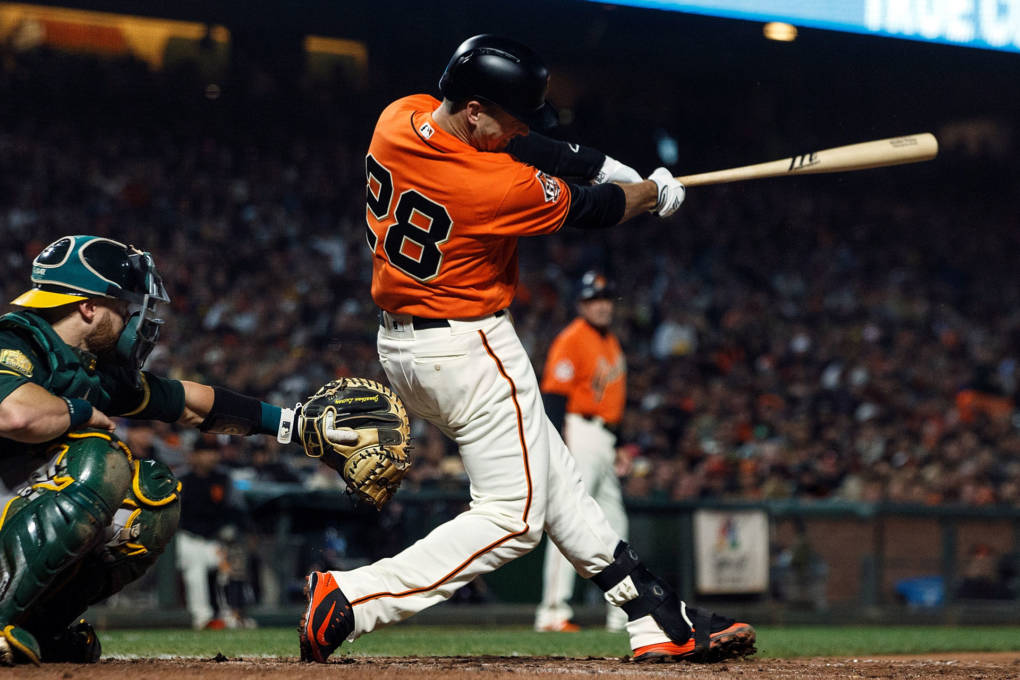
"caption": "Buster Posey of the San Francisco Giants hits an RBI single against the Oakland A's during a game at AT&T Park on July 13, 2018.",
"description": "Buster Posey of the San Francisco Giants hits an RBI single against the Oakland A's during a game at AT&T Park on July 13, 2018.",
"title": "SFGiantsBat",
"credit": "Jason O. Watson/Getty Images",
"status": "inherit",
"isLoading": false,
"fetchFailed": false
},
"news_11697303": {
"type": "attachments",
"id": "news_11697303",
"meta": {
"index": "attachments_1716263798",
"site": "news",
"id": "11697303",
"found": true
},
"parent": 11697296,
"imgSizes": {
"small": {
"file": "https://ww2.kqed.org/app/uploads/sites/10/2018/10/IMG_6860-520x347.jpg",
"width": 520,
"mimeType": "image/jpeg",
"height": 347
},
"twentyfourteen-full-width": {
"file": "https://ww2.kqed.org/app/uploads/sites/10/2018/10/IMG_6860-1038x576.jpg",
"width": 1038,
"mimeType": "image/jpeg",
"height": 576
},
"thumbnail": {
"file": "https://ww2.kqed.org/app/uploads/sites/10/2018/10/IMG_6860-160x107.jpg",
"width": 160,
"mimeType": "image/jpeg",
"height": 107
},
"fd-sm": {
"file": "https://ww2.kqed.org/app/uploads/sites/10/2018/10/IMG_6860-960x640.jpg",
"width": 960,
"mimeType": "image/jpeg",
"height": 640
},
"post-thumbnail": {
"file": "https://ww2.kqed.org/app/uploads/sites/10/2018/10/IMG_6860-672x372.jpg",
"width": 672,
"mimeType": "image/jpeg",
"height": 372
},
"xsmall": {
"file": "https://ww2.kqed.org/app/uploads/sites/10/2018/10/IMG_6860-375x250.jpg",
"width": 375,
"mimeType": "image/jpeg",
"height": 250
},
"kqedFullSize": {
"file": "https://ww2.kqed.org/app/uploads/sites/10/2018/10/IMG_6860-e1538960941638.jpg",
"width": 1920,
"height": 1280
},
"large": {
"file": "https://ww2.kqed.org/app/uploads/sites/10/2018/10/IMG_6860-1020x680.jpg",
"width": 1020,
"mimeType": "image/jpeg",
"height": 680
},
"xlarge": {
"file": "https://ww2.kqed.org/app/uploads/sites/10/2018/10/IMG_6860-1180x787.jpg",
"width": 1180,
"mimeType": "image/jpeg",
"height": 787
},
"complete_open_graph": {
"file": "https://ww2.kqed.org/app/uploads/sites/10/2018/10/IMG_6860-1200x800.jpg",
"width": 1200,
"mimeType": "image/jpeg",
"height": 800
},
"guest-author-50": {
"file": "https://ww2.kqed.org/app/uploads/sites/10/2018/10/IMG_6860-50x50.jpg",
"width": 50,
"mimeType": "image/jpeg",
"height": 50
},
"guest-author-96": {
"file": "https://ww2.kqed.org/app/uploads/sites/10/2018/10/IMG_6860-96x96.jpg",
"width": 96,
"mimeType": "image/jpeg",
"height": 96
},
"medium": {
"file": "https://ww2.kqed.org/app/uploads/sites/10/2018/10/IMG_6860-800x533.jpg",
"width": 800,
"mimeType": "image/jpeg",
"height": 533
},
"guest-author-64": {
"file": "https://ww2.kqed.org/app/uploads/sites/10/2018/10/IMG_6860-64x64.jpg",
"width": 64,
"mimeType": "image/jpeg",
"height": 64
},
"guest-author-32": {
"file": "https://ww2.kqed.org/app/uploads/sites/10/2018/10/IMG_6860-32x32.jpg",
"width": 32,
"mimeType": "image/jpeg",
"height": 32
},
"fd-lrg": {
"file": "https://ww2.kqed.org/app/uploads/sites/10/2018/10/IMG_6860-1920x1280.jpg",
"width": 1920,
"mimeType": "image/jpeg",
"height": 1280
},
"fd-med": {
"file": "https://ww2.kqed.org/app/uploads/sites/10/2018/10/IMG_6860-1180x787.jpg",
"width": 1180,
"mimeType": "image/jpeg",
"height": 787
},
"full-width": {
"file": "https://ww2.kqed.org/app/uploads/sites/10/2018/10/IMG_6860-1920x1280.jpg",
"width": 1920,
"mimeType": "image/jpeg",
"height": 1280
},
"detail": {
"file": "https://ww2.kqed.org/app/uploads/sites/10/2018/10/IMG_6860-150x150.jpg",
"width": 150,
"mimeType": "image/jpeg",
"height": 150
},
"guest-author-128": {
"file": "https://ww2.kqed.org/app/uploads/sites/10/2018/10/IMG_6860-128x128.jpg",
"width": 128,
"mimeType": "image/jpeg",
"height": 128
},
"xxsmall": {
"file": "https://ww2.kqed.org/app/uploads/sites/10/2018/10/IMG_6860-240x160.jpg",
"width": 240,
"mimeType": "image/jpeg",
"height": 160
}
},
"publishDate": 1538958928,
"modified": 1539219561,
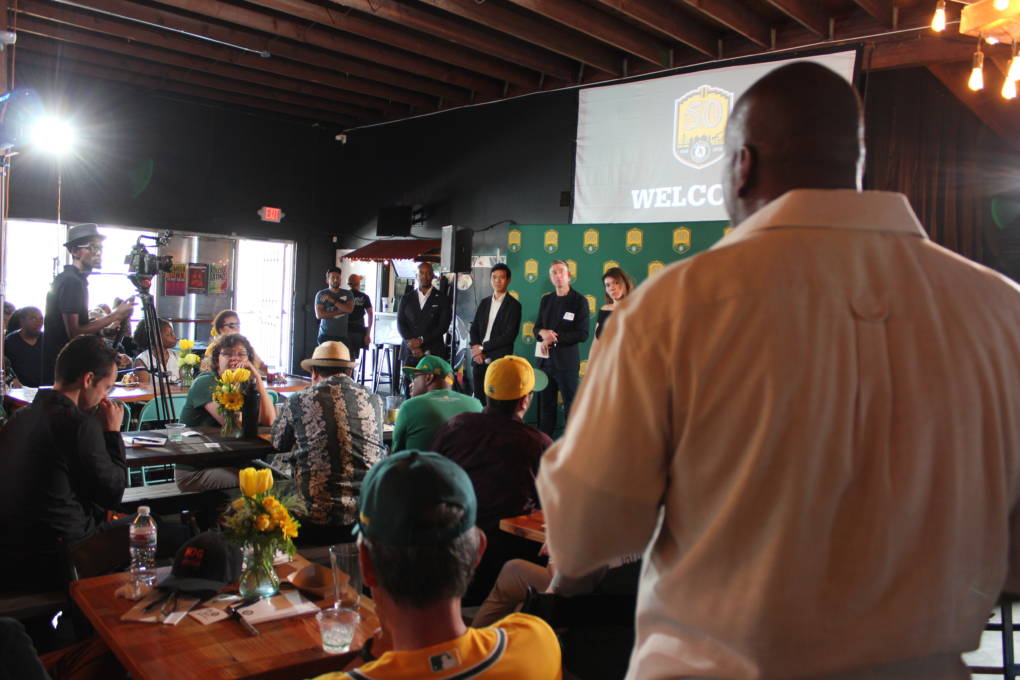
"caption": "At a community meeting on Oct. 7, 2018, union contractor Nedar Bey of Oakland told the A's he wants to see local jobs be a part of any new project.",
"description": "At a community meeting on Oct. 7, 2018, union contractor Nedar Bey of Oakland told the A's he wants to see local jobs be a part of any new project.",
"title": "IMG_6860",
"credit": "Sara Hossaini/KQED",
"status": "inherit",
"isLoading": false,
"fetchFailed": false
},
"news_11696325": {
"type": "attachments",
"id": "news_11696325",
"meta": {
"index": "attachments_1716263798",
"site": "news",
"id": "11696325",
"found": true
},
"parent": 11696134,
"imgSizes": {
"small": {
"file": "https://ww2.kqed.org/app/uploads/sites/10/2018/10/GettyImages-1039799892-520x347.jpg",
"width": 520,
"mimeType": "image/jpeg",
"height": 347
},
"twentyfourteen-full-width": {
"file": "https://ww2.kqed.org/app/uploads/sites/10/2018/10/GettyImages-1039799892-1038x576.jpg",
"width": 1038,
"mimeType": "image/jpeg",
"height": 576
},
"thumbnail": {
"file": "https://ww2.kqed.org/app/uploads/sites/10/2018/10/GettyImages-1039799892-160x107.jpg",
"width": 160,
"mimeType": "image/jpeg",
"height": 107
},
"fd-sm": {
"file": "https://ww2.kqed.org/app/uploads/sites/10/2018/10/GettyImages-1039799892-960x640.jpg",
"width": 960,
"mimeType": "image/jpeg",
"height": 640
},
"post-thumbnail": {
"file": "https://ww2.kqed.org/app/uploads/sites/10/2018/10/GettyImages-1039799892-672x372.jpg",
"width": 672,
"mimeType": "image/jpeg",
"height": 372
},
"xsmall": {
"file": "https://ww2.kqed.org/app/uploads/sites/10/2018/10/GettyImages-1039799892-375x250.jpg",
"width": 375,
"mimeType": "image/jpeg",
"height": 250
},
"kqedFullSize": {
"file": "https://ww2.kqed.org/app/uploads/sites/10/2018/10/GettyImages-1039799892.jpg",
"width": 3961,
"height": 2641
},
"large": {
"file": "https://ww2.kqed.org/app/uploads/sites/10/2018/10/GettyImages-1039799892-1020x680.jpg",
"width": 1020,
"mimeType": "image/jpeg",
"height": 680
},
"xlarge": {
"file": "https://ww2.kqed.org/app/uploads/sites/10/2018/10/GettyImages-1039799892-1180x787.jpg",
"width": 1180,
"mimeType": "image/jpeg",
"height": 787
},
"complete_open_graph": {
"file": "https://ww2.kqed.org/app/uploads/sites/10/2018/10/GettyImages-1039799892-1200x800.jpg",
"width": 1200,
"mimeType": "image/jpeg",
"height": 800
},
"guest-author-50": {
"file": "https://ww2.kqed.org/app/uploads/sites/10/2018/10/GettyImages-1039799892-50x50.jpg",
"width": 50,
"mimeType": "image/jpeg",
"height": 50
},
"guest-author-96": {
"file": "https://ww2.kqed.org/app/uploads/sites/10/2018/10/GettyImages-1039799892-96x96.jpg",
"width": 96,
"mimeType": "image/jpeg",
"height": 96
},
"medium": {
"file": "https://ww2.kqed.org/app/uploads/sites/10/2018/10/GettyImages-1039799892-800x533.jpg",
"width": 800,
"mimeType": "image/jpeg",
"height": 533
},
"guest-author-64": {
"file": "https://ww2.kqed.org/app/uploads/sites/10/2018/10/GettyImages-1039799892-64x64.jpg",
"width": 64,
"mimeType": "image/jpeg",
"height": 64
},
"guest-author-32": {
"file": "https://ww2.kqed.org/app/uploads/sites/10/2018/10/GettyImages-1039799892-32x32.jpg",
"width": 32,
"mimeType": "image/jpeg",
"height": 32
},
"fd-lrg": {
"file": "https://ww2.kqed.org/app/uploads/sites/10/2018/10/GettyImages-1039799892-1920x1280.jpg",
"width": 1920,
"mimeType": "image/jpeg",
"height": 1280
},
"fd-med": {
"file": "https://ww2.kqed.org/app/uploads/sites/10/2018/10/GettyImages-1039799892-1180x787.jpg",
"width": 1180,
"mimeType": "image/jpeg",
"height": 787
},
"full-width": {
"file": "https://ww2.kqed.org/app/uploads/sites/10/2018/10/GettyImages-1039799892-1920x1280.jpg",
"width": 1920,
"mimeType": "image/jpeg",
"height": 1280
},
"detail": {
"file": "https://ww2.kqed.org/app/uploads/sites/10/2018/10/GettyImages-1039799892-150x150.jpg",
"width": 150,
"mimeType": "image/jpeg",
"height": 150
},
"guest-author-128": {
"file": "https://ww2.kqed.org/app/uploads/sites/10/2018/10/GettyImages-1039799892-128x128.jpg",
"width": 128,
"mimeType": "image/jpeg",
"height": 128
},
"xxsmall": {
"file": "https://ww2.kqed.org/app/uploads/sites/10/2018/10/GettyImages-1039799892-240x160.jpg",
"width": 240,
"mimeType": "image/jpeg",
"height": 160
}
},
"publishDate": 1538584827,
"modified": 1538601850,
"caption": "A's players celebrate clinching a spot in the playoffs after beating the Seattle Mariners on Sept. 24, 2018. ",
"description": "A's players celebrate clinching a spot in the playoffs after beating the Seattle Mariners on September 24, 2018. ",
"title": "Oakland Athletics v Seattle Mariners",
"credit": "Abbie Parr/Getty Images",
"status": "inherit",
"isLoading": false,
"fetchFailed": false
},
"news_11696158": {
"type": "attachments",
"id": "news_11696158",
"meta": {
"index": "attachments_1716263798",
"site": "news",
"id": "11696158",
"found": true
},
"parent": 11695689,
"imgSizes": {
"small": {
"file": "https://ww2.kqed.org/app/uploads/sites/10/2018/10/GiambiTaggedOut-520x405.jpg",
"width": 520,
"mimeType": "image/jpeg",
"height": 405
},
"twentyfourteen-full-width": {
"file": "https://ww2.kqed.org/app/uploads/sites/10/2018/10/GiambiTaggedOut-1038x576.jpg",
"width": 1038,
"mimeType": "image/jpeg",
"height": 576
},
"thumbnail": {
"file": "https://ww2.kqed.org/app/uploads/sites/10/2018/10/GiambiTaggedOut-160x125.jpg",
"width": 160,
"mimeType": "image/jpeg",
"height": 125
},
"fd-sm": {
"file": "https://ww2.kqed.org/app/uploads/sites/10/2018/10/GiambiTaggedOut-960x748.jpg",
"width": 960,
"mimeType": "image/jpeg",
"height": 748
},
"post-thumbnail": {
"file": "https://ww2.kqed.org/app/uploads/sites/10/2018/10/GiambiTaggedOut-672x372.jpg",
"width": 672,
"mimeType": "image/jpeg",
"height": 372
},
"xsmall": {
"file": "https://ww2.kqed.org/app/uploads/sites/10/2018/10/GiambiTaggedOut-375x292.jpg",
"width": 375,
"mimeType": "image/jpeg",
"height": 292
},
"kqedFullSize": {
"file": "https://ww2.kqed.org/app/uploads/sites/10/2018/10/GiambiTaggedOut.jpg",
"width": 1920,
"height": 1495
},
"large": {
"file": "https://ww2.kqed.org/app/uploads/sites/10/2018/10/GiambiTaggedOut-1020x794.jpg",
"width": 1020,
"mimeType": "image/jpeg",
"height": 794
},
"xlarge": {
"file": "https://ww2.kqed.org/app/uploads/sites/10/2018/10/GiambiTaggedOut-1180x919.jpg",
"width": 1180,
"mimeType": "image/jpeg",
"height": 919
},
"complete_open_graph": {
"file": "https://ww2.kqed.org/app/uploads/sites/10/2018/10/GiambiTaggedOut-1200x934.jpg",
"width": 1200,
"mimeType": "image/jpeg",
"height": 934
},
"guest-author-50": {
"file": "https://ww2.kqed.org/app/uploads/sites/10/2018/10/GiambiTaggedOut-50x50.jpg",
"width": 50,
"mimeType": "image/jpeg",
"height": 50
},
"guest-author-96": {
"file": "https://ww2.kqed.org/app/uploads/sites/10/2018/10/GiambiTaggedOut-96x96.jpg",
"width": 96,
"mimeType": "image/jpeg",
"height": 96
},
"medium": {
"file": "https://ww2.kqed.org/app/uploads/sites/10/2018/10/GiambiTaggedOut-800x623.jpg",
"width": 800,
"mimeType": "image/jpeg",
"height": 623
},
"guest-author-64": {
"file": "https://ww2.kqed.org/app/uploads/sites/10/2018/10/GiambiTaggedOut-64x64.jpg",
"width": 64,
"mimeType": "image/jpeg",
"height": 64
},
"guest-author-32": {
"file": "https://ww2.kqed.org/app/uploads/sites/10/2018/10/GiambiTaggedOut-32x32.jpg",
"width": 32,
"mimeType": "image/jpeg",
"height": 32
},
"fd-lrg": {
"file": "https://ww2.kqed.org/app/uploads/sites/10/2018/10/GiambiTaggedOut-1920x1495.jpg",
"width": 1920,
"mimeType": "image/jpeg",
"height": 1495
},
"fd-med": {
"file": "https://ww2.kqed.org/app/uploads/sites/10/2018/10/GiambiTaggedOut-1180x919.jpg",
"width": 1180,
"mimeType": "image/jpeg",
"height": 919
},
"full-width": {
"file": "https://ww2.kqed.org/app/uploads/sites/10/2018/10/GiambiTaggedOut-1920x1495.jpg",
"width": 1920,
"mimeType": "image/jpeg",
"height": 1495
},
"detail": {
"file": "https://ww2.kqed.org/app/uploads/sites/10/2018/10/GiambiTaggedOut-150x150.jpg",
"width": 150,
"mimeType": "image/jpeg",
"height": 150
},
"guest-author-128": {
"file": "https://ww2.kqed.org/app/uploads/sites/10/2018/10/GiambiTaggedOut-128x128.jpg",
"width": 128,
"mimeType": "image/jpeg",
"height": 128
},
"xxsmall": {
"file": "https://ww2.kqed.org/app/uploads/sites/10/2018/10/GiambiTaggedOut-240x187.jpg",
"width": 240,
"mimeType": "image/jpeg",
"height": 187
}
},
"publishDate": 1538519229,
"modified": 1538527130,
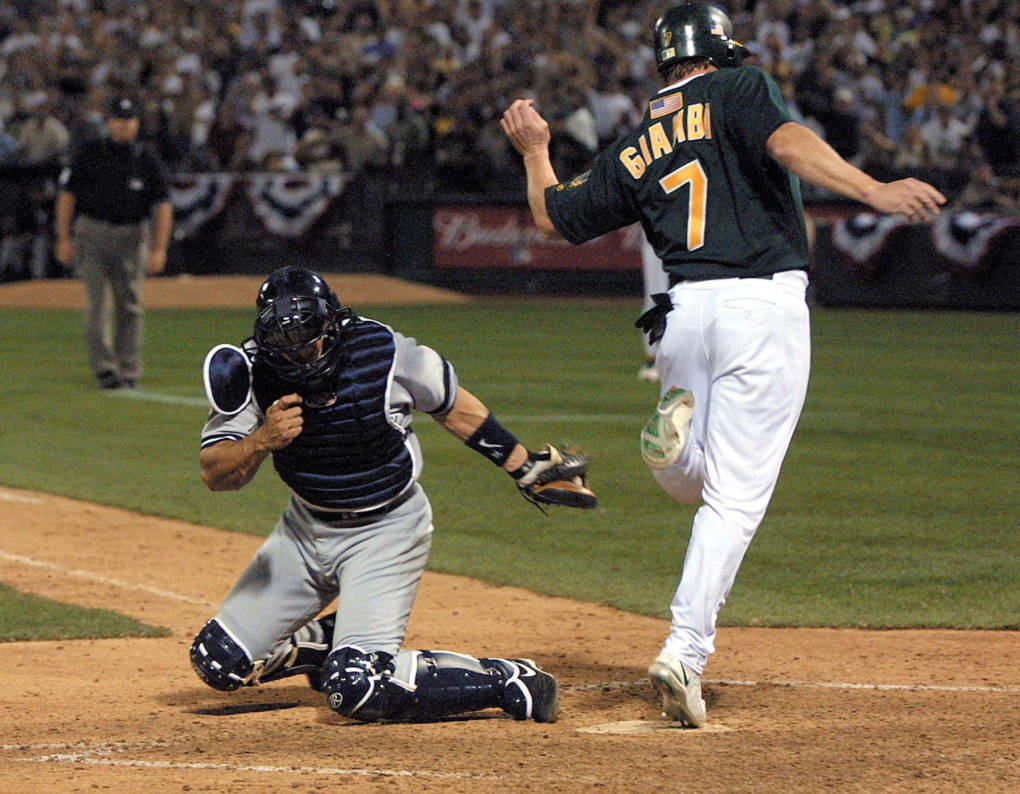
"caption": "In 2001, the Oakland A’s felt the sting of ‘Yankee mystique’ — a phenomenon long-suffering Mets fans know all too well — when Derek Jeter made his iconic 'flip' play during Game 3 of the 2001 ALDS, resulting in the Oakland A's Jeremy Giambi being tagged out at the plate.",
"description": "In 2001, the Oakland A’s felt the sting of ‘Yankee mystique’ — a phenomenon long-suffering Mets fans know all too well — when Derek Jeter made his iconic 'flip' play during game 3 of the 2001 ALDS, resulting in the Oakland A's Jeremy Giambi being tagged out at the plate.",
"title": "GiambiTaggedOut",
"credit": "JOHN G. MABANGLO/AFP/Getty Images",
"status": "inherit",
"isLoading": false,
"fetchFailed": false
},
"news_11680776": {
"type": "attachments",
"id": "news_11680776",
"meta": {
"index": "attachments_1716263798",
"site": "news",
"id": "11680776",
"found": true
},
"parent": 11680656,
"imgSizes": {
"small": {
"file": "https://ww2.kqed.org/app/uploads/sites/10/2018/07/RS31805_Artie-Wilson-qut-1-520x330.jpg",
"width": 520,
"mimeType": "image/jpeg",
"height": 330
},
"twentyfourteen-full-width": {
"file": "https://ww2.kqed.org/app/uploads/sites/10/2018/07/RS31805_Artie-Wilson-qut-1-1038x576.jpg",
"width": 1038,
"mimeType": "image/jpeg",
"height": 576
},
"thumbnail": {
"file": "https://ww2.kqed.org/app/uploads/sites/10/2018/07/RS31805_Artie-Wilson-qut-1-160x101.jpg",
"width": 160,
"mimeType": "image/jpeg",
"height": 101
},
"fd-sm": {
"file": "https://ww2.kqed.org/app/uploads/sites/10/2018/07/RS31805_Artie-Wilson-qut-1-960x609.jpg",
"width": 960,
"mimeType": "image/jpeg",
"height": 609
},
"post-thumbnail": {
"file": "https://ww2.kqed.org/app/uploads/sites/10/2018/07/RS31805_Artie-Wilson-qut-1-672x372.jpg",
"width": 672,
"mimeType": "image/jpeg",
"height": 372
},
"xsmall": {
"file": "https://ww2.kqed.org/app/uploads/sites/10/2018/07/RS31805_Artie-Wilson-qut-1-375x238.jpg",
"width": 375,
"mimeType": "image/jpeg",
"height": 238
},
"kqedFullSize": {
"file": "https://ww2.kqed.org/app/uploads/sites/10/2018/07/RS31805_Artie-Wilson-qut-1.jpg",
"width": 1919,
"height": 1217
},
"large": {
"file": "https://ww2.kqed.org/app/uploads/sites/10/2018/07/RS31805_Artie-Wilson-qut-1-1020x647.jpg",
"width": 1020,
"mimeType": "image/jpeg",
"height": 647
},
"xlarge": {
"file": "https://ww2.kqed.org/app/uploads/sites/10/2018/07/RS31805_Artie-Wilson-qut-1-1180x748.jpg",
"width": 1180,
"mimeType": "image/jpeg",
"height": 748
},
"complete_open_graph": {
"file": "https://ww2.kqed.org/app/uploads/sites/10/2018/07/RS31805_Artie-Wilson-qut-1-1200x761.jpg",
"width": 1200,
"mimeType": "image/jpeg",
"height": 761
},
"guest-author-50": {
"file": "https://ww2.kqed.org/app/uploads/sites/10/2018/07/RS31805_Artie-Wilson-qut-1-50x50.jpg",
"width": 50,
"mimeType": "image/jpeg",
"height": 50
},
"guest-author-96": {
"file": "https://ww2.kqed.org/app/uploads/sites/10/2018/07/RS31805_Artie-Wilson-qut-1-96x96.jpg",
"width": 96,
"mimeType": "image/jpeg",
"height": 96
},
"medium": {
"file": "https://ww2.kqed.org/app/uploads/sites/10/2018/07/RS31805_Artie-Wilson-qut-1-800x507.jpg",
"width": 800,
"mimeType": "image/jpeg",
"height": 507
},
"guest-author-64": {
"file": "https://ww2.kqed.org/app/uploads/sites/10/2018/07/RS31805_Artie-Wilson-qut-1-64x64.jpg",
"width": 64,
"mimeType": "image/jpeg",
"height": 64
},
"guest-author-32": {
"file": "https://ww2.kqed.org/app/uploads/sites/10/2018/07/RS31805_Artie-Wilson-qut-1-32x32.jpg",
"width": 32,
"mimeType": "image/jpeg",
"height": 32
},
"fd-med": {
"file": "https://ww2.kqed.org/app/uploads/sites/10/2018/07/RS31805_Artie-Wilson-qut-1-1180x748.jpg",
"width": 1180,
"mimeType": "image/jpeg",
"height": 748
},
"detail": {
"file": "https://ww2.kqed.org/app/uploads/sites/10/2018/07/RS31805_Artie-Wilson-qut-1-150x150.jpg",
"width": 150,
"mimeType": "image/jpeg",
"height": 150
},
"guest-author-128": {
"file": "https://ww2.kqed.org/app/uploads/sites/10/2018/07/RS31805_Artie-Wilson-qut-1-128x128.jpg",
"width": 128,
"mimeType": "image/jpeg",
"height": 128
},
"xxsmall": {
"file": "https://ww2.kqed.org/app/uploads/sites/10/2018/07/RS31805_Artie-Wilson-qut-1-240x152.jpg",
"width": 240,
"mimeType": "image/jpeg",
"height": 152
}
},
"publishDate": 1531765510,
"modified": 1531765527,
"caption": "Artie Wilson broke the Pacific Coast League color barrier when he suited up for the Oakland Oaks in 1949.",
"description": "Artie Wilson broke the Pacific Coast League color barrier when he suited up for the Oakland Oaks in 1949.",
"title": "RS31805_Artie Wilson-qut",
"credit": "Doug McWilliams Collection",
"status": "inherit",
"isLoading": false,
"fetchFailed": false
},
"news_11680536": {
"type": "attachments",
"id": "news_11680536",
"meta": {
"index": "attachments_1716263798",
"site": "news",
"id": "11680536",
"found": true
},
"parent": 11680469,
"imgSizes": {
"small": {
"file": "https://ww2.kqed.org/app/uploads/sites/10/2018/07/aartie-520x463.jpg",
"width": 520,
"mimeType": "image/jpeg",
"height": 463
},
"twentyfourteen-full-width": {
"file": "https://ww2.kqed.org/app/uploads/sites/10/2018/07/aartie-1038x576.jpg",
"width": 1038,
"mimeType": "image/jpeg",
"height": 576
},
"thumbnail": {
"file": "https://ww2.kqed.org/app/uploads/sites/10/2018/07/aartie-160x143.jpg",
"width": 160,
"mimeType": "image/jpeg",
"height": 143
},
"fd-sm": {
"file": "https://ww2.kqed.org/app/uploads/sites/10/2018/07/aartie-960x855.jpg",
"width": 960,
"mimeType": "image/jpeg",
"height": 855
},
"post-thumbnail": {
"file": "https://ww2.kqed.org/app/uploads/sites/10/2018/07/aartie-672x372.jpg",
"width": 672,
"mimeType": "image/jpeg",
"height": 372
},
"xsmall": {
"file": "https://ww2.kqed.org/app/uploads/sites/10/2018/07/aartie-375x334.jpg",
"width": 375,
"mimeType": "image/jpeg",
"height": 334
},
"kqedFullSize": {
"file": "https://ww2.kqed.org/app/uploads/sites/10/2018/07/aartie.jpg",
"width": 1918,
"height": 1709
},
"large": {
"file": "https://ww2.kqed.org/app/uploads/sites/10/2018/07/aartie-1020x909.jpg",
"width": 1020,
"mimeType": "image/jpeg",
"height": 909
},
"xlarge": {
"file": "https://ww2.kqed.org/app/uploads/sites/10/2018/07/aartie-1180x1051.jpg",
"width": 1180,
"mimeType": "image/jpeg",
"height": 1051
},
"complete_open_graph": {
"file": "https://ww2.kqed.org/app/uploads/sites/10/2018/07/aartie-1200x1069.jpg",
"width": 1200,
"mimeType": "image/jpeg",
"height": 1069
},
"guest-author-50": {
"file": "https://ww2.kqed.org/app/uploads/sites/10/2018/07/aartie-50x50.jpg",
"width": 50,
"mimeType": "image/jpeg",
"height": 50
},
"guest-author-96": {
"file": "https://ww2.kqed.org/app/uploads/sites/10/2018/07/aartie-96x96.jpg",
"width": 96,
"mimeType": "image/jpeg",
"height": 96
},
"medium": {
"file": "https://ww2.kqed.org/app/uploads/sites/10/2018/07/aartie-800x713.jpg",
"width": 800,
"mimeType": "image/jpeg",
"height": 713
},
"guest-author-64": {
"file": "https://ww2.kqed.org/app/uploads/sites/10/2018/07/aartie-64x64.jpg",
"width": 64,
"mimeType": "image/jpeg",
"height": 64
},
"guest-author-32": {
"file": "https://ww2.kqed.org/app/uploads/sites/10/2018/07/aartie-32x32.jpg",
"width": 32,
"mimeType": "image/jpeg",
"height": 32
},
"fd-med": {
"file": "https://ww2.kqed.org/app/uploads/sites/10/2018/07/aartie-1180x1051.jpg",
"width": 1180,
"mimeType": "image/jpeg",
"height": 1051
},
"detail": {
"file": "https://ww2.kqed.org/app/uploads/sites/10/2018/07/aartie-150x150.jpg",
"width": 150,
"mimeType": "image/jpeg",
"height": 150
},
"guest-author-128": {
"file": "https://ww2.kqed.org/app/uploads/sites/10/2018/07/aartie-128x128.jpg",
"width": 128,
"mimeType": "image/jpeg",
"height": 128
},
"xxsmall": {
"file": "https://ww2.kqed.org/app/uploads/sites/10/2018/07/aartie-240x214.jpg",
"width": 240,
"mimeType": "image/jpeg",
"height": 214
}
},
"publishDate": 1531523701,
"modified": 1531523765,
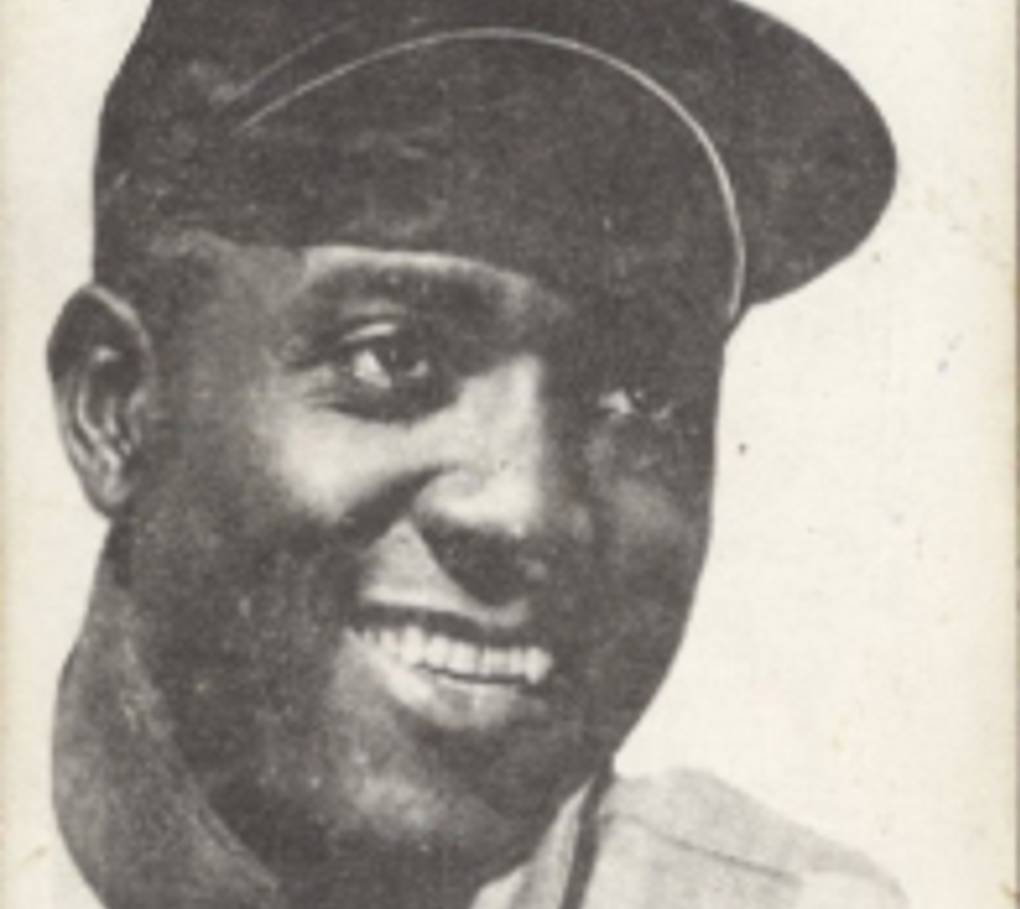
"caption": "Baseball card featuring Artie Wilson.",
"description": "Baseball card featuring Artie Wilson.",
"title": "aartie",
"credit": "Society for American Baseball Research",
"status": "inherit",
"isLoading": false,
"fetchFailed": false
},
"news_11663999": {
"type": "attachments",
"id": "news_11663999",
"meta": {
"index": "attachments_1716263798",
"site": "news",
"id": "11663999",
"found": true
},
"parent": 11663997,
"imgSizes": {
"small": {
"file": "https://ww2.kqed.org/app/uploads/sites/10/2018/04/RS30564_GettyImages-949803202-qut-520x351.jpg",
"width": 520,
"mimeType": "image/jpeg",
"height": 351
},
"twentyfourteen-full-width": {
"file": "https://ww2.kqed.org/app/uploads/sites/10/2018/04/RS30564_GettyImages-949803202-qut-1038x576.jpg",
"width": 1038,
"mimeType": "image/jpeg",
"height": 576
},
"thumbnail": {
"file": "https://ww2.kqed.org/app/uploads/sites/10/2018/04/RS30564_GettyImages-949803202-qut-160x108.jpg",
"width": 160,
"mimeType": "image/jpeg",
"height": 108
},
"fd-sm": {
"file": "https://ww2.kqed.org/app/uploads/sites/10/2018/04/RS30564_GettyImages-949803202-qut-960x648.jpg",
"width": 960,
"mimeType": "image/jpeg",
"height": 648
},
"post-thumbnail": {
"file": "https://ww2.kqed.org/app/uploads/sites/10/2018/04/RS30564_GettyImages-949803202-qut-672x372.jpg",
"width": 672,
"mimeType": "image/jpeg",
"height": 372
},
"xsmall": {
"file": "https://ww2.kqed.org/app/uploads/sites/10/2018/04/RS30564_GettyImages-949803202-qut-375x253.jpg",
"width": 375,
"mimeType": "image/jpeg",
"height": 253
},
"kqedFullSize": {
"file": "https://ww2.kqed.org/app/uploads/sites/10/2018/04/RS30564_GettyImages-949803202-qut.jpg",
"width": 1920,
"height": 1296
},
"large": {
"file": "https://ww2.kqed.org/app/uploads/sites/10/2018/04/RS30564_GettyImages-949803202-qut-1020x689.jpg",
"width": 1020,
"mimeType": "image/jpeg",
"height": 689
},
"xlarge": {
"file": "https://ww2.kqed.org/app/uploads/sites/10/2018/04/RS30564_GettyImages-949803202-qut-1180x797.jpg",
"width": 1180,
"mimeType": "image/jpeg",
"height": 797
},
"complete_open_graph": {
"file": "https://ww2.kqed.org/app/uploads/sites/10/2018/04/RS30564_GettyImages-949803202-qut-1200x810.jpg",
"width": 1200,
"mimeType": "image/jpeg",
"height": 810
},
"guest-author-50": {
"file": "https://ww2.kqed.org/app/uploads/sites/10/2018/04/RS30564_GettyImages-949803202-qut-50x50.jpg",
"width": 50,
"mimeType": "image/jpeg",
"height": 50
},
"guest-author-96": {
"file": "https://ww2.kqed.org/app/uploads/sites/10/2018/04/RS30564_GettyImages-949803202-qut-96x96.jpg",
"width": 96,
"mimeType": "image/jpeg",
"height": 96
},
"medium": {
"file": "https://ww2.kqed.org/app/uploads/sites/10/2018/04/RS30564_GettyImages-949803202-qut-800x540.jpg",
"width": 800,
"mimeType": "image/jpeg",
"height": 540
},
"guest-author-64": {
"file": "https://ww2.kqed.org/app/uploads/sites/10/2018/04/RS30564_GettyImages-949803202-qut-64x64.jpg",
"width": 64,
"mimeType": "image/jpeg",
"height": 64
},
"guest-author-32": {
"file": "https://ww2.kqed.org/app/uploads/sites/10/2018/04/RS30564_GettyImages-949803202-qut-32x32.jpg",
"width": 32,
"mimeType": "image/jpeg",
"height": 32
},
"fd-lrg": {
"file": "https://ww2.kqed.org/app/uploads/sites/10/2018/04/RS30564_GettyImages-949803202-qut-1920x1296.jpg",
"width": 1920,
"mimeType": "image/jpeg",
"height": 1296
},
"fd-med": {
"file": "https://ww2.kqed.org/app/uploads/sites/10/2018/04/RS30564_GettyImages-949803202-qut-1180x797.jpg",
"width": 1180,
"mimeType": "image/jpeg",
"height": 797
},
"full-width": {
"file": "https://ww2.kqed.org/app/uploads/sites/10/2018/04/RS30564_GettyImages-949803202-qut-1920x1296.jpg",
"width": 1920,
"mimeType": "image/jpeg",
"height": 1296
},
"detail": {
"file": "https://ww2.kqed.org/app/uploads/sites/10/2018/04/RS30564_GettyImages-949803202-qut-150x150.jpg",
"width": 150,
"mimeType": "image/jpeg",
"height": 150
},
"guest-author-128": {
"file": "https://ww2.kqed.org/app/uploads/sites/10/2018/04/RS30564_GettyImages-949803202-qut-128x128.jpg",
"width": 128,
"mimeType": "image/jpeg",
"height": 128
},
"xxsmall": {
"file": "https://ww2.kqed.org/app/uploads/sites/10/2018/04/RS30564_GettyImages-949803202-qut-240x162.jpg",
"width": 240,
"mimeType": "image/jpeg",
"height": 162
}
},
"publishDate": 1524407658,
"modified": 1524407701,
"caption": "Sean Manaea #55 and Jonathan Lucroy #21 of the Oakland Athletics celebrates after Manaea pitched a no-hitter against the Boston Red Sox at the Oakland Alameda Coliseum on April 21, 2018. The Athletics won the game 3-0. ",
"description": "Sean Manaea #55 and Jonathan Lucroy #21 of the Oakland Athletics celebrates after Manaea pitched a no-hitter against the Boston Red Sox at the Oakland Alameda Coliseum on April 21, 2018. The Athletics won the game 3-0. ",
"title": "Boston Red Sox v Oakland Athletics",
"credit": "Thearon W. Henderson/Getty Images",
"status": "inherit",
"isLoading": false,
"fetchFailed": false
},
"news_11618711": {
"type": "attachments",
"id": "news_11618711",
"meta": {
"index": "attachments_1716263798",
"site": "news",
"id": "11618711",
"found": true
},
"parent": 11618592,
"imgSizes": {
"small": {
"file": "https://ww2.kqed.org/app/uploads/sites/10/2017/09/RS26910_image003-qut-520x353.jpg",
"width": 520,
"mimeType": "image/jpeg",
"height": 353
},
"thumbnail": {
"file": "https://ww2.kqed.org/app/uploads/sites/10/2017/09/RS26910_image003-qut-160x109.jpg",
"width": 160,
"mimeType": "image/jpeg",
"height": 109
},
"post-thumbnail": {
"file": "https://ww2.kqed.org/app/uploads/sites/10/2017/09/RS26910_image003-qut-672x372.jpg",
"width": 672,
"mimeType": "image/jpeg",
"height": 372
},
"xsmall": {
"file": "https://ww2.kqed.org/app/uploads/sites/10/2017/09/RS26910_image003-qut-375x255.jpg",
"width": 375,
"mimeType": "image/jpeg",
"height": 255
},
"kqedFullSize": {
"file": "https://ww2.kqed.org/app/uploads/sites/10/2017/09/RS26910_image003-qut.jpg",
"width": 788,
"height": 535
},
"guest-author-50": {
"file": "https://ww2.kqed.org/app/uploads/sites/10/2017/09/RS26910_image003-qut-50x50.jpg",
"width": 50,
"mimeType": "image/jpeg",
"height": 50
},
"guest-author-96": {
"file": "https://ww2.kqed.org/app/uploads/sites/10/2017/09/RS26910_image003-qut-96x96.jpg",
"width": 96,
"mimeType": "image/jpeg",
"height": 96
},
"guest-author-64": {
"file": "https://ww2.kqed.org/app/uploads/sites/10/2017/09/RS26910_image003-qut-64x64.jpg",
"width": 64,
"mimeType": "image/jpeg",
"height": 64
},
"detail": {
"file": "https://ww2.kqed.org/app/uploads/sites/10/2017/09/RS26910_image003-qut-150x150.jpg",
"width": 150,
"mimeType": "image/jpeg",
"height": 150
},
"guest-author-32": {
"file": "https://ww2.kqed.org/app/uploads/sites/10/2017/09/RS26910_image003-qut-32x32.jpg",
"width": 32,
"mimeType": "image/jpeg",
"height": 32
},
"guest-author-128": {
"file": "https://ww2.kqed.org/app/uploads/sites/10/2017/09/RS26910_image003-qut-128x128.jpg",
"width": 128,
"mimeType": "image/jpeg",
"height": 128
},
"xxsmall": {
"file": "https://ww2.kqed.org/app/uploads/sites/10/2017/09/RS26910_image003-qut-240x163.jpg",
"width": 240,
"mimeType": "image/jpeg",
"height": 163
}
},
"publishDate": 1506118600,
"modified": 1506126528,
"caption": "Bryanne Aler-Ningas is the unofficial bandleader of the right field rhythm section. Behind him is right field drummer and The California Report producer Nina Thorsen.",
"description": "Bryanne Aler-Ningas is the unofficial bandleader of the right field rhythm section. Behind him is right field drummer and The California Report Producer, Nina Thorsen.",
"title": "RS26910_image003-qut",
"credit": "Serginho Roosblad/KQED",
"status": "inherit",
"isLoading": false,
"fetchFailed": false
},
"arts_11568332": {
"type": "attachments",
"id": "arts_11568332",
"meta": {
"index": "attachments_1716263798",
"site": "arts",
"id": "11568332",
"found": true
},
"parent": 11565578,
"imgSizes": {
"small": {
"file": "https://ww2.kqed.org/app/uploads/sites/2/2016/05/Tabitha-Soren-darkroom-e1495754895807-520x293.jpg",
"width": 520,
"mimeType": "image/jpeg",
"height": 293
},
"twentyfourteen-full-width": {
"file": "https://ww2.kqed.org/app/uploads/sites/2/2016/05/Tabitha-Soren-darkroom-e1495754895807-1038x576.jpg",
"width": 1038,
"mimeType": "image/jpeg",
"height": 576
},
"thumbnail": {
"file": "https://ww2.kqed.org/app/uploads/sites/2/2016/05/Tabitha-Soren-darkroom-e1495754895807-160x90.jpg",
"width": 160,
"mimeType": "image/jpeg",
"height": 90
},
"fd-sm": {
"file": "https://ww2.kqed.org/app/uploads/sites/2/2016/05/Tabitha-Soren-darkroom-e1495754895807-960x540.jpg",
"width": 960,
"mimeType": "image/jpeg",
"height": 540
},
"post-thumbnail": {
"file": "https://ww2.kqed.org/app/uploads/sites/2/2016/05/Tabitha-Soren-darkroom-e1495754895807-672x372.jpg",
"width": 672,
"mimeType": "image/jpeg",
"height": 372
},
"xsmall": {
"file": "https://ww2.kqed.org/app/uploads/sites/2/2016/05/Tabitha-Soren-darkroom-e1495754895807-375x211.jpg",
"width": 375,
"mimeType": "image/jpeg",
"height": 211
},
"kqedFullSize": {
"file": "https://ww2.kqed.org/app/uploads/sites/2/2016/05/Tabitha-Soren-darkroom-e1495754895807.jpg",
"width": 1920,
"height": 1080
},
"large": {
"file": "https://ww2.kqed.org/app/uploads/sites/2/2016/05/Tabitha-Soren-darkroom-e1495754895807-1020x574.jpg",
"width": 1020,
"mimeType": "image/jpeg",
"height": 574
},
"xlarge": {
"file": "https://ww2.kqed.org/app/uploads/sites/2/2016/05/Tabitha-Soren-darkroom-e1495754895807-1180x664.jpg",
"width": 1180,
"mimeType": "image/jpeg",
"height": 664
},
"guest-author-50": {
"file": "https://ww2.kqed.org/app/uploads/sites/2/2016/05/Tabitha-Soren-darkroom-e1495754895807-50x50.jpg",
"width": 50,
"mimeType": "image/jpeg",
"height": 50
},
"guest-author-96": {
"file": "https://ww2.kqed.org/app/uploads/sites/2/2016/05/Tabitha-Soren-darkroom-e1495754895807-96x96.jpg",
"width": 96,
"mimeType": "image/jpeg",
"height": 96
},
"medium": {
"file": "https://ww2.kqed.org/app/uploads/sites/2/2016/05/Tabitha-Soren-darkroom-e1495754895807-800x450.jpg",
"width": 800,
"mimeType": "image/jpeg",
"height": 450
},
"guest-author-64": {
"file": "https://ww2.kqed.org/app/uploads/sites/2/2016/05/Tabitha-Soren-darkroom-e1495754895807-64x64.jpg",
"width": 64,
"mimeType": "image/jpeg",
"height": 64
},
"guest-author-32": {
"file": "https://ww2.kqed.org/app/uploads/sites/2/2016/05/Tabitha-Soren-darkroom-e1495754895807-32x32.jpg",
"width": 32,
"mimeType": "image/jpeg",
"height": 32
},
"fd-lrg": {
"file": "https://ww2.kqed.org/app/uploads/sites/2/2016/05/Tabitha-Soren-darkroom-e1495754895807-1920x1080.jpg",
"width": 1920,
"mimeType": "image/jpeg",
"height": 1080
},
"fd-med": {
"file": "https://ww2.kqed.org/app/uploads/sites/2/2016/05/Tabitha-Soren-darkroom-e1495754895807-1180x664.jpg",
"width": 1180,
"mimeType": "image/jpeg",
"height": 664
},
"full-width": {
"file": "https://ww2.kqed.org/app/uploads/sites/2/2016/05/Tabitha-Soren-darkroom-e1495754895807-1920x1080.jpg",
"width": 1920,
"mimeType": "image/jpeg",
"height": 1080
},
"detail": {
"file": "https://ww2.kqed.org/app/uploads/sites/2/2016/05/Tabitha-Soren-darkroom-e1495754895807-150x150.jpg",
"width": 150,
"mimeType": "image/jpeg",
"height": 150
},
"medium_large": {
"file": "https://ww2.kqed.org/app/uploads/sites/2/2016/05/Tabitha-Soren-darkroom-e1495754895807-768x432.jpg",
"width": 768,
"mimeType": "image/jpeg",
"height": 432
},
"guest-author-128": {
"file": "https://ww2.kqed.org/app/uploads/sites/2/2016/05/Tabitha-Soren-darkroom-e1495754895807-128x128.jpg",
"width": 128,
"mimeType": "image/jpeg",
"height": 128
},
"xxsmall": {
"file": "https://ww2.kqed.org/app/uploads/sites/2/2016/05/Tabitha-Soren-darkroom-e1495754895807-240x135.jpg",
"width": 240,
"mimeType": "image/jpeg",
"height": 135
}
},
"publishDate": 1462912122,
"modified": 1462912148,
"caption": "Tabitha Soren outside her darkroom in Berkeley.",
"description": "Tabitha Soren outside her darkroom in Berkeley.",
"title": "Tabitha Soren darkroom",
"credit": "Photo: Kevin L. Jones/KQED",
"status": "inherit",
"isLoading": false,
"fetchFailed": false
},
"news_10608967": {
"type": "attachments",
"id": "news_10608967",
"meta": {
"index": "attachments_1716263798",
"site": "news",
"id": "10608967",
"found": true
},
"parent": 0,
"imgSizes": {
"twentyfourteen-full-width": {
"file": "https://ww2.kqed.org/app/uploads/sites/10/2015/07/att-feature-1038x576.jpg",
"width": 1038,
"mimeType": "image/jpeg",
"height": 576
},
"thumbnail": {
"file": "https://ww2.kqed.org/app/uploads/sites/10/2015/07/att-feature-400x225.jpg",
"width": 400,
"mimeType": "image/jpeg",
"height": 225
},
"fd-sm": {
"file": "https://ww2.kqed.org/app/uploads/sites/10/2015/07/att-feature-960x540.jpg",
"width": 960,
"mimeType": "image/jpeg",
"height": 540
},
"post-thumbnail": {
"file": "https://ww2.kqed.org/app/uploads/sites/10/2015/07/att-feature-672x372.jpg",
"width": 672,
"mimeType": "image/jpeg",
"height": 372
},
"kqedFullSize": {
"file": "https://ww2.kqed.org/app/uploads/sites/10/2015/07/att-feature.jpg",
"width": 2560,
"height": 1440
},
"large": {
"file": "https://ww2.kqed.org/app/uploads/sites/10/2015/07/att-feature-1440x810.jpg",
"width": 1440,
"mimeType": "image/jpeg",
"height": 810
},
"guest-author-96": {
"file": "https://ww2.kqed.org/app/uploads/sites/10/2015/07/att-feature-96x96.jpg",
"width": 96,
"mimeType": "image/jpeg",
"height": 96
},
"medium": {
"file": "https://ww2.kqed.org/app/uploads/sites/10/2015/07/att-feature-800x450.jpg",
"width": 800,
"mimeType": "image/jpeg",
"height": 450
},
"guest-author-64": {
"file": "https://ww2.kqed.org/app/uploads/sites/10/2015/07/att-feature-64x64.jpg",
"width": 64,
"mimeType": "image/jpeg",
"height": 64
},
"guest-author-32": {
"file": "https://ww2.kqed.org/app/uploads/sites/10/2015/07/att-feature-32x32.jpg",
"width": 32,
"mimeType": "image/jpeg",
"height": 32
},
"jmtc-small-thumb": {
"file": "https://ww2.kqed.org/app/uploads/sites/10/2015/07/att-feature-280x150.jpg",
"width": 280,
"mimeType": "image/jpeg",
"height": 150
},
"fd-lrg": {
"file": "https://ww2.kqed.org/app/uploads/sites/10/2015/07/att-feature-1400x788.jpg",
"width": 1400,
"mimeType": "image/jpeg",
"height": 788
},
"fd-med": {
"file": "https://ww2.kqed.org/app/uploads/sites/10/2015/07/att-feature-1180x664.jpg",
"width": 1180,
"mimeType": "image/jpeg",
"height": 664
},
"detail": {
"file": "https://ww2.kqed.org/app/uploads/sites/10/2015/07/att-feature-75x75.jpg",
"width": 75,
"mimeType": "image/jpeg",
"height": 75
},
"guest-author-128": {
"file": "https://ww2.kqed.org/app/uploads/sites/10/2015/07/att-feature-128x128.jpg",
"width": 128,
"mimeType": "image/jpeg",
"height": 128
}
},
"publishDate": 1437442360,
"modified": 1437523533,
"caption": "AT&T Park inherited an unofficial wave ban from Candlestick Park. ",
"description": "AT&T Park inherited an unofficial wave ban from Candlestick Park. ",
"title": "att-feature",
"credit": "Adam Grossberg/KQED",
"status": "inherit",
"isLoading": false,
"fetchFailed": false
},
"news_11078186": {
"type": "attachments",
"id": "news_11078186",
"meta": {
"index": "attachments_1716263798",
"site": "news",
"id": "11078186",
"found": true
},
"parent": 11060227,
"imgSizes": {
"twentyfourteen-full-width": {
"file": "https://ww2.kqed.org/app/uploads/sites/10/2016/09/CilantroGomez-1038x576.jpg",
"width": 1038,
"mimeType": "image/jpeg",
"height": 576
},
"thumbnail": {
"file": "https://ww2.kqed.org/app/uploads/sites/10/2016/09/CilantroGomez-400x255.jpg",
"width": 400,
"mimeType": "image/jpeg",
"height": 255
},
"fd-sm": {
"file": "https://ww2.kqed.org/app/uploads/sites/10/2016/09/CilantroGomez-960x611.jpg",
"width": 960,
"mimeType": "image/jpeg",
"height": 611
},
"post-thumbnail": {
"file": "https://ww2.kqed.org/app/uploads/sites/10/2016/09/CilantroGomez-672x372.jpg",
"width": 672,
"mimeType": "image/jpeg",
"height": 372
},
"kqedFullSize": {
"file": "https://ww2.kqed.org/app/uploads/sites/10/2016/09/CilantroGomez.jpg",
"width": 1920,
"height": 1222
},
"large": {
"file": "https://ww2.kqed.org/app/uploads/sites/10/2016/09/CilantroGomez-1920x1222.jpg",
"width": 1920,
"mimeType": "image/jpeg",
"height": 1222
},
"guest-author-50": {
"file": "https://ww2.kqed.org/app/uploads/sites/10/2016/09/CilantroGomez-50x50.jpg",
"width": 50,
"mimeType": "image/jpeg",
"height": 50
},
"guest-author-96": {
"file": "https://ww2.kqed.org/app/uploads/sites/10/2016/09/CilantroGomez-96x96.jpg",
"width": 96,
"mimeType": "image/jpeg",
"height": 96
},
"medium": {
"file": "https://ww2.kqed.org/app/uploads/sites/10/2016/09/CilantroGomez-800x509.jpg",
"width": 800,
"mimeType": "image/jpeg",
"height": 509
},
"guest-author-64": {
"file": "https://ww2.kqed.org/app/uploads/sites/10/2016/09/CilantroGomez-64x64.jpg",
"width": 64,
"mimeType": "image/jpeg",
"height": 64
},
"guest-author-32": {
"file": "https://ww2.kqed.org/app/uploads/sites/10/2016/09/CilantroGomez-32x32.jpg",
"width": 32,
"mimeType": "image/jpeg",
"height": 32
},
"jmtc-small-thumb": {
"file": "https://ww2.kqed.org/app/uploads/sites/10/2016/09/CilantroGomez-280x150.jpg",
"width": 280,
"mimeType": "image/jpeg",
"height": 150
},
"fd-lrg": {
"file": "https://ww2.kqed.org/app/uploads/sites/10/2016/09/CilantroGomez-1920x1222.jpg",
"width": 1920,
"mimeType": "image/jpeg",
"height": 1222
},
"fd-med": {
"file": "https://ww2.kqed.org/app/uploads/sites/10/2016/09/CilantroGomez-1180x751.jpg",
"width": 1180,
"mimeType": "image/jpeg",
"height": 751
},
"detail": {
"file": "https://ww2.kqed.org/app/uploads/sites/10/2016/09/CilantroGomez-150x150.jpg",
"width": 150,
"mimeType": "image/jpeg",
"height": 150
},
"guest-author-128": {
"file": "https://ww2.kqed.org/app/uploads/sites/10/2016/09/CilantroGomez-128x128.jpg",
"width": 128,
"mimeType": "image/jpeg",
"height": 128
}
},
"publishDate": 1473275554,
"modified": 1473285325,
"caption": "Twice a year, the Fresno Grizzlies become the Fresno Tacos, replete with mascot Cilantro Gomez, who waves to the crowd during pregame warmups.",
"description": "Twice a year, the Fresno Grizzlies become the Fresno Tacos, replete with mascot Cilantro Gomez. \n",
"title": "CilantroGomez",
"credit": "Nina Thorsen/KQED",
"status": "inherit",
"isLoading": false,
"fetchFailed": false
}
},
"audioPlayerReducer": {
"postId": "stream_live",
"isPaused": true,
"isPlaying": false,
"pfsActive": false,
"pledgeModalIsOpen": true,
"playerDrawerIsOpen": false,
"liveAudioPlayStartedAt": 0,
"liveAudioPlayContext": ""
},
"authorsReducer": {
"byline_news_11663997": {
"type": "authors",
"id": "byline_news_11663997",
"meta": {
"override": true
},
"slug": "byline_news_11663997",
"name": "\u003cstrong>Gideon Rubin\u003c/br>Associated Press\u003c/strong>",
"isLoading": false
},
"jbrooks": {
"type": "authors",
"id": "80",
"meta": {
"index": "authors_1716337520",
"id": "80",
"found": true
},
"name": "Jon Brooks",
"firstName": "Jon",
"lastName": "Brooks",
"slug": "jbrooks",
"email": "jbrooks@kqed.org",
"display_author_email": true,
"staff_mastheads": [
"science"
],
"title": "Digital Editor",
"bio": "Jon Brooks is a former Digital Editor for KQED Science. He is the former editor of KQED’s daily news blog, News Fix. In 2014, he won a California Journalism Award for his coverage of ride services like Uber and Lyft and the taxi industry. A veteran blogger, he previously worked for Yahoo! in various news writing and editing roles. Jon is also a playwright whose work has been produced in San Francisco, New York, Italy, and around the U.S. He has written about film for his own blog and studied film at Boston University.",
"avatar": "https://secure.gravatar.com/avatar/98887f7ed1c876ed414d4c915e969584?s=600&d=blank&r=g",
"twitter": "jbrooksfoy",
"facebook": null,
"instagram": null,
"linkedin": null,
"sites": [
{
"site": "arts",
"roles": [
"Contributor",
"editor"
]
},
{
"site": "news",
"roles": [
"author"
]
},
{
"site": "futureofyou",
"roles": [
"administrator"
]
},
{
"site": "mindshift",
"roles": [
"editor"
]
},
{
"site": "stateofhealth",
"roles": [
"editor"
]
},
{
"site": "science",
"roles": [
"administrator"
]
},
{
"site": "quest",
"roles": [
"editor"
]
}
],
"headData": {
"title": "Jon Brooks | KQED",
"description": "Digital Editor",
"ogImgSrc": "https://secure.gravatar.com/avatar/98887f7ed1c876ed414d4c915e969584?s=600&d=blank&r=g",
"twImgSrc": "https://secure.gravatar.com/avatar/98887f7ed1c876ed414d4c915e969584?s=600&d=blank&r=g"
},
"isLoading": false,
"link": "/author/jbrooks"
},
"kjones": {
"type": "authors",
"id": "93",
"meta": {
"index": "authors_1716337520",
"id": "93",
"found": true
},
"name": "Kevin L. Jones",
"firstName": "Kevin",
"lastName": "Jones",
"slug": "kjones",
"email": "kjones@kqed.org",
"display_author_email": false,
"staff_mastheads": [],
"title": null,
"bio": null,
"avatar": "https://secure.gravatar.com/avatar/12c65b5633ed39d0a59bb7f497eff645?s=600&d=blank&r=g",
"twitter": null,
"facebook": null,
"instagram": null,
"linkedin": null,
"sites": [
{
"site": "arts",
"roles": [
"subscriber"
]
},
{
"site": "styleguide",
"roles": [
"contributor"
]
},
{
"site": "artschool",
"roles": [
"subscriber"
]
},
{
"site": "news",
"roles": [
"subscriber"
]
},
{
"site": "pop",
"roles": [
"subscriber"
]
}
],
"headData": {
"title": "Kevin L. Jones | KQED",
"description": null,
"ogImgSrc": "https://secure.gravatar.com/avatar/12c65b5633ed39d0a59bb7f497eff645?s=600&d=blank&r=g",
"twImgSrc": "https://secure.gravatar.com/avatar/12c65b5633ed39d0a59bb7f497eff645?s=600&d=blank&r=g"
},
"isLoading": false,
"link": "/author/kjones"
},
"ohubertallen": {
"type": "authors",
"id": "102",
"meta": {
"index": "authors_1716337520",
"id": "102",
"found": true
},
"name": "Olivia Allen-Price",
"firstName": "Olivia",
"lastName": "Allen-Price",
"slug": "ohubertallen",
"email": "oallenprice@kqed.org",
"display_author_email": false,
"staff_mastheads": [
"news"
],
"title": "Senior Editor",
"bio": "Olivia Allen-Price is senior editor and host of the award-winning Bay Curious podcast. Prior to joining KQED in 2013, Olivia worked at The Baltimore Sun and The Virginian-Pilot in Norfolk, Va. She holds degrees in journalism and political science from Elon University. Her work has earned awards from the Society of Professional Journalists, the Hearst Foundation and Hearken. She loves to talk about running and curly hair.\r\n\r\nFollow: \u003ca href=\"https://twitter.com/oallenprice\">@oallenprice\u003c/a>\r\nEmail: \u003ca href=\"mailto:oallenprice@kqed.org\">oallenprice@kqed.org\u003c/a>",
"avatar": "https://secure.gravatar.com/avatar/07f7803c1f6be56f3be58ef276dfa64dce898502e0554408ef4858451a8294f7?s=600&d=blank&r=g",
"twitter": "oallenprice",
"bluesky": null,
"facebook": null,
"instagram": null,
"linkedin": null,
"sites": [
{
"site": "",
"roles": [
"editor"
]
},
{
"site": "arts",
"roles": [
"subscriber"
]
},
{
"site": "news",
"roles": [
"administrator"
]
},
{
"site": "pop",
"roles": [
"administrator"
]
},
{
"site": "bayareabites",
"roles": [
"contributor"
]
},
{
"site": "stateofhealth",
"roles": [
"administrator"
]
},
{
"site": "science",
"roles": [
"editor"
]
}
],
"headData": {
"title": "Olivia Allen-Price | KQED",
"description": "Senior Editor",
"ogImgSrc": "https://secure.gravatar.com/avatar/07f7803c1f6be56f3be58ef276dfa64dce898502e0554408ef4858451a8294f7?s=600&d=blank&r=g",
"twImgSrc": "https://secure.gravatar.com/avatar/07f7803c1f6be56f3be58ef276dfa64dce898502e0554408ef4858451a8294f7?s=600&d=blank&r=g"
},
"isLoading": false,
"link": "/author/ohubertallen"
},
"agrossberg": {
"type": "authors",
"id": "188",
"meta": {
"index": "authors_1716337520",
"id": "188",
"found": true
},
"name": "Adam Grossberg",
"firstName": "Adam",
"lastName": "Grossberg",
"slug": "agrossberg",
"email": "agrossberg@KQED.org",
"display_author_email": false,
"staff_mastheads": [],
"title": "KQED Contributor",
"bio": "Adam Grossberg is a former video producer at KQED News. Prior to coming to KQED, he produced videos for PBS, The New York Times, Current TV and The Center for Investigative Reporting. His work has received an Excellence in Journalism award from the Society of Professional Journalists, a regional Murrow award and two Northern California Emmy awards. He is a graduate of the UC Berkeley Graduate School of Journalism.",
"avatar": "https://secure.gravatar.com/avatar/8e96dbdaaf98f5959a2c778289e0f9b5?s=600&d=blank&r=g",
"twitter": null,
"facebook": null,
"instagram": null,
"linkedin": null,
"sites": [
{
"site": "arts",
"roles": [
"contributor"
]
},
{
"site": "news",
"roles": [
"subscriber"
]
},
{
"site": "stateofhealth",
"roles": [
"editor"
]
},
{
"site": "science",
"roles": [
"editor"
]
}
],
"headData": {
"title": "Adam Grossberg | KQED",
"description": "KQED Contributor",
"ogImgSrc": "https://secure.gravatar.com/avatar/8e96dbdaaf98f5959a2c778289e0f9b5?s=600&d=blank&r=g",
"twImgSrc": "https://secure.gravatar.com/avatar/8e96dbdaaf98f5959a2c778289e0f9b5?s=600&d=blank&r=g"
},
"isLoading": false,
"link": "/author/agrossberg"
},
"ninathorsen": {
"type": "authors",
"id": "246",
"meta": {
"index": "authors_1716337520",
"id": "246",
"found": true
},
"name": "Nina Thorsen",
"firstName": "Nina",
"lastName": "Thorsen",
"slug": "ninathorsen",
"email": "nthorsen@kqed.org",
"display_author_email": false,
"staff_mastheads": [
"news"
],
"title": "Producer, Radio",
"bio": "\u003cspan style=\"color: #000000;\">Nina Thorsen is a KQED radio producer, and frequently reports on sports and culture. \u003c/span>\u003cspan style=\"color: #000000;\">She co-created and produced KQED's \u003cem>Pacific Time, \u003c/em> a weekly radio program on Asian and Asian American issues that aired from 2000 to 2007. Before coming to KQED, Thorsen was the deputy foreign editor for \u003cem>Marketplace, \u003c/em>and in her home state of Minnesota, worked for \u003cem>A Prairie Home Companion\u003c/em> and for Public Radio International. \u003c/span>",
"avatar": "https://secure.gravatar.com/avatar/e13dc7282cec33c15d973ebb56d57ead?s=600&d=blank&r=g",
"twitter": "NinaKQED",
"facebook": null,
"instagram": null,
"linkedin": null,
"sites": [
{
"site": "news",
"roles": [
"editor"
]
},
{
"site": "podcasts",
"roles": [
"editor"
]
}
],
"headData": {
"title": "Nina Thorsen | KQED",
"description": "Producer, Radio",
"ogImgSrc": "https://secure.gravatar.com/avatar/e13dc7282cec33c15d973ebb56d57ead?s=600&d=blank&r=g",
"twImgSrc": "https://secure.gravatar.com/avatar/e13dc7282cec33c15d973ebb56d57ead?s=600&d=blank&r=g"
},
"isLoading": false,
"link": "/author/ninathorsen"
},
"tgoldberg": {
"type": "authors",
"id": "258",
"meta": {
"index": "authors_1716337520",
"id": "258",
"found": true
},
"name": "Ted Goldberg",
"firstName": "Ted",
"lastName": "Goldberg",
"slug": "tgoldberg",
"email": "tgoldberg@kqed.org",
"display_author_email": true,
"staff_mastheads": [
"news"
],
"title": "KQED Managing Editor, News and Newscasts",
"bio": "Ted Goldberg is Managing Editor of News and Newscasts at KQED. His main reporting beat is the Bay Area's oil refining industry.\r\n\r\nPrior to joining KQED in 2014, Ted worked at CBS News and WCBS AM in New York and Bay City News and KCBS Radio in San Francisco. He graduated from Oberlin College in Ohio in 1998.",
"avatar": "https://secure.gravatar.com/avatar/30ce2e4fe89135e104f89be2394d16225b9d36c121b5b3cb7651ce642978b96f?s=600&d=blank&r=g",
"twitter": "TedrickG",
"bluesky": null,
"facebook": null,
"instagram": null,
"linkedin": null,
"sites": [
{
"site": "news",
"roles": [
"editor"
]
},
{
"site": "science",
"roles": [
"editor"
]
}
],
"headData": {
"title": "Ted Goldberg | KQED",
"description": "KQED Managing Editor, News and Newscasts",
"ogImgSrc": "https://secure.gravatar.com/avatar/30ce2e4fe89135e104f89be2394d16225b9d36c121b5b3cb7651ce642978b96f?s=600&d=blank&r=g",
"twImgSrc": "https://secure.gravatar.com/avatar/30ce2e4fe89135e104f89be2394d16225b9d36c121b5b3cb7651ce642978b96f?s=600&d=blank&r=g"
},
"isLoading": false,
"link": "/author/tgoldberg"
},
"matthewgreen": {
"type": "authors",
"id": "1263",
"meta": {
"index": "authors_1716337520",
"id": "1263",
"found": true
},
"name": "Matthew Green",
"firstName": "Matthew",
"lastName": "Green",
"slug": "matthewgreen",
"email": "mgreen@kqed.org",
"display_author_email": false,
"staff_mastheads": [],
"title": "KQED Editor/Reporter",
"bio": "Matthew Green is a digital media producer for KQED News. He previously produced \u003ca href=\"http://www.kqed.org/lowdown\">The Lowdown\u003c/a>, KQED’s multimedia news education blog. Matthew's written for numerous Bay Area publications, including the Oakland Tribune and San Francisco Chronicle. He also taught journalism classes at Fremont High School in East Oakland.\r\n\r\nEmail: mgreen@kqed.org; Twitter: @MGreenKQED",
"avatar": "https://secure.gravatar.com/avatar/3bf498d1267ca02c8494f33d8cfc575e?s=600&d=blank&r=g",
"twitter": "MGreenKQED",
"facebook": null,
"instagram": null,
"linkedin": null,
"sites": [
{
"site": "news",
"roles": []
},
{
"site": "lowdown",
"roles": []
},
{
"site": "science",
"roles": []
},
{
"site": "education",
"roles": []
},
{
"site": "quest",
"roles": []
},
{
"site": "liveblog",
"roles": []
}
],
"headData": {
"title": "Matthew Green | KQED",
"description": "KQED Editor/Reporter",
"ogImgSrc": "https://secure.gravatar.com/avatar/3bf498d1267ca02c8494f33d8cfc575e?s=600&d=blank&r=g",
"twImgSrc": "https://secure.gravatar.com/avatar/3bf498d1267ca02c8494f33d8cfc575e?s=600&d=blank&r=g"
},
"isLoading": false,
"link": "/author/matthewgreen"
},
"shossaini": {
"type": "authors",
"id": "3214",
"meta": {
"index": "authors_1716337520",
"id": "3214",
"found": true
},
"name": "Sara Hossaini",
"firstName": "Sara",
"lastName": "Hossaini",
"slug": "shossaini",
"email": "shossaini@kqed.org",
"display_author_email": true,
"staff_mastheads": [
"news"
],
"title": "KQED Reporter",
"bio": "Sara Hossaini came to general assignment reporting at KQED in 2013 after two winters reporting at Wyoming Public Radio. She holds a bachelor's degree in broadcast journalism from the University of Nebraska-Lincoln. Her radio romance began after a bitter breakup with documentary film (Ok, maybe it's still complicated). Her first simultaneous jobs in San Francisco were as Associate Producer on a PBS film series through the Center for Asian American Media and as a butler. She likes to trot, plot and make things with her hands.",
"avatar": "https://secure.gravatar.com/avatar/060e9f56b9554e17942e89f413242774?s=600&d=blank&r=g",
"twitter": "mshossaini",
"facebook": null,
"instagram": null,
"linkedin": null,
"sites": [
{
"site": "news",
"roles": [
"author"
]
},
{
"site": "stateofhealth",
"roles": [
"author"
]
}
],
"headData": {
"title": "Sara Hossaini | KQED",
"description": "KQED Reporter",
"ogImgSrc": "https://secure.gravatar.com/avatar/060e9f56b9554e17942e89f413242774?s=600&d=blank&r=g",
"twImgSrc": "https://secure.gravatar.com/avatar/060e9f56b9554e17942e89f413242774?s=600&d=blank&r=g"
},
"isLoading": false,
"link": "/author/shossaini"
},
"bwatt": {
"type": "authors",
"id": "11238",
"meta": {
"index": "authors_1716337520",
"id": "11238",
"found": true
},
"name": "Brian Watt",
"firstName": "Brian",
"lastName": "Watt",
"slug": "bwatt",
"email": "bwatt@KQED.org",
"display_author_email": false,
"staff_mastheads": [
"news"
],
"title": "Morning News Anchor",
"bio": "Brian Watt is KQED's morning radio news anchor. He joined the KQED News team in April of 2016. Prior to that, he worked as a Reporter for KPCC in Los Angeles and a producer at \u003cem>Marketplace.\u003c/em>\r\n\r\nDuring eight years at KPCC, Brian covered business and economics, and his work won several awards. In 2008, he won the Los Angeles Press Club’s first-place award for Business and Financial Reporting, Broadcast. He’s also received honorable mention and been first runner up for the Press Club’s Radio Journalist of the Year. He won two Golden Mike awards from the Radio and TV News Association of Southern California.\r\n\r\nBrian holds degrees in theater from Yale University and the Sorbonne, and has worked as an actor in France, Italy, Brazil, Hungary and . . . Hollywood. He appeared in a few television shows, including \u003cem>The West Wing, Judging Amy\u003c/em> and \u003cem>The District.\u003c/em>\r\n\r\nEmail: bwatt@KQED.org Twitter: @RadioBWatt",
"avatar": "https://secure.gravatar.com/avatar/55393ff57ed34e2be773ba4789dd6a19?s=600&d=blank&r=g",
"twitter": "@RadioBWatt",
"facebook": null,
"instagram": null,
"linkedin": null,
"sites": [
{
"site": "arts",
"roles": [
"contributor"
]
},
{
"site": "news",
"roles": [
"editor"
]
}
],
"headData": {
"title": "Brian Watt | KQED",
"description": "Morning News Anchor",
"ogImgSrc": "https://secure.gravatar.com/avatar/55393ff57ed34e2be773ba4789dd6a19?s=600&d=blank&r=g",
"twImgSrc": "https://secure.gravatar.com/avatar/55393ff57ed34e2be773ba4789dd6a19?s=600&d=blank&r=g"
},
"isLoading": false,
"link": "/author/bwatt"
},
"jeremysiegel": {
"type": "authors",
"id": "11258",
"meta": {
"index": "authors_1716337520",
"id": "11258",
"found": true
},
"name": "Jeremy Siegel",
"firstName": "Jeremy",
"lastName": "Siegel",
"slug": "jeremysiegel",
"email": "jsiegel@kqed.org",
"display_author_email": false,
"staff_mastheads": [],
"title": "KQED Contributor",
"bio": "Jeremy Siegel is is the weekend afternoon news anchor for KQED. His reporting can be heard on KQED News, Morning Edition, All Things Considered and The California Report. Jeremy's coverage of the Camp Fire in Butte County won the 2019 Society of Professional Journalists, Northern California Chapter, Excellence in Journalism Award for Breaking News. Jeremy grew up in Cincinnati, Ohio, and graduated from UC Berkeley.",
"avatar": "https://secure.gravatar.com/avatar/3921a64ceb9ed5d0ba47d9ae9782f1ab?s=600&d=blank&r=g",
"twitter": "jersiegel",
"facebook": null,
"instagram": null,
"linkedin": null,
"sites": [
{
"site": "arts",
"roles": []
},
{
"site": "news",
"roles": [
"subscriber"
]
},
{
"site": "science",
"roles": []
}
],
"headData": {
"title": "Jeremy Siegel | KQED",
"description": "KQED Contributor",
"ogImgSrc": "https://secure.gravatar.com/avatar/3921a64ceb9ed5d0ba47d9ae9782f1ab?s=600&d=blank&r=g",
"twImgSrc": "https://secure.gravatar.com/avatar/3921a64ceb9ed5d0ba47d9ae9782f1ab?s=600&d=blank&r=g"
},
"isLoading": false,
"link": "/author/jeremysiegel"
},
"rlevi": {
"type": "authors",
"id": "11260",
"meta": {
"index": "authors_1716337520",
"id": "11260",
"found": true
},
"name": "Ryan Levi",
"firstName": "Ryan",
"lastName": "Levi",
"slug": "rlevi",
"email": "rlevi@KQED.org",
"display_author_email": false,
"staff_mastheads": [],
"title": "KQED Contributor",
"bio": "Ryan Levi was a reporter and podcast producer at KQED News from 2016-2019. He worked on \u003ca href=\"https://www.kqed.org/news/series/baycurious\">Bay Curious\u003c/a>, \u003ca href=\"https://www.kqed.org/news/tag/the-bay/\">The Bay, \u003c/a>and \u003ca href=\"https://podcasts.apple.com/us/podcast/the-california-report-magazine/id1314750545\">The California Report Magazine\u003c/a>, as well as hosting and producing the weekly \u003ca href=\"https://www.kqed.org/news/program/qedup/\">Q'ed Up podcast. \u003c/a>He also helped inaugurate KQED's weekend news coverage in 2017 as one of two original digital producers. Ryan holds degrees in multimedia journalism and Spanish from the University of Missouri.",
"avatar": "https://secure.gravatar.com/avatar/4cb2ddd028ac8807d1adf09609c5555d?s=600&d=blank&r=g",
"twitter": "ryan_levi",
"facebook": null,
"instagram": null,
"linkedin": null,
"sites": [
{
"site": "arts",
"roles": [
"editor"
]
},
{
"site": "news",
"roles": [
"subscriber"
]
},
{
"site": "stateofhealth",
"roles": [
"editor"
]
},
{
"site": "science",
"roles": [
"editor"
]
},
{
"site": "forum",
"roles": [
"administrator"
]
},
{
"site": "perspectives",
"roles": [
"administrator"
]
}
],
"headData": {
"title": "Ryan Levi | KQED",
"description": "KQED Contributor",
"ogImgSrc": "https://secure.gravatar.com/avatar/4cb2ddd028ac8807d1adf09609c5555d?s=600&d=blank&r=g",
"twImgSrc": "https://secure.gravatar.com/avatar/4cb2ddd028ac8807d1adf09609c5555d?s=600&d=blank&r=g"
},
"isLoading": false,
"link": "/author/rlevi"
},
"trubio": {
"type": "authors",
"id": "11311",
"meta": {
"index": "authors_1716337520",
"id": "11311",
"found": true
},
"name": "Tena Rubio",
"firstName": "Tena",
"lastName": "Rubio",
"slug": "trubio",
"email": "trubio@KQED.org",
"display_author_email": false,
"staff_mastheads": [],
"title": null,
"bio": " \r\n\r\n\u003cstrong>TENA RUBIO \u003c/strong>is an award-winning radio journalist and multimedia producer based in San Francisco and Los Angeles. Currently, she works on contract as a producer and reporter for KQED Public Radio. She was the managing editor of NPR’s \u003cem>Latino USA \u003c/em>and is the former host & executive producer of the news magazine radio show, \u003cem>Making Contact\u003c/em>. Previously, a TV producer and newswriter, Tena continues to produce and report for various radio outlets across the country. Tena is currently the Board Secretary and Elections Chair for the Association of Independents in Radio (AIR).\r\n\r\n ",
"avatar": "https://secure.gravatar.com/avatar/3ff35feefc3472ea9e4e43ecd4df283b?s=600&d=blank&r=g",
"twitter": "@tenarubio",
"facebook": null,
"instagram": null,
"linkedin": null,
"sites": [
{
"site": "news",
"roles": [
"author"
]
}
],
"headData": {
"title": "Tena Rubio | KQED",
"description": null,
"ogImgSrc": "https://secure.gravatar.com/avatar/3ff35feefc3472ea9e4e43ecd4df283b?s=600&d=blank&r=g",
"twImgSrc": "https://secure.gravatar.com/avatar/3ff35feefc3472ea9e4e43ecd4df283b?s=600&d=blank&r=g"
},
"isLoading": false,
"link": "/author/trubio"
}
},
"pagesReducer": {
"news_tag_baseball": {
"type": "terms",
"id": "news_18203",
"meta": {
"index": "terms_1716263798",
"site": "news",
"id": "18203",
"score": 8.794622
},
"featImg": null,
"name": "baseball",
"description": null,
"taxonomy": "tag",
"headData": {
"twImgId": null,
"twTitle": null,
"ogTitle": null,
"ogImgId": null,
"twDescription": null,
"description": null,
"title": "baseball Archives | KQED News",
"ogDescription": null
},
"ttid": 18237,
"slug": "baseball",
"isLoading": false,
"title": "baseball",
"pageMeta": {
"site": "news",
"WpPageTemplate": "page-topic-editorial",
"currentPage": 6
},
"blocks": [
{
"blockName": "kqed/post-list",
"attrs": {
"layout": "cardArticle2",
"query": "posts/news?tag=baseball",
"seeMore": false,
"paginated": true,
"page": 6
}
},
{
"blockName": "kqed/ad"
}
]
}
},
"pfsSessionReducer": {},
"postsReducer": {
"stream_live": {
"type": "live",
"id": "stream_live",
"audioUrl": "https://streams.kqed.org/kqedradio",
"title": "Live Stream",
"excerpt": "Live Stream information currently unavailable.",
"link": "/radio",
"featImg": "",
"label": {
"name": "KQED Live",
"link": "/"
}
},
"stream_kqedNewscast": {
"type": "posts",
"id": "stream_kqedNewscast",
"audioUrl": "https://www.kqed.org/.stream/anon/radio/RDnews/newscast.mp3?_=1",
"title": "KQED Newscast",
"featImg": "",
"label": {
"name": "88.5 FM",
"link": "/"
}
},
"news_11714277": {
"type": "posts",
"id": "news_11714277",
"meta": {
"index": "posts_1716263798",
"site": "news",
"id": "11714277",
"score": null,
"sort": [
1545562809000
]
},
"guestAuthors": [],
"slug": "rootedinoakland-a-history-of-baseball-in-the-town",
"title": "#RootedInOakland: A History of Baseball in the Town",
"publishDate": 1545562809,
"format": "audio",
"headTitle": "#RootedInOakland: A History of Baseball in the Town | KQED",
"labelTerm": {},
"content": "\u003cp>With the announcement of plans for a shiny, new waterfront ballpark, the future of the Oakland A’s \u003cem>in Oakland\u003c/em> is as bright as ever. That’s good news because Oakland and baseball have such a long and proud history together. KQED’s Jeremy Siegel talks with KQED columnist Pendarvis Harshaw about what baseball has meant and continues to mean to the Town.\u003c/p>\n\u003cp>\u003ca href=\"https://www.kqed.org/arts/13839115/on-fifty-years-of-the-oakland-as\" rel=\"noopener\" target=\"_blank\">Read\u003c/a> Pendarvis Harshaw’s column on the A’s 50th anniversary in Oakland and baseball’s connection to Oakland’s black community.\u003c/p>\n\u003cp>[ad fullwidth]\u003c/p>\u003cp>\u003c/p>\n",
"blocks": [],
"excerpt": "Baseball in Oakland goes way back.",
"status": "publish",
"parent": 0,
"modified": 1721119255,
"stats": {
"hasAudio": false,
"hasVideo": false,
"hasChartOrMap": false,
"iframeSrcs": [],
"hasGoogleForm": false,
"hasGallery": false,
"hasHearkenModule": false,
"hasPolis": false,
"paragraphCount": 4,
"wordCount": 94
},
"headData": {
"title": "#RootedInOakland: A History of Baseball in the Town | KQED",
"description": "Baseball in Oakland goes way back.",
"ogTitle": "",
"ogDescription": "",
"ogImgId": "",
"twTitle": "",
"twDescription": "",
"twImgId": "",
"schema": {
"@context": "https://schema.org",
"@type": "NewsArticle",
"headline": "#RootedInOakland: A History of Baseball in the Town",
"datePublished": "2018-12-23T03:00:09-08:00",
"dateModified": "2024-07-16T01:40:55-07:00",
"image": "https://cdn.kqed.org/wp-content/uploads/2020/02/KQED-OG-Image@1x.png",
"isAccessibleForFree": "True",
"publisher": {
"@type": "NewsMediaOrganization",
"@id": "https://www.kqed.org/#organization",
"name": "KQED",
"logo": "https://cdn.kqed.org/wp-content/uploads/2020/02/KQED-OG-Image@1x.png",
"url": "https://www.kqed.org",
"sameAs": [
"https://www.facebook.com/KQED",
"https://twitter.com/KQED",
"https://www.instagram.com/kqed/",
"https://www.tiktok.com/@kqedofficial",
"https://www.linkedin.com/company/kqed",
"https://www.youtube.com/channel/UCeC0IOo7i1P_61zVUWbJ4nw"
]
}
}
},
"source": "Q'ed Up",
"sourceUrl": "https://www.kqed.org/news/program/qedup/",
"audioUrl": "https://www.kqed.org/.stream/anon/radio/qed-up/2018/12/QEDUP181223FINAL.mp3",
"sticky": false,
"audioTrackLength": 628,
"path": "/news/11714277/rootedinoakland-a-history-of-baseball-in-the-town",
"audioDuration": 634000,
"parsedContent": [
{
"type": "contentString",
"content": "\u003cdiv class=\"post-body\">\u003cp>\u003cp>With the announcement of plans for a shiny, new waterfront ballpark, the future of the Oakland A’s \u003cem>in Oakland\u003c/em> is as bright as ever. That’s good news because Oakland and baseball have such a long and proud history together. KQED’s Jeremy Siegel talks with KQED columnist Pendarvis Harshaw about what baseball has meant and continues to mean to the Town.\u003c/p>\n\u003cp>\u003ca href=\"https://www.kqed.org/arts/13839115/on-fifty-years-of-the-oakland-as\" rel=\"noopener\" target=\"_blank\">Read\u003c/a> Pendarvis Harshaw’s column on the A’s 50th anniversary in Oakland and baseball’s connection to Oakland’s black community.\u003c/p>\n\u003cp>\u003c/p>\u003c/div>",
"attributes": {
"named": {},
"numeric": []
}
},
{
"type": "component",
"content": "",
"name": "ad",
"attributes": {
"named": {
"label": "fullwidth"
},
"numeric": [
"fullwidth"
]
}
},
{
"type": "contentString",
"content": "\u003cdiv class=\"post-body\">\u003cp>\u003c/p>\u003cp>\u003c/p>\n\u003c/div>\u003c/p>",
"attributes": {
"named": {},
"numeric": []
}
}
],
"link": "/news/11714277/rootedinoakland-a-history-of-baseball-in-the-town",
"authors": [
"11260",
"11258"
],
"programs": [
"news_20407"
],
"categories": [
"news_8",
"news_10"
],
"tags": [
"news_18203",
"news_161",
"news_20564",
"news_20517"
],
"featImg": "news_11714282",
"label": "source_news_11714277"
},
"news_11708169": {
"type": "posts",
"id": "news_11708169",
"meta": {
"index": "posts_1716263798",
"site": "news",
"id": "11708169",
"score": null,
"sort": [
1543277643000
]
},
"guestAuthors": [],
"slug": "naacp-calls-for-boycott-of-s-f-giants-over-owners-controversial-campaign-contribution",
"title": "NAACP Calls for Boycott of S.F. Giants Over Owner's Controversial Campaign Contribution",
"publishDate": 1543277643,
"format": "standard",
"headTitle": "NAACP Calls for Boycott of S.F. Giants Over Owner’s Controversial Campaign Contribution | KQED",
"labelTerm": {
"term": 72,
"site": "news"
},
"content": "\u003cp>The president of the San Francisco chapter of the NAACP is calling for a boycott of the Giants after one of the team’s owners contributed to the re-election campaign of Sen. Cindy Hyde-Smith (R-Miss.), who \u003ca href=\"https://www.npr.org/2018/11/12/667050590/gop-senators-public-hanging-comment-roils-mississippi-runoff-election\" target=\"_blank\" rel=\"noopener\">joked about a public hanging\u003c/a>.\u003c/p>\n\u003cp>Charles Johnson and his wife, Ann, have \u003ca href=\"http://docquery.fec.gov/cgi-bin/forms/C00675348/1291908/f65\" target=\"_blank\" rel=\"noopener\">each donated $2,700\u003c/a> to Hyde-Smith’s (R-Mississippi) campaign, according to a federal election filing recently made public.\u003c/p>\n\u003cp>Hyde-Smith, who is facing a Nov. 27 runoff against former U.S. Agriculture Secretary Mike Espy, a Democrat, has been on the defensive after she was caught on camera joking about attending a “public hanging.”\u003c/p>\n\u003cp>The comments ignited a firestorm of criticism but did not garner much attention in the Bay Area until Johnson’s contribution was brought to light.\u003c/p>\n\u003cp>“For him to have given this donation to Ms. Hyde-Smith is a cooperation with evil,” said the Rev. Amos Brown, president of the local NAACP chapter and a native of Mississippi, a state with a troubling history of slavery and lynchings of African-Americans.\u003c/p>\n\u003cp>[ad fullwidth]\u003c/p>\n\u003cp>“It’s unconscionable and people in San Francisco, the Bay Area, who are fair-minded … should not wink, look the other way with Charles Johnson giving money to this lady’s campaign,” said Brown, who is pastor of the Third Baptist Church in San Francisco.\u003c/p>\n\u003cp>Hyde-Smith \u003ca href=\"https://www.youtube.com/watch?v=_l5wIbGSi24\" target=\"_blank\" rel=\"noopener\">later apologized\u003c/a> for her comment.\u003c/p>\n\u003cp>“For anyone that was offended by my comments, I certainly apologize,” she said, when questioned about it during a recent debate with Espy. “There was no ill will, no intent whatsoever in my statements.”\u003c/p>\n\u003cp>She then adamantly insisted that the comment had been “twisted” and “turned into a weapon to be used against me.”\u003c/p>\n\u003cp>“We are calling for a boycott pending whether or not Mr. Charles Johnson admits his poor judgement in supporting this lady,” Brown said. “Since you don’t support human decency, dignity … we can’t support you and the Giants,” adding that Johnson should take the contribution back.\u003c/p>\n\u003cp>Civil rights attorney John Burris and Harry Edwards, co-founder of San Jose State’s Institute for the Study of Sport, Society and Social Change, are among those who have joined Brown in calling for a boycott of the Giants.\u003c/p>\n\u003cp>https://twitter.com/drharryedwards/status/1066880674857017344\u003c/p>\n\u003cp>The Giants’ top executive denounced racism on Monday, but said there was nothing the team could do about the political donations its owners make.\u003c/p>\n\u003cp>“In no way does the Giants organization condone any racist and hateful language and behavior by anyone,” Giants President and CEO Larry Baer said in a statement. “It is abhorrent and in direct conflict with the core values of the San Francisco Giants.”\u003c/p>\n\u003cp>Baer emphasized that the team has advocated for social justice and spoken out against bullying, particularly of lesbian, gay, bisexual, transgender and queer youth. The team, he said, had also run a program teaching baseball and “life skills coaching” to thousands of low-income children.\u003c/p>\n\u003cp>“We in the sports world have an ongoing responsibility to step beyond the comfort zone of our ballparks, stadiums and arenas to address injustice and suffering in our communities, and the Giants will continue to make that a priority,” he said.\u003c/p>\n\u003cp>Baer noted that the more than 30 people who have ownership stakes in the Giants have different political views.\u003c/p>\n\u003cp>“Many give to Democratic causes, many to Republican causes, and some refrain from politics altogether,” he said. “Neither I nor anyone else at the Giants can control who any of our owners support politically, just as we cannot and should not control whom any of our employees support politically.”\u003c/p>\n\u003cp>Johnson, who has yet to comment about his donation to Hyde-Smith’s campaign, also once donated $1,000 to a super PAC that created a racist radio ad in Arkansas. That ad falsely claimed Democrats could bring lynchings back if black voters did not support Republicans.\u003c/p>\n\u003cp>He later \u003ca href=\"https://www.usatoday.com/story/sports/mlb/2018/10/19/charles-johnson-giants-racist-advertisement/1701611002/\" target=\"_blank\" rel=\"noopener\">renounced\u003c/a> the group and said he strongly condemned racism.\u003c/p>\n\u003cp>Major League Baseball, which also supported Hyde-Smith’s campaign, \u003ca href=\"http://www.post-gazette.com/news/politics-nation/2018/11/25/MLB-donation-Cindy-Hyde-Smith-Mississippi-Senate-runoff/stories/201811250230\" target=\"_blank\" rel=\"noopener\">recently requested that its $5,000 donation be returned\u003c/a>.\u003c/p>\n\u003cp>\u003c/p>\n\u003cp>\u003cem>KQED’s Peter Jon Shuler contributed reporting to this story.\u003c/em>\u003c/p>\n\n",
"blocks": [],
"excerpt": "‘For him to have given this donation to Ms. Hyde-Smith is a cooperation with evil,’ said the Rev. Amos Brown, president of the local NAACP chapter.",
"status": "publish",
"parent": 0,
"modified": 1721118996,
"stats": {
"hasAudio": false,
"hasVideo": false,
"hasChartOrMap": false,
"iframeSrcs": [],
"hasGoogleForm": false,
"hasGallery": false,
"hasHearkenModule": false,
"hasPolis": false,
"paragraphCount": 23,
"wordCount": 732
},
"headData": {
"title": "NAACP Calls for Boycott of S.F. Giants Over Owner's Controversial Campaign Contribution | KQED",
"description": "‘For him to have given this donation to Ms. Hyde-Smith is a cooperation with evil,’ said the Rev. Amos Brown, president of the local NAACP chapter.",
"ogTitle": "",
"ogDescription": "",
"ogImgId": "",
"twTitle": "",
"twDescription": "",
"twImgId": "",
"schema": {
"@context": "https://schema.org",
"@type": "NewsArticle",
"headline": "NAACP Calls for Boycott of S.F. Giants Over Owner's Controversial Campaign Contribution",
"datePublished": "2018-11-26T16:14:03-08:00",
"dateModified": "2024-07-16T01:36:36-07:00",
"image": "https://cdn.kqed.org/wp-content/uploads/2020/02/KQED-OG-Image@1x.png",
"isAccessibleForFree": "True",
"publisher": {
"@type": "NewsMediaOrganization",
"@id": "https://www.kqed.org/#organization",
"name": "KQED",
"logo": "https://cdn.kqed.org/wp-content/uploads/2020/02/KQED-OG-Image@1x.png",
"url": "https://www.kqed.org",
"sameAs": [
"https://www.facebook.com/KQED",
"https://twitter.com/KQED",
"https://www.instagram.com/kqed/",
"https://www.tiktok.com/@kqedofficial",
"https://www.linkedin.com/company/kqed",
"https://www.youtube.com/channel/UCeC0IOo7i1P_61zVUWbJ4nw"
]
}
}
},
"sticky": false,
"path": "/news/11708169/naacp-calls-for-boycott-of-s-f-giants-over-owners-controversial-campaign-contribution",
"audioTrackLength": null,
"parsedContent": [
{
"type": "contentString",
"content": "\u003cdiv class=\"post-body\">\u003cp>\u003cp>The president of the San Francisco chapter of the NAACP is calling for a boycott of the Giants after one of the team’s owners contributed to the re-election campaign of Sen. Cindy Hyde-Smith (R-Miss.), who \u003ca href=\"https://www.npr.org/2018/11/12/667050590/gop-senators-public-hanging-comment-roils-mississippi-runoff-election\" target=\"_blank\" rel=\"noopener\">joked about a public hanging\u003c/a>.\u003c/p>\n\u003cp>Charles Johnson and his wife, Ann, have \u003ca href=\"http://docquery.fec.gov/cgi-bin/forms/C00675348/1291908/f65\" target=\"_blank\" rel=\"noopener\">each donated $2,700\u003c/a> to Hyde-Smith’s (R-Mississippi) campaign, according to a federal election filing recently made public.\u003c/p>\n\u003cp>Hyde-Smith, who is facing a Nov. 27 runoff against former U.S. Agriculture Secretary Mike Espy, a Democrat, has been on the defensive after she was caught on camera joking about attending a “public hanging.”\u003c/p>\n\u003cp>The comments ignited a firestorm of criticism but did not garner much attention in the Bay Area until Johnson’s contribution was brought to light.\u003c/p>\n\u003cp>“For him to have given this donation to Ms. Hyde-Smith is a cooperation with evil,” said the Rev. Amos Brown, president of the local NAACP chapter and a native of Mississippi, a state with a troubling history of slavery and lynchings of African-Americans.\u003c/p>\n\u003cp>\u003c/p>\u003c/div>",
"attributes": {
"named": {},
"numeric": []
}
},
{
"type": "component",
"content": "",
"name": "ad",
"attributes": {
"named": {
"label": "fullwidth"
},
"numeric": [
"fullwidth"
]
}
},
{
"type": "contentString",
"content": "\u003cdiv class=\"post-body\">\u003cp>\u003c/p>\n\u003cp>“It’s unconscionable and people in San Francisco, the Bay Area, who are fair-minded … should not wink, look the other way with Charles Johnson giving money to this lady’s campaign,” said Brown, who is pastor of the Third Baptist Church in San Francisco.\u003c/p>\n\u003cp>Hyde-Smith \u003ca href=\"https://www.youtube.com/watch?v=_l5wIbGSi24\" target=\"_blank\" rel=\"noopener\">later apologized\u003c/a> for her comment.\u003c/p>\n\u003cp>“For anyone that was offended by my comments, I certainly apologize,” she said, when questioned about it during a recent debate with Espy. “There was no ill will, no intent whatsoever in my statements.”\u003c/p>\n\u003cp>She then adamantly insisted that the comment had been “twisted” and “turned into a weapon to be used against me.”\u003c/p>\n\u003cp>“We are calling for a boycott pending whether or not Mr. Charles Johnson admits his poor judgement in supporting this lady,” Brown said. “Since you don’t support human decency, dignity … we can’t support you and the Giants,” adding that Johnson should take the contribution back.\u003c/p>\n\u003cp>Civil rights attorney John Burris and Harry Edwards, co-founder of San Jose State’s Institute for the Study of Sport, Society and Social Change, are among those who have joined Brown in calling for a boycott of the Giants.\u003c/p>\u003c/p>\u003c/div>",
"attributes": {
"named": {},
"numeric": []
}
},
{
"type": "component",
"content": "",
"name": "singleTwitterStatus",
"attributes": {
"named": {
"id": "1066880674857017344"
},
"numeric": []
}
},
{
"type": "contentString",
"content": "\u003cdiv class=\"post-body\">\u003cp>\n\u003cp>The Giants’ top executive denounced racism on Monday, but said there was nothing the team could do about the political donations its owners make.\u003c/p>\n\u003cp>“In no way does the Giants organization condone any racist and hateful language and behavior by anyone,” Giants President and CEO Larry Baer said in a statement. “It is abhorrent and in direct conflict with the core values of the San Francisco Giants.”\u003c/p>\n\u003cp>Baer emphasized that the team has advocated for social justice and spoken out against bullying, particularly of lesbian, gay, bisexual, transgender and queer youth. The team, he said, had also run a program teaching baseball and “life skills coaching” to thousands of low-income children.\u003c/p>\n\u003cp>“We in the sports world have an ongoing responsibility to step beyond the comfort zone of our ballparks, stadiums and arenas to address injustice and suffering in our communities, and the Giants will continue to make that a priority,” he said.\u003c/p>\n\u003cp>Baer noted that the more than 30 people who have ownership stakes in the Giants have different political views.\u003c/p>\n\u003cp>“Many give to Democratic causes, many to Republican causes, and some refrain from politics altogether,” he said. “Neither I nor anyone else at the Giants can control who any of our owners support politically, just as we cannot and should not control whom any of our employees support politically.”\u003c/p>\n\u003cp>Johnson, who has yet to comment about his donation to Hyde-Smith’s campaign, also once donated $1,000 to a super PAC that created a racist radio ad in Arkansas. That ad falsely claimed Democrats could bring lynchings back if black voters did not support Republicans.\u003c/p>\n\u003cp>He later \u003ca href=\"https://www.usatoday.com/story/sports/mlb/2018/10/19/charles-johnson-giants-racist-advertisement/1701611002/\" target=\"_blank\" rel=\"noopener\">renounced\u003c/a> the group and said he strongly condemned racism.\u003c/p>\n\u003cp>Major League Baseball, which also supported Hyde-Smith’s campaign, \u003ca href=\"http://www.post-gazette.com/news/politics-nation/2018/11/25/MLB-donation-Cindy-Hyde-Smith-Mississippi-Senate-runoff/stories/201811250230\" target=\"_blank\" rel=\"noopener\">recently requested that its $5,000 donation be returned\u003c/a>.\u003c/p>\n\u003cp>\u003c/p>\n\u003cp>\u003cem>KQED’s Peter Jon Shuler contributed reporting to this story.\u003c/em>\u003c/p>\n\n\u003c/div>\u003c/p>",
"attributes": {
"named": {},
"numeric": []
}
}
],
"link": "/news/11708169/naacp-calls-for-boycott-of-s-f-giants-over-owners-controversial-campaign-contribution",
"authors": [
"258"
],
"programs": [
"news_72"
],
"categories": [
"news_8",
"news_13",
"news_10"
],
"tags": [
"news_18203",
"news_19542",
"news_22841",
"news_17152"
],
"featImg": "news_11708289",
"label": "news_72"
},
"news_11697296": {
"type": "posts",
"id": "news_11697296",
"meta": {
"index": "posts_1716263798",
"site": "news",
"id": "11697296",
"score": null,
"sort": [
1539255652000
]
},
"parent": 0,
"labelTerm": {
"site": "news"
},
"blocks": [],
"publishDate": 1539255652,
"format": "standard",
"disqusTitle": "A's Try to Rally Community Support Around Port Stadium Site",
"title": "A's Try to Rally Community Support Around Port Stadium Site",
"headTitle": "KQED News",
"content": "\u003cp>The season may be over, but the real fight is just revving up.\u003c/p>\n\u003cp>The Oakland A's are once again on the hunt for a place to build a new stadium, eyeing a Port of Oakland property adjacent to Jack London Square as a potential site and hoping to avoid the kind of community backlash that tanked the team's last bid.\u003c/p>\n\u003cp>\"The Laney experience was not managed great,\" said Taj Tashombe, A's vice president of external affairs, who \u003ca href=\"https://twitter.com/KVeklerov/status/1048578818401652737\" target=\"_blank\" rel=\"noopener\">hosted a community meeting\u003c/a> on Sunday at a West Oakland restaurant near the proposed \u003ca href=\"https://www.kqed.org/news/11690037/legislature-gives-as-green-light-to-speed-up-ballpark-review-process\" target=\"_blank\" rel=\"noopener\">Howard Terminal\u003c/a> site. \"So I think that was a missed opportunity for everyone, for us, as well as the community to just have more opportunity to dialogue, like we're doing today.\"\u003c/p>\n\u003cp>The team's plans to build a 35,000-seat ballpark near Laney College were derailed in December when the Peralta Community College District that owns the land abruptly pulled out of talks amid \u003ca href=\"https://www.kqed.org/news/11635373/as-head-back-to-the-ballpark-drawing-board-as-peralta-district-says-no-deal\">student and faculty resistance\u003c/a> stemming from fears of heightened traffic and gentrification.\u003c/p>\n\u003cp>Tashombe said the team is trying to do better on the community front this time around.\u003c/p>\n\u003cp>[ad fullwidth]\u003c/p>\n\u003cp>Over a catered lunch, Tashombe and a crew of in-house planners offered community members a brief overview of their vision for a multi-use site. The plan is still light on details — something they referred to as the 'menu phase' — as they seek an exclusive negotiating agreement with the port (and separately with the city and county for the Coliseum location). Tashombe told the audience that any plan will include new affordable housing, retail sites and off-season attractions.\u003c/p>\n\u003cp>Mostly though, the A's liaisons listened to resident \u003ca href=\"https://www.eastbayexpress.com/oakland/can-a-new-oakland-as-ballpark-help-fight-gentrification/Content?oid=20313135\" target=\"_blank\" rel=\"noopener\">concerns\u003c/a> about the project, specifically inquiring about who really stood to benefit from it. One die-hard fan was worried about parking, while a neighborhood health advocate wanted to know what the team would do to help make a dent in the area's long-standing struggle with environmental pollution.\u003c/p>\n\u003cp>https://twitter.com/KVeklerov/status/1048578818401652737\u003c/p>\n\u003cp>In addition to the Howard site, the A's management said it's also considering redeveloping its current Oakland Coliseum site, which would include a new stadium and adjoining housing and retail spaces. The team said it hopes to announce its final plans by the end of this year and open the stadium for the \u003cspan style=\"font-weight: 400\">2023 season.\u003c/span>\u003c/p>\n\u003cp>Union contractor Nedar Bey told the panel he wanted to ensure that the project would utilize the local workforce, especially African-American and Latino residents.\u003c/p>\n\u003cp>\"I've lived in Oakland 40 years and I've seen this before,\" Bey said. \"These are people that can do the work and deserve the work and they get left out.\"\u003c/p>\n\u003cp>The A's, who have been searching for a new home for the last 25 years, will soon be the only remaining pro sports team in Oakland. The NBA's Warriors plan to be in San Francisco next fall, and the NFL's Raiders say they'll move to Las Vegas in 2020. The city and its fans are intent on keeping the team in the city.\u003c/p>\n\u003cp>Following several years of dismal performance, the team drew renewed interest this season with the fourth-best record in Major League Baseball. But it's near the bottom of the league in terms of attendance drawing an average of 19,427 fans per game this season -- 26th out of 30 teams in the majors. There are hopes that a new venue will attract larger crowds and more revenue.\u003c/p>\n\u003cp>\"I think this is an intentional way to get that feedback from people, here, meeting people where they are,\" said Kieron Slaughter, who attended the community meeting Sunday and whose mom lives in Oakland. \"This allows them to address it moving forward as they prepare their project.\"\u003c/p>\n\u003cp>\u003c/p>\n\u003cp>The next meeting about the Howard Terminal site is scheduled for Oct. 28 from 1-3 p.m. at Oakland City Hall.\u003c/p>\n\n",
"disqusIdentifier": "11697296 https://ww2.kqed.org/news/?p=11697296",
"disqusUrl": "https://ww2.kqed.org/news/2018/10/11/as-try-rallying-community-support-around-potential-west-oakland-stadium-site/",
"stats": {
"hasVideo": false,
"hasChartOrMap": false,
"hasAudio": false,
"hasPolis": false,
"wordCount": 664,
"hasGoogleForm": false,
"hasGallery": false,
"hasHearkenModule": false,
"iframeSrcs": [],
"paragraphCount": 16
},
"modified": 1539631903,
"excerpt": "Oakland residents weigh in as the A’s keep looking for a new ballpark location.",
"headData": {
"twImgId": "",
"twTitle": "",
"ogTitle": "",
"ogImgId": "",
"twDescription": "",
"description": "Oakland residents weigh in as the A’s keep looking for a new ballpark location.",
"title": "A's Try to Rally Community Support Around Port Stadium Site | KQED",
"ogDescription": "",
"schema": {
"@context": "https://schema.org",
"@type": "NewsArticle",
"headline": "A's Try to Rally Community Support Around Port Stadium Site",
"datePublished": "2018-10-11T04:00:52-07:00",
"dateModified": "2018-10-15T12:31:43-07:00",
"image": "https://cdn.kqed.org/wp-content/uploads/2020/02/KQED-OG-Image@1x.png",
"isAccessibleForFree": "True",
"publisher": {
"@type": "NewsMediaOrganization",
"@id": "https://www.kqed.org/#organization",
"name": "KQED",
"logo": "https://cdn.kqed.org/wp-content/uploads/2020/02/KQED-OG-Image@1x.png",
"url": "https://www.kqed.org",
"sameAs": [
"https://www.facebook.com/KQED",
"https://twitter.com/KQED",
"https://www.instagram.com/kqed/",
"https://www.tiktok.com/@kqedofficial",
"https://www.linkedin.com/company/kqed",
"https://www.youtube.com/channel/UCeC0IOo7i1P_61zVUWbJ4nw"
]
}
}
},
"guestAuthors": [],
"slug": "as-try-rallying-community-support-around-potential-west-oakland-stadium-site",
"status": "publish",
"path": "/news/11697296/as-try-rallying-community-support-around-potential-west-oakland-stadium-site",
"audioTrackLength": null,
"parsedContent": [
{
"type": "contentString",
"content": "\u003cdiv class=\"post-body\">\u003cp>\u003cp>The season may be over, but the real fight is just revving up.\u003c/p>\n\u003cp>The Oakland A's are once again on the hunt for a place to build a new stadium, eyeing a Port of Oakland property adjacent to Jack London Square as a potential site and hoping to avoid the kind of community backlash that tanked the team's last bid.\u003c/p>\n\u003cp>\"The Laney experience was not managed great,\" said Taj Tashombe, A's vice president of external affairs, who \u003ca href=\"https://twitter.com/KVeklerov/status/1048578818401652737\" target=\"_blank\" rel=\"noopener\">hosted a community meeting\u003c/a> on Sunday at a West Oakland restaurant near the proposed \u003ca href=\"https://www.kqed.org/news/11690037/legislature-gives-as-green-light-to-speed-up-ballpark-review-process\" target=\"_blank\" rel=\"noopener\">Howard Terminal\u003c/a> site. \"So I think that was a missed opportunity for everyone, for us, as well as the community to just have more opportunity to dialogue, like we're doing today.\"\u003c/p>\n\u003cp>The team's plans to build a 35,000-seat ballpark near Laney College were derailed in December when the Peralta Community College District that owns the land abruptly pulled out of talks amid \u003ca href=\"https://www.kqed.org/news/11635373/as-head-back-to-the-ballpark-drawing-board-as-peralta-district-says-no-deal\">student and faculty resistance\u003c/a> stemming from fears of heightened traffic and gentrification.\u003c/p>\n\u003cp>Tashombe said the team is trying to do better on the community front this time around.\u003c/p>\n\u003cp>\u003c/p>\u003c/div>",
"attributes": {
"named": {},
"numeric": []
}
},
{
"type": "component",
"content": "",
"name": "ad",
"attributes": {
"named": {
"label": "fullwidth"
},
"numeric": [
"fullwidth"
]
}
},
{
"type": "contentString",
"content": "\u003cdiv class=\"post-body\">\u003cp>\u003c/p>\n\u003cp>Over a catered lunch, Tashombe and a crew of in-house planners offered community members a brief overview of their vision for a multi-use site. The plan is still light on details — something they referred to as the 'menu phase' — as they seek an exclusive negotiating agreement with the port (and separately with the city and county for the Coliseum location). Tashombe told the audience that any plan will include new affordable housing, retail sites and off-season attractions.\u003c/p>\n\u003cp>Mostly though, the A's liaisons listened to resident \u003ca href=\"https://www.eastbayexpress.com/oakland/can-a-new-oakland-as-ballpark-help-fight-gentrification/Content?oid=20313135\" target=\"_blank\" rel=\"noopener\">concerns\u003c/a> about the project, specifically inquiring about who really stood to benefit from it. One die-hard fan was worried about parking, while a neighborhood health advocate wanted to know what the team would do to help make a dent in the area's long-standing struggle with environmental pollution.\u003c/p>\u003c/p>\u003c/div>",
"attributes": {
"named": {},
"numeric": []
}
},
{
"type": "component",
"content": "",
"name": "singleTwitterStatus",
"attributes": {
"named": {
"id": "1048578818401652737"
},
"numeric": []
}
},
{
"type": "contentString",
"content": "\u003cdiv class=\"post-body\">\u003cp>\n\u003cp>In addition to the Howard site, the A's management said it's also considering redeveloping its current Oakland Coliseum site, which would include a new stadium and adjoining housing and retail spaces. The team said it hopes to announce its final plans by the end of this year and open the stadium for the \u003cspan style=\"font-weight: 400\">2023 season.\u003c/span>\u003c/p>\n\u003cp>Union contractor Nedar Bey told the panel he wanted to ensure that the project would utilize the local workforce, especially African-American and Latino residents.\u003c/p>\n\u003cp>\"I've lived in Oakland 40 years and I've seen this before,\" Bey said. \"These are people that can do the work and deserve the work and they get left out.\"\u003c/p>\n\u003cp>The A's, who have been searching for a new home for the last 25 years, will soon be the only remaining pro sports team in Oakland. The NBA's Warriors plan to be in San Francisco next fall, and the NFL's Raiders say they'll move to Las Vegas in 2020. The city and its fans are intent on keeping the team in the city.\u003c/p>\n\u003cp>Following several years of dismal performance, the team drew renewed interest this season with the fourth-best record in Major League Baseball. But it's near the bottom of the league in terms of attendance drawing an average of 19,427 fans per game this season -- 26th out of 30 teams in the majors. There are hopes that a new venue will attract larger crowds and more revenue.\u003c/p>\n\u003cp>\"I think this is an intentional way to get that feedback from people, here, meeting people where they are,\" said Kieron Slaughter, who attended the community meeting Sunday and whose mom lives in Oakland. \"This allows them to address it moving forward as they prepare their project.\"\u003c/p>\n\u003cp>\u003c/p>\n\u003cp>The next meeting about the Howard Terminal site is scheduled for Oct. 28 from 1-3 p.m. at Oakland City Hall.\u003c/p>\n\n\u003c/div>\u003c/p>",
"attributes": {
"named": {},
"numeric": []
}
}
],
"link": "/news/11697296/as-try-rallying-community-support-around-potential-west-oakland-stadium-site",
"authors": [
"3214",
"1263"
],
"categories": [
"news_8",
"news_10"
],
"tags": [
"news_18203",
"news_161",
"news_17596",
"news_2318"
],
"featImg": "news_11697303",
"label": "news"
},
"news_11696134": {
"type": "posts",
"id": "news_11696134",
"meta": {
"index": "posts_1716263798",
"site": "news",
"id": "11696134",
"score": null,
"sort": [
1538584903000
]
},
"guestAuthors": [],
"slug": "a-playoff-guide-for-bandwagon-as-fans",
"title": "A Playoff Guide for Bandwagon A’s Fans",
"publishDate": 1538584903,
"format": "image",
"headTitle": "A Playoff Guide for Bandwagon A’s Fans | KQED",
"labelTerm": {
"site": "news"
},
"content": "\u003cp>If you haven’t been paying attention to the Oakland Athletics and their surprising path to Major League Baseball’s postseason — you might want to do something about that before the A’s take the field against the New York Yankees tonight (Wednesday) at 5 p.m.\u003c/p>\n\u003cp>It’s a one-game playoff. The winner goes on to face the Boston Red Sox in the American League Division Series starting Friday. The loser goes home for the long dark winter.\u003c/p>\n\u003cp>To get you up to speed, here are eight of the best stories written about the A’s this year:\u003c/p>\n\u003cp>[ad fullwidth]\u003c/p>\n\u003cp>Chris De Benedetti of the East Bay Express \u003ca href=\"https://www.eastbayexpress.com/oakland/as-yankees-wild-card-could-be-a-classic/Content?oid=20746956\" target=\"_blank\" rel=\"noopener\">breaks down the narratives for the A’s-Yankees showdown\u003c/a>.\u003c/p>\n\u003cblockquote>\u003cp>\u003cem>The A’s-Yankees Wild Card Game … could be one for the ages, as it offers more compelling story angles and subplots than a nighttime telenovela.\u003c/em>\u003c/p>\u003c/blockquote>\n\u003cp> \u003c/p>\n\u003cp>Tim Keown of ESPN The Magazine with \u003ca href=\"http://www.espn.com/mlb/story/_/id/24711961/the-oakland-athletics-shock-baseball-again\" target=\"_blank\" rel=\"noopener\">extraordinary insights into the A’s clubhouse\u003c/a>.\u003c/p>\n\u003cblockquote>\u003cp>\u003cem>Oakland’s entire season was embedded in that silence. It was the silence of the muted skeptic, an I-can’t-even silence that carried a message that hit like a sleeper wave: These guys — whoever the hell they are — aren’t going away.\u003c/em>\u003c/p>\u003c/blockquote>\n\u003cp> \u003c/p>\n\u003cp>Julian McWilliams of The Athletic \u003ca href=\"https://theathletic.com/561325/2018/10/01/as-manager-bob-melvin-is-the-steady-hand-at-the-wheel-of-this-postseason-run/\" target=\"_blank\" rel=\"noopener\">reminds us of the man at the helm, Bob Melvin. \u003c/a>\u003cem>(subscription required)\u003c/em>\u003c/p>\n\u003cblockquote>\u003cp>\u003cem>Even in his pinnacle moment, it wasn’t about him. He never wants to make himself too much a part of a moment that he thinks should be reserved and enjoyed by the players.\u003c/em>\u003c/p>\u003c/blockquote>\n\u003cp> \u003c/p>\n\u003cp>Jared Diamond’s Wall Street Journal piece on \u003ca href=\"https://www.wsj.com/articles/the-most-2018-team-in-baseball-the-as-1534258241\" target=\"_blank\" rel=\"noopener\">why the A’s embody 2018 baseball trends. \u003c/a>\u003cem>(subscription required)\u003c/em>\u003c/p>\n\u003cblockquote>\u003cp>\u003cem>The magic happening here this summer, in this dilapidated old stadium nestled in the heart of the East Bay, appears hard to believe. Despite modest spring-training expectations … the Oakland Athletics have emerged as baseball’s biggest surprise …\u003c/em>\u003c/p>\u003c/blockquote>\n\u003cp> \u003c/p>\n\u003cp>Dave Sheinin of the Washington Post makes the case for \u003ca href=\"https://www.washingtonpost.com/sports/the-athletics-accustomed-to-being-afterthoughts-arent-anymore/2018/08/29/5a77a10a-abb0-11e8-8a0c-70b618c98d3c_story.html?utm_term=.ca86949c397a\" target=\"_blank\" rel=\"noopener\">the A’s as the most fun team in baseball.\u003c/a>\u003c/p>\n\u003cblockquote>\u003cp>\u003cem>With their low profile, their decrepit stadium, their 10 p.m. starts on the East Coast and their bare-bones payroll that was the lowest in the majors on Opening Day … the A’s are accustomed to being afterthoughts within the sport they are paid to play.\u003c/em>\u003c/p>\u003c/blockquote>\n\u003cp> \u003c/p>\n\u003cp>Susan Slusser’s poignant preseason story in the San Francisco Chronicle on \u003ca href=\"https://www.sfchronicle.com/athletics/article/A-s-Stephen-Piscotty-helps-mom-cope-with-ALS-12526502.php\" target=\"_blank\" rel=\"noopener\">Stephen Piscotty and his mother’s struggle with ALS.\u003c/a>\u003c/p>\n\u003cblockquote>\u003cp>\u003cem>‘She’s so balanced and so fun and pokes fun at us, and she reminds us there is more to life than baseball.”\u003c/em>\u003c/p>\u003c/blockquote>\n\u003cp> \u003c/p>\n\u003cp>Daniel Brown and Martin Gallegos of the Bay Area News Group do \u003ca href=\"https://www.mercurynews.com/2018/10/01/watch-playoff-bound-as-have-bizarre-pre-game-ritual-that-will-blow-your-mind/\" target=\"_blank\" rel=\"noopener\">a little dugout anthropology on the A’s curious rituals.\u003c/a>\u003c/p>\n\u003cblockquote>\u003cp>\u003cem>As with bird calls and dolphin whistles, no one will ever fully understand the secret language of the A’s pre-game handshake ritual. The complex sequence of gestures, grunts, trills and male strutting continues to baffle baseball biologists.\u003c/em>\u003c/p>\u003c/blockquote>\n\u003cp> \u003c/p>\n\u003cp>And speaking of Susan Slusser and Daniel Brown … \u003ca href=\"https://www.mercurynews.com/2018/03/26/help-i-married-my-dreaded-baseball-rival-a-love-story/\" target=\"_blank\" rel=\"noopener\">Can Netflix or Amazon please develop a series based on “rival sportswriters in love”?\u003c/a>\u003c/p>\n\u003cp>If you don’t feel like reading, here’s a nice (visual) season recap:\u003c/p>\n\u003cp>https://youtu.be/UdY8KYxDPKQ\u003c/p>\n\u003cp>\u003cem>Wednesday’s game will be broadcast on TBS and will air on 95.7 FM The Game.\u003c/em>\u003c/p>\n\u003cp>\u003c/p>\n",
"blocks": [],
"excerpt": "Here's everything you need to get ready for postseason baseball. ",
"status": "publish",
"parent": 0,
"modified": 1723061990,
"stats": {
"hasAudio": false,
"hasVideo": false,
"hasChartOrMap": false,
"iframeSrcs": [],
"hasGoogleForm": false,
"hasGallery": false,
"hasHearkenModule": false,
"hasPolis": false,
"paragraphCount": 22,
"wordCount": 589
},
"headData": {
"title": "A Playoff Guide for Bandwagon A’s Fans | KQED",
"description": "Here's everything you need to get ready for postseason baseball. ",
"ogTitle": "",
"ogDescription": "",
"ogImgId": "",
"twTitle": "",
"twDescription": "",
"twImgId": "",
"schema": {
"@context": "https://schema.org",
"@type": "NewsArticle",
"headline": "A Playoff Guide for Bandwagon A’s Fans",
"datePublished": "2018-10-03T09:41:43-07:00",
"dateModified": "2024-08-07T13:19:50-07:00",
"image": "https://cdn.kqed.org/wp-content/uploads/2020/02/KQED-OG-Image@1x.png",
"isAccessibleForFree": "True",
"publisher": {
"@type": "NewsMediaOrganization",
"@id": "https://www.kqed.org/#organization",
"name": "KQED",
"logo": "https://cdn.kqed.org/wp-content/uploads/2020/02/KQED-OG-Image@1x.png",
"url": "https://www.kqed.org",
"sameAs": [
"https://www.facebook.com/KQED",
"https://twitter.com/KQED",
"https://www.instagram.com/kqed/",
"https://www.tiktok.com/@kqedofficial",
"https://www.linkedin.com/company/kqed",
"https://www.youtube.com/channel/UCeC0IOo7i1P_61zVUWbJ4nw"
]
}
}
},
"sticky": false,
"path": "/news/11696134/a-playoff-guide-for-bandwagon-as-fans",
"audioTrackLength": null,
"parsedContent": [
{
"type": "contentString",
"content": "\u003cdiv class=\"post-body\">\u003cp>\u003cp>If you haven’t been paying attention to the Oakland Athletics and their surprising path to Major League Baseball’s postseason — you might want to do something about that before the A’s take the field against the New York Yankees tonight (Wednesday) at 5 p.m.\u003c/p>\n\u003cp>It’s a one-game playoff. The winner goes on to face the Boston Red Sox in the American League Division Series starting Friday. The loser goes home for the long dark winter.\u003c/p>\n\u003cp>To get you up to speed, here are eight of the best stories written about the A’s this year:\u003c/p>\n\u003cp>\u003c/p>\u003c/div>",
"attributes": {
"named": {},
"numeric": []
}
},
{
"type": "component",
"content": "",
"name": "ad",
"attributes": {
"named": {
"label": "fullwidth"
},
"numeric": [
"fullwidth"
]
}
},
{
"type": "contentString",
"content": "\u003cdiv class=\"post-body\">\u003cp>\u003c/p>\n\u003cp>Chris De Benedetti of the East Bay Express \u003ca href=\"https://www.eastbayexpress.com/oakland/as-yankees-wild-card-could-be-a-classic/Content?oid=20746956\" target=\"_blank\" rel=\"noopener\">breaks down the narratives for the A’s-Yankees showdown\u003c/a>.\u003c/p>\n\u003cblockquote>\u003cp>\u003cem>The A’s-Yankees Wild Card Game … could be one for the ages, as it offers more compelling story angles and subplots than a nighttime telenovela.\u003c/em>\u003c/p>\u003c/blockquote>\n\u003cp> \u003c/p>\n\u003cp>Tim Keown of ESPN The Magazine with \u003ca href=\"http://www.espn.com/mlb/story/_/id/24711961/the-oakland-athletics-shock-baseball-again\" target=\"_blank\" rel=\"noopener\">extraordinary insights into the A’s clubhouse\u003c/a>.\u003c/p>\n\u003cblockquote>\u003cp>\u003cem>Oakland’s entire season was embedded in that silence. It was the silence of the muted skeptic, an I-can’t-even silence that carried a message that hit like a sleeper wave: These guys — whoever the hell they are — aren’t going away.\u003c/em>\u003c/p>\u003c/blockquote>\n\u003cp> \u003c/p>\n\u003cp>Julian McWilliams of The Athletic \u003ca href=\"https://theathletic.com/561325/2018/10/01/as-manager-bob-melvin-is-the-steady-hand-at-the-wheel-of-this-postseason-run/\" target=\"_blank\" rel=\"noopener\">reminds us of the man at the helm, Bob Melvin. \u003c/a>\u003cem>(subscription required)\u003c/em>\u003c/p>\n\u003cblockquote>\u003cp>\u003cem>Even in his pinnacle moment, it wasn’t about him. He never wants to make himself too much a part of a moment that he thinks should be reserved and enjoyed by the players.\u003c/em>\u003c/p>\u003c/blockquote>\n\u003cp> \u003c/p>\n\u003cp>Jared Diamond’s Wall Street Journal piece on \u003ca href=\"https://www.wsj.com/articles/the-most-2018-team-in-baseball-the-as-1534258241\" target=\"_blank\" rel=\"noopener\">why the A’s embody 2018 baseball trends. \u003c/a>\u003cem>(subscription required)\u003c/em>\u003c/p>\n\u003cblockquote>\u003cp>\u003cem>The magic happening here this summer, in this dilapidated old stadium nestled in the heart of the East Bay, appears hard to believe. Despite modest spring-training expectations … the Oakland Athletics have emerged as baseball’s biggest surprise …\u003c/em>\u003c/p>\u003c/blockquote>\n\u003cp> \u003c/p>\n\u003cp>Dave Sheinin of the Washington Post makes the case for \u003ca href=\"https://www.washingtonpost.com/sports/the-athletics-accustomed-to-being-afterthoughts-arent-anymore/2018/08/29/5a77a10a-abb0-11e8-8a0c-70b618c98d3c_story.html?utm_term=.ca86949c397a\" target=\"_blank\" rel=\"noopener\">the A’s as the most fun team in baseball.\u003c/a>\u003c/p>\n\u003cblockquote>\u003cp>\u003cem>With their low profile, their decrepit stadium, their 10 p.m. starts on the East Coast and their bare-bones payroll that was the lowest in the majors on Opening Day … the A’s are accustomed to being afterthoughts within the sport they are paid to play.\u003c/em>\u003c/p>\u003c/blockquote>\n\u003cp> \u003c/p>\n\u003cp>Susan Slusser’s poignant preseason story in the San Francisco Chronicle on \u003ca href=\"https://www.sfchronicle.com/athletics/article/A-s-Stephen-Piscotty-helps-mom-cope-with-ALS-12526502.php\" target=\"_blank\" rel=\"noopener\">Stephen Piscotty and his mother’s struggle with ALS.\u003c/a>\u003c/p>\n\u003cblockquote>\u003cp>\u003cem>‘She’s so balanced and so fun and pokes fun at us, and she reminds us there is more to life than baseball.”\u003c/em>\u003c/p>\u003c/blockquote>\n\u003cp> \u003c/p>\n\u003cp>Daniel Brown and Martin Gallegos of the Bay Area News Group do \u003ca href=\"https://www.mercurynews.com/2018/10/01/watch-playoff-bound-as-have-bizarre-pre-game-ritual-that-will-blow-your-mind/\" target=\"_blank\" rel=\"noopener\">a little dugout anthropology on the A’s curious rituals.\u003c/a>\u003c/p>\n\u003cblockquote>\u003cp>\u003cem>As with bird calls and dolphin whistles, no one will ever fully understand the secret language of the A’s pre-game handshake ritual. The complex sequence of gestures, grunts, trills and male strutting continues to baffle baseball biologists.\u003c/em>\u003c/p>\u003c/blockquote>\n\u003cp> \u003c/p>\n\u003cp>And speaking of Susan Slusser and Daniel Brown … \u003ca href=\"https://www.mercurynews.com/2018/03/26/help-i-married-my-dreaded-baseball-rival-a-love-story/\" target=\"_blank\" rel=\"noopener\">Can Netflix or Amazon please develop a series based on “rival sportswriters in love”?\u003c/a>\u003c/p>\n\u003cp>If you don’t feel like reading, here’s a nice (visual) season recap:\u003c/p>\u003c/p>\u003cp>\u003cspan class='utils-parseShortcode-shortcodes-__youtubeShortcode__embedYoutube'>\n \u003cspan class='utils-parseShortcode-shortcodes-__youtubeShortcode__embedYoutubeInside'>\n \u003ciframe\n loading='lazy'\n class='utils-parseShortcode-shortcodes-__youtubeShortcode__youtubePlayer'\n type='text/html'\n src='//www.youtube.com/embed/UdY8KYxDPKQ'\n title='//www.youtube.com/embed/UdY8KYxDPKQ'\n allowfullscreen='true'\n style='border:0;'>\u003c/iframe>\n \u003c/span>\n \u003c/span>\u003c/p>\u003cp>\u003cp>\u003cem>Wednesday’s game will be broadcast on TBS and will air on 95.7 FM The Game.\u003c/em>\u003c/p>\n\u003cp>\u003c/p>\n\u003c/div>\u003c/p>",
"attributes": {
"named": {},
"numeric": []
}
}
],
"link": "/news/11696134/a-playoff-guide-for-bandwagon-as-fans",
"authors": [
"246"
],
"categories": [
"news_8",
"news_10"
],
"tags": [
"news_18203",
"news_161"
],
"featImg": "news_11696325",
"label": "news"
},
"news_11695689": {
"type": "posts",
"id": "news_11695689",
"meta": {
"index": "posts_1716263798",
"site": "news",
"id": "11695689",
"score": null,
"sort": [
1538523010000
]
},
"guestAuthors": [],
"slug": "i-want-to-stop-hating-the-yankees-but-i-just-cant",
"title": "I Want to Stop Hating the Yankees ... But I Just Can't",
"publishDate": 1538523010,
"format": "standard",
"headTitle": "I Want to Stop Hating the Yankees … But I Just Can’t | KQED",
"labelTerm": {
"term": 72,
"site": "news"
},
"content": "\u003cp>[dropcap]W[/dropcap]hen the Oakland A’s take the field against the New York Yankees on Wednesday, no one will be rooting harder for the boys in green and gold than I. No super-fan with child named after Billy Beane; no old-timer with a Rickey Henderson rookie card displayed over the mantel.\u003c/p>\n\u003cp>Hey, am I an A’s fan, or am I an A’s fan?\u003c/p>\n\u003cp>No, I am not an A’s fan.\u003c/p>\n\u003cp>Then why am I going to be living and dying with every pitch Wednesday?\u003c/p>\n\u003cp>Lemme tell ya a story …\u003c/p>\n\u003chr>\n\u003cp>New York City.\u003c/p>\n\u003cp>October.\u003c/p>\n\u003cp>October, \u003ci>2001\u003c/i>.\u003c/p>\n\u003cp>Couldn’t have been more than 20 people on the flight over from San Francisco, and despite the poor turnout, you’ve never seen so many \u003cem>weather eyes\u003c/em> cast up and down the aisle. My parents live in downtown Manhattan, just a medium walk away from the \u003cem>thing\u003c/em> itself. Invisible plumes of \u003cem>whatever\u003c/em> — you try not to think about it — snake their way through city streets, waft along the avenues, keep you company on cab rides. Inevitably, they find their way to your nostrils, and you get a nice big whiff of hell.\u003c/p>\n\u003cp>Each time I wade out into that acrid soup, I look up and south. You know, maybe catch a glimpse of some smoking ruins or something. But there \u003cem>aren’t\u003c/em> any smoking ruins, because somebody has Photoshopped the skyline.\u003c/p>\n\u003cp>So the city got its two front teeth knocked out, and a lot of people are dead. My dad says we gotta visit my grandfather, up on 86th and First. So we cab it, along with my uncle. Don’t mention \u003cem>what happened\u003c/em>, my dad says. Sure, I think. I mean, the old man, what is he, 91, 92? Lived through two world wars, the Great Depression, and the genuine possibility of nuclear annihilation. Enough already, yes?\u003c/p>\n\u003caside class=\"pullquote alignright\">My family, of course, hates the Yankees. Not just hates. \u003cstrong>Hates, despises, loathes.\u003c/strong>\u003c/aside>\n\u003cp>How I’m gonna get through this visit, I don’t know. But thank god for baseball.\u003c/p>\n\u003cp>In matters of war and peace, there’s not much intergenerational accord in our clan. But at least we agree on one thing. This here’s a \u003cem>National League\u003c/em> family. That unbroken line of devotion, from my grandfather’s New York Giants to his sons’ Giants \u003cem>and\u003c/em> Dodgers (\u003ca href=\"https://www.youtube.com/watch?v=3T0drh8i4Tw\" target=\"_blank\" rel=\"noopener\">1951\u003c/a> was brutal according to family lore) to the entire family’s last, best hope in the form of the New York Mets (please, don’t get me started).\u003c/p>\n\u003cp>This legacy, passed down from father to son, then repeat, has always provided the nearest thing to a bond among the remaining living branches on our family tree.\u003c/p>\n\u003cp>And soon, we will have the World Series. This year, in 2001, the Senior Circuit will offer up the Arizona Diamondbacks as annual sacrifice to that hungry behemoth of the opposing league.\u003c/p>\n\u003cp>My family, of course, hates the Yankees. Not just hates. \u003cem>Hates, despises, loathes\u003c/em>.\u003c/p>\n\u003cp>Why? As a kid, I once put the question to my father, who looked at me like I’d asked why we don’t have candy for breakfast. Pressed, he finally spit out, with maximum venom: “They never gave anyone else a chance to win!”\u003c/p>\n\u003cfigure id=\"attachment_11696083\" class=\"wp-caption aligncenter\" style=\"max-width: 800px\">\u003cimg loading=\"lazy\" decoding=\"async\" class=\"size-medium wp-image-11696083\" src=\"https://ww2.kqed.org/news/wp-content/uploads/sites/10/2018/10/AsVAntiYanksCaps-800x587.jpg\" alt=\"An Oakland A's cap sits next to a Yankee Hater's cap (yes, they exist) on the author's kitchen table.\" width=\"800\" height=\"587\" srcset=\"https://cdn.kqed.org/wp-content/uploads/sites/10/2018/10/AsVAntiYanksCaps-800x587.jpg 800w, https://cdn.kqed.org/wp-content/uploads/sites/10/2018/10/AsVAntiYanksCaps-160x117.jpg 160w, https://cdn.kqed.org/wp-content/uploads/sites/10/2018/10/AsVAntiYanksCaps-1020x749.jpg 1020w, https://cdn.kqed.org/wp-content/uploads/sites/10/2018/10/AsVAntiYanksCaps-1200x881.jpg 1200w, https://cdn.kqed.org/wp-content/uploads/sites/10/2018/10/AsVAntiYanksCaps.jpg 1920w, https://cdn.kqed.org/wp-content/uploads/sites/10/2018/10/AsVAntiYanksCaps-1180x866.jpg 1180w, https://cdn.kqed.org/wp-content/uploads/sites/10/2018/10/AsVAntiYanksCaps-960x705.jpg 960w, https://cdn.kqed.org/wp-content/uploads/sites/10/2018/10/AsVAntiYanksCaps-240x176.jpg 240w, https://cdn.kqed.org/wp-content/uploads/sites/10/2018/10/AsVAntiYanksCaps-375x275.jpg 375w, https://cdn.kqed.org/wp-content/uploads/sites/10/2018/10/AsVAntiYanksCaps-520x382.jpg 520w\" sizes=\"(max-width: 800px) 100vw, 800px\">\u003cfigcaption class=\"wp-caption-text\">An Oakland A’s cap sits next to a Yankee Hater’s cap (yes, they exist) on the author’s kitchen table. \u003ccite>(Jon Brooks/KQED)\u003c/cite>\u003c/figcaption>\u003c/figure>\n\u003cp>Even as a child, this struck me as hypocritical, considering the zero-sum attitude my dad applied to all other areas in life. But the Yankees’ renaissance during my 1970s childhood only seemed to prove him correct.\u003c/p>\n\u003cp>Back then, Yankee owner George Steinbrenner was stockpiling superstars, while my Mets felt it fiscally prudent to divest themselves of anyone who might help them, you know, \u003cem>win\u003c/em>. Because my 12-year-old’s interpretation of how the world worked included loserdom by association with your favorite team, my resentment of the Yankees grew. (One of my least cherished memories is attending as a fifth columnist the 1976 Yankees-Royals playoff game at which Chris Chambliss hit a \u003ca href=\"https://www.youtube.com/watch?v=AS6HGwoRrkY\" target=\"_blank\" rel=\"noopener\">walk-off home run\u003c/a> to send New York to the World Series. While my 55,000 ecstatic city brethren whooped it up, I sat stonefaced, dissociating among the handslaps and hugs.)\u003c/p>\n\u003cp>And now — this is 2001 — we were in the midst of another Yankee run. The team had won three straight championships, the last over the Mets. The fear among the greater community of Yankee haters was that this juggernaut would never \u003cem>lose\u003c/em> again. Not only did they have the best team, the best manager and the most money, they also had, so it is said, something called “\u003ca href=\"https://www.google.com/search?q=%22yankee+mystique\" target=\"_blank\" rel=\"noopener\">Yankee mystique\u003c/a>.”\u003c/p>\n\u003cp>What that is, I can’t quite articulate, but with all due respect to rationality, it must be feared. Why? Because 27 World Series wins say so.\u003c/p>\n\u003cp>Sometimes, like an avenging angel, Yankee mystique swoops down upon opposing players (\u003ca href=\"https://www.nytimes.com/2005/07/15/sports/baseball/mickey-owen-dies-at-89-allowed-fateful-passed-ball.html\" target=\"_blank\" rel=\"noopener\">Mickey Owen\u003c/a>, \u003ca href=\"https://www.youtube.com/watch?v=w-35ghwAw90&ab_channel=MLB\" target=\"_blank\" rel=\"noopener\">Pedro Martinez\u003c/a>) and sometimes, as Guardian of the Realm, it bestows swift shots of grace upon the Yankees themselves.\u003c/p>\n\u003cp>That fall, A’s fans saw the phenomenon firsthand in the avatar of \u003ca href=\"https://www.youtube.com/watch?v=ApoJk9X7Vto&ab_channel=MLB\" target=\"_blank\" rel=\"noopener\">Derek Jeter\u003c/a>:\u003c/p>\n\u003cp>https://www.youtube.com/watch?v=ApoJk9X7Vto&ab_channel=MLB\u003c/p>\n\u003cp>For me, Yankee mystique manifests as a creeping foreboding, that no matter what the situation on the scoreboard or the standings, the Yankees will eventually humiliate whoever’s in their way — and their little fans, too.\u003c/p>\n\u003cp>Should their power lie dormant an inning, a season, a decade, those in the know understand, their power can be contained but never destroyed.\u003c/p>\n\u003cp>That terrible October, 17 years ago, my grandfather had lived through the entirety of the Yankees’ 80-year hegemony. He knew the scope of the problem as well as anyone, and I wanted to hear him voice it.\u003c/p>\n\u003cp>“The World Series is coming up, ” I say to him. “Diamondbacks-Yankees …”\u003c/p>\n\u003cp>He hasn’t uttered 10 words all visit — he is not going to live much longer, and in fact, this is the last time I will see him.\u003c/p>\n\u003cp>He nods.\u003c/p>\n\u003cp>“I’m rooting for the Yankees,” he says.\u003c/p>\n\u003cp>I blink. My uncle gasps. My father, head hater of us all, wrinkles his face as if trying to screw it off.\u003c/p>\n\u003cp>“The New York team,” my grandfather calmly explains. “I’m rooting for the New York team…”\u003c/p>\n\u003cp>And \u003cem>that’s\u003c/em> when it hit me.\u003c/p>\n\u003cp>Sept. 11.\u003c/p>\n\u003cp>It changed \u003cem>everything\u003c/em>.\u003c/p>\n\u003cp>My grandfather’s confession had scandalized his offspring. After the visit, on the elevator down, my uncle puts it into perspective in the most tasteless way possible:\u003c/p>\n\u003cp>“I wouldn’t root for the Yankees if they were playing the Berlin Nazis.”\u003c/p>\n\u003cp>So there you have it. Hey, listen, I’m not glowing with pride here. The Yankees lost that World Series, and, as always, I rooted against them — hard. Even in that time of great crisis, with my disfigured, traumatized hometown in dire need of a victory, I could not rise above my own petty feud with the team.\u003c/p>\n\u003cp>Here in 2018, I understand my grandfather had it right. I mean, this sort of unrestrained \u003ci>tribalism\u003c/i> — haven’t we used it, perhaps, as trial run for the more consequential divisions in our current politics?\u003c/p>\n\u003cp>But maybe you have to be as old as my grandfather to finally understand that. Or maybe the Greatest Generation couldn’t help but do what times demand. Or maybe he was just a better man than I.\u003c/p>\n\u003cp>Because basically, I remain an unreconstructed Yankee hater. Call it habit, call it stubbornness. Though it’s no way to live, I continue to view any Yankee resurgence like a harbinger of the coming collapse of Western civilization, even while \u003cem>genuine\u003c/em> harbingers render the notion ridiculous.\u003c/p>\n\u003cp>So what can I do, but lean into it? While it’s been nine years since the team has prevailed, one must stay vigilant, mustn’t one? While this year’s mighty Red Sox have made a perfectly terrific Yankee season look like second prize in a beauty contest, the Yankees have closed out the season by taking 3 of 4 from their archrivals.\u003c/p>\n\u003cp>Once again, I feel that the barbarians are at the gate, and the enemy of my enemy is my friend.\u003c/p>\n\u003cp>I want to stop hating the Yankees, but I just can’t.\u003c/p>\n\u003cp>C’mon, A’s! We need to nip this thing in the bud.\u003c/p>\n\u003cp>[ad fullwidth]\u003c/p>\n\u003cp>[ad floatright]\u003c/p>\n",
"blocks": [],
"excerpt": "When the Oakland A’s take the field against the New York Yankees on Wednesday, no one will be rooting harder for the boys in green and gold than this anti-Yankees fan.",
"status": "publish",
"parent": 0,
"modified": 1727383483,
"stats": {
"hasAudio": false,
"hasVideo": true,
"hasChartOrMap": false,
"iframeSrcs": [],
"hasGoogleForm": false,
"hasGallery": false,
"hasHearkenModule": false,
"hasPolis": false,
"paragraphCount": 47,
"wordCount": 1469
},
"headData": {
"title": "I Want to Stop Hating the Yankees ... But I Just Can't | KQED",
"description": "When the Oakland A’s take the field against the New York Yankees on Wednesday, no one will be rooting harder for the boys in green and gold than this anti-Yankees fan.",
"ogTitle": "",
"ogDescription": "",
"ogImgId": "",
"twTitle": "",
"twDescription": "",
"twImgId": "",
"schema": {
"@context": "https://schema.org",
"@type": "NewsArticle",
"headline": "I Want to Stop Hating the Yankees ... But I Just Can't",
"datePublished": "2018-10-02T16:30:10-07:00",
"dateModified": "2024-09-26T13:44:43-07:00",
"image": "https://cdn.kqed.org/wp-content/uploads/2020/02/KQED-OG-Image@1x.png",
"isAccessibleForFree": "True",
"publisher": {
"@type": "NewsMediaOrganization",
"@id": "https://www.kqed.org/#organization",
"name": "KQED",
"logo": "https://cdn.kqed.org/wp-content/uploads/2020/02/KQED-OG-Image@1x.png",
"url": "https://www.kqed.org",
"sameAs": [
"https://www.facebook.com/KQED",
"https://twitter.com/KQED",
"https://www.instagram.com/kqed/",
"https://www.tiktok.com/@kqedofficial",
"https://www.linkedin.com/company/kqed",
"https://www.youtube.com/channel/UCeC0IOo7i1P_61zVUWbJ4nw"
]
}
}
},
"sticky": false,
"path": "/news/11695689/i-want-to-stop-hating-the-yankees-but-i-just-cant",
"audioTrackLength": null,
"parsedContent": [
{
"type": "contentString",
"content": "\u003cdiv class=\"post-body\">\u003cp>\u003cp>\u003c/p>\u003cp>\u003cspan class=\"utils-parseShortcode-shortcodes-__dropcapShortcode__dropcap\">W\u003c/span>\u003c/p>\u003cp>hen the Oakland A’s take the field against the New York Yankees on Wednesday, no one will be rooting harder for the boys in green and gold than I. No super-fan with child named after Billy Beane; no old-timer with a Rickey Henderson rookie card displayed over the mantel.\u003c/p>\n\u003cp>Hey, am I an A’s fan, or am I an A’s fan?\u003c/p>\n\u003cp>No, I am not an A’s fan.\u003c/p>\n\u003cp>Then why am I going to be living and dying with every pitch Wednesday?\u003c/p>\n\u003cp>Lemme tell ya a story …\u003c/p>\n\u003chr>\n\u003cp>New York City.\u003c/p>\n\u003cp>October.\u003c/p>\n\u003cp>October, \u003ci>2001\u003c/i>.\u003c/p>\n\u003cp>Couldn’t have been more than 20 people on the flight over from San Francisco, and despite the poor turnout, you’ve never seen so many \u003cem>weather eyes\u003c/em> cast up and down the aisle. My parents live in downtown Manhattan, just a medium walk away from the \u003cem>thing\u003c/em> itself. Invisible plumes of \u003cem>whatever\u003c/em> — you try not to think about it — snake their way through city streets, waft along the avenues, keep you company on cab rides. Inevitably, they find their way to your nostrils, and you get a nice big whiff of hell.\u003c/p>\n\u003cp>Each time I wade out into that acrid soup, I look up and south. You know, maybe catch a glimpse of some smoking ruins or something. But there \u003cem>aren’t\u003c/em> any smoking ruins, because somebody has Photoshopped the skyline.\u003c/p>\n\u003cp>So the city got its two front teeth knocked out, and a lot of people are dead. My dad says we gotta visit my grandfather, up on 86th and First. So we cab it, along with my uncle. Don’t mention \u003cem>what happened\u003c/em>, my dad says. Sure, I think. I mean, the old man, what is he, 91, 92? Lived through two world wars, the Great Depression, and the genuine possibility of nuclear annihilation. Enough already, yes?\u003c/p>\n\u003caside class=\"pullquote alignright\">My family, of course, hates the Yankees. Not just hates. \u003cstrong>Hates, despises, loathes.\u003c/strong>\u003c/aside>\n\u003cp>How I’m gonna get through this visit, I don’t know. But thank god for baseball.\u003c/p>\n\u003cp>In matters of war and peace, there’s not much intergenerational accord in our clan. But at least we agree on one thing. This here’s a \u003cem>National League\u003c/em> family. That unbroken line of devotion, from my grandfather’s New York Giants to his sons’ Giants \u003cem>and\u003c/em> Dodgers (\u003ca href=\"https://www.youtube.com/watch?v=3T0drh8i4Tw\" target=\"_blank\" rel=\"noopener\">1951\u003c/a> was brutal according to family lore) to the entire family’s last, best hope in the form of the New York Mets (please, don’t get me started).\u003c/p>\n\u003cp>This legacy, passed down from father to son, then repeat, has always provided the nearest thing to a bond among the remaining living branches on our family tree.\u003c/p>\n\u003cp>And soon, we will have the World Series. This year, in 2001, the Senior Circuit will offer up the Arizona Diamondbacks as annual sacrifice to that hungry behemoth of the opposing league.\u003c/p>\n\u003cp>My family, of course, hates the Yankees. Not just hates. \u003cem>Hates, despises, loathes\u003c/em>.\u003c/p>\n\u003cp>Why? As a kid, I once put the question to my father, who looked at me like I’d asked why we don’t have candy for breakfast. Pressed, he finally spit out, with maximum venom: “They never gave anyone else a chance to win!”\u003c/p>\n\u003cfigure id=\"attachment_11696083\" class=\"wp-caption aligncenter\" style=\"max-width: 800px\">\u003cimg loading=\"lazy\" decoding=\"async\" class=\"size-medium wp-image-11696083\" src=\"https://ww2.kqed.org/news/wp-content/uploads/sites/10/2018/10/AsVAntiYanksCaps-800x587.jpg\" alt=\"An Oakland A's cap sits next to a Yankee Hater's cap (yes, they exist) on the author's kitchen table.\" width=\"800\" height=\"587\" srcset=\"https://cdn.kqed.org/wp-content/uploads/sites/10/2018/10/AsVAntiYanksCaps-800x587.jpg 800w, https://cdn.kqed.org/wp-content/uploads/sites/10/2018/10/AsVAntiYanksCaps-160x117.jpg 160w, https://cdn.kqed.org/wp-content/uploads/sites/10/2018/10/AsVAntiYanksCaps-1020x749.jpg 1020w, https://cdn.kqed.org/wp-content/uploads/sites/10/2018/10/AsVAntiYanksCaps-1200x881.jpg 1200w, https://cdn.kqed.org/wp-content/uploads/sites/10/2018/10/AsVAntiYanksCaps.jpg 1920w, https://cdn.kqed.org/wp-content/uploads/sites/10/2018/10/AsVAntiYanksCaps-1180x866.jpg 1180w, https://cdn.kqed.org/wp-content/uploads/sites/10/2018/10/AsVAntiYanksCaps-960x705.jpg 960w, https://cdn.kqed.org/wp-content/uploads/sites/10/2018/10/AsVAntiYanksCaps-240x176.jpg 240w, https://cdn.kqed.org/wp-content/uploads/sites/10/2018/10/AsVAntiYanksCaps-375x275.jpg 375w, https://cdn.kqed.org/wp-content/uploads/sites/10/2018/10/AsVAntiYanksCaps-520x382.jpg 520w\" sizes=\"(max-width: 800px) 100vw, 800px\">\u003cfigcaption class=\"wp-caption-text\">An Oakland A’s cap sits next to a Yankee Hater’s cap (yes, they exist) on the author’s kitchen table. \u003ccite>(Jon Brooks/KQED)\u003c/cite>\u003c/figcaption>\u003c/figure>\n\u003cp>Even as a child, this struck me as hypocritical, considering the zero-sum attitude my dad applied to all other areas in life. But the Yankees’ renaissance during my 1970s childhood only seemed to prove him correct.\u003c/p>\n\u003cp>Back then, Yankee owner George Steinbrenner was stockpiling superstars, while my Mets felt it fiscally prudent to divest themselves of anyone who might help them, you know, \u003cem>win\u003c/em>. Because my 12-year-old’s interpretation of how the world worked included loserdom by association with your favorite team, my resentment of the Yankees grew. (One of my least cherished memories is attending as a fifth columnist the 1976 Yankees-Royals playoff game at which Chris Chambliss hit a \u003ca href=\"https://www.youtube.com/watch?v=AS6HGwoRrkY\" target=\"_blank\" rel=\"noopener\">walk-off home run\u003c/a> to send New York to the World Series. While my 55,000 ecstatic city brethren whooped it up, I sat stonefaced, dissociating among the handslaps and hugs.)\u003c/p>\n\u003cp>And now — this is 2001 — we were in the midst of another Yankee run. The team had won three straight championships, the last over the Mets. The fear among the greater community of Yankee haters was that this juggernaut would never \u003cem>lose\u003c/em> again. Not only did they have the best team, the best manager and the most money, they also had, so it is said, something called “\u003ca href=\"https://www.google.com/search?q=%22yankee+mystique\" target=\"_blank\" rel=\"noopener\">Yankee mystique\u003c/a>.”\u003c/p>\n\u003cp>What that is, I can’t quite articulate, but with all due respect to rationality, it must be feared. Why? Because 27 World Series wins say so.\u003c/p>\n\u003cp>Sometimes, like an avenging angel, Yankee mystique swoops down upon opposing players (\u003ca href=\"https://www.nytimes.com/2005/07/15/sports/baseball/mickey-owen-dies-at-89-allowed-fateful-passed-ball.html\" target=\"_blank\" rel=\"noopener\">Mickey Owen\u003c/a>, \u003ca href=\"https://www.youtube.com/watch?v=w-35ghwAw90&ab_channel=MLB\" target=\"_blank\" rel=\"noopener\">Pedro Martinez\u003c/a>) and sometimes, as Guardian of the Realm, it bestows swift shots of grace upon the Yankees themselves.\u003c/p>\n\u003cp>That fall, A’s fans saw the phenomenon firsthand in the avatar of \u003ca href=\"https://www.youtube.com/watch?v=ApoJk9X7Vto&ab_channel=MLB\" target=\"_blank\" rel=\"noopener\">Derek Jeter\u003c/a>:\u003c/p>\u003c/p>\u003cp>\u003cspan class='utils-parseShortcode-shortcodes-__youtubeShortcode__embedYoutube'>\n \u003cspan class='utils-parseShortcode-shortcodes-__youtubeShortcode__embedYoutubeInside'>\n \u003ciframe\n loading='lazy'\n class='utils-parseShortcode-shortcodes-__youtubeShortcode__youtubePlayer'\n type='text/html'\n src='//www.youtube.com/embed/ApoJk9X7Vto'\n title='//www.youtube.com/embed/ApoJk9X7Vto'\n allowfullscreen='true'\n style='border:0;'>\u003c/iframe>\n \u003c/span>\n \u003c/span>\u003c/p>\u003cp>\u003cp>For me, Yankee mystique manifests as a creeping foreboding, that no matter what the situation on the scoreboard or the standings, the Yankees will eventually humiliate whoever’s in their way — and their little fans, too.\u003c/p>\n\u003cp>Should their power lie dormant an inning, a season, a decade, those in the know understand, their power can be contained but never destroyed.\u003c/p>\n\u003cp>That terrible October, 17 years ago, my grandfather had lived through the entirety of the Yankees’ 80-year hegemony. He knew the scope of the problem as well as anyone, and I wanted to hear him voice it.\u003c/p>\n\u003cp>“The World Series is coming up, ” I say to him. “Diamondbacks-Yankees …”\u003c/p>\n\u003cp>He hasn’t uttered 10 words all visit — he is not going to live much longer, and in fact, this is the last time I will see him.\u003c/p>\n\u003cp>He nods.\u003c/p>\n\u003cp>“I’m rooting for the Yankees,” he says.\u003c/p>\n\u003cp>I blink. My uncle gasps. My father, head hater of us all, wrinkles his face as if trying to screw it off.\u003c/p>\n\u003cp>“The New York team,” my grandfather calmly explains. “I’m rooting for the New York team…”\u003c/p>\n\u003cp>And \u003cem>that’s\u003c/em> when it hit me.\u003c/p>\n\u003cp>Sept. 11.\u003c/p>\n\u003cp>It changed \u003cem>everything\u003c/em>.\u003c/p>\n\u003cp>My grandfather’s confession had scandalized his offspring. After the visit, on the elevator down, my uncle puts it into perspective in the most tasteless way possible:\u003c/p>\n\u003cp>“I wouldn’t root for the Yankees if they were playing the Berlin Nazis.”\u003c/p>\n\u003cp>So there you have it. Hey, listen, I’m not glowing with pride here. The Yankees lost that World Series, and, as always, I rooted against them — hard. Even in that time of great crisis, with my disfigured, traumatized hometown in dire need of a victory, I could not rise above my own petty feud with the team.\u003c/p>\n\u003cp>Here in 2018, I understand my grandfather had it right. I mean, this sort of unrestrained \u003ci>tribalism\u003c/i> — haven’t we used it, perhaps, as trial run for the more consequential divisions in our current politics?\u003c/p>\n\u003cp>But maybe you have to be as old as my grandfather to finally understand that. Or maybe the Greatest Generation couldn’t help but do what times demand. Or maybe he was just a better man than I.\u003c/p>\n\u003cp>Because basically, I remain an unreconstructed Yankee hater. Call it habit, call it stubbornness. Though it’s no way to live, I continue to view any Yankee resurgence like a harbinger of the coming collapse of Western civilization, even while \u003cem>genuine\u003c/em> harbingers render the notion ridiculous.\u003c/p>\n\u003cp>So what can I do, but lean into it? While it’s been nine years since the team has prevailed, one must stay vigilant, mustn’t one? While this year’s mighty Red Sox have made a perfectly terrific Yankee season look like second prize in a beauty contest, the Yankees have closed out the season by taking 3 of 4 from their archrivals.\u003c/p>\n\u003cp>Once again, I feel that the barbarians are at the gate, and the enemy of my enemy is my friend.\u003c/p>\n\u003cp>I want to stop hating the Yankees, but I just can’t.\u003c/p>\n\u003cp>C’mon, A’s! We need to nip this thing in the bud.\u003c/p>\n\u003cp>\u003c/p>\u003c/div>",
"attributes": {
"named": {},
"numeric": []
}
},
{
"type": "component",
"content": "",
"name": "ad",
"attributes": {
"named": {
"label": "fullwidth"
},
"numeric": [
"fullwidth"
]
}
},
{
"type": "contentString",
"content": "\u003cdiv class=\"post-body\">\u003cp>\u003c/p>\n\u003cp>\u003c/p>\u003c/div>",
"attributes": {
"named": {},
"numeric": []
}
},
{
"type": "component",
"content": "",
"name": "ad",
"attributes": {
"named": {
"label": "floatright"
},
"numeric": [
"floatright"
]
}
},
{
"type": "contentString",
"content": "\u003cdiv class=\"post-body\">\u003cp>\u003c/p>\n\u003c/div>\u003c/p>",
"attributes": {
"named": {},
"numeric": []
}
}
],
"link": "/news/11695689/i-want-to-stop-hating-the-yankees-but-i-just-cant",
"authors": [
"80"
],
"programs": [
"news_72"
],
"categories": [
"news_223",
"news_8",
"news_33520",
"news_10"
],
"tags": [
"news_18203",
"news_161"
],
"featImg": "news_11696158",
"label": "news_72"
},
"news_11680656": {
"type": "posts",
"id": "news_11680656",
"meta": {
"index": "posts_1716263798",
"site": "news",
"id": "11680656",
"score": null,
"sort": [
1531648858000
]
},
"guestAuthors": [],
"slug": "breaking-baseballs-color-barrier-in-oakland",
"title": "Breaking Baseball’s Color Barrier in Oakland",
"publishDate": 1531648858,
"format": "audio",
"headTitle": "Breaking Baseball’s Color Barrier in Oakland | KQED",
"labelTerm": {},
"content": "\u003cp>\u003cem>Stay caught up with the best of KQED’s reporting each week by subscribing to the \u003ca href=\"https://itunes.apple.com/us/podcast/qed-up/id1197721799?mt=2\" target=\"_blank\" rel=\"noopener\">Q’ed Up podcast\u003c/a>.\u003c/em>\u003c/p>\n\u003cp>It’s been a busy week overseas. Here’s what’s happening in our neck of the woods.\u003c/p>\n\u003ch2>1. \u003ca href=\"https://www.kqed.org/news/11680469/how-an-oakland-oaks-baseball-player-broke-barriers\" rel=\"noopener\" target=\"_blank\">Artie Wilson broke baseball’s color barrier in Oakland\u003c/a>\u003c/h2>\n\u003cfigure id=\"attachment_11680536\" class=\"wp-caption aligncenter\" style=\"max-width: 800px\">\u003cimg loading=\"lazy\" decoding=\"async\" src=\"https://ww2.kqed.org/news/wp-content/uploads/sites/10/2018/07/aartie-800x713.jpg\" alt=\"Baseball card featuring Artie Wilson.\" width=\"800\" height=\"713\" class=\"size-medium wp-image-11680536\" srcset=\"https://cdn.kqed.org/wp-content/uploads/sites/10/2018/07/aartie-800x713.jpg 800w, https://cdn.kqed.org/wp-content/uploads/sites/10/2018/07/aartie-160x143.jpg 160w, https://cdn.kqed.org/wp-content/uploads/sites/10/2018/07/aartie-1020x909.jpg 1020w, https://cdn.kqed.org/wp-content/uploads/sites/10/2018/07/aartie-1200x1069.jpg 1200w, https://cdn.kqed.org/wp-content/uploads/sites/10/2018/07/aartie-1180x1051.jpg 1180w, https://cdn.kqed.org/wp-content/uploads/sites/10/2018/07/aartie-960x855.jpg 960w, https://cdn.kqed.org/wp-content/uploads/sites/10/2018/07/aartie-240x214.jpg 240w, https://cdn.kqed.org/wp-content/uploads/sites/10/2018/07/aartie-375x334.jpg 375w, https://cdn.kqed.org/wp-content/uploads/sites/10/2018/07/aartie-520x463.jpg 520w, https://cdn.kqed.org/wp-content/uploads/sites/10/2018/07/aartie.jpg 1918w\" sizes=\"(max-width: 800px) 100vw, 800px\">\u003cfigcaption class=\"wp-caption-text\">Baseball card featuring Artie Wilson. \u003ccite>(Society for American Baseball Research)\u003c/cite>\u003c/figcaption>\u003c/figure>\n\u003cp>We all know about how Jackie Robinson broke Major League Baseball’s color barrier when he played for the Brooklyn Dodgers in 1947. But what we don’t often think about is that there were dozens of minor leagues operating all over the country, and they all had color barriers of their own.\u003c/p>\n\u003cp>One of those barriers was in the Pacific Coast League, and in 1949, it was broken in Oakland when Artie Wilson suited up for the Oakland Oaks. Wilson was a 5-time all star in the Negro Leagues, and some say he was even better than Robinson. While playing for the Oaks, Wilson faced the same bigotry and racial hatred that Robinson did on the other side of the country. \u003c/p>\n\u003cp>In 1951, Wilson made his big league debut for the New York Giants, but he eventually told the Giants manager to send him back to the minor leagues so the team could bring up a young star in the organization: Willie Mays.\u003c/p>\n\u003cp>[ad fullwidth]\u003c/p>\n\u003cp>I had never heard of Artie Wilson until I listened to KQED’s Brian Watt’s interview with Gaylon White, a baseball historian and author of “Singles and Smiles: How Artie Wilson Broke Baseball’s Color Barrier.” It’s a \u003ca href=\"https://www.kqed.org/news/11680469/how-an-oakland-oaks-baseball-player-broke-barriers\" rel=\"noopener\" target=\"_blank\">great interview\u003c/a> full of fascinating details and stories from baseball’s past.\u003c/p>\n\u003ch2>2. \u003ca href=\"https://www.kqed.org/news/11679947/its-like-a-tax-for-living-in-east-palo-alto-life-in-a-bank-desert\" rel=\"noopener\" target=\"_blank\">What do you do if there are no banks in town?\u003c/a>\u003c/h2>\n\u003cfigure id=\"attachment_11679959\" class=\"wp-caption aligncenter\" style=\"max-width: 800px\">\u003cimg loading=\"lazy\" decoding=\"async\" src=\"https://ww2.kqed.org/news/wp-content/uploads/sites/10/2018/07/IMG_1299-800x600.jpg\" alt=\"Parking sign for an ATM near East Palo Alto Government Center.\" width=\"800\" height=\"600\" class=\"size-medium wp-image-11679959\">\u003cfigcaption class=\"wp-caption-text\">Parking sign for an ATM near East Palo Alto Government Center. \u003ccite>(Tonya Mosley/KQED)\u003c/cite>\u003c/figcaption>\u003c/figure>\n\u003cp>One of the most popular places in East Palo Alto isn’t a restaurant, a park or a community gathering space. It’s a Bank of America ATM. It’s the only major bank presence in East Palo Alto, a city of nearly 30,000 residents.\u003c/p>\n\u003cp>KQED’s Tonya Mosley explains that the \u003ca href=\"https://www.kqed.org/news/11679947/its-like-a-tax-for-living-in-east-palo-alto-life-in-a-bank-desert\" rel=\"noopener\" target=\"_blank\">lack of banking options\u003c/a> is a holdover from the region’s racist past, when segregation and redlining were pervasive. Now, residents are fighting to get more banks into their city.\u003c/p>\n\u003ch2>3. \u003ca href=\"https://www.kqed.org/news/11680321/all-wildfires-are-not-alike-but-the-u-s-is-fighting-them-that-way\" rel=\"noopener\" target=\"_blank\">We don’t have a fire problem. We have many fire problems.\u003c/a>\u003c/h2>\n\u003cfigure id=\"attachment_11680330\" class=\"wp-caption aligncenter\" style=\"max-width: 800px\">\u003cimg loading=\"lazy\" decoding=\"async\" src=\"https://ww2.kqed.org/news/wp-content/uploads/sites/10/2018/07/Firefighters-800x581.jpg\" alt=\"Wildland firefighters, like this crew heading into New Mexico’s Gila National Forest, in 2012, are equipped and operate differently from urban firefighters.\" width=\"800\" height=\"581\" class=\"size-medium wp-image-11680330\" srcset=\"https://cdn.kqed.org/wp-content/uploads/sites/10/2018/07/Firefighters-800x581.jpg 800w, https://cdn.kqed.org/wp-content/uploads/sites/10/2018/07/Firefighters-160x116.jpg 160w, https://cdn.kqed.org/wp-content/uploads/sites/10/2018/07/Firefighters-1020x741.jpg 1020w, https://cdn.kqed.org/wp-content/uploads/sites/10/2018/07/Firefighters-1200x872.jpg 1200w, https://cdn.kqed.org/wp-content/uploads/sites/10/2018/07/Firefighters.jpg 1920w, https://cdn.kqed.org/wp-content/uploads/sites/10/2018/07/Firefighters-1180x857.jpg 1180w, https://cdn.kqed.org/wp-content/uploads/sites/10/2018/07/Firefighters-960x698.jpg 960w, https://cdn.kqed.org/wp-content/uploads/sites/10/2018/07/Firefighters-240x174.jpg 240w, https://cdn.kqed.org/wp-content/uploads/sites/10/2018/07/Firefighters-375x272.jpg 375w, https://cdn.kqed.org/wp-content/uploads/sites/10/2018/07/Firefighters-520x378.jpg 520w\" sizes=\"(max-width: 800px) 100vw, 800px\">\u003cfigcaption class=\"wp-caption-text\">Wildland firefighters, like this crew heading into New Mexico’s Gila National Forest, in 2012, are equipped and operate differently from urban firefighters. \u003ccite>(USFS Gila National Forest, CC BY-SA)\u003c/cite>\u003c/figcaption>\u003c/figure>\n\u003cp>It seems like every week there’s a new fire (or two or three) burning through the region or the state. And while all wildfires might look alike to most of us, Stephen Pyne \u003ca href=\"https://www.kqed.org/news/11680321/all-wildfires-are-not-alike-but-the-u-s-is-fighting-them-that-way\" rel=\"noopener\" target=\"_blank\">knows they’re not\u003c/a>.\u003c/p>\n\u003cp>Pyne teaches about fire at Arizona State University, and he says that we need to stop fighting all fires the same:\u003c/p>\n\u003cblockquote>\u003cp>Every major fire rekindles another round of commentaries about “America’s wildfire problem.” But the fact is that our nation does not have a fire problem. It has many fire problems, and they require different strategies. Some problem fires have technical solutions, some demand cultural calls. All are political.\u003c/p>\u003c/blockquote>\n\u003ch2>4. \u003ca href=\"https://www.kqed.org/news/11674188/hetch-hetchy-waters-epic-journey-from-mountains-to-tap\" rel=\"noopener\" target=\"_blank\">How long does it take San Francisco’s drinking water to get to your tap?\u003c/a>\u003c/h2>\n\u003cfigure id=\"attachment_11677995\" class=\"wp-caption aligncenter\" style=\"max-width: 800px\">\u003cimg loading=\"lazy\" decoding=\"async\" src=\"https://ww2.kqed.org/news/wp-content/uploads/sites/10/2018/06/RS5675_DSC00348-800x532.jpg\" alt=\"The Hetch Hetchy Reservoir in Yosemite National Park supplies water to San Francisco and other Bay Area cities.\" width=\"800\" height=\"532\" class=\"size-medium wp-image-11677995\">\u003cfigcaption class=\"wp-caption-text\">The Hetch Hetchy Reservoir in Yosemite National Park supplies water to San Francisco and other Bay Area cities. \u003ccite>(Lauren Sommer/KQED)\u003c/cite>\u003c/figcaption>\u003c/figure>\n\u003cp>About 85 percent of San Francisco’s water comes from the Hetch Hetchy Reservoir in Yosemite National Park, and it goes on \u003ca href=\"https://www.kqed.org/news/11674188/hetch-hetchy-waters-epic-journey-from-mountains-to-tap\" rel=\"noopener\" target=\"_blank\">quite the journey\u003c/a>. Along its more than 150 mile trek, the water goes through a hydroelectric dam that generates electricity to power San Francisco schools, Muni light-rail vehicles and more. \u003c/p>\n\u003cp>So how long does that all take? \u003ca href=\"https://www.kqed.org/news/series/baycurious\" rel=\"noopener\" target=\"_blank\">Bay Curious\u003c/a> explains, with the help of a very curious 8-year-old.\t\u003c/p>\n\u003ch2>5. \u003ca href=\"https://www.kqed.org/news/11680221/the-female-orgasm-comes-quietly-to-the-streets-of-san-francisco\" rel=\"noopener\" target=\"_blank\">How do you advertise a ‘smart’ vibrator?\u003c/a>\u003c/h2>\n\u003cfigure id=\"attachment_11680262\" class=\"wp-caption aligncenter\" style=\"max-width: 800px\">\u003cimg loading=\"lazy\" decoding=\"async\" src=\"https://ww2.kqed.org/news/wp-content/uploads/sites/10/2018/07/RS31788_lioness1-qut-800x577.jpg\" alt='An ad for a \"smart\" vibrator could not compete for attention with workers washing a building at Van Ness Avenue and Jackson Street in San Francisco.' width=\"800\" height=\"577\" class=\"size-medium wp-image-11680262\" srcset=\"https://cdn.kqed.org/wp-content/uploads/sites/10/2018/07/RS31788_lioness1-qut-800x577.jpg 800w, https://cdn.kqed.org/wp-content/uploads/sites/10/2018/07/RS31788_lioness1-qut-160x115.jpg 160w, https://cdn.kqed.org/wp-content/uploads/sites/10/2018/07/RS31788_lioness1-qut-1020x736.jpg 1020w, https://cdn.kqed.org/wp-content/uploads/sites/10/2018/07/RS31788_lioness1-qut-1200x866.jpg 1200w, https://cdn.kqed.org/wp-content/uploads/sites/10/2018/07/RS31788_lioness1-qut.jpg 1920w, https://cdn.kqed.org/wp-content/uploads/sites/10/2018/07/RS31788_lioness1-qut-1180x851.jpg 1180w, https://cdn.kqed.org/wp-content/uploads/sites/10/2018/07/RS31788_lioness1-qut-960x693.jpg 960w, https://cdn.kqed.org/wp-content/uploads/sites/10/2018/07/RS31788_lioness1-qut-240x173.jpg 240w, https://cdn.kqed.org/wp-content/uploads/sites/10/2018/07/RS31788_lioness1-qut-375x271.jpg 375w, https://cdn.kqed.org/wp-content/uploads/sites/10/2018/07/RS31788_lioness1-qut-520x375.jpg 520w\" sizes=\"(max-width: 800px) 100vw, 800px\">\u003cfigcaption class=\"wp-caption-text\">An ad for a “smart” vibrator could not compete for attention with workers washing a building at Van Ness Avenue and Jackson Street in San Francisco. \u003ccite>(Patricia Yollin/KQED)\u003c/cite>\u003c/figcaption>\u003c/figure>\n\u003cp>My first reaction when I saw the story headlined, “\u003ca href=\"https://www.kqed.org/news/11680221/the-female-orgasm-comes-quietly-to-the-streets-of-san-francisco\" rel=\"noopener\" target=\"_blank\">The Female Orgasm Comes (Quietly) to the Streets of San Francisco\u003c/a>,” was that it might be one of the best headlines I’d ever read.\u003c/p>\n\u003cp>Then I read the story and found it even better than the headline. It’s about a new “smart” vibrator — effectively a cross between a sex toy and a fitness tracker that produces data synced to a smartphone app — and how hard it is to advertise something like that.\u003c/p>\n\u003cp>\u003c/p>\n\u003cp>The company had to be so careful with what words it actually used on its ads that no one KQED’s Patricia Yollin talked to on the streets had any idea what product the ads were trying to sell. \u003c/p>\n\n",
"blocks": [],
"excerpt": "Jackie Robinson broke Major League Baseball's color barrier in 1947. But that was far from the only color barrier in professional baseball.",
"status": "publish",
"parent": 0,
"modified": 1721117319,
"stats": {
"hasAudio": false,
"hasVideo": false,
"hasChartOrMap": false,
"iframeSrcs": [],
"hasGoogleForm": false,
"hasGallery": false,
"hasHearkenModule": false,
"hasPolis": false,
"paragraphCount": 18,
"wordCount": 848
},
"headData": {
"title": "Breaking Baseball’s Color Barrier in Oakland | KQED",
"description": "Jackie Robinson broke Major League Baseball's color barrier in 1947. But that was far from the only color barrier in professional baseball.",
"ogTitle": "",
"ogDescription": "",
"ogImgId": "",
"twTitle": "",
"twDescription": "",
"twImgId": "",
"schema": {
"@context": "https://schema.org",
"@type": "NewsArticle",
"headline": "Breaking Baseball’s Color Barrier in Oakland",
"datePublished": "2018-07-15T03:00:58-07:00",
"dateModified": "2024-07-16T01:08:39-07:00",
"image": "https://cdn.kqed.org/wp-content/uploads/2020/02/KQED-OG-Image@1x.png",
"isAccessibleForFree": "True",
"publisher": {
"@type": "NewsMediaOrganization",
"@id": "https://www.kqed.org/#organization",
"name": "KQED",
"logo": "https://cdn.kqed.org/wp-content/uploads/2020/02/KQED-OG-Image@1x.png",
"url": "https://www.kqed.org",
"sameAs": [
"https://www.facebook.com/KQED",
"https://twitter.com/KQED",
"https://www.instagram.com/kqed/",
"https://www.tiktok.com/@kqedofficial",
"https://www.linkedin.com/company/kqed",
"https://www.youtube.com/channel/UCeC0IOo7i1P_61zVUWbJ4nw"
]
}
}
},
"source": "Q'ed Up",
"sourceUrl": "https://www.kqed.org/news/program/qedup/",
"audioUrl": "https://www.kqed.org/.stream/anon/radio/qed-up/2018/07/QEDUP180715FINAL.mp3",
"sticky": false,
"path": "/news/11680656/breaking-baseballs-color-barrier-in-oakland",
"audioDuration": 654000,
"audioTrackLength": null,
"parsedContent": [
{
"type": "contentString",
"content": "\u003cdiv class=\"post-body\">\u003cp>\u003cp>\u003cem>Stay caught up with the best of KQED’s reporting each week by subscribing to the \u003ca href=\"https://itunes.apple.com/us/podcast/qed-up/id1197721799?mt=2\" target=\"_blank\" rel=\"noopener\">Q’ed Up podcast\u003c/a>.\u003c/em>\u003c/p>\n\u003cp>It’s been a busy week overseas. Here’s what’s happening in our neck of the woods.\u003c/p>\n\u003ch2>1. \u003ca href=\"https://www.kqed.org/news/11680469/how-an-oakland-oaks-baseball-player-broke-barriers\" rel=\"noopener\" target=\"_blank\">Artie Wilson broke baseball’s color barrier in Oakland\u003c/a>\u003c/h2>\n\u003cfigure id=\"attachment_11680536\" class=\"wp-caption aligncenter\" style=\"max-width: 800px\">\u003cimg loading=\"lazy\" decoding=\"async\" src=\"https://ww2.kqed.org/news/wp-content/uploads/sites/10/2018/07/aartie-800x713.jpg\" alt=\"Baseball card featuring Artie Wilson.\" width=\"800\" height=\"713\" class=\"size-medium wp-image-11680536\" srcset=\"https://cdn.kqed.org/wp-content/uploads/sites/10/2018/07/aartie-800x713.jpg 800w, https://cdn.kqed.org/wp-content/uploads/sites/10/2018/07/aartie-160x143.jpg 160w, https://cdn.kqed.org/wp-content/uploads/sites/10/2018/07/aartie-1020x909.jpg 1020w, https://cdn.kqed.org/wp-content/uploads/sites/10/2018/07/aartie-1200x1069.jpg 1200w, https://cdn.kqed.org/wp-content/uploads/sites/10/2018/07/aartie-1180x1051.jpg 1180w, https://cdn.kqed.org/wp-content/uploads/sites/10/2018/07/aartie-960x855.jpg 960w, https://cdn.kqed.org/wp-content/uploads/sites/10/2018/07/aartie-240x214.jpg 240w, https://cdn.kqed.org/wp-content/uploads/sites/10/2018/07/aartie-375x334.jpg 375w, https://cdn.kqed.org/wp-content/uploads/sites/10/2018/07/aartie-520x463.jpg 520w, https://cdn.kqed.org/wp-content/uploads/sites/10/2018/07/aartie.jpg 1918w\" sizes=\"(max-width: 800px) 100vw, 800px\">\u003cfigcaption class=\"wp-caption-text\">Baseball card featuring Artie Wilson. \u003ccite>(Society for American Baseball Research)\u003c/cite>\u003c/figcaption>\u003c/figure>\n\u003cp>We all know about how Jackie Robinson broke Major League Baseball’s color barrier when he played for the Brooklyn Dodgers in 1947. But what we don’t often think about is that there were dozens of minor leagues operating all over the country, and they all had color barriers of their own.\u003c/p>\n\u003cp>One of those barriers was in the Pacific Coast League, and in 1949, it was broken in Oakland when Artie Wilson suited up for the Oakland Oaks. Wilson was a 5-time all star in the Negro Leagues, and some say he was even better than Robinson. While playing for the Oaks, Wilson faced the same bigotry and racial hatred that Robinson did on the other side of the country. \u003c/p>\n\u003cp>In 1951, Wilson made his big league debut for the New York Giants, but he eventually told the Giants manager to send him back to the minor leagues so the team could bring up a young star in the organization: Willie Mays.\u003c/p>\n\u003cp>\u003c/p>\u003c/div>",
"attributes": {
"named": {},
"numeric": []
}
},
{
"type": "component",
"content": "",
"name": "ad",
"attributes": {
"named": {
"label": "fullwidth"
},
"numeric": [
"fullwidth"
]
}
},
{
"type": "contentString",
"content": "\u003cdiv class=\"post-body\">\u003cp>\u003c/p>\n\u003cp>I had never heard of Artie Wilson until I listened to KQED’s Brian Watt’s interview with Gaylon White, a baseball historian and author of “Singles and Smiles: How Artie Wilson Broke Baseball’s Color Barrier.” It’s a \u003ca href=\"https://www.kqed.org/news/11680469/how-an-oakland-oaks-baseball-player-broke-barriers\" rel=\"noopener\" target=\"_blank\">great interview\u003c/a> full of fascinating details and stories from baseball’s past.\u003c/p>\n\u003ch2>2. \u003ca href=\"https://www.kqed.org/news/11679947/its-like-a-tax-for-living-in-east-palo-alto-life-in-a-bank-desert\" rel=\"noopener\" target=\"_blank\">What do you do if there are no banks in town?\u003c/a>\u003c/h2>\n\u003cfigure id=\"attachment_11679959\" class=\"wp-caption aligncenter\" style=\"max-width: 800px\">\u003cimg loading=\"lazy\" decoding=\"async\" src=\"https://ww2.kqed.org/news/wp-content/uploads/sites/10/2018/07/IMG_1299-800x600.jpg\" alt=\"Parking sign for an ATM near East Palo Alto Government Center.\" width=\"800\" height=\"600\" class=\"size-medium wp-image-11679959\">\u003cfigcaption class=\"wp-caption-text\">Parking sign for an ATM near East Palo Alto Government Center. \u003ccite>(Tonya Mosley/KQED)\u003c/cite>\u003c/figcaption>\u003c/figure>\n\u003cp>One of the most popular places in East Palo Alto isn’t a restaurant, a park or a community gathering space. It’s a Bank of America ATM. It’s the only major bank presence in East Palo Alto, a city of nearly 30,000 residents.\u003c/p>\n\u003cp>KQED’s Tonya Mosley explains that the \u003ca href=\"https://www.kqed.org/news/11679947/its-like-a-tax-for-living-in-east-palo-alto-life-in-a-bank-desert\" rel=\"noopener\" target=\"_blank\">lack of banking options\u003c/a> is a holdover from the region’s racist past, when segregation and redlining were pervasive. Now, residents are fighting to get more banks into their city.\u003c/p>\n\u003ch2>3. \u003ca href=\"https://www.kqed.org/news/11680321/all-wildfires-are-not-alike-but-the-u-s-is-fighting-them-that-way\" rel=\"noopener\" target=\"_blank\">We don’t have a fire problem. We have many fire problems.\u003c/a>\u003c/h2>\n\u003cfigure id=\"attachment_11680330\" class=\"wp-caption aligncenter\" style=\"max-width: 800px\">\u003cimg loading=\"lazy\" decoding=\"async\" src=\"https://ww2.kqed.org/news/wp-content/uploads/sites/10/2018/07/Firefighters-800x581.jpg\" alt=\"Wildland firefighters, like this crew heading into New Mexico’s Gila National Forest, in 2012, are equipped and operate differently from urban firefighters.\" width=\"800\" height=\"581\" class=\"size-medium wp-image-11680330\" srcset=\"https://cdn.kqed.org/wp-content/uploads/sites/10/2018/07/Firefighters-800x581.jpg 800w, https://cdn.kqed.org/wp-content/uploads/sites/10/2018/07/Firefighters-160x116.jpg 160w, https://cdn.kqed.org/wp-content/uploads/sites/10/2018/07/Firefighters-1020x741.jpg 1020w, https://cdn.kqed.org/wp-content/uploads/sites/10/2018/07/Firefighters-1200x872.jpg 1200w, https://cdn.kqed.org/wp-content/uploads/sites/10/2018/07/Firefighters.jpg 1920w, https://cdn.kqed.org/wp-content/uploads/sites/10/2018/07/Firefighters-1180x857.jpg 1180w, https://cdn.kqed.org/wp-content/uploads/sites/10/2018/07/Firefighters-960x698.jpg 960w, https://cdn.kqed.org/wp-content/uploads/sites/10/2018/07/Firefighters-240x174.jpg 240w, https://cdn.kqed.org/wp-content/uploads/sites/10/2018/07/Firefighters-375x272.jpg 375w, https://cdn.kqed.org/wp-content/uploads/sites/10/2018/07/Firefighters-520x378.jpg 520w\" sizes=\"(max-width: 800px) 100vw, 800px\">\u003cfigcaption class=\"wp-caption-text\">Wildland firefighters, like this crew heading into New Mexico’s Gila National Forest, in 2012, are equipped and operate differently from urban firefighters. \u003ccite>(USFS Gila National Forest, CC BY-SA)\u003c/cite>\u003c/figcaption>\u003c/figure>\n\u003cp>It seems like every week there’s a new fire (or two or three) burning through the region or the state. And while all wildfires might look alike to most of us, Stephen Pyne \u003ca href=\"https://www.kqed.org/news/11680321/all-wildfires-are-not-alike-but-the-u-s-is-fighting-them-that-way\" rel=\"noopener\" target=\"_blank\">knows they’re not\u003c/a>.\u003c/p>\n\u003cp>Pyne teaches about fire at Arizona State University, and he says that we need to stop fighting all fires the same:\u003c/p>\n\u003cblockquote>\u003cp>Every major fire rekindles another round of commentaries about “America’s wildfire problem.” But the fact is that our nation does not have a fire problem. It has many fire problems, and they require different strategies. Some problem fires have technical solutions, some demand cultural calls. All are political.\u003c/p>\u003c/blockquote>\n\u003ch2>4. \u003ca href=\"https://www.kqed.org/news/11674188/hetch-hetchy-waters-epic-journey-from-mountains-to-tap\" rel=\"noopener\" target=\"_blank\">How long does it take San Francisco’s drinking water to get to your tap?\u003c/a>\u003c/h2>\n\u003cfigure id=\"attachment_11677995\" class=\"wp-caption aligncenter\" style=\"max-width: 800px\">\u003cimg loading=\"lazy\" decoding=\"async\" src=\"https://ww2.kqed.org/news/wp-content/uploads/sites/10/2018/06/RS5675_DSC00348-800x532.jpg\" alt=\"The Hetch Hetchy Reservoir in Yosemite National Park supplies water to San Francisco and other Bay Area cities.\" width=\"800\" height=\"532\" class=\"size-medium wp-image-11677995\">\u003cfigcaption class=\"wp-caption-text\">The Hetch Hetchy Reservoir in Yosemite National Park supplies water to San Francisco and other Bay Area cities. \u003ccite>(Lauren Sommer/KQED)\u003c/cite>\u003c/figcaption>\u003c/figure>\n\u003cp>About 85 percent of San Francisco’s water comes from the Hetch Hetchy Reservoir in Yosemite National Park, and it goes on \u003ca href=\"https://www.kqed.org/news/11674188/hetch-hetchy-waters-epic-journey-from-mountains-to-tap\" rel=\"noopener\" target=\"_blank\">quite the journey\u003c/a>. Along its more than 150 mile trek, the water goes through a hydroelectric dam that generates electricity to power San Francisco schools, Muni light-rail vehicles and more. \u003c/p>\n\u003cp>So how long does that all take? \u003ca href=\"https://www.kqed.org/news/series/baycurious\" rel=\"noopener\" target=\"_blank\">Bay Curious\u003c/a> explains, with the help of a very curious 8-year-old.\t\u003c/p>\n\u003ch2>5. \u003ca href=\"https://www.kqed.org/news/11680221/the-female-orgasm-comes-quietly-to-the-streets-of-san-francisco\" rel=\"noopener\" target=\"_blank\">How do you advertise a ‘smart’ vibrator?\u003c/a>\u003c/h2>\n\u003cfigure id=\"attachment_11680262\" class=\"wp-caption aligncenter\" style=\"max-width: 800px\">\u003cimg loading=\"lazy\" decoding=\"async\" src=\"https://ww2.kqed.org/news/wp-content/uploads/sites/10/2018/07/RS31788_lioness1-qut-800x577.jpg\" alt='An ad for a \"smart\" vibrator could not compete for attention with workers washing a building at Van Ness Avenue and Jackson Street in San Francisco.' width=\"800\" height=\"577\" class=\"size-medium wp-image-11680262\" srcset=\"https://cdn.kqed.org/wp-content/uploads/sites/10/2018/07/RS31788_lioness1-qut-800x577.jpg 800w, https://cdn.kqed.org/wp-content/uploads/sites/10/2018/07/RS31788_lioness1-qut-160x115.jpg 160w, https://cdn.kqed.org/wp-content/uploads/sites/10/2018/07/RS31788_lioness1-qut-1020x736.jpg 1020w, https://cdn.kqed.org/wp-content/uploads/sites/10/2018/07/RS31788_lioness1-qut-1200x866.jpg 1200w, https://cdn.kqed.org/wp-content/uploads/sites/10/2018/07/RS31788_lioness1-qut.jpg 1920w, https://cdn.kqed.org/wp-content/uploads/sites/10/2018/07/RS31788_lioness1-qut-1180x851.jpg 1180w, https://cdn.kqed.org/wp-content/uploads/sites/10/2018/07/RS31788_lioness1-qut-960x693.jpg 960w, https://cdn.kqed.org/wp-content/uploads/sites/10/2018/07/RS31788_lioness1-qut-240x173.jpg 240w, https://cdn.kqed.org/wp-content/uploads/sites/10/2018/07/RS31788_lioness1-qut-375x271.jpg 375w, https://cdn.kqed.org/wp-content/uploads/sites/10/2018/07/RS31788_lioness1-qut-520x375.jpg 520w\" sizes=\"(max-width: 800px) 100vw, 800px\">\u003cfigcaption class=\"wp-caption-text\">An ad for a “smart” vibrator could not compete for attention with workers washing a building at Van Ness Avenue and Jackson Street in San Francisco. \u003ccite>(Patricia Yollin/KQED)\u003c/cite>\u003c/figcaption>\u003c/figure>\n\u003cp>My first reaction when I saw the story headlined, “\u003ca href=\"https://www.kqed.org/news/11680221/the-female-orgasm-comes-quietly-to-the-streets-of-san-francisco\" rel=\"noopener\" target=\"_blank\">The Female Orgasm Comes (Quietly) to the Streets of San Francisco\u003c/a>,” was that it might be one of the best headlines I’d ever read.\u003c/p>\n\u003cp>Then I read the story and found it even better than the headline. It’s about a new “smart” vibrator — effectively a cross between a sex toy and a fitness tracker that produces data synced to a smartphone app — and how hard it is to advertise something like that.\u003c/p>\n\u003cp>\u003c/p>\n\u003cp>The company had to be so careful with what words it actually used on its ads that no one KQED’s Patricia Yollin talked to on the streets had any idea what product the ads were trying to sell. \u003c/p>\n\n\u003c/div>\u003c/p>",
"attributes": {
"named": {},
"numeric": []
}
}
],
"link": "/news/11680656/breaking-baseballs-color-barrier-in-oakland",
"authors": [
"11260"
],
"programs": [
"news_20407",
"news_72"
],
"categories": [
"news_8",
"news_10"
],
"tags": [
"news_18203",
"news_19542",
"news_34054",
"news_20564",
"news_17041"
],
"featImg": "news_11680776",
"label": "source_news_11680656"
},
"news_11680469": {
"type": "posts",
"id": "news_11680469",
"meta": {
"index": "posts_1716263798",
"site": "news",
"id": "11680469",
"score": null,
"sort": [
1531524237000
]
},
"guestAuthors": [],
"slug": "how-an-oakland-oaks-baseball-player-broke-barriers",
"title": "How an Oakland Oaks Baseball Player Broke Barriers",
"publishDate": 1531524237,
"format": "audio",
"headTitle": "How an Oakland Oaks Baseball Player Broke Barriers | KQED",
"labelTerm": {
"term": 72,
"site": "news"
},
"content": "\u003cp>Jackie Robinson deserves all the credit he gets for what he endured to break Major League Baseball’s color barrier. “There was a color barrier to break everywhere you went in baseball,” said baseball historian Gaylon White about the sport in 1949.\u003c/p>\n\u003cp>In his book, “\u003ca href=\"https://rowman.com/ISBN/9781538107904/Singles-and-Smiles-How-Artie-Wilson-Broke-Baseball's-Color-Barrier\" target=\"_blank\" rel=\"noopener\">Singles and Smiles: How Artie Wilson Broke Baseball’s Color Barrier\u003c/a>,” White tells the story of a great from the Negro Leagues, who became the first modern black player for the Oakland Oaks in the Pacific Coast League.\u003c/p>\n\u003cp>Artie Wilson’s rise from the Birmingham Industrial League, through the Negro Leagues, to the Oaks sheds light on many lost nuances of pro baseball in that era. The owners of the New York Yankees and Cleveland Indians fought over the right to sign Wilson. When he wound up playing for the then-New York Giants, he actually gave up his spot on the roster so the Giants could bring up a young Willie Mays from the minors.\u003c/p>\n\u003cp>When Wilson showed up to play for the Oaks, one teammate refused to play with him. Another teammate, Billy Martin, offered to be his roommate.\u003c/p>\n\u003cp>As the Bay Area’s two Major League Baseball teams begin to face off in the Bay Bridge Series, it’s a good time to remember Wilson’s unique place in baseball history on both sides of the bay.\u003c/p>\n\u003cp>[ad fullwidth]\u003c/p>\u003cp>\u003c/p>\n",
"blocks": [],
"excerpt": "Artie Wilson was the first black player for the Oakland Oaks in the Pacific Coast League.",
"status": "publish",
"parent": 0,
"modified": 1721117323,
"stats": {
"hasAudio": false,
"hasVideo": false,
"hasChartOrMap": false,
"iframeSrcs": [],
"hasGoogleForm": false,
"hasGallery": false,
"hasHearkenModule": false,
"hasPolis": false,
"paragraphCount": 7,
"wordCount": 238
},
"headData": {
"title": "How an Oakland Oaks Baseball Player Broke Barriers | KQED",
"description": "Artie Wilson was the first black player for the Oakland Oaks in the Pacific Coast League.",
"ogTitle": "",
"ogDescription": "",
"ogImgId": "",
"twTitle": "",
"twDescription": "",
"twImgId": "",
"schema": {
"@context": "https://schema.org",
"@type": "NewsArticle",
"headline": "How an Oakland Oaks Baseball Player Broke Barriers",
"datePublished": "2018-07-13T16:23:57-07:00",
"dateModified": "2024-07-16T01:08:43-07:00",
"image": "https://cdn.kqed.org/wp-content/uploads/2020/02/KQED-OG-Image@1x.png",
"isAccessibleForFree": "True",
"publisher": {
"@type": "NewsMediaOrganization",
"@id": "https://www.kqed.org/#organization",
"name": "KQED",
"logo": "https://cdn.kqed.org/wp-content/uploads/2020/02/KQED-OG-Image@1x.png",
"url": "https://www.kqed.org",
"sameAs": [
"https://www.facebook.com/KQED",
"https://twitter.com/KQED",
"https://www.instagram.com/kqed/",
"https://www.tiktok.com/@kqedofficial",
"https://www.linkedin.com/company/kqed",
"https://www.youtube.com/channel/UCeC0IOo7i1P_61zVUWbJ4nw"
]
}
}
},
"audioUrl": "https://ww2.kqed.org/news/wp-content/uploads/sites/10/2018/07/Artie-Wilson-BIoWatt-White-2-way-LONG-for-web.mp3",
"sticky": false,
"audioTrackLength": 866,
"path": "/news/11680469/how-an-oakland-oaks-baseball-player-broke-barriers",
"parsedContent": [
{
"type": "contentString",
"content": "\u003cdiv class=\"post-body\">\u003cp>\u003cp>Jackie Robinson deserves all the credit he gets for what he endured to break Major League Baseball’s color barrier. “There was a color barrier to break everywhere you went in baseball,” said baseball historian Gaylon White about the sport in 1949.\u003c/p>\n\u003cp>In his book, “\u003ca href=\"https://rowman.com/ISBN/9781538107904/Singles-and-Smiles-How-Artie-Wilson-Broke-Baseball's-Color-Barrier\" target=\"_blank\" rel=\"noopener\">Singles and Smiles: How Artie Wilson Broke Baseball’s Color Barrier\u003c/a>,” White tells the story of a great from the Negro Leagues, who became the first modern black player for the Oakland Oaks in the Pacific Coast League.\u003c/p>\n\u003cp>Artie Wilson’s rise from the Birmingham Industrial League, through the Negro Leagues, to the Oaks sheds light on many lost nuances of pro baseball in that era. The owners of the New York Yankees and Cleveland Indians fought over the right to sign Wilson. When he wound up playing for the then-New York Giants, he actually gave up his spot on the roster so the Giants could bring up a young Willie Mays from the minors.\u003c/p>\n\u003cp>When Wilson showed up to play for the Oaks, one teammate refused to play with him. Another teammate, Billy Martin, offered to be his roommate.\u003c/p>\n\u003cp>As the Bay Area’s two Major League Baseball teams begin to face off in the Bay Bridge Series, it’s a good time to remember Wilson’s unique place in baseball history on both sides of the bay.\u003c/p>\n\u003cp>\u003c/p>\u003c/div>",
"attributes": {
"named": {},
"numeric": []
}
},
{
"type": "component",
"content": "",
"name": "ad",
"attributes": {
"named": {
"label": "fullwidth"
},
"numeric": [
"fullwidth"
]
}
},
{
"type": "contentString",
"content": "\u003cdiv class=\"post-body\">\u003cp>\u003c/p>\u003cp>\u003c/p>\n\u003c/div>\u003c/p>",
"attributes": {
"named": {},
"numeric": []
}
}
],
"link": "/news/11680469/how-an-oakland-oaks-baseball-player-broke-barriers",
"authors": [
"11238",
"246"
],
"programs": [
"news_72"
],
"categories": [
"news_8",
"news_10"
],
"tags": [
"news_22586",
"news_18203",
"news_34054"
],
"featImg": "news_11680536",
"label": "news_72"
},
"news_11663997": {
"type": "posts",
"id": "news_11663997",
"meta": {
"index": "posts_1716263798",
"site": "news",
"id": "11663997",
"score": null,
"sort": [
1524408034000
]
},
"parent": 0,
"labelTerm": {
"site": "news"
},
"blocks": [],
"publishDate": 1524408034,
"format": "audio",
"disqusTitle": "A's Lefty Manaea Pitches No-Hitter vs. Streaking Red Sox",
"title": "A's Lefty Manaea Pitches No-Hitter vs. Streaking Red Sox",
"headTitle": "KQED News",
"content": "\u003cp>Sean Manaea might've been the only person at the Oakland Coliseum who didn't realize he was still working on a no-hitter.\u003c/p>\n\u003cp>After a dropped popup in the fifth inning, the Athletics lefty figured it was over.\u003c/p>\n\u003cp>\"I didn't even think about it until I looked up in the seventh or eighth,\" Manaea said, \"and I was like, 'Oh my God, why is there still a zero on there?'\"\u003c/p>\n\u003cp>Because it was ruled an error. And because his shot at history remained intact.\u003c/p>\n\u003cp>Manaea became the first pitcher to throw a no-hitter against Boston in almost exactly 25 years, with an overturned call on the bases preserving the gem Saturday night in Oakland's 3-0 win over the sizzling Red Sox.\u003c/p>\n\u003cp>[ad fullwidth]\u003c/p>\n\u003cp>https://twitter.com/Athletics/status/987896008603402240\u003c/p>\n\u003cp>Manaea struck out 10, walked two and threw 108 pitches to finish off Oakland's first no-no since Dallas Braden tossed a perfect game against Tampa Bay in 2010.\u003c/p>\n\u003cp>Manaea got Hanley Ramirez to ground out to complete the first no-hitter versus the Red Sox since Seattle's Chris Bosio did it on April 22, 1993.\u003c/p>\n\u003cp>\"I just telling myself, keep everything the same, and not let anything get too big for me,\" Manaea said.\u003c/p>\n\u003cp>Boston looked as if it had a hit with two outs in the sixth at the Oakland Coliseum. Andrew Benintendi hit a grounder to the right side, tried to dodge a tag by first baseman Matt Olson and was called safe.\u003c/p>\n\u003cp>Benintendi ran onto the grass in foul territory to get around Olson. The umpires then conferred and, without going to replay, ruled Benintendi was out for going wide of the baseline.\u003c/p>\n\u003cp>\"Do I agree with it? No,\" Red Sox manager Alex Cora said. \"It is what it is.\"\u003c/p>\n\u003cp>Said Benintendi: \"It's just a missed call.\"\u003c/p>\n\u003cp>\"I think if we have 10 hits at that point, that's a single. But the situation the game was in, they might have been searching for something and they found it,\" Benintendi said.\u003c/p>\n\u003cp>Crew chief Brian Gorman said the umps reached their decision \"pretty fast.\"\u003c/p>\n\u003cp>\"If he goes more than 3 feet avoiding the tag, he's declared out,\" Gorman told a pool reporter. \"He was more than 3 feet away.\"\u003c/p>\n\u003cfigure id=\"attachment_11664000\" class=\"wp-caption aligncenter\" style=\"max-width: 800px\">\u003cimg src=\"https://ww2.kqed.org/news/wp-content/uploads/sites/10/2018/04/RS30563_GettyImages-949802498-qut-800x540.jpg\" alt=\"\" width=\"800\" height=\"540\" class=\"size-medium wp-image-11664000\" srcset=\"https://ww2.kqed.org/app/uploads/sites/10/2018/04/RS30563_GettyImages-949802498-qut-800x540.jpg 800w, https://ww2.kqed.org/app/uploads/sites/10/2018/04/RS30563_GettyImages-949802498-qut-160x108.jpg 160w, https://ww2.kqed.org/app/uploads/sites/10/2018/04/RS30563_GettyImages-949802498-qut-1020x689.jpg 1020w, https://ww2.kqed.org/app/uploads/sites/10/2018/04/RS30563_GettyImages-949802498-qut-1200x810.jpg 1200w, https://ww2.kqed.org/app/uploads/sites/10/2018/04/RS30563_GettyImages-949802498-qut.jpg 1920w, https://ww2.kqed.org/app/uploads/sites/10/2018/04/RS30563_GettyImages-949802498-qut-1180x797.jpg 1180w, https://ww2.kqed.org/app/uploads/sites/10/2018/04/RS30563_GettyImages-949802498-qut-960x648.jpg 960w, https://ww2.kqed.org/app/uploads/sites/10/2018/04/RS30563_GettyImages-949802498-qut-240x162.jpg 240w, https://ww2.kqed.org/app/uploads/sites/10/2018/04/RS30563_GettyImages-949802498-qut-375x253.jpg 375w, https://ww2.kqed.org/app/uploads/sites/10/2018/04/RS30563_GettyImages-949802498-qut-520x351.jpg 520w\" sizes=\"(max-width: 800px) 100vw, 800px\">\u003cfigcaption class=\"wp-caption-text\">Sean Manaea #55 of the Oakland Athletics gets showered with Gatorade and water by teammates after he threw a no-hitter against the Boston Red Sox at the Oakland Alameda Coliseum on April 21, 2018. \u003ccite>(Thearon W. Henderson/Getty Images)\u003c/cite>\u003c/figcaption>\u003c/figure>\n\u003cp>Sandy Leon reached in the Red Sox fifth when A's shortstop Marcus Semien ranged into shallow center field and dropped a popup trying to make an over-the-shoulder catch. The play was scored as an error.\u003c/p>\n\u003cp>\"I was running back and I heard (center fielder Mark) Canha was yelling, 'Marcus, Marcus,' and I thought he said, 'I got it,'\" Semien said, \"but I still think I should've caught the ball.\"\u003c/p>\n\u003cp>\"Usually I don't want to make errors, but in that situation you take the error,\" he said.\u003c/p>\n\u003cp>In Manaea's mind, it was a single.\u003c/p>\n\u003cp>\"I just thought it was a hit, so from there until the eighth or ninth, I thought it was just a one-hitter,\" Manaea said.\u003c/p>\n\u003cp>A few innings later, he noticed what everybody else already knew — no-hitter in progress.\u003c/p>\n\u003cp>\"So after that, my adrenaline started pumping a little bit again, and I really wanted to finish this thing out,\" he said.\u003c/p>\n\u003cp>Manaea (3-2) had been battered by Boston in three previous starts, going 1-2 with a 13.50 ERA.\u003c/p>\n\u003cp>But the 26-year-old cooled off a Red Sox team that had won eight in a row and 17 of 18. Boston began the game with a major league-best .293 batting average.\u003c/p>\n\u003cp>\"Congratulations Sean Manaea, you were really good tonight bro,\" Ramirez tweeted.\u003c/p>\n\u003cp>https://twitter.com/HanleyRamirez/status/987906079727243264\u003c/p>\n\u003cp>Manaea retired 14 straight batters after walking Mookie Betts leading off the game.\u003c/p>\n\u003cp>A lot of Red Sox fans were in the announced crowd of 25,746, and many rose to their feet when Manaea took the mound in the ninth.\u003c/p>\n\u003cp>Betts hit a ball to the warning track with one out in the ninth. After Benintendi walked with two outs on a full count, Ramirez hit a grounder to Semien for an easy force play at second.\u003c/p>\n\u003cp>\"My heart was beating out of my chest and I was trying to do everything I could (to stay calm),\" Manaea said before he was interrupted by teammates who smeared celebratory shaving cream in his face, dumped water and Gatorade on his head and left him with a plastic bubble gum tub for a hat.\u003c/p>\n\u003cp>Drafted by Kansas City, he was traded to Oakland in July 2015 in a deal for Ben Zobrist. Manaea had shoulder problems last season that landed him on the disabled list and limited his effectiveness.\u003c/p>\n\u003cp>\"I've caught a lot of great pitchers in this game,\" A's catcher Jonathan Lucroy said. \"I have eight years in the (majors) and that was most well-pitched, well-executed game I've ever had behind the plate.\"\u003c/p>\n\u003cp>\"I mean, they were all messed over there, they had no idea,\" he said.\u003c/p>\n\u003cp>It was the 12th no-hitter by the Athletics franchise and the 12th thrown against the Red Sox.\u003c/p>\n\u003cp>This was the first no-hitter in the majors since Miami's Edinson Volquez pitched the only one of the 2017 season against Arizona on June 3.\u003c/p>\n\u003cp>\u003c/p>\n\u003cp>Chris Sale (1-1) struck out 10 and gave up three runs on six hits and one walk in seven innings for the Red Sox.\u003c/p>\n\n",
"disqusIdentifier": "11663997 https://ww2.kqed.org/news/?p=11663997",
"disqusUrl": "https://ww2.kqed.org/news/2018/04/22/as-lefty-manaea-pitches-no-hitter-vs-streaking-red-sox/",
"stats": {
"hasVideo": false,
"hasChartOrMap": false,
"hasAudio": false,
"hasPolis": false,
"wordCount": 944,
"hasGoogleForm": false,
"hasGallery": false,
"hasHearkenModule": false,
"iframeSrcs": [],
"paragraphCount": 37
},
"modified": 1524415615,
"excerpt": "Manaea overcame two close calls to throw the first no-hitter for the A's since 2010.",
"headData": {
"twImgId": "",
"twTitle": "",
"ogTitle": "",
"ogImgId": "",
"twDescription": "",
"description": "Manaea overcame two close calls to throw the first no-hitter for the A's since 2010.",
"title": "A's Lefty Manaea Pitches No-Hitter vs. Streaking Red Sox | KQED",
"ogDescription": "",
"schema": {
"@context": "https://schema.org",
"@type": "NewsArticle",
"headline": "A's Lefty Manaea Pitches No-Hitter vs. Streaking Red Sox",
"datePublished": "2018-04-22T07:40:34-07:00",
"dateModified": "2018-04-22T09:46:55-07:00",
"image": "https://cdn.kqed.org/wp-content/uploads/2020/02/KQED-OG-Image@1x.png",
"isAccessibleForFree": "True",
"publisher": {
"@type": "NewsMediaOrganization",
"@id": "https://www.kqed.org/#organization",
"name": "KQED",
"logo": "https://cdn.kqed.org/wp-content/uploads/2020/02/KQED-OG-Image@1x.png",
"url": "https://www.kqed.org",
"sameAs": [
"https://www.facebook.com/KQED",
"https://twitter.com/KQED",
"https://www.instagram.com/kqed/",
"https://www.tiktok.com/@kqedofficial",
"https://www.linkedin.com/company/kqed",
"https://www.youtube.com/channel/UCeC0IOo7i1P_61zVUWbJ4nw"
]
}
}
},
"guestAuthors": [],
"slug": "as-lefty-manaea-pitches-no-hitter-vs-streaking-red-sox",
"status": "publish",
"audioUrl": "https://www.kqed.org/.stream/anon/radio/RDnews/2018/04/ManaeaNoNo.mp3",
"nprByline": "\u003cstrong>Gideon Rubin\u003c/br>Associated Press\u003c/strong>",
"path": "/news/11663997/as-lefty-manaea-pitches-no-hitter-vs-streaking-red-sox",
"audioDuration": 98000,
"audioTrackLength": null,
"parsedContent": [
{
"type": "contentString",
"content": "\u003cdiv class=\"post-body\">\u003cp>\u003cp>Sean Manaea might've been the only person at the Oakland Coliseum who didn't realize he was still working on a no-hitter.\u003c/p>\n\u003cp>After a dropped popup in the fifth inning, the Athletics lefty figured it was over.\u003c/p>\n\u003cp>\"I didn't even think about it until I looked up in the seventh or eighth,\" Manaea said, \"and I was like, 'Oh my God, why is there still a zero on there?'\"\u003c/p>\n\u003cp>Because it was ruled an error. And because his shot at history remained intact.\u003c/p>\n\u003cp>Manaea became the first pitcher to throw a no-hitter against Boston in almost exactly 25 years, with an overturned call on the bases preserving the gem Saturday night in Oakland's 3-0 win over the sizzling Red Sox.\u003c/p>\n\u003cp>\u003c/p>\u003c/div>",
"attributes": {
"named": {},
"numeric": []
}
},
{
"type": "component",
"content": "",
"name": "ad",
"attributes": {
"named": {
"label": "fullwidth"
},
"numeric": [
"fullwidth"
]
}
},
{
"type": "contentString",
"content": "\u003cdiv class=\"post-body\">\u003cp>\u003c/p>\u003c/p>\u003c/div>",
"attributes": {
"named": {},
"numeric": []
}
},
{
"type": "component",
"content": "",
"name": "singleTwitterStatus",
"attributes": {
"named": {
"id": "987896008603402240"
},
"numeric": []
}
},
{
"type": "contentString",
"content": "\u003cdiv class=\"post-body\">\u003cp>\n\u003cp>Manaea struck out 10, walked two and threw 108 pitches to finish off Oakland's first no-no since Dallas Braden tossed a perfect game against Tampa Bay in 2010.\u003c/p>\n\u003cp>Manaea got Hanley Ramirez to ground out to complete the first no-hitter versus the Red Sox since Seattle's Chris Bosio did it on April 22, 1993.\u003c/p>\n\u003cp>\"I just telling myself, keep everything the same, and not let anything get too big for me,\" Manaea said.\u003c/p>\n\u003cp>Boston looked as if it had a hit with two outs in the sixth at the Oakland Coliseum. Andrew Benintendi hit a grounder to the right side, tried to dodge a tag by first baseman Matt Olson and was called safe.\u003c/p>\n\u003cp>Benintendi ran onto the grass in foul territory to get around Olson. The umpires then conferred and, without going to replay, ruled Benintendi was out for going wide of the baseline.\u003c/p>\n\u003cp>\"Do I agree with it? No,\" Red Sox manager Alex Cora said. \"It is what it is.\"\u003c/p>\n\u003cp>Said Benintendi: \"It's just a missed call.\"\u003c/p>\n\u003cp>\"I think if we have 10 hits at that point, that's a single. But the situation the game was in, they might have been searching for something and they found it,\" Benintendi said.\u003c/p>\n\u003cp>Crew chief Brian Gorman said the umps reached their decision \"pretty fast.\"\u003c/p>\n\u003cp>\"If he goes more than 3 feet avoiding the tag, he's declared out,\" Gorman told a pool reporter. \"He was more than 3 feet away.\"\u003c/p>\n\u003cfigure id=\"attachment_11664000\" class=\"wp-caption aligncenter\" style=\"max-width: 800px\">\u003cimg src=\"https://ww2.kqed.org/news/wp-content/uploads/sites/10/2018/04/RS30563_GettyImages-949802498-qut-800x540.jpg\" alt=\"\" width=\"800\" height=\"540\" class=\"size-medium wp-image-11664000\" srcset=\"https://ww2.kqed.org/app/uploads/sites/10/2018/04/RS30563_GettyImages-949802498-qut-800x540.jpg 800w, https://ww2.kqed.org/app/uploads/sites/10/2018/04/RS30563_GettyImages-949802498-qut-160x108.jpg 160w, https://ww2.kqed.org/app/uploads/sites/10/2018/04/RS30563_GettyImages-949802498-qut-1020x689.jpg 1020w, https://ww2.kqed.org/app/uploads/sites/10/2018/04/RS30563_GettyImages-949802498-qut-1200x810.jpg 1200w, https://ww2.kqed.org/app/uploads/sites/10/2018/04/RS30563_GettyImages-949802498-qut.jpg 1920w, https://ww2.kqed.org/app/uploads/sites/10/2018/04/RS30563_GettyImages-949802498-qut-1180x797.jpg 1180w, https://ww2.kqed.org/app/uploads/sites/10/2018/04/RS30563_GettyImages-949802498-qut-960x648.jpg 960w, https://ww2.kqed.org/app/uploads/sites/10/2018/04/RS30563_GettyImages-949802498-qut-240x162.jpg 240w, https://ww2.kqed.org/app/uploads/sites/10/2018/04/RS30563_GettyImages-949802498-qut-375x253.jpg 375w, https://ww2.kqed.org/app/uploads/sites/10/2018/04/RS30563_GettyImages-949802498-qut-520x351.jpg 520w\" sizes=\"(max-width: 800px) 100vw, 800px\">\u003cfigcaption class=\"wp-caption-text\">Sean Manaea #55 of the Oakland Athletics gets showered with Gatorade and water by teammates after he threw a no-hitter against the Boston Red Sox at the Oakland Alameda Coliseum on April 21, 2018. \u003ccite>(Thearon W. Henderson/Getty Images)\u003c/cite>\u003c/figcaption>\u003c/figure>\n\u003cp>Sandy Leon reached in the Red Sox fifth when A's shortstop Marcus Semien ranged into shallow center field and dropped a popup trying to make an over-the-shoulder catch. The play was scored as an error.\u003c/p>\n\u003cp>\"I was running back and I heard (center fielder Mark) Canha was yelling, 'Marcus, Marcus,' and I thought he said, 'I got it,'\" Semien said, \"but I still think I should've caught the ball.\"\u003c/p>\n\u003cp>\"Usually I don't want to make errors, but in that situation you take the error,\" he said.\u003c/p>\n\u003cp>In Manaea's mind, it was a single.\u003c/p>\n\u003cp>\"I just thought it was a hit, so from there until the eighth or ninth, I thought it was just a one-hitter,\" Manaea said.\u003c/p>\n\u003cp>A few innings later, he noticed what everybody else already knew — no-hitter in progress.\u003c/p>\n\u003cp>\"So after that, my adrenaline started pumping a little bit again, and I really wanted to finish this thing out,\" he said.\u003c/p>\n\u003cp>Manaea (3-2) had been battered by Boston in three previous starts, going 1-2 with a 13.50 ERA.\u003c/p>\n\u003cp>But the 26-year-old cooled off a Red Sox team that had won eight in a row and 17 of 18. Boston began the game with a major league-best .293 batting average.\u003c/p>\n\u003cp>\"Congratulations Sean Manaea, you were really good tonight bro,\" Ramirez tweeted.\u003c/p>\u003c/p>\u003c/div>",
"attributes": {
"named": {},
"numeric": []
}
},
{
"type": "component",
"content": "",
"name": "singleTwitterStatus",
"attributes": {
"named": {
"id": "987906079727243264"
},
"numeric": []
}
},
{
"type": "contentString",
"content": "\u003cdiv class=\"post-body\">\u003cp>\n\u003cp>Manaea retired 14 straight batters after walking Mookie Betts leading off the game.\u003c/p>\n\u003cp>A lot of Red Sox fans were in the announced crowd of 25,746, and many rose to their feet when Manaea took the mound in the ninth.\u003c/p>\n\u003cp>Betts hit a ball to the warning track with one out in the ninth. After Benintendi walked with two outs on a full count, Ramirez hit a grounder to Semien for an easy force play at second.\u003c/p>\n\u003cp>\"My heart was beating out of my chest and I was trying to do everything I could (to stay calm),\" Manaea said before he was interrupted by teammates who smeared celebratory shaving cream in his face, dumped water and Gatorade on his head and left him with a plastic bubble gum tub for a hat.\u003c/p>\n\u003cp>Drafted by Kansas City, he was traded to Oakland in July 2015 in a deal for Ben Zobrist. Manaea had shoulder problems last season that landed him on the disabled list and limited his effectiveness.\u003c/p>\n\u003cp>\"I've caught a lot of great pitchers in this game,\" A's catcher Jonathan Lucroy said. \"I have eight years in the (majors) and that was most well-pitched, well-executed game I've ever had behind the plate.\"\u003c/p>\n\u003cp>\"I mean, they were all messed over there, they had no idea,\" he said.\u003c/p>\n\u003cp>It was the 12th no-hitter by the Athletics franchise and the 12th thrown against the Red Sox.\u003c/p>\n\u003cp>This was the first no-hitter in the majors since Miami's Edinson Volquez pitched the only one of the 2017 season against Arizona on June 3.\u003c/p>\n\u003cp>\u003c/p>\n\u003cp>Chris Sale (1-1) struck out 10 and gave up three runs on six hits and one walk in seven innings for the Red Sox.\u003c/p>\n\n\u003c/div>\u003c/p>",
"attributes": {
"named": {},
"numeric": []
}
}
],
"link": "/news/11663997/as-lefty-manaea-pitches-no-hitter-vs-streaking-red-sox",
"authors": [
"byline_news_11663997"
],
"categories": [
"news_8",
"news_10"
],
"tags": [
"news_18203",
"news_161"
],
"featImg": "news_11663999",
"label": "news"
},
"news_11618592": {
"type": "posts",
"id": "news_11618592",
"meta": {
"index": "posts_1716263798",
"site": "news",
"id": "11618592",
"score": null,
"sort": [
1506124721000
]
},
"parent": 0,
"labelTerm": {
"site": "news",
"term": 72
},
"blocks": [],
"publishDate": 1506124721,
"format": "video",
"disqusTitle": "Meet the Heartbeat of the Oakland A's",
"title": "Meet the Heartbeat of the Oakland A's",
"headTitle": "The California Report | KQED News",
"content": "\u003cp>On any given Oakland A’s home game -- night or day, winning or losing -- you'll find charged-up, colorful and sometime cacophonous A’s fans sitting far out in the right field bleachers at the Oakland Coliseum. You can’t miss them. They bang drums, wave flags, chant, sing and make a lot of noise.\u003c/p>\n\u003cp>But what they create is more than a big enthusiastic sound. It’s a pounding beat and jangling rhythm with a point, a mission and a history. Metallic pops, stick snaps and rimshots let radio and TV audiences know immediately. This is Oakland.\u003c/p>\n\u003cp>Welcome to Section 149.\u003c/p>\n\u003cp>[audio src=\"https://www.kqed.org/.stream/anon/radio/tcrmag/2017/09/2017-09-22e-tcrmag.mp3\" Image=\"https://ww2.kqed.org/news/wp-content/uploads/sites/10/2017/09/RS26911_image002-1-qut.jpg\" Title=\"Meet the Heartbeat of the Oakland A’s\" program=\"The California Report\"]\u003c/p>\n\u003cp>“Gotta support the team,” says Bryanne Aler-Ningas, the unofficial bandleader of the right field rhythm section. “Our atmosphere here is pretty active, pretty festive. So it’s always a party and that's what attracted me. I've been here all my life.”\u003c/p>\n\u003cp>[ad fullwidth]\u003c/p>\n\u003cp>Aler-Ningas was born and raised in Oakland and used to come to the games as a kid with his grandparents, parents and siblings.\u003c/p>\n\u003cp>“It's a time-honored tradition that we come out here and support the team,\" he says proudly. \"I remember doing our homework in the parking lot before we went in.\"\u003c/p>\n\u003cp>The drum beating is said to have begun in the early 2000s, with a small group of college-age fans who drummed in \u003cem>left\u003c/em> field.\u003c/p>\n\u003cp>“They were the originals,” says Will MacNeil, Section 149’s longest-running flag-waver and fill-in drummer. “Our group started bringing the drums about 2006, 2007, and they've been banging away ever since. I can’t complain. They help bring a lot of atmosphere to this place.”\u003c/p>\n\u003cp>MacNeil has been an A’s fan his entire life, too, even though he says his family wasn’t sure how that happened. “All my family is Giants fans. So I'm the outcast of the family,” he laughs. “I loved the colors. That's what hooked me to them. I'm not black and orange. It's not Halloween in my household!”\u003c/p>\n\u003cfigure id=\"attachment_11618714\" class=\"wp-caption aligncenter\" style=\"max-width: 789px\">\u003cimg class=\"size-full wp-image-11618714\" src=\"https://ww2.kqed.org/news/wp-content/uploads/sites/10/2017/09/RS26909_image004-qut.jpg\" alt=\"\" width=\"789\" height=\"464\" srcset=\"https://ww2.kqed.org/app/uploads/sites/10/2017/09/RS26909_image004-qut.jpg 789w, https://ww2.kqed.org/app/uploads/sites/10/2017/09/RS26909_image004-qut-160x94.jpg 160w, https://ww2.kqed.org/app/uploads/sites/10/2017/09/RS26909_image004-qut-240x141.jpg 240w, https://ww2.kqed.org/app/uploads/sites/10/2017/09/RS26909_image004-qut-375x221.jpg 375w, https://ww2.kqed.org/app/uploads/sites/10/2017/09/RS26909_image004-qut-520x306.jpg 520w\" sizes=\"(max-width: 789px) 100vw, 789px\">\u003cfigcaption class=\"wp-caption-text\">KQED employee Nina Thorsen has sat with ‘Bleacher Diehards’ for the past 12 years, but just started drumming this year. \u003ccite>(Serginho Roosblad/KQED)\u003c/cite>\u003c/figcaption>\u003c/figure>\n\u003cp>Although she just started playing the drum this year, Nina Thorsen has been sitting with the bleacher crew for the past 12 years. “I used to play the tambourine, but it's much harder to achieve the beats with one,” she says.\u003c/p>\n\u003cp>Thorsen, who also happens to work at KQED, is originally from Minnesota. She loved the Twins, but the A’s eventually won her over. “The A's have a unique character. They have a kind of ‘do-it-yourself’ almost punk quality to them,” she says earnestly. “Also it's just a very fun place. The team, the players and the fans seem to sort of all have a spirit that matches each other.”\u003c/p>\n\u003cp>It’s that welcoming spirit and underdog tale that many A’s fans say drew them to the team in the first place.\u003c/p>\n\u003cp>“We came up with the ‘I believe in Stephen Vogt’ chant up here. It's kind of like the U.S. men's soccer team chant,” explains Aler-Ningas.\u003c/p>\n\u003cp>Vogt does have a Cinderella story. He was called to the majors in 2013 after spending six seasons in the minors. By the time the A’s bought the 29-year-old rookie’s contract for $150,000, Vogt’s Major League batting stats were a painful 0 for 32. He wasn’t doing well. But with the A’s, he did. Vogt -- now a member of the Milwaukee Brewers -- became a back-to-back All-Star catcher for Oakland.\u003c/p>\n\u003cp>“He's our kind of guy. The total underdog story. That's Oakland,” says Aler-Ningas.\u003c/p>\n\u003cp>And, he says, that’s why they drum. To root for the underdog. A team that hasn’t won the World Series since 1989. A “Moneyball” team that has one of the lowest payrolls in the majors -- and that narrowly beat out the Tampa Bay Rays for the lowest league attendance over the past two seasons.\u003c/p>\n\u003cp>But those numbers don’t bother the drum-beating diehards. They seem to make them stronger. More committed. More in love with their team and their town.\u003c/p>\n\u003cp>“Whether it's 5,000 or 50,000 in this place, it's just, I love it!\" says Aler-Ningas. \"I don't know, I’m an Oakland guy.\"\u003c/p>\n\u003cfigure id=\"attachment_11618715\" class=\"wp-caption aligncenter\" style=\"max-width: 787px\">\u003cimg class=\"size-full wp-image-11618715\" src=\"https://ww2.kqed.org/news/wp-content/uploads/sites/10/2017/09/RS26912_image001-1-qut.jpg\" alt=\"\" width=\"787\" height=\"445\" srcset=\"https://ww2.kqed.org/app/uploads/sites/10/2017/09/RS26912_image001-1-qut.jpg 787w, https://ww2.kqed.org/app/uploads/sites/10/2017/09/RS26912_image001-1-qut-160x90.jpg 160w, https://ww2.kqed.org/app/uploads/sites/10/2017/09/RS26912_image001-1-qut-240x136.jpg 240w, https://ww2.kqed.org/app/uploads/sites/10/2017/09/RS26912_image001-1-qut-375x212.jpg 375w, https://ww2.kqed.org/app/uploads/sites/10/2017/09/RS26912_image001-1-qut-520x294.jpg 520w\" sizes=\"(max-width: 787px) 100vw, 787px\">\u003cfigcaption class=\"wp-caption-text\">'Bleacher Diehard' drummer Andy Cho showing off his drum in right field at an Oakland A's game. \u003ccite>(Serginho Roosblad/KQED)\u003c/cite>\u003c/figcaption>\u003c/figure>\n\u003cp>“Within the bleacher right field and left field, we call ourselves the 'FANily.' So it's something that we embraced,” says Andy Cho, a longtime A’s fan and drummer. “We're very, very close. We spend more time with each other than we do with our own families at times.”\u003c/p>\n\u003cp>And now, finally, this FANily has something else to beat the drum about. The A’s just announced their intention to build a downtown ballpark at the Lake Merritt campus of Laney College and stay rooted in Oakland.\u003c/p>\n\u003cp>\u003c/p>\n\u003cp>Rooted, just like these fans.\u003c/p>\n\n",
"disqusIdentifier": "11618592 https://ww2.kqed.org/news/?p=11618592",
"disqusUrl": "https://ww2.kqed.org/news/2017/09/22/meet-the-heartbeat-of-the-oakland-as/",
"stats": {
"hasVideo": false,
"hasChartOrMap": false,
"hasAudio": true,
"hasPolis": false,
"wordCount": 963,
"hasGoogleForm": false,
"hasGallery": false,
"hasHearkenModule": false,
"iframeSrcs": [],
"paragraphCount": 23
},
"modified": 1506126706,
"excerpt": "You'll find these diehard fans, these passionate percussionists, sitting in the right field bleachers.",
"headData": {
"twImgId": "",
"twTitle": "",
"ogTitle": "",
"ogImgId": "",
"twDescription": "",
"description": "You'll find these diehard fans, these passionate percussionists, sitting in the right field bleachers.",
"title": "Meet the Heartbeat of the Oakland A's | KQED",
"ogDescription": "",
"schema": {
"@context": "https://schema.org",
"@type": "NewsArticle",
"headline": "Meet the Heartbeat of the Oakland A's",
"datePublished": "2017-09-22T16:58:41-07:00",
"dateModified": "2017-09-22T17:31:46-07:00",
"image": "https://cdn.kqed.org/wp-content/uploads/2020/02/KQED-OG-Image@1x.png",
"isAccessibleForFree": "True",
"publisher": {
"@type": "NewsMediaOrganization",
"@id": "https://www.kqed.org/#organization",
"name": "KQED",
"logo": "https://cdn.kqed.org/wp-content/uploads/2020/02/KQED-OG-Image@1x.png",
"url": "https://www.kqed.org",
"sameAs": [
"https://www.facebook.com/KQED",
"https://twitter.com/KQED",
"https://www.instagram.com/kqed/",
"https://www.tiktok.com/@kqedofficial",
"https://www.linkedin.com/company/kqed",
"https://www.youtube.com/channel/UCeC0IOo7i1P_61zVUWbJ4nw"
]
}
}
},
"guestAuthors": [],
"slug": "meet-the-heartbeat-of-the-oakland-as",
"status": "publish",
"videoEmbed": "https://www.youtube.com/watch?v=rn7Jq1fubDE",
"path": "/news/11618592/meet-the-heartbeat-of-the-oakland-as",
"audioUrl": "https://www.kqed.org/.stream/anon/radio/tcrmag/2017/09/2017-09-22e-tcrmag.mp3",
"audioDuration": null,
"audioTrackLength": null,
"parsedContent": [
{
"type": "contentString",
"content": "\u003cdiv class=\"post-body\">\u003cp>\u003cp>On any given Oakland A’s home game -- night or day, winning or losing -- you'll find charged-up, colorful and sometime cacophonous A’s fans sitting far out in the right field bleachers at the Oakland Coliseum. You can’t miss them. They bang drums, wave flags, chant, sing and make a lot of noise.\u003c/p>\n\u003cp>But what they create is more than a big enthusiastic sound. It’s a pounding beat and jangling rhythm with a point, a mission and a history. Metallic pops, stick snaps and rimshots let radio and TV audiences know immediately. This is Oakland.\u003c/p>\n\u003cp>Welcome to Section 149.\u003c/p>\n\u003cp>\u003c/p>\u003c/div>",
"attributes": {
"named": {},
"numeric": []
}
},
{
"type": "component",
"content": "",
"name": "audio",
"attributes": {
"named": {
"src": "https://www.kqed.org/.stream/anon/radio/tcrmag/2017/09/2017-09-22e-tcrmag.mp3",
"image": "https://ww2.kqed.org/news/wp-content/uploads/sites/10/2017/09/RS26911_image002-1-qut.jpg",
"title": "Meet the Heartbeat of the Oakland A’s",
"program": "The California Report",
"label": ""
},
"numeric": []
}
},
{
"type": "contentString",
"content": "\u003cdiv class=\"post-body\">\u003cp>\u003c/p>\n\u003cp>“Gotta support the team,” says Bryanne Aler-Ningas, the unofficial bandleader of the right field rhythm section. “Our atmosphere here is pretty active, pretty festive. So it’s always a party and that's what attracted me. I've been here all my life.”\u003c/p>\n\u003cp>\u003c/p>\u003c/div>",
"attributes": {
"named": {},
"numeric": []
}
},
{
"type": "component",
"content": "",
"name": "ad",
"attributes": {
"named": {
"label": "fullwidth"
},
"numeric": [
"fullwidth"
]
}
},
{
"type": "contentString",
"content": "\u003cdiv class=\"post-body\">\u003cp>\u003c/p>\n\u003cp>Aler-Ningas was born and raised in Oakland and used to come to the games as a kid with his grandparents, parents and siblings.\u003c/p>\n\u003cp>“It's a time-honored tradition that we come out here and support the team,\" he says proudly. \"I remember doing our homework in the parking lot before we went in.\"\u003c/p>\n\u003cp>The drum beating is said to have begun in the early 2000s, with a small group of college-age fans who drummed in \u003cem>left\u003c/em> field.\u003c/p>\n\u003cp>“They were the originals,” says Will MacNeil, Section 149’s longest-running flag-waver and fill-in drummer. “Our group started bringing the drums about 2006, 2007, and they've been banging away ever since. I can’t complain. They help bring a lot of atmosphere to this place.”\u003c/p>\n\u003cp>MacNeil has been an A’s fan his entire life, too, even though he says his family wasn’t sure how that happened. “All my family is Giants fans. So I'm the outcast of the family,” he laughs. “I loved the colors. That's what hooked me to them. I'm not black and orange. It's not Halloween in my household!”\u003c/p>\n\u003cfigure id=\"attachment_11618714\" class=\"wp-caption aligncenter\" style=\"max-width: 789px\">\u003cimg class=\"size-full wp-image-11618714\" src=\"https://ww2.kqed.org/news/wp-content/uploads/sites/10/2017/09/RS26909_image004-qut.jpg\" alt=\"\" width=\"789\" height=\"464\" srcset=\"https://ww2.kqed.org/app/uploads/sites/10/2017/09/RS26909_image004-qut.jpg 789w, https://ww2.kqed.org/app/uploads/sites/10/2017/09/RS26909_image004-qut-160x94.jpg 160w, https://ww2.kqed.org/app/uploads/sites/10/2017/09/RS26909_image004-qut-240x141.jpg 240w, https://ww2.kqed.org/app/uploads/sites/10/2017/09/RS26909_image004-qut-375x221.jpg 375w, https://ww2.kqed.org/app/uploads/sites/10/2017/09/RS26909_image004-qut-520x306.jpg 520w\" sizes=\"(max-width: 789px) 100vw, 789px\">\u003cfigcaption class=\"wp-caption-text\">KQED employee Nina Thorsen has sat with ‘Bleacher Diehards’ for the past 12 years, but just started drumming this year. \u003ccite>(Serginho Roosblad/KQED)\u003c/cite>\u003c/figcaption>\u003c/figure>\n\u003cp>Although she just started playing the drum this year, Nina Thorsen has been sitting with the bleacher crew for the past 12 years. “I used to play the tambourine, but it's much harder to achieve the beats with one,” she says.\u003c/p>\n\u003cp>Thorsen, who also happens to work at KQED, is originally from Minnesota. She loved the Twins, but the A’s eventually won her over. “The A's have a unique character. They have a kind of ‘do-it-yourself’ almost punk quality to them,” she says earnestly. “Also it's just a very fun place. The team, the players and the fans seem to sort of all have a spirit that matches each other.”\u003c/p>\n\u003cp>It’s that welcoming spirit and underdog tale that many A’s fans say drew them to the team in the first place.\u003c/p>\n\u003cp>“We came up with the ‘I believe in Stephen Vogt’ chant up here. It's kind of like the U.S. men's soccer team chant,” explains Aler-Ningas.\u003c/p>\n\u003cp>Vogt does have a Cinderella story. He was called to the majors in 2013 after spending six seasons in the minors. By the time the A’s bought the 29-year-old rookie’s contract for $150,000, Vogt’s Major League batting stats were a painful 0 for 32. He wasn’t doing well. But with the A’s, he did. Vogt -- now a member of the Milwaukee Brewers -- became a back-to-back All-Star catcher for Oakland.\u003c/p>\n\u003cp>“He's our kind of guy. The total underdog story. That's Oakland,” says Aler-Ningas.\u003c/p>\n\u003cp>And, he says, that’s why they drum. To root for the underdog. A team that hasn’t won the World Series since 1989. A “Moneyball” team that has one of the lowest payrolls in the majors -- and that narrowly beat out the Tampa Bay Rays for the lowest league attendance over the past two seasons.\u003c/p>\n\u003cp>But those numbers don’t bother the drum-beating diehards. They seem to make them stronger. More committed. More in love with their team and their town.\u003c/p>\n\u003cp>“Whether it's 5,000 or 50,000 in this place, it's just, I love it!\" says Aler-Ningas. \"I don't know, I’m an Oakland guy.\"\u003c/p>\n\u003cfigure id=\"attachment_11618715\" class=\"wp-caption aligncenter\" style=\"max-width: 787px\">\u003cimg class=\"size-full wp-image-11618715\" src=\"https://ww2.kqed.org/news/wp-content/uploads/sites/10/2017/09/RS26912_image001-1-qut.jpg\" alt=\"\" width=\"787\" height=\"445\" srcset=\"https://ww2.kqed.org/app/uploads/sites/10/2017/09/RS26912_image001-1-qut.jpg 787w, https://ww2.kqed.org/app/uploads/sites/10/2017/09/RS26912_image001-1-qut-160x90.jpg 160w, https://ww2.kqed.org/app/uploads/sites/10/2017/09/RS26912_image001-1-qut-240x136.jpg 240w, https://ww2.kqed.org/app/uploads/sites/10/2017/09/RS26912_image001-1-qut-375x212.jpg 375w, https://ww2.kqed.org/app/uploads/sites/10/2017/09/RS26912_image001-1-qut-520x294.jpg 520w\" sizes=\"(max-width: 787px) 100vw, 787px\">\u003cfigcaption class=\"wp-caption-text\">'Bleacher Diehard' drummer Andy Cho showing off his drum in right field at an Oakland A's game. \u003ccite>(Serginho Roosblad/KQED)\u003c/cite>\u003c/figcaption>\u003c/figure>\n\u003cp>“Within the bleacher right field and left field, we call ourselves the 'FANily.' So it's something that we embraced,” says Andy Cho, a longtime A’s fan and drummer. “We're very, very close. We spend more time with each other than we do with our own families at times.”\u003c/p>\n\u003cp>And now, finally, this FANily has something else to beat the drum about. The A’s just announced their intention to build a downtown ballpark at the Lake Merritt campus of Laney College and stay rooted in Oakland.\u003c/p>\n\u003cp>\u003c/p>\n\u003cp>Rooted, just like these fans.\u003c/p>\n\n\u003c/div>\u003c/p>",
"attributes": {
"named": {},
"numeric": []
}
}
],
"link": "/news/11618592/meet-the-heartbeat-of-the-oakland-as",
"authors": [
"11311"
],
"programs": [
"news_72"
],
"categories": [
"news_223",
"news_10"
],
"tags": [
"news_18203",
"news_18",
"news_161",
"news_17286"
],
"featImg": "news_11618711",
"label": "news_72"
},
"arts_13304649": {
"type": "posts",
"id": "arts_13304649",
"meta": {
"index": "posts_1716263798",
"site": "arts",
"id": "13304649",
"score": null,
"sort": [
1495836943000
]
},
"parent": 0,
"labelTerm": {
"site": "arts"
},
"blocks": [],
"publishDate": 1495836943,
"format": "audio",
"title": "Tabitha Soren Captures the Other Side of Baseball in New Book",
"headTitle": "Tabitha Soren Captures the Other Side of Baseball in New Book | KQED",
"content": "\u003cp>During her eight years with MTV News, Tabitha Soren brought journalistic gravitas to a network that focused on celebrity and drama. Her interview with Tupac Shakur still stands as one of his most insightful, and her coverage of Bill Clinton’s 1992 presidential campaign earned MTV News a Peabody Award. \u003c/p>\n\u003cp>After leaving MTV in 1998, Soren moved to the Bay Area with her husband, the author Michael Lewis. While he worked on books like \u003ci>The New New Thing,\u003c/i> Soren attended Stanford on a fellowship, spending most of her time in the fine arts department. She decided she wanted to become a photographer — pursuing art with her camera instead of news, Soren said, allowed her to be more honest.\u003c/p>\n\u003cp>“It’s coming from my heart instead of my head. Journalism was about searching for an objective truth, and my artwork is searching for an emotional truth,” Soren said.\u003c/p>\n\u003cp>In 2003, Soren attended the Oakland Athletics’ Spring Training camp while her husband researched the team for his book \u003cem>Moneyball\u003c/em>. Though she wasn’t a fan of baseball at the time, seeing the team’s new recruits inspired her to start a massive project. \u003c/p>\n\u003cfigure id=\"attachment_11565939\" class=\"wp-caption alignright\" style=\"max-width: 457px\">\u003cimg loading=\"lazy\" decoding=\"async\" src=\"https://ww2.kqed.org/arts/wp-content/uploads/sites/2/2016/05/SOREN_Stockton_Ports_0132-457x600.jpg\" alt=\"Tin Type of a player on the Stockton Ports\" width=\"457\" height=\"600\" class=\"size-medium wp-image-11565939\" srcset=\"https://cdn.kqed.org/wp-content/uploads/sites/2/2016/05/SOREN_Stockton_Ports_0132-457x600.jpg 457w, https://cdn.kqed.org/wp-content/uploads/sites/2/2016/05/SOREN_Stockton_Ports_0132-400x525.jpg 400w, https://cdn.kqed.org/wp-content/uploads/sites/2/2016/05/SOREN_Stockton_Ports_0132.jpg 640w\" sizes=\"(max-width: 457px) 100vw, 457px\">\u003cfigcaption class=\"wp-caption-text\">Tintype of a player on the Stockton Ports. \u003ccite>(Photo: Tabitha Soren)\u003c/cite>\u003c/figcaption>\u003c/figure>\n\u003cp>“I met a draft class who was arriving at Spring Training for the very first time,” Soren said. “And I saw all these kids with their faces full of hope, all going to work towards playing on a major league team, and I thought, ‘Wow, wouldn’t this be great to shoot their picture every year and see how their faces change, because they can’t remain this hopeful.'” \u003c/p>\n\u003cp>[ad fullwidth]\u003c/p>\n\u003cp>That idea, born 14 years ago, comes to fruition with her newest book of photographs, \u003cem>Fantasy Life\u003c/em>. Her idea of chronicling the players losing faith in the game didn’t pan out; the changes weren’t as visual as she hoped. But what Soren did find was a whole other world built around what she once thought was America’s most boring pastime. \u003c/p>\n\u003cp>“Even the guys in the dugout, they looked so bored in half of my pictures, making sculptures out of peanut shells or tobacco cans,” Soren said. “You know, the things that go on in there are not scintillating.”\u003c/p>\n\u003cp>But Soren found a way to bring out the more artistic qualities of the game. She experimented with tintype, a technology first developed in the 1860s. It made for beautiful images that, unlike other sports photographs, didn’t depend on action or celebrity. \u003ci>Fantasy Life\u003c/i> collects the best of those tintypes as well as an assortment of other photos she took at games — both major and minor league — all over the state. \u003c/p>\n\u003cp>For baseball fans, \u003ci>Fantasy Life\u003c/i> provides a look at star players you won’t get from ESPN, and that’s thanks to Billy Beane, the executive vice president of baseball operations for the Oakland A’s, who gave Soren complete access to the team during her 14-year project. Beane said he’s not much of an art fan, but that there was plenty for him to appreciate in Soren’s photographs.\u003c/p>\n\u003cp>“When I was able to look back at her exhibition, and knowing all the time she put into it — I’m going “God, she’s putting a lot of time into it this. What are going to be the results?” But looking back at it now, it sort of acts as a time capsule,” Beane said. \u003c/p>\n\u003cp>\u003cimg loading=\"lazy\" decoding=\"async\" src=\"https://ww2.kqed.org/arts/wp-content/uploads/sites/2/2016/09/Q.Logo_.Break_-800x78.jpg\" alt=\"\" width=\"800\" height=\"78\" class=\"alignright size-medium wp-image-12127869\" srcset=\"https://cdn.kqed.org/wp-content/uploads/sites/2/2016/09/Q.Logo_.Break_.jpg 800w, https://cdn.kqed.org/wp-content/uploads/sites/2/2016/09/Q.Logo_.Break_-400x39.jpg 400w, https://cdn.kqed.org/wp-content/uploads/sites/2/2016/09/Q.Logo_.Break_-768x75.jpg 768w\" sizes=\"(max-width: 800px) 100vw, 800px\">\u003c/p>\n\u003cp>\u003c/p>\n\u003cp>\u003ci>Read more about Soren’s baseball photos \u003ca href=\"https://ww2.kqed.org/arts/2016/05/10/tabitha-sorens-fantasy-life-processes-baseball-through-artistic-filter/\" target=\"_blank\" rel=\"noopener\">in our previous story.\u003c/a> Nearly 200 photos from \u003cb>Fantasy Life\u003c/b> will be on display at San Francisco City Hall from July 20–Dec. 15, 2017, across two floors — including many players from the San Francisco Giants — and admission is free.\u003c/i>\u003c/p>\n\n",
"stats": {
"hasVideo": false,
"hasChartOrMap": false,
"hasAudio": false,
"hasPolis": false,
"wordCount": 662,
"hasGoogleForm": false,
"hasGallery": false,
"hasHearkenModule": false,
"iframeSrcs": [],
"paragraphCount": 14
},
"modified": 1705030523,
"excerpt": "The former MTV News Reporter has been a fine arts photographer for almost 15 years and her newest book, 'Fantasy Life,' takes a new perspective on sports photography.",
"headData": {
"twImgId": "",
"twTitle": "",
"ogTitle": "",
"ogImgId": "",
"twDescription": "",
"description": "The former MTV News Reporter has been a fine arts photographer for almost 15 years and her newest book, 'Fantasy Life,' takes a new perspective on sports photography.",
"title": "Tabitha Soren Captures the Other Side of Baseball in New Book | KQED",
"ogDescription": "",
"schema": {
"@context": "https://schema.org",
"@type": "Article",
"headline": "Tabitha Soren Captures the Other Side of Baseball in New Book",
"datePublished": "2017-05-26T15:15:43-07:00",
"dateModified": "2024-01-11T19:35:23-08:00",
"image": "https://cdn.kqed.org/wp-content/uploads/2020/02/KQED-OG-Image@1x.png"
}
},
"guestAuthors": [],
"slug": "tabitha-soren-captures-the-other-side-of-baseball-in-new-book",
"status": "publish",
"audioUrl": "https://www.kqed.org/.stream/anon/radio//2017/05/20170526atcrmag.mp3",
"sticky": false,
"guestFields": "0",
"path": "/arts/13304649/tabitha-soren-captures-the-other-side-of-baseball-in-new-book",
"audioTrackLength": null,
"parsedContent": [
{
"type": "contentString",
"content": "\u003cdiv class=\"post-body\">\u003cp>\u003cp>During her eight years with MTV News, Tabitha Soren brought journalistic gravitas to a network that focused on celebrity and drama. Her interview with Tupac Shakur still stands as one of his most insightful, and her coverage of Bill Clinton’s 1992 presidential campaign earned MTV News a Peabody Award. \u003c/p>\n\u003cp>After leaving MTV in 1998, Soren moved to the Bay Area with her husband, the author Michael Lewis. While he worked on books like \u003ci>The New New Thing,\u003c/i> Soren attended Stanford on a fellowship, spending most of her time in the fine arts department. She decided she wanted to become a photographer — pursuing art with her camera instead of news, Soren said, allowed her to be more honest.\u003c/p>\n\u003cp>“It’s coming from my heart instead of my head. Journalism was about searching for an objective truth, and my artwork is searching for an emotional truth,” Soren said.\u003c/p>\n\u003cp>In 2003, Soren attended the Oakland Athletics’ Spring Training camp while her husband researched the team for his book \u003cem>Moneyball\u003c/em>. Though she wasn’t a fan of baseball at the time, seeing the team’s new recruits inspired her to start a massive project. \u003c/p>\n\u003cfigure id=\"attachment_11565939\" class=\"wp-caption alignright\" style=\"max-width: 457px\">\u003cimg loading=\"lazy\" decoding=\"async\" src=\"https://ww2.kqed.org/arts/wp-content/uploads/sites/2/2016/05/SOREN_Stockton_Ports_0132-457x600.jpg\" alt=\"Tin Type of a player on the Stockton Ports\" width=\"457\" height=\"600\" class=\"size-medium wp-image-11565939\" srcset=\"https://cdn.kqed.org/wp-content/uploads/sites/2/2016/05/SOREN_Stockton_Ports_0132-457x600.jpg 457w, https://cdn.kqed.org/wp-content/uploads/sites/2/2016/05/SOREN_Stockton_Ports_0132-400x525.jpg 400w, https://cdn.kqed.org/wp-content/uploads/sites/2/2016/05/SOREN_Stockton_Ports_0132.jpg 640w\" sizes=\"(max-width: 457px) 100vw, 457px\">\u003cfigcaption class=\"wp-caption-text\">Tintype of a player on the Stockton Ports. \u003ccite>(Photo: Tabitha Soren)\u003c/cite>\u003c/figcaption>\u003c/figure>\n\u003cp>“I met a draft class who was arriving at Spring Training for the very first time,” Soren said. “And I saw all these kids with their faces full of hope, all going to work towards playing on a major league team, and I thought, ‘Wow, wouldn’t this be great to shoot their picture every year and see how their faces change, because they can’t remain this hopeful.'” \u003c/p>\n\u003cp>\u003c/p>\u003c/div>",
"attributes": {
"named": {},
"numeric": []
}
},
{
"type": "component",
"content": "",
"name": "ad",
"attributes": {
"named": {
"label": "fullwidth"
},
"numeric": [
"fullwidth"
]
}
},
{
"type": "contentString",
"content": "\u003cdiv class=\"post-body\">\u003cp>\u003c/p>\n\u003cp>That idea, born 14 years ago, comes to fruition with her newest book of photographs, \u003cem>Fantasy Life\u003c/em>. Her idea of chronicling the players losing faith in the game didn’t pan out; the changes weren’t as visual as she hoped. But what Soren did find was a whole other world built around what she once thought was America’s most boring pastime. \u003c/p>\n\u003cp>“Even the guys in the dugout, they looked so bored in half of my pictures, making sculptures out of peanut shells or tobacco cans,” Soren said. “You know, the things that go on in there are not scintillating.”\u003c/p>\n\u003cp>But Soren found a way to bring out the more artistic qualities of the game. She experimented with tintype, a technology first developed in the 1860s. It made for beautiful images that, unlike other sports photographs, didn’t depend on action or celebrity. \u003ci>Fantasy Life\u003c/i> collects the best of those tintypes as well as an assortment of other photos she took at games — both major and minor league — all over the state. \u003c/p>\n\u003cp>For baseball fans, \u003ci>Fantasy Life\u003c/i> provides a look at star players you won’t get from ESPN, and that’s thanks to Billy Beane, the executive vice president of baseball operations for the Oakland A’s, who gave Soren complete access to the team during her 14-year project. Beane said he’s not much of an art fan, but that there was plenty for him to appreciate in Soren’s photographs.\u003c/p>\n\u003cp>“When I was able to look back at her exhibition, and knowing all the time she put into it — I’m going “God, she’s putting a lot of time into it this. What are going to be the results?” But looking back at it now, it sort of acts as a time capsule,” Beane said. \u003c/p>\n\u003cp>\u003cimg loading=\"lazy\" decoding=\"async\" src=\"https://ww2.kqed.org/arts/wp-content/uploads/sites/2/2016/09/Q.Logo_.Break_-800x78.jpg\" alt=\"\" width=\"800\" height=\"78\" class=\"alignright size-medium wp-image-12127869\" srcset=\"https://cdn.kqed.org/wp-content/uploads/sites/2/2016/09/Q.Logo_.Break_.jpg 800w, https://cdn.kqed.org/wp-content/uploads/sites/2/2016/09/Q.Logo_.Break_-400x39.jpg 400w, https://cdn.kqed.org/wp-content/uploads/sites/2/2016/09/Q.Logo_.Break_-768x75.jpg 768w\" sizes=\"(max-width: 800px) 100vw, 800px\">\u003c/p>\n\u003cp>\u003c/p>\n\u003cp>\u003ci>Read more about Soren’s baseball photos \u003ca href=\"https://ww2.kqed.org/arts/2016/05/10/tabitha-sorens-fantasy-life-processes-baseball-through-artistic-filter/\" target=\"_blank\" rel=\"noopener\">in our previous story.\u003c/a> Nearly 200 photos from \u003cb>Fantasy Life\u003c/b> will be on display at San Francisco City Hall from July 20–Dec. 15, 2017, across two floors — including many players from the San Francisco Giants — and admission is free.\u003c/i>\u003c/p>\n\n\u003c/div>\u003c/p>",
"attributes": {
"named": {},
"numeric": []
}
}
],
"link": "/arts/13304649/tabitha-soren-captures-the-other-side-of-baseball-in-new-book",
"authors": [
"93"
],
"categories": [
"arts_235",
"arts_70"
],
"tags": [
"arts_1037",
"arts_1118",
"arts_596"
],
"featImg": "arts_11568332",
"label": "arts"
},
"news_10608660": {
"type": "posts",
"id": "news_10608660",
"meta": {
"index": "posts_1716263798",
"site": "news",
"id": "10608660",
"score": null,
"sort": [
1492066903000
]
},
"guestAuthors": [],
"slug": "the-wave-was-born-in-oakland-and-some-giants-fans-want-it-dead",
"title": "Why Do Giants Fans Hate the Wave? Oakland Started It.",
"publishDate": 1492066903,
"format": "audio",
"headTitle": "Why Do Giants Fans Hate the Wave? Oakland Started It. | KQED",
"labelTerm": {
"term": 33523,
"site": "news"
},
"content": "\u003cp>KQED listener Chris Thompson is an avid A’s fan who recently found himself at a Giants game with work colleagues. He noticed fans a few rows away trying to get the wave started, but saw they were quickly booed by other Giants fans. Eventually ushers came over and told the group trying to start the wave to simmer down.\u003c/p>\n\u003cp>[baycuriouspodcastinfo]\u003c/p>\n\u003cp>Thompson wrote to Bay Curious asking:\u003c/p>\n\u003cp>\u003cstrong>Why don’t they allow people to do the wave at Giants stadium?\u003c/strong>\u003c/p>\n\u003cp>First thing we have to get cleared up right away — there is no \u003cem>official\u003c/em> policy against the wave at Giants games. It’s a self-imposed ban that has been a part of Giants fan culture for decades.\u003c/p>\n\u003cp>[ad fullwidth]\u003c/p>\n\u003cp>But why? I mean, it’s\u003cem> the wave. \u003c/em>At many stadiums, it’s as much a part of baseball as hot dogs and beer.\u003c/p>\n\u003ch3>The Oakland Athletics Started It\u003c/h3>\n\u003cfigure id=\"attachment_10608965\" class=\"wp-caption alignright\" style=\"max-width: 800px\">\u003ca href=\"http://ww2.kqed.org/news/wp-content/uploads/sites/10/2015/07/chris-and-george.jpg\">\u003cimg loading=\"lazy\" decoding=\"async\" class=\"wp-image-10608965 size-medium\" src=\"http://ww2.kqed.org/news/wp-content/uploads/sites/10/2015/07/chris-and-george-800x450.jpg\" alt=\"Krazy George Henderson tells KQED listener Christopher about the very first wave. (Adam Grossberg/KQED)\" width=\"800\" height=\"450\" srcset=\"https://cdn.kqed.org/wp-content/uploads/sites/10/2015/07/chris-and-george-800x450.jpg 800w, https://cdn.kqed.org/wp-content/uploads/sites/10/2015/07/chris-and-george-400x225.jpg 400w, https://cdn.kqed.org/wp-content/uploads/sites/10/2015/07/chris-and-george-1440x810.jpg 1440w, https://cdn.kqed.org/wp-content/uploads/sites/10/2015/07/chris-and-george-1400x787.jpg 1400w, https://cdn.kqed.org/wp-content/uploads/sites/10/2015/07/chris-and-george-1180x664.jpg 1180w, https://cdn.kqed.org/wp-content/uploads/sites/10/2015/07/chris-and-george-960x540.jpg 960w\" sizes=\"(max-width: 800px) 100vw, 800px\">\u003c/a>\u003cfigcaption class=\"wp-caption-text\">Krazy George Henderson tells KQED listener Chris Thompson about the very first wave. (Adam Grossberg/KQED)\u003c/figcaption>\u003c/figure>\n\u003cp>Some Giants fans point back to the origins of the wave on Oct. 15, 1981, as the reason they developed a no-wave tradition.\u003c/p>\n\u003cp>The Athletics were battling the Yankees for the American League Championship, and things were not going well for Oakland. The A’s were down by two games in a best-of-five series, and were scoreless five innings into the game.\u003c/p>\n\u003cp>That’s when a professional cheerleader called \u003ca href=\"http://www.krazygeorge.com/\" target=\"_blank\" rel=\"noopener\">Krazy George\u003c/a> decided to unveil a cheer he’d been developing at local high school pep rallies.\u003c/p>\n\u003cp>Watch our video of Krazy George Henderson reliving the very first wave:\u003cbr>\n\u003c!-- iframe plugin v.4.3 wordpress.org/plugins/iframe/ -->\u003cbr>\n\u003ciframe loading=\"lazy\" src=\"https://player.vimeo.com/video/134024146?title=0&byline=0\" width=\"700\" height=\"393\" frameborder=\"0\" scrolling=\"yes\" class=\"iframe-class\">\u003c/iframe>\u003c/p>\n\u003cp>There is \u003ca href=\"https://en.wikipedia.org/wiki/Wave_(audience)\" target=\"_blank\" rel=\"noopener\">some dispute\u003c/a> about whether or not Krazy George’s ’81 Oakland wave was in fact the first wave in history. Other claims point to the University of Washington or international soccer matches. But if you ask Krazy George, all of those other claims were either later than October 1981, or lack the proper supporting evidence of his nationally televised wave at the Oakland Coliseum.\u003c/p>\n\u003cp>“I say, ‘I don’t \u003cem>claim\u003c/em> to have invented the wave. I DID INVENT THE WAVE.’ ”\u003c/p>\n\u003cp>Whether that’s definitive or not, the wave’s early connection to Oakland and the A’s is enough to turn some San Francisco Giants fans against it.\u003c/p>\n\u003cp>Bennett Dake came to a recent Giants game wearing a T-shirt he got in the ’80s. The back says: “Top 10 Reasons Real Fans Go to the ’Stick.” One reason? No wave.\u003c/p>\n\u003cp>“That’s Oakland,” he says. “We’re San Francisco. It’s always been like that. We don’t do the wave here.”\u003c/p>\n\u003cfigure id=\"attachment_10608966\" class=\"wp-caption alignleft\" style=\"max-width: 800px\">\u003ca href=\"http://ww2.kqed.org/news/wp-content/uploads/sites/10/2015/07/t-shirt.jpg\">\u003cimg loading=\"lazy\" decoding=\"async\" class=\"wp-image-10608966 size-medium\" src=\"http://ww2.kqed.org/news/wp-content/uploads/sites/10/2015/07/t-shirt-800x450.jpg\" alt=\"Bennett Dake shows of his "Late Night at the 'Stick" shirt from the '80s. Number 9 reads: "No Wave." (Adam Grossberg/KQED)\" width=\"800\" height=\"450\" srcset=\"https://cdn.kqed.org/wp-content/uploads/sites/10/2015/07/t-shirt-800x450.jpg 800w, https://cdn.kqed.org/wp-content/uploads/sites/10/2015/07/t-shirt-400x225.jpg 400w, https://cdn.kqed.org/wp-content/uploads/sites/10/2015/07/t-shirt-1440x810.jpg 1440w, https://cdn.kqed.org/wp-content/uploads/sites/10/2015/07/t-shirt-1400x788.jpg 1400w, https://cdn.kqed.org/wp-content/uploads/sites/10/2015/07/t-shirt-1180x664.jpg 1180w, https://cdn.kqed.org/wp-content/uploads/sites/10/2015/07/t-shirt-960x540.jpg 960w\" sizes=\"(max-width: 800px) 100vw, 800px\">\u003c/a>\u003cfigcaption class=\"wp-caption-text\">Bennett Dake shows off his ‘Late Night at the ‘Stick’ shirt from the ’80s. Number 9 reads: ‘No Wave.’ (Adam Grossberg/KQED)\u003c/figcaption>\u003c/figure>\n\u003ch3>The Wave Was Associated With Los Angeles (and Thus, the Dodgers)\u003c/h3>\n\u003cp>Though the wave might have started in Oakland, it was broadcast internationally for the first time during the 1984 Olympics in Los Angeles. Television sets across the world showed images of the crowd doing the wave at the soccer final — in many minds forever linking the cheer with that city.\u003c/p>\n\u003cp>“I think the wave is seen as something really Los Angeles, and it was San Francisco reacting to that,” says \u003ca href=\"http://www.danfost.com/\" target=\"_blank\" rel=\"noopener\">Dan Fost\u003c/a>, author of \u003ca href=\"http://www.amazon.com/Dan-Fost/e/B0030CEFRE/ref=dp_byline_cont_book_1\" target=\"_blank\" rel=\"noopener\">two books about the Giants.\u003c/a> “[The Dodgers fan] experience is all about beating the traffic, getting to the game late, leaving early and throwing beach balls around in the stands. And the wave is just such an L.A. part of that.”\u003c/p>\n\u003ch3>It’s Too Mainstream\u003c/h3>\n\u003cp>One identity trait that came up repeatedly during interviews with Giants fans was their feeling of uniqueness.\u003c/p>\n\u003cp>“Giants fans sort of think that they’re a little different, so we would never stoop to something as pedestrian as doing the wave,” says Pat Gallagher, who worked as the team’s director of marketing for nearly 33 years.\u003c/p>\n\u003cp>And let’s be honest, this identity goes beyond the baseball diamond. The San Francisco Bay Area as a whole has a long history of reveling in the ways it stands apart from the rest of America.\u003c/p>\n\u003cp>“Not doing the wave is a way of saying, ‘San Francisco is different and we don’t do that here,’ ” says Fost.\u003c/p>\n\u003cp>Need another example? Look no further than the \u003ca href=\"http://sanfrancisco.giants.mlb.com/sf/history/sf_history_timeline_article.jsp?article=31\" target=\"_blank\" rel=\"noopener\">Crazy Crab\u003c/a>. At a time when baseball teams around the country were eagerly bringing cheery mascots into the mix, the Giants introduced an anti-mascot. The crustacean was a walking mascot parody, and fans were encouraged to boo, hiss and sometimes throw things at the poor schmuck stuck inside the costume.\u003c/p>\n\u003ch3>Real Serious Fans Are Real Serious\u003c/h3>\n\u003cp>Beyond tradition and perception, what is it about the wave that Giants fans dislike so much?\u003c/p>\n\u003cp>To put it simply, some people think that “real baseball fans” don’t do it. It’s seen as yet another frivolous ballpark novelty that detracts from their beloved pastime. Right up there with the Kiss Cam.\u003c/p>\n\u003cp>One Giants fan we spoke with says, “It’s an obnoxious response to fan excitement. I don’t like it. I think it’s silly.”\u003c/p>\n\u003cp>Real fans chart every pitch and obsess over fundamentals. Everyone else does the wave and eats cotton candy.\u003c/p>\n\u003cp>“Giants fans don’t do the wave because they are serious about baseball,” Fost says. “They love the game, they’re paying attention to the game, and they don’t want to take themselves out of the game.”\u003c/p>\n\u003ch3>How the Tradition is Passed On\u003c/h3>\n\u003cp>The Giants anti-wave philosophy is carried on as a sort of oral tradition. That is, via hearty “BOOOOOs.”\u003c/p>\n\u003cp>[baycuriousbug]\u003c/p>\n\u003cp>Gallagher says that when the team played at Candlestick, you’d often hear hardcore fans boo when anyone tried to start the wave.\u003c/p>\n\u003cp>“They weren’t booing the players, they were actually booing other fans,” he says.\u003c/p>\n\u003cp>It appears this tradition has made the trip from the ’Stick to AT&T Park.\u003c/p>\n\u003cp>Giants fan Dalton Hurst had a rude awakening at one of his childhood games.\u003c/p>\n\u003cp>“When I was a kid, I tried to start [the wave] and someone yelled at me,” says Hurst. “I don’t know why they don’t do it.”\u003c/p>\n\u003ch3>But New Fans Doing The Wave?\u003c/h3>\n\u003cp>Despite the booing, long-standing tradition and ’80s T-shirts — sacrilege — the wave has been spotted circling AT&T park recently. It may be that the team’s success is attracting new fans who just don’t know the rules yet.\u003c/p>\n\u003cp>Several die-hard fans blamed these bandwagon fans, (or “hipsters,” as one Giants fan called them) for bringing this abhorred tradition into their no-wave stadium.\u003c/p>\n\u003cfigure id=\"attachment_10608969\" class=\"wp-caption alignright\" style=\"max-width: 337px\">\u003ca href=\"http://ww2.kqed.org/news/wp-content/uploads/sites/10/2015/07/Screen-Shot-2015-07-20-at-6.51.10-PM.png\">\u003cimg loading=\"lazy\" decoding=\"async\" class=\"size-full wp-image-10608969\" src=\"http://ww2.kqed.org/news/wp-content/uploads/sites/10/2015/07/Screen-Shot-2015-07-20-at-6.51.10-PM.png\" alt=\"YouTube Comments on a video titled, "The Wae at AT&T Park (Giants vs. A's).\" width=\"337\" height=\"227\">\u003c/a>\u003cfigcaption class=\"wp-caption-text\">YouTube Comments on a video titled, “The Wave at AT&T Park (Giants vs. A’s).\u003c/figcaption>\u003c/figure>\n\u003cp>On one \u003ca href=\"https://www.youtube.com/watch?v=17NxEykL2c8\" target=\"_blank\" rel=\"noopener\">YouTube video of an AT&T Park wave\u003c/a>, the comments section spells out this argument.\u003c/p>\n\u003ch3>Sharing our Findings\u003c/h3>\n\u003cp>We took our findings back to Chris Thompson, the question-asker for this Bay Curious story. He couldn’t help but laugh.\u003c/p>\n\u003cp>“Are they proud to be that bourgeois?” he says of Giants fans. “This is baseball. … It’s waves and hot dogs and beers.”\u003c/p>\n\u003cp>To wave or not to wave? Sound off in the comments below.\u003c/p>\n\u003cp>[ad floatright]\u003c/p>\n\u003cp>\u003cem>Got a question you want to see the Bay Curious team take on? \u003ca href=\"http://ww2.kqed.org/news/series/baycurious\" target=\"_blank\" rel=\"noopener\">Submit it!\u003c/a>\u003c/em>\u003c/p>\n\n",
"blocks": [],
"excerpt": "San Francisco fans have had an unofficial no-wave policy forever. Why do they reject a cheer so many embrace?",
"status": "publish",
"parent": 0,
"modified": 1727383491,
"stats": {
"hasAudio": false,
"hasVideo": true,
"hasChartOrMap": false,
"iframeSrcs": [],
"hasGoogleForm": false,
"hasGallery": false,
"hasHearkenModule": false,
"hasPolis": false,
"paragraphCount": 43,
"wordCount": 1338
},
"headData": {
"title": "Why Do Giants Fans Hate the Wave? Oakland Started It. | KQED",
"description": "San Francisco fans have had an unofficial no-wave policy forever. Why do they reject a cheer so many embrace?",
"ogTitle": "",
"ogDescription": "",
"ogImgId": "",
"twTitle": "",
"twDescription": "",
"twImgId": "",
"schema": {
"@context": "https://schema.org",
"@type": "NewsArticle",
"headline": "Why Do Giants Fans Hate the Wave? Oakland Started It.",
"datePublished": "2017-04-13T00:01:43-07:00",
"dateModified": "2024-09-26T13:44:51-07:00",
"image": "https://cdn.kqed.org/wp-content/uploads/2020/02/KQED-OG-Image@1x.png",
"isAccessibleForFree": "True",
"publisher": {
"@type": "NewsMediaOrganization",
"@id": "https://www.kqed.org/#organization",
"name": "KQED",
"logo": "https://cdn.kqed.org/wp-content/uploads/2020/02/KQED-OG-Image@1x.png",
"url": "https://www.kqed.org",
"sameAs": [
"https://www.facebook.com/KQED",
"https://twitter.com/KQED",
"https://www.instagram.com/kqed/",
"https://www.tiktok.com/@kqedofficial",
"https://www.linkedin.com/company/kqed",
"https://www.youtube.com/channel/UCeC0IOo7i1P_61zVUWbJ4nw"
]
}
}
},
"audioUrl": "https://www.kqed.org/.stream/anon/radio/bay-curious/2017/04/The-Wave.mp3",
"sticky": false,
"customPermalink": "2015/07/21/the-wave-was-born-in-oakland-and-some-giants-fans-want-it-dead/",
"path": "/news/10608660/the-wave-was-born-in-oakland-and-some-giants-fans-want-it-dead",
"audioDuration": 358000,
"audioTrackLength": null,
"parsedContent": [
{
"type": "contentString",
"content": "\u003cdiv class=\"post-body\">\u003cp>\u003cp>KQED listener Chris Thompson is an avid A’s fan who recently found himself at a Giants game with work colleagues. He noticed fans a few rows away trying to get the wave started, but saw they were quickly booed by other Giants fans. Eventually ushers came over and told the group trying to start the wave to simmer down.\u003c/p>\n\u003cp>\u003c/p>\u003cp>\u003caside class=\"alignleft utils-parseShortcode-shortcodes-__bayCuriousPodcastShortcode__bayCurious\">\u003cimg src=https://cdn.kqed.org/wp-content/uploads/2023/02/bayCuriousLogo.png alt=\"Bay Curious Podcast\" loading=\"lazy\" />\n \u003ca href=\"/news/series/baycurious\">Bay Curious\u003c/a> is a podcast that answers your questions about the Bay Area.\n Subscribe on \u003ca href=\"https://itunes.apple.com/us/podcast/bay-curious/id1172473406\" target=\"_blank\" rel=\"noopener noreferrer\">Apple Podcasts\u003c/a>,\n \u003ca href=\"http://www.npr.org/podcasts/500557090/bay-curious\" target=\"_blank\" rel=\"noopener noreferrer\">NPR One\u003c/a> or your favorite podcast platform.\u003c/aside>\u003c/p>\u003cp>\u003c/p>\n\u003cp>Thompson wrote to Bay Curious asking:\u003c/p>\n\u003cp>\u003cstrong>Why don’t they allow people to do the wave at Giants stadium?\u003c/strong>\u003c/p>\n\u003cp>First thing we have to get cleared up right away — there is no \u003cem>official\u003c/em> policy against the wave at Giants games. It’s a self-imposed ban that has been a part of Giants fan culture for decades.\u003c/p>\n\u003cp>\u003c/p>\u003c/div>",
"attributes": {
"named": {},
"numeric": []
}
},
{
"type": "component",
"content": "",
"name": "ad",
"attributes": {
"named": {
"label": "fullwidth"
},
"numeric": [
"fullwidth"
]
}
},
{
"type": "contentString",
"content": "\u003cdiv class=\"post-body\">\u003cp>\u003c/p>\n\u003cp>But why? I mean, it’s\u003cem> the wave. \u003c/em>At many stadiums, it’s as much a part of baseball as hot dogs and beer.\u003c/p>\n\u003ch3>The Oakland Athletics Started It\u003c/h3>\n\u003cfigure id=\"attachment_10608965\" class=\"wp-caption alignright\" style=\"max-width: 800px\">\u003ca href=\"http://ww2.kqed.org/news/wp-content/uploads/sites/10/2015/07/chris-and-george.jpg\">\u003cimg loading=\"lazy\" decoding=\"async\" class=\"wp-image-10608965 size-medium\" src=\"http://ww2.kqed.org/news/wp-content/uploads/sites/10/2015/07/chris-and-george-800x450.jpg\" alt=\"Krazy George Henderson tells KQED listener Christopher about the very first wave. (Adam Grossberg/KQED)\" width=\"800\" height=\"450\" srcset=\"https://cdn.kqed.org/wp-content/uploads/sites/10/2015/07/chris-and-george-800x450.jpg 800w, https://cdn.kqed.org/wp-content/uploads/sites/10/2015/07/chris-and-george-400x225.jpg 400w, https://cdn.kqed.org/wp-content/uploads/sites/10/2015/07/chris-and-george-1440x810.jpg 1440w, https://cdn.kqed.org/wp-content/uploads/sites/10/2015/07/chris-and-george-1400x787.jpg 1400w, https://cdn.kqed.org/wp-content/uploads/sites/10/2015/07/chris-and-george-1180x664.jpg 1180w, https://cdn.kqed.org/wp-content/uploads/sites/10/2015/07/chris-and-george-960x540.jpg 960w\" sizes=\"(max-width: 800px) 100vw, 800px\">\u003c/a>\u003cfigcaption class=\"wp-caption-text\">Krazy George Henderson tells KQED listener Chris Thompson about the very first wave. (Adam Grossberg/KQED)\u003c/figcaption>\u003c/figure>\n\u003cp>Some Giants fans point back to the origins of the wave on Oct. 15, 1981, as the reason they developed a no-wave tradition.\u003c/p>\n\u003cp>The Athletics were battling the Yankees for the American League Championship, and things were not going well for Oakland. The A’s were down by two games in a best-of-five series, and were scoreless five innings into the game.\u003c/p>\n\u003cp>That’s when a professional cheerleader called \u003ca href=\"http://www.krazygeorge.com/\" target=\"_blank\" rel=\"noopener\">Krazy George\u003c/a> decided to unveil a cheer he’d been developing at local high school pep rallies.\u003c/p>\n\u003cp>Watch our video of Krazy George Henderson reliving the very first wave:\u003cbr>\n\u003c!-- iframe plugin v.4.3 wordpress.org/plugins/iframe/ -->\u003cbr>\n\u003ciframe loading=\"lazy\" src=\"https://player.vimeo.com/video/134024146?title=0&byline=0\" width=\"700\" height=\"393\" frameborder=\"0\" scrolling=\"yes\" class=\"iframe-class\">\u003c/iframe>\u003c/p>\n\u003cp>There is \u003ca href=\"https://en.wikipedia.org/wiki/Wave_(audience)\" target=\"_blank\" rel=\"noopener\">some dispute\u003c/a> about whether or not Krazy George’s ’81 Oakland wave was in fact the first wave in history. Other claims point to the University of Washington or international soccer matches. But if you ask Krazy George, all of those other claims were either later than October 1981, or lack the proper supporting evidence of his nationally televised wave at the Oakland Coliseum.\u003c/p>\n\u003cp>“I say, ‘I don’t \u003cem>claim\u003c/em> to have invented the wave. I DID INVENT THE WAVE.’ ”\u003c/p>\n\u003cp>Whether that’s definitive or not, the wave’s early connection to Oakland and the A’s is enough to turn some San Francisco Giants fans against it.\u003c/p>\n\u003cp>Bennett Dake came to a recent Giants game wearing a T-shirt he got in the ’80s. The back says: “Top 10 Reasons Real Fans Go to the ’Stick.” One reason? No wave.\u003c/p>\n\u003cp>“That’s Oakland,” he says. “We’re San Francisco. It’s always been like that. We don’t do the wave here.”\u003c/p>\n\u003cfigure id=\"attachment_10608966\" class=\"wp-caption alignleft\" style=\"max-width: 800px\">\u003ca href=\"http://ww2.kqed.org/news/wp-content/uploads/sites/10/2015/07/t-shirt.jpg\">\u003cimg loading=\"lazy\" decoding=\"async\" class=\"wp-image-10608966 size-medium\" src=\"http://ww2.kqed.org/news/wp-content/uploads/sites/10/2015/07/t-shirt-800x450.jpg\" alt=\"Bennett Dake shows of his "Late Night at the 'Stick" shirt from the '80s. Number 9 reads: "No Wave." (Adam Grossberg/KQED)\" width=\"800\" height=\"450\" srcset=\"https://cdn.kqed.org/wp-content/uploads/sites/10/2015/07/t-shirt-800x450.jpg 800w, https://cdn.kqed.org/wp-content/uploads/sites/10/2015/07/t-shirt-400x225.jpg 400w, https://cdn.kqed.org/wp-content/uploads/sites/10/2015/07/t-shirt-1440x810.jpg 1440w, https://cdn.kqed.org/wp-content/uploads/sites/10/2015/07/t-shirt-1400x788.jpg 1400w, https://cdn.kqed.org/wp-content/uploads/sites/10/2015/07/t-shirt-1180x664.jpg 1180w, https://cdn.kqed.org/wp-content/uploads/sites/10/2015/07/t-shirt-960x540.jpg 960w\" sizes=\"(max-width: 800px) 100vw, 800px\">\u003c/a>\u003cfigcaption class=\"wp-caption-text\">Bennett Dake shows off his ‘Late Night at the ‘Stick’ shirt from the ’80s. Number 9 reads: ‘No Wave.’ (Adam Grossberg/KQED)\u003c/figcaption>\u003c/figure>\n\u003ch3>The Wave Was Associated With Los Angeles (and Thus, the Dodgers)\u003c/h3>\n\u003cp>Though the wave might have started in Oakland, it was broadcast internationally for the first time during the 1984 Olympics in Los Angeles. Television sets across the world showed images of the crowd doing the wave at the soccer final — in many minds forever linking the cheer with that city.\u003c/p>\n\u003cp>“I think the wave is seen as something really Los Angeles, and it was San Francisco reacting to that,” says \u003ca href=\"http://www.danfost.com/\" target=\"_blank\" rel=\"noopener\">Dan Fost\u003c/a>, author of \u003ca href=\"http://www.amazon.com/Dan-Fost/e/B0030CEFRE/ref=dp_byline_cont_book_1\" target=\"_blank\" rel=\"noopener\">two books about the Giants.\u003c/a> “[The Dodgers fan] experience is all about beating the traffic, getting to the game late, leaving early and throwing beach balls around in the stands. And the wave is just such an L.A. part of that.”\u003c/p>\n\u003ch3>It’s Too Mainstream\u003c/h3>\n\u003cp>One identity trait that came up repeatedly during interviews with Giants fans was their feeling of uniqueness.\u003c/p>\n\u003cp>“Giants fans sort of think that they’re a little different, so we would never stoop to something as pedestrian as doing the wave,” says Pat Gallagher, who worked as the team’s director of marketing for nearly 33 years.\u003c/p>\n\u003cp>And let’s be honest, this identity goes beyond the baseball diamond. The San Francisco Bay Area as a whole has a long history of reveling in the ways it stands apart from the rest of America.\u003c/p>\n\u003cp>“Not doing the wave is a way of saying, ‘San Francisco is different and we don’t do that here,’ ” says Fost.\u003c/p>\n\u003cp>Need another example? Look no further than the \u003ca href=\"http://sanfrancisco.giants.mlb.com/sf/history/sf_history_timeline_article.jsp?article=31\" target=\"_blank\" rel=\"noopener\">Crazy Crab\u003c/a>. At a time when baseball teams around the country were eagerly bringing cheery mascots into the mix, the Giants introduced an anti-mascot. The crustacean was a walking mascot parody, and fans were encouraged to boo, hiss and sometimes throw things at the poor schmuck stuck inside the costume.\u003c/p>\n\u003ch3>Real Serious Fans Are Real Serious\u003c/h3>\n\u003cp>Beyond tradition and perception, what is it about the wave that Giants fans dislike so much?\u003c/p>\n\u003cp>To put it simply, some people think that “real baseball fans” don’t do it. It’s seen as yet another frivolous ballpark novelty that detracts from their beloved pastime. Right up there with the Kiss Cam.\u003c/p>\n\u003cp>One Giants fan we spoke with says, “It’s an obnoxious response to fan excitement. I don’t like it. I think it’s silly.”\u003c/p>\n\u003cp>Real fans chart every pitch and obsess over fundamentals. Everyone else does the wave and eats cotton candy.\u003c/p>\n\u003cp>“Giants fans don’t do the wave because they are serious about baseball,” Fost says. “They love the game, they’re paying attention to the game, and they don’t want to take themselves out of the game.”\u003c/p>\n\u003ch3>How the Tradition is Passed On\u003c/h3>\n\u003cp>The Giants anti-wave philosophy is carried on as a sort of oral tradition. That is, via hearty “BOOOOOs.”\u003c/p>\n\u003cp>\u003c/p>\u003cp>\u003caside class=\"alignleft utils-parseShortcode-shortcodes-__bayCuriousPodcastShortcode__bayCurious\">\u003cimg src=https://cdn.kqed.org/wp-content/uploads/2023/02/bayCuriousLogo.png alt=\"Bay Curious Podcast\" loading=\"lazy\" />\n What do you wonder about the Bay Area, its culture or people that you want KQED to investigate?\n \u003ca href=\"/news/series/baycurious\">Ask Bay Curious.\u003c/a>\u003c/aside>\u003c/p>\u003cp>\u003c/p>\n\u003cp>Gallagher says that when the team played at Candlestick, you’d often hear hardcore fans boo when anyone tried to start the wave.\u003c/p>\n\u003cp>“They weren’t booing the players, they were actually booing other fans,” he says.\u003c/p>\n\u003cp>It appears this tradition has made the trip from the ’Stick to AT&T Park.\u003c/p>\n\u003cp>Giants fan Dalton Hurst had a rude awakening at one of his childhood games.\u003c/p>\n\u003cp>“When I was a kid, I tried to start [the wave] and someone yelled at me,” says Hurst. “I don’t know why they don’t do it.”\u003c/p>\n\u003ch3>But New Fans Doing The Wave?\u003c/h3>\n\u003cp>Despite the booing, long-standing tradition and ’80s T-shirts — sacrilege — the wave has been spotted circling AT&T park recently. It may be that the team’s success is attracting new fans who just don’t know the rules yet.\u003c/p>\n\u003cp>Several die-hard fans blamed these bandwagon fans, (or “hipsters,” as one Giants fan called them) for bringing this abhorred tradition into their no-wave stadium.\u003c/p>\n\u003cfigure id=\"attachment_10608969\" class=\"wp-caption alignright\" style=\"max-width: 337px\">\u003ca href=\"http://ww2.kqed.org/news/wp-content/uploads/sites/10/2015/07/Screen-Shot-2015-07-20-at-6.51.10-PM.png\">\u003cimg loading=\"lazy\" decoding=\"async\" class=\"size-full wp-image-10608969\" src=\"http://ww2.kqed.org/news/wp-content/uploads/sites/10/2015/07/Screen-Shot-2015-07-20-at-6.51.10-PM.png\" alt=\"YouTube Comments on a video titled, "The Wae at AT&T Park (Giants vs. A's).\" width=\"337\" height=\"227\">\u003c/a>\u003cfigcaption class=\"wp-caption-text\">YouTube Comments on a video titled, “The Wave at AT&T Park (Giants vs. A’s).\u003c/figcaption>\u003c/figure>\n\u003cp>On one \u003ca href=\"https://www.youtube.com/watch?v=17NxEykL2c8\" target=\"_blank\" rel=\"noopener\">YouTube video of an AT&T Park wave\u003c/a>, the comments section spells out this argument.\u003c/p>\n\u003ch3>Sharing our Findings\u003c/h3>\n\u003cp>We took our findings back to Chris Thompson, the question-asker for this Bay Curious story. He couldn’t help but laugh.\u003c/p>\n\u003cp>“Are they proud to be that bourgeois?” he says of Giants fans. “This is baseball. … It’s waves and hot dogs and beers.”\u003c/p>\n\u003cp>To wave or not to wave? Sound off in the comments below.\u003c/p>\n\u003cp>\u003c/p>\u003c/div>",
"attributes": {
"named": {},
"numeric": []
}
},
{
"type": "component",
"content": "",
"name": "ad",
"attributes": {
"named": {
"label": "floatright"
},
"numeric": [
"floatright"
]
}
},
{
"type": "contentString",
"content": "\u003cdiv class=\"post-body\">\u003cp>\u003c/p>\n\u003cp>\u003cem>Got a question you want to see the Bay Curious team take on? \u003ca href=\"http://ww2.kqed.org/news/series/baycurious\" target=\"_blank\" rel=\"noopener\">Submit it!\u003c/a>\u003c/em>\u003c/p>\n\n\u003c/div>\u003c/p>",
"attributes": {
"named": {},
"numeric": []
}
}
],
"link": "/news/10608660/the-wave-was-born-in-oakland-and-some-giants-fans-want-it-dead",
"authors": [
"102",
"188"
],
"programs": [
"news_28779",
"news_34552",
"news_6944",
"news_33523"
],
"series": [
"news_17986"
],
"categories": [
"news_8",
"news_33520",
"news_10"
],
"tags": [
"news_18203",
"news_27",
"news_161",
"news_17152",
"news_150"
],
"featImg": "news_10608967",
"label": "news_33523"
},
"news_11060227": {
"type": "posts",
"id": "news_11060227",
"meta": {
"index": "posts_1716263798",
"site": "news",
"id": "11060227",
"score": null,
"sort": [
1473284811000
]
},
"parent": 0,
"labelTerm": {
"site": "news",
"term": 72
},
"blocks": [],
"publishDate": 1473284811,
"format": "standard",
"disqusTitle": "Why a Fresno Baseball Team Turns Into Tacos Twice a Year",
"title": "Why a Fresno Baseball Team Turns Into Tacos Twice a Year",
"headTitle": "The California Report | KQED News",
"content": "\u003cp>California's major league baseball teams head into the last month of the regular season with two of them -- the San Francisco Giants and Los Angeles Dodgers -- very much in the postseason hunt. For California's \u003cem>minor\u003c/em> league teams, Labor Day marked the end of the regular season.\u003c/p>\n\u003cp>These teams serve as a training ground for players who hope to make it to the big league team they're affiliated with -- and a place for players who are on major league rosters to rehab from an injury or get some extra time to work on their game. But minor league teams also have to succeed as local businesses independent of their parent club. And that can be tricky.\u003c/p>\n\u003cp>The \u003ca href=\"http://www.milb.com/index.jsp?sid=t259\">Fresno Grizzlies\u003c/a> had a particularly challenging task at the end of the 2014 season. After many years as the Triple-A affiliate of the San Francisco Giants, the Grizzlies lost that status in an affiliation reshuffle. Instead, they became part of the Houston Astros organization. Without a nearby major league club to draw fans from, the team needed to emphasize their Fresno identity. That's where Grizzlies' marketing director Sam Hansen came in -- with tacos.\u003c/p>\n\u003cp>[soundcloud url=\"https://api.soundcloud.com/tracks/281849503\" params=\"color=ff5500&auto_play=false&hide_related=false&show_comments=true&show_user=true&show_reposts=false\" width=\"100%\" height=\"166\" iframe=\"true\" /]\u003c/p>\n\u003cp>After a successful taco-themed event last year, this year the team took it up several notches. As \u003ca href=\"http://www.fresnobee.com/sports/spt-columns-blogs/marek-warszawski/article96290677.html\">Hansen told the Fresno Bee\u003c/a>, \"What really made me want to do a taco truck event was how passionate people are about taco trucks here and the geographical relevance. There's a good chance you could prove taco trucks were invented in Central California.\"\u003c/p>\n\u003cp>[ad fullwidth]\u003c/p>\n\u003cp>And so, for a game on a blisteringly hot August evening, the Grizzlies renamed themselves the\u003ca href=\"http://tacosbaseball.com/\"> Fresno Tacos\u003c/a>. They had special uniforms -- black jerseys with insets of brightly striped fabric made to look like a sarape, and caps decorated with a cartoon taco.\u003c/p>\n\u003cp>The regular Grizzlies' mascot, a bear named Parker, was joined for the occasion by Cilantro Gomez, a gigantic, cheerful taco with googly eyes. And the city of Fresno joined in, co-hosting the annual Taco Truck Throwdown around the ballpark's perimeter. Thirty-three trucks sold traditional favorites and fusion tacos with mac and cheese or Korean barbecue.\u003c/p>\n\u003cfigure id=\"attachment_11078191\" class=\"wp-caption aligncenter\" style=\"max-width: 800px\">\u003cimg class=\"size-medium wp-image-11078191\" src=\"http://ww2.kqed.org/news/wp-content/uploads/sites/10/2016/09/TacoHats-800x550.jpg\" alt=\"Taco-themed hats are helping the Fresno Grizzlies toward what they hope will be a merchandise sales record this year.\" width=\"800\" height=\"550\" srcset=\"https://ww2.kqed.org/app/uploads/sites/10/2016/09/TacoHats-800x550.jpg 800w, https://ww2.kqed.org/app/uploads/sites/10/2016/09/TacoHats-400x275.jpg 400w, https://ww2.kqed.org/app/uploads/sites/10/2016/09/TacoHats.jpg 1920w, https://ww2.kqed.org/app/uploads/sites/10/2016/09/TacoHats-1180x811.jpg 1180w, https://ww2.kqed.org/app/uploads/sites/10/2016/09/TacoHats-960x660.jpg 960w\" sizes=\"(max-width: 800px) 100vw, 800px\">\u003cfigcaption class=\"wp-caption-text\">Taco-themed hats are helping the Fresno Grizzlies toward what they hope will be a merchandise sales record this year. \u003ccite>(Nina Thorsen/KQED)\u003c/cite>\u003c/figcaption>\u003c/figure>\n\u003cp>The Grizzlies expect to set a merchandise sales record this year, at least partly on the strength of the Tacos brand. In addition to the game-worn jerseys, fans could buy T-shirts declaring their loyalty to Teams Lengua, al Pastor, Carnitas and Carne Asada, or choose a cap with a jaunty taco truck or tank top in the pseudo-sarape design. And two weeks after the game, the Grizzlies added a design that parodies Donald Trump's \"Make America Great Again\" -- a red cap that promises \"Taco Trucks on Every Corner.\"\u003c/p>\n\u003cp>Paul Royer had organized a group of his co-workers to come to the game. Sporting a giant foam hat in the shape of a taco, Royer said food trucks are a fundamental part of Central Valley culture. \"I'm from Bakersfield, and if you go downtown on a weekend in Bakersfield, there are food trucks everywhere. We're out here having fun -- Fresno, Bakersfield, Central Valley, this is what we do.\"\u003c/p>\n\u003cp>As for the baseball side of the game, it also proved to be a success. The Tacos scored a walk-off in the 11th inning to send the fans home happy, and full of tacos: 34,820 of them, to be exact.\u003c/p>\n\u003cp>\u003c/p>\n\u003cp>And for those who overindulged and needed the next day to recover, the team \u003ca href=\"https://www.instagram.com/p/BJOvf9BAAhc/\">provided a note to their employers \u003c/a>via Instagram, confirming the diagnosis of \"Postprandial Taco Somnolence, or, in layman’s terms, Taco Coma. Please see the attached note from Dr. Albert Pastor of the Lonchero Medical Group.\"\u003c/p>\n\n",
"disqusIdentifier": "11060227 http://ww2.kqed.org/news/?p=11060227",
"disqusUrl": "https://ww2.kqed.org/news/2016/09/07/why-a-fresno-baseball-team-turns-into-tacos-twice-a-year/",
"stats": {
"hasVideo": false,
"hasChartOrMap": false,
"hasAudio": false,
"hasPolis": false,
"wordCount": 675,
"hasGoogleForm": false,
"hasGallery": false,
"hasHearkenModule": false,
"iframeSrcs": [],
"paragraphCount": 13
},
"modified": 1473285919,
"excerpt": "Twice a year, the Fresno Grizzlies baseball club renames itself in honor of the Central Valley's favorite food.",
"headData": {
"twImgId": "",
"twTitle": "",
"ogTitle": "",
"ogImgId": "",
"twDescription": "",
"description": "Twice a year, the Fresno Grizzlies baseball club renames itself in honor of the Central Valley's favorite food.",
"title": "Why a Fresno Baseball Team Turns Into Tacos Twice a Year | KQED",
"ogDescription": "",
"schema": {
"@context": "https://schema.org",
"@type": "NewsArticle",
"headline": "Why a Fresno Baseball Team Turns Into Tacos Twice a Year",
"datePublished": "2016-09-07T14:46:51-07:00",
"dateModified": "2016-09-07T15:05:19-07:00",
"image": "https://cdn.kqed.org/wp-content/uploads/2020/02/KQED-OG-Image@1x.png",
"isAccessibleForFree": "True",
"publisher": {
"@type": "NewsMediaOrganization",
"@id": "https://www.kqed.org/#organization",
"name": "KQED",
"logo": "https://cdn.kqed.org/wp-content/uploads/2020/02/KQED-OG-Image@1x.png",
"url": "https://www.kqed.org",
"sameAs": [
"https://www.facebook.com/KQED",
"https://twitter.com/KQED",
"https://www.instagram.com/kqed/",
"https://www.tiktok.com/@kqedofficial",
"https://www.linkedin.com/company/kqed",
"https://www.youtube.com/channel/UCeC0IOo7i1P_61zVUWbJ4nw"
]
}
}
},
"guestAuthors": [],
"slug": "why-a-fresno-baseball-team-turns-into-tacos-twice-a-year",
"status": "publish",
"nprStoryId": "493026731",
"path": "/news/11060227/why-a-fresno-baseball-team-turns-into-tacos-twice-a-year",
"audioTrackLength": null,
"parsedContent": [
{
"type": "contentString",
"content": "\u003cdiv class=\"post-body\">\u003cp>\u003cp>California's major league baseball teams head into the last month of the regular season with two of them -- the San Francisco Giants and Los Angeles Dodgers -- very much in the postseason hunt. For California's \u003cem>minor\u003c/em> league teams, Labor Day marked the end of the regular season.\u003c/p>\n\u003cp>These teams serve as a training ground for players who hope to make it to the big league team they're affiliated with -- and a place for players who are on major league rosters to rehab from an injury or get some extra time to work on their game. But minor league teams also have to succeed as local businesses independent of their parent club. And that can be tricky.\u003c/p>\n\u003cp>The \u003ca href=\"http://www.milb.com/index.jsp?sid=t259\">Fresno Grizzlies\u003c/a> had a particularly challenging task at the end of the 2014 season. After many years as the Triple-A affiliate of the San Francisco Giants, the Grizzlies lost that status in an affiliation reshuffle. Instead, they became part of the Houston Astros organization. Without a nearby major league club to draw fans from, the team needed to emphasize their Fresno identity. That's where Grizzlies' marketing director Sam Hansen came in -- with tacos.\u003c/p>\n\u003cp>\u003c/p>\u003cp>\u003cdiv class='utils-parseShortcode-shortcodes-__shortcodes__shortcodeWrapper'>\n \u003ciframe width='100%' height='166'\n scrolling='no' frameborder='no'\n src='https://w.soundcloud.com/player/?url=https://api.soundcloud.com/tracks/281849503&visual=true&color=ff5500&auto_play=false&hide_related=false&show_comments=true&show_user=true&show_reposts=false'\n title='https://api.soundcloud.com/tracks/281849503'>\n \u003c/iframe>\n \u003c/div>\u003c/p>\u003cp>\u003c/p>\n\u003cp>After a successful taco-themed event last year, this year the team took it up several notches. As \u003ca href=\"http://www.fresnobee.com/sports/spt-columns-blogs/marek-warszawski/article96290677.html\">Hansen told the Fresno Bee\u003c/a>, \"What really made me want to do a taco truck event was how passionate people are about taco trucks here and the geographical relevance. There's a good chance you could prove taco trucks were invented in Central California.\"\u003c/p>\n\u003cp>\u003c/p>\u003c/div>",
"attributes": {
"named": {},
"numeric": []
}
},
{
"type": "component",
"content": "",
"name": "ad",
"attributes": {
"named": {
"label": "fullwidth"
},
"numeric": [
"fullwidth"
]
}
},
{
"type": "contentString",
"content": "\u003cdiv class=\"post-body\">\u003cp>\u003c/p>\n\u003cp>And so, for a game on a blisteringly hot August evening, the Grizzlies renamed themselves the\u003ca href=\"http://tacosbaseball.com/\"> Fresno Tacos\u003c/a>. They had special uniforms -- black jerseys with insets of brightly striped fabric made to look like a sarape, and caps decorated with a cartoon taco.\u003c/p>\n\u003cp>The regular Grizzlies' mascot, a bear named Parker, was joined for the occasion by Cilantro Gomez, a gigantic, cheerful taco with googly eyes. And the city of Fresno joined in, co-hosting the annual Taco Truck Throwdown around the ballpark's perimeter. Thirty-three trucks sold traditional favorites and fusion tacos with mac and cheese or Korean barbecue.\u003c/p>\n\u003cfigure id=\"attachment_11078191\" class=\"wp-caption aligncenter\" style=\"max-width: 800px\">\u003cimg class=\"size-medium wp-image-11078191\" src=\"http://ww2.kqed.org/news/wp-content/uploads/sites/10/2016/09/TacoHats-800x550.jpg\" alt=\"Taco-themed hats are helping the Fresno Grizzlies toward what they hope will be a merchandise sales record this year.\" width=\"800\" height=\"550\" srcset=\"https://ww2.kqed.org/app/uploads/sites/10/2016/09/TacoHats-800x550.jpg 800w, https://ww2.kqed.org/app/uploads/sites/10/2016/09/TacoHats-400x275.jpg 400w, https://ww2.kqed.org/app/uploads/sites/10/2016/09/TacoHats.jpg 1920w, https://ww2.kqed.org/app/uploads/sites/10/2016/09/TacoHats-1180x811.jpg 1180w, https://ww2.kqed.org/app/uploads/sites/10/2016/09/TacoHats-960x660.jpg 960w\" sizes=\"(max-width: 800px) 100vw, 800px\">\u003cfigcaption class=\"wp-caption-text\">Taco-themed hats are helping the Fresno Grizzlies toward what they hope will be a merchandise sales record this year. \u003ccite>(Nina Thorsen/KQED)\u003c/cite>\u003c/figcaption>\u003c/figure>\n\u003cp>The Grizzlies expect to set a merchandise sales record this year, at least partly on the strength of the Tacos brand. In addition to the game-worn jerseys, fans could buy T-shirts declaring their loyalty to Teams Lengua, al Pastor, Carnitas and Carne Asada, or choose a cap with a jaunty taco truck or tank top in the pseudo-sarape design. And two weeks after the game, the Grizzlies added a design that parodies Donald Trump's \"Make America Great Again\" -- a red cap that promises \"Taco Trucks on Every Corner.\"\u003c/p>\n\u003cp>Paul Royer had organized a group of his co-workers to come to the game. Sporting a giant foam hat in the shape of a taco, Royer said food trucks are a fundamental part of Central Valley culture. \"I'm from Bakersfield, and if you go downtown on a weekend in Bakersfield, there are food trucks everywhere. We're out here having fun -- Fresno, Bakersfield, Central Valley, this is what we do.\"\u003c/p>\n\u003cp>As for the baseball side of the game, it also proved to be a success. The Tacos scored a walk-off in the 11th inning to send the fans home happy, and full of tacos: 34,820 of them, to be exact.\u003c/p>\n\u003cp>\u003c/p>\n\u003cp>And for those who overindulged and needed the next day to recover, the team \u003ca href=\"https://www.instagram.com/p/BJOvf9BAAhc/\">provided a note to their employers \u003c/a>via Instagram, confirming the diagnosis of \"Postprandial Taco Somnolence, or, in layman’s terms, Taco Coma. Please see the attached note from Dr. Albert Pastor of the Lonchero Medical Group.\"\u003c/p>\n\n\u003c/div>\u003c/p>",
"attributes": {
"named": {},
"numeric": []
}
}
],
"link": "/news/11060227/why-a-fresno-baseball-team-turns-into-tacos-twice-a-year",
"authors": [
"246"
],
"programs": [
"news_72"
],
"categories": [
"news_10"
],
"tags": [
"news_18203",
"news_333",
"news_37",
"news_17286"
],
"featImg": "news_11078186",
"label": "news_72"
}
},
"podcastsReducer": {
"isFetching": false,
"fetchFailed": false,
"hasFetched": false,
"podcasts": {}
},
"radioProgramsReducer": {
"isFetching": false,
"fetchFailed": false,
"hasFetched": false,
"radioPrograms": {}
},
"radioSearchSegmentsReducer": {},
"programsReducer": {
"all-things-considered": {
"id": "all-things-considered",
"title": "All Things Considered",
"info": "Every weekday, \u003cem>All Things Considered\u003c/em> hosts Robert Siegel, Audie Cornish, Ari Shapiro, and Kelly McEvers present the program's trademark mix of news, interviews, commentaries, reviews, and offbeat features. Michel Martin hosts on the weekends.",
"airtime": "MON-FRI 1pm-2pm, 4:30pm-6:30pm\u003cbr />SAT-SUN 5pm-6pm",
"imageSrc": "https://cdn.kqed.org/wp-content/uploads/2024/04/All-Things-Considered-Podcast-Tile-360x360-1.jpg",
"officialWebsiteLink": "https://www.npr.org/programs/all-things-considered/",
"meta": {
"site": "news",
"source": "npr"
},
"link": "/radio/program/all-things-considered"
},
"american-suburb-podcast": {
"id": "american-suburb-podcast",
"title": "American Suburb: The Podcast",
"tagline": "The flip side of gentrification, told through one town",
"info": "Gentrification is changing cities across America, forcing people from neighborhoods they have long called home. Call them the displaced. Now those priced out of the Bay Area are looking for a better life in an unlikely place. American Suburb follows this migration to one California town along the Delta, 45 miles from San Francisco. But is this once sleepy suburb ready for them?",
"imageSrc": "https://cdn.kqed.org/wp-content/uploads/2024/04/American-Suburb-Podcast-Tile-703x703-1.jpg",
"officialWebsiteLink": "/news/series/american-suburb-podcast",
"meta": {
"site": "news",
"source": "kqed",
"order": 19
},
"link": "/news/series/american-suburb-podcast/",
"subscribe": {
"npr": "https://rpb3r.app.goo.gl/RBrW",
"apple": "https://itunes.apple.com/WebObjects/MZStore.woa/wa/viewPodcast?mt=2&id=1287748328",
"tuneIn": "https://tunein.com/radio/American-Suburb-p1086805/",
"rss": "https://ww2.kqed.org/news/series/american-suburb-podcast/feed/podcast",
"google": "https://podcasts.google.com/feed/aHR0cHM6Ly9mZWVkcy5tZWdhcGhvbmUuZm0vS1FJTkMzMDExODgxNjA5"
}
},
"baycurious": {
"id": "baycurious",
"title": "Bay Curious",
"tagline": "Exploring the Bay Area, one question at a time",
"info": "KQED’s new podcast, Bay Curious, gets to the bottom of the mysteries — both profound and peculiar — that give the Bay Area its unique identity. And we’ll do it with your help! You ask the questions. You decide what Bay Curious investigates. And you join us on the journey to find the answers.",
"imageSrc": "https://cdn.kqed.org/wp-content/uploads/2024/04/Bay-Curious-Podcast-Tile-703x703-1.jpg",
"imageAlt": "KQED Bay Curious",
"officialWebsiteLink": "/news/series/baycurious",
"meta": {
"site": "news",
"source": "kqed",
"order": 3
},
"link": "/podcasts/baycurious",
"subscribe": {
"apple": "https://podcasts.apple.com/us/podcast/bay-curious/id1172473406",
"npr": "https://www.npr.org/podcasts/500557090/bay-curious",
"rss": "https://ww2.kqed.org/news/category/bay-curious-podcast/feed/podcast",
"amazon": "https://music.amazon.com/podcasts/9a90d476-aa04-455d-9a4c-0871ed6216d4/bay-curious",
"stitcher": "https://www.stitcher.com/podcast/kqed/bay-curious",
"spotify": "https://open.spotify.com/show/6O76IdmhixfijmhTZLIJ8k"
}
},
"bbc-world-service": {
"id": "bbc-world-service",
"title": "BBC World Service",
"info": "The day's top stories from BBC News compiled twice daily in the week, once at weekends.",
"airtime": "MON-FRI 9pm-10pm, TUE-FRI 1am-2am",
"imageSrc": "https://cdn.kqed.org/wp-content/uploads/2024/04/BBC-World-Service-Podcast-Tile-360x360-1.jpg",
"officialWebsiteLink": "https://www.bbc.co.uk/sounds/play/live:bbc_world_service",
"meta": {
"site": "news",
"source": "BBC World Service"
},
"link": "/radio/program/bbc-world-service",
"subscribe": {
"apple": "https://itunes.apple.com/us/podcast/global-news-podcast/id135067274?mt=2",
"tuneIn": "https://tunein.com/radio/BBC-World-Service-p455581/",
"rss": "https://podcasts.files.bbci.co.uk/p02nq0gn.rss"
}
},
"californiareport": {
"id": "californiareport",
"title": "The California Report",
"tagline": "California, day by day",
"info": "KQED’s statewide radio news program providing daily coverage of issues, trends and public policy decisions.",
"imageSrc": "https://cdn.kqed.org/wp-content/uploads/2024/04/The-California-Report-Podcast-Tile-703x703-1.jpg",
"imageAlt": "KQED The California Report",
"officialWebsiteLink": "/californiareport",
"meta": {
"site": "news",
"source": "kqed",
"order": 8
},
"link": "/californiareport",
"subscribe": {
"apple": "https://podcasts.apple.com/us/podcast/kqeds-the-california-report/id79681292",
"amazon": "https://music.amazon.com/podcasts/26099305-72af-4542-9dde-ac1807fe36d5/kqed-s-the-california-report",
"npr": "https://www.npr.org/podcasts/432285393/the-california-report",
"stitcher": "https://www.stitcher.com/podcast/kqedfm-kqeds-the-california-report-podcast-8838",
"rss": "https://ww2.kqed.org/news/tag/tcram/feed/podcast"
}
},
"californiareportmagazine": {
"id": "californiareportmagazine",
"title": "The California Report Magazine",
"tagline": "Your state, your stories",
"info": "Every week, The California Report Magazine takes you on a road trip for the ears: to visit the places and meet the people who make California unique. The in-depth storytelling podcast from the California Report.",
"airtime": "FRI 4:30pm-5pm, 6:30pm-7pm, 11pm-11:30pm",
"imageSrc": "https://cdn.kqed.org/wp-content/uploads/2024/04/The-California-Report-Magazine-Podcast-Tile-703x703-1.jpg",
"imageAlt": "KQED The California Report Magazine",
"officialWebsiteLink": "/californiareportmagazine",
"meta": {
"site": "news",
"source": "kqed",
"order": 10
},
"link": "/californiareportmagazine",
"subscribe": {
"apple": "https://podcasts.apple.com/us/podcast/the-california-report-magazine/id1314750545",
"google": "https://podcasts.google.com/feed/aHR0cHM6Ly9mZWVkcy5tZWdhcGhvbmUuZm0vS1FJTkM3NjkwNjk1OTAz",
"npr": "https://www.npr.org/podcasts/564733126/the-california-report-magazine",
"stitcher": "https://www.stitcher.com/podcast/kqed/the-california-report-magazine",
"rss": "https://ww2.kqed.org/news/tag/tcrmag/feed/podcast"
}
},
"city-arts": {
"id": "city-arts",
"title": "City Arts & Lectures",
"info": "A one-hour radio program to hear celebrated writers, artists and thinkers address contemporary ideas and values, often discussing the creative process. Please note: tapes or transcripts are not available",
"imageSrc": "https://ww2.kqed.org/radio/wp-content/uploads/sites/50/2018/05/cityartsandlecture-300x300.jpg",
"officialWebsiteLink": "https://www.cityarts.net/",
"airtime": "SUN 1pm-2pm, TUE 10pm, WED 1am",
"meta": {
"site": "news",
"source": "City Arts & Lectures"
},
"link": "https://www.cityarts.net",
"subscribe": {
"tuneIn": "https://tunein.com/radio/City-Arts-and-Lectures-p692/",
"rss": "https://www.cityarts.net/feed/"
}
},
"closealltabs": {
"id": "closealltabs",
"title": "Close All Tabs",
"tagline": "Your irreverent guide to the trends redefining our world",
"info": "Close All Tabs breaks down how digital culture shapes our world through thoughtful insights and irreverent humor.",
"imageSrc": "https://cdn.kqed.org/wp-content/uploads/2025/02/CAT_2_Tile-scaled.jpg",
"imageAlt": "KQED Close All Tabs",
"officialWebsiteLink": "/podcasts/closealltabs",
"meta": {
"site": "news",
"source": "kqed",
"order": 1
},
"link": "/podcasts/closealltabs",
"subscribe": {
"apple": "https://podcasts.apple.com/us/podcast/close-all-tabs/id214663465",
"rss": "https://feeds.megaphone.fm/KQINC6993880386",
"amazon": "https://music.amazon.com/podcasts/92d9d4ac-67a3-4eed-b10a-fb45d45b1ef2/close-all-tabs",
"spotify": "https://open.spotify.com/show/6LAJFHnGK1pYXYzv6SIol6?si=deb0cae19813417c"
}
},
"code-switch-life-kit": {
"id": "code-switch-life-kit",
"title": "Code Switch / Life Kit",
"info": "\u003cem>Code Switch\u003c/em>, which listeners will hear in the first part of the hour, has fearless and much-needed conversations about race. Hosted by journalists of color, the show tackles the subject of race head-on, exploring how it impacts every part of society — from politics and pop culture to history, sports and more.\u003cbr />\u003cbr />\u003cem>Life Kit\u003c/em>, which will be in the second part of the hour, guides you through spaces and feelings no one prepares you for — from finances to mental health, from workplace microaggressions to imposter syndrome, from relationships to parenting. The show features experts with real world experience and shares their knowledge. Because everyone needs a little help being human.\u003cbr />\u003cbr />\u003ca href=\"https://www.npr.org/podcasts/510312/codeswitch\">\u003cem>Code Switch\u003c/em> offical site and podcast\u003c/a>\u003cbr />\u003ca href=\"https://www.npr.org/lifekit\">\u003cem>Life Kit\u003c/em> offical site and podcast\u003c/a>\u003cbr />",
"airtime": "SUN 9pm-10pm",
"imageSrc": "https://cdn.kqed.org/wp-content/uploads/2024/04/Code-Switch-Life-Kit-Podcast-Tile-360x360-1.jpg",
"meta": {
"site": "radio",
"source": "npr"
},
"link": "/radio/program/code-switch-life-kit",
"subscribe": {
"apple": "https://podcasts.apple.com/podcast/1112190608?mt=2&at=11l79Y&ct=nprdirectory",
"google": "https://podcasts.google.com/feed/aHR0cHM6Ly93d3cubnByLm9yZy9yc3MvcG9kY2FzdC5waHA_aWQ9NTEwMzEy",
"spotify": "https://open.spotify.com/show/3bExJ9JQpkwNhoHvaIIuyV",
"rss": "https://feeds.npr.org/510312/podcast.xml"
}
},
"commonwealth-club": {
"id": "commonwealth-club",
"title": "Commonwealth Club of California Podcast",
"info": "The Commonwealth Club of California is the nation's oldest and largest public affairs forum. As a non-partisan forum, The Club brings to the public airwaves diverse viewpoints on important topics. The Club's weekly radio broadcast - the oldest in the U.S., dating back to 1924 - is carried across the nation on public radio stations and is now podcasting. Our website archive features audio of our recent programs, as well as selected speeches from our long and distinguished history. This podcast feed is usually updated twice a week and is always un-edited.",
"airtime": "THU 10pm, FRI 1am",
"imageSrc": "https://cdn.kqed.org/wp-content/uploads/2024/04/Commonwealth-Club-Podcast-Tile-360x360-1.jpg",
"officialWebsiteLink": "https://www.commonwealthclub.org/podcasts",
"meta": {
"site": "news",
"source": "Commonwealth Club of California"
},
"link": "/radio/program/commonwealth-club",
"subscribe": {
"apple": "https://itunes.apple.com/us/podcast/commonwealth-club-of-california-podcast/id976334034?mt=2",
"google": "https://podcasts.google.com/feed/aHR0cDovL3d3dy5jb21tb253ZWFsdGhjbHViLm9yZy9hdWRpby9wb2RjYXN0L3dlZWtseS54bWw",
"tuneIn": "https://tunein.com/radio/Commonwealth-Club-of-California-p1060/"
}
},
"forum": {
"id": "forum",
"title": "Forum",
"tagline": "The conversation starts here",
"info": "KQED’s live call-in program discussing local, state, national and international issues, as well as in-depth interviews.",
"airtime": "MON-FRI 9am-11am, 10pm-11pm",
"imageSrc": "https://cdn.kqed.org/wp-content/uploads/2024/04/Forum-Podcast-Tile-703x703-1.jpg",
"imageAlt": "KQED Forum with Mina Kim and Alexis Madrigal",
"officialWebsiteLink": "/forum",
"meta": {
"site": "news",
"source": "kqed",
"order": 9
},
"link": "/forum",
"subscribe": {
"apple": "https://podcasts.apple.com/us/podcast/kqeds-forum/id73329719",
"google": "https://podcasts.google.com/feed/aHR0cHM6Ly9mZWVkcy5tZWdhcGhvbmUuZm0vS1FJTkM5NTU3MzgxNjMz",
"npr": "https://www.npr.org/podcasts/432307980/forum",
"stitcher": "https://www.stitcher.com/podcast/kqedfm-kqeds-forum-podcast",
"rss": "https://feeds.megaphone.fm/KQINC9557381633"
}
},
"freakonomics-radio": {
"id": "freakonomics-radio",
"title": "Freakonomics Radio",
"info": "Freakonomics Radio is a one-hour award-winning podcast and public-radio project hosted by Stephen Dubner, with co-author Steve Levitt as a regular guest. It is produced in partnership with WNYC.",
"imageSrc": "https://ww2.kqed.org/news/wp-content/uploads/sites/10/2018/05/freakonomicsRadio.png",
"officialWebsiteLink": "http://freakonomics.com/",
"airtime": "SUN 1am-2am, SAT 3pm-4pm",
"meta": {
"site": "radio",
"source": "WNYC"
},
"link": "/radio/program/freakonomics-radio",
"subscribe": {
"npr": "https://rpb3r.app.goo.gl/4s8b",
"apple": "https://itunes.apple.com/us/podcast/freakonomics-radio/id354668519",
"tuneIn": "https://tunein.com/podcasts/WNYC-Podcasts/Freakonomics-Radio-p272293/",
"rss": "https://feeds.feedburner.com/freakonomicsradio"
}
},
"fresh-air": {
"id": "fresh-air",
"title": "Fresh Air",
"info": "Hosted by Terry Gross, \u003cem>Fresh Air from WHYY\u003c/em> is the Peabody Award-winning weekday magazine of contemporary arts and issues. One of public radio's most popular programs, Fresh Air features intimate conversations with today's biggest luminaries.",
"airtime": "MON-FRI 7pm-8pm",
"imageSrc": "https://cdn.kqed.org/wp-content/uploads/2024/04/Fresh-Air-Podcast-Tile-360x360-1.jpg",
"officialWebsiteLink": "https://www.npr.org/programs/fresh-air/",
"meta": {
"site": "radio",
"source": "npr"
},
"link": "/radio/program/fresh-air",
"subscribe": {
"npr": "https://rpb3r.app.goo.gl/4s8b",
"apple": "https://itunes.apple.com/WebObjects/MZStore.woa/wa/viewPodcast?s=143441&mt=2&id=214089682&at=11l79Y&ct=nprdirectory",
"tuneIn": "https://tunein.com/radio/Fresh-Air-p17/",
"rss": "https://feeds.npr.org/381444908/podcast.xml"
}
},
"here-and-now": {
"id": "here-and-now",
"title": "Here & Now",
"info": "A live production of NPR and WBUR Boston, in collaboration with stations across the country, Here & Now reflects the fluid world of news as it's happening in the middle of the day, with timely, in-depth news, interviews and conversation. Hosted by Robin Young, Jeremy Hobson and Tonya Mosley.",
"airtime": "MON-THU 11am-12pm",
"imageSrc": "https://cdn.kqed.org/wp-content/uploads/2024/04/Here-And-Now-Podcast-Tile-360x360-1.jpg",
"officialWebsiteLink": "http://www.wbur.org/hereandnow",
"meta": {
"site": "news",
"source": "npr"
},
"link": "/radio/program/here-and-now",
"subsdcribe": {
"apple": "https://itunes.apple.com/WebObjects/MZStore.woa/wa/viewPodcast?mt=2&id=426698661",
"tuneIn": "https://tunein.com/radio/Here--Now-p211/",
"rss": "https://feeds.npr.org/510051/podcast.xml"
}
},
"hidden-brain": {
"id": "hidden-brain",
"title": "Hidden Brain",
"info": "Shankar Vedantam uses science and storytelling to reveal the unconscious patterns that drive human behavior, shape our choices and direct our relationships.",
"imageSrc": "https://ww2.kqed.org/radio/wp-content/uploads/sites/50/2018/05/hiddenbrain.jpg",
"officialWebsiteLink": "https://www.npr.org/series/423302056/hidden-brain",
"airtime": "SUN 7pm-8pm",
"meta": {
"site": "news",
"source": "NPR"
},
"link": "/radio/program/hidden-brain",
"subscribe": {
"apple": "https://itunes.apple.com/us/podcast/hidden-brain/id1028908750?mt=2",
"tuneIn": "https://tunein.com/podcasts/Science-Podcasts/Hidden-Brain-p787503/",
"rss": "https://feeds.npr.org/510308/podcast.xml"
}
},
"how-i-built-this": {
"id": "how-i-built-this",
"title": "How I Built This with Guy Raz",
"info": "Guy Raz dives into the stories behind some of the world's best known companies. How I Built This weaves a narrative journey about innovators, entrepreneurs and idealists—and the movements they built.",
"imageSrc": "https://ww2.kqed.org/news/wp-content/uploads/sites/10/2018/05/howIBuiltThis.png",
"officialWebsiteLink": "https://www.npr.org/podcasts/510313/how-i-built-this",
"airtime": "SUN 7:30pm-8pm",
"meta": {
"site": "news",
"source": "npr"
},
"link": "/radio/program/how-i-built-this",
"subscribe": {
"npr": "https://rpb3r.app.goo.gl/3zxy",
"apple": "https://itunes.apple.com/us/podcast/how-i-built-this-with-guy-raz/id1150510297?mt=2",
"tuneIn": "https://tunein.com/podcasts/Arts--Culture-Podcasts/How-I-Built-This-p910896/",
"rss": "https://feeds.npr.org/510313/podcast.xml"
}
},
"hyphenacion": {
"id": "hyphenacion",
"title": "Hyphenación",
"tagline": "Where conversation and cultura meet",
"info": "What kind of no sabo word is Hyphenación? For us, it’s about living within a hyphenation. Like being a third-gen Mexican-American from the Texas border now living that Bay Area Chicano life. Like Xorje! Each week we bring together a couple of hyphenated Latinos to talk all about personal life choices: family, careers, relationships, belonging … everything is on the table. ",
"imageSrc": "https://cdn.kqed.org/wp-content/uploads/2025/03/Hyphenacion_FinalAssets_PodcastTile.png",
"imageAlt": "KQED Hyphenación",
"officialWebsiteLink": "/podcasts/hyphenacion",
"meta": {
"site": "news",
"source": "kqed",
"order": 15
},
"link": "/podcasts/hyphenacion",
"subscribe": {
"apple": "https://podcasts.apple.com/us/podcast/hyphenaci%C3%B3n/id1191591838",
"spotify": "https://open.spotify.com/show/2p3Fifq96nw9BPcmFdIq0o?si=39209f7b25774f38",
"youtube": "https://www.youtube.com/c/kqedarts",
"amazon": "https://music.amazon.com/podcasts/6c3dd23c-93fb-4aab-97ba-1725fa6315f1/hyphenaci%C3%B3n",
"rss": "https://feeds.megaphone.fm/KQINC2275451163"
}
},
"jerrybrown": {
"id": "jerrybrown",
"title": "The Political Mind of Jerry Brown",
"tagline": "Lessons from a lifetime in politics",
"info": "The Political Mind of Jerry Brown brings listeners the wisdom of the former Governor, Mayor, and presidential candidate. Scott Shafer interviewed Brown for more than 40 hours, covering the former governor's life and half-century in the political game – and Brown has some lessons he'd like to share. ",
"imageSrc": "https://cdn.kqed.org/wp-content/uploads/2024/04/The-Political-Mind-of-Jerry-Brown-Podcast-Tile-703x703-1.jpg",
"imageAlt": "KQED The Political Mind of Jerry Brown",
"officialWebsiteLink": "/podcasts/jerrybrown",
"meta": {
"site": "news",
"source": "kqed",
"order": 18
},
"link": "/podcasts/jerrybrown",
"subscribe": {
"npr": "https://www.npr.org/podcasts/790253322/the-political-mind-of-jerry-brown",
"apple": "https://itunes.apple.com/us/podcast/id1492194549",
"rss": "https://ww2.kqed.org/news/series/jerrybrown/feed/podcast/",
"tuneIn": "http://tun.in/pjGcK",
"stitcher": "https://www.stitcher.com/podcast/kqed/the-political-mind-of-jerry-brown",
"spotify": "https://open.spotify.com/show/54C1dmuyFyKMFttY6X2j6r?si=K8SgRCoISNK6ZbjpXrX5-w",
"amazon": "https://music.amazon.com/podcasts/44420f75-3b0e-4301-ab3b-16da6b09e543/the-political-mind-of-jerry-brown"
}
},
"latino-usa": {
"id": "latino-usa",
"title": "Latino USA",
"airtime": "MON 1am-2am, SUN 6pm-7pm",
"info": "Latino USA, the radio journal of news and culture, is the only national, English-language radio program produced from a Latino perspective.",
"imageSrc": "https://ww2.kqed.org/radio/wp-content/uploads/sites/50/2018/04/latinoUsa.jpg",
"officialWebsiteLink": "http://latinousa.org/",
"meta": {
"site": "news",
"source": "npr"
},
"link": "/radio/program/latino-usa",
"subscribe": {
"npr": "https://rpb3r.app.goo.gl/xtTd",
"apple": "https://itunes.apple.com/WebObjects/MZStore.woa/wa/viewPodcast?s=143441&mt=2&id=79681317&at=11l79Y&ct=nprdirectory",
"tuneIn": "https://tunein.com/radio/Latino-USA-p621/",
"rss": "https://feeds.npr.org/510016/podcast.xml"
}
},
"marketplace": {
"id": "marketplace",
"title": "Marketplace",
"info": "Our flagship program, helmed by Kai Ryssdal, examines what the day in money delivered, through stories, conversations, newsworthy numbers and more. Updated Monday through Friday at about 3:30 p.m. PT.",
"airtime": "MON-FRI 4pm-4:30pm, MON-WED 6:30pm-7pm",
"imageSrc": "https://cdn.kqed.org/wp-content/uploads/2024/04/Marketplace-Podcast-Tile-360x360-1.jpg",
"officialWebsiteLink": "https://www.marketplace.org/",
"meta": {
"site": "news",
"source": "American Public Media"
},
"link": "/radio/program/marketplace",
"subscribe": {
"apple": "https://itunes.apple.com/WebObjects/MZStore.woa/wa/viewPodcast?s=143441&mt=2&id=201853034&at=11l79Y&ct=nprdirectory",
"tuneIn": "https://tunein.com/radio/APM-Marketplace-p88/",
"rss": "https://feeds.publicradio.org/public_feeds/marketplace-pm/rss/rss"
}
},
"masters-of-scale": {
"id": "masters-of-scale",
"title": "Masters of Scale",
"info": "Masters of Scale is an original podcast in which LinkedIn co-founder and Greylock Partner Reid Hoffman sets out to describe and prove theories that explain how great entrepreneurs take their companies from zero to a gazillion in ingenious fashion.",
"airtime": "Every other Wednesday June 12 through October 16 at 8pm (repeats Thursdays at 2am)",
"imageSrc": "https://cdn.kqed.org/wp-content/uploads/2024/04/Masters-of-Scale-Podcast-Tile-360x360-1.jpg",
"officialWebsiteLink": "https://mastersofscale.com/",
"meta": {
"site": "radio",
"source": "WaitWhat"
},
"link": "/radio/program/masters-of-scale",
"subscribe": {
"apple": "http://mastersofscale.app.link/",
"rss": "https://rss.art19.com/masters-of-scale"
}
},
"mindshift": {
"id": "mindshift",
"title": "MindShift",
"tagline": "A podcast about the future of learning and how we raise our kids",
"info": "The MindShift podcast explores the innovations in education that are shaping how kids learn. Hosts Ki Sung and Katrina Schwartz introduce listeners to educators, researchers, parents and students who are developing effective ways to improve how kids learn. We cover topics like how fed-up administrators are developing surprising tactics to deal with classroom disruptions; how listening to podcasts are helping kids develop reading skills; the consequences of overparenting; and why interdisciplinary learning can engage students on all ends of the traditional achievement spectrum. This podcast is part of the MindShift education site, a division of KQED News. KQED is an NPR/PBS member station based in San Francisco. You can also visit the MindShift website for episodes and supplemental blog posts or tweet us \u003ca href=\"https://twitter.com/MindShiftKQED\">@MindShiftKQED\u003c/a> or visit us at \u003ca href=\"/mindshift\">MindShift.KQED.org\u003c/a>",
"imageSrc": "https://cdn.kqed.org/wp-content/uploads/2024/04/Mindshift-Podcast-Tile-703x703-1.jpg",
"imageAlt": "KQED MindShift: How We Will Learn",
"officialWebsiteLink": "/mindshift/",
"meta": {
"site": "news",
"source": "kqed",
"order": 12
},
"link": "/podcasts/mindshift",
"subscribe": {
"apple": "https://podcasts.apple.com/us/podcast/mindshift-podcast/id1078765985",
"google": "https://podcasts.google.com/feed/aHR0cHM6Ly9mZWVkcy5tZWdhcGhvbmUuZm0vS1FJTkM1NzY0NjAwNDI5",
"npr": "https://www.npr.org/podcasts/464615685/mind-shift-podcast",
"stitcher": "https://www.stitcher.com/podcast/kqed/stories-teachers-share",
"spotify": "https://open.spotify.com/show/0MxSpNYZKNprFLCl7eEtyx"
}
},
"morning-edition": {
"id": "morning-edition",
"title": "Morning Edition",
"info": "\u003cem>Morning Edition\u003c/em> takes listeners around the country and the world with multi-faceted stories and commentaries every weekday. Hosts Steve Inskeep, David Greene and Rachel Martin bring you the latest breaking news and features to prepare you for the day.",
"airtime": "MON-FRI 3am-9am",
"imageSrc": "https://cdn.kqed.org/wp-content/uploads/2024/04/Morning-Edition-Podcast-Tile-360x360-1.jpg",
"officialWebsiteLink": "https://www.npr.org/programs/morning-edition/",
"meta": {
"site": "news",
"source": "npr"
},
"link": "/radio/program/morning-edition"
},
"onourwatch": {
"id": "onourwatch",
"title": "On Our Watch",
"tagline": "Deeply-reported investigative journalism",
"info": "For decades, the process for how police police themselves has been inconsistent – if not opaque. In some states, like California, these proceedings were completely hidden. After a new police transparency law unsealed scores of internal affairs files, our reporters set out to examine these cases and the shadow world of police discipline. On Our Watch brings listeners into the rooms where officers are questioned and witnesses are interrogated to find out who this system is really protecting. Is it the officers, or the public they've sworn to serve?",
"imageSrc": "https://cdn.kqed.org/wp-content/uploads/2024/04/On-Our-Watch-Podcast-Tile-703x703-1.jpg",
"imageAlt": "On Our Watch from NPR and KQED",
"officialWebsiteLink": "/podcasts/onourwatch",
"meta": {
"site": "news",
"source": "kqed",
"order": 11
},
"link": "/podcasts/onourwatch",
"subscribe": {
"apple": "https://podcasts.apple.com/podcast/id1567098962",
"google": "https://podcasts.google.com/feed/aHR0cHM6Ly9mZWVkcy5ucHIub3JnLzUxMDM2MC9wb2RjYXN0LnhtbD9zYz1nb29nbGVwb2RjYXN0cw",
"npr": "https://rpb3r.app.goo.gl/onourwatch",
"spotify": "https://open.spotify.com/show/0OLWoyizopu6tY1XiuX70x",
"tuneIn": "https://tunein.com/radio/On-Our-Watch-p1436229/",
"stitcher": "https://www.stitcher.com/show/on-our-watch",
"rss": "https://feeds.npr.org/510360/podcast.xml"
}
},
"on-the-media": {
"id": "on-the-media",
"title": "On The Media",
"info": "Our weekly podcast explores how the media 'sausage' is made, casts an incisive eye on fluctuations in the marketplace of ideas, and examines threats to the freedom of information and expression in America and abroad. For one hour a week, the show tries to lift the veil from the process of \"making media,\" especially news media, because it's through that lens that we see the world and the world sees us",
"airtime": "SUN 2pm-3pm, MON 12am-1am",
"imageSrc": "https://ww2.kqed.org/radio/wp-content/uploads/sites/50/2018/04/onTheMedia.png",
"officialWebsiteLink": "https://www.wnycstudios.org/shows/otm",
"meta": {
"site": "news",
"source": "wnyc"
},
"link": "/radio/program/on-the-media",
"subscribe": {
"apple": "https://itunes.apple.com/us/podcast/on-the-media/id73330715?mt=2",
"tuneIn": "https://tunein.com/radio/On-the-Media-p69/",
"rss": "http://feeds.wnyc.org/onthemedia"
}
},
"pbs-newshour": {
"id": "pbs-newshour",
"title": "PBS NewsHour",
"info": "Analysis, background reports and updates from the PBS NewsHour putting today's news in context.",
"airtime": "MON-FRI 3pm-4pm",
"imageSrc": "https://cdn.kqed.org/wp-content/uploads/2024/04/PBS-News-Hour-Podcast-Tile-360x360-1.jpg",
"officialWebsiteLink": "https://www.pbs.org/newshour/",
"meta": {
"site": "news",
"source": "pbs"
},
"link": "/radio/program/pbs-newshour",
"subscribe": {
"apple": "https://itunes.apple.com/us/podcast/pbs-newshour-full-show/id394432287?mt=2",
"tuneIn": "https://tunein.com/radio/PBS-NewsHour---Full-Show-p425698/",
"rss": "https://www.pbs.org/newshour/feeds/rss/podcasts/show"
}
},
"perspectives": {
"id": "perspectives",
"title": "Perspectives",
"tagline": "KQED's series of daily listener commentaries since 1991",
"info": "KQED's series of daily listener commentaries since 1991.",
"imageSrc": "https://cdn.kqed.org/wp-content/uploads/2025/01/Perspectives_Tile_Final.jpg",
"imageAlt": "KQED Perspectives",
"officialWebsiteLink": "/perspectives/",
"meta": {
"site": "radio",
"source": "kqed",
"order": 14
},
"link": "/perspectives",
"subscribe": {
"apple": "https://podcasts.apple.com/us/podcast/id73801135",
"npr": "https://www.npr.org/podcasts/432309616/perspectives",
"rss": "https://ww2.kqed.org/perspectives/category/perspectives/feed/",
"google": "https://podcasts.google.com/feed/aHR0cHM6Ly93dzIua3FlZC5vcmcvcGVyc3BlY3RpdmVzL2NhdGVnb3J5L3BlcnNwZWN0aXZlcy9mZWVkLw"
}
},
"planet-money": {
"id": "planet-money",
"title": "Planet Money",
"info": "The economy explained. Imagine you could call up a friend and say, Meet me at the bar and tell me what's going on with the economy. Now imagine that's actually a fun evening.",
"airtime": "SUN 3pm-4pm",
"imageSrc": "https://ww2.kqed.org/radio/wp-content/uploads/sites/50/2018/04/planetmoney.jpg",
"officialWebsiteLink": "https://www.npr.org/sections/money/",
"meta": {
"site": "news",
"source": "npr"
},
"link": "/radio/program/planet-money",
"subscribe": {
"npr": "https://rpb3r.app.goo.gl/M4f5",
"apple": "https://itunes.apple.com/us/podcast/planet-money/id290783428?mt=2",
"tuneIn": "https://tunein.com/podcasts/Business--Economics-Podcasts/Planet-Money-p164680/",
"rss": "https://feeds.npr.org/510289/podcast.xml"
}
},
"politicalbreakdown": {
"id": "politicalbreakdown",
"title": "Political Breakdown",
"tagline": "Politics from a personal perspective",
"info": "Political Breakdown is a new series that explores the political intersection of California and the nation. Each week hosts Scott Shafer and Marisa Lagos are joined with a new special guest to unpack politics -- with personality — and offer an insider’s glimpse at how politics happens.",
"airtime": "THU 6:30pm-7pm",
"imageSrc": "https://cdn.kqed.org/wp-content/uploads/2024/04/Political-Breakdown-2024-Podcast-Tile-703x703-1.jpg",
"imageAlt": "KQED Political Breakdown",
"officialWebsiteLink": "/podcasts/politicalbreakdown",
"meta": {
"site": "radio",
"source": "kqed",
"order": 5
},
"link": "/podcasts/politicalbreakdown",
"subscribe": {
"apple": "https://podcasts.apple.com/us/podcast/political-breakdown/id1327641087",
"amazon": "https://music.amazon.com/podcasts/e0c2d153-ad36-4c8d-901d-f1da6a724824/political-breakdown",
"npr": "https://www.npr.org/podcasts/572155894/political-breakdown",
"stitcher": "https://www.stitcher.com/podcast/kqed/political-breakdown",
"spotify": "https://open.spotify.com/show/07RVyIjIdk2WDuVehvBMoN",
"rss": "https://ww2.kqed.org/news/tag/political-breakdown/feed/podcast"
}
},
"possible": {
"id": "possible",
"title": "Possible",
"info": "Possible is hosted by entrepreneur Reid Hoffman and writer Aria Finger. Together in Possible, Hoffman and Finger lead enlightening discussions about building a brighter collective future. The show features interviews with visionary guests like Trevor Noah, Sam Altman and Janette Sadik-Khan. Possible paints an optimistic portrait of the world we can create through science, policy, business, art and our shared humanity. It asks: What if everything goes right for once? How can we get there? Each episode also includes a short fiction story generated by advanced AI GPT-4, serving as a thought-provoking springboard to speculate how humanity could leverage technology for good.",
"airtime": "SUN 2pm",
"imageSrc": "https://cdn.kqed.org/wp-content/uploads/2024/04/Possible-Podcast-Tile-360x360-1.jpg",
"officialWebsiteLink": "https://www.possible.fm/",
"meta": {
"site": "news",
"source": "Possible"
},
"link": "/radio/program/possible",
"subscribe": {
"apple": "https://podcasts.apple.com/us/podcast/possible/id1677184070",
"spotify": "https://open.spotify.com/show/730YpdUSNlMyPQwNnyjp4k"
}
},
"pri-the-world": {
"id": "pri-the-world",
"title": "PRI's The World: Latest Edition",
"info": "Each weekday, host Marco Werman and his team of producers bring you the world's most interesting stories in an hour of radio that reminds us just how small our planet really is.",
"airtime": "MON-FRI 2pm-3pm",
"imageSrc": "https://cdn.kqed.org/wp-content/uploads/2024/04/The-World-Podcast-Tile-360x360-1.jpg",
"officialWebsiteLink": "https://www.pri.org/programs/the-world",
"meta": {
"site": "news",
"source": "PRI"
},
"link": "/radio/program/pri-the-world",
"subscribe": {
"apple": "https://itunes.apple.com/us/podcast/pris-the-world-latest-edition/id278196007?mt=2",
"tuneIn": "https://tunein.com/podcasts/News--Politics-Podcasts/PRIs-The-World-p24/",
"rss": "http://feeds.feedburner.com/pri/theworld"
}
},
"radiolab": {
"id": "radiolab",
"title": "Radiolab",
"info": "A two-time Peabody Award-winner, Radiolab is an investigation told through sounds and stories, and centered around one big idea. In the Radiolab world, information sounds like music and science and culture collide. Hosted by Jad Abumrad and Robert Krulwich, the show is designed for listeners who demand skepticism, but appreciate wonder. WNYC Studios is the producer of other leading podcasts including Freakonomics Radio, Death, Sex & Money, On the Media and many more.",
"airtime": "SUN 12am-1am, SAT 2pm-3pm",
"imageSrc": "https://ww2.kqed.org/radio/wp-content/uploads/sites/50/2018/04/radiolab1400.png",
"officialWebsiteLink": "https://www.wnycstudios.org/shows/radiolab/",
"meta": {
"site": "science",
"source": "WNYC"
},
"link": "/radio/program/radiolab",
"subscribe": {
"apple": "https://itunes.apple.com/us/podcast/radiolab/id152249110?mt=2",
"tuneIn": "https://tunein.com/radio/RadioLab-p68032/",
"rss": "https://feeds.wnyc.org/radiolab"
}
},
"reveal": {
"id": "reveal",
"title": "Reveal",
"info": "Created by The Center for Investigative Reporting and PRX, Reveal is public radios first one-hour weekly radio show and podcast dedicated to investigative reporting. Credible, fact based and without a partisan agenda, Reveal combines the power and artistry of driveway moment storytelling with data-rich reporting on critically important issues. The result is stories that inform and inspire, arming our listeners with information to right injustices, hold the powerful accountable and improve lives.Reveal is hosted by Al Letson and showcases the award-winning work of CIR and newsrooms large and small across the nation. In a radio and podcast market crowded with choices, Reveal focuses on important and often surprising stories that illuminate the world for our listeners.",
"airtime": "SAT 4pm-5pm",
"imageSrc": "https://ww2.kqed.org/radio/wp-content/uploads/sites/50/2018/04/reveal300px.png",
"officialWebsiteLink": "https://www.revealnews.org/episodes/",
"meta": {
"site": "news",
"source": "npr"
},
"link": "/radio/program/reveal",
"subscribe": {
"apple": "https://itunes.apple.com/us/podcast/reveal/id886009669",
"tuneIn": "https://tunein.com/radio/Reveal-p679597/",
"rss": "http://feeds.revealradio.org/revealpodcast"
}
},
"rightnowish": {
"id": "rightnowish",
"title": "Rightnowish",
"tagline": "Art is where you find it",
"info": "Rightnowish digs into life in the Bay Area right now… ish. Journalist Pendarvis Harshaw takes us to galleries painted on the sides of liquor stores in West Oakland. We'll dance in warehouses in the Bayview, make smoothies with kids in South Berkeley, and listen to classical music in a 1984 Cutlass Supreme in Richmond. Every week, Pen talks to movers and shakers about how the Bay Area shapes what they create, and how they shape the place we call home.",
"imageSrc": "https://cdn.kqed.org/wp-content/uploads/2024/04/Rightnowish-Podcast-Tile-500x500-1.jpg",
"imageAlt": "KQED Rightnowish with Pendarvis Harshaw",
"officialWebsiteLink": "/podcasts/rightnowish",
"meta": {
"site": "arts",
"source": "kqed",
"order": 16
},
"link": "/podcasts/rightnowish",
"subscribe": {
"npr": "https://www.npr.org/podcasts/721590300/rightnowish",
"rss": "https://ww2.kqed.org/arts/programs/rightnowish/feed/podcast",
"apple": "https://podcasts.apple.com/us/podcast/rightnowish/id1482187648",
"stitcher": "https://www.stitcher.com/podcast/kqed/rightnowish",
"google": "https://podcasts.google.com/feed/aHR0cHM6Ly9mZWVkcy5tZWdhcGhvbmUuZm0vS1FJTkMxMjU5MTY3NDc4",
"spotify": "https://open.spotify.com/show/7kEJuafTzTVan7B78ttz1I"
}
},
"science-friday": {
"id": "science-friday",
"title": "Science Friday",
"info": "Science Friday is a weekly science talk show, broadcast live over public radio stations nationwide. Each week, the show focuses on science topics that are in the news and tries to bring an educated, balanced discussion to bear on the scientific issues at hand. Panels of expert guests join host Ira Flatow, a veteran science journalist, to discuss science and to take questions from listeners during the call-in portion of the program.",
"airtime": "FRI 11am-1pm",
"imageSrc": "https://cdn.kqed.org/wp-content/uploads/2024/04/Science-Friday-Podcast-Tile-360x360-1.jpg",
"officialWebsiteLink": "https://www.wnycstudios.org/shows/science-friday",
"meta": {
"site": "news",
"source": "npr"
},
"link": "/radio/program/science-friday",
"subscribe": {
"apple": "https://itunes.apple.com/WebObjects/MZStore.woa/wa/viewPodcast?s=143441&mt=2&id=73329284&at=11l79Y&ct=nprdirectory",
"tuneIn": "https://tunein.com/radio/Science-Friday-p394/",
"rss": "http://feeds.wnyc.org/science-friday"
}
},
"snap-judgment": {
"id": "snap-judgment",
"title": "Snap Judgment",
"tagline": "Real stories with killer beats",
"info": "The Snap Judgment radio show and podcast mixes real stories with killer beats to produce cinematic, dramatic radio. Snap's musical brand of storytelling dares listeners to see the world through the eyes of another. This is storytelling... with a BEAT!! Snap first aired on public radio stations nationwide in July 2010. Today, Snap Judgment airs on over 450 public radio stations and is brought to the airwaves by KQED & PRX.",
"airtime": "SAT 1pm-2pm, 9pm-10pm",
"imageSrc": "https://cdn.kqed.org/wp-content/uploads/2024/05/Snap-Judgment-Podcast-Tile-703x703-1.jpg",
"imageAlt": "KQED Snap Judgment",
"officialWebsiteLink": "https://snapjudgment.org",
"meta": {
"site": "arts",
"source": "kqed",
"order": 4
},
"link": "https://snapjudgment.org",
"subscribe": {
"apple": "https://podcasts.apple.com/us/podcast/snap-judgment/id283657561",
"npr": "https://www.npr.org/podcasts/449018144/snap-judgment",
"stitcher": "https://www.pandora.com/podcast/snap-judgment/PC:241?source=stitcher-sunset",
"spotify": "https://open.spotify.com/show/3Cct7ZWmxHNAtLgBTqjC5v",
"rss": "https://snap.feed.snapjudgment.org/"
}
},
"soldout": {
"id": "soldout",
"title": "SOLD OUT: Rethinking Housing in America",
"tagline": "A new future for housing",
"info": "Sold Out: Rethinking Housing in America",
"imageSrc": "https://cdn.kqed.org/wp-content/uploads/2024/04/Sold-Out-Podcast-Tile-703x703-1.jpg",
"imageAlt": "KQED Sold Out: Rethinking Housing in America",
"officialWebsiteLink": "/podcasts/soldout",
"meta": {
"site": "news",
"source": "kqed",
"order": 13
},
"link": "/podcasts/soldout",
"subscribe": {
"npr": "https://www.npr.org/podcasts/911586047/s-o-l-d-o-u-t-a-new-future-for-housing",
"apple": "https://podcasts.apple.com/us/podcast/introducing-sold-out-rethinking-housing-in-america/id1531354937",
"rss": "https://feeds.megaphone.fm/soldout",
"spotify": "https://open.spotify.com/show/38dTBSk2ISFoPiyYNoKn1X",
"stitcher": "https://www.stitcher.com/podcast/kqed/sold-out-rethinking-housing-in-america",
"tunein": "https://tunein.com/radio/SOLD-OUT-Rethinking-Housing-in-America-p1365871/"
}
},
"spooked": {
"id": "spooked",
"title": "Spooked",
"tagline": "True-life supernatural stories",
"info": "",
"imageSrc": "https://cdn.kqed.org/wp-content/uploads/2024/10/Spooked-Podcast-Tile-703x703-1.jpg",
"imageAlt": "KQED Spooked",
"officialWebsiteLink": "https://spookedpodcast.org/",
"meta": {
"site": "news",
"source": "kqed",
"order": 7
},
"link": "https://spookedpodcast.org/",
"subscribe": {
"apple": "https://podcasts.apple.com/us/podcast/spooked/id1279361017",
"npr": "https://www.npr.org/podcasts/549547848/snap-judgment-presents-spooked",
"spotify": "https://open.spotify.com/show/76571Rfl3m7PLJQZKQIGCT",
"rss": "https://feeds.simplecast.com/TBotaapn"
}
},
"tech-nation": {
"id": "tech-nation",
"title": "Tech Nation Radio Podcast",
"info": "Tech Nation is a weekly public radio program, hosted by Dr. Moira Gunn. Founded in 1993, it has grown from a simple interview show to a multi-faceted production, featuring conversations with noted technology and science leaders, and a weekly science and technology-related commentary.",
"airtime": "FRI 10pm",
"imageSrc": "https://cdn.kqed.org/wp-content/uploads/2024/04/Tech-Nation-Radio-Podcast-Tile-360x360-1.jpg",
"officialWebsiteLink": "http://technation.podomatic.com/",
"meta": {
"site": "science",
"source": "Tech Nation Media"
},
"link": "/radio/program/tech-nation",
"subscribe": {
"rss": "https://technation.podomatic.com/rss2.xml"
}
},
"ted-radio-hour": {
"id": "ted-radio-hour",
"title": "TED Radio Hour",
"info": "The TED Radio Hour is a journey through fascinating ideas, astonishing inventions, fresh approaches to old problems, and new ways to think and create.",
"airtime": "SUN 3pm-4pm, SAT 10pm-11pm",
"imageSrc": "https://ww2.kqed.org/radio/wp-content/uploads/sites/50/2018/04/tedRadioHour.jpg",
"officialWebsiteLink": "https://www.npr.org/programs/ted-radio-hour/?showDate=2018-06-22",
"meta": {
"site": "news",
"source": "npr"
},
"link": "/radio/program/ted-radio-hour",
"subscribe": {
"npr": "https://rpb3r.app.goo.gl/8vsS",
"apple": "https://itunes.apple.com/WebObjects/MZStore.woa/wa/viewPodcast?s=143441&mt=2&id=523121474&at=11l79Y&ct=nprdirectory",
"tuneIn": "https://tunein.com/radio/TED-Radio-Hour-p418021/",
"rss": "https://feeds.npr.org/510298/podcast.xml"
}
},
"thebay": {
"id": "thebay",
"title": "The Bay",
"tagline": "Local news to keep you rooted",
"info": "Host Devin Katayama walks you through the biggest story of the day with reporters and newsmakers.",
"imageSrc": "https://cdn.kqed.org/wp-content/uploads/2024/04/The-Bay-Podcast-Tile-703x703-1.jpg",
"imageAlt": "KQED The Bay",
"officialWebsiteLink": "/podcasts/thebay",
"meta": {
"site": "radio",
"source": "kqed",
"order": 2
},
"link": "/podcasts/thebay",
"subscribe": {
"apple": "https://podcasts.apple.com/us/podcast/the-bay/id1350043452",
"amazon": "https://music.amazon.com/podcasts/d800ea4c-7a2c-42f2-b861-edaf78a5db0b/the-bay",
"npr": "https://www.npr.org/podcasts/586725995/the-bay",
"stitcher": "https://www.stitcher.com/podcast/kqed/the-bay",
"spotify": "https://open.spotify.com/show/4BIKBKIujizLHlIlBNaAqQ",
"rss": "https://feeds.megaphone.fm/KQINC8259786327"
}
},
"thelatest": {
"id": "thelatest",
"title": "The Latest",
"tagline": "Trusted local news in real time",
"info": "",
"imageSrc": "https://cdn.kqed.org/wp-content/uploads/2025/05/The-Latest-2025-Podcast-Tile-703x703-1.jpg",
"imageAlt": "KQED The Latest",
"officialWebsiteLink": "/thelatest",
"meta": {
"site": "news",
"source": "kqed",
"order": 6
},
"link": "/thelatest",
"subscribe": {
"apple": "https://podcasts.apple.com/us/podcast/the-latest-from-kqed/id1197721799",
"npr": "https://www.npr.org/podcasts/1257949365/the-latest-from-k-q-e-d",
"spotify": "https://open.spotify.com/show/5KIIXMgM9GTi5AepwOYvIZ?si=bd3053fec7244dba",
"rss": "https://feeds.megaphone.fm/KQINC9137121918"
}
},
"theleap": {
"id": "theleap",
"title": "The Leap",
"tagline": "What if you closed your eyes, and jumped?",
"info": "Stories about people making dramatic, risky changes, told by award-winning public radio reporter Judy Campbell.",
"imageSrc": "https://cdn.kqed.org/wp-content/uploads/2024/04/The-Leap-Podcast-Tile-703x703-1.jpg",
"imageAlt": "KQED The Leap",
"officialWebsiteLink": "/podcasts/theleap",
"meta": {
"site": "news",
"source": "kqed",
"order": 17
},
"link": "/podcasts/theleap",
"subscribe": {
"apple": "https://podcasts.apple.com/us/podcast/the-leap/id1046668171",
"npr": "https://www.npr.org/podcasts/447248267/the-leap",
"stitcher": "https://www.stitcher.com/podcast/kqed/the-leap",
"spotify": "https://open.spotify.com/show/3sSlVHHzU0ytLwuGs1SD1U",
"rss": "https://ww2.kqed.org/news/programs/the-leap/feed/podcast"
}
},
"the-moth-radio-hour": {
"id": "the-moth-radio-hour",
"title": "The Moth Radio Hour",
"info": "Since its launch in 1997, The Moth has presented thousands of true stories, told live and without notes, to standing-room-only crowds worldwide. Moth storytellers stand alone, under a spotlight, with only a microphone and a roomful of strangers. The storyteller and the audience embark on a high-wire act of shared experience which is both terrifying and exhilarating. Since 2008, The Moth podcast has featured many of our favorite stories told live on Moth stages around the country. For information on all of our programs and live events, visit themoth.org.",
"airtime": "SAT 8pm-9pm and SUN 11am-12pm",
"imageSrc": "https://ww2.kqed.org/radio/wp-content/uploads/sites/50/2018/04/theMoth.jpg",
"officialWebsiteLink": "https://themoth.org/",
"meta": {
"site": "arts",
"source": "prx"
},
"link": "/radio/program/the-moth-radio-hour",
"subscribe": {
"apple": "https://itunes.apple.com/us/podcast/the-moth-podcast/id275699983?mt=2",
"tuneIn": "https://tunein.com/radio/The-Moth-p273888/",
"rss": "http://feeds.themoth.org/themothpodcast"
}
},
"the-new-yorker-radio-hour": {
"id": "the-new-yorker-radio-hour",
"title": "The New Yorker Radio Hour",
"info": "The New Yorker Radio Hour is a weekly program presented by the magazine's editor, David Remnick, and produced by WNYC Studios and The New Yorker. Each episode features a diverse mix of interviews, profiles, storytelling, and an occasional burst of humor inspired by the magazine, and shaped by its writers, artists, and editors. This isn't a radio version of a magazine, but something all its own, reflecting the rich possibilities of audio storytelling and conversation. Theme music for the show was composed and performed by Merrill Garbus of tUnE-YArDs.",
"airtime": "SAT 10am-11am",
"imageSrc": "https://cdn.kqed.org/wp-content/uploads/2024/04/The-New-Yorker-Podcast-Tile-360x360-1.jpg",
"officialWebsiteLink": "https://www.wnycstudios.org/shows/tnyradiohour",
"meta": {
"site": "arts",
"source": "WNYC"
},
"link": "/radio/program/the-new-yorker-radio-hour",
"subscribe": {
"apple": "https://itunes.apple.com/us/podcast/id1050430296",
"tuneIn": "https://tunein.com/podcasts/WNYC-Podcasts/New-Yorker-Radio-Hour-p803804/",
"rss": "https://feeds.feedburner.com/newyorkerradiohour"
}
},
"the-sam-sanders-show": {
"id": "the-sam-sanders-show",
"title": "The Sam Sanders Show",
"info": "One of public radio's most dynamic voices, Sam Sanders helped launch The NPR Politics Podcast and hosted NPR's hit show It's Been A Minute. Now, the award-winning host returns with something brand new, The Sam Sanders Show. Every week, Sam Sanders and friends dig into the culture that shapes our lives: what's driving the biggest trends, how artists really think, and even the memes you can't stop scrolling past. Sam is beloved for his way of unpacking the world and bringing you up close to fresh currents and engaging conversations. The Sam Sanders Show is smart, funny and always a good time.",
"airtime": "FRI 12-1pm AND SAT 11am-12pm",
"imageSrc": "https://cdn.kqed.org/wp-content/uploads/2025/11/The-Sam-Sanders-Show-Podcast-Tile-400x400-1.jpg",
"officialWebsiteLink": "https://www.kcrw.com/shows/the-sam-sanders-show/latest",
"meta": {
"site": "arts",
"source": "KCRW"
},
"link": "https://www.kcrw.com/shows/the-sam-sanders-show/latest",
"subscribe": {
"rss": "https://feed.cdnstream1.com/zjb/feed/download/ac/28/59/ac28594c-e1d0-4231-8728-61865cdc80e8.xml"
}
},
"the-splendid-table": {
"id": "the-splendid-table",
"title": "The Splendid Table",
"info": "\u003cem>The Splendid Table\u003c/em> hosts our nation's conversations about cooking, sustainability and food culture.",
"imageSrc": "https://cdn.kqed.org/wp-content/uploads/2024/04/The-Splendid-Table-Podcast-Tile-360x360-1.jpg",
"officialWebsiteLink": "https://www.splendidtable.org/",
"airtime": "SUN 10-11 pm",
"meta": {
"site": "radio",
"source": "npr"
},
"link": "/radio/program/the-splendid-table"
},
"this-american-life": {
"id": "this-american-life",
"title": "This American Life",
"info": "This American Life is a weekly public radio show, heard by 2.2 million people on more than 500 stations. Another 2.5 million people download the weekly podcast. It is hosted by Ira Glass, produced in collaboration with Chicago Public Media, delivered to stations by PRX The Public Radio Exchange, and has won all of the major broadcasting awards.",
"airtime": "SAT 12pm-1pm, 7pm-8pm",
"imageSrc": "https://ww2.kqed.org/radio/wp-content/uploads/sites/50/2018/04/thisAmericanLife.png",
"officialWebsiteLink": "https://www.thisamericanlife.org/",
"meta": {
"site": "news",
"source": "wbez"
},
"link": "/radio/program/this-american-life",
"subscribe": {
"apple": "https://itunes.apple.com/WebObjects/MZStore.woa/wa/viewPodcast?s=143441&mt=2&id=201671138&at=11l79Y&ct=nprdirectory",
"rss": "https://www.thisamericanlife.org/podcast/rss.xml"
}
},
"tinydeskradio": {
"id": "tinydeskradio",
"title": "Tiny Desk Radio",
"info": "We're bringing the best of Tiny Desk to the airwaves, only on public radio.",
"airtime": "SUN 8pm and SAT 9pm",
"imageSrc": "https://cdn.kqed.org/wp-content/uploads/2025/04/300x300-For-Member-Station-Logo-Tiny-Desk-Radio-@2x.png",
"officialWebsiteLink": "https://www.npr.org/series/g-s1-52030/tiny-desk-radio",
"meta": {
"site": "news",
"source": "npr"
},
"link": "/radio/program/tinydeskradio",
"subscribe": {
"rss": "https://feeds.npr.org/g-s1-52030/rss.xml"
}
},
"wait-wait-dont-tell-me": {
"id": "wait-wait-dont-tell-me",
"title": "Wait Wait... Don't Tell Me!",
"info": "Peter Sagal and Bill Kurtis host the weekly NPR News quiz show alongside some of the best and brightest news and entertainment personalities.",
"airtime": "SUN 10am-11am, SAT 11am-12pm, SAT 6pm-7pm",
"imageSrc": "https://cdn.kqed.org/wp-content/uploads/2024/04/Wait-Wait-Podcast-Tile-300x300-1.jpg",
"officialWebsiteLink": "https://www.npr.org/programs/wait-wait-dont-tell-me/",
"meta": {
"site": "news",
"source": "npr"
},
"link": "/radio/program/wait-wait-dont-tell-me",
"subscribe": {
"npr": "https://rpb3r.app.goo.gl/Xogv",
"apple": "https://itunes.apple.com/WebObjects/MZStore.woa/wa/viewPodcast?s=143441&mt=2&id=121493804&at=11l79Y&ct=nprdirectory",
"tuneIn": "https://tunein.com/radio/Wait-Wait-Dont-Tell-Me-p46/",
"rss": "https://feeds.npr.org/344098539/podcast.xml"
}
},
"weekend-edition-saturday": {
"id": "weekend-edition-saturday",
"title": "Weekend Edition Saturday",
"info": "Weekend Edition Saturday wraps up the week's news and offers a mix of analysis and features on a wide range of topics, including arts, sports, entertainment, and human interest stories. The two-hour program is hosted by NPR's Peabody Award-winning Scott Simon.",
"airtime": "SAT 5am-10am",
"imageSrc": "https://cdn.kqed.org/wp-content/uploads/2024/04/Weekend-Edition-Podcast-Tile-360x360-1.jpg",
"officialWebsiteLink": "https://www.npr.org/programs/weekend-edition-saturday/",
"meta": {
"site": "news",
"source": "npr"
},
"link": "/radio/program/weekend-edition-saturday"
},
"weekend-edition-sunday": {
"id": "weekend-edition-sunday",
"title": "Weekend Edition Sunday",
"info": "Weekend Edition Sunday features interviews with newsmakers, artists, scientists, politicians, musicians, writers, theologians and historians. The program has covered news events from Nelson Mandela's 1990 release from a South African prison to the capture of Saddam Hussein.",
"airtime": "SUN 5am-10am",
"imageSrc": "https://cdn.kqed.org/wp-content/uploads/2024/04/Weekend-Edition-Podcast-Tile-360x360-1.jpg",
"officialWebsiteLink": "https://www.npr.org/programs/weekend-edition-sunday/",
"meta": {
"site": "news",
"source": "npr"
},
"link": "/radio/program/weekend-edition-sunday"
}
},
"racesReducer": {},
"racesGenElectionReducer": {},
"racesGenElection2026Reducer": {},
"radioSchedulesReducer": {},
"listsReducer": {
"posts/news?tag=baseball": {
"isFetching": false,
"latestQuery": {
"from": 60,
"size": 12
},
"vitalsOnly": false,
"totalRequested": 12,
"isLoading": false,
"isLoadingMore": true,
"total": {
"value": 92,
"relation": "eq"
},
"items": [
"news_11714277",
"news_11708169",
"news_11697296",
"news_11696134",
"news_11695689",
"news_11680656",
"news_11680469",
"news_11663997",
"news_11618592",
"arts_13304649",
"news_10608660",
"news_11060227"
],
"complete": true
}
},
"recallGuideReducer": {
"intros": {},
"policy": {},
"candidates": {}
},
"savedArticleReducer": {
"articles": [],
"status": {}
},
"newslettersReducer": {
"isFetching": false,
"fetchFailed": false,
"hasFetched": false,
"newsletters": {},
"isSubscribing": false,
"isUnsubscribing": false,
"subscribedNewsletters": {}
},
"termsReducer": {
"about": {
"name": "About",
"type": "terms",
"id": "about",
"slug": "about",
"link": "/about",
"taxonomy": "site"
},
"arts": {
"name": "Arts & Culture",
"grouping": [
"arts",
"pop",
"trulyca"
],
"description": "KQED Arts provides daily in-depth coverage of the Bay Area's music, art, film, performing arts, literature and arts news, as well as cultural commentary and criticism.",
"type": "terms",
"id": "arts",
"slug": "arts",
"link": "/arts",
"taxonomy": "site"
},
"artschool": {
"name": "Art School",
"parent": "arts",
"type": "terms",
"id": "artschool",
"slug": "artschool",
"link": "/artschool",
"taxonomy": "site"
},
"bayareabites": {
"name": "KQED food",
"grouping": [
"food",
"bayareabites",
"checkplease"
],
"parent": "food",
"type": "terms",
"id": "bayareabites",
"slug": "bayareabites",
"link": "/food",
"taxonomy": "site"
},
"bayareahiphop": {
"name": "Bay Area Hiphop",
"type": "terms",
"id": "bayareahiphop",
"slug": "bayareahiphop",
"link": "/bayareahiphop",
"taxonomy": "site"
},
"campaign21": {
"name": "Campaign 21",
"type": "terms",
"id": "campaign21",
"slug": "campaign21",
"link": "/campaign21",
"taxonomy": "site"
},
"careers": {
"name": "Careers",
"type": "terms",
"id": "careers",
"slug": "careers",
"link": "/careers",
"taxonomy": "site"
},
"checkplease": {
"name": "KQED food",
"grouping": [
"food",
"bayareabites",
"checkplease"
],
"parent": "food",
"type": "terms",
"id": "checkplease",
"slug": "checkplease",
"link": "/food",
"taxonomy": "site"
},
"education": {
"name": "Education",
"grouping": [
"education"
],
"type": "terms",
"id": "education",
"slug": "education",
"link": "/education",
"taxonomy": "site"
},
"elections": {
"name": "Elections",
"type": "terms",
"id": "elections",
"slug": "elections",
"link": "/elections",
"taxonomy": "site"
},
"events": {
"name": "Events",
"type": "terms",
"id": "events",
"slug": "events",
"link": "/events",
"taxonomy": "site"
},
"event": {
"name": "Event",
"alias": "events",
"type": "terms",
"id": "event",
"slug": "event",
"link": "/event",
"taxonomy": "site"
},
"filmschoolshorts": {
"name": "Film School Shorts",
"type": "terms",
"id": "filmschoolshorts",
"slug": "filmschoolshorts",
"link": "/filmschoolshorts",
"taxonomy": "site"
},
"food": {
"name": "KQED food",
"grouping": [
"food",
"bayareabites",
"checkplease"
],
"type": "terms",
"id": "food",
"slug": "food",
"link": "/food",
"taxonomy": "site"
},
"forum": {
"name": "Forum",
"relatedContentQuery": "posts/forum?",
"parent": "news",
"type": "terms",
"id": "forum",
"slug": "forum",
"link": "/forum",
"taxonomy": "site"
},
"futureofyou": {
"name": "Future of You",
"grouping": [
"science",
"futureofyou"
],
"parent": "science",
"type": "terms",
"id": "futureofyou",
"slug": "futureofyou",
"link": "/futureofyou",
"taxonomy": "site"
},
"jpepinheart": {
"name": "KQED food",
"relatedContentQuery": "posts/food,bayareabites,checkplease",
"parent": "food",
"type": "terms",
"id": "jpepinheart",
"slug": "jpepinheart",
"link": "/food",
"taxonomy": "site"
},
"liveblog": {
"name": "Live Blog",
"type": "terms",
"id": "liveblog",
"slug": "liveblog",
"link": "/liveblog",
"taxonomy": "site"
},
"livetv": {
"name": "Live TV",
"parent": "tv",
"type": "terms",
"id": "livetv",
"slug": "livetv",
"link": "/livetv",
"taxonomy": "site"
},
"lowdown": {
"name": "The Lowdown",
"relatedContentQuery": "posts/lowdown?",
"parent": "news",
"type": "terms",
"id": "lowdown",
"slug": "lowdown",
"link": "/lowdown",
"taxonomy": "site"
},
"mindshift": {
"name": "Mindshift",
"parent": "news",
"description": "MindShift explores the future of education by highlighting the innovative – and sometimes counterintuitive – ways educators and parents are helping all children succeed.",
"type": "terms",
"id": "mindshift",
"slug": "mindshift",
"link": "/mindshift",
"taxonomy": "site"
},
"news": {
"name": "News",
"grouping": [
"news",
"forum"
],
"type": "terms",
"id": "news",
"slug": "news",
"link": "/news",
"taxonomy": "site"
},
"newsletters": {
"name": "newsletters",
"type": "terms",
"id": "newsletters",
"slug": "newsletters",
"link": "/newsletters",
"taxonomy": "site"
},
"perspectives": {
"name": "Perspectives",
"parent": "radio",
"type": "terms",
"id": "perspectives",
"slug": "perspectives",
"link": "/perspectives",
"taxonomy": "site"
},
"podcasts": {
"name": "Podcasts",
"type": "terms",
"id": "podcasts",
"slug": "podcasts",
"link": "/podcasts",
"taxonomy": "site"
},
"pop": {
"name": "Pop",
"parent": "arts",
"type": "terms",
"id": "pop",
"slug": "pop",
"link": "/pop",
"taxonomy": "site"
},
"pressroom": {
"name": "Pressroom",
"type": "terms",
"id": "pressroom",
"slug": "pressroom",
"link": "/pressroom",
"taxonomy": "site"
},
"quest": {
"name": "Quest",
"parent": "science",
"type": "terms",
"id": "quest",
"slug": "quest",
"link": "/quest",
"taxonomy": "site"
},
"radio": {
"name": "Radio",
"grouping": [
"forum",
"perspectives"
],
"description": "Listen to KQED Public Radio – home of Forum and The California Report – on 88.5 FM in San Francisco, 89.3 FM in Sacramento, 88.3 FM in Santa Rosa and 88.1 FM in Martinez.",
"type": "terms",
"id": "radio",
"slug": "radio",
"link": "/radio",
"taxonomy": "site"
},
"root": {
"name": "KQED",
"image": "https://ww2.kqed.org/app/uploads/2020/02/KQED-OG-Image@1x.png",
"imageWidth": 1200,
"imageHeight": 630,
"headData": {
"title": "KQED | News, Radio, Podcasts, TV | Public Media for Northern California",
"description": "KQED provides public radio, television, and independent reporting on issues that matter to the Bay Area. We’re the NPR and PBS member station for Northern California."
},
"type": "terms",
"id": "root",
"slug": "root",
"link": "/root",
"taxonomy": "site"
},
"science": {
"name": "Science",
"grouping": [
"science",
"futureofyou"
],
"description": "KQED Science brings you award-winning science and environment coverage from the Bay Area and beyond.",
"type": "terms",
"id": "science",
"slug": "science",
"link": "/science",
"taxonomy": "site"
},
"stateofhealth": {
"name": "State of Health",
"parent": "science",
"type": "terms",
"id": "stateofhealth",
"slug": "stateofhealth",
"link": "/stateofhealth",
"taxonomy": "site"
},
"support": {
"name": "Support",
"type": "terms",
"id": "support",
"slug": "support",
"link": "/support",
"taxonomy": "site"
},
"thedolist": {
"name": "The Do List",
"parent": "arts",
"type": "terms",
"id": "thedolist",
"slug": "thedolist",
"link": "/thedolist",
"taxonomy": "site"
},
"trulyca": {
"name": "Truly CA",
"grouping": [
"arts",
"pop",
"trulyca"
],
"parent": "arts",
"type": "terms",
"id": "trulyca",
"slug": "trulyca",
"link": "/trulyca",
"taxonomy": "site"
},
"tv": {
"name": "TV",
"type": "terms",
"id": "tv",
"slug": "tv",
"link": "/tv",
"taxonomy": "site"
},
"voterguide": {
"name": "Voter Guide",
"parent": "elections",
"alias": "elections",
"type": "terms",
"id": "voterguide",
"slug": "voterguide",
"link": "/voterguide",
"taxonomy": "site"
},
"guiaelectoral": {
"name": "Guia Electoral",
"parent": "elections",
"alias": "elections",
"type": "terms",
"id": "guiaelectoral",
"slug": "guiaelectoral",
"link": "/guiaelectoral",
"taxonomy": "site"
},
"news_tag_baseball": {
"isLoading": true
},
"news_18203": {
"type": "terms",
"id": "news_18203",
"meta": {
"index": "terms_1716263798",
"site": "news",
"id": "18203",
"found": true
},
"relationships": {},
"featImg": null,
"name": "baseball",
"description": null,
"taxonomy": "tag",
"headData": {
"twImgId": null,
"twTitle": null,
"ogTitle": null,
"ogImgId": null,
"twDescription": null,
"description": null,
"title": "baseball Archives | KQED News",
"ogDescription": null
},
"ttid": 18237,
"slug": "baseball",
"isLoading": false,
"link": "/news/tag/baseball"
},
"source_news_11714277": {
"type": "terms",
"id": "source_news_11714277",
"meta": {
"override": true
},
"name": "Q'ed Up",
"link": "https://www.kqed.org/news/program/qedup/",
"isLoading": false
},
"source_news_11680656": {
"type": "terms",
"id": "source_news_11680656",
"meta": {
"override": true
},
"name": "Q'ed Up",
"link": "https://www.kqed.org/news/program/qedup/",
"isLoading": false
},
"news_20407": {
"type": "terms",
"id": "news_20407",
"meta": {
"index": "terms_1716263798",
"site": "news",
"id": "20407",
"found": true
},
"relationships": {},
"featImg": "https://ww2.kqed.org/app/uploads/sites/10/2017/01/QedUp_HorizontalEdit_014.png",
"name": "Q'ed Up",
"description": "\u003caside>\r\n\u003cdiv style=\"width: 100%;padding-right: 20px\">\r\n\r\nQ’ed Up is a weekly podcast that delivers the best local news stories from KQED News directly to your ears. There’s a lot of news happening, and it can be easy to tune out or miss what’s going on outside of Washington D.C. Make sure you don’t miss the voices and stories that are important to your community by listening to Q’ed Up every week.\r\n\r\n\u003cspan class=\"alignleft\">\u003ca href=\"https://itunes.apple.com/us/podcast/id1197721799\">\u003cimg src=\"https://ww2.kqed.org/news/wp-content/uploads/sites/10/2016/11/DownloadOniTunes_100x100.png\" width=\"75px\" />\u003c/a> \u003ca href=\"https://play.google.com/music/m/Izrkn6uu75zcpstnzechu2pnqzu?t=Qed_Up\">\u003cimg src=\"https://ww2.kqed.org/news/wp-content/uploads/sites/10/2016/11/Google_Play_100x100.png\" width=\"75px\" />\u003c/a>\u003c/span>\r\n\r\n\u003c/div>\r\n\u003c/aside>",
"taxonomy": "program",
"headData": {
"twImgId": null,
"twTitle": null,
"ogTitle": null,
"ogImgId": null,
"twDescription": null,
"description": "Q'ed Up is a weekly podcast that delivers a comprehensive look at the week's local news and provides insights to break down what's happening in your community.",
"title": "Q'ed Up - Bay Area's Most Important Issues | KQED",
"ogDescription": null
},
"ttid": 20424,
"slug": "qedup",
"isLoading": false,
"link": "/news/program/qedup"
},
"news_8": {
"type": "terms",
"id": "news_8",
"meta": {
"index": "terms_1716263798",
"site": "news",
"id": "8",
"found": true
},
"relationships": {},
"featImg": null,
"name": "News",
"description": null,
"taxonomy": "category",
"headData": {
"twImgId": null,
"twTitle": null,
"ogTitle": null,
"ogImgId": null,
"twDescription": null,
"description": null,
"title": "News Archives | KQED News",
"ogDescription": null
},
"ttid": 8,
"slug": "news",
"isLoading": false,
"link": "/news/category/news"
},
"news_10": {
"type": "terms",
"id": "news_10",
"meta": {
"index": "terms_1716263798",
"site": "news",
"id": "10",
"found": true
},
"relationships": {},
"featImg": null,
"name": "Sports",
"description": null,
"taxonomy": "category",
"headData": {
"twImgId": null,
"twTitle": null,
"ogTitle": null,
"ogImgId": null,
"twDescription": null,
"description": null,
"title": "Sports Archives | KQED News",
"ogDescription": null
},
"ttid": 10,
"slug": "sports",
"isLoading": false,
"link": "/news/category/sports"
},
"news_161": {
"type": "terms",
"id": "news_161",
"meta": {
"index": "terms_1716263798",
"site": "news",
"id": "161",
"found": true
},
"relationships": {},
"name": "Oakland As",
"slug": "oakland-as",
"taxonomy": "tag",
"description": null,
"featImg": null,
"headData": {
"title": "Oakland As | KQED News",
"description": null,
"ogTitle": null,
"ogDescription": null,
"ogImgId": null,
"twTitle": null,
"twDescription": null,
"twImgId": null
},
"ttid": 168,
"isLoading": false,
"link": "/news/tag/oakland-as"
},
"news_20564": {
"type": "terms",
"id": "news_20564",
"meta": {
"index": "terms_1716263798",
"site": "news",
"id": "20564",
"found": true
},
"relationships": {},
"featImg": null,
"name": "Q'ed Up",
"description": null,
"taxonomy": "tag",
"headData": {
"twImgId": null,
"twTitle": null,
"ogTitle": null,
"ogImgId": null,
"twDescription": null,
"description": null,
"title": "Q'ed Up Archives | KQED News",
"ogDescription": null
},
"ttid": 20581,
"slug": "qed-up",
"isLoading": false,
"link": "/news/tag/qed-up"
},
"news_20517": {
"type": "terms",
"id": "news_20517",
"meta": {
"index": "terms_1716263798",
"site": "news",
"id": "20517",
"found": true
},
"relationships": {},
"featImg": null,
"name": "transportation",
"description": null,
"taxonomy": "tag",
"headData": {
"twImgId": null,
"twTitle": null,
"ogTitle": null,
"ogImgId": null,
"twDescription": null,
"description": null,
"title": "transportation Archives | KQED News",
"ogDescription": null
},
"ttid": 20534,
"slug": "transportation",
"isLoading": false,
"link": "/news/tag/transportation"
},
"news_72": {
"type": "terms",
"id": "news_72",
"meta": {
"index": "terms_1716263798",
"site": "news",
"id": "72",
"found": true
},
"relationships": {},
"featImg": "https://ww2.kqed.org/app/uploads/sites/10/2014/10/TCR-2-Logo-Web-Banners-03.png",
"name": "The California Report",
"description": null,
"taxonomy": "program",
"headData": {
"twImgId": null,
"twTitle": null,
"ogTitle": null,
"ogImgId": null,
"twDescription": null,
"description": null,
"title": "The California Report Archives | KQED News",
"ogDescription": null
},
"ttid": 6969,
"slug": "the-california-report",
"isLoading": false,
"link": "/news/program/the-california-report"
},
"news_13": {
"type": "terms",
"id": "news_13",
"meta": {
"index": "terms_1716263798",
"site": "news",
"id": "13",
"found": true
},
"relationships": {},
"name": "Politics",
"slug": "politics",
"taxonomy": "category",
"description": null,
"featImg": null,
"headData": {
"title": "Politics | KQED News",
"description": null,
"ogTitle": null,
"ogDescription": null,
"ogImgId": null,
"twTitle": null,
"twDescription": null,
"twImgId": null
},
"ttid": 13,
"isLoading": false,
"link": "/news/category/politics"
},
"news_19542": {
"type": "terms",
"id": "news_19542",
"meta": {
"index": "terms_1716263798",
"site": "news",
"id": "19542",
"found": true
},
"relationships": {},
"featImg": null,
"name": "featured",
"description": null,
"taxonomy": "tag",
"headData": {
"twImgId": null,
"twTitle": null,
"ogTitle": null,
"ogImgId": null,
"twDescription": null,
"description": null,
"title": "featured Archives | KQED News",
"ogDescription": null
},
"ttid": 19559,
"slug": "featured",
"isLoading": false,
"link": "/news/tag/featured"
},
"news_22841": {
"type": "terms",
"id": "news_22841",
"meta": {
"index": "terms_1716263798",
"site": "news",
"id": "22841",
"found": true
},
"relationships": {},
"featImg": null,
"name": "NAACP",
"description": null,
"taxonomy": "tag",
"headData": {
"twImgId": null,
"twTitle": null,
"ogTitle": null,
"ogImgId": null,
"twDescription": null,
"description": null,
"title": "NAACP Archives | KQED News",
"ogDescription": null
},
"ttid": 22858,
"slug": "naacp",
"isLoading": false,
"link": "/news/tag/naacp"
},
"news_17152": {
"type": "terms",
"id": "news_17152",
"meta": {
"index": "terms_1716263798",
"site": "news",
"id": "17152",
"found": true
},
"relationships": {},
"featImg": null,
"name": "San Francisco Giants",
"description": null,
"taxonomy": "tag",
"headData": {
"twImgId": null,
"twTitle": null,
"ogTitle": null,
"ogImgId": null,
"twDescription": null,
"description": null,
"title": "San Francisco Giants Archives | KQED News",
"ogDescription": null
},
"ttid": 17182,
"slug": "san-francisco-giants",
"isLoading": false,
"link": "/news/tag/san-francisco-giants"
},
"news_17596": {
"type": "terms",
"id": "news_17596",
"meta": {
"index": "terms_1716263798",
"site": "news",
"id": "17596",
"found": true
},
"relationships": {},
"featImg": null,
"name": "Oakland Coliseum",
"description": null,
"taxonomy": "tag",
"headData": {
"twImgId": null,
"twTitle": null,
"ogTitle": null,
"ogImgId": null,
"twDescription": null,
"description": null,
"title": "Oakland Coliseum Archives | KQED News",
"ogDescription": null
},
"ttid": 17630,
"slug": "oakland-coliseum",
"isLoading": false,
"link": "/news/tag/oakland-coliseum"
},
"news_2318": {
"type": "terms",
"id": "news_2318",
"meta": {
"index": "terms_1716263798",
"site": "news",
"id": "2318",
"found": true
},
"relationships": {},
"featImg": null,
"name": "West Oakland",
"description": null,
"taxonomy": "tag",
"headData": {
"twImgId": null,
"twTitle": null,
"ogTitle": null,
"ogImgId": null,
"twDescription": null,
"description": null,
"title": "West Oakland Archives | KQED News",
"ogDescription": null
},
"ttid": 2333,
"slug": "west-oakland",
"isLoading": false,
"link": "/news/tag/west-oakland"
},
"news_223": {
"type": "terms",
"id": "news_223",
"meta": {
"index": "terms_1716263798",
"site": "news",
"id": "223",
"found": true
},
"relationships": {},
"featImg": null,
"name": "Arts and Culture",
"description": null,
"taxonomy": "category",
"headData": {
"twImgId": null,
"twTitle": null,
"ogTitle": null,
"ogImgId": null,
"twDescription": null,
"description": null,
"title": "Arts and Culture Archives | KQED News",
"ogDescription": null
},
"ttid": 231,
"slug": "arts-and-culture",
"isLoading": false,
"link": "/news/category/arts-and-culture"
},
"news_33520": {
"type": "terms",
"id": "news_33520",
"meta": {
"index": "terms_1716263798",
"site": "news",
"id": "33520",
"found": true
},
"relationships": {},
"featImg": null,
"name": "Podcast",
"description": null,
"taxonomy": "category",
"headData": {
"twImgId": null,
"twTitle": null,
"ogTitle": null,
"ogImgId": null,
"twDescription": null,
"description": null,
"title": "Podcast Archives | KQED News",
"ogDescription": null
},
"ttid": 33537,
"slug": "podcast",
"isLoading": false,
"link": "/news/category/podcast"
},
"news_34054": {
"type": "terms",
"id": "news_34054",
"meta": {
"index": "terms_1716263798",
"site": "news",
"id": "34054",
"found": true
},
"relationships": {},
"featImg": null,
"name": "oakland",
"description": null,
"taxonomy": "tag",
"headData": {
"twImgId": null,
"twTitle": null,
"ogTitle": null,
"ogImgId": null,
"twDescription": null,
"description": null,
"title": "oakland Archives | KQED News",
"ogDescription": null
},
"ttid": 34071,
"slug": "oakland",
"isLoading": false,
"link": "/news/tag/oakland"
},
"news_17041": {
"type": "terms",
"id": "news_17041",
"meta": {
"index": "terms_1716263798",
"site": "news",
"id": "17041",
"found": true
},
"relationships": {},
"featImg": null,
"name": "the-california-report-featured",
"description": null,
"taxonomy": "tag",
"headData": {
"twImgId": null,
"twTitle": null,
"ogTitle": null,
"ogImgId": null,
"twDescription": null,
"description": null,
"title": "the-california-report-featured Archives | KQED News",
"ogDescription": null
},
"ttid": 17067,
"slug": "the-california-report-featured",
"isLoading": false,
"link": "/news/tag/the-california-report-featured"
},
"news_22586": {
"type": "terms",
"id": "news_22586",
"meta": {
"index": "terms_1716263798",
"site": "news",
"id": "22586",
"found": true
},
"relationships": {},
"name": "_2018_lp",
"slug": "_2018_lp",
"taxonomy": "tag",
"description": null,
"featImg": null,
"headData": {
"title": "_2018_lp | KQED News",
"description": null,
"ogTitle": null,
"ogDescription": null,
"ogImgId": null,
"twTitle": null,
"twDescription": null,
"twImgId": null,
"metaRobotsNoIndex": "noindex"
},
"ttid": 22603,
"isLoading": false,
"link": "/news/tag/_2018_lp"
},
"news_17286": {
"type": "terms",
"id": "news_17286",
"meta": {
"index": "terms_1716263798",
"site": "news",
"id": "17286",
"found": true
},
"relationships": {},
"featImg": null,
"name": "tcr",
"description": null,
"taxonomy": "tag",
"headData": {
"twImgId": null,
"twTitle": null,
"ogTitle": null,
"ogImgId": null,
"twDescription": null,
"description": null,
"title": "tcr Archives | KQED News",
"ogDescription": null
},
"ttid": 17318,
"slug": "tcr",
"isLoading": false,
"link": "/news/tag/tcr"
},
"arts_235": {
"type": "terms",
"id": "arts_235",
"meta": {
"index": "terms_1716263798",
"site": "arts",
"id": "235",
"found": true
},
"relationships": {},
"featImg": null,
"name": "News",
"description": null,
"taxonomy": "category",
"headData": {
"twImgId": null,
"twTitle": null,
"ogTitle": null,
"ogImgId": null,
"twDescription": null,
"description": null,
"title": "News Archives | KQED Arts",
"ogDescription": null
},
"ttid": 236,
"slug": "news",
"isLoading": false,
"link": "/arts/category/news"
},
"arts_70": {
"type": "terms",
"id": "arts_70",
"meta": {
"index": "terms_1716263798",
"site": "arts",
"id": "70",
"found": true
},
"relationships": {},
"featImg": null,
"name": "Visual Arts",
"description": null,
"taxonomy": "category",
"headData": {
"twImgId": null,
"twTitle": null,
"ogTitle": null,
"ogImgId": null,
"twDescription": null,
"description": null,
"title": "Visual Arts Archives | KQED Arts",
"ogDescription": null
},
"ttid": 71,
"slug": "visualarts",
"isLoading": false,
"link": "/arts/category/visualarts"
},
"arts_1037": {
"type": "terms",
"id": "arts_1037",
"meta": {
"index": "terms_1716263798",
"site": "arts",
"id": "1037",
"found": true
},
"relationships": {},
"featImg": null,
"name": "audio",
"description": null,
"taxonomy": "tag",
"headData": {
"twImgId": null,
"twTitle": null,
"ogTitle": null,
"ogImgId": null,
"twDescription": null,
"description": null,
"title": "audio Archives | KQED Arts",
"ogDescription": null
},
"ttid": 1054,
"slug": "audio",
"isLoading": false,
"link": "/arts/tag/audio"
},
"arts_1118": {
"type": "terms",
"id": "arts_1118",
"meta": {
"index": "terms_1716263798",
"site": "arts",
"id": "1118",
"found": true
},
"relationships": {},
"featImg": null,
"name": "featured",
"description": null,
"taxonomy": "tag",
"headData": {
"twImgId": null,
"twTitle": null,
"ogTitle": null,
"ogImgId": null,
"twDescription": null,
"description": null,
"title": "featured Archives | KQED Arts",
"ogDescription": null
},
"ttid": 1135,
"slug": "featured",
"isLoading": false,
"link": "/arts/tag/featured"
},
"arts_596": {
"type": "terms",
"id": "arts_596",
"meta": {
"index": "terms_1716263798",
"site": "arts",
"id": "596",
"found": true
},
"relationships": {},
"featImg": null,
"name": "ntv",
"description": null,
"taxonomy": "tag",
"headData": {
"twImgId": null,
"twTitle": null,
"ogTitle": null,
"ogImgId": null,
"twDescription": null,
"description": null,
"title": "ntv Archives | KQED Arts",
"ogDescription": null
},
"ttid": 602,
"slug": "ntv",
"isLoading": false,
"link": "/arts/tag/ntv"
},
"news_28779": {
"type": "terms",
"id": "news_28779",
"meta": {
"index": "terms_1716263798",
"site": "news",
"id": "28779",
"found": true
},
"relationships": {},
"featImg": null,
"name": "The Bay",
"description": null,
"taxonomy": "program",
"headData": {
"twImgId": null,
"twTitle": null,
"ogTitle": null,
"ogImgId": null,
"twDescription": null,
"description": "The Bay is a daily news and culture program from KQED that covers the latest headlines, trends, and stories that matter to the Bay Area.",
"title": "The Bay Area Archives | KQED",
"ogDescription": null
},
"ttid": 28796,
"slug": "the-bay",
"isLoading": false,
"link": "/news/program/the-bay"
},
"news_34552": {
"type": "terms",
"id": "news_34552",
"meta": {
"index": "terms_1716263798",
"site": "news",
"id": "34552",
"found": true
},
"relationships": {},
"name": "baycurious",
"slug": "baycurious",
"taxonomy": "program",
"description": null,
"featImg": null,
"headData": {
"title": "baycurious | KQED News",
"description": null,
"ogTitle": null,
"ogDescription": null,
"ogImgId": null,
"twTitle": null,
"twDescription": null,
"twImgId": null
},
"ttid": 34569,
"isLoading": false,
"link": "/news/program/baycurious"
},
"news_6944": {
"type": "terms",
"id": "news_6944",
"meta": {
"index": "terms_1716263798",
"site": "news",
"id": "6944",
"found": true
},
"relationships": {},
"featImg": "https://ww2.kqed.org/app/uploads/sites/10/2014/10/News-Fix-Logo-Web-Banners-04.png",
"name": "News Fix",
"description": null,
"taxonomy": "program",
"headData": {
"twImgId": null,
"twTitle": null,
"ogTitle": null,
"ogImgId": null,
"twDescription": null,
"description": "The News Fix is a daily news podcast from KQED that breaks down the latest headlines and provides in-depth analysis of the stories that matter to the Bay Area.",
"title": "News Fix - Daily Dose of Bay Area News | KQED",
"ogDescription": null
},
"ttid": 6968,
"slug": "news-fix",
"isLoading": false,
"link": "/news/program/news-fix"
},
"news_33523": {
"type": "terms",
"id": "news_33523",
"meta": {
"index": "terms_1716263798",
"site": "news",
"id": "33523",
"found": true
},
"relationships": {},
"featImg": null,
"name": "Bay Curious",
"description": null,
"taxonomy": "program",
"headData": {
"twImgId": null,
"twTitle": null,
"ogTitle": null,
"ogImgId": null,
"twDescription": null,
"description": null,
"title": "Bay Curious Archives | KQED News",
"ogDescription": null
},
"ttid": 33540,
"slug": "bay-curious",
"isLoading": false,
"link": "/news/program/bay-curious"
},
"news_17986": {
"type": "terms",
"id": "news_17986",
"meta": {
"index": "terms_1716263798",
"site": "news",
"id": "17986",
"found": true
},
"relationships": {},
"featImg": "https://ww2.kqed.org/app/uploads/sites/10/2016/11/BayCuriousLogoFinal01-e1493662037229.png",
"name": "Bay Curious",
"description": "\u003ch2>A podcast exploring the Bay Area one question at a time\u003c/h2>\r\n\r\n\u003caside>\r\n\u003cdiv style=\"width: 100%; padding-right: 20px;\">\r\n\r\nKQED’s \u003cstrong>Bay Curious\u003c/strong> gets to the bottom of the mysteries — both profound and peculiar — that give the Bay Area its unique identity. And we’ll do it with your help! You ask the questions. You decide what Bay Curious investigates. And you join us on the journey to find the answers.\r\n\u003cbr />\r\n\u003cspan class=\"alignleft\">\u003ca href=\"https://itunes.apple.com/us/podcast/id1172473406\">\u003cimg width=\"75px\" src=\"https://ww2.kqed.org/news/wp-content/uploads/sites/10/2016/11/DownloadOniTunes_100x100.png\">\u003c/a> \u003ca href=\"https://goo.gl/app/playmusic?ibi=com.google.PlayMusic&isi=691797987&ius=googleplaymusic&link=https://play.google.com/music/m/Ipi2mc5aqfen4nr2daayiziiyuy?t%3DBay_Curious\">\u003cimg width=\"75px\" src=\"https://ww2.kqed.org/news/wp-content/uploads/sites/10/2016/11/Google_Play_100x100.png\">\u003c/a>\u003c/span>\u003c/div>\r\n\u003c/aside> \r\n\u003ch2>What's your question?\u003c/h2>\r\n\u003cdiv id=\"huxq6\" class=\"curiosity-module\" data-pym-src=\"//modules.wearehearken.com/kqed/curiosity_modules/133\">\u003c/div>\r\n\u003cscript src=\"//assets.wearehearken.com/production/thirdparty/p.m.js\">\u003c/script>\r\n\u003ch2>Bay Curious monthly newsletter\u003c/h2>\r\nWe're launching it soon! \u003ca href=\"https://docs.google.com/forms/d/e/1FAIpQLSdEtzbyNbSQkRHCCAkKhoGiAl3Bd0zWxhk0ZseJ1KH_o_ZDjQ/viewform\" target=\"_blank\">Sign up\u003c/a> so you don't miss it when it drops.\r\n",
"taxonomy": "series",
"headData": {
"twImgId": null,
"twTitle": null,
"ogTitle": null,
"ogImgId": null,
"twDescription": null,
"description": "A podcast exploring the Bay Area one question at a time KQED’s Bay Curious gets to the bottom of the mysteries — both profound and peculiar — that give the Bay Area its unique identity. And we’ll do it with your help! You ask the questions. You decide what Bay Curious investigates. And you join us on the journey to find the answers. What's your question? Bay Curious monthly newsletter We're launching it soon! Sign up so you don't miss it when it drops.",
"title": "Bay Curious Archives | KQED News",
"ogDescription": null
},
"ttid": 18020,
"slug": "baycurious",
"isLoading": false,
"link": "/news/series/baycurious"
},
"news_27": {
"type": "terms",
"id": "news_27",
"meta": {
"index": "terms_1716263798",
"site": "news",
"id": "27",
"found": true
},
"relationships": {},
"featImg": null,
"name": "Giants",
"description": null,
"taxonomy": "tag",
"headData": {
"twImgId": null,
"twTitle": null,
"ogTitle": null,
"ogImgId": null,
"twDescription": null,
"description": null,
"title": "Giants Archives | KQED News",
"ogDescription": null
},
"ttid": 27,
"slug": "giants",
"isLoading": false,
"link": "/news/tag/giants"
},
"news_150": {
"type": "terms",
"id": "news_150",
"meta": {
"index": "terms_1716263798",
"site": "news",
"id": "150",
"found": true
},
"relationships": {},
"featImg": null,
"name": "video",
"description": null,
"taxonomy": "tag",
"headData": {
"twImgId": null,
"twTitle": null,
"ogTitle": null,
"ogImgId": null,
"twDescription": null,
"description": null,
"title": "video Archives | KQED News",
"ogDescription": null
},
"ttid": 157,
"slug": "video",
"isLoading": false,
"link": "/news/tag/video"
},
"news_333": {
"type": "terms",
"id": "news_333",
"meta": {
"index": "terms_1716263798",
"site": "news",
"id": "333",
"found": true
},
"relationships": {},
"featImg": null,
"name": "Food",
"description": null,
"taxonomy": "tag",
"headData": {
"twImgId": null,
"twTitle": null,
"ogTitle": null,
"ogImgId": null,
"twDescription": null,
"description": null,
"title": "Food Archives | KQED News",
"ogDescription": null
},
"ttid": 341,
"slug": "food",
"isLoading": false,
"link": "/news/tag/food"
},
"news_37": {
"type": "terms",
"id": "news_37",
"meta": {
"index": "terms_1716263798",
"site": "news",
"id": "37",
"found": true
},
"relationships": {},
"featImg": null,
"name": "Fresno",
"description": null,
"taxonomy": "tag",
"headData": {
"twImgId": null,
"twTitle": null,
"ogTitle": null,
"ogImgId": null,
"twDescription": null,
"description": null,
"title": "Fresno Archives | KQED News",
"ogDescription": null
},
"ttid": 37,
"slug": "fresno",
"isLoading": false,
"link": "/news/tag/fresno"
}
},
"userPermissionsReducer": {
"wpLoggedIn": false
},
"eventsReducer": {},
"fssReducer": {},
"tvDailyScheduleReducer": {},
"tvWeeklyScheduleReducer": {},
"tvPrimetimeScheduleReducer": {},
"tvMonthlyScheduleReducer": {},
"userAccountReducer": {
"user": {
"email": null,
"emailStatus": "EMAIL_UNVALIDATED",
"loggedStatus": "LOGGED_OUT",
"loggingChecked": false,
"articles": [],
"firstName": null,
"lastName": null,
"phoneNumber": null,
"fetchingMembership": false,
"membershipError": false,
"memberships": [
{
"id": null,
"startDate": null,
"firstName": null,
"lastName": null,
"familyNumber": null,
"memberNumber": null,
"memberSince": null,
"expirationDate": null,
"pfsEligible": false,
"isSustaining": false,
"membershipLevel": "Prospect",
"membershipStatus": "Non Member",
"lastGiftDate": null,
"renewalDate": null,
"lastDonationAmount": null
}
]
},
"authModal": {
"isOpen": false,
"view": "LANDING_VIEW"
},
"error": null
},
"youthMediaReducer": {},
"checkPleaseReducer": {
"filterData": {
"region": {
"key": "Restaurant Region",
"filters": [
"Any Region"
]
},
"cuisine": {
"key": "Restaurant Cuisine",
"filters": [
"Any Cuisine"
]
}
},
"restaurantDataById": {},
"restaurantIdsSorted": [],
"error": null
},
"userAgentReducer": {
"userAgent": "Mozilla/5.0 AppleWebKit/537.36 (KHTML, like Gecko; compatible; ClaudeBot/1.0; +claudebot@anthropic.com)",
"isBot": true
},
"requestOutcomesReducer": {
"notFound": []
}
}