window.__IS_SSR__=true
window.__INITIAL_STATE__={
"attachmentsReducer": {
"audio_0": {
"type": "attachments",
"id": "audio_0",
"imgSizes": {
"kqedFullSize": {
"file": "https://ww2.kqed.org/news/wp-content/themes/KQED-unified/img/audio_bgs/background0.jpg"
}
}
},
"audio_1": {
"type": "attachments",
"id": "audio_1",
"imgSizes": {
"kqedFullSize": {
"file": "https://ww2.kqed.org/news/wp-content/themes/KQED-unified/img/audio_bgs/background1.jpg"
}
}
},
"audio_2": {
"type": "attachments",
"id": "audio_2",
"imgSizes": {
"kqedFullSize": {
"file": "https://ww2.kqed.org/news/wp-content/themes/KQED-unified/img/audio_bgs/background2.jpg"
}
}
},
"audio_3": {
"type": "attachments",
"id": "audio_3",
"imgSizes": {
"kqedFullSize": {
"file": "https://ww2.kqed.org/news/wp-content/themes/KQED-unified/img/audio_bgs/background3.jpg"
}
}
},
"audio_4": {
"type": "attachments",
"id": "audio_4",
"imgSizes": {
"kqedFullSize": {
"file": "https://ww2.kqed.org/news/wp-content/themes/KQED-unified/img/audio_bgs/background4.jpg"
}
}
},
"placeholder": {
"type": "attachments",
"id": "placeholder",
"imgSizes": {
"thumbnail": {
"file": "https://cdn.kqed.org/wp-content/uploads/2024/12/KQED-Default-Image-816638274-2000x1333-1-160x107.jpg",
"width": 160,
"height": 107,
"mimeType": "image/jpeg"
},
"medium": {
"file": "https://cdn.kqed.org/wp-content/uploads/2024/12/KQED-Default-Image-816638274-2000x1333-1-800x533.jpg",
"width": 800,
"height": 533,
"mimeType": "image/jpeg"
},
"medium_large": {
"file": "https://cdn.kqed.org/wp-content/uploads/2024/12/KQED-Default-Image-816638274-2000x1333-1-768x512.jpg",
"width": 768,
"height": 512,
"mimeType": "image/jpeg"
},
"large": {
"file": "https://cdn.kqed.org/wp-content/uploads/2024/12/KQED-Default-Image-816638274-2000x1333-1-1020x680.jpg",
"width": 1020,
"height": 680,
"mimeType": "image/jpeg"
},
"1536x1536": {
"file": "https://cdn.kqed.org/wp-content/uploads/2024/12/KQED-Default-Image-816638274-2000x1333-1-1536x1024.jpg",
"width": 1536,
"height": 1024,
"mimeType": "image/jpeg"
},
"fd-lrg": {
"file": "https://cdn.kqed.org/wp-content/uploads/2024/12/KQED-Default-Image-816638274-2000x1333-1-1536x1024.jpg",
"width": 1536,
"height": 1024,
"mimeType": "image/jpeg"
},
"fd-med": {
"file": "https://cdn.kqed.org/wp-content/uploads/2024/12/KQED-Default-Image-816638274-2000x1333-1-1020x680.jpg",
"width": 1020,
"height": 680,
"mimeType": "image/jpeg"
},
"fd-sm": {
"file": "https://cdn.kqed.org/wp-content/uploads/2024/12/KQED-Default-Image-816638274-2000x1333-1-800x533.jpg",
"width": 800,
"height": 533,
"mimeType": "image/jpeg"
},
"post-thumbnail": {
"file": "https://cdn.kqed.org/wp-content/uploads/2024/12/KQED-Default-Image-816638274-2000x1333-1-672x372.jpg",
"width": 672,
"height": 372,
"mimeType": "image/jpeg"
},
"twentyfourteen-full-width": {
"file": "https://cdn.kqed.org/wp-content/uploads/2024/12/KQED-Default-Image-816638274-2000x1333-1-1038x576.jpg",
"width": 1038,
"height": 576,
"mimeType": "image/jpeg"
},
"xxsmall": {
"file": "https://cdn.kqed.org/wp-content/uploads/2024/12/KQED-Default-Image-816638274-2000x1333-1-160x107.jpg",
"width": 160,
"height": 107,
"mimeType": "image/jpeg"
},
"xsmall": {
"file": "https://cdn.kqed.org/wp-content/uploads/2024/12/KQED-Default-Image-816638274-2000x1333-1-672x372.jpg",
"width": 672,
"height": 372,
"mimeType": "image/jpeg"
},
"small": {
"file": "https://cdn.kqed.org/wp-content/uploads/2024/12/KQED-Default-Image-816638274-2000x1333-1-672x372.jpg",
"width": 672,
"height": 372,
"mimeType": "image/jpeg"
},
"xlarge": {
"file": "https://cdn.kqed.org/wp-content/uploads/2024/12/KQED-Default-Image-816638274-2000x1333-1-1020x680.jpg",
"width": 1020,
"height": 680,
"mimeType": "image/jpeg"
},
"full-width": {
"file": "https://cdn.kqed.org/wp-content/uploads/2024/12/KQED-Default-Image-816638274-2000x1333-1-1920x1280.jpg",
"width": 1920,
"height": 1280,
"mimeType": "image/jpeg"
},
"guest-author-32": {
"file": "https://cdn.kqed.org/wp-content/uploads/2025/01/KQED-Default-Image-816638274-1333x1333-1-160x160.jpg",
"width": 32,
"height": 32,
"mimeType": "image/jpeg"
},
"guest-author-50": {
"file": "https://cdn.kqed.org/wp-content/uploads/2025/01/KQED-Default-Image-816638274-1333x1333-1-160x160.jpg",
"width": 50,
"height": 50,
"mimeType": "image/jpeg"
},
"guest-author-64": {
"file": "https://cdn.kqed.org/wp-content/uploads/2025/01/KQED-Default-Image-816638274-1333x1333-1-160x160.jpg",
"width": 64,
"height": 64,
"mimeType": "image/jpeg"
},
"guest-author-96": {
"file": "https://cdn.kqed.org/wp-content/uploads/2025/01/KQED-Default-Image-816638274-1333x1333-1-160x160.jpg",
"width": 96,
"height": 96,
"mimeType": "image/jpeg"
},
"guest-author-128": {
"file": "https://cdn.kqed.org/wp-content/uploads/2025/01/KQED-Default-Image-816638274-1333x1333-1-160x160.jpg",
"width": 128,
"height": 128,
"mimeType": "image/jpeg"
},
"detail": {
"file": "https://cdn.kqed.org/wp-content/uploads/2025/01/KQED-Default-Image-816638274-1333x1333-1-160x160.jpg",
"width": 160,
"height": 160,
"mimeType": "image/jpeg"
},
"kqedFullSize": {
"file": "https://cdn.kqed.org/wp-content/uploads/2024/12/KQED-Default-Image-816638274-2000x1333-1.jpg",
"width": 2000,
"height": 1333
}
}
},
"news_11740472": {
"type": "attachments",
"id": "news_11740472",
"meta": {
"index": "attachments_1716263798",
"site": "news",
"id": "11740472",
"found": true
},
"parent": 11740443,
"imgSizes": {
"apple_news_ca_landscape_5_5": {
"file": "https://ww2.kqed.org/app/uploads/sites/10/2019/04/navigation-center-20190415-1044x783.jpg",
"width": 1044,
"mimeType": "image/jpeg",
"height": 783
},
"apple_news_ca_square_4_0": {
"file": "https://ww2.kqed.org/app/uploads/sites/10/2019/04/navigation-center-20190415-470x470.jpg",
"width": 470,
"mimeType": "image/jpeg",
"height": 470
},
"twentyfourteen-full-width": {
"file": "https://ww2.kqed.org/app/uploads/sites/10/2019/04/navigation-center-20190415-1038x576.jpg",
"width": 1038,
"mimeType": "image/jpeg",
"height": 576
},
"thumbnail": {
"file": "https://ww2.kqed.org/app/uploads/sites/10/2019/04/navigation-center-20190415-160x107.jpg",
"width": 160,
"mimeType": "image/jpeg",
"height": 107
},
"post-thumbnail": {
"file": "https://ww2.kqed.org/app/uploads/sites/10/2019/04/navigation-center-20190415-672x372.jpg",
"width": 672,
"mimeType": "image/jpeg",
"height": 372
},
"kqedFullSize": {
"file": "https://ww2.kqed.org/app/uploads/sites/10/2019/04/navigation-center-20190415.jpg",
"width": 1920,
"height": 1280
},
"apple_news_ca_landscape_4_7": {
"file": "https://ww2.kqed.org/app/uploads/sites/10/2019/04/navigation-center-20190415-632x474.jpg",
"width": 632,
"mimeType": "image/jpeg",
"height": 474
},
"large": {
"file": "https://ww2.kqed.org/app/uploads/sites/10/2019/04/navigation-center-20190415-1020x680.jpg",
"width": 1020,
"mimeType": "image/jpeg",
"height": 680
},
"complete_open_graph": {
"file": "https://ww2.kqed.org/app/uploads/sites/10/2019/04/navigation-center-20190415-1200x800.jpg",
"width": 1200,
"mimeType": "image/jpeg",
"height": 800
},
"apple_news_ca_landscape_4_0": {
"file": "https://ww2.kqed.org/app/uploads/sites/10/2019/04/navigation-center-20190415-536x402.jpg",
"width": 536,
"mimeType": "image/jpeg",
"height": 402
},
"apple_news_ca_portrait_12_9": {
"file": "https://ww2.kqed.org/app/uploads/sites/10/2019/04/navigation-center-20190415-1122x1280.jpg",
"width": 1122,
"mimeType": "image/jpeg",
"height": 1280
},
"medium": {
"file": "https://ww2.kqed.org/app/uploads/sites/10/2019/04/navigation-center-20190415-800x533.jpg",
"width": 800,
"mimeType": "image/jpeg",
"height": 533
},
"apple_news_ca_portrait_4_0": {
"file": "https://ww2.kqed.org/app/uploads/sites/10/2019/04/navigation-center-20190415-354x472.jpg",
"width": 354,
"mimeType": "image/jpeg",
"height": 472
},
"apple_news_ca_portrait_9_7": {
"file": "https://ww2.kqed.org/app/uploads/sites/10/2019/04/navigation-center-20190415-840x1120.jpg",
"width": 840,
"mimeType": "image/jpeg",
"height": 1120
},
"apple_news_ca_landscape_12_9": {
"file": "https://ww2.kqed.org/app/uploads/sites/10/2019/04/navigation-center-20190415-1832x1280.jpg",
"width": 1832,
"mimeType": "image/jpeg",
"height": 1280
},
"apple_news_ca_square_9_7": {
"file": "https://ww2.kqed.org/app/uploads/sites/10/2019/04/navigation-center-20190415-1104x1104.jpg",
"width": 1104,
"mimeType": "image/jpeg",
"height": 1104
},
"apple_news_ca_portrait_4_7": {
"file": "https://ww2.kqed.org/app/uploads/sites/10/2019/04/navigation-center-20190415-414x552.jpg",
"width": 414,
"mimeType": "image/jpeg",
"height": 552
},
"apple_news_ca_square_12_9": {
"file": "https://ww2.kqed.org/app/uploads/sites/10/2019/04/navigation-center-20190415-1472x1280.jpg",
"width": 1472,
"mimeType": "image/jpeg",
"height": 1280
},
"apple_news_ca_portrait_5_5": {
"file": "https://ww2.kqed.org/app/uploads/sites/10/2019/04/navigation-center-20190415-687x916.jpg",
"width": 687,
"mimeType": "image/jpeg",
"height": 916
},
"full-width": {
"file": "https://ww2.kqed.org/app/uploads/sites/10/2019/04/navigation-center-20190415-1920x1280.jpg",
"width": 1920,
"mimeType": "image/jpeg",
"height": 1280
},
"apple_news_ca_square_4_7": {
"file": "https://ww2.kqed.org/app/uploads/sites/10/2019/04/navigation-center-20190415-550x550.jpg",
"width": 550,
"mimeType": "image/jpeg",
"height": 550
},
"apple_news_ca_landscape_9_7": {
"file": "https://ww2.kqed.org/app/uploads/sites/10/2019/04/navigation-center-20190415-1376x1032.jpg",
"width": 1376,
"mimeType": "image/jpeg",
"height": 1032
},
"apple_news_ca_square_5_5": {
"file": "https://ww2.kqed.org/app/uploads/sites/10/2019/04/navigation-center-20190415-912x912.jpg",
"width": 912,
"mimeType": "image/jpeg",
"height": 912
}
},
"publishDate": 1555421889,
"modified": 1562862101,
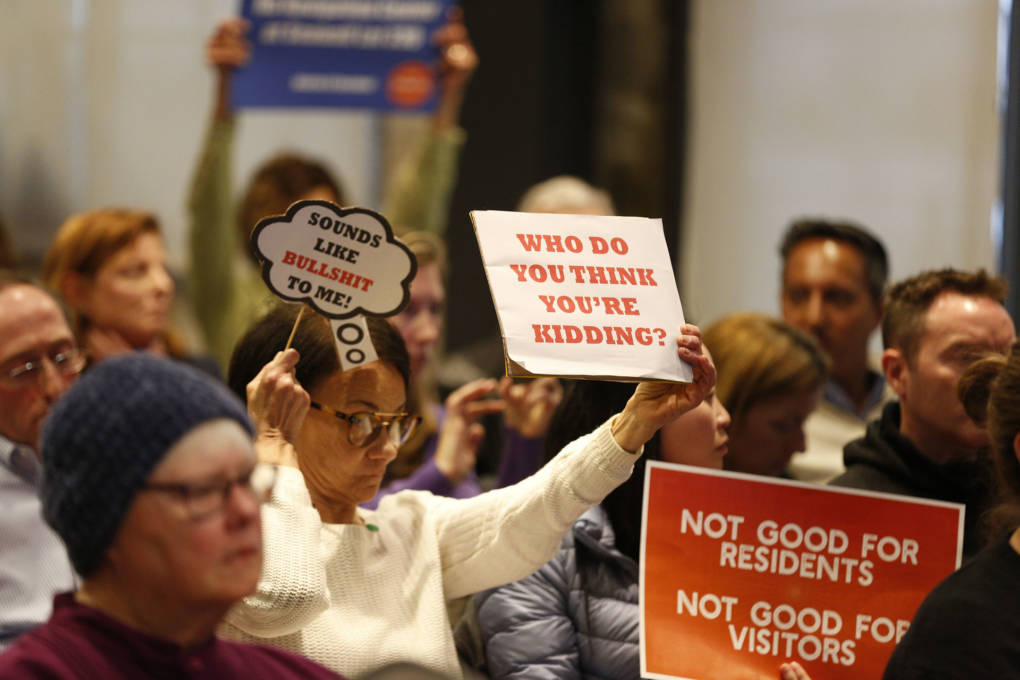
"caption": "South Beach, Rincon Hill and Mission Bay residents who oppose the proposed Embarcadero navigation center demonstrate at a neighborhood association meeting with city officials on April 15, 2019.",
"description": "South Beach, Rincon and Mission Bay community members hold signs at a meeting their neighborhood association held with city ffficials at the Port Of San Francisco, Bayside Conference Room, Pier 1 on April 15, 2019.",
"title": "navigation-center-20190415",
"credit": "Stephanie Lister/KQED",
"status": "inherit",
"isLoading": false,
"fetchFailed": false
},
"news_11737783": {
"type": "attachments",
"id": "news_11737783",
"meta": {
"index": "attachments_1716263798",
"site": "news",
"id": "11737783",
"found": true
},
"parent": 11737778,
"imgSizes": {
"post-thumbnail": {
"file": "https://ww2.kqed.org/app/uploads/sites/10/2019/04/RS36374__M6A2173-qut-672x372.jpg",
"width": 672,
"mimeType": "image/jpeg",
"height": 372
},
"kqedFullSize": {
"file": "https://ww2.kqed.org/app/uploads/sites/10/2019/04/RS36374__M6A2173-qut.jpg",
"width": 1920,
"height": 1280
},
"guest-author-50": {
"file": "https://ww2.kqed.org/app/uploads/sites/10/2019/04/RS36374__M6A2173-qut-50x50.jpg",
"width": 50,
"mimeType": "image/jpeg",
"height": 50
},
"guest-author-96": {
"file": "https://ww2.kqed.org/app/uploads/sites/10/2019/04/RS36374__M6A2173-qut-96x96.jpg",
"width": 96,
"mimeType": "image/jpeg",
"height": 96
},
"apple_news_ca_portrait_12_9": {
"file": "https://ww2.kqed.org/app/uploads/sites/10/2019/04/RS36374__M6A2173-qut-1122x1280.jpg",
"width": 1122,
"mimeType": "image/jpeg",
"height": 1280
},
"medium": {
"file": "https://ww2.kqed.org/app/uploads/sites/10/2019/04/RS36374__M6A2173-qut-800x533.jpg",
"width": 800,
"mimeType": "image/jpeg",
"height": 533
},
"guest-author-32": {
"file": "https://ww2.kqed.org/app/uploads/sites/10/2019/04/RS36374__M6A2173-qut-32x32.jpg",
"width": 32,
"mimeType": "image/jpeg",
"height": 32
},
"apple_news_ca_portrait_9_7": {
"file": "https://ww2.kqed.org/app/uploads/sites/10/2019/04/RS36374__M6A2173-qut-840x1120.jpg",
"width": 840,
"mimeType": "image/jpeg",
"height": 1120
},
"apple_news_ca_square_9_7": {
"file": "https://ww2.kqed.org/app/uploads/sites/10/2019/04/RS36374__M6A2173-qut-1104x1104.jpg",
"width": 1104,
"mimeType": "image/jpeg",
"height": 1104
},
"apple_news_ca_portrait_4_7": {
"file": "https://ww2.kqed.org/app/uploads/sites/10/2019/04/RS36374__M6A2173-qut-414x552.jpg",
"width": 414,
"mimeType": "image/jpeg",
"height": 552
},
"apple_news_ca_square_12_9": {
"file": "https://ww2.kqed.org/app/uploads/sites/10/2019/04/RS36374__M6A2173-qut-1472x1280.jpg",
"width": 1472,
"mimeType": "image/jpeg",
"height": 1280
},
"apple_news_ca_portrait_5_5": {
"file": "https://ww2.kqed.org/app/uploads/sites/10/2019/04/RS36374__M6A2173-qut-687x916.jpg",
"width": 687,
"mimeType": "image/jpeg",
"height": 916
},
"apple_news_ca_square_4_7": {
"file": "https://ww2.kqed.org/app/uploads/sites/10/2019/04/RS36374__M6A2173-qut-550x550.jpg",
"width": 550,
"mimeType": "image/jpeg",
"height": 550
},
"apple_news_ca_square_5_5": {
"file": "https://ww2.kqed.org/app/uploads/sites/10/2019/04/RS36374__M6A2173-qut-912x912.jpg",
"width": 912,
"mimeType": "image/jpeg",
"height": 912
},
"apple_news_ca_landscape_5_5": {
"file": "https://ww2.kqed.org/app/uploads/sites/10/2019/04/RS36374__M6A2173-qut-1044x783.jpg",
"width": 1044,
"mimeType": "image/jpeg",
"height": 783
},
"apple_news_ca_square_4_0": {
"file": "https://ww2.kqed.org/app/uploads/sites/10/2019/04/RS36374__M6A2173-qut-470x470.jpg",
"width": 470,
"mimeType": "image/jpeg",
"height": 470
},
"twentyfourteen-full-width": {
"file": "https://ww2.kqed.org/app/uploads/sites/10/2019/04/RS36374__M6A2173-qut-1038x576.jpg",
"width": 1038,
"mimeType": "image/jpeg",
"height": 576
},
"thumbnail": {
"file": "https://ww2.kqed.org/app/uploads/sites/10/2019/04/RS36374__M6A2173-qut-160x107.jpg",
"width": 160,
"mimeType": "image/jpeg",
"height": 107
},
"apple_news_ca_landscape_4_7": {
"file": "https://ww2.kqed.org/app/uploads/sites/10/2019/04/RS36374__M6A2173-qut-632x474.jpg",
"width": 632,
"mimeType": "image/jpeg",
"height": 474
},
"large": {
"file": "https://ww2.kqed.org/app/uploads/sites/10/2019/04/RS36374__M6A2173-qut-1020x680.jpg",
"width": 1020,
"mimeType": "image/jpeg",
"height": 680
},
"complete_open_graph": {
"file": "https://ww2.kqed.org/app/uploads/sites/10/2019/04/RS36374__M6A2173-qut-1200x800.jpg",
"width": 1200,
"mimeType": "image/jpeg",
"height": 800
},
"apple_news_ca_landscape_4_0": {
"file": "https://ww2.kqed.org/app/uploads/sites/10/2019/04/RS36374__M6A2173-qut-536x402.jpg",
"width": 536,
"mimeType": "image/jpeg",
"height": 402
},
"guest-author-64": {
"file": "https://ww2.kqed.org/app/uploads/sites/10/2019/04/RS36374__M6A2173-qut-64x64.jpg",
"width": 64,
"mimeType": "image/jpeg",
"height": 64
},
"apple_news_ca_portrait_4_0": {
"file": "https://ww2.kqed.org/app/uploads/sites/10/2019/04/RS36374__M6A2173-qut-354x472.jpg",
"width": 354,
"mimeType": "image/jpeg",
"height": 472
},
"apple_news_ca_landscape_12_9": {
"file": "https://ww2.kqed.org/app/uploads/sites/10/2019/04/RS36374__M6A2173-qut-1832x1280.jpg",
"width": 1832,
"mimeType": "image/jpeg",
"height": 1280
},
"full-width": {
"file": "https://ww2.kqed.org/app/uploads/sites/10/2019/04/RS36374__M6A2173-qut-1920x1280.jpg",
"width": 1920,
"mimeType": "image/jpeg",
"height": 1280
},
"guest-author-128": {
"file": "https://ww2.kqed.org/app/uploads/sites/10/2019/04/RS36374__M6A2173-qut-128x128.jpg",
"width": 128,
"mimeType": "image/jpeg",
"height": 128
},
"apple_news_ca_landscape_9_7": {
"file": "https://ww2.kqed.org/app/uploads/sites/10/2019/04/RS36374__M6A2173-qut-1376x1032.jpg",
"width": 1376,
"mimeType": "image/jpeg",
"height": 1032
}
},
"publishDate": 1554395578,
"modified": 1554416524,
"caption": "San Francisco Mayor London Breed made a surprise appearance at a community meeting on Wednesday evening to discuss a proposed Embarcadero navigation center for the homeless. Opponents of the project shouted her down.",
"description": "San Francisco Mayor London Breed made a surprise appearance at a community meeting on Wednesday evening to discuss a proposed Embarcadero navigation center for the homeless.",
"title": "RS36374__M6A2173-qut",
"credit": "Stephanie Lister/KQED",
"status": "inherit",
"isLoading": false,
"fetchFailed": false
},
"news_11737448": {
"type": "attachments",
"id": "news_11737448",
"meta": {
"index": "attachments_1716263798",
"site": "news",
"id": "11737448",
"found": true
},
"parent": 11736901,
"imgSizes": {
"post-thumbnail": {
"file": "https://ww2.kqed.org/app/uploads/sites/10/2019/04/Norma-and-Alex-Merced-Baby-672x372.jpg",
"width": 672,
"mimeType": "image/jpeg",
"height": 372
},
"kqedFullSize": {
"file": "https://ww2.kqed.org/app/uploads/sites/10/2019/04/Norma-and-Alex-Merced-Baby.jpg",
"width": 1920,
"height": 1681
},
"guest-author-50": {
"file": "https://ww2.kqed.org/app/uploads/sites/10/2019/04/Norma-and-Alex-Merced-Baby-50x50.jpg",
"width": 50,
"mimeType": "image/jpeg",
"height": 50
},
"guest-author-96": {
"file": "https://ww2.kqed.org/app/uploads/sites/10/2019/04/Norma-and-Alex-Merced-Baby-96x96.jpg",
"width": 96,
"mimeType": "image/jpeg",
"height": 96
},
"apple_news_ca_portrait_12_9": {
"file": "https://ww2.kqed.org/app/uploads/sites/10/2019/04/Norma-and-Alex-Merced-Baby-1122x1496.jpg",
"width": 1122,
"mimeType": "image/jpeg",
"height": 1496
},
"medium": {
"file": "https://ww2.kqed.org/app/uploads/sites/10/2019/04/Norma-and-Alex-Merced-Baby-800x700.jpg",
"width": 800,
"mimeType": "image/jpeg",
"height": 700
},
"guest-author-32": {
"file": "https://ww2.kqed.org/app/uploads/sites/10/2019/04/Norma-and-Alex-Merced-Baby-32x32.jpg",
"width": 32,
"mimeType": "image/jpeg",
"height": 32
},
"apple_news_ca_portrait_9_7": {
"file": "https://ww2.kqed.org/app/uploads/sites/10/2019/04/Norma-and-Alex-Merced-Baby-840x1120.jpg",
"width": 840,
"mimeType": "image/jpeg",
"height": 1120
},
"apple_news_ca_square_9_7": {
"file": "https://ww2.kqed.org/app/uploads/sites/10/2019/04/Norma-and-Alex-Merced-Baby-1104x1104.jpg",
"width": 1104,
"mimeType": "image/jpeg",
"height": 1104
},
"apple_news_ca_portrait_4_7": {
"file": "https://ww2.kqed.org/app/uploads/sites/10/2019/04/Norma-and-Alex-Merced-Baby-414x552.jpg",
"width": 414,
"mimeType": "image/jpeg",
"height": 552
},
"apple_news_ca_square_12_9": {
"file": "https://ww2.kqed.org/app/uploads/sites/10/2019/04/Norma-and-Alex-Merced-Baby-1472x1472.jpg",
"width": 1472,
"mimeType": "image/jpeg",
"height": 1472
},
"apple_news_ca_portrait_5_5": {
"file": "https://ww2.kqed.org/app/uploads/sites/10/2019/04/Norma-and-Alex-Merced-Baby-687x916.jpg",
"width": 687,
"mimeType": "image/jpeg",
"height": 916
},
"apple_news_ca_square_4_7": {
"file": "https://ww2.kqed.org/app/uploads/sites/10/2019/04/Norma-and-Alex-Merced-Baby-550x550.jpg",
"width": 550,
"mimeType": "image/jpeg",
"height": 550
},
"apple_news_ca_square_5_5": {
"file": "https://ww2.kqed.org/app/uploads/sites/10/2019/04/Norma-and-Alex-Merced-Baby-912x912.jpg",
"width": 912,
"mimeType": "image/jpeg",
"height": 912
},
"apple_news_ca_landscape_5_5": {
"file": "https://ww2.kqed.org/app/uploads/sites/10/2019/04/Norma-and-Alex-Merced-Baby-1044x783.jpg",
"width": 1044,
"mimeType": "image/jpeg",
"height": 783
},
"apple_news_ca_square_4_0": {
"file": "https://ww2.kqed.org/app/uploads/sites/10/2019/04/Norma-and-Alex-Merced-Baby-470x470.jpg",
"width": 470,
"mimeType": "image/jpeg",
"height": 470
},
"twentyfourteen-full-width": {
"file": "https://ww2.kqed.org/app/uploads/sites/10/2019/04/Norma-and-Alex-Merced-Baby-1038x576.jpg",
"width": 1038,
"mimeType": "image/jpeg",
"height": 576
},
"thumbnail": {
"file": "https://ww2.kqed.org/app/uploads/sites/10/2019/04/Norma-and-Alex-Merced-Baby-160x140.jpg",
"width": 160,
"mimeType": "image/jpeg",
"height": 140
},
"apple_news_ca_landscape_4_7": {
"file": "https://ww2.kqed.org/app/uploads/sites/10/2019/04/Norma-and-Alex-Merced-Baby-632x474.jpg",
"width": 632,
"mimeType": "image/jpeg",
"height": 474
},
"large": {
"file": "https://ww2.kqed.org/app/uploads/sites/10/2019/04/Norma-and-Alex-Merced-Baby-1020x893.jpg",
"width": 1020,
"mimeType": "image/jpeg",
"height": 893
},
"complete_open_graph": {
"file": "https://ww2.kqed.org/app/uploads/sites/10/2019/04/Norma-and-Alex-Merced-Baby-1200x1051.jpg",
"width": 1200,
"mimeType": "image/jpeg",
"height": 1051
},
"apple_news_ca_landscape_4_0": {
"file": "https://ww2.kqed.org/app/uploads/sites/10/2019/04/Norma-and-Alex-Merced-Baby-536x402.jpg",
"width": 536,
"mimeType": "image/jpeg",
"height": 402
},
"guest-author-64": {
"file": "https://ww2.kqed.org/app/uploads/sites/10/2019/04/Norma-and-Alex-Merced-Baby-64x64.jpg",
"width": 64,
"mimeType": "image/jpeg",
"height": 64
},
"apple_news_ca_portrait_4_0": {
"file": "https://ww2.kqed.org/app/uploads/sites/10/2019/04/Norma-and-Alex-Merced-Baby-354x472.jpg",
"width": 354,
"mimeType": "image/jpeg",
"height": 472
},
"apple_news_ca_landscape_12_9": {
"file": "https://ww2.kqed.org/app/uploads/sites/10/2019/04/Norma-and-Alex-Merced-Baby-1832x1374.jpg",
"width": 1832,
"mimeType": "image/jpeg",
"height": 1374
},
"full-width": {
"file": "https://ww2.kqed.org/app/uploads/sites/10/2019/04/Norma-and-Alex-Merced-Baby-1920x1681.jpg",
"width": 1920,
"mimeType": "image/jpeg",
"height": 1681
},
"guest-author-128": {
"file": "https://ww2.kqed.org/app/uploads/sites/10/2019/04/Norma-and-Alex-Merced-Baby-128x128.jpg",
"width": 128,
"mimeType": "image/jpeg",
"height": 128
},
"apple_news_ca_landscape_9_7": {
"file": "https://ww2.kqed.org/app/uploads/sites/10/2019/04/Norma-and-Alex-Merced-Baby-1376x1032.jpg",
"width": 1376,
"mimeType": "image/jpeg",
"height": 1032
}
},
"publishDate": 1554251637,
"modified": 1554251668,
"caption": "Merced County resident Norma Sandoval and her four-month-old son Alex barely get by, even with the state's generous social safety net.",
"description": "Merced County resident Norma Sandoval and her four-month-old son Alex barely get by, even with the state's generous social safety net.",
"title": "Norma-and-Alex-Merced-Baby",
"credit": "Matt Rogers/KQED",
"status": "inherit",
"isLoading": false,
"fetchFailed": false
},
"news_11736597": {
"type": "attachments",
"id": "news_11736597",
"meta": {
"index": "attachments_1716263798",
"site": "news",
"id": "11736597",
"found": true
},
"parent": 11736561,
"imgSizes": {
"post-thumbnail": {
"file": "https://ww2.kqed.org/app/uploads/sites/10/2019/03/IMG_8715-672x372.jpeg",
"width": 672,
"mimeType": "image/jpeg",
"height": 372
},
"kqedFullSize": {
"file": "https://ww2.kqed.org/app/uploads/sites/10/2019/03/IMG_8715-e1553964546721.jpeg",
"width": 1920,
"height": 1531
},
"guest-author-50": {
"file": "https://ww2.kqed.org/app/uploads/sites/10/2019/03/IMG_8715-50x50.jpeg",
"width": 50,
"mimeType": "image/jpeg",
"height": 50
},
"guest-author-96": {
"file": "https://ww2.kqed.org/app/uploads/sites/10/2019/03/IMG_8715-96x96.jpeg",
"width": 96,
"mimeType": "image/jpeg",
"height": 96
},
"apple_news_ca_portrait_12_9": {
"file": "https://ww2.kqed.org/app/uploads/sites/10/2019/03/IMG_8715-1122x1496.jpeg",
"width": 1122,
"mimeType": "image/jpeg",
"height": 1496
},
"medium": {
"file": "https://ww2.kqed.org/app/uploads/sites/10/2019/03/IMG_8715-800x638.jpeg",
"width": 800,
"mimeType": "image/jpeg",
"height": 638
},
"guest-author-32": {
"file": "https://ww2.kqed.org/app/uploads/sites/10/2019/03/IMG_8715-32x32.jpeg",
"width": 32,
"mimeType": "image/jpeg",
"height": 32
},
"apple_news_ca_portrait_9_7": {
"file": "https://ww2.kqed.org/app/uploads/sites/10/2019/03/IMG_8715-840x1120.jpeg",
"width": 840,
"mimeType": "image/jpeg",
"height": 1120
},
"apple_news_ca_square_9_7": {
"file": "https://ww2.kqed.org/app/uploads/sites/10/2019/03/IMG_8715-1104x1104.jpeg",
"width": 1104,
"mimeType": "image/jpeg",
"height": 1104
},
"apple_news_ca_portrait_4_7": {
"file": "https://ww2.kqed.org/app/uploads/sites/10/2019/03/IMG_8715-414x552.jpeg",
"width": 414,
"mimeType": "image/jpeg",
"height": 552
},
"apple_news_ca_square_12_9": {
"file": "https://ww2.kqed.org/app/uploads/sites/10/2019/03/IMG_8715-1472x1472.jpeg",
"width": 1472,
"mimeType": "image/jpeg",
"height": 1472
},
"apple_news_ca_portrait_5_5": {
"file": "https://ww2.kqed.org/app/uploads/sites/10/2019/03/IMG_8715-687x916.jpeg",
"width": 687,
"mimeType": "image/jpeg",
"height": 916
},
"apple_news_ca_square_4_7": {
"file": "https://ww2.kqed.org/app/uploads/sites/10/2019/03/IMG_8715-550x550.jpeg",
"width": 550,
"mimeType": "image/jpeg",
"height": 550
},
"apple_news_ca_square_5_5": {
"file": "https://ww2.kqed.org/app/uploads/sites/10/2019/03/IMG_8715-912x912.jpeg",
"width": 912,
"mimeType": "image/jpeg",
"height": 912
},
"apple_news_ca_landscape_5_5": {
"file": "https://ww2.kqed.org/app/uploads/sites/10/2019/03/IMG_8715-1044x783.jpeg",
"width": 1044,
"mimeType": "image/jpeg",
"height": 783
},
"apple_news_ca_square_4_0": {
"file": "https://ww2.kqed.org/app/uploads/sites/10/2019/03/IMG_8715-470x470.jpeg",
"width": 470,
"mimeType": "image/jpeg",
"height": 470
},
"twentyfourteen-full-width": {
"file": "https://ww2.kqed.org/app/uploads/sites/10/2019/03/IMG_8715-1038x576.jpeg",
"width": 1038,
"mimeType": "image/jpeg",
"height": 576
},
"thumbnail": {
"file": "https://ww2.kqed.org/app/uploads/sites/10/2019/03/IMG_8715-160x128.jpeg",
"width": 160,
"mimeType": "image/jpeg",
"height": 128
},
"apple_news_ca_landscape_4_7": {
"file": "https://ww2.kqed.org/app/uploads/sites/10/2019/03/IMG_8715-632x474.jpeg",
"width": 632,
"mimeType": "image/jpeg",
"height": 474
},
"large": {
"file": "https://ww2.kqed.org/app/uploads/sites/10/2019/03/IMG_8715-1020x813.jpeg",
"width": 1020,
"mimeType": "image/jpeg",
"height": 813
},
"complete_open_graph": {
"file": "https://ww2.kqed.org/app/uploads/sites/10/2019/03/IMG_8715-1200x957.jpeg",
"width": 1200,
"mimeType": "image/jpeg",
"height": 957
},
"apple_news_ca_landscape_4_0": {
"file": "https://ww2.kqed.org/app/uploads/sites/10/2019/03/IMG_8715-536x402.jpeg",
"width": 536,
"mimeType": "image/jpeg",
"height": 402
},
"guest-author-64": {
"file": "https://ww2.kqed.org/app/uploads/sites/10/2019/03/IMG_8715-64x64.jpeg",
"width": 64,
"mimeType": "image/jpeg",
"height": 64
},
"apple_news_ca_portrait_4_0": {
"file": "https://ww2.kqed.org/app/uploads/sites/10/2019/03/IMG_8715-354x472.jpeg",
"width": 354,
"mimeType": "image/jpeg",
"height": 472
},
"apple_news_ca_landscape_12_9": {
"file": "https://ww2.kqed.org/app/uploads/sites/10/2019/03/IMG_8715-1832x1374.jpeg",
"width": 1832,
"mimeType": "image/jpeg",
"height": 1374
},
"full-width": {
"file": "https://ww2.kqed.org/app/uploads/sites/10/2019/03/IMG_8715-1920x1531.jpeg",
"width": 1920,
"mimeType": "image/jpeg",
"height": 1531
},
"guest-author-128": {
"file": "https://ww2.kqed.org/app/uploads/sites/10/2019/03/IMG_8715-128x128.jpeg",
"width": 128,
"mimeType": "image/jpeg",
"height": 128
},
"apple_news_ca_landscape_9_7": {
"file": "https://ww2.kqed.org/app/uploads/sites/10/2019/03/IMG_8715-1376x1032.jpeg",
"width": 1376,
"mimeType": "image/jpeg",
"height": 1032
}
},
"publishDate": 1553901520,
"modified": 1553964539,
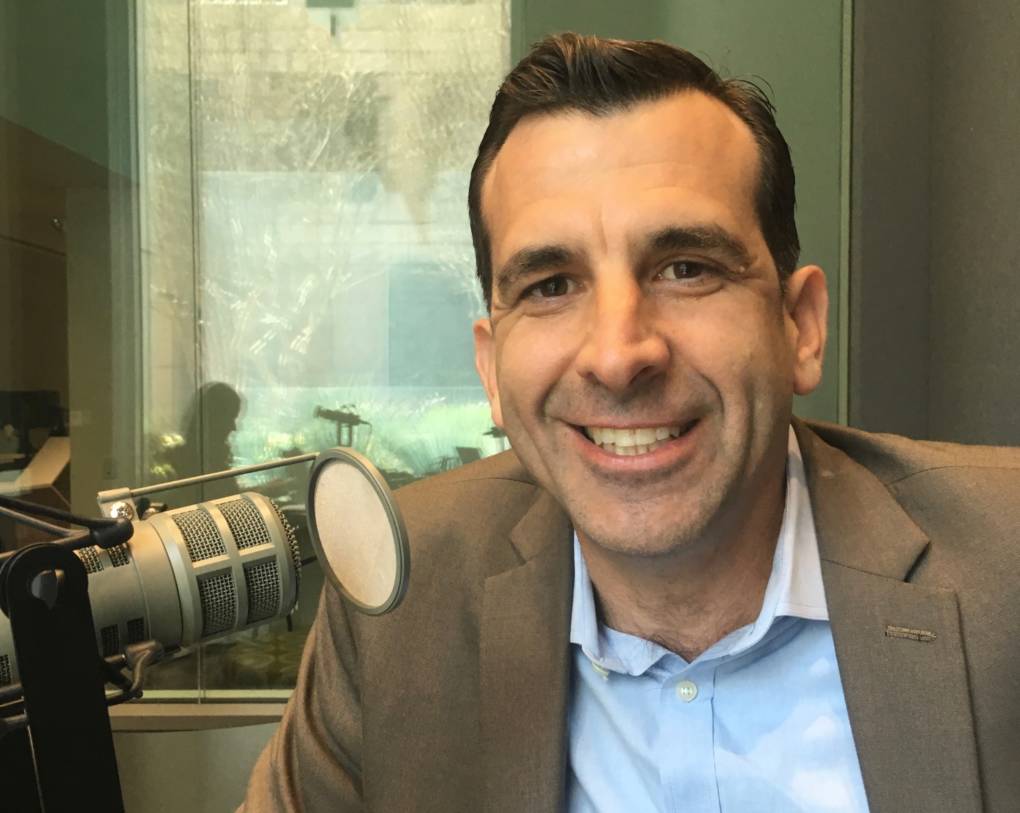
"caption": "San Jose Mayor Sam Liccardo stopped by KQED's Silicon Valley Bureau in San Jose to talk about housing on March 29, 2019.",
"description": "San Jose Mayor Sam Liccardo stopped by KQED's Silicon Valley Bureau in San Jose to talk about housing on March 29., 2019.",
"title": "IMG_8715",
"credit": "Rachael Myrow/KQED",
"status": "inherit",
"isLoading": false,
"fetchFailed": false
},
"news_11735559": {
"type": "attachments",
"id": "news_11735559",
"meta": {
"index": "attachments_1716263798",
"site": "news",
"id": "11735559",
"found": true
},
"parent": 11735541,
"imgSizes": {
"post-thumbnail": {
"file": "https://ww2.kqed.org/app/uploads/sites/10/2019/03/respondents_032619_final-672x372.jpg",
"width": 672,
"mimeType": "image/jpeg",
"height": 372
},
"kqedFullSize": {
"file": "https://ww2.kqed.org/app/uploads/sites/10/2019/03/respondents_032619_final.jpg",
"width": 1920,
"height": 1375
},
"guest-author-50": {
"file": "https://ww2.kqed.org/app/uploads/sites/10/2019/03/respondents_032619_final-50x50.jpg",
"width": 50,
"mimeType": "image/jpeg",
"height": 50
},
"guest-author-96": {
"file": "https://ww2.kqed.org/app/uploads/sites/10/2019/03/respondents_032619_final-96x96.jpg",
"width": 96,
"mimeType": "image/jpeg",
"height": 96
},
"apple_news_ca_portrait_12_9": {
"file": "https://ww2.kqed.org/app/uploads/sites/10/2019/03/respondents_032619_final-1122x1375.jpg",
"width": 1122,
"mimeType": "image/jpeg",
"height": 1375
},
"medium": {
"file": "https://ww2.kqed.org/app/uploads/sites/10/2019/03/respondents_032619_final-800x573.jpg",
"width": 800,
"mimeType": "image/jpeg",
"height": 573
},
"guest-author-32": {
"file": "https://ww2.kqed.org/app/uploads/sites/10/2019/03/respondents_032619_final-32x32.jpg",
"width": 32,
"mimeType": "image/jpeg",
"height": 32
},
"apple_news_ca_portrait_9_7": {
"file": "https://ww2.kqed.org/app/uploads/sites/10/2019/03/respondents_032619_final-840x1120.jpg",
"width": 840,
"mimeType": "image/jpeg",
"height": 1120
},
"apple_news_ca_square_9_7": {
"file": "https://ww2.kqed.org/app/uploads/sites/10/2019/03/respondents_032619_final-1104x1104.jpg",
"width": 1104,
"mimeType": "image/jpeg",
"height": 1104
},
"apple_news_ca_portrait_4_7": {
"file": "https://ww2.kqed.org/app/uploads/sites/10/2019/03/respondents_032619_final-414x552.jpg",
"width": 414,
"mimeType": "image/jpeg",
"height": 552
},
"apple_news_ca_square_12_9": {
"file": "https://ww2.kqed.org/app/uploads/sites/10/2019/03/respondents_032619_final-1472x1375.jpg",
"width": 1472,
"mimeType": "image/jpeg",
"height": 1375
},
"apple_news_ca_portrait_5_5": {
"file": "https://ww2.kqed.org/app/uploads/sites/10/2019/03/respondents_032619_final-687x916.jpg",
"width": 687,
"mimeType": "image/jpeg",
"height": 916
},
"apple_news_ca_square_4_7": {
"file": "https://ww2.kqed.org/app/uploads/sites/10/2019/03/respondents_032619_final-550x550.jpg",
"width": 550,
"mimeType": "image/jpeg",
"height": 550
},
"apple_news_ca_square_5_5": {
"file": "https://ww2.kqed.org/app/uploads/sites/10/2019/03/respondents_032619_final-912x912.jpg",
"width": 912,
"mimeType": "image/jpeg",
"height": 912
},
"apple_news_ca_landscape_5_5": {
"file": "https://ww2.kqed.org/app/uploads/sites/10/2019/03/respondents_032619_final-1044x783.jpg",
"width": 1044,
"mimeType": "image/jpeg",
"height": 783
},
"apple_news_ca_square_4_0": {
"file": "https://ww2.kqed.org/app/uploads/sites/10/2019/03/respondents_032619_final-470x470.jpg",
"width": 470,
"mimeType": "image/jpeg",
"height": 470
},
"twentyfourteen-full-width": {
"file": "https://ww2.kqed.org/app/uploads/sites/10/2019/03/respondents_032619_final-1038x576.jpg",
"width": 1038,
"mimeType": "image/jpeg",
"height": 576
},
"thumbnail": {
"file": "https://ww2.kqed.org/app/uploads/sites/10/2019/03/respondents_032619_final-160x115.jpg",
"width": 160,
"mimeType": "image/jpeg",
"height": 115
},
"apple_news_ca_landscape_4_7": {
"file": "https://ww2.kqed.org/app/uploads/sites/10/2019/03/respondents_032619_final-632x474.jpg",
"width": 632,
"mimeType": "image/jpeg",
"height": 474
},
"large": {
"file": "https://ww2.kqed.org/app/uploads/sites/10/2019/03/respondents_032619_final-1020x730.jpg",
"width": 1020,
"mimeType": "image/jpeg",
"height": 730
},
"complete_open_graph": {
"file": "https://ww2.kqed.org/app/uploads/sites/10/2019/03/respondents_032619_final-1200x859.jpg",
"width": 1200,
"mimeType": "image/jpeg",
"height": 859
},
"apple_news_ca_landscape_4_0": {
"file": "https://ww2.kqed.org/app/uploads/sites/10/2019/03/respondents_032619_final-536x402.jpg",
"width": 536,
"mimeType": "image/jpeg",
"height": 402
},
"guest-author-64": {
"file": "https://ww2.kqed.org/app/uploads/sites/10/2019/03/respondents_032619_final-64x64.jpg",
"width": 64,
"mimeType": "image/jpeg",
"height": 64
},
"apple_news_ca_portrait_4_0": {
"file": "https://ww2.kqed.org/app/uploads/sites/10/2019/03/respondents_032619_final-354x472.jpg",
"width": 354,
"mimeType": "image/jpeg",
"height": 472
},
"apple_news_ca_landscape_12_9": {
"file": "https://ww2.kqed.org/app/uploads/sites/10/2019/03/respondents_032619_final-1832x1374.jpg",
"width": 1832,
"mimeType": "image/jpeg",
"height": 1374
},
"full-width": {
"file": "https://ww2.kqed.org/app/uploads/sites/10/2019/03/respondents_032619_final-1920x1375.jpg",
"width": 1920,
"mimeType": "image/jpeg",
"height": 1375
},
"guest-author-128": {
"file": "https://ww2.kqed.org/app/uploads/sites/10/2019/03/respondents_032619_final-128x128.jpg",
"width": 128,
"mimeType": "image/jpeg",
"height": 128
},
"apple_news_ca_landscape_9_7": {
"file": "https://ww2.kqed.org/app/uploads/sites/10/2019/03/respondents_032619_final-1376x1032.jpg",
"width": 1376,
"mimeType": "image/jpeg",
"height": 1032
}
},
"publishDate": 1553634949,
"modified": 1553634970,
"caption": null,
"description": null,
"title": "respondents_032619_final",
"credit": null,
"status": "inherit",
"isLoading": false,
"fetchFailed": false
},
"news_11671429": {
"type": "attachments",
"id": "news_11671429",
"meta": {
"index": "attachments_1716263798",
"site": "news",
"id": "11671429",
"found": true
},
"parent": 11671240,
"imgSizes": {
"small": {
"file": "https://ww2.kqed.org/app/uploads/sites/10/2018/05/GettyImages-459889074-520x346.jpg",
"width": 520,
"mimeType": "image/jpeg",
"height": 346
},
"twentyfourteen-full-width": {
"file": "https://ww2.kqed.org/app/uploads/sites/10/2018/05/GettyImages-459889074-1038x576.jpg",
"width": 1038,
"mimeType": "image/jpeg",
"height": 576
},
"thumbnail": {
"file": "https://ww2.kqed.org/app/uploads/sites/10/2018/05/GettyImages-459889074-160x107.jpg",
"width": 160,
"mimeType": "image/jpeg",
"height": 107
},
"fd-sm": {
"file": "https://ww2.kqed.org/app/uploads/sites/10/2018/05/GettyImages-459889074-960x640.jpg",
"width": 960,
"mimeType": "image/jpeg",
"height": 640
},
"post-thumbnail": {
"file": "https://ww2.kqed.org/app/uploads/sites/10/2018/05/GettyImages-459889074-672x372.jpg",
"width": 672,
"mimeType": "image/jpeg",
"height": 372
},
"xsmall": {
"file": "https://ww2.kqed.org/app/uploads/sites/10/2018/05/GettyImages-459889074-375x250.jpg",
"width": 375,
"mimeType": "image/jpeg",
"height": 250
},
"kqedFullSize": {
"file": "https://ww2.kqed.org/app/uploads/sites/10/2018/05/GettyImages-459889074-e1527640015234.jpg",
"width": 1920,
"height": 1279
},
"large": {
"file": "https://ww2.kqed.org/app/uploads/sites/10/2018/05/GettyImages-459889074-1020x680.jpg",
"width": 1020,
"mimeType": "image/jpeg",
"height": 680
},
"xlarge": {
"file": "https://ww2.kqed.org/app/uploads/sites/10/2018/05/GettyImages-459889074-1180x786.jpg",
"width": 1180,
"mimeType": "image/jpeg",
"height": 786
},
"complete_open_graph": {
"file": "https://ww2.kqed.org/app/uploads/sites/10/2018/05/GettyImages-459889074-1200x800.jpg",
"width": 1200,
"mimeType": "image/jpeg",
"height": 800
},
"guest-author-50": {
"file": "https://ww2.kqed.org/app/uploads/sites/10/2018/05/GettyImages-459889074-50x50.jpg",
"width": 50,
"mimeType": "image/jpeg",
"height": 50
},
"guest-author-96": {
"file": "https://ww2.kqed.org/app/uploads/sites/10/2018/05/GettyImages-459889074-96x96.jpg",
"width": 96,
"mimeType": "image/jpeg",
"height": 96
},
"medium": {
"file": "https://ww2.kqed.org/app/uploads/sites/10/2018/05/GettyImages-459889074-800x533.jpg",
"width": 800,
"mimeType": "image/jpeg",
"height": 533
},
"guest-author-64": {
"file": "https://ww2.kqed.org/app/uploads/sites/10/2018/05/GettyImages-459889074-64x64.jpg",
"width": 64,
"mimeType": "image/jpeg",
"height": 64
},
"guest-author-32": {
"file": "https://ww2.kqed.org/app/uploads/sites/10/2018/05/GettyImages-459889074-32x32.jpg",
"width": 32,
"mimeType": "image/jpeg",
"height": 32
},
"fd-lrg": {
"file": "https://ww2.kqed.org/app/uploads/sites/10/2018/05/GettyImages-459889074-1920x1279.jpg",
"width": 1920,
"mimeType": "image/jpeg",
"height": 1279
},
"fd-med": {
"file": "https://ww2.kqed.org/app/uploads/sites/10/2018/05/GettyImages-459889074-1180x786.jpg",
"width": 1180,
"mimeType": "image/jpeg",
"height": 786
},
"full-width": {
"file": "https://ww2.kqed.org/app/uploads/sites/10/2018/05/GettyImages-459889074-1920x1279.jpg",
"width": 1920,
"mimeType": "image/jpeg",
"height": 1279
},
"detail": {
"file": "https://ww2.kqed.org/app/uploads/sites/10/2018/05/GettyImages-459889074-150x150.jpg",
"width": 150,
"mimeType": "image/jpeg",
"height": 150
},
"guest-author-128": {
"file": "https://ww2.kqed.org/app/uploads/sites/10/2018/05/GettyImages-459889074-128x128.jpg",
"width": 128,
"mimeType": "image/jpeg",
"height": 128
},
"xxsmall": {
"file": "https://ww2.kqed.org/app/uploads/sites/10/2018/05/GettyImages-459889074-240x160.jpg",
"width": 240,
"mimeType": "image/jpeg",
"height": 160
}
},
"publishDate": 1527639924,
"modified": 1553554781,
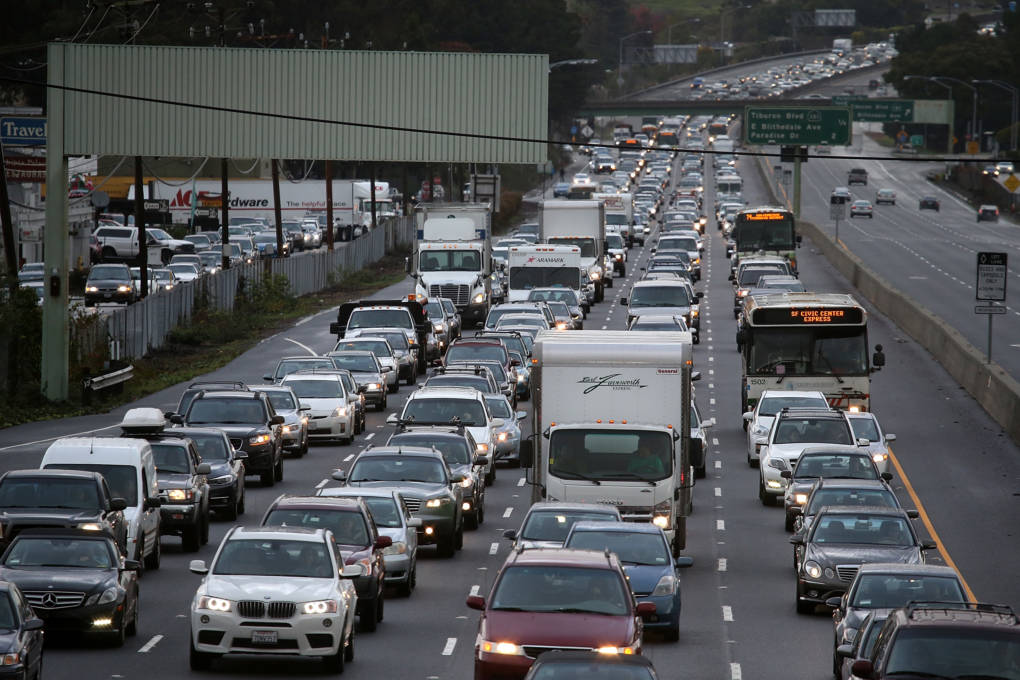
"caption": "Heavy traffic on U.S. 101 in Mill Valley.",
"description": null,
"title": "Storm Brings Rain To California as Drought Continues",
"credit": "Justin Sullivan/Getty Images",
"status": "inherit",
"isLoading": false,
"fetchFailed": false
},
"news_11734385": {
"type": "attachments",
"id": "news_11734385",
"meta": {
"index": "attachments_1716263798",
"site": "news",
"id": "11734385",
"found": true
},
"parent": 11734283,
"imgSizes": {
"post-thumbnail": {
"file": "https://ww2.kqed.org/app/uploads/sites/10/2019/03/Santa-Monica-beach-homes_Large-672x372.jpg",
"width": 672,
"mimeType": "image/jpeg",
"height": 372
},
"kqedFullSize": {
"file": "https://ww2.kqed.org/app/uploads/sites/10/2019/03/Santa-Monica-beach-homes_Large-e1553303415759.jpg",
"width": 1920,
"height": 1153
},
"guest-author-50": {
"file": "https://ww2.kqed.org/app/uploads/sites/10/2019/03/Santa-Monica-beach-homes_Large-50x50.jpg",
"width": 50,
"mimeType": "image/jpeg",
"height": 50
},
"guest-author-96": {
"file": "https://ww2.kqed.org/app/uploads/sites/10/2019/03/Santa-Monica-beach-homes_Large-96x96.jpg",
"width": 96,
"mimeType": "image/jpeg",
"height": 96
},
"apple_news_ca_portrait_12_9": {
"file": "https://ww2.kqed.org/app/uploads/sites/10/2019/03/Santa-Monica-beach-homes_Large-1122x1230.jpg",
"width": 1122,
"mimeType": "image/jpeg",
"height": 1230
},
"medium": {
"file": "https://ww2.kqed.org/app/uploads/sites/10/2019/03/Santa-Monica-beach-homes_Large-800x480.jpg",
"width": 800,
"mimeType": "image/jpeg",
"height": 480
},
"guest-author-32": {
"file": "https://ww2.kqed.org/app/uploads/sites/10/2019/03/Santa-Monica-beach-homes_Large-32x32.jpg",
"width": 32,
"mimeType": "image/jpeg",
"height": 32
},
"apple_news_ca_portrait_9_7": {
"file": "https://ww2.kqed.org/app/uploads/sites/10/2019/03/Santa-Monica-beach-homes_Large-840x1120.jpg",
"width": 840,
"mimeType": "image/jpeg",
"height": 1120
},
"apple_news_ca_square_9_7": {
"file": "https://ww2.kqed.org/app/uploads/sites/10/2019/03/Santa-Monica-beach-homes_Large-1104x1104.jpg",
"width": 1104,
"mimeType": "image/jpeg",
"height": 1104
},
"apple_news_ca_portrait_4_7": {
"file": "https://ww2.kqed.org/app/uploads/sites/10/2019/03/Santa-Monica-beach-homes_Large-414x552.jpg",
"width": 414,
"mimeType": "image/jpeg",
"height": 552
},
"apple_news_ca_square_12_9": {
"file": "https://ww2.kqed.org/app/uploads/sites/10/2019/03/Santa-Monica-beach-homes_Large-1472x1230.jpg",
"width": 1472,
"mimeType": "image/jpeg",
"height": 1230
},
"apple_news_ca_portrait_5_5": {
"file": "https://ww2.kqed.org/app/uploads/sites/10/2019/03/Santa-Monica-beach-homes_Large-687x916.jpg",
"width": 687,
"mimeType": "image/jpeg",
"height": 916
},
"apple_news_ca_square_4_7": {
"file": "https://ww2.kqed.org/app/uploads/sites/10/2019/03/Santa-Monica-beach-homes_Large-550x550.jpg",
"width": 550,
"mimeType": "image/jpeg",
"height": 550
},
"apple_news_ca_square_5_5": {
"file": "https://ww2.kqed.org/app/uploads/sites/10/2019/03/Santa-Monica-beach-homes_Large-912x912.jpg",
"width": 912,
"mimeType": "image/jpeg",
"height": 912
},
"apple_news_ca_landscape_5_5": {
"file": "https://ww2.kqed.org/app/uploads/sites/10/2019/03/Santa-Monica-beach-homes_Large-1044x783.jpg",
"width": 1044,
"mimeType": "image/jpeg",
"height": 783
},
"apple_news_ca_square_4_0": {
"file": "https://ww2.kqed.org/app/uploads/sites/10/2019/03/Santa-Monica-beach-homes_Large-470x470.jpg",
"width": 470,
"mimeType": "image/jpeg",
"height": 470
},
"twentyfourteen-full-width": {
"file": "https://ww2.kqed.org/app/uploads/sites/10/2019/03/Santa-Monica-beach-homes_Large-1038x576.jpg",
"width": 1038,
"mimeType": "image/jpeg",
"height": 576
},
"thumbnail": {
"file": "https://ww2.kqed.org/app/uploads/sites/10/2019/03/Santa-Monica-beach-homes_Large-160x96.jpg",
"width": 160,
"mimeType": "image/jpeg",
"height": 96
},
"apple_news_ca_landscape_4_7": {
"file": "https://ww2.kqed.org/app/uploads/sites/10/2019/03/Santa-Monica-beach-homes_Large-632x474.jpg",
"width": 632,
"mimeType": "image/jpeg",
"height": 474
},
"large": {
"file": "https://ww2.kqed.org/app/uploads/sites/10/2019/03/Santa-Monica-beach-homes_Large-1020x613.jpg",
"width": 1020,
"mimeType": "image/jpeg",
"height": 613
},
"complete_open_graph": {
"file": "https://ww2.kqed.org/app/uploads/sites/10/2019/03/Santa-Monica-beach-homes_Large-1200x721.jpg",
"width": 1200,
"mimeType": "image/jpeg",
"height": 721
},
"apple_news_ca_landscape_4_0": {
"file": "https://ww2.kqed.org/app/uploads/sites/10/2019/03/Santa-Monica-beach-homes_Large-536x402.jpg",
"width": 536,
"mimeType": "image/jpeg",
"height": 402
},
"guest-author-64": {
"file": "https://ww2.kqed.org/app/uploads/sites/10/2019/03/Santa-Monica-beach-homes_Large-64x64.jpg",
"width": 64,
"mimeType": "image/jpeg",
"height": 64
},
"apple_news_ca_portrait_4_0": {
"file": "https://ww2.kqed.org/app/uploads/sites/10/2019/03/Santa-Monica-beach-homes_Large-354x472.jpg",
"width": 354,
"mimeType": "image/jpeg",
"height": 472
},
"apple_news_ca_landscape_12_9": {
"file": "https://ww2.kqed.org/app/uploads/sites/10/2019/03/Santa-Monica-beach-homes_Large-1832x1230.jpg",
"width": 1832,
"mimeType": "image/jpeg",
"height": 1230
},
"full-width": {
"file": "https://ww2.kqed.org/app/uploads/sites/10/2019/03/Santa-Monica-beach-homes_Large-1920x1153.jpg",
"width": 1920,
"mimeType": "image/jpeg",
"height": 1153
},
"guest-author-128": {
"file": "https://ww2.kqed.org/app/uploads/sites/10/2019/03/Santa-Monica-beach-homes_Large-128x128.jpg",
"width": 128,
"mimeType": "image/jpeg",
"height": 128
},
"apple_news_ca_landscape_9_7": {
"file": "https://ww2.kqed.org/app/uploads/sites/10/2019/03/Santa-Monica-beach-homes_Large-1376x1032.jpg",
"width": 1376,
"mimeType": "image/jpeg",
"height": 1032
}
},
"publishDate": 1553177878,
"modified": 1553558095,
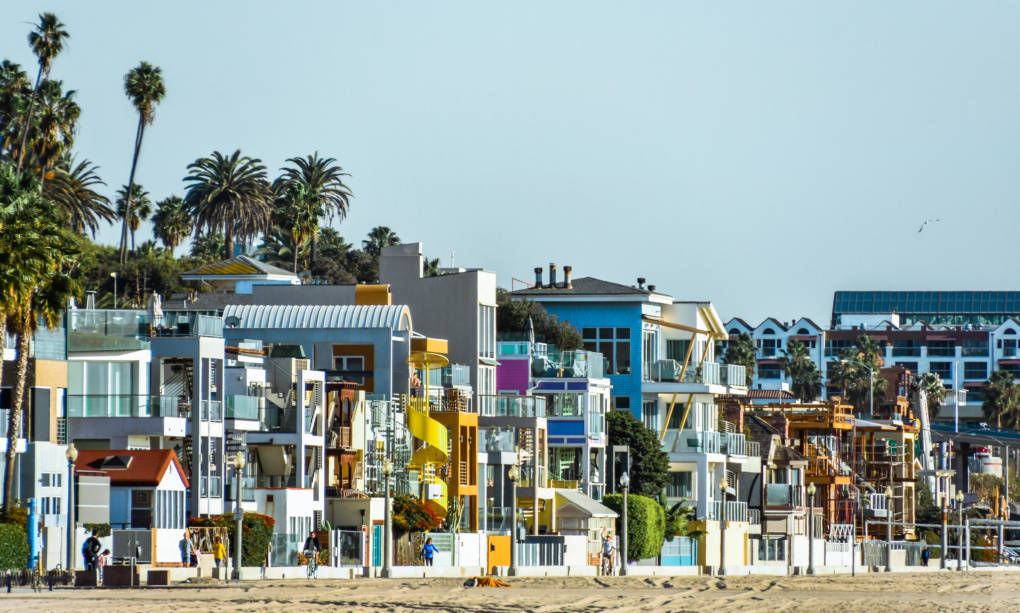
"caption": "Houses on the beach at Santa Monica. ",
"description": "Houses on the Santa Monica beach. ",
"title": "Santa Monica beach homes_Large",
"credit": "Marion Holtzman/Flickr",
"status": "inherit",
"isLoading": false,
"fetchFailed": false
},
"news_11733180": {
"type": "attachments",
"id": "news_11733180",
"meta": {
"index": "attachments_1716263798",
"site": "news",
"id": "11733180",
"found": true
},
"parent": 11732880,
"imgSizes": {
"twentyfourteen-full-width": {
"file": "https://ww2.kqed.org/app/uploads/sites/10/2019/03/ForRentSign-1038x576.jpg",
"width": 1038,
"mimeType": "image/jpeg",
"height": 576
},
"thumbnail": {
"file": "https://ww2.kqed.org/app/uploads/sites/10/2019/03/ForRentSign-160x106.jpg",
"width": 160,
"mimeType": "image/jpeg",
"height": 106
},
"post-thumbnail": {
"file": "https://ww2.kqed.org/app/uploads/sites/10/2019/03/ForRentSign-672x372.jpg",
"width": 672,
"mimeType": "image/jpeg",
"height": 372
},
"kqedFullSize": {
"file": "https://ww2.kqed.org/app/uploads/sites/10/2019/03/ForRentSign.jpg",
"width": 1920,
"height": 1272
},
"large": {
"file": "https://ww2.kqed.org/app/uploads/sites/10/2019/03/ForRentSign-1020x676.jpg",
"width": 1020,
"mimeType": "image/jpeg",
"height": 676
},
"complete_open_graph": {
"file": "https://ww2.kqed.org/app/uploads/sites/10/2019/03/ForRentSign-1200x795.jpg",
"width": 1200,
"mimeType": "image/jpeg",
"height": 795
},
"guest-author-50": {
"file": "https://ww2.kqed.org/app/uploads/sites/10/2019/03/ForRentSign-50x50.jpg",
"width": 50,
"mimeType": "image/jpeg",
"height": 50
},
"guest-author-96": {
"file": "https://ww2.kqed.org/app/uploads/sites/10/2019/03/ForRentSign-96x96.jpg",
"width": 96,
"mimeType": "image/jpeg",
"height": 96
},
"medium": {
"file": "https://ww2.kqed.org/app/uploads/sites/10/2019/03/ForRentSign-800x530.jpg",
"width": 800,
"mimeType": "image/jpeg",
"height": 530
},
"guest-author-64": {
"file": "https://ww2.kqed.org/app/uploads/sites/10/2019/03/ForRentSign-64x64.jpg",
"width": 64,
"mimeType": "image/jpeg",
"height": 64
},
"guest-author-32": {
"file": "https://ww2.kqed.org/app/uploads/sites/10/2019/03/ForRentSign-32x32.jpg",
"width": 32,
"mimeType": "image/jpeg",
"height": 32
},
"full-width": {
"file": "https://ww2.kqed.org/app/uploads/sites/10/2019/03/ForRentSign-1920x1272.jpg",
"width": 1920,
"mimeType": "image/jpeg",
"height": 1272
},
"guest-author-128": {
"file": "https://ww2.kqed.org/app/uploads/sites/10/2019/03/ForRentSign-128x128.jpg",
"width": 128,
"mimeType": "image/jpeg",
"height": 128
}
},
"publishDate": 1552678045,
"modified": 1552678068,
"caption": "A 'For Rent' sign hangs above on the side of a building in Berkeley on October 29, 2018. ",
"description": "A 'For Rent' sign hangs above on the side of a building in Berkeley on October 29, 2018. ",
"title": "ForRentSign",
"credit": "Anne Wernikoff/KQED",
"status": "inherit",
"isLoading": false,
"fetchFailed": false
},
"news_11732297": {
"type": "attachments",
"id": "news_11732297",
"meta": {
"index": "attachments_1716263798",
"site": "news",
"id": "11732297",
"found": true
},
"parent": 11732263,
"imgSizes": {
"twentyfourteen-full-width": {
"file": "https://ww2.kqed.org/app/uploads/sites/10/2019/03/imbys_031119_final-1038x576.jpg",
"width": 1038,
"mimeType": "image/jpeg",
"height": 576
},
"thumbnail": {
"file": "https://ww2.kqed.org/app/uploads/sites/10/2019/03/imbys_031119_final-160x116.jpg",
"width": 160,
"mimeType": "image/jpeg",
"height": 116
},
"post-thumbnail": {
"file": "https://ww2.kqed.org/app/uploads/sites/10/2019/03/imbys_031119_final-672x372.jpg",
"width": 672,
"mimeType": "image/jpeg",
"height": 372
},
"kqedFullSize": {
"file": "https://ww2.kqed.org/app/uploads/sites/10/2019/03/imbys_031119_final.jpg",
"width": 1920,
"height": 1394
},
"large": {
"file": "https://ww2.kqed.org/app/uploads/sites/10/2019/03/imbys_031119_final-1020x741.jpg",
"width": 1020,
"mimeType": "image/jpeg",
"height": 741
},
"complete_open_graph": {
"file": "https://ww2.kqed.org/app/uploads/sites/10/2019/03/imbys_031119_final-1200x871.jpg",
"width": 1200,
"mimeType": "image/jpeg",
"height": 871
},
"guest-author-50": {
"file": "https://ww2.kqed.org/app/uploads/sites/10/2019/03/imbys_031119_final-50x50.jpg",
"width": 50,
"mimeType": "image/jpeg",
"height": 50
},
"guest-author-96": {
"file": "https://ww2.kqed.org/app/uploads/sites/10/2019/03/imbys_031119_final-96x96.jpg",
"width": 96,
"mimeType": "image/jpeg",
"height": 96
},
"medium": {
"file": "https://ww2.kqed.org/app/uploads/sites/10/2019/03/imbys_031119_final-800x581.jpg",
"width": 800,
"mimeType": "image/jpeg",
"height": 581
},
"guest-author-64": {
"file": "https://ww2.kqed.org/app/uploads/sites/10/2019/03/imbys_031119_final-64x64.jpg",
"width": 64,
"mimeType": "image/jpeg",
"height": 64
},
"guest-author-32": {
"file": "https://ww2.kqed.org/app/uploads/sites/10/2019/03/imbys_031119_final-32x32.jpg",
"width": 32,
"mimeType": "image/jpeg",
"height": 32
},
"full-width": {
"file": "https://ww2.kqed.org/app/uploads/sites/10/2019/03/imbys_031119_final-1920x1394.jpg",
"width": 1920,
"mimeType": "image/jpeg",
"height": 1394
},
"guest-author-128": {
"file": "https://ww2.kqed.org/app/uploads/sites/10/2019/03/imbys_031119_final-128x128.jpg",
"width": 128,
"mimeType": "image/jpeg",
"height": 128
}
},
"publishDate": 1552341932,
"modified": 1552341948,
"caption": null,
"description": null,
"title": "imbys_031119_final",
"credit": null,
"status": "inherit",
"isLoading": false,
"fetchFailed": false
},
"news_11732106": {
"type": "attachments",
"id": "news_11732106",
"meta": {
"index": "attachments_1716263798",
"site": "news",
"id": "11732106",
"found": true
},
"title": "Median Prices Of San Francisco Homes Reach Million Dollar Mark",
"publishDate": 1552272518,
"status": "inherit",
"parent": 11731580,
"modified": 1745258368,
"caption": "Supporters of 'Public Housing in My Backyard' say municipally-run affordable housing is the best way to solve the housing crisis.",
"credit": "Justin Sullivan/Getty Images",
"altTag": "Housing",
"description": "Supporters of 'Public Housing in My Backyard' say municipally-run affordable housing is the best way to solve the housing crisis.",
"imgSizes": {
"thumbnail": {
"file": "https://cdn.kqed.org/wp-content/uploads/sites/10/2019/03/RS35749_GettyImages-452284506-qut-160x107.jpg",
"width": 160,
"height": 107,
"mimeType": "image/jpeg"
},
"medium": {
"file": "https://cdn.kqed.org/wp-content/uploads/sites/10/2019/03/RS35749_GettyImages-452284506-qut-800x534.jpg",
"width": 800,
"height": 534,
"mimeType": "image/jpeg"
},
"large": {
"file": "https://cdn.kqed.org/wp-content/uploads/sites/10/2019/03/RS35749_GettyImages-452284506-qut-1020x681.jpg",
"width": 1020,
"height": 681,
"mimeType": "image/jpeg"
},
"complete_open_graph": {
"file": "https://cdn.kqed.org/wp-content/uploads/sites/10/2019/03/RS35749_GettyImages-452284506-qut-1200x801.jpg",
"width": 1200,
"height": 801,
"mimeType": "image/jpeg"
},
"post-thumbnail": {
"file": "https://cdn.kqed.org/wp-content/uploads/sites/10/2019/03/RS35749_GettyImages-452284506-qut-672x372.jpg",
"width": 672,
"height": 372,
"mimeType": "image/jpeg"
},
"twentyfourteen-full-width": {
"file": "https://cdn.kqed.org/wp-content/uploads/sites/10/2019/03/RS35749_GettyImages-452284506-qut-1038x576.jpg",
"width": 1038,
"height": 576,
"mimeType": "image/jpeg"
},
"full-width": {
"file": "https://cdn.kqed.org/wp-content/uploads/sites/10/2019/03/RS35749_GettyImages-452284506-qut-1920x1281.jpg",
"width": 1920,
"height": 1281,
"mimeType": "image/jpeg"
},
"guest-author-32": {
"file": "https://cdn.kqed.org/wp-content/uploads/sites/10/2019/03/RS35749_GettyImages-452284506-qut-32x32.jpg",
"width": 32,
"height": 32,
"mimeType": "image/jpeg"
},
"guest-author-50": {
"file": "https://cdn.kqed.org/wp-content/uploads/sites/10/2019/03/RS35749_GettyImages-452284506-qut-50x50.jpg",
"width": 50,
"height": 50,
"mimeType": "image/jpeg"
},
"guest-author-64": {
"file": "https://cdn.kqed.org/wp-content/uploads/sites/10/2019/03/RS35749_GettyImages-452284506-qut-64x64.jpg",
"width": 64,
"height": 64,
"mimeType": "image/jpeg"
},
"guest-author-96": {
"file": "https://cdn.kqed.org/wp-content/uploads/sites/10/2019/03/RS35749_GettyImages-452284506-qut-96x96.jpg",
"width": 96,
"height": 96,
"mimeType": "image/jpeg"
},
"guest-author-128": {
"file": "https://cdn.kqed.org/wp-content/uploads/sites/10/2019/03/RS35749_GettyImages-452284506-qut-128x128.jpg",
"width": 128,
"height": 128,
"mimeType": "image/jpeg"
},
"kqedFullSize": {
"file": "https://cdn.kqed.org/wp-content/uploads/sites/10/2019/03/RS35749_GettyImages-452284506-qut.jpg",
"width": 1920,
"height": 1281
}
},
"isLoading": false,
"fetchFailed": false
},
"news_11731316": {
"type": "attachments",
"id": "news_11731316",
"meta": {
"index": "attachments_1716263798",
"site": "news",
"id": "11731316",
"found": true
},
"parent": 11731315,
"imgSizes": {
"twentyfourteen-full-width": {
"file": "https://ww2.kqed.org/app/uploads/sites/10/2019/03/20190222_reimaginingparadise_jh_018_wide-f0695c493d8e68a3d7e26229f2e2f13959a7972d-1038x576.jpg",
"width": 1038,
"mimeType": "image/jpeg",
"height": 576
},
"thumbnail": {
"file": "https://ww2.kqed.org/app/uploads/sites/10/2019/03/20190222_reimaginingparadise_jh_018_wide-f0695c493d8e68a3d7e26229f2e2f13959a7972d-160x90.jpg",
"width": 160,
"mimeType": "image/jpeg",
"height": 90
},
"post-thumbnail": {
"file": "https://ww2.kqed.org/app/uploads/sites/10/2019/03/20190222_reimaginingparadise_jh_018_wide-f0695c493d8e68a3d7e26229f2e2f13959a7972d-672x372.jpg",
"width": 672,
"mimeType": "image/jpeg",
"height": 372
},
"kqedFullSize": {
"file": "https://ww2.kqed.org/app/uploads/sites/10/2019/03/20190222_reimaginingparadise_jh_018_wide-f0695c493d8e68a3d7e26229f2e2f13959a7972d.jpg",
"width": 1884,
"height": 1061
},
"large": {
"file": "https://ww2.kqed.org/app/uploads/sites/10/2019/03/20190222_reimaginingparadise_jh_018_wide-f0695c493d8e68a3d7e26229f2e2f13959a7972d-1020x574.jpg",
"width": 1020,
"mimeType": "image/jpeg",
"height": 574
},
"complete_open_graph": {
"file": "https://ww2.kqed.org/app/uploads/sites/10/2019/03/20190222_reimaginingparadise_jh_018_wide-f0695c493d8e68a3d7e26229f2e2f13959a7972d-1200x676.jpg",
"width": 1200,
"mimeType": "image/jpeg",
"height": 676
},
"guest-author-50": {
"file": "https://ww2.kqed.org/app/uploads/sites/10/2019/03/20190222_reimaginingparadise_jh_018_wide-f0695c493d8e68a3d7e26229f2e2f13959a7972d-50x50.jpg",
"width": 50,
"mimeType": "image/jpeg",
"height": 50
},
"guest-author-96": {
"file": "https://ww2.kqed.org/app/uploads/sites/10/2019/03/20190222_reimaginingparadise_jh_018_wide-f0695c493d8e68a3d7e26229f2e2f13959a7972d-96x96.jpg",
"width": 96,
"mimeType": "image/jpeg",
"height": 96
},
"medium": {
"file": "https://ww2.kqed.org/app/uploads/sites/10/2019/03/20190222_reimaginingparadise_jh_018_wide-f0695c493d8e68a3d7e26229f2e2f13959a7972d-800x451.jpg",
"width": 800,
"mimeType": "image/jpeg",
"height": 451
},
"guest-author-64": {
"file": "https://ww2.kqed.org/app/uploads/sites/10/2019/03/20190222_reimaginingparadise_jh_018_wide-f0695c493d8e68a3d7e26229f2e2f13959a7972d-64x64.jpg",
"width": 64,
"mimeType": "image/jpeg",
"height": 64
},
"guest-author-32": {
"file": "https://ww2.kqed.org/app/uploads/sites/10/2019/03/20190222_reimaginingparadise_jh_018_wide-f0695c493d8e68a3d7e26229f2e2f13959a7972d-32x32.jpg",
"width": 32,
"mimeType": "image/jpeg",
"height": 32
},
"guest-author-128": {
"file": "https://ww2.kqed.org/app/uploads/sites/10/2019/03/20190222_reimaginingparadise_jh_018_wide-f0695c493d8e68a3d7e26229f2e2f13959a7972d-128x128.jpg",
"width": 128,
"mimeType": "image/jpeg",
"height": 128
}
},
"publishDate": 1551987893,
"modified": 1551988194,
"caption": "Cal Poly Architecture Students focused on the idea of (re)imagining and (re)building Paradise, Calif. with models, renderings, and updated concepts to present during a community forum in Chico, Calif.",
"description": "Cal Poly Architecture Students focused on the idea of (re)imagining and (re)building Paradise, Calif. with models, renderings, and updated concepts to present during a community forum in Chico, Calif.",
"title": "Cal Poly Architecture Students focused on the idea of (re)imagining and (re)building Paradise, Calif. with models, renderings, and updated concepts to present during a community forum in Chico, Calif.",
"credit": "Jason Halley/CSU Chico",
"status": "inherit",
"isLoading": false,
"fetchFailed": false
},
"news_11677409": {
"type": "attachments",
"id": "news_11677409",
"meta": {
"index": "attachments_1716263798",
"site": "news",
"id": "11677409",
"found": true
},
"parent": 11677380,
"imgSizes": {
"small": {
"file": "https://ww2.kqed.org/app/uploads/sites/10/2018/06/HousingConstruction-1020x642-520x327.jpg",
"width": 520,
"mimeType": "image/jpeg",
"height": 327
},
"twentyfourteen-full-width": {
"file": "https://ww2.kqed.org/app/uploads/sites/10/2018/06/HousingConstruction-1020x642-1020x576.jpg",
"width": 1020,
"mimeType": "image/jpeg",
"height": 576
},
"thumbnail": {
"file": "https://ww2.kqed.org/app/uploads/sites/10/2018/06/HousingConstruction-1020x642-160x101.jpg",
"width": 160,
"mimeType": "image/jpeg",
"height": 101
},
"fd-sm": {
"file": "https://ww2.kqed.org/app/uploads/sites/10/2018/06/HousingConstruction-1020x642-960x604.jpg",
"width": 960,
"mimeType": "image/jpeg",
"height": 604
},
"post-thumbnail": {
"file": "https://ww2.kqed.org/app/uploads/sites/10/2018/06/HousingConstruction-1020x642-672x372.jpg",
"width": 672,
"mimeType": "image/jpeg",
"height": 372
},
"xsmall": {
"file": "https://ww2.kqed.org/app/uploads/sites/10/2018/06/HousingConstruction-1020x642-375x236.jpg",
"width": 375,
"mimeType": "image/jpeg",
"height": 236
},
"kqedFullSize": {
"file": "https://ww2.kqed.org/app/uploads/sites/10/2018/06/HousingConstruction-1020x642.jpg",
"width": 1020,
"height": 642
},
"large": {
"file": "https://ww2.kqed.org/app/uploads/sites/10/2018/06/HousingConstruction-1020x642-1020x642.jpg",
"width": 1020,
"mimeType": "image/jpeg",
"height": 642
},
"guest-author-50": {
"file": "https://ww2.kqed.org/app/uploads/sites/10/2018/06/HousingConstruction-1020x642-50x50.jpg",
"width": 50,
"mimeType": "image/jpeg",
"height": 50
},
"guest-author-96": {
"file": "https://ww2.kqed.org/app/uploads/sites/10/2018/06/HousingConstruction-1020x642-96x96.jpg",
"width": 96,
"mimeType": "image/jpeg",
"height": 96
},
"medium": {
"file": "https://ww2.kqed.org/app/uploads/sites/10/2018/06/HousingConstruction-1020x642-800x504.jpg",
"width": 800,
"mimeType": "image/jpeg",
"height": 504
},
"guest-author-64": {
"file": "https://ww2.kqed.org/app/uploads/sites/10/2018/06/HousingConstruction-1020x642-64x64.jpg",
"width": 64,
"mimeType": "image/jpeg",
"height": 64
},
"guest-author-32": {
"file": "https://ww2.kqed.org/app/uploads/sites/10/2018/06/HousingConstruction-1020x642-32x32.jpg",
"width": 32,
"mimeType": "image/jpeg",
"height": 32
},
"detail": {
"file": "https://ww2.kqed.org/app/uploads/sites/10/2018/06/HousingConstruction-1020x642-150x150.jpg",
"width": 150,
"mimeType": "image/jpeg",
"height": 150
},
"guest-author-128": {
"file": "https://ww2.kqed.org/app/uploads/sites/10/2018/06/HousingConstruction-1020x642-128x128.jpg",
"width": 128,
"mimeType": "image/jpeg",
"height": 128
},
"xxsmall": {
"file": "https://ww2.kqed.org/app/uploads/sites/10/2018/06/HousingConstruction-1020x642-240x151.jpg",
"width": 240,
"mimeType": "image/jpeg",
"height": 151
}
},
"publishDate": 1530044394,
"modified": 1551921250,
"caption": "A construction worker builds a home in Petaluma in March 2017.",
"description": "A construction worker builds a home in Petaluma in March, 2017.",
"title": "A construction worker builds a home in Petaluma in March, 2017.",
"credit": "Justin Sullivan/Getty Images",
"status": "inherit",
"isLoading": false,
"fetchFailed": false
}
},
"audioPlayerReducer": {
"postId": "stream_live",
"isPaused": true,
"isPlaying": false,
"pfsActive": false,
"pledgeModalIsOpen": true,
"playerDrawerIsOpen": false,
"liveAudioPlayStartedAt": 0,
"liveAudioPlayContext": ""
},
"authorsReducer": {
"byline_news_11736901": {
"type": "authors",
"id": "byline_news_11736901",
"meta": {
"override": true
},
"slug": "byline_news_11736901",
"name": "\u003cstrong>\u003ca href=\"https://twitter.com/deepafern\">Deepa Fernandes\u003c/a>\u003c/strong>",
"isLoading": false
},
"byline_news_11731315": {
"type": "authors",
"id": "byline_news_11731315",
"meta": {
"override": true
},
"slug": "byline_news_11731315",
"name": "Kirk Siegler",
"isLoading": false
},
"danbrekke": {
"type": "authors",
"id": "222",
"meta": {
"index": "authors_1716337520",
"id": "222",
"found": true
},
"name": "Dan Brekke",
"firstName": "Dan",
"lastName": "Brekke",
"slug": "danbrekke",
"email": "dbrekke@kqed.org",
"display_author_email": true,
"staff_mastheads": [
"news",
"science"
],
"title": "KQED Editor and Reporter",
"bio": "Dan Brekke is a reporter and editor for KQED News, responsible for coverage of topics ranging from California water issues to the Bay Area's transportation challenges. In a newsroom career that began in Chicago in 1972, Dan has worked for \u003cem>The San Francisco Examiner,\u003c/em> Wired and TechTV and has been published in The New York Times, The New York Times Magazine, Business 2.0, Salon and elsewhere.\r\n\r\nSince joining KQED in 2007, Dan has reported, edited and produced both radio and online features and breaking news pieces. He has shared as both editor and reporter in four Society of Professional Journalists Norcal Excellence in Journalism awards and one Edward R. Murrow regional award. He was chosen for a spring 2017 residency at the Mesa Refuge to advance his research on California salmon.\r\n\r\nEmail Dan at: \u003ca href=\"mailto:dbrekke@kqed.org\">dbrekke@kqed.org\u003c/a>\r\n\r\n\u003cstrong>Twitter:\u003c/strong> \u003ca href=\"https://twitter.com/danbrekke\" rel=\"noopener noreferrer\">twitter.com/danbrekke\u003c/a>\r\n\u003cstrong>Facebook:\u003c/strong> \u003ca href=\"https://www.facebook.com/danbrekke\" rel=\"noopener noreferrer\">www.facebook.com/danbrekke\u003c/a>\r\n\u003cstrong>LinkedIn:\u003c/strong> \u003ca href=\"https://www.linkedin.com/in/danbrekke\" rel=\"noopener noreferrer\">www.linkedin.com/in/danbrekke\u003c/a>",
"avatar": "https://secure.gravatar.com/avatar/c8126230345efca3f7aa89b1a402be45?s=600&d=mm&r=g",
"twitter": "danbrekke",
"facebook": null,
"instagram": "https://www.instagram.com/dan.brekke/",
"linkedin": "https://www.linkedin.com/in/danbrekke/",
"sites": [
{
"site": "news",
"roles": [
"administrator",
"create_posts"
]
},
{
"site": "stateofhealth",
"roles": [
"editor"
]
},
{
"site": "science",
"roles": [
"editor"
]
},
{
"site": "quest",
"roles": [
"contributor"
]
},
{
"site": "food",
"roles": [
"contributor"
]
},
{
"site": "forum",
"roles": [
"contributor"
]
},
{
"site": "liveblog",
"roles": [
"editor"
]
}
],
"headData": {
"title": "Dan Brekke | KQED",
"description": "KQED Editor and Reporter",
"ogImgSrc": "https://secure.gravatar.com/avatar/c8126230345efca3f7aa89b1a402be45?s=600&d=mm&r=g",
"twImgSrc": "https://secure.gravatar.com/avatar/c8126230345efca3f7aa89b1a402be45?s=600&d=mm&r=g"
},
"isLoading": false,
"link": "/author/danbrekke"
},
"gmarzorati": {
"type": "authors",
"id": "227",
"meta": {
"index": "authors_1716337520",
"id": "227",
"found": true
},
"name": "Guy Marzorati",
"firstName": "Guy",
"lastName": "Marzorati",
"slug": "gmarzorati",
"email": "gmarzorati@KQED.org",
"display_author_email": true,
"staff_mastheads": [
"news"
],
"title": "Correspondent",
"bio": "Guy Marzorati is a correspondent on KQED's California Politics and Government Desk, based in San Jose. A graduate of Santa Clara University, Guy joined KQED in 2013. He reports on state and local politics and produces KQED's digital voter guide.",
"avatar": "https://secure.gravatar.com/avatar/e7038b8dbfd55b104369b76b1cd0b9de?s=600&d=blank&r=g",
"twitter": "guymarzorati",
"facebook": null,
"instagram": null,
"linkedin": null,
"sites": [
{
"site": "",
"roles": [
"editor"
]
},
{
"site": "news",
"roles": [
"editor"
]
},
{
"site": "science",
"roles": [
"editor"
]
},
{
"site": "forum",
"roles": [
"editor"
]
},
{
"site": "elections",
"roles": [
"editor"
]
},
{
"site": "liveblog",
"roles": [
"editor"
]
}
],
"headData": {
"title": "Guy Marzorati | KQED",
"description": "Correspondent",
"ogImgSrc": "https://secure.gravatar.com/avatar/e7038b8dbfd55b104369b76b1cd0b9de?s=600&d=blank&r=g",
"twImgSrc": "https://secure.gravatar.com/avatar/e7038b8dbfd55b104369b76b1cd0b9de?s=600&d=blank&r=g"
},
"isLoading": false,
"link": "/author/gmarzorati"
},
"rachael-myrow": {
"type": "authors",
"id": "251",
"meta": {
"index": "authors_1716337520",
"id": "251",
"found": true
},
"name": "Rachael Myrow",
"firstName": "Rachael",
"lastName": "Myrow",
"slug": "rachael-myrow",
"email": "rmyrow@kqed.org",
"display_author_email": true,
"staff_mastheads": [
"news"
],
"title": "Senior Editor of KQED's Silicon Valley News Desk",
"bio": "• I write and edit stories about how Silicon Valley power and policies shape everyday life in California. I’m also passionate about making Bay Area history and culture more accessible to a broad public. • I’ve been a journalist for most of my life, starting in high school with The Franklin Press in Los Angeles, where I grew up. While earning my first degree in English at UC Berkeley, I got my start in public radio at KALX-FM. After completing a second degree in journalism at Cal, I landed my first professional job at Marketplace, then moved on to KPCC (now LAist), and then KQED, where I hosted The California Report for more than seven years. • My reporting has appeared on NPR, The World, WBUR’s \u003ci>Here & Now\u003c/i>, and the BBC. I also guest host for KQED’s \u003ci>Forum\u003c/i>, as well as the Commonwealth Club in San Francisco. • I speak periodically on media, democracy and technology issues, and do voiceover work for documentaries and educational video projects. • Outside of the studio, you'll find me hiking Bay Area trails and whipping up Insta-ready meals in my kitchen. • I do not accept gifts, money, or favors from anyone connected to my reporting, I don't pay people for information, and I do not support or donate to political causes. • I strive to treat the people I report on with fairness, honesty, and respect. I also recognize there are often multiple sides to a story and work to verify information through multiple sources and documentation. If I get something wrong, I correct it.",
"avatar": "https://secure.gravatar.com/avatar/3ed8a3c5f26025e4a805ba634cda8cd764906b97438a6d9ce216b044e340da4e?s=600&d=blank&r=g",
"twitter": "rachaelmyrow",
"bluesky": null,
"facebook": null,
"instagram": null,
"linkedin": "https://www.linkedin.com/in/rachaelmyrow/",
"sites": [
{
"site": "arts",
"roles": [
"administrator"
]
},
{
"site": "news",
"roles": [
"edit_others_posts",
"editor"
]
},
{
"site": "futureofyou",
"roles": [
"editor"
]
},
{
"site": "bayareabites",
"roles": [
"editor"
]
},
{
"site": "stateofhealth",
"roles": [
"editor"
]
},
{
"site": "science",
"roles": [
"editor"
]
},
{
"site": "food",
"roles": [
"editor"
]
},
{
"site": "forum",
"roles": [
"editor"
]
},
{
"site": "liveblog",
"roles": [
"author"
]
}
],
"headData": {
"title": "Rachael Myrow | KQED",
"description": "Senior Editor of KQED's Silicon Valley News Desk",
"ogImgSrc": "https://secure.gravatar.com/avatar/3ed8a3c5f26025e4a805ba634cda8cd764906b97438a6d9ce216b044e340da4e?s=600&d=blank&r=g",
"twImgSrc": "https://secure.gravatar.com/avatar/3ed8a3c5f26025e4a805ba634cda8cd764906b97438a6d9ce216b044e340da4e?s=600&d=blank&r=g"
},
"isLoading": false,
"link": "/author/rachael-myrow"
},
"matthewgreen": {
"type": "authors",
"id": "1263",
"meta": {
"index": "authors_1716337520",
"id": "1263",
"found": true
},
"name": "Matthew Green",
"firstName": "Matthew",
"lastName": "Green",
"slug": "matthewgreen",
"email": "mgreen@kqed.org",
"display_author_email": false,
"staff_mastheads": [],
"title": "KQED Editor/Reporter",
"bio": "Matthew Green is a digital media producer for KQED News. He previously produced \u003ca href=\"http://www.kqed.org/lowdown\">The Lowdown\u003c/a>, KQED’s multimedia news education blog. Matthew's written for numerous Bay Area publications, including the Oakland Tribune and San Francisco Chronicle. He also taught journalism classes at Fremont High School in East Oakland.\r\n\r\nEmail: mgreen@kqed.org; Twitter: @MGreenKQED",
"avatar": "https://secure.gravatar.com/avatar/3bf498d1267ca02c8494f33d8cfc575e?s=600&d=blank&r=g",
"twitter": "MGreenKQED",
"facebook": null,
"instagram": null,
"linkedin": null,
"sites": [
{
"site": "news",
"roles": []
},
{
"site": "lowdown",
"roles": []
},
{
"site": "science",
"roles": []
},
{
"site": "education",
"roles": []
},
{
"site": "quest",
"roles": []
},
{
"site": "liveblog",
"roles": []
}
],
"headData": {
"title": "Matthew Green | KQED",
"description": "KQED Editor/Reporter",
"ogImgSrc": "https://secure.gravatar.com/avatar/3bf498d1267ca02c8494f33d8cfc575e?s=600&d=blank&r=g",
"twImgSrc": "https://secure.gravatar.com/avatar/3bf498d1267ca02c8494f33d8cfc575e?s=600&d=blank&r=g"
},
"isLoading": false,
"link": "/author/matthewgreen"
},
"markfiore": {
"type": "authors",
"id": "3236",
"meta": {
"index": "authors_1716337520",
"id": "3236",
"found": true
},
"name": "Mark Fiore",
"firstName": "Mark",
"lastName": "Fiore",
"slug": "markfiore",
"email": "mark@markfiore.com",
"display_author_email": false,
"staff_mastheads": [
"news"
],
"title": "KQED News Cartoonist",
"bio": "\u003ca href=\"http://www.MarkFiore.com\">MarkFiore.com\u003c/a> | \u003ca href=\"https://twitter.com/markfiore\">Follow on Twitter\u003c/a> | \u003ca href=\"https://www.facebook.com/pages/Mark-Fiore-Animated-Political-Cartoons/94451707396?ref=bookmarks\">Facebook\u003c/a> | \u003ca href=\"mailto:mark@markfiore.com\">email\u003c/a>\r\n\r\nPulitzer Prize-winner, Mark Fiore, who the Wall Street Journal has called “the undisputed guru of the form,” creates animated political cartoons in San Francisco, where his work has been featured regularly on the San Francisco Chronicle’s web site, SFGate.com. His work has appeared on Newsweek.com, Slate.com, CBSNews.com, MotherJones.com, DailyKos.com and NPR’s web site. Fiore’s political animation has appeared on CNN, Frontline, Bill Moyers Journal, Salon.com and cable and broadcast outlets across the globe.\r\n\r\nBeginning his professional life by drawing traditional political cartoons for newspapers, Fiore’s work appeared in publications ranging from the Washington Post to the Los Angeles Times. In the late 1990s, he began to experiment with animating political cartoons and, after a short stint at the San Jose Mercury News as their staff cartoonist, Fiore devoted all his energies to animation.\r\nGrowing up in California, Fiore also spent a good portion of his life in the backwoods of Idaho. It was this combination that shaped him politically. Mark majored in political science at Colorado College, where, in a perfect send-off for a cartoonist, he received his diploma in 1991 as commencement speaker Dick Cheney smiled approvingly.\r\nMark Fiore was awarded the Pulitzer Prize for political cartooning in 2010, a Robert F. Kennedy Journalism Award in 2004 and has twice received an Online Journalism Award for commentary from the Online News Association (2002, 2008). Fiore has received two awards for his work in new media from the National Cartoonists Society (2001, 2002), and in 2006 received The James Madison Freedom of Information Award from The Society of Professional Journalists.",
"avatar": "https://secure.gravatar.com/avatar/fc4e2a612b15b67bad0c6f0e1db4ca9b?s=600&d=blank&r=g",
"twitter": "MarkFiore",
"facebook": null,
"instagram": "https://www.instagram.com/markfiore/?hl=en",
"linkedin": null,
"sites": [
{
"site": "arts",
"roles": [
"contributor"
]
},
{
"site": "news",
"roles": [
"editor"
]
},
{
"site": "futureofyou",
"roles": [
"editor"
]
},
{
"site": "science",
"roles": [
"editor"
]
}
],
"headData": {
"title": "Mark Fiore | KQED",
"description": "KQED News Cartoonist",
"ogImgSrc": "https://secure.gravatar.com/avatar/fc4e2a612b15b67bad0c6f0e1db4ca9b?s=600&d=blank&r=g",
"twImgSrc": "https://secure.gravatar.com/avatar/fc4e2a612b15b67bad0c6f0e1db4ca9b?s=600&d=blank&r=g"
},
"isLoading": false,
"link": "/author/markfiore"
},
"jplaczek": {
"type": "authors",
"id": "8606",
"meta": {
"index": "authors_1716337520",
"id": "8606",
"found": true
},
"name": "Jessica Placzek",
"firstName": "Jessica",
"lastName": "Placzek",
"slug": "jplaczek",
"email": "jessicalplaczek@gmail.com",
"display_author_email": false,
"staff_mastheads": [
"news"
],
"title": "KQED Contributor",
"bio": "Jessica Placzek is a former senior editor of podcasts at KQED where she served as the editorial lead of the podcast department. She worked with shows like MindShift, Rightnowish, Consider This, SOLD OUT, Bay Curious and The Bay. She’s also been a reporter and audio producer at KQED, KPFA, and KALW. She taught audio production to men incarcerated at California State Prison Solano and edited pieces they produced for the Uncuffed podcast through KALW. In 2018 she co-hosted and produced the third season of Raw Material for SFMOMA. In New Orleans she wrote for the Nola Defender. Her work has also appeared on Marketplace, All Things Considered, The California Report, and Vice. You can find more at jessicaplaczek.com",
"avatar": "https://secure.gravatar.com/avatar/5ead103b5880f672eceb84ce75eecd1b4b6f74a47edc457684a73ad5b8b158e9?s=600&d=blank&r=g",
"twitter": null,
"bluesky": null,
"facebook": null,
"instagram": null,
"linkedin": null,
"sites": [
{
"site": "arts",
"roles": [
"subscriber"
]
},
{
"site": "news",
"roles": [
"subscriber"
]
},
{
"site": "stateofhealth",
"roles": [
"editor"
]
},
{
"site": "forum",
"roles": [
"editor"
]
}
],
"headData": {
"title": "Jessica Placzek | KQED",
"description": "KQED Contributor",
"ogImgSrc": "https://secure.gravatar.com/avatar/5ead103b5880f672eceb84ce75eecd1b4b6f74a47edc457684a73ad5b8b158e9?s=600&d=blank&r=g",
"twImgSrc": "https://secure.gravatar.com/avatar/5ead103b5880f672eceb84ce75eecd1b4b6f74a47edc457684a73ad5b8b158e9?s=600&d=blank&r=g"
},
"isLoading": false,
"link": "/author/jplaczek"
},
"rlevi": {
"type": "authors",
"id": "11260",
"meta": {
"index": "authors_1716337520",
"id": "11260",
"found": true
},
"name": "Ryan Levi",
"firstName": "Ryan",
"lastName": "Levi",
"slug": "rlevi",
"email": "rlevi@KQED.org",
"display_author_email": false,
"staff_mastheads": [],
"title": "KQED Contributor",
"bio": "Ryan Levi was a reporter and podcast producer at KQED News from 2016-2019. He worked on \u003ca href=\"https://www.kqed.org/news/series/baycurious\">Bay Curious\u003c/a>, \u003ca href=\"https://www.kqed.org/news/tag/the-bay/\">The Bay, \u003c/a>and \u003ca href=\"https://podcasts.apple.com/us/podcast/the-california-report-magazine/id1314750545\">The California Report Magazine\u003c/a>, as well as hosting and producing the weekly \u003ca href=\"https://www.kqed.org/news/program/qedup/\">Q'ed Up podcast. \u003c/a>He also helped inaugurate KQED's weekend news coverage in 2017 as one of two original digital producers. Ryan holds degrees in multimedia journalism and Spanish from the University of Missouri.",
"avatar": "https://secure.gravatar.com/avatar/4cb2ddd028ac8807d1adf09609c5555d?s=600&d=blank&r=g",
"twitter": "ryan_levi",
"facebook": null,
"instagram": null,
"linkedin": null,
"sites": [
{
"site": "arts",
"roles": [
"editor"
]
},
{
"site": "news",
"roles": [
"subscriber"
]
},
{
"site": "stateofhealth",
"roles": [
"editor"
]
},
{
"site": "science",
"roles": [
"editor"
]
},
{
"site": "forum",
"roles": [
"administrator"
]
},
{
"site": "perspectives",
"roles": [
"administrator"
]
}
],
"headData": {
"title": "Ryan Levi | KQED",
"description": "KQED Contributor",
"ogImgSrc": "https://secure.gravatar.com/avatar/4cb2ddd028ac8807d1adf09609c5555d?s=600&d=blank&r=g",
"twImgSrc": "https://secure.gravatar.com/avatar/4cb2ddd028ac8807d1adf09609c5555d?s=600&d=blank&r=g"
},
"isLoading": false,
"link": "/author/rlevi"
},
"cchamplin": {
"type": "authors",
"id": "11408",
"meta": {
"index": "authors_1716337520",
"id": "11408",
"found": true
},
"name": "Caroline Champlin",
"firstName": null,
"lastName": null,
"slug": "cchamplin",
"email": "cchamplin@kqed.org",
"display_author_email": false,
"staff_mastheads": [],
"title": null,
"bio": null,
"avatar": "https://secure.gravatar.com/avatar/78d8654d3fedda8393a51d63c1042215?s=600&d=blank&r=g",
"twitter": null,
"facebook": null,
"instagram": null,
"linkedin": null,
"sites": [
{
"site": "news",
"roles": [
"author",
"edit_others_posts"
]
}
],
"headData": {
"title": "Caroline Champlin | KQED",
"description": null,
"ogImgSrc": "https://secure.gravatar.com/avatar/78d8654d3fedda8393a51d63c1042215?s=600&d=blank&r=g",
"twImgSrc": "https://secure.gravatar.com/avatar/78d8654d3fedda8393a51d63c1042215?s=600&d=blank&r=g"
},
"isLoading": false,
"link": "/author/cchamplin"
},
"smamidanna": {
"type": "authors",
"id": "11581",
"meta": {
"index": "authors_1716337520",
"id": "11581",
"found": true
},
"name": "Sruti Mamidanna",
"firstName": "Sruti",
"lastName": "Mamidanna",
"slug": "smamidanna",
"email": "smamidanna@kqed.org",
"display_author_email": false,
"staff_mastheads": [],
"title": null,
"bio": null,
"avatar": "https://secure.gravatar.com/avatar/b6365bcdef7e2060671a7124aa076048?s=600&d=blank&r=g",
"twitter": null,
"facebook": null,
"instagram": null,
"linkedin": null,
"sites": [
{
"site": "news",
"roles": [
"author"
]
}
],
"headData": {
"title": "Sruti Mamidanna | KQED",
"description": null,
"ogImgSrc": "https://secure.gravatar.com/avatar/b6365bcdef7e2060671a7124aa076048?s=600&d=blank&r=g",
"twImgSrc": "https://secure.gravatar.com/avatar/b6365bcdef7e2060671a7124aa076048?s=600&d=blank&r=g"
},
"isLoading": false,
"link": "/author/smamidanna"
},
"slister": {
"type": "authors",
"id": "11582",
"meta": {
"index": "authors_1716337520",
"id": "11582",
"found": true
},
"name": "Stephanie Lister",
"firstName": "Stephanie",
"lastName": "Lister",
"slug": "slister",
"email": "slister@kqed.org",
"display_author_email": false,
"staff_mastheads": [],
"title": "KQED Contributor",
"bio": null,
"avatar": "https://secure.gravatar.com/avatar/5393644d68259d7bd1c83bcfc9725ca5?s=600&d=blank&r=g",
"twitter": null,
"facebook": null,
"instagram": null,
"linkedin": null,
"sites": [
{
"site": "news",
"roles": [
"subscriber"
]
}
],
"headData": {
"title": "Stephanie Lister | KQED",
"description": "KQED Contributor",
"ogImgSrc": "https://secure.gravatar.com/avatar/5393644d68259d7bd1c83bcfc9725ca5?s=600&d=blank&r=g",
"twImgSrc": "https://secure.gravatar.com/avatar/5393644d68259d7bd1c83bcfc9725ca5?s=600&d=blank&r=g"
},
"isLoading": false,
"link": "/author/slister"
},
"zschiffer": {
"type": "authors",
"id": "11588",
"meta": {
"index": "authors_1716337520",
"id": "11588",
"found": true
},
"name": "Zoe Schiffer",
"firstName": "Zoe",
"lastName": "Schiffer",
"slug": "zschiffer",
"email": "zschiffer@KQED.org",
"display_author_email": false,
"staff_mastheads": [],
"title": null,
"bio": "Zoe Schiffer works at KQED's Silicon Valley Bureau, reporting on tech and culture. Previously, she freelanced for Vox's Racked, The Bold Italic, SF Gate, and SF Evergreen. She holds a B.A. in Political Science from UC Berkeley, and is working on a graduate degree in Journalism from Stanford. Outside of work you can find her reading, writing poetry, and running around Lake Merritt. Twitter: @ZoeSchiffer",
"avatar": "https://secure.gravatar.com/avatar/bbb1270a17cf7dbab05a089151407d8f?s=600&d=blank&r=g",
"twitter": "@ZoeSchiffer",
"facebook": null,
"instagram": null,
"linkedin": null,
"sites": [
{
"site": "news",
"roles": [
"author"
]
}
],
"headData": {
"title": "Zoe Schiffer | KQED",
"description": null,
"ogImgSrc": "https://secure.gravatar.com/avatar/bbb1270a17cf7dbab05a089151407d8f?s=600&d=blank&r=g",
"twImgSrc": "https://secure.gravatar.com/avatar/bbb1270a17cf7dbab05a089151407d8f?s=600&d=blank&r=g"
},
"isLoading": false,
"link": "/author/zschiffer"
}
},
"pagesReducer": {
"news_tag_affordable-housing": {
"type": "terms",
"id": "news_3921",
"meta": {
"index": "terms_1716263798",
"site": "news",
"id": "3921",
"score": 9.304616
},
"featImg": null,
"name": "affordable housing",
"description": null,
"taxonomy": "tag",
"headData": {
"twImgId": null,
"twTitle": null,
"ogTitle": null,
"ogImgId": null,
"twDescription": null,
"description": null,
"title": "affordable housing Archives | KQED News",
"ogDescription": null
},
"ttid": 3940,
"slug": "affordable-housing",
"isLoading": false,
"title": "affordable housing",
"pageMeta": {
"site": "news",
"WpPageTemplate": "page-topic-editorial",
"currentPage": 41
},
"blocks": [
{
"blockName": "kqed/post-list",
"attrs": {
"layout": "cardArticle2",
"query": "posts/news?tag=affordable-housing",
"seeMore": false,
"paginated": true,
"page": 41
}
},
{
"blockName": "kqed/ad"
}
]
}
},
"pfsSessionReducer": {},
"postsReducer": {
"stream_live": {
"type": "live",
"id": "stream_live",
"audioUrl": "https://streams.kqed.org/kqedradio",
"title": "Live Stream",
"excerpt": "Live Stream information currently unavailable.",
"link": "/radio",
"featImg": "",
"label": {
"name": "KQED Live",
"link": "/"
}
},
"stream_kqedNewscast": {
"type": "posts",
"id": "stream_kqedNewscast",
"audioUrl": "https://www.kqed.org/.stream/anon/radio/RDnews/newscast.mp3?_=1",
"title": "KQED Newscast",
"featImg": "",
"label": {
"name": "88.5 FM",
"link": "/"
}
},
"news_11740443": {
"type": "posts",
"id": "news_11740443",
"meta": {
"index": "posts_1716263798",
"site": "news",
"id": "11740443",
"score": null,
"sort": [
1555440951000
]
},
"guestAuthors": [],
"slug": "san-francisco-officials-propose-scaled-back-embarcadero-homeless-center-with-increased-police-patrols",
"title": "San Francisco Officials Propose Scaled-Back Embarcadero Homeless Center With Increased Police Patrols",
"publishDate": 1555440951,
"format": "audio",
"headTitle": "San Francisco Officials Propose Scaled-Back Embarcadero Homeless Center With Increased Police Patrols | KQED",
"labelTerm": {
"site": "news"
},
"content": "\u003cp>San Francisco officials presented an updated plan at a community meeting Monday night to address concerns about a proposed Embarcadero navigation center for the homeless, an issue that has become a lightning rod among local residents.\u003c/p>\n\u003cp>[aside postID='news_11737778' label='More Coverage From KQED']\u003c/p>\n\u003cp>In pressing their case for the multiservice homeless shelter, city officials offered a compromise of sorts, in an effort to appease residents from the South Beach, Rincon Hill and Mission Bay neighborhoods, who have ardently opposed the plan. Officials suggested initially scaling back the proposed facility to 130 beds, consistent with the size of other navigation centers, and then gradually ramping up to 200 beds over six months.\u003c/p>\n\u003cp>They also proposed incorporating more community feedback into the facility’s design and ensuring committed police patrols in the area to allay concerns about it transforming the tourist-heavy neighborhood into a dirty, crime-ridden place.\u003c/p>\n\u003cp>“Loitering and encampments are the main problems around other navigation centers,”Jeff Kositsky, director of the San Francisco Department of Homelessness and Supportive Housing, told meeting attendees. “It has been intermittent and has been addressed as quickly as possible. SFPD will provide an extra level of security not available at other centers.”\u003c/p>\n\u003cp>Kositsky stressed that Dogpatch residents have been very happy with the navigation center in their neighborhood and have even asked the city to extend its lease for an additional three years. That detail, though, did little to assuage opponents, who quickly countered that the more industrial Dogpatch neighborhood was innately more conducive to hosting such a facility.\u003c/p>\n\u003cfigure id=\"attachment_11740498\" class=\"wp-caption alignnone\" style=\"max-width: 800px\">\u003cimg loading=\"lazy\" decoding=\"async\" class=\"wp-image-11740498 size-medium\" src=\"https://ww2.kqed.org/news/wp-content/uploads/sites/10/2019/04/navigation-center-20190415a-800x533.jpg\" alt=\"\" width=\"800\" height=\"533\" srcset=\"https://cdn.kqed.org/wp-content/uploads/sites/10/2019/04/navigation-center-20190415a-800x533.jpg 800w, https://cdn.kqed.org/wp-content/uploads/sites/10/2019/04/navigation-center-20190415a-160x107.jpg 160w, https://cdn.kqed.org/wp-content/uploads/sites/10/2019/04/navigation-center-20190415a-1020x680.jpg 1020w, https://cdn.kqed.org/wp-content/uploads/sites/10/2019/04/navigation-center-20190415a-1200x800.jpg 1200w, https://cdn.kqed.org/wp-content/uploads/sites/10/2019/04/navigation-center-20190415a.jpg 1920w\" sizes=\"auto, (max-width: 800px) 100vw, 800px\">\u003cfigcaption class=\"wp-caption-text\">Local resident Bruce Goldetsky asks meeting attendees on April 15, 2019, to raise their hands if they are “still very concerned” about the proposed Embarcadero Navigation center in their neighborhood. A majority of the people in attendance raised their hands. \u003ccite>(Stephanie Lister/KQED)\u003c/cite>\u003c/figcaption>\u003c/figure>\n\u003cp>Kositsky also said a lease with the Port of San Francisco, which owns the 2.3-acre parcel, would last only for two years with a two-year renewal option. At his suggestion that the community might support extending the facility’s operation, attendees laughed and one woman posited, “That’s a joke right? Because we’re not comfortable with it being built in the first place.”\u003c/p>\n\u003cp>Opponents of the proposal made up the vast majority of the roughly 100 people who attended the meeting.\u003c/p>\n\u003cp>The Embarcadero \u003ca href=\"http://hsh.sfgov.org/services/emergencyshelter/safe-navigation-centers/\" target=\"_blank\" rel=\"noopener\">SAFE Navigation Center\u003c/a> would be built in the shadow of the Bay Bridge on the site of Seawall Lot 330, a 2.3-acre parking lot across from Piers 30-32.\u003c/p>\n\u003cp>During a similar meeting earlier this month, San Francisco Mayor London Breed \u003ca href=\"https://www.kqed.org/news/11737778/london-breed-booed-at-heated-meeting-on-proposed-embarcadero-homeless-center\" target=\"_blank\" rel=\"noopener\">appeared unexpectedly and was promptly booed by opponents.\u003c/a>\u003c/p>\n\u003cp>Although first proposed in early March by Breed, controversy over the center erupted only a few weeks ago after a group of neighborhood residents \u003ca href=\"https://www.gofundme.com/safe-embarcadero-for-all\" target=\"_blank\" rel=\"noopener\">started an online fundraiser\u003c/a> to potentially challenge the plan in court.\u003c/p>\n\u003cp>That, in turn, provoked \u003ca href=\"https://www.gofundme.com/safer-embarcadero-for-all\" target=\"_blank\" rel=\"noopener\">a dueling fundraiser\u003c/a> among supporters of the proposal, one that quickly eclipsed its rival and has now raised more than $175,000, including major contributions from several high-profile tech CEOs.\u003c/p>\n\u003cfigure id=\"attachment_11740473\" class=\"wp-caption aligncenter\" style=\"max-width: 800px\">\u003cimg loading=\"lazy\" decoding=\"async\" class=\"wp-image-11740473 size-medium\" src=\"https://ww2.kqed.org/news/wp-content/uploads/sites/10/2019/04/RS36575__M6A0069-qut-800x533.jpg\" alt=\"District 6 Supervisor Matt Haney listens to the grievances of his constituents at the SAFE Embarcadero navigation center community meeting on April 15, 2019.\" width=\"800\" height=\"533\" srcset=\"https://cdn.kqed.org/wp-content/uploads/sites/10/2019/04/RS36575__M6A0069-qut-800x533.jpg 800w, https://cdn.kqed.org/wp-content/uploads/sites/10/2019/04/RS36575__M6A0069-qut-160x107.jpg 160w, https://cdn.kqed.org/wp-content/uploads/sites/10/2019/04/RS36575__M6A0069-qut-1020x680.jpg 1020w, https://cdn.kqed.org/wp-content/uploads/sites/10/2019/04/RS36575__M6A0069-qut-1200x800.jpg 1200w, https://cdn.kqed.org/wp-content/uploads/sites/10/2019/04/RS36575__M6A0069-qut.jpg 1920w\" sizes=\"auto, (max-width: 800px) 100vw, 800px\">\u003cfigcaption class=\"wp-caption-text\">District 6 Supervisor Matt Haney listens to the grievances of his constituents at the Embarcadero SAFE Navigation Center community meeting on April 15, 2019. \u003ccite>(Stephanie Lister/KQED)\u003c/cite>\u003c/figcaption>\u003c/figure>\n\u003cp>The two fundraisers underscore just how divided San Franciscans are on the issue of homelessness and how best to address it. And that makes new legislation, to be introduced Tuesday by San Francisco District 6 Supervisor Matt Haney, all the more controversial.\u003c/p>\n\u003cp>Haney’s legislation \u003ca href=\"https://www.sfchronicle.com/politics/article/Forget-the-excuses-new-proposal-requires-13760947.php\" target=\"_blank\" rel=\"noopener\">would require\u003c/a> every district in the city that doesn’t currently have a navigation center to open one within 30 months.\u003c/p>\n\u003cp>“Everyone in San Francisco knows that homelessness is a citywide crisis,” he told KQED before Monday’s meeting. “We have a solution — navigation centers — which have been around now for about five years and have shown that they can be effective in helping us solve this challenge.”\u003c/p>\n\u003cp>Haney said he supports the proposed Embarcadero facility, which would be located in his district, despite staunch objections from some of his constituents.\u003c/p>\n\u003cp>Diane Deue, who has been a South Beach resident since 2002, said she was disappointed with both Breed and Haney.\u003c/p>\n\u003cp>“He needs to put his feet down and say no more in District 6 until you get one [navigation center] in every other district,” Deue said. “Because I just feel like he’s placating us in working with the mayor and just saying, ‘Well after this law gets passed then we’ll go to the other districts.’ No, we have to put our foot down now and say equal distribution.”\u003c/p>\n\u003cp>San Francisco \u003ca href=\"http://hsh.sfgov.org/services/emergencyshelter/navigation-centers/\">currently operates six navigation centers\u003c/a> but, Haney notes, they’re located in only three city districts, and conspicuously absent in a number of neighborhoods with large homeless populations.\u003c/p>\n\u003cdiv>The five-member Port Commission is tentatively scheduled to vote at its April 23 meeting on whether to lease the land to the city, even though Haney requested that the decision be postponed to allow more time for community members to discuss the issue further, his staff said. There are no additional community meetings scheduled before then.\u003c/div>\n\u003cdiv>\u003c/div>\n\u003cp>“I actually think that it’s more sustainable to have a distribution of these centers and that we’ll be able to meet neighborhood homelessness in a more effective way,” he added. “We have a shared responsibility. … Our city is looking to us to put forward a bold plan that really reflects the situation in our communities, and I think that’s what we’re doing here.”\u003c/p>\n\u003cp>\u003cem>KQED’s Tiffany Camhi and Don Clyde contributed to this report.\u003c/em>\u003c/p>\n\u003cp>[ad fullwidth]\u003c/p>\n\u003cp>\u003c/p>\n",
"blocks": [],
"excerpt": "San Francisco Supervisor Matt Haney, who represents District 6, also plans to introduce a measure Tuesday that would require a navigation center in every district in the city.",
"status": "publish",
"parent": 0,
"modified": 1740517512,
"stats": {
"hasAudio": false,
"hasVideo": false,
"hasChartOrMap": false,
"iframeSrcs": [],
"hasGoogleForm": false,
"hasGallery": false,
"hasHearkenModule": false,
"hasPolis": false,
"paragraphCount": 23,
"wordCount": 974
},
"headData": {
"title": "San Francisco Officials Propose Scaled-Back Embarcadero Homeless Center With Increased Police Patrols | KQED",
"description": "San Francisco Supervisor Matt Haney, who represents District 6, also plans to introduce a measure Tuesday that would require a navigation center in every district in the city.",
"ogTitle": "",
"ogDescription": "",
"ogImgId": "",
"twTitle": "",
"twDescription": "",
"twImgId": "",
"schema": {
"@context": "https://schema.org",
"@type": "NewsArticle",
"headline": "San Francisco Officials Propose Scaled-Back Embarcadero Homeless Center With Increased Police Patrols",
"datePublished": "2019-04-16T11:55:51-07:00",
"dateModified": "2025-02-25T13:05:12-08:00",
"image": "https://cdn.kqed.org/wp-content/uploads/2020/02/KQED-OG-Image@1x.png",
"isAccessibleForFree": "True",
"publisher": {
"@type": "NewsMediaOrganization",
"@id": "https://www.kqed.org/#organization",
"name": "KQED",
"logo": "https://cdn.kqed.org/wp-content/uploads/2020/02/KQED-OG-Image@1x.png",
"url": "https://www.kqed.org",
"sameAs": [
"https://www.facebook.com/KQED",
"https://twitter.com/KQED",
"https://www.instagram.com/kqed/",
"https://www.tiktok.com/@kqedofficial",
"https://www.linkedin.com/company/kqed",
"https://www.youtube.com/channel/UCeC0IOo7i1P_61zVUWbJ4nw"
]
}
}
},
"audioUrl": "https://www.kqed.org/.stream/anon/radio/RDnews/2019/04/Haney2wayNavCenter.mp3",
"sticky": false,
"audioTrackLength": 93,
"path": "/news/11740443/san-francisco-officials-propose-scaled-back-embarcadero-homeless-center-with-increased-police-patrols",
"audioDuration": 196000,
"parsedContent": [
{
"type": "contentString",
"content": "\u003cdiv class=\"post-body\">\u003cp>\u003cp>San Francisco officials presented an updated plan at a community meeting Monday night to address concerns about a proposed Embarcadero navigation center for the homeless, an issue that has become a lightning rod among local residents.\u003c/p>\n\u003cp>\u003c/p>\u003c/div>",
"attributes": {
"named": {},
"numeric": []
}
},
{
"type": "component",
"content": "",
"name": "aside",
"attributes": {
"named": {
"postid": "news_11737778",
"label": "More Coverage From KQED "
},
"numeric": []
}
},
{
"type": "contentString",
"content": "\u003cdiv class=\"post-body\">\u003cp>\u003c/p>\n\u003cp>In pressing their case for the multiservice homeless shelter, city officials offered a compromise of sorts, in an effort to appease residents from the South Beach, Rincon Hill and Mission Bay neighborhoods, who have ardently opposed the plan. Officials suggested initially scaling back the proposed facility to 130 beds, consistent with the size of other navigation centers, and then gradually ramping up to 200 beds over six months.\u003c/p>\n\u003cp>They also proposed incorporating more community feedback into the facility’s design and ensuring committed police patrols in the area to allay concerns about it transforming the tourist-heavy neighborhood into a dirty, crime-ridden place.\u003c/p>\n\u003cp>“Loitering and encampments are the main problems around other navigation centers,”Jeff Kositsky, director of the San Francisco Department of Homelessness and Supportive Housing, told meeting attendees. “It has been intermittent and has been addressed as quickly as possible. SFPD will provide an extra level of security not available at other centers.”\u003c/p>\n\u003cp>Kositsky stressed that Dogpatch residents have been very happy with the navigation center in their neighborhood and have even asked the city to extend its lease for an additional three years. That detail, though, did little to assuage opponents, who quickly countered that the more industrial Dogpatch neighborhood was innately more conducive to hosting such a facility.\u003c/p>\n\u003cfigure id=\"attachment_11740498\" class=\"wp-caption alignnone\" style=\"max-width: 800px\">\u003cimg loading=\"lazy\" decoding=\"async\" class=\"wp-image-11740498 size-medium\" src=\"https://ww2.kqed.org/news/wp-content/uploads/sites/10/2019/04/navigation-center-20190415a-800x533.jpg\" alt=\"\" width=\"800\" height=\"533\" srcset=\"https://cdn.kqed.org/wp-content/uploads/sites/10/2019/04/navigation-center-20190415a-800x533.jpg 800w, https://cdn.kqed.org/wp-content/uploads/sites/10/2019/04/navigation-center-20190415a-160x107.jpg 160w, https://cdn.kqed.org/wp-content/uploads/sites/10/2019/04/navigation-center-20190415a-1020x680.jpg 1020w, https://cdn.kqed.org/wp-content/uploads/sites/10/2019/04/navigation-center-20190415a-1200x800.jpg 1200w, https://cdn.kqed.org/wp-content/uploads/sites/10/2019/04/navigation-center-20190415a.jpg 1920w\" sizes=\"auto, (max-width: 800px) 100vw, 800px\">\u003cfigcaption class=\"wp-caption-text\">Local resident Bruce Goldetsky asks meeting attendees on April 15, 2019, to raise their hands if they are “still very concerned” about the proposed Embarcadero Navigation center in their neighborhood. A majority of the people in attendance raised their hands. \u003ccite>(Stephanie Lister/KQED)\u003c/cite>\u003c/figcaption>\u003c/figure>\n\u003cp>Kositsky also said a lease with the Port of San Francisco, which owns the 2.3-acre parcel, would last only for two years with a two-year renewal option. At his suggestion that the community might support extending the facility’s operation, attendees laughed and one woman posited, “That’s a joke right? Because we’re not comfortable with it being built in the first place.”\u003c/p>\n\u003cp>Opponents of the proposal made up the vast majority of the roughly 100 people who attended the meeting.\u003c/p>\n\u003cp>The Embarcadero \u003ca href=\"http://hsh.sfgov.org/services/emergencyshelter/safe-navigation-centers/\" target=\"_blank\" rel=\"noopener\">SAFE Navigation Center\u003c/a> would be built in the shadow of the Bay Bridge on the site of Seawall Lot 330, a 2.3-acre parking lot across from Piers 30-32.\u003c/p>\n\u003cp>During a similar meeting earlier this month, San Francisco Mayor London Breed \u003ca href=\"https://www.kqed.org/news/11737778/london-breed-booed-at-heated-meeting-on-proposed-embarcadero-homeless-center\" target=\"_blank\" rel=\"noopener\">appeared unexpectedly and was promptly booed by opponents.\u003c/a>\u003c/p>\n\u003cp>Although first proposed in early March by Breed, controversy over the center erupted only a few weeks ago after a group of neighborhood residents \u003ca href=\"https://www.gofundme.com/safe-embarcadero-for-all\" target=\"_blank\" rel=\"noopener\">started an online fundraiser\u003c/a> to potentially challenge the plan in court.\u003c/p>\n\u003cp>That, in turn, provoked \u003ca href=\"https://www.gofundme.com/safer-embarcadero-for-all\" target=\"_blank\" rel=\"noopener\">a dueling fundraiser\u003c/a> among supporters of the proposal, one that quickly eclipsed its rival and has now raised more than $175,000, including major contributions from several high-profile tech CEOs.\u003c/p>\n\u003cfigure id=\"attachment_11740473\" class=\"wp-caption aligncenter\" style=\"max-width: 800px\">\u003cimg loading=\"lazy\" decoding=\"async\" class=\"wp-image-11740473 size-medium\" src=\"https://ww2.kqed.org/news/wp-content/uploads/sites/10/2019/04/RS36575__M6A0069-qut-800x533.jpg\" alt=\"District 6 Supervisor Matt Haney listens to the grievances of his constituents at the SAFE Embarcadero navigation center community meeting on April 15, 2019.\" width=\"800\" height=\"533\" srcset=\"https://cdn.kqed.org/wp-content/uploads/sites/10/2019/04/RS36575__M6A0069-qut-800x533.jpg 800w, https://cdn.kqed.org/wp-content/uploads/sites/10/2019/04/RS36575__M6A0069-qut-160x107.jpg 160w, https://cdn.kqed.org/wp-content/uploads/sites/10/2019/04/RS36575__M6A0069-qut-1020x680.jpg 1020w, https://cdn.kqed.org/wp-content/uploads/sites/10/2019/04/RS36575__M6A0069-qut-1200x800.jpg 1200w, https://cdn.kqed.org/wp-content/uploads/sites/10/2019/04/RS36575__M6A0069-qut.jpg 1920w\" sizes=\"auto, (max-width: 800px) 100vw, 800px\">\u003cfigcaption class=\"wp-caption-text\">District 6 Supervisor Matt Haney listens to the grievances of his constituents at the Embarcadero SAFE Navigation Center community meeting on April 15, 2019. \u003ccite>(Stephanie Lister/KQED)\u003c/cite>\u003c/figcaption>\u003c/figure>\n\u003cp>The two fundraisers underscore just how divided San Franciscans are on the issue of homelessness and how best to address it. And that makes new legislation, to be introduced Tuesday by San Francisco District 6 Supervisor Matt Haney, all the more controversial.\u003c/p>\n\u003cp>Haney’s legislation \u003ca href=\"https://www.sfchronicle.com/politics/article/Forget-the-excuses-new-proposal-requires-13760947.php\" target=\"_blank\" rel=\"noopener\">would require\u003c/a> every district in the city that doesn’t currently have a navigation center to open one within 30 months.\u003c/p>\n\u003cp>“Everyone in San Francisco knows that homelessness is a citywide crisis,” he told KQED before Monday’s meeting. “We have a solution — navigation centers — which have been around now for about five years and have shown that they can be effective in helping us solve this challenge.”\u003c/p>\n\u003cp>Haney said he supports the proposed Embarcadero facility, which would be located in his district, despite staunch objections from some of his constituents.\u003c/p>\n\u003cp>Diane Deue, who has been a South Beach resident since 2002, said she was disappointed with both Breed and Haney.\u003c/p>\n\u003cp>“He needs to put his feet down and say no more in District 6 until you get one [navigation center] in every other district,” Deue said. “Because I just feel like he’s placating us in working with the mayor and just saying, ‘Well after this law gets passed then we’ll go to the other districts.’ No, we have to put our foot down now and say equal distribution.”\u003c/p>\n\u003cp>San Francisco \u003ca href=\"http://hsh.sfgov.org/services/emergencyshelter/navigation-centers/\">currently operates six navigation centers\u003c/a> but, Haney notes, they’re located in only three city districts, and conspicuously absent in a number of neighborhoods with large homeless populations.\u003c/p>\n\u003cdiv>The five-member Port Commission is tentatively scheduled to vote at its April 23 meeting on whether to lease the land to the city, even though Haney requested that the decision be postponed to allow more time for community members to discuss the issue further, his staff said. There are no additional community meetings scheduled before then.\u003c/div>\n\u003cdiv>\u003c/div>\n\u003cp>“I actually think that it’s more sustainable to have a distribution of these centers and that we’ll be able to meet neighborhood homelessness in a more effective way,” he added. “We have a shared responsibility. … Our city is looking to us to put forward a bold plan that really reflects the situation in our communities, and I think that’s what we’re doing here.”\u003c/p>\n\u003cp>\u003cem>KQED’s Tiffany Camhi and Don Clyde contributed to this report.\u003c/em>\u003c/p>\n\u003cp>\u003c/p>\u003c/div>",
"attributes": {
"named": {},
"numeric": []
}
},
{
"type": "component",
"content": "",
"name": "ad",
"attributes": {
"named": {
"label": "fullwidth"
},
"numeric": [
"fullwidth"
]
}
},
{
"type": "contentString",
"content": "\u003cdiv class=\"post-body\">\u003cp>\u003c/p>\n\u003cp>\u003c/p>\n\u003c/div>\u003c/p>",
"attributes": {
"named": {},
"numeric": []
}
}
],
"link": "/news/11740443/san-francisco-officials-propose-scaled-back-embarcadero-homeless-center-with-increased-police-patrols",
"authors": [
"1263",
"11581",
"11582"
],
"categories": [
"news_6266",
"news_8",
"news_13"
],
"tags": [
"news_3921",
"news_2674",
"news_19542",
"news_4020",
"news_21358",
"news_25468",
"news_18229",
"news_38"
],
"featImg": "news_11740472",
"label": "news"
},
"news_11737778": {
"type": "posts",
"id": "news_11737778",
"meta": {
"index": "posts_1716263798",
"site": "news",
"id": "11737778",
"score": null,
"sort": [
1554412819000
]
},
"guestAuthors": [],
"slug": "london-breed-booed-at-heated-meeting-on-proposed-embarcadero-homeless-center",
"title": "London Breed Booed at Heated Meeting on Proposed Embarcadero Homeless Center",
"publishDate": 1554412819,
"format": "audio",
"headTitle": "London Breed Booed at Heated Meeting on Proposed Embarcadero Homeless Center | KQED",
"labelTerm": {
"site": "news"
},
"content": "\u003cp>San Francisco Mayor London Breed made a surprise appearance at a heated community meeting along the city’s Embarcadero Wednesday night, where hundreds of residents had gathered to either support or oppose the city’s plans for a neighborhood multiservice navigation center for the homeless.\u003c/p>\n\u003cp>[aside label=\"More Homelessness Coverage\" tag=\"homelessness\"]\u003c/p>\n\u003cp>Addressing a packed hall at the Delancey Street Foundation, city officials tried to allay concerns about the mayor’s proposal to open the roughly 225-bed navigation center this summer on a nearby public lot on the Embarcadero, emphasizing that it would be a drug-free site with regular police patrols, and that the community would have a say in the design.\u003c/p>\n\u003cp>Residents who live near the proposed \u003ca href=\"http://hsh.sfgov.org/services/emergencyshelter/safe-navigation-centers/\" target=\"_blank\" rel=\"noopener\">SAFE Navigation Center\u003c/a> — which would provide both shelter and rehabilitative services to homeless residents, with the aim of finding permanent housing options — say the city is unfairly targeting their district and rapidly trying to push the plan forward without community input. The shelter, they argue, would compromise the health and safety of the neighborhood.\u003c/p>\n\u003cp>“To me it’s kinda a fairness issue,” said Jan Duffy, who lives and works blocks from the proposed site. “I have the biggest homeless shelter in the city three blocks from me, as well as another navigation center. And now, my only outdoor space, which is the Embarcadero, is going to have another one.”\u003c/p>\n\u003cfigure id=\"attachment_11737855\" class=\"wp-caption aligncenter\" style=\"max-width: 1920px\">\u003ca href=\"https://ww2.kqed.org/news/wp-content/uploads/sites/10/2019/04/RS36379__M6A2274-qut.jpg\">\u003cimg loading=\"lazy\" decoding=\"async\" class=\"size-full wp-image-11737855\" src=\"https://ww2.kqed.org/news/wp-content/uploads/sites/10/2019/04/RS36379__M6A2274-qut.jpg\" alt=\"\" width=\"1920\" height=\"1280\" srcset=\"https://cdn.kqed.org/wp-content/uploads/sites/10/2019/04/RS36379__M6A2274-qut.jpg 1920w, https://cdn.kqed.org/wp-content/uploads/sites/10/2019/04/RS36379__M6A2274-qut-160x107.jpg 160w, https://cdn.kqed.org/wp-content/uploads/sites/10/2019/04/RS36379__M6A2274-qut-800x533.jpg 800w, https://cdn.kqed.org/wp-content/uploads/sites/10/2019/04/RS36379__M6A2274-qut-1020x680.jpg 1020w, https://cdn.kqed.org/wp-content/uploads/sites/10/2019/04/RS36379__M6A2274-qut-1200x800.jpg 1200w\" sizes=\"auto, (max-width: 1920px) 100vw, 1920px\">\u003c/a>\u003cfigcaption class=\"wp-caption-text\">Meeting attendees, many of whom live or work near the Embarcadero, listened to presentations by city officials about the proposed navigation center. \u003ccite>(Stephanie Lister/KQED)\u003c/cite>\u003c/figcaption>\u003c/figure>\n\u003cp>A rival contingent of attendees — many holding signs reading, “Hate has no home here” and “Being homeless doesn’t mean you matter less” — adamantly defended the planned shelter, and accused opponents of being selfish and not caring about the welfare of the city’s homeless population.\u003c/p>\n\u003cp>“When people’s lives are at risk, when people are dying on the streets, and it is a life and death issue, it is very hard for it to not be charged,” said April Long, a case manager who works with formerly homeless families.\u003c/p>\n\u003cfigure id=\"attachment_11737938\" class=\"wp-caption aligncenter\" style=\"max-width: 800px\">\u003cimg loading=\"lazy\" decoding=\"async\" class=\"size-medium wp-image-11737938\" src=\"https://ww2.kqed.org/news/wp-content/uploads/sites/10/2019/04/Hate-Has-No-Home-Signs-Homeless-800x533.jpg\" alt=\"Attendees in support of the homeless navigation center hold 'Hate Has No Home Here' signs and cheer for San Francisco Mayor London Breed at a community meeting on April 3, 2019.\" width=\"800\" height=\"533\" srcset=\"https://cdn.kqed.org/wp-content/uploads/sites/10/2019/04/Hate-Has-No-Home-Signs-Homeless-800x533.jpg 800w, https://cdn.kqed.org/wp-content/uploads/sites/10/2019/04/Hate-Has-No-Home-Signs-Homeless-160x107.jpg 160w, https://cdn.kqed.org/wp-content/uploads/sites/10/2019/04/Hate-Has-No-Home-Signs-Homeless-1020x680.jpg 1020w, https://cdn.kqed.org/wp-content/uploads/sites/10/2019/04/Hate-Has-No-Home-Signs-Homeless-1200x800.jpg 1200w, https://cdn.kqed.org/wp-content/uploads/sites/10/2019/04/Hate-Has-No-Home-Signs-Homeless.jpg 1920w\" sizes=\"auto, (max-width: 800px) 100vw, 800px\">\u003cfigcaption class=\"wp-caption-text\">Attendees in support of the homeless navigation center hold ‘Hate has no home here’ signs and cheer for San Francisco Mayor London Breed at a community meeting on April 3, 2019. \u003ccite>(Stephanie Lister/KQED)\u003c/cite>\u003c/figcaption>\u003c/figure>\n\u003cp>Tensions came to a head when Breed arrived unexpectedly in the middle of the meeting, and was greeted by boos from members of the contingent opposing the facility.\u003c/p>\n\u003cp>“Do you want me to talk or not? If you don’t want to hear me, then leave,” said Breed, visibly frustrated.\u003c/p>\n\u003cp>“I’m sorry this issue has divided your community,” she added. “My role is to hear all of you today.”\u003c/p>\n\u003cp>As the project’s opponents continued to interrupt her, \u003ca href=\"https://twitter.com/yimbyaction/status/1113640599335260160\" target=\"_blank\" rel=\"noopener\">shouting\u003c/a> “We live here,” Breed made an effort to continue. “What I am trying to do is to address what we know is the biggest challenge we have in this city,” she said. “So on the one hand you can’t be upset about homelessness, and then when I propose a real solution that’s gonna make a difference, then you’re upset about it.”\u003c/p>\n\u003cp>Breed eventually handed over the mic and took a seat for the remainder of the meeting. “I can’t continue, but I will stay and listen to the comments,” she said. “The least we could do is show respect for one another.”\u003c/p>\n\u003cfigure id=\"attachment_11737941\" class=\"wp-caption aligncenter\" style=\"max-width: 800px\">\u003cimg loading=\"lazy\" decoding=\"async\" class=\"size-medium wp-image-11737941\" src=\"https://ww2.kqed.org/news/wp-content/uploads/sites/10/2019/04/London-Breed-Listens-800x538.jpg\" alt=\"Mayor London Breed listens to comments after being shouted down at a community meeting on a proposed homeless navigation center in San Francisco.\" width=\"800\" height=\"538\" srcset=\"https://cdn.kqed.org/wp-content/uploads/sites/10/2019/04/London-Breed-Listens-800x538.jpg 800w, https://cdn.kqed.org/wp-content/uploads/sites/10/2019/04/London-Breed-Listens-160x108.jpg 160w, https://cdn.kqed.org/wp-content/uploads/sites/10/2019/04/London-Breed-Listens-1020x686.jpg 1020w, https://cdn.kqed.org/wp-content/uploads/sites/10/2019/04/London-Breed-Listens-1200x807.jpg 1200w, https://cdn.kqed.org/wp-content/uploads/sites/10/2019/04/London-Breed-Listens.jpg 1920w\" sizes=\"auto, (max-width: 800px) 100vw, 800px\">\u003cfigcaption class=\"wp-caption-text\">Mayor London Breed listens to comments after being shouted down at a community meeting on a proposed homeless navigation center in San Francisco. \u003ccite>(Stephanie Lister/KQED)\u003c/cite>\u003c/figcaption>\u003c/figure>\n\u003cp>The proposed Embarcadero SAFE Navigation Center would be built on the site of Seawall Lot 330, a 2.3-acre parking lot near the intersection of Bryant and Beale streets, across the Embarcadero from Piers 30-32. The parcel is owned by the San Francisco Port Commission, which is tentatively scheduled to vote later this month on leasing the land to the city.\u003c/p>\n\u003cfigure id=\"attachment_11736644\" class=\"wp-caption alignright\" style=\"max-width: 944px\">\u003ca href=\"https://ww2.kqed.org/news/wp-content/uploads/sites/10/2019/03/map.png\">\u003cimg loading=\"lazy\" decoding=\"async\" class=\"size-full wp-image-11736644\" src=\"https://ww2.kqed.org/news/wp-content/uploads/sites/10/2019/03/map.png\" alt=\"\" width=\"944\" height=\"704\" srcset=\"https://cdn.kqed.org/wp-content/uploads/sites/10/2019/03/map.png 944w, https://cdn.kqed.org/wp-content/uploads/sites/10/2019/03/map-160x119.png 160w, https://cdn.kqed.org/wp-content/uploads/sites/10/2019/03/map-800x597.png 800w\" sizes=\"auto, (max-width: 944px) 100vw, 944px\">\u003c/a>\u003cfigcaption class=\"wp-caption-text\">Site of the proposed project. \u003ccite>(Courtesy of Port of San Francisco)\u003c/cite>\u003c/figcaption>\u003c/figure>\n\u003cp>The facility is part of Breed’s goal of creating 1,000 new shelter beds by the end of 2020. Breed said she wants to keep the center on the site for four years, but is flexible on the terms of the lease.\u003c/p>\n\u003cp>San Francisco \u003ca href=\"http://hsh.sfgov.org/services/emergencyshelter/navigation-centers/\">currently operates six other navigation centers\u003c/a> throughout the city.\u003c/p>\n\u003cp>Although Breed first announced plans for the new navigation center in March, the proposal garnered a flood of attention last week after a group of residents opposing it started an online fundraiser to pay for a potential legal challenge.\u003c/p>\n\u003cp>Calling themselves “Safe Embarcadero for All,” the loose coalition of residents from Rincon Hill, South Beach and other nearby neighborhoods have already \u003ca href=\"https://www.gofundme.com/safe-embarcadero-for-all\" target=\"_blank\" rel=\"noopener\">raised more than $90,000 online\u003c/a>.\u003c/p>\n\u003cp>The funds, the group said on its GoFundMe page, will be used exclusively for legal costs necessary to block construction of the proposed navigation center.\u003c/p>\n\u003cp>“My main concern is safety, not just myself, but my family and other people in the community,” said Wallace Lee, one of the group’s organizers. “It’s really an experiment that the city is putting into a densely populated residential area.”\u003c/p>\n\u003cfigure id=\"attachment_11737781\" class=\"wp-caption aligncenter\" style=\"max-width: 1920px\">\u003ca href=\"https://ww2.kqed.org/news/wp-content/uploads/sites/10/2019/04/RS36390__M6A2376-qut.jpg\">\u003cimg loading=\"lazy\" decoding=\"async\" class=\"size-full wp-image-11737781\" src=\"https://ww2.kqed.org/news/wp-content/uploads/sites/10/2019/04/RS36390__M6A2376-qut.jpg\" alt=\"\" width=\"1920\" height=\"1280\" srcset=\"https://cdn.kqed.org/wp-content/uploads/sites/10/2019/04/RS36390__M6A2376-qut.jpg 1920w, https://cdn.kqed.org/wp-content/uploads/sites/10/2019/04/RS36390__M6A2376-qut-160x107.jpg 160w, https://cdn.kqed.org/wp-content/uploads/sites/10/2019/04/RS36390__M6A2376-qut-800x533.jpg 800w, https://cdn.kqed.org/wp-content/uploads/sites/10/2019/04/RS36390__M6A2376-qut-1020x680.jpg 1020w, https://cdn.kqed.org/wp-content/uploads/sites/10/2019/04/RS36390__M6A2376-qut-1200x800.jpg 1200w\" sizes=\"auto, (max-width: 1920px) 100vw, 1920px\">\u003c/a>\u003cfigcaption class=\"wp-caption-text\">As supporters of the proposed shelter rallied behind him. a neighborhood resident who lives a few blocks from the proposed navigation site explained to reporters why he opposed it. \u003ccite>(Stephanie Lister/KQED)\u003c/cite>\u003c/figcaption>\u003c/figure>\n\u003cp>But by Thursday, as funds continued to pour in, a dueling GoFundMe campaign in support of the center was launched by William Fitzgerald, a San Francisco community activist with a history of supporting local homeless causes.\u003c/p>\n\u003cp>That fundraiser, called \u003ca href=\"https://www.gofundme.com/safer-embarcadero-for-all\" target=\"_blank\" rel=\"noopener\">SAFER Embarcadero for ALL\u003c/a>, eclipsed its rival within 24 hours, and has now raised nearly $165,000, contributed by more than 1,700 people. Among them are several tech giants, including Twitter CEO Jack Dorsey, who recently contributed $25,000, as well as Marc Benioff, head of Salesforce, and Twilio chief Jeff Lawson, who both gave $10,000.\u003c/p>\n\u003cp>The funds will be donated to the \u003ca href=\"http://www.cohsf.org/\" target=\"_blank\" rel=\"noopener\">Coalition on Homelessness\u003c/a>, according to Fitzgerald.\u003c/p>\n\u003cfigure id=\"attachment_11737955\" class=\"wp-caption aligncenter\" style=\"max-width: 800px\">\u003cimg loading=\"lazy\" decoding=\"async\" class=\"size-medium wp-image-11737955\" src=\"https://ww2.kqed.org/news/wp-content/uploads/sites/10/2019/04/SF-Homeless-Center-Embarcadero-Meeting-Yelling-800x560.jpg\" alt=\"Attendees shout at Mayor London Breed during the Embarcadero SAFE Navigation Center informational meeting on Wednesday evening.\" width=\"800\" height=\"560\" srcset=\"https://cdn.kqed.org/wp-content/uploads/sites/10/2019/04/SF-Homeless-Center-Embarcadero-Meeting-Yelling-800x560.jpg 800w, https://cdn.kqed.org/wp-content/uploads/sites/10/2019/04/SF-Homeless-Center-Embarcadero-Meeting-Yelling-160x112.jpg 160w, https://cdn.kqed.org/wp-content/uploads/sites/10/2019/04/SF-Homeless-Center-Embarcadero-Meeting-Yelling-1020x713.jpg 1020w, https://cdn.kqed.org/wp-content/uploads/sites/10/2019/04/SF-Homeless-Center-Embarcadero-Meeting-Yelling-1200x839.jpg 1200w, https://cdn.kqed.org/wp-content/uploads/sites/10/2019/04/SF-Homeless-Center-Embarcadero-Meeting-Yelling.jpg 1920w\" sizes=\"auto, (max-width: 800px) 100vw, 800px\">\u003cfigcaption class=\"wp-caption-text\">Attendees shout at Mayor London Breed during the Embarcadero SAFE Navigation Center informational meeting on Wednesday evening. \u003ccite>(Stephanie Lister/KQED)\u003c/cite>\u003c/figcaption>\u003c/figure>\n\u003cp>Wednesday night’s meeting ended with little resolution or agreement, and a follow-up meeting is scheduled for April 8.\u003c/p>\n\u003cp>A number of attendees opposed to the facility, like Diem Tran who lives nearby, left early in frustration.\u003c/p>\n\u003cp>“It just hurts that the mayor showed up but I don’t feel like our voices were heard,” she said.\u003c/p>\n\u003cp>But some people representing opposing sides sat down to talk about the issue after the meeting ended, in an effort to find some common ground.\u003c/p>\n\u003cp>“My greatest concern is not your feelings,” April Long, the case manager, said to neighborhood resident Jan Duffy. “It’s the lives of the people who are sleeping outside every night.”\u003c/p>\n\u003cp>Duffy responded, “That’s reasonable. Just don’t call me a name. Tell me that.”\u003c/p>\n\u003cp>[ad fullwidth]\u003c/p>\n\u003cp>[ad floatright]\u003c/p>\n",
"blocks": [],
"excerpt": "San Francisco Mayor London Breed's plans for an Embarcadero navigation center for the homeless have sparked rival, high-profile fundraising campaigns.",
"status": "publish",
"parent": 0,
"modified": 1740517531,
"stats": {
"hasAudio": false,
"hasVideo": false,
"hasChartOrMap": false,
"iframeSrcs": [],
"hasGoogleForm": false,
"hasGallery": false,
"hasHearkenModule": false,
"hasPolis": false,
"paragraphCount": 30,
"wordCount": 1218
},
"headData": {
"title": "London Breed Booed at Heated Meeting on Proposed Embarcadero Homeless Center | KQED",
"description": "San Francisco Mayor London Breed's plans for an Embarcadero navigation center for the homeless have sparked rival, high-profile fundraising campaigns.",
"ogTitle": "",
"ogDescription": "",
"ogImgId": "",
"twTitle": "",
"twDescription": "",
"twImgId": "",
"schema": {
"@context": "https://schema.org",
"@type": "NewsArticle",
"headline": "London Breed Booed at Heated Meeting on Proposed Embarcadero Homeless Center",
"datePublished": "2019-04-04T14:20:19-07:00",
"dateModified": "2025-02-25T13:05:31-08:00",
"image": "https://cdn.kqed.org/wp-content/uploads/2020/02/KQED-OG-Image@1x.png",
"isAccessibleForFree": "True",
"publisher": {
"@type": "NewsMediaOrganization",
"@id": "https://www.kqed.org/#organization",
"name": "KQED",
"logo": "https://cdn.kqed.org/wp-content/uploads/2020/02/KQED-OG-Image@1x.png",
"url": "https://www.kqed.org",
"sameAs": [
"https://www.facebook.com/KQED",
"https://twitter.com/KQED",
"https://www.instagram.com/kqed/",
"https://www.tiktok.com/@kqedofficial",
"https://www.linkedin.com/company/kqed",
"https://www.youtube.com/channel/UCeC0IOo7i1P_61zVUWbJ4nw"
]
}
}
},
"audioUrl": "https://www.kqed.org/.stream/anon/radio/RDnews/2019/04/ChamplinNavigationCenterMeeting.mp3",
"sticky": false,
"audioTrackLength": 93,
"path": "/news/11737778/london-breed-booed-at-heated-meeting-on-proposed-embarcadero-homeless-center",
"audioDuration": 93000,
"parsedContent": [
{
"type": "contentString",
"content": "\u003cdiv class=\"post-body\">\u003cp>\u003cp>San Francisco Mayor London Breed made a surprise appearance at a heated community meeting along the city’s Embarcadero Wednesday night, where hundreds of residents had gathered to either support or oppose the city’s plans for a neighborhood multiservice navigation center for the homeless.\u003c/p>\n\u003cp>\u003c/p>\u003c/div>",
"attributes": {
"named": {},
"numeric": []
}
},
{
"type": "component",
"content": "",
"name": "aside",
"attributes": {
"named": {
"label": "More Homelessness Coverage ",
"tag": "homelessness"
},
"numeric": []
}
},
{
"type": "contentString",
"content": "\u003cdiv class=\"post-body\">\u003cp>\u003c/p>\n\u003cp>Addressing a packed hall at the Delancey Street Foundation, city officials tried to allay concerns about the mayor’s proposal to open the roughly 225-bed navigation center this summer on a nearby public lot on the Embarcadero, emphasizing that it would be a drug-free site with regular police patrols, and that the community would have a say in the design.\u003c/p>\n\u003cp>Residents who live near the proposed \u003ca href=\"http://hsh.sfgov.org/services/emergencyshelter/safe-navigation-centers/\" target=\"_blank\" rel=\"noopener\">SAFE Navigation Center\u003c/a> — which would provide both shelter and rehabilitative services to homeless residents, with the aim of finding permanent housing options — say the city is unfairly targeting their district and rapidly trying to push the plan forward without community input. The shelter, they argue, would compromise the health and safety of the neighborhood.\u003c/p>\n\u003cp>“To me it’s kinda a fairness issue,” said Jan Duffy, who lives and works blocks from the proposed site. “I have the biggest homeless shelter in the city three blocks from me, as well as another navigation center. And now, my only outdoor space, which is the Embarcadero, is going to have another one.”\u003c/p>\n\u003cfigure id=\"attachment_11737855\" class=\"wp-caption aligncenter\" style=\"max-width: 1920px\">\u003ca href=\"https://ww2.kqed.org/news/wp-content/uploads/sites/10/2019/04/RS36379__M6A2274-qut.jpg\">\u003cimg loading=\"lazy\" decoding=\"async\" class=\"size-full wp-image-11737855\" src=\"https://ww2.kqed.org/news/wp-content/uploads/sites/10/2019/04/RS36379__M6A2274-qut.jpg\" alt=\"\" width=\"1920\" height=\"1280\" srcset=\"https://cdn.kqed.org/wp-content/uploads/sites/10/2019/04/RS36379__M6A2274-qut.jpg 1920w, https://cdn.kqed.org/wp-content/uploads/sites/10/2019/04/RS36379__M6A2274-qut-160x107.jpg 160w, https://cdn.kqed.org/wp-content/uploads/sites/10/2019/04/RS36379__M6A2274-qut-800x533.jpg 800w, https://cdn.kqed.org/wp-content/uploads/sites/10/2019/04/RS36379__M6A2274-qut-1020x680.jpg 1020w, https://cdn.kqed.org/wp-content/uploads/sites/10/2019/04/RS36379__M6A2274-qut-1200x800.jpg 1200w\" sizes=\"auto, (max-width: 1920px) 100vw, 1920px\">\u003c/a>\u003cfigcaption class=\"wp-caption-text\">Meeting attendees, many of whom live or work near the Embarcadero, listened to presentations by city officials about the proposed navigation center. \u003ccite>(Stephanie Lister/KQED)\u003c/cite>\u003c/figcaption>\u003c/figure>\n\u003cp>A rival contingent of attendees — many holding signs reading, “Hate has no home here” and “Being homeless doesn’t mean you matter less” — adamantly defended the planned shelter, and accused opponents of being selfish and not caring about the welfare of the city’s homeless population.\u003c/p>\n\u003cp>“When people’s lives are at risk, when people are dying on the streets, and it is a life and death issue, it is very hard for it to not be charged,” said April Long, a case manager who works with formerly homeless families.\u003c/p>\n\u003cfigure id=\"attachment_11737938\" class=\"wp-caption aligncenter\" style=\"max-width: 800px\">\u003cimg loading=\"lazy\" decoding=\"async\" class=\"size-medium wp-image-11737938\" src=\"https://ww2.kqed.org/news/wp-content/uploads/sites/10/2019/04/Hate-Has-No-Home-Signs-Homeless-800x533.jpg\" alt=\"Attendees in support of the homeless navigation center hold 'Hate Has No Home Here' signs and cheer for San Francisco Mayor London Breed at a community meeting on April 3, 2019.\" width=\"800\" height=\"533\" srcset=\"https://cdn.kqed.org/wp-content/uploads/sites/10/2019/04/Hate-Has-No-Home-Signs-Homeless-800x533.jpg 800w, https://cdn.kqed.org/wp-content/uploads/sites/10/2019/04/Hate-Has-No-Home-Signs-Homeless-160x107.jpg 160w, https://cdn.kqed.org/wp-content/uploads/sites/10/2019/04/Hate-Has-No-Home-Signs-Homeless-1020x680.jpg 1020w, https://cdn.kqed.org/wp-content/uploads/sites/10/2019/04/Hate-Has-No-Home-Signs-Homeless-1200x800.jpg 1200w, https://cdn.kqed.org/wp-content/uploads/sites/10/2019/04/Hate-Has-No-Home-Signs-Homeless.jpg 1920w\" sizes=\"auto, (max-width: 800px) 100vw, 800px\">\u003cfigcaption class=\"wp-caption-text\">Attendees in support of the homeless navigation center hold ‘Hate has no home here’ signs and cheer for San Francisco Mayor London Breed at a community meeting on April 3, 2019. \u003ccite>(Stephanie Lister/KQED)\u003c/cite>\u003c/figcaption>\u003c/figure>\n\u003cp>Tensions came to a head when Breed arrived unexpectedly in the middle of the meeting, and was greeted by boos from members of the contingent opposing the facility.\u003c/p>\n\u003cp>“Do you want me to talk or not? If you don’t want to hear me, then leave,” said Breed, visibly frustrated.\u003c/p>\n\u003cp>“I’m sorry this issue has divided your community,” she added. “My role is to hear all of you today.”\u003c/p>\n\u003cp>As the project’s opponents continued to interrupt her, \u003ca href=\"https://twitter.com/yimbyaction/status/1113640599335260160\" target=\"_blank\" rel=\"noopener\">shouting\u003c/a> “We live here,” Breed made an effort to continue. “What I am trying to do is to address what we know is the biggest challenge we have in this city,” she said. “So on the one hand you can’t be upset about homelessness, and then when I propose a real solution that’s gonna make a difference, then you’re upset about it.”\u003c/p>\n\u003cp>Breed eventually handed over the mic and took a seat for the remainder of the meeting. “I can’t continue, but I will stay and listen to the comments,” she said. “The least we could do is show respect for one another.”\u003c/p>\n\u003cfigure id=\"attachment_11737941\" class=\"wp-caption aligncenter\" style=\"max-width: 800px\">\u003cimg loading=\"lazy\" decoding=\"async\" class=\"size-medium wp-image-11737941\" src=\"https://ww2.kqed.org/news/wp-content/uploads/sites/10/2019/04/London-Breed-Listens-800x538.jpg\" alt=\"Mayor London Breed listens to comments after being shouted down at a community meeting on a proposed homeless navigation center in San Francisco.\" width=\"800\" height=\"538\" srcset=\"https://cdn.kqed.org/wp-content/uploads/sites/10/2019/04/London-Breed-Listens-800x538.jpg 800w, https://cdn.kqed.org/wp-content/uploads/sites/10/2019/04/London-Breed-Listens-160x108.jpg 160w, https://cdn.kqed.org/wp-content/uploads/sites/10/2019/04/London-Breed-Listens-1020x686.jpg 1020w, https://cdn.kqed.org/wp-content/uploads/sites/10/2019/04/London-Breed-Listens-1200x807.jpg 1200w, https://cdn.kqed.org/wp-content/uploads/sites/10/2019/04/London-Breed-Listens.jpg 1920w\" sizes=\"auto, (max-width: 800px) 100vw, 800px\">\u003cfigcaption class=\"wp-caption-text\">Mayor London Breed listens to comments after being shouted down at a community meeting on a proposed homeless navigation center in San Francisco. \u003ccite>(Stephanie Lister/KQED)\u003c/cite>\u003c/figcaption>\u003c/figure>\n\u003cp>The proposed Embarcadero SAFE Navigation Center would be built on the site of Seawall Lot 330, a 2.3-acre parking lot near the intersection of Bryant and Beale streets, across the Embarcadero from Piers 30-32. The parcel is owned by the San Francisco Port Commission, which is tentatively scheduled to vote later this month on leasing the land to the city.\u003c/p>\n\u003cfigure id=\"attachment_11736644\" class=\"wp-caption alignright\" style=\"max-width: 944px\">\u003ca href=\"https://ww2.kqed.org/news/wp-content/uploads/sites/10/2019/03/map.png\">\u003cimg loading=\"lazy\" decoding=\"async\" class=\"size-full wp-image-11736644\" src=\"https://ww2.kqed.org/news/wp-content/uploads/sites/10/2019/03/map.png\" alt=\"\" width=\"944\" height=\"704\" srcset=\"https://cdn.kqed.org/wp-content/uploads/sites/10/2019/03/map.png 944w, https://cdn.kqed.org/wp-content/uploads/sites/10/2019/03/map-160x119.png 160w, https://cdn.kqed.org/wp-content/uploads/sites/10/2019/03/map-800x597.png 800w\" sizes=\"auto, (max-width: 944px) 100vw, 944px\">\u003c/a>\u003cfigcaption class=\"wp-caption-text\">Site of the proposed project. \u003ccite>(Courtesy of Port of San Francisco)\u003c/cite>\u003c/figcaption>\u003c/figure>\n\u003cp>The facility is part of Breed’s goal of creating 1,000 new shelter beds by the end of 2020. Breed said she wants to keep the center on the site for four years, but is flexible on the terms of the lease.\u003c/p>\n\u003cp>San Francisco \u003ca href=\"http://hsh.sfgov.org/services/emergencyshelter/navigation-centers/\">currently operates six other navigation centers\u003c/a> throughout the city.\u003c/p>\n\u003cp>Although Breed first announced plans for the new navigation center in March, the proposal garnered a flood of attention last week after a group of residents opposing it started an online fundraiser to pay for a potential legal challenge.\u003c/p>\n\u003cp>Calling themselves “Safe Embarcadero for All,” the loose coalition of residents from Rincon Hill, South Beach and other nearby neighborhoods have already \u003ca href=\"https://www.gofundme.com/safe-embarcadero-for-all\" target=\"_blank\" rel=\"noopener\">raised more than $90,000 online\u003c/a>.\u003c/p>\n\u003cp>The funds, the group said on its GoFundMe page, will be used exclusively for legal costs necessary to block construction of the proposed navigation center.\u003c/p>\n\u003cp>“My main concern is safety, not just myself, but my family and other people in the community,” said Wallace Lee, one of the group’s organizers. “It’s really an experiment that the city is putting into a densely populated residential area.”\u003c/p>\n\u003cfigure id=\"attachment_11737781\" class=\"wp-caption aligncenter\" style=\"max-width: 1920px\">\u003ca href=\"https://ww2.kqed.org/news/wp-content/uploads/sites/10/2019/04/RS36390__M6A2376-qut.jpg\">\u003cimg loading=\"lazy\" decoding=\"async\" class=\"size-full wp-image-11737781\" src=\"https://ww2.kqed.org/news/wp-content/uploads/sites/10/2019/04/RS36390__M6A2376-qut.jpg\" alt=\"\" width=\"1920\" height=\"1280\" srcset=\"https://cdn.kqed.org/wp-content/uploads/sites/10/2019/04/RS36390__M6A2376-qut.jpg 1920w, https://cdn.kqed.org/wp-content/uploads/sites/10/2019/04/RS36390__M6A2376-qut-160x107.jpg 160w, https://cdn.kqed.org/wp-content/uploads/sites/10/2019/04/RS36390__M6A2376-qut-800x533.jpg 800w, https://cdn.kqed.org/wp-content/uploads/sites/10/2019/04/RS36390__M6A2376-qut-1020x680.jpg 1020w, https://cdn.kqed.org/wp-content/uploads/sites/10/2019/04/RS36390__M6A2376-qut-1200x800.jpg 1200w\" sizes=\"auto, (max-width: 1920px) 100vw, 1920px\">\u003c/a>\u003cfigcaption class=\"wp-caption-text\">As supporters of the proposed shelter rallied behind him. a neighborhood resident who lives a few blocks from the proposed navigation site explained to reporters why he opposed it. \u003ccite>(Stephanie Lister/KQED)\u003c/cite>\u003c/figcaption>\u003c/figure>\n\u003cp>But by Thursday, as funds continued to pour in, a dueling GoFundMe campaign in support of the center was launched by William Fitzgerald, a San Francisco community activist with a history of supporting local homeless causes.\u003c/p>\n\u003cp>That fundraiser, called \u003ca href=\"https://www.gofundme.com/safer-embarcadero-for-all\" target=\"_blank\" rel=\"noopener\">SAFER Embarcadero for ALL\u003c/a>, eclipsed its rival within 24 hours, and has now raised nearly $165,000, contributed by more than 1,700 people. Among them are several tech giants, including Twitter CEO Jack Dorsey, who recently contributed $25,000, as well as Marc Benioff, head of Salesforce, and Twilio chief Jeff Lawson, who both gave $10,000.\u003c/p>\n\u003cp>The funds will be donated to the \u003ca href=\"http://www.cohsf.org/\" target=\"_blank\" rel=\"noopener\">Coalition on Homelessness\u003c/a>, according to Fitzgerald.\u003c/p>\n\u003cfigure id=\"attachment_11737955\" class=\"wp-caption aligncenter\" style=\"max-width: 800px\">\u003cimg loading=\"lazy\" decoding=\"async\" class=\"size-medium wp-image-11737955\" src=\"https://ww2.kqed.org/news/wp-content/uploads/sites/10/2019/04/SF-Homeless-Center-Embarcadero-Meeting-Yelling-800x560.jpg\" alt=\"Attendees shout at Mayor London Breed during the Embarcadero SAFE Navigation Center informational meeting on Wednesday evening.\" width=\"800\" height=\"560\" srcset=\"https://cdn.kqed.org/wp-content/uploads/sites/10/2019/04/SF-Homeless-Center-Embarcadero-Meeting-Yelling-800x560.jpg 800w, https://cdn.kqed.org/wp-content/uploads/sites/10/2019/04/SF-Homeless-Center-Embarcadero-Meeting-Yelling-160x112.jpg 160w, https://cdn.kqed.org/wp-content/uploads/sites/10/2019/04/SF-Homeless-Center-Embarcadero-Meeting-Yelling-1020x713.jpg 1020w, https://cdn.kqed.org/wp-content/uploads/sites/10/2019/04/SF-Homeless-Center-Embarcadero-Meeting-Yelling-1200x839.jpg 1200w, https://cdn.kqed.org/wp-content/uploads/sites/10/2019/04/SF-Homeless-Center-Embarcadero-Meeting-Yelling.jpg 1920w\" sizes=\"auto, (max-width: 800px) 100vw, 800px\">\u003cfigcaption class=\"wp-caption-text\">Attendees shout at Mayor London Breed during the Embarcadero SAFE Navigation Center informational meeting on Wednesday evening. \u003ccite>(Stephanie Lister/KQED)\u003c/cite>\u003c/figcaption>\u003c/figure>\n\u003cp>Wednesday night’s meeting ended with little resolution or agreement, and a follow-up meeting is scheduled for April 8.\u003c/p>\n\u003cp>A number of attendees opposed to the facility, like Diem Tran who lives nearby, left early in frustration.\u003c/p>\n\u003cp>“It just hurts that the mayor showed up but I don’t feel like our voices were heard,” she said.\u003c/p>\n\u003cp>But some people representing opposing sides sat down to talk about the issue after the meeting ended, in an effort to find some common ground.\u003c/p>\n\u003cp>“My greatest concern is not your feelings,” April Long, the case manager, said to neighborhood resident Jan Duffy. “It’s the lives of the people who are sleeping outside every night.”\u003c/p>\n\u003cp>Duffy responded, “That’s reasonable. Just don’t call me a name. Tell me that.”\u003c/p>\n\u003cp>\u003c/p>\u003c/div>",
"attributes": {
"named": {},
"numeric": []
}
},
{
"type": "component",
"content": "",
"name": "ad",
"attributes": {
"named": {
"label": "fullwidth"
},
"numeric": [
"fullwidth"
]
}
},
{
"type": "contentString",
"content": "\u003cdiv class=\"post-body\">\u003cp>\u003c/p>\n\u003cp>\u003c/p>\u003c/div>",
"attributes": {
"named": {},
"numeric": []
}
},
{
"type": "component",
"content": "",
"name": "ad",
"attributes": {
"named": {
"label": "floatright"
},
"numeric": [
"floatright"
]
}
},
{
"type": "contentString",
"content": "\u003cdiv class=\"post-body\">\u003cp>\u003c/p>\n\u003c/div>\u003c/p>",
"attributes": {
"named": {},
"numeric": []
}
}
],
"link": "/news/11737778/london-breed-booed-at-heated-meeting-on-proposed-embarcadero-homeless-center",
"authors": [
"11408",
"1263"
],
"categories": [
"news_6266",
"news_8",
"news_13"
],
"tags": [
"news_3921",
"news_2674",
"news_19542",
"news_4020",
"news_21358",
"news_6931",
"news_18229",
"news_38"
],
"featImg": "news_11737783",
"label": "news"
},
"news_11736901": {
"type": "posts",
"id": "news_11736901",
"meta": {
"index": "posts_1716263798",
"site": "news",
"id": "11736901",
"score": null,
"sort": [
1554274896000
]
},
"guestAuthors": [],
"slug": "childhood-poverty-californias-moral-outrage",
"title": "Childhood Poverty: California's 'Moral Outrage'",
"publishDate": 1554274896,
"format": "audio",
"headTitle": "Childhood Poverty: California’s ‘Moral Outrage’ | KQED",
"labelTerm": {
"term": 72,
"site": "news"
},
"content": "\u003cp>[dropcap]W[/dropcap]hen Norma Sandoval of Merced looks at her baby son Alex, and really stares into his eyes, she sees a wise, old man. His eyebrows have this way of zigging and then zagging, he sucks his lips into his mouth as if he is pondering the universe. He makes Sandoval laugh, because really, what could a four-month old be contemplating? For Sandoval, Alex is the best thing in her life, which is otherwise full of challenges.\u003c/p>\n\u003cp>Like many first-time moms, Sandoval has been on a steep learning curve caring for Alex. She gets a lot of help from her own mother, who has eight other children, and from the child care workers who care for Alex while she finishes high school.\u003c/p>\n\u003cp>Sandoval’s mother was a teen when she had her, and despite swearing she wouldn’t do the same, here she is at 17 with a four-month old.\u003c/p>\n\u003cp>“I would see all these mothers so young and I would be like, oh my god they’re so stupid, how did they get pregnant so early,” Sandoval said. She laughed and added, “and then I got pregnant and now I’m like them.”\u003c/p>\n\u003cp>Sandoval knows what everyone thinks of her being a teen mom, but she is resolute — she wants the best for her baby.\u003c/p>\n\u003cp>[ad fullwidth]\u003c/p>\n\u003cp>His mom’s determination might mean Alex will have a very bright future ahead of him, but right now he is part of a statistic that doesn’t bode well for his life chances: \u003ca href=\"https://www.kidsdata.org/blog/?p=8727\" target=\"_blank\" rel=\"noopener\">43 percent of all children under three years-old in Merced county live in poverty\u003c/a>. Sandoval doesn’t know a single person her age who isn’t struggling to make ends meet. It’s just how life is, she said.\u003c/p>\n\u003cp>Poverty has long been a political football, and the current polarized climate lays bare the tussle. At one end, child poverty has been called a “moral outrage” by California’s progressive governor, Gavin Newsom, who has vowed to end it. At the other end of the political spectrum, Housing and Urban Development Secretary Ben Carson has said poverty is a “state of mind,” echoing the Trump administration position that government aid is not the answer.\u003c/p>\n\u003cp>Almost two decades ago, Norma Sandoval was herself born into an impoverished family. Her father, an immigrant from Mexico, went off daily to work the fields and her mother ran an ad-hoc childcare service out of their tiny apartment, mostly to help other families so parents could go work in the fields while she looked after the children.\u003c/p>\n\u003cp>[aside label=\"The Starting Blocks Series\" tag=\"starting-blocks\"]\u003c/p>\n\u003cp>Despite both her parents working full-time much of her life, in her 17 years, Sandoval nor her parents have been able to climb above their challenging economic circumstances. So, like her mother before her, and \u003ca href=\"https://www.kidsdata.org/PovertyDeeperLook\" target=\"_blank\" rel=\"noopener\">285,162 parents statewide\u003c/a>, she too now raises her baby while living below the federal poverty line.\u003c/p>\n\u003cp>Sandoval has all the usual concerns and anxieties of a 17-year-old, but on a recent Wednesday morning she was particularly worried about how many times Alex had pooped. Her brow was deeply creased as she discussed what to do with Emily Maltva, the lead teacher at the child development center that sits on the campus of Yosemite High School where Sandoval is a junior.\u003c/p>\n\u003cp>“He pooped like twice,” Sandoval told Maltva. “I changed him and then like 10 minutes later he pooped again.” Maltva reassured her that this was completely normal for a baby. Then Sandoval confessed that it wasn’t really the pooping that worried her. Diapers are expensive. Sandoval’s brow furrowed further.\u003c/p>\n\u003cp>“We don’t have like that money or nothing,” she confessed. “But I don’t think money makes you a good mother or not,” she said, declaring that she was a very good mother for Alex. Not having money just makes things harder, Sandoval said as she prepared Alex for the half-hour trudge to her boyfriend’s parents’ apartment where they are currently living.\u003c/p>\n\u003cp>“Child poverty in California is definitely a serious problem,” said Sara Kimberlin, senior policy analyst with the California Budget and Policy Center (CBPC).\u003c/p>\n\u003cp>It’s a problem that has gotten steadily worse over the years as the numbers of babies and children living in poverty has increased. The numbers are stark. One in five babies and toddlers in California were born into poverty in the last few years. That’s down from five years ago when one quarter of all babies statewide lived below the federal poverty line. In some places it is much higher, like Alex’s home, in Merced County, and the counties of Glenn, Colusa, Trinity and Tehama, where almost half of all babies born start life in impoverished families.\u003c/p>\n\u003ch3>Is California’s Housing Crisis to Blame?\u003c/h3>\n\u003cp>The earliest data on early childhood poverty came soon after standards for measuring poverty were first developed in the 1960s. By 1970 — one of the first years this data for young children was collected — about 14 percent of kids under five were poor in California. That number climbed steadily over the years. In 2012 it was 26 percent of all children statewide, according to Census and American Community Survey data.\u003c/p>\n\u003cp>More recent studies, like one from the San Francisco-based Center for the Next Generation, highlight the long-term economic threat posed by California’s high rates of childhood poverty.\u003c/p>\n\u003cp>So how did the baby poverty numbers get so high? The answer has little to do with babies themselves. While the cost of diapers and infant formula has risen, Kimberlin points to macro-economic factors that have seen more families fall below the poverty line.\u003c/p>\n\u003cp>The CBPC’s Kimberlin said California’s rising housing costs have perhaps been the biggest factor in pushing more families out from self sufficiency.\u003c/p>\n\u003cp>“From 2006 to 2016, rents in California rose by about three times as much median annual earnings for a full-time worker,” said Kimberlin. “That just creates a long-term problem where more and more families find themselves squeezed trying to cover their basic costs.”\u003c/p>\n\u003cp>When the 2008 subprime mortgage crisis hit, the number of California children under two-years-old in poverty climbed steeply, Kimberlin said. “The great recession definitely made things worse.”\u003c/p>\n\u003cfigure id=\"attachment_11737459\" class=\"wp-caption aligncenter\" style=\"max-width: 800px\">\u003cimg loading=\"lazy\" decoding=\"async\" class=\"size-medium wp-image-11737459\" src=\"https://ww2.kqed.org/news/wp-content/uploads/sites/10/2019/04/Alex-And-Mom-Mobile-800x544.jpg\" alt=\"Alex Sandoval, age four months, begins his day at a child care center with his mom, Norma, playing with one of his favorite toys. Norma attends Yosemite High School while Alex attends the child care center attached to the school.\" width=\"800\" height=\"544\" srcset=\"https://cdn.kqed.org/wp-content/uploads/sites/10/2019/04/Alex-And-Mom-Mobile-800x544.jpg 800w, https://cdn.kqed.org/wp-content/uploads/sites/10/2019/04/Alex-And-Mom-Mobile-160x109.jpg 160w, https://cdn.kqed.org/wp-content/uploads/sites/10/2019/04/Alex-And-Mom-Mobile-1020x694.jpg 1020w, https://cdn.kqed.org/wp-content/uploads/sites/10/2019/04/Alex-And-Mom-Mobile-1200x816.jpg 1200w, https://cdn.kqed.org/wp-content/uploads/sites/10/2019/04/Alex-And-Mom-Mobile.jpg 1920w\" sizes=\"(max-width: 800px) 100vw, 800px\">\u003cfigcaption class=\"wp-caption-text\">Alex Sandoval, age four months, begins his day at a child care center with his mom, Norma, playing with one of his favorite toys. Norma attends Yosemite High School while Alex attends the child care center attached to the school. \u003ccite>(Matt Rogers/KQED)\u003c/cite>\u003c/figcaption>\u003c/figure>\n\u003cp>Kimberlin said the recession’s impact can be traced to the spike in impoverished babies and toddlers. One of the most decisive budget cuts in the years of the recession was to subsidized child care that the state of California provided for low-income families. So add to the stagnating wages and high housing costs the “shrinking availability of affordable childcare,” and Kimberlin said and you have “a perfect storm that really made it difficult for families with children to make ends meet.”\u003c/p>\n\u003cp>Yet during the years of the recession, many Californians suffered, and the worsening situation for the state’s youngest residents didn’t sound alarm bells. Many children who are now in elementary school were babies and toddlers during the recession. They missed out on quality early education as preschool seats disappeared after 2008, and parents had to figure out babysitting or drop out of the workforce. With less family income the nutrition they received in their critical early development years was likely poorer, too.\u003c/p>\n\u003cp>Lori Turk of the Lucile Packard Foundation for Children’s Health (LPFCH) wonders why the moral outrage at the increasing child poverty numbers isn’t more widespread.\u003c/p>\n\u003cp>“One in five babies being born into poverty in California is just absolutely unforgivable,” Turk said. During the recession years, one quarter of all babies were born into poverty.\u003c/p>\n\u003cp>Perhaps the demographics of the impoverished babies and toddlers has something to do with the lack of attention and action. In California it’s disproportionately babies of color that are born into poverty, something Turk said has nothing to do with the babies themselves. “Really this is about historical discriminatory practices.”\u003c/p>\n\u003cp>Each year Kidsdata, a project of LPFCH, releases a report documenting the number of children in poverty. Turk said the high numbers of children of color in poverty comes from the discrimination their parents have suffered over the years. “For housing, for employment, the parents may be treated differently,” she said.\u003c/p>\n\u003cp>It has been well documented that African-Americans, Latinos and other immigrant groups \u003ca href=\"https://www.washingtonpost.com/news/wonk/wp/2018/03/28/redlining-was-banned-50-years-ago-its-still-hurting-minorities-today/?noredirect=on&utm_term=.f359268f5cfc\" target=\"_blank\" rel=\"noopener\">have encountered redlining in housing\u003c/a>, \u003ca href=\"https://www.revealnews.org/article/for-people-of-color-banks-are-shutting-the-door-to-homeownership/\" target=\"_blank\" rel=\"noopener\">banks not lending to them\u003c/a>, and \u003ca href=\"https://www.forbes.com/sites/eriksherman/2017/09/16/job-discrimination-against-blacks-and-latinos-has-changed-little-or-none-in-25-years/#8f4a5fc51e3e\" target=\"_blank\" rel=\"noopener\">outright discrimination in the job market\u003c/a>.\u003c/p>\n\u003cp>Turk said if a parent deals with discrimination when they try to rent a home, or in the job market, “there’s a trickle down effect [to] their babies and their children.” Unstable employment and housing “means then their babies are directly impacted by this,” Turk said.\u003c/p>\n\u003ch3>Social Safety Net Helps\u003c/h3>\n\u003cp>In California, poor families are not completely on their own. Experts estimate that the child poverty numbers would be almost 15 percent higher — around one in three kids — if it wasn’t for the social safety net, a tapestry of local, state and federal programs that give help to impoverished families. From Section 8 housing vouchers, to food stamps, cash aid and subsidized preschool, the welfare benefits in California are robust.\u003c/p>\n\u003cp>“There is funding for providing healthful food, milk or other dairy products. There’s subsidies for parent to make sure they’re in housing for their children. There are child care subsidies,” Turk said.\u003c/p>\n\u003cp>She said these programs are clearly helping families from falling into complete disaster. Norma Sandoval agrees.\u003c/p>\n\u003cp>“My mom she works, my dad works, my boyfriend’s parents they work, so no one would be able to watch the baby,” Sandoval said.\u003c/p>\n\u003cp>She gets MediCal for her baby and food stamps, both state and federally funded programs. Her child care is also free, paid to her high school child care center by the state of California. But she’s one of the lucky ones. \u003ca href=\"https://calbudgetcenter.org/resources/1-2-million-california-children-eligible-subsidized-child-care-not-receive-services-state-programs-2015/\" target=\"_blank\" rel=\"noopener\">According to a 2016 report\u003c/a> from the California Budget and Policy Center, six out of seven parents eligible for child care subsidies did not get them, and the waiting list can be more than 1 million people.\u003c/p>\n\u003cp>“I think if I didn’t have child care I wouldn’t make it,” Sandoval said.\u003c/p>\n\u003cfigure id=\"attachment_11737401\" class=\"wp-caption aligncenter\" style=\"max-width: 800px\">\u003cimg loading=\"lazy\" decoding=\"async\" class=\"size-medium wp-image-11737401\" src=\"https://ww2.kqed.org/news/wp-content/uploads/sites/10/2019/04/Baby-in-Mirror-800x668.jpg\" alt=\"Merced County resident Norma Sandoval holds her four-month-old son, Alex.\" width=\"800\" height=\"668\" srcset=\"https://cdn.kqed.org/wp-content/uploads/sites/10/2019/04/Baby-in-Mirror-800x668.jpg 800w, https://cdn.kqed.org/wp-content/uploads/sites/10/2019/04/Baby-in-Mirror-160x134.jpg 160w, https://cdn.kqed.org/wp-content/uploads/sites/10/2019/04/Baby-in-Mirror-1020x852.jpg 1020w, https://cdn.kqed.org/wp-content/uploads/sites/10/2019/04/Baby-in-Mirror-1200x1003.jpg 1200w, https://cdn.kqed.org/wp-content/uploads/sites/10/2019/04/Baby-in-Mirror.jpg 1920w\" sizes=\"(max-width: 800px) 100vw, 800px\">\u003cfigcaption class=\"wp-caption-text\">Merced County resident Norma Sandoval holds her four-month-old son, Alex. \u003ccite>(Matt Rogers/KQED)\u003c/cite>\u003c/figcaption>\u003c/figure>\n\u003cp>Despite the subsidies she gets, Sandoval still can’t buy all the basics for her baby. So she leans on her family, her unofficial safety net. She doesn’t pay rent to her boyfriend’s parents, and her own parents buy her extra food and the baby’s diapers, which add up to a lot.\u003c/p>\n\u003cp>And while the safety net that holds parents like Sandoval is working, it’s also a byzantine system to navigate. It’s something that Monika Grasley, president of a nonprofit community organization in Merced called Lifeline CDC, sees parents struggle with every day.\u003c/p>\n\u003cp>“I don’t understand why we have food stamps that allow us to buy junk food but do not provide diapers, it makes no sense to me,” Grasley said. “So what it encourages parents to do is sell their food stamps so they can purchase diapers for their babies.” And with less resources, parents tend to choose the cheapest food option for their children, which oftentimes have little nutritional value, she said.\u003c/p>\n\u003cp>Grasley said there are also many issues that impoverished families deal with for which government help is limited or nonexistent. Many that she works with don’t have transportation. They struggle to find child care, and some don’t even have a cell phone.\u003c/p>\n\u003cp>“It’s all about how do I survive, not how do I thrive,” Grasley said.\u003c/p>\n\u003cp>Norma Sandoval herself grew up with very little. But she wants better for her baby.\u003c/p>\n\u003cp>“Slowly slowly we’re going to learn, slowly we’re going to get that help that we need to get a better life for us and our kids,” Sandoval said.\u003c/p>\n\u003cp>And so, on top of everything else she is juggling, Sandoval shows up to Yosemite High School which has a special program for teen moms like her. She’s got big dreams.\u003c/p>\n\u003cp>“My plan is to finish high school, go to college and be a nurse,” Sandoval said. She admits before getting pregnant she hated school and used to ditch classes often. Now she wouldn’t do that, “because I have a baby and I want a better life for him and me.”\u003c/p>\n\u003cp>\u003cem>Note: This story is part of KQED’s series \u003ca href=\"https://www.kqed.org/news/series/starting-blocks\" target=\"_blank\" rel=\"noopener\">Starting Blocks\u003c/a>, which is examining the hurdles faced by California’s kids, especially those in low income families.\u003c/em>\u003c/p>\n\u003cp>[ad floatright]\u003c/p>\n\u003cp>\u003cem>Deepa Fernandes is an Early Childhood reporting fellow at Pacific Oaks College, which is funded in part by First 5 LA.\u003c/em>\u003c/p>\n\n",
"blocks": [],
"excerpt": "A lack of affordable housing and scarce subsidized child care are two reasons why California has the nation's highest rate of child poverty.",
"status": "publish",
"parent": 0,
"modified": 1721120526,
"stats": {
"hasAudio": false,
"hasVideo": false,
"hasChartOrMap": false,
"iframeSrcs": [],
"hasGoogleForm": false,
"hasGallery": false,
"hasHearkenModule": false,
"hasPolis": false,
"paragraphCount": 48,
"wordCount": 2275
},
"headData": {
"title": "Childhood Poverty: California's 'Moral Outrage' | KQED",
"description": "A lack of affordable housing and scarce subsidized child care are two reasons why California has the nation's highest rate of child poverty.",
"ogTitle": "",
"ogDescription": "",
"ogImgId": "",
"twTitle": "",
"twDescription": "",
"twImgId": "",
"schema": {
"@context": "https://schema.org",
"@type": "NewsArticle",
"headline": "Childhood Poverty: California's 'Moral Outrage'",
"datePublished": "2019-04-03T00:01:36-07:00",
"dateModified": "2024-07-16T02:02:06-07:00",
"image": "https://cdn.kqed.org/wp-content/uploads/2020/02/KQED-OG-Image@1x.png",
"isAccessibleForFree": "True",
"publisher": {
"@type": "NewsMediaOrganization",
"@id": "https://www.kqed.org/#organization",
"name": "KQED",
"logo": "https://cdn.kqed.org/wp-content/uploads/2020/02/KQED-OG-Image@1x.png",
"url": "https://www.kqed.org",
"sameAs": [
"https://www.facebook.com/KQED",
"https://twitter.com/KQED",
"https://www.instagram.com/kqed/",
"https://www.tiktok.com/@kqedofficial",
"https://www.linkedin.com/company/kqed",
"https://www.youtube.com/channel/UCeC0IOo7i1P_61zVUWbJ4nw"
]
}
}
},
"audioUrl": "https://www.kqed.org/.stream/anon/radio/RDnews/2019/04/FernandesBabyPovertypart1.mp3",
"sticky": false,
"nprByline": "\u003cstrong>\u003ca href=\"https://twitter.com/deepafern\">Deepa Fernandes\u003c/a>\u003c/strong>",
"audioTrackLength": 312,
"path": "/news/11736901/childhood-poverty-californias-moral-outrage",
"audioDuration": 312000,
"parsedContent": [
{
"type": "contentString",
"content": "\u003cdiv class=\"post-body\">\u003cp>\u003cp>\u003c/p>\u003cp>\u003cspan class=\"utils-parseShortcode-shortcodes-__dropcapShortcode__dropcap\">W\u003c/span>\u003c/p>\u003cp>hen Norma Sandoval of Merced looks at her baby son Alex, and really stares into his eyes, she sees a wise, old man. His eyebrows have this way of zigging and then zagging, he sucks his lips into his mouth as if he is pondering the universe. He makes Sandoval laugh, because really, what could a four-month old be contemplating? For Sandoval, Alex is the best thing in her life, which is otherwise full of challenges.\u003c/p>\n\u003cp>Like many first-time moms, Sandoval has been on a steep learning curve caring for Alex. She gets a lot of help from her own mother, who has eight other children, and from the child care workers who care for Alex while she finishes high school.\u003c/p>\n\u003cp>Sandoval’s mother was a teen when she had her, and despite swearing she wouldn’t do the same, here she is at 17 with a four-month old.\u003c/p>\n\u003cp>“I would see all these mothers so young and I would be like, oh my god they’re so stupid, how did they get pregnant so early,” Sandoval said. She laughed and added, “and then I got pregnant and now I’m like them.”\u003c/p>\n\u003cp>Sandoval knows what everyone thinks of her being a teen mom, but she is resolute — she wants the best for her baby.\u003c/p>\n\u003cp>\u003c/p>\u003c/div>",
"attributes": {
"named": {},
"numeric": []
}
},
{
"type": "component",
"content": "",
"name": "ad",
"attributes": {
"named": {
"label": "fullwidth"
},
"numeric": [
"fullwidth"
]
}
},
{
"type": "contentString",
"content": "\u003cdiv class=\"post-body\">\u003cp>\u003c/p>\n\u003cp>His mom’s determination might mean Alex will have a very bright future ahead of him, but right now he is part of a statistic that doesn’t bode well for his life chances: \u003ca href=\"https://www.kidsdata.org/blog/?p=8727\" target=\"_blank\" rel=\"noopener\">43 percent of all children under three years-old in Merced county live in poverty\u003c/a>. Sandoval doesn’t know a single person her age who isn’t struggling to make ends meet. It’s just how life is, she said.\u003c/p>\n\u003cp>Poverty has long been a political football, and the current polarized climate lays bare the tussle. At one end, child poverty has been called a “moral outrage” by California’s progressive governor, Gavin Newsom, who has vowed to end it. At the other end of the political spectrum, Housing and Urban Development Secretary Ben Carson has said poverty is a “state of mind,” echoing the Trump administration position that government aid is not the answer.\u003c/p>\n\u003cp>Almost two decades ago, Norma Sandoval was herself born into an impoverished family. Her father, an immigrant from Mexico, went off daily to work the fields and her mother ran an ad-hoc childcare service out of their tiny apartment, mostly to help other families so parents could go work in the fields while she looked after the children.\u003c/p>\n\u003cp>\u003c/p>\u003c/div>",
"attributes": {
"named": {},
"numeric": []
}
},
{
"type": "component",
"content": "",
"name": "aside",
"attributes": {
"named": {
"label": "The Starting Blocks Series ",
"tag": "starting-blocks"
},
"numeric": []
}
},
{
"type": "contentString",
"content": "\u003cdiv class=\"post-body\">\u003cp>\u003c/p>\n\u003cp>Despite both her parents working full-time much of her life, in her 17 years, Sandoval nor her parents have been able to climb above their challenging economic circumstances. So, like her mother before her, and \u003ca href=\"https://www.kidsdata.org/PovertyDeeperLook\" target=\"_blank\" rel=\"noopener\">285,162 parents statewide\u003c/a>, she too now raises her baby while living below the federal poverty line.\u003c/p>\n\u003cp>Sandoval has all the usual concerns and anxieties of a 17-year-old, but on a recent Wednesday morning she was particularly worried about how many times Alex had pooped. Her brow was deeply creased as she discussed what to do with Emily Maltva, the lead teacher at the child development center that sits on the campus of Yosemite High School where Sandoval is a junior.\u003c/p>\n\u003cp>“He pooped like twice,” Sandoval told Maltva. “I changed him and then like 10 minutes later he pooped again.” Maltva reassured her that this was completely normal for a baby. Then Sandoval confessed that it wasn’t really the pooping that worried her. Diapers are expensive. Sandoval’s brow furrowed further.\u003c/p>\n\u003cp>“We don’t have like that money or nothing,” she confessed. “But I don’t think money makes you a good mother or not,” she said, declaring that she was a very good mother for Alex. Not having money just makes things harder, Sandoval said as she prepared Alex for the half-hour trudge to her boyfriend’s parents’ apartment where they are currently living.\u003c/p>\n\u003cp>“Child poverty in California is definitely a serious problem,” said Sara Kimberlin, senior policy analyst with the California Budget and Policy Center (CBPC).\u003c/p>\n\u003cp>It’s a problem that has gotten steadily worse over the years as the numbers of babies and children living in poverty has increased. The numbers are stark. One in five babies and toddlers in California were born into poverty in the last few years. That’s down from five years ago when one quarter of all babies statewide lived below the federal poverty line. In some places it is much higher, like Alex’s home, in Merced County, and the counties of Glenn, Colusa, Trinity and Tehama, where almost half of all babies born start life in impoverished families.\u003c/p>\n\u003ch3>Is California’s Housing Crisis to Blame?\u003c/h3>\n\u003cp>The earliest data on early childhood poverty came soon after standards for measuring poverty were first developed in the 1960s. By 1970 — one of the first years this data for young children was collected — about 14 percent of kids under five were poor in California. That number climbed steadily over the years. In 2012 it was 26 percent of all children statewide, according to Census and American Community Survey data.\u003c/p>\n\u003cp>More recent studies, like one from the San Francisco-based Center for the Next Generation, highlight the long-term economic threat posed by California’s high rates of childhood poverty.\u003c/p>\n\u003cp>So how did the baby poverty numbers get so high? The answer has little to do with babies themselves. While the cost of diapers and infant formula has risen, Kimberlin points to macro-economic factors that have seen more families fall below the poverty line.\u003c/p>\n\u003cp>The CBPC’s Kimberlin said California’s rising housing costs have perhaps been the biggest factor in pushing more families out from self sufficiency.\u003c/p>\n\u003cp>“From 2006 to 2016, rents in California rose by about three times as much median annual earnings for a full-time worker,” said Kimberlin. “That just creates a long-term problem where more and more families find themselves squeezed trying to cover their basic costs.”\u003c/p>\n\u003cp>When the 2008 subprime mortgage crisis hit, the number of California children under two-years-old in poverty climbed steeply, Kimberlin said. “The great recession definitely made things worse.”\u003c/p>\n\u003cfigure id=\"attachment_11737459\" class=\"wp-caption aligncenter\" style=\"max-width: 800px\">\u003cimg loading=\"lazy\" decoding=\"async\" class=\"size-medium wp-image-11737459\" src=\"https://ww2.kqed.org/news/wp-content/uploads/sites/10/2019/04/Alex-And-Mom-Mobile-800x544.jpg\" alt=\"Alex Sandoval, age four months, begins his day at a child care center with his mom, Norma, playing with one of his favorite toys. Norma attends Yosemite High School while Alex attends the child care center attached to the school.\" width=\"800\" height=\"544\" srcset=\"https://cdn.kqed.org/wp-content/uploads/sites/10/2019/04/Alex-And-Mom-Mobile-800x544.jpg 800w, https://cdn.kqed.org/wp-content/uploads/sites/10/2019/04/Alex-And-Mom-Mobile-160x109.jpg 160w, https://cdn.kqed.org/wp-content/uploads/sites/10/2019/04/Alex-And-Mom-Mobile-1020x694.jpg 1020w, https://cdn.kqed.org/wp-content/uploads/sites/10/2019/04/Alex-And-Mom-Mobile-1200x816.jpg 1200w, https://cdn.kqed.org/wp-content/uploads/sites/10/2019/04/Alex-And-Mom-Mobile.jpg 1920w\" sizes=\"(max-width: 800px) 100vw, 800px\">\u003cfigcaption class=\"wp-caption-text\">Alex Sandoval, age four months, begins his day at a child care center with his mom, Norma, playing with one of his favorite toys. Norma attends Yosemite High School while Alex attends the child care center attached to the school. \u003ccite>(Matt Rogers/KQED)\u003c/cite>\u003c/figcaption>\u003c/figure>\n\u003cp>Kimberlin said the recession’s impact can be traced to the spike in impoverished babies and toddlers. One of the most decisive budget cuts in the years of the recession was to subsidized child care that the state of California provided for low-income families. So add to the stagnating wages and high housing costs the “shrinking availability of affordable childcare,” and Kimberlin said and you have “a perfect storm that really made it difficult for families with children to make ends meet.”\u003c/p>\n\u003cp>Yet during the years of the recession, many Californians suffered, and the worsening situation for the state’s youngest residents didn’t sound alarm bells. Many children who are now in elementary school were babies and toddlers during the recession. They missed out on quality early education as preschool seats disappeared after 2008, and parents had to figure out babysitting or drop out of the workforce. With less family income the nutrition they received in their critical early development years was likely poorer, too.\u003c/p>\n\u003cp>Lori Turk of the Lucile Packard Foundation for Children’s Health (LPFCH) wonders why the moral outrage at the increasing child poverty numbers isn’t more widespread.\u003c/p>\n\u003cp>“One in five babies being born into poverty in California is just absolutely unforgivable,” Turk said. During the recession years, one quarter of all babies were born into poverty.\u003c/p>\n\u003cp>Perhaps the demographics of the impoverished babies and toddlers has something to do with the lack of attention and action. In California it’s disproportionately babies of color that are born into poverty, something Turk said has nothing to do with the babies themselves. “Really this is about historical discriminatory practices.”\u003c/p>\n\u003cp>Each year Kidsdata, a project of LPFCH, releases a report documenting the number of children in poverty. Turk said the high numbers of children of color in poverty comes from the discrimination their parents have suffered over the years. “For housing, for employment, the parents may be treated differently,” she said.\u003c/p>\n\u003cp>It has been well documented that African-Americans, Latinos and other immigrant groups \u003ca href=\"https://www.washingtonpost.com/news/wonk/wp/2018/03/28/redlining-was-banned-50-years-ago-its-still-hurting-minorities-today/?noredirect=on&utm_term=.f359268f5cfc\" target=\"_blank\" rel=\"noopener\">have encountered redlining in housing\u003c/a>, \u003ca href=\"https://www.revealnews.org/article/for-people-of-color-banks-are-shutting-the-door-to-homeownership/\" target=\"_blank\" rel=\"noopener\">banks not lending to them\u003c/a>, and \u003ca href=\"https://www.forbes.com/sites/eriksherman/2017/09/16/job-discrimination-against-blacks-and-latinos-has-changed-little-or-none-in-25-years/#8f4a5fc51e3e\" target=\"_blank\" rel=\"noopener\">outright discrimination in the job market\u003c/a>.\u003c/p>\n\u003cp>Turk said if a parent deals with discrimination when they try to rent a home, or in the job market, “there’s a trickle down effect [to] their babies and their children.” Unstable employment and housing “means then their babies are directly impacted by this,” Turk said.\u003c/p>\n\u003ch3>Social Safety Net Helps\u003c/h3>\n\u003cp>In California, poor families are not completely on their own. Experts estimate that the child poverty numbers would be almost 15 percent higher — around one in three kids — if it wasn’t for the social safety net, a tapestry of local, state and federal programs that give help to impoverished families. From Section 8 housing vouchers, to food stamps, cash aid and subsidized preschool, the welfare benefits in California are robust.\u003c/p>\n\u003cp>“There is funding for providing healthful food, milk or other dairy products. There’s subsidies for parent to make sure they’re in housing for their children. There are child care subsidies,” Turk said.\u003c/p>\n\u003cp>She said these programs are clearly helping families from falling into complete disaster. Norma Sandoval agrees.\u003c/p>\n\u003cp>“My mom she works, my dad works, my boyfriend’s parents they work, so no one would be able to watch the baby,” Sandoval said.\u003c/p>\n\u003cp>She gets MediCal for her baby and food stamps, both state and federally funded programs. Her child care is also free, paid to her high school child care center by the state of California. But she’s one of the lucky ones. \u003ca href=\"https://calbudgetcenter.org/resources/1-2-million-california-children-eligible-subsidized-child-care-not-receive-services-state-programs-2015/\" target=\"_blank\" rel=\"noopener\">According to a 2016 report\u003c/a> from the California Budget and Policy Center, six out of seven parents eligible for child care subsidies did not get them, and the waiting list can be more than 1 million people.\u003c/p>\n\u003cp>“I think if I didn’t have child care I wouldn’t make it,” Sandoval said.\u003c/p>\n\u003cfigure id=\"attachment_11737401\" class=\"wp-caption aligncenter\" style=\"max-width: 800px\">\u003cimg loading=\"lazy\" decoding=\"async\" class=\"size-medium wp-image-11737401\" src=\"https://ww2.kqed.org/news/wp-content/uploads/sites/10/2019/04/Baby-in-Mirror-800x668.jpg\" alt=\"Merced County resident Norma Sandoval holds her four-month-old son, Alex.\" width=\"800\" height=\"668\" srcset=\"https://cdn.kqed.org/wp-content/uploads/sites/10/2019/04/Baby-in-Mirror-800x668.jpg 800w, https://cdn.kqed.org/wp-content/uploads/sites/10/2019/04/Baby-in-Mirror-160x134.jpg 160w, https://cdn.kqed.org/wp-content/uploads/sites/10/2019/04/Baby-in-Mirror-1020x852.jpg 1020w, https://cdn.kqed.org/wp-content/uploads/sites/10/2019/04/Baby-in-Mirror-1200x1003.jpg 1200w, https://cdn.kqed.org/wp-content/uploads/sites/10/2019/04/Baby-in-Mirror.jpg 1920w\" sizes=\"(max-width: 800px) 100vw, 800px\">\u003cfigcaption class=\"wp-caption-text\">Merced County resident Norma Sandoval holds her four-month-old son, Alex. \u003ccite>(Matt Rogers/KQED)\u003c/cite>\u003c/figcaption>\u003c/figure>\n\u003cp>Despite the subsidies she gets, Sandoval still can’t buy all the basics for her baby. So she leans on her family, her unofficial safety net. She doesn’t pay rent to her boyfriend’s parents, and her own parents buy her extra food and the baby’s diapers, which add up to a lot.\u003c/p>\n\u003cp>And while the safety net that holds parents like Sandoval is working, it’s also a byzantine system to navigate. It’s something that Monika Grasley, president of a nonprofit community organization in Merced called Lifeline CDC, sees parents struggle with every day.\u003c/p>\n\u003cp>“I don’t understand why we have food stamps that allow us to buy junk food but do not provide diapers, it makes no sense to me,” Grasley said. “So what it encourages parents to do is sell their food stamps so they can purchase diapers for their babies.” And with less resources, parents tend to choose the cheapest food option for their children, which oftentimes have little nutritional value, she said.\u003c/p>\n\u003cp>Grasley said there are also many issues that impoverished families deal with for which government help is limited or nonexistent. Many that she works with don’t have transportation. They struggle to find child care, and some don’t even have a cell phone.\u003c/p>\n\u003cp>“It’s all about how do I survive, not how do I thrive,” Grasley said.\u003c/p>\n\u003cp>Norma Sandoval herself grew up with very little. But she wants better for her baby.\u003c/p>\n\u003cp>“Slowly slowly we’re going to learn, slowly we’re going to get that help that we need to get a better life for us and our kids,” Sandoval said.\u003c/p>\n\u003cp>And so, on top of everything else she is juggling, Sandoval shows up to Yosemite High School which has a special program for teen moms like her. She’s got big dreams.\u003c/p>\n\u003cp>“My plan is to finish high school, go to college and be a nurse,” Sandoval said. She admits before getting pregnant she hated school and used to ditch classes often. Now she wouldn’t do that, “because I have a baby and I want a better life for him and me.”\u003c/p>\n\u003cp>\u003cem>Note: This story is part of KQED’s series \u003ca href=\"https://www.kqed.org/news/series/starting-blocks\" target=\"_blank\" rel=\"noopener\">Starting Blocks\u003c/a>, which is examining the hurdles faced by California’s kids, especially those in low income families.\u003c/em>\u003c/p>\n\u003cp>\u003c/p>\u003c/div>",
"attributes": {
"named": {},
"numeric": []
}
},
{
"type": "component",
"content": "",
"name": "ad",
"attributes": {
"named": {
"label": "floatright"
},
"numeric": [
"floatright"
]
}
},
{
"type": "contentString",
"content": "\u003cdiv class=\"post-body\">\u003cp>\u003c/p>\n\u003cp>\u003cem>Deepa Fernandes is an Early Childhood reporting fellow at Pacific Oaks College, which is funded in part by First 5 LA.\u003c/em>\u003c/p>\n\n\u003c/div>\u003c/p>",
"attributes": {
"named": {},
"numeric": []
}
}
],
"link": "/news/11736901/childhood-poverty-californias-moral-outrage",
"authors": [
"byline_news_11736901"
],
"programs": [
"news_72"
],
"series": [
"news_25328"
],
"categories": [
"news_1758",
"news_457",
"news_6266",
"news_8",
"news_13"
],
"tags": [
"news_3921",
"news_20754",
"news_22569",
"news_2043",
"news_20013",
"news_18143",
"news_19542",
"news_21358",
"news_1585",
"news_25327",
"news_17041"
],
"featImg": "news_11737448",
"label": "news_72"
},
"news_11736561": {
"type": "posts",
"id": "news_11736561",
"meta": {
"index": "posts_1716263798",
"site": "news",
"id": "11736561",
"score": null,
"sort": [
1553977284000
]
},
"guestAuthors": [],
"slug": "san-jose-mayor-sam-liccardo-on-housing-and-suburban-resistance-to-building-more-of-it",
"title": "San José Mayor Sam Liccardo on Housing and Suburban Resistance to Building More of It",
"publishDate": 1553977284,
"format": "audio",
"headTitle": "San José Mayor Sam Liccardo on Housing and Suburban Resistance to Building More of It | KQED",
"labelTerm": {
"term": 72,
"site": "news"
},
"content": "\u003cp>This week, the Public Policy Institute of California released a \u003ca href=\"https://www.ppic.org/wp-content/uploads/ppic-statewide-survey-californians-and-their-government-march-2019.pdf\" target=\"_blank\" rel=\"noopener noreferrer\">poll\u003c/a> showing that housing affordability is a \u003ca href=\"https://www.kqed.org/news/11735813/poll-californians-give-newsom-agenda-rave-reviews\" target=\"_blank\" rel=\"noopener noreferrer\">top concern\u003c/a> for a record-high percentage of Californians: Two-thirds statewide and 80 percent in the Bay Area. So why is it so hard to get new housing built?\u003c/p>\n\u003cp>There are few local politicians more bullish about housing than San Jose Mayor Sam Liccardo. Housing is one of the top priorities in his latest \u003ca href=\"https://sanjosespotlight.com/sam-liccardo-focuses-on-housing-crisis-in-new-budget-plan/\" target=\"_blank\" rel=\"noopener noreferrer\">budget proposal\u003c/a>, which builds on his previously-stated goal of building 10,000 new housing units by 2022, some of it affordable.\u003c/p>\n\u003cp>He doesn’t hesitate to link housing and homelessness, either.\u003c/p>\n\u003cp>[aside tag='housing' label='More KQED Housing Coverage']This week, the San Jose City Council expanded a program to give people on the edge of homelessness \u003ca href=\"https://www.mercurynews.com/2019/03/27/san-jose-program-gives-money-to-families-at-risk-of-becoming-homeless/\" target=\"_blank\" rel=\"noopener noreferrer\">emergency grants\u003c/a> to help them stay off the streets.\u003c/p>\n\u003cp>“I think most folks would be surprised to know that, here in Santa Clara County, we have housed more than 6,000 homeless people over a period of three years, and the overwhelming majority of them stayed housed,” Liccardo said. “But the problem isn’t any better. Because, of course, the economy’s pushing out thousands of others into the street. The only way we’re gonna get traction on this problem is to be able to keep more folks housed who are getting pushed out.”\u003c/p>\n\u003cp>[ad fullwidth]\u003c/p>\n\u003cp>But Liccardo says it will take more action from Silicon Valley cities other than San Jose to make a dent in the housing crisis.\u003c/p>\n\u003cp>“The reality of the political calculus is, we know an awful lot of suburban voters already have got theirs. Right? They own their homes. Those homes are appreciating rapidly in value,” he said.\u003c/p>\n\u003cp>How do you bring those voters on board, without whom it could be hard to find city council members who want to approve a lot of new housing? Liccardo says, “When they recognize that their children have nowhere to live,” they might change their tune.\u003c/p>\n\u003cp>\u003cimg loading=\"lazy\" decoding=\"async\" class=\"aligncenter size-medium wp-image-11736591\" src=\"https://ww2.kqed.org/news/wp-content/uploads/sites/10/2019/03/Screen-Shot-2019-03-29-at-3.33.22-PM-800x244.png\" alt=\"\" width=\"800\" height=\"244\" srcset=\"https://cdn.kqed.org/wp-content/uploads/sites/10/2019/03/Screen-Shot-2019-03-29-at-3.33.22-PM-800x244.png 800w, https://cdn.kqed.org/wp-content/uploads/sites/10/2019/03/Screen-Shot-2019-03-29-at-3.33.22-PM-160x49.png 160w, https://cdn.kqed.org/wp-content/uploads/sites/10/2019/03/Screen-Shot-2019-03-29-at-3.33.22-PM-1020x311.png 1020w, https://cdn.kqed.org/wp-content/uploads/sites/10/2019/03/Screen-Shot-2019-03-29-at-3.33.22-PM-1200x366.png 1200w, https://cdn.kqed.org/wp-content/uploads/sites/10/2019/03/Screen-Shot-2019-03-29-at-3.33.22-PM-1920x586.png 1920w\" sizes=\"(max-width: 800px) 100vw, 800px\">\u003c/p>\n\u003cp>Maybe yes and maybe no. \u003c/p>\n\u003cp>Earlier this year, Redwood City Councilwoman Alicia Aguirre \u003ca href=\"https://www.sfchronicle.com/bayarea/article/Local-leaders-find-that-supporting-Bay-Area-13575312.php\" target=\"_blank\" rel=\"noopener noreferrer\">lost her spot\u003c/a> on the \u003ca href=\"https://mtc.ca.gov\" target=\"_blank\" rel=\"noopener noreferrer\">Metropolitan Transportation Commission\u003c/a> (MTC) because she backed the so-called \u003ca href=\"https://mtc.ca.gov/our-work/plans-projects/casa-committee-house-bay-area\" target=\"_blank\" rel=\"noopener noreferrer\">CASA Compact\u003c/a>, which includes a wide array of housing proposals that, as a whole, have been embraced by the mayors of San Jose, San Francisco and Oakland, as well as several regional organizations and Gov. Gavin Newsom.\u003c/p>\n\u003cp>\u003cimg loading=\"lazy\" decoding=\"async\" class=\"aligncenter size-medium wp-image-11736593\" src=\"https://ww2.kqed.org/news/wp-content/uploads/sites/10/2019/03/Screen-Shot-2019-03-29-at-3.34.23-PM-800x234.png\" alt=\"\" width=\"800\" height=\"234\" srcset=\"https://cdn.kqed.org/wp-content/uploads/sites/10/2019/03/Screen-Shot-2019-03-29-at-3.34.23-PM-800x234.png 800w, https://cdn.kqed.org/wp-content/uploads/sites/10/2019/03/Screen-Shot-2019-03-29-at-3.34.23-PM-160x47.png 160w, https://cdn.kqed.org/wp-content/uploads/sites/10/2019/03/Screen-Shot-2019-03-29-at-3.34.23-PM-1020x299.png 1020w, https://cdn.kqed.org/wp-content/uploads/sites/10/2019/03/Screen-Shot-2019-03-29-at-3.34.23-PM-1200x351.png 1200w, https://cdn.kqed.org/wp-content/uploads/sites/10/2019/03/Screen-Shot-2019-03-29-at-3.34.23-PM-1920x562.png 1920w\" sizes=\"(max-width: 800px) 100vw, 800px\">\u003c/p>\n\u003cp>And check out this headline summarizing a recent meeting in famously housing-resistant Palo Alto: \u003ca href=\"https://www.paloaltoonline.com/news/2019/03/29/peninsula-cities-prepare-for-battle-over-contentious-housing-bill\" target=\"_blank\" rel=\"noopener noreferrer\">Peninsula cities prepare for battle over contentious housing bill\u003c/a>.\u003c/p>\n\u003cp>But Bay Area lawmakers have introduced 13 bills to implement the CASA policies, many of which involve moving control over housing and development to the state. \u003ca href=\"https://www.kqed.org/news/11730990/new-bill-would-create-a-regional-housing-government-for-the-bay-area\" target=\"_blank\" rel=\"noopener noreferrer\">AB 1487,\u003c/a> for instance, would authorize a new regional housing agency to levy taxes, issue debt and impose zoning standards in the Bay Area.\u003c/p>\n\u003cp>[aside tag='casa' label='Coverage of CASA']For many in the Bay Area’s smaller suburbs, CASA is a looming bulldozer to the local control they’ve exercised for decades on the whether, what and how of residential development.\u003c/p>\n\u003cp>Local control advocates decry the \u003ca href=\"https://www.kqed.org/forum/2010101869236/major-housing-plan-gets-approval-from-mtc-association-of-bay-area-governments\" target=\"_blank\" rel=\"noopener noreferrer\">smaller footprint\u003c/a> smaller cities have on the committee that came up with CASA. But the unspoken fear for local politicians is they will be held accountable at the ballot box for locally unpopular housing policies they are forced to enact.\u003c/p>\n\u003cp>Still, there’s little doubt the big cities can’t go it alone. Even in “go go go” San Jose and Oakland, \u003ca href=\"https://www.mercurynews.com/2019/03/20/why-wont-developers-build-housing-in-this-bay-area-city/\" target=\"_blank\" rel=\"noopener noreferrer\">city officials acknowledge\u003c/a> residential housing developers and their financial backers are failing to meet targets for what Liccardo calls “shovels in the ground,” especially for affordable unit construction.\u003c/p>\n\u003cp>\u003c/p>\n\u003cp>“We’ve got 99 cities and towns in this Bay Area. And right now the three large cities — Oakland, San Francisco and San Jose — are leaning in hard on trying to get more housing built. We’re not going to make progress with just three cities. We need everyone pushing together,” he said.\u003c/p>\n\n",
"blocks": [],
"excerpt": "The mayor of the San Francisco Bay Area's most populated city talks about the challenges ahead for local housing development.",
"status": "publish",
"parent": 0,
"modified": 1729028948,
"stats": {
"hasAudio": false,
"hasVideo": false,
"hasChartOrMap": false,
"iframeSrcs": [],
"hasGoogleForm": false,
"hasGallery": false,
"hasHearkenModule": false,
"hasPolis": false,
"paragraphCount": 20,
"wordCount": 687
},
"headData": {
"title": "San José Mayor Sam Liccardo on Housing and Suburban Resistance to Building More of It | KQED",
"description": "The mayor of the San Francisco Bay Area's most populated city talks about the challenges ahead for local housing development.",
"ogTitle": "",
"ogDescription": "",
"ogImgId": "",
"twTitle": "",
"twDescription": "",
"twImgId": "",
"schema": {
"@context": "https://schema.org",
"@type": "NewsArticle",
"headline": "San José Mayor Sam Liccardo on Housing and Suburban Resistance to Building More of It",
"datePublished": "2019-03-30T13:21:24-07:00",
"dateModified": "2024-10-15T14:49:08-07:00",
"image": "https://cdn.kqed.org/wp-content/uploads/2020/02/KQED-OG-Image@1x.png",
"isAccessibleForFree": "True",
"publisher": {
"@type": "NewsMediaOrganization",
"@id": "https://www.kqed.org/#organization",
"name": "KQED",
"logo": "https://cdn.kqed.org/wp-content/uploads/2020/02/KQED-OG-Image@1x.png",
"url": "https://www.kqed.org",
"sameAs": [
"https://www.facebook.com/KQED",
"https://twitter.com/KQED",
"https://www.instagram.com/kqed/",
"https://www.tiktok.com/@kqedofficial",
"https://www.linkedin.com/company/kqed",
"https://www.youtube.com/channel/UCeC0IOo7i1P_61zVUWbJ4nw"
]
}
}
},
"audioUrl": "https://www.kqed.org/.stream/anon/radio/RDnews/2019/03/MyrowLiccardoHousing.mp3",
"sticky": false,
"excludeFromSiteSearch": "Include",
"articleAge": "0",
"path": "/news/11736561/san-jose-mayor-sam-liccardo-on-housing-and-suburban-resistance-to-building-more-of-it",
"audioTrackLength": null,
"parsedContent": [
{
"type": "contentString",
"content": "\u003cdiv class=\"post-body\">\u003cp>\u003cp>This week, the Public Policy Institute of California released a \u003ca href=\"https://www.ppic.org/wp-content/uploads/ppic-statewide-survey-californians-and-their-government-march-2019.pdf\" target=\"_blank\" rel=\"noopener noreferrer\">poll\u003c/a> showing that housing affordability is a \u003ca href=\"https://www.kqed.org/news/11735813/poll-californians-give-newsom-agenda-rave-reviews\" target=\"_blank\" rel=\"noopener noreferrer\">top concern\u003c/a> for a record-high percentage of Californians: Two-thirds statewide and 80 percent in the Bay Area. So why is it so hard to get new housing built?\u003c/p>\n\u003cp>There are few local politicians more bullish about housing than San Jose Mayor Sam Liccardo. Housing is one of the top priorities in his latest \u003ca href=\"https://sanjosespotlight.com/sam-liccardo-focuses-on-housing-crisis-in-new-budget-plan/\" target=\"_blank\" rel=\"noopener noreferrer\">budget proposal\u003c/a>, which builds on his previously-stated goal of building 10,000 new housing units by 2022, some of it affordable.\u003c/p>\n\u003cp>He doesn’t hesitate to link housing and homelessness, either.\u003c/p>\n\u003cp>\u003c/p>\u003c/div>",
"attributes": {
"named": {},
"numeric": []
}
},
{
"type": "component",
"content": "",
"name": "aside",
"attributes": {
"named": {
"tag": "housing",
"label": "More KQED Housing Coverage "
},
"numeric": []
}
},
{
"type": "contentString",
"content": "\u003cdiv class=\"post-body\">\u003cp>This week, the San Jose City Council expanded a program to give people on the edge of homelessness \u003ca href=\"https://www.mercurynews.com/2019/03/27/san-jose-program-gives-money-to-families-at-risk-of-becoming-homeless/\" target=\"_blank\" rel=\"noopener noreferrer\">emergency grants\u003c/a> to help them stay off the streets.\u003c/p>\n\u003cp>“I think most folks would be surprised to know that, here in Santa Clara County, we have housed more than 6,000 homeless people over a period of three years, and the overwhelming majority of them stayed housed,” Liccardo said. “But the problem isn’t any better. Because, of course, the economy’s pushing out thousands of others into the street. The only way we’re gonna get traction on this problem is to be able to keep more folks housed who are getting pushed out.”\u003c/p>\n\u003cp>\u003c/p>\u003c/div>",
"attributes": {
"named": {},
"numeric": []
}
},
{
"type": "component",
"content": "",
"name": "ad",
"attributes": {
"named": {
"label": "fullwidth"
},
"numeric": [
"fullwidth"
]
}
},
{
"type": "contentString",
"content": "\u003cdiv class=\"post-body\">\u003cp>\u003c/p>\n\u003cp>But Liccardo says it will take more action from Silicon Valley cities other than San Jose to make a dent in the housing crisis.\u003c/p>\n\u003cp>“The reality of the political calculus is, we know an awful lot of suburban voters already have got theirs. Right? They own their homes. Those homes are appreciating rapidly in value,” he said.\u003c/p>\n\u003cp>How do you bring those voters on board, without whom it could be hard to find city council members who want to approve a lot of new housing? Liccardo says, “When they recognize that their children have nowhere to live,” they might change their tune.\u003c/p>\n\u003cp>\u003cimg loading=\"lazy\" decoding=\"async\" class=\"aligncenter size-medium wp-image-11736591\" src=\"https://ww2.kqed.org/news/wp-content/uploads/sites/10/2019/03/Screen-Shot-2019-03-29-at-3.33.22-PM-800x244.png\" alt=\"\" width=\"800\" height=\"244\" srcset=\"https://cdn.kqed.org/wp-content/uploads/sites/10/2019/03/Screen-Shot-2019-03-29-at-3.33.22-PM-800x244.png 800w, https://cdn.kqed.org/wp-content/uploads/sites/10/2019/03/Screen-Shot-2019-03-29-at-3.33.22-PM-160x49.png 160w, https://cdn.kqed.org/wp-content/uploads/sites/10/2019/03/Screen-Shot-2019-03-29-at-3.33.22-PM-1020x311.png 1020w, https://cdn.kqed.org/wp-content/uploads/sites/10/2019/03/Screen-Shot-2019-03-29-at-3.33.22-PM-1200x366.png 1200w, https://cdn.kqed.org/wp-content/uploads/sites/10/2019/03/Screen-Shot-2019-03-29-at-3.33.22-PM-1920x586.png 1920w\" sizes=\"(max-width: 800px) 100vw, 800px\">\u003c/p>\n\u003cp>Maybe yes and maybe no. \u003c/p>\n\u003cp>Earlier this year, Redwood City Councilwoman Alicia Aguirre \u003ca href=\"https://www.sfchronicle.com/bayarea/article/Local-leaders-find-that-supporting-Bay-Area-13575312.php\" target=\"_blank\" rel=\"noopener noreferrer\">lost her spot\u003c/a> on the \u003ca href=\"https://mtc.ca.gov\" target=\"_blank\" rel=\"noopener noreferrer\">Metropolitan Transportation Commission\u003c/a> (MTC) because she backed the so-called \u003ca href=\"https://mtc.ca.gov/our-work/plans-projects/casa-committee-house-bay-area\" target=\"_blank\" rel=\"noopener noreferrer\">CASA Compact\u003c/a>, which includes a wide array of housing proposals that, as a whole, have been embraced by the mayors of San Jose, San Francisco and Oakland, as well as several regional organizations and Gov. Gavin Newsom.\u003c/p>\n\u003cp>\u003cimg loading=\"lazy\" decoding=\"async\" class=\"aligncenter size-medium wp-image-11736593\" src=\"https://ww2.kqed.org/news/wp-content/uploads/sites/10/2019/03/Screen-Shot-2019-03-29-at-3.34.23-PM-800x234.png\" alt=\"\" width=\"800\" height=\"234\" srcset=\"https://cdn.kqed.org/wp-content/uploads/sites/10/2019/03/Screen-Shot-2019-03-29-at-3.34.23-PM-800x234.png 800w, https://cdn.kqed.org/wp-content/uploads/sites/10/2019/03/Screen-Shot-2019-03-29-at-3.34.23-PM-160x47.png 160w, https://cdn.kqed.org/wp-content/uploads/sites/10/2019/03/Screen-Shot-2019-03-29-at-3.34.23-PM-1020x299.png 1020w, https://cdn.kqed.org/wp-content/uploads/sites/10/2019/03/Screen-Shot-2019-03-29-at-3.34.23-PM-1200x351.png 1200w, https://cdn.kqed.org/wp-content/uploads/sites/10/2019/03/Screen-Shot-2019-03-29-at-3.34.23-PM-1920x562.png 1920w\" sizes=\"(max-width: 800px) 100vw, 800px\">\u003c/p>\n\u003cp>And check out this headline summarizing a recent meeting in famously housing-resistant Palo Alto: \u003ca href=\"https://www.paloaltoonline.com/news/2019/03/29/peninsula-cities-prepare-for-battle-over-contentious-housing-bill\" target=\"_blank\" rel=\"noopener noreferrer\">Peninsula cities prepare for battle over contentious housing bill\u003c/a>.\u003c/p>\n\u003cp>But Bay Area lawmakers have introduced 13 bills to implement the CASA policies, many of which involve moving control over housing and development to the state. \u003ca href=\"https://www.kqed.org/news/11730990/new-bill-would-create-a-regional-housing-government-for-the-bay-area\" target=\"_blank\" rel=\"noopener noreferrer\">AB 1487,\u003c/a> for instance, would authorize a new regional housing agency to levy taxes, issue debt and impose zoning standards in the Bay Area.\u003c/p>\n\u003cp>\u003c/p>\u003c/div>",
"attributes": {
"named": {},
"numeric": []
}
},
{
"type": "component",
"content": "",
"name": "aside",
"attributes": {
"named": {
"tag": "casa",
"label": "Coverage of CASA "
},
"numeric": []
}
},
{
"type": "contentString",
"content": "\u003cdiv class=\"post-body\">\u003cp>For many in the Bay Area’s smaller suburbs, CASA is a looming bulldozer to the local control they’ve exercised for decades on the whether, what and how of residential development.\u003c/p>\n\u003cp>Local control advocates decry the \u003ca href=\"https://www.kqed.org/forum/2010101869236/major-housing-plan-gets-approval-from-mtc-association-of-bay-area-governments\" target=\"_blank\" rel=\"noopener noreferrer\">smaller footprint\u003c/a> smaller cities have on the committee that came up with CASA. But the unspoken fear for local politicians is they will be held accountable at the ballot box for locally unpopular housing policies they are forced to enact.\u003c/p>\n\u003cp>Still, there’s little doubt the big cities can’t go it alone. Even in “go go go” San Jose and Oakland, \u003ca href=\"https://www.mercurynews.com/2019/03/20/why-wont-developers-build-housing-in-this-bay-area-city/\" target=\"_blank\" rel=\"noopener noreferrer\">city officials acknowledge\u003c/a> residential housing developers and their financial backers are failing to meet targets for what Liccardo calls “shovels in the ground,” especially for affordable unit construction.\u003c/p>\n\u003cp>\u003c/p>\n\u003cp>“We’ve got 99 cities and towns in this Bay Area. And right now the three large cities — Oakland, San Francisco and San Jose — are leaning in hard on trying to get more housing built. We’re not going to make progress with just three cities. We need everyone pushing together,” he said.\u003c/p>\n\n\u003c/div>\u003c/p>",
"attributes": {
"named": {},
"numeric": []
}
}
],
"link": "/news/11736561/san-jose-mayor-sam-liccardo-on-housing-and-suburban-resistance-to-building-more-of-it",
"authors": [
"251"
],
"programs": [
"news_72"
],
"categories": [
"news_1758",
"news_6266",
"news_8",
"news_33520",
"news_248"
],
"tags": [
"news_3921",
"news_4020",
"news_1775",
"news_20008",
"news_347",
"news_2011",
"news_6413",
"news_1631"
],
"featImg": "news_11736597",
"label": "news_72"
},
"news_11735541": {
"type": "posts",
"id": "news_11735541",
"meta": {
"index": "posts_1716263798",
"site": "news",
"id": "11735541",
"score": null,
"sort": [
1553637027000
]
},
"guestAuthors": [],
"slug": "surveying-in-the-gridlock",
"title": "Surveying in the Gridlock",
"publishDate": 1553637027,
"format": "standard",
"headTitle": "Surveying in the Gridlock | KQED",
"labelTerm": {
"term": 18515,
"site": "news"
},
"content": "\u003cp>Traffic misery ranks high in a \u003ca href=\"http://bit.ly/fioretrafficsurvey\" target=\"_blank\" rel=\"noopener\">survey about life in the Bay Area\u003c/a>. Another survey shows that people are willing to tax themselves to fix it.\u003c/p>\n\u003cp>The second survey found that two-thirds of respondents would support funding a major initiative to drastically improve transportation infrastructure.\u003c/p>\n\u003cp>As housing gets more expensive, people are commuting from farther away to jobs in booming Bay Area cities.\u003c/p>\n\u003cp>Every time I sit in traffic in my car I count my lucky stars I am able to \u003ca href=\"https://www.kqed.org/news/11667566/happy-bike-to-work-day\" target=\"_blank\" rel=\"noopener\">commute by bike\u003c/a>.\u003c/p>\n\u003cp>[ad fullwidth]\u003c/p>\u003cp>\u003c/p>\n",
"blocks": [],
"excerpt": "Traffic misery ranks high in a survey about life in the Bay Area. Another survey shows that people are willing to tax themselves to fix it.",
"status": "publish",
"parent": 0,
"modified": 1725927576,
"stats": {
"hasAudio": false,
"hasVideo": false,
"hasChartOrMap": false,
"iframeSrcs": [],
"hasGoogleForm": false,
"hasGallery": false,
"hasHearkenModule": false,
"hasPolis": false,
"paragraphCount": 6,
"wordCount": 87
},
"headData": {
"title": "Surveying in the Gridlock | KQED",
"description": "Traffic misery ranks high in a survey about life in the Bay Area. Another survey shows that people are willing to tax themselves to fix it.",
"ogTitle": "",
"ogDescription": "",
"ogImgId": "",
"twTitle": "",
"twDescription": "",
"twImgId": "",
"schema": {
"@context": "https://schema.org",
"@type": "NewsArticle",
"headline": "Surveying in the Gridlock",
"datePublished": "2019-03-26T14:50:27-07:00",
"dateModified": "2024-09-09T17:19:36-07:00",
"image": "https://cdn.kqed.org/wp-content/uploads/2020/02/KQED-OG-Image@1x.png",
"isAccessibleForFree": "True",
"publisher": {
"@type": "NewsMediaOrganization",
"@id": "https://www.kqed.org/#organization",
"name": "KQED",
"logo": "https://cdn.kqed.org/wp-content/uploads/2020/02/KQED-OG-Image@1x.png",
"url": "https://www.kqed.org",
"sameAs": [
"https://www.facebook.com/KQED",
"https://twitter.com/KQED",
"https://www.instagram.com/kqed/",
"https://www.tiktok.com/@kqedofficial",
"https://www.linkedin.com/company/kqed",
"https://www.youtube.com/channel/UCeC0IOo7i1P_61zVUWbJ4nw"
]
}
}
},
"sticky": false,
"path": "/news/11735541/surveying-in-the-gridlock",
"audioTrackLength": null,
"parsedContent": [
{
"type": "contentString",
"content": "\u003cdiv class=\"post-body\">\u003cp>\u003cp>Traffic misery ranks high in a \u003ca href=\"http://bit.ly/fioretrafficsurvey\" target=\"_blank\" rel=\"noopener\">survey about life in the Bay Area\u003c/a>. Another survey shows that people are willing to tax themselves to fix it.\u003c/p>\n\u003cp>The second survey found that two-thirds of respondents would support funding a major initiative to drastically improve transportation infrastructure.\u003c/p>\n\u003cp>As housing gets more expensive, people are commuting from farther away to jobs in booming Bay Area cities.\u003c/p>\n\u003cp>Every time I sit in traffic in my car I count my lucky stars I am able to \u003ca href=\"https://www.kqed.org/news/11667566/happy-bike-to-work-day\" target=\"_blank\" rel=\"noopener\">commute by bike\u003c/a>.\u003c/p>\n\u003cp>\u003c/p>\u003c/div>",
"attributes": {
"named": {},
"numeric": []
}
},
{
"type": "component",
"content": "",
"name": "ad",
"attributes": {
"named": {
"label": "fullwidth"
},
"numeric": [
"fullwidth"
]
}
},
{
"type": "contentString",
"content": "\u003cdiv class=\"post-body\">\u003cp>\u003c/p>\u003cp>\u003c/p>\n\u003c/div>\u003c/p>",
"attributes": {
"named": {},
"numeric": []
}
}
],
"link": "/news/11735541/surveying-in-the-gridlock",
"authors": [
"3236"
],
"series": [
"news_18515"
],
"categories": [
"news_1758",
"news_19906",
"news_6266",
"news_8",
"news_13",
"news_1397"
],
"tags": [
"news_3921",
"news_4090",
"news_20949",
"news_205",
"news_92"
],
"featImg": "news_11735559",
"label": "news_18515"
},
"news_11735138": {
"type": "posts",
"id": "news_11735138",
"meta": {
"index": "posts_1716263798",
"site": "news",
"id": "11735138",
"score": null,
"sort": [
1553584308000
]
},
"guestAuthors": [],
"slug": "silicon-valley-leadership-group-polls-housing-traffic-taxes",
"title": "Bay Area Polls: Housing and Traffic Misery Abound — But Many Are Ready to Help Pay for (Part of) the Fix",
"publishDate": 1553584308,
"format": "audio",
"headTitle": "Bay Area Polls: Housing and Traffic Misery Abound — But Many Are Ready to Help Pay for (Part of) the Fix | KQED",
"labelTerm": {
"site": "news"
},
"content": "\u003cp>[dropcap]N[/dropcap]ew surveys weighing local voters’ attitudes on some of the region’s most painful challenges suggest lots of our neighbors are thinking about leaving the Bay Area for good — but that many others are ready to dig into their wallets to help heal at least part of what ails us.\u003c/p>\n\u003cp>The first of two new surveys found that 65 percent of respondents in the five most populous Bay Area counties say the quality of life in the region has gotten worse in the last five years. And 44 percent say they’re considering leaving the area in the next few years. Some 6 percent say they’ve had it and plan to depart the region this year.\u003c/p>\n\u003cp>The sheer expense of getting by in the Bay Area topped the list of reasons residents see life here getting tougher, with 83 percent citing the cost of housing as an “extremely serious” or “very serious” problem, and 81 percent pointing to the cost of living as a major problem.\u003c/p>\n\u003cp>Also high on the list of grievances were two longstanding issues: homelessness, which 79 percent named as extremely or very serious; and traffic congestion, cited by 76 percent.\u003c/p>\n\u003cp>The poll, produced by the \u003ca href=\"https://svlg.org/bay-area-voters-ready-to-pull-out-pocketbooks-to-solve-traffic-problems-but-not-as-likely-when-it-comes-to-the-housing-crisis/\" target=\"_blank\" rel=\"noopener\">Silicon Valley Leadership Group\u003c/a> and Bay Area News Group, surveyed more than 1,500 people in Alameda, Contra Costa, San Francisco, San Mateo and Santa Clara counties.\u003c/p>\n\u003cp>[ad fullwidth]\u003c/p>\n\u003cp>“We should all be concerned because that means we’re going to have a brain drain of talent and families that contribute to our communities that have simply given up and are going away,” said Carl Guardino, president and CEO of the Silicon Valley Leadership Group.\u003c/p>\n\u003cp>“Even if you can afford a home, it’s so often not anywhere near your job or your school or where you’re trying to get. People are so sick of it that they’re willing to make a U-turn right out of the area,” he said.\u003c/p>\n\u003cp>Discontent crossed all political, racial, ethnic, geographic and socioeconomic divides, according to the survey. But African-Americans (71 percent), renters (58 percent) and people younger than 40 (55 percent) were the most likely to say they were looking to move out of the Bay Area in coming years.\u003c/p>\n\u003cp>\u003cstrong>A Willingness to Pay for Transportation Solutions\u003c/strong>\u003c/p>\n\u003cp>A second survey tested sentiments about two other issues: voters’ willingness to tax themselves further to pay for major transportation infrastructure projects and whether they’d be willing to get behind a complex package to address the region’s housing affordability crisis.\u003c/p>\n\u003cp>About two-thirds of the 1,900 respondents — this time from all nine Bay Area counties — said they’d support some major funding initiative to pay for a “world-class” transit system, modernizing highways and investing in bike and pedestrian pathways.\u003c/p>\n\u003cp>The survey found that 71 percent of respondents asked about a 1-cent regional sales tax for transportation said they’d support the levy; 64 percent backed the idea of a $50 billion bond measure to be paid for by a new tax on businesses.\u003c/p>\n\u003cp>The idea of a new regional transportation levy — which backers have been quietly promoting for the past 15 months or so as a “\u003ca href=\"https://www.kqed.org/news/11637275/you-say-you-want-a-new-bridge-or-2nd-bart-tube-heres-how-you-might-pay-for-it\" target=\"_blank\" rel=\"noopener\">mega-measure\u003c/a>” for a future ballot — won large margins of support from all age groups, from both renters and homeowners, and Democratic and independent voters. Among Republican respondents, 52 percent opposed a levy and 38 percent were in favor of it.\u003c/p>\n\u003cp>There were some regional variations in the response, too, with the most populous Bay Area counties all giving an enthusiastic thumbs up to a transportation tax. The survey found 79 percent of San Francisco voters supported the idea, with 76 percent support in Alameda County, 68 percent in San Mateo and 66 percent in Santa Clara. Just 46 percent of respondents in Napa County and 49 percent in Solano County supported a new tax.\u003c/p>\n\u003cp>The Silicon Valley Leadership Group’s Guardino said his organization — along with the \u003ca href=\"https://www.bayareacouncil.org/\" target=\"_blank\" rel=\"noopener\">Bay Area Council\u003c/a>, which represents more than 300 businesses, public agencies and media companies, and \u003ca href=\"https://www.spur.org/\" target=\"_blank\" rel=\"noopener\">SPUR\u003c/a>, a regional urban planning group — is responding to Los Angeles County’s success in passing a 1-cent sales tax measure to fund major transportation initiatives.\u003c/p>\n\u003cp>“We’ve had L.A. envy in that Los Angeles in 2016 passed a permanent 1-cent sales tax that will generate around $120 billion for transit in its first couple decades,” he said. “So we continue to see if that’s possible. … It’s pretty darn clear that the climate seems right, so it’s time to get to work and find out specifically what voters are willing to invest in.”\u003c/p>\n\u003cp>\u003cstrong>Limited Support for Regional Housing Plan\u003c/strong>\u003c/p>\n\u003cp>While voters acknowledged the region’s crippling housing costs in the first of the new surveys, the second poll found a lukewarm response to an ambitious regional housing plan known as the \u003ca href=\"https://mtc.ca.gov/our-work/plans-projects/casa-committee-house-bay-area\" target=\"_blank\" rel=\"noopener\">CASA Compact\u003c/a>. It includes an array of housing proposals, like a cap on rent increases and mandates for more dense housing around transit, and it would require approval from the state Legislature, not voters.\u003c/p>\n\u003cp>Nonetheless, the poll asked voters if they would support the “proposed wide-ranging plan to include revised development rules to make it easier to build housing, a region-wide rent cap and tighter limits on evictions.”\u003c/p>\n\u003cp>Just 43 percent of respondents supported the plan, with 42 percent opposed.\u003c/p>\n\u003cp>“What our pollster was trying to do was to best describe the CASA compact to find out how taxpayers feel,” Guardino said. “Over the months ahead, voters will inform us, rather than the other way around, on what they’re willing to tax themselves on. They’ll tell us if it’s a regional transportation measure or steps to address our housing crisis, or neither, or both.”\u003c/p>\n\u003cp>Specific parts of the CASA plan would need voter approval — namely, any tax that would fund a proposed regional housing agency. That agency would use the money to provide emergency rent assistance to tenants, help cities plan for development and purchase land for affordable housing.\u003c/p>\n\u003cp>Michael Covarrubias, CEO of the real estate developer TMG Partners and a co-chair of the CASA coalition, said it would have made more sense to only poll voters on the housing ideas that could end up on the ballot.\u003c/p>\n\u003cp>[ad floatright]\u003c/p>\n\u003cp>“I would argue the poll didn’t ask the right question or was somewhat misleading,” he said. “It’s not that the Bay Area doesn’t support housing; in fact it does. It also supports transportation. Pitting them against each other, I think, is the wrong way to look at the regional challenges we have.”\u003c/p>\n\n",
"blocks": [],
"excerpt": "Traffic congestion, lack of affordable housing, the high cost of living and homelessness were the top causes of discontent among survey respondents.",
"status": "publish",
"parent": 0,
"modified": 1721119435,
"stats": {
"hasAudio": false,
"hasVideo": false,
"hasChartOrMap": false,
"iframeSrcs": [],
"hasGoogleForm": false,
"hasGallery": false,
"hasHearkenModule": false,
"hasPolis": false,
"paragraphCount": 26,
"wordCount": 1165
},
"headData": {
"title": "Bay Area Polls: Housing and Traffic Misery Abound — But Many Are Ready to Help Pay for (Part of) the Fix | KQED",
"description": "Traffic congestion, lack of affordable housing, the high cost of living and homelessness were the top causes of discontent among survey respondents.",
"ogTitle": "",
"ogDescription": "",
"ogImgId": "",
"twTitle": "",
"twDescription": "",
"twImgId": "",
"schema": {
"@context": "https://schema.org",
"@type": "NewsArticle",
"headline": "Bay Area Polls: Housing and Traffic Misery Abound — But Many Are Ready to Help Pay for (Part of) the Fix",
"datePublished": "2019-03-26T00:11:48-07:00",
"dateModified": "2024-07-16T01:43:55-07:00",
"image": "https://cdn.kqed.org/wp-content/uploads/2020/02/KQED-OG-Image@1x.png",
"isAccessibleForFree": "True",
"publisher": {
"@type": "NewsMediaOrganization",
"@id": "https://www.kqed.org/#organization",
"name": "KQED",
"logo": "https://cdn.kqed.org/wp-content/uploads/2020/02/KQED-OG-Image@1x.png",
"url": "https://www.kqed.org",
"sameAs": [
"https://www.facebook.com/KQED",
"https://twitter.com/KQED",
"https://www.instagram.com/kqed/",
"https://www.tiktok.com/@kqedofficial",
"https://www.linkedin.com/company/kqed",
"https://www.youtube.com/channel/UCeC0IOo7i1P_61zVUWbJ4nw"
]
}
}
},
"audioUrl": "https://www.kqed.org/.stream/anon/radio/RDnews/2019/03/BayAreaLifeQualityPoll.mp3",
"sticky": false,
"audioTrackLength": 243,
"path": "/news/11735138/silicon-valley-leadership-group-polls-housing-traffic-taxes",
"parsedContent": [
{
"type": "contentString",
"content": "\u003cdiv class=\"post-body\">\u003cp>\u003cp>\u003c/p>\u003cp>\u003cspan class=\"utils-parseShortcode-shortcodes-__dropcapShortcode__dropcap\">N\u003c/span>\u003c/p>\u003cp>ew surveys weighing local voters’ attitudes on some of the region’s most painful challenges suggest lots of our neighbors are thinking about leaving the Bay Area for good — but that many others are ready to dig into their wallets to help heal at least part of what ails us.\u003c/p>\n\u003cp>The first of two new surveys found that 65 percent of respondents in the five most populous Bay Area counties say the quality of life in the region has gotten worse in the last five years. And 44 percent say they’re considering leaving the area in the next few years. Some 6 percent say they’ve had it and plan to depart the region this year.\u003c/p>\n\u003cp>The sheer expense of getting by in the Bay Area topped the list of reasons residents see life here getting tougher, with 83 percent citing the cost of housing as an “extremely serious” or “very serious” problem, and 81 percent pointing to the cost of living as a major problem.\u003c/p>\n\u003cp>Also high on the list of grievances were two longstanding issues: homelessness, which 79 percent named as extremely or very serious; and traffic congestion, cited by 76 percent.\u003c/p>\n\u003cp>The poll, produced by the \u003ca href=\"https://svlg.org/bay-area-voters-ready-to-pull-out-pocketbooks-to-solve-traffic-problems-but-not-as-likely-when-it-comes-to-the-housing-crisis/\" target=\"_blank\" rel=\"noopener\">Silicon Valley Leadership Group\u003c/a> and Bay Area News Group, surveyed more than 1,500 people in Alameda, Contra Costa, San Francisco, San Mateo and Santa Clara counties.\u003c/p>\n\u003cp>\u003c/p>\u003c/div>",
"attributes": {
"named": {},
"numeric": []
}
},
{
"type": "component",
"content": "",
"name": "ad",
"attributes": {
"named": {
"label": "fullwidth"
},
"numeric": [
"fullwidth"
]
}
},
{
"type": "contentString",
"content": "\u003cdiv class=\"post-body\">\u003cp>\u003c/p>\n\u003cp>“We should all be concerned because that means we’re going to have a brain drain of talent and families that contribute to our communities that have simply given up and are going away,” said Carl Guardino, president and CEO of the Silicon Valley Leadership Group.\u003c/p>\n\u003cp>“Even if you can afford a home, it’s so often not anywhere near your job or your school or where you’re trying to get. People are so sick of it that they’re willing to make a U-turn right out of the area,” he said.\u003c/p>\n\u003cp>Discontent crossed all political, racial, ethnic, geographic and socioeconomic divides, according to the survey. But African-Americans (71 percent), renters (58 percent) and people younger than 40 (55 percent) were the most likely to say they were looking to move out of the Bay Area in coming years.\u003c/p>\n\u003cp>\u003cstrong>A Willingness to Pay for Transportation Solutions\u003c/strong>\u003c/p>\n\u003cp>A second survey tested sentiments about two other issues: voters’ willingness to tax themselves further to pay for major transportation infrastructure projects and whether they’d be willing to get behind a complex package to address the region’s housing affordability crisis.\u003c/p>\n\u003cp>About two-thirds of the 1,900 respondents — this time from all nine Bay Area counties — said they’d support some major funding initiative to pay for a “world-class” transit system, modernizing highways and investing in bike and pedestrian pathways.\u003c/p>\n\u003cp>The survey found that 71 percent of respondents asked about a 1-cent regional sales tax for transportation said they’d support the levy; 64 percent backed the idea of a $50 billion bond measure to be paid for by a new tax on businesses.\u003c/p>\n\u003cp>The idea of a new regional transportation levy — which backers have been quietly promoting for the past 15 months or so as a “\u003ca href=\"https://www.kqed.org/news/11637275/you-say-you-want-a-new-bridge-or-2nd-bart-tube-heres-how-you-might-pay-for-it\" target=\"_blank\" rel=\"noopener\">mega-measure\u003c/a>” for a future ballot — won large margins of support from all age groups, from both renters and homeowners, and Democratic and independent voters. Among Republican respondents, 52 percent opposed a levy and 38 percent were in favor of it.\u003c/p>\n\u003cp>There were some regional variations in the response, too, with the most populous Bay Area counties all giving an enthusiastic thumbs up to a transportation tax. The survey found 79 percent of San Francisco voters supported the idea, with 76 percent support in Alameda County, 68 percent in San Mateo and 66 percent in Santa Clara. Just 46 percent of respondents in Napa County and 49 percent in Solano County supported a new tax.\u003c/p>\n\u003cp>The Silicon Valley Leadership Group’s Guardino said his organization — along with the \u003ca href=\"https://www.bayareacouncil.org/\" target=\"_blank\" rel=\"noopener\">Bay Area Council\u003c/a>, which represents more than 300 businesses, public agencies and media companies, and \u003ca href=\"https://www.spur.org/\" target=\"_blank\" rel=\"noopener\">SPUR\u003c/a>, a regional urban planning group — is responding to Los Angeles County’s success in passing a 1-cent sales tax measure to fund major transportation initiatives.\u003c/p>\n\u003cp>“We’ve had L.A. envy in that Los Angeles in 2016 passed a permanent 1-cent sales tax that will generate around $120 billion for transit in its first couple decades,” he said. “So we continue to see if that’s possible. … It’s pretty darn clear that the climate seems right, so it’s time to get to work and find out specifically what voters are willing to invest in.”\u003c/p>\n\u003cp>\u003cstrong>Limited Support for Regional Housing Plan\u003c/strong>\u003c/p>\n\u003cp>While voters acknowledged the region’s crippling housing costs in the first of the new surveys, the second poll found a lukewarm response to an ambitious regional housing plan known as the \u003ca href=\"https://mtc.ca.gov/our-work/plans-projects/casa-committee-house-bay-area\" target=\"_blank\" rel=\"noopener\">CASA Compact\u003c/a>. It includes an array of housing proposals, like a cap on rent increases and mandates for more dense housing around transit, and it would require approval from the state Legislature, not voters.\u003c/p>\n\u003cp>Nonetheless, the poll asked voters if they would support the “proposed wide-ranging plan to include revised development rules to make it easier to build housing, a region-wide rent cap and tighter limits on evictions.”\u003c/p>\n\u003cp>Just 43 percent of respondents supported the plan, with 42 percent opposed.\u003c/p>\n\u003cp>“What our pollster was trying to do was to best describe the CASA compact to find out how taxpayers feel,” Guardino said. “Over the months ahead, voters will inform us, rather than the other way around, on what they’re willing to tax themselves on. They’ll tell us if it’s a regional transportation measure or steps to address our housing crisis, or neither, or both.”\u003c/p>\n\u003cp>Specific parts of the CASA plan would need voter approval — namely, any tax that would fund a proposed regional housing agency. That agency would use the money to provide emergency rent assistance to tenants, help cities plan for development and purchase land for affordable housing.\u003c/p>\n\u003cp>Michael Covarrubias, CEO of the real estate developer TMG Partners and a co-chair of the CASA coalition, said it would have made more sense to only poll voters on the housing ideas that could end up on the ballot.\u003c/p>\n\u003cp>\u003c/p>\u003c/div>",
"attributes": {
"named": {},
"numeric": []
}
},
{
"type": "component",
"content": "",
"name": "ad",
"attributes": {
"named": {
"label": "floatright"
},
"numeric": [
"floatright"
]
}
},
{
"type": "contentString",
"content": "\u003cdiv class=\"post-body\">\u003cp>\u003c/p>\n\u003cp>“I would argue the poll didn’t ask the right question or was somewhat misleading,” he said. “It’s not that the Bay Area doesn’t support housing; in fact it does. It also supports transportation. Pitting them against each other, I think, is the wrong way to look at the regional challenges we have.”\u003c/p>\n\n\u003c/div>\u003c/p>",
"attributes": {
"named": {},
"numeric": []
}
}
],
"link": "/news/11735138/silicon-valley-leadership-group-polls-housing-traffic-taxes",
"authors": [
"11260",
"227",
"222"
],
"categories": [
"news_1758",
"news_6266",
"news_8",
"news_1397"
],
"tags": [
"news_3921",
"news_4090",
"news_19542",
"news_1775"
],
"featImg": "news_11671429",
"label": "news"
},
"news_11734283": {
"type": "posts",
"id": "news_11734283",
"meta": {
"index": "posts_1716263798",
"site": "news",
"id": "11734283",
"score": null,
"sort": [
1553554405000
]
},
"guestAuthors": [],
"slug": "a-short-history-of-short-term-rentals-in-california",
"title": "A Short History of Short-Term Rentals in California",
"publishDate": 1553554405,
"format": "standard",
"headTitle": "A Short History of Short-Term Rentals in California | KQED",
"labelTerm": {
"term": 72,
"site": "news"
},
"content": "\u003cp>If you search short-term rental sites like \u003ca href=\"https://www.airbnb.com\" target=\"_blank\" rel=\"noopener\">Airbnb\u003c/a>, \u003ca href=\"https://www.homeaway.com\" target=\"_blank\" rel=\"noopener\">HomeAway\u003c/a> and \u003ca href=\"https://www.vrbo.com\" target=\"_blank\" rel=\"noopener\">VRBO\u003c/a>, you’d be hard-pressed to find a city in California that doesn’t have at least one room for rent. But read through the municipal codes and you’ll see a different story.\u003c/p>\n\u003cp>While some locales have moved to make a legal pathway for more short-term rentals to operate, others, like South Lake Tahoe, have voted to ban them almost entirely.\u003c/p>\n\u003cp>The tumultuous state of regulations is apparent in four of the state’s biggest tourism magnets: San Francisco, Santa Monica, South Lake Tahoe and Palm Springs. Each has worked to regulate short-term rentals in different ways, contributing to the patchwork of legislation we now see across the state.\u003c/p>\n\u003cp>Hanging in the balance is the ever-present question over whether to regulate short-term rentals more strictly in an effort to preserve local culture, or allow them to thrive and reap the tax revenue as a result.\u003c/p>\n\u003cdiv style=\"width: 100%\">\n\u003c!-- iframe plugin v.4.3 wordpress.org/plugins/iframe/ -->\u003cbr>\n\u003ciframe loading=\"lazy\" src=\"https://cdn.knightlab.com/libs/timeline3/latest/embed/index.html?source=1diQDEiyMEmWOqpWiILklNUZKjYo8YObPDMTTwP-xfiY&font=Default&lang=en&initial_zoom=2&height=650\" width=\"100%\" height=\"650\" frameborder=\"0\" scrolling=\"yes\" class=\"iframe-class\">\u003c/iframe>\n\u003c/div>\n\u003ch3>Santa Monica: Trying to Strike a Balance\u003c/h3>\n\u003cp>Santa Monica passed its first home-sharing ordinance in 2015. As a city of \u003ca href=\"https://www.scag.ca.gov/Documents/SantaMonica.pdf\">70 percent renters\u003c/a>, it needed to protect local housing stock while also allowing residents to take advantage of new economic opportunities through home-sharing.\u003c/p>\n\u003cp>Constance Farrell, public information officer for Santa Monica, said, “We wanted to strike a balance, not turning neighborhoods into de facto hotels. But we also recognized that we have residents that want to host people from around the world, and so we created a legal pathway to do that.”\u003c/p>\n\u003cp>Today, Santa Monica allows residents to rent out rooms in their homes for a period of 30 days or less. Renting out an entire home remains illegal. In 2016, Airbnb and HomeAway \u003ca href=\"https://www.santamonica.gov/press/2018/03/13/city-of-santa-monica-prevails-against-airbnb-and-homeaway\">filed a lawsuit \u003c/a>against the city to stop the home-sharing ordinance from taking effect, but in 2018 the U.S. District Court for the Central District of California ruled in favor of Santa Monica on the issue.\u003c/p>\n\u003ch3>S.F.: Friendlier Than Most to Short-Term Rentals\u003c/h3>\n\u003cp>San Francisco, for its part, didn’t start regulating short-term rentals until 2015. Up until then, short-term rentals were technically illegal, but the city didn’t enforce this until around 2011.\u003c/p>\n\u003cp>“On the macro level, it’s about housing supply and housing affordability, and then on the neighborhood level, it’s about making sure there’s regulations to help ensure quality of life for residents,” said Kevin Guy, director of the \u003ca href=\"https://shorttermrentals.sfgov.org\" target=\"_blank\" rel=\"noopener\">San Francisco Office of Short-Term Rentals.\u003c/a>\u003c/p>\n\u003cp>[aside label=\"California's Affordable Housing Crisis\" tag=\"affordable-housing\"]\u003c/p>\n\u003cp>In 2014, in response to complaints from residents, legislation was passed to force hosts to register with the city. The new law also required hosts to live in their rentals at least part-time, and put a limit (90 days) on the number of nights a home could be rented out.\u003c/p>\n\u003cp>Today, San Francisco maintains a list of all registered hosts, and works with Airbnb and VRBO to ensure hosts stay compliant. Compared to South Lake Tahoe and Santa Monica, however, San Francisco is still much friendlier toward short-term rentals, with longer limits on the number of nights hosts can rent out their rooms when they’re not present, and no restrictions on renting out rooms when they are.\u003c/p>\n\u003ch3>Palm Springs: Tourists Welcome, Within Limits\u003c/h3>\n\u003cp>Palm Springs, which has a long history of tourism, placed minor restrictions on short-term rentals in April 2017. Its \u003ca href=\"http://www.palmspringsca.gov/government/departments/vacation-rentals/ordinance-no-1918-tool-kit\" target=\"_blank\" rel=\"noopener\">Vacation Rental Ordinance No. 1918\u003c/a> states that hosts must have an in-person “meet and greet” with guests in the first 24 hours of their stay; it also instituted a complaint hotline.\u003c/p>\n\u003cp>“The city has had to make adjustments so they can encourage the increased tourism, without sacrificing the quality of life for the people who reside here full-time,” a Vacation Rental staff member said.\u003c/p>\n\u003cp>In June 2018, a ballot initiative called Measure C threatened to make short-term rentals in single-family residential zones illegal, but \u003ca href=\"http://www.palmspringsca.gov/government/election-info\">70.06 percent of voters decided against it\u003c/a>.\u003c/p>\n\u003ch3>South Lake Tahoe: Strict and Getting Stricter\u003c/h3>\n\u003cp>Cities like Santa Monica and San Francisco can afford to regulate short-term rentals tightly, because they have income streams from industries other than tourism. That’s not as true in South Lake Tahoe, where a recent ballot measure to more or less ban short-term rentals could have far-reaching consequences.\u003c/p>\n\u003cp>In December 2017, the city cracked down on short-term rentals, putting a cap on the number of permits that would be handed out, increasing fines and registration fees, and adding three enforcement officers to help keep the rental market in check.\u003c/p>\n\u003cp>[ad fullwidth]\u003c/p>\n\u003cp>Before these changes could take effect, however, a group of residents put \u003ca href=\"https://www.rgj.com/story/money/business/2019/01/14/south-lake-tahoe-airbnb-ban-measure-t-lawsuit/2549226002/\">Measure T on the ballot\u003c/a>, to make all short-term rentals in residential areas illegal (though full-time residents can still rent out their homes for a maximum of 30 days a year). When it passed by just 58 votes, it effectively made 1,400 short-term rentals in residential areas illegal overnight, though the decision is still being litigated.\u003c/p>\n\u003cp>South Lake Tahoe’s enforcement officers are paid for through fines from short-term rental violations. If Measure T is implemented, those officers may lose their jobs, the city staff member said. While short-term rentals might be completely illegal, at least in residential areas, there could be no one to enforce the ban.\u003c/p>\n\u003ch3>Where Do We Go From Here\u003c/h3>\n\u003cp>Today, the future of short-term rentals is still uncertain, but it seems unlikely that they’ll ever totally go away. Even cities like Palo Alto, where short-term rentals are technically illegal, seem hesitant to enforce the regulations.\u003c/p>\n\u003cp>That’s because many short-term rentals — both illegal and not — pay a transient occupancy tax. As that revenue becomes an established part of the city’s income, and as residents depend more and more on the money from renting out their rooms, more cities will likely be forced to strike a balance between letting short-term rentals operate, and regulating them in a sustainable way.\u003c/p>\n\u003cp>\u003c/p>\n",
"blocks": [],
"excerpt": "How we got here: a breakdown of short-term rental regulations in four cities in California.",
"status": "publish",
"parent": 0,
"modified": 1729028952,
"stats": {
"hasAudio": false,
"hasVideo": false,
"hasChartOrMap": true,
"iframeSrcs": [
"https://cdn.knightlab.com/libs/timeline3/latest/embed/index.html"
],
"hasGoogleForm": false,
"hasGallery": false,
"hasHearkenModule": false,
"hasPolis": false,
"paragraphCount": 23,
"wordCount": 1037
},
"headData": {
"title": "A Short History of Short-Term Rentals in California | KQED",
"description": "How we got here: a breakdown of short-term rental regulations in four cities in California.",
"ogTitle": "",
"ogDescription": "",
"ogImgId": "",
"twTitle": "",
"twDescription": "",
"twImgId": "",
"schema": {
"@context": "https://schema.org",
"@type": "NewsArticle",
"headline": "A Short History of Short-Term Rentals in California",
"datePublished": "2019-03-25T15:53:25-07:00",
"dateModified": "2024-10-15T14:49:12-07:00",
"image": "https://cdn.kqed.org/wp-content/uploads/2020/02/KQED-OG-Image@1x.png",
"isAccessibleForFree": "True",
"publisher": {
"@type": "NewsMediaOrganization",
"@id": "https://www.kqed.org/#organization",
"name": "KQED",
"logo": "https://cdn.kqed.org/wp-content/uploads/2020/02/KQED-OG-Image@1x.png",
"url": "https://www.kqed.org",
"sameAs": [
"https://www.facebook.com/KQED",
"https://twitter.com/KQED",
"https://www.instagram.com/kqed/",
"https://www.tiktok.com/@kqedofficial",
"https://www.linkedin.com/company/kqed",
"https://www.youtube.com/channel/UCeC0IOo7i1P_61zVUWbJ4nw"
]
}
}
},
"sticky": false,
"path": "/news/11734283/a-short-history-of-short-term-rentals-in-california",
"audioTrackLength": null,
"parsedContent": [
{
"type": "contentString",
"content": "\u003cdiv class=\"post-body\">\u003cp>\u003cp>If you search short-term rental sites like \u003ca href=\"https://www.airbnb.com\" target=\"_blank\" rel=\"noopener\">Airbnb\u003c/a>, \u003ca href=\"https://www.homeaway.com\" target=\"_blank\" rel=\"noopener\">HomeAway\u003c/a> and \u003ca href=\"https://www.vrbo.com\" target=\"_blank\" rel=\"noopener\">VRBO\u003c/a>, you’d be hard-pressed to find a city in California that doesn’t have at least one room for rent. But read through the municipal codes and you’ll see a different story.\u003c/p>\n\u003cp>While some locales have moved to make a legal pathway for more short-term rentals to operate, others, like South Lake Tahoe, have voted to ban them almost entirely.\u003c/p>\n\u003cp>The tumultuous state of regulations is apparent in four of the state’s biggest tourism magnets: San Francisco, Santa Monica, South Lake Tahoe and Palm Springs. Each has worked to regulate short-term rentals in different ways, contributing to the patchwork of legislation we now see across the state.\u003c/p>\n\u003cp>Hanging in the balance is the ever-present question over whether to regulate short-term rentals more strictly in an effort to preserve local culture, or allow them to thrive and reap the tax revenue as a result.\u003c/p>\n\u003cdiv style=\"width: 100%\">\n\u003c!-- iframe plugin v.4.3 wordpress.org/plugins/iframe/ -->\u003cbr>\n\u003ciframe loading=\"lazy\" src=\"https://cdn.knightlab.com/libs/timeline3/latest/embed/index.html?source=1diQDEiyMEmWOqpWiILklNUZKjYo8YObPDMTTwP-xfiY&font=Default&lang=en&initial_zoom=2&height=650\" width=\"100%\" height=\"650\" frameborder=\"0\" scrolling=\"yes\" class=\"iframe-class\">\u003c/iframe>\n\u003c/div>\n\u003ch3>Santa Monica: Trying to Strike a Balance\u003c/h3>\n\u003cp>Santa Monica passed its first home-sharing ordinance in 2015. As a city of \u003ca href=\"https://www.scag.ca.gov/Documents/SantaMonica.pdf\">70 percent renters\u003c/a>, it needed to protect local housing stock while also allowing residents to take advantage of new economic opportunities through home-sharing.\u003c/p>\n\u003cp>Constance Farrell, public information officer for Santa Monica, said, “We wanted to strike a balance, not turning neighborhoods into de facto hotels. But we also recognized that we have residents that want to host people from around the world, and so we created a legal pathway to do that.”\u003c/p>\n\u003cp>Today, Santa Monica allows residents to rent out rooms in their homes for a period of 30 days or less. Renting out an entire home remains illegal. In 2016, Airbnb and HomeAway \u003ca href=\"https://www.santamonica.gov/press/2018/03/13/city-of-santa-monica-prevails-against-airbnb-and-homeaway\">filed a lawsuit \u003c/a>against the city to stop the home-sharing ordinance from taking effect, but in 2018 the U.S. District Court for the Central District of California ruled in favor of Santa Monica on the issue.\u003c/p>\n\u003ch3>S.F.: Friendlier Than Most to Short-Term Rentals\u003c/h3>\n\u003cp>San Francisco, for its part, didn’t start regulating short-term rentals until 2015. Up until then, short-term rentals were technically illegal, but the city didn’t enforce this until around 2011.\u003c/p>\n\u003cp>“On the macro level, it’s about housing supply and housing affordability, and then on the neighborhood level, it’s about making sure there’s regulations to help ensure quality of life for residents,” said Kevin Guy, director of the \u003ca href=\"https://shorttermrentals.sfgov.org\" target=\"_blank\" rel=\"noopener\">San Francisco Office of Short-Term Rentals.\u003c/a>\u003c/p>\n\u003cp>\u003c/p>\u003c/div>",
"attributes": {
"named": {},
"numeric": []
}
},
{
"type": "component",
"content": "",
"name": "aside",
"attributes": {
"named": {
"label": "California's Affordable Housing Crisis ",
"tag": "affordable-housing"
},
"numeric": []
}
},
{
"type": "contentString",
"content": "\u003cdiv class=\"post-body\">\u003cp>\u003c/p>\n\u003cp>In 2014, in response to complaints from residents, legislation was passed to force hosts to register with the city. The new law also required hosts to live in their rentals at least part-time, and put a limit (90 days) on the number of nights a home could be rented out.\u003c/p>\n\u003cp>Today, San Francisco maintains a list of all registered hosts, and works with Airbnb and VRBO to ensure hosts stay compliant. Compared to South Lake Tahoe and Santa Monica, however, San Francisco is still much friendlier toward short-term rentals, with longer limits on the number of nights hosts can rent out their rooms when they’re not present, and no restrictions on renting out rooms when they are.\u003c/p>\n\u003ch3>Palm Springs: Tourists Welcome, Within Limits\u003c/h3>\n\u003cp>Palm Springs, which has a long history of tourism, placed minor restrictions on short-term rentals in April 2017. Its \u003ca href=\"http://www.palmspringsca.gov/government/departments/vacation-rentals/ordinance-no-1918-tool-kit\" target=\"_blank\" rel=\"noopener\">Vacation Rental Ordinance No. 1918\u003c/a> states that hosts must have an in-person “meet and greet” with guests in the first 24 hours of their stay; it also instituted a complaint hotline.\u003c/p>\n\u003cp>“The city has had to make adjustments so they can encourage the increased tourism, without sacrificing the quality of life for the people who reside here full-time,” a Vacation Rental staff member said.\u003c/p>\n\u003cp>In June 2018, a ballot initiative called Measure C threatened to make short-term rentals in single-family residential zones illegal, but \u003ca href=\"http://www.palmspringsca.gov/government/election-info\">70.06 percent of voters decided against it\u003c/a>.\u003c/p>\n\u003ch3>South Lake Tahoe: Strict and Getting Stricter\u003c/h3>\n\u003cp>Cities like Santa Monica and San Francisco can afford to regulate short-term rentals tightly, because they have income streams from industries other than tourism. That’s not as true in South Lake Tahoe, where a recent ballot measure to more or less ban short-term rentals could have far-reaching consequences.\u003c/p>\n\u003cp>In December 2017, the city cracked down on short-term rentals, putting a cap on the number of permits that would be handed out, increasing fines and registration fees, and adding three enforcement officers to help keep the rental market in check.\u003c/p>\n\u003cp>\u003c/p>\u003c/div>",
"attributes": {
"named": {},
"numeric": []
}
},
{
"type": "component",
"content": "",
"name": "ad",
"attributes": {
"named": {
"label": "fullwidth"
},
"numeric": [
"fullwidth"
]
}
},
{
"type": "contentString",
"content": "\u003cdiv class=\"post-body\">\u003cp>\u003c/p>\n\u003cp>Before these changes could take effect, however, a group of residents put \u003ca href=\"https://www.rgj.com/story/money/business/2019/01/14/south-lake-tahoe-airbnb-ban-measure-t-lawsuit/2549226002/\">Measure T on the ballot\u003c/a>, to make all short-term rentals in residential areas illegal (though full-time residents can still rent out their homes for a maximum of 30 days a year). When it passed by just 58 votes, it effectively made 1,400 short-term rentals in residential areas illegal overnight, though the decision is still being litigated.\u003c/p>\n\u003cp>South Lake Tahoe’s enforcement officers are paid for through fines from short-term rental violations. If Measure T is implemented, those officers may lose their jobs, the city staff member said. While short-term rentals might be completely illegal, at least in residential areas, there could be no one to enforce the ban.\u003c/p>\n\u003ch3>Where Do We Go From Here\u003c/h3>\n\u003cp>Today, the future of short-term rentals is still uncertain, but it seems unlikely that they’ll ever totally go away. Even cities like Palo Alto, where short-term rentals are technically illegal, seem hesitant to enforce the regulations.\u003c/p>\n\u003cp>That’s because many short-term rentals — both illegal and not — pay a transient occupancy tax. As that revenue becomes an established part of the city’s income, and as residents depend more and more on the money from renting out their rooms, more cities will likely be forced to strike a balance between letting short-term rentals operate, and regulating them in a sustainable way.\u003c/p>\n\u003cp>\u003c/p>\n\u003c/div>\u003c/p>",
"attributes": {
"named": {},
"numeric": []
}
}
],
"link": "/news/11734283/a-short-history-of-short-term-rentals-in-california",
"authors": [
"11588"
],
"programs": [
"news_72"
],
"categories": [
"news_1758",
"news_6266",
"news_8",
"news_33520",
"news_248"
],
"tags": [
"news_3921",
"news_1735",
"news_19542",
"news_17994",
"news_1775",
"news_21358",
"news_20086",
"news_38",
"news_18226",
"news_25259",
"news_1631",
"news_17041"
],
"featImg": "news_11734385",
"label": "news_72"
},
"news_11732880": {
"type": "posts",
"id": "news_11732880",
"meta": {
"index": "posts_1716263798",
"site": "news",
"id": "11732880",
"score": null,
"sort": [
1552617572000
]
},
"parent": 0,
"labelTerm": {
"site": "news",
"term": 72
},
"blocks": [],
"publishDate": 1552617572,
"format": "audio",
"disqusTitle": "State Lawmakers Renew Push for Rent Control Expansion",
"title": "State Lawmakers Renew Push for Rent Control Expansion",
"headTitle": "The California Report | KQED News",
"content": "\u003cp>Legislation to limit rent increases statewide and allow California cities to implement their own rent caps was unveiled at the state Capitol on Thursday.\u003c/p>\n\u003cp>Undeterred by voters’ overwhelming rejection of \u003ca href=\"https://www.kqed.org/elections/prop/10\" target=\"_blank\" rel=\"noopener\">rent control expansion\u003c/a> last year, Democrats in the Legislature are pushing forward to protect California renters facing skyrocketing prices.\u003c/p>\n\u003cp>\"The crisis has not, is not, and will not go away until we act in various ways and that’s what this package is all about,\" said Assemblyman Richard Bloom, D-Santa Monica. \"We have to get beyond what happened in the past and really sit down and get into serious negotiations.\"\u003c/p>\n\u003cp>Nearly a third of California renters spend a majority of their income on shelter, according to the \u003ca href=\"https://calbudgetcenter.org/wp-content/uploads/2018/10/More-Than-Half-of-California-Renters-and-Over-a-Third-of-Homeowners-With-Mortgages-Have-High-Housing-Costs_Chart.png\" target=\"_blank\" rel=\"noopener\">California Budget & Policy Center\u003c/a>.\u003c/p>\n\u003cp>[aside label=\"Affordable Housing in California\" tag=\"affordable-housing\"]\u003c/p>\n\u003cp>None of the newly-unveiled bills go as far as Proposition 10, the November ballot measure which would have completely repealed the Costa-Hawkins Rental Housing Act.\u003c/p>\n\u003cp>That landmark law blocks California cities from expanding rent control on buildings built after 1995, and freezes in place local rent control ordinances in places like San Francisco and Los Angeles, where only units built before the late-1970's are rent controlled. Costa-Hawkins also bans rent caps on single-family homes and condominiums, and allows landlords to boost the rent to market rate once a tenant moves out, known as vacancy decontrol.\u003c/p>\n\u003cp>Proposition 10 \u003ca href=\"https://www.kqed.org/news/11702293/early-results-show-rent-control-measure-trailing-at-polls\" target=\"_blank\" rel=\"noopener\">was rejected\u003c/a> by 59 percent of voters, and received a majority of votes in only two counties: San Francisco and Alameda.\u003c/p>\n\u003cp>This year's rent control bill, \u003ca href=\"http://leginfo.legislature.ca.gov/faces/billNavClient.xhtml?bill_id=201920200AB36\" target=\"_blank\" rel=\"noopener\">Assembly Bill 36\u003c/a>, would allow cities to expand rent limits to buildings ten years and older, along with condos and single-family homes.\u003c/p>\n\u003cp>It would exempt single-family homes owned by landlords who own fewer than three buildings.\u003c/p>\n\u003cp>Proponents stressed that their bills could change during what Assemblyman Bloom described as \"ongoing negotiations\" with supporters and opponents of rent control expansion.\u003c/p>\n\u003cp>\"I wouldn’t use the word negotiate,\" said Debra Carlton, Senior Vice President of Public Affairs for the California Apartment Association, which represents landlords and has opposed past rent control efforts. \"I think we’re going to listen to what they have to say and then we’ll take it back to our leadership. It will be interesting to see if we can find some middle ground at all.\"\u003c/p>\n\u003cp>\"These bills cannot get in the way by scaring off development in California or we won’t solve the true problem which is lack of housing,\" she added.\u003c/p>\n\u003cp>Carlton said the Apartment Association would hold off on taking official positions until some key details emerged in the bills.\u003c/p>\n\u003cp>For example, legislation to address \"price gouging\" by capping rent increases in areas without rent control does not specify what the cap will be. \u003ca href=\"http://leginfo.legislature.ca.gov/faces/billNavClient.xhtml?bill_id=201920200AB1482\" target=\"_blank\" rel=\"noopener\">Assembly Bill 1482\u003c/a> would set the limit at an unknown percentage above the Consumer Price Index, a common measurement of inflation.\u003c/p>\n\u003cp>\"For those 15 million Californians not covered by rent control, this bill would for the first time create some rent certainty, allowing tenants to plan for their futures and removing the risk of unexpected rent increases,\" said Assemblyman David Chiu, D-San Francisco, the bill's author.\u003c/p>\n\u003cp>[ad fullwidth]\u003c/p>\n\u003cp>The Coalition to House the Bay Area, known as CASA, a \u003ca href=\"https://www.kqed.org/news/11720131/the-bay-areas-biggest-push-for-a-regional-housing-solution\" target=\"_blank\" rel=\"noopener\">group that drew up a set of regional housing solutions\u003c/a>, recommended a rent cap at CPI plus five percent. That idea was denounced both by the \u003ca href=\"https://caanet.org/app/uploads/2018/12/CASA-Dec-18-2018_MTC-Letter.pdf\" target=\"_blank\" rel=\"noopener\">Apartment Association\u003c/a> and tenant groups. Earlier this year, Oregon enacted a statewide cap of CPI plus seven percent.\u003c/p>\n\u003cp>As part of the rent package, lawmakers are again attempting to establish a statewide \"just cause\" policy. \u003ca href=\"http://leginfo.legislature.ca.gov/faces/billNavClient.xhtml?bill_id=201920200AB1481\">Assembly Bill 1481\u003c/a> would require that landlords list a specific reason for evicting a tenant, like failure to pay rent.\u003c/p>\n\u003cp>The assembled lawmakers were optimistic that rental protections will make more progress than in 2018, when just cause protections were voted down on the Assembly floor, and changes to Costa-Hawkins failed to advance out of committee.\u003c/p>\n\u003cp>\"It’s significant for me that in my five years of serving on the Assembly Housing committee, this is the first time this many legislators have stood together to say ‘We need to protect tenants,\" said Chiu, who chairs the committee.\u003c/p>\n\u003cp>For one, both sides of the rent control debate are likely leery of another expensive battle at the ballot box. The campaigns for and against Proposition 10 raised more than $100 million combined.\u003c/p>\n\u003cp>Reforms like a \"rolling date\" that gradually makes buildings eligible for rent control is likely to be more politically acceptable for certain Democrats than the wholesale changes proposed in Proposition 10.\u003c/p>\n\u003cp>Assemblywoman Buffy Wicks, D-Oakland, whose opposition to Proposition 10 became a \u003ca href=\"https://www.kqed.org/news/11683139/heres-how-east-bay-assembly-candidates-jovanka-beckles-and-buffy-wicks-differ-on-housing-isssues\" target=\"_blank\" rel=\"noopener\">major issue\u003c/a> in her 2018 campaign, voiced support for the rent protections introduced on Thursday.\u003c/p>\n\u003cp>She also unveiled legislation,\u003ca href=\"http://leginfo.legislature.ca.gov/faces/billNavClient.xhtml?bill_id=201920200AB724\" target=\"_blank\" rel=\"noopener\"> Assembly Bill 724\u003c/a>, which would create a statewide rental registry to track units.\u003c/p>\n\u003cp>And Wicks pointed to comments made by Governor Gavin Newsom in his State of the State address, when he asked legislators to \"get me a good package on rent stability this year and I will sign it.\"\u003c/p>\n\u003cp>\"Well, we are going to bring him a package,\" Wicks said. \"That is our goal, that he can sign on, so that we can protect the renters that we care about deeply in our community.\"\u003c/p>\n\u003cp>The Apartment Association's Debra Carlton said she viewed the governor's pledge to sign \"a good package\" as not superseding another Newsom pledge — to accelerate housing construction in the state.\u003c/p>\n\u003cp>\"We will interpret that as not interfering with his desire to making sure that we solve the long-term problem,\" said Carlton. \"We still have a large group of legislators that just don’t agree with the concept of rent control, so quite frankly it’s yet to be seen.\"\u003c/p>\n\u003cp>\u003c/p>\n",
"disqusIdentifier": "11732880 https://ww2.kqed.org/news/?p=11732880",
"disqusUrl": "https://ww2.kqed.org/news/2019/03/14/state-lawmakers-renew-push-for-rent-control-expansion/",
"stats": {
"hasVideo": false,
"hasChartOrMap": false,
"hasAudio": false,
"hasPolis": false,
"wordCount": 982,
"hasGoogleForm": false,
"hasGallery": false,
"hasHearkenModule": false,
"iframeSrcs": [],
"paragraphCount": 30
},
"modified": 1552678209,
"excerpt": "Undeterred by the rejection of Proposition 10, Democrats are proposing new reforms to the Costa-Hawkins Rental Housing Act. ",
"headData": {
"twImgId": "",
"twTitle": "",
"ogTitle": "",
"ogImgId": "",
"twDescription": "",
"description": "Undeterred by the rejection of Proposition 10, Democrats are proposing new reforms to the Costa-Hawkins Rental Housing Act. ",
"title": "State Lawmakers Renew Push for Rent Control Expansion | KQED",
"ogDescription": "",
"schema": {
"@context": "https://schema.org",
"@type": "NewsArticle",
"headline": "State Lawmakers Renew Push for Rent Control Expansion",
"datePublished": "2019-03-14T19:39:32-07:00",
"dateModified": "2019-03-15T12:30:09-07:00",
"image": "https://cdn.kqed.org/wp-content/uploads/2020/02/KQED-OG-Image@1x.png",
"isAccessibleForFree": "True",
"publisher": {
"@type": "NewsMediaOrganization",
"@id": "https://www.kqed.org/#organization",
"name": "KQED",
"logo": "https://cdn.kqed.org/wp-content/uploads/2020/02/KQED-OG-Image@1x.png",
"url": "https://www.kqed.org",
"sameAs": [
"https://www.facebook.com/KQED",
"https://twitter.com/KQED",
"https://www.instagram.com/kqed/",
"https://www.tiktok.com/@kqedofficial",
"https://www.linkedin.com/company/kqed",
"https://www.youtube.com/channel/UCeC0IOo7i1P_61zVUWbJ4nw"
]
}
}
},
"guestAuthors": [],
"slug": "state-lawmakers-renew-push-for-rent-control-expansion",
"status": "publish",
"audioUrl": "https://www.kqed.org/.stream/anon/radio/RDnews/2019/03/SilerMarzorati2wayTenantLegislation.mp3",
"audioTrackLength": 245,
"path": "/news/11732880/state-lawmakers-renew-push-for-rent-control-expansion",
"audioDuration": 245000,
"parsedContent": [
{
"type": "contentString",
"content": "\u003cdiv class=\"post-body\">\u003cp>\u003cp>Legislation to limit rent increases statewide and allow California cities to implement their own rent caps was unveiled at the state Capitol on Thursday.\u003c/p>\n\u003cp>Undeterred by voters’ overwhelming rejection of \u003ca href=\"https://www.kqed.org/elections/prop/10\" target=\"_blank\" rel=\"noopener\">rent control expansion\u003c/a> last year, Democrats in the Legislature are pushing forward to protect California renters facing skyrocketing prices.\u003c/p>\n\u003cp>\"The crisis has not, is not, and will not go away until we act in various ways and that’s what this package is all about,\" said Assemblyman Richard Bloom, D-Santa Monica. \"We have to get beyond what happened in the past and really sit down and get into serious negotiations.\"\u003c/p>\n\u003cp>Nearly a third of California renters spend a majority of their income on shelter, according to the \u003ca href=\"https://calbudgetcenter.org/wp-content/uploads/2018/10/More-Than-Half-of-California-Renters-and-Over-a-Third-of-Homeowners-With-Mortgages-Have-High-Housing-Costs_Chart.png\" target=\"_blank\" rel=\"noopener\">California Budget & Policy Center\u003c/a>.\u003c/p>\n\u003cp>\u003c/p>\u003c/div>",
"attributes": {
"named": {},
"numeric": []
}
},
{
"type": "component",
"content": "",
"name": "aside",
"attributes": {
"named": {
"label": "Affordable Housing in California ",
"tag": "affordable-housing"
},
"numeric": []
}
},
{
"type": "contentString",
"content": "\u003cdiv class=\"post-body\">\u003cp>\u003c/p>\n\u003cp>None of the newly-unveiled bills go as far as Proposition 10, the November ballot measure which would have completely repealed the Costa-Hawkins Rental Housing Act.\u003c/p>\n\u003cp>That landmark law blocks California cities from expanding rent control on buildings built after 1995, and freezes in place local rent control ordinances in places like San Francisco and Los Angeles, where only units built before the late-1970's are rent controlled. Costa-Hawkins also bans rent caps on single-family homes and condominiums, and allows landlords to boost the rent to market rate once a tenant moves out, known as vacancy decontrol.\u003c/p>\n\u003cp>Proposition 10 \u003ca href=\"https://www.kqed.org/news/11702293/early-results-show-rent-control-measure-trailing-at-polls\" target=\"_blank\" rel=\"noopener\">was rejected\u003c/a> by 59 percent of voters, and received a majority of votes in only two counties: San Francisco and Alameda.\u003c/p>\n\u003cp>This year's rent control bill, \u003ca href=\"http://leginfo.legislature.ca.gov/faces/billNavClient.xhtml?bill_id=201920200AB36\" target=\"_blank\" rel=\"noopener\">Assembly Bill 36\u003c/a>, would allow cities to expand rent limits to buildings ten years and older, along with condos and single-family homes.\u003c/p>\n\u003cp>It would exempt single-family homes owned by landlords who own fewer than three buildings.\u003c/p>\n\u003cp>Proponents stressed that their bills could change during what Assemblyman Bloom described as \"ongoing negotiations\" with supporters and opponents of rent control expansion.\u003c/p>\n\u003cp>\"I wouldn’t use the word negotiate,\" said Debra Carlton, Senior Vice President of Public Affairs for the California Apartment Association, which represents landlords and has opposed past rent control efforts. \"I think we’re going to listen to what they have to say and then we’ll take it back to our leadership. It will be interesting to see if we can find some middle ground at all.\"\u003c/p>\n\u003cp>\"These bills cannot get in the way by scaring off development in California or we won’t solve the true problem which is lack of housing,\" she added.\u003c/p>\n\u003cp>Carlton said the Apartment Association would hold off on taking official positions until some key details emerged in the bills.\u003c/p>\n\u003cp>For example, legislation to address \"price gouging\" by capping rent increases in areas without rent control does not specify what the cap will be. \u003ca href=\"http://leginfo.legislature.ca.gov/faces/billNavClient.xhtml?bill_id=201920200AB1482\" target=\"_blank\" rel=\"noopener\">Assembly Bill 1482\u003c/a> would set the limit at an unknown percentage above the Consumer Price Index, a common measurement of inflation.\u003c/p>\n\u003cp>\"For those 15 million Californians not covered by rent control, this bill would for the first time create some rent certainty, allowing tenants to plan for their futures and removing the risk of unexpected rent increases,\" said Assemblyman David Chiu, D-San Francisco, the bill's author.\u003c/p>\n\u003cp>\u003c/p>\u003c/div>",
"attributes": {
"named": {},
"numeric": []
}
},
{
"type": "component",
"content": "",
"name": "ad",
"attributes": {
"named": {
"label": "fullwidth"
},
"numeric": [
"fullwidth"
]
}
},
{
"type": "contentString",
"content": "\u003cdiv class=\"post-body\">\u003cp>\u003c/p>\n\u003cp>The Coalition to House the Bay Area, known as CASA, a \u003ca href=\"https://www.kqed.org/news/11720131/the-bay-areas-biggest-push-for-a-regional-housing-solution\" target=\"_blank\" rel=\"noopener\">group that drew up a set of regional housing solutions\u003c/a>, recommended a rent cap at CPI plus five percent. That idea was denounced both by the \u003ca href=\"https://caanet.org/app/uploads/2018/12/CASA-Dec-18-2018_MTC-Letter.pdf\" target=\"_blank\" rel=\"noopener\">Apartment Association\u003c/a> and tenant groups. Earlier this year, Oregon enacted a statewide cap of CPI plus seven percent.\u003c/p>\n\u003cp>As part of the rent package, lawmakers are again attempting to establish a statewide \"just cause\" policy. \u003ca href=\"http://leginfo.legislature.ca.gov/faces/billNavClient.xhtml?bill_id=201920200AB1481\">Assembly Bill 1481\u003c/a> would require that landlords list a specific reason for evicting a tenant, like failure to pay rent.\u003c/p>\n\u003cp>The assembled lawmakers were optimistic that rental protections will make more progress than in 2018, when just cause protections were voted down on the Assembly floor, and changes to Costa-Hawkins failed to advance out of committee.\u003c/p>\n\u003cp>\"It’s significant for me that in my five years of serving on the Assembly Housing committee, this is the first time this many legislators have stood together to say ‘We need to protect tenants,\" said Chiu, who chairs the committee.\u003c/p>\n\u003cp>For one, both sides of the rent control debate are likely leery of another expensive battle at the ballot box. The campaigns for and against Proposition 10 raised more than $100 million combined.\u003c/p>\n\u003cp>Reforms like a \"rolling date\" that gradually makes buildings eligible for rent control is likely to be more politically acceptable for certain Democrats than the wholesale changes proposed in Proposition 10.\u003c/p>\n\u003cp>Assemblywoman Buffy Wicks, D-Oakland, whose opposition to Proposition 10 became a \u003ca href=\"https://www.kqed.org/news/11683139/heres-how-east-bay-assembly-candidates-jovanka-beckles-and-buffy-wicks-differ-on-housing-isssues\" target=\"_blank\" rel=\"noopener\">major issue\u003c/a> in her 2018 campaign, voiced support for the rent protections introduced on Thursday.\u003c/p>\n\u003cp>She also unveiled legislation,\u003ca href=\"http://leginfo.legislature.ca.gov/faces/billNavClient.xhtml?bill_id=201920200AB724\" target=\"_blank\" rel=\"noopener\"> Assembly Bill 724\u003c/a>, which would create a statewide rental registry to track units.\u003c/p>\n\u003cp>And Wicks pointed to comments made by Governor Gavin Newsom in his State of the State address, when he asked legislators to \"get me a good package on rent stability this year and I will sign it.\"\u003c/p>\n\u003cp>\"Well, we are going to bring him a package,\" Wicks said. \"That is our goal, that he can sign on, so that we can protect the renters that we care about deeply in our community.\"\u003c/p>\n\u003cp>The Apartment Association's Debra Carlton said she viewed the governor's pledge to sign \"a good package\" as not superseding another Newsom pledge — to accelerate housing construction in the state.\u003c/p>\n\u003cp>\"We will interpret that as not interfering with his desire to making sure that we solve the long-term problem,\" said Carlton. \"We still have a large group of legislators that just don’t agree with the concept of rent control, so quite frankly it’s yet to be seen.\"\u003c/p>\n\u003cp>\u003c/p>\n\u003c/div>\u003c/p>",
"attributes": {
"named": {},
"numeric": []
}
}
],
"link": "/news/11732880/state-lawmakers-renew-push-for-rent-control-expansion",
"authors": [
"227"
],
"programs": [
"news_72"
],
"categories": [
"news_6266",
"news_8",
"news_13"
],
"tags": [
"news_3921",
"news_20179",
"news_2704",
"news_167",
"news_3924"
],
"featImg": "news_11733180",
"label": "news_72"
},
"news_11732263": {
"type": "posts",
"id": "news_11732263",
"meta": {
"index": "posts_1716263798",
"site": "news",
"id": "11732263",
"score": null,
"sort": [
1552342861000
]
},
"guestAuthors": [],
"slug": "affordability-acronyms-multiply",
"title": "Affordability Acronyms Multiply",
"publishDate": 1552342861,
"format": "standard",
"headTitle": "Affordability Acronyms Multiply | KQED",
"labelTerm": {
"term": 18515,
"site": "news"
},
"content": "\u003cp>From \u003ca href=\"http://bit.ly/fioreimbys\" target=\"_blank\" rel=\"noopener\">NIMBY to YIMBY to PHIMBY,\u003c/a> the housing crisis has led to acronyms that help define the battle over new developments.\u003c/p>\n\u003cp>The first place I rented in San Francisco was half a Victorian flat tucked between the Mission and Noe Valley.\u003c/p>\n\u003cp>I was shocked (shocked, I say!) my rent was the sky-high sum of $500 a month.\u003c/p>\n\u003cp>The owner had just bought the two-flat house on 22nd Street for somewhere around $360,000, and would sell it less than a year later for slightly over $600,000. (I thought the people who bought it were nuts.)\u003c/p>\n\u003cp>To hear more about current housing woes and acronyms, \u003ca href=\"https://www.kqed.org/news/11731709/nimby-yimby-now-phimby\" target=\"_blank\" rel=\"noopener\">listen to KQED’s Devin Katayama and Jessica Placzek\u003c/a> over on The Bay.\u003c/p>\n\u003cp>[ad fullwidth]\u003c/p>\u003cp>\u003c/p>\n",
"blocks": [],
"excerpt": " From NIMBY to YIMBY to PHIMBY, the housing crisis has led to acronyms that help define the battle over new developments.",
"status": "publish",
"parent": 0,
"modified": 1721120018,
"stats": {
"hasAudio": false,
"hasVideo": false,
"hasChartOrMap": false,
"iframeSrcs": [],
"hasGoogleForm": false,
"hasGallery": false,
"hasHearkenModule": false,
"hasPolis": false,
"paragraphCount": 7,
"wordCount": 123
},
"headData": {
"title": "Affordability Acronyms Multiply | KQED",
"description": " From NIMBY to YIMBY to PHIMBY, the housing crisis has led to acronyms that help define the battle over new developments.",
"ogTitle": "",
"ogDescription": "",
"ogImgId": "",
"twTitle": "",
"twDescription": "",
"twImgId": "",
"schema": {
"@context": "https://schema.org",
"@type": "NewsArticle",
"headline": "Affordability Acronyms Multiply",
"datePublished": "2019-03-11T15:21:01-07:00",
"dateModified": "2024-07-16T01:53:38-07:00",
"image": "https://cdn.kqed.org/wp-content/uploads/2020/02/KQED-OG-Image@1x.png",
"isAccessibleForFree": "True",
"publisher": {
"@type": "NewsMediaOrganization",
"@id": "https://www.kqed.org/#organization",
"name": "KQED",
"logo": "https://cdn.kqed.org/wp-content/uploads/2020/02/KQED-OG-Image@1x.png",
"url": "https://www.kqed.org",
"sameAs": [
"https://www.facebook.com/KQED",
"https://twitter.com/KQED",
"https://www.instagram.com/kqed/",
"https://www.tiktok.com/@kqedofficial",
"https://www.linkedin.com/company/kqed",
"https://www.youtube.com/channel/UCeC0IOo7i1P_61zVUWbJ4nw"
]
}
}
},
"sticky": false,
"path": "/news/11732263/affordability-acronyms-multiply",
"audioTrackLength": null,
"parsedContent": [
{
"type": "contentString",
"content": "\u003cdiv class=\"post-body\">\u003cp>\u003cp>From \u003ca href=\"http://bit.ly/fioreimbys\" target=\"_blank\" rel=\"noopener\">NIMBY to YIMBY to PHIMBY,\u003c/a> the housing crisis has led to acronyms that help define the battle over new developments.\u003c/p>\n\u003cp>The first place I rented in San Francisco was half a Victorian flat tucked between the Mission and Noe Valley.\u003c/p>\n\u003cp>I was shocked (shocked, I say!) my rent was the sky-high sum of $500 a month.\u003c/p>\n\u003cp>The owner had just bought the two-flat house on 22nd Street for somewhere around $360,000, and would sell it less than a year later for slightly over $600,000. (I thought the people who bought it were nuts.)\u003c/p>\n\u003cp>To hear more about current housing woes and acronyms, \u003ca href=\"https://www.kqed.org/news/11731709/nimby-yimby-now-phimby\" target=\"_blank\" rel=\"noopener\">listen to KQED’s Devin Katayama and Jessica Placzek\u003c/a> over on The Bay.\u003c/p>\n\u003cp>\u003c/p>\u003c/div>",
"attributes": {
"named": {},
"numeric": []
}
},
{
"type": "component",
"content": "",
"name": "ad",
"attributes": {
"named": {
"label": "fullwidth"
},
"numeric": [
"fullwidth"
]
}
},
{
"type": "contentString",
"content": "\u003cdiv class=\"post-body\">\u003cp>\u003c/p>\u003cp>\u003c/p>\n\u003c/div>\u003c/p>",
"attributes": {
"named": {},
"numeric": []
}
}
],
"link": "/news/11732263/affordability-acronyms-multiply",
"authors": [
"3236"
],
"series": [
"news_18515"
],
"categories": [
"news_1758",
"news_6266",
"news_8"
],
"tags": [
"news_3921",
"news_24805",
"news_1775",
"news_21358",
"news_20949",
"news_25160"
],
"featImg": "news_11732297",
"label": "news_18515"
},
"news_11731580": {
"type": "posts",
"id": "news_11731580",
"meta": {
"index": "posts_1716263798",
"site": "news",
"id": "11731580",
"score": null,
"sort": [
1552298431000
]
},
"guestAuthors": [],
"slug": "forget-yimby-vs-nimby-could-phimbys-solve-the-housing-crisis",
"title": "Forget YIMBY vs. NIMBY. Could PHIMBYs Solve the Housing Crisis?",
"publishDate": 1552298431,
"format": "audio",
"headTitle": "Forget YIMBY vs. NIMBY. Could PHIMBYs Solve the Housing Crisis? | KQED",
"labelTerm": {
"site": "news"
},
"content": "\u003cp>[dropcap]T[/dropcap]he housing crisis has given rise to acronyms that define the battle over new developments: “Yes in My Backyard” (YIMBYs) vs. “Not In My Backyard” (NIMBYs). And now there’s a new acronym: PHIMBY, as in “Public Housing in My Backyard.”\u003c/p>\n\u003cp>“Some of my comrades down in the L.A. chapter of DSA (Democratic Socialists of America) came up with PHIMBY when we were writing a response to \u003ca href=\"https://www.kqed.org/news/11657578/what-to-know-about-the-housing-bill-that-has-people-freaking-out-from-marin-to-compton\" target=\"_blank\" rel=\"noopener\">Senate Bill 827\u003c/a>,” says Shanti Singh, co-chair of the San Francisco chapter of the DSA.\u003c/p>\n\u003cp>The bill, proposed last year by state Sen. Scott Weiner, D-San Francisco, would have allowed for much more densely built housing near transit hubs. It was supported by the YIMBY movement, which began in San Francisco and encourages new housing development as one way to solve the housing shortage in the Bay Area.\u003c/p>\n\u003cp>DSA members worried the bill could speed up gentrification in neighborhoods and didn’t consider low-income residents and communities of color that are most at risk of being pushed out. Instead, they proposed an alternative and gave a new name to an old concept, \u003ca href=\"https://www.dsa-la.org/statement_in_opposition_to_sb_827\" target=\"_blank\" rel=\"noopener\">PHIMBY\u003c/a>.\u003c/p>\n\u003cp>“PHIMBYism calls for renewed investment in public and municipal housing and other mechanisms that aren’t market determined,” Singh said.\u003c/p>\n\u003cp>[ad fullwidth]\u003c/p>\n\u003cp>Singh wants to see housing solutions that will support low-income communities and people of color who are most affected by the housing crisis. This includes better public housing and more of it, as well as strengthening tenant protections and rent control.\u003c/p>\n\u003cp>In San Francisco, building both affordable and luxury housing units costs hundreds of thousands of dollars. Singh says when developers are profit-driven, there is little incentive to create affordable units.\u003c/p>\n\u003cp>Furthermore, market-rate housing can take years to depreciate enough to become affordable to low-income residents. \u003ca href=\"http://www.urbandisplacement.org/sites/default/files/images/udp_research_brief_052316.pdf\" target=\"_blank\" rel=\"noopener\">One study\u003c/a> found that it’s far more effective to build subsidized rental homes.\u003c/p>\n\u003cp>However, there simply isn’t enough affordable housing to meet demand. In 2017, more than \u003ca href=\"https://sfmohcd.org/sites/default/files/Documents/Reports/2016-17%20Annual%20Progress%20Report.pdf\" target=\"_blank\" rel=\"noopener\">85,000 households\u003c/a> applied for 1,210 units of affordable housing in a lottery through the Mayor’s Office of Housing and Community Development in San Francisco.\u003c/p>\n\u003cp>“[PHIMBYism] is the most direct way to build housing and preserve housing that people actually need to survive and thrive,” says Singh. “We’re not waiting for the market or to be shut out by exclusionary people.”\u003c/p>\n\u003ch3>What Does Public Housing Mean Today?\u003c/h3>\n\u003cp>According to the federal \u003ca href=\"https://www.hud.gov/topics/rental_assistance/phprog\" target=\"_blank\" rel=\"noopener\">Department of Housing and Urban Development\u003c/a> (HUD), public housing is managed and run by municipal housing agencies and funded mainly through the federal government. There are some 3,300 housing agencies in the United States, and about 1.2 million households living in public units.\u003c/p>\n\u003cp>That said, public housing has gotten a pretty bad reputation. For most people, public housing conjures images from the ’80s and ’90s of neglected high-rise projects with broken elevators and flickering lights in neighborhoods that suffered from disinvestment.\u003c/p>\n\u003cfigure id=\"attachment_11731754\" class=\"wp-caption alignright\" style=\"max-width: 640px\">\u003cimg loading=\"lazy\" decoding=\"async\" class=\"wp-image-11731754 size-large\" src=\"https://ww2.kqed.org/news/wp-content/uploads/sites/10/2019/03/GettyImages-971721976-1020x680.jpg\" alt=\"Public housing stands in Brooklyn on June 11, 2018 in New York City. Investigators claim that water leaks,holes in walls, lead paint, mold, malfunctioning elevators and rats were a part of daily life for the thousands of residents living in public housing.\" width=\"640\" height=\"427\">\u003cfigcaption class=\"wp-caption-text\">Public housing in Brooklyn. Investigators claim that water leaks, holes in walls, lead paint, mold, malfunctioning elevators and rats were a part of daily life for the thousands of residents living in public housing there. \u003ccite>(Spencer Platt/Getty Images)\u003c/cite>\u003c/figcaption>\u003c/figure>\n\u003cp>“There’s been a shift in how we think about revitalization of public housing,” says Tomiquia Moss, who worked in the mayor’s office in both San Francisco and Oakland and has headed various housing programs. She is now is the CEO of Hamilton Families, which houses the homeless.\u003c/p>\n\u003cp>“We want to have a much more integrated community where residents thrive in their neighborhoods, where they have access to opportunity, where there’s jobs and resources and public parks,” she says.\u003c/p>\n\u003cp>For decades, the federal government has made budget cuts to HUD and public housing programs.\u003c/p>\n\u003cp>“Local jurisdictions have been responsible for taking up the slack of growing income and wealth inequalities in their communities and figuring out how to provide more housing for the people who live in these communities,” says Moss.\u003c/p>\n\u003cp>In 2005, officials found that San Francisco’s Housing Authority needed to spend at least $267 million to repair and renovate its housing stock. However, HUD was allocating only $16 million to the city for those repairs and renovations. To address the problem, the city turned to public-private partnerships.\u003c/p>\n\u003cp>The city’s public housing was brought under two big programs, HOPE SF and Rental Assistance Demonstration (RAD). HOPE SF replaces distressed public housing with mixed-income communities, and RAD renovated old public housing projects and handed them over to nonprofit management.\u003c/p>\n\u003cp>“The public-private partnerships have become more of a tool for how [mayors and civic leaders] address the housing crisis,” says Moss.\u003c/p>\n\u003cp>While Singh says that partnerships between cities and nonprofits could be considered PHIMBY, she’d rather see community-oriented and municipally-run public housing.\u003c/p>\n\u003ch3>The PHIMBY Dream\u003c/h3>\n\u003cp>Vienna could be seen as a paragon of PHIMBYism.\u003c/p>\n\u003cp>The Austrian city allows people making almost twice the average annual income to live in social housing. The housing is desirable and is sought after by sports stars, high-ranking politicians and low-income earners. That said, in 2015 alone, the city spent\u003ca href=\"https://www.pri.org/stories/2015-10-26/why-rich-people-austria-want-live-housing-projects\" target=\"_blank\" rel=\"noopener\"> 600 million euros\u003c/a> on social housing.\u003c/p>\n\u003cp>“Vienna has mixed-income social housing to the point where rich and poor are living under the same roof,” says Singh. “While that might sound like a fantasy, when you create universal social programs that people are universally invested in, like Social Security and Medicare, those tend to be strong programs that are hard to cut and hard to marginalize low-income people.”\u003c/p>\n\u003cp>More locally, Singh would love to see a PHIMBY project at the 16th Street Mission BART Station. However, it’s currently the site of a contentious housing project by Maximus Real Estate Partners.\u003c/p>\n\u003cp>The development has been in the planning phase for about six years due to fierce opposition from the community coalition Plaza 16, which has dubbed the Maximus project “\u003ca href=\"https://www.sfchronicle.com/bayarea/article/Developer-of-long-delayed-Monster-in-the-13568130.php\" target=\"_blank\" rel=\"noopener\">The Monster in the Mission\u003c/a>.”\u003c/p>\n\u003cfigure id=\"attachment_11731582\" class=\"wp-caption aligncenter\" style=\"max-width: 800px\">\u003cimg loading=\"lazy\" decoding=\"async\" class=\"wp-image-11731582 size-medium\" src=\"https://ww2.kqed.org/news/wp-content/uploads/sites/10/2019/03/IMG_4318-1-1-800x600.jpg\" alt=\"A rally before the San Francisco Planning Commission hearing to discuss the 1979 Mission Street development that's been dubbed by activists "The Monster in the Mission"\" width=\"800\" height=\"600\" srcset=\"https://cdn.kqed.org/wp-content/uploads/sites/10/2019/03/IMG_4318-1-1-800x600.jpg 800w, https://cdn.kqed.org/wp-content/uploads/sites/10/2019/03/IMG_4318-1-1-160x120.jpg 160w, https://cdn.kqed.org/wp-content/uploads/sites/10/2019/03/IMG_4318-1-1-1020x765.jpg 1020w, https://cdn.kqed.org/wp-content/uploads/sites/10/2019/03/IMG_4318-1-1-1200x900.jpg 1200w, https://cdn.kqed.org/wp-content/uploads/sites/10/2019/03/IMG_4318-1-1-1920x1440.jpg 1920w, https://cdn.kqed.org/wp-content/uploads/sites/10/2019/03/IMG_4318-1-1.jpg 2048w\" sizes=\"(max-width: 800px) 100vw, 800px\">\u003cfigcaption class=\"wp-caption-text\">A rally before the San Francisco Planning Commission hearing to discuss the 1979 Mission Street development that’s been dubbed by activists “The Monster in the Mission.” \u003ccite>(Jessica Placzek/KQED)\u003c/cite>\u003c/figcaption>\u003c/figure>\n\u003cp>Plaza 16 demands that the site be turned into 100 percent affordable housing under a plan they call “The Marvel in the Mission.”\u003c/p>\n\u003cp>At a San Francisco Planning Commission hearing on Feb. 7, Maximus unveiled new plans to build about 330 units of mostly market-rate housing above the BART station. To fulfill affordable housing requirements, Plaza 16 suggested a land dedication where Maximus would purchase two other properties in the Mission that would be handed over to the city to turn into affordable housing developments.\u003c/p>\n\u003cp>During the hearing, a representative for Maximus called the Plaza 16 plans a fantasy, saying “the land is not for sale.”\u003c/p>\n\u003cp>While the plans for the Marvel in the Mission look like a PHIMBY dream, neighborhood organizers say their main goal is for this development to offer affordable housing for people making 30 percent of the area median income.\u003c/p>\n\u003cp>“As a working-class person of color who’s grown up in San Francisco, our communities have been advocating for affordable housing for years,” says Chirag Bhakta, a Plaza 16 organizer. “We’re glad people are listening, but we also don’t want to be co-opted.”\u003c/p>\n\u003cp>[ad floatright]\u003c/p>\n\u003cp>Singh agrees that this is just a new name for an old concept. However, PHIMBY could be a new way to see beyond the dialectic of NIMBY and YIMBY, and get people to consider alternative ways to solve the housing crisis beyond private development motivated by profit.\u003c/p>\n\n",
"blocks": [],
"excerpt": "Supporters of 'Public Housing in My Backyard' say municipally-run affordable housing is the best way to solve the housing crisis.",
"status": "publish",
"parent": 0,
"modified": 1721120022,
"stats": {
"hasAudio": false,
"hasVideo": false,
"hasChartOrMap": false,
"iframeSrcs": [],
"hasGoogleForm": false,
"hasGallery": false,
"hasHearkenModule": false,
"hasPolis": false,
"paragraphCount": 33,
"wordCount": 1323
},
"headData": {
"title": "Forget YIMBY vs. NIMBY. Could PHIMBYs Solve the Housing Crisis? | KQED",
"description": "Supporters of 'Public Housing in My Backyard' say municipally-run affordable housing is the best way to solve the housing crisis.",
"ogTitle": "",
"ogDescription": "",
"ogImgId": "",
"twTitle": "",
"twDescription": "",
"twImgId": "",
"schema": {
"@context": "https://schema.org",
"@type": "NewsArticle",
"headline": "Forget YIMBY vs. NIMBY. Could PHIMBYs Solve the Housing Crisis?",
"datePublished": "2019-03-11T03:00:31-07:00",
"dateModified": "2024-07-16T01:53:42-07:00",
"image": "https://cdn.kqed.org/wp-content/uploads/2020/02/KQED-OG-Image@1x.png",
"isAccessibleForFree": "True",
"publisher": {
"@type": "NewsMediaOrganization",
"@id": "https://www.kqed.org/#organization",
"name": "KQED",
"logo": "https://cdn.kqed.org/wp-content/uploads/2020/02/KQED-OG-Image@1x.png",
"url": "https://www.kqed.org",
"sameAs": [
"https://www.facebook.com/KQED",
"https://twitter.com/KQED",
"https://www.instagram.com/kqed/",
"https://www.tiktok.com/@kqedofficial",
"https://www.linkedin.com/company/kqed",
"https://www.youtube.com/channel/UCeC0IOo7i1P_61zVUWbJ4nw"
]
}
}
},
"audioUrl": "https://od1.kqed.org/anon.kqed/radio/thebay/2019/03/PhimbyMix2MASTER1.mp3",
"sticky": false,
"audioTrackLength": 785,
"path": "/news/11731580/forget-yimby-vs-nimby-could-phimbys-solve-the-housing-crisis",
"parsedContent": [
{
"type": "contentString",
"content": "\u003cdiv class=\"post-body\">\u003cp>\u003cp>\u003c/p>\u003cp>\u003cspan class=\"utils-parseShortcode-shortcodes-__dropcapShortcode__dropcap\">T\u003c/span>\u003c/p>\u003cp>he housing crisis has given rise to acronyms that define the battle over new developments: “Yes in My Backyard” (YIMBYs) vs. “Not In My Backyard” (NIMBYs). And now there’s a new acronym: PHIMBY, as in “Public Housing in My Backyard.”\u003c/p>\n\u003cp>“Some of my comrades down in the L.A. chapter of DSA (Democratic Socialists of America) came up with PHIMBY when we were writing a response to \u003ca href=\"https://www.kqed.org/news/11657578/what-to-know-about-the-housing-bill-that-has-people-freaking-out-from-marin-to-compton\" target=\"_blank\" rel=\"noopener\">Senate Bill 827\u003c/a>,” says Shanti Singh, co-chair of the San Francisco chapter of the DSA.\u003c/p>\n\u003cp>The bill, proposed last year by state Sen. Scott Weiner, D-San Francisco, would have allowed for much more densely built housing near transit hubs. It was supported by the YIMBY movement, which began in San Francisco and encourages new housing development as one way to solve the housing shortage in the Bay Area.\u003c/p>\n\u003cp>DSA members worried the bill could speed up gentrification in neighborhoods and didn’t consider low-income residents and communities of color that are most at risk of being pushed out. Instead, they proposed an alternative and gave a new name to an old concept, \u003ca href=\"https://www.dsa-la.org/statement_in_opposition_to_sb_827\" target=\"_blank\" rel=\"noopener\">PHIMBY\u003c/a>.\u003c/p>\n\u003cp>“PHIMBYism calls for renewed investment in public and municipal housing and other mechanisms that aren’t market determined,” Singh said.\u003c/p>\n\u003cp>\u003c/p>\u003c/div>",
"attributes": {
"named": {},
"numeric": []
}
},
{
"type": "component",
"content": "",
"name": "ad",
"attributes": {
"named": {
"label": "fullwidth"
},
"numeric": [
"fullwidth"
]
}
},
{
"type": "contentString",
"content": "\u003cdiv class=\"post-body\">\u003cp>\u003c/p>\n\u003cp>Singh wants to see housing solutions that will support low-income communities and people of color who are most affected by the housing crisis. This includes better public housing and more of it, as well as strengthening tenant protections and rent control.\u003c/p>\n\u003cp>In San Francisco, building both affordable and luxury housing units costs hundreds of thousands of dollars. Singh says when developers are profit-driven, there is little incentive to create affordable units.\u003c/p>\n\u003cp>Furthermore, market-rate housing can take years to depreciate enough to become affordable to low-income residents. \u003ca href=\"http://www.urbandisplacement.org/sites/default/files/images/udp_research_brief_052316.pdf\" target=\"_blank\" rel=\"noopener\">One study\u003c/a> found that it’s far more effective to build subsidized rental homes.\u003c/p>\n\u003cp>However, there simply isn’t enough affordable housing to meet demand. In 2017, more than \u003ca href=\"https://sfmohcd.org/sites/default/files/Documents/Reports/2016-17%20Annual%20Progress%20Report.pdf\" target=\"_blank\" rel=\"noopener\">85,000 households\u003c/a> applied for 1,210 units of affordable housing in a lottery through the Mayor’s Office of Housing and Community Development in San Francisco.\u003c/p>\n\u003cp>“[PHIMBYism] is the most direct way to build housing and preserve housing that people actually need to survive and thrive,” says Singh. “We’re not waiting for the market or to be shut out by exclusionary people.”\u003c/p>\n\u003ch3>What Does Public Housing Mean Today?\u003c/h3>\n\u003cp>According to the federal \u003ca href=\"https://www.hud.gov/topics/rental_assistance/phprog\" target=\"_blank\" rel=\"noopener\">Department of Housing and Urban Development\u003c/a> (HUD), public housing is managed and run by municipal housing agencies and funded mainly through the federal government. There are some 3,300 housing agencies in the United States, and about 1.2 million households living in public units.\u003c/p>\n\u003cp>That said, public housing has gotten a pretty bad reputation. For most people, public housing conjures images from the ’80s and ’90s of neglected high-rise projects with broken elevators and flickering lights in neighborhoods that suffered from disinvestment.\u003c/p>\n\u003cfigure id=\"attachment_11731754\" class=\"wp-caption alignright\" style=\"max-width: 640px\">\u003cimg loading=\"lazy\" decoding=\"async\" class=\"wp-image-11731754 size-large\" src=\"https://ww2.kqed.org/news/wp-content/uploads/sites/10/2019/03/GettyImages-971721976-1020x680.jpg\" alt=\"Public housing stands in Brooklyn on June 11, 2018 in New York City. Investigators claim that water leaks,holes in walls, lead paint, mold, malfunctioning elevators and rats were a part of daily life for the thousands of residents living in public housing.\" width=\"640\" height=\"427\">\u003cfigcaption class=\"wp-caption-text\">Public housing in Brooklyn. Investigators claim that water leaks, holes in walls, lead paint, mold, malfunctioning elevators and rats were a part of daily life for the thousands of residents living in public housing there. \u003ccite>(Spencer Platt/Getty Images)\u003c/cite>\u003c/figcaption>\u003c/figure>\n\u003cp>“There’s been a shift in how we think about revitalization of public housing,” says Tomiquia Moss, who worked in the mayor’s office in both San Francisco and Oakland and has headed various housing programs. She is now is the CEO of Hamilton Families, which houses the homeless.\u003c/p>\n\u003cp>“We want to have a much more integrated community where residents thrive in their neighborhoods, where they have access to opportunity, where there’s jobs and resources and public parks,” she says.\u003c/p>\n\u003cp>For decades, the federal government has made budget cuts to HUD and public housing programs.\u003c/p>\n\u003cp>“Local jurisdictions have been responsible for taking up the slack of growing income and wealth inequalities in their communities and figuring out how to provide more housing for the people who live in these communities,” says Moss.\u003c/p>\n\u003cp>In 2005, officials found that San Francisco’s Housing Authority needed to spend at least $267 million to repair and renovate its housing stock. However, HUD was allocating only $16 million to the city for those repairs and renovations. To address the problem, the city turned to public-private partnerships.\u003c/p>\n\u003cp>The city’s public housing was brought under two big programs, HOPE SF and Rental Assistance Demonstration (RAD). HOPE SF replaces distressed public housing with mixed-income communities, and RAD renovated old public housing projects and handed them over to nonprofit management.\u003c/p>\n\u003cp>“The public-private partnerships have become more of a tool for how [mayors and civic leaders] address the housing crisis,” says Moss.\u003c/p>\n\u003cp>While Singh says that partnerships between cities and nonprofits could be considered PHIMBY, she’d rather see community-oriented and municipally-run public housing.\u003c/p>\n\u003ch3>The PHIMBY Dream\u003c/h3>\n\u003cp>Vienna could be seen as a paragon of PHIMBYism.\u003c/p>\n\u003cp>The Austrian city allows people making almost twice the average annual income to live in social housing. The housing is desirable and is sought after by sports stars, high-ranking politicians and low-income earners. That said, in 2015 alone, the city spent\u003ca href=\"https://www.pri.org/stories/2015-10-26/why-rich-people-austria-want-live-housing-projects\" target=\"_blank\" rel=\"noopener\"> 600 million euros\u003c/a> on social housing.\u003c/p>\n\u003cp>“Vienna has mixed-income social housing to the point where rich and poor are living under the same roof,” says Singh. “While that might sound like a fantasy, when you create universal social programs that people are universally invested in, like Social Security and Medicare, those tend to be strong programs that are hard to cut and hard to marginalize low-income people.”\u003c/p>\n\u003cp>More locally, Singh would love to see a PHIMBY project at the 16th Street Mission BART Station. However, it’s currently the site of a contentious housing project by Maximus Real Estate Partners.\u003c/p>\n\u003cp>The development has been in the planning phase for about six years due to fierce opposition from the community coalition Plaza 16, which has dubbed the Maximus project “\u003ca href=\"https://www.sfchronicle.com/bayarea/article/Developer-of-long-delayed-Monster-in-the-13568130.php\" target=\"_blank\" rel=\"noopener\">The Monster in the Mission\u003c/a>.”\u003c/p>\n\u003cfigure id=\"attachment_11731582\" class=\"wp-caption aligncenter\" style=\"max-width: 800px\">\u003cimg loading=\"lazy\" decoding=\"async\" class=\"wp-image-11731582 size-medium\" src=\"https://ww2.kqed.org/news/wp-content/uploads/sites/10/2019/03/IMG_4318-1-1-800x600.jpg\" alt=\"A rally before the San Francisco Planning Commission hearing to discuss the 1979 Mission Street development that's been dubbed by activists "The Monster in the Mission"\" width=\"800\" height=\"600\" srcset=\"https://cdn.kqed.org/wp-content/uploads/sites/10/2019/03/IMG_4318-1-1-800x600.jpg 800w, https://cdn.kqed.org/wp-content/uploads/sites/10/2019/03/IMG_4318-1-1-160x120.jpg 160w, https://cdn.kqed.org/wp-content/uploads/sites/10/2019/03/IMG_4318-1-1-1020x765.jpg 1020w, https://cdn.kqed.org/wp-content/uploads/sites/10/2019/03/IMG_4318-1-1-1200x900.jpg 1200w, https://cdn.kqed.org/wp-content/uploads/sites/10/2019/03/IMG_4318-1-1-1920x1440.jpg 1920w, https://cdn.kqed.org/wp-content/uploads/sites/10/2019/03/IMG_4318-1-1.jpg 2048w\" sizes=\"(max-width: 800px) 100vw, 800px\">\u003cfigcaption class=\"wp-caption-text\">A rally before the San Francisco Planning Commission hearing to discuss the 1979 Mission Street development that’s been dubbed by activists “The Monster in the Mission.” \u003ccite>(Jessica Placzek/KQED)\u003c/cite>\u003c/figcaption>\u003c/figure>\n\u003cp>Plaza 16 demands that the site be turned into 100 percent affordable housing under a plan they call “The Marvel in the Mission.”\u003c/p>\n\u003cp>At a San Francisco Planning Commission hearing on Feb. 7, Maximus unveiled new plans to build about 330 units of mostly market-rate housing above the BART station. To fulfill affordable housing requirements, Plaza 16 suggested a land dedication where Maximus would purchase two other properties in the Mission that would be handed over to the city to turn into affordable housing developments.\u003c/p>\n\u003cp>During the hearing, a representative for Maximus called the Plaza 16 plans a fantasy, saying “the land is not for sale.”\u003c/p>\n\u003cp>While the plans for the Marvel in the Mission look like a PHIMBY dream, neighborhood organizers say their main goal is for this development to offer affordable housing for people making 30 percent of the area median income.\u003c/p>\n\u003cp>“As a working-class person of color who’s grown up in San Francisco, our communities have been advocating for affordable housing for years,” says Chirag Bhakta, a Plaza 16 organizer. “We’re glad people are listening, but we also don’t want to be co-opted.”\u003c/p>\n\u003cp>\u003c/p>\u003c/div>",
"attributes": {
"named": {},
"numeric": []
}
},
{
"type": "component",
"content": "",
"name": "ad",
"attributes": {
"named": {
"label": "floatright"
},
"numeric": [
"floatright"
]
}
},
{
"type": "contentString",
"content": "\u003cdiv class=\"post-body\">\u003cp>\u003c/p>\n\u003cp>Singh agrees that this is just a new name for an old concept. However, PHIMBY could be a new way to see beyond the dialectic of NIMBY and YIMBY, and get people to consider alternative ways to solve the housing crisis beyond private development motivated by profit.\u003c/p>\n\n\u003c/div>\u003c/p>",
"attributes": {
"named": {},
"numeric": []
}
}
],
"link": "/news/11731580/forget-yimby-vs-nimby-could-phimbys-solve-the-housing-crisis",
"authors": [
"8606"
],
"categories": [
"news_1758",
"news_6266",
"news_8"
],
"tags": [
"news_3921",
"news_24805",
"news_19542",
"news_1775",
"news_21358",
"news_25160"
],
"featImg": "news_11732106",
"label": "news"
},
"news_11731315": {
"type": "posts",
"id": "news_11731315",
"meta": {
"index": "posts_1716263798",
"site": "news",
"id": "11731315",
"score": null,
"sort": [
1551990439000
]
},
"guestAuthors": [],
"slug": "re-imagining-paradise-making-plans-to-rebuild-a-town-destroyed-by-wildfire",
"title": "'Re-Imagining Paradise' — Making Plans to Rebuild a Town Destroyed by Wildfire",
"publishDate": 1551990439,
"format": "standard",
"headTitle": "‘Re-Imagining Paradise’ — Making Plans to Rebuild a Town Destroyed by Wildfire | KQED",
"labelTerm": {},
"content": "\u003cp>Last fall’s \u003ca href=\"https://www.kqed.org/news/tag/camp-fire/\" rel=\"noopener\" target=\"_blank\">Camp Fire\u003c/a> — the deadliest and most destructive wildfire in modern California history — has brought renewed questions about whether towns in high-risk areas like Paradise should even be rebuilt.\u003c/p>\n\u003cp>Barry Long tried to squash those immediately recently, as he kicked off a crowded town hall meeting at the Paradise Alliance Church.\u003c/p>\n\u003cp>“One of the first questions we get is, ‘are they really going to rebuild Paradise?’,” Long said. “And we say that’s not a question, [the city] council made an immediate decision [that] we’re going to rebuild Paradise.”\u003c/p>\n\u003cp>[pullquote size=\"medium\" align=”right” citation=\"Cathe Wood, Paradise resident\"]‘We have a great opportunity up here for a complete reset.’[/pullquote]\u003c/p>\n\u003cp>That was met by a resounding applause from a large crowd of anxious Paradise residents. Long’s firm, Urban Design Associates, was hired by the town council to develop a long-term recovery plan for Paradise. They’ve begun holding meetings — the latest scheduled for March 19 — discussing with residents how they think their town should be rebuilt. \u003c/p>\n\u003cp>[ad fullwidth]\u003c/p>\n\u003cp>Many people have had to leave Paradise after about 90 percent of the town — almost 19,000 structures — burned to the ground last November in the Camp Fire, which also claimed 85 lives. But for the few who do remain and are eager to begin rebuilding, Long sought to give them reassurances: you can’t just abandon a community that’s been a fixture in the Sierra Nevada foothills since the the 1800s, he said. \u003c/p>\n\u003cp>“It took 140 years to build Paradise and obviously things did survive, like the church here,” Long said. \u003c/p>\n\u003cp>Urban Design Associates also consulted for the state of Louisiana after Hurricane Katrina. And that’s what this still unfolding crisis is starting to be likened to: a rural Katrina. One big parallel emerging so far is anxiety over gentrification. Once Paradise is rebuilt, there’s resounding agreement it will have much tougher, fire-safe building codes. And that won’t be cheap.\u003c/p>\n\u003cp>“We just need affordable living and our home back,” said Cathe Wood.\u003c/p>\n\u003cfigure id=\"attachment_11731317\" class=\"wp-caption aligncenter\" style=\"max-width: 800px\">\u003cimg loading=\"lazy\" decoding=\"async\" src=\"https://ww2.kqed.org/news/wp-content/uploads/sites/10/2019/03/image-from-ios-7-ba10d2c97008e4f7315d853a2810731814e70c75-800x600.jpg\" alt=\"Paradise Mayor Jody Jones talks with anxious constituents at a recent town hall meeting at Paradise Alliance Church about rebuilding their town, destroyed in last fall's Camp Fire.\" width=\"800\" height=\"600\" class=\"size-medium wp-image-11731317\">\u003cfigcaption class=\"wp-caption-text\">Paradise Mayor Jody Jones talks with anxious constituents at a recent town hall meeting at Paradise Alliance Church about rebuilding their town, destroyed in last fall’s Camp Fire. \u003ccite>(Kirk Siegler/NPR)\u003c/cite>\u003c/figcaption>\u003c/figure>\n\u003ch3>Anxiety Over Gentrification \u003c/h3>\n\u003cp>Wood has lived in Paradise for 30 years. She’s planning to rebuild, but is still applying for permits and dealing with insurance claims. For now anyway, her job is still in Paradise. She works at an accounting firm that didn’t burn. Her home and her family weren’t so lucky. \u003c/p>\n\u003cp>“I lost everything,” Wood said. “All my family members are homeless, scattered throughout California, I just want to come home.” \u003c/p>\n\u003cp>Paradise was a haven for retirees and others who couldn’t afford the city or just wanted to live in the country. Like a lot of western towns, it grew too quickly — without a lot of planning and scant zoning. Mobile home parks, tract houses, fast food restaurants were packed into overgrown forests. \u003c/p>\n\u003cp>[aside label=\"Paradise, After the Camp Fire\" tag=\"paradise\"]\u003c/p>\n\u003cp>Cathe Wood hopes something good will come out of all this. \u003c/p>\n\u003cp>“We have a great opportunity up here for a complete reset,” she said. \u003c/p>\n\u003ch3>A Complete Reset, But Will it Be Affordable?\u003c/h3>\n\u003cp>“Paradise is not going to be the same as it was,” said Jody Jones, the town’s mayor.\u003c/p>\n\u003cp>As the recovery process moves forward, Jones and other town officials insist they’re trying to balance rebuilding smarter while also not mandating expensive changes. But they’ve never done this before and they’re learning as they go.\u003c/p>\n\u003cp>“I don’t know that I can give any assurances it’s not going to be gentrified,” Jones said. “Because in some sense of the word what people mean by that is new, and everything we build is going to be new, it’s going to be different.”\u003c/p>\n\u003cp>The good news is Paradise has time to get it right. The scale of this disaster is enormous, even just cleaning it up and removing all the hazardous debris could take more than a year. So it’s not as if the town can just be repopulated and rebuilt immediately as it was. \u003c/p>\n\u003cp>The cleanup only began in earnest a couple weeks ago. \u003c/p>\n\u003ch3>Thinking Big\u003c/h3>\n\u003cp>At another forum in nearby Chico, a group of third-year architecture students from Cal Poly San Luis Obispo may have some answers. \u003c/p>\n\u003cp>They’ve put up poster boards showing architectural renderings of energy efficient, and “fire-wise” municipal buildings. There are proposed, newly redesigned, wider street grids for safer evacuations. And neighborhoods are drawn with more cleared out, open space between smaller, modern and up to code homes.\u003c/p>\n\u003cfigure id=\"attachment_11731318\" class=\"wp-caption aligncenter\" style=\"max-width: 800px\">\u003cimg loading=\"lazy\" decoding=\"async\" src=\"https://ww2.kqed.org/news/wp-content/uploads/sites/10/2019/03/image-from-ios-8-_sq-a11d05925eea1aa5ee08ac1d67eb32f37e8e55dd-800x800.jpg\" alt=\"Third-year architecture student Alessandro Zanghi is proposing a new vocational college in Paradise, to train carpenters, plumbers and other trades that will be in high demand as the foothills town looks to rebuild.\" width=\"800\" height=\"800\" class=\"size-medium wp-image-11731318\">\u003cfigcaption class=\"wp-caption-text\">Third-year architecture student Alessandro Zanghi is proposing a new vocational college in Paradise, to train carpenters, plumbers and other trades that will be in high demand as the foothills town looks to rebuild. \u003ccite>(Kirk Siegler/NPR)\u003c/cite>\u003c/figcaption>\u003c/figure>\n\u003cp>A few curious members of the public mingled around the presentation talking to students who said their models were still a work in progress.\u003c/p>\n\u003cp>“We’re trying to figure out a different way to rearrange the town so that it better suits the inhabitants and brings new people to Paradise” said Allessandro Zanghi. \u003c/p>\n\u003cp>They’re calling it a “re-imagined Paradise.” The class typically consults for underserved communities. And when the Camp Fire happened, the curriculum was re-designed to cater to Paradise and surrounding burnt-out towns. \u003c/p>\n\u003cp>For Zanghi, it’s been a challenge trying to redesign proposals that preserve Paradise’s rural character. But he said it’s a misnomer that rebuilding or redeveloping a mountain community like this will result in a more expensive town.\u003c/p>\n\u003cp>“It’s really important to have architecture be more than just luxury high rises,” Zanghi said. “It should be things that help a community grow and flourish.” \u003c/p>\n\u003cp>Affordability and gentrification are some of the more heated topics emerging so far in the town’s preliminary discussions. At some cantankerous city council meetings, fire survivors have argued with officials over whether they could put campers on burnt-out properties and how FEMA resources will be allocated. \u003c/p>\n\u003cp>The students’ instructor, Stacey White, said those are tough conversations that have to happen. But what’s going on here is separate. These kids can take the time to take a 30,000 foot view of the rebuilding project and hopefully inspire a little hope for the community amid all the other setbacks. \u003c/p>\n\u003cp>“But [these] students have an ability to step back and think, ‘what if we did this right?’,” White said. “They’re focused on affordability, resiliency and permanence; really investing in the place so we don’t relive this again in ten years.” \u003c/p>\n\u003cp>[ad floatright]\u003c/p>\n\u003cp>Her class will soon hand over their plans to the town. After four long months of stress and anxiety in this community, the students hope the crisis can also be looked at as an opportunity for Paradise, and they want to help. \u003c/p>\n\u003cdiv class=\"fullattribution\">Copyright 2019 NPR. To see more, visit https://www.npr.org.\u003cimg decoding=\"async\" src=\"https://www.google-analytics.com/__utm.gif?utmac=UA-5828686-4&utmdt=%27Re-Imagining+Paradise%27+%E2%80%94+Making+Plans+To+Rebuild+A+Town+Destroyed+By+Wildfire&utme=8(APIKey)9(MDAxOTAwOTE4MDEyMTkxMDAzNjczZDljZA004)\">\u003c/div>\n\n",
"blocks": [],
"excerpt": "Residents of Paradise are being given reassurances that their town — completely destroyed by last fall's Camp Fire — will be rebuilt. But will the new town be too expensive for many?",
"status": "publish",
"parent": 0,
"modified": 1721115662,
"stats": {
"hasAudio": false,
"hasVideo": false,
"hasChartOrMap": false,
"iframeSrcs": [],
"hasGoogleForm": false,
"hasGallery": false,
"hasHearkenModule": false,
"hasPolis": false,
"paragraphCount": 33,
"wordCount": 1257
},
"headData": {
"title": "'Re-Imagining Paradise' — Making Plans to Rebuild a Town Destroyed by Wildfire | KQED",
"description": "Residents of Paradise are being given reassurances that their town — completely destroyed by last fall's Camp Fire — will be rebuilt. But will the new town be too expensive for many?",
"ogTitle": "",
"ogDescription": "",
"ogImgId": "",
"twTitle": "",
"twDescription": "",
"twImgId": "",
"schema": {
"@context": "https://schema.org",
"@type": "NewsArticle",
"headline": "'Re-Imagining Paradise' — Making Plans to Rebuild a Town Destroyed by Wildfire",
"datePublished": "2019-03-07T12:27:19-08:00",
"dateModified": "2024-07-16T00:41:02-07:00",
"image": "https://cdn.kqed.org/wp-content/uploads/2020/02/KQED-OG-Image@1x.png",
"isAccessibleForFree": "True",
"publisher": {
"@type": "NewsMediaOrganization",
"@id": "https://www.kqed.org/#organization",
"name": "KQED",
"logo": "https://cdn.kqed.org/wp-content/uploads/2020/02/KQED-OG-Image@1x.png",
"url": "https://www.kqed.org",
"sameAs": [
"https://www.facebook.com/KQED",
"https://twitter.com/KQED",
"https://www.instagram.com/kqed/",
"https://www.tiktok.com/@kqedofficial",
"https://www.linkedin.com/company/kqed",
"https://www.youtube.com/channel/UCeC0IOo7i1P_61zVUWbJ4nw"
]
}
}
},
"source": "NPR",
"sourceUrl": "https://www.npr.org/",
"sticky": false,
"nprByline": "Kirk Siegler",
"nprImageAgency": "Jason Halley, CSU Chico",
"nprStoryId": "700825538",
"nprApiLink": "http://api.npr.org/query?id=700825538&apiKey=MDAxOTAwOTE4MDEyMTkxMDAzNjczZDljZA004",
"nprHtmlLink": "https://www.npr.org/2019/03/07/700825538/re-imagining-paradise-making-plans-to-rebuild-a-town-destroyed-by-wildfire?ft=nprml&f=700825538",
"nprRetrievedStory": "1",
"nprPubDate": "Thu, 07 Mar 2019 09:29:00 -0500",
"nprStoryDate": "Thu, 07 Mar 2019 09:29:18 -0500",
"nprLastModifiedDate": "Thu, 07 Mar 2019 10:11:59 -0500",
"path": "/news/11731315/re-imagining-paradise-making-plans-to-rebuild-a-town-destroyed-by-wildfire",
"audioTrackLength": null,
"parsedContent": [
{
"type": "contentString",
"content": "\u003cdiv class=\"post-body\">\u003cp>\u003cp>Last fall’s \u003ca href=\"https://www.kqed.org/news/tag/camp-fire/\" rel=\"noopener\" target=\"_blank\">Camp Fire\u003c/a> — the deadliest and most destructive wildfire in modern California history — has brought renewed questions about whether towns in high-risk areas like Paradise should even be rebuilt.\u003c/p>\n\u003cp>Barry Long tried to squash those immediately recently, as he kicked off a crowded town hall meeting at the Paradise Alliance Church.\u003c/p>\n\u003cp>“One of the first questions we get is, ‘are they really going to rebuild Paradise?’,” Long said. “And we say that’s not a question, [the city] council made an immediate decision [that] we’re going to rebuild Paradise.”\u003c/p>\n\u003cp>\u003c/p>\u003c/div>",
"attributes": {
"named": {},
"numeric": []
}
},
{
"type": "component",
"content": "‘We have a great opportunity up here for a complete reset.’",
"name": "pullquote",
"attributes": {
"named": {
"size": "medium",
"align": "”right”",
"citation": "Cathe Wood, Paradise resident",
"label": ""
},
"numeric": []
}
},
{
"type": "contentString",
"content": "\u003cdiv class=\"post-body\">\u003cp>\u003c/p>\n\u003cp>That was met by a resounding applause from a large crowd of anxious Paradise residents. Long’s firm, Urban Design Associates, was hired by the town council to develop a long-term recovery plan for Paradise. They’ve begun holding meetings — the latest scheduled for March 19 — discussing with residents how they think their town should be rebuilt. \u003c/p>\n\u003cp>\u003c/p>\u003c/div>",
"attributes": {
"named": {},
"numeric": []
}
},
{
"type": "component",
"content": "",
"name": "ad",
"attributes": {
"named": {
"label": "fullwidth"
},
"numeric": [
"fullwidth"
]
}
},
{
"type": "contentString",
"content": "\u003cdiv class=\"post-body\">\u003cp>\u003c/p>\n\u003cp>Many people have had to leave Paradise after about 90 percent of the town — almost 19,000 structures — burned to the ground last November in the Camp Fire, which also claimed 85 lives. But for the few who do remain and are eager to begin rebuilding, Long sought to give them reassurances: you can’t just abandon a community that’s been a fixture in the Sierra Nevada foothills since the the 1800s, he said. \u003c/p>\n\u003cp>“It took 140 years to build Paradise and obviously things did survive, like the church here,” Long said. \u003c/p>\n\u003cp>Urban Design Associates also consulted for the state of Louisiana after Hurricane Katrina. And that’s what this still unfolding crisis is starting to be likened to: a rural Katrina. One big parallel emerging so far is anxiety over gentrification. Once Paradise is rebuilt, there’s resounding agreement it will have much tougher, fire-safe building codes. And that won’t be cheap.\u003c/p>\n\u003cp>“We just need affordable living and our home back,” said Cathe Wood.\u003c/p>\n\u003cfigure id=\"attachment_11731317\" class=\"wp-caption aligncenter\" style=\"max-width: 800px\">\u003cimg loading=\"lazy\" decoding=\"async\" src=\"https://ww2.kqed.org/news/wp-content/uploads/sites/10/2019/03/image-from-ios-7-ba10d2c97008e4f7315d853a2810731814e70c75-800x600.jpg\" alt=\"Paradise Mayor Jody Jones talks with anxious constituents at a recent town hall meeting at Paradise Alliance Church about rebuilding their town, destroyed in last fall's Camp Fire.\" width=\"800\" height=\"600\" class=\"size-medium wp-image-11731317\">\u003cfigcaption class=\"wp-caption-text\">Paradise Mayor Jody Jones talks with anxious constituents at a recent town hall meeting at Paradise Alliance Church about rebuilding their town, destroyed in last fall’s Camp Fire. \u003ccite>(Kirk Siegler/NPR)\u003c/cite>\u003c/figcaption>\u003c/figure>\n\u003ch3>Anxiety Over Gentrification \u003c/h3>\n\u003cp>Wood has lived in Paradise for 30 years. She’s planning to rebuild, but is still applying for permits and dealing with insurance claims. For now anyway, her job is still in Paradise. She works at an accounting firm that didn’t burn. Her home and her family weren’t so lucky. \u003c/p>\n\u003cp>“I lost everything,” Wood said. “All my family members are homeless, scattered throughout California, I just want to come home.” \u003c/p>\n\u003cp>Paradise was a haven for retirees and others who couldn’t afford the city or just wanted to live in the country. Like a lot of western towns, it grew too quickly — without a lot of planning and scant zoning. Mobile home parks, tract houses, fast food restaurants were packed into overgrown forests. \u003c/p>\n\u003cp>\u003c/p>\u003c/div>",
"attributes": {
"named": {},
"numeric": []
}
},
{
"type": "component",
"content": "",
"name": "aside",
"attributes": {
"named": {
"label": "Paradise, After the Camp Fire ",
"tag": "paradise"
},
"numeric": []
}
},
{
"type": "contentString",
"content": "\u003cdiv class=\"post-body\">\u003cp>\u003c/p>\n\u003cp>Cathe Wood hopes something good will come out of all this. \u003c/p>\n\u003cp>“We have a great opportunity up here for a complete reset,” she said. \u003c/p>\n\u003ch3>A Complete Reset, But Will it Be Affordable?\u003c/h3>\n\u003cp>“Paradise is not going to be the same as it was,” said Jody Jones, the town’s mayor.\u003c/p>\n\u003cp>As the recovery process moves forward, Jones and other town officials insist they’re trying to balance rebuilding smarter while also not mandating expensive changes. But they’ve never done this before and they’re learning as they go.\u003c/p>\n\u003cp>“I don’t know that I can give any assurances it’s not going to be gentrified,” Jones said. “Because in some sense of the word what people mean by that is new, and everything we build is going to be new, it’s going to be different.”\u003c/p>\n\u003cp>The good news is Paradise has time to get it right. The scale of this disaster is enormous, even just cleaning it up and removing all the hazardous debris could take more than a year. So it’s not as if the town can just be repopulated and rebuilt immediately as it was. \u003c/p>\n\u003cp>The cleanup only began in earnest a couple weeks ago. \u003c/p>\n\u003ch3>Thinking Big\u003c/h3>\n\u003cp>At another forum in nearby Chico, a group of third-year architecture students from Cal Poly San Luis Obispo may have some answers. \u003c/p>\n\u003cp>They’ve put up poster boards showing architectural renderings of energy efficient, and “fire-wise” municipal buildings. There are proposed, newly redesigned, wider street grids for safer evacuations. And neighborhoods are drawn with more cleared out, open space between smaller, modern and up to code homes.\u003c/p>\n\u003cfigure id=\"attachment_11731318\" class=\"wp-caption aligncenter\" style=\"max-width: 800px\">\u003cimg loading=\"lazy\" decoding=\"async\" src=\"https://ww2.kqed.org/news/wp-content/uploads/sites/10/2019/03/image-from-ios-8-_sq-a11d05925eea1aa5ee08ac1d67eb32f37e8e55dd-800x800.jpg\" alt=\"Third-year architecture student Alessandro Zanghi is proposing a new vocational college in Paradise, to train carpenters, plumbers and other trades that will be in high demand as the foothills town looks to rebuild.\" width=\"800\" height=\"800\" class=\"size-medium wp-image-11731318\">\u003cfigcaption class=\"wp-caption-text\">Third-year architecture student Alessandro Zanghi is proposing a new vocational college in Paradise, to train carpenters, plumbers and other trades that will be in high demand as the foothills town looks to rebuild. \u003ccite>(Kirk Siegler/NPR)\u003c/cite>\u003c/figcaption>\u003c/figure>\n\u003cp>A few curious members of the public mingled around the presentation talking to students who said their models were still a work in progress.\u003c/p>\n\u003cp>“We’re trying to figure out a different way to rearrange the town so that it better suits the inhabitants and brings new people to Paradise” said Allessandro Zanghi. \u003c/p>\n\u003cp>They’re calling it a “re-imagined Paradise.” The class typically consults for underserved communities. And when the Camp Fire happened, the curriculum was re-designed to cater to Paradise and surrounding burnt-out towns. \u003c/p>\n\u003cp>For Zanghi, it’s been a challenge trying to redesign proposals that preserve Paradise’s rural character. But he said it’s a misnomer that rebuilding or redeveloping a mountain community like this will result in a more expensive town.\u003c/p>\n\u003cp>“It’s really important to have architecture be more than just luxury high rises,” Zanghi said. “It should be things that help a community grow and flourish.” \u003c/p>\n\u003cp>Affordability and gentrification are some of the more heated topics emerging so far in the town’s preliminary discussions. At some cantankerous city council meetings, fire survivors have argued with officials over whether they could put campers on burnt-out properties and how FEMA resources will be allocated. \u003c/p>\n\u003cp>The students’ instructor, Stacey White, said those are tough conversations that have to happen. But what’s going on here is separate. These kids can take the time to take a 30,000 foot view of the rebuilding project and hopefully inspire a little hope for the community amid all the other setbacks. \u003c/p>\n\u003cp>“But [these] students have an ability to step back and think, ‘what if we did this right?’,” White said. “They’re focused on affordability, resiliency and permanence; really investing in the place so we don’t relive this again in ten years.” \u003c/p>\n\u003cp>\u003c/p>\u003c/div>",
"attributes": {
"named": {},
"numeric": []
}
},
{
"type": "component",
"content": "",
"name": "ad",
"attributes": {
"named": {
"label": "floatright"
},
"numeric": [
"floatright"
]
}
},
{
"type": "contentString",
"content": "\u003cdiv class=\"post-body\">\u003cp>\u003c/p>\n\u003cp>Her class will soon hand over their plans to the town. After four long months of stress and anxiety in this community, the students hope the crisis can also be looked at as an opportunity for Paradise, and they want to help. \u003c/p>\n\u003cdiv class=\"fullattribution\">Copyright 2019 NPR. To see more, visit https://www.npr.org.\u003cimg decoding=\"async\" src=\"https://www.google-analytics.com/__utm.gif?utmac=UA-5828686-4&utmdt=%27Re-Imagining+Paradise%27+%E2%80%94+Making+Plans+To+Rebuild+A+Town+Destroyed+By+Wildfire&utme=8(APIKey)9(MDAxOTAwOTE4MDEyMTkxMDAzNjczZDljZA004)\">\u003c/div>\n\n\u003c/div>\u003c/p>",
"attributes": {
"named": {},
"numeric": []
}
}
],
"link": "/news/11731315/re-imagining-paradise-making-plans-to-rebuild-a-town-destroyed-by-wildfire",
"authors": [
"byline_news_11731315"
],
"programs": [
"news_72"
],
"categories": [
"news_19906",
"news_6266",
"news_8",
"news_356"
],
"tags": [
"news_3921",
"news_24805",
"news_24483",
"news_24512",
"news_20013",
"news_21358",
"news_22753",
"news_4463"
],
"featImg": "news_11731316",
"label": "source_news_11731315"
},
"news_11730990": {
"type": "posts",
"id": "news_11730990",
"meta": {
"index": "posts_1716263798",
"site": "news",
"id": "11730990",
"score": null,
"sort": [
1551945839000
]
},
"guestAuthors": [],
"slug": "new-bill-would-create-a-regional-housing-government-for-the-bay-area",
"title": "Push to Create a Regional Housing Agency for the Bay Area",
"publishDate": 1551945839,
"format": "standard",
"headTitle": "Push to Create a Regional Housing Agency for the Bay Area | KQED",
"labelTerm": {
"site": "news"
},
"content": "\u003cp>State lawmakers are proposing to create a housing agency for the San Francisco Bay Area, with the ability to impose regional taxes to fund development, local planning and tenant assistance.\u003c/p>\n\u003cp>The legislation, set to be unveiled on Thursday, would create a new agency to address a problem felt by residents in all of the region’s nine counties. Assembly Bill 1487 is the cornerstone of a \u003ca href=\"https://www.kqed.org/news/11719937/controversial-bay-area-housing-plan-heads-to-state-legislature\" target=\"_blank\" rel=\"noopener\">controversial regional housing agenda\u003c/a> being pursued at the state Capitol.\u003c/p>\n\u003cp>“It is central to what we’re trying to do with a regional approach,” said Assemblyman David Chiu, D-San Francisco, who authored the bill.\u003c/p>\n\u003cp>[pullquote size=\"medium\" align=”right” citation=\"Assemblyman David Chiu\"]‘It would allow tenants from across the region to access services, even if their city doesn’t have tenant services available. It would allow cities across the region to get access to technical assistance that they may not already have.’[/pullquote]\u003c/p>\n\u003cp>The idea for the regional entity — dubbed the Housing Alliance for the Bay Area (HABA) — was birthed from CASA, a committee of elected officials, developers and affordable housing advocates who \u003ca href=\"https://www.kqed.org/news/11720131/the-bay-areas-biggest-push-for-a-regional-housing-solution\" target=\"_blank\" rel=\"noopener\">drew up a set of ideas\u003c/a> to ease the housing affordability crisis in the Bay Area.\u003c/p>\n\u003cp>The ideas included emergency rent and legal assistance to tenants facing eviction, a regional rent cap, streamlined approval for more developments and minimum zoning standards for housing around transit stops. Many of those ideas have already been introduced in the state Legislature.\u003c/p>\n\u003cp>The committee also drafted a price tag for their list of solutions: $2.5 billion annually over the next 15 years.\u003c/p>\n\u003cp>AB 1487 would give state authority to HABA to raise up to $1.5 billion through ballot measures voted on in all nine counties.\u003c/p>\n\u003cp>“[It] would allow for funding to be raised regionally and spent regionally,” Chiu said. “It would allow tenants from across the region to access services, even if their city doesn’t have tenant services available. It would allow cities across the region to get access to technical assistance that they may not already have.”\u003c/p>\n\u003cp>The entity would not have any land use authority, and while it could purchase land for affordable housing, it would not be able to take property through eminent domain.\u003c/p>\n\u003cp>[ad fullwidth]\u003c/p>\n\u003cp>AB 1487 proposes that the governing body be split between local mayors, council members and supervisors who serve on the Metropolitan Transportation Commission (MTC) and the Association of Bay Area Governments (ABAG), along with appointees of the governor.\u003c/p>\n\u003cp>Even some supporters of CASA have argued against the creation of a new housing government, particularly one that could include unelected appointees.\u003c/p>\n\u003cp>“I don’t personally think having a separate agency is necessary, given that we have ABAG and MTC, which is made up of elected representatives from throughout the region,” said Berkeley Mayor Jesse Arreguin in January, when \u003ca href=\"https://www.kqed.org/news/11719212/despite-strong-opposition-bay-area-officials-endorse-ambitious-regional-affordable-housing-plan\" target=\"_blank\" rel=\"noopener\">ABAG reviewed the regional housing ideas\u003c/a>. “I think that’s a role that we can play as the regional planning entity.”\u003c/p>\n\u003cp>It would be up to the Alliance to determine what tax proposals end up on the ballot.\u003c/p>\n\u003cp>[aside label=\"California's Housing Crisis\" tag=\"housing-crisis\"]\u003c/p>\n\u003cp>The CASA Compact suggested a suite of ideas, including a regionwide parcel tax on property owners, a new fee on developers, increased taxes on businesses, a regionwide sales tax increase and direct contributions from local governments.\u003c/p>\n\u003cp>Supporters say the regional approach to taxes would ease the burden on cities that currently have to go to the ballot individually to raise funds for housing.\u003c/p>\n\u003cp>They point to measures to fund affordable housing in San Jose and Santa Rosa that failed in the November election.\u003c/p>\n\u003cp>HABA’s plans for spending the tax money — sending cash and legal assistance to tenants, buying properties to build affordable units, and paying for planners to help cities prepare for development — could be particularly helpful to cities and towns that lack the resources to take on those initiatives now.\u003c/p>\n\u003cp>“Some jurisdictions have a lot of staff and revenue but there’s a wide range within the region,” said Amie Fishman, executive director of the Non-Profit Housing Association of Northern California. “So having a regional strategy will also help to generate the local solutions that are needed.”\u003c/p>\n\u003cp>A separate bill in the state Legislature could make it easier to pass a regional housing tax.\u003c/p>\n\u003cp>\u003ca href=\"http://leginfo.legislature.ca.gov/faces/billNavClient.xhtml?bill_id=201920200ACA1\">Assembly Constitutional Amendment 1\u003c/a> would lower the threshold needed to pass a sales tax or parcel tax from two-thirds to 55 percent, if the funds are used for infrastructure or affordable housing.\u003c/p>\n\u003cp>\u003c/p>\n",
"blocks": [],
"excerpt": "Assembly Bill 1487, set to be unveiled Thursday, would create an agency with the ability to impose regional taxes to fund housing development, local planning and tenant assistance.",
"status": "publish",
"parent": 0,
"modified": 1721119959,
"stats": {
"hasAudio": false,
"hasVideo": false,
"hasChartOrMap": false,
"iframeSrcs": [],
"hasGoogleForm": false,
"hasGallery": false,
"hasHearkenModule": false,
"hasPolis": false,
"paragraphCount": 24,
"wordCount": 776
},
"headData": {
"title": "Push to Create a Regional Housing Agency for the Bay Area | KQED",
"description": "Assembly Bill 1487, set to be unveiled Thursday, would create an agency with the ability to impose regional taxes to fund housing development, local planning and tenant assistance.",
"ogTitle": "",
"ogDescription": "",
"ogImgId": "",
"twTitle": "",
"twDescription": "",
"twImgId": "",
"schema": {
"@context": "https://schema.org",
"@type": "NewsArticle",
"headline": "Push to Create a Regional Housing Agency for the Bay Area",
"datePublished": "2019-03-07T00:03:59-08:00",
"dateModified": "2024-07-16T01:52:39-07:00",
"image": "https://cdn.kqed.org/wp-content/uploads/2020/02/KQED-OG-Image@1x.png",
"isAccessibleForFree": "True",
"publisher": {
"@type": "NewsMediaOrganization",
"@id": "https://www.kqed.org/#organization",
"name": "KQED",
"logo": "https://cdn.kqed.org/wp-content/uploads/2020/02/KQED-OG-Image@1x.png",
"url": "https://www.kqed.org",
"sameAs": [
"https://www.facebook.com/KQED",
"https://twitter.com/KQED",
"https://www.instagram.com/kqed/",
"https://www.tiktok.com/@kqedofficial",
"https://www.linkedin.com/company/kqed",
"https://www.youtube.com/channel/UCeC0IOo7i1P_61zVUWbJ4nw"
]
}
}
},
"sticky": false,
"path": "/news/11730990/new-bill-would-create-a-regional-housing-government-for-the-bay-area",
"audioTrackLength": null,
"parsedContent": [
{
"type": "contentString",
"content": "\u003cdiv class=\"post-body\">\u003cp>\u003cp>State lawmakers are proposing to create a housing agency for the San Francisco Bay Area, with the ability to impose regional taxes to fund development, local planning and tenant assistance.\u003c/p>\n\u003cp>The legislation, set to be unveiled on Thursday, would create a new agency to address a problem felt by residents in all of the region’s nine counties. Assembly Bill 1487 is the cornerstone of a \u003ca href=\"https://www.kqed.org/news/11719937/controversial-bay-area-housing-plan-heads-to-state-legislature\" target=\"_blank\" rel=\"noopener\">controversial regional housing agenda\u003c/a> being pursued at the state Capitol.\u003c/p>\n\u003cp>“It is central to what we’re trying to do with a regional approach,” said Assemblyman David Chiu, D-San Francisco, who authored the bill.\u003c/p>\n\u003cp>\u003c/p>\u003c/div>",
"attributes": {
"named": {},
"numeric": []
}
},
{
"type": "component",
"content": "‘It would allow tenants from across the region to access services, even if their city doesn’t have tenant services available. It would allow cities across the region to get access to technical assistance that they may not already have.’",
"name": "pullquote",
"attributes": {
"named": {
"size": "medium",
"align": "”right”",
"citation": "Assemblyman David Chiu",
"label": ""
},
"numeric": []
}
},
{
"type": "contentString",
"content": "\u003cdiv class=\"post-body\">\u003cp>\u003c/p>\n\u003cp>The idea for the regional entity — dubbed the Housing Alliance for the Bay Area (HABA) — was birthed from CASA, a committee of elected officials, developers and affordable housing advocates who \u003ca href=\"https://www.kqed.org/news/11720131/the-bay-areas-biggest-push-for-a-regional-housing-solution\" target=\"_blank\" rel=\"noopener\">drew up a set of ideas\u003c/a> to ease the housing affordability crisis in the Bay Area.\u003c/p>\n\u003cp>The ideas included emergency rent and legal assistance to tenants facing eviction, a regional rent cap, streamlined approval for more developments and minimum zoning standards for housing around transit stops. Many of those ideas have already been introduced in the state Legislature.\u003c/p>\n\u003cp>The committee also drafted a price tag for their list of solutions: $2.5 billion annually over the next 15 years.\u003c/p>\n\u003cp>AB 1487 would give state authority to HABA to raise up to $1.5 billion through ballot measures voted on in all nine counties.\u003c/p>\n\u003cp>“[It] would allow for funding to be raised regionally and spent regionally,” Chiu said. “It would allow tenants from across the region to access services, even if their city doesn’t have tenant services available. It would allow cities across the region to get access to technical assistance that they may not already have.”\u003c/p>\n\u003cp>The entity would not have any land use authority, and while it could purchase land for affordable housing, it would not be able to take property through eminent domain.\u003c/p>\n\u003cp>\u003c/p>\u003c/div>",
"attributes": {
"named": {},
"numeric": []
}
},
{
"type": "component",
"content": "",
"name": "ad",
"attributes": {
"named": {
"label": "fullwidth"
},
"numeric": [
"fullwidth"
]
}
},
{
"type": "contentString",
"content": "\u003cdiv class=\"post-body\">\u003cp>\u003c/p>\n\u003cp>AB 1487 proposes that the governing body be split between local mayors, council members and supervisors who serve on the Metropolitan Transportation Commission (MTC) and the Association of Bay Area Governments (ABAG), along with appointees of the governor.\u003c/p>\n\u003cp>Even some supporters of CASA have argued against the creation of a new housing government, particularly one that could include unelected appointees.\u003c/p>\n\u003cp>“I don’t personally think having a separate agency is necessary, given that we have ABAG and MTC, which is made up of elected representatives from throughout the region,” said Berkeley Mayor Jesse Arreguin in January, when \u003ca href=\"https://www.kqed.org/news/11719212/despite-strong-opposition-bay-area-officials-endorse-ambitious-regional-affordable-housing-plan\" target=\"_blank\" rel=\"noopener\">ABAG reviewed the regional housing ideas\u003c/a>. “I think that’s a role that we can play as the regional planning entity.”\u003c/p>\n\u003cp>It would be up to the Alliance to determine what tax proposals end up on the ballot.\u003c/p>\n\u003cp>\u003c/p>\u003c/div>",
"attributes": {
"named": {},
"numeric": []
}
},
{
"type": "component",
"content": "",
"name": "aside",
"attributes": {
"named": {
"label": "California's Housing Crisis ",
"tag": "housing-crisis"
},
"numeric": []
}
},
{
"type": "contentString",
"content": "\u003cdiv class=\"post-body\">\u003cp>\u003c/p>\n\u003cp>The CASA Compact suggested a suite of ideas, including a regionwide parcel tax on property owners, a new fee on developers, increased taxes on businesses, a regionwide sales tax increase and direct contributions from local governments.\u003c/p>\n\u003cp>Supporters say the regional approach to taxes would ease the burden on cities that currently have to go to the ballot individually to raise funds for housing.\u003c/p>\n\u003cp>They point to measures to fund affordable housing in San Jose and Santa Rosa that failed in the November election.\u003c/p>\n\u003cp>HABA’s plans for spending the tax money — sending cash and legal assistance to tenants, buying properties to build affordable units, and paying for planners to help cities prepare for development — could be particularly helpful to cities and towns that lack the resources to take on those initiatives now.\u003c/p>\n\u003cp>“Some jurisdictions have a lot of staff and revenue but there’s a wide range within the region,” said Amie Fishman, executive director of the Non-Profit Housing Association of Northern California. “So having a regional strategy will also help to generate the local solutions that are needed.”\u003c/p>\n\u003cp>A separate bill in the state Legislature could make it easier to pass a regional housing tax.\u003c/p>\n\u003cp>\u003ca href=\"http://leginfo.legislature.ca.gov/faces/billNavClient.xhtml?bill_id=201920200ACA1\">Assembly Constitutional Amendment 1\u003c/a> would lower the threshold needed to pass a sales tax or parcel tax from two-thirds to 55 percent, if the funds are used for infrastructure or affordable housing.\u003c/p>\n\u003cp>\u003c/p>\n\u003c/div>\u003c/p>",
"attributes": {
"named": {},
"numeric": []
}
}
],
"link": "/news/11730990/new-bill-would-create-a-regional-housing-government-for-the-bay-area",
"authors": [
"227"
],
"categories": [
"news_6266",
"news_8",
"news_13"
],
"tags": [
"news_3921",
"news_167",
"news_19542",
"news_1775",
"news_21358"
],
"featImg": "news_11677409",
"label": "news"
}
},
"podcastsReducer": {
"isFetching": false,
"fetchFailed": false,
"hasFetched": false,
"podcasts": {}
},
"radioProgramsReducer": {
"isFetching": false,
"fetchFailed": false,
"hasFetched": false,
"radioPrograms": {}
},
"radioSearchSegmentsReducer": {},
"programsReducer": {
"all-things-considered": {
"id": "all-things-considered",
"title": "All Things Considered",
"info": "Every weekday, \u003cem>All Things Considered\u003c/em> hosts Robert Siegel, Audie Cornish, Ari Shapiro, and Kelly McEvers present the program's trademark mix of news, interviews, commentaries, reviews, and offbeat features. Michel Martin hosts on the weekends.",
"airtime": "MON-FRI 1pm-2pm, 4:30pm-6:30pm\u003cbr />SAT-SUN 5pm-6pm",
"imageSrc": "https://cdn.kqed.org/wp-content/uploads/2024/04/All-Things-Considered-Podcast-Tile-360x360-1.jpg",
"officialWebsiteLink": "https://www.npr.org/programs/all-things-considered/",
"meta": {
"site": "news",
"source": "npr"
},
"link": "/radio/program/all-things-considered"
},
"american-suburb-podcast": {
"id": "american-suburb-podcast",
"title": "American Suburb: The Podcast",
"tagline": "The flip side of gentrification, told through one town",
"info": "Gentrification is changing cities across America, forcing people from neighborhoods they have long called home. Call them the displaced. Now those priced out of the Bay Area are looking for a better life in an unlikely place. American Suburb follows this migration to one California town along the Delta, 45 miles from San Francisco. But is this once sleepy suburb ready for them?",
"imageSrc": "https://cdn.kqed.org/wp-content/uploads/2024/04/American-Suburb-Podcast-Tile-703x703-1.jpg",
"officialWebsiteLink": "/news/series/american-suburb-podcast",
"meta": {
"site": "news",
"source": "kqed",
"order": 19
},
"link": "/news/series/american-suburb-podcast/",
"subscribe": {
"npr": "https://rpb3r.app.goo.gl/RBrW",
"apple": "https://itunes.apple.com/WebObjects/MZStore.woa/wa/viewPodcast?mt=2&id=1287748328",
"tuneIn": "https://tunein.com/radio/American-Suburb-p1086805/",
"rss": "https://ww2.kqed.org/news/series/american-suburb-podcast/feed/podcast",
"google": "https://podcasts.google.com/feed/aHR0cHM6Ly9mZWVkcy5tZWdhcGhvbmUuZm0vS1FJTkMzMDExODgxNjA5"
}
},
"baycurious": {
"id": "baycurious",
"title": "Bay Curious",
"tagline": "Exploring the Bay Area, one question at a time",
"info": "KQED’s new podcast, Bay Curious, gets to the bottom of the mysteries — both profound and peculiar — that give the Bay Area its unique identity. And we’ll do it with your help! You ask the questions. You decide what Bay Curious investigates. And you join us on the journey to find the answers.",
"imageSrc": "https://cdn.kqed.org/wp-content/uploads/2024/04/Bay-Curious-Podcast-Tile-703x703-1.jpg",
"imageAlt": "KQED Bay Curious",
"officialWebsiteLink": "/news/series/baycurious",
"meta": {
"site": "news",
"source": "kqed",
"order": 3
},
"link": "/podcasts/baycurious",
"subscribe": {
"apple": "https://podcasts.apple.com/us/podcast/bay-curious/id1172473406",
"npr": "https://www.npr.org/podcasts/500557090/bay-curious",
"rss": "https://ww2.kqed.org/news/category/bay-curious-podcast/feed/podcast",
"amazon": "https://music.amazon.com/podcasts/9a90d476-aa04-455d-9a4c-0871ed6216d4/bay-curious",
"stitcher": "https://www.stitcher.com/podcast/kqed/bay-curious",
"spotify": "https://open.spotify.com/show/6O76IdmhixfijmhTZLIJ8k"
}
},
"bbc-world-service": {
"id": "bbc-world-service",
"title": "BBC World Service",
"info": "The day's top stories from BBC News compiled twice daily in the week, once at weekends.",
"airtime": "MON-FRI 9pm-10pm, TUE-FRI 1am-2am",
"imageSrc": "https://cdn.kqed.org/wp-content/uploads/2024/04/BBC-World-Service-Podcast-Tile-360x360-1.jpg",
"officialWebsiteLink": "https://www.bbc.co.uk/sounds/play/live:bbc_world_service",
"meta": {
"site": "news",
"source": "BBC World Service"
},
"link": "/radio/program/bbc-world-service",
"subscribe": {
"apple": "https://itunes.apple.com/us/podcast/global-news-podcast/id135067274?mt=2",
"tuneIn": "https://tunein.com/radio/BBC-World-Service-p455581/",
"rss": "https://podcasts.files.bbci.co.uk/p02nq0gn.rss"
}
},
"californiareport": {
"id": "californiareport",
"title": "The California Report",
"tagline": "California, day by day",
"info": "KQED’s statewide radio news program providing daily coverage of issues, trends and public policy decisions.",
"imageSrc": "https://cdn.kqed.org/wp-content/uploads/2024/04/The-California-Report-Podcast-Tile-703x703-1.jpg",
"imageAlt": "KQED The California Report",
"officialWebsiteLink": "/californiareport",
"meta": {
"site": "news",
"source": "kqed",
"order": 8
},
"link": "/californiareport",
"subscribe": {
"apple": "https://podcasts.apple.com/us/podcast/kqeds-the-california-report/id79681292",
"amazon": "https://music.amazon.com/podcasts/26099305-72af-4542-9dde-ac1807fe36d5/kqed-s-the-california-report",
"npr": "https://www.npr.org/podcasts/432285393/the-california-report",
"stitcher": "https://www.stitcher.com/podcast/kqedfm-kqeds-the-california-report-podcast-8838",
"rss": "https://ww2.kqed.org/news/tag/tcram/feed/podcast"
}
},
"californiareportmagazine": {
"id": "californiareportmagazine",
"title": "The California Report Magazine",
"tagline": "Your state, your stories",
"info": "Every week, The California Report Magazine takes you on a road trip for the ears: to visit the places and meet the people who make California unique. The in-depth storytelling podcast from the California Report.",
"airtime": "FRI 4:30pm-5pm, 6:30pm-7pm, 11pm-11:30pm",
"imageSrc": "https://cdn.kqed.org/wp-content/uploads/2024/04/The-California-Report-Magazine-Podcast-Tile-703x703-1.jpg",
"imageAlt": "KQED The California Report Magazine",
"officialWebsiteLink": "/californiareportmagazine",
"meta": {
"site": "news",
"source": "kqed",
"order": 10
},
"link": "/californiareportmagazine",
"subscribe": {
"apple": "https://podcasts.apple.com/us/podcast/the-california-report-magazine/id1314750545",
"google": "https://podcasts.google.com/feed/aHR0cHM6Ly9mZWVkcy5tZWdhcGhvbmUuZm0vS1FJTkM3NjkwNjk1OTAz",
"npr": "https://www.npr.org/podcasts/564733126/the-california-report-magazine",
"stitcher": "https://www.stitcher.com/podcast/kqed/the-california-report-magazine",
"rss": "https://ww2.kqed.org/news/tag/tcrmag/feed/podcast"
}
},
"city-arts": {
"id": "city-arts",
"title": "City Arts & Lectures",
"info": "A one-hour radio program to hear celebrated writers, artists and thinkers address contemporary ideas and values, often discussing the creative process. Please note: tapes or transcripts are not available",
"imageSrc": "https://ww2.kqed.org/radio/wp-content/uploads/sites/50/2018/05/cityartsandlecture-300x300.jpg",
"officialWebsiteLink": "https://www.cityarts.net/",
"airtime": "SUN 1pm-2pm, TUE 10pm, WED 1am",
"meta": {
"site": "news",
"source": "City Arts & Lectures"
},
"link": "https://www.cityarts.net",
"subscribe": {
"tuneIn": "https://tunein.com/radio/City-Arts-and-Lectures-p692/",
"rss": "https://www.cityarts.net/feed/"
}
},
"closealltabs": {
"id": "closealltabs",
"title": "Close All Tabs",
"tagline": "Your irreverent guide to the trends redefining our world",
"info": "Close All Tabs breaks down how digital culture shapes our world through thoughtful insights and irreverent humor.",
"imageSrc": "https://cdn.kqed.org/wp-content/uploads/2025/02/CAT_2_Tile-scaled.jpg",
"imageAlt": "KQED Close All Tabs",
"officialWebsiteLink": "/podcasts/closealltabs",
"meta": {
"site": "news",
"source": "kqed",
"order": 1
},
"link": "/podcasts/closealltabs",
"subscribe": {
"apple": "https://podcasts.apple.com/us/podcast/close-all-tabs/id214663465",
"rss": "https://feeds.megaphone.fm/KQINC6993880386",
"amazon": "https://music.amazon.com/podcasts/92d9d4ac-67a3-4eed-b10a-fb45d45b1ef2/close-all-tabs",
"spotify": "https://open.spotify.com/show/6LAJFHnGK1pYXYzv6SIol6?si=deb0cae19813417c"
}
},
"code-switch-life-kit": {
"id": "code-switch-life-kit",
"title": "Code Switch / Life Kit",
"info": "\u003cem>Code Switch\u003c/em>, which listeners will hear in the first part of the hour, has fearless and much-needed conversations about race. Hosted by journalists of color, the show tackles the subject of race head-on, exploring how it impacts every part of society — from politics and pop culture to history, sports and more.\u003cbr />\u003cbr />\u003cem>Life Kit\u003c/em>, which will be in the second part of the hour, guides you through spaces and feelings no one prepares you for — from finances to mental health, from workplace microaggressions to imposter syndrome, from relationships to parenting. The show features experts with real world experience and shares their knowledge. Because everyone needs a little help being human.\u003cbr />\u003cbr />\u003ca href=\"https://www.npr.org/podcasts/510312/codeswitch\">\u003cem>Code Switch\u003c/em> offical site and podcast\u003c/a>\u003cbr />\u003ca href=\"https://www.npr.org/lifekit\">\u003cem>Life Kit\u003c/em> offical site and podcast\u003c/a>\u003cbr />",
"airtime": "SUN 9pm-10pm",
"imageSrc": "https://cdn.kqed.org/wp-content/uploads/2024/04/Code-Switch-Life-Kit-Podcast-Tile-360x360-1.jpg",
"meta": {
"site": "radio",
"source": "npr"
},
"link": "/radio/program/code-switch-life-kit",
"subscribe": {
"apple": "https://podcasts.apple.com/podcast/1112190608?mt=2&at=11l79Y&ct=nprdirectory",
"google": "https://podcasts.google.com/feed/aHR0cHM6Ly93d3cubnByLm9yZy9yc3MvcG9kY2FzdC5waHA_aWQ9NTEwMzEy",
"spotify": "https://open.spotify.com/show/3bExJ9JQpkwNhoHvaIIuyV",
"rss": "https://feeds.npr.org/510312/podcast.xml"
}
},
"commonwealth-club": {
"id": "commonwealth-club",
"title": "Commonwealth Club of California Podcast",
"info": "The Commonwealth Club of California is the nation's oldest and largest public affairs forum. As a non-partisan forum, The Club brings to the public airwaves diverse viewpoints on important topics. The Club's weekly radio broadcast - the oldest in the U.S., dating back to 1924 - is carried across the nation on public radio stations and is now podcasting. Our website archive features audio of our recent programs, as well as selected speeches from our long and distinguished history. This podcast feed is usually updated twice a week and is always un-edited.",
"airtime": "THU 10pm, FRI 1am",
"imageSrc": "https://cdn.kqed.org/wp-content/uploads/2024/04/Commonwealth-Club-Podcast-Tile-360x360-1.jpg",
"officialWebsiteLink": "https://www.commonwealthclub.org/podcasts",
"meta": {
"site": "news",
"source": "Commonwealth Club of California"
},
"link": "/radio/program/commonwealth-club",
"subscribe": {
"apple": "https://itunes.apple.com/us/podcast/commonwealth-club-of-california-podcast/id976334034?mt=2",
"google": "https://podcasts.google.com/feed/aHR0cDovL3d3dy5jb21tb253ZWFsdGhjbHViLm9yZy9hdWRpby9wb2RjYXN0L3dlZWtseS54bWw",
"tuneIn": "https://tunein.com/radio/Commonwealth-Club-of-California-p1060/"
}
},
"forum": {
"id": "forum",
"title": "Forum",
"tagline": "The conversation starts here",
"info": "KQED’s live call-in program discussing local, state, national and international issues, as well as in-depth interviews.",
"airtime": "MON-FRI 9am-11am, 10pm-11pm",
"imageSrc": "https://cdn.kqed.org/wp-content/uploads/2024/04/Forum-Podcast-Tile-703x703-1.jpg",
"imageAlt": "KQED Forum with Mina Kim and Alexis Madrigal",
"officialWebsiteLink": "/forum",
"meta": {
"site": "news",
"source": "kqed",
"order": 9
},
"link": "/forum",
"subscribe": {
"apple": "https://podcasts.apple.com/us/podcast/kqeds-forum/id73329719",
"google": "https://podcasts.google.com/feed/aHR0cHM6Ly9mZWVkcy5tZWdhcGhvbmUuZm0vS1FJTkM5NTU3MzgxNjMz",
"npr": "https://www.npr.org/podcasts/432307980/forum",
"stitcher": "https://www.stitcher.com/podcast/kqedfm-kqeds-forum-podcast",
"rss": "https://feeds.megaphone.fm/KQINC9557381633"
}
},
"freakonomics-radio": {
"id": "freakonomics-radio",
"title": "Freakonomics Radio",
"info": "Freakonomics Radio is a one-hour award-winning podcast and public-radio project hosted by Stephen Dubner, with co-author Steve Levitt as a regular guest. It is produced in partnership with WNYC.",
"imageSrc": "https://ww2.kqed.org/news/wp-content/uploads/sites/10/2018/05/freakonomicsRadio.png",
"officialWebsiteLink": "http://freakonomics.com/",
"airtime": "SUN 1am-2am, SAT 3pm-4pm",
"meta": {
"site": "radio",
"source": "WNYC"
},
"link": "/radio/program/freakonomics-radio",
"subscribe": {
"npr": "https://rpb3r.app.goo.gl/4s8b",
"apple": "https://itunes.apple.com/us/podcast/freakonomics-radio/id354668519",
"tuneIn": "https://tunein.com/podcasts/WNYC-Podcasts/Freakonomics-Radio-p272293/",
"rss": "https://feeds.feedburner.com/freakonomicsradio"
}
},
"fresh-air": {
"id": "fresh-air",
"title": "Fresh Air",
"info": "Hosted by Terry Gross, \u003cem>Fresh Air from WHYY\u003c/em> is the Peabody Award-winning weekday magazine of contemporary arts and issues. One of public radio's most popular programs, Fresh Air features intimate conversations with today's biggest luminaries.",
"airtime": "MON-FRI 7pm-8pm",
"imageSrc": "https://cdn.kqed.org/wp-content/uploads/2024/04/Fresh-Air-Podcast-Tile-360x360-1.jpg",
"officialWebsiteLink": "https://www.npr.org/programs/fresh-air/",
"meta": {
"site": "radio",
"source": "npr"
},
"link": "/radio/program/fresh-air",
"subscribe": {
"npr": "https://rpb3r.app.goo.gl/4s8b",
"apple": "https://itunes.apple.com/WebObjects/MZStore.woa/wa/viewPodcast?s=143441&mt=2&id=214089682&at=11l79Y&ct=nprdirectory",
"tuneIn": "https://tunein.com/radio/Fresh-Air-p17/",
"rss": "https://feeds.npr.org/381444908/podcast.xml"
}
},
"here-and-now": {
"id": "here-and-now",
"title": "Here & Now",
"info": "A live production of NPR and WBUR Boston, in collaboration with stations across the country, Here & Now reflects the fluid world of news as it's happening in the middle of the day, with timely, in-depth news, interviews and conversation. Hosted by Robin Young, Jeremy Hobson and Tonya Mosley.",
"airtime": "MON-THU 11am-12pm",
"imageSrc": "https://cdn.kqed.org/wp-content/uploads/2024/04/Here-And-Now-Podcast-Tile-360x360-1.jpg",
"officialWebsiteLink": "http://www.wbur.org/hereandnow",
"meta": {
"site": "news",
"source": "npr"
},
"link": "/radio/program/here-and-now",
"subsdcribe": {
"apple": "https://itunes.apple.com/WebObjects/MZStore.woa/wa/viewPodcast?mt=2&id=426698661",
"tuneIn": "https://tunein.com/radio/Here--Now-p211/",
"rss": "https://feeds.npr.org/510051/podcast.xml"
}
},
"hidden-brain": {
"id": "hidden-brain",
"title": "Hidden Brain",
"info": "Shankar Vedantam uses science and storytelling to reveal the unconscious patterns that drive human behavior, shape our choices and direct our relationships.",
"imageSrc": "https://ww2.kqed.org/radio/wp-content/uploads/sites/50/2018/05/hiddenbrain.jpg",
"officialWebsiteLink": "https://www.npr.org/series/423302056/hidden-brain",
"airtime": "SUN 7pm-8pm",
"meta": {
"site": "news",
"source": "NPR"
},
"link": "/radio/program/hidden-brain",
"subscribe": {
"apple": "https://itunes.apple.com/us/podcast/hidden-brain/id1028908750?mt=2",
"tuneIn": "https://tunein.com/podcasts/Science-Podcasts/Hidden-Brain-p787503/",
"rss": "https://feeds.npr.org/510308/podcast.xml"
}
},
"how-i-built-this": {
"id": "how-i-built-this",
"title": "How I Built This with Guy Raz",
"info": "Guy Raz dives into the stories behind some of the world's best known companies. How I Built This weaves a narrative journey about innovators, entrepreneurs and idealists—and the movements they built.",
"imageSrc": "https://ww2.kqed.org/news/wp-content/uploads/sites/10/2018/05/howIBuiltThis.png",
"officialWebsiteLink": "https://www.npr.org/podcasts/510313/how-i-built-this",
"airtime": "SUN 7:30pm-8pm",
"meta": {
"site": "news",
"source": "npr"
},
"link": "/radio/program/how-i-built-this",
"subscribe": {
"npr": "https://rpb3r.app.goo.gl/3zxy",
"apple": "https://itunes.apple.com/us/podcast/how-i-built-this-with-guy-raz/id1150510297?mt=2",
"tuneIn": "https://tunein.com/podcasts/Arts--Culture-Podcasts/How-I-Built-This-p910896/",
"rss": "https://feeds.npr.org/510313/podcast.xml"
}
},
"hyphenacion": {
"id": "hyphenacion",
"title": "Hyphenación",
"tagline": "Where conversation and cultura meet",
"info": "What kind of no sabo word is Hyphenación? For us, it’s about living within a hyphenation. Like being a third-gen Mexican-American from the Texas border now living that Bay Area Chicano life. Like Xorje! Each week we bring together a couple of hyphenated Latinos to talk all about personal life choices: family, careers, relationships, belonging … everything is on the table. ",
"imageSrc": "https://cdn.kqed.org/wp-content/uploads/2025/03/Hyphenacion_FinalAssets_PodcastTile.png",
"imageAlt": "KQED Hyphenación",
"officialWebsiteLink": "/podcasts/hyphenacion",
"meta": {
"site": "news",
"source": "kqed",
"order": 15
},
"link": "/podcasts/hyphenacion",
"subscribe": {
"apple": "https://podcasts.apple.com/us/podcast/hyphenaci%C3%B3n/id1191591838",
"spotify": "https://open.spotify.com/show/2p3Fifq96nw9BPcmFdIq0o?si=39209f7b25774f38",
"youtube": "https://www.youtube.com/c/kqedarts",
"amazon": "https://music.amazon.com/podcasts/6c3dd23c-93fb-4aab-97ba-1725fa6315f1/hyphenaci%C3%B3n",
"rss": "https://feeds.megaphone.fm/KQINC2275451163"
}
},
"jerrybrown": {
"id": "jerrybrown",
"title": "The Political Mind of Jerry Brown",
"tagline": "Lessons from a lifetime in politics",
"info": "The Political Mind of Jerry Brown brings listeners the wisdom of the former Governor, Mayor, and presidential candidate. Scott Shafer interviewed Brown for more than 40 hours, covering the former governor's life and half-century in the political game – and Brown has some lessons he'd like to share. ",
"imageSrc": "https://cdn.kqed.org/wp-content/uploads/2024/04/The-Political-Mind-of-Jerry-Brown-Podcast-Tile-703x703-1.jpg",
"imageAlt": "KQED The Political Mind of Jerry Brown",
"officialWebsiteLink": "/podcasts/jerrybrown",
"meta": {
"site": "news",
"source": "kqed",
"order": 18
},
"link": "/podcasts/jerrybrown",
"subscribe": {
"npr": "https://www.npr.org/podcasts/790253322/the-political-mind-of-jerry-brown",
"apple": "https://itunes.apple.com/us/podcast/id1492194549",
"rss": "https://ww2.kqed.org/news/series/jerrybrown/feed/podcast/",
"tuneIn": "http://tun.in/pjGcK",
"stitcher": "https://www.stitcher.com/podcast/kqed/the-political-mind-of-jerry-brown",
"spotify": "https://open.spotify.com/show/54C1dmuyFyKMFttY6X2j6r?si=K8SgRCoISNK6ZbjpXrX5-w",
"amazon": "https://music.amazon.com/podcasts/44420f75-3b0e-4301-ab3b-16da6b09e543/the-political-mind-of-jerry-brown"
}
},
"latino-usa": {
"id": "latino-usa",
"title": "Latino USA",
"airtime": "MON 1am-2am, SUN 6pm-7pm",
"info": "Latino USA, the radio journal of news and culture, is the only national, English-language radio program produced from a Latino perspective.",
"imageSrc": "https://ww2.kqed.org/radio/wp-content/uploads/sites/50/2018/04/latinoUsa.jpg",
"officialWebsiteLink": "http://latinousa.org/",
"meta": {
"site": "news",
"source": "npr"
},
"link": "/radio/program/latino-usa",
"subscribe": {
"npr": "https://rpb3r.app.goo.gl/xtTd",
"apple": "https://itunes.apple.com/WebObjects/MZStore.woa/wa/viewPodcast?s=143441&mt=2&id=79681317&at=11l79Y&ct=nprdirectory",
"tuneIn": "https://tunein.com/radio/Latino-USA-p621/",
"rss": "https://feeds.npr.org/510016/podcast.xml"
}
},
"marketplace": {
"id": "marketplace",
"title": "Marketplace",
"info": "Our flagship program, helmed by Kai Ryssdal, examines what the day in money delivered, through stories, conversations, newsworthy numbers and more. Updated Monday through Friday at about 3:30 p.m. PT.",
"airtime": "MON-FRI 4pm-4:30pm, MON-WED 6:30pm-7pm",
"imageSrc": "https://cdn.kqed.org/wp-content/uploads/2024/04/Marketplace-Podcast-Tile-360x360-1.jpg",
"officialWebsiteLink": "https://www.marketplace.org/",
"meta": {
"site": "news",
"source": "American Public Media"
},
"link": "/radio/program/marketplace",
"subscribe": {
"apple": "https://itunes.apple.com/WebObjects/MZStore.woa/wa/viewPodcast?s=143441&mt=2&id=201853034&at=11l79Y&ct=nprdirectory",
"tuneIn": "https://tunein.com/radio/APM-Marketplace-p88/",
"rss": "https://feeds.publicradio.org/public_feeds/marketplace-pm/rss/rss"
}
},
"masters-of-scale": {
"id": "masters-of-scale",
"title": "Masters of Scale",
"info": "Masters of Scale is an original podcast in which LinkedIn co-founder and Greylock Partner Reid Hoffman sets out to describe and prove theories that explain how great entrepreneurs take their companies from zero to a gazillion in ingenious fashion.",
"airtime": "Every other Wednesday June 12 through October 16 at 8pm (repeats Thursdays at 2am)",
"imageSrc": "https://cdn.kqed.org/wp-content/uploads/2024/04/Masters-of-Scale-Podcast-Tile-360x360-1.jpg",
"officialWebsiteLink": "https://mastersofscale.com/",
"meta": {
"site": "radio",
"source": "WaitWhat"
},
"link": "/radio/program/masters-of-scale",
"subscribe": {
"apple": "http://mastersofscale.app.link/",
"rss": "https://rss.art19.com/masters-of-scale"
}
},
"mindshift": {
"id": "mindshift",
"title": "MindShift",
"tagline": "A podcast about the future of learning and how we raise our kids",
"info": "The MindShift podcast explores the innovations in education that are shaping how kids learn. Hosts Ki Sung and Katrina Schwartz introduce listeners to educators, researchers, parents and students who are developing effective ways to improve how kids learn. We cover topics like how fed-up administrators are developing surprising tactics to deal with classroom disruptions; how listening to podcasts are helping kids develop reading skills; the consequences of overparenting; and why interdisciplinary learning can engage students on all ends of the traditional achievement spectrum. This podcast is part of the MindShift education site, a division of KQED News. KQED is an NPR/PBS member station based in San Francisco. You can also visit the MindShift website for episodes and supplemental blog posts or tweet us \u003ca href=\"https://twitter.com/MindShiftKQED\">@MindShiftKQED\u003c/a> or visit us at \u003ca href=\"/mindshift\">MindShift.KQED.org\u003c/a>",
"imageSrc": "https://cdn.kqed.org/wp-content/uploads/2024/04/Mindshift-Podcast-Tile-703x703-1.jpg",
"imageAlt": "KQED MindShift: How We Will Learn",
"officialWebsiteLink": "/mindshift/",
"meta": {
"site": "news",
"source": "kqed",
"order": 12
},
"link": "/podcasts/mindshift",
"subscribe": {
"apple": "https://podcasts.apple.com/us/podcast/mindshift-podcast/id1078765985",
"google": "https://podcasts.google.com/feed/aHR0cHM6Ly9mZWVkcy5tZWdhcGhvbmUuZm0vS1FJTkM1NzY0NjAwNDI5",
"npr": "https://www.npr.org/podcasts/464615685/mind-shift-podcast",
"stitcher": "https://www.stitcher.com/podcast/kqed/stories-teachers-share",
"spotify": "https://open.spotify.com/show/0MxSpNYZKNprFLCl7eEtyx"
}
},
"morning-edition": {
"id": "morning-edition",
"title": "Morning Edition",
"info": "\u003cem>Morning Edition\u003c/em> takes listeners around the country and the world with multi-faceted stories and commentaries every weekday. Hosts Steve Inskeep, David Greene and Rachel Martin bring you the latest breaking news and features to prepare you for the day.",
"airtime": "MON-FRI 3am-9am",
"imageSrc": "https://cdn.kqed.org/wp-content/uploads/2024/04/Morning-Edition-Podcast-Tile-360x360-1.jpg",
"officialWebsiteLink": "https://www.npr.org/programs/morning-edition/",
"meta": {
"site": "news",
"source": "npr"
},
"link": "/radio/program/morning-edition"
},
"onourwatch": {
"id": "onourwatch",
"title": "On Our Watch",
"tagline": "Deeply-reported investigative journalism",
"info": "For decades, the process for how police police themselves has been inconsistent – if not opaque. In some states, like California, these proceedings were completely hidden. After a new police transparency law unsealed scores of internal affairs files, our reporters set out to examine these cases and the shadow world of police discipline. On Our Watch brings listeners into the rooms where officers are questioned and witnesses are interrogated to find out who this system is really protecting. Is it the officers, or the public they've sworn to serve?",
"imageSrc": "https://cdn.kqed.org/wp-content/uploads/2024/04/On-Our-Watch-Podcast-Tile-703x703-1.jpg",
"imageAlt": "On Our Watch from NPR and KQED",
"officialWebsiteLink": "/podcasts/onourwatch",
"meta": {
"site": "news",
"source": "kqed",
"order": 11
},
"link": "/podcasts/onourwatch",
"subscribe": {
"apple": "https://podcasts.apple.com/podcast/id1567098962",
"google": "https://podcasts.google.com/feed/aHR0cHM6Ly9mZWVkcy5ucHIub3JnLzUxMDM2MC9wb2RjYXN0LnhtbD9zYz1nb29nbGVwb2RjYXN0cw",
"npr": "https://rpb3r.app.goo.gl/onourwatch",
"spotify": "https://open.spotify.com/show/0OLWoyizopu6tY1XiuX70x",
"tuneIn": "https://tunein.com/radio/On-Our-Watch-p1436229/",
"stitcher": "https://www.stitcher.com/show/on-our-watch",
"rss": "https://feeds.npr.org/510360/podcast.xml"
}
},
"on-the-media": {
"id": "on-the-media",
"title": "On The Media",
"info": "Our weekly podcast explores how the media 'sausage' is made, casts an incisive eye on fluctuations in the marketplace of ideas, and examines threats to the freedom of information and expression in America and abroad. For one hour a week, the show tries to lift the veil from the process of \"making media,\" especially news media, because it's through that lens that we see the world and the world sees us",
"airtime": "SUN 2pm-3pm, MON 12am-1am",
"imageSrc": "https://ww2.kqed.org/radio/wp-content/uploads/sites/50/2018/04/onTheMedia.png",
"officialWebsiteLink": "https://www.wnycstudios.org/shows/otm",
"meta": {
"site": "news",
"source": "wnyc"
},
"link": "/radio/program/on-the-media",
"subscribe": {
"apple": "https://itunes.apple.com/us/podcast/on-the-media/id73330715?mt=2",
"tuneIn": "https://tunein.com/radio/On-the-Media-p69/",
"rss": "http://feeds.wnyc.org/onthemedia"
}
},
"pbs-newshour": {
"id": "pbs-newshour",
"title": "PBS NewsHour",
"info": "Analysis, background reports and updates from the PBS NewsHour putting today's news in context.",
"airtime": "MON-FRI 3pm-4pm",
"imageSrc": "https://cdn.kqed.org/wp-content/uploads/2024/04/PBS-News-Hour-Podcast-Tile-360x360-1.jpg",
"officialWebsiteLink": "https://www.pbs.org/newshour/",
"meta": {
"site": "news",
"source": "pbs"
},
"link": "/radio/program/pbs-newshour",
"subscribe": {
"apple": "https://itunes.apple.com/us/podcast/pbs-newshour-full-show/id394432287?mt=2",
"tuneIn": "https://tunein.com/radio/PBS-NewsHour---Full-Show-p425698/",
"rss": "https://www.pbs.org/newshour/feeds/rss/podcasts/show"
}
},
"perspectives": {
"id": "perspectives",
"title": "Perspectives",
"tagline": "KQED's series of daily listener commentaries since 1991",
"info": "KQED's series of daily listener commentaries since 1991.",
"imageSrc": "https://cdn.kqed.org/wp-content/uploads/2025/01/Perspectives_Tile_Final.jpg",
"imageAlt": "KQED Perspectives",
"officialWebsiteLink": "/perspectives/",
"meta": {
"site": "radio",
"source": "kqed",
"order": 14
},
"link": "/perspectives",
"subscribe": {
"apple": "https://podcasts.apple.com/us/podcast/id73801135",
"npr": "https://www.npr.org/podcasts/432309616/perspectives",
"rss": "https://ww2.kqed.org/perspectives/category/perspectives/feed/",
"google": "https://podcasts.google.com/feed/aHR0cHM6Ly93dzIua3FlZC5vcmcvcGVyc3BlY3RpdmVzL2NhdGVnb3J5L3BlcnNwZWN0aXZlcy9mZWVkLw"
}
},
"planet-money": {
"id": "planet-money",
"title": "Planet Money",
"info": "The economy explained. Imagine you could call up a friend and say, Meet me at the bar and tell me what's going on with the economy. Now imagine that's actually a fun evening.",
"airtime": "SUN 3pm-4pm",
"imageSrc": "https://ww2.kqed.org/radio/wp-content/uploads/sites/50/2018/04/planetmoney.jpg",
"officialWebsiteLink": "https://www.npr.org/sections/money/",
"meta": {
"site": "news",
"source": "npr"
},
"link": "/radio/program/planet-money",
"subscribe": {
"npr": "https://rpb3r.app.goo.gl/M4f5",
"apple": "https://itunes.apple.com/us/podcast/planet-money/id290783428?mt=2",
"tuneIn": "https://tunein.com/podcasts/Business--Economics-Podcasts/Planet-Money-p164680/",
"rss": "https://feeds.npr.org/510289/podcast.xml"
}
},
"politicalbreakdown": {
"id": "politicalbreakdown",
"title": "Political Breakdown",
"tagline": "Politics from a personal perspective",
"info": "Political Breakdown is a new series that explores the political intersection of California and the nation. Each week hosts Scott Shafer and Marisa Lagos are joined with a new special guest to unpack politics -- with personality — and offer an insider’s glimpse at how politics happens.",
"airtime": "THU 6:30pm-7pm",
"imageSrc": "https://cdn.kqed.org/wp-content/uploads/2024/04/Political-Breakdown-2024-Podcast-Tile-703x703-1.jpg",
"imageAlt": "KQED Political Breakdown",
"officialWebsiteLink": "/podcasts/politicalbreakdown",
"meta": {
"site": "radio",
"source": "kqed",
"order": 5
},
"link": "/podcasts/politicalbreakdown",
"subscribe": {
"apple": "https://podcasts.apple.com/us/podcast/political-breakdown/id1327641087",
"amazon": "https://music.amazon.com/podcasts/e0c2d153-ad36-4c8d-901d-f1da6a724824/political-breakdown",
"npr": "https://www.npr.org/podcasts/572155894/political-breakdown",
"stitcher": "https://www.stitcher.com/podcast/kqed/political-breakdown",
"spotify": "https://open.spotify.com/show/07RVyIjIdk2WDuVehvBMoN",
"rss": "https://ww2.kqed.org/news/tag/political-breakdown/feed/podcast"
}
},
"possible": {
"id": "possible",
"title": "Possible",
"info": "Possible is hosted by entrepreneur Reid Hoffman and writer Aria Finger. Together in Possible, Hoffman and Finger lead enlightening discussions about building a brighter collective future. The show features interviews with visionary guests like Trevor Noah, Sam Altman and Janette Sadik-Khan. Possible paints an optimistic portrait of the world we can create through science, policy, business, art and our shared humanity. It asks: What if everything goes right for once? How can we get there? Each episode also includes a short fiction story generated by advanced AI GPT-4, serving as a thought-provoking springboard to speculate how humanity could leverage technology for good.",
"airtime": "SUN 2pm",
"imageSrc": "https://cdn.kqed.org/wp-content/uploads/2024/04/Possible-Podcast-Tile-360x360-1.jpg",
"officialWebsiteLink": "https://www.possible.fm/",
"meta": {
"site": "news",
"source": "Possible"
},
"link": "/radio/program/possible",
"subscribe": {
"apple": "https://podcasts.apple.com/us/podcast/possible/id1677184070",
"spotify": "https://open.spotify.com/show/730YpdUSNlMyPQwNnyjp4k"
}
},
"pri-the-world": {
"id": "pri-the-world",
"title": "PRI's The World: Latest Edition",
"info": "Each weekday, host Marco Werman and his team of producers bring you the world's most interesting stories in an hour of radio that reminds us just how small our planet really is.",
"airtime": "MON-FRI 2pm-3pm",
"imageSrc": "https://cdn.kqed.org/wp-content/uploads/2024/04/The-World-Podcast-Tile-360x360-1.jpg",
"officialWebsiteLink": "https://www.pri.org/programs/the-world",
"meta": {
"site": "news",
"source": "PRI"
},
"link": "/radio/program/pri-the-world",
"subscribe": {
"apple": "https://itunes.apple.com/us/podcast/pris-the-world-latest-edition/id278196007?mt=2",
"tuneIn": "https://tunein.com/podcasts/News--Politics-Podcasts/PRIs-The-World-p24/",
"rss": "http://feeds.feedburner.com/pri/theworld"
}
},
"radiolab": {
"id": "radiolab",
"title": "Radiolab",
"info": "A two-time Peabody Award-winner, Radiolab is an investigation told through sounds and stories, and centered around one big idea. In the Radiolab world, information sounds like music and science and culture collide. Hosted by Jad Abumrad and Robert Krulwich, the show is designed for listeners who demand skepticism, but appreciate wonder. WNYC Studios is the producer of other leading podcasts including Freakonomics Radio, Death, Sex & Money, On the Media and many more.",
"airtime": "SUN 12am-1am, SAT 2pm-3pm",
"imageSrc": "https://ww2.kqed.org/radio/wp-content/uploads/sites/50/2018/04/radiolab1400.png",
"officialWebsiteLink": "https://www.wnycstudios.org/shows/radiolab/",
"meta": {
"site": "science",
"source": "WNYC"
},
"link": "/radio/program/radiolab",
"subscribe": {
"apple": "https://itunes.apple.com/us/podcast/radiolab/id152249110?mt=2",
"tuneIn": "https://tunein.com/radio/RadioLab-p68032/",
"rss": "https://feeds.wnyc.org/radiolab"
}
},
"reveal": {
"id": "reveal",
"title": "Reveal",
"info": "Created by The Center for Investigative Reporting and PRX, Reveal is public radios first one-hour weekly radio show and podcast dedicated to investigative reporting. Credible, fact based and without a partisan agenda, Reveal combines the power and artistry of driveway moment storytelling with data-rich reporting on critically important issues. The result is stories that inform and inspire, arming our listeners with information to right injustices, hold the powerful accountable and improve lives.Reveal is hosted by Al Letson and showcases the award-winning work of CIR and newsrooms large and small across the nation. In a radio and podcast market crowded with choices, Reveal focuses on important and often surprising stories that illuminate the world for our listeners.",
"airtime": "SAT 4pm-5pm",
"imageSrc": "https://ww2.kqed.org/radio/wp-content/uploads/sites/50/2018/04/reveal300px.png",
"officialWebsiteLink": "https://www.revealnews.org/episodes/",
"meta": {
"site": "news",
"source": "npr"
},
"link": "/radio/program/reveal",
"subscribe": {
"apple": "https://itunes.apple.com/us/podcast/reveal/id886009669",
"tuneIn": "https://tunein.com/radio/Reveal-p679597/",
"rss": "http://feeds.revealradio.org/revealpodcast"
}
},
"rightnowish": {
"id": "rightnowish",
"title": "Rightnowish",
"tagline": "Art is where you find it",
"info": "Rightnowish digs into life in the Bay Area right now… ish. Journalist Pendarvis Harshaw takes us to galleries painted on the sides of liquor stores in West Oakland. We'll dance in warehouses in the Bayview, make smoothies with kids in South Berkeley, and listen to classical music in a 1984 Cutlass Supreme in Richmond. Every week, Pen talks to movers and shakers about how the Bay Area shapes what they create, and how they shape the place we call home.",
"imageSrc": "https://cdn.kqed.org/wp-content/uploads/2024/04/Rightnowish-Podcast-Tile-500x500-1.jpg",
"imageAlt": "KQED Rightnowish with Pendarvis Harshaw",
"officialWebsiteLink": "/podcasts/rightnowish",
"meta": {
"site": "arts",
"source": "kqed",
"order": 16
},
"link": "/podcasts/rightnowish",
"subscribe": {
"npr": "https://www.npr.org/podcasts/721590300/rightnowish",
"rss": "https://ww2.kqed.org/arts/programs/rightnowish/feed/podcast",
"apple": "https://podcasts.apple.com/us/podcast/rightnowish/id1482187648",
"stitcher": "https://www.stitcher.com/podcast/kqed/rightnowish",
"google": "https://podcasts.google.com/feed/aHR0cHM6Ly9mZWVkcy5tZWdhcGhvbmUuZm0vS1FJTkMxMjU5MTY3NDc4",
"spotify": "https://open.spotify.com/show/7kEJuafTzTVan7B78ttz1I"
}
},
"science-friday": {
"id": "science-friday",
"title": "Science Friday",
"info": "Science Friday is a weekly science talk show, broadcast live over public radio stations nationwide. Each week, the show focuses on science topics that are in the news and tries to bring an educated, balanced discussion to bear on the scientific issues at hand. Panels of expert guests join host Ira Flatow, a veteran science journalist, to discuss science and to take questions from listeners during the call-in portion of the program.",
"airtime": "FRI 11am-1pm",
"imageSrc": "https://cdn.kqed.org/wp-content/uploads/2024/04/Science-Friday-Podcast-Tile-360x360-1.jpg",
"officialWebsiteLink": "https://www.wnycstudios.org/shows/science-friday",
"meta": {
"site": "news",
"source": "npr"
},
"link": "/radio/program/science-friday",
"subscribe": {
"apple": "https://itunes.apple.com/WebObjects/MZStore.woa/wa/viewPodcast?s=143441&mt=2&id=73329284&at=11l79Y&ct=nprdirectory",
"tuneIn": "https://tunein.com/radio/Science-Friday-p394/",
"rss": "http://feeds.wnyc.org/science-friday"
}
},
"snap-judgment": {
"id": "snap-judgment",
"title": "Snap Judgment",
"tagline": "Real stories with killer beats",
"info": "The Snap Judgment radio show and podcast mixes real stories with killer beats to produce cinematic, dramatic radio. Snap's musical brand of storytelling dares listeners to see the world through the eyes of another. This is storytelling... with a BEAT!! Snap first aired on public radio stations nationwide in July 2010. Today, Snap Judgment airs on over 450 public radio stations and is brought to the airwaves by KQED & PRX.",
"airtime": "SAT 1pm-2pm, 9pm-10pm",
"imageSrc": "https://cdn.kqed.org/wp-content/uploads/2024/05/Snap-Judgment-Podcast-Tile-703x703-1.jpg",
"imageAlt": "KQED Snap Judgment",
"officialWebsiteLink": "https://snapjudgment.org",
"meta": {
"site": "arts",
"source": "kqed",
"order": 4
},
"link": "https://snapjudgment.org",
"subscribe": {
"apple": "https://podcasts.apple.com/us/podcast/snap-judgment/id283657561",
"npr": "https://www.npr.org/podcasts/449018144/snap-judgment",
"stitcher": "https://www.pandora.com/podcast/snap-judgment/PC:241?source=stitcher-sunset",
"spotify": "https://open.spotify.com/show/3Cct7ZWmxHNAtLgBTqjC5v",
"rss": "https://snap.feed.snapjudgment.org/"
}
},
"soldout": {
"id": "soldout",
"title": "SOLD OUT: Rethinking Housing in America",
"tagline": "A new future for housing",
"info": "Sold Out: Rethinking Housing in America",
"imageSrc": "https://cdn.kqed.org/wp-content/uploads/2024/04/Sold-Out-Podcast-Tile-703x703-1.jpg",
"imageAlt": "KQED Sold Out: Rethinking Housing in America",
"officialWebsiteLink": "/podcasts/soldout",
"meta": {
"site": "news",
"source": "kqed",
"order": 13
},
"link": "/podcasts/soldout",
"subscribe": {
"npr": "https://www.npr.org/podcasts/911586047/s-o-l-d-o-u-t-a-new-future-for-housing",
"apple": "https://podcasts.apple.com/us/podcast/introducing-sold-out-rethinking-housing-in-america/id1531354937",
"rss": "https://feeds.megaphone.fm/soldout",
"spotify": "https://open.spotify.com/show/38dTBSk2ISFoPiyYNoKn1X",
"stitcher": "https://www.stitcher.com/podcast/kqed/sold-out-rethinking-housing-in-america",
"tunein": "https://tunein.com/radio/SOLD-OUT-Rethinking-Housing-in-America-p1365871/"
}
},
"spooked": {
"id": "spooked",
"title": "Spooked",
"tagline": "True-life supernatural stories",
"info": "",
"imageSrc": "https://cdn.kqed.org/wp-content/uploads/2024/10/Spooked-Podcast-Tile-703x703-1.jpg",
"imageAlt": "KQED Spooked",
"officialWebsiteLink": "https://spookedpodcast.org/",
"meta": {
"site": "news",
"source": "kqed",
"order": 7
},
"link": "https://spookedpodcast.org/",
"subscribe": {
"apple": "https://podcasts.apple.com/us/podcast/spooked/id1279361017",
"npr": "https://www.npr.org/podcasts/549547848/snap-judgment-presents-spooked",
"spotify": "https://open.spotify.com/show/76571Rfl3m7PLJQZKQIGCT",
"rss": "https://feeds.simplecast.com/TBotaapn"
}
},
"tech-nation": {
"id": "tech-nation",
"title": "Tech Nation Radio Podcast",
"info": "Tech Nation is a weekly public radio program, hosted by Dr. Moira Gunn. Founded in 1993, it has grown from a simple interview show to a multi-faceted production, featuring conversations with noted technology and science leaders, and a weekly science and technology-related commentary.",
"airtime": "FRI 10pm",
"imageSrc": "https://cdn.kqed.org/wp-content/uploads/2024/04/Tech-Nation-Radio-Podcast-Tile-360x360-1.jpg",
"officialWebsiteLink": "http://technation.podomatic.com/",
"meta": {
"site": "science",
"source": "Tech Nation Media"
},
"link": "/radio/program/tech-nation",
"subscribe": {
"rss": "https://technation.podomatic.com/rss2.xml"
}
},
"ted-radio-hour": {
"id": "ted-radio-hour",
"title": "TED Radio Hour",
"info": "The TED Radio Hour is a journey through fascinating ideas, astonishing inventions, fresh approaches to old problems, and new ways to think and create.",
"airtime": "SUN 3pm-4pm, SAT 10pm-11pm",
"imageSrc": "https://ww2.kqed.org/radio/wp-content/uploads/sites/50/2018/04/tedRadioHour.jpg",
"officialWebsiteLink": "https://www.npr.org/programs/ted-radio-hour/?showDate=2018-06-22",
"meta": {
"site": "news",
"source": "npr"
},
"link": "/radio/program/ted-radio-hour",
"subscribe": {
"npr": "https://rpb3r.app.goo.gl/8vsS",
"apple": "https://itunes.apple.com/WebObjects/MZStore.woa/wa/viewPodcast?s=143441&mt=2&id=523121474&at=11l79Y&ct=nprdirectory",
"tuneIn": "https://tunein.com/radio/TED-Radio-Hour-p418021/",
"rss": "https://feeds.npr.org/510298/podcast.xml"
}
},
"thebay": {
"id": "thebay",
"title": "The Bay",
"tagline": "Local news to keep you rooted",
"info": "Host Devin Katayama walks you through the biggest story of the day with reporters and newsmakers.",
"imageSrc": "https://cdn.kqed.org/wp-content/uploads/2024/04/The-Bay-Podcast-Tile-703x703-1.jpg",
"imageAlt": "KQED The Bay",
"officialWebsiteLink": "/podcasts/thebay",
"meta": {
"site": "radio",
"source": "kqed",
"order": 2
},
"link": "/podcasts/thebay",
"subscribe": {
"apple": "https://podcasts.apple.com/us/podcast/the-bay/id1350043452",
"amazon": "https://music.amazon.com/podcasts/d800ea4c-7a2c-42f2-b861-edaf78a5db0b/the-bay",
"npr": "https://www.npr.org/podcasts/586725995/the-bay",
"stitcher": "https://www.stitcher.com/podcast/kqed/the-bay",
"spotify": "https://open.spotify.com/show/4BIKBKIujizLHlIlBNaAqQ",
"rss": "https://feeds.megaphone.fm/KQINC8259786327"
}
},
"thelatest": {
"id": "thelatest",
"title": "The Latest",
"tagline": "Trusted local news in real time",
"info": "",
"imageSrc": "https://cdn.kqed.org/wp-content/uploads/2025/05/The-Latest-2025-Podcast-Tile-703x703-1.jpg",
"imageAlt": "KQED The Latest",
"officialWebsiteLink": "/thelatest",
"meta": {
"site": "news",
"source": "kqed",
"order": 6
},
"link": "/thelatest",
"subscribe": {
"apple": "https://podcasts.apple.com/us/podcast/the-latest-from-kqed/id1197721799",
"npr": "https://www.npr.org/podcasts/1257949365/the-latest-from-k-q-e-d",
"spotify": "https://open.spotify.com/show/5KIIXMgM9GTi5AepwOYvIZ?si=bd3053fec7244dba",
"rss": "https://feeds.megaphone.fm/KQINC9137121918"
}
},
"theleap": {
"id": "theleap",
"title": "The Leap",
"tagline": "What if you closed your eyes, and jumped?",
"info": "Stories about people making dramatic, risky changes, told by award-winning public radio reporter Judy Campbell.",
"imageSrc": "https://cdn.kqed.org/wp-content/uploads/2024/04/The-Leap-Podcast-Tile-703x703-1.jpg",
"imageAlt": "KQED The Leap",
"officialWebsiteLink": "/podcasts/theleap",
"meta": {
"site": "news",
"source": "kqed",
"order": 17
},
"link": "/podcasts/theleap",
"subscribe": {
"apple": "https://podcasts.apple.com/us/podcast/the-leap/id1046668171",
"npr": "https://www.npr.org/podcasts/447248267/the-leap",
"stitcher": "https://www.stitcher.com/podcast/kqed/the-leap",
"spotify": "https://open.spotify.com/show/3sSlVHHzU0ytLwuGs1SD1U",
"rss": "https://ww2.kqed.org/news/programs/the-leap/feed/podcast"
}
},
"the-moth-radio-hour": {
"id": "the-moth-radio-hour",
"title": "The Moth Radio Hour",
"info": "Since its launch in 1997, The Moth has presented thousands of true stories, told live and without notes, to standing-room-only crowds worldwide. Moth storytellers stand alone, under a spotlight, with only a microphone and a roomful of strangers. The storyteller and the audience embark on a high-wire act of shared experience which is both terrifying and exhilarating. Since 2008, The Moth podcast has featured many of our favorite stories told live on Moth stages around the country. For information on all of our programs and live events, visit themoth.org.",
"airtime": "SAT 8pm-9pm and SUN 11am-12pm",
"imageSrc": "https://ww2.kqed.org/radio/wp-content/uploads/sites/50/2018/04/theMoth.jpg",
"officialWebsiteLink": "https://themoth.org/",
"meta": {
"site": "arts",
"source": "prx"
},
"link": "/radio/program/the-moth-radio-hour",
"subscribe": {
"apple": "https://itunes.apple.com/us/podcast/the-moth-podcast/id275699983?mt=2",
"tuneIn": "https://tunein.com/radio/The-Moth-p273888/",
"rss": "http://feeds.themoth.org/themothpodcast"
}
},
"the-new-yorker-radio-hour": {
"id": "the-new-yorker-radio-hour",
"title": "The New Yorker Radio Hour",
"info": "The New Yorker Radio Hour is a weekly program presented by the magazine's editor, David Remnick, and produced by WNYC Studios and The New Yorker. Each episode features a diverse mix of interviews, profiles, storytelling, and an occasional burst of humor inspired by the magazine, and shaped by its writers, artists, and editors. This isn't a radio version of a magazine, but something all its own, reflecting the rich possibilities of audio storytelling and conversation. Theme music for the show was composed and performed by Merrill Garbus of tUnE-YArDs.",
"airtime": "SAT 10am-11am",
"imageSrc": "https://cdn.kqed.org/wp-content/uploads/2024/04/The-New-Yorker-Podcast-Tile-360x360-1.jpg",
"officialWebsiteLink": "https://www.wnycstudios.org/shows/tnyradiohour",
"meta": {
"site": "arts",
"source": "WNYC"
},
"link": "/radio/program/the-new-yorker-radio-hour",
"subscribe": {
"apple": "https://itunes.apple.com/us/podcast/id1050430296",
"tuneIn": "https://tunein.com/podcasts/WNYC-Podcasts/New-Yorker-Radio-Hour-p803804/",
"rss": "https://feeds.feedburner.com/newyorkerradiohour"
}
},
"the-sam-sanders-show": {
"id": "the-sam-sanders-show",
"title": "The Sam Sanders Show",
"info": "One of public radio's most dynamic voices, Sam Sanders helped launch The NPR Politics Podcast and hosted NPR's hit show It's Been A Minute. Now, the award-winning host returns with something brand new, The Sam Sanders Show. Every week, Sam Sanders and friends dig into the culture that shapes our lives: what's driving the biggest trends, how artists really think, and even the memes you can't stop scrolling past. Sam is beloved for his way of unpacking the world and bringing you up close to fresh currents and engaging conversations. The Sam Sanders Show is smart, funny and always a good time.",
"airtime": "FRI 12-1pm AND SAT 11am-12pm",
"imageSrc": "https://cdn.kqed.org/wp-content/uploads/2025/11/The-Sam-Sanders-Show-Podcast-Tile-400x400-1.jpg",
"officialWebsiteLink": "https://www.kcrw.com/shows/the-sam-sanders-show/latest",
"meta": {
"site": "arts",
"source": "KCRW"
},
"link": "https://www.kcrw.com/shows/the-sam-sanders-show/latest",
"subscribe": {
"rss": "https://feed.cdnstream1.com/zjb/feed/download/ac/28/59/ac28594c-e1d0-4231-8728-61865cdc80e8.xml"
}
},
"the-splendid-table": {
"id": "the-splendid-table",
"title": "The Splendid Table",
"info": "\u003cem>The Splendid Table\u003c/em> hosts our nation's conversations about cooking, sustainability and food culture.",
"imageSrc": "https://cdn.kqed.org/wp-content/uploads/2024/04/The-Splendid-Table-Podcast-Tile-360x360-1.jpg",
"officialWebsiteLink": "https://www.splendidtable.org/",
"airtime": "SUN 10-11 pm",
"meta": {
"site": "radio",
"source": "npr"
},
"link": "/radio/program/the-splendid-table"
},
"this-american-life": {
"id": "this-american-life",
"title": "This American Life",
"info": "This American Life is a weekly public radio show, heard by 2.2 million people on more than 500 stations. Another 2.5 million people download the weekly podcast. It is hosted by Ira Glass, produced in collaboration with Chicago Public Media, delivered to stations by PRX The Public Radio Exchange, and has won all of the major broadcasting awards.",
"airtime": "SAT 12pm-1pm, 7pm-8pm",
"imageSrc": "https://ww2.kqed.org/radio/wp-content/uploads/sites/50/2018/04/thisAmericanLife.png",
"officialWebsiteLink": "https://www.thisamericanlife.org/",
"meta": {
"site": "news",
"source": "wbez"
},
"link": "/radio/program/this-american-life",
"subscribe": {
"apple": "https://itunes.apple.com/WebObjects/MZStore.woa/wa/viewPodcast?s=143441&mt=2&id=201671138&at=11l79Y&ct=nprdirectory",
"rss": "https://www.thisamericanlife.org/podcast/rss.xml"
}
},
"tinydeskradio": {
"id": "tinydeskradio",
"title": "Tiny Desk Radio",
"info": "We're bringing the best of Tiny Desk to the airwaves, only on public radio.",
"airtime": "SUN 8pm and SAT 9pm",
"imageSrc": "https://cdn.kqed.org/wp-content/uploads/2025/04/300x300-For-Member-Station-Logo-Tiny-Desk-Radio-@2x.png",
"officialWebsiteLink": "https://www.npr.org/series/g-s1-52030/tiny-desk-radio",
"meta": {
"site": "news",
"source": "npr"
},
"link": "/radio/program/tinydeskradio",
"subscribe": {
"rss": "https://feeds.npr.org/g-s1-52030/rss.xml"
}
},
"wait-wait-dont-tell-me": {
"id": "wait-wait-dont-tell-me",
"title": "Wait Wait... Don't Tell Me!",
"info": "Peter Sagal and Bill Kurtis host the weekly NPR News quiz show alongside some of the best and brightest news and entertainment personalities.",
"airtime": "SUN 10am-11am, SAT 11am-12pm, SAT 6pm-7pm",
"imageSrc": "https://cdn.kqed.org/wp-content/uploads/2024/04/Wait-Wait-Podcast-Tile-300x300-1.jpg",
"officialWebsiteLink": "https://www.npr.org/programs/wait-wait-dont-tell-me/",
"meta": {
"site": "news",
"source": "npr"
},
"link": "/radio/program/wait-wait-dont-tell-me",
"subscribe": {
"npr": "https://rpb3r.app.goo.gl/Xogv",
"apple": "https://itunes.apple.com/WebObjects/MZStore.woa/wa/viewPodcast?s=143441&mt=2&id=121493804&at=11l79Y&ct=nprdirectory",
"tuneIn": "https://tunein.com/radio/Wait-Wait-Dont-Tell-Me-p46/",
"rss": "https://feeds.npr.org/344098539/podcast.xml"
}
},
"weekend-edition-saturday": {
"id": "weekend-edition-saturday",
"title": "Weekend Edition Saturday",
"info": "Weekend Edition Saturday wraps up the week's news and offers a mix of analysis and features on a wide range of topics, including arts, sports, entertainment, and human interest stories. The two-hour program is hosted by NPR's Peabody Award-winning Scott Simon.",
"airtime": "SAT 5am-10am",
"imageSrc": "https://cdn.kqed.org/wp-content/uploads/2024/04/Weekend-Edition-Podcast-Tile-360x360-1.jpg",
"officialWebsiteLink": "https://www.npr.org/programs/weekend-edition-saturday/",
"meta": {
"site": "news",
"source": "npr"
},
"link": "/radio/program/weekend-edition-saturday"
},
"weekend-edition-sunday": {
"id": "weekend-edition-sunday",
"title": "Weekend Edition Sunday",
"info": "Weekend Edition Sunday features interviews with newsmakers, artists, scientists, politicians, musicians, writers, theologians and historians. The program has covered news events from Nelson Mandela's 1990 release from a South African prison to the capture of Saddam Hussein.",
"airtime": "SUN 5am-10am",
"imageSrc": "https://cdn.kqed.org/wp-content/uploads/2024/04/Weekend-Edition-Podcast-Tile-360x360-1.jpg",
"officialWebsiteLink": "https://www.npr.org/programs/weekend-edition-sunday/",
"meta": {
"site": "news",
"source": "npr"
},
"link": "/radio/program/weekend-edition-sunday"
}
},
"racesReducer": {},
"racesGenElectionReducer": {},
"racesGenElection2026Reducer": {},
"radioSchedulesReducer": {},
"listsReducer": {
"posts/news?tag=affordable-housing": {
"isFetching": false,
"latestQuery": {
"from": 480,
"size": 12
},
"vitalsOnly": false,
"totalRequested": 12,
"isLoading": false,
"isLoadingMore": true,
"total": {
"value": 646,
"relation": "eq"
},
"items": [
"news_11740443",
"news_11737778",
"news_11736901",
"news_11736561",
"news_11735541",
"news_11735138",
"news_11734283",
"news_11732880",
"news_11732263",
"news_11731580",
"news_11731315",
"news_11730990"
],
"complete": true
}
},
"recallGuideReducer": {
"intros": {},
"policy": {},
"candidates": {}
},
"savedArticleReducer": {
"articles": [],
"status": {}
},
"newslettersReducer": {
"isFetching": false,
"fetchFailed": false,
"hasFetched": false,
"newsletters": {},
"isSubscribing": false,
"isUnsubscribing": false,
"subscribedNewsletters": {}
},
"termsReducer": {
"about": {
"name": "About",
"type": "terms",
"id": "about",
"slug": "about",
"link": "/about",
"taxonomy": "site"
},
"arts": {
"name": "Arts & Culture",
"grouping": [
"arts",
"pop",
"trulyca"
],
"description": "KQED Arts provides daily in-depth coverage of the Bay Area's music, art, film, performing arts, literature and arts news, as well as cultural commentary and criticism.",
"type": "terms",
"id": "arts",
"slug": "arts",
"link": "/arts",
"taxonomy": "site"
},
"artschool": {
"name": "Art School",
"parent": "arts",
"type": "terms",
"id": "artschool",
"slug": "artschool",
"link": "/artschool",
"taxonomy": "site"
},
"bayareabites": {
"name": "KQED food",
"grouping": [
"food",
"bayareabites",
"checkplease"
],
"parent": "food",
"type": "terms",
"id": "bayareabites",
"slug": "bayareabites",
"link": "/food",
"taxonomy": "site"
},
"bayareahiphop": {
"name": "Bay Area Hiphop",
"type": "terms",
"id": "bayareahiphop",
"slug": "bayareahiphop",
"link": "/bayareahiphop",
"taxonomy": "site"
},
"campaign21": {
"name": "Campaign 21",
"type": "terms",
"id": "campaign21",
"slug": "campaign21",
"link": "/campaign21",
"taxonomy": "site"
},
"careers": {
"name": "Careers",
"type": "terms",
"id": "careers",
"slug": "careers",
"link": "/careers",
"taxonomy": "site"
},
"checkplease": {
"name": "KQED food",
"grouping": [
"food",
"bayareabites",
"checkplease"
],
"parent": "food",
"type": "terms",
"id": "checkplease",
"slug": "checkplease",
"link": "/food",
"taxonomy": "site"
},
"education": {
"name": "Education",
"grouping": [
"education"
],
"type": "terms",
"id": "education",
"slug": "education",
"link": "/education",
"taxonomy": "site"
},
"elections": {
"name": "Elections",
"type": "terms",
"id": "elections",
"slug": "elections",
"link": "/elections",
"taxonomy": "site"
},
"events": {
"name": "Events",
"type": "terms",
"id": "events",
"slug": "events",
"link": "/events",
"taxonomy": "site"
},
"event": {
"name": "Event",
"alias": "events",
"type": "terms",
"id": "event",
"slug": "event",
"link": "/event",
"taxonomy": "site"
},
"filmschoolshorts": {
"name": "Film School Shorts",
"type": "terms",
"id": "filmschoolshorts",
"slug": "filmschoolshorts",
"link": "/filmschoolshorts",
"taxonomy": "site"
},
"food": {
"name": "KQED food",
"grouping": [
"food",
"bayareabites",
"checkplease"
],
"type": "terms",
"id": "food",
"slug": "food",
"link": "/food",
"taxonomy": "site"
},
"forum": {
"name": "Forum",
"relatedContentQuery": "posts/forum?",
"parent": "news",
"type": "terms",
"id": "forum",
"slug": "forum",
"link": "/forum",
"taxonomy": "site"
},
"futureofyou": {
"name": "Future of You",
"grouping": [
"science",
"futureofyou"
],
"parent": "science",
"type": "terms",
"id": "futureofyou",
"slug": "futureofyou",
"link": "/futureofyou",
"taxonomy": "site"
},
"jpepinheart": {
"name": "KQED food",
"relatedContentQuery": "posts/food,bayareabites,checkplease",
"parent": "food",
"type": "terms",
"id": "jpepinheart",
"slug": "jpepinheart",
"link": "/food",
"taxonomy": "site"
},
"liveblog": {
"name": "Live Blog",
"type": "terms",
"id": "liveblog",
"slug": "liveblog",
"link": "/liveblog",
"taxonomy": "site"
},
"livetv": {
"name": "Live TV",
"parent": "tv",
"type": "terms",
"id": "livetv",
"slug": "livetv",
"link": "/livetv",
"taxonomy": "site"
},
"lowdown": {
"name": "The Lowdown",
"relatedContentQuery": "posts/lowdown?",
"parent": "news",
"type": "terms",
"id": "lowdown",
"slug": "lowdown",
"link": "/lowdown",
"taxonomy": "site"
},
"mindshift": {
"name": "Mindshift",
"parent": "news",
"description": "MindShift explores the future of education by highlighting the innovative – and sometimes counterintuitive – ways educators and parents are helping all children succeed.",
"type": "terms",
"id": "mindshift",
"slug": "mindshift",
"link": "/mindshift",
"taxonomy": "site"
},
"news": {
"name": "News",
"grouping": [
"news",
"forum"
],
"type": "terms",
"id": "news",
"slug": "news",
"link": "/news",
"taxonomy": "site"
},
"newsletters": {
"name": "newsletters",
"type": "terms",
"id": "newsletters",
"slug": "newsletters",
"link": "/newsletters",
"taxonomy": "site"
},
"perspectives": {
"name": "Perspectives",
"parent": "radio",
"type": "terms",
"id": "perspectives",
"slug": "perspectives",
"link": "/perspectives",
"taxonomy": "site"
},
"podcasts": {
"name": "Podcasts",
"type": "terms",
"id": "podcasts",
"slug": "podcasts",
"link": "/podcasts",
"taxonomy": "site"
},
"pop": {
"name": "Pop",
"parent": "arts",
"type": "terms",
"id": "pop",
"slug": "pop",
"link": "/pop",
"taxonomy": "site"
},
"pressroom": {
"name": "Pressroom",
"type": "terms",
"id": "pressroom",
"slug": "pressroom",
"link": "/pressroom",
"taxonomy": "site"
},
"quest": {
"name": "Quest",
"parent": "science",
"type": "terms",
"id": "quest",
"slug": "quest",
"link": "/quest",
"taxonomy": "site"
},
"radio": {
"name": "Radio",
"grouping": [
"forum",
"perspectives"
],
"description": "Listen to KQED Public Radio – home of Forum and The California Report – on 88.5 FM in San Francisco, 89.3 FM in Sacramento, 88.3 FM in Santa Rosa and 88.1 FM in Martinez.",
"type": "terms",
"id": "radio",
"slug": "radio",
"link": "/radio",
"taxonomy": "site"
},
"root": {
"name": "KQED",
"image": "https://ww2.kqed.org/app/uploads/2020/02/KQED-OG-Image@1x.png",
"imageWidth": 1200,
"imageHeight": 630,
"headData": {
"title": "KQED | News, Radio, Podcasts, TV | Public Media for Northern California",
"description": "KQED provides public radio, television, and independent reporting on issues that matter to the Bay Area. We’re the NPR and PBS member station for Northern California."
},
"type": "terms",
"id": "root",
"slug": "root",
"link": "/root",
"taxonomy": "site"
},
"science": {
"name": "Science",
"grouping": [
"science",
"futureofyou"
],
"description": "KQED Science brings you award-winning science and environment coverage from the Bay Area and beyond.",
"type": "terms",
"id": "science",
"slug": "science",
"link": "/science",
"taxonomy": "site"
},
"stateofhealth": {
"name": "State of Health",
"parent": "science",
"type": "terms",
"id": "stateofhealth",
"slug": "stateofhealth",
"link": "/stateofhealth",
"taxonomy": "site"
},
"support": {
"name": "Support",
"type": "terms",
"id": "support",
"slug": "support",
"link": "/support",
"taxonomy": "site"
},
"thedolist": {
"name": "The Do List",
"parent": "arts",
"type": "terms",
"id": "thedolist",
"slug": "thedolist",
"link": "/thedolist",
"taxonomy": "site"
},
"trulyca": {
"name": "Truly CA",
"grouping": [
"arts",
"pop",
"trulyca"
],
"parent": "arts",
"type": "terms",
"id": "trulyca",
"slug": "trulyca",
"link": "/trulyca",
"taxonomy": "site"
},
"tv": {
"name": "TV",
"type": "terms",
"id": "tv",
"slug": "tv",
"link": "/tv",
"taxonomy": "site"
},
"voterguide": {
"name": "Voter Guide",
"parent": "elections",
"alias": "elections",
"type": "terms",
"id": "voterguide",
"slug": "voterguide",
"link": "/voterguide",
"taxonomy": "site"
},
"guiaelectoral": {
"name": "Guia Electoral",
"parent": "elections",
"alias": "elections",
"type": "terms",
"id": "guiaelectoral",
"slug": "guiaelectoral",
"link": "/guiaelectoral",
"taxonomy": "site"
},
"news_tag_affordable-housing": {
"isLoading": true
},
"news_3921": {
"type": "terms",
"id": "news_3921",
"meta": {
"index": "terms_1716263798",
"site": "news",
"id": "3921",
"found": true
},
"relationships": {},
"featImg": null,
"name": "affordable housing",
"description": null,
"taxonomy": "tag",
"headData": {
"twImgId": null,
"twTitle": null,
"ogTitle": null,
"ogImgId": null,
"twDescription": null,
"description": null,
"title": "affordable housing Archives | KQED News",
"ogDescription": null
},
"ttid": 3940,
"slug": "affordable-housing",
"isLoading": false,
"link": "/news/tag/affordable-housing"
},
"source_news_11731315": {
"type": "terms",
"id": "source_news_11731315",
"meta": {
"override": true
},
"name": "NPR",
"link": "https://www.npr.org/",
"isLoading": false
},
"news_6266": {
"type": "terms",
"id": "news_6266",
"meta": {
"index": "terms_1716263798",
"site": "news",
"id": "6266",
"found": true
},
"relationships": {},
"featImg": null,
"name": "Housing",
"description": null,
"taxonomy": "category",
"headData": {
"twImgId": null,
"twTitle": null,
"ogTitle": null,
"ogImgId": null,
"twDescription": null,
"description": null,
"title": "Housing Archives | KQED News",
"ogDescription": null
},
"ttid": 6290,
"slug": "housing",
"isLoading": false,
"link": "/news/category/housing"
},
"news_8": {
"type": "terms",
"id": "news_8",
"meta": {
"index": "terms_1716263798",
"site": "news",
"id": "8",
"found": true
},
"relationships": {},
"featImg": null,
"name": "News",
"description": null,
"taxonomy": "category",
"headData": {
"twImgId": null,
"twTitle": null,
"ogTitle": null,
"ogImgId": null,
"twDescription": null,
"description": null,
"title": "News Archives | KQED News",
"ogDescription": null
},
"ttid": 8,
"slug": "news",
"isLoading": false,
"link": "/news/category/news"
},
"news_13": {
"type": "terms",
"id": "news_13",
"meta": {
"index": "terms_1716263798",
"site": "news",
"id": "13",
"found": true
},
"relationships": {},
"name": "Politics",
"slug": "politics",
"taxonomy": "category",
"description": null,
"featImg": null,
"headData": {
"title": "Politics | KQED News",
"description": null,
"ogTitle": null,
"ogDescription": null,
"ogImgId": null,
"twTitle": null,
"twDescription": null,
"twImgId": null
},
"ttid": 13,
"isLoading": false,
"link": "/news/category/politics"
},
"news_2674": {
"type": "terms",
"id": "news_2674",
"meta": {
"index": "terms_1716263798",
"site": "news",
"id": "2674",
"found": true
},
"relationships": {},
"featImg": null,
"name": "Embarcadero",
"description": null,
"taxonomy": "tag",
"headData": {
"twImgId": null,
"twTitle": null,
"ogTitle": null,
"ogImgId": null,
"twDescription": null,
"description": null,
"title": "Embarcadero Archives | KQED News",
"ogDescription": null
},
"ttid": 2691,
"slug": "embarcadero",
"isLoading": false,
"link": "/news/tag/embarcadero"
},
"news_19542": {
"type": "terms",
"id": "news_19542",
"meta": {
"index": "terms_1716263798",
"site": "news",
"id": "19542",
"found": true
},
"relationships": {},
"featImg": null,
"name": "featured",
"description": null,
"taxonomy": "tag",
"headData": {
"twImgId": null,
"twTitle": null,
"ogTitle": null,
"ogImgId": null,
"twDescription": null,
"description": null,
"title": "featured Archives | KQED News",
"ogDescription": null
},
"ttid": 19559,
"slug": "featured",
"isLoading": false,
"link": "/news/tag/featured"
},
"news_4020": {
"type": "terms",
"id": "news_4020",
"meta": {
"index": "terms_1716263798",
"site": "news",
"id": "4020",
"found": true
},
"relationships": {},
"name": "Homelessness",
"slug": "homelessness",
"taxonomy": "tag",
"description": null,
"featImg": null,
"headData": {
"title": "Homelessness | KQED News",
"description": null,
"ogTitle": null,
"ogDescription": null,
"ogImgId": null,
"twTitle": null,
"twDescription": null,
"twImgId": null,
"metaRobotsNoIndex": "index"
},
"ttid": 4039,
"isLoading": false,
"link": "/news/tag/homelessness"
},
"news_21358": {
"type": "terms",
"id": "news_21358",
"meta": {
"index": "terms_1716263798",
"site": "news",
"id": "21358",
"found": true
},
"relationships": {},
"featImg": null,
"name": "housing crisis",
"description": null,
"taxonomy": "tag",
"headData": {
"twImgId": null,
"twTitle": null,
"ogTitle": null,
"ogImgId": null,
"twDescription": null,
"description": null,
"title": "housing crisis Archives | KQED News",
"ogDescription": null
},
"ttid": 21375,
"slug": "housing-crisis",
"isLoading": false,
"link": "/news/tag/housing-crisis"
},
"news_25468": {
"type": "terms",
"id": "news_25468",
"meta": {
"index": "terms_1716263798",
"site": "news",
"id": "25468",
"found": true
},
"relationships": {},
"featImg": null,
"name": "Matt Haney",
"description": null,
"taxonomy": "tag",
"headData": {
"twImgId": null,
"twTitle": null,
"ogTitle": null,
"ogImgId": null,
"twDescription": null,
"description": null,
"title": "Matt Haney Archives | KQED News",
"ogDescription": null
},
"ttid": 25485,
"slug": "matt-haney",
"isLoading": false,
"link": "/news/tag/matt-haney"
},
"news_18229": {
"type": "terms",
"id": "news_18229",
"meta": {
"index": "terms_1716263798",
"site": "news",
"id": "18229",
"found": true
},
"relationships": {},
"featImg": null,
"name": "Navigation Center",
"description": null,
"taxonomy": "tag",
"headData": {
"twImgId": null,
"twTitle": null,
"ogTitle": null,
"ogImgId": null,
"twDescription": null,
"description": null,
"title": "Navigation Center Archives | KQED News",
"ogDescription": null
},
"ttid": 18263,
"slug": "navigation-center",
"isLoading": false,
"link": "/news/tag/navigation-center"
},
"news_38": {
"type": "terms",
"id": "news_38",
"meta": {
"index": "terms_1716263798",
"site": "news",
"id": "38",
"found": true
},
"relationships": {},
"featImg": null,
"name": "San Francisco",
"description": null,
"taxonomy": "tag",
"headData": {
"twImgId": null,
"twTitle": null,
"ogTitle": null,
"ogImgId": null,
"twDescription": null,
"description": null,
"title": "San Francisco Archives | KQED News",
"ogDescription": null
},
"ttid": 58,
"slug": "san-francisco",
"isLoading": false,
"link": "/news/tag/san-francisco"
},
"news_6931": {
"type": "terms",
"id": "news_6931",
"meta": {
"index": "terms_1716263798",
"site": "news",
"id": "6931",
"found": true
},
"relationships": {},
"featImg": null,
"name": "London Breed",
"description": null,
"taxonomy": "tag",
"headData": {
"twImgId": null,
"twTitle": null,
"ogTitle": null,
"ogImgId": null,
"twDescription": null,
"description": null,
"title": "London Breed Archives | KQED News",
"ogDescription": null
},
"ttid": 6955,
"slug": "london-breed",
"isLoading": false,
"link": "/news/tag/london-breed"
},
"news_72": {
"type": "terms",
"id": "news_72",
"meta": {
"index": "terms_1716263798",
"site": "news",
"id": "72",
"found": true
},
"relationships": {},
"featImg": "https://ww2.kqed.org/app/uploads/sites/10/2014/10/TCR-2-Logo-Web-Banners-03.png",
"name": "The California Report",
"description": null,
"taxonomy": "program",
"headData": {
"twImgId": null,
"twTitle": null,
"ogTitle": null,
"ogImgId": null,
"twDescription": null,
"description": null,
"title": "The California Report Archives | KQED News",
"ogDescription": null
},
"ttid": 6969,
"slug": "the-california-report",
"isLoading": false,
"link": "/news/program/the-california-report"
},
"news_25328": {
"type": "terms",
"id": "news_25328",
"meta": {
"index": "terms_1716263798",
"site": "news",
"id": "25328",
"found": true
},
"relationships": {},
"featImg": null,
"name": "Starting Blocks",
"description": "<img src=\"https://ww2.kqed.org/news/wp-content/uploads/sites/10/2019/03/startingblocks_v1-800x450.jpg\" alt=\"\" width=\"800\" height=\"450\" class=\"alignnone size-medium wp-image-11736117\" />",
"taxonomy": "series",
"headData": {
"twImgId": null,
"twTitle": null,
"ogTitle": null,
"ogImgId": null,
"twDescription": null,
"description": "<img src=\"https://ww2.kqed.org/news/wp-content/uploads/sites/10/2019/03/startingblocks_v1-800x450.jpg\" alt=\"\" width=\"800\" height=\"450\" class=\"alignnone size-medium wp-image-11736117\" />",
"title": "Starting Blocks Archives | KQED News",
"ogDescription": null
},
"ttid": 25345,
"slug": "starting-blocks",
"isLoading": false,
"link": "/news/series/starting-blocks"
},
"news_1758": {
"type": "terms",
"id": "news_1758",
"meta": {
"index": "terms_1716263798",
"site": "news",
"id": "1758",
"found": true
},
"relationships": {},
"featImg": null,
"name": "Economy",
"description": null,
"taxonomy": "category",
"headData": {
"twImgId": null,
"twTitle": null,
"ogTitle": null,
"ogImgId": null,
"twDescription": null,
"description": "Full coverage of the economy",
"title": "Economy Archives | KQED News",
"ogDescription": null
},
"ttid": 2648,
"slug": "economy",
"isLoading": false,
"link": "/news/category/economy"
},
"news_457": {
"type": "terms",
"id": "news_457",
"meta": {
"index": "terms_1716263798",
"site": "news",
"id": "457",
"found": true
},
"relationships": {},
"featImg": null,
"name": "Health",
"description": null,
"taxonomy": "category",
"headData": {
"twImgId": null,
"twTitle": null,
"ogTitle": null,
"ogImgId": null,
"twDescription": null,
"description": null,
"title": "Health Archives | KQED News",
"ogDescription": null
},
"ttid": 16998,
"slug": "health",
"isLoading": false,
"link": "/news/category/health"
},
"news_20754": {
"type": "terms",
"id": "news_20754",
"meta": {
"index": "terms_1716263798",
"site": "news",
"id": "20754",
"found": true
},
"relationships": {},
"featImg": null,
"name": "child care",
"description": null,
"taxonomy": "tag",
"headData": {
"twImgId": null,
"twTitle": null,
"ogTitle": null,
"ogImgId": null,
"twDescription": null,
"description": null,
"title": "child care Archives | KQED News",
"ogDescription": null
},
"ttid": 20771,
"slug": "child-care",
"isLoading": false,
"link": "/news/tag/child-care"
},
"news_22569": {
"type": "terms",
"id": "news_22569",
"meta": {
"index": "terms_1716263798",
"site": "news",
"id": "22569",
"found": true
},
"relationships": {},
"featImg": null,
"name": "childhood poverty",
"description": null,
"taxonomy": "tag",
"headData": {
"twImgId": null,
"twTitle": null,
"ogTitle": null,
"ogImgId": null,
"twDescription": null,
"description": null,
"title": "childhood poverty Archives | KQED News",
"ogDescription": null
},
"ttid": 22586,
"slug": "childhood-poverty",
"isLoading": false,
"link": "/news/tag/childhood-poverty"
},
"news_2043": {
"type": "terms",
"id": "news_2043",
"meta": {
"index": "terms_1716263798",
"site": "news",
"id": "2043",
"found": true
},
"relationships": {},
"featImg": null,
"name": "children",
"description": null,
"taxonomy": "tag",
"headData": {
"twImgId": null,
"twTitle": null,
"ogTitle": null,
"ogImgId": null,
"twDescription": null,
"description": null,
"title": "children Archives | KQED News",
"ogDescription": null
},
"ttid": 2058,
"slug": "children",
"isLoading": false,
"link": "/news/tag/children"
},
"news_20013": {
"type": "terms",
"id": "news_20013",
"meta": {
"index": "terms_1716263798",
"site": "news",
"id": "20013",
"found": true
},
"relationships": {},
"featImg": null,
"name": "education",
"description": null,
"taxonomy": "tag",
"headData": {
"twImgId": null,
"twTitle": null,
"ogTitle": null,
"ogImgId": null,
"twDescription": null,
"description": null,
"title": "education Archives | KQED News",
"ogDescription": null
},
"ttid": 20030,
"slug": "education",
"isLoading": false,
"link": "/news/tag/education"
},
"news_18143": {
"type": "terms",
"id": "news_18143",
"meta": {
"index": "terms_1716263798",
"site": "news",
"id": "18143",
"found": true
},
"relationships": {},
"featImg": null,
"name": "family",
"description": null,
"taxonomy": "tag",
"headData": {
"twImgId": null,
"twTitle": null,
"ogTitle": null,
"ogImgId": null,
"twDescription": null,
"description": null,
"title": "family Archives | KQED News",
"ogDescription": null
},
"ttid": 18177,
"slug": "family",
"isLoading": false,
"link": "/news/tag/family"
},
"news_1585": {
"type": "terms",
"id": "news_1585",
"meta": {
"index": "terms_1716263798",
"site": "news",
"id": "1585",
"found": true
},
"relationships": {},
"featImg": null,
"name": "poverty",
"description": null,
"taxonomy": "tag",
"headData": {
"twImgId": null,
"twTitle": null,
"ogTitle": null,
"ogImgId": null,
"twDescription": null,
"description": null,
"title": "poverty Archives | KQED News",
"ogDescription": null
},
"ttid": 1597,
"slug": "poverty",
"isLoading": false,
"link": "/news/tag/poverty"
},
"news_25327": {
"type": "terms",
"id": "news_25327",
"meta": {
"index": "terms_1716263798",
"site": "news",
"id": "25327",
"found": true
},
"relationships": {},
"featImg": null,
"name": "Starting Blocks",
"description": "\u003cimg class=\"alignnone size-medium wp-image-11736117\" src=\"https://ww2.kqed.org/news/wp-content/uploads/sites/10/2019/03/startingblocks_v1-800x450.jpg\" alt=\"\" width=\"800\" height=\"450\" />\r\n\r\nCalifornia likes to think of itself as “the nation’s coming attractions” or “the place where tomorrow is invented.” No question California does generate ideas, policies and technology that quickly spread across the country. But at the same time, for all California’s wealth, intellectual capital, energy and overall promise the state often fails at providing for the basic needs of its children.",
"taxonomy": "tag",
"headData": {
"twImgId": null,
"twTitle": null,
"ogTitle": null,
"ogImgId": null,
"twDescription": null,
"description": "California likes to think of itself as “the nation’s coming attractions” or “the place where tomorrow is invented.” No question California does generate ideas, policies and technology that quickly spread across the country. But at the same time, for all California’s wealth, intellectual capital, energy and overall promise the state often fails at providing for the basic needs of its children.",
"title": "Starting Blocks Archives | KQED News",
"ogDescription": null
},
"ttid": 25344,
"slug": "starting-blocks",
"isLoading": false,
"link": "/news/tag/starting-blocks"
},
"news_17041": {
"type": "terms",
"id": "news_17041",
"meta": {
"index": "terms_1716263798",
"site": "news",
"id": "17041",
"found": true
},
"relationships": {},
"featImg": null,
"name": "the-california-report-featured",
"description": null,
"taxonomy": "tag",
"headData": {
"twImgId": null,
"twTitle": null,
"ogTitle": null,
"ogImgId": null,
"twDescription": null,
"description": null,
"title": "the-california-report-featured Archives | KQED News",
"ogDescription": null
},
"ttid": 17067,
"slug": "the-california-report-featured",
"isLoading": false,
"link": "/news/tag/the-california-report-featured"
},
"news_33520": {
"type": "terms",
"id": "news_33520",
"meta": {
"index": "terms_1716263798",
"site": "news",
"id": "33520",
"found": true
},
"relationships": {},
"featImg": null,
"name": "Podcast",
"description": null,
"taxonomy": "category",
"headData": {
"twImgId": null,
"twTitle": null,
"ogTitle": null,
"ogImgId": null,
"twDescription": null,
"description": null,
"title": "Podcast Archives | KQED News",
"ogDescription": null
},
"ttid": 33537,
"slug": "podcast",
"isLoading": false,
"link": "/news/category/podcast"
},
"news_248": {
"type": "terms",
"id": "news_248",
"meta": {
"index": "terms_1716263798",
"site": "news",
"id": "248",
"found": true
},
"relationships": {},
"featImg": null,
"name": "Technology",
"description": null,
"taxonomy": "category",
"headData": {
"twImgId": null,
"twTitle": null,
"ogTitle": null,
"ogImgId": null,
"twDescription": null,
"description": null,
"title": "Technology Archives | KQED News",
"ogDescription": null
},
"ttid": 256,
"slug": "technology",
"isLoading": false,
"link": "/news/category/technology"
},
"news_1775": {
"type": "terms",
"id": "news_1775",
"meta": {
"index": "terms_1716263798",
"site": "news",
"id": "1775",
"found": true
},
"relationships": {},
"featImg": null,
"name": "housing",
"description": null,
"taxonomy": "tag",
"headData": {
"twImgId": null,
"twTitle": null,
"ogTitle": null,
"ogImgId": null,
"twDescription": null,
"description": null,
"title": "housing Archives | KQED News",
"ogDescription": null
},
"ttid": 1790,
"slug": "housing",
"isLoading": false,
"link": "/news/tag/housing"
},
"news_20008": {
"type": "terms",
"id": "news_20008",
"meta": {
"index": "terms_1716263798",
"site": "news",
"id": "20008",
"found": true
},
"relationships": {},
"featImg": null,
"name": "Metropolitan Transportation Commission",
"description": null,
"taxonomy": "tag",
"headData": {
"twImgId": null,
"twTitle": null,
"ogTitle": null,
"ogImgId": null,
"twDescription": null,
"description": null,
"title": "Metropolitan Transportation Commission Archives | KQED News",
"ogDescription": null
},
"ttid": 20025,
"slug": "metropolitan-transportation-commission",
"isLoading": false,
"link": "/news/tag/metropolitan-transportation-commission"
},
"news_347": {
"type": "terms",
"id": "news_347",
"meta": {
"index": "terms_1716263798",
"site": "news",
"id": "347",
"found": true
},
"relationships": {},
"featImg": null,
"name": "PPIC",
"description": null,
"taxonomy": "tag",
"headData": {
"twImgId": null,
"twTitle": null,
"ogTitle": null,
"ogImgId": null,
"twDescription": null,
"description": null,
"title": "PPIC Archives | KQED News",
"ogDescription": null
},
"ttid": 355,
"slug": "ppic",
"isLoading": false,
"link": "/news/tag/ppic"
},
"news_2011": {
"type": "terms",
"id": "news_2011",
"meta": {
"index": "terms_1716263798",
"site": "news",
"id": "2011",
"found": true
},
"relationships": {},
"featImg": null,
"name": "Rachael Myrow",
"description": null,
"taxonomy": "tag",
"headData": {
"twImgId": null,
"twTitle": null,
"ogTitle": null,
"ogImgId": null,
"twDescription": null,
"description": null,
"title": "Rachael Myrow Archives | KQED News",
"ogDescription": null
},
"ttid": 2026,
"slug": "rachael-myrow-2",
"isLoading": false,
"link": "/news/tag/rachael-myrow-2"
},
"news_6413": {
"type": "terms",
"id": "news_6413",
"meta": {
"index": "terms_1716263798",
"site": "news",
"id": "6413",
"found": true
},
"relationships": {},
"featImg": null,
"name": "Sam Liccardo",
"description": null,
"taxonomy": "tag",
"headData": {
"twImgId": null,
"twTitle": null,
"ogTitle": null,
"ogImgId": null,
"twDescription": null,
"description": null,
"title": "Sam Liccardo Archives | KQED News",
"ogDescription": null
},
"ttid": 6437,
"slug": "sam-liccardo",
"isLoading": false,
"link": "/news/tag/sam-liccardo"
},
"news_1631": {
"type": "terms",
"id": "news_1631",
"meta": {
"index": "terms_1716263798",
"site": "news",
"id": "1631",
"found": true
},
"relationships": {},
"name": "Technology",
"slug": "technology",
"taxonomy": "tag",
"description": null,
"featImg": null,
"headData": {
"title": "Technology | KQED News",
"description": null,
"ogTitle": null,
"ogDescription": null,
"ogImgId": null,
"twTitle": null,
"twDescription": null,
"twImgId": null
},
"ttid": 1643,
"isLoading": false,
"link": "/news/tag/technology"
},
"news_18515": {
"type": "terms",
"id": "news_18515",
"meta": {
"index": "terms_1716263798",
"site": "news",
"id": "18515",
"found": true
},
"relationships": {},
"featImg": "https://ww2.kqed.org/app/uploads/sites/10/2015/09/DrawnBayHeader.jpg",
"name": "Mark Fiore: Drawn to the Bay",
"description": "\"Mark Fiore: Drawn to the Bay\" is a look at the Bay Area through the eyes of a longtime local cartoonist. Sometimes current, sometimes quirky, always interesting and engaging, you can find Drawn to the Bay here and on KQED’s Facebook, Twitter and Instagram feeds Monday through Friday. Mark Fiore is a Pulitzer Prize-winning political animator and cartoonist who hatched in California before the Intertubes were even invented.\r\n",
"taxonomy": "series",
"headData": {
"twImgId": null,
"twTitle": null,
"ogTitle": null,
"ogImgId": null,
"twDescription": null,
"description": "\"Mark Fiore: Drawn to the Bay\" is a look at the Bay Area through the eyes of a longtime local cartoonist. Sometimes current, sometimes quirky, always interesting and engaging, you can find Drawn to the Bay here and on KQED’s Facebook, Twitter and Instagram feeds Monday through Friday. Mark Fiore is a Pulitzer Prize-winning political animator and cartoonist who hatched in California before the Intertubes were even invented.",
"title": "Mark Fiore: Drawn to the Bay Archives | KQED News",
"ogDescription": null
},
"ttid": 18549,
"slug": "mark-fiore-drawn-to-the-bay",
"isLoading": false,
"link": "/news/series/mark-fiore-drawn-to-the-bay"
},
"news_19906": {
"type": "terms",
"id": "news_19906",
"meta": {
"index": "terms_1716263798",
"site": "news",
"id": "19906",
"found": true
},
"relationships": {},
"featImg": null,
"name": "Environment",
"description": null,
"taxonomy": "category",
"headData": {
"twImgId": null,
"twTitle": null,
"ogTitle": null,
"ogImgId": null,
"twDescription": null,
"description": null,
"title": "Environment Archives | KQED News",
"ogDescription": null
},
"ttid": 19923,
"slug": "environment",
"isLoading": false,
"link": "/news/category/environment"
},
"news_1397": {
"type": "terms",
"id": "news_1397",
"meta": {
"index": "terms_1716263798",
"site": "news",
"id": "1397",
"found": true
},
"relationships": {},
"featImg": null,
"name": "Transportation",
"description": null,
"taxonomy": "category",
"headData": {
"twImgId": null,
"twTitle": null,
"ogTitle": null,
"ogImgId": null,
"twDescription": null,
"description": null,
"title": "Transportation Archives | KQED News",
"ogDescription": null
},
"ttid": 1409,
"slug": "transportation",
"isLoading": false,
"link": "/news/category/transportation"
},
"news_4090": {
"type": "terms",
"id": "news_4090",
"meta": {
"index": "terms_1716263798",
"site": "news",
"id": "4090",
"found": true
},
"relationships": {},
"featImg": null,
"name": "Bay Area Traffic",
"description": null,
"taxonomy": "tag",
"headData": {
"twImgId": null,
"twTitle": null,
"ogTitle": null,
"ogImgId": null,
"twDescription": null,
"description": "KQED's Bay Area Traffic is your go-to source for the latest updates on traffic conditions. We share real-time traffic reports to help commuters stay informed.",
"title": "Bay Area Traffic Archives | KQED News",
"ogDescription": null
},
"ttid": 4109,
"slug": "bay-area-traffic",
"isLoading": false,
"link": "/news/tag/bay-area-traffic"
},
"news_20949": {
"type": "terms",
"id": "news_20949",
"meta": {
"index": "terms_1716263798",
"site": "news",
"id": "20949",
"found": true
},
"relationships": {},
"featImg": null,
"name": "mark-fiore-drawn-to-the-bay-featured",
"description": null,
"taxonomy": "tag",
"headData": {
"twImgId": null,
"twTitle": null,
"ogTitle": null,
"ogImgId": null,
"twDescription": null,
"description": null,
"title": "mark-fiore-drawn-to-the-bay-featured Archives | KQED News",
"ogDescription": null
},
"ttid": 20966,
"slug": "mark-fiore-drawn-to-the-bay-featured",
"isLoading": false,
"link": "/news/tag/mark-fiore-drawn-to-the-bay-featured"
},
"news_205": {
"type": "terms",
"id": "news_205",
"meta": {
"index": "terms_1716263798",
"site": "news",
"id": "205",
"found": true
},
"relationships": {},
"featImg": null,
"name": "Media",
"description": null,
"taxonomy": "tag",
"headData": {
"twImgId": null,
"twTitle": null,
"ogTitle": null,
"ogImgId": null,
"twDescription": null,
"description": null,
"title": "Media Archives | KQED News",
"ogDescription": null
},
"ttid": 213,
"slug": "media",
"isLoading": false,
"link": "/news/tag/media"
},
"news_92": {
"type": "terms",
"id": "news_92",
"meta": {
"index": "terms_1716263798",
"site": "news",
"id": "92",
"found": true
},
"relationships": {},
"featImg": null,
"name": "traffic",
"description": null,
"taxonomy": "tag",
"headData": {
"twImgId": null,
"twTitle": null,
"ogTitle": null,
"ogImgId": null,
"twDescription": null,
"description": null,
"title": "traffic Archives | KQED News",
"ogDescription": null
},
"ttid": 95,
"slug": "traffic",
"isLoading": false,
"link": "/news/tag/traffic"
},
"news_1735": {
"type": "terms",
"id": "news_1735",
"meta": {
"index": "terms_1716263798",
"site": "news",
"id": "1735",
"found": true
},
"relationships": {},
"featImg": null,
"name": "Airbnb",
"description": null,
"taxonomy": "tag",
"headData": {
"twImgId": null,
"twTitle": null,
"ogTitle": null,
"ogImgId": null,
"twDescription": null,
"description": null,
"title": "Airbnb Archives | KQED News",
"ogDescription": null
},
"ttid": 1747,
"slug": "airbnb",
"isLoading": false,
"link": "/news/tag/airbnb"
},
"news_17994": {
"type": "terms",
"id": "news_17994",
"meta": {
"index": "terms_1716263798",
"site": "news",
"id": "17994",
"found": true
},
"relationships": {},
"featImg": null,
"name": "gig economy",
"description": null,
"taxonomy": "tag",
"headData": {
"twImgId": null,
"twTitle": null,
"ogTitle": null,
"ogImgId": null,
"twDescription": null,
"description": null,
"title": "gig economy Archives | KQED News",
"ogDescription": null
},
"ttid": 18028,
"slug": "gig-economy",
"isLoading": false,
"link": "/news/tag/gig-economy"
},
"news_20086": {
"type": "terms",
"id": "news_20086",
"meta": {
"index": "terms_1716263798",
"site": "news",
"id": "20086",
"found": true
},
"relationships": {},
"featImg": null,
"name": "Palm Springs",
"description": null,
"taxonomy": "tag",
"headData": {
"twImgId": null,
"twTitle": null,
"ogTitle": null,
"ogImgId": null,
"twDescription": null,
"description": null,
"title": "Palm Springs Archives | KQED News",
"ogDescription": null
},
"ttid": 20103,
"slug": "palm-springs",
"isLoading": false,
"link": "/news/tag/palm-springs"
},
"news_18226": {
"type": "terms",
"id": "news_18226",
"meta": {
"index": "terms_1716263798",
"site": "news",
"id": "18226",
"found": true
},
"relationships": {},
"featImg": null,
"name": "Santa Monica",
"description": null,
"taxonomy": "tag",
"headData": {
"twImgId": null,
"twTitle": null,
"ogTitle": null,
"ogImgId": null,
"twDescription": null,
"description": null,
"title": "Santa Monica Archives | KQED News",
"ogDescription": null
},
"ttid": 18260,
"slug": "santa-monica",
"isLoading": false,
"link": "/news/tag/santa-monica"
},
"news_25259": {
"type": "terms",
"id": "news_25259",
"meta": {
"index": "terms_1716263798",
"site": "news",
"id": "25259",
"found": true
},
"relationships": {},
"featImg": null,
"name": "South Lake Tahoe",
"description": null,
"taxonomy": "tag",
"headData": {
"twImgId": null,
"twTitle": null,
"ogTitle": null,
"ogImgId": null,
"twDescription": null,
"description": null,
"title": "South Lake Tahoe Archives | KQED News",
"ogDescription": null
},
"ttid": 25276,
"slug": "south-lake-tahoe",
"isLoading": false,
"link": "/news/tag/south-lake-tahoe"
},
"news_20179": {
"type": "terms",
"id": "news_20179",
"meta": {
"index": "terms_1716263798",
"site": "news",
"id": "20179",
"found": true
},
"relationships": {},
"featImg": null,
"name": "Buffy Wicks",
"description": null,
"taxonomy": "tag",
"headData": {
"twImgId": null,
"twTitle": null,
"ogTitle": null,
"ogImgId": null,
"twDescription": null,
"description": null,
"title": "Buffy Wicks Archives | KQED News",
"ogDescription": null
},
"ttid": 20196,
"slug": "buffy-wicks",
"isLoading": false,
"link": "/news/tag/buffy-wicks"
},
"news_2704": {
"type": "terms",
"id": "news_2704",
"meta": {
"index": "terms_1716263798",
"site": "news",
"id": "2704",
"found": true
},
"relationships": {},
"featImg": null,
"name": "California Legislature",
"description": null,
"taxonomy": "tag",
"headData": {
"twImgId": null,
"twTitle": null,
"ogTitle": null,
"ogImgId": null,
"twDescription": null,
"description": null,
"title": "California Legislature Archives | KQED News",
"ogDescription": null
},
"ttid": 2722,
"slug": "california-legislature",
"isLoading": false,
"link": "/news/tag/california-legislature"
},
"news_167": {
"type": "terms",
"id": "news_167",
"meta": {
"index": "terms_1716263798",
"site": "news",
"id": "167",
"found": true
},
"relationships": {},
"featImg": null,
"name": "David Chiu",
"description": null,
"taxonomy": "tag",
"headData": {
"twImgId": null,
"twTitle": null,
"ogTitle": null,
"ogImgId": null,
"twDescription": null,
"description": null,
"title": "David Chiu Archives | KQED News",
"ogDescription": null
},
"ttid": 174,
"slug": "david-chiu",
"isLoading": false,
"link": "/news/tag/david-chiu"
},
"news_3924": {
"type": "terms",
"id": "news_3924",
"meta": {
"index": "terms_1716263798",
"site": "news",
"id": "3924",
"found": true
},
"relationships": {},
"name": "Rent Control",
"slug": "rent-control",
"taxonomy": "tag",
"description": null,
"featImg": null,
"headData": {
"title": "Rent Control | KQED News",
"description": null,
"ogTitle": null,
"ogDescription": null,
"ogImgId": null,
"twTitle": null,
"twDescription": null,
"twImgId": null
},
"ttid": 3943,
"isLoading": false,
"link": "/news/tag/rent-control"
},
"news_24805": {
"type": "terms",
"id": "news_24805",
"meta": {
"index": "terms_1716263798",
"site": "news",
"id": "24805",
"found": true
},
"relationships": {},
"featImg": null,
"name": "affordable housing crisis",
"description": null,
"taxonomy": "tag",
"headData": {
"twImgId": null,
"twTitle": null,
"ogTitle": null,
"ogImgId": null,
"twDescription": null,
"description": null,
"title": "affordable housing crisis Archives | KQED News",
"ogDescription": null
},
"ttid": 24822,
"slug": "affordable-housing-crisis",
"isLoading": false,
"link": "/news/tag/affordable-housing-crisis"
},
"news_25160": {
"type": "terms",
"id": "news_25160",
"meta": {
"index": "terms_1716263798",
"site": "news",
"id": "25160",
"found": true
},
"relationships": {},
"featImg": null,
"name": "NIMBY",
"description": null,
"taxonomy": "tag",
"headData": {
"twImgId": null,
"twTitle": null,
"ogTitle": null,
"ogImgId": null,
"twDescription": null,
"description": null,
"title": "NIMBY Archives | KQED News",
"ogDescription": null
},
"ttid": 25177,
"slug": "nimby",
"isLoading": false,
"link": "/news/tag/nimby"
},
"news_356": {
"type": "terms",
"id": "news_356",
"meta": {
"index": "terms_1716263798",
"site": "news",
"id": "356",
"found": true
},
"relationships": {},
"featImg": null,
"name": "Science",
"description": null,
"taxonomy": "category",
"headData": {
"twImgId": null,
"twTitle": null,
"ogTitle": null,
"ogImgId": null,
"twDescription": null,
"description": null,
"title": "Science Archives | KQED News",
"ogDescription": null
},
"ttid": 364,
"slug": "science",
"isLoading": false,
"link": "/news/category/science"
},
"news_24483": {
"type": "terms",
"id": "news_24483",
"meta": {
"index": "terms_1716263798",
"site": "news",
"id": "24483",
"found": true
},
"relationships": {},
"featImg": null,
"name": "Camp Fire",
"description": null,
"taxonomy": "tag",
"headData": {
"twImgId": null,
"twTitle": null,
"ogTitle": null,
"ogImgId": null,
"twDescription": null,
"description": null,
"title": "Camp Fire Archives | KQED News",
"ogDescription": null
},
"ttid": 24500,
"slug": "camp-fire",
"isLoading": false,
"link": "/news/tag/camp-fire"
},
"news_24512": {
"type": "terms",
"id": "news_24512",
"meta": {
"index": "terms_1716263798",
"site": "news",
"id": "24512",
"found": true
},
"relationships": {},
"featImg": null,
"name": "chico",
"description": null,
"taxonomy": "tag",
"headData": {
"twImgId": null,
"twTitle": null,
"ogTitle": null,
"ogImgId": null,
"twDescription": null,
"description": null,
"title": "chico Archives | KQED News",
"ogDescription": null
},
"ttid": 24529,
"slug": "chico",
"isLoading": false,
"link": "/news/tag/chico"
},
"news_22753": {
"type": "terms",
"id": "news_22753",
"meta": {
"index": "terms_1716263798",
"site": "news",
"id": "22753",
"found": true
},
"relationships": {},
"featImg": null,
"name": "Paradise",
"description": null,
"taxonomy": "tag",
"headData": {
"twImgId": null,
"twTitle": null,
"ogTitle": null,
"ogImgId": null,
"twDescription": null,
"description": null,
"title": "Paradise Archives | KQED News",
"ogDescription": null
},
"ttid": 22770,
"slug": "paradise",
"isLoading": false,
"link": "/news/tag/paradise"
},
"news_4463": {
"type": "terms",
"id": "news_4463",
"meta": {
"index": "terms_1716263798",
"site": "news",
"id": "4463",
"found": true
},
"relationships": {},
"featImg": null,
"name": "wildfires",
"description": null,
"taxonomy": "tag",
"headData": {
"twImgId": null,
"twTitle": null,
"ogTitle": null,
"ogImgId": null,
"twDescription": null,
"description": null,
"title": "wildfires Archives | KQED News",
"ogDescription": null
},
"ttid": 4482,
"slug": "wildfires",
"isLoading": false,
"link": "/news/tag/wildfires"
}
},
"userPermissionsReducer": {
"wpLoggedIn": false
},
"eventsReducer": {},
"fssReducer": {},
"tvDailyScheduleReducer": {},
"tvWeeklyScheduleReducer": {},
"tvPrimetimeScheduleReducer": {},
"tvMonthlyScheduleReducer": {},
"userAccountReducer": {
"user": {
"email": null,
"emailStatus": "EMAIL_UNVALIDATED",
"loggedStatus": "LOGGED_OUT",
"loggingChecked": false,
"articles": [],
"firstName": null,
"lastName": null,
"phoneNumber": null,
"fetchingMembership": false,
"membershipError": false,
"memberships": [
{
"id": null,
"startDate": null,
"firstName": null,
"lastName": null,
"familyNumber": null,
"memberNumber": null,
"memberSince": null,
"expirationDate": null,
"pfsEligible": false,
"isSustaining": false,
"membershipLevel": "Prospect",
"membershipStatus": "Non Member",
"lastGiftDate": null,
"renewalDate": null,
"lastDonationAmount": null
}
]
},
"authModal": {
"isOpen": false,
"view": "LANDING_VIEW"
},
"error": null
},
"youthMediaReducer": {},
"checkPleaseReducer": {
"filterData": {
"region": {
"key": "Restaurant Region",
"filters": [
"Any Region"
]
},
"cuisine": {
"key": "Restaurant Cuisine",
"filters": [
"Any Cuisine"
]
}
},
"restaurantDataById": {},
"restaurantIdsSorted": [],
"error": null
},
"userAgentReducer": {
"userAgent": "Mozilla/5.0 AppleWebKit/537.36 (KHTML, like Gecko; compatible; ClaudeBot/1.0; +claudebot@anthropic.com)",
"isBot": true
},
"requestOutcomesReducer": {
"notFound": []
}
}