window.__IS_SSR__=true
window.__INITIAL_STATE__={
"attachmentsReducer": {
"audio_0": {
"type": "attachments",
"id": "audio_0",
"imgSizes": {
"kqedFullSize": {
"file": "https://ww2.kqed.org/news/wp-content/themes/KQED-unified/img/audio_bgs/background0.jpg"
}
}
},
"audio_1": {
"type": "attachments",
"id": "audio_1",
"imgSizes": {
"kqedFullSize": {
"file": "https://ww2.kqed.org/news/wp-content/themes/KQED-unified/img/audio_bgs/background1.jpg"
}
}
},
"audio_2": {
"type": "attachments",
"id": "audio_2",
"imgSizes": {
"kqedFullSize": {
"file": "https://ww2.kqed.org/news/wp-content/themes/KQED-unified/img/audio_bgs/background2.jpg"
}
}
},
"audio_3": {
"type": "attachments",
"id": "audio_3",
"imgSizes": {
"kqedFullSize": {
"file": "https://ww2.kqed.org/news/wp-content/themes/KQED-unified/img/audio_bgs/background3.jpg"
}
}
},
"audio_4": {
"type": "attachments",
"id": "audio_4",
"imgSizes": {
"kqedFullSize": {
"file": "https://ww2.kqed.org/news/wp-content/themes/KQED-unified/img/audio_bgs/background4.jpg"
}
}
},
"placeholder": {
"type": "attachments",
"id": "placeholder",
"imgSizes": {
"thumbnail": {
"file": "https://cdn.kqed.org/wp-content/uploads/2024/12/KQED-Default-Image-816638274-2000x1333-1-160x107.jpg",
"width": 160,
"height": 107,
"mimeType": "image/jpeg"
},
"medium": {
"file": "https://cdn.kqed.org/wp-content/uploads/2024/12/KQED-Default-Image-816638274-2000x1333-1-800x533.jpg",
"width": 800,
"height": 533,
"mimeType": "image/jpeg"
},
"medium_large": {
"file": "https://cdn.kqed.org/wp-content/uploads/2024/12/KQED-Default-Image-816638274-2000x1333-1-768x512.jpg",
"width": 768,
"height": 512,
"mimeType": "image/jpeg"
},
"large": {
"file": "https://cdn.kqed.org/wp-content/uploads/2024/12/KQED-Default-Image-816638274-2000x1333-1-1020x680.jpg",
"width": 1020,
"height": 680,
"mimeType": "image/jpeg"
},
"1536x1536": {
"file": "https://cdn.kqed.org/wp-content/uploads/2024/12/KQED-Default-Image-816638274-2000x1333-1-1536x1024.jpg",
"width": 1536,
"height": 1024,
"mimeType": "image/jpeg"
},
"fd-lrg": {
"file": "https://cdn.kqed.org/wp-content/uploads/2024/12/KQED-Default-Image-816638274-2000x1333-1-1536x1024.jpg",
"width": 1536,
"height": 1024,
"mimeType": "image/jpeg"
},
"fd-med": {
"file": "https://cdn.kqed.org/wp-content/uploads/2024/12/KQED-Default-Image-816638274-2000x1333-1-1020x680.jpg",
"width": 1020,
"height": 680,
"mimeType": "image/jpeg"
},
"fd-sm": {
"file": "https://cdn.kqed.org/wp-content/uploads/2024/12/KQED-Default-Image-816638274-2000x1333-1-800x533.jpg",
"width": 800,
"height": 533,
"mimeType": "image/jpeg"
},
"post-thumbnail": {
"file": "https://cdn.kqed.org/wp-content/uploads/2024/12/KQED-Default-Image-816638274-2000x1333-1-672x372.jpg",
"width": 672,
"height": 372,
"mimeType": "image/jpeg"
},
"twentyfourteen-full-width": {
"file": "https://cdn.kqed.org/wp-content/uploads/2024/12/KQED-Default-Image-816638274-2000x1333-1-1038x576.jpg",
"width": 1038,
"height": 576,
"mimeType": "image/jpeg"
},
"xxsmall": {
"file": "https://cdn.kqed.org/wp-content/uploads/2024/12/KQED-Default-Image-816638274-2000x1333-1-160x107.jpg",
"width": 160,
"height": 107,
"mimeType": "image/jpeg"
},
"xsmall": {
"file": "https://cdn.kqed.org/wp-content/uploads/2024/12/KQED-Default-Image-816638274-2000x1333-1-672x372.jpg",
"width": 672,
"height": 372,
"mimeType": "image/jpeg"
},
"small": {
"file": "https://cdn.kqed.org/wp-content/uploads/2024/12/KQED-Default-Image-816638274-2000x1333-1-672x372.jpg",
"width": 672,
"height": 372,
"mimeType": "image/jpeg"
},
"xlarge": {
"file": "https://cdn.kqed.org/wp-content/uploads/2024/12/KQED-Default-Image-816638274-2000x1333-1-1020x680.jpg",
"width": 1020,
"height": 680,
"mimeType": "image/jpeg"
},
"full-width": {
"file": "https://cdn.kqed.org/wp-content/uploads/2024/12/KQED-Default-Image-816638274-2000x1333-1-1920x1280.jpg",
"width": 1920,
"height": 1280,
"mimeType": "image/jpeg"
},
"guest-author-32": {
"file": "https://cdn.kqed.org/wp-content/uploads/2025/01/KQED-Default-Image-816638274-1333x1333-1-160x160.jpg",
"width": 32,
"height": 32,
"mimeType": "image/jpeg"
},
"guest-author-50": {
"file": "https://cdn.kqed.org/wp-content/uploads/2025/01/KQED-Default-Image-816638274-1333x1333-1-160x160.jpg",
"width": 50,
"height": 50,
"mimeType": "image/jpeg"
},
"guest-author-64": {
"file": "https://cdn.kqed.org/wp-content/uploads/2025/01/KQED-Default-Image-816638274-1333x1333-1-160x160.jpg",
"width": 64,
"height": 64,
"mimeType": "image/jpeg"
},
"guest-author-96": {
"file": "https://cdn.kqed.org/wp-content/uploads/2025/01/KQED-Default-Image-816638274-1333x1333-1-160x160.jpg",
"width": 96,
"height": 96,
"mimeType": "image/jpeg"
},
"guest-author-128": {
"file": "https://cdn.kqed.org/wp-content/uploads/2025/01/KQED-Default-Image-816638274-1333x1333-1-160x160.jpg",
"width": 128,
"height": 128,
"mimeType": "image/jpeg"
},
"detail": {
"file": "https://cdn.kqed.org/wp-content/uploads/2025/01/KQED-Default-Image-816638274-1333x1333-1-160x160.jpg",
"width": 160,
"height": 160,
"mimeType": "image/jpeg"
},
"kqedFullSize": {
"file": "https://cdn.kqed.org/wp-content/uploads/2024/12/KQED-Default-Image-816638274-2000x1333-1.jpg",
"width": 2000,
"height": 1333
}
}
},
"news_11655010": {
"type": "attachments",
"id": "news_11655010",
"meta": {
"index": "attachments_1716263798",
"site": "news",
"id": "11655010",
"found": true
},
"parent": 11655006,
"imgSizes": {
"small": {
"file": "https://ww2.kqed.org/app/uploads/sites/10/2018/03/RS25061_GettyImages-450371267-qut-520x347.jpg",
"width": 520,
"mimeType": "image/jpeg",
"height": 347
},
"twentyfourteen-full-width": {
"file": "https://ww2.kqed.org/app/uploads/sites/10/2018/03/RS25061_GettyImages-450371267-qut-1038x576.jpg",
"width": 1038,
"mimeType": "image/jpeg",
"height": 576
},
"thumbnail": {
"file": "https://ww2.kqed.org/app/uploads/sites/10/2018/03/RS25061_GettyImages-450371267-qut-160x107.jpg",
"width": 160,
"mimeType": "image/jpeg",
"height": 107
},
"fd-sm": {
"file": "https://ww2.kqed.org/app/uploads/sites/10/2018/03/RS25061_GettyImages-450371267-qut-960x640.jpg",
"width": 960,
"mimeType": "image/jpeg",
"height": 640
},
"post-thumbnail": {
"file": "https://ww2.kqed.org/app/uploads/sites/10/2018/03/RS25061_GettyImages-450371267-qut-672x372.jpg",
"width": 672,
"mimeType": "image/jpeg",
"height": 372
},
"xsmall": {
"file": "https://ww2.kqed.org/app/uploads/sites/10/2018/03/RS25061_GettyImages-450371267-qut-375x250.jpg",
"width": 375,
"mimeType": "image/jpeg",
"height": 250
},
"kqedFullSize": {
"file": "https://ww2.kqed.org/app/uploads/sites/10/2018/03/RS25061_GettyImages-450371267-qut.jpg",
"width": 1920,
"height": 1280
},
"large": {
"file": "https://ww2.kqed.org/app/uploads/sites/10/2018/03/RS25061_GettyImages-450371267-qut-1020x680.jpg",
"width": 1020,
"mimeType": "image/jpeg",
"height": 680
},
"xlarge": {
"file": "https://ww2.kqed.org/app/uploads/sites/10/2018/03/RS25061_GettyImages-450371267-qut-1180x787.jpg",
"width": 1180,
"mimeType": "image/jpeg",
"height": 787
},
"guest-author-50": {
"file": "https://ww2.kqed.org/app/uploads/sites/10/2018/03/RS25061_GettyImages-450371267-qut-50x50.jpg",
"width": 50,
"mimeType": "image/jpeg",
"height": 50
},
"guest-author-96": {
"file": "https://ww2.kqed.org/app/uploads/sites/10/2018/03/RS25061_GettyImages-450371267-qut-96x96.jpg",
"width": 96,
"mimeType": "image/jpeg",
"height": 96
},
"medium": {
"file": "https://ww2.kqed.org/app/uploads/sites/10/2018/03/RS25061_GettyImages-450371267-qut-800x533.jpg",
"width": 800,
"mimeType": "image/jpeg",
"height": 533
},
"guest-author-64": {
"file": "https://ww2.kqed.org/app/uploads/sites/10/2018/03/RS25061_GettyImages-450371267-qut-64x64.jpg",
"width": 64,
"mimeType": "image/jpeg",
"height": 64
},
"guest-author-32": {
"file": "https://ww2.kqed.org/app/uploads/sites/10/2018/03/RS25061_GettyImages-450371267-qut-32x32.jpg",
"width": 32,
"mimeType": "image/jpeg",
"height": 32
},
"fd-lrg": {
"file": "https://ww2.kqed.org/app/uploads/sites/10/2018/03/RS25061_GettyImages-450371267-qut-1920x1280.jpg",
"width": 1920,
"mimeType": "image/jpeg",
"height": 1280
},
"fd-med": {
"file": "https://ww2.kqed.org/app/uploads/sites/10/2018/03/RS25061_GettyImages-450371267-qut-1180x787.jpg",
"width": 1180,
"mimeType": "image/jpeg",
"height": 787
},
"full-width": {
"file": "https://ww2.kqed.org/app/uploads/sites/10/2018/03/RS25061_GettyImages-450371267-qut-1920x1280.jpg",
"width": 1920,
"mimeType": "image/jpeg",
"height": 1280
},
"detail": {
"file": "https://ww2.kqed.org/app/uploads/sites/10/2018/03/RS25061_GettyImages-450371267-qut-150x150.jpg",
"width": 150,
"mimeType": "image/jpeg",
"height": 150
},
"guest-author-128": {
"file": "https://ww2.kqed.org/app/uploads/sites/10/2018/03/RS25061_GettyImages-450371267-qut-128x128.jpg",
"width": 128,
"mimeType": "image/jpeg",
"height": 128
},
"xxsmall": {
"file": "https://ww2.kqed.org/app/uploads/sites/10/2018/03/RS25061_GettyImages-450371267-qut-240x160.jpg",
"width": 240,
"mimeType": "image/jpeg",
"height": 160
}
},
"publishDate": 1520708461,
"modified": 1520708998,
"caption": "The lawsuit, filed in federal district court in San Diego, asks a judge to declare family separation unlawful and says hundreds of families have been split by immigration authorities.",
"description": "The lawsuit, filed in federal district court in San Diego, asks a judge to declare family separation unlawful and says hundreds of families have been split by immigration authorities.",
"title": "ICE Holds Immigrants At Adelanto Detention Facility",
"credit": "John Moore/Getty Images",
"status": "inherit",
"isLoading": false,
"fetchFailed": false
},
"news_11655001": {
"type": "attachments",
"id": "news_11655001",
"meta": {
"index": "attachments_1716263798",
"site": "news",
"id": "11655001",
"found": true
},
"parent": 11655000,
"imgSizes": {
"small": {
"file": "https://ww2.kqed.org/app/uploads/sites/10/2018/03/GettyImages-929924674-520x347.jpg",
"width": 520,
"mimeType": "image/jpeg",
"height": 347
},
"twentyfourteen-full-width": {
"file": "https://ww2.kqed.org/app/uploads/sites/10/2018/03/GettyImages-929924674-1038x576.jpg",
"width": 1038,
"mimeType": "image/jpeg",
"height": 576
},
"thumbnail": {
"file": "https://ww2.kqed.org/app/uploads/sites/10/2018/03/GettyImages-929924674-160x107.jpg",
"width": 160,
"mimeType": "image/jpeg",
"height": 107
},
"fd-sm": {
"file": "https://ww2.kqed.org/app/uploads/sites/10/2018/03/GettyImages-929924674-960x640.jpg",
"width": 960,
"mimeType": "image/jpeg",
"height": 640
},
"post-thumbnail": {
"file": "https://ww2.kqed.org/app/uploads/sites/10/2018/03/GettyImages-929924674-672x372.jpg",
"width": 672,
"mimeType": "image/jpeg",
"height": 372
},
"xsmall": {
"file": "https://ww2.kqed.org/app/uploads/sites/10/2018/03/GettyImages-929924674-375x250.jpg",
"width": 375,
"mimeType": "image/jpeg",
"height": 250
},
"kqedFullSize": {
"file": "https://ww2.kqed.org/app/uploads/sites/10/2018/03/GettyImages-929924674-e1520700613733.jpg",
"width": 1920,
"height": 1280
},
"large": {
"file": "https://ww2.kqed.org/app/uploads/sites/10/2018/03/GettyImages-929924674-1020x680.jpg",
"width": 1020,
"mimeType": "image/jpeg",
"height": 680
},
"xlarge": {
"file": "https://ww2.kqed.org/app/uploads/sites/10/2018/03/GettyImages-929924674-1180x787.jpg",
"width": 1180,
"mimeType": "image/jpeg",
"height": 787
},
"guest-author-50": {
"file": "https://ww2.kqed.org/app/uploads/sites/10/2018/03/GettyImages-929924674-50x50.jpg",
"width": 50,
"mimeType": "image/jpeg",
"height": 50
},
"guest-author-96": {
"file": "https://ww2.kqed.org/app/uploads/sites/10/2018/03/GettyImages-929924674-96x96.jpg",
"width": 96,
"mimeType": "image/jpeg",
"height": 96
},
"medium": {
"file": "https://ww2.kqed.org/app/uploads/sites/10/2018/03/GettyImages-929924674-800x533.jpg",
"width": 800,
"mimeType": "image/jpeg",
"height": 533
},
"guest-author-64": {
"file": "https://ww2.kqed.org/app/uploads/sites/10/2018/03/GettyImages-929924674-64x64.jpg",
"width": 64,
"mimeType": "image/jpeg",
"height": 64
},
"guest-author-32": {
"file": "https://ww2.kqed.org/app/uploads/sites/10/2018/03/GettyImages-929924674-32x32.jpg",
"width": 32,
"mimeType": "image/jpeg",
"height": 32
},
"fd-lrg": {
"file": "https://ww2.kqed.org/app/uploads/sites/10/2018/03/GettyImages-929924674-1920x1280.jpg",
"width": 1920,
"mimeType": "image/jpeg",
"height": 1280
},
"fd-med": {
"file": "https://ww2.kqed.org/app/uploads/sites/10/2018/03/GettyImages-929924674-1180x787.jpg",
"width": 1180,
"mimeType": "image/jpeg",
"height": 787
},
"full-width": {
"file": "https://ww2.kqed.org/app/uploads/sites/10/2018/03/GettyImages-929924674-1920x1280.jpg",
"width": 1920,
"mimeType": "image/jpeg",
"height": 1280
},
"detail": {
"file": "https://ww2.kqed.org/app/uploads/sites/10/2018/03/GettyImages-929924674-150x150.jpg",
"width": 150,
"mimeType": "image/jpeg",
"height": 150
},
"guest-author-128": {
"file": "https://ww2.kqed.org/app/uploads/sites/10/2018/03/GettyImages-929924674-128x128.jpg",
"width": 128,
"mimeType": "image/jpeg",
"height": 128
},
"xxsmall": {
"file": "https://ww2.kqed.org/app/uploads/sites/10/2018/03/GettyImages-929924674-240x160.jpg",
"width": 240,
"mimeType": "image/jpeg",
"height": 160
}
},
"publishDate": 1520700566,
"modified": 1520700604,
"caption": "The Veterans Home of California is seen during an active shooter turned hostage situation on March 9, 2018 in Yountville, California. A lone gunman opened fire and is holding three hostages inside the largest veterans facility in the United States founded in 1884.",
"description": "The Veterans Home of California is seen during an active shooter turned hostage situation on March 9, 2018 in Yountville, California. A lone gunman opened fire and is holding three hostages inside the largest veterans facility in the United States founded in 1884.",
"title": "Hostage Situation And Reports Of Shots Fired At Veterans Home In Yountville, California",
"credit": "Stephen Lam/Getty Images",
"status": "inherit",
"isLoading": false,
"fetchFailed": false
},
"news_11654947": {
"type": "attachments",
"id": "news_11654947",
"meta": {
"index": "attachments_1716263798",
"site": "news",
"id": "11654947",
"found": true
},
"parent": 11654735,
"imgSizes": {
"small": {
"file": "https://ww2.kqed.org/app/uploads/sites/10/2018/03/YountvilleMain-520x343.jpg",
"width": 520,
"mimeType": "image/jpeg",
"height": 343
},
"twentyfourteen-full-width": {
"file": "https://ww2.kqed.org/app/uploads/sites/10/2018/03/YountvilleMain-1038x576.jpg",
"width": 1038,
"mimeType": "image/jpeg",
"height": 576
},
"thumbnail": {
"file": "https://ww2.kqed.org/app/uploads/sites/10/2018/03/YountvilleMain-160x105.jpg",
"width": 160,
"mimeType": "image/jpeg",
"height": 105
},
"fd-sm": {
"file": "https://ww2.kqed.org/app/uploads/sites/10/2018/03/YountvilleMain-960x633.jpg",
"width": 960,
"mimeType": "image/jpeg",
"height": 633
},
"post-thumbnail": {
"file": "https://ww2.kqed.org/app/uploads/sites/10/2018/03/YountvilleMain-672x372.jpg",
"width": 672,
"mimeType": "image/jpeg",
"height": 372
},
"xsmall": {
"file": "https://ww2.kqed.org/app/uploads/sites/10/2018/03/YountvilleMain-375x247.jpg",
"width": 375,
"mimeType": "image/jpeg",
"height": 247
},
"kqedFullSize": {
"file": "https://ww2.kqed.org/app/uploads/sites/10/2018/03/YountvilleMain.jpg",
"width": 1920,
"height": 1265
},
"large": {
"file": "https://ww2.kqed.org/app/uploads/sites/10/2018/03/YountvilleMain-1020x672.jpg",
"width": 1020,
"mimeType": "image/jpeg",
"height": 672
},
"xlarge": {
"file": "https://ww2.kqed.org/app/uploads/sites/10/2018/03/YountvilleMain-1180x777.jpg",
"width": 1180,
"mimeType": "image/jpeg",
"height": 777
},
"guest-author-50": {
"file": "https://ww2.kqed.org/app/uploads/sites/10/2018/03/YountvilleMain-50x50.jpg",
"width": 50,
"mimeType": "image/jpeg",
"height": 50
},
"guest-author-96": {
"file": "https://ww2.kqed.org/app/uploads/sites/10/2018/03/YountvilleMain-96x96.jpg",
"width": 96,
"mimeType": "image/jpeg",
"height": 96
},
"medium": {
"file": "https://ww2.kqed.org/app/uploads/sites/10/2018/03/YountvilleMain-800x527.jpg",
"width": 800,
"mimeType": "image/jpeg",
"height": 527
},
"guest-author-64": {
"file": "https://ww2.kqed.org/app/uploads/sites/10/2018/03/YountvilleMain-64x64.jpg",
"width": 64,
"mimeType": "image/jpeg",
"height": 64
},
"guest-author-32": {
"file": "https://ww2.kqed.org/app/uploads/sites/10/2018/03/YountvilleMain-32x32.jpg",
"width": 32,
"mimeType": "image/jpeg",
"height": 32
},
"fd-lrg": {
"file": "https://ww2.kqed.org/app/uploads/sites/10/2018/03/YountvilleMain-1920x1265.jpg",
"width": 1920,
"mimeType": "image/jpeg",
"height": 1265
},
"fd-med": {
"file": "https://ww2.kqed.org/app/uploads/sites/10/2018/03/YountvilleMain-1180x777.jpg",
"width": 1180,
"mimeType": "image/jpeg",
"height": 777
},
"full-width": {
"file": "https://ww2.kqed.org/app/uploads/sites/10/2018/03/YountvilleMain-1920x1265.jpg",
"width": 1920,
"mimeType": "image/jpeg",
"height": 1265
},
"detail": {
"file": "https://ww2.kqed.org/app/uploads/sites/10/2018/03/YountvilleMain-150x150.jpg",
"width": 150,
"mimeType": "image/jpeg",
"height": 150
},
"guest-author-128": {
"file": "https://ww2.kqed.org/app/uploads/sites/10/2018/03/YountvilleMain-128x128.jpg",
"width": 128,
"mimeType": "image/jpeg",
"height": 128
},
"xxsmall": {
"file": "https://ww2.kqed.org/app/uploads/sites/10/2018/03/YountvilleMain-240x158.jpg",
"width": 240,
"mimeType": "image/jpeg",
"height": 158
}
},
"publishDate": 1520643771,
"modified": 1520643801,
"caption": "Vanessa Flores (R) embraces another woman after she leaves the locked down Veterans Home of California during an active shooter turned hostage situation on March 9, 2018 in Yountville.",
"description": "Vanessa Flores (R) embraces another woman after she leaves the locked down Veterans Home of California during an active shooter turned hostage situation on March 9, 2018 in Yountville.",
"title": "YountvilleMain",
"credit": "Stephen Lam/Getty Images",
"status": "inherit",
"isLoading": false,
"fetchFailed": false
},
"news_11654344": {
"type": "attachments",
"id": "news_11654344",
"meta": {
"index": "attachments_1716263798",
"site": "news",
"id": "11654344",
"found": true
},
"parent": 11654027,
"imgSizes": {
"small": {
"file": "https://ww2.kqed.org/app/uploads/sites/10/2018/03/RS29606_GettyImages-859290826-qut-520x349.jpg",
"width": 520,
"mimeType": "image/jpeg",
"height": 349
},
"twentyfourteen-full-width": {
"file": "https://ww2.kqed.org/app/uploads/sites/10/2018/03/RS29606_GettyImages-859290826-qut-1038x576.jpg",
"width": 1038,
"mimeType": "image/jpeg",
"height": 576
},
"thumbnail": {
"file": "https://ww2.kqed.org/app/uploads/sites/10/2018/03/RS29606_GettyImages-859290826-qut-160x107.jpg",
"width": 160,
"mimeType": "image/jpeg",
"height": 107
},
"fd-sm": {
"file": "https://ww2.kqed.org/app/uploads/sites/10/2018/03/RS29606_GettyImages-859290826-qut-960x645.jpg",
"width": 960,
"mimeType": "image/jpeg",
"height": 645
},
"post-thumbnail": {
"file": "https://ww2.kqed.org/app/uploads/sites/10/2018/03/RS29606_GettyImages-859290826-qut-672x372.jpg",
"width": 672,
"mimeType": "image/jpeg",
"height": 372
},
"xsmall": {
"file": "https://ww2.kqed.org/app/uploads/sites/10/2018/03/RS29606_GettyImages-859290826-qut-375x252.jpg",
"width": 375,
"mimeType": "image/jpeg",
"height": 252
},
"kqedFullSize": {
"file": "https://ww2.kqed.org/app/uploads/sites/10/2018/03/RS29606_GettyImages-859290826-qut.jpg",
"width": 1920,
"height": 1289
},
"large": {
"file": "https://ww2.kqed.org/app/uploads/sites/10/2018/03/RS29606_GettyImages-859290826-qut-1020x685.jpg",
"width": 1020,
"mimeType": "image/jpeg",
"height": 685
},
"xlarge": {
"file": "https://ww2.kqed.org/app/uploads/sites/10/2018/03/RS29606_GettyImages-859290826-qut-1180x792.jpg",
"width": 1180,
"mimeType": "image/jpeg",
"height": 792
},
"guest-author-50": {
"file": "https://ww2.kqed.org/app/uploads/sites/10/2018/03/RS29606_GettyImages-859290826-qut-50x50.jpg",
"width": 50,
"mimeType": "image/jpeg",
"height": 50
},
"guest-author-96": {
"file": "https://ww2.kqed.org/app/uploads/sites/10/2018/03/RS29606_GettyImages-859290826-qut-96x96.jpg",
"width": 96,
"mimeType": "image/jpeg",
"height": 96
},
"medium": {
"file": "https://ww2.kqed.org/app/uploads/sites/10/2018/03/RS29606_GettyImages-859290826-qut-800x537.jpg",
"width": 800,
"mimeType": "image/jpeg",
"height": 537
},
"guest-author-64": {
"file": "https://ww2.kqed.org/app/uploads/sites/10/2018/03/RS29606_GettyImages-859290826-qut-64x64.jpg",
"width": 64,
"mimeType": "image/jpeg",
"height": 64
},
"guest-author-32": {
"file": "https://ww2.kqed.org/app/uploads/sites/10/2018/03/RS29606_GettyImages-859290826-qut-32x32.jpg",
"width": 32,
"mimeType": "image/jpeg",
"height": 32
},
"fd-lrg": {
"file": "https://ww2.kqed.org/app/uploads/sites/10/2018/03/RS29606_GettyImages-859290826-qut-1920x1289.jpg",
"width": 1920,
"mimeType": "image/jpeg",
"height": 1289
},
"fd-med": {
"file": "https://ww2.kqed.org/app/uploads/sites/10/2018/03/RS29606_GettyImages-859290826-qut-1180x792.jpg",
"width": 1180,
"mimeType": "image/jpeg",
"height": 792
},
"full-width": {
"file": "https://ww2.kqed.org/app/uploads/sites/10/2018/03/RS29606_GettyImages-859290826-qut-1920x1289.jpg",
"width": 1920,
"mimeType": "image/jpeg",
"height": 1289
},
"detail": {
"file": "https://ww2.kqed.org/app/uploads/sites/10/2018/03/RS29606_GettyImages-859290826-qut-150x150.jpg",
"width": 150,
"mimeType": "image/jpeg",
"height": 150
},
"guest-author-128": {
"file": "https://ww2.kqed.org/app/uploads/sites/10/2018/03/RS29606_GettyImages-859290826-qut-128x128.jpg",
"width": 128,
"mimeType": "image/jpeg",
"height": 128
},
"xxsmall": {
"file": "https://ww2.kqed.org/app/uploads/sites/10/2018/03/RS29606_GettyImages-859290826-qut-240x161.jpg",
"width": 240,
"mimeType": "image/jpeg",
"height": 161
}
},
"publishDate": 1520442024,
"modified": 1520442100,
"caption": "Flames ravage a home in the Napa wine region in California on Oct. 9, 2017.",
"description": null,
"title": "US-WILDFIRES-CALIFORNIA",
"credit": "Josh Edelson/AFP/Getty Images",
"status": "inherit",
"isLoading": false,
"fetchFailed": false
},
"news_11654739": {
"type": "attachments",
"id": "news_11654739",
"meta": {
"index": "attachments_1716263798",
"site": "news",
"id": "11654739",
"found": true
},
"parent": 11654564,
"imgSizes": {
"small": {
"file": "https://ww2.kqed.org/app/uploads/sites/10/2018/03/RS2591_wells220120712-520x357.jpg",
"width": 520,
"mimeType": "image/jpeg",
"height": 357
},
"twentyfourteen-full-width": {
"file": "https://ww2.kqed.org/app/uploads/sites/10/2018/03/RS2591_wells220120712-1038x576.jpg",
"width": 1038,
"mimeType": "image/jpeg",
"height": 576
},
"thumbnail": {
"file": "https://ww2.kqed.org/app/uploads/sites/10/2018/03/RS2591_wells220120712-160x110.jpg",
"width": 160,
"mimeType": "image/jpeg",
"height": 110
},
"fd-sm": {
"file": "https://ww2.kqed.org/app/uploads/sites/10/2018/03/RS2591_wells220120712-960x659.jpg",
"width": 960,
"mimeType": "image/jpeg",
"height": 659
},
"post-thumbnail": {
"file": "https://ww2.kqed.org/app/uploads/sites/10/2018/03/RS2591_wells220120712-672x372.jpg",
"width": 672,
"mimeType": "image/jpeg",
"height": 372
},
"xsmall": {
"file": "https://ww2.kqed.org/app/uploads/sites/10/2018/03/RS2591_wells220120712-375x257.jpg",
"width": 375,
"mimeType": "image/jpeg",
"height": 257
},
"kqedFullSize": {
"file": "https://ww2.kqed.org/app/uploads/sites/10/2018/03/RS2591_wells220120712-e1520626204731.jpg",
"width": 1920,
"height": 1318
},
"large": {
"file": "https://ww2.kqed.org/app/uploads/sites/10/2018/03/RS2591_wells220120712-1020x700.jpg",
"width": 1020,
"mimeType": "image/jpeg",
"height": 700
},
"xlarge": {
"file": "https://ww2.kqed.org/app/uploads/sites/10/2018/03/RS2591_wells220120712-1180x810.jpg",
"width": 1180,
"mimeType": "image/jpeg",
"height": 810
},
"guest-author-50": {
"file": "https://ww2.kqed.org/app/uploads/sites/10/2018/03/RS2591_wells220120712-50x50.jpg",
"width": 50,
"mimeType": "image/jpeg",
"height": 50
},
"guest-author-96": {
"file": "https://ww2.kqed.org/app/uploads/sites/10/2018/03/RS2591_wells220120712-96x96.jpg",
"width": 96,
"mimeType": "image/jpeg",
"height": 96
},
"medium": {
"file": "https://ww2.kqed.org/app/uploads/sites/10/2018/03/RS2591_wells220120712-800x549.jpg",
"width": 800,
"mimeType": "image/jpeg",
"height": 549
},
"guest-author-64": {
"file": "https://ww2.kqed.org/app/uploads/sites/10/2018/03/RS2591_wells220120712-64x64.jpg",
"width": 64,
"mimeType": "image/jpeg",
"height": 64
},
"guest-author-32": {
"file": "https://ww2.kqed.org/app/uploads/sites/10/2018/03/RS2591_wells220120712-32x32.jpg",
"width": 32,
"mimeType": "image/jpeg",
"height": 32
},
"fd-lrg": {
"file": "https://ww2.kqed.org/app/uploads/sites/10/2018/03/RS2591_wells220120712-1920x1318.jpg",
"width": 1920,
"mimeType": "image/jpeg",
"height": 1318
},
"fd-med": {
"file": "https://ww2.kqed.org/app/uploads/sites/10/2018/03/RS2591_wells220120712-1180x810.jpg",
"width": 1180,
"mimeType": "image/jpeg",
"height": 810
},
"full-width": {
"file": "https://ww2.kqed.org/app/uploads/sites/10/2018/03/RS2591_wells220120712-1920x1318.jpg",
"width": 1920,
"mimeType": "image/jpeg",
"height": 1318
},
"detail": {
"file": "https://ww2.kqed.org/app/uploads/sites/10/2018/03/RS2591_wells220120712-150x150.jpg",
"width": 150,
"mimeType": "image/jpeg",
"height": 150
},
"guest-author-128": {
"file": "https://ww2.kqed.org/app/uploads/sites/10/2018/03/RS2591_wells220120712-128x128.jpg",
"width": 128,
"mimeType": "image/jpeg",
"height": 128
},
"xxsmall": {
"file": "https://ww2.kqed.org/app/uploads/sites/10/2018/03/RS2591_wells220120712-240x165.jpg",
"width": 240,
"mimeType": "image/jpeg",
"height": 165
}
},
"publishDate": 1520623385,
"modified": 1520630759,
"caption": "San Francisco-based Wells Fargo Bank provides a $28 million line of credit to the National Rifle Association and is the NRA's primary banker.",
"description": "San Francisco-based Wells Fargo Bank provides a $28 million line of credit to the National Rifle Association and is the NRA's primary banker.",
"title": "Wells Fargo To Shed 500 Jobs In Mortgage Unit",
"credit": "Justin Sullivan/Getty Images",
"status": "inherit",
"isLoading": false,
"fetchFailed": false
},
"news_11654674": {
"type": "attachments",
"id": "news_11654674",
"meta": {
"index": "attachments_1716263798",
"site": "news",
"id": "11654674",
"found": true
},
"parent": 11654667,
"imgSizes": {
"small": {
"file": "https://ww2.kqed.org/app/uploads/sites/10/2018/03/MapFeaturedImg-520x377.jpg",
"width": 520,
"mimeType": "image/jpeg",
"height": 377
},
"twentyfourteen-full-width": {
"file": "https://ww2.kqed.org/app/uploads/sites/10/2018/03/MapFeaturedImg-1038x576.jpg",
"width": 1038,
"mimeType": "image/jpeg",
"height": 576
},
"thumbnail": {
"file": "https://ww2.kqed.org/app/uploads/sites/10/2018/03/MapFeaturedImg-160x116.jpg",
"width": 160,
"mimeType": "image/jpeg",
"height": 116
},
"fd-sm": {
"file": "https://ww2.kqed.org/app/uploads/sites/10/2018/03/MapFeaturedImg-960x696.jpg",
"width": 960,
"mimeType": "image/jpeg",
"height": 696
},
"post-thumbnail": {
"file": "https://ww2.kqed.org/app/uploads/sites/10/2018/03/MapFeaturedImg-672x372.jpg",
"width": 672,
"mimeType": "image/jpeg",
"height": 372
},
"xsmall": {
"file": "https://ww2.kqed.org/app/uploads/sites/10/2018/03/MapFeaturedImg-375x272.jpg",
"width": 375,
"mimeType": "image/jpeg",
"height": 272
},
"kqedFullSize": {
"file": "https://ww2.kqed.org/app/uploads/sites/10/2018/03/MapFeaturedImg.jpg",
"width": 1920,
"height": 1392
},
"large": {
"file": "https://ww2.kqed.org/app/uploads/sites/10/2018/03/MapFeaturedImg-1020x740.jpg",
"width": 1020,
"mimeType": "image/jpeg",
"height": 740
},
"xlarge": {
"file": "https://ww2.kqed.org/app/uploads/sites/10/2018/03/MapFeaturedImg-1180x856.jpg",
"width": 1180,
"mimeType": "image/jpeg",
"height": 856
},
"guest-author-50": {
"file": "https://ww2.kqed.org/app/uploads/sites/10/2018/03/MapFeaturedImg-50x50.jpg",
"width": 50,
"mimeType": "image/jpeg",
"height": 50
},
"guest-author-96": {
"file": "https://ww2.kqed.org/app/uploads/sites/10/2018/03/MapFeaturedImg-96x96.jpg",
"width": 96,
"mimeType": "image/jpeg",
"height": 96
},
"medium": {
"file": "https://ww2.kqed.org/app/uploads/sites/10/2018/03/MapFeaturedImg-800x580.jpg",
"width": 800,
"mimeType": "image/jpeg",
"height": 580
},
"guest-author-64": {
"file": "https://ww2.kqed.org/app/uploads/sites/10/2018/03/MapFeaturedImg-64x64.jpg",
"width": 64,
"mimeType": "image/jpeg",
"height": 64
},
"guest-author-32": {
"file": "https://ww2.kqed.org/app/uploads/sites/10/2018/03/MapFeaturedImg-32x32.jpg",
"width": 32,
"mimeType": "image/jpeg",
"height": 32
},
"fd-lrg": {
"file": "https://ww2.kqed.org/app/uploads/sites/10/2018/03/MapFeaturedImg-1920x1392.jpg",
"width": 1920,
"mimeType": "image/jpeg",
"height": 1392
},
"fd-med": {
"file": "https://ww2.kqed.org/app/uploads/sites/10/2018/03/MapFeaturedImg-1180x856.jpg",
"width": 1180,
"mimeType": "image/jpeg",
"height": 856
},
"full-width": {
"file": "https://ww2.kqed.org/app/uploads/sites/10/2018/03/MapFeaturedImg-1920x1392.jpg",
"width": 1920,
"mimeType": "image/jpeg",
"height": 1392
},
"detail": {
"file": "https://ww2.kqed.org/app/uploads/sites/10/2018/03/MapFeaturedImg-150x150.jpg",
"width": 150,
"mimeType": "image/jpeg",
"height": 150
},
"guest-author-128": {
"file": "https://ww2.kqed.org/app/uploads/sites/10/2018/03/MapFeaturedImg-128x128.jpg",
"width": 128,
"mimeType": "image/jpeg",
"height": 128
},
"xxsmall": {
"file": "https://ww2.kqed.org/app/uploads/sites/10/2018/03/MapFeaturedImg-240x174.jpg",
"width": 240,
"mimeType": "image/jpeg",
"height": 174
}
},
"publishDate": 1520553486,
"modified": 1520553486,
"caption": null,
"description": null,
"title": "MapFeaturedImg",
"credit": null,
"status": "inherit",
"isLoading": false,
"fetchFailed": false
},
"news_11654640": {
"type": "attachments",
"id": "news_11654640",
"meta": {
"index": "attachments_1716263798",
"site": "news",
"id": "11654640",
"found": true
},
"parent": 11654616,
"imgSizes": {
"small": {
"file": "https://ww2.kqed.org/app/uploads/sites/10/2018/03/MiddleClassDream-520x381.jpg",
"width": 520,
"mimeType": "image/jpeg",
"height": 381
},
"twentyfourteen-full-width": {
"file": "https://ww2.kqed.org/app/uploads/sites/10/2018/03/MiddleClassDream-1038x576.jpg",
"width": 1038,
"mimeType": "image/jpeg",
"height": 576
},
"thumbnail": {
"file": "https://ww2.kqed.org/app/uploads/sites/10/2018/03/MiddleClassDream-160x117.jpg",
"width": 160,
"mimeType": "image/jpeg",
"height": 117
},
"fd-sm": {
"file": "https://ww2.kqed.org/app/uploads/sites/10/2018/03/MiddleClassDream-960x703.jpg",
"width": 960,
"mimeType": "image/jpeg",
"height": 703
},
"post-thumbnail": {
"file": "https://ww2.kqed.org/app/uploads/sites/10/2018/03/MiddleClassDream-672x372.jpg",
"width": 672,
"mimeType": "image/jpeg",
"height": 372
},
"xsmall": {
"file": "https://ww2.kqed.org/app/uploads/sites/10/2018/03/MiddleClassDream-375x275.jpg",
"width": 375,
"mimeType": "image/jpeg",
"height": 275
},
"kqedFullSize": {
"file": "https://ww2.kqed.org/app/uploads/sites/10/2018/03/MiddleClassDream.jpg",
"width": 1111,
"height": 814
},
"large": {
"file": "https://ww2.kqed.org/app/uploads/sites/10/2018/03/MiddleClassDream-1020x747.jpg",
"width": 1020,
"mimeType": "image/jpeg",
"height": 747
},
"guest-author-50": {
"file": "https://ww2.kqed.org/app/uploads/sites/10/2018/03/MiddleClassDream-50x50.jpg",
"width": 50,
"mimeType": "image/jpeg",
"height": 50
},
"guest-author-96": {
"file": "https://ww2.kqed.org/app/uploads/sites/10/2018/03/MiddleClassDream-96x96.jpg",
"width": 96,
"mimeType": "image/jpeg",
"height": 96
},
"medium": {
"file": "https://ww2.kqed.org/app/uploads/sites/10/2018/03/MiddleClassDream-800x586.jpg",
"width": 800,
"mimeType": "image/jpeg",
"height": 586
},
"guest-author-64": {
"file": "https://ww2.kqed.org/app/uploads/sites/10/2018/03/MiddleClassDream-64x64.jpg",
"width": 64,
"mimeType": "image/jpeg",
"height": 64
},
"guest-author-32": {
"file": "https://ww2.kqed.org/app/uploads/sites/10/2018/03/MiddleClassDream-32x32.jpg",
"width": 32,
"mimeType": "image/jpeg",
"height": 32
},
"detail": {
"file": "https://ww2.kqed.org/app/uploads/sites/10/2018/03/MiddleClassDream-150x150.jpg",
"width": 150,
"mimeType": "image/jpeg",
"height": 150
},
"guest-author-128": {
"file": "https://ww2.kqed.org/app/uploads/sites/10/2018/03/MiddleClassDream-128x128.jpg",
"width": 128,
"mimeType": "image/jpeg",
"height": 128
},
"xxsmall": {
"file": "https://ww2.kqed.org/app/uploads/sites/10/2018/03/MiddleClassDream-240x176.jpg",
"width": 240,
"mimeType": "image/jpeg",
"height": 176
}
},
"publishDate": 1520547775,
"modified": 1520551802,
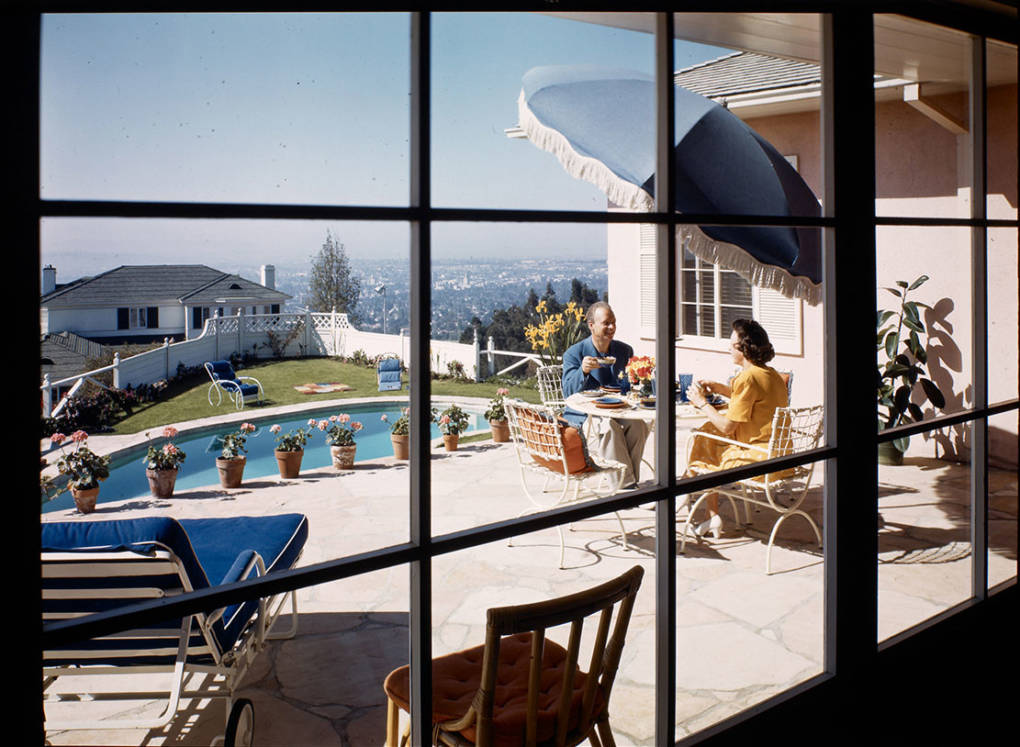
"caption": "The same beautiful weather remains as it did in the 1950s. But access to the California Dream is being choked off.",
"description": "The same beautiful weather remains as it did in the 1950s. But access to the California dream is being choked off.",
"title": "MiddleClassDream",
"credit": "Maynard L. Parker/Courtesy of The Huntington Library, San Marino, California",
"status": "inherit",
"isLoading": false,
"fetchFailed": false
},
"news_11654634": {
"type": "attachments",
"id": "news_11654634",
"meta": {
"index": "attachments_1716263798",
"site": "news",
"id": "11654634",
"found": true
},
"parent": 11654605,
"imgSizes": {
"small": {
"file": "https://ww2.kqed.org/app/uploads/sites/10/2018/03/RS15581_BUDGET_37-qut-520x347.jpg",
"width": 520,
"mimeType": "image/jpeg",
"height": 347
},
"twentyfourteen-full-width": {
"file": "https://ww2.kqed.org/app/uploads/sites/10/2018/03/RS15581_BUDGET_37-qut-1038x576.jpg",
"width": 1038,
"mimeType": "image/jpeg",
"height": 576
},
"thumbnail": {
"file": "https://ww2.kqed.org/app/uploads/sites/10/2018/03/RS15581_BUDGET_37-qut-160x107.jpg",
"width": 160,
"mimeType": "image/jpeg",
"height": 107
},
"fd-sm": {
"file": "https://ww2.kqed.org/app/uploads/sites/10/2018/03/RS15581_BUDGET_37-qut-960x640.jpg",
"width": 960,
"mimeType": "image/jpeg",
"height": 640
},
"post-thumbnail": {
"file": "https://ww2.kqed.org/app/uploads/sites/10/2018/03/RS15581_BUDGET_37-qut-672x372.jpg",
"width": 672,
"mimeType": "image/jpeg",
"height": 372
},
"xsmall": {
"file": "https://ww2.kqed.org/app/uploads/sites/10/2018/03/RS15581_BUDGET_37-qut-375x250.jpg",
"width": 375,
"mimeType": "image/jpeg",
"height": 250
},
"kqedFullSize": {
"file": "https://ww2.kqed.org/app/uploads/sites/10/2018/03/RS15581_BUDGET_37-qut.jpg",
"width": 1920,
"height": 1280
},
"large": {
"file": "https://ww2.kqed.org/app/uploads/sites/10/2018/03/RS15581_BUDGET_37-qut-1020x680.jpg",
"width": 1020,
"mimeType": "image/jpeg",
"height": 680
},
"xlarge": {
"file": "https://ww2.kqed.org/app/uploads/sites/10/2018/03/RS15581_BUDGET_37-qut-1180x787.jpg",
"width": 1180,
"mimeType": "image/jpeg",
"height": 787
},
"guest-author-50": {
"file": "https://ww2.kqed.org/app/uploads/sites/10/2018/03/RS15581_BUDGET_37-qut-50x50.jpg",
"width": 50,
"mimeType": "image/jpeg",
"height": 50
},
"guest-author-96": {
"file": "https://ww2.kqed.org/app/uploads/sites/10/2018/03/RS15581_BUDGET_37-qut-96x96.jpg",
"width": 96,
"mimeType": "image/jpeg",
"height": 96
},
"medium": {
"file": "https://ww2.kqed.org/app/uploads/sites/10/2018/03/RS15581_BUDGET_37-qut-800x533.jpg",
"width": 800,
"mimeType": "image/jpeg",
"height": 533
},
"guest-author-64": {
"file": "https://ww2.kqed.org/app/uploads/sites/10/2018/03/RS15581_BUDGET_37-qut-64x64.jpg",
"width": 64,
"mimeType": "image/jpeg",
"height": 64
},
"guest-author-32": {
"file": "https://ww2.kqed.org/app/uploads/sites/10/2018/03/RS15581_BUDGET_37-qut-32x32.jpg",
"width": 32,
"mimeType": "image/jpeg",
"height": 32
},
"fd-lrg": {
"file": "https://ww2.kqed.org/app/uploads/sites/10/2018/03/RS15581_BUDGET_37-qut-1920x1280.jpg",
"width": 1920,
"mimeType": "image/jpeg",
"height": 1280
},
"fd-med": {
"file": "https://ww2.kqed.org/app/uploads/sites/10/2018/03/RS15581_BUDGET_37-qut-1180x787.jpg",
"width": 1180,
"mimeType": "image/jpeg",
"height": 787
},
"full-width": {
"file": "https://ww2.kqed.org/app/uploads/sites/10/2018/03/RS15581_BUDGET_37-qut-1920x1280.jpg",
"width": 1920,
"mimeType": "image/jpeg",
"height": 1280
},
"detail": {
"file": "https://ww2.kqed.org/app/uploads/sites/10/2018/03/RS15581_BUDGET_37-qut-150x150.jpg",
"width": 150,
"mimeType": "image/jpeg",
"height": 150
},
"guest-author-128": {
"file": "https://ww2.kqed.org/app/uploads/sites/10/2018/03/RS15581_BUDGET_37-qut-128x128.jpg",
"width": 128,
"mimeType": "image/jpeg",
"height": 128
},
"xxsmall": {
"file": "https://ww2.kqed.org/app/uploads/sites/10/2018/03/RS15581_BUDGET_37-qut-240x160.jpg",
"width": 240,
"mimeType": "image/jpeg",
"height": 160
}
},
"publishDate": 1520547238,
"modified": 1520631062,
"caption": "State Sen. Bob Hertzberg (D-Van Nuys) chats with then Sen. Mark Leno (D-San Francisco) at the Capitol in 2015. ",
"description": "State Sen. Bob Hertzberg (D-Van Nuys) chats with then Sen. Mark Leno (D-San Francisco) at the Capitol in 2015.",
"title": "RS15581_BUDGET_37-qut",
"credit": "Max Whittaker/KQED",
"status": "inherit",
"isLoading": false,
"fetchFailed": false
},
"news_11654580": {
"type": "attachments",
"id": "news_11654580",
"meta": {
"index": "attachments_1716263798",
"site": "news",
"id": "11654580",
"found": true
},
"parent": 11654579,
"imgSizes": {
"small": {
"file": "https://ww2.kqed.org/app/uploads/sites/10/2018/03/officer-impersonation-a96563b5bbd2ee4809bf1063f87b7ec92a526496-520x390.png",
"width": 520,
"mimeType": "image/png",
"height": 390
},
"twentyfourteen-full-width": {
"file": "https://ww2.kqed.org/app/uploads/sites/10/2018/03/officer-impersonation-a96563b5bbd2ee4809bf1063f87b7ec92a526496-1038x576.png",
"width": 1038,
"mimeType": "image/png",
"height": 576
},
"thumbnail": {
"file": "https://ww2.kqed.org/app/uploads/sites/10/2018/03/officer-impersonation-a96563b5bbd2ee4809bf1063f87b7ec92a526496-160x120.png",
"width": 160,
"mimeType": "image/png",
"height": 120
},
"fd-sm": {
"file": "https://ww2.kqed.org/app/uploads/sites/10/2018/03/officer-impersonation-a96563b5bbd2ee4809bf1063f87b7ec92a526496-960x720.png",
"width": 960,
"mimeType": "image/png",
"height": 720
},
"post-thumbnail": {
"file": "https://ww2.kqed.org/app/uploads/sites/10/2018/03/officer-impersonation-a96563b5bbd2ee4809bf1063f87b7ec92a526496-672x372.png",
"width": 672,
"mimeType": "image/png",
"height": 372
},
"xsmall": {
"file": "https://ww2.kqed.org/app/uploads/sites/10/2018/03/officer-impersonation-a96563b5bbd2ee4809bf1063f87b7ec92a526496-375x281.png",
"width": 375,
"mimeType": "image/png",
"height": 281
},
"kqedFullSize": {
"file": "https://ww2.kqed.org/app/uploads/sites/10/2018/03/officer-impersonation-a96563b5bbd2ee4809bf1063f87b7ec92a526496-e1520538307433.png",
"width": 1920,
"height": 1439
},
"large": {
"file": "https://ww2.kqed.org/app/uploads/sites/10/2018/03/officer-impersonation-a96563b5bbd2ee4809bf1063f87b7ec92a526496-1020x765.png",
"width": 1020,
"mimeType": "image/png",
"height": 765
},
"xlarge": {
"file": "https://ww2.kqed.org/app/uploads/sites/10/2018/03/officer-impersonation-a96563b5bbd2ee4809bf1063f87b7ec92a526496-1180x885.png",
"width": 1180,
"mimeType": "image/png",
"height": 885
},
"guest-author-50": {
"file": "https://ww2.kqed.org/app/uploads/sites/10/2018/03/officer-impersonation-a96563b5bbd2ee4809bf1063f87b7ec92a526496-50x50.png",
"width": 50,
"mimeType": "image/png",
"height": 50
},
"guest-author-96": {
"file": "https://ww2.kqed.org/app/uploads/sites/10/2018/03/officer-impersonation-a96563b5bbd2ee4809bf1063f87b7ec92a526496-96x96.png",
"width": 96,
"mimeType": "image/png",
"height": 96
},
"medium": {
"file": "https://ww2.kqed.org/app/uploads/sites/10/2018/03/officer-impersonation-a96563b5bbd2ee4809bf1063f87b7ec92a526496-800x600.png",
"width": 800,
"mimeType": "image/png",
"height": 600
},
"guest-author-64": {
"file": "https://ww2.kqed.org/app/uploads/sites/10/2018/03/officer-impersonation-a96563b5bbd2ee4809bf1063f87b7ec92a526496-64x64.png",
"width": 64,
"mimeType": "image/png",
"height": 64
},
"guest-author-32": {
"file": "https://ww2.kqed.org/app/uploads/sites/10/2018/03/officer-impersonation-a96563b5bbd2ee4809bf1063f87b7ec92a526496-32x32.png",
"width": 32,
"mimeType": "image/png",
"height": 32
},
"fd-lrg": {
"file": "https://ww2.kqed.org/app/uploads/sites/10/2018/03/officer-impersonation-a96563b5bbd2ee4809bf1063f87b7ec92a526496-1920x1439.png",
"width": 1920,
"mimeType": "image/png",
"height": 1439
},
"fd-med": {
"file": "https://ww2.kqed.org/app/uploads/sites/10/2018/03/officer-impersonation-a96563b5bbd2ee4809bf1063f87b7ec92a526496-1180x885.png",
"width": 1180,
"mimeType": "image/png",
"height": 885
},
"full-width": {
"file": "https://ww2.kqed.org/app/uploads/sites/10/2018/03/officer-impersonation-a96563b5bbd2ee4809bf1063f87b7ec92a526496-1920x1439.png",
"width": 1920,
"mimeType": "image/png",
"height": 1439
},
"detail": {
"file": "https://ww2.kqed.org/app/uploads/sites/10/2018/03/officer-impersonation-a96563b5bbd2ee4809bf1063f87b7ec92a526496-150x150.png",
"width": 150,
"mimeType": "image/png",
"height": 150
},
"guest-author-128": {
"file": "https://ww2.kqed.org/app/uploads/sites/10/2018/03/officer-impersonation-a96563b5bbd2ee4809bf1063f87b7ec92a526496-128x128.png",
"width": 128,
"mimeType": "image/png",
"height": 128
},
"xxsmall": {
"file": "https://ww2.kqed.org/app/uploads/sites/10/2018/03/officer-impersonation-a96563b5bbd2ee4809bf1063f87b7ec92a526496-240x180.png",
"width": 240,
"mimeType": "image/png",
"height": 180
}
},
"publishDate": 1520538144,
"modified": 1520538300,
"caption": "A still image from a video that shows a teen impersonating a deputy sheriff.",
"description": "A still image from a video that shows a teen impersonating a deputy sheriff.",
"title": "A still image from a video that shows a teen impersonating a deputy sheriff.",
"credit": "NPR",
"status": "inherit",
"isLoading": false,
"fetchFailed": false
},
"news_11654586": {
"type": "attachments",
"id": "news_11654586",
"meta": {
"index": "attachments_1716263798",
"site": "news",
"id": "11654586",
"found": true
},
"parent": 11654570,
"imgSizes": {
"small": {
"file": "https://ww2.kqed.org/app/uploads/sites/10/2018/03/trump-520x335.jpg",
"width": 520,
"mimeType": "image/jpeg",
"height": 335
},
"twentyfourteen-full-width": {
"file": "https://ww2.kqed.org/app/uploads/sites/10/2018/03/trump-1038x576.jpg",
"width": 1038,
"mimeType": "image/jpeg",
"height": 576
},
"thumbnail": {
"file": "https://ww2.kqed.org/app/uploads/sites/10/2018/03/trump-160x103.jpg",
"width": 160,
"mimeType": "image/jpeg",
"height": 103
},
"fd-sm": {
"file": "https://ww2.kqed.org/app/uploads/sites/10/2018/03/trump-960x619.jpg",
"width": 960,
"mimeType": "image/jpeg",
"height": 619
},
"post-thumbnail": {
"file": "https://ww2.kqed.org/app/uploads/sites/10/2018/03/trump-672x372.jpg",
"width": 672,
"mimeType": "image/jpeg",
"height": 372
},
"xsmall": {
"file": "https://ww2.kqed.org/app/uploads/sites/10/2018/03/trump-375x242.jpg",
"width": 375,
"mimeType": "image/jpeg",
"height": 242
},
"kqedFullSize": {
"file": "https://ww2.kqed.org/app/uploads/sites/10/2018/03/trump.jpg",
"width": 1920,
"height": 1238
},
"large": {
"file": "https://ww2.kqed.org/app/uploads/sites/10/2018/03/trump-1020x658.jpg",
"width": 1020,
"mimeType": "image/jpeg",
"height": 658
},
"xlarge": {
"file": "https://ww2.kqed.org/app/uploads/sites/10/2018/03/trump-1180x761.jpg",
"width": 1180,
"mimeType": "image/jpeg",
"height": 761
},
"guest-author-50": {
"file": "https://ww2.kqed.org/app/uploads/sites/10/2018/03/trump-50x50.jpg",
"width": 50,
"mimeType": "image/jpeg",
"height": 50
},
"guest-author-96": {
"file": "https://ww2.kqed.org/app/uploads/sites/10/2018/03/trump-96x96.jpg",
"width": 96,
"mimeType": "image/jpeg",
"height": 96
},
"medium": {
"file": "https://ww2.kqed.org/app/uploads/sites/10/2018/03/trump-800x516.jpg",
"width": 800,
"mimeType": "image/jpeg",
"height": 516
},
"guest-author-64": {
"file": "https://ww2.kqed.org/app/uploads/sites/10/2018/03/trump-64x64.jpg",
"width": 64,
"mimeType": "image/jpeg",
"height": 64
},
"guest-author-32": {
"file": "https://ww2.kqed.org/app/uploads/sites/10/2018/03/trump-32x32.jpg",
"width": 32,
"mimeType": "image/jpeg",
"height": 32
},
"fd-lrg": {
"file": "https://ww2.kqed.org/app/uploads/sites/10/2018/03/trump-1920x1238.jpg",
"width": 1920,
"mimeType": "image/jpeg",
"height": 1238
},
"fd-med": {
"file": "https://ww2.kqed.org/app/uploads/sites/10/2018/03/trump-1180x761.jpg",
"width": 1180,
"mimeType": "image/jpeg",
"height": 761
},
"full-width": {
"file": "https://ww2.kqed.org/app/uploads/sites/10/2018/03/trump-1920x1238.jpg",
"width": 1920,
"mimeType": "image/jpeg",
"height": 1238
},
"detail": {
"file": "https://ww2.kqed.org/app/uploads/sites/10/2018/03/trump-150x150.jpg",
"width": 150,
"mimeType": "image/jpeg",
"height": 150
},
"guest-author-128": {
"file": "https://ww2.kqed.org/app/uploads/sites/10/2018/03/trump-128x128.jpg",
"width": 128,
"mimeType": "image/jpeg",
"height": 128
},
"xxsmall": {
"file": "https://ww2.kqed.org/app/uploads/sites/10/2018/03/trump-240x155.jpg",
"width": 240,
"mimeType": "image/jpeg",
"height": 155
}
},
"publishDate": 1520539009,
"modified": 1520539039,
"caption": "President Trump criticized Oakland Mayor Libby Schaaf. ",
"description": "President Trump criticized Oakland Mayor Libby Schaaf. ",
"title": "trump",
"credit": "AFP/Getty Images",
"status": "inherit",
"isLoading": false,
"fetchFailed": false
},
"news_11654585": {
"type": "attachments",
"id": "news_11654585",
"meta": {
"index": "attachments_1716263798",
"site": "news",
"id": "11654585",
"found": true
},
"parent": 11654263,
"imgSizes": {
"small": {
"file": "https://ww2.kqed.org/app/uploads/sites/10/2018/03/crime-520x347.jpg",
"width": 520,
"mimeType": "image/jpeg",
"height": 347
},
"twentyfourteen-full-width": {
"file": "https://ww2.kqed.org/app/uploads/sites/10/2018/03/crime-1038x576.jpg",
"width": 1038,
"mimeType": "image/jpeg",
"height": 576
},
"thumbnail": {
"file": "https://ww2.kqed.org/app/uploads/sites/10/2018/03/crime-160x107.jpg",
"width": 160,
"mimeType": "image/jpeg",
"height": 107
},
"fd-sm": {
"file": "https://ww2.kqed.org/app/uploads/sites/10/2018/03/crime-960x640.jpg",
"width": 960,
"mimeType": "image/jpeg",
"height": 640
},
"post-thumbnail": {
"file": "https://ww2.kqed.org/app/uploads/sites/10/2018/03/crime-672x372.jpg",
"width": 672,
"mimeType": "image/jpeg",
"height": 372
},
"xsmall": {
"file": "https://ww2.kqed.org/app/uploads/sites/10/2018/03/crime-375x250.jpg",
"width": 375,
"mimeType": "image/jpeg",
"height": 250
},
"kqedFullSize": {
"file": "https://ww2.kqed.org/app/uploads/sites/10/2018/03/crime.jpg",
"width": 3888,
"height": 2592
},
"large": {
"file": "https://ww2.kqed.org/app/uploads/sites/10/2018/03/crime-1020x680.jpg",
"width": 1020,
"mimeType": "image/jpeg",
"height": 680
},
"xlarge": {
"file": "https://ww2.kqed.org/app/uploads/sites/10/2018/03/crime-1180x787.jpg",
"width": 1180,
"mimeType": "image/jpeg",
"height": 787
},
"guest-author-50": {
"file": "https://ww2.kqed.org/app/uploads/sites/10/2018/03/crime-50x50.jpg",
"width": 50,
"mimeType": "image/jpeg",
"height": 50
},
"guest-author-96": {
"file": "https://ww2.kqed.org/app/uploads/sites/10/2018/03/crime-96x96.jpg",
"width": 96,
"mimeType": "image/jpeg",
"height": 96
},
"medium": {
"file": "https://ww2.kqed.org/app/uploads/sites/10/2018/03/crime-800x533.jpg",
"width": 800,
"mimeType": "image/jpeg",
"height": 533
},
"guest-author-64": {
"file": "https://ww2.kqed.org/app/uploads/sites/10/2018/03/crime-64x64.jpg",
"width": 64,
"mimeType": "image/jpeg",
"height": 64
},
"guest-author-32": {
"file": "https://ww2.kqed.org/app/uploads/sites/10/2018/03/crime-32x32.jpg",
"width": 32,
"mimeType": "image/jpeg",
"height": 32
},
"fd-lrg": {
"file": "https://ww2.kqed.org/app/uploads/sites/10/2018/03/crime-1920x1280.jpg",
"width": 1920,
"mimeType": "image/jpeg",
"height": 1280
},
"fd-med": {
"file": "https://ww2.kqed.org/app/uploads/sites/10/2018/03/crime-1180x787.jpg",
"width": 1180,
"mimeType": "image/jpeg",
"height": 787
},
"full-width": {
"file": "https://ww2.kqed.org/app/uploads/sites/10/2018/03/crime-1920x1280.jpg",
"width": 1920,
"mimeType": "image/jpeg",
"height": 1280
},
"detail": {
"file": "https://ww2.kqed.org/app/uploads/sites/10/2018/03/crime-150x150.jpg",
"width": 150,
"mimeType": "image/jpeg",
"height": 150
},
"guest-author-128": {
"file": "https://ww2.kqed.org/app/uploads/sites/10/2018/03/crime-128x128.jpg",
"width": 128,
"mimeType": "image/jpeg",
"height": 128
},
"xxsmall": {
"file": "https://ww2.kqed.org/app/uploads/sites/10/2018/03/crime-240x160.jpg",
"width": 240,
"mimeType": "image/jpeg",
"height": 160
}
},
"publishDate": 1520538842,
"modified": 1520538891,
"caption": "An Oakland Police Department vehicle parked outside an officer-involved shooting.",
"description": "An Oakland Police Department vehicle parked outside an officer-involved shooting.",
"title": "crime",
"credit": "Alex Emslie/KQED",
"status": "inherit",
"isLoading": false,
"fetchFailed": false
},
"news_11654506": {
"type": "attachments",
"id": "news_11654506",
"meta": {
"index": "attachments_1716263798",
"site": "news",
"id": "11654506",
"found": true
},
"parent": 11654489,
"imgSizes": {
"small": {
"file": "https://ww2.kqed.org/app/uploads/sites/10/2018/03/ICEAdelanto-520x347.jpg",
"width": 520,
"mimeType": "image/jpeg",
"height": 347
},
"twentyfourteen-full-width": {
"file": "https://ww2.kqed.org/app/uploads/sites/10/2018/03/ICEAdelanto-1038x576.jpg",
"width": 1038,
"mimeType": "image/jpeg",
"height": 576
},
"thumbnail": {
"file": "https://ww2.kqed.org/app/uploads/sites/10/2018/03/ICEAdelanto-160x107.jpg",
"width": 160,
"mimeType": "image/jpeg",
"height": 107
},
"fd-sm": {
"file": "https://ww2.kqed.org/app/uploads/sites/10/2018/03/ICEAdelanto-960x641.jpg",
"width": 960,
"mimeType": "image/jpeg",
"height": 641
},
"post-thumbnail": {
"file": "https://ww2.kqed.org/app/uploads/sites/10/2018/03/ICEAdelanto-672x372.jpg",
"width": 672,
"mimeType": "image/jpeg",
"height": 372
},
"xsmall": {
"file": "https://ww2.kqed.org/app/uploads/sites/10/2018/03/ICEAdelanto-375x250.jpg",
"width": 375,
"mimeType": "image/jpeg",
"height": 250
},
"kqedFullSize": {
"file": "https://ww2.kqed.org/app/uploads/sites/10/2018/03/ICEAdelanto.jpg",
"width": 1920,
"height": 1281
},
"large": {
"file": "https://ww2.kqed.org/app/uploads/sites/10/2018/03/ICEAdelanto-1020x681.jpg",
"width": 1020,
"mimeType": "image/jpeg",
"height": 681
},
"xlarge": {
"file": "https://ww2.kqed.org/app/uploads/sites/10/2018/03/ICEAdelanto-1180x787.jpg",
"width": 1180,
"mimeType": "image/jpeg",
"height": 787
},
"guest-author-50": {
"file": "https://ww2.kqed.org/app/uploads/sites/10/2018/03/ICEAdelanto-50x50.jpg",
"width": 50,
"mimeType": "image/jpeg",
"height": 50
},
"guest-author-96": {
"file": "https://ww2.kqed.org/app/uploads/sites/10/2018/03/ICEAdelanto-96x96.jpg",
"width": 96,
"mimeType": "image/jpeg",
"height": 96
},
"medium": {
"file": "https://ww2.kqed.org/app/uploads/sites/10/2018/03/ICEAdelanto-800x534.jpg",
"width": 800,
"mimeType": "image/jpeg",
"height": 534
},
"guest-author-64": {
"file": "https://ww2.kqed.org/app/uploads/sites/10/2018/03/ICEAdelanto-64x64.jpg",
"width": 64,
"mimeType": "image/jpeg",
"height": 64
},
"guest-author-32": {
"file": "https://ww2.kqed.org/app/uploads/sites/10/2018/03/ICEAdelanto-32x32.jpg",
"width": 32,
"mimeType": "image/jpeg",
"height": 32
},
"fd-lrg": {
"file": "https://ww2.kqed.org/app/uploads/sites/10/2018/03/ICEAdelanto-1920x1281.jpg",
"width": 1920,
"mimeType": "image/jpeg",
"height": 1281
},
"fd-med": {
"file": "https://ww2.kqed.org/app/uploads/sites/10/2018/03/ICEAdelanto-1180x787.jpg",
"width": 1180,
"mimeType": "image/jpeg",
"height": 787
},
"full-width": {
"file": "https://ww2.kqed.org/app/uploads/sites/10/2018/03/ICEAdelanto-1920x1281.jpg",
"width": 1920,
"mimeType": "image/jpeg",
"height": 1281
},
"detail": {
"file": "https://ww2.kqed.org/app/uploads/sites/10/2018/03/ICEAdelanto-150x150.jpg",
"width": 150,
"mimeType": "image/jpeg",
"height": 150
},
"guest-author-128": {
"file": "https://ww2.kqed.org/app/uploads/sites/10/2018/03/ICEAdelanto-128x128.jpg",
"width": 128,
"mimeType": "image/jpeg",
"height": 128
},
"xxsmall": {
"file": "https://ww2.kqed.org/app/uploads/sites/10/2018/03/ICEAdelanto-240x160.jpg",
"width": 240,
"mimeType": "image/jpeg",
"height": 160
}
},
"publishDate": 1520473648,
"modified": 1569446794,
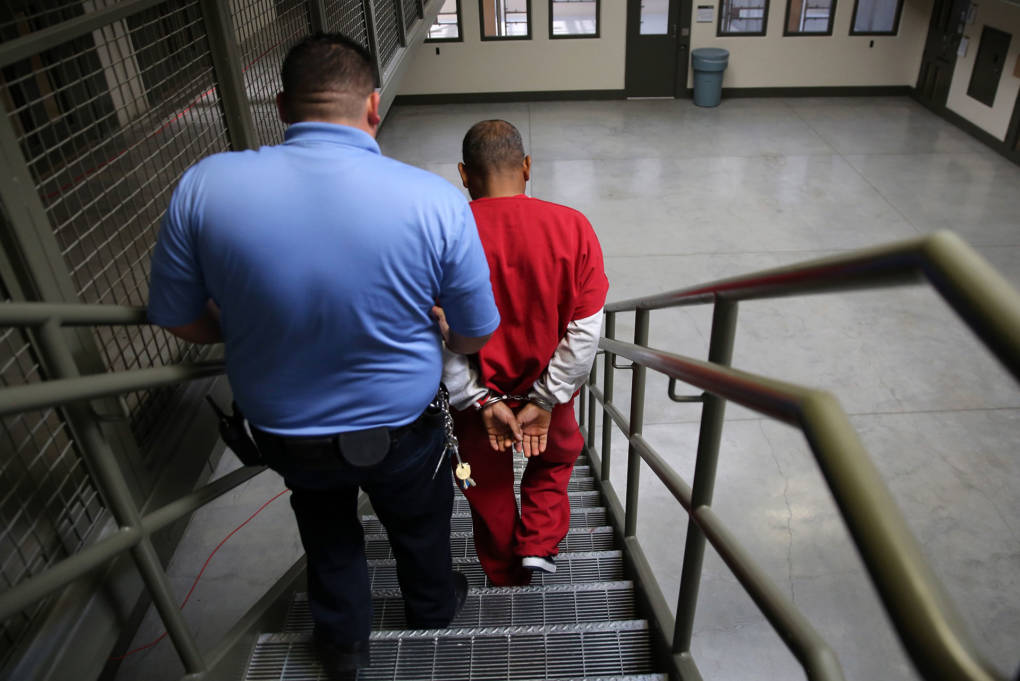
"caption": "A guard escorts an immigrant detainee at the Adelanto Detention Facility in Adelanto, California.",
"description": "A guard escorts an immigrant detainee at the Adelanto Detention Facility in Adelanto, California.",
"title": "ICEAdelanto",
"credit": "John Moore/Getty Images",
"status": "inherit",
"isLoading": false,
"fetchFailed": false
}
},
"audioPlayerReducer": {
"postId": "stream_live",
"isPaused": true,
"isPlaying": false,
"pfsActive": false,
"pledgeModalIsOpen": true,
"playerDrawerIsOpen": false,
"liveAudioPlayStartedAt": 0,
"liveAudioPlayContext": ""
},
"authorsReducer": {
"byline_news_11655006": {
"type": "authors",
"id": "byline_news_11655006",
"meta": {
"override": true
},
"slug": "byline_news_11655006",
"name": "\u003cstrong>Nomaan Merchant \u003c/strong>\u003c/br> Associated Press",
"isLoading": false
},
"byline_news_11654735": {
"type": "authors",
"id": "byline_news_11654735",
"meta": {
"override": true
},
"slug": "byline_news_11654735",
"name": "Ellen Knickmeyer\u003cbr>Janie Har\u003cbr>\u003cstrong>Associated Press\u003c/strong>",
"isLoading": false
},
"byline_news_11654616": {
"type": "authors",
"id": "byline_news_11654616",
"meta": {
"override": true
},
"slug": "byline_news_11654616",
"name": "\u003cstrong>\u003ca href=\"http://www.kpbs.org/staff/amita-sharma/\">Amita Sharma\u003c/a>\u003c/strong>",
"isLoading": false
},
"byline_news_11654579": {
"type": "authors",
"id": "byline_news_11654579",
"meta": {
"override": true
},
"slug": "byline_news_11654579",
"name": "Asia Simone Burns",
"isLoading": false
},
"byline_news_11654570": {
"type": "authors",
"id": "byline_news_11654570",
"meta": {
"override": true
},
"slug": "byline_news_11654570",
"name": "\u003cstrong>Associated Press\u003c/strong>",
"isLoading": false
},
"lisapickoffwhite-2": {
"type": "authors",
"id": "199",
"meta": {
"index": "authors_1716337520",
"id": "199",
"found": true
},
"name": "Lisa Pickoff-White",
"firstName": "Lisa",
"lastName": "Pickoff-White",
"slug": "lisapickoffwhite-2",
"email": "lpickoffwhite@kqed.org",
"display_author_email": false,
"staff_mastheads": [
"news"
],
"title": "Data Journalist, Senior Producer",
"bio": "Lisa Pickoff-White is KQED's data reporter. Lisa specializes in simplifying complex topics and bringing them to life through compelling visuals, including photography and data visualizations. She previously has worked at the Center for Investigative Reporting and other national outlets. Her work has been honored with awards from the Online News Association, Investigative Reporters and Editors, the Society of Professional Journalists and SXSW Interactive. \u003cstrong> \u003c/strong>",
"avatar": "https://secure.gravatar.com/avatar/5513c5f3967df792aa65bee2501e84d6?s=600&d=blank&r=g",
"twitter": "pickoffwhite",
"facebook": null,
"instagram": null,
"linkedin": null,
"sites": [
{
"site": "",
"roles": [
"editor"
]
},
{
"site": "arts",
"roles": []
},
{
"site": "news",
"roles": [
"administrator"
]
},
{
"site": "about",
"roles": [
"editor"
]
},
{
"site": "stateofhealth",
"roles": [
"administrator"
]
},
{
"site": "science",
"roles": [
"editor"
]
},
{
"site": "quest",
"roles": [
"editor"
]
},
{
"site": "forum",
"roles": [
"editor"
]
}
],
"headData": {
"title": "Lisa Pickoff-White | KQED",
"description": "Data Journalist, Senior Producer",
"ogImgSrc": "https://secure.gravatar.com/avatar/5513c5f3967df792aa65bee2501e84d6?s=600&d=blank&r=g",
"twImgSrc": "https://secure.gravatar.com/avatar/5513c5f3967df792aa65bee2501e84d6?s=600&d=blank&r=g"
},
"isLoading": false,
"link": "/author/lisapickoffwhite-2"
},
"kqednewsstaffandwires": {
"type": "authors",
"id": "237",
"meta": {
"index": "authors_1716337520",
"id": "237",
"found": true
},
"name": "KQED News Staff and Wires",
"firstName": "KQED News Staff and Wires",
"lastName": null,
"slug": "kqednewsstaffandwires",
"email": "onlinenewsstaff@kqed.org",
"display_author_email": false,
"staff_mastheads": [],
"title": null,
"bio": null,
"avatar": "https://secure.gravatar.com/avatar/72295af8ebbfbd19a4948f5271285664?s=600&d=blank&r=g",
"twitter": null,
"facebook": null,
"instagram": null,
"linkedin": null,
"sites": [
{
"site": "arts",
"roles": [
"contributor"
]
},
{
"site": "news",
"roles": [
"contributor"
]
},
{
"site": "lowdown",
"roles": [
"author"
]
},
{
"site": "stateofhealth",
"roles": [
"contributor"
]
},
{
"site": "food",
"roles": [
"author"
]
}
],
"headData": {
"title": "KQED News Staff and Wires | KQED",
"description": null,
"ogImgSrc": "https://secure.gravatar.com/avatar/72295af8ebbfbd19a4948f5271285664?s=600&d=blank&r=g",
"twImgSrc": "https://secure.gravatar.com/avatar/72295af8ebbfbd19a4948f5271285664?s=600&d=blank&r=g"
},
"isLoading": false,
"link": "/author/kqednewsstaffandwires"
},
"shossaini": {
"type": "authors",
"id": "3214",
"meta": {
"index": "authors_1716337520",
"id": "3214",
"found": true
},
"name": "Sara Hossaini",
"firstName": "Sara",
"lastName": "Hossaini",
"slug": "shossaini",
"email": "shossaini@kqed.org",
"display_author_email": true,
"staff_mastheads": [
"news"
],
"title": "KQED Reporter",
"bio": "Sara Hossaini came to general assignment reporting at KQED in 2013 after two winters reporting at Wyoming Public Radio. She holds a bachelor's degree in broadcast journalism from the University of Nebraska-Lincoln. Her radio romance began after a bitter breakup with documentary film (Ok, maybe it's still complicated). Her first simultaneous jobs in San Francisco were as Associate Producer on a PBS film series through the Center for Asian American Media and as a butler. She likes to trot, plot and make things with her hands.",
"avatar": "https://secure.gravatar.com/avatar/060e9f56b9554e17942e89f413242774?s=600&d=blank&r=g",
"twitter": "mshossaini",
"facebook": null,
"instagram": null,
"linkedin": null,
"sites": [
{
"site": "news",
"roles": [
"author"
]
},
{
"site": "stateofhealth",
"roles": [
"author"
]
}
],
"headData": {
"title": "Sara Hossaini | KQED",
"description": "KQED Reporter",
"ogImgSrc": "https://secure.gravatar.com/avatar/060e9f56b9554e17942e89f413242774?s=600&d=blank&r=g",
"twImgSrc": "https://secure.gravatar.com/avatar/060e9f56b9554e17942e89f413242774?s=600&d=blank&r=g"
},
"isLoading": false,
"link": "/author/shossaini"
},
"mlagos": {
"type": "authors",
"id": "3239",
"meta": {
"index": "authors_1716337520",
"id": "3239",
"found": true
},
"name": "Marisa Lagos",
"firstName": "Marisa",
"lastName": "Lagos",
"slug": "mlagos",
"email": "mlagos@kqed.org",
"display_author_email": false,
"staff_mastheads": [
"news"
],
"title": "KQED Contributor",
"bio": "Marisa Lagos is a correspondent for KQED’s California Politics and Government Desk and co-hosts the award-winning show and podcast, Political Breakdown. At KQED, Lagos also conducts reporting, analysis and investigations into state, local and national politics for radio, TV, online and onstage. In 2022, she and co-host, Scott Shafer, moderated the only gubernatorial debate in California. In 2020, the \u003ci>Washington Post\u003c/i> named her one of the top political journalists in California; she was nominated for a Peabody and won several other awards for her work investigating the 2017 California wildfires. She has worked at the \u003ci>San Francisco Chronicle\u003c/i>, \u003ci>San Francisco Examiner\u003c/i> and \u003ci>Los Angeles Times\u003c/i>. A UC Santa Barbara graduate, she lives in San Francisco with her two sons and husband.",
"avatar": "https://secure.gravatar.com/avatar/a261a0d3696fc066871ef96b85b5e7d2?s=600&d=blank&r=g",
"twitter": "@mlagos",
"facebook": null,
"instagram": null,
"linkedin": null,
"sites": [
{
"site": "arts",
"roles": [
"author"
]
},
{
"site": "news",
"roles": [
"editor"
]
},
{
"site": "science",
"roles": [
"editor"
]
},
{
"site": "forum",
"roles": [
"author"
]
},
{
"site": "liveblog",
"roles": [
"author"
]
}
],
"headData": {
"title": "Marisa Lagos | KQED",
"description": "KQED Contributor",
"ogImgSrc": "https://secure.gravatar.com/avatar/a261a0d3696fc066871ef96b85b5e7d2?s=600&d=blank&r=g",
"twImgSrc": "https://secure.gravatar.com/avatar/a261a0d3696fc066871ef96b85b5e7d2?s=600&d=blank&r=g"
},
"isLoading": false,
"link": "/author/mlagos"
},
"jsmall": {
"type": "authors",
"id": "6625",
"meta": {
"index": "authors_1716337520",
"id": "6625",
"found": true
},
"name": "Julie Small",
"firstName": "Julie",
"lastName": "Small",
"slug": "jsmall",
"email": "jsmall@kqed.org",
"display_author_email": true,
"staff_mastheads": [
"news"
],
"title": "KQED Contributor",
"bio": "Julie Small reports on criminal justice and immigration.\r\n\r\nShe was part of a team at KQED awarded a regional 2019 Edward R. Murrow award for continuing coverage of the Trump Administration's family separation policy.\r\n\r\nThe Society for Professional Journalists recognized Julie's 2018 \u003ca href=\"https://www.kqed.org/news/11636262/the-officer-tased-him-31-times-the-sheriff-called-his-death-an-accident\">reporting\u003c/a> on the San Joaquin County Sheriff's \u003ca href=\"https://www.kqed.org/news/11634689/autopsy-doctors-sheriff-overrode-death-findings-to-protect-law-enforcement\">interference\u003c/a> in death investigations with an Excellence in Journalism Award for Ongoing Coverage.\r\n\r\nJulie's\u003ca href=\"https://www.kqed.org/news/11039666/two-mentally-ill-inmates-died-one-month-in-santa-clara\"> reporting\u003c/a> with Lisa Pickoff-White on the treatment of mentally ill offenders in California jails earned a 2017 regional Edward R. Murrow Award for news reporting and an investigative reporting award from the SPJ of Northern California.\r\n\r\nBefore joining KQED, Julie covered government and politics in Sacramento for Southern California Public Radio (SCPR). Her 2010 \u003ca href=\"https://www.scpr.org/specials/prisonmedical/\">series\u003c/a> on lapses in California’s prison medical care also won a regional Edward R. Murrow Award for investigative reporting and a Golden Mic Award from the RTNDA of Southern California.\r\n\r\nJulie began her career in journalism in 2000 as the deputy foreign editor for public radio's \u003cem>Marketplace, \u003c/em>while earning her master's degree in journalism from USC’s Annenberg School of Communication.",
"avatar": "https://secure.gravatar.com/avatar/4baedf201468df97be97c2a9dd7585d0?s=600&d=blank&r=g",
"twitter": "@SmallRadio2",
"facebook": null,
"instagram": null,
"linkedin": null,
"sites": [
{
"site": "news",
"roles": [
"editor"
]
},
{
"site": "stateofhealth",
"roles": [
"author"
]
},
{
"site": "science",
"roles": [
"author"
]
}
],
"headData": {
"title": "Julie Small | KQED",
"description": "KQED Contributor",
"ogImgSrc": "https://secure.gravatar.com/avatar/4baedf201468df97be97c2a9dd7585d0?s=600&d=blank&r=g",
"twImgSrc": "https://secure.gravatar.com/avatar/4baedf201468df97be97c2a9dd7585d0?s=600&d=blank&r=g"
},
"isLoading": false,
"link": "/author/jsmall"
},
"slewis": {
"type": "authors",
"id": "8676",
"meta": {
"index": "authors_1716337520",
"id": "8676",
"found": true
},
"name": "Sukey Lewis",
"firstName": "Sukey",
"lastName": "Lewis",
"slug": "slewis",
"email": "slewis@kqed.org",
"display_author_email": true,
"staff_mastheads": [
"news"
],
"title": "KQED Contributor",
"bio": "Sukey Lewis is a criminal justice reporter and host of \u003cem>On Our Watch\u003c/em>, a new podcast from NPR and KQED about the shadow world of police discipline. In 2018, she co-founded the California Reporting Project, a coalition of newsrooms across the state focused on obtaining previously sealed internal affairs records from law enforcement. In addition to her reporting on police accountability, Sukey has investigated the bail bonds industry, California's wildfires and the high cost of prison phone calls. Sukey earned a master's degree in journalism from the University of California at Berkeley. Send news tips to slewis@kqed.org.",
"avatar": "https://secure.gravatar.com/avatar/03fd6b21024f99d8b0a1966654586de7?s=600&d=blank&r=g",
"twitter": "SukeyLewis",
"facebook": null,
"instagram": null,
"linkedin": null,
"sites": [
{
"site": "news",
"roles": [
"author",
"edit_others_posts"
]
}
],
"headData": {
"title": "Sukey Lewis | KQED",
"description": "KQED Contributor",
"ogImgSrc": "https://secure.gravatar.com/avatar/03fd6b21024f99d8b0a1966654586de7?s=600&d=blank&r=g",
"twImgSrc": "https://secure.gravatar.com/avatar/03fd6b21024f99d8b0a1966654586de7?s=600&d=blank&r=g"
},
"isLoading": false,
"link": "/author/slewis"
},
"korr": {
"type": "authors",
"id": "11200",
"meta": {
"index": "authors_1716337520",
"id": "11200",
"found": true
},
"name": "Katie Orr",
"firstName": "Katie",
"lastName": "Orr",
"slug": "korr",
"email": "korr@kqed.org",
"display_author_email": false,
"staff_mastheads": [],
"title": "KQED Contributor",
"bio": "Katie Orr was a Sacramento-based reporter for KQED's Politics and Government Desk, covering the state Capitol and a variety of issues including women in politics, voting and elections and legislation. Prior to joining KQED in 2016, Katie was state government reporter for Capital Public Radio in Sacramento. She's also worked for KPBS in San Diego, where she covered City Hall.\r\n\r\nKatie received her masters degree in political science from San Diego State University and holds a Bachelors degree in broadcast journalism from Arizona State University.\r\n\r\nIn 2015 Katie won a national Clarion Award for a series of stories she did on women in California politics. She's been honored by the Society for Professional Journalists and, in 2013, was named by \u003cem>The Washington Post\u003c/em> as one of the country's top state Capitol reporters. She's also reported for the award-winning documentary series \u003cem>The View from Here \u003c/em>and was part of the team that won national PRNDI and Gabriel Awards in 2015. She lives in Sacramento with her husband. Twitter: @1KatieOrr",
"avatar": "https://secure.gravatar.com/avatar/41a40b25845adc78f50808670860449e?s=600&d=blank&r=g",
"twitter": "1katieorr",
"facebook": null,
"instagram": null,
"linkedin": null,
"sites": [
{
"site": "news",
"roles": [
"subscriber"
]
},
{
"site": "stateofhealth",
"roles": [
"author"
]
},
{
"site": "forum",
"roles": [
"author"
]
}
],
"headData": {
"title": "Katie Orr | KQED",
"description": "KQED Contributor",
"ogImgSrc": "https://secure.gravatar.com/avatar/41a40b25845adc78f50808670860449e?s=600&d=blank&r=g",
"twImgSrc": "https://secure.gravatar.com/avatar/41a40b25845adc78f50808670860449e?s=600&d=blank&r=g"
},
"isLoading": false,
"link": "/author/korr"
},
"pnelson": {
"type": "authors",
"id": "11293",
"meta": {
"index": "authors_1716337520",
"id": "11293",
"found": true
},
"name": "Penny Nelson",
"firstName": "Penny",
"lastName": "Nelson",
"slug": "pnelson",
"email": "PNelson@KQED.org",
"display_author_email": false,
"staff_mastheads": [],
"title": "KQED Contributor",
"bio": "Penny Nelson was based in the Bay Area and worked at KQED in many capacities since 1996. Prior to working in San Francisco, she worked at WHYY. At KQED, Penny was an anchor, host, producer and editor.",
"avatar": "https://secure.gravatar.com/avatar/986e19a6d0bd017e82bf77481175c4ad?s=600&d=blank&r=g",
"twitter": null,
"facebook": null,
"instagram": null,
"linkedin": null,
"sites": [
{
"site": "arts",
"roles": [
"author"
]
},
{
"site": "news",
"roles": [
"subscriber"
]
}
],
"headData": {
"title": "Penny Nelson | KQED",
"description": "KQED Contributor",
"ogImgSrc": "https://secure.gravatar.com/avatar/986e19a6d0bd017e82bf77481175c4ad?s=600&d=blank&r=g",
"twImgSrc": "https://secure.gravatar.com/avatar/986e19a6d0bd017e82bf77481175c4ad?s=600&d=blank&r=g"
},
"isLoading": false,
"link": "/author/pnelson"
}
},
"pagesReducer": {
"news_program_news-fix": {
"type": "terms",
"id": "news_6944",
"meta": {
"index": "terms_1716263798",
"site": "news",
"id": "6944",
"score": 16.377514
},
"featImg": "https://ww2.kqed.org/app/uploads/sites/10/2014/10/News-Fix-Logo-Web-Banners-04.png",
"name": "News Fix",
"description": null,
"taxonomy": "program",
"headData": {
"twImgId": null,
"twTitle": null,
"ogTitle": null,
"ogImgId": null,
"twDescription": null,
"description": "The News Fix is a daily news podcast from KQED that breaks down the latest headlines and provides in-depth analysis of the stories that matter to the Bay Area.",
"title": "News Fix - Daily Dose of Bay Area News | KQED",
"ogDescription": null
},
"ttid": 6968,
"slug": "news-fix",
"isLoading": false,
"title": "News Fix",
"pageMeta": {
"site": "news",
"WpPageTemplate": "page-topic-editorial",
"currentPage": 10
},
"blocks": [
{
"blockName": "kqed/post-list",
"attrs": {
"layout": "cardArticle2",
"query": "posts/news?program=news-fix",
"seeMore": false,
"paginated": true,
"page": 10
}
},
{
"blockName": "kqed/ad"
}
]
}
},
"pfsSessionReducer": {},
"postsReducer": {
"stream_live": {
"type": "live",
"id": "stream_live",
"audioUrl": "https://streams.kqed.org/kqedradio",
"title": "Live Stream",
"excerpt": "Live Stream information currently unavailable.",
"link": "/radio",
"featImg": "",
"label": {
"name": "KQED Live",
"link": "/"
}
},
"stream_kqedNewscast": {
"type": "posts",
"id": "stream_kqedNewscast",
"audioUrl": "https://www.kqed.org/.stream/anon/radio/RDnews/newscast.mp3?_=1",
"title": "KQED Newscast",
"featImg": "",
"label": {
"name": "88.5 FM",
"link": "/"
}
},
"news_11655006": {
"type": "posts",
"id": "news_11655006",
"meta": {
"index": "posts_1716263798",
"site": "news",
"id": "11655006",
"score": null,
"sort": [
1520709934000
]
},
"parent": 0,
"labelTerm": {
"site": "news",
"term": 72
},
"blocks": [],
"publishDate": 1520709934,
"format": "standard",
"disqusTitle": "ACLU Sues Trump Administration to Stop Family Separation",
"title": "ACLU Sues Trump Administration to Stop Family Separation",
"headTitle": "The California Report | KQED News",
"content": "\u003cp>The American Civil Liberties Union filed a class-action lawsuit Friday accusing the U.S. government of broadly separating immigrant families seeking asylum.\u003c/p>\n\u003cp>The lawsuit follows action the ACLU took in the case of a Congolese woman and her 7-year-old daughter, who the group said was taken from her mother \"screaming and crying\" and placed in a Chicago facility. While the woman was released Tuesday from a San Diego detention center, the girl remains in the facility 2,000 miles (3,200 kilometers) away.\u003c/p>\n\u003cp>Immigrant advocates say the mother and daughter's case is emblematic of the approach taken by President Donald Trump's administration. The lawsuit, filed in federal district court in San Diego, asks a judge to declare family separation unlawful and says hundreds of families have been split by immigration authorities. [contextly_sidebar id=\"zmWs6PofuZ8iEsbCBlzCey5m47MnJIps\"]\u003c/p>\n\u003cp>The lawsuit also raises the case of a Brazilian woman who the ACLU says was separated from her 14-year-old son after they sought asylum in August. The ACLU says the woman was given a roughly 25-day sentence jail sentence for illegally entering the country and then placed in immigration detention facilities in West Texas, while her son was taken to a Chicago facility.\u003c/p>\n\u003cp>The U.S. Department of Homeland Security has not announced a formal policy to hold adult asylum seekers separately from their children. But administration officials have said they are considering separating parents and children to deter others from trying to enter the U.S.\u003c/p>\n\u003cp>[ad fullwidth]\u003c/p>\n\u003cp>The department declined to comment Friday on the lawsuit. DHS acting press secretary Tyler Houlton, in an earlier statement on the case of the Congolese woman and her daughter, said government officials have to verify that children entering the U.S. are not victims of traffickers and that the adult accompanying them is actually their parent.\u003c/p>\n\u003cp>In separate court papers filed Wednesday, the U.S. government said it is awaiting the results of DNA testing to confirm the woman is the girl's mother.\u003c/p>\n\u003cp>\"We ask that members of the public and media view advocacy group claims that we are separating women and children for reasons other than to protect the child with the level of skepticism they deserve,\" Houlton said.\u003c/p>\n\u003cp>It's hard to determine how often parents and children are placed in separate facilities after they seek asylum, which is granted to people who have a credible fear of persecution if they are forced to return to their home country.\u003c/p>\n\u003cp>Different government agencies are responsible for holding adults and children. U.S. Immigration and Customs Enforcement detains adults accused of immigration violations, while the U.S. Department of Health and Human Services cares for unaccompanied immigrant children.\u003c/p>\n\u003cp>Immigration advocates criticized President Barack Obama's administration for opening new family detention facilities in Texas and called for parents and children to be released. The two Texas facilities that it opened were found by a federal judge in 2015 to violate a long-standing 1997 settlement requiring children be released or otherwise held in the \"least restrictive setting\" available.\u003c/p>\n\u003cp>That settlement set other standards for the detention of children. The Trump administration has called for ending the settlement as part of its demands for changes to immigration laws.\u003c/p>\n\u003cp>Top administration officials have said they believe the asylum process is overwhelmed and challenged by people making frivolous claims. Advocates have also accused border agents of unlawfully turning away people who are seeking asylum at the U.S.-Mexico border.\u003c/p>\n\u003cp>Michelle Brané, director of the migrant rights and justice program for the Women's Refugee Commission, said that through attorneys and social service organizations, she had identified at least 426 immigrant adults and children who had been separated by authorities since President Donald Trump took office in January 2017. Brané said she did not have a comparable figure for Obama's administration.\u003c/p>\n\u003cp>But Brané said since the new administration began, her office has received far more reports of adults being held in ICE facilities without knowing where their children are.\u003c/p>\n\u003cp>\u003c/p>\n\u003cp>\"A lot of these kids are already afraid because they're fleeing something and they know they're fleeing something,\" Brané said. \"And to have them pulled away, that can be devastating for a parent.\"\u003c/p>\n\n",
"disqusIdentifier": "11655006 https://ww2.kqed.org/news/?p=11655006",
"disqusUrl": "https://ww2.kqed.org/news/2018/03/10/aclu-sues-trump-administration-to-stop-family-separation/",
"stats": {
"hasVideo": false,
"hasChartOrMap": false,
"hasAudio": false,
"hasPolis": false,
"wordCount": 708,
"hasGoogleForm": false,
"hasGallery": false,
"hasHearkenModule": false,
"iframeSrcs": [],
"paragraphCount": 18
},
"modified": 1520709971,
"excerpt": "The lawsuit asks a judge to declare family separation unlawful and says hundreds of families have been split by immigration authorities.",
"headData": {
"twImgId": "",
"twTitle": "",
"ogTitle": "",
"ogImgId": "",
"twDescription": "",
"description": "The lawsuit asks a judge to declare family separation unlawful and says hundreds of families have been split by immigration authorities.",
"title": "ACLU Sues Trump Administration to Stop Family Separation | KQED",
"ogDescription": "",
"schema": {
"@context": "https://schema.org",
"@type": "NewsArticle",
"headline": "ACLU Sues Trump Administration to Stop Family Separation",
"datePublished": "2018-03-10T11:25:34-08:00",
"dateModified": "2018-03-10T11:26:11-08:00",
"image": "https://cdn.kqed.org/wp-content/uploads/2020/02/KQED-OG-Image@1x.png",
"isAccessibleForFree": "True",
"publisher": {
"@type": "NewsMediaOrganization",
"@id": "https://www.kqed.org/#organization",
"name": "KQED",
"logo": "https://cdn.kqed.org/wp-content/uploads/2020/02/KQED-OG-Image@1x.png",
"url": "https://www.kqed.org",
"sameAs": [
"https://www.facebook.com/KQED",
"https://twitter.com/KQED",
"https://www.instagram.com/kqed/",
"https://www.tiktok.com/@kqedofficial",
"https://www.linkedin.com/company/kqed",
"https://www.youtube.com/channel/UCeC0IOo7i1P_61zVUWbJ4nw"
]
}
}
},
"guestAuthors": [],
"slug": "aclu-sues-trump-administration-to-stop-family-separation",
"status": "publish",
"nprByline": "\u003cstrong>Nomaan Merchant \u003c/strong>\u003c/br> Associated Press",
"path": "/news/11655006/aclu-sues-trump-administration-to-stop-family-separation",
"audioTrackLength": null,
"parsedContent": [
{
"type": "contentString",
"content": "\u003cdiv class=\"post-body\">\u003cp>\u003cp>The American Civil Liberties Union filed a class-action lawsuit Friday accusing the U.S. government of broadly separating immigrant families seeking asylum.\u003c/p>\n\u003cp>The lawsuit follows action the ACLU took in the case of a Congolese woman and her 7-year-old daughter, who the group said was taken from her mother \"screaming and crying\" and placed in a Chicago facility. While the woman was released Tuesday from a San Diego detention center, the girl remains in the facility 2,000 miles (3,200 kilometers) away.\u003c/p>\n\u003cp>Immigrant advocates say the mother and daughter's case is emblematic of the approach taken by President Donald Trump's administration. The lawsuit, filed in federal district court in San Diego, asks a judge to declare family separation unlawful and says hundreds of families have been split by immigration authorities. \u003c/p>\u003cp>\u003c/p>\u003cp>\u003c/p>\n\u003cp>The lawsuit also raises the case of a Brazilian woman who the ACLU says was separated from her 14-year-old son after they sought asylum in August. The ACLU says the woman was given a roughly 25-day sentence jail sentence for illegally entering the country and then placed in immigration detention facilities in West Texas, while her son was taken to a Chicago facility.\u003c/p>\n\u003cp>The U.S. Department of Homeland Security has not announced a formal policy to hold adult asylum seekers separately from their children. But administration officials have said they are considering separating parents and children to deter others from trying to enter the U.S.\u003c/p>\n\u003cp>\u003c/p>\u003c/div>",
"attributes": {
"named": {},
"numeric": []
}
},
{
"type": "component",
"content": "",
"name": "ad",
"attributes": {
"named": {
"label": "fullwidth"
},
"numeric": [
"fullwidth"
]
}
},
{
"type": "contentString",
"content": "\u003cdiv class=\"post-body\">\u003cp>\u003c/p>\n\u003cp>The department declined to comment Friday on the lawsuit. DHS acting press secretary Tyler Houlton, in an earlier statement on the case of the Congolese woman and her daughter, said government officials have to verify that children entering the U.S. are not victims of traffickers and that the adult accompanying them is actually their parent.\u003c/p>\n\u003cp>In separate court papers filed Wednesday, the U.S. government said it is awaiting the results of DNA testing to confirm the woman is the girl's mother.\u003c/p>\n\u003cp>\"We ask that members of the public and media view advocacy group claims that we are separating women and children for reasons other than to protect the child with the level of skepticism they deserve,\" Houlton said.\u003c/p>\n\u003cp>It's hard to determine how often parents and children are placed in separate facilities after they seek asylum, which is granted to people who have a credible fear of persecution if they are forced to return to their home country.\u003c/p>\n\u003cp>Different government agencies are responsible for holding adults and children. U.S. Immigration and Customs Enforcement detains adults accused of immigration violations, while the U.S. Department of Health and Human Services cares for unaccompanied immigrant children.\u003c/p>\n\u003cp>Immigration advocates criticized President Barack Obama's administration for opening new family detention facilities in Texas and called for parents and children to be released. The two Texas facilities that it opened were found by a federal judge in 2015 to violate a long-standing 1997 settlement requiring children be released or otherwise held in the \"least restrictive setting\" available.\u003c/p>\n\u003cp>That settlement set other standards for the detention of children. The Trump administration has called for ending the settlement as part of its demands for changes to immigration laws.\u003c/p>\n\u003cp>Top administration officials have said they believe the asylum process is overwhelmed and challenged by people making frivolous claims. Advocates have also accused border agents of unlawfully turning away people who are seeking asylum at the U.S.-Mexico border.\u003c/p>\n\u003cp>Michelle Brané, director of the migrant rights and justice program for the Women's Refugee Commission, said that through attorneys and social service organizations, she had identified at least 426 immigrant adults and children who had been separated by authorities since President Donald Trump took office in January 2017. Brané said she did not have a comparable figure for Obama's administration.\u003c/p>\n\u003cp>But Brané said since the new administration began, her office has received far more reports of adults being held in ICE facilities without knowing where their children are.\u003c/p>\n\u003cp>\u003c/p>\n\u003cp>\"A lot of these kids are already afraid because they're fleeing something and they know they're fleeing something,\" Brané said. \"And to have them pulled away, that can be devastating for a parent.\"\u003c/p>\n\n\u003c/div>\u003c/p>",
"attributes": {
"named": {},
"numeric": []
}
}
],
"link": "/news/11655006/aclu-sues-trump-administration-to-stop-family-separation",
"authors": [
"byline_news_11655006"
],
"programs": [
"news_6944",
"news_72"
],
"categories": [
"news_1169",
"news_8"
],
"tags": [
"news_350",
"news_21027",
"news_20202",
"news_17286"
],
"featImg": "news_11655010",
"label": "news_72"
},
"news_11655000": {
"type": "posts",
"id": "news_11655000",
"meta": {
"index": "posts_1716263798",
"site": "news",
"id": "11655000",
"score": null,
"sort": [
1520700882000
]
},
"parent": 0,
"labelTerm": {},
"blocks": [],
"publishDate": 1520700882,
"format": "standard",
"disqusTitle": "Victims, Gunman in Yountville Veterans Home Shooting Identified",
"title": "Victims, Gunman in Yountville Veterans Home Shooting Identified",
"headTitle": "The California Report | KQED News",
"content": "\u003cp>\u003cem>Updated Saturday 4:26 p.m. \u003c/em>\u003c/p>\n\u003cp>Three women who devoted their lives to helping traumatized veterans were killed by a patient who had been kicked out of their Northern California treatment program, authorities and a relative of a victim said.\u003c/p>\n\u003cp>A \u003ca href=\"https://www.kqed.org/news/11654735/authorities-respond-to-reports-of-gunfire-at-yountville-veterans-home\" rel=\"noopener\" target=\"_blank\">daylong siege at The Pathway Home\u003c/a> ended Friday evening with the discovery of four bodies, including the gunman. He was identified as Albert Wong, 36, a former Army rifleman who served a year in Afghanistan in 2011-2012.\u003c/p>\n\u003cp>Investigators were still trying to determine when and why Wong killed two executives and a psychologist at The Pathway Home, a nonprofit post-traumatic stress disorder program at the Veterans Home of California-Yountville in the Napa Valley wine country region.\u003c/p>\n\u003cp>It was \"far too early to say if they were chosen at random\" because investigators had not yet determined a motive, California Highway Patrol Assistant Chief Chris Childs said.\u003c/p>\n\u003cp>[ad fullwidth]\u003c/p>\n\u003cp>Gov. Jerry Brown ordered flags flown at half-staff at the capitol in memory of the victims. They were identified as The Pathway Home Executive Director Christine Loeber, 48; Clinical Director Jennifer Golick, 42; and Jennifer Gonzales, 29, a clinical psychologist with the San Francisco Department of Veterans Affairs Healthcare System. \u003c/p>\n\u003cp>Twenty-nine-year-old Gonzales was seven months pregnant at the time of her death.\u003c/p>\n\u003cp>Family friend Vasiti Ritova said Saturday that Gonzales was married a year ago and was supposed to travel to Washington D.C. this weekend to celebrate her wedding anniversary.\u003c/p>\n\u003cp>Ritova, whose niece cares for Gonzales' grandmother, says she would visit her grandmother every weekend, sing to her and give her baths.\u003c/p>\n\u003cp>Marjorie Morrison, the founder of a nonprofit organization known as PsychArmor, says Gonzales was \"brilliant\" and did amazing work with veterans with PTSD.\u003c/p>\n\u003cp>Loeber worked at Department of Veterans Affairs clinics in San Francisco and Menlo Park before going to The Pathway Home, the setting for a 2017 fictional movie about a Marine with PTSD called \"Thank You for Your Service.\"\u003c/p>\n\u003cp>Sandra Woodford, who works at the crafts center on the Yountville veterans home campus across from Pathway Home, says Loeber wanted to make sure younger vets would be welcome and treated warmly.\u003c/p>\n\u003cp>She says the 48-year-old Loeber was intelligent, delightful, outgoing and charming.\u003c/p>\n\u003cp>\"These brave women were accomplished professionals who dedicated their careers to serving our nation's veterans, working closely with those in the greatest need of attention after deployments in Iraq and Afghanistan,\" The Pathway Home said in a statement.\u003c/p>\n\u003cp>Golick's father-in-law, Bob Golick, said in an interview she had recently expelled Wong from the program.\u003c/p>\n\u003cp>Wong was a specialist in the infantry deployed to Afghanistan from April 2011 to March 2012, according to his U.S. Army service record. He received nine of the Army’s awards, including a commendation medal for meritorious service, a medal for exemplary conduct and a expert marksman badge for his skill with a rifle. He also received a Afghanistan Campaign Medal indicating he’d taken part in two separate phases of the war.\u003c/p>\n\u003cp>He indicated in a photograph posted on Facebook that he was stationed at Forward Operating Base Blessing in late 2011. The base is located on the edge of the \u003ca href=\"https://www.stripes.com/news/six-months-after-pullback-u-s-goes-back-in-to-contest-pech-valley-1.151170\" rel=\"noopener\" target=\"_blank\">Pech Valley\u003c/a>, surrounded by mountainous terrain in Afghanistan’s Kunar province.\u003c/p>\n\u003cp>In April 2017, Wong commented on a Facebook discussion about veterans healthcare.\u003c/p>\n\u003cp>\"I did not seek assistance for a long time. Doing much better now,\" Wong wrote. \"VA Santa Rosa, CA has done right by me after a negative experience at another VA.\"\u003c/p>\n\u003cp>The Pathway Home is located on the sprawling campus of the veterans center, which cares for about 1,000 elderly and disabled vets.\u003c/p>\n\u003cp>It is the largest veterans home in the nation, according to the state Department of Veterans Affairs.\u003c/p>\n\u003cp>Wong went to the campus about 53 miles north of San Francisco on Friday morning, slipping into a going-away party for some employees of The Pathway Home.\u003c/p>\n\u003cp>Larry Kamer told The Associated Press that his wife, Devereaux Smith, called him to say that the gunman had entered the room quietly, letting some people leave while taking others hostage.\u003c/p>\n\u003cp>Golick called her husband, Mark, to say that she had been taken hostage by the former soldier, her father-in-law said.\u003c/p>\n\u003cp>Mark Golick didn't hear from her again.\u003c/p>\n\u003cp>A Napa Valley sheriff's deputy exchanged gunshots with the hostage-taker at about 10:30 a.m. but after that nothing was heard from Wong or his hostages despite daylong efforts to contact him, authorities said.\u003c/p>\n\u003cp>Army veteran and resident Bob Sloan, 73, was working at the home's TV station when a co-worker came in and said he had heard four gunshots coming from The Pathway Home. Sloan sent alerts for residents to stay put.\u003c/p>\n\u003cp>A group of about 80 students who were on the home's grounds were safely evacuated after being locked down, Napa County Sheriff John Robertson said. The teens from Justin-Siena High School were at a theater rehearsing a play.\u003c/p>\n\u003cp>\"They were a distance away from the shooting situation,\" Robertson said.\u003c/p>\n\u003cp>President Donald Trump tweeted Saturday morning: \"We are deeply saddened by the tragic situation in Yountville and mourn the loss of three incredible women who cared for our Veterans.\"\u003c/p>\n\u003cp>The bodies of Wong and the women were found at about 6 p.m. While authorities had the building under siege for about eight hours, they didn't enter it.\u003c/p>\n\u003cp>Wong's rental car was later found nearby. A bomb-sniffing dog alerted authorities to something on the car but the only thing found was a cellphone, authorities said.\u003c/p>\n\u003cp>Yvette Bennett, a wound-care supply worker who supplies the veterans center, was turned back when she tried to deliver what she called urgently needed medical supplies for two patients inside.\u003c/p>\n\u003cp>Of all the medical institutions she has worked with, \"this is the most placid, calm, serene place,\" she said.\u003c/p>\n\u003cp>Earlier this week, when she last visited, she asked a doctor, \"What's your magic here?\"\u003c/p>\n\u003cp>\"And then 48 hours later this happens,\" Bennett said.\u003c/p>\n\u003cp>\u003cem>KQED's Alex Emslie contributed reporting to this story.\u003c/em>\u003c/p>\n\u003cp>\u003c/p>\n\u003cp>\u003cem>This post contains reporting from the Associated Press.\u003c/em>\u003c/p>\n\n",
"disqusIdentifier": "11655000 https://ww2.kqed.org/news/?p=11655000",
"disqusUrl": "https://ww2.kqed.org/news/2018/03/10/victims-gunman-in-yountville-veterans-home-shooting-identified/",
"stats": {
"hasVideo": false,
"hasChartOrMap": false,
"hasAudio": false,
"hasPolis": false,
"wordCount": 1030,
"hasGoogleForm": false,
"hasGallery": false,
"hasHearkenModule": false,
"iframeSrcs": [],
"paragraphCount": 40
},
"modified": 1520728016,
"excerpt": "Three women were killed by a patient who had been kicked out of the treatment program they worked for. ",
"headData": {
"twImgId": "",
"twTitle": "",
"ogTitle": "",
"ogImgId": "",
"twDescription": "",
"description": "Three women were killed by a patient who had been kicked out of the treatment program they worked for. ",
"title": "Victims, Gunman in Yountville Veterans Home Shooting Identified | KQED",
"ogDescription": "",
"schema": {
"@context": "https://schema.org",
"@type": "NewsArticle",
"headline": "Victims, Gunman in Yountville Veterans Home Shooting Identified",
"datePublished": "2018-03-10T08:54:42-08:00",
"dateModified": "2018-03-10T16:26:56-08:00",
"image": "https://cdn.kqed.org/wp-content/uploads/2020/02/KQED-OG-Image@1x.png",
"isAccessibleForFree": "True",
"publisher": {
"@type": "NewsMediaOrganization",
"@id": "https://www.kqed.org/#organization",
"name": "KQED",
"logo": "https://cdn.kqed.org/wp-content/uploads/2020/02/KQED-OG-Image@1x.png",
"url": "https://www.kqed.org",
"sameAs": [
"https://www.facebook.com/KQED",
"https://twitter.com/KQED",
"https://www.instagram.com/kqed/",
"https://www.tiktok.com/@kqedofficial",
"https://www.linkedin.com/company/kqed",
"https://www.youtube.com/channel/UCeC0IOo7i1P_61zVUWbJ4nw"
]
}
}
},
"guestAuthors": [],
"slug": "victims-gunman-in-yountville-veterans-home-shooting-identified",
"status": "publish",
"source": "Associated Press",
"path": "/news/11655000/victims-gunman-in-yountville-veterans-home-shooting-identified",
"audioTrackLength": null,
"parsedContent": [
{
"type": "contentString",
"content": "\u003cdiv class=\"post-body\">\u003cp>\u003cp>\u003cem>Updated Saturday 4:26 p.m. \u003c/em>\u003c/p>\n\u003cp>Three women who devoted their lives to helping traumatized veterans were killed by a patient who had been kicked out of their Northern California treatment program, authorities and a relative of a victim said.\u003c/p>\n\u003cp>A \u003ca href=\"https://www.kqed.org/news/11654735/authorities-respond-to-reports-of-gunfire-at-yountville-veterans-home\" rel=\"noopener\" target=\"_blank\">daylong siege at The Pathway Home\u003c/a> ended Friday evening with the discovery of four bodies, including the gunman. He was identified as Albert Wong, 36, a former Army rifleman who served a year in Afghanistan in 2011-2012.\u003c/p>\n\u003cp>Investigators were still trying to determine when and why Wong killed two executives and a psychologist at The Pathway Home, a nonprofit post-traumatic stress disorder program at the Veterans Home of California-Yountville in the Napa Valley wine country region.\u003c/p>\n\u003cp>It was \"far too early to say if they were chosen at random\" because investigators had not yet determined a motive, California Highway Patrol Assistant Chief Chris Childs said.\u003c/p>\n\u003cp>\u003c/p>\u003c/div>",
"attributes": {
"named": {},
"numeric": []
}
},
{
"type": "component",
"content": "",
"name": "ad",
"attributes": {
"named": {
"label": "fullwidth"
},
"numeric": [
"fullwidth"
]
}
},
{
"type": "contentString",
"content": "\u003cdiv class=\"post-body\">\u003cp>\u003c/p>\n\u003cp>Gov. Jerry Brown ordered flags flown at half-staff at the capitol in memory of the victims. They were identified as The Pathway Home Executive Director Christine Loeber, 48; Clinical Director Jennifer Golick, 42; and Jennifer Gonzales, 29, a clinical psychologist with the San Francisco Department of Veterans Affairs Healthcare System. \u003c/p>\n\u003cp>Twenty-nine-year-old Gonzales was seven months pregnant at the time of her death.\u003c/p>\n\u003cp>Family friend Vasiti Ritova said Saturday that Gonzales was married a year ago and was supposed to travel to Washington D.C. this weekend to celebrate her wedding anniversary.\u003c/p>\n\u003cp>Ritova, whose niece cares for Gonzales' grandmother, says she would visit her grandmother every weekend, sing to her and give her baths.\u003c/p>\n\u003cp>Marjorie Morrison, the founder of a nonprofit organization known as PsychArmor, says Gonzales was \"brilliant\" and did amazing work with veterans with PTSD.\u003c/p>\n\u003cp>Loeber worked at Department of Veterans Affairs clinics in San Francisco and Menlo Park before going to The Pathway Home, the setting for a 2017 fictional movie about a Marine with PTSD called \"Thank You for Your Service.\"\u003c/p>\n\u003cp>Sandra Woodford, who works at the crafts center on the Yountville veterans home campus across from Pathway Home, says Loeber wanted to make sure younger vets would be welcome and treated warmly.\u003c/p>\n\u003cp>She says the 48-year-old Loeber was intelligent, delightful, outgoing and charming.\u003c/p>\n\u003cp>\"These brave women were accomplished professionals who dedicated their careers to serving our nation's veterans, working closely with those in the greatest need of attention after deployments in Iraq and Afghanistan,\" The Pathway Home said in a statement.\u003c/p>\n\u003cp>Golick's father-in-law, Bob Golick, said in an interview she had recently expelled Wong from the program.\u003c/p>\n\u003cp>Wong was a specialist in the infantry deployed to Afghanistan from April 2011 to March 2012, according to his U.S. Army service record. He received nine of the Army’s awards, including a commendation medal for meritorious service, a medal for exemplary conduct and a expert marksman badge for his skill with a rifle. He also received a Afghanistan Campaign Medal indicating he’d taken part in two separate phases of the war.\u003c/p>\n\u003cp>He indicated in a photograph posted on Facebook that he was stationed at Forward Operating Base Blessing in late 2011. The base is located on the edge of the \u003ca href=\"https://www.stripes.com/news/six-months-after-pullback-u-s-goes-back-in-to-contest-pech-valley-1.151170\" rel=\"noopener\" target=\"_blank\">Pech Valley\u003c/a>, surrounded by mountainous terrain in Afghanistan’s Kunar province.\u003c/p>\n\u003cp>In April 2017, Wong commented on a Facebook discussion about veterans healthcare.\u003c/p>\n\u003cp>\"I did not seek assistance for a long time. Doing much better now,\" Wong wrote. \"VA Santa Rosa, CA has done right by me after a negative experience at another VA.\"\u003c/p>\n\u003cp>The Pathway Home is located on the sprawling campus of the veterans center, which cares for about 1,000 elderly and disabled vets.\u003c/p>\n\u003cp>It is the largest veterans home in the nation, according to the state Department of Veterans Affairs.\u003c/p>\n\u003cp>Wong went to the campus about 53 miles north of San Francisco on Friday morning, slipping into a going-away party for some employees of The Pathway Home.\u003c/p>\n\u003cp>Larry Kamer told The Associated Press that his wife, Devereaux Smith, called him to say that the gunman had entered the room quietly, letting some people leave while taking others hostage.\u003c/p>\n\u003cp>Golick called her husband, Mark, to say that she had been taken hostage by the former soldier, her father-in-law said.\u003c/p>\n\u003cp>Mark Golick didn't hear from her again.\u003c/p>\n\u003cp>A Napa Valley sheriff's deputy exchanged gunshots with the hostage-taker at about 10:30 a.m. but after that nothing was heard from Wong or his hostages despite daylong efforts to contact him, authorities said.\u003c/p>\n\u003cp>Army veteran and resident Bob Sloan, 73, was working at the home's TV station when a co-worker came in and said he had heard four gunshots coming from The Pathway Home. Sloan sent alerts for residents to stay put.\u003c/p>\n\u003cp>A group of about 80 students who were on the home's grounds were safely evacuated after being locked down, Napa County Sheriff John Robertson said. The teens from Justin-Siena High School were at a theater rehearsing a play.\u003c/p>\n\u003cp>\"They were a distance away from the shooting situation,\" Robertson said.\u003c/p>\n\u003cp>President Donald Trump tweeted Saturday morning: \"We are deeply saddened by the tragic situation in Yountville and mourn the loss of three incredible women who cared for our Veterans.\"\u003c/p>\n\u003cp>The bodies of Wong and the women were found at about 6 p.m. While authorities had the building under siege for about eight hours, they didn't enter it.\u003c/p>\n\u003cp>Wong's rental car was later found nearby. A bomb-sniffing dog alerted authorities to something on the car but the only thing found was a cellphone, authorities said.\u003c/p>\n\u003cp>Yvette Bennett, a wound-care supply worker who supplies the veterans center, was turned back when she tried to deliver what she called urgently needed medical supplies for two patients inside.\u003c/p>\n\u003cp>Of all the medical institutions she has worked with, \"this is the most placid, calm, serene place,\" she said.\u003c/p>\n\u003cp>Earlier this week, when she last visited, she asked a doctor, \"What's your magic here?\"\u003c/p>\n\u003cp>\"And then 48 hours later this happens,\" Bennett said.\u003c/p>\n\u003cp>\u003cem>KQED's Alex Emslie contributed reporting to this story.\u003c/em>\u003c/p>\n\u003cp>\u003c/p>\n\u003cp>\u003cem>This post contains reporting from the Associated Press.\u003c/em>\u003c/p>\n\n\u003c/div>\u003c/p>",
"attributes": {
"named": {},
"numeric": []
}
}
],
"link": "/news/11655000/victims-gunman-in-yountville-veterans-home-shooting-identified",
"authors": [
"237"
],
"programs": [
"news_6944",
"news_72"
],
"categories": [
"news_8"
],
"tags": [
"news_19542",
"news_17286",
"news_17041",
"news_22723"
],
"featImg": "news_11655001",
"label": "source_news_11655000"
},
"news_11654735": {
"type": "posts",
"id": "news_11654735",
"meta": {
"index": "posts_1716263798",
"site": "news",
"id": "11654735",
"score": null,
"sort": [
1520649908000
]
},
"parent": 0,
"labelTerm": {
"site": "news",
"term": 72
},
"blocks": [],
"publishDate": 1520649908,
"format": "standard",
"disqusTitle": "Gunman, 3 Hostages Found Dead at Yountville Veterans Home",
"title": "Gunman, 3 Hostages Found Dead at Yountville Veterans Home",
"headTitle": "The California Report | KQED News",
"content": "\u003cp>\u003cstrong>\u003cem>Update, 8 p.m. Friday:\u003c/em>\u003c/strong>\u003c/p>\n\u003cp>The California Highway Patrol confirmed a gunman and three women were found dead hours after he took them hostage inside the Veterans Home of California-Yountville.\u003c/p>\n\u003cp>Assistant Chief Chris Childs said officers entered the room where the hostages were being held around 6:00 p.m. Friday.\u003c/p>\n\u003cp>“Shortly before 6 p.m. this evening, law enforcement personnel made entry... and unfortunately made the discovery of three deceased females and one deceased male suspect,” Childs said.\u003c/p>\n\u003cp>Childs expressed thanks to “the initial response of a Napa County sheriff’s deputy that put himself in jeopardy... that exchanged initial gunfire with the suspect. We credit him with saving other lives in the area.\"\u003c/p>\n\u003cp>[ad fullwidth]\u003c/p>\n\u003cp>Napa County Sheriff John Robertson said the deputy who confronted the suspect was uninjured. He said he didn’t know if the suspect was hit in the exchange of gunfire.\u003c/p>\n\u003cp>Law enforcement officials declined to comment on the suspect’s weapons, but Napa County Sheriff’s dispatchers repeatedly relayed a description of a man with both a scoped assault rifle and a shotgun.\u003c/p>\n\u003cp>Childs said a bomb-sniffing dog had alerted on the suspect's car, but no bombs were found in the vehicle. He said there is \"no threat to public safety.\"\u003c/p>\n\u003cp>Officials have not yet released the names of the suspect or the victims.\u003c/p>\n\u003cp>\u003cstrong>\u003cem>Update, 6:10 p.m., Friday:\u003c/em>\u003c/strong>\u003cbr>\nAuthorities have not had contact with the gunman holding three people hostage for nearly eight hours and police tactical teams are forming plans on how to deal with the ongoing situation at the Veterans Home of California-Yountville.\u003c/p>\n\u003cp>California Highway Patrol spokesman Sgt. Robert Nacke told reporters that \"there has not been any confirmed communication with the gunman since 10:30 in the morning.\"\u003c/p>\n\u003cp>Nacke called the situation at the veterans home \"dynamic and active\" and said he had no information about the hostages or their conditions.\u003c/p>\n\u003cp>He says tactical teams are \"deciding which way to move forward.\"\u003c/p>\n\u003cp>\u003cstrong>\u003cem>Original post:\u003c/em>\u003c/strong>\u003cbr>\nA gunman slipped into an employee going-away party at the\u003ca href=\"https://www.calvet.ca.gov/VetHomes/Pages/Yountville.aspx\" target=\"_blank\" rel=\"noopener\"> Veterans Home of California-Yountville\u003c/a> and took at least three people hostage around 10:30 a.m. Friday morning, leading to an evacuation and lockdown of the sprawling grounds, said authorities and family members.\u003c/p>\n\u003cp>Napa County Sheriff John Robertson told reporters that \"many bullets\" were fired when officers exchanged gunfire with the gunman, but that the deputies weren't injured. Robertson said the gunman released some hostages and kept the three.\u003c/p>\n\u003cp>Robertson says authorities have been trying to reach the gunman on his cellphone and other nearby phones. Officials know who the gunman is but aren't releasing his name and don't know what his motive is. They also have not identified the hostages publicly.\u003c/p>\n\u003cp>The gunman is believed to be confined to one concrete room, and hostage negotiators are standing by. \u003c/p>\n\u003cp>With such a prolonged situation, some residents remain stuck in lockdown and officers say they are attempting to reach the gunman on his cellphone first to resolve the situation.\u003c/p>\n\u003cfigure id=\"attachment_11654909\" class=\"wp-caption aligncenter\" style=\"max-width: 800px\">\u003cimg src=\"https://ww2.kqed.org/news/wp-content/uploads/sites/10/2018/03/YountvilleHostages-800x530.jpg\" alt=\"Chris Childs, assistant chief of the California Highway Patrol, speaks at a press conference during an active shooter situation at the Veterans Home of California on March 9, 2018 in Yountville.\" width=\"800\" height=\"530\" class=\"size-medium wp-image-11654909\" srcset=\"https://ww2.kqed.org/app/uploads/sites/10/2018/03/YountvilleHostages-800x530.jpg 800w, https://ww2.kqed.org/app/uploads/sites/10/2018/03/YountvilleHostages-160x106.jpg 160w, https://ww2.kqed.org/app/uploads/sites/10/2018/03/YountvilleHostages-1020x676.jpg 1020w, https://ww2.kqed.org/app/uploads/sites/10/2018/03/YountvilleHostages.jpg 1920w, https://ww2.kqed.org/app/uploads/sites/10/2018/03/YountvilleHostages-1180x782.jpg 1180w, https://ww2.kqed.org/app/uploads/sites/10/2018/03/YountvilleHostages-960x637.jpg 960w, https://ww2.kqed.org/app/uploads/sites/10/2018/03/YountvilleHostages-240x159.jpg 240w, https://ww2.kqed.org/app/uploads/sites/10/2018/03/YountvilleHostages-375x249.jpg 375w, https://ww2.kqed.org/app/uploads/sites/10/2018/03/YountvilleHostages-520x345.jpg 520w\" sizes=\"(max-width: 800px) 100vw, 800px\">\u003cfigcaption class=\"wp-caption-text\">Chris Childs, assistant chief of the California Highway Patrol, speaks at a press conference during an active shooter situation at the Veterans Home of California on March 9, 2018 in Yountville. \u003ccite>(Stephen Lam/Getty Images)\u003c/cite>\u003c/figcaption>\u003c/figure>\n\u003cp>California Highway Patrol Assistant Chief Chris Childs says those still being held are employees of the Pathway Home, a privately run program on the grounds of the veterans home. The program treats veterans of the Iraq and Afghanistan wars with post-traumatic stress disorder.\u003c/p>\n\u003cp>Childs says the gun is a rifle, but he's not sure of the type.\u003c/p>\n\u003cp>Larry Kamer says his wife, Devereaux Smith, is a fundraiser for Pathway Home. He says she was at a small going-away party and staff meeting Friday morning when a gunman quietly came in and let some leave, while keeping others hostage.\u003c/p>\n\u003cp>https://twitter.com/CountyofNapa/status/972235749310386176\u003c/p>\n\u003cp>Kamer says his wife is now inside the home's dining hall and is not allowed to leave. He spoke to her by phone.\u003c/p>\n\u003cp>He does not know if the shooter was a veteran receiving treatment from the home and does not know why the shooter let his wife and some colleagues leave.\u003c/p>\n\u003cp>CHP officials have asked friends and family members trying to find out information about loved ones on the campus to call a hotline set up for that purpose: 707-948-3331.\u003c/p>\n\u003cp>https://twitter.com/CountyofNapa/status/972182483193098240\u003c/p>\n\u003cp>Bob Sloan, a retired police officer, says he was working at the California facility's resident-run TV station when a co-worker came in Friday morning and said he had just heard four gunshots. Sloan says he sent out alerts for residents to stay in place, though many are getting concerned now because the situation has been going on so long. Sloan says he sent out a red banner on in-house TV that read, \"Emergency notice. This is an active situation, ongoing.\"\u003c/p>\n\u003cp>He says he can see officers with \"long-barrel assault-type weapons\" crouching around the building and some taking cover behind trees.\u003c/p>\n\u003cp>The California Highway Patrol, as well as county sheriff's officers, established a secure perimeter around the facility, which is home to about 1,000 residents. An armored police vehicle, ambulances and several firetrucks are at the scene. Hostage negotiators are also standing by.\u003c/p>\n\u003cp>Elizabeth Naylor, who was working about 10 miles north of the veterans home, says she heard waves of emergency sirens. She has lived in Yountville since 1995 and said she's rattled about a shooting so close to home.\u003c/p>\n\u003cp>\"I don't know the world we live in today, I really don't,\" she said. \"This is a little community and we all know each other. Napa Valley is a wonderful, beautiful place and to know this is in your background, it's unsettling.\"\u003c/p>\n\u003cp>https://twitter.com/CHP_GoldenGate/status/972228917489577984\u003c/p>\n\u003cp>The Napa County Sheriff's Department issued an alert to residents at 10:30 a.m. warning them to avoid the area. Schools nearby were originally also on lockdown, but those orders have since been lifted. About 80 Justin-Siena High School students who were on the campus rehearsing a play were also evacuated earlier this afternoon.\u003c/p>\n\u003cp>Yountville has a population of 2,933, according to the 2010 census, with nearly one-third of those residents living at the veterans home.\u003c/p>\n\u003cp>The state Veterans Affairs department says the home opened in 1884 and offers accommodations with recreational, social, and therapeutic activities for elderly and disabled residents. It also houses a 1,200-seat theater, a nine-hole golf course, a baseball stadium, bowling lanes, a swimming pool, and a military base exchange branch store — much of which are used by community members.\u003c/p>\n\u003cp>[ad floatright]\u003c/p>\n\u003cp>\u003cem>This post has been updated and will be updated as more information becomes available. \u003c/em>\u003c/p>\n\n",
"disqusIdentifier": "11654735 https://ww2.kqed.org/news/?p=11654735",
"disqusUrl": "https://ww2.kqed.org/news/2018/03/09/authorities-respond-to-reports-of-gunfire-at-yountville-veterans-home/",
"stats": {
"hasVideo": false,
"hasChartOrMap": false,
"hasAudio": false,
"hasPolis": false,
"wordCount": 1147,
"hasGoogleForm": false,
"hasGallery": false,
"hasHearkenModule": false,
"iframeSrcs": [],
"paragraphCount": 35
},
"modified": 1520695204,
"excerpt": "After an hours-long standoff with law enforcement on Friday, a gunman and his three female hostages have been found dead at the veterans home in Napa County.",
"headData": {
"twImgId": "",
"twTitle": "",
"ogTitle": "",
"ogImgId": "",
"twDescription": "",
"description": "After an hours-long standoff with law enforcement on Friday, a gunman and his three female hostages have been found dead at the veterans home in Napa County.",
"title": "Gunman, 3 Hostages Found Dead at Yountville Veterans Home | KQED",
"ogDescription": "",
"schema": {
"@context": "https://schema.org",
"@type": "NewsArticle",
"headline": "Gunman, 3 Hostages Found Dead at Yountville Veterans Home",
"datePublished": "2018-03-09T18:45:08-08:00",
"dateModified": "2018-03-10T07:20:04-08:00",
"image": "https://cdn.kqed.org/wp-content/uploads/2020/02/KQED-OG-Image@1x.png",
"isAccessibleForFree": "True",
"publisher": {
"@type": "NewsMediaOrganization",
"@id": "https://www.kqed.org/#organization",
"name": "KQED",
"logo": "https://cdn.kqed.org/wp-content/uploads/2020/02/KQED-OG-Image@1x.png",
"url": "https://www.kqed.org",
"sameAs": [
"https://www.facebook.com/KQED",
"https://twitter.com/KQED",
"https://www.instagram.com/kqed/",
"https://www.tiktok.com/@kqedofficial",
"https://www.linkedin.com/company/kqed",
"https://www.youtube.com/channel/UCeC0IOo7i1P_61zVUWbJ4nw"
]
}
}
},
"guestAuthors": [],
"slug": "authorities-respond-to-reports-of-gunfire-at-yountville-veterans-home",
"status": "publish",
"nprByline": "Ellen Knickmeyer\u003cbr>Janie Har\u003cbr>\u003cstrong>Associated Press\u003c/strong>",
"path": "/news/11654735/authorities-respond-to-reports-of-gunfire-at-yountville-veterans-home",
"audioTrackLength": null,
"parsedContent": [
{
"type": "contentString",
"content": "\u003cdiv class=\"post-body\">\u003cp>\u003cp>\u003cstrong>\u003cem>Update, 8 p.m. Friday:\u003c/em>\u003c/strong>\u003c/p>\n\u003cp>The California Highway Patrol confirmed a gunman and three women were found dead hours after he took them hostage inside the Veterans Home of California-Yountville.\u003c/p>\n\u003cp>Assistant Chief Chris Childs said officers entered the room where the hostages were being held around 6:00 p.m. Friday.\u003c/p>\n\u003cp>“Shortly before 6 p.m. this evening, law enforcement personnel made entry... and unfortunately made the discovery of three deceased females and one deceased male suspect,” Childs said.\u003c/p>\n\u003cp>Childs expressed thanks to “the initial response of a Napa County sheriff’s deputy that put himself in jeopardy... that exchanged initial gunfire with the suspect. We credit him with saving other lives in the area.\"\u003c/p>\n\u003cp>\u003c/p>\u003c/div>",
"attributes": {
"named": {},
"numeric": []
}
},
{
"type": "component",
"content": "",
"name": "ad",
"attributes": {
"named": {
"label": "fullwidth"
},
"numeric": [
"fullwidth"
]
}
},
{
"type": "contentString",
"content": "\u003cdiv class=\"post-body\">\u003cp>\u003c/p>\n\u003cp>Napa County Sheriff John Robertson said the deputy who confronted the suspect was uninjured. He said he didn’t know if the suspect was hit in the exchange of gunfire.\u003c/p>\n\u003cp>Law enforcement officials declined to comment on the suspect’s weapons, but Napa County Sheriff’s dispatchers repeatedly relayed a description of a man with both a scoped assault rifle and a shotgun.\u003c/p>\n\u003cp>Childs said a bomb-sniffing dog had alerted on the suspect's car, but no bombs were found in the vehicle. He said there is \"no threat to public safety.\"\u003c/p>\n\u003cp>Officials have not yet released the names of the suspect or the victims.\u003c/p>\n\u003cp>\u003cstrong>\u003cem>Update, 6:10 p.m., Friday:\u003c/em>\u003c/strong>\u003cbr>\nAuthorities have not had contact with the gunman holding three people hostage for nearly eight hours and police tactical teams are forming plans on how to deal with the ongoing situation at the Veterans Home of California-Yountville.\u003c/p>\n\u003cp>California Highway Patrol spokesman Sgt. Robert Nacke told reporters that \"there has not been any confirmed communication with the gunman since 10:30 in the morning.\"\u003c/p>\n\u003cp>Nacke called the situation at the veterans home \"dynamic and active\" and said he had no information about the hostages or their conditions.\u003c/p>\n\u003cp>He says tactical teams are \"deciding which way to move forward.\"\u003c/p>\n\u003cp>\u003cstrong>\u003cem>Original post:\u003c/em>\u003c/strong>\u003cbr>\nA gunman slipped into an employee going-away party at the\u003ca href=\"https://www.calvet.ca.gov/VetHomes/Pages/Yountville.aspx\" target=\"_blank\" rel=\"noopener\"> Veterans Home of California-Yountville\u003c/a> and took at least three people hostage around 10:30 a.m. Friday morning, leading to an evacuation and lockdown of the sprawling grounds, said authorities and family members.\u003c/p>\n\u003cp>Napa County Sheriff John Robertson told reporters that \"many bullets\" were fired when officers exchanged gunfire with the gunman, but that the deputies weren't injured. Robertson said the gunman released some hostages and kept the three.\u003c/p>\n\u003cp>Robertson says authorities have been trying to reach the gunman on his cellphone and other nearby phones. Officials know who the gunman is but aren't releasing his name and don't know what his motive is. They also have not identified the hostages publicly.\u003c/p>\n\u003cp>The gunman is believed to be confined to one concrete room, and hostage negotiators are standing by. \u003c/p>\n\u003cp>With such a prolonged situation, some residents remain stuck in lockdown and officers say they are attempting to reach the gunman on his cellphone first to resolve the situation.\u003c/p>\n\u003cfigure id=\"attachment_11654909\" class=\"wp-caption aligncenter\" style=\"max-width: 800px\">\u003cimg src=\"https://ww2.kqed.org/news/wp-content/uploads/sites/10/2018/03/YountvilleHostages-800x530.jpg\" alt=\"Chris Childs, assistant chief of the California Highway Patrol, speaks at a press conference during an active shooter situation at the Veterans Home of California on March 9, 2018 in Yountville.\" width=\"800\" height=\"530\" class=\"size-medium wp-image-11654909\" srcset=\"https://ww2.kqed.org/app/uploads/sites/10/2018/03/YountvilleHostages-800x530.jpg 800w, https://ww2.kqed.org/app/uploads/sites/10/2018/03/YountvilleHostages-160x106.jpg 160w, https://ww2.kqed.org/app/uploads/sites/10/2018/03/YountvilleHostages-1020x676.jpg 1020w, https://ww2.kqed.org/app/uploads/sites/10/2018/03/YountvilleHostages.jpg 1920w, https://ww2.kqed.org/app/uploads/sites/10/2018/03/YountvilleHostages-1180x782.jpg 1180w, https://ww2.kqed.org/app/uploads/sites/10/2018/03/YountvilleHostages-960x637.jpg 960w, https://ww2.kqed.org/app/uploads/sites/10/2018/03/YountvilleHostages-240x159.jpg 240w, https://ww2.kqed.org/app/uploads/sites/10/2018/03/YountvilleHostages-375x249.jpg 375w, https://ww2.kqed.org/app/uploads/sites/10/2018/03/YountvilleHostages-520x345.jpg 520w\" sizes=\"(max-width: 800px) 100vw, 800px\">\u003cfigcaption class=\"wp-caption-text\">Chris Childs, assistant chief of the California Highway Patrol, speaks at a press conference during an active shooter situation at the Veterans Home of California on March 9, 2018 in Yountville. \u003ccite>(Stephen Lam/Getty Images)\u003c/cite>\u003c/figcaption>\u003c/figure>\n\u003cp>California Highway Patrol Assistant Chief Chris Childs says those still being held are employees of the Pathway Home, a privately run program on the grounds of the veterans home. The program treats veterans of the Iraq and Afghanistan wars with post-traumatic stress disorder.\u003c/p>\n\u003cp>Childs says the gun is a rifle, but he's not sure of the type.\u003c/p>\n\u003cp>Larry Kamer says his wife, Devereaux Smith, is a fundraiser for Pathway Home. He says she was at a small going-away party and staff meeting Friday morning when a gunman quietly came in and let some leave, while keeping others hostage.\u003c/p>\u003c/p>\u003c/div>",
"attributes": {
"named": {},
"numeric": []
}
},
{
"type": "component",
"content": "",
"name": "singleTwitterStatus",
"attributes": {
"named": {
"id": "972235749310386176"
},
"numeric": []
}
},
{
"type": "contentString",
"content": "\u003cdiv class=\"post-body\">\u003cp>\n\u003cp>Kamer says his wife is now inside the home's dining hall and is not allowed to leave. He spoke to her by phone.\u003c/p>\n\u003cp>He does not know if the shooter was a veteran receiving treatment from the home and does not know why the shooter let his wife and some colleagues leave.\u003c/p>\n\u003cp>CHP officials have asked friends and family members trying to find out information about loved ones on the campus to call a hotline set up for that purpose: 707-948-3331.\u003c/p>\u003c/p>\u003c/div>",
"attributes": {
"named": {},
"numeric": []
}
},
{
"type": "component",
"content": "",
"name": "singleTwitterStatus",
"attributes": {
"named": {
"id": "972182483193098240"
},
"numeric": []
}
},
{
"type": "contentString",
"content": "\u003cdiv class=\"post-body\">\u003cp>\n\u003cp>Bob Sloan, a retired police officer, says he was working at the California facility's resident-run TV station when a co-worker came in Friday morning and said he had just heard four gunshots. Sloan says he sent out alerts for residents to stay in place, though many are getting concerned now because the situation has been going on so long. Sloan says he sent out a red banner on in-house TV that read, \"Emergency notice. This is an active situation, ongoing.\"\u003c/p>\n\u003cp>He says he can see officers with \"long-barrel assault-type weapons\" crouching around the building and some taking cover behind trees.\u003c/p>\n\u003cp>The California Highway Patrol, as well as county sheriff's officers, established a secure perimeter around the facility, which is home to about 1,000 residents. An armored police vehicle, ambulances and several firetrucks are at the scene. Hostage negotiators are also standing by.\u003c/p>\n\u003cp>Elizabeth Naylor, who was working about 10 miles north of the veterans home, says she heard waves of emergency sirens. She has lived in Yountville since 1995 and said she's rattled about a shooting so close to home.\u003c/p>\n\u003cp>\"I don't know the world we live in today, I really don't,\" she said. \"This is a little community and we all know each other. Napa Valley is a wonderful, beautiful place and to know this is in your background, it's unsettling.\"\u003c/p>\u003c/p>\u003c/div>",
"attributes": {
"named": {},
"numeric": []
}
},
{
"type": "component",
"content": "",
"name": "singleTwitterStatus",
"attributes": {
"named": {
"id": "972228917489577984"
},
"numeric": []
}
},
{
"type": "contentString",
"content": "\u003cdiv class=\"post-body\">\u003cp>\n\u003cp>The Napa County Sheriff's Department issued an alert to residents at 10:30 a.m. warning them to avoid the area. Schools nearby were originally also on lockdown, but those orders have since been lifted. About 80 Justin-Siena High School students who were on the campus rehearsing a play were also evacuated earlier this afternoon.\u003c/p>\n\u003cp>Yountville has a population of 2,933, according to the 2010 census, with nearly one-third of those residents living at the veterans home.\u003c/p>\n\u003cp>The state Veterans Affairs department says the home opened in 1884 and offers accommodations with recreational, social, and therapeutic activities for elderly and disabled residents. It also houses a 1,200-seat theater, a nine-hole golf course, a baseball stadium, bowling lanes, a swimming pool, and a military base exchange branch store — much of which are used by community members.\u003c/p>\n\u003cp>\u003c/p>\u003c/div>",
"attributes": {
"named": {},
"numeric": []
}
},
{
"type": "component",
"content": "",
"name": "ad",
"attributes": {
"named": {
"label": "floatright"
},
"numeric": [
"floatright"
]
}
},
{
"type": "contentString",
"content": "\u003cdiv class=\"post-body\">\u003cp>\u003c/p>\n\u003cp>\u003cem>This post has been updated and will be updated as more information becomes available. \u003c/em>\u003c/p>\n\n\u003c/div>\u003c/p>",
"attributes": {
"named": {},
"numeric": []
}
}
],
"link": "/news/11654735/authorities-respond-to-reports-of-gunfire-at-yountville-veterans-home",
"authors": [
"byline_news_11654735"
],
"programs": [
"news_6944",
"news_72"
],
"categories": [
"news_6188",
"news_8"
],
"tags": [
"news_19542",
"news_1102",
"news_17286",
"news_17041",
"news_22723"
],
"featImg": "news_11654947",
"label": "news_72"
},
"news_11654027": {
"type": "posts",
"id": "news_11654027",
"meta": {
"index": "posts_1716263798",
"site": "news",
"id": "11654027",
"score": null,
"sort": [
1520643337000
]
},
"guestAuthors": [],
"slug": "my-world-was-burning-the-north-bay-fires-and-what-went-wrong",
"title": "'My World Was Burning': The North Bay Fires and What Went Wrong",
"publishDate": 1520643337,
"format": "audio",
"headTitle": "‘My World Was Burning’: The North Bay Fires and What Went Wrong | KQED",
"labelTerm": {
"term": 72,
"site": "news"
},
"content": "\u003cp>[dropcap]N[/dropcap]apa County Fire Chief Barry Biermann wasn’t scheduled to work until Monday morning, but he decided to head in Sunday, Oct. 8, just in case.\u003c/p>\n\u003cp>He knew that conditions in Napa’s wine country, known for its Mediterranean climate and valleys of vineyards, were ripe for a fire: There was a high wind advisory, it was an unusually warm day, and there was plenty of dried-out brush and grass that late in the year.\u003c/p>\n\u003cp>By the time Biermann got into work, many of his fire crews were already tied up at small blazes. So when a call came in just before 10 p.m. reporting a fire in a neighborhood above the Silverado Country Club, Biermann decided to head up to Atlas Peak.\u003c/p>\n\u003cp>He quickly recognized that the Atlas Peak blaze was no small brush fire — residents could already be trapped — so he called Cal Fire, the state firefighting agency, for help: He wanted 50 engines, 12 bulldozers and 16 hand crews.\u003c/p>\n\u003cp>Biermann soon learned he wasn’t the only fire chief asking for help. This fire wasn’t even the biggest threat facing Cal Fire that night — another blaze had started about 30 miles north.\u003c/p>\n\u003cp>[ad fullwidth]\u003c/p>\n\u003cp>“Someone came up on the radio and said, ‘Hey did you hear that?’ And I said, ‘No, what?’ And they said, ‘Within two hours that fire that started in Calistoga’s going to be in the city of Santa Rosa’. And I was like, ‘My gosh,’ ” he said.\u003c/p>\n\u003cp>[vimeo 258335788 w=2000 h=600]\u003c/p>\n\u003cp>Those blazes — the Atlas Peak and Tubbs fires — were two of dozens that would break out Oct. 8, ultimately killing 44 people and damaging or destroying 21,000 homes.\u003c/p>\n\u003cp>A five-month KQED investigation of what happened that first night of the fires found a series of failures and missteps by both local and state officials that go well beyond previously documented evacuation delays: Our review of thousands of 911 and dispatch calls, along with dozens of interviews, has revealed large systemic problems with the state’s emergency response procedures.\u003c/p>\n\u003cp>The review shows that even with homes burning and lives on the line, first responders and decision-makers remained hamstrung by those problematic procedures and policies. They struggled to adapt as quickly as the fires were moving.\u003c/p>\n\u003cp>Among our findings:\u003c/p>\n\u003cul>\n\u003cli>Electrical problems sucked resources and delayed emergency response: The fires started early; many were caused by downed power lines, which overwhelmed the electrical grid and lit new blazes. These electrical problems sucked firefighting resources to smaller blazes, leaving first responders short-staffed when the larger fires broke out later. The power issues also delayed fire crews, who had to wait for utility workers to power down live lines.\u003c/li>\n\u003cli>Communication among first responders broke down: Inconsistencies, in the technology and terminology used by different jurisdictions to tell people to evacuate, caused confusion and delayed alerts to the public.\u003c/li>\n\u003cli>911 centers were overwhelmed: 911 operators were juggling dozens of calls at once and were often unable to answer calls from people in danger. When fire victims did get through, dispatchers didn’t know what to tell them about the safest way to flee the flames.\u003c/li>\n\u003c/ul>\n\u003cp>California has one of the most \u003ca href=\"http://www.lao.ca.gov/Publications/Report/3558\" target=\"_blank\" rel=\"noopener\">well-funded\u003c/a> and advanced emergency response systems in the nation.\u003c/p>\n\u003cp>But some of the problems we uncovered — the potential for electrical fires, the shortcomings of alerts — were well-known before the fires began, and changes were already underway, or being considered, at the state and federal level to fix them. Authorities certainly knew that conditions were perfect for fire, and that these ferocious blazes are the new normal in California: About half of the state’s worst recorded wildfires occurred in just the last decade.\u003c/p>\n\u003cp>Even so, many officials defend the decisions made that first night, including Mark Ghilarducci, who directs the governor’s Office of Emergency Services.\u003c/p>\n\u003cp>“The events as (they) unfolded on that evening presented extreme challenges,” he said in a recent interview. “I wouldn’t call it failures — I would call it, you know, cascading challenges that occur.”\u003c/p>\n\u003cp>Yet he acknowledged that state and local officials are working to make changes.\u003c/p>\n\u003cp>Residents who lost family members, pets, homes — or remain traumatized from fleeing the fires — aren’t interested in excuses.\u003c/p>\n\u003cp>Jason Meek and his elderly parents got no warning to evacuate — from neighbors or authorities. Their home in the hills above Santa Rosa is gone, and they almost died trying to drive out of flames that were at their front door by the time they woke up a little before 2 a.m. — nearly four hours after Biermann heard that the fire was heading toward Santa Rosa.\u003c/p>\n\u003cp>Meek finds it remarkable that no one bothered to warn his family about this fire.\u003c/p>\n\u003cp>“Like we get all these text messages from CNN and Washington Post, or, you know, all the media that’s telling us what’s going on, on a minute-by-minute basis, in the world. But here — my world was burning and I heard nothing,” he said.\u003c/p>\n\u003cp>“We deserved to know that there was a fire.”\u003c/p>\n\u003cfigure id=\"attachment_11654171\" class=\"wp-caption aligncenter\" style=\"max-width: 800px\">\u003cimg loading=\"lazy\" decoding=\"async\" class=\"size-medium wp-image-11654171\" src=\"https://ww2.kqed.org/news/wp-content/uploads/sites/10/2018/03/meek-800x448.jpg\" alt=\"Jason Meek sifts through the remains of his home in Sonoma County.\" width=\"800\" height=\"448\" srcset=\"https://cdn.kqed.org/wp-content/uploads/sites/10/2018/03/meek-800x448.jpg 800w, https://cdn.kqed.org/wp-content/uploads/sites/10/2018/03/meek-160x90.jpg 160w, https://cdn.kqed.org/wp-content/uploads/sites/10/2018/03/meek-1020x571.jpg 1020w, https://cdn.kqed.org/wp-content/uploads/sites/10/2018/03/meek-1180x661.jpg 1180w, https://cdn.kqed.org/wp-content/uploads/sites/10/2018/03/meek-960x538.jpg 960w, https://cdn.kqed.org/wp-content/uploads/sites/10/2018/03/meek-240x134.jpg 240w, https://cdn.kqed.org/wp-content/uploads/sites/10/2018/03/meek-375x210.jpg 375w, https://cdn.kqed.org/wp-content/uploads/sites/10/2018/03/meek-520x291.jpg 520w, https://cdn.kqed.org/wp-content/uploads/sites/10/2018/03/meek.jpg 1489w\" sizes=\"(max-width: 800px) 100vw, 800px\">\u003cfigcaption class=\"wp-caption-text\">Jason Meek sifts through the remains of his home in Sonoma County. \u003ccite>(Lisa Pickoff-White/KQED)\u003c/cite>\u003c/figcaption>\u003c/figure>\n\u003ch2>Electrical Problems Exacerbated Fires\u003c/h2>\n\u003cp>Cal Fire is still investigating the official cause of the wildfires that sparked that night. But in a series of \u003ca href=\"https://projects.kqed.org/news/11624344/couple-sues-pge-accusing-utility-of-negligence-that-sparked-north-bay-fires\" target=\"_blank\" rel=\"noopener\">lawsuits\u003c/a>, thousands of fire survivors, along with the counties of Napa, Mendocino and Sonoma, already are blaming PG&E, California’s largest utility, for causing the fires.\u003c/p>\n\u003cp>Even if Cal Fire finds that PG&E equipment did not cause the biggest fires, KQED’s review showed the utility’s equipment played a big role in slowing fire response.\u003c/p>\n\u003cp>KQED’s review of dispatch tape and 911 calls found that people started reporting electrical problems by 4 p.m. Callers reported high winds knocking down power lines, sparking fires. In other instances, they reported explosions.\u003c/p>\n\u003cp>Between 7 and 10 p.m. dispatchers in Napa and Sonoma counties discussed electrical fires, transformers blowing and power lines arcing more than 40 times. Sonoma County dispatchers also received dozens of calls about electrical incidents.\u003c/p>\n\u003cfigure id=\"attachment_11654159\" class=\"wp-caption alignright\" style=\"max-width: 800px\">\u003cimg loading=\"lazy\" decoding=\"async\" class=\"wp-image-11654159 size-medium\" src=\"https://ww2.kqed.org/news/wp-content/uploads/sites/10/2018/03/RS28986_dispatch7-qut-800x533.jpg\" alt=\"Cal Fire Captain Leah Simmons-Davis moves magnets on a map representing fire fighters. On the night of October 8 Cal Fire staff ran out of magnets for fires and fire crews and had to start using post-its.\" width=\"800\" height=\"533\" srcset=\"https://cdn.kqed.org/wp-content/uploads/sites/10/2018/03/RS28986_dispatch7-qut-800x533.jpg 800w, https://cdn.kqed.org/wp-content/uploads/sites/10/2018/03/RS28986_dispatch7-qut-160x107.jpg 160w, https://cdn.kqed.org/wp-content/uploads/sites/10/2018/03/RS28986_dispatch7-qut-1020x680.jpg 1020w, https://cdn.kqed.org/wp-content/uploads/sites/10/2018/03/RS28986_dispatch7-qut.jpg 1920w, https://cdn.kqed.org/wp-content/uploads/sites/10/2018/03/RS28986_dispatch7-qut-1180x787.jpg 1180w, https://cdn.kqed.org/wp-content/uploads/sites/10/2018/03/RS28986_dispatch7-qut-960x640.jpg 960w, https://cdn.kqed.org/wp-content/uploads/sites/10/2018/03/RS28986_dispatch7-qut-240x160.jpg 240w, https://cdn.kqed.org/wp-content/uploads/sites/10/2018/03/RS28986_dispatch7-qut-375x250.jpg 375w, https://cdn.kqed.org/wp-content/uploads/sites/10/2018/03/RS28986_dispatch7-qut-520x347.jpg 520w\" sizes=\"(max-width: 800px) 100vw, 800px\">\u003cfigcaption class=\"wp-caption-text\">Cal Fire Capt. Leah Simmons-Davis moves magnets on a map representing firefighters. On the night of Oct. 8, Cal Fire staff ran out of magnets for fires, so crews had to start using Post-its. \u003ccite>(Lisa Pickoff-White/KQED)\u003c/cite>\u003c/figcaption>\u003c/figure>\n\u003cp>These calls drained fire resources: Cal Fire Unit Chief Anale Burlew said officials were so busy taking calls and responding to dozens of fires — many of them electrical — that it slowed their ability to ask for desperately needed resources from neighboring counties.\u003c/p>\n\u003cp>Burlew said that every time an electrical incident is reported, it is rated top priority because it’s such a threat to the lives of first responders and the public.\u003c/p>\n\u003cp>The profusion of early fires also overwhelmed dispatch centers, not only preventing the public from reaching 911 but also hurting authorities’ ability to talk to one another.\u003c/p>\n\u003cp>By 10 p.m. a dispatcher in Napa County trying to connect to Cal Fire reported getting a busy signal. At the same time, a dispatcher in Sonoma County trying to connect to Napa County also got a busy signal.\u003c/p>\n\u003cp>“We’re totally inundated,” a Sonoma County Fire employee said to a Sonoma County dispatcher over the phone, “I can’t even count. I wanna say there’s like 30 calls pending right now.”\u003c/p>\n\u003cp>Aaron Abbott, executive director of Redcom, the fire and medical dispatch center for Sonoma County, said his crews were working as hard as they could.\u003c/p>\n\u003cp>But, he said, “everybody in the entire region was absolutely overwhelmed.”\u003c/p>\n\u003cp>Things got worse before they got better: The Redcom dispatch center itself, located on the northern side of Santa Rosa, lost power as the wildfires chewed through the electrical grid. Redcom transitioned to a backup generator, but lost its air-conditioning system. The room filled with hot smoke, making it difficult for dispatchers to work. And, as the fire marched down the hills toward Santa Rosa, Abbott had to weigh more than once if he needed to evacuate the 911 call center.\u003c/p>\n\u003cp>“It was very difficult on the dispatchers because they were not only handling a high-call-volume emergency, but they were also having to endure some not-so-good conditions inside the dispatch center,” Abbott said.\u003c/p>\n\u003ch2>Downed Power Lines Stall Rescuers\u003c/h2>\n\u003cp>Out where the fires were burning, electrical problems were also hampering first responders’ ability to keep people safe.\u003c/p>\n\u003cp>At 10:30 p.m. firefighters responded to reports of an explosion and power lines down across Highway 101 in Windsor, 9 miles north of Santa Rosa, and fire on both sides.\u003c/p>\n\u003cp>“We’re going to fight the one on the southbound side because there’s no power lines,” the firefighter said on the phone. “The northbound one’s going to burn a while till PG&E gets out there.”\u003c/p>\n\u003cp>Yet many of these challenges could likely have been avoided by doing something that’s common practice in many other parts of the U.S. and even other regions of California: Shutting off the power during a natural disaster.\u003c/p>\n\u003cp>It’s normal procedure in Southern and Eastern states where hurricanes occur. And Cal Fire asked one Southern California utility — \u003ca href=\"https://ww2.kqed.org/science/2017/11/09/should-pge-shut-off-power-during-windstorms-to-prevent-fires/\" target=\"_blank\" rel=\"noopener\">San Diego Gas & Electric\u003c/a> — to shut off power more than a dozen times in 2017 to prevent fires from starting during windy conditions.\u003c/p>\n\u003cp>But officials in Northern California said they did not consider asking PG&E to shut down power before or during these fires, even as reports of electrical problems continued to flood in.\u003c/p>\n\u003cp>“That is not something that we have historically done,” Burlew said.\u003c/p>\n\u003cfigure id=\"attachment_11654169\" class=\"wp-caption aligncenter\" style=\"max-width: 800px\">\u003cimg loading=\"lazy\" decoding=\"async\" class=\"wp-image-11654169 size-medium\" src=\"https://ww2.kqed.org/news/wp-content/uploads/sites/10/2018/03/GettyImages-860798724-800x533.jpg\" alt=\"Wildfire creeps through the forest, down the south side of Dry Creek Canyon, at the Partrick Fire. It would take three weeks to contain the fires.\" width=\"800\" height=\"533\">\u003cfigcaption class=\"wp-caption-text\">Wildfire creeps through the forest, down the south side of Dry Creek Canyon, at the Partrick Fire in Napa County. It would take three weeks to contain the North Bay fires. \u003ccite>(David McNew/Getty Images)\u003c/cite>\u003c/figcaption>\u003c/figure>\n\u003cp>In the wake of these deadly wildfires, that procedure may change.\u003c/p>\n\u003cp>Ghilarducci, the state’s Office of Emergency Services director, said his office is working with all of the state’s utilities to mitigate fire risk. And as PG&E faces the prospect of losing \u003ca href=\"http://www.insurance.ca.gov/0400-news/0100-press-releases/2017/release135-17.cfm\" target=\"_blank\" rel=\"noopener\">billions of dollars\u003c/a> to lawsuits, the utility appears to be on board.\u003c/p>\n\u003cp>“Given the changing conditions related to climate change and the new normal we are all witnessing,” said PG&E spokeswoman Erin Garvey, “we have reached a determination as a company that there may be times in the future when we will need to consider proactive de-energization of certain electric lines in advance of weather events.”\u003c/p>\n\u003cp>Garvey added that the utility has historically relied on Cal Fire asking it to shut down lines. But she said PG&E is in the process of talking to state regulators and elected officials about how to deal with the issue moving forward.\u003c/p>\n\u003cp>However, Garvey said de-energizing lines is not a panacea and there are risks to shutting down power. For example, she noted that a shutdown could affect the ability of first responders to communicate, disrupt operations of critical facilities such as hospitals, hinder efforts to convey evacuation orders and cut power to people using medical life support equipment.\u003c/p>\n\u003ch2>Communication Failures Among Authorities\u003c/h2>\n\u003cp>But electrical problems weren’t the only avoidable challenges facing first responders: KQED discovered numerous communication problems between public officials that night.\u003c/p>\n\u003cp>At 10:30 p.m., as the Tubbs Fire was beginning to explode, a Cal Fire employee called a Napa County operator.\u003c/p>\n\u003cp>“I need you guys to send out a reverse 911 so we can tell them [residents in the area] to evacuate,” a Cal Fire employee asked a Napa County operator.\u003c/p>\n\u003cp>“OK, I’m just not, I’m sorry I’m not familiar with what a reverse 911 is,” the operator responded. “I’m sorry.”\u003c/p>\n\u003caside class=\"alignright\">\n\u003ch3>Read More From KQED’s North Bay Fire Investigation\u003c/h3>\n\u003cul>\n\u003cli>\u003ca href=\"https://www.kqed.org/news/11653959/inside-the-chp-helicopter-that-rescued-dozens-from-the-atlas-peak-fire\" target=\"_blank\" rel=\"noopener\">Inside the CHP Helicopter That Rescued 26 People From the Atlas Peak Fire\u003c/a>\u003c/li>\n\u003cli>\u003ca href=\"https://www.kqed.org/news/11654203/why-emergency-response-was-already-overwhelmed-when-wildfires-hit\" target=\"_blank\" rel=\"noopener\">Why Emergency Response Was Already Overwhelmed When Wildfires Hit\u003c/a>\u003c/li>\n\u003cli>\u003ca href=\"https://www.kqed.org/news/11654427/finding-a-way-through-the-flames-when-911-cant-help\" target=\"_blank\" rel=\"noopener\">Finding a Way Through the Flames When 911 Can’t Help\u003c/a>\u003c/li>\n\u003cli>\u003ca href=\"https://www.kqed.org/news/11654667/map-where-the-north-bay-fires-burned-and-who-was-called-to-evacuate%20target=\" _blank>MAP: Where the North Bay Fires Burned and Who Was Called to Evacuate\u003c/a>\u003c/li>\n\u003cli>\u003ca href=\"https://www.kqed.org/news/tag/fire-investigation\" target=\"_blank\" rel=\"noopener\">Follow All the Stories\u003c/a>\u003c/li>\n\u003c/ul>\n\u003c/aside>\n\u003cp>The Napa County operator didn’t know what Cal Fire was talking about because each of California’s 58 counties uses different technologies to alert people. Some call landlines in small designated areas that emergency officials want to target for evacuations; others send text and email messages to anyone who signed up ahead of time. The text and email alerts also can go out to targeted areas, like ZIP codes.\u003c/p>\n\u003cp>Even though the reverse 911 request came in from Cal Fire at 10:30 p.m, Napa County didn’t send its first alert to residents until more than an hour later, through an opt-in system that sends out texts and emails. It didn’t call home phones about evacuations until 1:38 p.m. the following day.\u003c/p>\n\u003cp>OES Director Ghilarducci said this patchwork quilt of technologies is a problem.\u003c/p>\n\u003cp>“That’s why the WEA, the wireless emergency alert system, was put in place,” Ghilarducci said.\u003c/p>\n\u003cp>The Wireless Emergency Alert system takes over your cellphone with a loud shrill noise — like an Amber Alert. But Napa County didn’t even have access to the technology — it is still waiting for approval from the federal government. And Sonoma County officials opted not to use it.\u003c/p>\n\u003cp>In an interview with KQED, Chris Helgren, the former emergency manager for Sonoma County Fire and Emergency Services, said the county avoided WEA because they worried too many people would evacuate, clogging roads and leaving people stranded in traffic as the fire approached.\u003c/p>\n\u003cp>Helgren also said the alert system doesn’t allow officials to target a small enough geographic area and limits messages to 90 characters — and there’s no way for the county to know who received them. Federal officials are working to change some of those shortcomings.\u003c/p>\n\u003cp>But Helgren was \u003ca href=\"http://www.pressdemocrat.com/news/8023746-181/sonoma-county-emergency-official-reassigned\" target=\"_blank\" rel=\"noopener\">reassigned\u003c/a> in February after a report by Ghilarducci’s agency found significant problems with Sonoma County’s response to the blazes — echoing many of the issues identified by KQED. Helgren’s employment status and level of employment have not changed.\u003c/p>\n\u003cfigure id=\"attachment_11654173\" class=\"wp-caption aligncenter\" style=\"max-width: 800px\">\u003cimg loading=\"lazy\" decoding=\"async\" class=\"wp-image-11654173 size-medium\" src=\"https://ww2.kqed.org/news/wp-content/uploads/sites/10/2018/03/RS29025_GettyImages-860323902-qut-800x600.jpg\" alt=\"Fire damage is seen from the air in the Coffey Park neighborhood October 11, 2017, in Santa Rosa.\" width=\"800\" height=\"600\" srcset=\"https://cdn.kqed.org/wp-content/uploads/sites/10/2018/03/RS29025_GettyImages-860323902-qut-800x600.jpg 800w, https://cdn.kqed.org/wp-content/uploads/sites/10/2018/03/RS29025_GettyImages-860323902-qut-160x120.jpg 160w, https://cdn.kqed.org/wp-content/uploads/sites/10/2018/03/RS29025_GettyImages-860323902-qut-1020x764.jpg 1020w, https://cdn.kqed.org/wp-content/uploads/sites/10/2018/03/RS29025_GettyImages-860323902-qut.jpg 1920w, https://cdn.kqed.org/wp-content/uploads/sites/10/2018/03/RS29025_GettyImages-860323902-qut-1180x884.jpg 1180w, https://cdn.kqed.org/wp-content/uploads/sites/10/2018/03/RS29025_GettyImages-860323902-qut-960x720.jpg 960w, https://cdn.kqed.org/wp-content/uploads/sites/10/2018/03/RS29025_GettyImages-860323902-qut-240x180.jpg 240w, https://cdn.kqed.org/wp-content/uploads/sites/10/2018/03/RS29025_GettyImages-860323902-qut-375x281.jpg 375w, https://cdn.kqed.org/wp-content/uploads/sites/10/2018/03/RS29025_GettyImages-860323902-qut-520x390.jpg 520w\" sizes=\"(max-width: 800px) 100vw, 800px\">\u003cfigcaption class=\"wp-caption-text\">Fire damage is seen from the air in the Coffey Park neighborhood of Santa Rosa on Oct. 11, 2017. \u003ccite>(Elijah Nouvelage/AFP/Getty Image)\u003c/cite>\u003c/figcaption>\u003c/figure>\n\u003cp>In general, Ghilarducci said, local officials tend to be overly cautious about warning people.\u003c/p>\n\u003cp>“There’s always obstacles that they throw out in front of them,” he said. “ ‘Oh, it’s going to cause panic. Oh, it’s going to be traffic. Oh, it may not get to the exact streets we’re talking about. It may actually be broader than we want to do.’ I think that, you know, you can’t let perfect get in the way of good enough.”\u003c/p>\n\u003cp>This is a lesson already being put into practice. When wildfires struck Southern California in December, Ghilarducci’s agency decided to notify residents using the WEA system. No residents died in that fire.\u003c/p>\n\u003ch2>Officials Repeatedly Alerted the Public Too Late\u003c/h2>\n\u003cp>For many survivors, the most glaring problem that night was the lack of communication about when to evacuate and where to go.\u003c/p>\n\u003cp>While many officials defended their decisions, saying the fire was moving too fast to get everyone out of harm’s way, KQED \u003ca href=\"https://ww2.kqed.org/news/2018/01/25/north-bay-fires-what-took-authorities-so-long-to-warn-people/\" target=\"_blank\" rel=\"noopener\">found\u003c/a> significant delays between the time that first responders recognized the need to warn residents and when officials actually sent out those alerts.\u003c/p>\n\u003cp>In addition to the Napa County delays, there were also large gaps between when firefighters asked Sonoma County to start evacuating people and when those calls went out.\u003c/p>\n\u003cp>It took a full hour for Sonoma County to send alerts to about 2,000 residents on their home phones. Thirty minutes earlier, Sonoma County officials did send out wireless text and email alerts to any county residents who had previously opted into that system — but those can be more broadly targeted, so they may not have reached the right people. County officials don’t actually know how many people in the paths of the fires received those alerts.\u003c/p>\n\u003cp>And by that time, many people’s cellphones weren’t working anyway because so many cell towers had been taken down by the fires.\u003c/p>\n\u003cp>Some of these delays appear to be connected to California’s procedure for ordering evacuations: Firefighters can’t tell people to leave their homes; they can only recommend that law enforcement order an evacuation.\u003c/p>\n\u003cp>So that night, when firefighters on the ground saw a fire barreling toward homes, they had to call the Cal Fire command center. Someone there then called a county dispatcher, who let the sheriff’s office know. Finally, the sheriff would decide whether to evacuate.\u003c/p>\n\u003cp>Sheriff’s deputies were out going door to door, but they would not make it to every house. And in Sonoma County, the Emergency Operations Center, which can also send out alerts, wasn’t set up until hours after the blazes broke out.\u003c/p>\n\u003cp>The Sonoma County sheriff declined to be interviewed by KQED.\u003c/p>\n\u003cp>That meant people like Jason Meek and his parents never got a warning — even though first responders knew for hours that the fire was headed toward his neighborhood and others nearby.\u003c/p>\n\u003cp>In other cases, authorities seemed to be so focused on urban fires they failed to recognize or communicate that rural areas also needed evacuation orders.\u003c/p>\n\u003cp>At 12 a.m. a Redcom dispatcher asked Cal Fire if the Kenwood area of Sonoma County needed to be evacuated.\u003c/p>\n\u003cp>“We didn’t get any reports for evacuations there,” Cal Fire Capt. Jeff Hoag said.\u003c/p>\n\u003cp>“ ‘Cause I have two people, I have two people stuck on Chateau St. Jean’s [a winery in Kenwood],” the dispatcher replied.\u003c/p>\n\u003cp>[ad floatright]\u003c/p>\n\u003cp>Redcom already had received about 50 calls about fires in Kenwood. But evacuation alerts to Kenwood residents didn’t go out until 3:18 a.m.\u003c/p>\n\u003cdiv>\n\u003cdiv class=\"chart-hed\" style=\"background-color: #000;color: #dcdcdc;padding: 20px 20px 10px 20px;margin-bottom: 16px;font-family: Lato, serif;font-size: 12pt\">\n\u003ch4>Where the Fires Burned and Who Was Called to Evacuate\u003c/h4>\n\u003cp>Sonoma County officials sent more than 20,000 reverse 911 calls on the first night of the fires to warn residents to evacuate. But an analysis of thousands of 911 calls and radio traffic between dispatchers and first responders shows that evacuations were requested long before the SoCo Alerts were actually sent. The map does not include opt-in text and email alerts sent by Sonoma County and Napa County officials.\u003c/p>\n\u003cp>\u003ciframe src=\"https://apps.revealnews.org/wine-country-fires/hourly.html\" width=\"100%\" height=\"800\">\u003c/iframe>\u003c/p>\n\u003ch5>*It is unknown at what time people died or were critically injured on that night.\u003c/h5>\n\u003ch6>Sources: Sonoma and Napa counties, Cal Fire, cities of Santa Rosa, Napa and American Canyon\u003c/h6>\n\u003ch6>Graphic by Alexandra Kanik and Lisa Pickoff-White. Research by Peter Arcuni, Ingrid Becker, Sonja Hutson, Marisa Lagos, Sukey Lewis, Lisa Pickoff-White and Vinnee Tong\u003c/h6>\n\u003c/div>\n\u003cp>Another pattern emerged in our review of 911 calls: 911 operators couldn’t give people clear directions on which way to flee. Adrian Diaz lives in Redwood Valley, a Mendocino County town about 70 miles north of Santa Rosa. Nine people died and 546 buildings were destroyed in Redwood Valley — including Diaz’s home.\u003c/p>\n\u003cp>He was awakened around 1 a.m. by a neighbor as a huge, fast-moving fire rushed toward his home. While his wife piled their three boys into a car, he called 911 from their home phone. He got disconnected, so he called back from his cellphone to ask which way to evacuate.\u003c/p>\n\u003cp>“They didn’t tell me it was an evacuation,” he said. “They just said exit whichever way you feel is the safest. And I was like, OK, well, I don’t know — because I didn’t know if it was worse north or worse south.”\u003c/p>\n\u003cp>Two hours later, someone else in Redwood Valley called 911 and asked the operator where to evacuate. The operator said she didn’t know.\u003c/p>\n\u003cp>“You would have to look at where the fire is and not go that way. I can’t really direct you,” she said. “I can’t picture where you are. You’re going to have to use your common sense.”\u003c/p>\n\u003ch2>Changes are Coming\u003c/h2>\n\u003cp>These cracks in California’s emergency response system raise broader questions about how prepared any of us are for a disaster.\u003c/p>\n\u003cp>In 2017, natural disasters cost the United States \u003ca href=\"https://www.ncdc.noaa.gov/billions/\" target=\"_blank\" rel=\"noopener\">more than $300 billion\u003c/a>, according to the National Centers for Environmental Information — shattering the record set in 2005 by nearly $100 billion.\u003c/p>\n\u003cp>As the climate changes and more severe weather patterns become the new normal here in California and across the country, lessons from this fire can be applied to emergency response systems in hurricane-prone areas, tornado country and flood plains.\u003c/p>\n\u003cp>And while state and local officials are still investigating both the causes of and responses to the October fire siege, some changes are already being made.\u003c/p>\n\u003cp>Ghilarducci’s office recently came out with an initial review of Sonoma County’s response that confirms many of KQED’s findings: Communication systems broke down and emergency responders weren’t properly trained.\u003c/p>\n\u003cp>The review also found that the county’s processes for issuing alerts and warnings were “uncoordinated, and included gaps, overlaps and redundancies.” And it concluded that Sonoma County officials should have used the Wireless Emergency Alert system — those Amber-type alerts that take over your cellphone.\u003c/p>\n\u003cp>The Office of Emergency Services is still conducting a wider review of the response that night, and Cal Fire continues to investigate the causes of the fires.\u003c/p>\n\u003cfigure id=\"attachment_11654167\" class=\"wp-caption aligncenter\" style=\"max-width: 800px\">\u003cimg loading=\"lazy\" decoding=\"async\" class=\"wp-image-11654167 size-medium\" src=\"https://ww2.kqed.org/news/wp-content/uploads/sites/10/2018/03/RS29506_IMG_3088-qut-800x533.jpg\" alt=\"Adrian and Elly Diaz lost their home in the October Northern California fires. They look through the remains of their home on December 10, 2017.\" width=\"800\" height=\"533\" srcset=\"https://cdn.kqed.org/wp-content/uploads/sites/10/2018/03/RS29506_IMG_3088-qut-800x533.jpg 800w, https://cdn.kqed.org/wp-content/uploads/sites/10/2018/03/RS29506_IMG_3088-qut-160x107.jpg 160w, https://cdn.kqed.org/wp-content/uploads/sites/10/2018/03/RS29506_IMG_3088-qut-1020x680.jpg 1020w, https://cdn.kqed.org/wp-content/uploads/sites/10/2018/03/RS29506_IMG_3088-qut.jpg 1920w, https://cdn.kqed.org/wp-content/uploads/sites/10/2018/03/RS29506_IMG_3088-qut-1180x787.jpg 1180w, https://cdn.kqed.org/wp-content/uploads/sites/10/2018/03/RS29506_IMG_3088-qut-960x640.jpg 960w, https://cdn.kqed.org/wp-content/uploads/sites/10/2018/03/RS29506_IMG_3088-qut-240x160.jpg 240w, https://cdn.kqed.org/wp-content/uploads/sites/10/2018/03/RS29506_IMG_3088-qut-375x250.jpg 375w, https://cdn.kqed.org/wp-content/uploads/sites/10/2018/03/RS29506_IMG_3088-qut-520x347.jpg 520w\" sizes=\"(max-width: 800px) 100vw, 800px\">\u003cfigcaption class=\"wp-caption-text\">Adrian and Elly Diaz lost their Mendocino County home in the October Northern California fires. They look through the remains of their Redwood Valley house on Dec. 10, 2017. \u003ccite>(Marisa Lagos/KQED News)\u003c/cite>\u003c/figcaption>\u003c/figure>\n\u003cp>But not everyone is waiting for those reviews to start making changes. A slew of state legislation has been introduced to fix some of the problems the North Bay fires revealed, including \u003ca href=\"https://leginfo.legislature.ca.gov/faces/billTextClient.xhtml?bill_id=201720180SB833\" target=\"_blank\" rel=\"noopener\">a bill to create one standard\u003c/a> for sending evacuation alerts across all 58 California counties.\u003c/p>\n\u003cp>In Washington, D.C., the Federal Communications Commission is \u003ca href=\"https://www.kqed.org/news/11647045/pointing-to-north-bay-fires-fcc-votes-for-improved-wireless-alerts\" target=\"_blank\" rel=\"noopener\">working on improving that WEA technology\u003c/a>. Statewide, utilities and state officials are working on policies so the \u003ca href=\"https://www.kqed.org/science/1917641/should-pge-shut-off-power-during-windstorms-to-prevent-fires\" target=\"_blank\" rel=\"noopener\">power grid can be powered down\u003c/a> more quickly next time.\u003c/p>\n\u003cp>And in Sonoma County, local dispatchers are \u003ca href=\"http://www.pressdemocrat.com/news/7992399-181/sonoma-countys-911-dispatchers-write\" target=\"_blank\" rel=\"noopener\">already being trained\u003c/a> in what to tell people trapped by wildfires.\u003c/p>\n\u003cp>Ghilarducci argued that in addition to government improving its procedures, individuals across the United States also need to understand the risks of where they live — and be prepared to take care of their families when a disaster hits.\u003c/p>\n\u003cp>“If you live in a disaster-prone state like California … you may be in earthquake country, or you may be in fire country. You may be in a flood area,” he said. “You need to have a plan.”\u003c/p>\n\u003cp>\u003cem>KQED reporters Peter Arcuni and Sonja Hutson contributed to this report.\u003c/em>\u003c/p>\n\u003c/div>\n\n",
"blocks": [],
"excerpt": "A five-month KQED investigation into what happened the first night of the October conflagration finds communication failures, system breakdowns and delays in evacuation orders.",
"status": "publish",
"parent": 0,
"modified": 1722634621,
"stats": {
"hasAudio": false,
"hasVideo": true,
"hasChartOrMap": true,
"iframeSrcs": [
"https://apps.revealnews.org/wine-country-fires/hourly.html"
],
"hasGoogleForm": false,
"hasGallery": false,
"hasHearkenModule": false,
"hasPolis": false,
"paragraphCount": 98,
"wordCount": 3954
},
"headData": {
"title": "'My World Was Burning': The North Bay Fires and What Went Wrong | KQED",
"description": "A five-month KQED investigation into what happened the first night of the October conflagration finds communication failures, system breakdowns and delays in evacuation orders.",
"ogTitle": "",
"ogDescription": "",
"ogImgId": "",
"twTitle": "",
"twDescription": "",
"twImgId": "",
"schema": {
"@context": "https://schema.org",
"@type": "NewsArticle",
"headline": "'My World Was Burning': The North Bay Fires and What Went Wrong",
"datePublished": "2018-03-09T16:55:37-08:00",
"dateModified": "2024-08-02T14:37:01-07:00",
"image": "https://cdn.kqed.org/wp-content/uploads/2020/02/KQED-OG-Image@1x.png",
"isAccessibleForFree": "True",
"publisher": {
"@type": "NewsMediaOrganization",
"@id": "https://www.kqed.org/#organization",
"name": "KQED",
"logo": "https://cdn.kqed.org/wp-content/uploads/2020/02/KQED-OG-Image@1x.png",
"url": "https://www.kqed.org",
"sameAs": [
"https://www.facebook.com/KQED",
"https://twitter.com/KQED",
"https://www.instagram.com/kqed/",
"https://www.tiktok.com/@kqedofficial",
"https://www.linkedin.com/company/kqed",
"https://www.youtube.com/channel/UCeC0IOo7i1P_61zVUWbJ4nw"
]
}
}
},
"audioUrl": "https://www.kqed.org/.stream/anon/radio/tcrmag/2018/03/TCRPM20180309.mp3",
"sticky": false,
"path": "/news/11654027/my-world-was-burning-the-north-bay-fires-and-what-went-wrong",
"audioTrackLength": null,
"parsedContent": [
{
"type": "contentString",
"content": "\u003cdiv class=\"post-body\">\u003cp>\u003cp>\u003c/p>\u003cp>\u003cspan class=\"utils-parseShortcode-shortcodes-__dropcapShortcode__dropcap\">N\u003c/span>\u003c/p>\u003cp>apa County Fire Chief Barry Biermann wasn’t scheduled to work until Monday morning, but he decided to head in Sunday, Oct. 8, just in case.\u003c/p>\n\u003cp>He knew that conditions in Napa’s wine country, known for its Mediterranean climate and valleys of vineyards, were ripe for a fire: There was a high wind advisory, it was an unusually warm day, and there was plenty of dried-out brush and grass that late in the year.\u003c/p>\n\u003cp>By the time Biermann got into work, many of his fire crews were already tied up at small blazes. So when a call came in just before 10 p.m. reporting a fire in a neighborhood above the Silverado Country Club, Biermann decided to head up to Atlas Peak.\u003c/p>\n\u003cp>He quickly recognized that the Atlas Peak blaze was no small brush fire — residents could already be trapped — so he called Cal Fire, the state firefighting agency, for help: He wanted 50 engines, 12 bulldozers and 16 hand crews.\u003c/p>\n\u003cp>Biermann soon learned he wasn’t the only fire chief asking for help. This fire wasn’t even the biggest threat facing Cal Fire that night — another blaze had started about 30 miles north.\u003c/p>\n\u003cp>\u003c/p>\u003c/div>",
"attributes": {
"named": {},
"numeric": []
}
},
{
"type": "component",
"content": "",
"name": "ad",
"attributes": {
"named": {
"label": "fullwidth"
},
"numeric": [
"fullwidth"
]
}
},
{
"type": "contentString",
"content": "\u003cdiv class=\"post-body\">\u003cp>\u003c/p>\n\u003cp>“Someone came up on the radio and said, ‘Hey did you hear that?’ And I said, ‘No, what?’ And they said, ‘Within two hours that fire that started in Calistoga’s going to be in the city of Santa Rosa’. And I was like, ‘My gosh,’ ” he said.\u003c/p>\n\u003cp>\u003c/p>\u003c/div>",
"attributes": {
"named": {},
"numeric": []
}
},
{
"type": "component",
"content": "",
"name": "vimeo",
"attributes": {
"named": {
"w": "2000",
"h": "600",
"label": "258335788"
},
"numeric": [
"258335788"
]
}
},
{
"type": "contentString",
"content": "\u003cdiv class=\"post-body\">\u003cp>\u003c/p>\n\u003cp>Those blazes — the Atlas Peak and Tubbs fires — were two of dozens that would break out Oct. 8, ultimately killing 44 people and damaging or destroying 21,000 homes.\u003c/p>\n\u003cp>A five-month KQED investigation of what happened that first night of the fires found a series of failures and missteps by both local and state officials that go well beyond previously documented evacuation delays: Our review of thousands of 911 and dispatch calls, along with dozens of interviews, has revealed large systemic problems with the state’s emergency response procedures.\u003c/p>\n\u003cp>The review shows that even with homes burning and lives on the line, first responders and decision-makers remained hamstrung by those problematic procedures and policies. They struggled to adapt as quickly as the fires were moving.\u003c/p>\n\u003cp>Among our findings:\u003c/p>\n\u003cul>\n\u003cli>Electrical problems sucked resources and delayed emergency response: The fires started early; many were caused by downed power lines, which overwhelmed the electrical grid and lit new blazes. These electrical problems sucked firefighting resources to smaller blazes, leaving first responders short-staffed when the larger fires broke out later. The power issues also delayed fire crews, who had to wait for utility workers to power down live lines.\u003c/li>\n\u003cli>Communication among first responders broke down: Inconsistencies, in the technology and terminology used by different jurisdictions to tell people to evacuate, caused confusion and delayed alerts to the public.\u003c/li>\n\u003cli>911 centers were overwhelmed: 911 operators were juggling dozens of calls at once and were often unable to answer calls from people in danger. When fire victims did get through, dispatchers didn’t know what to tell them about the safest way to flee the flames.\u003c/li>\n\u003c/ul>\n\u003cp>California has one of the most \u003ca href=\"http://www.lao.ca.gov/Publications/Report/3558\" target=\"_blank\" rel=\"noopener\">well-funded\u003c/a> and advanced emergency response systems in the nation.\u003c/p>\n\u003cp>But some of the problems we uncovered — the potential for electrical fires, the shortcomings of alerts — were well-known before the fires began, and changes were already underway, or being considered, at the state and federal level to fix them. Authorities certainly knew that conditions were perfect for fire, and that these ferocious blazes are the new normal in California: About half of the state’s worst recorded wildfires occurred in just the last decade.\u003c/p>\n\u003cp>Even so, many officials defend the decisions made that first night, including Mark Ghilarducci, who directs the governor’s Office of Emergency Services.\u003c/p>\n\u003cp>“The events as (they) unfolded on that evening presented extreme challenges,” he said in a recent interview. “I wouldn’t call it failures — I would call it, you know, cascading challenges that occur.”\u003c/p>\n\u003cp>Yet he acknowledged that state and local officials are working to make changes.\u003c/p>\n\u003cp>Residents who lost family members, pets, homes — or remain traumatized from fleeing the fires — aren’t interested in excuses.\u003c/p>\n\u003cp>Jason Meek and his elderly parents got no warning to evacuate — from neighbors or authorities. Their home in the hills above Santa Rosa is gone, and they almost died trying to drive out of flames that were at their front door by the time they woke up a little before 2 a.m. — nearly four hours after Biermann heard that the fire was heading toward Santa Rosa.\u003c/p>\n\u003cp>Meek finds it remarkable that no one bothered to warn his family about this fire.\u003c/p>\n\u003cp>“Like we get all these text messages from CNN and Washington Post, or, you know, all the media that’s telling us what’s going on, on a minute-by-minute basis, in the world. But here — my world was burning and I heard nothing,” he said.\u003c/p>\n\u003cp>“We deserved to know that there was a fire.”\u003c/p>\n\u003cfigure id=\"attachment_11654171\" class=\"wp-caption aligncenter\" style=\"max-width: 800px\">\u003cimg loading=\"lazy\" decoding=\"async\" class=\"size-medium wp-image-11654171\" src=\"https://ww2.kqed.org/news/wp-content/uploads/sites/10/2018/03/meek-800x448.jpg\" alt=\"Jason Meek sifts through the remains of his home in Sonoma County.\" width=\"800\" height=\"448\" srcset=\"https://cdn.kqed.org/wp-content/uploads/sites/10/2018/03/meek-800x448.jpg 800w, https://cdn.kqed.org/wp-content/uploads/sites/10/2018/03/meek-160x90.jpg 160w, https://cdn.kqed.org/wp-content/uploads/sites/10/2018/03/meek-1020x571.jpg 1020w, https://cdn.kqed.org/wp-content/uploads/sites/10/2018/03/meek-1180x661.jpg 1180w, https://cdn.kqed.org/wp-content/uploads/sites/10/2018/03/meek-960x538.jpg 960w, https://cdn.kqed.org/wp-content/uploads/sites/10/2018/03/meek-240x134.jpg 240w, https://cdn.kqed.org/wp-content/uploads/sites/10/2018/03/meek-375x210.jpg 375w, https://cdn.kqed.org/wp-content/uploads/sites/10/2018/03/meek-520x291.jpg 520w, https://cdn.kqed.org/wp-content/uploads/sites/10/2018/03/meek.jpg 1489w\" sizes=\"(max-width: 800px) 100vw, 800px\">\u003cfigcaption class=\"wp-caption-text\">Jason Meek sifts through the remains of his home in Sonoma County. \u003ccite>(Lisa Pickoff-White/KQED)\u003c/cite>\u003c/figcaption>\u003c/figure>\n\u003ch2>Electrical Problems Exacerbated Fires\u003c/h2>\n\u003cp>Cal Fire is still investigating the official cause of the wildfires that sparked that night. But in a series of \u003ca href=\"https://projects.kqed.org/news/11624344/couple-sues-pge-accusing-utility-of-negligence-that-sparked-north-bay-fires\" target=\"_blank\" rel=\"noopener\">lawsuits\u003c/a>, thousands of fire survivors, along with the counties of Napa, Mendocino and Sonoma, already are blaming PG&E, California’s largest utility, for causing the fires.\u003c/p>\n\u003cp>Even if Cal Fire finds that PG&E equipment did not cause the biggest fires, KQED’s review showed the utility’s equipment played a big role in slowing fire response.\u003c/p>\n\u003cp>KQED’s review of dispatch tape and 911 calls found that people started reporting electrical problems by 4 p.m. Callers reported high winds knocking down power lines, sparking fires. In other instances, they reported explosions.\u003c/p>\n\u003cp>Between 7 and 10 p.m. dispatchers in Napa and Sonoma counties discussed electrical fires, transformers blowing and power lines arcing more than 40 times. Sonoma County dispatchers also received dozens of calls about electrical incidents.\u003c/p>\n\u003cfigure id=\"attachment_11654159\" class=\"wp-caption alignright\" style=\"max-width: 800px\">\u003cimg loading=\"lazy\" decoding=\"async\" class=\"wp-image-11654159 size-medium\" src=\"https://ww2.kqed.org/news/wp-content/uploads/sites/10/2018/03/RS28986_dispatch7-qut-800x533.jpg\" alt=\"Cal Fire Captain Leah Simmons-Davis moves magnets on a map representing fire fighters. On the night of October 8 Cal Fire staff ran out of magnets for fires and fire crews and had to start using post-its.\" width=\"800\" height=\"533\" srcset=\"https://cdn.kqed.org/wp-content/uploads/sites/10/2018/03/RS28986_dispatch7-qut-800x533.jpg 800w, https://cdn.kqed.org/wp-content/uploads/sites/10/2018/03/RS28986_dispatch7-qut-160x107.jpg 160w, https://cdn.kqed.org/wp-content/uploads/sites/10/2018/03/RS28986_dispatch7-qut-1020x680.jpg 1020w, https://cdn.kqed.org/wp-content/uploads/sites/10/2018/03/RS28986_dispatch7-qut.jpg 1920w, https://cdn.kqed.org/wp-content/uploads/sites/10/2018/03/RS28986_dispatch7-qut-1180x787.jpg 1180w, https://cdn.kqed.org/wp-content/uploads/sites/10/2018/03/RS28986_dispatch7-qut-960x640.jpg 960w, https://cdn.kqed.org/wp-content/uploads/sites/10/2018/03/RS28986_dispatch7-qut-240x160.jpg 240w, https://cdn.kqed.org/wp-content/uploads/sites/10/2018/03/RS28986_dispatch7-qut-375x250.jpg 375w, https://cdn.kqed.org/wp-content/uploads/sites/10/2018/03/RS28986_dispatch7-qut-520x347.jpg 520w\" sizes=\"(max-width: 800px) 100vw, 800px\">\u003cfigcaption class=\"wp-caption-text\">Cal Fire Capt. Leah Simmons-Davis moves magnets on a map representing firefighters. On the night of Oct. 8, Cal Fire staff ran out of magnets for fires, so crews had to start using Post-its. \u003ccite>(Lisa Pickoff-White/KQED)\u003c/cite>\u003c/figcaption>\u003c/figure>\n\u003cp>These calls drained fire resources: Cal Fire Unit Chief Anale Burlew said officials were so busy taking calls and responding to dozens of fires — many of them electrical — that it slowed their ability to ask for desperately needed resources from neighboring counties.\u003c/p>\n\u003cp>Burlew said that every time an electrical incident is reported, it is rated top priority because it’s such a threat to the lives of first responders and the public.\u003c/p>\n\u003cp>The profusion of early fires also overwhelmed dispatch centers, not only preventing the public from reaching 911 but also hurting authorities’ ability to talk to one another.\u003c/p>\n\u003cp>By 10 p.m. a dispatcher in Napa County trying to connect to Cal Fire reported getting a busy signal. At the same time, a dispatcher in Sonoma County trying to connect to Napa County also got a busy signal.\u003c/p>\n\u003cp>“We’re totally inundated,” a Sonoma County Fire employee said to a Sonoma County dispatcher over the phone, “I can’t even count. I wanna say there’s like 30 calls pending right now.”\u003c/p>\n\u003cp>Aaron Abbott, executive director of Redcom, the fire and medical dispatch center for Sonoma County, said his crews were working as hard as they could.\u003c/p>\n\u003cp>But, he said, “everybody in the entire region was absolutely overwhelmed.”\u003c/p>\n\u003cp>Things got worse before they got better: The Redcom dispatch center itself, located on the northern side of Santa Rosa, lost power as the wildfires chewed through the electrical grid. Redcom transitioned to a backup generator, but lost its air-conditioning system. The room filled with hot smoke, making it difficult for dispatchers to work. And, as the fire marched down the hills toward Santa Rosa, Abbott had to weigh more than once if he needed to evacuate the 911 call center.\u003c/p>\n\u003cp>“It was very difficult on the dispatchers because they were not only handling a high-call-volume emergency, but they were also having to endure some not-so-good conditions inside the dispatch center,” Abbott said.\u003c/p>\n\u003ch2>Downed Power Lines Stall Rescuers\u003c/h2>\n\u003cp>Out where the fires were burning, electrical problems were also hampering first responders’ ability to keep people safe.\u003c/p>\n\u003cp>At 10:30 p.m. firefighters responded to reports of an explosion and power lines down across Highway 101 in Windsor, 9 miles north of Santa Rosa, and fire on both sides.\u003c/p>\n\u003cp>“We’re going to fight the one on the southbound side because there’s no power lines,” the firefighter said on the phone. “The northbound one’s going to burn a while till PG&E gets out there.”\u003c/p>\n\u003cp>Yet many of these challenges could likely have been avoided by doing something that’s common practice in many other parts of the U.S. and even other regions of California: Shutting off the power during a natural disaster.\u003c/p>\n\u003cp>It’s normal procedure in Southern and Eastern states where hurricanes occur. And Cal Fire asked one Southern California utility — \u003ca href=\"https://ww2.kqed.org/science/2017/11/09/should-pge-shut-off-power-during-windstorms-to-prevent-fires/\" target=\"_blank\" rel=\"noopener\">San Diego Gas & Electric\u003c/a> — to shut off power more than a dozen times in 2017 to prevent fires from starting during windy conditions.\u003c/p>\n\u003cp>But officials in Northern California said they did not consider asking PG&E to shut down power before or during these fires, even as reports of electrical problems continued to flood in.\u003c/p>\n\u003cp>“That is not something that we have historically done,” Burlew said.\u003c/p>\n\u003cfigure id=\"attachment_11654169\" class=\"wp-caption aligncenter\" style=\"max-width: 800px\">\u003cimg loading=\"lazy\" decoding=\"async\" class=\"wp-image-11654169 size-medium\" src=\"https://ww2.kqed.org/news/wp-content/uploads/sites/10/2018/03/GettyImages-860798724-800x533.jpg\" alt=\"Wildfire creeps through the forest, down the south side of Dry Creek Canyon, at the Partrick Fire. It would take three weeks to contain the fires.\" width=\"800\" height=\"533\">\u003cfigcaption class=\"wp-caption-text\">Wildfire creeps through the forest, down the south side of Dry Creek Canyon, at the Partrick Fire in Napa County. It would take three weeks to contain the North Bay fires. \u003ccite>(David McNew/Getty Images)\u003c/cite>\u003c/figcaption>\u003c/figure>\n\u003cp>In the wake of these deadly wildfires, that procedure may change.\u003c/p>\n\u003cp>Ghilarducci, the state’s Office of Emergency Services director, said his office is working with all of the state’s utilities to mitigate fire risk. And as PG&E faces the prospect of losing \u003ca href=\"http://www.insurance.ca.gov/0400-news/0100-press-releases/2017/release135-17.cfm\" target=\"_blank\" rel=\"noopener\">billions of dollars\u003c/a> to lawsuits, the utility appears to be on board.\u003c/p>\n\u003cp>“Given the changing conditions related to climate change and the new normal we are all witnessing,” said PG&E spokeswoman Erin Garvey, “we have reached a determination as a company that there may be times in the future when we will need to consider proactive de-energization of certain electric lines in advance of weather events.”\u003c/p>\n\u003cp>Garvey added that the utility has historically relied on Cal Fire asking it to shut down lines. But she said PG&E is in the process of talking to state regulators and elected officials about how to deal with the issue moving forward.\u003c/p>\n\u003cp>However, Garvey said de-energizing lines is not a panacea and there are risks to shutting down power. For example, she noted that a shutdown could affect the ability of first responders to communicate, disrupt operations of critical facilities such as hospitals, hinder efforts to convey evacuation orders and cut power to people using medical life support equipment.\u003c/p>\n\u003ch2>Communication Failures Among Authorities\u003c/h2>\n\u003cp>But electrical problems weren’t the only avoidable challenges facing first responders: KQED discovered numerous communication problems between public officials that night.\u003c/p>\n\u003cp>At 10:30 p.m., as the Tubbs Fire was beginning to explode, a Cal Fire employee called a Napa County operator.\u003c/p>\n\u003cp>“I need you guys to send out a reverse 911 so we can tell them [residents in the area] to evacuate,” a Cal Fire employee asked a Napa County operator.\u003c/p>\n\u003cp>“OK, I’m just not, I’m sorry I’m not familiar with what a reverse 911 is,” the operator responded. “I’m sorry.”\u003c/p>\n\u003caside class=\"alignright\">\n\u003ch3>Read More From KQED’s North Bay Fire Investigation\u003c/h3>\n\u003cul>\n\u003cli>\u003ca href=\"https://www.kqed.org/news/11653959/inside-the-chp-helicopter-that-rescued-dozens-from-the-atlas-peak-fire\" target=\"_blank\" rel=\"noopener\">Inside the CHP Helicopter That Rescued 26 People From the Atlas Peak Fire\u003c/a>\u003c/li>\n\u003cli>\u003ca href=\"https://www.kqed.org/news/11654203/why-emergency-response-was-already-overwhelmed-when-wildfires-hit\" target=\"_blank\" rel=\"noopener\">Why Emergency Response Was Already Overwhelmed When Wildfires Hit\u003c/a>\u003c/li>\n\u003cli>\u003ca href=\"https://www.kqed.org/news/11654427/finding-a-way-through-the-flames-when-911-cant-help\" target=\"_blank\" rel=\"noopener\">Finding a Way Through the Flames When 911 Can’t Help\u003c/a>\u003c/li>\n\u003cli>\u003ca href=\"https://www.kqed.org/news/11654667/map-where-the-north-bay-fires-burned-and-who-was-called-to-evacuate%20target=\" _blank>MAP: Where the North Bay Fires Burned and Who Was Called to Evacuate\u003c/a>\u003c/li>\n\u003cli>\u003ca href=\"https://www.kqed.org/news/tag/fire-investigation\" target=\"_blank\" rel=\"noopener\">Follow All the Stories\u003c/a>\u003c/li>\n\u003c/ul>\n\u003c/aside>\n\u003cp>The Napa County operator didn’t know what Cal Fire was talking about because each of California’s 58 counties uses different technologies to alert people. Some call landlines in small designated areas that emergency officials want to target for evacuations; others send text and email messages to anyone who signed up ahead of time. The text and email alerts also can go out to targeted areas, like ZIP codes.\u003c/p>\n\u003cp>Even though the reverse 911 request came in from Cal Fire at 10:30 p.m, Napa County didn’t send its first alert to residents until more than an hour later, through an opt-in system that sends out texts and emails. It didn’t call home phones about evacuations until 1:38 p.m. the following day.\u003c/p>\n\u003cp>OES Director Ghilarducci said this patchwork quilt of technologies is a problem.\u003c/p>\n\u003cp>“That’s why the WEA, the wireless emergency alert system, was put in place,” Ghilarducci said.\u003c/p>\n\u003cp>The Wireless Emergency Alert system takes over your cellphone with a loud shrill noise — like an Amber Alert. But Napa County didn’t even have access to the technology — it is still waiting for approval from the federal government. And Sonoma County officials opted not to use it.\u003c/p>\n\u003cp>In an interview with KQED, Chris Helgren, the former emergency manager for Sonoma County Fire and Emergency Services, said the county avoided WEA because they worried too many people would evacuate, clogging roads and leaving people stranded in traffic as the fire approached.\u003c/p>\n\u003cp>Helgren also said the alert system doesn’t allow officials to target a small enough geographic area and limits messages to 90 characters — and there’s no way for the county to know who received them. Federal officials are working to change some of those shortcomings.\u003c/p>\n\u003cp>But Helgren was \u003ca href=\"http://www.pressdemocrat.com/news/8023746-181/sonoma-county-emergency-official-reassigned\" target=\"_blank\" rel=\"noopener\">reassigned\u003c/a> in February after a report by Ghilarducci’s agency found significant problems with Sonoma County’s response to the blazes — echoing many of the issues identified by KQED. Helgren’s employment status and level of employment have not changed.\u003c/p>\n\u003cfigure id=\"attachment_11654173\" class=\"wp-caption aligncenter\" style=\"max-width: 800px\">\u003cimg loading=\"lazy\" decoding=\"async\" class=\"wp-image-11654173 size-medium\" src=\"https://ww2.kqed.org/news/wp-content/uploads/sites/10/2018/03/RS29025_GettyImages-860323902-qut-800x600.jpg\" alt=\"Fire damage is seen from the air in the Coffey Park neighborhood October 11, 2017, in Santa Rosa.\" width=\"800\" height=\"600\" srcset=\"https://cdn.kqed.org/wp-content/uploads/sites/10/2018/03/RS29025_GettyImages-860323902-qut-800x600.jpg 800w, https://cdn.kqed.org/wp-content/uploads/sites/10/2018/03/RS29025_GettyImages-860323902-qut-160x120.jpg 160w, https://cdn.kqed.org/wp-content/uploads/sites/10/2018/03/RS29025_GettyImages-860323902-qut-1020x764.jpg 1020w, https://cdn.kqed.org/wp-content/uploads/sites/10/2018/03/RS29025_GettyImages-860323902-qut.jpg 1920w, https://cdn.kqed.org/wp-content/uploads/sites/10/2018/03/RS29025_GettyImages-860323902-qut-1180x884.jpg 1180w, https://cdn.kqed.org/wp-content/uploads/sites/10/2018/03/RS29025_GettyImages-860323902-qut-960x720.jpg 960w, https://cdn.kqed.org/wp-content/uploads/sites/10/2018/03/RS29025_GettyImages-860323902-qut-240x180.jpg 240w, https://cdn.kqed.org/wp-content/uploads/sites/10/2018/03/RS29025_GettyImages-860323902-qut-375x281.jpg 375w, https://cdn.kqed.org/wp-content/uploads/sites/10/2018/03/RS29025_GettyImages-860323902-qut-520x390.jpg 520w\" sizes=\"(max-width: 800px) 100vw, 800px\">\u003cfigcaption class=\"wp-caption-text\">Fire damage is seen from the air in the Coffey Park neighborhood of Santa Rosa on Oct. 11, 2017. \u003ccite>(Elijah Nouvelage/AFP/Getty Image)\u003c/cite>\u003c/figcaption>\u003c/figure>\n\u003cp>In general, Ghilarducci said, local officials tend to be overly cautious about warning people.\u003c/p>\n\u003cp>“There’s always obstacles that they throw out in front of them,” he said. “ ‘Oh, it’s going to cause panic. Oh, it’s going to be traffic. Oh, it may not get to the exact streets we’re talking about. It may actually be broader than we want to do.’ I think that, you know, you can’t let perfect get in the way of good enough.”\u003c/p>\n\u003cp>This is a lesson already being put into practice. When wildfires struck Southern California in December, Ghilarducci’s agency decided to notify residents using the WEA system. No residents died in that fire.\u003c/p>\n\u003ch2>Officials Repeatedly Alerted the Public Too Late\u003c/h2>\n\u003cp>For many survivors, the most glaring problem that night was the lack of communication about when to evacuate and where to go.\u003c/p>\n\u003cp>While many officials defended their decisions, saying the fire was moving too fast to get everyone out of harm’s way, KQED \u003ca href=\"https://ww2.kqed.org/news/2018/01/25/north-bay-fires-what-took-authorities-so-long-to-warn-people/\" target=\"_blank\" rel=\"noopener\">found\u003c/a> significant delays between the time that first responders recognized the need to warn residents and when officials actually sent out those alerts.\u003c/p>\n\u003cp>In addition to the Napa County delays, there were also large gaps between when firefighters asked Sonoma County to start evacuating people and when those calls went out.\u003c/p>\n\u003cp>It took a full hour for Sonoma County to send alerts to about 2,000 residents on their home phones. Thirty minutes earlier, Sonoma County officials did send out wireless text and email alerts to any county residents who had previously opted into that system — but those can be more broadly targeted, so they may not have reached the right people. County officials don’t actually know how many people in the paths of the fires received those alerts.\u003c/p>\n\u003cp>And by that time, many people’s cellphones weren’t working anyway because so many cell towers had been taken down by the fires.\u003c/p>\n\u003cp>Some of these delays appear to be connected to California’s procedure for ordering evacuations: Firefighters can’t tell people to leave their homes; they can only recommend that law enforcement order an evacuation.\u003c/p>\n\u003cp>So that night, when firefighters on the ground saw a fire barreling toward homes, they had to call the Cal Fire command center. Someone there then called a county dispatcher, who let the sheriff’s office know. Finally, the sheriff would decide whether to evacuate.\u003c/p>\n\u003cp>Sheriff’s deputies were out going door to door, but they would not make it to every house. And in Sonoma County, the Emergency Operations Center, which can also send out alerts, wasn’t set up until hours after the blazes broke out.\u003c/p>\n\u003cp>The Sonoma County sheriff declined to be interviewed by KQED.\u003c/p>\n\u003cp>That meant people like Jason Meek and his parents never got a warning — even though first responders knew for hours that the fire was headed toward his neighborhood and others nearby.\u003c/p>\n\u003cp>In other cases, authorities seemed to be so focused on urban fires they failed to recognize or communicate that rural areas also needed evacuation orders.\u003c/p>\n\u003cp>At 12 a.m. a Redcom dispatcher asked Cal Fire if the Kenwood area of Sonoma County needed to be evacuated.\u003c/p>\n\u003cp>“We didn’t get any reports for evacuations there,” Cal Fire Capt. Jeff Hoag said.\u003c/p>\n\u003cp>“ ‘Cause I have two people, I have two people stuck on Chateau St. Jean’s [a winery in Kenwood],” the dispatcher replied.\u003c/p>\n\u003cp>\u003c/p>\u003c/div>",
"attributes": {
"named": {},
"numeric": []
}
},
{
"type": "component",
"content": "",
"name": "ad",
"attributes": {
"named": {
"label": "floatright"
},
"numeric": [
"floatright"
]
}
},
{
"type": "contentString",
"content": "\u003cdiv class=\"post-body\">\u003cp>\u003c/p>\n\u003cp>Redcom already had received about 50 calls about fires in Kenwood. But evacuation alerts to Kenwood residents didn’t go out until 3:18 a.m.\u003c/p>\n\u003cdiv>\n\u003cdiv class=\"chart-hed\" style=\"background-color: #000;color: #dcdcdc;padding: 20px 20px 10px 20px;margin-bottom: 16px;font-family: Lato, serif;font-size: 12pt\">\n\u003ch4>Where the Fires Burned and Who Was Called to Evacuate\u003c/h4>\n\u003cp>Sonoma County officials sent more than 20,000 reverse 911 calls on the first night of the fires to warn residents to evacuate. But an analysis of thousands of 911 calls and radio traffic between dispatchers and first responders shows that evacuations were requested long before the SoCo Alerts were actually sent. The map does not include opt-in text and email alerts sent by Sonoma County and Napa County officials.\u003c/p>\n\u003cp>\u003ciframe src=\"https://apps.revealnews.org/wine-country-fires/hourly.html\" width=\"100%\" height=\"800\">\u003c/iframe>\u003c/p>\n\u003ch5>*It is unknown at what time people died or were critically injured on that night.\u003c/h5>\n\u003ch6>Sources: Sonoma and Napa counties, Cal Fire, cities of Santa Rosa, Napa and American Canyon\u003c/h6>\n\u003ch6>Graphic by Alexandra Kanik and Lisa Pickoff-White. Research by Peter Arcuni, Ingrid Becker, Sonja Hutson, Marisa Lagos, Sukey Lewis, Lisa Pickoff-White and Vinnee Tong\u003c/h6>\n\u003c/div>\n\u003cp>Another pattern emerged in our review of 911 calls: 911 operators couldn’t give people clear directions on which way to flee. Adrian Diaz lives in Redwood Valley, a Mendocino County town about 70 miles north of Santa Rosa. Nine people died and 546 buildings were destroyed in Redwood Valley — including Diaz’s home.\u003c/p>\n\u003cp>He was awakened around 1 a.m. by a neighbor as a huge, fast-moving fire rushed toward his home. While his wife piled their three boys into a car, he called 911 from their home phone. He got disconnected, so he called back from his cellphone to ask which way to evacuate.\u003c/p>\n\u003cp>“They didn’t tell me it was an evacuation,” he said. “They just said exit whichever way you feel is the safest. And I was like, OK, well, I don’t know — because I didn’t know if it was worse north or worse south.”\u003c/p>\n\u003cp>Two hours later, someone else in Redwood Valley called 911 and asked the operator where to evacuate. The operator said she didn’t know.\u003c/p>\n\u003cp>“You would have to look at where the fire is and not go that way. I can’t really direct you,” she said. “I can’t picture where you are. You’re going to have to use your common sense.”\u003c/p>\n\u003ch2>Changes are Coming\u003c/h2>\n\u003cp>These cracks in California’s emergency response system raise broader questions about how prepared any of us are for a disaster.\u003c/p>\n\u003cp>In 2017, natural disasters cost the United States \u003ca href=\"https://www.ncdc.noaa.gov/billions/\" target=\"_blank\" rel=\"noopener\">more than $300 billion\u003c/a>, according to the National Centers for Environmental Information — shattering the record set in 2005 by nearly $100 billion.\u003c/p>\n\u003cp>As the climate changes and more severe weather patterns become the new normal here in California and across the country, lessons from this fire can be applied to emergency response systems in hurricane-prone areas, tornado country and flood plains.\u003c/p>\n\u003cp>And while state and local officials are still investigating both the causes of and responses to the October fire siege, some changes are already being made.\u003c/p>\n\u003cp>Ghilarducci’s office recently came out with an initial review of Sonoma County’s response that confirms many of KQED’s findings: Communication systems broke down and emergency responders weren’t properly trained.\u003c/p>\n\u003cp>The review also found that the county’s processes for issuing alerts and warnings were “uncoordinated, and included gaps, overlaps and redundancies.” And it concluded that Sonoma County officials should have used the Wireless Emergency Alert system — those Amber-type alerts that take over your cellphone.\u003c/p>\n\u003cp>The Office of Emergency Services is still conducting a wider review of the response that night, and Cal Fire continues to investigate the causes of the fires.\u003c/p>\n\u003cfigure id=\"attachment_11654167\" class=\"wp-caption aligncenter\" style=\"max-width: 800px\">\u003cimg loading=\"lazy\" decoding=\"async\" class=\"wp-image-11654167 size-medium\" src=\"https://ww2.kqed.org/news/wp-content/uploads/sites/10/2018/03/RS29506_IMG_3088-qut-800x533.jpg\" alt=\"Adrian and Elly Diaz lost their home in the October Northern California fires. They look through the remains of their home on December 10, 2017.\" width=\"800\" height=\"533\" srcset=\"https://cdn.kqed.org/wp-content/uploads/sites/10/2018/03/RS29506_IMG_3088-qut-800x533.jpg 800w, https://cdn.kqed.org/wp-content/uploads/sites/10/2018/03/RS29506_IMG_3088-qut-160x107.jpg 160w, https://cdn.kqed.org/wp-content/uploads/sites/10/2018/03/RS29506_IMG_3088-qut-1020x680.jpg 1020w, https://cdn.kqed.org/wp-content/uploads/sites/10/2018/03/RS29506_IMG_3088-qut.jpg 1920w, https://cdn.kqed.org/wp-content/uploads/sites/10/2018/03/RS29506_IMG_3088-qut-1180x787.jpg 1180w, https://cdn.kqed.org/wp-content/uploads/sites/10/2018/03/RS29506_IMG_3088-qut-960x640.jpg 960w, https://cdn.kqed.org/wp-content/uploads/sites/10/2018/03/RS29506_IMG_3088-qut-240x160.jpg 240w, https://cdn.kqed.org/wp-content/uploads/sites/10/2018/03/RS29506_IMG_3088-qut-375x250.jpg 375w, https://cdn.kqed.org/wp-content/uploads/sites/10/2018/03/RS29506_IMG_3088-qut-520x347.jpg 520w\" sizes=\"(max-width: 800px) 100vw, 800px\">\u003cfigcaption class=\"wp-caption-text\">Adrian and Elly Diaz lost their Mendocino County home in the October Northern California fires. They look through the remains of their Redwood Valley house on Dec. 10, 2017. \u003ccite>(Marisa Lagos/KQED News)\u003c/cite>\u003c/figcaption>\u003c/figure>\n\u003cp>But not everyone is waiting for those reviews to start making changes. A slew of state legislation has been introduced to fix some of the problems the North Bay fires revealed, including \u003ca href=\"https://leginfo.legislature.ca.gov/faces/billTextClient.xhtml?bill_id=201720180SB833\" target=\"_blank\" rel=\"noopener\">a bill to create one standard\u003c/a> for sending evacuation alerts across all 58 California counties.\u003c/p>\n\u003cp>In Washington, D.C., the Federal Communications Commission is \u003ca href=\"https://www.kqed.org/news/11647045/pointing-to-north-bay-fires-fcc-votes-for-improved-wireless-alerts\" target=\"_blank\" rel=\"noopener\">working on improving that WEA technology\u003c/a>. Statewide, utilities and state officials are working on policies so the \u003ca href=\"https://www.kqed.org/science/1917641/should-pge-shut-off-power-during-windstorms-to-prevent-fires\" target=\"_blank\" rel=\"noopener\">power grid can be powered down\u003c/a> more quickly next time.\u003c/p>\n\u003cp>And in Sonoma County, local dispatchers are \u003ca href=\"http://www.pressdemocrat.com/news/7992399-181/sonoma-countys-911-dispatchers-write\" target=\"_blank\" rel=\"noopener\">already being trained\u003c/a> in what to tell people trapped by wildfires.\u003c/p>\n\u003cp>Ghilarducci argued that in addition to government improving its procedures, individuals across the United States also need to understand the risks of where they live — and be prepared to take care of their families when a disaster hits.\u003c/p>\n\u003cp>“If you live in a disaster-prone state like California … you may be in earthquake country, or you may be in fire country. You may be in a flood area,” he said. “You need to have a plan.”\u003c/p>\n\u003cp>\u003cem>KQED reporters Peter Arcuni and Sonja Hutson contributed to this report.\u003c/em>\u003c/p>\n\u003c/div>\n\n\u003c/div>\u003c/p>",
"attributes": {
"named": {},
"numeric": []
}
}
],
"link": "/news/11654027/my-world-was-burning-the-north-bay-fires-and-what-went-wrong",
"authors": [
"8676",
"3239",
"199"
],
"programs": [
"news_6944",
"news_72"
],
"categories": [
"news_6188",
"news_8",
"news_13"
],
"tags": [
"news_22673",
"news_17286",
"news_4463"
],
"featImg": "news_11654344",
"label": "news_72"
},
"news_11654564": {
"type": "posts",
"id": "news_11654564",
"meta": {
"index": "posts_1716263798",
"site": "news",
"id": "11654564",
"score": null,
"sort": [
1520628897000
]
},
"guestAuthors": [],
"slug": "san-franciscos-wells-fargo-tops-list-in-gun-industry-financing",
"title": "Wells Fargo Is the Gun Industry's Top Financier, Says New Report",
"publishDate": 1520628897,
"format": "audio",
"headTitle": "Wells Fargo Is the Gun Industry’s Top Financier, Says New Report | KQED",
"labelTerm": {
"term": 72,
"site": "news"
},
"content": "\u003cp>Wells Fargo is the gun industry’s top financier. The San Francisco-based bank also provides a $28 million line of credit to the National Rifle Association and is the NRA’s primary banker.\u003c/p>\n\u003cp>This information is drawn from five years of data compiled by \u003ca href=\"https://www.bloomberg.com/news/articles/2018-03-07/nra-s-banker-wells-fargo-climbs-to-top-of-gunmaker-debt-market\" target=\"_blank\" rel=\"noopener\">Bloomberg News, \u003c/a>gathered since the Sandy Hook massacre in December 2012. Since that mass shooting in Newtown, Connecticut, Wells Fargo has been the top go-to bank for those in the gun business needing a loan.\u003c/p>\n\u003cfigure id=\"attachment_11654763\" class=\"wp-caption aligncenter\" style=\"max-width: 761px\">\u003cimg loading=\"lazy\" decoding=\"async\" class=\"size-full wp-image-11654763\" src=\"https://ww2.kqed.org/news/wp-content/uploads/sites/10/2018/03/graph.png\" alt=\"Note: Includes bonds and loans issued by American Outdoor Brands, Remington Outdoor, Sturm Ruger and Vista Outdoor since Dec. 14, 2012. (Via Bloomberg)\" width=\"761\" height=\"464\" srcset=\"https://cdn.kqed.org/wp-content/uploads/sites/10/2018/03/graph.png 761w, https://cdn.kqed.org/wp-content/uploads/sites/10/2018/03/graph-160x98.png 160w, https://cdn.kqed.org/wp-content/uploads/sites/10/2018/03/graph-240x146.png 240w, https://cdn.kqed.org/wp-content/uploads/sites/10/2018/03/graph-375x229.png 375w, https://cdn.kqed.org/wp-content/uploads/sites/10/2018/03/graph-520x317.png 520w\" sizes=\"(max-width: 761px) 100vw, 761px\">\u003cfigcaption class=\"wp-caption-text\">Note: Includes bonds and loans issued by American Outdoor Brands, Remington Outdoor, Sturm Ruger and Vista Outdoor since Dec. 14, 2012. \u003ccite>(Bloomberg)\u003c/cite>\u003c/figcaption>\u003c/figure>\n\u003cp>When Wells Fargo and other banks involved in the firearms sector do business with gun manufacturers, it is in the form of bookrunning — which, \u003ca href=\"https://www.bloomberg.com/news/articles/2018-03-07/nra-s-banker-wells-fargo-climbs-to-top-of-gunmaker-debt-market\" target=\"_blank\" rel=\"noopener\">according to Bloomberg reporters\u003c/a>, means the banks are arranging the borrowing, setting up the debt. While the debt may begin with one bank, it could end up dispersed among several.\u003c/p>\n\u003cp>The gun companies cited by the Bloomberg report with which Wells Fargo does a large amount of business include: American Outdoor Brands, Remington Outdoor, Sturm Ruger & Co. and Vista Outdoor. American Outdoor Brands, known as Smith & Wesson until January 2017, makes a version of the AR-15 semiautomatic assault rifle associated with some mass shootings.\u003c/p>\n\u003cp>KQED asked Polly Mosendz, Bloomberg’s firearms reporter, if she knew why Smith & Wesson had undergone a name change last year. Mosendz said the company was diversifying its product to include other items such as targets, holsters, knives and tree saws, in addition to its more well-known products of firearms of all sorts.\u003c/p>\n\u003cp>[ad fullwidth]\u003c/p>\n\u003cp>Wells Fargo is at the top of the heap of banks providing financial resources for those in the business of guns, with $431 million in financing. It leads other financial institutions by more than $80 million, according to Bloomberg.\u003c/p>\n\u003cp>Besides the strong ties of firearms manufacturers and sellers to Wells Fargo, the NRA benefits from a $28 million line of credit from the bank, as well as holding its primary accounts there.\u003c/p>\n\u003cp>KQED asked Wells Fargo for comment. The bank emailed this response:\u003c/p>\n\u003cblockquote>\u003cp>At Wells Fargo, we have been deeply saddened and troubled by the increasing number of senseless firearms-related tragedies in our homes, communities, and schools. We recognize that the national dialog about what can be done to curb these incidents is intensifying. We respect the debate currently happening in our country, and continue to believe this discussion is best carried out through the local, state, and federal legislative process, where all Americans have an opportunity to participate.\u003c/p>\n\u003cp>Our role as a bank is to lend responsibly and offer related services to customers, companies, and projects that meet all necessary legal requirements and policies. With respect to gun manufacturers, we have a strict due diligence process to ensure that each adheres to all state and federal laws before accepting them as customers. It is generally not our practice to comment specifically on the nature or terms of customer or client relationships — whether a consumer, company or organization. We plan to engage our customers that legally manufacture firearms and other stakeholders on what we can do together to promote better gun safety for our communities.\u003c/p>\u003c/blockquote>\n\u003cp>Wells Fargo was not alone in providing significant resources to gun manufacturers and the NRA. Second to Wells Fargo in amount of business with the firearms industry was Morgan Stanley, with $350 million in loan and bonds. TD Securities, Bank of America Merrill Lynch, JPMorgan and U.S. Bancorp were also among the companies that made the list.\u003c/p>\n\u003cp>\u003c/p>\n\u003cp>Michael Bloomberg, founder of Bloomberg News’ parent company, Bloomberg L.P., is a donor to organizations supporting gun control.\u003c/p>\n\n",
"blocks": [],
"excerpt": "The San Francisco-based bank also provides a $28 million line of credit to the National Rifle Association and is the NRA's primary banker.",
"status": "publish",
"parent": 0,
"modified": 1721114723,
"stats": {
"hasAudio": false,
"hasVideo": false,
"hasChartOrMap": false,
"iframeSrcs": [],
"hasGoogleForm": false,
"hasGallery": false,
"hasHearkenModule": false,
"hasPolis": false,
"paragraphCount": 14,
"wordCount": 623
},
"headData": {
"title": "Wells Fargo Is the Gun Industry's Top Financier, Says New Report | KQED",
"description": "The San Francisco-based bank also provides a $28 million line of credit to the National Rifle Association and is the NRA's primary banker.",
"ogTitle": "",
"ogDescription": "",
"ogImgId": "",
"twTitle": "",
"twDescription": "",
"twImgId": "",
"schema": {
"@context": "https://schema.org",
"@type": "NewsArticle",
"headline": "Wells Fargo Is the Gun Industry's Top Financier, Says New Report",
"datePublished": "2018-03-09T12:54:57-08:00",
"dateModified": "2024-07-16T00:25:23-07:00",
"image": "https://cdn.kqed.org/wp-content/uploads/2020/02/KQED-OG-Image@1x.png",
"isAccessibleForFree": "True",
"publisher": {
"@type": "NewsMediaOrganization",
"@id": "https://www.kqed.org/#organization",
"name": "KQED",
"logo": "https://cdn.kqed.org/wp-content/uploads/2020/02/KQED-OG-Image@1x.png",
"url": "https://www.kqed.org",
"sameAs": [
"https://www.facebook.com/KQED",
"https://twitter.com/KQED",
"https://www.instagram.com/kqed/",
"https://www.tiktok.com/@kqedofficial",
"https://www.linkedin.com/company/kqed",
"https://www.youtube.com/channel/UCeC0IOo7i1P_61zVUWbJ4nw"
]
}
}
},
"audioUrl": "https://www.kqed.org/.stream/anon/radio/tcr/2018/03/WellsFargoNelson180309.mp3",
"sticky": false,
"path": "/news/11654564/san-franciscos-wells-fargo-tops-list-in-gun-industry-financing",
"audioDuration": 176000,
"audioTrackLength": null,
"parsedContent": [
{
"type": "contentString",
"content": "\u003cdiv class=\"post-body\">\u003cp>\u003cp>Wells Fargo is the gun industry’s top financier. The San Francisco-based bank also provides a $28 million line of credit to the National Rifle Association and is the NRA’s primary banker.\u003c/p>\n\u003cp>This information is drawn from five years of data compiled by \u003ca href=\"https://www.bloomberg.com/news/articles/2018-03-07/nra-s-banker-wells-fargo-climbs-to-top-of-gunmaker-debt-market\" target=\"_blank\" rel=\"noopener\">Bloomberg News, \u003c/a>gathered since the Sandy Hook massacre in December 2012. Since that mass shooting in Newtown, Connecticut, Wells Fargo has been the top go-to bank for those in the gun business needing a loan.\u003c/p>\n\u003cfigure id=\"attachment_11654763\" class=\"wp-caption aligncenter\" style=\"max-width: 761px\">\u003cimg loading=\"lazy\" decoding=\"async\" class=\"size-full wp-image-11654763\" src=\"https://ww2.kqed.org/news/wp-content/uploads/sites/10/2018/03/graph.png\" alt=\"Note: Includes bonds and loans issued by American Outdoor Brands, Remington Outdoor, Sturm Ruger and Vista Outdoor since Dec. 14, 2012. (Via Bloomberg)\" width=\"761\" height=\"464\" srcset=\"https://cdn.kqed.org/wp-content/uploads/sites/10/2018/03/graph.png 761w, https://cdn.kqed.org/wp-content/uploads/sites/10/2018/03/graph-160x98.png 160w, https://cdn.kqed.org/wp-content/uploads/sites/10/2018/03/graph-240x146.png 240w, https://cdn.kqed.org/wp-content/uploads/sites/10/2018/03/graph-375x229.png 375w, https://cdn.kqed.org/wp-content/uploads/sites/10/2018/03/graph-520x317.png 520w\" sizes=\"(max-width: 761px) 100vw, 761px\">\u003cfigcaption class=\"wp-caption-text\">Note: Includes bonds and loans issued by American Outdoor Brands, Remington Outdoor, Sturm Ruger and Vista Outdoor since Dec. 14, 2012. \u003ccite>(Bloomberg)\u003c/cite>\u003c/figcaption>\u003c/figure>\n\u003cp>When Wells Fargo and other banks involved in the firearms sector do business with gun manufacturers, it is in the form of bookrunning — which, \u003ca href=\"https://www.bloomberg.com/news/articles/2018-03-07/nra-s-banker-wells-fargo-climbs-to-top-of-gunmaker-debt-market\" target=\"_blank\" rel=\"noopener\">according to Bloomberg reporters\u003c/a>, means the banks are arranging the borrowing, setting up the debt. While the debt may begin with one bank, it could end up dispersed among several.\u003c/p>\n\u003cp>The gun companies cited by the Bloomberg report with which Wells Fargo does a large amount of business include: American Outdoor Brands, Remington Outdoor, Sturm Ruger & Co. and Vista Outdoor. American Outdoor Brands, known as Smith & Wesson until January 2017, makes a version of the AR-15 semiautomatic assault rifle associated with some mass shootings.\u003c/p>\n\u003cp>KQED asked Polly Mosendz, Bloomberg’s firearms reporter, if she knew why Smith & Wesson had undergone a name change last year. Mosendz said the company was diversifying its product to include other items such as targets, holsters, knives and tree saws, in addition to its more well-known products of firearms of all sorts.\u003c/p>\n\u003cp>\u003c/p>\u003c/div>",
"attributes": {
"named": {},
"numeric": []
}
},
{
"type": "component",
"content": "",
"name": "ad",
"attributes": {
"named": {
"label": "fullwidth"
},
"numeric": [
"fullwidth"
]
}
},
{
"type": "contentString",
"content": "\u003cdiv class=\"post-body\">\u003cp>\u003c/p>\n\u003cp>Wells Fargo is at the top of the heap of banks providing financial resources for those in the business of guns, with $431 million in financing. It leads other financial institutions by more than $80 million, according to Bloomberg.\u003c/p>\n\u003cp>Besides the strong ties of firearms manufacturers and sellers to Wells Fargo, the NRA benefits from a $28 million line of credit from the bank, as well as holding its primary accounts there.\u003c/p>\n\u003cp>KQED asked Wells Fargo for comment. The bank emailed this response:\u003c/p>\n\u003cblockquote>\u003cp>At Wells Fargo, we have been deeply saddened and troubled by the increasing number of senseless firearms-related tragedies in our homes, communities, and schools. We recognize that the national dialog about what can be done to curb these incidents is intensifying. We respect the debate currently happening in our country, and continue to believe this discussion is best carried out through the local, state, and federal legislative process, where all Americans have an opportunity to participate.\u003c/p>\n\u003cp>Our role as a bank is to lend responsibly and offer related services to customers, companies, and projects that meet all necessary legal requirements and policies. With respect to gun manufacturers, we have a strict due diligence process to ensure that each adheres to all state and federal laws before accepting them as customers. It is generally not our practice to comment specifically on the nature or terms of customer or client relationships — whether a consumer, company or organization. We plan to engage our customers that legally manufacture firearms and other stakeholders on what we can do together to promote better gun safety for our communities.\u003c/p>\u003c/blockquote>\n\u003cp>Wells Fargo was not alone in providing significant resources to gun manufacturers and the NRA. Second to Wells Fargo in amount of business with the firearms industry was Morgan Stanley, with $350 million in loan and bonds. TD Securities, Bank of America Merrill Lynch, JPMorgan and U.S. Bancorp were also among the companies that made the list.\u003c/p>\n\u003cp>\u003c/p>\n\u003cp>Michael Bloomberg, founder of Bloomberg News’ parent company, Bloomberg L.P., is a donor to organizations supporting gun control.\u003c/p>\n\n\u003c/div>\u003c/p>",
"attributes": {
"named": {},
"numeric": []
}
}
],
"link": "/news/11654564/san-franciscos-wells-fargo-tops-list-in-gun-industry-financing",
"authors": [
"11293"
],
"programs": [
"news_6944",
"news_72"
],
"categories": [
"news_1758",
"news_8"
],
"tags": [
"news_1103",
"news_205",
"news_22610",
"news_3619",
"news_2424"
],
"featImg": "news_11654739",
"label": "news_72"
},
"news_11654667": {
"type": "posts",
"id": "news_11654667",
"meta": {
"index": "posts_1716263798",
"site": "news",
"id": "11654667",
"score": null,
"sort": [
1520554190000
]
},
"guestAuthors": [],
"slug": "map-where-the-north-bay-fires-burned-and-who-was-called-to-evacuate",
"title": "MAP: Where the North Bay Fires Burned and Who Was Called to Evacuate",
"publishDate": 1520554190,
"format": "standard",
"headTitle": "MAP: Where the North Bay Fires Burned and Who Was Called to Evacuate | KQED",
"labelTerm": {
"term": 72,
"site": "news"
},
"content": "\u003cp>A five-month KQED investigation of what happened on Oct. 8, 2017, the first night of the Northern California fires, found a series of failures and missteps by both state and local officials that go well beyond previously documented evacuation delays. The fires would end up killing 44 people.\u003c/p>\n\u003cp>Our review of thousands of 911 and dispatch calls, along with dozens of interviews, has revealed large systemic problems with the state’s emergency response procedures. \u003c/p>\n\u003caside class=\"alignright\">\n\u003ch3>\u003ca href=\"https://www.kqed.org/news/11654027/my-world-was-burning-the-north-bay-fires-and-what-went-wrong\">‘My World Was Burning’: The North Bay Fires and What Went Wrong\u003c/a>\u003c/h3>\n\u003cfigure>\u003ca href=\"https://www.kqed.org/news/11654027/my-world-was-burning-the-north-bay-fires-and-what-went-wrong\">\u003cimg decoding=\"async\" src=\"https://ww2.kqed.org/news/wp-content/uploads/sites/10/2018/03/RS29606_GettyImages-859290826-qut-1920x1289.jpg\" alt=\"\">\u003c/a>\u003c/figure>\n\u003c/aside>\n\u003cp>The review shows that even with homes burning and lives on the line, first responders and decision-makers remained hamstrung by those problematic procedures and policies. They struggled to adapt as quickly as the fires were moving.\u003c/p>\n\u003cp>One of the major issues centered around timely evacuation orders. Sonoma County officials sent more than 20,000 reverse 911 calls on the first night of the fires to warn residents to evacuate. \u003c/p>\n\u003cp>But our analysis of those calls and radio traffic between dispatchers and first responders — as seen in the map below — shows that evacuations were requested before the SoCo Alerts were actually sent. \u003c/p>\n\u003cp>[ad fullwidth]\u003c/p>\n\u003cp>\u003c/p>\n\u003cp>The map does not include opt-in text and email alerts sent by Sonoma County and Napa County officials. Napa County also has a system that can send reverse 911s called Nixle Dial. However, they did not utilize it until 1:38 p.m. on Oct. 9.\u003c/p>\n\u003cdiv>\n\u003cdiv class=\"chart-hed\" style=\"background-color: #000;color: #dcdcdc;padding: 20px 20px 10px 20px;margin-bottom: 16px;font-family: Lato, serif;font-size: 12pt\">\n\u003ch4>Where the Fires Burned and Who Was Called to Evacuate\u003c/h4>\n\u003cp>Sonoma County officials sent more than 20,000 reverse 911 calls on the first night of the fires to warn residents to evacuate. But an analysis of thousands of 911 calls and radio traffic between dispatchers and first responders shows that evacuations were requested long before the SoCo Alerts were actually sent. The map does not include opt-in text and email alerts sent by Sonoma County and Napa County officials.\u003c/p>\n\u003cp>\u003ciframe src=\"https://apps.revealnews.org/wine-country-fires/hourly.html\" width=\"100%\" height=\"800\">\u003c/iframe>\u003c/p>\n\u003ch5>*It is unknown at what time people died or were critically injured on that night.\u003c/h5>\n\u003ch6>Sources: Sonoma and Napa counties, Cal Fire, cities of Santa Rosa, Napa and American Canyon\u003c/h6>\n\u003ch6>Graphic by Alexandra Kanik and Lisa Pickoff-White. Research by Peter Arcuni, Ingrid Becker, Sonja Hutson, Marisa Lagos, Sukey Lewis, Lisa Pickoff-White and Vinnee Tong\u003c/h6>\n\u003c/div>\n\u003c/div>\n",
"blocks": [],
"excerpt": "A KQED investigation found lag time between when fires broke out and when residents were told to evacuate.",
"status": "publish",
"parent": 0,
"modified": 1722634635,
"stats": {
"hasAudio": false,
"hasVideo": false,
"hasChartOrMap": true,
"iframeSrcs": [
"https://apps.revealnews.org/wine-country-fires/hourly.html"
],
"hasGoogleForm": false,
"hasGallery": false,
"hasHearkenModule": false,
"hasPolis": false,
"paragraphCount": 10,
"wordCount": 380
},
"headData": {
"title": "MAP: Where the North Bay Fires Burned and Who Was Called to Evacuate | KQED",
"description": "A KQED investigation found lag time between when fires broke out and when residents were told to evacuate.",
"ogTitle": "",
"ogDescription": "",
"ogImgId": "",
"twTitle": "",
"twDescription": "",
"twImgId": "",
"schema": {
"@context": "https://schema.org",
"@type": "NewsArticle",
"headline": "MAP: Where the North Bay Fires Burned and Who Was Called to Evacuate",
"datePublished": "2018-03-08T16:09:50-08:00",
"dateModified": "2024-08-02T14:37:15-07:00",
"image": "https://cdn.kqed.org/wp-content/uploads/2020/02/KQED-OG-Image@1x.png",
"isAccessibleForFree": "True",
"publisher": {
"@type": "NewsMediaOrganization",
"@id": "https://www.kqed.org/#organization",
"name": "KQED",
"logo": "https://cdn.kqed.org/wp-content/uploads/2020/02/KQED-OG-Image@1x.png",
"url": "https://www.kqed.org",
"sameAs": [
"https://www.facebook.com/KQED",
"https://twitter.com/KQED",
"https://www.instagram.com/kqed/",
"https://www.tiktok.com/@kqedofficial",
"https://www.linkedin.com/company/kqed",
"https://www.youtube.com/channel/UCeC0IOo7i1P_61zVUWbJ4nw"
]
}
}
},
"sticky": false,
"path": "/news/11654667/map-where-the-north-bay-fires-burned-and-who-was-called-to-evacuate",
"audioTrackLength": null,
"parsedContent": [
{
"type": "contentString",
"content": "\u003cdiv class=\"post-body\">\u003cp>\u003cp>A five-month KQED investigation of what happened on Oct. 8, 2017, the first night of the Northern California fires, found a series of failures and missteps by both state and local officials that go well beyond previously documented evacuation delays. The fires would end up killing 44 people.\u003c/p>\n\u003cp>Our review of thousands of 911 and dispatch calls, along with dozens of interviews, has revealed large systemic problems with the state’s emergency response procedures. \u003c/p>\n\u003caside class=\"alignright\">\n\u003ch3>\u003ca href=\"https://www.kqed.org/news/11654027/my-world-was-burning-the-north-bay-fires-and-what-went-wrong\">‘My World Was Burning’: The North Bay Fires and What Went Wrong\u003c/a>\u003c/h3>\n\u003cfigure>\u003ca href=\"https://www.kqed.org/news/11654027/my-world-was-burning-the-north-bay-fires-and-what-went-wrong\">\u003cimg decoding=\"async\" src=\"https://ww2.kqed.org/news/wp-content/uploads/sites/10/2018/03/RS29606_GettyImages-859290826-qut-1920x1289.jpg\" alt=\"\">\u003c/a>\u003c/figure>\n\u003c/aside>\n\u003cp>The review shows that even with homes burning and lives on the line, first responders and decision-makers remained hamstrung by those problematic procedures and policies. They struggled to adapt as quickly as the fires were moving.\u003c/p>\n\u003cp>One of the major issues centered around timely evacuation orders. Sonoma County officials sent more than 20,000 reverse 911 calls on the first night of the fires to warn residents to evacuate. \u003c/p>\n\u003cp>But our analysis of those calls and radio traffic between dispatchers and first responders — as seen in the map below — shows that evacuations were requested before the SoCo Alerts were actually sent. \u003c/p>\n\u003cp>\u003c/p>\u003c/div>",
"attributes": {
"named": {},
"numeric": []
}
},
{
"type": "component",
"content": "",
"name": "ad",
"attributes": {
"named": {
"label": "fullwidth"
},
"numeric": [
"fullwidth"
]
}
},
{
"type": "contentString",
"content": "\u003cdiv class=\"post-body\">\u003cp>\u003c/p>\n\u003cp>\u003c/p>\n\u003cp>The map does not include opt-in text and email alerts sent by Sonoma County and Napa County officials. Napa County also has a system that can send reverse 911s called Nixle Dial. However, they did not utilize it until 1:38 p.m. on Oct. 9.\u003c/p>\n\u003cdiv>\n\u003cdiv class=\"chart-hed\" style=\"background-color: #000;color: #dcdcdc;padding: 20px 20px 10px 20px;margin-bottom: 16px;font-family: Lato, serif;font-size: 12pt\">\n\u003ch4>Where the Fires Burned and Who Was Called to Evacuate\u003c/h4>\n\u003cp>Sonoma County officials sent more than 20,000 reverse 911 calls on the first night of the fires to warn residents to evacuate. But an analysis of thousands of 911 calls and radio traffic between dispatchers and first responders shows that evacuations were requested long before the SoCo Alerts were actually sent. The map does not include opt-in text and email alerts sent by Sonoma County and Napa County officials.\u003c/p>\n\u003cp>\u003ciframe src=\"https://apps.revealnews.org/wine-country-fires/hourly.html\" width=\"100%\" height=\"800\">\u003c/iframe>\u003c/p>\n\u003ch5>*It is unknown at what time people died or were critically injured on that night.\u003c/h5>\n\u003ch6>Sources: Sonoma and Napa counties, Cal Fire, cities of Santa Rosa, Napa and American Canyon\u003c/h6>\n\u003ch6>Graphic by Alexandra Kanik and Lisa Pickoff-White. Research by Peter Arcuni, Ingrid Becker, Sonja Hutson, Marisa Lagos, Sukey Lewis, Lisa Pickoff-White and Vinnee Tong\u003c/h6>\n\u003c/div>\n\u003c/div>\n\u003c/div>\u003c/p>",
"attributes": {
"named": {},
"numeric": []
}
}
],
"link": "/news/11654667/map-where-the-north-bay-fires-burned-and-who-was-called-to-evacuate",
"authors": [
"199"
],
"programs": [
"news_6944",
"news_72"
],
"categories": [
"news_19906",
"news_457",
"news_8",
"news_13"
],
"tags": [
"news_22673",
"news_17286",
"news_4463"
],
"featImg": "news_11654674",
"label": "news_72"
},
"news_11654616": {
"type": "posts",
"id": "news_11654616",
"meta": {
"index": "posts_1716263798",
"site": "news",
"id": "11654616",
"score": null,
"sort": [
1520550261000
]
},
"guestAuthors": [],
"slug": "for-the-middle-class-the-california-dream-has-become-a-california-joke",
"title": "For the Middle Class, the California Dream Has Become a California Joke",
"publishDate": 1520550261,
"format": "image",
"headTitle": "For the Middle Class, the California Dream Has Become a California Joke | KQED",
"labelTerm": {},
"content": "\u003cp>California’s lush coastline, balmy climate and post-World War II economic promise made it an easy sell as America’s middle-class paradise in the 1950s.\u003c/p>\n\u003cp>“The California Dream of two or three generations ago was, ‘I’m going to move from a place that’s cold and flat to a place where there’s lots of opportunity,’” said Joel Kotkin, a presidential fellow in Urban Futures at Chapman University in Orange. “’I’ll get a job in an aerospace factory, in an oil company. I’ll buy a house with a pool. I’ll die and go to heaven. And I’ll do it all in good weather.’”\u003c/p>\n\u003cp>Today the weather remains. But access to the California Dream is being choked off.\u003c/p>\n\u003cp>Stratospheric housing costs, the exit of key companies and the failure to replace the jobs that left with them have downsized the state’s middle class.\u003c/p>\n\u003ch2>‘We could keep up, but we could never get ahead’\u003c/h2>\n\u003cp>Since 1970, California’s share of the middle class fell from 60 percent to just over half the population. That trend almost mirrors patterns across the country. The number of middle-income Americans slipped from 61 percent in 1971 to 50 percent in 2015, according to the Pew Research Center.\u003c/p>\n\u003cp>[ad fullwidth]\u003c/p>\n\u003cp>In California, some have risen to the upper class and others have slid down. And some have \u003ca href=\"https://www.dailynews.com/2017/07/07/is-california-anti-family-joel-kotkin-and-wendell-cox/\">left the state\u003c/a>.\u003c/p>\n\u003cp>“The key group leaving is basically in their 30s, 40s and 50s tending to be making about $100,000 to $200,000 a year,” Kotkin said, citing Internal Revenue Service data.\u003c/p>\n\u003cp>Between 2007 and 2016, \u003ca href=\"http://lao.ca.gov/LAOEconTax/Article/Detail/265\">California lost 1 million more domestic residents than have come into the state,\u003c/a> according to the IRS. Many are moving to Texas, Arizona, Nevada and Oregon.\u003c/p>\n\u003cp>“California opened their doors and basically kicked us out,” Kelly Rudiger said. “We couldn’t afford to live there with almost half of our income paying for our housing, our property taxes, our utilities. So my husband and I, both being full-time employees, we could keep up but we could never get ahead.”\u003c/p>\n\u003cp>Rudiger and her husband, Tony, moved their two children to Texas last year.\u003c/p>\n\u003cp>“We sold an 1,800-square-foot home in San Diego and now live in a 4,000-square-foot home and are still paying less on our mortgage,” Rudiger said.\u003c/p>\n\u003cp>She said her middle-class income goes a lot further in Texas than in California.\u003c/p>\n\u003cfigure id=\"attachment_11654647\" class=\"wp-caption alignright\" style=\"max-width: 800px\">\u003cimg loading=\"lazy\" decoding=\"async\" class=\"size-medium wp-image-11654647\" src=\"https://ww2.kqed.org/news/wp-content/uploads/sites/10/2018/03/Rudiger800-800x1177.jpg\" alt=\"The Rudiger family: Tony, back left; Kelly, back right; and their children Renae and Branden Bingham -- moved to Texas in 2017 because San Diego was no longer affordable for their middle-income family.\" width=\"800\" height=\"1177\" srcset=\"https://cdn.kqed.org/wp-content/uploads/sites/10/2018/03/Rudiger800.jpg 800w, https://cdn.kqed.org/wp-content/uploads/sites/10/2018/03/Rudiger800-160x235.jpg 160w, https://cdn.kqed.org/wp-content/uploads/sites/10/2018/03/Rudiger800-240x353.jpg 240w, https://cdn.kqed.org/wp-content/uploads/sites/10/2018/03/Rudiger800-375x552.jpg 375w, https://cdn.kqed.org/wp-content/uploads/sites/10/2018/03/Rudiger800-520x765.jpg 520w\" sizes=\"(max-width: 800px) 100vw, 800px\">\u003cfigcaption class=\"wp-caption-text\">The Rudiger family: Tony, back left; Kelly, back right; and their children — Renae and Branden Bingham — moved to Texas in 2017 because San Diego was no longer affordable for their middle-income family. \u003ccite>(Courtesy Kelly Rudiger)\u003c/cite>\u003c/figcaption>\u003c/figure>\n\u003cp>The Public Policy Institute of California classifies middle-income earners as those making between $49,716 and $174,006, based on 2017 calculations.\u003c/p>\n\u003cp>Kotkin said California families used to pay three times their income for a home in 1970. Sometime over the next decade it changed, and now that figure has jumped to as high as 10 times.\u003c/p>\n\u003cp>“Who has got that kind of money?” asked Kotkin. “Where I live, all the older people keep complaining, `My kids keep visiting me just waiting for me to drop dead so they can have the house.’ ”\u003c/p>\n\u003cp>Peter Brownell, research director at San Diego’s Center on Policy Initiatives, said the inability of California’s middle class to afford homes exposes a vulnerability in the state’s economy.\u003c/p>\n\u003cp>“Even though as a whole, our economy is successful in terms of what it’s producing and the amount of wealth it’s producing, we’re not seeing that translate into incomes that will support families here in San Diego and across California,” he said.\u003c/p>\n\u003cp>And he believes that is not economically sustainable.\u003c/p>\n\u003cp>“When people have stable, middle-class incomes, it means they have money in their pocket to consume all kinds of goods, whether that’s purchasing housing, buying new clothes, buying cars, buying refrigerators,” Brownell said. “Our economy is driven by consumer spending.”\u003c/p>\n\u003cp>Kotkin said California’s middle class started to dwindle when the Cold War ended in the 1990s, devastating the state’s aerospace industry. California has lost 280,000 aerospace jobs over the last 30 years, according to the book “Blue Sky Metropolis: The Aerospace Century in Southern California.”\u003c/p>\n\u003cp>Kotkin said real estate and construction jobs also went away. More recently, jobs in the business sector have taken a hit.\u003c/p>\n\u003cp>“Toyota, Occidental Petroleum, Nissan, companies that employed a large number of middle-class people, are going,” Kotkin said. “These were companies that had a lot of good paying jobs — $80,000, $100,000, $120,000 — enough to support a middle-class lifestyle.”\u003c/p>\n\u003cp>And he said many companies that remain are not expanding because of California’s land, energy, housing and regulatory costs.\u003c/p>\n\u003cp>The Center on Policy Initiative’s Brownell said the companies that are expanding are contributing to the state’s income inequality.\u003c/p>\n\u003caside class=\"alignright\">\n\u003ch3>\u003ca href=\"https://www.kqed.org/news/series/californiadream\">Explore the California Dream Series\u003c/a>\u003c/h3>\n\u003cfigure>\u003ca href=\"https://www.kqed.org/news/series/californiadream\">\u003cimg decoding=\"async\" src=\"https://ww2.kqed.org/news/wp-content/uploads/sites/10/2017/10/interstate-1920x1080-tight-crop.jpg\" alt=\"\">\u003c/a>\u003c/figure>\n\u003c/aside>\n\u003cp>“Here in California, we’ve had great success in creating highly skilled, high-paying jobs — in the tech industry in Silicon Valley and in San Diego the biotech industry,” Brownell said. “A lot of those really successful and well-paying industries have built into them a structural demand for low-wage work as well, the nannies, the restaurant workers and the dry cleaners.”\u003c/p>\n\u003cp>Brownell said it is important to note that even people earning more than workers in low-wage jobs\u003ca href=\"https://www.cpisandiego.org/lack-of-hours-hits-minimum-wage-increase/\"> are struggling to survive.\u003c/a>\u003c/p>\n\u003cp>Sharon Mintz runs a floral arrangement business in San Diego. She said she offers free meals to her employees and has increased their pay from $15 to $20 an hour over the past few years but still cannot hold onto them.\u003c/p>\n\u003cp>“It works and then the rent goes up,” Mintz said. “And then we offer a little bit more and then groceries go up. It feels like we’re always trying to catch up.”\u003c/p>\n\u003cp>Brownell said a middle-class revival lies in the hands of government, strong unions and companies.\u003c/p>\n\u003cp>He said policymakers need to encourage the creation of quality jobs in the state. Unions set standards for wage and working conditions. And Brownell said companies with healthy profits should pay their employees more.\u003c/p>\n\u003cp>“The more prosperous a company becomes, the more of an obligation it has to share its success across the company,” Brownell said.\u003c/p>\n\u003cp>Without any fixes, Kotkin said California is headed away from the enchantment of the 1950s toward a more primitive time.\u003c/p>\n\u003cp>“Today, we have a society which over time is becoming more and more feudal with the very rich, very successful — some of the richest people in the history of the world — at the very top, and then a diminishing middle class,” Kotkin said. “And what’s more frightening is you have young people, some of them with college educations, working at Uber, working at Starbucks, essentially barely making it.”\u003c/p>\n\u003cp>\u003cem>\u003ca href=\"https://www.kqed.org/news/series/californiadream/\" target=\"_blank\" rel=\"noopener\">The California Dream series\u003c/a> is a statewide media collaboration of CALmatters, KPBS, KPCC, KQED and Capital Public Radio with support from the Corporation for Public Broadcasting, the James Irvine Foundation and the College Futures Foundation.\u003c/em>\u003c/p>\n\u003cp>[ad floatright]\u003c/p>\n\u003cp>\u003cimg loading=\"lazy\" decoding=\"async\" class=\"aligncenter size-medium wp-image-11660142\" src=\"https://ww2.kqed.org/news/wp-content/uploads/sites/10/2018/04/CADreamBanner-800x219.jpg\" alt=\"\" width=\"800\" height=\"219\" srcset=\"https://cdn.kqed.org/wp-content/uploads/sites/10/2018/04/CADreamBanner-800x219.jpg 800w, https://cdn.kqed.org/wp-content/uploads/sites/10/2018/04/CADreamBanner-160x44.jpg 160w, https://cdn.kqed.org/wp-content/uploads/sites/10/2018/04/CADreamBanner-1020x280.jpg 1020w, https://cdn.kqed.org/wp-content/uploads/sites/10/2018/04/CADreamBanner-1180x324.jpg 1180w, https://cdn.kqed.org/wp-content/uploads/sites/10/2018/04/CADreamBanner-960x263.jpg 960w, https://cdn.kqed.org/wp-content/uploads/sites/10/2018/04/CADreamBanner-240x66.jpg 240w, https://cdn.kqed.org/wp-content/uploads/sites/10/2018/04/CADreamBanner-375x103.jpg 375w, https://cdn.kqed.org/wp-content/uploads/sites/10/2018/04/CADreamBanner-520x143.jpg 520w, https://cdn.kqed.org/wp-content/uploads/sites/10/2018/04/CADreamBanner.jpg 1867w\" sizes=\"(max-width: 800px) 100vw, 800px\">\u003c/p>\n\n",
"blocks": [],
"excerpt": "California’s $2.75 trillion economy makes it the world’s sixth largest. But that impressive ranking disguises an economic fault line: The decline of the middle class.",
"status": "publish",
"parent": 0,
"modified": 1721113560,
"stats": {
"hasAudio": false,
"hasVideo": false,
"hasChartOrMap": false,
"iframeSrcs": [],
"hasGoogleForm": false,
"hasGallery": false,
"hasHearkenModule": false,
"hasPolis": false,
"paragraphCount": 37,
"wordCount": 1261
},
"headData": {
"title": "For the Middle Class, the California Dream Has Become a California Joke | KQED",
"description": "California’s $2.75 trillion economy makes it the world’s sixth largest. But that impressive ranking disguises an economic fault line: The decline of the middle class.",
"ogTitle": "",
"ogDescription": "",
"ogImgId": "",
"twTitle": "",
"twDescription": "",
"twImgId": "",
"schema": {
"@context": "https://schema.org",
"@type": "NewsArticle",
"headline": "For the Middle Class, the California Dream Has Become a California Joke",
"datePublished": "2018-03-08T15:04:21-08:00",
"dateModified": "2024-07-16T00:06:00-07:00",
"image": "https://cdn.kqed.org/wp-content/uploads/2020/02/KQED-OG-Image@1x.png",
"isAccessibleForFree": "True",
"publisher": {
"@type": "NewsMediaOrganization",
"@id": "https://www.kqed.org/#organization",
"name": "KQED",
"logo": "https://cdn.kqed.org/wp-content/uploads/2020/02/KQED-OG-Image@1x.png",
"url": "https://www.kqed.org",
"sameAs": [
"https://www.facebook.com/KQED",
"https://twitter.com/KQED",
"https://www.instagram.com/kqed/",
"https://www.tiktok.com/@kqedofficial",
"https://www.linkedin.com/company/kqed",
"https://www.youtube.com/channel/UCeC0IOo7i1P_61zVUWbJ4nw"
]
}
}
},
"source": "KPBS",
"sourceUrl": "http://www.kpbs.org/",
"sticky": false,
"nprByline": "\u003cstrong>\u003ca href=\"http://www.kpbs.org/staff/amita-sharma/\">Amita Sharma\u003c/a>\u003c/strong>",
"path": "/news/11654616/for-the-middle-class-the-california-dream-has-become-a-california-joke",
"audioTrackLength": null,
"parsedContent": [
{
"type": "contentString",
"content": "\u003cdiv class=\"post-body\">\u003cp>\u003cp>California’s lush coastline, balmy climate and post-World War II economic promise made it an easy sell as America’s middle-class paradise in the 1950s.\u003c/p>\n\u003cp>“The California Dream of two or three generations ago was, ‘I’m going to move from a place that’s cold and flat to a place where there’s lots of opportunity,’” said Joel Kotkin, a presidential fellow in Urban Futures at Chapman University in Orange. “’I’ll get a job in an aerospace factory, in an oil company. I’ll buy a house with a pool. I’ll die and go to heaven. And I’ll do it all in good weather.’”\u003c/p>\n\u003cp>Today the weather remains. But access to the California Dream is being choked off.\u003c/p>\n\u003cp>Stratospheric housing costs, the exit of key companies and the failure to replace the jobs that left with them have downsized the state’s middle class.\u003c/p>\n\u003ch2>‘We could keep up, but we could never get ahead’\u003c/h2>\n\u003cp>Since 1970, California’s share of the middle class fell from 60 percent to just over half the population. That trend almost mirrors patterns across the country. The number of middle-income Americans slipped from 61 percent in 1971 to 50 percent in 2015, according to the Pew Research Center.\u003c/p>\n\u003cp>\u003c/p>\u003c/div>",
"attributes": {
"named": {},
"numeric": []
}
},
{
"type": "component",
"content": "",
"name": "ad",
"attributes": {
"named": {
"label": "fullwidth"
},
"numeric": [
"fullwidth"
]
}
},
{
"type": "contentString",
"content": "\u003cdiv class=\"post-body\">\u003cp>\u003c/p>\n\u003cp>In California, some have risen to the upper class and others have slid down. And some have \u003ca href=\"https://www.dailynews.com/2017/07/07/is-california-anti-family-joel-kotkin-and-wendell-cox/\">left the state\u003c/a>.\u003c/p>\n\u003cp>“The key group leaving is basically in their 30s, 40s and 50s tending to be making about $100,000 to $200,000 a year,” Kotkin said, citing Internal Revenue Service data.\u003c/p>\n\u003cp>Between 2007 and 2016, \u003ca href=\"http://lao.ca.gov/LAOEconTax/Article/Detail/265\">California lost 1 million more domestic residents than have come into the state,\u003c/a> according to the IRS. Many are moving to Texas, Arizona, Nevada and Oregon.\u003c/p>\n\u003cp>“California opened their doors and basically kicked us out,” Kelly Rudiger said. “We couldn’t afford to live there with almost half of our income paying for our housing, our property taxes, our utilities. So my husband and I, both being full-time employees, we could keep up but we could never get ahead.”\u003c/p>\n\u003cp>Rudiger and her husband, Tony, moved their two children to Texas last year.\u003c/p>\n\u003cp>“We sold an 1,800-square-foot home in San Diego and now live in a 4,000-square-foot home and are still paying less on our mortgage,” Rudiger said.\u003c/p>\n\u003cp>She said her middle-class income goes a lot further in Texas than in California.\u003c/p>\n\u003cfigure id=\"attachment_11654647\" class=\"wp-caption alignright\" style=\"max-width: 800px\">\u003cimg loading=\"lazy\" decoding=\"async\" class=\"size-medium wp-image-11654647\" src=\"https://ww2.kqed.org/news/wp-content/uploads/sites/10/2018/03/Rudiger800-800x1177.jpg\" alt=\"The Rudiger family: Tony, back left; Kelly, back right; and their children Renae and Branden Bingham -- moved to Texas in 2017 because San Diego was no longer affordable for their middle-income family.\" width=\"800\" height=\"1177\" srcset=\"https://cdn.kqed.org/wp-content/uploads/sites/10/2018/03/Rudiger800.jpg 800w, https://cdn.kqed.org/wp-content/uploads/sites/10/2018/03/Rudiger800-160x235.jpg 160w, https://cdn.kqed.org/wp-content/uploads/sites/10/2018/03/Rudiger800-240x353.jpg 240w, https://cdn.kqed.org/wp-content/uploads/sites/10/2018/03/Rudiger800-375x552.jpg 375w, https://cdn.kqed.org/wp-content/uploads/sites/10/2018/03/Rudiger800-520x765.jpg 520w\" sizes=\"(max-width: 800px) 100vw, 800px\">\u003cfigcaption class=\"wp-caption-text\">The Rudiger family: Tony, back left; Kelly, back right; and their children — Renae and Branden Bingham — moved to Texas in 2017 because San Diego was no longer affordable for their middle-income family. \u003ccite>(Courtesy Kelly Rudiger)\u003c/cite>\u003c/figcaption>\u003c/figure>\n\u003cp>The Public Policy Institute of California classifies middle-income earners as those making between $49,716 and $174,006, based on 2017 calculations.\u003c/p>\n\u003cp>Kotkin said California families used to pay three times their income for a home in 1970. Sometime over the next decade it changed, and now that figure has jumped to as high as 10 times.\u003c/p>\n\u003cp>“Who has got that kind of money?” asked Kotkin. “Where I live, all the older people keep complaining, `My kids keep visiting me just waiting for me to drop dead so they can have the house.’ ”\u003c/p>\n\u003cp>Peter Brownell, research director at San Diego’s Center on Policy Initiatives, said the inability of California’s middle class to afford homes exposes a vulnerability in the state’s economy.\u003c/p>\n\u003cp>“Even though as a whole, our economy is successful in terms of what it’s producing and the amount of wealth it’s producing, we’re not seeing that translate into incomes that will support families here in San Diego and across California,” he said.\u003c/p>\n\u003cp>And he believes that is not economically sustainable.\u003c/p>\n\u003cp>“When people have stable, middle-class incomes, it means they have money in their pocket to consume all kinds of goods, whether that’s purchasing housing, buying new clothes, buying cars, buying refrigerators,” Brownell said. “Our economy is driven by consumer spending.”\u003c/p>\n\u003cp>Kotkin said California’s middle class started to dwindle when the Cold War ended in the 1990s, devastating the state’s aerospace industry. California has lost 280,000 aerospace jobs over the last 30 years, according to the book “Blue Sky Metropolis: The Aerospace Century in Southern California.”\u003c/p>\n\u003cp>Kotkin said real estate and construction jobs also went away. More recently, jobs in the business sector have taken a hit.\u003c/p>\n\u003cp>“Toyota, Occidental Petroleum, Nissan, companies that employed a large number of middle-class people, are going,” Kotkin said. “These were companies that had a lot of good paying jobs — $80,000, $100,000, $120,000 — enough to support a middle-class lifestyle.”\u003c/p>\n\u003cp>And he said many companies that remain are not expanding because of California’s land, energy, housing and regulatory costs.\u003c/p>\n\u003cp>The Center on Policy Initiative’s Brownell said the companies that are expanding are contributing to the state’s income inequality.\u003c/p>\n\u003caside class=\"alignright\">\n\u003ch3>\u003ca href=\"https://www.kqed.org/news/series/californiadream\">Explore the California Dream Series\u003c/a>\u003c/h3>\n\u003cfigure>\u003ca href=\"https://www.kqed.org/news/series/californiadream\">\u003cimg decoding=\"async\" src=\"https://ww2.kqed.org/news/wp-content/uploads/sites/10/2017/10/interstate-1920x1080-tight-crop.jpg\" alt=\"\">\u003c/a>\u003c/figure>\n\u003c/aside>\n\u003cp>“Here in California, we’ve had great success in creating highly skilled, high-paying jobs — in the tech industry in Silicon Valley and in San Diego the biotech industry,” Brownell said. “A lot of those really successful and well-paying industries have built into them a structural demand for low-wage work as well, the nannies, the restaurant workers and the dry cleaners.”\u003c/p>\n\u003cp>Brownell said it is important to note that even people earning more than workers in low-wage jobs\u003ca href=\"https://www.cpisandiego.org/lack-of-hours-hits-minimum-wage-increase/\"> are struggling to survive.\u003c/a>\u003c/p>\n\u003cp>Sharon Mintz runs a floral arrangement business in San Diego. She said she offers free meals to her employees and has increased their pay from $15 to $20 an hour over the past few years but still cannot hold onto them.\u003c/p>\n\u003cp>“It works and then the rent goes up,” Mintz said. “And then we offer a little bit more and then groceries go up. It feels like we’re always trying to catch up.”\u003c/p>\n\u003cp>Brownell said a middle-class revival lies in the hands of government, strong unions and companies.\u003c/p>\n\u003cp>He said policymakers need to encourage the creation of quality jobs in the state. Unions set standards for wage and working conditions. And Brownell said companies with healthy profits should pay their employees more.\u003c/p>\n\u003cp>“The more prosperous a company becomes, the more of an obligation it has to share its success across the company,” Brownell said.\u003c/p>\n\u003cp>Without any fixes, Kotkin said California is headed away from the enchantment of the 1950s toward a more primitive time.\u003c/p>\n\u003cp>“Today, we have a society which over time is becoming more and more feudal with the very rich, very successful — some of the richest people in the history of the world — at the very top, and then a diminishing middle class,” Kotkin said. “And what’s more frightening is you have young people, some of them with college educations, working at Uber, working at Starbucks, essentially barely making it.”\u003c/p>\n\u003cp>\u003cem>\u003ca href=\"https://www.kqed.org/news/series/californiadream/\" target=\"_blank\" rel=\"noopener\">The California Dream series\u003c/a> is a statewide media collaboration of CALmatters, KPBS, KPCC, KQED and Capital Public Radio with support from the Corporation for Public Broadcasting, the James Irvine Foundation and the College Futures Foundation.\u003c/em>\u003c/p>\n\u003cp>\u003c/p>\u003c/div>",
"attributes": {
"named": {},
"numeric": []
}
},
{
"type": "component",
"content": "",
"name": "ad",
"attributes": {
"named": {
"label": "floatright"
},
"numeric": [
"floatright"
]
}
},
{
"type": "contentString",
"content": "\u003cdiv class=\"post-body\">\u003cp>\u003c/p>\n\u003cp>\u003cimg loading=\"lazy\" decoding=\"async\" class=\"aligncenter size-medium wp-image-11660142\" src=\"https://ww2.kqed.org/news/wp-content/uploads/sites/10/2018/04/CADreamBanner-800x219.jpg\" alt=\"\" width=\"800\" height=\"219\" srcset=\"https://cdn.kqed.org/wp-content/uploads/sites/10/2018/04/CADreamBanner-800x219.jpg 800w, https://cdn.kqed.org/wp-content/uploads/sites/10/2018/04/CADreamBanner-160x44.jpg 160w, https://cdn.kqed.org/wp-content/uploads/sites/10/2018/04/CADreamBanner-1020x280.jpg 1020w, https://cdn.kqed.org/wp-content/uploads/sites/10/2018/04/CADreamBanner-1180x324.jpg 1180w, https://cdn.kqed.org/wp-content/uploads/sites/10/2018/04/CADreamBanner-960x263.jpg 960w, https://cdn.kqed.org/wp-content/uploads/sites/10/2018/04/CADreamBanner-240x66.jpg 240w, https://cdn.kqed.org/wp-content/uploads/sites/10/2018/04/CADreamBanner-375x103.jpg 375w, https://cdn.kqed.org/wp-content/uploads/sites/10/2018/04/CADreamBanner-520x143.jpg 520w, https://cdn.kqed.org/wp-content/uploads/sites/10/2018/04/CADreamBanner.jpg 1867w\" sizes=\"(max-width: 800px) 100vw, 800px\">\u003c/p>\n\n\u003c/div>\u003c/p>",
"attributes": {
"named": {},
"numeric": []
}
}
],
"link": "/news/11654616/for-the-middle-class-the-california-dream-has-become-a-california-joke",
"authors": [
"byline_news_11654616"
],
"programs": [
"news_6944",
"news_72"
],
"series": [
"news_21879"
],
"categories": [
"news_1758",
"news_6266",
"news_8",
"news_13",
"news_248"
],
"tags": [
"news_19904",
"news_17968",
"news_17286",
"news_3733"
],
"affiliates": [
"news_7054"
],
"featImg": "news_11654640",
"label": "source_news_11654616"
},
"news_11654605": {
"type": "posts",
"id": "news_11654605",
"meta": {
"index": "posts_1716263798",
"site": "news",
"id": "11654605",
"score": null,
"sort": [
1520548734000
]
},
"guestAuthors": [],
"slug": "state-senator-told-not-to-initiate-any-more-hugs",
"title": "State Senator Told Not to Initiate Any More Hugs",
"publishDate": 1520548734,
"format": "standard",
"headTitle": "State Senator Told Not to Initiate Any More Hugs | KQED",
"labelTerm": {
"term": 72,
"site": "news"
},
"content": "\u003cp>State Sen. Bob Hertzberg (D-Van Nuys) has always had a reputation as a hugger, but the Senate Rules Committee says that needs to change. Hertzberg was investigated for sexual harassment after three women said he gave them unwanted hugs. A Senate sergeant-at-arms also complained about Hertzberg’s actions.\u003c/p>\n\u003cp>While the committee reprimanded Hertzberg, it spared him more severe discipline.\u003c/p>\n\u003caside class=\"alignright\">\n\u003cul>\n\u003cli>\u003ca href=\"https://www.kqed.org/news/11647747/four-lawmakers-named-in-newly-released-sexual-harassment-documents\">Four Lawmakers Named in Newly Released Sexual Harassment Documents\u003c/a>\u003c/li>\n\u003c/ul>\n\u003c/aside>\n\u003cp>“Based on the … findings and mitigating factors, such as the fact that the majority of the hugs were not unwelcome, the motivation is not sexual in nature … and you expressed remorse, the Senate Rules Committee is giving you this letter of reprimand,” the committee wrote to Hertzberg. Read the full letter below.\u003c/p>\n\u003cp>However, he was warned that he is on notice that any future similar behavior will result in the committee recommending a harsher punishment.\u003c/p>\n\u003cp>Hertzberg said he will respect the committee’s request. In a letter to his fellow senators he apologized for his actions, though he said his hugs are meant to express warmth and kindness.\u003c/p>\n\u003cp>[ad fullwidth]\u003c/p>\n\u003cp>“I understand that I cannot control how a hug is received and that not everyone has the ability to speak up about unwelcome behavior,” he said. “It is my responsibility to be mindful of this.”\u003c/p>\n\u003cblockquote class=\"twitter-tweet\">\n\u003cp dir=\"ltr\" lang=\"en\">As I have stated before, I apologize to anyone who has ever felt my hugs unwelcome. This letter was distributed to Senate offices in hopes that my colleagues know how seriously I take this issue. \u003ca href=\"https://t.co/j2iu39l8hT\">pic.twitter.com/j2iu39l8hT\u003c/a>\u003c/p>\n\u003cp>— Bob Hertzberg (@SenateHertzberg) \u003ca href=\"https://twitter.com/SenateHertzberg/status/971835186936627201?ref_src=twsrc%5Etfw\">March 8, 2018\u003c/a>\u003c/p>\u003c/blockquote>\n\u003cp>Sen. Tony Mendoza (D-Artesia) \u003ca href=\"https://www.kqed.org/news/11651298/report-finds-sen-mendoza-more-likely-than-not-sexually-harassed-women\">recently resigned\u003c/a> following an investigation into allegations against him. Lawmakers were about to vote on suspending or expelling him when he stepped down. Last year two \u003ca href=\"https://www.kqed.org/news/11633301/l-a-assemblyman-quits-but-denies-sexual-harassment-claims\">assemblymen\u003c/a> \u003ca href=\"https://www.kqed.org/news/11635972/assemblyman-matt-dababneh-resigns-following-sexual-assault-allegations\">resigned\u003c/a> following allegations of sexual harassment and assault. Assemblywoman Cristina Garcia (D-Bell Gardens), the former chair of the Legislative Women’s Caucus, has also taken an\u003ca href=\"https://www.kqed.org/news/11648927/leader-of-legislative-womens-caucus-accused-of-sexual-harassment\"> unpaid leave of absence\u003c/a> while accusations against her are investigated.\u003c/p>\n\u003cp>\u003c/p>\n\u003cp>\u003cimg loading=\"lazy\" decoding=\"async\" class=\"aligncenter size-full wp-image-11654645\" src=\"https://ww2.kqed.org/news/wp-content/uploads/sites/10/2018/03/Sen-Hertzberg-Letter-1.jpg\" alt=\"\" width=\"1276\" height=\"1650\" srcset=\"https://cdn.kqed.org/wp-content/uploads/sites/10/2018/03/Sen-Hertzberg-Letter-1.jpg 1276w, https://cdn.kqed.org/wp-content/uploads/sites/10/2018/03/Sen-Hertzberg-Letter-1-160x207.jpg 160w, https://cdn.kqed.org/wp-content/uploads/sites/10/2018/03/Sen-Hertzberg-Letter-1-800x1034.jpg 800w, https://cdn.kqed.org/wp-content/uploads/sites/10/2018/03/Sen-Hertzberg-Letter-1-1020x1319.jpg 1020w, https://cdn.kqed.org/wp-content/uploads/sites/10/2018/03/Sen-Hertzberg-Letter-1-1180x1526.jpg 1180w, https://cdn.kqed.org/wp-content/uploads/sites/10/2018/03/Sen-Hertzberg-Letter-1-960x1241.jpg 960w, https://cdn.kqed.org/wp-content/uploads/sites/10/2018/03/Sen-Hertzberg-Letter-1-240x310.jpg 240w, https://cdn.kqed.org/wp-content/uploads/sites/10/2018/03/Sen-Hertzberg-Letter-1-375x485.jpg 375w, https://cdn.kqed.org/wp-content/uploads/sites/10/2018/03/Sen-Hertzberg-Letter-1-520x672.jpg 520w\" sizes=\"(max-width: 1276px) 100vw, 1276px\">\u003cbr>\n\u003ca href=\"https://ww2.kqed.org/news/wp-content/uploads/sites/10/2018/03/Sen-Hertzberg-Letter-2.jpg\">\u003cimg loading=\"lazy\" decoding=\"async\" class=\"aligncenter size-full wp-image-11654646\" src=\"https://ww2.kqed.org/news/wp-content/uploads/sites/10/2018/03/Sen-Hertzberg-Letter-2.jpg\" alt=\"\" width=\"1276\" height=\"1650\" srcset=\"https://cdn.kqed.org/wp-content/uploads/sites/10/2018/03/Sen-Hertzberg-Letter-2.jpg 1276w, https://cdn.kqed.org/wp-content/uploads/sites/10/2018/03/Sen-Hertzberg-Letter-2-160x207.jpg 160w, https://cdn.kqed.org/wp-content/uploads/sites/10/2018/03/Sen-Hertzberg-Letter-2-800x1034.jpg 800w, https://cdn.kqed.org/wp-content/uploads/sites/10/2018/03/Sen-Hertzberg-Letter-2-1020x1319.jpg 1020w, https://cdn.kqed.org/wp-content/uploads/sites/10/2018/03/Sen-Hertzberg-Letter-2-1180x1526.jpg 1180w, https://cdn.kqed.org/wp-content/uploads/sites/10/2018/03/Sen-Hertzberg-Letter-2-960x1241.jpg 960w, https://cdn.kqed.org/wp-content/uploads/sites/10/2018/03/Sen-Hertzberg-Letter-2-240x310.jpg 240w, https://cdn.kqed.org/wp-content/uploads/sites/10/2018/03/Sen-Hertzberg-Letter-2-375x485.jpg 375w, https://cdn.kqed.org/wp-content/uploads/sites/10/2018/03/Sen-Hertzberg-Letter-2-520x672.jpg 520w\" sizes=\"(max-width: 1276px) 100vw, 1276px\">\u003c/a>\u003c/p>\n\n",
"blocks": [],
"excerpt": "State Sen. Bob Hertzberg has been reprimanded by the Senate Rules Committee following an investigation. ",
"status": "publish",
"parent": 0,
"modified": 1721114710,
"stats": {
"hasAudio": false,
"hasVideo": false,
"hasChartOrMap": false,
"iframeSrcs": [],
"hasGoogleForm": false,
"hasGallery": false,
"hasHearkenModule": false,
"hasPolis": false,
"paragraphCount": 11,
"wordCount": 342
},
"headData": {
"title": "State Senator Told Not to Initiate Any More Hugs | KQED",
"description": "State Sen. Bob Hertzberg has been reprimanded by the Senate Rules Committee following an investigation. ",
"ogTitle": "",
"ogDescription": "",
"ogImgId": "",
"twTitle": "",
"twDescription": "",
"twImgId": "",
"schema": {
"@context": "https://schema.org",
"@type": "NewsArticle",
"headline": "State Senator Told Not to Initiate Any More Hugs",
"datePublished": "2018-03-08T14:38:54-08:00",
"dateModified": "2024-07-16T00:25:10-07:00",
"image": "https://cdn.kqed.org/wp-content/uploads/2020/02/KQED-OG-Image@1x.png",
"isAccessibleForFree": "True",
"publisher": {
"@type": "NewsMediaOrganization",
"@id": "https://www.kqed.org/#organization",
"name": "KQED",
"logo": "https://cdn.kqed.org/wp-content/uploads/2020/02/KQED-OG-Image@1x.png",
"url": "https://www.kqed.org",
"sameAs": [
"https://www.facebook.com/KQED",
"https://twitter.com/KQED",
"https://www.instagram.com/kqed/",
"https://www.tiktok.com/@kqedofficial",
"https://www.linkedin.com/company/kqed",
"https://www.youtube.com/channel/UCeC0IOo7i1P_61zVUWbJ4nw"
]
}
}
},
"sticky": false,
"path": "/news/11654605/state-senator-told-not-to-initiate-any-more-hugs",
"audioTrackLength": null,
"parsedContent": [
{
"type": "contentString",
"content": "\u003cdiv class=\"post-body\">\u003cp>\u003cp>State Sen. Bob Hertzberg (D-Van Nuys) has always had a reputation as a hugger, but the Senate Rules Committee says that needs to change. Hertzberg was investigated for sexual harassment after three women said he gave them unwanted hugs. A Senate sergeant-at-arms also complained about Hertzberg’s actions.\u003c/p>\n\u003cp>While the committee reprimanded Hertzberg, it spared him more severe discipline.\u003c/p>\n\u003caside class=\"alignright\">\n\u003cul>\n\u003cli>\u003ca href=\"https://www.kqed.org/news/11647747/four-lawmakers-named-in-newly-released-sexual-harassment-documents\">Four Lawmakers Named in Newly Released Sexual Harassment Documents\u003c/a>\u003c/li>\n\u003c/ul>\n\u003c/aside>\n\u003cp>“Based on the … findings and mitigating factors, such as the fact that the majority of the hugs were not unwelcome, the motivation is not sexual in nature … and you expressed remorse, the Senate Rules Committee is giving you this letter of reprimand,” the committee wrote to Hertzberg. Read the full letter below.\u003c/p>\n\u003cp>However, he was warned that he is on notice that any future similar behavior will result in the committee recommending a harsher punishment.\u003c/p>\n\u003cp>Hertzberg said he will respect the committee’s request. In a letter to his fellow senators he apologized for his actions, though he said his hugs are meant to express warmth and kindness.\u003c/p>\n\u003cp>\u003c/p>\u003c/div>",
"attributes": {
"named": {},
"numeric": []
}
},
{
"type": "component",
"content": "",
"name": "ad",
"attributes": {
"named": {
"label": "fullwidth"
},
"numeric": [
"fullwidth"
]
}
},
{
"type": "contentString",
"content": "\u003cdiv class=\"post-body\">\u003cp>\u003c/p>\n\u003cp>“I understand that I cannot control how a hug is received and that not everyone has the ability to speak up about unwelcome behavior,” he said. “It is my responsibility to be mindful of this.”\u003c/p>\n\u003cblockquote class=\"twitter-tweet\">\n\u003cp dir=\"ltr\" lang=\"en\">As I have stated before, I apologize to anyone who has ever felt my hugs unwelcome. This letter was distributed to Senate offices in hopes that my colleagues know how seriously I take this issue. \u003ca href=\"https://t.co/j2iu39l8hT\">pic.twitter.com/j2iu39l8hT\u003c/a>\u003c/p>\n\u003cp>— Bob Hertzberg (@SenateHertzberg) \u003ca href=\"https://twitter.com/SenateHertzberg/status/971835186936627201?ref_src=twsrc%5Etfw\">March 8, 2018\u003c/a>\u003c/p>\u003c/blockquote>\n\u003cp>Sen. Tony Mendoza (D-Artesia) \u003ca href=\"https://www.kqed.org/news/11651298/report-finds-sen-mendoza-more-likely-than-not-sexually-harassed-women\">recently resigned\u003c/a> following an investigation into allegations against him. Lawmakers were about to vote on suspending or expelling him when he stepped down. Last year two \u003ca href=\"https://www.kqed.org/news/11633301/l-a-assemblyman-quits-but-denies-sexual-harassment-claims\">assemblymen\u003c/a> \u003ca href=\"https://www.kqed.org/news/11635972/assemblyman-matt-dababneh-resigns-following-sexual-assault-allegations\">resigned\u003c/a> following allegations of sexual harassment and assault. Assemblywoman Cristina Garcia (D-Bell Gardens), the former chair of the Legislative Women’s Caucus, has also taken an\u003ca href=\"https://www.kqed.org/news/11648927/leader-of-legislative-womens-caucus-accused-of-sexual-harassment\"> unpaid leave of absence\u003c/a> while accusations against her are investigated.\u003c/p>\n\u003cp>\u003c/p>\n\u003cp>\u003cimg loading=\"lazy\" decoding=\"async\" class=\"aligncenter size-full wp-image-11654645\" src=\"https://ww2.kqed.org/news/wp-content/uploads/sites/10/2018/03/Sen-Hertzberg-Letter-1.jpg\" alt=\"\" width=\"1276\" height=\"1650\" srcset=\"https://cdn.kqed.org/wp-content/uploads/sites/10/2018/03/Sen-Hertzberg-Letter-1.jpg 1276w, https://cdn.kqed.org/wp-content/uploads/sites/10/2018/03/Sen-Hertzberg-Letter-1-160x207.jpg 160w, https://cdn.kqed.org/wp-content/uploads/sites/10/2018/03/Sen-Hertzberg-Letter-1-800x1034.jpg 800w, https://cdn.kqed.org/wp-content/uploads/sites/10/2018/03/Sen-Hertzberg-Letter-1-1020x1319.jpg 1020w, https://cdn.kqed.org/wp-content/uploads/sites/10/2018/03/Sen-Hertzberg-Letter-1-1180x1526.jpg 1180w, https://cdn.kqed.org/wp-content/uploads/sites/10/2018/03/Sen-Hertzberg-Letter-1-960x1241.jpg 960w, https://cdn.kqed.org/wp-content/uploads/sites/10/2018/03/Sen-Hertzberg-Letter-1-240x310.jpg 240w, https://cdn.kqed.org/wp-content/uploads/sites/10/2018/03/Sen-Hertzberg-Letter-1-375x485.jpg 375w, https://cdn.kqed.org/wp-content/uploads/sites/10/2018/03/Sen-Hertzberg-Letter-1-520x672.jpg 520w\" sizes=\"(max-width: 1276px) 100vw, 1276px\">\u003cbr>\n\u003ca href=\"https://ww2.kqed.org/news/wp-content/uploads/sites/10/2018/03/Sen-Hertzberg-Letter-2.jpg\">\u003cimg loading=\"lazy\" decoding=\"async\" class=\"aligncenter size-full wp-image-11654646\" src=\"https://ww2.kqed.org/news/wp-content/uploads/sites/10/2018/03/Sen-Hertzberg-Letter-2.jpg\" alt=\"\" width=\"1276\" height=\"1650\" srcset=\"https://cdn.kqed.org/wp-content/uploads/sites/10/2018/03/Sen-Hertzberg-Letter-2.jpg 1276w, https://cdn.kqed.org/wp-content/uploads/sites/10/2018/03/Sen-Hertzberg-Letter-2-160x207.jpg 160w, https://cdn.kqed.org/wp-content/uploads/sites/10/2018/03/Sen-Hertzberg-Letter-2-800x1034.jpg 800w, https://cdn.kqed.org/wp-content/uploads/sites/10/2018/03/Sen-Hertzberg-Letter-2-1020x1319.jpg 1020w, https://cdn.kqed.org/wp-content/uploads/sites/10/2018/03/Sen-Hertzberg-Letter-2-1180x1526.jpg 1180w, https://cdn.kqed.org/wp-content/uploads/sites/10/2018/03/Sen-Hertzberg-Letter-2-960x1241.jpg 960w, https://cdn.kqed.org/wp-content/uploads/sites/10/2018/03/Sen-Hertzberg-Letter-2-240x310.jpg 240w, https://cdn.kqed.org/wp-content/uploads/sites/10/2018/03/Sen-Hertzberg-Letter-2-375x485.jpg 375w, https://cdn.kqed.org/wp-content/uploads/sites/10/2018/03/Sen-Hertzberg-Letter-2-520x672.jpg 520w\" sizes=\"(max-width: 1276px) 100vw, 1276px\">\u003c/a>\u003c/p>\n\n\u003c/div>\u003c/p>",
"attributes": {
"named": {},
"numeric": []
}
}
],
"link": "/news/11654605/state-senator-told-not-to-initiate-any-more-hugs",
"authors": [
"11200"
],
"programs": [
"news_6944",
"news_72"
],
"categories": [
"news_8",
"news_13"
],
"tags": [
"news_914",
"news_17968",
"news_2838",
"news_17286"
],
"featImg": "news_11654634",
"label": "news_72"
},
"news_11654579": {
"type": "posts",
"id": "news_11654579",
"meta": {
"index": "posts_1716263798",
"site": "news",
"id": "11654579",
"score": null,
"sort": [
1520538429000
]
},
"parent": 0,
"labelTerm": {},
"blocks": [],
"publishDate": 1520538429,
"format": "standard",
"disqusTitle": "California Teen Arrested for Impersonating Officer Made a Traffic Stop, House Calls",
"title": "California Teen Arrested for Impersonating Officer Made a Traffic Stop, House Calls",
"headTitle": "The California Report | KQED News",
"content": "\u003cp>A 14-year-old is in custody in California after pretending to be a deputy sheriff. Victorville police officials have arrested and booked the teen, who visited homes and pulled a woman over, while dressed in a San Bernardino deputy sheriff's uniform.\u003c/p>\n\u003cp>The police department tweeted a video Wednesday showing what it found when officers searched the teen's home: the San Bernardino uniform he had used to impersonate an officer, a wig, \"a large amount\" of counterfeit money, multiple ballistic vests and simulation firearms.\u003c/p>\n\u003cp>\"As you can see, he managed to collect quite a lot of equipment,\" Mara Rodriguez, the spokeswoman for the Victorville Police Department, told NPR on Thursday. Rodriguez said that some of the equipment was purchased online, though the department is still working to figure out where much of it came from.\u003c/p>\n\u003cp>https://twitter.com/VictorvillePD/status/971499318648721409\u003c/p>\n\u003cp>The teen was driving a white Ford Explorer that belonged to his great-grandparents. He had attached flashing blue and red emergency lights to the inside of the windshield. The car had no law enforcement identifiers other than the lights, and the license plates had been removed, police \u003ca href=\"https://local.nixle.com/alert/6446751/\">said in a statement\u003c/a>.\u003c/p>\n\u003cp>[ad fullwidth]\u003c/p>\n\u003cp>The young man was dressed in a police uniform with a simulation firearm in a holster when he paid a Victorville couple a visit Monday evening, claiming to be an officer investigating a domestic disturbance. The couple told him they had not called the police to report an incident and that there was no disturbance.\u003c/p>\n\u003cp>At this point, authorities said, the teen tried to open the couple's door, but found it locked. He left soon after, and the homeowners reported the incident.\u003c/p>\n\u003cp>\"Sergeant J. Monroe saw a Ford Explorer matching the description of that involved in the incident,\" police said. \"He conducted a traffic stop on the vehicle and confirmed it was a match. The 14-year old great-grandson of the registered owner was detained and later identified as the suspect.\"\u003c/p>\n\u003cp>The officers also learned that was not his only stop of the evening. After opening an investigation, officers discovered the teen had two other encounters before visiting the couple.\u003c/p>\n\u003cp>First, he pulled a woman over for a traffic violation before \"letting her off with a warning.\" Later, he stopped at a home where a 16-year-old opened the door. Once again he claimed to be an officer investigating a domestic incident.\u003c/p>\n\u003cp>Victorville police said they are still trying to figure out who the other two people are and if there are other people who might have encountered the teen.\u003c/p>\n\u003cp>\"We don't really know how long he's been doing this, and that's what we are trying to figure out right now,\" Rodriguez said. \"We don't know for sure what he was trying to do ... it looks like he was just wanting to pretend to be a deputy.\"\u003c/p>\n\u003cp>\u003c/p>\n\u003cp>The teen, who is on probation, was arrested and booked at High Desert Juvenile Detention Center.\u003c/p>\n\u003cdiv class=\"fullattribution\">Copyright 2018 NPR. To see more, visit http://www.npr.org/.\u003cimg src=\"https://www.google-analytics.com/__utm.gif?utmac=UA-5828686-4&utmdt=Calif.+Teen+Arrested+For+Impersonating+Officer+Made+A+Traffic+Stop%2C+House+Calls&utme=8(APIKey)9(MDAxOTAwOTE4MDEyMTkxMDAzNjczZDljZA004)\">\u003c/div>\n\n",
"disqusIdentifier": "11654579 https://ww2.kqed.org/news/?p=11654579",
"disqusUrl": "https://ww2.kqed.org/news/2018/03/08/california-teen-arrested-for-impersonating-officer-made-a-traffic-stop-house-calls/",
"stats": {
"hasVideo": false,
"hasChartOrMap": false,
"hasAudio": false,
"hasPolis": false,
"wordCount": 508,
"hasGoogleForm": false,
"hasGallery": false,
"hasHearkenModule": false,
"iframeSrcs": [],
"paragraphCount": 14
},
"modified": 1520547762,
"excerpt": "The 14-year-old wore a deputy sheriff's uniform and a holstered simulated firearm. A search of his home turned up a wig, counterfeit money, multiple ballistic vests and other simulation firearms.",
"headData": {
"twImgId": "",
"twTitle": "",
"ogTitle": "",
"ogImgId": "",
"twDescription": "",
"description": "The 14-year-old wore a deputy sheriff's uniform and a holstered simulated firearm. A search of his home turned up a wig, counterfeit money, multiple ballistic vests and other simulation firearms.",
"title": "California Teen Arrested for Impersonating Officer Made a Traffic Stop, House Calls | KQED",
"ogDescription": "",
"schema": {
"@context": "https://schema.org",
"@type": "NewsArticle",
"headline": "California Teen Arrested for Impersonating Officer Made a Traffic Stop, House Calls",
"datePublished": "2018-03-08T11:47:09-08:00",
"dateModified": "2018-03-08T14:22:42-08:00",
"image": "https://cdn.kqed.org/wp-content/uploads/2020/02/KQED-OG-Image@1x.png",
"isAccessibleForFree": "True",
"publisher": {
"@type": "NewsMediaOrganization",
"@id": "https://www.kqed.org/#organization",
"name": "KQED",
"logo": "https://cdn.kqed.org/wp-content/uploads/2020/02/KQED-OG-Image@1x.png",
"url": "https://www.kqed.org",
"sameAs": [
"https://www.facebook.com/KQED",
"https://twitter.com/KQED",
"https://www.instagram.com/kqed/",
"https://www.tiktok.com/@kqedofficial",
"https://www.linkedin.com/company/kqed",
"https://www.youtube.com/channel/UCeC0IOo7i1P_61zVUWbJ4nw"
]
}
}
},
"guestAuthors": [],
"slug": "california-teen-arrested-for-impersonating-officer-made-a-traffic-stop-house-calls",
"status": "publish",
"sourceUrl": "https://www.npr.org/",
"nprApiLink": "http://api.npr.org/query?id=591860210&apiKey=MDAxOTAwOTE4MDEyMTkxMDAzNjczZDljZA004",
"nprByline": "Asia Simone Burns",
"nprStoryDate": "Thu, 08 Mar 2018 12:56:00 -0500",
"nprLastModifiedDate": "Thu, 08 Mar 2018 14:38:08 -0500",
"nprHtmlLink": "https://www.npr.org/sections/thetwo-way/2018/03/08/591860210/calif-teen-arrested-for-impersonating-officer-made-a-traffic-stop-house-calls?ft=nprml&f=591860210",
"nprImageAgency": "Screenshot by NPR",
"nprImageCredit": "Victorville Police Department",
"source": "NPR",
"nprStoryId": "591860210",
"nprRetrievedStory": "1",
"nprPubDate": "Thu, 08 Mar 2018 14:38:00 -0500",
"path": "/news/11654579/california-teen-arrested-for-impersonating-officer-made-a-traffic-stop-house-calls",
"audioTrackLength": null,
"parsedContent": [
{
"type": "contentString",
"content": "\u003cdiv class=\"post-body\">\u003cp>\u003cp>A 14-year-old is in custody in California after pretending to be a deputy sheriff. Victorville police officials have arrested and booked the teen, who visited homes and pulled a woman over, while dressed in a San Bernardino deputy sheriff's uniform.\u003c/p>\n\u003cp>The police department tweeted a video Wednesday showing what it found when officers searched the teen's home: the San Bernardino uniform he had used to impersonate an officer, a wig, \"a large amount\" of counterfeit money, multiple ballistic vests and simulation firearms.\u003c/p>\n\u003cp>\"As you can see, he managed to collect quite a lot of equipment,\" Mara Rodriguez, the spokeswoman for the Victorville Police Department, told NPR on Thursday. Rodriguez said that some of the equipment was purchased online, though the department is still working to figure out where much of it came from.\u003c/p>\u003c/p>\u003c/div>",
"attributes": {
"named": {},
"numeric": []
}
},
{
"type": "component",
"content": "",
"name": "singleTwitterStatus",
"attributes": {
"named": {
"id": "971499318648721409"
},
"numeric": []
}
},
{
"type": "contentString",
"content": "\u003cdiv class=\"post-body\">\u003cp>\n\u003cp>The teen was driving a white Ford Explorer that belonged to his great-grandparents. He had attached flashing blue and red emergency lights to the inside of the windshield. The car had no law enforcement identifiers other than the lights, and the license plates had been removed, police \u003ca href=\"https://local.nixle.com/alert/6446751/\">said in a statement\u003c/a>.\u003c/p>\n\u003cp>\u003c/p>\u003c/div>",
"attributes": {
"named": {},
"numeric": []
}
},
{
"type": "component",
"content": "",
"name": "ad",
"attributes": {
"named": {
"label": "fullwidth"
},
"numeric": [
"fullwidth"
]
}
},
{
"type": "contentString",
"content": "\u003cdiv class=\"post-body\">\u003cp>\u003c/p>\n\u003cp>The young man was dressed in a police uniform with a simulation firearm in a holster when he paid a Victorville couple a visit Monday evening, claiming to be an officer investigating a domestic disturbance. The couple told him they had not called the police to report an incident and that there was no disturbance.\u003c/p>\n\u003cp>At this point, authorities said, the teen tried to open the couple's door, but found it locked. He left soon after, and the homeowners reported the incident.\u003c/p>\n\u003cp>\"Sergeant J. Monroe saw a Ford Explorer matching the description of that involved in the incident,\" police said. \"He conducted a traffic stop on the vehicle and confirmed it was a match. The 14-year old great-grandson of the registered owner was detained and later identified as the suspect.\"\u003c/p>\n\u003cp>The officers also learned that was not his only stop of the evening. After opening an investigation, officers discovered the teen had two other encounters before visiting the couple.\u003c/p>\n\u003cp>First, he pulled a woman over for a traffic violation before \"letting her off with a warning.\" Later, he stopped at a home where a 16-year-old opened the door. Once again he claimed to be an officer investigating a domestic incident.\u003c/p>\n\u003cp>Victorville police said they are still trying to figure out who the other two people are and if there are other people who might have encountered the teen.\u003c/p>\n\u003cp>\"We don't really know how long he's been doing this, and that's what we are trying to figure out right now,\" Rodriguez said. \"We don't know for sure what he was trying to do ... it looks like he was just wanting to pretend to be a deputy.\"\u003c/p>\n\u003cp>\u003c/p>\n\u003cp>The teen, who is on probation, was arrested and booked at High Desert Juvenile Detention Center.\u003c/p>\n\u003cdiv class=\"fullattribution\">Copyright 2018 NPR. To see more, visit http://www.npr.org/.\u003cimg src=\"https://www.google-analytics.com/__utm.gif?utmac=UA-5828686-4&utmdt=Calif.+Teen+Arrested+For+Impersonating+Officer+Made+A+Traffic+Stop%2C+House+Calls&utme=8(APIKey)9(MDAxOTAwOTE4MDEyMTkxMDAzNjczZDljZA004)\">\u003c/div>\n\n\u003c/div>\u003c/p>",
"attributes": {
"named": {},
"numeric": []
}
}
],
"link": "/news/11654579/california-teen-arrested-for-impersonating-officer-made-a-traffic-stop-house-calls",
"authors": [
"byline_news_11654579"
],
"programs": [
"news_6944",
"news_72"
],
"categories": [
"news_6188",
"news_8"
],
"tags": [
"news_116",
"news_17286"
],
"affiliates": [
"news_253"
],
"featImg": "news_11654580",
"label": "source_news_11654579"
},
"news_11654570": {
"type": "posts",
"id": "news_11654570",
"meta": {
"index": "posts_1716263798",
"site": "news",
"id": "11654570",
"score": null,
"sort": [
1520538173000
]
},
"parent": 0,
"labelTerm": {},
"blocks": [],
"publishDate": 1520538173,
"format": "standard",
"disqusTitle": "Trump Says U.S. Is Looking Into Oakland Mayor Schaaf's Immigration Raid Warning",
"title": "Trump Says U.S. Is Looking Into Oakland Mayor Schaaf's Immigration Raid Warning",
"headTitle": "News Fix | KQED News",
"content": "\u003cp>President Trump says his government is looking into Oakland Mayor Libby Schaaf after \u003ca href=\"https://www.kqed.org/news/11652084/oakland-mayor-warns-immigration-arrests-could-hit-bay-area-sunday\" target=\"_blank\" rel=\"noopener\">she warned the public about an impending immigration raid\u003c/a>.\u003c/p>\n\u003caside class=\"alignright\">\n\u003cul>\n\u003cli>\u003ca href=\"https://www.kqed.org/news/11652479/advocates-confirm-23-immigrants-arrested-in-northern-california-operation\" target=\"_blank\" rel=\"noopener\">ICE: 232 Arrests in Northern California Operation This Week\u003c/a>\u003c/li>\n\u003cli>\u003ca href=\"https://www.kqed.org/news/11642826/california-officials-criticize-potential-ice-immigration-raids\" target=\"_blank\" rel=\"noopener\">California Officials Criticize Potential ICE Immigration Raids\u003c/a>\u003c/li>\n\u003c/ul>\n\u003c/aside>\n\u003cp>Trump said during a Cabinet meeting Wednesday that \"what the mayor of Oakland did the other day was a disgrace.\"\u003c/p>\n\u003cp>\"It's certainly something that we're looking at with respect to her individually,\" he said.\u003c/p>\n\u003cp>\u003ca href=\"https://www.mercurynews.com/2018/03/08/trump-calls-oakland-mayor-libby-schaaf-a-disgrace/\" target=\"_blank\" rel=\"noopener\">According to the Mercury News\u003c/a>, Trump added, \"What she did is incredible and very dangerous from the standpoint of ICE and border patrol. Very dangerous. She really made law enforcement much more dangerous than it had to be. So we are looking at that situation very carefully.”\u003c/p>\n\u003caside class=\"alignright\">\n\u003cul>\n\u003cli>\u003ca href=\"https://www.kqed.org/news/11652084/oakland-mayor-warns-immigration-arrests-could-hit-bay-area-sunday\" target=\"_blank\" rel=\"noopener\">Bay Area Immigrant Advocates Confirm Arrests in Northern California After Schaaf's Warning\u003c/a>\u003c/li>\n\u003c/ul>\n\u003c/aside>\n\u003cp>He said immigration authorities were ready to take 1,000 people off the streets but Schaaf's warning led them to scatter, with more than 800 avoiding arrest. Ultimately, \u003ca href=\"https://www.kqed.org/news/11652479/advocates-confirm-23-immigrants-arrested-in-northern-california-operation\" target=\"_blank\" rel=\"noopener\">232 arrests were made in Northern California.\u003c/a>\u003c/p>\n\u003cp>[ad fullwidth]\u003c/p>\n\u003cp>The president went on to criticize \u003ca href=\"https://www.kqed.org/news/tag/sanctuary-city\" target=\"_blank\" rel=\"noopener\">\"sanctuary cities\u003c/a>,\" and said Congress should pass legislation that would strip funding from localities that don't cooperate with federal immigration authorities.\u003c/p>\n\u003cp>\u003c/p>\n\u003cp>\"If you want the money, you can't have the sanctuary cities,\" he said.\u003c/p>\n\n",
"disqusIdentifier": "11654570 https://ww2.kqed.org/news/?p=11654570",
"disqusUrl": "https://ww2.kqed.org/news/2018/03/08/trump-says-u-s-is-looking-into-oakland-mayor-libby-schaafs-immigration-raid-warning/",
"stats": {
"hasVideo": false,
"hasChartOrMap": false,
"hasAudio": false,
"hasPolis": false,
"wordCount": 216,
"hasGoogleForm": false,
"hasGallery": false,
"hasHearkenModule": false,
"iframeSrcs": [],
"paragraphCount": 9
},
"modified": 1520548809,
"excerpt": "The president says hundreds of potential detainees avoided arrest. ",
"headData": {
"twImgId": "",
"twTitle": "",
"ogTitle": "",
"ogImgId": "",
"twDescription": "",
"description": "The president says hundreds of potential detainees avoided arrest. ",
"title": "Trump Says U.S. Is Looking Into Oakland Mayor Schaaf's Immigration Raid Warning | KQED",
"ogDescription": "",
"schema": {
"@context": "https://schema.org",
"@type": "NewsArticle",
"headline": "Trump Says U.S. Is Looking Into Oakland Mayor Schaaf's Immigration Raid Warning",
"datePublished": "2018-03-08T11:42:53-08:00",
"dateModified": "2018-03-08T14:40:09-08:00",
"image": "https://cdn.kqed.org/wp-content/uploads/2020/02/KQED-OG-Image@1x.png",
"isAccessibleForFree": "True",
"publisher": {
"@type": "NewsMediaOrganization",
"@id": "https://www.kqed.org/#organization",
"name": "KQED",
"logo": "https://cdn.kqed.org/wp-content/uploads/2020/02/KQED-OG-Image@1x.png",
"url": "https://www.kqed.org",
"sameAs": [
"https://www.facebook.com/KQED",
"https://twitter.com/KQED",
"https://www.instagram.com/kqed/",
"https://www.tiktok.com/@kqedofficial",
"https://www.linkedin.com/company/kqed",
"https://www.youtube.com/channel/UCeC0IOo7i1P_61zVUWbJ4nw"
]
}
}
},
"guestAuthors": [],
"slug": "trump-says-u-s-is-looking-into-oakland-mayor-libby-schaafs-immigration-raid-warning",
"status": "publish",
"nprByline": "\u003cstrong>Associated Press\u003c/strong>",
"source": "Associated Press",
"path": "/news/11654570/trump-says-u-s-is-looking-into-oakland-mayor-libby-schaafs-immigration-raid-warning",
"audioTrackLength": null,
"parsedContent": [
{
"type": "contentString",
"content": "\u003cdiv class=\"post-body\">\u003cp>\u003cp>President Trump says his government is looking into Oakland Mayor Libby Schaaf after \u003ca href=\"https://www.kqed.org/news/11652084/oakland-mayor-warns-immigration-arrests-could-hit-bay-area-sunday\" target=\"_blank\" rel=\"noopener\">she warned the public about an impending immigration raid\u003c/a>.\u003c/p>\n\u003caside class=\"alignright\">\n\u003cul>\n\u003cli>\u003ca href=\"https://www.kqed.org/news/11652479/advocates-confirm-23-immigrants-arrested-in-northern-california-operation\" target=\"_blank\" rel=\"noopener\">ICE: 232 Arrests in Northern California Operation This Week\u003c/a>\u003c/li>\n\u003cli>\u003ca href=\"https://www.kqed.org/news/11642826/california-officials-criticize-potential-ice-immigration-raids\" target=\"_blank\" rel=\"noopener\">California Officials Criticize Potential ICE Immigration Raids\u003c/a>\u003c/li>\n\u003c/ul>\n\u003c/aside>\n\u003cp>Trump said during a Cabinet meeting Wednesday that \"what the mayor of Oakland did the other day was a disgrace.\"\u003c/p>\n\u003cp>\"It's certainly something that we're looking at with respect to her individually,\" he said.\u003c/p>\n\u003cp>\u003ca href=\"https://www.mercurynews.com/2018/03/08/trump-calls-oakland-mayor-libby-schaaf-a-disgrace/\" target=\"_blank\" rel=\"noopener\">According to the Mercury News\u003c/a>, Trump added, \"What she did is incredible and very dangerous from the standpoint of ICE and border patrol. Very dangerous. She really made law enforcement much more dangerous than it had to be. So we are looking at that situation very carefully.”\u003c/p>\n\u003caside class=\"alignright\">\n\u003cul>\n\u003cli>\u003ca href=\"https://www.kqed.org/news/11652084/oakland-mayor-warns-immigration-arrests-could-hit-bay-area-sunday\" target=\"_blank\" rel=\"noopener\">Bay Area Immigrant Advocates Confirm Arrests in Northern California After Schaaf's Warning\u003c/a>\u003c/li>\n\u003c/ul>\n\u003c/aside>\n\u003cp>He said immigration authorities were ready to take 1,000 people off the streets but Schaaf's warning led them to scatter, with more than 800 avoiding arrest. Ultimately, \u003ca href=\"https://www.kqed.org/news/11652479/advocates-confirm-23-immigrants-arrested-in-northern-california-operation\" target=\"_blank\" rel=\"noopener\">232 arrests were made in Northern California.\u003c/a>\u003c/p>\n\u003cp>\u003c/p>\u003c/div>",
"attributes": {
"named": {},
"numeric": []
}
},
{
"type": "component",
"content": "",
"name": "ad",
"attributes": {
"named": {
"label": "fullwidth"
},
"numeric": [
"fullwidth"
]
}
},
{
"type": "contentString",
"content": "\u003cdiv class=\"post-body\">\u003cp>\u003c/p>\n\u003cp>The president went on to criticize \u003ca href=\"https://www.kqed.org/news/tag/sanctuary-city\" target=\"_blank\" rel=\"noopener\">\"sanctuary cities\u003c/a>,\" and said Congress should pass legislation that would strip funding from localities that don't cooperate with federal immigration authorities.\u003c/p>\n\u003cp>\u003c/p>\n\u003cp>\"If you want the money, you can't have the sanctuary cities,\" he said.\u003c/p>\n\n\u003c/div>\u003c/p>",
"attributes": {
"named": {},
"numeric": []
}
}
],
"link": "/news/11654570/trump-says-u-s-is-looking-into-oakland-mayor-libby-schaafs-immigration-raid-warning",
"authors": [
"byline_news_11654570"
],
"programs": [
"news_6944"
],
"categories": [
"news_1169",
"news_6188",
"news_8",
"news_13"
],
"tags": [
"news_21027",
"news_20202",
"news_6905"
],
"featImg": "news_11654586",
"label": "source_news_11654570"
},
"news_11654263": {
"type": "posts",
"id": "news_11654263",
"meta": {
"index": "posts_1716263798",
"site": "news",
"id": "11654263",
"score": null,
"sort": [
1520535637000
]
},
"parent": 0,
"labelTerm": {
"site": "news",
"term": 72
},
"blocks": [],
"publishDate": 1520535637,
"format": "audio",
"disqusTitle": "Study Finds Proposition 47 Not to Blame for Uptick in Crime",
"title": "Study Finds Proposition 47 Not to Blame for Uptick in Crime",
"headTitle": "The California Report | KQED News",
"content": "\u003cp>2015 was the year California began revamping the way it sentences people for certain nonviolent drug and theft crimes -- reducing the prison population and reinvesting that money in supportive services.\u003c/p>\n\u003cp>It was also the year that crime went up. According to Charis Kubrin, who co-authored a recent study on the uptick, statewide violent crime rose 8 percent and property crime rose by 6 percent.\u003c/p>\n\u003cp>\"I think a lot of people assumed, 'Oh, it must be because \u003ca href=\"http://www.cdcr.ca.gov/news/prop47.html\">Proposition 47\u003c/a> caused those upticks in crime,' \" said Kubrin.\u003c/p>\n\u003cp>But there wasn't any definitive research on the topic, and so Kubrin and UC Irvine colleague Bradley Bartos set out to learn whether that assumption was accurate. Was the change in policy a factor in the increase? Using 44 years of data from every state in the country, they created a fictitious comparison -- a California where Proposition 47 did \u003cem>not\u003c/em> happen.\u003c/p>\n\u003cp>And for the first time, the researchers say there's conclusive evidence that Proposition 47 is \u003cem>not\u003c/em> to blame for the rise in crime. While the study initially did show a modest causal relationship between the measure and an increase in larceny and property crimes, Kubrin said that the finding did not survive standard cross-checking protocol.\u003c/p>\n\u003cp>[ad fullwidth]\u003c/p>\n\u003cp>\"You can't really look to the trends themselves to provide insight on a policy, and I think that's a trap that many of us fall into,\" she said.\u003c/p>\n\u003cp>Kubrin said there a number of other factors that could impact crime, from demographics to police-community relations.\u003c/p>\n\u003cp>San Francisco District Attorney George Gascón agrees. He was an early proponent of Proposition 47 and argued that it has been a success -- reducing racial disparities in the criminal justice system in his city and allowing the state to reinvest millions of dollars.\u003c/p>\n\u003cp>Not everyone supports the Proposition 47 reforms, however. A proposed ballot \u003ca href=\"http://www.latimes.com/politics/essential/la-pol-ca-essential-politics-updates-proposed-initiative-would-end-early-1509390012-htmlstory.html\">initiative\u003c/a> this November could reverse some elements of the law. Gascón said studies like this one from UC Irvine help debunk falsehoods and fuel an evolution in attitudes.\u003c/p>\n\u003cp>\"For the people that grew up in the 'lock-em up, tough on crime' era, that generation may never be able to come around. ... I think other people are going to be more thoughtful; they're going to begin to reflect on it and start looking at science and will evolve,\" said Gascón, \"I think new generations of law enforcement will grow up in this environment and will be better informed.\"\u003c/p>\n\u003cp>\u003c/p>\n\u003cp>Kubrin hopes that science will continue to fill that role. She said the study should be replicated and that more research is needed to see whether the findings go beyond the first year.\u003c/p>\n\n",
"disqusIdentifier": "11654263 https://ww2.kqed.org/news/?p=11654263",
"disqusUrl": "https://ww2.kqed.org/news/2018/03/08/study-finds-proposition-47-not-to-blame-for-uptick-in-crime/",
"stats": {
"hasVideo": false,
"hasChartOrMap": false,
"hasAudio": false,
"hasPolis": false,
"wordCount": 450,
"hasGoogleForm": false,
"hasGallery": false,
"hasHearkenModule": false,
"iframeSrcs": [],
"paragraphCount": 13
},
"modified": 1520550431,
"excerpt": "For the first time, the researchers say there's evidence criminal sentencing reforms aren't to blame for the uptick in crime in 2015. ",
"headData": {
"twImgId": "",
"twTitle": "",
"ogTitle": "",
"ogImgId": "",
"twDescription": "",
"description": "For the first time, the researchers say there's evidence criminal sentencing reforms aren't to blame for the uptick in crime in 2015. ",
"title": "Study Finds Proposition 47 Not to Blame for Uptick in Crime | KQED",
"ogDescription": "",
"schema": {
"@context": "https://schema.org",
"@type": "NewsArticle",
"headline": "Study Finds Proposition 47 Not to Blame for Uptick in Crime",
"datePublished": "2018-03-08T11:00:37-08:00",
"dateModified": "2018-03-08T15:07:11-08:00",
"image": "https://cdn.kqed.org/wp-content/uploads/2020/02/KQED-OG-Image@1x.png",
"isAccessibleForFree": "True",
"publisher": {
"@type": "NewsMediaOrganization",
"@id": "https://www.kqed.org/#organization",
"name": "KQED",
"logo": "https://cdn.kqed.org/wp-content/uploads/2020/02/KQED-OG-Image@1x.png",
"url": "https://www.kqed.org",
"sameAs": [
"https://www.facebook.com/KQED",
"https://twitter.com/KQED",
"https://www.instagram.com/kqed/",
"https://www.tiktok.com/@kqedofficial",
"https://www.linkedin.com/company/kqed",
"https://www.youtube.com/channel/UCeC0IOo7i1P_61zVUWbJ4nw"
]
}
}
},
"guestAuthors": [],
"slug": "study-finds-proposition-47-not-to-blame-for-uptick-in-crime",
"status": "publish",
"audioUrl": "https://www.kqed.org/.stream/anon/radio/tcr/2018/03/Prop47Hossaini.mp3",
"path": "/news/11654263/study-finds-proposition-47-not-to-blame-for-uptick-in-crime",
"audioTrackLength": null,
"parsedContent": [
{
"type": "contentString",
"content": "\u003cdiv class=\"post-body\">\u003cp>\u003cp>2015 was the year California began revamping the way it sentences people for certain nonviolent drug and theft crimes -- reducing the prison population and reinvesting that money in supportive services.\u003c/p>\n\u003cp>It was also the year that crime went up. According to Charis Kubrin, who co-authored a recent study on the uptick, statewide violent crime rose 8 percent and property crime rose by 6 percent.\u003c/p>\n\u003cp>\"I think a lot of people assumed, 'Oh, it must be because \u003ca href=\"http://www.cdcr.ca.gov/news/prop47.html\">Proposition 47\u003c/a> caused those upticks in crime,' \" said Kubrin.\u003c/p>\n\u003cp>But there wasn't any definitive research on the topic, and so Kubrin and UC Irvine colleague Bradley Bartos set out to learn whether that assumption was accurate. Was the change in policy a factor in the increase? Using 44 years of data from every state in the country, they created a fictitious comparison -- a California where Proposition 47 did \u003cem>not\u003c/em> happen.\u003c/p>\n\u003cp>And for the first time, the researchers say there's conclusive evidence that Proposition 47 is \u003cem>not\u003c/em> to blame for the rise in crime. While the study initially did show a modest causal relationship between the measure and an increase in larceny and property crimes, Kubrin said that the finding did not survive standard cross-checking protocol.\u003c/p>\n\u003cp>\u003c/p>\u003c/div>",
"attributes": {
"named": {},
"numeric": []
}
},
{
"type": "component",
"content": "",
"name": "ad",
"attributes": {
"named": {
"label": "fullwidth"
},
"numeric": [
"fullwidth"
]
}
},
{
"type": "contentString",
"content": "\u003cdiv class=\"post-body\">\u003cp>\u003c/p>\n\u003cp>\"You can't really look to the trends themselves to provide insight on a policy, and I think that's a trap that many of us fall into,\" she said.\u003c/p>\n\u003cp>Kubrin said there a number of other factors that could impact crime, from demographics to police-community relations.\u003c/p>\n\u003cp>San Francisco District Attorney George Gascón agrees. He was an early proponent of Proposition 47 and argued that it has been a success -- reducing racial disparities in the criminal justice system in his city and allowing the state to reinvest millions of dollars.\u003c/p>\n\u003cp>Not everyone supports the Proposition 47 reforms, however. A proposed ballot \u003ca href=\"http://www.latimes.com/politics/essential/la-pol-ca-essential-politics-updates-proposed-initiative-would-end-early-1509390012-htmlstory.html\">initiative\u003c/a> this November could reverse some elements of the law. Gascón said studies like this one from UC Irvine help debunk falsehoods and fuel an evolution in attitudes.\u003c/p>\n\u003cp>\"For the people that grew up in the 'lock-em up, tough on crime' era, that generation may never be able to come around. ... I think other people are going to be more thoughtful; they're going to begin to reflect on it and start looking at science and will evolve,\" said Gascón, \"I think new generations of law enforcement will grow up in this environment and will be better informed.\"\u003c/p>\n\u003cp>\u003c/p>\n\u003cp>Kubrin hopes that science will continue to fill that role. She said the study should be replicated and that more research is needed to see whether the findings go beyond the first year.\u003c/p>\n\n\u003c/div>\u003c/p>",
"attributes": {
"named": {},
"numeric": []
}
}
],
"link": "/news/11654263/study-finds-proposition-47-not-to-blame-for-uptick-in-crime",
"authors": [
"3214"
],
"programs": [
"news_6944",
"news_72"
],
"categories": [
"news_6188",
"news_8"
],
"tags": [
"news_17626",
"news_18502",
"news_17286"
],
"featImg": "news_11654585",
"label": "news_72"
},
"news_11654489": {
"type": "posts",
"id": "news_11654489",
"meta": {
"index": "posts_1716263798",
"site": "news",
"id": "11654489",
"score": null,
"sort": [
1520532079000
]
},
"parent": 0,
"labelTerm": {
"site": "news",
"term": 72
},
"blocks": [],
"publishDate": 1520532079,
"format": "audio",
"disqusTitle": "Feds Challenge California’s Oversight of ICE Detention",
"title": "Feds Challenge California’s Oversight of ICE Detention",
"headTitle": "The California Report | KQED News",
"content": "\u003cp>The federal government sued Tuesday to block a California law that empowers the state’s attorney general to inspect facilities holding immigrants facing deportation. It’s one of three laws the U.S. Department of Justice is seeking to overturn, saying they are a deliberate effort to obstruct federal immigration enforcement.\u003c/p>\n\u003cp>The lawsuit came the day before U.S. Attorney General Jeff Sessions \u003ca href=\"https://www.kqed.org/news/11654355/gov-brown-calls-sessions-lawsuit-part-of-a-reign-of-terror\" rel=\"noopener\" target=\"_blank\">spoke to a meeting of California law enforcement officials\u003c/a>, where he fiercely criticized the recent state laws as \"irrational, unfair, unconstitutional policies.\"\u003c/p>\n\u003cp>In the complaint, filed in U.S. District Court in Sacramento, federal officials wrote that Assembly Bill 103 “constitutes an improper, significant intrusion into federal enforcement of the immigration laws.”\u003c/p>\n\u003cp>California Attorney General Xavier Becerra, at a press conference Wednesday, defended the law granting state oversight of ICE facilities.\u003c/p>\n\u003cp>“Our residents and our public officials have a right to know the conditions under which people are detained in these facilities,” Becerra said. “Those conditions include whether they are be treated properly, whether they have access to necessary medical care, whether they have access to an attorney, if they have an attorney, and whether or not they are being afforded due process. ”\u003c/p>\n\u003cp>[ad fullwidth]\u003c/p>\n\u003cp>U.S. Immigration and Customs Enforcement holds 20 contracts for detention services with local governments in California, to provide guaranteed housing for detainees as needed. ICE regularly houses detainees at nine of the 20 facilities, according to court documents -- in Contra Costa, Orange, Sacramento, San Bernardino, San Diego and Yuba counties.\u003c/p>\n\u003cp>State Sen. Ricardo Lara became alarmed in recent years after receiving repeated reports of inhumane, unsanitary conditions in some of the facilities, and hearing allegations that detainees’ due process rights were violated.\u003c/p>\n\u003cp>In 2017 the Los Angeles Democrat introduced Senate Bill 29 to block the expansion of immigrant detention in the state. The law prohibits local entities from contracting with for-profit operators to detain immigrants. Lara sponsored AB 103 as a companion measure to stop local governments from expanding or establishing new detention contracts with ICE. The measure also gave the state attorney general powers to inspect detention facilities, with full access to immigrants, staff and relevant documents.\u003c/p>\n\u003cp>“Stopping the growth of immigrant jails is about human rights, plain and simple,” Lara said in a statement responding to the federal lawsuit.\u003c/p>\n\u003cfigure id=\"attachment_11654512\" class=\"wp-caption aligncenter\" style=\"max-width: 800px\">\u003cimg src=\"https://ww2.kqed.org/news/wp-content/uploads/sites/10/2018/03/BrownBecerra-800x517.jpg\" alt='\"Our residents and our public officials have a right to know the conditions under which people are detained in these facilities,\" California Attorney General Xavier Becerra said. He spoke at a news conference along with Gov. Brown at the state Capitol on Wednesday.' width=\"800\" height=\"517\" class=\"size-medium wp-image-11654512\" srcset=\"https://ww2.kqed.org/app/uploads/sites/10/2018/03/BrownBecerra-800x517.jpg 800w, https://ww2.kqed.org/app/uploads/sites/10/2018/03/BrownBecerra-160x103.jpg 160w, https://ww2.kqed.org/app/uploads/sites/10/2018/03/BrownBecerra-1020x659.jpg 1020w, https://ww2.kqed.org/app/uploads/sites/10/2018/03/BrownBecerra.jpg 1920w, https://ww2.kqed.org/app/uploads/sites/10/2018/03/BrownBecerra-1180x762.jpg 1180w, https://ww2.kqed.org/app/uploads/sites/10/2018/03/BrownBecerra-960x620.jpg 960w, https://ww2.kqed.org/app/uploads/sites/10/2018/03/BrownBecerra-240x155.jpg 240w, https://ww2.kqed.org/app/uploads/sites/10/2018/03/BrownBecerra-375x242.jpg 375w, https://ww2.kqed.org/app/uploads/sites/10/2018/03/BrownBecerra-520x336.jpg 520w\" sizes=\"(max-width: 800px) 100vw, 800px\">\u003cfigcaption class=\"wp-caption-text\">\"Our residents and our public officials have a right to know the conditions under which people are detained in these facilities,\" California Attorney General Xavier Becerra said. He spoke at a news conference along with Gov. Brown at the state Capitol on Wednesday. \u003ccite>(Stephen Lam/Getty Images)\u003c/cite>\u003c/figcaption>\u003c/figure>\n\u003cp>But U.S. Acting Assistant Attorney General Chad Readler argued in the complaint that the law wrongly establishes “an inspection and review scheme that requires the Attorney General of California to investigate the immigration and enforcement efforts of federal agents.”\u003c/p>\n\u003cp>He said the U.S. government already conducts its own review of detention standards, carried out by a division of ICE.\u003c/p>\n\u003cp>Readler argued that the law granting California officials oversight of ICE detention violates the primary authority of the federal government to detain immigrants for deportation.\u003c/p>\n\u003cp>“The provisions of state law at issue have the purpose and effect of making it more difficult for federal immigration officers to carry out their responsibilities in California,” Readler wrote.\u003c/p>\n\u003cp>The federal complaint emphasized that the Department of Homeland Security, though ICE and Customs and Border Protection, \"performs a significant portion of its law enforcement activities in California.”\u003c/p>\n\u003cp>In fiscal year 2017 ICE detained nearly 42,000 noncitizens in the state.\u003c/p>\n\u003cp>\u003c/p>\n\u003cp>The federal government is seeking a permanent injunction against AB 103 and two other California laws, Senate Bill 54 and Assembly Bill 450, that limited California’s participation in federal enforcement actions. The state has 21 days to reply.\u003c/p>\n\n",
"disqusIdentifier": "11654489 https://ww2.kqed.org/news/?p=11654489",
"disqusUrl": "https://ww2.kqed.org/news/2018/03/08/feds-challenge-californias-oversight-of-ice-detention/",
"stats": {
"hasVideo": false,
"hasChartOrMap": false,
"hasAudio": false,
"hasPolis": false,
"wordCount": 642,
"hasGoogleForm": false,
"hasGallery": false,
"hasHearkenModule": false,
"iframeSrcs": [],
"paragraphCount": 18
},
"modified": 1520537634,
"excerpt": "The Trump administration is suing to block California inspections of immigrant detention facilities in the state.",
"headData": {
"twImgId": "",
"twTitle": "",
"ogTitle": "",
"ogImgId": "",
"twDescription": "",
"description": "The Trump administration is suing to block California inspections of immigrant detention facilities in the state.",
"title": "Feds Challenge California’s Oversight of ICE Detention | KQED",
"ogDescription": "",
"schema": {
"@context": "https://schema.org",
"@type": "NewsArticle",
"headline": "Feds Challenge California’s Oversight of ICE Detention",
"datePublished": "2018-03-08T10:01:19-08:00",
"dateModified": "2018-03-08T11:33:54-08:00",
"image": "https://cdn.kqed.org/wp-content/uploads/2020/02/KQED-OG-Image@1x.png",
"isAccessibleForFree": "True",
"publisher": {
"@type": "NewsMediaOrganization",
"@id": "https://www.kqed.org/#organization",
"name": "KQED",
"logo": "https://cdn.kqed.org/wp-content/uploads/2020/02/KQED-OG-Image@1x.png",
"url": "https://www.kqed.org",
"sameAs": [
"https://www.facebook.com/KQED",
"https://twitter.com/KQED",
"https://www.instagram.com/kqed/",
"https://www.tiktok.com/@kqedofficial",
"https://www.linkedin.com/company/kqed",
"https://www.youtube.com/channel/UCeC0IOo7i1P_61zVUWbJ4nw"
]
}
}
},
"guestAuthors": [],
"slug": "feds-challenge-californias-oversight-of-ice-detention",
"status": "publish",
"audioUrl": "https://www.kqed.org/.stream/anon/radio/RDnews/2018/03/SmallSessionsLawsuit.mp3",
"path": "/news/11654489/feds-challenge-californias-oversight-of-ice-detention",
"audioDuration": 162000,
"audioTrackLength": null,
"parsedContent": [
{
"type": "contentString",
"content": "\u003cdiv class=\"post-body\">\u003cp>\u003cp>The federal government sued Tuesday to block a California law that empowers the state’s attorney general to inspect facilities holding immigrants facing deportation. It’s one of three laws the U.S. Department of Justice is seeking to overturn, saying they are a deliberate effort to obstruct federal immigration enforcement.\u003c/p>\n\u003cp>The lawsuit came the day before U.S. Attorney General Jeff Sessions \u003ca href=\"https://www.kqed.org/news/11654355/gov-brown-calls-sessions-lawsuit-part-of-a-reign-of-terror\" rel=\"noopener\" target=\"_blank\">spoke to a meeting of California law enforcement officials\u003c/a>, where he fiercely criticized the recent state laws as \"irrational, unfair, unconstitutional policies.\"\u003c/p>\n\u003cp>In the complaint, filed in U.S. District Court in Sacramento, federal officials wrote that Assembly Bill 103 “constitutes an improper, significant intrusion into federal enforcement of the immigration laws.”\u003c/p>\n\u003cp>California Attorney General Xavier Becerra, at a press conference Wednesday, defended the law granting state oversight of ICE facilities.\u003c/p>\n\u003cp>“Our residents and our public officials have a right to know the conditions under which people are detained in these facilities,” Becerra said. “Those conditions include whether they are be treated properly, whether they have access to necessary medical care, whether they have access to an attorney, if they have an attorney, and whether or not they are being afforded due process. ”\u003c/p>\n\u003cp>\u003c/p>\u003c/div>",
"attributes": {
"named": {},
"numeric": []
}
},
{
"type": "component",
"content": "",
"name": "ad",
"attributes": {
"named": {
"label": "fullwidth"
},
"numeric": [
"fullwidth"
]
}
},
{
"type": "contentString",
"content": "\u003cdiv class=\"post-body\">\u003cp>\u003c/p>\n\u003cp>U.S. Immigration and Customs Enforcement holds 20 contracts for detention services with local governments in California, to provide guaranteed housing for detainees as needed. ICE regularly houses detainees at nine of the 20 facilities, according to court documents -- in Contra Costa, Orange, Sacramento, San Bernardino, San Diego and Yuba counties.\u003c/p>\n\u003cp>State Sen. Ricardo Lara became alarmed in recent years after receiving repeated reports of inhumane, unsanitary conditions in some of the facilities, and hearing allegations that detainees’ due process rights were violated.\u003c/p>\n\u003cp>In 2017 the Los Angeles Democrat introduced Senate Bill 29 to block the expansion of immigrant detention in the state. The law prohibits local entities from contracting with for-profit operators to detain immigrants. Lara sponsored AB 103 as a companion measure to stop local governments from expanding or establishing new detention contracts with ICE. The measure also gave the state attorney general powers to inspect detention facilities, with full access to immigrants, staff and relevant documents.\u003c/p>\n\u003cp>“Stopping the growth of immigrant jails is about human rights, plain and simple,” Lara said in a statement responding to the federal lawsuit.\u003c/p>\n\u003cfigure id=\"attachment_11654512\" class=\"wp-caption aligncenter\" style=\"max-width: 800px\">\u003cimg src=\"https://ww2.kqed.org/news/wp-content/uploads/sites/10/2018/03/BrownBecerra-800x517.jpg\" alt='\"Our residents and our public officials have a right to know the conditions under which people are detained in these facilities,\" California Attorney General Xavier Becerra said. He spoke at a news conference along with Gov. Brown at the state Capitol on Wednesday.' width=\"800\" height=\"517\" class=\"size-medium wp-image-11654512\" srcset=\"https://ww2.kqed.org/app/uploads/sites/10/2018/03/BrownBecerra-800x517.jpg 800w, https://ww2.kqed.org/app/uploads/sites/10/2018/03/BrownBecerra-160x103.jpg 160w, https://ww2.kqed.org/app/uploads/sites/10/2018/03/BrownBecerra-1020x659.jpg 1020w, https://ww2.kqed.org/app/uploads/sites/10/2018/03/BrownBecerra.jpg 1920w, https://ww2.kqed.org/app/uploads/sites/10/2018/03/BrownBecerra-1180x762.jpg 1180w, https://ww2.kqed.org/app/uploads/sites/10/2018/03/BrownBecerra-960x620.jpg 960w, https://ww2.kqed.org/app/uploads/sites/10/2018/03/BrownBecerra-240x155.jpg 240w, https://ww2.kqed.org/app/uploads/sites/10/2018/03/BrownBecerra-375x242.jpg 375w, https://ww2.kqed.org/app/uploads/sites/10/2018/03/BrownBecerra-520x336.jpg 520w\" sizes=\"(max-width: 800px) 100vw, 800px\">\u003cfigcaption class=\"wp-caption-text\">\"Our residents and our public officials have a right to know the conditions under which people are detained in these facilities,\" California Attorney General Xavier Becerra said. He spoke at a news conference along with Gov. Brown at the state Capitol on Wednesday. \u003ccite>(Stephen Lam/Getty Images)\u003c/cite>\u003c/figcaption>\u003c/figure>\n\u003cp>But U.S. Acting Assistant Attorney General Chad Readler argued in the complaint that the law wrongly establishes “an inspection and review scheme that requires the Attorney General of California to investigate the immigration and enforcement efforts of federal agents.”\u003c/p>\n\u003cp>He said the U.S. government already conducts its own review of detention standards, carried out by a division of ICE.\u003c/p>\n\u003cp>Readler argued that the law granting California officials oversight of ICE detention violates the primary authority of the federal government to detain immigrants for deportation.\u003c/p>\n\u003cp>“The provisions of state law at issue have the purpose and effect of making it more difficult for federal immigration officers to carry out their responsibilities in California,” Readler wrote.\u003c/p>\n\u003cp>The federal complaint emphasized that the Department of Homeland Security, though ICE and Customs and Border Protection, \"performs a significant portion of its law enforcement activities in California.”\u003c/p>\n\u003cp>In fiscal year 2017 ICE detained nearly 42,000 noncitizens in the state.\u003c/p>\n\u003cp>\u003c/p>\n\u003cp>The federal government is seeking a permanent injunction against AB 103 and two other California laws, Senate Bill 54 and Assembly Bill 450, that limited California’s participation in federal enforcement actions. The state has 21 days to reply.\u003c/p>\n\n\u003c/div>\u003c/p>",
"attributes": {
"named": {},
"numeric": []
}
}
],
"link": "/news/11654489/feds-challenge-californias-oversight-of-ice-detention",
"authors": [
"6625"
],
"programs": [
"news_6944",
"news_72"
],
"categories": [
"news_1169",
"news_6188",
"news_8",
"news_13"
],
"tags": [
"news_6884",
"news_17286",
"news_20529",
"news_244"
],
"featImg": "news_11654506",
"label": "news_72"
}
},
"podcastsReducer": {
"isFetching": false,
"fetchFailed": false,
"hasFetched": false,
"podcasts": {}
},
"radioProgramsReducer": {
"isFetching": false,
"fetchFailed": false,
"hasFetched": false,
"radioPrograms": {}
},
"radioSearchSegmentsReducer": {},
"programsReducer": {
"all-things-considered": {
"id": "all-things-considered",
"title": "All Things Considered",
"info": "Every weekday, \u003cem>All Things Considered\u003c/em> hosts Robert Siegel, Audie Cornish, Ari Shapiro, and Kelly McEvers present the program's trademark mix of news, interviews, commentaries, reviews, and offbeat features. Michel Martin hosts on the weekends.",
"airtime": "MON-FRI 1pm-2pm, 4:30pm-6:30pm\u003cbr />SAT-SUN 5pm-6pm",
"imageSrc": "https://cdn.kqed.org/wp-content/uploads/2024/04/All-Things-Considered-Podcast-Tile-360x360-1.jpg",
"officialWebsiteLink": "https://www.npr.org/programs/all-things-considered/",
"meta": {
"site": "news",
"source": "npr"
},
"link": "/radio/program/all-things-considered"
},
"american-suburb-podcast": {
"id": "american-suburb-podcast",
"title": "American Suburb: The Podcast",
"tagline": "The flip side of gentrification, told through one town",
"info": "Gentrification is changing cities across America, forcing people from neighborhoods they have long called home. Call them the displaced. Now those priced out of the Bay Area are looking for a better life in an unlikely place. American Suburb follows this migration to one California town along the Delta, 45 miles from San Francisco. But is this once sleepy suburb ready for them?",
"imageSrc": "https://cdn.kqed.org/wp-content/uploads/2024/04/American-Suburb-Podcast-Tile-703x703-1.jpg",
"officialWebsiteLink": "/news/series/american-suburb-podcast",
"meta": {
"site": "news",
"source": "kqed",
"order": 19
},
"link": "/news/series/american-suburb-podcast/",
"subscribe": {
"npr": "https://rpb3r.app.goo.gl/RBrW",
"apple": "https://itunes.apple.com/WebObjects/MZStore.woa/wa/viewPodcast?mt=2&id=1287748328",
"tuneIn": "https://tunein.com/radio/American-Suburb-p1086805/",
"rss": "https://ww2.kqed.org/news/series/american-suburb-podcast/feed/podcast",
"google": "https://podcasts.google.com/feed/aHR0cHM6Ly9mZWVkcy5tZWdhcGhvbmUuZm0vS1FJTkMzMDExODgxNjA5"
}
},
"baycurious": {
"id": "baycurious",
"title": "Bay Curious",
"tagline": "Exploring the Bay Area, one question at a time",
"info": "KQED’s new podcast, Bay Curious, gets to the bottom of the mysteries — both profound and peculiar — that give the Bay Area its unique identity. And we’ll do it with your help! You ask the questions. You decide what Bay Curious investigates. And you join us on the journey to find the answers.",
"imageSrc": "https://cdn.kqed.org/wp-content/uploads/2024/04/Bay-Curious-Podcast-Tile-703x703-1.jpg",
"imageAlt": "KQED Bay Curious",
"officialWebsiteLink": "/news/series/baycurious",
"meta": {
"site": "news",
"source": "kqed",
"order": 3
},
"link": "/podcasts/baycurious",
"subscribe": {
"apple": "https://podcasts.apple.com/us/podcast/bay-curious/id1172473406",
"npr": "https://www.npr.org/podcasts/500557090/bay-curious",
"rss": "https://ww2.kqed.org/news/category/bay-curious-podcast/feed/podcast",
"amazon": "https://music.amazon.com/podcasts/9a90d476-aa04-455d-9a4c-0871ed6216d4/bay-curious",
"stitcher": "https://www.stitcher.com/podcast/kqed/bay-curious",
"spotify": "https://open.spotify.com/show/6O76IdmhixfijmhTZLIJ8k"
}
},
"bbc-world-service": {
"id": "bbc-world-service",
"title": "BBC World Service",
"info": "The day's top stories from BBC News compiled twice daily in the week, once at weekends.",
"airtime": "MON-FRI 9pm-10pm, TUE-FRI 1am-2am",
"imageSrc": "https://cdn.kqed.org/wp-content/uploads/2024/04/BBC-World-Service-Podcast-Tile-360x360-1.jpg",
"officialWebsiteLink": "https://www.bbc.co.uk/sounds/play/live:bbc_world_service",
"meta": {
"site": "news",
"source": "BBC World Service"
},
"link": "/radio/program/bbc-world-service",
"subscribe": {
"apple": "https://itunes.apple.com/us/podcast/global-news-podcast/id135067274?mt=2",
"tuneIn": "https://tunein.com/radio/BBC-World-Service-p455581/",
"rss": "https://podcasts.files.bbci.co.uk/p02nq0gn.rss"
}
},
"californiareport": {
"id": "californiareport",
"title": "The California Report",
"tagline": "California, day by day",
"info": "KQED’s statewide radio news program providing daily coverage of issues, trends and public policy decisions.",
"imageSrc": "https://cdn.kqed.org/wp-content/uploads/2024/04/The-California-Report-Podcast-Tile-703x703-1.jpg",
"imageAlt": "KQED The California Report",
"officialWebsiteLink": "/californiareport",
"meta": {
"site": "news",
"source": "kqed",
"order": 8
},
"link": "/californiareport",
"subscribe": {
"apple": "https://podcasts.apple.com/us/podcast/kqeds-the-california-report/id79681292",
"amazon": "https://music.amazon.com/podcasts/26099305-72af-4542-9dde-ac1807fe36d5/kqed-s-the-california-report",
"npr": "https://www.npr.org/podcasts/432285393/the-california-report",
"stitcher": "https://www.stitcher.com/podcast/kqedfm-kqeds-the-california-report-podcast-8838",
"rss": "https://ww2.kqed.org/news/tag/tcram/feed/podcast"
}
},
"californiareportmagazine": {
"id": "californiareportmagazine",
"title": "The California Report Magazine",
"tagline": "Your state, your stories",
"info": "Every week, The California Report Magazine takes you on a road trip for the ears: to visit the places and meet the people who make California unique. The in-depth storytelling podcast from the California Report.",
"airtime": "FRI 4:30pm-5pm, 6:30pm-7pm, 11pm-11:30pm",
"imageSrc": "https://cdn.kqed.org/wp-content/uploads/2024/04/The-California-Report-Magazine-Podcast-Tile-703x703-1.jpg",
"imageAlt": "KQED The California Report Magazine",
"officialWebsiteLink": "/californiareportmagazine",
"meta": {
"site": "news",
"source": "kqed",
"order": 10
},
"link": "/californiareportmagazine",
"subscribe": {
"apple": "https://podcasts.apple.com/us/podcast/the-california-report-magazine/id1314750545",
"google": "https://podcasts.google.com/feed/aHR0cHM6Ly9mZWVkcy5tZWdhcGhvbmUuZm0vS1FJTkM3NjkwNjk1OTAz",
"npr": "https://www.npr.org/podcasts/564733126/the-california-report-magazine",
"stitcher": "https://www.stitcher.com/podcast/kqed/the-california-report-magazine",
"rss": "https://ww2.kqed.org/news/tag/tcrmag/feed/podcast"
}
},
"city-arts": {
"id": "city-arts",
"title": "City Arts & Lectures",
"info": "A one-hour radio program to hear celebrated writers, artists and thinkers address contemporary ideas and values, often discussing the creative process. Please note: tapes or transcripts are not available",
"imageSrc": "https://ww2.kqed.org/radio/wp-content/uploads/sites/50/2018/05/cityartsandlecture-300x300.jpg",
"officialWebsiteLink": "https://www.cityarts.net/",
"airtime": "SUN 1pm-2pm, TUE 10pm, WED 1am",
"meta": {
"site": "news",
"source": "City Arts & Lectures"
},
"link": "https://www.cityarts.net",
"subscribe": {
"tuneIn": "https://tunein.com/radio/City-Arts-and-Lectures-p692/",
"rss": "https://www.cityarts.net/feed/"
}
},
"closealltabs": {
"id": "closealltabs",
"title": "Close All Tabs",
"tagline": "Your irreverent guide to the trends redefining our world",
"info": "Close All Tabs breaks down how digital culture shapes our world through thoughtful insights and irreverent humor.",
"imageSrc": "https://cdn.kqed.org/wp-content/uploads/2025/02/CAT_2_Tile-scaled.jpg",
"imageAlt": "KQED Close All Tabs",
"officialWebsiteLink": "/podcasts/closealltabs",
"meta": {
"site": "news",
"source": "kqed",
"order": 1
},
"link": "/podcasts/closealltabs",
"subscribe": {
"apple": "https://podcasts.apple.com/us/podcast/close-all-tabs/id214663465",
"rss": "https://feeds.megaphone.fm/KQINC6993880386",
"amazon": "https://music.amazon.com/podcasts/92d9d4ac-67a3-4eed-b10a-fb45d45b1ef2/close-all-tabs",
"spotify": "https://open.spotify.com/show/6LAJFHnGK1pYXYzv6SIol6?si=deb0cae19813417c"
}
},
"code-switch-life-kit": {
"id": "code-switch-life-kit",
"title": "Code Switch / Life Kit",
"info": "\u003cem>Code Switch\u003c/em>, which listeners will hear in the first part of the hour, has fearless and much-needed conversations about race. Hosted by journalists of color, the show tackles the subject of race head-on, exploring how it impacts every part of society — from politics and pop culture to history, sports and more.\u003cbr />\u003cbr />\u003cem>Life Kit\u003c/em>, which will be in the second part of the hour, guides you through spaces and feelings no one prepares you for — from finances to mental health, from workplace microaggressions to imposter syndrome, from relationships to parenting. The show features experts with real world experience and shares their knowledge. Because everyone needs a little help being human.\u003cbr />\u003cbr />\u003ca href=\"https://www.npr.org/podcasts/510312/codeswitch\">\u003cem>Code Switch\u003c/em> offical site and podcast\u003c/a>\u003cbr />\u003ca href=\"https://www.npr.org/lifekit\">\u003cem>Life Kit\u003c/em> offical site and podcast\u003c/a>\u003cbr />",
"airtime": "SUN 9pm-10pm",
"imageSrc": "https://cdn.kqed.org/wp-content/uploads/2024/04/Code-Switch-Life-Kit-Podcast-Tile-360x360-1.jpg",
"meta": {
"site": "radio",
"source": "npr"
},
"link": "/radio/program/code-switch-life-kit",
"subscribe": {
"apple": "https://podcasts.apple.com/podcast/1112190608?mt=2&at=11l79Y&ct=nprdirectory",
"google": "https://podcasts.google.com/feed/aHR0cHM6Ly93d3cubnByLm9yZy9yc3MvcG9kY2FzdC5waHA_aWQ9NTEwMzEy",
"spotify": "https://open.spotify.com/show/3bExJ9JQpkwNhoHvaIIuyV",
"rss": "https://feeds.npr.org/510312/podcast.xml"
}
},
"commonwealth-club": {
"id": "commonwealth-club",
"title": "Commonwealth Club of California Podcast",
"info": "The Commonwealth Club of California is the nation's oldest and largest public affairs forum. As a non-partisan forum, The Club brings to the public airwaves diverse viewpoints on important topics. The Club's weekly radio broadcast - the oldest in the U.S., dating back to 1924 - is carried across the nation on public radio stations and is now podcasting. Our website archive features audio of our recent programs, as well as selected speeches from our long and distinguished history. This podcast feed is usually updated twice a week and is always un-edited.",
"airtime": "THU 10pm, FRI 1am",
"imageSrc": "https://cdn.kqed.org/wp-content/uploads/2024/04/Commonwealth-Club-Podcast-Tile-360x360-1.jpg",
"officialWebsiteLink": "https://www.commonwealthclub.org/podcasts",
"meta": {
"site": "news",
"source": "Commonwealth Club of California"
},
"link": "/radio/program/commonwealth-club",
"subscribe": {
"apple": "https://itunes.apple.com/us/podcast/commonwealth-club-of-california-podcast/id976334034?mt=2",
"google": "https://podcasts.google.com/feed/aHR0cDovL3d3dy5jb21tb253ZWFsdGhjbHViLm9yZy9hdWRpby9wb2RjYXN0L3dlZWtseS54bWw",
"tuneIn": "https://tunein.com/radio/Commonwealth-Club-of-California-p1060/"
}
},
"forum": {
"id": "forum",
"title": "Forum",
"tagline": "The conversation starts here",
"info": "KQED’s live call-in program discussing local, state, national and international issues, as well as in-depth interviews.",
"airtime": "MON-FRI 9am-11am, 10pm-11pm",
"imageSrc": "https://cdn.kqed.org/wp-content/uploads/2024/04/Forum-Podcast-Tile-703x703-1.jpg",
"imageAlt": "KQED Forum with Mina Kim and Alexis Madrigal",
"officialWebsiteLink": "/forum",
"meta": {
"site": "news",
"source": "kqed",
"order": 9
},
"link": "/forum",
"subscribe": {
"apple": "https://podcasts.apple.com/us/podcast/kqeds-forum/id73329719",
"google": "https://podcasts.google.com/feed/aHR0cHM6Ly9mZWVkcy5tZWdhcGhvbmUuZm0vS1FJTkM5NTU3MzgxNjMz",
"npr": "https://www.npr.org/podcasts/432307980/forum",
"stitcher": "https://www.stitcher.com/podcast/kqedfm-kqeds-forum-podcast",
"rss": "https://feeds.megaphone.fm/KQINC9557381633"
}
},
"freakonomics-radio": {
"id": "freakonomics-radio",
"title": "Freakonomics Radio",
"info": "Freakonomics Radio is a one-hour award-winning podcast and public-radio project hosted by Stephen Dubner, with co-author Steve Levitt as a regular guest. It is produced in partnership with WNYC.",
"imageSrc": "https://ww2.kqed.org/news/wp-content/uploads/sites/10/2018/05/freakonomicsRadio.png",
"officialWebsiteLink": "http://freakonomics.com/",
"airtime": "SUN 1am-2am, SAT 3pm-4pm",
"meta": {
"site": "radio",
"source": "WNYC"
},
"link": "/radio/program/freakonomics-radio",
"subscribe": {
"npr": "https://rpb3r.app.goo.gl/4s8b",
"apple": "https://itunes.apple.com/us/podcast/freakonomics-radio/id354668519",
"tuneIn": "https://tunein.com/podcasts/WNYC-Podcasts/Freakonomics-Radio-p272293/",
"rss": "https://feeds.feedburner.com/freakonomicsradio"
}
},
"fresh-air": {
"id": "fresh-air",
"title": "Fresh Air",
"info": "Hosted by Terry Gross, \u003cem>Fresh Air from WHYY\u003c/em> is the Peabody Award-winning weekday magazine of contemporary arts and issues. One of public radio's most popular programs, Fresh Air features intimate conversations with today's biggest luminaries.",
"airtime": "MON-FRI 7pm-8pm",
"imageSrc": "https://cdn.kqed.org/wp-content/uploads/2024/04/Fresh-Air-Podcast-Tile-360x360-1.jpg",
"officialWebsiteLink": "https://www.npr.org/programs/fresh-air/",
"meta": {
"site": "radio",
"source": "npr"
},
"link": "/radio/program/fresh-air",
"subscribe": {
"npr": "https://rpb3r.app.goo.gl/4s8b",
"apple": "https://itunes.apple.com/WebObjects/MZStore.woa/wa/viewPodcast?s=143441&mt=2&id=214089682&at=11l79Y&ct=nprdirectory",
"tuneIn": "https://tunein.com/radio/Fresh-Air-p17/",
"rss": "https://feeds.npr.org/381444908/podcast.xml"
}
},
"here-and-now": {
"id": "here-and-now",
"title": "Here & Now",
"info": "A live production of NPR and WBUR Boston, in collaboration with stations across the country, Here & Now reflects the fluid world of news as it's happening in the middle of the day, with timely, in-depth news, interviews and conversation. Hosted by Robin Young, Jeremy Hobson and Tonya Mosley.",
"airtime": "MON-THU 11am-12pm",
"imageSrc": "https://cdn.kqed.org/wp-content/uploads/2024/04/Here-And-Now-Podcast-Tile-360x360-1.jpg",
"officialWebsiteLink": "http://www.wbur.org/hereandnow",
"meta": {
"site": "news",
"source": "npr"
},
"link": "/radio/program/here-and-now",
"subsdcribe": {
"apple": "https://itunes.apple.com/WebObjects/MZStore.woa/wa/viewPodcast?mt=2&id=426698661",
"tuneIn": "https://tunein.com/radio/Here--Now-p211/",
"rss": "https://feeds.npr.org/510051/podcast.xml"
}
},
"hidden-brain": {
"id": "hidden-brain",
"title": "Hidden Brain",
"info": "Shankar Vedantam uses science and storytelling to reveal the unconscious patterns that drive human behavior, shape our choices and direct our relationships.",
"imageSrc": "https://ww2.kqed.org/radio/wp-content/uploads/sites/50/2018/05/hiddenbrain.jpg",
"officialWebsiteLink": "https://www.npr.org/series/423302056/hidden-brain",
"airtime": "SUN 7pm-8pm",
"meta": {
"site": "news",
"source": "NPR"
},
"link": "/radio/program/hidden-brain",
"subscribe": {
"apple": "https://itunes.apple.com/us/podcast/hidden-brain/id1028908750?mt=2",
"tuneIn": "https://tunein.com/podcasts/Science-Podcasts/Hidden-Brain-p787503/",
"rss": "https://feeds.npr.org/510308/podcast.xml"
}
},
"how-i-built-this": {
"id": "how-i-built-this",
"title": "How I Built This with Guy Raz",
"info": "Guy Raz dives into the stories behind some of the world's best known companies. How I Built This weaves a narrative journey about innovators, entrepreneurs and idealists—and the movements they built.",
"imageSrc": "https://ww2.kqed.org/news/wp-content/uploads/sites/10/2018/05/howIBuiltThis.png",
"officialWebsiteLink": "https://www.npr.org/podcasts/510313/how-i-built-this",
"airtime": "SUN 7:30pm-8pm",
"meta": {
"site": "news",
"source": "npr"
},
"link": "/radio/program/how-i-built-this",
"subscribe": {
"npr": "https://rpb3r.app.goo.gl/3zxy",
"apple": "https://itunes.apple.com/us/podcast/how-i-built-this-with-guy-raz/id1150510297?mt=2",
"tuneIn": "https://tunein.com/podcasts/Arts--Culture-Podcasts/How-I-Built-This-p910896/",
"rss": "https://feeds.npr.org/510313/podcast.xml"
}
},
"hyphenacion": {
"id": "hyphenacion",
"title": "Hyphenación",
"tagline": "Where conversation and cultura meet",
"info": "What kind of no sabo word is Hyphenación? For us, it’s about living within a hyphenation. Like being a third-gen Mexican-American from the Texas border now living that Bay Area Chicano life. Like Xorje! Each week we bring together a couple of hyphenated Latinos to talk all about personal life choices: family, careers, relationships, belonging … everything is on the table. ",
"imageSrc": "https://cdn.kqed.org/wp-content/uploads/2025/03/Hyphenacion_FinalAssets_PodcastTile.png",
"imageAlt": "KQED Hyphenación",
"officialWebsiteLink": "/podcasts/hyphenacion",
"meta": {
"site": "news",
"source": "kqed",
"order": 15
},
"link": "/podcasts/hyphenacion",
"subscribe": {
"apple": "https://podcasts.apple.com/us/podcast/hyphenaci%C3%B3n/id1191591838",
"spotify": "https://open.spotify.com/show/2p3Fifq96nw9BPcmFdIq0o?si=39209f7b25774f38",
"youtube": "https://www.youtube.com/c/kqedarts",
"amazon": "https://music.amazon.com/podcasts/6c3dd23c-93fb-4aab-97ba-1725fa6315f1/hyphenaci%C3%B3n",
"rss": "https://feeds.megaphone.fm/KQINC2275451163"
}
},
"jerrybrown": {
"id": "jerrybrown",
"title": "The Political Mind of Jerry Brown",
"tagline": "Lessons from a lifetime in politics",
"info": "The Political Mind of Jerry Brown brings listeners the wisdom of the former Governor, Mayor, and presidential candidate. Scott Shafer interviewed Brown for more than 40 hours, covering the former governor's life and half-century in the political game – and Brown has some lessons he'd like to share. ",
"imageSrc": "https://cdn.kqed.org/wp-content/uploads/2024/04/The-Political-Mind-of-Jerry-Brown-Podcast-Tile-703x703-1.jpg",
"imageAlt": "KQED The Political Mind of Jerry Brown",
"officialWebsiteLink": "/podcasts/jerrybrown",
"meta": {
"site": "news",
"source": "kqed",
"order": 18
},
"link": "/podcasts/jerrybrown",
"subscribe": {
"npr": "https://www.npr.org/podcasts/790253322/the-political-mind-of-jerry-brown",
"apple": "https://itunes.apple.com/us/podcast/id1492194549",
"rss": "https://ww2.kqed.org/news/series/jerrybrown/feed/podcast/",
"tuneIn": "http://tun.in/pjGcK",
"stitcher": "https://www.stitcher.com/podcast/kqed/the-political-mind-of-jerry-brown",
"spotify": "https://open.spotify.com/show/54C1dmuyFyKMFttY6X2j6r?si=K8SgRCoISNK6ZbjpXrX5-w",
"amazon": "https://music.amazon.com/podcasts/44420f75-3b0e-4301-ab3b-16da6b09e543/the-political-mind-of-jerry-brown"
}
},
"latino-usa": {
"id": "latino-usa",
"title": "Latino USA",
"airtime": "MON 1am-2am, SUN 6pm-7pm",
"info": "Latino USA, the radio journal of news and culture, is the only national, English-language radio program produced from a Latino perspective.",
"imageSrc": "https://ww2.kqed.org/radio/wp-content/uploads/sites/50/2018/04/latinoUsa.jpg",
"officialWebsiteLink": "http://latinousa.org/",
"meta": {
"site": "news",
"source": "npr"
},
"link": "/radio/program/latino-usa",
"subscribe": {
"npr": "https://rpb3r.app.goo.gl/xtTd",
"apple": "https://itunes.apple.com/WebObjects/MZStore.woa/wa/viewPodcast?s=143441&mt=2&id=79681317&at=11l79Y&ct=nprdirectory",
"tuneIn": "https://tunein.com/radio/Latino-USA-p621/",
"rss": "https://feeds.npr.org/510016/podcast.xml"
}
},
"marketplace": {
"id": "marketplace",
"title": "Marketplace",
"info": "Our flagship program, helmed by Kai Ryssdal, examines what the day in money delivered, through stories, conversations, newsworthy numbers and more. Updated Monday through Friday at about 3:30 p.m. PT.",
"airtime": "MON-FRI 4pm-4:30pm, MON-WED 6:30pm-7pm",
"imageSrc": "https://cdn.kqed.org/wp-content/uploads/2024/04/Marketplace-Podcast-Tile-360x360-1.jpg",
"officialWebsiteLink": "https://www.marketplace.org/",
"meta": {
"site": "news",
"source": "American Public Media"
},
"link": "/radio/program/marketplace",
"subscribe": {
"apple": "https://itunes.apple.com/WebObjects/MZStore.woa/wa/viewPodcast?s=143441&mt=2&id=201853034&at=11l79Y&ct=nprdirectory",
"tuneIn": "https://tunein.com/radio/APM-Marketplace-p88/",
"rss": "https://feeds.publicradio.org/public_feeds/marketplace-pm/rss/rss"
}
},
"masters-of-scale": {
"id": "masters-of-scale",
"title": "Masters of Scale",
"info": "Masters of Scale is an original podcast in which LinkedIn co-founder and Greylock Partner Reid Hoffman sets out to describe and prove theories that explain how great entrepreneurs take their companies from zero to a gazillion in ingenious fashion.",
"airtime": "Every other Wednesday June 12 through October 16 at 8pm (repeats Thursdays at 2am)",
"imageSrc": "https://cdn.kqed.org/wp-content/uploads/2024/04/Masters-of-Scale-Podcast-Tile-360x360-1.jpg",
"officialWebsiteLink": "https://mastersofscale.com/",
"meta": {
"site": "radio",
"source": "WaitWhat"
},
"link": "/radio/program/masters-of-scale",
"subscribe": {
"apple": "http://mastersofscale.app.link/",
"rss": "https://rss.art19.com/masters-of-scale"
}
},
"mindshift": {
"id": "mindshift",
"title": "MindShift",
"tagline": "A podcast about the future of learning and how we raise our kids",
"info": "The MindShift podcast explores the innovations in education that are shaping how kids learn. Hosts Ki Sung and Katrina Schwartz introduce listeners to educators, researchers, parents and students who are developing effective ways to improve how kids learn. We cover topics like how fed-up administrators are developing surprising tactics to deal with classroom disruptions; how listening to podcasts are helping kids develop reading skills; the consequences of overparenting; and why interdisciplinary learning can engage students on all ends of the traditional achievement spectrum. This podcast is part of the MindShift education site, a division of KQED News. KQED is an NPR/PBS member station based in San Francisco. You can also visit the MindShift website for episodes and supplemental blog posts or tweet us \u003ca href=\"https://twitter.com/MindShiftKQED\">@MindShiftKQED\u003c/a> or visit us at \u003ca href=\"/mindshift\">MindShift.KQED.org\u003c/a>",
"imageSrc": "https://cdn.kqed.org/wp-content/uploads/2024/04/Mindshift-Podcast-Tile-703x703-1.jpg",
"imageAlt": "KQED MindShift: How We Will Learn",
"officialWebsiteLink": "/mindshift/",
"meta": {
"site": "news",
"source": "kqed",
"order": 12
},
"link": "/podcasts/mindshift",
"subscribe": {
"apple": "https://podcasts.apple.com/us/podcast/mindshift-podcast/id1078765985",
"google": "https://podcasts.google.com/feed/aHR0cHM6Ly9mZWVkcy5tZWdhcGhvbmUuZm0vS1FJTkM1NzY0NjAwNDI5",
"npr": "https://www.npr.org/podcasts/464615685/mind-shift-podcast",
"stitcher": "https://www.stitcher.com/podcast/kqed/stories-teachers-share",
"spotify": "https://open.spotify.com/show/0MxSpNYZKNprFLCl7eEtyx"
}
},
"morning-edition": {
"id": "morning-edition",
"title": "Morning Edition",
"info": "\u003cem>Morning Edition\u003c/em> takes listeners around the country and the world with multi-faceted stories and commentaries every weekday. Hosts Steve Inskeep, David Greene and Rachel Martin bring you the latest breaking news and features to prepare you for the day.",
"airtime": "MON-FRI 3am-9am",
"imageSrc": "https://cdn.kqed.org/wp-content/uploads/2024/04/Morning-Edition-Podcast-Tile-360x360-1.jpg",
"officialWebsiteLink": "https://www.npr.org/programs/morning-edition/",
"meta": {
"site": "news",
"source": "npr"
},
"link": "/radio/program/morning-edition"
},
"onourwatch": {
"id": "onourwatch",
"title": "On Our Watch",
"tagline": "Deeply-reported investigative journalism",
"info": "For decades, the process for how police police themselves has been inconsistent – if not opaque. In some states, like California, these proceedings were completely hidden. After a new police transparency law unsealed scores of internal affairs files, our reporters set out to examine these cases and the shadow world of police discipline. On Our Watch brings listeners into the rooms where officers are questioned and witnesses are interrogated to find out who this system is really protecting. Is it the officers, or the public they've sworn to serve?",
"imageSrc": "https://cdn.kqed.org/wp-content/uploads/2024/04/On-Our-Watch-Podcast-Tile-703x703-1.jpg",
"imageAlt": "On Our Watch from NPR and KQED",
"officialWebsiteLink": "/podcasts/onourwatch",
"meta": {
"site": "news",
"source": "kqed",
"order": 11
},
"link": "/podcasts/onourwatch",
"subscribe": {
"apple": "https://podcasts.apple.com/podcast/id1567098962",
"google": "https://podcasts.google.com/feed/aHR0cHM6Ly9mZWVkcy5ucHIub3JnLzUxMDM2MC9wb2RjYXN0LnhtbD9zYz1nb29nbGVwb2RjYXN0cw",
"npr": "https://rpb3r.app.goo.gl/onourwatch",
"spotify": "https://open.spotify.com/show/0OLWoyizopu6tY1XiuX70x",
"tuneIn": "https://tunein.com/radio/On-Our-Watch-p1436229/",
"stitcher": "https://www.stitcher.com/show/on-our-watch",
"rss": "https://feeds.npr.org/510360/podcast.xml"
}
},
"on-the-media": {
"id": "on-the-media",
"title": "On The Media",
"info": "Our weekly podcast explores how the media 'sausage' is made, casts an incisive eye on fluctuations in the marketplace of ideas, and examines threats to the freedom of information and expression in America and abroad. For one hour a week, the show tries to lift the veil from the process of \"making media,\" especially news media, because it's through that lens that we see the world and the world sees us",
"airtime": "SUN 2pm-3pm, MON 12am-1am",
"imageSrc": "https://ww2.kqed.org/radio/wp-content/uploads/sites/50/2018/04/onTheMedia.png",
"officialWebsiteLink": "https://www.wnycstudios.org/shows/otm",
"meta": {
"site": "news",
"source": "wnyc"
},
"link": "/radio/program/on-the-media",
"subscribe": {
"apple": "https://itunes.apple.com/us/podcast/on-the-media/id73330715?mt=2",
"tuneIn": "https://tunein.com/radio/On-the-Media-p69/",
"rss": "http://feeds.wnyc.org/onthemedia"
}
},
"pbs-newshour": {
"id": "pbs-newshour",
"title": "PBS NewsHour",
"info": "Analysis, background reports and updates from the PBS NewsHour putting today's news in context.",
"airtime": "MON-FRI 3pm-4pm",
"imageSrc": "https://cdn.kqed.org/wp-content/uploads/2024/04/PBS-News-Hour-Podcast-Tile-360x360-1.jpg",
"officialWebsiteLink": "https://www.pbs.org/newshour/",
"meta": {
"site": "news",
"source": "pbs"
},
"link": "/radio/program/pbs-newshour",
"subscribe": {
"apple": "https://itunes.apple.com/us/podcast/pbs-newshour-full-show/id394432287?mt=2",
"tuneIn": "https://tunein.com/radio/PBS-NewsHour---Full-Show-p425698/",
"rss": "https://www.pbs.org/newshour/feeds/rss/podcasts/show"
}
},
"perspectives": {
"id": "perspectives",
"title": "Perspectives",
"tagline": "KQED's series of daily listener commentaries since 1991",
"info": "KQED's series of daily listener commentaries since 1991.",
"imageSrc": "https://cdn.kqed.org/wp-content/uploads/2025/01/Perspectives_Tile_Final.jpg",
"imageAlt": "KQED Perspectives",
"officialWebsiteLink": "/perspectives/",
"meta": {
"site": "radio",
"source": "kqed",
"order": 14
},
"link": "/perspectives",
"subscribe": {
"apple": "https://podcasts.apple.com/us/podcast/id73801135",
"npr": "https://www.npr.org/podcasts/432309616/perspectives",
"rss": "https://ww2.kqed.org/perspectives/category/perspectives/feed/",
"google": "https://podcasts.google.com/feed/aHR0cHM6Ly93dzIua3FlZC5vcmcvcGVyc3BlY3RpdmVzL2NhdGVnb3J5L3BlcnNwZWN0aXZlcy9mZWVkLw"
}
},
"planet-money": {
"id": "planet-money",
"title": "Planet Money",
"info": "The economy explained. Imagine you could call up a friend and say, Meet me at the bar and tell me what's going on with the economy. Now imagine that's actually a fun evening.",
"airtime": "SUN 3pm-4pm",
"imageSrc": "https://ww2.kqed.org/radio/wp-content/uploads/sites/50/2018/04/planetmoney.jpg",
"officialWebsiteLink": "https://www.npr.org/sections/money/",
"meta": {
"site": "news",
"source": "npr"
},
"link": "/radio/program/planet-money",
"subscribe": {
"npr": "https://rpb3r.app.goo.gl/M4f5",
"apple": "https://itunes.apple.com/us/podcast/planet-money/id290783428?mt=2",
"tuneIn": "https://tunein.com/podcasts/Business--Economics-Podcasts/Planet-Money-p164680/",
"rss": "https://feeds.npr.org/510289/podcast.xml"
}
},
"politicalbreakdown": {
"id": "politicalbreakdown",
"title": "Political Breakdown",
"tagline": "Politics from a personal perspective",
"info": "Political Breakdown is a new series that explores the political intersection of California and the nation. Each week hosts Scott Shafer and Marisa Lagos are joined with a new special guest to unpack politics -- with personality — and offer an insider’s glimpse at how politics happens.",
"airtime": "THU 6:30pm-7pm",
"imageSrc": "https://cdn.kqed.org/wp-content/uploads/2024/04/Political-Breakdown-2024-Podcast-Tile-703x703-1.jpg",
"imageAlt": "KQED Political Breakdown",
"officialWebsiteLink": "/podcasts/politicalbreakdown",
"meta": {
"site": "radio",
"source": "kqed",
"order": 5
},
"link": "/podcasts/politicalbreakdown",
"subscribe": {
"apple": "https://podcasts.apple.com/us/podcast/political-breakdown/id1327641087",
"amazon": "https://music.amazon.com/podcasts/e0c2d153-ad36-4c8d-901d-f1da6a724824/political-breakdown",
"npr": "https://www.npr.org/podcasts/572155894/political-breakdown",
"stitcher": "https://www.stitcher.com/podcast/kqed/political-breakdown",
"spotify": "https://open.spotify.com/show/07RVyIjIdk2WDuVehvBMoN",
"rss": "https://ww2.kqed.org/news/tag/political-breakdown/feed/podcast"
}
},
"possible": {
"id": "possible",
"title": "Possible",
"info": "Possible is hosted by entrepreneur Reid Hoffman and writer Aria Finger. Together in Possible, Hoffman and Finger lead enlightening discussions about building a brighter collective future. The show features interviews with visionary guests like Trevor Noah, Sam Altman and Janette Sadik-Khan. Possible paints an optimistic portrait of the world we can create through science, policy, business, art and our shared humanity. It asks: What if everything goes right for once? How can we get there? Each episode also includes a short fiction story generated by advanced AI GPT-4, serving as a thought-provoking springboard to speculate how humanity could leverage technology for good.",
"airtime": "SUN 2pm",
"imageSrc": "https://cdn.kqed.org/wp-content/uploads/2024/04/Possible-Podcast-Tile-360x360-1.jpg",
"officialWebsiteLink": "https://www.possible.fm/",
"meta": {
"site": "news",
"source": "Possible"
},
"link": "/radio/program/possible",
"subscribe": {
"apple": "https://podcasts.apple.com/us/podcast/possible/id1677184070",
"spotify": "https://open.spotify.com/show/730YpdUSNlMyPQwNnyjp4k"
}
},
"pri-the-world": {
"id": "pri-the-world",
"title": "PRI's The World: Latest Edition",
"info": "Each weekday, host Marco Werman and his team of producers bring you the world's most interesting stories in an hour of radio that reminds us just how small our planet really is.",
"airtime": "MON-FRI 2pm-3pm",
"imageSrc": "https://cdn.kqed.org/wp-content/uploads/2024/04/The-World-Podcast-Tile-360x360-1.jpg",
"officialWebsiteLink": "https://www.pri.org/programs/the-world",
"meta": {
"site": "news",
"source": "PRI"
},
"link": "/radio/program/pri-the-world",
"subscribe": {
"apple": "https://itunes.apple.com/us/podcast/pris-the-world-latest-edition/id278196007?mt=2",
"tuneIn": "https://tunein.com/podcasts/News--Politics-Podcasts/PRIs-The-World-p24/",
"rss": "http://feeds.feedburner.com/pri/theworld"
}
},
"radiolab": {
"id": "radiolab",
"title": "Radiolab",
"info": "A two-time Peabody Award-winner, Radiolab is an investigation told through sounds and stories, and centered around one big idea. In the Radiolab world, information sounds like music and science and culture collide. Hosted by Jad Abumrad and Robert Krulwich, the show is designed for listeners who demand skepticism, but appreciate wonder. WNYC Studios is the producer of other leading podcasts including Freakonomics Radio, Death, Sex & Money, On the Media and many more.",
"airtime": "SUN 12am-1am, SAT 2pm-3pm",
"imageSrc": "https://ww2.kqed.org/radio/wp-content/uploads/sites/50/2018/04/radiolab1400.png",
"officialWebsiteLink": "https://www.wnycstudios.org/shows/radiolab/",
"meta": {
"site": "science",
"source": "WNYC"
},
"link": "/radio/program/radiolab",
"subscribe": {
"apple": "https://itunes.apple.com/us/podcast/radiolab/id152249110?mt=2",
"tuneIn": "https://tunein.com/radio/RadioLab-p68032/",
"rss": "https://feeds.wnyc.org/radiolab"
}
},
"reveal": {
"id": "reveal",
"title": "Reveal",
"info": "Created by The Center for Investigative Reporting and PRX, Reveal is public radios first one-hour weekly radio show and podcast dedicated to investigative reporting. Credible, fact based and without a partisan agenda, Reveal combines the power and artistry of driveway moment storytelling with data-rich reporting on critically important issues. The result is stories that inform and inspire, arming our listeners with information to right injustices, hold the powerful accountable and improve lives.Reveal is hosted by Al Letson and showcases the award-winning work of CIR and newsrooms large and small across the nation. In a radio and podcast market crowded with choices, Reveal focuses on important and often surprising stories that illuminate the world for our listeners.",
"airtime": "SAT 4pm-5pm",
"imageSrc": "https://ww2.kqed.org/radio/wp-content/uploads/sites/50/2018/04/reveal300px.png",
"officialWebsiteLink": "https://www.revealnews.org/episodes/",
"meta": {
"site": "news",
"source": "npr"
},
"link": "/radio/program/reveal",
"subscribe": {
"apple": "https://itunes.apple.com/us/podcast/reveal/id886009669",
"tuneIn": "https://tunein.com/radio/Reveal-p679597/",
"rss": "http://feeds.revealradio.org/revealpodcast"
}
},
"rightnowish": {
"id": "rightnowish",
"title": "Rightnowish",
"tagline": "Art is where you find it",
"info": "Rightnowish digs into life in the Bay Area right now… ish. Journalist Pendarvis Harshaw takes us to galleries painted on the sides of liquor stores in West Oakland. We'll dance in warehouses in the Bayview, make smoothies with kids in South Berkeley, and listen to classical music in a 1984 Cutlass Supreme in Richmond. Every week, Pen talks to movers and shakers about how the Bay Area shapes what they create, and how they shape the place we call home.",
"imageSrc": "https://cdn.kqed.org/wp-content/uploads/2024/04/Rightnowish-Podcast-Tile-500x500-1.jpg",
"imageAlt": "KQED Rightnowish with Pendarvis Harshaw",
"officialWebsiteLink": "/podcasts/rightnowish",
"meta": {
"site": "arts",
"source": "kqed",
"order": 16
},
"link": "/podcasts/rightnowish",
"subscribe": {
"npr": "https://www.npr.org/podcasts/721590300/rightnowish",
"rss": "https://ww2.kqed.org/arts/programs/rightnowish/feed/podcast",
"apple": "https://podcasts.apple.com/us/podcast/rightnowish/id1482187648",
"stitcher": "https://www.stitcher.com/podcast/kqed/rightnowish",
"google": "https://podcasts.google.com/feed/aHR0cHM6Ly9mZWVkcy5tZWdhcGhvbmUuZm0vS1FJTkMxMjU5MTY3NDc4",
"spotify": "https://open.spotify.com/show/7kEJuafTzTVan7B78ttz1I"
}
},
"science-friday": {
"id": "science-friday",
"title": "Science Friday",
"info": "Science Friday is a weekly science talk show, broadcast live over public radio stations nationwide. Each week, the show focuses on science topics that are in the news and tries to bring an educated, balanced discussion to bear on the scientific issues at hand. Panels of expert guests join host Ira Flatow, a veteran science journalist, to discuss science and to take questions from listeners during the call-in portion of the program.",
"airtime": "FRI 11am-1pm",
"imageSrc": "https://cdn.kqed.org/wp-content/uploads/2024/04/Science-Friday-Podcast-Tile-360x360-1.jpg",
"officialWebsiteLink": "https://www.wnycstudios.org/shows/science-friday",
"meta": {
"site": "news",
"source": "npr"
},
"link": "/radio/program/science-friday",
"subscribe": {
"apple": "https://itunes.apple.com/WebObjects/MZStore.woa/wa/viewPodcast?s=143441&mt=2&id=73329284&at=11l79Y&ct=nprdirectory",
"tuneIn": "https://tunein.com/radio/Science-Friday-p394/",
"rss": "http://feeds.wnyc.org/science-friday"
}
},
"snap-judgment": {
"id": "snap-judgment",
"title": "Snap Judgment",
"tagline": "Real stories with killer beats",
"info": "The Snap Judgment radio show and podcast mixes real stories with killer beats to produce cinematic, dramatic radio. Snap's musical brand of storytelling dares listeners to see the world through the eyes of another. This is storytelling... with a BEAT!! Snap first aired on public radio stations nationwide in July 2010. Today, Snap Judgment airs on over 450 public radio stations and is brought to the airwaves by KQED & PRX.",
"airtime": "SAT 1pm-2pm, 9pm-10pm",
"imageSrc": "https://cdn.kqed.org/wp-content/uploads/2024/05/Snap-Judgment-Podcast-Tile-703x703-1.jpg",
"imageAlt": "KQED Snap Judgment",
"officialWebsiteLink": "https://snapjudgment.org",
"meta": {
"site": "arts",
"source": "kqed",
"order": 4
},
"link": "https://snapjudgment.org",
"subscribe": {
"apple": "https://podcasts.apple.com/us/podcast/snap-judgment/id283657561",
"npr": "https://www.npr.org/podcasts/449018144/snap-judgment",
"stitcher": "https://www.pandora.com/podcast/snap-judgment/PC:241?source=stitcher-sunset",
"spotify": "https://open.spotify.com/show/3Cct7ZWmxHNAtLgBTqjC5v",
"rss": "https://snap.feed.snapjudgment.org/"
}
},
"soldout": {
"id": "soldout",
"title": "SOLD OUT: Rethinking Housing in America",
"tagline": "A new future for housing",
"info": "Sold Out: Rethinking Housing in America",
"imageSrc": "https://cdn.kqed.org/wp-content/uploads/2024/04/Sold-Out-Podcast-Tile-703x703-1.jpg",
"imageAlt": "KQED Sold Out: Rethinking Housing in America",
"officialWebsiteLink": "/podcasts/soldout",
"meta": {
"site": "news",
"source": "kqed",
"order": 13
},
"link": "/podcasts/soldout",
"subscribe": {
"npr": "https://www.npr.org/podcasts/911586047/s-o-l-d-o-u-t-a-new-future-for-housing",
"apple": "https://podcasts.apple.com/us/podcast/introducing-sold-out-rethinking-housing-in-america/id1531354937",
"rss": "https://feeds.megaphone.fm/soldout",
"spotify": "https://open.spotify.com/show/38dTBSk2ISFoPiyYNoKn1X",
"stitcher": "https://www.stitcher.com/podcast/kqed/sold-out-rethinking-housing-in-america",
"tunein": "https://tunein.com/radio/SOLD-OUT-Rethinking-Housing-in-America-p1365871/"
}
},
"spooked": {
"id": "spooked",
"title": "Spooked",
"tagline": "True-life supernatural stories",
"info": "",
"imageSrc": "https://cdn.kqed.org/wp-content/uploads/2024/10/Spooked-Podcast-Tile-703x703-1.jpg",
"imageAlt": "KQED Spooked",
"officialWebsiteLink": "https://spookedpodcast.org/",
"meta": {
"site": "news",
"source": "kqed",
"order": 7
},
"link": "https://spookedpodcast.org/",
"subscribe": {
"apple": "https://podcasts.apple.com/us/podcast/spooked/id1279361017",
"npr": "https://www.npr.org/podcasts/549547848/snap-judgment-presents-spooked",
"spotify": "https://open.spotify.com/show/76571Rfl3m7PLJQZKQIGCT",
"rss": "https://feeds.simplecast.com/TBotaapn"
}
},
"tech-nation": {
"id": "tech-nation",
"title": "Tech Nation Radio Podcast",
"info": "Tech Nation is a weekly public radio program, hosted by Dr. Moira Gunn. Founded in 1993, it has grown from a simple interview show to a multi-faceted production, featuring conversations with noted technology and science leaders, and a weekly science and technology-related commentary.",
"airtime": "FRI 10pm",
"imageSrc": "https://cdn.kqed.org/wp-content/uploads/2024/04/Tech-Nation-Radio-Podcast-Tile-360x360-1.jpg",
"officialWebsiteLink": "http://technation.podomatic.com/",
"meta": {
"site": "science",
"source": "Tech Nation Media"
},
"link": "/radio/program/tech-nation",
"subscribe": {
"rss": "https://technation.podomatic.com/rss2.xml"
}
},
"ted-radio-hour": {
"id": "ted-radio-hour",
"title": "TED Radio Hour",
"info": "The TED Radio Hour is a journey through fascinating ideas, astonishing inventions, fresh approaches to old problems, and new ways to think and create.",
"airtime": "SUN 3pm-4pm, SAT 10pm-11pm",
"imageSrc": "https://ww2.kqed.org/radio/wp-content/uploads/sites/50/2018/04/tedRadioHour.jpg",
"officialWebsiteLink": "https://www.npr.org/programs/ted-radio-hour/?showDate=2018-06-22",
"meta": {
"site": "news",
"source": "npr"
},
"link": "/radio/program/ted-radio-hour",
"subscribe": {
"npr": "https://rpb3r.app.goo.gl/8vsS",
"apple": "https://itunes.apple.com/WebObjects/MZStore.woa/wa/viewPodcast?s=143441&mt=2&id=523121474&at=11l79Y&ct=nprdirectory",
"tuneIn": "https://tunein.com/radio/TED-Radio-Hour-p418021/",
"rss": "https://feeds.npr.org/510298/podcast.xml"
}
},
"thebay": {
"id": "thebay",
"title": "The Bay",
"tagline": "Local news to keep you rooted",
"info": "Host Devin Katayama walks you through the biggest story of the day with reporters and newsmakers.",
"imageSrc": "https://cdn.kqed.org/wp-content/uploads/2024/04/The-Bay-Podcast-Tile-703x703-1.jpg",
"imageAlt": "KQED The Bay",
"officialWebsiteLink": "/podcasts/thebay",
"meta": {
"site": "radio",
"source": "kqed",
"order": 2
},
"link": "/podcasts/thebay",
"subscribe": {
"apple": "https://podcasts.apple.com/us/podcast/the-bay/id1350043452",
"amazon": "https://music.amazon.com/podcasts/d800ea4c-7a2c-42f2-b861-edaf78a5db0b/the-bay",
"npr": "https://www.npr.org/podcasts/586725995/the-bay",
"stitcher": "https://www.stitcher.com/podcast/kqed/the-bay",
"spotify": "https://open.spotify.com/show/4BIKBKIujizLHlIlBNaAqQ",
"rss": "https://feeds.megaphone.fm/KQINC8259786327"
}
},
"thelatest": {
"id": "thelatest",
"title": "The Latest",
"tagline": "Trusted local news in real time",
"info": "",
"imageSrc": "https://cdn.kqed.org/wp-content/uploads/2025/05/The-Latest-2025-Podcast-Tile-703x703-1.jpg",
"imageAlt": "KQED The Latest",
"officialWebsiteLink": "/thelatest",
"meta": {
"site": "news",
"source": "kqed",
"order": 6
},
"link": "/thelatest",
"subscribe": {
"apple": "https://podcasts.apple.com/us/podcast/the-latest-from-kqed/id1197721799",
"npr": "https://www.npr.org/podcasts/1257949365/the-latest-from-k-q-e-d",
"spotify": "https://open.spotify.com/show/5KIIXMgM9GTi5AepwOYvIZ?si=bd3053fec7244dba",
"rss": "https://feeds.megaphone.fm/KQINC9137121918"
}
},
"theleap": {
"id": "theleap",
"title": "The Leap",
"tagline": "What if you closed your eyes, and jumped?",
"info": "Stories about people making dramatic, risky changes, told by award-winning public radio reporter Judy Campbell.",
"imageSrc": "https://cdn.kqed.org/wp-content/uploads/2024/04/The-Leap-Podcast-Tile-703x703-1.jpg",
"imageAlt": "KQED The Leap",
"officialWebsiteLink": "/podcasts/theleap",
"meta": {
"site": "news",
"source": "kqed",
"order": 17
},
"link": "/podcasts/theleap",
"subscribe": {
"apple": "https://podcasts.apple.com/us/podcast/the-leap/id1046668171",
"npr": "https://www.npr.org/podcasts/447248267/the-leap",
"stitcher": "https://www.stitcher.com/podcast/kqed/the-leap",
"spotify": "https://open.spotify.com/show/3sSlVHHzU0ytLwuGs1SD1U",
"rss": "https://ww2.kqed.org/news/programs/the-leap/feed/podcast"
}
},
"the-moth-radio-hour": {
"id": "the-moth-radio-hour",
"title": "The Moth Radio Hour",
"info": "Since its launch in 1997, The Moth has presented thousands of true stories, told live and without notes, to standing-room-only crowds worldwide. Moth storytellers stand alone, under a spotlight, with only a microphone and a roomful of strangers. The storyteller and the audience embark on a high-wire act of shared experience which is both terrifying and exhilarating. Since 2008, The Moth podcast has featured many of our favorite stories told live on Moth stages around the country. For information on all of our programs and live events, visit themoth.org.",
"airtime": "SAT 8pm-9pm and SUN 11am-12pm",
"imageSrc": "https://ww2.kqed.org/radio/wp-content/uploads/sites/50/2018/04/theMoth.jpg",
"officialWebsiteLink": "https://themoth.org/",
"meta": {
"site": "arts",
"source": "prx"
},
"link": "/radio/program/the-moth-radio-hour",
"subscribe": {
"apple": "https://itunes.apple.com/us/podcast/the-moth-podcast/id275699983?mt=2",
"tuneIn": "https://tunein.com/radio/The-Moth-p273888/",
"rss": "http://feeds.themoth.org/themothpodcast"
}
},
"the-new-yorker-radio-hour": {
"id": "the-new-yorker-radio-hour",
"title": "The New Yorker Radio Hour",
"info": "The New Yorker Radio Hour is a weekly program presented by the magazine's editor, David Remnick, and produced by WNYC Studios and The New Yorker. Each episode features a diverse mix of interviews, profiles, storytelling, and an occasional burst of humor inspired by the magazine, and shaped by its writers, artists, and editors. This isn't a radio version of a magazine, but something all its own, reflecting the rich possibilities of audio storytelling and conversation. Theme music for the show was composed and performed by Merrill Garbus of tUnE-YArDs.",
"airtime": "SAT 10am-11am",
"imageSrc": "https://cdn.kqed.org/wp-content/uploads/2024/04/The-New-Yorker-Podcast-Tile-360x360-1.jpg",
"officialWebsiteLink": "https://www.wnycstudios.org/shows/tnyradiohour",
"meta": {
"site": "arts",
"source": "WNYC"
},
"link": "/radio/program/the-new-yorker-radio-hour",
"subscribe": {
"apple": "https://itunes.apple.com/us/podcast/id1050430296",
"tuneIn": "https://tunein.com/podcasts/WNYC-Podcasts/New-Yorker-Radio-Hour-p803804/",
"rss": "https://feeds.feedburner.com/newyorkerradiohour"
}
},
"the-sam-sanders-show": {
"id": "the-sam-sanders-show",
"title": "The Sam Sanders Show",
"info": "One of public radio's most dynamic voices, Sam Sanders helped launch The NPR Politics Podcast and hosted NPR's hit show It's Been A Minute. Now, the award-winning host returns with something brand new, The Sam Sanders Show. Every week, Sam Sanders and friends dig into the culture that shapes our lives: what's driving the biggest trends, how artists really think, and even the memes you can't stop scrolling past. Sam is beloved for his way of unpacking the world and bringing you up close to fresh currents and engaging conversations. The Sam Sanders Show is smart, funny and always a good time.",
"airtime": "FRI 12-1pm AND SAT 11am-12pm",
"imageSrc": "https://cdn.kqed.org/wp-content/uploads/2025/11/The-Sam-Sanders-Show-Podcast-Tile-400x400-1.jpg",
"officialWebsiteLink": "https://www.kcrw.com/shows/the-sam-sanders-show/latest",
"meta": {
"site": "arts",
"source": "KCRW"
},
"link": "https://www.kcrw.com/shows/the-sam-sanders-show/latest",
"subscribe": {
"rss": "https://feed.cdnstream1.com/zjb/feed/download/ac/28/59/ac28594c-e1d0-4231-8728-61865cdc80e8.xml"
}
},
"the-splendid-table": {
"id": "the-splendid-table",
"title": "The Splendid Table",
"info": "\u003cem>The Splendid Table\u003c/em> hosts our nation's conversations about cooking, sustainability and food culture.",
"imageSrc": "https://cdn.kqed.org/wp-content/uploads/2024/04/The-Splendid-Table-Podcast-Tile-360x360-1.jpg",
"officialWebsiteLink": "https://www.splendidtable.org/",
"airtime": "SUN 10-11 pm",
"meta": {
"site": "radio",
"source": "npr"
},
"link": "/radio/program/the-splendid-table"
},
"this-american-life": {
"id": "this-american-life",
"title": "This American Life",
"info": "This American Life is a weekly public radio show, heard by 2.2 million people on more than 500 stations. Another 2.5 million people download the weekly podcast. It is hosted by Ira Glass, produced in collaboration with Chicago Public Media, delivered to stations by PRX The Public Radio Exchange, and has won all of the major broadcasting awards.",
"airtime": "SAT 12pm-1pm, 7pm-8pm",
"imageSrc": "https://ww2.kqed.org/radio/wp-content/uploads/sites/50/2018/04/thisAmericanLife.png",
"officialWebsiteLink": "https://www.thisamericanlife.org/",
"meta": {
"site": "news",
"source": "wbez"
},
"link": "/radio/program/this-american-life",
"subscribe": {
"apple": "https://itunes.apple.com/WebObjects/MZStore.woa/wa/viewPodcast?s=143441&mt=2&id=201671138&at=11l79Y&ct=nprdirectory",
"rss": "https://www.thisamericanlife.org/podcast/rss.xml"
}
},
"tinydeskradio": {
"id": "tinydeskradio",
"title": "Tiny Desk Radio",
"info": "We're bringing the best of Tiny Desk to the airwaves, only on public radio.",
"airtime": "SUN 8pm and SAT 9pm",
"imageSrc": "https://cdn.kqed.org/wp-content/uploads/2025/04/300x300-For-Member-Station-Logo-Tiny-Desk-Radio-@2x.png",
"officialWebsiteLink": "https://www.npr.org/series/g-s1-52030/tiny-desk-radio",
"meta": {
"site": "news",
"source": "npr"
},
"link": "/radio/program/tinydeskradio",
"subscribe": {
"rss": "https://feeds.npr.org/g-s1-52030/rss.xml"
}
},
"wait-wait-dont-tell-me": {
"id": "wait-wait-dont-tell-me",
"title": "Wait Wait... Don't Tell Me!",
"info": "Peter Sagal and Bill Kurtis host the weekly NPR News quiz show alongside some of the best and brightest news and entertainment personalities.",
"airtime": "SUN 10am-11am, SAT 11am-12pm, SAT 6pm-7pm",
"imageSrc": "https://cdn.kqed.org/wp-content/uploads/2024/04/Wait-Wait-Podcast-Tile-300x300-1.jpg",
"officialWebsiteLink": "https://www.npr.org/programs/wait-wait-dont-tell-me/",
"meta": {
"site": "news",
"source": "npr"
},
"link": "/radio/program/wait-wait-dont-tell-me",
"subscribe": {
"npr": "https://rpb3r.app.goo.gl/Xogv",
"apple": "https://itunes.apple.com/WebObjects/MZStore.woa/wa/viewPodcast?s=143441&mt=2&id=121493804&at=11l79Y&ct=nprdirectory",
"tuneIn": "https://tunein.com/radio/Wait-Wait-Dont-Tell-Me-p46/",
"rss": "https://feeds.npr.org/344098539/podcast.xml"
}
},
"weekend-edition-saturday": {
"id": "weekend-edition-saturday",
"title": "Weekend Edition Saturday",
"info": "Weekend Edition Saturday wraps up the week's news and offers a mix of analysis and features on a wide range of topics, including arts, sports, entertainment, and human interest stories. The two-hour program is hosted by NPR's Peabody Award-winning Scott Simon.",
"airtime": "SAT 5am-10am",
"imageSrc": "https://cdn.kqed.org/wp-content/uploads/2024/04/Weekend-Edition-Podcast-Tile-360x360-1.jpg",
"officialWebsiteLink": "https://www.npr.org/programs/weekend-edition-saturday/",
"meta": {
"site": "news",
"source": "npr"
},
"link": "/radio/program/weekend-edition-saturday"
},
"weekend-edition-sunday": {
"id": "weekend-edition-sunday",
"title": "Weekend Edition Sunday",
"info": "Weekend Edition Sunday features interviews with newsmakers, artists, scientists, politicians, musicians, writers, theologians and historians. The program has covered news events from Nelson Mandela's 1990 release from a South African prison to the capture of Saddam Hussein.",
"airtime": "SUN 5am-10am",
"imageSrc": "https://cdn.kqed.org/wp-content/uploads/2024/04/Weekend-Edition-Podcast-Tile-360x360-1.jpg",
"officialWebsiteLink": "https://www.npr.org/programs/weekend-edition-sunday/",
"meta": {
"site": "news",
"source": "npr"
},
"link": "/radio/program/weekend-edition-sunday"
}
},
"racesReducer": {},
"racesGenElectionReducer": {},
"racesGenElection2026Reducer": {},
"racesGenElection2026PresidentialReducer": {},
"radioSchedulesReducer": {},
"listsReducer": {
"posts/news?program=news-fix": {
"isFetching": false,
"latestQuery": {
"from": 108,
"size": 12
},
"vitalsOnly": false,
"totalRequested": 12,
"isLoading": false,
"isLoadingMore": true,
"total": {
"value": 10000,
"relation": "gte"
},
"items": [
"news_11655006",
"news_11655000",
"news_11654735",
"news_11654027",
"news_11654564",
"news_11654667",
"news_11654616",
"news_11654605",
"news_11654579",
"news_11654570",
"news_11654263",
"news_11654489"
],
"complete": true
}
},
"recallGuideReducer": {
"intros": {},
"policy": {},
"candidates": {}
},
"savedArticleReducer": {
"articles": [],
"status": {}
},
"newslettersReducer": {
"isFetching": false,
"fetchFailed": false,
"hasFetched": false,
"newsletters": {},
"isSubscribing": false,
"isUnsubscribing": false,
"subscribedNewsletters": {}
},
"termsReducer": {
"about": {
"name": "About",
"type": "terms",
"id": "about",
"slug": "about",
"link": "/about",
"taxonomy": "site"
},
"arts": {
"name": "Arts & Culture",
"grouping": [
"arts",
"pop",
"trulyca"
],
"description": "KQED Arts provides daily in-depth coverage of the Bay Area's music, art, film, performing arts, literature and arts news, as well as cultural commentary and criticism.",
"type": "terms",
"id": "arts",
"slug": "arts",
"link": "/arts",
"taxonomy": "site"
},
"artschool": {
"name": "Art School",
"parent": "arts",
"type": "terms",
"id": "artschool",
"slug": "artschool",
"link": "/artschool",
"taxonomy": "site"
},
"bayareabites": {
"name": "KQED food",
"grouping": [
"food",
"bayareabites",
"checkplease"
],
"parent": "food",
"type": "terms",
"id": "bayareabites",
"slug": "bayareabites",
"link": "/food",
"taxonomy": "site"
},
"bayareahiphop": {
"name": "Bay Area Hiphop",
"type": "terms",
"id": "bayareahiphop",
"slug": "bayareahiphop",
"link": "/bayareahiphop",
"taxonomy": "site"
},
"campaign21": {
"name": "Campaign 21",
"type": "terms",
"id": "campaign21",
"slug": "campaign21",
"link": "/campaign21",
"taxonomy": "site"
},
"careers": {
"name": "Careers",
"type": "terms",
"id": "careers",
"slug": "careers",
"link": "/careers",
"taxonomy": "site"
},
"checkplease": {
"name": "KQED food",
"grouping": [
"food",
"bayareabites",
"checkplease"
],
"parent": "food",
"type": "terms",
"id": "checkplease",
"slug": "checkplease",
"link": "/food",
"taxonomy": "site"
},
"education": {
"name": "Education",
"grouping": [
"education"
],
"type": "terms",
"id": "education",
"slug": "education",
"link": "/education",
"taxonomy": "site"
},
"elections": {
"name": "Elections",
"type": "terms",
"id": "elections",
"slug": "elections",
"link": "/elections",
"taxonomy": "site"
},
"events": {
"name": "Events",
"type": "terms",
"id": "events",
"slug": "events",
"link": "/events",
"taxonomy": "site"
},
"event": {
"name": "Event",
"alias": "events",
"type": "terms",
"id": "event",
"slug": "event",
"link": "/event",
"taxonomy": "site"
},
"filmschoolshorts": {
"name": "Film School Shorts",
"type": "terms",
"id": "filmschoolshorts",
"slug": "filmschoolshorts",
"link": "/filmschoolshorts",
"taxonomy": "site"
},
"food": {
"name": "KQED food",
"grouping": [
"food",
"bayareabites",
"checkplease"
],
"type": "terms",
"id": "food",
"slug": "food",
"link": "/food",
"taxonomy": "site"
},
"forum": {
"name": "Forum",
"relatedContentQuery": "posts/forum?",
"parent": "news",
"type": "terms",
"id": "forum",
"slug": "forum",
"link": "/forum",
"taxonomy": "site"
},
"futureofyou": {
"name": "Future of You",
"grouping": [
"science",
"futureofyou"
],
"parent": "science",
"type": "terms",
"id": "futureofyou",
"slug": "futureofyou",
"link": "/futureofyou",
"taxonomy": "site"
},
"jpepinheart": {
"name": "KQED food",
"relatedContentQuery": "posts/food,bayareabites,checkplease",
"parent": "food",
"type": "terms",
"id": "jpepinheart",
"slug": "jpepinheart",
"link": "/food",
"taxonomy": "site"
},
"liveblog": {
"name": "Live Blog",
"type": "terms",
"id": "liveblog",
"slug": "liveblog",
"link": "/liveblog",
"taxonomy": "site"
},
"livetv": {
"name": "Live TV",
"parent": "tv",
"type": "terms",
"id": "livetv",
"slug": "livetv",
"link": "/livetv",
"taxonomy": "site"
},
"lowdown": {
"name": "The Lowdown",
"relatedContentQuery": "posts/lowdown?",
"parent": "news",
"type": "terms",
"id": "lowdown",
"slug": "lowdown",
"link": "/lowdown",
"taxonomy": "site"
},
"mindshift": {
"name": "Mindshift",
"parent": "news",
"description": "MindShift explores the future of education by highlighting the innovative – and sometimes counterintuitive – ways educators and parents are helping all children succeed.",
"type": "terms",
"id": "mindshift",
"slug": "mindshift",
"link": "/mindshift",
"taxonomy": "site"
},
"news": {
"name": "News",
"grouping": [
"news",
"forum"
],
"type": "terms",
"id": "news",
"slug": "news",
"link": "/news",
"taxonomy": "site"
},
"newsletters": {
"name": "newsletters",
"type": "terms",
"id": "newsletters",
"slug": "newsletters",
"link": "/newsletters",
"taxonomy": "site"
},
"perspectives": {
"name": "Perspectives",
"parent": "radio",
"type": "terms",
"id": "perspectives",
"slug": "perspectives",
"link": "/perspectives",
"taxonomy": "site"
},
"podcasts": {
"name": "Podcasts",
"type": "terms",
"id": "podcasts",
"slug": "podcasts",
"link": "/podcasts",
"taxonomy": "site"
},
"pop": {
"name": "Pop",
"parent": "arts",
"type": "terms",
"id": "pop",
"slug": "pop",
"link": "/pop",
"taxonomy": "site"
},
"pressroom": {
"name": "Pressroom",
"type": "terms",
"id": "pressroom",
"slug": "pressroom",
"link": "/pressroom",
"taxonomy": "site"
},
"quest": {
"name": "Quest",
"parent": "science",
"type": "terms",
"id": "quest",
"slug": "quest",
"link": "/quest",
"taxonomy": "site"
},
"radio": {
"name": "Radio",
"grouping": [
"forum",
"perspectives"
],
"description": "Listen to KQED Public Radio – home of Forum and The California Report – on 88.5 FM in San Francisco, 89.3 FM in Sacramento, 88.3 FM in Santa Rosa and 88.1 FM in Martinez.",
"type": "terms",
"id": "radio",
"slug": "radio",
"link": "/radio",
"taxonomy": "site"
},
"root": {
"name": "KQED",
"image": "https://ww2.kqed.org/app/uploads/2020/02/KQED-OG-Image@1x.png",
"imageWidth": 1200,
"imageHeight": 630,
"headData": {
"title": "KQED | News, Radio, Podcasts, TV | Public Media for Northern California",
"description": "KQED provides public radio, television, and independent reporting on issues that matter to the Bay Area. We’re the NPR and PBS member station for Northern California."
},
"type": "terms",
"id": "root",
"slug": "root",
"link": "/root",
"taxonomy": "site"
},
"science": {
"name": "Science",
"grouping": [
"science",
"futureofyou"
],
"description": "KQED Science brings you award-winning science and environment coverage from the Bay Area and beyond.",
"type": "terms",
"id": "science",
"slug": "science",
"link": "/science",
"taxonomy": "site"
},
"stateofhealth": {
"name": "State of Health",
"parent": "science",
"type": "terms",
"id": "stateofhealth",
"slug": "stateofhealth",
"link": "/stateofhealth",
"taxonomy": "site"
},
"support": {
"name": "Support",
"type": "terms",
"id": "support",
"slug": "support",
"link": "/support",
"taxonomy": "site"
},
"thedolist": {
"name": "The Do List",
"parent": "arts",
"type": "terms",
"id": "thedolist",
"slug": "thedolist",
"link": "/thedolist",
"taxonomy": "site"
},
"trulyca": {
"name": "Truly CA",
"grouping": [
"arts",
"pop",
"trulyca"
],
"parent": "arts",
"type": "terms",
"id": "trulyca",
"slug": "trulyca",
"link": "/trulyca",
"taxonomy": "site"
},
"tv": {
"name": "TV",
"type": "terms",
"id": "tv",
"slug": "tv",
"link": "/tv",
"taxonomy": "site"
},
"voterguide": {
"name": "Voter Guide",
"parent": "elections",
"alias": "elections",
"type": "terms",
"id": "voterguide",
"slug": "voterguide",
"link": "/voterguide",
"taxonomy": "site"
},
"guiaelectoral": {
"name": "Guia Electoral",
"parent": "elections",
"alias": "elections",
"type": "terms",
"id": "guiaelectoral",
"slug": "guiaelectoral",
"link": "/guiaelectoral",
"taxonomy": "site"
},
"news_program_news-fix": {
"isLoading": true
},
"news_6944": {
"type": "terms",
"id": "news_6944",
"meta": {
"index": "terms_1716263798",
"site": "news",
"id": "6944",
"found": true
},
"relationships": {},
"featImg": "https://ww2.kqed.org/app/uploads/sites/10/2014/10/News-Fix-Logo-Web-Banners-04.png",
"name": "News Fix",
"description": null,
"taxonomy": "program",
"headData": {
"twImgId": null,
"twTitle": null,
"ogTitle": null,
"ogImgId": null,
"twDescription": null,
"description": "The News Fix is a daily news podcast from KQED that breaks down the latest headlines and provides in-depth analysis of the stories that matter to the Bay Area.",
"title": "News Fix - Daily Dose of Bay Area News | KQED",
"ogDescription": null
},
"ttid": 6968,
"slug": "news-fix",
"isLoading": false,
"link": "/news/program/news-fix"
},
"source_news_11655000": {
"type": "terms",
"id": "source_news_11655000",
"meta": {
"override": true
},
"name": "Associated Press",
"isLoading": false
},
"source_news_11654616": {
"type": "terms",
"id": "source_news_11654616",
"meta": {
"override": true
},
"name": "KPBS",
"link": "http://www.kpbs.org/",
"isLoading": false
},
"source_news_11654579": {
"type": "terms",
"id": "source_news_11654579",
"meta": {
"override": true
},
"name": "NPR",
"link": "https://www.npr.org/",
"isLoading": false
},
"source_news_11654570": {
"type": "terms",
"id": "source_news_11654570",
"meta": {
"override": true
},
"name": "Associated Press",
"isLoading": false
},
"news_72": {
"type": "terms",
"id": "news_72",
"meta": {
"index": "terms_1716263798",
"site": "news",
"id": "72",
"found": true
},
"relationships": {},
"featImg": "https://ww2.kqed.org/app/uploads/sites/10/2014/10/TCR-2-Logo-Web-Banners-03.png",
"name": "The California Report",
"description": null,
"taxonomy": "program",
"headData": {
"twImgId": null,
"twTitle": null,
"ogTitle": null,
"ogImgId": null,
"twDescription": null,
"description": null,
"title": "The California Report Archives | KQED News",
"ogDescription": null
},
"ttid": 6969,
"slug": "the-california-report",
"isLoading": false,
"link": "/news/program/the-california-report"
},
"news_1169": {
"type": "terms",
"id": "news_1169",
"meta": {
"index": "terms_1716263798",
"site": "news",
"id": "1169",
"found": true
},
"relationships": {},
"featImg": null,
"name": "Immigration",
"description": null,
"taxonomy": "category",
"headData": {
"twImgId": null,
"twTitle": null,
"ogTitle": null,
"ogImgId": null,
"twDescription": null,
"description": null,
"title": "Immigration Archives | KQED News",
"ogDescription": null
},
"ttid": 1180,
"slug": "immigration",
"isLoading": false,
"link": "/news/category/immigration"
},
"news_8": {
"type": "terms",
"id": "news_8",
"meta": {
"index": "terms_1716263798",
"site": "news",
"id": "8",
"found": true
},
"relationships": {},
"featImg": null,
"name": "News",
"description": null,
"taxonomy": "category",
"headData": {
"twImgId": null,
"twTitle": null,
"ogTitle": null,
"ogImgId": null,
"twDescription": null,
"description": null,
"title": "News Archives | KQED News",
"ogDescription": null
},
"ttid": 8,
"slug": "news",
"isLoading": false,
"link": "/news/category/news"
},
"news_350": {
"type": "terms",
"id": "news_350",
"meta": {
"index": "terms_1716263798",
"site": "news",
"id": "350",
"found": true
},
"relationships": {},
"featImg": null,
"name": "ACLU",
"description": null,
"taxonomy": "tag",
"headData": {
"twImgId": null,
"twTitle": null,
"ogTitle": null,
"ogImgId": null,
"twDescription": null,
"description": null,
"title": "ACLU Archives | KQED News",
"ogDescription": null
},
"ttid": 358,
"slug": "aclu",
"isLoading": false,
"link": "/news/tag/aclu"
},
"news_21027": {
"type": "terms",
"id": "news_21027",
"meta": {
"index": "terms_1716263798",
"site": "news",
"id": "21027",
"found": true
},
"relationships": {},
"featImg": null,
"name": "ICE",
"description": null,
"taxonomy": "tag",
"headData": {
"twImgId": null,
"twTitle": null,
"ogTitle": null,
"ogImgId": null,
"twDescription": null,
"description": null,
"title": "ICE Archives | KQED News",
"ogDescription": null
},
"ttid": 21044,
"slug": "ice",
"isLoading": false,
"link": "/news/tag/ice"
},
"news_20202": {
"type": "terms",
"id": "news_20202",
"meta": {
"index": "terms_1716263798",
"site": "news",
"id": "20202",
"found": true
},
"relationships": {},
"featImg": null,
"name": "immigration",
"description": null,
"taxonomy": "tag",
"headData": {
"twImgId": null,
"twTitle": null,
"ogTitle": null,
"ogImgId": null,
"twDescription": null,
"description": null,
"title": "immigration Archives | KQED News",
"ogDescription": null
},
"ttid": 20219,
"slug": "immigration",
"isLoading": false,
"link": "/news/tag/immigration"
},
"news_17286": {
"type": "terms",
"id": "news_17286",
"meta": {
"index": "terms_1716263798",
"site": "news",
"id": "17286",
"found": true
},
"relationships": {},
"featImg": null,
"name": "tcr",
"description": null,
"taxonomy": "tag",
"headData": {
"twImgId": null,
"twTitle": null,
"ogTitle": null,
"ogImgId": null,
"twDescription": null,
"description": null,
"title": "tcr Archives | KQED News",
"ogDescription": null
},
"ttid": 17318,
"slug": "tcr",
"isLoading": false,
"link": "/news/tag/tcr"
},
"news_19542": {
"type": "terms",
"id": "news_19542",
"meta": {
"index": "terms_1716263798",
"site": "news",
"id": "19542",
"found": true
},
"relationships": {},
"featImg": null,
"name": "featured",
"description": null,
"taxonomy": "tag",
"headData": {
"twImgId": null,
"twTitle": null,
"ogTitle": null,
"ogImgId": null,
"twDescription": null,
"description": null,
"title": "featured Archives | KQED News",
"ogDescription": null
},
"ttid": 19559,
"slug": "featured",
"isLoading": false,
"link": "/news/tag/featured"
},
"news_17041": {
"type": "terms",
"id": "news_17041",
"meta": {
"index": "terms_1716263798",
"site": "news",
"id": "17041",
"found": true
},
"relationships": {},
"featImg": null,
"name": "the-california-report-featured",
"description": null,
"taxonomy": "tag",
"headData": {
"twImgId": null,
"twTitle": null,
"ogTitle": null,
"ogImgId": null,
"twDescription": null,
"description": null,
"title": "the-california-report-featured Archives | KQED News",
"ogDescription": null
},
"ttid": 17067,
"slug": "the-california-report-featured",
"isLoading": false,
"link": "/news/tag/the-california-report-featured"
},
"news_22723": {
"type": "terms",
"id": "news_22723",
"meta": {
"index": "terms_1716263798",
"site": "news",
"id": "22723",
"found": true
},
"relationships": {},
"featImg": null,
"name": "Yountville",
"description": null,
"taxonomy": "tag",
"headData": {
"twImgId": null,
"twTitle": null,
"ogTitle": null,
"ogImgId": null,
"twDescription": null,
"description": null,
"title": "Yountville Archives | KQED News",
"ogDescription": null
},
"ttid": 22740,
"slug": "yountville",
"isLoading": false,
"link": "/news/tag/yountville"
},
"news_6188": {
"type": "terms",
"id": "news_6188",
"meta": {
"index": "terms_1716263798",
"site": "news",
"id": "6188",
"found": true
},
"relationships": {},
"featImg": null,
"name": "Law and Justice",
"description": null,
"taxonomy": "category",
"headData": {
"twImgId": null,
"twTitle": null,
"ogTitle": null,
"ogImgId": null,
"twDescription": null,
"description": null,
"title": "Law and Justice Archives | KQED News",
"ogDescription": null
},
"ttid": 6212,
"slug": "law-and-justice",
"isLoading": false,
"link": "/news/category/law-and-justice"
},
"news_1102": {
"type": "terms",
"id": "news_1102",
"meta": {
"index": "terms_1716263798",
"site": "news",
"id": "1102",
"found": true
},
"relationships": {},
"featImg": null,
"name": "shooting",
"description": null,
"taxonomy": "tag",
"headData": {
"twImgId": null,
"twTitle": null,
"ogTitle": null,
"ogImgId": null,
"twDescription": null,
"description": null,
"title": "shooting Archives | KQED News",
"ogDescription": null
},
"ttid": 1113,
"slug": "shooting",
"isLoading": false,
"link": "/news/tag/shooting"
},
"news_13": {
"type": "terms",
"id": "news_13",
"meta": {
"index": "terms_1716263798",
"site": "news",
"id": "13",
"found": true
},
"relationships": {},
"name": "Politics",
"slug": "politics",
"taxonomy": "category",
"description": null,
"featImg": null,
"headData": {
"title": "Politics | KQED News",
"description": null,
"ogTitle": null,
"ogDescription": null,
"ogImgId": null,
"twTitle": null,
"twDescription": null,
"twImgId": null
},
"ttid": 13,
"isLoading": false,
"link": "/news/category/politics"
},
"news_22673": {
"type": "terms",
"id": "news_22673",
"meta": {
"index": "terms_1716263798",
"site": "news",
"id": "22673",
"found": true
},
"relationships": {},
"featImg": null,
"name": "North Bay Fire Investigation",
"description": "A five-month KQED investigation into what happened that first night of the fires in October reveals communication failures, system breakdowns and delays in evacuation orders.",
"taxonomy": "tag",
"headData": {
"twImgId": null,
"twTitle": null,
"ogTitle": null,
"ogImgId": null,
"twDescription": null,
"description": "A five-month KQED investigation into what happened that first night of the fires in October reveals communication failures, system breakdowns and delays in evacuation orders.",
"title": "North Bay Fire Investigation Archives | KQED News",
"ogDescription": null
},
"ttid": 22690,
"slug": "fire-investigation",
"isLoading": false,
"link": "/news/tag/fire-investigation"
},
"news_4463": {
"type": "terms",
"id": "news_4463",
"meta": {
"index": "terms_1716263798",
"site": "news",
"id": "4463",
"found": true
},
"relationships": {},
"featImg": null,
"name": "wildfires",
"description": null,
"taxonomy": "tag",
"headData": {
"twImgId": null,
"twTitle": null,
"ogTitle": null,
"ogImgId": null,
"twDescription": null,
"description": null,
"title": "wildfires Archives | KQED News",
"ogDescription": null
},
"ttid": 4482,
"slug": "wildfires",
"isLoading": false,
"link": "/news/tag/wildfires"
},
"news_1758": {
"type": "terms",
"id": "news_1758",
"meta": {
"index": "terms_1716263798",
"site": "news",
"id": "1758",
"found": true
},
"relationships": {},
"featImg": null,
"name": "Economy",
"description": null,
"taxonomy": "category",
"headData": {
"twImgId": null,
"twTitle": null,
"ogTitle": null,
"ogImgId": null,
"twDescription": null,
"description": "Full coverage of the economy",
"title": "Economy Archives | KQED News",
"ogDescription": null
},
"ttid": 2648,
"slug": "economy",
"isLoading": false,
"link": "/news/category/economy"
},
"news_1103": {
"type": "terms",
"id": "news_1103",
"meta": {
"index": "terms_1716263798",
"site": "news",
"id": "1103",
"found": true
},
"relationships": {},
"featImg": null,
"name": "guns",
"description": null,
"taxonomy": "tag",
"headData": {
"twImgId": null,
"twTitle": null,
"ogTitle": null,
"ogImgId": null,
"twDescription": null,
"description": null,
"title": "guns Archives | KQED News",
"ogDescription": null
},
"ttid": 1114,
"slug": "guns",
"isLoading": false,
"link": "/news/tag/guns"
},
"news_205": {
"type": "terms",
"id": "news_205",
"meta": {
"index": "terms_1716263798",
"site": "news",
"id": "205",
"found": true
},
"relationships": {},
"featImg": null,
"name": "Media",
"description": null,
"taxonomy": "tag",
"headData": {
"twImgId": null,
"twTitle": null,
"ogTitle": null,
"ogImgId": null,
"twDescription": null,
"description": null,
"title": "Media Archives | KQED News",
"ogDescription": null
},
"ttid": 213,
"slug": "media",
"isLoading": false,
"link": "/news/tag/media"
},
"news_22610": {
"type": "terms",
"id": "news_22610",
"meta": {
"index": "terms_1716263798",
"site": "news",
"id": "22610",
"found": true
},
"relationships": {},
"featImg": null,
"name": "National Rifle Association",
"description": null,
"taxonomy": "tag",
"headData": {
"twImgId": null,
"twTitle": null,
"ogTitle": null,
"ogImgId": null,
"twDescription": null,
"description": null,
"title": "National Rifle Association Archives | KQED News",
"ogDescription": null
},
"ttid": 22627,
"slug": "national-rifle-association",
"isLoading": false,
"link": "/news/tag/national-rifle-association"
},
"news_3619": {
"type": "terms",
"id": "news_3619",
"meta": {
"index": "terms_1716263798",
"site": "news",
"id": "3619",
"found": true
},
"relationships": {},
"featImg": null,
"name": "NRA",
"description": null,
"taxonomy": "tag",
"headData": {
"twImgId": null,
"twTitle": null,
"ogTitle": null,
"ogImgId": null,
"twDescription": null,
"description": null,
"title": "NRA Archives | KQED News",
"ogDescription": null
},
"ttid": 3637,
"slug": "nra",
"isLoading": false,
"link": "/news/tag/nra"
},
"news_2424": {
"type": "terms",
"id": "news_2424",
"meta": {
"index": "terms_1716263798",
"site": "news",
"id": "2424",
"found": true
},
"relationships": {},
"featImg": null,
"name": "Wells Fargo",
"description": null,
"taxonomy": "tag",
"headData": {
"twImgId": null,
"twTitle": null,
"ogTitle": null,
"ogImgId": null,
"twDescription": null,
"description": null,
"title": "Wells Fargo Archives | KQED News",
"ogDescription": null
},
"ttid": 2439,
"slug": "wells-fargo",
"isLoading": false,
"link": "/news/tag/wells-fargo"
},
"news_19906": {
"type": "terms",
"id": "news_19906",
"meta": {
"index": "terms_1716263798",
"site": "news",
"id": "19906",
"found": true
},
"relationships": {},
"featImg": null,
"name": "Environment",
"description": null,
"taxonomy": "category",
"headData": {
"twImgId": null,
"twTitle": null,
"ogTitle": null,
"ogImgId": null,
"twDescription": null,
"description": null,
"title": "Environment Archives | KQED News",
"ogDescription": null
},
"ttid": 19923,
"slug": "environment",
"isLoading": false,
"link": "/news/category/environment"
},
"news_457": {
"type": "terms",
"id": "news_457",
"meta": {
"index": "terms_1716263798",
"site": "news",
"id": "457",
"found": true
},
"relationships": {},
"featImg": null,
"name": "Health",
"description": null,
"taxonomy": "category",
"headData": {
"twImgId": null,
"twTitle": null,
"ogTitle": null,
"ogImgId": null,
"twDescription": null,
"description": null,
"title": "Health Archives | KQED News",
"ogDescription": null
},
"ttid": 16998,
"slug": "health",
"isLoading": false,
"link": "/news/category/health"
},
"news_21879": {
"type": "terms",
"id": "news_21879",
"meta": {
"index": "terms_1716263798",
"site": "news",
"id": "21879",
"found": true
},
"relationships": {},
"featImg": "https://ww2.kqed.org/app/uploads/sites/10/2017/10/interstate-1920x1080-tight-crop.jpg",
"name": "The California Dream",
"description": "\u003ch1>The California Dream\u003c/h1>\r\nYou became a Californian because someone in your family believed in a dream. A strong public education. The promise of a job. The weather. (Ahhh, the weather.) In its long history, the California Dream has meant different things to different people. Today, the state’s identity is in marked contrast to the rest of the country. The dream may still be alive, but it’s challenged at every corner.\r\n\r\nWhat does it mean today?\r\n\r\nKQED and mission-driven media organizations around the state will explore the California Dream starting this year. Reporters and producers will tell the personal stories and discuss the ideas that make up the history, future and current state of the California Dream.\r\n\r\nIs the dream still attainable for most people who live here? \u003ca href=\"https://www.kqed.org/news/11671006/what-was-your-familys-california-dream\">\u003cstrong>Tell us your California Dream story\u003c/strong>\u003c/a>.\r\n\r\n\u003ca href=\"https://www.kqed.org/news/11671006/what-was-your-familys-california-dream\">\u003cimg class=\"aligncenter size-medium wp-image-11660152\" src=\"https://ww2.kqed.org/news/wp-content/uploads/sites/10/2018/04/CADreamBanner-1-800x219.jpg\" alt=\"\" width=\"800\" height=\"219\" />\u003c/a>",
"taxonomy": "series",
"headData": {
"twImgId": null,
"twTitle": null,
"ogTitle": null,
"ogImgId": null,
"twDescription": null,
"description": "The California Dream You became a Californian because someone in your family believed in a dream. A strong public education. The promise of a job. The weather. (Ahhh, the weather.) In its long history, the California Dream has meant different things to different people. Today, the state’s identity is in marked contrast to the rest of the country. The dream may still be alive, but it’s challenged at every corner. What does it mean today? KQED and mission-driven media organizations around the state will explore the California Dream starting this year. Reporters and producers will tell the personal stories and discuss the ideas that make up the history, future and current state of the California Dream. Is the dream still attainable for most people who live here? Tell us your California Dream story.",
"title": "The California Dream Archives | KQED News",
"ogDescription": null
},
"ttid": 21896,
"slug": "californiadream",
"isLoading": false,
"link": "/news/series/californiadream"
},
"news_6266": {
"type": "terms",
"id": "news_6266",
"meta": {
"index": "terms_1716263798",
"site": "news",
"id": "6266",
"found": true
},
"relationships": {},
"featImg": null,
"name": "Housing",
"description": null,
"taxonomy": "category",
"headData": {
"twImgId": null,
"twTitle": null,
"ogTitle": null,
"ogImgId": null,
"twDescription": null,
"description": null,
"title": "Housing Archives | KQED News",
"ogDescription": null
},
"ttid": 6290,
"slug": "housing",
"isLoading": false,
"link": "/news/category/housing"
},
"news_248": {
"type": "terms",
"id": "news_248",
"meta": {
"index": "terms_1716263798",
"site": "news",
"id": "248",
"found": true
},
"relationships": {},
"featImg": null,
"name": "Technology",
"description": null,
"taxonomy": "category",
"headData": {
"twImgId": null,
"twTitle": null,
"ogTitle": null,
"ogImgId": null,
"twDescription": null,
"description": null,
"title": "Technology Archives | KQED News",
"ogDescription": null
},
"ttid": 256,
"slug": "technology",
"isLoading": false,
"link": "/news/category/technology"
},
"news_19904": {
"type": "terms",
"id": "news_19904",
"meta": {
"index": "terms_1716263798",
"site": "news",
"id": "19904",
"found": true
},
"relationships": {},
"name": "Labor",
"slug": "labor",
"taxonomy": "tag",
"description": null,
"featImg": null,
"headData": {
"title": "Labor | KQED News",
"description": null,
"ogTitle": null,
"ogDescription": null,
"ogImgId": null,
"twTitle": null,
"twDescription": null,
"twImgId": null
},
"ttid": 19921,
"isLoading": false,
"link": "/news/tag/labor"
},
"news_17968": {
"type": "terms",
"id": "news_17968",
"meta": {
"index": "terms_1716263798",
"site": "news",
"id": "17968",
"found": true
},
"relationships": {},
"name": "Politics",
"slug": "politics",
"taxonomy": "tag",
"description": null,
"featImg": null,
"headData": {
"title": "Politics | KQED News",
"description": null,
"ogTitle": null,
"ogDescription": null,
"ogImgId": null,
"twTitle": null,
"twDescription": null,
"twImgId": null
},
"ttid": 18002,
"isLoading": false,
"link": "/news/tag/politics"
},
"news_3733": {
"type": "terms",
"id": "news_3733",
"meta": {
"index": "terms_1716263798",
"site": "news",
"id": "3733",
"found": true
},
"relationships": {},
"featImg": null,
"name": "wages",
"description": null,
"taxonomy": "tag",
"headData": {
"twImgId": null,
"twTitle": null,
"ogTitle": null,
"ogImgId": null,
"twDescription": null,
"description": null,
"title": "wages Archives | KQED News",
"ogDescription": null
},
"ttid": 3751,
"slug": "wages",
"isLoading": false,
"link": "/news/tag/wages"
},
"news_7054": {
"type": "terms",
"id": "news_7054",
"meta": {
"index": "terms_1716263798",
"site": "news",
"id": "7054",
"found": true
},
"relationships": {},
"featImg": null,
"name": "KPBS",
"description": null,
"taxonomy": "affiliate",
"headData": {
"twImgId": null,
"twTitle": null,
"ogTitle": null,
"ogImgId": null,
"twDescription": null,
"description": null,
"title": "KPBS Archives | KQED Arts",
"ogDescription": null
},
"ttid": 7081,
"slug": "kpbs",
"isLoading": false,
"link": "/news/affiliate/kpbs"
},
"news_914": {
"type": "terms",
"id": "news_914",
"meta": {
"index": "terms_1716263798",
"site": "news",
"id": "914",
"found": true
},
"relationships": {},
"featImg": null,
"name": "California Senate",
"description": null,
"taxonomy": "tag",
"headData": {
"twImgId": null,
"twTitle": null,
"ogTitle": null,
"ogImgId": null,
"twDescription": null,
"description": null,
"title": "California Senate Archives | KQED News",
"ogDescription": null
},
"ttid": 924,
"slug": "california-senate",
"isLoading": false,
"link": "/news/tag/california-senate"
},
"news_2838": {
"type": "terms",
"id": "news_2838",
"meta": {
"index": "terms_1716263798",
"site": "news",
"id": "2838",
"found": true
},
"relationships": {},
"featImg": null,
"name": "sexual harassment",
"description": null,
"taxonomy": "tag",
"headData": {
"twImgId": null,
"twTitle": null,
"ogTitle": null,
"ogImgId": null,
"twDescription": null,
"description": null,
"title": "sexual harassment Archives | KQED News",
"ogDescription": null
},
"ttid": 2856,
"slug": "sexual-harassment",
"isLoading": false,
"link": "/news/tag/sexual-harassment"
},
"news_116": {
"type": "terms",
"id": "news_116",
"meta": {
"index": "terms_1716263798",
"site": "news",
"id": "116",
"found": true
},
"relationships": {},
"featImg": null,
"name": "police",
"description": null,
"taxonomy": "tag",
"headData": {
"twImgId": null,
"twTitle": null,
"ogTitle": null,
"ogImgId": null,
"twDescription": null,
"description": null,
"title": "police Archives | KQED News",
"ogDescription": null
},
"ttid": 120,
"slug": "police",
"isLoading": false,
"link": "/news/tag/police"
},
"news_253": {
"type": "terms",
"id": "news_253",
"meta": {
"index": "terms_1716263798",
"site": "news",
"id": "253",
"found": true
},
"relationships": {},
"featImg": null,
"name": "NPR",
"description": null,
"taxonomy": "affiliate",
"headData": {
"twImgId": null,
"twTitle": null,
"ogTitle": null,
"ogImgId": null,
"twDescription": null,
"description": "KQED is the NPR station for the Bay Area, providing award-winning news, programming, and community engagement.",
"title": "NPR Archives - Get the Latest News and Reports from California | KQED",
"ogDescription": null
},
"ttid": 7083,
"slug": "npr",
"isLoading": false,
"link": "/news/affiliate/npr"
},
"news_6905": {
"type": "terms",
"id": "news_6905",
"meta": {
"index": "terms_1716263798",
"site": "news",
"id": "6905",
"found": true
},
"relationships": {},
"featImg": null,
"name": "Libby Schaaf",
"description": null,
"taxonomy": "tag",
"headData": {
"twImgId": null,
"twTitle": null,
"ogTitle": null,
"ogImgId": null,
"twDescription": null,
"description": null,
"title": "Libby Schaaf Archives | KQED News",
"ogDescription": null
},
"ttid": 6929,
"slug": "libby-schaaf",
"isLoading": false,
"link": "/news/tag/libby-schaaf"
},
"news_17626": {
"type": "terms",
"id": "news_17626",
"meta": {
"index": "terms_1716263798",
"site": "news",
"id": "17626",
"found": true
},
"relationships": {},
"featImg": null,
"name": "crime",
"description": null,
"taxonomy": "tag",
"headData": {
"twImgId": null,
"twTitle": null,
"ogTitle": null,
"ogImgId": null,
"twDescription": null,
"description": null,
"title": "crime Archives | KQED News",
"ogDescription": null
},
"ttid": 17660,
"slug": "crime",
"isLoading": false,
"link": "/news/tag/crime"
},
"news_18502": {
"type": "terms",
"id": "news_18502",
"meta": {
"index": "terms_1716263798",
"site": "news",
"id": "18502",
"found": true
},
"relationships": {},
"featImg": null,
"name": "Proposition 47",
"description": null,
"taxonomy": "tag",
"headData": {
"twImgId": null,
"twTitle": null,
"ogTitle": null,
"ogImgId": null,
"twDescription": null,
"description": null,
"title": "Proposition 47 Archives | KQED News",
"ogDescription": null
},
"ttid": 18536,
"slug": "proposition-47",
"isLoading": false,
"link": "/news/tag/proposition-47"
},
"news_6884": {
"type": "terms",
"id": "news_6884",
"meta": {
"index": "terms_1716263798",
"site": "news",
"id": "6884",
"found": true
},
"relationships": {},
"featImg": null,
"name": "ICE detention",
"description": null,
"taxonomy": "tag",
"headData": {
"twImgId": null,
"twTitle": null,
"ogTitle": null,
"ogImgId": null,
"twDescription": null,
"description": null,
"title": "ICE detention Archives | KQED News",
"ogDescription": null
},
"ttid": 6908,
"slug": "ice-detention",
"isLoading": false,
"link": "/news/tag/ice-detention"
},
"news_20529": {
"type": "terms",
"id": "news_20529",
"meta": {
"index": "terms_1716263798",
"site": "news",
"id": "20529",
"found": true
},
"relationships": {},
"featImg": null,
"name": "U.S. Immigration and Customs Enforcement",
"description": null,
"taxonomy": "tag",
"headData": {
"twImgId": null,
"twTitle": null,
"ogTitle": null,
"ogImgId": null,
"twDescription": null,
"description": null,
"title": "U.S. Immigration and Customs Enforcement Archives | KQED News",
"ogDescription": null
},
"ttid": 20546,
"slug": "u-s-immigration-and-customs-enforcement",
"isLoading": false,
"link": "/news/tag/u-s-immigration-and-customs-enforcement"
},
"news_244": {
"type": "terms",
"id": "news_244",
"meta": {
"index": "terms_1716263798",
"site": "news",
"id": "244",
"found": true
},
"relationships": {},
"featImg": null,
"name": "undocumented immigrants",
"description": null,
"taxonomy": "tag",
"headData": {
"twImgId": null,
"twTitle": null,
"ogTitle": null,
"ogImgId": null,
"twDescription": null,
"description": null,
"title": "undocumented immigrants Archives | KQED News",
"ogDescription": null
},
"ttid": 252,
"slug": "undocumented-immigrants",
"isLoading": false,
"link": "/news/tag/undocumented-immigrants"
}
},
"userPermissionsReducer": {
"wpLoggedIn": false
},
"eventsReducer": {},
"fssReducer": {},
"tvDailyScheduleReducer": {},
"tvWeeklyScheduleReducer": {},
"tvPrimetimeScheduleReducer": {},
"tvMonthlyScheduleReducer": {},
"userAccountReducer": {
"user": {
"email": null,
"emailStatus": "EMAIL_UNVALIDATED",
"loggedStatus": "LOGGED_OUT",
"loggingChecked": false,
"articles": [],
"firstName": null,
"lastName": null,
"phoneNumber": null,
"fetchingMembership": false,
"membershipError": false,
"memberships": [
{
"id": null,
"startDate": null,
"firstName": null,
"lastName": null,
"familyNumber": null,
"memberNumber": null,
"memberSince": null,
"expirationDate": null,
"pfsEligible": false,
"isSustaining": false,
"membershipLevel": "Prospect",
"membershipStatus": "Non Member",
"lastGiftDate": null,
"renewalDate": null,
"lastDonationAmount": null
}
]
},
"authModal": {
"isOpen": false,
"view": "LANDING_VIEW"
},
"error": null
},
"youthMediaReducer": {},
"checkPleaseReducer": {
"filterData": {
"region": {
"key": "Restaurant Region",
"filters": [
"Any Region"
]
},
"cuisine": {
"key": "Restaurant Cuisine",
"filters": [
"Any Cuisine"
]
}
},
"restaurantDataById": {},
"restaurantIdsSorted": [],
"error": null
},
"userAgentReducer": {
"userAgent": "Mozilla/5.0 AppleWebKit/537.36 (KHTML, like Gecko; compatible; ClaudeBot/1.0; +claudebot@anthropic.com)",
"isBot": true
},
"requestOutcomesReducer": {
"notFound": []
}
}