window.__IS_SSR__=true
window.__INITIAL_STATE__={
"attachmentsReducer": {
"audio_0": {
"type": "attachments",
"id": "audio_0",
"imgSizes": {
"kqedFullSize": {
"file": "https://ww2.kqed.org/news/wp-content/themes/KQED-unified/img/audio_bgs/background0.jpg"
}
}
},
"audio_1": {
"type": "attachments",
"id": "audio_1",
"imgSizes": {
"kqedFullSize": {
"file": "https://ww2.kqed.org/news/wp-content/themes/KQED-unified/img/audio_bgs/background1.jpg"
}
}
},
"audio_2": {
"type": "attachments",
"id": "audio_2",
"imgSizes": {
"kqedFullSize": {
"file": "https://ww2.kqed.org/news/wp-content/themes/KQED-unified/img/audio_bgs/background2.jpg"
}
}
},
"audio_3": {
"type": "attachments",
"id": "audio_3",
"imgSizes": {
"kqedFullSize": {
"file": "https://ww2.kqed.org/news/wp-content/themes/KQED-unified/img/audio_bgs/background3.jpg"
}
}
},
"audio_4": {
"type": "attachments",
"id": "audio_4",
"imgSizes": {
"kqedFullSize": {
"file": "https://ww2.kqed.org/news/wp-content/themes/KQED-unified/img/audio_bgs/background4.jpg"
}
}
},
"placeholder": {
"type": "attachments",
"id": "placeholder",
"imgSizes": {
"thumbnail": {
"file": "https://cdn.kqed.org/wp-content/uploads/2024/12/KQED-Default-Image-816638274-2000x1333-1-160x107.jpg",
"width": 160,
"height": 107,
"mimeType": "image/jpeg"
},
"medium": {
"file": "https://cdn.kqed.org/wp-content/uploads/2024/12/KQED-Default-Image-816638274-2000x1333-1-800x533.jpg",
"width": 800,
"height": 533,
"mimeType": "image/jpeg"
},
"medium_large": {
"file": "https://cdn.kqed.org/wp-content/uploads/2024/12/KQED-Default-Image-816638274-2000x1333-1-768x512.jpg",
"width": 768,
"height": 512,
"mimeType": "image/jpeg"
},
"large": {
"file": "https://cdn.kqed.org/wp-content/uploads/2024/12/KQED-Default-Image-816638274-2000x1333-1-1020x680.jpg",
"width": 1020,
"height": 680,
"mimeType": "image/jpeg"
},
"1536x1536": {
"file": "https://cdn.kqed.org/wp-content/uploads/2024/12/KQED-Default-Image-816638274-2000x1333-1-1536x1024.jpg",
"width": 1536,
"height": 1024,
"mimeType": "image/jpeg"
},
"fd-lrg": {
"file": "https://cdn.kqed.org/wp-content/uploads/2024/12/KQED-Default-Image-816638274-2000x1333-1-1536x1024.jpg",
"width": 1536,
"height": 1024,
"mimeType": "image/jpeg"
},
"fd-med": {
"file": "https://cdn.kqed.org/wp-content/uploads/2024/12/KQED-Default-Image-816638274-2000x1333-1-1020x680.jpg",
"width": 1020,
"height": 680,
"mimeType": "image/jpeg"
},
"fd-sm": {
"file": "https://cdn.kqed.org/wp-content/uploads/2024/12/KQED-Default-Image-816638274-2000x1333-1-800x533.jpg",
"width": 800,
"height": 533,
"mimeType": "image/jpeg"
},
"post-thumbnail": {
"file": "https://cdn.kqed.org/wp-content/uploads/2024/12/KQED-Default-Image-816638274-2000x1333-1-672x372.jpg",
"width": 672,
"height": 372,
"mimeType": "image/jpeg"
},
"twentyfourteen-full-width": {
"file": "https://cdn.kqed.org/wp-content/uploads/2024/12/KQED-Default-Image-816638274-2000x1333-1-1038x576.jpg",
"width": 1038,
"height": 576,
"mimeType": "image/jpeg"
},
"xxsmall": {
"file": "https://cdn.kqed.org/wp-content/uploads/2024/12/KQED-Default-Image-816638274-2000x1333-1-160x107.jpg",
"width": 160,
"height": 107,
"mimeType": "image/jpeg"
},
"xsmall": {
"file": "https://cdn.kqed.org/wp-content/uploads/2024/12/KQED-Default-Image-816638274-2000x1333-1-672x372.jpg",
"width": 672,
"height": 372,
"mimeType": "image/jpeg"
},
"small": {
"file": "https://cdn.kqed.org/wp-content/uploads/2024/12/KQED-Default-Image-816638274-2000x1333-1-672x372.jpg",
"width": 672,
"height": 372,
"mimeType": "image/jpeg"
},
"xlarge": {
"file": "https://cdn.kqed.org/wp-content/uploads/2024/12/KQED-Default-Image-816638274-2000x1333-1-1020x680.jpg",
"width": 1020,
"height": 680,
"mimeType": "image/jpeg"
},
"full-width": {
"file": "https://cdn.kqed.org/wp-content/uploads/2024/12/KQED-Default-Image-816638274-2000x1333-1-1920x1280.jpg",
"width": 1920,
"height": 1280,
"mimeType": "image/jpeg"
},
"guest-author-32": {
"file": "https://cdn.kqed.org/wp-content/uploads/2025/01/KQED-Default-Image-816638274-1333x1333-1-160x160.jpg",
"width": 32,
"height": 32,
"mimeType": "image/jpeg"
},
"guest-author-50": {
"file": "https://cdn.kqed.org/wp-content/uploads/2025/01/KQED-Default-Image-816638274-1333x1333-1-160x160.jpg",
"width": 50,
"height": 50,
"mimeType": "image/jpeg"
},
"guest-author-64": {
"file": "https://cdn.kqed.org/wp-content/uploads/2025/01/KQED-Default-Image-816638274-1333x1333-1-160x160.jpg",
"width": 64,
"height": 64,
"mimeType": "image/jpeg"
},
"guest-author-96": {
"file": "https://cdn.kqed.org/wp-content/uploads/2025/01/KQED-Default-Image-816638274-1333x1333-1-160x160.jpg",
"width": 96,
"height": 96,
"mimeType": "image/jpeg"
},
"guest-author-128": {
"file": "https://cdn.kqed.org/wp-content/uploads/2025/01/KQED-Default-Image-816638274-1333x1333-1-160x160.jpg",
"width": 128,
"height": 128,
"mimeType": "image/jpeg"
},
"detail": {
"file": "https://cdn.kqed.org/wp-content/uploads/2025/01/KQED-Default-Image-816638274-1333x1333-1-160x160.jpg",
"width": 160,
"height": 160,
"mimeType": "image/jpeg"
},
"kqedFullSize": {
"file": "https://cdn.kqed.org/wp-content/uploads/2024/12/KQED-Default-Image-816638274-2000x1333-1.jpg",
"width": 2000,
"height": 1333
}
}
},
"news_12022315": {
"type": "attachments",
"id": "news_12022315",
"meta": {
"index": "attachments_1716263798",
"site": "news",
"id": "12022315",
"found": true
},
"title": "120224_Drumm-Avenue_CS_CM_02 copy",
"publishDate": 1736966399,
"status": "inherit",
"parent": 12022313,
"modified": 1736966447,
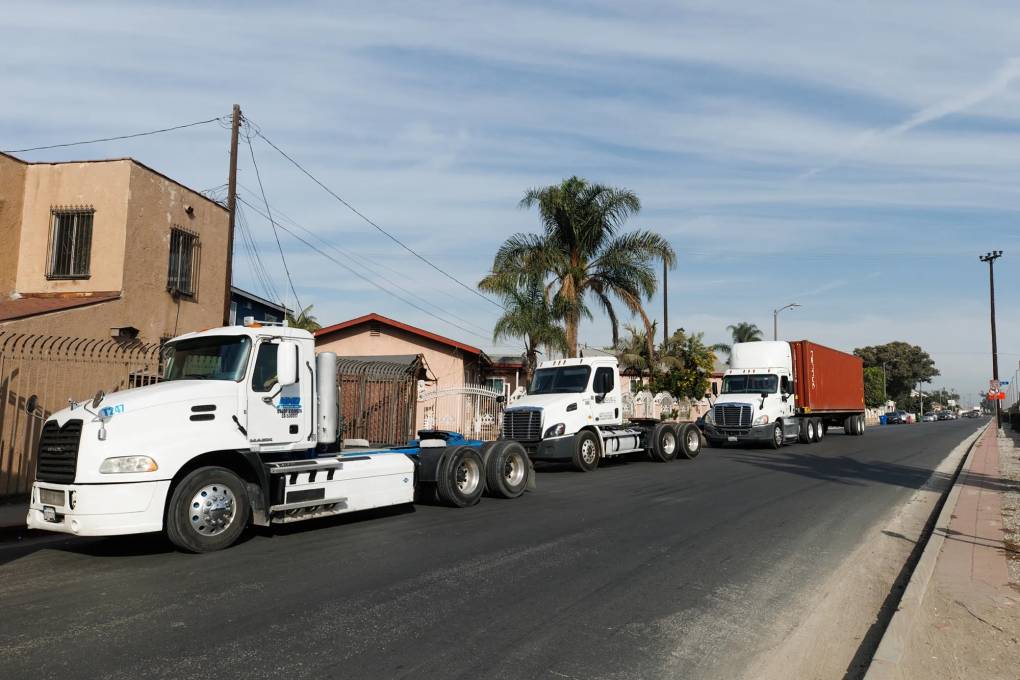
"caption": "Commercial trucks line up in front of a residential neighborhood in the Wilmington area of Los Angeles on Dec. 2, 2024. California has withdrawn its clean-air rule phasing out diesel trucks. ",
"credit": "Carlin Stiehl for CalMatters",
"altTag": "Diesel trucks parked by the side of a road in a residential area.",
"description": null,
"imgSizes": {
"medium": {
"file": "https://cdn.kqed.org/wp-content/uploads/sites/10/2025/01/120224_Drumm-Avenue_CS_CM_02-copy-800x533.jpg",
"width": 800,
"height": 533,
"mimeType": "image/jpeg"
},
"large": {
"file": "https://cdn.kqed.org/wp-content/uploads/sites/10/2025/01/120224_Drumm-Avenue_CS_CM_02-copy-1020x680.jpg",
"width": 1020,
"height": 680,
"mimeType": "image/jpeg"
},
"thumbnail": {
"file": "https://cdn.kqed.org/wp-content/uploads/sites/10/2025/01/120224_Drumm-Avenue_CS_CM_02-copy-160x107.jpg",
"width": 160,
"height": 107,
"mimeType": "image/jpeg"
},
"1536x1536": {
"file": "https://cdn.kqed.org/wp-content/uploads/sites/10/2025/01/120224_Drumm-Avenue_CS_CM_02-copy-1536x1024.jpg",
"width": 1536,
"height": 1024,
"mimeType": "image/jpeg"
},
"post-thumbnail": {
"file": "https://cdn.kqed.org/wp-content/uploads/sites/10/2025/01/120224_Drumm-Avenue_CS_CM_02-copy-672x372.jpg",
"width": 672,
"height": 372,
"mimeType": "image/jpeg"
},
"twentyfourteen-full-width": {
"file": "https://cdn.kqed.org/wp-content/uploads/sites/10/2025/01/120224_Drumm-Avenue_CS_CM_02-copy-1038x576.jpg",
"width": 1038,
"height": 576,
"mimeType": "image/jpeg"
},
"full-width": {
"file": "https://cdn.kqed.org/wp-content/uploads/sites/10/2025/01/120224_Drumm-Avenue_CS_CM_02-copy-1920x1280.jpg",
"width": 1920,
"height": 1280,
"mimeType": "image/jpeg"
},
"kqedFullSize": {
"file": "https://cdn.kqed.org/wp-content/uploads/sites/10/2025/01/120224_Drumm-Avenue_CS_CM_02-copy.jpg",
"width": 2000,
"height": 1333
}
},
"isLoading": false,
"fetchFailed": false
},
"news_12022119": {
"type": "attachments",
"id": "news_12022119",
"meta": {
"index": "attachments_1716263798",
"site": "news",
"id": "12022119",
"found": true
},
"title": "is-it-safe-to-travel-to-los-angeles-right-now",
"publishDate": 1736890360,
"status": "inherit",
"parent": 12021574,
"modified": 1736900657,
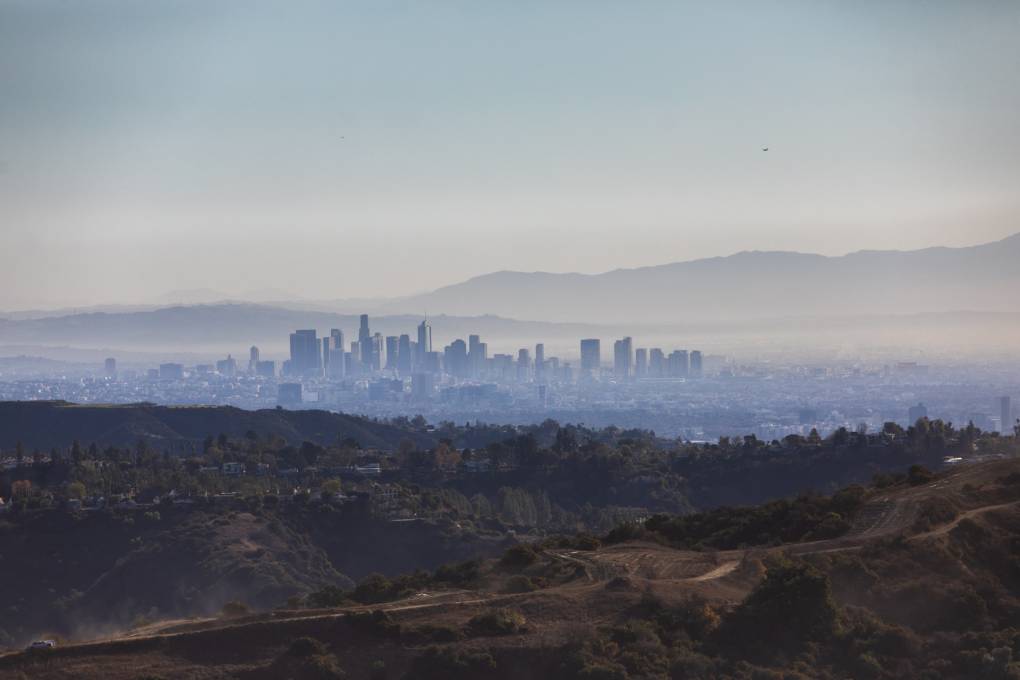
"caption": "Wildfire smoke covers downtown Los Angeles, seen from Encino Hill on Jan. 12, 2025, in the Encino neighborhood of Los Angeles, California. ",
"credit": "Apu Gomes/Getty Images",
"altTag": null,
"description": null,
"imgSizes": {
"medium": {
"file": "https://cdn.kqed.org/wp-content/uploads/sites/10/2025/01/GettyImages-2193011145_resized-800x533.jpg",
"width": 800,
"height": 533,
"mimeType": "image/jpeg"
},
"large": {
"file": "https://cdn.kqed.org/wp-content/uploads/sites/10/2025/01/GettyImages-2193011145_resized-1020x680.jpg",
"width": 1020,
"height": 680,
"mimeType": "image/jpeg"
},
"thumbnail": {
"file": "https://cdn.kqed.org/wp-content/uploads/sites/10/2025/01/GettyImages-2193011145_resized-160x107.jpg",
"width": 160,
"height": 107,
"mimeType": "image/jpeg"
},
"1536x1536": {
"file": "https://cdn.kqed.org/wp-content/uploads/sites/10/2025/01/GettyImages-2193011145_resized-1536x1024.jpg",
"width": 1536,
"height": 1024,
"mimeType": "image/jpeg"
},
"post-thumbnail": {
"file": "https://cdn.kqed.org/wp-content/uploads/sites/10/2025/01/GettyImages-2193011145_resized-672x372.jpg",
"width": 672,
"height": 372,
"mimeType": "image/jpeg"
},
"twentyfourteen-full-width": {
"file": "https://cdn.kqed.org/wp-content/uploads/sites/10/2025/01/GettyImages-2193011145_resized-1038x576.jpg",
"width": 1038,
"height": 576,
"mimeType": "image/jpeg"
},
"kqedFullSize": {
"file": "https://cdn.kqed.org/wp-content/uploads/sites/10/2025/01/GettyImages-2193011145_resized.jpg",
"width": 1920,
"height": 1280
}
},
"isLoading": false,
"fetchFailed": false
},
"news_12021445": {
"type": "attachments",
"id": "news_12021445",
"meta": {
"index": "attachments_1716263798",
"site": "news",
"id": "12021445",
"found": true
},
"title": "npr.brightspotcdn copy",
"publishDate": 1736535200,
"status": "inherit",
"parent": 12021444,
"modified": 1736535229,
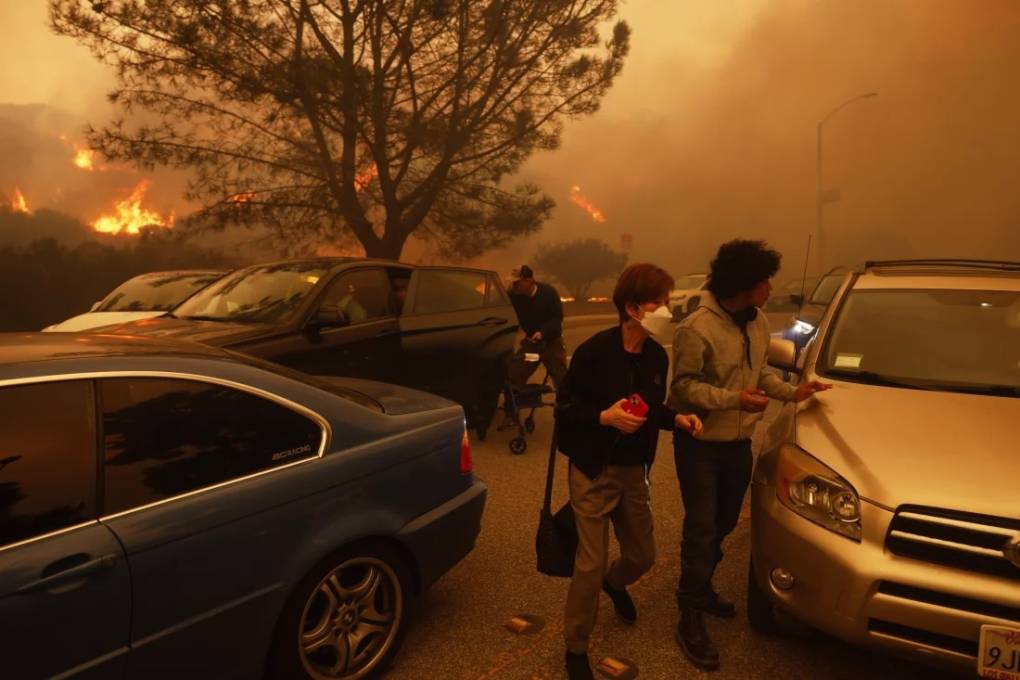
"caption": "People flee from the advancing Palisades Fire, by car and on foot, in the Pacific Palisades neighborhood of Los Angeles Tuesday, Jan. 7, 2025. ",
"credit": "Etienne Laurent/AP Photo",
"altTag": null,
"description": null,
"imgSizes": {
"medium": {
"file": "https://cdn.kqed.org/wp-content/uploads/sites/10/2025/01/npr.brightspotcdn-copy-36-800x533.jpg",
"width": 800,
"height": 533,
"mimeType": "image/jpeg"
},
"large": {
"file": "https://cdn.kqed.org/wp-content/uploads/sites/10/2025/01/npr.brightspotcdn-copy-36-1020x680.jpg",
"width": 1020,
"height": 680,
"mimeType": "image/jpeg"
},
"thumbnail": {
"file": "https://cdn.kqed.org/wp-content/uploads/sites/10/2025/01/npr.brightspotcdn-copy-36-160x107.jpg",
"width": 160,
"height": 107,
"mimeType": "image/jpeg"
},
"post-thumbnail": {
"file": "https://cdn.kqed.org/wp-content/uploads/sites/10/2025/01/npr.brightspotcdn-copy-36-672x372.jpg",
"width": 672,
"height": 372,
"mimeType": "image/jpeg"
},
"twentyfourteen-full-width": {
"file": "https://cdn.kqed.org/wp-content/uploads/sites/10/2025/01/npr.brightspotcdn-copy-36-1038x576.jpg",
"width": 1038,
"height": 576,
"mimeType": "image/jpeg"
},
"kqedFullSize": {
"file": "https://cdn.kqed.org/wp-content/uploads/sites/10/2025/01/npr.brightspotcdn-copy-36.jpg",
"width": 1100,
"height": 733
}
},
"isLoading": false,
"fetchFailed": false
},
"news_12021180": {
"type": "attachments",
"id": "news_12021180",
"meta": {
"index": "attachments_1716263798",
"site": "news",
"id": "12021180",
"found": true
},
"title": "Muni",
"publishDate": 1736454557,
"status": "inherit",
"parent": 12021178,
"modified": 1736454591,
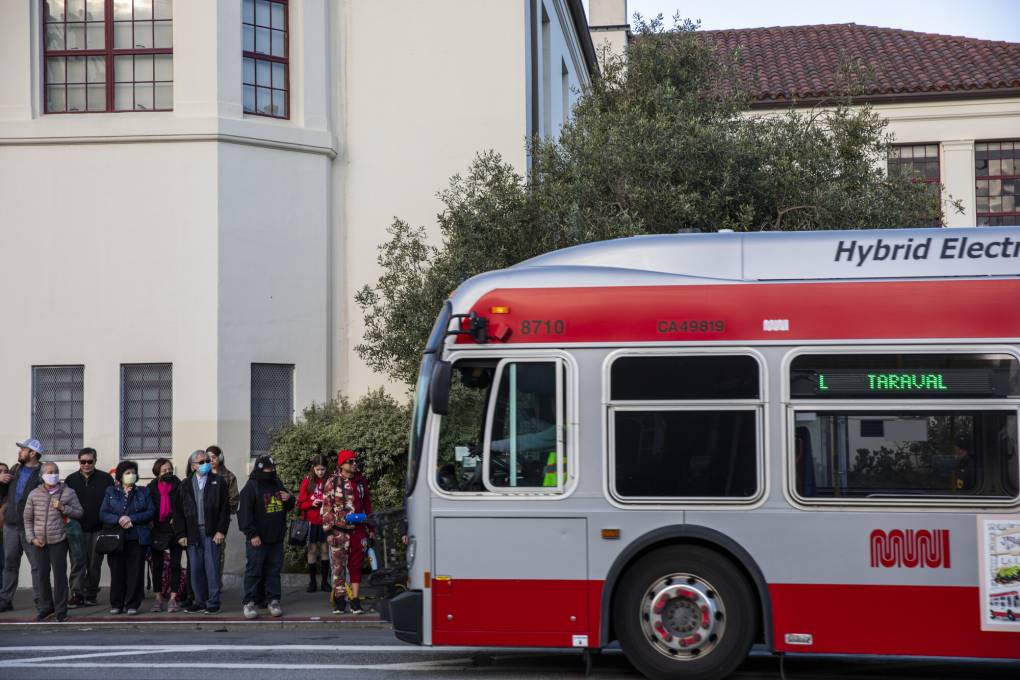
"caption": "Passengers wait to board the L Bus outside of West Portal Station in San Francisco on Nov. 28, 2023.",
"credit": "Juliana Yamada/KQED",
"altTag": null,
"description": null,
"imgSizes": {
"medium": {
"file": "https://cdn.kqed.org/wp-content/uploads/sites/10/2025/01/20231128-Muni-013-JY_qed-800x533.jpg",
"width": 800,
"height": 533,
"mimeType": "image/jpeg"
},
"large": {
"file": "https://cdn.kqed.org/wp-content/uploads/sites/10/2025/01/20231128-Muni-013-JY_qed-1020x680.jpg",
"width": 1020,
"height": 680,
"mimeType": "image/jpeg"
},
"thumbnail": {
"file": "https://cdn.kqed.org/wp-content/uploads/sites/10/2025/01/20231128-Muni-013-JY_qed-160x107.jpg",
"width": 160,
"height": 107,
"mimeType": "image/jpeg"
},
"1536x1536": {
"file": "https://cdn.kqed.org/wp-content/uploads/sites/10/2025/01/20231128-Muni-013-JY_qed-1536x1024.jpg",
"width": 1536,
"height": 1024,
"mimeType": "image/jpeg"
},
"post-thumbnail": {
"file": "https://cdn.kqed.org/wp-content/uploads/sites/10/2025/01/20231128-Muni-013-JY_qed-672x372.jpg",
"width": 672,
"height": 372,
"mimeType": "image/jpeg"
},
"twentyfourteen-full-width": {
"file": "https://cdn.kqed.org/wp-content/uploads/sites/10/2025/01/20231128-Muni-013-JY_qed-1038x576.jpg",
"width": 1038,
"height": 576,
"mimeType": "image/jpeg"
},
"full-width": {
"file": "https://cdn.kqed.org/wp-content/uploads/sites/10/2025/01/20231128-Muni-013-JY_qed-1920x1280.jpg",
"width": 1920,
"height": 1280,
"mimeType": "image/jpeg"
},
"kqedFullSize": {
"file": "https://cdn.kqed.org/wp-content/uploads/sites/10/2025/01/20231128-Muni-013-JY_qed.jpg",
"width": 2000,
"height": 1333
}
},
"isLoading": false,
"fetchFailed": false
},
"news_12020715": {
"type": "attachments",
"id": "news_12020715",
"meta": {
"index": "attachments_1716263798",
"site": "news",
"id": "12020715",
"found": true
},
"title": "Farnborough International Airshow 2024",
"publishDate": 1736296192,
"status": "inherit",
"parent": 12020697,
"modified": 1736296264,
"caption": "Visitors view a Joby Aviation full-scale electric vertical takeoff and landing aircraft (eVTOL) air taxi is displayed during the Farnborough International Airshow 2024 at Farnborough International Exhibition and Conference Centre on July 23, 2024 in Farnborough, England. ",
"credit": "John Keeble/Getty Images",
"altTag": "An electric aviation vehicle with sets of propellers and a cabin sits in a showroom at a fair.",
"description": null,
"imgSizes": {
"medium": {
"file": "https://cdn.kqed.org/wp-content/uploads/sites/10/2025/01/GettyImages-2163324535-800x534.jpg",
"width": 800,
"height": 534,
"mimeType": "image/jpeg"
},
"large": {
"file": "https://cdn.kqed.org/wp-content/uploads/sites/10/2025/01/GettyImages-2163324535-1020x680.jpg",
"width": 1020,
"height": 680,
"mimeType": "image/jpeg"
},
"thumbnail": {
"file": "https://cdn.kqed.org/wp-content/uploads/sites/10/2025/01/GettyImages-2163324535-160x107.jpg",
"width": 160,
"height": 107,
"mimeType": "image/jpeg"
},
"post-thumbnail": {
"file": "https://cdn.kqed.org/wp-content/uploads/sites/10/2025/01/GettyImages-2163324535-672x372.jpg",
"width": 672,
"height": 372,
"mimeType": "image/jpeg"
},
"twentyfourteen-full-width": {
"file": "https://cdn.kqed.org/wp-content/uploads/sites/10/2025/01/GettyImages-2163324535-1024x576.jpg",
"width": 1024,
"height": 576,
"mimeType": "image/jpeg"
},
"kqedFullSize": {
"file": "https://cdn.kqed.org/wp-content/uploads/sites/10/2025/01/GettyImages-2163324535.jpg",
"width": 1024,
"height": 683
}
},
"isLoading": false,
"fetchFailed": false
},
"news_11911093": {
"type": "attachments",
"id": "news_11911093",
"meta": {
"index": "attachments_1716263798",
"site": "news",
"id": "11911093",
"found": true
},
"title": "Shares For Companies In Electric Vehicle Sector Rise As Oil Prices Soar",
"publishDate": 1649941089,
"status": "inherit",
"parent": 11911091,
"modified": 1661462407,
"caption": "Electric vehicles recharge their batteries at the East Crissy Field charging station on March 9, 2022, in San Francisco.",
"credit": "Justin Sullivan/Getty Images",
"altTag": "Electric vehicles charging up in an outdoor SF lot, with the Golden Gate Bridge in the background.",
"description": "SAN FRANCISCO, CALIFORNIA - MARCH 09: Electric vehicles recharge their batteries at the East Crissy Field charge station on March 09, 2022 in San Francisco, California. With oil prices continuing to soar, shares for companies in the electric vehicle sector are rising as consumers look to trade their gas powered cars in for electric vehicles. (Photo by Justin Sullivan/Getty Images)",
"imgSizes": {
"medium": {
"file": "https://cdn.kqed.org/wp-content/uploads/sites/10/2022/04/GettyImages-1383559813-800x517.jpg",
"width": 800,
"height": 517,
"mimeType": "image/jpeg"
},
"large": {
"file": "https://cdn.kqed.org/wp-content/uploads/sites/10/2022/04/GettyImages-1383559813-1020x660.jpg",
"width": 1020,
"height": 660,
"mimeType": "image/jpeg"
},
"thumbnail": {
"file": "https://cdn.kqed.org/wp-content/uploads/sites/10/2022/04/GettyImages-1383559813-160x103.jpg",
"width": 160,
"height": 103,
"mimeType": "image/jpeg"
},
"1536x1536": {
"file": "https://cdn.kqed.org/wp-content/uploads/sites/10/2022/04/GettyImages-1383559813-1536x994.jpg",
"width": 1536,
"height": 994,
"mimeType": "image/jpeg"
},
"2048x2048": {
"file": "https://cdn.kqed.org/wp-content/uploads/sites/10/2022/04/GettyImages-1383559813-2048x1325.jpg",
"width": 2048,
"height": 1325,
"mimeType": "image/jpeg"
},
"post-thumbnail": {
"file": "https://cdn.kqed.org/wp-content/uploads/sites/10/2022/04/GettyImages-1383559813-672x372.jpg",
"width": 672,
"height": 372,
"mimeType": "image/jpeg"
},
"twentyfourteen-full-width": {
"file": "https://cdn.kqed.org/wp-content/uploads/sites/10/2022/04/GettyImages-1383559813-1038x576.jpg",
"width": 1038,
"height": 576,
"mimeType": "image/jpeg"
},
"full-width": {
"file": "https://cdn.kqed.org/wp-content/uploads/sites/10/2022/04/GettyImages-1383559813-1920x1242.jpg",
"width": 1920,
"height": 1242,
"mimeType": "image/jpeg"
},
"kqedFullSize": {
"file": "https://cdn.kqed.org/wp-content/uploads/sites/10/2022/04/GettyImages-1383559813-scaled-e1735928702918.jpg",
"width": 2000,
"height": 1294
}
},
"isLoading": false,
"fetchFailed": false
},
"news_12020112": {
"type": "attachments",
"id": "news_12020112",
"meta": {
"index": "attachments_1716263798",
"site": "news",
"id": "12020112",
"found": true
},
"title": "Drivers course along the Embarcadero in San Francisco, Calif., on Thursday, November 12, 2015. The city of San Francisco is considering installing new speed cameras on several major thoroughfares",
"publishDate": 1735838540,
"status": "inherit",
"parent": 12020110,
"modified": 1735945282,
"caption": "Drivers course along the Embarcadero in San Francisco, on Nov. 12, 2015. The city of San Francisco is considering installing new speed cameras on several major thoroughfares. ",
"credit": "Carlos Avila Gonzalez/The San Francisco Chronicle via Getty Images",
"altTag": null,
"description": null,
"imgSizes": {
"medium": {
"file": "https://cdn.kqed.org/wp-content/uploads/sites/10/2025/01/SpeedCamerasSFGetty-800x533.jpg",
"width": 800,
"height": 533,
"mimeType": "image/jpeg"
},
"large": {
"file": "https://cdn.kqed.org/wp-content/uploads/sites/10/2025/01/SpeedCamerasSFGetty-1020x680.jpg",
"width": 1020,
"height": 680,
"mimeType": "image/jpeg"
},
"thumbnail": {
"file": "https://cdn.kqed.org/wp-content/uploads/sites/10/2025/01/SpeedCamerasSFGetty-160x107.jpg",
"width": 160,
"height": 107,
"mimeType": "image/jpeg"
},
"1536x1536": {
"file": "https://cdn.kqed.org/wp-content/uploads/sites/10/2025/01/SpeedCamerasSFGetty-1536x1024.jpg",
"width": 1536,
"height": 1024,
"mimeType": "image/jpeg"
},
"post-thumbnail": {
"file": "https://cdn.kqed.org/wp-content/uploads/sites/10/2025/01/SpeedCamerasSFGetty-672x372.jpg",
"width": 672,
"height": 372,
"mimeType": "image/jpeg"
},
"twentyfourteen-full-width": {
"file": "https://cdn.kqed.org/wp-content/uploads/sites/10/2025/01/SpeedCamerasSFGetty-1038x576.jpg",
"width": 1038,
"height": 576,
"mimeType": "image/jpeg"
},
"full-width": {
"file": "https://cdn.kqed.org/wp-content/uploads/sites/10/2025/01/SpeedCamerasSFGetty-1920x1280.jpg",
"width": 1920,
"height": 1280,
"mimeType": "image/jpeg"
},
"kqedFullSize": {
"file": "https://cdn.kqed.org/wp-content/uploads/sites/10/2025/01/SpeedCamerasSFGetty.jpg",
"width": 2000,
"height": 1333
}
},
"isLoading": false,
"fetchFailed": false
},
"news_11971763": {
"type": "attachments",
"id": "news_11971763",
"meta": {
"index": "attachments_1716263798",
"site": "news",
"id": "11971763",
"found": true
},
"parent": 11971935,
"imgSizes": {
"twentyfourteen-full-width": {
"file": "https://cdn.kqed.org/wp-content/uploads/sites/10/2024/01/240103-RSR-BIKE-LANE-MD-03-KQED-1038x576.jpg",
"width": 1038,
"mimeType": "image/jpeg",
"height": 576
},
"thumbnail": {
"file": "https://cdn.kqed.org/wp-content/uploads/sites/10/2024/01/240103-RSR-BIKE-LANE-MD-03-KQED-160x107.jpg",
"width": 160,
"mimeType": "image/jpeg",
"height": 107
},
"post-thumbnail": {
"file": "https://cdn.kqed.org/wp-content/uploads/sites/10/2024/01/240103-RSR-BIKE-LANE-MD-03-KQED-672x372.jpg",
"width": 672,
"mimeType": "image/jpeg",
"height": 372
},
"kqedFullSize": {
"file": "https://cdn.kqed.org/wp-content/uploads/sites/10/2024/01/240103-RSR-BIKE-LANE-MD-03-KQED.jpg",
"width": 2000,
"height": 1333
},
"large": {
"file": "https://cdn.kqed.org/wp-content/uploads/sites/10/2024/01/240103-RSR-BIKE-LANE-MD-03-KQED-1020x680.jpg",
"width": 1020,
"mimeType": "image/jpeg",
"height": 680
},
"1536x1536": {
"file": "https://cdn.kqed.org/wp-content/uploads/sites/10/2024/01/240103-RSR-BIKE-LANE-MD-03-KQED-1536x1024.jpg",
"width": 1536,
"mimeType": "image/jpeg",
"height": 1024
},
"full-width": {
"file": "https://cdn.kqed.org/wp-content/uploads/sites/10/2024/01/240103-RSR-BIKE-LANE-MD-03-KQED-1920x1280.jpg",
"width": 1920,
"mimeType": "image/jpeg",
"height": 1280
},
"medium": {
"file": "https://cdn.kqed.org/wp-content/uploads/sites/10/2024/01/240103-RSR-BIKE-LANE-MD-03-KQED-800x533.jpg",
"width": 800,
"mimeType": "image/jpeg",
"height": 533
}
},
"publishDate": 1704475568,
"modified": 1704750331,
"caption": "The upper deck of the Richmond-San Rafael Bridge on Jan 3, 2024.",
"description": null,
"title": "The upper deck of the Richmond-San Rafael Bridge on Jan 3, 2024.",
"credit": "Martin do Nascimento/KQED",
"status": "inherit",
"altTag": "A bike lane on a large bridge on which cars are also driving.",
"isLoading": false,
"fetchFailed": false
},
"news_12018248": {
"type": "attachments",
"id": "news_12018248",
"meta": {
"index": "attachments_1716263798",
"site": "news",
"id": "12018248",
"found": true
},
"title": "proliferation of e-bikes in the South Bay",
"publishDate": 1734126874,
"status": "inherit",
"parent": 12018160,
"modified": 1744932692,
"caption": "A person rides his e-bike on the Strand in Hermosa Beach. In Hermosa Beach, it's against city code to use electric power on the Strand, but many e-bike riders do so anyway.",
"credit": "Mel Melcon/Los Angeles Times via Getty Images",
"altTag": null,
"description": null,
"imgSizes": {
"medium": {
"file": "https://cdn.kqed.org/wp-content/uploads/sites/10/2024/12/GettyImages-1782799957-800x523.jpg",
"width": 800,
"height": 523,
"mimeType": "image/jpeg"
},
"large": {
"file": "https://cdn.kqed.org/wp-content/uploads/sites/10/2024/12/GettyImages-1782799957-1020x667.jpg",
"width": 1020,
"height": 667,
"mimeType": "image/jpeg"
},
"thumbnail": {
"file": "https://cdn.kqed.org/wp-content/uploads/sites/10/2024/12/GettyImages-1782799957-160x105.jpg",
"width": 160,
"height": 105,
"mimeType": "image/jpeg"
},
"1536x1536": {
"file": "https://cdn.kqed.org/wp-content/uploads/sites/10/2024/12/GettyImages-1782799957-1536x1004.jpg",
"width": 1536,
"height": 1004,
"mimeType": "image/jpeg"
},
"2048x2048": {
"file": "https://cdn.kqed.org/wp-content/uploads/sites/10/2024/12/GettyImages-1782799957-2048x1338.jpg",
"width": 2048,
"height": 1338,
"mimeType": "image/jpeg"
},
"post-thumbnail": {
"file": "https://cdn.kqed.org/wp-content/uploads/sites/10/2024/12/GettyImages-1782799957-672x372.jpg",
"width": 672,
"height": 372,
"mimeType": "image/jpeg"
},
"twentyfourteen-full-width": {
"file": "https://cdn.kqed.org/wp-content/uploads/sites/10/2024/12/GettyImages-1782799957-1038x576.jpg",
"width": 1038,
"height": 576,
"mimeType": "image/jpeg"
},
"full-width": {
"file": "https://cdn.kqed.org/wp-content/uploads/sites/10/2024/12/GettyImages-1782799957-1920x1255.jpg",
"width": 1920,
"height": 1255,
"mimeType": "image/jpeg"
},
"kqedFullSize": {
"file": "https://cdn.kqed.org/wp-content/uploads/sites/10/2024/12/GettyImages-1782799957-scaled.jpg",
"width": 2560,
"height": 1673
}
},
"isLoading": false,
"fetchFailed": false
},
"news_12018300": {
"type": "attachments",
"id": "news_12018300",
"meta": {
"index": "attachments_1716263798",
"site": "news",
"id": "12018300",
"found": true
},
"title": "BartVideo_0002",
"publishDate": 1734134593,
"status": "inherit",
"parent": 12055781,
"modified": 1757717352,
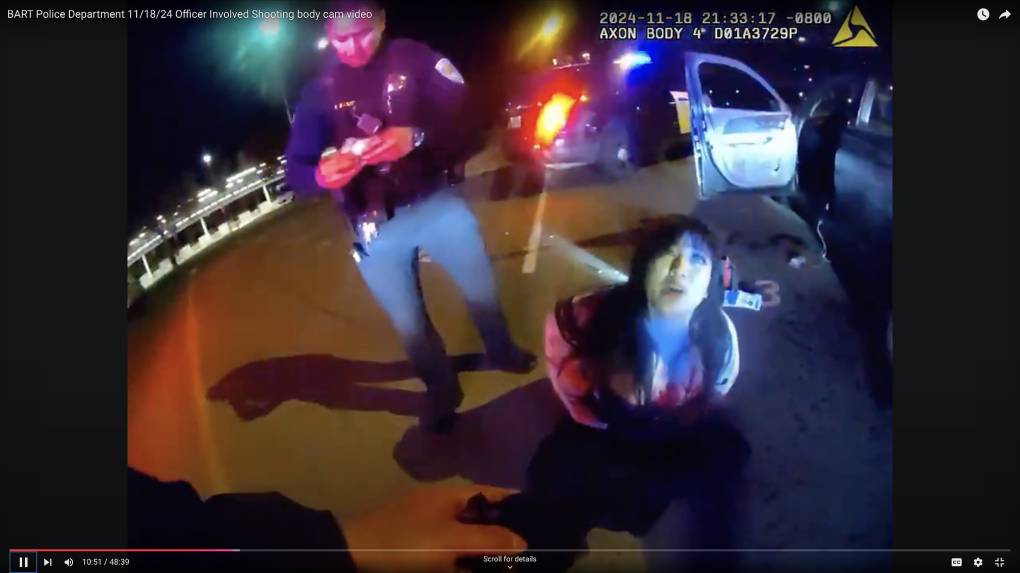
"caption": "A still from BART Police body camera footage released on Dec. 13, 2024, where an officer fired a gun at an individual before detaining them on Monday, Nov. 18, 2024, in the Union City Station parking lot.",
"credit": "Courtesy of BART",
"altTag": null,
"description": null,
"imgSizes": {
"medium": {
"file": "https://cdn.kqed.org/wp-content/uploads/sites/10/2024/12/BartVideo_0002-800x450.jpg",
"width": 800,
"height": 450,
"mimeType": "image/jpeg"
},
"large": {
"file": "https://cdn.kqed.org/wp-content/uploads/sites/10/2024/12/BartVideo_0002-1020x573.jpg",
"width": 1020,
"height": 573,
"mimeType": "image/jpeg"
},
"thumbnail": {
"file": "https://cdn.kqed.org/wp-content/uploads/sites/10/2024/12/BartVideo_0002-160x90.jpg",
"width": 160,
"height": 90,
"mimeType": "image/jpeg"
},
"1536x1536": {
"file": "https://cdn.kqed.org/wp-content/uploads/sites/10/2024/12/BartVideo_0002-1536x863.jpg",
"width": 1536,
"height": 863,
"mimeType": "image/jpeg"
},
"post-thumbnail": {
"file": "https://cdn.kqed.org/wp-content/uploads/sites/10/2024/12/BartVideo_0002-672x372.jpg",
"width": 672,
"height": 372,
"mimeType": "image/jpeg"
},
"twentyfourteen-full-width": {
"file": "https://cdn.kqed.org/wp-content/uploads/sites/10/2024/12/BartVideo_0002-1038x576.jpg",
"width": 1038,
"height": 576,
"mimeType": "image/jpeg"
},
"full-width": {
"file": "https://cdn.kqed.org/wp-content/uploads/sites/10/2024/12/BartVideo_0002-1920x1079.jpg",
"width": 1920,
"height": 1079,
"mimeType": "image/jpeg"
},
"kqedFullSize": {
"file": "https://cdn.kqed.org/wp-content/uploads/sites/10/2024/12/BartVideo_0002.jpg",
"width": 2000,
"height": 1124
}
},
"isLoading": false,
"fetchFailed": false
},
"news_12018119": {
"type": "attachments",
"id": "news_12018119",
"meta": {
"index": "attachments_1716263798",
"site": "news",
"id": "12018119",
"found": true
},
"title": "240412-OAKAirport-007-BL_qed (1)",
"publishDate": 1734112139,
"status": "inherit",
"parent": 12018113,
"modified": 1734112156,
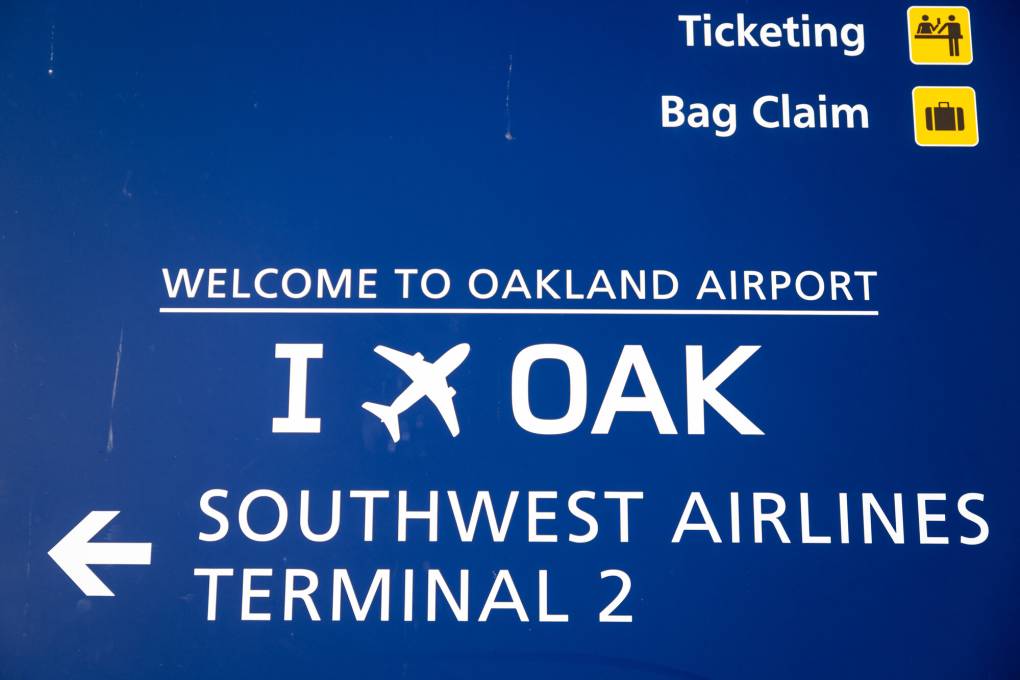
"caption": "Signs direct passengers to terminals at Oakland International Airport in Oakland on April 12, 2024.",
"credit": "Beth LaBerge/KQED",
"altTag": null,
"description": null,
"imgSizes": {
"medium": {
"file": "https://cdn.kqed.org/wp-content/uploads/sites/10/2024/12/240412-OAKAirport-007-BL_qed-1-800x533.jpg",
"width": 800,
"height": 533,
"mimeType": "image/jpeg"
},
"large": {
"file": "https://cdn.kqed.org/wp-content/uploads/sites/10/2024/12/240412-OAKAirport-007-BL_qed-1-1020x680.jpg",
"width": 1020,
"height": 680,
"mimeType": "image/jpeg"
},
"thumbnail": {
"file": "https://cdn.kqed.org/wp-content/uploads/sites/10/2024/12/240412-OAKAirport-007-BL_qed-1-160x107.jpg",
"width": 160,
"height": 107,
"mimeType": "image/jpeg"
},
"1536x1536": {
"file": "https://cdn.kqed.org/wp-content/uploads/sites/10/2024/12/240412-OAKAirport-007-BL_qed-1-1536x1024.jpg",
"width": 1536,
"height": 1024,
"mimeType": "image/jpeg"
},
"post-thumbnail": {
"file": "https://cdn.kqed.org/wp-content/uploads/sites/10/2024/12/240412-OAKAirport-007-BL_qed-1-672x372.jpg",
"width": 672,
"height": 372,
"mimeType": "image/jpeg"
},
"twentyfourteen-full-width": {
"file": "https://cdn.kqed.org/wp-content/uploads/sites/10/2024/12/240412-OAKAirport-007-BL_qed-1-1038x576.jpg",
"width": 1038,
"height": 576,
"mimeType": "image/jpeg"
},
"full-width": {
"file": "https://cdn.kqed.org/wp-content/uploads/sites/10/2024/12/240412-OAKAirport-007-BL_qed-1-1920x1280.jpg",
"width": 1920,
"height": 1280,
"mimeType": "image/jpeg"
},
"kqedFullSize": {
"file": "https://cdn.kqed.org/wp-content/uploads/sites/10/2024/12/240412-OAKAirport-007-BL_qed-1.jpg",
"width": 1999,
"height": 1333
}
},
"isLoading": false,
"fetchFailed": false
},
"news_12017830": {
"type": "attachments",
"id": "news_12017830",
"meta": {
"index": "attachments_1716263798",
"site": "news",
"id": "12017830",
"found": true
},
"title": "20241211_RichmondBridgeBike_GC-14",
"publishDate": 1733963589,
"status": "inherit",
"parent": 0,
"modified": 1742600769,
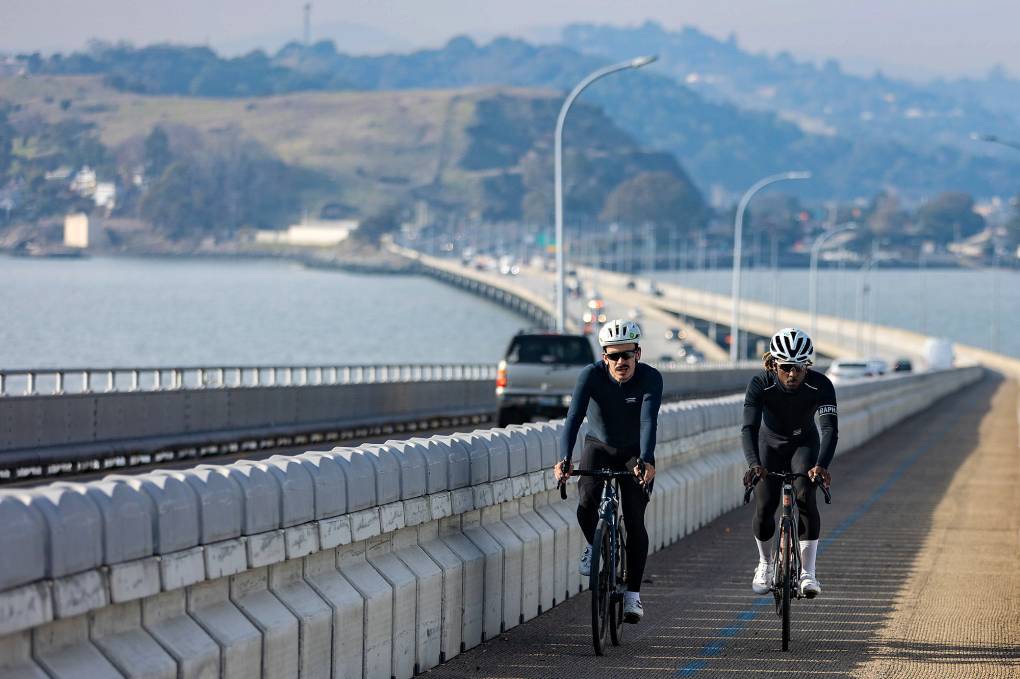
"caption": "Cyclists ride on the Richmond-San Rafael Bridge Trail, a roughly 6-mile bicycle and pedestrian path, located on the upper deck of the bridge, on Dec. 11, 2024.",
"credit": "Gina Castro/KQED",
"altTag": null,
"description": null,
"imgSizes": {
"medium": {
"file": "https://cdn.kqed.org/wp-content/uploads/sites/10/2024/12/20241211_RichmondBridgeBike_GC-14-800x533.jpg",
"width": 800,
"height": 533,
"mimeType": "image/jpeg"
},
"large": {
"file": "https://cdn.kqed.org/wp-content/uploads/sites/10/2024/12/20241211_RichmondBridgeBike_GC-14-1020x679.jpg",
"width": 1020,
"height": 679,
"mimeType": "image/jpeg"
},
"thumbnail": {
"file": "https://cdn.kqed.org/wp-content/uploads/sites/10/2024/12/20241211_RichmondBridgeBike_GC-14-160x107.jpg",
"width": 160,
"height": 107,
"mimeType": "image/jpeg"
},
"1536x1536": {
"file": "https://cdn.kqed.org/wp-content/uploads/sites/10/2024/12/20241211_RichmondBridgeBike_GC-14-1536x1023.jpg",
"width": 1536,
"height": 1023,
"mimeType": "image/jpeg"
},
"post-thumbnail": {
"file": "https://cdn.kqed.org/wp-content/uploads/sites/10/2024/12/20241211_RichmondBridgeBike_GC-14-672x372.jpg",
"width": 672,
"height": 372,
"mimeType": "image/jpeg"
},
"twentyfourteen-full-width": {
"file": "https://cdn.kqed.org/wp-content/uploads/sites/10/2024/12/20241211_RichmondBridgeBike_GC-14-1038x576.jpg",
"width": 1038,
"height": 576,
"mimeType": "image/jpeg"
},
"full-width": {
"file": "https://cdn.kqed.org/wp-content/uploads/sites/10/2024/12/20241211_RichmondBridgeBike_GC-14-1920x1279.jpg",
"width": 1920,
"height": 1279,
"mimeType": "image/jpeg"
},
"kqedFullSize": {
"file": "https://cdn.kqed.org/wp-content/uploads/sites/10/2024/12/20241211_RichmondBridgeBike_GC-14.jpg",
"width": 2000,
"height": 1332
}
},
"isLoading": false,
"fetchFailed": false
}
},
"audioPlayerReducer": {
"postId": "stream_live",
"isPaused": true,
"isPlaying": false,
"pfsActive": false,
"pledgeModalIsOpen": true,
"playerDrawerIsOpen": false,
"liveAudioPlayStartedAt": 0,
"liveAudioPlayContext": ""
},
"authorsReducer": {
"byline_news_12022313": {
"type": "authors",
"id": "byline_news_12022313",
"meta": {
"override": true
},
"slug": "byline_news_12022313",
"name": "\u003ca href=\"https://calmatters.org/author/alejandro-lazo/\">Alejandro Lazo\u003c/a>, CalMatters",
"isLoading": false
},
"byline_news_12021444": {
"type": "authors",
"id": "byline_news_12021444",
"meta": {
"override": true
},
"slug": "byline_news_12021444",
"name": "\u003ca href=\"https://www.npr.org/people/803934365/lauren-sommer\">Lauren Sommer\u003c/a>, NPR",
"isLoading": false
},
"byline_news_12020697": {
"type": "authors",
"id": "byline_news_12020697",
"meta": {
"override": true
},
"slug": "byline_news_12020697",
"name": "Michael Liedtke, Associated Press",
"isLoading": false
},
"danbrekke": {
"type": "authors",
"id": "222",
"meta": {
"index": "authors_1716337520",
"id": "222",
"found": true
},
"name": "Dan Brekke",
"firstName": "Dan",
"lastName": "Brekke",
"slug": "danbrekke",
"email": "dbrekke@kqed.org",
"display_author_email": true,
"staff_mastheads": [
"news",
"science"
],
"title": "KQED Editor and Reporter",
"bio": "Dan Brekke is a reporter and editor for KQED News, responsible for coverage of topics ranging from California water issues to the Bay Area's transportation challenges. In a newsroom career that began in Chicago in 1972, Dan has worked for \u003cem>The San Francisco Examiner,\u003c/em> Wired and TechTV and has been published in The New York Times, The New York Times Magazine, Business 2.0, Salon and elsewhere.\r\n\r\nSince joining KQED in 2007, Dan has reported, edited and produced both radio and online features and breaking news pieces. He has shared as both editor and reporter in four Society of Professional Journalists Norcal Excellence in Journalism awards and one Edward R. Murrow regional award. He was chosen for a spring 2017 residency at the Mesa Refuge to advance his research on California salmon.\r\n\r\nEmail Dan at: \u003ca href=\"mailto:dbrekke@kqed.org\">dbrekke@kqed.org\u003c/a>\r\n\r\n\u003cstrong>Twitter:\u003c/strong> \u003ca href=\"https://twitter.com/danbrekke\" rel=\"noopener noreferrer\">twitter.com/danbrekke\u003c/a>\r\n\u003cstrong>Facebook:\u003c/strong> \u003ca href=\"https://www.facebook.com/danbrekke\" rel=\"noopener noreferrer\">www.facebook.com/danbrekke\u003c/a>\r\n\u003cstrong>LinkedIn:\u003c/strong> \u003ca href=\"https://www.linkedin.com/in/danbrekke\" rel=\"noopener noreferrer\">www.linkedin.com/in/danbrekke\u003c/a>",
"avatar": "https://secure.gravatar.com/avatar/8f1f0d2a978fb3b23426c922c7e2af558fa36905b49c4ce76a97dc3c72d27226?s=600&d=mm&r=g",
"twitter": "danbrekke",
"bluesky": null,
"facebook": null,
"instagram": "https://www.instagram.com/dan.brekke/",
"linkedin": "https://www.linkedin.com/in/danbrekke/",
"sites": [
{
"site": "news",
"roles": [
"administrator",
"create_posts"
]
},
{
"site": "stateofhealth",
"roles": [
"editor"
]
},
{
"site": "science",
"roles": [
"editor"
]
},
{
"site": "quest",
"roles": [
"contributor"
]
},
{
"site": "food",
"roles": [
"contributor"
]
},
{
"site": "forum",
"roles": [
"contributor"
]
},
{
"site": "elections",
"roles": [
"editor"
]
},
{
"site": "liveblog",
"roles": [
"editor"
]
}
],
"headData": {
"title": "Dan Brekke | KQED",
"description": "KQED Editor and Reporter",
"ogImgSrc": "https://secure.gravatar.com/avatar/8f1f0d2a978fb3b23426c922c7e2af558fa36905b49c4ce76a97dc3c72d27226?s=600&d=mm&r=g",
"twImgSrc": "https://secure.gravatar.com/avatar/8f1f0d2a978fb3b23426c922c7e2af558fa36905b49c4ce76a97dc3c72d27226?s=600&d=mm&r=g"
},
"isLoading": false,
"link": "/author/danbrekke"
},
"carlysevern": {
"type": "authors",
"id": "3243",
"meta": {
"index": "authors_1716337520",
"id": "3243",
"found": true
},
"name": "Carly Severn",
"firstName": "Carly",
"lastName": "Severn",
"slug": "carlysevern",
"email": "csevern@kqed.org",
"display_author_email": false,
"staff_mastheads": [
"news"
],
"title": "Senior Editor, Audience News ",
"bio": "Carly is KQED's Senior Editor of Audience News on the Digital News team, and has reported for the California Report Magazine, Bay Curious and KQED Arts. She's formerly the host of \u003ca href=\"http://ww2.kqed.org/pop/category/the-cooler/\" rel=\"noopener noreferrer\">The Cooler\u003c/a> podcast.",
"avatar": "https://secure.gravatar.com/avatar/54037bf5c128fe678f0ef26cec97a93f2e7f220a22d7285703328f12c42c1b1d?s=600&d=blank&r=g",
"twitter": "teacupinthebay",
"bluesky": null,
"facebook": null,
"instagram": null,
"linkedin": null,
"sites": [
{
"site": "",
"roles": [
"editor"
]
},
{
"site": "arts",
"roles": [
"editor"
]
},
{
"site": "news",
"roles": [
"administrator"
]
},
{
"site": "pop",
"roles": [
"editor"
]
},
{
"site": "futureofyou",
"roles": [
"editor"
]
},
{
"site": "about",
"roles": [
"administrator"
]
},
{
"site": "mindshift",
"roles": [
"editor"
]
},
{
"site": "bayareabites",
"roles": [
"editor"
]
},
{
"site": "stateofhealth",
"roles": [
"editor"
]
},
{
"site": "science",
"roles": [
"editor"
]
},
{
"site": "food",
"roles": [
"contributor"
]
},
{
"site": "forum",
"roles": [
"editor"
]
},
{
"site": "perspectives",
"roles": [
"administrator"
]
},
{
"site": "liveblog",
"roles": [
"editor"
]
}
],
"headData": {
"title": "Carly Severn | KQED",
"description": "Senior Editor, Audience News ",
"ogImgSrc": "https://secure.gravatar.com/avatar/54037bf5c128fe678f0ef26cec97a93f2e7f220a22d7285703328f12c42c1b1d?s=600&d=blank&r=g",
"twImgSrc": "https://secure.gravatar.com/avatar/54037bf5c128fe678f0ef26cec97a93f2e7f220a22d7285703328f12c42c1b1d?s=600&d=blank&r=g"
},
"isLoading": false,
"link": "/author/carlysevern"
},
"ccabreralomeli": {
"type": "authors",
"id": "11708",
"meta": {
"index": "authors_1716337520",
"id": "11708",
"found": true
},
"name": "Carlos Cabrera-Lomelí",
"firstName": "Carlos",
"lastName": "Cabrera-Lomelí",
"slug": "ccabreralomeli",
"email": "ccabreralomeli@KQED.org",
"display_author_email": true,
"staff_mastheads": [
"news"
],
"title": "Community Reporter",
"bio": "Carlos Cabrera-Lomelí is a community reporter with KQED's digital engagement team. He also reports and co-produces for KQED's bilingual news hub KQED en Español. He grew up in San Francisco's Mission District and has previously worked with Univision, 48 Hills and REFORMA in Mexico City.",
"avatar": "https://secure.gravatar.com/avatar/c309be9665e484f887b818c89e273ecc673004f426f36b24d00a4d813a2e0518?s=600&d=blank&r=g",
"twitter": "@LomeliCabrera",
"bluesky": null,
"facebook": null,
"instagram": null,
"linkedin": null,
"sites": [
{
"site": "arts",
"roles": [
"editor"
]
},
{
"site": "news",
"roles": [
"editor"
]
},
{
"site": "about",
"roles": [
"editor"
]
},
{
"site": "science",
"roles": [
"editor"
]
},
{
"site": "perspectives",
"roles": [
"editor"
]
},
{
"site": "elections",
"roles": [
"editor"
]
},
{
"site": "liveblog",
"roles": [
"contributor"
]
}
],
"headData": {
"title": "Carlos Cabrera-Lomelí | KQED",
"description": "Community Reporter",
"ogImgSrc": "https://secure.gravatar.com/avatar/c309be9665e484f887b818c89e273ecc673004f426f36b24d00a4d813a2e0518?s=600&d=blank&r=g",
"twImgSrc": "https://secure.gravatar.com/avatar/c309be9665e484f887b818c89e273ecc673004f426f36b24d00a4d813a2e0518?s=600&d=blank&r=g"
},
"isLoading": false,
"link": "/author/ccabreralomeli"
},
"rcooke": {
"type": "authors",
"id": "11921",
"meta": {
"index": "authors_1716337520",
"id": "11921",
"found": true
},
"name": "Riley Cooke",
"firstName": "Riley",
"lastName": "Cooke",
"slug": "rcooke",
"email": "rcooke@kqed.org",
"display_author_email": true,
"staff_mastheads": [
"news"
],
"title": "KQED Contributor",
"bio": "Riley is a senior at UC Berkeley, where she studies political science and journalism. Her work has appeared in SFGate, NBC Bay Area, Local News Matters and more. She enjoys reporting on politics, housing and homelessness — and using as many em dashes as her editors will allow.",
"avatar": "https://secure.gravatar.com/avatar/792f98c126cc5e270a8a96f77f7224ea?s=600&d=blank&r=g",
"twitter": "rrileycooke",
"facebook": null,
"instagram": null,
"linkedin": null,
"sites": [
{
"site": "arts",
"roles": [
"author"
]
},
{
"site": "news",
"roles": [
"author"
]
}
],
"headData": {
"title": "Riley Cooke | KQED",
"description": "KQED Contributor",
"ogImgSrc": "https://secure.gravatar.com/avatar/792f98c126cc5e270a8a96f77f7224ea?s=600&d=blank&r=g",
"twImgSrc": "https://secure.gravatar.com/avatar/792f98c126cc5e270a8a96f77f7224ea?s=600&d=blank&r=g"
},
"isLoading": false,
"link": "/author/rcooke"
},
"bkrans": {
"type": "authors",
"id": "11923",
"meta": {
"index": "authors_1716337520",
"id": "11923",
"found": true
},
"name": "Brian Krans",
"firstName": "Brian",
"lastName": "Krans",
"slug": "bkrans",
"email": "bkrans@kqed.org",
"display_author_email": false,
"staff_mastheads": [
"news"
],
"title": "KQED Contributing Reporter",
"bio": "Brian Krans is an award-winning local news and investigative reporter who has been proudly working as a general assignment reporter for KQED since August 2023. He lives in Richmond, where he also reports on air pollution for Richmondside. He is also a founding member of the Vallejo Sun.",
"avatar": "https://secure.gravatar.com/avatar/71fa91f931774612559f7640390b53d9c2840ff72b20f195a25239aab2d9fbb9?s=600&d=blank&r=g",
"twitter": "citizenkrans",
"bluesky": null,
"facebook": null,
"instagram": null,
"linkedin": null,
"sites": [
{
"site": "news",
"roles": [
"editor"
]
}
],
"headData": {
"title": "Brian Krans | KQED",
"description": "KQED Contributing Reporter",
"ogImgSrc": "https://secure.gravatar.com/avatar/71fa91f931774612559f7640390b53d9c2840ff72b20f195a25239aab2d9fbb9?s=600&d=blank&r=g",
"twImgSrc": "https://secure.gravatar.com/avatar/71fa91f931774612559f7640390b53d9c2840ff72b20f195a25239aab2d9fbb9?s=600&d=blank&r=g"
},
"isLoading": false,
"link": "/author/bkrans"
},
"skennedy": {
"type": "authors",
"id": "11935",
"meta": {
"index": "authors_1716337520",
"id": "11935",
"found": true
},
"name": "Samantha Kennedy",
"firstName": "Samantha",
"lastName": "Kennedy",
"slug": "skennedy",
"email": "SKennedy@kqed.org",
"display_author_email": false,
"staff_mastheads": [],
"title": "KQED Contributor",
"bio": null,
"avatar": "https://secure.gravatar.com/avatar/adc7b14bf1e801793202a156ecc864d4ad505b0fd63162a2f3da0e5ba57222d0?s=600&d=blank&r=g",
"twitter": null,
"bluesky": null,
"facebook": null,
"instagram": null,
"linkedin": null,
"sites": [
{
"site": "arts",
"roles": [
"author"
]
},
{
"site": "news",
"roles": [
"editor"
]
},
{
"site": "science",
"roles": [
"editor"
]
}
],
"headData": {
"title": "Samantha Kennedy | KQED",
"description": "KQED Contributor",
"ogImgSrc": "https://secure.gravatar.com/avatar/adc7b14bf1e801793202a156ecc864d4ad505b0fd63162a2f3da0e5ba57222d0?s=600&d=blank&r=g",
"twImgSrc": "https://secure.gravatar.com/avatar/adc7b14bf1e801793202a156ecc864d4ad505b0fd63162a2f3da0e5ba57222d0?s=600&d=blank&r=g"
},
"isLoading": false,
"link": "/author/skennedy"
}
},
"pagesReducer": {
"news_category_transportation": {
"type": "terms",
"id": "news_1397",
"meta": {
"index": "terms_1716263798",
"site": "news",
"id": "1397",
"score": 12.939901
},
"featImg": null,
"name": "Transportation",
"description": null,
"taxonomy": "category",
"headData": {
"twImgId": null,
"twTitle": null,
"ogTitle": null,
"ogImgId": null,
"twDescription": null,
"description": null,
"title": "Transportation Archives | KQED News",
"ogDescription": null
},
"ttid": 1409,
"slug": "transportation",
"isLoading": false,
"title": "Transportation",
"pageMeta": {
"site": "news",
"WpPageTemplate": "page-topic-editorial",
"currentPage": 22
},
"blocks": [
{
"blockName": "kqed/post-list",
"attrs": {
"layout": "cardArticle2",
"query": "posts/news?category=transportation",
"seeMore": false,
"paginated": true,
"page": 22
}
},
{
"blockName": "kqed/ad"
}
]
}
},
"pfsSessionReducer": {},
"postsReducer": {
"stream_live": {
"type": "live",
"id": "stream_live",
"audioUrl": "https://streams.kqed.org/kqedradio",
"title": "Live Stream",
"excerpt": "Live Stream information currently unavailable.",
"link": "/radio",
"featImg": "",
"label": {
"name": "KQED Live",
"link": "/"
}
},
"stream_kqedNewscast": {
"type": "posts",
"id": "stream_kqedNewscast",
"audioUrl": "https://www.kqed.org/.stream/anon/radio/RDnews/newscast.mp3?_=1",
"title": "KQED Newscast",
"featImg": "",
"label": {
"name": "88.5 FM",
"link": "/"
}
},
"news_12022313": {
"type": "posts",
"id": "news_12022313",
"meta": {
"index": "posts_1716263798",
"site": "news",
"id": "12022313",
"score": null,
"sort": [
1736967629000
]
},
"guestAuthors": [],
"slug": "california-abandons-diesel-truck-ban-and-3-other-clean-air-rules-before-trump-is-sworn-in",
"title": "California Abandons Diesel Truck Ban and 3 Other Clean-Air Rules Before Trump Is Sworn In",
"publishDate": 1736967629,
"format": "standard",
"headTitle": "California Abandons Diesel Truck Ban and 3 Other Clean-Air Rules Before Trump Is Sworn In | KQED",
"labelTerm": {
"term": 18481,
"site": "news"
},
"content": "\u003cp>California has decided to abandon its groundbreaking regulations phasing out diesel trucks and requiring cleaner locomotives because the incoming Trump administration is unlikely to allow the state to implement them.\u003c/p>\n\u003cp>State officials have long considered the rules regulating diesel vehicles essential to cleaning up California’s severe air pollution and combating climate change.\u003c/p>\n\u003cp>The withdrawal comes after the Biden administration recently approved the California Air Resources Board’s \u003ca href=\"https://ww2.arb.ca.gov/news/california-moves-accelerate-100-new-zero-emission-vehicle-sales-2035\">mandate phasing out new gas-powered cars\u003c/a> by 2035 but had not yet approved other waivers for four diesel vehicle standards that the state has adopted.\u003c/p>\n\u003cp>[ad fullwidth]\u003c/p>\n\u003cp>President-elect Donald J. Trump has threatened to revoke or challenge all zero-emission vehicle rules and California’s other clean-air standards. By withdrawing its requests for U.S. Environmental Protection Agency approval, the Newsom administration is signaling a dramatic step back as the state recalibrates in anticipation of the new Trump era.\u003c/p>\n\u003cp>“California has withdrawn its pending waiver and authorization requests that U.S. EPA has not yet acted on,” Air Resources Board Chair Liane Randolph said in a statement. “While we are disappointed that U.S. EPA was unable to act on all the requests in time, the withdrawal is an important step given the uncertainty presented by the incoming administration that previously attacked California’s programs to protect public health and the climate and has said will continue to oppose those programs.”\u003c/p>\n\u003cp>Environmentalists were distressed, saying it puts communities at risk and dismantles key programs.\u003c/p>\n\u003cp>“To meet basic standards for healthy air, California has to shift to zero-emissions trucks and trains in the coming years. Diesel is one of the most dangerous kinds of air pollution for human health, and California’s diesel problem is big enough to cast its own shadow,” Paul Cort, director of the group Earthjustice’s Right To Zero campaign, said in a statement. The group called on “Governor (Gavin) Newsom, state legislators, and our air quality regulators to join us — to clean up our freight system and fix the mess EPA’s inaction has created.”\u003c/p>\n\u003cp>California’s \u003ca href=\"https://ww2.arb.ca.gov/our-work/programs/advanced-clean-fleets\">Advanced Clean Fleet\u003c/a> rule, which phases out diesel trucks, was one of the most far-reaching and controversial rules that California has enacted in recent years to reduce air pollution and greenhouse gases. It would have ended the sale of new fossil-fuel trucks in 2036 and required large trucking companies to convert their medium and heavy-duty fleets to electric or hydrogen models by 2042.\u003c/p>\n\u003cp>The truck fleet rule was \u003ca href=\"https://calmatters.org/environment/2022/08/electric-cars-california-to-phase-out-gas-cars/#:~:text=This%20regulation%20will%20essentially%20end,and%20100%25%20for%202035%20models.\">approved in 2022\u003c/a> after years of analysis, public hearings and discussions with industries and experts. It would have ended diesel’s stronghold on goods movement in the state, with potentially profound effects on the state’s environment and economy.\u003c/p>\n\u003cp>Trucking companies had already sued the state to stop the measure, saying electric and hydrogen big rigs are not practical for long-haul uses and that it would destroy the state’s economy.\u003c/p>\n\u003cp>“The California Trucking Association has consistently stated the Advanced Clean Fleets Rule was unachievable,” Eric Sauer, chief executive of the association, said in a statement. He said the industry would work with the state air board and EPA “to further reduce emissions in a technologically feasible and\u003cstrong> \u003c/strong>cost-effective manner that preserves our State and the Nation’s critical supply chain.”\u003c/p>\n\u003cp>Diesel exhaust has been linked to cancer and contains fine particles that can trigger asthma and heart attacks, as well as gases that form smog. \u003ca href=\"https://calmatters.org/environment/2024/12/california-diesel-truck-ban-zero-emission/\">Lower-income, disadvantaged communities of color near ports, freeways and \u003c/a>warehouses, especially in the Los Angeles and Long Beach area, have long complained about noxious and dangerous diesel exhaust.\u003c/p>\n\u003cp>The state withdrew three other measures regulating emissions from diesel-powered \u003ca href=\"https://ww2.arb.ca.gov/our-work/programs/reducing-rail-emissions-california\">locomotives\u003c/a>, \u003ca href=\"https://ww2.arb.ca.gov/news/carb-passes-amendments-commercial-harbor-craft-regulation\">commercial harbor craft\u003c/a> and \u003ca href=\"https://ww2.arb.ca.gov/our-work/programs/transport-refrigeration-unit\">refrigeration unit engines\u003c/a> that are hauled by trucks and rail cars.\u003c/p>\n\u003cp>Under the railroad rule, only locomotives less than 23 years old would have been allowed in California beginning in 2030, unless they were zero emissions. The rule also limited how long they could idle. People living in communities with trains and rail yards have long complained that the emissions are making them sick. \u003ca href=\"https://www.aar.org/news/chorus-of-diverse-voices-railroads-urge-epa-denial-of-california-locomotive-authorization/\">Railroads said\u003c/a> no zero-emission locomotive technology exists yet, so the rule’s “timeline is impossible” and that it would prematurely retire viable equipment and disrupt goods movement.\u003c/p>\n\u003cp>Under the Clean Air Act, Congress more than a half-century ago granted California the unique ability to set its own aggressive emission standards for cars, trucks and other vehicles because of its severe smog. However, the federal EPA must grant California a waiver to implement them.\u003c/p>\n\u003cp>For decades, the EPA has granted California the waivers. Only one waiver was initially denied — a 2008 rule setting greenhouse gas emission standards for cars — and that decision \u003ca href=\"https://ww2.arb.ca.gov/sites/default/files/2019-09/California-Waiver-Background-Legal-091719A.pdf\">was quickly reversed and the waiver granted\u003c/a>.\u003c/p>\n\u003cp>But when Trump was last in office, his administration took aim at the state’s \u003ca href=\"https://calmatters.org/explainers/california-auto-emissions-standards-fight-with-donald-trump-explained/\">special status\u003c/a> to enact stricter rules — one of the more significant environmental clashes of the first Trump era. The Biden administration in 2022 \u003ca href=\"https://www.epa.gov/regulations-emissions-vehicles-and-engines/notice-decision-reconsideration-previous-withdrawal\">reversed\u003c/a> those efforts.\u003c/p>\n\u003cp>California air-quality officials have been waiting for years for the Biden administration’s EPA to approve the last four rules, hoping that time wouldn’t run out. However, the EPA failed to act in time.\u003c/p>\n\u003cp>Randolph told CalMatters that Biden’s EPA had informed California that it did not have time to complete the four waivers, prompting the air board to withdraw them.\u003c/p>\n\u003cp>“Once we knew that, we realized that we needed to deploy an offensive strategy to make sure that we maintained control of the waivers, and so we pulled them back,” Randolph said. “The Trump administration has not indicated a lot of support for our clean air and climate strategy, right? So our concern was that if we leave them hanging out there, we don’t know what they’re going to do with them. So we thought it would be better to maintain control.”[aside label=\"Related Stories\" postID=\"news_12016258,news_12017428,news_12017611\"]What’s more, Randolph said litigation will be increasingly likely under the incoming Trump administration, so it was time to “protect and defend the work that we’ve already done.” Some business groups have already sued to try to block the mandate banning sales of gas-powered cars in 2035.\u003c/p>\n\u003cp>“We know there’s going to be a lot of litigation in the offing, whether it’s entities suing us or us going on the offense and trying to protect our ability to move forward to address both air quality and climate change,” she said.\u003c/p>\n\u003cp>California may have to suspend any future rule-making for vehicles over the next four years of the Trump administration and rely instead on voluntary agreements with engine manufacturers, trucking companies, railroads and other industries.\u003c/p>\n\u003cp>“The California Air Resources Board is assessing its option to continue its progress as part of its commitment to move forward the important work of improving the state’s air quality and reducing harmful pollutants that contribute to poor health outcomes and worsen climate change,” Randolph said in the statement.\u003c/p>\n\u003cp>“It’s clear that the public health, air quality, and climate challenges that California faces require urgent action. We are ready and committed to continuing the important work of building a clean-air future.”\u003c/p>\n\u003cp>The truck fleet rule would have affected about 1.8 million medium and heavy-duty trucks on California roads, including delivery trucks used by FedEx, UPS and Amazon. The trucking industry had cited the high costs of zero-emission vehicles, limited charging and fueling infrastructure, and the financial burden on small operators.\u003c/p>\n\u003cp>Some provisions, for drayage trucks that serve ports, were supposed to be implemented already, but the air board put them on hold pending the outcome of the Biden administration’s approval.\u003c/p>\n\u003cp>Some companies, including \u003ca href=\"https://www.pepsico.com/our-stories/press-release/pepsico-beverage-s-sacramento-based-electric-fleet-is-driving-progress-toward-pepsico-s-net-zero-emissions-goal-in-nacfe-run-on-less-trucking-event\">Pepsi\u003c/a>, have already rolled out electric and hydrogen fleets. Amazon has deployed 50 heavy-duty electric trucks in Southern California as well as hundreds of \u003ca href=\"https://www.aboutamazon.com/news/transportation/everything-you-need-to-know-about-amazons-electric-delivery-vans-from-rivian\">electric vans\u003c/a> nationally. Sales of zero-emissions trucks have increased despite no deadlines having kicked in. In 2023, \u003ca href=\"https://ww2.arb.ca.gov/resources/fact-sheets/ACT-Credits-Summary%202023\">one out of every six trucks sold in the state\u003c/a> — more than 18,000 — were zero emissions.\u003c/p>\n\u003cp>[ad floatright]\u003c/p>\n",
"blocks": [],
"excerpt": "Because Trump is unlikely to approve them, California has no choice but to abandon its groundbreaking rules for zero-emission trucks and cleaner locomotives.",
"status": "publish",
"parent": 0,
"modified": 1736974374,
"stats": {
"hasAudio": false,
"hasVideo": false,
"hasChartOrMap": false,
"iframeSrcs": [],
"hasGoogleForm": false,
"hasGallery": false,
"hasHearkenModule": false,
"hasPolis": false,
"paragraphCount": 29,
"wordCount": 1431
},
"headData": {
"title": "California Abandons Diesel Truck Ban and 3 Other Clean-Air Rules Before Trump Is Sworn In | KQED",
"description": "Because Trump is unlikely to approve them, California has no choice but to abandon its groundbreaking rules for zero-emission trucks and cleaner locomotives.",
"ogTitle": "",
"ogDescription": "",
"ogImgId": "",
"twTitle": "",
"twDescription": "",
"twImgId": "",
"schema": {
"@context": "https://schema.org",
"@type": "NewsArticle",
"headline": "California Abandons Diesel Truck Ban and 3 Other Clean-Air Rules Before Trump Is Sworn In",
"datePublished": "2025-01-15T11:00:29-08:00",
"dateModified": "2025-01-15T12:52:54-08:00",
"image": "https://cdn.kqed.org/wp-content/uploads/2020/02/KQED-OG-Image@1x.png",
"isAccessibleForFree": "True",
"publisher": {
"@type": "NewsMediaOrganization",
"@id": "https://www.kqed.org/#organization",
"name": "KQED",
"logo": "https://cdn.kqed.org/wp-content/uploads/2020/02/KQED-OG-Image@1x.png",
"url": "https://www.kqed.org",
"sameAs": [
"https://www.facebook.com/KQED",
"https://twitter.com/KQED",
"https://www.instagram.com/kqed/",
"https://www.tiktok.com/@kqedofficial",
"https://www.linkedin.com/company/kqed",
"https://www.youtube.com/channel/UCeC0IOo7i1P_61zVUWbJ4nw"
]
}
}
},
"sticky": false,
"nprByline": "\u003ca href=\"https://calmatters.org/author/alejandro-lazo/\">Alejandro Lazo\u003c/a>, CalMatters",
"nprStoryId": "kqed-12022313",
"excludeFromSiteSearch": "Include",
"showOnAuthorArchivePages": "No",
"articleAge": "0",
"path": "/news/12022313/california-abandons-diesel-truck-ban-and-3-other-clean-air-rules-before-trump-is-sworn-in",
"audioTrackLength": null,
"parsedContent": [
{
"type": "contentString",
"content": "\u003cdiv class=\"post-body\">\u003cp>\u003cp>California has decided to abandon its groundbreaking regulations phasing out diesel trucks and requiring cleaner locomotives because the incoming Trump administration is unlikely to allow the state to implement them.\u003c/p>\n\u003cp>State officials have long considered the rules regulating diesel vehicles essential to cleaning up California’s severe air pollution and combating climate change.\u003c/p>\n\u003cp>The withdrawal comes after the Biden administration recently approved the California Air Resources Board’s \u003ca href=\"https://ww2.arb.ca.gov/news/california-moves-accelerate-100-new-zero-emission-vehicle-sales-2035\">mandate phasing out new gas-powered cars\u003c/a> by 2035 but had not yet approved other waivers for four diesel vehicle standards that the state has adopted.\u003c/p>\n\u003cp>\u003c/p>\u003c/div>",
"attributes": {
"named": {},
"numeric": []
}
},
{
"type": "component",
"content": "",
"name": "ad",
"attributes": {
"named": {
"label": "fullwidth"
},
"numeric": [
"fullwidth"
]
}
},
{
"type": "contentString",
"content": "\u003cdiv class=\"post-body\">\u003cp>\u003c/p>\n\u003cp>President-elect Donald J. Trump has threatened to revoke or challenge all zero-emission vehicle rules and California’s other clean-air standards. By withdrawing its requests for U.S. Environmental Protection Agency approval, the Newsom administration is signaling a dramatic step back as the state recalibrates in anticipation of the new Trump era.\u003c/p>\n\u003cp>“California has withdrawn its pending waiver and authorization requests that U.S. EPA has not yet acted on,” Air Resources Board Chair Liane Randolph said in a statement. “While we are disappointed that U.S. EPA was unable to act on all the requests in time, the withdrawal is an important step given the uncertainty presented by the incoming administration that previously attacked California’s programs to protect public health and the climate and has said will continue to oppose those programs.”\u003c/p>\n\u003cp>Environmentalists were distressed, saying it puts communities at risk and dismantles key programs.\u003c/p>\n\u003cp>“To meet basic standards for healthy air, California has to shift to zero-emissions trucks and trains in the coming years. Diesel is one of the most dangerous kinds of air pollution for human health, and California’s diesel problem is big enough to cast its own shadow,” Paul Cort, director of the group Earthjustice’s Right To Zero campaign, said in a statement. The group called on “Governor (Gavin) Newsom, state legislators, and our air quality regulators to join us — to clean up our freight system and fix the mess EPA’s inaction has created.”\u003c/p>\n\u003cp>California’s \u003ca href=\"https://ww2.arb.ca.gov/our-work/programs/advanced-clean-fleets\">Advanced Clean Fleet\u003c/a> rule, which phases out diesel trucks, was one of the most far-reaching and controversial rules that California has enacted in recent years to reduce air pollution and greenhouse gases. It would have ended the sale of new fossil-fuel trucks in 2036 and required large trucking companies to convert their medium and heavy-duty fleets to electric or hydrogen models by 2042.\u003c/p>\n\u003cp>The truck fleet rule was \u003ca href=\"https://calmatters.org/environment/2022/08/electric-cars-california-to-phase-out-gas-cars/#:~:text=This%20regulation%20will%20essentially%20end,and%20100%25%20for%202035%20models.\">approved in 2022\u003c/a> after years of analysis, public hearings and discussions with industries and experts. It would have ended diesel’s stronghold on goods movement in the state, with potentially profound effects on the state’s environment and economy.\u003c/p>\n\u003cp>Trucking companies had already sued the state to stop the measure, saying electric and hydrogen big rigs are not practical for long-haul uses and that it would destroy the state’s economy.\u003c/p>\n\u003cp>“The California Trucking Association has consistently stated the Advanced Clean Fleets Rule was unachievable,” Eric Sauer, chief executive of the association, said in a statement. He said the industry would work with the state air board and EPA “to further reduce emissions in a technologically feasible and\u003cstrong> \u003c/strong>cost-effective manner that preserves our State and the Nation’s critical supply chain.”\u003c/p>\n\u003cp>Diesel exhaust has been linked to cancer and contains fine particles that can trigger asthma and heart attacks, as well as gases that form smog. \u003ca href=\"https://calmatters.org/environment/2024/12/california-diesel-truck-ban-zero-emission/\">Lower-income, disadvantaged communities of color near ports, freeways and \u003c/a>warehouses, especially in the Los Angeles and Long Beach area, have long complained about noxious and dangerous diesel exhaust.\u003c/p>\n\u003cp>The state withdrew three other measures regulating emissions from diesel-powered \u003ca href=\"https://ww2.arb.ca.gov/our-work/programs/reducing-rail-emissions-california\">locomotives\u003c/a>, \u003ca href=\"https://ww2.arb.ca.gov/news/carb-passes-amendments-commercial-harbor-craft-regulation\">commercial harbor craft\u003c/a> and \u003ca href=\"https://ww2.arb.ca.gov/our-work/programs/transport-refrigeration-unit\">refrigeration unit engines\u003c/a> that are hauled by trucks and rail cars.\u003c/p>\n\u003cp>Under the railroad rule, only locomotives less than 23 years old would have been allowed in California beginning in 2030, unless they were zero emissions. The rule also limited how long they could idle. People living in communities with trains and rail yards have long complained that the emissions are making them sick. \u003ca href=\"https://www.aar.org/news/chorus-of-diverse-voices-railroads-urge-epa-denial-of-california-locomotive-authorization/\">Railroads said\u003c/a> no zero-emission locomotive technology exists yet, so the rule’s “timeline is impossible” and that it would prematurely retire viable equipment and disrupt goods movement.\u003c/p>\n\u003cp>Under the Clean Air Act, Congress more than a half-century ago granted California the unique ability to set its own aggressive emission standards for cars, trucks and other vehicles because of its severe smog. However, the federal EPA must grant California a waiver to implement them.\u003c/p>\n\u003cp>For decades, the EPA has granted California the waivers. Only one waiver was initially denied — a 2008 rule setting greenhouse gas emission standards for cars — and that decision \u003ca href=\"https://ww2.arb.ca.gov/sites/default/files/2019-09/California-Waiver-Background-Legal-091719A.pdf\">was quickly reversed and the waiver granted\u003c/a>.\u003c/p>\n\u003cp>But when Trump was last in office, his administration took aim at the state’s \u003ca href=\"https://calmatters.org/explainers/california-auto-emissions-standards-fight-with-donald-trump-explained/\">special status\u003c/a> to enact stricter rules — one of the more significant environmental clashes of the first Trump era. The Biden administration in 2022 \u003ca href=\"https://www.epa.gov/regulations-emissions-vehicles-and-engines/notice-decision-reconsideration-previous-withdrawal\">reversed\u003c/a> those efforts.\u003c/p>\n\u003cp>California air-quality officials have been waiting for years for the Biden administration’s EPA to approve the last four rules, hoping that time wouldn’t run out. However, the EPA failed to act in time.\u003c/p>\n\u003cp>Randolph told CalMatters that Biden’s EPA had informed California that it did not have time to complete the four waivers, prompting the air board to withdraw them.\u003c/p>\n\u003cp>“Once we knew that, we realized that we needed to deploy an offensive strategy to make sure that we maintained control of the waivers, and so we pulled them back,” Randolph said. “The Trump administration has not indicated a lot of support for our clean air and climate strategy, right? So our concern was that if we leave them hanging out there, we don’t know what they’re going to do with them. So we thought it would be better to maintain control.”\u003c/p>\u003c/div>",
"attributes": {
"named": {},
"numeric": []
}
},
{
"type": "component",
"content": "",
"name": "aside",
"attributes": {
"named": {
"label": "Related Stories ",
"postid": "news_12016258,news_12017428,news_12017611"
},
"numeric": []
}
},
{
"type": "contentString",
"content": "\u003cdiv class=\"post-body\">\u003cp>What’s more, Randolph said litigation will be increasingly likely under the incoming Trump administration, so it was time to “protect and defend the work that we’ve already done.” Some business groups have already sued to try to block the mandate banning sales of gas-powered cars in 2035.\u003c/p>\n\u003cp>“We know there’s going to be a lot of litigation in the offing, whether it’s entities suing us or us going on the offense and trying to protect our ability to move forward to address both air quality and climate change,” she said.\u003c/p>\n\u003cp>California may have to suspend any future rule-making for vehicles over the next four years of the Trump administration and rely instead on voluntary agreements with engine manufacturers, trucking companies, railroads and other industries.\u003c/p>\n\u003cp>“The California Air Resources Board is assessing its option to continue its progress as part of its commitment to move forward the important work of improving the state’s air quality and reducing harmful pollutants that contribute to poor health outcomes and worsen climate change,” Randolph said in the statement.\u003c/p>\n\u003cp>“It’s clear that the public health, air quality, and climate challenges that California faces require urgent action. We are ready and committed to continuing the important work of building a clean-air future.”\u003c/p>\n\u003cp>The truck fleet rule would have affected about 1.8 million medium and heavy-duty trucks on California roads, including delivery trucks used by FedEx, UPS and Amazon. The trucking industry had cited the high costs of zero-emission vehicles, limited charging and fueling infrastructure, and the financial burden on small operators.\u003c/p>\n\u003cp>Some provisions, for drayage trucks that serve ports, were supposed to be implemented already, but the air board put them on hold pending the outcome of the Biden administration’s approval.\u003c/p>\n\u003cp>Some companies, including \u003ca href=\"https://www.pepsico.com/our-stories/press-release/pepsico-beverage-s-sacramento-based-electric-fleet-is-driving-progress-toward-pepsico-s-net-zero-emissions-goal-in-nacfe-run-on-less-trucking-event\">Pepsi\u003c/a>, have already rolled out electric and hydrogen fleets. Amazon has deployed 50 heavy-duty electric trucks in Southern California as well as hundreds of \u003ca href=\"https://www.aboutamazon.com/news/transportation/everything-you-need-to-know-about-amazons-electric-delivery-vans-from-rivian\">electric vans\u003c/a> nationally. Sales of zero-emissions trucks have increased despite no deadlines having kicked in. In 2023, \u003ca href=\"https://ww2.arb.ca.gov/resources/fact-sheets/ACT-Credits-Summary%202023\">one out of every six trucks sold in the state\u003c/a> — more than 18,000 — were zero emissions.\u003c/p>\n\u003cp>\u003c/p>\u003c/div>",
"attributes": {
"named": {},
"numeric": []
}
},
{
"type": "component",
"content": "",
"name": "ad",
"attributes": {
"named": {
"label": "floatright"
},
"numeric": [
"floatright"
]
}
},
{
"type": "contentString",
"content": "\u003cdiv class=\"post-body\">\u003cp>\u003c/p>\n\u003c/div>\u003c/p>",
"attributes": {
"named": {},
"numeric": []
}
}
],
"link": "/news/12022313/california-abandons-diesel-truck-ban-and-3-other-clean-air-rules-before-trump-is-sworn-in",
"authors": [
"byline_news_12022313"
],
"categories": [
"news_31795",
"news_34165",
"news_1758",
"news_19906",
"news_8",
"news_13",
"news_248",
"news_1397"
],
"tags": [
"news_18538",
"news_246",
"news_21693",
"news_23716",
"news_1323",
"news_31926",
"news_21348",
"news_16"
],
"affiliates": [
"news_18481"
],
"featImg": "news_12022315",
"label": "news_18481"
},
"news_12021574": {
"type": "posts",
"id": "news_12021574",
"meta": {
"index": "posts_1716263798",
"site": "news",
"id": "12021574",
"score": null,
"sort": [
1736899817000
]
},
"guestAuthors": [],
"slug": "cancel-travel-los-angeles-fires-palisades-eaton-wildfire",
"title": "Travel Plans to LA — Should You Still Go?",
"publishDate": 1736899817,
"format": "standard",
"headTitle": "Travel Plans to LA — Should You Still Go? | KQED",
"labelTerm": {
"site": "news"
},
"content": "\u003cp>The multiple wildfires that broke out last week in and around Los Angeles County — including \u003ca href=\"https://www.fire.ca.gov/\">the Palisades, Eaton and Hurst fires\u003c/a> — have claimed \u003ca href=\"https://www.nbcnews.com/news/us-news/california-wildfires-victims-rcna186989\">at least 24 lives so far \u003c/a>and \u003ca href=\"https://www.latimes.com/california/live/pacific-palisades-fire-updates-los-angeles\">destroyed over 12,300 buildings.\u003c/a>\u003c/p>\n\u003cp>\u003ca href=\"https://www.travelagewest.com/Travel/USA-Canada/los-angeles-tourism-recovery\">Los Angeles receives around 50 million visitors a year\u003c/a> from all over the world — and the Bay Area. The two regions are particularly closely intertwined: Folks constantly travel back and forth for family, friends or community events. But as fires continue to burn — and emergency resources and volunteers mobilize in response — is now the best time for folks to travel to Los Angeles? And is it even safe to visit L.A. right now?\u003c/p>\n\u003cp>\u003ca href=\"https://www.reddit.com/r/AskLosAngeles/comments/1hxl1tt/should_i_travel_to_la_this_weekend/\">These are questions some folks have been seeking guidance on online\u003c/a>. And \u003ca href=\"https://www.kqed.org/news/11957996/how-to-help-the-people-of-lahaina-on-maui-after-devastating-wildfires\">unlike Maui officials after the devastating Lahaina wildfire in 2023\u003c/a>, California authorities have still not made any public requests for travelers to stay away — yet. Los Angeles International Airport (LAX) says it’s “\u003ca href=\"https://www.flylax.com/\">open and operating normally\u003c/a>” while also noting that travelers “should check their flight status directly with their airline.”\u003c/p>\n\u003cul>\n\u003cli>\u003cstrong>Jump straight to: \u003ca href=\"#la-fires-volunteer\">Why firefighters aren’t looking for out-of-town “clean-up volunteers” right now\u003c/a>\u003c/strong>\u003c/li>\n\u003c/ul>\n\u003cp>However, officials elsewhere have urged people not to travel within the area, with \u003ca href=\"https://x.com/CaltransDist7/status/1879023687346843909\">CalTrans warning of ongoing highway closures. \u003c/a>Last week, the agency asked people to “\u003ca href=\"https://x.com/CaltransDist7/status/1877633112152183130\">limit your non-essential travel and stay away\u003c/a>” from the affected areas.\u003c/p>\n\u003cp>In the absence of explicit guidance from officials, some folks with plans to visit L.A. might be torn about whether to cancel their plans, potentially losing money in the process from non-refundable reservations. And while much of this decision may ultimately come down to personal choice, it’s also important to be aware of your impact — and the extreme challenges you might face as a visitor to L.A. at the moment — when making your judgment.\u003c/p>\n\u003cp>Keep reading for the reasons you might strongly consider canceling your visit to L.A. right now. And remember: Everyone’s situation is different when it comes to refunds, so it’s important that you speak directly to any providers you’ve reserved travel through — or to your insurer if you’ve purchased travel insurance — to see what’s possible.\u003c/p>\n\u003cp>[ad fullwidth]\u003c/p>\n\u003ch2>\u003ca id=\"la-fires-volunteer\">\u003c/a>Reason 1: Contrary to some social media postings, officials aren’t looking for out-of-town “clean-up volunteers” right now\u003c/h2>\n\u003cp>Wanting to help the people of L.A. in this current moment is completely natural — and we’ve got \u003ca href=\"https://www.kqed.org/news/12021150/where-to-donate-help-los-angeles-wildfire-eaton-fire-palisades-pasadena\">an ongoing list of organizations and mutual aid funds you can donate to\u003c/a>.\u003c/p>\n\u003cp>But on Tuesday, CalFire warned that an “inaccurate social media post is currently circulating on Facebook” that “claims that individuals can come to California to join a clean-up crew in areas affected by recent LA wildfires.”\u003c/p>\n\u003cp>“This information is false, and we would like to clarify that there is no such opportunity available,” CalFire says. Edwin Zuniga, the agency’s public information officer, confirmed that \u003ca href=\"https://www.usatoday.com/story/news/nation/2025/01/12/los-angeles-fires-cleanup-crews-volunteers/77655364007/\">“we don’t just take volunteers off the street to come help out”\u003c/a> due to a lack of specific training and experience in wildfire and firefighting situations — and that fire departments will instead call in firefighters from other departments to assist them, if they’re lacking personnel.\u003c/p>\n\u003cp>L.A. volunteer nonprofit, L.A. Works, is also \u003ca href=\"https://www.laworks.com/2025fires\">urging people not to “self-deploy to impacted areas,”\u003c/a> as “first responders need roads to remain clear and Angelenos to stay safe.”\u003c/p>\n\u003cp>It’s entirely natural to feel the impulse to help out in person at the current moment. But right now, if you don’t live in the L.A. region, your energies might be better spent\u003ca href=\"https://www.kqed.org/news/12021150/where-to-donate-help-los-angeles-wildfire-eaton-fire-palisades-pasadena\"> supporting the volunteers and organizations who are already doing the work down there\u003c/a>, especially as several fires are still ongoing. L.A. Works also has:\u003c/p>\n\u003cul>\n\u003cli>\u003ca href=\"https://www.laworks.com/2025fires\">A list of donation opportunities plus specific calls for volunteers \u003c/a>\u003c/li>\n\u003cli>\u003ca href=\"https://docs.google.com/spreadsheets/u/1/d/1eaSXTYlLY_spJ-_w43ac55qu6X4YtgApgRGfads3cM4/htmlview\">A spreadsheet of in-person volunteer opportunities for people in the region \u003c/a>(“These are not necessarily vetted, so please assess before showing up,” L.A. Works says.)\u003c/li>\n\u003cli>\u003ca href=\"https://go.laworks.com/disaster-volunteers\">A sign-up sheet for folks interested in more volunteer opportunities\u003c/a> “once the fire is contained.”\u003c/li>\n\u003c/ul>\n\u003cfigure id=\"attachment_12021613\" class=\"wp-caption alignnone\" style=\"max-width: 1024px\">\u003cimg loading=\"lazy\" decoding=\"async\" class=\"size-full wp-image-12021613\" src=\"https://cdn.kqed.org/wp-content/uploads/sites/10/2025/01/GettyImages-2192452461.jpg\" alt=\"A tree by a burnt out pool with the city in the distance from a hill.\" width=\"1024\" height=\"683\" srcset=\"https://cdn.kqed.org/wp-content/uploads/sites/10/2025/01/GettyImages-2192452461.jpg 1024w, https://cdn.kqed.org/wp-content/uploads/sites/10/2025/01/GettyImages-2192452461-800x534.jpg 800w, https://cdn.kqed.org/wp-content/uploads/sites/10/2025/01/GettyImages-2192452461-1020x680.jpg 1020w, https://cdn.kqed.org/wp-content/uploads/sites/10/2025/01/GettyImages-2192452461-160x107.jpg 160w\" sizes=\"auto, (max-width: 1024px) 100vw, 1024px\">\u003cfigcaption class=\"wp-caption-text\">A tree remains intact, in the devastation of the Palisades Fire, on Jan. 8, 2025 in the Pacific Palisades community of Los Angeles. \u003ccite>(Jay L. Clendenin/Getty Images)\u003c/cite>\u003c/figcaption>\u003c/figure>\n\u003ch2>\u003cstrong>Reason 2: Evacuees may still need those hotel rooms and short-term rentals right now \u003c/strong>\u003c/h2>\n\u003cp>\u003ca href=\"https://www.aljazeera.com/news/2025/1/14/los-angeles-wildfires-day-8-whats-the-latest-whats-next-as-winds-rage\">Over 100,000 people are under mandatory evacuation orders\u003c/a> in Los Angeles County, with another 89,000 under evacuation warnings. A great number have lost their homes entirely.\u003c/p>\n\u003cp>And while many people are finding shelter with friends or family elsewhere in the region, that still means there are a huge number of evacuees who are seeking a roof over their heads in the form of a hotel room or a short-term rental like Airbnb or VRBO.\u003c/p>\n\u003cp>Airbnb is currently partnering with 211 LA to offer \u003ca href=\"https://news.airbnb.com/airbnb-org-offers-temporary-housing-to-people-impacted-by-the-los-angeles-wildfires/\">free accommodation to people displaced by the fires in L.A\u003c/a>., and \u003ca href=\"https://211la.org/LA-Wildfires\">211 LA is warning that high demand for these short-term rentals means applicants are already waiting\u003c/a> to get a response.\u003c/p>\n\u003cp>Of course, losing money by canceling non-refundable accommodation is no small thing. But if your hotel or short-term rental is non-refundable, it’s always worth contacting the hotel or owner directly to explain the situation and ask what’s possible.\u003c/p>\n\u003cfigure id=\"attachment_12021699\" class=\"wp-caption alignnone\" style=\"max-width: 1024px\">\u003cimg loading=\"lazy\" decoding=\"async\" class=\"size-full wp-image-12021699\" src=\"https://cdn.kqed.org/wp-content/uploads/sites/10/2025/01/GettyImages-2192770618.jpg\" alt=\"Aerial view of mountains near a city with smoke billowing out of a valley.\" width=\"1024\" height=\"621\" srcset=\"https://cdn.kqed.org/wp-content/uploads/sites/10/2025/01/GettyImages-2192770618.jpg 1024w, https://cdn.kqed.org/wp-content/uploads/sites/10/2025/01/GettyImages-2192770618-800x485.jpg 800w, https://cdn.kqed.org/wp-content/uploads/sites/10/2025/01/GettyImages-2192770618-1020x619.jpg 1020w, https://cdn.kqed.org/wp-content/uploads/sites/10/2025/01/GettyImages-2192770618-160x97.jpg 160w\" sizes=\"auto, (max-width: 1024px) 100vw, 1024px\">\u003cfigcaption class=\"wp-caption-text\">Helicopter aerial view of the Palisades fire burning in the Mountain Gate Country\u003cbr>Club area with smoke visible from the San Fernando Valley on Saturday, Jan. 11, 2025. \u003ccite>(Myung J. Chun/Los Angeles Times via Getty Images)\u003c/cite>\u003c/figcaption>\u003c/figure>\n\u003ch2>\u003cstrong>Reason 3: The air quality in many parts of L.A. could still pose a risk to your health \u003c/strong>\u003c/h2>\n\u003cp>As you’ll have seen from \u003ca href=\"https://www.kqed.org/news/12020918/photos-thousands-in-la-evacuate-amid-exploding-wind-fueled-wildfires\">the harrowing photographs coming out of L.A. since last week\u003c/a>, huge portions of the region have been choked with thick wildfire smoke. But because of the way this smoke can travel huge distances, fanned by the powerful winds sweeping through the region right now, it’s not just\u003ca href=\"https://www.fire.ca.gov/\"> areas actively burning right now\u003c/a> that are impacted by dangerous air quality. \u003ca href=\"https://map.purpleair.com/air-quality-standards-us-epa-aqi?opt=%2F1%2Flp%2Fa10%2Fp604800%2FcC0#9.47/33.9749/-118.1902\">See the current air quality readings for the L.A. area\u003c/a>.\u003c/p>\n\u003cp>It’s crucial to take wildfire smoke seriously because \u003ca href=\"https://www.kqed.org/science/1926793/protecting-your-health-from-toxic-wildfire-smoke\">even brief exposure to it can cause potentially serious health problems\u003c/a> for everyone. What we call “wildfire smoke” is actually an ever-changing mix of particles and gasses, and many of these compounds are toxic. But the most dangerous thing for your health in wildfire smoke is the fine particulate matter: that is, the tiny pieces of soot and ash that are invisible to the naked eye. These particles — also known as PM 2.5 — are so small and light that they can travel huge distances from a raging wildfire and then cause damage to your body just by entering it, setting off inflammatory reactions that can make breathing difficult.\u003c/p>\n\u003cp>In serious cases, \u003ca href=\"https://www.kqed.org/science/1926793/protecting-your-health-from-toxic-wildfire-smoke\">these reactions can even trigger a heart attack or stroke\u003c/a> in people already at risk of those events. The particles can travel deep into your lungs, and within a few days, the damage they cause can result in bronchitis or pneumonia.\u003c/p>\n\u003cp>So, if you intend to still visit L.A., it’ll be crucial for you to \u003ca href=\"https://map.purpleair.com/air-quality-standards-us-epa-aqi?opt=%2F1%2Flp%2Fa10%2Fp604800%2FcC0#9.47/33.9749/-118.1902\">monitor the air quality\u003c/a>, and to stay inside if readings become hazardous. If you have to be outside in those conditions, \u003ca href=\"https://www.kqed.org/news/11834305/masks-for-smoke-and-covid-19-what-kind-is-best\">you should wear an N95 or KN95 mask\u003c/a> — the kind you may have stocked up on due to COVID-19.\u003c/p>\n\u003cfigure id=\"attachment_12021615\" class=\"wp-caption aligncenter\" style=\"max-width: 1024px\">\u003cimg loading=\"lazy\" decoding=\"async\" class=\"size-full wp-image-12021615\" src=\"https://cdn.kqed.org/wp-content/uploads/sites/10/2025/01/GettyImages-2193042689.jpg\" alt=\"A flaming hill with helicopter dropping water at night and city in the distance.\" width=\"1024\" height=\"703\" srcset=\"https://cdn.kqed.org/wp-content/uploads/sites/10/2025/01/GettyImages-2193042689.jpg 1024w, https://cdn.kqed.org/wp-content/uploads/sites/10/2025/01/GettyImages-2193042689-800x549.jpg 800w, https://cdn.kqed.org/wp-content/uploads/sites/10/2025/01/GettyImages-2193042689-1020x700.jpg 1020w, https://cdn.kqed.org/wp-content/uploads/sites/10/2025/01/GettyImages-2193042689-160x110.jpg 160w\" sizes=\"auto, (max-width: 1024px) 100vw, 1024px\">\u003cfigcaption class=\"wp-caption-text\">A firefighting helicopter drops water as the Sunset Fire burns in the Hollywood Hills, with evacuations ordered on Jan. 8, 2025, in Los Angeles. \u003ccite>(Mario Tama/Getty Images)\u003c/cite>\u003c/figcaption>\u003c/figure>\n\u003ch2>\u003cstrong>Reason 4: Tourist attractions and big events are closing — or moving\u003c/strong>\u003c/h2>\n\u003cp>There are always fun things happening in L.A., but the fires — and smoke that’s covering most of the city — changed all that last week.\u003c/p>\n\u003cp>The Hollywood sign, perhaps the most emblematic landmark of Southern California, is currently not welcoming any visitors. The Los Angeles Department of Recreation and Parks says that Griffith Park, where the Hollywood sign is located, \u003ca href=\"https://www.laparks.org/emergency\">will now remain closed until Wednesday, Jan. 15\u003c/a>. This also includes other popular attractions like the Griffith Observatory, Runyon Canyon and Lake Hollywood Park, another popular viewpoint for the Hollywood sign.\u003c/p>\n\u003cp>Just a few of the tourist attractions in the greater Los Angeles area that remain closed as of Tuesday, Jan. 14:\u003c/p>\n\u003cul>\n\u003cli>\u003ca href=\"https://www.wbstudiotour.com/info/arrival-information/\">Warner Bros. Studios\u003c/a>\u003c/li>\n\u003cli>\u003ca href=\"https://deadline.com/2025/01/getty-villa-closed-indefinitely-palisades-fire-1236255978/\">The Getty Villa\u003c/a>\u003c/li>\n\u003cli>\u003ca href=\"https://deadline.com/2025/01/getty-villa-closed-indefinitely-palisades-fire-1236255978/\">The Getty Center,\u003c/a> located in Brentwood, will be closed till Sunday, Jan. 12.\u003c/li>\n\u003cli>\u003ca href=\"https://www.moca.org/visit/hours-tickets-admission\">The Museum of Contemporary Art, Los Angeles (MOCA)\u003c/a>\u003c/li>\n\u003cli>\u003ca href=\"https://hammer.ucla.edu/visit#:~:text=ALERT%3A%20Due%20to%20ongoing%20nearby,the%20museum%20is%20currently%20closed.\">The Hammer Museum\u003c/a>\u003c/li>\n\u003cli>The Natural History Museum of Los Angeles County will be closed on Friday, Jan. 10.[aside label=\"Related Stories\" postID=\"forum_2010101908436,news_12021213,news_12021150\"]\u003c/li>\n\u003c/ul>\n\u003cp>Universal Studios Hollywood, Universal CityWalk and Disneyland remain open.\u003c/p>\n\u003cp>Big sporting events have also been affected by the fires. The Los Angeles Rams were scheduled to play against the Minnesota Vikings on Monday at SoFi Stadium in Inglewood, but \u003ca href=\"https://x.com/NFL345/status/1877514629796041126\">the game was instead played at State Farm Stadium\u003c/a> in Glendale, Arizona, at the same scheduled time. Other L.A. teams, like the Chargers and Kings, also programmed away games throughout the week.\u003c/p>\n\u003cfigure id=\"attachment_12022064\" class=\"wp-caption alignnone\" style=\"max-width: 1024px\">\u003cimg loading=\"lazy\" decoding=\"async\" class=\"size-full wp-image-12022064\" src=\"https://cdn.kqed.org/wp-content/uploads/sites/10/2025/01/GettyImages-2193297850.jpg\" alt=\"\" width=\"1024\" height=\"683\" srcset=\"https://cdn.kqed.org/wp-content/uploads/sites/10/2025/01/GettyImages-2193297850.jpg 1024w, https://cdn.kqed.org/wp-content/uploads/sites/10/2025/01/GettyImages-2193297850-800x534.jpg 800w, https://cdn.kqed.org/wp-content/uploads/sites/10/2025/01/GettyImages-2193297850-1020x680.jpg 1020w, https://cdn.kqed.org/wp-content/uploads/sites/10/2025/01/GettyImages-2193297850-160x107.jpg 160w\" sizes=\"auto, (max-width: 1024px) 100vw, 1024px\">\u003cfigcaption class=\"wp-caption-text\">A view of burned Altadena Church and Chevron gas station as greater Los Angeles fire continue, in Altadena, Los Angeles County, on Jan. 13, 2025. \u003ccite>(Tayfun Coskun/Anadolu via Getty Images)\u003c/cite>\u003c/figcaption>\u003c/figure>\n\u003ch2>\u003cstrong>Reason 5: Travel could still be difficult in L.A. right now\u003c/strong>\u003c/h2>\n\u003cp>All major Bay Area airports (San Francisco, Oakland and San José International) are still continuing to fly to the L.A. area. Amtrak is still also offering service to its L.A. stations.\u003c/p>\n\u003cp>However, Los Angeles city officials are been discouraging travel by car in the area. “Anywhere in this city, if you can stay off the roads, please do so,” City Councilmember Marqueece Harris-Dawson says during a Wednesday press conference. “If there is not a good reason for you to be on the roads, we ask that you leave the roads open as possibly as you can to the public safety professionals that have to do their work and will lead us out of the crisis that we face.”\u003c/p>\n\u003cp>Keep in mind that over 100,000 people in Los Angeles County are still under evacuation orders and \u003ca href=\"https://x.com/Cal_OES/status/1878865410944348623\">many are still in shelters\u003c/a>. Many residents will be using the roads to travel back home once evacuations are lifted — or, if another wildfire breaks out, using them to evacuate.\u003c/p>\n\u003ch2>\u003cstrong>Reason 6: Fires can be unpredictable\u003c/strong>\u003c/h2>\n\u003cp>If you’re traveling to an area of L.A. that’s far from \u003ca href=\"https://www.fire.ca.gov/\">the active wildfire zones down there\u003c/a>, you might consider yourself to be much safer than if you were staying closer to the fires.\u003c/p>\n\u003cp>But unfortunately, fires can move unpredictably — and, as we’ve seen this week, very fast. And new blazes can affect communities that would never have suspected themselves to be under threat of wildfires or evacuation.\u003c/p>\n\u003cp>\u003ca href=\"https://forecast.weather.gov/wwamap/wwatxtget.php?cwa=usa&wwa=Red%20Flag%20Warning\">New red flag warnings\u003c/a> for the Santa Ana winds, which have been stoking these L.A. wildfires, remain in place through Wednesday at 6 p.m., and \u003ca href=\"https://www.latimes.com/california/story/2025-01-13/particularly-dangerous-situation-red-flag-fire-weather-warning-issued-for-l-a-ventura-counties\">the National Weather Service has issued its most severe fire warning through noon Wednesday\u003c/a>.\u003c/p>\n\u003cp>The largest of the current fires, \u003ca href=\"https://www.fire.ca.gov/\">the Palisades fire, is still only 35% contained\u003c/a> after burning for a week.\u003c/p>\n\u003cp>All in all, it’s extremely difficult to make accurate predictions about how these wildfires in L.A. will develop, and assuming that the situation will improve within days is not advisable.\u003c/p>\n\u003cp>[ad floatright]\u003c/p>\n",
"blocks": [],
"excerpt": "As fires continue to burn — and emergency resources mobilize in response — is now the best time for you to travel to Los Angeles?",
"status": "publish",
"parent": 0,
"modified": 1736902393,
"stats": {
"hasAudio": false,
"hasVideo": false,
"hasChartOrMap": false,
"iframeSrcs": [],
"hasGoogleForm": false,
"hasGallery": false,
"hasHearkenModule": false,
"hasPolis": false,
"paragraphCount": 34,
"wordCount": 1979
},
"headData": {
"title": "Travel Plans to LA — Should You Still Go? | KQED",
"description": "As fires continue to burn — and emergency resources mobilize in response — is now the best time for you to travel to Los Angeles?",
"ogTitle": "",
"ogDescription": "",
"ogImgId": "",
"twTitle": "",
"twDescription": "",
"twImgId": "",
"schema": {
"@context": "https://schema.org",
"@type": "NewsArticle",
"headline": "Travel Plans to LA — Should You Still Go?",
"datePublished": "2025-01-14T16:10:17-08:00",
"dateModified": "2025-01-14T16:53:13-08:00",
"image": "https://cdn.kqed.org/wp-content/uploads/2020/02/KQED-OG-Image@1x.png",
"isAccessibleForFree": "True",
"publisher": {
"@type": "NewsMediaOrganization",
"@id": "https://www.kqed.org/#organization",
"name": "KQED",
"logo": "https://cdn.kqed.org/wp-content/uploads/2020/02/KQED-OG-Image@1x.png",
"url": "https://www.kqed.org",
"sameAs": [
"https://www.facebook.com/KQED",
"https://twitter.com/KQED",
"https://www.instagram.com/kqed/",
"https://www.tiktok.com/@kqedofficial",
"https://www.linkedin.com/company/kqed",
"https://www.youtube.com/channel/UCeC0IOo7i1P_61zVUWbJ4nw"
]
}
}
},
"sticky": false,
"nprStoryId": "kqed-12021574",
"excludeFromSiteSearch": "Include",
"articleAge": "0",
"path": "/news/12021574/cancel-travel-los-angeles-fires-palisades-eaton-wildfire",
"audioTrackLength": null,
"parsedContent": [
{
"type": "contentString",
"content": "\u003cdiv class=\"post-body\">\u003cp>\u003cp>The multiple wildfires that broke out last week in and around Los Angeles County — including \u003ca href=\"https://www.fire.ca.gov/\">the Palisades, Eaton and Hurst fires\u003c/a> — have claimed \u003ca href=\"https://www.nbcnews.com/news/us-news/california-wildfires-victims-rcna186989\">at least 24 lives so far \u003c/a>and \u003ca href=\"https://www.latimes.com/california/live/pacific-palisades-fire-updates-los-angeles\">destroyed over 12,300 buildings.\u003c/a>\u003c/p>\n\u003cp>\u003ca href=\"https://www.travelagewest.com/Travel/USA-Canada/los-angeles-tourism-recovery\">Los Angeles receives around 50 million visitors a year\u003c/a> from all over the world — and the Bay Area. The two regions are particularly closely intertwined: Folks constantly travel back and forth for family, friends or community events. But as fires continue to burn — and emergency resources and volunteers mobilize in response — is now the best time for folks to travel to Los Angeles? And is it even safe to visit L.A. right now?\u003c/p>\n\u003cp>\u003ca href=\"https://www.reddit.com/r/AskLosAngeles/comments/1hxl1tt/should_i_travel_to_la_this_weekend/\">These are questions some folks have been seeking guidance on online\u003c/a>. And \u003ca href=\"https://www.kqed.org/news/11957996/how-to-help-the-people-of-lahaina-on-maui-after-devastating-wildfires\">unlike Maui officials after the devastating Lahaina wildfire in 2023\u003c/a>, California authorities have still not made any public requests for travelers to stay away — yet. Los Angeles International Airport (LAX) says it’s “\u003ca href=\"https://www.flylax.com/\">open and operating normally\u003c/a>” while also noting that travelers “should check their flight status directly with their airline.”\u003c/p>\n\u003cul>\n\u003cli>\u003cstrong>Jump straight to: \u003ca href=\"#la-fires-volunteer\">Why firefighters aren’t looking for out-of-town “clean-up volunteers” right now\u003c/a>\u003c/strong>\u003c/li>\n\u003c/ul>\n\u003cp>However, officials elsewhere have urged people not to travel within the area, with \u003ca href=\"https://x.com/CaltransDist7/status/1879023687346843909\">CalTrans warning of ongoing highway closures. \u003c/a>Last week, the agency asked people to “\u003ca href=\"https://x.com/CaltransDist7/status/1877633112152183130\">limit your non-essential travel and stay away\u003c/a>” from the affected areas.\u003c/p>\n\u003cp>In the absence of explicit guidance from officials, some folks with plans to visit L.A. might be torn about whether to cancel their plans, potentially losing money in the process from non-refundable reservations. And while much of this decision may ultimately come down to personal choice, it’s also important to be aware of your impact — and the extreme challenges you might face as a visitor to L.A. at the moment — when making your judgment.\u003c/p>\n\u003cp>Keep reading for the reasons you might strongly consider canceling your visit to L.A. right now. And remember: Everyone’s situation is different when it comes to refunds, so it’s important that you speak directly to any providers you’ve reserved travel through — or to your insurer if you’ve purchased travel insurance — to see what’s possible.\u003c/p>\n\u003cp>\u003c/p>\u003c/div>",
"attributes": {
"named": {},
"numeric": []
}
},
{
"type": "component",
"content": "",
"name": "ad",
"attributes": {
"named": {
"label": "fullwidth"
},
"numeric": [
"fullwidth"
]
}
},
{
"type": "contentString",
"content": "\u003cdiv class=\"post-body\">\u003cp>\u003c/p>\n\u003ch2>\u003ca id=\"la-fires-volunteer\">\u003c/a>Reason 1: Contrary to some social media postings, officials aren’t looking for out-of-town “clean-up volunteers” right now\u003c/h2>\n\u003cp>Wanting to help the people of L.A. in this current moment is completely natural — and we’ve got \u003ca href=\"https://www.kqed.org/news/12021150/where-to-donate-help-los-angeles-wildfire-eaton-fire-palisades-pasadena\">an ongoing list of organizations and mutual aid funds you can donate to\u003c/a>.\u003c/p>\n\u003cp>But on Tuesday, CalFire warned that an “inaccurate social media post is currently circulating on Facebook” that “claims that individuals can come to California to join a clean-up crew in areas affected by recent LA wildfires.”\u003c/p>\n\u003cp>“This information is false, and we would like to clarify that there is no such opportunity available,” CalFire says. Edwin Zuniga, the agency’s public information officer, confirmed that \u003ca href=\"https://www.usatoday.com/story/news/nation/2025/01/12/los-angeles-fires-cleanup-crews-volunteers/77655364007/\">“we don’t just take volunteers off the street to come help out”\u003c/a> due to a lack of specific training and experience in wildfire and firefighting situations — and that fire departments will instead call in firefighters from other departments to assist them, if they’re lacking personnel.\u003c/p>\n\u003cp>L.A. volunteer nonprofit, L.A. Works, is also \u003ca href=\"https://www.laworks.com/2025fires\">urging people not to “self-deploy to impacted areas,”\u003c/a> as “first responders need roads to remain clear and Angelenos to stay safe.”\u003c/p>\n\u003cp>It’s entirely natural to feel the impulse to help out in person at the current moment. But right now, if you don’t live in the L.A. region, your energies might be better spent\u003ca href=\"https://www.kqed.org/news/12021150/where-to-donate-help-los-angeles-wildfire-eaton-fire-palisades-pasadena\"> supporting the volunteers and organizations who are already doing the work down there\u003c/a>, especially as several fires are still ongoing. L.A. Works also has:\u003c/p>\n\u003cul>\n\u003cli>\u003ca href=\"https://www.laworks.com/2025fires\">A list of donation opportunities plus specific calls for volunteers \u003c/a>\u003c/li>\n\u003cli>\u003ca href=\"https://docs.google.com/spreadsheets/u/1/d/1eaSXTYlLY_spJ-_w43ac55qu6X4YtgApgRGfads3cM4/htmlview\">A spreadsheet of in-person volunteer opportunities for people in the region \u003c/a>(“These are not necessarily vetted, so please assess before showing up,” L.A. Works says.)\u003c/li>\n\u003cli>\u003ca href=\"https://go.laworks.com/disaster-volunteers\">A sign-up sheet for folks interested in more volunteer opportunities\u003c/a> “once the fire is contained.”\u003c/li>\n\u003c/ul>\n\u003cfigure id=\"attachment_12021613\" class=\"wp-caption alignnone\" style=\"max-width: 1024px\">\u003cimg loading=\"lazy\" decoding=\"async\" class=\"size-full wp-image-12021613\" src=\"https://cdn.kqed.org/wp-content/uploads/sites/10/2025/01/GettyImages-2192452461.jpg\" alt=\"A tree by a burnt out pool with the city in the distance from a hill.\" width=\"1024\" height=\"683\" srcset=\"https://cdn.kqed.org/wp-content/uploads/sites/10/2025/01/GettyImages-2192452461.jpg 1024w, https://cdn.kqed.org/wp-content/uploads/sites/10/2025/01/GettyImages-2192452461-800x534.jpg 800w, https://cdn.kqed.org/wp-content/uploads/sites/10/2025/01/GettyImages-2192452461-1020x680.jpg 1020w, https://cdn.kqed.org/wp-content/uploads/sites/10/2025/01/GettyImages-2192452461-160x107.jpg 160w\" sizes=\"auto, (max-width: 1024px) 100vw, 1024px\">\u003cfigcaption class=\"wp-caption-text\">A tree remains intact, in the devastation of the Palisades Fire, on Jan. 8, 2025 in the Pacific Palisades community of Los Angeles. \u003ccite>(Jay L. Clendenin/Getty Images)\u003c/cite>\u003c/figcaption>\u003c/figure>\n\u003ch2>\u003cstrong>Reason 2: Evacuees may still need those hotel rooms and short-term rentals right now \u003c/strong>\u003c/h2>\n\u003cp>\u003ca href=\"https://www.aljazeera.com/news/2025/1/14/los-angeles-wildfires-day-8-whats-the-latest-whats-next-as-winds-rage\">Over 100,000 people are under mandatory evacuation orders\u003c/a> in Los Angeles County, with another 89,000 under evacuation warnings. A great number have lost their homes entirely.\u003c/p>\n\u003cp>And while many people are finding shelter with friends or family elsewhere in the region, that still means there are a huge number of evacuees who are seeking a roof over their heads in the form of a hotel room or a short-term rental like Airbnb or VRBO.\u003c/p>\n\u003cp>Airbnb is currently partnering with 211 LA to offer \u003ca href=\"https://news.airbnb.com/airbnb-org-offers-temporary-housing-to-people-impacted-by-the-los-angeles-wildfires/\">free accommodation to people displaced by the fires in L.A\u003c/a>., and \u003ca href=\"https://211la.org/LA-Wildfires\">211 LA is warning that high demand for these short-term rentals means applicants are already waiting\u003c/a> to get a response.\u003c/p>\n\u003cp>Of course, losing money by canceling non-refundable accommodation is no small thing. But if your hotel or short-term rental is non-refundable, it’s always worth contacting the hotel or owner directly to explain the situation and ask what’s possible.\u003c/p>\n\u003cfigure id=\"attachment_12021699\" class=\"wp-caption alignnone\" style=\"max-width: 1024px\">\u003cimg loading=\"lazy\" decoding=\"async\" class=\"size-full wp-image-12021699\" src=\"https://cdn.kqed.org/wp-content/uploads/sites/10/2025/01/GettyImages-2192770618.jpg\" alt=\"Aerial view of mountains near a city with smoke billowing out of a valley.\" width=\"1024\" height=\"621\" srcset=\"https://cdn.kqed.org/wp-content/uploads/sites/10/2025/01/GettyImages-2192770618.jpg 1024w, https://cdn.kqed.org/wp-content/uploads/sites/10/2025/01/GettyImages-2192770618-800x485.jpg 800w, https://cdn.kqed.org/wp-content/uploads/sites/10/2025/01/GettyImages-2192770618-1020x619.jpg 1020w, https://cdn.kqed.org/wp-content/uploads/sites/10/2025/01/GettyImages-2192770618-160x97.jpg 160w\" sizes=\"auto, (max-width: 1024px) 100vw, 1024px\">\u003cfigcaption class=\"wp-caption-text\">Helicopter aerial view of the Palisades fire burning in the Mountain Gate Country\u003cbr>Club area with smoke visible from the San Fernando Valley on Saturday, Jan. 11, 2025. \u003ccite>(Myung J. Chun/Los Angeles Times via Getty Images)\u003c/cite>\u003c/figcaption>\u003c/figure>\n\u003ch2>\u003cstrong>Reason 3: The air quality in many parts of L.A. could still pose a risk to your health \u003c/strong>\u003c/h2>\n\u003cp>As you’ll have seen from \u003ca href=\"https://www.kqed.org/news/12020918/photos-thousands-in-la-evacuate-amid-exploding-wind-fueled-wildfires\">the harrowing photographs coming out of L.A. since last week\u003c/a>, huge portions of the region have been choked with thick wildfire smoke. But because of the way this smoke can travel huge distances, fanned by the powerful winds sweeping through the region right now, it’s not just\u003ca href=\"https://www.fire.ca.gov/\"> areas actively burning right now\u003c/a> that are impacted by dangerous air quality. \u003ca href=\"https://map.purpleair.com/air-quality-standards-us-epa-aqi?opt=%2F1%2Flp%2Fa10%2Fp604800%2FcC0#9.47/33.9749/-118.1902\">See the current air quality readings for the L.A. area\u003c/a>.\u003c/p>\n\u003cp>It’s crucial to take wildfire smoke seriously because \u003ca href=\"https://www.kqed.org/science/1926793/protecting-your-health-from-toxic-wildfire-smoke\">even brief exposure to it can cause potentially serious health problems\u003c/a> for everyone. What we call “wildfire smoke” is actually an ever-changing mix of particles and gasses, and many of these compounds are toxic. But the most dangerous thing for your health in wildfire smoke is the fine particulate matter: that is, the tiny pieces of soot and ash that are invisible to the naked eye. These particles — also known as PM 2.5 — are so small and light that they can travel huge distances from a raging wildfire and then cause damage to your body just by entering it, setting off inflammatory reactions that can make breathing difficult.\u003c/p>\n\u003cp>In serious cases, \u003ca href=\"https://www.kqed.org/science/1926793/protecting-your-health-from-toxic-wildfire-smoke\">these reactions can even trigger a heart attack or stroke\u003c/a> in people already at risk of those events. The particles can travel deep into your lungs, and within a few days, the damage they cause can result in bronchitis or pneumonia.\u003c/p>\n\u003cp>So, if you intend to still visit L.A., it’ll be crucial for you to \u003ca href=\"https://map.purpleair.com/air-quality-standards-us-epa-aqi?opt=%2F1%2Flp%2Fa10%2Fp604800%2FcC0#9.47/33.9749/-118.1902\">monitor the air quality\u003c/a>, and to stay inside if readings become hazardous. If you have to be outside in those conditions, \u003ca href=\"https://www.kqed.org/news/11834305/masks-for-smoke-and-covid-19-what-kind-is-best\">you should wear an N95 or KN95 mask\u003c/a> — the kind you may have stocked up on due to COVID-19.\u003c/p>\n\u003cfigure id=\"attachment_12021615\" class=\"wp-caption aligncenter\" style=\"max-width: 1024px\">\u003cimg loading=\"lazy\" decoding=\"async\" class=\"size-full wp-image-12021615\" src=\"https://cdn.kqed.org/wp-content/uploads/sites/10/2025/01/GettyImages-2193042689.jpg\" alt=\"A flaming hill with helicopter dropping water at night and city in the distance.\" width=\"1024\" height=\"703\" srcset=\"https://cdn.kqed.org/wp-content/uploads/sites/10/2025/01/GettyImages-2193042689.jpg 1024w, https://cdn.kqed.org/wp-content/uploads/sites/10/2025/01/GettyImages-2193042689-800x549.jpg 800w, https://cdn.kqed.org/wp-content/uploads/sites/10/2025/01/GettyImages-2193042689-1020x700.jpg 1020w, https://cdn.kqed.org/wp-content/uploads/sites/10/2025/01/GettyImages-2193042689-160x110.jpg 160w\" sizes=\"auto, (max-width: 1024px) 100vw, 1024px\">\u003cfigcaption class=\"wp-caption-text\">A firefighting helicopter drops water as the Sunset Fire burns in the Hollywood Hills, with evacuations ordered on Jan. 8, 2025, in Los Angeles. \u003ccite>(Mario Tama/Getty Images)\u003c/cite>\u003c/figcaption>\u003c/figure>\n\u003ch2>\u003cstrong>Reason 4: Tourist attractions and big events are closing — or moving\u003c/strong>\u003c/h2>\n\u003cp>There are always fun things happening in L.A., but the fires — and smoke that’s covering most of the city — changed all that last week.\u003c/p>\n\u003cp>The Hollywood sign, perhaps the most emblematic landmark of Southern California, is currently not welcoming any visitors. The Los Angeles Department of Recreation and Parks says that Griffith Park, where the Hollywood sign is located, \u003ca href=\"https://www.laparks.org/emergency\">will now remain closed until Wednesday, Jan. 15\u003c/a>. This also includes other popular attractions like the Griffith Observatory, Runyon Canyon and Lake Hollywood Park, another popular viewpoint for the Hollywood sign.\u003c/p>\n\u003cp>Just a few of the tourist attractions in the greater Los Angeles area that remain closed as of Tuesday, Jan. 14:\u003c/p>\n\u003cul>\n\u003cli>\u003ca href=\"https://www.wbstudiotour.com/info/arrival-information/\">Warner Bros. Studios\u003c/a>\u003c/li>\n\u003cli>\u003ca href=\"https://deadline.com/2025/01/getty-villa-closed-indefinitely-palisades-fire-1236255978/\">The Getty Villa\u003c/a>\u003c/li>\n\u003cli>\u003ca href=\"https://deadline.com/2025/01/getty-villa-closed-indefinitely-palisades-fire-1236255978/\">The Getty Center,\u003c/a> located in Brentwood, will be closed till Sunday, Jan. 12.\u003c/li>\n\u003cli>\u003ca href=\"https://www.moca.org/visit/hours-tickets-admission\">The Museum of Contemporary Art, Los Angeles (MOCA)\u003c/a>\u003c/li>\n\u003cli>\u003ca href=\"https://hammer.ucla.edu/visit#:~:text=ALERT%3A%20Due%20to%20ongoing%20nearby,the%20museum%20is%20currently%20closed.\">The Hammer Museum\u003c/a>\u003c/li>\n\u003cli>The Natural History Museum of Los Angeles County will be closed on Friday, Jan. 10.\u003c/p>\u003c/div>",
"attributes": {
"named": {},
"numeric": []
}
},
{
"type": "component",
"content": "",
"name": "aside",
"attributes": {
"named": {
"label": "Related Stories ",
"postid": "forum_2010101908436,news_12021213,news_12021150"
},
"numeric": []
}
},
{
"type": "contentString",
"content": "\u003cdiv class=\"post-body\">\u003cp>\u003c/li>\n\u003c/ul>\n\u003cp>Universal Studios Hollywood, Universal CityWalk and Disneyland remain open.\u003c/p>\n\u003cp>Big sporting events have also been affected by the fires. The Los Angeles Rams were scheduled to play against the Minnesota Vikings on Monday at SoFi Stadium in Inglewood, but \u003ca href=\"https://x.com/NFL345/status/1877514629796041126\">the game was instead played at State Farm Stadium\u003c/a> in Glendale, Arizona, at the same scheduled time. Other L.A. teams, like the Chargers and Kings, also programmed away games throughout the week.\u003c/p>\n\u003cfigure id=\"attachment_12022064\" class=\"wp-caption alignnone\" style=\"max-width: 1024px\">\u003cimg loading=\"lazy\" decoding=\"async\" class=\"size-full wp-image-12022064\" src=\"https://cdn.kqed.org/wp-content/uploads/sites/10/2025/01/GettyImages-2193297850.jpg\" alt=\"\" width=\"1024\" height=\"683\" srcset=\"https://cdn.kqed.org/wp-content/uploads/sites/10/2025/01/GettyImages-2193297850.jpg 1024w, https://cdn.kqed.org/wp-content/uploads/sites/10/2025/01/GettyImages-2193297850-800x534.jpg 800w, https://cdn.kqed.org/wp-content/uploads/sites/10/2025/01/GettyImages-2193297850-1020x680.jpg 1020w, https://cdn.kqed.org/wp-content/uploads/sites/10/2025/01/GettyImages-2193297850-160x107.jpg 160w\" sizes=\"auto, (max-width: 1024px) 100vw, 1024px\">\u003cfigcaption class=\"wp-caption-text\">A view of burned Altadena Church and Chevron gas station as greater Los Angeles fire continue, in Altadena, Los Angeles County, on Jan. 13, 2025. \u003ccite>(Tayfun Coskun/Anadolu via Getty Images)\u003c/cite>\u003c/figcaption>\u003c/figure>\n\u003ch2>\u003cstrong>Reason 5: Travel could still be difficult in L.A. right now\u003c/strong>\u003c/h2>\n\u003cp>All major Bay Area airports (San Francisco, Oakland and San José International) are still continuing to fly to the L.A. area. Amtrak is still also offering service to its L.A. stations.\u003c/p>\n\u003cp>However, Los Angeles city officials are been discouraging travel by car in the area. “Anywhere in this city, if you can stay off the roads, please do so,” City Councilmember Marqueece Harris-Dawson says during a Wednesday press conference. “If there is not a good reason for you to be on the roads, we ask that you leave the roads open as possibly as you can to the public safety professionals that have to do their work and will lead us out of the crisis that we face.”\u003c/p>\n\u003cp>Keep in mind that over 100,000 people in Los Angeles County are still under evacuation orders and \u003ca href=\"https://x.com/Cal_OES/status/1878865410944348623\">many are still in shelters\u003c/a>. Many residents will be using the roads to travel back home once evacuations are lifted — or, if another wildfire breaks out, using them to evacuate.\u003c/p>\n\u003ch2>\u003cstrong>Reason 6: Fires can be unpredictable\u003c/strong>\u003c/h2>\n\u003cp>If you’re traveling to an area of L.A. that’s far from \u003ca href=\"https://www.fire.ca.gov/\">the active wildfire zones down there\u003c/a>, you might consider yourself to be much safer than if you were staying closer to the fires.\u003c/p>\n\u003cp>But unfortunately, fires can move unpredictably — and, as we’ve seen this week, very fast. And new blazes can affect communities that would never have suspected themselves to be under threat of wildfires or evacuation.\u003c/p>\n\u003cp>\u003ca href=\"https://forecast.weather.gov/wwamap/wwatxtget.php?cwa=usa&wwa=Red%20Flag%20Warning\">New red flag warnings\u003c/a> for the Santa Ana winds, which have been stoking these L.A. wildfires, remain in place through Wednesday at 6 p.m., and \u003ca href=\"https://www.latimes.com/california/story/2025-01-13/particularly-dangerous-situation-red-flag-fire-weather-warning-issued-for-l-a-ventura-counties\">the National Weather Service has issued its most severe fire warning through noon Wednesday\u003c/a>.\u003c/p>\n\u003cp>The largest of the current fires, \u003ca href=\"https://www.fire.ca.gov/\">the Palisades fire, is still only 35% contained\u003c/a> after burning for a week.\u003c/p>\n\u003cp>All in all, it’s extremely difficult to make accurate predictions about how these wildfires in L.A. will develop, and assuming that the situation will improve within days is not advisable.\u003c/p>\n\u003cp>\u003c/p>\u003c/div>",
"attributes": {
"named": {},
"numeric": []
}
},
{
"type": "component",
"content": "",
"name": "ad",
"attributes": {
"named": {
"label": "floatright"
},
"numeric": [
"floatright"
]
}
},
{
"type": "contentString",
"content": "\u003cdiv class=\"post-body\">\u003cp>\u003c/p>\n\u003c/div>\u003c/p>",
"attributes": {
"named": {},
"numeric": []
}
}
],
"link": "/news/12021574/cancel-travel-los-angeles-fires-palisades-eaton-wildfire",
"authors": [
"11708",
"3243"
],
"categories": [
"news_34165",
"news_19906",
"news_8",
"news_1397"
],
"tags": [
"news_32707",
"news_4462",
"news_4463"
],
"featImg": "news_12022119",
"label": "news"
},
"news_12021444": {
"type": "posts",
"id": "news_12021444",
"meta": {
"index": "posts_1716263798",
"site": "news",
"id": "12021444",
"score": null,
"sort": [
1736541020000
]
},
"guestAuthors": [],
"slug": "many-communities-arent-ready-for-wildfire-evacuations-heres-what-they-can-do",
"title": "Many Communities Aren't Ready for Wildfire Evacuations. Here's What They Can Do",
"publishDate": 1736541020,
"format": "standard",
"headTitle": "Many Communities Aren’t Ready for Wildfire Evacuations. Here’s What They Can Do | KQED",
"labelTerm": {
"term": 253,
"site": "news"
},
"content": "\u003cp>When the Palisades Fire exploded, people rushed to their cars to evacuate, but \u003ca href=\"https://www.kqed.org/news/12020808/as-la-fires-rage-harrowing-evacuations-play-out-on-traffic-choked-roads\">found the roads clogged with traffic\u003c/a>. As the flames approached, police officers told drivers to flee on foot. The abandoned cars were later cleared with a bulldozer.\u003c/p>\n\u003cp>The scene echoed evacuations from other recent wildfires, ones with far deadlier results. In both California’s Camp Fire in 2018 and in Lahaina, Maui in 2023, residents died in their cars or fleeing on foot when the streets were blocked with standstill traffic and they were overtaken by the blaze.\u003c/p>\n\u003cp>With wildfires spreading faster as the climate gets hotter, evacuation is becoming even more critical. In high winds, like those Los Angeles saw this week, firefighters have little chance of slowing or stopping the blaze. Getting people out is the only option.\u003c/p>\n\u003cp>Still, many communities are lagging on evacuation planning, studies have found. And many face similar chokepoints, with narrow, winding roads making it difficult for residents to get safely out of neighborhoods.\u003c/p>\n\u003cp>[ad fullwidth]\u003c/p>\n\u003cp>“There are hundreds, if not thousands of communities like this, even just in the U.S. West, let alone worldwide,” says Tom Cova, a professor of geography at the University of Utah who studies evacuation. “We need to do everything we can to make this go smoothly. The worse the egress and the greater the fire risk, the more there’s a need for this.”\u003c/p>\n\u003cp>In some communities, local residents have helped lead wildfires preparation efforts, creating all-volunteer fire councils that help identify evacuation routes and assist homeowners in making their houses more resistant to wildfire.\u003c/p>\n\u003cp>“Our fire-prone areas are also beautiful areas, but we’ve realized that with that opportunity to live in a place like that comes a responsibility,” says Ryan Ulyate, resident of Topanga Canyon and co-president of the Topanga Canyon Fire Safe Council. “And that means you’ve got to do more.”\u003c/p>\n\u003ch2>Communities unprepared for large-scale evacuations\u003c/h2>\n\u003cp>With the \u003ca href=\"https://www.npr.org/2025/01/08/nx-s1-5252535/palisades-fire-california-los-angeles-santa-ana-winds\">powerful Santa Ana winds\u003c/a> topping 60 miles per hour, the fires in Los Angeles grew explosively within hours of starting. In those conditions, firefighters had little hope of containing the spread.\u003c/p>\n\u003cp>“California has some of the largest numbers and best trained firefighters probably in the world,” says Michele Steinberg, wildfire division director at the National Fire Protection Association. “Even with that, there simply are not enough people and resources to attack all these fires simultaneously and to deal with the fact that the wind is pushing them that fast. That is the reality.”\u003c/p>\n\u003cp>When people in the Pacific Palisades got an alert to evacuate, they found many roads with standstill traffic. Tucked away in the hills, the neighborhood has few main roads going in and out. As the wildfire advanced, police told drivers to get out and continue on foot. Sitting in traffic is perilous during an extreme fire. In both the Camp Fire and Lahaina Fire, people died in their cars or on the street as they fled.\u003c/p>\n\u003cfigure id=\"attachment_12021446\" class=\"wp-caption aligncenter\" style=\"max-width: 1600px\">\u003cimg loading=\"lazy\" decoding=\"async\" class=\"size-full wp-image-12021446\" src=\"https://cdn.kqed.org/wp-content/uploads/sites/10/2025/01/npr.brightspotcdn-1-copy-4.jpg\" alt=\"\" width=\"1600\" height=\"1067\" srcset=\"https://cdn.kqed.org/wp-content/uploads/sites/10/2025/01/npr.brightspotcdn-1-copy-4.jpg 1600w, https://cdn.kqed.org/wp-content/uploads/sites/10/2025/01/npr.brightspotcdn-1-copy-4-800x534.jpg 800w, https://cdn.kqed.org/wp-content/uploads/sites/10/2025/01/npr.brightspotcdn-1-copy-4-1020x680.jpg 1020w, https://cdn.kqed.org/wp-content/uploads/sites/10/2025/01/npr.brightspotcdn-1-copy-4-160x107.jpg 160w, https://cdn.kqed.org/wp-content/uploads/sites/10/2025/01/npr.brightspotcdn-1-copy-4-1536x1024.jpg 1536w\" sizes=\"auto, (max-width: 1600px) 100vw, 1600px\">\u003cfigcaption class=\"wp-caption-text\">Steep terrain and winding roads made both firefighting and evacuation difficult in the first hours of the fast-moving Palisades Fire. \u003ccite>(David Swanson/AFP via Getty Images/AFP)\u003c/cite>\u003c/figcaption>\u003c/figure>\n\u003cp>Evacuation planning is largely done by local governments, but the level of preparation varies greatly. In a review of 11 wildfires in California, \u003ca href=\"https://escholarship.org/content/qt5w85z07g/qt5w85z07g.pdf?t=q7c4sj\">one study found\u003c/a> that some local governments were not prepared, and “nearly all agencies do not have the public resources to adequately and swiftly evacuate all populations in danger.” Other studies have found many communities around the country \u003ca href=\"https://www.kqed.org/science/1946668/data-pinpoints-14-california-communities-with-most-limited-emergency-escape-routes\">lack adequate routes for evacuation\u003c/a>.\u003c/p>\n\u003ch2>What communities can do\u003c/h2>\n\u003cp>Technology is coming to the aid of some communities. For those that can afford commissioning studies, computer simulations can show how long it will take to evacuate neighborhoods and where the critical bottlenecks are. Some systems are being used by fire departments during wildfires to make evacuations more efficient. If there’s time, evacuating people by zones sequentially can help traffic flow, since it prevents too many cars leaving at the same time.\u003c/p>\n\u003cp>Communications are critical during wildfires, especially to alert people when it’s time to leave. Many communities use \u003ca href=\"https://www.fcc.gov/consumers/guides/wireless-emergency-alerts-wea\">Wireless Emergency Alerts\u003c/a>, which sends text messages to everyone within specific geographic locations. But cell service \u003ca href=\"https://www.npr.org/2024/04/17/1245396324/maui-fire-report-communications-breakdown\">often goes down during wildfires\u003c/a>, so having alternate ways of getting the message out is key. Some communities have \u003ca href=\"https://www.npr.org/2023/08/18/1194505306/3-strategies-maui-can-adopt-from-other-states-to-help-prevent-dangerous-wildfire\">installed sirens that can play messages\u003c/a>, giving detailed directions about what to do.\u003c/p>\n\u003cp>Still, in extreme fires, even the best evacuation plans may fall short. Many communities have grown substantially, allowing building over decades without adequate evacuation planning, especially given a dire need for housing in places like California.\u003c/p>\n\u003cp>“I think the stage is set over a long period of time, decades of development of certain types of homes that are in flammable regions with no egress,” Cova says. “And then you have first responders and emergency managers that are charged with dealing with it and it’s a losing proposition.”\u003c/p>\n\u003cp>One solution is building new evacuation routes, but that’s a challenging prospect in heavily developed areas. After their devastating fires, both Paradise and Lahaina \u003ca href=\"https://www.npr.org/2024/08/06/nx-s1-5055856/maui-wildfires-anniversary-lahaina-evacuation-roads\">saw an opportunity to improve roads\u003c/a> and connect neighborhoods with limited egress. But building new roads or expanding existing ones often requires going through private property. A major road project in Paradise is \u003ca href=\"https://www.npr.org/2024/08/06/nx-s1-5055856/maui-wildfires-anniversary-lahaina-evacuation-roads\">costing hundreds of millions of dollars\u003c/a>, far exceeding what the city can pay for on its own after being hit with a disaster.\u003c/p>\n\u003ch2>Community groups stepping in\u003c/h2>\n\u003cp>As Ryan Ulyate prepared to evacuate his Topanga Canyon home, he stayed surprisingly calm. The Palisades Fire was encroaching on the area, but he had spent years helping prepare his community for wildfires. He already had a checklist about what to take ahead of time and quickly packed his car.\u003c/p>\n\u003cp>“When the evacuation order was given, I got in the car and said goodbye to my house,” he says. “And I’m hoping that when I return there will be a house there.”[aside label=\"Related Stories\" postID=\"news_12021125,science_1995420,news_12020988\"]Ulyate helped create the Topanga Canyon Fire Safe Council in 2010, after he felt there weren’t enough discussions about the wildfire risk. Topanga Canyon has one road leading in and out, \u003ca href=\"https://laist.com/brief/news/climate-environment/topanga-canyon-wildfire-risk\">making it extremely vulnerable to fast-moving fires\u003c/a>. The council helped lead a project with authorities to clear the flammable vegetation along the road, in order to make it safer during an evacuation.\u003c/p>\n\u003cp>His group also helps educate homeowners about how to make their houses more resistant to wildfire. Wildfires are largely spread through embers that are driven far from the fire itself, which can ignite trees, roof shingles or even dried leaves sitting in gutters. Clearing flammable brush and vegetation, especially in the area directly around the house, is a key, as well as using fire-resistant siding and roofs when home upgrades are done. Studies show some of these improvements \u003ca href=\"https://www.npr.org/2024/09/17/nx-s1-5100886/lahaina-wildfire-maui-building-defensible-space\">have saved houses in previous fires\u003c/a>.\u003c/p>\n\u003cp>“People are receptive, but we still have a long way to go,” he says. “It’s not something that everybody knows about. We’ve educated a certain amount of people, but in order for this to really be successful, entire communities need to do these kinds of things.”\u003c/p>\n\u003cp>Around the country, more local volunteers are creating fire councils and participating in the \u003ca href=\"https://www.nfpa.org/education-and-research/wildfire/firewise-usa\">Firewise USA program\u003c/a>, run by the National Fire Protection Association. It gives communities guidance and checklists on how to improve their fire safety. It often creates a pathway for citizens to work with local officials and help spur key discussions about evacuation.\u003c/p>\n\u003cp>A key thing, Steinberg says, is not to assume the preparation has already been done.\u003c/p>\n\u003cp>“The bigger the problem, the less the concern,” Steinberg says. “It’s a well-studied phenomenon apparently that the bigger and scarier the problem, the more likely people are to think that someone else is taking care of it. And I would say wildfire is the perfect example of that kind of thing.”\u003c/p>\n\u003cp>[ad floatright]\u003c/p>\n",
"blocks": [],
"excerpt": "Experts say hundreds of communities are lagging on evacuation planning and face similar chokepoints, with narrow, winding roads making it difficult for residents to get safely out of neighborhoods.",
"status": "publish",
"parent": 0,
"modified": 1736541679,
"stats": {
"hasAudio": false,
"hasVideo": false,
"hasChartOrMap": false,
"iframeSrcs": [],
"hasGoogleForm": false,
"hasGallery": false,
"hasHearkenModule": false,
"hasPolis": false,
"paragraphCount": 25,
"wordCount": 1375
},
"headData": {
"title": "Many Communities Aren't Ready for Wildfire Evacuations. Here's What They Can Do | KQED",
"description": "Experts say hundreds of communities are lagging on evacuation planning and face similar chokepoints, with narrow, winding roads making it difficult for residents to get safely out of neighborhoods.",
"ogTitle": "",
"ogDescription": "",
"ogImgId": "",
"twTitle": "",
"twDescription": "",
"twImgId": "",
"schema": {
"@context": "https://schema.org",
"@type": "NewsArticle",
"headline": "Many Communities Aren't Ready for Wildfire Evacuations. Here's What They Can Do",
"datePublished": "2025-01-10T12:30:20-08:00",
"dateModified": "2025-01-10T12:41:19-08:00",
"image": "https://cdn.kqed.org/wp-content/uploads/2020/02/KQED-OG-Image@1x.png",
"isAccessibleForFree": "True",
"publisher": {
"@type": "NewsMediaOrganization",
"@id": "https://www.kqed.org/#organization",
"name": "KQED",
"logo": "https://cdn.kqed.org/wp-content/uploads/2020/02/KQED-OG-Image@1x.png",
"url": "https://www.kqed.org",
"sameAs": [
"https://www.facebook.com/KQED",
"https://twitter.com/KQED",
"https://www.instagram.com/kqed/",
"https://www.tiktok.com/@kqedofficial",
"https://www.linkedin.com/company/kqed",
"https://www.youtube.com/channel/UCeC0IOo7i1P_61zVUWbJ4nw"
]
}
}
},
"sticky": false,
"nprByline": "\u003ca href=\"https://www.npr.org/people/803934365/lauren-sommer\">Lauren Sommer\u003c/a>, NPR",
"nprStoryId": "kqed-12021444",
"excludeFromSiteSearch": "Include",
"showOnAuthorArchivePages": "No",
"articleAge": "0",
"path": "/news/12021444/many-communities-arent-ready-for-wildfire-evacuations-heres-what-they-can-do",
"audioTrackLength": null,
"parsedContent": [
{
"type": "contentString",
"content": "\u003cdiv class=\"post-body\">\u003cp>\u003cp>When the Palisades Fire exploded, people rushed to their cars to evacuate, but \u003ca href=\"https://www.kqed.org/news/12020808/as-la-fires-rage-harrowing-evacuations-play-out-on-traffic-choked-roads\">found the roads clogged with traffic\u003c/a>. As the flames approached, police officers told drivers to flee on foot. The abandoned cars were later cleared with a bulldozer.\u003c/p>\n\u003cp>The scene echoed evacuations from other recent wildfires, ones with far deadlier results. In both California’s Camp Fire in 2018 and in Lahaina, Maui in 2023, residents died in their cars or fleeing on foot when the streets were blocked with standstill traffic and they were overtaken by the blaze.\u003c/p>\n\u003cp>With wildfires spreading faster as the climate gets hotter, evacuation is becoming even more critical. In high winds, like those Los Angeles saw this week, firefighters have little chance of slowing or stopping the blaze. Getting people out is the only option.\u003c/p>\n\u003cp>Still, many communities are lagging on evacuation planning, studies have found. And many face similar chokepoints, with narrow, winding roads making it difficult for residents to get safely out of neighborhoods.\u003c/p>\n\u003cp>\u003c/p>\u003c/div>",
"attributes": {
"named": {},
"numeric": []
}
},
{
"type": "component",
"content": "",
"name": "ad",
"attributes": {
"named": {
"label": "fullwidth"
},
"numeric": [
"fullwidth"
]
}
},
{
"type": "contentString",
"content": "\u003cdiv class=\"post-body\">\u003cp>\u003c/p>\n\u003cp>“There are hundreds, if not thousands of communities like this, even just in the U.S. West, let alone worldwide,” says Tom Cova, a professor of geography at the University of Utah who studies evacuation. “We need to do everything we can to make this go smoothly. The worse the egress and the greater the fire risk, the more there’s a need for this.”\u003c/p>\n\u003cp>In some communities, local residents have helped lead wildfires preparation efforts, creating all-volunteer fire councils that help identify evacuation routes and assist homeowners in making their houses more resistant to wildfire.\u003c/p>\n\u003cp>“Our fire-prone areas are also beautiful areas, but we’ve realized that with that opportunity to live in a place like that comes a responsibility,” says Ryan Ulyate, resident of Topanga Canyon and co-president of the Topanga Canyon Fire Safe Council. “And that means you’ve got to do more.”\u003c/p>\n\u003ch2>Communities unprepared for large-scale evacuations\u003c/h2>\n\u003cp>With the \u003ca href=\"https://www.npr.org/2025/01/08/nx-s1-5252535/palisades-fire-california-los-angeles-santa-ana-winds\">powerful Santa Ana winds\u003c/a> topping 60 miles per hour, the fires in Los Angeles grew explosively within hours of starting. In those conditions, firefighters had little hope of containing the spread.\u003c/p>\n\u003cp>“California has some of the largest numbers and best trained firefighters probably in the world,” says Michele Steinberg, wildfire division director at the National Fire Protection Association. “Even with that, there simply are not enough people and resources to attack all these fires simultaneously and to deal with the fact that the wind is pushing them that fast. That is the reality.”\u003c/p>\n\u003cp>When people in the Pacific Palisades got an alert to evacuate, they found many roads with standstill traffic. Tucked away in the hills, the neighborhood has few main roads going in and out. As the wildfire advanced, police told drivers to get out and continue on foot. Sitting in traffic is perilous during an extreme fire. In both the Camp Fire and Lahaina Fire, people died in their cars or on the street as they fled.\u003c/p>\n\u003cfigure id=\"attachment_12021446\" class=\"wp-caption aligncenter\" style=\"max-width: 1600px\">\u003cimg loading=\"lazy\" decoding=\"async\" class=\"size-full wp-image-12021446\" src=\"https://cdn.kqed.org/wp-content/uploads/sites/10/2025/01/npr.brightspotcdn-1-copy-4.jpg\" alt=\"\" width=\"1600\" height=\"1067\" srcset=\"https://cdn.kqed.org/wp-content/uploads/sites/10/2025/01/npr.brightspotcdn-1-copy-4.jpg 1600w, https://cdn.kqed.org/wp-content/uploads/sites/10/2025/01/npr.brightspotcdn-1-copy-4-800x534.jpg 800w, https://cdn.kqed.org/wp-content/uploads/sites/10/2025/01/npr.brightspotcdn-1-copy-4-1020x680.jpg 1020w, https://cdn.kqed.org/wp-content/uploads/sites/10/2025/01/npr.brightspotcdn-1-copy-4-160x107.jpg 160w, https://cdn.kqed.org/wp-content/uploads/sites/10/2025/01/npr.brightspotcdn-1-copy-4-1536x1024.jpg 1536w\" sizes=\"auto, (max-width: 1600px) 100vw, 1600px\">\u003cfigcaption class=\"wp-caption-text\">Steep terrain and winding roads made both firefighting and evacuation difficult in the first hours of the fast-moving Palisades Fire. \u003ccite>(David Swanson/AFP via Getty Images/AFP)\u003c/cite>\u003c/figcaption>\u003c/figure>\n\u003cp>Evacuation planning is largely done by local governments, but the level of preparation varies greatly. In a review of 11 wildfires in California, \u003ca href=\"https://escholarship.org/content/qt5w85z07g/qt5w85z07g.pdf?t=q7c4sj\">one study found\u003c/a> that some local governments were not prepared, and “nearly all agencies do not have the public resources to adequately and swiftly evacuate all populations in danger.” Other studies have found many communities around the country \u003ca href=\"https://www.kqed.org/science/1946668/data-pinpoints-14-california-communities-with-most-limited-emergency-escape-routes\">lack adequate routes for evacuation\u003c/a>.\u003c/p>\n\u003ch2>What communities can do\u003c/h2>\n\u003cp>Technology is coming to the aid of some communities. For those that can afford commissioning studies, computer simulations can show how long it will take to evacuate neighborhoods and where the critical bottlenecks are. Some systems are being used by fire departments during wildfires to make evacuations more efficient. If there’s time, evacuating people by zones sequentially can help traffic flow, since it prevents too many cars leaving at the same time.\u003c/p>\n\u003cp>Communications are critical during wildfires, especially to alert people when it’s time to leave. Many communities use \u003ca href=\"https://www.fcc.gov/consumers/guides/wireless-emergency-alerts-wea\">Wireless Emergency Alerts\u003c/a>, which sends text messages to everyone within specific geographic locations. But cell service \u003ca href=\"https://www.npr.org/2024/04/17/1245396324/maui-fire-report-communications-breakdown\">often goes down during wildfires\u003c/a>, so having alternate ways of getting the message out is key. Some communities have \u003ca href=\"https://www.npr.org/2023/08/18/1194505306/3-strategies-maui-can-adopt-from-other-states-to-help-prevent-dangerous-wildfire\">installed sirens that can play messages\u003c/a>, giving detailed directions about what to do.\u003c/p>\n\u003cp>Still, in extreme fires, even the best evacuation plans may fall short. Many communities have grown substantially, allowing building over decades without adequate evacuation planning, especially given a dire need for housing in places like California.\u003c/p>\n\u003cp>“I think the stage is set over a long period of time, decades of development of certain types of homes that are in flammable regions with no egress,” Cova says. “And then you have first responders and emergency managers that are charged with dealing with it and it’s a losing proposition.”\u003c/p>\n\u003cp>One solution is building new evacuation routes, but that’s a challenging prospect in heavily developed areas. After their devastating fires, both Paradise and Lahaina \u003ca href=\"https://www.npr.org/2024/08/06/nx-s1-5055856/maui-wildfires-anniversary-lahaina-evacuation-roads\">saw an opportunity to improve roads\u003c/a> and connect neighborhoods with limited egress. But building new roads or expanding existing ones often requires going through private property. A major road project in Paradise is \u003ca href=\"https://www.npr.org/2024/08/06/nx-s1-5055856/maui-wildfires-anniversary-lahaina-evacuation-roads\">costing hundreds of millions of dollars\u003c/a>, far exceeding what the city can pay for on its own after being hit with a disaster.\u003c/p>\n\u003ch2>Community groups stepping in\u003c/h2>\n\u003cp>As Ryan Ulyate prepared to evacuate his Topanga Canyon home, he stayed surprisingly calm. The Palisades Fire was encroaching on the area, but he had spent years helping prepare his community for wildfires. He already had a checklist about what to take ahead of time and quickly packed his car.\u003c/p>\n\u003cp>“When the evacuation order was given, I got in the car and said goodbye to my house,” he says. “And I’m hoping that when I return there will be a house there.”\u003c/p>\u003c/div>",
"attributes": {
"named": {},
"numeric": []
}
},
{
"type": "component",
"content": "",
"name": "aside",
"attributes": {
"named": {
"label": "Related Stories ",
"postid": "news_12021125,science_1995420,news_12020988"
},
"numeric": []
}
},
{
"type": "contentString",
"content": "\u003cdiv class=\"post-body\">\u003cp>Ulyate helped create the Topanga Canyon Fire Safe Council in 2010, after he felt there weren’t enough discussions about the wildfire risk. Topanga Canyon has one road leading in and out, \u003ca href=\"https://laist.com/brief/news/climate-environment/topanga-canyon-wildfire-risk\">making it extremely vulnerable to fast-moving fires\u003c/a>. The council helped lead a project with authorities to clear the flammable vegetation along the road, in order to make it safer during an evacuation.\u003c/p>\n\u003cp>His group also helps educate homeowners about how to make their houses more resistant to wildfire. Wildfires are largely spread through embers that are driven far from the fire itself, which can ignite trees, roof shingles or even dried leaves sitting in gutters. Clearing flammable brush and vegetation, especially in the area directly around the house, is a key, as well as using fire-resistant siding and roofs when home upgrades are done. Studies show some of these improvements \u003ca href=\"https://www.npr.org/2024/09/17/nx-s1-5100886/lahaina-wildfire-maui-building-defensible-space\">have saved houses in previous fires\u003c/a>.\u003c/p>\n\u003cp>“People are receptive, but we still have a long way to go,” he says. “It’s not something that everybody knows about. We’ve educated a certain amount of people, but in order for this to really be successful, entire communities need to do these kinds of things.”\u003c/p>\n\u003cp>Around the country, more local volunteers are creating fire councils and participating in the \u003ca href=\"https://www.nfpa.org/education-and-research/wildfire/firewise-usa\">Firewise USA program\u003c/a>, run by the National Fire Protection Association. It gives communities guidance and checklists on how to improve their fire safety. It often creates a pathway for citizens to work with local officials and help spur key discussions about evacuation.\u003c/p>\n\u003cp>A key thing, Steinberg says, is not to assume the preparation has already been done.\u003c/p>\n\u003cp>“The bigger the problem, the less the concern,” Steinberg says. “It’s a well-studied phenomenon apparently that the bigger and scarier the problem, the more likely people are to think that someone else is taking care of it. And I would say wildfire is the perfect example of that kind of thing.”\u003c/p>\n\u003cp>\u003c/p>\u003c/div>",
"attributes": {
"named": {},
"numeric": []
}
},
{
"type": "component",
"content": "",
"name": "ad",
"attributes": {
"named": {
"label": "floatright"
},
"numeric": [
"floatright"
]
}
},
{
"type": "contentString",
"content": "\u003cdiv class=\"post-body\">\u003cp>\u003c/p>\n\u003c/div>\u003c/p>",
"attributes": {
"named": {},
"numeric": []
}
}
],
"link": "/news/12021444/many-communities-arent-ready-for-wildfire-evacuations-heres-what-they-can-do",
"authors": [
"byline_news_12021444"
],
"categories": [
"news_34165",
"news_19906",
"news_8",
"news_1397"
],
"tags": [
"news_34196",
"news_4",
"news_21238",
"news_4463"
],
"affiliates": [
"news_253"
],
"featImg": "news_12021445",
"label": "news_253"
},
"news_12021178": {
"type": "posts",
"id": "news_12021178",
"meta": {
"index": "posts_1716263798",
"site": "news",
"id": "12021178",
"score": null,
"sort": [
1736459755000
]
},
"guestAuthors": [],
"slug": "sf-muni-reducing-bus-light-rail-service-amid-fiscal-crisis-more-cuts-loom",
"title": "SF Muni Is Reducing Bus, Light-Rail Service Amid Fiscal Crisis. More Cuts Loom",
"publishDate": 1736459755,
"format": "standard",
"headTitle": "SF Muni Is Reducing Bus, Light-Rail Service Amid Fiscal Crisis. More Cuts Loom | KQED",
"labelTerm": {
"site": "news"
},
"content": "\u003cp>\u003ca href=\"https://www.kqed.org/news/tag/sfmta\">San Francisco Muni\u003c/a> said it will reduce service on several bus and light-rail lines starting Feb. 1 because of the agency’s budget crisis.\u003c/p>\n\u003cp>Service reductions include canceling two morning runs of the 1X-California Express and reducing midday trips on three other lines, including the busy 38-Geary. Muni will also run shorter weekend trains on its K-Ingleside and M-Ocean light-rail service.\u003c/p>\n\u003cp>In \u003ca href=\"https://www.sfmta.com/blog/new-downtown-express-service-and-other-route-changes-start-feb-1\">its announcement\u003c/a> on Wednesday, the San Francisco Municipal Transportation Agency also said it was restoring the 30X-Marina Express bus route, with two morning rush-hour runs from the Marina District to downtown on weekdays. Afternoon and evening service on the line will remain suspended.\u003c/p>\n\u003cp>[ad fullwidth]\u003c/p>\n\u003cp>The SFMTA, which oversees a range of city services, including parking, taxi regulation, traffic safety initiatives and transit, is facing \u003ca href=\"https://www.kqed.org/news/12014573/sf-muni-dire-need-funding-without-cuts-could-be-devastating\">a deficit that could top $300 million a year\u003c/a> beginning in mid-2026, mainly because of continuing revenue losses connected to the pandemic.\u003c/p>\n\u003cp>The cuts outlined this week were first announced in November, when the SFMTA announced it had slowed down the hiring of bus and train operators because of the imminent deficits. That hiring slowdown, in turn, prompted the agency to search for what it called “incremental” service reductions.\u003c/p>\n\u003cfigure id=\"attachment_12021182\" class=\"wp-caption aligncenter\" style=\"max-width: 1920px\">\u003cimg loading=\"lazy\" decoding=\"async\" class=\"size-full wp-image-12021182\" src=\"https://cdn.kqed.org/wp-content/uploads/sites/10/2025/01/102015_bus_cyclist_10.jpg\" alt=\"\" width=\"1920\" height=\"1280\" srcset=\"https://cdn.kqed.org/wp-content/uploads/sites/10/2025/01/102015_bus_cyclist_10.jpg 1920w, https://cdn.kqed.org/wp-content/uploads/sites/10/2025/01/102015_bus_cyclist_10-800x533.jpg 800w, https://cdn.kqed.org/wp-content/uploads/sites/10/2025/01/102015_bus_cyclist_10-1020x680.jpg 1020w, https://cdn.kqed.org/wp-content/uploads/sites/10/2025/01/102015_bus_cyclist_10-160x107.jpg 160w, https://cdn.kqed.org/wp-content/uploads/sites/10/2025/01/102015_bus_cyclist_10-1536x1024.jpg 1536w\" sizes=\"auto, (max-width: 1920px) 100vw, 1920px\">\u003cfigcaption class=\"wp-caption-text\">Two westbound Muni buses at the corner of Market Street and Sutter Street in San Francisco on Oct. 15, 2020. \u003ccite>(Alan Toth/KQED)\u003c/cite>\u003c/figcaption>\u003c/figure>\n\u003cp>Muni said its next round of schedule changes, which could include further service cuts, is due this summer.\u003c/p>\n\u003cp>The extent of service reductions this year depends in large part on what remedies city officials come up with to close the coming budget gaps. The \u003ca href=\"https://www.sf.gov/muni-funding-working-group\">Muni Funding Working Group\u003c/a>, an effort led by the city controller’s office, will resume meetings later this month.\u003c/p>\n\u003cp>The panel, which includes members of the Board of Supervisors and officials from the SFMTA and other agencies, is expected to begin discussing potential sources of new revenue when it reconvenes Jan. 23.\u003c/p>\n\u003cp>[aside postID=news_12020242 hero='https://cdn.kqed.org/wp-content/uploads/sites/10/2022/04/GettyImages-1383559813-1020x660.jpg']\u003c/p>\n\u003cp>In October, the working group focused on steps that could improve the SFMTA’s efficiency, such as automating parking enforcement. In November, the group reviewed \u003ca href=\"https://www.kqed.org/news/12014573/sf-muni-dire-need-funding-without-cuts-could-be-devastating\">the level of Muni service reductions\u003c/a> that would be necessary to make a significant dent in the projected $300 million-plus deficit the agency faces beginning July 1, 2026.\u003c/p>\n\u003cp>The scenarios presented include the wholesale abandonment of about 20 bus lines and reduced trip frequencies throughout Muni’s system. One possible cut SFMTA leaders mentioned — mothballing the city’s historic cable cars — was \u003ca href=\"https://www.kqed.org/news/12016411/shutting-down-sfs-cable-cars-trim-budget-no-chance-lurie-says\">quickly rejected\u003c/a> by newly elected Mayor Daniel Lurie.\u003c/p>\n\u003cp>Lurie, who was \u003ca href=\"https://www.kqed.org/news/12020613/daniel-lurie-hope-for-san-francisco-first-day-celebration\">sworn into office\u003c/a> on Wednesday, hasn’t yet shared what steps he believes might be necessary to rescue Muni or which measures he’d support.\u003c/p>\n\u003cp>Earlier this week, his administration \u003ca href=\"https://www.kqed.org/news/12020575/lurie-makes-final-picks-major-new-sf-city-hall-roles-ahead-inauguration\">announced the appointment\u003c/a> of Alicia John-Baptiste, president of the San Francisco Bay Area Planning and Urban Research Association (SPUR), to the newly created city position of chief of infrastructure, which will oversee SFMTA.\u003c/p>\n\u003cp>SPUR is one of the region’s most important proponents of transit improvement and transportation reform, and John-Baptiste has been closely involved with efforts over the last year to develop a regional tax measure to help fund day-to-day operations for Muni, BART and the region’s other major transit operators.\u003c/p>\n\u003cp>\u003c/p>\n",
"blocks": [],
"excerpt": "San Francisco Muni says it will reduce service on several lines starting Feb. 1. Further cuts could come this summer as it faces a deficit that could top $300 million a year.",
"status": "publish",
"parent": 0,
"modified": 1736460832,
"stats": {
"hasAudio": false,
"hasVideo": false,
"hasChartOrMap": false,
"iframeSrcs": [],
"hasGoogleForm": false,
"hasGallery": false,
"hasHearkenModule": false,
"hasPolis": false,
"paragraphCount": 16,
"wordCount": 572
},
"headData": {
"title": "SF Muni Is Reducing Bus, Light-Rail Service Amid Fiscal Crisis. More Cuts Loom | KQED",
"description": "San Francisco Muni says it will reduce service on several lines starting Feb. 1. Further cuts could come this summer as it faces a deficit that could top $300 million a year.",
"ogTitle": "",
"ogDescription": "",
"ogImgId": "",
"twTitle": "",
"twDescription": "",
"twImgId": "",
"schema": {
"@context": "https://schema.org",
"@type": "NewsArticle",
"headline": "SF Muni Is Reducing Bus, Light-Rail Service Amid Fiscal Crisis. More Cuts Loom",
"datePublished": "2025-01-09T13:55:55-08:00",
"dateModified": "2025-01-09T14:13:52-08:00",
"image": "https://cdn.kqed.org/wp-content/uploads/2020/02/KQED-OG-Image@1x.png",
"isAccessibleForFree": "True",
"publisher": {
"@type": "NewsMediaOrganization",
"@id": "https://www.kqed.org/#organization",
"name": "KQED",
"logo": "https://cdn.kqed.org/wp-content/uploads/2020/02/KQED-OG-Image@1x.png",
"url": "https://www.kqed.org",
"sameAs": [
"https://www.facebook.com/KQED",
"https://twitter.com/KQED",
"https://www.instagram.com/kqed/",
"https://www.tiktok.com/@kqedofficial",
"https://www.linkedin.com/company/kqed",
"https://www.youtube.com/channel/UCeC0IOo7i1P_61zVUWbJ4nw"
]
}
}
},
"sticky": false,
"nprStoryId": "kqed-12021178",
"excludeFromSiteSearch": "Include",
"articleAge": "0",
"path": "/news/12021178/sf-muni-reducing-bus-light-rail-service-amid-fiscal-crisis-more-cuts-loom",
"audioTrackLength": null,
"parsedContent": [
{
"type": "contentString",
"content": "\u003cdiv class=\"post-body\">\u003cp>\u003cp>\u003ca href=\"https://www.kqed.org/news/tag/sfmta\">San Francisco Muni\u003c/a> said it will reduce service on several bus and light-rail lines starting Feb. 1 because of the agency’s budget crisis.\u003c/p>\n\u003cp>Service reductions include canceling two morning runs of the 1X-California Express and reducing midday trips on three other lines, including the busy 38-Geary. Muni will also run shorter weekend trains on its K-Ingleside and M-Ocean light-rail service.\u003c/p>\n\u003cp>In \u003ca href=\"https://www.sfmta.com/blog/new-downtown-express-service-and-other-route-changes-start-feb-1\">its announcement\u003c/a> on Wednesday, the San Francisco Municipal Transportation Agency also said it was restoring the 30X-Marina Express bus route, with two morning rush-hour runs from the Marina District to downtown on weekdays. Afternoon and evening service on the line will remain suspended.\u003c/p>\n\u003cp>\u003c/p>\u003c/div>",
"attributes": {
"named": {},
"numeric": []
}
},
{
"type": "component",
"content": "",
"name": "ad",
"attributes": {
"named": {
"label": "fullwidth"
},
"numeric": [
"fullwidth"
]
}
},
{
"type": "contentString",
"content": "\u003cdiv class=\"post-body\">\u003cp>\u003c/p>\n\u003cp>The SFMTA, which oversees a range of city services, including parking, taxi regulation, traffic safety initiatives and transit, is facing \u003ca href=\"https://www.kqed.org/news/12014573/sf-muni-dire-need-funding-without-cuts-could-be-devastating\">a deficit that could top $300 million a year\u003c/a> beginning in mid-2026, mainly because of continuing revenue losses connected to the pandemic.\u003c/p>\n\u003cp>The cuts outlined this week were first announced in November, when the SFMTA announced it had slowed down the hiring of bus and train operators because of the imminent deficits. That hiring slowdown, in turn, prompted the agency to search for what it called “incremental” service reductions.\u003c/p>\n\u003cfigure id=\"attachment_12021182\" class=\"wp-caption aligncenter\" style=\"max-width: 1920px\">\u003cimg loading=\"lazy\" decoding=\"async\" class=\"size-full wp-image-12021182\" src=\"https://cdn.kqed.org/wp-content/uploads/sites/10/2025/01/102015_bus_cyclist_10.jpg\" alt=\"\" width=\"1920\" height=\"1280\" srcset=\"https://cdn.kqed.org/wp-content/uploads/sites/10/2025/01/102015_bus_cyclist_10.jpg 1920w, https://cdn.kqed.org/wp-content/uploads/sites/10/2025/01/102015_bus_cyclist_10-800x533.jpg 800w, https://cdn.kqed.org/wp-content/uploads/sites/10/2025/01/102015_bus_cyclist_10-1020x680.jpg 1020w, https://cdn.kqed.org/wp-content/uploads/sites/10/2025/01/102015_bus_cyclist_10-160x107.jpg 160w, https://cdn.kqed.org/wp-content/uploads/sites/10/2025/01/102015_bus_cyclist_10-1536x1024.jpg 1536w\" sizes=\"auto, (max-width: 1920px) 100vw, 1920px\">\u003cfigcaption class=\"wp-caption-text\">Two westbound Muni buses at the corner of Market Street and Sutter Street in San Francisco on Oct. 15, 2020. \u003ccite>(Alan Toth/KQED)\u003c/cite>\u003c/figcaption>\u003c/figure>\n\u003cp>Muni said its next round of schedule changes, which could include further service cuts, is due this summer.\u003c/p>\n\u003cp>The extent of service reductions this year depends in large part on what remedies city officials come up with to close the coming budget gaps. The \u003ca href=\"https://www.sf.gov/muni-funding-working-group\">Muni Funding Working Group\u003c/a>, an effort led by the city controller’s office, will resume meetings later this month.\u003c/p>\n\u003cp>The panel, which includes members of the Board of Supervisors and officials from the SFMTA and other agencies, is expected to begin discussing potential sources of new revenue when it reconvenes Jan. 23.\u003c/p>\n\u003cp>\u003c/p>\u003c/div>",
"attributes": {
"named": {},
"numeric": []
}
},
{
"type": "component",
"content": "",
"name": "aside",
"attributes": {
"named": {
"postid": "news_12020242",
"hero": "https://cdn.kqed.org/wp-content/uploads/sites/10/2022/04/GettyImages-1383559813-1020x660.jpg",
"label": ""
},
"numeric": []
}
},
{
"type": "contentString",
"content": "\u003cdiv class=\"post-body\">\u003cp>\u003c/p>\n\u003cp>In October, the working group focused on steps that could improve the SFMTA’s efficiency, such as automating parking enforcement. In November, the group reviewed \u003ca href=\"https://www.kqed.org/news/12014573/sf-muni-dire-need-funding-without-cuts-could-be-devastating\">the level of Muni service reductions\u003c/a> that would be necessary to make a significant dent in the projected $300 million-plus deficit the agency faces beginning July 1, 2026.\u003c/p>\n\u003cp>The scenarios presented include the wholesale abandonment of about 20 bus lines and reduced trip frequencies throughout Muni’s system. One possible cut SFMTA leaders mentioned — mothballing the city’s historic cable cars — was \u003ca href=\"https://www.kqed.org/news/12016411/shutting-down-sfs-cable-cars-trim-budget-no-chance-lurie-says\">quickly rejected\u003c/a> by newly elected Mayor Daniel Lurie.\u003c/p>\n\u003cp>Lurie, who was \u003ca href=\"https://www.kqed.org/news/12020613/daniel-lurie-hope-for-san-francisco-first-day-celebration\">sworn into office\u003c/a> on Wednesday, hasn’t yet shared what steps he believes might be necessary to rescue Muni or which measures he’d support.\u003c/p>\n\u003cp>Earlier this week, his administration \u003ca href=\"https://www.kqed.org/news/12020575/lurie-makes-final-picks-major-new-sf-city-hall-roles-ahead-inauguration\">announced the appointment\u003c/a> of Alicia John-Baptiste, president of the San Francisco Bay Area Planning and Urban Research Association (SPUR), to the newly created city position of chief of infrastructure, which will oversee SFMTA.\u003c/p>\n\u003cp>SPUR is one of the region’s most important proponents of transit improvement and transportation reform, and John-Baptiste has been closely involved with efforts over the last year to develop a regional tax measure to help fund day-to-day operations for Muni, BART and the region’s other major transit operators.\u003c/p>\n\u003cp>\u003c/p>\n\u003c/div>\u003c/p>",
"attributes": {
"named": {},
"numeric": []
}
}
],
"link": "/news/12021178/sf-muni-reducing-bus-light-rail-service-amid-fiscal-crisis-more-cuts-loom",
"authors": [
"222"
],
"categories": [
"news_28250",
"news_8",
"news_1397"
],
"tags": [
"news_1386",
"news_17768",
"news_320",
"news_1764",
"news_1533",
"news_38",
"news_20517"
],
"featImg": "news_12021180",
"label": "news"
},
"news_12020697": {
"type": "posts",
"id": "news_12020697",
"meta": {
"index": "posts_1716263798",
"site": "news",
"id": "12020697",
"score": null,
"sort": [
1736337623000
]
},
"guestAuthors": [],
"slug": "flying-taxis-are-on-the-horizon-as-aviation-soars-into-a-new-frontier",
"title": "Flying Taxis Are on the Horizon in Silicon Valley as Aviation Soars Into a New Frontier",
"publishDate": 1736337623,
"format": "standard",
"headTitle": "Flying Taxis Are on the Horizon in Silicon Valley as Aviation Soars Into a New Frontier | KQED",
"labelTerm": {
"site": "news"
},
"content": "\u003cp>When he was still a boy making long, tedious trips between his school and his woodsy home in the mountains during the 1980s, JoeBen Bevirt began fantasizing about flying cars that could whisk him to his destination in a matter of minutes.\u003c/p>\n\u003cp>As CEO of Joby Aviation, Bevirt is getting closer to turning his boyhood flights of fancy into a dream come true as he and latter-day versions of the Wright Brothers launch a new class of electric-powered aircraft vying to become taxis in the sky.\u003c/p>\n\u003cp>The aircraft — known as “electric vertical take-off and landing vehicle,” or eVTOL — lift off the ground like a helicopter before flying at speeds up to 200 miles per hour with a range of about 100 miles. And these craft do it without filling the air with excessive noise caused by fuel-powered helicopters and small airplanes.\u003c/p>\n\u003cp>[ad fullwidth]\u003c/p>\n\u003cp>“We are just a few steps from the finish line. We want to turn what are now one- and two-hour trips into five-minute trips,” Bevirt, 51, told The Associated Press before a Joby air taxi took off on a test flight in Marina, California — located about 40 miles south from where he grew up in the mountains.\u003c/p>\n\u003cp>Archer Aviation, a Silicon Valley company backed by automaker Stellantis and United Airlines, has been testing its own eVTOLs over farmland in Salinas, California, where a prototype called “Midnight” could be seen gliding above a tractor plowing fields last November.\u003c/p>\n\u003cp>The tests are part of the journey that Joby Aviation and other ambitious companies that collectively have raised billions of dollars are taking to turn flying cars into more than just pie-in-the-sky concepts popularized in 1960s-era cartoon series, \u003ca href=\"https://www.youtube.com/watch?v=tTq6Tofmo7E\">\u003cem>The Jetsons\u003c/em>\u003c/a>, and the 1982 science fiction film, \u003ca href=\"https://www.youtube.com/watch?v=ePbK0tiVWKY&t=23s\">\u003cem>Blade Runner\u003c/em>\u003c/a>.\u003c/p>\n\u003cp>Archer Aviation and nearby Wisk Aero, with ties to aerospace giant Boeing Co. and Google cofounder Larry Page, are also at the forefront in the race to bring air taxis to market in the United States. Joby has already formed a partnership to connect its air taxis with Delta Air Lines passengers while Archer Aviation has lined up a deal to sell up to 200 of its aircraft to United Airlines.\u003c/p>\n\u003cp>Flying taxis have made enough regulatory inroads with the U.S. Federal Aviation Administration to result in the recent creation of a new aircraft category called \u003ca href=\"https://www.faa.gov/newsroom/new-rule-faa-ready-air-travel-future\">“powered lift,”\u003c/a> a step that the agency hadn’t taken since helicopters were introduced for civilian use in the 1940s.\u003c/p>\n\u003cp>But there are more regulatory hurdles to be cleared before air taxis will be allowed to carry passengers in the U.S., making Dubai the most likely place where eVTOLs will take commercial flight — perhaps by the end of this year.\u003c/p>\n\u003cp>“It’s a tricky business to develop a whole new class of vehicles,” said Adam Lim, director of Alton Aviation Consultancy, a firm tracking the industry’s evolution. “It is going to be like a crawl, walk, run situation. Right now, I think we are still crawling. We are not going to have the Jetsons-type reality where everyone will be flying around everywhere in the next two to three years.”\u003c/p>\n\u003cp>China is also vying to make flying cars a reality, a quest that has \u003ca href=\"https://x.com/BehizyTweets/status/1856058590060245417\">piqued President-elect Donald Trump’s interest\u003c/a> in making the vehicles a priority for his incoming administration during the next four years.\u003c/p>\n\u003cp>If the ambitions of eVTOL pioneers are realized in the U.S., people will be able to hop in an air taxi to get to and from airports serving New York and Los Angeles within the next few years.\u003c/p>\n\u003cp>Because its electric taxis can fly unimpeded at high speeds, Joby envisions transporting up to four Delta Air Lines passengers at a time from New York area airports to Manhattan in about 10 minutes or less. To start, air taxi prices almost certainly will be significantly more that the cost of taking a cab or Uber ride from JFK airport to Manhattan, but the difference could narrow over time because eVTOLs should be able to transport a higher volume of passengers than ground vehicles stuck in traffic going each way.\u003c/p>\n\u003cp>“You will see highways in the sky,” Archer Aviation CEO Adam Goldstein predicted during an interview at the company’s San José, California, headquarters. “There will be hundreds, maybe thousands of these aircraft flying in these individual cities and it will truly change the way cities are being built.”\u003c/p>\n\u003cp>Investors are betting Goldstein is right, helping Archer raise an additional $430 million late last year from a group that included Stellantis and United Airlines. The infusion came shortly after a Japanese automaker poured another $500 million into Joby to bring its total investment in that company to nearly $900 million.\u003c/p>\n\u003cp>Those investments were part of the $13 billion that eVTOL companies have raised during the past five years, according to Alton Aviation.[aside label='Transportation News' tag='transportation']Both Joby Aviation and Archer Aviation went public in 2021 through reverse mergers, opening up another fundraising avenue and making it easier to recruit engineers with the allure of stock options. Both companies have been able to attract workers away from electric automaker Tesla and rocket maker SpaceX and, in Archer’s instance, raiding the ranks of Wisk Aero.\u003c/p>\n\u003cp>The Wisk defections triggered a lawsuit accusing Archer of intellectual property theft in a dispute that was resolved with \u003ca href=\"https://wisk.aero/news/press-release/wisk-aero-archer-and-boeing-reach-agreement-to-settle-litigation-and-enter-into-autonomous-flight-collaboration-boeing-invests-in-archers-latest-funding-round/\">a 2023 settlement\u003c/a> that included an agreement for the two sides to collaborate on some facets of eVTOL technology.\u003c/p>\n\u003cp>Before going public, Joby also acquired eVTOL technology developed by ride-hailing service Uber in an $83 million deal that also brought those two companies together as partners.\u003c/p>\n\u003cp>But none of the deals or technological advances have stopped the losses from piling up at the companies building flying cars. Joby, whose roots date back to 2009 when Bevirt founded the company, has sustained $1.6 billion in losses since its inception while Archer has amassed nearly $1.5 billion in losses since its founding in 2018.\u003c/p>\n\u003cp>While they moved to commercial air taxi services, both Joby and Archer are trying to bring in revenue by negotiating contracts to use their eVTOLs in the U.S. military for deliveries and other other short-range missions. Archer has forged a partnership with Anduril Industries, a military defense technology specialist founded by Oculus headset inventor Palmer Luckey, to help it win deals.\u003c/p>\n\u003cp>The uncertain prospects have left both companies with relatively low market values by tech industry standards, with Joby’s hovering around $7 billion and Archer’s $6 billion.\u003c/p>\n\u003cp>But Bevirt sees blue skies ahead. “eVTOLs are going to transform the way we move,” he said. “It’s a dramatically better way to get around. Seeing the world from the air is better than being stuck in the traffic on the interstate.”\u003c/p>\n\u003cp>[ad floatright]\u003c/p>\n",
"blocks": [],
"excerpt": "CEO of Joby Aviation, JoeBen Bevirt is turning his boyhood flights of fancy into a dream come true as he and latter-day versions of the Wright Brothers build a new class of electric-powered aircraft vying to be taxis in the sky. ",
"status": "publish",
"parent": 0,
"modified": 1736356764,
"stats": {
"hasAudio": false,
"hasVideo": false,
"hasChartOrMap": false,
"iframeSrcs": [],
"hasGoogleForm": false,
"hasGallery": false,
"hasHearkenModule": false,
"hasPolis": false,
"paragraphCount": 24,
"wordCount": 1179
},
"headData": {
"title": "Flying Taxis Are on the Horizon in Silicon Valley as Aviation Soars Into a New Frontier | KQED",
"description": "CEO of Joby Aviation, JoeBen Bevirt is turning his boyhood flights of fancy into a dream come true as he and latter-day versions of the Wright Brothers build a new class of electric-powered aircraft vying to be taxis in the sky. ",
"ogTitle": "",
"ogDescription": "",
"ogImgId": "",
"twTitle": "",
"twDescription": "",
"twImgId": "",
"schema": {
"@context": "https://schema.org",
"@type": "NewsArticle",
"headline": "Flying Taxis Are on the Horizon in Silicon Valley as Aviation Soars Into a New Frontier",
"datePublished": "2025-01-08T04:00:23-08:00",
"dateModified": "2025-01-08T09:19:24-08:00",
"image": "https://cdn.kqed.org/wp-content/uploads/2020/02/KQED-OG-Image@1x.png",
"isAccessibleForFree": "True",
"publisher": {
"@type": "NewsMediaOrganization",
"@id": "https://www.kqed.org/#organization",
"name": "KQED",
"logo": "https://cdn.kqed.org/wp-content/uploads/2020/02/KQED-OG-Image@1x.png",
"url": "https://www.kqed.org",
"sameAs": [
"https://www.facebook.com/KQED",
"https://twitter.com/KQED",
"https://www.instagram.com/kqed/",
"https://www.tiktok.com/@kqedofficial",
"https://www.linkedin.com/company/kqed",
"https://www.youtube.com/channel/UCeC0IOo7i1P_61zVUWbJ4nw"
]
}
}
},
"sticky": false,
"nprByline": "Michael Liedtke, Associated Press",
"nprStoryId": "kqed-12020697",
"excludeFromSiteSearch": "Include",
"showOnAuthorArchivePages": "No",
"articleAge": "0",
"path": "/news/12020697/flying-taxis-are-on-the-horizon-as-aviation-soars-into-a-new-frontier",
"audioTrackLength": null,
"parsedContent": [
{
"type": "contentString",
"content": "\u003cdiv class=\"post-body\">\u003cp>\u003cp>When he was still a boy making long, tedious trips between his school and his woodsy home in the mountains during the 1980s, JoeBen Bevirt began fantasizing about flying cars that could whisk him to his destination in a matter of minutes.\u003c/p>\n\u003cp>As CEO of Joby Aviation, Bevirt is getting closer to turning his boyhood flights of fancy into a dream come true as he and latter-day versions of the Wright Brothers launch a new class of electric-powered aircraft vying to become taxis in the sky.\u003c/p>\n\u003cp>The aircraft — known as “electric vertical take-off and landing vehicle,” or eVTOL — lift off the ground like a helicopter before flying at speeds up to 200 miles per hour with a range of about 100 miles. And these craft do it without filling the air with excessive noise caused by fuel-powered helicopters and small airplanes.\u003c/p>\n\u003cp>\u003c/p>\u003c/div>",
"attributes": {
"named": {},
"numeric": []
}
},
{
"type": "component",
"content": "",
"name": "ad",
"attributes": {
"named": {
"label": "fullwidth"
},
"numeric": [
"fullwidth"
]
}
},
{
"type": "contentString",
"content": "\u003cdiv class=\"post-body\">\u003cp>\u003c/p>\n\u003cp>“We are just a few steps from the finish line. We want to turn what are now one- and two-hour trips into five-minute trips,” Bevirt, 51, told The Associated Press before a Joby air taxi took off on a test flight in Marina, California — located about 40 miles south from where he grew up in the mountains.\u003c/p>\n\u003cp>Archer Aviation, a Silicon Valley company backed by automaker Stellantis and United Airlines, has been testing its own eVTOLs over farmland in Salinas, California, where a prototype called “Midnight” could be seen gliding above a tractor plowing fields last November.\u003c/p>\n\u003cp>The tests are part of the journey that Joby Aviation and other ambitious companies that collectively have raised billions of dollars are taking to turn flying cars into more than just pie-in-the-sky concepts popularized in 1960s-era cartoon series, \u003ca href=\"https://www.youtube.com/watch?v=tTq6Tofmo7E\">\u003cem>The Jetsons\u003c/em>\u003c/a>, and the 1982 science fiction film, \u003ca href=\"https://www.youtube.com/watch?v=ePbK0tiVWKY&t=23s\">\u003cem>Blade Runner\u003c/em>\u003c/a>.\u003c/p>\n\u003cp>Archer Aviation and nearby Wisk Aero, with ties to aerospace giant Boeing Co. and Google cofounder Larry Page, are also at the forefront in the race to bring air taxis to market in the United States. Joby has already formed a partnership to connect its air taxis with Delta Air Lines passengers while Archer Aviation has lined up a deal to sell up to 200 of its aircraft to United Airlines.\u003c/p>\n\u003cp>Flying taxis have made enough regulatory inroads with the U.S. Federal Aviation Administration to result in the recent creation of a new aircraft category called \u003ca href=\"https://www.faa.gov/newsroom/new-rule-faa-ready-air-travel-future\">“powered lift,”\u003c/a> a step that the agency hadn’t taken since helicopters were introduced for civilian use in the 1940s.\u003c/p>\n\u003cp>But there are more regulatory hurdles to be cleared before air taxis will be allowed to carry passengers in the U.S., making Dubai the most likely place where eVTOLs will take commercial flight — perhaps by the end of this year.\u003c/p>\n\u003cp>“It’s a tricky business to develop a whole new class of vehicles,” said Adam Lim, director of Alton Aviation Consultancy, a firm tracking the industry’s evolution. “It is going to be like a crawl, walk, run situation. Right now, I think we are still crawling. We are not going to have the Jetsons-type reality where everyone will be flying around everywhere in the next two to three years.”\u003c/p>\n\u003cp>China is also vying to make flying cars a reality, a quest that has \u003ca href=\"https://x.com/BehizyTweets/status/1856058590060245417\">piqued President-elect Donald Trump’s interest\u003c/a> in making the vehicles a priority for his incoming administration during the next four years.\u003c/p>\n\u003cp>If the ambitions of eVTOL pioneers are realized in the U.S., people will be able to hop in an air taxi to get to and from airports serving New York and Los Angeles within the next few years.\u003c/p>\n\u003cp>Because its electric taxis can fly unimpeded at high speeds, Joby envisions transporting up to four Delta Air Lines passengers at a time from New York area airports to Manhattan in about 10 minutes or less. To start, air taxi prices almost certainly will be significantly more that the cost of taking a cab or Uber ride from JFK airport to Manhattan, but the difference could narrow over time because eVTOLs should be able to transport a higher volume of passengers than ground vehicles stuck in traffic going each way.\u003c/p>\n\u003cp>“You will see highways in the sky,” Archer Aviation CEO Adam Goldstein predicted during an interview at the company’s San José, California, headquarters. “There will be hundreds, maybe thousands of these aircraft flying in these individual cities and it will truly change the way cities are being built.”\u003c/p>\n\u003cp>Investors are betting Goldstein is right, helping Archer raise an additional $430 million late last year from a group that included Stellantis and United Airlines. The infusion came shortly after a Japanese automaker poured another $500 million into Joby to bring its total investment in that company to nearly $900 million.\u003c/p>\n\u003cp>Those investments were part of the $13 billion that eVTOL companies have raised during the past five years, according to Alton Aviation.\u003c/p>\u003c/div>",
"attributes": {
"named": {},
"numeric": []
}
},
{
"type": "component",
"content": "",
"name": "aside",
"attributes": {
"named": {
"label": "Transportation News ",
"tag": "transportation"
},
"numeric": []
}
},
{
"type": "contentString",
"content": "\u003cdiv class=\"post-body\">\u003cp>Both Joby Aviation and Archer Aviation went public in 2021 through reverse mergers, opening up another fundraising avenue and making it easier to recruit engineers with the allure of stock options. Both companies have been able to attract workers away from electric automaker Tesla and rocket maker SpaceX and, in Archer’s instance, raiding the ranks of Wisk Aero.\u003c/p>\n\u003cp>The Wisk defections triggered a lawsuit accusing Archer of intellectual property theft in a dispute that was resolved with \u003ca href=\"https://wisk.aero/news/press-release/wisk-aero-archer-and-boeing-reach-agreement-to-settle-litigation-and-enter-into-autonomous-flight-collaboration-boeing-invests-in-archers-latest-funding-round/\">a 2023 settlement\u003c/a> that included an agreement for the two sides to collaborate on some facets of eVTOL technology.\u003c/p>\n\u003cp>Before going public, Joby also acquired eVTOL technology developed by ride-hailing service Uber in an $83 million deal that also brought those two companies together as partners.\u003c/p>\n\u003cp>But none of the deals or technological advances have stopped the losses from piling up at the companies building flying cars. Joby, whose roots date back to 2009 when Bevirt founded the company, has sustained $1.6 billion in losses since its inception while Archer has amassed nearly $1.5 billion in losses since its founding in 2018.\u003c/p>\n\u003cp>While they moved to commercial air taxi services, both Joby and Archer are trying to bring in revenue by negotiating contracts to use their eVTOLs in the U.S. military for deliveries and other other short-range missions. Archer has forged a partnership with Anduril Industries, a military defense technology specialist founded by Oculus headset inventor Palmer Luckey, to help it win deals.\u003c/p>\n\u003cp>The uncertain prospects have left both companies with relatively low market values by tech industry standards, with Joby’s hovering around $7 billion and Archer’s $6 billion.\u003c/p>\n\u003cp>But Bevirt sees blue skies ahead. “eVTOLs are going to transform the way we move,” he said. “It’s a dramatically better way to get around. Seeing the world from the air is better than being stuck in the traffic on the interstate.”\u003c/p>\n\u003cp>\u003c/p>\u003c/div>",
"attributes": {
"named": {},
"numeric": []
}
},
{
"type": "component",
"content": "",
"name": "ad",
"attributes": {
"named": {
"label": "floatright"
},
"numeric": [
"floatright"
]
}
},
{
"type": "contentString",
"content": "\u003cdiv class=\"post-body\">\u003cp>\u003c/p>\n\u003c/div>\u003c/p>",
"attributes": {
"named": {},
"numeric": []
}
}
],
"link": "/news/12020697/flying-taxis-are-on-the-horizon-as-aviation-soars-into-a-new-frontier",
"authors": [
"byline_news_12020697"
],
"categories": [
"news_8",
"news_248",
"news_1397"
],
"tags": [
"news_20281",
"news_2024",
"news_1631",
"news_20517"
],
"featImg": "news_12020715",
"label": "news"
},
"news_12020242": {
"type": "posts",
"id": "news_12020242",
"meta": {
"index": "posts_1716263798",
"site": "news",
"id": "12020242",
"score": null,
"sort": [
1736020805000
]
},
"guestAuthors": [],
"slug": "san-francisco-1st-curbside-ev-charging-stations-debut-these-2-neighborhoods",
"title": "SF's 1st Curbside EV Charging Stations to Debut in These Neighborhoods",
"publishDate": 1736020805,
"format": "standard",
"headTitle": "SF’s 1st Curbside EV Charging Stations to Debut in These Neighborhoods | KQED",
"labelTerm": {
"site": "news"
},
"content": "\u003cp>\u003ca href=\"https://www.kqed.org/news/tag/san-francisco\">San Francisco\u003c/a>’s push to expand electric vehicle infrastructure marks an early but critical step in the city’s ambitious plans to meet its climate goals, according to an adviser of Mayor \u003ca href=\"https://www.kqed.org/news/tag/london-breed\">London Breed\u003c/a>.\u003c/p>\n\u003cp>This week, Breed announced two neighborhoods, Dogpatch and Duboce Triangle, that will soon be the first to see curbside \u003ca href=\"https://www.kqed.org/news/12001906/more-bart-stations-could-soon-get-ev-chargers-thanks-to-federal-funding\">electric vehicle charging stations\u003c/a>. But Breed, who leaves office next week, won’t be there to oversee future phases.\u003c/p>\n\u003cp>“It’s inherent that whoever is leading MTA next — and as we prepare for our incoming mayor — we know for a fact that these climate and environmental values don’t change,” Joseph Sweiss, Breed’s climate adviser, told KQED. “Because we’re all San Franciscan.”\u003c/p>\n\u003cp>The charging stations are a key feature of the city’s curbside EV charging pilot program, a collaboration between the San Francisco Municipal Transportation Agency, Public Works and the SF Public Utilities Commission designed to expand accessibility to electric vehicle charging.\u003c/p>\n\u003cp>[ad fullwidth]\u003c/p>\n\u003cp>“This pilot exemplifies the City’s efforts to reduce carbon emissions from the transportation sector and meet our climate goals,” said \u003ca href=\"https://www.kqed.org/news/12018056/san-francisco-public-transit-boss-jeffrey-tumlin-to-resign\">Jeff Tumlin, the now-former SFMTA director\u003c/a> of transportation, in a Dec. 30 statement.\u003c/p>\n\u003cp>Tumlin, who resigned last year after serving five years in the role, will be succeeded by a new appointee selected by Mayor-elect Daniel Lurie.\u003c/p>\n\u003cp>Breed’s office also selected three companies — Urban EV, it’s electric and Voltpost — that will move forward with proposals to bring the curbside EV charging stations to residents.\u003c/p>\n\u003cp>[aside postID=news_12016475 hero='https://cdn.kqed.org/wp-content/uploads/sites/10/2024/12/IMG_8102-1020x765.jpeg']\u003c/p>\n\u003cp>“As a local company, we are deeply committed to advancing sustainable transportation and addressing the unique challenges of urban electrification,” Urban EV founder Alex Grant said in a statement. “By innovating alongside the City and its residents, we aim to create solutions that not only serve today’s needs but also pave the way for a cleaner, more connected future for San Francisco.”\u003c/p>\n\u003cp>In addition to the permitting process beginning for stations in the Dogpatch and Duboce Triangle neighborhoods, Breed’s office said the expansion to other neighborhoods could be expected “in the coming weeks.”\u003c/p>\n\u003cp>“It’s not going to be perfect,” Sweiss said, “but this is a bold new approach to embrace technology and work with communities to find what works best.”\u003c/p>\n\u003cp>The city, which is looking to reach net-zero emissions in 2040, is trying to install a select number of chargers in the coming months for up to two years or until it has completed the city’s implementation effort.\u003c/p>\n\u003cp>Sweiss said the city would experiment with placing the stations in several neighborhoods, taking feedback from residents and proceeding from there.\u003c/p>\n\u003cp>\u003c/p>\n",
"blocks": [],
"excerpt": "San Francisco launches a curbside EV charging pilot, starting in Dogpatch and Duboce Triangle, as part of its push for accessible, sustainable transportation solutions.",
"status": "publish",
"parent": 0,
"modified": 1736042412,
"stats": {
"hasAudio": false,
"hasVideo": false,
"hasChartOrMap": false,
"iframeSrcs": [],
"hasGoogleForm": false,
"hasGallery": false,
"hasHearkenModule": false,
"hasPolis": false,
"paragraphCount": 15,
"wordCount": 486
},
"headData": {
"title": "SF's 1st Curbside EV Charging Stations to Debut in These Neighborhoods | KQED",
"description": "San Francisco launches a curbside EV charging pilot, starting in Dogpatch and Duboce Triangle, as part of its push for accessible, sustainable transportation solutions.",
"ogTitle": "",
"ogDescription": "",
"ogImgId": "",
"twTitle": "",
"twDescription": "",
"twImgId": "",
"schema": {
"@context": "https://schema.org",
"@type": "NewsArticle",
"headline": "SF's 1st Curbside EV Charging Stations to Debut in These Neighborhoods",
"datePublished": "2025-01-04T12:00:05-08:00",
"dateModified": "2025-01-04T18:00:12-08:00",
"image": "https://cdn.kqed.org/wp-content/uploads/2020/02/KQED-OG-Image@1x.png",
"isAccessibleForFree": "True",
"publisher": {
"@type": "NewsMediaOrganization",
"@id": "https://www.kqed.org/#organization",
"name": "KQED",
"logo": "https://cdn.kqed.org/wp-content/uploads/2020/02/KQED-OG-Image@1x.png",
"url": "https://www.kqed.org",
"sameAs": [
"https://www.facebook.com/KQED",
"https://twitter.com/KQED",
"https://www.instagram.com/kqed/",
"https://www.tiktok.com/@kqedofficial",
"https://www.linkedin.com/company/kqed",
"https://www.youtube.com/channel/UCeC0IOo7i1P_61zVUWbJ4nw"
]
}
}
},
"sticky": false,
"nprStoryId": "kqed-12020242",
"excludeFromSiteSearch": "Include",
"articleAge": "0",
"path": "/news/12020242/san-francisco-1st-curbside-ev-charging-stations-debut-these-2-neighborhoods",
"audioTrackLength": null,
"parsedContent": [
{
"type": "contentString",
"content": "\u003cdiv class=\"post-body\">\u003cp>\u003cp>\u003ca href=\"https://www.kqed.org/news/tag/san-francisco\">San Francisco\u003c/a>’s push to expand electric vehicle infrastructure marks an early but critical step in the city’s ambitious plans to meet its climate goals, according to an adviser of Mayor \u003ca href=\"https://www.kqed.org/news/tag/london-breed\">London Breed\u003c/a>.\u003c/p>\n\u003cp>This week, Breed announced two neighborhoods, Dogpatch and Duboce Triangle, that will soon be the first to see curbside \u003ca href=\"https://www.kqed.org/news/12001906/more-bart-stations-could-soon-get-ev-chargers-thanks-to-federal-funding\">electric vehicle charging stations\u003c/a>. But Breed, who leaves office next week, won’t be there to oversee future phases.\u003c/p>\n\u003cp>“It’s inherent that whoever is leading MTA next — and as we prepare for our incoming mayor — we know for a fact that these climate and environmental values don’t change,” Joseph Sweiss, Breed’s climate adviser, told KQED. “Because we’re all San Franciscan.”\u003c/p>\n\u003cp>The charging stations are a key feature of the city’s curbside EV charging pilot program, a collaboration between the San Francisco Municipal Transportation Agency, Public Works and the SF Public Utilities Commission designed to expand accessibility to electric vehicle charging.\u003c/p>\n\u003cp>\u003c/p>\u003c/div>",
"attributes": {
"named": {},
"numeric": []
}
},
{
"type": "component",
"content": "",
"name": "ad",
"attributes": {
"named": {
"label": "fullwidth"
},
"numeric": [
"fullwidth"
]
}
},
{
"type": "contentString",
"content": "\u003cdiv class=\"post-body\">\u003cp>\u003c/p>\n\u003cp>“This pilot exemplifies the City’s efforts to reduce carbon emissions from the transportation sector and meet our climate goals,” said \u003ca href=\"https://www.kqed.org/news/12018056/san-francisco-public-transit-boss-jeffrey-tumlin-to-resign\">Jeff Tumlin, the now-former SFMTA director\u003c/a> of transportation, in a Dec. 30 statement.\u003c/p>\n\u003cp>Tumlin, who resigned last year after serving five years in the role, will be succeeded by a new appointee selected by Mayor-elect Daniel Lurie.\u003c/p>\n\u003cp>Breed’s office also selected three companies — Urban EV, it’s electric and Voltpost — that will move forward with proposals to bring the curbside EV charging stations to residents.\u003c/p>\n\u003cp>\u003c/p>\u003c/div>",
"attributes": {
"named": {},
"numeric": []
}
},
{
"type": "component",
"content": "",
"name": "aside",
"attributes": {
"named": {
"postid": "news_12016475",
"hero": "https://cdn.kqed.org/wp-content/uploads/sites/10/2024/12/IMG_8102-1020x765.jpeg",
"label": ""
},
"numeric": []
}
},
{
"type": "contentString",
"content": "\u003cdiv class=\"post-body\">\u003cp>\u003c/p>\n\u003cp>“As a local company, we are deeply committed to advancing sustainable transportation and addressing the unique challenges of urban electrification,” Urban EV founder Alex Grant said in a statement. “By innovating alongside the City and its residents, we aim to create solutions that not only serve today’s needs but also pave the way for a cleaner, more connected future for San Francisco.”\u003c/p>\n\u003cp>In addition to the permitting process beginning for stations in the Dogpatch and Duboce Triangle neighborhoods, Breed’s office said the expansion to other neighborhoods could be expected “in the coming weeks.”\u003c/p>\n\u003cp>“It’s not going to be perfect,” Sweiss said, “but this is a bold new approach to embrace technology and work with communities to find what works best.”\u003c/p>\n\u003cp>The city, which is looking to reach net-zero emissions in 2040, is trying to install a select number of chargers in the coming months for up to two years or until it has completed the city’s implementation effort.\u003c/p>\n\u003cp>Sweiss said the city would experiment with placing the stations in several neighborhoods, taking feedback from residents and proceeding from there.\u003c/p>\n\u003cp>\u003c/p>\n\u003c/div>\u003c/p>",
"attributes": {
"named": {},
"numeric": []
}
}
],
"link": "/news/12020242/san-francisco-1st-curbside-ev-charging-stations-debut-these-2-neighborhoods",
"authors": [
"11935"
],
"categories": [
"news_31795",
"news_8",
"news_1397"
],
"tags": [
"news_18538",
"news_23716",
"news_21348",
"news_34146",
"news_27626",
"news_6931",
"news_38",
"news_1334",
"news_20517"
],
"featImg": "news_11911093",
"label": "news"
},
"news_12020110": {
"type": "posts",
"id": "news_12020110",
"meta": {
"index": "posts_1716263798",
"site": "news",
"id": "12020110",
"score": null,
"sort": [
1735925971000
]
},
"guestAuthors": [],
"slug": "sf-speed-cameras-coming-march-will-they-help-cut-traffic-deaths",
"title": "SF’s Speed Cameras Are Coming in March. Will They Help Cut Traffic Deaths?",
"publishDate": 1735925971,
"format": "standard",
"headTitle": "SF’s Speed Cameras Are Coming in March. Will They Help Cut Traffic Deaths? | KQED",
"labelTerm": {
"site": "news"
},
"content": "\u003cp>After a delay, San Francisco is on track to be the first city in California to install automated speed-enforcement cameras, realizing a goal long sought by street safety advocates frustrated by the city’s lack of progress on its long-term goal of \u003ca href=\"https://www.kqed.org/news/12010882/tragic-sf-pedestrian-death-raises-question-vision-zero-failure\">eliminating traffic deaths and serious injuries\u003c/a>.\u003c/p>\n\u003cp>City officials say the cameras will begin operating on a warning-only basis in mid-March — nearly a year and a half after Gov. Gavin Newsom signed \u003ca href=\"https://leginfo.legislature.ca.gov/faces/billNavClient.xhtml?bill_id=202320240AB645\">a bill\u003c/a> authorizing the devices in San Francisco, Oakland, San José, Los Angeles, Long Beach and Glendale. All except San Francisco are still in the planning stages for camera deployment.\u003c/p>\n\u003cp>San Francisco’s 33 cameras are set to arrive in the wake of the city’s highest traffic death toll in nearly two decades. In 2024, the year San Francisco aimed to eliminate traffic deaths under Vision Zero, 41 people died in vehicle collisions. Twenty-four pedestrians were among those killed.\u003c/p>\n\u003cp>The spike in fatalities has led to widespread calls for the city to intensify its traffic safety efforts, as activists, the public and some members of the Board of Supervisors chide the \u003ca href=\"https://www.kqed.org/news/tag/sfmta\">Municipal Transportation Agency\u003c/a> for falling behind on its ambitious “quick build” program to rapidly improve conditions for people walking and rolling at more than 900 locations across the city by the end of 2024.\u003c/p>\n\u003cp>[ad fullwidth]\u003c/p>\n\u003cp>About three-fourths of the projects, including improving crosswalks and resetting traffic signals to give pedestrians more time to cross, have been finished, and 15% are in progress.\u003c/p>\n\u003cp>“There is a problem when we articulate a public goal and are very clear about it and respond to people who are concerned about whether we can make that goal and over and over again to reassure them that we can — and then don’t,” Supervisor Rafael Mandelman said at the Dec. 17 meeting of the San Francisco County Transportation Authority Board. “That’s something that I think drives our public a little nuts.”\u003c/p>\n\u003cp>Mandelman asked Shannon Hake, the SFMTA’s Vision Zero program manager, why the cameras are deploying in March after the agency had set a target of February.\u003c/p>\n\u003cp>[aside postID=news_12019378 hero='https://cdn.kqed.org/wp-content/uploads/sites/10/2024/12/GettyImages-182664622-1020x535.jpg']\u003c/p>\n\u003cp>“Are we sure they’re going in March?” he asked.\u003c/p>\n\u003cp>Hake attributed the extended deployment timeline to factors like identifying a contractor to run the system, completing electrical and structural engineering and working out an agreement with the city’s Public Works agency to mount the cameras on light poles.\u003c/p>\n\u003cp>With that work done, Hake said, “I am very, very confident that these will be launching in March.”\u003c/p>\n\u003cp>Between now and then, drivers will see signs that the cameras are coming to \u003ca href=\"https://www.sfmta.com/media/38680/download?inline\">the 33 locations\u003c/a> the city has identified as having at least one significant traffic safety risk, including a history of injury collisions or a high incidence of speeding.\u003c/p>\n\u003cp>Camera installation and testing are scheduled for February, along with a state-required public information campaign featuring warning signs near camera locations.\u003c/p>\n\u003cp>For the first 60 days after cameras begin operating in March, drivers who exceed posted speed limits in the camera zones by at least 11 mph will receive no-fee warning notices. Citations with penalties ranging from $50 up to $500 will be issued starting in mid-May.\u003c/p>\n\u003cp>The penalty schedule, included in the program’s authorizing legislation:\u003c/p>\n\u003cul>\n\u003cli>$50 for driving 11 to 15 mph over the posted speed limit\u003c/li>\n\u003cli>$100 for driving 16 to 25 mph over the posted speed limit\u003c/li>\n\u003cli>$200 for driving 26 mph or more over the posted speed limit\u003c/li>\n\u003cli>$500 for driving at a speed of 100 mph or more.\u003c/li>\n\u003c/ul>\n\u003cp>Under terms of Assembly Bill 645, citations carry civil penalties only, will not be assessed as a DMV penalty point and won’t result in the DMV suspending or revoking a driver’s license.\u003c/p>\n\u003cp>Jodie Medeiros, executive director of AB 645 co-sponsor Walk San Francisco, said she’s confident that cameras will be “a game-changer” for traffic safety in the city.\u003c/p>\n\u003cp>She pointed to Philadelphia, where \u003ca href=\"https://visionzerophl.com/wp-content/uploads/2024/05/Automated-Speed-Enforcement-Expansion-Report-05-2024.pdf\">officials say\u003c/a> speed cameras installed along one notoriously dangerous corridor have reduced speeding by 95% at the locations where the devices are present. Fatal and serious injury crashes throughout the corridor fell by 21% after the cameras began operating. Collisions involving pedestrians were cut in half.\u003c/p>\n\u003cp>“That’s exactly the type of results we want to see in San Francisco,” Medeiros said.\u003c/p>\n\u003cp>She said that while she doesn’t want to see the deployment timeline slip any further, city officials deserve credit for getting cameras up and running before any of the other authorized cities did.\u003c/p>\n\u003cp>“San Francisco is leading the pack in that way, and I think that’s something that we should be proud of,” she said.\u003c/p>\n\u003cp>\u003c/p>\n",
"blocks": [],
"excerpt": "San Francisco is on track to be the first city in California to install automated speed-enforcement cameras. It comes after the city’s highest traffic death toll in nearly two decades.",
"status": "publish",
"parent": 0,
"modified": 1735945331,
"stats": {
"hasAudio": false,
"hasVideo": false,
"hasChartOrMap": false,
"iframeSrcs": [],
"hasGoogleForm": false,
"hasGallery": false,
"hasHearkenModule": false,
"hasPolis": false,
"paragraphCount": 23,
"wordCount": 832
},
"headData": {
"title": "SF’s Speed Cameras Are Coming in March. Will They Help Cut Traffic Deaths? | KQED",
"description": "San Francisco is on track to be the first city in California to install automated speed-enforcement cameras. It comes after the city’s highest traffic death toll in nearly two decades.",
"ogTitle": "",
"ogDescription": "",
"ogImgId": "",
"twTitle": "",
"twDescription": "",
"twImgId": "",
"schema": {
"@context": "https://schema.org",
"@type": "NewsArticle",
"headline": "SF’s Speed Cameras Are Coming in March. Will They Help Cut Traffic Deaths?",
"datePublished": "2025-01-03T09:39:31-08:00",
"dateModified": "2025-01-03T15:02:11-08:00",
"image": "https://cdn.kqed.org/wp-content/uploads/2020/02/KQED-OG-Image@1x.png",
"isAccessibleForFree": "True",
"publisher": {
"@type": "NewsMediaOrganization",
"@id": "https://www.kqed.org/#organization",
"name": "KQED",
"logo": "https://cdn.kqed.org/wp-content/uploads/2020/02/KQED-OG-Image@1x.png",
"url": "https://www.kqed.org",
"sameAs": [
"https://www.facebook.com/KQED",
"https://twitter.com/KQED",
"https://www.instagram.com/kqed/",
"https://www.tiktok.com/@kqedofficial",
"https://www.linkedin.com/company/kqed",
"https://www.youtube.com/channel/UCeC0IOo7i1P_61zVUWbJ4nw"
]
}
}
},
"sticky": false,
"nprStoryId": "kqed-12020110",
"excludeFromSiteSearch": "Include",
"articleAge": "0",
"path": "/news/12020110/sf-speed-cameras-coming-march-will-they-help-cut-traffic-deaths",
"audioTrackLength": null,
"parsedContent": [
{
"type": "contentString",
"content": "\u003cdiv class=\"post-body\">\u003cp>\u003cp>After a delay, San Francisco is on track to be the first city in California to install automated speed-enforcement cameras, realizing a goal long sought by street safety advocates frustrated by the city’s lack of progress on its long-term goal of \u003ca href=\"https://www.kqed.org/news/12010882/tragic-sf-pedestrian-death-raises-question-vision-zero-failure\">eliminating traffic deaths and serious injuries\u003c/a>.\u003c/p>\n\u003cp>City officials say the cameras will begin operating on a warning-only basis in mid-March — nearly a year and a half after Gov. Gavin Newsom signed \u003ca href=\"https://leginfo.legislature.ca.gov/faces/billNavClient.xhtml?bill_id=202320240AB645\">a bill\u003c/a> authorizing the devices in San Francisco, Oakland, San José, Los Angeles, Long Beach and Glendale. All except San Francisco are still in the planning stages for camera deployment.\u003c/p>\n\u003cp>San Francisco’s 33 cameras are set to arrive in the wake of the city’s highest traffic death toll in nearly two decades. In 2024, the year San Francisco aimed to eliminate traffic deaths under Vision Zero, 41 people died in vehicle collisions. Twenty-four pedestrians were among those killed.\u003c/p>\n\u003cp>The spike in fatalities has led to widespread calls for the city to intensify its traffic safety efforts, as activists, the public and some members of the Board of Supervisors chide the \u003ca href=\"https://www.kqed.org/news/tag/sfmta\">Municipal Transportation Agency\u003c/a> for falling behind on its ambitious “quick build” program to rapidly improve conditions for people walking and rolling at more than 900 locations across the city by the end of 2024.\u003c/p>\n\u003cp>\u003c/p>\u003c/div>",
"attributes": {
"named": {},
"numeric": []
}
},
{
"type": "component",
"content": "",
"name": "ad",
"attributes": {
"named": {
"label": "fullwidth"
},
"numeric": [
"fullwidth"
]
}
},
{
"type": "contentString",
"content": "\u003cdiv class=\"post-body\">\u003cp>\u003c/p>\n\u003cp>About three-fourths of the projects, including improving crosswalks and resetting traffic signals to give pedestrians more time to cross, have been finished, and 15% are in progress.\u003c/p>\n\u003cp>“There is a problem when we articulate a public goal and are very clear about it and respond to people who are concerned about whether we can make that goal and over and over again to reassure them that we can — and then don’t,” Supervisor Rafael Mandelman said at the Dec. 17 meeting of the San Francisco County Transportation Authority Board. “That’s something that I think drives our public a little nuts.”\u003c/p>\n\u003cp>Mandelman asked Shannon Hake, the SFMTA’s Vision Zero program manager, why the cameras are deploying in March after the agency had set a target of February.\u003c/p>\n\u003cp>\u003c/p>\u003c/div>",
"attributes": {
"named": {},
"numeric": []
}
},
{
"type": "component",
"content": "",
"name": "aside",
"attributes": {
"named": {
"postid": "news_12019378",
"hero": "https://cdn.kqed.org/wp-content/uploads/sites/10/2024/12/GettyImages-182664622-1020x535.jpg",
"label": ""
},
"numeric": []
}
},
{
"type": "contentString",
"content": "\u003cdiv class=\"post-body\">\u003cp>\u003c/p>\n\u003cp>“Are we sure they’re going in March?” he asked.\u003c/p>\n\u003cp>Hake attributed the extended deployment timeline to factors like identifying a contractor to run the system, completing electrical and structural engineering and working out an agreement with the city’s Public Works agency to mount the cameras on light poles.\u003c/p>\n\u003cp>With that work done, Hake said, “I am very, very confident that these will be launching in March.”\u003c/p>\n\u003cp>Between now and then, drivers will see signs that the cameras are coming to \u003ca href=\"https://www.sfmta.com/media/38680/download?inline\">the 33 locations\u003c/a> the city has identified as having at least one significant traffic safety risk, including a history of injury collisions or a high incidence of speeding.\u003c/p>\n\u003cp>Camera installation and testing are scheduled for February, along with a state-required public information campaign featuring warning signs near camera locations.\u003c/p>\n\u003cp>For the first 60 days after cameras begin operating in March, drivers who exceed posted speed limits in the camera zones by at least 11 mph will receive no-fee warning notices. Citations with penalties ranging from $50 up to $500 will be issued starting in mid-May.\u003c/p>\n\u003cp>The penalty schedule, included in the program’s authorizing legislation:\u003c/p>\n\u003cul>\n\u003cli>$50 for driving 11 to 15 mph over the posted speed limit\u003c/li>\n\u003cli>$100 for driving 16 to 25 mph over the posted speed limit\u003c/li>\n\u003cli>$200 for driving 26 mph or more over the posted speed limit\u003c/li>\n\u003cli>$500 for driving at a speed of 100 mph or more.\u003c/li>\n\u003c/ul>\n\u003cp>Under terms of Assembly Bill 645, citations carry civil penalties only, will not be assessed as a DMV penalty point and won’t result in the DMV suspending or revoking a driver’s license.\u003c/p>\n\u003cp>Jodie Medeiros, executive director of AB 645 co-sponsor Walk San Francisco, said she’s confident that cameras will be “a game-changer” for traffic safety in the city.\u003c/p>\n\u003cp>She pointed to Philadelphia, where \u003ca href=\"https://visionzerophl.com/wp-content/uploads/2024/05/Automated-Speed-Enforcement-Expansion-Report-05-2024.pdf\">officials say\u003c/a> speed cameras installed along one notoriously dangerous corridor have reduced speeding by 95% at the locations where the devices are present. Fatal and serious injury crashes throughout the corridor fell by 21% after the cameras began operating. Collisions involving pedestrians were cut in half.\u003c/p>\n\u003cp>“That’s exactly the type of results we want to see in San Francisco,” Medeiros said.\u003c/p>\n\u003cp>She said that while she doesn’t want to see the deployment timeline slip any further, city officials deserve credit for getting cameras up and running before any of the other authorized cities did.\u003c/p>\n\u003cp>“San Francisco is leading the pack in that way, and I think that’s something that we should be proud of,” she said.\u003c/p>\n\u003cp>\u003c/p>\n\u003c/div>\u003c/p>",
"attributes": {
"named": {},
"numeric": []
}
}
],
"link": "/news/12020110/sf-speed-cameras-coming-march-will-they-help-cut-traffic-deaths",
"authors": [
"222"
],
"categories": [
"news_31795",
"news_8",
"news_1397"
],
"tags": [
"news_32939",
"news_1386",
"news_18538",
"news_17768",
"news_27626",
"news_19903",
"news_34054",
"news_38",
"news_18541",
"news_20517"
],
"featImg": "news_12020112",
"label": "news"
},
"news_12019904": {
"type": "posts",
"id": "news_12019904",
"meta": {
"index": "posts_1716263798",
"site": "news",
"id": "12019904",
"score": null,
"sort": [
1735572619000
]
},
"guestAuthors": [],
"slug": "bay-area-bridge-tolls-transit-fares-increase-new-years-day",
"title": "These Bay Area Bridge Tolls and Transit Fares Will Rise on New Year's Day",
"publishDate": 1735572619,
"format": "standard",
"headTitle": "These Bay Area Bridge Tolls and Transit Fares Will Rise on New Year’s Day | KQED",
"labelTerm": {
"site": "news"
},
"content": "\u003cp>Commuters and day-trippers will find it just a little more expensive to get around the Bay Area in the new year, with tolls going up Jan. 1 for the region’s seven state-owned \u003ca href=\"https://www.kqed.org/news/tag/bridge-tolls\">toll bridges\u003c/a> and fares increasing on its two biggest \u003ca href=\"https://www.kqed.org/news/tag/public-transit\">transit agencies\u003c/a>.\u003c/p>\n\u003cp>Drivers’ cost to cross the \u003ca href=\"https://www.kqed.org/news/12017479/new-bay-bridge-light-installation-underway-after-nearly-2-year-shutdown\">San Francisco-Oakland Bay Bridge\u003c/a> and the Antioch, Benicia, Carquinez, Richmond-San Rafael, San Mateo and Dumbarton spans will rise from $7 to $8. That charge covers two-axle cars and trucks; the toll will range up to $38 for tractor-trailer combinations with seven or more axles.\u003c/p>\n\u003cp>The increase is the third and final $1 hike that \u003ca href=\"https://www.kqed.org/news/11671240/10-things-to-know-regional-measure-3-the-proposed-bay-area-bridge-toll-increase\">voters approved in 2018\u003c/a> as part of Regional Measure 3, with revenue dedicated to a wide array of transit and highway improvements across the Bay Area’s nine counties.\u003c/p>\n\u003cp>[ad fullwidth]\u003c/p>\n\u003cp>More toll hikes are already on the horizon. Earlier this month, \u003ca href=\"https://mtc.ca.gov/news/toll-authority-approves-2026-toll-hike-carpool-policy-changes\">bridge officials approved\u003c/a> a five-year series of hikes that will raise tolls 50 cents a year starting Jan. 1, 2026. By 2030, drivers using FasTrak toll tags will pay $10.50 per trip. Money raised from the next series of toll increases is earmarked for bridge maintenance and operations.\u003c/p>\n\u003ch2>Transit fares\u003c/h2>\n\u003cp>Travel is also getting a little more expensive for those using \u003ca href=\"https://www.kqed.org/news/tag/bart\">BART\u003c/a> and \u003ca href=\"https://www.kqed.org/news/tag/muni\">Muni\u003c/a>. Here’s what to know about the increases, as well as fare information for other transit agencies in the Bay Area:\u003c/p>\n\u003cp>\u003ca href=\"https://www.bart.gov/tickets/calculator\">BART\u003c/a>: Fares will go up 5.5% on Jan. 1, marking \u003ca href=\"https://www.kqed.org/liveblog/bay-area-transportation-news#bart-fares-are-going-up-heres-what-youll-pay-and-heres-when-youll-see-the-next-increase\">the 20th increase\u003c/a> since BART carried its first paying passengers in September 1972.\u003c/p>\n\u003cfigure id=\"attachment_11993195\" class=\"wp-caption aligncenter\" style=\"max-width: 1999px\">\u003cimg loading=\"lazy\" decoding=\"async\" class=\"size-full wp-image-11993195\" src=\"https://cdn.kqed.org/wp-content/uploads/sites/10/2024/07/240313-BART-CRISIS-INTERVENTION-UNIT-MD-16_qed.jpg\" alt=\"\" width=\"1999\" height=\"1333\" srcset=\"https://cdn.kqed.org/wp-content/uploads/sites/10/2024/07/240313-BART-CRISIS-INTERVENTION-UNIT-MD-16_qed.jpg 1999w, https://cdn.kqed.org/wp-content/uploads/sites/10/2024/07/240313-BART-CRISIS-INTERVENTION-UNIT-MD-16_qed-800x533.jpg 800w, https://cdn.kqed.org/wp-content/uploads/sites/10/2024/07/240313-BART-CRISIS-INTERVENTION-UNIT-MD-16_qed-1020x680.jpg 1020w, https://cdn.kqed.org/wp-content/uploads/sites/10/2024/07/240313-BART-CRISIS-INTERVENTION-UNIT-MD-16_qed-160x107.jpg 160w, https://cdn.kqed.org/wp-content/uploads/sites/10/2024/07/240313-BART-CRISIS-INTERVENTION-UNIT-MD-16_qed-1536x1024.jpg 1536w, https://cdn.kqed.org/wp-content/uploads/sites/10/2024/07/240313-BART-CRISIS-INTERVENTION-UNIT-MD-16_qed-1920x1280.jpg 1920w\" sizes=\"auto, (max-width: 1999px) 100vw, 1999px\">\u003cfigcaption class=\"wp-caption-text\">A train approaches the station at the San Leandro BART station on March 13, 2024. \u003ccite>(Martin do Nascimento/KQED)\u003c/cite>\u003c/figcaption>\u003c/figure>\n\u003cp>The one-way fare for the shortest trips — for example, those beginning and ending in San Francisco and most trips within Oakland — will rise from $2.30 to $2.40. The one-way cost for the longest trip on the system — from Antioch to San José’s Berryessa station — will increase from $10.85 to $11.45.\u003c/p>\n\u003cp>For more typical commutes? If your trip is from \u003ca href=\"https://www.bart.gov/stations/dbrk\">Downtown Berkeley\u003c/a> station to any of San Francisco’s four downtown stations, the one-way fare will rise from $4.75 to $5. For a longer trip — say Concord to the downtown San Francisco stops — the one-way fare increases from $6.85 to $7.20. See BART’s \u003ca href=\"https://www.bart.gov/tickets/calculator\">fare calculator\u003c/a> for more.\u003c/p>\n\u003cp>\u003ca href=\"https://www.sfmta.com/getting-around/muni/fares\">Muni\u003c/a>: Clipper fares are rising for the first time since before the pandemic, from $2.50 to $2.75. Most of the agency’s extensive list of special fares — daily, weekly, monthly and income-related discounts — are also going up between 7% and 10%. Muni remains free for youth under 18, eligible adults age 65 and older and for people with disabilities. See \u003ca href=\"https://www.sfmta.com/getting-around/muni/fares\">Muni’s complete fare table\u003c/a> for more.\u003c/p>\n\u003cp>[aside postID=news_12019109 hero='https://cdn.kqed.org/wp-content/uploads/sites/10/2024/12/GettyImages-1245918306-1020x680.jpg']\u003c/p>\n\u003cp>\u003ca href=\"https://www.actransit.org/fares\">AC Transit\u003c/a>: No change. Local fares were set at $2.25 for Clipper and $2.50 for cash in 2019.\u003c/p>\n\u003cp>\u003ca href=\"https://www.vta.org/go/fares\">VTA\u003c/a>: No change. Local fares were set at $2.50 in 2019.\u003c/p>\n\u003cp>\u003ca href=\"https://www.caltrain.com/fares\">Caltrain\u003c/a>: No change. The Peninsula train operator will begin a three-year series of fare increases on July 1.\u003c/p>\n\u003cp>\u003ca href=\"https://www.samtrans.com/fares\">SamTrans\u003c/a>: No change. The agency hasn’t increased its basic local and Clipper fares — $2.25 and $2.05, respectively — since 2016.\u003c/p>\n\u003cp>\u003ca href=\"https://www.goldengate.org/bus/bus-fares-payment/fare-tables/\">Golden Gate Transit\u003c/a>: No change on the system’s buses and ferries. The agency approved a 25-cent increase on all fares that took effect July 1.\u003c/p>\n\u003cp>\u003ca href=\"https://sanfranciscobayferry.com/general-tickets-payment-options/\">San Francisco Bay Ferry\u003c/a>: No change.\u003c/p>\n\u003cp>\u003ca href=\"https://www.sonomamarintrain.org/fares\">SMART:\u003c/a> No change. The rail system remains free for all youth and senior riders — those 18 and under or 65 and older — through June 30, 2025.\u003c/p>\n\u003cp>\u003c/p>\n",
"blocks": [],
"excerpt": "On Jan. 1, tolls will go up on the Bay Area’s seven state-owned toll bridges and fares will increase for BART and Muni riders. Here’s what to know.",
"status": "publish",
"parent": 0,
"modified": 1735436567,
"stats": {
"hasAudio": false,
"hasVideo": false,
"hasChartOrMap": false,
"iframeSrcs": [],
"hasGoogleForm": false,
"hasGallery": false,
"hasHearkenModule": false,
"hasPolis": false,
"paragraphCount": 19,
"wordCount": 645
},
"headData": {
"title": "These Bay Area Bridge Tolls and Transit Fares Will Rise on New Year's Day | KQED",
"description": "On Jan. 1, tolls will go up on the Bay Area’s seven state-owned toll bridges and fares will increase for BART and Muni riders. Here’s what to know.",
"ogTitle": "",
"ogDescription": "",
"ogImgId": "",
"twTitle": "",
"twDescription": "",
"twImgId": "",
"schema": {
"@context": "https://schema.org",
"@type": "NewsArticle",
"headline": "These Bay Area Bridge Tolls and Transit Fares Will Rise on New Year's Day",
"datePublished": "2024-12-30T07:30:19-08:00",
"dateModified": "2024-12-28T17:42:47-08:00",
"image": "https://cdn.kqed.org/wp-content/uploads/2020/02/KQED-OG-Image@1x.png",
"isAccessibleForFree": "True",
"publisher": {
"@type": "NewsMediaOrganization",
"@id": "https://www.kqed.org/#organization",
"name": "KQED",
"logo": "https://cdn.kqed.org/wp-content/uploads/2020/02/KQED-OG-Image@1x.png",
"url": "https://www.kqed.org",
"sameAs": [
"https://www.facebook.com/KQED",
"https://twitter.com/KQED",
"https://www.instagram.com/kqed/",
"https://www.tiktok.com/@kqedofficial",
"https://www.linkedin.com/company/kqed",
"https://www.youtube.com/channel/UCeC0IOo7i1P_61zVUWbJ4nw"
]
}
}
},
"sticky": false,
"excludeFromSiteSearch": "Include",
"articleAge": "0",
"path": "/news/12019904/bay-area-bridge-tolls-transit-fares-increase-new-years-day",
"audioTrackLength": null,
"parsedContent": [
{
"type": "contentString",
"content": "\u003cdiv class=\"post-body\">\u003cp>\u003cp>Commuters and day-trippers will find it just a little more expensive to get around the Bay Area in the new year, with tolls going up Jan. 1 for the region’s seven state-owned \u003ca href=\"https://www.kqed.org/news/tag/bridge-tolls\">toll bridges\u003c/a> and fares increasing on its two biggest \u003ca href=\"https://www.kqed.org/news/tag/public-transit\">transit agencies\u003c/a>.\u003c/p>\n\u003cp>Drivers’ cost to cross the \u003ca href=\"https://www.kqed.org/news/12017479/new-bay-bridge-light-installation-underway-after-nearly-2-year-shutdown\">San Francisco-Oakland Bay Bridge\u003c/a> and the Antioch, Benicia, Carquinez, Richmond-San Rafael, San Mateo and Dumbarton spans will rise from $7 to $8. That charge covers two-axle cars and trucks; the toll will range up to $38 for tractor-trailer combinations with seven or more axles.\u003c/p>\n\u003cp>The increase is the third and final $1 hike that \u003ca href=\"https://www.kqed.org/news/11671240/10-things-to-know-regional-measure-3-the-proposed-bay-area-bridge-toll-increase\">voters approved in 2018\u003c/a> as part of Regional Measure 3, with revenue dedicated to a wide array of transit and highway improvements across the Bay Area’s nine counties.\u003c/p>\n\u003cp>\u003c/p>\u003c/div>",
"attributes": {
"named": {},
"numeric": []
}
},
{
"type": "component",
"content": "",
"name": "ad",
"attributes": {
"named": {
"label": "fullwidth"
},
"numeric": [
"fullwidth"
]
}
},
{
"type": "contentString",
"content": "\u003cdiv class=\"post-body\">\u003cp>\u003c/p>\n\u003cp>More toll hikes are already on the horizon. Earlier this month, \u003ca href=\"https://mtc.ca.gov/news/toll-authority-approves-2026-toll-hike-carpool-policy-changes\">bridge officials approved\u003c/a> a five-year series of hikes that will raise tolls 50 cents a year starting Jan. 1, 2026. By 2030, drivers using FasTrak toll tags will pay $10.50 per trip. Money raised from the next series of toll increases is earmarked for bridge maintenance and operations.\u003c/p>\n\u003ch2>Transit fares\u003c/h2>\n\u003cp>Travel is also getting a little more expensive for those using \u003ca href=\"https://www.kqed.org/news/tag/bart\">BART\u003c/a> and \u003ca href=\"https://www.kqed.org/news/tag/muni\">Muni\u003c/a>. Here’s what to know about the increases, as well as fare information for other transit agencies in the Bay Area:\u003c/p>\n\u003cp>\u003ca href=\"https://www.bart.gov/tickets/calculator\">BART\u003c/a>: Fares will go up 5.5% on Jan. 1, marking \u003ca href=\"https://www.kqed.org/liveblog/bay-area-transportation-news#bart-fares-are-going-up-heres-what-youll-pay-and-heres-when-youll-see-the-next-increase\">the 20th increase\u003c/a> since BART carried its first paying passengers in September 1972.\u003c/p>\n\u003cfigure id=\"attachment_11993195\" class=\"wp-caption aligncenter\" style=\"max-width: 1999px\">\u003cimg loading=\"lazy\" decoding=\"async\" class=\"size-full wp-image-11993195\" src=\"https://cdn.kqed.org/wp-content/uploads/sites/10/2024/07/240313-BART-CRISIS-INTERVENTION-UNIT-MD-16_qed.jpg\" alt=\"\" width=\"1999\" height=\"1333\" srcset=\"https://cdn.kqed.org/wp-content/uploads/sites/10/2024/07/240313-BART-CRISIS-INTERVENTION-UNIT-MD-16_qed.jpg 1999w, https://cdn.kqed.org/wp-content/uploads/sites/10/2024/07/240313-BART-CRISIS-INTERVENTION-UNIT-MD-16_qed-800x533.jpg 800w, https://cdn.kqed.org/wp-content/uploads/sites/10/2024/07/240313-BART-CRISIS-INTERVENTION-UNIT-MD-16_qed-1020x680.jpg 1020w, https://cdn.kqed.org/wp-content/uploads/sites/10/2024/07/240313-BART-CRISIS-INTERVENTION-UNIT-MD-16_qed-160x107.jpg 160w, https://cdn.kqed.org/wp-content/uploads/sites/10/2024/07/240313-BART-CRISIS-INTERVENTION-UNIT-MD-16_qed-1536x1024.jpg 1536w, https://cdn.kqed.org/wp-content/uploads/sites/10/2024/07/240313-BART-CRISIS-INTERVENTION-UNIT-MD-16_qed-1920x1280.jpg 1920w\" sizes=\"auto, (max-width: 1999px) 100vw, 1999px\">\u003cfigcaption class=\"wp-caption-text\">A train approaches the station at the San Leandro BART station on March 13, 2024. \u003ccite>(Martin do Nascimento/KQED)\u003c/cite>\u003c/figcaption>\u003c/figure>\n\u003cp>The one-way fare for the shortest trips — for example, those beginning and ending in San Francisco and most trips within Oakland — will rise from $2.30 to $2.40. The one-way cost for the longest trip on the system — from Antioch to San José’s Berryessa station — will increase from $10.85 to $11.45.\u003c/p>\n\u003cp>For more typical commutes? If your trip is from \u003ca href=\"https://www.bart.gov/stations/dbrk\">Downtown Berkeley\u003c/a> station to any of San Francisco’s four downtown stations, the one-way fare will rise from $4.75 to $5. For a longer trip — say Concord to the downtown San Francisco stops — the one-way fare increases from $6.85 to $7.20. See BART’s \u003ca href=\"https://www.bart.gov/tickets/calculator\">fare calculator\u003c/a> for more.\u003c/p>\n\u003cp>\u003ca href=\"https://www.sfmta.com/getting-around/muni/fares\">Muni\u003c/a>: Clipper fares are rising for the first time since before the pandemic, from $2.50 to $2.75. Most of the agency’s extensive list of special fares — daily, weekly, monthly and income-related discounts — are also going up between 7% and 10%. Muni remains free for youth under 18, eligible adults age 65 and older and for people with disabilities. See \u003ca href=\"https://www.sfmta.com/getting-around/muni/fares\">Muni’s complete fare table\u003c/a> for more.\u003c/p>\n\u003cp>\u003c/p>\u003c/div>",
"attributes": {
"named": {},
"numeric": []
}
},
{
"type": "component",
"content": "",
"name": "aside",
"attributes": {
"named": {
"postid": "news_12019109",
"hero": "https://cdn.kqed.org/wp-content/uploads/sites/10/2024/12/GettyImages-1245918306-1020x680.jpg",
"label": ""
},
"numeric": []
}
},
{
"type": "contentString",
"content": "\u003cdiv class=\"post-body\">\u003cp>\u003c/p>\n\u003cp>\u003ca href=\"https://www.actransit.org/fares\">AC Transit\u003c/a>: No change. Local fares were set at $2.25 for Clipper and $2.50 for cash in 2019.\u003c/p>\n\u003cp>\u003ca href=\"https://www.vta.org/go/fares\">VTA\u003c/a>: No change. Local fares were set at $2.50 in 2019.\u003c/p>\n\u003cp>\u003ca href=\"https://www.caltrain.com/fares\">Caltrain\u003c/a>: No change. The Peninsula train operator will begin a three-year series of fare increases on July 1.\u003c/p>\n\u003cp>\u003ca href=\"https://www.samtrans.com/fares\">SamTrans\u003c/a>: No change. The agency hasn’t increased its basic local and Clipper fares — $2.25 and $2.05, respectively — since 2016.\u003c/p>\n\u003cp>\u003ca href=\"https://www.goldengate.org/bus/bus-fares-payment/fare-tables/\">Golden Gate Transit\u003c/a>: No change on the system’s buses and ferries. The agency approved a 25-cent increase on all fares that took effect July 1.\u003c/p>\n\u003cp>\u003ca href=\"https://sanfranciscobayferry.com/general-tickets-payment-options/\">San Francisco Bay Ferry\u003c/a>: No change.\u003c/p>\n\u003cp>\u003ca href=\"https://www.sonomamarintrain.org/fares\">SMART:\u003c/a> No change. The rail system remains free for all youth and senior riders — those 18 and under or 65 and older — through June 30, 2025.\u003c/p>\n\u003cp>\u003c/p>\n\u003c/div>\u003c/p>",
"attributes": {
"named": {},
"numeric": []
}
}
],
"link": "/news/12019904/bay-area-bridge-tolls-transit-fares-increase-new-years-day",
"authors": [
"222"
],
"categories": [
"news_31795",
"news_34168",
"news_8",
"news_1397"
],
"tags": [
"news_269",
"news_30208",
"news_320",
"news_2684",
"news_20517"
],
"featImg": "news_11971763",
"label": "news"
},
"news_12018160": {
"type": "posts",
"id": "news_12018160",
"meta": {
"index": "posts_1716263798",
"site": "news",
"id": "12018160",
"score": null,
"sort": [
1734566113000
]
},
"guestAuthors": [],
"slug": "california-will-give-you-up-to-2000-for-an-e-bike-if-youre-eligible",
"title": "California Could Give You Up To $2,000 For an E-Bike — Applications Now Open",
"publishDate": 1734566113,
"format": "standard",
"headTitle": "California Could Give You Up To $2,000 For an E-Bike — Applications Now Open | KQED",
"labelTerm": {
"site": "news"
},
"content": "\u003cp>\u003cstrong>Looking for information about the 2025 California E-Bike Incentive Project application? This story is about the 2024 program and has outdated information but \u003ca href=\"https://www.kqed.org/news/12036516/california-ebike-incentive-project-voucher-lottery-when-do-applications-open-2025-april\">our guide on the latest round is now available\u003c/a>.\u003c/strong>\u003c/p>\n\u003cp>A new multimillion-dollar state fund is offering Californians up to $2,000 each to buy a brand new electric bicycle, \u003ca href=\"#apply-ebike-voucher\">if they qualify\u003c/a> — and \u003ca href=\"https://ebikeincentives.org/apply/\">applications opened on Wednesday at 6 p.m. PDT\u003c/a>.\u003c/p>\n\u003cp>The \u003ca href=\"https://ebikeincentives.org/\">California E-Bike Incentive Project\u003c/a> will provide $7.5 million to help lower- and middle-income families buy an e-bike, which can help riders to cover long distances faster for journeys like commutes and make it easier to transport young kids or groceries.\u003c/p>\n\u003cul>\n\u003cli>\u003cstrong>Jump straight to: \u003ca href=\"#apply-ebike-voucher\">How to apply for California’s e-bike vouchers\u003c/a>\u003c/strong>\u003c/li>\n\u003c/ul>\n\u003cp>The program, from the California Air Resources Board (CARB), offers $1,750 in vouchers to each qualifying individual — along with an extra $250 if they meet additional income requirements. The voucher can be used at hundreds of participating e-bike retailers all over the state to cover the cost of an e-bike, with the program covering a wide range of e-bikes to match the needs of each rider.\u003c/p>\n\u003cp>State officials say that by helping thousands of Californians buy their own e-bike, the program will give more people access to a no-emissions mode of getting around that fits their lifestyle — especially if they don’t have access to dependable public transportation or the capacity to ride a regular bicycle every day. “Bicycles are a great climate change-fighting tool,” said Kendra Ramsey, executive director of the California Bicycle Coalition, which supports the voucher program.\u003c/p>\n\u003cp>However, only 1,500 vouchers will be given out during this first round of applications, or about 10% of the total money that will be given out. “More vouchers will be released in subsequent application windows,” Ramsey told KQED Forum. “If someone doesn’t get in this time, they will still have other opportunities.” So, in order to get a voucher during this round, Ramsey recommends “folks go to the site before [Wednesday], find out what they need to apply and have that information all ready.”\u003c/p>\n\u003cp>Keep reading for everything you need to know about applying for California’s e-bike voucher program once \u003ca href=\"https://ebikeincentives.org/apply/\">applications have opened on Wednesday evening\u003c/a>, including who qualifies for the money, how applications work and what kinds of e-bikes can be purchased.\u003c/p>\n\u003ch2>\u003ca id=\"apply-ebike-voucher\">\u003c/a>Who is eligible to apply for an e-bike voucher?\u003c/h2>\n\u003cp>There are only two requirements to apply for the voucher program starting \u003ca href=\"https://ebikeincentives.org/apply/\">Wednesday, Dec. 18, at 6 p.m.\u003c/a>:\u003c/p>\n\u003cul>\n\u003cli>You must be a California resident 18 years of age or older.\u003c/li>\n\u003cli>You must report a household income of 300% of the Federal Poverty Level (FPL) or less.\u003c/li>\n\u003c/ul>\n\u003cp>In order to meet the residency requirement, you’ll just need a state ID. While for the income requirement, keep in mind that the program takes into account how many people are in your household, including your spouse, kids, parents or roommates. You can check if you qualify using the chart below from CARB:\u003c/p>\n\u003cp>\u003cimg loading=\"lazy\" decoding=\"async\" class=\"aligncenter size-full wp-image-12018184\" src=\"https://cdn.kqed.org/wp-content/uploads/sites/10/2024/12/Image-12-13-24-at-11.30%E2%80%AFAM-scaled-e1734118378975.jpg\" alt=\"\" width=\"1263\" height=\"986\" srcset=\"https://cdn.kqed.org/wp-content/uploads/sites/10/2024/12/Image-12-13-24-at-11.30 AM-scaled-e1734118378975.jpg 1263w, https://cdn.kqed.org/wp-content/uploads/sites/10/2024/12/Image-12-13-24-at-11.30 AM-scaled-e1734118378975-800x625.jpg 800w, https://cdn.kqed.org/wp-content/uploads/sites/10/2024/12/Image-12-13-24-at-11.30 AM-scaled-e1734118378975-1020x796.jpg 1020w, https://cdn.kqed.org/wp-content/uploads/sites/10/2024/12/Image-12-13-24-at-11.30 AM-scaled-e1734118378975-160x125.jpg 160w\" sizes=\"auto, (max-width: 1263px) 100vw, 1263px\">\u003c/p>\n\u003cp>There are many ways to prove your income when completing the application. The preferred way is to upload your \u003ca href=\"https://www.irs.gov/individuals/get-transcript\">IRS tax transcript\u003c/a>, a document that includes only the most essential information you’ll find on your 1040. To access your IRS tax transcript, you’ll need to make an \u003ca href=\"https://www.irs.gov/payments/online-account-for-individuals\">IRS Individual Online Account\u003c/a> at irs.gov.\u003c/p>\n\u003cp>You can also upload other types of documents for this requirement, including:\u003c/p>\n\u003cul>\n\u003cli>Your W-2 or pay stubs for the past three months.\u003c/li>\n\u003cli>A 1099 if you are self-employed.\u003c/li>\n\u003cli>An award letter confirming you’re unemployed and are receiving benefits from a state or federal agency.\u003c/li>\n\u003c/ul>\n\u003cp>(And while there is \u003ca href=\"https://ebikeincentives.org/wp-content/uploads/2024/12/Income-Documentation-List-v1.2-linked.pdf\">a whole list of documents you can provide to check off this requirement [PDF]\u003c/a>, you just need to provide one.)\u003c/p>\n\u003cp>If you intend to apply, make sure you have this information ready before applications open at 6 p.m. on Wednesday, Dec. 18. Once applications are open, you will be assigned a queue number, said Ramsey from the California Bicycle Coalition.\u003c/p>\n\u003cp>That number, she explained, “is in the order [you] entered the site.” So the sooner you get started on your application, higher are the chances you’ll make it to the first 1,500 vouchers awarded.\u003c/p>\n\u003ch2>\u003cstrong>Once I’ve submitted my application, can I get my e-bike?\u003c/strong>\u003c/h2>\n\u003cp>Not yet. Once CARB has your application, they’ll take several weeks to process it and let you know if you’ve been selected for the first round of vouchers — or if there’s anything missing from your materials. According to the agency, this process could take up to 60 days, so it’s very likely that you won’t have a new e-bike in time for the holidays.\u003c/p>\n\u003cp>If everything looks good on your application and you’re chosen to receive a voucher, you’ll soon receive information through the email you provided that explains how to make your purchase.\u003c/p>\n\u003cp>[ad fullwidth]\u003c/p>\n\u003ch2>\u003cstrong>I’m eligible and submitted an application but wasn’t awarded the voucher. Why?\u003c/strong>\u003c/h2>\n\u003cp>If you weren’t chosen this time around, it’s likely you turned in your application by the time the first 1,500 vouchers were given out.[aside label=\"More KQED Guides\" tag=\"kqed-guides\"]\u003c/p>\n\u003cp>But if you weren’t lucky this time around, remember: more vouchers will be given out every 2–3 months until program funding runs out.\u003c/p>\n\u003ch2>\u003cstrong>If I do get a voucher, can I buy an e-bike wherever I want?\u003c/strong>\u003c/h2>\n\u003cp>Not necessarily. The program has a list of hundreds of bike shops, athletic stores and other businesses all over California that are approved retailers for the program. You can find a store that’s closest to you \u003ca href=\"https://ebikeincentives.org/approved-retailer-map/\">using this map\u003c/a> and see what’s available, including approved home delivery, based on your zip code.\u003c/p>\n\u003cp>Not all bikes at an approved retailer are included in the program, as your voucher only covers the cost of three types of e-bikes:\u003c/p>\n\u003cul>\n\u003cli>Class 1–3 e-bikes, with top speeds of 28 miles per hour.\u003c/li>\n\u003cli>Cargo e-bikes.\u003c/li>\n\u003cli>Adaptive e-bikes (adult electric trikes, handcycles, recumbents, wheelchair tandems).\u003c/li>\n\u003c/ul>\n\u003cp>\u003ca href=\"https://ebikeincentives.org/eligible-e-bikes/\">Check out the full list of requirements for the e-bike you choose.\u003c/a> But don’t worry: “You don’t need to know which e-bike you want when you apply,” Ramsey said.\u003c/p>\n\u003cp>There are many different types of e-bikes, and while some focus on speed or sleek design, other e-bikes are designed to help specific needs of parents, delivery workers, older adults and people with disabilities. When buying an e-bike, let folks at the store know all the different ways you foresee using it so they can help you decide the model that’s best for your lifestyle.\u003c/p>\n\u003cp>\u003cem>This guide includes reporting from KQED’s Mina Kim. An earlier version of this guide originally published on Dec. 14.\u003c/em>\u003c/p>\n\u003cp>[ad floatright]\u003c/p>\n",
"blocks": [],
"excerpt": "The California E-Bike Incentive Project offers $1,750 in vouchers to each qualifying individual — along with an extra $250 if they meet additional income requirements.",
"status": "publish",
"parent": 0,
"modified": 1745346063,
"stats": {
"hasAudio": false,
"hasVideo": false,
"hasChartOrMap": false,
"iframeSrcs": [],
"hasGoogleForm": false,
"hasGallery": false,
"hasHearkenModule": false,
"hasPolis": false,
"paragraphCount": 26,
"wordCount": 1194
},
"headData": {
"title": "California Could Give You Up To $2,000 For an E-Bike — Applications Now Open | KQED",
"description": "The California E-Bike Incentive Project offers $1,750 in vouchers to each qualifying individual — along with an extra $250 if they meet additional income requirements.",
"ogTitle": "",
"ogDescription": "",
"ogImgId": "",
"twTitle": "",
"twDescription": "",
"twImgId": "",
"schema": {
"@context": "https://schema.org",
"@type": "NewsArticle",
"headline": "California Could Give You Up To $2,000 For an E-Bike — Applications Now Open",
"datePublished": "2024-12-18T15:55:13-08:00",
"dateModified": "2025-04-22T11:21:03-07:00",
"image": "https://cdn.kqed.org/wp-content/uploads/2020/02/KQED-OG-Image@1x.png",
"isAccessibleForFree": "True",
"publisher": {
"@type": "NewsMediaOrganization",
"@id": "https://www.kqed.org/#organization",
"name": "KQED",
"logo": "https://cdn.kqed.org/wp-content/uploads/2020/02/KQED-OG-Image@1x.png",
"url": "https://www.kqed.org",
"sameAs": [
"https://www.facebook.com/KQED",
"https://twitter.com/KQED",
"https://www.instagram.com/kqed/",
"https://www.tiktok.com/@kqedofficial",
"https://www.linkedin.com/company/kqed",
"https://www.youtube.com/channel/UCeC0IOo7i1P_61zVUWbJ4nw"
]
}
}
},
"sticky": false,
"nprStoryId": "kqed-12018160",
"templateType": "standard",
"featuredImageType": "standard",
"excludeFromSiteSearch": "Include",
"articleAge": "0",
"path": "/news/12018160/california-will-give-you-up-to-2000-for-an-e-bike-if-youre-eligible",
"audioTrackLength": null,
"parsedContent": [
{
"type": "contentString",
"content": "\u003cdiv class=\"post-body\">\u003cp>\u003cp>\u003cstrong>Looking for information about the 2025 California E-Bike Incentive Project application? This story is about the 2024 program and has outdated information but \u003ca href=\"https://www.kqed.org/news/12036516/california-ebike-incentive-project-voucher-lottery-when-do-applications-open-2025-april\">our guide on the latest round is now available\u003c/a>.\u003c/strong>\u003c/p>\n\u003cp>A new multimillion-dollar state fund is offering Californians up to $2,000 each to buy a brand new electric bicycle, \u003ca href=\"#apply-ebike-voucher\">if they qualify\u003c/a> — and \u003ca href=\"https://ebikeincentives.org/apply/\">applications opened on Wednesday at 6 p.m. PDT\u003c/a>.\u003c/p>\n\u003cp>The \u003ca href=\"https://ebikeincentives.org/\">California E-Bike Incentive Project\u003c/a> will provide $7.5 million to help lower- and middle-income families buy an e-bike, which can help riders to cover long distances faster for journeys like commutes and make it easier to transport young kids or groceries.\u003c/p>\n\u003cul>\n\u003cli>\u003cstrong>Jump straight to: \u003ca href=\"#apply-ebike-voucher\">How to apply for California’s e-bike vouchers\u003c/a>\u003c/strong>\u003c/li>\n\u003c/ul>\n\u003cp>The program, from the California Air Resources Board (CARB), offers $1,750 in vouchers to each qualifying individual — along with an extra $250 if they meet additional income requirements. The voucher can be used at hundreds of participating e-bike retailers all over the state to cover the cost of an e-bike, with the program covering a wide range of e-bikes to match the needs of each rider.\u003c/p>\n\u003cp>State officials say that by helping thousands of Californians buy their own e-bike, the program will give more people access to a no-emissions mode of getting around that fits their lifestyle — especially if they don’t have access to dependable public transportation or the capacity to ride a regular bicycle every day. “Bicycles are a great climate change-fighting tool,” said Kendra Ramsey, executive director of the California Bicycle Coalition, which supports the voucher program.\u003c/p>\n\u003cp>However, only 1,500 vouchers will be given out during this first round of applications, or about 10% of the total money that will be given out. “More vouchers will be released in subsequent application windows,” Ramsey told KQED Forum. “If someone doesn’t get in this time, they will still have other opportunities.” So, in order to get a voucher during this round, Ramsey recommends “folks go to the site before [Wednesday], find out what they need to apply and have that information all ready.”\u003c/p>\n\u003cp>Keep reading for everything you need to know about applying for California’s e-bike voucher program once \u003ca href=\"https://ebikeincentives.org/apply/\">applications have opened on Wednesday evening\u003c/a>, including who qualifies for the money, how applications work and what kinds of e-bikes can be purchased.\u003c/p>\n\u003ch2>\u003ca id=\"apply-ebike-voucher\">\u003c/a>Who is eligible to apply for an e-bike voucher?\u003c/h2>\n\u003cp>There are only two requirements to apply for the voucher program starting \u003ca href=\"https://ebikeincentives.org/apply/\">Wednesday, Dec. 18, at 6 p.m.\u003c/a>:\u003c/p>\n\u003cul>\n\u003cli>You must be a California resident 18 years of age or older.\u003c/li>\n\u003cli>You must report a household income of 300% of the Federal Poverty Level (FPL) or less.\u003c/li>\n\u003c/ul>\n\u003cp>In order to meet the residency requirement, you’ll just need a state ID. While for the income requirement, keep in mind that the program takes into account how many people are in your household, including your spouse, kids, parents or roommates. You can check if you qualify using the chart below from CARB:\u003c/p>\n\u003cp>\u003cimg loading=\"lazy\" decoding=\"async\" class=\"aligncenter size-full wp-image-12018184\" src=\"https://cdn.kqed.org/wp-content/uploads/sites/10/2024/12/Image-12-13-24-at-11.30%E2%80%AFAM-scaled-e1734118378975.jpg\" alt=\"\" width=\"1263\" height=\"986\" srcset=\"https://cdn.kqed.org/wp-content/uploads/sites/10/2024/12/Image-12-13-24-at-11.30 AM-scaled-e1734118378975.jpg 1263w, https://cdn.kqed.org/wp-content/uploads/sites/10/2024/12/Image-12-13-24-at-11.30 AM-scaled-e1734118378975-800x625.jpg 800w, https://cdn.kqed.org/wp-content/uploads/sites/10/2024/12/Image-12-13-24-at-11.30 AM-scaled-e1734118378975-1020x796.jpg 1020w, https://cdn.kqed.org/wp-content/uploads/sites/10/2024/12/Image-12-13-24-at-11.30 AM-scaled-e1734118378975-160x125.jpg 160w\" sizes=\"auto, (max-width: 1263px) 100vw, 1263px\">\u003c/p>\n\u003cp>There are many ways to prove your income when completing the application. The preferred way is to upload your \u003ca href=\"https://www.irs.gov/individuals/get-transcript\">IRS tax transcript\u003c/a>, a document that includes only the most essential information you’ll find on your 1040. To access your IRS tax transcript, you’ll need to make an \u003ca href=\"https://www.irs.gov/payments/online-account-for-individuals\">IRS Individual Online Account\u003c/a> at irs.gov.\u003c/p>\n\u003cp>You can also upload other types of documents for this requirement, including:\u003c/p>\n\u003cul>\n\u003cli>Your W-2 or pay stubs for the past three months.\u003c/li>\n\u003cli>A 1099 if you are self-employed.\u003c/li>\n\u003cli>An award letter confirming you’re unemployed and are receiving benefits from a state or federal agency.\u003c/li>\n\u003c/ul>\n\u003cp>(And while there is \u003ca href=\"https://ebikeincentives.org/wp-content/uploads/2024/12/Income-Documentation-List-v1.2-linked.pdf\">a whole list of documents you can provide to check off this requirement [PDF]\u003c/a>, you just need to provide one.)\u003c/p>\n\u003cp>If you intend to apply, make sure you have this information ready before applications open at 6 p.m. on Wednesday, Dec. 18. Once applications are open, you will be assigned a queue number, said Ramsey from the California Bicycle Coalition.\u003c/p>\n\u003cp>That number, she explained, “is in the order [you] entered the site.” So the sooner you get started on your application, higher are the chances you’ll make it to the first 1,500 vouchers awarded.\u003c/p>\n\u003ch2>\u003cstrong>Once I’ve submitted my application, can I get my e-bike?\u003c/strong>\u003c/h2>\n\u003cp>Not yet. Once CARB has your application, they’ll take several weeks to process it and let you know if you’ve been selected for the first round of vouchers — or if there’s anything missing from your materials. According to the agency, this process could take up to 60 days, so it’s very likely that you won’t have a new e-bike in time for the holidays.\u003c/p>\n\u003cp>If everything looks good on your application and you’re chosen to receive a voucher, you’ll soon receive information through the email you provided that explains how to make your purchase.\u003c/p>\n\u003cp>\u003c/p>\u003c/div>",
"attributes": {
"named": {},
"numeric": []
}
},
{
"type": "component",
"content": "",
"name": "ad",
"attributes": {
"named": {
"label": "fullwidth"
},
"numeric": [
"fullwidth"
]
}
},
{
"type": "contentString",
"content": "\u003cdiv class=\"post-body\">\u003cp>\u003c/p>\n\u003ch2>\u003cstrong>I’m eligible and submitted an application but wasn’t awarded the voucher. Why?\u003c/strong>\u003c/h2>\n\u003cp>If you weren’t chosen this time around, it’s likely you turned in your application by the time the first 1,500 vouchers were given out.\u003c/p>\u003c/div>",
"attributes": {
"named": {},
"numeric": []
}
},
{
"type": "component",
"content": "",
"name": "aside",
"attributes": {
"named": {
"label": "More KQED Guides ",
"tag": "kqed-guides"
},
"numeric": []
}
},
{
"type": "contentString",
"content": "\u003cdiv class=\"post-body\">\u003cp>\u003c/p>\n\u003cp>But if you weren’t lucky this time around, remember: more vouchers will be given out every 2–3 months until program funding runs out.\u003c/p>\n\u003ch2>\u003cstrong>If I do get a voucher, can I buy an e-bike wherever I want?\u003c/strong>\u003c/h2>\n\u003cp>Not necessarily. The program has a list of hundreds of bike shops, athletic stores and other businesses all over California that are approved retailers for the program. You can find a store that’s closest to you \u003ca href=\"https://ebikeincentives.org/approved-retailer-map/\">using this map\u003c/a> and see what’s available, including approved home delivery, based on your zip code.\u003c/p>\n\u003cp>Not all bikes at an approved retailer are included in the program, as your voucher only covers the cost of three types of e-bikes:\u003c/p>\n\u003cul>\n\u003cli>Class 1–3 e-bikes, with top speeds of 28 miles per hour.\u003c/li>\n\u003cli>Cargo e-bikes.\u003c/li>\n\u003cli>Adaptive e-bikes (adult electric trikes, handcycles, recumbents, wheelchair tandems).\u003c/li>\n\u003c/ul>\n\u003cp>\u003ca href=\"https://ebikeincentives.org/eligible-e-bikes/\">Check out the full list of requirements for the e-bike you choose.\u003c/a> But don’t worry: “You don’t need to know which e-bike you want when you apply,” Ramsey said.\u003c/p>\n\u003cp>There are many different types of e-bikes, and while some focus on speed or sleek design, other e-bikes are designed to help specific needs of parents, delivery workers, older adults and people with disabilities. When buying an e-bike, let folks at the store know all the different ways you foresee using it so they can help you decide the model that’s best for your lifestyle.\u003c/p>\n\u003cp>\u003cem>This guide includes reporting from KQED’s Mina Kim. An earlier version of this guide originally published on Dec. 14.\u003c/em>\u003c/p>\n\u003cp>\u003c/p>\u003c/div>",
"attributes": {
"named": {},
"numeric": []
}
},
{
"type": "component",
"content": "",
"name": "ad",
"attributes": {
"named": {
"label": "floatright"
},
"numeric": [
"floatright"
]
}
},
{
"type": "contentString",
"content": "\u003cdiv class=\"post-body\">\u003cp>\u003c/p>\n\u003c/div>\u003c/p>",
"attributes": {
"named": {},
"numeric": []
}
}
],
"link": "/news/12018160/california-will-give-you-up-to-2000-for-an-e-bike-if-youre-eligible",
"authors": [
"11708"
],
"categories": [
"news_34165",
"news_19906",
"news_457",
"news_8",
"news_248",
"news_1397"
],
"tags": [
"news_32707",
"news_578",
"news_18555",
"news_21348",
"news_26702"
],
"featImg": "news_12018248",
"label": "news"
},
"news_12018194": {
"type": "posts",
"id": "news_12018194",
"meta": {
"index": "posts_1716263798",
"site": "news",
"id": "12018194",
"score": null,
"sort": [
1734135353000
]
},
"guestAuthors": [],
"slug": "video-bart-police-shooting-shows-woman-try-drive-off-after-tense-stop",
"title": "Video of BART Police Shooting Shows Woman Try to Drive Off After Tense Stop",
"publishDate": 1734135353,
"format": "standard",
"headTitle": "Video of BART Police Shooting Shows Woman Try to Drive Off After Tense Stop | KQED",
"labelTerm": {
"site": "news"
},
"content": "\u003cp>Body camera footage released by \u003ca href=\"https://www.kqed.org/news/tag/bart\">BART\u003c/a> police on Friday showed an officer shooting at a woman three times last month at the Union City station parking lot. Just over five minutes before the shooting, the traffic stop nearly ended without incident.\u003c/p>\n\u003cp>Jasmine Gao, 32, survived the shooting. The officer was identified as Nicholas Poblete, who has been with BART for over six years and is currently assigned to its Operations Bureau, the department’s release said.\u003c/p>\n\u003cp>Officers responded to the station on \u003ca href=\"https://www.kqed.org/news/12014947/bart-police-shoot-injure-person-at-union-city-station\">the night of Nov. 18\u003c/a> for a report of reckless driving, according to BART’s release, but the body camera footage shows that they determined Gao wasn’t responsible. After the officers began to question her over expired registration, Gao “displayed erratic behavior,” did not comply when officers asked her to get out of her car, then rolled up her window and accelerated forward when an officer reached into the car, the department said.\u003c/p>\n\u003cp>\u003ca href=\"https://www.youtube.com/watch?v=eSGnU9yxT-w&rco=1\">The video\u003c/a> shows Gao express several times how fearful she was when police accused her of doing donuts while she was parked in a parking lot. She becomes increasingly agitated as Poblete grows more stern and demands she get out of her car.\u003c/p>\n\u003cp>[ad fullwidth]\u003c/p>\n\u003cp>Gao was treated at a hospital and later discharged. BART’s announcement didn’t say how many times Gao had been shot and where other than “in the upper torso.”\u003c/p>\n\u003cp>As with all police shootings, the case has been referred to the Alameda County District Attorney’s Office to determine whether Poblete, Gao or an unnamed second officer at the scene should face criminal charges.\u003c/p>\n\u003cp>“Due to the seriousness of this incident, we have retained an experienced third-party investigator to conduct the internal administrative investigation to ensure an unbiased and objective review,” BART Police Chief Kevin Franklin said in a statement. “BART remains committed to continuous improvement and ensuring the actions of our police officers meet the highest of standards.”\u003c/p>\n\u003cfigure id=\"attachment_12018301\" class=\"wp-caption aligncenter\" style=\"max-width: 2000px\">\u003cimg loading=\"lazy\" decoding=\"async\" class=\"size-full wp-image-12018301\" src=\"https://cdn.kqed.org/wp-content/uploads/sites/10/2024/12/BartVideo_0005.jpg\" alt=\"\" width=\"2000\" height=\"1124\" srcset=\"https://cdn.kqed.org/wp-content/uploads/sites/10/2024/12/BartVideo_0005.jpg 2000w, https://cdn.kqed.org/wp-content/uploads/sites/10/2024/12/BartVideo_0005-800x450.jpg 800w, https://cdn.kqed.org/wp-content/uploads/sites/10/2024/12/BartVideo_0005-1020x573.jpg 1020w, https://cdn.kqed.org/wp-content/uploads/sites/10/2024/12/BartVideo_0005-160x90.jpg 160w, https://cdn.kqed.org/wp-content/uploads/sites/10/2024/12/BartVideo_0005-1536x863.jpg 1536w, https://cdn.kqed.org/wp-content/uploads/sites/10/2024/12/BartVideo_0005-1920x1079.jpg 1920w\" sizes=\"auto, (max-width: 2000px) 100vw, 2000px\">\u003cfigcaption class=\"wp-caption-text\">A still from BART Police body-worn camera footage released on Dec. 13, 2024, where an officer fired a gun at an individual before detaining them on Monday, Nov. 18, 2024, in the Union City Station parking lot. \u003ccite>(Courtesy of BART)\u003c/cite>\u003c/figcaption>\u003c/figure>\n\u003cp>Russell Bloom, BART’s independent police auditor, said his office responded to the scene of the shooting to monitor BART’s investigation, but as of Friday, his office has not received any complaint of misconduct in connection with the shooting.\u003c/p>\n\u003cp>Bloom said he’s working with Franklin to ensure the independent auditor’s office has the same access as the third-party investigators that BART police brought in, as it’s “a departure from our standard approach to monitoring investigations conducted by the BPD Internal Affairs Unit.”\u003c/p>\n\u003cp>“Our goal is to ensure that any investigation of this shooting is objective, thorough, fair, and timely,” Bloom said.\u003c/p>\n\u003cp>Poblete has been placed on administrative leave during the investigation, BART said.\u003c/p>\n\u003ch2>What the body camera shows\u003c/h2>\n\u003cp>The time code on the body camera when the footage starts reads 9:24 p.m. on Nov. 18 as Poblete stops his SUV behind a dark-colored sedan with tinted windows. An unnamed officer stops his SUV off to the front of the sedan. The parking lot is largely empty, but Poblete leaves his emergency lights flashing.\u003c/p>\n\u003cp>“Roll down your back windows, please,” Poblete yells as he walks toward the car and shines a flashlight into the driver’s side window.\u003c/p>\n\u003cp>“Sorry, no,” Gao responds, her head poking out of the window. “There’s no one here,” she says as she rolls down the window, saying she was parked because she was talking to a friend on the phone.\u003c/p>\n\u003cp>Poblete tells her they are investigating a complaint of a car matching hers doing donuts in the parking lot.\u003c/p>\n\u003cp>“I don’t know how to do donuts,” she says. “I’m not that good at driving.”\u003c/p>\n\u003cp>After a few minutes of back-and-forth — during which the woman says her name is Raisa Gao — the other officer touches Gao’s front driver’s side tire. “Yeah, it’s not hot,” he says.\u003c/p>\n\u003cp>“All right. Have a good night, ma’am,” Poblete says as he turns away.\u003c/p>\n\u003cp>“Sorry,” the other officer says.\u003c/p>\n\u003cp>Poblete takes a few steps away and then turns back, telling Gao that his dispatcher says her registration expired. “I do have to address that,” he says.\u003c/p>\n\u003cp>“Oh, no, I just went to the DMV,” Gao says, immediately becoming defensive and flustered.\u003c/p>\n\u003cp>As Poblete tries to tell her about her registration being invalid, she repeatedly interrupts and asks whether she can go home nearby.\u003c/p>\n\u003cp>[aside postID=news_12014947 hero='https://cdn.kqed.org/wp-content/uploads/sites/10/2024/11/20161217_144416_qed-1020x765.jpg']\u003c/p>\n\u003cp>“I’m just nervous because of all the lights,” she says, gesturing to the flashing emergency lights around her.\u003c/p>\n\u003cp>Poblete again asks for her driver’s license, registration and proof of insurance.\u003c/p>\n\u003cp>“Don’t scare me right now,” she says. “I’m really tired.”\u003c/p>\n\u003cp>Poblete’s tone grows more stern as he says that he doesn’t like her interrupting him and that she is required to give him the documents he requested. Gao becomes increasingly flustered.\u003c/p>\n\u003cp>“Do me a favor, ma’am,” Poblete says. “Because you’re freaking out…”\u003c/p>\n\u003cp>“It’s because you’re cops,” Gao says, “and I’m just in a parking lot.”\u003c/p>\n\u003cp>“Can you turn off your vehicle and then can I see your keys? Please?”\u003c/p>\n\u003cp>“No,” Gao says. “That’s illegal.”\u003c/p>\n\u003cp>“No, it’s not,” Poblete says.\u003c/p>\n\u003cp>Gao then snatches her ID out of Poblete’s hand, and he reaches into the car and grabs Gao by the arm. “Get out of the vehicle,” he says repeatedly.\u003c/p>\n\u003cp>“Stop!” The two struggle for about 30 seconds.\u003c/p>\n\u003cp>“Ma’am, I’m going to pepper spray you,” Poblete says.\u003c/p>\n\u003cp>“No! Stop! You’re scaring me!” she says, putting the keys in the ignition as Poblete continues to hold onto her arm.\u003c/p>\n\u003cp>“Ma’am, I’m going to shoo…” Poblete says as Gao’s window rolls up and she drives away.\u003c/p>\n\u003cp>Poblete fires three times at the car. It stops a short distance away in the same parking lot. Poblete calls in “shots fired,” gets into his SUV, drives closer to Gao’s vehicle, then parks and stands with his door open, gun pointed at Gao.\u003c/p>\n\u003cp>Gao, bleeding as the two officers approach her open car door, cries, “Oh my God! What did you do to me? I’m just a girl!”\u003c/p>\n\u003cp>They cuff her hands behind her back and attempt to give her medical aid.\u003c/p>\n\u003cp>“You’re killing me,” she says. “I didn’t even do anything. Why would you hurt me?”\u003c/p>\n\u003cp>A crowd of people begins to gather as Gao yells out for someone to call her mother and rolls on the ground.\u003c/p>\n\u003cp>“Stop!” Poblete yells at her. “We’re trying to help you! You keep on moving. You’re gonna keep on bleeding! We’re trying to save your life!”\u003c/p>\n\u003cp>“Why did you shoot her?” one onlooker yells.\u003c/p>\n\u003cp>More officers arrive as they try to find Gao’s wounds. In the background, people in the crowd yell at officers as they wait for medical help.\u003c/p>\n\u003cp>When it does, a paramedic says the handcuffs on Gao need to come off so they can properly treat her.\u003c/p>\n\u003cp>[ad floatright]\u003c/p>\n",
"blocks": [],
"excerpt": "BART released body camera footage and says it hired a third-party investigator to review the shooting of a 32-year-old woman at its Union City station. ",
"status": "publish",
"parent": 0,
"modified": 1734138588,
"stats": {
"hasAudio": false,
"hasVideo": false,
"hasChartOrMap": false,
"iframeSrcs": [],
"hasGoogleForm": false,
"hasGallery": false,
"hasHearkenModule": false,
"hasPolis": false,
"paragraphCount": 48,
"wordCount": 1339
},
"headData": {
"title": "Video of BART Police Shooting Shows Woman Try to Drive Off After Tense Stop | KQED",
"description": "BART released body camera footage and says it hired a third-party investigator to review the shooting of a 32-year-old woman at its Union City station. ",
"ogTitle": "",
"ogDescription": "",
"ogImgId": "",
"twTitle": "",
"twDescription": "",
"twImgId": "",
"schema": {
"@context": "https://schema.org",
"@type": "NewsArticle",
"headline": "Video of BART Police Shooting Shows Woman Try to Drive Off After Tense Stop",
"datePublished": "2024-12-13T16:15:53-08:00",
"dateModified": "2024-12-13T17:09:48-08:00",
"image": "https://cdn.kqed.org/wp-content/uploads/2020/02/KQED-OG-Image@1x.png",
"isAccessibleForFree": "True",
"publisher": {
"@type": "NewsMediaOrganization",
"@id": "https://www.kqed.org/#organization",
"name": "KQED",
"logo": "https://cdn.kqed.org/wp-content/uploads/2020/02/KQED-OG-Image@1x.png",
"url": "https://www.kqed.org",
"sameAs": [
"https://www.facebook.com/KQED",
"https://twitter.com/KQED",
"https://www.instagram.com/kqed/",
"https://www.tiktok.com/@kqedofficial",
"https://www.linkedin.com/company/kqed",
"https://www.youtube.com/channel/UCeC0IOo7i1P_61zVUWbJ4nw"
]
}
}
},
"sticky": false,
"nprStoryId": "kqed-12018194",
"excludeFromSiteSearch": "Include",
"articleAge": "0",
"path": "/news/12018194/video-bart-police-shooting-shows-woman-try-drive-off-after-tense-stop",
"audioTrackLength": null,
"parsedContent": [
{
"type": "contentString",
"content": "\u003cdiv class=\"post-body\">\u003cp>\u003cp>Body camera footage released by \u003ca href=\"https://www.kqed.org/news/tag/bart\">BART\u003c/a> police on Friday showed an officer shooting at a woman three times last month at the Union City station parking lot. Just over five minutes before the shooting, the traffic stop nearly ended without incident.\u003c/p>\n\u003cp>Jasmine Gao, 32, survived the shooting. The officer was identified as Nicholas Poblete, who has been with BART for over six years and is currently assigned to its Operations Bureau, the department’s release said.\u003c/p>\n\u003cp>Officers responded to the station on \u003ca href=\"https://www.kqed.org/news/12014947/bart-police-shoot-injure-person-at-union-city-station\">the night of Nov. 18\u003c/a> for a report of reckless driving, according to BART’s release, but the body camera footage shows that they determined Gao wasn’t responsible. After the officers began to question her over expired registration, Gao “displayed erratic behavior,” did not comply when officers asked her to get out of her car, then rolled up her window and accelerated forward when an officer reached into the car, the department said.\u003c/p>\n\u003cp>\u003ca href=\"https://www.youtube.com/watch?v=eSGnU9yxT-w&rco=1\">The video\u003c/a> shows Gao express several times how fearful she was when police accused her of doing donuts while she was parked in a parking lot. She becomes increasingly agitated as Poblete grows more stern and demands she get out of her car.\u003c/p>\n\u003cp>\u003c/p>\u003c/div>",
"attributes": {
"named": {},
"numeric": []
}
},
{
"type": "component",
"content": "",
"name": "ad",
"attributes": {
"named": {
"label": "fullwidth"
},
"numeric": [
"fullwidth"
]
}
},
{
"type": "contentString",
"content": "\u003cdiv class=\"post-body\">\u003cp>\u003c/p>\n\u003cp>Gao was treated at a hospital and later discharged. BART’s announcement didn’t say how many times Gao had been shot and where other than “in the upper torso.”\u003c/p>\n\u003cp>As with all police shootings, the case has been referred to the Alameda County District Attorney’s Office to determine whether Poblete, Gao or an unnamed second officer at the scene should face criminal charges.\u003c/p>\n\u003cp>“Due to the seriousness of this incident, we have retained an experienced third-party investigator to conduct the internal administrative investigation to ensure an unbiased and objective review,” BART Police Chief Kevin Franklin said in a statement. “BART remains committed to continuous improvement and ensuring the actions of our police officers meet the highest of standards.”\u003c/p>\n\u003cfigure id=\"attachment_12018301\" class=\"wp-caption aligncenter\" style=\"max-width: 2000px\">\u003cimg loading=\"lazy\" decoding=\"async\" class=\"size-full wp-image-12018301\" src=\"https://cdn.kqed.org/wp-content/uploads/sites/10/2024/12/BartVideo_0005.jpg\" alt=\"\" width=\"2000\" height=\"1124\" srcset=\"https://cdn.kqed.org/wp-content/uploads/sites/10/2024/12/BartVideo_0005.jpg 2000w, https://cdn.kqed.org/wp-content/uploads/sites/10/2024/12/BartVideo_0005-800x450.jpg 800w, https://cdn.kqed.org/wp-content/uploads/sites/10/2024/12/BartVideo_0005-1020x573.jpg 1020w, https://cdn.kqed.org/wp-content/uploads/sites/10/2024/12/BartVideo_0005-160x90.jpg 160w, https://cdn.kqed.org/wp-content/uploads/sites/10/2024/12/BartVideo_0005-1536x863.jpg 1536w, https://cdn.kqed.org/wp-content/uploads/sites/10/2024/12/BartVideo_0005-1920x1079.jpg 1920w\" sizes=\"auto, (max-width: 2000px) 100vw, 2000px\">\u003cfigcaption class=\"wp-caption-text\">A still from BART Police body-worn camera footage released on Dec. 13, 2024, where an officer fired a gun at an individual before detaining them on Monday, Nov. 18, 2024, in the Union City Station parking lot. \u003ccite>(Courtesy of BART)\u003c/cite>\u003c/figcaption>\u003c/figure>\n\u003cp>Russell Bloom, BART’s independent police auditor, said his office responded to the scene of the shooting to monitor BART’s investigation, but as of Friday, his office has not received any complaint of misconduct in connection with the shooting.\u003c/p>\n\u003cp>Bloom said he’s working with Franklin to ensure the independent auditor’s office has the same access as the third-party investigators that BART police brought in, as it’s “a departure from our standard approach to monitoring investigations conducted by the BPD Internal Affairs Unit.”\u003c/p>\n\u003cp>“Our goal is to ensure that any investigation of this shooting is objective, thorough, fair, and timely,” Bloom said.\u003c/p>\n\u003cp>Poblete has been placed on administrative leave during the investigation, BART said.\u003c/p>\n\u003ch2>What the body camera shows\u003c/h2>\n\u003cp>The time code on the body camera when the footage starts reads 9:24 p.m. on Nov. 18 as Poblete stops his SUV behind a dark-colored sedan with tinted windows. An unnamed officer stops his SUV off to the front of the sedan. The parking lot is largely empty, but Poblete leaves his emergency lights flashing.\u003c/p>\n\u003cp>“Roll down your back windows, please,” Poblete yells as he walks toward the car and shines a flashlight into the driver’s side window.\u003c/p>\n\u003cp>“Sorry, no,” Gao responds, her head poking out of the window. “There’s no one here,” she says as she rolls down the window, saying she was parked because she was talking to a friend on the phone.\u003c/p>\n\u003cp>Poblete tells her they are investigating a complaint of a car matching hers doing donuts in the parking lot.\u003c/p>\n\u003cp>“I don’t know how to do donuts,” she says. “I’m not that good at driving.”\u003c/p>\n\u003cp>After a few minutes of back-and-forth — during which the woman says her name is Raisa Gao — the other officer touches Gao’s front driver’s side tire. “Yeah, it’s not hot,” he says.\u003c/p>\n\u003cp>“All right. Have a good night, ma’am,” Poblete says as he turns away.\u003c/p>\n\u003cp>“Sorry,” the other officer says.\u003c/p>\n\u003cp>Poblete takes a few steps away and then turns back, telling Gao that his dispatcher says her registration expired. “I do have to address that,” he says.\u003c/p>\n\u003cp>“Oh, no, I just went to the DMV,” Gao says, immediately becoming defensive and flustered.\u003c/p>\n\u003cp>As Poblete tries to tell her about her registration being invalid, she repeatedly interrupts and asks whether she can go home nearby.\u003c/p>\n\u003cp>\u003c/p>\u003c/div>",
"attributes": {
"named": {},
"numeric": []
}
},
{
"type": "component",
"content": "",
"name": "aside",
"attributes": {
"named": {
"postid": "news_12014947",
"hero": "https://cdn.kqed.org/wp-content/uploads/sites/10/2024/11/20161217_144416_qed-1020x765.jpg",
"label": ""
},
"numeric": []
}
},
{
"type": "contentString",
"content": "\u003cdiv class=\"post-body\">\u003cp>\u003c/p>\n\u003cp>“I’m just nervous because of all the lights,” she says, gesturing to the flashing emergency lights around her.\u003c/p>\n\u003cp>Poblete again asks for her driver’s license, registration and proof of insurance.\u003c/p>\n\u003cp>“Don’t scare me right now,” she says. “I’m really tired.”\u003c/p>\n\u003cp>Poblete’s tone grows more stern as he says that he doesn’t like her interrupting him and that she is required to give him the documents he requested. Gao becomes increasingly flustered.\u003c/p>\n\u003cp>“Do me a favor, ma’am,” Poblete says. “Because you’re freaking out…”\u003c/p>\n\u003cp>“It’s because you’re cops,” Gao says, “and I’m just in a parking lot.”\u003c/p>\n\u003cp>“Can you turn off your vehicle and then can I see your keys? Please?”\u003c/p>\n\u003cp>“No,” Gao says. “That’s illegal.”\u003c/p>\n\u003cp>“No, it’s not,” Poblete says.\u003c/p>\n\u003cp>Gao then snatches her ID out of Poblete’s hand, and he reaches into the car and grabs Gao by the arm. “Get out of the vehicle,” he says repeatedly.\u003c/p>\n\u003cp>“Stop!” The two struggle for about 30 seconds.\u003c/p>\n\u003cp>“Ma’am, I’m going to pepper spray you,” Poblete says.\u003c/p>\n\u003cp>“No! Stop! You’re scaring me!” she says, putting the keys in the ignition as Poblete continues to hold onto her arm.\u003c/p>\n\u003cp>“Ma’am, I’m going to shoo…” Poblete says as Gao’s window rolls up and she drives away.\u003c/p>\n\u003cp>Poblete fires three times at the car. It stops a short distance away in the same parking lot. Poblete calls in “shots fired,” gets into his SUV, drives closer to Gao’s vehicle, then parks and stands with his door open, gun pointed at Gao.\u003c/p>\n\u003cp>Gao, bleeding as the two officers approach her open car door, cries, “Oh my God! What did you do to me? I’m just a girl!”\u003c/p>\n\u003cp>They cuff her hands behind her back and attempt to give her medical aid.\u003c/p>\n\u003cp>“You’re killing me,” she says. “I didn’t even do anything. Why would you hurt me?”\u003c/p>\n\u003cp>A crowd of people begins to gather as Gao yells out for someone to call her mother and rolls on the ground.\u003c/p>\n\u003cp>“Stop!” Poblete yells at her. “We’re trying to help you! You keep on moving. You’re gonna keep on bleeding! We’re trying to save your life!”\u003c/p>\n\u003cp>“Why did you shoot her?” one onlooker yells.\u003c/p>\n\u003cp>More officers arrive as they try to find Gao’s wounds. In the background, people in the crowd yell at officers as they wait for medical help.\u003c/p>\n\u003cp>When it does, a paramedic says the handcuffs on Gao need to come off so they can properly treat her.\u003c/p>\n\u003cp>\u003c/p>\u003c/div>",
"attributes": {
"named": {},
"numeric": []
}
},
{
"type": "component",
"content": "",
"name": "ad",
"attributes": {
"named": {
"label": "floatright"
},
"numeric": [
"floatright"
]
}
},
{
"type": "contentString",
"content": "\u003cdiv class=\"post-body\">\u003cp>\u003c/p>\n\u003c/div>\u003c/p>",
"attributes": {
"named": {},
"numeric": []
}
}
],
"link": "/news/12018194/video-bart-police-shooting-shows-woman-try-drive-off-after-tense-stop",
"authors": [
"11923"
],
"categories": [
"news_31795",
"news_8",
"news_1397"
],
"tags": [
"news_269",
"news_1386",
"news_17626",
"news_18352",
"news_22850",
"news_22456",
"news_1533",
"news_20517"
],
"featImg": "news_12018300",
"label": "news"
},
"news_12018113": {
"type": "posts",
"id": "news_12018113",
"meta": {
"index": "posts_1716263798",
"site": "news",
"id": "12018113",
"score": null,
"sort": [
1734125819000
]
},
"guestAuthors": [],
"slug": "oakland-airport-puts-up-fight-keep-san-francisco-bay-new-name",
"title": "Oakland Airport Puts Up a Fight to Keep ‘San Francisco Bay’ in Its New Name",
"publishDate": 1734125819,
"format": "standard",
"headTitle": "Oakland Airport Puts Up a Fight to Keep ‘San Francisco Bay’ in Its New Name | KQED",
"labelTerm": {
"site": "news"
},
"content": "\u003cp>The Port of Oakland is appealing a federal court order that temporarily \u003ca href=\"https://www.kqed.org/news/12014130/judge-blocks-oakland-from-using-san-francisco-bay-in-airport-name\">blocked its controversial name change\u003c/a> for the city’s airport.\u003c/p>\n\u003cp>The appeal, filed Thursday in U.S. District Court, is the latest shot in a months-long legal battle over the new name: “San Francisco Bay Oakland International Airport.” At the heart of the litigation is whether San Francisco International Airport has the sole right to use “San Francisco” in its name.\u003c/p>\n\u003cp>“The Port is appealing because Bay Area travelers deserve adequate choices among airports in the same metro region that are allowed to compete on a level playing field,” the Port of Oakland wrote in a statement.\u003c/p>\n\u003cp>[ad fullwidth]\u003c/p>\n\u003cp>Oakland officials voted to \u003ca href=\"https://www.kqed.org/news/11982744/oakland-officials-to-proceed-with-controversial-move-to-rename-airport\">approve the new name\u003c/a> in April, but San Francisco quickly filed a lawsuit alleging it \u003ca href=\"https://www.kqed.org/news/11983384/san-francisco-sues-oakland-over-plan-to-change-airport-name\">infringed on SFO’s trademark\u003c/a>.\u003c/p>\n\u003cp>“Regrettably, for both San Francisco and Oakland, the Port of Oakland seems intent on spending even more public resources defending a name that confuses travelers and infringes on San Francisco’s trademark,” said Jen Kwart, a spokesperson for the San Francisco city attorney’s office.\u003c/p>\n\u003cp>[aside postID=news_12017271 hero='https://cdn.kqed.org/wp-content/uploads/sites/10/2024/12/CalTrainSFGetty-1020x680.jpg']\u003c/p>\n\u003cp>Although U.S. Magistrate Judge Thomas Hixson found little evidence for the argument that the name change would confuse passengers, his \u003ca href=\"https://s3.documentcloud.org/documents/25290393/ccsf-v-city-of-oakland-airport-name-dispute-241112.pdf\">preliminary injunction\u003c/a> issued last month blocks the OAK name change while the lawsuit weaves through the legal system on the basis that it would falsely imply an affiliation to SFO.\u003c/p>\n\u003cp>“The port has taken San Francisco’s valuable mark and applied it to a smaller, less successful, and lower-rated airport,” Hixson wrote in the Nov. 12 ruling for the preliminary injunction.\u003c/p>\n\u003cp>The Port of Oakland said it has spent years developing distinct branding for OAK and hopes to demonstrate through the appeal that SFO “did not present factual or legal evidence sufficient to support the court’s temporary prohibition.”\u003c/p>\n\u003cp>“San Francisco is trying to relegate OAK and Oakland to second-class citizens. The Port has no interest in passing off OAK as SFO,” Port of Oakland attorney Mary Richardson said in a statement. “OAK is distinctly and proudly Oakland.”\u003c/p>\n\u003cp>The appeal will play out in the U.S. District Court for the Northern District of California over the next several months.\u003c/p>\n\u003cp>\u003c/p>\n",
"blocks": [],
"excerpt": "Oakland port officials filed an appeal this week after a federal judge ordered them to stop using the name “San Francisco Bay Oakland International Airport” while a lawsuit plays out. ",
"status": "publish",
"parent": 0,
"modified": 1734126802,
"stats": {
"hasAudio": false,
"hasVideo": false,
"hasChartOrMap": false,
"iframeSrcs": [],
"hasGoogleForm": false,
"hasGallery": false,
"hasHearkenModule": false,
"hasPolis": false,
"paragraphCount": 13,
"wordCount": 404
},
"headData": {
"title": "Oakland Airport Puts Up a Fight to Keep ‘San Francisco Bay’ in Its New Name | KQED",
"description": "Oakland port officials filed an appeal this week after a federal judge ordered them to stop using the name “San Francisco Bay Oakland International Airport” while a lawsuit plays out. ",
"ogTitle": "",
"ogDescription": "",
"ogImgId": "",
"twTitle": "",
"twDescription": "",
"twImgId": "",
"schema": {
"@context": "https://schema.org",
"@type": "NewsArticle",
"headline": "Oakland Airport Puts Up a Fight to Keep ‘San Francisco Bay’ in Its New Name",
"datePublished": "2024-12-13T13:36:59-08:00",
"dateModified": "2024-12-13T13:53:22-08:00",
"image": "https://cdn.kqed.org/wp-content/uploads/2020/02/KQED-OG-Image@1x.png",
"isAccessibleForFree": "True",
"publisher": {
"@type": "NewsMediaOrganization",
"@id": "https://www.kqed.org/#organization",
"name": "KQED",
"logo": "https://cdn.kqed.org/wp-content/uploads/2020/02/KQED-OG-Image@1x.png",
"url": "https://www.kqed.org",
"sameAs": [
"https://www.facebook.com/KQED",
"https://twitter.com/KQED",
"https://www.instagram.com/kqed/",
"https://www.tiktok.com/@kqedofficial",
"https://www.linkedin.com/company/kqed",
"https://www.youtube.com/channel/UCeC0IOo7i1P_61zVUWbJ4nw"
]
}
}
},
"sticky": false,
"nprStoryId": "kqed-12018113",
"excludeFromSiteSearch": "Include",
"articleAge": "0",
"path": "/news/12018113/oakland-airport-puts-up-fight-keep-san-francisco-bay-new-name",
"audioTrackLength": null,
"parsedContent": [
{
"type": "contentString",
"content": "\u003cdiv class=\"post-body\">\u003cp>\u003cp>The Port of Oakland is appealing a federal court order that temporarily \u003ca href=\"https://www.kqed.org/news/12014130/judge-blocks-oakland-from-using-san-francisco-bay-in-airport-name\">blocked its controversial name change\u003c/a> for the city’s airport.\u003c/p>\n\u003cp>The appeal, filed Thursday in U.S. District Court, is the latest shot in a months-long legal battle over the new name: “San Francisco Bay Oakland International Airport.” At the heart of the litigation is whether San Francisco International Airport has the sole right to use “San Francisco” in its name.\u003c/p>\n\u003cp>“The Port is appealing because Bay Area travelers deserve adequate choices among airports in the same metro region that are allowed to compete on a level playing field,” the Port of Oakland wrote in a statement.\u003c/p>\n\u003cp>\u003c/p>\u003c/div>",
"attributes": {
"named": {},
"numeric": []
}
},
{
"type": "component",
"content": "",
"name": "ad",
"attributes": {
"named": {
"label": "fullwidth"
},
"numeric": [
"fullwidth"
]
}
},
{
"type": "contentString",
"content": "\u003cdiv class=\"post-body\">\u003cp>\u003c/p>\n\u003cp>Oakland officials voted to \u003ca href=\"https://www.kqed.org/news/11982744/oakland-officials-to-proceed-with-controversial-move-to-rename-airport\">approve the new name\u003c/a> in April, but San Francisco quickly filed a lawsuit alleging it \u003ca href=\"https://www.kqed.org/news/11983384/san-francisco-sues-oakland-over-plan-to-change-airport-name\">infringed on SFO’s trademark\u003c/a>.\u003c/p>\n\u003cp>“Regrettably, for both San Francisco and Oakland, the Port of Oakland seems intent on spending even more public resources defending a name that confuses travelers and infringes on San Francisco’s trademark,” said Jen Kwart, a spokesperson for the San Francisco city attorney’s office.\u003c/p>\n\u003cp>\u003c/p>\u003c/div>",
"attributes": {
"named": {},
"numeric": []
}
},
{
"type": "component",
"content": "",
"name": "aside",
"attributes": {
"named": {
"postid": "news_12017271",
"hero": "https://cdn.kqed.org/wp-content/uploads/sites/10/2024/12/CalTrainSFGetty-1020x680.jpg",
"label": ""
},
"numeric": []
}
},
{
"type": "contentString",
"content": "\u003cdiv class=\"post-body\">\u003cp>\u003c/p>\n\u003cp>Although U.S. Magistrate Judge Thomas Hixson found little evidence for the argument that the name change would confuse passengers, his \u003ca href=\"https://s3.documentcloud.org/documents/25290393/ccsf-v-city-of-oakland-airport-name-dispute-241112.pdf\">preliminary injunction\u003c/a> issued last month blocks the OAK name change while the lawsuit weaves through the legal system on the basis that it would falsely imply an affiliation to SFO.\u003c/p>\n\u003cp>“The port has taken San Francisco’s valuable mark and applied it to a smaller, less successful, and lower-rated airport,” Hixson wrote in the Nov. 12 ruling for the preliminary injunction.\u003c/p>\n\u003cp>The Port of Oakland said it has spent years developing distinct branding for OAK and hopes to demonstrate through the appeal that SFO “did not present factual or legal evidence sufficient to support the court’s temporary prohibition.”\u003c/p>\n\u003cp>“San Francisco is trying to relegate OAK and Oakland to second-class citizens. The Port has no interest in passing off OAK as SFO,” Port of Oakland attorney Mary Richardson said in a statement. “OAK is distinctly and proudly Oakland.”\u003c/p>\n\u003cp>The appeal will play out in the U.S. District Court for the Northern District of California over the next several months.\u003c/p>\n\u003cp>\u003c/p>\n\u003c/div>\u003c/p>",
"attributes": {
"named": {},
"numeric": []
}
}
],
"link": "/news/12018113/oakland-airport-puts-up-fight-keep-san-francisco-bay-new-name",
"authors": [
"11921"
],
"categories": [
"news_28250",
"news_8",
"news_1397"
],
"tags": [
"news_1386",
"news_167",
"news_34054",
"news_33915",
"news_38",
"news_20517"
],
"featImg": "news_12018119",
"label": "news"
},
"news_12017869": {
"type": "posts",
"id": "news_12017869",
"meta": {
"index": "posts_1716263798",
"site": "news",
"id": "12017869",
"score": null,
"sort": [
1734091201000
]
},
"guestAuthors": [],
"slug": "will-the-richmond-san-rafael-bridge-bike-lane-stay-its-still-uncertain",
"title": "The Ongoing Saga of the Richmond-San Rafael Bridge Bike Lane",
"publishDate": 1734091201,
"format": "standard",
"headTitle": "The Ongoing Saga of the Richmond-San Rafael Bridge Bike Lane | KQED",
"labelTerm": {
"site": "news"
},
"content": "\u003cp>\u003cem>\u003cstrong>Updated at 12 p.m.\u003c/strong>\u003c/em>\u003c/p>\n\u003cp>The fate of the 10-foot wide, barrier-separated bike and pedestrian path on the upper deck of the Richmond-San Rafael Bridge remains uncertain, as both advocates and critics of the lane eagerly await a decision.\u003c/p>\n\u003cp>The \u003ca href=\"https://mtc.ca.gov/\">Metropolitan Transportation Committee\u003c/a> (MTC) has asked the \u003ca href=\"https://bcdc.ca.gov/\">San Francisco Bay Conservation and Development Commission\u003c/a> (BCDC) for approval to move the barriers over to the side of the bridge from Monday to Thursday, making the lane available in case of crashes or breakdowns. The barriers would be pushed back to where they have been for the last five years for Fridays, weekends and holidays.\u003c/p>\n\u003cp>Many people were expecting the BCDC to vote on the application at its \u003ca href=\"https://marin.granicus.com/ViewPublisherRSS.php?view_id=3&frameborder=0&mode=vpodcast\">November or December meetings\u003c/a>, but Rylan Gervase, a BCDC spokesperson, said this week that the hearing date has yet to be determined and “most likely it will be early next year.”\u003c/p>\n\u003cp>[ad fullwidth]\u003c/p>\n\u003cp>In the meantime, five bodies have voted unanimously on resolutions against the proposal: the city councils of Albany, Berkeley and Richmond; the San Francisco Bay Trail Project Board of Directors; and the West Contra Costa Transportation Advisory Committee.\u003c/p>\n\u003cp>Letters to Marin County’s Board of Supervisors were overwhelmingly in favor of keeping the bike lane open 24/7 as a crucial part of the \u003ca href=\"https://mtc.ca.gov/operations/regional-trails-parks/san-francisco-bay-trail\">San Francisco Bay Trail\u003c/a>, and a \u003ca href=\"https://secure.everyaction.com/2A3aX75jUkSrTH6pp2-zog2\">petition advocating for the bike lane\u003c/a> has gained nearly 3,100 signatures.\u003c/p>\n\u003cp>John Grubb, chief operating officer of the Bay Area Council — a coalition of major businesses that \u003ca href=\"https://web.archive.org/web/20130920040053/http:/www.bayareacouncil.org/bay_area_history.php\">lobbied for creation\u003c/a> of the BCDC and MTC and construction of the Richmond-San Rafael Bridge — said the bike lane pilot was to see if bikers would use the lane for their commutes. “We would argue they haven’t,” he said.\u003c/p>\n\u003cp>The pilot started in November 2019, just months before pandemic-related shutdowns had fewer people commuting to work and moving around less in general. Five years later, people who want the third lane back open to vehicle traffic say there aren’t enough people using the bike lane to justify it being largely unused during the morning commute.\u003c/p>\n\u003cp>\u003ca href=\"https://marin.granicus.com/MetaViewer.php?view_id=33&clip_id=12399&meta_id=1348353\">MTC numbers show\u003c/a> that, on average, 140 cyclists per day make trips on the bridge on weekdays and 360 on weekends and holidays. A 2021 survey found that 85% of path users did so for exercise or recreation, while fewer than 5% were using it to commute to work. Nearly 32% said they used the path less than once a month.\u003c/p>\n\u003cp>On a recent weekday afternoon, a handful of people were seen using the bike path on the Richmond side. One of them was Bob Finkelstein, who had ridden over from Albany for one of his near-weekly recreational rides across the bridge to San Quentin and back. “This is a great place to ride,” he said.\u003c/p>\n\u003cp>Finkelstein said while he understands why some people would want to close the bike lane if it’s not being used more, he said reducing its availability isn’t a good idea.\u003c/p>\n\u003cp>“It sends the wrong message,” he said. “They have to leave it open as much as they can to provide alternatives to gas-powered vehicles.”\u003c/p>\n\u003cfigure id=\"attachment_12017831\" class=\"wp-caption aligncenter\" style=\"max-width: 2000px\">\u003cimg loading=\"lazy\" decoding=\"async\" class=\"size-full wp-image-12017831\" src=\"https://cdn.kqed.org/wp-content/uploads/sites/10/2024/12/20241211_RichmondBridgeBike_GC-19.jpg\" alt=\"\" width=\"2000\" height=\"1332\" srcset=\"https://cdn.kqed.org/wp-content/uploads/sites/10/2024/12/20241211_RichmondBridgeBike_GC-19.jpg 2000w, https://cdn.kqed.org/wp-content/uploads/sites/10/2024/12/20241211_RichmondBridgeBike_GC-19-800x533.jpg 800w, https://cdn.kqed.org/wp-content/uploads/sites/10/2024/12/20241211_RichmondBridgeBike_GC-19-1020x679.jpg 1020w, https://cdn.kqed.org/wp-content/uploads/sites/10/2024/12/20241211_RichmondBridgeBike_GC-19-160x107.jpg 160w, https://cdn.kqed.org/wp-content/uploads/sites/10/2024/12/20241211_RichmondBridgeBike_GC-19-1536x1023.jpg 1536w, https://cdn.kqed.org/wp-content/uploads/sites/10/2024/12/20241211_RichmondBridgeBike_GC-19-1920x1279.jpg 1920w\" sizes=\"auto, (max-width: 2000px) 100vw, 2000px\">\u003cfigcaption class=\"wp-caption-text\">A cyclist rides on the Richmond-San Rafael Bridge Trail on Dec. 11, 2024. \u003ccite>(Gina Castro/KQED)\u003c/cite>\u003c/figcaption>\u003c/figure>\n\u003cp>The bridge’s peak bicycle traffic day was Nov. 16 this year, when more than a thousand people biked to celebrate the \u003ca href=\"https://richmondside.org/2024/11/19/richmond-bridge-bike-access-at-risk/\">five-year anniversary\u003c/a> of when the lane was first opened to pedestrians and cyclists.\u003c/p>\n\u003cp>Dani Lanis, advocacy manager for \u003ca href=\"https://bikeeastbay.org/\">Bike East Bay\u003c/a>, said the bike lane is a justice issue, as people who live in places like Richmond and work in Marin County have fewer options to get across the bridge other than a car because the wait for public transit can sometimes be an hour.\u003c/p>\n\u003cp>“This is a matter of justice that disproportionately impacts low-income communities,” he said. “Closure of the Richmond-San Rafael Bridge trail would cost individuals who currently rely on the trail to drive for more trips, and if they don’t have access to a car, they would be left with no other options.”\u003c/p>\n\u003cp>Grubb, however, said getting the third lane back open during heavy commute times is also a justice issue, as data shows that the majority of the thousands of drivers that travel westbound on the Richmond-San Rafael Bridge in the morning are people of color, making less than the Bay Area median income at blue-collar jobs. They’re the ones stuck when a crash or disabled vehicle grinds traffic to a halt while opening the third lane on the lower deck, he said, has alleviated such congestion on the evening commute.\u003c/p>\n\u003cp>“The Richmond side is saying, ‘What about us?’” Grubb said. “You know, ‘Where’s the justice for us? Why do we get stuck with this huge morning backup that’s getting much worse, but Marin doesn’t have to deal with these things anymore, and we, in fact, got stuck with the bike lane?’”\u003c/p>\n\u003cp>Mark Shotwell, CEO of the Ritter Center, which serves the homeless population in Marin County, \u003ca href=\"https://marin.granicus.com/MetaViewer.php?view_id=33&clip_id=12399&meta_id=1348356\">wrote to county leaders\u003c/a> in support of opening the third lane for emergencies because the vast majority of his employees commute to work, which can take up to two hours or more if there’s an accident on the bridge.[aside label=\"Related Stories\" postID=\"news_11971935,news_11971747,news_11941576,news_11985510\"]“This unpredictability of commute time leads to our employees needing to leave for work at least an hour earlier to give them a chance if an accident happens to still be on time to work,” Shotwell wrote.\u003c/p>\n\u003cp>But merely opening up another lane doesn’t mean traffic congestion will disappear.\u003c/p>\n\u003cp>A report by UC Berkeley’s California Partners for Advanced Transportation Technology (PATH) \u003ca href=\"https://mtc.ca.gov/sites/default/files/meetings/attachments/6005/4a_ATTACHMENT_B_Phase_II_Pilot_Study_Final_Report.pdf\">released in May\u003c/a> found that while the bike lane reduced the bridge’s capacity, average peak travel times to the end of the bridge all days of the week have remained about the same as before the bike lane was installed.\u003c/p>\n\u003cp>Overall, researchers found that the bike lane has added less than a minute to westbound travel time but has made peak weekday travel less predictable, mainly due to the barrier preventing disabled vehicles from pulling out of traffic.\u003c/p>\n\u003cp>Lanis said \u003ca href=\"https://www.ucdavis.edu/magazine/does-widening-highways-ease-traffic-congestion\">research has shown\u003c/a> that when lanes are added to highways to ease congestion, the usual result is more traffic and increased congestion.\u003c/p>\n\u003cp>Another issue is where the traffic from the third lane would go on the west end of the bridge, as a 2020 study by the Transportation Authority of Marin estimated it could cost up to $90 million to reconfigure traffic to address the new bottleneck. However, one MTC report said that to address traffic congestion to U.S. 101 in both directions could cost as much as $310 million.\u003c/p>\n\u003cp>Instead, Lanis would prefer authorities look at serious investments in public transit, such as ferries and trains, as well as more affordable housing in Marin County.\u003c/p>\n\u003cp>“The controversy around the pathway is a red herring,” he said. “The only way you decrease congestion is by taking people out of cars.”\u003c/p>\n\u003cp>\u003cem>Correction: An earlier version of this story misstated which regional boards voted in favor of restricting the bike lane to three days a week and holidays. \u003c/em>\u003c/p>\n\u003cp>[ad floatright]\u003c/p>\n",
"blocks": [],
"excerpt": "For months, advocates have been waiting for a vote for what’s next with the bike lane on the upper deck of the bridge, but nothing is moving forward.",
"status": "publish",
"parent": 0,
"modified": 1734375789,
"stats": {
"hasAudio": false,
"hasVideo": false,
"hasChartOrMap": false,
"iframeSrcs": [],
"hasGoogleForm": false,
"hasGallery": false,
"hasHearkenModule": false,
"hasPolis": false,
"paragraphCount": 28,
"wordCount": 1251
},
"headData": {
"title": "The Ongoing Saga of the Richmond-San Rafael Bridge Bike Lane | KQED",
"description": "For months, advocates have been waiting for a vote for what’s next with the bike lane on the upper deck of the bridge, but nothing is moving forward.",
"ogTitle": "",
"ogDescription": "",
"ogImgId": "",
"twTitle": "",
"twDescription": "",
"twImgId": "",
"schema": {
"@context": "https://schema.org",
"@type": "NewsArticle",
"headline": "The Ongoing Saga of the Richmond-San Rafael Bridge Bike Lane",
"datePublished": "2024-12-13T04:00:01-08:00",
"dateModified": "2024-12-16T11:03:09-08:00",
"image": "https://cdn.kqed.org/wp-content/uploads/2020/02/KQED-OG-Image@1x.png",
"isAccessibleForFree": "True",
"publisher": {
"@type": "NewsMediaOrganization",
"@id": "https://www.kqed.org/#organization",
"name": "KQED",
"logo": "https://cdn.kqed.org/wp-content/uploads/2020/02/KQED-OG-Image@1x.png",
"url": "https://www.kqed.org",
"sameAs": [
"https://www.facebook.com/KQED",
"https://twitter.com/KQED",
"https://www.instagram.com/kqed/",
"https://www.tiktok.com/@kqedofficial",
"https://www.linkedin.com/company/kqed",
"https://www.youtube.com/channel/UCeC0IOo7i1P_61zVUWbJ4nw"
]
}
}
},
"sticky": false,
"nprStoryId": "kqed-12017869",
"excludeFromSiteSearch": "Include",
"articleAge": "0",
"path": "/news/12017869/will-the-richmond-san-rafael-bridge-bike-lane-stay-its-still-uncertain",
"audioTrackLength": null,
"parsedContent": [
{
"type": "contentString",
"content": "\u003cdiv class=\"post-body\">\u003cp>\u003cp>\u003cem>\u003cstrong>Updated at 12 p.m.\u003c/strong>\u003c/em>\u003c/p>\n\u003cp>The fate of the 10-foot wide, barrier-separated bike and pedestrian path on the upper deck of the Richmond-San Rafael Bridge remains uncertain, as both advocates and critics of the lane eagerly await a decision.\u003c/p>\n\u003cp>The \u003ca href=\"https://mtc.ca.gov/\">Metropolitan Transportation Committee\u003c/a> (MTC) has asked the \u003ca href=\"https://bcdc.ca.gov/\">San Francisco Bay Conservation and Development Commission\u003c/a> (BCDC) for approval to move the barriers over to the side of the bridge from Monday to Thursday, making the lane available in case of crashes or breakdowns. The barriers would be pushed back to where they have been for the last five years for Fridays, weekends and holidays.\u003c/p>\n\u003cp>Many people were expecting the BCDC to vote on the application at its \u003ca href=\"https://marin.granicus.com/ViewPublisherRSS.php?view_id=3&frameborder=0&mode=vpodcast\">November or December meetings\u003c/a>, but Rylan Gervase, a BCDC spokesperson, said this week that the hearing date has yet to be determined and “most likely it will be early next year.”\u003c/p>\n\u003cp>\u003c/p>\u003c/div>",
"attributes": {
"named": {},
"numeric": []
}
},
{
"type": "component",
"content": "",
"name": "ad",
"attributes": {
"named": {
"label": "fullwidth"
},
"numeric": [
"fullwidth"
]
}
},
{
"type": "contentString",
"content": "\u003cdiv class=\"post-body\">\u003cp>\u003c/p>\n\u003cp>In the meantime, five bodies have voted unanimously on resolutions against the proposal: the city councils of Albany, Berkeley and Richmond; the San Francisco Bay Trail Project Board of Directors; and the West Contra Costa Transportation Advisory Committee.\u003c/p>\n\u003cp>Letters to Marin County’s Board of Supervisors were overwhelmingly in favor of keeping the bike lane open 24/7 as a crucial part of the \u003ca href=\"https://mtc.ca.gov/operations/regional-trails-parks/san-francisco-bay-trail\">San Francisco Bay Trail\u003c/a>, and a \u003ca href=\"https://secure.everyaction.com/2A3aX75jUkSrTH6pp2-zog2\">petition advocating for the bike lane\u003c/a> has gained nearly 3,100 signatures.\u003c/p>\n\u003cp>John Grubb, chief operating officer of the Bay Area Council — a coalition of major businesses that \u003ca href=\"https://web.archive.org/web/20130920040053/http:/www.bayareacouncil.org/bay_area_history.php\">lobbied for creation\u003c/a> of the BCDC and MTC and construction of the Richmond-San Rafael Bridge — said the bike lane pilot was to see if bikers would use the lane for their commutes. “We would argue they haven’t,” he said.\u003c/p>\n\u003cp>The pilot started in November 2019, just months before pandemic-related shutdowns had fewer people commuting to work and moving around less in general. Five years later, people who want the third lane back open to vehicle traffic say there aren’t enough people using the bike lane to justify it being largely unused during the morning commute.\u003c/p>\n\u003cp>\u003ca href=\"https://marin.granicus.com/MetaViewer.php?view_id=33&clip_id=12399&meta_id=1348353\">MTC numbers show\u003c/a> that, on average, 140 cyclists per day make trips on the bridge on weekdays and 360 on weekends and holidays. A 2021 survey found that 85% of path users did so for exercise or recreation, while fewer than 5% were using it to commute to work. Nearly 32% said they used the path less than once a month.\u003c/p>\n\u003cp>On a recent weekday afternoon, a handful of people were seen using the bike path on the Richmond side. One of them was Bob Finkelstein, who had ridden over from Albany for one of his near-weekly recreational rides across the bridge to San Quentin and back. “This is a great place to ride,” he said.\u003c/p>\n\u003cp>Finkelstein said while he understands why some people would want to close the bike lane if it’s not being used more, he said reducing its availability isn’t a good idea.\u003c/p>\n\u003cp>“It sends the wrong message,” he said. “They have to leave it open as much as they can to provide alternatives to gas-powered vehicles.”\u003c/p>\n\u003cfigure id=\"attachment_12017831\" class=\"wp-caption aligncenter\" style=\"max-width: 2000px\">\u003cimg loading=\"lazy\" decoding=\"async\" class=\"size-full wp-image-12017831\" src=\"https://cdn.kqed.org/wp-content/uploads/sites/10/2024/12/20241211_RichmondBridgeBike_GC-19.jpg\" alt=\"\" width=\"2000\" height=\"1332\" srcset=\"https://cdn.kqed.org/wp-content/uploads/sites/10/2024/12/20241211_RichmondBridgeBike_GC-19.jpg 2000w, https://cdn.kqed.org/wp-content/uploads/sites/10/2024/12/20241211_RichmondBridgeBike_GC-19-800x533.jpg 800w, https://cdn.kqed.org/wp-content/uploads/sites/10/2024/12/20241211_RichmondBridgeBike_GC-19-1020x679.jpg 1020w, https://cdn.kqed.org/wp-content/uploads/sites/10/2024/12/20241211_RichmondBridgeBike_GC-19-160x107.jpg 160w, https://cdn.kqed.org/wp-content/uploads/sites/10/2024/12/20241211_RichmondBridgeBike_GC-19-1536x1023.jpg 1536w, https://cdn.kqed.org/wp-content/uploads/sites/10/2024/12/20241211_RichmondBridgeBike_GC-19-1920x1279.jpg 1920w\" sizes=\"auto, (max-width: 2000px) 100vw, 2000px\">\u003cfigcaption class=\"wp-caption-text\">A cyclist rides on the Richmond-San Rafael Bridge Trail on Dec. 11, 2024. \u003ccite>(Gina Castro/KQED)\u003c/cite>\u003c/figcaption>\u003c/figure>\n\u003cp>The bridge’s peak bicycle traffic day was Nov. 16 this year, when more than a thousand people biked to celebrate the \u003ca href=\"https://richmondside.org/2024/11/19/richmond-bridge-bike-access-at-risk/\">five-year anniversary\u003c/a> of when the lane was first opened to pedestrians and cyclists.\u003c/p>\n\u003cp>Dani Lanis, advocacy manager for \u003ca href=\"https://bikeeastbay.org/\">Bike East Bay\u003c/a>, said the bike lane is a justice issue, as people who live in places like Richmond and work in Marin County have fewer options to get across the bridge other than a car because the wait for public transit can sometimes be an hour.\u003c/p>\n\u003cp>“This is a matter of justice that disproportionately impacts low-income communities,” he said. “Closure of the Richmond-San Rafael Bridge trail would cost individuals who currently rely on the trail to drive for more trips, and if they don’t have access to a car, they would be left with no other options.”\u003c/p>\n\u003cp>Grubb, however, said getting the third lane back open during heavy commute times is also a justice issue, as data shows that the majority of the thousands of drivers that travel westbound on the Richmond-San Rafael Bridge in the morning are people of color, making less than the Bay Area median income at blue-collar jobs. They’re the ones stuck when a crash or disabled vehicle grinds traffic to a halt while opening the third lane on the lower deck, he said, has alleviated such congestion on the evening commute.\u003c/p>\n\u003cp>“The Richmond side is saying, ‘What about us?’” Grubb said. “You know, ‘Where’s the justice for us? Why do we get stuck with this huge morning backup that’s getting much worse, but Marin doesn’t have to deal with these things anymore, and we, in fact, got stuck with the bike lane?’”\u003c/p>\n\u003cp>Mark Shotwell, CEO of the Ritter Center, which serves the homeless population in Marin County, \u003ca href=\"https://marin.granicus.com/MetaViewer.php?view_id=33&clip_id=12399&meta_id=1348356\">wrote to county leaders\u003c/a> in support of opening the third lane for emergencies because the vast majority of his employees commute to work, which can take up to two hours or more if there’s an accident on the bridge.\u003c/p>\u003c/div>",
"attributes": {
"named": {},
"numeric": []
}
},
{
"type": "component",
"content": "",
"name": "aside",
"attributes": {
"named": {
"label": "Related Stories ",
"postid": "news_11971935,news_11971747,news_11941576,news_11985510"
},
"numeric": []
}
},
{
"type": "contentString",
"content": "\u003cdiv class=\"post-body\">\u003cp>“This unpredictability of commute time leads to our employees needing to leave for work at least an hour earlier to give them a chance if an accident happens to still be on time to work,” Shotwell wrote.\u003c/p>\n\u003cp>But merely opening up another lane doesn’t mean traffic congestion will disappear.\u003c/p>\n\u003cp>A report by UC Berkeley’s California Partners for Advanced Transportation Technology (PATH) \u003ca href=\"https://mtc.ca.gov/sites/default/files/meetings/attachments/6005/4a_ATTACHMENT_B_Phase_II_Pilot_Study_Final_Report.pdf\">released in May\u003c/a> found that while the bike lane reduced the bridge’s capacity, average peak travel times to the end of the bridge all days of the week have remained about the same as before the bike lane was installed.\u003c/p>\n\u003cp>Overall, researchers found that the bike lane has added less than a minute to westbound travel time but has made peak weekday travel less predictable, mainly due to the barrier preventing disabled vehicles from pulling out of traffic.\u003c/p>\n\u003cp>Lanis said \u003ca href=\"https://www.ucdavis.edu/magazine/does-widening-highways-ease-traffic-congestion\">research has shown\u003c/a> that when lanes are added to highways to ease congestion, the usual result is more traffic and increased congestion.\u003c/p>\n\u003cp>Another issue is where the traffic from the third lane would go on the west end of the bridge, as a 2020 study by the Transportation Authority of Marin estimated it could cost up to $90 million to reconfigure traffic to address the new bottleneck. However, one MTC report said that to address traffic congestion to U.S. 101 in both directions could cost as much as $310 million.\u003c/p>\n\u003cp>Instead, Lanis would prefer authorities look at serious investments in public transit, such as ferries and trains, as well as more affordable housing in Marin County.\u003c/p>\n\u003cp>“The controversy around the pathway is a red herring,” he said. “The only way you decrease congestion is by taking people out of cars.”\u003c/p>\n\u003cp>\u003cem>Correction: An earlier version of this story misstated which regional boards voted in favor of restricting the bike lane to three days a week and holidays. \u003c/em>\u003c/p>\n\u003cp>\u003c/p>\u003c/div>",
"attributes": {
"named": {},
"numeric": []
}
},
{
"type": "component",
"content": "",
"name": "ad",
"attributes": {
"named": {
"label": "floatright"
},
"numeric": [
"floatright"
]
}
},
{
"type": "contentString",
"content": "\u003cdiv class=\"post-body\">\u003cp>\u003c/p>\n\u003c/div>\u003c/p>",
"attributes": {
"named": {},
"numeric": []
}
}
],
"link": "/news/12017869/will-the-richmond-san-rafael-bridge-bike-lane-stay-its-still-uncertain",
"authors": [
"11923"
],
"categories": [
"news_8",
"news_1397"
],
"tags": [
"news_2851",
"news_33270",
"news_18555",
"news_27626",
"news_20477"
],
"featImg": "news_12017830",
"label": "news"
}
},
"podcastsReducer": {
"isFetching": false,
"fetchFailed": false,
"hasFetched": false,
"podcasts": {}
},
"radioProgramsReducer": {
"isFetching": false,
"fetchFailed": false,
"hasFetched": false,
"radioPrograms": {}
},
"radioSearchSegmentsReducer": {},
"programsReducer": {
"all-things-considered": {
"id": "all-things-considered",
"title": "All Things Considered",
"info": "Every weekday, \u003cem>All Things Considered\u003c/em> hosts Robert Siegel, Audie Cornish, Ari Shapiro, and Kelly McEvers present the program's trademark mix of news, interviews, commentaries, reviews, and offbeat features. Michel Martin hosts on the weekends.",
"airtime": "MON-FRI 1pm-2pm, 4:30pm-6:30pm\u003cbr />SAT-SUN 5pm-6pm",
"imageSrc": "https://cdn.kqed.org/wp-content/uploads/2024/04/All-Things-Considered-Podcast-Tile-360x360-1.jpg",
"officialWebsiteLink": "https://www.npr.org/programs/all-things-considered/",
"meta": {
"site": "news",
"source": "npr"
},
"link": "/radio/program/all-things-considered"
},
"american-suburb-podcast": {
"id": "american-suburb-podcast",
"title": "American Suburb: The Podcast",
"tagline": "The flip side of gentrification, told through one town",
"info": "Gentrification is changing cities across America, forcing people from neighborhoods they have long called home. Call them the displaced. Now those priced out of the Bay Area are looking for a better life in an unlikely place. American Suburb follows this migration to one California town along the Delta, 45 miles from San Francisco. But is this once sleepy suburb ready for them?",
"imageSrc": "https://cdn.kqed.org/wp-content/uploads/2024/04/American-Suburb-Podcast-Tile-703x703-1.jpg",
"officialWebsiteLink": "/news/series/american-suburb-podcast",
"meta": {
"site": "news",
"source": "kqed",
"order": 19
},
"link": "/news/series/american-suburb-podcast/",
"subscribe": {
"npr": "https://rpb3r.app.goo.gl/RBrW",
"apple": "https://itunes.apple.com/WebObjects/MZStore.woa/wa/viewPodcast?mt=2&id=1287748328",
"tuneIn": "https://tunein.com/radio/American-Suburb-p1086805/",
"rss": "https://ww2.kqed.org/news/series/american-suburb-podcast/feed/podcast",
"google": "https://podcasts.google.com/feed/aHR0cHM6Ly9mZWVkcy5tZWdhcGhvbmUuZm0vS1FJTkMzMDExODgxNjA5"
}
},
"baycurious": {
"id": "baycurious",
"title": "Bay Curious",
"tagline": "Exploring the Bay Area, one question at a time",
"info": "KQED’s new podcast, Bay Curious, gets to the bottom of the mysteries — both profound and peculiar — that give the Bay Area its unique identity. And we’ll do it with your help! You ask the questions. You decide what Bay Curious investigates. And you join us on the journey to find the answers.",
"imageSrc": "https://cdn.kqed.org/wp-content/uploads/2024/04/Bay-Curious-Podcast-Tile-703x703-1.jpg",
"imageAlt": "KQED Bay Curious",
"officialWebsiteLink": "/news/series/baycurious",
"meta": {
"site": "news",
"source": "kqed",
"order": 3
},
"link": "/podcasts/baycurious",
"subscribe": {
"apple": "https://podcasts.apple.com/us/podcast/bay-curious/id1172473406",
"npr": "https://www.npr.org/podcasts/500557090/bay-curious",
"rss": "https://ww2.kqed.org/news/category/bay-curious-podcast/feed/podcast",
"amazon": "https://music.amazon.com/podcasts/9a90d476-aa04-455d-9a4c-0871ed6216d4/bay-curious",
"stitcher": "https://www.stitcher.com/podcast/kqed/bay-curious",
"spotify": "https://open.spotify.com/show/6O76IdmhixfijmhTZLIJ8k"
}
},
"bbc-world-service": {
"id": "bbc-world-service",
"title": "BBC World Service",
"info": "The day's top stories from BBC News compiled twice daily in the week, once at weekends.",
"airtime": "MON-FRI 9pm-10pm, TUE-FRI 1am-2am",
"imageSrc": "https://cdn.kqed.org/wp-content/uploads/2024/04/BBC-World-Service-Podcast-Tile-360x360-1.jpg",
"officialWebsiteLink": "https://www.bbc.co.uk/sounds/play/live:bbc_world_service",
"meta": {
"site": "news",
"source": "BBC World Service"
},
"link": "/radio/program/bbc-world-service",
"subscribe": {
"apple": "https://itunes.apple.com/us/podcast/global-news-podcast/id135067274?mt=2",
"tuneIn": "https://tunein.com/radio/BBC-World-Service-p455581/",
"rss": "https://podcasts.files.bbci.co.uk/p02nq0gn.rss"
}
},
"californiareport": {
"id": "californiareport",
"title": "The California Report",
"tagline": "California, day by day",
"info": "KQED’s statewide radio news program providing daily coverage of issues, trends and public policy decisions.",
"imageSrc": "https://cdn.kqed.org/wp-content/uploads/2024/04/The-California-Report-Podcast-Tile-703x703-1.jpg",
"imageAlt": "KQED The California Report",
"officialWebsiteLink": "/californiareport",
"meta": {
"site": "news",
"source": "kqed",
"order": 8
},
"link": "/californiareport",
"subscribe": {
"apple": "https://podcasts.apple.com/us/podcast/kqeds-the-california-report/id79681292",
"amazon": "https://music.amazon.com/podcasts/26099305-72af-4542-9dde-ac1807fe36d5/kqed-s-the-california-report",
"npr": "https://www.npr.org/podcasts/432285393/the-california-report",
"stitcher": "https://www.stitcher.com/podcast/kqedfm-kqeds-the-california-report-podcast-8838",
"rss": "https://ww2.kqed.org/news/tag/tcram/feed/podcast"
}
},
"californiareportmagazine": {
"id": "californiareportmagazine",
"title": "The California Report Magazine",
"tagline": "Your state, your stories",
"info": "Every week, The California Report Magazine takes you on a road trip for the ears: to visit the places and meet the people who make California unique. The in-depth storytelling podcast from the California Report.",
"airtime": "FRI 4:30pm-5pm, 6:30pm-7pm, 11pm-11:30pm",
"imageSrc": "https://cdn.kqed.org/wp-content/uploads/2024/04/The-California-Report-Magazine-Podcast-Tile-703x703-1.jpg",
"imageAlt": "KQED The California Report Magazine",
"officialWebsiteLink": "/californiareportmagazine",
"meta": {
"site": "news",
"source": "kqed",
"order": 10
},
"link": "/californiareportmagazine",
"subscribe": {
"apple": "https://podcasts.apple.com/us/podcast/the-california-report-magazine/id1314750545",
"google": "https://podcasts.google.com/feed/aHR0cHM6Ly9mZWVkcy5tZWdhcGhvbmUuZm0vS1FJTkM3NjkwNjk1OTAz",
"npr": "https://www.npr.org/podcasts/564733126/the-california-report-magazine",
"stitcher": "https://www.stitcher.com/podcast/kqed/the-california-report-magazine",
"rss": "https://ww2.kqed.org/news/tag/tcrmag/feed/podcast"
}
},
"city-arts": {
"id": "city-arts",
"title": "City Arts & Lectures",
"info": "A one-hour radio program to hear celebrated writers, artists and thinkers address contemporary ideas and values, often discussing the creative process. Please note: tapes or transcripts are not available",
"imageSrc": "https://ww2.kqed.org/radio/wp-content/uploads/sites/50/2018/05/cityartsandlecture-300x300.jpg",
"officialWebsiteLink": "https://www.cityarts.net/",
"airtime": "SUN 1pm-2pm, TUE 10pm, WED 1am",
"meta": {
"site": "news",
"source": "City Arts & Lectures"
},
"link": "https://www.cityarts.net",
"subscribe": {
"tuneIn": "https://tunein.com/radio/City-Arts-and-Lectures-p692/",
"rss": "https://www.cityarts.net/feed/"
}
},
"closealltabs": {
"id": "closealltabs",
"title": "Close All Tabs",
"tagline": "Your irreverent guide to the trends redefining our world",
"info": "Close All Tabs breaks down how digital culture shapes our world through thoughtful insights and irreverent humor.",
"imageSrc": "https://cdn.kqed.org/wp-content/uploads/2025/02/CAT_2_Tile-scaled.jpg",
"imageAlt": "KQED Close All Tabs",
"officialWebsiteLink": "/podcasts/closealltabs",
"meta": {
"site": "news",
"source": "kqed",
"order": 1
},
"link": "/podcasts/closealltabs",
"subscribe": {
"apple": "https://podcasts.apple.com/us/podcast/close-all-tabs/id214663465",
"rss": "https://feeds.megaphone.fm/KQINC6993880386",
"amazon": "https://music.amazon.com/podcasts/92d9d4ac-67a3-4eed-b10a-fb45d45b1ef2/close-all-tabs",
"spotify": "https://open.spotify.com/show/6LAJFHnGK1pYXYzv6SIol6?si=deb0cae19813417c"
}
},
"code-switch-life-kit": {
"id": "code-switch-life-kit",
"title": "Code Switch / Life Kit",
"info": "\u003cem>Code Switch\u003c/em>, which listeners will hear in the first part of the hour, has fearless and much-needed conversations about race. Hosted by journalists of color, the show tackles the subject of race head-on, exploring how it impacts every part of society — from politics and pop culture to history, sports and more.\u003cbr />\u003cbr />\u003cem>Life Kit\u003c/em>, which will be in the second part of the hour, guides you through spaces and feelings no one prepares you for — from finances to mental health, from workplace microaggressions to imposter syndrome, from relationships to parenting. The show features experts with real world experience and shares their knowledge. Because everyone needs a little help being human.\u003cbr />\u003cbr />\u003ca href=\"https://www.npr.org/podcasts/510312/codeswitch\">\u003cem>Code Switch\u003c/em> offical site and podcast\u003c/a>\u003cbr />\u003ca href=\"https://www.npr.org/lifekit\">\u003cem>Life Kit\u003c/em> offical site and podcast\u003c/a>\u003cbr />",
"airtime": "SUN 9pm-10pm",
"imageSrc": "https://cdn.kqed.org/wp-content/uploads/2024/04/Code-Switch-Life-Kit-Podcast-Tile-360x360-1.jpg",
"meta": {
"site": "radio",
"source": "npr"
},
"link": "/radio/program/code-switch-life-kit",
"subscribe": {
"apple": "https://podcasts.apple.com/podcast/1112190608?mt=2&at=11l79Y&ct=nprdirectory",
"google": "https://podcasts.google.com/feed/aHR0cHM6Ly93d3cubnByLm9yZy9yc3MvcG9kY2FzdC5waHA_aWQ9NTEwMzEy",
"spotify": "https://open.spotify.com/show/3bExJ9JQpkwNhoHvaIIuyV",
"rss": "https://feeds.npr.org/510312/podcast.xml"
}
},
"commonwealth-club": {
"id": "commonwealth-club",
"title": "Commonwealth Club of California Podcast",
"info": "The Commonwealth Club of California is the nation's oldest and largest public affairs forum. As a non-partisan forum, The Club brings to the public airwaves diverse viewpoints on important topics. The Club's weekly radio broadcast - the oldest in the U.S., dating back to 1924 - is carried across the nation on public radio stations and is now podcasting. Our website archive features audio of our recent programs, as well as selected speeches from our long and distinguished history. This podcast feed is usually updated twice a week and is always un-edited.",
"airtime": "THU 10pm, FRI 1am",
"imageSrc": "https://cdn.kqed.org/wp-content/uploads/2024/04/Commonwealth-Club-Podcast-Tile-360x360-1.jpg",
"officialWebsiteLink": "https://www.commonwealthclub.org/podcasts",
"meta": {
"site": "news",
"source": "Commonwealth Club of California"
},
"link": "/radio/program/commonwealth-club",
"subscribe": {
"apple": "https://itunes.apple.com/us/podcast/commonwealth-club-of-california-podcast/id976334034?mt=2",
"google": "https://podcasts.google.com/feed/aHR0cDovL3d3dy5jb21tb253ZWFsdGhjbHViLm9yZy9hdWRpby9wb2RjYXN0L3dlZWtseS54bWw",
"tuneIn": "https://tunein.com/radio/Commonwealth-Club-of-California-p1060/"
}
},
"forum": {
"id": "forum",
"title": "Forum",
"tagline": "The conversation starts here",
"info": "KQED’s live call-in program discussing local, state, national and international issues, as well as in-depth interviews.",
"airtime": "MON-FRI 9am-11am, 10pm-11pm",
"imageSrc": "https://cdn.kqed.org/wp-content/uploads/2024/04/Forum-Podcast-Tile-703x703-1.jpg",
"imageAlt": "KQED Forum with Mina Kim and Alexis Madrigal",
"officialWebsiteLink": "/forum",
"meta": {
"site": "news",
"source": "kqed",
"order": 9
},
"link": "/forum",
"subscribe": {
"apple": "https://podcasts.apple.com/us/podcast/kqeds-forum/id73329719",
"google": "https://podcasts.google.com/feed/aHR0cHM6Ly9mZWVkcy5tZWdhcGhvbmUuZm0vS1FJTkM5NTU3MzgxNjMz",
"npr": "https://www.npr.org/podcasts/432307980/forum",
"stitcher": "https://www.stitcher.com/podcast/kqedfm-kqeds-forum-podcast",
"rss": "https://feeds.megaphone.fm/KQINC9557381633"
}
},
"freakonomics-radio": {
"id": "freakonomics-radio",
"title": "Freakonomics Radio",
"info": "Freakonomics Radio is a one-hour award-winning podcast and public-radio project hosted by Stephen Dubner, with co-author Steve Levitt as a regular guest. It is produced in partnership with WNYC.",
"imageSrc": "https://ww2.kqed.org/news/wp-content/uploads/sites/10/2018/05/freakonomicsRadio.png",
"officialWebsiteLink": "http://freakonomics.com/",
"airtime": "SUN 1am-2am, SAT 3pm-4pm",
"meta": {
"site": "radio",
"source": "WNYC"
},
"link": "/radio/program/freakonomics-radio",
"subscribe": {
"npr": "https://rpb3r.app.goo.gl/4s8b",
"apple": "https://itunes.apple.com/us/podcast/freakonomics-radio/id354668519",
"tuneIn": "https://tunein.com/podcasts/WNYC-Podcasts/Freakonomics-Radio-p272293/",
"rss": "https://feeds.feedburner.com/freakonomicsradio"
}
},
"fresh-air": {
"id": "fresh-air",
"title": "Fresh Air",
"info": "Hosted by Terry Gross, \u003cem>Fresh Air from WHYY\u003c/em> is the Peabody Award-winning weekday magazine of contemporary arts and issues. One of public radio's most popular programs, Fresh Air features intimate conversations with today's biggest luminaries.",
"airtime": "MON-FRI 7pm-8pm",
"imageSrc": "https://cdn.kqed.org/wp-content/uploads/2024/04/Fresh-Air-Podcast-Tile-360x360-1.jpg",
"officialWebsiteLink": "https://www.npr.org/programs/fresh-air/",
"meta": {
"site": "radio",
"source": "npr"
},
"link": "/radio/program/fresh-air",
"subscribe": {
"npr": "https://rpb3r.app.goo.gl/4s8b",
"apple": "https://itunes.apple.com/WebObjects/MZStore.woa/wa/viewPodcast?s=143441&mt=2&id=214089682&at=11l79Y&ct=nprdirectory",
"tuneIn": "https://tunein.com/radio/Fresh-Air-p17/",
"rss": "https://feeds.npr.org/381444908/podcast.xml"
}
},
"here-and-now": {
"id": "here-and-now",
"title": "Here & Now",
"info": "A live production of NPR and WBUR Boston, in collaboration with stations across the country, Here & Now reflects the fluid world of news as it's happening in the middle of the day, with timely, in-depth news, interviews and conversation. Hosted by Robin Young, Jeremy Hobson and Tonya Mosley.",
"airtime": "MON-THU 11am-12pm",
"imageSrc": "https://cdn.kqed.org/wp-content/uploads/2024/04/Here-And-Now-Podcast-Tile-360x360-1.jpg",
"officialWebsiteLink": "http://www.wbur.org/hereandnow",
"meta": {
"site": "news",
"source": "npr"
},
"link": "/radio/program/here-and-now",
"subsdcribe": {
"apple": "https://itunes.apple.com/WebObjects/MZStore.woa/wa/viewPodcast?mt=2&id=426698661",
"tuneIn": "https://tunein.com/radio/Here--Now-p211/",
"rss": "https://feeds.npr.org/510051/podcast.xml"
}
},
"hidden-brain": {
"id": "hidden-brain",
"title": "Hidden Brain",
"info": "Shankar Vedantam uses science and storytelling to reveal the unconscious patterns that drive human behavior, shape our choices and direct our relationships.",
"imageSrc": "https://ww2.kqed.org/radio/wp-content/uploads/sites/50/2018/05/hiddenbrain.jpg",
"officialWebsiteLink": "https://www.npr.org/series/423302056/hidden-brain",
"airtime": "SUN 7pm-8pm",
"meta": {
"site": "news",
"source": "NPR"
},
"link": "/radio/program/hidden-brain",
"subscribe": {
"apple": "https://itunes.apple.com/us/podcast/hidden-brain/id1028908750?mt=2",
"tuneIn": "https://tunein.com/podcasts/Science-Podcasts/Hidden-Brain-p787503/",
"rss": "https://feeds.npr.org/510308/podcast.xml"
}
},
"how-i-built-this": {
"id": "how-i-built-this",
"title": "How I Built This with Guy Raz",
"info": "Guy Raz dives into the stories behind some of the world's best known companies. How I Built This weaves a narrative journey about innovators, entrepreneurs and idealists—and the movements they built.",
"imageSrc": "https://ww2.kqed.org/news/wp-content/uploads/sites/10/2018/05/howIBuiltThis.png",
"officialWebsiteLink": "https://www.npr.org/podcasts/510313/how-i-built-this",
"airtime": "SUN 7:30pm-8pm",
"meta": {
"site": "news",
"source": "npr"
},
"link": "/radio/program/how-i-built-this",
"subscribe": {
"npr": "https://rpb3r.app.goo.gl/3zxy",
"apple": "https://itunes.apple.com/us/podcast/how-i-built-this-with-guy-raz/id1150510297?mt=2",
"tuneIn": "https://tunein.com/podcasts/Arts--Culture-Podcasts/How-I-Built-This-p910896/",
"rss": "https://feeds.npr.org/510313/podcast.xml"
}
},
"hyphenacion": {
"id": "hyphenacion",
"title": "Hyphenación",
"tagline": "Where conversation and cultura meet",
"info": "What kind of no sabo word is Hyphenación? For us, it’s about living within a hyphenation. Like being a third-gen Mexican-American from the Texas border now living that Bay Area Chicano life. Like Xorje! Each week we bring together a couple of hyphenated Latinos to talk all about personal life choices: family, careers, relationships, belonging … everything is on the table. ",
"imageSrc": "https://cdn.kqed.org/wp-content/uploads/2025/03/Hyphenacion_FinalAssets_PodcastTile.png",
"imageAlt": "KQED Hyphenación",
"officialWebsiteLink": "/podcasts/hyphenacion",
"meta": {
"site": "news",
"source": "kqed",
"order": 15
},
"link": "/podcasts/hyphenacion",
"subscribe": {
"apple": "https://podcasts.apple.com/us/podcast/hyphenaci%C3%B3n/id1191591838",
"spotify": "https://open.spotify.com/show/2p3Fifq96nw9BPcmFdIq0o?si=39209f7b25774f38",
"youtube": "https://www.youtube.com/c/kqedarts",
"amazon": "https://music.amazon.com/podcasts/6c3dd23c-93fb-4aab-97ba-1725fa6315f1/hyphenaci%C3%B3n",
"rss": "https://feeds.megaphone.fm/KQINC2275451163"
}
},
"jerrybrown": {
"id": "jerrybrown",
"title": "The Political Mind of Jerry Brown",
"tagline": "Lessons from a lifetime in politics",
"info": "The Political Mind of Jerry Brown brings listeners the wisdom of the former Governor, Mayor, and presidential candidate. Scott Shafer interviewed Brown for more than 40 hours, covering the former governor's life and half-century in the political game – and Brown has some lessons he'd like to share. ",
"imageSrc": "https://cdn.kqed.org/wp-content/uploads/2024/04/The-Political-Mind-of-Jerry-Brown-Podcast-Tile-703x703-1.jpg",
"imageAlt": "KQED The Political Mind of Jerry Brown",
"officialWebsiteLink": "/podcasts/jerrybrown",
"meta": {
"site": "news",
"source": "kqed",
"order": 18
},
"link": "/podcasts/jerrybrown",
"subscribe": {
"npr": "https://www.npr.org/podcasts/790253322/the-political-mind-of-jerry-brown",
"apple": "https://itunes.apple.com/us/podcast/id1492194549",
"rss": "https://ww2.kqed.org/news/series/jerrybrown/feed/podcast/",
"tuneIn": "http://tun.in/pjGcK",
"stitcher": "https://www.stitcher.com/podcast/kqed/the-political-mind-of-jerry-brown",
"spotify": "https://open.spotify.com/show/54C1dmuyFyKMFttY6X2j6r?si=K8SgRCoISNK6ZbjpXrX5-w",
"amazon": "https://music.amazon.com/podcasts/44420f75-3b0e-4301-ab3b-16da6b09e543/the-political-mind-of-jerry-brown"
}
},
"latino-usa": {
"id": "latino-usa",
"title": "Latino USA",
"airtime": "MON 1am-2am, SUN 6pm-7pm",
"info": "Latino USA, the radio journal of news and culture, is the only national, English-language radio program produced from a Latino perspective.",
"imageSrc": "https://ww2.kqed.org/radio/wp-content/uploads/sites/50/2018/04/latinoUsa.jpg",
"officialWebsiteLink": "http://latinousa.org/",
"meta": {
"site": "news",
"source": "npr"
},
"link": "/radio/program/latino-usa",
"subscribe": {
"npr": "https://rpb3r.app.goo.gl/xtTd",
"apple": "https://itunes.apple.com/WebObjects/MZStore.woa/wa/viewPodcast?s=143441&mt=2&id=79681317&at=11l79Y&ct=nprdirectory",
"tuneIn": "https://tunein.com/radio/Latino-USA-p621/",
"rss": "https://feeds.npr.org/510016/podcast.xml"
}
},
"marketplace": {
"id": "marketplace",
"title": "Marketplace",
"info": "Our flagship program, helmed by Kai Ryssdal, examines what the day in money delivered, through stories, conversations, newsworthy numbers and more. Updated Monday through Friday at about 3:30 p.m. PT.",
"airtime": "MON-FRI 4pm-4:30pm, MON-WED 6:30pm-7pm",
"imageSrc": "https://cdn.kqed.org/wp-content/uploads/2024/04/Marketplace-Podcast-Tile-360x360-1.jpg",
"officialWebsiteLink": "https://www.marketplace.org/",
"meta": {
"site": "news",
"source": "American Public Media"
},
"link": "/radio/program/marketplace",
"subscribe": {
"apple": "https://itunes.apple.com/WebObjects/MZStore.woa/wa/viewPodcast?s=143441&mt=2&id=201853034&at=11l79Y&ct=nprdirectory",
"tuneIn": "https://tunein.com/radio/APM-Marketplace-p88/",
"rss": "https://feeds.publicradio.org/public_feeds/marketplace-pm/rss/rss"
}
},
"masters-of-scale": {
"id": "masters-of-scale",
"title": "Masters of Scale",
"info": "Masters of Scale is an original podcast in which LinkedIn co-founder and Greylock Partner Reid Hoffman sets out to describe and prove theories that explain how great entrepreneurs take their companies from zero to a gazillion in ingenious fashion.",
"airtime": "Every other Wednesday June 12 through October 16 at 8pm (repeats Thursdays at 2am)",
"imageSrc": "https://cdn.kqed.org/wp-content/uploads/2024/04/Masters-of-Scale-Podcast-Tile-360x360-1.jpg",
"officialWebsiteLink": "https://mastersofscale.com/",
"meta": {
"site": "radio",
"source": "WaitWhat"
},
"link": "/radio/program/masters-of-scale",
"subscribe": {
"apple": "http://mastersofscale.app.link/",
"rss": "https://rss.art19.com/masters-of-scale"
}
},
"mindshift": {
"id": "mindshift",
"title": "MindShift",
"tagline": "A podcast about the future of learning and how we raise our kids",
"info": "The MindShift podcast explores the innovations in education that are shaping how kids learn. Hosts Ki Sung and Katrina Schwartz introduce listeners to educators, researchers, parents and students who are developing effective ways to improve how kids learn. We cover topics like how fed-up administrators are developing surprising tactics to deal with classroom disruptions; how listening to podcasts are helping kids develop reading skills; the consequences of overparenting; and why interdisciplinary learning can engage students on all ends of the traditional achievement spectrum. This podcast is part of the MindShift education site, a division of KQED News. KQED is an NPR/PBS member station based in San Francisco. You can also visit the MindShift website for episodes and supplemental blog posts or tweet us \u003ca href=\"https://twitter.com/MindShiftKQED\">@MindShiftKQED\u003c/a> or visit us at \u003ca href=\"/mindshift\">MindShift.KQED.org\u003c/a>",
"imageSrc": "https://cdn.kqed.org/wp-content/uploads/2024/04/Mindshift-Podcast-Tile-703x703-1.jpg",
"imageAlt": "KQED MindShift: How We Will Learn",
"officialWebsiteLink": "/mindshift/",
"meta": {
"site": "news",
"source": "kqed",
"order": 12
},
"link": "/podcasts/mindshift",
"subscribe": {
"apple": "https://podcasts.apple.com/us/podcast/mindshift-podcast/id1078765985",
"google": "https://podcasts.google.com/feed/aHR0cHM6Ly9mZWVkcy5tZWdhcGhvbmUuZm0vS1FJTkM1NzY0NjAwNDI5",
"npr": "https://www.npr.org/podcasts/464615685/mind-shift-podcast",
"stitcher": "https://www.stitcher.com/podcast/kqed/stories-teachers-share",
"spotify": "https://open.spotify.com/show/0MxSpNYZKNprFLCl7eEtyx"
}
},
"morning-edition": {
"id": "morning-edition",
"title": "Morning Edition",
"info": "\u003cem>Morning Edition\u003c/em> takes listeners around the country and the world with multi-faceted stories and commentaries every weekday. Hosts Steve Inskeep, David Greene and Rachel Martin bring you the latest breaking news and features to prepare you for the day.",
"airtime": "MON-FRI 3am-9am",
"imageSrc": "https://cdn.kqed.org/wp-content/uploads/2024/04/Morning-Edition-Podcast-Tile-360x360-1.jpg",
"officialWebsiteLink": "https://www.npr.org/programs/morning-edition/",
"meta": {
"site": "news",
"source": "npr"
},
"link": "/radio/program/morning-edition"
},
"onourwatch": {
"id": "onourwatch",
"title": "On Our Watch",
"tagline": "Deeply-reported investigative journalism",
"info": "For decades, the process for how police police themselves has been inconsistent – if not opaque. In some states, like California, these proceedings were completely hidden. After a new police transparency law unsealed scores of internal affairs files, our reporters set out to examine these cases and the shadow world of police discipline. On Our Watch brings listeners into the rooms where officers are questioned and witnesses are interrogated to find out who this system is really protecting. Is it the officers, or the public they've sworn to serve?",
"imageSrc": "https://cdn.kqed.org/wp-content/uploads/2024/04/On-Our-Watch-Podcast-Tile-703x703-1.jpg",
"imageAlt": "On Our Watch from NPR and KQED",
"officialWebsiteLink": "/podcasts/onourwatch",
"meta": {
"site": "news",
"source": "kqed",
"order": 11
},
"link": "/podcasts/onourwatch",
"subscribe": {
"apple": "https://podcasts.apple.com/podcast/id1567098962",
"google": "https://podcasts.google.com/feed/aHR0cHM6Ly9mZWVkcy5ucHIub3JnLzUxMDM2MC9wb2RjYXN0LnhtbD9zYz1nb29nbGVwb2RjYXN0cw",
"npr": "https://rpb3r.app.goo.gl/onourwatch",
"spotify": "https://open.spotify.com/show/0OLWoyizopu6tY1XiuX70x",
"tuneIn": "https://tunein.com/radio/On-Our-Watch-p1436229/",
"stitcher": "https://www.stitcher.com/show/on-our-watch",
"rss": "https://feeds.npr.org/510360/podcast.xml"
}
},
"on-the-media": {
"id": "on-the-media",
"title": "On The Media",
"info": "Our weekly podcast explores how the media 'sausage' is made, casts an incisive eye on fluctuations in the marketplace of ideas, and examines threats to the freedom of information and expression in America and abroad. For one hour a week, the show tries to lift the veil from the process of \"making media,\" especially news media, because it's through that lens that we see the world and the world sees us",
"airtime": "SUN 2pm-3pm, MON 12am-1am",
"imageSrc": "https://ww2.kqed.org/radio/wp-content/uploads/sites/50/2018/04/onTheMedia.png",
"officialWebsiteLink": "https://www.wnycstudios.org/shows/otm",
"meta": {
"site": "news",
"source": "wnyc"
},
"link": "/radio/program/on-the-media",
"subscribe": {
"apple": "https://itunes.apple.com/us/podcast/on-the-media/id73330715?mt=2",
"tuneIn": "https://tunein.com/radio/On-the-Media-p69/",
"rss": "http://feeds.wnyc.org/onthemedia"
}
},
"pbs-newshour": {
"id": "pbs-newshour",
"title": "PBS NewsHour",
"info": "Analysis, background reports and updates from the PBS NewsHour putting today's news in context.",
"airtime": "MON-FRI 3pm-4pm",
"imageSrc": "https://cdn.kqed.org/wp-content/uploads/2024/04/PBS-News-Hour-Podcast-Tile-360x360-1.jpg",
"officialWebsiteLink": "https://www.pbs.org/newshour/",
"meta": {
"site": "news",
"source": "pbs"
},
"link": "/radio/program/pbs-newshour",
"subscribe": {
"apple": "https://itunes.apple.com/us/podcast/pbs-newshour-full-show/id394432287?mt=2",
"tuneIn": "https://tunein.com/radio/PBS-NewsHour---Full-Show-p425698/",
"rss": "https://www.pbs.org/newshour/feeds/rss/podcasts/show"
}
},
"perspectives": {
"id": "perspectives",
"title": "Perspectives",
"tagline": "KQED's series of daily listener commentaries since 1991",
"info": "KQED's series of daily listener commentaries since 1991.",
"imageSrc": "https://cdn.kqed.org/wp-content/uploads/2025/01/Perspectives_Tile_Final.jpg",
"imageAlt": "KQED Perspectives",
"officialWebsiteLink": "/perspectives/",
"meta": {
"site": "radio",
"source": "kqed",
"order": 14
},
"link": "/perspectives",
"subscribe": {
"apple": "https://podcasts.apple.com/us/podcast/id73801135",
"npr": "https://www.npr.org/podcasts/432309616/perspectives",
"rss": "https://ww2.kqed.org/perspectives/category/perspectives/feed/",
"google": "https://podcasts.google.com/feed/aHR0cHM6Ly93dzIua3FlZC5vcmcvcGVyc3BlY3RpdmVzL2NhdGVnb3J5L3BlcnNwZWN0aXZlcy9mZWVkLw"
}
},
"planet-money": {
"id": "planet-money",
"title": "Planet Money",
"info": "The economy explained. Imagine you could call up a friend and say, Meet me at the bar and tell me what's going on with the economy. Now imagine that's actually a fun evening.",
"airtime": "SUN 3pm-4pm",
"imageSrc": "https://ww2.kqed.org/radio/wp-content/uploads/sites/50/2018/04/planetmoney.jpg",
"officialWebsiteLink": "https://www.npr.org/sections/money/",
"meta": {
"site": "news",
"source": "npr"
},
"link": "/radio/program/planet-money",
"subscribe": {
"npr": "https://rpb3r.app.goo.gl/M4f5",
"apple": "https://itunes.apple.com/us/podcast/planet-money/id290783428?mt=2",
"tuneIn": "https://tunein.com/podcasts/Business--Economics-Podcasts/Planet-Money-p164680/",
"rss": "https://feeds.npr.org/510289/podcast.xml"
}
},
"politicalbreakdown": {
"id": "politicalbreakdown",
"title": "Political Breakdown",
"tagline": "Politics from a personal perspective",
"info": "Political Breakdown is a new series that explores the political intersection of California and the nation. Each week hosts Scott Shafer and Marisa Lagos are joined with a new special guest to unpack politics -- with personality — and offer an insider’s glimpse at how politics happens.",
"airtime": "THU 6:30pm-7pm",
"imageSrc": "https://cdn.kqed.org/wp-content/uploads/2024/04/Political-Breakdown-2024-Podcast-Tile-703x703-1.jpg",
"imageAlt": "KQED Political Breakdown",
"officialWebsiteLink": "/podcasts/politicalbreakdown",
"meta": {
"site": "radio",
"source": "kqed",
"order": 5
},
"link": "/podcasts/politicalbreakdown",
"subscribe": {
"apple": "https://podcasts.apple.com/us/podcast/political-breakdown/id1327641087",
"amazon": "https://music.amazon.com/podcasts/e0c2d153-ad36-4c8d-901d-f1da6a724824/political-breakdown",
"npr": "https://www.npr.org/podcasts/572155894/political-breakdown",
"stitcher": "https://www.stitcher.com/podcast/kqed/political-breakdown",
"spotify": "https://open.spotify.com/show/07RVyIjIdk2WDuVehvBMoN",
"rss": "https://ww2.kqed.org/news/tag/political-breakdown/feed/podcast"
}
},
"possible": {
"id": "possible",
"title": "Possible",
"info": "Possible is hosted by entrepreneur Reid Hoffman and writer Aria Finger. Together in Possible, Hoffman and Finger lead enlightening discussions about building a brighter collective future. The show features interviews with visionary guests like Trevor Noah, Sam Altman and Janette Sadik-Khan. Possible paints an optimistic portrait of the world we can create through science, policy, business, art and our shared humanity. It asks: What if everything goes right for once? How can we get there? Each episode also includes a short fiction story generated by advanced AI GPT-4, serving as a thought-provoking springboard to speculate how humanity could leverage technology for good.",
"airtime": "SUN 2pm",
"imageSrc": "https://cdn.kqed.org/wp-content/uploads/2024/04/Possible-Podcast-Tile-360x360-1.jpg",
"officialWebsiteLink": "https://www.possible.fm/",
"meta": {
"site": "news",
"source": "Possible"
},
"link": "/radio/program/possible",
"subscribe": {
"apple": "https://podcasts.apple.com/us/podcast/possible/id1677184070",
"spotify": "https://open.spotify.com/show/730YpdUSNlMyPQwNnyjp4k"
}
},
"pri-the-world": {
"id": "pri-the-world",
"title": "PRI's The World: Latest Edition",
"info": "Each weekday, host Marco Werman and his team of producers bring you the world's most interesting stories in an hour of radio that reminds us just how small our planet really is.",
"airtime": "MON-FRI 2pm-3pm",
"imageSrc": "https://cdn.kqed.org/wp-content/uploads/2024/04/The-World-Podcast-Tile-360x360-1.jpg",
"officialWebsiteLink": "https://www.pri.org/programs/the-world",
"meta": {
"site": "news",
"source": "PRI"
},
"link": "/radio/program/pri-the-world",
"subscribe": {
"apple": "https://itunes.apple.com/us/podcast/pris-the-world-latest-edition/id278196007?mt=2",
"tuneIn": "https://tunein.com/podcasts/News--Politics-Podcasts/PRIs-The-World-p24/",
"rss": "http://feeds.feedburner.com/pri/theworld"
}
},
"radiolab": {
"id": "radiolab",
"title": "Radiolab",
"info": "A two-time Peabody Award-winner, Radiolab is an investigation told through sounds and stories, and centered around one big idea. In the Radiolab world, information sounds like music and science and culture collide. Hosted by Jad Abumrad and Robert Krulwich, the show is designed for listeners who demand skepticism, but appreciate wonder. WNYC Studios is the producer of other leading podcasts including Freakonomics Radio, Death, Sex & Money, On the Media and many more.",
"airtime": "SUN 12am-1am, SAT 2pm-3pm",
"imageSrc": "https://ww2.kqed.org/radio/wp-content/uploads/sites/50/2018/04/radiolab1400.png",
"officialWebsiteLink": "https://www.wnycstudios.org/shows/radiolab/",
"meta": {
"site": "science",
"source": "WNYC"
},
"link": "/radio/program/radiolab",
"subscribe": {
"apple": "https://itunes.apple.com/us/podcast/radiolab/id152249110?mt=2",
"tuneIn": "https://tunein.com/radio/RadioLab-p68032/",
"rss": "https://feeds.wnyc.org/radiolab"
}
},
"reveal": {
"id": "reveal",
"title": "Reveal",
"info": "Created by The Center for Investigative Reporting and PRX, Reveal is public radios first one-hour weekly radio show and podcast dedicated to investigative reporting. Credible, fact based and without a partisan agenda, Reveal combines the power and artistry of driveway moment storytelling with data-rich reporting on critically important issues. The result is stories that inform and inspire, arming our listeners with information to right injustices, hold the powerful accountable and improve lives.Reveal is hosted by Al Letson and showcases the award-winning work of CIR and newsrooms large and small across the nation. In a radio and podcast market crowded with choices, Reveal focuses on important and often surprising stories that illuminate the world for our listeners.",
"airtime": "SAT 4pm-5pm",
"imageSrc": "https://ww2.kqed.org/radio/wp-content/uploads/sites/50/2018/04/reveal300px.png",
"officialWebsiteLink": "https://www.revealnews.org/episodes/",
"meta": {
"site": "news",
"source": "npr"
},
"link": "/radio/program/reveal",
"subscribe": {
"apple": "https://itunes.apple.com/us/podcast/reveal/id886009669",
"tuneIn": "https://tunein.com/radio/Reveal-p679597/",
"rss": "http://feeds.revealradio.org/revealpodcast"
}
},
"rightnowish": {
"id": "rightnowish",
"title": "Rightnowish",
"tagline": "Art is where you find it",
"info": "Rightnowish digs into life in the Bay Area right now… ish. Journalist Pendarvis Harshaw takes us to galleries painted on the sides of liquor stores in West Oakland. We'll dance in warehouses in the Bayview, make smoothies with kids in South Berkeley, and listen to classical music in a 1984 Cutlass Supreme in Richmond. Every week, Pen talks to movers and shakers about how the Bay Area shapes what they create, and how they shape the place we call home.",
"imageSrc": "https://cdn.kqed.org/wp-content/uploads/2024/04/Rightnowish-Podcast-Tile-500x500-1.jpg",
"imageAlt": "KQED Rightnowish with Pendarvis Harshaw",
"officialWebsiteLink": "/podcasts/rightnowish",
"meta": {
"site": "arts",
"source": "kqed",
"order": 16
},
"link": "/podcasts/rightnowish",
"subscribe": {
"npr": "https://www.npr.org/podcasts/721590300/rightnowish",
"rss": "https://ww2.kqed.org/arts/programs/rightnowish/feed/podcast",
"apple": "https://podcasts.apple.com/us/podcast/rightnowish/id1482187648",
"stitcher": "https://www.stitcher.com/podcast/kqed/rightnowish",
"google": "https://podcasts.google.com/feed/aHR0cHM6Ly9mZWVkcy5tZWdhcGhvbmUuZm0vS1FJTkMxMjU5MTY3NDc4",
"spotify": "https://open.spotify.com/show/7kEJuafTzTVan7B78ttz1I"
}
},
"science-friday": {
"id": "science-friday",
"title": "Science Friday",
"info": "Science Friday is a weekly science talk show, broadcast live over public radio stations nationwide. Each week, the show focuses on science topics that are in the news and tries to bring an educated, balanced discussion to bear on the scientific issues at hand. Panels of expert guests join host Ira Flatow, a veteran science journalist, to discuss science and to take questions from listeners during the call-in portion of the program.",
"airtime": "FRI 11am-1pm",
"imageSrc": "https://cdn.kqed.org/wp-content/uploads/2024/04/Science-Friday-Podcast-Tile-360x360-1.jpg",
"officialWebsiteLink": "https://www.wnycstudios.org/shows/science-friday",
"meta": {
"site": "news",
"source": "npr"
},
"link": "/radio/program/science-friday",
"subscribe": {
"apple": "https://itunes.apple.com/WebObjects/MZStore.woa/wa/viewPodcast?s=143441&mt=2&id=73329284&at=11l79Y&ct=nprdirectory",
"tuneIn": "https://tunein.com/radio/Science-Friday-p394/",
"rss": "http://feeds.wnyc.org/science-friday"
}
},
"snap-judgment": {
"id": "snap-judgment",
"title": "Snap Judgment",
"tagline": "Real stories with killer beats",
"info": "The Snap Judgment radio show and podcast mixes real stories with killer beats to produce cinematic, dramatic radio. Snap's musical brand of storytelling dares listeners to see the world through the eyes of another. This is storytelling... with a BEAT!! Snap first aired on public radio stations nationwide in July 2010. Today, Snap Judgment airs on over 450 public radio stations and is brought to the airwaves by KQED & PRX.",
"airtime": "SAT 1pm-2pm, 9pm-10pm",
"imageSrc": "https://cdn.kqed.org/wp-content/uploads/2024/05/Snap-Judgment-Podcast-Tile-703x703-1.jpg",
"imageAlt": "KQED Snap Judgment",
"officialWebsiteLink": "https://snapjudgment.org",
"meta": {
"site": "arts",
"source": "kqed",
"order": 4
},
"link": "https://snapjudgment.org",
"subscribe": {
"apple": "https://podcasts.apple.com/us/podcast/snap-judgment/id283657561",
"npr": "https://www.npr.org/podcasts/449018144/snap-judgment",
"stitcher": "https://www.pandora.com/podcast/snap-judgment/PC:241?source=stitcher-sunset",
"spotify": "https://open.spotify.com/show/3Cct7ZWmxHNAtLgBTqjC5v",
"rss": "https://snap.feed.snapjudgment.org/"
}
},
"soldout": {
"id": "soldout",
"title": "SOLD OUT: Rethinking Housing in America",
"tagline": "A new future for housing",
"info": "Sold Out: Rethinking Housing in America",
"imageSrc": "https://cdn.kqed.org/wp-content/uploads/2024/04/Sold-Out-Podcast-Tile-703x703-1.jpg",
"imageAlt": "KQED Sold Out: Rethinking Housing in America",
"officialWebsiteLink": "/podcasts/soldout",
"meta": {
"site": "news",
"source": "kqed",
"order": 13
},
"link": "/podcasts/soldout",
"subscribe": {
"npr": "https://www.npr.org/podcasts/911586047/s-o-l-d-o-u-t-a-new-future-for-housing",
"apple": "https://podcasts.apple.com/us/podcast/introducing-sold-out-rethinking-housing-in-america/id1531354937",
"rss": "https://feeds.megaphone.fm/soldout",
"spotify": "https://open.spotify.com/show/38dTBSk2ISFoPiyYNoKn1X",
"stitcher": "https://www.stitcher.com/podcast/kqed/sold-out-rethinking-housing-in-america",
"tunein": "https://tunein.com/radio/SOLD-OUT-Rethinking-Housing-in-America-p1365871/"
}
},
"spooked": {
"id": "spooked",
"title": "Spooked",
"tagline": "True-life supernatural stories",
"info": "",
"imageSrc": "https://cdn.kqed.org/wp-content/uploads/2024/10/Spooked-Podcast-Tile-703x703-1.jpg",
"imageAlt": "KQED Spooked",
"officialWebsiteLink": "https://spookedpodcast.org/",
"meta": {
"site": "news",
"source": "kqed",
"order": 7
},
"link": "https://spookedpodcast.org/",
"subscribe": {
"apple": "https://podcasts.apple.com/us/podcast/spooked/id1279361017",
"npr": "https://www.npr.org/podcasts/549547848/snap-judgment-presents-spooked",
"spotify": "https://open.spotify.com/show/76571Rfl3m7PLJQZKQIGCT",
"rss": "https://feeds.simplecast.com/TBotaapn"
}
},
"tech-nation": {
"id": "tech-nation",
"title": "Tech Nation Radio Podcast",
"info": "Tech Nation is a weekly public radio program, hosted by Dr. Moira Gunn. Founded in 1993, it has grown from a simple interview show to a multi-faceted production, featuring conversations with noted technology and science leaders, and a weekly science and technology-related commentary.",
"airtime": "FRI 10pm",
"imageSrc": "https://cdn.kqed.org/wp-content/uploads/2024/04/Tech-Nation-Radio-Podcast-Tile-360x360-1.jpg",
"officialWebsiteLink": "http://technation.podomatic.com/",
"meta": {
"site": "science",
"source": "Tech Nation Media"
},
"link": "/radio/program/tech-nation",
"subscribe": {
"rss": "https://technation.podomatic.com/rss2.xml"
}
},
"ted-radio-hour": {
"id": "ted-radio-hour",
"title": "TED Radio Hour",
"info": "The TED Radio Hour is a journey through fascinating ideas, astonishing inventions, fresh approaches to old problems, and new ways to think and create.",
"airtime": "SUN 3pm-4pm, SAT 10pm-11pm",
"imageSrc": "https://ww2.kqed.org/radio/wp-content/uploads/sites/50/2018/04/tedRadioHour.jpg",
"officialWebsiteLink": "https://www.npr.org/programs/ted-radio-hour/?showDate=2018-06-22",
"meta": {
"site": "news",
"source": "npr"
},
"link": "/radio/program/ted-radio-hour",
"subscribe": {
"npr": "https://rpb3r.app.goo.gl/8vsS",
"apple": "https://itunes.apple.com/WebObjects/MZStore.woa/wa/viewPodcast?s=143441&mt=2&id=523121474&at=11l79Y&ct=nprdirectory",
"tuneIn": "https://tunein.com/radio/TED-Radio-Hour-p418021/",
"rss": "https://feeds.npr.org/510298/podcast.xml"
}
},
"thebay": {
"id": "thebay",
"title": "The Bay",
"tagline": "Local news to keep you rooted",
"info": "Host Devin Katayama walks you through the biggest story of the day with reporters and newsmakers.",
"imageSrc": "https://cdn.kqed.org/wp-content/uploads/2024/04/The-Bay-Podcast-Tile-703x703-1.jpg",
"imageAlt": "KQED The Bay",
"officialWebsiteLink": "/podcasts/thebay",
"meta": {
"site": "radio",
"source": "kqed",
"order": 2
},
"link": "/podcasts/thebay",
"subscribe": {
"apple": "https://podcasts.apple.com/us/podcast/the-bay/id1350043452",
"amazon": "https://music.amazon.com/podcasts/d800ea4c-7a2c-42f2-b861-edaf78a5db0b/the-bay",
"npr": "https://www.npr.org/podcasts/586725995/the-bay",
"stitcher": "https://www.stitcher.com/podcast/kqed/the-bay",
"spotify": "https://open.spotify.com/show/4BIKBKIujizLHlIlBNaAqQ",
"rss": "https://feeds.megaphone.fm/KQINC8259786327"
}
},
"thelatest": {
"id": "thelatest",
"title": "The Latest",
"tagline": "Trusted local news in real time",
"info": "",
"imageSrc": "https://cdn.kqed.org/wp-content/uploads/2025/05/The-Latest-2025-Podcast-Tile-703x703-1.jpg",
"imageAlt": "KQED The Latest",
"officialWebsiteLink": "/thelatest",
"meta": {
"site": "news",
"source": "kqed",
"order": 6
},
"link": "/thelatest",
"subscribe": {
"apple": "https://podcasts.apple.com/us/podcast/the-latest-from-kqed/id1197721799",
"npr": "https://www.npr.org/podcasts/1257949365/the-latest-from-k-q-e-d",
"spotify": "https://open.spotify.com/show/5KIIXMgM9GTi5AepwOYvIZ?si=bd3053fec7244dba",
"rss": "https://feeds.megaphone.fm/KQINC9137121918"
}
},
"theleap": {
"id": "theleap",
"title": "The Leap",
"tagline": "What if you closed your eyes, and jumped?",
"info": "Stories about people making dramatic, risky changes, told by award-winning public radio reporter Judy Campbell.",
"imageSrc": "https://cdn.kqed.org/wp-content/uploads/2024/04/The-Leap-Podcast-Tile-703x703-1.jpg",
"imageAlt": "KQED The Leap",
"officialWebsiteLink": "/podcasts/theleap",
"meta": {
"site": "news",
"source": "kqed",
"order": 17
},
"link": "/podcasts/theleap",
"subscribe": {
"apple": "https://podcasts.apple.com/us/podcast/the-leap/id1046668171",
"npr": "https://www.npr.org/podcasts/447248267/the-leap",
"stitcher": "https://www.stitcher.com/podcast/kqed/the-leap",
"spotify": "https://open.spotify.com/show/3sSlVHHzU0ytLwuGs1SD1U",
"rss": "https://ww2.kqed.org/news/programs/the-leap/feed/podcast"
}
},
"the-moth-radio-hour": {
"id": "the-moth-radio-hour",
"title": "The Moth Radio Hour",
"info": "Since its launch in 1997, The Moth has presented thousands of true stories, told live and without notes, to standing-room-only crowds worldwide. Moth storytellers stand alone, under a spotlight, with only a microphone and a roomful of strangers. The storyteller and the audience embark on a high-wire act of shared experience which is both terrifying and exhilarating. Since 2008, The Moth podcast has featured many of our favorite stories told live on Moth stages around the country. For information on all of our programs and live events, visit themoth.org.",
"airtime": "SAT 8pm-9pm and SUN 11am-12pm",
"imageSrc": "https://ww2.kqed.org/radio/wp-content/uploads/sites/50/2018/04/theMoth.jpg",
"officialWebsiteLink": "https://themoth.org/",
"meta": {
"site": "arts",
"source": "prx"
},
"link": "/radio/program/the-moth-radio-hour",
"subscribe": {
"apple": "https://itunes.apple.com/us/podcast/the-moth-podcast/id275699983?mt=2",
"tuneIn": "https://tunein.com/radio/The-Moth-p273888/",
"rss": "http://feeds.themoth.org/themothpodcast"
}
},
"the-new-yorker-radio-hour": {
"id": "the-new-yorker-radio-hour",
"title": "The New Yorker Radio Hour",
"info": "The New Yorker Radio Hour is a weekly program presented by the magazine's editor, David Remnick, and produced by WNYC Studios and The New Yorker. Each episode features a diverse mix of interviews, profiles, storytelling, and an occasional burst of humor inspired by the magazine, and shaped by its writers, artists, and editors. This isn't a radio version of a magazine, but something all its own, reflecting the rich possibilities of audio storytelling and conversation. Theme music for the show was composed and performed by Merrill Garbus of tUnE-YArDs.",
"airtime": "SAT 10am-11am",
"imageSrc": "https://cdn.kqed.org/wp-content/uploads/2024/04/The-New-Yorker-Podcast-Tile-360x360-1.jpg",
"officialWebsiteLink": "https://www.wnycstudios.org/shows/tnyradiohour",
"meta": {
"site": "arts",
"source": "WNYC"
},
"link": "/radio/program/the-new-yorker-radio-hour",
"subscribe": {
"apple": "https://itunes.apple.com/us/podcast/id1050430296",
"tuneIn": "https://tunein.com/podcasts/WNYC-Podcasts/New-Yorker-Radio-Hour-p803804/",
"rss": "https://feeds.feedburner.com/newyorkerradiohour"
}
},
"the-sam-sanders-show": {
"id": "the-sam-sanders-show",
"title": "The Sam Sanders Show",
"info": "One of public radio's most dynamic voices, Sam Sanders helped launch The NPR Politics Podcast and hosted NPR's hit show It's Been A Minute. Now, the award-winning host returns with something brand new, The Sam Sanders Show. Every week, Sam Sanders and friends dig into the culture that shapes our lives: what's driving the biggest trends, how artists really think, and even the memes you can't stop scrolling past. Sam is beloved for his way of unpacking the world and bringing you up close to fresh currents and engaging conversations. The Sam Sanders Show is smart, funny and always a good time.",
"airtime": "FRI 12-1pm AND SAT 11am-12pm",
"imageSrc": "https://cdn.kqed.org/wp-content/uploads/2025/11/The-Sam-Sanders-Show-Podcast-Tile-400x400-1.jpg",
"officialWebsiteLink": "https://www.kcrw.com/shows/the-sam-sanders-show/latest",
"meta": {
"site": "arts",
"source": "KCRW"
},
"link": "https://www.kcrw.com/shows/the-sam-sanders-show/latest",
"subscribe": {
"rss": "https://feed.cdnstream1.com/zjb/feed/download/ac/28/59/ac28594c-e1d0-4231-8728-61865cdc80e8.xml"
}
},
"the-splendid-table": {
"id": "the-splendid-table",
"title": "The Splendid Table",
"info": "\u003cem>The Splendid Table\u003c/em> hosts our nation's conversations about cooking, sustainability and food culture.",
"imageSrc": "https://cdn.kqed.org/wp-content/uploads/2024/04/The-Splendid-Table-Podcast-Tile-360x360-1.jpg",
"officialWebsiteLink": "https://www.splendidtable.org/",
"airtime": "SUN 10-11 pm",
"meta": {
"site": "radio",
"source": "npr"
},
"link": "/radio/program/the-splendid-table"
},
"this-american-life": {
"id": "this-american-life",
"title": "This American Life",
"info": "This American Life is a weekly public radio show, heard by 2.2 million people on more than 500 stations. Another 2.5 million people download the weekly podcast. It is hosted by Ira Glass, produced in collaboration with Chicago Public Media, delivered to stations by PRX The Public Radio Exchange, and has won all of the major broadcasting awards.",
"airtime": "SAT 12pm-1pm, 7pm-8pm",
"imageSrc": "https://ww2.kqed.org/radio/wp-content/uploads/sites/50/2018/04/thisAmericanLife.png",
"officialWebsiteLink": "https://www.thisamericanlife.org/",
"meta": {
"site": "news",
"source": "wbez"
},
"link": "/radio/program/this-american-life",
"subscribe": {
"apple": "https://itunes.apple.com/WebObjects/MZStore.woa/wa/viewPodcast?s=143441&mt=2&id=201671138&at=11l79Y&ct=nprdirectory",
"rss": "https://www.thisamericanlife.org/podcast/rss.xml"
}
},
"tinydeskradio": {
"id": "tinydeskradio",
"title": "Tiny Desk Radio",
"info": "We're bringing the best of Tiny Desk to the airwaves, only on public radio.",
"airtime": "SUN 8pm and SAT 9pm",
"imageSrc": "https://cdn.kqed.org/wp-content/uploads/2025/04/300x300-For-Member-Station-Logo-Tiny-Desk-Radio-@2x.png",
"officialWebsiteLink": "https://www.npr.org/series/g-s1-52030/tiny-desk-radio",
"meta": {
"site": "news",
"source": "npr"
},
"link": "/radio/program/tinydeskradio",
"subscribe": {
"rss": "https://feeds.npr.org/g-s1-52030/rss.xml"
}
},
"wait-wait-dont-tell-me": {
"id": "wait-wait-dont-tell-me",
"title": "Wait Wait... Don't Tell Me!",
"info": "Peter Sagal and Bill Kurtis host the weekly NPR News quiz show alongside some of the best and brightest news and entertainment personalities.",
"airtime": "SUN 10am-11am, SAT 11am-12pm, SAT 6pm-7pm",
"imageSrc": "https://cdn.kqed.org/wp-content/uploads/2024/04/Wait-Wait-Podcast-Tile-300x300-1.jpg",
"officialWebsiteLink": "https://www.npr.org/programs/wait-wait-dont-tell-me/",
"meta": {
"site": "news",
"source": "npr"
},
"link": "/radio/program/wait-wait-dont-tell-me",
"subscribe": {
"npr": "https://rpb3r.app.goo.gl/Xogv",
"apple": "https://itunes.apple.com/WebObjects/MZStore.woa/wa/viewPodcast?s=143441&mt=2&id=121493804&at=11l79Y&ct=nprdirectory",
"tuneIn": "https://tunein.com/radio/Wait-Wait-Dont-Tell-Me-p46/",
"rss": "https://feeds.npr.org/344098539/podcast.xml"
}
},
"weekend-edition-saturday": {
"id": "weekend-edition-saturday",
"title": "Weekend Edition Saturday",
"info": "Weekend Edition Saturday wraps up the week's news and offers a mix of analysis and features on a wide range of topics, including arts, sports, entertainment, and human interest stories. The two-hour program is hosted by NPR's Peabody Award-winning Scott Simon.",
"airtime": "SAT 5am-10am",
"imageSrc": "https://cdn.kqed.org/wp-content/uploads/2024/04/Weekend-Edition-Podcast-Tile-360x360-1.jpg",
"officialWebsiteLink": "https://www.npr.org/programs/weekend-edition-saturday/",
"meta": {
"site": "news",
"source": "npr"
},
"link": "/radio/program/weekend-edition-saturday"
},
"weekend-edition-sunday": {
"id": "weekend-edition-sunday",
"title": "Weekend Edition Sunday",
"info": "Weekend Edition Sunday features interviews with newsmakers, artists, scientists, politicians, musicians, writers, theologians and historians. The program has covered news events from Nelson Mandela's 1990 release from a South African prison to the capture of Saddam Hussein.",
"airtime": "SUN 5am-10am",
"imageSrc": "https://cdn.kqed.org/wp-content/uploads/2024/04/Weekend-Edition-Podcast-Tile-360x360-1.jpg",
"officialWebsiteLink": "https://www.npr.org/programs/weekend-edition-sunday/",
"meta": {
"site": "news",
"source": "npr"
},
"link": "/radio/program/weekend-edition-sunday"
}
},
"racesReducer": {},
"racesGenElectionReducer": {},
"racesGenElection2026Reducer": {},
"racesGenElection2026PresidentialReducer": {},
"radioSchedulesReducer": {},
"listsReducer": {
"posts/news?category=transportation": {
"isFetching": false,
"latestQuery": {
"from": 252,
"size": 12
},
"vitalsOnly": false,
"totalRequested": 12,
"isLoading": false,
"isLoadingMore": true,
"total": {
"value": 1950,
"relation": "eq"
},
"items": [
"news_12022313",
"news_12021574",
"news_12021444",
"news_12021178",
"news_12020697",
"news_12020242",
"news_12020110",
"news_12019904",
"news_12018160",
"news_12018194",
"news_12018113",
"news_12017869"
],
"complete": true
}
},
"recallGuideReducer": {
"intros": {},
"policy": {},
"candidates": {}
},
"savedArticleReducer": {
"articles": [],
"status": {}
},
"newslettersReducer": {
"isFetching": false,
"fetchFailed": false,
"hasFetched": false,
"newsletters": {},
"isSubscribing": false,
"isUnsubscribing": false,
"subscribedNewsletters": {}
},
"termsReducer": {
"about": {
"name": "About",
"type": "terms",
"id": "about",
"slug": "about",
"link": "/about",
"taxonomy": "site"
},
"arts": {
"name": "Arts & Culture",
"grouping": [
"arts",
"pop",
"trulyca"
],
"description": "KQED Arts provides daily in-depth coverage of the Bay Area's music, art, film, performing arts, literature and arts news, as well as cultural commentary and criticism.",
"type": "terms",
"id": "arts",
"slug": "arts",
"link": "/arts",
"taxonomy": "site"
},
"artschool": {
"name": "Art School",
"parent": "arts",
"type": "terms",
"id": "artschool",
"slug": "artschool",
"link": "/artschool",
"taxonomy": "site"
},
"bayareabites": {
"name": "KQED food",
"grouping": [
"food",
"bayareabites",
"checkplease"
],
"parent": "food",
"type": "terms",
"id": "bayareabites",
"slug": "bayareabites",
"link": "/food",
"taxonomy": "site"
},
"bayareahiphop": {
"name": "Bay Area Hiphop",
"type": "terms",
"id": "bayareahiphop",
"slug": "bayareahiphop",
"link": "/bayareahiphop",
"taxonomy": "site"
},
"campaign21": {
"name": "Campaign 21",
"type": "terms",
"id": "campaign21",
"slug": "campaign21",
"link": "/campaign21",
"taxonomy": "site"
},
"careers": {
"name": "Careers",
"type": "terms",
"id": "careers",
"slug": "careers",
"link": "/careers",
"taxonomy": "site"
},
"checkplease": {
"name": "KQED food",
"grouping": [
"food",
"bayareabites",
"checkplease"
],
"parent": "food",
"type": "terms",
"id": "checkplease",
"slug": "checkplease",
"link": "/food",
"taxonomy": "site"
},
"education": {
"name": "Education",
"grouping": [
"education"
],
"type": "terms",
"id": "education",
"slug": "education",
"link": "/education",
"taxonomy": "site"
},
"elections": {
"name": "Elections",
"type": "terms",
"id": "elections",
"slug": "elections",
"link": "/elections",
"taxonomy": "site"
},
"events": {
"name": "Events",
"type": "terms",
"id": "events",
"slug": "events",
"link": "/events",
"taxonomy": "site"
},
"event": {
"name": "Event",
"alias": "events",
"type": "terms",
"id": "event",
"slug": "event",
"link": "/event",
"taxonomy": "site"
},
"filmschoolshorts": {
"name": "Film School Shorts",
"type": "terms",
"id": "filmschoolshorts",
"slug": "filmschoolshorts",
"link": "/filmschoolshorts",
"taxonomy": "site"
},
"food": {
"name": "KQED food",
"grouping": [
"food",
"bayareabites",
"checkplease"
],
"type": "terms",
"id": "food",
"slug": "food",
"link": "/food",
"taxonomy": "site"
},
"forum": {
"name": "Forum",
"relatedContentQuery": "posts/forum?",
"parent": "news",
"type": "terms",
"id": "forum",
"slug": "forum",
"link": "/forum",
"taxonomy": "site"
},
"futureofyou": {
"name": "Future of You",
"grouping": [
"science",
"futureofyou"
],
"parent": "science",
"type": "terms",
"id": "futureofyou",
"slug": "futureofyou",
"link": "/futureofyou",
"taxonomy": "site"
},
"jpepinheart": {
"name": "KQED food",
"relatedContentQuery": "posts/food,bayareabites,checkplease",
"parent": "food",
"type": "terms",
"id": "jpepinheart",
"slug": "jpepinheart",
"link": "/food",
"taxonomy": "site"
},
"liveblog": {
"name": "Live Blog",
"type": "terms",
"id": "liveblog",
"slug": "liveblog",
"link": "/liveblog",
"taxonomy": "site"
},
"livetv": {
"name": "Live TV",
"parent": "tv",
"type": "terms",
"id": "livetv",
"slug": "livetv",
"link": "/livetv",
"taxonomy": "site"
},
"lowdown": {
"name": "The Lowdown",
"relatedContentQuery": "posts/lowdown?",
"parent": "news",
"type": "terms",
"id": "lowdown",
"slug": "lowdown",
"link": "/lowdown",
"taxonomy": "site"
},
"mindshift": {
"name": "Mindshift",
"parent": "news",
"description": "MindShift explores the future of education by highlighting the innovative – and sometimes counterintuitive – ways educators and parents are helping all children succeed.",
"type": "terms",
"id": "mindshift",
"slug": "mindshift",
"link": "/mindshift",
"taxonomy": "site"
},
"news": {
"name": "News",
"grouping": [
"news",
"forum"
],
"type": "terms",
"id": "news",
"slug": "news",
"link": "/news",
"taxonomy": "site"
},
"newsletters": {
"name": "newsletters",
"type": "terms",
"id": "newsletters",
"slug": "newsletters",
"link": "/newsletters",
"taxonomy": "site"
},
"perspectives": {
"name": "Perspectives",
"parent": "radio",
"type": "terms",
"id": "perspectives",
"slug": "perspectives",
"link": "/perspectives",
"taxonomy": "site"
},
"podcasts": {
"name": "Podcasts",
"type": "terms",
"id": "podcasts",
"slug": "podcasts",
"link": "/podcasts",
"taxonomy": "site"
},
"pop": {
"name": "Pop",
"parent": "arts",
"type": "terms",
"id": "pop",
"slug": "pop",
"link": "/pop",
"taxonomy": "site"
},
"pressroom": {
"name": "Pressroom",
"type": "terms",
"id": "pressroom",
"slug": "pressroom",
"link": "/pressroom",
"taxonomy": "site"
},
"quest": {
"name": "Quest",
"parent": "science",
"type": "terms",
"id": "quest",
"slug": "quest",
"link": "/quest",
"taxonomy": "site"
},
"radio": {
"name": "Radio",
"grouping": [
"forum",
"perspectives"
],
"description": "Listen to KQED Public Radio – home of Forum and The California Report – on 88.5 FM in San Francisco, 89.3 FM in Sacramento, 88.3 FM in Santa Rosa and 88.1 FM in Martinez.",
"type": "terms",
"id": "radio",
"slug": "radio",
"link": "/radio",
"taxonomy": "site"
},
"root": {
"name": "KQED",
"image": "https://ww2.kqed.org/app/uploads/2020/02/KQED-OG-Image@1x.png",
"imageWidth": 1200,
"imageHeight": 630,
"headData": {
"title": "KQED | News, Radio, Podcasts, TV | Public Media for Northern California",
"description": "KQED provides public radio, television, and independent reporting on issues that matter to the Bay Area. We’re the NPR and PBS member station for Northern California."
},
"type": "terms",
"id": "root",
"slug": "root",
"link": "/root",
"taxonomy": "site"
},
"science": {
"name": "Science",
"grouping": [
"science",
"futureofyou"
],
"description": "KQED Science brings you award-winning science and environment coverage from the Bay Area and beyond.",
"type": "terms",
"id": "science",
"slug": "science",
"link": "/science",
"taxonomy": "site"
},
"stateofhealth": {
"name": "State of Health",
"parent": "science",
"type": "terms",
"id": "stateofhealth",
"slug": "stateofhealth",
"link": "/stateofhealth",
"taxonomy": "site"
},
"support": {
"name": "Support",
"type": "terms",
"id": "support",
"slug": "support",
"link": "/support",
"taxonomy": "site"
},
"thedolist": {
"name": "The Do List",
"parent": "arts",
"type": "terms",
"id": "thedolist",
"slug": "thedolist",
"link": "/thedolist",
"taxonomy": "site"
},
"trulyca": {
"name": "Truly CA",
"grouping": [
"arts",
"pop",
"trulyca"
],
"parent": "arts",
"type": "terms",
"id": "trulyca",
"slug": "trulyca",
"link": "/trulyca",
"taxonomy": "site"
},
"tv": {
"name": "TV",
"type": "terms",
"id": "tv",
"slug": "tv",
"link": "/tv",
"taxonomy": "site"
},
"voterguide": {
"name": "Voter Guide",
"parent": "elections",
"alias": "elections",
"type": "terms",
"id": "voterguide",
"slug": "voterguide",
"link": "/voterguide",
"taxonomy": "site"
},
"guiaelectoral": {
"name": "Guia Electoral",
"parent": "elections",
"alias": "elections",
"type": "terms",
"id": "guiaelectoral",
"slug": "guiaelectoral",
"link": "/guiaelectoral",
"taxonomy": "site"
},
"news_category_transportation": {
"isLoading": true
},
"news_1397": {
"type": "terms",
"id": "news_1397",
"meta": {
"index": "terms_1716263798",
"site": "news",
"id": "1397",
"found": true
},
"relationships": {},
"featImg": null,
"name": "Transportation",
"description": null,
"taxonomy": "category",
"headData": {
"twImgId": null,
"twTitle": null,
"ogTitle": null,
"ogImgId": null,
"twDescription": null,
"description": null,
"title": "Transportation Archives | KQED News",
"ogDescription": null
},
"ttid": 1409,
"slug": "transportation",
"isLoading": false,
"link": "/news/category/transportation"
},
"news_31795": {
"type": "terms",
"id": "news_31795",
"meta": {
"index": "terms_1716263798",
"site": "news",
"id": "31795",
"found": true
},
"relationships": {},
"featImg": null,
"name": "California",
"description": null,
"taxonomy": "category",
"headData": {
"twImgId": null,
"twTitle": null,
"ogTitle": null,
"ogImgId": null,
"twDescription": null,
"description": null,
"title": "California Archives | KQED News",
"ogDescription": null
},
"ttid": 31812,
"slug": "california",
"isLoading": false,
"link": "/news/category/california"
},
"news_34165": {
"type": "terms",
"id": "news_34165",
"meta": {
"index": "terms_1716263798",
"site": "news",
"id": "34165",
"found": true
},
"relationships": {},
"name": "Climate",
"slug": "climate",
"taxonomy": "category",
"description": null,
"featImg": null,
"headData": {
"title": "Climate Archives | KQED News",
"description": null,
"ogTitle": null,
"ogDescription": null,
"ogImgId": null,
"twTitle": null,
"twDescription": null,
"twImgId": null
},
"ttid": 34182,
"isLoading": false,
"link": "/news/category/climate"
},
"news_1758": {
"type": "terms",
"id": "news_1758",
"meta": {
"index": "terms_1716263798",
"site": "news",
"id": "1758",
"found": true
},
"relationships": {},
"featImg": null,
"name": "Economy",
"description": null,
"taxonomy": "category",
"headData": {
"twImgId": null,
"twTitle": null,
"ogTitle": null,
"ogImgId": null,
"twDescription": null,
"description": "Full coverage of the economy",
"title": "Economy Archives | KQED News",
"ogDescription": null
},
"ttid": 2648,
"slug": "economy",
"isLoading": false,
"link": "/news/category/economy"
},
"news_19906": {
"type": "terms",
"id": "news_19906",
"meta": {
"index": "terms_1716263798",
"site": "news",
"id": "19906",
"found": true
},
"relationships": {},
"featImg": null,
"name": "Environment",
"description": null,
"taxonomy": "category",
"headData": {
"twImgId": null,
"twTitle": null,
"ogTitle": null,
"ogImgId": null,
"twDescription": null,
"description": null,
"title": "Environment Archives | KQED News",
"ogDescription": null
},
"ttid": 19923,
"slug": "environment",
"isLoading": false,
"link": "/news/category/environment"
},
"news_8": {
"type": "terms",
"id": "news_8",
"meta": {
"index": "terms_1716263798",
"site": "news",
"id": "8",
"found": true
},
"relationships": {},
"featImg": null,
"name": "News",
"description": null,
"taxonomy": "category",
"headData": {
"twImgId": null,
"twTitle": null,
"ogTitle": null,
"ogImgId": null,
"twDescription": null,
"description": null,
"title": "News Archives | KQED News",
"ogDescription": null
},
"ttid": 8,
"slug": "news",
"isLoading": false,
"link": "/news/category/news"
},
"news_13": {
"type": "terms",
"id": "news_13",
"meta": {
"index": "terms_1716263798",
"site": "news",
"id": "13",
"found": true
},
"relationships": {},
"name": "Politics",
"slug": "politics",
"taxonomy": "category",
"description": null,
"featImg": null,
"headData": {
"title": "Politics | KQED News",
"description": null,
"ogTitle": null,
"ogDescription": null,
"ogImgId": null,
"twTitle": null,
"twDescription": null,
"twImgId": null
},
"ttid": 13,
"isLoading": false,
"link": "/news/category/politics"
},
"news_248": {
"type": "terms",
"id": "news_248",
"meta": {
"index": "terms_1716263798",
"site": "news",
"id": "248",
"found": true
},
"relationships": {},
"featImg": null,
"name": "Technology",
"description": null,
"taxonomy": "category",
"headData": {
"twImgId": null,
"twTitle": null,
"ogTitle": null,
"ogImgId": null,
"twDescription": null,
"description": null,
"title": "Technology Archives | KQED News",
"ogDescription": null
},
"ttid": 256,
"slug": "technology",
"isLoading": false,
"link": "/news/category/technology"
},
"news_18538": {
"type": "terms",
"id": "news_18538",
"meta": {
"index": "terms_1716263798",
"site": "news",
"id": "18538",
"found": true
},
"relationships": {},
"featImg": null,
"name": "California",
"description": null,
"taxonomy": "tag",
"headData": {
"twImgId": null,
"twTitle": null,
"ogTitle": null,
"ogImgId": null,
"twDescription": null,
"description": null,
"title": "California Archives | KQED News",
"ogDescription": null
},
"ttid": 31,
"slug": "california",
"isLoading": false,
"link": "/news/tag/california"
},
"news_246": {
"type": "terms",
"id": "news_246",
"meta": {
"index": "terms_1716263798",
"site": "news",
"id": "246",
"found": true
},
"relationships": {},
"featImg": null,
"name": "California Air Resources Board",
"description": null,
"taxonomy": "tag",
"headData": {
"twImgId": null,
"twTitle": null,
"ogTitle": null,
"ogImgId": null,
"twDescription": null,
"description": null,
"title": "California Air Resources Board Archives | KQED News",
"ogDescription": null
},
"ttid": 254,
"slug": "california-air-resources-board",
"isLoading": false,
"link": "/news/tag/california-air-resources-board"
},
"news_21693": {
"type": "terms",
"id": "news_21693",
"meta": {
"index": "terms_1716263798",
"site": "news",
"id": "21693",
"found": true
},
"relationships": {},
"featImg": null,
"name": "Car emissions",
"description": null,
"taxonomy": "tag",
"headData": {
"twImgId": null,
"twTitle": null,
"ogTitle": null,
"ogImgId": null,
"twDescription": null,
"description": null,
"title": "Car emissions Archives | KQED News",
"ogDescription": null
},
"ttid": 21710,
"slug": "car-emissions",
"isLoading": false,
"link": "/news/tag/car-emissions"
},
"news_23716": {
"type": "terms",
"id": "news_23716",
"meta": {
"index": "terms_1716263798",
"site": "news",
"id": "23716",
"found": true
},
"relationships": {},
"featImg": null,
"name": "carbon emissions",
"description": null,
"taxonomy": "tag",
"headData": {
"twImgId": null,
"twTitle": null,
"ogTitle": null,
"ogImgId": null,
"twDescription": null,
"description": null,
"title": "carbon emissions Archives | KQED News",
"ogDescription": null
},
"ttid": 23733,
"slug": "carbon-emissions",
"isLoading": false,
"link": "/news/tag/carbon-emissions"
},
"news_1323": {
"type": "terms",
"id": "news_1323",
"meta": {
"index": "terms_1716263798",
"site": "news",
"id": "1323",
"found": true
},
"relationships": {},
"featImg": null,
"name": "Donald Trump",
"description": null,
"taxonomy": "tag",
"headData": {
"twImgId": null,
"twTitle": null,
"ogTitle": null,
"ogImgId": null,
"twDescription": null,
"description": null,
"title": "Donald Trump Archives | KQED News",
"ogDescription": null
},
"ttid": 1335,
"slug": "donald-trump",
"isLoading": false,
"link": "/news/tag/donald-trump"
},
"news_31926": {
"type": "terms",
"id": "news_31926",
"meta": {
"index": "terms_1716263798",
"site": "news",
"id": "31926",
"found": true
},
"relationships": {},
"featImg": null,
"name": "electric trucks",
"description": null,
"taxonomy": "tag",
"headData": {
"twImgId": null,
"twTitle": null,
"ogTitle": null,
"ogImgId": null,
"twDescription": null,
"description": null,
"title": "electric trucks Archives | KQED News",
"ogDescription": null
},
"ttid": 31943,
"slug": "electric-trucks",
"isLoading": false,
"link": "/news/tag/electric-trucks"
},
"news_21348": {
"type": "terms",
"id": "news_21348",
"meta": {
"index": "terms_1716263798",
"site": "news",
"id": "21348",
"found": true
},
"relationships": {},
"featImg": null,
"name": "electric vehicles;",
"description": null,
"taxonomy": "tag",
"headData": {
"twImgId": null,
"twTitle": null,
"ogTitle": null,
"ogImgId": null,
"twDescription": null,
"description": null,
"title": "electric vehicles; Archives | KQED News",
"ogDescription": null
},
"ttid": 21365,
"slug": "electric-vehicles",
"isLoading": false,
"link": "/news/tag/electric-vehicles"
},
"news_16": {
"type": "terms",
"id": "news_16",
"meta": {
"index": "terms_1716263798",
"site": "news",
"id": "16",
"found": true
},
"relationships": {},
"featImg": null,
"name": "Gavin Newsom",
"description": null,
"taxonomy": "tag",
"headData": {
"twImgId": null,
"twTitle": null,
"ogTitle": null,
"ogImgId": null,
"twDescription": null,
"description": null,
"title": "Gavin Newsom Archives | KQED News",
"ogDescription": null
},
"ttid": 16,
"slug": "gavin-newsom",
"isLoading": false,
"link": "/news/tag/gavin-newsom"
},
"news_18481": {
"type": "terms",
"id": "news_18481",
"meta": {
"index": "terms_1716263798",
"site": "news",
"id": "18481",
"found": true
},
"relationships": {},
"featImg": null,
"name": "CALmatters",
"description": null,
"taxonomy": "affiliate",
"headData": {
"twImgId": null,
"twTitle": null,
"ogTitle": null,
"ogImgId": null,
"twDescription": null,
"description": null,
"title": "CALmatters Archives | KQED Arts",
"ogDescription": null
},
"ttid": 18515,
"slug": "calmatters",
"isLoading": false,
"link": "/news/affiliate/calmatters"
},
"news_33738": {
"type": "terms",
"id": "news_33738",
"meta": {
"index": "terms_1716263798",
"site": "news",
"id": "33738",
"found": true
},
"relationships": {},
"featImg": null,
"name": "California",
"description": null,
"taxonomy": "interest",
"headData": {
"twImgId": null,
"twTitle": null,
"ogTitle": null,
"ogImgId": null,
"twDescription": null,
"description": null,
"title": "California Archives | KQED News",
"ogDescription": null
},
"ttid": 33755,
"slug": "california",
"isLoading": false,
"link": "/news/interest/california"
},
"news_33750": {
"type": "terms",
"id": "news_33750",
"meta": {
"index": "terms_1716263798",
"site": "news",
"id": "33750",
"found": true
},
"relationships": {},
"featImg": null,
"name": "Climate",
"description": null,
"taxonomy": "interest",
"headData": {
"twImgId": null,
"twTitle": null,
"ogTitle": null,
"ogImgId": null,
"twDescription": null,
"description": null,
"title": "Climate Archives | KQED News",
"ogDescription": null
},
"ttid": 33767,
"slug": "climate",
"isLoading": false,
"link": "/news/interest/climate"
},
"news_33733": {
"type": "terms",
"id": "news_33733",
"meta": {
"index": "terms_1716263798",
"site": "news",
"id": "33733",
"found": true
},
"relationships": {},
"featImg": null,
"name": "News",
"description": null,
"taxonomy": "interest",
"headData": {
"twImgId": null,
"twTitle": null,
"ogTitle": null,
"ogImgId": null,
"twDescription": null,
"description": null,
"title": "News Archives | KQED News",
"ogDescription": null
},
"ttid": 33750,
"slug": "news",
"isLoading": false,
"link": "/news/interest/news"
},
"news_33732": {
"type": "terms",
"id": "news_33732",
"meta": {
"index": "terms_1716263798",
"site": "news",
"id": "33732",
"found": true
},
"relationships": {},
"featImg": null,
"name": "Technology",
"description": null,
"taxonomy": "interest",
"headData": {
"twImgId": null,
"twTitle": null,
"ogTitle": null,
"ogImgId": null,
"twDescription": null,
"description": null,
"title": "Technology Archives | KQED News",
"ogDescription": null
},
"ttid": 33749,
"slug": "technology",
"isLoading": false,
"link": "/news/interest/technology"
},
"news_32707": {
"type": "terms",
"id": "news_32707",
"meta": {
"index": "terms_1716263798",
"site": "news",
"id": "32707",
"found": true
},
"relationships": {},
"featImg": null,
"name": "audience-news",
"description": null,
"taxonomy": "tag",
"headData": {
"twImgId": null,
"twTitle": null,
"ogTitle": null,
"ogImgId": null,
"twDescription": null,
"description": null,
"title": "audience-news Archives | KQED News",
"ogDescription": null
},
"ttid": 32724,
"slug": "audience-news",
"isLoading": false,
"link": "/news/tag/audience-news"
},
"news_4462": {
"type": "terms",
"id": "news_4462",
"meta": {
"index": "terms_1716263798",
"site": "news",
"id": "4462",
"found": true
},
"relationships": {},
"featImg": null,
"name": "fires",
"description": null,
"taxonomy": "tag",
"headData": {
"twImgId": null,
"twTitle": null,
"ogTitle": null,
"ogImgId": null,
"twDescription": null,
"description": null,
"title": "fires Archives | KQED News",
"ogDescription": null
},
"ttid": 4481,
"slug": "fires",
"isLoading": false,
"link": "/news/tag/fires"
},
"news_4463": {
"type": "terms",
"id": "news_4463",
"meta": {
"index": "terms_1716263798",
"site": "news",
"id": "4463",
"found": true
},
"relationships": {},
"featImg": null,
"name": "wildfires",
"description": null,
"taxonomy": "tag",
"headData": {
"twImgId": null,
"twTitle": null,
"ogTitle": null,
"ogImgId": null,
"twDescription": null,
"description": null,
"title": "wildfires Archives | KQED News",
"ogDescription": null
},
"ttid": 4482,
"slug": "wildfires",
"isLoading": false,
"link": "/news/tag/wildfires"
},
"news_34196": {
"type": "terms",
"id": "news_34196",
"meta": {
"index": "terms_1716263798",
"site": "news",
"id": "34196",
"found": true
},
"relationships": {},
"name": "CalFire",
"slug": "calfire",
"taxonomy": "tag",
"description": null,
"featImg": null,
"headData": {
"title": "CalFire Archives | KQED News",
"description": null,
"ogTitle": null,
"ogDescription": null,
"ogImgId": null,
"twTitle": null,
"twDescription": null,
"twImgId": null
},
"ttid": 34213,
"isLoading": false,
"link": "/news/tag/calfire"
},
"news_4": {
"type": "terms",
"id": "news_4",
"meta": {
"index": "terms_1716263798",
"site": "news",
"id": "4",
"found": true
},
"relationships": {},
"featImg": null,
"name": "los angeles",
"description": null,
"taxonomy": "tag",
"headData": {
"twImgId": null,
"twTitle": null,
"ogTitle": null,
"ogImgId": null,
"twDescription": null,
"description": null,
"title": "los angeles Archives | KQED News",
"ogDescription": null
},
"ttid": 4,
"slug": "los-angeles",
"isLoading": false,
"link": "/news/tag/los-angeles"
},
"news_21238": {
"type": "terms",
"id": "news_21238",
"meta": {
"index": "terms_1716263798",
"site": "news",
"id": "21238",
"found": true
},
"relationships": {},
"featImg": null,
"name": "Los Angeles County",
"description": null,
"taxonomy": "tag",
"headData": {
"twImgId": null,
"twTitle": null,
"ogTitle": null,
"ogImgId": null,
"twDescription": null,
"description": null,
"title": "Los Angeles County Archives | KQED News",
"ogDescription": null
},
"ttid": 21255,
"slug": "los-angeles-county",
"isLoading": false,
"link": "/news/tag/los-angeles-county"
},
"news_253": {
"type": "terms",
"id": "news_253",
"meta": {
"index": "terms_1716263798",
"site": "news",
"id": "253",
"found": true
},
"relationships": {},
"featImg": null,
"name": "NPR",
"description": null,
"taxonomy": "affiliate",
"headData": {
"twImgId": null,
"twTitle": null,
"ogTitle": null,
"ogImgId": null,
"twDescription": null,
"description": "KQED is the NPR station for the Bay Area, providing award-winning news, programming, and community engagement.",
"title": "NPR Archives - Get the Latest News and Reports from California | KQED",
"ogDescription": null
},
"ttid": 7083,
"slug": "npr",
"isLoading": false,
"link": "/news/affiliate/npr"
},
"news_28250": {
"type": "terms",
"id": "news_28250",
"meta": {
"index": "terms_1716263798",
"site": "news",
"id": "28250",
"found": true
},
"relationships": {},
"featImg": null,
"name": "Local",
"description": null,
"taxonomy": "category",
"headData": {
"twImgId": null,
"twTitle": null,
"ogTitle": null,
"ogImgId": null,
"twDescription": null,
"description": null,
"title": "Local Archives | KQED News",
"ogDescription": null
},
"ttid": 28267,
"slug": "local",
"isLoading": false,
"link": "/news/category/local"
},
"news_1386": {
"type": "terms",
"id": "news_1386",
"meta": {
"index": "terms_1716263798",
"site": "news",
"id": "1386",
"found": true
},
"relationships": {},
"featImg": null,
"name": "Bay Area",
"description": null,
"taxonomy": "tag",
"headData": {
"twImgId": null,
"twTitle": null,
"ogTitle": null,
"ogImgId": null,
"twDescription": null,
"description": null,
"title": "Bay Area Archives | KQED News",
"ogDescription": null
},
"ttid": 1398,
"slug": "bay-area",
"isLoading": false,
"link": "/news/tag/bay-area"
},
"news_17768": {
"type": "terms",
"id": "news_17768",
"meta": {
"index": "terms_1716263798",
"site": "news",
"id": "17768",
"found": true
},
"relationships": {},
"featImg": null,
"name": "commuting",
"description": null,
"taxonomy": "tag",
"headData": {
"twImgId": null,
"twTitle": null,
"ogTitle": null,
"ogImgId": null,
"twDescription": null,
"description": null,
"title": "commuting Archives | KQED News",
"ogDescription": null
},
"ttid": 17802,
"slug": "commuting",
"isLoading": false,
"link": "/news/tag/commuting"
},
"news_320": {
"type": "terms",
"id": "news_320",
"meta": {
"index": "terms_1716263798",
"site": "news",
"id": "320",
"found": true
},
"relationships": {},
"featImg": null,
"name": "Muni",
"description": null,
"taxonomy": "tag",
"headData": {
"twImgId": null,
"twTitle": null,
"ogTitle": null,
"ogImgId": null,
"twDescription": null,
"description": null,
"title": "Muni Archives | KQED News",
"ogDescription": null
},
"ttid": 328,
"slug": "muni",
"isLoading": false,
"link": "/news/tag/muni"
},
"news_1764": {
"type": "terms",
"id": "news_1764",
"meta": {
"index": "terms_1716263798",
"site": "news",
"id": "1764",
"found": true
},
"relationships": {},
"featImg": null,
"name": "public transit",
"description": null,
"taxonomy": "tag",
"headData": {
"twImgId": null,
"twTitle": null,
"ogTitle": null,
"ogImgId": null,
"twDescription": null,
"description": null,
"title": "public transit Archives | KQED News",
"ogDescription": null
},
"ttid": 1777,
"slug": "public-transit",
"isLoading": false,
"link": "/news/tag/public-transit"
},
"news_1533": {
"type": "terms",
"id": "news_1533",
"meta": {
"index": "terms_1716263798",
"site": "news",
"id": "1533",
"found": true
},
"relationships": {},
"featImg": null,
"name": "public transportation",
"description": null,
"taxonomy": "tag",
"headData": {
"twImgId": null,
"twTitle": null,
"ogTitle": null,
"ogImgId": null,
"twDescription": null,
"description": null,
"title": "public transportation Archives | KQED News",
"ogDescription": null
},
"ttid": 1545,
"slug": "public-transportation",
"isLoading": false,
"link": "/news/tag/public-transportation"
},
"news_38": {
"type": "terms",
"id": "news_38",
"meta": {
"index": "terms_1716263798",
"site": "news",
"id": "38",
"found": true
},
"relationships": {},
"featImg": null,
"name": "San Francisco",
"description": null,
"taxonomy": "tag",
"headData": {
"twImgId": null,
"twTitle": null,
"ogTitle": null,
"ogImgId": null,
"twDescription": null,
"description": null,
"title": "San Francisco Archives | KQED News",
"ogDescription": null
},
"ttid": 58,
"slug": "san-francisco",
"isLoading": false,
"link": "/news/tag/san-francisco"
},
"news_20517": {
"type": "terms",
"id": "news_20517",
"meta": {
"index": "terms_1716263798",
"site": "news",
"id": "20517",
"found": true
},
"relationships": {},
"featImg": null,
"name": "transportation",
"description": null,
"taxonomy": "tag",
"headData": {
"twImgId": null,
"twTitle": null,
"ogTitle": null,
"ogImgId": null,
"twDescription": null,
"description": null,
"title": "transportation Archives | KQED News",
"ogDescription": null
},
"ttid": 20534,
"slug": "transportation",
"isLoading": false,
"link": "/news/tag/transportation"
},
"news_33729": {
"type": "terms",
"id": "news_33729",
"meta": {
"index": "terms_1716263798",
"site": "news",
"id": "33729",
"found": true
},
"relationships": {},
"featImg": null,
"name": "San Francisco",
"description": null,
"taxonomy": "interest",
"headData": {
"twImgId": null,
"twTitle": null,
"ogTitle": null,
"ogImgId": null,
"twDescription": null,
"description": null,
"title": "San Francisco Archives | KQED News",
"ogDescription": null
},
"ttid": 33746,
"slug": "san-francisco",
"isLoading": false,
"link": "/news/interest/san-francisco"
},
"news_20281": {
"type": "terms",
"id": "news_20281",
"meta": {
"index": "terms_1716263798",
"site": "news",
"id": "20281",
"found": true
},
"relationships": {},
"featImg": null,
"name": "air travel",
"description": null,
"taxonomy": "tag",
"headData": {
"twImgId": null,
"twTitle": null,
"ogTitle": null,
"ogImgId": null,
"twDescription": null,
"description": null,
"title": "air travel Archives | KQED News",
"ogDescription": null
},
"ttid": 20298,
"slug": "air-travel",
"isLoading": false,
"link": "/news/tag/air-travel"
},
"news_2024": {
"type": "terms",
"id": "news_2024",
"meta": {
"index": "terms_1716263798",
"site": "news",
"id": "2024",
"found": true
},
"relationships": {},
"featImg": null,
"name": "taxis",
"description": null,
"taxonomy": "tag",
"headData": {
"twImgId": null,
"twTitle": null,
"ogTitle": null,
"ogImgId": null,
"twDescription": null,
"description": null,
"title": "taxis Archives | KQED News",
"ogDescription": null
},
"ttid": 2039,
"slug": "taxis",
"isLoading": false,
"link": "/news/tag/taxis"
},
"news_1631": {
"type": "terms",
"id": "news_1631",
"meta": {
"index": "terms_1716263798",
"site": "news",
"id": "1631",
"found": true
},
"relationships": {},
"name": "Technology",
"slug": "technology",
"taxonomy": "tag",
"description": null,
"featImg": null,
"headData": {
"title": "Technology | KQED News",
"description": null,
"ogTitle": null,
"ogDescription": null,
"ogImgId": null,
"twTitle": null,
"twDescription": null,
"twImgId": null
},
"ttid": 1643,
"isLoading": false,
"link": "/news/tag/technology"
},
"news_34146": {
"type": "terms",
"id": "news_34146",
"meta": {
"index": "terms_1716263798",
"site": "news",
"id": "34146",
"found": true
},
"relationships": {},
"name": "EVs",
"slug": "evs",
"taxonomy": "tag",
"description": null,
"featImg": null,
"headData": {
"title": "EVs Archives | KQED News",
"description": null,
"ogTitle": null,
"ogDescription": null,
"ogImgId": null,
"twTitle": null,
"twDescription": null,
"twImgId": null
},
"ttid": 34163,
"isLoading": false,
"link": "/news/tag/evs"
},
"news_27626": {
"type": "terms",
"id": "news_27626",
"meta": {
"index": "terms_1716263798",
"site": "news",
"id": "27626",
"found": true
},
"relationships": {},
"featImg": null,
"name": "featured-news",
"description": null,
"taxonomy": "tag",
"headData": {
"twImgId": null,
"twTitle": null,
"ogTitle": null,
"ogImgId": null,
"twDescription": null,
"description": null,
"title": "featured-news Archives | KQED News",
"ogDescription": null
},
"ttid": 27643,
"slug": "featured-news",
"isLoading": false,
"link": "/news/tag/featured-news"
},
"news_6931": {
"type": "terms",
"id": "news_6931",
"meta": {
"index": "terms_1716263798",
"site": "news",
"id": "6931",
"found": true
},
"relationships": {},
"featImg": null,
"name": "London Breed",
"description": null,
"taxonomy": "tag",
"headData": {
"twImgId": null,
"twTitle": null,
"ogTitle": null,
"ogImgId": null,
"twDescription": null,
"description": null,
"title": "London Breed Archives | KQED News",
"ogDescription": null
},
"ttid": 6955,
"slug": "london-breed",
"isLoading": false,
"link": "/news/tag/london-breed"
},
"news_1334": {
"type": "terms",
"id": "news_1334",
"meta": {
"index": "terms_1716263798",
"site": "news",
"id": "1334",
"found": true
},
"relationships": {},
"featImg": null,
"name": "SFMTA",
"description": null,
"taxonomy": "tag",
"headData": {
"twImgId": null,
"twTitle": null,
"ogTitle": null,
"ogImgId": null,
"twDescription": null,
"description": null,
"title": "SFMTA Archives | KQED News",
"ogDescription": null
},
"ttid": 1346,
"slug": "sfmta",
"isLoading": false,
"link": "/news/tag/sfmta"
},
"news_32939": {
"type": "terms",
"id": "news_32939",
"meta": {
"index": "terms_1716263798",
"site": "news",
"id": "32939",
"found": true
},
"relationships": {},
"featImg": null,
"name": "automated speeding tickets",
"description": null,
"taxonomy": "tag",
"headData": {
"twImgId": null,
"twTitle": null,
"ogTitle": null,
"ogImgId": null,
"twDescription": null,
"description": null,
"title": "automated speeding tickets Archives | KQED News",
"ogDescription": null
},
"ttid": 32956,
"slug": "automated-speeding-tickets",
"isLoading": false,
"link": "/news/tag/automated-speeding-tickets"
},
"news_19903": {
"type": "terms",
"id": "news_19903",
"meta": {
"index": "terms_1716263798",
"site": "news",
"id": "19903",
"found": true
},
"relationships": {},
"featImg": null,
"name": "law enforcement",
"description": null,
"taxonomy": "tag",
"headData": {
"twImgId": null,
"twTitle": null,
"ogTitle": null,
"ogImgId": null,
"twDescription": null,
"description": null,
"title": "law enforcement Archives | KQED News",
"ogDescription": null
},
"ttid": 19920,
"slug": "law-enforcement",
"isLoading": false,
"link": "/news/tag/law-enforcement"
},
"news_34054": {
"type": "terms",
"id": "news_34054",
"meta": {
"index": "terms_1716263798",
"site": "news",
"id": "34054",
"found": true
},
"relationships": {},
"featImg": null,
"name": "oakland",
"description": null,
"taxonomy": "tag",
"headData": {
"twImgId": null,
"twTitle": null,
"ogTitle": null,
"ogImgId": null,
"twDescription": null,
"description": null,
"title": "oakland Archives | KQED News",
"ogDescription": null
},
"ttid": 34071,
"slug": "oakland",
"isLoading": false,
"link": "/news/tag/oakland"
},
"news_18541": {
"type": "terms",
"id": "news_18541",
"meta": {
"index": "terms_1716263798",
"site": "news",
"id": "18541",
"found": true
},
"relationships": {},
"featImg": null,
"name": "San Jose",
"description": null,
"taxonomy": "tag",
"headData": {
"twImgId": null,
"twTitle": null,
"ogTitle": null,
"ogImgId": null,
"twDescription": null,
"description": null,
"title": "San Jose Archives | KQED News",
"ogDescription": null
},
"ttid": 91,
"slug": "san-jose",
"isLoading": false,
"link": "/news/tag/san-jose"
},
"news_34168": {
"type": "terms",
"id": "news_34168",
"meta": {
"index": "terms_1716263798",
"site": "news",
"id": "34168",
"found": true
},
"relationships": {},
"name": "Guides and Explainers",
"slug": "guides-and-explainers",
"taxonomy": "category",
"description": null,
"featImg": null,
"headData": {
"title": "Guides and Explainers Archives | KQED News",
"description": null,
"ogTitle": null,
"ogDescription": null,
"ogImgId": null,
"twTitle": null,
"twDescription": null,
"twImgId": null
},
"ttid": 34185,
"isLoading": false,
"link": "/news/category/guides-and-explainers"
},
"news_269": {
"type": "terms",
"id": "news_269",
"meta": {
"index": "terms_1716263798",
"site": "news",
"id": "269",
"found": true
},
"relationships": {},
"featImg": null,
"name": "BART",
"description": null,
"taxonomy": "tag",
"headData": {
"twImgId": null,
"twTitle": null,
"ogTitle": null,
"ogImgId": null,
"twDescription": null,
"description": null,
"title": "BART Archives | KQED News",
"ogDescription": null
},
"ttid": 277,
"slug": "bart",
"isLoading": false,
"link": "/news/tag/bart"
},
"news_30208": {
"type": "terms",
"id": "news_30208",
"meta": {
"index": "terms_1716263798",
"site": "news",
"id": "30208",
"found": true
},
"relationships": {},
"featImg": null,
"name": "bridges",
"description": null,
"taxonomy": "tag",
"headData": {
"twImgId": null,
"twTitle": null,
"ogTitle": null,
"ogImgId": null,
"twDescription": null,
"description": null,
"title": "bridges Archives | KQED News",
"ogDescription": null
},
"ttid": 30225,
"slug": "bridges",
"isLoading": false,
"link": "/news/tag/bridges"
},
"news_2684": {
"type": "terms",
"id": "news_2684",
"meta": {
"index": "terms_1716263798",
"site": "news",
"id": "2684",
"found": true
},
"relationships": {},
"featImg": null,
"name": "transit",
"description": null,
"taxonomy": "tag",
"headData": {
"twImgId": null,
"twTitle": null,
"ogTitle": null,
"ogImgId": null,
"twDescription": null,
"description": null,
"title": "transit Archives | KQED News",
"ogDescription": null
},
"ttid": 2701,
"slug": "transit",
"isLoading": false,
"link": "/news/tag/transit"
},
"news_457": {
"type": "terms",
"id": "news_457",
"meta": {
"index": "terms_1716263798",
"site": "news",
"id": "457",
"found": true
},
"relationships": {},
"featImg": null,
"name": "Health",
"description": null,
"taxonomy": "category",
"headData": {
"twImgId": null,
"twTitle": null,
"ogTitle": null,
"ogImgId": null,
"twDescription": null,
"description": null,
"title": "Health Archives | KQED News",
"ogDescription": null
},
"ttid": 16998,
"slug": "health",
"isLoading": false,
"link": "/news/category/health"
},
"news_578": {
"type": "terms",
"id": "news_578",
"meta": {
"index": "terms_1716263798",
"site": "news",
"id": "578",
"found": true
},
"relationships": {},
"featImg": null,
"name": "bicycles",
"description": null,
"taxonomy": "tag",
"headData": {
"twImgId": null,
"twTitle": null,
"ogTitle": null,
"ogImgId": null,
"twDescription": null,
"description": null,
"title": "bicycles Archives | KQED News",
"ogDescription": null
},
"ttid": 587,
"slug": "bicycles",
"isLoading": false,
"link": "/news/tag/bicycles"
},
"news_18555": {
"type": "terms",
"id": "news_18555",
"meta": {
"index": "terms_1716263798",
"site": "news",
"id": "18555",
"found": true
},
"relationships": {},
"featImg": null,
"name": "cycling",
"description": null,
"taxonomy": "tag",
"headData": {
"twImgId": null,
"twTitle": null,
"ogTitle": null,
"ogImgId": null,
"twDescription": null,
"description": null,
"title": "cycling Archives | KQED News",
"ogDescription": null
},
"ttid": 18572,
"slug": "cycling",
"isLoading": false,
"link": "/news/tag/cycling"
},
"news_26702": {
"type": "terms",
"id": "news_26702",
"meta": {
"index": "terms_1716263798",
"site": "news",
"id": "26702",
"found": true
},
"relationships": {},
"featImg": null,
"name": "KQED guides",
"description": null,
"taxonomy": "tag",
"headData": {
"twImgId": null,
"twTitle": null,
"ogTitle": null,
"ogImgId": null,
"twDescription": null,
"description": null,
"title": "KQED guides Archives | KQED News",
"ogDescription": null
},
"ttid": 26719,
"slug": "kqed-guides",
"isLoading": false,
"link": "/news/tag/kqed-guides"
},
"news_33747": {
"type": "terms",
"id": "news_33747",
"meta": {
"index": "terms_1716263798",
"site": "news",
"id": "33747",
"found": true
},
"relationships": {},
"featImg": null,
"name": "Health",
"description": null,
"taxonomy": "interest",
"headData": {
"twImgId": null,
"twTitle": null,
"ogTitle": null,
"ogImgId": null,
"twDescription": null,
"description": null,
"title": "Health Archives | KQED News",
"ogDescription": null
},
"ttid": 33764,
"slug": "health",
"isLoading": false,
"link": "/news/interest/health"
},
"news_17626": {
"type": "terms",
"id": "news_17626",
"meta": {
"index": "terms_1716263798",
"site": "news",
"id": "17626",
"found": true
},
"relationships": {},
"featImg": null,
"name": "crime",
"description": null,
"taxonomy": "tag",
"headData": {
"twImgId": null,
"twTitle": null,
"ogTitle": null,
"ogImgId": null,
"twDescription": null,
"description": null,
"title": "crime Archives | KQED News",
"ogDescription": null
},
"ttid": 17660,
"slug": "crime",
"isLoading": false,
"link": "/news/tag/crime"
},
"news_18352": {
"type": "terms",
"id": "news_18352",
"meta": {
"index": "terms_1716263798",
"site": "news",
"id": "18352",
"found": true
},
"relationships": {},
"featImg": null,
"name": "East Bay",
"description": null,
"taxonomy": "tag",
"headData": {
"twImgId": null,
"twTitle": null,
"ogTitle": null,
"ogImgId": null,
"twDescription": null,
"description": null,
"title": "East Bay Archives | KQED News",
"ogDescription": null
},
"ttid": 18386,
"slug": "east-bay",
"isLoading": false,
"link": "/news/tag/east-bay"
},
"news_22850": {
"type": "terms",
"id": "news_22850",
"meta": {
"index": "terms_1716263798",
"site": "news",
"id": "22850",
"found": true
},
"relationships": {},
"featImg": null,
"name": "Police shooting",
"description": null,
"taxonomy": "tag",
"headData": {
"twImgId": null,
"twTitle": null,
"ogTitle": null,
"ogImgId": null,
"twDescription": null,
"description": null,
"title": "Police shooting Archives | KQED News",
"ogDescription": null
},
"ttid": 22867,
"slug": "police-shooting",
"isLoading": false,
"link": "/news/tag/police-shooting"
},
"news_22456": {
"type": "terms",
"id": "news_22456",
"meta": {
"index": "terms_1716263798",
"site": "news",
"id": "22456",
"found": true
},
"relationships": {},
"featImg": null,
"name": "public safety",
"description": null,
"taxonomy": "tag",
"headData": {
"twImgId": null,
"twTitle": null,
"ogTitle": null,
"ogImgId": null,
"twDescription": null,
"description": null,
"title": "public safety Archives | KQED News",
"ogDescription": null
},
"ttid": 22473,
"slug": "public-safety",
"isLoading": false,
"link": "/news/tag/public-safety"
},
"news_33745": {
"type": "terms",
"id": "news_33745",
"meta": {
"index": "terms_1716263798",
"site": "news",
"id": "33745",
"found": true
},
"relationships": {},
"featImg": null,
"name": "Criminal Justice",
"description": null,
"taxonomy": "interest",
"headData": {
"twImgId": null,
"twTitle": null,
"ogTitle": null,
"ogImgId": null,
"twDescription": null,
"description": null,
"title": "Criminal Justice Archives | KQED News",
"ogDescription": null
},
"ttid": 33762,
"slug": "criminal-justice",
"isLoading": false,
"link": "/news/interest/criminal-justice"
},
"news_33741": {
"type": "terms",
"id": "news_33741",
"meta": {
"index": "terms_1716263798",
"site": "news",
"id": "33741",
"found": true
},
"relationships": {},
"featImg": null,
"name": "East Bay",
"description": null,
"taxonomy": "interest",
"headData": {
"twImgId": null,
"twTitle": null,
"ogTitle": null,
"ogImgId": null,
"twDescription": null,
"description": null,
"title": "East Bay Archives | KQED News",
"ogDescription": null
},
"ttid": 33758,
"slug": "east-bay",
"isLoading": false,
"link": "/news/interest/east-bay"
},
"news_167": {
"type": "terms",
"id": "news_167",
"meta": {
"index": "terms_1716263798",
"site": "news",
"id": "167",
"found": true
},
"relationships": {},
"featImg": null,
"name": "David Chiu",
"description": null,
"taxonomy": "tag",
"headData": {
"twImgId": null,
"twTitle": null,
"ogTitle": null,
"ogImgId": null,
"twDescription": null,
"description": null,
"title": "David Chiu Archives | KQED News",
"ogDescription": null
},
"ttid": 174,
"slug": "david-chiu",
"isLoading": false,
"link": "/news/tag/david-chiu"
},
"news_33915": {
"type": "terms",
"id": "news_33915",
"meta": {
"index": "terms_1716263798",
"site": "news",
"id": "33915",
"found": true
},
"relationships": {},
"featImg": null,
"name": "Oakland Airport",
"description": null,
"taxonomy": "tag",
"headData": {
"twImgId": null,
"twTitle": null,
"ogTitle": null,
"ogImgId": null,
"twDescription": null,
"description": null,
"title": "Oakland Airport Archives | KQED News",
"ogDescription": null
},
"ttid": 33932,
"slug": "oakland-airport",
"isLoading": false,
"link": "/news/tag/oakland-airport"
},
"news_33730": {
"type": "terms",
"id": "news_33730",
"meta": {
"index": "terms_1716263798",
"site": "news",
"id": "33730",
"found": true
},
"relationships": {},
"featImg": null,
"name": "Oakland",
"description": null,
"taxonomy": "interest",
"headData": {
"twImgId": null,
"twTitle": null,
"ogTitle": null,
"ogImgId": null,
"twDescription": null,
"description": null,
"title": "Oakland Archives | KQED News",
"ogDescription": null
},
"ttid": 33747,
"slug": "oakland",
"isLoading": false,
"link": "/news/interest/oakland"
},
"news_2851": {
"type": "terms",
"id": "news_2851",
"meta": {
"index": "terms_1716263798",
"site": "news",
"id": "2851",
"found": true
},
"relationships": {},
"featImg": null,
"name": "bicycling",
"description": null,
"taxonomy": "tag",
"headData": {
"twImgId": null,
"twTitle": null,
"ogTitle": null,
"ogImgId": null,
"twDescription": null,
"description": null,
"title": "bicycling Archives | KQED News",
"ogDescription": null
},
"ttid": 2869,
"slug": "bicycling",
"isLoading": false,
"link": "/news/tag/bicycling"
},
"news_33270": {
"type": "terms",
"id": "news_33270",
"meta": {
"index": "terms_1716263798",
"site": "news",
"id": "33270",
"found": true
},
"relationships": {},
"featImg": null,
"name": "bike lanes",
"description": null,
"taxonomy": "tag",
"headData": {
"twImgId": null,
"twTitle": null,
"ogTitle": null,
"ogImgId": null,
"twDescription": null,
"description": null,
"title": "bike lanes Archives | KQED News",
"ogDescription": null
},
"ttid": 33287,
"slug": "bike-lanes",
"isLoading": false,
"link": "/news/tag/bike-lanes"
},
"news_20477": {
"type": "terms",
"id": "news_20477",
"meta": {
"index": "terms_1716263798",
"site": "news",
"id": "20477",
"found": true
},
"relationships": {},
"featImg": null,
"name": "Richmond-San Rafael Bridge",
"description": null,
"taxonomy": "tag",
"headData": {
"twImgId": null,
"twTitle": null,
"ogTitle": null,
"ogImgId": null,
"twDescription": null,
"description": null,
"title": "Richmond-San Rafael Bridge Archives | KQED News",
"ogDescription": null
},
"ttid": 20494,
"slug": "richmond-san-rafael-bridge",
"isLoading": false,
"link": "/news/tag/richmond-san-rafael-bridge"
},
"news_33743": {
"type": "terms",
"id": "news_33743",
"meta": {
"index": "terms_1716263798",
"site": "news",
"id": "33743",
"found": true
},
"relationships": {},
"featImg": null,
"name": "North Bay",
"description": null,
"taxonomy": "interest",
"headData": {
"twImgId": null,
"twTitle": null,
"ogTitle": null,
"ogImgId": null,
"twDescription": null,
"description": null,
"title": "North Bay Archives | KQED News",
"ogDescription": null
},
"ttid": 33760,
"slug": "north-bay",
"isLoading": false,
"link": "/news/interest/north-bay"
}
},
"userPermissionsReducer": {
"wpLoggedIn": false
},
"eventsReducer": {},
"fssReducer": {},
"tvDailyScheduleReducer": {},
"tvWeeklyScheduleReducer": {},
"tvPrimetimeScheduleReducer": {},
"tvMonthlyScheduleReducer": {},
"userAccountReducer": {
"user": {
"email": null,
"emailStatus": "EMAIL_UNVALIDATED",
"loggedStatus": "LOGGED_OUT",
"loggingChecked": false,
"articles": [],
"firstName": null,
"lastName": null,
"phoneNumber": null,
"fetchingMembership": false,
"membershipError": false,
"memberships": [
{
"id": null,
"startDate": null,
"firstName": null,
"lastName": null,
"familyNumber": null,
"memberNumber": null,
"memberSince": null,
"expirationDate": null,
"pfsEligible": false,
"isSustaining": false,
"membershipLevel": "Prospect",
"membershipStatus": "Non Member",
"lastGiftDate": null,
"renewalDate": null,
"lastDonationAmount": null
}
]
},
"authModal": {
"isOpen": false,
"view": "LANDING_VIEW"
},
"error": null
},
"youthMediaReducer": {},
"checkPleaseReducer": {
"filterData": {
"region": {
"key": "Restaurant Region",
"filters": [
"Any Region"
]
},
"cuisine": {
"key": "Restaurant Cuisine",
"filters": [
"Any Cuisine"
]
}
},
"restaurantDataById": {},
"restaurantIdsSorted": [],
"error": null
},
"userAgentReducer": {
"userAgent": "Mozilla/5.0 AppleWebKit/537.36 (KHTML, like Gecko; compatible; ClaudeBot/1.0; +claudebot@anthropic.com)",
"isBot": true
},
"requestOutcomesReducer": {
"notFound": []
}
}