window.__IS_SSR__=true
window.__INITIAL_STATE__={
"attachmentsReducer": {
"audio_0": {
"type": "attachments",
"id": "audio_0",
"imgSizes": {
"kqedFullSize": {
"file": "https://ww2.kqed.org/news/wp-content/themes/KQED-unified/img/audio_bgs/background0.jpg"
}
}
},
"audio_1": {
"type": "attachments",
"id": "audio_1",
"imgSizes": {
"kqedFullSize": {
"file": "https://ww2.kqed.org/news/wp-content/themes/KQED-unified/img/audio_bgs/background1.jpg"
}
}
},
"audio_2": {
"type": "attachments",
"id": "audio_2",
"imgSizes": {
"kqedFullSize": {
"file": "https://ww2.kqed.org/news/wp-content/themes/KQED-unified/img/audio_bgs/background2.jpg"
}
}
},
"audio_3": {
"type": "attachments",
"id": "audio_3",
"imgSizes": {
"kqedFullSize": {
"file": "https://ww2.kqed.org/news/wp-content/themes/KQED-unified/img/audio_bgs/background3.jpg"
}
}
},
"audio_4": {
"type": "attachments",
"id": "audio_4",
"imgSizes": {
"kqedFullSize": {
"file": "https://ww2.kqed.org/news/wp-content/themes/KQED-unified/img/audio_bgs/background4.jpg"
}
}
},
"placeholder": {
"type": "attachments",
"id": "placeholder",
"imgSizes": {
"thumbnail": {
"file": "https://cdn.kqed.org/wp-content/uploads/2024/12/KQED-Default-Image-816638274-2000x1333-1-160x107.jpg",
"width": 160,
"height": 107,
"mimeType": "image/jpeg"
},
"medium": {
"file": "https://cdn.kqed.org/wp-content/uploads/2024/12/KQED-Default-Image-816638274-2000x1333-1-800x533.jpg",
"width": 800,
"height": 533,
"mimeType": "image/jpeg"
},
"medium_large": {
"file": "https://cdn.kqed.org/wp-content/uploads/2024/12/KQED-Default-Image-816638274-2000x1333-1-768x512.jpg",
"width": 768,
"height": 512,
"mimeType": "image/jpeg"
},
"large": {
"file": "https://cdn.kqed.org/wp-content/uploads/2024/12/KQED-Default-Image-816638274-2000x1333-1-1020x680.jpg",
"width": 1020,
"height": 680,
"mimeType": "image/jpeg"
},
"1536x1536": {
"file": "https://cdn.kqed.org/wp-content/uploads/2024/12/KQED-Default-Image-816638274-2000x1333-1-1536x1024.jpg",
"width": 1536,
"height": 1024,
"mimeType": "image/jpeg"
},
"fd-lrg": {
"file": "https://cdn.kqed.org/wp-content/uploads/2024/12/KQED-Default-Image-816638274-2000x1333-1-1536x1024.jpg",
"width": 1536,
"height": 1024,
"mimeType": "image/jpeg"
},
"fd-med": {
"file": "https://cdn.kqed.org/wp-content/uploads/2024/12/KQED-Default-Image-816638274-2000x1333-1-1020x680.jpg",
"width": 1020,
"height": 680,
"mimeType": "image/jpeg"
},
"fd-sm": {
"file": "https://cdn.kqed.org/wp-content/uploads/2024/12/KQED-Default-Image-816638274-2000x1333-1-800x533.jpg",
"width": 800,
"height": 533,
"mimeType": "image/jpeg"
},
"post-thumbnail": {
"file": "https://cdn.kqed.org/wp-content/uploads/2024/12/KQED-Default-Image-816638274-2000x1333-1-672x372.jpg",
"width": 672,
"height": 372,
"mimeType": "image/jpeg"
},
"twentyfourteen-full-width": {
"file": "https://cdn.kqed.org/wp-content/uploads/2024/12/KQED-Default-Image-816638274-2000x1333-1-1038x576.jpg",
"width": 1038,
"height": 576,
"mimeType": "image/jpeg"
},
"xxsmall": {
"file": "https://cdn.kqed.org/wp-content/uploads/2024/12/KQED-Default-Image-816638274-2000x1333-1-160x107.jpg",
"width": 160,
"height": 107,
"mimeType": "image/jpeg"
},
"xsmall": {
"file": "https://cdn.kqed.org/wp-content/uploads/2024/12/KQED-Default-Image-816638274-2000x1333-1-672x372.jpg",
"width": 672,
"height": 372,
"mimeType": "image/jpeg"
},
"small": {
"file": "https://cdn.kqed.org/wp-content/uploads/2024/12/KQED-Default-Image-816638274-2000x1333-1-672x372.jpg",
"width": 672,
"height": 372,
"mimeType": "image/jpeg"
},
"xlarge": {
"file": "https://cdn.kqed.org/wp-content/uploads/2024/12/KQED-Default-Image-816638274-2000x1333-1-1020x680.jpg",
"width": 1020,
"height": 680,
"mimeType": "image/jpeg"
},
"full-width": {
"file": "https://cdn.kqed.org/wp-content/uploads/2024/12/KQED-Default-Image-816638274-2000x1333-1-1920x1280.jpg",
"width": 1920,
"height": 1280,
"mimeType": "image/jpeg"
},
"guest-author-32": {
"file": "https://cdn.kqed.org/wp-content/uploads/2025/01/KQED-Default-Image-816638274-1333x1333-1-160x160.jpg",
"width": 32,
"height": 32,
"mimeType": "image/jpeg"
},
"guest-author-50": {
"file": "https://cdn.kqed.org/wp-content/uploads/2025/01/KQED-Default-Image-816638274-1333x1333-1-160x160.jpg",
"width": 50,
"height": 50,
"mimeType": "image/jpeg"
},
"guest-author-64": {
"file": "https://cdn.kqed.org/wp-content/uploads/2025/01/KQED-Default-Image-816638274-1333x1333-1-160x160.jpg",
"width": 64,
"height": 64,
"mimeType": "image/jpeg"
},
"guest-author-96": {
"file": "https://cdn.kqed.org/wp-content/uploads/2025/01/KQED-Default-Image-816638274-1333x1333-1-160x160.jpg",
"width": 96,
"height": 96,
"mimeType": "image/jpeg"
},
"guest-author-128": {
"file": "https://cdn.kqed.org/wp-content/uploads/2025/01/KQED-Default-Image-816638274-1333x1333-1-160x160.jpg",
"width": 128,
"height": 128,
"mimeType": "image/jpeg"
},
"detail": {
"file": "https://cdn.kqed.org/wp-content/uploads/2025/01/KQED-Default-Image-816638274-1333x1333-1-160x160.jpg",
"width": 160,
"height": 160,
"mimeType": "image/jpeg"
},
"kqedFullSize": {
"file": "https://cdn.kqed.org/wp-content/uploads/2024/12/KQED-Default-Image-816638274-2000x1333-1.jpg",
"width": 2000,
"height": 1333
}
}
},
"news_12012264": {
"type": "attachments",
"id": "news_12012264",
"meta": {
"index": "attachments_1716263798",
"site": "news",
"id": "12012264",
"found": true
},
"title": "241030-PropK-27-BL_qed",
"publishDate": 1730503663,
"status": "inherit",
"parent": 12031759,
"modified": 1742257361,
"caption": "The Great Highway in San Francisco on Oct. 30, 2024. The vandalism occurred on the first day of Upper Great Highway’s transformation into Oceanfront Park.\r\n\r\n",
"credit": "Beth LaBerge/KQED",
"altTag": null,
"description": null,
"imgSizes": {
"medium": {
"file": "https://cdn.kqed.org/wp-content/uploads/sites/10/2024/11/241030-PropK-27-BL_qed-800x533.jpg",
"width": 800,
"height": 533,
"mimeType": "image/jpeg"
},
"large": {
"file": "https://cdn.kqed.org/wp-content/uploads/sites/10/2024/11/241030-PropK-27-BL_qed-1020x680.jpg",
"width": 1020,
"height": 680,
"mimeType": "image/jpeg"
},
"thumbnail": {
"file": "https://cdn.kqed.org/wp-content/uploads/sites/10/2024/11/241030-PropK-27-BL_qed-160x107.jpg",
"width": 160,
"height": 107,
"mimeType": "image/jpeg"
},
"1536x1536": {
"file": "https://cdn.kqed.org/wp-content/uploads/sites/10/2024/11/241030-PropK-27-BL_qed-1536x1024.jpg",
"width": 1536,
"height": 1024,
"mimeType": "image/jpeg"
},
"post-thumbnail": {
"file": "https://cdn.kqed.org/wp-content/uploads/sites/10/2024/11/241030-PropK-27-BL_qed-672x372.jpg",
"width": 672,
"height": 372,
"mimeType": "image/jpeg"
},
"twentyfourteen-full-width": {
"file": "https://cdn.kqed.org/wp-content/uploads/sites/10/2024/11/241030-PropK-27-BL_qed-1038x576.jpg",
"width": 1038,
"height": 576,
"mimeType": "image/jpeg"
},
"full-width": {
"file": "https://cdn.kqed.org/wp-content/uploads/sites/10/2024/11/241030-PropK-27-BL_qed-1920x1280.jpg",
"width": 1920,
"height": 1280,
"mimeType": "image/jpeg"
},
"kqedFullSize": {
"file": "https://cdn.kqed.org/wp-content/uploads/sites/10/2024/11/241030-PropK-27-BL_qed.jpg",
"width": 1999,
"height": 1333
}
},
"isLoading": false,
"fetchFailed": false
},
"news_12030673": {
"type": "attachments",
"id": "news_12030673",
"meta": {
"index": "attachments_1716263798",
"site": "news",
"id": "12030673",
"found": true
},
"title": "250220-VTASTRIKED1.-JG-8",
"publishDate": 1741648750,
"status": "inherit",
"parent": 12030584,
"modified": 1741650052,
"caption": "Striking VTA workers picket acknowledge a passing honking car outside the agency's headquarters on North First Street in San José on March 10, 2025.",
"credit": "Joseph Geha/KQED",
"altTag": null,
"description": null,
"imgSizes": {
"medium": {
"file": "https://cdn.kqed.org/wp-content/uploads/sites/10/2025/03/250220-VTASTRIKED1.-JG-8-800x533.jpg",
"width": 800,
"height": 533,
"mimeType": "image/jpeg"
},
"large": {
"file": "https://cdn.kqed.org/wp-content/uploads/sites/10/2025/03/250220-VTASTRIKED1.-JG-8-1020x680.jpg",
"width": 1020,
"height": 680,
"mimeType": "image/jpeg"
},
"thumbnail": {
"file": "https://cdn.kqed.org/wp-content/uploads/sites/10/2025/03/250220-VTASTRIKED1.-JG-8-160x107.jpg",
"width": 160,
"height": 107,
"mimeType": "image/jpeg"
},
"1536x1536": {
"file": "https://cdn.kqed.org/wp-content/uploads/sites/10/2025/03/250220-VTASTRIKED1.-JG-8-1536x1024.jpg",
"width": 1536,
"height": 1024,
"mimeType": "image/jpeg"
},
"post-thumbnail": {
"file": "https://cdn.kqed.org/wp-content/uploads/sites/10/2025/03/250220-VTASTRIKED1.-JG-8-672x372.jpg",
"width": 672,
"height": 372,
"mimeType": "image/jpeg"
},
"twentyfourteen-full-width": {
"file": "https://cdn.kqed.org/wp-content/uploads/sites/10/2025/03/250220-VTASTRIKED1.-JG-8-1038x576.jpg",
"width": 1038,
"height": 576,
"mimeType": "image/jpeg"
},
"full-width": {
"file": "https://cdn.kqed.org/wp-content/uploads/sites/10/2025/03/250220-VTASTRIKED1.-JG-8-1920x1280.jpg",
"width": 1920,
"height": 1280,
"mimeType": "image/jpeg"
},
"kqedFullSize": {
"file": "https://cdn.kqed.org/wp-content/uploads/sites/10/2025/03/250220-VTASTRIKED1.-JG-8.jpg",
"width": 2000,
"height": 1333
}
},
"isLoading": false,
"fetchFailed": false
},
"news_12031469": {
"type": "attachments",
"id": "news_12031469",
"meta": {
"index": "attachments_1716263798",
"site": "news",
"id": "12031469",
"found": true
},
"title": "20250313_MUNI-OPERATOR-DAY_DMB_00008-KQED",
"publishDate": 1741993630,
"status": "inherit",
"parent": 0,
"modified": 1742228009,
"caption": "SF Muni Transit Operator Mc Allen takes over carriage 8868 at the start of his route for the inbound 44 O’Shaughnessy in San Francisco on March 13, 2025. As Muni faces a budget shortfall, possible service cuts and the need to boost ridership, Allen is launching a project to get all of San Francisco to take a trip on March 18 and submit commendations thanking operators for their work.",
"credit": "David M. Barreda/KQED",
"altTag": null,
"description": null,
"imgSizes": {
"medium": {
"file": "https://cdn.kqed.org/wp-content/uploads/sites/10/2025/03/20250313_MUNI-OPERATOR-DAY_DMB_00008-KQED-800x533.jpg",
"width": 800,
"height": 533,
"mimeType": "image/jpeg"
},
"large": {
"file": "https://cdn.kqed.org/wp-content/uploads/sites/10/2025/03/20250313_MUNI-OPERATOR-DAY_DMB_00008-KQED-1020x680.jpg",
"width": 1020,
"height": 680,
"mimeType": "image/jpeg"
},
"thumbnail": {
"file": "https://cdn.kqed.org/wp-content/uploads/sites/10/2025/03/20250313_MUNI-OPERATOR-DAY_DMB_00008-KQED-160x107.jpg",
"width": 160,
"height": 107,
"mimeType": "image/jpeg"
},
"1536x1536": {
"file": "https://cdn.kqed.org/wp-content/uploads/sites/10/2025/03/20250313_MUNI-OPERATOR-DAY_DMB_00008-KQED-1536x1024.jpg",
"width": 1536,
"height": 1024,
"mimeType": "image/jpeg"
},
"post-thumbnail": {
"file": "https://cdn.kqed.org/wp-content/uploads/sites/10/2025/03/20250313_MUNI-OPERATOR-DAY_DMB_00008-KQED-672x372.jpg",
"width": 672,
"height": 372,
"mimeType": "image/jpeg"
},
"twentyfourteen-full-width": {
"file": "https://cdn.kqed.org/wp-content/uploads/sites/10/2025/03/20250313_MUNI-OPERATOR-DAY_DMB_00008-KQED-1038x576.jpg",
"width": 1038,
"height": 576,
"mimeType": "image/jpeg"
},
"full-width": {
"file": "https://cdn.kqed.org/wp-content/uploads/sites/10/2025/03/20250313_MUNI-OPERATOR-DAY_DMB_00008-KQED-1920x1280.jpg",
"width": 1920,
"height": 1280,
"mimeType": "image/jpeg"
},
"kqedFullSize": {
"file": "https://cdn.kqed.org/wp-content/uploads/sites/10/2025/03/20250313_MUNI-OPERATOR-DAY_DMB_00008-KQED.jpg",
"width": 2000,
"height": 1333
}
},
"isLoading": false,
"fetchFailed": false
},
"news_12030774": {
"type": "attachments",
"id": "news_12030774",
"meta": {
"index": "attachments_1716263798",
"site": "news",
"id": "12030774",
"found": true
},
"title": "An empty railroad track stop on N First St in San Jose on March 11, 2025.",
"publishDate": 1741719083,
"status": "inherit",
"parent": 12042427,
"modified": 1748907852,
"caption": "An empty railroad track stop on North First Street in San José on March 11, 2025.",
"credit": "Gina Castro/KQED",
"altTag": null,
"description": null,
"imgSizes": {
"medium": {
"file": "https://cdn.kqed.org/wp-content/uploads/sites/10/2025/03/20250311_VTASTRIKEDAY2_GC-23-KQED-800x533.jpg",
"width": 800,
"height": 533,
"mimeType": "image/jpeg"
},
"large": {
"file": "https://cdn.kqed.org/wp-content/uploads/sites/10/2025/03/20250311_VTASTRIKEDAY2_GC-23-KQED-1020x680.jpg",
"width": 1020,
"height": 680,
"mimeType": "image/jpeg"
},
"thumbnail": {
"file": "https://cdn.kqed.org/wp-content/uploads/sites/10/2025/03/20250311_VTASTRIKEDAY2_GC-23-KQED-160x107.jpg",
"width": 160,
"height": 107,
"mimeType": "image/jpeg"
},
"1536x1536": {
"file": "https://cdn.kqed.org/wp-content/uploads/sites/10/2025/03/20250311_VTASTRIKEDAY2_GC-23-KQED-1536x1024.jpg",
"width": 1536,
"height": 1024,
"mimeType": "image/jpeg"
},
"post-thumbnail": {
"file": "https://cdn.kqed.org/wp-content/uploads/sites/10/2025/03/20250311_VTASTRIKEDAY2_GC-23-KQED-672x372.jpg",
"width": 672,
"height": 372,
"mimeType": "image/jpeg"
},
"twentyfourteen-full-width": {
"file": "https://cdn.kqed.org/wp-content/uploads/sites/10/2025/03/20250311_VTASTRIKEDAY2_GC-23-KQED-1038x576.jpg",
"width": 1038,
"height": 576,
"mimeType": "image/jpeg"
},
"full-width": {
"file": "https://cdn.kqed.org/wp-content/uploads/sites/10/2025/03/20250311_VTASTRIKEDAY2_GC-23-KQED-1920x1280.jpg",
"width": 1920,
"height": 1280,
"mimeType": "image/jpeg"
},
"kqedFullSize": {
"file": "https://cdn.kqed.org/wp-content/uploads/sites/10/2025/03/20250311_VTASTRIKEDAY2_GC-23-KQED.jpg",
"width": 2000,
"height": 1333
}
},
"isLoading": false,
"fetchFailed": false
},
"news_12030770": {
"type": "attachments",
"id": "news_12030770",
"meta": {
"index": "attachments_1716263798",
"site": "news",
"id": "12030770",
"found": true
},
"title": "20250311_VTASTRIKEDAY2_GC-2-KQED",
"publishDate": 1741719070,
"status": "inherit",
"parent": 12031632,
"modified": 1742241158,
"caption": "Dafina Cozine, a bus operator, joins a strike with hundreds of Santa Clara Valley Transportation Authority workers, represented by the Amalgamated Transit Union Local 265, on N. First Street, in San José, demanding a better contract and an increase in wages, on March 11, 2025.",
"credit": "Gina Castro/KQED",
"altTag": null,
"description": null,
"imgSizes": {
"medium": {
"file": "https://cdn.kqed.org/wp-content/uploads/sites/10/2025/03/20250311_VTASTRIKEDAY2_GC-2-KQED-800x533.jpg",
"width": 800,
"height": 533,
"mimeType": "image/jpeg"
},
"large": {
"file": "https://cdn.kqed.org/wp-content/uploads/sites/10/2025/03/20250311_VTASTRIKEDAY2_GC-2-KQED-1020x680.jpg",
"width": 1020,
"height": 680,
"mimeType": "image/jpeg"
},
"thumbnail": {
"file": "https://cdn.kqed.org/wp-content/uploads/sites/10/2025/03/20250311_VTASTRIKEDAY2_GC-2-KQED-160x107.jpg",
"width": 160,
"height": 107,
"mimeType": "image/jpeg"
},
"1536x1536": {
"file": "https://cdn.kqed.org/wp-content/uploads/sites/10/2025/03/20250311_VTASTRIKEDAY2_GC-2-KQED-1536x1024.jpg",
"width": 1536,
"height": 1024,
"mimeType": "image/jpeg"
},
"post-thumbnail": {
"file": "https://cdn.kqed.org/wp-content/uploads/sites/10/2025/03/20250311_VTASTRIKEDAY2_GC-2-KQED-672x372.jpg",
"width": 672,
"height": 372,
"mimeType": "image/jpeg"
},
"twentyfourteen-full-width": {
"file": "https://cdn.kqed.org/wp-content/uploads/sites/10/2025/03/20250311_VTASTRIKEDAY2_GC-2-KQED-1038x576.jpg",
"width": 1038,
"height": 576,
"mimeType": "image/jpeg"
},
"full-width": {
"file": "https://cdn.kqed.org/wp-content/uploads/sites/10/2025/03/20250311_VTASTRIKEDAY2_GC-2-KQED-1920x1280.jpg",
"width": 1920,
"height": 1280,
"mimeType": "image/jpeg"
},
"kqedFullSize": {
"file": "https://cdn.kqed.org/wp-content/uploads/sites/10/2025/03/20250311_VTASTRIKEDAY2_GC-2-KQED.jpg",
"width": 2000,
"height": 1333
}
},
"isLoading": false,
"fetchFailed": false
},
"news_12030672": {
"type": "attachments",
"id": "news_12030672",
"meta": {
"index": "attachments_1716263798",
"site": "news",
"id": "12030672",
"found": true
},
"title": "250220-VTASTRIKED1.-JG-4",
"publishDate": 1741648746,
"status": "inherit",
"parent": 0,
"modified": 1741648778,
"caption": "Striking VTA workers picket outside the agency's Cerone Yard bus depot in North San José on March 10, 2025, the first day of a strike by the Amalgamated Transit Union Local 265.",
"credit": "Joseph Geha/KQED",
"altTag": null,
"description": null,
"imgSizes": {
"medium": {
"file": "https://cdn.kqed.org/wp-content/uploads/sites/10/2025/03/250220-VTASTRIKED1.-JG-4-800x533.jpg",
"width": 800,
"height": 533,
"mimeType": "image/jpeg"
},
"large": {
"file": "https://cdn.kqed.org/wp-content/uploads/sites/10/2025/03/250220-VTASTRIKED1.-JG-4-1020x680.jpg",
"width": 1020,
"height": 680,
"mimeType": "image/jpeg"
},
"thumbnail": {
"file": "https://cdn.kqed.org/wp-content/uploads/sites/10/2025/03/250220-VTASTRIKED1.-JG-4-160x107.jpg",
"width": 160,
"height": 107,
"mimeType": "image/jpeg"
},
"1536x1536": {
"file": "https://cdn.kqed.org/wp-content/uploads/sites/10/2025/03/250220-VTASTRIKED1.-JG-4-1536x1024.jpg",
"width": 1536,
"height": 1024,
"mimeType": "image/jpeg"
},
"post-thumbnail": {
"file": "https://cdn.kqed.org/wp-content/uploads/sites/10/2025/03/250220-VTASTRIKED1.-JG-4-672x372.jpg",
"width": 672,
"height": 372,
"mimeType": "image/jpeg"
},
"twentyfourteen-full-width": {
"file": "https://cdn.kqed.org/wp-content/uploads/sites/10/2025/03/250220-VTASTRIKED1.-JG-4-1038x576.jpg",
"width": 1038,
"height": 576,
"mimeType": "image/jpeg"
},
"full-width": {
"file": "https://cdn.kqed.org/wp-content/uploads/sites/10/2025/03/250220-VTASTRIKED1.-JG-4-1920x1280.jpg",
"width": 1920,
"height": 1280,
"mimeType": "image/jpeg"
},
"kqedFullSize": {
"file": "https://cdn.kqed.org/wp-content/uploads/sites/10/2025/03/250220-VTASTRIKED1.-JG-4.jpg",
"width": 2000,
"height": 1333
}
},
"isLoading": false,
"fetchFailed": false
},
"news_12030164": {
"type": "attachments",
"id": "news_12030164",
"meta": {
"index": "attachments_1716263798",
"site": "news",
"id": "12030164",
"found": true
},
"title": "240617-VTAfile-33-BL_qed",
"publishDate": 1741297401,
"status": "inherit",
"parent": 12030160,
"modified": 1741297512,
"caption": "A Santa Clara Valley Transportation Authority bus passes through the Ohlone/Chynoweth Light Rail Station in San José on June 17, 2024.",
"credit": "Beth LaBerge/KQED",
"altTag": null,
"description": null,
"imgSizes": {
"medium": {
"file": "https://cdn.kqed.org/wp-content/uploads/sites/10/2025/03/240617-VTAfile-33-BL_qed-800x533.jpg",
"width": 800,
"height": 533,
"mimeType": "image/jpeg"
},
"large": {
"file": "https://cdn.kqed.org/wp-content/uploads/sites/10/2025/03/240617-VTAfile-33-BL_qed-1020x680.jpg",
"width": 1020,
"height": 680,
"mimeType": "image/jpeg"
},
"thumbnail": {
"file": "https://cdn.kqed.org/wp-content/uploads/sites/10/2025/03/240617-VTAfile-33-BL_qed-160x107.jpg",
"width": 160,
"height": 107,
"mimeType": "image/jpeg"
},
"1536x1536": {
"file": "https://cdn.kqed.org/wp-content/uploads/sites/10/2025/03/240617-VTAfile-33-BL_qed-1536x1024.jpg",
"width": 1536,
"height": 1024,
"mimeType": "image/jpeg"
},
"post-thumbnail": {
"file": "https://cdn.kqed.org/wp-content/uploads/sites/10/2025/03/240617-VTAfile-33-BL_qed-672x372.jpg",
"width": 672,
"height": 372,
"mimeType": "image/jpeg"
},
"twentyfourteen-full-width": {
"file": "https://cdn.kqed.org/wp-content/uploads/sites/10/2025/03/240617-VTAfile-33-BL_qed-1038x576.jpg",
"width": 1038,
"height": 576,
"mimeType": "image/jpeg"
},
"full-width": {
"file": "https://cdn.kqed.org/wp-content/uploads/sites/10/2025/03/240617-VTAfile-33-BL_qed-1920x1280.jpg",
"width": 1920,
"height": 1280,
"mimeType": "image/jpeg"
},
"kqedFullSize": {
"file": "https://cdn.kqed.org/wp-content/uploads/sites/10/2025/03/240617-VTAfile-33-BL_qed.jpg",
"width": 2000,
"height": 1333
}
},
"isLoading": false,
"fetchFailed": false
},
"news_12028961": {
"type": "attachments",
"id": "news_12028961",
"meta": {
"index": "attachments_1716263798",
"site": "news",
"id": "12028961",
"found": true
},
"title": "CHP truck",
"publishDate": 1740677475,
"status": "inherit",
"parent": 12028957,
"modified": 1740678252,
"caption": "A jack-knifed big rig traffic crash on Highway 101 on Feb. 27, 2025 spilled 160 gallons of diesel fuel on the freeway and sent debris into nearby high-voltage power lines, cutting power to Caltrain.",
"credit": "California Highway Patrol",
"altTag": null,
"description": null,
"imgSizes": {
"medium": {
"file": "https://cdn.kqed.org/wp-content/uploads/sites/10/2025/02/CHP-truck-800x600.jpg",
"width": 800,
"height": 600,
"mimeType": "image/jpeg"
},
"large": {
"file": "https://cdn.kqed.org/wp-content/uploads/sites/10/2025/02/CHP-truck-1020x765.jpg",
"width": 1020,
"height": 765,
"mimeType": "image/jpeg"
},
"thumbnail": {
"file": "https://cdn.kqed.org/wp-content/uploads/sites/10/2025/02/CHP-truck-160x120.jpg",
"width": 160,
"height": 120,
"mimeType": "image/jpeg"
},
"1536x1536": {
"file": "https://cdn.kqed.org/wp-content/uploads/sites/10/2025/02/CHP-truck-1536x1152.jpg",
"width": 1536,
"height": 1152,
"mimeType": "image/jpeg"
},
"post-thumbnail": {
"file": "https://cdn.kqed.org/wp-content/uploads/sites/10/2025/02/CHP-truck-672x372.jpg",
"width": 672,
"height": 372,
"mimeType": "image/jpeg"
},
"twentyfourteen-full-width": {
"file": "https://cdn.kqed.org/wp-content/uploads/sites/10/2025/02/CHP-truck-1038x576.jpg",
"width": 1038,
"height": 576,
"mimeType": "image/jpeg"
},
"full-width": {
"file": "https://cdn.kqed.org/wp-content/uploads/sites/10/2025/02/CHP-truck-1920x1440.jpg",
"width": 1920,
"height": 1440,
"mimeType": "image/jpeg"
},
"kqedFullSize": {
"file": "https://cdn.kqed.org/wp-content/uploads/sites/10/2025/02/CHP-truck-e1740677504295.jpg",
"width": 2000,
"height": 1500
}
},
"isLoading": false,
"fetchFailed": false
},
"news_10485295": {
"type": "attachments",
"id": "news_10485295",
"meta": {
"index": "attachments_1716263798",
"site": "news",
"id": "10485295",
"found": true
},
"title": "RS13995_5682289311_963280efff_o",
"publishDate": 1428687560,
"status": "inherit",
"parent": 10485244,
"modified": 1428687808,
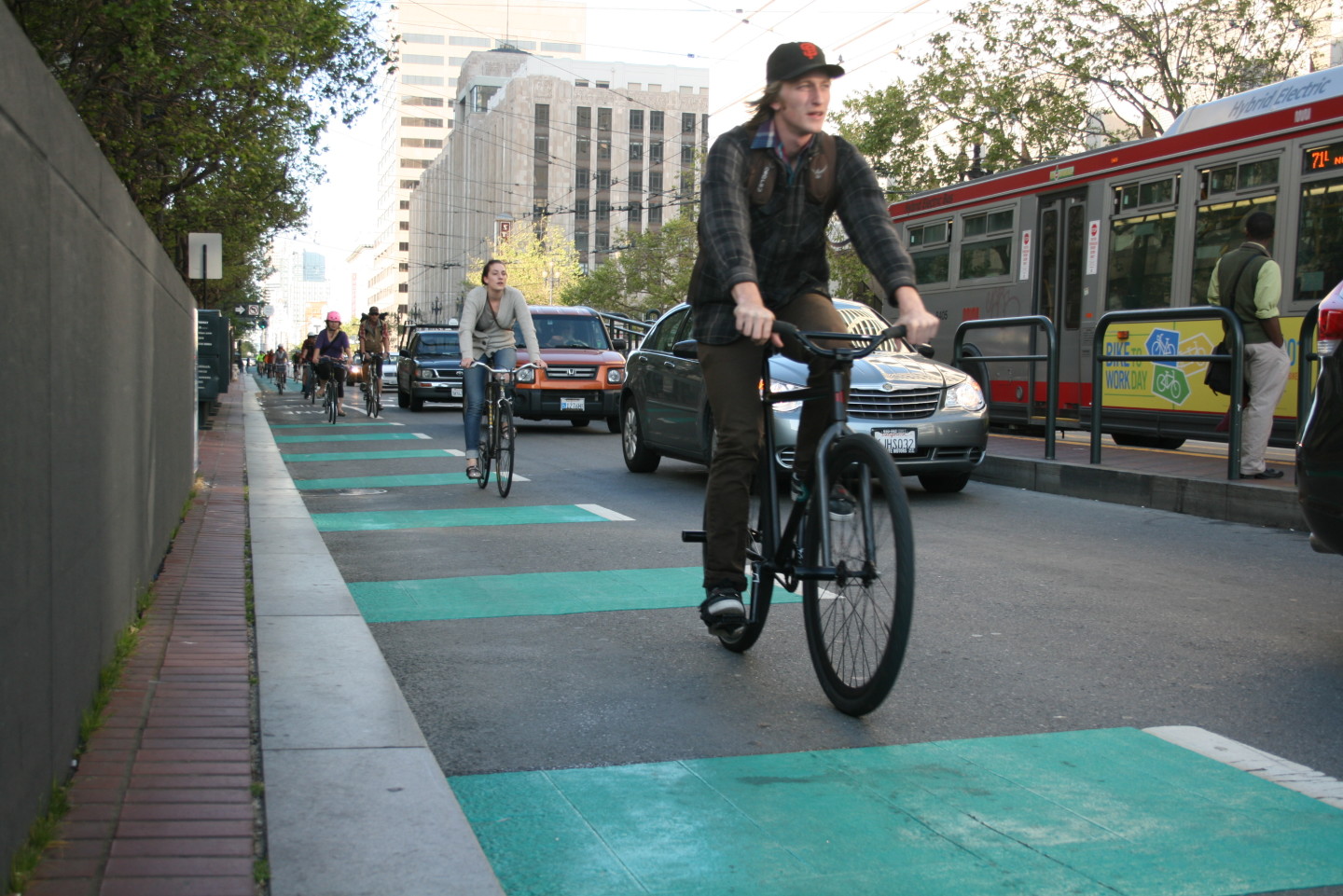
"caption": "Bicyclists ride in a green bike lane on San Francisco's Market Street.",
"credit": "San Francisco Bicycle Coalition",
"altTag": null,
"description": null,
"imgSizes": {
"thumbnail": {
"file": "https://cdn.kqed.org/wp-content/uploads/sites/10/2015/04/RS13995_5682289311_963280efff_o-400x267.jpg",
"width": 400,
"height": 267,
"mimeType": "image/jpeg"
},
"medium": {
"file": "https://cdn.kqed.org/wp-content/uploads/sites/10/2015/04/RS13995_5682289311_963280efff_o-800x534.jpg",
"width": 800,
"height": 534,
"mimeType": "image/jpeg"
},
"large": {
"file": "https://cdn.kqed.org/wp-content/uploads/sites/10/2015/04/RS13995_5682289311_963280efff_o-1440x961.jpg",
"width": 1440,
"height": 961,
"mimeType": "image/jpeg"
},
"fd-lrg": {
"file": "https://cdn.kqed.org/wp-content/uploads/sites/10/2015/04/RS13995_5682289311_963280efff_o-1180x788.jpg",
"width": 1180,
"height": 788,
"mimeType": "image/jpeg"
},
"fd-med": {
"file": "https://cdn.kqed.org/wp-content/uploads/sites/10/2015/04/RS13995_5682289311_963280efff_o-768x513.jpg",
"width": 768,
"height": 513,
"mimeType": "image/jpeg"
},
"fd-sm": {
"file": "https://cdn.kqed.org/wp-content/uploads/sites/10/2015/04/RS13995_5682289311_963280efff_o-320x214.jpg",
"width": 320,
"height": 214,
"mimeType": "image/jpeg"
},
"post-thumbnail": {
"file": "https://cdn.kqed.org/wp-content/uploads/sites/10/2015/04/RS13995_5682289311_963280efff_o-672x372.jpg",
"width": 672,
"height": 372,
"mimeType": "image/jpeg"
},
"twentyfourteen-full-width": {
"file": "https://cdn.kqed.org/wp-content/uploads/sites/10/2015/04/RS13995_5682289311_963280efff_o-1038x576.jpg",
"width": 1038,
"height": 576,
"mimeType": "image/jpeg"
},
"guest-author-32": {
"file": "https://cdn.kqed.org/wp-content/uploads/sites/10/2015/04/RS13995_5682289311_963280efff_o-32x32.jpg",
"width": 32,
"height": 32,
"mimeType": "image/jpeg"
},
"guest-author-64": {
"file": "https://cdn.kqed.org/wp-content/uploads/sites/10/2015/04/RS13995_5682289311_963280efff_o-64x64.jpg",
"width": 64,
"height": 64,
"mimeType": "image/jpeg"
},
"guest-author-96": {
"file": "https://cdn.kqed.org/wp-content/uploads/sites/10/2015/04/RS13995_5682289311_963280efff_o-96x96.jpg",
"width": 96,
"height": 96,
"mimeType": "image/jpeg"
},
"guest-author-128": {
"file": "https://cdn.kqed.org/wp-content/uploads/sites/10/2015/04/RS13995_5682289311_963280efff_o-128x128.jpg",
"width": 128,
"height": 128,
"mimeType": "image/jpeg"
},
"detail": {
"file": "https://cdn.kqed.org/wp-content/uploads/sites/10/2015/04/RS13995_5682289311_963280efff_o-75x75.jpg",
"width": 75,
"height": 75,
"mimeType": "image/jpeg"
},
"kqedFullSize": {
"file": "https://cdn.kqed.org/wp-content/uploads/sites/10/2015/04/RS13995_5682289311_963280efff_o-e1740518414897.jpg",
"width": 2000,
"height": 1335
}
},
"isLoading": false,
"fetchFailed": false
},
"news_12019141": {
"type": "attachments",
"id": "news_12019141",
"meta": {
"index": "attachments_1716263798",
"site": "news",
"id": "12019141",
"found": true
},
"title": "241218-DaylightingLaws-35-BL",
"publishDate": 1734645544,
"status": "inherit",
"parent": 0,
"modified": 1735067930,
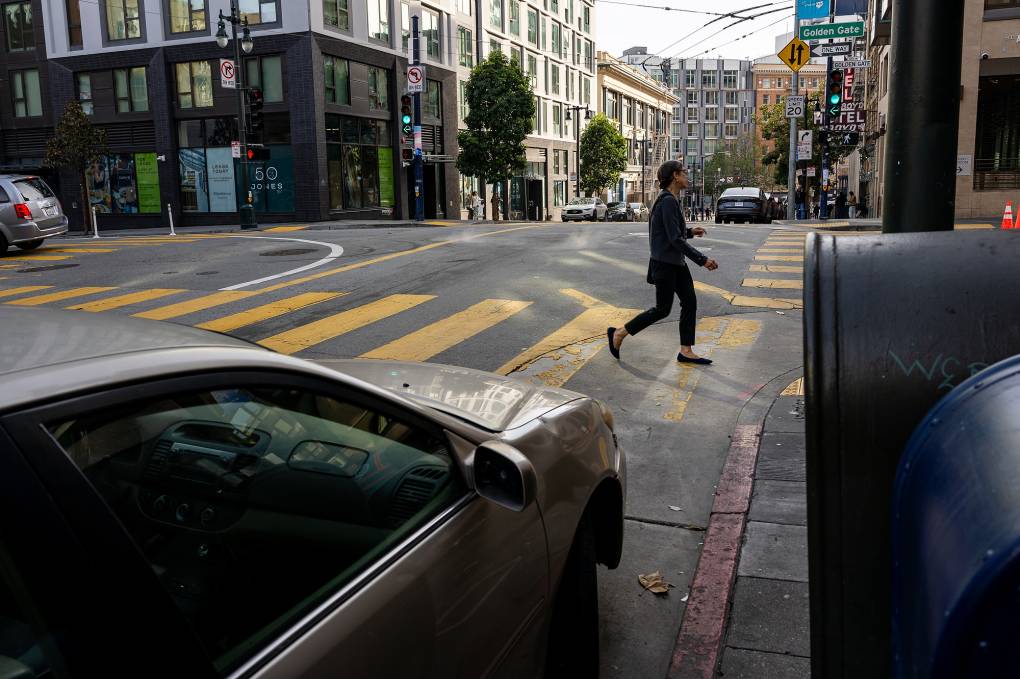
"caption": "A car is parked in a red zone at the intersection of Golden Gate Avenue and Jones Street in San Francisco on Dec. 18, 2024. The red curb designates a no-parking area to create more visibility at the intersection.",
"credit": "Beth LaBerge/KQED",
"altTag": null,
"description": null,
"imgSizes": {
"medium": {
"file": "https://cdn.kqed.org/wp-content/uploads/sites/10/2024/12/241218-DaylightingLaws-35-BL-800x533.jpg",
"width": 800,
"height": 533,
"mimeType": "image/jpeg"
},
"large": {
"file": "https://cdn.kqed.org/wp-content/uploads/sites/10/2024/12/241218-DaylightingLaws-35-BL-1020x679.jpg",
"width": 1020,
"height": 679,
"mimeType": "image/jpeg"
},
"thumbnail": {
"file": "https://cdn.kqed.org/wp-content/uploads/sites/10/2024/12/241218-DaylightingLaws-35-BL-160x107.jpg",
"width": 160,
"height": 107,
"mimeType": "image/jpeg"
},
"1536x1536": {
"file": "https://cdn.kqed.org/wp-content/uploads/sites/10/2024/12/241218-DaylightingLaws-35-BL-1536x1023.jpg",
"width": 1536,
"height": 1023,
"mimeType": "image/jpeg"
},
"post-thumbnail": {
"file": "https://cdn.kqed.org/wp-content/uploads/sites/10/2024/12/241218-DaylightingLaws-35-BL-672x372.jpg",
"width": 672,
"height": 372,
"mimeType": "image/jpeg"
},
"twentyfourteen-full-width": {
"file": "https://cdn.kqed.org/wp-content/uploads/sites/10/2024/12/241218-DaylightingLaws-35-BL-1038x576.jpg",
"width": 1038,
"height": 576,
"mimeType": "image/jpeg"
},
"full-width": {
"file": "https://cdn.kqed.org/wp-content/uploads/sites/10/2024/12/241218-DaylightingLaws-35-BL-1920x1279.jpg",
"width": 1920,
"height": 1279,
"mimeType": "image/jpeg"
},
"kqedFullSize": {
"file": "https://cdn.kqed.org/wp-content/uploads/sites/10/2024/12/241218-DaylightingLaws-35-BL.jpg",
"width": 2000,
"height": 1332
}
},
"isLoading": false,
"fetchFailed": false
},
"news_12028620": {
"type": "attachments",
"id": "news_12028620",
"meta": {
"index": "attachments_1716263798",
"site": "news",
"id": "12028620",
"found": true
},
"title": "man on bus",
"publishDate": 1740531404,
"status": "inherit",
"parent": 0,
"modified": 1740531472,
"caption": "A $200,000 pilot program, championed by San José Mayor Matt Mahan, will offer bus and train tickets to unhoused people who want to reconnect with family or friends.",
"credit": "Jason Yeomans/Getty Images",
"altTag": null,
"description": null,
"imgSizes": {
"medium": {
"file": "https://cdn.kqed.org/wp-content/uploads/sites/10/2025/02/GettyImages-1150473913-800x600.jpg",
"width": 800,
"height": 600,
"mimeType": "image/jpeg"
},
"large": {
"file": "https://cdn.kqed.org/wp-content/uploads/sites/10/2025/02/GettyImages-1150473913-1020x765.jpg",
"width": 1020,
"height": 765,
"mimeType": "image/jpeg"
},
"thumbnail": {
"file": "https://cdn.kqed.org/wp-content/uploads/sites/10/2025/02/GettyImages-1150473913-160x120.jpg",
"width": 160,
"height": 120,
"mimeType": "image/jpeg"
},
"1536x1536": {
"file": "https://cdn.kqed.org/wp-content/uploads/sites/10/2025/02/GettyImages-1150473913-1536x1152.jpg",
"width": 1536,
"height": 1152,
"mimeType": "image/jpeg"
},
"2048x2048": {
"file": "https://cdn.kqed.org/wp-content/uploads/sites/10/2025/02/GettyImages-1150473913-2048x1536.jpg",
"width": 2048,
"height": 1536,
"mimeType": "image/jpeg"
},
"post-thumbnail": {
"file": "https://cdn.kqed.org/wp-content/uploads/sites/10/2025/02/GettyImages-1150473913-672x372.jpg",
"width": 672,
"height": 372,
"mimeType": "image/jpeg"
},
"twentyfourteen-full-width": {
"file": "https://cdn.kqed.org/wp-content/uploads/sites/10/2025/02/GettyImages-1150473913-1038x576.jpg",
"width": 1038,
"height": 576,
"mimeType": "image/jpeg"
},
"full-width": {
"file": "https://cdn.kqed.org/wp-content/uploads/sites/10/2025/02/GettyImages-1150473913-1920x1440.jpg",
"width": 1920,
"height": 1440,
"mimeType": "image/jpeg"
},
"kqedFullSize": {
"file": "https://cdn.kqed.org/wp-content/uploads/sites/10/2025/02/GettyImages-1150473913-scaled.jpg",
"width": 2560,
"height": 1920
}
},
"isLoading": false,
"fetchFailed": false
}
},
"audioPlayerReducer": {
"postId": "stream_live",
"isPaused": true,
"isPlaying": false,
"pfsActive": false,
"pledgeModalIsOpen": true,
"playerDrawerIsOpen": false,
"liveAudioPlayStartedAt": 0,
"liveAudioPlayContext": ""
},
"authorsReducer": {
"danbrekke": {
"type": "authors",
"id": "222",
"meta": {
"index": "authors_1716337520",
"id": "222",
"found": true
},
"name": "Dan Brekke",
"firstName": "Dan",
"lastName": "Brekke",
"slug": "danbrekke",
"email": "dbrekke@kqed.org",
"display_author_email": true,
"staff_mastheads": [
"news",
"science"
],
"title": "KQED Editor and Reporter",
"bio": "Dan Brekke is a reporter and editor for KQED News, responsible for coverage of topics ranging from California water issues to the Bay Area's transportation challenges. In a newsroom career that began in Chicago in 1972, Dan has worked for \u003cem>The San Francisco Examiner,\u003c/em> Wired and TechTV and has been published in The New York Times, The New York Times Magazine, Business 2.0, Salon and elsewhere.\r\n\r\nSince joining KQED in 2007, Dan has reported, edited and produced both radio and online features and breaking news pieces. He has shared as both editor and reporter in four Society of Professional Journalists Norcal Excellence in Journalism awards and one Edward R. Murrow regional award. He was chosen for a spring 2017 residency at the Mesa Refuge to advance his research on California salmon.\r\n\r\nEmail Dan at: \u003ca href=\"mailto:dbrekke@kqed.org\">dbrekke@kqed.org\u003c/a>\r\n\r\n\u003cstrong>Twitter:\u003c/strong> \u003ca href=\"https://twitter.com/danbrekke\" rel=\"noopener noreferrer\">twitter.com/danbrekke\u003c/a>\r\n\u003cstrong>Facebook:\u003c/strong> \u003ca href=\"https://www.facebook.com/danbrekke\" rel=\"noopener noreferrer\">www.facebook.com/danbrekke\u003c/a>\r\n\u003cstrong>LinkedIn:\u003c/strong> \u003ca href=\"https://www.linkedin.com/in/danbrekke\" rel=\"noopener noreferrer\">www.linkedin.com/in/danbrekke\u003c/a>",
"avatar": "https://secure.gravatar.com/avatar/8f1f0d2a978fb3b23426c922c7e2af558fa36905b49c4ce76a97dc3c72d27226?s=600&d=mm&r=g",
"twitter": "danbrekke",
"bluesky": null,
"facebook": null,
"instagram": "https://www.instagram.com/dan.brekke/",
"linkedin": "https://www.linkedin.com/in/danbrekke/",
"sites": [
{
"site": "news",
"roles": [
"administrator",
"create_posts"
]
},
{
"site": "stateofhealth",
"roles": [
"editor"
]
},
{
"site": "science",
"roles": [
"editor"
]
},
{
"site": "quest",
"roles": [
"contributor"
]
},
{
"site": "food",
"roles": [
"contributor"
]
},
{
"site": "forum",
"roles": [
"contributor"
]
},
{
"site": "elections",
"roles": [
"editor"
]
},
{
"site": "liveblog",
"roles": [
"editor"
]
}
],
"headData": {
"title": "Dan Brekke | KQED",
"description": "KQED Editor and Reporter",
"ogImgSrc": "https://secure.gravatar.com/avatar/8f1f0d2a978fb3b23426c922c7e2af558fa36905b49c4ce76a97dc3c72d27226?s=600&d=mm&r=g",
"twImgSrc": "https://secure.gravatar.com/avatar/8f1f0d2a978fb3b23426c922c7e2af558fa36905b49c4ce76a97dc3c72d27226?s=600&d=mm&r=g"
},
"isLoading": false,
"link": "/author/danbrekke"
},
"adahlstromeckman": {
"type": "authors",
"id": "11785",
"meta": {
"index": "authors_1716337520",
"id": "11785",
"found": true
},
"name": "Azul Dahlstrom-Eckman",
"firstName": "Azul",
"lastName": "Dahlstrom-Eckman",
"slug": "adahlstromeckman",
"email": "adahlstrom-eckman@kqed.org",
"display_author_email": true,
"staff_mastheads": [],
"title": "Reporter",
"bio": "Azul is a reporter for KQED focusing on transportation and features. He joined KQED in 2021 as an alumna of KALW's Audio Academy radio journalism training program.",
"avatar": "https://secure.gravatar.com/avatar/9cb750298435add7815a777f55bf1f46845c1386bb8452555c60a7b820b5aba3?s=600&d=blank&r=g",
"twitter": "@zuliemann",
"bluesky": "@azul415.bsky.social",
"facebook": null,
"instagram": null,
"linkedin": null,
"sites": [
{
"site": "arts",
"roles": [
"editor"
]
},
{
"site": "news",
"roles": [
"editor"
]
},
{
"site": "science",
"roles": [
"editor"
]
},
{
"site": "liveblog",
"roles": [
"author"
]
}
],
"headData": {
"title": "Azul Dahlstrom-Eckman | KQED",
"description": "Reporter",
"ogImgSrc": "https://secure.gravatar.com/avatar/9cb750298435add7815a777f55bf1f46845c1386bb8452555c60a7b820b5aba3?s=600&d=blank&r=g",
"twImgSrc": "https://secure.gravatar.com/avatar/9cb750298435add7815a777f55bf1f46845c1386bb8452555c60a7b820b5aba3?s=600&d=blank&r=g"
},
"isLoading": false,
"link": "/author/adahlstromeckman"
},
"jgeha": {
"type": "authors",
"id": "11906",
"meta": {
"index": "authors_1716337520",
"id": "11906",
"found": true
},
"name": "Joseph Geha",
"firstName": "Joseph",
"lastName": "Geha",
"slug": "jgeha",
"email": "jgeha@kqed.org",
"display_author_email": false,
"staff_mastheads": [
"news",
"science"
],
"title": "KQED Contributor",
"bio": null,
"avatar": "https://secure.gravatar.com/avatar/ea84d2b6dd93d6369d453edf19dd583f117cd1759d2d9c9c92f9de77017354fe?s=600&d=blank&r=g",
"twitter": null,
"bluesky": null,
"facebook": null,
"instagram": null,
"linkedin": null,
"sites": [
{
"site": "news",
"roles": [
"editor"
]
},
{
"site": "liveblog",
"roles": [
"author"
]
}
],
"headData": {
"title": "Joseph Geha | KQED",
"description": "KQED Contributor",
"ogImgSrc": "https://secure.gravatar.com/avatar/ea84d2b6dd93d6369d453edf19dd583f117cd1759d2d9c9c92f9de77017354fe?s=600&d=blank&r=g",
"twImgSrc": "https://secure.gravatar.com/avatar/ea84d2b6dd93d6369d453edf19dd583f117cd1759d2d9c9c92f9de77017354fe?s=600&d=blank&r=g"
},
"isLoading": false,
"link": "/author/jgeha"
},
"kdebenedetti": {
"type": "authors",
"id": "11913",
"meta": {
"index": "authors_1716337520",
"id": "11913",
"found": true
},
"name": "Katie DeBenedetti",
"firstName": "Katie",
"lastName": "DeBenedetti",
"slug": "kdebenedetti",
"email": "kdebenedetti@kqed.org",
"display_author_email": false,
"staff_mastheads": [
"news",
"science"
],
"title": "KQED Contributor",
"bio": "Katie DeBenedetti is a digital reporter covering daily news for the Express Desk. Prior to joining KQED as a culture reporting intern in January 2024, she covered education and city government for the Napa Valley Register.",
"avatar": "https://secure.gravatar.com/avatar/6e31073cb8f7e4214ab03f42771d0f45?s=600&d=blank&r=g",
"twitter": null,
"facebook": null,
"instagram": null,
"linkedin": null,
"sites": [
{
"site": "news",
"roles": [
"author"
]
},
{
"site": "science",
"roles": [
"author"
]
},
{
"site": "liveblog",
"roles": [
"author"
]
}
],
"headData": {
"title": "Katie DeBenedetti | KQED",
"description": "KQED Contributor",
"ogImgSrc": "https://secure.gravatar.com/avatar/6e31073cb8f7e4214ab03f42771d0f45?s=600&d=blank&r=g",
"twImgSrc": "https://secure.gravatar.com/avatar/6e31073cb8f7e4214ab03f42771d0f45?s=600&d=blank&r=g"
},
"isLoading": false,
"link": "/author/kdebenedetti"
}
},
"pagesReducer": {
"news_category_transportation": {
"type": "terms",
"id": "news_1397",
"meta": {
"index": "terms_1716263798",
"site": "news",
"id": "1397",
"score": 12.939859
},
"featImg": null,
"name": "Transportation",
"description": null,
"taxonomy": "category",
"headData": {
"twImgId": null,
"twTitle": null,
"ogTitle": null,
"ogImgId": null,
"twDescription": null,
"description": null,
"title": "Transportation Archives | KQED News",
"ogDescription": null
},
"ttid": 1409,
"slug": "transportation",
"isLoading": false,
"title": "Transportation",
"pageMeta": {
"site": "news",
"WpPageTemplate": "page-topic-editorial",
"currentPage": 20
},
"blocks": [
{
"blockName": "kqed/post-list",
"attrs": {
"layout": "cardArticle2",
"query": "posts/news?category=transportation",
"seeMore": false,
"paginated": true,
"page": 20
}
},
{
"blockName": "kqed/ad"
}
]
}
},
"pfsSessionReducer": {},
"postsReducer": {
"stream_live": {
"type": "live",
"id": "stream_live",
"audioUrl": "https://streams.kqed.org/kqedradio",
"title": "Live Stream",
"excerpt": "Live Stream information currently unavailable.",
"link": "/radio",
"featImg": "",
"label": {
"name": "KQED Live",
"link": "/"
}
},
"stream_kqedNewscast": {
"type": "posts",
"id": "stream_kqedNewscast",
"audioUrl": "https://www.kqed.org/.stream/anon/radio/RDnews/newscast.mp3?_=1",
"title": "KQED Newscast",
"featImg": "",
"label": {
"name": "88.5 FM",
"link": "/"
}
},
"news_12031698": {
"type": "posts",
"id": "news_12031698",
"meta": {
"index": "posts_1716263798",
"site": "news",
"id": "12031698",
"score": null,
"sort": [
1742304645000
]
},
"guestAuthors": [],
"slug": "volunteers-restore-vandalized-mural-as-oceanfront-park-project-moves-forward",
"title": "Volunteers Restore Vandalized Mural as Oceanfront Park Project Moves Forward",
"publishDate": 1742304645,
"format": "standard",
"headTitle": "Volunteers Restore Vandalized Mural as Oceanfront Park Project Moves Forward | KQED",
"labelTerm": {
"site": "news"
},
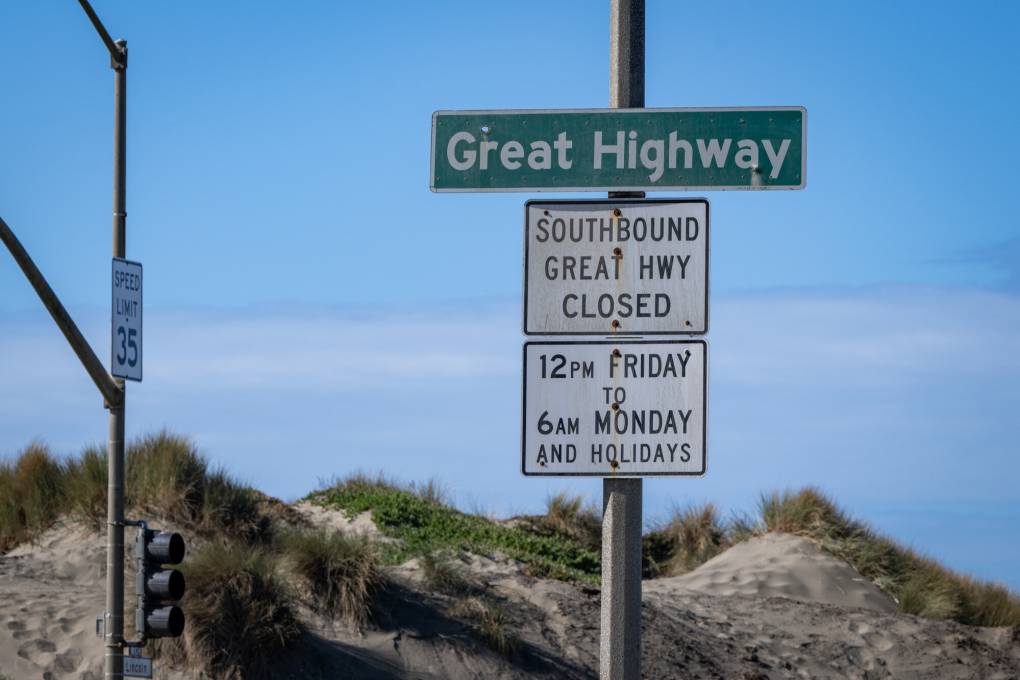
"content": "\u003cp>The day after the \u003ca href=\"https://www.kqed.org/news/12031300/this-stretch-san-franciscos-great-highway-now-permanently-closed-cars\">Upper Great Highway closed\u003c/a> permanently to cars, the first piece of public art created to transform the space into an oceanfront park was vandalized.\u003c/p>\n\u003cp>Organizers of the project weren’t deterred and on Monday debuted the \u003ca href=\"https://www.kqed.org/arts/13973169/temporary-public-art-great-highway-ocean-beach-plans\">full lineup of temporary artworks\u003c/a> set to adorn the roadway in time for the park’s official grand opening next month.\u003c/p>\n\u003cp>On Saturday morning, neighbors found a white spray-painted squiggly line defacing the 60-foot mural that artist Emily Fromm had been painting on the backside of Judah Street’s beachfront public restrooms for the past six weeks.\u003c/p>\n\u003cp>Fromm said on Instagram that she had been on track to finish the project this week, but repainting large sections of the work, tentatively titled “A History of Play,” would delay completion by about a month if she had to work alone.\u003c/p>\n\u003cp>“This was pretty devastating,” she told KQED in an interview. “I always put a protective coating on my murals for graffiti once they are done, but the mural was not done. It had a couple of days left to be finished, so it could not be scrubbed off or removed. We had to repaint everything.”\u003c/p>\n\u003cp>[ad fullwidth]\u003c/p>\n\u003cp>More than 100 volunteers showed up to help restore the work over the weekend. Fromm said she’s confident the piece will be completed by Friday.\u003c/p>\n\u003cp>“I’m so, so happy and grateful we were able to turn something like this into an act of community activism,” she told KQED.\u003c/p>\n\u003cfigure id=\"attachment_12031772\" class=\"wp-caption aligncenter\" style=\"max-width: 2000px\">\u003cimg loading=\"lazy\" decoding=\"async\" class=\"size-full wp-image-12031772\" src=\"https://cdn.kqed.org/wp-content/uploads/sites/10/2025/03/Fromm_2000.jpg\" alt=\"\" width=\"2000\" height=\"874\" srcset=\"https://cdn.kqed.org/wp-content/uploads/sites/10/2025/03/Fromm_2000.jpg 2000w, https://cdn.kqed.org/wp-content/uploads/sites/10/2025/03/Fromm_2000-800x350.jpg 800w, https://cdn.kqed.org/wp-content/uploads/sites/10/2025/03/Fromm_2000-1020x446.jpg 1020w, https://cdn.kqed.org/wp-content/uploads/sites/10/2025/03/Fromm_2000-160x70.jpg 160w, https://cdn.kqed.org/wp-content/uploads/sites/10/2025/03/Fromm_2000-1536x671.jpg 1536w, https://cdn.kqed.org/wp-content/uploads/sites/10/2025/03/Fromm_2000-1920x839.jpg 1920w\" sizes=\"auto, (max-width: 2000px) 100vw, 2000px\">\u003cfigcaption class=\"wp-caption-text\">Emily Fromm’s mural on the Judah Street bathrooms was vandalized over the weekend. Volunteers helped her repair the damage. \u003ccite>(Courtesy of Friends of Ocean Beach Park)\u003c/cite>\u003c/figcaption>\u003c/figure>\n\u003cp>“Whoever did this, and why ever they did it, it didn’t have the desired effect,” said Heidi Moseson of Friends of Ocean Beach Park.\u003c/p>\n\u003cp>The nonprofit group, which is helping lead the roadway’s transformation with the Recreation and Parks Department, filed a police report over the vandalism Saturday.\u003c/p>\n\u003cp>The incident comes amid simmering tension between supporters of the new park and opponents who want to restore oceanfront vehicle access between Lake Merced and Golden Gate Park.\u003c/p>\n\u003cp>Last week, opponents of Proposition K, which mandated the permanent closure of a two-mile stretch of the Upper Great Highway after its passage in November, announced \u003ca href=\"https://www.kqed.org/news/12030751/days-before-san-franciscos-great-highway-closure-opponents-aim-block-it\">plans to sue the city\u003c/a>. They argue that placing the proposition on the ballot was invalid, claiming it violates the California Vehicle Code, which grants local jurisdictions the authority to permanently close highways to cars only when local legislators determine they are “no longer needed for vehicular traffic.”\u003c/p>\n\u003cp>Fromm no longer lives in San Francisco and couldn’t vote on Prop. K, but she said she wasn’t immune to the community tensions while working on her mural over the past month and a half.[aside postID=arts_13973169 hero='https://cdn.kqed.org/wp-content/uploads/sites/10/2025/03/OceanCalling.jpg']\u003c/p>\n\u003cp>“Throughout the time I was working, and especially during that week [of the closure], we did receive some hateful comments in person,” she said. “People made us feel unsafe and that was really unfortunate.”\u003c/p>\n\u003cp>Last week, a second artist began work on another of the 16 planned artworks for the site. In the coming weeks, more artists will add colorful tributes to the Outer Sunset along the two-mile beachfront stretch.\u003c/p>\n\u003cp>Fromm said she hopes that the artists’ work will be respected.\u003c/p>\n\u003cp>“All of these lovely folks who are going to be bringing art, they’re working really hard out there to improve and benefit the community and I’m hoping people can respect them and treat them with kindness,” she said.\u003c/p>\n\u003cp>\u003c/p>\n",
"blocks": [],
"excerpt": "The vandalism occurred on the first day of Upper Great Highway’s transformation into Oceanfront Park.",
"status": "publish",
"parent": 0,
"modified": 1742261658,
"stats": {
"hasAudio": false,
"hasVideo": false,
"hasChartOrMap": false,
"iframeSrcs": [],
"hasGoogleForm": false,
"hasGallery": false,
"hasHearkenModule": false,
"hasPolis": false,
"paragraphCount": 18,
"wordCount": 635
},
"headData": {
"title": "Volunteers Restore Vandalized Mural as Oceanfront Park Project Moves Forward | KQED",
"description": "The vandalism occurred on the first day of Upper Great Highway’s transformation into Oceanfront Park.",
"ogTitle": "",
"ogDescription": "",
"ogImgId": "",
"twTitle": "",
"twDescription": "",
"twImgId": "",
"schema": {
"@context": "https://schema.org",
"@type": "NewsArticle",
"headline": "Volunteers Restore Vandalized Mural as Oceanfront Park Project Moves Forward",
"datePublished": "2025-03-18T06:30:45-07:00",
"dateModified": "2025-03-17T18:34:18-07:00",
"image": "https://cdn.kqed.org/wp-content/uploads/2020/02/KQED-OG-Image@1x.png",
"isAccessibleForFree": "True",
"publisher": {
"@type": "NewsMediaOrganization",
"@id": "https://www.kqed.org/#organization",
"name": "KQED",
"logo": "https://cdn.kqed.org/wp-content/uploads/2020/02/KQED-OG-Image@1x.png",
"url": "https://www.kqed.org",
"sameAs": [
"https://www.facebook.com/KQED",
"https://twitter.com/KQED",
"https://www.instagram.com/kqed/",
"https://www.tiktok.com/@kqedofficial",
"https://www.linkedin.com/company/kqed",
"https://www.youtube.com/channel/UCeC0IOo7i1P_61zVUWbJ4nw"
]
}
}
},
"sticky": false,
"templateType": "standard",
"featuredImageType": "standard",
"excludeFromSiteSearch": "Include",
"articleAge": "0",
"path": "/news/12031698/volunteers-restore-vandalized-mural-as-oceanfront-park-project-moves-forward",
"audioTrackLength": null,
"parsedContent": [
{
"type": "contentString",
"content": "\u003cdiv class=\"post-body\">\u003cp>\u003cp>The day after the \u003ca href=\"https://www.kqed.org/news/12031300/this-stretch-san-franciscos-great-highway-now-permanently-closed-cars\">Upper Great Highway closed\u003c/a> permanently to cars, the first piece of public art created to transform the space into an oceanfront park was vandalized.\u003c/p>\n\u003cp>Organizers of the project weren’t deterred and on Monday debuted the \u003ca href=\"https://www.kqed.org/arts/13973169/temporary-public-art-great-highway-ocean-beach-plans\">full lineup of temporary artworks\u003c/a> set to adorn the roadway in time for the park’s official grand opening next month.\u003c/p>\n\u003cp>On Saturday morning, neighbors found a white spray-painted squiggly line defacing the 60-foot mural that artist Emily Fromm had been painting on the backside of Judah Street’s beachfront public restrooms for the past six weeks.\u003c/p>\n\u003cp>Fromm said on Instagram that she had been on track to finish the project this week, but repainting large sections of the work, tentatively titled “A History of Play,” would delay completion by about a month if she had to work alone.\u003c/p>\n\u003cp>“This was pretty devastating,” she told KQED in an interview. “I always put a protective coating on my murals for graffiti once they are done, but the mural was not done. It had a couple of days left to be finished, so it could not be scrubbed off or removed. We had to repaint everything.”\u003c/p>\n\u003cp>\u003c/p>\u003c/div>",
"attributes": {
"named": {},
"numeric": []
}
},
{
"type": "component",
"content": "",
"name": "ad",
"attributes": {
"named": {
"label": "fullwidth"
},
"numeric": [
"fullwidth"
]
}
},
{
"type": "contentString",
"content": "\u003cdiv class=\"post-body\">\u003cp>\u003c/p>\n\u003cp>More than 100 volunteers showed up to help restore the work over the weekend. Fromm said she’s confident the piece will be completed by Friday.\u003c/p>\n\u003cp>“I’m so, so happy and grateful we were able to turn something like this into an act of community activism,” she told KQED.\u003c/p>\n\u003cfigure id=\"attachment_12031772\" class=\"wp-caption aligncenter\" style=\"max-width: 2000px\">\u003cimg loading=\"lazy\" decoding=\"async\" class=\"size-full wp-image-12031772\" src=\"https://cdn.kqed.org/wp-content/uploads/sites/10/2025/03/Fromm_2000.jpg\" alt=\"\" width=\"2000\" height=\"874\" srcset=\"https://cdn.kqed.org/wp-content/uploads/sites/10/2025/03/Fromm_2000.jpg 2000w, https://cdn.kqed.org/wp-content/uploads/sites/10/2025/03/Fromm_2000-800x350.jpg 800w, https://cdn.kqed.org/wp-content/uploads/sites/10/2025/03/Fromm_2000-1020x446.jpg 1020w, https://cdn.kqed.org/wp-content/uploads/sites/10/2025/03/Fromm_2000-160x70.jpg 160w, https://cdn.kqed.org/wp-content/uploads/sites/10/2025/03/Fromm_2000-1536x671.jpg 1536w, https://cdn.kqed.org/wp-content/uploads/sites/10/2025/03/Fromm_2000-1920x839.jpg 1920w\" sizes=\"auto, (max-width: 2000px) 100vw, 2000px\">\u003cfigcaption class=\"wp-caption-text\">Emily Fromm’s mural on the Judah Street bathrooms was vandalized over the weekend. Volunteers helped her repair the damage. \u003ccite>(Courtesy of Friends of Ocean Beach Park)\u003c/cite>\u003c/figcaption>\u003c/figure>\n\u003cp>“Whoever did this, and why ever they did it, it didn’t have the desired effect,” said Heidi Moseson of Friends of Ocean Beach Park.\u003c/p>\n\u003cp>The nonprofit group, which is helping lead the roadway’s transformation with the Recreation and Parks Department, filed a police report over the vandalism Saturday.\u003c/p>\n\u003cp>The incident comes amid simmering tension between supporters of the new park and opponents who want to restore oceanfront vehicle access between Lake Merced and Golden Gate Park.\u003c/p>\n\u003cp>Last week, opponents of Proposition K, which mandated the permanent closure of a two-mile stretch of the Upper Great Highway after its passage in November, announced \u003ca href=\"https://www.kqed.org/news/12030751/days-before-san-franciscos-great-highway-closure-opponents-aim-block-it\">plans to sue the city\u003c/a>. They argue that placing the proposition on the ballot was invalid, claiming it violates the California Vehicle Code, which grants local jurisdictions the authority to permanently close highways to cars only when local legislators determine they are “no longer needed for vehicular traffic.”\u003c/p>\n\u003cp>Fromm no longer lives in San Francisco and couldn’t vote on Prop. K, but she said she wasn’t immune to the community tensions while working on her mural over the past month and a half.\u003c/p>\u003c/div>",
"attributes": {
"named": {},
"numeric": []
}
},
{
"type": "component",
"content": "",
"name": "aside",
"attributes": {
"named": {
"postid": "arts_13973169",
"hero": "https://cdn.kqed.org/wp-content/uploads/sites/10/2025/03/OceanCalling.jpg",
"label": ""
},
"numeric": []
}
},
{
"type": "contentString",
"content": "\u003cdiv class=\"post-body\">\u003cp>\u003c/p>\n\u003cp>“Throughout the time I was working, and especially during that week [of the closure], we did receive some hateful comments in person,” she said. “People made us feel unsafe and that was really unfortunate.”\u003c/p>\n\u003cp>Last week, a second artist began work on another of the 16 planned artworks for the site. In the coming weeks, more artists will add colorful tributes to the Outer Sunset along the two-mile beachfront stretch.\u003c/p>\n\u003cp>Fromm said she hopes that the artists’ work will be respected.\u003c/p>\n\u003cp>“All of these lovely folks who are going to be bringing art, they’re working really hard out there to improve and benefit the community and I’m hoping people can respect them and treat them with kindness,” she said.\u003c/p>\n\u003cp>\u003c/p>\n\u003c/div>\u003c/p>",
"attributes": {
"named": {},
"numeric": []
}
}
],
"link": "/news/12031698/volunteers-restore-vandalized-mural-as-oceanfront-park-project-moves-forward",
"authors": [
"11913"
],
"categories": [
"news_31795",
"news_8",
"news_1397"
],
"tags": [
"news_18538",
"news_3841",
"news_1247",
"news_38",
"news_31584",
"news_6091"
],
"featImg": "news_12012264",
"label": "news"
},
"news_12031632": {
"type": "posts",
"id": "news_12031632",
"meta": {
"index": "posts_1716263798",
"site": "news",
"id": "12031632",
"score": null,
"sort": [
1742241300000
]
},
"guestAuthors": [],
"slug": "vtas-legal-challenge-ongoing-transit-strike-hits-snag",
"title": "VTA’s Legal Challenge to Ongoing Transit Strike Dealt Major Blow",
"publishDate": 1742241300,
"format": "standard",
"headTitle": "VTA’s Legal Challenge to Ongoing Transit Strike Dealt Major Blow | KQED",
"labelTerm": {
"site": "news"
},
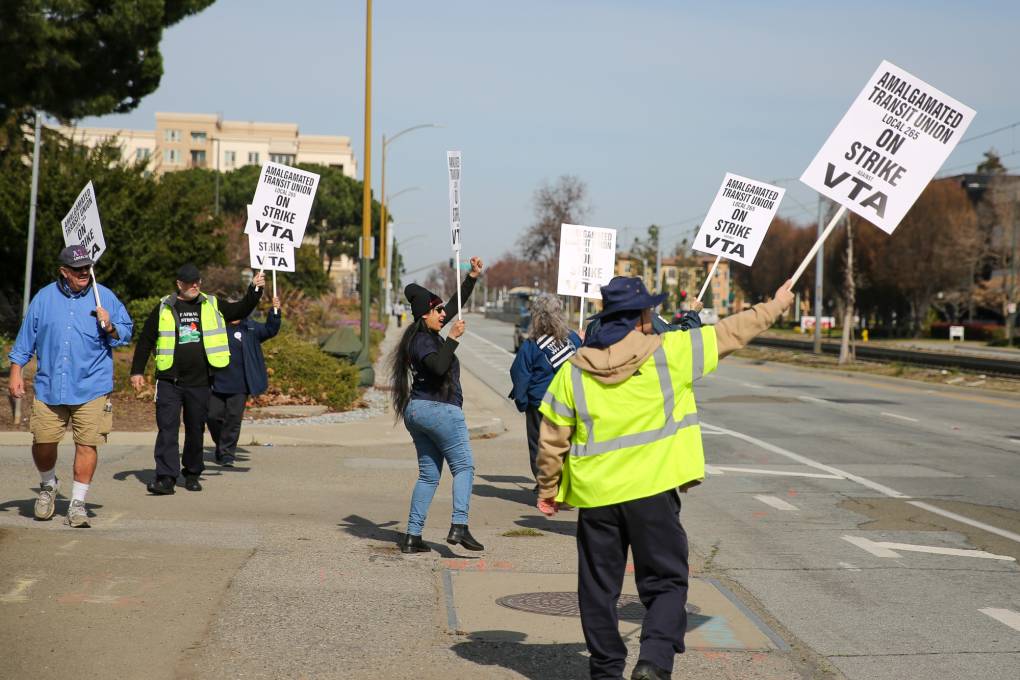
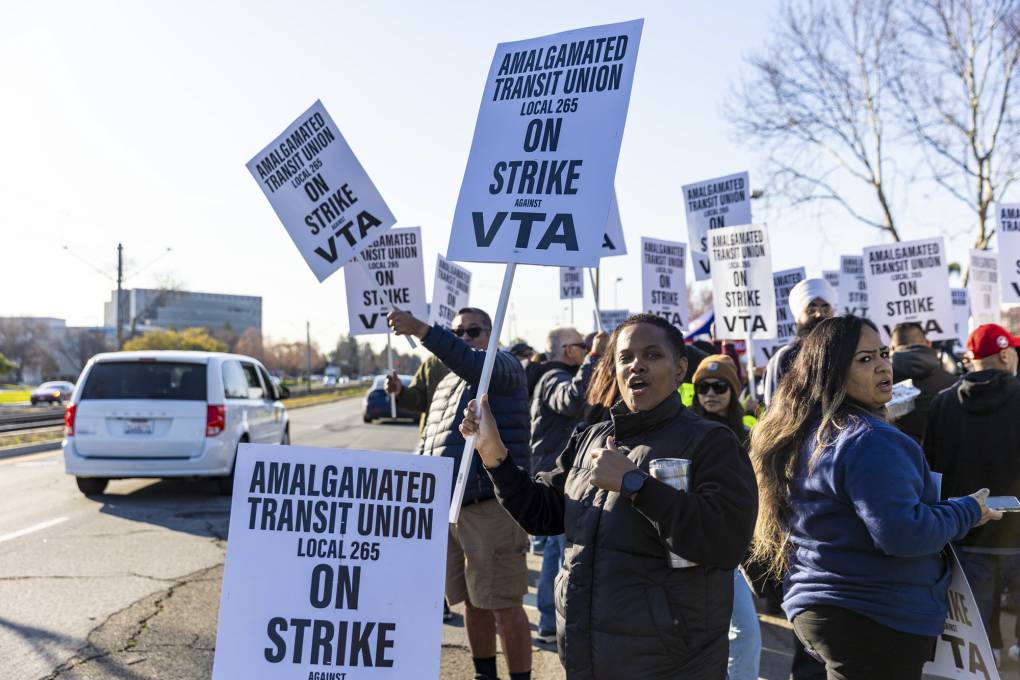
"content": "\u003cp>\u003cem>Updated 7:50 p.m. Monday\u003c/em>\u003c/p>\n\u003cp>Santa Clara Valley Transportation Authotrity’s legal challenge aiming to put a stop to the \u003ca href=\"https://www.kqed.org/news/12030951/vta-strike-underscores-silicon-valleys-widening-income-inequality\">ongoing strike by transit workers\u003c/a> in the South Bay has been dealt a major blow by a judge, according to newly filed court documents.\u003c/p>\n\u003cp>In an order filed with the Santa Clara County Superior Court Monday, Judge Daniel T. Nishigaya rejected VTA’s request for a temporary restraining order to immediately halt the historic strike by more than 1,500 bus drivers and train operators.\u003c/p>\n\u003cp>The judge allowed the case to proceed and set a court date for March 26, when the Amalgamated Transit Union Local 265, whose workers have been on strike since March 10, must argue why the court should not issue an injunction to halt the strike.\u003c/p>\n\u003cp>However, the denial of the temporary restraining order means the courts are unlikely to intervene in the labor dispute before March 26, by which time the union and the VTA may have reached a new contract.\u003c/p>\n\u003cp>The agency \u003ca href=\"https://www.kqed.org/news/12030759/vta-sues-to-end-historic-south-bay-transit-workers-strike\">filed its complaint\u003c/a> a week ago, seeking to force workers back to their jobs while negotiations over a new labor contract continue.\u003c/p>\n\u003cp>[ad fullwidth]\u003c/p>\n\u003cp>The VTA has since submitted other supporting filings that helped reveal some of the \u003ca href=\"https://www.kqed.org/news/12031387/newsom-should-intervene-in-vta-strike-expert-says\">apparent bad blood\u003c/a> between the agency and its largest labor group, the Amalgamated Transit Union Local 265.\u003c/p>\n\u003cp>On Sunday, Nishigaya rejected the VTA’s initial filing on technical grounds, stating it did not comply with state court rules. He then allowed the VTA to resubmit its request for a restraining order, which he denied Monday.\u003c/p>\n\u003cp>“So unfortunately for our passengers, that does not allow for the workers to come back and therefore service to be reinstated,” Greg Richardson, VTA deputy general manager, said Monday night during a news conference.\u003c/p>\n\u003cp>Richardson said he’s hopeful that a resolution to the contract dispute could be settled before the March 26 court date, though he acknowledged the potential for the strike to drag on.\u003c/p>\n\u003cfigure id=\"attachment_12030770\" class=\"wp-caption aligncenter\" style=\"max-width: 2000px\">\u003cimg loading=\"lazy\" decoding=\"async\" class=\"size-full wp-image-12030770\" src=\"https://cdn.kqed.org/wp-content/uploads/sites/10/2025/03/20250311_VTASTRIKEDAY2_GC-2-KQED.jpg\" alt=\"\" width=\"2000\" height=\"1333\" srcset=\"https://cdn.kqed.org/wp-content/uploads/sites/10/2025/03/20250311_VTASTRIKEDAY2_GC-2-KQED.jpg 2000w, https://cdn.kqed.org/wp-content/uploads/sites/10/2025/03/20250311_VTASTRIKEDAY2_GC-2-KQED-800x533.jpg 800w, https://cdn.kqed.org/wp-content/uploads/sites/10/2025/03/20250311_VTASTRIKEDAY2_GC-2-KQED-1020x680.jpg 1020w, https://cdn.kqed.org/wp-content/uploads/sites/10/2025/03/20250311_VTASTRIKEDAY2_GC-2-KQED-160x107.jpg 160w, https://cdn.kqed.org/wp-content/uploads/sites/10/2025/03/20250311_VTASTRIKEDAY2_GC-2-KQED-1536x1024.jpg 1536w, https://cdn.kqed.org/wp-content/uploads/sites/10/2025/03/20250311_VTASTRIKEDAY2_GC-2-KQED-1920x1280.jpg 1920w\" sizes=\"auto, (max-width: 2000px) 100vw, 2000px\">\u003cfigcaption class=\"wp-caption-text\">Dafina Cozine, a bus operator, joins a strike with hundreds of Santa Clara Valley Transportation Authority workers, represented by the Amalgamated Transit Union Local 265, on N. First Street, in San José, demanding a better contract and an increase in wages on March 11, 2025. \u003ccite>(Gina Castro/KQED)\u003c/cite>\u003c/figcaption>\u003c/figure>\n\u003cp>Raj Singh, the union’s president, said members are frustrated VTA appears more focused on trying to win a court fight instead of working out a deal.\u003c/p>\n\u003cp>“They really haven’t made any efforts to resolve this issue,” he said. “They keep either going back to court or they’re hoping that the governor’s office is going to intervene.”\u003c/p>\n\u003cp>The agency and the ATU have been negotiating since August over a new contract, with the most recent contract expiring on March 3. The union \u003ca href=\"https://www.kqed.org/news/12030584/santa-clara-county-transit-grinds-to-a-halt-as-vta-workers-strike\">began striking\u003c/a> on March 10, grinding the agency’s main services to a halt and forcing tens of thousands of riders to find other ways to get around, including walking or \u003ca href=\"https://www.kqed.org/news/12030951/vta-strike-underscores-silicon-valleys-widening-income-inequality\">paying more\u003c/a> money for rideshares like Lyft and Uber.\u003c/p>\n\u003cp>Union leaders say their biggest aims are changing how arbitration is used when worker grievances are filed with the agency, as well as opposing proposed changes from VTA to reduce long-term injury or illness leave from two years to one.\u003c/p>\n\u003cp>[aside postID=news_12031268 hero='https://cdn.kqed.org/wp-content/uploads/sites/10/2025/03/20250313_MUNI-OPERATOR-DAY_DMB_00008-KQED-1020x680.jpg']\u003c/p>\n\u003cp>The agency and the union also remain very far apart on wages, with VTA offering the union members 9% raises over three years, and the union asking for 18% raises over the same period.\u003c/p>\n\u003cp>After striking with no talks for several days last week, the union and VTA met with mediators on Thursday and Friday, as well as over the weekend, but no resolution was reached, according to both ATU and the agency.\u003c/p>\n\u003cp>Some of the talks over the weekend were “productive and promising, but unfortunately at the end there was really no resolution to any of the issues that are still outstanding,” Richardson said.\u003c/p>\n\u003cp>“I do think things are closer than most people want to believe, we’ve just got to get it across the finish line,” he said.\u003c/p>\n\u003cp>On Saturday, VTA’s General Manager Carolyn Gonot wrote to Gov. Gavin Newsom, asking him to intervene by appointing a board of investigation to look into the issues in the negotiations. A labor expert interviewed by KQED recommended \u003ca href=\"https://www.kqed.org/news/12031387/newsom-should-intervene-in-vta-strike-expert-says\">Newsom’s involvement\u003c/a> last week to help break the logjam.\u003c/p>\n\u003cp>“The Governor’s intervention is clearly warranted here,” Gonot wrote to Newsom. “The abrupt disruption in service has created substantial uncertainty for VTA’s tens of thousands of daily riders and other members of the public who rely on VTA to transport their employees, students, and loved ones throughout the County and beyond.”\u003c/p>\n\u003cp>Newsom’s office didn’t respond to a request for comment. Richardson said the response from Newsom’s office was to encourage both the agency and the union to continue to negotiate in good faith.\u003c/p>\n\u003cp>Under state law, the governor can appoint a board to investigate during a public transit strike or threat of a strike and have the board make a written report of the facts of the dispute within a week. The report would not contain recommendations and would be made public.\u003c/p>\n\u003cp>\u003cem>This story has been updated to clarify when the judge’s initial order was filed in Santa Clara County Superior Court.\u003c/em>\u003c/p>\n\u003cp>\u003c/p>\n",
"blocks": [],
"excerpt": "VTA’s legal challenge to the ongoing strike by South Bay transit workers was rejected, new documents show. ",
"status": "publish",
"parent": 0,
"modified": 1742266537,
"stats": {
"hasAudio": false,
"hasVideo": false,
"hasChartOrMap": false,
"iframeSrcs": [],
"hasGoogleForm": false,
"hasGallery": false,
"hasHearkenModule": false,
"hasPolis": false,
"paragraphCount": 26,
"wordCount": 932
},
"headData": {
"title": "VTA’s Legal Challenge to Ongoing Transit Strike Dealt Major Blow | KQED",
"description": "VTA’s legal challenge to the ongoing strike by South Bay transit workers was rejected, new documents show. ",
"ogTitle": "",
"ogDescription": "",
"ogImgId": "",
"twTitle": "",
"twDescription": "",
"twImgId": "",
"schema": {
"@context": "https://schema.org",
"@type": "NewsArticle",
"headline": "VTA’s Legal Challenge to Ongoing Transit Strike Dealt Major Blow",
"datePublished": "2025-03-17T12:55:00-07:00",
"dateModified": "2025-03-17T19:55:37-07:00",
"image": "https://cdn.kqed.org/wp-content/uploads/2020/02/KQED-OG-Image@1x.png",
"isAccessibleForFree": "True",
"publisher": {
"@type": "NewsMediaOrganization",
"@id": "https://www.kqed.org/#organization",
"name": "KQED",
"logo": "https://cdn.kqed.org/wp-content/uploads/2020/02/KQED-OG-Image@1x.png",
"url": "https://www.kqed.org",
"sameAs": [
"https://www.facebook.com/KQED",
"https://twitter.com/KQED",
"https://www.instagram.com/kqed/",
"https://www.tiktok.com/@kqedofficial",
"https://www.linkedin.com/company/kqed",
"https://www.youtube.com/channel/UCeC0IOo7i1P_61zVUWbJ4nw"
]
}
}
},
"sticky": false,
"nprStoryId": "kqed-12031632",
"templateType": "standard",
"featuredImageType": "standard",
"excludeFromSiteSearch": "Include",
"articleAge": "0",
"path": "/news/12031632/vtas-legal-challenge-ongoing-transit-strike-hits-snag",
"audioTrackLength": null,
"parsedContent": [
{
"type": "contentString",
"content": "\u003cdiv class=\"post-body\">\u003cp>\u003cp>\u003cem>Updated 7:50 p.m. Monday\u003c/em>\u003c/p>\n\u003cp>Santa Clara Valley Transportation Authotrity’s legal challenge aiming to put a stop to the \u003ca href=\"https://www.kqed.org/news/12030951/vta-strike-underscores-silicon-valleys-widening-income-inequality\">ongoing strike by transit workers\u003c/a> in the South Bay has been dealt a major blow by a judge, according to newly filed court documents.\u003c/p>\n\u003cp>In an order filed with the Santa Clara County Superior Court Monday, Judge Daniel T. Nishigaya rejected VTA’s request for a temporary restraining order to immediately halt the historic strike by more than 1,500 bus drivers and train operators.\u003c/p>\n\u003cp>The judge allowed the case to proceed and set a court date for March 26, when the Amalgamated Transit Union Local 265, whose workers have been on strike since March 10, must argue why the court should not issue an injunction to halt the strike.\u003c/p>\n\u003cp>However, the denial of the temporary restraining order means the courts are unlikely to intervene in the labor dispute before March 26, by which time the union and the VTA may have reached a new contract.\u003c/p>\n\u003cp>The agency \u003ca href=\"https://www.kqed.org/news/12030759/vta-sues-to-end-historic-south-bay-transit-workers-strike\">filed its complaint\u003c/a> a week ago, seeking to force workers back to their jobs while negotiations over a new labor contract continue.\u003c/p>\n\u003cp>\u003c/p>\u003c/div>",
"attributes": {
"named": {},
"numeric": []
}
},
{
"type": "component",
"content": "",
"name": "ad",
"attributes": {
"named": {
"label": "fullwidth"
},
"numeric": [
"fullwidth"
]
}
},
{
"type": "contentString",
"content": "\u003cdiv class=\"post-body\">\u003cp>\u003c/p>\n\u003cp>The VTA has since submitted other supporting filings that helped reveal some of the \u003ca href=\"https://www.kqed.org/news/12031387/newsom-should-intervene-in-vta-strike-expert-says\">apparent bad blood\u003c/a> between the agency and its largest labor group, the Amalgamated Transit Union Local 265.\u003c/p>\n\u003cp>On Sunday, Nishigaya rejected the VTA’s initial filing on technical grounds, stating it did not comply with state court rules. He then allowed the VTA to resubmit its request for a restraining order, which he denied Monday.\u003c/p>\n\u003cp>“So unfortunately for our passengers, that does not allow for the workers to come back and therefore service to be reinstated,” Greg Richardson, VTA deputy general manager, said Monday night during a news conference.\u003c/p>\n\u003cp>Richardson said he’s hopeful that a resolution to the contract dispute could be settled before the March 26 court date, though he acknowledged the potential for the strike to drag on.\u003c/p>\n\u003cfigure id=\"attachment_12030770\" class=\"wp-caption aligncenter\" style=\"max-width: 2000px\">\u003cimg loading=\"lazy\" decoding=\"async\" class=\"size-full wp-image-12030770\" src=\"https://cdn.kqed.org/wp-content/uploads/sites/10/2025/03/20250311_VTASTRIKEDAY2_GC-2-KQED.jpg\" alt=\"\" width=\"2000\" height=\"1333\" srcset=\"https://cdn.kqed.org/wp-content/uploads/sites/10/2025/03/20250311_VTASTRIKEDAY2_GC-2-KQED.jpg 2000w, https://cdn.kqed.org/wp-content/uploads/sites/10/2025/03/20250311_VTASTRIKEDAY2_GC-2-KQED-800x533.jpg 800w, https://cdn.kqed.org/wp-content/uploads/sites/10/2025/03/20250311_VTASTRIKEDAY2_GC-2-KQED-1020x680.jpg 1020w, https://cdn.kqed.org/wp-content/uploads/sites/10/2025/03/20250311_VTASTRIKEDAY2_GC-2-KQED-160x107.jpg 160w, https://cdn.kqed.org/wp-content/uploads/sites/10/2025/03/20250311_VTASTRIKEDAY2_GC-2-KQED-1536x1024.jpg 1536w, https://cdn.kqed.org/wp-content/uploads/sites/10/2025/03/20250311_VTASTRIKEDAY2_GC-2-KQED-1920x1280.jpg 1920w\" sizes=\"auto, (max-width: 2000px) 100vw, 2000px\">\u003cfigcaption class=\"wp-caption-text\">Dafina Cozine, a bus operator, joins a strike with hundreds of Santa Clara Valley Transportation Authority workers, represented by the Amalgamated Transit Union Local 265, on N. First Street, in San José, demanding a better contract and an increase in wages on March 11, 2025. \u003ccite>(Gina Castro/KQED)\u003c/cite>\u003c/figcaption>\u003c/figure>\n\u003cp>Raj Singh, the union’s president, said members are frustrated VTA appears more focused on trying to win a court fight instead of working out a deal.\u003c/p>\n\u003cp>“They really haven’t made any efforts to resolve this issue,” he said. “They keep either going back to court or they’re hoping that the governor’s office is going to intervene.”\u003c/p>\n\u003cp>The agency and the ATU have been negotiating since August over a new contract, with the most recent contract expiring on March 3. The union \u003ca href=\"https://www.kqed.org/news/12030584/santa-clara-county-transit-grinds-to-a-halt-as-vta-workers-strike\">began striking\u003c/a> on March 10, grinding the agency’s main services to a halt and forcing tens of thousands of riders to find other ways to get around, including walking or \u003ca href=\"https://www.kqed.org/news/12030951/vta-strike-underscores-silicon-valleys-widening-income-inequality\">paying more\u003c/a> money for rideshares like Lyft and Uber.\u003c/p>\n\u003cp>Union leaders say their biggest aims are changing how arbitration is used when worker grievances are filed with the agency, as well as opposing proposed changes from VTA to reduce long-term injury or illness leave from two years to one.\u003c/p>\n\u003cp>\u003c/p>\u003c/div>",
"attributes": {
"named": {},
"numeric": []
}
},
{
"type": "component",
"content": "",
"name": "aside",
"attributes": {
"named": {
"postid": "news_12031268",
"hero": "https://cdn.kqed.org/wp-content/uploads/sites/10/2025/03/20250313_MUNI-OPERATOR-DAY_DMB_00008-KQED-1020x680.jpg",
"label": ""
},
"numeric": []
}
},
{
"type": "contentString",
"content": "\u003cdiv class=\"post-body\">\u003cp>\u003c/p>\n\u003cp>The agency and the union also remain very far apart on wages, with VTA offering the union members 9% raises over three years, and the union asking for 18% raises over the same period.\u003c/p>\n\u003cp>After striking with no talks for several days last week, the union and VTA met with mediators on Thursday and Friday, as well as over the weekend, but no resolution was reached, according to both ATU and the agency.\u003c/p>\n\u003cp>Some of the talks over the weekend were “productive and promising, but unfortunately at the end there was really no resolution to any of the issues that are still outstanding,” Richardson said.\u003c/p>\n\u003cp>“I do think things are closer than most people want to believe, we’ve just got to get it across the finish line,” he said.\u003c/p>\n\u003cp>On Saturday, VTA’s General Manager Carolyn Gonot wrote to Gov. Gavin Newsom, asking him to intervene by appointing a board of investigation to look into the issues in the negotiations. A labor expert interviewed by KQED recommended \u003ca href=\"https://www.kqed.org/news/12031387/newsom-should-intervene-in-vta-strike-expert-says\">Newsom’s involvement\u003c/a> last week to help break the logjam.\u003c/p>\n\u003cp>“The Governor’s intervention is clearly warranted here,” Gonot wrote to Newsom. “The abrupt disruption in service has created substantial uncertainty for VTA’s tens of thousands of daily riders and other members of the public who rely on VTA to transport their employees, students, and loved ones throughout the County and beyond.”\u003c/p>\n\u003cp>Newsom’s office didn’t respond to a request for comment. Richardson said the response from Newsom’s office was to encourage both the agency and the union to continue to negotiate in good faith.\u003c/p>\n\u003cp>Under state law, the governor can appoint a board to investigate during a public transit strike or threat of a strike and have the board make a written report of the facts of the dispute within a week. The report would not contain recommendations and would be made public.\u003c/p>\n\u003cp>\u003cem>This story has been updated to clarify when the judge’s initial order was filed in Santa Clara County Superior Court.\u003c/em>\u003c/p>\n\u003cp>\u003c/p>\n\u003c/div>\u003c/p>",
"attributes": {
"named": {},
"numeric": []
}
}
],
"link": "/news/12031632/vtas-legal-challenge-ongoing-transit-strike-hits-snag",
"authors": [
"11906"
],
"categories": [
"news_34551",
"news_8",
"news_1397"
],
"tags": [
"news_19904",
"news_24590",
"news_1764",
"news_1533",
"news_1749",
"news_18188",
"news_29087",
"news_20517",
"news_20675"
],
"featImg": "news_12030673",
"label": "news"
},
"news_12031268": {
"type": "posts",
"id": "news_12031268",
"meta": {
"index": "posts_1716263798",
"site": "news",
"id": "12031268",
"score": null,
"sort": [
1742221805000
]
},
"guestAuthors": [],
"slug": "sf-muni-is-struggling-to-help-this-driver-wants-you-to-ride-the-bus-and-say-thanks",
"title": "SF Muni Is Struggling. To Help, This Driver Wants You to Ride the Bus — and Say Thanks",
"publishDate": 1742221805,
"format": "standard",
"headTitle": "SF Muni Is Struggling. To Help, This Driver Wants You to Ride the Bus — and Say Thanks | KQED",
"labelTerm": {
"site": "news"
},
"content": "\u003cp>Many San Francisco drivers are familiar with the precipitous paved cliffs that double as the city’s roads. In a 40-foot-long vehicle that holds dozens of passengers, this hilly terrain is all the more difficult.\u003c/p>\n\u003cp>On certain \u003ca href=\"https://www.kqed.org/news/tag/san-francisco-muni\">Muni\u003c/a> lines like the 37 Corbett, the road is so narrow that the mirrors of the bus pass over the mirrors of parked cars on either side.\u003c/p>\n\u003cp>“It’s in its own league. Turning the wheel is the least of it,” said Mc Allen, a transit operator for Muni, as he prepared to start a recent shift driving the 44 O’Shaughnessy in the Bayview-Hunters Point neighborhood.\u003c/p>\n\u003cp>[ad fullwidth]\u003c/p>\n\u003cp>As the \u003ca href=\"https://www.kqed.org/news/tag/sfmta\">San Francisco Municipal Transportation Agency\u003c/a> faces a severe budget deficit and the \u003ca href=\"https://www.kqed.org/news/12025781/sf-muni-board-says-not-so-fast-proposed-service-cuts\">possibility of service cuts\u003c/a> to several lines, Allen is on a mission to highlight his job and raise awareness of the importance of public transit. He wants people to make a point of riding Muni on Tuesday, with a goal to increase ridership by 10%\u003ca href=\"https://www.kqed.org/news/12025781/sf-muni-board-says-not-so-fast-proposed-service-cuts\">.\u003c/a>\u003c/p>\n\u003cp>What Allen calls \u003ca href=\"https://www.sftransitoperator.day/\">San Francisco Transit Operator Day\u003c/a> comes the same day that the SFMTA board will discuss those proposed cuts.\u003c/p>\n\u003cfigure id=\"attachment_12031479\" class=\"wp-caption aligncenter\" style=\"max-width: 1999px\">\u003ca href=\"https://cdn.kqed.org/wp-content/uploads/sites/10/2025/03/20250313_Muni-Operator-Day_DMB_00043_qed.jpg\">\u003cimg loading=\"lazy\" decoding=\"async\" class=\"wp-image-12031479 size-full\" src=\"https://cdn.kqed.org/wp-content/uploads/sites/10/2025/03/20250313_Muni-Operator-Day_DMB_00043_qed.jpg\" alt=\"\" width=\"1999\" height=\"1333\" srcset=\"https://cdn.kqed.org/wp-content/uploads/sites/10/2025/03/20250313_Muni-Operator-Day_DMB_00043_qed.jpg 1999w, https://cdn.kqed.org/wp-content/uploads/sites/10/2025/03/20250313_Muni-Operator-Day_DMB_00043_qed-800x533.jpg 800w, https://cdn.kqed.org/wp-content/uploads/sites/10/2025/03/20250313_Muni-Operator-Day_DMB_00043_qed-1020x680.jpg 1020w, https://cdn.kqed.org/wp-content/uploads/sites/10/2025/03/20250313_Muni-Operator-Day_DMB_00043_qed-160x107.jpg 160w, https://cdn.kqed.org/wp-content/uploads/sites/10/2025/03/20250313_Muni-Operator-Day_DMB_00043_qed-1536x1024.jpg 1536w, https://cdn.kqed.org/wp-content/uploads/sites/10/2025/03/20250313_Muni-Operator-Day_DMB_00043_qed-1920x1280.jpg 1920w\" sizes=\"auto, (max-width: 1999px) 100vw, 1999px\">\u003c/a>\u003cfigcaption class=\"wp-caption-text\">The SF Muni 44 O’Shaughnessy line crosses San Francisco on March 13, 2025. \u003ccite>(David M. Barreda/KQED)\u003c/cite>\u003c/figcaption>\u003c/figure>\n\u003cp>He got the idea after he heard of a fellow transit operator who had never received a commendation, a kind of formal compliment to operators that members of the public can submit to SFMTA. Allen said his colleague had 14 years of service.\u003c/p>\n\u003cp>“The idea is one big day for Muni operators to celebrate transit in San Francisco and encourage people to recognize our efforts and our labor,” Allen said.\u003c/p>\n\u003cp>He’s also asking members of the public to submit a total of 500 \u003ca href=\"https://sfmta.tfaforms.net/312\">commendations\u003c/a> to drivers and added that the day is not just about recognizing the operators but also the car cleaners, mechanics, schedulers, dispatchers, station agents and other people who help make Muni run.\u003c/p>\n\u003cp>San Francisco Supervisor Bilal Mahmood, meanwhile, has introduced a resolution to officially mark March 18 as Transit Operator Day, which the board will vote on that day. (For years, SFMTA has held its own Transit Operator Appreciation Day for staff on March 18.)\u003c/p>\n\u003cp>https://www.youtube.com/watch?v=fAHZp3usV4g\u003c/p>\n\u003cp>“I think resolutions have an importance of raising awareness for our ‘invisible warriors’ in the city,” Mahmood said. “ Unless the public has awareness of the important role that the Muni operators have, they wouldn’t know that they’re an important part of the line item of the budget that we need to be advocating for.”\u003c/p>\n\u003cp>At \u003ca href=\"https://www.sfmta.com/projects/summer-2025-muni-service-cuts\">Tuesday’s meeting\u003c/a>, the SFMTA board will consider reduced service on the 5 Fulton, 9 San Bruno and 31 Balboa lines — and to combine the 21 Hayes and the 6 Haight-Parnassus lines.\u003c/p>\n\u003cp>According to SFMTA, the cuts are needed to rein in an approximately $50 million \u003ca href=\"https://www.kqed.org/news/12027759/sf-transit-board-says-no-cutting-school-crossing-guards-save-money\">budget deficit\u003c/a> for fiscal year 2025–26, which is set to begin in July — due to lower-than-expected transit and parking revenue and lower-than-expected operating transfers from the city’s general fund.\u003c/p>\n\u003cp>SFMTA officials have said these service reductions of about 4% will save the agency $15 million and that it plans to make up the remainder of next fiscal year’s deficit through improvements to fare compliance and its parking program.\u003c/p>\n\u003cfigure id=\"attachment_12031472\" class=\"wp-caption aligncenter\" style=\"max-width: 2000px\">\u003cimg loading=\"lazy\" decoding=\"async\" class=\"size-full wp-image-12031472\" src=\"https://cdn.kqed.org/wp-content/uploads/sites/10/2025/03/20250313_MUNI-OPERATOR-DAY_DMB_00037-KQED.jpg\" alt=\"\" width=\"2000\" height=\"1333\" srcset=\"https://cdn.kqed.org/wp-content/uploads/sites/10/2025/03/20250313_MUNI-OPERATOR-DAY_DMB_00037-KQED.jpg 2000w, https://cdn.kqed.org/wp-content/uploads/sites/10/2025/03/20250313_MUNI-OPERATOR-DAY_DMB_00037-KQED-800x533.jpg 800w, https://cdn.kqed.org/wp-content/uploads/sites/10/2025/03/20250313_MUNI-OPERATOR-DAY_DMB_00037-KQED-1020x680.jpg 1020w, https://cdn.kqed.org/wp-content/uploads/sites/10/2025/03/20250313_MUNI-OPERATOR-DAY_DMB_00037-KQED-160x107.jpg 160w, https://cdn.kqed.org/wp-content/uploads/sites/10/2025/03/20250313_MUNI-OPERATOR-DAY_DMB_00037-KQED-1536x1024.jpg 1536w, https://cdn.kqed.org/wp-content/uploads/sites/10/2025/03/20250313_MUNI-OPERATOR-DAY_DMB_00037-KQED-1920x1280.jpg 1920w\" sizes=\"auto, (max-width: 2000px) 100vw, 2000px\">\u003cfigcaption class=\"wp-caption-text\">SF Muni Transit Operator Mc Allen waives at another SF Muni bus as he drives the inbound 44 O’Shaughnessy in San Francisco on March 13, 2025. \u003ccite>(David M. Barreda/KQED)\u003c/cite>\u003c/figcaption>\u003c/figure>\n\u003cp>Regardless, the deficit is set to balloon to over $300 million in fiscal year 2026–27, when one-time state and federal funding related to the COVID-19 pandemic is exhausted.\u003c/p>\n\u003cp>The reductions are a pared-down version of service cuts that SFMTA staff \u003ca href=\"https://www.kqed.org/news/12014573/sf-muni-dire-need-funding-without-cuts-could-be-devastating\">proposed earlier\u003c/a>. Still, transit advocates like Jaime Viloria, the outreach and organizing manager for the nonprofit transit advocacy group San Francisco Transit Riders, said the agency should consider dipping into its financial reserves before cutting service.\u003c/p>\n\u003cp>“Everybody loves Muni, but I feel like it’s not being shown a lot of love fiscally,” he said.[aside postID=news_12031387 hero='https://cdn.kqed.org/wp-content/uploads/sites/10/2025/03/20250311_VTASTRIKEDAY2_GC-23-KQED-1020x680.jpg']Viloria is worried that with SFMTA’s budget deficit set to grow in the future, any cuts to service made now could become permanent.\u003c/p>\n\u003cp>“If people aren’t using transit, then you don’t have revenue from those fares, and then you won’t have the ridership to justify running those lines,” Viloria said. “And it just spirals out of control.”\u003c/p>\n\u003cp>San Francisco Transit Riders is among the groups organizing a protest against service cuts outside San Francisco City Hall on Tuesday.\u003c/p>\n\u003cp>Mahmood said he also advocated for SFMTA to dip into its reserves to tame the deficit, rather than reduce service.\u003c/p>\n\u003cp>For Allen, it’s just a coincidence that his Transit Operator Appreciation Day falls on the same day SFMTA’s board is expected to discuss the ongoing financial challenges.\u003c/p>\n\u003cp>He said service reductions would be “enormously impactful” to operators, meaning fewer buses on the road would strain operators.\u003c/p>\n\u003cp>“Even if you only get around in San Francisco by car, public transit is enormously valuable to you because it’s what keeps congestion in check,” Allen said. “Our street network can’t work if public transit is not there serving the hundreds of thousands of San Franciscans every day, and so whether you ride Muni or not, you benefit from it.”\u003c/p>\n\u003cp>\u003c/p>\n",
"blocks": [],
"excerpt": "The push for San Francisco Transit Operator Day aims to encourage ridership and appreciation for staff on Tuesday, as Muni service cuts are on the table. ",
"status": "publish",
"parent": 0,
"modified": 1742340664,
"stats": {
"hasAudio": false,
"hasVideo": true,
"hasChartOrMap": false,
"iframeSrcs": [],
"hasGoogleForm": false,
"hasGallery": false,
"hasHearkenModule": false,
"hasPolis": false,
"paragraphCount": 24,
"wordCount": 965
},
"headData": {
"title": "SF Muni Is Struggling. To Help, This Driver Wants You to Ride the Bus — and Say Thanks | KQED",
"description": "The push for San Francisco Transit Operator Day aims to encourage ridership and appreciation for staff on Tuesday, as Muni service cuts are on the table. ",
"ogTitle": "",
"ogDescription": "",
"ogImgId": "",
"twTitle": "",
"twDescription": "",
"twImgId": "",
"schema": {
"@context": "https://schema.org",
"@type": "NewsArticle",
"headline": "SF Muni Is Struggling. To Help, This Driver Wants You to Ride the Bus — and Say Thanks",
"datePublished": "2025-03-17T07:30:05-07:00",
"dateModified": "2025-03-18T16:31:04-07:00",
"image": "https://cdn.kqed.org/wp-content/uploads/2020/02/KQED-OG-Image@1x.png",
"isAccessibleForFree": "True",
"publisher": {
"@type": "NewsMediaOrganization",
"@id": "https://www.kqed.org/#organization",
"name": "KQED",
"logo": "https://cdn.kqed.org/wp-content/uploads/2020/02/KQED-OG-Image@1x.png",
"url": "https://www.kqed.org",
"sameAs": [
"https://www.facebook.com/KQED",
"https://twitter.com/KQED",
"https://www.instagram.com/kqed/",
"https://www.tiktok.com/@kqedofficial",
"https://www.linkedin.com/company/kqed",
"https://www.youtube.com/channel/UCeC0IOo7i1P_61zVUWbJ4nw"
]
}
}
},
"audioUrl": "https://traffic.omny.fm/d/clips/0af137ef-751e-4b19-a055-aaef00d2d578/ffca7e9f-6831-4[…]f-aaef00f5a073/e6cc708b-6512-4459-b6c0-b2a40109b304/audio.mp3",
"sticky": false,
"nprStoryId": "kqed-12031268",
"templateType": "standard",
"featuredImageType": "standard",
"excludeFromSiteSearch": "Include",
"articleAge": "0",
"path": "/news/12031268/sf-muni-is-struggling-to-help-this-driver-wants-you-to-ride-the-bus-and-say-thanks",
"audioTrackLength": null,
"parsedContent": [
{
"type": "contentString",
"content": "\u003cdiv class=\"post-body\">\u003cp>\u003cp>Many San Francisco drivers are familiar with the precipitous paved cliffs that double as the city’s roads. In a 40-foot-long vehicle that holds dozens of passengers, this hilly terrain is all the more difficult.\u003c/p>\n\u003cp>On certain \u003ca href=\"https://www.kqed.org/news/tag/san-francisco-muni\">Muni\u003c/a> lines like the 37 Corbett, the road is so narrow that the mirrors of the bus pass over the mirrors of parked cars on either side.\u003c/p>\n\u003cp>“It’s in its own league. Turning the wheel is the least of it,” said Mc Allen, a transit operator for Muni, as he prepared to start a recent shift driving the 44 O’Shaughnessy in the Bayview-Hunters Point neighborhood.\u003c/p>\n\u003cp>\u003c/p>\u003c/div>",
"attributes": {
"named": {},
"numeric": []
}
},
{
"type": "component",
"content": "",
"name": "ad",
"attributes": {
"named": {
"label": "fullwidth"
},
"numeric": [
"fullwidth"
]
}
},
{
"type": "contentString",
"content": "\u003cdiv class=\"post-body\">\u003cp>\u003c/p>\n\u003cp>As the \u003ca href=\"https://www.kqed.org/news/tag/sfmta\">San Francisco Municipal Transportation Agency\u003c/a> faces a severe budget deficit and the \u003ca href=\"https://www.kqed.org/news/12025781/sf-muni-board-says-not-so-fast-proposed-service-cuts\">possibility of service cuts\u003c/a> to several lines, Allen is on a mission to highlight his job and raise awareness of the importance of public transit. He wants people to make a point of riding Muni on Tuesday, with a goal to increase ridership by 10%\u003ca href=\"https://www.kqed.org/news/12025781/sf-muni-board-says-not-so-fast-proposed-service-cuts\">.\u003c/a>\u003c/p>\n\u003cp>What Allen calls \u003ca href=\"https://www.sftransitoperator.day/\">San Francisco Transit Operator Day\u003c/a> comes the same day that the SFMTA board will discuss those proposed cuts.\u003c/p>\n\u003cfigure id=\"attachment_12031479\" class=\"wp-caption aligncenter\" style=\"max-width: 1999px\">\u003ca href=\"https://cdn.kqed.org/wp-content/uploads/sites/10/2025/03/20250313_Muni-Operator-Day_DMB_00043_qed.jpg\">\u003cimg loading=\"lazy\" decoding=\"async\" class=\"wp-image-12031479 size-full\" src=\"https://cdn.kqed.org/wp-content/uploads/sites/10/2025/03/20250313_Muni-Operator-Day_DMB_00043_qed.jpg\" alt=\"\" width=\"1999\" height=\"1333\" srcset=\"https://cdn.kqed.org/wp-content/uploads/sites/10/2025/03/20250313_Muni-Operator-Day_DMB_00043_qed.jpg 1999w, https://cdn.kqed.org/wp-content/uploads/sites/10/2025/03/20250313_Muni-Operator-Day_DMB_00043_qed-800x533.jpg 800w, https://cdn.kqed.org/wp-content/uploads/sites/10/2025/03/20250313_Muni-Operator-Day_DMB_00043_qed-1020x680.jpg 1020w, https://cdn.kqed.org/wp-content/uploads/sites/10/2025/03/20250313_Muni-Operator-Day_DMB_00043_qed-160x107.jpg 160w, https://cdn.kqed.org/wp-content/uploads/sites/10/2025/03/20250313_Muni-Operator-Day_DMB_00043_qed-1536x1024.jpg 1536w, https://cdn.kqed.org/wp-content/uploads/sites/10/2025/03/20250313_Muni-Operator-Day_DMB_00043_qed-1920x1280.jpg 1920w\" sizes=\"auto, (max-width: 1999px) 100vw, 1999px\">\u003c/a>\u003cfigcaption class=\"wp-caption-text\">The SF Muni 44 O’Shaughnessy line crosses San Francisco on March 13, 2025. \u003ccite>(David M. Barreda/KQED)\u003c/cite>\u003c/figcaption>\u003c/figure>\n\u003cp>He got the idea after he heard of a fellow transit operator who had never received a commendation, a kind of formal compliment to operators that members of the public can submit to SFMTA. Allen said his colleague had 14 years of service.\u003c/p>\n\u003cp>“The idea is one big day for Muni operators to celebrate transit in San Francisco and encourage people to recognize our efforts and our labor,” Allen said.\u003c/p>\n\u003cp>He’s also asking members of the public to submit a total of 500 \u003ca href=\"https://sfmta.tfaforms.net/312\">commendations\u003c/a> to drivers and added that the day is not just about recognizing the operators but also the car cleaners, mechanics, schedulers, dispatchers, station agents and other people who help make Muni run.\u003c/p>\n\u003cp>San Francisco Supervisor Bilal Mahmood, meanwhile, has introduced a resolution to officially mark March 18 as Transit Operator Day, which the board will vote on that day. (For years, SFMTA has held its own Transit Operator Appreciation Day for staff on March 18.)\u003c/p>\u003c/p>\u003cp>\u003cspan class='utils-parseShortcode-shortcodes-__youtubeShortcode__embedYoutube'>\n \u003cspan class='utils-parseShortcode-shortcodes-__youtubeShortcode__embedYoutubeInside'>\n \u003ciframe\n loading='lazy'\n class='utils-parseShortcode-shortcodes-__youtubeShortcode__youtubePlayer'\n type='text/html'\n src='//www.youtube.com/embed/fAHZp3usV4g'\n title='//www.youtube.com/embed/fAHZp3usV4g'\n allowfullscreen='true'\n style='border:0;'>\u003c/iframe>\n \u003c/span>\n \u003c/span>\u003c/p>\u003cp>\u003cp>“I think resolutions have an importance of raising awareness for our ‘invisible warriors’ in the city,” Mahmood said. “ Unless the public has awareness of the important role that the Muni operators have, they wouldn’t know that they’re an important part of the line item of the budget that we need to be advocating for.”\u003c/p>\n\u003cp>At \u003ca href=\"https://www.sfmta.com/projects/summer-2025-muni-service-cuts\">Tuesday’s meeting\u003c/a>, the SFMTA board will consider reduced service on the 5 Fulton, 9 San Bruno and 31 Balboa lines — and to combine the 21 Hayes and the 6 Haight-Parnassus lines.\u003c/p>\n\u003cp>According to SFMTA, the cuts are needed to rein in an approximately $50 million \u003ca href=\"https://www.kqed.org/news/12027759/sf-transit-board-says-no-cutting-school-crossing-guards-save-money\">budget deficit\u003c/a> for fiscal year 2025–26, which is set to begin in July — due to lower-than-expected transit and parking revenue and lower-than-expected operating transfers from the city’s general fund.\u003c/p>\n\u003cp>SFMTA officials have said these service reductions of about 4% will save the agency $15 million and that it plans to make up the remainder of next fiscal year’s deficit through improvements to fare compliance and its parking program.\u003c/p>\n\u003cfigure id=\"attachment_12031472\" class=\"wp-caption aligncenter\" style=\"max-width: 2000px\">\u003cimg loading=\"lazy\" decoding=\"async\" class=\"size-full wp-image-12031472\" src=\"https://cdn.kqed.org/wp-content/uploads/sites/10/2025/03/20250313_MUNI-OPERATOR-DAY_DMB_00037-KQED.jpg\" alt=\"\" width=\"2000\" height=\"1333\" srcset=\"https://cdn.kqed.org/wp-content/uploads/sites/10/2025/03/20250313_MUNI-OPERATOR-DAY_DMB_00037-KQED.jpg 2000w, https://cdn.kqed.org/wp-content/uploads/sites/10/2025/03/20250313_MUNI-OPERATOR-DAY_DMB_00037-KQED-800x533.jpg 800w, https://cdn.kqed.org/wp-content/uploads/sites/10/2025/03/20250313_MUNI-OPERATOR-DAY_DMB_00037-KQED-1020x680.jpg 1020w, https://cdn.kqed.org/wp-content/uploads/sites/10/2025/03/20250313_MUNI-OPERATOR-DAY_DMB_00037-KQED-160x107.jpg 160w, https://cdn.kqed.org/wp-content/uploads/sites/10/2025/03/20250313_MUNI-OPERATOR-DAY_DMB_00037-KQED-1536x1024.jpg 1536w, https://cdn.kqed.org/wp-content/uploads/sites/10/2025/03/20250313_MUNI-OPERATOR-DAY_DMB_00037-KQED-1920x1280.jpg 1920w\" sizes=\"auto, (max-width: 2000px) 100vw, 2000px\">\u003cfigcaption class=\"wp-caption-text\">SF Muni Transit Operator Mc Allen waives at another SF Muni bus as he drives the inbound 44 O’Shaughnessy in San Francisco on March 13, 2025. \u003ccite>(David M. Barreda/KQED)\u003c/cite>\u003c/figcaption>\u003c/figure>\n\u003cp>Regardless, the deficit is set to balloon to over $300 million in fiscal year 2026–27, when one-time state and federal funding related to the COVID-19 pandemic is exhausted.\u003c/p>\n\u003cp>The reductions are a pared-down version of service cuts that SFMTA staff \u003ca href=\"https://www.kqed.org/news/12014573/sf-muni-dire-need-funding-without-cuts-could-be-devastating\">proposed earlier\u003c/a>. Still, transit advocates like Jaime Viloria, the outreach and organizing manager for the nonprofit transit advocacy group San Francisco Transit Riders, said the agency should consider dipping into its financial reserves before cutting service.\u003c/p>\n\u003cp>“Everybody loves Muni, but I feel like it’s not being shown a lot of love fiscally,” he said.\u003c/p>\u003c/div>",
"attributes": {
"named": {},
"numeric": []
}
},
{
"type": "component",
"content": "",
"name": "aside",
"attributes": {
"named": {
"postid": "news_12031387",
"hero": "https://cdn.kqed.org/wp-content/uploads/sites/10/2025/03/20250311_VTASTRIKEDAY2_GC-23-KQED-1020x680.jpg",
"label": ""
},
"numeric": []
}
},
{
"type": "contentString",
"content": "\u003cdiv class=\"post-body\">\u003cp>Viloria is worried that with SFMTA’s budget deficit set to grow in the future, any cuts to service made now could become permanent.\u003c/p>\n\u003cp>“If people aren’t using transit, then you don’t have revenue from those fares, and then you won’t have the ridership to justify running those lines,” Viloria said. “And it just spirals out of control.”\u003c/p>\n\u003cp>San Francisco Transit Riders is among the groups organizing a protest against service cuts outside San Francisco City Hall on Tuesday.\u003c/p>\n\u003cp>Mahmood said he also advocated for SFMTA to dip into its reserves to tame the deficit, rather than reduce service.\u003c/p>\n\u003cp>For Allen, it’s just a coincidence that his Transit Operator Appreciation Day falls on the same day SFMTA’s board is expected to discuss the ongoing financial challenges.\u003c/p>\n\u003cp>He said service reductions would be “enormously impactful” to operators, meaning fewer buses on the road would strain operators.\u003c/p>\n\u003cp>“Even if you only get around in San Francisco by car, public transit is enormously valuable to you because it’s what keeps congestion in check,” Allen said. “Our street network can’t work if public transit is not there serving the hundreds of thousands of San Franciscans every day, and so whether you ride Muni or not, you benefit from it.”\u003c/p>\n\u003cp>\u003c/p>\n\u003c/div>\u003c/p>",
"attributes": {
"named": {},
"numeric": []
}
}
],
"link": "/news/12031268/sf-muni-is-struggling-to-help-this-driver-wants-you-to-ride-the-bus-and-say-thanks",
"authors": [
"11785"
],
"categories": [
"news_31795",
"news_8",
"news_1397"
],
"tags": [
"news_27626",
"news_320",
"news_1764",
"news_1533",
"news_38",
"news_1334",
"news_20517"
],
"featImg": "news_12031469",
"label": "news"
},
"news_12031387": {
"type": "posts",
"id": "news_12031387",
"meta": {
"index": "posts_1716263798",
"site": "news",
"id": "12031387",
"score": null,
"sort": [
1741979446000
]
},
"guestAuthors": [],
"slug": "newsom-should-intervene-in-vta-strike-expert-says",
"title": "Newsom Should Intervene in VTA Strike, Expert Says",
"publishDate": 1741979446,
"format": "standard",
"headTitle": "Newsom Should Intervene in VTA Strike, Expert Says | KQED",
"labelTerm": {
"site": "news"
},
"content": "\u003cp>\u003cem>Updated 3:45 p.m. Friday\u003c/em>\u003c/p>\n\u003cp>A flurry of court filings this week is revealing more of the apparent bad blood between the South Bay’s lead transit agency and its largest labor union amid a \u003ca href=\"https://www.kqed.org/news/12030951/vta-strike-underscores-silicon-valleys-widening-income-inequality\">historic strike\u003c/a> over contract negotiations.\u003c/p>\n\u003cp>The Amalgamated Transit Union Local 265, which represents more than 1,500 bus drivers, train operators and maintenance workers, and the Santa Clara Valley Transportation Authority, have both accused the other of causing the strike and of bad-faith bargaining.\u003c/p>\n\u003cp>Meanwhile, as bus and light rail services are at a standstill for a fifth straight day, forcing tens of thousands to find alternative ways to get around, some labor law experts say the courts may not be the best route to end the strike, and the governor should step in to move things along.\u003c/p>\n\u003cp>“The business of jaw-jawing and discussing is always better than warfare, which can be harmful to the public,” William B. Gould IV, a professor emeritus at Stanford Law School, said of the ongoing dispute. Gould was the former chair of the National Labor Relations Board from 1994 to 1998.\u003c/p>\n\u003cp>[ad fullwidth]\u003c/p>\n\u003cp>Gould said he was “puzzled” that the governor hasn’t gotten involved yet to help mediate between the parties or, if necessary, to order a panel to do fact-finding.\u003c/p>\n\u003cp>VTA officials said they plan to pursue the governor’s involvement for a possible “cooling off period,” which could pause the strike while negotiations continue.\u003c/p>\n\u003cfigure id=\"attachment_12030673\" class=\"wp-caption aligncenter\" style=\"max-width: 2000px\">\u003ca href=\"https://cdn.kqed.org/wp-content/uploads/sites/10/2025/03/250220-VTASTRIKED1.-JG-8.jpg\">\u003cimg loading=\"lazy\" decoding=\"async\" class=\"size-full wp-image-12030673\" src=\"https://cdn.kqed.org/wp-content/uploads/sites/10/2025/03/250220-VTASTRIKED1.-JG-8.jpg\" alt=\"\" width=\"2000\" height=\"1333\" srcset=\"https://cdn.kqed.org/wp-content/uploads/sites/10/2025/03/250220-VTASTRIKED1.-JG-8.jpg 2000w, https://cdn.kqed.org/wp-content/uploads/sites/10/2025/03/250220-VTASTRIKED1.-JG-8-800x533.jpg 800w, https://cdn.kqed.org/wp-content/uploads/sites/10/2025/03/250220-VTASTRIKED1.-JG-8-1020x680.jpg 1020w, https://cdn.kqed.org/wp-content/uploads/sites/10/2025/03/250220-VTASTRIKED1.-JG-8-160x107.jpg 160w, https://cdn.kqed.org/wp-content/uploads/sites/10/2025/03/250220-VTASTRIKED1.-JG-8-1536x1024.jpg 1536w, https://cdn.kqed.org/wp-content/uploads/sites/10/2025/03/250220-VTASTRIKED1.-JG-8-1920x1280.jpg 1920w\" sizes=\"auto, (max-width: 2000px) 100vw, 2000px\">\u003c/a>\u003cfigcaption class=\"wp-caption-text\">Striking VTA workers picket acknowledge a passing honking car outside the agency’s headquarters on North First Street in San José on March 10, 2025. \u003ccite>(Joseph Geha/KQED)\u003c/cite>\u003c/figcaption>\u003c/figure>\n\u003cp>Gov. Gavin Newsom’s office did not respond to a request for comment on the situation.\u003c/p>\n\u003cp>“I would think that the time is right and propitious for the governor to intervene,” Gould said.\u003c/p>\n\u003cp>For all of Thursday and part of Friday, the union and the agency met with a mediator for the first negotiations since the strike began, according to Raj Singh, the union president. However, a resolution was not able to be reached, and no further talks were scheduled as of Friday afternoon.\u003c/p>\n\u003cp>The VTA, in a \u003ca href=\"https://www.kqed.org/news/12030759/vta-sues-to-end-historic-south-bay-transit-workers-strike\">complaint filed in court late Monday night\u003c/a>, followed by several more supporting filings on Wednesday and Thursday, claims the union is violating the “no-strike clause” of a collective bargaining agreement between the agency and the union.\u003c/p>\n\u003cp>The agency alleges the union did not give VTA proper notice it wanted to end or change the agreement, which expired on March 3, and claims the no-strike conditions are in full effect for another year while negotiations for a new contract continue.\u003c/p>\n\u003cp>[aside postID=news_12029843 hero='https://cdn.kqed.org/wp-content/uploads/sites/10/2025/03/240620-AffordableHousingPresser-10-BL_qed-1-1020x680.jpg']\u003c/p>\n\u003cp>The union, for its part, responded Thursday in a filing asking the judge to reject the VTA’s request. The union claims it’s clear the contract rules are no longer applicable because bargaining for a new contract had ended, as neither side budged off their last, best and final offers, and the union declared an impasse a few days before the strike began.\u003c/p>\n\u003cp>The law firm representing the VTA deferred comment to the agency, and the attorneys representing the ATU did not respond to a request for comment on Thursday.\u003c/p>\n\u003cp>“Both sides clearly have different interpretations of the contract language,” Greg Richardson, the deputy general manager for VTA, said Wednesday during a news conference. “Our belief is the current contract, although beyond its term, remains in full force during negotiations, and as such, the no strike clause is still in effect.”\u003c/p>\n\u003cp>Richardson said the lawsuit is one more attempt the agency is making to try and get service back for the tens of thousands of riders who depend on it.\u003c/p>\n\u003cp>Raj Singh, the president of ATU Local 265, said the lawsuit shows the “true colors” of the agency’s leadership and said VTA has “pushed us to this point” by wasting months of bargaining time ahead of the strike.\u003c/p>\n\u003cp>“Instead of trying to resolve this immediately, they’re choosing to litigate and go the long route. I hope that the public is seeing this,” Singh said Wednesday.\u003c/p>\n\u003cfigure id=\"attachment_12022979\" class=\"wp-caption aligncenter\" style=\"max-width: 2000px\">\u003ca href=\"https://cdn.kqed.org/wp-content/uploads/sites/10/2025/01/01062023-Newsom-Inauguration-RL-CM-03-copy.jpg\">\u003cimg loading=\"lazy\" decoding=\"async\" class=\"size-full wp-image-12022979\" src=\"https://cdn.kqed.org/wp-content/uploads/sites/10/2025/01/01062023-Newsom-Inauguration-RL-CM-03-copy.jpg\" alt=\"\" width=\"2000\" height=\"1333\" srcset=\"https://cdn.kqed.org/wp-content/uploads/sites/10/2025/01/01062023-Newsom-Inauguration-RL-CM-03-copy.jpg 2000w, https://cdn.kqed.org/wp-content/uploads/sites/10/2025/01/01062023-Newsom-Inauguration-RL-CM-03-copy-800x533.jpg 800w, https://cdn.kqed.org/wp-content/uploads/sites/10/2025/01/01062023-Newsom-Inauguration-RL-CM-03-copy-1020x680.jpg 1020w, https://cdn.kqed.org/wp-content/uploads/sites/10/2025/01/01062023-Newsom-Inauguration-RL-CM-03-copy-160x107.jpg 160w, https://cdn.kqed.org/wp-content/uploads/sites/10/2025/01/01062023-Newsom-Inauguration-RL-CM-03-copy-1536x1024.jpg 1536w, https://cdn.kqed.org/wp-content/uploads/sites/10/2025/01/01062023-Newsom-Inauguration-RL-CM-03-copy-1920x1280.jpg 1920w\" sizes=\"auto, (max-width: 2000px) 100vw, 2000px\">\u003c/a>\u003cfigcaption class=\"wp-caption-text\">Gov. Gavin Newsom addresses attendees during his inauguration for a second term at the Plaza de California in Sacramento on Jan. 6, 2023. VTA officials said they plan to pursue the governor’s involvement for a possible ‘cooling off period,’ which could pause the strike while negotiations continue. \u003ccite>(Rahul Lal/CalMatters)\u003c/cite>\u003c/figcaption>\u003c/figure>\n\u003cp>The agency’s filings accuse the union of “bad faith behavior” at the bargaining table and said for negotiations to work, the union must “want to act in the interest of the great public they serve and understand that their public agency employer’s financial means are limited by available public tax dollars,” the filing said. “The sooner that ATU remembers this, the better.”\u003c/p>\n\u003cp>While the legal fight plays out in the courts, one labor expert said a judge should not intervene in this dispute between workers and their employer.\u003c/p>\n\u003cp>Robert Ovetz, a senior political science lecturer at San José State University who teaches labor relations in the Master’s of Public Administration program, said there’s a long history of courts being used to break strikes and bust unions, especially before the passage of the National Labor Relations Act in 1935.\u003c/p>\n\u003cp>“Ultimately, the only real tool that workers have in asserting their interests is to stop working, to go on strike,” Ovetz said. “And so it would be very, very problematic for a judge to step in and then prevent them from being able to use that.”\u003c/p>\n\u003cp>Ovetz said it seemed clear to him that negotiations had broken down when the strike was started, and he thinks a judge wouldn’t have a basis to grant an injunction to stop the strike. The best way to end the dispute is to simply return to bargaining, he said.\u003c/p>\n\u003cp>As of Friday morning, the VTA said no date was set for an initial court hearing, and a judge was not assigned to the case.\u003c/p>\n\u003cp>\u003c/p>\n",
"blocks": [],
"excerpt": "VTA officials said they plan to pursue Gov. Gavin Newsom's involvement for a possible 'cooling off period,' which could pause the strike while negotiations continue.",
"status": "publish",
"parent": 0,
"modified": 1741995600,
"stats": {
"hasAudio": false,
"hasVideo": false,
"hasChartOrMap": false,
"iframeSrcs": [],
"hasGoogleForm": false,
"hasGallery": false,
"hasHearkenModule": false,
"hasPolis": false,
"paragraphCount": 27,
"wordCount": 1062
},
"headData": {
"title": "Newsom Should Intervene in VTA Strike, Expert Says | KQED",
"description": "VTA officials said they plan to pursue Gov. Gavin Newsom's involvement for a possible 'cooling off period,' which could pause the strike while negotiations continue.",
"ogTitle": "",
"ogDescription": "",
"ogImgId": "",
"twTitle": "",
"twDescription": "",
"twImgId": "",
"schema": {
"@context": "https://schema.org",
"@type": "NewsArticle",
"headline": "Newsom Should Intervene in VTA Strike, Expert Says",
"datePublished": "2025-03-14T12:10:46-07:00",
"dateModified": "2025-03-14T16:40:00-07:00",
"image": "https://cdn.kqed.org/wp-content/uploads/2020/02/KQED-OG-Image@1x.png",
"isAccessibleForFree": "True",
"publisher": {
"@type": "NewsMediaOrganization",
"@id": "https://www.kqed.org/#organization",
"name": "KQED",
"logo": "https://cdn.kqed.org/wp-content/uploads/2020/02/KQED-OG-Image@1x.png",
"url": "https://www.kqed.org",
"sameAs": [
"https://www.facebook.com/KQED",
"https://twitter.com/KQED",
"https://www.instagram.com/kqed/",
"https://www.tiktok.com/@kqedofficial",
"https://www.linkedin.com/company/kqed",
"https://www.youtube.com/channel/UCeC0IOo7i1P_61zVUWbJ4nw"
]
}
}
},
"sticky": false,
"nprStoryId": "kqed-12031387",
"templateType": "standard",
"featuredImageType": "standard",
"excludeFromSiteSearch": "Include",
"articleAge": "0",
"path": "/news/12031387/newsom-should-intervene-in-vta-strike-expert-says",
"audioTrackLength": null,
"parsedContent": [
{
"type": "contentString",
"content": "\u003cdiv class=\"post-body\">\u003cp>\u003cp>\u003cem>Updated 3:45 p.m. Friday\u003c/em>\u003c/p>\n\u003cp>A flurry of court filings this week is revealing more of the apparent bad blood between the South Bay’s lead transit agency and its largest labor union amid a \u003ca href=\"https://www.kqed.org/news/12030951/vta-strike-underscores-silicon-valleys-widening-income-inequality\">historic strike\u003c/a> over contract negotiations.\u003c/p>\n\u003cp>The Amalgamated Transit Union Local 265, which represents more than 1,500 bus drivers, train operators and maintenance workers, and the Santa Clara Valley Transportation Authority, have both accused the other of causing the strike and of bad-faith bargaining.\u003c/p>\n\u003cp>Meanwhile, as bus and light rail services are at a standstill for a fifth straight day, forcing tens of thousands to find alternative ways to get around, some labor law experts say the courts may not be the best route to end the strike, and the governor should step in to move things along.\u003c/p>\n\u003cp>“The business of jaw-jawing and discussing is always better than warfare, which can be harmful to the public,” William B. Gould IV, a professor emeritus at Stanford Law School, said of the ongoing dispute. Gould was the former chair of the National Labor Relations Board from 1994 to 1998.\u003c/p>\n\u003cp>\u003c/p>\u003c/div>",
"attributes": {
"named": {},
"numeric": []
}
},
{
"type": "component",
"content": "",
"name": "ad",
"attributes": {
"named": {
"label": "fullwidth"
},
"numeric": [
"fullwidth"
]
}
},
{
"type": "contentString",
"content": "\u003cdiv class=\"post-body\">\u003cp>\u003c/p>\n\u003cp>Gould said he was “puzzled” that the governor hasn’t gotten involved yet to help mediate between the parties or, if necessary, to order a panel to do fact-finding.\u003c/p>\n\u003cp>VTA officials said they plan to pursue the governor’s involvement for a possible “cooling off period,” which could pause the strike while negotiations continue.\u003c/p>\n\u003cfigure id=\"attachment_12030673\" class=\"wp-caption aligncenter\" style=\"max-width: 2000px\">\u003ca href=\"https://cdn.kqed.org/wp-content/uploads/sites/10/2025/03/250220-VTASTRIKED1.-JG-8.jpg\">\u003cimg loading=\"lazy\" decoding=\"async\" class=\"size-full wp-image-12030673\" src=\"https://cdn.kqed.org/wp-content/uploads/sites/10/2025/03/250220-VTASTRIKED1.-JG-8.jpg\" alt=\"\" width=\"2000\" height=\"1333\" srcset=\"https://cdn.kqed.org/wp-content/uploads/sites/10/2025/03/250220-VTASTRIKED1.-JG-8.jpg 2000w, https://cdn.kqed.org/wp-content/uploads/sites/10/2025/03/250220-VTASTRIKED1.-JG-8-800x533.jpg 800w, https://cdn.kqed.org/wp-content/uploads/sites/10/2025/03/250220-VTASTRIKED1.-JG-8-1020x680.jpg 1020w, https://cdn.kqed.org/wp-content/uploads/sites/10/2025/03/250220-VTASTRIKED1.-JG-8-160x107.jpg 160w, https://cdn.kqed.org/wp-content/uploads/sites/10/2025/03/250220-VTASTRIKED1.-JG-8-1536x1024.jpg 1536w, https://cdn.kqed.org/wp-content/uploads/sites/10/2025/03/250220-VTASTRIKED1.-JG-8-1920x1280.jpg 1920w\" sizes=\"auto, (max-width: 2000px) 100vw, 2000px\">\u003c/a>\u003cfigcaption class=\"wp-caption-text\">Striking VTA workers picket acknowledge a passing honking car outside the agency’s headquarters on North First Street in San José on March 10, 2025. \u003ccite>(Joseph Geha/KQED)\u003c/cite>\u003c/figcaption>\u003c/figure>\n\u003cp>Gov. Gavin Newsom’s office did not respond to a request for comment on the situation.\u003c/p>\n\u003cp>“I would think that the time is right and propitious for the governor to intervene,” Gould said.\u003c/p>\n\u003cp>For all of Thursday and part of Friday, the union and the agency met with a mediator for the first negotiations since the strike began, according to Raj Singh, the union president. However, a resolution was not able to be reached, and no further talks were scheduled as of Friday afternoon.\u003c/p>\n\u003cp>The VTA, in a \u003ca href=\"https://www.kqed.org/news/12030759/vta-sues-to-end-historic-south-bay-transit-workers-strike\">complaint filed in court late Monday night\u003c/a>, followed by several more supporting filings on Wednesday and Thursday, claims the union is violating the “no-strike clause” of a collective bargaining agreement between the agency and the union.\u003c/p>\n\u003cp>The agency alleges the union did not give VTA proper notice it wanted to end or change the agreement, which expired on March 3, and claims the no-strike conditions are in full effect for another year while negotiations for a new contract continue.\u003c/p>\n\u003cp>\u003c/p>\u003c/div>",
"attributes": {
"named": {},
"numeric": []
}
},
{
"type": "component",
"content": "",
"name": "aside",
"attributes": {
"named": {
"postid": "news_12029843",
"hero": "https://cdn.kqed.org/wp-content/uploads/sites/10/2025/03/240620-AffordableHousingPresser-10-BL_qed-1-1020x680.jpg",
"label": ""
},
"numeric": []
}
},
{
"type": "contentString",
"content": "\u003cdiv class=\"post-body\">\u003cp>\u003c/p>\n\u003cp>The union, for its part, responded Thursday in a filing asking the judge to reject the VTA’s request. The union claims it’s clear the contract rules are no longer applicable because bargaining for a new contract had ended, as neither side budged off their last, best and final offers, and the union declared an impasse a few days before the strike began.\u003c/p>\n\u003cp>The law firm representing the VTA deferred comment to the agency, and the attorneys representing the ATU did not respond to a request for comment on Thursday.\u003c/p>\n\u003cp>“Both sides clearly have different interpretations of the contract language,” Greg Richardson, the deputy general manager for VTA, said Wednesday during a news conference. “Our belief is the current contract, although beyond its term, remains in full force during negotiations, and as such, the no strike clause is still in effect.”\u003c/p>\n\u003cp>Richardson said the lawsuit is one more attempt the agency is making to try and get service back for the tens of thousands of riders who depend on it.\u003c/p>\n\u003cp>Raj Singh, the president of ATU Local 265, said the lawsuit shows the “true colors” of the agency’s leadership and said VTA has “pushed us to this point” by wasting months of bargaining time ahead of the strike.\u003c/p>\n\u003cp>“Instead of trying to resolve this immediately, they’re choosing to litigate and go the long route. I hope that the public is seeing this,” Singh said Wednesday.\u003c/p>\n\u003cfigure id=\"attachment_12022979\" class=\"wp-caption aligncenter\" style=\"max-width: 2000px\">\u003ca href=\"https://cdn.kqed.org/wp-content/uploads/sites/10/2025/01/01062023-Newsom-Inauguration-RL-CM-03-copy.jpg\">\u003cimg loading=\"lazy\" decoding=\"async\" class=\"size-full wp-image-12022979\" src=\"https://cdn.kqed.org/wp-content/uploads/sites/10/2025/01/01062023-Newsom-Inauguration-RL-CM-03-copy.jpg\" alt=\"\" width=\"2000\" height=\"1333\" srcset=\"https://cdn.kqed.org/wp-content/uploads/sites/10/2025/01/01062023-Newsom-Inauguration-RL-CM-03-copy.jpg 2000w, https://cdn.kqed.org/wp-content/uploads/sites/10/2025/01/01062023-Newsom-Inauguration-RL-CM-03-copy-800x533.jpg 800w, https://cdn.kqed.org/wp-content/uploads/sites/10/2025/01/01062023-Newsom-Inauguration-RL-CM-03-copy-1020x680.jpg 1020w, https://cdn.kqed.org/wp-content/uploads/sites/10/2025/01/01062023-Newsom-Inauguration-RL-CM-03-copy-160x107.jpg 160w, https://cdn.kqed.org/wp-content/uploads/sites/10/2025/01/01062023-Newsom-Inauguration-RL-CM-03-copy-1536x1024.jpg 1536w, https://cdn.kqed.org/wp-content/uploads/sites/10/2025/01/01062023-Newsom-Inauguration-RL-CM-03-copy-1920x1280.jpg 1920w\" sizes=\"auto, (max-width: 2000px) 100vw, 2000px\">\u003c/a>\u003cfigcaption class=\"wp-caption-text\">Gov. Gavin Newsom addresses attendees during his inauguration for a second term at the Plaza de California in Sacramento on Jan. 6, 2023. VTA officials said they plan to pursue the governor’s involvement for a possible ‘cooling off period,’ which could pause the strike while negotiations continue. \u003ccite>(Rahul Lal/CalMatters)\u003c/cite>\u003c/figcaption>\u003c/figure>\n\u003cp>The agency’s filings accuse the union of “bad faith behavior” at the bargaining table and said for negotiations to work, the union must “want to act in the interest of the great public they serve and understand that their public agency employer’s financial means are limited by available public tax dollars,” the filing said. “The sooner that ATU remembers this, the better.”\u003c/p>\n\u003cp>While the legal fight plays out in the courts, one labor expert said a judge should not intervene in this dispute between workers and their employer.\u003c/p>\n\u003cp>Robert Ovetz, a senior political science lecturer at San José State University who teaches labor relations in the Master’s of Public Administration program, said there’s a long history of courts being used to break strikes and bust unions, especially before the passage of the National Labor Relations Act in 1935.\u003c/p>\n\u003cp>“Ultimately, the only real tool that workers have in asserting their interests is to stop working, to go on strike,” Ovetz said. “And so it would be very, very problematic for a judge to step in and then prevent them from being able to use that.”\u003c/p>\n\u003cp>Ovetz said it seemed clear to him that negotiations had broken down when the strike was started, and he thinks a judge wouldn’t have a basis to grant an injunction to stop the strike. The best way to end the dispute is to simply return to bargaining, he said.\u003c/p>\n\u003cp>As of Friday morning, the VTA said no date was set for an initial court hearing, and a judge was not assigned to the case.\u003c/p>\n\u003cp>\u003c/p>\n\u003c/div>\u003c/p>",
"attributes": {
"named": {},
"numeric": []
}
}
],
"link": "/news/12031387/newsom-should-intervene-in-vta-strike-expert-says",
"authors": [
"11906"
],
"categories": [
"news_34551",
"news_8",
"news_1397"
],
"tags": [
"news_18538",
"news_27626",
"news_19904",
"news_18541",
"news_21285",
"news_1631",
"news_20517",
"news_20675"
],
"featImg": "news_12030774",
"label": "news"
},
"news_12030951": {
"type": "posts",
"id": "news_12030951",
"meta": {
"index": "posts_1716263798",
"site": "news",
"id": "12030951",
"score": null,
"sort": [
1741813992000
]
},
"guestAuthors": [],
"slug": "vta-strike-underscores-silicon-valleys-widening-income-inequality",
"title": "How the VTA Strike Underscores Silicon Valley’s Widening Income Inequality",
"publishDate": 1741813992,
"format": "standard",
"headTitle": "How the VTA Strike Underscores Silicon Valley’s Widening Income Inequality | KQED",
"labelTerm": {
"site": "news"
},
"content": "\u003cp>While higher wages are a key sticking point for the more than 1,500 \u003ca href=\"https://www.kqed.org/news/12030780/bus-drivers-light-rail-operators-on-strike-in-the-south-bay\">bus drivers and train operators on strike\u003c/a> in the pricey Silicon Valley, tens of thousands of riders could also face increased costs as they figure out how else to get around.\u003c/p>\n\u003cp>It’s a problem that underscores the growing income inequality and cost of living in the South Bay, both for transit operators and the riders who depend on their service.\u003c/p>\n\u003cp>“It’s definitely very inconvenient, and it’s going to affect my plans on going to work,” Chris Zin of Union City said of the strike, which ground \u003ca href=\"https://www.kqed.org/news/tag/santa-clara-valley-transportation-authority\">Santa Clara Valley Transportation Authority\u003c/a> service to a halt this week.\u003c/p>\n\u003cp>[ad fullwidth]\u003c/p>\n\u003cp>Zin took BART from Union City to Milpitas, where he was waiting Monday afternoon at a VTA bus stop near the station when he saw an electronic signboard notifying him about the lack of bus and light rail service. Because of that, he said he’ll need to pay to travel one stop farther on BART to Berryessa and then for a service like Uber or Lyft to take him the rest of the way to work.\u003c/p>\n\u003cp>“It’s going to affect my income as well,” he said.\u003c/p>\n\u003cp>The sudden loss of transit service is especially a burden on those with limited incomes, who often have few other options.\u003c/p>\n\u003cfigure id=\"attachment_12030771\" class=\"wp-caption aligncenter\" style=\"max-width: 2000px\">\u003cimg loading=\"lazy\" decoding=\"async\" class=\"wp-image-12030771 size-full\" src=\"https://cdn.kqed.org/wp-content/uploads/sites/10/2025/03/20250311_VTASTRIKEDAY2_GC-16-KQED.jpg\" alt=\"\" width=\"2000\" height=\"1333\" srcset=\"https://cdn.kqed.org/wp-content/uploads/sites/10/2025/03/20250311_VTASTRIKEDAY2_GC-16-KQED.jpg 2000w, https://cdn.kqed.org/wp-content/uploads/sites/10/2025/03/20250311_VTASTRIKEDAY2_GC-16-KQED-800x533.jpg 800w, https://cdn.kqed.org/wp-content/uploads/sites/10/2025/03/20250311_VTASTRIKEDAY2_GC-16-KQED-1020x680.jpg 1020w, https://cdn.kqed.org/wp-content/uploads/sites/10/2025/03/20250311_VTASTRIKEDAY2_GC-16-KQED-160x107.jpg 160w, https://cdn.kqed.org/wp-content/uploads/sites/10/2025/03/20250311_VTASTRIKEDAY2_GC-16-KQED-1536x1024.jpg 1536w, https://cdn.kqed.org/wp-content/uploads/sites/10/2025/03/20250311_VTASTRIKEDAY2_GC-16-KQED-1920x1280.jpg 1920w\" sizes=\"auto, (max-width: 2000px) 100vw, 2000px\">\u003cfigcaption class=\"wp-caption-text\">Hundreds of Santa Clara Valley Transportation Authority workers, represented by the Amalgamated Transit Union Local 265, strike for the second day on North First Street in San José, demanding a better contract and an increase in wages on March 11, 2025. \u003ccite>(Gina Castro/KQED)\u003c/cite>\u003c/figcaption>\u003c/figure>\n\u003cp>In a lawsuit the VTA filed to \u003ca href=\"https://www.kqed.org/news/12030759/vta-sues-to-end-historic-south-bay-transit-workers-strike\">try to halt the strike\u003c/a>, the agency said a shutdown in services “especially impacts certain sectors of the population including seniors, people with disabilities and low-income riders.” Nearly 21% of weekday VTA riders earn less than $15,000 a year, the agency said. More than 27% are going to or from school or college, and about 40% are going to or from work.\u003c/p>\n\u003cp>“We calculate that regular folks are spending $10,000 at least minimally on their transportation costs in our region. These are all really difficult things, especially when most people are now spending more than 50% of their income on housing alone,” said Russell Hancock, the president and CEO of think tank Joint Venture Silicon Valley. “So we’re a deeply burdened region.”\u003c/p>\n\u003cp>During a strike, the added costs to transit riders can be one more hit to their checking accounts or even drive people away from using transit in the future.\u003c/p>\n\u003cp>“Very often it’s the people that are in the service professions that are reliant on transit, so this can hurt,” Hancock said.\u003c/p>\n\u003cp>[aside postID=news_12030759 hero='https://cdn.kqed.org/wp-content/uploads/sites/10/2025/03/20250311_VTASTRIKEDAY2_GC-2-KQED-1020x680.jpg']\u003c/p>\n\u003cp>Raj Singh, the president of Amalgamated Transit Union Local 265, the union representing the striking VTA workers, said he empathizes with riders, but he blamed the transit agency for what he called “bad faith” negotiations that ran for more than six months before \u003ca href=\"https://www.kqed.org/news/12030584/santa-clara-county-transit-grinds-to-a-halt-as-vta-workers-strike\">the strike was called\u003c/a>.\u003c/p>\n\u003cp>“I feel for those people. The best part of our job, being an operator, is getting someone from A to B, whether it’s their doctor’s appointment, grocery shopping, or even the school trips. We take pride in the work that we do,” Singh said.\u003c/p>\n\u003cp>“It’s unfortunate that the agency has pushed us to this point,” he said. “I hope people understand that this wasn’t something that we intended on doing.”\u003c/p>\n\u003cp>The VTA’s latest offer to ATU workers includes a 9% pay increase spread over three years, with 4% coming in the first year, followed by 3% and 2%, respectively. The offer represents half of what the union is seeking — an 18% raise over the same time period.\u003c/p>\n\u003cp>VTA officials have said the agency can’t afford the union’s ask without cutting service and possibly cutting jobs, and believe their current offer is competitive, as it would ensure ATU members remain the second-highest paid transit workers in the Bay Area.\u003c/p>\n\u003cp>Hancock and some transit riders, meanwhile, said they understand that striking transit workers are also having trouble in an expensive place to live and work.\u003c/p>\n\u003cfigure id=\"attachment_12030773\" class=\"wp-caption aligncenter\" style=\"max-width: 2000px\">\u003cimg loading=\"lazy\" decoding=\"async\" class=\"size-full wp-image-12030773\" src=\"https://cdn.kqed.org/wp-content/uploads/sites/10/2025/03/20250311_VTASTRIKEDAY2_GC-22-KQED.jpg\" alt=\"\" width=\"2000\" height=\"1333\" srcset=\"https://cdn.kqed.org/wp-content/uploads/sites/10/2025/03/20250311_VTASTRIKEDAY2_GC-22-KQED.jpg 2000w, https://cdn.kqed.org/wp-content/uploads/sites/10/2025/03/20250311_VTASTRIKEDAY2_GC-22-KQED-800x533.jpg 800w, https://cdn.kqed.org/wp-content/uploads/sites/10/2025/03/20250311_VTASTRIKEDAY2_GC-22-KQED-1020x680.jpg 1020w, https://cdn.kqed.org/wp-content/uploads/sites/10/2025/03/20250311_VTASTRIKEDAY2_GC-22-KQED-160x107.jpg 160w, https://cdn.kqed.org/wp-content/uploads/sites/10/2025/03/20250311_VTASTRIKEDAY2_GC-22-KQED-1536x1024.jpg 1536w, https://cdn.kqed.org/wp-content/uploads/sites/10/2025/03/20250311_VTASTRIKEDAY2_GC-22-KQED-1920x1280.jpg 1920w\" sizes=\"auto, (max-width: 2000px) 100vw, 2000px\">\u003cfigcaption class=\"wp-caption-text\">A blacked-out sign at a railroad track stop on North First Street in San José on March 11, 2025. \u003ccite>(Gina Castro/KQED)\u003c/cite>\u003c/figcaption>\u003c/figure>\n\u003cp>Sheila Mirrielees, who takes public transit from Mountain View to work in downtown Oakland, was planning on using a VTA light rail train to get home on Monday afternoon from Milpitas BART.\u003c/p>\n\u003cp>“I didn’t listen to the news this morning. So now I have to take an Uber out to Mountain View,” Mirrielees said.\u003c/p>\n\u003cp>As long as the strike continues, Mirrielees said she’ll stick to using Caltrain and BART for her commute. Despite the inconvenience, she said she’s on the side of the striking workers.\u003c/p>\n\u003cp>“This is such an expensive area to live that the wages just don’t keep up in most professions,” she said. “People just don’t go on strike for the fun of it.”\u003c/p>\n\u003cp>While Silicon Valley was once known for its wealth as a middle-class region, that has shifted dramatically in the last few decades, Hancock said.\u003c/p>\n\u003cfigure id=\"attachment_12030673\" class=\"wp-caption aligncenter\" style=\"max-width: 2000px\">\u003cimg loading=\"lazy\" decoding=\"async\" class=\"size-full wp-image-12030673\" src=\"https://cdn.kqed.org/wp-content/uploads/sites/10/2025/03/250220-VTASTRIKED1.-JG-8.jpg\" alt=\"\" width=\"2000\" height=\"1333\" srcset=\"https://cdn.kqed.org/wp-content/uploads/sites/10/2025/03/250220-VTASTRIKED1.-JG-8.jpg 2000w, https://cdn.kqed.org/wp-content/uploads/sites/10/2025/03/250220-VTASTRIKED1.-JG-8-800x533.jpg 800w, https://cdn.kqed.org/wp-content/uploads/sites/10/2025/03/250220-VTASTRIKED1.-JG-8-1020x680.jpg 1020w, https://cdn.kqed.org/wp-content/uploads/sites/10/2025/03/250220-VTASTRIKED1.-JG-8-160x107.jpg 160w, https://cdn.kqed.org/wp-content/uploads/sites/10/2025/03/250220-VTASTRIKED1.-JG-8-1536x1024.jpg 1536w, https://cdn.kqed.org/wp-content/uploads/sites/10/2025/03/250220-VTASTRIKED1.-JG-8-1920x1280.jpg 1920w\" sizes=\"auto, (max-width: 2000px) 100vw, 2000px\">\u003cfigcaption class=\"wp-caption-text\">Striking VTA workers picket acknowledge a passing honking car outside the agency’s headquarters on North First Street in San José on March 10, 2025. \u003ccite>(Joseph Geha/KQED)\u003c/cite>\u003c/figcaption>\u003c/figure>\n\u003cp>“Now, we have the nation’s highest wealth and income gaps where the bulk of the wealth is held by a small number of people and a large number of people are barely getting by,” he said.\u003c/p>\n\u003cp>In Joint Venture’s recently published annual report, \u003ca href=\"https://jointventure.org/publications/silicon-valley-index\">the Silicon Valley Index\u003c/a>, Hancock noted that while the region remains an “economic superpower,” it is simultaneously struggling to address critical issues like homelessness, stagnating wages and higher costs for just about everything.\u003c/p>\n\u003cp>“Most people will tell you that those are the conditions for instability and that those are the conditions where you start seeing blood in the streets,” Hancock said. “It’s just a very difficult place to live.”\u003c/p>\n\u003cp>Waiting for a ride on Monday afternoon, Preeti Sharma of Milpitas described her day as “not a good one” because she was tired from the daylight saving time shift and wanted to get home quickly, but was caught off guard by the strike.\u003c/p>\n\u003cp>Sharma was catching a ride that day with her friend Helly Tanna, who takes an AC Transit bus into Milpitas BART, but due to the strike on Monday, the signboard Tanna usually checks to confirm her bus is coming was blank, even though the AC Transit is running.\u003c/p>\n\u003cp>The confusion added some stress to her day, and she had to coordinate with her husband and their baby’s sleeping schedule to arrange a last-minute pickup.\u003c/p>\n\u003cp>It’s unclear how long the strike will last, union and agency officials said.\u003c/p>\n\u003cp>“If it will be long-lasting, then it might cause trouble,” Tanna said. “We’ll see.”\u003c/p>\n\u003cp>[ad floatright]\u003c/p>\n",
"blocks": [],
"excerpt": "South Bay bus drivers and train operators are striking in part for higher wages in a costly place to live. The shutdown is also hitting riders who depend on their service. ",
"status": "publish",
"parent": 0,
"modified": 1741815414,
"stats": {
"hasAudio": false,
"hasVideo": false,
"hasChartOrMap": false,
"iframeSrcs": [],
"hasGoogleForm": false,
"hasGallery": false,
"hasHearkenModule": false,
"hasPolis": false,
"paragraphCount": 32,
"wordCount": 1245
},
"headData": {
"title": "How the VTA Strike Underscores Silicon Valley’s Widening Income Inequality | KQED",
"description": "South Bay bus drivers and train operators are striking in part for higher wages in a costly place to live. The shutdown is also hitting riders who depend on their service. ",
"ogTitle": "",
"ogDescription": "",
"ogImgId": "",
"twTitle": "",
"twDescription": "",
"twImgId": "",
"schema": {
"@context": "https://schema.org",
"@type": "NewsArticle",
"headline": "How the VTA Strike Underscores Silicon Valley’s Widening Income Inequality",
"datePublished": "2025-03-12T14:13:12-07:00",
"dateModified": "2025-03-12T14:36:54-07:00",
"image": "https://cdn.kqed.org/wp-content/uploads/2020/02/KQED-OG-Image@1x.png",
"isAccessibleForFree": "True",
"publisher": {
"@type": "NewsMediaOrganization",
"@id": "https://www.kqed.org/#organization",
"name": "KQED",
"logo": "https://cdn.kqed.org/wp-content/uploads/2020/02/KQED-OG-Image@1x.png",
"url": "https://www.kqed.org",
"sameAs": [
"https://www.facebook.com/KQED",
"https://twitter.com/KQED",
"https://www.instagram.com/kqed/",
"https://www.tiktok.com/@kqedofficial",
"https://www.linkedin.com/company/kqed",
"https://www.youtube.com/channel/UCeC0IOo7i1P_61zVUWbJ4nw"
]
}
}
},
"sticky": false,
"nprStoryId": "kqed-12030951",
"templateType": "standard",
"featuredImageType": "standard",
"excludeFromSiteSearch": "Include",
"articleAge": "0",
"path": "/news/12030951/vta-strike-underscores-silicon-valleys-widening-income-inequality",
"audioTrackLength": null,
"parsedContent": [
{
"type": "contentString",
"content": "\u003cdiv class=\"post-body\">\u003cp>\u003cp>While higher wages are a key sticking point for the more than 1,500 \u003ca href=\"https://www.kqed.org/news/12030780/bus-drivers-light-rail-operators-on-strike-in-the-south-bay\">bus drivers and train operators on strike\u003c/a> in the pricey Silicon Valley, tens of thousands of riders could also face increased costs as they figure out how else to get around.\u003c/p>\n\u003cp>It’s a problem that underscores the growing income inequality and cost of living in the South Bay, both for transit operators and the riders who depend on their service.\u003c/p>\n\u003cp>“It’s definitely very inconvenient, and it’s going to affect my plans on going to work,” Chris Zin of Union City said of the strike, which ground \u003ca href=\"https://www.kqed.org/news/tag/santa-clara-valley-transportation-authority\">Santa Clara Valley Transportation Authority\u003c/a> service to a halt this week.\u003c/p>\n\u003cp>\u003c/p>\u003c/div>",
"attributes": {
"named": {},
"numeric": []
}
},
{
"type": "component",
"content": "",
"name": "ad",
"attributes": {
"named": {
"label": "fullwidth"
},
"numeric": [
"fullwidth"
]
}
},
{
"type": "contentString",
"content": "\u003cdiv class=\"post-body\">\u003cp>\u003c/p>\n\u003cp>Zin took BART from Union City to Milpitas, where he was waiting Monday afternoon at a VTA bus stop near the station when he saw an electronic signboard notifying him about the lack of bus and light rail service. Because of that, he said he’ll need to pay to travel one stop farther on BART to Berryessa and then for a service like Uber or Lyft to take him the rest of the way to work.\u003c/p>\n\u003cp>“It’s going to affect my income as well,” he said.\u003c/p>\n\u003cp>The sudden loss of transit service is especially a burden on those with limited incomes, who often have few other options.\u003c/p>\n\u003cfigure id=\"attachment_12030771\" class=\"wp-caption aligncenter\" style=\"max-width: 2000px\">\u003cimg loading=\"lazy\" decoding=\"async\" class=\"wp-image-12030771 size-full\" src=\"https://cdn.kqed.org/wp-content/uploads/sites/10/2025/03/20250311_VTASTRIKEDAY2_GC-16-KQED.jpg\" alt=\"\" width=\"2000\" height=\"1333\" srcset=\"https://cdn.kqed.org/wp-content/uploads/sites/10/2025/03/20250311_VTASTRIKEDAY2_GC-16-KQED.jpg 2000w, https://cdn.kqed.org/wp-content/uploads/sites/10/2025/03/20250311_VTASTRIKEDAY2_GC-16-KQED-800x533.jpg 800w, https://cdn.kqed.org/wp-content/uploads/sites/10/2025/03/20250311_VTASTRIKEDAY2_GC-16-KQED-1020x680.jpg 1020w, https://cdn.kqed.org/wp-content/uploads/sites/10/2025/03/20250311_VTASTRIKEDAY2_GC-16-KQED-160x107.jpg 160w, https://cdn.kqed.org/wp-content/uploads/sites/10/2025/03/20250311_VTASTRIKEDAY2_GC-16-KQED-1536x1024.jpg 1536w, https://cdn.kqed.org/wp-content/uploads/sites/10/2025/03/20250311_VTASTRIKEDAY2_GC-16-KQED-1920x1280.jpg 1920w\" sizes=\"auto, (max-width: 2000px) 100vw, 2000px\">\u003cfigcaption class=\"wp-caption-text\">Hundreds of Santa Clara Valley Transportation Authority workers, represented by the Amalgamated Transit Union Local 265, strike for the second day on North First Street in San José, demanding a better contract and an increase in wages on March 11, 2025. \u003ccite>(Gina Castro/KQED)\u003c/cite>\u003c/figcaption>\u003c/figure>\n\u003cp>In a lawsuit the VTA filed to \u003ca href=\"https://www.kqed.org/news/12030759/vta-sues-to-end-historic-south-bay-transit-workers-strike\">try to halt the strike\u003c/a>, the agency said a shutdown in services “especially impacts certain sectors of the population including seniors, people with disabilities and low-income riders.” Nearly 21% of weekday VTA riders earn less than $15,000 a year, the agency said. More than 27% are going to or from school or college, and about 40% are going to or from work.\u003c/p>\n\u003cp>“We calculate that regular folks are spending $10,000 at least minimally on their transportation costs in our region. These are all really difficult things, especially when most people are now spending more than 50% of their income on housing alone,” said Russell Hancock, the president and CEO of think tank Joint Venture Silicon Valley. “So we’re a deeply burdened region.”\u003c/p>\n\u003cp>During a strike, the added costs to transit riders can be one more hit to their checking accounts or even drive people away from using transit in the future.\u003c/p>\n\u003cp>“Very often it’s the people that are in the service professions that are reliant on transit, so this can hurt,” Hancock said.\u003c/p>\n\u003cp>\u003c/p>\u003c/div>",
"attributes": {
"named": {},
"numeric": []
}
},
{
"type": "component",
"content": "",
"name": "aside",
"attributes": {
"named": {
"postid": "news_12030759",
"hero": "https://cdn.kqed.org/wp-content/uploads/sites/10/2025/03/20250311_VTASTRIKEDAY2_GC-2-KQED-1020x680.jpg",
"label": ""
},
"numeric": []
}
},
{
"type": "contentString",
"content": "\u003cdiv class=\"post-body\">\u003cp>\u003c/p>\n\u003cp>Raj Singh, the president of Amalgamated Transit Union Local 265, the union representing the striking VTA workers, said he empathizes with riders, but he blamed the transit agency for what he called “bad faith” negotiations that ran for more than six months before \u003ca href=\"https://www.kqed.org/news/12030584/santa-clara-county-transit-grinds-to-a-halt-as-vta-workers-strike\">the strike was called\u003c/a>.\u003c/p>\n\u003cp>“I feel for those people. The best part of our job, being an operator, is getting someone from A to B, whether it’s their doctor’s appointment, grocery shopping, or even the school trips. We take pride in the work that we do,” Singh said.\u003c/p>\n\u003cp>“It’s unfortunate that the agency has pushed us to this point,” he said. “I hope people understand that this wasn’t something that we intended on doing.”\u003c/p>\n\u003cp>The VTA’s latest offer to ATU workers includes a 9% pay increase spread over three years, with 4% coming in the first year, followed by 3% and 2%, respectively. The offer represents half of what the union is seeking — an 18% raise over the same time period.\u003c/p>\n\u003cp>VTA officials have said the agency can’t afford the union’s ask without cutting service and possibly cutting jobs, and believe their current offer is competitive, as it would ensure ATU members remain the second-highest paid transit workers in the Bay Area.\u003c/p>\n\u003cp>Hancock and some transit riders, meanwhile, said they understand that striking transit workers are also having trouble in an expensive place to live and work.\u003c/p>\n\u003cfigure id=\"attachment_12030773\" class=\"wp-caption aligncenter\" style=\"max-width: 2000px\">\u003cimg loading=\"lazy\" decoding=\"async\" class=\"size-full wp-image-12030773\" src=\"https://cdn.kqed.org/wp-content/uploads/sites/10/2025/03/20250311_VTASTRIKEDAY2_GC-22-KQED.jpg\" alt=\"\" width=\"2000\" height=\"1333\" srcset=\"https://cdn.kqed.org/wp-content/uploads/sites/10/2025/03/20250311_VTASTRIKEDAY2_GC-22-KQED.jpg 2000w, https://cdn.kqed.org/wp-content/uploads/sites/10/2025/03/20250311_VTASTRIKEDAY2_GC-22-KQED-800x533.jpg 800w, https://cdn.kqed.org/wp-content/uploads/sites/10/2025/03/20250311_VTASTRIKEDAY2_GC-22-KQED-1020x680.jpg 1020w, https://cdn.kqed.org/wp-content/uploads/sites/10/2025/03/20250311_VTASTRIKEDAY2_GC-22-KQED-160x107.jpg 160w, https://cdn.kqed.org/wp-content/uploads/sites/10/2025/03/20250311_VTASTRIKEDAY2_GC-22-KQED-1536x1024.jpg 1536w, https://cdn.kqed.org/wp-content/uploads/sites/10/2025/03/20250311_VTASTRIKEDAY2_GC-22-KQED-1920x1280.jpg 1920w\" sizes=\"auto, (max-width: 2000px) 100vw, 2000px\">\u003cfigcaption class=\"wp-caption-text\">A blacked-out sign at a railroad track stop on North First Street in San José on March 11, 2025. \u003ccite>(Gina Castro/KQED)\u003c/cite>\u003c/figcaption>\u003c/figure>\n\u003cp>Sheila Mirrielees, who takes public transit from Mountain View to work in downtown Oakland, was planning on using a VTA light rail train to get home on Monday afternoon from Milpitas BART.\u003c/p>\n\u003cp>“I didn’t listen to the news this morning. So now I have to take an Uber out to Mountain View,” Mirrielees said.\u003c/p>\n\u003cp>As long as the strike continues, Mirrielees said she’ll stick to using Caltrain and BART for her commute. Despite the inconvenience, she said she’s on the side of the striking workers.\u003c/p>\n\u003cp>“This is such an expensive area to live that the wages just don’t keep up in most professions,” she said. “People just don’t go on strike for the fun of it.”\u003c/p>\n\u003cp>While Silicon Valley was once known for its wealth as a middle-class region, that has shifted dramatically in the last few decades, Hancock said.\u003c/p>\n\u003cfigure id=\"attachment_12030673\" class=\"wp-caption aligncenter\" style=\"max-width: 2000px\">\u003cimg loading=\"lazy\" decoding=\"async\" class=\"size-full wp-image-12030673\" src=\"https://cdn.kqed.org/wp-content/uploads/sites/10/2025/03/250220-VTASTRIKED1.-JG-8.jpg\" alt=\"\" width=\"2000\" height=\"1333\" srcset=\"https://cdn.kqed.org/wp-content/uploads/sites/10/2025/03/250220-VTASTRIKED1.-JG-8.jpg 2000w, https://cdn.kqed.org/wp-content/uploads/sites/10/2025/03/250220-VTASTRIKED1.-JG-8-800x533.jpg 800w, https://cdn.kqed.org/wp-content/uploads/sites/10/2025/03/250220-VTASTRIKED1.-JG-8-1020x680.jpg 1020w, https://cdn.kqed.org/wp-content/uploads/sites/10/2025/03/250220-VTASTRIKED1.-JG-8-160x107.jpg 160w, https://cdn.kqed.org/wp-content/uploads/sites/10/2025/03/250220-VTASTRIKED1.-JG-8-1536x1024.jpg 1536w, https://cdn.kqed.org/wp-content/uploads/sites/10/2025/03/250220-VTASTRIKED1.-JG-8-1920x1280.jpg 1920w\" sizes=\"auto, (max-width: 2000px) 100vw, 2000px\">\u003cfigcaption class=\"wp-caption-text\">Striking VTA workers picket acknowledge a passing honking car outside the agency’s headquarters on North First Street in San José on March 10, 2025. \u003ccite>(Joseph Geha/KQED)\u003c/cite>\u003c/figcaption>\u003c/figure>\n\u003cp>“Now, we have the nation’s highest wealth and income gaps where the bulk of the wealth is held by a small number of people and a large number of people are barely getting by,” he said.\u003c/p>\n\u003cp>In Joint Venture’s recently published annual report, \u003ca href=\"https://jointventure.org/publications/silicon-valley-index\">the Silicon Valley Index\u003c/a>, Hancock noted that while the region remains an “economic superpower,” it is simultaneously struggling to address critical issues like homelessness, stagnating wages and higher costs for just about everything.\u003c/p>\n\u003cp>“Most people will tell you that those are the conditions for instability and that those are the conditions where you start seeing blood in the streets,” Hancock said. “It’s just a very difficult place to live.”\u003c/p>\n\u003cp>Waiting for a ride on Monday afternoon, Preeti Sharma of Milpitas described her day as “not a good one” because she was tired from the daylight saving time shift and wanted to get home quickly, but was caught off guard by the strike.\u003c/p>\n\u003cp>Sharma was catching a ride that day with her friend Helly Tanna, who takes an AC Transit bus into Milpitas BART, but due to the strike on Monday, the signboard Tanna usually checks to confirm her bus is coming was blank, even though the AC Transit is running.\u003c/p>\n\u003cp>The confusion added some stress to her day, and she had to coordinate with her husband and their baby’s sleeping schedule to arrange a last-minute pickup.\u003c/p>\n\u003cp>It’s unclear how long the strike will last, union and agency officials said.\u003c/p>\n\u003cp>“If it will be long-lasting, then it might cause trouble,” Tanna said. “We’ll see.”\u003c/p>\n\u003cp>\u003c/p>\u003c/div>",
"attributes": {
"named": {},
"numeric": []
}
},
{
"type": "component",
"content": "",
"name": "ad",
"attributes": {
"named": {
"label": "floatright"
},
"numeric": [
"floatright"
]
}
},
{
"type": "contentString",
"content": "\u003cdiv class=\"post-body\">\u003cp>\u003c/p>\n\u003c/div>\u003c/p>",
"attributes": {
"named": {},
"numeric": []
}
}
],
"link": "/news/12030951/vta-strike-underscores-silicon-valleys-widening-income-inequality",
"authors": [
"11906"
],
"categories": [
"news_34551",
"news_8",
"news_1397"
],
"tags": [
"news_1386",
"news_17768",
"news_19904",
"news_24590",
"news_1764",
"news_1533",
"news_1749",
"news_18188",
"news_29087",
"news_34586",
"news_20517",
"news_20675"
],
"featImg": "news_12030774",
"label": "news"
},
"news_12030759": {
"type": "posts",
"id": "news_12030759",
"meta": {
"index": "posts_1716263798",
"site": "news",
"id": "12030759",
"score": null,
"sort": [
1741728880000
]
},
"guestAuthors": [],
"slug": "vta-sues-to-end-historic-south-bay-transit-workers-strike",
"title": "VTA Sues to End Historic South Bay Transit Workers’ Strike",
"publishDate": 1741728880,
"format": "standard",
"headTitle": "VTA Sues to End Historic South Bay Transit Workers’ Strike | KQED",
"labelTerm": {
"site": "news"
},
"content": "\u003cp>As South Bay transit workers continue \u003ca href=\"https://www.kqed.org/news/12030584/santa-clara-county-transit-grinds-to-a-halt-as-vta-workers-strike\">a historic strike\u003c/a> for a second day over stalled contract talks, halting bus and train service in the region, the agency that employs them is suing to force them back to work.\u003c/p>\n\u003cp>The \u003ca href=\"https://www.kqed.org/news/tag/santa-clara-valley-transportation-authority\">Santa Clara Valley Transportation Authority\u003c/a> filed a complaint late Monday night against the Amalgamated Transit Union Local 265, alleging the strike is a breach of contract and an act of bad faith.\u003c/p>\n\u003cp>“This abrupt disruption in service has created substantial uncertainty for VTA’s tens of thousands of daily riders and other members of the public who rely on VTA to transport their employees, students, and loved ones throughout the county and beyond,” reads the complaint filed in Santa Clara County Superior Court.\u003c/p>\n\u003cp>[ad fullwidth]\u003c/p>\n\u003cp>More than 1,500 ATU workers have walked off their jobs as bus drivers, train operators, maintenance technicians, dispatchers and customer service agents. The VTA is asking a judge to issue a temporary restraining order to stop the strike, the first in the 30-year history of the transit agency.\u003c/p>\n\u003cp>“This strike is having an overwhelming impact on the community, and we are working on all efforts to support our riders getting to work, school, medical appointments, and events,” VTA General Manager Carolyn Gonot said in a statement. “Getting our buses and trains rolling is imperative.”\u003c/p>\n\u003cp>The agency’s complaint alleges that the collective bargaining agreement with the ATU prohibits a strike or work stoppage not only during the life of the previous contract, which expired on March 3 but also during ongoing negotiations for a new contract.[aside postID=news_12029584 hero='https://cdn.kqed.org/wp-content/uploads/sites/10/2025/03/240409-VTAfile-02-BL_qed-1020x680.jpg']“VTA recognizes that ATU employees have the right to strike so long as they comply with the law and the collective bargaining agreement,” the agency said in a statement Tuesday. “However, ATU has failed to meet those requirements prior to initiating their strike.”\u003c/p>\n\u003cp>Raj Singh, the president of ATU Local 265, did not immediately respond to a request for comment about the lawsuit on Tuesday afternoon.\u003c/p>\n\u003cp>The agency and the union began new contract negotiations in August and even went through a round of mediation at the start of this year, but the two sides are still far apart on the critical issue of wages.\u003c/p>\n\u003cp>VTA’s latest offer, made on Feb. 28, includes a 9% raise spread over three years, with 4% offered in the first year, then 3% and 2%, respectively, in the latter years.\u003c/p>\n\u003cp>On the same day, the union requested an 18% raise over the same three-year period, with 6% raises each year.\u003c/p>\n\u003cp>Union officials have also said they are seeking a fairer arbitration process for workers who file grievances with the VTA and other deal points, including long-term leave due to injury and illness, which the agency is seeking to cut from two years to one.\u003c/p>\n\u003cp>Ahead of the strike, VTA Deputy General Manager Greg Richardson \u003ca href=\"https://www.kqed.org/news/12030160/south-bay-transit-workers-call-strike-set-to-halt-vta-bus-and-rail-service\">characterized the union’s wage demands\u003c/a> as “unreasonable” and said the agency can’t afford that level of pay increases without reducing services and possibly cutting jobs.\u003c/p>\n\u003cp>\u003cem>This is a developing story, and it will be updated.\u003c/em>\u003c/p>\n\u003cp>\u003c/p>\n",
"blocks": [],
"excerpt": "The Santa Clara Valley Transportation Authority is suing a local transit union to stop a historic strike in its tracks and force workers back to their jobs. ",
"status": "publish",
"parent": 0,
"modified": 1741741136,
"stats": {
"hasAudio": false,
"hasVideo": false,
"hasChartOrMap": false,
"iframeSrcs": [],
"hasGoogleForm": false,
"hasGallery": false,
"hasHearkenModule": false,
"hasPolis": false,
"paragraphCount": 15,
"wordCount": 550
},
"headData": {
"title": "VTA Sues to End Historic South Bay Transit Workers’ Strike | KQED",
"description": "The Santa Clara Valley Transportation Authority is suing a local transit union to stop a historic strike in its tracks and force workers back to their jobs. ",
"ogTitle": "",
"ogDescription": "",
"ogImgId": "",
"twTitle": "",
"twDescription": "",
"twImgId": "",
"schema": {
"@context": "https://schema.org",
"@type": "NewsArticle",
"headline": "VTA Sues to End Historic South Bay Transit Workers’ Strike",
"datePublished": "2025-03-11T14:34:40-07:00",
"dateModified": "2025-03-11T17:58:56-07:00",
"image": "https://cdn.kqed.org/wp-content/uploads/2020/02/KQED-OG-Image@1x.png",
"isAccessibleForFree": "True",
"publisher": {
"@type": "NewsMediaOrganization",
"@id": "https://www.kqed.org/#organization",
"name": "KQED",
"logo": "https://cdn.kqed.org/wp-content/uploads/2020/02/KQED-OG-Image@1x.png",
"url": "https://www.kqed.org",
"sameAs": [
"https://www.facebook.com/KQED",
"https://twitter.com/KQED",
"https://www.instagram.com/kqed/",
"https://www.tiktok.com/@kqedofficial",
"https://www.linkedin.com/company/kqed",
"https://www.youtube.com/channel/UCeC0IOo7i1P_61zVUWbJ4nw"
]
}
}
},
"sticky": false,
"nprStoryId": "kqed-12030759",
"templateType": "standard",
"featuredImageType": "standard",
"excludeFromSiteSearch": "Include",
"articleAge": "0",
"path": "/news/12030759/vta-sues-to-end-historic-south-bay-transit-workers-strike",
"audioTrackLength": null,
"parsedContent": [
{
"type": "contentString",
"content": "\u003cdiv class=\"post-body\">\u003cp>\u003cp>As South Bay transit workers continue \u003ca href=\"https://www.kqed.org/news/12030584/santa-clara-county-transit-grinds-to-a-halt-as-vta-workers-strike\">a historic strike\u003c/a> for a second day over stalled contract talks, halting bus and train service in the region, the agency that employs them is suing to force them back to work.\u003c/p>\n\u003cp>The \u003ca href=\"https://www.kqed.org/news/tag/santa-clara-valley-transportation-authority\">Santa Clara Valley Transportation Authority\u003c/a> filed a complaint late Monday night against the Amalgamated Transit Union Local 265, alleging the strike is a breach of contract and an act of bad faith.\u003c/p>\n\u003cp>“This abrupt disruption in service has created substantial uncertainty for VTA’s tens of thousands of daily riders and other members of the public who rely on VTA to transport their employees, students, and loved ones throughout the county and beyond,” reads the complaint filed in Santa Clara County Superior Court.\u003c/p>\n\u003cp>\u003c/p>\u003c/div>",
"attributes": {
"named": {},
"numeric": []
}
},
{
"type": "component",
"content": "",
"name": "ad",
"attributes": {
"named": {
"label": "fullwidth"
},
"numeric": [
"fullwidth"
]
}
},
{
"type": "contentString",
"content": "\u003cdiv class=\"post-body\">\u003cp>\u003c/p>\n\u003cp>More than 1,500 ATU workers have walked off their jobs as bus drivers, train operators, maintenance technicians, dispatchers and customer service agents. The VTA is asking a judge to issue a temporary restraining order to stop the strike, the first in the 30-year history of the transit agency.\u003c/p>\n\u003cp>“This strike is having an overwhelming impact on the community, and we are working on all efforts to support our riders getting to work, school, medical appointments, and events,” VTA General Manager Carolyn Gonot said in a statement. “Getting our buses and trains rolling is imperative.”\u003c/p>\n\u003cp>The agency’s complaint alleges that the collective bargaining agreement with the ATU prohibits a strike or work stoppage not only during the life of the previous contract, which expired on March 3 but also during ongoing negotiations for a new contract.\u003c/p>\u003c/div>",
"attributes": {
"named": {},
"numeric": []
}
},
{
"type": "component",
"content": "",
"name": "aside",
"attributes": {
"named": {
"postid": "news_12029584",
"hero": "https://cdn.kqed.org/wp-content/uploads/sites/10/2025/03/240409-VTAfile-02-BL_qed-1020x680.jpg",
"label": ""
},
"numeric": []
}
},
{
"type": "contentString",
"content": "\u003cdiv class=\"post-body\">\u003cp>“VTA recognizes that ATU employees have the right to strike so long as they comply with the law and the collective bargaining agreement,” the agency said in a statement Tuesday. “However, ATU has failed to meet those requirements prior to initiating their strike.”\u003c/p>\n\u003cp>Raj Singh, the president of ATU Local 265, did not immediately respond to a request for comment about the lawsuit on Tuesday afternoon.\u003c/p>\n\u003cp>The agency and the union began new contract negotiations in August and even went through a round of mediation at the start of this year, but the two sides are still far apart on the critical issue of wages.\u003c/p>\n\u003cp>VTA’s latest offer, made on Feb. 28, includes a 9% raise spread over three years, with 4% offered in the first year, then 3% and 2%, respectively, in the latter years.\u003c/p>\n\u003cp>On the same day, the union requested an 18% raise over the same three-year period, with 6% raises each year.\u003c/p>\n\u003cp>Union officials have also said they are seeking a fairer arbitration process for workers who file grievances with the VTA and other deal points, including long-term leave due to injury and illness, which the agency is seeking to cut from two years to one.\u003c/p>\n\u003cp>Ahead of the strike, VTA Deputy General Manager Greg Richardson \u003ca href=\"https://www.kqed.org/news/12030160/south-bay-transit-workers-call-strike-set-to-halt-vta-bus-and-rail-service\">characterized the union’s wage demands\u003c/a> as “unreasonable” and said the agency can’t afford that level of pay increases without reducing services and possibly cutting jobs.\u003c/p>\n\u003cp>\u003cem>This is a developing story, and it will be updated.\u003c/em>\u003c/p>\n\u003cp>\u003c/p>\n\u003c/div>\u003c/p>",
"attributes": {
"named": {},
"numeric": []
}
}
],
"link": "/news/12030759/vta-sues-to-end-historic-south-bay-transit-workers-strike",
"authors": [
"11906"
],
"categories": [
"news_34551",
"news_8",
"news_1397"
],
"tags": [
"news_1386",
"news_18538",
"news_27626",
"news_19904",
"news_24590",
"news_1764",
"news_1533",
"news_1749",
"news_18188",
"news_29087",
"news_21285",
"news_20517",
"news_20675"
],
"featImg": "news_12030770",
"label": "news"
},
"news_12030584": {
"type": "posts",
"id": "news_12030584",
"meta": {
"index": "posts_1716263798",
"site": "news",
"id": "12030584",
"score": null,
"sort": [
1741650267000
]
},
"guestAuthors": [],
"slug": "santa-clara-county-transit-grinds-to-a-halt-as-vta-workers-strike",
"title": "Santa Clara County Transit Grinds to a Halt as VTA Workers Strike",
"publishDate": 1741650267,
"format": "standard",
"headTitle": "Santa Clara County Transit Grinds to a Halt as VTA Workers Strike | KQED",
"labelTerm": {
"site": "news"
},
"content": "\u003cp>More than 1,500 \u003ca href=\"https://www.kqed.org/news/tag/santa-clara-valley-transportation-authority\">Santa Clara Valley Transportation Authority\u003c/a> employees walked off the job on Monday, bringing transit in the South Bay to a halt.\u003c/p>\n\u003cp>Bus drivers, light rail train operators, maintenance workers, dispatchers and other members of the Amalgamated Transit Union Local 265 began picketing in the dark, early morning hours outside of five VTA yards and offices. The strike comes after a monthslong contract dispute with the agency.\u003c/p>\n\u003cp>Though there have been close calls before, Monday’s strike marks the first work stoppage in VTA’s 30-year history.\u003c/p>\n\u003cp>While spirits among striking workers were high most of the day, a collision between a pickup truck and union members near a bus yard around 9 a.m. put some on edge.\u003c/p>\n\u003cp>[ad fullwidth]\u003c/p>\n\u003cp>Union officials say the strike is meant to show the agency that workers are serious about their demands for a better contract, after negotiating for more than six months over wages, benefits and other issues, such as how employee grievances are handled in arbitration.\u003c/p>\n\u003cp>“A lot of people are very appreciative that we’re putting up a fight against the agency that’s mistreated us for decades now,” Raj Singh, the union’s president, said Monday afternoon.\u003c/p>\n\u003cfigure id=\"attachment_12030671\" class=\"wp-caption aligncenter\" style=\"max-width: 2000px\">\u003cimg loading=\"lazy\" decoding=\"async\" class=\"size-full wp-image-12030671\" src=\"https://cdn.kqed.org/wp-content/uploads/sites/10/2025/03/250220-VTASTRIKED1.-JG-3.jpg\" alt=\"\" width=\"2000\" height=\"1333\" srcset=\"https://cdn.kqed.org/wp-content/uploads/sites/10/2025/03/250220-VTASTRIKED1.-JG-3.jpg 2000w, https://cdn.kqed.org/wp-content/uploads/sites/10/2025/03/250220-VTASTRIKED1.-JG-3-800x533.jpg 800w, https://cdn.kqed.org/wp-content/uploads/sites/10/2025/03/250220-VTASTRIKED1.-JG-3-1020x680.jpg 1020w, https://cdn.kqed.org/wp-content/uploads/sites/10/2025/03/250220-VTASTRIKED1.-JG-3-160x107.jpg 160w, https://cdn.kqed.org/wp-content/uploads/sites/10/2025/03/250220-VTASTRIKED1.-JG-3-1536x1024.jpg 1536w, https://cdn.kqed.org/wp-content/uploads/sites/10/2025/03/250220-VTASTRIKED1.-JG-3-1920x1280.jpg 1920w\" sizes=\"auto, (max-width: 2000px) 100vw, 2000px\">\u003cfigcaption class=\"wp-caption-text\">The Baypointe light rail platform in San José is vacant on Monday, March 10, 2025, the first day of a strike by the union representing VTA’s bus drivers and light rail train operators. \u003ccite>(Joseph Geha/KQED)\u003c/cite>\u003c/figcaption>\u003c/figure>\n\u003cp>The strike’s first day meant roughly 100,000 transit riders who depended on trains and buses to get around the county had to find alternative transportation. The union authorized a strike in early February and \u003ca href=\"https://www.kqed.org/news/12030160/south-bay-transit-workers-call-strike-set-to-halt-vta-bus-and-rail-service\">late last week warned\u003c/a> it would begin the work stoppage if a deal wasn’t reached.\u003c/p>\n\u003cp>“It’s affecting a lot of people, it’s affecting the community,” Melissa Rodriguez, a striking bus driver, said Monday while picketing outside the VTA’s Cerone Yard bus depot in North San José.\u003c/p>\n\u003cp>She said the strike is a big step, one she didn’t anticipate would come to pass, but it’s needed to gain what workers deserve in a high-cost area such as Silicon Valley.\u003c/p>\n\u003cp>[aside postID=news_12030160 hero='https://cdn.kqed.org/wp-content/uploads/sites/10/2025/03/240617-VTAfile-33-BL_qed-1020x680.jpg']\u003c/p>\n\u003cp>“I feel really bad. But if we don’t do anything about this now, we’re just gonna continue to fight like this back and forth,” she said.\u003c/p>\n\u003cp>Though some deal points have been settled in negotiations that began in August, the two sides are \u003ca href=\"https://www.kqed.org/news/12029584/south-bay-transit-strike-threat-looms-over-vta-talks-after-contract-expires\">still far apart\u003c/a> on the critical issue of wages, even as the union’s previous contract expired last week.\u003c/p>\n\u003cp>VTA negotiators offered their last offer to the union on Feb. 28, which included a 9% raise spread over three years, with 4% offered in the first year, then 3% and 2%, respectively, in the latter years.\u003c/p>\n\u003cp>On the same day, the union requested an 18% raise over the same three-year period, with 6% raises each year.\u003c/p>\n\u003cp>“VTA has made multiple modifications in the proposal it’s made in the last couple of weeks, while ATU appears to refuse to make any changes whatsoever to its demand,” Stacey Hendler Ross, a VTA spokesperson, said Monday. “There’s no way that VTA can meet the specific wage increase demands that the union is asking for without having to cut service or cut jobs, and that’s just not a tenable option.”\u003c/p>\n\u003cp>Singh said the agency must improve its offer by increasing wages and granting the union more favorable arbitration terms in worker disputes with VTA.\u003c/p>\n\u003cfigure id=\"attachment_12030673\" class=\"wp-caption aligncenter\" style=\"max-width: 2000px\">\u003cimg loading=\"lazy\" decoding=\"async\" class=\"size-full wp-image-12030673\" src=\"https://cdn.kqed.org/wp-content/uploads/sites/10/2025/03/250220-VTASTRIKED1.-JG-8.jpg\" alt=\"\" width=\"2000\" height=\"1333\" srcset=\"https://cdn.kqed.org/wp-content/uploads/sites/10/2025/03/250220-VTASTRIKED1.-JG-8.jpg 2000w, https://cdn.kqed.org/wp-content/uploads/sites/10/2025/03/250220-VTASTRIKED1.-JG-8-800x533.jpg 800w, https://cdn.kqed.org/wp-content/uploads/sites/10/2025/03/250220-VTASTRIKED1.-JG-8-1020x680.jpg 1020w, https://cdn.kqed.org/wp-content/uploads/sites/10/2025/03/250220-VTASTRIKED1.-JG-8-160x107.jpg 160w, https://cdn.kqed.org/wp-content/uploads/sites/10/2025/03/250220-VTASTRIKED1.-JG-8-1536x1024.jpg 1536w, https://cdn.kqed.org/wp-content/uploads/sites/10/2025/03/250220-VTASTRIKED1.-JG-8-1920x1280.jpg 1920w\" sizes=\"auto, (max-width: 2000px) 100vw, 2000px\">\u003cfigcaption class=\"wp-caption-text\">Striking VTA workers picket acknowledge a passing honking car outside the agency’s headquarters on North First Street in San José on March 10, 2025. \u003ccite>(Joseph Geha/KQED)\u003c/cite>\u003c/figcaption>\u003c/figure>\n\u003cp>“We’re waiting on the agency to call us to start these discussions again. We want to get this done sooner rather than later,” Singh said.\u003c/p>\n\u003cp>The tensions increased when a low-speed collision occurred outside the Cerone Yard. Singh said a pickup truck leaving the yard was driven by a VTA supervisor who became impatient with picketers in the crosswalk. The driver accelerated as he turned onto the street, and union members who were in the road made contact with the car.\u003c/p>\n\u003cp>A partial video of the incident, shared with KQED by union members, shows two people in bright vests falling after colliding with the truck in traffic lanes, with several others close by.\u003c/p>\n\u003cp>Hendler Ross said she couldn’t confirm whether the driver was a VTA employee, and said the San José Police Department is investigating the collision.\u003c/p>\n\u003cp>Singh said two people were taken to the hospital — one for injuries to their foot and the other due to swelling on their neck.[aside postID=news_12029843 hero='https://cdn.kqed.org/wp-content/uploads/sites/10/2025/03/240620-AffordableHousingPresser-10-BL_qed-1-1020x680.jpg']“People are already infuriated by the fact that the agency’s been mistreating them,” Singh said. “That’s only going to escalate things and make things worse.”\u003c/p>\n\u003cp>Hendler Ross said the agency is concerned about picketers blocking the entrances of VTA work locations to other employees and being in traffic lanes.\u003c/p>\n\u003cp>“We respect the union’s right to strike and to protest and to picket, but we would hope that they would do it in a safe manner and not be unlawfully blocking people from coming to work, unlawfully blocking traffic,” she said.\u003c/p>\n\u003cp>Outside VTA headquarters on North First Street, picketers chanted slogans just across the street from the empty River Oaks light rail stop while passing cars blared their horns.\u003c/p>\n\u003cp>Corena Medina, a striking VTA customer service agent, said striking workers have empathy for the riders they serve daily.\u003c/p>\n\u003cp>“Before we can be of service to anyone else, we must be able to take care of ourselves and be well,” she said.\u003c/p>\n\u003cp>Negotiators for the agency and the union met Sunday to try and avert the strike, but the meeting was brief and nothing meaningful was settled, according to the agency and the union.\u003c/p>\n\u003cp>Medina said workers want a solution but are resolved to strike as long as they need to.\u003c/p>\n\u003cp>“The biggest hope we have right now is that we can come back to the table with VTA,” she said. “We can try to figure out how we can come to some type of an agreement so that we can get back out there and keep this county rolling.”\u003c/p>\n\u003cp>[ad floatright]\u003c/p>\n",
"blocks": [],
"excerpt": "More than 1,500 transit workers walked off the job early Monday morning, marking the first work stoppage in VTA’s 30-year history. ",
"status": "publish",
"parent": 0,
"modified": 1741651962,
"stats": {
"hasAudio": false,
"hasVideo": false,
"hasChartOrMap": false,
"iframeSrcs": [],
"hasGoogleForm": false,
"hasGallery": false,
"hasHearkenModule": false,
"hasPolis": false,
"paragraphCount": 31,
"wordCount": 1131
},
"headData": {
"title": "Santa Clara County Transit Grinds to a Halt as VTA Workers Strike | KQED",
"description": "More than 1,500 transit workers walked off the job early Monday morning, marking the first work stoppage in VTA’s 30-year history. ",
"ogTitle": "",
"ogDescription": "",
"ogImgId": "",
"twTitle": "",
"twDescription": "",
"twImgId": "",
"schema": {
"@context": "https://schema.org",
"@type": "NewsArticle",
"headline": "Santa Clara County Transit Grinds to a Halt as VTA Workers Strike",
"datePublished": "2025-03-10T16:44:27-07:00",
"dateModified": "2025-03-10T17:12:42-07:00",
"image": "https://cdn.kqed.org/wp-content/uploads/2020/02/KQED-OG-Image@1x.png",
"isAccessibleForFree": "True",
"publisher": {
"@type": "NewsMediaOrganization",
"@id": "https://www.kqed.org/#organization",
"name": "KQED",
"logo": "https://cdn.kqed.org/wp-content/uploads/2020/02/KQED-OG-Image@1x.png",
"url": "https://www.kqed.org",
"sameAs": [
"https://www.facebook.com/KQED",
"https://twitter.com/KQED",
"https://www.instagram.com/kqed/",
"https://www.tiktok.com/@kqedofficial",
"https://www.linkedin.com/company/kqed",
"https://www.youtube.com/channel/UCeC0IOo7i1P_61zVUWbJ4nw"
]
}
}
},
"sticky": false,
"nprStoryId": "kqed-12030584",
"templateType": "standard",
"featuredImageType": "standard",
"excludeFromSiteSearch": "Include",
"articleAge": "0",
"path": "/news/12030584/santa-clara-county-transit-grinds-to-a-halt-as-vta-workers-strike",
"audioTrackLength": null,
"parsedContent": [
{
"type": "contentString",
"content": "\u003cdiv class=\"post-body\">\u003cp>\u003cp>More than 1,500 \u003ca href=\"https://www.kqed.org/news/tag/santa-clara-valley-transportation-authority\">Santa Clara Valley Transportation Authority\u003c/a> employees walked off the job on Monday, bringing transit in the South Bay to a halt.\u003c/p>\n\u003cp>Bus drivers, light rail train operators, maintenance workers, dispatchers and other members of the Amalgamated Transit Union Local 265 began picketing in the dark, early morning hours outside of five VTA yards and offices. The strike comes after a monthslong contract dispute with the agency.\u003c/p>\n\u003cp>Though there have been close calls before, Monday’s strike marks the first work stoppage in VTA’s 30-year history.\u003c/p>\n\u003cp>While spirits among striking workers were high most of the day, a collision between a pickup truck and union members near a bus yard around 9 a.m. put some on edge.\u003c/p>\n\u003cp>\u003c/p>\u003c/div>",
"attributes": {
"named": {},
"numeric": []
}
},
{
"type": "component",
"content": "",
"name": "ad",
"attributes": {
"named": {
"label": "fullwidth"
},
"numeric": [
"fullwidth"
]
}
},
{
"type": "contentString",
"content": "\u003cdiv class=\"post-body\">\u003cp>\u003c/p>\n\u003cp>Union officials say the strike is meant to show the agency that workers are serious about their demands for a better contract, after negotiating for more than six months over wages, benefits and other issues, such as how employee grievances are handled in arbitration.\u003c/p>\n\u003cp>“A lot of people are very appreciative that we’re putting up a fight against the agency that’s mistreated us for decades now,” Raj Singh, the union’s president, said Monday afternoon.\u003c/p>\n\u003cfigure id=\"attachment_12030671\" class=\"wp-caption aligncenter\" style=\"max-width: 2000px\">\u003cimg loading=\"lazy\" decoding=\"async\" class=\"size-full wp-image-12030671\" src=\"https://cdn.kqed.org/wp-content/uploads/sites/10/2025/03/250220-VTASTRIKED1.-JG-3.jpg\" alt=\"\" width=\"2000\" height=\"1333\" srcset=\"https://cdn.kqed.org/wp-content/uploads/sites/10/2025/03/250220-VTASTRIKED1.-JG-3.jpg 2000w, https://cdn.kqed.org/wp-content/uploads/sites/10/2025/03/250220-VTASTRIKED1.-JG-3-800x533.jpg 800w, https://cdn.kqed.org/wp-content/uploads/sites/10/2025/03/250220-VTASTRIKED1.-JG-3-1020x680.jpg 1020w, https://cdn.kqed.org/wp-content/uploads/sites/10/2025/03/250220-VTASTRIKED1.-JG-3-160x107.jpg 160w, https://cdn.kqed.org/wp-content/uploads/sites/10/2025/03/250220-VTASTRIKED1.-JG-3-1536x1024.jpg 1536w, https://cdn.kqed.org/wp-content/uploads/sites/10/2025/03/250220-VTASTRIKED1.-JG-3-1920x1280.jpg 1920w\" sizes=\"auto, (max-width: 2000px) 100vw, 2000px\">\u003cfigcaption class=\"wp-caption-text\">The Baypointe light rail platform in San José is vacant on Monday, March 10, 2025, the first day of a strike by the union representing VTA’s bus drivers and light rail train operators. \u003ccite>(Joseph Geha/KQED)\u003c/cite>\u003c/figcaption>\u003c/figure>\n\u003cp>The strike’s first day meant roughly 100,000 transit riders who depended on trains and buses to get around the county had to find alternative transportation. The union authorized a strike in early February and \u003ca href=\"https://www.kqed.org/news/12030160/south-bay-transit-workers-call-strike-set-to-halt-vta-bus-and-rail-service\">late last week warned\u003c/a> it would begin the work stoppage if a deal wasn’t reached.\u003c/p>\n\u003cp>“It’s affecting a lot of people, it’s affecting the community,” Melissa Rodriguez, a striking bus driver, said Monday while picketing outside the VTA’s Cerone Yard bus depot in North San José.\u003c/p>\n\u003cp>She said the strike is a big step, one she didn’t anticipate would come to pass, but it’s needed to gain what workers deserve in a high-cost area such as Silicon Valley.\u003c/p>\n\u003cp>\u003c/p>\u003c/div>",
"attributes": {
"named": {},
"numeric": []
}
},
{
"type": "component",
"content": "",
"name": "aside",
"attributes": {
"named": {
"postid": "news_12030160",
"hero": "https://cdn.kqed.org/wp-content/uploads/sites/10/2025/03/240617-VTAfile-33-BL_qed-1020x680.jpg",
"label": ""
},
"numeric": []
}
},
{
"type": "contentString",
"content": "\u003cdiv class=\"post-body\">\u003cp>\u003c/p>\n\u003cp>“I feel really bad. But if we don’t do anything about this now, we’re just gonna continue to fight like this back and forth,” she said.\u003c/p>\n\u003cp>Though some deal points have been settled in negotiations that began in August, the two sides are \u003ca href=\"https://www.kqed.org/news/12029584/south-bay-transit-strike-threat-looms-over-vta-talks-after-contract-expires\">still far apart\u003c/a> on the critical issue of wages, even as the union’s previous contract expired last week.\u003c/p>\n\u003cp>VTA negotiators offered their last offer to the union on Feb. 28, which included a 9% raise spread over three years, with 4% offered in the first year, then 3% and 2%, respectively, in the latter years.\u003c/p>\n\u003cp>On the same day, the union requested an 18% raise over the same three-year period, with 6% raises each year.\u003c/p>\n\u003cp>“VTA has made multiple modifications in the proposal it’s made in the last couple of weeks, while ATU appears to refuse to make any changes whatsoever to its demand,” Stacey Hendler Ross, a VTA spokesperson, said Monday. “There’s no way that VTA can meet the specific wage increase demands that the union is asking for without having to cut service or cut jobs, and that’s just not a tenable option.”\u003c/p>\n\u003cp>Singh said the agency must improve its offer by increasing wages and granting the union more favorable arbitration terms in worker disputes with VTA.\u003c/p>\n\u003cfigure id=\"attachment_12030673\" class=\"wp-caption aligncenter\" style=\"max-width: 2000px\">\u003cimg loading=\"lazy\" decoding=\"async\" class=\"size-full wp-image-12030673\" src=\"https://cdn.kqed.org/wp-content/uploads/sites/10/2025/03/250220-VTASTRIKED1.-JG-8.jpg\" alt=\"\" width=\"2000\" height=\"1333\" srcset=\"https://cdn.kqed.org/wp-content/uploads/sites/10/2025/03/250220-VTASTRIKED1.-JG-8.jpg 2000w, https://cdn.kqed.org/wp-content/uploads/sites/10/2025/03/250220-VTASTRIKED1.-JG-8-800x533.jpg 800w, https://cdn.kqed.org/wp-content/uploads/sites/10/2025/03/250220-VTASTRIKED1.-JG-8-1020x680.jpg 1020w, https://cdn.kqed.org/wp-content/uploads/sites/10/2025/03/250220-VTASTRIKED1.-JG-8-160x107.jpg 160w, https://cdn.kqed.org/wp-content/uploads/sites/10/2025/03/250220-VTASTRIKED1.-JG-8-1536x1024.jpg 1536w, https://cdn.kqed.org/wp-content/uploads/sites/10/2025/03/250220-VTASTRIKED1.-JG-8-1920x1280.jpg 1920w\" sizes=\"auto, (max-width: 2000px) 100vw, 2000px\">\u003cfigcaption class=\"wp-caption-text\">Striking VTA workers picket acknowledge a passing honking car outside the agency’s headquarters on North First Street in San José on March 10, 2025. \u003ccite>(Joseph Geha/KQED)\u003c/cite>\u003c/figcaption>\u003c/figure>\n\u003cp>“We’re waiting on the agency to call us to start these discussions again. We want to get this done sooner rather than later,” Singh said.\u003c/p>\n\u003cp>The tensions increased when a low-speed collision occurred outside the Cerone Yard. Singh said a pickup truck leaving the yard was driven by a VTA supervisor who became impatient with picketers in the crosswalk. The driver accelerated as he turned onto the street, and union members who were in the road made contact with the car.\u003c/p>\n\u003cp>A partial video of the incident, shared with KQED by union members, shows two people in bright vests falling after colliding with the truck in traffic lanes, with several others close by.\u003c/p>\n\u003cp>Hendler Ross said she couldn’t confirm whether the driver was a VTA employee, and said the San José Police Department is investigating the collision.\u003c/p>\n\u003cp>Singh said two people were taken to the hospital — one for injuries to their foot and the other due to swelling on their neck.\u003c/p>\u003c/div>",
"attributes": {
"named": {},
"numeric": []
}
},
{
"type": "component",
"content": "",
"name": "aside",
"attributes": {
"named": {
"postid": "news_12029843",
"hero": "https://cdn.kqed.org/wp-content/uploads/sites/10/2025/03/240620-AffordableHousingPresser-10-BL_qed-1-1020x680.jpg",
"label": ""
},
"numeric": []
}
},
{
"type": "contentString",
"content": "\u003cdiv class=\"post-body\">\u003cp>“People are already infuriated by the fact that the agency’s been mistreating them,” Singh said. “That’s only going to escalate things and make things worse.”\u003c/p>\n\u003cp>Hendler Ross said the agency is concerned about picketers blocking the entrances of VTA work locations to other employees and being in traffic lanes.\u003c/p>\n\u003cp>“We respect the union’s right to strike and to protest and to picket, but we would hope that they would do it in a safe manner and not be unlawfully blocking people from coming to work, unlawfully blocking traffic,” she said.\u003c/p>\n\u003cp>Outside VTA headquarters on North First Street, picketers chanted slogans just across the street from the empty River Oaks light rail stop while passing cars blared their horns.\u003c/p>\n\u003cp>Corena Medina, a striking VTA customer service agent, said striking workers have empathy for the riders they serve daily.\u003c/p>\n\u003cp>“Before we can be of service to anyone else, we must be able to take care of ourselves and be well,” she said.\u003c/p>\n\u003cp>Negotiators for the agency and the union met Sunday to try and avert the strike, but the meeting was brief and nothing meaningful was settled, according to the agency and the union.\u003c/p>\n\u003cp>Medina said workers want a solution but are resolved to strike as long as they need to.\u003c/p>\n\u003cp>“The biggest hope we have right now is that we can come back to the table with VTA,” she said. “We can try to figure out how we can come to some type of an agreement so that we can get back out there and keep this county rolling.”\u003c/p>\n\u003cp>\u003c/p>\u003c/div>",
"attributes": {
"named": {},
"numeric": []
}
},
{
"type": "component",
"content": "",
"name": "ad",
"attributes": {
"named": {
"label": "floatright"
},
"numeric": [
"floatright"
]
}
},
{
"type": "contentString",
"content": "\u003cdiv class=\"post-body\">\u003cp>\u003c/p>\n\u003c/div>\u003c/p>",
"attributes": {
"named": {},
"numeric": []
}
}
],
"link": "/news/12030584/santa-clara-county-transit-grinds-to-a-halt-as-vta-workers-strike",
"authors": [
"11906"
],
"categories": [
"news_31795",
"news_34551",
"news_8",
"news_1397"
],
"tags": [
"news_1386",
"news_19904",
"news_24590",
"news_1764",
"news_1533",
"news_18188",
"news_29087",
"news_21285",
"news_20517",
"news_20675"
],
"featImg": "news_12030672",
"label": "news"
},
"news_12030160": {
"type": "posts",
"id": "news_12030160",
"meta": {
"index": "posts_1716263798",
"site": "news",
"id": "12030160",
"score": null,
"sort": [
1741371727000
]
},
"guestAuthors": [],
"slug": "south-bay-transit-workers-call-strike-set-to-halt-vta-bus-and-rail-service",
"title": "South Bay Transit Workers Call Strike, Set to Halt VTA Bus and Rail Service",
"publishDate": 1741371727,
"format": "standard",
"headTitle": "South Bay Transit Workers Call Strike, Set to Halt VTA Bus and Rail Service | KQED",
"labelTerm": {
"site": "news"
},
"content": "\u003cp>\u003cem>Updated at 3:22 p.m.\u003c/em>\u003c/p>\n\u003cp>More than 1,500 South Bay transit workers plan to strike beginning Monday, disrupting \u003ca href=\"https://www.kqed.org/news/tag/santa-clara-valley-transportation-authority\">Santa Clara Valley Transportation Authority\u003c/a> bus and rail service, if a new contract deal cannot be reached, officials said.\u003c/p>\n\u003cp>Raj Singh, the president of Amalgamated Transit Union Local 265, informed the VTA Board of Directors of the decision at its meeting on Thursday evening, more than six months after the two sides began negotiations over a new pay and benefits contract.\u003c/p>\n\u003cp>“No ATU member will be rolling buses, or the light rail, or any other service provided by ATU members,” Singh said. “We hope, either today or in the near future, you guys give us something that is fair and equitable.”\u003c/p>\n\u003cp>[ad fullwidth]\u003c/p>\n\u003cp>The union’s bus drivers, train operators, maintenance workers and dispatchers make up about 70% of VTA’s total workforce, and a strike could effectively grind the entire agency’s services to a halt.\u003c/p>\n\u003cp>The strike is scheduled to begin at 12:01 a.m. Monday. VTA officials said Friday that bus and light rail service will not run starting Monday morning if the strike occurs, and some routes may be interrupted if they are normally scheduled to run past midnight on Sunday.\u003c/p>\n\u003cfigure id=\"attachment_12030165\" class=\"wp-caption alignnone\" style=\"max-width: 1999px\">\u003ca href=\"https://cdn.kqed.org/wp-content/uploads/sites/10/2025/03/240617-VTAfile-30-BL_qed.jpg\">\u003cimg loading=\"lazy\" decoding=\"async\" class=\"size-full wp-image-12030165\" src=\"https://cdn.kqed.org/wp-content/uploads/sites/10/2025/03/240617-VTAfile-30-BL_qed.jpg\" alt=\"\" width=\"1999\" height=\"1333\" srcset=\"https://cdn.kqed.org/wp-content/uploads/sites/10/2025/03/240617-VTAfile-30-BL_qed.jpg 1999w, https://cdn.kqed.org/wp-content/uploads/sites/10/2025/03/240617-VTAfile-30-BL_qed-800x533.jpg 800w, https://cdn.kqed.org/wp-content/uploads/sites/10/2025/03/240617-VTAfile-30-BL_qed-1020x680.jpg 1020w, https://cdn.kqed.org/wp-content/uploads/sites/10/2025/03/240617-VTAfile-30-BL_qed-160x107.jpg 160w, https://cdn.kqed.org/wp-content/uploads/sites/10/2025/03/240617-VTAfile-30-BL_qed-1536x1024.jpg 1536w, https://cdn.kqed.org/wp-content/uploads/sites/10/2025/03/240617-VTAfile-30-BL_qed-1920x1280.jpg 1920w\" sizes=\"auto, (max-width: 1999px) 100vw, 1999px\">\u003c/a>\u003cfigcaption class=\"wp-caption-text\">Santa Clara Valley Transportation Authority card machine at the Ohlone/Chynoweth Light Rail Station in San José on June 17, 2024. \u003ccite>(Beth LaBerge/KQED)\u003c/cite>\u003c/figcaption>\u003c/figure>\n\u003cp>Greg Richardson, VTA’s deputy general manager, said during a Friday press conference that the agency is disappointed with ATU for its decision to announce an intent to strike.\u003c/p>\n\u003cp>“We regret the impact this will have on the tens of thousands of our passengers and customers who rely on our service every day to get to school, to get to work and medical appointments,” Richardson said.\u003c/p>\n\u003cp>The agency is warning riders to begin making alternative transportation plans like carpooling, ridesharing, taking regional rail, walking and biking. VTA paratransit services are staffed by workers of another union and would not be affected, the agency said.\u003c/p>\n\u003cp>The ATU and VTA began contract talks in August, and while several deal points have been hammered out since then, the two parties \u003ca href=\"https://www.kqed.org/news/12029584/south-bay-transit-strike-threat-looms-over-vta-talks-after-contract-expires\">remain far apart\u003c/a> on the critical issue of wages. There are also disputes about how the agency should handle employee grievances in arbitration.\u003c/p>\n\u003cp>[aside postID=news_12006407 hero='https://cdn.kqed.org/wp-content/uploads/sites/10/2024/09/240925-VTARRAIGN-JG-2-1020x680.jpg']\u003c/p>\n\u003cp>VTA negotiators offered their “last, best and final” offer to the union on Feb. 28, which included a 9% raise spread over three years, with 4% offered in the first year, then 3% and 2%, respectively, in the latter years. When compounded over time, agency officials said the total increase is 9.3%.\u003c/p>\n\u003cp>The union, on the same day, made its most recent ask of the agency, which is for an 18% raise over the same three-year period, with 6% raises each year, according to Singh. When compounded over time, agency officials said the union’s ask would amount to 19.1%.\u003c/p>\n\u003cp>Richardson said the offer VTA has made to the union will maintain their status as the second-highest paid transit employees in the Bay Area, and could be put into place without any cuts to service or layoffs.\u003c/p>\n\u003cp>The ATU’s demands are simply too high of a cost for the agency to meet, he said.\u003c/p>\n\u003cp>“The reality — with a wage increase at that level or anything close to it — would be service cuts throughout our system and the likely elimination of positions across VTA,” he said. “This is not a direction that we are willing to go. We will not cut service to accommodate unreasonable demands.”\u003c/p>\n\u003cp>At the board meeting Thursday night, Singh said the union has “not had any meaningful conversation with the agency in regards to reaching terms on a new deal” since Feb. 28.\u003c/p>\n\u003cp>Earlier this week, Singh characterized communication from the agency as “very poor” and accused VTA of not acting in good faith, which an agency spokesperson contested. Singh did not respond to requests for comment Friday.\u003c/p>\n\u003cfigure id=\"attachment_12005816\" class=\"wp-caption alignnone\" style=\"max-width: 1999px\">\u003ca href=\"https://cdn.kqed.org/wp-content/uploads/sites/10/2024/09/240617-VTAfile-01-BL_qed.jpg\">\u003cimg loading=\"lazy\" decoding=\"async\" class=\"size-full wp-image-12005816\" src=\"https://cdn.kqed.org/wp-content/uploads/sites/10/2024/09/240617-VTAfile-01-BL_qed.jpg\" alt=\"\" width=\"1999\" height=\"1333\" srcset=\"https://cdn.kqed.org/wp-content/uploads/sites/10/2024/09/240617-VTAfile-01-BL_qed.jpg 1999w, https://cdn.kqed.org/wp-content/uploads/sites/10/2024/09/240617-VTAfile-01-BL_qed-800x533.jpg 800w, https://cdn.kqed.org/wp-content/uploads/sites/10/2024/09/240617-VTAfile-01-BL_qed-1020x680.jpg 1020w, https://cdn.kqed.org/wp-content/uploads/sites/10/2024/09/240617-VTAfile-01-BL_qed-160x107.jpg 160w, https://cdn.kqed.org/wp-content/uploads/sites/10/2024/09/240617-VTAfile-01-BL_qed-1536x1024.jpg 1536w, https://cdn.kqed.org/wp-content/uploads/sites/10/2024/09/240617-VTAfile-01-BL_qed-1920x1280.jpg 1920w\" sizes=\"auto, (max-width: 1999px) 100vw, 1999px\">\u003c/a>\u003cfigcaption class=\"wp-caption-text\">A Santa Clara Valley Transportation Authority bus drives on Meridian Avenue in San José on June 17, 2024. \u003ccite>(Beth LaBerge/KQED)\u003c/cite>\u003c/figcaption>\u003c/figure>\n\u003cp>It’s unclear how many of the estimated 100,000 daily riders that use VTA’s bus and light rail services are already aware of the potential strike. Richardson said the agency has been notifying riders with signage at stations and sending notices to schools and cities in Santa Clara County to try and reach as many people as possible.\u003c/p>\n\u003cp>“These are folks who are trying to get to their job. And if they’re not aware of it and they’re having to clock in, clock out, this is going to be something that could impact them dramatically. And it’s not something that we want to see,” Richardson said.\u003c/p>\n\u003cp>Adele Cuevas of Santa Clara stepped off a light rail stop near Levi’s Stadium Friday afternoon on her way home from work. She’s an in-home caretaker and relies on the VTA’s light rail and buses to get to her clients all over the South Bay. She was notified about the possible strike on the VTA.\u003c/p>\n\u003cp>“I’m probably gonna lose a lot of clients because I can only do ones that are closer to me,” Cuevas said about the possible strike. “I don’t think it should happen, because it does help those of us out that have to use the transportation. It does suck, but it is what it is.”\u003c/p>\n\u003cp>As of Friday afternoon, Richardson said no talks were scheduled over the weekend between the union and the agency but didn’t rule out that the strike could still be averted with a last-minute deal.\u003c/p>\n\u003cp>“We have always maintained that we are open to having those conversations with [ATU] to find a solution,” Richardson said.\u003c/p>\n\u003cp>\u003c/p>\n",
"blocks": [],
"excerpt": "More than 1,500 bus drivers, train operators and maintenance workers for VTA plan to strike beginning Monday morning over contract negotiations. ",
"status": "publish",
"parent": 0,
"modified": 1741392919,
"stats": {
"hasAudio": false,
"hasVideo": false,
"hasChartOrMap": false,
"iframeSrcs": [],
"hasGoogleForm": false,
"hasGallery": false,
"hasHearkenModule": false,
"hasPolis": false,
"paragraphCount": 26,
"wordCount": 1025
},
"headData": {
"title": "South Bay Transit Workers Call Strike, Set to Halt VTA Bus and Rail Service | KQED",
"description": "More than 1,500 bus drivers, train operators and maintenance workers for VTA plan to strike beginning Monday morning over contract negotiations. ",
"ogTitle": "",
"ogDescription": "",
"ogImgId": "",
"twTitle": "",
"twDescription": "",
"twImgId": "",
"schema": {
"@context": "https://schema.org",
"@type": "NewsArticle",
"headline": "South Bay Transit Workers Call Strike, Set to Halt VTA Bus and Rail Service",
"datePublished": "2025-03-07T10:22:07-08:00",
"dateModified": "2025-03-07T16:15:19-08:00",
"image": "https://cdn.kqed.org/wp-content/uploads/2020/02/KQED-OG-Image@1x.png",
"isAccessibleForFree": "True",
"publisher": {
"@type": "NewsMediaOrganization",
"@id": "https://www.kqed.org/#organization",
"name": "KQED",
"logo": "https://cdn.kqed.org/wp-content/uploads/2020/02/KQED-OG-Image@1x.png",
"url": "https://www.kqed.org",
"sameAs": [
"https://www.facebook.com/KQED",
"https://twitter.com/KQED",
"https://www.instagram.com/kqed/",
"https://www.tiktok.com/@kqedofficial",
"https://www.linkedin.com/company/kqed",
"https://www.youtube.com/channel/UCeC0IOo7i1P_61zVUWbJ4nw"
]
}
}
},
"sticky": false,
"nprStoryId": "kqed-12030160",
"templateType": "standard",
"featuredImageType": "standard",
"excludeFromSiteSearch": "Include",
"articleAge": "0",
"path": "/news/12030160/south-bay-transit-workers-call-strike-set-to-halt-vta-bus-and-rail-service",
"audioTrackLength": null,
"parsedContent": [
{
"type": "contentString",
"content": "\u003cdiv class=\"post-body\">\u003cp>\u003cp>\u003cem>Updated at 3:22 p.m.\u003c/em>\u003c/p>\n\u003cp>More than 1,500 South Bay transit workers plan to strike beginning Monday, disrupting \u003ca href=\"https://www.kqed.org/news/tag/santa-clara-valley-transportation-authority\">Santa Clara Valley Transportation Authority\u003c/a> bus and rail service, if a new contract deal cannot be reached, officials said.\u003c/p>\n\u003cp>Raj Singh, the president of Amalgamated Transit Union Local 265, informed the VTA Board of Directors of the decision at its meeting on Thursday evening, more than six months after the two sides began negotiations over a new pay and benefits contract.\u003c/p>\n\u003cp>“No ATU member will be rolling buses, or the light rail, or any other service provided by ATU members,” Singh said. “We hope, either today or in the near future, you guys give us something that is fair and equitable.”\u003c/p>\n\u003cp>\u003c/p>\u003c/div>",
"attributes": {
"named": {},
"numeric": []
}
},
{
"type": "component",
"content": "",
"name": "ad",
"attributes": {
"named": {
"label": "fullwidth"
},
"numeric": [
"fullwidth"
]
}
},
{
"type": "contentString",
"content": "\u003cdiv class=\"post-body\">\u003cp>\u003c/p>\n\u003cp>The union’s bus drivers, train operators, maintenance workers and dispatchers make up about 70% of VTA’s total workforce, and a strike could effectively grind the entire agency’s services to a halt.\u003c/p>\n\u003cp>The strike is scheduled to begin at 12:01 a.m. Monday. VTA officials said Friday that bus and light rail service will not run starting Monday morning if the strike occurs, and some routes may be interrupted if they are normally scheduled to run past midnight on Sunday.\u003c/p>\n\u003cfigure id=\"attachment_12030165\" class=\"wp-caption alignnone\" style=\"max-width: 1999px\">\u003ca href=\"https://cdn.kqed.org/wp-content/uploads/sites/10/2025/03/240617-VTAfile-30-BL_qed.jpg\">\u003cimg loading=\"lazy\" decoding=\"async\" class=\"size-full wp-image-12030165\" src=\"https://cdn.kqed.org/wp-content/uploads/sites/10/2025/03/240617-VTAfile-30-BL_qed.jpg\" alt=\"\" width=\"1999\" height=\"1333\" srcset=\"https://cdn.kqed.org/wp-content/uploads/sites/10/2025/03/240617-VTAfile-30-BL_qed.jpg 1999w, https://cdn.kqed.org/wp-content/uploads/sites/10/2025/03/240617-VTAfile-30-BL_qed-800x533.jpg 800w, https://cdn.kqed.org/wp-content/uploads/sites/10/2025/03/240617-VTAfile-30-BL_qed-1020x680.jpg 1020w, https://cdn.kqed.org/wp-content/uploads/sites/10/2025/03/240617-VTAfile-30-BL_qed-160x107.jpg 160w, https://cdn.kqed.org/wp-content/uploads/sites/10/2025/03/240617-VTAfile-30-BL_qed-1536x1024.jpg 1536w, https://cdn.kqed.org/wp-content/uploads/sites/10/2025/03/240617-VTAfile-30-BL_qed-1920x1280.jpg 1920w\" sizes=\"auto, (max-width: 1999px) 100vw, 1999px\">\u003c/a>\u003cfigcaption class=\"wp-caption-text\">Santa Clara Valley Transportation Authority card machine at the Ohlone/Chynoweth Light Rail Station in San José on June 17, 2024. \u003ccite>(Beth LaBerge/KQED)\u003c/cite>\u003c/figcaption>\u003c/figure>\n\u003cp>Greg Richardson, VTA’s deputy general manager, said during a Friday press conference that the agency is disappointed with ATU for its decision to announce an intent to strike.\u003c/p>\n\u003cp>“We regret the impact this will have on the tens of thousands of our passengers and customers who rely on our service every day to get to school, to get to work and medical appointments,” Richardson said.\u003c/p>\n\u003cp>The agency is warning riders to begin making alternative transportation plans like carpooling, ridesharing, taking regional rail, walking and biking. VTA paratransit services are staffed by workers of another union and would not be affected, the agency said.\u003c/p>\n\u003cp>The ATU and VTA began contract talks in August, and while several deal points have been hammered out since then, the two parties \u003ca href=\"https://www.kqed.org/news/12029584/south-bay-transit-strike-threat-looms-over-vta-talks-after-contract-expires\">remain far apart\u003c/a> on the critical issue of wages. There are also disputes about how the agency should handle employee grievances in arbitration.\u003c/p>\n\u003cp>\u003c/p>\u003c/div>",
"attributes": {
"named": {},
"numeric": []
}
},
{
"type": "component",
"content": "",
"name": "aside",
"attributes": {
"named": {
"postid": "news_12006407",
"hero": "https://cdn.kqed.org/wp-content/uploads/sites/10/2024/09/240925-VTARRAIGN-JG-2-1020x680.jpg",
"label": ""
},
"numeric": []
}
},
{
"type": "contentString",
"content": "\u003cdiv class=\"post-body\">\u003cp>\u003c/p>\n\u003cp>VTA negotiators offered their “last, best and final” offer to the union on Feb. 28, which included a 9% raise spread over three years, with 4% offered in the first year, then 3% and 2%, respectively, in the latter years. When compounded over time, agency officials said the total increase is 9.3%.\u003c/p>\n\u003cp>The union, on the same day, made its most recent ask of the agency, which is for an 18% raise over the same three-year period, with 6% raises each year, according to Singh. When compounded over time, agency officials said the union’s ask would amount to 19.1%.\u003c/p>\n\u003cp>Richardson said the offer VTA has made to the union will maintain their status as the second-highest paid transit employees in the Bay Area, and could be put into place without any cuts to service or layoffs.\u003c/p>\n\u003cp>The ATU’s demands are simply too high of a cost for the agency to meet, he said.\u003c/p>\n\u003cp>“The reality — with a wage increase at that level or anything close to it — would be service cuts throughout our system and the likely elimination of positions across VTA,” he said. “This is not a direction that we are willing to go. We will not cut service to accommodate unreasonable demands.”\u003c/p>\n\u003cp>At the board meeting Thursday night, Singh said the union has “not had any meaningful conversation with the agency in regards to reaching terms on a new deal” since Feb. 28.\u003c/p>\n\u003cp>Earlier this week, Singh characterized communication from the agency as “very poor” and accused VTA of not acting in good faith, which an agency spokesperson contested. Singh did not respond to requests for comment Friday.\u003c/p>\n\u003cfigure id=\"attachment_12005816\" class=\"wp-caption alignnone\" style=\"max-width: 1999px\">\u003ca href=\"https://cdn.kqed.org/wp-content/uploads/sites/10/2024/09/240617-VTAfile-01-BL_qed.jpg\">\u003cimg loading=\"lazy\" decoding=\"async\" class=\"size-full wp-image-12005816\" src=\"https://cdn.kqed.org/wp-content/uploads/sites/10/2024/09/240617-VTAfile-01-BL_qed.jpg\" alt=\"\" width=\"1999\" height=\"1333\" srcset=\"https://cdn.kqed.org/wp-content/uploads/sites/10/2024/09/240617-VTAfile-01-BL_qed.jpg 1999w, https://cdn.kqed.org/wp-content/uploads/sites/10/2024/09/240617-VTAfile-01-BL_qed-800x533.jpg 800w, https://cdn.kqed.org/wp-content/uploads/sites/10/2024/09/240617-VTAfile-01-BL_qed-1020x680.jpg 1020w, https://cdn.kqed.org/wp-content/uploads/sites/10/2024/09/240617-VTAfile-01-BL_qed-160x107.jpg 160w, https://cdn.kqed.org/wp-content/uploads/sites/10/2024/09/240617-VTAfile-01-BL_qed-1536x1024.jpg 1536w, https://cdn.kqed.org/wp-content/uploads/sites/10/2024/09/240617-VTAfile-01-BL_qed-1920x1280.jpg 1920w\" sizes=\"auto, (max-width: 1999px) 100vw, 1999px\">\u003c/a>\u003cfigcaption class=\"wp-caption-text\">A Santa Clara Valley Transportation Authority bus drives on Meridian Avenue in San José on June 17, 2024. \u003ccite>(Beth LaBerge/KQED)\u003c/cite>\u003c/figcaption>\u003c/figure>\n\u003cp>It’s unclear how many of the estimated 100,000 daily riders that use VTA’s bus and light rail services are already aware of the potential strike. Richardson said the agency has been notifying riders with signage at stations and sending notices to schools and cities in Santa Clara County to try and reach as many people as possible.\u003c/p>\n\u003cp>“These are folks who are trying to get to their job. And if they’re not aware of it and they’re having to clock in, clock out, this is going to be something that could impact them dramatically. And it’s not something that we want to see,” Richardson said.\u003c/p>\n\u003cp>Adele Cuevas of Santa Clara stepped off a light rail stop near Levi’s Stadium Friday afternoon on her way home from work. She’s an in-home caretaker and relies on the VTA’s light rail and buses to get to her clients all over the South Bay. She was notified about the possible strike on the VTA.\u003c/p>\n\u003cp>“I’m probably gonna lose a lot of clients because I can only do ones that are closer to me,” Cuevas said about the possible strike. “I don’t think it should happen, because it does help those of us out that have to use the transportation. It does suck, but it is what it is.”\u003c/p>\n\u003cp>As of Friday afternoon, Richardson said no talks were scheduled over the weekend between the union and the agency but didn’t rule out that the strike could still be averted with a last-minute deal.\u003c/p>\n\u003cp>“We have always maintained that we are open to having those conversations with [ATU] to find a solution,” Richardson said.\u003c/p>\n\u003cp>\u003c/p>\n\u003c/div>\u003c/p>",
"attributes": {
"named": {},
"numeric": []
}
}
],
"link": "/news/12030160/south-bay-transit-workers-call-strike-set-to-halt-vta-bus-and-rail-service",
"authors": [
"11906"
],
"categories": [
"news_34551",
"news_8",
"news_1397"
],
"tags": [
"news_17768",
"news_27626",
"news_19904",
"news_24590",
"news_20482",
"news_1764",
"news_1533",
"news_18188",
"news_29087",
"news_21285",
"news_20517",
"news_20675"
],
"featImg": "news_12030164",
"label": "news"
},
"news_12028957": {
"type": "posts",
"id": "news_12028957",
"meta": {
"index": "posts_1716263798",
"site": "news",
"id": "12028957",
"score": null,
"sort": [
1740678216000
]
},
"guestAuthors": [],
"slug": "highway-101-big-rig-crash-will-close-lanes-for-hours-and-disrupt-caltrain",
"title": "Highway 101 Open After Big-Rig Crash Closed Lanes for Hours, Disrupted Caltrain",
"publishDate": 1740678216,
"format": "standard",
"headTitle": "Highway 101 Open After Big-Rig Crash Closed Lanes for Hours, Disrupted Caltrain | KQED",
"labelTerm": {
"site": "news"
},
"content": "\u003cp>\u003cem>Updated 5:10 p.m. Thursday\u003c/em>\u003c/p>\n\u003cp>A big-rig crash on Highway 101 caused major disruptions to train and road travel between \u003ca href=\"https://www.kqed.org/news/tag/san-francisco\">San Francisco\u003c/a> and South San Francisco for hours on Thursday.\u003c/p>\n\u003cp>Around 5 a.m., a southbound truck jackknifed through three lanes of the roadway just south of Brisbane, crashing into the fence railing along the right side of the elevated roadway. The crash spilled 160 gallons of fuel onto the road and sent metal and concrete debris into nearby high-voltage power lines, knocking out power to Caltrain.\u003c/p>\n\u003cp>Caltrain service was halted between San Francisco and South San Francisco, and the three right and center lanes of the freeway south of Sierra Point Parkway were closed.\u003c/p>\n\u003cp>[ad fullwidth]\u003c/p>\n\u003cp>Train service remained down until about 10:30 a.m. after Caltrain restored power, a spokesperson for the transit agency said.\u003c/p>\n\u003cp>One of the center lanes of the freeway was reopened just after 8 a.m., but all of the lanes were not open \u003ca href=\"https://x.com/CHPSanFrancisco/status/1895264502817661442\">until around 4 p.m.\u003c/a>, hours later than initially planned. Caltrain workers had to assess the damage to the bridge structure and determine necessary repairs, California Highway Patrol spokesperson Mark Andrews said. Commuters were urged to use other routes, like Interstate 280, throughout the morning.\u003c/p>\n\u003cp>https://twitter.com/CHPSanFrancisco/status/1895147819461419208\u003c/p>\n\u003cp>San Francisco CHP officers and other emergency personnel who responded to the scene found structural damage to the freeway bridge above Sierra Point Parkway that had cut power to Caltrain.\u003c/p>\n\u003cp>Response crews were able to contain the diesel spill to the roadway.\u003c/p>\n\u003cp>\u003c/p>\n",
"blocks": [],
"excerpt": "The early morning crash spilled 160 gallons of diesel fuel on the freeway and sent debris into nearby high-voltage power lines, cutting power to Caltrain.",
"status": "publish",
"parent": 0,
"modified": 1740705103,
"stats": {
"hasAudio": false,
"hasVideo": false,
"hasChartOrMap": false,
"iframeSrcs": [],
"hasGoogleForm": false,
"hasGallery": false,
"hasHearkenModule": false,
"hasPolis": false,
"paragraphCount": 10,
"wordCount": 257
},
"headData": {
"title": "Highway 101 Open After Big-Rig Crash Closed Lanes for Hours, Disrupted Caltrain | KQED",
"description": "The early morning crash spilled 160 gallons of diesel fuel on the freeway and sent debris into nearby high-voltage power lines, cutting power to Caltrain.",
"ogTitle": "",
"ogDescription": "",
"ogImgId": "",
"twTitle": "",
"twDescription": "",
"twImgId": "",
"schema": {
"@context": "https://schema.org",
"@type": "NewsArticle",
"headline": "Highway 101 Open After Big-Rig Crash Closed Lanes for Hours, Disrupted Caltrain",
"datePublished": "2025-02-27T09:43:36-08:00",
"dateModified": "2025-02-27T17:11:43-08:00",
"image": "https://cdn.kqed.org/wp-content/uploads/2020/02/KQED-OG-Image@1x.png",
"isAccessibleForFree": "True",
"publisher": {
"@type": "NewsMediaOrganization",
"@id": "https://www.kqed.org/#organization",
"name": "KQED",
"logo": "https://cdn.kqed.org/wp-content/uploads/2020/02/KQED-OG-Image@1x.png",
"url": "https://www.kqed.org",
"sameAs": [
"https://www.facebook.com/KQED",
"https://twitter.com/KQED",
"https://www.instagram.com/kqed/",
"https://www.tiktok.com/@kqedofficial",
"https://www.linkedin.com/company/kqed",
"https://www.youtube.com/channel/UCeC0IOo7i1P_61zVUWbJ4nw"
]
}
}
},
"sticky": false,
"nprStoryId": "kqed-12028957",
"templateType": "standard",
"featuredImageType": "standard",
"excludeFromSiteSearch": "Include",
"articleAge": "0",
"path": "/news/12028957/highway-101-big-rig-crash-will-close-lanes-for-hours-and-disrupt-caltrain",
"audioTrackLength": null,
"parsedContent": [
{
"type": "contentString",
"content": "\u003cdiv class=\"post-body\">\u003cp>\u003cp>\u003cem>Updated 5:10 p.m. Thursday\u003c/em>\u003c/p>\n\u003cp>A big-rig crash on Highway 101 caused major disruptions to train and road travel between \u003ca href=\"https://www.kqed.org/news/tag/san-francisco\">San Francisco\u003c/a> and South San Francisco for hours on Thursday.\u003c/p>\n\u003cp>Around 5 a.m., a southbound truck jackknifed through three lanes of the roadway just south of Brisbane, crashing into the fence railing along the right side of the elevated roadway. The crash spilled 160 gallons of fuel onto the road and sent metal and concrete debris into nearby high-voltage power lines, knocking out power to Caltrain.\u003c/p>\n\u003cp>Caltrain service was halted between San Francisco and South San Francisco, and the three right and center lanes of the freeway south of Sierra Point Parkway were closed.\u003c/p>\n\u003cp>\u003c/p>\u003c/div>",
"attributes": {
"named": {},
"numeric": []
}
},
{
"type": "component",
"content": "",
"name": "ad",
"attributes": {
"named": {
"label": "fullwidth"
},
"numeric": [
"fullwidth"
]
}
},
{
"type": "contentString",
"content": "\u003cdiv class=\"post-body\">\u003cp>\u003c/p>\n\u003cp>Train service remained down until about 10:30 a.m. after Caltrain restored power, a spokesperson for the transit agency said.\u003c/p>\n\u003cp>One of the center lanes of the freeway was reopened just after 8 a.m., but all of the lanes were not open \u003ca href=\"https://x.com/CHPSanFrancisco/status/1895264502817661442\">until around 4 p.m.\u003c/a>, hours later than initially planned. Caltrain workers had to assess the damage to the bridge structure and determine necessary repairs, California Highway Patrol spokesperson Mark Andrews said. Commuters were urged to use other routes, like Interstate 280, throughout the morning.\u003c/p>\u003c/p>\u003c/div>",
"attributes": {
"named": {},
"numeric": []
}
},
{
"type": "component",
"content": "",
"name": "singleTwitterStatus",
"attributes": {
"named": {
"id": "1895147819461419208"
},
"numeric": []
}
},
{
"type": "contentString",
"content": "\u003cdiv class=\"post-body\">\u003cp>\n\u003cp>San Francisco CHP officers and other emergency personnel who responded to the scene found structural damage to the freeway bridge above Sierra Point Parkway that had cut power to Caltrain.\u003c/p>\n\u003cp>Response crews were able to contain the diesel spill to the roadway.\u003c/p>\n\u003cp>\u003c/p>\n\u003c/div>\u003c/p>",
"attributes": {
"named": {},
"numeric": []
}
}
],
"link": "/news/12028957/highway-101-big-rig-crash-will-close-lanes-for-hours-and-disrupt-caltrain",
"authors": [
"11913"
],
"categories": [
"news_31795",
"news_8",
"news_1397"
],
"featImg": "news_12028961",
"label": "news"
},
"news_12028444": {
"type": "posts",
"id": "news_12028444",
"meta": {
"index": "posts_1716263798",
"site": "news",
"id": "12028444",
"score": null,
"sort": [
1740670222000
]
},
"guestAuthors": [],
"slug": "sf-struggling-reduce-traffic-deaths-slow-streets-could-be-answer",
"title": "SF Is Struggling to Reduce Traffic Deaths. Slow Streets Could Be an Answer",
"publishDate": 1740670222,
"format": "standard",
"headTitle": "SF Is Struggling to Reduce Traffic Deaths. Slow Streets Could Be an Answer | KQED",
"labelTerm": {
"site": "news"
},
"content": "\u003cp>A new analysis of San Francisco’s Slow Streets shows the program meant to \u003ca href=\"https://www.kqed.org/news/11813410/car-free-slow-streets-coming-to-san-francisco-this-week\">reduce and slow down vehicle traffic\u003c/a> on certain residential roadways continues to deliver on one of its major promises — making streets safer for all users.\u003c/p>\n\u003cp>In \u003ca href=\"https://transpomaps.org/projects/san-francisco/slow-streets\">a study\u003c/a> relying on data from the city’s Department of Public Health, traffic safety advocate and data analyst Stephen Braitsch found that injury collisions on the network’s 32 miles of roadway have fallen 61% since it was made permanent in December 2022 compared to the previous 26 months. Citywide, the number of injury crashes rose 6% during the same period.\u003c/p>\n\u003cp>The analysis suggests that Slow Streets could represent what advocates say should be a key tool for the city as it \u003ca href=\"https://www.kqed.org/news/12020559/can-san-francisco-stop-traffic-violence-so-far-efforts-failing\">struggles to make progress on its Vision Zero goal\u003c/a> to reduce deaths and injuries in traffic collisions.\u003c/p>\n\u003cp>[ad fullwidth]\u003c/p>\n\u003cp>Braitsch said the numbers show the program, which uses a modest and relatively inexpensive set of interventions such as signs, roadway paint and plastic “soft-hit” posts on 18 different streets, “has been wildly successful at reducing vehicle crashes.”\u003c/p>\n\u003cp>Braitsch’s study on the site \u003ca href=\"https://transpomaps.org/\">Transpo Maps\u003c/a>, which builds on \u003ca href=\"https://www.sfchronicle.com/sf/article/Data-shows-traffic-crashes-have-dropped-on-most-17635433.php\">a 2022 analysis \u003c/a>he undertook just before the city’s Municipal Transportation Agency voted to make Slow Streets permanent, also looks into how reduced access to the network’s roadways has affected the Fire Department’s emergency response times.\u003c/p>\n\u003cfigure id=\"attachment_12022926\" class=\"wp-caption aligncenter\" style=\"max-width: 2000px\">\u003cimg loading=\"lazy\" decoding=\"async\" class=\"size-full wp-image-12022926\" src=\"https://cdn.kqed.org/wp-content/uploads/sites/10/2025/01/250107-PedestrianDeathStepback-22_qed.jpg\" alt=\"\" width=\"2000\" height=\"1333\" srcset=\"https://cdn.kqed.org/wp-content/uploads/sites/10/2025/01/250107-PedestrianDeathStepback-22_qed.jpg 2000w, https://cdn.kqed.org/wp-content/uploads/sites/10/2025/01/250107-PedestrianDeathStepback-22_qed-800x533.jpg 800w, https://cdn.kqed.org/wp-content/uploads/sites/10/2025/01/250107-PedestrianDeathStepback-22_qed-1020x680.jpg 1020w, https://cdn.kqed.org/wp-content/uploads/sites/10/2025/01/250107-PedestrianDeathStepback-22_qed-160x107.jpg 160w, https://cdn.kqed.org/wp-content/uploads/sites/10/2025/01/250107-PedestrianDeathStepback-22_qed-1536x1024.jpg 1536w, https://cdn.kqed.org/wp-content/uploads/sites/10/2025/01/250107-PedestrianDeathStepback-22_qed-1920x1280.jpg 1920w\" sizes=\"auto, (max-width: 2000px) 100vw, 2000px\">\u003cfigcaption class=\"wp-caption-text\">A memorial sign hangs at the site of San Francisco’s first pedestrian fatality of 2025 at the intersection of Colby Street and Silver Avenue in the Portola neighborhood of San Francisco on Jan. 7, 2025. \u003ccite>(Beth LaBerge/KQED)\u003c/cite>\u003c/figcaption>\u003c/figure>\n\u003cp>The verdict: The overall average response time for the Slow Streets network increased by 28 seconds — from 3 minutes, 46 seconds to 4 minutes, 16 seconds — since December 2022. That’s a 12% increase compared to a 5% rise in average response time citywide in the same time frame.\u003c/p>\n\u003cp>“When you look at emergency response times, it’s also really important to consider the fact that the Fire Department responding station can be up to half a mile or three-quarters of a mile away from an emergency scene on a slow street,” Braitsch said.\u003c/p>\n\u003cp>“So there’s many, many, many other streets that the Fire Department has to navigate before it actually gets to the actual slow street,” he said. “Nonetheless, we wanted to put that data out there so at least there’s a foundation from which a conversation can happen around this information.”\u003c/p>\n\u003cp>The Fire Department did not respond immediately to a request for comment on the study.\u003c/p>\n\u003cp>[aside postID=news_12027759 hero='https://cdn.kqed.org/wp-content/uploads/sites/10/2025/02/241217-DaylightingLaws-06-BL_qed-1020x680.jpg']\u003c/p>\n\u003cp>San Francisco started its \u003ca href=\"https://www.sfmta.com/projects/slow-streets-program\">Slow Streets experiment\u003c/a> five years ago as a way of creating easily accessible outdoor recreation opportunities after stay-at-home orders were imposed at the outset of the COVID-19 pandemic.\u003c/p>\n\u003cp>The program started with 14 streets in the spring of 2020. The SFMTA expanded it to the current footprint of 18 streets and made the program permanent at the end of 2022. The agency aims to limit traffic to 1,000 vehicles a day or fewer and reduce speeds to 15 mph or lower on each street in the program.\u003c/p>\n\u003cp>Braitsch said the Slow Streets program stands out as an example of what the city can accomplish as it considers how to move ahead with its Vision Zero safety program.\u003c/p>\n\u003cp>San Francisco adopted Vision Zero in 2014 with the goal of eliminating traffic fatalities within a decade. While deaths declined at first, they have surged again in recent years. Forty-two people were killed in collisions last year, the highest total in nearly two decades.\u003c/p>\n\u003cp>“The success of Slow Streets is like a mini-Vision Zero achievement because it really checks so many of the boxes that Vision Zero as a concept is trying to achieve,” Braitsch said. “The more we can expand the program throughout the city, the sooner we’re going to get closer to achieving our Vision Zero goals.”\u003c/p>\n\u003cfigure id=\"attachment_12028845\" class=\"wp-caption aligncenter\" style=\"max-width: 2000px\">\u003cimg loading=\"lazy\" decoding=\"async\" class=\"size-full wp-image-12028845\" src=\"https://cdn.kqed.org/wp-content/uploads/sites/10/2025/02/41586088481_efaa2a3126_o_qed.jpg\" alt=\"\" width=\"2000\" height=\"1333\" srcset=\"https://cdn.kqed.org/wp-content/uploads/sites/10/2025/02/41586088481_efaa2a3126_o_qed.jpg 2000w, https://cdn.kqed.org/wp-content/uploads/sites/10/2025/02/41586088481_efaa2a3126_o_qed-800x533.jpg 800w, https://cdn.kqed.org/wp-content/uploads/sites/10/2025/02/41586088481_efaa2a3126_o_qed-1020x680.jpg 1020w, https://cdn.kqed.org/wp-content/uploads/sites/10/2025/02/41586088481_efaa2a3126_o_qed-160x107.jpg 160w, https://cdn.kqed.org/wp-content/uploads/sites/10/2025/02/41586088481_efaa2a3126_o_qed-1536x1024.jpg 1536w, https://cdn.kqed.org/wp-content/uploads/sites/10/2025/02/41586088481_efaa2a3126_o_qed-1920x1280.jpg 1920w\" sizes=\"auto, (max-width: 2000px) 100vw, 2000px\">\u003cfigcaption class=\"wp-caption-text\">Cyclists of all ages ride through San Francisco with the San Francisco Bicycle Coalition on Jan. 1, 2014. \u003ccite>(Courtesy San Francisco Bicycle Coalition)\u003c/cite>\u003c/figcaption>\u003c/figure>\n\u003cp>He also points to Slow Streets as a cost-effective safety solution that the city has shown it can deliver quickly and efficiently.\u003c/p>\n\u003cp>The current SFMTA capital projects budget — funding dedicated to everything from updating Muni’s fleet to upgrading traffic signals to street safety projects — includes about $8 million for Slow Streets investments through 2029. That’s about one-third of 1% of the total $2.5 billion capital budget.\u003c/p>\n\u003cp>“What I think really comes across is that the program has been extraordinarily successful at an extremely small investment, the cost of the materials and the time to implement them,” Braitsch said. “It’s such an insignificant cost in terms of materials and labor, but yet it has had such a significant impact on public safety.”\u003c/p>\n\u003cp>[aside postID=news_12028135 hero='https://cdn.kqed.org/wp-content/uploads/sites/10/2024/04/2024_01-Fresno-1020x680.jpg']\u003c/p>\n\u003cp>Other street safety advocates agree that the SFMTA should prioritize expanding Slow Streets and investing in other “traffic-calming” projects.\u003c/p>\n\u003cp>Robin Pam, a cofounder of Kid Safe SF, said, “What all of this data shows is that when we decide a street should be safer and intervene to do that, it works. We need a more comprehensive and systematic approach to improving safety on all of our streets, the same way we have on Slow Streets.”\u003c/p>\n\u003cp>Christopher White, executive director of the \u003ca href=\"https://sfbike.org/\">San Francisco Bicycle Coalition\u003c/a>, said in a statement that Slow Streets is a key component to building a citywide network accessible to people of all ages and abilities.\u003c/p>\n\u003cp>“The city should be looking for every opportunity to expand the Slow Streets program to support local transportation within neighborhoods as well as crosstown connectivity,” he said.\u003c/p>\n\u003cp>Walk San Francisco has called on the city to adopt a long list of steps to \u003ca href=\"https://www.kqed.org/news/12020110/sf-speed-cameras-coming-march-will-they-help-cut-traffic-deaths\">slow down motor vehicle traffic\u003c/a> on city streets, perhaps the most important factor in reducing serious injuries and deaths in traffic collisions.\u003c/p>\n\u003cp>Those measures include installing equipment like posts or pavement bumpers at high-injury intersections to force drivers to slow down during turns, timing traffic lights to keep traffic flow at or below speed limits and reducing the number of lanes on streets known to be particularly dangerous — such as the network of wide, one-way streets in the city’s South of Market neighborhood.\u003c/p>\n\u003cp>Jodie Medeiros, WalkSF’s executive director, said the new Transpo Map analysis “backs up what we know to be true: When drivers go safe speeds, there are dramatically fewer crashes. If drivers would slow down on all San Francisco streets, we’d immediately see dramatically fewer crashes — just like what’s happened on Slow Streets.”\u003c/p>\n\u003cp>[ad floatright]\u003c/p>\n",
"blocks": [],
"excerpt": "A new analysis of San Francisco’s Slow Streets network shows a 61% decline in injury collisions and only a minor impact on Fire Department response times. ",
"status": "publish",
"parent": 0,
"modified": 1740679674,
"stats": {
"hasAudio": false,
"hasVideo": false,
"hasChartOrMap": false,
"iframeSrcs": [],
"hasGoogleForm": false,
"hasGallery": false,
"hasHearkenModule": false,
"hasPolis": false,
"paragraphCount": 28,
"wordCount": 1197
},
"headData": {
"title": "SF Is Struggling to Reduce Traffic Deaths. Slow Streets Could Be an Answer | KQED",
"description": "A new analysis of San Francisco’s Slow Streets network shows a 61% decline in injury collisions and only a minor impact on Fire Department response times. ",
"ogTitle": "",
"ogDescription": "",
"ogImgId": "",
"twTitle": "",
"twDescription": "",
"twImgId": "",
"schema": {
"@context": "https://schema.org",
"@type": "NewsArticle",
"headline": "SF Is Struggling to Reduce Traffic Deaths. Slow Streets Could Be an Answer",
"datePublished": "2025-02-27T07:30:22-08:00",
"dateModified": "2025-02-27T10:07:54-08:00",
"image": "https://cdn.kqed.org/wp-content/uploads/2020/02/KQED-OG-Image@1x.png",
"isAccessibleForFree": "True",
"publisher": {
"@type": "NewsMediaOrganization",
"@id": "https://www.kqed.org/#organization",
"name": "KQED",
"logo": "https://cdn.kqed.org/wp-content/uploads/2020/02/KQED-OG-Image@1x.png",
"url": "https://www.kqed.org",
"sameAs": [
"https://www.facebook.com/KQED",
"https://twitter.com/KQED",
"https://www.instagram.com/kqed/",
"https://www.tiktok.com/@kqedofficial",
"https://www.linkedin.com/company/kqed",
"https://www.youtube.com/channel/UCeC0IOo7i1P_61zVUWbJ4nw"
]
}
}
},
"sticky": false,
"nprStoryId": "kqed-12028444",
"excludeFromSiteSearch": "Include",
"articleAge": "0",
"path": "/news/12028444/sf-struggling-reduce-traffic-deaths-slow-streets-could-be-answer",
"audioTrackLength": null,
"parsedContent": [
{
"type": "contentString",
"content": "\u003cdiv class=\"post-body\">\u003cp>\u003cp>A new analysis of San Francisco’s Slow Streets shows the program meant to \u003ca href=\"https://www.kqed.org/news/11813410/car-free-slow-streets-coming-to-san-francisco-this-week\">reduce and slow down vehicle traffic\u003c/a> on certain residential roadways continues to deliver on one of its major promises — making streets safer for all users.\u003c/p>\n\u003cp>In \u003ca href=\"https://transpomaps.org/projects/san-francisco/slow-streets\">a study\u003c/a> relying on data from the city’s Department of Public Health, traffic safety advocate and data analyst Stephen Braitsch found that injury collisions on the network’s 32 miles of roadway have fallen 61% since it was made permanent in December 2022 compared to the previous 26 months. Citywide, the number of injury crashes rose 6% during the same period.\u003c/p>\n\u003cp>The analysis suggests that Slow Streets could represent what advocates say should be a key tool for the city as it \u003ca href=\"https://www.kqed.org/news/12020559/can-san-francisco-stop-traffic-violence-so-far-efforts-failing\">struggles to make progress on its Vision Zero goal\u003c/a> to reduce deaths and injuries in traffic collisions.\u003c/p>\n\u003cp>\u003c/p>\u003c/div>",
"attributes": {
"named": {},
"numeric": []
}
},
{
"type": "component",
"content": "",
"name": "ad",
"attributes": {
"named": {
"label": "fullwidth"
},
"numeric": [
"fullwidth"
]
}
},
{
"type": "contentString",
"content": "\u003cdiv class=\"post-body\">\u003cp>\u003c/p>\n\u003cp>Braitsch said the numbers show the program, which uses a modest and relatively inexpensive set of interventions such as signs, roadway paint and plastic “soft-hit” posts on 18 different streets, “has been wildly successful at reducing vehicle crashes.”\u003c/p>\n\u003cp>Braitsch’s study on the site \u003ca href=\"https://transpomaps.org/\">Transpo Maps\u003c/a>, which builds on \u003ca href=\"https://www.sfchronicle.com/sf/article/Data-shows-traffic-crashes-have-dropped-on-most-17635433.php\">a 2022 analysis \u003c/a>he undertook just before the city’s Municipal Transportation Agency voted to make Slow Streets permanent, also looks into how reduced access to the network’s roadways has affected the Fire Department’s emergency response times.\u003c/p>\n\u003cfigure id=\"attachment_12022926\" class=\"wp-caption aligncenter\" style=\"max-width: 2000px\">\u003cimg loading=\"lazy\" decoding=\"async\" class=\"size-full wp-image-12022926\" src=\"https://cdn.kqed.org/wp-content/uploads/sites/10/2025/01/250107-PedestrianDeathStepback-22_qed.jpg\" alt=\"\" width=\"2000\" height=\"1333\" srcset=\"https://cdn.kqed.org/wp-content/uploads/sites/10/2025/01/250107-PedestrianDeathStepback-22_qed.jpg 2000w, https://cdn.kqed.org/wp-content/uploads/sites/10/2025/01/250107-PedestrianDeathStepback-22_qed-800x533.jpg 800w, https://cdn.kqed.org/wp-content/uploads/sites/10/2025/01/250107-PedestrianDeathStepback-22_qed-1020x680.jpg 1020w, https://cdn.kqed.org/wp-content/uploads/sites/10/2025/01/250107-PedestrianDeathStepback-22_qed-160x107.jpg 160w, https://cdn.kqed.org/wp-content/uploads/sites/10/2025/01/250107-PedestrianDeathStepback-22_qed-1536x1024.jpg 1536w, https://cdn.kqed.org/wp-content/uploads/sites/10/2025/01/250107-PedestrianDeathStepback-22_qed-1920x1280.jpg 1920w\" sizes=\"auto, (max-width: 2000px) 100vw, 2000px\">\u003cfigcaption class=\"wp-caption-text\">A memorial sign hangs at the site of San Francisco’s first pedestrian fatality of 2025 at the intersection of Colby Street and Silver Avenue in the Portola neighborhood of San Francisco on Jan. 7, 2025. \u003ccite>(Beth LaBerge/KQED)\u003c/cite>\u003c/figcaption>\u003c/figure>\n\u003cp>The verdict: The overall average response time for the Slow Streets network increased by 28 seconds — from 3 minutes, 46 seconds to 4 minutes, 16 seconds — since December 2022. That’s a 12% increase compared to a 5% rise in average response time citywide in the same time frame.\u003c/p>\n\u003cp>“When you look at emergency response times, it’s also really important to consider the fact that the Fire Department responding station can be up to half a mile or three-quarters of a mile away from an emergency scene on a slow street,” Braitsch said.\u003c/p>\n\u003cp>“So there’s many, many, many other streets that the Fire Department has to navigate before it actually gets to the actual slow street,” he said. “Nonetheless, we wanted to put that data out there so at least there’s a foundation from which a conversation can happen around this information.”\u003c/p>\n\u003cp>The Fire Department did not respond immediately to a request for comment on the study.\u003c/p>\n\u003cp>\u003c/p>\u003c/div>",
"attributes": {
"named": {},
"numeric": []
}
},
{
"type": "component",
"content": "",
"name": "aside",
"attributes": {
"named": {
"postid": "news_12027759",
"hero": "https://cdn.kqed.org/wp-content/uploads/sites/10/2025/02/241217-DaylightingLaws-06-BL_qed-1020x680.jpg",
"label": ""
},
"numeric": []
}
},
{
"type": "contentString",
"content": "\u003cdiv class=\"post-body\">\u003cp>\u003c/p>\n\u003cp>San Francisco started its \u003ca href=\"https://www.sfmta.com/projects/slow-streets-program\">Slow Streets experiment\u003c/a> five years ago as a way of creating easily accessible outdoor recreation opportunities after stay-at-home orders were imposed at the outset of the COVID-19 pandemic.\u003c/p>\n\u003cp>The program started with 14 streets in the spring of 2020. The SFMTA expanded it to the current footprint of 18 streets and made the program permanent at the end of 2022. The agency aims to limit traffic to 1,000 vehicles a day or fewer and reduce speeds to 15 mph or lower on each street in the program.\u003c/p>\n\u003cp>Braitsch said the Slow Streets program stands out as an example of what the city can accomplish as it considers how to move ahead with its Vision Zero safety program.\u003c/p>\n\u003cp>San Francisco adopted Vision Zero in 2014 with the goal of eliminating traffic fatalities within a decade. While deaths declined at first, they have surged again in recent years. Forty-two people were killed in collisions last year, the highest total in nearly two decades.\u003c/p>\n\u003cp>“The success of Slow Streets is like a mini-Vision Zero achievement because it really checks so many of the boxes that Vision Zero as a concept is trying to achieve,” Braitsch said. “The more we can expand the program throughout the city, the sooner we’re going to get closer to achieving our Vision Zero goals.”\u003c/p>\n\u003cfigure id=\"attachment_12028845\" class=\"wp-caption aligncenter\" style=\"max-width: 2000px\">\u003cimg loading=\"lazy\" decoding=\"async\" class=\"size-full wp-image-12028845\" src=\"https://cdn.kqed.org/wp-content/uploads/sites/10/2025/02/41586088481_efaa2a3126_o_qed.jpg\" alt=\"\" width=\"2000\" height=\"1333\" srcset=\"https://cdn.kqed.org/wp-content/uploads/sites/10/2025/02/41586088481_efaa2a3126_o_qed.jpg 2000w, https://cdn.kqed.org/wp-content/uploads/sites/10/2025/02/41586088481_efaa2a3126_o_qed-800x533.jpg 800w, https://cdn.kqed.org/wp-content/uploads/sites/10/2025/02/41586088481_efaa2a3126_o_qed-1020x680.jpg 1020w, https://cdn.kqed.org/wp-content/uploads/sites/10/2025/02/41586088481_efaa2a3126_o_qed-160x107.jpg 160w, https://cdn.kqed.org/wp-content/uploads/sites/10/2025/02/41586088481_efaa2a3126_o_qed-1536x1024.jpg 1536w, https://cdn.kqed.org/wp-content/uploads/sites/10/2025/02/41586088481_efaa2a3126_o_qed-1920x1280.jpg 1920w\" sizes=\"auto, (max-width: 2000px) 100vw, 2000px\">\u003cfigcaption class=\"wp-caption-text\">Cyclists of all ages ride through San Francisco with the San Francisco Bicycle Coalition on Jan. 1, 2014. \u003ccite>(Courtesy San Francisco Bicycle Coalition)\u003c/cite>\u003c/figcaption>\u003c/figure>\n\u003cp>He also points to Slow Streets as a cost-effective safety solution that the city has shown it can deliver quickly and efficiently.\u003c/p>\n\u003cp>The current SFMTA capital projects budget — funding dedicated to everything from updating Muni’s fleet to upgrading traffic signals to street safety projects — includes about $8 million for Slow Streets investments through 2029. That’s about one-third of 1% of the total $2.5 billion capital budget.\u003c/p>\n\u003cp>“What I think really comes across is that the program has been extraordinarily successful at an extremely small investment, the cost of the materials and the time to implement them,” Braitsch said. “It’s such an insignificant cost in terms of materials and labor, but yet it has had such a significant impact on public safety.”\u003c/p>\n\u003cp>\u003c/p>\u003c/div>",
"attributes": {
"named": {},
"numeric": []
}
},
{
"type": "component",
"content": "",
"name": "aside",
"attributes": {
"named": {
"postid": "news_12028135",
"hero": "https://cdn.kqed.org/wp-content/uploads/sites/10/2024/04/2024_01-Fresno-1020x680.jpg",
"label": ""
},
"numeric": []
}
},
{
"type": "contentString",
"content": "\u003cdiv class=\"post-body\">\u003cp>\u003c/p>\n\u003cp>Other street safety advocates agree that the SFMTA should prioritize expanding Slow Streets and investing in other “traffic-calming” projects.\u003c/p>\n\u003cp>Robin Pam, a cofounder of Kid Safe SF, said, “What all of this data shows is that when we decide a street should be safer and intervene to do that, it works. We need a more comprehensive and systematic approach to improving safety on all of our streets, the same way we have on Slow Streets.”\u003c/p>\n\u003cp>Christopher White, executive director of the \u003ca href=\"https://sfbike.org/\">San Francisco Bicycle Coalition\u003c/a>, said in a statement that Slow Streets is a key component to building a citywide network accessible to people of all ages and abilities.\u003c/p>\n\u003cp>“The city should be looking for every opportunity to expand the Slow Streets program to support local transportation within neighborhoods as well as crosstown connectivity,” he said.\u003c/p>\n\u003cp>Walk San Francisco has called on the city to adopt a long list of steps to \u003ca href=\"https://www.kqed.org/news/12020110/sf-speed-cameras-coming-march-will-they-help-cut-traffic-deaths\">slow down motor vehicle traffic\u003c/a> on city streets, perhaps the most important factor in reducing serious injuries and deaths in traffic collisions.\u003c/p>\n\u003cp>Those measures include installing equipment like posts or pavement bumpers at high-injury intersections to force drivers to slow down during turns, timing traffic lights to keep traffic flow at or below speed limits and reducing the number of lanes on streets known to be particularly dangerous — such as the network of wide, one-way streets in the city’s South of Market neighborhood.\u003c/p>\n\u003cp>Jodie Medeiros, WalkSF’s executive director, said the new Transpo Map analysis “backs up what we know to be true: When drivers go safe speeds, there are dramatically fewer crashes. If drivers would slow down on all San Francisco streets, we’d immediately see dramatically fewer crashes — just like what’s happened on Slow Streets.”\u003c/p>\n\u003cp>\u003c/p>\u003c/div>",
"attributes": {
"named": {},
"numeric": []
}
},
{
"type": "component",
"content": "",
"name": "ad",
"attributes": {
"named": {
"label": "floatright"
},
"numeric": [
"floatright"
]
}
},
{
"type": "contentString",
"content": "\u003cdiv class=\"post-body\">\u003cp>\u003c/p>\n\u003c/div>\u003c/p>",
"attributes": {
"named": {},
"numeric": []
}
}
],
"link": "/news/12028444/sf-struggling-reduce-traffic-deaths-slow-streets-could-be-answer",
"authors": [
"222"
],
"categories": [
"news_28250",
"news_8",
"news_1397"
],
"tags": [
"news_3234",
"news_27626",
"news_5535",
"news_22456",
"news_38",
"news_3238",
"news_1513",
"news_20517"
],
"featImg": "news_10485295",
"label": "news"
},
"news_12028846": {
"type": "posts",
"id": "news_12028846",
"meta": {
"index": "posts_1716263798",
"site": "news",
"id": "12028846",
"score": null,
"sort": [
1740657633000
]
},
"guestAuthors": [],
"slug": "the-numbers-behind-san-franciscos-illegally-painted-curb-problem",
"title": "Here's the Data Behind San Francisco's Illegally Painted Curb Problem",
"publishDate": 1740657633,
"format": "standard",
"headTitle": "Here’s the Data Behind San Francisco’s Illegally Painted Curb Problem | KQED",
"labelTerm": {
"site": "news"
},
"content": "\u003cp>A mysterious person who illegally paints curbs red and peppers parked cars with towing-threat notes handwritten on official San Francisco Municipal Transportation Agency envelopes.\u003c/p>\n\u003cp>Curbs that mysteriously turn red — or sometimes even pink or purple — overnight.\u003c/p>\n\u003cp>These are just some of the nearly 140 illegal curb-painting complaints that San Francisco residents have called in or submitted to the city’s 311 \u003ca href=\"https://www.sf.gov/report-illegal-color-curb-painting\">online portal\u003c/a> from mid-June 2024 through January 2025, according to a KQED data analysis. The complaints underscore the frustration and confusion many residents experience when their neighbors take the task of curb painting into their own hands.\u003c/p>\n\u003cp>The complaints include terms like “fake,” “illegal, “and “unauthorized.” KQED’s analysis also identified multiple instances of repeated complaints from the same address but only counted each address once for the final tally.\u003c/p>\n\u003cp>Of nearly three dozen neighborhoods included in the data from 311 — the nonemergency phone number for city services — the Mission District had the highest number of complaints about illegally painted curbs, with a total of 17 over the seven-and-a-half month period.\u003c/p>\n\u003cp>[ad fullwidth]\u003c/p>\n\u003cp>\u003c!-- iframe plugin v.4.3 wordpress.org/plugins/iframe/ -->\u003cbr>\n\u003ciframe loading=\"lazy\" title=\"Complaints by SF neighborhood\" aria-label=\"Multiple Columns\" id=\"datawrapper-chart-RcKiW\" src=\"https://datawrapper.dwcdn.net/RcKiW/4/\" scrolling=\"no\" frameborder=\"0\" style=\"border: none;\" width=\"956\" height=\"523\" data-external=\"1\" class=\"iframe-class\">\u003c/iframe>\u003c/p>\n\u003cp>“This morning, I found vehicles blocking my driveway again,” reads one entry. “The curb had been painted grey by someone, and now vehicles are taking the liberty of blocking my driveway. It’s getting very tiring to have to call parking enforcement on a daily basis.”\u003c/p>\n\u003cp>The issue of illegally painted curbs garnered \u003ca href=\"https://www.kqed.org/news/12025187/fake-red-zones-cause-confusion-for-san-francisco-drivers\">citywide attention\u003c/a> in January, when SFMTA — the agency responsible for responding to those complaints — confirmed that some curbs in the vicinity of 18th and 19th avenues and Balboa Street in the Outer Richmond District had been illegally painted overnight, in what a number of local residents presumed to be an attempt by a rogue painter to help enforce the state’s new \u003ca href=\"https://www.kqed.org/news/12019725/daylighting-laws-will-be-enforced-in-the-bay-area-in-2025-heres-how-to-avoid-a-ticket\">daylighting law\u003c/a>.\u003c/p>\n\u003cp>\u003c!-- iframe plugin v.4.3 wordpress.org/plugins/iframe/ -->\u003cbr>\n\u003ciframe loading=\"lazy\" title=\"7 months of curb complaints in San Francisco (6/24 to 1/25)\" aria-label=\"Map\" id=\"datawrapper-chart-FeLP4\" src=\"https://datawrapper.dwcdn.net/FeLP4/3/\" scrolling=\"no\" frameborder=\"0\" style=\"border: none;\" width=\"1000\" height=\"681\" data-external=\"1\" class=\"iframe-class\">\u003c/iframe>\u003c/p>\n\u003cp>\u003ca href=\"https://leginfo.legislature.ca.gov/faces/billTextClient.xhtml?bill_id=202320240AB413\">AB 413\u003c/a>, commonly known as the “daylighting law,” went into effect in January. It allows municipalities to fine drivers for parking their cars within 20 feet of a crosswalk or 15 feet from a crosswalk \u003ca href=\"https://sfbetterstreets.org/find-project-types/pedestrian-safety-and-traffic-calming/traffic-calming-overview/curb-extensions/index.html\">bulbout\u003c/a>. Restricting parking near intersections has been shown to reduce pedestrian crashes by 30%, \u003ca href=\"https://safety.fhwa.dot.gov/ped_bike/tools_solve/fhwasa18041/\">according to the Federal Highway Administration\u003c/a>.\u003c/p>\n\u003cp>SFMTA had planned to begin handing out citations to drivers who park in those daylighted zones — whether they were painted red or not — beginning in March, but recently walked back that plan after “community members and district supervisors shared their concerns about fairness in enforcement,” the agency said in a \u003ca href=\"https://www.sfmta.com/blog/making-enforcement-fair-our-new-plan-state-daylighting-law\">statement on its website\u003c/a>.\u003c/p>\n\u003cp>SFMTA has already issued more than 3,000 warnings to drivers parked in daylighted spots since Jan. 1 and said it will now only ticket cars that are parked in those spots if they are also marked with red curbs.\u003c/p>\n\u003cp>[aside label=\"Related coverage\" postID=\"news_12019725,news_12025187\"]\u003c/p>\n\u003cp>For Marcy Chapman, a resident of the city’s Richmond District, those fake curbs added a layer of confusion in a city where parking can already be stressful and in short supply — and will soon grow even scarcer when the city begins painting over more curbs in daylighted zones.\u003c/p>\n\u003cp>“We don’t have a garage, so it’s a sensitive topic for us losing parking,” said Chapman, “ I just want to know if I can park and not get a ticket, you know?”\u003c/p>\n\u003cp>People painting over official SFMTA red zones with gray paint in order to effectively nullify an official “no parking” zone is also an issue, several people told KQED.\u003c/p>\n\u003cp>Tony Albert filed a complaint to 311 in early 2024 after official SFMTA-painted red zones at the intersection of Octavia and Sutter streets, near San Francisco’s Japantown, were unofficially painted over in gray.\u003c/p>\n\u003cp>Albert said, “The [red] paint was practically still wet” when someone painted over it.\u003c/p>\n\u003cp>He said 311 marked his complaint as “resolved,” even though the red zones remain grayed out.\u003c/p>\n\u003cp>“I have a toddler, and that’s the one crosswalk that I’m most concerned about,” said Albert, arguing that the red zones, if properly enforced, would make the intersection safer because parked cars wouldn’t block the line of sight for pedestrians.\u003c/p>\n\u003cp>2024 was one of San Francisco’s deadliest years on record for traffic fatalities, with 41 deaths, including 24 pedestrians, \u003ca href=\"https://data.sfgov.org/Public-Safety/Traffic-Crashes-Resulting-in-Injury/ubvf-ztfx/about_data\">according to city data\u003c/a>, spurring calls from pedestrian advocates for the city to implement \u003ca href=\"https://www.kqed.org/news/12020559/can-san-francisco-stop-traffic-violence-so-far-efforts-failing\">further safety measures\u003c/a>.\u003c/p>\n\u003cp>Shanan Delp, a resident of Polk Gulch, said he is also disappointed by what he considers SFMTA’s lackluster response to fake-curb complaints.\u003c/p>\n\u003cp>In 2020, Delp said he submitted a request for SFMTA to paint red curbs on Polk Street at the northeast corners of Filbert and Greenwich streets to improve pedestrian visibility at what he considered a dangerous intersection.\u003c/p>\n\u003cfigure id=\"attachment_12028900\" class=\"wp-caption alignnone\" style=\"max-width: 2560px\">\u003ca href=\"https://cdn.kqed.org/wp-content/uploads/sites/10/2025/02/IMG_6020-1-scaled.jpg\">\u003cimg loading=\"lazy\" decoding=\"async\" class=\"wp-image-12028900 size-full\" src=\"https://cdn.kqed.org/wp-content/uploads/sites/10/2025/02/IMG_6020-1-scaled.jpg\" alt=\"A curb, with part of it painted red, and a smiley face painted on the sidewalk.\" width=\"2560\" height=\"1928\" srcset=\"https://cdn.kqed.org/wp-content/uploads/sites/10/2025/02/IMG_6020-1-scaled.jpg 2560w, https://cdn.kqed.org/wp-content/uploads/sites/10/2025/02/IMG_6020-1-800x603.jpg 800w, https://cdn.kqed.org/wp-content/uploads/sites/10/2025/02/IMG_6020-1-1020x768.jpg 1020w, https://cdn.kqed.org/wp-content/uploads/sites/10/2025/02/IMG_6020-1-160x121.jpg 160w, https://cdn.kqed.org/wp-content/uploads/sites/10/2025/02/IMG_6020-1-1536x1157.jpg 1536w, https://cdn.kqed.org/wp-content/uploads/sites/10/2025/02/IMG_6020-1-2048x1543.jpg 2048w, https://cdn.kqed.org/wp-content/uploads/sites/10/2025/02/IMG_6020-1-1920x1446.jpg 1920w\" sizes=\"auto, (max-width: 2560px) 100vw, 2560px\">\u003c/a>\u003cfigcaption class=\"wp-caption-text\">A homemade-looking paint job on Hampshire Street in San Francisco’s Mission District. \u003ccite>(Azul Dahlstrom-Eckman/KQED)\u003c/cite>\u003c/figcaption>\u003c/figure>\n\u003cp>“I personally felt very unsafe crossing the street with my children,” Delp said.\u003c/p>\n\u003cp>The request was approved, and the city eventually painted the curbs red, but “ within weeks, they were painted over,” he said, adding that it took the city many months to finally repaint them.\u003c/p>\n\u003cp>“I think there are really good intentions in the SFMTA, but they’re very slow, and they don’t appear to be staffed well for solving pretty basic problems like this,” he said.\u003c/p>\n\u003cp>Ethan Elkind, director of the climate program at UC Berkeley Law’s Center for Law, Energy and the Environment, said there is a multitude of negative impacts caused by unofficial curb painting, including public safety risks and costs to local government.\u003c/p>\n\u003cp>“It’s a type of vandalism that takes money to monitor and enforce. You’re asking city employees to have to double-check what was painted, what was there before, and there’s a lot of cost to that,” he said.\u003c/p>\n\u003cp>One possible solution to the ongoing curb color wars could be for the city to install more permanent infrastructure in those spaces, like benches, large rocks and plastic posts, said Luke Bornheimer, executive director of Streets Forward, a San Francisco advocacy group.\u003c/p>\n\u003cp>That would make those parking restrictions more intuitive and ensure people don’t park cars in daylighting spaces while also “reducing wasted money and resources trying to undo a vigilante’s work,” he said.\u003c/p>\n\u003cp>Meanwhile, officials at 311 advise people to “report colored curbs that do not have an SFMTA logo,” although in some cases, residents have stenciled their own custom-made SFMTA logo on the illegally painted curbs.\u003c/p>\n\u003cp>For a fee, residents \u003ca href=\"https://www.sfmta.com/driveway-red-zones#:~:text=Driveway%20Red%20Zones%20provide%20additional,both%20sides%20of%20a%20driveway.\">can also apply\u003c/a> to have the city paint a roughly 2-foot red zone on either side of their driveways if they meet certain criteria and need additional street clearance.\u003c/p>\n\u003cp>When it comes to residents painting their own curbs, SFMTA is clear: It’s completely illegal, and can land a rogue painter a fine of up to $500.\u003c/p>\n\u003cp>Ernst Schoen-Rene said he called 311 about four years ago to report a suspicious 20-foot-long strip of red on a curb in front of an apartment building near his house in the SoMa neighborhood.\u003c/p>\n\u003cp>“It was funny because SFMTA had just done a red curb around the corner, and this SFMTA stencil didn’t even look close to right,” he said. “ It isn’t particularly fair if there’s free parking and someone is illegally claiming it.”\u003c/p>\n\u003cp>About a week after Schoen-Rene filed his complaint, the curb was repainted gray, he said, although it was unclear who did it.\u003c/p>\n\u003cp>The 311 complaints also include instances in which residents claim to have received tickets from SFMTA for parking in what they later learned were fake red zones.\u003c/p>\n\u003cp>The number of complaints over the seven-month period of data is typical for the city, according to a 311 spokesperson. The data doesn’t, however, always indicate whether the city ultimately determined whether the reported curbs were, in fact, illegal.\u003c/p>\n\u003cp>SFMTA did not respond to multiple requests for comment.\u003c/p>\n\u003cfigure id=\"attachment_12019137\" class=\"wp-caption alignnone\" style=\"max-width: 2000px\">\u003ca href=\"https://cdn.kqed.org/wp-content/uploads/sites/10/2024/12/241217-DaylightingLaws-10-BL.jpg\">\u003cimg loading=\"lazy\" decoding=\"async\" class=\"wp-image-12019137 size-full\" src=\"https://cdn.kqed.org/wp-content/uploads/sites/10/2024/12/241217-DaylightingLaws-10-BL.jpg\" alt=\"\" width=\"2000\" height=\"1332\" srcset=\"https://cdn.kqed.org/wp-content/uploads/sites/10/2024/12/241217-DaylightingLaws-10-BL.jpg 2000w, https://cdn.kqed.org/wp-content/uploads/sites/10/2024/12/241217-DaylightingLaws-10-BL-800x533.jpg 800w, https://cdn.kqed.org/wp-content/uploads/sites/10/2024/12/241217-DaylightingLaws-10-BL-1020x679.jpg 1020w, https://cdn.kqed.org/wp-content/uploads/sites/10/2024/12/241217-DaylightingLaws-10-BL-160x107.jpg 160w, https://cdn.kqed.org/wp-content/uploads/sites/10/2024/12/241217-DaylightingLaws-10-BL-1536x1023.jpg 1536w, https://cdn.kqed.org/wp-content/uploads/sites/10/2024/12/241217-DaylightingLaws-10-BL-1920x1279.jpg 1920w\" sizes=\"auto, (max-width: 2000px) 100vw, 2000px\">\u003c/a>\u003cfigcaption class=\"wp-caption-text\">A red curb indicates a no parking area near a crosswalk on Dolores and 16th Streets in San Francisco on Dec. 17, 2024.\u003c/figcaption>\u003c/figure>\n\u003cp>In response to an earlier inquiry about fake curbs, SFMTA spokesperson Michael Roccaforte said in an email that the agency “would really prefer to not breathe more life into that story because our resources are stretched thin and unauthorized tampering with curb space causes a lot of confusion and headaches for both residents and our staff. We do not want for this behavior to be perpetuated.”\u003c/p>\n\u003cp>Among the 139 separate complaints KQED tallied over the most 7-month period, 44 were marked “invalid” or contained “insufficient information” due to a lack of contact details or photos of the allegedly illegal curb. But 95 of them were marked as “resolved” or “transferred,” indicating they were either forwarded to SFMTA’s color curb team or that more information had been requested.\u003c/p>\n\u003cp>In some of the resolved cases, 311’s data log indicated that a curb reported as fake was actually legitimate.\u003c/p>\n\u003cp>“Let caller know that there is a valid driveway red curb at that address but to send photos if he has any concerns,” one entry reads.\u003c/p>\n\u003cp>[ad floatright]\u003c/p>\n\u003cp>There will be plenty of legitimate wet red paint on city curbs over the next 18 months, as SFMTA rushes to mark daylighted zones, in accordance with the new state daylighting law — likely aware that some of their work might be quickly defaced.\u003c/p>\n\n",
"blocks": [],
"excerpt": "Since July 2024, more than 140 residents have submitted complaints to the city about illegally painted red curbs in their neighborhoods, an ongoing concern as San Francisco prepares to enforce its new daylighting law.",
"status": "publish",
"parent": 0,
"modified": 1742512124,
"stats": {
"hasAudio": false,
"hasVideo": false,
"hasChartOrMap": true,
"iframeSrcs": [
"https://datawrapper.dwcdn.net/RcKiW/4/",
"https://datawrapper.dwcdn.net/FeLP4/3/"
],
"hasGoogleForm": false,
"hasGallery": false,
"hasHearkenModule": false,
"hasPolis": false,
"paragraphCount": 46,
"wordCount": 1643
},
"headData": {
"title": "Here's the Data Behind San Francisco's Illegally Painted Curb Problem | KQED",
"description": "Since July 2024, more than 140 residents have submitted complaints to the city about illegally painted red curbs in their neighborhoods, an ongoing concern as San Francisco prepares to enforce its new daylighting law.",
"ogTitle": "",
"ogDescription": "",
"ogImgId": "",
"twTitle": "",
"twDescription": "",
"twImgId": "",
"schema": {
"@context": "https://schema.org",
"@type": "NewsArticle",
"headline": "Here's the Data Behind San Francisco's Illegally Painted Curb Problem",
"datePublished": "2025-02-27T04:00:33-08:00",
"dateModified": "2025-03-20T16:08:44-07:00",
"image": "https://cdn.kqed.org/wp-content/uploads/2020/02/KQED-OG-Image@1x.png",
"isAccessibleForFree": "True",
"publisher": {
"@type": "NewsMediaOrganization",
"@id": "https://www.kqed.org/#organization",
"name": "KQED",
"logo": "https://cdn.kqed.org/wp-content/uploads/2020/02/KQED-OG-Image@1x.png",
"url": "https://www.kqed.org",
"sameAs": [
"https://www.facebook.com/KQED",
"https://twitter.com/KQED",
"https://www.instagram.com/kqed/",
"https://www.tiktok.com/@kqedofficial",
"https://www.linkedin.com/company/kqed",
"https://www.youtube.com/channel/UCeC0IOo7i1P_61zVUWbJ4nw"
]
}
}
},
"audioUrl": "https://traffic.omny.fm/d/clips/0af137ef-751e-4b19-a055-aaef00d2d578/ffca7e9f-6831-41c5-bcaf-aaef00f5a073/02eb7f8b-ac4f-45b7-91b1-b2a6010466b5/audio.mp3",
"sticky": false,
"nprStoryId": "kqed-12028846",
"templateType": "standard",
"featuredImageType": "standard",
"excludeFromSiteSearch": "Include",
"articleAge": "0",
"path": "/news/12028846/the-numbers-behind-san-franciscos-illegally-painted-curb-problem",
"audioTrackLength": null,
"parsedContent": [
{
"type": "contentString",
"content": "\u003cdiv class=\"post-body\">\u003cp>\u003cp>A mysterious person who illegally paints curbs red and peppers parked cars with towing-threat notes handwritten on official San Francisco Municipal Transportation Agency envelopes.\u003c/p>\n\u003cp>Curbs that mysteriously turn red — or sometimes even pink or purple — overnight.\u003c/p>\n\u003cp>These are just some of the nearly 140 illegal curb-painting complaints that San Francisco residents have called in or submitted to the city’s 311 \u003ca href=\"https://www.sf.gov/report-illegal-color-curb-painting\">online portal\u003c/a> from mid-June 2024 through January 2025, according to a KQED data analysis. The complaints underscore the frustration and confusion many residents experience when their neighbors take the task of curb painting into their own hands.\u003c/p>\n\u003cp>The complaints include terms like “fake,” “illegal, “and “unauthorized.” KQED’s analysis also identified multiple instances of repeated complaints from the same address but only counted each address once for the final tally.\u003c/p>\n\u003cp>Of nearly three dozen neighborhoods included in the data from 311 — the nonemergency phone number for city services — the Mission District had the highest number of complaints about illegally painted curbs, with a total of 17 over the seven-and-a-half month period.\u003c/p>\n\u003cp>\u003c/p>\u003c/div>",
"attributes": {
"named": {},
"numeric": []
}
},
{
"type": "component",
"content": "",
"name": "ad",
"attributes": {
"named": {
"label": "fullwidth"
},
"numeric": [
"fullwidth"
]
}
},
{
"type": "contentString",
"content": "\u003cdiv class=\"post-body\">\u003cp>\u003c/p>\n\u003cp>\u003c!-- iframe plugin v.4.3 wordpress.org/plugins/iframe/ -->\u003cbr>\n\u003ciframe loading=\"lazy\" title=\"Complaints by SF neighborhood\" aria-label=\"Multiple Columns\" id=\"datawrapper-chart-RcKiW\" src=\"https://datawrapper.dwcdn.net/RcKiW/4/\" scrolling=\"no\" frameborder=\"0\" style=\"border: none;\" width=\"956\" height=\"523\" data-external=\"1\" class=\"iframe-class\">\u003c/iframe>\u003c/p>\n\u003cp>“This morning, I found vehicles blocking my driveway again,” reads one entry. “The curb had been painted grey by someone, and now vehicles are taking the liberty of blocking my driveway. It’s getting very tiring to have to call parking enforcement on a daily basis.”\u003c/p>\n\u003cp>The issue of illegally painted curbs garnered \u003ca href=\"https://www.kqed.org/news/12025187/fake-red-zones-cause-confusion-for-san-francisco-drivers\">citywide attention\u003c/a> in January, when SFMTA — the agency responsible for responding to those complaints — confirmed that some curbs in the vicinity of 18th and 19th avenues and Balboa Street in the Outer Richmond District had been illegally painted overnight, in what a number of local residents presumed to be an attempt by a rogue painter to help enforce the state’s new \u003ca href=\"https://www.kqed.org/news/12019725/daylighting-laws-will-be-enforced-in-the-bay-area-in-2025-heres-how-to-avoid-a-ticket\">daylighting law\u003c/a>.\u003c/p>\n\u003cp>\u003c!-- iframe plugin v.4.3 wordpress.org/plugins/iframe/ -->\u003cbr>\n\u003ciframe loading=\"lazy\" title=\"7 months of curb complaints in San Francisco (6/24 to 1/25)\" aria-label=\"Map\" id=\"datawrapper-chart-FeLP4\" src=\"https://datawrapper.dwcdn.net/FeLP4/3/\" scrolling=\"no\" frameborder=\"0\" style=\"border: none;\" width=\"1000\" height=\"681\" data-external=\"1\" class=\"iframe-class\">\u003c/iframe>\u003c/p>\n\u003cp>\u003ca href=\"https://leginfo.legislature.ca.gov/faces/billTextClient.xhtml?bill_id=202320240AB413\">AB 413\u003c/a>, commonly known as the “daylighting law,” went into effect in January. It allows municipalities to fine drivers for parking their cars within 20 feet of a crosswalk or 15 feet from a crosswalk \u003ca href=\"https://sfbetterstreets.org/find-project-types/pedestrian-safety-and-traffic-calming/traffic-calming-overview/curb-extensions/index.html\">bulbout\u003c/a>. Restricting parking near intersections has been shown to reduce pedestrian crashes by 30%, \u003ca href=\"https://safety.fhwa.dot.gov/ped_bike/tools_solve/fhwasa18041/\">according to the Federal Highway Administration\u003c/a>.\u003c/p>\n\u003cp>SFMTA had planned to begin handing out citations to drivers who park in those daylighted zones — whether they were painted red or not — beginning in March, but recently walked back that plan after “community members and district supervisors shared their concerns about fairness in enforcement,” the agency said in a \u003ca href=\"https://www.sfmta.com/blog/making-enforcement-fair-our-new-plan-state-daylighting-law\">statement on its website\u003c/a>.\u003c/p>\n\u003cp>SFMTA has already issued more than 3,000 warnings to drivers parked in daylighted spots since Jan. 1 and said it will now only ticket cars that are parked in those spots if they are also marked with red curbs.\u003c/p>\n\u003cp>\u003c/p>\u003c/div>",
"attributes": {
"named": {},
"numeric": []
}
},
{
"type": "component",
"content": "",
"name": "aside",
"attributes": {
"named": {
"label": "Related coverage ",
"postid": "news_12019725,news_12025187"
},
"numeric": []
}
},
{
"type": "contentString",
"content": "\u003cdiv class=\"post-body\">\u003cp>\u003c/p>\n\u003cp>For Marcy Chapman, a resident of the city’s Richmond District, those fake curbs added a layer of confusion in a city where parking can already be stressful and in short supply — and will soon grow even scarcer when the city begins painting over more curbs in daylighted zones.\u003c/p>\n\u003cp>“We don’t have a garage, so it’s a sensitive topic for us losing parking,” said Chapman, “ I just want to know if I can park and not get a ticket, you know?”\u003c/p>\n\u003cp>People painting over official SFMTA red zones with gray paint in order to effectively nullify an official “no parking” zone is also an issue, several people told KQED.\u003c/p>\n\u003cp>Tony Albert filed a complaint to 311 in early 2024 after official SFMTA-painted red zones at the intersection of Octavia and Sutter streets, near San Francisco’s Japantown, were unofficially painted over in gray.\u003c/p>\n\u003cp>Albert said, “The [red] paint was practically still wet” when someone painted over it.\u003c/p>\n\u003cp>He said 311 marked his complaint as “resolved,” even though the red zones remain grayed out.\u003c/p>\n\u003cp>“I have a toddler, and that’s the one crosswalk that I’m most concerned about,” said Albert, arguing that the red zones, if properly enforced, would make the intersection safer because parked cars wouldn’t block the line of sight for pedestrians.\u003c/p>\n\u003cp>2024 was one of San Francisco’s deadliest years on record for traffic fatalities, with 41 deaths, including 24 pedestrians, \u003ca href=\"https://data.sfgov.org/Public-Safety/Traffic-Crashes-Resulting-in-Injury/ubvf-ztfx/about_data\">according to city data\u003c/a>, spurring calls from pedestrian advocates for the city to implement \u003ca href=\"https://www.kqed.org/news/12020559/can-san-francisco-stop-traffic-violence-so-far-efforts-failing\">further safety measures\u003c/a>.\u003c/p>\n\u003cp>Shanan Delp, a resident of Polk Gulch, said he is also disappointed by what he considers SFMTA’s lackluster response to fake-curb complaints.\u003c/p>\n\u003cp>In 2020, Delp said he submitted a request for SFMTA to paint red curbs on Polk Street at the northeast corners of Filbert and Greenwich streets to improve pedestrian visibility at what he considered a dangerous intersection.\u003c/p>\n\u003cfigure id=\"attachment_12028900\" class=\"wp-caption alignnone\" style=\"max-width: 2560px\">\u003ca href=\"https://cdn.kqed.org/wp-content/uploads/sites/10/2025/02/IMG_6020-1-scaled.jpg\">\u003cimg loading=\"lazy\" decoding=\"async\" class=\"wp-image-12028900 size-full\" src=\"https://cdn.kqed.org/wp-content/uploads/sites/10/2025/02/IMG_6020-1-scaled.jpg\" alt=\"A curb, with part of it painted red, and a smiley face painted on the sidewalk.\" width=\"2560\" height=\"1928\" srcset=\"https://cdn.kqed.org/wp-content/uploads/sites/10/2025/02/IMG_6020-1-scaled.jpg 2560w, https://cdn.kqed.org/wp-content/uploads/sites/10/2025/02/IMG_6020-1-800x603.jpg 800w, https://cdn.kqed.org/wp-content/uploads/sites/10/2025/02/IMG_6020-1-1020x768.jpg 1020w, https://cdn.kqed.org/wp-content/uploads/sites/10/2025/02/IMG_6020-1-160x121.jpg 160w, https://cdn.kqed.org/wp-content/uploads/sites/10/2025/02/IMG_6020-1-1536x1157.jpg 1536w, https://cdn.kqed.org/wp-content/uploads/sites/10/2025/02/IMG_6020-1-2048x1543.jpg 2048w, https://cdn.kqed.org/wp-content/uploads/sites/10/2025/02/IMG_6020-1-1920x1446.jpg 1920w\" sizes=\"auto, (max-width: 2560px) 100vw, 2560px\">\u003c/a>\u003cfigcaption class=\"wp-caption-text\">A homemade-looking paint job on Hampshire Street in San Francisco’s Mission District. \u003ccite>(Azul Dahlstrom-Eckman/KQED)\u003c/cite>\u003c/figcaption>\u003c/figure>\n\u003cp>“I personally felt very unsafe crossing the street with my children,” Delp said.\u003c/p>\n\u003cp>The request was approved, and the city eventually painted the curbs red, but “ within weeks, they were painted over,” he said, adding that it took the city many months to finally repaint them.\u003c/p>\n\u003cp>“I think there are really good intentions in the SFMTA, but they’re very slow, and they don’t appear to be staffed well for solving pretty basic problems like this,” he said.\u003c/p>\n\u003cp>Ethan Elkind, director of the climate program at UC Berkeley Law’s Center for Law, Energy and the Environment, said there is a multitude of negative impacts caused by unofficial curb painting, including public safety risks and costs to local government.\u003c/p>\n\u003cp>“It’s a type of vandalism that takes money to monitor and enforce. You’re asking city employees to have to double-check what was painted, what was there before, and there’s a lot of cost to that,” he said.\u003c/p>\n\u003cp>One possible solution to the ongoing curb color wars could be for the city to install more permanent infrastructure in those spaces, like benches, large rocks and plastic posts, said Luke Bornheimer, executive director of Streets Forward, a San Francisco advocacy group.\u003c/p>\n\u003cp>That would make those parking restrictions more intuitive and ensure people don’t park cars in daylighting spaces while also “reducing wasted money and resources trying to undo a vigilante’s work,” he said.\u003c/p>\n\u003cp>Meanwhile, officials at 311 advise people to “report colored curbs that do not have an SFMTA logo,” although in some cases, residents have stenciled their own custom-made SFMTA logo on the illegally painted curbs.\u003c/p>\n\u003cp>For a fee, residents \u003ca href=\"https://www.sfmta.com/driveway-red-zones#:~:text=Driveway%20Red%20Zones%20provide%20additional,both%20sides%20of%20a%20driveway.\">can also apply\u003c/a> to have the city paint a roughly 2-foot red zone on either side of their driveways if they meet certain criteria and need additional street clearance.\u003c/p>\n\u003cp>When it comes to residents painting their own curbs, SFMTA is clear: It’s completely illegal, and can land a rogue painter a fine of up to $500.\u003c/p>\n\u003cp>Ernst Schoen-Rene said he called 311 about four years ago to report a suspicious 20-foot-long strip of red on a curb in front of an apartment building near his house in the SoMa neighborhood.\u003c/p>\n\u003cp>“It was funny because SFMTA had just done a red curb around the corner, and this SFMTA stencil didn’t even look close to right,” he said. “ It isn’t particularly fair if there’s free parking and someone is illegally claiming it.”\u003c/p>\n\u003cp>About a week after Schoen-Rene filed his complaint, the curb was repainted gray, he said, although it was unclear who did it.\u003c/p>\n\u003cp>The 311 complaints also include instances in which residents claim to have received tickets from SFMTA for parking in what they later learned were fake red zones.\u003c/p>\n\u003cp>The number of complaints over the seven-month period of data is typical for the city, according to a 311 spokesperson. The data doesn’t, however, always indicate whether the city ultimately determined whether the reported curbs were, in fact, illegal.\u003c/p>\n\u003cp>SFMTA did not respond to multiple requests for comment.\u003c/p>\n\u003cfigure id=\"attachment_12019137\" class=\"wp-caption alignnone\" style=\"max-width: 2000px\">\u003ca href=\"https://cdn.kqed.org/wp-content/uploads/sites/10/2024/12/241217-DaylightingLaws-10-BL.jpg\">\u003cimg loading=\"lazy\" decoding=\"async\" class=\"wp-image-12019137 size-full\" src=\"https://cdn.kqed.org/wp-content/uploads/sites/10/2024/12/241217-DaylightingLaws-10-BL.jpg\" alt=\"\" width=\"2000\" height=\"1332\" srcset=\"https://cdn.kqed.org/wp-content/uploads/sites/10/2024/12/241217-DaylightingLaws-10-BL.jpg 2000w, https://cdn.kqed.org/wp-content/uploads/sites/10/2024/12/241217-DaylightingLaws-10-BL-800x533.jpg 800w, https://cdn.kqed.org/wp-content/uploads/sites/10/2024/12/241217-DaylightingLaws-10-BL-1020x679.jpg 1020w, https://cdn.kqed.org/wp-content/uploads/sites/10/2024/12/241217-DaylightingLaws-10-BL-160x107.jpg 160w, https://cdn.kqed.org/wp-content/uploads/sites/10/2024/12/241217-DaylightingLaws-10-BL-1536x1023.jpg 1536w, https://cdn.kqed.org/wp-content/uploads/sites/10/2024/12/241217-DaylightingLaws-10-BL-1920x1279.jpg 1920w\" sizes=\"auto, (max-width: 2000px) 100vw, 2000px\">\u003c/a>\u003cfigcaption class=\"wp-caption-text\">A red curb indicates a no parking area near a crosswalk on Dolores and 16th Streets in San Francisco on Dec. 17, 2024.\u003c/figcaption>\u003c/figure>\n\u003cp>In response to an earlier inquiry about fake curbs, SFMTA spokesperson Michael Roccaforte said in an email that the agency “would really prefer to not breathe more life into that story because our resources are stretched thin and unauthorized tampering with curb space causes a lot of confusion and headaches for both residents and our staff. We do not want for this behavior to be perpetuated.”\u003c/p>\n\u003cp>Among the 139 separate complaints KQED tallied over the most 7-month period, 44 were marked “invalid” or contained “insufficient information” due to a lack of contact details or photos of the allegedly illegal curb. But 95 of them were marked as “resolved” or “transferred,” indicating they were either forwarded to SFMTA’s color curb team or that more information had been requested.\u003c/p>\n\u003cp>In some of the resolved cases, 311’s data log indicated that a curb reported as fake was actually legitimate.\u003c/p>\n\u003cp>“Let caller know that there is a valid driveway red curb at that address but to send photos if he has any concerns,” one entry reads.\u003c/p>\n\u003cp>\u003c/p>\u003c/div>",
"attributes": {
"named": {},
"numeric": []
}
},
{
"type": "component",
"content": "",
"name": "ad",
"attributes": {
"named": {
"label": "floatright"
},
"numeric": [
"floatright"
]
}
},
{
"type": "contentString",
"content": "\u003cdiv class=\"post-body\">\u003cp>\u003c/p>\n\u003cp>There will be plenty of legitimate wet red paint on city curbs over the next 18 months, as SFMTA rushes to mark daylighted zones, in accordance with the new state daylighting law — likely aware that some of their work might be quickly defaced.\u003c/p>\n\n\u003c/div>\u003c/p>",
"attributes": {
"named": {},
"numeric": []
}
}
],
"link": "/news/12028846/the-numbers-behind-san-franciscos-illegally-painted-curb-problem",
"authors": [
"11785"
],
"categories": [
"news_8",
"news_1397"
],
"tags": [
"news_27626",
"news_1159",
"news_38",
"news_1334",
"news_20517"
],
"featImg": "news_12019141",
"label": "news"
},
"news_12028615": {
"type": "posts",
"id": "news_12028615",
"meta": {
"index": "posts_1716263798",
"site": "news",
"id": "12028615",
"score": null,
"sort": [
1740574827000
]
},
"guestAuthors": [],
"slug": "san-jose-adopts-controversial-plan-to-bus-homeless-people-out-of-the-city",
"title": "San José Adopts Controversial Plan to Bus Homeless People Out of the City",
"publishDate": 1740574827,
"format": "standard",
"headTitle": "San José Adopts Controversial Plan to Bus Homeless People Out of the City | KQED",
"labelTerm": {
"site": "news"
},
"content": "\u003cp>As San José Mayor Matt Mahan continues to champion a drastic shift toward \u003ca href=\"https://www.kqed.org/news/12026437/san-jose-mayor-proposes-permanent-shift-homeless-funding-from-housing-shelter\">shorter-term solutions\u003c/a> to \u003ca href=\"https://www.kqed.org/news/12026630/san-jose-has-an-idea-to-bring-street-homelessness-to-functional-zero-can-it-work\">ending street homelessness\u003c/a>, the city is rolling out another avenue to that end: busing people who are unhoused to family members or friends who will take them in.\u003c/p>\n\u003cp>Mahan and city housing officials say the pilot program, called Homeward Bound, will serve as another tool in the city’s kit to help bring thousands of people who currently have nowhere else to go into a managed living situation. It is set to start as soon as this week and will provide up to $1,000 for bus and train tickets as far away as the East Coast.\u003c/p>\n\u003cp>“Many of the people living and dying on our streets have a loved one who cares for them,” Mahan said during a Tuesday press conference outside City Hall. “Many have connections and ties to places they can’t reach. And each one has a different story, a different reason for being on the streets.”\u003c/p>\n\u003cp>However, a local advocate for unhoused people and a Bay Area homelessness researcher are skeptical the program will be effective and are concerned about the lack of follow-up and limited data from similar programs run in other cities. In San Francisco, which has \u003ca href=\"https://www.sfchronicle.com/sf/article/sf-homeless-people-bus-program-19257394.php\">had similar programs\u003c/a> running for two decades, the success of those efforts has been hard to track, and of what data there is, the \u003ca href=\"https://sfstandard.com/2024/08/22/homeless-humboldt-bus-san-francisco-other-states/\">results are mixed\u003c/a>.\u003c/p>\n\u003cp>Mahan acknowledged the program, which will be funded with $200,000 of city money and run by its outreach workers or contractors, will not be a fit for everyone.\u003c/p>\n\u003cp>[ad fullwidth]\u003c/p>\n\u003cp>“But it’s the right program for anyone trying to get home, trying to restart their lives and reconnect with family or friends who are willing to help,” he said.\u003c/p>\n\u003cp>The program doesn’t have any firmly defined goals or benchmarks, but Mahan and city officials said San José will be collecting information about who uses it and plan to analyze that when deciding whether to expand the effort in the future.\u003c/p>\n\u003cp>For Gail Osmer, an advocate who regularly assists unhoused people with finding resources and services, the program feels like the wrong approach.\u003c/p>\n\u003cp>“Out of sight, out of mind,” Osmer said, adding that she feels Mahan is just using this program as a way to shift homelessness off of San José’s list of things to address.\u003c/p>\n\u003cp>“Do you think the unhoused are going to trust a stranger or somebody they don’t really know to give them information or even talk to them about going home?” Osmer said.\u003c/p>\n\u003cp>[aside postID=news_12026437]She also expressed concern that the city wouldn’t be able to ensure people remain housed and safe wherever they end up.\u003c/p>\n\u003cp>“What if somebody is clean and sober, and they send them home, and they’re in a home where there’s alcoholism?” Osmer said. “I think this is just a way to get rid of the unhoused.”\u003c/p>\n\u003cp>In San Francisco, a \u003ca href=\"https://hsh.sfgov.org/services/the-homelessness-response-system/problem-solving/relocation-assistance-programs/\">data dashboard\u003c/a> from the city’s Department of Homelessness and Supportive Housing shows that 1,159 people used one of the city’s three relocation assistance programs from Fiscal Year 2022 to present. However, the dashboard does not include any data about where people end up.\u003c/p>\n\u003cp>The \u003ca href=\"https://www.sfchronicle.com/sf/article/sf-homeless-people-bus-program-19257394.php\">San Francisco Chronicle reported last year\u003c/a> that about 60% of people remained with their friends or family after follow-ups. The rest could not be tracked.\u003c/p>\n\u003cp>The lack of clear data on the outcomes for people using the program concerns Dr. Jamie Chang, an associate professor at UC Berkeley’s School of Social Welfare, whose research focuses on homelessness and substance use treatment.\u003c/p>\n\u003cp>“I think that while these programs might temporarily be effective at removing people from an area, without a system in place to ensure their success elsewhere, I’m skeptical about its overall efficacy,” Chang told KQED. “We don’t really know what happens to people once they’re dropped off at their destination.”\u003c/p>\n\u003cp>She also said the programs should be monitored and tracked closely so they are not used to coerce people to leave.\u003c/p>\n\u003cp>[aside postID=news_12026630]Erik Soliván, San José’s director of housing, said the city has evaluated San Francisco’s program and plans to have case managers speak with the person who would be taking in their unhoused friend or family member upfront to verify that it will be safe and stable.\u003c/p>\n\u003cp>“The learning from the San Francisco model is that we have to do some due diligence and put an expectation on the individual that once you land, call us,” he said.\u003c/p>\n\u003cp>However, there won’t be too many restrictions in place, and there won’t be continued follow-up once a person has made it to their landing spot.\u003c/p>\n\u003cp>“We’re not going to require a family member because maybe it’s a friend. We’re not going to require that the landing place be a particular house because maybe it’s an ADU they’re living in. There’s lots of options,” Soliván said.\u003c/p>\n\u003cp>He added that outreach workers will be authorized to spend up to $500 during routine conversations with unhoused people to set them up with transportation or up to $1,000 after receiving a supervisor’s approval.\u003c/p>\n\u003cp>“They’re going to have iPads and phones to make that transaction available. So that way, if it’s just a ticket to go to Portland and hop on a bus, you can make that happen today and turn it around,” Soliván said.\u003c/p>\n\u003cp>Chang said the program could be effective for some people who have access to support in another place, but that is uncommon among people experiencing homelessness.\u003c/p>\n\u003cp>\u003c/p>\n\u003cp>“It’s not the inability to get a ticket to go home that’s the issue,” she said. “For most people who are homeless, it’s actually having a safe place to go home to begin with, as well as having the adequate services to treat trauma, and mental health, and access to quality substance use treatment.”\u003c/p>\n\n",
"blocks": [],
"excerpt": "San José Mayor Matt Mahan is championing the $200,000 pilot program, which will offer bus and train tickets to homeless people who want to reconnect with family or friends.",
"status": "publish",
"parent": 0,
"modified": 1740534566,
"stats": {
"hasAudio": false,
"hasVideo": false,
"hasChartOrMap": false,
"iframeSrcs": [],
"hasGoogleForm": false,
"hasGallery": false,
"hasHearkenModule": false,
"hasPolis": false,
"paragraphCount": 27,
"wordCount": 1067
},
"headData": {
"title": "San José Adopts Controversial Plan to Bus Homeless People Out of the City | KQED",
"description": "San José Mayor Matt Mahan is championing the $200,000 pilot program, which will offer bus and train tickets to homeless people who want to reconnect with family or friends.",
"ogTitle": "",
"ogDescription": "",
"ogImgId": "",
"twTitle": "",
"twDescription": "",
"twImgId": "",
"schema": {
"@context": "https://schema.org",
"@type": "NewsArticle",
"headline": "San José Adopts Controversial Plan to Bus Homeless People Out of the City",
"datePublished": "2025-02-26T05:00:27-08:00",
"dateModified": "2025-02-25T17:49:26-08:00",
"image": "https://cdn.kqed.org/wp-content/uploads/2020/02/KQED-OG-Image@1x.png",
"isAccessibleForFree": "True",
"publisher": {
"@type": "NewsMediaOrganization",
"@id": "https://www.kqed.org/#organization",
"name": "KQED",
"logo": "https://cdn.kqed.org/wp-content/uploads/2020/02/KQED-OG-Image@1x.png",
"url": "https://www.kqed.org",
"sameAs": [
"https://www.facebook.com/KQED",
"https://twitter.com/KQED",
"https://www.instagram.com/kqed/",
"https://www.tiktok.com/@kqedofficial",
"https://www.linkedin.com/company/kqed",
"https://www.youtube.com/channel/UCeC0IOo7i1P_61zVUWbJ4nw"
]
}
}
},
"sticky": false,
"excludeFromSiteSearch": "Include",
"articleAge": "0",
"path": "/news/12028615/san-jose-adopts-controversial-plan-to-bus-homeless-people-out-of-the-city",
"audioTrackLength": null,
"parsedContent": [
{
"type": "contentString",
"content": "\u003cdiv class=\"post-body\">\u003cp>\u003cp>As San José Mayor Matt Mahan continues to champion a drastic shift toward \u003ca href=\"https://www.kqed.org/news/12026437/san-jose-mayor-proposes-permanent-shift-homeless-funding-from-housing-shelter\">shorter-term solutions\u003c/a> to \u003ca href=\"https://www.kqed.org/news/12026630/san-jose-has-an-idea-to-bring-street-homelessness-to-functional-zero-can-it-work\">ending street homelessness\u003c/a>, the city is rolling out another avenue to that end: busing people who are unhoused to family members or friends who will take them in.\u003c/p>\n\u003cp>Mahan and city housing officials say the pilot program, called Homeward Bound, will serve as another tool in the city’s kit to help bring thousands of people who currently have nowhere else to go into a managed living situation. It is set to start as soon as this week and will provide up to $1,000 for bus and train tickets as far away as the East Coast.\u003c/p>\n\u003cp>“Many of the people living and dying on our streets have a loved one who cares for them,” Mahan said during a Tuesday press conference outside City Hall. “Many have connections and ties to places they can’t reach. And each one has a different story, a different reason for being on the streets.”\u003c/p>\n\u003cp>However, a local advocate for unhoused people and a Bay Area homelessness researcher are skeptical the program will be effective and are concerned about the lack of follow-up and limited data from similar programs run in other cities. In San Francisco, which has \u003ca href=\"https://www.sfchronicle.com/sf/article/sf-homeless-people-bus-program-19257394.php\">had similar programs\u003c/a> running for two decades, the success of those efforts has been hard to track, and of what data there is, the \u003ca href=\"https://sfstandard.com/2024/08/22/homeless-humboldt-bus-san-francisco-other-states/\">results are mixed\u003c/a>.\u003c/p>\n\u003cp>Mahan acknowledged the program, which will be funded with $200,000 of city money and run by its outreach workers or contractors, will not be a fit for everyone.\u003c/p>\n\u003cp>\u003c/p>\u003c/div>",
"attributes": {
"named": {},
"numeric": []
}
},
{
"type": "component",
"content": "",
"name": "ad",
"attributes": {
"named": {
"label": "fullwidth"
},
"numeric": [
"fullwidth"
]
}
},
{
"type": "contentString",
"content": "\u003cdiv class=\"post-body\">\u003cp>\u003c/p>\n\u003cp>“But it’s the right program for anyone trying to get home, trying to restart their lives and reconnect with family or friends who are willing to help,” he said.\u003c/p>\n\u003cp>The program doesn’t have any firmly defined goals or benchmarks, but Mahan and city officials said San José will be collecting information about who uses it and plan to analyze that when deciding whether to expand the effort in the future.\u003c/p>\n\u003cp>For Gail Osmer, an advocate who regularly assists unhoused people with finding resources and services, the program feels like the wrong approach.\u003c/p>\n\u003cp>“Out of sight, out of mind,” Osmer said, adding that she feels Mahan is just using this program as a way to shift homelessness off of San José’s list of things to address.\u003c/p>\n\u003cp>“Do you think the unhoused are going to trust a stranger or somebody they don’t really know to give them information or even talk to them about going home?” Osmer said.\u003c/p>\n\u003cp>\u003c/p>\u003c/div>",
"attributes": {
"named": {},
"numeric": []
}
},
{
"type": "component",
"content": "",
"name": "aside",
"attributes": {
"named": {
"postid": "news_12026437",
"label": ""
},
"numeric": []
}
},
{
"type": "contentString",
"content": "\u003cdiv class=\"post-body\">\u003cp>She also expressed concern that the city wouldn’t be able to ensure people remain housed and safe wherever they end up.\u003c/p>\n\u003cp>“What if somebody is clean and sober, and they send them home, and they’re in a home where there’s alcoholism?” Osmer said. “I think this is just a way to get rid of the unhoused.”\u003c/p>\n\u003cp>In San Francisco, a \u003ca href=\"https://hsh.sfgov.org/services/the-homelessness-response-system/problem-solving/relocation-assistance-programs/\">data dashboard\u003c/a> from the city’s Department of Homelessness and Supportive Housing shows that 1,159 people used one of the city’s three relocation assistance programs from Fiscal Year 2022 to present. However, the dashboard does not include any data about where people end up.\u003c/p>\n\u003cp>The \u003ca href=\"https://www.sfchronicle.com/sf/article/sf-homeless-people-bus-program-19257394.php\">San Francisco Chronicle reported last year\u003c/a> that about 60% of people remained with their friends or family after follow-ups. The rest could not be tracked.\u003c/p>\n\u003cp>The lack of clear data on the outcomes for people using the program concerns Dr. Jamie Chang, an associate professor at UC Berkeley’s School of Social Welfare, whose research focuses on homelessness and substance use treatment.\u003c/p>\n\u003cp>“I think that while these programs might temporarily be effective at removing people from an area, without a system in place to ensure their success elsewhere, I’m skeptical about its overall efficacy,” Chang told KQED. “We don’t really know what happens to people once they’re dropped off at their destination.”\u003c/p>\n\u003cp>She also said the programs should be monitored and tracked closely so they are not used to coerce people to leave.\u003c/p>\n\u003cp>\u003c/p>\u003c/div>",
"attributes": {
"named": {},
"numeric": []
}
},
{
"type": "component",
"content": "",
"name": "aside",
"attributes": {
"named": {
"postid": "news_12026630",
"label": ""
},
"numeric": []
}
},
{
"type": "contentString",
"content": "\u003cdiv class=\"post-body\">\u003cp>Erik Soliván, San José’s director of housing, said the city has evaluated San Francisco’s program and plans to have case managers speak with the person who would be taking in their unhoused friend or family member upfront to verify that it will be safe and stable.\u003c/p>\n\u003cp>“The learning from the San Francisco model is that we have to do some due diligence and put an expectation on the individual that once you land, call us,” he said.\u003c/p>\n\u003cp>However, there won’t be too many restrictions in place, and there won’t be continued follow-up once a person has made it to their landing spot.\u003c/p>\n\u003cp>“We’re not going to require a family member because maybe it’s a friend. We’re not going to require that the landing place be a particular house because maybe it’s an ADU they’re living in. There’s lots of options,” Soliván said.\u003c/p>\n\u003cp>He added that outreach workers will be authorized to spend up to $500 during routine conversations with unhoused people to set them up with transportation or up to $1,000 after receiving a supervisor’s approval.\u003c/p>\n\u003cp>“They’re going to have iPads and phones to make that transaction available. So that way, if it’s just a ticket to go to Portland and hop on a bus, you can make that happen today and turn it around,” Soliván said.\u003c/p>\n\u003cp>Chang said the program could be effective for some people who have access to support in another place, but that is uncommon among people experiencing homelessness.\u003c/p>\n\u003cp>\u003c/p>\n\u003cp>“It’s not the inability to get a ticket to go home that’s the issue,” she said. “For most people who are homeless, it’s actually having a safe place to go home to begin with, as well as having the adequate services to treat trauma, and mental health, and access to quality substance use treatment.”\u003c/p>\n\n\u003c/div>\u003c/p>",
"attributes": {
"named": {},
"numeric": []
}
}
],
"link": "/news/12028615/san-jose-adopts-controversial-plan-to-bus-homeless-people-out-of-the-city",
"authors": [
"11906"
],
"categories": [
"news_6266",
"news_8",
"news_1397"
],
"tags": [
"news_4020",
"news_31197",
"news_18541",
"news_21285"
],
"featImg": "news_12028620",
"label": "news"
}
},
"podcastsReducer": {
"isFetching": false,
"fetchFailed": false,
"hasFetched": false,
"podcasts": {}
},
"radioProgramsReducer": {
"isFetching": false,
"fetchFailed": false,
"hasFetched": false,
"radioPrograms": {}
},
"radioSearchSegmentsReducer": {},
"programsReducer": {
"all-things-considered": {
"id": "all-things-considered",
"title": "All Things Considered",
"info": "Every weekday, \u003cem>All Things Considered\u003c/em> hosts Robert Siegel, Audie Cornish, Ari Shapiro, and Kelly McEvers present the program's trademark mix of news, interviews, commentaries, reviews, and offbeat features. Michel Martin hosts on the weekends.",
"airtime": "MON-FRI 1pm-2pm, 4:30pm-6:30pm\u003cbr />SAT-SUN 5pm-6pm",
"imageSrc": "https://cdn.kqed.org/wp-content/uploads/2024/04/All-Things-Considered-Podcast-Tile-360x360-1.jpg",
"officialWebsiteLink": "https://www.npr.org/programs/all-things-considered/",
"meta": {
"site": "news",
"source": "npr"
},
"link": "/radio/program/all-things-considered"
},
"american-suburb-podcast": {
"id": "american-suburb-podcast",
"title": "American Suburb: The Podcast",
"tagline": "The flip side of gentrification, told through one town",
"info": "Gentrification is changing cities across America, forcing people from neighborhoods they have long called home. Call them the displaced. Now those priced out of the Bay Area are looking for a better life in an unlikely place. American Suburb follows this migration to one California town along the Delta, 45 miles from San Francisco. But is this once sleepy suburb ready for them?",
"imageSrc": "https://cdn.kqed.org/wp-content/uploads/2024/04/American-Suburb-Podcast-Tile-703x703-1.jpg",
"officialWebsiteLink": "/news/series/american-suburb-podcast",
"meta": {
"site": "news",
"source": "kqed",
"order": 19
},
"link": "/news/series/american-suburb-podcast/",
"subscribe": {
"npr": "https://rpb3r.app.goo.gl/RBrW",
"apple": "https://itunes.apple.com/WebObjects/MZStore.woa/wa/viewPodcast?mt=2&id=1287748328",
"tuneIn": "https://tunein.com/radio/American-Suburb-p1086805/",
"rss": "https://ww2.kqed.org/news/series/american-suburb-podcast/feed/podcast",
"google": "https://podcasts.google.com/feed/aHR0cHM6Ly9mZWVkcy5tZWdhcGhvbmUuZm0vS1FJTkMzMDExODgxNjA5"
}
},
"baycurious": {
"id": "baycurious",
"title": "Bay Curious",
"tagline": "Exploring the Bay Area, one question at a time",
"info": "KQED’s new podcast, Bay Curious, gets to the bottom of the mysteries — both profound and peculiar — that give the Bay Area its unique identity. And we’ll do it with your help! You ask the questions. You decide what Bay Curious investigates. And you join us on the journey to find the answers.",
"imageSrc": "https://cdn.kqed.org/wp-content/uploads/2024/04/Bay-Curious-Podcast-Tile-703x703-1.jpg",
"imageAlt": "KQED Bay Curious",
"officialWebsiteLink": "/news/series/baycurious",
"meta": {
"site": "news",
"source": "kqed",
"order": 3
},
"link": "/podcasts/baycurious",
"subscribe": {
"apple": "https://podcasts.apple.com/us/podcast/bay-curious/id1172473406",
"npr": "https://www.npr.org/podcasts/500557090/bay-curious",
"rss": "https://ww2.kqed.org/news/category/bay-curious-podcast/feed/podcast",
"amazon": "https://music.amazon.com/podcasts/9a90d476-aa04-455d-9a4c-0871ed6216d4/bay-curious",
"stitcher": "https://www.stitcher.com/podcast/kqed/bay-curious",
"spotify": "https://open.spotify.com/show/6O76IdmhixfijmhTZLIJ8k"
}
},
"bbc-world-service": {
"id": "bbc-world-service",
"title": "BBC World Service",
"info": "The day's top stories from BBC News compiled twice daily in the week, once at weekends.",
"airtime": "MON-FRI 9pm-10pm, TUE-FRI 1am-2am",
"imageSrc": "https://cdn.kqed.org/wp-content/uploads/2024/04/BBC-World-Service-Podcast-Tile-360x360-1.jpg",
"officialWebsiteLink": "https://www.bbc.co.uk/sounds/play/live:bbc_world_service",
"meta": {
"site": "news",
"source": "BBC World Service"
},
"link": "/radio/program/bbc-world-service",
"subscribe": {
"apple": "https://itunes.apple.com/us/podcast/global-news-podcast/id135067274?mt=2",
"tuneIn": "https://tunein.com/radio/BBC-World-Service-p455581/",
"rss": "https://podcasts.files.bbci.co.uk/p02nq0gn.rss"
}
},
"californiareport": {
"id": "californiareport",
"title": "The California Report",
"tagline": "California, day by day",
"info": "KQED’s statewide radio news program providing daily coverage of issues, trends and public policy decisions.",
"imageSrc": "https://cdn.kqed.org/wp-content/uploads/2024/04/The-California-Report-Podcast-Tile-703x703-1.jpg",
"imageAlt": "KQED The California Report",
"officialWebsiteLink": "/californiareport",
"meta": {
"site": "news",
"source": "kqed",
"order": 8
},
"link": "/californiareport",
"subscribe": {
"apple": "https://podcasts.apple.com/us/podcast/kqeds-the-california-report/id79681292",
"amazon": "https://music.amazon.com/podcasts/26099305-72af-4542-9dde-ac1807fe36d5/kqed-s-the-california-report",
"npr": "https://www.npr.org/podcasts/432285393/the-california-report",
"stitcher": "https://www.stitcher.com/podcast/kqedfm-kqeds-the-california-report-podcast-8838",
"rss": "https://ww2.kqed.org/news/tag/tcram/feed/podcast"
}
},
"californiareportmagazine": {
"id": "californiareportmagazine",
"title": "The California Report Magazine",
"tagline": "Your state, your stories",
"info": "Every week, The California Report Magazine takes you on a road trip for the ears: to visit the places and meet the people who make California unique. The in-depth storytelling podcast from the California Report.",
"airtime": "FRI 4:30pm-5pm, 6:30pm-7pm, 11pm-11:30pm",
"imageSrc": "https://cdn.kqed.org/wp-content/uploads/2024/04/The-California-Report-Magazine-Podcast-Tile-703x703-1.jpg",
"imageAlt": "KQED The California Report Magazine",
"officialWebsiteLink": "/californiareportmagazine",
"meta": {
"site": "news",
"source": "kqed",
"order": 10
},
"link": "/californiareportmagazine",
"subscribe": {
"apple": "https://podcasts.apple.com/us/podcast/the-california-report-magazine/id1314750545",
"google": "https://podcasts.google.com/feed/aHR0cHM6Ly9mZWVkcy5tZWdhcGhvbmUuZm0vS1FJTkM3NjkwNjk1OTAz",
"npr": "https://www.npr.org/podcasts/564733126/the-california-report-magazine",
"stitcher": "https://www.stitcher.com/podcast/kqed/the-california-report-magazine",
"rss": "https://ww2.kqed.org/news/tag/tcrmag/feed/podcast"
}
},
"city-arts": {
"id": "city-arts",
"title": "City Arts & Lectures",
"info": "A one-hour radio program to hear celebrated writers, artists and thinkers address contemporary ideas and values, often discussing the creative process. Please note: tapes or transcripts are not available",
"imageSrc": "https://ww2.kqed.org/radio/wp-content/uploads/sites/50/2018/05/cityartsandlecture-300x300.jpg",
"officialWebsiteLink": "https://www.cityarts.net/",
"airtime": "SUN 1pm-2pm, TUE 10pm, WED 1am",
"meta": {
"site": "news",
"source": "City Arts & Lectures"
},
"link": "https://www.cityarts.net",
"subscribe": {
"tuneIn": "https://tunein.com/radio/City-Arts-and-Lectures-p692/",
"rss": "https://www.cityarts.net/feed/"
}
},
"closealltabs": {
"id": "closealltabs",
"title": "Close All Tabs",
"tagline": "Your irreverent guide to the trends redefining our world",
"info": "Close All Tabs breaks down how digital culture shapes our world through thoughtful insights and irreverent humor.",
"imageSrc": "https://cdn.kqed.org/wp-content/uploads/2025/02/CAT_2_Tile-scaled.jpg",
"imageAlt": "KQED Close All Tabs",
"officialWebsiteLink": "/podcasts/closealltabs",
"meta": {
"site": "news",
"source": "kqed",
"order": 1
},
"link": "/podcasts/closealltabs",
"subscribe": {
"apple": "https://podcasts.apple.com/us/podcast/close-all-tabs/id214663465",
"rss": "https://feeds.megaphone.fm/KQINC6993880386",
"amazon": "https://music.amazon.com/podcasts/92d9d4ac-67a3-4eed-b10a-fb45d45b1ef2/close-all-tabs",
"spotify": "https://open.spotify.com/show/6LAJFHnGK1pYXYzv6SIol6?si=deb0cae19813417c"
}
},
"code-switch-life-kit": {
"id": "code-switch-life-kit",
"title": "Code Switch / Life Kit",
"info": "\u003cem>Code Switch\u003c/em>, which listeners will hear in the first part of the hour, has fearless and much-needed conversations about race. Hosted by journalists of color, the show tackles the subject of race head-on, exploring how it impacts every part of society — from politics and pop culture to history, sports and more.\u003cbr />\u003cbr />\u003cem>Life Kit\u003c/em>, which will be in the second part of the hour, guides you through spaces and feelings no one prepares you for — from finances to mental health, from workplace microaggressions to imposter syndrome, from relationships to parenting. The show features experts with real world experience and shares their knowledge. Because everyone needs a little help being human.\u003cbr />\u003cbr />\u003ca href=\"https://www.npr.org/podcasts/510312/codeswitch\">\u003cem>Code Switch\u003c/em> offical site and podcast\u003c/a>\u003cbr />\u003ca href=\"https://www.npr.org/lifekit\">\u003cem>Life Kit\u003c/em> offical site and podcast\u003c/a>\u003cbr />",
"airtime": "SUN 9pm-10pm",
"imageSrc": "https://cdn.kqed.org/wp-content/uploads/2024/04/Code-Switch-Life-Kit-Podcast-Tile-360x360-1.jpg",
"meta": {
"site": "radio",
"source": "npr"
},
"link": "/radio/program/code-switch-life-kit",
"subscribe": {
"apple": "https://podcasts.apple.com/podcast/1112190608?mt=2&at=11l79Y&ct=nprdirectory",
"google": "https://podcasts.google.com/feed/aHR0cHM6Ly93d3cubnByLm9yZy9yc3MvcG9kY2FzdC5waHA_aWQ9NTEwMzEy",
"spotify": "https://open.spotify.com/show/3bExJ9JQpkwNhoHvaIIuyV",
"rss": "https://feeds.npr.org/510312/podcast.xml"
}
},
"commonwealth-club": {
"id": "commonwealth-club",
"title": "Commonwealth Club of California Podcast",
"info": "The Commonwealth Club of California is the nation's oldest and largest public affairs forum. As a non-partisan forum, The Club brings to the public airwaves diverse viewpoints on important topics. The Club's weekly radio broadcast - the oldest in the U.S., dating back to 1924 - is carried across the nation on public radio stations and is now podcasting. Our website archive features audio of our recent programs, as well as selected speeches from our long and distinguished history. This podcast feed is usually updated twice a week and is always un-edited.",
"airtime": "THU 10pm, FRI 1am",
"imageSrc": "https://cdn.kqed.org/wp-content/uploads/2024/04/Commonwealth-Club-Podcast-Tile-360x360-1.jpg",
"officialWebsiteLink": "https://www.commonwealthclub.org/podcasts",
"meta": {
"site": "news",
"source": "Commonwealth Club of California"
},
"link": "/radio/program/commonwealth-club",
"subscribe": {
"apple": "https://itunes.apple.com/us/podcast/commonwealth-club-of-california-podcast/id976334034?mt=2",
"google": "https://podcasts.google.com/feed/aHR0cDovL3d3dy5jb21tb253ZWFsdGhjbHViLm9yZy9hdWRpby9wb2RjYXN0L3dlZWtseS54bWw",
"tuneIn": "https://tunein.com/radio/Commonwealth-Club-of-California-p1060/"
}
},
"forum": {
"id": "forum",
"title": "Forum",
"tagline": "The conversation starts here",
"info": "KQED’s live call-in program discussing local, state, national and international issues, as well as in-depth interviews.",
"airtime": "MON-FRI 9am-11am, 10pm-11pm",
"imageSrc": "https://cdn.kqed.org/wp-content/uploads/2024/04/Forum-Podcast-Tile-703x703-1.jpg",
"imageAlt": "KQED Forum with Mina Kim and Alexis Madrigal",
"officialWebsiteLink": "/forum",
"meta": {
"site": "news",
"source": "kqed",
"order": 9
},
"link": "/forum",
"subscribe": {
"apple": "https://podcasts.apple.com/us/podcast/kqeds-forum/id73329719",
"google": "https://podcasts.google.com/feed/aHR0cHM6Ly9mZWVkcy5tZWdhcGhvbmUuZm0vS1FJTkM5NTU3MzgxNjMz",
"npr": "https://www.npr.org/podcasts/432307980/forum",
"stitcher": "https://www.stitcher.com/podcast/kqedfm-kqeds-forum-podcast",
"rss": "https://feeds.megaphone.fm/KQINC9557381633"
}
},
"freakonomics-radio": {
"id": "freakonomics-radio",
"title": "Freakonomics Radio",
"info": "Freakonomics Radio is a one-hour award-winning podcast and public-radio project hosted by Stephen Dubner, with co-author Steve Levitt as a regular guest. It is produced in partnership with WNYC.",
"imageSrc": "https://ww2.kqed.org/news/wp-content/uploads/sites/10/2018/05/freakonomicsRadio.png",
"officialWebsiteLink": "http://freakonomics.com/",
"airtime": "SUN 1am-2am, SAT 3pm-4pm",
"meta": {
"site": "radio",
"source": "WNYC"
},
"link": "/radio/program/freakonomics-radio",
"subscribe": {
"npr": "https://rpb3r.app.goo.gl/4s8b",
"apple": "https://itunes.apple.com/us/podcast/freakonomics-radio/id354668519",
"tuneIn": "https://tunein.com/podcasts/WNYC-Podcasts/Freakonomics-Radio-p272293/",
"rss": "https://feeds.feedburner.com/freakonomicsradio"
}
},
"fresh-air": {
"id": "fresh-air",
"title": "Fresh Air",
"info": "Hosted by Terry Gross, \u003cem>Fresh Air from WHYY\u003c/em> is the Peabody Award-winning weekday magazine of contemporary arts and issues. One of public radio's most popular programs, Fresh Air features intimate conversations with today's biggest luminaries.",
"airtime": "MON-FRI 7pm-8pm",
"imageSrc": "https://cdn.kqed.org/wp-content/uploads/2024/04/Fresh-Air-Podcast-Tile-360x360-1.jpg",
"officialWebsiteLink": "https://www.npr.org/programs/fresh-air/",
"meta": {
"site": "radio",
"source": "npr"
},
"link": "/radio/program/fresh-air",
"subscribe": {
"npr": "https://rpb3r.app.goo.gl/4s8b",
"apple": "https://itunes.apple.com/WebObjects/MZStore.woa/wa/viewPodcast?s=143441&mt=2&id=214089682&at=11l79Y&ct=nprdirectory",
"tuneIn": "https://tunein.com/radio/Fresh-Air-p17/",
"rss": "https://feeds.npr.org/381444908/podcast.xml"
}
},
"here-and-now": {
"id": "here-and-now",
"title": "Here & Now",
"info": "A live production of NPR and WBUR Boston, in collaboration with stations across the country, Here & Now reflects the fluid world of news as it's happening in the middle of the day, with timely, in-depth news, interviews and conversation. Hosted by Robin Young, Jeremy Hobson and Tonya Mosley.",
"airtime": "MON-THU 11am-12pm",
"imageSrc": "https://cdn.kqed.org/wp-content/uploads/2024/04/Here-And-Now-Podcast-Tile-360x360-1.jpg",
"officialWebsiteLink": "http://www.wbur.org/hereandnow",
"meta": {
"site": "news",
"source": "npr"
},
"link": "/radio/program/here-and-now",
"subsdcribe": {
"apple": "https://itunes.apple.com/WebObjects/MZStore.woa/wa/viewPodcast?mt=2&id=426698661",
"tuneIn": "https://tunein.com/radio/Here--Now-p211/",
"rss": "https://feeds.npr.org/510051/podcast.xml"
}
},
"hidden-brain": {
"id": "hidden-brain",
"title": "Hidden Brain",
"info": "Shankar Vedantam uses science and storytelling to reveal the unconscious patterns that drive human behavior, shape our choices and direct our relationships.",
"imageSrc": "https://ww2.kqed.org/radio/wp-content/uploads/sites/50/2018/05/hiddenbrain.jpg",
"officialWebsiteLink": "https://www.npr.org/series/423302056/hidden-brain",
"airtime": "SUN 7pm-8pm",
"meta": {
"site": "news",
"source": "NPR"
},
"link": "/radio/program/hidden-brain",
"subscribe": {
"apple": "https://itunes.apple.com/us/podcast/hidden-brain/id1028908750?mt=2",
"tuneIn": "https://tunein.com/podcasts/Science-Podcasts/Hidden-Brain-p787503/",
"rss": "https://feeds.npr.org/510308/podcast.xml"
}
},
"how-i-built-this": {
"id": "how-i-built-this",
"title": "How I Built This with Guy Raz",
"info": "Guy Raz dives into the stories behind some of the world's best known companies. How I Built This weaves a narrative journey about innovators, entrepreneurs and idealists—and the movements they built.",
"imageSrc": "https://ww2.kqed.org/news/wp-content/uploads/sites/10/2018/05/howIBuiltThis.png",
"officialWebsiteLink": "https://www.npr.org/podcasts/510313/how-i-built-this",
"airtime": "SUN 7:30pm-8pm",
"meta": {
"site": "news",
"source": "npr"
},
"link": "/radio/program/how-i-built-this",
"subscribe": {
"npr": "https://rpb3r.app.goo.gl/3zxy",
"apple": "https://itunes.apple.com/us/podcast/how-i-built-this-with-guy-raz/id1150510297?mt=2",
"tuneIn": "https://tunein.com/podcasts/Arts--Culture-Podcasts/How-I-Built-This-p910896/",
"rss": "https://feeds.npr.org/510313/podcast.xml"
}
},
"hyphenacion": {
"id": "hyphenacion",
"title": "Hyphenación",
"tagline": "Where conversation and cultura meet",
"info": "What kind of no sabo word is Hyphenación? For us, it’s about living within a hyphenation. Like being a third-gen Mexican-American from the Texas border now living that Bay Area Chicano life. Like Xorje! Each week we bring together a couple of hyphenated Latinos to talk all about personal life choices: family, careers, relationships, belonging … everything is on the table. ",
"imageSrc": "https://cdn.kqed.org/wp-content/uploads/2025/03/Hyphenacion_FinalAssets_PodcastTile.png",
"imageAlt": "KQED Hyphenación",
"officialWebsiteLink": "/podcasts/hyphenacion",
"meta": {
"site": "news",
"source": "kqed",
"order": 15
},
"link": "/podcasts/hyphenacion",
"subscribe": {
"apple": "https://podcasts.apple.com/us/podcast/hyphenaci%C3%B3n/id1191591838",
"spotify": "https://open.spotify.com/show/2p3Fifq96nw9BPcmFdIq0o?si=39209f7b25774f38",
"youtube": "https://www.youtube.com/c/kqedarts",
"amazon": "https://music.amazon.com/podcasts/6c3dd23c-93fb-4aab-97ba-1725fa6315f1/hyphenaci%C3%B3n",
"rss": "https://feeds.megaphone.fm/KQINC2275451163"
}
},
"jerrybrown": {
"id": "jerrybrown",
"title": "The Political Mind of Jerry Brown",
"tagline": "Lessons from a lifetime in politics",
"info": "The Political Mind of Jerry Brown brings listeners the wisdom of the former Governor, Mayor, and presidential candidate. Scott Shafer interviewed Brown for more than 40 hours, covering the former governor's life and half-century in the political game – and Brown has some lessons he'd like to share. ",
"imageSrc": "https://cdn.kqed.org/wp-content/uploads/2024/04/The-Political-Mind-of-Jerry-Brown-Podcast-Tile-703x703-1.jpg",
"imageAlt": "KQED The Political Mind of Jerry Brown",
"officialWebsiteLink": "/podcasts/jerrybrown",
"meta": {
"site": "news",
"source": "kqed",
"order": 18
},
"link": "/podcasts/jerrybrown",
"subscribe": {
"npr": "https://www.npr.org/podcasts/790253322/the-political-mind-of-jerry-brown",
"apple": "https://itunes.apple.com/us/podcast/id1492194549",
"rss": "https://ww2.kqed.org/news/series/jerrybrown/feed/podcast/",
"tuneIn": "http://tun.in/pjGcK",
"stitcher": "https://www.stitcher.com/podcast/kqed/the-political-mind-of-jerry-brown",
"spotify": "https://open.spotify.com/show/54C1dmuyFyKMFttY6X2j6r?si=K8SgRCoISNK6ZbjpXrX5-w",
"amazon": "https://music.amazon.com/podcasts/44420f75-3b0e-4301-ab3b-16da6b09e543/the-political-mind-of-jerry-brown"
}
},
"latino-usa": {
"id": "latino-usa",
"title": "Latino USA",
"airtime": "MON 1am-2am, SUN 6pm-7pm",
"info": "Latino USA, the radio journal of news and culture, is the only national, English-language radio program produced from a Latino perspective.",
"imageSrc": "https://ww2.kqed.org/radio/wp-content/uploads/sites/50/2018/04/latinoUsa.jpg",
"officialWebsiteLink": "http://latinousa.org/",
"meta": {
"site": "news",
"source": "npr"
},
"link": "/radio/program/latino-usa",
"subscribe": {
"npr": "https://rpb3r.app.goo.gl/xtTd",
"apple": "https://itunes.apple.com/WebObjects/MZStore.woa/wa/viewPodcast?s=143441&mt=2&id=79681317&at=11l79Y&ct=nprdirectory",
"tuneIn": "https://tunein.com/radio/Latino-USA-p621/",
"rss": "https://feeds.npr.org/510016/podcast.xml"
}
},
"marketplace": {
"id": "marketplace",
"title": "Marketplace",
"info": "Our flagship program, helmed by Kai Ryssdal, examines what the day in money delivered, through stories, conversations, newsworthy numbers and more. Updated Monday through Friday at about 3:30 p.m. PT.",
"airtime": "MON-FRI 4pm-4:30pm, MON-WED 6:30pm-7pm",
"imageSrc": "https://cdn.kqed.org/wp-content/uploads/2024/04/Marketplace-Podcast-Tile-360x360-1.jpg",
"officialWebsiteLink": "https://www.marketplace.org/",
"meta": {
"site": "news",
"source": "American Public Media"
},
"link": "/radio/program/marketplace",
"subscribe": {
"apple": "https://itunes.apple.com/WebObjects/MZStore.woa/wa/viewPodcast?s=143441&mt=2&id=201853034&at=11l79Y&ct=nprdirectory",
"tuneIn": "https://tunein.com/radio/APM-Marketplace-p88/",
"rss": "https://feeds.publicradio.org/public_feeds/marketplace-pm/rss/rss"
}
},
"masters-of-scale": {
"id": "masters-of-scale",
"title": "Masters of Scale",
"info": "Masters of Scale is an original podcast in which LinkedIn co-founder and Greylock Partner Reid Hoffman sets out to describe and prove theories that explain how great entrepreneurs take their companies from zero to a gazillion in ingenious fashion.",
"airtime": "Every other Wednesday June 12 through October 16 at 8pm (repeats Thursdays at 2am)",
"imageSrc": "https://cdn.kqed.org/wp-content/uploads/2024/04/Masters-of-Scale-Podcast-Tile-360x360-1.jpg",
"officialWebsiteLink": "https://mastersofscale.com/",
"meta": {
"site": "radio",
"source": "WaitWhat"
},
"link": "/radio/program/masters-of-scale",
"subscribe": {
"apple": "http://mastersofscale.app.link/",
"rss": "https://rss.art19.com/masters-of-scale"
}
},
"mindshift": {
"id": "mindshift",
"title": "MindShift",
"tagline": "A podcast about the future of learning and how we raise our kids",
"info": "The MindShift podcast explores the innovations in education that are shaping how kids learn. Hosts Ki Sung and Katrina Schwartz introduce listeners to educators, researchers, parents and students who are developing effective ways to improve how kids learn. We cover topics like how fed-up administrators are developing surprising tactics to deal with classroom disruptions; how listening to podcasts are helping kids develop reading skills; the consequences of overparenting; and why interdisciplinary learning can engage students on all ends of the traditional achievement spectrum. This podcast is part of the MindShift education site, a division of KQED News. KQED is an NPR/PBS member station based in San Francisco. You can also visit the MindShift website for episodes and supplemental blog posts or tweet us \u003ca href=\"https://twitter.com/MindShiftKQED\">@MindShiftKQED\u003c/a> or visit us at \u003ca href=\"/mindshift\">MindShift.KQED.org\u003c/a>",
"imageSrc": "https://cdn.kqed.org/wp-content/uploads/2024/04/Mindshift-Podcast-Tile-703x703-1.jpg",
"imageAlt": "KQED MindShift: How We Will Learn",
"officialWebsiteLink": "/mindshift/",
"meta": {
"site": "news",
"source": "kqed",
"order": 12
},
"link": "/podcasts/mindshift",
"subscribe": {
"apple": "https://podcasts.apple.com/us/podcast/mindshift-podcast/id1078765985",
"google": "https://podcasts.google.com/feed/aHR0cHM6Ly9mZWVkcy5tZWdhcGhvbmUuZm0vS1FJTkM1NzY0NjAwNDI5",
"npr": "https://www.npr.org/podcasts/464615685/mind-shift-podcast",
"stitcher": "https://www.stitcher.com/podcast/kqed/stories-teachers-share",
"spotify": "https://open.spotify.com/show/0MxSpNYZKNprFLCl7eEtyx"
}
},
"morning-edition": {
"id": "morning-edition",
"title": "Morning Edition",
"info": "\u003cem>Morning Edition\u003c/em> takes listeners around the country and the world with multi-faceted stories and commentaries every weekday. Hosts Steve Inskeep, David Greene and Rachel Martin bring you the latest breaking news and features to prepare you for the day.",
"airtime": "MON-FRI 3am-9am",
"imageSrc": "https://cdn.kqed.org/wp-content/uploads/2024/04/Morning-Edition-Podcast-Tile-360x360-1.jpg",
"officialWebsiteLink": "https://www.npr.org/programs/morning-edition/",
"meta": {
"site": "news",
"source": "npr"
},
"link": "/radio/program/morning-edition"
},
"onourwatch": {
"id": "onourwatch",
"title": "On Our Watch",
"tagline": "Deeply-reported investigative journalism",
"info": "For decades, the process for how police police themselves has been inconsistent – if not opaque. In some states, like California, these proceedings were completely hidden. After a new police transparency law unsealed scores of internal affairs files, our reporters set out to examine these cases and the shadow world of police discipline. On Our Watch brings listeners into the rooms where officers are questioned and witnesses are interrogated to find out who this system is really protecting. Is it the officers, or the public they've sworn to serve?",
"imageSrc": "https://cdn.kqed.org/wp-content/uploads/2024/04/On-Our-Watch-Podcast-Tile-703x703-1.jpg",
"imageAlt": "On Our Watch from NPR and KQED",
"officialWebsiteLink": "/podcasts/onourwatch",
"meta": {
"site": "news",
"source": "kqed",
"order": 11
},
"link": "/podcasts/onourwatch",
"subscribe": {
"apple": "https://podcasts.apple.com/podcast/id1567098962",
"google": "https://podcasts.google.com/feed/aHR0cHM6Ly9mZWVkcy5ucHIub3JnLzUxMDM2MC9wb2RjYXN0LnhtbD9zYz1nb29nbGVwb2RjYXN0cw",
"npr": "https://rpb3r.app.goo.gl/onourwatch",
"spotify": "https://open.spotify.com/show/0OLWoyizopu6tY1XiuX70x",
"tuneIn": "https://tunein.com/radio/On-Our-Watch-p1436229/",
"stitcher": "https://www.stitcher.com/show/on-our-watch",
"rss": "https://feeds.npr.org/510360/podcast.xml"
}
},
"on-the-media": {
"id": "on-the-media",
"title": "On The Media",
"info": "Our weekly podcast explores how the media 'sausage' is made, casts an incisive eye on fluctuations in the marketplace of ideas, and examines threats to the freedom of information and expression in America and abroad. For one hour a week, the show tries to lift the veil from the process of \"making media,\" especially news media, because it's through that lens that we see the world and the world sees us",
"airtime": "SUN 2pm-3pm, MON 12am-1am",
"imageSrc": "https://ww2.kqed.org/radio/wp-content/uploads/sites/50/2018/04/onTheMedia.png",
"officialWebsiteLink": "https://www.wnycstudios.org/shows/otm",
"meta": {
"site": "news",
"source": "wnyc"
},
"link": "/radio/program/on-the-media",
"subscribe": {
"apple": "https://itunes.apple.com/us/podcast/on-the-media/id73330715?mt=2",
"tuneIn": "https://tunein.com/radio/On-the-Media-p69/",
"rss": "http://feeds.wnyc.org/onthemedia"
}
},
"pbs-newshour": {
"id": "pbs-newshour",
"title": "PBS NewsHour",
"info": "Analysis, background reports and updates from the PBS NewsHour putting today's news in context.",
"airtime": "MON-FRI 3pm-4pm",
"imageSrc": "https://cdn.kqed.org/wp-content/uploads/2024/04/PBS-News-Hour-Podcast-Tile-360x360-1.jpg",
"officialWebsiteLink": "https://www.pbs.org/newshour/",
"meta": {
"site": "news",
"source": "pbs"
},
"link": "/radio/program/pbs-newshour",
"subscribe": {
"apple": "https://itunes.apple.com/us/podcast/pbs-newshour-full-show/id394432287?mt=2",
"tuneIn": "https://tunein.com/radio/PBS-NewsHour---Full-Show-p425698/",
"rss": "https://www.pbs.org/newshour/feeds/rss/podcasts/show"
}
},
"perspectives": {
"id": "perspectives",
"title": "Perspectives",
"tagline": "KQED's series of daily listener commentaries since 1991",
"info": "KQED's series of daily listener commentaries since 1991.",
"imageSrc": "https://cdn.kqed.org/wp-content/uploads/2025/01/Perspectives_Tile_Final.jpg",
"imageAlt": "KQED Perspectives",
"officialWebsiteLink": "/perspectives/",
"meta": {
"site": "radio",
"source": "kqed",
"order": 14
},
"link": "/perspectives",
"subscribe": {
"apple": "https://podcasts.apple.com/us/podcast/id73801135",
"npr": "https://www.npr.org/podcasts/432309616/perspectives",
"rss": "https://ww2.kqed.org/perspectives/category/perspectives/feed/",
"google": "https://podcasts.google.com/feed/aHR0cHM6Ly93dzIua3FlZC5vcmcvcGVyc3BlY3RpdmVzL2NhdGVnb3J5L3BlcnNwZWN0aXZlcy9mZWVkLw"
}
},
"planet-money": {
"id": "planet-money",
"title": "Planet Money",
"info": "The economy explained. Imagine you could call up a friend and say, Meet me at the bar and tell me what's going on with the economy. Now imagine that's actually a fun evening.",
"airtime": "SUN 3pm-4pm",
"imageSrc": "https://ww2.kqed.org/radio/wp-content/uploads/sites/50/2018/04/planetmoney.jpg",
"officialWebsiteLink": "https://www.npr.org/sections/money/",
"meta": {
"site": "news",
"source": "npr"
},
"link": "/radio/program/planet-money",
"subscribe": {
"npr": "https://rpb3r.app.goo.gl/M4f5",
"apple": "https://itunes.apple.com/us/podcast/planet-money/id290783428?mt=2",
"tuneIn": "https://tunein.com/podcasts/Business--Economics-Podcasts/Planet-Money-p164680/",
"rss": "https://feeds.npr.org/510289/podcast.xml"
}
},
"politicalbreakdown": {
"id": "politicalbreakdown",
"title": "Political Breakdown",
"tagline": "Politics from a personal perspective",
"info": "Political Breakdown is a new series that explores the political intersection of California and the nation. Each week hosts Scott Shafer and Marisa Lagos are joined with a new special guest to unpack politics -- with personality — and offer an insider’s glimpse at how politics happens.",
"airtime": "THU 6:30pm-7pm",
"imageSrc": "https://cdn.kqed.org/wp-content/uploads/2024/04/Political-Breakdown-2024-Podcast-Tile-703x703-1.jpg",
"imageAlt": "KQED Political Breakdown",
"officialWebsiteLink": "/podcasts/politicalbreakdown",
"meta": {
"site": "radio",
"source": "kqed",
"order": 5
},
"link": "/podcasts/politicalbreakdown",
"subscribe": {
"apple": "https://podcasts.apple.com/us/podcast/political-breakdown/id1327641087",
"amazon": "https://music.amazon.com/podcasts/e0c2d153-ad36-4c8d-901d-f1da6a724824/political-breakdown",
"npr": "https://www.npr.org/podcasts/572155894/political-breakdown",
"stitcher": "https://www.stitcher.com/podcast/kqed/political-breakdown",
"spotify": "https://open.spotify.com/show/07RVyIjIdk2WDuVehvBMoN",
"rss": "https://ww2.kqed.org/news/tag/political-breakdown/feed/podcast"
}
},
"possible": {
"id": "possible",
"title": "Possible",
"info": "Possible is hosted by entrepreneur Reid Hoffman and writer Aria Finger. Together in Possible, Hoffman and Finger lead enlightening discussions about building a brighter collective future. The show features interviews with visionary guests like Trevor Noah, Sam Altman and Janette Sadik-Khan. Possible paints an optimistic portrait of the world we can create through science, policy, business, art and our shared humanity. It asks: What if everything goes right for once? How can we get there? Each episode also includes a short fiction story generated by advanced AI GPT-4, serving as a thought-provoking springboard to speculate how humanity could leverage technology for good.",
"airtime": "SUN 2pm",
"imageSrc": "https://cdn.kqed.org/wp-content/uploads/2024/04/Possible-Podcast-Tile-360x360-1.jpg",
"officialWebsiteLink": "https://www.possible.fm/",
"meta": {
"site": "news",
"source": "Possible"
},
"link": "/radio/program/possible",
"subscribe": {
"apple": "https://podcasts.apple.com/us/podcast/possible/id1677184070",
"spotify": "https://open.spotify.com/show/730YpdUSNlMyPQwNnyjp4k"
}
},
"pri-the-world": {
"id": "pri-the-world",
"title": "PRI's The World: Latest Edition",
"info": "Each weekday, host Marco Werman and his team of producers bring you the world's most interesting stories in an hour of radio that reminds us just how small our planet really is.",
"airtime": "MON-FRI 2pm-3pm",
"imageSrc": "https://cdn.kqed.org/wp-content/uploads/2024/04/The-World-Podcast-Tile-360x360-1.jpg",
"officialWebsiteLink": "https://www.pri.org/programs/the-world",
"meta": {
"site": "news",
"source": "PRI"
},
"link": "/radio/program/pri-the-world",
"subscribe": {
"apple": "https://itunes.apple.com/us/podcast/pris-the-world-latest-edition/id278196007?mt=2",
"tuneIn": "https://tunein.com/podcasts/News--Politics-Podcasts/PRIs-The-World-p24/",
"rss": "http://feeds.feedburner.com/pri/theworld"
}
},
"radiolab": {
"id": "radiolab",
"title": "Radiolab",
"info": "A two-time Peabody Award-winner, Radiolab is an investigation told through sounds and stories, and centered around one big idea. In the Radiolab world, information sounds like music and science and culture collide. Hosted by Jad Abumrad and Robert Krulwich, the show is designed for listeners who demand skepticism, but appreciate wonder. WNYC Studios is the producer of other leading podcasts including Freakonomics Radio, Death, Sex & Money, On the Media and many more.",
"airtime": "SUN 12am-1am, SAT 2pm-3pm",
"imageSrc": "https://ww2.kqed.org/radio/wp-content/uploads/sites/50/2018/04/radiolab1400.png",
"officialWebsiteLink": "https://www.wnycstudios.org/shows/radiolab/",
"meta": {
"site": "science",
"source": "WNYC"
},
"link": "/radio/program/radiolab",
"subscribe": {
"apple": "https://itunes.apple.com/us/podcast/radiolab/id152249110?mt=2",
"tuneIn": "https://tunein.com/radio/RadioLab-p68032/",
"rss": "https://feeds.wnyc.org/radiolab"
}
},
"reveal": {
"id": "reveal",
"title": "Reveal",
"info": "Created by The Center for Investigative Reporting and PRX, Reveal is public radios first one-hour weekly radio show and podcast dedicated to investigative reporting. Credible, fact based and without a partisan agenda, Reveal combines the power and artistry of driveway moment storytelling with data-rich reporting on critically important issues. The result is stories that inform and inspire, arming our listeners with information to right injustices, hold the powerful accountable and improve lives.Reveal is hosted by Al Letson and showcases the award-winning work of CIR and newsrooms large and small across the nation. In a radio and podcast market crowded with choices, Reveal focuses on important and often surprising stories that illuminate the world for our listeners.",
"airtime": "SAT 4pm-5pm",
"imageSrc": "https://ww2.kqed.org/radio/wp-content/uploads/sites/50/2018/04/reveal300px.png",
"officialWebsiteLink": "https://www.revealnews.org/episodes/",
"meta": {
"site": "news",
"source": "npr"
},
"link": "/radio/program/reveal",
"subscribe": {
"apple": "https://itunes.apple.com/us/podcast/reveal/id886009669",
"tuneIn": "https://tunein.com/radio/Reveal-p679597/",
"rss": "http://feeds.revealradio.org/revealpodcast"
}
},
"rightnowish": {
"id": "rightnowish",
"title": "Rightnowish",
"tagline": "Art is where you find it",
"info": "Rightnowish digs into life in the Bay Area right now… ish. Journalist Pendarvis Harshaw takes us to galleries painted on the sides of liquor stores in West Oakland. We'll dance in warehouses in the Bayview, make smoothies with kids in South Berkeley, and listen to classical music in a 1984 Cutlass Supreme in Richmond. Every week, Pen talks to movers and shakers about how the Bay Area shapes what they create, and how they shape the place we call home.",
"imageSrc": "https://cdn.kqed.org/wp-content/uploads/2024/04/Rightnowish-Podcast-Tile-500x500-1.jpg",
"imageAlt": "KQED Rightnowish with Pendarvis Harshaw",
"officialWebsiteLink": "/podcasts/rightnowish",
"meta": {
"site": "arts",
"source": "kqed",
"order": 16
},
"link": "/podcasts/rightnowish",
"subscribe": {
"npr": "https://www.npr.org/podcasts/721590300/rightnowish",
"rss": "https://ww2.kqed.org/arts/programs/rightnowish/feed/podcast",
"apple": "https://podcasts.apple.com/us/podcast/rightnowish/id1482187648",
"stitcher": "https://www.stitcher.com/podcast/kqed/rightnowish",
"google": "https://podcasts.google.com/feed/aHR0cHM6Ly9mZWVkcy5tZWdhcGhvbmUuZm0vS1FJTkMxMjU5MTY3NDc4",
"spotify": "https://open.spotify.com/show/7kEJuafTzTVan7B78ttz1I"
}
},
"science-friday": {
"id": "science-friday",
"title": "Science Friday",
"info": "Science Friday is a weekly science talk show, broadcast live over public radio stations nationwide. Each week, the show focuses on science topics that are in the news and tries to bring an educated, balanced discussion to bear on the scientific issues at hand. Panels of expert guests join host Ira Flatow, a veteran science journalist, to discuss science and to take questions from listeners during the call-in portion of the program.",
"airtime": "FRI 11am-1pm",
"imageSrc": "https://cdn.kqed.org/wp-content/uploads/2024/04/Science-Friday-Podcast-Tile-360x360-1.jpg",
"officialWebsiteLink": "https://www.wnycstudios.org/shows/science-friday",
"meta": {
"site": "news",
"source": "npr"
},
"link": "/radio/program/science-friday",
"subscribe": {
"apple": "https://itunes.apple.com/WebObjects/MZStore.woa/wa/viewPodcast?s=143441&mt=2&id=73329284&at=11l79Y&ct=nprdirectory",
"tuneIn": "https://tunein.com/radio/Science-Friday-p394/",
"rss": "http://feeds.wnyc.org/science-friday"
}
},
"snap-judgment": {
"id": "snap-judgment",
"title": "Snap Judgment",
"tagline": "Real stories with killer beats",
"info": "The Snap Judgment radio show and podcast mixes real stories with killer beats to produce cinematic, dramatic radio. Snap's musical brand of storytelling dares listeners to see the world through the eyes of another. This is storytelling... with a BEAT!! Snap first aired on public radio stations nationwide in July 2010. Today, Snap Judgment airs on over 450 public radio stations and is brought to the airwaves by KQED & PRX.",
"airtime": "SAT 1pm-2pm, 9pm-10pm",
"imageSrc": "https://cdn.kqed.org/wp-content/uploads/2024/05/Snap-Judgment-Podcast-Tile-703x703-1.jpg",
"imageAlt": "KQED Snap Judgment",
"officialWebsiteLink": "https://snapjudgment.org",
"meta": {
"site": "arts",
"source": "kqed",
"order": 4
},
"link": "https://snapjudgment.org",
"subscribe": {
"apple": "https://podcasts.apple.com/us/podcast/snap-judgment/id283657561",
"npr": "https://www.npr.org/podcasts/449018144/snap-judgment",
"stitcher": "https://www.pandora.com/podcast/snap-judgment/PC:241?source=stitcher-sunset",
"spotify": "https://open.spotify.com/show/3Cct7ZWmxHNAtLgBTqjC5v",
"rss": "https://snap.feed.snapjudgment.org/"
}
},
"soldout": {
"id": "soldout",
"title": "SOLD OUT: Rethinking Housing in America",
"tagline": "A new future for housing",
"info": "Sold Out: Rethinking Housing in America",
"imageSrc": "https://cdn.kqed.org/wp-content/uploads/2024/04/Sold-Out-Podcast-Tile-703x703-1.jpg",
"imageAlt": "KQED Sold Out: Rethinking Housing in America",
"officialWebsiteLink": "/podcasts/soldout",
"meta": {
"site": "news",
"source": "kqed",
"order": 13
},
"link": "/podcasts/soldout",
"subscribe": {
"npr": "https://www.npr.org/podcasts/911586047/s-o-l-d-o-u-t-a-new-future-for-housing",
"apple": "https://podcasts.apple.com/us/podcast/introducing-sold-out-rethinking-housing-in-america/id1531354937",
"rss": "https://feeds.megaphone.fm/soldout",
"spotify": "https://open.spotify.com/show/38dTBSk2ISFoPiyYNoKn1X",
"stitcher": "https://www.stitcher.com/podcast/kqed/sold-out-rethinking-housing-in-america",
"tunein": "https://tunein.com/radio/SOLD-OUT-Rethinking-Housing-in-America-p1365871/"
}
},
"spooked": {
"id": "spooked",
"title": "Spooked",
"tagline": "True-life supernatural stories",
"info": "",
"imageSrc": "https://cdn.kqed.org/wp-content/uploads/2024/10/Spooked-Podcast-Tile-703x703-1.jpg",
"imageAlt": "KQED Spooked",
"officialWebsiteLink": "https://spookedpodcast.org/",
"meta": {
"site": "news",
"source": "kqed",
"order": 7
},
"link": "https://spookedpodcast.org/",
"subscribe": {
"apple": "https://podcasts.apple.com/us/podcast/spooked/id1279361017",
"npr": "https://www.npr.org/podcasts/549547848/snap-judgment-presents-spooked",
"spotify": "https://open.spotify.com/show/76571Rfl3m7PLJQZKQIGCT",
"rss": "https://feeds.simplecast.com/TBotaapn"
}
},
"tech-nation": {
"id": "tech-nation",
"title": "Tech Nation Radio Podcast",
"info": "Tech Nation is a weekly public radio program, hosted by Dr. Moira Gunn. Founded in 1993, it has grown from a simple interview show to a multi-faceted production, featuring conversations with noted technology and science leaders, and a weekly science and technology-related commentary.",
"airtime": "FRI 10pm",
"imageSrc": "https://cdn.kqed.org/wp-content/uploads/2024/04/Tech-Nation-Radio-Podcast-Tile-360x360-1.jpg",
"officialWebsiteLink": "http://technation.podomatic.com/",
"meta": {
"site": "science",
"source": "Tech Nation Media"
},
"link": "/radio/program/tech-nation",
"subscribe": {
"rss": "https://technation.podomatic.com/rss2.xml"
}
},
"ted-radio-hour": {
"id": "ted-radio-hour",
"title": "TED Radio Hour",
"info": "The TED Radio Hour is a journey through fascinating ideas, astonishing inventions, fresh approaches to old problems, and new ways to think and create.",
"airtime": "SUN 3pm-4pm, SAT 10pm-11pm",
"imageSrc": "https://ww2.kqed.org/radio/wp-content/uploads/sites/50/2018/04/tedRadioHour.jpg",
"officialWebsiteLink": "https://www.npr.org/programs/ted-radio-hour/?showDate=2018-06-22",
"meta": {
"site": "news",
"source": "npr"
},
"link": "/radio/program/ted-radio-hour",
"subscribe": {
"npr": "https://rpb3r.app.goo.gl/8vsS",
"apple": "https://itunes.apple.com/WebObjects/MZStore.woa/wa/viewPodcast?s=143441&mt=2&id=523121474&at=11l79Y&ct=nprdirectory",
"tuneIn": "https://tunein.com/radio/TED-Radio-Hour-p418021/",
"rss": "https://feeds.npr.org/510298/podcast.xml"
}
},
"thebay": {
"id": "thebay",
"title": "The Bay",
"tagline": "Local news to keep you rooted",
"info": "Host Devin Katayama walks you through the biggest story of the day with reporters and newsmakers.",
"imageSrc": "https://cdn.kqed.org/wp-content/uploads/2024/04/The-Bay-Podcast-Tile-703x703-1.jpg",
"imageAlt": "KQED The Bay",
"officialWebsiteLink": "/podcasts/thebay",
"meta": {
"site": "radio",
"source": "kqed",
"order": 2
},
"link": "/podcasts/thebay",
"subscribe": {
"apple": "https://podcasts.apple.com/us/podcast/the-bay/id1350043452",
"amazon": "https://music.amazon.com/podcasts/d800ea4c-7a2c-42f2-b861-edaf78a5db0b/the-bay",
"npr": "https://www.npr.org/podcasts/586725995/the-bay",
"stitcher": "https://www.stitcher.com/podcast/kqed/the-bay",
"spotify": "https://open.spotify.com/show/4BIKBKIujizLHlIlBNaAqQ",
"rss": "https://feeds.megaphone.fm/KQINC8259786327"
}
},
"thelatest": {
"id": "thelatest",
"title": "The Latest",
"tagline": "Trusted local news in real time",
"info": "",
"imageSrc": "https://cdn.kqed.org/wp-content/uploads/2025/05/The-Latest-2025-Podcast-Tile-703x703-1.jpg",
"imageAlt": "KQED The Latest",
"officialWebsiteLink": "/thelatest",
"meta": {
"site": "news",
"source": "kqed",
"order": 6
},
"link": "/thelatest",
"subscribe": {
"apple": "https://podcasts.apple.com/us/podcast/the-latest-from-kqed/id1197721799",
"npr": "https://www.npr.org/podcasts/1257949365/the-latest-from-k-q-e-d",
"spotify": "https://open.spotify.com/show/5KIIXMgM9GTi5AepwOYvIZ?si=bd3053fec7244dba",
"rss": "https://feeds.megaphone.fm/KQINC9137121918"
}
},
"theleap": {
"id": "theleap",
"title": "The Leap",
"tagline": "What if you closed your eyes, and jumped?",
"info": "Stories about people making dramatic, risky changes, told by award-winning public radio reporter Judy Campbell.",
"imageSrc": "https://cdn.kqed.org/wp-content/uploads/2024/04/The-Leap-Podcast-Tile-703x703-1.jpg",
"imageAlt": "KQED The Leap",
"officialWebsiteLink": "/podcasts/theleap",
"meta": {
"site": "news",
"source": "kqed",
"order": 17
},
"link": "/podcasts/theleap",
"subscribe": {
"apple": "https://podcasts.apple.com/us/podcast/the-leap/id1046668171",
"npr": "https://www.npr.org/podcasts/447248267/the-leap",
"stitcher": "https://www.stitcher.com/podcast/kqed/the-leap",
"spotify": "https://open.spotify.com/show/3sSlVHHzU0ytLwuGs1SD1U",
"rss": "https://ww2.kqed.org/news/programs/the-leap/feed/podcast"
}
},
"the-moth-radio-hour": {
"id": "the-moth-radio-hour",
"title": "The Moth Radio Hour",
"info": "Since its launch in 1997, The Moth has presented thousands of true stories, told live and without notes, to standing-room-only crowds worldwide. Moth storytellers stand alone, under a spotlight, with only a microphone and a roomful of strangers. The storyteller and the audience embark on a high-wire act of shared experience which is both terrifying and exhilarating. Since 2008, The Moth podcast has featured many of our favorite stories told live on Moth stages around the country. For information on all of our programs and live events, visit themoth.org.",
"airtime": "SAT 8pm-9pm and SUN 11am-12pm",
"imageSrc": "https://ww2.kqed.org/radio/wp-content/uploads/sites/50/2018/04/theMoth.jpg",
"officialWebsiteLink": "https://themoth.org/",
"meta": {
"site": "arts",
"source": "prx"
},
"link": "/radio/program/the-moth-radio-hour",
"subscribe": {
"apple": "https://itunes.apple.com/us/podcast/the-moth-podcast/id275699983?mt=2",
"tuneIn": "https://tunein.com/radio/The-Moth-p273888/",
"rss": "http://feeds.themoth.org/themothpodcast"
}
},
"the-new-yorker-radio-hour": {
"id": "the-new-yorker-radio-hour",
"title": "The New Yorker Radio Hour",
"info": "The New Yorker Radio Hour is a weekly program presented by the magazine's editor, David Remnick, and produced by WNYC Studios and The New Yorker. Each episode features a diverse mix of interviews, profiles, storytelling, and an occasional burst of humor inspired by the magazine, and shaped by its writers, artists, and editors. This isn't a radio version of a magazine, but something all its own, reflecting the rich possibilities of audio storytelling and conversation. Theme music for the show was composed and performed by Merrill Garbus of tUnE-YArDs.",
"airtime": "SAT 10am-11am",
"imageSrc": "https://cdn.kqed.org/wp-content/uploads/2024/04/The-New-Yorker-Podcast-Tile-360x360-1.jpg",
"officialWebsiteLink": "https://www.wnycstudios.org/shows/tnyradiohour",
"meta": {
"site": "arts",
"source": "WNYC"
},
"link": "/radio/program/the-new-yorker-radio-hour",
"subscribe": {
"apple": "https://itunes.apple.com/us/podcast/id1050430296",
"tuneIn": "https://tunein.com/podcasts/WNYC-Podcasts/New-Yorker-Radio-Hour-p803804/",
"rss": "https://feeds.feedburner.com/newyorkerradiohour"
}
},
"the-sam-sanders-show": {
"id": "the-sam-sanders-show",
"title": "The Sam Sanders Show",
"info": "One of public radio's most dynamic voices, Sam Sanders helped launch The NPR Politics Podcast and hosted NPR's hit show It's Been A Minute. Now, the award-winning host returns with something brand new, The Sam Sanders Show. Every week, Sam Sanders and friends dig into the culture that shapes our lives: what's driving the biggest trends, how artists really think, and even the memes you can't stop scrolling past. Sam is beloved for his way of unpacking the world and bringing you up close to fresh currents and engaging conversations. The Sam Sanders Show is smart, funny and always a good time.",
"airtime": "FRI 12-1pm AND SAT 11am-12pm",
"imageSrc": "https://cdn.kqed.org/wp-content/uploads/2025/11/The-Sam-Sanders-Show-Podcast-Tile-400x400-1.jpg",
"officialWebsiteLink": "https://www.kcrw.com/shows/the-sam-sanders-show/latest",
"meta": {
"site": "arts",
"source": "KCRW"
},
"link": "https://www.kcrw.com/shows/the-sam-sanders-show/latest",
"subscribe": {
"rss": "https://feed.cdnstream1.com/zjb/feed/download/ac/28/59/ac28594c-e1d0-4231-8728-61865cdc80e8.xml"
}
},
"the-splendid-table": {
"id": "the-splendid-table",
"title": "The Splendid Table",
"info": "\u003cem>The Splendid Table\u003c/em> hosts our nation's conversations about cooking, sustainability and food culture.",
"imageSrc": "https://cdn.kqed.org/wp-content/uploads/2024/04/The-Splendid-Table-Podcast-Tile-360x360-1.jpg",
"officialWebsiteLink": "https://www.splendidtable.org/",
"airtime": "SUN 10-11 pm",
"meta": {
"site": "radio",
"source": "npr"
},
"link": "/radio/program/the-splendid-table"
},
"this-american-life": {
"id": "this-american-life",
"title": "This American Life",
"info": "This American Life is a weekly public radio show, heard by 2.2 million people on more than 500 stations. Another 2.5 million people download the weekly podcast. It is hosted by Ira Glass, produced in collaboration with Chicago Public Media, delivered to stations by PRX The Public Radio Exchange, and has won all of the major broadcasting awards.",
"airtime": "SAT 12pm-1pm, 7pm-8pm",
"imageSrc": "https://ww2.kqed.org/radio/wp-content/uploads/sites/50/2018/04/thisAmericanLife.png",
"officialWebsiteLink": "https://www.thisamericanlife.org/",
"meta": {
"site": "news",
"source": "wbez"
},
"link": "/radio/program/this-american-life",
"subscribe": {
"apple": "https://itunes.apple.com/WebObjects/MZStore.woa/wa/viewPodcast?s=143441&mt=2&id=201671138&at=11l79Y&ct=nprdirectory",
"rss": "https://www.thisamericanlife.org/podcast/rss.xml"
}
},
"tinydeskradio": {
"id": "tinydeskradio",
"title": "Tiny Desk Radio",
"info": "We're bringing the best of Tiny Desk to the airwaves, only on public radio.",
"airtime": "SUN 8pm and SAT 9pm",
"imageSrc": "https://cdn.kqed.org/wp-content/uploads/2025/04/300x300-For-Member-Station-Logo-Tiny-Desk-Radio-@2x.png",
"officialWebsiteLink": "https://www.npr.org/series/g-s1-52030/tiny-desk-radio",
"meta": {
"site": "news",
"source": "npr"
},
"link": "/radio/program/tinydeskradio",
"subscribe": {
"rss": "https://feeds.npr.org/g-s1-52030/rss.xml"
}
},
"wait-wait-dont-tell-me": {
"id": "wait-wait-dont-tell-me",
"title": "Wait Wait... Don't Tell Me!",
"info": "Peter Sagal and Bill Kurtis host the weekly NPR News quiz show alongside some of the best and brightest news and entertainment personalities.",
"airtime": "SUN 10am-11am, SAT 11am-12pm, SAT 6pm-7pm",
"imageSrc": "https://cdn.kqed.org/wp-content/uploads/2024/04/Wait-Wait-Podcast-Tile-300x300-1.jpg",
"officialWebsiteLink": "https://www.npr.org/programs/wait-wait-dont-tell-me/",
"meta": {
"site": "news",
"source": "npr"
},
"link": "/radio/program/wait-wait-dont-tell-me",
"subscribe": {
"npr": "https://rpb3r.app.goo.gl/Xogv",
"apple": "https://itunes.apple.com/WebObjects/MZStore.woa/wa/viewPodcast?s=143441&mt=2&id=121493804&at=11l79Y&ct=nprdirectory",
"tuneIn": "https://tunein.com/radio/Wait-Wait-Dont-Tell-Me-p46/",
"rss": "https://feeds.npr.org/344098539/podcast.xml"
}
},
"weekend-edition-saturday": {
"id": "weekend-edition-saturday",
"title": "Weekend Edition Saturday",
"info": "Weekend Edition Saturday wraps up the week's news and offers a mix of analysis and features on a wide range of topics, including arts, sports, entertainment, and human interest stories. The two-hour program is hosted by NPR's Peabody Award-winning Scott Simon.",
"airtime": "SAT 5am-10am",
"imageSrc": "https://cdn.kqed.org/wp-content/uploads/2024/04/Weekend-Edition-Podcast-Tile-360x360-1.jpg",
"officialWebsiteLink": "https://www.npr.org/programs/weekend-edition-saturday/",
"meta": {
"site": "news",
"source": "npr"
},
"link": "/radio/program/weekend-edition-saturday"
},
"weekend-edition-sunday": {
"id": "weekend-edition-sunday",
"title": "Weekend Edition Sunday",
"info": "Weekend Edition Sunday features interviews with newsmakers, artists, scientists, politicians, musicians, writers, theologians and historians. The program has covered news events from Nelson Mandela's 1990 release from a South African prison to the capture of Saddam Hussein.",
"airtime": "SUN 5am-10am",
"imageSrc": "https://cdn.kqed.org/wp-content/uploads/2024/04/Weekend-Edition-Podcast-Tile-360x360-1.jpg",
"officialWebsiteLink": "https://www.npr.org/programs/weekend-edition-sunday/",
"meta": {
"site": "news",
"source": "npr"
},
"link": "/radio/program/weekend-edition-sunday"
}
},
"racesReducer": {},
"racesGenElectionReducer": {},
"racesGenElection2026Reducer": {},
"racesGenElection2026PresidentialReducer": {},
"radioSchedulesReducer": {},
"listsReducer": {
"posts/news?category=transportation": {
"isFetching": false,
"latestQuery": {
"from": 228,
"size": 12
},
"vitalsOnly": false,
"totalRequested": 12,
"isLoading": false,
"isLoadingMore": true,
"total": {
"value": 1950,
"relation": "eq"
},
"items": [
"news_12031698",
"news_12031632",
"news_12031268",
"news_12031387",
"news_12030951",
"news_12030759",
"news_12030584",
"news_12030160",
"news_12028957",
"news_12028444",
"news_12028846",
"news_12028615"
],
"complete": true
}
},
"recallGuideReducer": {
"intros": {},
"policy": {},
"candidates": {}
},
"savedArticleReducer": {
"articles": [],
"status": {}
},
"newslettersReducer": {
"isFetching": false,
"fetchFailed": false,
"hasFetched": false,
"newsletters": {},
"isSubscribing": false,
"isUnsubscribing": false,
"subscribedNewsletters": {}
},
"termsReducer": {
"about": {
"name": "About",
"type": "terms",
"id": "about",
"slug": "about",
"link": "/about",
"taxonomy": "site"
},
"arts": {
"name": "Arts & Culture",
"grouping": [
"arts",
"pop",
"trulyca"
],
"description": "KQED Arts provides daily in-depth coverage of the Bay Area's music, art, film, performing arts, literature and arts news, as well as cultural commentary and criticism.",
"type": "terms",
"id": "arts",
"slug": "arts",
"link": "/arts",
"taxonomy": "site"
},
"artschool": {
"name": "Art School",
"parent": "arts",
"type": "terms",
"id": "artschool",
"slug": "artschool",
"link": "/artschool",
"taxonomy": "site"
},
"bayareabites": {
"name": "KQED food",
"grouping": [
"food",
"bayareabites",
"checkplease"
],
"parent": "food",
"type": "terms",
"id": "bayareabites",
"slug": "bayareabites",
"link": "/food",
"taxonomy": "site"
},
"bayareahiphop": {
"name": "Bay Area Hiphop",
"type": "terms",
"id": "bayareahiphop",
"slug": "bayareahiphop",
"link": "/bayareahiphop",
"taxonomy": "site"
},
"campaign21": {
"name": "Campaign 21",
"type": "terms",
"id": "campaign21",
"slug": "campaign21",
"link": "/campaign21",
"taxonomy": "site"
},
"careers": {
"name": "Careers",
"type": "terms",
"id": "careers",
"slug": "careers",
"link": "/careers",
"taxonomy": "site"
},
"checkplease": {
"name": "KQED food",
"grouping": [
"food",
"bayareabites",
"checkplease"
],
"parent": "food",
"type": "terms",
"id": "checkplease",
"slug": "checkplease",
"link": "/food",
"taxonomy": "site"
},
"education": {
"name": "Education",
"grouping": [
"education"
],
"type": "terms",
"id": "education",
"slug": "education",
"link": "/education",
"taxonomy": "site"
},
"elections": {
"name": "Elections",
"type": "terms",
"id": "elections",
"slug": "elections",
"link": "/elections",
"taxonomy": "site"
},
"events": {
"name": "Events",
"type": "terms",
"id": "events",
"slug": "events",
"link": "/events",
"taxonomy": "site"
},
"event": {
"name": "Event",
"alias": "events",
"type": "terms",
"id": "event",
"slug": "event",
"link": "/event",
"taxonomy": "site"
},
"filmschoolshorts": {
"name": "Film School Shorts",
"type": "terms",
"id": "filmschoolshorts",
"slug": "filmschoolshorts",
"link": "/filmschoolshorts",
"taxonomy": "site"
},
"food": {
"name": "KQED food",
"grouping": [
"food",
"bayareabites",
"checkplease"
],
"type": "terms",
"id": "food",
"slug": "food",
"link": "/food",
"taxonomy": "site"
},
"forum": {
"name": "Forum",
"relatedContentQuery": "posts/forum?",
"parent": "news",
"type": "terms",
"id": "forum",
"slug": "forum",
"link": "/forum",
"taxonomy": "site"
},
"futureofyou": {
"name": "Future of You",
"grouping": [
"science",
"futureofyou"
],
"parent": "science",
"type": "terms",
"id": "futureofyou",
"slug": "futureofyou",
"link": "/futureofyou",
"taxonomy": "site"
},
"jpepinheart": {
"name": "KQED food",
"relatedContentQuery": "posts/food,bayareabites,checkplease",
"parent": "food",
"type": "terms",
"id": "jpepinheart",
"slug": "jpepinheart",
"link": "/food",
"taxonomy": "site"
},
"liveblog": {
"name": "Live Blog",
"type": "terms",
"id": "liveblog",
"slug": "liveblog",
"link": "/liveblog",
"taxonomy": "site"
},
"livetv": {
"name": "Live TV",
"parent": "tv",
"type": "terms",
"id": "livetv",
"slug": "livetv",
"link": "/livetv",
"taxonomy": "site"
},
"lowdown": {
"name": "The Lowdown",
"relatedContentQuery": "posts/lowdown?",
"parent": "news",
"type": "terms",
"id": "lowdown",
"slug": "lowdown",
"link": "/lowdown",
"taxonomy": "site"
},
"mindshift": {
"name": "Mindshift",
"parent": "news",
"description": "MindShift explores the future of education by highlighting the innovative – and sometimes counterintuitive – ways educators and parents are helping all children succeed.",
"type": "terms",
"id": "mindshift",
"slug": "mindshift",
"link": "/mindshift",
"taxonomy": "site"
},
"news": {
"name": "News",
"grouping": [
"news",
"forum"
],
"type": "terms",
"id": "news",
"slug": "news",
"link": "/news",
"taxonomy": "site"
},
"newsletters": {
"name": "newsletters",
"type": "terms",
"id": "newsletters",
"slug": "newsletters",
"link": "/newsletters",
"taxonomy": "site"
},
"perspectives": {
"name": "Perspectives",
"parent": "radio",
"type": "terms",
"id": "perspectives",
"slug": "perspectives",
"link": "/perspectives",
"taxonomy": "site"
},
"podcasts": {
"name": "Podcasts",
"type": "terms",
"id": "podcasts",
"slug": "podcasts",
"link": "/podcasts",
"taxonomy": "site"
},
"pop": {
"name": "Pop",
"parent": "arts",
"type": "terms",
"id": "pop",
"slug": "pop",
"link": "/pop",
"taxonomy": "site"
},
"pressroom": {
"name": "Pressroom",
"type": "terms",
"id": "pressroom",
"slug": "pressroom",
"link": "/pressroom",
"taxonomy": "site"
},
"quest": {
"name": "Quest",
"parent": "science",
"type": "terms",
"id": "quest",
"slug": "quest",
"link": "/quest",
"taxonomy": "site"
},
"radio": {
"name": "Radio",
"grouping": [
"forum",
"perspectives"
],
"description": "Listen to KQED Public Radio – home of Forum and The California Report – on 88.5 FM in San Francisco, 89.3 FM in Sacramento, 88.3 FM in Santa Rosa and 88.1 FM in Martinez.",
"type": "terms",
"id": "radio",
"slug": "radio",
"link": "/radio",
"taxonomy": "site"
},
"root": {
"name": "KQED",
"image": "https://ww2.kqed.org/app/uploads/2020/02/KQED-OG-Image@1x.png",
"imageWidth": 1200,
"imageHeight": 630,
"headData": {
"title": "KQED | News, Radio, Podcasts, TV | Public Media for Northern California",
"description": "KQED provides public radio, television, and independent reporting on issues that matter to the Bay Area. We’re the NPR and PBS member station for Northern California."
},
"type": "terms",
"id": "root",
"slug": "root",
"link": "/root",
"taxonomy": "site"
},
"science": {
"name": "Science",
"grouping": [
"science",
"futureofyou"
],
"description": "KQED Science brings you award-winning science and environment coverage from the Bay Area and beyond.",
"type": "terms",
"id": "science",
"slug": "science",
"link": "/science",
"taxonomy": "site"
},
"stateofhealth": {
"name": "State of Health",
"parent": "science",
"type": "terms",
"id": "stateofhealth",
"slug": "stateofhealth",
"link": "/stateofhealth",
"taxonomy": "site"
},
"support": {
"name": "Support",
"type": "terms",
"id": "support",
"slug": "support",
"link": "/support",
"taxonomy": "site"
},
"thedolist": {
"name": "The Do List",
"parent": "arts",
"type": "terms",
"id": "thedolist",
"slug": "thedolist",
"link": "/thedolist",
"taxonomy": "site"
},
"trulyca": {
"name": "Truly CA",
"grouping": [
"arts",
"pop",
"trulyca"
],
"parent": "arts",
"type": "terms",
"id": "trulyca",
"slug": "trulyca",
"link": "/trulyca",
"taxonomy": "site"
},
"tv": {
"name": "TV",
"type": "terms",
"id": "tv",
"slug": "tv",
"link": "/tv",
"taxonomy": "site"
},
"voterguide": {
"name": "Voter Guide",
"parent": "elections",
"alias": "elections",
"type": "terms",
"id": "voterguide",
"slug": "voterguide",
"link": "/voterguide",
"taxonomy": "site"
},
"guiaelectoral": {
"name": "Guia Electoral",
"parent": "elections",
"alias": "elections",
"type": "terms",
"id": "guiaelectoral",
"slug": "guiaelectoral",
"link": "/guiaelectoral",
"taxonomy": "site"
},
"news_category_transportation": {
"isLoading": true
},
"news_1397": {
"type": "terms",
"id": "news_1397",
"meta": {
"index": "terms_1716263798",
"site": "news",
"id": "1397",
"found": true
},
"relationships": {},
"featImg": null,
"name": "Transportation",
"description": null,
"taxonomy": "category",
"headData": {
"twImgId": null,
"twTitle": null,
"ogTitle": null,
"ogImgId": null,
"twDescription": null,
"description": null,
"title": "Transportation Archives | KQED News",
"ogDescription": null
},
"ttid": 1409,
"slug": "transportation",
"isLoading": false,
"link": "/news/category/transportation"
},
"news_31795": {
"type": "terms",
"id": "news_31795",
"meta": {
"index": "terms_1716263798",
"site": "news",
"id": "31795",
"found": true
},
"relationships": {},
"featImg": null,
"name": "California",
"description": null,
"taxonomy": "category",
"headData": {
"twImgId": null,
"twTitle": null,
"ogTitle": null,
"ogImgId": null,
"twDescription": null,
"description": null,
"title": "California Archives | KQED News",
"ogDescription": null
},
"ttid": 31812,
"slug": "california",
"isLoading": false,
"link": "/news/category/california"
},
"news_8": {
"type": "terms",
"id": "news_8",
"meta": {
"index": "terms_1716263798",
"site": "news",
"id": "8",
"found": true
},
"relationships": {},
"featImg": null,
"name": "News",
"description": null,
"taxonomy": "category",
"headData": {
"twImgId": null,
"twTitle": null,
"ogTitle": null,
"ogImgId": null,
"twDescription": null,
"description": null,
"title": "News Archives | KQED News",
"ogDescription": null
},
"ttid": 8,
"slug": "news",
"isLoading": false,
"link": "/news/category/news"
},
"news_18538": {
"type": "terms",
"id": "news_18538",
"meta": {
"index": "terms_1716263798",
"site": "news",
"id": "18538",
"found": true
},
"relationships": {},
"featImg": null,
"name": "California",
"description": null,
"taxonomy": "tag",
"headData": {
"twImgId": null,
"twTitle": null,
"ogTitle": null,
"ogImgId": null,
"twDescription": null,
"description": null,
"title": "California Archives | KQED News",
"ogDescription": null
},
"ttid": 31,
"slug": "california",
"isLoading": false,
"link": "/news/tag/california"
},
"news_3841": {
"type": "terms",
"id": "news_3841",
"meta": {
"index": "terms_1716263798",
"site": "news",
"id": "3841",
"found": true
},
"relationships": {},
"featImg": null,
"name": "Great Highway",
"description": null,
"taxonomy": "tag",
"headData": {
"twImgId": null,
"twTitle": null,
"ogTitle": null,
"ogImgId": null,
"twDescription": null,
"description": null,
"title": "Great Highway Archives | KQED News",
"ogDescription": null
},
"ttid": 3860,
"slug": "great-highway",
"isLoading": false,
"link": "/news/tag/great-highway"
},
"news_1247": {
"type": "terms",
"id": "news_1247",
"meta": {
"index": "terms_1716263798",
"site": "news",
"id": "1247",
"found": true
},
"relationships": {},
"featImg": null,
"name": "mural",
"description": null,
"taxonomy": "tag",
"headData": {
"twImgId": null,
"twTitle": null,
"ogTitle": null,
"ogImgId": null,
"twDescription": null,
"description": null,
"title": "mural Archives | KQED News",
"ogDescription": null
},
"ttid": 1259,
"slug": "mural",
"isLoading": false,
"link": "/news/tag/mural"
},
"news_38": {
"type": "terms",
"id": "news_38",
"meta": {
"index": "terms_1716263798",
"site": "news",
"id": "38",
"found": true
},
"relationships": {},
"featImg": null,
"name": "San Francisco",
"description": null,
"taxonomy": "tag",
"headData": {
"twImgId": null,
"twTitle": null,
"ogTitle": null,
"ogImgId": null,
"twDescription": null,
"description": null,
"title": "San Francisco Archives | KQED News",
"ogDescription": null
},
"ttid": 58,
"slug": "san-francisco",
"isLoading": false,
"link": "/news/tag/san-francisco"
},
"news_31584": {
"type": "terms",
"id": "news_31584",
"meta": {
"index": "terms_1716263798",
"site": "news",
"id": "31584",
"found": true
},
"relationships": {},
"featImg": null,
"name": "sunset district",
"description": null,
"taxonomy": "tag",
"headData": {
"twImgId": null,
"twTitle": null,
"ogTitle": null,
"ogImgId": null,
"twDescription": null,
"description": null,
"title": "sunset district Archives | KQED News",
"ogDescription": null
},
"ttid": 31601,
"slug": "sunset-district",
"isLoading": false,
"link": "/news/tag/sunset-district"
},
"news_6091": {
"type": "terms",
"id": "news_6091",
"meta": {
"index": "terms_1716263798",
"site": "news",
"id": "6091",
"found": true
},
"relationships": {},
"featImg": null,
"name": "vandalism",
"description": null,
"taxonomy": "tag",
"headData": {
"twImgId": null,
"twTitle": null,
"ogTitle": null,
"ogImgId": null,
"twDescription": null,
"description": null,
"title": "vandalism Archives | KQED News",
"ogDescription": null
},
"ttid": 6115,
"slug": "vandalism",
"isLoading": false,
"link": "/news/tag/vandalism"
},
"news_33738": {
"type": "terms",
"id": "news_33738",
"meta": {
"index": "terms_1716263798",
"site": "news",
"id": "33738",
"found": true
},
"relationships": {},
"featImg": null,
"name": "California",
"description": null,
"taxonomy": "interest",
"headData": {
"twImgId": null,
"twTitle": null,
"ogTitle": null,
"ogImgId": null,
"twDescription": null,
"description": null,
"title": "California Archives | KQED News",
"ogDescription": null
},
"ttid": 33755,
"slug": "california",
"isLoading": false,
"link": "/news/interest/california"
},
"news_33733": {
"type": "terms",
"id": "news_33733",
"meta": {
"index": "terms_1716263798",
"site": "news",
"id": "33733",
"found": true
},
"relationships": {},
"featImg": null,
"name": "News",
"description": null,
"taxonomy": "interest",
"headData": {
"twImgId": null,
"twTitle": null,
"ogTitle": null,
"ogImgId": null,
"twDescription": null,
"description": null,
"title": "News Archives | KQED News",
"ogDescription": null
},
"ttid": 33750,
"slug": "news",
"isLoading": false,
"link": "/news/interest/news"
},
"news_33729": {
"type": "terms",
"id": "news_33729",
"meta": {
"index": "terms_1716263798",
"site": "news",
"id": "33729",
"found": true
},
"relationships": {},
"featImg": null,
"name": "San Francisco",
"description": null,
"taxonomy": "interest",
"headData": {
"twImgId": null,
"twTitle": null,
"ogTitle": null,
"ogImgId": null,
"twDescription": null,
"description": null,
"title": "San Francisco Archives | KQED News",
"ogDescription": null
},
"ttid": 33746,
"slug": "san-francisco",
"isLoading": false,
"link": "/news/interest/san-francisco"
},
"news_34551": {
"type": "terms",
"id": "news_34551",
"meta": {
"index": "terms_1716263798",
"site": "news",
"id": "34551",
"found": true
},
"relationships": {},
"name": "Labor",
"slug": "labor",
"taxonomy": "category",
"description": "We examine worker safety, workplace regulation, employment trends and union organizing.",
"featImg": null,
"headData": {
"title": "Labor | KQED News",
"description": "We examine worker safety, workplace regulation, employment trends and union organizing.",
"ogTitle": null,
"ogDescription": null,
"ogImgId": null,
"twTitle": null,
"twDescription": null,
"twImgId": null
},
"ttid": 34568,
"isLoading": false,
"link": "/news/category/labor"
},
"news_19904": {
"type": "terms",
"id": "news_19904",
"meta": {
"index": "terms_1716263798",
"site": "news",
"id": "19904",
"found": true
},
"relationships": {},
"name": "Labor",
"slug": "labor",
"taxonomy": "tag",
"description": null,
"featImg": null,
"headData": {
"title": "Labor | KQED News",
"description": null,
"ogTitle": null,
"ogDescription": null,
"ogImgId": null,
"twTitle": null,
"twDescription": null,
"twImgId": null
},
"ttid": 19921,
"isLoading": false,
"link": "/news/tag/labor"
},
"news_24590": {
"type": "terms",
"id": "news_24590",
"meta": {
"index": "terms_1716263798",
"site": "news",
"id": "24590",
"found": true
},
"relationships": {},
"featImg": null,
"name": "labor strikes",
"description": null,
"taxonomy": "tag",
"headData": {
"twImgId": null,
"twTitle": null,
"ogTitle": null,
"ogImgId": null,
"twDescription": null,
"description": null,
"title": "labor strikes Archives | KQED News",
"ogDescription": null
},
"ttid": 24607,
"slug": "labor-strikes",
"isLoading": false,
"link": "/news/tag/labor-strikes"
},
"news_1764": {
"type": "terms",
"id": "news_1764",
"meta": {
"index": "terms_1716263798",
"site": "news",
"id": "1764",
"found": true
},
"relationships": {},
"featImg": null,
"name": "public transit",
"description": null,
"taxonomy": "tag",
"headData": {
"twImgId": null,
"twTitle": null,
"ogTitle": null,
"ogImgId": null,
"twDescription": null,
"description": null,
"title": "public transit Archives | KQED News",
"ogDescription": null
},
"ttid": 1777,
"slug": "public-transit",
"isLoading": false,
"link": "/news/tag/public-transit"
},
"news_1533": {
"type": "terms",
"id": "news_1533",
"meta": {
"index": "terms_1716263798",
"site": "news",
"id": "1533",
"found": true
},
"relationships": {},
"featImg": null,
"name": "public transportation",
"description": null,
"taxonomy": "tag",
"headData": {
"twImgId": null,
"twTitle": null,
"ogTitle": null,
"ogImgId": null,
"twDescription": null,
"description": null,
"title": "public transportation Archives | KQED News",
"ogDescription": null
},
"ttid": 1545,
"slug": "public-transportation",
"isLoading": false,
"link": "/news/tag/public-transportation"
},
"news_1749": {
"type": "terms",
"id": "news_1749",
"meta": {
"index": "terms_1716263798",
"site": "news",
"id": "1749",
"found": true
},
"relationships": {},
"featImg": null,
"name": "Santa Clara",
"description": null,
"taxonomy": "tag",
"headData": {
"twImgId": null,
"twTitle": null,
"ogTitle": null,
"ogImgId": null,
"twDescription": null,
"description": null,
"title": "Santa Clara Archives | KQED News",
"ogDescription": null
},
"ttid": 1761,
"slug": "santa-clara",
"isLoading": false,
"link": "/news/tag/santa-clara"
},
"news_18188": {
"type": "terms",
"id": "news_18188",
"meta": {
"index": "terms_1716263798",
"site": "news",
"id": "18188",
"found": true
},
"relationships": {},
"featImg": null,
"name": "Santa Clara County",
"description": null,
"taxonomy": "tag",
"headData": {
"twImgId": null,
"twTitle": null,
"ogTitle": null,
"ogImgId": null,
"twDescription": null,
"description": null,
"title": "Santa Clara County Archives | KQED News",
"ogDescription": null
},
"ttid": 18222,
"slug": "santa-clara-county",
"isLoading": false,
"link": "/news/tag/santa-clara-county"
},
"news_29087": {
"type": "terms",
"id": "news_29087",
"meta": {
"index": "terms_1716263798",
"site": "news",
"id": "29087",
"found": true
},
"relationships": {},
"featImg": null,
"name": "Santa Clara Valley Transportation Authority",
"description": null,
"taxonomy": "tag",
"headData": {
"twImgId": null,
"twTitle": null,
"ogTitle": null,
"ogImgId": null,
"twDescription": null,
"description": null,
"title": "Santa Clara Valley Transportation Authority Archives | KQED News",
"ogDescription": null
},
"ttid": 29104,
"slug": "santa-clara-valley-transportation-authority",
"isLoading": false,
"link": "/news/tag/santa-clara-valley-transportation-authority"
},
"news_20517": {
"type": "terms",
"id": "news_20517",
"meta": {
"index": "terms_1716263798",
"site": "news",
"id": "20517",
"found": true
},
"relationships": {},
"featImg": null,
"name": "transportation",
"description": null,
"taxonomy": "tag",
"headData": {
"twImgId": null,
"twTitle": null,
"ogTitle": null,
"ogImgId": null,
"twDescription": null,
"description": null,
"title": "transportation Archives | KQED News",
"ogDescription": null
},
"ttid": 20534,
"slug": "transportation",
"isLoading": false,
"link": "/news/tag/transportation"
},
"news_20675": {
"type": "terms",
"id": "news_20675",
"meta": {
"index": "terms_1716263798",
"site": "news",
"id": "20675",
"found": true
},
"relationships": {},
"featImg": null,
"name": "VTA",
"description": null,
"taxonomy": "tag",
"headData": {
"twImgId": null,
"twTitle": null,
"ogTitle": null,
"ogImgId": null,
"twDescription": null,
"description": null,
"title": "VTA Archives | KQED News",
"ogDescription": null
},
"ttid": 20692,
"slug": "vta",
"isLoading": false,
"link": "/news/tag/vta"
},
"news_33731": {
"type": "terms",
"id": "news_33731",
"meta": {
"index": "terms_1716263798",
"site": "news",
"id": "33731",
"found": true
},
"relationships": {},
"featImg": null,
"name": "South Bay",
"description": null,
"taxonomy": "interest",
"headData": {
"twImgId": null,
"twTitle": null,
"ogTitle": null,
"ogImgId": null,
"twDescription": null,
"description": null,
"title": "South Bay Archives | KQED News",
"ogDescription": null
},
"ttid": 33748,
"slug": "south-bay",
"isLoading": false,
"link": "/news/interest/south-bay"
},
"news_27626": {
"type": "terms",
"id": "news_27626",
"meta": {
"index": "terms_1716263798",
"site": "news",
"id": "27626",
"found": true
},
"relationships": {},
"featImg": null,
"name": "featured-news",
"description": null,
"taxonomy": "tag",
"headData": {
"twImgId": null,
"twTitle": null,
"ogTitle": null,
"ogImgId": null,
"twDescription": null,
"description": null,
"title": "featured-news Archives | KQED News",
"ogDescription": null
},
"ttid": 27643,
"slug": "featured-news",
"isLoading": false,
"link": "/news/tag/featured-news"
},
"news_320": {
"type": "terms",
"id": "news_320",
"meta": {
"index": "terms_1716263798",
"site": "news",
"id": "320",
"found": true
},
"relationships": {},
"featImg": null,
"name": "Muni",
"description": null,
"taxonomy": "tag",
"headData": {
"twImgId": null,
"twTitle": null,
"ogTitle": null,
"ogImgId": null,
"twDescription": null,
"description": null,
"title": "Muni Archives | KQED News",
"ogDescription": null
},
"ttid": 328,
"slug": "muni",
"isLoading": false,
"link": "/news/tag/muni"
},
"news_1334": {
"type": "terms",
"id": "news_1334",
"meta": {
"index": "terms_1716263798",
"site": "news",
"id": "1334",
"found": true
},
"relationships": {},
"featImg": null,
"name": "SFMTA",
"description": null,
"taxonomy": "tag",
"headData": {
"twImgId": null,
"twTitle": null,
"ogTitle": null,
"ogImgId": null,
"twDescription": null,
"description": null,
"title": "SFMTA Archives | KQED News",
"ogDescription": null
},
"ttid": 1346,
"slug": "sfmta",
"isLoading": false,
"link": "/news/tag/sfmta"
},
"news_18541": {
"type": "terms",
"id": "news_18541",
"meta": {
"index": "terms_1716263798",
"site": "news",
"id": "18541",
"found": true
},
"relationships": {},
"featImg": null,
"name": "San Jose",
"description": null,
"taxonomy": "tag",
"headData": {
"twImgId": null,
"twTitle": null,
"ogTitle": null,
"ogImgId": null,
"twDescription": null,
"description": null,
"title": "San Jose Archives | KQED News",
"ogDescription": null
},
"ttid": 91,
"slug": "san-jose",
"isLoading": false,
"link": "/news/tag/san-jose"
},
"news_21285": {
"type": "terms",
"id": "news_21285",
"meta": {
"index": "terms_1716263798",
"site": "news",
"id": "21285",
"found": true
},
"relationships": {},
"featImg": null,
"name": "South Bay",
"description": null,
"taxonomy": "tag",
"headData": {
"twImgId": null,
"twTitle": null,
"ogTitle": null,
"ogImgId": null,
"twDescription": null,
"description": null,
"title": "South Bay Archives | KQED News",
"ogDescription": null
},
"ttid": 21302,
"slug": "south-bay",
"isLoading": false,
"link": "/news/tag/south-bay"
},
"news_1631": {
"type": "terms",
"id": "news_1631",
"meta": {
"index": "terms_1716263798",
"site": "news",
"id": "1631",
"found": true
},
"relationships": {},
"name": "Technology",
"slug": "technology",
"taxonomy": "tag",
"description": null,
"featImg": null,
"headData": {
"title": "Technology | KQED News",
"description": null,
"ogTitle": null,
"ogDescription": null,
"ogImgId": null,
"twTitle": null,
"twDescription": null,
"twImgId": null
},
"ttid": 1643,
"isLoading": false,
"link": "/news/tag/technology"
},
"news_33744": {
"type": "terms",
"id": "news_33744",
"meta": {
"index": "terms_1716263798",
"site": "news",
"id": "33744",
"found": true
},
"relationships": {},
"featImg": null,
"name": "Peninsula",
"description": null,
"taxonomy": "interest",
"headData": {
"twImgId": null,
"twTitle": null,
"ogTitle": null,
"ogImgId": null,
"twDescription": null,
"description": null,
"title": "Peninsula Archives | KQED News",
"ogDescription": null
},
"ttid": 33761,
"slug": "peninsula",
"isLoading": false,
"link": "/news/interest/peninsula"
},
"news_1386": {
"type": "terms",
"id": "news_1386",
"meta": {
"index": "terms_1716263798",
"site": "news",
"id": "1386",
"found": true
},
"relationships": {},
"featImg": null,
"name": "Bay Area",
"description": null,
"taxonomy": "tag",
"headData": {
"twImgId": null,
"twTitle": null,
"ogTitle": null,
"ogImgId": null,
"twDescription": null,
"description": null,
"title": "Bay Area Archives | KQED News",
"ogDescription": null
},
"ttid": 1398,
"slug": "bay-area",
"isLoading": false,
"link": "/news/tag/bay-area"
},
"news_17768": {
"type": "terms",
"id": "news_17768",
"meta": {
"index": "terms_1716263798",
"site": "news",
"id": "17768",
"found": true
},
"relationships": {},
"featImg": null,
"name": "commuting",
"description": null,
"taxonomy": "tag",
"headData": {
"twImgId": null,
"twTitle": null,
"ogTitle": null,
"ogImgId": null,
"twDescription": null,
"description": null,
"title": "commuting Archives | KQED News",
"ogDescription": null
},
"ttid": 17802,
"slug": "commuting",
"isLoading": false,
"link": "/news/tag/commuting"
},
"news_34586": {
"type": "terms",
"id": "news_34586",
"meta": {
"index": "terms_1716263798",
"site": "news",
"id": "34586",
"found": true
},
"relationships": {},
"name": "Silicon Valley",
"slug": "silicon-valley",
"taxonomy": "tag",
"description": null,
"featImg": null,
"headData": {
"title": "Silicon Valley | KQED News",
"description": null,
"ogTitle": null,
"ogDescription": null,
"ogImgId": null,
"twTitle": null,
"twDescription": null,
"twImgId": null
},
"ttid": 34603,
"isLoading": false,
"link": "/news/tag/silicon-valley"
},
"news_20482": {
"type": "terms",
"id": "news_20482",
"meta": {
"index": "terms_1716263798",
"site": "news",
"id": "20482",
"found": true
},
"relationships": {},
"featImg": null,
"name": "labor unions",
"description": null,
"taxonomy": "tag",
"headData": {
"twImgId": null,
"twTitle": null,
"ogTitle": null,
"ogImgId": null,
"twDescription": null,
"description": null,
"title": "labor unions Archives | KQED News",
"ogDescription": null
},
"ttid": 20499,
"slug": "labor-unions",
"isLoading": false,
"link": "/news/tag/labor-unions"
},
"news_28250": {
"type": "terms",
"id": "news_28250",
"meta": {
"index": "terms_1716263798",
"site": "news",
"id": "28250",
"found": true
},
"relationships": {},
"featImg": null,
"name": "Local",
"description": null,
"taxonomy": "category",
"headData": {
"twImgId": null,
"twTitle": null,
"ogTitle": null,
"ogImgId": null,
"twDescription": null,
"description": null,
"title": "Local Archives | KQED News",
"ogDescription": null
},
"ttid": 28267,
"slug": "local",
"isLoading": false,
"link": "/news/category/local"
},
"news_3234": {
"type": "terms",
"id": "news_3234",
"meta": {
"index": "terms_1716263798",
"site": "news",
"id": "3234",
"found": true
},
"relationships": {},
"featImg": null,
"name": "bicyclists",
"description": null,
"taxonomy": "tag",
"headData": {
"twImgId": null,
"twTitle": null,
"ogTitle": null,
"ogImgId": null,
"twDescription": null,
"description": null,
"title": "bicyclists Archives | KQED News",
"ogDescription": null
},
"ttid": 3252,
"slug": "bicyclists",
"isLoading": false,
"link": "/news/tag/bicyclists"
},
"news_5535": {
"type": "terms",
"id": "news_5535",
"meta": {
"index": "terms_1716263798",
"site": "news",
"id": "5535",
"found": true
},
"relationships": {},
"featImg": null,
"name": "pedestrian safety",
"description": null,
"taxonomy": "tag",
"headData": {
"twImgId": null,
"twTitle": null,
"ogTitle": null,
"ogImgId": null,
"twDescription": null,
"description": null,
"title": "pedestrian safety Archives | KQED News",
"ogDescription": null
},
"ttid": 5558,
"slug": "pedestrian-safety",
"isLoading": false,
"link": "/news/tag/pedestrian-safety"
},
"news_22456": {
"type": "terms",
"id": "news_22456",
"meta": {
"index": "terms_1716263798",
"site": "news",
"id": "22456",
"found": true
},
"relationships": {},
"featImg": null,
"name": "public safety",
"description": null,
"taxonomy": "tag",
"headData": {
"twImgId": null,
"twTitle": null,
"ogTitle": null,
"ogImgId": null,
"twDescription": null,
"description": null,
"title": "public safety Archives | KQED News",
"ogDescription": null
},
"ttid": 22473,
"slug": "public-safety",
"isLoading": false,
"link": "/news/tag/public-safety"
},
"news_3238": {
"type": "terms",
"id": "news_3238",
"meta": {
"index": "terms_1716263798",
"site": "news",
"id": "3238",
"found": true
},
"relationships": {},
"featImg": null,
"name": "San Francisco Bicycle Coalition",
"description": null,
"taxonomy": "tag",
"headData": {
"twImgId": null,
"twTitle": null,
"ogTitle": null,
"ogImgId": null,
"twDescription": null,
"description": null,
"title": "San Francisco Bicycle Coalition Archives | KQED News",
"ogDescription": null
},
"ttid": 3256,
"slug": "san-francisco-bicycle-coalition",
"isLoading": false,
"link": "/news/tag/san-francisco-bicycle-coalition"
},
"news_1513": {
"type": "terms",
"id": "news_1513",
"meta": {
"index": "terms_1716263798",
"site": "news",
"id": "1513",
"found": true
},
"relationships": {},
"featImg": null,
"name": "San Francisco Fire Department",
"description": null,
"taxonomy": "tag",
"headData": {
"twImgId": null,
"twTitle": null,
"ogTitle": null,
"ogImgId": null,
"twDescription": null,
"description": null,
"title": "San Francisco Fire Department Archives | KQED News",
"ogDescription": null
},
"ttid": 1525,
"slug": "san-francisco-fire-department",
"isLoading": false,
"link": "/news/tag/san-francisco-fire-department"
},
"news_1159": {
"type": "terms",
"id": "news_1159",
"meta": {
"index": "terms_1716263798",
"site": "news",
"id": "1159",
"found": true
},
"relationships": {},
"featImg": null,
"name": "Parking",
"description": null,
"taxonomy": "tag",
"headData": {
"twImgId": null,
"twTitle": null,
"ogTitle": null,
"ogImgId": null,
"twDescription": null,
"description": null,
"title": "Parking Archives | KQED News",
"ogDescription": null
},
"ttid": 1170,
"slug": "parking",
"isLoading": false,
"link": "/news/tag/parking"
},
"news_6266": {
"type": "terms",
"id": "news_6266",
"meta": {
"index": "terms_1716263798",
"site": "news",
"id": "6266",
"found": true
},
"relationships": {},
"featImg": null,
"name": "Housing",
"description": null,
"taxonomy": "category",
"headData": {
"twImgId": null,
"twTitle": null,
"ogTitle": null,
"ogImgId": null,
"twDescription": null,
"description": null,
"title": "Housing Archives | KQED News",
"ogDescription": null
},
"ttid": 6290,
"slug": "housing",
"isLoading": false,
"link": "/news/category/housing"
},
"news_4020": {
"type": "terms",
"id": "news_4020",
"meta": {
"index": "terms_1716263798",
"site": "news",
"id": "4020",
"found": true
},
"relationships": {},
"name": "Homelessness",
"slug": "homelessness",
"taxonomy": "tag",
"description": null,
"featImg": null,
"headData": {
"title": "Homelessness | KQED News",
"description": null,
"ogTitle": null,
"ogDescription": null,
"ogImgId": null,
"twTitle": null,
"twDescription": null,
"twImgId": null,
"metaRobotsNoIndex": "index"
},
"ttid": 4039,
"isLoading": false,
"link": "/news/tag/homelessness"
},
"news_31197": {
"type": "terms",
"id": "news_31197",
"meta": {
"index": "terms_1716263798",
"site": "news",
"id": "31197",
"found": true
},
"relationships": {},
"name": "Matt Mahan",
"slug": "matt-mahan",
"taxonomy": "tag",
"description": null,
"featImg": null,
"headData": {
"title": "Matt Mahan | KQED News",
"description": null,
"ogTitle": null,
"ogDescription": null,
"ogImgId": null,
"twTitle": null,
"twDescription": null,
"twImgId": null
},
"ttid": 31214,
"isLoading": false,
"link": "/news/tag/matt-mahan"
},
"news_33739": {
"type": "terms",
"id": "news_33739",
"meta": {
"index": "terms_1716263798",
"site": "news",
"id": "33739",
"found": true
},
"relationships": {},
"featImg": null,
"name": "Housing",
"description": null,
"taxonomy": "interest",
"headData": {
"twImgId": null,
"twTitle": null,
"ogTitle": null,
"ogImgId": null,
"twDescription": null,
"description": null,
"title": "Housing Archives | KQED News",
"ogDescription": null
},
"ttid": 33756,
"slug": "housing",
"isLoading": false,
"link": "/news/interest/housing"
}
},
"userPermissionsReducer": {
"wpLoggedIn": false
},
"eventsReducer": {},
"fssReducer": {},
"tvDailyScheduleReducer": {},
"tvWeeklyScheduleReducer": {},
"tvPrimetimeScheduleReducer": {},
"tvMonthlyScheduleReducer": {},
"userAccountReducer": {
"user": {
"email": null,
"emailStatus": "EMAIL_UNVALIDATED",
"loggedStatus": "LOGGED_OUT",
"loggingChecked": false,
"articles": [],
"firstName": null,
"lastName": null,
"phoneNumber": null,
"fetchingMembership": false,
"membershipError": false,
"memberships": [
{
"id": null,
"startDate": null,
"firstName": null,
"lastName": null,
"familyNumber": null,
"memberNumber": null,
"memberSince": null,
"expirationDate": null,
"pfsEligible": false,
"isSustaining": false,
"membershipLevel": "Prospect",
"membershipStatus": "Non Member",
"lastGiftDate": null,
"renewalDate": null,
"lastDonationAmount": null
}
]
},
"authModal": {
"isOpen": false,
"view": "LANDING_VIEW"
},
"error": null
},
"youthMediaReducer": {},
"checkPleaseReducer": {
"filterData": {
"region": {
"key": "Restaurant Region",
"filters": [
"Any Region"
]
},
"cuisine": {
"key": "Restaurant Cuisine",
"filters": [
"Any Cuisine"
]
}
},
"restaurantDataById": {},
"restaurantIdsSorted": [],
"error": null
},
"userAgentReducer": {
"userAgent": "Mozilla/5.0 AppleWebKit/537.36 (KHTML, like Gecko; compatible; ClaudeBot/1.0; +claudebot@anthropic.com)",
"isBot": true
},
"requestOutcomesReducer": {
"notFound": []
}
}