window.__IS_SSR__=true
window.__INITIAL_STATE__={
"attachmentsReducer": {
"audio_0": {
"type": "attachments",
"id": "audio_0",
"imgSizes": {
"kqedFullSize": {
"file": "https://ww2.kqed.org/news/wp-content/themes/KQED-unified/img/audio_bgs/background0.jpg"
}
}
},
"audio_1": {
"type": "attachments",
"id": "audio_1",
"imgSizes": {
"kqedFullSize": {
"file": "https://ww2.kqed.org/news/wp-content/themes/KQED-unified/img/audio_bgs/background1.jpg"
}
}
},
"audio_2": {
"type": "attachments",
"id": "audio_2",
"imgSizes": {
"kqedFullSize": {
"file": "https://ww2.kqed.org/news/wp-content/themes/KQED-unified/img/audio_bgs/background2.jpg"
}
}
},
"audio_3": {
"type": "attachments",
"id": "audio_3",
"imgSizes": {
"kqedFullSize": {
"file": "https://ww2.kqed.org/news/wp-content/themes/KQED-unified/img/audio_bgs/background3.jpg"
}
}
},
"audio_4": {
"type": "attachments",
"id": "audio_4",
"imgSizes": {
"kqedFullSize": {
"file": "https://ww2.kqed.org/news/wp-content/themes/KQED-unified/img/audio_bgs/background4.jpg"
}
}
},
"placeholder": {
"type": "attachments",
"id": "placeholder",
"imgSizes": {
"thumbnail": {
"file": "https://cdn.kqed.org/wp-content/uploads/2024/12/KQED-Default-Image-816638274-2000x1333-1-160x107.jpg",
"width": 160,
"height": 107,
"mimeType": "image/jpeg"
},
"medium": {
"file": "https://cdn.kqed.org/wp-content/uploads/2024/12/KQED-Default-Image-816638274-2000x1333-1-800x533.jpg",
"width": 800,
"height": 533,
"mimeType": "image/jpeg"
},
"medium_large": {
"file": "https://cdn.kqed.org/wp-content/uploads/2024/12/KQED-Default-Image-816638274-2000x1333-1-768x512.jpg",
"width": 768,
"height": 512,
"mimeType": "image/jpeg"
},
"large": {
"file": "https://cdn.kqed.org/wp-content/uploads/2024/12/KQED-Default-Image-816638274-2000x1333-1-1020x680.jpg",
"width": 1020,
"height": 680,
"mimeType": "image/jpeg"
},
"1536x1536": {
"file": "https://cdn.kqed.org/wp-content/uploads/2024/12/KQED-Default-Image-816638274-2000x1333-1-1536x1024.jpg",
"width": 1536,
"height": 1024,
"mimeType": "image/jpeg"
},
"fd-lrg": {
"file": "https://cdn.kqed.org/wp-content/uploads/2024/12/KQED-Default-Image-816638274-2000x1333-1-1536x1024.jpg",
"width": 1536,
"height": 1024,
"mimeType": "image/jpeg"
},
"fd-med": {
"file": "https://cdn.kqed.org/wp-content/uploads/2024/12/KQED-Default-Image-816638274-2000x1333-1-1020x680.jpg",
"width": 1020,
"height": 680,
"mimeType": "image/jpeg"
},
"fd-sm": {
"file": "https://cdn.kqed.org/wp-content/uploads/2024/12/KQED-Default-Image-816638274-2000x1333-1-800x533.jpg",
"width": 800,
"height": 533,
"mimeType": "image/jpeg"
},
"post-thumbnail": {
"file": "https://cdn.kqed.org/wp-content/uploads/2024/12/KQED-Default-Image-816638274-2000x1333-1-672x372.jpg",
"width": 672,
"height": 372,
"mimeType": "image/jpeg"
},
"twentyfourteen-full-width": {
"file": "https://cdn.kqed.org/wp-content/uploads/2024/12/KQED-Default-Image-816638274-2000x1333-1-1038x576.jpg",
"width": 1038,
"height": 576,
"mimeType": "image/jpeg"
},
"xxsmall": {
"file": "https://cdn.kqed.org/wp-content/uploads/2024/12/KQED-Default-Image-816638274-2000x1333-1-160x107.jpg",
"width": 160,
"height": 107,
"mimeType": "image/jpeg"
},
"xsmall": {
"file": "https://cdn.kqed.org/wp-content/uploads/2024/12/KQED-Default-Image-816638274-2000x1333-1-672x372.jpg",
"width": 672,
"height": 372,
"mimeType": "image/jpeg"
},
"small": {
"file": "https://cdn.kqed.org/wp-content/uploads/2024/12/KQED-Default-Image-816638274-2000x1333-1-672x372.jpg",
"width": 672,
"height": 372,
"mimeType": "image/jpeg"
},
"xlarge": {
"file": "https://cdn.kqed.org/wp-content/uploads/2024/12/KQED-Default-Image-816638274-2000x1333-1-1020x680.jpg",
"width": 1020,
"height": 680,
"mimeType": "image/jpeg"
},
"full-width": {
"file": "https://cdn.kqed.org/wp-content/uploads/2024/12/KQED-Default-Image-816638274-2000x1333-1-1920x1280.jpg",
"width": 1920,
"height": 1280,
"mimeType": "image/jpeg"
},
"guest-author-32": {
"file": "https://cdn.kqed.org/wp-content/uploads/2025/01/KQED-Default-Image-816638274-1333x1333-1-160x160.jpg",
"width": 32,
"height": 32,
"mimeType": "image/jpeg"
},
"guest-author-50": {
"file": "https://cdn.kqed.org/wp-content/uploads/2025/01/KQED-Default-Image-816638274-1333x1333-1-160x160.jpg",
"width": 50,
"height": 50,
"mimeType": "image/jpeg"
},
"guest-author-64": {
"file": "https://cdn.kqed.org/wp-content/uploads/2025/01/KQED-Default-Image-816638274-1333x1333-1-160x160.jpg",
"width": 64,
"height": 64,
"mimeType": "image/jpeg"
},
"guest-author-96": {
"file": "https://cdn.kqed.org/wp-content/uploads/2025/01/KQED-Default-Image-816638274-1333x1333-1-160x160.jpg",
"width": 96,
"height": 96,
"mimeType": "image/jpeg"
},
"guest-author-128": {
"file": "https://cdn.kqed.org/wp-content/uploads/2025/01/KQED-Default-Image-816638274-1333x1333-1-160x160.jpg",
"width": 128,
"height": 128,
"mimeType": "image/jpeg"
},
"detail": {
"file": "https://cdn.kqed.org/wp-content/uploads/2025/01/KQED-Default-Image-816638274-1333x1333-1-160x160.jpg",
"width": 160,
"height": 160,
"mimeType": "image/jpeg"
},
"kqedFullSize": {
"file": "https://cdn.kqed.org/wp-content/uploads/2024/12/KQED-Default-Image-816638274-2000x1333-1.jpg",
"width": 2000,
"height": 1333
}
}
},
"news_12075399": {
"type": "attachments",
"id": "news_12075399",
"meta": {
"index": "attachments_1716263798",
"site": "news",
"id": "12075399",
"found": true
},
"title": "Los Gatos teen party mom denied bail, judge issues protective orders for alleged victims",
"publishDate": 1772653317,
"status": "inherit",
"parent": 12075393,
"modified": 1772664995,
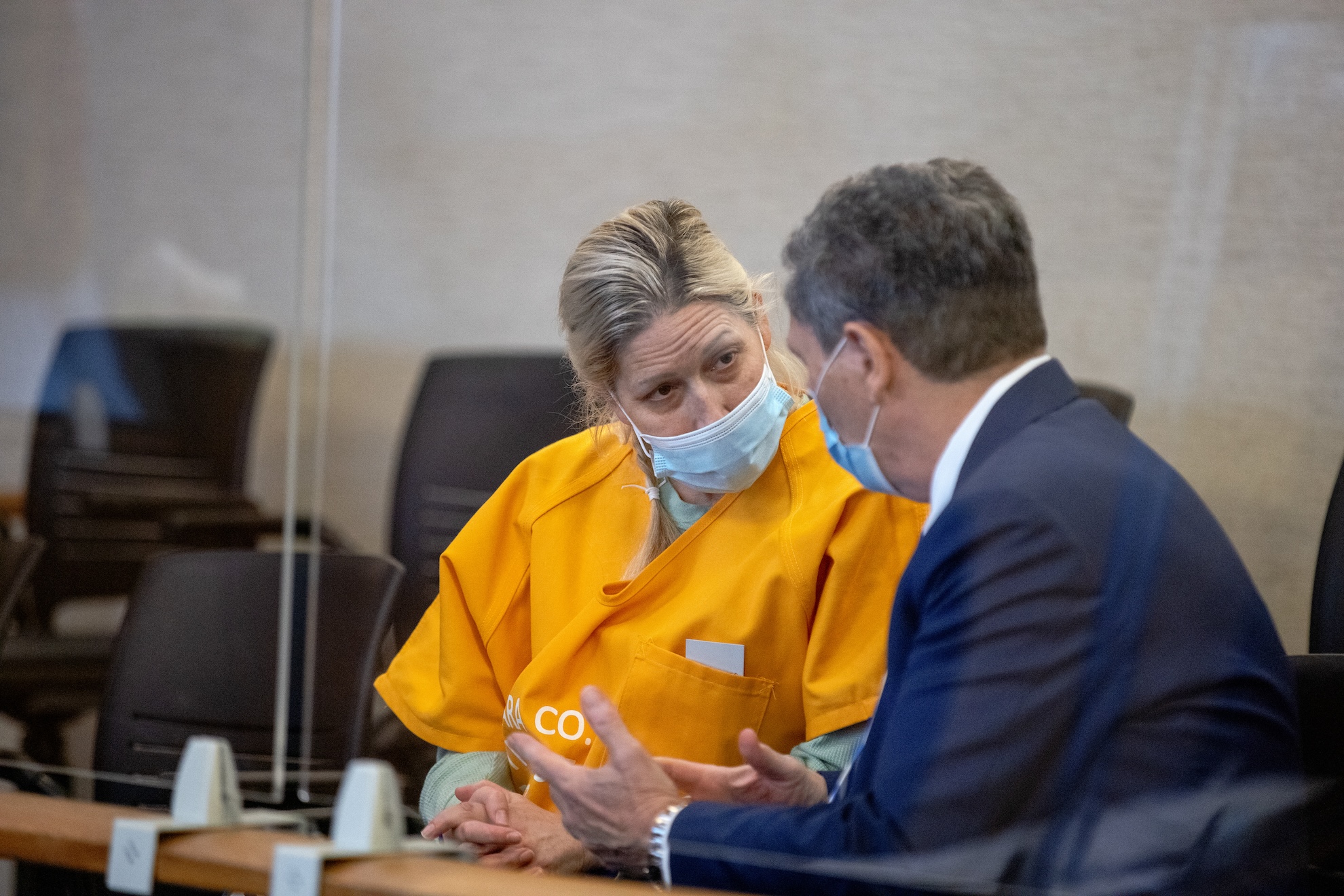
"caption": "Shannon O'Connor, the Los Gatos woman charged with throwing drunken and sex-filled parties for her son and local teens, attends an arraignment hearing with her attorney Sam Polverino in San José, California, on Oct. 20, 2021. A Santa Clara County jury found O’Connor guilty on most charges on Wednesday. ",
"credit": "Anda Chu/MediaNews Group/The Mercury News via Getty Images",
"altTag": null,
"description": "Photo by Anda Chu via Getty Images",
"imgSizes": {
"thumbnail": {
"file": "https://cdn.kqed.org/wp-content/uploads/sites/10/2026/03/GettyImages-1236026529-160x107.jpg",
"width": 160,
"height": 107,
"mimeType": "image/jpeg"
},
"1536x1536": {
"file": "https://cdn.kqed.org/wp-content/uploads/sites/10/2026/03/GettyImages-1236026529-1536x1024.jpg",
"width": 1536,
"height": 1024,
"mimeType": "image/jpeg"
},
"post-thumbnail": {
"file": "https://cdn.kqed.org/wp-content/uploads/sites/10/2026/03/GettyImages-1236026529-672x372.jpg",
"width": 672,
"height": 372,
"mimeType": "image/jpeg"
},
"twentyfourteen-full-width": {
"file": "https://cdn.kqed.org/wp-content/uploads/sites/10/2026/03/GettyImages-1236026529-1038x576.jpg",
"width": 1038,
"height": 576,
"mimeType": "image/jpeg"
},
"npr-cds-wide": {
"file": "https://cdn.kqed.org/wp-content/uploads/sites/10/2026/03/GettyImages-1236026529-1200x675.jpg",
"width": 1200,
"height": 675,
"mimeType": "image/jpeg"
},
"kqedFullSize": {
"file": "https://cdn.kqed.org/wp-content/uploads/sites/10/2026/03/GettyImages-1236026529.jpg",
"width": 1980,
"height": 1320
}
},
"isLoading": false,
"fetchFailed": false
},
"news_12074471": {
"type": "attachments",
"id": "news_12074471",
"meta": {
"index": "attachments_1716263798",
"site": "news",
"id": "12074471",
"found": true
},
"title": "022426_ALAMEDA COUNTY HEALTH CUTS _GH_002-KQED",
"publishDate": 1771972831,
"status": "inherit",
"parent": 12075361,
"modified": 1772648849,
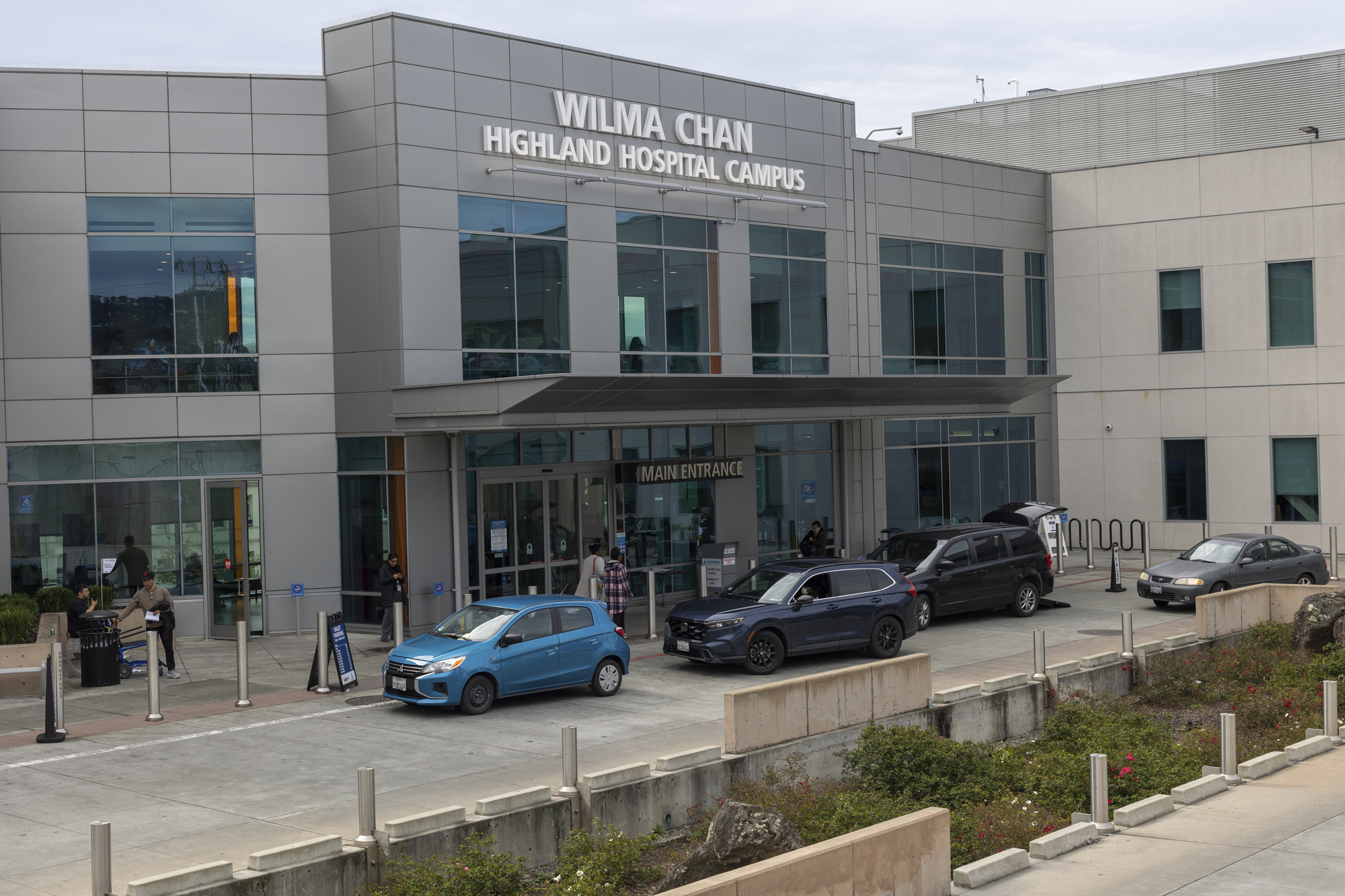
"caption": "The main entrance to the Wilma Chan Highland Hospital Campus is seen in Oakland on Feb. 24, 2026. The hospital is part of Alameda Health System.",
"credit": "Gustavo Hernandez/KQED",
"altTag": null,
"description": null,
"imgSizes": {
"thumbnail": {
"file": "https://cdn.kqed.org/wp-content/uploads/sites/10/2026/02/022426_ALAMEDA-COUNTY-HEALTH-CUTS-_GH_002-KQED-160x107.jpg",
"width": 160,
"height": 107,
"mimeType": "image/jpeg"
},
"1536x1536": {
"file": "https://cdn.kqed.org/wp-content/uploads/sites/10/2026/02/022426_ALAMEDA-COUNTY-HEALTH-CUTS-_GH_002-KQED-1536x1024.jpg",
"width": 1536,
"height": 1024,
"mimeType": "image/jpeg"
},
"post-thumbnail": {
"file": "https://cdn.kqed.org/wp-content/uploads/sites/10/2026/02/022426_ALAMEDA-COUNTY-HEALTH-CUTS-_GH_002-KQED-672x372.jpg",
"width": 672,
"height": 372,
"mimeType": "image/jpeg"
},
"twentyfourteen-full-width": {
"file": "https://cdn.kqed.org/wp-content/uploads/sites/10/2026/02/022426_ALAMEDA-COUNTY-HEALTH-CUTS-_GH_002-KQED-1038x576.jpg",
"width": 1038,
"height": 576,
"mimeType": "image/jpeg"
},
"npr-cds-wide": {
"file": "https://cdn.kqed.org/wp-content/uploads/sites/10/2026/02/022426_ALAMEDA-COUNTY-HEALTH-CUTS-_GH_002-KQED-1200x675.jpg",
"width": 1200,
"height": 675,
"mimeType": "image/jpeg"
},
"kqedFullSize": {
"file": "https://cdn.kqed.org/wp-content/uploads/sites/10/2026/02/022426_ALAMEDA-COUNTY-HEALTH-CUTS-_GH_002-KQED.jpg",
"width": 2000,
"height": 1333
}
},
"isLoading": false,
"fetchFailed": false
},
"news_12075256": {
"type": "attachments",
"id": "news_12075256",
"meta": {
"index": "attachments_1716263798",
"site": "news",
"id": "12075256",
"found": true
},
"title": "260303-MUNIFUNDINGKICKOFF-14-BL-KQED",
"publishDate": 1772581161,
"status": "inherit",
"parent": 0,
"modified": 1772583240,
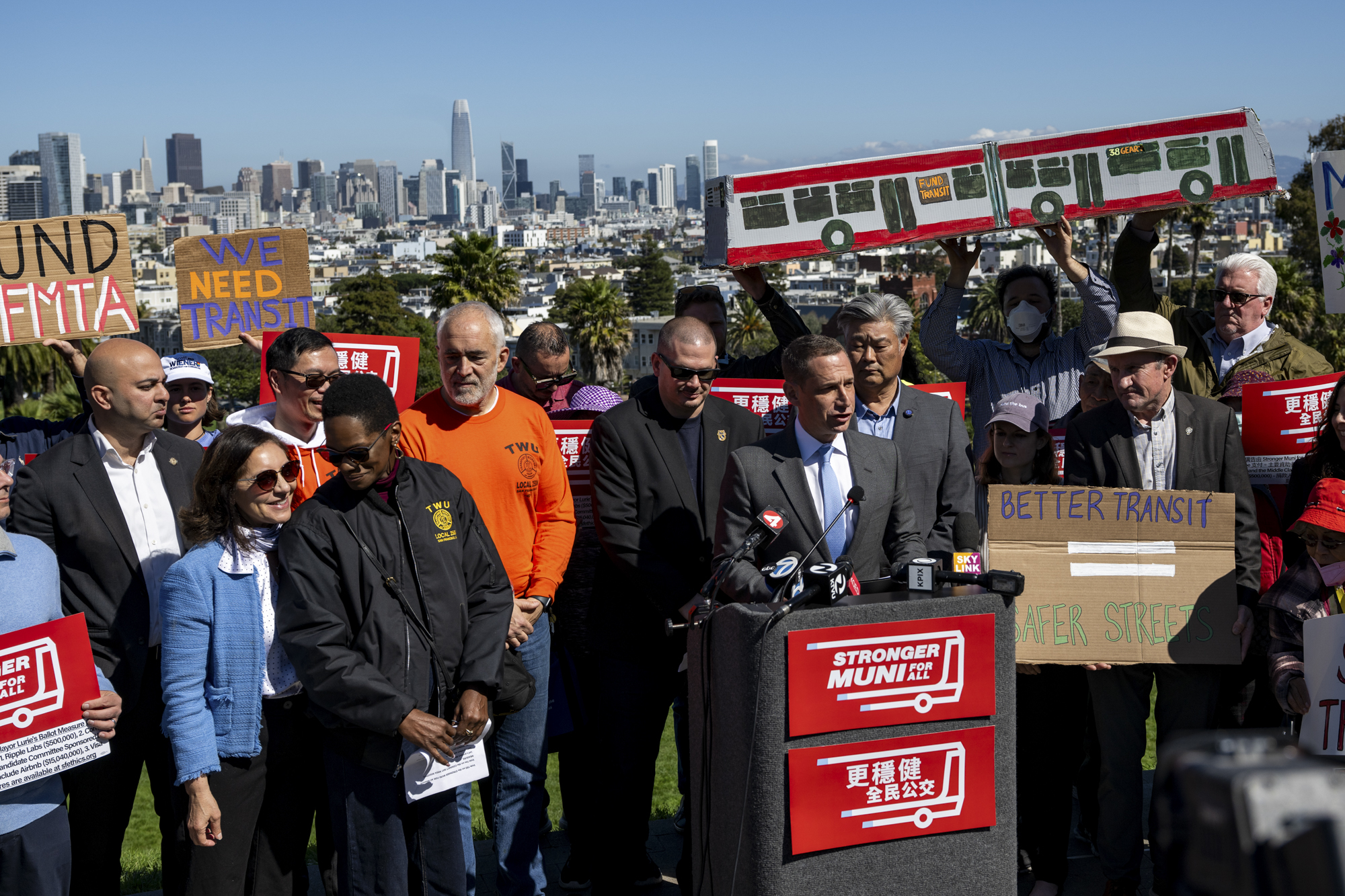
"caption": "Mayor Daniel Lurie speaks during a kickoff event for the \"Stronger Muni for All\" measure at Dolores Park in San Francisco on March 3, 2026. Supporters say the proposal would prevent major Muni service cuts as the transit system faces a budget shortfall.",
"credit": "Beth LaBerge/KQED",
"altTag": null,
"description": null,
"imgSizes": {
"thumbnail": {
"file": "https://cdn.kqed.org/wp-content/uploads/sites/10/2026/03/260303-MUNIFUNDINGKICKOFF-14-BL-KQED-160x107.jpg",
"width": 160,
"height": 107,
"mimeType": "image/jpeg"
},
"1536x1536": {
"file": "https://cdn.kqed.org/wp-content/uploads/sites/10/2026/03/260303-MUNIFUNDINGKICKOFF-14-BL-KQED-1536x1024.jpg",
"width": 1536,
"height": 1024,
"mimeType": "image/jpeg"
},
"post-thumbnail": {
"file": "https://cdn.kqed.org/wp-content/uploads/sites/10/2026/03/260303-MUNIFUNDINGKICKOFF-14-BL-KQED-672x372.jpg",
"width": 672,
"height": 372,
"mimeType": "image/jpeg"
},
"twentyfourteen-full-width": {
"file": "https://cdn.kqed.org/wp-content/uploads/sites/10/2026/03/260303-MUNIFUNDINGKICKOFF-14-BL-KQED-1038x576.jpg",
"width": 1038,
"height": 576,
"mimeType": "image/jpeg"
},
"npr-cds-wide": {
"file": "https://cdn.kqed.org/wp-content/uploads/sites/10/2026/03/260303-MUNIFUNDINGKICKOFF-14-BL-KQED-1200x675.jpg",
"width": 1200,
"height": 675,
"mimeType": "image/jpeg"
},
"kqedFullSize": {
"file": "https://cdn.kqed.org/wp-content/uploads/sites/10/2026/03/260303-MUNIFUNDINGKICKOFF-14-BL-KQED.jpg",
"width": 2000,
"height": 1333
}
},
"isLoading": false,
"fetchFailed": false
},
"news_12073741": {
"type": "attachments",
"id": "news_12073741",
"meta": {
"index": "attachments_1716263798",
"site": "news",
"id": "12073741",
"found": true
},
"title": "021826_LATEBUSES _GH_014-KQED",
"publishDate": 1771448615,
"status": "inherit",
"parent": 0,
"modified": 1772158015,
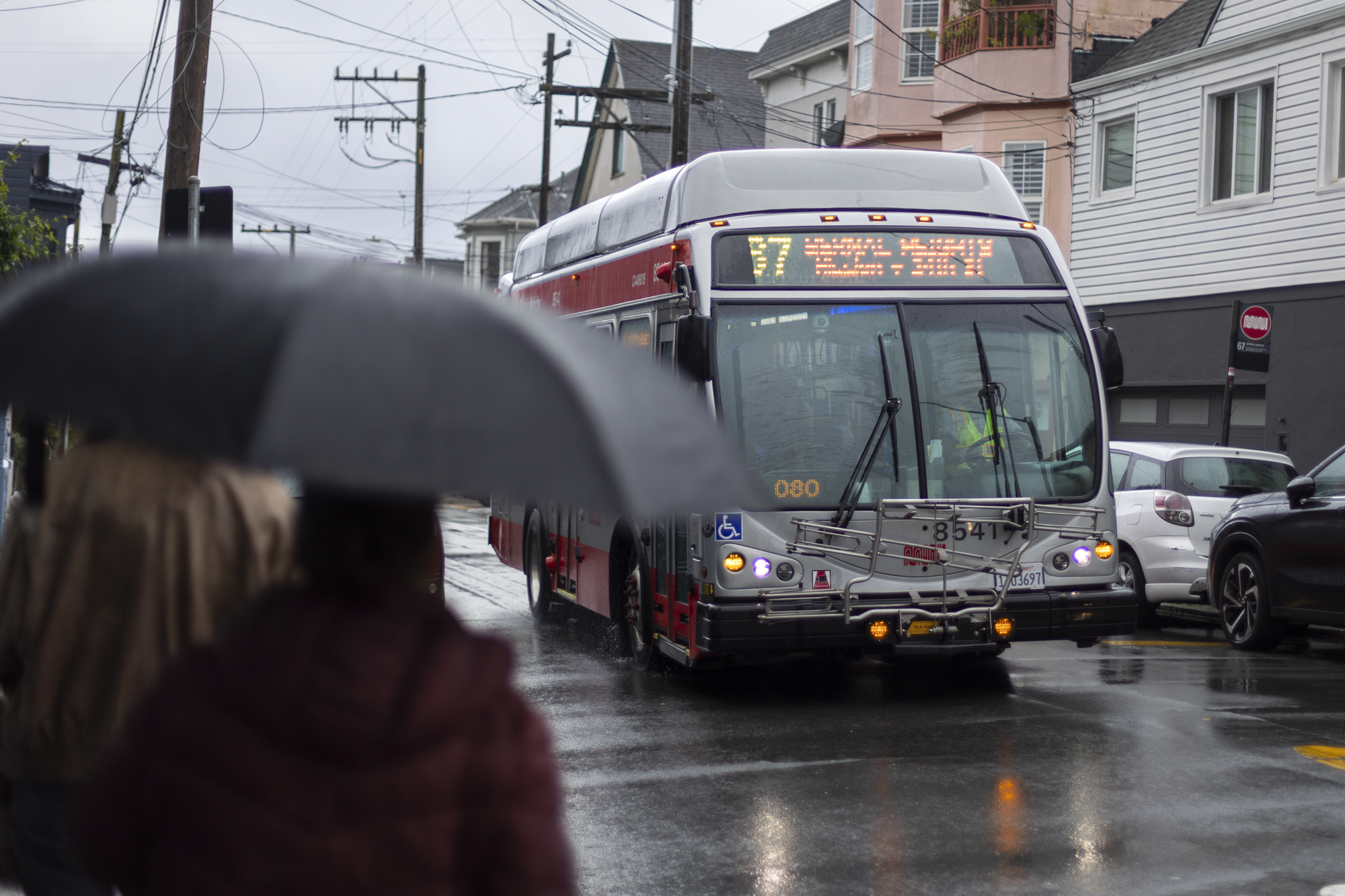
"caption": "Maria Castillo walks toward an approaching 67 Bernal Heights bus at Folsom and Cortland streets in San Francisco on Feb. 18, 2026.",
"credit": "Gustavo Hernandez/KQED",
"altTag": null,
"description": null,
"imgSizes": {
"thumbnail": {
"file": "https://cdn.kqed.org/wp-content/uploads/sites/10/2026/02/021826_LATEBUSES-_GH_014-KQED-160x107.jpg",
"width": 160,
"height": 107,
"mimeType": "image/jpeg"
},
"1536x1536": {
"file": "https://cdn.kqed.org/wp-content/uploads/sites/10/2026/02/021826_LATEBUSES-_GH_014-KQED-1536x1024.jpg",
"width": 1536,
"height": 1024,
"mimeType": "image/jpeg"
},
"post-thumbnail": {
"file": "https://cdn.kqed.org/wp-content/uploads/sites/10/2026/02/021826_LATEBUSES-_GH_014-KQED-672x372.jpg",
"width": 672,
"height": 372,
"mimeType": "image/jpeg"
},
"twentyfourteen-full-width": {
"file": "https://cdn.kqed.org/wp-content/uploads/sites/10/2026/02/021826_LATEBUSES-_GH_014-KQED-1038x576.jpg",
"width": 1038,
"height": 576,
"mimeType": "image/jpeg"
},
"npr-cds-wide": {
"file": "https://cdn.kqed.org/wp-content/uploads/sites/10/2026/02/021826_LATEBUSES-_GH_014-KQED-1200x675.jpg",
"width": 1200,
"height": 675,
"mimeType": "image/jpeg"
},
"kqedFullSize": {
"file": "https://cdn.kqed.org/wp-content/uploads/sites/10/2026/02/021826_LATEBUSES-_GH_014-KQED.jpg",
"width": 2000,
"height": 1333
}
},
"isLoading": false,
"fetchFailed": false
},
"news_12075117": {
"type": "attachments",
"id": "news_12075117",
"meta": {
"index": "attachments_1716263798",
"site": "news",
"id": "12075117",
"found": true
},
"title": "260302-WAYMOOUTAGEREPORT-23-BL-KQED",
"publishDate": 1772497069,
"status": "inherit",
"parent": 0,
"modified": 1772497101,
"caption": "Waymo representatives wait to speak during a Board of Supervisors hearing on Waymo’s emergency operations at City Hall in San Francisco on March 2, 2026. A December power outage left Waymo’s autonomous vehicles stalled on city streets.",
"credit": "Beth LaBerge/KQED",
"altTag": null,
"description": null,
"imgSizes": {
"thumbnail": {
"file": "https://cdn.kqed.org/wp-content/uploads/sites/10/2026/03/260302-WAYMOOUTAGEREPORT-23-BL-KQED-160x107.jpg",
"width": 160,
"height": 107,
"mimeType": "image/jpeg"
},
"1536x1536": {
"file": "https://cdn.kqed.org/wp-content/uploads/sites/10/2026/03/260302-WAYMOOUTAGEREPORT-23-BL-KQED-1536x1024.jpg",
"width": 1536,
"height": 1024,
"mimeType": "image/jpeg"
},
"post-thumbnail": {
"file": "https://cdn.kqed.org/wp-content/uploads/sites/10/2026/03/260302-WAYMOOUTAGEREPORT-23-BL-KQED-672x372.jpg",
"width": 672,
"height": 372,
"mimeType": "image/jpeg"
},
"twentyfourteen-full-width": {
"file": "https://cdn.kqed.org/wp-content/uploads/sites/10/2026/03/260302-WAYMOOUTAGEREPORT-23-BL-KQED-1038x576.jpg",
"width": 1038,
"height": 576,
"mimeType": "image/jpeg"
},
"npr-cds-wide": {
"file": "https://cdn.kqed.org/wp-content/uploads/sites/10/2026/03/260302-WAYMOOUTAGEREPORT-23-BL-KQED-1200x675.jpg",
"width": 1200,
"height": 675,
"mimeType": "image/jpeg"
},
"kqedFullSize": {
"file": "https://cdn.kqed.org/wp-content/uploads/sites/10/2026/03/260302-WAYMOOUTAGEREPORT-23-BL-KQED.jpg",
"width": 2000,
"height": 1333
}
},
"isLoading": false,
"fetchFailed": false
},
"news_12070970": {
"type": "attachments",
"id": "news_12070970",
"meta": {
"index": "attachments_1716263798",
"site": "news",
"id": "12070970",
"found": true
},
"title": "260123-SIGNATUREKICKOFF00606_TV-KQED",
"publishDate": 1769210919,
"status": "inherit",
"parent": 12072392,
"modified": 1772489500,
"caption": "Mayor Daniel Lurie speaks on his support for California Senate Bill 63 at a press conference at Embarcadero Plaza in San Francisco on Jan. 23, 2026.",
"credit": "Tâm Vũ/KQED",
"altTag": null,
"description": null,
"imgSizes": {
"thumbnail": {
"file": "https://cdn.kqed.org/wp-content/uploads/sites/10/2026/01/260123-SIGNATUREKICKOFF00606_TV-KQED-160x107.jpg",
"width": 160,
"height": 107,
"mimeType": "image/jpeg"
},
"1536x1536": {
"file": "https://cdn.kqed.org/wp-content/uploads/sites/10/2026/01/260123-SIGNATUREKICKOFF00606_TV-KQED-1536x1024.jpg",
"width": 1536,
"height": 1024,
"mimeType": "image/jpeg"
},
"post-thumbnail": {
"file": "https://cdn.kqed.org/wp-content/uploads/sites/10/2026/01/260123-SIGNATUREKICKOFF00606_TV-KQED-672x372.jpg",
"width": 672,
"height": 372,
"mimeType": "image/jpeg"
},
"twentyfourteen-full-width": {
"file": "https://cdn.kqed.org/wp-content/uploads/sites/10/2026/01/260123-SIGNATUREKICKOFF00606_TV-KQED-1038x576.jpg",
"width": 1038,
"height": 576,
"mimeType": "image/jpeg"
},
"npr-cds-wide": {
"file": "https://cdn.kqed.org/wp-content/uploads/sites/10/2026/01/260123-SIGNATUREKICKOFF00606_TV-KQED-1200x675.jpg",
"width": 1200,
"height": 675,
"mimeType": "image/jpeg"
},
"kqedFullSize": {
"file": "https://cdn.kqed.org/wp-content/uploads/sites/10/2026/01/260123-SIGNATUREKICKOFF00606_TV-KQED.jpg",
"width": 2000,
"height": 1333
}
},
"isLoading": false,
"fetchFailed": false
},
"news_12069069": {
"type": "attachments",
"id": "news_12069069",
"meta": {
"index": "attachments_1716263798",
"site": "news",
"id": "12069069",
"found": true
},
"title": "260107-SFCongressionalCandidateForum-36-BL_qed",
"publishDate": 1767893291,
"status": "inherit",
"parent": 0,
"modified": 1767893322,
"caption": "Candidates running for California’s 11th Congressional District, (from left) Saikat Chakrabarti, state Sen. Scott Wiener, and San Francisco Supervisor Connie Chan, take part in a forum at UC Law San Francisco on Jan. 7, 2026. The forum was hosted by the Alice B. Toklas LGBTQ Democratic Club, the Harvey Milk LGBTQ Democratic Club, and the California Working Families Party, and was moderated by Bay Area Reporter news editor Cynthia Laird and Mission Local managing editor Joe Eskenazi.",
"credit": "Beth LaBerge/KQED",
"altTag": null,
"description": null,
"imgSizes": {
"thumbnail": {
"file": "https://cdn.kqed.org/wp-content/uploads/sites/10/2026/01/260107-SFCongressionalCandidateForum-36-BL_qed-160x107.jpg",
"width": 160,
"height": 107,
"mimeType": "image/jpeg"
},
"1536x1536": {
"file": "https://cdn.kqed.org/wp-content/uploads/sites/10/2026/01/260107-SFCongressionalCandidateForum-36-BL_qed-1536x1024.jpg",
"width": 1536,
"height": 1024,
"mimeType": "image/jpeg"
},
"post-thumbnail": {
"file": "https://cdn.kqed.org/wp-content/uploads/sites/10/2026/01/260107-SFCongressionalCandidateForum-36-BL_qed-672x372.jpg",
"width": 672,
"height": 372,
"mimeType": "image/jpeg"
},
"twentyfourteen-full-width": {
"file": "https://cdn.kqed.org/wp-content/uploads/sites/10/2026/01/260107-SFCongressionalCandidateForum-36-BL_qed-1038x576.jpg",
"width": 1038,
"height": 576,
"mimeType": "image/jpeg"
},
"npr-cds-wide": {
"file": "https://cdn.kqed.org/wp-content/uploads/sites/10/2026/01/260107-SFCongressionalCandidateForum-36-BL_qed-1200x675.jpg",
"width": 1200,
"height": 675,
"mimeType": "image/jpeg"
},
"kqedFullSize": {
"file": "https://cdn.kqed.org/wp-content/uploads/sites/10/2026/01/260107-SFCongressionalCandidateForum-36-BL_qed.jpg",
"width": 2000,
"height": 1333
}
},
"isLoading": false,
"fetchFailed": false
},
"news_12075131": {
"type": "attachments",
"id": "news_12075131",
"meta": {
"index": "attachments_1716263798",
"site": "news",
"id": "12075131",
"found": true
},
"title": "KQED_VIGILMISSIONBAY_ORBEGOZO-5-KQED",
"publishDate": 1772508086,
"status": "inherit",
"parent": 0,
"modified": 1772556507,
"caption": "Notes written by attendees at a vigil to honor a 2-year-old girl who was struck and killed by a driver hang on a post near the site of the crash on 4th and Channel streets in Mission Bay, San Francisco, on Monday, March 2, 2026.",
"credit": "Manuel Orbegozo for KQED",
"altTag": null,
"description": null,
"imgSizes": {
"thumbnail": {
"file": "https://cdn.kqed.org/wp-content/uploads/sites/10/2026/03/KQED_VIGILMISSIONBAY_ORBEGOZO-5-KQED-160x107.jpg",
"width": 160,
"height": 107,
"mimeType": "image/jpeg"
},
"1536x1536": {
"file": "https://cdn.kqed.org/wp-content/uploads/sites/10/2026/03/KQED_VIGILMISSIONBAY_ORBEGOZO-5-KQED-1536x1025.jpg",
"width": 1536,
"height": 1025,
"mimeType": "image/jpeg"
},
"post-thumbnail": {
"file": "https://cdn.kqed.org/wp-content/uploads/sites/10/2026/03/KQED_VIGILMISSIONBAY_ORBEGOZO-5-KQED-672x372.jpg",
"width": 672,
"height": 372,
"mimeType": "image/jpeg"
},
"twentyfourteen-full-width": {
"file": "https://cdn.kqed.org/wp-content/uploads/sites/10/2026/03/KQED_VIGILMISSIONBAY_ORBEGOZO-5-KQED-1038x576.jpg",
"width": 1038,
"height": 576,
"mimeType": "image/jpeg"
},
"npr-cds-wide": {
"file": "https://cdn.kqed.org/wp-content/uploads/sites/10/2026/03/KQED_VIGILMISSIONBAY_ORBEGOZO-5-KQED-1200x675.jpg",
"width": 1200,
"height": 675,
"mimeType": "image/jpeg"
},
"kqedFullSize": {
"file": "https://cdn.kqed.org/wp-content/uploads/sites/10/2026/03/KQED_VIGILMISSIONBAY_ORBEGOZO-5-KQED.jpg",
"width": 2000,
"height": 1334
}
},
"isLoading": false,
"fetchFailed": false
},
"news_12075059": {
"type": "attachments",
"id": "news_12075059",
"meta": {
"index": "attachments_1716263798",
"site": "news",
"id": "12075059",
"found": true
},
"title": "Pigeon Point Lighthouse",
"publishDate": 1772479046,
"status": "inherit",
"parent": 12073450,
"modified": 1772479086,
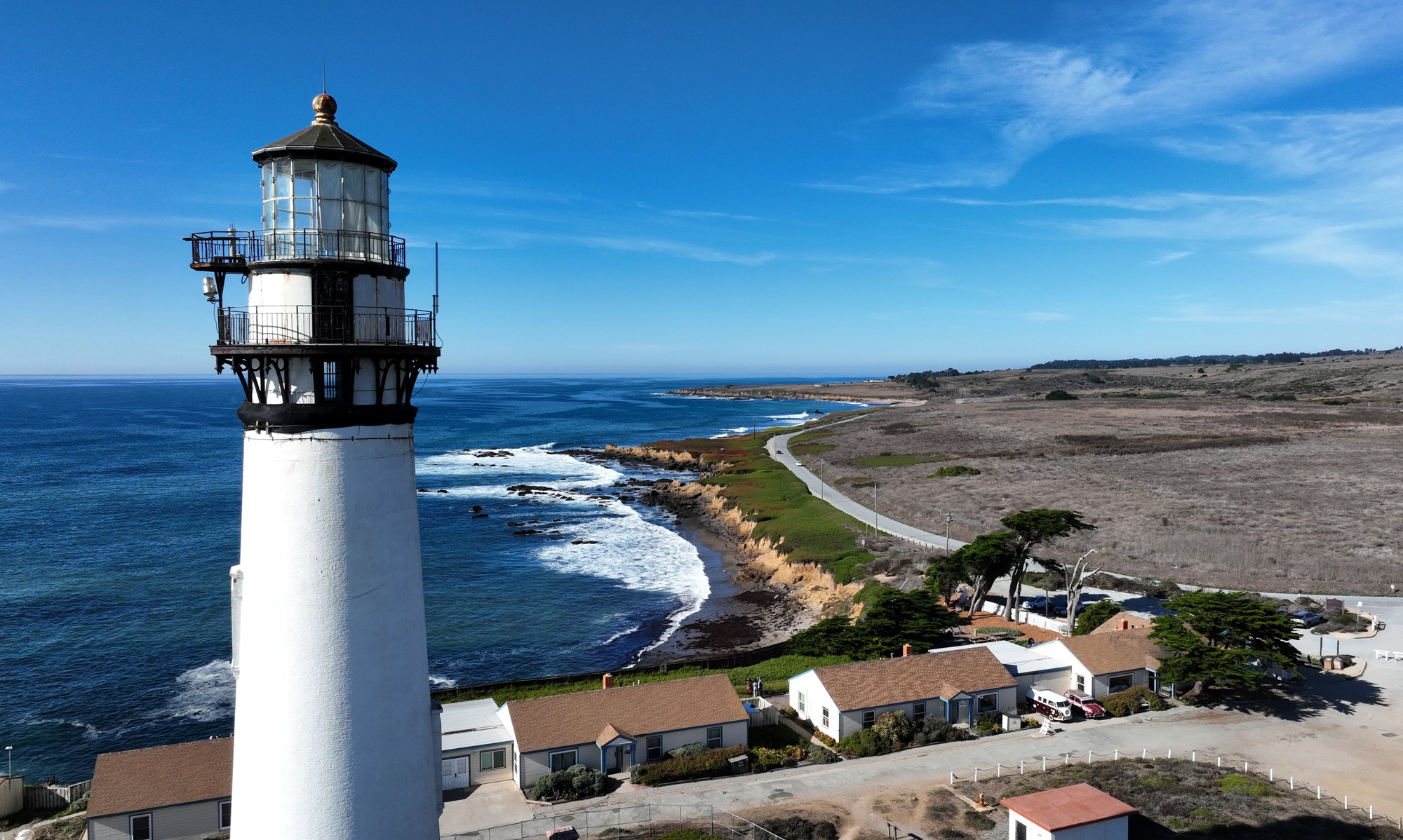
"caption": "A drone view of the Pigeon Point Lighthouse at Pigeon Point Light Station State Historic Park in Pescadero, California, on Oct. 31, 2023. ",
"credit": "Jane Tyska/Digital First Media/East Bay Times via Getty Images",
"altTag": null,
"description": null,
"imgSizes": {
"thumbnail": {
"file": "https://cdn.kqed.org/wp-content/uploads/sites/10/2026/03/BayAreaFreeWalkingGetty-160x96.jpg",
"width": 160,
"height": 96,
"mimeType": "image/jpeg"
},
"1536x1536": {
"file": "https://cdn.kqed.org/wp-content/uploads/sites/10/2026/03/BayAreaFreeWalkingGetty-1536x920.jpg",
"width": 1536,
"height": 920,
"mimeType": "image/jpeg"
},
"post-thumbnail": {
"file": "https://cdn.kqed.org/wp-content/uploads/sites/10/2026/03/BayAreaFreeWalkingGetty-672x372.jpg",
"width": 672,
"height": 372,
"mimeType": "image/jpeg"
},
"twentyfourteen-full-width": {
"file": "https://cdn.kqed.org/wp-content/uploads/sites/10/2026/03/BayAreaFreeWalkingGetty-1038x576.jpg",
"width": 1038,
"height": 576,
"mimeType": "image/jpeg"
},
"npr-cds-wide": {
"file": "https://cdn.kqed.org/wp-content/uploads/sites/10/2026/03/BayAreaFreeWalkingGetty-1200x675.jpg",
"width": 1200,
"height": 675,
"mimeType": "image/jpeg"
},
"kqedFullSize": {
"file": "https://cdn.kqed.org/wp-content/uploads/sites/10/2026/03/BayAreaFreeWalkingGetty.jpg",
"width": 2000,
"height": 1198
}
},
"isLoading": false,
"fetchFailed": false
},
"news_12075099": {
"type": "attachments",
"id": "news_12075099",
"meta": {
"index": "attachments_1716263798",
"site": "news",
"id": "12075099",
"found": true
},
"title": "026_KQED_Vallejo_FactoryOS_08062020_qed",
"publishDate": 1772490112,
"status": "inherit",
"parent": 12075043,
"modified": 1772490135,
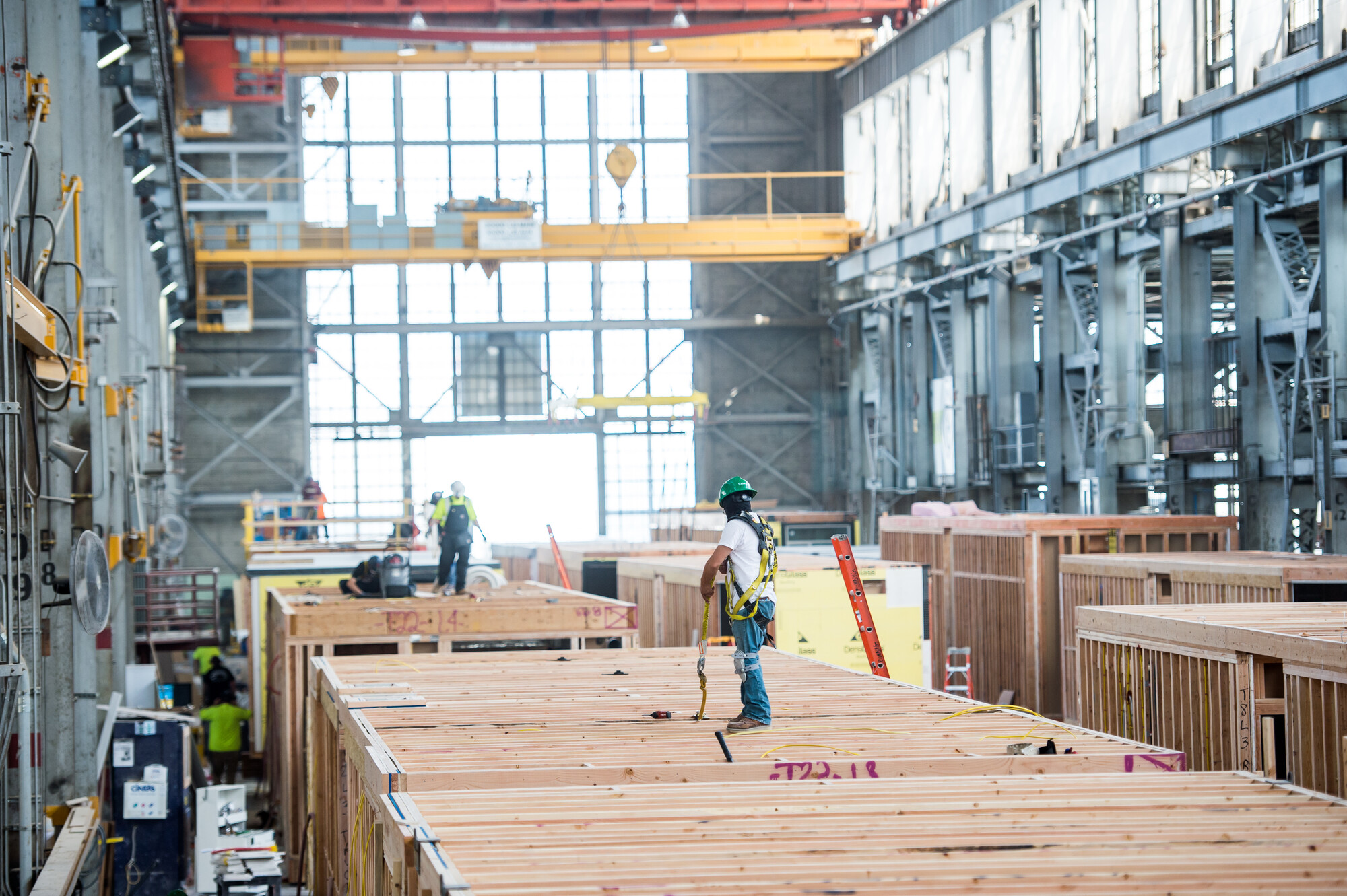
"caption": "Factory OS employees work on different parts of the assembly process of modular homes at the Vallejo warehouse on Aug. 6, 2020.",
"credit": "Beth LaBerge/KQED",
"altTag": null,
"description": null,
"imgSizes": {
"thumbnail": {
"file": "https://cdn.kqed.org/wp-content/uploads/sites/10/2026/03/026_KQED_Vallejo_FactoryOS_08062020_qed-160x106.jpg",
"width": 160,
"height": 106,
"mimeType": "image/jpeg"
},
"1536x1536": {
"file": "https://cdn.kqed.org/wp-content/uploads/sites/10/2026/03/026_KQED_Vallejo_FactoryOS_08062020_qed-1536x1022.jpg",
"width": 1536,
"height": 1022,
"mimeType": "image/jpeg"
},
"post-thumbnail": {
"file": "https://cdn.kqed.org/wp-content/uploads/sites/10/2026/03/026_KQED_Vallejo_FactoryOS_08062020_qed-672x372.jpg",
"width": 672,
"height": 372,
"mimeType": "image/jpeg"
},
"twentyfourteen-full-width": {
"file": "https://cdn.kqed.org/wp-content/uploads/sites/10/2026/03/026_KQED_Vallejo_FactoryOS_08062020_qed-1038x576.jpg",
"width": 1038,
"height": 576,
"mimeType": "image/jpeg"
},
"npr-cds-wide": {
"file": "https://cdn.kqed.org/wp-content/uploads/sites/10/2026/03/026_KQED_Vallejo_FactoryOS_08062020_qed-1200x675.jpg",
"width": 1200,
"height": 675,
"mimeType": "image/jpeg"
},
"kqedFullSize": {
"file": "https://cdn.kqed.org/wp-content/uploads/sites/10/2026/03/026_KQED_Vallejo_FactoryOS_08062020_qed.jpg",
"width": 2000,
"height": 1331
}
},
"isLoading": false,
"fetchFailed": false
},
"news_12074883": {
"type": "attachments",
"id": "news_12074883",
"meta": {
"index": "attachments_1716263798",
"site": "news",
"id": "12074883",
"found": true
},
"title": "250730-waymofile_00306_TV_qed",
"publishDate": 1772218672,
"status": "inherit",
"parent": 12074861,
"modified": 1772218684,
"caption": "A Waymo autonomous vehicle drives through 16th Street and Potrero in San Francisco on July 22, 2025.",
"credit": "Tâm Vũ/KQED",
"altTag": null,
"description": null,
"imgSizes": {
"thumbnail": {
"file": "https://cdn.kqed.org/wp-content/uploads/sites/10/2026/02/250730-waymofile_00306_TV_qed-160x107.jpg",
"width": 160,
"height": 107,
"mimeType": "image/jpeg"
},
"1536x1536": {
"file": "https://cdn.kqed.org/wp-content/uploads/sites/10/2026/02/250730-waymofile_00306_TV_qed-1536x1024.jpg",
"width": 1536,
"height": 1024,
"mimeType": "image/jpeg"
},
"post-thumbnail": {
"file": "https://cdn.kqed.org/wp-content/uploads/sites/10/2026/02/250730-waymofile_00306_TV_qed-672x372.jpg",
"width": 672,
"height": 372,
"mimeType": "image/jpeg"
},
"twentyfourteen-full-width": {
"file": "https://cdn.kqed.org/wp-content/uploads/sites/10/2026/02/250730-waymofile_00306_TV_qed-1038x576.jpg",
"width": 1038,
"height": 576,
"mimeType": "image/jpeg"
},
"npr-cds-wide": {
"file": "https://cdn.kqed.org/wp-content/uploads/sites/10/2026/02/250730-waymofile_00306_TV_qed-1200x675.jpg",
"width": 1200,
"height": 675,
"mimeType": "image/jpeg"
},
"kqedFullSize": {
"file": "https://cdn.kqed.org/wp-content/uploads/sites/10/2026/02/250730-waymofile_00306_TV_qed.jpg",
"width": 2000,
"height": 1333
}
},
"isLoading": false,
"fetchFailed": false
},
"news_12074239": {
"type": "attachments",
"id": "news_12074239",
"meta": {
"index": "attachments_1716263798",
"site": "news",
"id": "12074239",
"found": true
},
"title": "260221-SUNNYSIDECONSERVATORY00252_TV-KQED",
"publishDate": 1771869297,
"status": "inherit",
"parent": 0,
"modified": 1772237936,
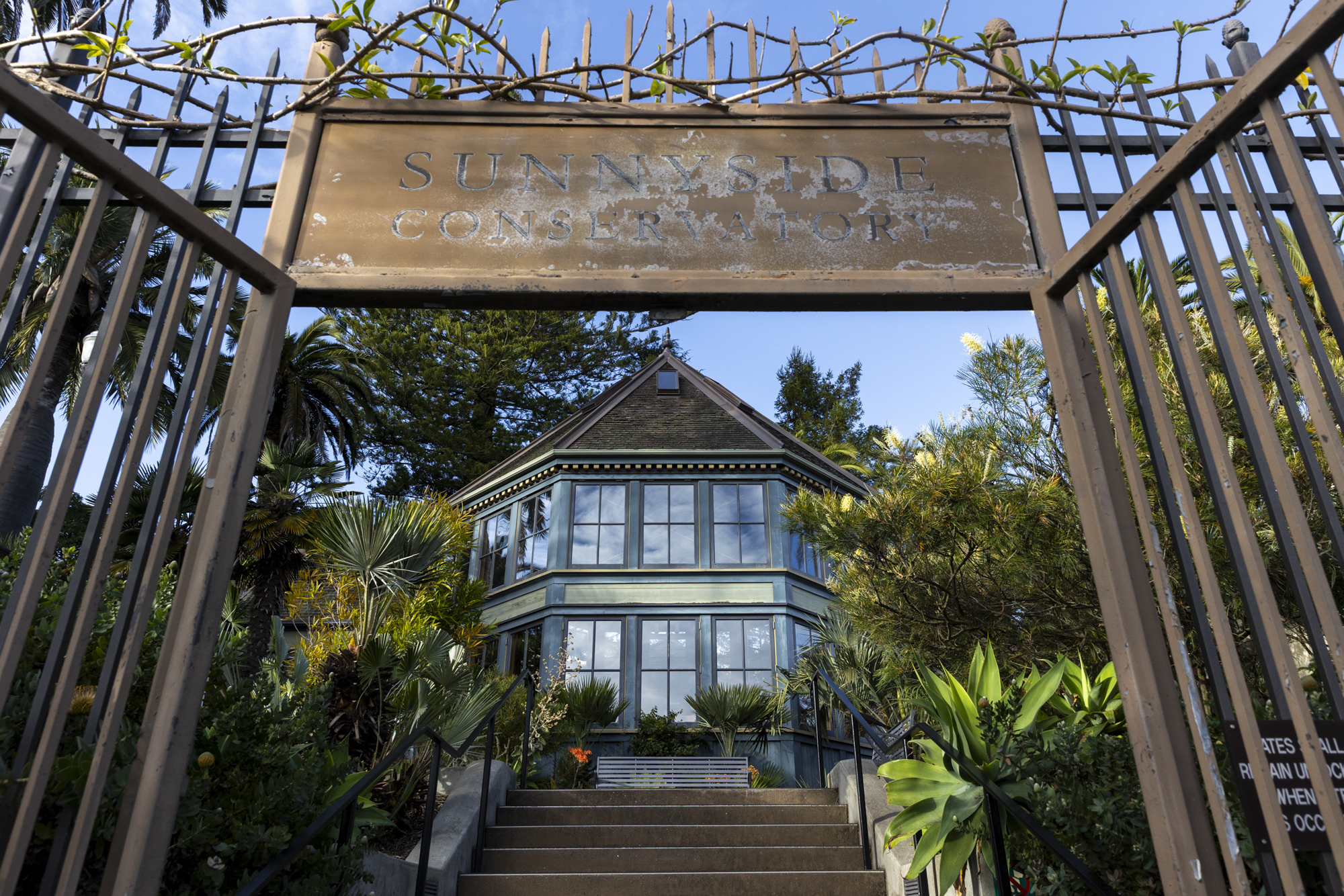
"caption": "Sunnyside Conservatory is located on Monterey Boulevard in San Francisco on Feb. 20, 2026.",
"credit": "Tâm Vũ/KQED",
"altTag": null,
"description": null,
"imgSizes": {
"thumbnail": {
"file": "https://cdn.kqed.org/wp-content/uploads/sites/10/2026/02/260221-SUNNYSIDECONSERVATORY00252_TV-KQED-160x107.jpg",
"width": 160,
"height": 107,
"mimeType": "image/jpeg"
},
"1536x1536": {
"file": "https://cdn.kqed.org/wp-content/uploads/sites/10/2026/02/260221-SUNNYSIDECONSERVATORY00252_TV-KQED-1536x1025.jpg",
"width": 1536,
"height": 1025,
"mimeType": "image/jpeg"
},
"post-thumbnail": {
"file": "https://cdn.kqed.org/wp-content/uploads/sites/10/2026/02/260221-SUNNYSIDECONSERVATORY00252_TV-KQED-672x372.jpg",
"width": 672,
"height": 372,
"mimeType": "image/jpeg"
},
"twentyfourteen-full-width": {
"file": "https://cdn.kqed.org/wp-content/uploads/sites/10/2026/02/260221-SUNNYSIDECONSERVATORY00252_TV-KQED-1038x576.jpg",
"width": 1038,
"height": 576,
"mimeType": "image/jpeg"
},
"npr-cds-wide": {
"file": "https://cdn.kqed.org/wp-content/uploads/sites/10/2026/02/260221-SUNNYSIDECONSERVATORY00252_TV-KQED-1200x675.jpg",
"width": 1200,
"height": 675,
"mimeType": "image/jpeg"
},
"kqedFullSize": {
"file": "https://cdn.kqed.org/wp-content/uploads/sites/10/2026/02/260221-SUNNYSIDECONSERVATORY00252_TV-KQED.jpg",
"width": 2000,
"height": 1334
}
},
"isLoading": false,
"fetchFailed": false
}
},
"audioPlayerReducer": {
"postId": "stream_live",
"isPaused": true,
"isPlaying": false,
"pfsActive": false,
"pledgeModalIsOpen": true,
"playerDrawerIsOpen": false,
"liveAudioPlayStartedAt": 0,
"liveAudioPlayContext": ""
},
"authorsReducer": {
"byline_news_12075361": {
"type": "authors",
"id": "byline_news_12075361",
"meta": {
"override": true
},
"slug": "byline_news_12075361",
"name": "Darwin BondGraham, The Oaklandside",
"isLoading": false
},
"katrinaschwartz": {
"type": "authors",
"id": "234",
"meta": {
"index": "authors_1716337520",
"id": "234",
"found": true
},
"name": "Katrina Schwartz",
"firstName": "Katrina",
"lastName": "Schwartz",
"slug": "katrinaschwartz",
"email": "kschwartz@kqed.org",
"display_author_email": false,
"staff_mastheads": [
"news"
],
"title": "Producer",
"bio": "Katrina Schwartz is a journalist based in San Francisco. She's worked at KPCC public radio in LA and has reported on air and online for KQED since 2010. She covered how teaching and learning is changing for MindShift between 2012 and 2020. She is the co-host of the MindShift podcast and now produces KQED's Bay Curious podcast.",
"avatar": "https://secure.gravatar.com/avatar/edb4ee79070447a018538c9aae6eeecf28786515b8a0c30e43b6b7dce5aa44c8?s=600&d=blank&r=g",
"twitter": "kschwart",
"bluesky": null,
"facebook": null,
"instagram": null,
"linkedin": null,
"sites": [
{
"site": "",
"roles": [
"editor"
]
},
{
"site": "news",
"roles": [
"editor"
]
},
{
"site": "mindshift",
"roles": [
"administrator"
]
},
{
"site": "stateofhealth",
"roles": [
"author"
]
},
{
"site": "science",
"roles": [
"editor"
]
}
],
"headData": {
"title": "Katrina Schwartz | KQED",
"description": "Producer",
"ogImgSrc": "https://secure.gravatar.com/avatar/edb4ee79070447a018538c9aae6eeecf28786515b8a0c30e43b6b7dce5aa44c8?s=600&d=blank&r=g",
"twImgSrc": "https://secure.gravatar.com/avatar/edb4ee79070447a018538c9aae6eeecf28786515b8a0c30e43b6b7dce5aa44c8?s=600&d=blank&r=g"
},
"isLoading": false,
"link": "/author/katrinaschwartz"
},
"ralexandra": {
"type": "authors",
"id": "11242",
"meta": {
"index": "authors_1716337520",
"id": "11242",
"found": true
},
"name": "Rae Alexandra",
"firstName": "Rae",
"lastName": "Alexandra",
"slug": "ralexandra",
"email": "ralexandra@kqed.org",
"display_author_email": true,
"staff_mastheads": [],
"title": "Reporter/Producer",
"bio": "Rae Alexandra is a Reporter/Producer for KQED Arts & Culture, and the creator/author of the \u003ca href=\"https://www.kqed.org/arts/program/rebel-girls-from-bay-area-history\">Rebel Girls From Bay Area History\u003c/a> and \u003ca href=\"https://www.kqed.org/bizarrebayarea\">Bizarre Bay Area\u003c/a> series. Her debut book, \u003ca href=\"https://citylights.com/politics-current-events-history/unsung-heroines35-women-who-changed/\">Unsung Heroines: 35 Women Who Changed the Bay Area\u003c/a> was published by City Lights in March 2026. In 2023, Rae was awarded an SPJ Excellence in Journalism Award for Arts & Culture. Rae was born and raised in Wales and subsequently — even after two decades in Northern California — still uses phrases that regularly baffle her coworkers.",
"avatar": "https://secure.gravatar.com/avatar/edfee8176c80cc0a382b051190f5341997df378a934a5774dcb0977732dfd401?s=600&d=blank&r=g",
"twitter": null,
"bluesky": null,
"facebook": null,
"instagram": null,
"linkedin": null,
"sites": [
{
"site": "arts",
"roles": [
"subscriber"
]
},
{
"site": "news",
"roles": [
"subscriber"
]
},
{
"site": "pop",
"roles": [
"subscriber"
]
},
{
"site": "bayareabites",
"roles": [
"subscriber"
]
},
{
"site": "science",
"roles": [
"subscriber"
]
}
],
"headData": {
"title": "Rae Alexandra | KQED",
"description": "Reporter/Producer",
"ogImgSrc": "https://secure.gravatar.com/avatar/edfee8176c80cc0a382b051190f5341997df378a934a5774dcb0977732dfd401?s=600&d=blank&r=g",
"twImgSrc": "https://secure.gravatar.com/avatar/edfee8176c80cc0a382b051190f5341997df378a934a5774dcb0977732dfd401?s=600&d=blank&r=g"
},
"isLoading": false,
"link": "/author/ralexandra"
},
"abandlamudi": {
"type": "authors",
"id": "11672",
"meta": {
"index": "authors_1716337520",
"id": "11672",
"found": true
},
"name": "Adhiti Bandlamudi",
"firstName": "Adhiti",
"lastName": "Bandlamudi",
"slug": "abandlamudi",
"email": "abandlamudi@kqed.org",
"display_author_email": false,
"staff_mastheads": [
"news"
],
"title": "KQED Housing Reporter",
"bio": "Adhiti Bandlamudi reports for KQED's Housing desk. She focuses on how housing gets built across the Bay Area. Before joining KQED in 2020, she reported for WUNC in Durham, North Carolina, WABE in Atlanta, Georgia and Capital Public Radio in Sacramento. In 2017, she was awarded a Kroc Fellowship at NPR where she reported on everything from sprinkles to the Golden State Killer's arrest. When she's not reporting, she's baking new recipes in her kitchen or watching movies with friends and family. She's originally from Georgia and has strong opinions about Great British Bake Off.",
"avatar": "https://secure.gravatar.com/avatar/868129c8b257bb99a3500e2c86a65400?s=600&d=mm&r=g",
"twitter": "oddity_adhiti",
"facebook": null,
"instagram": null,
"linkedin": null,
"sites": [
{
"site": "arts",
"roles": [
"author"
]
},
{
"site": "news",
"roles": [
"editor"
]
},
{
"site": "liveblog",
"roles": [
"author"
]
}
],
"headData": {
"title": "Adhiti Bandlamudi | KQED",
"description": "KQED Housing Reporter",
"ogImgSrc": "https://secure.gravatar.com/avatar/868129c8b257bb99a3500e2c86a65400?s=600&d=mm&r=g",
"twImgSrc": "https://secure.gravatar.com/avatar/868129c8b257bb99a3500e2c86a65400?s=600&d=mm&r=g"
},
"isLoading": false,
"link": "/author/abandlamudi"
},
"adahlstromeckman": {
"type": "authors",
"id": "11785",
"meta": {
"index": "authors_1716337520",
"id": "11785",
"found": true
},
"name": "Azul Dahlstrom-Eckman",
"firstName": "Azul",
"lastName": "Dahlstrom-Eckman",
"slug": "adahlstromeckman",
"email": "adahlstrom-eckman@kqed.org",
"display_author_email": true,
"staff_mastheads": [],
"title": "Reporter",
"bio": "Azul is a reporter for KQED focusing on transportation and features. He joined KQED in 2021 as an alumna of KALW's Audio Academy radio journalism training program.",
"avatar": "https://secure.gravatar.com/avatar/9cb750298435add7815a777f55bf1f46845c1386bb8452555c60a7b820b5aba3?s=600&d=blank&r=g",
"twitter": "@zuliemann",
"bluesky": "@azul415.bsky.social",
"facebook": null,
"instagram": null,
"linkedin": null,
"sites": [
{
"site": "arts",
"roles": [
"editor"
]
},
{
"site": "news",
"roles": [
"editor"
]
},
{
"site": "science",
"roles": [
"editor"
]
},
{
"site": "liveblog",
"roles": [
"author"
]
}
],
"headData": {
"title": "Azul Dahlstrom-Eckman | KQED",
"description": "Reporter",
"ogImgSrc": "https://secure.gravatar.com/avatar/9cb750298435add7815a777f55bf1f46845c1386bb8452555c60a7b820b5aba3?s=600&d=blank&r=g",
"twImgSrc": "https://secure.gravatar.com/avatar/9cb750298435add7815a777f55bf1f46845c1386bb8452555c60a7b820b5aba3?s=600&d=blank&r=g"
},
"isLoading": false,
"link": "/author/adahlstromeckman"
},
"ibloom": {
"type": "authors",
"id": "11805",
"meta": {
"index": "authors_1716337520",
"id": "11805",
"found": true
},
"name": "Izzy Bloom",
"firstName": "Izzy",
"lastName": "Bloom",
"slug": "ibloom",
"email": "ibloom@kqed.org",
"display_author_email": false,
"staff_mastheads": [],
"title": "KQED Reporter & Producer",
"bio": "Izzy is a reporter and producer on KQED's California Politics & Government Desk. She joined the desk in 2024 to produce Political Breakdown, covering local and national elections and attending the RNC and DNC in Milwaukee and Chicago. \r\n\r\nBefore that, Izzy was a producer on The California Report and reported long-form stories for The California Report Magazine. She was a finalist for the Third Coast/Richard H. Driehaus Foundation Competition and was awarded for her reporting on indigenous land back by the Society of Professional Journalists. Izzy received her master's in journalism from the University of California, Berkeley.",
"avatar": "https://secure.gravatar.com/avatar/cc4d272ca430783ee1a8efac470a6b1e0fdd082c3beb61da019801d0ff751c8c?s=600&d=blank&r=g",
"twitter": null,
"bluesky": null,
"facebook": null,
"instagram": null,
"linkedin": null,
"sites": [
{
"site": "news",
"roles": [
"editor"
]
},
{
"site": "perspectives",
"roles": [
"editor"
]
}
],
"headData": {
"title": "Izzy Bloom | KQED",
"description": "KQED Reporter & Producer",
"ogImgSrc": "https://secure.gravatar.com/avatar/cc4d272ca430783ee1a8efac470a6b1e0fdd082c3beb61da019801d0ff751c8c?s=600&d=blank&r=g",
"twImgSrc": "https://secure.gravatar.com/avatar/cc4d272ca430783ee1a8efac470a6b1e0fdd082c3beb61da019801d0ff751c8c?s=600&d=blank&r=g"
},
"isLoading": false,
"link": "/author/ibloom"
},
"sjohnson": {
"type": "authors",
"id": "11840",
"meta": {
"index": "authors_1716337520",
"id": "11840",
"found": true
},
"name": "Sydney Johnson",
"firstName": "Sydney",
"lastName": "Johnson",
"slug": "sjohnson",
"email": "sjohnson@kqed.org",
"display_author_email": false,
"staff_mastheads": [
"news"
],
"title": "KQED Reporter",
"bio": "Sydney Johnson is a general assignment reporter at KQED. She previously reported on public health and city government at the San Francisco Examiner, and before that, she covered statewide education policy for EdSource. Her reporting has won multiple local, state and national awards. Sydney is a graduate of the University of California, Berkeley and lives in San Francisco.",
"avatar": "https://secure.gravatar.com/avatar/97855f2719b72ad6190b7c535fe642c8?s=600&d=blank&r=g",
"twitter": "sydneyfjohnson",
"facebook": null,
"instagram": null,
"linkedin": null,
"sites": [
{
"site": "news",
"roles": [
"editor"
]
}
],
"headData": {
"title": "Sydney Johnson | KQED",
"description": "KQED Reporter",
"ogImgSrc": "https://secure.gravatar.com/avatar/97855f2719b72ad6190b7c535fe642c8?s=600&d=blank&r=g",
"twImgSrc": "https://secure.gravatar.com/avatar/97855f2719b72ad6190b7c535fe642c8?s=600&d=blank&r=g"
},
"isLoading": false,
"link": "/author/sjohnson"
},
"emanoukian": {
"type": "authors",
"id": "11925",
"meta": {
"index": "authors_1716337520",
"id": "11925",
"found": true
},
"name": "Elize Manoukian",
"firstName": "Elize",
"lastName": "Manoukian",
"slug": "emanoukian",
"email": "emanoukian@KQED.org",
"display_author_email": false,
"staff_mastheads": [
"news"
],
"title": "Digital News Editor",
"bio": "Elize Manoukian is an award-winning audio producer and Senior Editor on the Express Desk, KQED's digital news platform. Her work has appeared on KPFA, Interlochen Public Radio, Oregon Public Broadcast, the New York Daily News, LA Times and the San Diego Union-Tribune.",
"avatar": "https://secure.gravatar.com/avatar/4525f1a8e46ccb30933b32653d9772064cfefe3fa655eb45b3b3a80341f6bdad?s=600&d=blank&r=g",
"twitter": null,
"bluesky": null,
"facebook": null,
"instagram": null,
"linkedin": null,
"sites": [
{
"site": "arts",
"roles": [
"editor"
]
},
{
"site": "news",
"roles": [
"editor"
]
},
{
"site": "science",
"roles": [
"editor"
]
}
],
"headData": {
"title": "Elize Manoukian | KQED",
"description": "Digital News Editor",
"ogImgSrc": "https://secure.gravatar.com/avatar/4525f1a8e46ccb30933b32653d9772064cfefe3fa655eb45b3b3a80341f6bdad?s=600&d=blank&r=g",
"twImgSrc": "https://secure.gravatar.com/avatar/4525f1a8e46ccb30933b32653d9772064cfefe3fa655eb45b3b3a80341f6bdad?s=600&d=blank&r=g"
},
"isLoading": false,
"link": "/author/emanoukian"
}
},
"pagesReducer": {
"news_category_local": {
"type": "terms",
"id": "news_28250",
"meta": {
"index": "terms_1716263798",
"site": "news",
"id": "28250",
"score": 12.939732
},
"featImg": null,
"name": "Local",
"description": null,
"taxonomy": "category",
"headData": {
"twImgId": null,
"twTitle": null,
"ogTitle": null,
"ogImgId": null,
"twDescription": null,
"description": null,
"title": "Local Archives | KQED News",
"ogDescription": null
},
"ttid": 28267,
"slug": "local",
"isLoading": false,
"title": "Local",
"pageMeta": {
"site": "news",
"WpPageTemplate": "page-topic-editorial",
"currentPage": 51
},
"blocks": [
{
"blockName": "kqed/post-list",
"attrs": {
"layout": "cardArticle2",
"query": "posts/news?category=local",
"seeMore": false,
"paginated": true,
"page": 51
}
},
{
"blockName": "kqed/ad"
}
]
}
},
"pfsSessionReducer": {},
"postsReducer": {
"stream_live": {
"type": "live",
"id": "stream_live",
"audioUrl": "https://streams.kqed.org/kqedradio",
"title": "Live Stream",
"excerpt": "Live Stream information currently unavailable.",
"link": "/radio",
"featImg": "",
"label": {
"name": "KQED Live",
"link": "/"
}
},
"stream_kqedNewscast": {
"type": "posts",
"id": "stream_kqedNewscast",
"audioUrl": "https://www.kqed.org/.stream/anon/radio/RDnews/newscast.mp3?_=1",
"title": "KQED Newscast",
"featImg": "",
"label": {
"name": "88.5 FM",
"link": "/"
}
},
"news_12075393": {
"type": "posts",
"id": "news_12075393",
"meta": {
"index": "posts_1716263798",
"site": "news",
"id": "12075393",
"score": null,
"sort": [
1772664868000
]
},
"guestAuthors": [],
"slug": "los-gatos-party-mom-may-see-30-years-in-prison-after-guilty-verdict",
"title": "Los Gatos ‘Party Mom’ May See 30 Years in Prison After Guilty Verdict",
"publishDate": 1772664868,
"format": "standard",
"headTitle": "Los Gatos ‘Party Mom’ May See 30 Years in Prison After Guilty Verdict | KQED",
"labelTerm": {
"site": "news"
},
"content": "\u003cp>A \u003ca href=\"https://www.kqed.org/news/tag/santa-clara-county\">Santa Clara County\u003c/a> jury on Wednesday returned mostly guilty verdicts against a Los Gatos woman accused of hosting drunken parties with sexual activity for her teenage son and his friends, in what became known as the “Party Mom” case.\u003c/p>\n\u003cp>A jury convicted Shannon O’Connor of 48 charges, including the most serious charges of sexually assaulting two girls by proxy because she allowed them to get so intoxicated that they were unable to consent. She was also found guilty of additional charges, including annoying and molesting a child and dissuading witnesses from testifying.\u003c/p>\n\u003cp>At a \u003ca href=\"https://www.ktvu.com/video/fmc-fbtmfdt48cx7bie6\">press conference\u003c/a> after the verdict reading, Santa Clara County District Attorney Jeff Rosen said O’Connor is likely to face 30 years or more in prison.\u003c/p>\n\u003cp>[ad fullwidth]\u003c/p>\n\u003cp>“This defendant took advantage of children, manipulated children, hurt children emotionally, mentally, physically and did that for her own perverse reasons,” Rosen said. “And today, there’s justice for what she had done.”\u003c/p>\n\u003cp>The verdict followed a four-month trial featuring testimony from some of the dozen-plus victims — many of whom were around 14 years old — who were invited to parties O’Connor hosted between 2020 and 2021 at her Los Gatos home, short-term rentals and hotels. Jurors viewed video recordings showing teenagers so intoxicated that they were falling over, vomiting and in some cases, losing consciousness, court records show.\u003c/p>\n\u003cp>Prosecutors contended that O’Connor not only supplied alcohol but also fostered an environment where minors were vulnerable and facilitated sexual encounters that she sometimes watched.\u003c/p>\n\u003cp>O’Connor would have rooms available at her parties for the minors to perform sexual acts, and pressure girls to go in, according to a \u003ca href=\"https://files.santaclaracounty.gov/exjcpb1551/migrated/SOF-O'Connor_0.pdf?VersionId=lib6tTnkU2qtAdvIwqesS6TvMF8AByWo\">statement of facts\u003c/a> by investigator Christina Hanks. At one party in December 2020, O’Connor was present when a boy digitally penetrated a girl in the hot tub while she was so intoxicated that she struggled to keep her head above water, Hanks wrote. At another, she handed an underage boy a condom and pushed him into a room with an intoxicated girl.[aside postID=news_12073875 hero='https://cdn.kqed.org/wp-content/uploads/sites/10/2026/02/260208-superbowlsunday00908_TV_qed.jpg']The document also shows that O’Connor communicated with the teenagers on Snapchat, encouraging them to lie to their parents and discussing their sexual interests. She bullied and threatened to spread rumors about minors who broke her rule of not telling anyone about the parties.\u003c/p>\n\u003cp>Throughout the trial, O’Connor’s attorney, Stephen Prekoski, focused on disputing the most serious felony charges, including sexual assault-related charges, annoying and molesting a child charges, witness dissuasion and felony child endangerment.\u003c/p>\n\u003cp>“It’s obviously not the result we were hoping for,” Prekoski told reporters outside the courthouse on Wednesday. He noted that O’Connor received four favorable verdicts, but said those were not the charges the defense considered their highest priority.\u003c/p>\n\u003cp>O’Connor was arrested in 2021 in Idaho and was extradited to Santa Clara County, where she has remained in jail for four and a half years. She pleaded not guilty to all charges.\u003c/p>\n\u003cp>She did not testify at trial. However, in December, she told \u003ca href=\"https://www.mercurynews.com/2025/12/31/los-gatos-mom-party-shannon-oconnor-trial/\">\u003cem>The Mercury News\u003c/em>\u003c/a> she intended to create a “safe space” for teenagers struggling during pandemic lockdowns. She acknowledged poor judgment in allowing alcohol but denied criminal intent, arguing that the teens were incentivized to blame her in order to avoid consequences themselves.\u003c/p>\n\u003cp>With the guilty verdicts, O’Connor now faces decades in prison and will have to register as a sex offender. She will be sentenced later this year.\u003c/p>\n\u003cp>\u003c/p>\n",
"blocks": [],
"excerpt": "A Santa Clara County jury found Shannon O’Connor guilty on most charges after allegedly hosting drunken parties for minors where she provided alcohol and enabled sexual assault.",
"status": "publish",
"parent": 0,
"modified": 1772668976,
"stats": {
"hasAudio": false,
"hasVideo": false,
"hasChartOrMap": false,
"iframeSrcs": [],
"hasGoogleForm": false,
"hasGallery": false,
"hasHearkenModule": false,
"hasPolis": false,
"paragraphCount": 14,
"wordCount": 617
},
"headData": {
"title": "Los Gatos ‘Party Mom’ May See 30 Years in Prison After Guilty Verdict | KQED",
"description": "A Santa Clara County jury found Shannon O’Connor guilty on most charges after allegedly hosting drunken parties for minors where she provided alcohol and enabled sexual assault.",
"ogTitle": "",
"ogDescription": "",
"ogImgId": "",
"twTitle": "",
"twDescription": "",
"twImgId": "",
"schema": {
"@context": "https://schema.org",
"@type": "NewsArticle",
"headline": "Los Gatos ‘Party Mom’ May See 30 Years in Prison After Guilty Verdict",
"datePublished": "2026-03-04T14:54:28-08:00",
"dateModified": "2026-03-04T16:02:56-08:00",
"image": "https://cdn.kqed.org/wp-content/uploads/2020/02/KQED-OG-Image@1x.png",
"isAccessibleForFree": "True",
"publisher": {
"@type": "NewsMediaOrganization",
"@id": "https://www.kqed.org/#organization",
"name": "KQED",
"logo": "https://cdn.kqed.org/wp-content/uploads/2020/02/KQED-OG-Image@1x.png",
"url": "https://www.kqed.org",
"sameAs": [
"https://www.facebook.com/KQED",
"https://twitter.com/KQED",
"https://www.instagram.com/kqed/",
"https://www.tiktok.com/@kqedofficial",
"https://www.linkedin.com/company/kqed",
"https://www.youtube.com/channel/UCeC0IOo7i1P_61zVUWbJ4nw"
]
}
}
},
"primaryCategory": {
"termId": 34167,
"slug": "criminal-justice",
"name": "Criminal Justice"
},
"sticky": false,
"nprStoryId": "kqed-12075393",
"templateType": "standard",
"featuredImageType": "standard",
"excludeFromSiteSearch": "Include",
"articleAge": "0",
"path": "/news/12075393/los-gatos-party-mom-may-see-30-years-in-prison-after-guilty-verdict",
"audioTrackLength": null,
"parsedContent": [
{
"type": "contentString",
"content": "\u003cdiv class=\"post-body\">\u003cp>\u003cp>A \u003ca href=\"https://www.kqed.org/news/tag/santa-clara-county\">Santa Clara County\u003c/a> jury on Wednesday returned mostly guilty verdicts against a Los Gatos woman accused of hosting drunken parties with sexual activity for her teenage son and his friends, in what became known as the “Party Mom” case.\u003c/p>\n\u003cp>A jury convicted Shannon O’Connor of 48 charges, including the most serious charges of sexually assaulting two girls by proxy because she allowed them to get so intoxicated that they were unable to consent. She was also found guilty of additional charges, including annoying and molesting a child and dissuading witnesses from testifying.\u003c/p>\n\u003cp>At a \u003ca href=\"https://www.ktvu.com/video/fmc-fbtmfdt48cx7bie6\">press conference\u003c/a> after the verdict reading, Santa Clara County District Attorney Jeff Rosen said O’Connor is likely to face 30 years or more in prison.\u003c/p>\n\u003cp>\u003c/p>\u003c/div>",
"attributes": {
"named": {},
"numeric": []
}
},
{
"type": "component",
"content": "",
"name": "ad",
"attributes": {
"named": {
"label": "fullwidth"
},
"numeric": [
"fullwidth"
]
}
},
{
"type": "contentString",
"content": "\u003cdiv class=\"post-body\">\u003cp>\u003c/p>\n\u003cp>“This defendant took advantage of children, manipulated children, hurt children emotionally, mentally, physically and did that for her own perverse reasons,” Rosen said. “And today, there’s justice for what she had done.”\u003c/p>\n\u003cp>The verdict followed a four-month trial featuring testimony from some of the dozen-plus victims — many of whom were around 14 years old — who were invited to parties O’Connor hosted between 2020 and 2021 at her Los Gatos home, short-term rentals and hotels. Jurors viewed video recordings showing teenagers so intoxicated that they were falling over, vomiting and in some cases, losing consciousness, court records show.\u003c/p>\n\u003cp>Prosecutors contended that O’Connor not only supplied alcohol but also fostered an environment where minors were vulnerable and facilitated sexual encounters that she sometimes watched.\u003c/p>\n\u003cp>O’Connor would have rooms available at her parties for the minors to perform sexual acts, and pressure girls to go in, according to a \u003ca href=\"https://files.santaclaracounty.gov/exjcpb1551/migrated/SOF-O'Connor_0.pdf?VersionId=lib6tTnkU2qtAdvIwqesS6TvMF8AByWo\">statement of facts\u003c/a> by investigator Christina Hanks. At one party in December 2020, O’Connor was present when a boy digitally penetrated a girl in the hot tub while she was so intoxicated that she struggled to keep her head above water, Hanks wrote. At another, she handed an underage boy a condom and pushed him into a room with an intoxicated girl.\u003c/p>\u003c/div>",
"attributes": {
"named": {},
"numeric": []
}
},
{
"type": "component",
"content": "",
"name": "aside",
"attributes": {
"named": {
"postid": "news_12073875",
"hero": "https://cdn.kqed.org/wp-content/uploads/sites/10/2026/02/260208-superbowlsunday00908_TV_qed.jpg",
"label": ""
},
"numeric": []
}
},
{
"type": "contentString",
"content": "\u003cdiv class=\"post-body\">\u003cp>The document also shows that O’Connor communicated with the teenagers on Snapchat, encouraging them to lie to their parents and discussing their sexual interests. She bullied and threatened to spread rumors about minors who broke her rule of not telling anyone about the parties.\u003c/p>\n\u003cp>Throughout the trial, O’Connor’s attorney, Stephen Prekoski, focused on disputing the most serious felony charges, including sexual assault-related charges, annoying and molesting a child charges, witness dissuasion and felony child endangerment.\u003c/p>\n\u003cp>“It’s obviously not the result we were hoping for,” Prekoski told reporters outside the courthouse on Wednesday. He noted that O’Connor received four favorable verdicts, but said those were not the charges the defense considered their highest priority.\u003c/p>\n\u003cp>O’Connor was arrested in 2021 in Idaho and was extradited to Santa Clara County, where she has remained in jail for four and a half years. She pleaded not guilty to all charges.\u003c/p>\n\u003cp>She did not testify at trial. However, in December, she told \u003ca href=\"https://www.mercurynews.com/2025/12/31/los-gatos-mom-party-shannon-oconnor-trial/\">\u003cem>The Mercury News\u003c/em>\u003c/a> she intended to create a “safe space” for teenagers struggling during pandemic lockdowns. She acknowledged poor judgment in allowing alcohol but denied criminal intent, arguing that the teens were incentivized to blame her in order to avoid consequences themselves.\u003c/p>\n\u003cp>With the guilty verdicts, O’Connor now faces decades in prison and will have to register as a sex offender. She will be sentenced later this year.\u003c/p>\n\u003cp>\u003c/p>\n\u003c/div>\u003c/p>",
"attributes": {
"named": {},
"numeric": []
}
}
],
"link": "/news/12075393/los-gatos-party-mom-may-see-30-years-in-prison-after-guilty-verdict",
"authors": [
"11805"
],
"categories": [
"news_31795",
"news_34167",
"news_28250",
"news_8"
],
"tags": [
"news_17626",
"news_17725",
"news_26182",
"news_18188",
"news_1527",
"news_20385"
],
"featImg": "news_12075399",
"label": "news"
},
"news_12075361": {
"type": "posts",
"id": "news_12075361",
"meta": {
"index": "posts_1716263798",
"site": "news",
"id": "12075361",
"score": null,
"sort": [
1772650851000
]
},
"guestAuthors": [],
"slug": "alameda-health-system-layoffs-deferred-while-county-explores-options",
"title": "Alameda Health System Layoffs Deferred While County Explores Options",
"publishDate": 1772650851,
"format": "standard",
"headTitle": "Alameda Health System Layoffs Deferred While County Explores Options | KQED",
"labelTerm": {},
"content": "\u003cp>\u003cem>\u003cspan style=\"font-weight: 400\">This story first appeared on \u003ca href=\"https://oaklandside.org/\">The Oaklandside.\u003c/a>\u003c/span>\u003c/em>\u003c/p>\n\u003cp>Alameda County’s public hospital system, which includes the region’s main provider of mental health services and clinics serving thousands of low-income residents, has been \u003ca href=\"https://www.kqed.org/news/12074462/alameda-county-officials-look-to-stave-off-mass-hospital-layoffs-as-medicaid-cuts-loom\">spared layoffs\u003c/a> — for now.\u003c/p>\n\u003cp>Yesterday, the Alameda Health System and the county agreed to hold off on job cuts scheduled to take effect on March 9.\u003c/p>\n\u003cp>The \u003ca href=\"https://www.kqed.org/news/12068383/alameda-health-system-to-lay-off-hundreds-in-january-after-massive-federal-cuts\">plan\u003c/a> would have included the closure of mental health programs at Highland Hospital and Fairmont Hospital, AHS’s ambulatory plastic surgery program, and Highland Hospital’s Complex Care Program, which provides care to patients with multiple, chronic illnesses, many of whom are homeless.\u003c/p>\n\u003cp>[ad fullwidth]\u003c/p>\n\u003cp>Other closures would have included Fairmont Hospital’s Kitchen Retail program, which provides meals to staff and visitors, and Highland Hospital’s Tele-sitter program, which helps AHS staff remotely monitor patients’ wellbeing while they’re hospitalized.\u003c/p>\n\u003cp>The temporary pause buys the hospital system and the county time to try and figure out alternatives to layoffs, with the goal of minimizing impacts on health care services.\u003c/p>\n\u003cp>Supervisors Nate Miley and Nikki Fortunato Bas will lead the effort through an ad hoc committee of the supervisors, working with AHS, labor representatives, and other stakeholders.\u003c/p>\n\u003cfigure id=\"attachment_12074475\" class=\"wp-caption aligncenter\" style=\"max-width: 2000px\">\u003cimg loading=\"lazy\" decoding=\"async\" class=\"size-full wp-image-12074475\" src=\"https://cdn.kqed.org/wp-content/uploads/sites/10/2026/02/022426_ALAMEDA-COUNTY-HEALTH-CUTS-_GH_015-KQED.jpg\" alt=\"\" width=\"2000\" height=\"1333\" srcset=\"https://cdn.kqed.org/wp-content/uploads/sites/10/2026/02/022426_ALAMEDA-COUNTY-HEALTH-CUTS-_GH_015-KQED.jpg 2000w, https://cdn.kqed.org/wp-content/uploads/sites/10/2026/02/022426_ALAMEDA-COUNTY-HEALTH-CUTS-_GH_015-KQED-160x107.jpg 160w, https://cdn.kqed.org/wp-content/uploads/sites/10/2026/02/022426_ALAMEDA-COUNTY-HEALTH-CUTS-_GH_015-KQED-1536x1024.jpg 1536w\" sizes=\"auto, (max-width: 2000px) 100vw, 2000px\">\u003cfigcaption class=\"wp-caption-text\">Alameda County Supervisor Nate Miley, who represents District 4, speaks during a resident physician “unity break” outside Highland Hospital in Oakland on Feb. 24, 2026. \u003ccite>(Gustavo Hernandez/KQED)\u003c/cite>\u003c/figcaption>\u003c/figure>\n\u003cp>“I’m greatly encouraged by the feedback we’ve received from the supervisors and the partnership we’ve experienced with the county,” said AHS CEO James Jackson at yesterday’s meeting.\u003c/p>\n\u003cp>“Alameda County patients and their families deserve a healthcare system that’s clean, safe, and well-staffed, a place where they can get the care they need and won’t go hungry when they visit,” Maria Betancourt, a specialist clerk at John George and the current AHS Chapter President for SEIU 1021 said in a statement.\u003c/p>\n\u003cp>“It has been a long fight to get to this point, but this is a great step for our members and for healthcare in Alameda County. As the federal cuts approach, we will work with the Board and others to find every avenue to protect public healthcare and preserve jobs against these attacks.”[aside postID=news_12074462 hero='https://cdn.kqed.org/wp-content/uploads/sites/10/2026/02/022426_ALAMEDA-COUNTY-HEALTH-CUTS-_GH_003-KQED.jpg']Jackson said the AHS trustees, the board that directly governs the hospital system, will meet today to further discuss delaying the layoffs and the plan to find savings.\u003c/p>\n\u003ch2>Federal health care cuts to blame\u003c/h2>\n\u003cp>The Alameda Health System is \u003ca href=\"https://oaklandside.org/2025/12/09/federal-cuts-alameda-health-systems-budget-highland-hospital-layoffs/\">facing a massive drop in revenues\u003c/a> because of H.R. 1, the “Big Beautiful Bill” passed by the Republican-controlled Congress last year.\u003c/p>\n\u003cp>That bill massively reduced funding for Medicaid, the insurance program that public hospitals like AHS heavily rely on. It imposed other cuts and requirements that amount to an unprecedented $1 trillion reduction in health care spending nationwide by the federal government.\u003c/p>\n\u003cp>“We should all keep in mind that the reason we’re all here is largely, exclusively because of H.R. 1,” Supervisor David Haubert said yesterday.\u003c/p>\n\u003cp>Anticipating a $30 million drop in revenue this year and a $100 million budget hole in 2027, AHS leaders \u003ca href=\"https://oaklandside.org/2025/12/09/federal-cuts-alameda-health-systems-budget-highland-hospital-layoffs/\">confirmed\u003c/a> in December that they were looking at eliminating as many as 372 positions, including nurses, therapists, doctors, housekeeping staff, and other roles.\u003c/p>\n\u003cp>In January, AHS \u003ca href=\"https://oaklandside.org/2026/02/24/county-health-care-layoff-plan-to-face-public-scrutiny/\">published a plan\u003c/a> scaling back the layoffs to about 188 positions. Hospital staff said at the time that even this level of cuts would significantly harm their ability to care for patients.\u003c/p>\n\u003ch2>Exploring options to avoid staff reductions\u003c/h2>\n\u003cp>On Feb. 25, the Alameda County Board of Supervisors \u003ca href=\"https://oaklandside.org/2026/02/26/alameda-county-looks-for-10m-to-stave-off-health-care-layoffs-and-program-closures/\">signaled\u003c/a> they were willing to work with AHS on solutions.\u003c/p>\n\u003cp>At yesterday’s meeting, the supervisors unanimously voted to identify alternative, non-patient-facing positions that could be cut to address the system’s budget shortfall.\u003c/p>\n\u003cfigure id=\"attachment_12074474\" class=\"wp-caption aligncenter\" style=\"max-width: 2000px\">\u003cimg loading=\"lazy\" decoding=\"async\" class=\"size-full wp-image-12074474\" src=\"https://cdn.kqed.org/wp-content/uploads/sites/10/2026/02/022426_ALAMEDA-COUNTY-HEALTH-CUTS-_GH_010-KQED.jpg\" alt=\"\" width=\"2000\" height=\"1333\" srcset=\"https://cdn.kqed.org/wp-content/uploads/sites/10/2026/02/022426_ALAMEDA-COUNTY-HEALTH-CUTS-_GH_010-KQED.jpg 2000w, https://cdn.kqed.org/wp-content/uploads/sites/10/2026/02/022426_ALAMEDA-COUNTY-HEALTH-CUTS-_GH_010-KQED-160x107.jpg 160w, https://cdn.kqed.org/wp-content/uploads/sites/10/2026/02/022426_ALAMEDA-COUNTY-HEALTH-CUTS-_GH_010-KQED-1536x1024.jpg 1536w\" sizes=\"auto, (max-width: 2000px) 100vw, 2000px\">\u003cfigcaption class=\"wp-caption-text\">The Wilma Chan Highland Hospital Campus is seen through flowering branches in Oakland on Feb. 24, 2026. The hospital is part of Alameda Health System. \u003ccite>(Gustavo Hernandez/KQED)\u003c/cite>\u003c/figcaption>\u003c/figure>\n\u003cp>Under the new plan, which wasn’t described in much detail, the county, county auditor, and AHS will examine behavioral health contract payments that could be reduced.\u003c/p>\n\u003cp>Currently, the county and AHS have dozens of contracts with nonprofits to provide behavioral health services. They also want to scrutinize AHS’s finances and potentially make adjustments to how AHS can borrow money from the county.\u003c/p>\n\u003cp>And county leaders said they will look into alternative service models with respect to the system’s intensive outpatient program, all with an eye toward saving money and avoiding staff layoffs. The supervisors will hold another meeting on March 17 to report back.\u003c/p>\n\u003cp>\u003c/p>\n",
"blocks": [],
"excerpt": "A plan to slash 188 health care jobs at the East Bay’s safety net hospital would heavily impact mental health programs. County leaders hope to avoid this.",
"status": "publish",
"parent": 0,
"modified": 1772650904,
"stats": {
"hasAudio": false,
"hasVideo": false,
"hasChartOrMap": false,
"iframeSrcs": [],
"hasGoogleForm": false,
"hasGallery": false,
"hasHearkenModule": false,
"hasPolis": false,
"paragraphCount": 22,
"wordCount": 823
},
"headData": {
"title": "Alameda Health System Layoffs Deferred While County Explores Options | KQED",
"description": "A plan to slash 188 health care jobs at the East Bay’s safety net hospital would heavily impact mental health programs. County leaders hope to avoid this.",
"ogTitle": "",
"ogDescription": "",
"ogImgId": "",
"twTitle": "",
"twDescription": "",
"twImgId": "",
"schema": {
"@context": "https://schema.org",
"@type": "NewsArticle",
"headline": "Alameda Health System Layoffs Deferred While County Explores Options",
"datePublished": "2026-03-04T11:00:51-08:00",
"dateModified": "2026-03-04T11:01:44-08:00",
"image": "https://cdn.kqed.org/wp-content/uploads/2020/02/KQED-OG-Image@1x.png",
"isAccessibleForFree": "True",
"publisher": {
"@type": "NewsMediaOrganization",
"@id": "https://www.kqed.org/#organization",
"name": "KQED",
"logo": "https://cdn.kqed.org/wp-content/uploads/2020/02/KQED-OG-Image@1x.png",
"url": "https://www.kqed.org",
"sameAs": [
"https://www.facebook.com/KQED",
"https://twitter.com/KQED",
"https://www.instagram.com/kqed/",
"https://www.tiktok.com/@kqedofficial",
"https://www.linkedin.com/company/kqed",
"https://www.youtube.com/channel/UCeC0IOo7i1P_61zVUWbJ4nw"
]
}
}
},
"primaryCategory": {
"termId": 457,
"slug": "health",
"name": "Health"
},
"source": "The Oaklandside",
"sourceUrl": "https://oaklandside.org/",
"sticky": false,
"nprByline": "Darwin BondGraham, The Oaklandside",
"nprStoryId": "kqed-12075361",
"templateType": "standard",
"featuredImageType": "standard",
"excludeFromSiteSearch": "Include",
"showOnAuthorArchivePages": "No",
"articleAge": "0",
"path": "/news/12075361/alameda-health-system-layoffs-deferred-while-county-explores-options",
"audioTrackLength": null,
"parsedContent": [
{
"type": "contentString",
"content": "\u003cdiv class=\"post-body\">\u003cp>\u003cp>\u003cem>\u003cspan style=\"font-weight: 400\">This story first appeared on \u003ca href=\"https://oaklandside.org/\">The Oaklandside.\u003c/a>\u003c/span>\u003c/em>\u003c/p>\n\u003cp>Alameda County’s public hospital system, which includes the region’s main provider of mental health services and clinics serving thousands of low-income residents, has been \u003ca href=\"https://www.kqed.org/news/12074462/alameda-county-officials-look-to-stave-off-mass-hospital-layoffs-as-medicaid-cuts-loom\">spared layoffs\u003c/a> — for now.\u003c/p>\n\u003cp>Yesterday, the Alameda Health System and the county agreed to hold off on job cuts scheduled to take effect on March 9.\u003c/p>\n\u003cp>The \u003ca href=\"https://www.kqed.org/news/12068383/alameda-health-system-to-lay-off-hundreds-in-january-after-massive-federal-cuts\">plan\u003c/a> would have included the closure of mental health programs at Highland Hospital and Fairmont Hospital, AHS’s ambulatory plastic surgery program, and Highland Hospital’s Complex Care Program, which provides care to patients with multiple, chronic illnesses, many of whom are homeless.\u003c/p>\n\u003cp>\u003c/p>\u003c/div>",
"attributes": {
"named": {},
"numeric": []
}
},
{
"type": "component",
"content": "",
"name": "ad",
"attributes": {
"named": {
"label": "fullwidth"
},
"numeric": [
"fullwidth"
]
}
},
{
"type": "contentString",
"content": "\u003cdiv class=\"post-body\">\u003cp>\u003c/p>\n\u003cp>Other closures would have included Fairmont Hospital’s Kitchen Retail program, which provides meals to staff and visitors, and Highland Hospital’s Tele-sitter program, which helps AHS staff remotely monitor patients’ wellbeing while they’re hospitalized.\u003c/p>\n\u003cp>The temporary pause buys the hospital system and the county time to try and figure out alternatives to layoffs, with the goal of minimizing impacts on health care services.\u003c/p>\n\u003cp>Supervisors Nate Miley and Nikki Fortunato Bas will lead the effort through an ad hoc committee of the supervisors, working with AHS, labor representatives, and other stakeholders.\u003c/p>\n\u003cfigure id=\"attachment_12074475\" class=\"wp-caption aligncenter\" style=\"max-width: 2000px\">\u003cimg loading=\"lazy\" decoding=\"async\" class=\"size-full wp-image-12074475\" src=\"https://cdn.kqed.org/wp-content/uploads/sites/10/2026/02/022426_ALAMEDA-COUNTY-HEALTH-CUTS-_GH_015-KQED.jpg\" alt=\"\" width=\"2000\" height=\"1333\" srcset=\"https://cdn.kqed.org/wp-content/uploads/sites/10/2026/02/022426_ALAMEDA-COUNTY-HEALTH-CUTS-_GH_015-KQED.jpg 2000w, https://cdn.kqed.org/wp-content/uploads/sites/10/2026/02/022426_ALAMEDA-COUNTY-HEALTH-CUTS-_GH_015-KQED-160x107.jpg 160w, https://cdn.kqed.org/wp-content/uploads/sites/10/2026/02/022426_ALAMEDA-COUNTY-HEALTH-CUTS-_GH_015-KQED-1536x1024.jpg 1536w\" sizes=\"auto, (max-width: 2000px) 100vw, 2000px\">\u003cfigcaption class=\"wp-caption-text\">Alameda County Supervisor Nate Miley, who represents District 4, speaks during a resident physician “unity break” outside Highland Hospital in Oakland on Feb. 24, 2026. \u003ccite>(Gustavo Hernandez/KQED)\u003c/cite>\u003c/figcaption>\u003c/figure>\n\u003cp>“I’m greatly encouraged by the feedback we’ve received from the supervisors and the partnership we’ve experienced with the county,” said AHS CEO James Jackson at yesterday’s meeting.\u003c/p>\n\u003cp>“Alameda County patients and their families deserve a healthcare system that’s clean, safe, and well-staffed, a place where they can get the care they need and won’t go hungry when they visit,” Maria Betancourt, a specialist clerk at John George and the current AHS Chapter President for SEIU 1021 said in a statement.\u003c/p>\n\u003cp>“It has been a long fight to get to this point, but this is a great step for our members and for healthcare in Alameda County. As the federal cuts approach, we will work with the Board and others to find every avenue to protect public healthcare and preserve jobs against these attacks.”\u003c/p>\u003c/div>",
"attributes": {
"named": {},
"numeric": []
}
},
{
"type": "component",
"content": "",
"name": "aside",
"attributes": {
"named": {
"postid": "news_12074462",
"hero": "https://cdn.kqed.org/wp-content/uploads/sites/10/2026/02/022426_ALAMEDA-COUNTY-HEALTH-CUTS-_GH_003-KQED.jpg",
"label": ""
},
"numeric": []
}
},
{
"type": "contentString",
"content": "\u003cdiv class=\"post-body\">\u003cp>Jackson said the AHS trustees, the board that directly governs the hospital system, will meet today to further discuss delaying the layoffs and the plan to find savings.\u003c/p>\n\u003ch2>Federal health care cuts to blame\u003c/h2>\n\u003cp>The Alameda Health System is \u003ca href=\"https://oaklandside.org/2025/12/09/federal-cuts-alameda-health-systems-budget-highland-hospital-layoffs/\">facing a massive drop in revenues\u003c/a> because of H.R. 1, the “Big Beautiful Bill” passed by the Republican-controlled Congress last year.\u003c/p>\n\u003cp>That bill massively reduced funding for Medicaid, the insurance program that public hospitals like AHS heavily rely on. It imposed other cuts and requirements that amount to an unprecedented $1 trillion reduction in health care spending nationwide by the federal government.\u003c/p>\n\u003cp>“We should all keep in mind that the reason we’re all here is largely, exclusively because of H.R. 1,” Supervisor David Haubert said yesterday.\u003c/p>\n\u003cp>Anticipating a $30 million drop in revenue this year and a $100 million budget hole in 2027, AHS leaders \u003ca href=\"https://oaklandside.org/2025/12/09/federal-cuts-alameda-health-systems-budget-highland-hospital-layoffs/\">confirmed\u003c/a> in December that they were looking at eliminating as many as 372 positions, including nurses, therapists, doctors, housekeeping staff, and other roles.\u003c/p>\n\u003cp>In January, AHS \u003ca href=\"https://oaklandside.org/2026/02/24/county-health-care-layoff-plan-to-face-public-scrutiny/\">published a plan\u003c/a> scaling back the layoffs to about 188 positions. Hospital staff said at the time that even this level of cuts would significantly harm their ability to care for patients.\u003c/p>\n\u003ch2>Exploring options to avoid staff reductions\u003c/h2>\n\u003cp>On Feb. 25, the Alameda County Board of Supervisors \u003ca href=\"https://oaklandside.org/2026/02/26/alameda-county-looks-for-10m-to-stave-off-health-care-layoffs-and-program-closures/\">signaled\u003c/a> they were willing to work with AHS on solutions.\u003c/p>\n\u003cp>At yesterday’s meeting, the supervisors unanimously voted to identify alternative, non-patient-facing positions that could be cut to address the system’s budget shortfall.\u003c/p>\n\u003cfigure id=\"attachment_12074474\" class=\"wp-caption aligncenter\" style=\"max-width: 2000px\">\u003cimg loading=\"lazy\" decoding=\"async\" class=\"size-full wp-image-12074474\" src=\"https://cdn.kqed.org/wp-content/uploads/sites/10/2026/02/022426_ALAMEDA-COUNTY-HEALTH-CUTS-_GH_010-KQED.jpg\" alt=\"\" width=\"2000\" height=\"1333\" srcset=\"https://cdn.kqed.org/wp-content/uploads/sites/10/2026/02/022426_ALAMEDA-COUNTY-HEALTH-CUTS-_GH_010-KQED.jpg 2000w, https://cdn.kqed.org/wp-content/uploads/sites/10/2026/02/022426_ALAMEDA-COUNTY-HEALTH-CUTS-_GH_010-KQED-160x107.jpg 160w, https://cdn.kqed.org/wp-content/uploads/sites/10/2026/02/022426_ALAMEDA-COUNTY-HEALTH-CUTS-_GH_010-KQED-1536x1024.jpg 1536w\" sizes=\"auto, (max-width: 2000px) 100vw, 2000px\">\u003cfigcaption class=\"wp-caption-text\">The Wilma Chan Highland Hospital Campus is seen through flowering branches in Oakland on Feb. 24, 2026. The hospital is part of Alameda Health System. \u003ccite>(Gustavo Hernandez/KQED)\u003c/cite>\u003c/figcaption>\u003c/figure>\n\u003cp>Under the new plan, which wasn’t described in much detail, the county, county auditor, and AHS will examine behavioral health contract payments that could be reduced.\u003c/p>\n\u003cp>Currently, the county and AHS have dozens of contracts with nonprofits to provide behavioral health services. They also want to scrutinize AHS’s finances and potentially make adjustments to how AHS can borrow money from the county.\u003c/p>\n\u003cp>And county leaders said they will look into alternative service models with respect to the system’s intensive outpatient program, all with an eye toward saving money and avoiding staff layoffs. The supervisors will hold another meeting on March 17 to report back.\u003c/p>\n\u003cp>\u003c/p>\n\u003c/div>\u003c/p>",
"attributes": {
"named": {},
"numeric": []
}
}
],
"link": "/news/12075361/alameda-health-system-layoffs-deferred-while-county-explores-options",
"authors": [
"byline_news_12075361"
],
"categories": [
"news_1758",
"news_457",
"news_28250",
"news_8"
],
"tags": [
"news_260",
"news_36078",
"news_35258",
"news_18659",
"news_352",
"news_17996"
],
"featImg": "news_12074471",
"label": "source_news_12075361"
},
"news_12074874": {
"type": "posts",
"id": "news_12074874",
"meta": {
"index": "posts_1716263798",
"site": "news",
"id": "12074874",
"score": null,
"sort": [
1772583938000
]
},
"guestAuthors": [],
"slug": "amid-bid-to-save-bay-area-transit-muni-gets-a-campaign-of-its-own",
"title": "Amid Bid to Save Bay Area Transit, Muni Gets a Campaign of Its Own",
"publishDate": 1772583938,
"format": "standard",
"headTitle": "Amid Bid to Save Bay Area Transit, Muni Gets a Campaign of Its Own | KQED",
"labelTerm": {
"site": "news"
},
"content": "\u003cp>No more cable cars. Double the wait times. No more regular service after 9 p.m. and the elimination of 20 \u003ca href=\"https://www.kqed.org/news/tag/muni\">Muni\u003c/a> bus routes.\u003c/p>\n\u003cp>These are the dire scenarios elected officials and public transit advocates in San Francisco are working to prevent as they kicked off the Stronger Muni For All campaign at the city’s Dolores Park on Tuesday.\u003c/p>\n\u003cp>“The success of San Francisco’s economic recovery is dependent on safe, reliable, and affordable public transit. Without it, older adults can’t get to their appointments. Kids can’t get to school, and workers can’t get to their jobs,” San Francisco Mayor Daniel Lurie said.\u003c/p>\n\u003cp>The campaign aims to put a parcel tax measure on the November ballot that, if approved by voters, would generate around $160 million for Muni annually in order to help stave off those cuts. It’s one of two campaigns now underway to generate revenue for Bay Area transit agencies. The campaign for the \u003ca href=\"https://www.kqed.org/news/12070685/campaign-to-avert-bay-area-public-transit-death-spiral-gets-underway\">Connect Bay Area Act\u003c/a>, a regional sales tax measure that would generate around $1 billion annually for Muni, AC Transit, BART and Caltrain, among others, began gathering signatures in late January.\u003c/p>\n\u003cp>[ad fullwidth]\u003c/p>\n\u003cp>The measures come at a precarious time for public transit across the region, and Muni in particular, as the agencies stare down immense budget deficits that could force extreme reductions of their networks. Proponents of the measure include representatives from the San Francisco Chamber of Commerce, organized labor and community advocacy groups.\u003c/p>\n\u003cp>“ What’s the point of living in a city if you have to drive everywhere?” asked Mario Guerrieri, who plans to volunteer as a signature gatherer for the campaign. “I love San Francisco, and Muni is one of the things that makes it great.”\u003c/p>\n\u003cp>The San Francisco Municipal Transportation Agency, which runs Muni, the city’s public train, cable car and bus provider, is still reeling from the pandemic. The economic downturn and shelter-in-place order that accompanied COVID-19 negatively impacted all of SFMTA’s funding sources, including tax revenue, parking fees, grants and Muni fares, all of which have not rebounded to pre-pandemic levels.\u003c/p>\n\u003cfigure id=\"attachment_12075255\" class=\"wp-caption aligncenter\" style=\"max-width: 2000px\">\u003cimg loading=\"lazy\" decoding=\"async\" class=\"size-full wp-image-12075255\" src=\"https://cdn.kqed.org/wp-content/uploads/sites/10/2026/03/260303-MUNIFUNDINGKICKOFF-01-BL-KQED.jpg\" alt=\"\" width=\"2000\" height=\"1333\" srcset=\"https://cdn.kqed.org/wp-content/uploads/sites/10/2026/03/260303-MUNIFUNDINGKICKOFF-01-BL-KQED.jpg 2000w, https://cdn.kqed.org/wp-content/uploads/sites/10/2026/03/260303-MUNIFUNDINGKICKOFF-01-BL-KQED-160x107.jpg 160w, https://cdn.kqed.org/wp-content/uploads/sites/10/2026/03/260303-MUNIFUNDINGKICKOFF-01-BL-KQED-1536x1024.jpg 1536w\" sizes=\"auto, (max-width: 2000px) 100vw, 2000px\">\u003cfigcaption class=\"wp-caption-text\">The J Church Muni line at Church and Market streets in San Francisco on March 3, 2026. \u003ccite>(Beth LaBerge/KQED)\u003c/cite>\u003c/figcaption>\u003c/figure>\n\u003cp>Since that time, the SFMTA has relied on federal, state and regional pandemic relief funding to stay in the black, but that money is set to run out this summer.\u003c/p>\n\u003cp>If the measure makes it to the November ballot and passes, property owners would be billed annually based on the type of property and square footage. Owners of single-family properties would need to pay $129 annually, multifamily property owners would owe $249 and owners of non-residential parcels would have to shell out $799, with additional tax levied if the properties exceed a certain square footage limit.\u003c/p>\n\u003cp>About $150 million of the revenue generated annually from this tax would be used to reduce Muni’s deficit, and about $10 million would pay for “marginal service quality improvements,” according to the SFMTA. The measure would expire in 15 years, and the tax amount would be annually adjusted for inflation.\u003c/p>\n\u003cp>Certain property owners would be exempted. Parcels or units owned by seniors who occupy that space as their primary residence wouldn’t pay, nor would occupants or owners of Single Room Occupancy (SRO) buildings. Non-profits, hospitals, museums and government-owned land would also be exempt under existing rules for property taxes.[aside postID=news_12073883 hero='https://cdn.kqed.org/wp-content/uploads/sites/10/2026/02/021826_LATEBUSES-_GH_014-KQED.jpg']At a recent meeting of the San Francisco County Transportation Authority, District 2 Supervisor Stephen Sherrill said he was “broadly very supportive of this, despite concerns about some of the details.”\u003c/p>\n\u003cp>“Seniors being exempted generally makes sense, but was there any thought given to seniors who can definitely afford this, say in the 5,000-square-foot mansion properties?” Sherrill asked SFMTA staff.\u003c/p>\n\u003cp>SFMTA staff confirmed that all senior property owners, regardless of the extravagance of their property, would be exempt from the tax.\u003c/p>\n\u003cp>The language of the measure also allows a “pass-through,” where owners of single-family properties may pass up to 50% of the tax onto renters of rent-controlled units.\u003c/p>\n\u003cp>Sherrill noted that while senior property owners are exempt from the tax, senior renters could still be charged the pass-through.\u003c/p>\n\u003cp>SFMTA staff said they modeled this parcel tax off previous ones used by the San Francisco Unified School District.\u003c/p>\n\u003cp>“Throughout this process, what we were balancing was the need to avoid complexity,” SFMTA Director of Transportation Julie Kirschbaum said. “This is already going to be a very complex task to administer and deliver, as well as trying to make sure that we were focusing on the people who needed [the exemptions] the most.”\u003c/p>\n\u003cp>Kat Siegal, one of the measure’s proponents, said the parcel tax is one of the best stable funding mechanisms for public transit.\u003c/p>\n\u003cfigure id=\"attachment_12075260\" class=\"wp-caption aligncenter\" style=\"max-width: 2000px\">\u003cimg loading=\"lazy\" decoding=\"async\" class=\"size-full wp-image-12075260\" src=\"https://cdn.kqed.org/wp-content/uploads/sites/10/2026/03/260303-MUNIFUNDINGKICKOFF-26-BL-KQED.jpg\" alt=\"\" width=\"2000\" height=\"1333\" srcset=\"https://cdn.kqed.org/wp-content/uploads/sites/10/2026/03/260303-MUNIFUNDINGKICKOFF-26-BL-KQED.jpg 2000w, https://cdn.kqed.org/wp-content/uploads/sites/10/2026/03/260303-MUNIFUNDINGKICKOFF-26-BL-KQED-160x107.jpg 160w, https://cdn.kqed.org/wp-content/uploads/sites/10/2026/03/260303-MUNIFUNDINGKICKOFF-26-BL-KQED-1536x1024.jpg 1536w\" sizes=\"auto, (max-width: 2000px) 100vw, 2000px\">\u003cfigcaption class=\"wp-caption-text\">A kickoff event for the “Stronger Muni for All” measure at Dolores Park in San Francisco on March 3, 2026. Supporters say the proposal would prevent major Muni service cuts as the transit system faces a budget shortfall. \u003ccite>(Beth LaBerge/KQED)\u003c/cite>\u003c/figcaption>\u003c/figure>\n\u003cp>“It doesn’t fluctuate with the economic situation the same way that a sales tax or a gross receipts tax might,” Siegal said.\u003c/p>\n\u003cp>Siegal acknowledged it is hard to ask voters to tax themselves twice in the November election to fund transit, but she said the costs would be far higher to everyone in the city if Muni reduced service.\u003c/p>\n\u003cp>”It’s a flat rate, $129 a year tax. So that’s pretty reasonable compared to the price of buying a car because your bus line isn’t there anymore,” Siegal said.\u003c/p>\n\u003cp>If voters approve just one of the two proposed taxes, Muni officials say it won’t be enough to prevent service cuts. The agency’s budget deficit is projected to be $344 million in fiscal year 2027, growing to $435 million in fiscal year 2030.[aside postID=news_12070685 hero='https://cdn.kqed.org/wp-content/uploads/sites/10/2026/01/260123-SIGNATUREKICKOFF00248_TV-KQED.jpg']\u003ca href=\"https://www.kqed.org/news/12070685/campaign-to-avert-bay-area-public-transit-death-spiral-gets-underway\">The Connect Bay Area Act\u003c/a> would levy a 1-cent sales tax in San Francisco, and a half-cent sales tax in four other Bay Area counties, providing $155 million per year for the agency, but even with that additional funding, it wouldn’t close the full funding gap.\u003c/p>\n\u003cp>To make up the difference, the SFMTA also plans to reduce costs by further cutting vacant positions, optimizing maintenance shifts to reduce premium pay and scaling back the work it requests from other city departments, among other policy shifts. The agency also plans to generate more revenue by increasing meter rates and citation late penalties, along with eliminating the Clipper card fare discount, to name a few. Combined, these efforts are expected to contribute up to $42.5 million.\u003c/p>\n\u003cp>Dylan Fabris, the community and policy manager with the non-profit advocacy group San Francisco Transit Riders, said he would have preferred that the two ballot measures be merged into one, but the depth of Muni’s deficit, in particular, combined with that of other transit agencies, meant Muni also needs to “self-help.”\u003c/p>\n\u003cp>“It’s not one or the other. At the end of the day, we need both of these measures to pass to prevent catastrophic cuts,” Fabris said.\u003c/p>\n\u003cp>The Stronger Muni For All campaign has until July 6 to collect and submit just over 10,600 valid signatures to get the measure on the November ballot.\u003c/p>\n\u003cp>“ Structurally, we just need new funding, and it’s not coming from the federal government or the state government,” Siegal said. “We need to do it ourselves.”\u003c/p>\n\u003cp>[ad floatright]\u003c/p>\n",
"blocks": [],
"excerpt": "Advocates kicked off a signature-gathering campaign on Tuesday for a parcel tax to fund Muni. It’s one of two ballot measures that will need to pass in November to avoid service cuts.",
"status": "publish",
"parent": 0,
"modified": 1772654264,
"stats": {
"hasAudio": false,
"hasVideo": false,
"hasChartOrMap": false,
"iframeSrcs": [],
"hasGoogleForm": false,
"hasGallery": false,
"hasHearkenModule": false,
"hasPolis": false,
"paragraphCount": 29,
"wordCount": 1344
},
"headData": {
"title": "Amid Bid to Save Bay Area Transit, Muni Gets a Campaign of Its Own | KQED",
"description": "Advocates kicked off a signature-gathering campaign on Tuesday for a parcel tax to fund Muni. It’s one of two ballot measures that will need to pass in November to avoid service cuts.",
"ogTitle": "",
"ogDescription": "",
"ogImgId": "",
"twTitle": "",
"twDescription": "",
"twImgId": "",
"schema": {
"@context": "https://schema.org",
"@type": "NewsArticle",
"headline": "Amid Bid to Save Bay Area Transit, Muni Gets a Campaign of Its Own",
"datePublished": "2026-03-03T16:25:38-08:00",
"dateModified": "2026-03-04T11:57:44-08:00",
"image": "https://cdn.kqed.org/wp-content/uploads/2020/02/KQED-OG-Image@1x.png",
"isAccessibleForFree": "True",
"publisher": {
"@type": "NewsMediaOrganization",
"@id": "https://www.kqed.org/#organization",
"name": "KQED",
"logo": "https://cdn.kqed.org/wp-content/uploads/2020/02/KQED-OG-Image@1x.png",
"url": "https://www.kqed.org",
"sameAs": [
"https://www.facebook.com/KQED",
"https://twitter.com/KQED",
"https://www.instagram.com/kqed/",
"https://www.tiktok.com/@kqedofficial",
"https://www.linkedin.com/company/kqed",
"https://www.youtube.com/channel/UCeC0IOo7i1P_61zVUWbJ4nw"
]
}
}
},
"primaryCategory": {
"termId": 1397,
"slug": "transportation",
"name": "Transportation"
},
"audioUrl": "https://traffic.omny.fm/d/clips/0af137ef-751e-4b19-a055-aaef00d2d578/ffca7e9f-6831-41c5-bcaf-aaef00f5a073/e7299cff-4ba8-4eae-88bb-b403011c73b8/audio.mp3",
"sticky": false,
"nprStoryId": "kqed-12074874",
"templateType": "standard",
"featuredImageType": "standard",
"excludeFromSiteSearch": "Include",
"articleAge": "0",
"path": "/news/12074874/amid-bid-to-save-bay-area-transit-muni-gets-a-campaign-of-its-own",
"audioTrackLength": null,
"parsedContent": [
{
"type": "contentString",
"content": "\u003cdiv class=\"post-body\">\u003cp>\u003cp>No more cable cars. Double the wait times. No more regular service after 9 p.m. and the elimination of 20 \u003ca href=\"https://www.kqed.org/news/tag/muni\">Muni\u003c/a> bus routes.\u003c/p>\n\u003cp>These are the dire scenarios elected officials and public transit advocates in San Francisco are working to prevent as they kicked off the Stronger Muni For All campaign at the city’s Dolores Park on Tuesday.\u003c/p>\n\u003cp>“The success of San Francisco’s economic recovery is dependent on safe, reliable, and affordable public transit. Without it, older adults can’t get to their appointments. Kids can’t get to school, and workers can’t get to their jobs,” San Francisco Mayor Daniel Lurie said.\u003c/p>\n\u003cp>The campaign aims to put a parcel tax measure on the November ballot that, if approved by voters, would generate around $160 million for Muni annually in order to help stave off those cuts. It’s one of two campaigns now underway to generate revenue for Bay Area transit agencies. The campaign for the \u003ca href=\"https://www.kqed.org/news/12070685/campaign-to-avert-bay-area-public-transit-death-spiral-gets-underway\">Connect Bay Area Act\u003c/a>, a regional sales tax measure that would generate around $1 billion annually for Muni, AC Transit, BART and Caltrain, among others, began gathering signatures in late January.\u003c/p>\n\u003cp>\u003c/p>\u003c/div>",
"attributes": {
"named": {},
"numeric": []
}
},
{
"type": "component",
"content": "",
"name": "ad",
"attributes": {
"named": {
"label": "fullwidth"
},
"numeric": [
"fullwidth"
]
}
},
{
"type": "contentString",
"content": "\u003cdiv class=\"post-body\">\u003cp>\u003c/p>\n\u003cp>The measures come at a precarious time for public transit across the region, and Muni in particular, as the agencies stare down immense budget deficits that could force extreme reductions of their networks. Proponents of the measure include representatives from the San Francisco Chamber of Commerce, organized labor and community advocacy groups.\u003c/p>\n\u003cp>“ What’s the point of living in a city if you have to drive everywhere?” asked Mario Guerrieri, who plans to volunteer as a signature gatherer for the campaign. “I love San Francisco, and Muni is one of the things that makes it great.”\u003c/p>\n\u003cp>The San Francisco Municipal Transportation Agency, which runs Muni, the city’s public train, cable car and bus provider, is still reeling from the pandemic. The economic downturn and shelter-in-place order that accompanied COVID-19 negatively impacted all of SFMTA’s funding sources, including tax revenue, parking fees, grants and Muni fares, all of which have not rebounded to pre-pandemic levels.\u003c/p>\n\u003cfigure id=\"attachment_12075255\" class=\"wp-caption aligncenter\" style=\"max-width: 2000px\">\u003cimg loading=\"lazy\" decoding=\"async\" class=\"size-full wp-image-12075255\" src=\"https://cdn.kqed.org/wp-content/uploads/sites/10/2026/03/260303-MUNIFUNDINGKICKOFF-01-BL-KQED.jpg\" alt=\"\" width=\"2000\" height=\"1333\" srcset=\"https://cdn.kqed.org/wp-content/uploads/sites/10/2026/03/260303-MUNIFUNDINGKICKOFF-01-BL-KQED.jpg 2000w, https://cdn.kqed.org/wp-content/uploads/sites/10/2026/03/260303-MUNIFUNDINGKICKOFF-01-BL-KQED-160x107.jpg 160w, https://cdn.kqed.org/wp-content/uploads/sites/10/2026/03/260303-MUNIFUNDINGKICKOFF-01-BL-KQED-1536x1024.jpg 1536w\" sizes=\"auto, (max-width: 2000px) 100vw, 2000px\">\u003cfigcaption class=\"wp-caption-text\">The J Church Muni line at Church and Market streets in San Francisco on March 3, 2026. \u003ccite>(Beth LaBerge/KQED)\u003c/cite>\u003c/figcaption>\u003c/figure>\n\u003cp>Since that time, the SFMTA has relied on federal, state and regional pandemic relief funding to stay in the black, but that money is set to run out this summer.\u003c/p>\n\u003cp>If the measure makes it to the November ballot and passes, property owners would be billed annually based on the type of property and square footage. Owners of single-family properties would need to pay $129 annually, multifamily property owners would owe $249 and owners of non-residential parcels would have to shell out $799, with additional tax levied if the properties exceed a certain square footage limit.\u003c/p>\n\u003cp>About $150 million of the revenue generated annually from this tax would be used to reduce Muni’s deficit, and about $10 million would pay for “marginal service quality improvements,” according to the SFMTA. The measure would expire in 15 years, and the tax amount would be annually adjusted for inflation.\u003c/p>\n\u003cp>Certain property owners would be exempted. Parcels or units owned by seniors who occupy that space as their primary residence wouldn’t pay, nor would occupants or owners of Single Room Occupancy (SRO) buildings. Non-profits, hospitals, museums and government-owned land would also be exempt under existing rules for property taxes.\u003c/p>\u003c/div>",
"attributes": {
"named": {},
"numeric": []
}
},
{
"type": "component",
"content": "",
"name": "aside",
"attributes": {
"named": {
"postid": "news_12073883",
"hero": "https://cdn.kqed.org/wp-content/uploads/sites/10/2026/02/021826_LATEBUSES-_GH_014-KQED.jpg",
"label": ""
},
"numeric": []
}
},
{
"type": "contentString",
"content": "\u003cdiv class=\"post-body\">\u003cp>At a recent meeting of the San Francisco County Transportation Authority, District 2 Supervisor Stephen Sherrill said he was “broadly very supportive of this, despite concerns about some of the details.”\u003c/p>\n\u003cp>“Seniors being exempted generally makes sense, but was there any thought given to seniors who can definitely afford this, say in the 5,000-square-foot mansion properties?” Sherrill asked SFMTA staff.\u003c/p>\n\u003cp>SFMTA staff confirmed that all senior property owners, regardless of the extravagance of their property, would be exempt from the tax.\u003c/p>\n\u003cp>The language of the measure also allows a “pass-through,” where owners of single-family properties may pass up to 50% of the tax onto renters of rent-controlled units.\u003c/p>\n\u003cp>Sherrill noted that while senior property owners are exempt from the tax, senior renters could still be charged the pass-through.\u003c/p>\n\u003cp>SFMTA staff said they modeled this parcel tax off previous ones used by the San Francisco Unified School District.\u003c/p>\n\u003cp>“Throughout this process, what we were balancing was the need to avoid complexity,” SFMTA Director of Transportation Julie Kirschbaum said. “This is already going to be a very complex task to administer and deliver, as well as trying to make sure that we were focusing on the people who needed [the exemptions] the most.”\u003c/p>\n\u003cp>Kat Siegal, one of the measure’s proponents, said the parcel tax is one of the best stable funding mechanisms for public transit.\u003c/p>\n\u003cfigure id=\"attachment_12075260\" class=\"wp-caption aligncenter\" style=\"max-width: 2000px\">\u003cimg loading=\"lazy\" decoding=\"async\" class=\"size-full wp-image-12075260\" src=\"https://cdn.kqed.org/wp-content/uploads/sites/10/2026/03/260303-MUNIFUNDINGKICKOFF-26-BL-KQED.jpg\" alt=\"\" width=\"2000\" height=\"1333\" srcset=\"https://cdn.kqed.org/wp-content/uploads/sites/10/2026/03/260303-MUNIFUNDINGKICKOFF-26-BL-KQED.jpg 2000w, https://cdn.kqed.org/wp-content/uploads/sites/10/2026/03/260303-MUNIFUNDINGKICKOFF-26-BL-KQED-160x107.jpg 160w, https://cdn.kqed.org/wp-content/uploads/sites/10/2026/03/260303-MUNIFUNDINGKICKOFF-26-BL-KQED-1536x1024.jpg 1536w\" sizes=\"auto, (max-width: 2000px) 100vw, 2000px\">\u003cfigcaption class=\"wp-caption-text\">A kickoff event for the “Stronger Muni for All” measure at Dolores Park in San Francisco on March 3, 2026. Supporters say the proposal would prevent major Muni service cuts as the transit system faces a budget shortfall. \u003ccite>(Beth LaBerge/KQED)\u003c/cite>\u003c/figcaption>\u003c/figure>\n\u003cp>“It doesn’t fluctuate with the economic situation the same way that a sales tax or a gross receipts tax might,” Siegal said.\u003c/p>\n\u003cp>Siegal acknowledged it is hard to ask voters to tax themselves twice in the November election to fund transit, but she said the costs would be far higher to everyone in the city if Muni reduced service.\u003c/p>\n\u003cp>”It’s a flat rate, $129 a year tax. So that’s pretty reasonable compared to the price of buying a car because your bus line isn’t there anymore,” Siegal said.\u003c/p>\n\u003cp>If voters approve just one of the two proposed taxes, Muni officials say it won’t be enough to prevent service cuts. The agency’s budget deficit is projected to be $344 million in fiscal year 2027, growing to $435 million in fiscal year 2030.\u003c/p>\u003c/div>",
"attributes": {
"named": {},
"numeric": []
}
},
{
"type": "component",
"content": "",
"name": "aside",
"attributes": {
"named": {
"postid": "news_12070685",
"hero": "https://cdn.kqed.org/wp-content/uploads/sites/10/2026/01/260123-SIGNATUREKICKOFF00248_TV-KQED.jpg",
"label": ""
},
"numeric": []
}
},
{
"type": "contentString",
"content": "\u003cdiv class=\"post-body\">\u003cp>\u003ca href=\"https://www.kqed.org/news/12070685/campaign-to-avert-bay-area-public-transit-death-spiral-gets-underway\">The Connect Bay Area Act\u003c/a> would levy a 1-cent sales tax in San Francisco, and a half-cent sales tax in four other Bay Area counties, providing $155 million per year for the agency, but even with that additional funding, it wouldn’t close the full funding gap.\u003c/p>\n\u003cp>To make up the difference, the SFMTA also plans to reduce costs by further cutting vacant positions, optimizing maintenance shifts to reduce premium pay and scaling back the work it requests from other city departments, among other policy shifts. The agency also plans to generate more revenue by increasing meter rates and citation late penalties, along with eliminating the Clipper card fare discount, to name a few. Combined, these efforts are expected to contribute up to $42.5 million.\u003c/p>\n\u003cp>Dylan Fabris, the community and policy manager with the non-profit advocacy group San Francisco Transit Riders, said he would have preferred that the two ballot measures be merged into one, but the depth of Muni’s deficit, in particular, combined with that of other transit agencies, meant Muni also needs to “self-help.”\u003c/p>\n\u003cp>“It’s not one or the other. At the end of the day, we need both of these measures to pass to prevent catastrophic cuts,” Fabris said.\u003c/p>\n\u003cp>The Stronger Muni For All campaign has until July 6 to collect and submit just over 10,600 valid signatures to get the measure on the November ballot.\u003c/p>\n\u003cp>“ Structurally, we just need new funding, and it’s not coming from the federal government or the state government,” Siegal said. “We need to do it ourselves.”\u003c/p>\n\u003cp>\u003c/p>\u003c/div>",
"attributes": {
"named": {},
"numeric": []
}
},
{
"type": "component",
"content": "",
"name": "ad",
"attributes": {
"named": {
"label": "floatright"
},
"numeric": [
"floatright"
]
}
},
{
"type": "contentString",
"content": "\u003cdiv class=\"post-body\">\u003cp>\u003c/p>\n\u003c/div>\u003c/p>",
"attributes": {
"named": {},
"numeric": []
}
}
],
"link": "/news/12074874/amid-bid-to-save-bay-area-transit-muni-gets-a-campaign-of-its-own",
"authors": [
"11785"
],
"categories": [
"news_28250",
"news_1397"
],
"tags": [
"news_34342",
"news_27626",
"news_320",
"news_1764",
"news_1533",
"news_38",
"news_1334",
"news_2679",
"news_20517"
],
"featImg": "news_12075256",
"label": "news"
},
"news_12073883": {
"type": "posts",
"id": "news_12073883",
"meta": {
"index": "posts_1716263798",
"site": "news",
"id": "12073883",
"score": null,
"sort": [
1772583104000
]
},
"guestAuthors": [],
"slug": "its-san-franciscos-most-delayed-bus-for-riders-a-frustrating-problem-may-get-worse",
"title": "It’s San Francisco’s Most Delayed Bus. For Riders, a Frustrating Problem May Get Worse",
"publishDate": 1772583104,
"format": "standard",
"headTitle": "It’s San Francisco’s Most Delayed Bus. For Riders, a Frustrating Problem May Get Worse | KQED",
"labelTerm": {
"site": "news"
},
"content": "\u003cp>Maria Castillo huddled under her umbrella on \u003ca href=\"https://www.kqed.org/news/tag/san-francisco\">San Francisco\u003c/a>’s Cortland Street as she waited for her bus in the frigid rain.\u003c/p>\n\u003cp>“It’s so cold right now,” the 56-year-old told KQED in Spanish earlier this month, drawing her two-wheeled cart full of cleaning supplies close. “I’m dealing with a lot of cold.”\u003c/p>\n\u003cp>Castillo, who lives in the Bayview neighborhood, relies on \u003ca href=\"https://www.kqed.org/news/tag/san-francisco-muni\">Muni\u003c/a>’s 67-Bernal Heights route to reach her house cleaning job by Precita Park. She often sees familiar faces on the squat, 30-foot bus, which snakes up and around Bernal Heights Park and down to the 24th Street Mission BART station.\u003c/p>\n\u003cp>[ad fullwidth]\u003c/p>\n\u003cp>The friendliness of the passengers and drivers usually makes for a calm morning commute. But on days like these, she’s frustrated when the bus keeps her waiting.\u003c/p>\n\u003cp>“The only problem is the delay,” Castillo said. “Sometimes half an hour passes.”\u003c/p>\n\u003cp>Castillo’s experience on the 67 bus — a hilly loop that takes just 25 minutes to complete and serves public housing on Ellsworth Street as well as the Alemany Farmer’s Market — is not out of the ordinary. The route is the most likely to be delayed, with 1 in 5 buses departing “very late,” according to the San Francisco Municipal Transportation Agency’s on-time performance dashboard.\u003c/p>\n\u003cfigure id=\"attachment_12073742\" class=\"wp-caption aligncenter\" style=\"max-width: 2000px\">\u003cimg loading=\"lazy\" decoding=\"async\" class=\"size-full wp-image-12073742\" src=\"https://cdn.kqed.org/wp-content/uploads/sites/10/2026/02/021826_LATEBUSES-_GH_015-KQED.jpg\" alt=\"\" width=\"2000\" height=\"1333\" srcset=\"https://cdn.kqed.org/wp-content/uploads/sites/10/2026/02/021826_LATEBUSES-_GH_015-KQED.jpg 2000w, https://cdn.kqed.org/wp-content/uploads/sites/10/2026/02/021826_LATEBUSES-_GH_015-KQED-160x107.jpg 160w, https://cdn.kqed.org/wp-content/uploads/sites/10/2026/02/021826_LATEBUSES-_GH_015-KQED-1536x1024.jpg 1536w\" sizes=\"auto, (max-width: 2000px) 100vw, 2000px\">\u003cfigcaption class=\"wp-caption-text\">Maria Castillo rides aboard the 67 Bernal Heights bus in San Francisco on Feb. 18, 2026. \u003ccite>(Gustavo Hernandez/KQED)\u003c/cite>\u003c/figcaption>\u003c/figure>\n\u003cp>In fact, only 40% of the route’s buses were on time between October 2024 and October 2025, according to the dashboard. That’s a far cry from the 85% goal set by a voter mandate in 1999 with \u003ca href=\"https://www.spur.org/publications/voter-guide/2007-11-01/proposition-muni-reform\">Proposition E\u003c/a>, which created SFMTA.\u003c/p>\n\u003cp>“I noticed there’s a gap between pickups,” said Gil Diaz, 42, who catches the bus from the same corner as Castillo to connect to 24th Street BART as part of his morning commute. “If I miss one bus, I could be waiting 20–30 minutes for the next one, maybe longer. I get that anxiety like, oh, every minute is counting, because it’s going to affect the next bus.”\u003c/p>\n\u003cp>The SFMTA attributed the delays to the sharp turns and treacherously tight streets that the 67 navigates as it inches along Bernal Heights Boulevard. More slowdowns come from traffic around 24th Street. The agency denied that operator shortages or vehicle availability were responsible for service issues.\u003c/p>\n\u003cp>“We’re always trying to improve,” said Brent Jones, SFMTA’s director of transit. “People should know that we are always working to expand our service, to make it efficient. Even at times where we have budgetary constraints, we are already thinking about what building back better looks like.”[aside postID=news_12071026 hero='https://cdn.kqed.org/wp-content/uploads/sites/10/2025/08/20241204-BART-JY-023_qed.jpg']Those looming budget cuts threaten to make waits for the 67 \u003ca href=\"https://www.sfmta.com/project-updates/approaches-possible-muni-service-cuts\">longer\u003c/a> or eliminate the route entirely. Because of exhausted state and federal funding, rising costs, and lower fare and parking revenue, the agency faces a $322 million budget deficit beginning in July, one that will continue to grow over the next five years.\u003c/p>\n\u003cp>In addition to a wide range of street safety, maintenance and staff reductions, SFMTA said it will be forced to reduce Muni service if that budget gap isn’t plugged.\u003c/p>\n\u003cp>The agency’s worst-case scenario includes suspending up to \u003ca href=\"https://media.api.sf.gov/documents/Muni_Funding_Working_Group_November_13_Meeting_Slides_-_Service_Cuts_Options.pdf\">12 low-ridership routes\u003c/a> without parallel service in hilly neighborhoods of the city, including the 67. While the route serves a modest \u003ca href=\"https://www.sfmta.com/reports/average-daily-muni-boardings-route-and-month-pre-pandemic-present\">800 \u003c/a>daily riders, they represent a diverse swath of residents — many of whom live on the steep streets above Alemany Boulevard or near Bernal Heights Park, and who rely on the bus to navigate the area’s sharp grades.\u003c/p>\n\u003cp>“That’s the trade-off,” said Jaime Viloria, outreach manager for advocacy group SF Transit Riders. “Do you just put all the resources on your core services with the most usage, or do you spread it around a little bit more? You make those choices about which communities get their transit and which ones don’t. That’s the difficult part of what the SFMTA has to do.”\u003c/p>\n\u003cp>As SFMTA looks to strike that balance, Jones said that for the most part, the agency has moved away from using schedules to measure the reliability of its service, especially for its busier trains and buses.\u003c/p>\n\u003cp>Since the pandemic, about half of all city transit switched from tracking specific departure times to what transit agencies call “headway management” — a frequency-based system that prioritizes even space between buses, instead of keeping them on a schedule.\u003c/p>\n\u003cfigure id=\"attachment_12073740\" class=\"wp-caption aligncenter\" style=\"max-width: 2000px\">\u003cimg loading=\"lazy\" decoding=\"async\" class=\"size-full wp-image-12073740\" src=\"https://cdn.kqed.org/wp-content/uploads/sites/10/2026/02/021826_LATEBUSES-_GH_011-KQED.jpg\" alt=\"\" width=\"2000\" height=\"1333\" srcset=\"https://cdn.kqed.org/wp-content/uploads/sites/10/2026/02/021826_LATEBUSES-_GH_011-KQED.jpg 2000w, https://cdn.kqed.org/wp-content/uploads/sites/10/2026/02/021826_LATEBUSES-_GH_011-KQED-160x107.jpg 160w, https://cdn.kqed.org/wp-content/uploads/sites/10/2026/02/021826_LATEBUSES-_GH_011-KQED-1536x1024.jpg 1536w\" sizes=\"auto, (max-width: 2000px) 100vw, 2000px\">\u003cfigcaption class=\"wp-caption-text\">Muni driver Hannibal Thompson is reflected in a rearview mirror as he operates the 67 Bernal Heights bus in San Francisco on Feb. 18, 2026. The route is among those with the most persistent delays, according to Muni performance data. \u003ccite>(Gustavo Hernandez/KQED)\u003c/cite>\u003c/figcaption>\u003c/figure>\n\u003cp>The idea is to create fewer gaps in service between buses and to avoid having buses bunch up at a stop at the same time, leaving future riders stranded. Passengers on high-volume lines should expect buses and trains to come at regular intervals, instead of at fixed times.\u003c/p>\n\u003cp>According to the SFMTA, the agency averages an 85% to 87% headway adherence rate. Data for January 2026, the most recent made available to KQED, shows that the 38R-Geary, the 28R-19th Avenue and the 14R-Mission — all Rapid routes that served a combined 54,100 riders daily in December 2025 — averaged higher than 90% adherence to their headway targets.\u003c/p>\n\u003cp>\u003c!-- iframe plugin v.4.3 wordpress.org/plugins/iframe/ -->\u003cbr>\n\u003ciframe loading=\"lazy\" title=\"Headway Adherence by Route, January 2026\" aria-label=\"Table\" id=\"datawrapper-chart-a91bS\" src=\"https://datawrapper.dwcdn.net/a91bS/4/\" scrolling=\"no\" frameborder=\"0\" style=\"border: none;\" width=\"600\" height=\"483\" data-external=\"1\" class=\"iframe-class\">\u003c/iframe>\u003c/p>\n\u003cp>By comparison, SFMTA’s lower-volume Muni buses, such as the 67, still run on the old schedule system. Collectively, only 56% of those buses departed on time between October 2024 and October 2025.\u003c/p>\n\u003cp>The agency acknowledged that headway data is not included on the city’s public transit performance dashboard and that Muni’s “percentage of trips with service gaps” \u003ca href=\"https://www.sfgov.org/scorecards/transportation/service-gaps\">data\u003c/a>, which formerly tracked headway arrivals, has not been published \u003ca href=\"https://www.sfmta.com/reports/percentage-muni-trips-service-gaps-archived-metric\">publicly\u003c/a> since 2021.\u003c/p>\n\u003cp>Agency spokesperson Michael Roccaforte noted that SFMTA has other ways of sharing its results — including reporting to the Board of Directors and other public meetings.\u003c/p>\n\u003cp>While SFMTA and city leaders are committed to avoiding service cuts, officials face a funding quagmire that’s growing each year. Although \u003ca href=\"https://www.kqed.org/news/12073891/newsom-signs-590-million-loan-to-avert-drastic-bay-area-transit-cuts\">Gov. Gavin Newsom authorized a $590 million bridge loan\u003c/a> to Bay Area transit agencies in early February, that money will be split between the region’s operators — and is only a stopgap before the coming fiscal cliff.\u003c/p>\n\u003cfigure id=\"attachment_12073739\" class=\"wp-caption aligncenter\" style=\"max-width: 2000px\">\u003cimg loading=\"lazy\" decoding=\"async\" class=\"size-full wp-image-12073739\" src=\"https://cdn.kqed.org/wp-content/uploads/sites/10/2026/02/021826_LATEBUSES-_GH_010-KQED.jpg\" alt=\"\" width=\"2000\" height=\"1333\" srcset=\"https://cdn.kqed.org/wp-content/uploads/sites/10/2026/02/021826_LATEBUSES-_GH_010-KQED.jpg 2000w, https://cdn.kqed.org/wp-content/uploads/sites/10/2026/02/021826_LATEBUSES-_GH_010-KQED-160x107.jpg 160w, https://cdn.kqed.org/wp-content/uploads/sites/10/2026/02/021826_LATEBUSES-_GH_010-KQED-1536x1024.jpg 1536w\" sizes=\"auto, (max-width: 2000px) 100vw, 2000px\">\u003cfigcaption class=\"wp-caption-text\">Mano Ram, a Belmont resident, stands beneath a 67 Bernal Heights bus shelter near the Alemany Apartments in Bernal Heights, San Francisco, on Feb. 18, 2026. Ram commutes by transit from Belmont to his job as a security guard at the Alemany Apartments. \u003ccite>(Gustavo Hernandez/KQED)\u003c/cite>\u003c/figcaption>\u003c/figure>\n\u003cp>State officials have pushed for a \u003ca href=\"https://www.kqed.org/news/12032607/first-look-at-2026-tax-proposal-to-keep-bay-area-transit-running\">regional transit tax\u003c/a> to fund the Bay Area’s largest transit agencies — BART, Caltrain, Muni and AC Transit. The measure proposes a 1% sales tax increase in San Francisco and a 0.5% increase in Alameda, San Mateo, Contra Costa and Santa Clara counties. SFMTA is expected to see about $155 million in revenue from that tax each year.\u003c/p>\n\u003cp>And in November, San Francisco residents will vote on a parcel tax to shore up SFMTA funding, which is expected to generate more than \u003ca href=\"https://www.sfmta.com/tl/media/44175/download?inline\">$180 million\u003c/a> yearly to address the deficit.\u003c/p>\n\u003cp>If passed, the stabilizing effects of these measures would ripple across the Bay Area for some transit riders.\u003c/p>\n\u003cp>Mano Ram is the area director for security at the Alemany Apartments public housing complex. To reach his home in Belmont, he rides the 67 to 24th Street BART, which connects him to Caltrain through Millbrae. Sometimes, delays leave him stranded for 45 minutes to over an hour, resulting in a two-hour commute to travel 20 miles.\u003c/p>\n\u003cp>Still, he said, without the bus, “I would be stuck. I would have to rent a car.”\u003c/p>\n\u003cp>[ad floatright]\u003c/p>\n",
"blocks": [],
"excerpt": "Looming transit cuts threaten to make long wait times for Muni lines like the 67-Bernal Heights bus even longer.",
"status": "publish",
"parent": 0,
"modified": 1772644275,
"stats": {
"hasAudio": false,
"hasVideo": false,
"hasChartOrMap": true,
"iframeSrcs": [
"https://datawrapper.dwcdn.net/a91bS/4/"
],
"hasGoogleForm": false,
"hasGallery": false,
"hasHearkenModule": false,
"hasPolis": false,
"paragraphCount": 29,
"wordCount": 1378
},
"headData": {
"title": "It’s San Francisco’s Most Delayed Bus. For Riders, a Frustrating Problem May Get Worse | KQED",
"description": "Looming transit cuts threaten to make long wait times for Muni lines like the 67-Bernal Heights bus even longer.",
"ogTitle": "",
"ogDescription": "",
"ogImgId": "",
"twTitle": "",
"twDescription": "",
"twImgId": "",
"schema": {
"@context": "https://schema.org",
"@type": "NewsArticle",
"headline": "It’s San Francisco’s Most Delayed Bus. For Riders, a Frustrating Problem May Get Worse",
"datePublished": "2026-03-03T16:11:44-08:00",
"dateModified": "2026-03-04T09:11:15-08:00",
"image": "https://cdn.kqed.org/wp-content/uploads/2020/02/KQED-OG-Image@1x.png",
"isAccessibleForFree": "True",
"publisher": {
"@type": "NewsMediaOrganization",
"@id": "https://www.kqed.org/#organization",
"name": "KQED",
"logo": "https://cdn.kqed.org/wp-content/uploads/2020/02/KQED-OG-Image@1x.png",
"url": "https://www.kqed.org",
"sameAs": [
"https://www.facebook.com/KQED",
"https://twitter.com/KQED",
"https://www.instagram.com/kqed/",
"https://www.tiktok.com/@kqedofficial",
"https://www.linkedin.com/company/kqed",
"https://www.youtube.com/channel/UCeC0IOo7i1P_61zVUWbJ4nw"
]
}
}
},
"primaryCategory": {
"termId": 1397,
"slug": "transportation",
"name": "Transportation"
},
"audioUrl": "https://traffic.omny.fm/d/clips/0af137ef-751e-4b19-a055-aaef00d2d578/ffca7e9f-6831-4[…]f-aaef00f5a073/171e1ed2-4f78-4670-b34a-b3fe01443f58/audio.mp3",
"sticky": false,
"nprStoryId": "kqed-12073883",
"templateType": "standard",
"featuredImageType": "standard",
"excludeFromSiteSearch": "Include",
"articleAge": "0",
"path": "/news/12073883/its-san-franciscos-most-delayed-bus-for-riders-a-frustrating-problem-may-get-worse",
"audioTrackLength": null,
"parsedContent": [
{
"type": "contentString",
"content": "\u003cdiv class=\"post-body\">\u003cp>\u003cp>Maria Castillo huddled under her umbrella on \u003ca href=\"https://www.kqed.org/news/tag/san-francisco\">San Francisco\u003c/a>’s Cortland Street as she waited for her bus in the frigid rain.\u003c/p>\n\u003cp>“It’s so cold right now,” the 56-year-old told KQED in Spanish earlier this month, drawing her two-wheeled cart full of cleaning supplies close. “I’m dealing with a lot of cold.”\u003c/p>\n\u003cp>Castillo, who lives in the Bayview neighborhood, relies on \u003ca href=\"https://www.kqed.org/news/tag/san-francisco-muni\">Muni\u003c/a>’s 67-Bernal Heights route to reach her house cleaning job by Precita Park. She often sees familiar faces on the squat, 30-foot bus, which snakes up and around Bernal Heights Park and down to the 24th Street Mission BART station.\u003c/p>\n\u003cp>\u003c/p>\u003c/div>",
"attributes": {
"named": {},
"numeric": []
}
},
{
"type": "component",
"content": "",
"name": "ad",
"attributes": {
"named": {
"label": "fullwidth"
},
"numeric": [
"fullwidth"
]
}
},
{
"type": "contentString",
"content": "\u003cdiv class=\"post-body\">\u003cp>\u003c/p>\n\u003cp>The friendliness of the passengers and drivers usually makes for a calm morning commute. But on days like these, she’s frustrated when the bus keeps her waiting.\u003c/p>\n\u003cp>“The only problem is the delay,” Castillo said. “Sometimes half an hour passes.”\u003c/p>\n\u003cp>Castillo’s experience on the 67 bus — a hilly loop that takes just 25 minutes to complete and serves public housing on Ellsworth Street as well as the Alemany Farmer’s Market — is not out of the ordinary. The route is the most likely to be delayed, with 1 in 5 buses departing “very late,” according to the San Francisco Municipal Transportation Agency’s on-time performance dashboard.\u003c/p>\n\u003cfigure id=\"attachment_12073742\" class=\"wp-caption aligncenter\" style=\"max-width: 2000px\">\u003cimg loading=\"lazy\" decoding=\"async\" class=\"size-full wp-image-12073742\" src=\"https://cdn.kqed.org/wp-content/uploads/sites/10/2026/02/021826_LATEBUSES-_GH_015-KQED.jpg\" alt=\"\" width=\"2000\" height=\"1333\" srcset=\"https://cdn.kqed.org/wp-content/uploads/sites/10/2026/02/021826_LATEBUSES-_GH_015-KQED.jpg 2000w, https://cdn.kqed.org/wp-content/uploads/sites/10/2026/02/021826_LATEBUSES-_GH_015-KQED-160x107.jpg 160w, https://cdn.kqed.org/wp-content/uploads/sites/10/2026/02/021826_LATEBUSES-_GH_015-KQED-1536x1024.jpg 1536w\" sizes=\"auto, (max-width: 2000px) 100vw, 2000px\">\u003cfigcaption class=\"wp-caption-text\">Maria Castillo rides aboard the 67 Bernal Heights bus in San Francisco on Feb. 18, 2026. \u003ccite>(Gustavo Hernandez/KQED)\u003c/cite>\u003c/figcaption>\u003c/figure>\n\u003cp>In fact, only 40% of the route’s buses were on time between October 2024 and October 2025, according to the dashboard. That’s a far cry from the 85% goal set by a voter mandate in 1999 with \u003ca href=\"https://www.spur.org/publications/voter-guide/2007-11-01/proposition-muni-reform\">Proposition E\u003c/a>, which created SFMTA.\u003c/p>\n\u003cp>“I noticed there’s a gap between pickups,” said Gil Diaz, 42, who catches the bus from the same corner as Castillo to connect to 24th Street BART as part of his morning commute. “If I miss one bus, I could be waiting 20–30 minutes for the next one, maybe longer. I get that anxiety like, oh, every minute is counting, because it’s going to affect the next bus.”\u003c/p>\n\u003cp>The SFMTA attributed the delays to the sharp turns and treacherously tight streets that the 67 navigates as it inches along Bernal Heights Boulevard. More slowdowns come from traffic around 24th Street. The agency denied that operator shortages or vehicle availability were responsible for service issues.\u003c/p>\n\u003cp>“We’re always trying to improve,” said Brent Jones, SFMTA’s director of transit. “People should know that we are always working to expand our service, to make it efficient. Even at times where we have budgetary constraints, we are already thinking about what building back better looks like.”\u003c/p>\u003c/div>",
"attributes": {
"named": {},
"numeric": []
}
},
{
"type": "component",
"content": "",
"name": "aside",
"attributes": {
"named": {
"postid": "news_12071026",
"hero": "https://cdn.kqed.org/wp-content/uploads/sites/10/2025/08/20241204-BART-JY-023_qed.jpg",
"label": ""
},
"numeric": []
}
},
{
"type": "contentString",
"content": "\u003cdiv class=\"post-body\">\u003cp>Those looming budget cuts threaten to make waits for the 67 \u003ca href=\"https://www.sfmta.com/project-updates/approaches-possible-muni-service-cuts\">longer\u003c/a> or eliminate the route entirely. Because of exhausted state and federal funding, rising costs, and lower fare and parking revenue, the agency faces a $322 million budget deficit beginning in July, one that will continue to grow over the next five years.\u003c/p>\n\u003cp>In addition to a wide range of street safety, maintenance and staff reductions, SFMTA said it will be forced to reduce Muni service if that budget gap isn’t plugged.\u003c/p>\n\u003cp>The agency’s worst-case scenario includes suspending up to \u003ca href=\"https://media.api.sf.gov/documents/Muni_Funding_Working_Group_November_13_Meeting_Slides_-_Service_Cuts_Options.pdf\">12 low-ridership routes\u003c/a> without parallel service in hilly neighborhoods of the city, including the 67. While the route serves a modest \u003ca href=\"https://www.sfmta.com/reports/average-daily-muni-boardings-route-and-month-pre-pandemic-present\">800 \u003c/a>daily riders, they represent a diverse swath of residents — many of whom live on the steep streets above Alemany Boulevard or near Bernal Heights Park, and who rely on the bus to navigate the area’s sharp grades.\u003c/p>\n\u003cp>“That’s the trade-off,” said Jaime Viloria, outreach manager for advocacy group SF Transit Riders. “Do you just put all the resources on your core services with the most usage, or do you spread it around a little bit more? You make those choices about which communities get their transit and which ones don’t. That’s the difficult part of what the SFMTA has to do.”\u003c/p>\n\u003cp>As SFMTA looks to strike that balance, Jones said that for the most part, the agency has moved away from using schedules to measure the reliability of its service, especially for its busier trains and buses.\u003c/p>\n\u003cp>Since the pandemic, about half of all city transit switched from tracking specific departure times to what transit agencies call “headway management” — a frequency-based system that prioritizes even space between buses, instead of keeping them on a schedule.\u003c/p>\n\u003cfigure id=\"attachment_12073740\" class=\"wp-caption aligncenter\" style=\"max-width: 2000px\">\u003cimg loading=\"lazy\" decoding=\"async\" class=\"size-full wp-image-12073740\" src=\"https://cdn.kqed.org/wp-content/uploads/sites/10/2026/02/021826_LATEBUSES-_GH_011-KQED.jpg\" alt=\"\" width=\"2000\" height=\"1333\" srcset=\"https://cdn.kqed.org/wp-content/uploads/sites/10/2026/02/021826_LATEBUSES-_GH_011-KQED.jpg 2000w, https://cdn.kqed.org/wp-content/uploads/sites/10/2026/02/021826_LATEBUSES-_GH_011-KQED-160x107.jpg 160w, https://cdn.kqed.org/wp-content/uploads/sites/10/2026/02/021826_LATEBUSES-_GH_011-KQED-1536x1024.jpg 1536w\" sizes=\"auto, (max-width: 2000px) 100vw, 2000px\">\u003cfigcaption class=\"wp-caption-text\">Muni driver Hannibal Thompson is reflected in a rearview mirror as he operates the 67 Bernal Heights bus in San Francisco on Feb. 18, 2026. The route is among those with the most persistent delays, according to Muni performance data. \u003ccite>(Gustavo Hernandez/KQED)\u003c/cite>\u003c/figcaption>\u003c/figure>\n\u003cp>The idea is to create fewer gaps in service between buses and to avoid having buses bunch up at a stop at the same time, leaving future riders stranded. Passengers on high-volume lines should expect buses and trains to come at regular intervals, instead of at fixed times.\u003c/p>\n\u003cp>According to the SFMTA, the agency averages an 85% to 87% headway adherence rate. Data for January 2026, the most recent made available to KQED, shows that the 38R-Geary, the 28R-19th Avenue and the 14R-Mission — all Rapid routes that served a combined 54,100 riders daily in December 2025 — averaged higher than 90% adherence to their headway targets.\u003c/p>\n\u003cp>\u003c!-- iframe plugin v.4.3 wordpress.org/plugins/iframe/ -->\u003cbr>\n\u003ciframe loading=\"lazy\" title=\"Headway Adherence by Route, January 2026\" aria-label=\"Table\" id=\"datawrapper-chart-a91bS\" src=\"https://datawrapper.dwcdn.net/a91bS/4/\" scrolling=\"no\" frameborder=\"0\" style=\"border: none;\" width=\"600\" height=\"483\" data-external=\"1\" class=\"iframe-class\">\u003c/iframe>\u003c/p>\n\u003cp>By comparison, SFMTA’s lower-volume Muni buses, such as the 67, still run on the old schedule system. Collectively, only 56% of those buses departed on time between October 2024 and October 2025.\u003c/p>\n\u003cp>The agency acknowledged that headway data is not included on the city’s public transit performance dashboard and that Muni’s “percentage of trips with service gaps” \u003ca href=\"https://www.sfgov.org/scorecards/transportation/service-gaps\">data\u003c/a>, which formerly tracked headway arrivals, has not been published \u003ca href=\"https://www.sfmta.com/reports/percentage-muni-trips-service-gaps-archived-metric\">publicly\u003c/a> since 2021.\u003c/p>\n\u003cp>Agency spokesperson Michael Roccaforte noted that SFMTA has other ways of sharing its results — including reporting to the Board of Directors and other public meetings.\u003c/p>\n\u003cp>While SFMTA and city leaders are committed to avoiding service cuts, officials face a funding quagmire that’s growing each year. Although \u003ca href=\"https://www.kqed.org/news/12073891/newsom-signs-590-million-loan-to-avert-drastic-bay-area-transit-cuts\">Gov. Gavin Newsom authorized a $590 million bridge loan\u003c/a> to Bay Area transit agencies in early February, that money will be split between the region’s operators — and is only a stopgap before the coming fiscal cliff.\u003c/p>\n\u003cfigure id=\"attachment_12073739\" class=\"wp-caption aligncenter\" style=\"max-width: 2000px\">\u003cimg loading=\"lazy\" decoding=\"async\" class=\"size-full wp-image-12073739\" src=\"https://cdn.kqed.org/wp-content/uploads/sites/10/2026/02/021826_LATEBUSES-_GH_010-KQED.jpg\" alt=\"\" width=\"2000\" height=\"1333\" srcset=\"https://cdn.kqed.org/wp-content/uploads/sites/10/2026/02/021826_LATEBUSES-_GH_010-KQED.jpg 2000w, https://cdn.kqed.org/wp-content/uploads/sites/10/2026/02/021826_LATEBUSES-_GH_010-KQED-160x107.jpg 160w, https://cdn.kqed.org/wp-content/uploads/sites/10/2026/02/021826_LATEBUSES-_GH_010-KQED-1536x1024.jpg 1536w\" sizes=\"auto, (max-width: 2000px) 100vw, 2000px\">\u003cfigcaption class=\"wp-caption-text\">Mano Ram, a Belmont resident, stands beneath a 67 Bernal Heights bus shelter near the Alemany Apartments in Bernal Heights, San Francisco, on Feb. 18, 2026. Ram commutes by transit from Belmont to his job as a security guard at the Alemany Apartments. \u003ccite>(Gustavo Hernandez/KQED)\u003c/cite>\u003c/figcaption>\u003c/figure>\n\u003cp>State officials have pushed for a \u003ca href=\"https://www.kqed.org/news/12032607/first-look-at-2026-tax-proposal-to-keep-bay-area-transit-running\">regional transit tax\u003c/a> to fund the Bay Area’s largest transit agencies — BART, Caltrain, Muni and AC Transit. The measure proposes a 1% sales tax increase in San Francisco and a 0.5% increase in Alameda, San Mateo, Contra Costa and Santa Clara counties. SFMTA is expected to see about $155 million in revenue from that tax each year.\u003c/p>\n\u003cp>And in November, San Francisco residents will vote on a parcel tax to shore up SFMTA funding, which is expected to generate more than \u003ca href=\"https://www.sfmta.com/tl/media/44175/download?inline\">$180 million\u003c/a> yearly to address the deficit.\u003c/p>\n\u003cp>If passed, the stabilizing effects of these measures would ripple across the Bay Area for some transit riders.\u003c/p>\n\u003cp>Mano Ram is the area director for security at the Alemany Apartments public housing complex. To reach his home in Belmont, he rides the 67 to 24th Street BART, which connects him to Caltrain through Millbrae. Sometimes, delays leave him stranded for 45 minutes to over an hour, resulting in a two-hour commute to travel 20 miles.\u003c/p>\n\u003cp>Still, he said, without the bus, “I would be stuck. I would have to rent a car.”\u003c/p>\n\u003cp>\u003c/p>\u003c/div>",
"attributes": {
"named": {},
"numeric": []
}
},
{
"type": "component",
"content": "",
"name": "ad",
"attributes": {
"named": {
"label": "floatright"
},
"numeric": [
"floatright"
]
}
},
{
"type": "contentString",
"content": "\u003cdiv class=\"post-body\">\u003cp>\u003c/p>\n\u003c/div>\u003c/p>",
"attributes": {
"named": {},
"numeric": []
}
}
],
"link": "/news/12073883/its-san-franciscos-most-delayed-bus-for-riders-a-frustrating-problem-may-get-worse",
"authors": [
"11925"
],
"categories": [
"news_28250",
"news_1397"
],
"tags": [
"news_34342",
"news_17768",
"news_320",
"news_1533",
"news_38",
"news_4096",
"news_1334",
"news_20517"
],
"featImg": "news_12073741",
"label": "news"
},
"news_12075147": {
"type": "posts",
"id": "news_12075147",
"meta": {
"index": "posts_1716263798",
"site": "news",
"id": "12075147",
"score": null,
"sort": [
1772575930000
]
},
"guestAuthors": [],
"slug": "is-waymo-ready-for-another-emergency-san-francisco-supervisors-are-skeptical",
"title": "Is Waymo Ready for Another Emergency? San Francisco Supervisors Are Skeptical",
"publishDate": 1772575930,
"format": "standard",
"headTitle": "Is Waymo Ready for Another Emergency? San Francisco Supervisors Are Skeptical | KQED",
"labelTerm": {
"site": "news"
},
"content": "\u003cp>As a fire at a \u003ca href=\"https://www.kqed.org/pge\">PG&E\u003c/a> substation plunged a third of \u003ca href=\"https://www.kqed.org/news/tag/san-francisco\">San Francisco\u003c/a> into darkness on the evening of Dec. 20, one of the city’s 911 dispatchers sat on hold with Waymo’s first responder hotline for 53 minutes.\u003c/p>\n\u003cp>The company’s systems had become overwhelmed with requests from the more than 1,500 confused robotaxis trying to navigate intersections without functioning traffic signals, rendering them inoperable for two minutes or more.\u003c/p>\n\u003cp>How the stalled Waymos complicated the city’s emergency response efforts and what measures the company is putting in place to prevent service stoppages during a future emergency were the subject of a meeting of the city’s Land Use and Transportation Committee on Monday.\u003c/p>\n\u003cp>[ad fullwidth]\u003c/p>\n\u003cp>In it, representatives from city departments revealed the severity of Waymo’s service outage and its effect on the city, which lasted overnight and into the next day.\u003c/p>\n\u003cp>Department of Emergency Management Executive Director Mary Ellen Carroll, whose department staffs the city’s 911 dispatch center, said she lost sleep over the incident.\u003c/p>\n\u003cp>“ I definitely stay awake at night thinking about things that could happen and how do we integrate this new technology into our emergency response,” Carroll told city supervisors.\u003c/p>\n\u003cfigure id=\"attachment_12075233\" class=\"wp-caption aligncenter\" style=\"max-width: 2000px\">\u003cimg loading=\"lazy\" decoding=\"async\" class=\"size-full wp-image-12075233\" src=\"https://cdn.kqed.org/wp-content/uploads/sites/10/2026/03/260302-WaymoOutageReport-24-BL_qed.jpg\" alt=\"\" width=\"2000\" height=\"1333\" srcset=\"https://cdn.kqed.org/wp-content/uploads/sites/10/2026/03/260302-WaymoOutageReport-24-BL_qed.jpg 2000w, https://cdn.kqed.org/wp-content/uploads/sites/10/2026/03/260302-WaymoOutageReport-24-BL_qed-160x107.jpg 160w, https://cdn.kqed.org/wp-content/uploads/sites/10/2026/03/260302-WaymoOutageReport-24-BL_qed-1536x1024.jpg 1536w\" sizes=\"auto, (max-width: 2000px) 100vw, 2000px\">\u003cfigcaption class=\"wp-caption-text\">Mary Ellen Carroll, executive director of the San Francisco Department of Emergency Management, speaks during a Board of Supervisors hearing on Waymo’s emergency operations at City Hall in San Francisco on March 2, 2026. \u003ccite>(Beth LaBerge/KQED)\u003c/cite>\u003c/figcaption>\u003c/figure>\n\u003cp>Broadly, representatives from Waymo apologized for the inconveniences their vehicles caused that day and said they were putting in place safeguards to prevent a similar service outage from happening again.\u003c/p>\n\u003cp>“ I want to be very clear that Waymo takes full responsibility for the communication gaps that occurred that evening,” said Sam Cooper, the program manager for incident response at Waymo.\u003c/p>\n\u003cp>But it did little to mollify some supervisors, who expressed ire over stalled Waymos blocking intersections and the path of emergency vehicles, a problem that sometimes required intervention by first responders. The hearing came just a day after a \u003ca href=\"https://www.axios.com/local/austin/2026/03/02/waymo-vehicle-blocks-ems-austin-mass-shooting\">Waymo blocked an ambulance\u003c/a> responding to a mass shooting in Austin, Texas.\u003c/p>\n\u003cp>Patrick Rabbitt, the deputy chief of operations for the San Francisco Fire Department, said firefighters can call Waymo and request a remote operator to move a stalled vehicle, but they can’t always reach the company by phone, and sometimes the remote operators are unable to move the vehicle, requiring first responders to do it themselves.[aside postID=news_12074861 hero='https://cdn.kqed.org/wp-content/uploads/sites/10/2026/02/250730-waymofile_00306_TV_qed.jpg']Waymo spokesperson Ethan Teicher told KQED Waymo is aware of 62 manual retrievals of its stalled vehicles during the blackout, which were done by Waymo’s own roadside assistance or tow trucks. In two instances, he said, first responders had to manually move a Waymo.\u003c/p>\n\u003cp>Carroll and other city leaders lamented that when that happens, it forces valuable first responders to become “default roadside assistance.”\u003c/p>\n\u003cp>“ Anything that brings a high volume of calls to 911 can delay our response time for people that have true life-and-death situations,” Caroll said.\u003c/p>\n\u003cp>The main reason for the service stoppage, according to Waymo, was a high number of remote assistance requests generated by the vehicles attempting to navigate intersections without functioning streetlights, although the company did note that its vehicles traversed 7,000 darkened intersections during the blackout without incident.\u003c/p>\n\u003cp>The cars idled as they waited for their remote assistance requests to be fulfilled.\u003c/p>\n\u003cp>Remote assistance requests are handled by operators located in countries as far away as the Philippines, who can provide guidance to the autonomous vehicles. The company said it currently employs 70 remote operators, who are responsible for handling requests from its fleet of about 3,000 vehicles across the country.\u003c/p>\n\u003cp>San Francisco Supervisor Bilal Mahmood was incredulous that Waymo representatives didn’t think the location or number of remote operators would be an issue in future emergencies.\u003c/p>\n\u003cp>“If we’re reliant in an emergency situation on operators in the Philippines to have to assess the condition here, how can you explain or justify that?” Mahmood asked.\u003c/p>\n\u003cfigure id=\"attachment_12075118\" class=\"wp-caption aligncenter\" style=\"max-width: 2000px\">\u003cimg loading=\"lazy\" decoding=\"async\" class=\"size-full wp-image-12075118\" src=\"https://cdn.kqed.org/wp-content/uploads/sites/10/2026/03/260302-WAYMOOUTAGEREPORT-30-BL-KQED.jpg\" alt=\"\" width=\"2000\" height=\"1333\" srcset=\"https://cdn.kqed.org/wp-content/uploads/sites/10/2026/03/260302-WAYMOOUTAGEREPORT-30-BL-KQED.jpg 2000w, https://cdn.kqed.org/wp-content/uploads/sites/10/2026/03/260302-WAYMOOUTAGEREPORT-30-BL-KQED-160x107.jpg 160w, https://cdn.kqed.org/wp-content/uploads/sites/10/2026/03/260302-WAYMOOUTAGEREPORT-30-BL-KQED-1536x1024.jpg 1536w\" sizes=\"auto, (max-width: 2000px) 100vw, 2000px\">\u003cfigcaption class=\"wp-caption-text\">Chinmay Jain, director of product management at Waymo, speaks during a Board of Supervisors hearing on Waymo’s emergency operations at City Hall in San Francisco on March 2, 2026. \u003ccite>(Beth LaBerge/KQED)\u003c/cite>\u003c/figcaption>\u003c/figure>\n\u003cp>Chinmay Jain, Waymo’s director of product management, said the location of the remote assistants “had no implications” in the San Francisco power outage.\u003c/p>\n\u003cp>“ We do a very detailed analysis on the demand for such requests, and hence, have these dynamic systems where we can increase the supply of remote assistance accordingly,” Jain said.\u003c/p>\n\u003cp>But Cooper said the company did change its practices in response to the December outage in other ways. Waymo rolled out fleet-wide updates that allow its vehicles to better navigate intersections without working traffic signals, revised how its operations team responds to power outage events, and improved its staffing capabilities during significant incidents, he said.\u003c/p>\n\u003cp>But the representatives largely dodged questions from supervisors seeking explicit commitments. Cooper said he could not provide numbers at the time on the number of additional staff the company had hired to handle surges.\u003c/p>\n\u003cp>Both the San Francisco Department of Emergency Management and Fire Department recommended integrating their “avoid the area” notifications with Waymo software to prevent the driverless cars from entering emergency response zones, but Cooper said he couldn’t commit to that in the meeting.\u003c/p>\n\u003cfigure id=\"attachment_12075116\" class=\"wp-caption aligncenter\" style=\"max-width: 2000px\">\u003cimg loading=\"lazy\" decoding=\"async\" class=\"size-full wp-image-12075116\" src=\"https://cdn.kqed.org/wp-content/uploads/sites/10/2026/03/260302-WAYMOOUTAGEREPORT-13-BL-KQED.jpg\" alt=\"\" width=\"2000\" height=\"1333\" srcset=\"https://cdn.kqed.org/wp-content/uploads/sites/10/2026/03/260302-WAYMOOUTAGEREPORT-13-BL-KQED.jpg 2000w, https://cdn.kqed.org/wp-content/uploads/sites/10/2026/03/260302-WAYMOOUTAGEREPORT-13-BL-KQED-160x107.jpg 160w, https://cdn.kqed.org/wp-content/uploads/sites/10/2026/03/260302-WAYMOOUTAGEREPORT-13-BL-KQED-1536x1024.jpg 1536w\" sizes=\"auto, (max-width: 2000px) 100vw, 2000px\">\u003cfigcaption class=\"wp-caption-text\">Gig workers, union members and labor advocates fill a Board of Supervisors meeting at City Hall in San Francisco on March 2, 2026, to discuss Waymo’s emergency operations following a December power outage that left the company’s autonomous vehicles stalled on city streets. \u003ccite>(Beth LaBerge/KQED)\u003c/cite>\u003c/figcaption>\u003c/figure>\n\u003cp>“ We’re absolutely willing to have the conversations at the conclusion of this hearing to make sure that we are hearing everyone on the table,” he said.\u003c/p>\n\u003cp>Local unions and gig workers for Uber and Lyft hosted a rally on the steps of City Hall before the meeting, calling for greater regulation of Waymo.\u003c/p>\n\u003cp>“ We just want to be part of the conversation and make sure that these vehicles operate safely in emergencies. We can’t have roads being blocked,” said Sam Gebler, the president of San Francisco Firefighters Local 798.\u003c/p>\n\u003cp>The meeting also featured lengthy public comment with many speakers largely expressing their opposition to Waymo over safety and other concerns.\u003c/p>\n\u003cp>Kristin Hardy, the regional vice president of SEIU 1021, read a statement written by her daughter, who said her dog, Leo, was hit and killed by a Waymo in the city’s Western Addition neighborhood.\u003c/p>\n\u003cfigure id=\"attachment_12075120\" class=\"wp-caption aligncenter\" style=\"max-width: 2000px\">\u003cimg loading=\"lazy\" decoding=\"async\" class=\"size-full wp-image-12075120\" src=\"https://cdn.kqed.org/wp-content/uploads/sites/10/2026/03/260302-WAYMOOUTAGEREPORT-42-BL-KQED.jpg\" alt=\"\" width=\"2000\" height=\"1333\" srcset=\"https://cdn.kqed.org/wp-content/uploads/sites/10/2026/03/260302-WAYMOOUTAGEREPORT-42-BL-KQED.jpg 2000w, https://cdn.kqed.org/wp-content/uploads/sites/10/2026/03/260302-WAYMOOUTAGEREPORT-42-BL-KQED-160x107.jpg 160w, https://cdn.kqed.org/wp-content/uploads/sites/10/2026/03/260302-WAYMOOUTAGEREPORT-42-BL-KQED-1536x1024.jpg 1536w\" sizes=\"auto, (max-width: 2000px) 100vw, 2000px\">\u003cfigcaption class=\"wp-caption-text\">Kristin Hardy, region vice president for SEIU 1021, speaks on behalf of her daughter, Kayla Craig, whose dog, Leo, had to be put down after being hit by a Waymo, during a Board of Supervisors hearing on Waymo’s emergency operations at City Hall in San Francisco on March 2, 2026. \u003ccite>(Beth LaBerge/KQED)\u003c/cite>\u003c/figcaption>\u003c/figure>\n\u003cp>“When a self-driving car makes a mistake, who suffers? Not the company, not the executives, the community does. Safety should never come second. It should never be tested on real people in real time,” Hardy said.\u003c/p>\n\u003cp>Waymo said its vehicles have shown an 88% reduction in serious injury-or-worse crashes compared to human drivers in San Francisco.\u003c/p>\n\u003cp>That safety record, however, came into question last year when \u003ca href=\"https://www.kqed.org/news/12062777/san-francisco-supervisor-calls-for-robotaxi-reform-after-waymo-kills-neighborhood-cat\">one of its vehicles ran over a beloved bodega cat in the city’s Mission District\u003c/a>.[aside postID=news_12071764 hero='https://cdn.kqed.org/wp-content/uploads/sites/10/2026/01/WaymoLosAngelesGetty.jpg']The incident sparked calls by city Supervisor Jackie Fielder for more local control over autonomous vehicle regulations, but she has yet to introduce a resolution that could drive that process forward. Most of the jurisdiction for regulating Waymo currently sits with state agencies, not San Francisco.\u003c/p>\n\u003cp>Casting a long shadow over the meeting is AB 1777, a 2024 state law that by July 1 of this year will require, among other things, that autonomous vehicle operators staff a phone line that allows first responders to reach a human operator within \u003ca href=\"https://leginfo.legislature.ca.gov/faces/billTextClient.xhtml?bill_id=202320240AB1777\">30 seconds\u003c/a>.\u003c/p>\n\u003cp>“The gulf between the 30 seconds that the law requires and the 50 minutes that we heard about today is massive,” Mahmood said. “The results of today show that there are dire consequences if we don’t get public safety right.”\u003c/p>\n\u003cp>Speaking to KQED on Tuesday at a separate event, Supervisor Myrna Melgar said she was “disappointed that Waymo had no answers at all.”\u003c/p>\n\u003cp>“ I feel like their whole support infrastructure — it is not adequate for disaster preparedness,” Melgar said. “It’s adequate for the day-to-day. So I hope this prompts them to rethink that.”\u003c/p>\n\u003cp>\u003cem>Editor’s Note: This story was updated to clarify the number of times first responders had to manually move a Waymo during the December power outage.\u003c/em>\u003c/p>\n\u003cp>[ad floatright]\u003c/p>\n",
"blocks": [],
"excerpt": "Representatives from Waymo answered questions about cars left inoperable during a recent blackout and promised changes. Supervisors weren’t convinced those promises were sufficient.",
"status": "publish",
"parent": 0,
"modified": 1772654123,
"stats": {
"hasAudio": false,
"hasVideo": false,
"hasChartOrMap": false,
"iframeSrcs": [],
"hasGoogleForm": false,
"hasGallery": false,
"hasHearkenModule": false,
"hasPolis": false,
"paragraphCount": 37,
"wordCount": 1537
},
"headData": {
"title": "Is Waymo Ready for Another Emergency? San Francisco Supervisors Are Skeptical | KQED",
"description": "Representatives from Waymo answered questions about cars left inoperable during a recent blackout and promised changes. Supervisors weren’t convinced those promises were sufficient.",
"ogTitle": "",
"ogDescription": "",
"ogImgId": "",
"twTitle": "",
"twDescription": "",
"twImgId": "",
"schema": {
"@context": "https://schema.org",
"@type": "NewsArticle",
"headline": "Is Waymo Ready for Another Emergency? San Francisco Supervisors Are Skeptical",
"datePublished": "2026-03-03T14:12:10-08:00",
"dateModified": "2026-03-04T11:55:23-08:00",
"image": "https://cdn.kqed.org/wp-content/uploads/2020/02/KQED-OG-Image@1x.png",
"isAccessibleForFree": "True",
"publisher": {
"@type": "NewsMediaOrganization",
"@id": "https://www.kqed.org/#organization",
"name": "KQED",
"logo": "https://cdn.kqed.org/wp-content/uploads/2020/02/KQED-OG-Image@1x.png",
"url": "https://www.kqed.org",
"sameAs": [
"https://www.facebook.com/KQED",
"https://twitter.com/KQED",
"https://www.instagram.com/kqed/",
"https://www.tiktok.com/@kqedofficial",
"https://www.linkedin.com/company/kqed",
"https://www.youtube.com/channel/UCeC0IOo7i1P_61zVUWbJ4nw"
]
}
}
},
"primaryCategory": {
"termId": 1397,
"slug": "transportation",
"name": "Transportation"
},
"audioUrl": "https://traffic.omny.fm/d/clips/0af137ef-751e-4b19-a055-aaef00d2d578/ffca7e9f-6831-41c5-bcaf-aaef00f5a073/963f291d-6abc-43c2-a6b1-b403012ced08/audio.mp3",
"sticky": false,
"nprStoryId": "kqed-12075147",
"templateType": "standard",
"featuredImageType": "standard",
"excludeFromSiteSearch": "Include",
"articleAge": "0",
"path": "/news/12075147/is-waymo-ready-for-another-emergency-san-francisco-supervisors-are-skeptical",
"audioTrackLength": null,
"parsedContent": [
{
"type": "contentString",
"content": "\u003cdiv class=\"post-body\">\u003cp>\u003cp>As a fire at a \u003ca href=\"https://www.kqed.org/pge\">PG&E\u003c/a> substation plunged a third of \u003ca href=\"https://www.kqed.org/news/tag/san-francisco\">San Francisco\u003c/a> into darkness on the evening of Dec. 20, one of the city’s 911 dispatchers sat on hold with Waymo’s first responder hotline for 53 minutes.\u003c/p>\n\u003cp>The company’s systems had become overwhelmed with requests from the more than 1,500 confused robotaxis trying to navigate intersections without functioning traffic signals, rendering them inoperable for two minutes or more.\u003c/p>\n\u003cp>How the stalled Waymos complicated the city’s emergency response efforts and what measures the company is putting in place to prevent service stoppages during a future emergency were the subject of a meeting of the city’s Land Use and Transportation Committee on Monday.\u003c/p>\n\u003cp>\u003c/p>\u003c/div>",
"attributes": {
"named": {},
"numeric": []
}
},
{
"type": "component",
"content": "",
"name": "ad",
"attributes": {
"named": {
"label": "fullwidth"
},
"numeric": [
"fullwidth"
]
}
},
{
"type": "contentString",
"content": "\u003cdiv class=\"post-body\">\u003cp>\u003c/p>\n\u003cp>In it, representatives from city departments revealed the severity of Waymo’s service outage and its effect on the city, which lasted overnight and into the next day.\u003c/p>\n\u003cp>Department of Emergency Management Executive Director Mary Ellen Carroll, whose department staffs the city’s 911 dispatch center, said she lost sleep over the incident.\u003c/p>\n\u003cp>“ I definitely stay awake at night thinking about things that could happen and how do we integrate this new technology into our emergency response,” Carroll told city supervisors.\u003c/p>\n\u003cfigure id=\"attachment_12075233\" class=\"wp-caption aligncenter\" style=\"max-width: 2000px\">\u003cimg loading=\"lazy\" decoding=\"async\" class=\"size-full wp-image-12075233\" src=\"https://cdn.kqed.org/wp-content/uploads/sites/10/2026/03/260302-WaymoOutageReport-24-BL_qed.jpg\" alt=\"\" width=\"2000\" height=\"1333\" srcset=\"https://cdn.kqed.org/wp-content/uploads/sites/10/2026/03/260302-WaymoOutageReport-24-BL_qed.jpg 2000w, https://cdn.kqed.org/wp-content/uploads/sites/10/2026/03/260302-WaymoOutageReport-24-BL_qed-160x107.jpg 160w, https://cdn.kqed.org/wp-content/uploads/sites/10/2026/03/260302-WaymoOutageReport-24-BL_qed-1536x1024.jpg 1536w\" sizes=\"auto, (max-width: 2000px) 100vw, 2000px\">\u003cfigcaption class=\"wp-caption-text\">Mary Ellen Carroll, executive director of the San Francisco Department of Emergency Management, speaks during a Board of Supervisors hearing on Waymo’s emergency operations at City Hall in San Francisco on March 2, 2026. \u003ccite>(Beth LaBerge/KQED)\u003c/cite>\u003c/figcaption>\u003c/figure>\n\u003cp>Broadly, representatives from Waymo apologized for the inconveniences their vehicles caused that day and said they were putting in place safeguards to prevent a similar service outage from happening again.\u003c/p>\n\u003cp>“ I want to be very clear that Waymo takes full responsibility for the communication gaps that occurred that evening,” said Sam Cooper, the program manager for incident response at Waymo.\u003c/p>\n\u003cp>But it did little to mollify some supervisors, who expressed ire over stalled Waymos blocking intersections and the path of emergency vehicles, a problem that sometimes required intervention by first responders. The hearing came just a day after a \u003ca href=\"https://www.axios.com/local/austin/2026/03/02/waymo-vehicle-blocks-ems-austin-mass-shooting\">Waymo blocked an ambulance\u003c/a> responding to a mass shooting in Austin, Texas.\u003c/p>\n\u003cp>Patrick Rabbitt, the deputy chief of operations for the San Francisco Fire Department, said firefighters can call Waymo and request a remote operator to move a stalled vehicle, but they can’t always reach the company by phone, and sometimes the remote operators are unable to move the vehicle, requiring first responders to do it themselves.\u003c/p>\u003c/div>",
"attributes": {
"named": {},
"numeric": []
}
},
{
"type": "component",
"content": "",
"name": "aside",
"attributes": {
"named": {
"postid": "news_12074861",
"hero": "https://cdn.kqed.org/wp-content/uploads/sites/10/2026/02/250730-waymofile_00306_TV_qed.jpg",
"label": ""
},
"numeric": []
}
},
{
"type": "contentString",
"content": "\u003cdiv class=\"post-body\">\u003cp>Waymo spokesperson Ethan Teicher told KQED Waymo is aware of 62 manual retrievals of its stalled vehicles during the blackout, which were done by Waymo’s own roadside assistance or tow trucks. In two instances, he said, first responders had to manually move a Waymo.\u003c/p>\n\u003cp>Carroll and other city leaders lamented that when that happens, it forces valuable first responders to become “default roadside assistance.”\u003c/p>\n\u003cp>“ Anything that brings a high volume of calls to 911 can delay our response time for people that have true life-and-death situations,” Caroll said.\u003c/p>\n\u003cp>The main reason for the service stoppage, according to Waymo, was a high number of remote assistance requests generated by the vehicles attempting to navigate intersections without functioning streetlights, although the company did note that its vehicles traversed 7,000 darkened intersections during the blackout without incident.\u003c/p>\n\u003cp>The cars idled as they waited for their remote assistance requests to be fulfilled.\u003c/p>\n\u003cp>Remote assistance requests are handled by operators located in countries as far away as the Philippines, who can provide guidance to the autonomous vehicles. The company said it currently employs 70 remote operators, who are responsible for handling requests from its fleet of about 3,000 vehicles across the country.\u003c/p>\n\u003cp>San Francisco Supervisor Bilal Mahmood was incredulous that Waymo representatives didn’t think the location or number of remote operators would be an issue in future emergencies.\u003c/p>\n\u003cp>“If we’re reliant in an emergency situation on operators in the Philippines to have to assess the condition here, how can you explain or justify that?” Mahmood asked.\u003c/p>\n\u003cfigure id=\"attachment_12075118\" class=\"wp-caption aligncenter\" style=\"max-width: 2000px\">\u003cimg loading=\"lazy\" decoding=\"async\" class=\"size-full wp-image-12075118\" src=\"https://cdn.kqed.org/wp-content/uploads/sites/10/2026/03/260302-WAYMOOUTAGEREPORT-30-BL-KQED.jpg\" alt=\"\" width=\"2000\" height=\"1333\" srcset=\"https://cdn.kqed.org/wp-content/uploads/sites/10/2026/03/260302-WAYMOOUTAGEREPORT-30-BL-KQED.jpg 2000w, https://cdn.kqed.org/wp-content/uploads/sites/10/2026/03/260302-WAYMOOUTAGEREPORT-30-BL-KQED-160x107.jpg 160w, https://cdn.kqed.org/wp-content/uploads/sites/10/2026/03/260302-WAYMOOUTAGEREPORT-30-BL-KQED-1536x1024.jpg 1536w\" sizes=\"auto, (max-width: 2000px) 100vw, 2000px\">\u003cfigcaption class=\"wp-caption-text\">Chinmay Jain, director of product management at Waymo, speaks during a Board of Supervisors hearing on Waymo’s emergency operations at City Hall in San Francisco on March 2, 2026. \u003ccite>(Beth LaBerge/KQED)\u003c/cite>\u003c/figcaption>\u003c/figure>\n\u003cp>Chinmay Jain, Waymo’s director of product management, said the location of the remote assistants “had no implications” in the San Francisco power outage.\u003c/p>\n\u003cp>“ We do a very detailed analysis on the demand for such requests, and hence, have these dynamic systems where we can increase the supply of remote assistance accordingly,” Jain said.\u003c/p>\n\u003cp>But Cooper said the company did change its practices in response to the December outage in other ways. Waymo rolled out fleet-wide updates that allow its vehicles to better navigate intersections without working traffic signals, revised how its operations team responds to power outage events, and improved its staffing capabilities during significant incidents, he said.\u003c/p>\n\u003cp>But the representatives largely dodged questions from supervisors seeking explicit commitments. Cooper said he could not provide numbers at the time on the number of additional staff the company had hired to handle surges.\u003c/p>\n\u003cp>Both the San Francisco Department of Emergency Management and Fire Department recommended integrating their “avoid the area” notifications with Waymo software to prevent the driverless cars from entering emergency response zones, but Cooper said he couldn’t commit to that in the meeting.\u003c/p>\n\u003cfigure id=\"attachment_12075116\" class=\"wp-caption aligncenter\" style=\"max-width: 2000px\">\u003cimg loading=\"lazy\" decoding=\"async\" class=\"size-full wp-image-12075116\" src=\"https://cdn.kqed.org/wp-content/uploads/sites/10/2026/03/260302-WAYMOOUTAGEREPORT-13-BL-KQED.jpg\" alt=\"\" width=\"2000\" height=\"1333\" srcset=\"https://cdn.kqed.org/wp-content/uploads/sites/10/2026/03/260302-WAYMOOUTAGEREPORT-13-BL-KQED.jpg 2000w, https://cdn.kqed.org/wp-content/uploads/sites/10/2026/03/260302-WAYMOOUTAGEREPORT-13-BL-KQED-160x107.jpg 160w, https://cdn.kqed.org/wp-content/uploads/sites/10/2026/03/260302-WAYMOOUTAGEREPORT-13-BL-KQED-1536x1024.jpg 1536w\" sizes=\"auto, (max-width: 2000px) 100vw, 2000px\">\u003cfigcaption class=\"wp-caption-text\">Gig workers, union members and labor advocates fill a Board of Supervisors meeting at City Hall in San Francisco on March 2, 2026, to discuss Waymo’s emergency operations following a December power outage that left the company’s autonomous vehicles stalled on city streets. \u003ccite>(Beth LaBerge/KQED)\u003c/cite>\u003c/figcaption>\u003c/figure>\n\u003cp>“ We’re absolutely willing to have the conversations at the conclusion of this hearing to make sure that we are hearing everyone on the table,” he said.\u003c/p>\n\u003cp>Local unions and gig workers for Uber and Lyft hosted a rally on the steps of City Hall before the meeting, calling for greater regulation of Waymo.\u003c/p>\n\u003cp>“ We just want to be part of the conversation and make sure that these vehicles operate safely in emergencies. We can’t have roads being blocked,” said Sam Gebler, the president of San Francisco Firefighters Local 798.\u003c/p>\n\u003cp>The meeting also featured lengthy public comment with many speakers largely expressing their opposition to Waymo over safety and other concerns.\u003c/p>\n\u003cp>Kristin Hardy, the regional vice president of SEIU 1021, read a statement written by her daughter, who said her dog, Leo, was hit and killed by a Waymo in the city’s Western Addition neighborhood.\u003c/p>\n\u003cfigure id=\"attachment_12075120\" class=\"wp-caption aligncenter\" style=\"max-width: 2000px\">\u003cimg loading=\"lazy\" decoding=\"async\" class=\"size-full wp-image-12075120\" src=\"https://cdn.kqed.org/wp-content/uploads/sites/10/2026/03/260302-WAYMOOUTAGEREPORT-42-BL-KQED.jpg\" alt=\"\" width=\"2000\" height=\"1333\" srcset=\"https://cdn.kqed.org/wp-content/uploads/sites/10/2026/03/260302-WAYMOOUTAGEREPORT-42-BL-KQED.jpg 2000w, https://cdn.kqed.org/wp-content/uploads/sites/10/2026/03/260302-WAYMOOUTAGEREPORT-42-BL-KQED-160x107.jpg 160w, https://cdn.kqed.org/wp-content/uploads/sites/10/2026/03/260302-WAYMOOUTAGEREPORT-42-BL-KQED-1536x1024.jpg 1536w\" sizes=\"auto, (max-width: 2000px) 100vw, 2000px\">\u003cfigcaption class=\"wp-caption-text\">Kristin Hardy, region vice president for SEIU 1021, speaks on behalf of her daughter, Kayla Craig, whose dog, Leo, had to be put down after being hit by a Waymo, during a Board of Supervisors hearing on Waymo’s emergency operations at City Hall in San Francisco on March 2, 2026. \u003ccite>(Beth LaBerge/KQED)\u003c/cite>\u003c/figcaption>\u003c/figure>\n\u003cp>“When a self-driving car makes a mistake, who suffers? Not the company, not the executives, the community does. Safety should never come second. It should never be tested on real people in real time,” Hardy said.\u003c/p>\n\u003cp>Waymo said its vehicles have shown an 88% reduction in serious injury-or-worse crashes compared to human drivers in San Francisco.\u003c/p>\n\u003cp>That safety record, however, came into question last year when \u003ca href=\"https://www.kqed.org/news/12062777/san-francisco-supervisor-calls-for-robotaxi-reform-after-waymo-kills-neighborhood-cat\">one of its vehicles ran over a beloved bodega cat in the city’s Mission District\u003c/a>.\u003c/p>\u003c/div>",
"attributes": {
"named": {},
"numeric": []
}
},
{
"type": "component",
"content": "",
"name": "aside",
"attributes": {
"named": {
"postid": "news_12071764",
"hero": "https://cdn.kqed.org/wp-content/uploads/sites/10/2026/01/WaymoLosAngelesGetty.jpg",
"label": ""
},
"numeric": []
}
},
{
"type": "contentString",
"content": "\u003cdiv class=\"post-body\">\u003cp>The incident sparked calls by city Supervisor Jackie Fielder for more local control over autonomous vehicle regulations, but she has yet to introduce a resolution that could drive that process forward. Most of the jurisdiction for regulating Waymo currently sits with state agencies, not San Francisco.\u003c/p>\n\u003cp>Casting a long shadow over the meeting is AB 1777, a 2024 state law that by July 1 of this year will require, among other things, that autonomous vehicle operators staff a phone line that allows first responders to reach a human operator within \u003ca href=\"https://leginfo.legislature.ca.gov/faces/billTextClient.xhtml?bill_id=202320240AB1777\">30 seconds\u003c/a>.\u003c/p>\n\u003cp>“The gulf between the 30 seconds that the law requires and the 50 minutes that we heard about today is massive,” Mahmood said. “The results of today show that there are dire consequences if we don’t get public safety right.”\u003c/p>\n\u003cp>Speaking to KQED on Tuesday at a separate event, Supervisor Myrna Melgar said she was “disappointed that Waymo had no answers at all.”\u003c/p>\n\u003cp>“ I feel like their whole support infrastructure — it is not adequate for disaster preparedness,” Melgar said. “It’s adequate for the day-to-day. So I hope this prompts them to rethink that.”\u003c/p>\n\u003cp>\u003cem>Editor’s Note: This story was updated to clarify the number of times first responders had to manually move a Waymo during the December power outage.\u003c/em>\u003c/p>\n\u003cp>\u003c/p>\u003c/div>",
"attributes": {
"named": {},
"numeric": []
}
},
{
"type": "component",
"content": "",
"name": "ad",
"attributes": {
"named": {
"label": "floatright"
},
"numeric": [
"floatright"
]
}
},
{
"type": "contentString",
"content": "\u003cdiv class=\"post-body\">\u003cp>\u003c/p>\n\u003c/div>\u003c/p>",
"attributes": {
"named": {},
"numeric": []
}
}
],
"link": "/news/12075147/is-waymo-ready-for-another-emergency-san-francisco-supervisors-are-skeptical",
"authors": [
"11785"
],
"categories": [
"news_28250",
"news_8",
"news_1397"
],
"tags": [
"news_34043",
"news_33010",
"news_27626",
"news_38",
"news_196",
"news_20517",
"news_20576"
],
"featImg": "news_12075117",
"label": "news"
},
"news_12075213": {
"type": "posts",
"id": "news_12075213",
"meta": {
"index": "posts_1716263798",
"site": "news",
"id": "12075213",
"score": null,
"sort": [
1772573754000
]
},
"guestAuthors": [],
"slug": "san-francisco-mayor-daniel-lurie-looks-to-eliminate-500-city-jobs",
"title": "San Francisco Mayor Daniel Lurie Looks to Eliminate 500 City Jobs",
"publishDate": 1772573754,
"format": "standard",
"headTitle": "San Francisco Mayor Daniel Lurie Looks to Eliminate 500 City Jobs | KQED",
"labelTerm": {
"site": "news"
},
"content": "\u003cp>\u003ca href=\"https://www.kqed.org/news/tag/san-francisco\">San Francisco\u003c/a> Mayor Daniel Lurie is directing departments to trim around 500 positions at City Hall in a bid to save around $100 million in personnel spending.\u003c/p>\n\u003cp>The directive, sent in an email to city staff this week, comes as San Francisco stares down an $877 million \u003ca href=\"https://www.kqed.org/news/12070484/tune-in-tonight-san-francisco-mayor-daniel-lurie-live-on-kqed\">budget shortfall\u003c/a> and is seeking to cut nearly $400 million in annual spending following \u003ca href=\"https://www.kqed.org/news/12065310/trumps-big-beautiful-bill-to-cost-san-francisco-400m-end-care-for-thousands\">federal budget cuts\u003c/a>.\u003c/p>\n\u003cp>“The city must bend the cost curve, especially where rising expected costs exceed both inflation and revenue expectations,” reads an email from Sophia Kittler, the mayor’s budget director. “Based on the [mayor’s budget office] analysis of current vacancy rates, meeting this target requires eliminating filled positions.”\u003c/p>\n\u003cp>[ad fullwidth]\u003c/p>\n\u003cp>Departments already submitted cost-saving proposals to the mayor’s office earlier this year, but Kittler wrote that those totaled less than 25% of the city’s target. Departments are now required to send in new staffing cut proposals to the mayor’s budget office by March 12.\u003c/p>\n\u003cp>Lurie’s second year in office has coincided with another year of tough budget decisions. Last year, the mayor proposed cutting around 1,400 jobs, but the vast majority of those were vacant positions. About 100 filled positions were cut in last year’s budget; however, the city also moved to end about $100 million in grants and other funding from the city’s budget to narrow the budget gap.\u003c/p>\n\u003cfigure id=\"attachment_12058872\" class=\"wp-caption aligncenter\" style=\"max-width: 1999px\">\u003cimg loading=\"lazy\" decoding=\"async\" class=\"size-full wp-image-12058872\" src=\"https://cdn.kqed.org/wp-content/uploads/sites/10/2025/10/230808-SanFranciscoCityHall-23-BL_qed.jpg\" alt=\"\" width=\"1999\" height=\"1333\" srcset=\"https://cdn.kqed.org/wp-content/uploads/sites/10/2025/10/230808-SanFranciscoCityHall-23-BL_qed.jpg 1999w, https://cdn.kqed.org/wp-content/uploads/sites/10/2025/10/230808-SanFranciscoCityHall-23-BL_qed-160x107.jpg 160w, https://cdn.kqed.org/wp-content/uploads/sites/10/2025/10/230808-SanFranciscoCityHall-23-BL_qed-1536x1024.jpg 1536w\" sizes=\"auto, (max-width: 1999px) 100vw, 1999px\">\u003cfigcaption class=\"wp-caption-text\">City Hall is reflected in the Veterans Building in San Francisco on Aug. 8, 2023. \u003ccite>(Beth LaBerge/KQED)\u003c/cite>\u003c/figcaption>\u003c/figure>\n\u003cp>This year’s directive would eliminate far more filled positions. While the budget is not yet final, advocates for city staff and services are already fighting back against the proposed cuts.\u003c/p>\n\u003cp>“This is nothing short of heartbreaking to hear for our labor partners, and knowing that we are choosing to gut San Francisco’s social safety net,” said Anya Worley-Ziegmann, a spokesperson for the People’s Budget Coalition, which is advocating to preserve the jobs. “That’s really what these layoffs mean, it’s more than individual workers. The city will suffer as well.”\u003c/p>\n\u003cp>Budget cuts are falling on departments such as public health, which the mayor has asked to cut spending by around $40 million over the next two years, \u003cem>Mission Local\u003c/em> reports.[aside postID=news_12073638 hero='https://cdn.kqed.org/wp-content/uploads/sites/10/2026/02/SFMayorDanielLurie.jpg']“We have serious concerns about any funding cuts that would harm HIV and AIDS prevention and care, but in particular ones that would cause disproportionate harm to communities that are already disenfranchised by existing health care systems,” said Tyler TerMeer, CEO of the San Francisco AIDS Foundation, in a statement. “We know that Black and African American people in San Francisco experience higher rates of HIV diagnoses than other communities — now is not the time to pull back on valuable investments made to improve health outcomes in these communities.”\u003c/p>\n\u003cp>Advocates criticizing the proposed cuts are calling on the city to push back against large San Francisco-based tech companies fighting business taxes. Companies such as Airbnb, Uber and Lyft are currently suing the city to claw back collectively over $300 million in taxes.\u003c/p>\n\u003cp>“Why should workers get laid off and residents lose essential services when big tech companies like Airbnb are holding up hundreds of millions of dollars, suing the city to get out of paying their fair share in taxes?” Worley-Ziegmann said. “Mayor Luire helped end the hotel strike and stopped a National Guard takeover with two phone calls. Maybe he should call these CEOs before asking workers and residents to foot the bill.”\u003c/p>\n\u003cp>While the funding from those cases, if resolved, would only provide one-time dollars, Worley-Ziegmann said it would buy the city time to address structural funding issues that still lie ahead. Proponents of the CEO tax likely headed before San Francisco voters this November say that funding generated from that proposal could offer longer-term solutions.\u003c/p>\n\u003cp>But critics and companies that filed the lawsuit say they were improperly taxed at a higher rate than warranted. Lurie, meanwhile, has said he does not support the proposals for a state wealth tax, saying it would drive out some of the largest tax-generating businesses.\u003c/p>\n\u003cp>“This is an excellent bridge plan to be able to use that funding while we work on longer-term solutions to the deficit,” Worley-Ziegmann said.\u003c/p>\n\u003cp>\u003c/p>\n",
"blocks": [],
"excerpt": "The looming cuts come after last year’s layoffs, and as the city is facing a nearly $900 million budget deficit.",
"status": "publish",
"parent": 0,
"modified": 1772574784,
"stats": {
"hasAudio": false,
"hasVideo": false,
"hasChartOrMap": false,
"iframeSrcs": [],
"hasGoogleForm": false,
"hasGallery": false,
"hasHearkenModule": false,
"hasPolis": false,
"paragraphCount": 15,
"wordCount": 759
},
"headData": {
"title": "San Francisco Mayor Daniel Lurie Looks to Eliminate 500 City Jobs | KQED",
"description": "The looming cuts come after last year’s layoffs, and as the city is facing a nearly $900 million budget deficit.",
"ogTitle": "",
"ogDescription": "",
"ogImgId": "",
"twTitle": "",
"twDescription": "",
"twImgId": "",
"schema": {
"@context": "https://schema.org",
"@type": "NewsArticle",
"headline": "San Francisco Mayor Daniel Lurie Looks to Eliminate 500 City Jobs",
"datePublished": "2026-03-03T13:35:54-08:00",
"dateModified": "2026-03-03T13:53:04-08:00",
"image": "https://cdn.kqed.org/wp-content/uploads/2020/02/KQED-OG-Image@1x.png",
"isAccessibleForFree": "True",
"publisher": {
"@type": "NewsMediaOrganization",
"@id": "https://www.kqed.org/#organization",
"name": "KQED",
"logo": "https://cdn.kqed.org/wp-content/uploads/2020/02/KQED-OG-Image@1x.png",
"url": "https://www.kqed.org",
"sameAs": [
"https://www.facebook.com/KQED",
"https://twitter.com/KQED",
"https://www.instagram.com/kqed/",
"https://www.tiktok.com/@kqedofficial",
"https://www.linkedin.com/company/kqed",
"https://www.youtube.com/channel/UCeC0IOo7i1P_61zVUWbJ4nw"
]
}
}
},
"primaryCategory": {
"termId": 34551,
"slug": "labor",
"name": "Labor"
},
"sticky": false,
"nprStoryId": "kqed-12075213",
"templateType": "standard",
"featuredImageType": "standard",
"excludeFromSiteSearch": "Include",
"articleAge": "0",
"path": "/news/12075213/san-francisco-mayor-daniel-lurie-looks-to-eliminate-500-city-jobs",
"audioTrackLength": null,
"parsedContent": [
{
"type": "contentString",
"content": "\u003cdiv class=\"post-body\">\u003cp>\u003cp>\u003ca href=\"https://www.kqed.org/news/tag/san-francisco\">San Francisco\u003c/a> Mayor Daniel Lurie is directing departments to trim around 500 positions at City Hall in a bid to save around $100 million in personnel spending.\u003c/p>\n\u003cp>The directive, sent in an email to city staff this week, comes as San Francisco stares down an $877 million \u003ca href=\"https://www.kqed.org/news/12070484/tune-in-tonight-san-francisco-mayor-daniel-lurie-live-on-kqed\">budget shortfall\u003c/a> and is seeking to cut nearly $400 million in annual spending following \u003ca href=\"https://www.kqed.org/news/12065310/trumps-big-beautiful-bill-to-cost-san-francisco-400m-end-care-for-thousands\">federal budget cuts\u003c/a>.\u003c/p>\n\u003cp>“The city must bend the cost curve, especially where rising expected costs exceed both inflation and revenue expectations,” reads an email from Sophia Kittler, the mayor’s budget director. “Based on the [mayor’s budget office] analysis of current vacancy rates, meeting this target requires eliminating filled positions.”\u003c/p>\n\u003cp>\u003c/p>\u003c/div>",
"attributes": {
"named": {},
"numeric": []
}
},
{
"type": "component",
"content": "",
"name": "ad",
"attributes": {
"named": {
"label": "fullwidth"
},
"numeric": [
"fullwidth"
]
}
},
{
"type": "contentString",
"content": "\u003cdiv class=\"post-body\">\u003cp>\u003c/p>\n\u003cp>Departments already submitted cost-saving proposals to the mayor’s office earlier this year, but Kittler wrote that those totaled less than 25% of the city’s target. Departments are now required to send in new staffing cut proposals to the mayor’s budget office by March 12.\u003c/p>\n\u003cp>Lurie’s second year in office has coincided with another year of tough budget decisions. Last year, the mayor proposed cutting around 1,400 jobs, but the vast majority of those were vacant positions. About 100 filled positions were cut in last year’s budget; however, the city also moved to end about $100 million in grants and other funding from the city’s budget to narrow the budget gap.\u003c/p>\n\u003cfigure id=\"attachment_12058872\" class=\"wp-caption aligncenter\" style=\"max-width: 1999px\">\u003cimg loading=\"lazy\" decoding=\"async\" class=\"size-full wp-image-12058872\" src=\"https://cdn.kqed.org/wp-content/uploads/sites/10/2025/10/230808-SanFranciscoCityHall-23-BL_qed.jpg\" alt=\"\" width=\"1999\" height=\"1333\" srcset=\"https://cdn.kqed.org/wp-content/uploads/sites/10/2025/10/230808-SanFranciscoCityHall-23-BL_qed.jpg 1999w, https://cdn.kqed.org/wp-content/uploads/sites/10/2025/10/230808-SanFranciscoCityHall-23-BL_qed-160x107.jpg 160w, https://cdn.kqed.org/wp-content/uploads/sites/10/2025/10/230808-SanFranciscoCityHall-23-BL_qed-1536x1024.jpg 1536w\" sizes=\"auto, (max-width: 1999px) 100vw, 1999px\">\u003cfigcaption class=\"wp-caption-text\">City Hall is reflected in the Veterans Building in San Francisco on Aug. 8, 2023. \u003ccite>(Beth LaBerge/KQED)\u003c/cite>\u003c/figcaption>\u003c/figure>\n\u003cp>This year’s directive would eliminate far more filled positions. While the budget is not yet final, advocates for city staff and services are already fighting back against the proposed cuts.\u003c/p>\n\u003cp>“This is nothing short of heartbreaking to hear for our labor partners, and knowing that we are choosing to gut San Francisco’s social safety net,” said Anya Worley-Ziegmann, a spokesperson for the People’s Budget Coalition, which is advocating to preserve the jobs. “That’s really what these layoffs mean, it’s more than individual workers. The city will suffer as well.”\u003c/p>\n\u003cp>Budget cuts are falling on departments such as public health, which the mayor has asked to cut spending by around $40 million over the next two years, \u003cem>Mission Local\u003c/em> reports.\u003c/p>\u003c/div>",
"attributes": {
"named": {},
"numeric": []
}
},
{
"type": "component",
"content": "",
"name": "aside",
"attributes": {
"named": {
"postid": "news_12073638",
"hero": "https://cdn.kqed.org/wp-content/uploads/sites/10/2026/02/SFMayorDanielLurie.jpg",
"label": ""
},
"numeric": []
}
},
{
"type": "contentString",
"content": "\u003cdiv class=\"post-body\">\u003cp>“We have serious concerns about any funding cuts that would harm HIV and AIDS prevention and care, but in particular ones that would cause disproportionate harm to communities that are already disenfranchised by existing health care systems,” said Tyler TerMeer, CEO of the San Francisco AIDS Foundation, in a statement. “We know that Black and African American people in San Francisco experience higher rates of HIV diagnoses than other communities — now is not the time to pull back on valuable investments made to improve health outcomes in these communities.”\u003c/p>\n\u003cp>Advocates criticizing the proposed cuts are calling on the city to push back against large San Francisco-based tech companies fighting business taxes. Companies such as Airbnb, Uber and Lyft are currently suing the city to claw back collectively over $300 million in taxes.\u003c/p>\n\u003cp>“Why should workers get laid off and residents lose essential services when big tech companies like Airbnb are holding up hundreds of millions of dollars, suing the city to get out of paying their fair share in taxes?” Worley-Ziegmann said. “Mayor Luire helped end the hotel strike and stopped a National Guard takeover with two phone calls. Maybe he should call these CEOs before asking workers and residents to foot the bill.”\u003c/p>\n\u003cp>While the funding from those cases, if resolved, would only provide one-time dollars, Worley-Ziegmann said it would buy the city time to address structural funding issues that still lie ahead. Proponents of the CEO tax likely headed before San Francisco voters this November say that funding generated from that proposal could offer longer-term solutions.\u003c/p>\n\u003cp>But critics and companies that filed the lawsuit say they were improperly taxed at a higher rate than warranted. Lurie, meanwhile, has said he does not support the proposals for a state wealth tax, saying it would drive out some of the largest tax-generating businesses.\u003c/p>\n\u003cp>“This is an excellent bridge plan to be able to use that funding while we work on longer-term solutions to the deficit,” Worley-Ziegmann said.\u003c/p>\n\u003cp>\u003c/p>\n\u003c/div>\u003c/p>",
"attributes": {
"named": {},
"numeric": []
}
}
],
"link": "/news/12075213/san-francisco-mayor-daniel-lurie-looks-to-eliminate-500-city-jobs",
"authors": [
"11840"
],
"categories": [
"news_34551",
"news_28250",
"news_8",
"news_13"
],
"tags": [
"news_3854",
"news_34186",
"news_32006",
"news_34055",
"news_19904",
"news_17968",
"news_38"
],
"featImg": "news_12070970",
"label": "news"
},
"news_12075071": {
"type": "posts",
"id": "news_12075071",
"meta": {
"index": "posts_1716263798",
"site": "news",
"id": "12075071",
"score": null,
"sort": [
1772565244000
]
},
"guestAuthors": [],
"slug": "candidates-for-nancy-pelosis-seat-see-attacks-on-iran-as-repeating-iraq-war-mistakes",
"title": "Candidates for Nancy Pelosi’s Seat See Attacks on Iran as Repeating Iraq War Mistakes",
"publishDate": 1772565244,
"format": "standard",
"headTitle": "Candidates for Nancy Pelosi’s Seat See Attacks on Iran as Repeating Iraq War Mistakes | KQED",
"labelTerm": {
"site": "news"
},
"content": "\u003cp>Leading candidates for \u003ca href=\"https://www.kqed.org/news/tag/california\">California\u003c/a>’s 11th Congressional District seat in the U.S. House of Representatives, a seat held by Speaker Emerita \u003ca href=\"https://www.kqed.org/news/tag/nancy-pelosi\">Nancy Pelosi\u003c/a> for nearly four decades, are largely unified in criticizing the recent airstrikes the United States and Israel launched over the weekend in Iran.\u003c/p>\n\u003cp>Demonstrations in support and opposition of military involvement in Iran have sprung up across the Bay Area in the days since attacks over the weekend, including one that killed Iranian Supreme Leader Ayatollah Ali Khamenei, and a US-Israeli strike on an Iranian girls’ school that left more than 100 people dead.\u003c/p>\n\u003cp>Many in the race to succeed Pelosi said President Donald Trump is acting recklessly and should employ diplomatic talks rather than violent military interventions, which could unsettle communities all across the Middle East and the world.\u003c/p>\n\u003cp>[ad fullwidth]\u003c/p>\n\u003cp>“Donald Trump does not have the best interest of the American people on his agenda. What he has been doing consistently is really self-centered and aggressive and frankly ignorant,” said Supervisor Connie Chan, a progressive candidate for the seat. “It’s not strategic, and it is most definitely putting American people and our national security at great risk.”\u003c/p>\n\u003cp>State Sen. Scott Wiener, considered a leading contender, echoed those criticisms of the president, saying, “Trump is not doing this to help Iranians. He’s doing it for his own political purposes. And I am so deeply worried that this is going to lead into a complete morass for our country, that it’s going to put Iran into a state of chaos.”\u003c/p>\n\u003cp>The leading candidates all agreed that the U.S. military actions this week are reminiscent of the Iraq War.\u003c/p>\n\u003cfigure id=\"attachment_12069059\" class=\"wp-caption aligncenter\" style=\"max-width: 2000px\">\u003cimg loading=\"lazy\" decoding=\"async\" class=\"size-full wp-image-12069059\" src=\"https://cdn.kqed.org/wp-content/uploads/sites/10/2026/01/260107-SFCongressionalCandidateForum-07-BL_qed.jpg\" alt=\"\" width=\"2000\" height=\"1333\" srcset=\"https://cdn.kqed.org/wp-content/uploads/sites/10/2026/01/260107-SFCongressionalCandidateForum-07-BL_qed.jpg 2000w, https://cdn.kqed.org/wp-content/uploads/sites/10/2026/01/260107-SFCongressionalCandidateForum-07-BL_qed-160x107.jpg 160w, https://cdn.kqed.org/wp-content/uploads/sites/10/2026/01/260107-SFCongressionalCandidateForum-07-BL_qed-1536x1024.jpg 1536w\" sizes=\"auto, (max-width: 2000px) 100vw, 2000px\">\u003cfigcaption class=\"wp-caption-text\">Saikat Chakrabarti, a candidate for California’s 11th Congressional District, participates in a forum with other candidates at UC Law San Francisco on Jan. 7, 2026. \u003ccite>(Beth LaBerge/KQED)\u003c/cite>\u003c/figcaption>\u003c/figure>\n\u003cp>“It feels like déjà vu . It feels like we’re doing Iraq all over again. And just like George Bush did in Iraq, it seems like Trump and Hegseth believe they could just come in, decapitate the Iranian leadership and call it a day that democracy would prevail,” said Saikat Chakrabarti, a former software engineer and chief of staff for New York Rep. Alexandria Ocasio-Cortez, referring to Defense Secretary Pete Hegseth. “Of course, that’s not what happened in Iraq.”\u003c/p>\n\u003cp>“I am so deeply worried … that this is going to become either another forever war for the U.S., or Trump will do what he often does, which is to cut and run and then leave the people of Iran to clean up the mess, potentially with an even worse government in place,” Wiener said.\u003c/p>\n\u003cp>Marie Hurabiell, the most recent candidate to join the race and a moderate Democrat, said that “the last thing we need is another Iraq 2.0.”\u003c/p>\n\u003cp>But Hurabiell, who Trump previously appointed to the Presidio Trust Board of Directors, drew a stark line between herself and her opponents when it came to whether the president acted legally in Iran.[aside postID=news_12069081 hero='https://cdn.kqed.org/wp-content/uploads/sites/10/2026/01/260107-SFCongressionalCandidateForum-16-BL_qed.jpg']“I’m a pragmatist, and I’m a lawyer, so under Article 2 of the War Powers, this is a legal action,” she said. “The president can make strikes like this. Many presidents have used this ability.”\u003c/p>\n\u003cp>Others disagreed with Hurabiell, who is the director of the local moderate group ConnectedSF.\u003c/p>\n\u003cp>“To start a war without any plan is clearly an illegal action without the authorizations from Congress. And most importantly, this has no reason,” Chan said.\u003c/p>\n\u003cp>“I wanna be clear, this war that Trump just started is illegal. Congress has not authorized this war, and it’s horrific, and we need to stop it,” Chakrabarti, who also worked on Sen. Bernie Sanders’ 2016 presidential campaign, said.\u003c/p>\n\u003cp>As the fighting continues and has already inched into nearby nations and territories and resulted in American casualties, U.S. Reps. Ro Khanna, a California Democrat, and Thomas Massie, a Kentucky Republican, are pushing for a vote on a resolution that would require Trump to seek congressional authorization to use military force in Iran.\u003c/p>\n\u003cp>Every San Francisco candidate said they would support the resolution. Wiener, Chan and Chakrabarti all said that if they were in office, they would vote no on any war with Iran.\u003c/p>\n\u003cp>But Hurabiell said she wasn’t clear on whether she would actually vote yes or no to authorize the president’s war powers.\u003c/p>\n\u003cfigure id=\"attachment_12069070\" class=\"wp-caption aligncenter\" style=\"max-width: 2000px\">\u003cimg loading=\"lazy\" decoding=\"async\" class=\"size-full wp-image-12069070\" src=\"https://cdn.kqed.org/wp-content/uploads/sites/10/2026/01/260107-SFCongressionalCandidateForum-37-BL_qed.jpg\" alt=\"\" width=\"2000\" height=\"1333\" srcset=\"https://cdn.kqed.org/wp-content/uploads/sites/10/2026/01/260107-SFCongressionalCandidateForum-37-BL_qed.jpg 2000w, https://cdn.kqed.org/wp-content/uploads/sites/10/2026/01/260107-SFCongressionalCandidateForum-37-BL_qed-160x107.jpg 160w, https://cdn.kqed.org/wp-content/uploads/sites/10/2026/01/260107-SFCongressionalCandidateForum-37-BL_qed-1536x1024.jpg 1536w\" sizes=\"auto, (max-width: 2000px) 100vw, 2000px\">\u003cfigcaption class=\"wp-caption-text\">San Francisco Supervisor Connie Chan, a candidate for California’s 11th Congressional District, participates in a forum with other candidates at UC Law San Francisco on Jan. 7, 2026. \u003ccite>(Beth LaBerge/KQED)\u003c/cite>\u003c/figcaption>\u003c/figure>\n\u003cp>“The president needs to explain his plan on this before I could make a decision on whether or not to support an ongoing war. We don’t need to know the strategy, obviously, we would not want to violate any kind of military intelligence or put our troops in danger in any way,” she said. “I just don’t have the information at this point to make a decision on war. And I really hope it does not come to that.”\u003c/p>\n\u003cp>U.S.-Israeli airstrikes killed Khamenei on March 1, ending his 37-year rule. Candidates all criticized Khamenei’s regime and extended sympathy to Iranian Americans who are celebrating his death or have mixed feelings about what comes next. But several maintained that war with Iran would not lead to better outcomes.\u003c/p>\n\u003cp>“Look, Khamenei was bad, but so was Saddam Hussein. Us going to war in these countries with bad leaders, it just always makes a bad situation worse. We did the same thing in Afghanistan, in Libya, in Syria. And every single time, it got worse, not better,” said Chakrabarti, referring to the former Iraqi leader. “We destroy the infrastructure. We create this power vacuum, and then chaos comes in. And then millions of people end up dying from all kinds of horrific causes, from drinking dirty water, from not having access to hospitals, from not having access to electricity. And that’s unfortunately where I fear this is gonna go.”\u003c/p>\n\u003cp>“The Iranian regime has inflicted indescribable trauma on the people of Iran and on the Iranian diaspora. So many Iranians in California have fled Iran, have family members who are in Iran now, and they are terrified for family members. So I completely understand why there are members of the Iranian diaspora who are celebrating what Trump has done because the Ayatollah was a deeply evil, horrific human being,” Wiener said. “But I am, you know, I also know that Trump is both chaotic and unreliable. And so I don’t have any confidence that he has the best interests of the Iranian people in his heart.”\u003c/p>\n\u003cfigure id=\"attachment_12039671\" class=\"wp-caption aligncenter\" style=\"max-width: 2000px\">\u003cimg loading=\"lazy\" decoding=\"async\" class=\"size-full wp-image-12039671\" src=\"https://cdn.kqed.org/wp-content/uploads/sites/10/2025/05/250218-SFDowntown-03-BL_qed.jpg\" alt=\"\" width=\"2000\" height=\"1333\" srcset=\"https://cdn.kqed.org/wp-content/uploads/sites/10/2025/05/250218-SFDowntown-03-BL_qed.jpg 2000w, https://cdn.kqed.org/wp-content/uploads/sites/10/2025/05/250218-SFDowntown-03-BL_qed-800x533.jpg 800w, https://cdn.kqed.org/wp-content/uploads/sites/10/2025/05/250218-SFDowntown-03-BL_qed-1020x680.jpg 1020w, https://cdn.kqed.org/wp-content/uploads/sites/10/2025/05/250218-SFDowntown-03-BL_qed-160x107.jpg 160w, https://cdn.kqed.org/wp-content/uploads/sites/10/2025/05/250218-SFDowntown-03-BL_qed-1536x1024.jpg 1536w, https://cdn.kqed.org/wp-content/uploads/sites/10/2025/05/250218-SFDowntown-03-BL_qed-1920x1280.jpg 1920w\" sizes=\"auto, (max-width: 2000px) 100vw, 2000px\">\u003cfigcaption class=\"wp-caption-text\">Sen. Scott Wiener speaks during a press conference in Union Square, San Francisco, on Feb. 18, 2025. \u003ccite>(Beth LaBerge/KQED)\u003c/cite>\u003c/figcaption>\u003c/figure>\n\u003cp>“It is the role of the U.S. government to make sure that we’re acting for peace, and that we must stand with all people around the world to make sure that they are being empowered to have the power of self-determination and the ability to seek democracy,” Chan said. “But we know right now that is not what Donald Trump is doing. We know that there’s no intention to provide meaningful support for them to rebuild their country.”\u003c/p>\n\u003cp>“We saw all over the United States over the weekend, the just incredible joy from the Iranian people to know that this rain is over,” Hurabiell said. “There are many unknowns, which is very concerning, but I’m very hopeful that this will be a new era for them.”\u003c/p>\n\u003cp>In a press conference this week, Marco Rubio said the U.S. launched airstrikes over the weekend after Israel was already planning an attack, highlighting another point of friction between the candidates and support for Israel.\u003c/p>\n\u003cp>During a forum in January, before Hurabiell joined the race, each of the candidates was asked during a 10-question lightning round series to answer “yes” or “no” over whether they believed Israel is committing genocide in Gaza. Chan and Chakrabarti said yes while Wiener, who is Jewish, did not answer the question, causing a roaring response and boos from the live audience. He later took to social media to clarify his position, saying that he does believe Israel is committing genocide in Gaza, but that he believes the issue is more complicated than a simple yes or no answer.\u003c/p>\n\u003cp>Chakrabarti this week said it was shameful for the U.S. to back Israel in another war zone.\u003c/p>\n\u003cp>“America got dragged into this war by Israel. And now you got Trump going up there saying that ‘Americans must die. That’s what happens in a war,’” he said. So Americans have to die now, and we have to spend trillions of dollars just because Israel wants us to. It’s absolutely awful.”\u003c/p>\n\u003cp>[ad floatright]\u003c/p>\n",
"blocks": [],
"excerpt": "The leading candidates all agreed that the U.S. military actions this week are reminiscent of the Iraq War. ",
"status": "publish",
"parent": 0,
"modified": 1772821649,
"stats": {
"hasAudio": false,
"hasVideo": false,
"hasChartOrMap": false,
"iframeSrcs": [],
"hasGoogleForm": false,
"hasGallery": false,
"hasHearkenModule": false,
"hasPolis": false,
"paragraphCount": 28,
"wordCount": 1569
},
"headData": {
"title": "Candidates for Nancy Pelosi’s Seat See Attacks on Iran as Repeating Iraq War Mistakes | KQED",
"description": "The leading candidates all agreed that the U.S. military actions this week are reminiscent of the Iraq War. ",
"ogTitle": "",
"ogDescription": "",
"ogImgId": "",
"twTitle": "",
"twDescription": "",
"twImgId": "",
"schema": {
"@context": "https://schema.org",
"@type": "NewsArticle",
"headline": "Candidates for Nancy Pelosi’s Seat See Attacks on Iran as Repeating Iraq War Mistakes",
"datePublished": "2026-03-03T11:14:04-08:00",
"dateModified": "2026-03-06T10:27:29-08:00",
"image": "https://cdn.kqed.org/wp-content/uploads/2020/02/KQED-OG-Image@1x.png",
"isAccessibleForFree": "True",
"publisher": {
"@type": "NewsMediaOrganization",
"@id": "https://www.kqed.org/#organization",
"name": "KQED",
"logo": "https://cdn.kqed.org/wp-content/uploads/2020/02/KQED-OG-Image@1x.png",
"url": "https://www.kqed.org",
"sameAs": [
"https://www.facebook.com/KQED",
"https://twitter.com/KQED",
"https://www.instagram.com/kqed/",
"https://www.tiktok.com/@kqedofficial",
"https://www.linkedin.com/company/kqed",
"https://www.youtube.com/channel/UCeC0IOo7i1P_61zVUWbJ4nw"
]
}
}
},
"primaryCategory": {
"termId": 13,
"slug": "politics",
"name": "Politics"
},
"audioUrl": "https://traffic.omny.fm/d/clips/0af137ef-751e-4b19-a055-aaef00d2d578/ffca7e9f-6831-41c5-bcaf-aaef00f5a073/b397b39e-8aac-4fb9-aa2a-b40401232150/audio.mp3",
"sticky": false,
"nprStoryId": "kqed-12075071",
"templateType": "standard",
"featuredImageType": "standard",
"excludeFromSiteSearch": "Include",
"articleAge": "0",
"path": "/news/12075071/candidates-for-nancy-pelosis-seat-see-attacks-on-iran-as-repeating-iraq-war-mistakes",
"audioTrackLength": null,
"parsedContent": [
{
"type": "contentString",
"content": "\u003cdiv class=\"post-body\">\u003cp>\u003cp>Leading candidates for \u003ca href=\"https://www.kqed.org/news/tag/california\">California\u003c/a>’s 11th Congressional District seat in the U.S. House of Representatives, a seat held by Speaker Emerita \u003ca href=\"https://www.kqed.org/news/tag/nancy-pelosi\">Nancy Pelosi\u003c/a> for nearly four decades, are largely unified in criticizing the recent airstrikes the United States and Israel launched over the weekend in Iran.\u003c/p>\n\u003cp>Demonstrations in support and opposition of military involvement in Iran have sprung up across the Bay Area in the days since attacks over the weekend, including one that killed Iranian Supreme Leader Ayatollah Ali Khamenei, and a US-Israeli strike on an Iranian girls’ school that left more than 100 people dead.\u003c/p>\n\u003cp>Many in the race to succeed Pelosi said President Donald Trump is acting recklessly and should employ diplomatic talks rather than violent military interventions, which could unsettle communities all across the Middle East and the world.\u003c/p>\n\u003cp>\u003c/p>\u003c/div>",
"attributes": {
"named": {},
"numeric": []
}
},
{
"type": "component",
"content": "",
"name": "ad",
"attributes": {
"named": {
"label": "fullwidth"
},
"numeric": [
"fullwidth"
]
}
},
{
"type": "contentString",
"content": "\u003cdiv class=\"post-body\">\u003cp>\u003c/p>\n\u003cp>“Donald Trump does not have the best interest of the American people on his agenda. What he has been doing consistently is really self-centered and aggressive and frankly ignorant,” said Supervisor Connie Chan, a progressive candidate for the seat. “It’s not strategic, and it is most definitely putting American people and our national security at great risk.”\u003c/p>\n\u003cp>State Sen. Scott Wiener, considered a leading contender, echoed those criticisms of the president, saying, “Trump is not doing this to help Iranians. He’s doing it for his own political purposes. And I am so deeply worried that this is going to lead into a complete morass for our country, that it’s going to put Iran into a state of chaos.”\u003c/p>\n\u003cp>The leading candidates all agreed that the U.S. military actions this week are reminiscent of the Iraq War.\u003c/p>\n\u003cfigure id=\"attachment_12069059\" class=\"wp-caption aligncenter\" style=\"max-width: 2000px\">\u003cimg loading=\"lazy\" decoding=\"async\" class=\"size-full wp-image-12069059\" src=\"https://cdn.kqed.org/wp-content/uploads/sites/10/2026/01/260107-SFCongressionalCandidateForum-07-BL_qed.jpg\" alt=\"\" width=\"2000\" height=\"1333\" srcset=\"https://cdn.kqed.org/wp-content/uploads/sites/10/2026/01/260107-SFCongressionalCandidateForum-07-BL_qed.jpg 2000w, https://cdn.kqed.org/wp-content/uploads/sites/10/2026/01/260107-SFCongressionalCandidateForum-07-BL_qed-160x107.jpg 160w, https://cdn.kqed.org/wp-content/uploads/sites/10/2026/01/260107-SFCongressionalCandidateForum-07-BL_qed-1536x1024.jpg 1536w\" sizes=\"auto, (max-width: 2000px) 100vw, 2000px\">\u003cfigcaption class=\"wp-caption-text\">Saikat Chakrabarti, a candidate for California’s 11th Congressional District, participates in a forum with other candidates at UC Law San Francisco on Jan. 7, 2026. \u003ccite>(Beth LaBerge/KQED)\u003c/cite>\u003c/figcaption>\u003c/figure>\n\u003cp>“It feels like déjà vu . It feels like we’re doing Iraq all over again. And just like George Bush did in Iraq, it seems like Trump and Hegseth believe they could just come in, decapitate the Iranian leadership and call it a day that democracy would prevail,” said Saikat Chakrabarti, a former software engineer and chief of staff for New York Rep. Alexandria Ocasio-Cortez, referring to Defense Secretary Pete Hegseth. “Of course, that’s not what happened in Iraq.”\u003c/p>\n\u003cp>“I am so deeply worried … that this is going to become either another forever war for the U.S., or Trump will do what he often does, which is to cut and run and then leave the people of Iran to clean up the mess, potentially with an even worse government in place,” Wiener said.\u003c/p>\n\u003cp>Marie Hurabiell, the most recent candidate to join the race and a moderate Democrat, said that “the last thing we need is another Iraq 2.0.”\u003c/p>\n\u003cp>But Hurabiell, who Trump previously appointed to the Presidio Trust Board of Directors, drew a stark line between herself and her opponents when it came to whether the president acted legally in Iran.\u003c/p>\u003c/div>",
"attributes": {
"named": {},
"numeric": []
}
},
{
"type": "component",
"content": "",
"name": "aside",
"attributes": {
"named": {
"postid": "news_12069081",
"hero": "https://cdn.kqed.org/wp-content/uploads/sites/10/2026/01/260107-SFCongressionalCandidateForum-16-BL_qed.jpg",
"label": ""
},
"numeric": []
}
},
{
"type": "contentString",
"content": "\u003cdiv class=\"post-body\">\u003cp>“I’m a pragmatist, and I’m a lawyer, so under Article 2 of the War Powers, this is a legal action,” she said. “The president can make strikes like this. Many presidents have used this ability.”\u003c/p>\n\u003cp>Others disagreed with Hurabiell, who is the director of the local moderate group ConnectedSF.\u003c/p>\n\u003cp>“To start a war without any plan is clearly an illegal action without the authorizations from Congress. And most importantly, this has no reason,” Chan said.\u003c/p>\n\u003cp>“I wanna be clear, this war that Trump just started is illegal. Congress has not authorized this war, and it’s horrific, and we need to stop it,” Chakrabarti, who also worked on Sen. Bernie Sanders’ 2016 presidential campaign, said.\u003c/p>\n\u003cp>As the fighting continues and has already inched into nearby nations and territories and resulted in American casualties, U.S. Reps. Ro Khanna, a California Democrat, and Thomas Massie, a Kentucky Republican, are pushing for a vote on a resolution that would require Trump to seek congressional authorization to use military force in Iran.\u003c/p>\n\u003cp>Every San Francisco candidate said they would support the resolution. Wiener, Chan and Chakrabarti all said that if they were in office, they would vote no on any war with Iran.\u003c/p>\n\u003cp>But Hurabiell said she wasn’t clear on whether she would actually vote yes or no to authorize the president’s war powers.\u003c/p>\n\u003cfigure id=\"attachment_12069070\" class=\"wp-caption aligncenter\" style=\"max-width: 2000px\">\u003cimg loading=\"lazy\" decoding=\"async\" class=\"size-full wp-image-12069070\" src=\"https://cdn.kqed.org/wp-content/uploads/sites/10/2026/01/260107-SFCongressionalCandidateForum-37-BL_qed.jpg\" alt=\"\" width=\"2000\" height=\"1333\" srcset=\"https://cdn.kqed.org/wp-content/uploads/sites/10/2026/01/260107-SFCongressionalCandidateForum-37-BL_qed.jpg 2000w, https://cdn.kqed.org/wp-content/uploads/sites/10/2026/01/260107-SFCongressionalCandidateForum-37-BL_qed-160x107.jpg 160w, https://cdn.kqed.org/wp-content/uploads/sites/10/2026/01/260107-SFCongressionalCandidateForum-37-BL_qed-1536x1024.jpg 1536w\" sizes=\"auto, (max-width: 2000px) 100vw, 2000px\">\u003cfigcaption class=\"wp-caption-text\">San Francisco Supervisor Connie Chan, a candidate for California’s 11th Congressional District, participates in a forum with other candidates at UC Law San Francisco on Jan. 7, 2026. \u003ccite>(Beth LaBerge/KQED)\u003c/cite>\u003c/figcaption>\u003c/figure>\n\u003cp>“The president needs to explain his plan on this before I could make a decision on whether or not to support an ongoing war. We don’t need to know the strategy, obviously, we would not want to violate any kind of military intelligence or put our troops in danger in any way,” she said. “I just don’t have the information at this point to make a decision on war. And I really hope it does not come to that.”\u003c/p>\n\u003cp>U.S.-Israeli airstrikes killed Khamenei on March 1, ending his 37-year rule. Candidates all criticized Khamenei’s regime and extended sympathy to Iranian Americans who are celebrating his death or have mixed feelings about what comes next. But several maintained that war with Iran would not lead to better outcomes.\u003c/p>\n\u003cp>“Look, Khamenei was bad, but so was Saddam Hussein. Us going to war in these countries with bad leaders, it just always makes a bad situation worse. We did the same thing in Afghanistan, in Libya, in Syria. And every single time, it got worse, not better,” said Chakrabarti, referring to the former Iraqi leader. “We destroy the infrastructure. We create this power vacuum, and then chaos comes in. And then millions of people end up dying from all kinds of horrific causes, from drinking dirty water, from not having access to hospitals, from not having access to electricity. And that’s unfortunately where I fear this is gonna go.”\u003c/p>\n\u003cp>“The Iranian regime has inflicted indescribable trauma on the people of Iran and on the Iranian diaspora. So many Iranians in California have fled Iran, have family members who are in Iran now, and they are terrified for family members. So I completely understand why there are members of the Iranian diaspora who are celebrating what Trump has done because the Ayatollah was a deeply evil, horrific human being,” Wiener said. “But I am, you know, I also know that Trump is both chaotic and unreliable. And so I don’t have any confidence that he has the best interests of the Iranian people in his heart.”\u003c/p>\n\u003cfigure id=\"attachment_12039671\" class=\"wp-caption aligncenter\" style=\"max-width: 2000px\">\u003cimg loading=\"lazy\" decoding=\"async\" class=\"size-full wp-image-12039671\" src=\"https://cdn.kqed.org/wp-content/uploads/sites/10/2025/05/250218-SFDowntown-03-BL_qed.jpg\" alt=\"\" width=\"2000\" height=\"1333\" srcset=\"https://cdn.kqed.org/wp-content/uploads/sites/10/2025/05/250218-SFDowntown-03-BL_qed.jpg 2000w, https://cdn.kqed.org/wp-content/uploads/sites/10/2025/05/250218-SFDowntown-03-BL_qed-800x533.jpg 800w, https://cdn.kqed.org/wp-content/uploads/sites/10/2025/05/250218-SFDowntown-03-BL_qed-1020x680.jpg 1020w, https://cdn.kqed.org/wp-content/uploads/sites/10/2025/05/250218-SFDowntown-03-BL_qed-160x107.jpg 160w, https://cdn.kqed.org/wp-content/uploads/sites/10/2025/05/250218-SFDowntown-03-BL_qed-1536x1024.jpg 1536w, https://cdn.kqed.org/wp-content/uploads/sites/10/2025/05/250218-SFDowntown-03-BL_qed-1920x1280.jpg 1920w\" sizes=\"auto, (max-width: 2000px) 100vw, 2000px\">\u003cfigcaption class=\"wp-caption-text\">Sen. Scott Wiener speaks during a press conference in Union Square, San Francisco, on Feb. 18, 2025. \u003ccite>(Beth LaBerge/KQED)\u003c/cite>\u003c/figcaption>\u003c/figure>\n\u003cp>“It is the role of the U.S. government to make sure that we’re acting for peace, and that we must stand with all people around the world to make sure that they are being empowered to have the power of self-determination and the ability to seek democracy,” Chan said. “But we know right now that is not what Donald Trump is doing. We know that there’s no intention to provide meaningful support for them to rebuild their country.”\u003c/p>\n\u003cp>“We saw all over the United States over the weekend, the just incredible joy from the Iranian people to know that this rain is over,” Hurabiell said. “There are many unknowns, which is very concerning, but I’m very hopeful that this will be a new era for them.”\u003c/p>\n\u003cp>In a press conference this week, Marco Rubio said the U.S. launched airstrikes over the weekend after Israel was already planning an attack, highlighting another point of friction between the candidates and support for Israel.\u003c/p>\n\u003cp>During a forum in January, before Hurabiell joined the race, each of the candidates was asked during a 10-question lightning round series to answer “yes” or “no” over whether they believed Israel is committing genocide in Gaza. Chan and Chakrabarti said yes while Wiener, who is Jewish, did not answer the question, causing a roaring response and boos from the live audience. He later took to social media to clarify his position, saying that he does believe Israel is committing genocide in Gaza, but that he believes the issue is more complicated than a simple yes or no answer.\u003c/p>\n\u003cp>Chakrabarti this week said it was shameful for the U.S. to back Israel in another war zone.\u003c/p>\n\u003cp>“America got dragged into this war by Israel. And now you got Trump going up there saying that ‘Americans must die. That’s what happens in a war,’” he said. So Americans have to die now, and we have to spend trillions of dollars just because Israel wants us to. It’s absolutely awful.”\u003c/p>\n\u003cp>\u003c/p>\u003c/div>",
"attributes": {
"named": {},
"numeric": []
}
},
{
"type": "component",
"content": "",
"name": "ad",
"attributes": {
"named": {
"label": "floatright"
},
"numeric": [
"floatright"
]
}
},
{
"type": "contentString",
"content": "\u003cdiv class=\"post-body\">\u003cp>\u003c/p>\n\u003c/div>\u003c/p>",
"attributes": {
"named": {},
"numeric": []
}
}
],
"link": "/news/12075071/candidates-for-nancy-pelosis-seat-see-attacks-on-iran-as-repeating-iraq-war-mistakes",
"authors": [
"11840"
],
"categories": [
"news_31795",
"news_28250",
"news_13"
],
"tags": [
"news_1386",
"news_18538",
"news_20149",
"news_36137",
"news_1323",
"news_34377",
"news_339",
"news_177",
"news_17968",
"news_35209",
"news_1217",
"news_387"
],
"featImg": "news_12069069",
"label": "news"
},
"news_12075110": {
"type": "posts",
"id": "news_12075110",
"meta": {
"index": "posts_1716263798",
"site": "news",
"id": "12075110",
"score": null,
"sort": [
1772556791000
]
},
"guestAuthors": [],
"slug": "2-young-children-in-the-last-3-years-have-been-killed-crossing-this-sf-street",
"title": "2 Young Children in the Last 3 Years Have Been Killed Crossing This SF Street",
"publishDate": 1772556791,
"format": "standard",
"headTitle": "2 Young Children in the Last 3 Years Have Been Killed Crossing This SF Street | KQED",
"labelTerm": {
"site": "news"
},
"content": "\u003cp>Days after a driver struck and killed a 2-year-old girl crossing the street in \u003ca href=\"https://www.kqed.org/news/tag/san-francisco\">San Francisco\u003c/a>’s Mission Bay neighborhood, marking the city’s third pedestrian death this year, advocates have renewed their pleas for street safety reform.\u003c/p>\n\u003cp>The crash took place Friday night at the intersection of 4th and Channel streets, on a stretch of 4th Street designated as part of the city’s “high-injury network” — the 12% of roadways where more than two-thirds of severe and fatal traffic crashes occur. Since 2016, there have been nine other reported traffic crashes at the intersection of 4th and Channel, according to advocacy group Walk SF.\u003c/p>\n\u003cp>The site of the crash was also less than a quarter-mile from 4th and King streets, where an SUV driver hit and killed a \u003ca href=\"https://www.kqed.org/news/11958918/advocates-rally-at-fatal-crash-site-in-soma-demand-safety-changes\">4-year-old girl in a similar crash in 2023\u003c/a>.\u003c/p>\n\u003cp>[ad fullwidth]\u003c/p>\n\u003cp>That collision drew widespread condemnation from pedestrian-safety advocates and led then-Mayor London Breed to direct the San Francisco Municipal Transportation Agency to make major \u003ca href=\"https://www.sf.gov/news--san-francisco-make-citywide-street-safety-improvements-wake-4th-king-fatality\">improvements\u003c/a> to the street.\u003c/p>\n\u003cp>In addition to removing one turn lane, SFMTA also installed a traffic signal to reinforce the requirement that drivers yield to pedestrians. Breed also directed the SFMTA to make basic safety improvements to all intersections listed as dangerous on the previous year’s high-injury network — which the agency completed.\u003c/p>\n\u003cfigure id=\"attachment_12075133\" class=\"wp-caption aligncenter\" style=\"max-width: 2000px\">\u003cimg loading=\"lazy\" decoding=\"async\" class=\"size-full wp-image-12075133\" src=\"https://cdn.kqed.org/wp-content/uploads/sites/10/2026/03/KQED_VIGILMISSIONBAY_ORBEGOZO-15-KQED.jpg\" alt=\"\" width=\"2000\" height=\"1334\" srcset=\"https://cdn.kqed.org/wp-content/uploads/sites/10/2026/03/KQED_VIGILMISSIONBAY_ORBEGOZO-15-KQED.jpg 2000w, https://cdn.kqed.org/wp-content/uploads/sites/10/2026/03/KQED_VIGILMISSIONBAY_ORBEGOZO-15-KQED-160x107.jpg 160w, https://cdn.kqed.org/wp-content/uploads/sites/10/2026/03/KQED_VIGILMISSIONBAY_ORBEGOZO-15-KQED-1536x1025.jpg 1536w\" sizes=\"auto, (max-width: 2000px) 100vw, 2000px\">\u003cfigcaption class=\"wp-caption-text\">Dina Juarez-Salinas, a neighbor of Mission Bay and a mother, cries during a vigil to honor a 2-year-old girl who was struck and killed by a driver at 4th and Channel streets in San Francisco, on Monday, March 2, 2026. \u003ccite>(Manuel Orbegozo for KQED)\u003c/cite>\u003c/figcaption>\u003c/figure>\n\u003cp>Still, advocates said the proximity of the two tragedies underscores the long road ahead in improving street safety at the scale needed to prevent unnecessary pedestrian deaths. The section of 4th Street near the crash site is 50 feet wide and built for heavy car traffic, while the area around it is packed densely with new housing, shopping and young families, Walk SF noted.\u003c/p>\n\u003cp>“This is a heartbreaking reminder that San Francisco must do more to design and enforce streets that keep people safe,” said Jodie Medeiros, executive director of Walk SF. “Too often, driver convenience is prioritized over our safety.”\u003c/p>\n\u003cp>Walk SF and San Francisco Bay Area Families for Safe Streets held a community vigil at the crash site on Monday evening.\u003c/p>\n\u003cp>Despite efforts from first responders, the child died of her injuries at the hospital. The crash also injured the child’s mother, who was sent to the hospital with non-life-threatening injuries, Mayor Daniel Lurie confirmed on social media.\u003c/p>\n\u003cfigure id=\"attachment_12075134\" class=\"wp-caption aligncenter\" style=\"max-width: 2000px\">\u003cimg loading=\"lazy\" decoding=\"async\" class=\"wp-image-12075134 size-full\" src=\"https://cdn.kqed.org/wp-content/uploads/sites/10/2026/03/KQED_VIGILMISSIONBAY_ORBEGOZO-18-KQED.jpg\" alt=\"\" width=\"2000\" height=\"1334\" srcset=\"https://cdn.kqed.org/wp-content/uploads/sites/10/2026/03/KQED_VIGILMISSIONBAY_ORBEGOZO-18-KQED.jpg 2000w, https://cdn.kqed.org/wp-content/uploads/sites/10/2026/03/KQED_VIGILMISSIONBAY_ORBEGOZO-18-KQED-160x107.jpg 160w, https://cdn.kqed.org/wp-content/uploads/sites/10/2026/03/KQED_VIGILMISSIONBAY_ORBEGOZO-18-KQED-1536x1025.jpg 1536w\" sizes=\"auto, (max-width: 2000px) 100vw, 2000px\">\u003cfigcaption class=\"wp-caption-text\">A memorial was arranged near the site where a 2-year-old girl was struck and killed by a driver at the intersection of 4th and Channel streets in Mission Bay in San Francisco, on Monday, March 2, 2026. \u003ccite>(Manuel Orbegozo for KQED)\u003c/cite>\u003c/figcaption>\u003c/figure>\n\u003cp>Officers who responded to the scene just before 9 p.m. Friday said the driver remained on the scene and was cooperative, adding that drugs and alcohol did not appear to be factors in the crash, San Francisco police said. An investigation is underway.\u003c/p>\n\u003cp>Medeiros said in a statement that she was “heartbroken and heartsick” over the child’s death. “We grieve for the loss of a child and hold their family close in our thoughts,” Medeiros said.\u003c/p>\n\u003cp>The crash follows two other pedestrian fatalities this year: a 76-year-old woman struck on Feb. 3 at Bayshore Boulevard and Silver Avenue, and a 47-year-old woman killed Feb. 14 at Bayshore Boulevard and Arleta Avenue.\u003c/p>\n\u003cp>\u003c/p>\n",
"blocks": [],
"excerpt": "A driver struck and killed a 2-year-old girl on Friday on 4th Street in San Francisco, just two blocks from the site of a fatal crash in 2023 that triggered widespread calls for pedestrian safety reform.",
"status": "publish",
"parent": 0,
"modified": 1772567421,
"stats": {
"hasAudio": false,
"hasVideo": false,
"hasChartOrMap": false,
"iframeSrcs": [],
"hasGoogleForm": false,
"hasGallery": false,
"hasHearkenModule": false,
"hasPolis": false,
"paragraphCount": 14,
"wordCount": 614
},
"headData": {
"title": "2 Young Children in the Last 3 Years Have Been Killed Crossing This SF Street | KQED",
"description": "A driver struck and killed a 2-year-old girl on Friday on 4th Street in San Francisco, just two blocks from the site of a fatal crash in 2023 that triggered widespread calls for pedestrian safety reform.",
"ogTitle": "",
"ogDescription": "",
"ogImgId": "",
"twTitle": "",
"twDescription": "",
"twImgId": "",
"schema": {
"@context": "https://schema.org",
"@type": "NewsArticle",
"headline": "2 Young Children in the Last 3 Years Have Been Killed Crossing This SF Street",
"datePublished": "2026-03-03T08:53:11-08:00",
"dateModified": "2026-03-03T11:50:21-08:00",
"image": "https://cdn.kqed.org/wp-content/uploads/2020/02/KQED-OG-Image@1x.png",
"isAccessibleForFree": "True",
"publisher": {
"@type": "NewsMediaOrganization",
"@id": "https://www.kqed.org/#organization",
"name": "KQED",
"logo": "https://cdn.kqed.org/wp-content/uploads/2020/02/KQED-OG-Image@1x.png",
"url": "https://www.kqed.org",
"sameAs": [
"https://www.facebook.com/KQED",
"https://twitter.com/KQED",
"https://www.instagram.com/kqed/",
"https://www.tiktok.com/@kqedofficial",
"https://www.linkedin.com/company/kqed",
"https://www.youtube.com/channel/UCeC0IOo7i1P_61zVUWbJ4nw"
]
}
}
},
"primaryCategory": {
"termId": 28250,
"slug": "local",
"name": "Local"
},
"sticky": false,
"nprStoryId": "kqed-12075110",
"templateType": "standard",
"featuredImageType": "standard",
"excludeFromSiteSearch": "Include",
"articleAge": "0",
"path": "/news/12075110/2-young-children-in-the-last-3-years-have-been-killed-crossing-this-sf-street",
"audioTrackLength": null,
"parsedContent": [
{
"type": "contentString",
"content": "\u003cdiv class=\"post-body\">\u003cp>\u003cp>Days after a driver struck and killed a 2-year-old girl crossing the street in \u003ca href=\"https://www.kqed.org/news/tag/san-francisco\">San Francisco\u003c/a>’s Mission Bay neighborhood, marking the city’s third pedestrian death this year, advocates have renewed their pleas for street safety reform.\u003c/p>\n\u003cp>The crash took place Friday night at the intersection of 4th and Channel streets, on a stretch of 4th Street designated as part of the city’s “high-injury network” — the 12% of roadways where more than two-thirds of severe and fatal traffic crashes occur. Since 2016, there have been nine other reported traffic crashes at the intersection of 4th and Channel, according to advocacy group Walk SF.\u003c/p>\n\u003cp>The site of the crash was also less than a quarter-mile from 4th and King streets, where an SUV driver hit and killed a \u003ca href=\"https://www.kqed.org/news/11958918/advocates-rally-at-fatal-crash-site-in-soma-demand-safety-changes\">4-year-old girl in a similar crash in 2023\u003c/a>.\u003c/p>\n\u003cp>\u003c/p>\u003c/div>",
"attributes": {
"named": {},
"numeric": []
}
},
{
"type": "component",
"content": "",
"name": "ad",
"attributes": {
"named": {
"label": "fullwidth"
},
"numeric": [
"fullwidth"
]
}
},
{
"type": "contentString",
"content": "\u003cdiv class=\"post-body\">\u003cp>\u003c/p>\n\u003cp>That collision drew widespread condemnation from pedestrian-safety advocates and led then-Mayor London Breed to direct the San Francisco Municipal Transportation Agency to make major \u003ca href=\"https://www.sf.gov/news--san-francisco-make-citywide-street-safety-improvements-wake-4th-king-fatality\">improvements\u003c/a> to the street.\u003c/p>\n\u003cp>In addition to removing one turn lane, SFMTA also installed a traffic signal to reinforce the requirement that drivers yield to pedestrians. Breed also directed the SFMTA to make basic safety improvements to all intersections listed as dangerous on the previous year’s high-injury network — which the agency completed.\u003c/p>\n\u003cfigure id=\"attachment_12075133\" class=\"wp-caption aligncenter\" style=\"max-width: 2000px\">\u003cimg loading=\"lazy\" decoding=\"async\" class=\"size-full wp-image-12075133\" src=\"https://cdn.kqed.org/wp-content/uploads/sites/10/2026/03/KQED_VIGILMISSIONBAY_ORBEGOZO-15-KQED.jpg\" alt=\"\" width=\"2000\" height=\"1334\" srcset=\"https://cdn.kqed.org/wp-content/uploads/sites/10/2026/03/KQED_VIGILMISSIONBAY_ORBEGOZO-15-KQED.jpg 2000w, https://cdn.kqed.org/wp-content/uploads/sites/10/2026/03/KQED_VIGILMISSIONBAY_ORBEGOZO-15-KQED-160x107.jpg 160w, https://cdn.kqed.org/wp-content/uploads/sites/10/2026/03/KQED_VIGILMISSIONBAY_ORBEGOZO-15-KQED-1536x1025.jpg 1536w\" sizes=\"auto, (max-width: 2000px) 100vw, 2000px\">\u003cfigcaption class=\"wp-caption-text\">Dina Juarez-Salinas, a neighbor of Mission Bay and a mother, cries during a vigil to honor a 2-year-old girl who was struck and killed by a driver at 4th and Channel streets in San Francisco, on Monday, March 2, 2026. \u003ccite>(Manuel Orbegozo for KQED)\u003c/cite>\u003c/figcaption>\u003c/figure>\n\u003cp>Still, advocates said the proximity of the two tragedies underscores the long road ahead in improving street safety at the scale needed to prevent unnecessary pedestrian deaths. The section of 4th Street near the crash site is 50 feet wide and built for heavy car traffic, while the area around it is packed densely with new housing, shopping and young families, Walk SF noted.\u003c/p>\n\u003cp>“This is a heartbreaking reminder that San Francisco must do more to design and enforce streets that keep people safe,” said Jodie Medeiros, executive director of Walk SF. “Too often, driver convenience is prioritized over our safety.”\u003c/p>\n\u003cp>Walk SF and San Francisco Bay Area Families for Safe Streets held a community vigil at the crash site on Monday evening.\u003c/p>\n\u003cp>Despite efforts from first responders, the child died of her injuries at the hospital. The crash also injured the child’s mother, who was sent to the hospital with non-life-threatening injuries, Mayor Daniel Lurie confirmed on social media.\u003c/p>\n\u003cfigure id=\"attachment_12075134\" class=\"wp-caption aligncenter\" style=\"max-width: 2000px\">\u003cimg loading=\"lazy\" decoding=\"async\" class=\"wp-image-12075134 size-full\" src=\"https://cdn.kqed.org/wp-content/uploads/sites/10/2026/03/KQED_VIGILMISSIONBAY_ORBEGOZO-18-KQED.jpg\" alt=\"\" width=\"2000\" height=\"1334\" srcset=\"https://cdn.kqed.org/wp-content/uploads/sites/10/2026/03/KQED_VIGILMISSIONBAY_ORBEGOZO-18-KQED.jpg 2000w, https://cdn.kqed.org/wp-content/uploads/sites/10/2026/03/KQED_VIGILMISSIONBAY_ORBEGOZO-18-KQED-160x107.jpg 160w, https://cdn.kqed.org/wp-content/uploads/sites/10/2026/03/KQED_VIGILMISSIONBAY_ORBEGOZO-18-KQED-1536x1025.jpg 1536w\" sizes=\"auto, (max-width: 2000px) 100vw, 2000px\">\u003cfigcaption class=\"wp-caption-text\">A memorial was arranged near the site where a 2-year-old girl was struck and killed by a driver at the intersection of 4th and Channel streets in Mission Bay in San Francisco, on Monday, March 2, 2026. \u003ccite>(Manuel Orbegozo for KQED)\u003c/cite>\u003c/figcaption>\u003c/figure>\n\u003cp>Officers who responded to the scene just before 9 p.m. Friday said the driver remained on the scene and was cooperative, adding that drugs and alcohol did not appear to be factors in the crash, San Francisco police said. An investigation is underway.\u003c/p>\n\u003cp>Medeiros said in a statement that she was “heartbroken and heartsick” over the child’s death. “We grieve for the loss of a child and hold their family close in our thoughts,” Medeiros said.\u003c/p>\n\u003cp>The crash follows two other pedestrian fatalities this year: a 76-year-old woman struck on Feb. 3 at Bayshore Boulevard and Silver Avenue, and a 47-year-old woman killed Feb. 14 at Bayshore Boulevard and Arleta Avenue.\u003c/p>\n\u003cp>\u003c/p>\n\u003c/div>\u003c/p>",
"attributes": {
"named": {},
"numeric": []
}
}
],
"link": "/news/12075110/2-young-children-in-the-last-3-years-have-been-killed-crossing-this-sf-street",
"authors": [
"11925"
],
"categories": [
"news_34167",
"news_28250",
"news_8"
],
"tags": [
"news_35350",
"news_17626",
"news_17725",
"news_22434",
"news_27626",
"news_38",
"news_35357"
],
"featImg": "news_12075131",
"label": "news"
},
"news_12073450": {
"type": "posts",
"id": "news_12073450",
"meta": {
"index": "posts_1716263798",
"site": "news",
"id": "12073450",
"score": null,
"sort": [
1772539218000
]
},
"guestAuthors": [],
"slug": "best-walking-tours-free-things-to-do-san-francisco-bay-area-history-art",
"title": "The Best Free Walking Tours Around the Bay Area",
"publishDate": 1772539218,
"format": "standard",
"headTitle": "The Best Free Walking Tours Around the Bay Area | KQED",
"labelTerm": {
"site": "news"
},
"content": "\u003cp>Now that groceries and rent \u003ca href=\"https://www.kqed.org/affordability\">cost approximately $2 million a month\u003c/a>, and \u003ca href=\"https://www.kqed.org/news/12064432/how-much-should-you-tip-for-a-drink-at-a-bar-in-the-bay-area\">bar tabs are reaching triple digits\u003c/a> before anyone’s even tipsy, the need for fun, free activities in the Bay Area is more urgent than ever before.\u003c/p>\n\u003cp>Thankfully, regardless of what side of the bay you live on, there are plenty of free walking tours to enlighten, amuse and — in some cases — bemuse you for an afternoon.\u003c/p>\n\u003cp>Here are 12 of our favorite walking tours around the Bay Area that won’t cost you a dime. (Though it \u003cem>is\u003c/em> always nice to tip guides if you can.)\u003c/p>\n\u003cp>[ad fullwidth]\u003c/p>\n\u003cp>Jump straight to walking tours in:\u003c/p>\n\u003cul>\n\u003cli>\u003ca href=\"#EastBay\">East Bay\u003c/a>\u003c/li>\n\u003cli>\u003ca href=\"#SouthBayandPeninsula\">South Bay and Peninsula\u003c/a>\u003c/li>\n\u003cli>\u003ca href=\"#NorthBay\">North Bay\u003c/a>\u003c/li>\n\u003c/ul>\n\u003ch2>San Francisco free walking tours\u003c/h2>\n\u003cp>\u003ca href=\"https://sfcityguides.org/tour/coit-tower-murals/\">\u003cstrong>Coit Tower Murals \u003c/strong>\u003c/a>\u003c/p>\n\u003cp>Start your Saturday or Wednesday morning with an in-depth guided tour of Coit Tower’s stunning murals, honoring the working people of 1930s California. This SF City Guides walk is a great way to learn about the 26 contributing artists, the legendary Lillie Coit herself and the heroes who’ve been charged with preserving the artwork over the years.\u003c/p>\n\u003cp>\u003cem>Starts at: the main entrance of Coit Tower\u003c/em>\u003c/p>\n\u003cp>\u003cem>RSVP required? Yes\u003c/em>\u003c/p>\n\u003cp>\u003ca href=\"https://californiawayfaring.com/pacific-heights-walking-tour/\">\u003cstrong>California Wayfaring: Pacific Heights\u003c/strong>\u003cbr>\n\u003c/a>\u003c/p>\n\u003cp>This one’s for the history nerds — specifically, the ones who aren’t too indoorsy to tackle a few hills. This self-guided walking tour points out the most historically significant landmarks in Pacific Heights, including the Haas-Lilienthal House, the Whittier, Spreckels and James Leary Flood mansions, Cottage Row and \u003ca href=\"https://www.kqed.org/news/11700225/the-ghost-of-a-legend-how-a-san-francisco-civil-rights-icon-was-made-a-monster\">Mary Ellen Pleasant\u003c/a>’s home. But it’s up to the walker to dig into who and what made these homes so significant. Which, if you \u003cem>are \u003c/em>a history nerd, is a thoroughly absorbing treasure hunt of an afternoon. Take the tour, figure out the facts!\u003c/p>\n\u003cp>\u003cem>Starts at: Van Ness Avenue and Jackson Street\u003c/em>\u003c/p>\n\u003cp>\u003cem>RSVP required? No, self-guided\u003c/em>\u003c/p>\n\u003cfigure id=\"attachment_11934441\" class=\"wp-caption aligncenter\" style=\"max-width: 1920px\">\u003cimg loading=\"lazy\" decoding=\"async\" class=\"size-full wp-image-11934441\" src=\"https://cdn.kqed.org/wp-content/uploads/sites/10/2022/12/RS60290_010_KQED_TransamericaPyramid_11182022-qut.jpg\" alt=\"\" width=\"1920\" height=\"1280\" srcset=\"https://cdn.kqed.org/wp-content/uploads/sites/10/2022/12/RS60290_010_KQED_TransamericaPyramid_11182022-qut.jpg 1920w, https://cdn.kqed.org/wp-content/uploads/sites/10/2022/12/RS60290_010_KQED_TransamericaPyramid_11182022-qut-800x533.jpg 800w, https://cdn.kqed.org/wp-content/uploads/sites/10/2022/12/RS60290_010_KQED_TransamericaPyramid_11182022-qut-1020x680.jpg 1020w, https://cdn.kqed.org/wp-content/uploads/sites/10/2022/12/RS60290_010_KQED_TransamericaPyramid_11182022-qut-160x107.jpg 160w, https://cdn.kqed.org/wp-content/uploads/sites/10/2022/12/RS60290_010_KQED_TransamericaPyramid_11182022-qut-1536x1024.jpg 1536w\" sizes=\"auto, (max-width: 1920px) 100vw, 1920px\">\u003cfigcaption class=\"wp-caption-text\">The Transamerica Pyramid, a 48-story skyscraper in San Francisco’s Financial District, on Nov. 18, 2022. \u003ccite>(Beth LaBerge/KQED)\u003c/cite>\u003c/figcaption>\u003c/figure>\n\u003cp>\u003ca href=\"https://sfcityguides.org/tour/gold-rush-city/\">\u003cstrong>Gold Rush City\u003c/strong>\u003c/a>\u003c/p>\n\u003cp>You’ll never look at downtown San Francisco the same way after taking this trip back to the Gold Rush in all of its messy, fiery, gang-fueled chaos. Tales of lawlessness, corruption and filth fuel the tour, but this jaunt is also a great way to learn the truth about city icons, including Emperor Norton and Levi Strauss. You’ll even find out where some of the clipper ships are buried…\u003c/p>\n\u003cp>\u003cem>Starts at: the Transamerica Pyramid, on the north side of Clay Street\u003c/em>\u003c/p>\n\u003cp>\u003cem>RSVP required? Yes\u003c/em>\u003c/p>\n\u003ch2>\u003ca id=\"EastBay\">\u003c/a>East Bay free walking tours\u003c/h2>\n\u003cp>\u003ca href=\"https://walkwc.stqry.app/\">\u003cstrong>Walk Walnut Creek\u003c/strong>\u003c/a>\u003c/p>\n\u003cp>Thanks to a very cool collaboration between the Walnut Creek Historical Society and the local Public Art Commission, there are a ton of self-guided tours of downtown Walnut Creek that are as inspiring as they are educational. Six free heritage walks are available online, but we particularly recommend trying one (or more) of the\u003ca href=\"https://walkwc.stqry.app/1/list/18526\"> six art walks\u003c/a>. The website provides audio for most stops explaining the origins and inspiration behind the art, many of which include interviews with the artists.\u003c/p>\n\u003cp>\u003cem>Starts at: Varies according to tour\u003c/em>\u003c/p>\n\u003cp>\u003cem>RSVP required? No, self-guided\u003c/em>\u003c/p>\n\u003cfigure id=\"attachment_11964159\" class=\"wp-caption aligncenter\" style=\"max-width: 1920px\">\u003cimg loading=\"lazy\" decoding=\"async\" class=\"size-full wp-image-11964159\" src=\"https://cdn.kqed.org/wp-content/uploads/sites/10/2023/10/IMG_8055.jpg\" alt=\"The sun shines through the branches and leaves of a twisted, gnarly oak tree. At it's base are several tombstones. One dates the tree to the 1700s.\" width=\"1920\" height=\"1440\" srcset=\"https://cdn.kqed.org/wp-content/uploads/sites/10/2023/10/IMG_8055.jpg 1920w, https://cdn.kqed.org/wp-content/uploads/sites/10/2023/10/IMG_8055-800x600.jpg 800w, https://cdn.kqed.org/wp-content/uploads/sites/10/2023/10/IMG_8055-1020x765.jpg 1020w, https://cdn.kqed.org/wp-content/uploads/sites/10/2023/10/IMG_8055-160x120.jpg 160w, https://cdn.kqed.org/wp-content/uploads/sites/10/2023/10/IMG_8055-1536x1152.jpg 1536w\" sizes=\"auto, (max-width: 1920px) 100vw, 1920px\">\u003cfigcaption class=\"wp-caption-text\">The Lone Tree still stands today next to a small creek at the Lone Tree Cemetery in Hayward. A nearby headstone dates it back to the 1700s. \u003ccite>(Pauline Bartolone/KQED)\u003c/cite>\u003c/figcaption>\u003c/figure>\n\u003cp>\u003ca href=\"https://www.haywardareahistory.org/lone-tree-cemetery-tours\">\u003cstrong>Lone Tree Cemetery\u003c/strong>\u003c/a>\u003cstrong>, Hayward\u003c/strong>\u003c/p>\n\u003cp>At 10:30 a.m. on sporadic Saturdays, guided tours are given around Hayward’s fascinating Lone Tree Ceremony. There’s a tour about historic figures who are buried there (including city founder William Dutton Hayward himself), another about Hayward’s earliest settlers and a third tour exploring the grave-marker iconography that can be seen around the site. The cemetery was established all the way back in 1870, so there’s much to learn.\u003c/p>\n\u003cp>\u003cem>Starts at: Location varies according to tour\u003c/em>\u003c/p>\n\u003cp>\u003cem>RSVP required? No \u003c/em>\u003c/p>\n\u003cp>\u003ca href=\"https://walk.ouroakland.net/tour/once-upon-a-time-1/\">\u003cstrong>‘Once Upon a Time, Happily Ever After …’,\u003c/strong>\u003c/a>\u003cstrong> Oakland\u003c/strong>\u003c/p>\n\u003cp>This self-guided walking tour of Lake Merritt is accompanied by audio clips that can be found on the tour’s website — some of which are delightfully strange. There are 21 stops around the lake, including the pergola, Cleveland Cascade stairway, McElroy Memorial Fountain, Pine Knoll Park, the Edoff Memorial Bandstand, the Camron-Stanford House’s boat house foundation and [checks notes] the Kaiser Center’s storm drain. Included are interviews with relevant experts, musicians and artists. Organizers recommend breaking the walk-up into three separate visits.\u003c/p>\n\u003cp>\u003cem>Starts at: Wherever the heck you want\u003c/em>\u003c/p>\n\u003cp>\u003cem>RSVP required? No, self-guided\u003c/em>\u003c/p>\n\u003ch2>\u003ca id=\"SouthBayandPeninsula\">\u003c/a>South Bay and Peninsula free walking tours\u003c/h2>\n\u003cfigure id=\"attachment_11814418\" class=\"wp-caption aligncenter\" style=\"max-width: 1920px\">\u003cimg loading=\"lazy\" decoding=\"async\" class=\"size-full wp-image-11814418\" src=\"https://cdn.kqed.org/wp-content/uploads/sites/10/2020/04/06_RS42876_001_KQED_SanFrancisco_ClosedStreets_04212020-qut.jpg\" alt=\"\" width=\"1920\" height=\"1280\" srcset=\"https://cdn.kqed.org/wp-content/uploads/sites/10/2020/04/06_RS42876_001_KQED_SanFrancisco_ClosedStreets_04212020-qut.jpg 1920w, https://cdn.kqed.org/wp-content/uploads/sites/10/2020/04/06_RS42876_001_KQED_SanFrancisco_ClosedStreets_04212020-qut-160x107.jpg 160w, https://cdn.kqed.org/wp-content/uploads/sites/10/2020/04/06_RS42876_001_KQED_SanFrancisco_ClosedStreets_04212020-qut-800x533.jpg 800w, https://cdn.kqed.org/wp-content/uploads/sites/10/2020/04/06_RS42876_001_KQED_SanFrancisco_ClosedStreets_04212020-qut-1020x680.jpg 1020w\" sizes=\"auto, (max-width: 1920px) 100vw, 1920px\">\u003cfigcaption class=\"wp-caption-text\">San Francisco on April 17, 2020. \u003ccite>(Beth LaBerge/KQED)\u003c/cite>\u003c/figcaption>\u003c/figure>\n\u003cp>\u003cstrong>\u003ca href=\"https://www.sanjose.org/pdf/downtown-san-jose-historic-walking-tour-guide\">San José Walking Tour\u003c/a>\u003c/strong>\u003c/p>\n\u003cp>This downtown walking tour is a self-guided but very thorough jaunt around 32 hotspots that capture San José’s rich history. Starting at Plaza Park (once a site for cock fights and public hangings) you’ll see the location of the original Chinatown, the first state capitol and the electric light tower that once dominated the intersection of Market and Santa Clara Streets. Explore the backgrounds of Pellier Park, the Santa Clara County Courthouse, the Scottish Rite and Labor temples, plus so much more. If you’re not already in love with San José, this journey into the past will leave you smitten.\u003c/p>\n\u003cp>\u003cem>Starts at: 194 S. Market St.\u003c/em>\u003c/p>\n\u003cp>\u003cem>RSVP required? No, self-guided\u003c/em>\u003c/p>\n\u003cp>\u003ca href=\"https://visitlosgatosca.com/curated-itineraries/historical-walking-tour/\">\u003cstrong>Discover Los Gatos\u003c/strong>\u003c/a>\u003c/p>\n\u003cp>Warning: these self-guided tours of Los Gatos are only available if you’re willing to download an app — and that app is not exactly a joy to use. But if you can deal with the tech, there are three short but enlightening outings to enjoy. “The Heart Of Los Gatos” tour is perfect for railroad buffs, “Los Gatos: The Gem City” offers some history about the land and the architecture and “The Cradle Of Los Gatos” explores the earliest days of the town. Los Gatos is an oft-forgotten historical gem, and you’ll appreciate it more after these walks.\u003c/p>\n\u003cp>\u003cem>Starts at: Varies according to tour\u003c/em>\u003c/p>\n\u003cp>\u003cem>RSVP required? No, self-guided\u003c/em>\u003c/p>\n\u003cp>\u003ca href=\"https://santacruzstateparks.as.me/schedule/0ef4b536/appointment/28957978/calendar/6326642?calendarIds=6326642\">\u003cstrong>Pigeon Point Light Station\u003c/strong>\u003c/a>\u003cstrong>, Pescadero\u003c/strong>\u003c/p>\n\u003cp>Before the Pigeon Point lighthouse existed, this windswept patch of California coastline sank many a ship: the Carrier Pigeon in 1853, the Sir John Franklin in 1864, the Coya in 1866 and the Hellespont in 1868. Scores of men, women and children lost their lives in these wrecks before lighthouse construction was finally completed in 1872. These 45-minute tours around the historic 115-foot structure take place every two weeks, transport you back in time and share tons of information about the shipwrecks, bootleggers and other tough characters that once lived and died in the area.\u003c/p>\n\u003cp>\u003cem>Starts at: “the sign in front of the first cottage,” according to organizers\u003c/em>\u003c/p>\n\u003cp>\u003cem>RSVP required: Yes, but you can also just show up\u003c/em>\u003c/p>\n\u003ch2>\u003ca id=\"NorthBay\">\u003c/a>North Bay free walking tours\u003c/h2>\n\u003cp>\u003ca href=\"https://www.mvhistory.org/rockwalk/\">\u003cstrong>Rock ‘N Roll History in Mill Valley\u003c/strong>\u003c/a>\u003c/p>\n\u003cp>For anyone under the age of 50, finding out that Mill Valley \u003cem>has \u003c/em>enough rock ‘n’ roll history to warrant an entire tour might be fairly perplexing. But this self-guided tour is an eye-opening history of how San Francisco’s Summer of Love migrated into the North Bay and sprouted roots. Explore former live venues and music stores, significant locations relating to poster art and the sites of rock festivals of yore. This one will permanently change how you view Mill Valley — and it’s a lot of fun.[aside postID=news_12070561 hero='https://cdn.kqed.org/wp-content/uploads/sites/10/2019/05/GettyImages-180658422-1-1020x720.jpg']\u003cem>Starts at: Chamber of Commerce office (85 Throckmorton Ave)\u003c/em>\u003c/p>\n\u003cp>\u003cem>RSVP required? No, self-guided\u003c/em>\u003c/p>\n\u003cp>\u003ca href=\"https://marinaudubon.org/activities/field-trips/\">\u003cstrong>Marin Audubon Society\u003c/strong>\u003c/a>\u003c/p>\n\u003cp>If you love birds, there is no more exhilarating way to spend a morning outdoors than on a guided tour from the Marin Audubon Society. Exploring headlands, wetlands, lagoons and the coastline, these three-and-a-half-hour tours will have you marveling at the Bay’s ecology and the winged friends we share it with. Organizers recommend bringing water, sun block, binoculars and clothing layers — and don’t forget to wear comfortable walking shoes.\u003c/p>\n\u003cp>\u003cem>Starts at: Varies around the North Bay according to tour\u003c/em>\u003c/p>\n\u003cp>\u003cem>RSVP required? Yes, usually \u003c/em>\u003c/p>\n\u003cp>\u003ca href=\"https://static1.squarespace.com/static/5f7a3dc0ed6aec42e59cd3d4/t/61f2eb51d2a7ef396114a986/1643309907104/Vallejo+Architectural+Walking+Tour.pdf\">\u003cstrong>Vallejo Architectural Heritage Tour\u003c/strong>\u003c/a>\u003c/p>\n\u003cp>Hill-averse folks need not attempt this tour of Vallejo’s Heritage District, as it features some decidedly un-flat terrain. What the self-guided tour \u003cem>does \u003c/em>offer during its 30 stops is a wealth of history and gossip that extends well beyond this area’s architectural delights. The likes of Boris Karloff, royal pariah Wallis Simpson and Ella Fitzgerald all make appearances on this fascinating tour. As of course, does prolific local architect Julia Morgan. Heading to Mare Island for four extra stops is optional, but we do recommend it.\u003c/p>\n\u003cp>\u003cem>Starts at: Ferry Terminal (289 Mare Island Way)\u003c/em>\u003c/p>\n\u003cp>\u003cem>RSVP required? No, self-guided\u003c/em>\u003c/p>\n\u003cp>\u003cem>An update to this story replaces a previous suggestion for South Bay and Peninsula walking tours.\u003c/em>\u003c/p>\n\u003cp>[ad floatright]\u003c/p>\n",
"blocks": [],
"excerpt": "If you’re looking for free things to do in the Bay Area, here are the no-ticket-needed walking tours that are definitely worth your time.",
"status": "publish",
"parent": 0,
"modified": 1772577243,
"stats": {
"hasAudio": false,
"hasVideo": false,
"hasChartOrMap": false,
"iframeSrcs": [],
"hasGoogleForm": false,
"hasGallery": false,
"hasHearkenModule": false,
"hasPolis": false,
"paragraphCount": 54,
"wordCount": 1531
},
"headData": {
"title": "The Best Free Walking Tours Around the Bay Area | KQED",
"description": "If you’re looking for free things to do in the Bay Area, here are the no-ticket-needed walking tours that are definitely worth your time.",
"ogTitle": "",
"ogDescription": "",
"ogImgId": "",
"twTitle": "",
"twDescription": "",
"twImgId": "",
"schema": {
"@context": "https://schema.org",
"@type": "NewsArticle",
"headline": "The Best Free Walking Tours Around the Bay Area",
"datePublished": "2026-03-03T04:00:18-08:00",
"dateModified": "2026-03-03T14:34:03-08:00",
"image": "https://cdn.kqed.org/wp-content/uploads/2020/02/KQED-OG-Image@1x.png",
"isAccessibleForFree": "True",
"publisher": {
"@type": "NewsMediaOrganization",
"@id": "https://www.kqed.org/#organization",
"name": "KQED",
"logo": "https://cdn.kqed.org/wp-content/uploads/2020/02/KQED-OG-Image@1x.png",
"url": "https://www.kqed.org",
"sameAs": [
"https://www.facebook.com/KQED",
"https://twitter.com/KQED",
"https://www.instagram.com/kqed/",
"https://www.tiktok.com/@kqedofficial",
"https://www.linkedin.com/company/kqed",
"https://www.youtube.com/channel/UCeC0IOo7i1P_61zVUWbJ4nw"
]
}
}
},
"primaryCategory": {
"termId": 34168,
"slug": "guides-and-explainers",
"name": "Guides and Explainers"
},
"sticky": false,
"nprStoryId": "kqed-12073450",
"templateType": "standard",
"featuredImageType": "standard",
"excludeFromSiteSearch": "Include",
"articleAge": "0",
"path": "/news/12073450/best-walking-tours-free-things-to-do-san-francisco-bay-area-history-art",
"audioTrackLength": null,
"parsedContent": [
{
"type": "contentString",
"content": "\u003cdiv class=\"post-body\">\u003cp>\u003cp>Now that groceries and rent \u003ca href=\"https://www.kqed.org/affordability\">cost approximately $2 million a month\u003c/a>, and \u003ca href=\"https://www.kqed.org/news/12064432/how-much-should-you-tip-for-a-drink-at-a-bar-in-the-bay-area\">bar tabs are reaching triple digits\u003c/a> before anyone’s even tipsy, the need for fun, free activities in the Bay Area is more urgent than ever before.\u003c/p>\n\u003cp>Thankfully, regardless of what side of the bay you live on, there are plenty of free walking tours to enlighten, amuse and — in some cases — bemuse you for an afternoon.\u003c/p>\n\u003cp>Here are 12 of our favorite walking tours around the Bay Area that won’t cost you a dime. (Though it \u003cem>is\u003c/em> always nice to tip guides if you can.)\u003c/p>\n\u003cp>\u003c/p>\u003c/div>",
"attributes": {
"named": {},
"numeric": []
}
},
{
"type": "component",
"content": "",
"name": "ad",
"attributes": {
"named": {
"label": "fullwidth"
},
"numeric": [
"fullwidth"
]
}
},
{
"type": "contentString",
"content": "\u003cdiv class=\"post-body\">\u003cp>\u003c/p>\n\u003cp>Jump straight to walking tours in:\u003c/p>\n\u003cul>\n\u003cli>\u003ca href=\"#EastBay\">East Bay\u003c/a>\u003c/li>\n\u003cli>\u003ca href=\"#SouthBayandPeninsula\">South Bay and Peninsula\u003c/a>\u003c/li>\n\u003cli>\u003ca href=\"#NorthBay\">North Bay\u003c/a>\u003c/li>\n\u003c/ul>\n\u003ch2>San Francisco free walking tours\u003c/h2>\n\u003cp>\u003ca href=\"https://sfcityguides.org/tour/coit-tower-murals/\">\u003cstrong>Coit Tower Murals \u003c/strong>\u003c/a>\u003c/p>\n\u003cp>Start your Saturday or Wednesday morning with an in-depth guided tour of Coit Tower’s stunning murals, honoring the working people of 1930s California. This SF City Guides walk is a great way to learn about the 26 contributing artists, the legendary Lillie Coit herself and the heroes who’ve been charged with preserving the artwork over the years.\u003c/p>\n\u003cp>\u003cem>Starts at: the main entrance of Coit Tower\u003c/em>\u003c/p>\n\u003cp>\u003cem>RSVP required? Yes\u003c/em>\u003c/p>\n\u003cp>\u003ca href=\"https://californiawayfaring.com/pacific-heights-walking-tour/\">\u003cstrong>California Wayfaring: Pacific Heights\u003c/strong>\u003cbr>\n\u003c/a>\u003c/p>\n\u003cp>This one’s for the history nerds — specifically, the ones who aren’t too indoorsy to tackle a few hills. This self-guided walking tour points out the most historically significant landmarks in Pacific Heights, including the Haas-Lilienthal House, the Whittier, Spreckels and James Leary Flood mansions, Cottage Row and \u003ca href=\"https://www.kqed.org/news/11700225/the-ghost-of-a-legend-how-a-san-francisco-civil-rights-icon-was-made-a-monster\">Mary Ellen Pleasant\u003c/a>’s home. But it’s up to the walker to dig into who and what made these homes so significant. Which, if you \u003cem>are \u003c/em>a history nerd, is a thoroughly absorbing treasure hunt of an afternoon. Take the tour, figure out the facts!\u003c/p>\n\u003cp>\u003cem>Starts at: Van Ness Avenue and Jackson Street\u003c/em>\u003c/p>\n\u003cp>\u003cem>RSVP required? No, self-guided\u003c/em>\u003c/p>\n\u003cfigure id=\"attachment_11934441\" class=\"wp-caption aligncenter\" style=\"max-width: 1920px\">\u003cimg loading=\"lazy\" decoding=\"async\" class=\"size-full wp-image-11934441\" src=\"https://cdn.kqed.org/wp-content/uploads/sites/10/2022/12/RS60290_010_KQED_TransamericaPyramid_11182022-qut.jpg\" alt=\"\" width=\"1920\" height=\"1280\" srcset=\"https://cdn.kqed.org/wp-content/uploads/sites/10/2022/12/RS60290_010_KQED_TransamericaPyramid_11182022-qut.jpg 1920w, https://cdn.kqed.org/wp-content/uploads/sites/10/2022/12/RS60290_010_KQED_TransamericaPyramid_11182022-qut-800x533.jpg 800w, https://cdn.kqed.org/wp-content/uploads/sites/10/2022/12/RS60290_010_KQED_TransamericaPyramid_11182022-qut-1020x680.jpg 1020w, https://cdn.kqed.org/wp-content/uploads/sites/10/2022/12/RS60290_010_KQED_TransamericaPyramid_11182022-qut-160x107.jpg 160w, https://cdn.kqed.org/wp-content/uploads/sites/10/2022/12/RS60290_010_KQED_TransamericaPyramid_11182022-qut-1536x1024.jpg 1536w\" sizes=\"auto, (max-width: 1920px) 100vw, 1920px\">\u003cfigcaption class=\"wp-caption-text\">The Transamerica Pyramid, a 48-story skyscraper in San Francisco’s Financial District, on Nov. 18, 2022. \u003ccite>(Beth LaBerge/KQED)\u003c/cite>\u003c/figcaption>\u003c/figure>\n\u003cp>\u003ca href=\"https://sfcityguides.org/tour/gold-rush-city/\">\u003cstrong>Gold Rush City\u003c/strong>\u003c/a>\u003c/p>\n\u003cp>You’ll never look at downtown San Francisco the same way after taking this trip back to the Gold Rush in all of its messy, fiery, gang-fueled chaos. Tales of lawlessness, corruption and filth fuel the tour, but this jaunt is also a great way to learn the truth about city icons, including Emperor Norton and Levi Strauss. You’ll even find out where some of the clipper ships are buried…\u003c/p>\n\u003cp>\u003cem>Starts at: the Transamerica Pyramid, on the north side of Clay Street\u003c/em>\u003c/p>\n\u003cp>\u003cem>RSVP required? Yes\u003c/em>\u003c/p>\n\u003ch2>\u003ca id=\"EastBay\">\u003c/a>East Bay free walking tours\u003c/h2>\n\u003cp>\u003ca href=\"https://walkwc.stqry.app/\">\u003cstrong>Walk Walnut Creek\u003c/strong>\u003c/a>\u003c/p>\n\u003cp>Thanks to a very cool collaboration between the Walnut Creek Historical Society and the local Public Art Commission, there are a ton of self-guided tours of downtown Walnut Creek that are as inspiring as they are educational. Six free heritage walks are available online, but we particularly recommend trying one (or more) of the\u003ca href=\"https://walkwc.stqry.app/1/list/18526\"> six art walks\u003c/a>. The website provides audio for most stops explaining the origins and inspiration behind the art, many of which include interviews with the artists.\u003c/p>\n\u003cp>\u003cem>Starts at: Varies according to tour\u003c/em>\u003c/p>\n\u003cp>\u003cem>RSVP required? No, self-guided\u003c/em>\u003c/p>\n\u003cfigure id=\"attachment_11964159\" class=\"wp-caption aligncenter\" style=\"max-width: 1920px\">\u003cimg loading=\"lazy\" decoding=\"async\" class=\"size-full wp-image-11964159\" src=\"https://cdn.kqed.org/wp-content/uploads/sites/10/2023/10/IMG_8055.jpg\" alt=\"The sun shines through the branches and leaves of a twisted, gnarly oak tree. At it's base are several tombstones. One dates the tree to the 1700s.\" width=\"1920\" height=\"1440\" srcset=\"https://cdn.kqed.org/wp-content/uploads/sites/10/2023/10/IMG_8055.jpg 1920w, https://cdn.kqed.org/wp-content/uploads/sites/10/2023/10/IMG_8055-800x600.jpg 800w, https://cdn.kqed.org/wp-content/uploads/sites/10/2023/10/IMG_8055-1020x765.jpg 1020w, https://cdn.kqed.org/wp-content/uploads/sites/10/2023/10/IMG_8055-160x120.jpg 160w, https://cdn.kqed.org/wp-content/uploads/sites/10/2023/10/IMG_8055-1536x1152.jpg 1536w\" sizes=\"auto, (max-width: 1920px) 100vw, 1920px\">\u003cfigcaption class=\"wp-caption-text\">The Lone Tree still stands today next to a small creek at the Lone Tree Cemetery in Hayward. A nearby headstone dates it back to the 1700s. \u003ccite>(Pauline Bartolone/KQED)\u003c/cite>\u003c/figcaption>\u003c/figure>\n\u003cp>\u003ca href=\"https://www.haywardareahistory.org/lone-tree-cemetery-tours\">\u003cstrong>Lone Tree Cemetery\u003c/strong>\u003c/a>\u003cstrong>, Hayward\u003c/strong>\u003c/p>\n\u003cp>At 10:30 a.m. on sporadic Saturdays, guided tours are given around Hayward’s fascinating Lone Tree Ceremony. There’s a tour about historic figures who are buried there (including city founder William Dutton Hayward himself), another about Hayward’s earliest settlers and a third tour exploring the grave-marker iconography that can be seen around the site. The cemetery was established all the way back in 1870, so there’s much to learn.\u003c/p>\n\u003cp>\u003cem>Starts at: Location varies according to tour\u003c/em>\u003c/p>\n\u003cp>\u003cem>RSVP required? No \u003c/em>\u003c/p>\n\u003cp>\u003ca href=\"https://walk.ouroakland.net/tour/once-upon-a-time-1/\">\u003cstrong>‘Once Upon a Time, Happily Ever After …’,\u003c/strong>\u003c/a>\u003cstrong> Oakland\u003c/strong>\u003c/p>\n\u003cp>This self-guided walking tour of Lake Merritt is accompanied by audio clips that can be found on the tour’s website — some of which are delightfully strange. There are 21 stops around the lake, including the pergola, Cleveland Cascade stairway, McElroy Memorial Fountain, Pine Knoll Park, the Edoff Memorial Bandstand, the Camron-Stanford House’s boat house foundation and [checks notes] the Kaiser Center’s storm drain. Included are interviews with relevant experts, musicians and artists. Organizers recommend breaking the walk-up into three separate visits.\u003c/p>\n\u003cp>\u003cem>Starts at: Wherever the heck you want\u003c/em>\u003c/p>\n\u003cp>\u003cem>RSVP required? No, self-guided\u003c/em>\u003c/p>\n\u003ch2>\u003ca id=\"SouthBayandPeninsula\">\u003c/a>South Bay and Peninsula free walking tours\u003c/h2>\n\u003cfigure id=\"attachment_11814418\" class=\"wp-caption aligncenter\" style=\"max-width: 1920px\">\u003cimg loading=\"lazy\" decoding=\"async\" class=\"size-full wp-image-11814418\" src=\"https://cdn.kqed.org/wp-content/uploads/sites/10/2020/04/06_RS42876_001_KQED_SanFrancisco_ClosedStreets_04212020-qut.jpg\" alt=\"\" width=\"1920\" height=\"1280\" srcset=\"https://cdn.kqed.org/wp-content/uploads/sites/10/2020/04/06_RS42876_001_KQED_SanFrancisco_ClosedStreets_04212020-qut.jpg 1920w, https://cdn.kqed.org/wp-content/uploads/sites/10/2020/04/06_RS42876_001_KQED_SanFrancisco_ClosedStreets_04212020-qut-160x107.jpg 160w, https://cdn.kqed.org/wp-content/uploads/sites/10/2020/04/06_RS42876_001_KQED_SanFrancisco_ClosedStreets_04212020-qut-800x533.jpg 800w, https://cdn.kqed.org/wp-content/uploads/sites/10/2020/04/06_RS42876_001_KQED_SanFrancisco_ClosedStreets_04212020-qut-1020x680.jpg 1020w\" sizes=\"auto, (max-width: 1920px) 100vw, 1920px\">\u003cfigcaption class=\"wp-caption-text\">San Francisco on April 17, 2020. \u003ccite>(Beth LaBerge/KQED)\u003c/cite>\u003c/figcaption>\u003c/figure>\n\u003cp>\u003cstrong>\u003ca href=\"https://www.sanjose.org/pdf/downtown-san-jose-historic-walking-tour-guide\">San José Walking Tour\u003c/a>\u003c/strong>\u003c/p>\n\u003cp>This downtown walking tour is a self-guided but very thorough jaunt around 32 hotspots that capture San José’s rich history. Starting at Plaza Park (once a site for cock fights and public hangings) you’ll see the location of the original Chinatown, the first state capitol and the electric light tower that once dominated the intersection of Market and Santa Clara Streets. Explore the backgrounds of Pellier Park, the Santa Clara County Courthouse, the Scottish Rite and Labor temples, plus so much more. If you’re not already in love with San José, this journey into the past will leave you smitten.\u003c/p>\n\u003cp>\u003cem>Starts at: 194 S. Market St.\u003c/em>\u003c/p>\n\u003cp>\u003cem>RSVP required? No, self-guided\u003c/em>\u003c/p>\n\u003cp>\u003ca href=\"https://visitlosgatosca.com/curated-itineraries/historical-walking-tour/\">\u003cstrong>Discover Los Gatos\u003c/strong>\u003c/a>\u003c/p>\n\u003cp>Warning: these self-guided tours of Los Gatos are only available if you’re willing to download an app — and that app is not exactly a joy to use. But if you can deal with the tech, there are three short but enlightening outings to enjoy. “The Heart Of Los Gatos” tour is perfect for railroad buffs, “Los Gatos: The Gem City” offers some history about the land and the architecture and “The Cradle Of Los Gatos” explores the earliest days of the town. Los Gatos is an oft-forgotten historical gem, and you’ll appreciate it more after these walks.\u003c/p>\n\u003cp>\u003cem>Starts at: Varies according to tour\u003c/em>\u003c/p>\n\u003cp>\u003cem>RSVP required? No, self-guided\u003c/em>\u003c/p>\n\u003cp>\u003ca href=\"https://santacruzstateparks.as.me/schedule/0ef4b536/appointment/28957978/calendar/6326642?calendarIds=6326642\">\u003cstrong>Pigeon Point Light Station\u003c/strong>\u003c/a>\u003cstrong>, Pescadero\u003c/strong>\u003c/p>\n\u003cp>Before the Pigeon Point lighthouse existed, this windswept patch of California coastline sank many a ship: the Carrier Pigeon in 1853, the Sir John Franklin in 1864, the Coya in 1866 and the Hellespont in 1868. Scores of men, women and children lost their lives in these wrecks before lighthouse construction was finally completed in 1872. These 45-minute tours around the historic 115-foot structure take place every two weeks, transport you back in time and share tons of information about the shipwrecks, bootleggers and other tough characters that once lived and died in the area.\u003c/p>\n\u003cp>\u003cem>Starts at: “the sign in front of the first cottage,” according to organizers\u003c/em>\u003c/p>\n\u003cp>\u003cem>RSVP required: Yes, but you can also just show up\u003c/em>\u003c/p>\n\u003ch2>\u003ca id=\"NorthBay\">\u003c/a>North Bay free walking tours\u003c/h2>\n\u003cp>\u003ca href=\"https://www.mvhistory.org/rockwalk/\">\u003cstrong>Rock ‘N Roll History in Mill Valley\u003c/strong>\u003c/a>\u003c/p>\n\u003cp>For anyone under the age of 50, finding out that Mill Valley \u003cem>has \u003c/em>enough rock ‘n’ roll history to warrant an entire tour might be fairly perplexing. But this self-guided tour is an eye-opening history of how San Francisco’s Summer of Love migrated into the North Bay and sprouted roots. Explore former live venues and music stores, significant locations relating to poster art and the sites of rock festivals of yore. This one will permanently change how you view Mill Valley — and it’s a lot of fun.\u003c/p>\u003c/div>",
"attributes": {
"named": {},
"numeric": []
}
},
{
"type": "component",
"content": "",
"name": "aside",
"attributes": {
"named": {
"postid": "news_12070561",
"hero": "https://cdn.kqed.org/wp-content/uploads/sites/10/2019/05/GettyImages-180658422-1-1020x720.jpg",
"label": ""
},
"numeric": []
}
},
{
"type": "contentString",
"content": "\u003cdiv class=\"post-body\">\u003cp>\u003cem>Starts at: Chamber of Commerce office (85 Throckmorton Ave)\u003c/em>\u003c/p>\n\u003cp>\u003cem>RSVP required? No, self-guided\u003c/em>\u003c/p>\n\u003cp>\u003ca href=\"https://marinaudubon.org/activities/field-trips/\">\u003cstrong>Marin Audubon Society\u003c/strong>\u003c/a>\u003c/p>\n\u003cp>If you love birds, there is no more exhilarating way to spend a morning outdoors than on a guided tour from the Marin Audubon Society. Exploring headlands, wetlands, lagoons and the coastline, these three-and-a-half-hour tours will have you marveling at the Bay’s ecology and the winged friends we share it with. Organizers recommend bringing water, sun block, binoculars and clothing layers — and don’t forget to wear comfortable walking shoes.\u003c/p>\n\u003cp>\u003cem>Starts at: Varies around the North Bay according to tour\u003c/em>\u003c/p>\n\u003cp>\u003cem>RSVP required? Yes, usually \u003c/em>\u003c/p>\n\u003cp>\u003ca href=\"https://static1.squarespace.com/static/5f7a3dc0ed6aec42e59cd3d4/t/61f2eb51d2a7ef396114a986/1643309907104/Vallejo+Architectural+Walking+Tour.pdf\">\u003cstrong>Vallejo Architectural Heritage Tour\u003c/strong>\u003c/a>\u003c/p>\n\u003cp>Hill-averse folks need not attempt this tour of Vallejo’s Heritage District, as it features some decidedly un-flat terrain. What the self-guided tour \u003cem>does \u003c/em>offer during its 30 stops is a wealth of history and gossip that extends well beyond this area’s architectural delights. The likes of Boris Karloff, royal pariah Wallis Simpson and Ella Fitzgerald all make appearances on this fascinating tour. As of course, does prolific local architect Julia Morgan. Heading to Mare Island for four extra stops is optional, but we do recommend it.\u003c/p>\n\u003cp>\u003cem>Starts at: Ferry Terminal (289 Mare Island Way)\u003c/em>\u003c/p>\n\u003cp>\u003cem>RSVP required? No, self-guided\u003c/em>\u003c/p>\n\u003cp>\u003cem>An update to this story replaces a previous suggestion for South Bay and Peninsula walking tours.\u003c/em>\u003c/p>\n\u003cp>\u003c/p>\u003c/div>",
"attributes": {
"named": {},
"numeric": []
}
},
{
"type": "component",
"content": "",
"name": "ad",
"attributes": {
"named": {
"label": "floatright"
},
"numeric": [
"floatright"
]
}
},
{
"type": "contentString",
"content": "\u003cdiv class=\"post-body\">\u003cp>\u003c/p>\n\u003c/div>\u003c/p>",
"attributes": {
"named": {},
"numeric": []
}
}
],
"link": "/news/12073450/best-walking-tours-free-things-to-do-san-francisco-bay-area-history-art",
"authors": [
"11242"
],
"categories": [
"news_29992",
"news_223",
"news_34168",
"news_28250"
],
"tags": [
"news_26598",
"news_19133",
"news_32707",
"news_1386",
"news_35888",
"news_27626",
"news_21950",
"news_38",
"news_3029"
],
"featImg": "news_12075059",
"label": "news"
},
"news_12075043": {
"type": "posts",
"id": "news_12075043",
"meta": {
"index": "posts_1716263798",
"site": "news",
"id": "12075043",
"score": null,
"sort": [
1772492168000
]
},
"guestAuthors": [],
"slug": "its-expensive-to-build-housing-california-lawmakers-say-factory-built-is-the-future",
"title": "It’s Expensive to Build Housing. California Lawmakers Say Factory-Built Is the Future",
"publishDate": 1772492168,
"format": "standard",
"headTitle": "It’s Expensive to Build Housing. California Lawmakers Say Factory-Built Is the Future | KQED",
"labelTerm": {
"site": "news"
},
"content": "\u003cp>As the cost of living continues to pinch Californians, state lawmakers have a new focus: bringing down the cost of housing construction to get more homes built quickly.\u003c/p>\n\u003cp>Their solution, so far, is to industrialize the building process by facilitating prefab, modular and manufactured housing. Earlier this year, a group of California lawmakers \u003ca href=\"https://committees.assembly.ca.gov/selectcommitteeonhousingconstructioninnovation/hearings/all-hearings\">held a series of hearings\u003c/a> as part of the Select Committee on Housing Construction Innovation to understand what barriers stand in the way of scaling up factory-built construction.\u003c/p>\n\u003cp>It comes after lawmakers last year passed a series of bills that \u003ca href=\"https://www.kqed.org/news/12046558/california-lawmakers-approve-major-overhaul-of-landmark-environmental-law\">streamlined environmental reviews\u003c/a> for housing developments and transformed the way \u003ca href=\"https://www.kqed.org/news/12042670/controversial-housing-near-transit-bill-advances-to-next-stop-in-legislature\">housing is built near transit\u003c/a>.\u003c/p>\n\u003cp>[ad fullwidth]\u003c/p>\n\u003cp>“A key piece of making housing more affordable is bringing down the cost of construction,” Committee Chair and Assemblymember Buffy Wicks, D-Berkeley, said in a statement to KQED. “Factory-built housing is not a silver bullet, but it can be part of the solution to our housing crisis.”\u003c/p>\n\u003cp>A \u003ca href=\"https://ternercenter.berkeley.edu/wp-content/uploads/2026/03/PathwaystoScaleInnovativeConstruction2026.pdf\">report, published Monday\u003c/a>, from UC Berkeley’s Terner Center for Housing Innovation, found factory-built housing, also known as prefab and manufactured housing, could cut costs by up to 20% and slash building timelines in half — a key innovation needed to ramp up construction and meet the state’s goal of building \u003ca href=\"https://www.gov.ca.gov/2025/05/14/governor-newsom-unveils-proposal-to-cut-red-tape-and-fast-track-housing-and-development/\">2.5 million homes by 2030\u003c/a>.\u003c/p>\n\u003cfigure id=\"attachment_12075106\" class=\"wp-caption aligncenter\" style=\"max-width: 2000px\">\u003ca href=\"https://cdn.kqed.org/wp-content/uploads/sites/10/2026/03/030_KQED_Vallejo_FactoryOS_08062020_qed-1.jpg\">\u003cimg loading=\"lazy\" decoding=\"async\" class=\"size-full wp-image-12075106\" src=\"https://cdn.kqed.org/wp-content/uploads/sites/10/2026/03/030_KQED_Vallejo_FactoryOS_08062020_qed-1.jpg\" alt=\"\" width=\"2000\" height=\"1331\" srcset=\"https://cdn.kqed.org/wp-content/uploads/sites/10/2026/03/030_KQED_Vallejo_FactoryOS_08062020_qed-1.jpg 2000w, https://cdn.kqed.org/wp-content/uploads/sites/10/2026/03/030_KQED_Vallejo_FactoryOS_08062020_qed-1-160x106.jpg 160w, https://cdn.kqed.org/wp-content/uploads/sites/10/2026/03/030_KQED_Vallejo_FactoryOS_08062020_qed-1-1536x1022.jpg 1536w\" sizes=\"auto, (max-width: 2000px) 100vw, 2000px\">\u003c/a>\u003cfigcaption class=\"wp-caption-text\">A Factory OS employee works on the assembly process of modular homes at the Vallejo warehouse on Aug. 6, 2020. \u003ccite>(Beth LaBerge/KQED)\u003c/cite>\u003c/figcaption>\u003c/figure>\n\u003cp>However, these projects face big hurdles in securing financing and overcoming a patchwork of regulatory approvals that can vary by jurisdiction. Following the committee’s Construction Innovation hearings, state lawmakers now plan to introduce their own package of bills aiming to streamline the process.\u003c/p>\n\u003cp>Those efforts will dovetail with legislation at the federal level, where lawmakers are also trying to solve the nation’s growing housing affordability crisis, caused in part by a construction slump. Federal legislators are currently working on \u003ca href=\"https://www.congress.gov/crs-product/R48732\">two \u003c/a>\u003ca href=\"https://www.congress.gov/crs-product/R48849\">separate\u003c/a> bill packages taking aim at red tape and outdated safety standards, which lawmakers on both sides of the aisle argue have prevented factories from churning out housing for decades.\u003c/p>\n\u003cp>And while there has historically been resistance from unions to factory-built housing, there is a growing recognition of the benefits to workers. Jeremy Smith, deputy legislative director for the State Building and Construction Trades Council of California, said during a committee hearing that while the trades \u003ca href=\"https://committees.assembly.ca.gov/system/files/transcipt-select-committee-on-housing-construction-innovation-hearing-2-january-14-2026.pdf\">prefer on-site construction methods\u003c/a>, modular-built housing “provides a solution to building — to actually building — more housing for people of all income levels.”\u003c/p>\n\u003cp>He pointed to Fullstack Modular, a construction company with a factory in Carson, California, which employs about 200 unionized workers to construct modular homes. He said working in a factory, as opposed to commuting long hours to job sites, benefits employees.\u003c/p>\n\u003cp>“Because of the consistent work hours and the factory location within the community, trades workers and more craftspeople are able to consider the trades and still accommodate childcare and other life needs,” he said. “Workers who have not secured reliable transportation, for example, can more easily get to the stationary location of the Carson factory, making their transition into the building trades easier.”[aside postID=news_12068746 hero='https://cdn.kqed.org/wp-content/uploads/sites/10/2026/01/250618-NewTeacherHousing-18-BL_qed.jpg']Factory-built housing is not necessarily new in California. For years, a number of construction firms have offered modular housing or prefabricated units, which can be manufactured miles away and assembled on site. But many of those firms have \u003ca href=\"https://techcrunch.com/2023/11/27/prefab-home-builder-veev-reportedly-shutting-down-after-reaching-unicorn-status-last-year/\">failed to scale up\u003c/a> and have \u003ca href=\"https://www.vallejosun.com/vallejo-modular-home-manufacturer-to-close-laying-off-all-employees/\">shuttered\u003c/a> their factories.\u003c/p>\n\u003cp>Michelle Boyd, chief strategy officer for Terner Labs, a nonprofit incubator program connected to the Terner Center, said the construction industry hasn’t changed in decades and neither have the laws or financing systems surrounding it.\u003c/p>\n\u003cp>“The construction industry has worked the way it’s worked for 100 years,” she said. “And there are many different silos. Every player has their own little piece of the puzzle on how you put a house together or an apartment together.”\u003c/p>\n\u003cp>But industrialized construction consolidates that system into one factory, and that, in turn, runs up against regulatory and financing norms, which makes it difficult for new types of construction to successfully enter — and stay — in the market.\u003c/p>\n\u003cp>When it comes to regulations, the Terner Center’s report details inconsistencies between local governments’ building codes as one barrier to be removed. Although the state has adopted a set of standards for housing built in factories, local governments still require certain plan reviews and inspections, which can change a standardized product into a bespoke project for each city.\u003c/p>\n\u003cp>On the finance side, banks and insurance agencies have funded traditional site-built housing for decades, so they understand the risks involved. But factory-built construction has yet to meet mainstream adoption, which means financial institutions have less data and experience to gauge risk. That makes it harder to access capital needed to get projects off the ground.\u003c/p>\n\u003cfigure id=\"attachment_12075099\" class=\"wp-caption aligncenter\" style=\"max-width: 2000px\">\u003ca href=\"https://cdn.kqed.org/wp-content/uploads/sites/10/2026/03/026_KQED_Vallejo_FactoryOS_08062020_qed.jpg\">\u003cimg loading=\"lazy\" decoding=\"async\" class=\"size-full wp-image-12075099\" src=\"https://cdn.kqed.org/wp-content/uploads/sites/10/2026/03/026_KQED_Vallejo_FactoryOS_08062020_qed.jpg\" alt=\"\" width=\"2000\" height=\"1331\" srcset=\"https://cdn.kqed.org/wp-content/uploads/sites/10/2026/03/026_KQED_Vallejo_FactoryOS_08062020_qed.jpg 2000w, https://cdn.kqed.org/wp-content/uploads/sites/10/2026/03/026_KQED_Vallejo_FactoryOS_08062020_qed-160x106.jpg 160w, https://cdn.kqed.org/wp-content/uploads/sites/10/2026/03/026_KQED_Vallejo_FactoryOS_08062020_qed-1536x1022.jpg 1536w\" sizes=\"auto, (max-width: 2000px) 100vw, 2000px\">\u003c/a>\u003cfigcaption class=\"wp-caption-text\">Factory OS employees work on different parts of the assembly process of modular homes at the Vallejo warehouse on Aug. 6, 2020. \u003ccite>(Beth LaBerge/KQED)\u003c/cite>\u003c/figcaption>\u003c/figure>\n\u003cp>Boyd said that because developers sometimes have trouble finding financing, it means deals can fall through, resulting in holes in the factories’ production pipeline. When that happens, she said, “They can’t sustain that because they have to pay the wages, and so they close.”\u003c/p>\n\u003cp>But she argues that the state could work to assume some of the risk of the transaction and stabilize the pipeline so those holes don’t exist.\u003c/p>\n\u003cp>“One of the main policy areas that we uncovered is a role potentially for the state in helping hold some of that risk, so we’re not really asking these developers to risk losing a lot of money or having the deal go upside down halfway through,” she said.\u003c/p>\n\u003cp>Taken together, Boyd said, these proposed reforms, if implemented, could have the potential to jumpstart the industry, bringing down the cost of construction for builders, and hopefully, for homeowners too.\u003c/p>\n\u003cp>\u003c/p>\n",
"blocks": [],
"excerpt": "According to a new report from UC Berkeley’s Terner Center for Housing Innovation, manufactured housing could play a big role in bringing down the cost of construction. But first, the legislature needs to clear the red tape. \r\n",
"status": "publish",
"parent": 0,
"modified": 1772493714,
"stats": {
"hasAudio": false,
"hasVideo": false,
"hasChartOrMap": false,
"iframeSrcs": [],
"hasGoogleForm": false,
"hasGallery": false,
"hasHearkenModule": false,
"hasPolis": false,
"paragraphCount": 21,
"wordCount": 1040
},
"headData": {
"title": "It’s Expensive to Build Housing. California Lawmakers Say Factory-Built Is the Future | KQED",
"description": "According to a new report from UC Berkeley’s Terner Center for Housing Innovation, manufactured housing could play a big role in bringing down the cost of construction. But first, the legislature needs to clear the red tape. \r\n",
"ogTitle": "",
"ogDescription": "",
"ogImgId": "",
"twTitle": "",
"twDescription": "",
"twImgId": "",
"schema": {
"@context": "https://schema.org",
"@type": "NewsArticle",
"headline": "It’s Expensive to Build Housing. California Lawmakers Say Factory-Built Is the Future",
"datePublished": "2026-03-02T14:56:08-08:00",
"dateModified": "2026-03-02T15:21:54-08:00",
"image": "https://cdn.kqed.org/wp-content/uploads/2020/02/KQED-OG-Image@1x.png",
"isAccessibleForFree": "True",
"publisher": {
"@type": "NewsMediaOrganization",
"@id": "https://www.kqed.org/#organization",
"name": "KQED",
"logo": "https://cdn.kqed.org/wp-content/uploads/2020/02/KQED-OG-Image@1x.png",
"url": "https://www.kqed.org",
"sameAs": [
"https://www.facebook.com/KQED",
"https://twitter.com/KQED",
"https://www.instagram.com/kqed/",
"https://www.tiktok.com/@kqedofficial",
"https://www.linkedin.com/company/kqed",
"https://www.youtube.com/channel/UCeC0IOo7i1P_61zVUWbJ4nw"
]
}
}
},
"primaryCategory": {
"termId": 6266,
"slug": "housing",
"name": "Housing"
},
"sticky": false,
"nprStoryId": "kqed-12075043",
"templateType": "standard",
"featuredImageType": "standard",
"excludeFromSiteSearch": "Include",
"articleAge": "0",
"path": "/news/12075043/its-expensive-to-build-housing-california-lawmakers-say-factory-built-is-the-future",
"audioTrackLength": null,
"parsedContent": [
{
"type": "contentString",
"content": "\u003cdiv class=\"post-body\">\u003cp>\u003cp>As the cost of living continues to pinch Californians, state lawmakers have a new focus: bringing down the cost of housing construction to get more homes built quickly.\u003c/p>\n\u003cp>Their solution, so far, is to industrialize the building process by facilitating prefab, modular and manufactured housing. Earlier this year, a group of California lawmakers \u003ca href=\"https://committees.assembly.ca.gov/selectcommitteeonhousingconstructioninnovation/hearings/all-hearings\">held a series of hearings\u003c/a> as part of the Select Committee on Housing Construction Innovation to understand what barriers stand in the way of scaling up factory-built construction.\u003c/p>\n\u003cp>It comes after lawmakers last year passed a series of bills that \u003ca href=\"https://www.kqed.org/news/12046558/california-lawmakers-approve-major-overhaul-of-landmark-environmental-law\">streamlined environmental reviews\u003c/a> for housing developments and transformed the way \u003ca href=\"https://www.kqed.org/news/12042670/controversial-housing-near-transit-bill-advances-to-next-stop-in-legislature\">housing is built near transit\u003c/a>.\u003c/p>\n\u003cp>\u003c/p>\u003c/div>",
"attributes": {
"named": {},
"numeric": []
}
},
{
"type": "component",
"content": "",
"name": "ad",
"attributes": {
"named": {
"label": "fullwidth"
},
"numeric": [
"fullwidth"
]
}
},
{
"type": "contentString",
"content": "\u003cdiv class=\"post-body\">\u003cp>\u003c/p>\n\u003cp>“A key piece of making housing more affordable is bringing down the cost of construction,” Committee Chair and Assemblymember Buffy Wicks, D-Berkeley, said in a statement to KQED. “Factory-built housing is not a silver bullet, but it can be part of the solution to our housing crisis.”\u003c/p>\n\u003cp>A \u003ca href=\"https://ternercenter.berkeley.edu/wp-content/uploads/2026/03/PathwaystoScaleInnovativeConstruction2026.pdf\">report, published Monday\u003c/a>, from UC Berkeley’s Terner Center for Housing Innovation, found factory-built housing, also known as prefab and manufactured housing, could cut costs by up to 20% and slash building timelines in half — a key innovation needed to ramp up construction and meet the state’s goal of building \u003ca href=\"https://www.gov.ca.gov/2025/05/14/governor-newsom-unveils-proposal-to-cut-red-tape-and-fast-track-housing-and-development/\">2.5 million homes by 2030\u003c/a>.\u003c/p>\n\u003cfigure id=\"attachment_12075106\" class=\"wp-caption aligncenter\" style=\"max-width: 2000px\">\u003ca href=\"https://cdn.kqed.org/wp-content/uploads/sites/10/2026/03/030_KQED_Vallejo_FactoryOS_08062020_qed-1.jpg\">\u003cimg loading=\"lazy\" decoding=\"async\" class=\"size-full wp-image-12075106\" src=\"https://cdn.kqed.org/wp-content/uploads/sites/10/2026/03/030_KQED_Vallejo_FactoryOS_08062020_qed-1.jpg\" alt=\"\" width=\"2000\" height=\"1331\" srcset=\"https://cdn.kqed.org/wp-content/uploads/sites/10/2026/03/030_KQED_Vallejo_FactoryOS_08062020_qed-1.jpg 2000w, https://cdn.kqed.org/wp-content/uploads/sites/10/2026/03/030_KQED_Vallejo_FactoryOS_08062020_qed-1-160x106.jpg 160w, https://cdn.kqed.org/wp-content/uploads/sites/10/2026/03/030_KQED_Vallejo_FactoryOS_08062020_qed-1-1536x1022.jpg 1536w\" sizes=\"auto, (max-width: 2000px) 100vw, 2000px\">\u003c/a>\u003cfigcaption class=\"wp-caption-text\">A Factory OS employee works on the assembly process of modular homes at the Vallejo warehouse on Aug. 6, 2020. \u003ccite>(Beth LaBerge/KQED)\u003c/cite>\u003c/figcaption>\u003c/figure>\n\u003cp>However, these projects face big hurdles in securing financing and overcoming a patchwork of regulatory approvals that can vary by jurisdiction. Following the committee’s Construction Innovation hearings, state lawmakers now plan to introduce their own package of bills aiming to streamline the process.\u003c/p>\n\u003cp>Those efforts will dovetail with legislation at the federal level, where lawmakers are also trying to solve the nation’s growing housing affordability crisis, caused in part by a construction slump. Federal legislators are currently working on \u003ca href=\"https://www.congress.gov/crs-product/R48732\">two \u003c/a>\u003ca href=\"https://www.congress.gov/crs-product/R48849\">separate\u003c/a> bill packages taking aim at red tape and outdated safety standards, which lawmakers on both sides of the aisle argue have prevented factories from churning out housing for decades.\u003c/p>\n\u003cp>And while there has historically been resistance from unions to factory-built housing, there is a growing recognition of the benefits to workers. Jeremy Smith, deputy legislative director for the State Building and Construction Trades Council of California, said during a committee hearing that while the trades \u003ca href=\"https://committees.assembly.ca.gov/system/files/transcipt-select-committee-on-housing-construction-innovation-hearing-2-january-14-2026.pdf\">prefer on-site construction methods\u003c/a>, modular-built housing “provides a solution to building — to actually building — more housing for people of all income levels.”\u003c/p>\n\u003cp>He pointed to Fullstack Modular, a construction company with a factory in Carson, California, which employs about 200 unionized workers to construct modular homes. He said working in a factory, as opposed to commuting long hours to job sites, benefits employees.\u003c/p>\n\u003cp>“Because of the consistent work hours and the factory location within the community, trades workers and more craftspeople are able to consider the trades and still accommodate childcare and other life needs,” he said. “Workers who have not secured reliable transportation, for example, can more easily get to the stationary location of the Carson factory, making their transition into the building trades easier.”\u003c/p>\u003c/div>",
"attributes": {
"named": {},
"numeric": []
}
},
{
"type": "component",
"content": "",
"name": "aside",
"attributes": {
"named": {
"postid": "news_12068746",
"hero": "https://cdn.kqed.org/wp-content/uploads/sites/10/2026/01/250618-NewTeacherHousing-18-BL_qed.jpg",
"label": ""
},
"numeric": []
}
},
{
"type": "contentString",
"content": "\u003cdiv class=\"post-body\">\u003cp>Factory-built housing is not necessarily new in California. For years, a number of construction firms have offered modular housing or prefabricated units, which can be manufactured miles away and assembled on site. But many of those firms have \u003ca href=\"https://techcrunch.com/2023/11/27/prefab-home-builder-veev-reportedly-shutting-down-after-reaching-unicorn-status-last-year/\">failed to scale up\u003c/a> and have \u003ca href=\"https://www.vallejosun.com/vallejo-modular-home-manufacturer-to-close-laying-off-all-employees/\">shuttered\u003c/a> their factories.\u003c/p>\n\u003cp>Michelle Boyd, chief strategy officer for Terner Labs, a nonprofit incubator program connected to the Terner Center, said the construction industry hasn’t changed in decades and neither have the laws or financing systems surrounding it.\u003c/p>\n\u003cp>“The construction industry has worked the way it’s worked for 100 years,” she said. “And there are many different silos. Every player has their own little piece of the puzzle on how you put a house together or an apartment together.”\u003c/p>\n\u003cp>But industrialized construction consolidates that system into one factory, and that, in turn, runs up against regulatory and financing norms, which makes it difficult for new types of construction to successfully enter — and stay — in the market.\u003c/p>\n\u003cp>When it comes to regulations, the Terner Center’s report details inconsistencies between local governments’ building codes as one barrier to be removed. Although the state has adopted a set of standards for housing built in factories, local governments still require certain plan reviews and inspections, which can change a standardized product into a bespoke project for each city.\u003c/p>\n\u003cp>On the finance side, banks and insurance agencies have funded traditional site-built housing for decades, so they understand the risks involved. But factory-built construction has yet to meet mainstream adoption, which means financial institutions have less data and experience to gauge risk. That makes it harder to access capital needed to get projects off the ground.\u003c/p>\n\u003cfigure id=\"attachment_12075099\" class=\"wp-caption aligncenter\" style=\"max-width: 2000px\">\u003ca href=\"https://cdn.kqed.org/wp-content/uploads/sites/10/2026/03/026_KQED_Vallejo_FactoryOS_08062020_qed.jpg\">\u003cimg loading=\"lazy\" decoding=\"async\" class=\"size-full wp-image-12075099\" src=\"https://cdn.kqed.org/wp-content/uploads/sites/10/2026/03/026_KQED_Vallejo_FactoryOS_08062020_qed.jpg\" alt=\"\" width=\"2000\" height=\"1331\" srcset=\"https://cdn.kqed.org/wp-content/uploads/sites/10/2026/03/026_KQED_Vallejo_FactoryOS_08062020_qed.jpg 2000w, https://cdn.kqed.org/wp-content/uploads/sites/10/2026/03/026_KQED_Vallejo_FactoryOS_08062020_qed-160x106.jpg 160w, https://cdn.kqed.org/wp-content/uploads/sites/10/2026/03/026_KQED_Vallejo_FactoryOS_08062020_qed-1536x1022.jpg 1536w\" sizes=\"auto, (max-width: 2000px) 100vw, 2000px\">\u003c/a>\u003cfigcaption class=\"wp-caption-text\">Factory OS employees work on different parts of the assembly process of modular homes at the Vallejo warehouse on Aug. 6, 2020. \u003ccite>(Beth LaBerge/KQED)\u003c/cite>\u003c/figcaption>\u003c/figure>\n\u003cp>Boyd said that because developers sometimes have trouble finding financing, it means deals can fall through, resulting in holes in the factories’ production pipeline. When that happens, she said, “They can’t sustain that because they have to pay the wages, and so they close.”\u003c/p>\n\u003cp>But she argues that the state could work to assume some of the risk of the transaction and stabilize the pipeline so those holes don’t exist.\u003c/p>\n\u003cp>“One of the main policy areas that we uncovered is a role potentially for the state in helping hold some of that risk, so we’re not really asking these developers to risk losing a lot of money or having the deal go upside down halfway through,” she said.\u003c/p>\n\u003cp>Taken together, Boyd said, these proposed reforms, if implemented, could have the potential to jumpstart the industry, bringing down the cost of construction for builders, and hopefully, for homeowners too.\u003c/p>\n\u003cp>\u003c/p>\n\u003c/div>\u003c/p>",
"attributes": {
"named": {},
"numeric": []
}
}
],
"link": "/news/12075043/its-expensive-to-build-housing-california-lawmakers-say-factory-built-is-the-future",
"authors": [
"11672"
],
"categories": [
"news_31795",
"news_6266",
"news_28250",
"news_8"
],
"tags": [
"news_3921",
"news_18538",
"news_32695",
"news_21863",
"news_1775"
],
"featImg": "news_12075099",
"label": "news"
},
"news_12074861": {
"type": "posts",
"id": "news_12074861",
"meta": {
"index": "posts_1716263798",
"site": "news",
"id": "12074861",
"score": null,
"sort": [
1772467200000
]
},
"guestAuthors": [],
"slug": "waymo-to-report-on-mass-stranding-event-during-sf-december-blackout",
"title": "Waymo to Report on Mass Stranding Event During SF December Blackout",
"publishDate": 1772467200,
"format": "standard",
"headTitle": "Waymo to Report on Mass Stranding Event During SF December Blackout | KQED",
"labelTerm": {
"site": "news"
},
"content": "\u003cp>San Francisco supervisors want Waymo to explain why a \u003ca href=\"https://www.kqed.org/news/12068177/pge-outage-leaves-130000-across-san-francisco-without-power\">widespread power outage\u003c/a> last December caused a mass-stranding of their robotaxis, and what they’re doing to prevent future meltdowns.\u003c/p>\n\u003cp>Calling for greater accountability, San Francisco District 5 Supervisor Bilal Mahmood told the company to report to City Hall on Monday and explain what caused vehicles to fail during the mass blackout.\u003c/p>\n\u003cp>“The purpose of the hearing is to get answers from Waymo about what were the causes of the technical failure for some of their vehicles that day,” Mahmood said, “and simultaneously, what are they doing to prevent this from happening again.”\u003c/p>\n\u003cp>[ad fullwidth]\u003c/p>\n\u003cp>On Dec. 20, a fire at a PG&E substation plunged over 130,000 of the utility’s customers — about a third of the city — into darkness. The blackout also disabled many of the city’s traffic lights, which in turn rendered many of Waymo’s self-driving cars nonfunctional.\u003c/p>\n\u003cp>The cars idled in the streets and blocked traffic as the company’s network became overwhelmed with assistance requests from the robotic cars. Waymo’s outage lasted into the next day, while some San Franciscans remained without power for days longer.\u003c/p>\n\u003cfigure id=\"attachment_12040902\" class=\"wp-caption aligncenter\" style=\"max-width: 2000px\">\u003cimg loading=\"lazy\" decoding=\"async\" class=\"size-full wp-image-12040902\" src=\"https://cdn.kqed.org/wp-content/uploads/sites/10/2025/05/GETTYIMAGES-1788126569-KQED.jpg\" alt=\"\" width=\"2000\" height=\"1333\" srcset=\"https://cdn.kqed.org/wp-content/uploads/sites/10/2025/05/GETTYIMAGES-1788126569-KQED.jpg 2000w, https://cdn.kqed.org/wp-content/uploads/sites/10/2025/05/GETTYIMAGES-1788126569-KQED-800x533.jpg 800w, https://cdn.kqed.org/wp-content/uploads/sites/10/2025/05/GETTYIMAGES-1788126569-KQED-1020x680.jpg 1020w, https://cdn.kqed.org/wp-content/uploads/sites/10/2025/05/GETTYIMAGES-1788126569-KQED-160x107.jpg 160w, https://cdn.kqed.org/wp-content/uploads/sites/10/2025/05/GETTYIMAGES-1788126569-KQED-1536x1024.jpg 1536w, https://cdn.kqed.org/wp-content/uploads/sites/10/2025/05/GETTYIMAGES-1788126569-KQED-1920x1280.jpg 1920w\" sizes=\"auto, (max-width: 2000px) 100vw, 2000px\">\u003cfigcaption class=\"wp-caption-text\">A Waymo autonomous vehicle on Steiner Street in San Francisco on Nov. 17, 2023. \u003ccite>(Jason Henry/AFP via Getty Images)\u003c/cite>\u003c/figcaption>\u003c/figure>\n\u003cp>Mahmood, who recalls seeing traffic snarled as the robotaxis blocked darkened intersections in the city, said the impaired Waymo’s complicated emergency response efforts.\u003c/p>\n\u003cp>“ The stalled Waymos were actually disrupting emergency vehicles from accessing the PG&E substation that caused the fire in the first place,” said Mahmood, who is sponsoring Monday’s meeting of the Land Use and Transportation Committee, where Waymo is set to report.\u003c/p>\n\u003cp>Waymo did not respond to KQED’s request for comment. But, \u003ca href=\"https://waymo.com/blog/2025/12/autonomously-navigating-the-real-world\">in a blog post\u003c/a> shortly after the incident, representatives from the company said its cars successfully traversed over 7,000 dark signals during the initial stages of the power outage. Waymo representatives, however, have so far remained tight-lipped about the actual number of cars affected, with a lawyer for the company telling an administrative judge in January that the information was a “trade secret,” \u003ca href=\"https://www.sfchronicle.com/sf/article/waymo-power-outage-21286323.php\">according to reporting from the \u003cem>San Francisco Chronicle\u003c/em>\u003c/a>.[aside postID=news_12071764 hero='https://cdn.kqed.org/wp-content/uploads/sites/10/2026/01/WaymoLosAngelesGetty.jpg']In the December blog post, Waymo representatives wrote, “the scale of the outage and the sheer number of disabled traffic lights were the primary contributors to city-wide gridlock,” adding that it has taken steps to improve the company’s operations during future blackouts by updating software to respond to outages and changing the company’s emergency preparedness and response policies.\u003c/p>\n\u003cp>Mahmood said during the December outage, San Francisco Mayor Daniel Lurie had to personally call company leaders to get them to move the cars and allow emergency vehicles to access the burning substation.\u003c/p>\n\u003cp>While regulation of Waymo is largely handled at the state level, out of the jurisdiction of the city’s Board of Supervisors, Mahmood said the purpose of the informational hearing is to hold Waymo publicly accountable.\u003c/p>\n\u003cp>He added that at a \u003ca href=\"https://www.kqed.org/news/12073229/san-francisco-supervisors-probe-pge-after-widespread-winter-power-outages\">recent meeting\u003c/a> meant to hold PG&E to account for the substation fire and resulting power outage, he revealed previously undisclosed facts about the company’s response and has allowed the city to put pressure on the utility to make changes to its protocols.\u003c/p>\n\u003cp>“ We need to make sure that there is a precedent for good, sustainable emergency vehicle response, and what we saw in December [from Waymo] was not a good response,” Mahmood said. “The purpose of this hearing is to also to set an example to other companies, that if they want to do business in San Francisco, they have to make sure that they have the right procedures in place.”\u003c/p>\n\u003cp>\u003c/p>\n",
"blocks": [],
"excerpt": "A San Francisco Supervisor said he will seek answers from Waymo on why many of its vehicles were disabled amid a blackout last December, and how it would prevent future outages.",
"status": "publish",
"parent": 0,
"modified": 1772225629,
"stats": {
"hasAudio": false,
"hasVideo": false,
"hasChartOrMap": false,
"iframeSrcs": [],
"hasGoogleForm": false,
"hasGallery": false,
"hasHearkenModule": false,
"hasPolis": false,
"paragraphCount": 14,
"wordCount": 666
},
"headData": {
"title": "Waymo to Report on Mass Stranding Event During SF December Blackout | KQED",
"description": "A San Francisco Supervisor said he will seek answers from Waymo on why many of its vehicles were disabled amid a blackout last December, and how it would prevent future outages.",
"ogTitle": "",
"ogDescription": "",
"ogImgId": "",
"twTitle": "",
"twDescription": "",
"twImgId": "",
"schema": {
"@context": "https://schema.org",
"@type": "NewsArticle",
"headline": "Waymo to Report on Mass Stranding Event During SF December Blackout",
"datePublished": "2026-03-02T08:00:00-08:00",
"dateModified": "2026-02-27T12:53:49-08:00",
"image": "https://cdn.kqed.org/wp-content/uploads/2020/02/KQED-OG-Image@1x.png",
"isAccessibleForFree": "True",
"publisher": {
"@type": "NewsMediaOrganization",
"@id": "https://www.kqed.org/#organization",
"name": "KQED",
"logo": "https://cdn.kqed.org/wp-content/uploads/2020/02/KQED-OG-Image@1x.png",
"url": "https://www.kqed.org",
"sameAs": [
"https://www.facebook.com/KQED",
"https://twitter.com/KQED",
"https://www.instagram.com/kqed/",
"https://www.tiktok.com/@kqedofficial",
"https://www.linkedin.com/company/kqed",
"https://www.youtube.com/channel/UCeC0IOo7i1P_61zVUWbJ4nw"
]
}
}
},
"primaryCategory": {
"termId": 1397,
"slug": "transportation",
"name": "Transportation"
},
"sticky": false,
"templateType": "standard",
"featuredImageType": "standard",
"excludeFromSiteSearch": "Include",
"articleAge": "0",
"path": "/news/12074861/waymo-to-report-on-mass-stranding-event-during-sf-december-blackout",
"audioTrackLength": null,
"parsedContent": [
{
"type": "contentString",
"content": "\u003cdiv class=\"post-body\">\u003cp>\u003cp>San Francisco supervisors want Waymo to explain why a \u003ca href=\"https://www.kqed.org/news/12068177/pge-outage-leaves-130000-across-san-francisco-without-power\">widespread power outage\u003c/a> last December caused a mass-stranding of their robotaxis, and what they’re doing to prevent future meltdowns.\u003c/p>\n\u003cp>Calling for greater accountability, San Francisco District 5 Supervisor Bilal Mahmood told the company to report to City Hall on Monday and explain what caused vehicles to fail during the mass blackout.\u003c/p>\n\u003cp>“The purpose of the hearing is to get answers from Waymo about what were the causes of the technical failure for some of their vehicles that day,” Mahmood said, “and simultaneously, what are they doing to prevent this from happening again.”\u003c/p>\n\u003cp>\u003c/p>\u003c/div>",
"attributes": {
"named": {},
"numeric": []
}
},
{
"type": "component",
"content": "",
"name": "ad",
"attributes": {
"named": {
"label": "fullwidth"
},
"numeric": [
"fullwidth"
]
}
},
{
"type": "contentString",
"content": "\u003cdiv class=\"post-body\">\u003cp>\u003c/p>\n\u003cp>On Dec. 20, a fire at a PG&E substation plunged over 130,000 of the utility’s customers — about a third of the city — into darkness. The blackout also disabled many of the city’s traffic lights, which in turn rendered many of Waymo’s self-driving cars nonfunctional.\u003c/p>\n\u003cp>The cars idled in the streets and blocked traffic as the company’s network became overwhelmed with assistance requests from the robotic cars. Waymo’s outage lasted into the next day, while some San Franciscans remained without power for days longer.\u003c/p>\n\u003cfigure id=\"attachment_12040902\" class=\"wp-caption aligncenter\" style=\"max-width: 2000px\">\u003cimg loading=\"lazy\" decoding=\"async\" class=\"size-full wp-image-12040902\" src=\"https://cdn.kqed.org/wp-content/uploads/sites/10/2025/05/GETTYIMAGES-1788126569-KQED.jpg\" alt=\"\" width=\"2000\" height=\"1333\" srcset=\"https://cdn.kqed.org/wp-content/uploads/sites/10/2025/05/GETTYIMAGES-1788126569-KQED.jpg 2000w, https://cdn.kqed.org/wp-content/uploads/sites/10/2025/05/GETTYIMAGES-1788126569-KQED-800x533.jpg 800w, https://cdn.kqed.org/wp-content/uploads/sites/10/2025/05/GETTYIMAGES-1788126569-KQED-1020x680.jpg 1020w, https://cdn.kqed.org/wp-content/uploads/sites/10/2025/05/GETTYIMAGES-1788126569-KQED-160x107.jpg 160w, https://cdn.kqed.org/wp-content/uploads/sites/10/2025/05/GETTYIMAGES-1788126569-KQED-1536x1024.jpg 1536w, https://cdn.kqed.org/wp-content/uploads/sites/10/2025/05/GETTYIMAGES-1788126569-KQED-1920x1280.jpg 1920w\" sizes=\"auto, (max-width: 2000px) 100vw, 2000px\">\u003cfigcaption class=\"wp-caption-text\">A Waymo autonomous vehicle on Steiner Street in San Francisco on Nov. 17, 2023. \u003ccite>(Jason Henry/AFP via Getty Images)\u003c/cite>\u003c/figcaption>\u003c/figure>\n\u003cp>Mahmood, who recalls seeing traffic snarled as the robotaxis blocked darkened intersections in the city, said the impaired Waymo’s complicated emergency response efforts.\u003c/p>\n\u003cp>“ The stalled Waymos were actually disrupting emergency vehicles from accessing the PG&E substation that caused the fire in the first place,” said Mahmood, who is sponsoring Monday’s meeting of the Land Use and Transportation Committee, where Waymo is set to report.\u003c/p>\n\u003cp>Waymo did not respond to KQED’s request for comment. But, \u003ca href=\"https://waymo.com/blog/2025/12/autonomously-navigating-the-real-world\">in a blog post\u003c/a> shortly after the incident, representatives from the company said its cars successfully traversed over 7,000 dark signals during the initial stages of the power outage. Waymo representatives, however, have so far remained tight-lipped about the actual number of cars affected, with a lawyer for the company telling an administrative judge in January that the information was a “trade secret,” \u003ca href=\"https://www.sfchronicle.com/sf/article/waymo-power-outage-21286323.php\">according to reporting from the \u003cem>San Francisco Chronicle\u003c/em>\u003c/a>.\u003c/p>\u003c/div>",
"attributes": {
"named": {},
"numeric": []
}
},
{
"type": "component",
"content": "",
"name": "aside",
"attributes": {
"named": {
"postid": "news_12071764",
"hero": "https://cdn.kqed.org/wp-content/uploads/sites/10/2026/01/WaymoLosAngelesGetty.jpg",
"label": ""
},
"numeric": []
}
},
{
"type": "contentString",
"content": "\u003cdiv class=\"post-body\">\u003cp>In the December blog post, Waymo representatives wrote, “the scale of the outage and the sheer number of disabled traffic lights were the primary contributors to city-wide gridlock,” adding that it has taken steps to improve the company’s operations during future blackouts by updating software to respond to outages and changing the company’s emergency preparedness and response policies.\u003c/p>\n\u003cp>Mahmood said during the December outage, San Francisco Mayor Daniel Lurie had to personally call company leaders to get them to move the cars and allow emergency vehicles to access the burning substation.\u003c/p>\n\u003cp>While regulation of Waymo is largely handled at the state level, out of the jurisdiction of the city’s Board of Supervisors, Mahmood said the purpose of the informational hearing is to hold Waymo publicly accountable.\u003c/p>\n\u003cp>He added that at a \u003ca href=\"https://www.kqed.org/news/12073229/san-francisco-supervisors-probe-pge-after-widespread-winter-power-outages\">recent meeting\u003c/a> meant to hold PG&E to account for the substation fire and resulting power outage, he revealed previously undisclosed facts about the company’s response and has allowed the city to put pressure on the utility to make changes to its protocols.\u003c/p>\n\u003cp>“ We need to make sure that there is a precedent for good, sustainable emergency vehicle response, and what we saw in December [from Waymo] was not a good response,” Mahmood said. “The purpose of this hearing is to also to set an example to other companies, that if they want to do business in San Francisco, they have to make sure that they have the right procedures in place.”\u003c/p>\n\u003cp>\u003c/p>\n\u003c/div>\u003c/p>",
"attributes": {
"named": {},
"numeric": []
}
}
],
"link": "/news/12074861/waymo-to-report-on-mass-stranding-event-during-sf-december-blackout",
"authors": [
"11785"
],
"categories": [
"news_28250",
"news_8",
"news_1397"
],
"tags": [
"news_1386",
"news_35666",
"news_27626",
"news_26823",
"news_38",
"news_20517",
"news_20576"
],
"featImg": "news_12074883",
"label": "news"
},
"news_12074947": {
"type": "posts",
"id": "news_12074947",
"meta": {
"index": "posts_1716263798",
"site": "news",
"id": "12074947",
"score": null,
"sort": [
1772449233000
]
},
"guestAuthors": [],
"slug": "the-eccentric-personalities-behind-sunnyside-conservatory-a-120-year-old-garden-in-san-francisco",
"title": "The Eccentric Personalities Behind Sunnyside Conservatory, a 120-Year-Old Garden in San Francisco",
"publishDate": 1772449233,
"format": "standard",
"headTitle": "The Eccentric Personalities Behind Sunnyside Conservatory, a 120-Year-Old Garden in San Francisco | KQED",
"labelTerm": {},
"content": "\u003cp>\u003ca href=\"#episode-transcript\">\u003ci>View the full episode transcript.\u003c/i>\u003c/a>\u003c/p>\n\u003cp>\u003ca href=\"https://www.kqed.org/news/tag/san-francisco\">San Francisco’s \u003c/a>Sunnyside neighborhood, just west of Glen Park, isn’t actually very sunny. In fact, it’s one of the foggier places in the city.\u003c/p>\n\u003cp>One of its main thoroughfares, Monterey Boulevard, carries drivers west towards tonier places like St. Francis Wood, passing many houses and apartment buildings along the way. But slow down a little, and you might catch a glimpse of a building that feels out of the ordinary in this residential place — Sunnyside Conservatory.\u003c/p>\n\u003cp>Set back from the street and tucked behind a wrought iron gate, the octagonal redwood building has two stories of windows surrounded by a lush garden of towering palms, ferns and flowering bushes. It’s beautiful and old-world feeling, a unique Victorian gem on an otherwise busy street.\u003c/p>\n\u003cp>[ad fullwidth]\u003c/p>\n\u003cp>Bay Curious listener Mary Balmana often uses Monterey Boulevard to get to her home in Mission Terrace. She’s seen the conservatory hundreds of times, but hasn’t noticed anyone going inside.\u003c/p>\n\u003cp>“I don’t know anything about it, but I’ve passed it my whole life,” she said.\u003c/p>\n\u003cfigure id=\"attachment_12074410\" class=\"wp-caption aligncenter\" style=\"max-width: 1999px\">\u003ca href=\"https://cdn.kqed.org/wp-content/uploads/sites/10/2026/02/260221-sunnysideconservatory00188_TV_qed.jpg\">\u003cimg loading=\"lazy\" decoding=\"async\" class=\"size-full wp-image-12074410\" src=\"https://cdn.kqed.org/wp-content/uploads/sites/10/2026/02/260221-sunnysideconservatory00188_TV_qed.jpg\" alt=\"\" width=\"1999\" height=\"1333\" srcset=\"https://cdn.kqed.org/wp-content/uploads/sites/10/2026/02/260221-sunnysideconservatory00188_TV_qed.jpg 1999w, https://cdn.kqed.org/wp-content/uploads/sites/10/2026/02/260221-sunnysideconservatory00188_TV_qed-160x107.jpg 160w, https://cdn.kqed.org/wp-content/uploads/sites/10/2026/02/260221-sunnysideconservatory00188_TV_qed-1536x1024.jpg 1536w\" sizes=\"auto, (max-width: 1999px) 100vw, 1999px\">\u003c/a>\u003cfigcaption class=\"wp-caption-text\">Sunnyside resident and historian Amy O’Hair poses for a portrait at Sunnyside Conservatory in San Francisco on February 20, 2026. \u003ccite>(Tâm Vũ/KQED)\u003c/cite>\u003c/figcaption>\u003c/figure>\n\u003cp>Now, she wants answers. What is the conservatory doing here in Sunnyside, who owns it and could she rent it out?\u003c/p>\n\u003ch2>\u003cstrong>An inventor’s oasis\u003c/strong>\u003c/h2>\n\u003cp>The Sunnyside Conservatory was built by William Augustus Merralls, a British inventor and eccentric. He bought a house along what is now Monterey Boulevard in 1897, when the area was mostly rural. Land was cheap, so he also bought up seven lots around his house and then set about making the grounds his own private oasis.\u003c/p>\n\u003cp>“He collected exotic plants, and he liked to have a place for them,” said Amy O’Hair, Sunnyside resident,\u003ca href=\"https://sunnysidehistory.org/\"> local historian\u003c/a> and author of the forthcoming book, \u003cem>History Walks in Sunnyside\u003c/em>. She’s currently writing a book about the conservatory’s history.[aside postID=news_12074121 hero='https://cdn.kqed.org/wp-content/uploads/sites/10/2026/01/260123-ITALIANNORTHBEACH-06-BL-KQED.jpg']Merralls made his money designing and patenting mining equipment. He had more than 20 different patents, mostly for machines that helped extract ever smaller amounts of gold from rock.\u003c/p>\n\u003cp>“He did well, but whatever he got he spent on his projects,” O’Hair said. “He had a restless mind, always wanting to invent new things.”\u003c/p>\n\u003cp>Some of his inventions were practical, others less so. He invented an automobile starter, a refrigerator and a “deep breathing developer,” a contraption for his wife, Temperance Laura, who was fascinated by alternative medicine. The details of how it actually worked have been lost to time.\u003c/p>\n\u003cp>In 1902, he built the conservatory, a building beautifully crafted out of redwood in Victorian style. In addition to collecting exotic plants, Merralls also loved astronomy. He built himself an observatory on the back of his house. And he loved luxury items; his house had two grand pianos and a private bowling alley.\u003c/p>\n\u003cp>“He apparently didn’t need to live amongst his peers,” O’Hair said. “He was a very independent-minded man, and he was happy out here in his own enclave with all of his toys in the house and all of those plants out here in the conservatory and a wife he loved.”\u003c/p>\n\u003cp>He and his wife, Temperance Laura, lived in Sunnyside, enjoying their house and its grounds until 1914, when Merralls tragically died in a train accident while visiting a friend in Alameda. By that point, he had sunk all his money into various pursuits that hadn’t paid off, and when he died, Temperance Laura couldn’t afford to keep living on their estate in Sunnyside. The bank repossessed the house.\u003c/p>\n\u003ch2>\u003cstrong>Second act as swindler’s hideout\u003c/strong>\u003c/h2>\n\u003cp>The property sat empty and neglected for three years before another odd couple, Ernest and Angele Van Beckh, came along and \u003ca href=\"https://sunnysidehistory.org/2023/07/18/the-king-of-the-clairvoyants-the-man-who-bought-the-sunnyside-conservatory/\">bought it in 1919\u003c/a>. Ernest Van Beckh was a con man, a member of the \u003ca href=\"https://sunnysidehistory.org/2023/07/18/the-king-of-the-clairvoyants-the-man-who-bought-the-sunnyside-conservatory/\">“Big Five” \u003c/a>whose exploits selling worthless mining shares to unsuspecting people and stealing their money were splashed across the newspapers in 1916.\u003c/p>\n\u003cp>Although the district attorney brought charges against Van Beckh, he got off when witnesses the prosecution had lined up to testify “just kind of went away,” as Amy put it. One went back to Montana. Another decided not to press charges. And Ernest avoided jail time.\u003c/p>\n\u003cfigure id=\"attachment_12074414\" class=\"wp-caption aligncenter\" style=\"max-width: 2000px\">\u003ca href=\"https://cdn.kqed.org/wp-content/uploads/sites/10/2026/02/260224-SUNNYSIDECONSERVATORY-CIRCA-1975-KQED.jpg\">\u003cimg loading=\"lazy\" decoding=\"async\" class=\"size-full wp-image-12074414\" src=\"https://cdn.kqed.org/wp-content/uploads/sites/10/2026/02/260224-SUNNYSIDECONSERVATORY-CIRCA-1975-KQED.jpg\" alt=\"\" width=\"2000\" height=\"1341\" srcset=\"https://cdn.kqed.org/wp-content/uploads/sites/10/2026/02/260224-SUNNYSIDECONSERVATORY-CIRCA-1975-KQED.jpg 2000w, https://cdn.kqed.org/wp-content/uploads/sites/10/2026/02/260224-SUNNYSIDECONSERVATORY-CIRCA-1975-KQED-160x107.jpg 160w, https://cdn.kqed.org/wp-content/uploads/sites/10/2026/02/260224-SUNNYSIDECONSERVATORY-CIRCA-1975-KQED-1536x1030.jpg 1536w\" sizes=\"auto, (max-width: 2000px) 100vw, 2000px\">\u003c/a>\u003cfigcaption class=\"wp-caption-text\">Sunnyside Conservatory circa 1975, when it had fallen into disrepair. Here, the east wing still stands, but it was later knocked down. \u003ccite>(Greg Gaar/San Francisco History Center, San Francisco Public Library)\u003c/cite>\u003c/figcaption>\u003c/figure>\n\u003cp>“They made millions of dollars in the 1910s,” O’Hair said. “And some of that money went towards buying this property. This was their hideout.”\u003c/p>\n\u003cp>The Van Beckhs would live here for decades. Ernest died in 1951, but Angele stayed on through the early ‘60s, although she too started to have money problems.\u003c/p>\n\u003cp>“She slowly sold off all the property to a neighbor,” O’Hair said.\u003c/p>\n\u003cp>The neighbors were friends who built their own house on the other side of the conservatory — what is now 234 Monterey Boulevard. While Angele was living there, the two families enjoyed the conservatory and its grounds as one shared yard. But when they moved away, the property lines became a problem.\u003c/p>\n\u003ch2>\u003cstrong>Saving the conservatory again and again\u003c/strong>\u003c/h2>\n\u003cp>In 1974, Angele’s friends sold their house at 234 Monterey Boulevard and the property with the conservatory on it to a man named Robert Anderson. He started delineating the different lots with an eye to \u003ca href=\"https://sunnysidehistory.org/2025/04/18/saving-sunnyside-conservatory/\">developing the property\u003c/a> further.\u003c/p>\n\u003cp>At the same time, neighbors started getting interested in preserving the conservatory as a historic landmark. The \u003ca href=\"https://sunnysideassociation.org/\">Sunnyside Neighborhood Association\u003c/a> had just formed, and its members started researching the conservatory’s history with a goal to get it landmarked by the city.[aside postID=news_11958380 hero='https://cdn.kqed.org/wp-content/uploads/sites/10/2023/08/BlueHouse_Flickr.png']“They wanted to save it from demolition,” O’Hair said. After World War II, \u003ca href=\"https://sunnysidehistory.org/2025/12/07/sunnyside-upzoned/\">Sunnyside was rezoned \u003c/a>to allow for more apartment buildings, which started popping up along Monterey Boulevard throughout the 1950s, 60s and 70s. “And they didn’t want to see this property go for apartment buildings.”\u003c/p>\n\u003cp>Neighbors were successful in getting the \u003ca href=\"https://default.sfplanning.org/Preservation/bulletins/HistPres_Bulletin_09.PDF\">conservatory landmarked in 1975\u003c/a>, which theoretically should have preserved it. However, the owner, Robert Anderson, still managed to get a permit to demolish it. Neighbors had no idea about his plan until they spotted construction equipment at work.\u003c/p>\n\u003cp>“I was riding my bicycle along Monterey Boulevard,” neighbor \u003ca href=\"https://www.youtube.com/watch?v=v70K3B-inOg\">Greg Garr said in an interview with Amy O’Hair\u003c/a>. “I think I was going to City College at that time. And I passed by the Sunnyside Conservatory, and I saw heavy equipment in there. And part of the building had been removed. And I said, ‘What the heck? I mean, are they demolishing it?’ I knew it was a registered historic landmark.”\u003c/p>\n\u003cp>He called his representative and City Hall, clamoring to stop the demolition. Those efforts were successful, but the damage had been done. The structure was damaged, and almost all the windows had been knocked out.\u003c/p>\n\u003cp>“It was an emergency now,” O’Hair said. “The city needed to buy the property. What good is a landmark if you don’t own the property under it?”\u003c/p>\n\u003cfigure id=\"attachment_12074238\" class=\"wp-caption aligncenter\" style=\"max-width: 2000px\">\u003ca href=\"https://cdn.kqed.org/wp-content/uploads/sites/10/2026/02/260221-SUNNYSIDECONSERVATORY00222_TV-KQED.jpg\">\u003cimg loading=\"lazy\" decoding=\"async\" class=\"size-full wp-image-12074238\" src=\"https://cdn.kqed.org/wp-content/uploads/sites/10/2026/02/260221-SUNNYSIDECONSERVATORY00222_TV-KQED.jpg\" alt=\"\" width=\"2000\" height=\"1334\" srcset=\"https://cdn.kqed.org/wp-content/uploads/sites/10/2026/02/260221-SUNNYSIDECONSERVATORY00222_TV-KQED.jpg 2000w, https://cdn.kqed.org/wp-content/uploads/sites/10/2026/02/260221-SUNNYSIDECONSERVATORY00222_TV-KQED-160x107.jpg 160w, https://cdn.kqed.org/wp-content/uploads/sites/10/2026/02/260221-SUNNYSIDECONSERVATORY00222_TV-KQED-1536x1025.jpg 1536w\" sizes=\"auto, (max-width: 2000px) 100vw, 2000px\">\u003c/a>\u003cfigcaption class=\"wp-caption-text\">A stock certificate of William Merralls, who built Sunnyside Conservatory, is shown by Amy O’Hair at Sunnyside Conservatory in San Francisco on February 20, 2026. \u003ccite>(Tâm Vũ/KQED)\u003c/cite>\u003c/figcaption>\u003c/figure>\n\u003cp>In 1980, the city bought the land from Robert Anderson using the \u003ca href=\"https://generalplan.sfplanning.org/I3_Recreation_and_Open_Space.htm#:~:text=San%20Francisco%20values%20its%20recreation,the%20combination%20of%20the%20two.\">Open Space Fund\u003c/a>. And for many years after, the Sunnyside Neighborhood Association did its best to look after the building, but it fell into disrepair.\u003c/p>\n\u003cp>“All those years in the 90s when it had no glass, and you could climb right over [the fence], there was always graffiti and beer bottles,” O’Hair remembered. “And Rec and Park didn’t really take care of the grounds.”\u003c/p>\n\u003cp>In fact, it was another neighbor, \u003ca href=\"https://calhortsociety.org/2020/01/29/ted-kipping/\">Ted Kipping\u003c/a>, who tended the beautiful trees and plants William Merralls had planted all those years ago.\u003c/p>\n\u003cp>“One time, when I was talking to him, he said, ‘I spent $1,000 a month on water,’” O’Hair said. “I don’t know if it’s true. But he was very important to preserving some of the specialness of the grounds, for which I’m thankful.”\u003c/p>\n\u003ch2>\u003cstrong>Renovating the conservatory\u003c/strong>\u003c/h2>\n\u003cp>In 1999, another neighborhood group formed — \u003ca href=\"https://www.sunnysideconservatory.org/about\">Friends of Sunnyside Conservatory\u003c/a>. They set ambitious fundraising goals and worked with San Francisco Rec and Park to execute a multimillion-dollar renovation of the building that would restore it to its original glory.\u003c/p>\n\u003cp>When the building was under renovation, yet another neighbor came forward with a piece of history to share. When the building and grounds were sold in 1974, and it looked like the old place might be demolished by Robert Anderson, this neighbor had saved the wooden spire from the top of the building.\u003c/p>\n\u003cfigure id=\"attachment_12074241\" class=\"wp-caption aligncenter\" style=\"max-width: 2000px\">\u003ca href=\"https://cdn.kqed.org/wp-content/uploads/sites/10/2026/02/260221-SUNNYSIDECONSERVATORY00362_TV-KQED.jpg\">\u003cimg loading=\"lazy\" decoding=\"async\" class=\"size-full wp-image-12074241\" src=\"https://cdn.kqed.org/wp-content/uploads/sites/10/2026/02/260221-SUNNYSIDECONSERVATORY00362_TV-KQED.jpg\" alt=\"\" width=\"2000\" height=\"1334\" srcset=\"https://cdn.kqed.org/wp-content/uploads/sites/10/2026/02/260221-SUNNYSIDECONSERVATORY00362_TV-KQED.jpg 2000w, https://cdn.kqed.org/wp-content/uploads/sites/10/2026/02/260221-SUNNYSIDECONSERVATORY00362_TV-KQED-160x107.jpg 160w, https://cdn.kqed.org/wp-content/uploads/sites/10/2026/02/260221-SUNNYSIDECONSERVATORY00362_TV-KQED-1536x1025.jpg 1536w\" sizes=\"auto, (max-width: 2000px) 100vw, 2000px\">\u003c/a>\u003cfigcaption class=\"wp-caption-text\">Sunnyside Conservatory contains a sign indicating that it is a city landmark in San Francisco on February 20, 2026. \u003ccite>(Tâm Vũ/KQED)\u003c/cite>\u003c/figcaption>\u003c/figure>\n\u003cp>He kept it in his garage for 30 years, bringing it out and offering it to the builders as they renovated. Unfortunately, by then it was rotting, but the builders made an exact replica and covered it in copper. That spire sits on top of the building to this day.\u003c/p>\n\u003cp>“This is a community-led effort, top to bottom,” O’Hair said.\u003c/p>\n\u003cp>The conservatory has since become a symbol for Sunnyside residents. It was the first campaign that brought neighbors together, fighting for something that makes their corner of San Francisco special and unique.\u003c/p>\n\u003cp>San Francisco Rec and Park now maintains the building and grounds, but \u003ca href=\"https://sfrecpark.org/665/Sunnyside-Conservatory\">they do rent it out\u003c/a>. Sunnyside neighborhood groups get a bit of a deal, but there have been plenty of weddings, too.\u003c/p>\n\u003cp>[baycuriousquestion]\u003c/p>\n\u003ch2 id=\"episode-transcript\">Episode Transcript\u003c/h2>\n\u003cp>\u003cstrong>Olivia Allen-Price:\u003c/strong> If you’ve been listening to the show for a while you may have intuited by now, but San Francisco’s Golden Gate Park is one of my absolute favorite places. I love all its nooks and crannies, the unique playgrounds, those long undulating pathways. But I’d argue the crown jewel of the park is the Conservatory of Flowers, partly because of the incredible and rare plants housed inside…\u003c/p>\n\u003cp>\u003cem>\u003cstrong>News Clip: \u003c/strong>The rare corpse flower at the Conservatory of flowers is now open to view and smell.\u003c/em>\u003c/p>\n\u003cp>\u003cstrong>Olivia Allen-Price:\u003c/strong> Like the corpse flower, which only blooms for 48 hours every 3-5 years! And stands more than 6 feet tall.\u003c/p>\n\u003cp>The Conservatory of Flowers is also renowned for its architecture. A Victorian glass building – delicate, intricate – topped with a stately domed roof. It’s like nothing else in the city! Or so I thought.\u003c/p>\n\u003cp>Turns out San Francisco has \u003cem>another\u003c/em> conservatory across town near Glen Park. It’s much smaller, only a quarter the size, but still lovely. I’m talking about Sunnyside Conservatory.\u003c/p>\n\u003cp>\u003cstrong>Mary Balmana: \u003c/strong>My name is Mary Balmana. I live in the Mission Terrace area of San Francisco, and I don’t know anything about it, but I’ve passed it my whole life, basically.\u003c/p>\n\u003cp>\u003cstrong>Olivia Allen-Price: \u003c/strong>Mary drives by Sunnyside Conservatory on Monterey Boulevard often, but never sees anyone going in or out. She wants to know its history – and how such a curious building ended up in what is otherwise a very residential area.\u003c/p>\n\u003cp>Bay Curious editor and producer Katrina Schwartz is here to tell us all about it. Hi, Katrina.\u003c/p>\n\u003cp>\u003cstrong>Katrina Schwartz:\u003c/strong> Hi Olivia\u003c/p>\n\u003cp>\u003cstrong>Olivia Allen-Price:\u003c/strong> Maybe you could start by just painting a picture of the conservatory as it looks now.\u003c/p>\n\u003cp>\u003cstrong>Katrina Schwartz: \u003c/strong>The Sunnyside Conservatory is set back from the street a little ways and is surrounded by a lush garden with huge palm trees, ferns and beautiful flowering bushes. It kind of feels like a cloud forest right in the middle of a residential neighborhood.\u003c/p>\n\u003cp>\u003cstrong>Olivia Allen-Price:\u003c/strong> What about the building itself?\u003c/p>\n\u003cp>\u003cstrong>Katrina Schwartz: \u003c/strong>The building is made of redwood and features a two story octagonal center that dominates the senses. Two levels of windows that let in beautiful amounts of light…\u003c/p>\n\u003cp>\u003cstrong>Olivia Allen-Price:\u003c/strong> What kind of fabulous plants are inside? Anything to rival the corpse flower?\u003c/p>\n\u003cp>\u003cstrong>Katrina Schwartz:\u003c/strong> Sadly, this conservatory no longer has plants inside at all. It’s now used as an events space. But when it was first built in 1902, it was the pride of its owner – who was just the first of a line of quirky residents the property has had over its 100 or so years. Let’s meet some of them.\u003c/p>\n\u003cp>\u003cstrong>Amy O’Hair: \u003c/strong>It was built by an eccentric and unique man.\u003c/p>\n\u003cp>\u003cstrong>Katrina Schwartz: \u003c/strong>Amy O’Hair runs the Sunnyside History Project and lives nearby.\u003c/p>\n\u003cp>\u003cstrong>Amy O’Hair: \u003c/strong>He was an inventor, William Augustus Merralls, he moved here to Sunnyside when there was very little on Monterey Boulevard.\u003c/p>\n\u003cp>\u003cstrong>Katrina Schwartz: \u003c/strong>Even though Sunnyside is part of San Francisco now, back then the area was rural. Picture a smattering of houses and dairy farms. Merralls bought a big house here in 1897 and then several adjoining plots of land over the next few years.\u003c/p>\n\u003cp>\u003cstrong>Amy O’Hair: \u003c/strong>He accumulated seven lots, and then built his conservatory in 1902. He collected exotic plants and he liked to have a place for them.\u003c/p>\n\u003cp>\u003cstrong>Katrina Schwartz: \u003c/strong>Merralls made his money engineering mining equipment — but his true heart’s desire was invention. Over the years he invented dozens of things, some useful stuff, and some less so. Amy actually met his great grandson, who had some of Merralls’ old papers.\u003c/p>\n\u003cp>\u003cstrong>Amy O’Hair: \u003c/strong>I thought I’d show you some stuff. Things that belonged to William Merrill’s like his patents. So I have all the patents for things that he made. This is a stamp mill. That’s a thing that crushes rock.\u003c/p>\n\u003cp>\u003cstrong>Katrina Schwartz in scene: \u003c/strong>Look at those seals.\u003c/p>\n\u003cp>\u003cstrong>Amy O’Hair: \u003c/strong>Yes, they’re very fancy.\u003c/p>\n\u003cp>\u003cstrong>Amy O’Hair: \u003c/strong>This is a letter he wrote while he was in New York City raising money for the automobile starters.\u003c/p>\n\u003cp>\u003cstrong>Katrina Schwartz in scene: \u003c/strong>Will you read a little bit of it?\u003c/p>\n\u003cp>\u003cstrong>Amy O’Hair: \u003c/strong>Darling, you should see the Merralls starter at work on that big engine. You would be tickled to pieces. It is a dandy. And when you come on for Thanksgiving, you shall be the first lady to ride in an automobile that has the only commercial, perfect self-starter in the world, and that one is a Merralls.\u003c/p>\n\u003cp>\u003cstrong>Katrina Schwartz in scene: \u003c/strong>He’s like promoting himself to his wife.\u003c/p>\n\u003cp>\u003cstrong>Amy O’Hair: \u003c/strong>To his wife, for God’s sake.\u003c/p>\n\u003cp>\u003cstrong>Katrina Schwartz:\u003c/strong> The thing is, Merralls probably had his hand in one too many projects. He had a tendency to move on before things were finished and he was sued a number of times. By the time of his death in 1914, he was having money problems.\u003c/p>\n\u003cp>\u003cstrong>Olivia Allen-Price:\u003c/strong> Mmm. Unfortunately, you can’t just create the thing, but you have to sell it too…\u003c/p>\n\u003cp>\u003cstrong>Katrina Schwartz:\u003c/strong> Yes, and unfortunately that meant that when he died, the bank repossessed the whole property, including the conservatory.\u003c/p>\n\u003cp>\u003cstrong>Olivia Allen-Price:\u003c/strong> What happened to it?\u003c/p>\n\u003cp>\u003cstrong>Katrina Schwartz:\u003c/strong> The house and its grounds sat empty for three years and then another couple bought it. The next in the line of curious owners…\u003c/p>\n\u003cp>\u003cstrong>Amy O’Hair: \u003c/strong>The name of this couple was Ernest and Angel Van Beck. They were very strange.\u003c/p>\n\u003cp>\u003cstrong>Katrina Schwartz: \u003c/strong>Ernest Van Bech was essentially a scam artist. He made a boatload of money selling worthless mining bonds to people…basically swindling them out of their money. The district attorney even brought charges, but when the witnesses didn’t show up to testify, they had to let Ernest go. And he lived out his life on the property with the conservatory.\u003c/p>\n\u003cp>\u003cstrong>Amy O’Hair: \u003c/strong>Ernest would not show his face. There were a lot of rumors about him.\u003c/p>\n\u003cp>\u003cstrong>Olivia Allen-Price:\u003c/strong> Kind of the Boo Radley of Sunnyside.\u003c/p>\n\u003cp>\u003cstrong>Katrina Schwartz:\u003c/strong> He really was. The neighborhood kids were all afraid of him. But after decades living in the house next to the conservatory he died in 1951. His wife, Angele, kept living there, but she needed money.\u003c/p>\n\u003cp>\u003cstrong>Amy O’Hair: \u003c/strong>She slowly sold off all the property to a neighbor.\u003c/p>\n\u003cp>\u003cstrong>Katrina Schwartz: \u003c/strong>The neighbors were friends of hers. They built a house on the other side of the conservatory — the east wing of the building was actually in their backyard. At the time, that wasn’t a big deal because Angele and her friends basically shared the conservatory and its grounds like one big yard.\u003c/p>\n\u003cp>\u003cstrong>Katrina Schwartz: \u003c/strong>But eventually Angele moved away and her friends sold their home – and they leave behind the conservatory, which now straddles two properties.\u003c/p>\n\u003cp>\u003cstrong>Olivia Allen-Price:\u003c/strong> Is this foreshadowing?\u003c/p>\n\u003cp>\u003cstrong>Katrina Schwartz: \u003c/strong>This is foreshadowing.\u003c/p>\n\u003cp>\u003cstrong>Olivia Allen-Price: \u003c/strong>We’ll find out what happened after this quick break.\u003c/p>\n\u003cp>\u003cem>Sponsor message\u003c/em>\u003c/p>\n\u003cp>\u003cstrong>Olivia Allen-Price:\u003c/strong> Alright, Katrina, you were telling us what happened to the conservatory after Angele Van Beck and her friends next door moved away and sold the property.\u003c/p>\n\u003cp>\u003cstrong>Katrina Schwartz:\u003c/strong> The bulk of the conservatory and its grounds ended up in the hands of a man named Robert Anderson.\u003c/p>\n\u003cp>\u003cstrong>Amy O’Hair: \u003c/strong>It’s 1975 by now, and there’s a lot of local interest in the conservatory as a historic structure.\u003c/p>\n\u003cp>\u003cstrong>Katrina Schwartz: \u003c/strong>People who live nearby had grown attached to the conservatory. They view it as a symbol of the neighborhood. A group called the Sunnyside Neighborhood Association forms and they start researching the history of the conservatory in order to get it landmarked as a historic building.\u003c/p>\n\u003cp>\u003cstrong>Amy O’Hair: \u003c/strong>They wanted to save it from demolition because in the 50s and 60s and 70s, along Monterey Boulevard, we’d had so many empty lots, and it was rezoned after the war, that apartment buildings were growing up all the way along it.\u003c/p>\n\u003cp>\u003cstrong>Katrina Schwartz: \u003c/strong>The neighbors succeeded in getting the building landmarked, but that didn’t keep it safe.\u003c/p>\n\u003cp>\u003cstrong>Amy O’Hair: \u003c/strong>But then Robert Anderson decided he actually would build some apartment buildings and he got a permit to demolish the conservatory, which he attempted to do at the end of 1978. And it was only saved because of two people who had their eye on the conservatory. Greg Gaar is one.\u003c/p>\n\u003cp>\u003cstrong>Greg Garr: \u003c/strong>Well, I was riding my bicycle along Monterey Boulevard. I think I was going to City College at that time. And I passed by the Sunnyside Conservatory and I saw heavy equipment in there. And part of the building had been removed. And I said, what the heck? I mean, are they demolishing it? I knew it was a registered historic landmark.\u003c/p>\n\u003cp>\u003cstrong>Katrina Schwartz: \u003c/strong>Greg Garr and other neighbors started frantically calling city hall and they got the demolition halted.\u003c/p>\n\u003cp>\u003cstrong>Amy O’Hair: \u003c/strong>When they were done, the glass was knocked out of most of the windows.\u003c/p>\n\u003cp>\u003cem>Music starts\u003c/em>\u003c/p>\n\u003cp>\u003cstrong>Olivia Allen-Price:\u003c/strong> This seems like an impasse. Robert Anderson can’t knock the conservatory down and build anything new – but he owns it. So what happens?\u003c/p>\n\u003cp>\u003cstrong>Katrina Schwartz: \u003c/strong>Well, the city buys the land from him. But there wasn’t any money to renovate the building then.\u003c/p>\n\u003cp>\u003cstrong>Amy O’Hair: \u003c/strong>Sunnyside Neighborhood Association tried to get it renovated and they looked after it.\u003c/p>\n\u003cp>\u003cstrong>Katrina Schwartz: \u003c/strong>They scraped graffiti off the building and boarded up all the broken windows to keep rain out. But unfortunately the whole thing was falling into disrepair.\u003c/p>\n\u003cp>At some point in the 1980s, the east wing of the conservatory – the part that crossed over onto another property – it gets knocked down, leaving the building looking kind of lopsided.\u003c/p>\n\u003cp>\u003cstrong>Amy O’Hair: \u003c/strong>And it is a loss, because it’s no longer, it’s whole, whole self.\u003c/p>\n\u003cp>\u003cstrong>Olivia Allen-Price:\u003c/strong> Wait, after saving it from being knocked down by the developer…part of it was still demolished?\u003c/p>\n\u003cp>\u003cstrong>Katrina Schwartz: \u003c/strong>Yes, sadly. Amy says the circumstances are a bit mysterious, but that eastern wing is in photos of the conservatory through early 1980 and then it’s just gone. If you go there now, there’s a fence right up against the main part of the building.\u003c/p>\n\u003cp>\u003cstrong>Olivia Allen-Price:\u003c/strong> Sounds like these neighbors really had to be vigilant to keep this thing from being torn down completely.\u003c/p>\n\u003cp>\u003cstrong>Katrina Schwartz:\u003c/strong> You know, they did their best. And there was a man who lived behind the conservatory…\u003c/p>\n\u003cp>\u003cstrong>Amy O’Hair: \u003c/strong>Whose name was Ted Kipping. And he was a professional botanist, arborist, and plant collector, and photographer, speaker. Very ambitious, very dedicated. He took care of the grounds in the 90s.\u003c/p>\n\u003cp>\u003cstrong>Katrina Schwartz:\u003c/strong> The conservatory becomes something of a pet project for him. A very expensive one…\u003c/p>\n\u003cp>\u003cstrong>Amy O’Hair: \u003c/strong>One time, when I was talking to him, he said, I spent $1,000 a month on water.\u003c/p>\n\u003cp>\u003cstrong>Olivia Allen-Price:\u003c/strong> How does it turn into the beautiful building it is today?\u003c/p>\n\u003cp>\u003cstrong>Katrina Schwartz: \u003c/strong>A group called the Friends of Sunnyside Conservatory forms in 1999 and spend about 10 years raising money and getting San Francisco Rec and Park on board. They did a big multimillion dollar renovation in the 2000s.\u003c/p>\n\u003cp>\u003cstrong>Reopening video clip: \u003c/strong>We’re here at the Sunnyside’s Conservatory that’s re-opening and this has been a long fought community effort to make this happen.\u003c/p>\n\u003cp>\u003cstrong>Katrina Schwartz: \u003c/strong>There was a big party at the conservatory to celebrate its reopening in 2009. Then mayor Gavin Newsom was there.\u003c/p>\n\u003cp>\u003cem>\u003cstrong>Gavin Newsom: \u003c/strong>In a hundred years they’ll be talking about, in 2009…\u003c/em>\u003c/p>\n\u003cp>\u003cstrong>Katrina Schwartz: \u003c/strong>Everyone was so excited that this neighborhood gem had been restored.\u003c/p>\n\u003cp>\u003cstrong>Reopening video clip: \u003c/strong>Here’s the original spire. It was somewhere up there.\u003c/p>\n\u003cp>\u003cstrong>Olivia Allen-Price: \u003c/strong>The conservatory has a spire?\u003c/p>\n\u003cp>\u003cstrong>Katrina Schwartz:\u003c/strong> Yes — the original 1902 building that William Merralls built had a redwood spire on top. And a neighbor kept that spire in his garage for 30 years.\u003c/p>\n\u003cp>\u003cstrong>Amy O’Hair: \u003c/strong>This man volunteered this finial, redwood finial from the original building and said, well, here it is. You know, you can put it back on the new building.\u003c/p>\n\u003cp>\u003cstrong>Olivia Allen-Price:\u003c/strong> And did they?\u003c/p>\n\u003cp>\u003cstrong>Katrina Schwartz: \u003c/strong>Well, by then it was fairly rotten. So, instead they made an exact replica, covered it in copper and that’s what’s now on top of the current building.\u003c/p>\n\u003cp>\u003cstrong>Olivia Allen-Price:\u003c/strong> A bit of a cherry on top, if you will. So now the neighborhood has this pretty special place for everyone to enjoy.\u003c/p>\n\u003cp>\u003cstrong>Katrina Schwartz:\u003c/strong> Not only that, but working to preserve the conservatory brought the community together\u003c/p>\n\u003cp>\u003cstrong>Olivia Allen-Price: \u003c/strong>Thanks for sharing this history with us, Katrina.\u003c/p>\n\u003cp>\u003cstrong>Katrina Schwartz:\u003c/strong> My pleasure. And if you haven’t been to the Sunnyside Conservatory, you should really check it out!\u003c/p>\n\u003cp>\u003cstrong>Olivia Allen-Price:\u003c/strong> One thing I love about the Bay Area is that most neighborhoods have little gems like this one. They’re usually not things people would go out of their way to visit…but they do make each little corner of this area special. If you’ve got a spot near you that you’ve always wondered about, head on over to bay curious dot org and submit a question.\u003c/p>\n\u003cp>If you’re interested to know more about Sunnyside, Amy O’Hair has a book called \u003cem>History Walks of Sunnyside\u003c/em> coming out very soon. So keep your eyes peeled for that.\u003c/p>\n\u003cp>If you’ve been enjoying the double dose of Bay Curious we’ve been putting out this month, consider making a donation to KQED to support our work. Every little bit helps, just head over to KQED dot or slash donate.\u003c/p>\n\u003cp>Bay Curious is made in San Francisco at member-supported KQED.\u003c/p>\n\u003cp>Our show is produced by Katrina Schwartz, Christopher Beale and me, Olivia Allen Price.\u003c/p>\n\u003cp>With extra support from Maha Sanad, Katie Sprenger, Jen Chien, Ethan Toven-Lindsey and everyone on team KQED.\u003c/p>\n\u003cp>Some members of the KQED podcast team are represented by The Screen Actors Guild, American Federation of Television and Radio Artists, San Francisco Northern California Local.\u003c/p>\n\u003cp>I’m Olivia Allen-Price. Have a great week.\u003c/p>\n\u003cp>[ad floatright]\u003c/p>\n",
"blocks": [],
"excerpt": "Built in 1902 to house an eccentric inventor’s rare plant collection, preserving this building in San Francisco has been a neighborhood labor of love.",
"status": "publish",
"parent": 0,
"modified": 1772240725,
"stats": {
"hasAudio": false,
"hasVideo": false,
"hasChartOrMap": false,
"iframeSrcs": [],
"hasGoogleForm": false,
"hasGallery": false,
"hasHearkenModule": true,
"hasPolis": false,
"paragraphCount": 133,
"wordCount": 4223
},
"headData": {
"title": "The Eccentric Personalities Behind Sunnyside Conservatory, a 120-Year-Old Garden in San Francisco | KQED",
"description": "Built in 1902 to house an eccentric inventor’s rare plant collection, preserving this building in San Francisco has been a neighborhood labor of love.",
"ogTitle": "",
"ogDescription": "",
"ogImgId": "",
"twTitle": "",
"twDescription": "",
"twImgId": "",
"schema": {
"@context": "https://schema.org",
"@type": "NewsArticle",
"headline": "The Eccentric Personalities Behind Sunnyside Conservatory, a 120-Year-Old Garden in San Francisco",
"datePublished": "2026-03-02T03:00:33-08:00",
"dateModified": "2026-02-27T17:05:25-08:00",
"image": "https://cdn.kqed.org/wp-content/uploads/2020/02/KQED-OG-Image@1x.png",
"isAccessibleForFree": "True",
"publisher": {
"@type": "NewsMediaOrganization",
"@id": "https://www.kqed.org/#organization",
"name": "KQED",
"logo": "https://cdn.kqed.org/wp-content/uploads/2020/02/KQED-OG-Image@1x.png",
"url": "https://www.kqed.org",
"sameAs": [
"https://www.facebook.com/KQED",
"https://twitter.com/KQED",
"https://www.instagram.com/kqed/",
"https://www.tiktok.com/@kqedofficial",
"https://www.linkedin.com/company/kqed",
"https://www.youtube.com/channel/UCeC0IOo7i1P_61zVUWbJ4nw"
]
}
}
},
"primaryCategory": {
"termId": 33520,
"slug": "podcast",
"name": "Podcast"
},
"source": "Bay Curious",
"sourceUrl": "https://www.kqed.org/podcasts/baycurious",
"audioUrl": "https://dcs-spotify.megaphone.fm/KQINC5832091491.mp3?key=cd216bd2b9b9748e8a2294a237b47ab6&request_event_id=615e904b-e257-4c6d-a4f4-f8dca802f399&session_id=615e904b-e257-4c6d-a4f4-f8dca802f399&timetoken=1772067798_F8395463D12E966DFD6E96C25AA4CD3D",
"sticky": false,
"templateType": "standard",
"featuredImageType": "standard",
"excludeFromSiteSearch": "Include",
"articleAge": "0",
"path": "/news/12074947/the-eccentric-personalities-behind-sunnyside-conservatory-a-120-year-old-garden-in-san-francisco",
"audioTrackLength": null,
"parsedContent": [
{
"type": "contentString",
"content": "\u003cdiv class=\"post-body\">\u003cp>\u003cp>\u003ca href=\"#episode-transcript\">\u003ci>View the full episode transcript.\u003c/i>\u003c/a>\u003c/p>\n\u003cp>\u003ca href=\"https://www.kqed.org/news/tag/san-francisco\">San Francisco’s \u003c/a>Sunnyside neighborhood, just west of Glen Park, isn’t actually very sunny. In fact, it’s one of the foggier places in the city.\u003c/p>\n\u003cp>One of its main thoroughfares, Monterey Boulevard, carries drivers west towards tonier places like St. Francis Wood, passing many houses and apartment buildings along the way. But slow down a little, and you might catch a glimpse of a building that feels out of the ordinary in this residential place — Sunnyside Conservatory.\u003c/p>\n\u003cp>Set back from the street and tucked behind a wrought iron gate, the octagonal redwood building has two stories of windows surrounded by a lush garden of towering palms, ferns and flowering bushes. It’s beautiful and old-world feeling, a unique Victorian gem on an otherwise busy street.\u003c/p>\n\u003cp>\u003c/p>\u003c/div>",
"attributes": {
"named": {},
"numeric": []
}
},
{
"type": "component",
"content": "",
"name": "ad",
"attributes": {
"named": {
"label": "fullwidth"
},
"numeric": [
"fullwidth"
]
}
},
{
"type": "contentString",
"content": "\u003cdiv class=\"post-body\">\u003cp>\u003c/p>\n\u003cp>Bay Curious listener Mary Balmana often uses Monterey Boulevard to get to her home in Mission Terrace. She’s seen the conservatory hundreds of times, but hasn’t noticed anyone going inside.\u003c/p>\n\u003cp>“I don’t know anything about it, but I’ve passed it my whole life,” she said.\u003c/p>\n\u003cfigure id=\"attachment_12074410\" class=\"wp-caption aligncenter\" style=\"max-width: 1999px\">\u003ca href=\"https://cdn.kqed.org/wp-content/uploads/sites/10/2026/02/260221-sunnysideconservatory00188_TV_qed.jpg\">\u003cimg loading=\"lazy\" decoding=\"async\" class=\"size-full wp-image-12074410\" src=\"https://cdn.kqed.org/wp-content/uploads/sites/10/2026/02/260221-sunnysideconservatory00188_TV_qed.jpg\" alt=\"\" width=\"1999\" height=\"1333\" srcset=\"https://cdn.kqed.org/wp-content/uploads/sites/10/2026/02/260221-sunnysideconservatory00188_TV_qed.jpg 1999w, https://cdn.kqed.org/wp-content/uploads/sites/10/2026/02/260221-sunnysideconservatory00188_TV_qed-160x107.jpg 160w, https://cdn.kqed.org/wp-content/uploads/sites/10/2026/02/260221-sunnysideconservatory00188_TV_qed-1536x1024.jpg 1536w\" sizes=\"auto, (max-width: 1999px) 100vw, 1999px\">\u003c/a>\u003cfigcaption class=\"wp-caption-text\">Sunnyside resident and historian Amy O’Hair poses for a portrait at Sunnyside Conservatory in San Francisco on February 20, 2026. \u003ccite>(Tâm Vũ/KQED)\u003c/cite>\u003c/figcaption>\u003c/figure>\n\u003cp>Now, she wants answers. What is the conservatory doing here in Sunnyside, who owns it and could she rent it out?\u003c/p>\n\u003ch2>\u003cstrong>An inventor’s oasis\u003c/strong>\u003c/h2>\n\u003cp>The Sunnyside Conservatory was built by William Augustus Merralls, a British inventor and eccentric. He bought a house along what is now Monterey Boulevard in 1897, when the area was mostly rural. Land was cheap, so he also bought up seven lots around his house and then set about making the grounds his own private oasis.\u003c/p>\n\u003cp>“He collected exotic plants, and he liked to have a place for them,” said Amy O’Hair, Sunnyside resident,\u003ca href=\"https://sunnysidehistory.org/\"> local historian\u003c/a> and author of the forthcoming book, \u003cem>History Walks in Sunnyside\u003c/em>. She’s currently writing a book about the conservatory’s history.\u003c/p>\u003c/div>",
"attributes": {
"named": {},
"numeric": []
}
},
{
"type": "component",
"content": "",
"name": "aside",
"attributes": {
"named": {
"postid": "news_12074121",
"hero": "https://cdn.kqed.org/wp-content/uploads/sites/10/2026/01/260123-ITALIANNORTHBEACH-06-BL-KQED.jpg",
"label": ""
},
"numeric": []
}
},
{
"type": "contentString",
"content": "\u003cdiv class=\"post-body\">\u003cp>Merralls made his money designing and patenting mining equipment. He had more than 20 different patents, mostly for machines that helped extract ever smaller amounts of gold from rock.\u003c/p>\n\u003cp>“He did well, but whatever he got he spent on his projects,” O’Hair said. “He had a restless mind, always wanting to invent new things.”\u003c/p>\n\u003cp>Some of his inventions were practical, others less so. He invented an automobile starter, a refrigerator and a “deep breathing developer,” a contraption for his wife, Temperance Laura, who was fascinated by alternative medicine. The details of how it actually worked have been lost to time.\u003c/p>\n\u003cp>In 1902, he built the conservatory, a building beautifully crafted out of redwood in Victorian style. In addition to collecting exotic plants, Merralls also loved astronomy. He built himself an observatory on the back of his house. And he loved luxury items; his house had two grand pianos and a private bowling alley.\u003c/p>\n\u003cp>“He apparently didn’t need to live amongst his peers,” O’Hair said. “He was a very independent-minded man, and he was happy out here in his own enclave with all of his toys in the house and all of those plants out here in the conservatory and a wife he loved.”\u003c/p>\n\u003cp>He and his wife, Temperance Laura, lived in Sunnyside, enjoying their house and its grounds until 1914, when Merralls tragically died in a train accident while visiting a friend in Alameda. By that point, he had sunk all his money into various pursuits that hadn’t paid off, and when he died, Temperance Laura couldn’t afford to keep living on their estate in Sunnyside. The bank repossessed the house.\u003c/p>\n\u003ch2>\u003cstrong>Second act as swindler’s hideout\u003c/strong>\u003c/h2>\n\u003cp>The property sat empty and neglected for three years before another odd couple, Ernest and Angele Van Beckh, came along and \u003ca href=\"https://sunnysidehistory.org/2023/07/18/the-king-of-the-clairvoyants-the-man-who-bought-the-sunnyside-conservatory/\">bought it in 1919\u003c/a>. Ernest Van Beckh was a con man, a member of the \u003ca href=\"https://sunnysidehistory.org/2023/07/18/the-king-of-the-clairvoyants-the-man-who-bought-the-sunnyside-conservatory/\">“Big Five” \u003c/a>whose exploits selling worthless mining shares to unsuspecting people and stealing their money were splashed across the newspapers in 1916.\u003c/p>\n\u003cp>Although the district attorney brought charges against Van Beckh, he got off when witnesses the prosecution had lined up to testify “just kind of went away,” as Amy put it. One went back to Montana. Another decided not to press charges. And Ernest avoided jail time.\u003c/p>\n\u003cfigure id=\"attachment_12074414\" class=\"wp-caption aligncenter\" style=\"max-width: 2000px\">\u003ca href=\"https://cdn.kqed.org/wp-content/uploads/sites/10/2026/02/260224-SUNNYSIDECONSERVATORY-CIRCA-1975-KQED.jpg\">\u003cimg loading=\"lazy\" decoding=\"async\" class=\"size-full wp-image-12074414\" src=\"https://cdn.kqed.org/wp-content/uploads/sites/10/2026/02/260224-SUNNYSIDECONSERVATORY-CIRCA-1975-KQED.jpg\" alt=\"\" width=\"2000\" height=\"1341\" srcset=\"https://cdn.kqed.org/wp-content/uploads/sites/10/2026/02/260224-SUNNYSIDECONSERVATORY-CIRCA-1975-KQED.jpg 2000w, https://cdn.kqed.org/wp-content/uploads/sites/10/2026/02/260224-SUNNYSIDECONSERVATORY-CIRCA-1975-KQED-160x107.jpg 160w, https://cdn.kqed.org/wp-content/uploads/sites/10/2026/02/260224-SUNNYSIDECONSERVATORY-CIRCA-1975-KQED-1536x1030.jpg 1536w\" sizes=\"auto, (max-width: 2000px) 100vw, 2000px\">\u003c/a>\u003cfigcaption class=\"wp-caption-text\">Sunnyside Conservatory circa 1975, when it had fallen into disrepair. Here, the east wing still stands, but it was later knocked down. \u003ccite>(Greg Gaar/San Francisco History Center, San Francisco Public Library)\u003c/cite>\u003c/figcaption>\u003c/figure>\n\u003cp>“They made millions of dollars in the 1910s,” O’Hair said. “And some of that money went towards buying this property. This was their hideout.”\u003c/p>\n\u003cp>The Van Beckhs would live here for decades. Ernest died in 1951, but Angele stayed on through the early ‘60s, although she too started to have money problems.\u003c/p>\n\u003cp>“She slowly sold off all the property to a neighbor,” O’Hair said.\u003c/p>\n\u003cp>The neighbors were friends who built their own house on the other side of the conservatory — what is now 234 Monterey Boulevard. While Angele was living there, the two families enjoyed the conservatory and its grounds as one shared yard. But when they moved away, the property lines became a problem.\u003c/p>\n\u003ch2>\u003cstrong>Saving the conservatory again and again\u003c/strong>\u003c/h2>\n\u003cp>In 1974, Angele’s friends sold their house at 234 Monterey Boulevard and the property with the conservatory on it to a man named Robert Anderson. He started delineating the different lots with an eye to \u003ca href=\"https://sunnysidehistory.org/2025/04/18/saving-sunnyside-conservatory/\">developing the property\u003c/a> further.\u003c/p>\n\u003cp>At the same time, neighbors started getting interested in preserving the conservatory as a historic landmark. The \u003ca href=\"https://sunnysideassociation.org/\">Sunnyside Neighborhood Association\u003c/a> had just formed, and its members started researching the conservatory’s history with a goal to get it landmarked by the city.\u003c/p>\u003c/div>",
"attributes": {
"named": {},
"numeric": []
}
},
{
"type": "component",
"content": "",
"name": "aside",
"attributes": {
"named": {
"postid": "news_11958380",
"hero": "https://cdn.kqed.org/wp-content/uploads/sites/10/2023/08/BlueHouse_Flickr.png",
"label": ""
},
"numeric": []
}
},
{
"type": "contentString",
"content": "\u003cdiv class=\"post-body\">\u003cp>“They wanted to save it from demolition,” O’Hair said. After World War II, \u003ca href=\"https://sunnysidehistory.org/2025/12/07/sunnyside-upzoned/\">Sunnyside was rezoned \u003c/a>to allow for more apartment buildings, which started popping up along Monterey Boulevard throughout the 1950s, 60s and 70s. “And they didn’t want to see this property go for apartment buildings.”\u003c/p>\n\u003cp>Neighbors were successful in getting the \u003ca href=\"https://default.sfplanning.org/Preservation/bulletins/HistPres_Bulletin_09.PDF\">conservatory landmarked in 1975\u003c/a>, which theoretically should have preserved it. However, the owner, Robert Anderson, still managed to get a permit to demolish it. Neighbors had no idea about his plan until they spotted construction equipment at work.\u003c/p>\n\u003cp>“I was riding my bicycle along Monterey Boulevard,” neighbor \u003ca href=\"https://www.youtube.com/watch?v=v70K3B-inOg\">Greg Garr said in an interview with Amy O’Hair\u003c/a>. “I think I was going to City College at that time. And I passed by the Sunnyside Conservatory, and I saw heavy equipment in there. And part of the building had been removed. And I said, ‘What the heck? I mean, are they demolishing it?’ I knew it was a registered historic landmark.”\u003c/p>\n\u003cp>He called his representative and City Hall, clamoring to stop the demolition. Those efforts were successful, but the damage had been done. The structure was damaged, and almost all the windows had been knocked out.\u003c/p>\n\u003cp>“It was an emergency now,” O’Hair said. “The city needed to buy the property. What good is a landmark if you don’t own the property under it?”\u003c/p>\n\u003cfigure id=\"attachment_12074238\" class=\"wp-caption aligncenter\" style=\"max-width: 2000px\">\u003ca href=\"https://cdn.kqed.org/wp-content/uploads/sites/10/2026/02/260221-SUNNYSIDECONSERVATORY00222_TV-KQED.jpg\">\u003cimg loading=\"lazy\" decoding=\"async\" class=\"size-full wp-image-12074238\" src=\"https://cdn.kqed.org/wp-content/uploads/sites/10/2026/02/260221-SUNNYSIDECONSERVATORY00222_TV-KQED.jpg\" alt=\"\" width=\"2000\" height=\"1334\" srcset=\"https://cdn.kqed.org/wp-content/uploads/sites/10/2026/02/260221-SUNNYSIDECONSERVATORY00222_TV-KQED.jpg 2000w, https://cdn.kqed.org/wp-content/uploads/sites/10/2026/02/260221-SUNNYSIDECONSERVATORY00222_TV-KQED-160x107.jpg 160w, https://cdn.kqed.org/wp-content/uploads/sites/10/2026/02/260221-SUNNYSIDECONSERVATORY00222_TV-KQED-1536x1025.jpg 1536w\" sizes=\"auto, (max-width: 2000px) 100vw, 2000px\">\u003c/a>\u003cfigcaption class=\"wp-caption-text\">A stock certificate of William Merralls, who built Sunnyside Conservatory, is shown by Amy O’Hair at Sunnyside Conservatory in San Francisco on February 20, 2026. \u003ccite>(Tâm Vũ/KQED)\u003c/cite>\u003c/figcaption>\u003c/figure>\n\u003cp>In 1980, the city bought the land from Robert Anderson using the \u003ca href=\"https://generalplan.sfplanning.org/I3_Recreation_and_Open_Space.htm#:~:text=San%20Francisco%20values%20its%20recreation,the%20combination%20of%20the%20two.\">Open Space Fund\u003c/a>. And for many years after, the Sunnyside Neighborhood Association did its best to look after the building, but it fell into disrepair.\u003c/p>\n\u003cp>“All those years in the 90s when it had no glass, and you could climb right over [the fence], there was always graffiti and beer bottles,” O’Hair remembered. “And Rec and Park didn’t really take care of the grounds.”\u003c/p>\n\u003cp>In fact, it was another neighbor, \u003ca href=\"https://calhortsociety.org/2020/01/29/ted-kipping/\">Ted Kipping\u003c/a>, who tended the beautiful trees and plants William Merralls had planted all those years ago.\u003c/p>\n\u003cp>“One time, when I was talking to him, he said, ‘I spent $1,000 a month on water,’” O’Hair said. “I don’t know if it’s true. But he was very important to preserving some of the specialness of the grounds, for which I’m thankful.”\u003c/p>\n\u003ch2>\u003cstrong>Renovating the conservatory\u003c/strong>\u003c/h2>\n\u003cp>In 1999, another neighborhood group formed — \u003ca href=\"https://www.sunnysideconservatory.org/about\">Friends of Sunnyside Conservatory\u003c/a>. They set ambitious fundraising goals and worked with San Francisco Rec and Park to execute a multimillion-dollar renovation of the building that would restore it to its original glory.\u003c/p>\n\u003cp>When the building was under renovation, yet another neighbor came forward with a piece of history to share. When the building and grounds were sold in 1974, and it looked like the old place might be demolished by Robert Anderson, this neighbor had saved the wooden spire from the top of the building.\u003c/p>\n\u003cfigure id=\"attachment_12074241\" class=\"wp-caption aligncenter\" style=\"max-width: 2000px\">\u003ca href=\"https://cdn.kqed.org/wp-content/uploads/sites/10/2026/02/260221-SUNNYSIDECONSERVATORY00362_TV-KQED.jpg\">\u003cimg loading=\"lazy\" decoding=\"async\" class=\"size-full wp-image-12074241\" src=\"https://cdn.kqed.org/wp-content/uploads/sites/10/2026/02/260221-SUNNYSIDECONSERVATORY00362_TV-KQED.jpg\" alt=\"\" width=\"2000\" height=\"1334\" srcset=\"https://cdn.kqed.org/wp-content/uploads/sites/10/2026/02/260221-SUNNYSIDECONSERVATORY00362_TV-KQED.jpg 2000w, https://cdn.kqed.org/wp-content/uploads/sites/10/2026/02/260221-SUNNYSIDECONSERVATORY00362_TV-KQED-160x107.jpg 160w, https://cdn.kqed.org/wp-content/uploads/sites/10/2026/02/260221-SUNNYSIDECONSERVATORY00362_TV-KQED-1536x1025.jpg 1536w\" sizes=\"auto, (max-width: 2000px) 100vw, 2000px\">\u003c/a>\u003cfigcaption class=\"wp-caption-text\">Sunnyside Conservatory contains a sign indicating that it is a city landmark in San Francisco on February 20, 2026. \u003ccite>(Tâm Vũ/KQED)\u003c/cite>\u003c/figcaption>\u003c/figure>\n\u003cp>He kept it in his garage for 30 years, bringing it out and offering it to the builders as they renovated. Unfortunately, by then it was rotting, but the builders made an exact replica and covered it in copper. That spire sits on top of the building to this day.\u003c/p>\n\u003cp>“This is a community-led effort, top to bottom,” O’Hair said.\u003c/p>\n\u003cp>The conservatory has since become a symbol for Sunnyside residents. It was the first campaign that brought neighbors together, fighting for something that makes their corner of San Francisco special and unique.\u003c/p>\n\u003cp>San Francisco Rec and Park now maintains the building and grounds, but \u003ca href=\"https://sfrecpark.org/665/Sunnyside-Conservatory\">they do rent it out\u003c/a>. Sunnyside neighborhood groups get a bit of a deal, but there have been plenty of weddings, too.\u003c/p>\n\u003cp>\u003c/p>\u003c/div>",
"attributes": {
"named": {},
"numeric": []
}
},
{
"type": "component",
"content": "",
"name": "baycuriousquestion",
"attributes": {
"named": {
"label": ""
},
"numeric": []
}
},
{
"type": "contentString",
"content": "\u003cdiv class=\"post-body\">\u003c/div>",
"attributes": {
"named": {},
"numeric": []
}
},
{
"type": "contentString",
"content": "\u003cdiv class=\"post-content post-body\">\u003ch2 id=\"episode-transcript\">Episode Transcript\u003c/h2>\n\u003cp>\u003cstrong>Olivia Allen-Price:\u003c/strong> If you’ve been listening to the show for a while you may have intuited by now, but San Francisco’s Golden Gate Park is one of my absolute favorite places. I love all its nooks and crannies, the unique playgrounds, those long undulating pathways. But I’d argue the crown jewel of the park is the Conservatory of Flowers, partly because of the incredible and rare plants housed inside…\u003c/p>\n\u003cp>\u003cem>\u003cstrong>News Clip: \u003c/strong>The rare corpse flower at the Conservatory of flowers is now open to view and smell.\u003c/em>\u003c/p>\n\u003cp>\u003cstrong>Olivia Allen-Price:\u003c/strong> Like the corpse flower, which only blooms for 48 hours every 3-5 years! And stands more than 6 feet tall.\u003c/p>\n\u003cp>The Conservatory of Flowers is also renowned for its architecture. A Victorian glass building – delicate, intricate – topped with a stately domed roof. It’s like nothing else in the city! Or so I thought.\u003c/p>\n\u003cp>Turns out San Francisco has \u003cem>another\u003c/em> conservatory across town near Glen Park. It’s much smaller, only a quarter the size, but still lovely. I’m talking about Sunnyside Conservatory.\u003c/p>\n\u003cp>\u003cstrong>Mary Balmana: \u003c/strong>My name is Mary Balmana. I live in the Mission Terrace area of San Francisco, and I don’t know anything about it, but I’ve passed it my whole life, basically.\u003c/p>\n\u003cp>\u003cstrong>Olivia Allen-Price: \u003c/strong>Mary drives by Sunnyside Conservatory on Monterey Boulevard often, but never sees anyone going in or out. She wants to know its history – and how such a curious building ended up in what is otherwise a very residential area.\u003c/p>\n\u003cp>Bay Curious editor and producer Katrina Schwartz is here to tell us all about it. Hi, Katrina.\u003c/p>\n\u003cp>\u003cstrong>Katrina Schwartz:\u003c/strong> Hi Olivia\u003c/p>\n\u003cp>\u003cstrong>Olivia Allen-Price:\u003c/strong> Maybe you could start by just painting a picture of the conservatory as it looks now.\u003c/p>\n\u003cp>\u003cstrong>Katrina Schwartz: \u003c/strong>The Sunnyside Conservatory is set back from the street a little ways and is surrounded by a lush garden with huge palm trees, ferns and beautiful flowering bushes. It kind of feels like a cloud forest right in the middle of a residential neighborhood.\u003c/p>\n\u003cp>\u003cstrong>Olivia Allen-Price:\u003c/strong> What about the building itself?\u003c/p>\n\u003cp>\u003cstrong>Katrina Schwartz: \u003c/strong>The building is made of redwood and features a two story octagonal center that dominates the senses. Two levels of windows that let in beautiful amounts of light…\u003c/p>\n\u003cp>\u003cstrong>Olivia Allen-Price:\u003c/strong> What kind of fabulous plants are inside? Anything to rival the corpse flower?\u003c/p>\n\u003cp>\u003cstrong>Katrina Schwartz:\u003c/strong> Sadly, this conservatory no longer has plants inside at all. It’s now used as an events space. But when it was first built in 1902, it was the pride of its owner – who was just the first of a line of quirky residents the property has had over its 100 or so years. Let’s meet some of them.\u003c/p>\n\u003cp>\u003cstrong>Amy O’Hair: \u003c/strong>It was built by an eccentric and unique man.\u003c/p>\n\u003cp>\u003cstrong>Katrina Schwartz: \u003c/strong>Amy O’Hair runs the Sunnyside History Project and lives nearby.\u003c/p>\n\u003cp>\u003cstrong>Amy O’Hair: \u003c/strong>He was an inventor, William Augustus Merralls, he moved here to Sunnyside when there was very little on Monterey Boulevard.\u003c/p>\n\u003cp>\u003cstrong>Katrina Schwartz: \u003c/strong>Even though Sunnyside is part of San Francisco now, back then the area was rural. Picture a smattering of houses and dairy farms. Merralls bought a big house here in 1897 and then several adjoining plots of land over the next few years.\u003c/p>\n\u003cp>\u003cstrong>Amy O’Hair: \u003c/strong>He accumulated seven lots, and then built his conservatory in 1902. He collected exotic plants and he liked to have a place for them.\u003c/p>\n\u003cp>\u003cstrong>Katrina Schwartz: \u003c/strong>Merralls made his money engineering mining equipment — but his true heart’s desire was invention. Over the years he invented dozens of things, some useful stuff, and some less so. Amy actually met his great grandson, who had some of Merralls’ old papers.\u003c/p>\n\u003cp>\u003cstrong>Amy O’Hair: \u003c/strong>I thought I’d show you some stuff. Things that belonged to William Merrill’s like his patents. So I have all the patents for things that he made. This is a stamp mill. That’s a thing that crushes rock.\u003c/p>\n\u003cp>\u003cstrong>Katrina Schwartz in scene: \u003c/strong>Look at those seals.\u003c/p>\n\u003cp>\u003cstrong>Amy O’Hair: \u003c/strong>Yes, they’re very fancy.\u003c/p>\n\u003cp>\u003cstrong>Amy O’Hair: \u003c/strong>This is a letter he wrote while he was in New York City raising money for the automobile starters.\u003c/p>\n\u003cp>\u003cstrong>Katrina Schwartz in scene: \u003c/strong>Will you read a little bit of it?\u003c/p>\n\u003cp>\u003cstrong>Amy O’Hair: \u003c/strong>Darling, you should see the Merralls starter at work on that big engine. You would be tickled to pieces. It is a dandy. And when you come on for Thanksgiving, you shall be the first lady to ride in an automobile that has the only commercial, perfect self-starter in the world, and that one is a Merralls.\u003c/p>\n\u003cp>\u003cstrong>Katrina Schwartz in scene: \u003c/strong>He’s like promoting himself to his wife.\u003c/p>\n\u003cp>\u003cstrong>Amy O’Hair: \u003c/strong>To his wife, for God’s sake.\u003c/p>\n\u003cp>\u003cstrong>Katrina Schwartz:\u003c/strong> The thing is, Merralls probably had his hand in one too many projects. He had a tendency to move on before things were finished and he was sued a number of times. By the time of his death in 1914, he was having money problems.\u003c/p>\n\u003cp>\u003cstrong>Olivia Allen-Price:\u003c/strong> Mmm. Unfortunately, you can’t just create the thing, but you have to sell it too…\u003c/p>\n\u003cp>\u003cstrong>Katrina Schwartz:\u003c/strong> Yes, and unfortunately that meant that when he died, the bank repossessed the whole property, including the conservatory.\u003c/p>\n\u003cp>\u003cstrong>Olivia Allen-Price:\u003c/strong> What happened to it?\u003c/p>\n\u003cp>\u003cstrong>Katrina Schwartz:\u003c/strong> The house and its grounds sat empty for three years and then another couple bought it. The next in the line of curious owners…\u003c/p>\n\u003cp>\u003cstrong>Amy O’Hair: \u003c/strong>The name of this couple was Ernest and Angel Van Beck. They were very strange.\u003c/p>\n\u003cp>\u003cstrong>Katrina Schwartz: \u003c/strong>Ernest Van Bech was essentially a scam artist. He made a boatload of money selling worthless mining bonds to people…basically swindling them out of their money. The district attorney even brought charges, but when the witnesses didn’t show up to testify, they had to let Ernest go. And he lived out his life on the property with the conservatory.\u003c/p>\n\u003cp>\u003cstrong>Amy O’Hair: \u003c/strong>Ernest would not show his face. There were a lot of rumors about him.\u003c/p>\n\u003cp>\u003cstrong>Olivia Allen-Price:\u003c/strong> Kind of the Boo Radley of Sunnyside.\u003c/p>\n\u003cp>\u003cstrong>Katrina Schwartz:\u003c/strong> He really was. The neighborhood kids were all afraid of him. But after decades living in the house next to the conservatory he died in 1951. His wife, Angele, kept living there, but she needed money.\u003c/p>\n\u003cp>\u003cstrong>Amy O’Hair: \u003c/strong>She slowly sold off all the property to a neighbor.\u003c/p>\n\u003cp>\u003cstrong>Katrina Schwartz: \u003c/strong>The neighbors were friends of hers. They built a house on the other side of the conservatory — the east wing of the building was actually in their backyard. At the time, that wasn’t a big deal because Angele and her friends basically shared the conservatory and its grounds like one big yard.\u003c/p>\n\u003cp>\u003cstrong>Katrina Schwartz: \u003c/strong>But eventually Angele moved away and her friends sold their home – and they leave behind the conservatory, which now straddles two properties.\u003c/p>\n\u003cp>\u003cstrong>Olivia Allen-Price:\u003c/strong> Is this foreshadowing?\u003c/p>\n\u003cp>\u003cstrong>Katrina Schwartz: \u003c/strong>This is foreshadowing.\u003c/p>\n\u003cp>\u003cstrong>Olivia Allen-Price: \u003c/strong>We’ll find out what happened after this quick break.\u003c/p>\n\u003cp>\u003cem>Sponsor message\u003c/em>\u003c/p>\n\u003cp>\u003cstrong>Olivia Allen-Price:\u003c/strong> Alright, Katrina, you were telling us what happened to the conservatory after Angele Van Beck and her friends next door moved away and sold the property.\u003c/p>\n\u003cp>\u003cstrong>Katrina Schwartz:\u003c/strong> The bulk of the conservatory and its grounds ended up in the hands of a man named Robert Anderson.\u003c/p>\n\u003cp>\u003cstrong>Amy O’Hair: \u003c/strong>It’s 1975 by now, and there’s a lot of local interest in the conservatory as a historic structure.\u003c/p>\n\u003cp>\u003cstrong>Katrina Schwartz: \u003c/strong>People who live nearby had grown attached to the conservatory. They view it as a symbol of the neighborhood. A group called the Sunnyside Neighborhood Association forms and they start researching the history of the conservatory in order to get it landmarked as a historic building.\u003c/p>\n\u003cp>\u003cstrong>Amy O’Hair: \u003c/strong>They wanted to save it from demolition because in the 50s and 60s and 70s, along Monterey Boulevard, we’d had so many empty lots, and it was rezoned after the war, that apartment buildings were growing up all the way along it.\u003c/p>\n\u003cp>\u003cstrong>Katrina Schwartz: \u003c/strong>The neighbors succeeded in getting the building landmarked, but that didn’t keep it safe.\u003c/p>\n\u003cp>\u003cstrong>Amy O’Hair: \u003c/strong>But then Robert Anderson decided he actually would build some apartment buildings and he got a permit to demolish the conservatory, which he attempted to do at the end of 1978. And it was only saved because of two people who had their eye on the conservatory. Greg Gaar is one.\u003c/p>\n\u003cp>\u003cstrong>Greg Garr: \u003c/strong>Well, I was riding my bicycle along Monterey Boulevard. I think I was going to City College at that time. And I passed by the Sunnyside Conservatory and I saw heavy equipment in there. And part of the building had been removed. And I said, what the heck? I mean, are they demolishing it? I knew it was a registered historic landmark.\u003c/p>\n\u003cp>\u003cstrong>Katrina Schwartz: \u003c/strong>Greg Garr and other neighbors started frantically calling city hall and they got the demolition halted.\u003c/p>\n\u003cp>\u003cstrong>Amy O’Hair: \u003c/strong>When they were done, the glass was knocked out of most of the windows.\u003c/p>\n\u003cp>\u003cem>Music starts\u003c/em>\u003c/p>\n\u003cp>\u003cstrong>Olivia Allen-Price:\u003c/strong> This seems like an impasse. Robert Anderson can’t knock the conservatory down and build anything new – but he owns it. So what happens?\u003c/p>\n\u003cp>\u003cstrong>Katrina Schwartz: \u003c/strong>Well, the city buys the land from him. But there wasn’t any money to renovate the building then.\u003c/p>\n\u003cp>\u003cstrong>Amy O’Hair: \u003c/strong>Sunnyside Neighborhood Association tried to get it renovated and they looked after it.\u003c/p>\n\u003cp>\u003cstrong>Katrina Schwartz: \u003c/strong>They scraped graffiti off the building and boarded up all the broken windows to keep rain out. But unfortunately the whole thing was falling into disrepair.\u003c/p>\n\u003cp>At some point in the 1980s, the east wing of the conservatory – the part that crossed over onto another property – it gets knocked down, leaving the building looking kind of lopsided.\u003c/p>\n\u003cp>\u003cstrong>Amy O’Hair: \u003c/strong>And it is a loss, because it’s no longer, it’s whole, whole self.\u003c/p>\n\u003cp>\u003cstrong>Olivia Allen-Price:\u003c/strong> Wait, after saving it from being knocked down by the developer…part of it was still demolished?\u003c/p>\n\u003cp>\u003cstrong>Katrina Schwartz: \u003c/strong>Yes, sadly. Amy says the circumstances are a bit mysterious, but that eastern wing is in photos of the conservatory through early 1980 and then it’s just gone. If you go there now, there’s a fence right up against the main part of the building.\u003c/p>\n\u003cp>\u003cstrong>Olivia Allen-Price:\u003c/strong> Sounds like these neighbors really had to be vigilant to keep this thing from being torn down completely.\u003c/p>\n\u003cp>\u003cstrong>Katrina Schwartz:\u003c/strong> You know, they did their best. And there was a man who lived behind the conservatory…\u003c/p>\n\u003cp>\u003cstrong>Amy O’Hair: \u003c/strong>Whose name was Ted Kipping. And he was a professional botanist, arborist, and plant collector, and photographer, speaker. Very ambitious, very dedicated. He took care of the grounds in the 90s.\u003c/p>\n\u003cp>\u003cstrong>Katrina Schwartz:\u003c/strong> The conservatory becomes something of a pet project for him. A very expensive one…\u003c/p>\n\u003cp>\u003cstrong>Amy O’Hair: \u003c/strong>One time, when I was talking to him, he said, I spent $1,000 a month on water.\u003c/p>\n\u003cp>\u003cstrong>Olivia Allen-Price:\u003c/strong> How does it turn into the beautiful building it is today?\u003c/p>\n\u003cp>\u003cstrong>Katrina Schwartz: \u003c/strong>A group called the Friends of Sunnyside Conservatory forms in 1999 and spend about 10 years raising money and getting San Francisco Rec and Park on board. They did a big multimillion dollar renovation in the 2000s.\u003c/p>\n\u003cp>\u003cstrong>Reopening video clip: \u003c/strong>We’re here at the Sunnyside’s Conservatory that’s re-opening and this has been a long fought community effort to make this happen.\u003c/p>\n\u003cp>\u003cstrong>Katrina Schwartz: \u003c/strong>There was a big party at the conservatory to celebrate its reopening in 2009. Then mayor Gavin Newsom was there.\u003c/p>\n\u003cp>\u003cem>\u003cstrong>Gavin Newsom: \u003c/strong>In a hundred years they’ll be talking about, in 2009…\u003c/em>\u003c/p>\n\u003cp>\u003cstrong>Katrina Schwartz: \u003c/strong>Everyone was so excited that this neighborhood gem had been restored.\u003c/p>\n\u003cp>\u003cstrong>Reopening video clip: \u003c/strong>Here’s the original spire. It was somewhere up there.\u003c/p>\n\u003cp>\u003cstrong>Olivia Allen-Price: \u003c/strong>The conservatory has a spire?\u003c/p>\n\u003cp>\u003cstrong>Katrina Schwartz:\u003c/strong> Yes — the original 1902 building that William Merralls built had a redwood spire on top. And a neighbor kept that spire in his garage for 30 years.\u003c/p>\n\u003cp>\u003cstrong>Amy O’Hair: \u003c/strong>This man volunteered this finial, redwood finial from the original building and said, well, here it is. You know, you can put it back on the new building.\u003c/p>\n\u003cp>\u003cstrong>Olivia Allen-Price:\u003c/strong> And did they?\u003c/p>\n\u003cp>\u003cstrong>Katrina Schwartz: \u003c/strong>Well, by then it was fairly rotten. So, instead they made an exact replica, covered it in copper and that’s what’s now on top of the current building.\u003c/p>\n\u003cp>\u003cstrong>Olivia Allen-Price:\u003c/strong> A bit of a cherry on top, if you will. So now the neighborhood has this pretty special place for everyone to enjoy.\u003c/p>\n\u003cp>\u003cstrong>Katrina Schwartz:\u003c/strong> Not only that, but working to preserve the conservatory brought the community together\u003c/p>\n\u003cp>\u003cstrong>Olivia Allen-Price: \u003c/strong>Thanks for sharing this history with us, Katrina.\u003c/p>\n\u003cp>\u003cstrong>Katrina Schwartz:\u003c/strong> My pleasure. And if you haven’t been to the Sunnyside Conservatory, you should really check it out!\u003c/p>\n\u003cp>\u003cstrong>Olivia Allen-Price:\u003c/strong> One thing I love about the Bay Area is that most neighborhoods have little gems like this one. They’re usually not things people would go out of their way to visit…but they do make each little corner of this area special. If you’ve got a spot near you that you’ve always wondered about, head on over to bay curious dot org and submit a question.\u003c/p>\n\u003cp>If you’re interested to know more about Sunnyside, Amy O’Hair has a book called \u003cem>History Walks of Sunnyside\u003c/em> coming out very soon. So keep your eyes peeled for that.\u003c/p>\n\u003cp>If you’ve been enjoying the double dose of Bay Curious we’ve been putting out this month, consider making a donation to KQED to support our work. Every little bit helps, just head over to KQED dot or slash donate.\u003c/p>\n\u003cp>Bay Curious is made in San Francisco at member-supported KQED.\u003c/p>\n\u003cp>Our show is produced by Katrina Schwartz, Christopher Beale and me, Olivia Allen Price.\u003c/p>\n\u003cp>With extra support from Maha Sanad, Katie Sprenger, Jen Chien, Ethan Toven-Lindsey and everyone on team KQED.\u003c/p>\n\u003cp>Some members of the KQED podcast team are represented by The Screen Actors Guild, American Federation of Television and Radio Artists, San Francisco Northern California Local.\u003c/p>\n\u003cp>I’m Olivia Allen-Price. Have a great week.\u003c/p>\n\u003cp>\u003c/p>\n\u003c/div>"
}
],
"link": "/news/12074947/the-eccentric-personalities-behind-sunnyside-conservatory-a-120-year-old-garden-in-san-francisco",
"authors": [
"234"
],
"programs": [
"news_33523",
"news_34552"
],
"series": [
"news_17986"
],
"categories": [
"news_31795",
"news_6266",
"news_28250",
"news_8",
"news_33520"
],
"tags": [
"news_3631",
"news_18426",
"news_18538",
"news_27626",
"news_160",
"news_38"
],
"featImg": "news_12074239",
"label": "source_news_12074947"
}
},
"podcastsReducer": {
"isFetching": false,
"fetchFailed": false,
"hasFetched": false,
"podcasts": {}
},
"radioProgramsReducer": {
"isFetching": false,
"fetchFailed": false,
"hasFetched": false,
"radioPrograms": {}
},
"radioSearchSegmentsReducer": {},
"programsReducer": {
"all-things-considered": {
"id": "all-things-considered",
"title": "All Things Considered",
"info": "Every weekday, \u003cem>All Things Considered\u003c/em> hosts Robert Siegel, Audie Cornish, Ari Shapiro, and Kelly McEvers present the program's trademark mix of news, interviews, commentaries, reviews, and offbeat features. Michel Martin hosts on the weekends.",
"airtime": "MON-FRI 1pm-2pm, 4:30pm-6:30pm\u003cbr />SAT-SUN 5pm-6pm",
"imageSrc": "https://cdn.kqed.org/wp-content/uploads/2024/04/All-Things-Considered-Podcast-Tile-360x360-1.jpg",
"officialWebsiteLink": "https://www.npr.org/programs/all-things-considered/",
"meta": {
"site": "news",
"source": "npr"
},
"link": "/radio/program/all-things-considered"
},
"american-suburb-podcast": {
"id": "american-suburb-podcast",
"title": "American Suburb: The Podcast",
"tagline": "The flip side of gentrification, told through one town",
"info": "Gentrification is changing cities across America, forcing people from neighborhoods they have long called home. Call them the displaced. Now those priced out of the Bay Area are looking for a better life in an unlikely place. American Suburb follows this migration to one California town along the Delta, 45 miles from San Francisco. But is this once sleepy suburb ready for them?",
"imageSrc": "https://cdn.kqed.org/wp-content/uploads/2024/04/American-Suburb-Podcast-Tile-703x703-1.jpg",
"officialWebsiteLink": "/news/series/american-suburb-podcast",
"meta": {
"site": "news",
"source": "kqed",
"order": 19
},
"link": "/news/series/american-suburb-podcast/",
"subscribe": {
"npr": "https://rpb3r.app.goo.gl/RBrW",
"apple": "https://itunes.apple.com/WebObjects/MZStore.woa/wa/viewPodcast?mt=2&id=1287748328",
"tuneIn": "https://tunein.com/radio/American-Suburb-p1086805/",
"rss": "https://ww2.kqed.org/news/series/american-suburb-podcast/feed/podcast",
"google": "https://podcasts.google.com/feed/aHR0cHM6Ly9mZWVkcy5tZWdhcGhvbmUuZm0vS1FJTkMzMDExODgxNjA5"
}
},
"baycurious": {
"id": "baycurious",
"title": "Bay Curious",
"tagline": "Exploring the Bay Area, one question at a time",
"info": "KQED’s new podcast, Bay Curious, gets to the bottom of the mysteries — both profound and peculiar — that give the Bay Area its unique identity. And we’ll do it with your help! You ask the questions. You decide what Bay Curious investigates. And you join us on the journey to find the answers.",
"imageSrc": "https://cdn.kqed.org/wp-content/uploads/2024/04/Bay-Curious-Podcast-Tile-703x703-1.jpg",
"imageAlt": "KQED Bay Curious",
"officialWebsiteLink": "/news/series/baycurious",
"meta": {
"site": "news",
"source": "kqed",
"order": 3
},
"link": "/podcasts/baycurious",
"subscribe": {
"apple": "https://podcasts.apple.com/us/podcast/bay-curious/id1172473406",
"npr": "https://www.npr.org/podcasts/500557090/bay-curious",
"rss": "https://ww2.kqed.org/news/category/bay-curious-podcast/feed/podcast",
"amazon": "https://music.amazon.com/podcasts/9a90d476-aa04-455d-9a4c-0871ed6216d4/bay-curious",
"stitcher": "https://www.stitcher.com/podcast/kqed/bay-curious",
"spotify": "https://open.spotify.com/show/6O76IdmhixfijmhTZLIJ8k"
}
},
"bbc-world-service": {
"id": "bbc-world-service",
"title": "BBC World Service",
"info": "The day's top stories from BBC News compiled twice daily in the week, once at weekends.",
"airtime": "MON-FRI 9pm-10pm, TUE-FRI 1am-2am",
"imageSrc": "https://cdn.kqed.org/wp-content/uploads/2024/04/BBC-World-Service-Podcast-Tile-360x360-1.jpg",
"officialWebsiteLink": "https://www.bbc.co.uk/sounds/play/live:bbc_world_service",
"meta": {
"site": "news",
"source": "BBC World Service"
},
"link": "/radio/program/bbc-world-service",
"subscribe": {
"apple": "https://itunes.apple.com/us/podcast/global-news-podcast/id135067274?mt=2",
"tuneIn": "https://tunein.com/radio/BBC-World-Service-p455581/",
"rss": "https://podcasts.files.bbci.co.uk/p02nq0gn.rss"
}
},
"californiareport": {
"id": "californiareport",
"title": "The California Report",
"tagline": "California, day by day",
"info": "KQED’s statewide radio news program providing daily coverage of issues, trends and public policy decisions.",
"imageSrc": "https://cdn.kqed.org/wp-content/uploads/2024/04/The-California-Report-Podcast-Tile-703x703-1.jpg",
"imageAlt": "KQED The California Report",
"officialWebsiteLink": "/californiareport",
"meta": {
"site": "news",
"source": "kqed",
"order": 8
},
"link": "/californiareport",
"subscribe": {
"apple": "https://podcasts.apple.com/us/podcast/kqeds-the-california-report/id79681292",
"amazon": "https://music.amazon.com/podcasts/26099305-72af-4542-9dde-ac1807fe36d5/kqed-s-the-california-report",
"npr": "https://www.npr.org/podcasts/432285393/the-california-report",
"stitcher": "https://www.stitcher.com/podcast/kqedfm-kqeds-the-california-report-podcast-8838",
"rss": "https://ww2.kqed.org/news/tag/tcram/feed/podcast"
}
},
"californiareportmagazine": {
"id": "californiareportmagazine",
"title": "The California Report Magazine",
"tagline": "Your state, your stories",
"info": "Every week, The California Report Magazine takes you on a road trip for the ears: to visit the places and meet the people who make California unique. The in-depth storytelling podcast from the California Report.",
"airtime": "FRI 4:30pm-5pm, 6:30pm-7pm, 11pm-11:30pm",
"imageSrc": "https://cdn.kqed.org/wp-content/uploads/2024/04/The-California-Report-Magazine-Podcast-Tile-703x703-1.jpg",
"imageAlt": "KQED The California Report Magazine",
"officialWebsiteLink": "/californiareportmagazine",
"meta": {
"site": "news",
"source": "kqed",
"order": 10
},
"link": "/californiareportmagazine",
"subscribe": {
"apple": "https://podcasts.apple.com/us/podcast/the-california-report-magazine/id1314750545",
"google": "https://podcasts.google.com/feed/aHR0cHM6Ly9mZWVkcy5tZWdhcGhvbmUuZm0vS1FJTkM3NjkwNjk1OTAz",
"npr": "https://www.npr.org/podcasts/564733126/the-california-report-magazine",
"stitcher": "https://www.stitcher.com/podcast/kqed/the-california-report-magazine",
"rss": "https://ww2.kqed.org/news/tag/tcrmag/feed/podcast"
}
},
"city-arts": {
"id": "city-arts",
"title": "City Arts & Lectures",
"info": "A one-hour radio program to hear celebrated writers, artists and thinkers address contemporary ideas and values, often discussing the creative process. Please note: tapes or transcripts are not available",
"imageSrc": "https://ww2.kqed.org/radio/wp-content/uploads/sites/50/2018/05/cityartsandlecture-300x300.jpg",
"officialWebsiteLink": "https://www.cityarts.net/",
"airtime": "SUN 1pm-2pm, TUE 10pm, WED 1am",
"meta": {
"site": "news",
"source": "City Arts & Lectures"
},
"link": "https://www.cityarts.net",
"subscribe": {
"tuneIn": "https://tunein.com/radio/City-Arts-and-Lectures-p692/",
"rss": "https://www.cityarts.net/feed/"
}
},
"closealltabs": {
"id": "closealltabs",
"title": "Close All Tabs",
"tagline": "Your irreverent guide to the trends redefining our world",
"info": "Close All Tabs breaks down how digital culture shapes our world through thoughtful insights and irreverent humor.",
"imageSrc": "https://cdn.kqed.org/wp-content/uploads/2025/02/CAT_2_Tile-scaled.jpg",
"imageAlt": "KQED Close All Tabs",
"officialWebsiteLink": "/podcasts/closealltabs",
"meta": {
"site": "news",
"source": "kqed",
"order": 1
},
"link": "/podcasts/closealltabs",
"subscribe": {
"apple": "https://podcasts.apple.com/us/podcast/close-all-tabs/id214663465",
"rss": "https://feeds.megaphone.fm/KQINC6993880386",
"amazon": "https://music.amazon.com/podcasts/92d9d4ac-67a3-4eed-b10a-fb45d45b1ef2/close-all-tabs",
"spotify": "https://open.spotify.com/show/6LAJFHnGK1pYXYzv6SIol6?si=deb0cae19813417c"
}
},
"code-switch-life-kit": {
"id": "code-switch-life-kit",
"title": "Code Switch / Life Kit",
"info": "\u003cem>Code Switch\u003c/em>, which listeners will hear in the first part of the hour, has fearless and much-needed conversations about race. Hosted by journalists of color, the show tackles the subject of race head-on, exploring how it impacts every part of society — from politics and pop culture to history, sports and more.\u003cbr />\u003cbr />\u003cem>Life Kit\u003c/em>, which will be in the second part of the hour, guides you through spaces and feelings no one prepares you for — from finances to mental health, from workplace microaggressions to imposter syndrome, from relationships to parenting. The show features experts with real world experience and shares their knowledge. Because everyone needs a little help being human.\u003cbr />\u003cbr />\u003ca href=\"https://www.npr.org/podcasts/510312/codeswitch\">\u003cem>Code Switch\u003c/em> offical site and podcast\u003c/a>\u003cbr />\u003ca href=\"https://www.npr.org/lifekit\">\u003cem>Life Kit\u003c/em> offical site and podcast\u003c/a>\u003cbr />",
"airtime": "SUN 9pm-10pm",
"imageSrc": "https://cdn.kqed.org/wp-content/uploads/2024/04/Code-Switch-Life-Kit-Podcast-Tile-360x360-1.jpg",
"meta": {
"site": "radio",
"source": "npr"
},
"link": "/radio/program/code-switch-life-kit",
"subscribe": {
"apple": "https://podcasts.apple.com/podcast/1112190608?mt=2&at=11l79Y&ct=nprdirectory",
"google": "https://podcasts.google.com/feed/aHR0cHM6Ly93d3cubnByLm9yZy9yc3MvcG9kY2FzdC5waHA_aWQ9NTEwMzEy",
"spotify": "https://open.spotify.com/show/3bExJ9JQpkwNhoHvaIIuyV",
"rss": "https://feeds.npr.org/510312/podcast.xml"
}
},
"commonwealth-club": {
"id": "commonwealth-club",
"title": "Commonwealth Club of California Podcast",
"info": "The Commonwealth Club of California is the nation's oldest and largest public affairs forum. As a non-partisan forum, The Club brings to the public airwaves diverse viewpoints on important topics. The Club's weekly radio broadcast - the oldest in the U.S., dating back to 1924 - is carried across the nation on public radio stations and is now podcasting. Our website archive features audio of our recent programs, as well as selected speeches from our long and distinguished history. This podcast feed is usually updated twice a week and is always un-edited.",
"airtime": "THU 10pm, FRI 1am",
"imageSrc": "https://cdn.kqed.org/wp-content/uploads/2024/04/Commonwealth-Club-Podcast-Tile-360x360-1.jpg",
"officialWebsiteLink": "https://www.commonwealthclub.org/podcasts",
"meta": {
"site": "news",
"source": "Commonwealth Club of California"
},
"link": "/radio/program/commonwealth-club",
"subscribe": {
"apple": "https://itunes.apple.com/us/podcast/commonwealth-club-of-california-podcast/id976334034?mt=2",
"google": "https://podcasts.google.com/feed/aHR0cDovL3d3dy5jb21tb253ZWFsdGhjbHViLm9yZy9hdWRpby9wb2RjYXN0L3dlZWtseS54bWw",
"tuneIn": "https://tunein.com/radio/Commonwealth-Club-of-California-p1060/"
}
},
"forum": {
"id": "forum",
"title": "Forum",
"tagline": "The conversation starts here",
"info": "KQED’s live call-in program discussing local, state, national and international issues, as well as in-depth interviews.",
"airtime": "MON-FRI 9am-11am, 10pm-11pm",
"imageSrc": "https://cdn.kqed.org/wp-content/uploads/2024/04/Forum-Podcast-Tile-703x703-1.jpg",
"imageAlt": "KQED Forum with Mina Kim and Alexis Madrigal",
"officialWebsiteLink": "/forum",
"meta": {
"site": "news",
"source": "kqed",
"order": 9
},
"link": "/forum",
"subscribe": {
"apple": "https://podcasts.apple.com/us/podcast/kqeds-forum/id73329719",
"google": "https://podcasts.google.com/feed/aHR0cHM6Ly9mZWVkcy5tZWdhcGhvbmUuZm0vS1FJTkM5NTU3MzgxNjMz",
"npr": "https://www.npr.org/podcasts/432307980/forum",
"stitcher": "https://www.stitcher.com/podcast/kqedfm-kqeds-forum-podcast",
"rss": "https://feeds.megaphone.fm/KQINC9557381633"
}
},
"freakonomics-radio": {
"id": "freakonomics-radio",
"title": "Freakonomics Radio",
"info": "Freakonomics Radio is a one-hour award-winning podcast and public-radio project hosted by Stephen Dubner, with co-author Steve Levitt as a regular guest. It is produced in partnership with WNYC.",
"imageSrc": "https://ww2.kqed.org/news/wp-content/uploads/sites/10/2018/05/freakonomicsRadio.png",
"officialWebsiteLink": "http://freakonomics.com/",
"airtime": "SUN 1am-2am, SAT 3pm-4pm",
"meta": {
"site": "radio",
"source": "WNYC"
},
"link": "/radio/program/freakonomics-radio",
"subscribe": {
"npr": "https://rpb3r.app.goo.gl/4s8b",
"apple": "https://itunes.apple.com/us/podcast/freakonomics-radio/id354668519",
"tuneIn": "https://tunein.com/podcasts/WNYC-Podcasts/Freakonomics-Radio-p272293/",
"rss": "https://feeds.feedburner.com/freakonomicsradio"
}
},
"fresh-air": {
"id": "fresh-air",
"title": "Fresh Air",
"info": "Hosted by Terry Gross, \u003cem>Fresh Air from WHYY\u003c/em> is the Peabody Award-winning weekday magazine of contemporary arts and issues. One of public radio's most popular programs, Fresh Air features intimate conversations with today's biggest luminaries.",
"airtime": "MON-FRI 7pm-8pm",
"imageSrc": "https://cdn.kqed.org/wp-content/uploads/2024/04/Fresh-Air-Podcast-Tile-360x360-1.jpg",
"officialWebsiteLink": "https://www.npr.org/programs/fresh-air/",
"meta": {
"site": "radio",
"source": "npr"
},
"link": "/radio/program/fresh-air",
"subscribe": {
"npr": "https://rpb3r.app.goo.gl/4s8b",
"apple": "https://itunes.apple.com/WebObjects/MZStore.woa/wa/viewPodcast?s=143441&mt=2&id=214089682&at=11l79Y&ct=nprdirectory",
"tuneIn": "https://tunein.com/radio/Fresh-Air-p17/",
"rss": "https://feeds.npr.org/381444908/podcast.xml"
}
},
"here-and-now": {
"id": "here-and-now",
"title": "Here & Now",
"info": "A live production of NPR and WBUR Boston, in collaboration with stations across the country, Here & Now reflects the fluid world of news as it's happening in the middle of the day, with timely, in-depth news, interviews and conversation. Hosted by Robin Young, Jeremy Hobson and Tonya Mosley.",
"airtime": "MON-THU 11am-12pm",
"imageSrc": "https://cdn.kqed.org/wp-content/uploads/2024/04/Here-And-Now-Podcast-Tile-360x360-1.jpg",
"officialWebsiteLink": "http://www.wbur.org/hereandnow",
"meta": {
"site": "news",
"source": "npr"
},
"link": "/radio/program/here-and-now",
"subsdcribe": {
"apple": "https://itunes.apple.com/WebObjects/MZStore.woa/wa/viewPodcast?mt=2&id=426698661",
"tuneIn": "https://tunein.com/radio/Here--Now-p211/",
"rss": "https://feeds.npr.org/510051/podcast.xml"
}
},
"hidden-brain": {
"id": "hidden-brain",
"title": "Hidden Brain",
"info": "Shankar Vedantam uses science and storytelling to reveal the unconscious patterns that drive human behavior, shape our choices and direct our relationships.",
"imageSrc": "https://ww2.kqed.org/radio/wp-content/uploads/sites/50/2018/05/hiddenbrain.jpg",
"officialWebsiteLink": "https://www.npr.org/series/423302056/hidden-brain",
"airtime": "SUN 7pm-8pm",
"meta": {
"site": "news",
"source": "NPR"
},
"link": "/radio/program/hidden-brain",
"subscribe": {
"apple": "https://itunes.apple.com/us/podcast/hidden-brain/id1028908750?mt=2",
"tuneIn": "https://tunein.com/podcasts/Science-Podcasts/Hidden-Brain-p787503/",
"rss": "https://feeds.npr.org/510308/podcast.xml"
}
},
"how-i-built-this": {
"id": "how-i-built-this",
"title": "How I Built This with Guy Raz",
"info": "Guy Raz dives into the stories behind some of the world's best known companies. How I Built This weaves a narrative journey about innovators, entrepreneurs and idealists—and the movements they built.",
"imageSrc": "https://ww2.kqed.org/news/wp-content/uploads/sites/10/2018/05/howIBuiltThis.png",
"officialWebsiteLink": "https://www.npr.org/podcasts/510313/how-i-built-this",
"airtime": "SUN 7:30pm-8pm",
"meta": {
"site": "news",
"source": "npr"
},
"link": "/radio/program/how-i-built-this",
"subscribe": {
"npr": "https://rpb3r.app.goo.gl/3zxy",
"apple": "https://itunes.apple.com/us/podcast/how-i-built-this-with-guy-raz/id1150510297?mt=2",
"tuneIn": "https://tunein.com/podcasts/Arts--Culture-Podcasts/How-I-Built-This-p910896/",
"rss": "https://feeds.npr.org/510313/podcast.xml"
}
},
"hyphenacion": {
"id": "hyphenacion",
"title": "Hyphenación",
"tagline": "Where conversation and cultura meet",
"info": "What kind of no sabo word is Hyphenación? For us, it’s about living within a hyphenation. Like being a third-gen Mexican-American from the Texas border now living that Bay Area Chicano life. Like Xorje! Each week we bring together a couple of hyphenated Latinos to talk all about personal life choices: family, careers, relationships, belonging … everything is on the table. ",
"imageSrc": "https://cdn.kqed.org/wp-content/uploads/2025/03/Hyphenacion_FinalAssets_PodcastTile.png",
"imageAlt": "KQED Hyphenación",
"officialWebsiteLink": "/podcasts/hyphenacion",
"meta": {
"site": "news",
"source": "kqed",
"order": 15
},
"link": "/podcasts/hyphenacion",
"subscribe": {
"apple": "https://podcasts.apple.com/us/podcast/hyphenaci%C3%B3n/id1191591838",
"spotify": "https://open.spotify.com/show/2p3Fifq96nw9BPcmFdIq0o?si=39209f7b25774f38",
"youtube": "https://www.youtube.com/c/kqedarts",
"amazon": "https://music.amazon.com/podcasts/6c3dd23c-93fb-4aab-97ba-1725fa6315f1/hyphenaci%C3%B3n",
"rss": "https://feeds.megaphone.fm/KQINC2275451163"
}
},
"jerrybrown": {
"id": "jerrybrown",
"title": "The Political Mind of Jerry Brown",
"tagline": "Lessons from a lifetime in politics",
"info": "The Political Mind of Jerry Brown brings listeners the wisdom of the former Governor, Mayor, and presidential candidate. Scott Shafer interviewed Brown for more than 40 hours, covering the former governor's life and half-century in the political game – and Brown has some lessons he'd like to share. ",
"imageSrc": "https://cdn.kqed.org/wp-content/uploads/2024/04/The-Political-Mind-of-Jerry-Brown-Podcast-Tile-703x703-1.jpg",
"imageAlt": "KQED The Political Mind of Jerry Brown",
"officialWebsiteLink": "/podcasts/jerrybrown",
"meta": {
"site": "news",
"source": "kqed",
"order": 18
},
"link": "/podcasts/jerrybrown",
"subscribe": {
"npr": "https://www.npr.org/podcasts/790253322/the-political-mind-of-jerry-brown",
"apple": "https://itunes.apple.com/us/podcast/id1492194549",
"rss": "https://ww2.kqed.org/news/series/jerrybrown/feed/podcast/",
"tuneIn": "http://tun.in/pjGcK",
"stitcher": "https://www.stitcher.com/podcast/kqed/the-political-mind-of-jerry-brown",
"spotify": "https://open.spotify.com/show/54C1dmuyFyKMFttY6X2j6r?si=K8SgRCoISNK6ZbjpXrX5-w",
"amazon": "https://music.amazon.com/podcasts/44420f75-3b0e-4301-ab3b-16da6b09e543/the-political-mind-of-jerry-brown"
}
},
"latino-usa": {
"id": "latino-usa",
"title": "Latino USA",
"airtime": "MON 1am-2am, SUN 6pm-7pm",
"info": "Latino USA, the radio journal of news and culture, is the only national, English-language radio program produced from a Latino perspective.",
"imageSrc": "https://ww2.kqed.org/radio/wp-content/uploads/sites/50/2018/04/latinoUsa.jpg",
"officialWebsiteLink": "http://latinousa.org/",
"meta": {
"site": "news",
"source": "npr"
},
"link": "/radio/program/latino-usa",
"subscribe": {
"npr": "https://rpb3r.app.goo.gl/xtTd",
"apple": "https://itunes.apple.com/WebObjects/MZStore.woa/wa/viewPodcast?s=143441&mt=2&id=79681317&at=11l79Y&ct=nprdirectory",
"tuneIn": "https://tunein.com/radio/Latino-USA-p621/",
"rss": "https://feeds.npr.org/510016/podcast.xml"
}
},
"marketplace": {
"id": "marketplace",
"title": "Marketplace",
"info": "Our flagship program, helmed by Kai Ryssdal, examines what the day in money delivered, through stories, conversations, newsworthy numbers and more. Updated Monday through Friday at about 3:30 p.m. PT.",
"airtime": "MON-FRI 4pm-4:30pm, MON-WED 6:30pm-7pm",
"imageSrc": "https://cdn.kqed.org/wp-content/uploads/2024/04/Marketplace-Podcast-Tile-360x360-1.jpg",
"officialWebsiteLink": "https://www.marketplace.org/",
"meta": {
"site": "news",
"source": "American Public Media"
},
"link": "/radio/program/marketplace",
"subscribe": {
"apple": "https://itunes.apple.com/WebObjects/MZStore.woa/wa/viewPodcast?s=143441&mt=2&id=201853034&at=11l79Y&ct=nprdirectory",
"tuneIn": "https://tunein.com/radio/APM-Marketplace-p88/",
"rss": "https://feeds.publicradio.org/public_feeds/marketplace-pm/rss/rss"
}
},
"masters-of-scale": {
"id": "masters-of-scale",
"title": "Masters of Scale",
"info": "Masters of Scale is an original podcast in which LinkedIn co-founder and Greylock Partner Reid Hoffman sets out to describe and prove theories that explain how great entrepreneurs take their companies from zero to a gazillion in ingenious fashion.",
"airtime": "Every other Wednesday June 12 through October 16 at 8pm (repeats Thursdays at 2am)",
"imageSrc": "https://cdn.kqed.org/wp-content/uploads/2024/04/Masters-of-Scale-Podcast-Tile-360x360-1.jpg",
"officialWebsiteLink": "https://mastersofscale.com/",
"meta": {
"site": "radio",
"source": "WaitWhat"
},
"link": "/radio/program/masters-of-scale",
"subscribe": {
"apple": "http://mastersofscale.app.link/",
"rss": "https://rss.art19.com/masters-of-scale"
}
},
"mindshift": {
"id": "mindshift",
"title": "MindShift",
"tagline": "A podcast about the future of learning and how we raise our kids",
"info": "The MindShift podcast explores the innovations in education that are shaping how kids learn. Hosts Ki Sung and Katrina Schwartz introduce listeners to educators, researchers, parents and students who are developing effective ways to improve how kids learn. We cover topics like how fed-up administrators are developing surprising tactics to deal with classroom disruptions; how listening to podcasts are helping kids develop reading skills; the consequences of overparenting; and why interdisciplinary learning can engage students on all ends of the traditional achievement spectrum. This podcast is part of the MindShift education site, a division of KQED News. KQED is an NPR/PBS member station based in San Francisco. You can also visit the MindShift website for episodes and supplemental blog posts or tweet us \u003ca href=\"https://twitter.com/MindShiftKQED\">@MindShiftKQED\u003c/a> or visit us at \u003ca href=\"/mindshift\">MindShift.KQED.org\u003c/a>",
"imageSrc": "https://cdn.kqed.org/wp-content/uploads/2024/04/Mindshift-Podcast-Tile-703x703-1.jpg",
"imageAlt": "KQED MindShift: How We Will Learn",
"officialWebsiteLink": "/mindshift/",
"meta": {
"site": "news",
"source": "kqed",
"order": 12
},
"link": "/podcasts/mindshift",
"subscribe": {
"apple": "https://podcasts.apple.com/us/podcast/mindshift-podcast/id1078765985",
"google": "https://podcasts.google.com/feed/aHR0cHM6Ly9mZWVkcy5tZWdhcGhvbmUuZm0vS1FJTkM1NzY0NjAwNDI5",
"npr": "https://www.npr.org/podcasts/464615685/mind-shift-podcast",
"stitcher": "https://www.stitcher.com/podcast/kqed/stories-teachers-share",
"spotify": "https://open.spotify.com/show/0MxSpNYZKNprFLCl7eEtyx"
}
},
"morning-edition": {
"id": "morning-edition",
"title": "Morning Edition",
"info": "\u003cem>Morning Edition\u003c/em> takes listeners around the country and the world with multi-faceted stories and commentaries every weekday. Hosts Steve Inskeep, David Greene and Rachel Martin bring you the latest breaking news and features to prepare you for the day.",
"airtime": "MON-FRI 3am-9am",
"imageSrc": "https://cdn.kqed.org/wp-content/uploads/2024/04/Morning-Edition-Podcast-Tile-360x360-1.jpg",
"officialWebsiteLink": "https://www.npr.org/programs/morning-edition/",
"meta": {
"site": "news",
"source": "npr"
},
"link": "/radio/program/morning-edition"
},
"onourwatch": {
"id": "onourwatch",
"title": "On Our Watch",
"tagline": "Deeply-reported investigative journalism",
"info": "For decades, the process for how police police themselves has been inconsistent – if not opaque. In some states, like California, these proceedings were completely hidden. After a new police transparency law unsealed scores of internal affairs files, our reporters set out to examine these cases and the shadow world of police discipline. On Our Watch brings listeners into the rooms where officers are questioned and witnesses are interrogated to find out who this system is really protecting. Is it the officers, or the public they've sworn to serve?",
"imageSrc": "https://cdn.kqed.org/wp-content/uploads/2024/04/On-Our-Watch-Podcast-Tile-703x703-1.jpg",
"imageAlt": "On Our Watch from NPR and KQED",
"officialWebsiteLink": "/podcasts/onourwatch",
"meta": {
"site": "news",
"source": "kqed",
"order": 11
},
"link": "/podcasts/onourwatch",
"subscribe": {
"apple": "https://podcasts.apple.com/podcast/id1567098962",
"google": "https://podcasts.google.com/feed/aHR0cHM6Ly9mZWVkcy5ucHIub3JnLzUxMDM2MC9wb2RjYXN0LnhtbD9zYz1nb29nbGVwb2RjYXN0cw",
"npr": "https://rpb3r.app.goo.gl/onourwatch",
"spotify": "https://open.spotify.com/show/0OLWoyizopu6tY1XiuX70x",
"tuneIn": "https://tunein.com/radio/On-Our-Watch-p1436229/",
"stitcher": "https://www.stitcher.com/show/on-our-watch",
"rss": "https://feeds.npr.org/510360/podcast.xml"
}
},
"on-the-media": {
"id": "on-the-media",
"title": "On The Media",
"info": "Our weekly podcast explores how the media 'sausage' is made, casts an incisive eye on fluctuations in the marketplace of ideas, and examines threats to the freedom of information and expression in America and abroad. For one hour a week, the show tries to lift the veil from the process of \"making media,\" especially news media, because it's through that lens that we see the world and the world sees us",
"airtime": "SUN 2pm-3pm, MON 12am-1am",
"imageSrc": "https://ww2.kqed.org/radio/wp-content/uploads/sites/50/2018/04/onTheMedia.png",
"officialWebsiteLink": "https://www.wnycstudios.org/shows/otm",
"meta": {
"site": "news",
"source": "wnyc"
},
"link": "/radio/program/on-the-media",
"subscribe": {
"apple": "https://itunes.apple.com/us/podcast/on-the-media/id73330715?mt=2",
"tuneIn": "https://tunein.com/radio/On-the-Media-p69/",
"rss": "http://feeds.wnyc.org/onthemedia"
}
},
"pbs-newshour": {
"id": "pbs-newshour",
"title": "PBS NewsHour",
"info": "Analysis, background reports and updates from the PBS NewsHour putting today's news in context.",
"airtime": "MON-FRI 3pm-4pm",
"imageSrc": "https://cdn.kqed.org/wp-content/uploads/2024/04/PBS-News-Hour-Podcast-Tile-360x360-1.jpg",
"officialWebsiteLink": "https://www.pbs.org/newshour/",
"meta": {
"site": "news",
"source": "pbs"
},
"link": "/radio/program/pbs-newshour",
"subscribe": {
"apple": "https://itunes.apple.com/us/podcast/pbs-newshour-full-show/id394432287?mt=2",
"tuneIn": "https://tunein.com/radio/PBS-NewsHour---Full-Show-p425698/",
"rss": "https://www.pbs.org/newshour/feeds/rss/podcasts/show"
}
},
"perspectives": {
"id": "perspectives",
"title": "Perspectives",
"tagline": "KQED's series of daily listener commentaries since 1991",
"info": "KQED's series of daily listener commentaries since 1991.",
"imageSrc": "https://cdn.kqed.org/wp-content/uploads/2025/01/Perspectives_Tile_Final.jpg",
"imageAlt": "KQED Perspectives",
"officialWebsiteLink": "/perspectives/",
"meta": {
"site": "radio",
"source": "kqed",
"order": 14
},
"link": "/perspectives",
"subscribe": {
"apple": "https://podcasts.apple.com/us/podcast/id73801135",
"npr": "https://www.npr.org/podcasts/432309616/perspectives",
"rss": "https://ww2.kqed.org/perspectives/category/perspectives/feed/",
"google": "https://podcasts.google.com/feed/aHR0cHM6Ly93dzIua3FlZC5vcmcvcGVyc3BlY3RpdmVzL2NhdGVnb3J5L3BlcnNwZWN0aXZlcy9mZWVkLw"
}
},
"planet-money": {
"id": "planet-money",
"title": "Planet Money",
"info": "The economy explained. Imagine you could call up a friend and say, Meet me at the bar and tell me what's going on with the economy. Now imagine that's actually a fun evening.",
"airtime": "SUN 3pm-4pm",
"imageSrc": "https://ww2.kqed.org/radio/wp-content/uploads/sites/50/2018/04/planetmoney.jpg",
"officialWebsiteLink": "https://www.npr.org/sections/money/",
"meta": {
"site": "news",
"source": "npr"
},
"link": "/radio/program/planet-money",
"subscribe": {
"npr": "https://rpb3r.app.goo.gl/M4f5",
"apple": "https://itunes.apple.com/us/podcast/planet-money/id290783428?mt=2",
"tuneIn": "https://tunein.com/podcasts/Business--Economics-Podcasts/Planet-Money-p164680/",
"rss": "https://feeds.npr.org/510289/podcast.xml"
}
},
"politicalbreakdown": {
"id": "politicalbreakdown",
"title": "Political Breakdown",
"tagline": "Politics from a personal perspective",
"info": "Political Breakdown is a new series that explores the political intersection of California and the nation. Each week hosts Scott Shafer and Marisa Lagos are joined with a new special guest to unpack politics -- with personality — and offer an insider’s glimpse at how politics happens.",
"airtime": "THU 6:30pm-7pm",
"imageSrc": "https://cdn.kqed.org/wp-content/uploads/2024/04/Political-Breakdown-2024-Podcast-Tile-703x703-1.jpg",
"imageAlt": "KQED Political Breakdown",
"officialWebsiteLink": "/podcasts/politicalbreakdown",
"meta": {
"site": "radio",
"source": "kqed",
"order": 5
},
"link": "/podcasts/politicalbreakdown",
"subscribe": {
"apple": "https://podcasts.apple.com/us/podcast/political-breakdown/id1327641087",
"amazon": "https://music.amazon.com/podcasts/e0c2d153-ad36-4c8d-901d-f1da6a724824/political-breakdown",
"npr": "https://www.npr.org/podcasts/572155894/political-breakdown",
"stitcher": "https://www.stitcher.com/podcast/kqed/political-breakdown",
"spotify": "https://open.spotify.com/show/07RVyIjIdk2WDuVehvBMoN",
"rss": "https://ww2.kqed.org/news/tag/political-breakdown/feed/podcast"
}
},
"possible": {
"id": "possible",
"title": "Possible",
"info": "Possible is hosted by entrepreneur Reid Hoffman and writer Aria Finger. Together in Possible, Hoffman and Finger lead enlightening discussions about building a brighter collective future. The show features interviews with visionary guests like Trevor Noah, Sam Altman and Janette Sadik-Khan. Possible paints an optimistic portrait of the world we can create through science, policy, business, art and our shared humanity. It asks: What if everything goes right for once? How can we get there? Each episode also includes a short fiction story generated by advanced AI GPT-4, serving as a thought-provoking springboard to speculate how humanity could leverage technology for good.",
"airtime": "SUN 2pm",
"imageSrc": "https://cdn.kqed.org/wp-content/uploads/2024/04/Possible-Podcast-Tile-360x360-1.jpg",
"officialWebsiteLink": "https://www.possible.fm/",
"meta": {
"site": "news",
"source": "Possible"
},
"link": "/radio/program/possible",
"subscribe": {
"apple": "https://podcasts.apple.com/us/podcast/possible/id1677184070",
"spotify": "https://open.spotify.com/show/730YpdUSNlMyPQwNnyjp4k"
}
},
"pri-the-world": {
"id": "pri-the-world",
"title": "PRI's The World: Latest Edition",
"info": "Each weekday, host Marco Werman and his team of producers bring you the world's most interesting stories in an hour of radio that reminds us just how small our planet really is.",
"airtime": "MON-FRI 2pm-3pm",
"imageSrc": "https://cdn.kqed.org/wp-content/uploads/2024/04/The-World-Podcast-Tile-360x360-1.jpg",
"officialWebsiteLink": "https://www.pri.org/programs/the-world",
"meta": {
"site": "news",
"source": "PRI"
},
"link": "/radio/program/pri-the-world",
"subscribe": {
"apple": "https://itunes.apple.com/us/podcast/pris-the-world-latest-edition/id278196007?mt=2",
"tuneIn": "https://tunein.com/podcasts/News--Politics-Podcasts/PRIs-The-World-p24/",
"rss": "http://feeds.feedburner.com/pri/theworld"
}
},
"radiolab": {
"id": "radiolab",
"title": "Radiolab",
"info": "A two-time Peabody Award-winner, Radiolab is an investigation told through sounds and stories, and centered around one big idea. In the Radiolab world, information sounds like music and science and culture collide. Hosted by Jad Abumrad and Robert Krulwich, the show is designed for listeners who demand skepticism, but appreciate wonder. WNYC Studios is the producer of other leading podcasts including Freakonomics Radio, Death, Sex & Money, On the Media and many more.",
"airtime": "SUN 12am-1am, SAT 2pm-3pm",
"imageSrc": "https://ww2.kqed.org/radio/wp-content/uploads/sites/50/2018/04/radiolab1400.png",
"officialWebsiteLink": "https://www.wnycstudios.org/shows/radiolab/",
"meta": {
"site": "science",
"source": "WNYC"
},
"link": "/radio/program/radiolab",
"subscribe": {
"apple": "https://itunes.apple.com/us/podcast/radiolab/id152249110?mt=2",
"tuneIn": "https://tunein.com/radio/RadioLab-p68032/",
"rss": "https://feeds.wnyc.org/radiolab"
}
},
"reveal": {
"id": "reveal",
"title": "Reveal",
"info": "Created by The Center for Investigative Reporting and PRX, Reveal is public radios first one-hour weekly radio show and podcast dedicated to investigative reporting. Credible, fact based and without a partisan agenda, Reveal combines the power and artistry of driveway moment storytelling with data-rich reporting on critically important issues. The result is stories that inform and inspire, arming our listeners with information to right injustices, hold the powerful accountable and improve lives.Reveal is hosted by Al Letson and showcases the award-winning work of CIR and newsrooms large and small across the nation. In a radio and podcast market crowded with choices, Reveal focuses on important and often surprising stories that illuminate the world for our listeners.",
"airtime": "SAT 4pm-5pm",
"imageSrc": "https://ww2.kqed.org/radio/wp-content/uploads/sites/50/2018/04/reveal300px.png",
"officialWebsiteLink": "https://www.revealnews.org/episodes/",
"meta": {
"site": "news",
"source": "npr"
},
"link": "/radio/program/reveal",
"subscribe": {
"apple": "https://itunes.apple.com/us/podcast/reveal/id886009669",
"tuneIn": "https://tunein.com/radio/Reveal-p679597/",
"rss": "http://feeds.revealradio.org/revealpodcast"
}
},
"rightnowish": {
"id": "rightnowish",
"title": "Rightnowish",
"tagline": "Art is where you find it",
"info": "Rightnowish digs into life in the Bay Area right now… ish. Journalist Pendarvis Harshaw takes us to galleries painted on the sides of liquor stores in West Oakland. We'll dance in warehouses in the Bayview, make smoothies with kids in South Berkeley, and listen to classical music in a 1984 Cutlass Supreme in Richmond. Every week, Pen talks to movers and shakers about how the Bay Area shapes what they create, and how they shape the place we call home.",
"imageSrc": "https://cdn.kqed.org/wp-content/uploads/2024/04/Rightnowish-Podcast-Tile-500x500-1.jpg",
"imageAlt": "KQED Rightnowish with Pendarvis Harshaw",
"officialWebsiteLink": "/podcasts/rightnowish",
"meta": {
"site": "arts",
"source": "kqed",
"order": 16
},
"link": "/podcasts/rightnowish",
"subscribe": {
"npr": "https://www.npr.org/podcasts/721590300/rightnowish",
"rss": "https://ww2.kqed.org/arts/programs/rightnowish/feed/podcast",
"apple": "https://podcasts.apple.com/us/podcast/rightnowish/id1482187648",
"stitcher": "https://www.stitcher.com/podcast/kqed/rightnowish",
"google": "https://podcasts.google.com/feed/aHR0cHM6Ly9mZWVkcy5tZWdhcGhvbmUuZm0vS1FJTkMxMjU5MTY3NDc4",
"spotify": "https://open.spotify.com/show/7kEJuafTzTVan7B78ttz1I"
}
},
"science-friday": {
"id": "science-friday",
"title": "Science Friday",
"info": "Science Friday is a weekly science talk show, broadcast live over public radio stations nationwide. Each week, the show focuses on science topics that are in the news and tries to bring an educated, balanced discussion to bear on the scientific issues at hand. Panels of expert guests join host Ira Flatow, a veteran science journalist, to discuss science and to take questions from listeners during the call-in portion of the program.",
"airtime": "FRI 11am-1pm",
"imageSrc": "https://cdn.kqed.org/wp-content/uploads/2024/04/Science-Friday-Podcast-Tile-360x360-1.jpg",
"officialWebsiteLink": "https://www.wnycstudios.org/shows/science-friday",
"meta": {
"site": "news",
"source": "npr"
},
"link": "/radio/program/science-friday",
"subscribe": {
"apple": "https://itunes.apple.com/WebObjects/MZStore.woa/wa/viewPodcast?s=143441&mt=2&id=73329284&at=11l79Y&ct=nprdirectory",
"tuneIn": "https://tunein.com/radio/Science-Friday-p394/",
"rss": "http://feeds.wnyc.org/science-friday"
}
},
"snap-judgment": {
"id": "snap-judgment",
"title": "Snap Judgment",
"tagline": "Real stories with killer beats",
"info": "The Snap Judgment radio show and podcast mixes real stories with killer beats to produce cinematic, dramatic radio. Snap's musical brand of storytelling dares listeners to see the world through the eyes of another. This is storytelling... with a BEAT!! Snap first aired on public radio stations nationwide in July 2010. Today, Snap Judgment airs on over 450 public radio stations and is brought to the airwaves by KQED & PRX.",
"airtime": "SAT 1pm-2pm, 9pm-10pm",
"imageSrc": "https://cdn.kqed.org/wp-content/uploads/2024/05/Snap-Judgment-Podcast-Tile-703x703-1.jpg",
"imageAlt": "KQED Snap Judgment",
"officialWebsiteLink": "https://snapjudgment.org",
"meta": {
"site": "arts",
"source": "kqed",
"order": 4
},
"link": "https://snapjudgment.org",
"subscribe": {
"apple": "https://podcasts.apple.com/us/podcast/snap-judgment/id283657561",
"npr": "https://www.npr.org/podcasts/449018144/snap-judgment",
"stitcher": "https://www.pandora.com/podcast/snap-judgment/PC:241?source=stitcher-sunset",
"spotify": "https://open.spotify.com/show/3Cct7ZWmxHNAtLgBTqjC5v",
"rss": "https://snap.feed.snapjudgment.org/"
}
},
"soldout": {
"id": "soldout",
"title": "SOLD OUT: Rethinking Housing in America",
"tagline": "A new future for housing",
"info": "Sold Out: Rethinking Housing in America",
"imageSrc": "https://cdn.kqed.org/wp-content/uploads/2024/04/Sold-Out-Podcast-Tile-703x703-1.jpg",
"imageAlt": "KQED Sold Out: Rethinking Housing in America",
"officialWebsiteLink": "/podcasts/soldout",
"meta": {
"site": "news",
"source": "kqed",
"order": 13
},
"link": "/podcasts/soldout",
"subscribe": {
"npr": "https://www.npr.org/podcasts/911586047/s-o-l-d-o-u-t-a-new-future-for-housing",
"apple": "https://podcasts.apple.com/us/podcast/introducing-sold-out-rethinking-housing-in-america/id1531354937",
"rss": "https://feeds.megaphone.fm/soldout",
"spotify": "https://open.spotify.com/show/38dTBSk2ISFoPiyYNoKn1X",
"stitcher": "https://www.stitcher.com/podcast/kqed/sold-out-rethinking-housing-in-america",
"tunein": "https://tunein.com/radio/SOLD-OUT-Rethinking-Housing-in-America-p1365871/"
}
},
"spooked": {
"id": "spooked",
"title": "Spooked",
"tagline": "True-life supernatural stories",
"info": "",
"imageSrc": "https://cdn.kqed.org/wp-content/uploads/2024/10/Spooked-Podcast-Tile-703x703-1.jpg",
"imageAlt": "KQED Spooked",
"officialWebsiteLink": "https://spookedpodcast.org/",
"meta": {
"site": "news",
"source": "kqed",
"order": 7
},
"link": "https://spookedpodcast.org/",
"subscribe": {
"apple": "https://podcasts.apple.com/us/podcast/spooked/id1279361017",
"npr": "https://www.npr.org/podcasts/549547848/snap-judgment-presents-spooked",
"spotify": "https://open.spotify.com/show/76571Rfl3m7PLJQZKQIGCT",
"rss": "https://feeds.simplecast.com/TBotaapn"
}
},
"tech-nation": {
"id": "tech-nation",
"title": "Tech Nation Radio Podcast",
"info": "Tech Nation is a weekly public radio program, hosted by Dr. Moira Gunn. Founded in 1993, it has grown from a simple interview show to a multi-faceted production, featuring conversations with noted technology and science leaders, and a weekly science and technology-related commentary.",
"airtime": "FRI 10pm",
"imageSrc": "https://cdn.kqed.org/wp-content/uploads/2024/04/Tech-Nation-Radio-Podcast-Tile-360x360-1.jpg",
"officialWebsiteLink": "http://technation.podomatic.com/",
"meta": {
"site": "science",
"source": "Tech Nation Media"
},
"link": "/radio/program/tech-nation",
"subscribe": {
"rss": "https://technation.podomatic.com/rss2.xml"
}
},
"ted-radio-hour": {
"id": "ted-radio-hour",
"title": "TED Radio Hour",
"info": "The TED Radio Hour is a journey through fascinating ideas, astonishing inventions, fresh approaches to old problems, and new ways to think and create.",
"airtime": "SUN 3pm-4pm, SAT 10pm-11pm",
"imageSrc": "https://ww2.kqed.org/radio/wp-content/uploads/sites/50/2018/04/tedRadioHour.jpg",
"officialWebsiteLink": "https://www.npr.org/programs/ted-radio-hour/?showDate=2018-06-22",
"meta": {
"site": "news",
"source": "npr"
},
"link": "/radio/program/ted-radio-hour",
"subscribe": {
"npr": "https://rpb3r.app.goo.gl/8vsS",
"apple": "https://itunes.apple.com/WebObjects/MZStore.woa/wa/viewPodcast?s=143441&mt=2&id=523121474&at=11l79Y&ct=nprdirectory",
"tuneIn": "https://tunein.com/radio/TED-Radio-Hour-p418021/",
"rss": "https://feeds.npr.org/510298/podcast.xml"
}
},
"thebay": {
"id": "thebay",
"title": "The Bay",
"tagline": "Local news to keep you rooted",
"info": "Host Devin Katayama walks you through the biggest story of the day with reporters and newsmakers.",
"imageSrc": "https://cdn.kqed.org/wp-content/uploads/2024/04/The-Bay-Podcast-Tile-703x703-1.jpg",
"imageAlt": "KQED The Bay",
"officialWebsiteLink": "/podcasts/thebay",
"meta": {
"site": "radio",
"source": "kqed",
"order": 2
},
"link": "/podcasts/thebay",
"subscribe": {
"apple": "https://podcasts.apple.com/us/podcast/the-bay/id1350043452",
"amazon": "https://music.amazon.com/podcasts/d800ea4c-7a2c-42f2-b861-edaf78a5db0b/the-bay",
"npr": "https://www.npr.org/podcasts/586725995/the-bay",
"stitcher": "https://www.stitcher.com/podcast/kqed/the-bay",
"spotify": "https://open.spotify.com/show/4BIKBKIujizLHlIlBNaAqQ",
"rss": "https://feeds.megaphone.fm/KQINC8259786327"
}
},
"thelatest": {
"id": "thelatest",
"title": "The Latest",
"tagline": "Trusted local news in real time",
"info": "",
"imageSrc": "https://cdn.kqed.org/wp-content/uploads/2025/05/The-Latest-2025-Podcast-Tile-703x703-1.jpg",
"imageAlt": "KQED The Latest",
"officialWebsiteLink": "/thelatest",
"meta": {
"site": "news",
"source": "kqed",
"order": 6
},
"link": "/thelatest",
"subscribe": {
"apple": "https://podcasts.apple.com/us/podcast/the-latest-from-kqed/id1197721799",
"npr": "https://www.npr.org/podcasts/1257949365/the-latest-from-k-q-e-d",
"spotify": "https://open.spotify.com/show/5KIIXMgM9GTi5AepwOYvIZ?si=bd3053fec7244dba",
"rss": "https://feeds.megaphone.fm/KQINC9137121918"
}
},
"theleap": {
"id": "theleap",
"title": "The Leap",
"tagline": "What if you closed your eyes, and jumped?",
"info": "Stories about people making dramatic, risky changes, told by award-winning public radio reporter Judy Campbell.",
"imageSrc": "https://cdn.kqed.org/wp-content/uploads/2024/04/The-Leap-Podcast-Tile-703x703-1.jpg",
"imageAlt": "KQED The Leap",
"officialWebsiteLink": "/podcasts/theleap",
"meta": {
"site": "news",
"source": "kqed",
"order": 17
},
"link": "/podcasts/theleap",
"subscribe": {
"apple": "https://podcasts.apple.com/us/podcast/the-leap/id1046668171",
"npr": "https://www.npr.org/podcasts/447248267/the-leap",
"stitcher": "https://www.stitcher.com/podcast/kqed/the-leap",
"spotify": "https://open.spotify.com/show/3sSlVHHzU0ytLwuGs1SD1U",
"rss": "https://ww2.kqed.org/news/programs/the-leap/feed/podcast"
}
},
"the-moth-radio-hour": {
"id": "the-moth-radio-hour",
"title": "The Moth Radio Hour",
"info": "Since its launch in 1997, The Moth has presented thousands of true stories, told live and without notes, to standing-room-only crowds worldwide. Moth storytellers stand alone, under a spotlight, with only a microphone and a roomful of strangers. The storyteller and the audience embark on a high-wire act of shared experience which is both terrifying and exhilarating. Since 2008, The Moth podcast has featured many of our favorite stories told live on Moth stages around the country. For information on all of our programs and live events, visit themoth.org.",
"airtime": "SAT 8pm-9pm and SUN 11am-12pm",
"imageSrc": "https://ww2.kqed.org/radio/wp-content/uploads/sites/50/2018/04/theMoth.jpg",
"officialWebsiteLink": "https://themoth.org/",
"meta": {
"site": "arts",
"source": "prx"
},
"link": "/radio/program/the-moth-radio-hour",
"subscribe": {
"apple": "https://itunes.apple.com/us/podcast/the-moth-podcast/id275699983?mt=2",
"tuneIn": "https://tunein.com/radio/The-Moth-p273888/",
"rss": "http://feeds.themoth.org/themothpodcast"
}
},
"the-new-yorker-radio-hour": {
"id": "the-new-yorker-radio-hour",
"title": "The New Yorker Radio Hour",
"info": "The New Yorker Radio Hour is a weekly program presented by the magazine's editor, David Remnick, and produced by WNYC Studios and The New Yorker. Each episode features a diverse mix of interviews, profiles, storytelling, and an occasional burst of humor inspired by the magazine, and shaped by its writers, artists, and editors. This isn't a radio version of a magazine, but something all its own, reflecting the rich possibilities of audio storytelling and conversation. Theme music for the show was composed and performed by Merrill Garbus of tUnE-YArDs.",
"airtime": "SAT 10am-11am",
"imageSrc": "https://cdn.kqed.org/wp-content/uploads/2024/04/The-New-Yorker-Podcast-Tile-360x360-1.jpg",
"officialWebsiteLink": "https://www.wnycstudios.org/shows/tnyradiohour",
"meta": {
"site": "arts",
"source": "WNYC"
},
"link": "/radio/program/the-new-yorker-radio-hour",
"subscribe": {
"apple": "https://itunes.apple.com/us/podcast/id1050430296",
"tuneIn": "https://tunein.com/podcasts/WNYC-Podcasts/New-Yorker-Radio-Hour-p803804/",
"rss": "https://feeds.feedburner.com/newyorkerradiohour"
}
},
"the-sam-sanders-show": {
"id": "the-sam-sanders-show",
"title": "The Sam Sanders Show",
"info": "One of public radio's most dynamic voices, Sam Sanders helped launch The NPR Politics Podcast and hosted NPR's hit show It's Been A Minute. Now, the award-winning host returns with something brand new, The Sam Sanders Show. Every week, Sam Sanders and friends dig into the culture that shapes our lives: what's driving the biggest trends, how artists really think, and even the memes you can't stop scrolling past. Sam is beloved for his way of unpacking the world and bringing you up close to fresh currents and engaging conversations. The Sam Sanders Show is smart, funny and always a good time.",
"airtime": "FRI 12-1pm AND SAT 11am-12pm",
"imageSrc": "https://cdn.kqed.org/wp-content/uploads/2025/11/The-Sam-Sanders-Show-Podcast-Tile-400x400-1.jpg",
"officialWebsiteLink": "https://www.kcrw.com/shows/the-sam-sanders-show/latest",
"meta": {
"site": "arts",
"source": "KCRW"
},
"link": "https://www.kcrw.com/shows/the-sam-sanders-show/latest",
"subscribe": {
"rss": "https://feed.cdnstream1.com/zjb/feed/download/ac/28/59/ac28594c-e1d0-4231-8728-61865cdc80e8.xml"
}
},
"the-splendid-table": {
"id": "the-splendid-table",
"title": "The Splendid Table",
"info": "\u003cem>The Splendid Table\u003c/em> hosts our nation's conversations about cooking, sustainability and food culture.",
"imageSrc": "https://cdn.kqed.org/wp-content/uploads/2024/04/The-Splendid-Table-Podcast-Tile-360x360-1.jpg",
"officialWebsiteLink": "https://www.splendidtable.org/",
"airtime": "SUN 10-11 pm",
"meta": {
"site": "radio",
"source": "npr"
},
"link": "/radio/program/the-splendid-table"
},
"this-american-life": {
"id": "this-american-life",
"title": "This American Life",
"info": "This American Life is a weekly public radio show, heard by 2.2 million people on more than 500 stations. Another 2.5 million people download the weekly podcast. It is hosted by Ira Glass, produced in collaboration with Chicago Public Media, delivered to stations by PRX The Public Radio Exchange, and has won all of the major broadcasting awards.",
"airtime": "SAT 12pm-1pm, 7pm-8pm",
"imageSrc": "https://ww2.kqed.org/radio/wp-content/uploads/sites/50/2018/04/thisAmericanLife.png",
"officialWebsiteLink": "https://www.thisamericanlife.org/",
"meta": {
"site": "news",
"source": "wbez"
},
"link": "/radio/program/this-american-life",
"subscribe": {
"apple": "https://itunes.apple.com/WebObjects/MZStore.woa/wa/viewPodcast?s=143441&mt=2&id=201671138&at=11l79Y&ct=nprdirectory",
"rss": "https://www.thisamericanlife.org/podcast/rss.xml"
}
},
"tinydeskradio": {
"id": "tinydeskradio",
"title": "Tiny Desk Radio",
"info": "We're bringing the best of Tiny Desk to the airwaves, only on public radio.",
"airtime": "SUN 8pm and SAT 9pm",
"imageSrc": "https://cdn.kqed.org/wp-content/uploads/2025/04/300x300-For-Member-Station-Logo-Tiny-Desk-Radio-@2x.png",
"officialWebsiteLink": "https://www.npr.org/series/g-s1-52030/tiny-desk-radio",
"meta": {
"site": "news",
"source": "npr"
},
"link": "/radio/program/tinydeskradio",
"subscribe": {
"rss": "https://feeds.npr.org/g-s1-52030/rss.xml"
}
},
"wait-wait-dont-tell-me": {
"id": "wait-wait-dont-tell-me",
"title": "Wait Wait... Don't Tell Me!",
"info": "Peter Sagal and Bill Kurtis host the weekly NPR News quiz show alongside some of the best and brightest news and entertainment personalities.",
"airtime": "SUN 10am-11am, SAT 11am-12pm, SAT 6pm-7pm",
"imageSrc": "https://cdn.kqed.org/wp-content/uploads/2024/04/Wait-Wait-Podcast-Tile-300x300-1.jpg",
"officialWebsiteLink": "https://www.npr.org/programs/wait-wait-dont-tell-me/",
"meta": {
"site": "news",
"source": "npr"
},
"link": "/radio/program/wait-wait-dont-tell-me",
"subscribe": {
"npr": "https://rpb3r.app.goo.gl/Xogv",
"apple": "https://itunes.apple.com/WebObjects/MZStore.woa/wa/viewPodcast?s=143441&mt=2&id=121493804&at=11l79Y&ct=nprdirectory",
"tuneIn": "https://tunein.com/radio/Wait-Wait-Dont-Tell-Me-p46/",
"rss": "https://feeds.npr.org/344098539/podcast.xml"
}
},
"weekend-edition-saturday": {
"id": "weekend-edition-saturday",
"title": "Weekend Edition Saturday",
"info": "Weekend Edition Saturday wraps up the week's news and offers a mix of analysis and features on a wide range of topics, including arts, sports, entertainment, and human interest stories. The two-hour program is hosted by NPR's Peabody Award-winning Scott Simon.",
"airtime": "SAT 5am-10am",
"imageSrc": "https://cdn.kqed.org/wp-content/uploads/2024/04/Weekend-Edition-Podcast-Tile-360x360-1.jpg",
"officialWebsiteLink": "https://www.npr.org/programs/weekend-edition-saturday/",
"meta": {
"site": "news",
"source": "npr"
},
"link": "/radio/program/weekend-edition-saturday"
},
"weekend-edition-sunday": {
"id": "weekend-edition-sunday",
"title": "Weekend Edition Sunday",
"info": "Weekend Edition Sunday features interviews with newsmakers, artists, scientists, politicians, musicians, writers, theologians and historians. The program has covered news events from Nelson Mandela's 1990 release from a South African prison to the capture of Saddam Hussein.",
"airtime": "SUN 5am-10am",
"imageSrc": "https://cdn.kqed.org/wp-content/uploads/2024/04/Weekend-Edition-Podcast-Tile-360x360-1.jpg",
"officialWebsiteLink": "https://www.npr.org/programs/weekend-edition-sunday/",
"meta": {
"site": "news",
"source": "npr"
},
"link": "/radio/program/weekend-edition-sunday"
}
},
"racesReducer": {},
"racesGenElectionReducer": {},
"racesGenElection2026Reducer": {},
"radioSchedulesReducer": {},
"listsReducer": {
"posts/news?category=local": {
"isFetching": false,
"latestQuery": {
"from": 600,
"size": 12
},
"vitalsOnly": false,
"totalRequested": 12,
"isLoading": false,
"isLoadingMore": true,
"total": {
"value": 1968,
"relation": "eq"
},
"items": [
"news_12075393",
"news_12075361",
"news_12074874",
"news_12073883",
"news_12075147",
"news_12075213",
"news_12075071",
"news_12075110",
"news_12073450",
"news_12075043",
"news_12074861",
"news_12074947"
],
"complete": true
}
},
"recallGuideReducer": {
"intros": {},
"policy": {},
"candidates": {}
},
"savedArticleReducer": {
"articles": [],
"status": {}
},
"newslettersReducer": {
"isFetching": false,
"fetchFailed": false,
"hasFetched": false,
"newsletters": {},
"isSubscribing": false,
"isUnsubscribing": false,
"subscribedNewsletters": {}
},
"termsReducer": {
"about": {
"name": "About",
"type": "terms",
"id": "about",
"slug": "about",
"link": "/about",
"taxonomy": "site"
},
"arts": {
"name": "Arts & Culture",
"grouping": [
"arts",
"pop",
"trulyca"
],
"description": "KQED Arts provides daily in-depth coverage of the Bay Area's music, art, film, performing arts, literature and arts news, as well as cultural commentary and criticism.",
"type": "terms",
"id": "arts",
"slug": "arts",
"link": "/arts",
"taxonomy": "site"
},
"artschool": {
"name": "Art School",
"parent": "arts",
"type": "terms",
"id": "artschool",
"slug": "artschool",
"link": "/artschool",
"taxonomy": "site"
},
"bayareabites": {
"name": "KQED food",
"grouping": [
"food",
"bayareabites",
"checkplease"
],
"parent": "food",
"type": "terms",
"id": "bayareabites",
"slug": "bayareabites",
"link": "/food",
"taxonomy": "site"
},
"bayareahiphop": {
"name": "Bay Area Hiphop",
"type": "terms",
"id": "bayareahiphop",
"slug": "bayareahiphop",
"link": "/bayareahiphop",
"taxonomy": "site"
},
"campaign21": {
"name": "Campaign 21",
"type": "terms",
"id": "campaign21",
"slug": "campaign21",
"link": "/campaign21",
"taxonomy": "site"
},
"careers": {
"name": "Careers",
"type": "terms",
"id": "careers",
"slug": "careers",
"link": "/careers",
"taxonomy": "site"
},
"checkplease": {
"name": "KQED food",
"grouping": [
"food",
"bayareabites",
"checkplease"
],
"parent": "food",
"type": "terms",
"id": "checkplease",
"slug": "checkplease",
"link": "/food",
"taxonomy": "site"
},
"education": {
"name": "Education",
"grouping": [
"education"
],
"type": "terms",
"id": "education",
"slug": "education",
"link": "/education",
"taxonomy": "site"
},
"elections": {
"name": "Elections",
"type": "terms",
"id": "elections",
"slug": "elections",
"link": "/elections",
"taxonomy": "site"
},
"events": {
"name": "Events",
"type": "terms",
"id": "events",
"slug": "events",
"link": "/events",
"taxonomy": "site"
},
"event": {
"name": "Event",
"alias": "events",
"type": "terms",
"id": "event",
"slug": "event",
"link": "/event",
"taxonomy": "site"
},
"filmschoolshorts": {
"name": "Film School Shorts",
"type": "terms",
"id": "filmschoolshorts",
"slug": "filmschoolshorts",
"link": "/filmschoolshorts",
"taxonomy": "site"
},
"food": {
"name": "KQED food",
"grouping": [
"food",
"bayareabites",
"checkplease"
],
"type": "terms",
"id": "food",
"slug": "food",
"link": "/food",
"taxonomy": "site"
},
"forum": {
"name": "Forum",
"relatedContentQuery": "posts/forum?",
"parent": "news",
"type": "terms",
"id": "forum",
"slug": "forum",
"link": "/forum",
"taxonomy": "site"
},
"futureofyou": {
"name": "Future of You",
"grouping": [
"science",
"futureofyou"
],
"parent": "science",
"type": "terms",
"id": "futureofyou",
"slug": "futureofyou",
"link": "/futureofyou",
"taxonomy": "site"
},
"jpepinheart": {
"name": "KQED food",
"relatedContentQuery": "posts/food,bayareabites,checkplease",
"parent": "food",
"type": "terms",
"id": "jpepinheart",
"slug": "jpepinheart",
"link": "/food",
"taxonomy": "site"
},
"liveblog": {
"name": "Live Blog",
"type": "terms",
"id": "liveblog",
"slug": "liveblog",
"link": "/liveblog",
"taxonomy": "site"
},
"livetv": {
"name": "Live TV",
"parent": "tv",
"type": "terms",
"id": "livetv",
"slug": "livetv",
"link": "/livetv",
"taxonomy": "site"
},
"lowdown": {
"name": "The Lowdown",
"relatedContentQuery": "posts/lowdown?",
"parent": "news",
"type": "terms",
"id": "lowdown",
"slug": "lowdown",
"link": "/lowdown",
"taxonomy": "site"
},
"mindshift": {
"name": "Mindshift",
"parent": "news",
"description": "MindShift explores the future of education by highlighting the innovative – and sometimes counterintuitive – ways educators and parents are helping all children succeed.",
"type": "terms",
"id": "mindshift",
"slug": "mindshift",
"link": "/mindshift",
"taxonomy": "site"
},
"news": {
"name": "News",
"grouping": [
"news",
"forum"
],
"type": "terms",
"id": "news",
"slug": "news",
"link": "/news",
"taxonomy": "site"
},
"newsletters": {
"name": "newsletters",
"type": "terms",
"id": "newsletters",
"slug": "newsletters",
"link": "/newsletters",
"taxonomy": "site"
},
"perspectives": {
"name": "Perspectives",
"parent": "radio",
"type": "terms",
"id": "perspectives",
"slug": "perspectives",
"link": "/perspectives",
"taxonomy": "site"
},
"podcasts": {
"name": "Podcasts",
"type": "terms",
"id": "podcasts",
"slug": "podcasts",
"link": "/podcasts",
"taxonomy": "site"
},
"pop": {
"name": "Pop",
"parent": "arts",
"type": "terms",
"id": "pop",
"slug": "pop",
"link": "/pop",
"taxonomy": "site"
},
"pressroom": {
"name": "Pressroom",
"type": "terms",
"id": "pressroom",
"slug": "pressroom",
"link": "/pressroom",
"taxonomy": "site"
},
"quest": {
"name": "Quest",
"parent": "science",
"type": "terms",
"id": "quest",
"slug": "quest",
"link": "/quest",
"taxonomy": "site"
},
"radio": {
"name": "Radio",
"grouping": [
"forum",
"perspectives"
],
"description": "Listen to KQED Public Radio – home of Forum and The California Report – on 88.5 FM in San Francisco, 89.3 FM in Sacramento, 88.3 FM in Santa Rosa and 88.1 FM in Martinez.",
"type": "terms",
"id": "radio",
"slug": "radio",
"link": "/radio",
"taxonomy": "site"
},
"root": {
"name": "KQED",
"image": "https://ww2.kqed.org/app/uploads/2020/02/KQED-OG-Image@1x.png",
"imageWidth": 1200,
"imageHeight": 630,
"headData": {
"title": "KQED | News, Radio, Podcasts, TV | Public Media for Northern California",
"description": "KQED provides public radio, television, and independent reporting on issues that matter to the Bay Area. We’re the NPR and PBS member station for Northern California."
},
"type": "terms",
"id": "root",
"slug": "root",
"link": "/root",
"taxonomy": "site"
},
"science": {
"name": "Science",
"grouping": [
"science",
"futureofyou"
],
"description": "KQED Science brings you award-winning science and environment coverage from the Bay Area and beyond.",
"type": "terms",
"id": "science",
"slug": "science",
"link": "/science",
"taxonomy": "site"
},
"stateofhealth": {
"name": "State of Health",
"parent": "science",
"type": "terms",
"id": "stateofhealth",
"slug": "stateofhealth",
"link": "/stateofhealth",
"taxonomy": "site"
},
"support": {
"name": "Support",
"type": "terms",
"id": "support",
"slug": "support",
"link": "/support",
"taxonomy": "site"
},
"thedolist": {
"name": "The Do List",
"parent": "arts",
"type": "terms",
"id": "thedolist",
"slug": "thedolist",
"link": "/thedolist",
"taxonomy": "site"
},
"trulyca": {
"name": "Truly CA",
"grouping": [
"arts",
"pop",
"trulyca"
],
"parent": "arts",
"type": "terms",
"id": "trulyca",
"slug": "trulyca",
"link": "/trulyca",
"taxonomy": "site"
},
"tv": {
"name": "TV",
"type": "terms",
"id": "tv",
"slug": "tv",
"link": "/tv",
"taxonomy": "site"
},
"voterguide": {
"name": "Voter Guide",
"parent": "elections",
"alias": "elections",
"type": "terms",
"id": "voterguide",
"slug": "voterguide",
"link": "/voterguide",
"taxonomy": "site"
},
"guiaelectoral": {
"name": "Guia Electoral",
"parent": "elections",
"alias": "elections",
"type": "terms",
"id": "guiaelectoral",
"slug": "guiaelectoral",
"link": "/guiaelectoral",
"taxonomy": "site"
},
"news_category_local": {
"isLoading": true
},
"news_28250": {
"type": "terms",
"id": "news_28250",
"meta": {
"index": "terms_1716263798",
"site": "news",
"id": "28250",
"found": true
},
"relationships": {},
"featImg": null,
"name": "Local",
"description": null,
"taxonomy": "category",
"headData": {
"twImgId": null,
"twTitle": null,
"ogTitle": null,
"ogImgId": null,
"twDescription": null,
"description": null,
"title": "Local Archives | KQED News",
"ogDescription": null
},
"ttid": 28267,
"slug": "local",
"isLoading": false,
"link": "/news/category/local"
},
"source_news_12075361": {
"type": "terms",
"id": "source_news_12075361",
"meta": {
"override": true
},
"name": "The Oaklandside",
"link": "https://oaklandside.org/",
"isLoading": false
},
"source_news_12074947": {
"type": "terms",
"id": "source_news_12074947",
"meta": {
"override": true
},
"name": "Bay Curious",
"link": "https://www.kqed.org/podcasts/baycurious",
"isLoading": false
},
"news_31795": {
"type": "terms",
"id": "news_31795",
"meta": {
"index": "terms_1716263798",
"site": "news",
"id": "31795",
"found": true
},
"relationships": {},
"featImg": null,
"name": "California",
"description": null,
"taxonomy": "category",
"headData": {
"twImgId": null,
"twTitle": null,
"ogTitle": null,
"ogImgId": null,
"twDescription": null,
"description": null,
"title": "California Archives | KQED News",
"ogDescription": null
},
"ttid": 31812,
"slug": "california",
"isLoading": false,
"link": "/news/category/california"
},
"news_34167": {
"type": "terms",
"id": "news_34167",
"meta": {
"index": "terms_1716263798",
"site": "news",
"id": "34167",
"found": true
},
"relationships": {},
"name": "Criminal Justice",
"slug": "criminal-justice",
"taxonomy": "category",
"description": null,
"featImg": null,
"headData": {
"title": "Criminal Justice Archives | KQED News",
"description": null,
"ogTitle": null,
"ogDescription": null,
"ogImgId": null,
"twTitle": null,
"twDescription": null,
"twImgId": null
},
"ttid": 34184,
"isLoading": false,
"link": "/news/category/criminal-justice"
},
"news_8": {
"type": "terms",
"id": "news_8",
"meta": {
"index": "terms_1716263798",
"site": "news",
"id": "8",
"found": true
},
"relationships": {},
"featImg": null,
"name": "News",
"description": null,
"taxonomy": "category",
"headData": {
"twImgId": null,
"twTitle": null,
"ogTitle": null,
"ogImgId": null,
"twDescription": null,
"description": null,
"title": "News Archives | KQED News",
"ogDescription": null
},
"ttid": 8,
"slug": "news",
"isLoading": false,
"link": "/news/category/news"
},
"news_17626": {
"type": "terms",
"id": "news_17626",
"meta": {
"index": "terms_1716263798",
"site": "news",
"id": "17626",
"found": true
},
"relationships": {},
"featImg": null,
"name": "crime",
"description": null,
"taxonomy": "tag",
"headData": {
"twImgId": null,
"twTitle": null,
"ogTitle": null,
"ogImgId": null,
"twDescription": null,
"description": null,
"title": "crime Archives | KQED News",
"ogDescription": null
},
"ttid": 17660,
"slug": "crime",
"isLoading": false,
"link": "/news/tag/crime"
},
"news_17725": {
"type": "terms",
"id": "news_17725",
"meta": {
"index": "terms_1716263798",
"site": "news",
"id": "17725",
"found": true
},
"relationships": {},
"featImg": null,
"name": "criminal justice",
"description": null,
"taxonomy": "tag",
"headData": {
"twImgId": null,
"twTitle": null,
"ogTitle": null,
"ogImgId": null,
"twDescription": null,
"description": null,
"title": "criminal justice Archives | KQED News",
"ogDescription": null
},
"ttid": 17759,
"slug": "criminal-justice",
"isLoading": false,
"link": "/news/tag/criminal-justice"
},
"news_26182": {
"type": "terms",
"id": "news_26182",
"meta": {
"index": "terms_1716263798",
"site": "news",
"id": "26182",
"found": true
},
"relationships": {},
"featImg": null,
"name": "Los Gatos",
"description": null,
"taxonomy": "tag",
"headData": {
"twImgId": null,
"twTitle": null,
"ogTitle": null,
"ogImgId": null,
"twDescription": null,
"description": null,
"title": "Los Gatos Archives | KQED News",
"ogDescription": null
},
"ttid": 26199,
"slug": "los-gatos",
"isLoading": false,
"link": "/news/tag/los-gatos"
},
"news_18188": {
"type": "terms",
"id": "news_18188",
"meta": {
"index": "terms_1716263798",
"site": "news",
"id": "18188",
"found": true
},
"relationships": {},
"featImg": null,
"name": "Santa Clara County",
"description": null,
"taxonomy": "tag",
"headData": {
"twImgId": null,
"twTitle": null,
"ogTitle": null,
"ogImgId": null,
"twDescription": null,
"description": null,
"title": "Santa Clara County Archives | KQED News",
"ogDescription": null
},
"ttid": 18222,
"slug": "santa-clara-county",
"isLoading": false,
"link": "/news/tag/santa-clara-county"
},
"news_1527": {
"type": "terms",
"id": "news_1527",
"meta": {
"index": "terms_1716263798",
"site": "news",
"id": "1527",
"found": true
},
"relationships": {},
"featImg": null,
"name": "sexual assault",
"description": null,
"taxonomy": "tag",
"headData": {
"twImgId": null,
"twTitle": null,
"ogTitle": null,
"ogImgId": null,
"twDescription": null,
"description": null,
"title": "sexual assault Archives | KQED News",
"ogDescription": null
},
"ttid": 1539,
"slug": "sexual-assault",
"isLoading": false,
"link": "/news/tag/sexual-assault"
},
"news_20385": {
"type": "terms",
"id": "news_20385",
"meta": {
"index": "terms_1716263798",
"site": "news",
"id": "20385",
"found": true
},
"relationships": {},
"featImg": null,
"name": "teens",
"description": null,
"taxonomy": "tag",
"headData": {
"twImgId": null,
"twTitle": null,
"ogTitle": null,
"ogImgId": null,
"twDescription": null,
"description": null,
"title": "teens Archives | KQED News",
"ogDescription": null
},
"ttid": 20402,
"slug": "teens",
"isLoading": false,
"link": "/news/tag/teens"
},
"news_33745": {
"type": "terms",
"id": "news_33745",
"meta": {
"index": "terms_1716263798",
"site": "news",
"id": "33745",
"found": true
},
"relationships": {},
"featImg": null,
"name": "Criminal Justice",
"description": null,
"taxonomy": "interest",
"headData": {
"twImgId": null,
"twTitle": null,
"ogTitle": null,
"ogImgId": null,
"twDescription": null,
"description": null,
"title": "Criminal Justice Archives | KQED News",
"ogDescription": null
},
"ttid": 33762,
"slug": "criminal-justice",
"isLoading": false,
"link": "/news/interest/criminal-justice"
},
"news_33733": {
"type": "terms",
"id": "news_33733",
"meta": {
"index": "terms_1716263798",
"site": "news",
"id": "33733",
"found": true
},
"relationships": {},
"featImg": null,
"name": "News",
"description": null,
"taxonomy": "interest",
"headData": {
"twImgId": null,
"twTitle": null,
"ogTitle": null,
"ogImgId": null,
"twDescription": null,
"description": null,
"title": "News Archives | KQED News",
"ogDescription": null
},
"ttid": 33750,
"slug": "news",
"isLoading": false,
"link": "/news/interest/news"
},
"news_33731": {
"type": "terms",
"id": "news_33731",
"meta": {
"index": "terms_1716263798",
"site": "news",
"id": "33731",
"found": true
},
"relationships": {},
"featImg": null,
"name": "South Bay",
"description": null,
"taxonomy": "interest",
"headData": {
"twImgId": null,
"twTitle": null,
"ogTitle": null,
"ogImgId": null,
"twDescription": null,
"description": null,
"title": "South Bay Archives | KQED News",
"ogDescription": null
},
"ttid": 33748,
"slug": "south-bay",
"isLoading": false,
"link": "/news/interest/south-bay"
},
"news_1758": {
"type": "terms",
"id": "news_1758",
"meta": {
"index": "terms_1716263798",
"site": "news",
"id": "1758",
"found": true
},
"relationships": {},
"featImg": null,
"name": "Economy",
"description": null,
"taxonomy": "category",
"headData": {
"twImgId": null,
"twTitle": null,
"ogTitle": null,
"ogImgId": null,
"twDescription": null,
"description": "Full coverage of the economy",
"title": "Economy Archives | KQED News",
"ogDescription": null
},
"ttid": 2648,
"slug": "economy",
"isLoading": false,
"link": "/news/category/economy"
},
"news_457": {
"type": "terms",
"id": "news_457",
"meta": {
"index": "terms_1716263798",
"site": "news",
"id": "457",
"found": true
},
"relationships": {},
"featImg": null,
"name": "Health",
"description": null,
"taxonomy": "category",
"headData": {
"twImgId": null,
"twTitle": null,
"ogTitle": null,
"ogImgId": null,
"twDescription": null,
"description": null,
"title": "Health Archives | KQED News",
"ogDescription": null
},
"ttid": 16998,
"slug": "health",
"isLoading": false,
"link": "/news/category/health"
},
"news_260": {
"type": "terms",
"id": "news_260",
"meta": {
"index": "terms_1716263798",
"site": "news",
"id": "260",
"found": true
},
"relationships": {},
"featImg": null,
"name": "Alameda County",
"description": null,
"taxonomy": "tag",
"headData": {
"twImgId": null,
"twTitle": null,
"ogTitle": null,
"ogImgId": null,
"twDescription": null,
"description": null,
"title": "Alameda County Archives | KQED News",
"ogDescription": null
},
"ttid": 268,
"slug": "alameda-county",
"isLoading": false,
"link": "/news/tag/alameda-county"
},
"news_36078": {
"type": "terms",
"id": "news_36078",
"meta": {
"index": "terms_1716263798",
"site": "news",
"id": "36078",
"found": true
},
"relationships": {},
"name": "Big Beautiful Bill",
"slug": "big-beautiful-bill",
"taxonomy": "tag",
"description": null,
"featImg": null,
"headData": {
"title": "Big Beautiful Bill | KQED News",
"description": null,
"ogTitle": null,
"ogDescription": null,
"ogImgId": null,
"twTitle": null,
"twDescription": null,
"twImgId": null
},
"ttid": 36095,
"isLoading": false,
"link": "/news/tag/big-beautiful-bill"
},
"news_35258": {
"type": "terms",
"id": "news_35258",
"meta": {
"index": "terms_1716263798",
"site": "news",
"id": "35258",
"found": true
},
"relationships": {},
"name": "healthcare",
"slug": "healthcare",
"taxonomy": "tag",
"description": null,
"featImg": null,
"headData": {
"title": "healthcare | KQED News",
"description": null,
"ogTitle": null,
"ogDescription": null,
"ogImgId": null,
"twTitle": null,
"twDescription": null,
"twImgId": null
},
"ttid": 35275,
"isLoading": false,
"link": "/news/tag/healthcare"
},
"news_18659": {
"type": "terms",
"id": "news_18659",
"meta": {
"index": "terms_1716263798",
"site": "news",
"id": "18659",
"found": true
},
"relationships": {},
"featImg": null,
"name": "hospitals",
"description": null,
"taxonomy": "tag",
"headData": {
"twImgId": null,
"twTitle": null,
"ogTitle": null,
"ogImgId": null,
"twDescription": null,
"description": null,
"title": "hospitals Archives | KQED News",
"ogDescription": null
},
"ttid": 18676,
"slug": "hospitals",
"isLoading": false,
"link": "/news/tag/hospitals"
},
"news_352": {
"type": "terms",
"id": "news_352",
"meta": {
"index": "terms_1716263798",
"site": "news",
"id": "352",
"found": true
},
"relationships": {},
"featImg": null,
"name": "layoffs",
"description": null,
"taxonomy": "tag",
"headData": {
"twImgId": null,
"twTitle": null,
"ogTitle": null,
"ogImgId": null,
"twDescription": null,
"description": null,
"title": "layoffs Archives | KQED News",
"ogDescription": null
},
"ttid": 360,
"slug": "layoffs",
"isLoading": false,
"link": "/news/tag/layoffs"
},
"news_17996": {
"type": "terms",
"id": "news_17996",
"meta": {
"index": "terms_1716263798",
"site": "news",
"id": "17996",
"found": true
},
"relationships": {},
"featImg": null,
"name": "News",
"description": null,
"taxonomy": "tag",
"headData": {
"twImgId": null,
"twTitle": null,
"ogTitle": null,
"ogImgId": null,
"twDescription": null,
"description": null,
"title": "News Archives | KQED News",
"ogDescription": null
},
"ttid": 18030,
"slug": "news",
"isLoading": false,
"link": "/news/tag/news"
},
"news_33741": {
"type": "terms",
"id": "news_33741",
"meta": {
"index": "terms_1716263798",
"site": "news",
"id": "33741",
"found": true
},
"relationships": {},
"featImg": null,
"name": "East Bay",
"description": null,
"taxonomy": "interest",
"headData": {
"twImgId": null,
"twTitle": null,
"ogTitle": null,
"ogImgId": null,
"twDescription": null,
"description": null,
"title": "East Bay Archives | KQED News",
"ogDescription": null
},
"ttid": 33758,
"slug": "east-bay",
"isLoading": false,
"link": "/news/interest/east-bay"
},
"news_33747": {
"type": "terms",
"id": "news_33747",
"meta": {
"index": "terms_1716263798",
"site": "news",
"id": "33747",
"found": true
},
"relationships": {},
"featImg": null,
"name": "Health",
"description": null,
"taxonomy": "interest",
"headData": {
"twImgId": null,
"twTitle": null,
"ogTitle": null,
"ogImgId": null,
"twDescription": null,
"description": null,
"title": "Health Archives | KQED News",
"ogDescription": null
},
"ttid": 33764,
"slug": "health",
"isLoading": false,
"link": "/news/interest/health"
},
"news_33730": {
"type": "terms",
"id": "news_33730",
"meta": {
"index": "terms_1716263798",
"site": "news",
"id": "33730",
"found": true
},
"relationships": {},
"featImg": null,
"name": "Oakland",
"description": null,
"taxonomy": "interest",
"headData": {
"twImgId": null,
"twTitle": null,
"ogTitle": null,
"ogImgId": null,
"twDescription": null,
"description": null,
"title": "Oakland Archives | KQED News",
"ogDescription": null
},
"ttid": 33747,
"slug": "oakland",
"isLoading": false,
"link": "/news/interest/oakland"
},
"news_1397": {
"type": "terms",
"id": "news_1397",
"meta": {
"index": "terms_1716263798",
"site": "news",
"id": "1397",
"found": true
},
"relationships": {},
"featImg": null,
"name": "Transportation",
"description": null,
"taxonomy": "category",
"headData": {
"twImgId": null,
"twTitle": null,
"ogTitle": null,
"ogImgId": null,
"twDescription": null,
"description": null,
"title": "Transportation Archives | KQED News",
"ogDescription": null
},
"ttid": 1409,
"slug": "transportation",
"isLoading": false,
"link": "/news/category/transportation"
},
"news_34342": {
"type": "terms",
"id": "news_34342",
"meta": {
"index": "terms_1716263798",
"site": "news",
"id": "34342",
"found": true
},
"relationships": {},
"name": "bus stops",
"slug": "bus-stops",
"taxonomy": "tag",
"description": null,
"featImg": null,
"headData": {
"title": "bus stops Archives | KQED News",
"description": null,
"ogTitle": null,
"ogDescription": null,
"ogImgId": null,
"twTitle": null,
"twDescription": null,
"twImgId": null
},
"ttid": 34359,
"isLoading": false,
"link": "/news/tag/bus-stops"
},
"news_27626": {
"type": "terms",
"id": "news_27626",
"meta": {
"index": "terms_1716263798",
"site": "news",
"id": "27626",
"found": true
},
"relationships": {},
"featImg": null,
"name": "featured-news",
"description": null,
"taxonomy": "tag",
"headData": {
"twImgId": null,
"twTitle": null,
"ogTitle": null,
"ogImgId": null,
"twDescription": null,
"description": null,
"title": "featured-news Archives | KQED News",
"ogDescription": null
},
"ttid": 27643,
"slug": "featured-news",
"isLoading": false,
"link": "/news/tag/featured-news"
},
"news_320": {
"type": "terms",
"id": "news_320",
"meta": {
"index": "terms_1716263798",
"site": "news",
"id": "320",
"found": true
},
"relationships": {},
"featImg": null,
"name": "Muni",
"description": null,
"taxonomy": "tag",
"headData": {
"twImgId": null,
"twTitle": null,
"ogTitle": null,
"ogImgId": null,
"twDescription": null,
"description": null,
"title": "Muni Archives | KQED News",
"ogDescription": null
},
"ttid": 328,
"slug": "muni",
"isLoading": false,
"link": "/news/tag/muni"
},
"news_1764": {
"type": "terms",
"id": "news_1764",
"meta": {
"index": "terms_1716263798",
"site": "news",
"id": "1764",
"found": true
},
"relationships": {},
"featImg": null,
"name": "public transit",
"description": null,
"taxonomy": "tag",
"headData": {
"twImgId": null,
"twTitle": null,
"ogTitle": null,
"ogImgId": null,
"twDescription": null,
"description": null,
"title": "public transit Archives | KQED News",
"ogDescription": null
},
"ttid": 1777,
"slug": "public-transit",
"isLoading": false,
"link": "/news/tag/public-transit"
},
"news_1533": {
"type": "terms",
"id": "news_1533",
"meta": {
"index": "terms_1716263798",
"site": "news",
"id": "1533",
"found": true
},
"relationships": {},
"featImg": null,
"name": "public transportation",
"description": null,
"taxonomy": "tag",
"headData": {
"twImgId": null,
"twTitle": null,
"ogTitle": null,
"ogImgId": null,
"twDescription": null,
"description": null,
"title": "public transportation Archives | KQED News",
"ogDescription": null
},
"ttid": 1545,
"slug": "public-transportation",
"isLoading": false,
"link": "/news/tag/public-transportation"
},
"news_38": {
"type": "terms",
"id": "news_38",
"meta": {
"index": "terms_1716263798",
"site": "news",
"id": "38",
"found": true
},
"relationships": {},
"featImg": null,
"name": "San Francisco",
"description": null,
"taxonomy": "tag",
"headData": {
"twImgId": null,
"twTitle": null,
"ogTitle": null,
"ogImgId": null,
"twDescription": null,
"description": null,
"title": "San Francisco Archives | KQED News",
"ogDescription": null
},
"ttid": 58,
"slug": "san-francisco",
"isLoading": false,
"link": "/news/tag/san-francisco"
},
"news_1334": {
"type": "terms",
"id": "news_1334",
"meta": {
"index": "terms_1716263798",
"site": "news",
"id": "1334",
"found": true
},
"relationships": {},
"featImg": null,
"name": "SFMTA",
"description": null,
"taxonomy": "tag",
"headData": {
"twImgId": null,
"twTitle": null,
"ogTitle": null,
"ogImgId": null,
"twDescription": null,
"description": null,
"title": "SFMTA Archives | KQED News",
"ogDescription": null
},
"ttid": 1346,
"slug": "sfmta",
"isLoading": false,
"link": "/news/tag/sfmta"
},
"news_2679": {
"type": "terms",
"id": "news_2679",
"meta": {
"index": "terms_1716263798",
"site": "news",
"id": "2679",
"found": true
},
"relationships": {},
"featImg": null,
"name": "tax",
"description": null,
"taxonomy": "tag",
"headData": {
"twImgId": null,
"twTitle": null,
"ogTitle": null,
"ogImgId": null,
"twDescription": null,
"description": null,
"title": "tax Archives | KQED News",
"ogDescription": null
},
"ttid": 2696,
"slug": "tax",
"isLoading": false,
"link": "/news/tag/tax"
},
"news_20517": {
"type": "terms",
"id": "news_20517",
"meta": {
"index": "terms_1716263798",
"site": "news",
"id": "20517",
"found": true
},
"relationships": {},
"featImg": null,
"name": "transportation",
"description": null,
"taxonomy": "tag",
"headData": {
"twImgId": null,
"twTitle": null,
"ogTitle": null,
"ogImgId": null,
"twDescription": null,
"description": null,
"title": "transportation Archives | KQED News",
"ogDescription": null
},
"ttid": 20534,
"slug": "transportation",
"isLoading": false,
"link": "/news/tag/transportation"
},
"news_33734": {
"type": "terms",
"id": "news_33734",
"meta": {
"index": "terms_1716263798",
"site": "news",
"id": "33734",
"found": true
},
"relationships": {},
"featImg": null,
"name": "Local Politics",
"description": null,
"taxonomy": "interest",
"headData": {
"twImgId": null,
"twTitle": null,
"ogTitle": null,
"ogImgId": null,
"twDescription": null,
"description": null,
"title": "Local Politics Archives | KQED News",
"ogDescription": null
},
"ttid": 33751,
"slug": "local-politics",
"isLoading": false,
"link": "/news/interest/local-politics"
},
"news_33729": {
"type": "terms",
"id": "news_33729",
"meta": {
"index": "terms_1716263798",
"site": "news",
"id": "33729",
"found": true
},
"relationships": {},
"featImg": null,
"name": "San Francisco",
"description": null,
"taxonomy": "interest",
"headData": {
"twImgId": null,
"twTitle": null,
"ogTitle": null,
"ogImgId": null,
"twDescription": null,
"description": null,
"title": "San Francisco Archives | KQED News",
"ogDescription": null
},
"ttid": 33746,
"slug": "san-francisco",
"isLoading": false,
"link": "/news/interest/san-francisco"
},
"news_17768": {
"type": "terms",
"id": "news_17768",
"meta": {
"index": "terms_1716263798",
"site": "news",
"id": "17768",
"found": true
},
"relationships": {},
"featImg": null,
"name": "commuting",
"description": null,
"taxonomy": "tag",
"headData": {
"twImgId": null,
"twTitle": null,
"ogTitle": null,
"ogImgId": null,
"twDescription": null,
"description": null,
"title": "commuting Archives | KQED News",
"ogDescription": null
},
"ttid": 17802,
"slug": "commuting",
"isLoading": false,
"link": "/news/tag/commuting"
},
"news_4096": {
"type": "terms",
"id": "news_4096",
"meta": {
"index": "terms_1716263798",
"site": "news",
"id": "4096",
"found": true
},
"relationships": {},
"featImg": null,
"name": "San Francisco Municipal Transportation Agency",
"description": null,
"taxonomy": "tag",
"headData": {
"twImgId": null,
"twTitle": null,
"ogTitle": null,
"ogImgId": null,
"twDescription": null,
"description": null,
"title": "San Francisco Municipal Transportation Agency Archives | KQED News",
"ogDescription": null
},
"ttid": 4115,
"slug": "san-francisco-municipal-transportation-agency",
"isLoading": false,
"link": "/news/tag/san-francisco-municipal-transportation-agency"
},
"news_34043": {
"type": "terms",
"id": "news_34043",
"meta": {
"index": "terms_1716263798",
"site": "news",
"id": "34043",
"found": true
},
"relationships": {},
"featImg": null,
"name": "autonomous vehicles",
"description": null,
"taxonomy": "tag",
"headData": {
"twImgId": null,
"twTitle": null,
"ogTitle": null,
"ogImgId": null,
"twDescription": null,
"description": null,
"title": "autonomous vehicles Archives | KQED News",
"ogDescription": null
},
"ttid": 34060,
"slug": "autonomous-vehicles",
"isLoading": false,
"link": "/news/tag/autonomous-vehicles"
},
"news_33010": {
"type": "terms",
"id": "news_33010",
"meta": {
"index": "terms_1716263798",
"site": "news",
"id": "33010",
"found": true
},
"relationships": {},
"featImg": null,
"name": "driverless taxis",
"description": null,
"taxonomy": "tag",
"headData": {
"twImgId": null,
"twTitle": null,
"ogTitle": null,
"ogImgId": null,
"twDescription": null,
"description": null,
"title": "driverless taxis Archives | KQED News",
"ogDescription": null
},
"ttid": 33027,
"slug": "driverless-taxis",
"isLoading": false,
"link": "/news/tag/driverless-taxis"
},
"news_196": {
"type": "terms",
"id": "news_196",
"meta": {
"index": "terms_1716263798",
"site": "news",
"id": "196",
"found": true
},
"relationships": {},
"featImg": null,
"name": "San Francisco Board of Supervisors",
"description": null,
"taxonomy": "tag",
"headData": {
"twImgId": null,
"twTitle": null,
"ogTitle": null,
"ogImgId": null,
"twDescription": null,
"description": null,
"title": "San Francisco Board of Supervisors Archives | KQED News",
"ogDescription": null
},
"ttid": 204,
"slug": "san-francisco-board-of-supervisors",
"isLoading": false,
"link": "/news/tag/san-francisco-board-of-supervisors"
},
"news_20576": {
"type": "terms",
"id": "news_20576",
"meta": {
"index": "terms_1716263798",
"site": "news",
"id": "20576",
"found": true
},
"relationships": {},
"featImg": null,
"name": "Waymo",
"description": null,
"taxonomy": "tag",
"headData": {
"twImgId": null,
"twTitle": null,
"ogTitle": null,
"ogImgId": null,
"twDescription": null,
"description": null,
"title": "Waymo Archives | KQED News",
"ogDescription": null
},
"ttid": 20593,
"slug": "waymo",
"isLoading": false,
"link": "/news/tag/waymo"
},
"news_34551": {
"type": "terms",
"id": "news_34551",
"meta": {
"index": "terms_1716263798",
"site": "news",
"id": "34551",
"found": true
},
"relationships": {},
"name": "Labor",
"slug": "labor",
"taxonomy": "category",
"description": "We examine worker safety, workplace regulation, employment trends and union organizing.",
"featImg": null,
"headData": {
"title": "Labor | KQED News",
"description": "We examine worker safety, workplace regulation, employment trends and union organizing.",
"ogTitle": null,
"ogDescription": null,
"ogImgId": null,
"twTitle": null,
"twDescription": null,
"twImgId": null
},
"ttid": 34568,
"isLoading": false,
"link": "/news/category/labor"
},
"news_13": {
"type": "terms",
"id": "news_13",
"meta": {
"index": "terms_1716263798",
"site": "news",
"id": "13",
"found": true
},
"relationships": {},
"name": "Politics",
"slug": "politics",
"taxonomy": "category",
"description": null,
"featImg": null,
"headData": {
"title": "Politics | KQED News",
"description": null,
"ogTitle": null,
"ogDescription": null,
"ogImgId": null,
"twTitle": null,
"twDescription": null,
"twImgId": null
},
"ttid": 13,
"isLoading": false,
"link": "/news/category/politics"
},
"news_3854": {
"type": "terms",
"id": "news_3854",
"meta": {
"index": "terms_1716263798",
"site": "news",
"id": "3854",
"found": true
},
"relationships": {},
"featImg": null,
"name": "budget cuts",
"description": null,
"taxonomy": "tag",
"headData": {
"twImgId": null,
"twTitle": null,
"ogTitle": null,
"ogImgId": null,
"twDescription": null,
"description": null,
"title": "budget cuts Archives | KQED News",
"ogDescription": null
},
"ttid": 3873,
"slug": "budget-cuts",
"isLoading": false,
"link": "/news/tag/budget-cuts"
},
"news_34186": {
"type": "terms",
"id": "news_34186",
"meta": {
"index": "terms_1716263798",
"site": "news",
"id": "34186",
"found": true
},
"relationships": {},
"name": "budget deficit",
"slug": "budget-deficit",
"taxonomy": "tag",
"description": null,
"featImg": null,
"headData": {
"title": "budget deficit Archives | KQED News",
"description": null,
"ogTitle": null,
"ogDescription": null,
"ogImgId": null,
"twTitle": null,
"twDescription": null,
"twImgId": null
},
"ttid": 34203,
"isLoading": false,
"link": "/news/tag/budget-deficit"
},
"news_32006": {
"type": "terms",
"id": "news_32006",
"meta": {
"index": "terms_1716263798",
"site": "news",
"id": "32006",
"found": true
},
"relationships": {},
"featImg": null,
"name": "City Hall",
"description": null,
"taxonomy": "tag",
"headData": {
"twImgId": null,
"twTitle": null,
"ogTitle": null,
"ogImgId": null,
"twDescription": null,
"description": null,
"title": "City Hall Archives | KQED News",
"ogDescription": null
},
"ttid": 32023,
"slug": "city-hall",
"isLoading": false,
"link": "/news/tag/city-hall"
},
"news_34055": {
"type": "terms",
"id": "news_34055",
"meta": {
"index": "terms_1716263798",
"site": "news",
"id": "34055",
"found": true
},
"relationships": {},
"name": "Daniel Lurie",
"slug": "daniel-lurie",
"taxonomy": "tag",
"description": null,
"featImg": null,
"headData": {
"title": "Daniel Lurie | KQED News",
"description": null,
"ogTitle": null,
"ogDescription": null,
"ogImgId": null,
"twTitle": null,
"twDescription": null,
"twImgId": null
},
"ttid": 34072,
"isLoading": false,
"link": "/news/tag/daniel-lurie"
},
"news_19904": {
"type": "terms",
"id": "news_19904",
"meta": {
"index": "terms_1716263798",
"site": "news",
"id": "19904",
"found": true
},
"relationships": {},
"name": "Labor",
"slug": "labor",
"taxonomy": "tag",
"description": null,
"featImg": null,
"headData": {
"title": "Labor | KQED News",
"description": null,
"ogTitle": null,
"ogDescription": null,
"ogImgId": null,
"twTitle": null,
"twDescription": null,
"twImgId": null
},
"ttid": 19921,
"isLoading": false,
"link": "/news/tag/labor"
},
"news_17968": {
"type": "terms",
"id": "news_17968",
"meta": {
"index": "terms_1716263798",
"site": "news",
"id": "17968",
"found": true
},
"relationships": {},
"name": "Politics",
"slug": "politics",
"taxonomy": "tag",
"description": null,
"featImg": null,
"headData": {
"title": "Politics | KQED News",
"description": null,
"ogTitle": null,
"ogDescription": null,
"ogImgId": null,
"twTitle": null,
"twDescription": null,
"twImgId": null
},
"ttid": 18002,
"isLoading": false,
"link": "/news/tag/politics"
},
"news_1386": {
"type": "terms",
"id": "news_1386",
"meta": {
"index": "terms_1716263798",
"site": "news",
"id": "1386",
"found": true
},
"relationships": {},
"featImg": null,
"name": "Bay Area",
"description": null,
"taxonomy": "tag",
"headData": {
"twImgId": null,
"twTitle": null,
"ogTitle": null,
"ogImgId": null,
"twDescription": null,
"description": null,
"title": "Bay Area Archives | KQED News",
"ogDescription": null
},
"ttid": 1398,
"slug": "bay-area",
"isLoading": false,
"link": "/news/tag/bay-area"
},
"news_18538": {
"type": "terms",
"id": "news_18538",
"meta": {
"index": "terms_1716263798",
"site": "news",
"id": "18538",
"found": true
},
"relationships": {},
"featImg": null,
"name": "California",
"description": null,
"taxonomy": "tag",
"headData": {
"twImgId": null,
"twTitle": null,
"ogTitle": null,
"ogImgId": null,
"twDescription": null,
"description": null,
"title": "California Archives | KQED News",
"ogDescription": null
},
"ttid": 31,
"slug": "california",
"isLoading": false,
"link": "/news/tag/california"
},
"news_20149": {
"type": "terms",
"id": "news_20149",
"meta": {
"index": "terms_1716263798",
"site": "news",
"id": "20149",
"found": true
},
"relationships": {},
"featImg": null,
"name": "Congress",
"description": null,
"taxonomy": "tag",
"headData": {
"twImgId": null,
"twTitle": null,
"ogTitle": null,
"ogImgId": null,
"twDescription": null,
"description": null,
"title": "Congress Archives | KQED News",
"ogDescription": null
},
"ttid": 20166,
"slug": "congress",
"isLoading": false,
"link": "/news/tag/congress"
},
"news_36137": {
"type": "terms",
"id": "news_36137",
"meta": {
"index": "terms_1716263798",
"site": "news",
"id": "36137",
"found": true
},
"relationships": {},
"name": "connie chan",
"slug": "connie-chan",
"taxonomy": "tag",
"description": null,
"featImg": null,
"headData": {
"title": "connie chan | KQED News",
"description": null,
"ogTitle": null,
"ogDescription": null,
"ogImgId": null,
"twTitle": null,
"twDescription": null,
"twImgId": null
},
"ttid": 36154,
"isLoading": false,
"link": "/news/tag/connie-chan"
},
"news_1323": {
"type": "terms",
"id": "news_1323",
"meta": {
"index": "terms_1716263798",
"site": "news",
"id": "1323",
"found": true
},
"relationships": {},
"featImg": null,
"name": "Donald Trump",
"description": null,
"taxonomy": "tag",
"headData": {
"twImgId": null,
"twTitle": null,
"ogTitle": null,
"ogImgId": null,
"twDescription": null,
"description": null,
"title": "Donald Trump Archives | KQED News",
"ogDescription": null
},
"ttid": 1335,
"slug": "donald-trump",
"isLoading": false,
"link": "/news/tag/donald-trump"
},
"news_34377": {
"type": "terms",
"id": "news_34377",
"meta": {
"index": "terms_1716263798",
"site": "news",
"id": "34377",
"found": true
},
"relationships": {},
"name": "featured-politics",
"slug": "featured-politics",
"taxonomy": "tag",
"description": null,
"featImg": null,
"headData": {
"title": "featured-politics Archives | KQED News",
"description": null,
"ogTitle": null,
"ogDescription": null,
"ogImgId": null,
"twTitle": null,
"twDescription": null,
"twImgId": null
},
"ttid": 34394,
"isLoading": false,
"link": "/news/tag/featured-politics"
},
"news_339": {
"type": "terms",
"id": "news_339",
"meta": {
"index": "terms_1716263798",
"site": "news",
"id": "339",
"found": true
},
"relationships": {},
"featImg": null,
"name": "Iran",
"description": null,
"taxonomy": "tag",
"headData": {
"twImgId": null,
"twTitle": null,
"ogTitle": null,
"ogImgId": null,
"twDescription": null,
"description": null,
"title": "Iran Archives | KQED News",
"ogDescription": null
},
"ttid": 347,
"slug": "iran",
"isLoading": false,
"link": "/news/tag/iran"
},
"news_177": {
"type": "terms",
"id": "news_177",
"meta": {
"index": "terms_1716263798",
"site": "news",
"id": "177",
"found": true
},
"relationships": {},
"featImg": null,
"name": "Nancy Pelosi",
"description": null,
"taxonomy": "tag",
"headData": {
"twImgId": null,
"twTitle": null,
"ogTitle": null,
"ogImgId": null,
"twDescription": null,
"description": null,
"title": "Nancy Pelosi Archives | KQED News",
"ogDescription": null
},
"ttid": 184,
"slug": "nancy-pelosi",
"isLoading": false,
"link": "/news/tag/nancy-pelosi"
},
"news_35209": {
"type": "terms",
"id": "news_35209",
"meta": {
"index": "terms_1716263798",
"site": "news",
"id": "35209",
"found": true
},
"relationships": {},
"name": "saikat chakrabarti",
"slug": "saikat-chakrabarti",
"taxonomy": "tag",
"description": null,
"featImg": null,
"headData": {
"title": "saikat chakrabarti | KQED News",
"description": null,
"ogTitle": null,
"ogDescription": null,
"ogImgId": null,
"twTitle": null,
"twDescription": null,
"twImgId": null
},
"ttid": 35226,
"isLoading": false,
"link": "/news/tag/saikat-chakrabarti"
},
"news_1217": {
"type": "terms",
"id": "news_1217",
"meta": {
"index": "terms_1716263798",
"site": "news",
"id": "1217",
"found": true
},
"relationships": {},
"featImg": null,
"name": "Scott Wiener",
"description": null,
"taxonomy": "tag",
"headData": {
"twImgId": null,
"twTitle": null,
"ogTitle": null,
"ogImgId": null,
"twDescription": null,
"description": null,
"title": "Scott Wiener Archives | KQED News",
"ogDescription": null
},
"ttid": 1229,
"slug": "scott-wiener",
"isLoading": false,
"link": "/news/tag/scott-wiener"
},
"news_387": {
"type": "terms",
"id": "news_387",
"meta": {
"index": "terms_1716263798",
"site": "news",
"id": "387",
"found": true
},
"relationships": {},
"featImg": null,
"name": "U.S. House of Representatives",
"description": null,
"taxonomy": "tag",
"headData": {
"twImgId": null,
"twTitle": null,
"ogTitle": null,
"ogImgId": null,
"twDescription": null,
"description": null,
"title": "U.S. House of Representatives Archives | KQED News",
"ogDescription": null
},
"ttid": 395,
"slug": "u-s-house-of-representatives",
"isLoading": false,
"link": "/news/tag/u-s-house-of-representatives"
},
"news_33738": {
"type": "terms",
"id": "news_33738",
"meta": {
"index": "terms_1716263798",
"site": "news",
"id": "33738",
"found": true
},
"relationships": {},
"featImg": null,
"name": "California",
"description": null,
"taxonomy": "interest",
"headData": {
"twImgId": null,
"twTitle": null,
"ogTitle": null,
"ogImgId": null,
"twDescription": null,
"description": null,
"title": "California Archives | KQED News",
"ogDescription": null
},
"ttid": 33755,
"slug": "california",
"isLoading": false,
"link": "/news/interest/california"
},
"news_35350": {
"type": "terms",
"id": "news_35350",
"meta": {
"index": "terms_1716263798",
"site": "news",
"id": "35350",
"found": true
},
"relationships": {},
"name": "car crashes",
"slug": "car-crashes",
"taxonomy": "tag",
"description": null,
"featImg": null,
"headData": {
"title": "car crashes | KQED News",
"description": null,
"ogTitle": null,
"ogDescription": null,
"ogImgId": null,
"twTitle": null,
"twDescription": null,
"twImgId": null
},
"ttid": 35367,
"isLoading": false,
"link": "/news/tag/car-crashes"
},
"news_22434": {
"type": "terms",
"id": "news_22434",
"meta": {
"index": "terms_1716263798",
"site": "news",
"id": "22434",
"found": true
},
"relationships": {},
"featImg": null,
"name": "death",
"description": null,
"taxonomy": "tag",
"headData": {
"twImgId": null,
"twTitle": null,
"ogTitle": null,
"ogImgId": null,
"twDescription": null,
"description": null,
"title": "death Archives | KQED News",
"ogDescription": null
},
"ttid": 22451,
"slug": "death",
"isLoading": false,
"link": "/news/tag/death"
},
"news_35357": {
"type": "terms",
"id": "news_35357",
"meta": {
"index": "terms_1716263798",
"site": "news",
"id": "35357",
"found": true
},
"relationships": {},
"name": "vehicular manslaughter",
"slug": "vehicular-manslaughter",
"taxonomy": "tag",
"description": null,
"featImg": null,
"headData": {
"title": "vehicular manslaughter | KQED News",
"description": null,
"ogTitle": null,
"ogDescription": null,
"ogImgId": null,
"twTitle": null,
"twDescription": null,
"twImgId": null
},
"ttid": 35374,
"isLoading": false,
"link": "/news/tag/vehicular-manslaughter"
},
"news_29992": {
"type": "terms",
"id": "news_29992",
"meta": {
"index": "terms_1716263798",
"site": "news",
"id": "29992",
"found": true
},
"relationships": {},
"featImg": null,
"name": "Arts",
"description": null,
"taxonomy": "category",
"headData": {
"twImgId": null,
"twTitle": null,
"ogTitle": null,
"ogImgId": null,
"twDescription": null,
"description": null,
"title": "Arts Archives | KQED News",
"ogDescription": null
},
"ttid": 30009,
"slug": "arts",
"isLoading": false,
"link": "/news/category/arts"
},
"news_223": {
"type": "terms",
"id": "news_223",
"meta": {
"index": "terms_1716263798",
"site": "news",
"id": "223",
"found": true
},
"relationships": {},
"featImg": null,
"name": "Arts and Culture",
"description": null,
"taxonomy": "category",
"headData": {
"twImgId": null,
"twTitle": null,
"ogTitle": null,
"ogImgId": null,
"twDescription": null,
"description": null,
"title": "Arts and Culture Archives | KQED News",
"ogDescription": null
},
"ttid": 231,
"slug": "arts-and-culture",
"isLoading": false,
"link": "/news/category/arts-and-culture"
},
"news_34168": {
"type": "terms",
"id": "news_34168",
"meta": {
"index": "terms_1716263798",
"site": "news",
"id": "34168",
"found": true
},
"relationships": {},
"name": "Guides and Explainers",
"slug": "guides-and-explainers",
"taxonomy": "category",
"description": null,
"featImg": null,
"headData": {
"title": "Guides and Explainers Archives | KQED News",
"description": null,
"ogTitle": null,
"ogDescription": null,
"ogImgId": null,
"twTitle": null,
"twDescription": null,
"twImgId": null
},
"ttid": 34185,
"isLoading": false,
"link": "/news/category/guides-and-explainers"
},
"news_26598": {
"type": "terms",
"id": "news_26598",
"meta": {
"index": "terms_1716263798",
"site": "news",
"id": "26598",
"found": true
},
"relationships": {},
"name": "affordability",
"slug": "affordability",
"taxonomy": "tag",
"description": null,
"featImg": null,
"headData": {
"title": "affordability | KQED News",
"description": null,
"ogTitle": null,
"ogDescription": null,
"ogImgId": null,
"twTitle": null,
"twDescription": null,
"twImgId": null,
"metaRobotsNoIndex": "noindex"
},
"ttid": 26615,
"isLoading": false,
"link": "/news/tag/affordability"
},
"news_19133": {
"type": "terms",
"id": "news_19133",
"meta": {
"index": "terms_1716263798",
"site": "news",
"id": "19133",
"found": true
},
"relationships": {},
"featImg": null,
"name": "Arts",
"description": null,
"taxonomy": "tag",
"headData": {
"twImgId": null,
"twTitle": null,
"ogTitle": null,
"ogImgId": null,
"twDescription": null,
"description": null,
"title": "Arts Archives | KQED News",
"ogDescription": null
},
"ttid": 19150,
"slug": "arts",
"isLoading": false,
"link": "/news/tag/arts"
},
"news_32707": {
"type": "terms",
"id": "news_32707",
"meta": {
"index": "terms_1716263798",
"site": "news",
"id": "32707",
"found": true
},
"relationships": {},
"featImg": null,
"name": "audience-news",
"description": null,
"taxonomy": "tag",
"headData": {
"twImgId": null,
"twTitle": null,
"ogTitle": null,
"ogImgId": null,
"twDescription": null,
"description": null,
"title": "audience-news Archives | KQED News",
"ogDescription": null
},
"ttid": 32724,
"slug": "audience-news",
"isLoading": false,
"link": "/news/tag/audience-news"
},
"news_35888": {
"type": "terms",
"id": "news_35888",
"meta": {
"index": "terms_1716263798",
"site": "news",
"id": "35888",
"found": true
},
"relationships": {},
"name": "featured-audience-news",
"slug": "featured-audience-news",
"taxonomy": "tag",
"description": null,
"featImg": null,
"headData": {
"title": "featured-audience-news | KQED News",
"description": null,
"ogTitle": null,
"ogDescription": null,
"ogImgId": null,
"twTitle": null,
"twDescription": null,
"twImgId": null
},
"ttid": 35905,
"isLoading": false,
"link": "/news/tag/featured-audience-news"
},
"news_21950": {
"type": "terms",
"id": "news_21950",
"meta": {
"index": "terms_1716263798",
"site": "news",
"id": "21950",
"found": true
},
"relationships": {},
"featImg": null,
"name": "nature",
"description": null,
"taxonomy": "tag",
"headData": {
"twImgId": null,
"twTitle": null,
"ogTitle": null,
"ogImgId": null,
"twDescription": null,
"description": null,
"title": "nature Archives | KQED News",
"ogDescription": null
},
"ttid": 21967,
"slug": "nature",
"isLoading": false,
"link": "/news/tag/nature"
},
"news_3029": {
"type": "terms",
"id": "news_3029",
"meta": {
"index": "terms_1716263798",
"site": "news",
"id": "3029",
"found": true
},
"relationships": {},
"featImg": null,
"name": "walking",
"description": null,
"taxonomy": "tag",
"headData": {
"twImgId": null,
"twTitle": null,
"ogTitle": null,
"ogImgId": null,
"twDescription": null,
"description": null,
"title": "walking Archives | KQED News",
"ogDescription": null
},
"ttid": 3047,
"slug": "walking",
"isLoading": false,
"link": "/news/tag/walking"
},
"news_33736": {
"type": "terms",
"id": "news_33736",
"meta": {
"index": "terms_1716263798",
"site": "news",
"id": "33736",
"found": true
},
"relationships": {},
"featImg": null,
"name": "Arts and Culture",
"description": null,
"taxonomy": "interest",
"headData": {
"twImgId": null,
"twTitle": null,
"ogTitle": null,
"ogImgId": null,
"twDescription": null,
"description": null,
"title": "Arts and Culture Archives | KQED News",
"ogDescription": null
},
"ttid": 33753,
"slug": "arts-and-culture",
"isLoading": false,
"link": "/news/interest/arts-and-culture"
},
"news_6266": {
"type": "terms",
"id": "news_6266",
"meta": {
"index": "terms_1716263798",
"site": "news",
"id": "6266",
"found": true
},
"relationships": {},
"featImg": null,
"name": "Housing",
"description": null,
"taxonomy": "category",
"headData": {
"twImgId": null,
"twTitle": null,
"ogTitle": null,
"ogImgId": null,
"twDescription": null,
"description": null,
"title": "Housing Archives | KQED News",
"ogDescription": null
},
"ttid": 6290,
"slug": "housing",
"isLoading": false,
"link": "/news/category/housing"
},
"news_3921": {
"type": "terms",
"id": "news_3921",
"meta": {
"index": "terms_1716263798",
"site": "news",
"id": "3921",
"found": true
},
"relationships": {},
"featImg": null,
"name": "affordable housing",
"description": null,
"taxonomy": "tag",
"headData": {
"twImgId": null,
"twTitle": null,
"ogTitle": null,
"ogImgId": null,
"twDescription": null,
"description": null,
"title": "affordable housing Archives | KQED News",
"ogDescription": null
},
"ttid": 3940,
"slug": "affordable-housing",
"isLoading": false,
"link": "/news/tag/affordable-housing"
},
"news_32695": {
"type": "terms",
"id": "news_32695",
"meta": {
"index": "terms_1716263798",
"site": "news",
"id": "32695",
"found": true
},
"relationships": {},
"featImg": null,
"name": "construction",
"description": null,
"taxonomy": "tag",
"headData": {
"twImgId": null,
"twTitle": null,
"ogTitle": null,
"ogImgId": null,
"twDescription": null,
"description": null,
"title": "construction Archives | KQED News",
"ogDescription": null
},
"ttid": 32712,
"slug": "construction",
"isLoading": false,
"link": "/news/tag/construction"
},
"news_21863": {
"type": "terms",
"id": "news_21863",
"meta": {
"index": "terms_1716263798",
"site": "news",
"id": "21863",
"found": true
},
"relationships": {},
"featImg": null,
"name": "development",
"description": null,
"taxonomy": "tag",
"headData": {
"twImgId": null,
"twTitle": null,
"ogTitle": null,
"ogImgId": null,
"twDescription": null,
"description": null,
"title": "development Archives | KQED News",
"ogDescription": null
},
"ttid": 21880,
"slug": "development",
"isLoading": false,
"link": "/news/tag/development"
},
"news_1775": {
"type": "terms",
"id": "news_1775",
"meta": {
"index": "terms_1716263798",
"site": "news",
"id": "1775",
"found": true
},
"relationships": {},
"featImg": null,
"name": "housing",
"description": null,
"taxonomy": "tag",
"headData": {
"twImgId": null,
"twTitle": null,
"ogTitle": null,
"ogImgId": null,
"twDescription": null,
"description": null,
"title": "housing Archives | KQED News",
"ogDescription": null
},
"ttid": 1790,
"slug": "housing",
"isLoading": false,
"link": "/news/tag/housing"
},
"news_33739": {
"type": "terms",
"id": "news_33739",
"meta": {
"index": "terms_1716263798",
"site": "news",
"id": "33739",
"found": true
},
"relationships": {},
"featImg": null,
"name": "Housing",
"description": null,
"taxonomy": "interest",
"headData": {
"twImgId": null,
"twTitle": null,
"ogTitle": null,
"ogImgId": null,
"twDescription": null,
"description": null,
"title": "Housing Archives | KQED News",
"ogDescription": null
},
"ttid": 33756,
"slug": "housing",
"isLoading": false,
"link": "/news/interest/housing"
},
"news_35666": {
"type": "terms",
"id": "news_35666",
"meta": {
"index": "terms_1716263798",
"site": "news",
"id": "35666",
"found": true
},
"relationships": {},
"name": "bilal mahmood",
"slug": "bilal-mahmood",
"taxonomy": "tag",
"description": null,
"featImg": null,
"headData": {
"title": "bilal mahmood | KQED News",
"description": null,
"ogTitle": null,
"ogDescription": null,
"ogImgId": null,
"twTitle": null,
"twDescription": null,
"twImgId": null
},
"ttid": 35683,
"isLoading": false,
"link": "/news/tag/bilal-mahmood"
},
"news_26823": {
"type": "terms",
"id": "news_26823",
"meta": {
"index": "terms_1716263798",
"site": "news",
"id": "26823",
"found": true
},
"relationships": {},
"featImg": null,
"name": "power outages",
"description": null,
"taxonomy": "tag",
"headData": {
"twImgId": null,
"twTitle": null,
"ogTitle": null,
"ogImgId": null,
"twDescription": null,
"description": null,
"title": "power outages Archives | KQED News",
"ogDescription": null
},
"ttid": 26840,
"slug": "power-outages",
"isLoading": false,
"link": "/news/tag/power-outages"
},
"news_33523": {
"type": "terms",
"id": "news_33523",
"meta": {
"index": "terms_1716263798",
"site": "news",
"id": "33523",
"found": true
},
"relationships": {},
"featImg": null,
"name": "Bay Curious",
"description": null,
"taxonomy": "program",
"headData": {
"twImgId": null,
"twTitle": null,
"ogTitle": null,
"ogImgId": null,
"twDescription": null,
"description": null,
"title": "Bay Curious Archives | KQED News",
"ogDescription": null
},
"ttid": 33540,
"slug": "bay-curious",
"isLoading": false,
"link": "/news/program/bay-curious"
},
"news_34552": {
"type": "terms",
"id": "news_34552",
"meta": {
"index": "terms_1716263798",
"site": "news",
"id": "34552",
"found": true
},
"relationships": {},
"name": "baycurious",
"slug": "baycurious",
"taxonomy": "program",
"description": null,
"featImg": null,
"headData": {
"title": "baycurious | KQED News",
"description": null,
"ogTitle": null,
"ogDescription": null,
"ogImgId": null,
"twTitle": null,
"twDescription": null,
"twImgId": null
},
"ttid": 34569,
"isLoading": false,
"link": "/news/program/baycurious"
},
"news_17986": {
"type": "terms",
"id": "news_17986",
"meta": {
"index": "terms_1716263798",
"site": "news",
"id": "17986",
"found": true
},
"relationships": {},
"featImg": "https://ww2.kqed.org/app/uploads/sites/10/2016/11/BayCuriousLogoFinal01-e1493662037229.png",
"name": "Bay Curious",
"description": "\u003ch2>A podcast exploring the Bay Area one question at a time\u003c/h2>\r\n\r\n\u003caside>\r\n\u003cdiv style=\"width: 100%; padding-right: 20px;\">\r\n\r\nKQED’s \u003cstrong>Bay Curious\u003c/strong> gets to the bottom of the mysteries — both profound and peculiar — that give the Bay Area its unique identity. And we’ll do it with your help! You ask the questions. You decide what Bay Curious investigates. And you join us on the journey to find the answers.\r\n\u003cbr />\r\n\u003cspan class=\"alignleft\">\u003ca href=\"https://itunes.apple.com/us/podcast/id1172473406\">\u003cimg width=\"75px\" src=\"https://ww2.kqed.org/news/wp-content/uploads/sites/10/2016/11/DownloadOniTunes_100x100.png\">\u003c/a> \u003ca href=\"https://goo.gl/app/playmusic?ibi=com.google.PlayMusic&isi=691797987&ius=googleplaymusic&link=https://play.google.com/music/m/Ipi2mc5aqfen4nr2daayiziiyuy?t%3DBay_Curious\">\u003cimg width=\"75px\" src=\"https://ww2.kqed.org/news/wp-content/uploads/sites/10/2016/11/Google_Play_100x100.png\">\u003c/a>\u003c/span>\u003c/div>\r\n\u003c/aside> \r\n\u003ch2>What's your question?\u003c/h2>\r\n\u003cdiv id=\"huxq6\" class=\"curiosity-module\" data-pym-src=\"//modules.wearehearken.com/kqed/curiosity_modules/133\">\u003c/div>\r\n\u003cscript src=\"//assets.wearehearken.com/production/thirdparty/p.m.js\">\u003c/script>\r\n\u003ch2>Bay Curious monthly newsletter\u003c/h2>\r\nWe're launching it soon! \u003ca href=\"https://docs.google.com/forms/d/e/1FAIpQLSdEtzbyNbSQkRHCCAkKhoGiAl3Bd0zWxhk0ZseJ1KH_o_ZDjQ/viewform\" target=\"_blank\">Sign up\u003c/a> so you don't miss it when it drops.\r\n",
"taxonomy": "series",
"headData": {
"twImgId": null,
"twTitle": null,
"ogTitle": null,
"ogImgId": null,
"twDescription": null,
"description": "A podcast exploring the Bay Area one question at a time KQED’s Bay Curious gets to the bottom of the mysteries — both profound and peculiar — that give the Bay Area its unique identity. And we’ll do it with your help! You ask the questions. You decide what Bay Curious investigates. And you join us on the journey to find the answers. What's your question? Bay Curious monthly newsletter We're launching it soon! Sign up so you don't miss it when it drops.",
"title": "Bay Curious Archives | KQED News",
"ogDescription": null
},
"ttid": 18020,
"slug": "baycurious",
"isLoading": false,
"link": "/news/series/baycurious"
},
"news_33520": {
"type": "terms",
"id": "news_33520",
"meta": {
"index": "terms_1716263798",
"site": "news",
"id": "33520",
"found": true
},
"relationships": {},
"featImg": null,
"name": "Podcast",
"description": null,
"taxonomy": "category",
"headData": {
"twImgId": null,
"twTitle": null,
"ogTitle": null,
"ogImgId": null,
"twDescription": null,
"description": null,
"title": "Podcast Archives | KQED News",
"ogDescription": null
},
"ttid": 33537,
"slug": "podcast",
"isLoading": false,
"link": "/news/category/podcast"
},
"news_3631": {
"type": "terms",
"id": "news_3631",
"meta": {
"index": "terms_1716263798",
"site": "news",
"id": "3631",
"found": true
},
"relationships": {},
"featImg": null,
"name": "Bay Area History",
"description": null,
"taxonomy": "tag",
"headData": {
"twImgId": null,
"twTitle": null,
"ogTitle": null,
"ogImgId": null,
"twDescription": null,
"description": null,
"title": "Bay Area History Archives | KQED News",
"ogDescription": null
},
"ttid": 3649,
"slug": "bay-area-history",
"isLoading": false,
"link": "/news/tag/bay-area-history"
},
"news_18426": {
"type": "terms",
"id": "news_18426",
"meta": {
"index": "terms_1716263798",
"site": "news",
"id": "18426",
"found": true
},
"relationships": {},
"featImg": null,
"name": "Bay Curious",
"description": null,
"taxonomy": "tag",
"headData": {
"twImgId": null,
"twTitle": null,
"ogTitle": null,
"ogImgId": null,
"twDescription": null,
"description": null,
"title": "Bay Curious Archives | KQED News",
"ogDescription": null
},
"ttid": 18460,
"slug": "bay-curious",
"isLoading": false,
"link": "/news/tag/bay-curious"
},
"news_160": {
"type": "terms",
"id": "news_160",
"meta": {
"index": "terms_1716263798",
"site": "news",
"id": "160",
"found": true
},
"relationships": {},
"featImg": null,
"name": "history",
"description": null,
"taxonomy": "tag",
"headData": {
"twImgId": null,
"twTitle": null,
"ogTitle": null,
"ogImgId": null,
"twDescription": null,
"description": null,
"title": "history Archives | KQED News",
"ogDescription": null
},
"ttid": 167,
"slug": "history",
"isLoading": false,
"link": "/news/tag/history"
}
},
"userPermissionsReducer": {
"wpLoggedIn": false
},
"eventsReducer": {},
"fssReducer": {},
"tvDailyScheduleReducer": {},
"tvWeeklyScheduleReducer": {},
"tvPrimetimeScheduleReducer": {},
"tvMonthlyScheduleReducer": {},
"userAccountReducer": {
"user": {
"email": null,
"emailStatus": "EMAIL_UNVALIDATED",
"loggedStatus": "LOGGED_OUT",
"loggingChecked": false,
"articles": [],
"firstName": null,
"lastName": null,
"phoneNumber": null,
"fetchingMembership": false,
"membershipError": false,
"memberships": [
{
"id": null,
"startDate": null,
"firstName": null,
"lastName": null,
"familyNumber": null,
"memberNumber": null,
"memberSince": null,
"expirationDate": null,
"pfsEligible": false,
"isSustaining": false,
"membershipLevel": "Prospect",
"membershipStatus": "Non Member",
"lastGiftDate": null,
"renewalDate": null,
"lastDonationAmount": null
}
]
},
"authModal": {
"isOpen": false,
"view": "LANDING_VIEW"
},
"error": null
},
"youthMediaReducer": {},
"checkPleaseReducer": {
"filterData": {
"region": {
"key": "Restaurant Region",
"filters": [
"Any Region"
]
},
"cuisine": {
"key": "Restaurant Cuisine",
"filters": [
"Any Cuisine"
]
}
},
"restaurantDataById": {},
"restaurantIdsSorted": [],
"error": null
},
"userAgentReducer": {
"userAgent": "Mozilla/5.0 AppleWebKit/537.36 (KHTML, like Gecko; compatible; ClaudeBot/1.0; +claudebot@anthropic.com)",
"isBot": true
},
"requestOutcomesReducer": {
"notFound": []
}
}