window.__IS_SSR__=true
window.__INITIAL_STATE__={
"attachmentsReducer": {
"audio_0": {
"type": "attachments",
"id": "audio_0",
"imgSizes": {
"kqedFullSize": {
"file": "https://ww2.kqed.org/news/wp-content/themes/KQED-unified/img/audio_bgs/background0.jpg"
}
}
},
"audio_1": {
"type": "attachments",
"id": "audio_1",
"imgSizes": {
"kqedFullSize": {
"file": "https://ww2.kqed.org/news/wp-content/themes/KQED-unified/img/audio_bgs/background1.jpg"
}
}
},
"audio_2": {
"type": "attachments",
"id": "audio_2",
"imgSizes": {
"kqedFullSize": {
"file": "https://ww2.kqed.org/news/wp-content/themes/KQED-unified/img/audio_bgs/background2.jpg"
}
}
},
"audio_3": {
"type": "attachments",
"id": "audio_3",
"imgSizes": {
"kqedFullSize": {
"file": "https://ww2.kqed.org/news/wp-content/themes/KQED-unified/img/audio_bgs/background3.jpg"
}
}
},
"audio_4": {
"type": "attachments",
"id": "audio_4",
"imgSizes": {
"kqedFullSize": {
"file": "https://ww2.kqed.org/news/wp-content/themes/KQED-unified/img/audio_bgs/background4.jpg"
}
}
},
"placeholder": {
"type": "attachments",
"id": "placeholder",
"imgSizes": {
"thumbnail": {
"file": "https://cdn.kqed.org/wp-content/uploads/2024/12/KQED-Default-Image-816638274-2000x1333-1-160x107.jpg",
"width": 160,
"height": 107,
"mimeType": "image/jpeg"
},
"medium": {
"file": "https://cdn.kqed.org/wp-content/uploads/2024/12/KQED-Default-Image-816638274-2000x1333-1-800x533.jpg",
"width": 800,
"height": 533,
"mimeType": "image/jpeg"
},
"medium_large": {
"file": "https://cdn.kqed.org/wp-content/uploads/2024/12/KQED-Default-Image-816638274-2000x1333-1-768x512.jpg",
"width": 768,
"height": 512,
"mimeType": "image/jpeg"
},
"large": {
"file": "https://cdn.kqed.org/wp-content/uploads/2024/12/KQED-Default-Image-816638274-2000x1333-1-1020x680.jpg",
"width": 1020,
"height": 680,
"mimeType": "image/jpeg"
},
"1536x1536": {
"file": "https://cdn.kqed.org/wp-content/uploads/2024/12/KQED-Default-Image-816638274-2000x1333-1-1536x1024.jpg",
"width": 1536,
"height": 1024,
"mimeType": "image/jpeg"
},
"fd-lrg": {
"file": "https://cdn.kqed.org/wp-content/uploads/2024/12/KQED-Default-Image-816638274-2000x1333-1-1536x1024.jpg",
"width": 1536,
"height": 1024,
"mimeType": "image/jpeg"
},
"fd-med": {
"file": "https://cdn.kqed.org/wp-content/uploads/2024/12/KQED-Default-Image-816638274-2000x1333-1-1020x680.jpg",
"width": 1020,
"height": 680,
"mimeType": "image/jpeg"
},
"fd-sm": {
"file": "https://cdn.kqed.org/wp-content/uploads/2024/12/KQED-Default-Image-816638274-2000x1333-1-800x533.jpg",
"width": 800,
"height": 533,
"mimeType": "image/jpeg"
},
"post-thumbnail": {
"file": "https://cdn.kqed.org/wp-content/uploads/2024/12/KQED-Default-Image-816638274-2000x1333-1-672x372.jpg",
"width": 672,
"height": 372,
"mimeType": "image/jpeg"
},
"twentyfourteen-full-width": {
"file": "https://cdn.kqed.org/wp-content/uploads/2024/12/KQED-Default-Image-816638274-2000x1333-1-1038x576.jpg",
"width": 1038,
"height": 576,
"mimeType": "image/jpeg"
},
"xxsmall": {
"file": "https://cdn.kqed.org/wp-content/uploads/2024/12/KQED-Default-Image-816638274-2000x1333-1-160x107.jpg",
"width": 160,
"height": 107,
"mimeType": "image/jpeg"
},
"xsmall": {
"file": "https://cdn.kqed.org/wp-content/uploads/2024/12/KQED-Default-Image-816638274-2000x1333-1-672x372.jpg",
"width": 672,
"height": 372,
"mimeType": "image/jpeg"
},
"small": {
"file": "https://cdn.kqed.org/wp-content/uploads/2024/12/KQED-Default-Image-816638274-2000x1333-1-672x372.jpg",
"width": 672,
"height": 372,
"mimeType": "image/jpeg"
},
"xlarge": {
"file": "https://cdn.kqed.org/wp-content/uploads/2024/12/KQED-Default-Image-816638274-2000x1333-1-1020x680.jpg",
"width": 1020,
"height": 680,
"mimeType": "image/jpeg"
},
"full-width": {
"file": "https://cdn.kqed.org/wp-content/uploads/2024/12/KQED-Default-Image-816638274-2000x1333-1-1920x1280.jpg",
"width": 1920,
"height": 1280,
"mimeType": "image/jpeg"
},
"guest-author-32": {
"file": "https://cdn.kqed.org/wp-content/uploads/2025/01/KQED-Default-Image-816638274-1333x1333-1-160x160.jpg",
"width": 32,
"height": 32,
"mimeType": "image/jpeg"
},
"guest-author-50": {
"file": "https://cdn.kqed.org/wp-content/uploads/2025/01/KQED-Default-Image-816638274-1333x1333-1-160x160.jpg",
"width": 50,
"height": 50,
"mimeType": "image/jpeg"
},
"guest-author-64": {
"file": "https://cdn.kqed.org/wp-content/uploads/2025/01/KQED-Default-Image-816638274-1333x1333-1-160x160.jpg",
"width": 64,
"height": 64,
"mimeType": "image/jpeg"
},
"guest-author-96": {
"file": "https://cdn.kqed.org/wp-content/uploads/2025/01/KQED-Default-Image-816638274-1333x1333-1-160x160.jpg",
"width": 96,
"height": 96,
"mimeType": "image/jpeg"
},
"guest-author-128": {
"file": "https://cdn.kqed.org/wp-content/uploads/2025/01/KQED-Default-Image-816638274-1333x1333-1-160x160.jpg",
"width": 128,
"height": 128,
"mimeType": "image/jpeg"
},
"detail": {
"file": "https://cdn.kqed.org/wp-content/uploads/2025/01/KQED-Default-Image-816638274-1333x1333-1-160x160.jpg",
"width": 160,
"height": 160,
"mimeType": "image/jpeg"
},
"kqedFullSize": {
"file": "https://cdn.kqed.org/wp-content/uploads/2024/12/KQED-Default-Image-816638274-2000x1333-1.jpg",
"width": 2000,
"height": 1333
}
}
},
"news_12082417": {
"type": "attachments",
"id": "news_12082417",
"meta": {
"index": "attachments_1716263798",
"site": "news",
"id": "12082417",
"found": true
},
"title": "Woman organizing closet at home",
"publishDate": 1778011458,
"status": "inherit",
"parent": 12082414,
"modified": 1778011484,
"caption": "Experts have tips on how to choose which clothes to keep and what to lose — and how to then sell, donate or recycle your stuff locally.\r\n",
"credit": "The Good Brigade/Getty Images",
"altTag": null,
"description": null,
"imgSizes": {
"thumbnail": {
"file": "https://cdn.kqed.org/wp-content/uploads/sites/10/2026/05/ClothingRecyclingThriftGetty-160x107.jpg",
"width": 160,
"height": 107,
"mimeType": "image/jpeg"
},
"1536x1536": {
"file": "https://cdn.kqed.org/wp-content/uploads/sites/10/2026/05/ClothingRecyclingThriftGetty-1536x1025.jpg",
"width": 1536,
"height": 1025,
"mimeType": "image/jpeg"
},
"post-thumbnail": {
"file": "https://cdn.kqed.org/wp-content/uploads/sites/10/2026/05/ClothingRecyclingThriftGetty-672x372.jpg",
"width": 672,
"height": 372,
"mimeType": "image/jpeg"
},
"twentyfourteen-full-width": {
"file": "https://cdn.kqed.org/wp-content/uploads/sites/10/2026/05/ClothingRecyclingThriftGetty-1038x576.jpg",
"width": 1038,
"height": 576,
"mimeType": "image/jpeg"
},
"npr-cds-wide": {
"file": "https://cdn.kqed.org/wp-content/uploads/sites/10/2026/05/ClothingRecyclingThriftGetty-1200x675.jpg",
"width": 1200,
"height": 675,
"mimeType": "image/jpeg"
},
"npr-cds-square": {
"file": "https://cdn.kqed.org/wp-content/uploads/sites/10/2026/05/ClothingRecyclingThriftGetty-600x600.jpg",
"width": 600,
"height": 600,
"mimeType": "image/jpeg"
},
"kqedFullSize": {
"file": "https://cdn.kqed.org/wp-content/uploads/sites/10/2026/05/ClothingRecyclingThriftGetty.jpg",
"width": 2000,
"height": 1334
}
},
"isLoading": false,
"fetchFailed": false
},
"news_12078941": {
"type": "attachments",
"id": "news_12078941",
"meta": {
"index": "attachments_1716263798",
"site": "news",
"id": "12078941",
"found": true
},
"title": "033126Free Clinics Brentwood_GH_012_qed",
"publishDate": 1775580864,
"status": "inherit",
"parent": 0,
"modified": 1777931814,
"caption": "Dorina Salgado-Moraida, co-founder of Hijas del Campo, steps out of a Contra Costa Health Department mobile clinic used to deliver free medical services directly to underserved communities, on March 31, 2026, in Brentwood, California.",
"credit": "Gustavo Hernandez/KQED",
"altTag": null,
"description": null,
"imgSizes": {
"thumbnail": {
"file": "https://cdn.kqed.org/wp-content/uploads/sites/10/2026/04/033126Free-Clinics-Brentwood_GH_012_qed-160x107.jpg",
"width": 160,
"height": 107,
"mimeType": "image/jpeg"
},
"1536x1536": {
"file": "https://cdn.kqed.org/wp-content/uploads/sites/10/2026/04/033126Free-Clinics-Brentwood_GH_012_qed-1536x1024.jpg",
"width": 1536,
"height": 1024,
"mimeType": "image/jpeg"
},
"post-thumbnail": {
"file": "https://cdn.kqed.org/wp-content/uploads/sites/10/2026/04/033126Free-Clinics-Brentwood_GH_012_qed-672x372.jpg",
"width": 672,
"height": 372,
"mimeType": "image/jpeg"
},
"twentyfourteen-full-width": {
"file": "https://cdn.kqed.org/wp-content/uploads/sites/10/2026/04/033126Free-Clinics-Brentwood_GH_012_qed-1038x576.jpg",
"width": 1038,
"height": 576,
"mimeType": "image/jpeg"
},
"npr-cds-wide": {
"file": "https://cdn.kqed.org/wp-content/uploads/sites/10/2026/04/033126Free-Clinics-Brentwood_GH_012_qed-1200x675.jpg",
"width": 1200,
"height": 675,
"mimeType": "image/jpeg"
},
"npr-cds-square": {
"file": "https://cdn.kqed.org/wp-content/uploads/sites/10/2026/04/033126Free-Clinics-Brentwood_GH_012_qed-600x600.jpg",
"width": 600,
"height": 600,
"mimeType": "image/jpeg"
},
"kqedFullSize": {
"file": "https://cdn.kqed.org/wp-content/uploads/sites/10/2026/04/033126Free-Clinics-Brentwood_GH_012_qed.jpg",
"width": 2000,
"height": 1333
}
},
"isLoading": false,
"fetchFailed": false
},
"news_12068971": {
"type": "attachments",
"id": "news_12068971",
"meta": {
"index": "attachments_1716263798",
"site": "news",
"id": "12068971",
"found": true
},
"title": "250820-ICEActivity-05_qed",
"publishDate": 1767820146,
"status": "inherit",
"parent": 12068969,
"modified": 1767829411,
"caption": "100 Montgomery St., the location of the San Francisco Immigration Court, on Aug. 20, 2025.",
"credit": "Beth LaBerge/KQED",
"altTag": null,
"description": null,
"imgSizes": {
"thumbnail": {
"file": "https://cdn.kqed.org/wp-content/uploads/sites/10/2026/01/250820-ICEActivity-05_qed-160x107.jpg",
"width": 160,
"height": 107,
"mimeType": "image/jpeg"
},
"1536x1536": {
"file": "https://cdn.kqed.org/wp-content/uploads/sites/10/2026/01/250820-ICEActivity-05_qed-1536x1024.jpg",
"width": 1536,
"height": 1024,
"mimeType": "image/jpeg"
},
"post-thumbnail": {
"file": "https://cdn.kqed.org/wp-content/uploads/sites/10/2026/01/250820-ICEActivity-05_qed-672x372.jpg",
"width": 672,
"height": 372,
"mimeType": "image/jpeg"
},
"twentyfourteen-full-width": {
"file": "https://cdn.kqed.org/wp-content/uploads/sites/10/2026/01/250820-ICEActivity-05_qed-1038x576.jpg",
"width": 1038,
"height": 576,
"mimeType": "image/jpeg"
},
"npr-cds-wide": {
"file": "https://cdn.kqed.org/wp-content/uploads/sites/10/2026/01/250820-ICEActivity-05_qed-1200x675.jpg",
"width": 1200,
"height": 675,
"mimeType": "image/jpeg"
},
"kqedFullSize": {
"file": "https://cdn.kqed.org/wp-content/uploads/sites/10/2026/01/250820-ICEActivity-05_qed.jpg",
"width": 1999,
"height": 1333
}
},
"isLoading": false,
"fetchFailed": false
},
"news_12082279": {
"type": "attachments",
"id": "news_12082279",
"meta": {
"index": "attachments_1716263798",
"site": "news",
"id": "12082279",
"found": true
},
"title": "MLB: SEP 04 Diamondbacks at Giants",
"publishDate": 1777918802,
"status": "inherit",
"parent": 12082269,
"modified": 1777927060,
"caption": "A Star Wars stormtrooper protects umpires before the game, as a part of Star Wars Day, as the Arizona Diamondbacks defeated the San Francisco Giants 4-1 at AT&T Park on Sept. 4, 2011, in San Francisco, California. ",
"credit": "Bob Stanton/Icon SMI/Corbis/Icon Sportswire via Getty Images",
"altTag": null,
"description": null,
"imgSizes": {
"thumbnail": {
"file": "https://cdn.kqed.org/wp-content/uploads/sites/10/2026/05/StarWarsDaySFGetty-160x111.jpg",
"width": 160,
"height": 111,
"mimeType": "image/jpeg"
},
"1536x1536": {
"file": "https://cdn.kqed.org/wp-content/uploads/sites/10/2026/05/StarWarsDaySFGetty-1536x1064.jpg",
"width": 1536,
"height": 1064,
"mimeType": "image/jpeg"
},
"post-thumbnail": {
"file": "https://cdn.kqed.org/wp-content/uploads/sites/10/2026/05/StarWarsDaySFGetty-672x372.jpg",
"width": 672,
"height": 372,
"mimeType": "image/jpeg"
},
"twentyfourteen-full-width": {
"file": "https://cdn.kqed.org/wp-content/uploads/sites/10/2026/05/StarWarsDaySFGetty-1038x576.jpg",
"width": 1038,
"height": 576,
"mimeType": "image/jpeg"
},
"npr-cds-wide": {
"file": "https://cdn.kqed.org/wp-content/uploads/sites/10/2026/05/StarWarsDaySFGetty-1200x675.jpg",
"width": 1200,
"height": 675,
"mimeType": "image/jpeg"
},
"npr-cds-square": {
"file": "https://cdn.kqed.org/wp-content/uploads/sites/10/2026/05/StarWarsDaySFGetty-600x600.jpg",
"width": 600,
"height": 600,
"mimeType": "image/jpeg"
},
"kqedFullSize": {
"file": "https://cdn.kqed.org/wp-content/uploads/sites/10/2026/05/StarWarsDaySFGetty.jpg",
"width": 2000,
"height": 1386
}
},
"isLoading": false,
"fetchFailed": false
},
"news_12082077": {
"type": "attachments",
"id": "news_12082077",
"meta": {
"index": "attachments_1716263798",
"site": "news",
"id": "12082077",
"found": true
},
"title": "007_Oakland_ItzelDiazandFamily_09092021_qed",
"publishDate": 1777658114,
"status": "inherit",
"parent": 12082074,
"modified": 1777658125,
"caption": "Itzel Diaz drops off her ballot for California's gubernatorial recall election at a ballot dropbox in Fruitvale on Sept. 9, 2021.",
"credit": "Beth LaBerge/KQED",
"altTag": null,
"description": null,
"imgSizes": {
"thumbnail": {
"file": "https://cdn.kqed.org/wp-content/uploads/sites/10/2026/05/007_Oakland_ItzelDiazandFamily_09092021_qed-160x107.jpg",
"width": 160,
"height": 107,
"mimeType": "image/jpeg"
},
"1536x1536": {
"file": "https://cdn.kqed.org/wp-content/uploads/sites/10/2026/05/007_Oakland_ItzelDiazandFamily_09092021_qed-1536x1024.jpg",
"width": 1536,
"height": 1024,
"mimeType": "image/jpeg"
},
"post-thumbnail": {
"file": "https://cdn.kqed.org/wp-content/uploads/sites/10/2026/05/007_Oakland_ItzelDiazandFamily_09092021_qed-672x372.jpg",
"width": 672,
"height": 372,
"mimeType": "image/jpeg"
},
"twentyfourteen-full-width": {
"file": "https://cdn.kqed.org/wp-content/uploads/sites/10/2026/05/007_Oakland_ItzelDiazandFamily_09092021_qed-1038x576.jpg",
"width": 1038,
"height": 576,
"mimeType": "image/jpeg"
},
"npr-cds-wide": {
"file": "https://cdn.kqed.org/wp-content/uploads/sites/10/2026/05/007_Oakland_ItzelDiazandFamily_09092021_qed-1200x675.jpg",
"width": 1200,
"height": 675,
"mimeType": "image/jpeg"
},
"npr-cds-square": {
"file": "https://cdn.kqed.org/wp-content/uploads/sites/10/2026/05/007_Oakland_ItzelDiazandFamily_09092021_qed-600x600.jpg",
"width": 600,
"height": 600,
"mimeType": "image/jpeg"
},
"kqedFullSize": {
"file": "https://cdn.kqed.org/wp-content/uploads/sites/10/2026/05/007_Oakland_ItzelDiazandFamily_09092021_qed.jpg",
"width": 2000,
"height": 1333
}
},
"isLoading": false,
"fetchFailed": false
},
"news_12082195": {
"type": "attachments",
"id": "news_12082195",
"meta": {
"index": "attachments_1716263798",
"site": "news",
"id": "12082195",
"found": true
},
"title": "260501-MayDayProtest-08-BL",
"publishDate": 1777675487,
"status": "inherit",
"parent": 0,
"modified": 1777675532,
"caption": "Laurie Wen, with Bay Resistance, marches during a May Day protest at Civic Center Plaza in San Francisco on May 1, 2026.",
"credit": "Beth LaBerge/KQED",
"altTag": null,
"description": null,
"imgSizes": {
"thumbnail": {
"file": "https://cdn.kqed.org/wp-content/uploads/sites/10/2026/05/260501-MayDayProtest-08-BL-160x107.jpg",
"width": 160,
"height": 107,
"mimeType": "image/jpeg"
},
"1536x1536": {
"file": "https://cdn.kqed.org/wp-content/uploads/sites/10/2026/05/260501-MayDayProtest-08-BL-1536x1024.jpg",
"width": 1536,
"height": 1024,
"mimeType": "image/jpeg"
},
"post-thumbnail": {
"file": "https://cdn.kqed.org/wp-content/uploads/sites/10/2026/05/260501-MayDayProtest-08-BL-672x372.jpg",
"width": 672,
"height": 372,
"mimeType": "image/jpeg"
},
"twentyfourteen-full-width": {
"file": "https://cdn.kqed.org/wp-content/uploads/sites/10/2026/05/260501-MayDayProtest-08-BL-1038x576.jpg",
"width": 1038,
"height": 576,
"mimeType": "image/jpeg"
},
"npr-cds-wide": {
"file": "https://cdn.kqed.org/wp-content/uploads/sites/10/2026/05/260501-MayDayProtest-08-BL-1200x675.jpg",
"width": 1200,
"height": 675,
"mimeType": "image/jpeg"
},
"npr-cds-square": {
"file": "https://cdn.kqed.org/wp-content/uploads/sites/10/2026/05/260501-MayDayProtest-08-BL-600x600.jpg",
"width": 600,
"height": 600,
"mimeType": "image/jpeg"
},
"kqedFullSize": {
"file": "https://cdn.kqed.org/wp-content/uploads/sites/10/2026/05/260501-MayDayProtest-08-BL.jpg",
"width": 2000,
"height": 1333
}
},
"isLoading": false,
"fetchFailed": false
},
"news_12082068": {
"type": "attachments",
"id": "news_12082068",
"meta": {
"index": "attachments_1716263798",
"site": "news",
"id": "12082068",
"found": true
},
"title": "CANADA-SHOOTING-CRIME",
"publishDate": 1777656025,
"status": "inherit",
"parent": 12082064,
"modified": 1777677641,
"caption": "A young boy brings flowers to a memorial in honor of the victims of one of Canada's deadliest shootings in Tumbler Ridge, British Columbia, Canada, on Feb. 13, 2026. An 18-year-old carried out a mass shooting in a remote mining town, killing six people at a local school, after slaying her mother and stepbrother. Canadian Police Commander Dwayne McDonald said authorities still don't know the motive in the Feb. 10 mass shooting, but the shooter, who took her own life, was known to have mental health issues. ",
"credit": "Paige Taylor White/AFP via Getty Images",
"altTag": null,
"description": null,
"imgSizes": {
"thumbnail": {
"file": "https://cdn.kqed.org/wp-content/uploads/sites/10/2026/05/TumblerRidgeGetty-160x110.jpg",
"width": 160,
"height": 110,
"mimeType": "image/jpeg"
},
"1536x1536": {
"file": "https://cdn.kqed.org/wp-content/uploads/sites/10/2026/05/TumblerRidgeGetty-1536x1053.jpg",
"width": 1536,
"height": 1053,
"mimeType": "image/jpeg"
},
"post-thumbnail": {
"file": "https://cdn.kqed.org/wp-content/uploads/sites/10/2026/05/TumblerRidgeGetty-672x372.jpg",
"width": 672,
"height": 372,
"mimeType": "image/jpeg"
},
"twentyfourteen-full-width": {
"file": "https://cdn.kqed.org/wp-content/uploads/sites/10/2026/05/TumblerRidgeGetty-1038x576.jpg",
"width": 1038,
"height": 576,
"mimeType": "image/jpeg"
},
"npr-cds-wide": {
"file": "https://cdn.kqed.org/wp-content/uploads/sites/10/2026/05/TumblerRidgeGetty-1200x675.jpg",
"width": 1200,
"height": 675,
"mimeType": "image/jpeg"
},
"npr-cds-square": {
"file": "https://cdn.kqed.org/wp-content/uploads/sites/10/2026/05/TumblerRidgeGetty-600x600.jpg",
"width": 600,
"height": 600,
"mimeType": "image/jpeg"
},
"kqedFullSize": {
"file": "https://cdn.kqed.org/wp-content/uploads/sites/10/2026/05/TumblerRidgeGetty.jpg",
"width": 2000,
"height": 1371
}
},
"isLoading": false,
"fetchFailed": false
},
"news_12081896": {
"type": "attachments",
"id": "news_12081896",
"meta": {
"index": "attachments_1716263798",
"site": "news",
"id": "12081896",
"found": true
},
"title": "042906RESET CENTER_GH_018-KQED",
"publishDate": 1777567646,
"status": "inherit",
"parent": 0,
"modified": 1777567671,
"caption": "Monitoring screens and medical equipment are displayed inside the RESET Center, which will be overseen by the San Francisco Sheriff’s Office, in San Francisco on April 29, 2026.",
"credit": "Gustavo Hernandez/KQED",
"altTag": null,
"description": null,
"imgSizes": {
"thumbnail": {
"file": "https://cdn.kqed.org/wp-content/uploads/sites/10/2026/04/042906RESET-CENTER_GH_018-KQED-160x107.jpg",
"width": 160,
"height": 107,
"mimeType": "image/jpeg"
},
"1536x1536": {
"file": "https://cdn.kqed.org/wp-content/uploads/sites/10/2026/04/042906RESET-CENTER_GH_018-KQED-1536x1024.jpg",
"width": 1536,
"height": 1024,
"mimeType": "image/jpeg"
},
"post-thumbnail": {
"file": "https://cdn.kqed.org/wp-content/uploads/sites/10/2026/04/042906RESET-CENTER_GH_018-KQED-672x372.jpg",
"width": 672,
"height": 372,
"mimeType": "image/jpeg"
},
"twentyfourteen-full-width": {
"file": "https://cdn.kqed.org/wp-content/uploads/sites/10/2026/04/042906RESET-CENTER_GH_018-KQED-1038x576.jpg",
"width": 1038,
"height": 576,
"mimeType": "image/jpeg"
},
"npr-cds-wide": {
"file": "https://cdn.kqed.org/wp-content/uploads/sites/10/2026/04/042906RESET-CENTER_GH_018-KQED-1200x675.jpg",
"width": 1200,
"height": 675,
"mimeType": "image/jpeg"
},
"npr-cds-square": {
"file": "https://cdn.kqed.org/wp-content/uploads/sites/10/2026/04/042906RESET-CENTER_GH_018-KQED-600x600.jpg",
"width": 600,
"height": 600,
"mimeType": "image/jpeg"
},
"kqedFullSize": {
"file": "https://cdn.kqed.org/wp-content/uploads/sites/10/2026/04/042906RESET-CENTER_GH_018-KQED.jpg",
"width": 2000,
"height": 1333
}
},
"isLoading": false,
"fetchFailed": false
},
"news_12038511": {
"type": "attachments",
"id": "news_12038511",
"meta": {
"index": "attachments_1716263798",
"site": "news",
"id": "12038511",
"found": true
},
"title": "250501-MAYDAYRALLYSF-12-BL-KQED",
"publishDate": 1746161923,
"status": "inherit",
"parent": 0,
"modified": 1777670400,
"caption": "Thousands of demonstrators march from Civic Center Plaza toward the Embarcadero during a May Day protest in San Francisco on Friday, May 1, 2025.",
"credit": "Beth LaBerge/KQED",
"altTag": null,
"description": null,
"imgSizes": {
"medium": {
"file": "https://cdn.kqed.org/wp-content/uploads/sites/10/2025/05/250501-MAYDAYRALLYSF-12-BL-KQED-800x533.jpg",
"width": 800,
"height": 533,
"mimeType": "image/jpeg"
},
"large": {
"file": "https://cdn.kqed.org/wp-content/uploads/sites/10/2025/05/250501-MAYDAYRALLYSF-12-BL-KQED-1020x680.jpg",
"width": 1020,
"height": 680,
"mimeType": "image/jpeg"
},
"thumbnail": {
"file": "https://cdn.kqed.org/wp-content/uploads/sites/10/2025/05/250501-MAYDAYRALLYSF-12-BL-KQED-160x107.jpg",
"width": 160,
"height": 107,
"mimeType": "image/jpeg"
},
"1536x1536": {
"file": "https://cdn.kqed.org/wp-content/uploads/sites/10/2025/05/250501-MAYDAYRALLYSF-12-BL-KQED-1536x1024.jpg",
"width": 1536,
"height": 1024,
"mimeType": "image/jpeg"
},
"post-thumbnail": {
"file": "https://cdn.kqed.org/wp-content/uploads/sites/10/2025/05/250501-MAYDAYRALLYSF-12-BL-KQED-672x372.jpg",
"width": 672,
"height": 372,
"mimeType": "image/jpeg"
},
"twentyfourteen-full-width": {
"file": "https://cdn.kqed.org/wp-content/uploads/sites/10/2025/05/250501-MAYDAYRALLYSF-12-BL-KQED-1038x576.jpg",
"width": 1038,
"height": 576,
"mimeType": "image/jpeg"
},
"full-width": {
"file": "https://cdn.kqed.org/wp-content/uploads/sites/10/2025/05/250501-MAYDAYRALLYSF-12-BL-KQED-1920x1280.jpg",
"width": 1920,
"height": 1280,
"mimeType": "image/jpeg"
},
"kqedFullSize": {
"file": "https://cdn.kqed.org/wp-content/uploads/sites/10/2025/05/250501-MAYDAYRALLYSF-12-BL-KQED.jpg",
"width": 2000,
"height": 1333
}
},
"isLoading": false,
"fetchFailed": false
},
"news_12058782": {
"type": "attachments",
"id": "news_12058782",
"meta": {
"index": "attachments_1716263798",
"site": "news",
"id": "12058782",
"found": true
},
"title": "250818-SFUSDFirstDay-30_qed",
"publishDate": 1759770130,
"status": "inherit",
"parent": 12058779,
"modified": 1759770138,
"caption": "Mayor Daniel Lurie speaks during a press conference at Sanchez Elementary School on the first day of classes for the new school year in San Francisco on Aug. 18, 2025.",
"credit": "Beth LaBerge/KQED",
"altTag": null,
"description": null,
"imgSizes": {
"thumbnail": {
"file": "https://cdn.kqed.org/wp-content/uploads/sites/10/2025/10/250818-SFUSDFirstDay-30_qed-160x107.jpg",
"width": 160,
"height": 107,
"mimeType": "image/jpeg"
},
"1536x1536": {
"file": "https://cdn.kqed.org/wp-content/uploads/sites/10/2025/10/250818-SFUSDFirstDay-30_qed-1536x1024.jpg",
"width": 1536,
"height": 1024,
"mimeType": "image/jpeg"
},
"post-thumbnail": {
"file": "https://cdn.kqed.org/wp-content/uploads/sites/10/2025/10/250818-SFUSDFirstDay-30_qed-672x372.jpg",
"width": 672,
"height": 372,
"mimeType": "image/jpeg"
},
"twentyfourteen-full-width": {
"file": "https://cdn.kqed.org/wp-content/uploads/sites/10/2025/10/250818-SFUSDFirstDay-30_qed-1038x576.jpg",
"width": 1038,
"height": 576,
"mimeType": "image/jpeg"
},
"kqedFullSize": {
"file": "https://cdn.kqed.org/wp-content/uploads/sites/10/2025/10/250818-SFUSDFirstDay-30_qed.jpg",
"width": 2000,
"height": 1333
}
},
"isLoading": false,
"fetchFailed": false
},
"news_12081606": {
"type": "attachments",
"id": "news_12081606",
"meta": {
"index": "attachments_1716263798",
"site": "news",
"id": "12081606",
"found": true
},
"title": "Musk OpenAI Trial",
"publishDate": 1777397997,
"status": "inherit",
"parent": 12081603,
"modified": 1777398261,
"caption": "Elon Musk arrives at the U.S. District Court in Oakland, California, on Tuesday, April 28, 2026. ",
"credit": "Godofredo A. Vásquez/AP Photo",
"altTag": null,
"description": null,
"imgSizes": {
"medium": {
"file": "https://cdn.kqed.org/wp-content/uploads/sites/10/2026/04/AP26118555622828-2000x1333.jpg",
"width": 2000,
"height": 1333,
"mimeType": "image/jpeg"
},
"large": {
"file": "https://cdn.kqed.org/wp-content/uploads/sites/10/2026/04/AP26118555622828-2000x1333.jpg",
"width": 2000,
"height": 1333,
"mimeType": "image/jpeg"
},
"thumbnail": {
"file": "https://cdn.kqed.org/wp-content/uploads/sites/10/2026/04/AP26118555622828-160x107.jpg",
"width": 160,
"height": 107,
"mimeType": "image/jpeg"
},
"1536x1536": {
"file": "https://cdn.kqed.org/wp-content/uploads/sites/10/2026/04/AP26118555622828-1536x1024.jpg",
"width": 1536,
"height": 1024,
"mimeType": "image/jpeg"
},
"2048x2048": {
"file": "https://cdn.kqed.org/wp-content/uploads/sites/10/2026/04/AP26118555622828-2048x1365.jpg",
"width": 2048,
"height": 1365,
"mimeType": "image/jpeg"
},
"post-thumbnail": {
"file": "https://cdn.kqed.org/wp-content/uploads/sites/10/2026/04/AP26118555622828-672x372.jpg",
"width": 672,
"height": 372,
"mimeType": "image/jpeg"
},
"twentyfourteen-full-width": {
"file": "https://cdn.kqed.org/wp-content/uploads/sites/10/2026/04/AP26118555622828-1038x576.jpg",
"width": 1038,
"height": 576,
"mimeType": "image/jpeg"
},
"full-width": {
"file": "https://cdn.kqed.org/wp-content/uploads/sites/10/2026/04/AP26118555622828-2000x1333.jpg",
"width": 2000,
"height": 1333,
"mimeType": "image/jpeg"
},
"npr-cds-wide": {
"file": "https://cdn.kqed.org/wp-content/uploads/sites/10/2026/04/AP26118555622828-1200x675.jpg",
"width": 1200,
"height": 675,
"mimeType": "image/jpeg"
},
"npr-cds-square": {
"file": "https://cdn.kqed.org/wp-content/uploads/sites/10/2026/04/AP26118555622828-600x600.jpg",
"width": 600,
"height": 600,
"mimeType": "image/jpeg"
},
"kqedFullSize": {
"file": "https://cdn.kqed.org/wp-content/uploads/sites/10/2026/04/AP26118555622828-scaled-e1777398211110.jpg",
"width": 2000,
"height": 1334
}
},
"isLoading": false,
"fetchFailed": false
},
"news_12046175": {
"type": "attachments",
"id": "news_12046175",
"meta": {
"index": "attachments_1716263798",
"site": "news",
"id": "12046175",
"found": true
},
"title": "Homeless people struggle during heavy rain in San Francisco, California",
"publishDate": 1750970923,
"status": "inherit",
"parent": 12087973,
"modified": 1781737864,
"caption": "A homeless encampment near Polk Street in San Francisco on Feb. 6, 2025.",
"credit": "Tayfun Coskun/Anadolu via Getty Images",
"altTag": null,
"description": null,
"imgSizes": {
"thumbnail": {
"file": "https://cdn.kqed.org/wp-content/uploads/sites/10/2025/06/GETTYIMAGES-2197492442-KQED-160x101.jpg",
"width": 160,
"height": 101,
"mimeType": "image/jpeg"
},
"1536x1536": {
"file": "https://cdn.kqed.org/wp-content/uploads/sites/10/2025/06/GETTYIMAGES-2197492442-KQED-1536x969.jpg",
"width": 1536,
"height": 969,
"mimeType": "image/jpeg"
},
"post-thumbnail": {
"file": "https://cdn.kqed.org/wp-content/uploads/sites/10/2025/06/GETTYIMAGES-2197492442-KQED-672x372.jpg",
"width": 672,
"height": 372,
"mimeType": "image/jpeg"
},
"twentyfourteen-full-width": {
"file": "https://cdn.kqed.org/wp-content/uploads/sites/10/2025/06/GETTYIMAGES-2197492442-KQED-1038x576.jpg",
"width": 1038,
"height": 576,
"mimeType": "image/jpeg"
},
"kqedFullSize": {
"file": "https://cdn.kqed.org/wp-content/uploads/sites/10/2025/06/GETTYIMAGES-2197492442-KQED.jpg",
"width": 2000,
"height": 1262
}
},
"isLoading": false,
"fetchFailed": false
}
},
"audioPlayerReducer": {
"postId": "stream_live",
"isPaused": true,
"isPlaying": false,
"pfsActive": false,
"pledgeModalIsOpen": true,
"playerDrawerIsOpen": false,
"liveAudioPlayStartedAt": 0,
"liveAudioPlayContext": ""
},
"authorsReducer": {
"byline_news_12082251": {
"type": "authors",
"id": "byline_news_12082251",
"meta": {
"override": true
},
"slug": "byline_news_12082251",
"name": "Carlos Cabrera-Lomelí and Gustavo Hernandez",
"isLoading": false
},
"byline_news_12082064": {
"type": "authors",
"id": "byline_news_12082064",
"meta": {
"override": true
},
"slug": "byline_news_12082064",
"name": "Matt O’Brien, Associated Press, and Nisa Khan, KQED",
"isLoading": false
},
"gmarzorati": {
"type": "authors",
"id": "227",
"meta": {
"index": "authors_1716337520",
"id": "227",
"found": true
},
"name": "Guy Marzorati",
"firstName": "Guy",
"lastName": "Marzorati",
"slug": "gmarzorati",
"email": "gmarzorati@KQED.org",
"display_author_email": true,
"staff_mastheads": [
"news"
],
"title": "Correspondent",
"bio": "Guy Marzorati is a correspondent on KQED's California Politics and Government Desk, based in San Jose. A graduate of Santa Clara University, Guy joined KQED in 2013. He reports on state and local politics and produces KQED's digital voter guide.",
"avatar": "https://secure.gravatar.com/avatar/e7038b8dbfd55b104369b76b1cd0b9de?s=600&d=blank&r=g",
"twitter": "guymarzorati",
"facebook": null,
"instagram": null,
"linkedin": null,
"sites": [
{
"site": "",
"roles": [
"editor"
]
},
{
"site": "news",
"roles": [
"editor"
]
},
{
"site": "science",
"roles": [
"editor"
]
},
{
"site": "forum",
"roles": [
"editor"
]
},
{
"site": "elections",
"roles": [
"editor"
]
},
{
"site": "liveblog",
"roles": [
"editor"
]
}
],
"headData": {
"title": "Guy Marzorati | KQED",
"description": "Correspondent",
"ogImgSrc": "https://secure.gravatar.com/avatar/e7038b8dbfd55b104369b76b1cd0b9de?s=600&d=blank&r=g",
"twImgSrc": "https://secure.gravatar.com/avatar/e7038b8dbfd55b104369b76b1cd0b9de?s=600&d=blank&r=g"
},
"isLoading": false,
"link": "/author/gmarzorati"
},
"rachael-myrow": {
"type": "authors",
"id": "251",
"meta": {
"index": "authors_1716337520",
"id": "251",
"found": true
},
"name": "Rachael Myrow",
"firstName": "Rachael",
"lastName": "Myrow",
"slug": "rachael-myrow",
"email": "rmyrow@kqed.org",
"display_author_email": true,
"staff_mastheads": [
"news"
],
"title": "Senior Editor of KQED's Silicon Valley News Desk",
"bio": "• I write and edit stories about how Silicon Valley power and policies shape everyday life in California. I’m also passionate about making Bay Area history and culture more accessible to a broad public. • I’ve been a journalist for most of my life, starting in high school with The Franklin Press in Los Angeles, where I grew up. While earning my first degree in English at UC Berkeley, I got my start in public radio at KALX-FM. After completing a second degree in journalism at Cal, I landed my first professional job at Marketplace, then moved on to KPCC (now LAist), and then KQED, where I hosted The California Report for more than seven years. • My reporting has appeared on NPR, The World, WBUR’s \u003ci>Here & Now\u003c/i>, and the BBC. I also guest host for KQED’s \u003ci>Forum\u003c/i>, as well as the Commonwealth Club in San Francisco. • I speak periodically on media, democracy and technology issues, and do voiceover work for documentaries and educational video projects. • Outside of the studio, you'll find me hiking Bay Area trails and whipping up Insta-ready meals in my kitchen. • I do not accept gifts, money, or favors from anyone connected to my reporting, I don't pay people for information, and I do not support or donate to political causes. • I strive to treat the people I report on with fairness, honesty, and respect. I also recognize there are often multiple sides to a story and work to verify information through multiple sources and documentation. If I get something wrong, I correct it.",
"avatar": "https://secure.gravatar.com/avatar/3ed8a3c5f26025e4a805ba634cda8cd764906b97438a6d9ce216b044e340da4e?s=600&d=blank&r=g",
"twitter": "rachaelmyrow",
"bluesky": null,
"facebook": null,
"instagram": null,
"linkedin": "https://www.linkedin.com/in/rachaelmyrow/",
"sites": [
{
"site": "arts",
"roles": [
"administrator"
]
},
{
"site": "news",
"roles": [
"edit_others_posts",
"editor"
]
},
{
"site": "futureofyou",
"roles": [
"editor"
]
},
{
"site": "bayareabites",
"roles": [
"editor"
]
},
{
"site": "stateofhealth",
"roles": [
"editor"
]
},
{
"site": "science",
"roles": [
"editor"
]
},
{
"site": "food",
"roles": [
"editor"
]
},
{
"site": "forum",
"roles": [
"editor"
]
},
{
"site": "liveblog",
"roles": [
"author"
]
}
],
"headData": {
"title": "Rachael Myrow | KQED",
"description": "Senior Editor of KQED's Silicon Valley News Desk",
"ogImgSrc": "https://secure.gravatar.com/avatar/3ed8a3c5f26025e4a805ba634cda8cd764906b97438a6d9ce216b044e340da4e?s=600&d=blank&r=g",
"twImgSrc": "https://secure.gravatar.com/avatar/3ed8a3c5f26025e4a805ba634cda8cd764906b97438a6d9ce216b044e340da4e?s=600&d=blank&r=g"
},
"isLoading": false,
"link": "/author/rachael-myrow"
},
"carlysevern": {
"type": "authors",
"id": "3243",
"meta": {
"index": "authors_1716337520",
"id": "3243",
"found": true
},
"name": "Carly Severn",
"firstName": "Carly",
"lastName": "Severn",
"slug": "carlysevern",
"email": "csevern@kqed.org",
"display_author_email": false,
"staff_mastheads": [
"news"
],
"title": "Senior Editor, Audience News ",
"bio": "Carly is KQED's Senior Editor of Audience News on the Digital News team, and has reported for the California Report Magazine, Bay Curious and KQED Arts. She's formerly the host of \u003ca href=\"http://ww2.kqed.org/pop/category/the-cooler/\" rel=\"noopener noreferrer\">The Cooler\u003c/a> podcast.",
"avatar": "https://secure.gravatar.com/avatar/54037bf5c128fe678f0ef26cec97a93f2e7f220a22d7285703328f12c42c1b1d?s=600&d=blank&r=g",
"twitter": "teacupinthebay",
"bluesky": null,
"facebook": null,
"instagram": null,
"linkedin": null,
"sites": [
{
"site": "",
"roles": [
"editor"
]
},
{
"site": "arts",
"roles": [
"editor"
]
},
{
"site": "news",
"roles": [
"administrator"
]
},
{
"site": "pop",
"roles": [
"editor"
]
},
{
"site": "futureofyou",
"roles": [
"editor"
]
},
{
"site": "about",
"roles": [
"administrator"
]
},
{
"site": "mindshift",
"roles": [
"editor"
]
},
{
"site": "bayareabites",
"roles": [
"editor"
]
},
{
"site": "stateofhealth",
"roles": [
"editor"
]
},
{
"site": "science",
"roles": [
"editor"
]
},
{
"site": "food",
"roles": [
"contributor"
]
},
{
"site": "forum",
"roles": [
"editor"
]
},
{
"site": "perspectives",
"roles": [
"administrator"
]
},
{
"site": "liveblog",
"roles": [
"editor"
]
}
],
"headData": {
"title": "Carly Severn | KQED",
"description": "Senior Editor, Audience News ",
"ogImgSrc": "https://secure.gravatar.com/avatar/54037bf5c128fe678f0ef26cec97a93f2e7f220a22d7285703328f12c42c1b1d?s=600&d=blank&r=g",
"twImgSrc": "https://secure.gravatar.com/avatar/54037bf5c128fe678f0ef26cec97a93f2e7f220a22d7285703328f12c42c1b1d?s=600&d=blank&r=g"
},
"isLoading": false,
"link": "/author/carlysevern"
},
"sjohnson": {
"type": "authors",
"id": "11840",
"meta": {
"index": "authors_1716337520",
"id": "11840",
"found": true
},
"name": "Sydney Johnson",
"firstName": "Sydney",
"lastName": "Johnson",
"slug": "sjohnson",
"email": "sjohnson@kqed.org",
"display_author_email": false,
"staff_mastheads": [
"news"
],
"title": "KQED Reporter",
"bio": "Sydney Johnson is a general assignment reporter at KQED. She previously reported on public health and city government at the San Francisco Examiner, and before that, she covered statewide education policy for EdSource. Her reporting has won multiple local, state and national awards. Sydney is a graduate of the University of California, Berkeley and lives in San Francisco.",
"avatar": "https://secure.gravatar.com/avatar/97855f2719b72ad6190b7c535fe642c8?s=600&d=blank&r=g",
"twitter": "sydneyfjohnson",
"facebook": null,
"instagram": null,
"linkedin": null,
"sites": [
{
"site": "news",
"roles": [
"editor"
]
}
],
"headData": {
"title": "Sydney Johnson | KQED",
"description": "KQED Reporter",
"ogImgSrc": "https://secure.gravatar.com/avatar/97855f2719b72ad6190b7c535fe642c8?s=600&d=blank&r=g",
"twImgSrc": "https://secure.gravatar.com/avatar/97855f2719b72ad6190b7c535fe642c8?s=600&d=blank&r=g"
},
"isLoading": false,
"link": "/author/sjohnson"
},
"kdebenedetti": {
"type": "authors",
"id": "11913",
"meta": {
"index": "authors_1716337520",
"id": "11913",
"found": true
},
"name": "Katie DeBenedetti",
"firstName": "Katie",
"lastName": "DeBenedetti",
"slug": "kdebenedetti",
"email": "kdebenedetti@kqed.org",
"display_author_email": false,
"staff_mastheads": [
"news",
"science"
],
"title": "KQED Contributor",
"bio": "Katie DeBenedetti is a digital reporter covering daily news for the Express Desk. Prior to joining KQED as a culture reporting intern in January 2024, she covered education and city government for the Napa Valley Register.",
"avatar": "https://secure.gravatar.com/avatar/6e31073cb8f7e4214ab03f42771d0f45?s=600&d=blank&r=g",
"twitter": null,
"facebook": null,
"instagram": null,
"linkedin": null,
"sites": [
{
"site": "news",
"roles": [
"author"
]
},
{
"site": "science",
"roles": [
"author"
]
},
{
"site": "liveblog",
"roles": [
"author"
]
}
],
"headData": {
"title": "Katie DeBenedetti | KQED",
"description": "KQED Contributor",
"ogImgSrc": "https://secure.gravatar.com/avatar/6e31073cb8f7e4214ab03f42771d0f45?s=600&d=blank&r=g",
"twImgSrc": "https://secure.gravatar.com/avatar/6e31073cb8f7e4214ab03f42771d0f45?s=600&d=blank&r=g"
},
"isLoading": false,
"link": "/author/kdebenedetti"
},
"emanoukian": {
"type": "authors",
"id": "11925",
"meta": {
"index": "authors_1716337520",
"id": "11925",
"found": true
},
"name": "Elize Manoukian",
"firstName": "Elize",
"lastName": "Manoukian",
"slug": "emanoukian",
"email": "emanoukian@KQED.org",
"display_author_email": false,
"staff_mastheads": [
"news"
],
"title": "Digital News Editor",
"bio": "Elize Manoukian is an award-winning audio producer and Senior Editor on the Express Desk, KQED's digital news platform. Her work has appeared on KPFA, Interlochen Public Radio, Oregon Public Broadcast, the New York Daily News, LA Times and the San Diego Union-Tribune.",
"avatar": "https://secure.gravatar.com/avatar/4525f1a8e46ccb30933b32653d9772064cfefe3fa655eb45b3b3a80341f6bdad?s=600&d=blank&r=g",
"twitter": null,
"bluesky": null,
"facebook": null,
"instagram": null,
"linkedin": null,
"sites": [
{
"site": "arts",
"roles": [
"editor"
]
},
{
"site": "news",
"roles": [
"editor"
]
},
{
"site": "science",
"roles": [
"editor"
]
}
],
"headData": {
"title": "Elize Manoukian | KQED",
"description": "Digital News Editor",
"ogImgSrc": "https://secure.gravatar.com/avatar/4525f1a8e46ccb30933b32653d9772064cfefe3fa655eb45b3b3a80341f6bdad?s=600&d=blank&r=g",
"twImgSrc": "https://secure.gravatar.com/avatar/4525f1a8e46ccb30933b32653d9772064cfefe3fa655eb45b3b3a80341f6bdad?s=600&d=blank&r=g"
},
"isLoading": false,
"link": "/author/emanoukian"
},
"gzada": {
"type": "authors",
"id": "11929",
"meta": {
"index": "authors_1716337520",
"id": "11929",
"found": true
},
"name": "Gilare Zada",
"firstName": "Gilare",
"lastName": "Zada",
"slug": "gzada",
"email": "gzada@kqed.org",
"display_author_email": true,
"staff_mastheads": [
"news"
],
"title": null,
"bio": "Gilare Zada is a Kurdish-American from San Diego, CA. Storytelling, fitness, and binge reading are some of her passions outside of news reporting. Her work has appeared in Mission Local, the Peninsula Press, the San Francisco Press Club, and more. She also writes as a class correspondent for the Stanford Magazine - go Card!",
"avatar": "https://secure.gravatar.com/avatar/33a75f2b947669a488a805edec3fbf3838c1cedaedda710e983770633b4d6a75?s=600&d=blank&r=g",
"twitter": null,
"bluesky": null,
"facebook": null,
"instagram": null,
"linkedin": null,
"sites": [
{
"site": "",
"roles": [
"editor"
]
},
{
"site": "arts",
"roles": [
"editor"
]
},
{
"site": "news",
"roles": [
"administrator"
]
},
{
"site": "science",
"roles": [
"editor"
]
}
],
"headData": {
"title": "Gilare Zada | KQED",
"description": null,
"ogImgSrc": "https://secure.gravatar.com/avatar/33a75f2b947669a488a805edec3fbf3838c1cedaedda710e983770633b4d6a75?s=600&d=blank&r=g",
"twImgSrc": "https://secure.gravatar.com/avatar/33a75f2b947669a488a805edec3fbf3838c1cedaedda710e983770633b4d6a75?s=600&d=blank&r=g"
},
"isLoading": false,
"link": "/author/gzada"
},
"sarahwright": {
"type": "authors",
"id": "11956",
"meta": {
"index": "authors_1716337520",
"id": "11956",
"found": true
},
"name": "Sarah Wright",
"firstName": "Sarah",
"lastName": "Wright",
"slug": "sarahwright",
"email": "swright@kqed.org",
"display_author_email": true,
"staff_mastheads": [],
"title": "Outdoors Engagement Reporter",
"bio": "Sarah Wright is KQED's Outdoors Engagement Reporter. Originally from Lake Tahoe, she completed a thru-hike of the Pacific Crest Trail in 2019 and was a U.S. Fulbright Program grantee to Argentina in 2023. Her journalism has appeared in The Guardian, The San Francisco Standard, The Palo Alto Weekly and the Half Moon Bay Review.",
"avatar": "https://secure.gravatar.com/avatar/c161a3d6441865cba25e6db4fa561099ad665799e9432e34da2b84d7e371524c?s=600&d=blank&r=g",
"twitter": null,
"bluesky": null,
"facebook": null,
"instagram": null,
"linkedin": null,
"sites": [
{
"site": "arts",
"roles": [
"editor"
]
},
{
"site": "news",
"roles": [
"editor"
]
},
{
"site": "science",
"roles": [
"contributor",
"author"
]
},
{
"site": "forum",
"roles": [
"editor"
]
}
],
"headData": {
"title": "Sarah Wright | KQED",
"description": "Outdoors Engagement Reporter",
"ogImgSrc": "https://secure.gravatar.com/avatar/c161a3d6441865cba25e6db4fa561099ad665799e9432e34da2b84d7e371524c?s=600&d=blank&r=g",
"twImgSrc": "https://secure.gravatar.com/avatar/c161a3d6441865cba25e6db4fa561099ad665799e9432e34da2b84d7e371524c?s=600&d=blank&r=g"
},
"isLoading": false,
"link": "/author/sarahwright"
},
"ejackson": {
"type": "authors",
"id": "12003",
"meta": {
"index": "authors_1716337520",
"id": "12003",
"found": true
},
"name": "Ella Jackson",
"firstName": "Ella",
"lastName": "Jackson",
"slug": "ejackson",
"email": "ejackson@kqed.org",
"display_author_email": false,
"staff_mastheads": [],
"title": "KQED Contributor",
"bio": null,
"avatar": "https://secure.gravatar.com/avatar/3c688edc62aec1dcae096e1475956d245f72bde99cff316455871c9b22a7205b?s=600&d=blank&r=g",
"twitter": null,
"bluesky": null,
"facebook": null,
"instagram": null,
"linkedin": null,
"sites": [
{
"site": "news",
"roles": [
"author"
]
},
{
"site": "science",
"roles": [
"author"
]
}
],
"headData": {
"title": "Ella Jackson | KQED",
"description": "KQED Contributor",
"ogImgSrc": "https://secure.gravatar.com/avatar/3c688edc62aec1dcae096e1475956d245f72bde99cff316455871c9b22a7205b?s=600&d=blank&r=g",
"twImgSrc": "https://secure.gravatar.com/avatar/3c688edc62aec1dcae096e1475956d245f72bde99cff316455871c9b22a7205b?s=600&d=blank&r=g"
},
"isLoading": false,
"link": "/author/ejackson"
}
},
"pagesReducer": {
"news_category_local": {
"type": "terms",
"id": "news_28250",
"meta": {
"index": "terms_1716263798",
"site": "news",
"id": "28250",
"score": 12.939732
},
"featImg": null,
"name": "Local",
"description": null,
"taxonomy": "category",
"headData": {
"twImgId": null,
"twTitle": null,
"ogTitle": null,
"ogImgId": null,
"twDescription": null,
"description": null,
"title": "Local Archives | KQED News",
"ogDescription": null
},
"ttid": 28267,
"slug": "local",
"isLoading": false,
"title": "Local",
"pageMeta": {
"site": "news",
"WpPageTemplate": "page-topic-editorial",
"currentPage": 38
},
"blocks": [
{
"blockName": "kqed/post-list",
"attrs": {
"layout": "cardArticle2",
"query": "posts/news?category=local",
"seeMore": false,
"paginated": true,
"page": 38
}
},
{
"blockName": "kqed/ad"
}
]
}
},
"pfsSessionReducer": {},
"postsReducer": {
"stream_live": {
"type": "live",
"id": "stream_live",
"audioUrl": "https://streams.kqed.org/kqedradio",
"title": "Live Stream",
"excerpt": "Live Stream information currently unavailable.",
"link": "/radio",
"featImg": "",
"label": {
"name": "KQED Live",
"link": "/"
}
},
"stream_kqedNewscast": {
"type": "posts",
"id": "stream_kqedNewscast",
"audioUrl": "https://www.kqed.org/.stream/anon/radio/RDnews/newscast.mp3?_=1",
"title": "KQED Newscast",
"featImg": "",
"label": {
"name": "88.5 FM",
"link": "/"
}
},
"news_12082414": {
"type": "posts",
"id": "news_12082414",
"meta": {
"index": "posts_1716263798",
"site": "news",
"id": "12082414",
"score": null,
"sort": [
1778065232000
]
},
"guestAuthors": [],
"slug": "where-to-sell-or-donate-clothes-near-me-san-francisco-bay-area-recycle-sell-clothing-online",
"title": "How to Sell or Donate Your Clothes in the Bay Area",
"publishDate": 1778065232,
"format": "standard",
"headTitle": "How to Sell or Donate Your Clothes in the Bay Area | KQED",
"labelTerm": {
"site": "news"
},
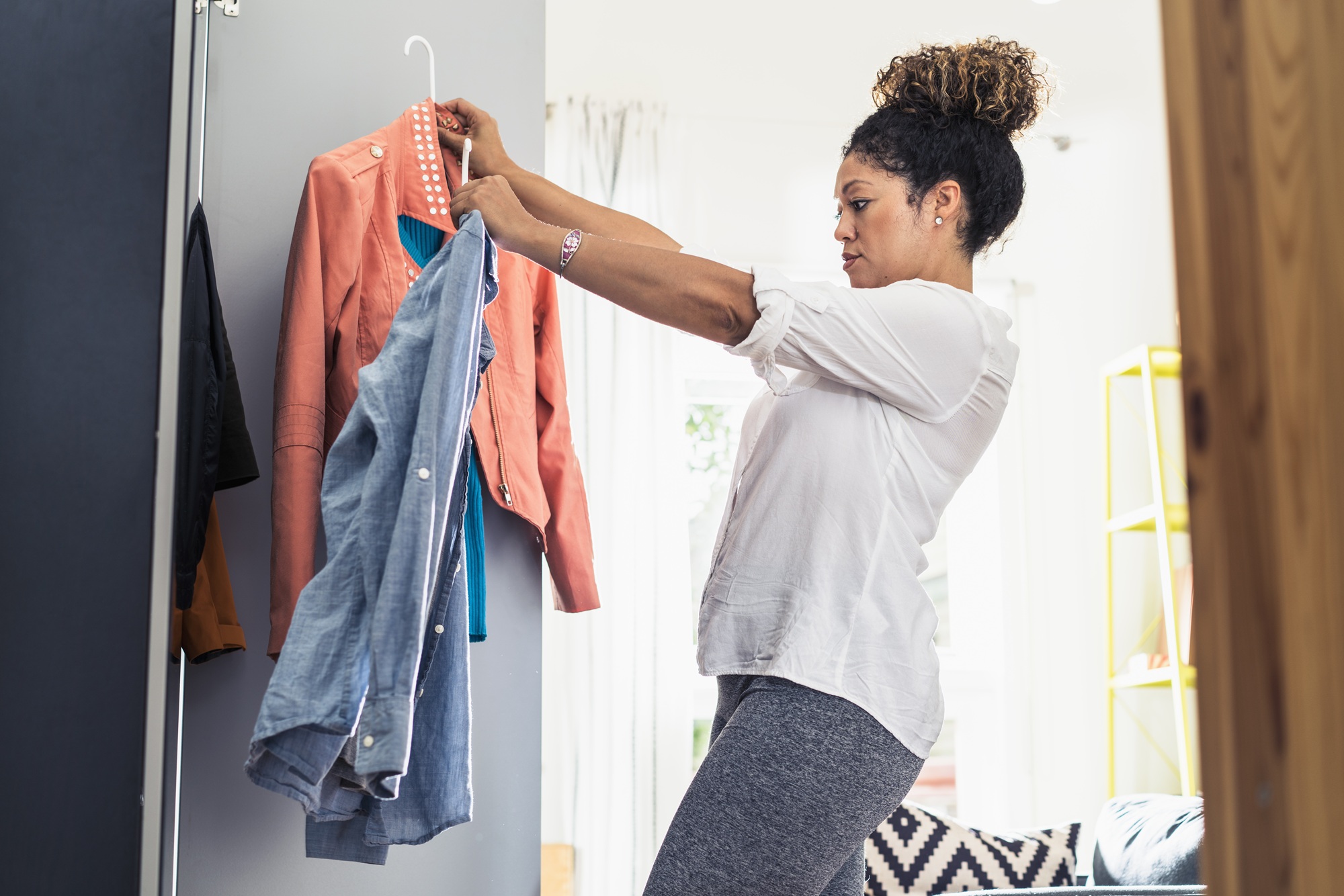
"content": "\u003cp>Is your overflowing closet starting to get out of hand? Piles of clothes you haven’t worn in months — or even years — but can’t seem to part with?\u003c/p>\n\u003cp>Or maybe you’ve already done the hard part and sorted through your closet, but that trash bag of items to get rid of has somehow never left your house.\u003c/p>\n\u003cp>If you’re looking for advice on how to sell your clothes, donate them or recycle them in the Bay Area — and maybe even make a little bit of cash along the way — we’re here to help. And we know this process isn’t easy, so we talked to the experts who do this every day for a living for pro tips on tackling your closet, and what to do once you’ve finally settled on a giveaway pile.\u003c/p>\n\u003cp>[ad fullwidth]\u003c/p>\n\u003cp>Read on for Bay Area-specific ideas on:\u003c/p>\n\u003cul>\n\u003cli>\u003cstrong>\u003ca href=\"#Howtodecidewhattopurge\">How to decide what to purge\u003c/a>\u003c/strong>\u003c/li>\n\u003cli>\u003cstrong>\u003ca href=\"#Wheretosellyourclothes\">Where to sell your clothes\u003c/a>\u003c/strong>\u003c/li>\n\u003cli>\u003cstrong>\u003ca href=\"#Howtodonateyourclothes\">How to donate your clothes\u003c/a>\u003c/strong>\u003c/li>\n\u003cli>\u003cstrong>\u003ca href=\"#Howtorecycleyourclothes\">How to recycle your clothes\u003c/a>\u003c/strong>\u003c/li>\n\u003c/ul>\n\u003cp>(And if you’re looking for ideas on how to sell or donate your books, too, \u003ca href=\"https://www.kqed.org/news/12080674/want-to-spring-clean-your-bookshelf-where-to-sell-or-donate-used-books-in-the-bay-area\">we have a guide to that as well\u003c/a>.)\u003c/p>\n\u003ch2>Why get rid of your clothes?\u003c/h2>\n\u003cp>Aondrea Maynard runs \u003ca href=\"https://www.artfulorganizingsf.com/about\">Artful Organizing SF\u003c/a>, a home organizing and styling business. She helps people tackle the worst of their clutter and messes for a fresh start, and she said every person’s reasons and needs are different — and that’s OK.\u003c/p>\n\u003cp>“Some people are collectors, and they love seeing their beautiful things,” she said. “And some people really find too much visual stimulation to be draining.”\u003c/p>\n\u003cp>Some have lifestyle constraints that require them to be minimalists, like a tiny apartment or a lack of storage space. Others, she said, are particularly sentimental — but she’s not there to judge.\u003c/p>\n\u003cfigure id=\"attachment_12082422\" class=\"wp-caption aligncenter\" style=\"max-width: 2000px\">\u003cimg loading=\"lazy\" decoding=\"async\" class=\"wp-image-12082422 size-full\" src=\"https://cdn.kqed.org/wp-content/uploads/sites/10/2026/05/ClothingRecyclingThriftGetty2.jpg\" alt=\"\" width=\"2000\" height=\"1333\" srcset=\"https://cdn.kqed.org/wp-content/uploads/sites/10/2026/05/ClothingRecyclingThriftGetty2.jpg 2000w, https://cdn.kqed.org/wp-content/uploads/sites/10/2026/05/ClothingRecyclingThriftGetty2-160x107.jpg 160w, https://cdn.kqed.org/wp-content/uploads/sites/10/2026/05/ClothingRecyclingThriftGetty2-1536x1024.jpg 1536w\" sizes=\"auto, (max-width: 2000px) 100vw, 2000px\">\u003cfigcaption class=\"wp-caption-text\">“It’s not that you’re giving up something, but you’re making room for something new in your life,” — Aondrea Maynard, Artful Organizing SF \u003ccite>(Raphye Alexius/Getty Images)\u003c/cite>\u003c/figcaption>\u003c/figure>\n\u003cp>“Some people, they’re very comfortable having things more tucked away visually,” she said. For others, “if you tuck it away and organize it too far back and too minimally visible, they forget they have it and they buy duplicates.”\u003c/p>\n\u003cp>For the latter group, one question she likes to ask is: “How do you highlight the things you love, but then let go of the things that are really getting in the way of \u003cem>seeing \u003c/em>the things you love?”\u003c/p>\n\u003cp>Maynard suggested using online organizer Cassandra Aarssen’s “\u003ca href=\"https://clutterbug.me/\">Clutterbug\u003c/a>” method, which offers \u003ca href=\"https://www.youtube.com/watch?v=hYtiQhCJ574\">a bug-themed test\u003c/a> to find your own organizing style to help you better understand and work with, not against, your natural tendencies.\u003c/p>\n\u003cp>https://www.youtube.com/watch?v=hYtiQhCJ574\u003c/p>\n\u003cp>“There’s not one way that fits each person,” Maynard said. A person’s own organizing style is “very customized, very unique and that’s OK.”\u003c/p>\n\u003cp>See “the luxury of space” as something you’re giving yourself when you part with an item, she said. Or, you can even work toward a reward — like something that fits into your new life better in that space.\u003c/p>\n\u003cp>“It’s not that you’re giving up something, but you’re making room for something new in your life,” she said.\u003c/p>\n\u003ch2>\u003ca id=\"Howtodecidewhattopurge\">\u003c/a>How to decide what clothing stays — and what goes\u003c/h2>\n\u003cp>To help her clients get started tackling a looming decluttering project, Maynard uses a method with the acronym SPACE:\u003c/p>\n\u003cul>\n\u003cli>\u003cstrong>Sort: \u003c/strong>How much do you use or like each item?\u003c/li>\n\u003cli>\u003cstrong>Purge: \u003c/strong>What can you part with?\u003c/li>\n\u003cli>\u003cstrong>Accessibility and aesthetics: \u003c/strong>What goes where and why?\u003c/li>\n\u003cli>\u003cstrong>Containment: \u003c/strong>How is your stuff contained or organized?\u003c/li>\n\u003cli>\u003cstrong>Evaluate: \u003c/strong>How is it working?\u003c/li>\n\u003c/ul>\n\u003cp>When going through clothes, Maynard said, if a client doesn’t immediately know a use for the item, it goes in the “maybe” pile.\u003c/p>\n\u003cp>Then, once they’ve started to get that dopamine hit of getting rid of stuff, they revisit the item, “and with no pressure,” she said. “A lot of it is just talking it through and having someone to brainstorm with.” Consider inviting a friend over to be that sounding board as you go through your closet together.\u003c/p>\n\u003cfigure id=\"attachment_12082423\" class=\"wp-caption aligncenter\" style=\"max-width: 2000px\">\u003cimg loading=\"lazy\" decoding=\"async\" class=\"size-full wp-image-12082423\" src=\"https://cdn.kqed.org/wp-content/uploads/sites/10/2026/05/OutoftheClosetGetty.jpg\" alt=\"\" width=\"2000\" height=\"1332\" srcset=\"https://cdn.kqed.org/wp-content/uploads/sites/10/2026/05/OutoftheClosetGetty.jpg 2000w, https://cdn.kqed.org/wp-content/uploads/sites/10/2026/05/OutoftheClosetGetty-160x107.jpg 160w, https://cdn.kqed.org/wp-content/uploads/sites/10/2026/05/OutoftheClosetGetty-1536x1023.jpg 1536w\" sizes=\"auto, (max-width: 2000px) 100vw, 2000px\">\u003cfigcaption class=\"wp-caption-text\">Out of the Closet thrift store on Feb. 19, 2026, in San Francisco, California. \u003ccite>(Smith Collection/Gado via Getty Images)\u003c/cite>\u003c/figcaption>\u003c/figure>\n\u003cp>A big question Maynard finds herself asking, rather than about specific brands or trends, is: What feels \u003cem>good \u003c/em>on your body?\u003c/p>\n\u003cp>Sometimes, people absolutely love how a garment looks — its pattern or colors or cut — but never wear it because they don’t like how it looks \u003cem>on them.\u003c/em> Also: Do you see yourself using it again? Or will renting something be a better fit for future events?\u003c/p>\n\u003cp>And all this is so, so personal, she said: “You want to feel like you’re shopping your own closet, like your favorite shop, your favorite boutiques, where it’s easy to find things that are catching your eye, that spark joy, that feel good.”\u003c/p>\n\u003cp>Even having a donation bag already on hand is helpful, she said, as you’re doing laundry and flowing through life.[aside postID=news_12080674 hero='https://cdn.kqed.org/wp-content/uploads/sites/10/2026/04/BooksGetty.jpg']“It’s an organic, continuous process that we outgrow things,” she said. “And then there are new things that represent what we’re moving into next for our lives.”\u003c/p>\n\u003cp>For clothes in particular, KQED’s own senior editor Carly Severn has her own tactic, called “The Last Chance Saloon,” where you bring all the items you haven’t worn in a while to the front, and you have a week to wear them, or else they go.\u003c/p>\n\u003cp>Maynard complimented this strategy, “because sometimes you might have an item that you love, but it’s really the past version of yourself.”\u003c/p>\n\u003cp>The process of getting rid of your clothes is not always easy. Maynard said the best way to remove friction — whether it’s memories, shame, distraction or decision fatigue — is by decluttering with other people.\u003c/p>\n\u003cp>Much of her job, she said, is reminding clients that they’re “setting themselves up for the version of their life that they desire. We really talk about it like solving a puzzle with friends.”\u003c/p>\n\u003cp>But now that you know what you’re getting rid of, how do you go about it?\u003c/p>\n\u003ch2>Option 1: \u003ca id=\"Wheretosellyourclothes\">\u003c/a>Sell your clothes\u003c/h2>\n\u003cp>If you’ve got the time, energy and interest, you can start by trying to sell some of your clothes.\u003c/p>\n\u003cp>\u003ca href=\"https://www.theguardian.com/thefilter-us/2026/apr/24/5-tips-to-sell-your-clothes-online\">Online options for selling clothes abound\u003c/a>, including:\u003c/p>\n\u003cul>\n\u003cli>Depop\u003c/li>\n\u003cli>Poshmark\u003c/li>\n\u003cli>Mercari\u003c/li>\n\u003cli>The Real Real\u003c/li>\n\u003cli>ThredUp\u003c/li>\n\u003c/ul>\n\u003cp>You can even try to sell your nicer pieces in person at local consignment stores or chains like Plato’s Closet. If you’re going this route, you’ll have the most success if you price your item in line with the market (look up other similar items for a price range) and include critical details like sizing and any wear and tear.\u003c/p>\n\u003cfigure id=\"attachment_12082431\" class=\"wp-caption aligncenter\" style=\"max-width: 2000px\">\u003cimg loading=\"lazy\" decoding=\"async\" class=\"size-full wp-image-12082431\" src=\"https://cdn.kqed.org/wp-content/uploads/sites/10/2026/05/ThriftStoreSFGetty.jpg\" alt=\"\" width=\"2000\" height=\"1349\" srcset=\"https://cdn.kqed.org/wp-content/uploads/sites/10/2026/05/ThriftStoreSFGetty.jpg 2000w, https://cdn.kqed.org/wp-content/uploads/sites/10/2026/05/ThriftStoreSFGetty-160x108.jpg 160w, https://cdn.kqed.org/wp-content/uploads/sites/10/2026/05/ThriftStoreSFGetty-1536x1036.jpg 1536w\" sizes=\"auto, (max-width: 2000px) 100vw, 2000px\">\u003cfigcaption class=\"wp-caption-text\">A price tag is seen on a suit jacket at a Thrift Town on Oct. 14, 2008, in San Francisco, California. \u003ccite>(Justin Sullivan/Getty Images)\u003c/cite>\u003c/figcaption>\u003c/figure>\n\u003cp>Here are some of the stores in the Bay Area that could pay you — or offer store credit — for your used clothes:\u003c/p>\n\u003cul>\n\u003cli>\u003ca href=\"https://www.shopwasteland.com/pages/sell-with-us\">Wasteland\u003c/a> has several locations around the Bay, including in the Haight. You can get 30% of what the buyers set as selling prices.\u003c/li>\n\u003cli>\u003ca href=\"https://buffaloexchange.com/How-to-Sell/\">Buffalo Exchange\u003c/a> has locations in the Haight and Mission Districts as well as all over the Bay Area. You get 25% of the selling price in cash or 50% in store credit.\u003c/li>\n\u003cli>Crossroads on Fillmore, Market and Irving Streets in San Francisco \u003ca href=\"https://crossroadstrading.com/buy-sell-trade-2-2/\">offer in-store and drop-off selling options\u003c/a>. You can also \u003ca href=\"https://crossroadstrading.com/sell-by-mail/?utm_source=home&utm_medium=popup&utm_campaign=sbm_winterweb\">request a prepaid bag\u003c/a> to sell your clothes by mail or sell higher-value items with consignment.\u003c/li>\n\u003cli>\u003ca href=\"https://2ndstreetusa.com/selling-guide\">2nd Street\u003c/a> has Haight, Stonestown and Berkeley locations, and buys used clothes in-store.\u003c/li>\n\u003cli>\u003ca href=\"https://shoprelove.com/pages/sell-with-relove\">ReLove\u003c/a> in Polk Gulch and Oakland offers 35% of the selling price in cash, 40% in store credit or 35-60% for consignment (reserved for high-end or high-risk items, paid once the item sells).\u003c/li>\n\u003c/ul>\n\u003cp>Remember: All of these locations are likely to require you to be 18 or older and present your ID. They will only accept clothing that’s clean.\u003c/p>\n\u003ch2>Option 2: \u003ca id=\"Howtodonateyourclothes\">\u003c/a>Donate your clothes\u003c/h2>\n\u003cp>If selling doesn’t seem worth the effort, here in the Bay Area, there are tons of opportunities to donate your used clothing and make sure it \u003ca href=\"https://www.kqed.org/news/11760158/how-to-responsibly-purge-your-closet-in-the-bay-area\">stays as clothing\u003c/a> and doesn’t end up in the landfill.\u003c/p>\n\u003cp>Maynard helps her clients give clothes to stores and organizations like Community Thrift, St. Anthony’s, Out of the Closet, Goodwill and The Salvation Army (more info on these below). She said she often helps clients post on local BuyNothing groups, the free section of Craigslist and Facebook Marketplace “to get them into the hands of people that can use them sooner rather than later.”’\u003c/p>\n\u003cp>Not sure if your clothes are high-quality enough to donate? Rest assured: “Bring us everything,” said Tim O’Neal, president and CEO for Goodwill in the San Francisco Bay Area. “We are happy to take it.”\u003c/p>\n\u003cfigure id=\"attachment_12082426\" class=\"wp-caption aligncenter\" style=\"max-width: 2000px\">\u003cimg loading=\"lazy\" decoding=\"async\" class=\"size-full wp-image-12082426\" src=\"https://cdn.kqed.org/wp-content/uploads/sites/10/2026/05/CTSThriftSFGetty.jpg\" alt=\"\" width=\"2000\" height=\"1333\" srcset=\"https://cdn.kqed.org/wp-content/uploads/sites/10/2026/05/CTSThriftSFGetty.jpg 2000w, https://cdn.kqed.org/wp-content/uploads/sites/10/2026/05/CTSThriftSFGetty-160x107.jpg 160w, https://cdn.kqed.org/wp-content/uploads/sites/10/2026/05/CTSThriftSFGetty-1536x1024.jpg 1536w\" sizes=\"auto, (max-width: 2000px) 100vw, 2000px\">\u003cfigcaption class=\"wp-caption-text\">CTS, Community Thrift Store, in the Mission District on Sept. 11, 2025. \u003ccite>(Smith Collection/Gado via Getty Images)\u003c/cite>\u003c/figcaption>\u003c/figure>\n\u003cp>The Bay Area is a particularly generous market when it comes to people donating clothes, O’Neal said. Previously, clothes you donated here in the Bay Area \u003ca href=\"https://www.sfgate.com/local/article/bay-area-goodwill-arizona-22075698.php\">might get shipped to other markets where fewer people donate\u003c/a>.\u003c/p>\n\u003cp>Despite \u003ca href=\"https://www.sfgate.com/bayarea/article/goodwill-slashes-sf-headquarters-oakland-20265800.php\">closing its Oakland \u003c/a>location, O’Neal said Goodwill has plans to expand its Bay Area presence and open 80 new stores here in the next decade, outfitted with drive-up donation centers onsite.\u003c/p>\n\u003cp>A few Bay Area locations to drop off clothing donations (in general, these centers prefer clean clothing and textiles, but are more flexible than buyers in what they accept):\u003c/p>\n\u003cul>\n\u003cli>\u003ca href=\"https://www.communitythriftsf.org/donate/\">Community Thrift Store\u003c/a> in San Francisco’s Mission District takes donations almost every day, and has a thorough list of what you can and cannot donate\u003c/li>\n\u003cli>\u003ca href=\"https://outofthecloset.org/donate/\">Out of the Closet\u003c/a> accepts in-store donations at its San Francisco and East Bay locations, as well as large item pickup if needed\u003c/li>\n\u003cli>\u003ca href=\"https://sfgoodwill.org/\">Goodwill\u003c/a> has dozens of locations all over the Bay Area, and many accept donations (\u003ca href=\"https://sfgoodwill.org/locations/\">check this list to verify\u003c/a>)\u003c/li>\n\u003c/ul>\n\u003cp>And locally, \u003cspan style=\"box-sizing: border-box; margin: 0px; padding: 0px;\">other \u003ca href=\"https://www.donationsorter.com/\" target=\"_blank\" rel=\"noopener\">organizations\u003c/a> will\u003c/span> gladly take used clothing donations off your hands to get them to people who need them the most, including:\u003c/p>\n\u003cul>\n\u003cli>\u003ca href=\"https://www.stanthonysf.org/services/clothing/how-to-donate/\">St. Anthony’s:\u003c/a> Accepts donations at its Golden Gate Avenue location in San Francisco or via mail\u003c/li>\n\u003cli>\u003ca href=\"https://westernusa.salvationarmy.org/usw_thq/location_search?query=94114&map=1055512969972\">The Salvation Army:\u003c/a> Has donation drop-off sites all over the Bay Area\u003c/li>\n\u003cli>\u003ca href=\"http://streetsox.org\">StreetSox.org\u003c/a>: Founded by a San Francisco paramedic, this organization collects used socks to redistribute to people and organizations across the Bay Area\u003c/li>\n\u003cli>\u003ca href=\"https://www.sfserviceguide.org/services/4292\">Angel Child Program\u003c/a>: Active during the holidays, this program asks for gently used women’s and children’s clothing for distribution\u003c/li>\n\u003cli>\u003ca href=\"https://www.sfdress.org/donate/donate-clothing\">Dress for Success San Francisco:\u003c/a> To help women succeed in the workforce, you can donate work-appropriate clothing at scheduled times\u003c/li>\n\u003c/ul>\n\u003cp>You could also consider getting your friends in on the act and organizing — even hosting — an in-person clothing swap party. You could even start one for your workplace: Here at KQED, we’re lucky to even have a periodic clothing exchange, which helps motivate many of us to finally part with that too-small jacket or dress we’ll never wear again.\u003c/p>\n\u003ch2>Option 3: \u003ca id=\"Howtorecycleyourclothes\">\u003c/a>Recycle your clothes\u003c/h2>\n\u003cp>If your clothes can’t be resold at all — for example, if they’re stained or broken beyond repair — Goodwill can still send them elsewhere to be recycled back to their fibers to be used in other industries, O’Neal said.\u003c/p>\n\u003cp>“If we can’t use it, we can find a way to recycle it or repurpose it,” he said. Just don’t bring them any hazardous materials, he stressed.\u003c/p>\n\u003cfigure id=\"attachment_12082425\" class=\"wp-caption aligncenter\" style=\"max-width: 2000px\">\u003cimg loading=\"lazy\" decoding=\"async\" class=\"size-full wp-image-12082425\" src=\"https://cdn.kqed.org/wp-content/uploads/sites/10/2026/05/New-Goodwill-Fairfield-Store.jpg\" alt=\"\" width=\"2000\" height=\"1500\" srcset=\"https://cdn.kqed.org/wp-content/uploads/sites/10/2026/05/New-Goodwill-Fairfield-Store.jpg 2000w, https://cdn.kqed.org/wp-content/uploads/sites/10/2026/05/New-Goodwill-Fairfield-Store-160x120.jpg 160w, https://cdn.kqed.org/wp-content/uploads/sites/10/2026/05/New-Goodwill-Fairfield-Store-1536x1152.jpg 1536w\" sizes=\"auto, (max-width: 2000px) 100vw, 2000px\">\u003cfigcaption class=\"wp-caption-text\">A new Goodwill store just opened in Fairfield, California. The company says it hopes to open 80 new locations in the Bay Area in the next decade. \u003ccite>(Courtesy of Goodwill)\u003c/cite>\u003c/figcaption>\u003c/figure>\n\u003cp>Other groups, like The Salvation Army in San Francisco, also take textile donations for recycling. And if you’re cleaning out your closet and stumble upon other, non-clothing items to get rid of, most donation centers will take those, too.\u003c/p>\n\u003cp>How to recycle your clothes at:\u003c/p>\n\u003cul>\n\u003cli>\u003ca href=\"https://www.sfenvironment.org/sfrecycles/vendor/salvation-army-donation-center-valencia-st-cesar-chavez-st\">The Salvation Army\u003c/a>: Drop off clothes at its Bay Area locations or schedule a home pickup\u003c/li>\n\u003cli>\u003ca href=\"https://www2.hm.com/en_us/customer-service/product-and-quality/garment-collecting-reycling.html\">H&M\u003c/a>: With locations all over the Bay Area, you can drop off clean clothes in donation bins.\u003c/li>\n\u003cli>\u003ca href=\"https://www.ridwell.com/what-we-take/rewearable-clothes\">Ridwell\u003c/a>: This subscription service recycler will also take your textiles, but you have to pay a fee.\u003c/li>\n\u003c/ul>\n\u003cp>\u003ca href=\"https://resource.stopwaste.org/items/clothing-poor-condition?order=name&sort=asc\">Check out this county-run list\u003c/a> for even more locations in the Bay Area (\u003ca href=\"https://www.sfenvironment.org/sfrecycles/item/clothes-usable\">or this one for San Francisco\u003c/a>) that accept clothing to recycle, including retailers accepting specific items like denim and socks.\u003c/p>\n\u003cp>Just remember: \u003ca href=\"https://www.bbc.com/future/article/20200710-why-clothes-are-so-hard-to-recycle\">Textiles are hard to recycle\u003c/a>, so if you want to minimize waste, you may try to repair, repurpose, sell or donate your clothes before recycling them.\u003c/p>\n\u003cp>[ad floatright]\u003c/p>\n",
"blocks": [],
"excerpt": "Experts have tips on how to choose which clothes to keep and what to lose — and how to then sell, donate or recycle your stuff locally.",
"status": "publish",
"parent": 0,
"modified": 1778088514,
"stats": {
"hasAudio": false,
"hasVideo": true,
"hasChartOrMap": false,
"iframeSrcs": [],
"hasGoogleForm": false,
"hasGallery": false,
"hasHearkenModule": false,
"hasPolis": false,
"paragraphCount": 47,
"wordCount": 2273
},
"headData": {
"title": "How to Sell or Donate Your Clothes in the Bay Area | KQED",
"description": "Experts have tips on how to choose which clothes to keep and what to lose — and how to then sell, donate or recycle your stuff locally.",
"ogTitle": "",
"ogDescription": "",
"ogImgId": "",
"twTitle": "",
"twDescription": "",
"twImgId": "",
"schema": {
"@context": "https://schema.org",
"@type": "NewsArticle",
"headline": "How to Sell or Donate Your Clothes in the Bay Area",
"datePublished": "2026-05-06T04:00:32-07:00",
"dateModified": "2026-05-06T10:28:34-07:00",
"image": "https://cdn.kqed.org/wp-content/uploads/2020/02/KQED-OG-Image@1x.png",
"isAccessibleForFree": "True",
"publisher": {
"@type": "NewsMediaOrganization",
"@id": "https://www.kqed.org/#organization",
"name": "KQED",
"logo": "https://cdn.kqed.org/wp-content/uploads/2020/02/KQED-OG-Image@1x.png",
"url": "https://www.kqed.org",
"sameAs": [
"https://www.facebook.com/KQED",
"https://twitter.com/KQED",
"https://www.instagram.com/kqed/",
"https://www.tiktok.com/@kqedofficial",
"https://www.linkedin.com/company/kqed",
"https://www.youtube.com/channel/UCeC0IOo7i1P_61zVUWbJ4nw"
]
}
}
},
"primaryCategory": {
"termId": 34168,
"slug": "guides-and-explainers",
"name": "Guides and Explainers"
},
"sticky": false,
"nprStoryId": "kqed-12082414",
"templateType": "standard",
"featuredImageType": "standard",
"excludeFromSiteSearch": "Include",
"articleAge": "0",
"path": "/news/12082414/where-to-sell-or-donate-clothes-near-me-san-francisco-bay-area-recycle-sell-clothing-online",
"audioTrackLength": null,
"parsedContent": [
{
"type": "contentString",
"content": "\u003cdiv class=\"post-body\">\u003cp>\u003cp>Is your overflowing closet starting to get out of hand? Piles of clothes you haven’t worn in months — or even years — but can’t seem to part with?\u003c/p>\n\u003cp>Or maybe you’ve already done the hard part and sorted through your closet, but that trash bag of items to get rid of has somehow never left your house.\u003c/p>\n\u003cp>If you’re looking for advice on how to sell your clothes, donate them or recycle them in the Bay Area — and maybe even make a little bit of cash along the way — we’re here to help. And we know this process isn’t easy, so we talked to the experts who do this every day for a living for pro tips on tackling your closet, and what to do once you’ve finally settled on a giveaway pile.\u003c/p>\n\u003cp>\u003c/p>\u003c/div>",
"attributes": {
"named": {},
"numeric": []
}
},
{
"type": "component",
"content": "",
"name": "ad",
"attributes": {
"named": {
"label": "fullwidth"
},
"numeric": [
"fullwidth"
]
}
},
{
"type": "contentString",
"content": "\u003cdiv class=\"post-body\">\u003cp>\u003c/p>\n\u003cp>Read on for Bay Area-specific ideas on:\u003c/p>\n\u003cul>\n\u003cli>\u003cstrong>\u003ca href=\"#Howtodecidewhattopurge\">How to decide what to purge\u003c/a>\u003c/strong>\u003c/li>\n\u003cli>\u003cstrong>\u003ca href=\"#Wheretosellyourclothes\">Where to sell your clothes\u003c/a>\u003c/strong>\u003c/li>\n\u003cli>\u003cstrong>\u003ca href=\"#Howtodonateyourclothes\">How to donate your clothes\u003c/a>\u003c/strong>\u003c/li>\n\u003cli>\u003cstrong>\u003ca href=\"#Howtorecycleyourclothes\">How to recycle your clothes\u003c/a>\u003c/strong>\u003c/li>\n\u003c/ul>\n\u003cp>(And if you’re looking for ideas on how to sell or donate your books, too, \u003ca href=\"https://www.kqed.org/news/12080674/want-to-spring-clean-your-bookshelf-where-to-sell-or-donate-used-books-in-the-bay-area\">we have a guide to that as well\u003c/a>.)\u003c/p>\n\u003ch2>Why get rid of your clothes?\u003c/h2>\n\u003cp>Aondrea Maynard runs \u003ca href=\"https://www.artfulorganizingsf.com/about\">Artful Organizing SF\u003c/a>, a home organizing and styling business. She helps people tackle the worst of their clutter and messes for a fresh start, and she said every person’s reasons and needs are different — and that’s OK.\u003c/p>\n\u003cp>“Some people are collectors, and they love seeing their beautiful things,” she said. “And some people really find too much visual stimulation to be draining.”\u003c/p>\n\u003cp>Some have lifestyle constraints that require them to be minimalists, like a tiny apartment or a lack of storage space. Others, she said, are particularly sentimental — but she’s not there to judge.\u003c/p>\n\u003cfigure id=\"attachment_12082422\" class=\"wp-caption aligncenter\" style=\"max-width: 2000px\">\u003cimg loading=\"lazy\" decoding=\"async\" class=\"wp-image-12082422 size-full\" src=\"https://cdn.kqed.org/wp-content/uploads/sites/10/2026/05/ClothingRecyclingThriftGetty2.jpg\" alt=\"\" width=\"2000\" height=\"1333\" srcset=\"https://cdn.kqed.org/wp-content/uploads/sites/10/2026/05/ClothingRecyclingThriftGetty2.jpg 2000w, https://cdn.kqed.org/wp-content/uploads/sites/10/2026/05/ClothingRecyclingThriftGetty2-160x107.jpg 160w, https://cdn.kqed.org/wp-content/uploads/sites/10/2026/05/ClothingRecyclingThriftGetty2-1536x1024.jpg 1536w\" sizes=\"auto, (max-width: 2000px) 100vw, 2000px\">\u003cfigcaption class=\"wp-caption-text\">“It’s not that you’re giving up something, but you’re making room for something new in your life,” — Aondrea Maynard, Artful Organizing SF \u003ccite>(Raphye Alexius/Getty Images)\u003c/cite>\u003c/figcaption>\u003c/figure>\n\u003cp>“Some people, they’re very comfortable having things more tucked away visually,” she said. For others, “if you tuck it away and organize it too far back and too minimally visible, they forget they have it and they buy duplicates.”\u003c/p>\n\u003cp>For the latter group, one question she likes to ask is: “How do you highlight the things you love, but then let go of the things that are really getting in the way of \u003cem>seeing \u003c/em>the things you love?”\u003c/p>\n\u003cp>Maynard suggested using online organizer Cassandra Aarssen’s “\u003ca href=\"https://clutterbug.me/\">Clutterbug\u003c/a>” method, which offers \u003ca href=\"https://www.youtube.com/watch?v=hYtiQhCJ574\">a bug-themed test\u003c/a> to find your own organizing style to help you better understand and work with, not against, your natural tendencies.\u003c/p>\u003c/p>\u003cp>\u003cspan class='utils-parseShortcode-shortcodes-__youtubeShortcode__embedYoutube'>\n \u003cspan class='utils-parseShortcode-shortcodes-__youtubeShortcode__embedYoutubeInside'>\n \u003ciframe\n loading='lazy'\n class='utils-parseShortcode-shortcodes-__youtubeShortcode__youtubePlayer'\n type='text/html'\n src='//www.youtube.com/embed/hYtiQhCJ574'\n title='//www.youtube.com/embed/hYtiQhCJ574'\n allowfullscreen='true'\n style='border:0;'>\u003c/iframe>\n \u003c/span>\n \u003c/span>\u003c/p>\u003cp>\u003cp>“There’s not one way that fits each person,” Maynard said. A person’s own organizing style is “very customized, very unique and that’s OK.”\u003c/p>\n\u003cp>See “the luxury of space” as something you’re giving yourself when you part with an item, she said. Or, you can even work toward a reward — like something that fits into your new life better in that space.\u003c/p>\n\u003cp>“It’s not that you’re giving up something, but you’re making room for something new in your life,” she said.\u003c/p>\n\u003ch2>\u003ca id=\"Howtodecidewhattopurge\">\u003c/a>How to decide what clothing stays — and what goes\u003c/h2>\n\u003cp>To help her clients get started tackling a looming decluttering project, Maynard uses a method with the acronym SPACE:\u003c/p>\n\u003cul>\n\u003cli>\u003cstrong>Sort: \u003c/strong>How much do you use or like each item?\u003c/li>\n\u003cli>\u003cstrong>Purge: \u003c/strong>What can you part with?\u003c/li>\n\u003cli>\u003cstrong>Accessibility and aesthetics: \u003c/strong>What goes where and why?\u003c/li>\n\u003cli>\u003cstrong>Containment: \u003c/strong>How is your stuff contained or organized?\u003c/li>\n\u003cli>\u003cstrong>Evaluate: \u003c/strong>How is it working?\u003c/li>\n\u003c/ul>\n\u003cp>When going through clothes, Maynard said, if a client doesn’t immediately know a use for the item, it goes in the “maybe” pile.\u003c/p>\n\u003cp>Then, once they’ve started to get that dopamine hit of getting rid of stuff, they revisit the item, “and with no pressure,” she said. “A lot of it is just talking it through and having someone to brainstorm with.” Consider inviting a friend over to be that sounding board as you go through your closet together.\u003c/p>\n\u003cfigure id=\"attachment_12082423\" class=\"wp-caption aligncenter\" style=\"max-width: 2000px\">\u003cimg loading=\"lazy\" decoding=\"async\" class=\"size-full wp-image-12082423\" src=\"https://cdn.kqed.org/wp-content/uploads/sites/10/2026/05/OutoftheClosetGetty.jpg\" alt=\"\" width=\"2000\" height=\"1332\" srcset=\"https://cdn.kqed.org/wp-content/uploads/sites/10/2026/05/OutoftheClosetGetty.jpg 2000w, https://cdn.kqed.org/wp-content/uploads/sites/10/2026/05/OutoftheClosetGetty-160x107.jpg 160w, https://cdn.kqed.org/wp-content/uploads/sites/10/2026/05/OutoftheClosetGetty-1536x1023.jpg 1536w\" sizes=\"auto, (max-width: 2000px) 100vw, 2000px\">\u003cfigcaption class=\"wp-caption-text\">Out of the Closet thrift store on Feb. 19, 2026, in San Francisco, California. \u003ccite>(Smith Collection/Gado via Getty Images)\u003c/cite>\u003c/figcaption>\u003c/figure>\n\u003cp>A big question Maynard finds herself asking, rather than about specific brands or trends, is: What feels \u003cem>good \u003c/em>on your body?\u003c/p>\n\u003cp>Sometimes, people absolutely love how a garment looks — its pattern or colors or cut — but never wear it because they don’t like how it looks \u003cem>on them.\u003c/em> Also: Do you see yourself using it again? Or will renting something be a better fit for future events?\u003c/p>\n\u003cp>And all this is so, so personal, she said: “You want to feel like you’re shopping your own closet, like your favorite shop, your favorite boutiques, where it’s easy to find things that are catching your eye, that spark joy, that feel good.”\u003c/p>\n\u003cp>Even having a donation bag already on hand is helpful, she said, as you’re doing laundry and flowing through life.\u003c/p>\u003c/div>",
"attributes": {
"named": {},
"numeric": []
}
},
{
"type": "component",
"content": "",
"name": "aside",
"attributes": {
"named": {
"postid": "news_12080674",
"hero": "https://cdn.kqed.org/wp-content/uploads/sites/10/2026/04/BooksGetty.jpg",
"label": ""
},
"numeric": []
}
},
{
"type": "contentString",
"content": "\u003cdiv class=\"post-body\">\u003cp>“It’s an organic, continuous process that we outgrow things,” she said. “And then there are new things that represent what we’re moving into next for our lives.”\u003c/p>\n\u003cp>For clothes in particular, KQED’s own senior editor Carly Severn has her own tactic, called “The Last Chance Saloon,” where you bring all the items you haven’t worn in a while to the front, and you have a week to wear them, or else they go.\u003c/p>\n\u003cp>Maynard complimented this strategy, “because sometimes you might have an item that you love, but it’s really the past version of yourself.”\u003c/p>\n\u003cp>The process of getting rid of your clothes is not always easy. Maynard said the best way to remove friction — whether it’s memories, shame, distraction or decision fatigue — is by decluttering with other people.\u003c/p>\n\u003cp>Much of her job, she said, is reminding clients that they’re “setting themselves up for the version of their life that they desire. We really talk about it like solving a puzzle with friends.”\u003c/p>\n\u003cp>But now that you know what you’re getting rid of, how do you go about it?\u003c/p>\n\u003ch2>Option 1: \u003ca id=\"Wheretosellyourclothes\">\u003c/a>Sell your clothes\u003c/h2>\n\u003cp>If you’ve got the time, energy and interest, you can start by trying to sell some of your clothes.\u003c/p>\n\u003cp>\u003ca href=\"https://www.theguardian.com/thefilter-us/2026/apr/24/5-tips-to-sell-your-clothes-online\">Online options for selling clothes abound\u003c/a>, including:\u003c/p>\n\u003cul>\n\u003cli>Depop\u003c/li>\n\u003cli>Poshmark\u003c/li>\n\u003cli>Mercari\u003c/li>\n\u003cli>The Real Real\u003c/li>\n\u003cli>ThredUp\u003c/li>\n\u003c/ul>\n\u003cp>You can even try to sell your nicer pieces in person at local consignment stores or chains like Plato’s Closet. If you’re going this route, you’ll have the most success if you price your item in line with the market (look up other similar items for a price range) and include critical details like sizing and any wear and tear.\u003c/p>\n\u003cfigure id=\"attachment_12082431\" class=\"wp-caption aligncenter\" style=\"max-width: 2000px\">\u003cimg loading=\"lazy\" decoding=\"async\" class=\"size-full wp-image-12082431\" src=\"https://cdn.kqed.org/wp-content/uploads/sites/10/2026/05/ThriftStoreSFGetty.jpg\" alt=\"\" width=\"2000\" height=\"1349\" srcset=\"https://cdn.kqed.org/wp-content/uploads/sites/10/2026/05/ThriftStoreSFGetty.jpg 2000w, https://cdn.kqed.org/wp-content/uploads/sites/10/2026/05/ThriftStoreSFGetty-160x108.jpg 160w, https://cdn.kqed.org/wp-content/uploads/sites/10/2026/05/ThriftStoreSFGetty-1536x1036.jpg 1536w\" sizes=\"auto, (max-width: 2000px) 100vw, 2000px\">\u003cfigcaption class=\"wp-caption-text\">A price tag is seen on a suit jacket at a Thrift Town on Oct. 14, 2008, in San Francisco, California. \u003ccite>(Justin Sullivan/Getty Images)\u003c/cite>\u003c/figcaption>\u003c/figure>\n\u003cp>Here are some of the stores in the Bay Area that could pay you — or offer store credit — for your used clothes:\u003c/p>\n\u003cul>\n\u003cli>\u003ca href=\"https://www.shopwasteland.com/pages/sell-with-us\">Wasteland\u003c/a> has several locations around the Bay, including in the Haight. You can get 30% of what the buyers set as selling prices.\u003c/li>\n\u003cli>\u003ca href=\"https://buffaloexchange.com/How-to-Sell/\">Buffalo Exchange\u003c/a> has locations in the Haight and Mission Districts as well as all over the Bay Area. You get 25% of the selling price in cash or 50% in store credit.\u003c/li>\n\u003cli>Crossroads on Fillmore, Market and Irving Streets in San Francisco \u003ca href=\"https://crossroadstrading.com/buy-sell-trade-2-2/\">offer in-store and drop-off selling options\u003c/a>. You can also \u003ca href=\"https://crossroadstrading.com/sell-by-mail/?utm_source=home&utm_medium=popup&utm_campaign=sbm_winterweb\">request a prepaid bag\u003c/a> to sell your clothes by mail or sell higher-value items with consignment.\u003c/li>\n\u003cli>\u003ca href=\"https://2ndstreetusa.com/selling-guide\">2nd Street\u003c/a> has Haight, Stonestown and Berkeley locations, and buys used clothes in-store.\u003c/li>\n\u003cli>\u003ca href=\"https://shoprelove.com/pages/sell-with-relove\">ReLove\u003c/a> in Polk Gulch and Oakland offers 35% of the selling price in cash, 40% in store credit or 35-60% for consignment (reserved for high-end or high-risk items, paid once the item sells).\u003c/li>\n\u003c/ul>\n\u003cp>Remember: All of these locations are likely to require you to be 18 or older and present your ID. They will only accept clothing that’s clean.\u003c/p>\n\u003ch2>Option 2: \u003ca id=\"Howtodonateyourclothes\">\u003c/a>Donate your clothes\u003c/h2>\n\u003cp>If selling doesn’t seem worth the effort, here in the Bay Area, there are tons of opportunities to donate your used clothing and make sure it \u003ca href=\"https://www.kqed.org/news/11760158/how-to-responsibly-purge-your-closet-in-the-bay-area\">stays as clothing\u003c/a> and doesn’t end up in the landfill.\u003c/p>\n\u003cp>Maynard helps her clients give clothes to stores and organizations like Community Thrift, St. Anthony’s, Out of the Closet, Goodwill and The Salvation Army (more info on these below). She said she often helps clients post on local BuyNothing groups, the free section of Craigslist and Facebook Marketplace “to get them into the hands of people that can use them sooner rather than later.”’\u003c/p>\n\u003cp>Not sure if your clothes are high-quality enough to donate? Rest assured: “Bring us everything,” said Tim O’Neal, president and CEO for Goodwill in the San Francisco Bay Area. “We are happy to take it.”\u003c/p>\n\u003cfigure id=\"attachment_12082426\" class=\"wp-caption aligncenter\" style=\"max-width: 2000px\">\u003cimg loading=\"lazy\" decoding=\"async\" class=\"size-full wp-image-12082426\" src=\"https://cdn.kqed.org/wp-content/uploads/sites/10/2026/05/CTSThriftSFGetty.jpg\" alt=\"\" width=\"2000\" height=\"1333\" srcset=\"https://cdn.kqed.org/wp-content/uploads/sites/10/2026/05/CTSThriftSFGetty.jpg 2000w, https://cdn.kqed.org/wp-content/uploads/sites/10/2026/05/CTSThriftSFGetty-160x107.jpg 160w, https://cdn.kqed.org/wp-content/uploads/sites/10/2026/05/CTSThriftSFGetty-1536x1024.jpg 1536w\" sizes=\"auto, (max-width: 2000px) 100vw, 2000px\">\u003cfigcaption class=\"wp-caption-text\">CTS, Community Thrift Store, in the Mission District on Sept. 11, 2025. \u003ccite>(Smith Collection/Gado via Getty Images)\u003c/cite>\u003c/figcaption>\u003c/figure>\n\u003cp>The Bay Area is a particularly generous market when it comes to people donating clothes, O’Neal said. Previously, clothes you donated here in the Bay Area \u003ca href=\"https://www.sfgate.com/local/article/bay-area-goodwill-arizona-22075698.php\">might get shipped to other markets where fewer people donate\u003c/a>.\u003c/p>\n\u003cp>Despite \u003ca href=\"https://www.sfgate.com/bayarea/article/goodwill-slashes-sf-headquarters-oakland-20265800.php\">closing its Oakland \u003c/a>location, O’Neal said Goodwill has plans to expand its Bay Area presence and open 80 new stores here in the next decade, outfitted with drive-up donation centers onsite.\u003c/p>\n\u003cp>A few Bay Area locations to drop off clothing donations (in general, these centers prefer clean clothing and textiles, but are more flexible than buyers in what they accept):\u003c/p>\n\u003cul>\n\u003cli>\u003ca href=\"https://www.communitythriftsf.org/donate/\">Community Thrift Store\u003c/a> in San Francisco’s Mission District takes donations almost every day, and has a thorough list of what you can and cannot donate\u003c/li>\n\u003cli>\u003ca href=\"https://outofthecloset.org/donate/\">Out of the Closet\u003c/a> accepts in-store donations at its San Francisco and East Bay locations, as well as large item pickup if needed\u003c/li>\n\u003cli>\u003ca href=\"https://sfgoodwill.org/\">Goodwill\u003c/a> has dozens of locations all over the Bay Area, and many accept donations (\u003ca href=\"https://sfgoodwill.org/locations/\">check this list to verify\u003c/a>)\u003c/li>\n\u003c/ul>\n\u003cp>And locally, \u003cspan style=\"box-sizing: border-box; margin: 0px; padding: 0px;\">other \u003ca href=\"https://www.donationsorter.com/\" target=\"_blank\" rel=\"noopener\">organizations\u003c/a> will\u003c/span> gladly take used clothing donations off your hands to get them to people who need them the most, including:\u003c/p>\n\u003cul>\n\u003cli>\u003ca href=\"https://www.stanthonysf.org/services/clothing/how-to-donate/\">St. Anthony’s:\u003c/a> Accepts donations at its Golden Gate Avenue location in San Francisco or via mail\u003c/li>\n\u003cli>\u003ca href=\"https://westernusa.salvationarmy.org/usw_thq/location_search?query=94114&map=1055512969972\">The Salvation Army:\u003c/a> Has donation drop-off sites all over the Bay Area\u003c/li>\n\u003cli>\u003ca href=\"http://streetsox.org\">StreetSox.org\u003c/a>: Founded by a San Francisco paramedic, this organization collects used socks to redistribute to people and organizations across the Bay Area\u003c/li>\n\u003cli>\u003ca href=\"https://www.sfserviceguide.org/services/4292\">Angel Child Program\u003c/a>: Active during the holidays, this program asks for gently used women’s and children’s clothing for distribution\u003c/li>\n\u003cli>\u003ca href=\"https://www.sfdress.org/donate/donate-clothing\">Dress for Success San Francisco:\u003c/a> To help women succeed in the workforce, you can donate work-appropriate clothing at scheduled times\u003c/li>\n\u003c/ul>\n\u003cp>You could also consider getting your friends in on the act and organizing — even hosting — an in-person clothing swap party. You could even start one for your workplace: Here at KQED, we’re lucky to even have a periodic clothing exchange, which helps motivate many of us to finally part with that too-small jacket or dress we’ll never wear again.\u003c/p>\n\u003ch2>Option 3: \u003ca id=\"Howtorecycleyourclothes\">\u003c/a>Recycle your clothes\u003c/h2>\n\u003cp>If your clothes can’t be resold at all — for example, if they’re stained or broken beyond repair — Goodwill can still send them elsewhere to be recycled back to their fibers to be used in other industries, O’Neal said.\u003c/p>\n\u003cp>“If we can’t use it, we can find a way to recycle it or repurpose it,” he said. Just don’t bring them any hazardous materials, he stressed.\u003c/p>\n\u003cfigure id=\"attachment_12082425\" class=\"wp-caption aligncenter\" style=\"max-width: 2000px\">\u003cimg loading=\"lazy\" decoding=\"async\" class=\"size-full wp-image-12082425\" src=\"https://cdn.kqed.org/wp-content/uploads/sites/10/2026/05/New-Goodwill-Fairfield-Store.jpg\" alt=\"\" width=\"2000\" height=\"1500\" srcset=\"https://cdn.kqed.org/wp-content/uploads/sites/10/2026/05/New-Goodwill-Fairfield-Store.jpg 2000w, https://cdn.kqed.org/wp-content/uploads/sites/10/2026/05/New-Goodwill-Fairfield-Store-160x120.jpg 160w, https://cdn.kqed.org/wp-content/uploads/sites/10/2026/05/New-Goodwill-Fairfield-Store-1536x1152.jpg 1536w\" sizes=\"auto, (max-width: 2000px) 100vw, 2000px\">\u003cfigcaption class=\"wp-caption-text\">A new Goodwill store just opened in Fairfield, California. The company says it hopes to open 80 new locations in the Bay Area in the next decade. \u003ccite>(Courtesy of Goodwill)\u003c/cite>\u003c/figcaption>\u003c/figure>\n\u003cp>Other groups, like The Salvation Army in San Francisco, also take textile donations for recycling. And if you’re cleaning out your closet and stumble upon other, non-clothing items to get rid of, most donation centers will take those, too.\u003c/p>\n\u003cp>How to recycle your clothes at:\u003c/p>\n\u003cul>\n\u003cli>\u003ca href=\"https://www.sfenvironment.org/sfrecycles/vendor/salvation-army-donation-center-valencia-st-cesar-chavez-st\">The Salvation Army\u003c/a>: Drop off clothes at its Bay Area locations or schedule a home pickup\u003c/li>\n\u003cli>\u003ca href=\"https://www2.hm.com/en_us/customer-service/product-and-quality/garment-collecting-reycling.html\">H&M\u003c/a>: With locations all over the Bay Area, you can drop off clean clothes in donation bins.\u003c/li>\n\u003cli>\u003ca href=\"https://www.ridwell.com/what-we-take/rewearable-clothes\">Ridwell\u003c/a>: This subscription service recycler will also take your textiles, but you have to pay a fee.\u003c/li>\n\u003c/ul>\n\u003cp>\u003ca href=\"https://resource.stopwaste.org/items/clothing-poor-condition?order=name&sort=asc\">Check out this county-run list\u003c/a> for even more locations in the Bay Area (\u003ca href=\"https://www.sfenvironment.org/sfrecycles/item/clothes-usable\">or this one for San Francisco\u003c/a>) that accept clothing to recycle, including retailers accepting specific items like denim and socks.\u003c/p>\n\u003cp>Just remember: \u003ca href=\"https://www.bbc.com/future/article/20200710-why-clothes-are-so-hard-to-recycle\">Textiles are hard to recycle\u003c/a>, so if you want to minimize waste, you may try to repair, repurpose, sell or donate your clothes before recycling them.\u003c/p>\n\u003cp>\u003c/p>\u003c/div>",
"attributes": {
"named": {},
"numeric": []
}
},
{
"type": "component",
"content": "",
"name": "ad",
"attributes": {
"named": {
"label": "floatright"
},
"numeric": [
"floatright"
]
}
},
{
"type": "contentString",
"content": "\u003cdiv class=\"post-body\">\u003cp>\u003c/p>\n\u003c/div>\u003c/p>",
"attributes": {
"named": {},
"numeric": []
}
}
],
"link": "/news/12082414/where-to-sell-or-donate-clothes-near-me-san-francisco-bay-area-recycle-sell-clothing-online",
"authors": [
"11956"
],
"categories": [
"news_34168",
"news_28250",
"news_8"
],
"tags": [
"news_32707",
"news_1386",
"news_35888",
"news_27626",
"news_382"
],
"featImg": "news_12082417",
"label": "news"
},
"news_12082251": {
"type": "posts",
"id": "news_12082251",
"meta": {
"index": "posts_1716263798",
"site": "news",
"id": "12082251",
"score": null,
"sort": [
1777989632000
]
},
"guestAuthors": [],
"slug": "after-the-one-big-beautiful-bill-free-clinics-are-stepping-up",
"title": "After the One Big Beautiful Bill, Free Clinics Are Stepping Up",
"publishDate": 1777989632,
"format": "standard",
"headTitle": "After the One Big Beautiful Bill, Free Clinics Are Stepping Up | KQED",
"labelTerm": {
"site": "news"
},
"content": "\u003cp>\u003cem>This story is part of \u003c/em>\u003ca href=\"https://www.kqed.org/affordability\">\u003cem>How We Get By\u003c/em>\u003c/a>\u003cem>, a KQED series exploring how people are coping with rising costs in the Bay Area and California. Find the \u003c/em>\u003ca href=\"https://www.kqed.org/affordability\">\u003cem>full series here\u003c/em>\u003c/a>\u003cem>. \u003c/em>\u003c/p>\n\u003cp>For Marisol, it’s not strange to feel aches and pains all over her body when she comes home after work. She picks and packages fruit for farms in \u003ca href=\"https://www.kqed.org/news/tag/contra-costa-county\">Contra Costa County\u003c/a>. Even when temperatures rise over 100 degrees Fahrenheit, she’s out in the field collecting cherries, peaches, nectarines and apricots.\u003c/p>\n\u003cp>She knows it takes a toll on her body. “Sometimes you’re so exhausted that it feels like there’s something wrong with your body, and you don’t know if you’re actually sick or just tired,” she said in Spanish.\u003c/p>\n\u003cp>As an undocumented immigrant without employer-provided health insurance, actually finding out if she’s sick is a luxury. KQED is withholding her full name because publishing it could expose her to potential immigration enforcement. “I either pay my rent or I go to the doctor,” she said.\u003c/p>\n\u003cp>[ad fullwidth]\u003c/p>\n\u003cp>But in the summer of 2023 — when she began to feel several bumps on her breasts — she decided her health could no longer wait. She went to the one place she knew she could get care at no cost: \u003ca href=\"https://www.hijasdelcampo.org/\">Hijas del Campo\u003c/a>.\u003c/p>\n\u003cp>Every Tuesday afternoon, the Contra Costa County Department of Public Health parks \u003ca href=\"https://www.cchealth.org/get-care/for-people-without-health-coverage/health-care-for-the-homeless\">a mobile clinic\u003c/a> outside the nonprofit’s Brentwood offices. The clinic offers limited free care to residents like Marisol who qualify. It’s one of dozens of free clinics across the Bay Area that serve low-income and undocumented immigrants who don’t have access to healthcare.\u003c/p>\n\u003cfigure id=\"attachment_12078942\" class=\"wp-caption aligncenter\" style=\"max-width: 2000px\">\u003cimg loading=\"lazy\" decoding=\"async\" class=\"wp-image-12078942 size-full\" src=\"https://cdn.kqed.org/wp-content/uploads/sites/10/2026/04/033126Free-Clinics-Brentwood_GH_016_qed.jpg\" alt=\"\" width=\"2000\" height=\"1333\" srcset=\"https://cdn.kqed.org/wp-content/uploads/sites/10/2026/04/033126Free-Clinics-Brentwood_GH_016_qed.jpg 2000w, https://cdn.kqed.org/wp-content/uploads/sites/10/2026/04/033126Free-Clinics-Brentwood_GH_016_qed-160x107.jpg 160w, https://cdn.kqed.org/wp-content/uploads/sites/10/2026/04/033126Free-Clinics-Brentwood_GH_016_qed-1536x1024.jpg 1536w\" sizes=\"auto, (max-width: 2000px) 100vw, 2000px\">\u003cfigcaption class=\"wp-caption-text\">Marisol, a farmworker in Brentwood, sits outside the Hijas del Campo offices, an organization that connects agricultural workers and their families to free health services, food assistance and legal support on March 31, 2026, in Brentwood, California. \u003ccite>(Gustavo Hernandez/KQED)\u003c/cite>\u003c/figcaption>\u003c/figure>\n\u003cp>Free clinics across California are bracing for a surge of uninsured patients as provisions in President Donald Trump’s “\u003ca href=\"https://www.kqed.org/news/12073880/tax-credits-trump-2026-refund-tips-child-tax-credit-car-loan-interest-documents\">One Big Beautiful Bill\u003c/a>” take effect, eliminating federal subsidies for some Affordable Care Act plans and tightening Medicaid eligibility rules.\u003c/p>\n\u003cp>About 160,000 Californians have already \u003ca href=\"https://www.ppic.org/blog/many-californians-are-paying-more-for-health-insurance-from-covered-california/\">lost federal subsidies\u003c/a> that made their premiums cheaper and in the coming years, state officials \u003ca href=\"https://lao.ca.gov/reports/2026/5180/Changing_Landscape_Affects_Californias_Health_Care_System_050426.pdf\">estimate\u003c/a> that the number of Californians without health insurance — currently around 2 million — could double by 2030, leaving safety-net clinics to absorb the growing demand for care.\u003c/p>\n\u003cp>The White House has \u003ca href=\"https://www.whitehouse.gov/releases/2025/06/myth-vs-fact-the-one-big-beautiful-bill/\">defended\u003c/a> the OBBB, arguing that these changes will help eliminate “waste, fraud, and abuse” from the nation’s healthcare system. But doctors and volunteers who staff free clinics are already seeing people who have lost coverage and warn that a growing uninsured population could negatively impact care for all patients.\u003c/p>\n\u003ch2>How free care works\u003c/h2>\n\u003cp>Free clinics have existed for decades across the Bay Area, offering primary care to those without health insurance. Many serve suburban and rural communities far from the medical infrastructure of the region’s larger cities. But even in San Francisco, free clinics serve thousands each year.\u003c/p>\n\u003cp>The \u003ca href=\"https://www.clinicbythebay.org/\">Clinic by the Bay\u003c/a> — located in San Francisco’s Excelsior District, one of the most \u003ca href=\"https://www.sfchronicle.com/sf/article/demographic-map-san-francisco-21310100.php\">ethnically diverse neighborhoods\u003c/a> in the city — sees many patients who are experiencing a transition that left them uninsured, often a layoff, aging out of their parents’ insurance or migrating to the United States.\u003c/p>\n\u003cfigure id=\"attachment_12079790\" class=\"wp-caption aligncenter\" style=\"max-width: 2000px\">\u003cimg loading=\"lazy\" decoding=\"async\" class=\"size-full wp-image-12079790\" src=\"https://cdn.kqed.org/wp-content/uploads/sites/10/2026/04/030526_FREECLINICS-_GH_017-KQED.jpg\" alt=\"\" width=\"2000\" height=\"1333\" srcset=\"https://cdn.kqed.org/wp-content/uploads/sites/10/2026/04/030526_FREECLINICS-_GH_017-KQED.jpg 2000w, https://cdn.kqed.org/wp-content/uploads/sites/10/2026/04/030526_FREECLINICS-_GH_017-KQED-160x107.jpg 160w, https://cdn.kqed.org/wp-content/uploads/sites/10/2026/04/030526_FREECLINICS-_GH_017-KQED-1536x1024.jpg 1536w\" sizes=\"auto, (max-width: 2000px) 100vw, 2000px\">\u003cfigcaption class=\"wp-caption-text\">Katelyn McMeekin-Jackson, executive director of Clinic by the Bay, poses for a portrait inside the clinic in San Francisco on March 5, 2026. \u003ccite>(Gustavo Hernandez/KQED)\u003c/cite>\u003c/figcaption>\u003c/figure>\n\u003cp>“And there’s people who are working but cannot afford their healthcare premiums, so they have decided to go without health insurance,” said Katelyn McMeekin-Jackson, executive director of Clinic by the Bay. She knows many patients by their first name, greeting them warmly when they come through the front door.\u003c/p>\n\u003cp>There are only a few requirements to get care there, McMeekin-Jackson said. A new patient must share a copy of an ID, proof of income and confirm they do not have health insurance.\u003c/p>\n\u003cp>More than 200 volunteers — many of them retired doctors, resident physicians and medical students — help the clinic offer primary and ongoing care for those living with chronic conditions, like diabetes.\u003c/p>\n\u003cfigure id=\"attachment_12079789\" class=\"wp-caption aligncenter\" style=\"max-width: 2000px\">\u003cimg loading=\"lazy\" decoding=\"async\" class=\"size-full wp-image-12079789\" src=\"https://cdn.kqed.org/wp-content/uploads/sites/10/2026/04/030526_FREECLINICS-_GH_016-KQED.jpg\" alt=\"\" width=\"2000\" height=\"1333\" srcset=\"https://cdn.kqed.org/wp-content/uploads/sites/10/2026/04/030526_FREECLINICS-_GH_016-KQED.jpg 2000w, https://cdn.kqed.org/wp-content/uploads/sites/10/2026/04/030526_FREECLINICS-_GH_016-KQED-160x107.jpg 160w, https://cdn.kqed.org/wp-content/uploads/sites/10/2026/04/030526_FREECLINICS-_GH_016-KQED-1536x1024.jpg 1536w\" sizes=\"auto, (max-width: 2000px) 100vw, 2000px\">\u003cfigcaption class=\"wp-caption-text\">Volunteer Melissa Castillo, left, and executive director Katelyn McMeekin-Jackson walk through a hallway inside Clinic by the Bay in San Francisco on March 5, 2026. \u003ccite>(Gustavo Hernandez/KQED)\u003c/cite>\u003c/figcaption>\u003c/figure>\n\u003cp>When a patient needs a service that’s not available in-house, staff work with the clinic’s extended network of physicians who are willing to donate their time. Companies like LabCorp also provide a limited number of free screenings, and skilled nursing homes regularly donate surplus medication.\u003c/p>\n\u003cp>“A big part of the puzzle is figuring out how we can get around the limitations to get free care,” McMeekin-Jackson said, adding that over the past year, volunteer numbers increased by about 30% to keep pace with the growing number of patients.\u003c/p>\n\u003cp>“We’re anticipating that patient numbers will grow as premiums increase,” she said. “And there are Medi-Cal changes projected in the future.”\u003c/p>\n\u003ch2>Finding the limits\u003c/h2>\n\u003cp>As Congress raced to finalize the details of the OBBB last summer, lawmakers \u003ca href=\"https://www.wsj.com/politics/policy/trump-wsj-poll-tax-bill-support-ee51c67e\">sought to balance\u003c/a> the price tag of other Trump policy priorities — reshaping the \u003ca href=\"https://www.kqed.org/news/12073880/tax-credits-trump-2026-refund-tips-child-tax-credit-car-loan-interest-documents\">nation’s tax system\u003c/a> and supercharging immigration enforcement — by freeing up funding elsewhere.\u003c/p>\n\u003cp>Republicans moved to end the subsidies that lowered the costs of healthcare premiums for millions of people nationwide who bought their plan through an Affordable Care Act marketplace, which includes Covered California.\u003c/p>\n\u003cfigure id=\"attachment_12079787\" class=\"wp-caption aligncenter\" style=\"max-width: 2000px\">\u003cimg loading=\"lazy\" decoding=\"async\" class=\"size-full wp-image-12079787\" src=\"https://cdn.kqed.org/wp-content/uploads/sites/10/2026/04/022726_FREE-CLINICS-_GH_037-KQED.jpg\" alt=\"\" width=\"2000\" height=\"1333\" srcset=\"https://cdn.kqed.org/wp-content/uploads/sites/10/2026/04/022726_FREE-CLINICS-_GH_037-KQED.jpg 2000w, https://cdn.kqed.org/wp-content/uploads/sites/10/2026/04/022726_FREE-CLINICS-_GH_037-KQED-160x107.jpg 160w, https://cdn.kqed.org/wp-content/uploads/sites/10/2026/04/022726_FREE-CLINICS-_GH_037-KQED-1536x1024.jpg 1536w\" sizes=\"auto, (max-width: 2000px) 100vw, 2000px\">\u003cfigcaption class=\"wp-caption-text\">The Jewish Community Free Clinic building is seen on March 2, 2026, in Santa Rosa. The clinic provides free healthcare services to uninsured patients. \u003ccite>(Gustavo Hernandez/KQED)\u003c/cite>\u003c/figcaption>\u003c/figure>\n\u003cp>In 2024, the federal government spent nearly $14 billion \u003ca href=\"https://www.kff.org/medicaid/what-does-the-federal-government-spend-on-health-care/#Appendix-Table-3\">on subsidies\u003c/a>, which helped millions of Americans \u003ca href=\"https://www.pewresearch.org/short-reads/2026/01/22/what-the-data-says-about-affordable-care-act-health-insurance-exchanges/\">enroll in a plan\u003c/a>. According to the \u003ca href=\"https://www.kff.org/affordable-care-act/inflation-reduction-act-health-insurance-subsidies-what-is-their-impact-and-what-would-happen-if-they-expire/#:~:text=The%20enhanced%20subsidies%20in%20the%20Inflation%20Reduction%20Act%20reduce%20net%20premium%20costs%20by%2044%25%2C%20on%20average%2C%20for%20enrollees%20receiving%20premium%20tax%20credits%2C%20though%20the%20amount%20of%20savings%20varies%20by%20person.\">Kaiser Family Foundation\u003c/a>, a San Francisco-based public health research nonprofit, the subsidies lowered the annual premium payment in 2024 from about $1,600 to $900 — a difference of about 44%.\u003c/p>\n\u003cp>On Jan. 1, the majority of Covered California enrollees saw their \u003ca href=\"https://www.ppic.org/blog/many-californians-are-paying-more-for-health-insurance-from-covered-california/\">premiums rise\u003c/a> as the federal government pulled back subsidies. But people making above 400% of the federal poverty level — roughly $62,000 for a single person — began paying the full monthly premium for their health insurance. In the Bay Area, some residents \u003ca href=\"https://www.kqed.org/forum/2010101912612/how-are-you-coping-with-increased-health-insurance-premiums\">have shared\u003c/a> that their premiums have gone up by over 150%.\u003c/p>\n\u003cp>“We’re getting a lot of calls from people who lost their plan because they couldn’t pay these outrageous new premiums,” said Donna Waldman, the executive director of the Santa Rosa-based \u003ca href=\"https://www.jewishfreeclinic.org/\">Jewish Community Free Clinic\u003c/a>.\u003c/p>\n\u003cfigure id=\"attachment_12079785\" class=\"wp-caption aligncenter\" style=\"max-width: 2000px\">\u003cimg loading=\"lazy\" decoding=\"async\" class=\"size-full wp-image-12079785\" src=\"https://cdn.kqed.org/wp-content/uploads/sites/10/2026/04/022726_FREE-CLINICS-_GH_027-KQED.jpg\" alt=\"\" width=\"2000\" height=\"1333\" srcset=\"https://cdn.kqed.org/wp-content/uploads/sites/10/2026/04/022726_FREE-CLINICS-_GH_027-KQED.jpg 2000w, https://cdn.kqed.org/wp-content/uploads/sites/10/2026/04/022726_FREE-CLINICS-_GH_027-KQED-160x107.jpg 160w, https://cdn.kqed.org/wp-content/uploads/sites/10/2026/04/022726_FREE-CLINICS-_GH_027-KQED-1536x1024.jpg 1536w\" sizes=\"auto, (max-width: 2000px) 100vw, 2000px\">\u003cfigcaption class=\"wp-caption-text\">Donna Waldman, executive director and one of the founders of the Jewish Community Free Clinic, listens during a conversation inside the clinic on March 2, 2026, in Santa Rosa. \u003ccite>(Gustavo Hernandez/KQED)\u003c/cite>\u003c/figcaption>\u003c/figure>\n\u003cp>Waldman, along with a handful of doctors and nurses, started the clinic in 2001. The majority of patients are immigrant farmworkers who power Sonoma County’s multimillion-dollar wine industry. Many are seeing a doctor for the first time in years and are coming in for a one-time check-in — a situation that the clinic is well-equipped for, Waldman said.\u003c/p>\n\u003cp>“We are not set up to do chronic disease maintenance,” she said. “Our system’s not set up to have you come back every three or four months to get your blood pressure checked — that’s not our type of practice.”\u003c/p>\n\u003cp>Higher premiums are not just forcing people to drop their plan, but also discouraging those who could qualify for a Covered California plan from signing up.\u003c/p>\n\u003cfigure id=\"attachment_12079786\" class=\"wp-caption aligncenter\" style=\"max-width: 2000px\">\u003cimg loading=\"lazy\" decoding=\"async\" class=\"size-full wp-image-12079786\" src=\"https://cdn.kqed.org/wp-content/uploads/sites/10/2026/04/022726_FREE-CLINICS-_GH_029-KQED.jpg\" alt=\"\" width=\"2000\" height=\"1333\" srcset=\"https://cdn.kqed.org/wp-content/uploads/sites/10/2026/04/022726_FREE-CLINICS-_GH_029-KQED.jpg 2000w, https://cdn.kqed.org/wp-content/uploads/sites/10/2026/04/022726_FREE-CLINICS-_GH_029-KQED-160x107.jpg 160w, https://cdn.kqed.org/wp-content/uploads/sites/10/2026/04/022726_FREE-CLINICS-_GH_029-KQED-1536x1024.jpg 1536w\" sizes=\"auto, (max-width: 2000px) 100vw, 2000px\">\u003cfigcaption class=\"wp-caption-text\">Rivka Vaughs, who works at the front desk and assists with grant writing, sits in the waiting area of the Jewish Community Free Clinic on March 2, 2026, in Santa Rosa. \u003ccite>(Gustavo Hernandez/KQED)\u003c/cite>\u003c/figcaption>\u003c/figure>\n\u003cp>In Sonoma County, new enrollment this year \u003ca href=\"https://www.pressdemocrat.com/2026/02/28/new-affordable-care-act-enrollment-declines-by-33-in-north-bay/\">decreased by 33%\u003c/a>, with officials reporting a \u003ca href=\"https://www.coveredca.com/newsroom/news-releases/2026/02/26/as-enhanced-federal-subsidies-expire-covered-california-ends-open-enrollment-with-state-subsidies-keeping-renewals-steady-for-now-and-new-signups-down/#:~:text=California%20allocated%20%24190%20million%20from,of%20the%20federal%20poverty%20level.\">similar drop statewide\u003c/a>. And according to \u003ca href=\"https://lao.ca.gov/reports/2026/5180/Changing_Landscape_Affects_Californias_Health_Care_System_050426.pdf\">some researchers\u003c/a>, the first people to drop their Covered California plans are usually younger, healthier individuals who use fewer benefits. Those enrollees help lower the costs of care for everyone else. But with fewer healthier people in the marketplace, premiums could rise even higher.\u003c/p>\n\u003cp>When folks call in after dropping their plan, Waldman said the clinic can see them in the meantime, but they also work with the patient to see if they qualify for care at a \u003ca href=\"https://findahealthcenter.hrsa.gov/\">federally qualified health center\u003c/a> — which serve patients on a sliding fee scale, but are subject to income limits and \u003ca href=\"https://www.hhs.gov/press-room/prwora-hhs-bans-illegal-aliens-accessing-taxpayer-funded-programs.html\">potential immigration rules\u003c/a> from the Trump administration.\u003c/p>\n\u003cp>“We have nothing to lose monetarily from the federal government,” Waldman said. “Free clinics play a really important role in the resiliency of the community right now because we are independent organizations.”\u003c/p>\n\u003ch2>‘Influenza doesn’t know if you have insurance or not’\u003c/h2>\n\u003cp>The OBBB’s next big shock to healthcare is expected at the end of this year. By Dec. 31, states must implement stricter eligibility requirements for patients enrolled in Medicaid — known as Medi-Cal in California, which provides free or low-cost care to roughly 15 million lower-income residents.\u003c/p>\n\u003cp>In 2010, the Obama administration expanded Medicaid eligibility to include adults aged 19-64 with incomes below 138% of the federal poverty level. In the decade that followed, \u003ca href=\"https://www.ppic.org/blog/medi-cal-has-expanded-health-coverage-in-california/\">Medi-Cal enrollment soared\u003c/a>, with the biggest increase in that newly-eligible group.\u003c/p>\n\u003cfigure id=\"attachment_12079783\" class=\"wp-caption aligncenter\" style=\"max-width: 2000px\">\u003cimg loading=\"lazy\" decoding=\"async\" class=\"size-full wp-image-12079783\" src=\"https://cdn.kqed.org/wp-content/uploads/sites/10/2026/04/022726_FREE-CLINICS-_GH_009-KQED.jpg\" alt=\"\" width=\"2000\" height=\"1333\" srcset=\"https://cdn.kqed.org/wp-content/uploads/sites/10/2026/04/022726_FREE-CLINICS-_GH_009-KQED.jpg 2000w, https://cdn.kqed.org/wp-content/uploads/sites/10/2026/04/022726_FREE-CLINICS-_GH_009-KQED-160x107.jpg 160w, https://cdn.kqed.org/wp-content/uploads/sites/10/2026/04/022726_FREE-CLINICS-_GH_009-KQED-1536x1024.jpg 1536w\" sizes=\"auto, (max-width: 2000px) 100vw, 2000px\">\u003cfigcaption class=\"wp-caption-text\">A hallway inside the San Francisco Free Clinic in the Richmond District on Feb. 27, 2026. The clinic provides free primary care and specialty services to patients without health insurance. \u003ccite>(Gustavo Hernandez/KQED)\u003c/cite>\u003c/figcaption>\u003c/figure>\n\u003cp>Under the OBBB, Medi-Cal recipients will need to renew their eligibility every six months, instead of annually, and those who are able-bodied and without dependents have to either work, go to school or do community service for at least 80 hours each month.\u003c/p>\n\u003cp>State officials \u003ca href=\"https://www.gov.ca.gov/wp-content/uploads/2025/05/newsom-medicaid-impacts-memo.pdf\">estimated\u003c/a> the new requirements would result in up to 3.4 million Californians losing their Medi-Cal coverage. And because federal funding for Medi-Cal is dependent on how many people are enrolled, the state could lose over $30 billion.\u003c/p>\n\u003cp>That’s unfortunate, said Ashley Tsang, medical director for the San Francisco Free Clinic, because more people on Medi-Cal means fewer people who are uninsured.[aside postID=news_12078480 hero='https://cdn.kqed.org/wp-content/uploads/sites/10/2026/04/AffordabilitySeriesIntro_Lede.jpg']“We were hoping that there were going to be fewer people uninsured as Medi-Cal covered more people,” Tsang said. “At some point, our numbers would have actually dropped.”\u003c/p>\n\u003cp>The clinic currently sees around 1,500 uninsured patients each year with the help of a few dozen physicians and medical students. Tsang — who helps run the Richmond District clinic along with her husband and fellow physician Ian Nelligan — said the team hasn’t yet needed to expand service hours, but that’s something they are thinking about given the political situation.\u003c/p>\n\u003cp>“COVID-19 taught us that [infectious diseases don’t] know if you have insurance or not, and people will end up at the emergency department one way or the other,” she said. “We all end up paying for patients who have no health insurance.”\u003c/p>\n\u003cp>A \u003ca href=\"https://lao.ca.gov/reports/2026/5180/Changing_Landscape_Affects_Californias_Health_Care_System_050426.pdf\">recent report\u003c/a> from the state Legislative Analyst’s Office predicts that care providers — including private and public hospitals that treat patients with coverage — may feel greater financial pressure as the uninsured population grows in the coming years.\u003c/p>\n\u003cp>Many providers, the report finds, “will still provide some care to these populations without receiving reimbursement,” and as these expenses go up, they may negotiate higher rates with private insurance plans.\u003c/p>\n\u003ch2>Pushing back on closed doors\u003c/h2>\n\u003cp>White House officials have argued that other parts of the OBBB — like larger tax deductibles and expanded flexible spending accounts — will make it easier for individuals to pay for health insurance.\u003c/p>\n\u003cp>But the administration has made clear the changes will limit access to low-cost care for one group of people in particular: undocumented immigrants. Blocking this group from Medicaid is necessary “to preserve it for hardworking Americans who need it,” press secretary Karoline Leavitt said before the bill’s passage.\u003c/p>\n\u003cp>The OBBB reduced federal funds that helped states provide emergency Medicaid coverage to undocumented immigrants — a \u003ca href=\"https://www.whitehouse.gov/wp-content/uploads/2025/10/WFTCA-Illegal-Immigrant-Healthcare-Memo-FINAL.pdf\">White House memo\u003c/a> went as far as calling this move “closing the California loophole.”\u003c/p>\n\u003cfigure id=\"attachment_12078937\" class=\"wp-caption aligncenter\" style=\"max-width: 2000px\">\u003cimg loading=\"lazy\" decoding=\"async\" class=\"size-full wp-image-12078937\" src=\"https://cdn.kqed.org/wp-content/uploads/sites/10/2026/04/033126Free-Clinics-Brentwood_GH_001_qed.jpg\" alt=\"\" width=\"2000\" height=\"1333\" srcset=\"https://cdn.kqed.org/wp-content/uploads/sites/10/2026/04/033126Free-Clinics-Brentwood_GH_001_qed.jpg 2000w, https://cdn.kqed.org/wp-content/uploads/sites/10/2026/04/033126Free-Clinics-Brentwood_GH_001_qed-160x107.jpg 160w, https://cdn.kqed.org/wp-content/uploads/sites/10/2026/04/033126Free-Clinics-Brentwood_GH_001_qed-1536x1024.jpg 1536w\" sizes=\"auto, (max-width: 2000px) 100vw, 2000px\">\u003cfigcaption class=\"wp-caption-text\">Pro-farmworker posters adorn the walls inside the Hijas del Campo workspace. The group helps coordinate services including food distribution, healthcare access and legal aid for farmworkers and their families, on March 31, 2026, in Brentwood, California. \u003ccite>(Gustavo Hernandez/KQED)\u003c/cite>\u003c/figcaption>\u003c/figure>\n\u003cp>This change — along with other expected healthcare cuts from the federal government — prompted state lawmakers last year to \u003ca href=\"https://calmatters.org/politics/2025/06/california-budget-newsom-democrats/\">block new Medi-Cal enrollment\u003c/a> for undocumented immigrants aged 19 and older.\u003c/p>\n\u003cp>That means Marisol can no longer sign up for Medi-Cal, leaving her with only the mobile clinic outside Hijas del Campo for care.\u003c/p>\n\u003cp>“This is an injustice,” the farmworker said. “Our work is very intense, and it’s what brings food to people’s tables. But this work is not valued.”\u003c/p>\n\u003cfigure id=\"attachment_12078938\" class=\"wp-caption aligncenter\" style=\"max-width: 2000px\">\u003cimg loading=\"lazy\" decoding=\"async\" class=\"size-full wp-image-12078938\" src=\"https://cdn.kqed.org/wp-content/uploads/sites/10/2026/04/033126Free-Clinics-Brentwood_GH_008_qed.jpg\" alt=\"\" width=\"2000\" height=\"1333\" srcset=\"https://cdn.kqed.org/wp-content/uploads/sites/10/2026/04/033126Free-Clinics-Brentwood_GH_008_qed.jpg 2000w, https://cdn.kqed.org/wp-content/uploads/sites/10/2026/04/033126Free-Clinics-Brentwood_GH_008_qed-160x107.jpg 160w, https://cdn.kqed.org/wp-content/uploads/sites/10/2026/04/033126Free-Clinics-Brentwood_GH_008_qed-1536x1024.jpg 1536w\" sizes=\"auto, (max-width: 2000px) 100vw, 2000px\">\u003cfigcaption class=\"wp-caption-text\">Dorina Salgado-Moraida, co-founder of Hijas del Campo, stands beside a Contra Costa Health Department mobile clinic used to provide free and low-cost medical services to farmworkers and underserved residents, on March 31, 2026, in Brentwood, California. \u003ccite>(Gustavo Hernandez/KQED)\u003c/cite>\u003c/figcaption>\u003c/figure>\n\u003cp>When she first felt those bumps on her breasts in 2023, a doctor at the clinic confirmed she had a tumor — but a benign one that was treated thanks to the county program. Marisol still comes to the mobile clinic for follow-ups.\u003c/p>\n\u003cp>“People are still going to be sick,” said Hijas del Campo co-founder Dorina Salgado-Moraida, who pointed out that there are thousands of undocumented immigrants in other parts of the state who will be left with no options for care.\u003c/p>\n\u003cp>“We had some learnings from the pandemic, but then at the same time, we didn’t really learn much,” she said. “We didn’t put systems in place to protect those who are the most essential.”\u003c/p>\n\u003cp>\u003cem>Editor’s Note: This story was updated to clarify medical terminology. \u003c/em>\u003c/p>\n\u003cp>[ad floatright]\u003c/p>\n",
"blocks": [],
"excerpt": "After the passage of the One Big Beautiful Bill, many Californians no longer have access to healthcare because of higher premiums or their immigration status. Free clinics are rushing to fill the gaps in coverage.",
"status": "publish",
"parent": 0,
"modified": 1784580754,
"stats": {
"hasAudio": false,
"hasVideo": false,
"hasChartOrMap": false,
"iframeSrcs": [],
"hasGoogleForm": false,
"hasGallery": false,
"hasHearkenModule": false,
"hasPolis": false,
"paragraphCount": 49,
"wordCount": 2449
},
"headData": {
"title": "After the One Big Beautiful Bill, Free Clinics Are Stepping Up | KQED",
"description": "After the passage of the One Big Beautiful Bill, many Californians no longer have access to healthcare because of higher premiums or their immigration status. Free clinics are rushing to fill the gaps in coverage.",
"ogTitle": "",
"ogDescription": "",
"ogImgId": "",
"twTitle": "",
"twDescription": "",
"twImgId": "",
"schema": {
"@context": "https://schema.org",
"@type": "NewsArticle",
"headline": "After the One Big Beautiful Bill, Free Clinics Are Stepping Up",
"datePublished": "2026-05-05T07:00:32-07:00",
"dateModified": "2026-07-20T13:52:34-07:00",
"image": "https://cdn.kqed.org/wp-content/uploads/2020/02/KQED-OG-Image@1x.png",
"isAccessibleForFree": "True",
"publisher": {
"@type": "NewsMediaOrganization",
"@id": "https://www.kqed.org/#organization",
"name": "KQED",
"logo": "https://cdn.kqed.org/wp-content/uploads/2020/02/KQED-OG-Image@1x.png",
"url": "https://www.kqed.org",
"sameAs": [
"https://www.facebook.com/KQED",
"https://twitter.com/KQED",
"https://www.instagram.com/kqed/",
"https://www.tiktok.com/@kqedofficial",
"https://www.linkedin.com/company/kqed",
"https://www.youtube.com/channel/UCeC0IOo7i1P_61zVUWbJ4nw"
]
}
}
},
"primaryCategory": {
"termId": 457,
"slug": "health",
"name": "Health"
},
"audioUrl": "https://traffic.omny.fm/d/clips/0af137ef-751e-4b19-a055-aaef00d2d578/ffca7e9f-6831-41c5-bcaf-aaef00f5a073/0275765c-a4b7-4de9-8a42-b442010dceca/audio.mp3",
"sticky": false,
"nprByline": "Carlos Cabrera-Lomelí and Gustavo Hernandez",
"nprStoryId": "kqed-12082251",
"templateType": "standard",
"featuredImageType": "standard",
"excludeFromSiteSearch": "Include",
"showOnAuthorArchivePages": "Yes",
"articleAge": "0",
"path": "/news/12082251/after-the-one-big-beautiful-bill-free-clinics-are-stepping-up",
"audioTrackLength": null,
"parsedContent": [
{
"type": "contentString",
"content": "\u003cdiv class=\"post-body\">\u003cp>\u003cp>\u003cem>This story is part of \u003c/em>\u003ca href=\"https://www.kqed.org/affordability\">\u003cem>How We Get By\u003c/em>\u003c/a>\u003cem>, a KQED series exploring how people are coping with rising costs in the Bay Area and California. Find the \u003c/em>\u003ca href=\"https://www.kqed.org/affordability\">\u003cem>full series here\u003c/em>\u003c/a>\u003cem>. \u003c/em>\u003c/p>\n\u003cp>For Marisol, it’s not strange to feel aches and pains all over her body when she comes home after work. She picks and packages fruit for farms in \u003ca href=\"https://www.kqed.org/news/tag/contra-costa-county\">Contra Costa County\u003c/a>. Even when temperatures rise over 100 degrees Fahrenheit, she’s out in the field collecting cherries, peaches, nectarines and apricots.\u003c/p>\n\u003cp>She knows it takes a toll on her body. “Sometimes you’re so exhausted that it feels like there’s something wrong with your body, and you don’t know if you’re actually sick or just tired,” she said in Spanish.\u003c/p>\n\u003cp>As an undocumented immigrant without employer-provided health insurance, actually finding out if she’s sick is a luxury. KQED is withholding her full name because publishing it could expose her to potential immigration enforcement. “I either pay my rent or I go to the doctor,” she said.\u003c/p>\n\u003cp>\u003c/p>\u003c/div>",
"attributes": {
"named": {},
"numeric": []
}
},
{
"type": "component",
"content": "",
"name": "ad",
"attributes": {
"named": {
"label": "fullwidth"
},
"numeric": [
"fullwidth"
]
}
},
{
"type": "contentString",
"content": "\u003cdiv class=\"post-body\">\u003cp>\u003c/p>\n\u003cp>But in the summer of 2023 — when she began to feel several bumps on her breasts — she decided her health could no longer wait. She went to the one place she knew she could get care at no cost: \u003ca href=\"https://www.hijasdelcampo.org/\">Hijas del Campo\u003c/a>.\u003c/p>\n\u003cp>Every Tuesday afternoon, the Contra Costa County Department of Public Health parks \u003ca href=\"https://www.cchealth.org/get-care/for-people-without-health-coverage/health-care-for-the-homeless\">a mobile clinic\u003c/a> outside the nonprofit’s Brentwood offices. The clinic offers limited free care to residents like Marisol who qualify. It’s one of dozens of free clinics across the Bay Area that serve low-income and undocumented immigrants who don’t have access to healthcare.\u003c/p>\n\u003cfigure id=\"attachment_12078942\" class=\"wp-caption aligncenter\" style=\"max-width: 2000px\">\u003cimg loading=\"lazy\" decoding=\"async\" class=\"wp-image-12078942 size-full\" src=\"https://cdn.kqed.org/wp-content/uploads/sites/10/2026/04/033126Free-Clinics-Brentwood_GH_016_qed.jpg\" alt=\"\" width=\"2000\" height=\"1333\" srcset=\"https://cdn.kqed.org/wp-content/uploads/sites/10/2026/04/033126Free-Clinics-Brentwood_GH_016_qed.jpg 2000w, https://cdn.kqed.org/wp-content/uploads/sites/10/2026/04/033126Free-Clinics-Brentwood_GH_016_qed-160x107.jpg 160w, https://cdn.kqed.org/wp-content/uploads/sites/10/2026/04/033126Free-Clinics-Brentwood_GH_016_qed-1536x1024.jpg 1536w\" sizes=\"auto, (max-width: 2000px) 100vw, 2000px\">\u003cfigcaption class=\"wp-caption-text\">Marisol, a farmworker in Brentwood, sits outside the Hijas del Campo offices, an organization that connects agricultural workers and their families to free health services, food assistance and legal support on March 31, 2026, in Brentwood, California. \u003ccite>(Gustavo Hernandez/KQED)\u003c/cite>\u003c/figcaption>\u003c/figure>\n\u003cp>Free clinics across California are bracing for a surge of uninsured patients as provisions in President Donald Trump’s “\u003ca href=\"https://www.kqed.org/news/12073880/tax-credits-trump-2026-refund-tips-child-tax-credit-car-loan-interest-documents\">One Big Beautiful Bill\u003c/a>” take effect, eliminating federal subsidies for some Affordable Care Act plans and tightening Medicaid eligibility rules.\u003c/p>\n\u003cp>About 160,000 Californians have already \u003ca href=\"https://www.ppic.org/blog/many-californians-are-paying-more-for-health-insurance-from-covered-california/\">lost federal subsidies\u003c/a> that made their premiums cheaper and in the coming years, state officials \u003ca href=\"https://lao.ca.gov/reports/2026/5180/Changing_Landscape_Affects_Californias_Health_Care_System_050426.pdf\">estimate\u003c/a> that the number of Californians without health insurance — currently around 2 million — could double by 2030, leaving safety-net clinics to absorb the growing demand for care.\u003c/p>\n\u003cp>The White House has \u003ca href=\"https://www.whitehouse.gov/releases/2025/06/myth-vs-fact-the-one-big-beautiful-bill/\">defended\u003c/a> the OBBB, arguing that these changes will help eliminate “waste, fraud, and abuse” from the nation’s healthcare system. But doctors and volunteers who staff free clinics are already seeing people who have lost coverage and warn that a growing uninsured population could negatively impact care for all patients.\u003c/p>\n\u003ch2>How free care works\u003c/h2>\n\u003cp>Free clinics have existed for decades across the Bay Area, offering primary care to those without health insurance. Many serve suburban and rural communities far from the medical infrastructure of the region’s larger cities. But even in San Francisco, free clinics serve thousands each year.\u003c/p>\n\u003cp>The \u003ca href=\"https://www.clinicbythebay.org/\">Clinic by the Bay\u003c/a> — located in San Francisco’s Excelsior District, one of the most \u003ca href=\"https://www.sfchronicle.com/sf/article/demographic-map-san-francisco-21310100.php\">ethnically diverse neighborhoods\u003c/a> in the city — sees many patients who are experiencing a transition that left them uninsured, often a layoff, aging out of their parents’ insurance or migrating to the United States.\u003c/p>\n\u003cfigure id=\"attachment_12079790\" class=\"wp-caption aligncenter\" style=\"max-width: 2000px\">\u003cimg loading=\"lazy\" decoding=\"async\" class=\"size-full wp-image-12079790\" src=\"https://cdn.kqed.org/wp-content/uploads/sites/10/2026/04/030526_FREECLINICS-_GH_017-KQED.jpg\" alt=\"\" width=\"2000\" height=\"1333\" srcset=\"https://cdn.kqed.org/wp-content/uploads/sites/10/2026/04/030526_FREECLINICS-_GH_017-KQED.jpg 2000w, https://cdn.kqed.org/wp-content/uploads/sites/10/2026/04/030526_FREECLINICS-_GH_017-KQED-160x107.jpg 160w, https://cdn.kqed.org/wp-content/uploads/sites/10/2026/04/030526_FREECLINICS-_GH_017-KQED-1536x1024.jpg 1536w\" sizes=\"auto, (max-width: 2000px) 100vw, 2000px\">\u003cfigcaption class=\"wp-caption-text\">Katelyn McMeekin-Jackson, executive director of Clinic by the Bay, poses for a portrait inside the clinic in San Francisco on March 5, 2026. \u003ccite>(Gustavo Hernandez/KQED)\u003c/cite>\u003c/figcaption>\u003c/figure>\n\u003cp>“And there’s people who are working but cannot afford their healthcare premiums, so they have decided to go without health insurance,” said Katelyn McMeekin-Jackson, executive director of Clinic by the Bay. She knows many patients by their first name, greeting them warmly when they come through the front door.\u003c/p>\n\u003cp>There are only a few requirements to get care there, McMeekin-Jackson said. A new patient must share a copy of an ID, proof of income and confirm they do not have health insurance.\u003c/p>\n\u003cp>More than 200 volunteers — many of them retired doctors, resident physicians and medical students — help the clinic offer primary and ongoing care for those living with chronic conditions, like diabetes.\u003c/p>\n\u003cfigure id=\"attachment_12079789\" class=\"wp-caption aligncenter\" style=\"max-width: 2000px\">\u003cimg loading=\"lazy\" decoding=\"async\" class=\"size-full wp-image-12079789\" src=\"https://cdn.kqed.org/wp-content/uploads/sites/10/2026/04/030526_FREECLINICS-_GH_016-KQED.jpg\" alt=\"\" width=\"2000\" height=\"1333\" srcset=\"https://cdn.kqed.org/wp-content/uploads/sites/10/2026/04/030526_FREECLINICS-_GH_016-KQED.jpg 2000w, https://cdn.kqed.org/wp-content/uploads/sites/10/2026/04/030526_FREECLINICS-_GH_016-KQED-160x107.jpg 160w, https://cdn.kqed.org/wp-content/uploads/sites/10/2026/04/030526_FREECLINICS-_GH_016-KQED-1536x1024.jpg 1536w\" sizes=\"auto, (max-width: 2000px) 100vw, 2000px\">\u003cfigcaption class=\"wp-caption-text\">Volunteer Melissa Castillo, left, and executive director Katelyn McMeekin-Jackson walk through a hallway inside Clinic by the Bay in San Francisco on March 5, 2026. \u003ccite>(Gustavo Hernandez/KQED)\u003c/cite>\u003c/figcaption>\u003c/figure>\n\u003cp>When a patient needs a service that’s not available in-house, staff work with the clinic’s extended network of physicians who are willing to donate their time. Companies like LabCorp also provide a limited number of free screenings, and skilled nursing homes regularly donate surplus medication.\u003c/p>\n\u003cp>“A big part of the puzzle is figuring out how we can get around the limitations to get free care,” McMeekin-Jackson said, adding that over the past year, volunteer numbers increased by about 30% to keep pace with the growing number of patients.\u003c/p>\n\u003cp>“We’re anticipating that patient numbers will grow as premiums increase,” she said. “And there are Medi-Cal changes projected in the future.”\u003c/p>\n\u003ch2>Finding the limits\u003c/h2>\n\u003cp>As Congress raced to finalize the details of the OBBB last summer, lawmakers \u003ca href=\"https://www.wsj.com/politics/policy/trump-wsj-poll-tax-bill-support-ee51c67e\">sought to balance\u003c/a> the price tag of other Trump policy priorities — reshaping the \u003ca href=\"https://www.kqed.org/news/12073880/tax-credits-trump-2026-refund-tips-child-tax-credit-car-loan-interest-documents\">nation’s tax system\u003c/a> and supercharging immigration enforcement — by freeing up funding elsewhere.\u003c/p>\n\u003cp>Republicans moved to end the subsidies that lowered the costs of healthcare premiums for millions of people nationwide who bought their plan through an Affordable Care Act marketplace, which includes Covered California.\u003c/p>\n\u003cfigure id=\"attachment_12079787\" class=\"wp-caption aligncenter\" style=\"max-width: 2000px\">\u003cimg loading=\"lazy\" decoding=\"async\" class=\"size-full wp-image-12079787\" src=\"https://cdn.kqed.org/wp-content/uploads/sites/10/2026/04/022726_FREE-CLINICS-_GH_037-KQED.jpg\" alt=\"\" width=\"2000\" height=\"1333\" srcset=\"https://cdn.kqed.org/wp-content/uploads/sites/10/2026/04/022726_FREE-CLINICS-_GH_037-KQED.jpg 2000w, https://cdn.kqed.org/wp-content/uploads/sites/10/2026/04/022726_FREE-CLINICS-_GH_037-KQED-160x107.jpg 160w, https://cdn.kqed.org/wp-content/uploads/sites/10/2026/04/022726_FREE-CLINICS-_GH_037-KQED-1536x1024.jpg 1536w\" sizes=\"auto, (max-width: 2000px) 100vw, 2000px\">\u003cfigcaption class=\"wp-caption-text\">The Jewish Community Free Clinic building is seen on March 2, 2026, in Santa Rosa. The clinic provides free healthcare services to uninsured patients. \u003ccite>(Gustavo Hernandez/KQED)\u003c/cite>\u003c/figcaption>\u003c/figure>\n\u003cp>In 2024, the federal government spent nearly $14 billion \u003ca href=\"https://www.kff.org/medicaid/what-does-the-federal-government-spend-on-health-care/#Appendix-Table-3\">on subsidies\u003c/a>, which helped millions of Americans \u003ca href=\"https://www.pewresearch.org/short-reads/2026/01/22/what-the-data-says-about-affordable-care-act-health-insurance-exchanges/\">enroll in a plan\u003c/a>. According to the \u003ca href=\"https://www.kff.org/affordable-care-act/inflation-reduction-act-health-insurance-subsidies-what-is-their-impact-and-what-would-happen-if-they-expire/#:~:text=The%20enhanced%20subsidies%20in%20the%20Inflation%20Reduction%20Act%20reduce%20net%20premium%20costs%20by%2044%25%2C%20on%20average%2C%20for%20enrollees%20receiving%20premium%20tax%20credits%2C%20though%20the%20amount%20of%20savings%20varies%20by%20person.\">Kaiser Family Foundation\u003c/a>, a San Francisco-based public health research nonprofit, the subsidies lowered the annual premium payment in 2024 from about $1,600 to $900 — a difference of about 44%.\u003c/p>\n\u003cp>On Jan. 1, the majority of Covered California enrollees saw their \u003ca href=\"https://www.ppic.org/blog/many-californians-are-paying-more-for-health-insurance-from-covered-california/\">premiums rise\u003c/a> as the federal government pulled back subsidies. But people making above 400% of the federal poverty level — roughly $62,000 for a single person — began paying the full monthly premium for their health insurance. In the Bay Area, some residents \u003ca href=\"https://www.kqed.org/forum/2010101912612/how-are-you-coping-with-increased-health-insurance-premiums\">have shared\u003c/a> that their premiums have gone up by over 150%.\u003c/p>\n\u003cp>“We’re getting a lot of calls from people who lost their plan because they couldn’t pay these outrageous new premiums,” said Donna Waldman, the executive director of the Santa Rosa-based \u003ca href=\"https://www.jewishfreeclinic.org/\">Jewish Community Free Clinic\u003c/a>.\u003c/p>\n\u003cfigure id=\"attachment_12079785\" class=\"wp-caption aligncenter\" style=\"max-width: 2000px\">\u003cimg loading=\"lazy\" decoding=\"async\" class=\"size-full wp-image-12079785\" src=\"https://cdn.kqed.org/wp-content/uploads/sites/10/2026/04/022726_FREE-CLINICS-_GH_027-KQED.jpg\" alt=\"\" width=\"2000\" height=\"1333\" srcset=\"https://cdn.kqed.org/wp-content/uploads/sites/10/2026/04/022726_FREE-CLINICS-_GH_027-KQED.jpg 2000w, https://cdn.kqed.org/wp-content/uploads/sites/10/2026/04/022726_FREE-CLINICS-_GH_027-KQED-160x107.jpg 160w, https://cdn.kqed.org/wp-content/uploads/sites/10/2026/04/022726_FREE-CLINICS-_GH_027-KQED-1536x1024.jpg 1536w\" sizes=\"auto, (max-width: 2000px) 100vw, 2000px\">\u003cfigcaption class=\"wp-caption-text\">Donna Waldman, executive director and one of the founders of the Jewish Community Free Clinic, listens during a conversation inside the clinic on March 2, 2026, in Santa Rosa. \u003ccite>(Gustavo Hernandez/KQED)\u003c/cite>\u003c/figcaption>\u003c/figure>\n\u003cp>Waldman, along with a handful of doctors and nurses, started the clinic in 2001. The majority of patients are immigrant farmworkers who power Sonoma County’s multimillion-dollar wine industry. Many are seeing a doctor for the first time in years and are coming in for a one-time check-in — a situation that the clinic is well-equipped for, Waldman said.\u003c/p>\n\u003cp>“We are not set up to do chronic disease maintenance,” she said. “Our system’s not set up to have you come back every three or four months to get your blood pressure checked — that’s not our type of practice.”\u003c/p>\n\u003cp>Higher premiums are not just forcing people to drop their plan, but also discouraging those who could qualify for a Covered California plan from signing up.\u003c/p>\n\u003cfigure id=\"attachment_12079786\" class=\"wp-caption aligncenter\" style=\"max-width: 2000px\">\u003cimg loading=\"lazy\" decoding=\"async\" class=\"size-full wp-image-12079786\" src=\"https://cdn.kqed.org/wp-content/uploads/sites/10/2026/04/022726_FREE-CLINICS-_GH_029-KQED.jpg\" alt=\"\" width=\"2000\" height=\"1333\" srcset=\"https://cdn.kqed.org/wp-content/uploads/sites/10/2026/04/022726_FREE-CLINICS-_GH_029-KQED.jpg 2000w, https://cdn.kqed.org/wp-content/uploads/sites/10/2026/04/022726_FREE-CLINICS-_GH_029-KQED-160x107.jpg 160w, https://cdn.kqed.org/wp-content/uploads/sites/10/2026/04/022726_FREE-CLINICS-_GH_029-KQED-1536x1024.jpg 1536w\" sizes=\"auto, (max-width: 2000px) 100vw, 2000px\">\u003cfigcaption class=\"wp-caption-text\">Rivka Vaughs, who works at the front desk and assists with grant writing, sits in the waiting area of the Jewish Community Free Clinic on March 2, 2026, in Santa Rosa. \u003ccite>(Gustavo Hernandez/KQED)\u003c/cite>\u003c/figcaption>\u003c/figure>\n\u003cp>In Sonoma County, new enrollment this year \u003ca href=\"https://www.pressdemocrat.com/2026/02/28/new-affordable-care-act-enrollment-declines-by-33-in-north-bay/\">decreased by 33%\u003c/a>, with officials reporting a \u003ca href=\"https://www.coveredca.com/newsroom/news-releases/2026/02/26/as-enhanced-federal-subsidies-expire-covered-california-ends-open-enrollment-with-state-subsidies-keeping-renewals-steady-for-now-and-new-signups-down/#:~:text=California%20allocated%20%24190%20million%20from,of%20the%20federal%20poverty%20level.\">similar drop statewide\u003c/a>. And according to \u003ca href=\"https://lao.ca.gov/reports/2026/5180/Changing_Landscape_Affects_Californias_Health_Care_System_050426.pdf\">some researchers\u003c/a>, the first people to drop their Covered California plans are usually younger, healthier individuals who use fewer benefits. Those enrollees help lower the costs of care for everyone else. But with fewer healthier people in the marketplace, premiums could rise even higher.\u003c/p>\n\u003cp>When folks call in after dropping their plan, Waldman said the clinic can see them in the meantime, but they also work with the patient to see if they qualify for care at a \u003ca href=\"https://findahealthcenter.hrsa.gov/\">federally qualified health center\u003c/a> — which serve patients on a sliding fee scale, but are subject to income limits and \u003ca href=\"https://www.hhs.gov/press-room/prwora-hhs-bans-illegal-aliens-accessing-taxpayer-funded-programs.html\">potential immigration rules\u003c/a> from the Trump administration.\u003c/p>\n\u003cp>“We have nothing to lose monetarily from the federal government,” Waldman said. “Free clinics play a really important role in the resiliency of the community right now because we are independent organizations.”\u003c/p>\n\u003ch2>‘Influenza doesn’t know if you have insurance or not’\u003c/h2>\n\u003cp>The OBBB’s next big shock to healthcare is expected at the end of this year. By Dec. 31, states must implement stricter eligibility requirements for patients enrolled in Medicaid — known as Medi-Cal in California, which provides free or low-cost care to roughly 15 million lower-income residents.\u003c/p>\n\u003cp>In 2010, the Obama administration expanded Medicaid eligibility to include adults aged 19-64 with incomes below 138% of the federal poverty level. In the decade that followed, \u003ca href=\"https://www.ppic.org/blog/medi-cal-has-expanded-health-coverage-in-california/\">Medi-Cal enrollment soared\u003c/a>, with the biggest increase in that newly-eligible group.\u003c/p>\n\u003cfigure id=\"attachment_12079783\" class=\"wp-caption aligncenter\" style=\"max-width: 2000px\">\u003cimg loading=\"lazy\" decoding=\"async\" class=\"size-full wp-image-12079783\" src=\"https://cdn.kqed.org/wp-content/uploads/sites/10/2026/04/022726_FREE-CLINICS-_GH_009-KQED.jpg\" alt=\"\" width=\"2000\" height=\"1333\" srcset=\"https://cdn.kqed.org/wp-content/uploads/sites/10/2026/04/022726_FREE-CLINICS-_GH_009-KQED.jpg 2000w, https://cdn.kqed.org/wp-content/uploads/sites/10/2026/04/022726_FREE-CLINICS-_GH_009-KQED-160x107.jpg 160w, https://cdn.kqed.org/wp-content/uploads/sites/10/2026/04/022726_FREE-CLINICS-_GH_009-KQED-1536x1024.jpg 1536w\" sizes=\"auto, (max-width: 2000px) 100vw, 2000px\">\u003cfigcaption class=\"wp-caption-text\">A hallway inside the San Francisco Free Clinic in the Richmond District on Feb. 27, 2026. The clinic provides free primary care and specialty services to patients without health insurance. \u003ccite>(Gustavo Hernandez/KQED)\u003c/cite>\u003c/figcaption>\u003c/figure>\n\u003cp>Under the OBBB, Medi-Cal recipients will need to renew their eligibility every six months, instead of annually, and those who are able-bodied and without dependents have to either work, go to school or do community service for at least 80 hours each month.\u003c/p>\n\u003cp>State officials \u003ca href=\"https://www.gov.ca.gov/wp-content/uploads/2025/05/newsom-medicaid-impacts-memo.pdf\">estimated\u003c/a> the new requirements would result in up to 3.4 million Californians losing their Medi-Cal coverage. And because federal funding for Medi-Cal is dependent on how many people are enrolled, the state could lose over $30 billion.\u003c/p>\n\u003cp>That’s unfortunate, said Ashley Tsang, medical director for the San Francisco Free Clinic, because more people on Medi-Cal means fewer people who are uninsured.\u003c/p>\u003c/div>",
"attributes": {
"named": {},
"numeric": []
}
},
{
"type": "component",
"content": "",
"name": "aside",
"attributes": {
"named": {
"postid": "news_12078480",
"hero": "https://cdn.kqed.org/wp-content/uploads/sites/10/2026/04/AffordabilitySeriesIntro_Lede.jpg",
"label": ""
},
"numeric": []
}
},
{
"type": "contentString",
"content": "\u003cdiv class=\"post-body\">\u003cp>“We were hoping that there were going to be fewer people uninsured as Medi-Cal covered more people,” Tsang said. “At some point, our numbers would have actually dropped.”\u003c/p>\n\u003cp>The clinic currently sees around 1,500 uninsured patients each year with the help of a few dozen physicians and medical students. Tsang — who helps run the Richmond District clinic along with her husband and fellow physician Ian Nelligan — said the team hasn’t yet needed to expand service hours, but that’s something they are thinking about given the political situation.\u003c/p>\n\u003cp>“COVID-19 taught us that [infectious diseases don’t] know if you have insurance or not, and people will end up at the emergency department one way or the other,” she said. “We all end up paying for patients who have no health insurance.”\u003c/p>\n\u003cp>A \u003ca href=\"https://lao.ca.gov/reports/2026/5180/Changing_Landscape_Affects_Californias_Health_Care_System_050426.pdf\">recent report\u003c/a> from the state Legislative Analyst’s Office predicts that care providers — including private and public hospitals that treat patients with coverage — may feel greater financial pressure as the uninsured population grows in the coming years.\u003c/p>\n\u003cp>Many providers, the report finds, “will still provide some care to these populations without receiving reimbursement,” and as these expenses go up, they may negotiate higher rates with private insurance plans.\u003c/p>\n\u003ch2>Pushing back on closed doors\u003c/h2>\n\u003cp>White House officials have argued that other parts of the OBBB — like larger tax deductibles and expanded flexible spending accounts — will make it easier for individuals to pay for health insurance.\u003c/p>\n\u003cp>But the administration has made clear the changes will limit access to low-cost care for one group of people in particular: undocumented immigrants. Blocking this group from Medicaid is necessary “to preserve it for hardworking Americans who need it,” press secretary Karoline Leavitt said before the bill’s passage.\u003c/p>\n\u003cp>The OBBB reduced federal funds that helped states provide emergency Medicaid coverage to undocumented immigrants — a \u003ca href=\"https://www.whitehouse.gov/wp-content/uploads/2025/10/WFTCA-Illegal-Immigrant-Healthcare-Memo-FINAL.pdf\">White House memo\u003c/a> went as far as calling this move “closing the California loophole.”\u003c/p>\n\u003cfigure id=\"attachment_12078937\" class=\"wp-caption aligncenter\" style=\"max-width: 2000px\">\u003cimg loading=\"lazy\" decoding=\"async\" class=\"size-full wp-image-12078937\" src=\"https://cdn.kqed.org/wp-content/uploads/sites/10/2026/04/033126Free-Clinics-Brentwood_GH_001_qed.jpg\" alt=\"\" width=\"2000\" height=\"1333\" srcset=\"https://cdn.kqed.org/wp-content/uploads/sites/10/2026/04/033126Free-Clinics-Brentwood_GH_001_qed.jpg 2000w, https://cdn.kqed.org/wp-content/uploads/sites/10/2026/04/033126Free-Clinics-Brentwood_GH_001_qed-160x107.jpg 160w, https://cdn.kqed.org/wp-content/uploads/sites/10/2026/04/033126Free-Clinics-Brentwood_GH_001_qed-1536x1024.jpg 1536w\" sizes=\"auto, (max-width: 2000px) 100vw, 2000px\">\u003cfigcaption class=\"wp-caption-text\">Pro-farmworker posters adorn the walls inside the Hijas del Campo workspace. The group helps coordinate services including food distribution, healthcare access and legal aid for farmworkers and their families, on March 31, 2026, in Brentwood, California. \u003ccite>(Gustavo Hernandez/KQED)\u003c/cite>\u003c/figcaption>\u003c/figure>\n\u003cp>This change — along with other expected healthcare cuts from the federal government — prompted state lawmakers last year to \u003ca href=\"https://calmatters.org/politics/2025/06/california-budget-newsom-democrats/\">block new Medi-Cal enrollment\u003c/a> for undocumented immigrants aged 19 and older.\u003c/p>\n\u003cp>That means Marisol can no longer sign up for Medi-Cal, leaving her with only the mobile clinic outside Hijas del Campo for care.\u003c/p>\n\u003cp>“This is an injustice,” the farmworker said. “Our work is very intense, and it’s what brings food to people’s tables. But this work is not valued.”\u003c/p>\n\u003cfigure id=\"attachment_12078938\" class=\"wp-caption aligncenter\" style=\"max-width: 2000px\">\u003cimg loading=\"lazy\" decoding=\"async\" class=\"size-full wp-image-12078938\" src=\"https://cdn.kqed.org/wp-content/uploads/sites/10/2026/04/033126Free-Clinics-Brentwood_GH_008_qed.jpg\" alt=\"\" width=\"2000\" height=\"1333\" srcset=\"https://cdn.kqed.org/wp-content/uploads/sites/10/2026/04/033126Free-Clinics-Brentwood_GH_008_qed.jpg 2000w, https://cdn.kqed.org/wp-content/uploads/sites/10/2026/04/033126Free-Clinics-Brentwood_GH_008_qed-160x107.jpg 160w, https://cdn.kqed.org/wp-content/uploads/sites/10/2026/04/033126Free-Clinics-Brentwood_GH_008_qed-1536x1024.jpg 1536w\" sizes=\"auto, (max-width: 2000px) 100vw, 2000px\">\u003cfigcaption class=\"wp-caption-text\">Dorina Salgado-Moraida, co-founder of Hijas del Campo, stands beside a Contra Costa Health Department mobile clinic used to provide free and low-cost medical services to farmworkers and underserved residents, on March 31, 2026, in Brentwood, California. \u003ccite>(Gustavo Hernandez/KQED)\u003c/cite>\u003c/figcaption>\u003c/figure>\n\u003cp>When she first felt those bumps on her breasts in 2023, a doctor at the clinic confirmed she had a tumor — but a benign one that was treated thanks to the county program. Marisol still comes to the mobile clinic for follow-ups.\u003c/p>\n\u003cp>“People are still going to be sick,” said Hijas del Campo co-founder Dorina Salgado-Moraida, who pointed out that there are thousands of undocumented immigrants in other parts of the state who will be left with no options for care.\u003c/p>\n\u003cp>“We had some learnings from the pandemic, but then at the same time, we didn’t really learn much,” she said. “We didn’t put systems in place to protect those who are the most essential.”\u003c/p>\n\u003cp>\u003cem>Editor’s Note: This story was updated to clarify medical terminology. \u003c/em>\u003c/p>\n\u003cp>\u003c/p>\u003c/div>",
"attributes": {
"named": {},
"numeric": []
}
},
{
"type": "component",
"content": "",
"name": "ad",
"attributes": {
"named": {
"label": "floatright"
},
"numeric": [
"floatright"
]
}
},
{
"type": "contentString",
"content": "\u003cdiv class=\"post-body\">\u003cp>\u003c/p>\n\u003c/div>\u003c/p>",
"attributes": {
"named": {},
"numeric": []
}
}
],
"link": "/news/12082251/after-the-one-big-beautiful-bill-free-clinics-are-stepping-up",
"authors": [
"byline_news_12082251"
],
"categories": [
"news_31795",
"news_34168",
"news_457",
"news_28250"
],
"tags": [
"news_26598",
"news_2409",
"news_32707",
"news_1386",
"news_3651",
"news_1323",
"news_18545",
"news_36350",
"news_35888",
"news_27626",
"news_18543",
"news_35118",
"news_20202",
"news_19960"
],
"featImg": "news_12078941",
"label": "news"
},
"news_12082287": {
"type": "posts",
"id": "news_12082287",
"meta": {
"index": "posts_1716263798",
"site": "news",
"id": "12082287",
"score": null,
"sort": [
1777931077000
]
},
"guestAuthors": [],
"slug": "trump-closes-san-franciscos-immigration-court-for-good",
"title": "Trump Closes San Francisco’s Immigration Court for Good",
"publishDate": 1777931077,
"format": "standard",
"headTitle": "Trump Closes San Francisco’s Immigration Court for Good | KQED",
"labelTerm": {
"site": "news"
},
"content": "\u003cp>San Francisco’s \u003ca href=\"https://www.kqed.org/news/12068969/sf-immigration-courts-looming-closure-raises-concerns-about-path-to-asylum\">immigration court stopped hearing cases \u003c/a>last week, threatening to leave a major hole in California’s immigration judicial system.\u003c/p>\n\u003cp>Once one of the busiest courts in the country, the closure of the 100 Montgomery Street courthouse comes after more than a year of firings and retirements have whittled down its bench and worsened a massive case backlog.\u003c/p>\n\u003cp>“This was a court that actually had a reputation for really strong legal reasoning,” said former Judge Shira Levine, who was fired from the \u003ca href=\"https://www.kqed.org/news/12054620/despite-a-growing-case-backlog-trump-fires-6th-san-francisco-immigration-judge\">court by the Trump administration\u003c/a> last year. “The judges did not all have the same perspectives. People sometimes lost their cases, people sometimes won their cases, but it was a place that upheld due process. You really see a targeting of a court that … stood for full and fair hearings in the immigration system.”\u003c/p>\n\u003cp>[ad fullwidth]\u003c/p>\n\u003cp>The courthouse, which serves immigrant cases spanning from Bakersfield to the Oregon border, was expected to shutter after its lease ends in January 2027, but in April, it announced it would cease hearing cases months earlier.\u003c/p>\n\u003cp>In a statement, the Executive Office of Immigration Review — the branch of the U.S. Department of Justice that handles removals and appeals — said that it was more cost-effective to move court operations to Concord.\u003c/p>\n\u003cfigure id=\"attachment_12003275\" class=\"wp-caption aligncenter\" style=\"max-width: 2000px\">\u003cimg loading=\"lazy\" decoding=\"async\" class=\"size-full wp-image-12003275\" src=\"https://cdn.kqed.org/wp-content/uploads/sites/10/2024/09/USDeptofJusticeGetty.jpg\" alt=\"\" width=\"2000\" height=\"1333\" srcset=\"https://cdn.kqed.org/wp-content/uploads/sites/10/2024/09/USDeptofJusticeGetty.jpg 2000w, https://cdn.kqed.org/wp-content/uploads/sites/10/2024/09/USDeptofJusticeGetty-800x533.jpg 800w, https://cdn.kqed.org/wp-content/uploads/sites/10/2024/09/USDeptofJusticeGetty-1020x680.jpg 1020w, https://cdn.kqed.org/wp-content/uploads/sites/10/2024/09/USDeptofJusticeGetty-160x107.jpg 160w, https://cdn.kqed.org/wp-content/uploads/sites/10/2024/09/USDeptofJusticeGetty-1536x1024.jpg 1536w, https://cdn.kqed.org/wp-content/uploads/sites/10/2024/09/USDeptofJusticeGetty-1920x1280.jpg 1920w\" sizes=\"auto, (max-width: 2000px) 100vw, 2000px\">\u003cfigcaption class=\"wp-caption-text\">The U.S. Department of Justice headquarters, pictured on Sept. 5, 2024. \u003ccite>(J. David Ake/Getty Images)\u003c/cite>\u003c/figcaption>\u003c/figure>\n\u003cp>Milli Atkinson, director of the Immigrant Legal Defense Program at the San Francisco Bar Association, said the timeline isn’t necessarily out of line with the EOIR’s schedule.\u003c/p>\n\u003cp>The court remains open for case filing as staff prepares to move thousands of cases to a smaller court in Concord over the summer.\u003c/p>\n\u003cp>Atkinson said she hopes that by the end of the year, most people with pending cases at Montgomery Street will be notified that their next hearings will be in Concord.\u003c/p>\n\u003cp>Last year, the court’s bench shrank from more than 20 judges down to two, many through unprecedented firings.[aside postID=news_12081173 hero='https://cdn.kqed.org/wp-content/uploads/sites/10/2025/10/GettyImages-2216992312-2000x1334.jpg']Four former judges also retired at the end of the year, some under pressure, attorneys told KQED at the time. The court currently has a backlog of more than 117,000 cases.\u003c/p>\n\u003cp>The majority of those cases will be transferred to the Contra Costa County site, which opened in 2024 to help handle overflow from San Francisco. Concord’s bench has also lost several judges since last year, Atkinson said.\u003c/p>\n\u003cp>Some cases will continue in San Francisco at a second federally owned immigration building on Sansome Street, under two judges. Both previously worked primarily at Montgomery Street, but relocated in January.\u003c/p>\n\u003cp>Both Atkinson and Levine said that reshuffling and significantly fewer judges hearing cases across the Bay Area could increase the case backlog. But, Levine said, there’s also an increasing number of cases being dismissed pre-trial — either through an increase of “in absentia” hearings, preterminations and deportations.\u003c/p>\n\u003cp>“Those all will reduce the backlog,” she said. “But will they reduce the backlog in a way that complies with our laws and with our constitutional requirements? I would say no.”\u003c/p>\n\u003cfigure id=\"attachment_12042200\" class=\"wp-caption aligncenter\" style=\"max-width: 1999px\">\u003cimg loading=\"lazy\" decoding=\"async\" class=\"size-full wp-image-12042200\" src=\"https://cdn.kqed.org/wp-content/uploads/sites/10/2025/05/008_KQED_630Sansome_02052020_1470_qed.jpg\" alt=\"\" width=\"1999\" height=\"1333\" srcset=\"https://cdn.kqed.org/wp-content/uploads/sites/10/2025/05/008_KQED_630Sansome_02052020_1470_qed.jpg 1999w, https://cdn.kqed.org/wp-content/uploads/sites/10/2025/05/008_KQED_630Sansome_02052020_1470_qed-800x533.jpg 800w, https://cdn.kqed.org/wp-content/uploads/sites/10/2025/05/008_KQED_630Sansome_02052020_1470_qed-1020x680.jpg 1020w, https://cdn.kqed.org/wp-content/uploads/sites/10/2025/05/008_KQED_630Sansome_02052020_1470_qed-160x107.jpg 160w, https://cdn.kqed.org/wp-content/uploads/sites/10/2025/05/008_KQED_630Sansome_02052020_1470_qed-1536x1024.jpg 1536w, https://cdn.kqed.org/wp-content/uploads/sites/10/2025/05/008_KQED_630Sansome_02052020_1470_qed-1920x1280.jpg 1920w\" sizes=\"auto, (max-width: 1999px) 100vw, 1999px\">\u003cfigcaption class=\"wp-caption-text\">The U.S. Immigration & Customs Enforcement building at 630 Sansome St. in San Francisco, California, on Feb. 5, 2020. \u003ccite>(Beth LaBerge/KQED)\u003c/cite>\u003c/figcaption>\u003c/figure>\n\u003cp>In recent months, there’ve been many cases where people didn’t realize their hearing was rescheduled or moved, usually because their original judge was fired or let go, she said. Still, if a person does not appear at their appointment, they can automatically lose their case and be ordered removed “in absentia.”\u003c/p>\n\u003cp>In March, the San Francisco court \u003ca href=\"https://www.kqed.org/news/12077372/san-francisco-immigration-courts-order-800-removals-in-absentia-in-1-week\">issued 800 removal notices\u003c/a> in just one week, after chaos from the firings and retirements led to the rescheduling of many appointments.\u003c/p>\n\u003cp>“They will order you removed, and you’re at very, very high risk of being detained and removed from the United States,” Atkinson told KQED.\u003c/p>\n\u003cp>Atkinson said in the short term, the Immigrant Legal Defense Program’s goal will be to ensure people know where their next hearing is and when.\u003c/p>\n\u003cp>While some cases have been moved up, others are also being rescheduled years into the future, in 2028 or 2029. Atkinson said those delays are stressful and difficult for people preparing to give testimony in their cases.\u003c/p>\n\u003cp>The move to Concord also means a vast network of legal service and resource providers that’s been built up over decades will have to shift from San Francisco to the East Bay.\u003c/p>\n\u003cfigure id=\"attachment_11975030\" class=\"wp-caption aligncenter\" style=\"max-width: 2000px\">\u003cimg loading=\"lazy\" decoding=\"async\" class=\"size-full wp-image-11975030\" src=\"https://cdn.kqed.org/wp-content/uploads/sites/10/2024/02/240206-IMMIGRATIONCOURT-26-BL-KQED.jpg\" alt=\"A view looking up at a building.\" width=\"2000\" height=\"1333\" srcset=\"https://cdn.kqed.org/wp-content/uploads/sites/10/2024/02/240206-IMMIGRATIONCOURT-26-BL-KQED.jpg 2000w, https://cdn.kqed.org/wp-content/uploads/sites/10/2024/02/240206-IMMIGRATIONCOURT-26-BL-KQED-800x533.jpg 800w, https://cdn.kqed.org/wp-content/uploads/sites/10/2024/02/240206-IMMIGRATIONCOURT-26-BL-KQED-1020x680.jpg 1020w, https://cdn.kqed.org/wp-content/uploads/sites/10/2024/02/240206-IMMIGRATIONCOURT-26-BL-KQED-160x107.jpg 160w, https://cdn.kqed.org/wp-content/uploads/sites/10/2024/02/240206-IMMIGRATIONCOURT-26-BL-KQED-1536x1024.jpg 1536w, https://cdn.kqed.org/wp-content/uploads/sites/10/2024/02/240206-IMMIGRATIONCOURT-26-BL-KQED-1920x1280.jpg 1920w\" sizes=\"auto, (max-width: 2000px) 100vw, 2000px\">\u003cfigcaption class=\"wp-caption-text\">The site of a new immigration court at 1855 Concord Gateway in Concord on Feb. 6, 2024. \u003ccite>(Beth LaBerge/KQED)\u003c/cite>\u003c/figcaption>\u003c/figure>\n\u003cp>“They just don’t have as many organizations, as many lawyers, as many resources dedicated to people going to court in Concord,” Atkinson said.\u003c/p>\n\u003cp>The end result, both Atkinson and Levine warned, means it will be harder for asylum seekers to receive due process.\u003c/p>\n\u003cp>“The bigger strain is on the ability to have cases heard by judges who are not under pressure to make decisions a certain way or dismiss cases because they have too many cases pending,” Atkinson said. “Not giving people the opportunity for their asylum case to be adjudicated in a way that’s fair.”\u003c/p>\n\u003cp>\u003c/p>\n",
"blocks": [],
"excerpt": "The closure of the courthouse at 100 Montgomery St. comes after more than a year of Trump administration cuts that whittled down the bench and left a massive case backlog.",
"status": "publish",
"parent": 0,
"modified": 1778108467,
"stats": {
"hasAudio": false,
"hasVideo": false,
"hasChartOrMap": false,
"iframeSrcs": [],
"hasGoogleForm": false,
"hasGallery": false,
"hasHearkenModule": false,
"hasPolis": false,
"paragraphCount": 24,
"wordCount": 911
},
"headData": {
"title": "Trump Closes San Francisco’s Immigration Court for Good | KQED",
"description": "The closure of the courthouse at 100 Montgomery St. comes after more than a year of Trump administration cuts that whittled down the bench and left a massive case backlog.",
"ogTitle": "",
"ogDescription": "",
"ogImgId": "",
"twTitle": "",
"twDescription": "",
"twImgId": "",
"schema": {
"@context": "https://schema.org",
"@type": "NewsArticle",
"headline": "Trump Closes San Francisco’s Immigration Court for Good",
"datePublished": "2026-05-04T14:44:37-07:00",
"dateModified": "2026-05-06T16:01:07-07:00",
"image": "https://cdn.kqed.org/wp-content/uploads/2020/02/KQED-OG-Image@1x.png",
"isAccessibleForFree": "True",
"publisher": {
"@type": "NewsMediaOrganization",
"@id": "https://www.kqed.org/#organization",
"name": "KQED",
"logo": "https://cdn.kqed.org/wp-content/uploads/2020/02/KQED-OG-Image@1x.png",
"url": "https://www.kqed.org",
"sameAs": [
"https://www.facebook.com/KQED",
"https://twitter.com/KQED",
"https://www.instagram.com/kqed/",
"https://www.tiktok.com/@kqedofficial",
"https://www.linkedin.com/company/kqed",
"https://www.youtube.com/channel/UCeC0IOo7i1P_61zVUWbJ4nw"
]
}
}
},
"primaryCategory": {
"termId": 1169,
"slug": "immigration",
"name": "Immigration"
},
"audioUrl": "https://traffic.omny.fm/d/clips/0af137ef-751e-4b19-a055-aaef00d2d578/87fdd794-f90e-4280-920f-ab89016e8062/fc5a84f3-4457-4740-b051-b4410170e35f/audio.mp3",
"sticky": false,
"nprStoryId": "kqed-12082287",
"templateType": "standard",
"featuredImageType": "standard",
"excludeFromSiteSearch": "Include",
"articleAge": "0",
"path": "/news/12082287/trump-closes-san-franciscos-immigration-court-for-good",
"audioTrackLength": null,
"parsedContent": [
{
"type": "contentString",
"content": "\u003cdiv class=\"post-body\">\u003cp>\u003cp>San Francisco’s \u003ca href=\"https://www.kqed.org/news/12068969/sf-immigration-courts-looming-closure-raises-concerns-about-path-to-asylum\">immigration court stopped hearing cases \u003c/a>last week, threatening to leave a major hole in California’s immigration judicial system.\u003c/p>\n\u003cp>Once one of the busiest courts in the country, the closure of the 100 Montgomery Street courthouse comes after more than a year of firings and retirements have whittled down its bench and worsened a massive case backlog.\u003c/p>\n\u003cp>“This was a court that actually had a reputation for really strong legal reasoning,” said former Judge Shira Levine, who was fired from the \u003ca href=\"https://www.kqed.org/news/12054620/despite-a-growing-case-backlog-trump-fires-6th-san-francisco-immigration-judge\">court by the Trump administration\u003c/a> last year. “The judges did not all have the same perspectives. People sometimes lost their cases, people sometimes won their cases, but it was a place that upheld due process. You really see a targeting of a court that … stood for full and fair hearings in the immigration system.”\u003c/p>\n\u003cp>\u003c/p>\u003c/div>",
"attributes": {
"named": {},
"numeric": []
}
},
{
"type": "component",
"content": "",
"name": "ad",
"attributes": {
"named": {
"label": "fullwidth"
},
"numeric": [
"fullwidth"
]
}
},
{
"type": "contentString",
"content": "\u003cdiv class=\"post-body\">\u003cp>\u003c/p>\n\u003cp>The courthouse, which serves immigrant cases spanning from Bakersfield to the Oregon border, was expected to shutter after its lease ends in January 2027, but in April, it announced it would cease hearing cases months earlier.\u003c/p>\n\u003cp>In a statement, the Executive Office of Immigration Review — the branch of the U.S. Department of Justice that handles removals and appeals — said that it was more cost-effective to move court operations to Concord.\u003c/p>\n\u003cfigure id=\"attachment_12003275\" class=\"wp-caption aligncenter\" style=\"max-width: 2000px\">\u003cimg loading=\"lazy\" decoding=\"async\" class=\"size-full wp-image-12003275\" src=\"https://cdn.kqed.org/wp-content/uploads/sites/10/2024/09/USDeptofJusticeGetty.jpg\" alt=\"\" width=\"2000\" height=\"1333\" srcset=\"https://cdn.kqed.org/wp-content/uploads/sites/10/2024/09/USDeptofJusticeGetty.jpg 2000w, https://cdn.kqed.org/wp-content/uploads/sites/10/2024/09/USDeptofJusticeGetty-800x533.jpg 800w, https://cdn.kqed.org/wp-content/uploads/sites/10/2024/09/USDeptofJusticeGetty-1020x680.jpg 1020w, https://cdn.kqed.org/wp-content/uploads/sites/10/2024/09/USDeptofJusticeGetty-160x107.jpg 160w, https://cdn.kqed.org/wp-content/uploads/sites/10/2024/09/USDeptofJusticeGetty-1536x1024.jpg 1536w, https://cdn.kqed.org/wp-content/uploads/sites/10/2024/09/USDeptofJusticeGetty-1920x1280.jpg 1920w\" sizes=\"auto, (max-width: 2000px) 100vw, 2000px\">\u003cfigcaption class=\"wp-caption-text\">The U.S. Department of Justice headquarters, pictured on Sept. 5, 2024. \u003ccite>(J. David Ake/Getty Images)\u003c/cite>\u003c/figcaption>\u003c/figure>\n\u003cp>Milli Atkinson, director of the Immigrant Legal Defense Program at the San Francisco Bar Association, said the timeline isn’t necessarily out of line with the EOIR’s schedule.\u003c/p>\n\u003cp>The court remains open for case filing as staff prepares to move thousands of cases to a smaller court in Concord over the summer.\u003c/p>\n\u003cp>Atkinson said she hopes that by the end of the year, most people with pending cases at Montgomery Street will be notified that their next hearings will be in Concord.\u003c/p>\n\u003cp>Last year, the court’s bench shrank from more than 20 judges down to two, many through unprecedented firings.\u003c/p>\u003c/div>",
"attributes": {
"named": {},
"numeric": []
}
},
{
"type": "component",
"content": "",
"name": "aside",
"attributes": {
"named": {
"postid": "news_12081173",
"hero": "https://cdn.kqed.org/wp-content/uploads/sites/10/2025/10/GettyImages-2216992312-2000x1334.jpg",
"label": ""
},
"numeric": []
}
},
{
"type": "contentString",
"content": "\u003cdiv class=\"post-body\">\u003cp>Four former judges also retired at the end of the year, some under pressure, attorneys told KQED at the time. The court currently has a backlog of more than 117,000 cases.\u003c/p>\n\u003cp>The majority of those cases will be transferred to the Contra Costa County site, which opened in 2024 to help handle overflow from San Francisco. Concord’s bench has also lost several judges since last year, Atkinson said.\u003c/p>\n\u003cp>Some cases will continue in San Francisco at a second federally owned immigration building on Sansome Street, under two judges. Both previously worked primarily at Montgomery Street, but relocated in January.\u003c/p>\n\u003cp>Both Atkinson and Levine said that reshuffling and significantly fewer judges hearing cases across the Bay Area could increase the case backlog. But, Levine said, there’s also an increasing number of cases being dismissed pre-trial — either through an increase of “in absentia” hearings, preterminations and deportations.\u003c/p>\n\u003cp>“Those all will reduce the backlog,” she said. “But will they reduce the backlog in a way that complies with our laws and with our constitutional requirements? I would say no.”\u003c/p>\n\u003cfigure id=\"attachment_12042200\" class=\"wp-caption aligncenter\" style=\"max-width: 1999px\">\u003cimg loading=\"lazy\" decoding=\"async\" class=\"size-full wp-image-12042200\" src=\"https://cdn.kqed.org/wp-content/uploads/sites/10/2025/05/008_KQED_630Sansome_02052020_1470_qed.jpg\" alt=\"\" width=\"1999\" height=\"1333\" srcset=\"https://cdn.kqed.org/wp-content/uploads/sites/10/2025/05/008_KQED_630Sansome_02052020_1470_qed.jpg 1999w, https://cdn.kqed.org/wp-content/uploads/sites/10/2025/05/008_KQED_630Sansome_02052020_1470_qed-800x533.jpg 800w, https://cdn.kqed.org/wp-content/uploads/sites/10/2025/05/008_KQED_630Sansome_02052020_1470_qed-1020x680.jpg 1020w, https://cdn.kqed.org/wp-content/uploads/sites/10/2025/05/008_KQED_630Sansome_02052020_1470_qed-160x107.jpg 160w, https://cdn.kqed.org/wp-content/uploads/sites/10/2025/05/008_KQED_630Sansome_02052020_1470_qed-1536x1024.jpg 1536w, https://cdn.kqed.org/wp-content/uploads/sites/10/2025/05/008_KQED_630Sansome_02052020_1470_qed-1920x1280.jpg 1920w\" sizes=\"auto, (max-width: 1999px) 100vw, 1999px\">\u003cfigcaption class=\"wp-caption-text\">The U.S. Immigration & Customs Enforcement building at 630 Sansome St. in San Francisco, California, on Feb. 5, 2020. \u003ccite>(Beth LaBerge/KQED)\u003c/cite>\u003c/figcaption>\u003c/figure>\n\u003cp>In recent months, there’ve been many cases where people didn’t realize their hearing was rescheduled or moved, usually because their original judge was fired or let go, she said. Still, if a person does not appear at their appointment, they can automatically lose their case and be ordered removed “in absentia.”\u003c/p>\n\u003cp>In March, the San Francisco court \u003ca href=\"https://www.kqed.org/news/12077372/san-francisco-immigration-courts-order-800-removals-in-absentia-in-1-week\">issued 800 removal notices\u003c/a> in just one week, after chaos from the firings and retirements led to the rescheduling of many appointments.\u003c/p>\n\u003cp>“They will order you removed, and you’re at very, very high risk of being detained and removed from the United States,” Atkinson told KQED.\u003c/p>\n\u003cp>Atkinson said in the short term, the Immigrant Legal Defense Program’s goal will be to ensure people know where their next hearing is and when.\u003c/p>\n\u003cp>While some cases have been moved up, others are also being rescheduled years into the future, in 2028 or 2029. Atkinson said those delays are stressful and difficult for people preparing to give testimony in their cases.\u003c/p>\n\u003cp>The move to Concord also means a vast network of legal service and resource providers that’s been built up over decades will have to shift from San Francisco to the East Bay.\u003c/p>\n\u003cfigure id=\"attachment_11975030\" class=\"wp-caption aligncenter\" style=\"max-width: 2000px\">\u003cimg loading=\"lazy\" decoding=\"async\" class=\"size-full wp-image-11975030\" src=\"https://cdn.kqed.org/wp-content/uploads/sites/10/2024/02/240206-IMMIGRATIONCOURT-26-BL-KQED.jpg\" alt=\"A view looking up at a building.\" width=\"2000\" height=\"1333\" srcset=\"https://cdn.kqed.org/wp-content/uploads/sites/10/2024/02/240206-IMMIGRATIONCOURT-26-BL-KQED.jpg 2000w, https://cdn.kqed.org/wp-content/uploads/sites/10/2024/02/240206-IMMIGRATIONCOURT-26-BL-KQED-800x533.jpg 800w, https://cdn.kqed.org/wp-content/uploads/sites/10/2024/02/240206-IMMIGRATIONCOURT-26-BL-KQED-1020x680.jpg 1020w, https://cdn.kqed.org/wp-content/uploads/sites/10/2024/02/240206-IMMIGRATIONCOURT-26-BL-KQED-160x107.jpg 160w, https://cdn.kqed.org/wp-content/uploads/sites/10/2024/02/240206-IMMIGRATIONCOURT-26-BL-KQED-1536x1024.jpg 1536w, https://cdn.kqed.org/wp-content/uploads/sites/10/2024/02/240206-IMMIGRATIONCOURT-26-BL-KQED-1920x1280.jpg 1920w\" sizes=\"auto, (max-width: 2000px) 100vw, 2000px\">\u003cfigcaption class=\"wp-caption-text\">The site of a new immigration court at 1855 Concord Gateway in Concord on Feb. 6, 2024. \u003ccite>(Beth LaBerge/KQED)\u003c/cite>\u003c/figcaption>\u003c/figure>\n\u003cp>“They just don’t have as many organizations, as many lawyers, as many resources dedicated to people going to court in Concord,” Atkinson said.\u003c/p>\n\u003cp>The end result, both Atkinson and Levine warned, means it will be harder for asylum seekers to receive due process.\u003c/p>\n\u003cp>“The bigger strain is on the ability to have cases heard by judges who are not under pressure to make decisions a certain way or dismiss cases because they have too many cases pending,” Atkinson said. “Not giving people the opportunity for their asylum case to be adjudicated in a way that’s fair.”\u003c/p>\n\u003cp>\u003c/p>\n\u003c/div>\u003c/p>",
"attributes": {
"named": {},
"numeric": []
}
}
],
"link": "/news/12082287/trump-closes-san-franciscos-immigration-court-for-good",
"authors": [
"11913"
],
"categories": [
"news_1169",
"news_28250",
"news_8"
],
"tags": [
"news_3854",
"news_1323",
"news_27626",
"news_35723",
"news_35063",
"news_35760",
"news_20202",
"news_6883",
"news_38"
],
"featImg": "news_12068971",
"label": "news"
},
"news_12082269": {
"type": "posts",
"id": "news_12082269",
"meta": {
"index": "posts_1716263798",
"site": "news",
"id": "12082269",
"score": null,
"sort": [
1777925807000
]
},
"guestAuthors": [],
"slug": "may-the-4th-be-with-you-san-francisco-declares-with-star-wars-day",
"title": "May the 4th Be With You, San Francisco Declares With Star Wars Day",
"publishDate": 1777925807,
"format": "standard",
"headTitle": "May the 4th Be With You, San Francisco Declares With Star Wars Day | KQED",
"labelTerm": {
"site": "news"
},
"content": "\u003cp>May 4 is now Star Wars Day in San Francisco, according to the \u003ca href=\"https://www.kqed.org/news/tag/san-francisco-supervisors\">Board of Supervisors\u003c/a>, who announced the christening on Monday morning.\u003c/p>\n\u003cp>The proclamation recognizes the film franchise’s longstanding history in San Francisco — George Lucas, the creator of the \u003cem>Star Wars\u003c/em> and \u003cem>Indiana Jones\u003c/em> movies, based his studio Lucasfilm in the Presidio.\u003c/p>\n\u003cp>“\u003cem>Star Wars\u003c/em> has played such a significant role in San Francisco, and San Francisco has played such a significant role in \u003cem>Star Wars,\u003c/em>” Supervisor Bilal Mahmood told KQED on Monday.\u003c/p>\n\u003cp>[ad fullwidth]\u003c/p>\n\u003cp>Mahmood, along with Supervisors Stephen Sherrill, Danny Sauter, Myrna Melgar and Alan Wong, celebrated the holiday in an \u003ca href=\"https://www.instagram.com/reel/DX61XXqyBpD/?utm_source=ig_web_copy_link&igsh=MzRlODBiNWFlZA==\">Instagram video\u003c/a>, wishing city residents a happy Star Wars Day from City Hall.\u003c/p>\n\u003cp>The declaration came hours ahead of a screening at the 69th annual San Francisco International Film Festival, with the Castro Theatre slated for a special viewing of \u003cem>Star Wars: Episode V – The Empire Strikes Back.\u003c/em>\u003c/p>\n\u003cp>Superfans across San Francisco geared up for the screening, which was also set to feature an onstage discussion between C-3PO actor Anthony Daniels and Howard Roffman, the vice president of SFFILM’s board.[aside postID=news_11637723 hero='https://ww2.kqed.org/app/uploads/sites/10/2017/12/IMG_1541-1180x885.jpg']One of those fans, Alameda resident Eric Stroker, said he’ll attend the event in his Darth Vader jacket and equipped with a lightsaber.\u003c/p>\n\u003cp>As a Connecticut native who moved to the Bay Area in 2010, Stroker recalled his childhood awe when visiting California and seeing certain areas that once showed up in the background of \u003cem>Star Wars\u003c/em> films. A standout memory was in San Rafael, once home to Lucas’ editing and sound operations.\u003c/p>\n\u003cp>“It really explores our humanity,” he said of \u003cem>The Empire Strikes Back\u003c/em>. “That was one which was really formative for me.”\u003c/p>\n\u003cp>As for city officials’ efforts to cement Star Wars Day, Stroker acknowledged the positivity and appreciation behind the declaration. “But, you know, when I drive down Market Street, I’d rather the supervisors be doing something else,” he said.\u003c/p>\n\u003cp>\u003cspan style=\"font-weight: 400\">Astrid Kane, a San Francisco resident whose \u003cem>Star Wars\u003c/em> collection includes two tattoos, said that they once went to a screening at the Alamo Drafthouse in the Mission, during which all nine \u003cem>Star Wars\u003c/em> films were screened. \u003c/span>\u003cspan style=\"font-weight: 400\">\u003cbr>\n\u003c/span>\u003cspan style=\"font-weight: 400\">\u003cbr>\n\u003c/span>\u003cspan style=\"font-weight: 400\">Kane said it took roughly 20 hours, jokingly referring to the experience as “This amazing thing that I’m never doing ever again.” \u003c/span>\u003c/p>\n\u003cfigure id=\"attachment_12082321\" class=\"wp-caption aligncenter\" style=\"max-width: 1920px\">\u003cimg loading=\"lazy\" decoding=\"async\" class=\"size-full wp-image-12082321\" src=\"https://cdn.kqed.org/wp-content/uploads/sites/10/2026/05/starwarstattoos.png\" alt=\"\" width=\"1920\" height=\"1080\" srcset=\"https://cdn.kqed.org/wp-content/uploads/sites/10/2026/05/starwarstattoos.png 1920w, https://cdn.kqed.org/wp-content/uploads/sites/10/2026/05/starwarstattoos-160x90.png 160w, https://cdn.kqed.org/wp-content/uploads/sites/10/2026/05/starwarstattoos-1536x864.png 1536w, https://cdn.kqed.org/wp-content/uploads/sites/10/2026/05/starwarstattoos-1200x675.png 1200w\" sizes=\"auto, (max-width: 1920px) 100vw, 1920px\">\u003cfigcaption class=\"wp-caption-text\">Left: A tattoo featuring the “Star Wars” rebel insignia. Right: A tattoo with an LCD Soundsystem “Death Star” disco ball. \u003ccite>(Courtesy of Astrid Kane)\u003c/cite>\u003c/figcaption>\u003c/figure>\n\u003cp>\u003cspan style=\"font-weight: 400\">Also bringing a lightsaber to \u003cem>The Empire Strikes Back\u003c/em> screening Monday, as well as a replica of Luke Skywalker’s fighter helmet, Kane said that this particular movie is the most meaningful for them out of the trilogies.\u003c/span> \u003cspan style=\"font-weight: 400\">\u003cbr>\n\u003c/span>\u003cspan style=\"font-weight: 400\">\u003cbr>\n\u003c/span>\u003cspan style=\"font-weight: 400\">“It’s the movie where Harrison Ford looks the hottest,” Kane said. “He’s the original bad boy from outer space.”\u003c/span>\u003c/p>\n\u003cp>Today marks nearly 50 years since the original \u003cem>Star Wars\u003c/em> film premiered at San Francisco’s now-defunct North Point Theater.\u003c/p>\n\u003cp>“It’s a story about hope, resilience, and the fight for justice,” Mahmood wrote in a statement on Monday morning. “Those values resonate deeply here in San Francisco, and this recognition celebrates both the franchise and our city’s role in its history.”\u003c/p>\n\u003cp>\u003c/p>\n",
"blocks": [],
"excerpt": "The Board of Supervisors paid homage to the holiday for superfans across San Francisco and recognized Lucasfilm, the Presidio-based studio behind the iconic franchise.",
"status": "publish",
"parent": 0,
"modified": 1777934846,
"stats": {
"hasAudio": false,
"hasVideo": false,
"hasChartOrMap": false,
"iframeSrcs": [],
"hasGoogleForm": false,
"hasGallery": false,
"hasHearkenModule": false,
"hasPolis": false,
"paragraphCount": 15,
"wordCount": 582
},
"headData": {
"title": "May the 4th Be With You, San Francisco Declares With Star Wars Day | KQED",
"description": "The Board of Supervisors paid homage to the holiday for superfans across San Francisco and recognized Lucasfilm, the Presidio-based studio behind the iconic franchise.",
"ogTitle": "",
"ogDescription": "",
"ogImgId": "",
"twTitle": "",
"twDescription": "",
"twImgId": "",
"schema": {
"@context": "https://schema.org",
"@type": "NewsArticle",
"headline": "May the 4th Be With You, San Francisco Declares With Star Wars Day",
"datePublished": "2026-05-04T13:16:47-07:00",
"dateModified": "2026-05-04T15:47:26-07:00",
"image": "https://cdn.kqed.org/wp-content/uploads/2020/02/KQED-OG-Image@1x.png",
"isAccessibleForFree": "True",
"publisher": {
"@type": "NewsMediaOrganization",
"@id": "https://www.kqed.org/#organization",
"name": "KQED",
"logo": "https://cdn.kqed.org/wp-content/uploads/2020/02/KQED-OG-Image@1x.png",
"url": "https://www.kqed.org",
"sameAs": [
"https://www.facebook.com/KQED",
"https://twitter.com/KQED",
"https://www.instagram.com/kqed/",
"https://www.tiktok.com/@kqedofficial",
"https://www.linkedin.com/company/kqed",
"https://www.youtube.com/channel/UCeC0IOo7i1P_61zVUWbJ4nw"
]
}
}
},
"primaryCategory": {
"termId": 28250,
"slug": "local",
"name": "Local"
},
"sticky": false,
"nprStoryId": "kqed-12082269",
"templateType": "standard",
"featuredImageType": "standard",
"excludeFromSiteSearch": "Include",
"articleAge": "0",
"path": "/news/12082269/may-the-4th-be-with-you-san-francisco-declares-with-star-wars-day",
"audioTrackLength": null,
"parsedContent": [
{
"type": "contentString",
"content": "\u003cdiv class=\"post-body\">\u003cp>\u003cp>May 4 is now Star Wars Day in San Francisco, according to the \u003ca href=\"https://www.kqed.org/news/tag/san-francisco-supervisors\">Board of Supervisors\u003c/a>, who announced the christening on Monday morning.\u003c/p>\n\u003cp>The proclamation recognizes the film franchise’s longstanding history in San Francisco — George Lucas, the creator of the \u003cem>Star Wars\u003c/em> and \u003cem>Indiana Jones\u003c/em> movies, based his studio Lucasfilm in the Presidio.\u003c/p>\n\u003cp>“\u003cem>Star Wars\u003c/em> has played such a significant role in San Francisco, and San Francisco has played such a significant role in \u003cem>Star Wars,\u003c/em>” Supervisor Bilal Mahmood told KQED on Monday.\u003c/p>\n\u003cp>\u003c/p>\u003c/div>",
"attributes": {
"named": {},
"numeric": []
}
},
{
"type": "component",
"content": "",
"name": "ad",
"attributes": {
"named": {
"label": "fullwidth"
},
"numeric": [
"fullwidth"
]
}
},
{
"type": "contentString",
"content": "\u003cdiv class=\"post-body\">\u003cp>\u003c/p>\n\u003cp>Mahmood, along with Supervisors Stephen Sherrill, Danny Sauter, Myrna Melgar and Alan Wong, celebrated the holiday in an \u003ca href=\"https://www.instagram.com/reel/DX61XXqyBpD/?utm_source=ig_web_copy_link&igsh=MzRlODBiNWFlZA==\">Instagram video\u003c/a>, wishing city residents a happy Star Wars Day from City Hall.\u003c/p>\n\u003cp>The declaration came hours ahead of a screening at the 69th annual San Francisco International Film Festival, with the Castro Theatre slated for a special viewing of \u003cem>Star Wars: Episode V – The Empire Strikes Back.\u003c/em>\u003c/p>\n\u003cp>Superfans across San Francisco geared up for the screening, which was also set to feature an onstage discussion between C-3PO actor Anthony Daniels and Howard Roffman, the vice president of SFFILM’s board.\u003c/p>\u003c/div>",
"attributes": {
"named": {},
"numeric": []
}
},
{
"type": "component",
"content": "",
"name": "aside",
"attributes": {
"named": {
"postid": "news_11637723",
"hero": "https://ww2.kqed.org/app/uploads/sites/10/2017/12/IMG_1541-1180x885.jpg",
"label": ""
},
"numeric": []
}
},
{
"type": "contentString",
"content": "\u003cdiv class=\"post-body\">\u003cp>One of those fans, Alameda resident Eric Stroker, said he’ll attend the event in his Darth Vader jacket and equipped with a lightsaber.\u003c/p>\n\u003cp>As a Connecticut native who moved to the Bay Area in 2010, Stroker recalled his childhood awe when visiting California and seeing certain areas that once showed up in the background of \u003cem>Star Wars\u003c/em> films. A standout memory was in San Rafael, once home to Lucas’ editing and sound operations.\u003c/p>\n\u003cp>“It really explores our humanity,” he said of \u003cem>The Empire Strikes Back\u003c/em>. “That was one which was really formative for me.”\u003c/p>\n\u003cp>As for city officials’ efforts to cement Star Wars Day, Stroker acknowledged the positivity and appreciation behind the declaration. “But, you know, when I drive down Market Street, I’d rather the supervisors be doing something else,” he said.\u003c/p>\n\u003cp>\u003cspan style=\"font-weight: 400\">Astrid Kane, a San Francisco resident whose \u003cem>Star Wars\u003c/em> collection includes two tattoos, said that they once went to a screening at the Alamo Drafthouse in the Mission, during which all nine \u003cem>Star Wars\u003c/em> films were screened. \u003c/span>\u003cspan style=\"font-weight: 400\">\u003cbr>\n\u003c/span>\u003cspan style=\"font-weight: 400\">\u003cbr>\n\u003c/span>\u003cspan style=\"font-weight: 400\">Kane said it took roughly 20 hours, jokingly referring to the experience as “This amazing thing that I’m never doing ever again.” \u003c/span>\u003c/p>\n\u003cfigure id=\"attachment_12082321\" class=\"wp-caption aligncenter\" style=\"max-width: 1920px\">\u003cimg loading=\"lazy\" decoding=\"async\" class=\"size-full wp-image-12082321\" src=\"https://cdn.kqed.org/wp-content/uploads/sites/10/2026/05/starwarstattoos.png\" alt=\"\" width=\"1920\" height=\"1080\" srcset=\"https://cdn.kqed.org/wp-content/uploads/sites/10/2026/05/starwarstattoos.png 1920w, https://cdn.kqed.org/wp-content/uploads/sites/10/2026/05/starwarstattoos-160x90.png 160w, https://cdn.kqed.org/wp-content/uploads/sites/10/2026/05/starwarstattoos-1536x864.png 1536w, https://cdn.kqed.org/wp-content/uploads/sites/10/2026/05/starwarstattoos-1200x675.png 1200w\" sizes=\"auto, (max-width: 1920px) 100vw, 1920px\">\u003cfigcaption class=\"wp-caption-text\">Left: A tattoo featuring the “Star Wars” rebel insignia. Right: A tattoo with an LCD Soundsystem “Death Star” disco ball. \u003ccite>(Courtesy of Astrid Kane)\u003c/cite>\u003c/figcaption>\u003c/figure>\n\u003cp>\u003cspan style=\"font-weight: 400\">Also bringing a lightsaber to \u003cem>The Empire Strikes Back\u003c/em> screening Monday, as well as a replica of Luke Skywalker’s fighter helmet, Kane said that this particular movie is the most meaningful for them out of the trilogies.\u003c/span> \u003cspan style=\"font-weight: 400\">\u003cbr>\n\u003c/span>\u003cspan style=\"font-weight: 400\">\u003cbr>\n\u003c/span>\u003cspan style=\"font-weight: 400\">“It’s the movie where Harrison Ford looks the hottest,” Kane said. “He’s the original bad boy from outer space.”\u003c/span>\u003c/p>\n\u003cp>Today marks nearly 50 years since the original \u003cem>Star Wars\u003c/em> film premiered at San Francisco’s now-defunct North Point Theater.\u003c/p>\n\u003cp>“It’s a story about hope, resilience, and the fight for justice,” Mahmood wrote in a statement on Monday morning. “Those values resonate deeply here in San Francisco, and this recognition celebrates both the franchise and our city’s role in its history.”\u003c/p>\n\u003cp>\u003c/p>\n\u003c/div>\u003c/p>",
"attributes": {
"named": {},
"numeric": []
}
}
],
"link": "/news/12082269/may-the-4th-be-with-you-san-francisco-declares-with-star-wars-day",
"authors": [
"11929"
],
"categories": [
"news_28250",
"news_8"
],
"tags": [
"news_19133",
"news_32662",
"news_3252",
"news_31456",
"news_1620",
"news_34055",
"news_34081",
"news_4169",
"news_38",
"news_3406"
],
"featImg": "news_12082279",
"label": "news"
},
"news_12082074": {
"type": "posts",
"id": "news_12082074",
"meta": {
"index": "posts_1716263798",
"site": "news",
"id": "12082074",
"score": null,
"sort": [
1777892416000
]
},
"guestAuthors": [],
"slug": "california-primary-2026-dropbox-near-me-san-francisco-bay-area-find-my-polling-place-election-day-voter-guide",
"title": "Primary 2026: Where Can I Drop Off My Ballot — or Vote Early?",
"publishDate": 1777892416,
"format": "standard",
"headTitle": "Primary 2026: Where Can I Drop Off My Ballot — or Vote Early? | KQED",
"labelTerm": {
"site": "news"
},
"content": "\u003cp>California voters: the state primary elections are here. And if you’re registered to vote, your ballot will be on its way in the next few days — ahead of Election Day itself on June 2.\u003c/p>\n\u003cp>Wondering where to drop off your completed mail-in ballot in the Bay Area? Or where can you vote in person, and find a polling place near you? What about if you prefer to vote on Election Day itself?\u003c/p>\n\u003cp>Keep reading for everything you need to know about submitting your vote in the California primary elections. And if you’re looking for detailed information about what you’ll be voting on, \u003ca href=\"https://www.kqed.org/voterguide\">take a look at KQED’s Voter Guide.\u003c/a>\u003c/p>\n\u003cp>[ad fullwidth]\u003c/p>\n\u003cp>\u003cstrong>Jump straight to:\u003c/strong>\u003c/p>\n\u003cul>\n\u003cli>\u003cstrong>\u003ca href=\"#Howtofindyourclosestvotinglocationorballotdropoff\">How to find your closest voting location or ballot drop-off\u003c/a>\u003c/strong>\u003c/li>\n\u003cli>\u003cstrong>\u003ca href=\"#HowtofindyourpollingplaceonElectionDay\">How to find your polling place on Election Day\u003c/a>\u003c/strong>\u003c/li>\n\u003cli>\u003cstrong>\u003ca href=\"#Howtocontactyourcountydirectlyaboutvoting\">How to contact your county directly about voting\u003c/a>\u003c/strong>\u003c/li>\n\u003c/ul>\n\u003cp>If you’re concerned you might have made a mistake when filling out your ballot, you can \u003ca href=\"https://www.kqed.org/news/12082075/california-primary-elections-2026-faq-governors-race-vote-ballot-signature-how-to-correct-mistake\">read our guide to addressing common errors on your ballot\u003c/a> (\u003cem>before\u003c/em> you mail it) — and find out \u003ca href=\"https://www.kqed.org/news/12082075/california-primary-elections-2026-faq-governors-race-vote-ballot-signature-how-to-correct-mistake\">how to get a fresh ballot or vote in person\u003c/a> if you really messed up.\u003c/p>\n\u003ch2>Can I mail my ballot through the Postal Service?\u003c/h2>\n\u003cp>Yes, you can mail your completed ballot via the U.S. Postal Service at any regular collection box. The envelope is postage paid, so it doesn’t require a stamp, and it’ll be counted as long as it’s\u003ca href=\"https://www.sos.ca.gov/elections\"> postmarked by Election Day and arrives at your county registrar’s office by June 2\u003c/a>.\u003c/p>\n\u003cfigure id=\"attachment_12082112\" class=\"wp-caption aligncenter\" style=\"max-width: 2000px\">\u003cimg loading=\"lazy\" decoding=\"async\" class=\"size-full wp-image-12082112\" src=\"https://cdn.kqed.org/wp-content/uploads/sites/10/2026/05/004_Oakland_ItzelDiazandFamily_09092021_qed.jpg\" alt=\"\" width=\"2000\" height=\"1333\" srcset=\"https://cdn.kqed.org/wp-content/uploads/sites/10/2026/05/004_Oakland_ItzelDiazandFamily_09092021_qed.jpg 2000w, https://cdn.kqed.org/wp-content/uploads/sites/10/2026/05/004_Oakland_ItzelDiazandFamily_09092021_qed-160x107.jpg 160w, https://cdn.kqed.org/wp-content/uploads/sites/10/2026/05/004_Oakland_ItzelDiazandFamily_09092021_qed-1536x1024.jpg 1536w\" sizes=\"auto, (max-width: 2000px) 100vw, 2000px\">\u003cfigcaption class=\"wp-caption-text\">Porfirio Diaz fills out his mail-in ballot for California’s gubernatorial recall election at his home in Oakland on Sept. 9, 2021. \u003ccite>(Beth LaBerge/KQED)\u003c/cite>\u003c/figcaption>\u003c/figure>\n\u003cp>If you’re planning to mail your ballot on Election Day itself, be \u003cem>very\u003c/em> sure you don’t miss the last collection time for that specific mailbox (which at many locations is 5 p.m. or earlier).\u003c/p>\n\u003cp>You also shouldn’t drop off your ballot on Election Day at a post office that’s already closed. Doing either of these things will mean your ballot will not be postmarked on Election Day and won’t be counted when it reaches your county’s election office.\u003c/p>\n\u003ch2>Can I drop off my ballot in a drop box or at a voting location?\u003c/h2>\n\u003cp>Once you complete your mail-in ballot, you can drop it off at an official drop box or voting location instead of mailing it via a U.S. Postal Service collection box. These drop boxes will \u003ca href=\"https://www.sos.ca.gov/elections/upcoming-elections/primary-election-june-2-2026\">open by May 5.\u003c/a>\u003c/p>\n\u003cp>A few reasons you might prefer to hand-deliver your completed ballot:\u003c/p>\n\u003cul>\n\u003cli>\u003cstrong>Peace of mind:\u003c/strong> There’s a satisfaction that comes with knowing your ballot should now travel straight to your county elections office rather than going through USPS collection and sorting for delivery\u003c/li>\n\u003cli>\u003cstrong>Timing:\u003c/strong> If it’s Election Day itself, using a drop box or a voting location to drop off your ballot is the best way to be sure it’ll reach your county elections office in time to be counted\u003c/li>\n\u003cli>\u003cstrong>Assistance:\u003c/strong> If you drop off your ballot at a voting location during operating hours and you have a few lingering questions about your ballot or the process, chances are good that you’ll find someone there to help answer them\u003c/li>\n\u003c/ul>\n\u003cp>Regardless of how you deliver it, you can\u003ca href=\"https://california.ballottrax.net/voter/\"> sign up to track your ballot’s progress with the “Where’s My Ballot?” online tool\u003c/a> and be reassured it’s on its way to being counted.\u003c/p>\n\u003ch2>\u003ca id=\"HowtofindyourpollingplaceonElectionDay\">\u003c/a>Where can I vote in person on Election Day?\u003c/h2>\n\u003cp>On Election Day, in-person voting is still available at every county registrar’s office (also known as your county’s elections office) in the Bay Area. If you’re a San Francisco voter, this location will be City Hall.\u003ca href=\"https://www.sos.ca.gov/elections/voting-resources/county-elections-offices\"> Find your county registrar’s office and opening hours.\u003c/a>\u003c/p>\n\u003cp>Check your mail-in ballot to see where you can vote and whether you’ve been assigned a specific polling place.\u003c/p>\n\u003cfigure id=\"attachment_12082113\" class=\"wp-caption aligncenter\" style=\"max-width: 2000px\">\u003cimg loading=\"lazy\" decoding=\"async\" class=\"size-full wp-image-12082113\" src=\"https://cdn.kqed.org/wp-content/uploads/sites/10/2026/05/023_KQED_SanFrancisco_Election2020_TanyaYule_10092020_qed.jpg\" alt=\"\" width=\"2000\" height=\"1333\" srcset=\"https://cdn.kqed.org/wp-content/uploads/sites/10/2026/05/023_KQED_SanFrancisco_Election2020_TanyaYule_10092020_qed.jpg 2000w, https://cdn.kqed.org/wp-content/uploads/sites/10/2026/05/023_KQED_SanFrancisco_Election2020_TanyaYule_10092020_qed-160x107.jpg 160w, https://cdn.kqed.org/wp-content/uploads/sites/10/2026/05/023_KQED_SanFrancisco_Election2020_TanyaYule_10092020_qed-1536x1024.jpg 1536w\" sizes=\"auto, (max-width: 2000px) 100vw, 2000px\">\u003cfigcaption class=\"wp-caption-text\">A San Francisco resident hands their mail-in ballot to USPS employee Elmer Padilla on Oct. 9, 2020. \u003ccite>(Beth LaBerge/KQED)\u003c/cite>\u003c/figcaption>\u003c/figure>\n\u003cp>\u003cstrong>If you live in San Francisco, Contra Costa or Solano counties:\u003c/strong>\u003c/p>\n\u003cp>You are assigned a specific polling place, though Contra Costa County election officials say they can process your ballot no matter where you show up to vote.\u003c/p>\n\u003cp>But even if you live in a county that assigns you a particular polling place, you can still vote at\u003ca href=\"https://www.sos.ca.gov/elections/voting-resources/county-elections-offices\"> your county registrar’s office\u003c/a>.\u003c/p>\n\u003cp>\u003cstrong>If you live in Alameda, Marin, Napa, San Mateo, Santa Clara or Sonoma counties:\u003c/strong>\u003c/p>\n\u003cp>You can vote at any voting location — known as Vote Centers — including your county registrar’s office.\u003c/p>\n\u003cp>You can\u003ca href=\"https://caearlyvoting.sos.ca.gov/\"> find your voting location through the state’s lookup tool\u003c/a>.\u003c/p>\n\u003cfigure id=\"attachment_12082088\" class=\"wp-caption aligncenter\" style=\"max-width: 2000px\">\u003cimg loading=\"lazy\" decoding=\"async\" class=\"size-full wp-image-12082088\" src=\"https://cdn.kqed.org/wp-content/uploads/sites/10/2026/05/003_KQED_SanFrancisco_Election2020_MailinBallot_10122020_qed.jpg\" alt=\"\" width=\"2000\" height=\"1333\" srcset=\"https://cdn.kqed.org/wp-content/uploads/sites/10/2026/05/003_KQED_SanFrancisco_Election2020_MailinBallot_10122020_qed.jpg 2000w, https://cdn.kqed.org/wp-content/uploads/sites/10/2026/05/003_KQED_SanFrancisco_Election2020_MailinBallot_10122020_qed-160x107.jpg 160w, https://cdn.kqed.org/wp-content/uploads/sites/10/2026/05/003_KQED_SanFrancisco_Election2020_MailinBallot_10122020_qed-1536x1024.jpg 1536w\" sizes=\"auto, (max-width: 2000px) 100vw, 2000px\">\u003cfigcaption class=\"wp-caption-text\">A San Francisco official mail-in ballot for the Nov. 3, 2020, election. \u003ccite>(Beth LaBerge/KQED)\u003c/cite>\u003c/figcaption>\u003c/figure>\n\u003cp>\u003cstrong>Do I need to bring my ballot with me?\u003c/strong>\u003c/p>\n\u003cp>If you’d like to cast a ballot in person, it’s a good idea to bring the blank ballot you were mailed, as some counties may require you to vote provisionally if you don’t bring it. If you’re issued a new ballot when you vote in person, any ballot you left at home will be canceled.\u003c/p>\n\u003cp>Provisional votes are subject to extra checks — confirming that you’re actually registered to vote in California, or that you didn’t already complete and mail your ballot — and this extra layer of confirmation takes time. That means that although your vote will eventually be counted, it might not be tallied on Election Day itself.\u003c/p>\n\u003ch2>I still need to register to vote. What should I do? Can I do this on Election Day?\u003c/h2>\n\u003cp>The official deadline to\u003ca href=\"https://www.sos.ca.gov/elections/voter-registration/\"> register online to vote \u003c/a>is Monday, May 18.[aside postID=news_12081345 hero='https://cdn.kqed.org/wp-content/uploads/sites/10/2026/04/GettyImages-2272001355-2000x1334.jpg']Remember, if you’ve changed your name or the political party choice you previously registered to vote with, or you’ve moved address, you’ll need to\u003ca href=\"https://www.sos.ca.gov/elections/voter-registration/\"> reregister\u003c/a>.\u003c/p>\n\u003cp>But if you miss the deadline to register, don’t panic: After May 18, you can still complete the\u003ca href=\"https://www.sos.ca.gov/elections/voter-registration/same-day-reg/\"> same-day voter registration\u003c/a> process (also known as “conditional voting”) and request your ballot in person at your county elections office or polling location.\u003c/p>\n\u003cp>This system enables you to fill out and submit your ballot then and there, up until when polls close at 8 p.m. on Election Day.\u003c/p>\n\u003cp>In addition to voter registration, many voting locations also offer replacement ballots, accessible voting machines and language assistance.\u003c/p>\n\u003ch2>\u003ca id=\"Howtofindyourclosestvotinglocationorballotdropoff\">\u003c/a>How can I find my voting location or ballot drop-off?\u003c/h2>\n\u003cp>Secure drop boxes \u003ca href=\"https://www.sos.ca.gov/elections/upcoming-elections/primary-election-june-2-2026\">open by May 5, and the first vote centers open \u003c/a>May 23 in certain counties, with more early voting locations opening May 30.\u003c/p>\n\u003cfigure id=\"attachment_12082116\" class=\"wp-caption aligncenter\" style=\"max-width: 2000px\">\u003cimg loading=\"lazy\" decoding=\"async\" class=\"size-full wp-image-12082116\" src=\"https://cdn.kqed.org/wp-content/uploads/sites/10/2026/05/010_Oakland_ItzelDiazandFamily_09092021_qed.jpg\" alt=\"\" width=\"2000\" height=\"1333\" srcset=\"https://cdn.kqed.org/wp-content/uploads/sites/10/2026/05/010_Oakland_ItzelDiazandFamily_09092021_qed.jpg 2000w, https://cdn.kqed.org/wp-content/uploads/sites/10/2026/05/010_Oakland_ItzelDiazandFamily_09092021_qed-160x107.jpg 160w, https://cdn.kqed.org/wp-content/uploads/sites/10/2026/05/010_Oakland_ItzelDiazandFamily_09092021_qed-1536x1024.jpg 1536w\" sizes=\"auto, (max-width: 2000px) 100vw, 2000px\">\u003cfigcaption class=\"wp-caption-text\">Porfirio Diaz drops off his ballot for California’s gubernatorial recall election at a ballot dropbox in Fruitvale on Sept. 9, 2021. \u003ccite>(Beth LaBerge/KQED)\u003c/cite>\u003c/figcaption>\u003c/figure>\n\u003cp>Visit the\u003ca href=\"https://caearlyvoting.sos.ca.gov/\"> state of California lookup tool\u003c/a>, where you can:\u003c/p>\n\u003cul>\n\u003cli>Enter your county (adding your city or ZIP code will give more localized results, but it’s optional)\u003c/li>\n\u003c/ul>\n\u003cul>\n\u003cli>Check the “Early Voting” and/or “Drop Off Location” boxes\u003c/li>\n\u003c/ul>\n\u003cul>\n\u003cli>Hit “Search” to see all the early voting and drop-off locations in that area\u003c/li>\n\u003c/ul>\n\u003cp>Remember that in-person voting hours may differ by location, and some locations may not be open every day.\u003c/p>\n\u003ch2>\u003ca id=\"Howtocontactyourcountydirectlyaboutvoting\">\u003c/a>How can I contact my county directly about voting?\u003c/h2>\n\u003cp>Across the Bay Area, elections officials are encouraging voters to reach out — early — with any questions or concerns. Here’s the contact information for your county:\u003c/p>\n\u003cul>\n\u003cli>\u003ca href=\"https://acvote.alamedacountyca.gov/index\">\u003cstrong>Alameda\u003c/strong>\u003c/a>: For information about voting by mail, registration and polling place lookup, call 510-267-8683.\u003c/li>\n\u003cli>\u003ca href=\"https://www.contracostavote.gov/elections/\">\u003cstrong>Contra Costa\u003c/strong>\u003c/a>: Call 925-335-7800 or email voter.services@vote.cccounty.us.\u003c/li>\n\u003cli>\u003ca href=\"https://www.marincounty.org/depts/rv\">\u003cstrong>Marin\u003c/strong>\u003c/a>: Call 415-473-6456 or go to the Marin County elections webpage to\u003ca href=\"https://www.marincounty.org/depts/rv/contact-us\"> send a form email\u003c/a>.\u003c/li>\n\u003cli>\u003ca href=\"https://www.countyofnapa.org/396/Elections\">\u003cstrong>Napa\u003c/strong>\u003c/a>: Call 707-253-4321 or email the elections office at elections@countyofnapa.org.\u003c/li>\n\u003cli>\u003ca href=\"https://sfelections.sfgov.org\">\u003cstrong>San Francisco\u003c/strong>\u003c/a>: Call 415-554-4375 or email sfvote@sfgov.org.\u003c/li>\n\u003cli>\u003ca href=\"https://www.smcacre.org/elections\">\u003cstrong>San Mateo\u003c/strong>\u003c/a>: Call 888-762-8683 or email registrar@smcacre.org.\u003c/li>\n\u003cli>\u003ca href=\"https://www.sccgov.org/sites/rov/Pages/Registrar-of-Voters.aspx\">\u003cstrong>Santa Clara\u003c/strong>\u003c/a>: Call toll-free at 866-430-VOTE (8683) or email registrar@rov.sccgov.org.\u003c/li>\n\u003cli>\u003ca href=\"https://www.solanocounty.com/depts/rov/default.asp\">\u003cstrong>Solano\u003c/strong>\u003c/a>\u003cstrong>: \u003c/strong>Call 707-784-6675 or 888-933-VOTE (8683). You can also email elections@solanocounty.com.\u003c/li>\n\u003cli>\u003ca href=\"https://sonomacounty.ca.gov/CRA/Registrar-of-Voters/\">\u003cstrong>Sonoma\u003c/strong>\u003c/a>: Call 707-565-6800 or toll-free at 800-750-8683.\u003c/li>\n\u003c/ul>\n\u003cp>The state also has a full list of \u003ca href=\"https://www.sos.ca.gov/elections/voting-resources/county-elections-offices/\">every county elections office in California\u003c/a>.\u003c/p>\n\u003cp>[ad floatright]\u003c/p>\n",
"blocks": [],
"excerpt": "Where to find a ballot drop box near you in the Bay Area, how to use USPS to mail your primary ballot and where you can vote early.",
"status": "publish",
"parent": 0,
"modified": 1777917468,
"stats": {
"hasAudio": false,
"hasVideo": false,
"hasChartOrMap": false,
"iframeSrcs": [],
"hasGoogleForm": false,
"hasGallery": false,
"hasHearkenModule": false,
"hasPolis": false,
"paragraphCount": 33,
"wordCount": 1471
},
"headData": {
"title": "Primary 2026: Where Can I Drop Off My Ballot — or Vote Early? | KQED",
"description": "Where to find a ballot drop box near you in the Bay Area, how to use USPS to mail your primary ballot and where you can vote early.",
"ogTitle": "",
"ogDescription": "",
"ogImgId": "",
"twTitle": "",
"twDescription": "",
"twImgId": "",
"schema": {
"@context": "https://schema.org",
"@type": "NewsArticle",
"headline": "Primary 2026: Where Can I Drop Off My Ballot — or Vote Early?",
"datePublished": "2026-05-04T04:00:16-07:00",
"dateModified": "2026-05-04T10:57:48-07:00",
"image": "https://cdn.kqed.org/wp-content/uploads/2020/02/KQED-OG-Image@1x.png",
"isAccessibleForFree": "True",
"publisher": {
"@type": "NewsMediaOrganization",
"@id": "https://www.kqed.org/#organization",
"name": "KQED",
"logo": "https://cdn.kqed.org/wp-content/uploads/2020/02/KQED-OG-Image@1x.png",
"url": "https://www.kqed.org",
"sameAs": [
"https://www.facebook.com/KQED",
"https://twitter.com/KQED",
"https://www.instagram.com/kqed/",
"https://www.tiktok.com/@kqedofficial",
"https://www.linkedin.com/company/kqed",
"https://www.youtube.com/channel/UCeC0IOo7i1P_61zVUWbJ4nw"
]
}
}
},
"primaryCategory": {
"termId": 34168,
"slug": "guides-and-explainers",
"name": "Guides and Explainers"
},
"sticky": false,
"nprStoryId": "kqed-12082074",
"templateType": "standard",
"featuredImageType": "standard",
"excludeFromSiteSearch": "Include",
"articleAge": "0",
"path": "/news/12082074/california-primary-2026-dropbox-near-me-san-francisco-bay-area-find-my-polling-place-election-day-voter-guide",
"audioTrackLength": null,
"parsedContent": [
{
"type": "contentString",
"content": "\u003cdiv class=\"post-body\">\u003cp>\u003cp>California voters: the state primary elections are here. And if you’re registered to vote, your ballot will be on its way in the next few days — ahead of Election Day itself on June 2.\u003c/p>\n\u003cp>Wondering where to drop off your completed mail-in ballot in the Bay Area? Or where can you vote in person, and find a polling place near you? What about if you prefer to vote on Election Day itself?\u003c/p>\n\u003cp>Keep reading for everything you need to know about submitting your vote in the California primary elections. And if you’re looking for detailed information about what you’ll be voting on, \u003ca href=\"https://www.kqed.org/voterguide\">take a look at KQED’s Voter Guide.\u003c/a>\u003c/p>\n\u003cp>\u003c/p>\u003c/div>",
"attributes": {
"named": {},
"numeric": []
}
},
{
"type": "component",
"content": "",
"name": "ad",
"attributes": {
"named": {
"label": "fullwidth"
},
"numeric": [
"fullwidth"
]
}
},
{
"type": "contentString",
"content": "\u003cdiv class=\"post-body\">\u003cp>\u003c/p>\n\u003cp>\u003cstrong>Jump straight to:\u003c/strong>\u003c/p>\n\u003cul>\n\u003cli>\u003cstrong>\u003ca href=\"#Howtofindyourclosestvotinglocationorballotdropoff\">How to find your closest voting location or ballot drop-off\u003c/a>\u003c/strong>\u003c/li>\n\u003cli>\u003cstrong>\u003ca href=\"#HowtofindyourpollingplaceonElectionDay\">How to find your polling place on Election Day\u003c/a>\u003c/strong>\u003c/li>\n\u003cli>\u003cstrong>\u003ca href=\"#Howtocontactyourcountydirectlyaboutvoting\">How to contact your county directly about voting\u003c/a>\u003c/strong>\u003c/li>\n\u003c/ul>\n\u003cp>If you’re concerned you might have made a mistake when filling out your ballot, you can \u003ca href=\"https://www.kqed.org/news/12082075/california-primary-elections-2026-faq-governors-race-vote-ballot-signature-how-to-correct-mistake\">read our guide to addressing common errors on your ballot\u003c/a> (\u003cem>before\u003c/em> you mail it) — and find out \u003ca href=\"https://www.kqed.org/news/12082075/california-primary-elections-2026-faq-governors-race-vote-ballot-signature-how-to-correct-mistake\">how to get a fresh ballot or vote in person\u003c/a> if you really messed up.\u003c/p>\n\u003ch2>Can I mail my ballot through the Postal Service?\u003c/h2>\n\u003cp>Yes, you can mail your completed ballot via the U.S. Postal Service at any regular collection box. The envelope is postage paid, so it doesn’t require a stamp, and it’ll be counted as long as it’s\u003ca href=\"https://www.sos.ca.gov/elections\"> postmarked by Election Day and arrives at your county registrar’s office by June 2\u003c/a>.\u003c/p>\n\u003cfigure id=\"attachment_12082112\" class=\"wp-caption aligncenter\" style=\"max-width: 2000px\">\u003cimg loading=\"lazy\" decoding=\"async\" class=\"size-full wp-image-12082112\" src=\"https://cdn.kqed.org/wp-content/uploads/sites/10/2026/05/004_Oakland_ItzelDiazandFamily_09092021_qed.jpg\" alt=\"\" width=\"2000\" height=\"1333\" srcset=\"https://cdn.kqed.org/wp-content/uploads/sites/10/2026/05/004_Oakland_ItzelDiazandFamily_09092021_qed.jpg 2000w, https://cdn.kqed.org/wp-content/uploads/sites/10/2026/05/004_Oakland_ItzelDiazandFamily_09092021_qed-160x107.jpg 160w, https://cdn.kqed.org/wp-content/uploads/sites/10/2026/05/004_Oakland_ItzelDiazandFamily_09092021_qed-1536x1024.jpg 1536w\" sizes=\"auto, (max-width: 2000px) 100vw, 2000px\">\u003cfigcaption class=\"wp-caption-text\">Porfirio Diaz fills out his mail-in ballot for California’s gubernatorial recall election at his home in Oakland on Sept. 9, 2021. \u003ccite>(Beth LaBerge/KQED)\u003c/cite>\u003c/figcaption>\u003c/figure>\n\u003cp>If you’re planning to mail your ballot on Election Day itself, be \u003cem>very\u003c/em> sure you don’t miss the last collection time for that specific mailbox (which at many locations is 5 p.m. or earlier).\u003c/p>\n\u003cp>You also shouldn’t drop off your ballot on Election Day at a post office that’s already closed. Doing either of these things will mean your ballot will not be postmarked on Election Day and won’t be counted when it reaches your county’s election office.\u003c/p>\n\u003ch2>Can I drop off my ballot in a drop box or at a voting location?\u003c/h2>\n\u003cp>Once you complete your mail-in ballot, you can drop it off at an official drop box or voting location instead of mailing it via a U.S. Postal Service collection box. These drop boxes will \u003ca href=\"https://www.sos.ca.gov/elections/upcoming-elections/primary-election-june-2-2026\">open by May 5.\u003c/a>\u003c/p>\n\u003cp>A few reasons you might prefer to hand-deliver your completed ballot:\u003c/p>\n\u003cul>\n\u003cli>\u003cstrong>Peace of mind:\u003c/strong> There’s a satisfaction that comes with knowing your ballot should now travel straight to your county elections office rather than going through USPS collection and sorting for delivery\u003c/li>\n\u003cli>\u003cstrong>Timing:\u003c/strong> If it’s Election Day itself, using a drop box or a voting location to drop off your ballot is the best way to be sure it’ll reach your county elections office in time to be counted\u003c/li>\n\u003cli>\u003cstrong>Assistance:\u003c/strong> If you drop off your ballot at a voting location during operating hours and you have a few lingering questions about your ballot or the process, chances are good that you’ll find someone there to help answer them\u003c/li>\n\u003c/ul>\n\u003cp>Regardless of how you deliver it, you can\u003ca href=\"https://california.ballottrax.net/voter/\"> sign up to track your ballot’s progress with the “Where’s My Ballot?” online tool\u003c/a> and be reassured it’s on its way to being counted.\u003c/p>\n\u003ch2>\u003ca id=\"HowtofindyourpollingplaceonElectionDay\">\u003c/a>Where can I vote in person on Election Day?\u003c/h2>\n\u003cp>On Election Day, in-person voting is still available at every county registrar’s office (also known as your county’s elections office) in the Bay Area. If you’re a San Francisco voter, this location will be City Hall.\u003ca href=\"https://www.sos.ca.gov/elections/voting-resources/county-elections-offices\"> Find your county registrar’s office and opening hours.\u003c/a>\u003c/p>\n\u003cp>Check your mail-in ballot to see where you can vote and whether you’ve been assigned a specific polling place.\u003c/p>\n\u003cfigure id=\"attachment_12082113\" class=\"wp-caption aligncenter\" style=\"max-width: 2000px\">\u003cimg loading=\"lazy\" decoding=\"async\" class=\"size-full wp-image-12082113\" src=\"https://cdn.kqed.org/wp-content/uploads/sites/10/2026/05/023_KQED_SanFrancisco_Election2020_TanyaYule_10092020_qed.jpg\" alt=\"\" width=\"2000\" height=\"1333\" srcset=\"https://cdn.kqed.org/wp-content/uploads/sites/10/2026/05/023_KQED_SanFrancisco_Election2020_TanyaYule_10092020_qed.jpg 2000w, https://cdn.kqed.org/wp-content/uploads/sites/10/2026/05/023_KQED_SanFrancisco_Election2020_TanyaYule_10092020_qed-160x107.jpg 160w, https://cdn.kqed.org/wp-content/uploads/sites/10/2026/05/023_KQED_SanFrancisco_Election2020_TanyaYule_10092020_qed-1536x1024.jpg 1536w\" sizes=\"auto, (max-width: 2000px) 100vw, 2000px\">\u003cfigcaption class=\"wp-caption-text\">A San Francisco resident hands their mail-in ballot to USPS employee Elmer Padilla on Oct. 9, 2020. \u003ccite>(Beth LaBerge/KQED)\u003c/cite>\u003c/figcaption>\u003c/figure>\n\u003cp>\u003cstrong>If you live in San Francisco, Contra Costa or Solano counties:\u003c/strong>\u003c/p>\n\u003cp>You are assigned a specific polling place, though Contra Costa County election officials say they can process your ballot no matter where you show up to vote.\u003c/p>\n\u003cp>But even if you live in a county that assigns you a particular polling place, you can still vote at\u003ca href=\"https://www.sos.ca.gov/elections/voting-resources/county-elections-offices\"> your county registrar’s office\u003c/a>.\u003c/p>\n\u003cp>\u003cstrong>If you live in Alameda, Marin, Napa, San Mateo, Santa Clara or Sonoma counties:\u003c/strong>\u003c/p>\n\u003cp>You can vote at any voting location — known as Vote Centers — including your county registrar’s office.\u003c/p>\n\u003cp>You can\u003ca href=\"https://caearlyvoting.sos.ca.gov/\"> find your voting location through the state’s lookup tool\u003c/a>.\u003c/p>\n\u003cfigure id=\"attachment_12082088\" class=\"wp-caption aligncenter\" style=\"max-width: 2000px\">\u003cimg loading=\"lazy\" decoding=\"async\" class=\"size-full wp-image-12082088\" src=\"https://cdn.kqed.org/wp-content/uploads/sites/10/2026/05/003_KQED_SanFrancisco_Election2020_MailinBallot_10122020_qed.jpg\" alt=\"\" width=\"2000\" height=\"1333\" srcset=\"https://cdn.kqed.org/wp-content/uploads/sites/10/2026/05/003_KQED_SanFrancisco_Election2020_MailinBallot_10122020_qed.jpg 2000w, https://cdn.kqed.org/wp-content/uploads/sites/10/2026/05/003_KQED_SanFrancisco_Election2020_MailinBallot_10122020_qed-160x107.jpg 160w, https://cdn.kqed.org/wp-content/uploads/sites/10/2026/05/003_KQED_SanFrancisco_Election2020_MailinBallot_10122020_qed-1536x1024.jpg 1536w\" sizes=\"auto, (max-width: 2000px) 100vw, 2000px\">\u003cfigcaption class=\"wp-caption-text\">A San Francisco official mail-in ballot for the Nov. 3, 2020, election. \u003ccite>(Beth LaBerge/KQED)\u003c/cite>\u003c/figcaption>\u003c/figure>\n\u003cp>\u003cstrong>Do I need to bring my ballot with me?\u003c/strong>\u003c/p>\n\u003cp>If you’d like to cast a ballot in person, it’s a good idea to bring the blank ballot you were mailed, as some counties may require you to vote provisionally if you don’t bring it. If you’re issued a new ballot when you vote in person, any ballot you left at home will be canceled.\u003c/p>\n\u003cp>Provisional votes are subject to extra checks — confirming that you’re actually registered to vote in California, or that you didn’t already complete and mail your ballot — and this extra layer of confirmation takes time. That means that although your vote will eventually be counted, it might not be tallied on Election Day itself.\u003c/p>\n\u003ch2>I still need to register to vote. What should I do? Can I do this on Election Day?\u003c/h2>\n\u003cp>The official deadline to\u003ca href=\"https://www.sos.ca.gov/elections/voter-registration/\"> register online to vote \u003c/a>is Monday, May 18.\u003c/p>\u003c/div>",
"attributes": {
"named": {},
"numeric": []
}
},
{
"type": "component",
"content": "",
"name": "aside",
"attributes": {
"named": {
"postid": "news_12081345",
"hero": "https://cdn.kqed.org/wp-content/uploads/sites/10/2026/04/GettyImages-2272001355-2000x1334.jpg",
"label": ""
},
"numeric": []
}
},
{
"type": "contentString",
"content": "\u003cdiv class=\"post-body\">\u003cp>Remember, if you’ve changed your name or the political party choice you previously registered to vote with, or you’ve moved address, you’ll need to\u003ca href=\"https://www.sos.ca.gov/elections/voter-registration/\"> reregister\u003c/a>.\u003c/p>\n\u003cp>But if you miss the deadline to register, don’t panic: After May 18, you can still complete the\u003ca href=\"https://www.sos.ca.gov/elections/voter-registration/same-day-reg/\"> same-day voter registration\u003c/a> process (also known as “conditional voting”) and request your ballot in person at your county elections office or polling location.\u003c/p>\n\u003cp>This system enables you to fill out and submit your ballot then and there, up until when polls close at 8 p.m. on Election Day.\u003c/p>\n\u003cp>In addition to voter registration, many voting locations also offer replacement ballots, accessible voting machines and language assistance.\u003c/p>\n\u003ch2>\u003ca id=\"Howtofindyourclosestvotinglocationorballotdropoff\">\u003c/a>How can I find my voting location or ballot drop-off?\u003c/h2>\n\u003cp>Secure drop boxes \u003ca href=\"https://www.sos.ca.gov/elections/upcoming-elections/primary-election-june-2-2026\">open by May 5, and the first vote centers open \u003c/a>May 23 in certain counties, with more early voting locations opening May 30.\u003c/p>\n\u003cfigure id=\"attachment_12082116\" class=\"wp-caption aligncenter\" style=\"max-width: 2000px\">\u003cimg loading=\"lazy\" decoding=\"async\" class=\"size-full wp-image-12082116\" src=\"https://cdn.kqed.org/wp-content/uploads/sites/10/2026/05/010_Oakland_ItzelDiazandFamily_09092021_qed.jpg\" alt=\"\" width=\"2000\" height=\"1333\" srcset=\"https://cdn.kqed.org/wp-content/uploads/sites/10/2026/05/010_Oakland_ItzelDiazandFamily_09092021_qed.jpg 2000w, https://cdn.kqed.org/wp-content/uploads/sites/10/2026/05/010_Oakland_ItzelDiazandFamily_09092021_qed-160x107.jpg 160w, https://cdn.kqed.org/wp-content/uploads/sites/10/2026/05/010_Oakland_ItzelDiazandFamily_09092021_qed-1536x1024.jpg 1536w\" sizes=\"auto, (max-width: 2000px) 100vw, 2000px\">\u003cfigcaption class=\"wp-caption-text\">Porfirio Diaz drops off his ballot for California’s gubernatorial recall election at a ballot dropbox in Fruitvale on Sept. 9, 2021. \u003ccite>(Beth LaBerge/KQED)\u003c/cite>\u003c/figcaption>\u003c/figure>\n\u003cp>Visit the\u003ca href=\"https://caearlyvoting.sos.ca.gov/\"> state of California lookup tool\u003c/a>, where you can:\u003c/p>\n\u003cul>\n\u003cli>Enter your county (adding your city or ZIP code will give more localized results, but it’s optional)\u003c/li>\n\u003c/ul>\n\u003cul>\n\u003cli>Check the “Early Voting” and/or “Drop Off Location” boxes\u003c/li>\n\u003c/ul>\n\u003cul>\n\u003cli>Hit “Search” to see all the early voting and drop-off locations in that area\u003c/li>\n\u003c/ul>\n\u003cp>Remember that in-person voting hours may differ by location, and some locations may not be open every day.\u003c/p>\n\u003ch2>\u003ca id=\"Howtocontactyourcountydirectlyaboutvoting\">\u003c/a>How can I contact my county directly about voting?\u003c/h2>\n\u003cp>Across the Bay Area, elections officials are encouraging voters to reach out — early — with any questions or concerns. Here’s the contact information for your county:\u003c/p>\n\u003cul>\n\u003cli>\u003ca href=\"https://acvote.alamedacountyca.gov/index\">\u003cstrong>Alameda\u003c/strong>\u003c/a>: For information about voting by mail, registration and polling place lookup, call 510-267-8683.\u003c/li>\n\u003cli>\u003ca href=\"https://www.contracostavote.gov/elections/\">\u003cstrong>Contra Costa\u003c/strong>\u003c/a>: Call 925-335-7800 or email voter.services@vote.cccounty.us.\u003c/li>\n\u003cli>\u003ca href=\"https://www.marincounty.org/depts/rv\">\u003cstrong>Marin\u003c/strong>\u003c/a>: Call 415-473-6456 or go to the Marin County elections webpage to\u003ca href=\"https://www.marincounty.org/depts/rv/contact-us\"> send a form email\u003c/a>.\u003c/li>\n\u003cli>\u003ca href=\"https://www.countyofnapa.org/396/Elections\">\u003cstrong>Napa\u003c/strong>\u003c/a>: Call 707-253-4321 or email the elections office at elections@countyofnapa.org.\u003c/li>\n\u003cli>\u003ca href=\"https://sfelections.sfgov.org\">\u003cstrong>San Francisco\u003c/strong>\u003c/a>: Call 415-554-4375 or email sfvote@sfgov.org.\u003c/li>\n\u003cli>\u003ca href=\"https://www.smcacre.org/elections\">\u003cstrong>San Mateo\u003c/strong>\u003c/a>: Call 888-762-8683 or email registrar@smcacre.org.\u003c/li>\n\u003cli>\u003ca href=\"https://www.sccgov.org/sites/rov/Pages/Registrar-of-Voters.aspx\">\u003cstrong>Santa Clara\u003c/strong>\u003c/a>: Call toll-free at 866-430-VOTE (8683) or email registrar@rov.sccgov.org.\u003c/li>\n\u003cli>\u003ca href=\"https://www.solanocounty.com/depts/rov/default.asp\">\u003cstrong>Solano\u003c/strong>\u003c/a>\u003cstrong>: \u003c/strong>Call 707-784-6675 or 888-933-VOTE (8683). You can also email elections@solanocounty.com.\u003c/li>\n\u003cli>\u003ca href=\"https://sonomacounty.ca.gov/CRA/Registrar-of-Voters/\">\u003cstrong>Sonoma\u003c/strong>\u003c/a>: Call 707-565-6800 or toll-free at 800-750-8683.\u003c/li>\n\u003c/ul>\n\u003cp>The state also has a full list of \u003ca href=\"https://www.sos.ca.gov/elections/voting-resources/county-elections-offices/\">every county elections office in California\u003c/a>.\u003c/p>\n\u003cp>\u003c/p>\u003c/div>",
"attributes": {
"named": {},
"numeric": []
}
},
{
"type": "component",
"content": "",
"name": "ad",
"attributes": {
"named": {
"label": "floatright"
},
"numeric": [
"floatright"
]
}
},
{
"type": "contentString",
"content": "\u003cdiv class=\"post-body\">\u003cp>\u003c/p>\n\u003c/div>\u003c/p>",
"attributes": {
"named": {},
"numeric": []
}
}
],
"link": "/news/12082074/california-primary-2026-dropbox-near-me-san-francisco-bay-area-find-my-polling-place-election-day-voter-guide",
"authors": [
"227",
"3243"
],
"categories": [
"news_31795",
"news_34168",
"news_28250",
"news_8",
"news_13"
],
"tags": [
"news_35700",
"news_35796",
"news_32707",
"news_36663",
"news_18538",
"news_27166",
"news_36336",
"news_28639",
"news_35888",
"news_27626",
"news_34377",
"news_36335",
"news_17968"
],
"featImg": "news_12082077",
"label": "news"
},
"news_12082129": {
"type": "posts",
"id": "news_12082129",
"meta": {
"index": "posts_1716263798",
"site": "news",
"id": "12082129",
"score": null,
"sort": [
1777681836000
]
},
"guestAuthors": [],
"slug": "bay-area-elected-officials-among-several-arrested-at-may-day-protest-at-sfo",
"title": "Arrests at SFO as May Day Protests Kick Into Gear Across the Bay Area",
"publishDate": 1777681836,
"format": "standard",
"headTitle": "Arrests at SFO as May Day Protests Kick Into Gear Across the Bay Area | KQED",
"labelTerm": {
"site": "news"
},
"content": "\u003cp>No work, no school, no shopping and no billionaires: That was the message at \u003ca href=\"https://www.kqed.org/news/12081912/trumps-immigration-crackdown-draws-out-may-day-crowds-in-the-bay-area\">May Day protests across the Bay Area\u003c/a> on Friday, as activists gathered to fight for workers’ rights over those of the nation’s ultra-wealthy.\u003c/p>\n\u003cp>This year’s protests in the U.S. on International Workers’ Day are also taking aim at the Trump administration’s aggressive immigration agenda and high living costs — exacerbated by the U.S. war in Iran — that threaten to upend the lives of workers worldwide.\u003c/p>\n\u003cp>Local elected officials were among several arrested Friday morning at a rally at San Francisco International Airport. Supervisors Rafael Mandelman and Connie Chan, as well as state Sen. Josh Becker, D–Menlo Park, were detained by police, who planned to cite 20 to 25 protesters, according to an officer at the scene. Mandelman told KQED that they were cited for blocking a roadway and failing to disperse.\u003c/p>\n\u003cp>[ad fullwidth]\u003c/p>\n\u003cp>The rally at SFO, which demanded U.S. Immigration and Customs Enforcement officers out of the city, was led by the airport’s passenger service workers, who are preparing for a Board of Supervisors hearing next week over low wages.\u003c/p>\n\u003cp>“They move bags, they assist the elderly, disabled passengers, they clean airport cabins … and I was there to stand with them in solidarity as they push for a new contract,” Becker said. “But also I think it’s part of a larger moment today on International Workers’ Day to say that one job should be enough here in the Bay Area. Unfortunately, for many workers, that’s not the case.”\u003c/p>\n\u003cfigure id=\"attachment_12082139\" class=\"wp-caption aligncenter\" style=\"max-width: 2000px\">\u003cimg loading=\"lazy\" decoding=\"async\" class=\"wp-image-12082139 size-full\" src=\"https://cdn.kqed.org/wp-content/uploads/sites/10/2026/05/MayDaySFGetty2.jpg\" alt=\"\" width=\"2000\" height=\"1333\" srcset=\"https://cdn.kqed.org/wp-content/uploads/sites/10/2026/05/MayDaySFGetty2.jpg 2000w, https://cdn.kqed.org/wp-content/uploads/sites/10/2026/05/MayDaySFGetty2-160x107.jpg 160w, https://cdn.kqed.org/wp-content/uploads/sites/10/2026/05/MayDaySFGetty2-1536x1024.jpg 1536w\" sizes=\"auto, (max-width: 2000px) 100vw, 2000px\">\u003cfigcaption class=\"wp-caption-text\">Supervisor Rafael Mandelman is arrested as he stands with other demonstrators blocking the road in front of San Francisco International terminal during the ICE Out of San Francisco protest at SFO on May Day at San Francisco International Airport on Friday, May 1, 2026, in San Francisco. \u003ccite>(Lea Suzuki/San Francisco Chronicle via Getty Images)\u003c/cite>\u003c/figcaption>\u003c/figure>\n\u003cp>SFO was also the site of a \u003ca href=\"https://www.kqed.org/news/12077292/is-ice-at-sfo-heres-what-we-know-about-videos-of-woman-being-forcefully-detained\">high-profile altercation with ICE\u003c/a> last month in which officers forcefully detained a woman and her young child.\u003c/p>\n\u003cp>The demonstrators who were detained and being processed Friday afternoon appear to have been among a group blocking the street outside the airport’s International Terminal.\u003c/p>\n\u003cp>“It’s a good day for the movement,” Sanjay Garla, first vice president at SEIU United Service Workers West, said as he was escorted through the terminal by police. “ICE out of SFO!”\u003c/p>\n\u003ch2>San Francisco Civic Center\u003c/h2>\n\u003cp>At 2 p.m., Mission Action, a group that advocates for the city’s immigrant and low-income residents, held a rally at Civic Center, which was followed by a march to Embarcadero Plaza.\u003c/p>\n\u003cfigure id=\"attachment_12082197\" class=\"wp-caption aligncenter\" style=\"max-width: 2000px\">\u003cimg loading=\"lazy\" decoding=\"async\" class=\"size-full wp-image-12082197\" src=\"https://cdn.kqed.org/wp-content/uploads/sites/10/2026/05/260501-MayDayProtest-10-BL.jpg\" alt=\"\" width=\"2000\" height=\"1333\" srcset=\"https://cdn.kqed.org/wp-content/uploads/sites/10/2026/05/260501-MayDayProtest-10-BL.jpg 2000w, https://cdn.kqed.org/wp-content/uploads/sites/10/2026/05/260501-MayDayProtest-10-BL-160x107.jpg 160w, https://cdn.kqed.org/wp-content/uploads/sites/10/2026/05/260501-MayDayProtest-10-BL-1536x1024.jpg 1536w\" sizes=\"auto, (max-width: 2000px) 100vw, 2000px\">\u003cfigcaption class=\"wp-caption-text\">Justice Robinson, a student at KIPP San Francisco College Preparatory, marches during a May Day protest near Civic Center Plaza in San Francisco on May 1, 2026. \u003ccite>(Beth LaBerge/KQED)\u003c/cite>\u003c/figcaption>\u003c/figure>\n\u003cfigure id=\"attachment_12082168\" class=\"wp-caption aligncenter\" style=\"max-width: 2000px\">\u003cimg loading=\"lazy\" decoding=\"async\" class=\"size-full wp-image-12082168\" src=\"https://cdn.kqed.org/wp-content/uploads/sites/10/2026/05/260501-MayDayProtest-03-BL.jpg\" alt=\"\" width=\"2000\" height=\"1333\" srcset=\"https://cdn.kqed.org/wp-content/uploads/sites/10/2026/05/260501-MayDayProtest-03-BL.jpg 2000w, https://cdn.kqed.org/wp-content/uploads/sites/10/2026/05/260501-MayDayProtest-03-BL-160x107.jpg 160w, https://cdn.kqed.org/wp-content/uploads/sites/10/2026/05/260501-MayDayProtest-03-BL-1536x1024.jpg 1536w\" sizes=\"auto, (max-width: 2000px) 100vw, 2000px\">\u003cfigcaption class=\"wp-caption-text\">San Francisco and Oakland school of the arts students cheer as they listen to speakers during a May Day rally at Civic Center Plaza in San Francisco on May 1, 2026. \u003ccite>(Beth LaBerge/KQED)\u003c/cite>\u003c/figcaption>\u003c/figure>\n\u003cp>“We’re walking out of our schools because we need to show up and be there for the people — because we are the people,” said Max Navarro Serrano, a high school student at Ruth Asawa San Francisco School of the Arts. “We have the power, not the f— billionaires.”\u003c/p>\n\u003cp>Among the May Day Coalition’s demands are that leaders support a ballot measure that would impose a one-time, 5% tax on the assets of California’s roughly 200 billionaires, which \u003ca href=\"https://www.kqed.org/news/12081502\">qualified for the November ballot\u003c/a> this week.\u003c/p>\n\u003cfigure id=\"attachment_12082194\" class=\"wp-caption aligncenter\" style=\"max-width: 2000px\">\u003cimg loading=\"lazy\" decoding=\"async\" class=\"size-full wp-image-12082194\" src=\"https://cdn.kqed.org/wp-content/uploads/sites/10/2026/05/260501-MayDayProtest-07-BL.jpg\" alt=\"\" width=\"2000\" height=\"1333\" srcset=\"https://cdn.kqed.org/wp-content/uploads/sites/10/2026/05/260501-MayDayProtest-07-BL.jpg 2000w, https://cdn.kqed.org/wp-content/uploads/sites/10/2026/05/260501-MayDayProtest-07-BL-160x107.jpg 160w, https://cdn.kqed.org/wp-content/uploads/sites/10/2026/05/260501-MayDayProtest-07-BL-1536x1024.jpg 1536w\" sizes=\"auto, (max-width: 2000px) 100vw, 2000px\">\u003cfigcaption class=\"wp-caption-text\">Demonstrators march during a May Day protest at Civic Center Plaza in San Francisco on May 1, 2026. \u003ccite>(Beth LaBerge/KQED)\u003c/cite>\u003c/figcaption>\u003c/figure>\n\u003cfigure id=\"attachment_12082167\" class=\"wp-caption aligncenter\" style=\"max-width: 2000px\">\u003cimg loading=\"lazy\" decoding=\"async\" class=\"size-full wp-image-12082167\" src=\"https://cdn.kqed.org/wp-content/uploads/sites/10/2026/05/260501-MayDayProtest-02-BL.jpg\" alt=\"\" width=\"2000\" height=\"1333\" srcset=\"https://cdn.kqed.org/wp-content/uploads/sites/10/2026/05/260501-MayDayProtest-02-BL.jpg 2000w, https://cdn.kqed.org/wp-content/uploads/sites/10/2026/05/260501-MayDayProtest-02-BL-160x107.jpg 160w, https://cdn.kqed.org/wp-content/uploads/sites/10/2026/05/260501-MayDayProtest-02-BL-1536x1024.jpg 1536w\" sizes=\"auto, (max-width: 2000px) 100vw, 2000px\">\u003cfigcaption class=\"wp-caption-text\">San Francisco high school students cheer as they listen to speakers during a May Day rally at Civic Center Plaza in San Francisco on May 1, 2026. \u003ccite>(Beth LaBerge/KQED)\u003c/cite>\u003c/figcaption>\u003c/figure>\n\u003ch2>San José\u003c/h2>\n\u003cp>In East San José, local and state labor groups joined hundreds of progressive activists at a rally at Story and King roads.\u003c/p>\n\u003cfigure id=\"attachment_12082214\" class=\"wp-caption aligncenter\" style=\"max-width: 1999px\">\u003cimg loading=\"lazy\" decoding=\"async\" class=\"size-full wp-image-12082214\" src=\"https://cdn.kqed.org/wp-content/uploads/sites/10/2026/05/260501-MAYDAYSJ-KQED-2_qed.jpg\" alt=\"\" width=\"1999\" height=\"1333\" srcset=\"https://cdn.kqed.org/wp-content/uploads/sites/10/2026/05/260501-MAYDAYSJ-KQED-2_qed.jpg 1999w, https://cdn.kqed.org/wp-content/uploads/sites/10/2026/05/260501-MAYDAYSJ-KQED-2_qed-160x107.jpg 160w, https://cdn.kqed.org/wp-content/uploads/sites/10/2026/05/260501-MAYDAYSJ-KQED-2_qed-1536x1024.jpg 1536w\" sizes=\"auto, (max-width: 1999px) 100vw, 1999px\">\u003cfigcaption class=\"wp-caption-text\">Several hundred people held signs and chanted slogans in support of workers, against ICE, and against wars during a large May Day rally and march in East San José. \u003ccite>(Joseph Geha/KQED)\u003c/cite>\u003c/figcaption>\u003c/figure>\n\u003cfigure id=\"attachment_12082216\" class=\"wp-caption aligncenter\" style=\"max-width: 1999px\">\u003cimg loading=\"lazy\" decoding=\"async\" class=\"size-full wp-image-12082216\" src=\"https://cdn.kqed.org/wp-content/uploads/sites/10/2026/05/260501-MAYDAYSJ-KQED-8_qed.jpg\" alt=\"\" width=\"1999\" height=\"1333\" srcset=\"https://cdn.kqed.org/wp-content/uploads/sites/10/2026/05/260501-MAYDAYSJ-KQED-8_qed.jpg 1999w, https://cdn.kqed.org/wp-content/uploads/sites/10/2026/05/260501-MAYDAYSJ-KQED-8_qed-160x107.jpg 160w, https://cdn.kqed.org/wp-content/uploads/sites/10/2026/05/260501-MAYDAYSJ-KQED-8_qed-1536x1024.jpg 1536w\" sizes=\"auto, (max-width: 1999px) 100vw, 1999px\">\u003cfigcaption class=\"wp-caption-text\">Billionaire and candidate for California governor Tom Steyer speaks with Lorena Gonzalez Fletcher, president of the California Federation of Labor Unions, and Doug Moore, executive director of the United Domestic Workers of America, during a May Day rally in East San José. \u003ccite>(Joseph Geha/KQED)\u003c/cite>\u003c/figcaption>\u003c/figure>\n\u003cp>Among the crowd was Lorena Gonzalez Fletcher, president of the California Federation of Labor Unions, who directly called out Big Tech for trying to “buy elections” in San José.\u003c/p>\n\u003cp>“It is the epicenter of what we’re fighting here, when we say ‘Workers over billionaires.’ We’re going to fight back and we’re going to do it right here on their turf,” she said.\u003c/p>\n\u003cfigure id=\"attachment_12082219\" class=\"wp-caption aligncenter\" style=\"max-width: 1999px\">\u003cimg loading=\"lazy\" decoding=\"async\" class=\"size-full wp-image-12082219\" src=\"https://cdn.kqed.org/wp-content/uploads/sites/10/2026/05/260501-MAYDAYSJ-KQED-6_qed.jpg\" alt=\"\" width=\"1999\" height=\"1333\" srcset=\"https://cdn.kqed.org/wp-content/uploads/sites/10/2026/05/260501-MAYDAYSJ-KQED-6_qed.jpg 1999w, https://cdn.kqed.org/wp-content/uploads/sites/10/2026/05/260501-MAYDAYSJ-KQED-6_qed-160x107.jpg 160w, https://cdn.kqed.org/wp-content/uploads/sites/10/2026/05/260501-MAYDAYSJ-KQED-6_qed-1536x1024.jpg 1536w\" sizes=\"auto, (max-width: 1999px) 100vw, 1999px\">\u003cfigcaption class=\"wp-caption-text\">Fareed F. holds up an American flag during a May Day rally in East San José. \u003ccite>(Joseph Geha/KQED)\u003c/cite>\u003c/figcaption>\u003c/figure>\n\u003cfigure id=\"attachment_12082221\" class=\"wp-caption aligncenter\" style=\"max-width: 2000px\">\u003cimg loading=\"lazy\" decoding=\"async\" class=\"size-full wp-image-12082221\" src=\"https://cdn.kqed.org/wp-content/uploads/sites/10/2026/05/260501-MAYDAYSJ-KQED-7_qed.jpg\" alt=\"\" width=\"2000\" height=\"1333\" srcset=\"https://cdn.kqed.org/wp-content/uploads/sites/10/2026/05/260501-MAYDAYSJ-KQED-7_qed.jpg 2000w, https://cdn.kqed.org/wp-content/uploads/sites/10/2026/05/260501-MAYDAYSJ-KQED-7_qed-160x107.jpg 160w, https://cdn.kqed.org/wp-content/uploads/sites/10/2026/05/260501-MAYDAYSJ-KQED-7_qed-1536x1024.jpg 1536w\" sizes=\"auto, (max-width: 2000px) 100vw, 2000px\">\u003cfigcaption class=\"wp-caption-text\">Several hundred gathered to support workers, immigrants and anti-war policies near Story and King roads in East San José on May 1, 2026. \u003ccite>(Joseph Geha/KQED)\u003c/cite>\u003c/figcaption>\u003c/figure>\n\u003ch2>Oakland\u003c/h2>\n\u003cp>Hundreds rallied and marched from Fruitvale Plaza through the East Oakland neighborhood to show solidarity with immigrant workers. Oakland resident Andrea Byers held a sign that said: “I support my immigrant neighbors.”\u003c/p>\n\u003cp>“I support my immigrant neighbors because my immigrant neighbors support me, and support this economy,” Byers said. “It’s what our economy has always been based on.”\u003c/p>\n\u003cfigure id=\"attachment_12082227\" class=\"wp-caption aligncenter\" style=\"max-width: 2000px\">\u003cimg loading=\"lazy\" decoding=\"async\" class=\"size-full wp-image-12082227\" src=\"https://cdn.kqed.org/wp-content/uploads/sites/10/2026/05/260501-OAKLAND-MAY-DAY-MD-01-KQED.jpg\" alt=\"\" width=\"2000\" height=\"1334\" srcset=\"https://cdn.kqed.org/wp-content/uploads/sites/10/2026/05/260501-OAKLAND-MAY-DAY-MD-01-KQED.jpg 2000w, https://cdn.kqed.org/wp-content/uploads/sites/10/2026/05/260501-OAKLAND-MAY-DAY-MD-01-KQED-160x107.jpg 160w, https://cdn.kqed.org/wp-content/uploads/sites/10/2026/05/260501-OAKLAND-MAY-DAY-MD-01-KQED-1536x1025.jpg 1536w\" sizes=\"auto, (max-width: 2000px) 100vw, 2000px\">\u003cfigcaption class=\"wp-caption-text\">Maria Alejo dances with the Teokali dance group at a rally proceeding the Oakland Sin Fronteras May Day march in Oakland on May 1, 2026. \u003ccite>(Martin do Nascimento/KQED)\u003c/cite>\u003c/figcaption>\u003c/figure>\n\u003cfigure id=\"attachment_12082229\" class=\"wp-caption aligncenter\" style=\"max-width: 2000px\">\u003cimg loading=\"lazy\" decoding=\"async\" class=\"size-full wp-image-12082229\" src=\"https://cdn.kqed.org/wp-content/uploads/sites/10/2026/05/260501-OAKLAND-MAY-DAY-MD-03-KQED.jpg\" alt=\"\" width=\"2000\" height=\"1334\" srcset=\"https://cdn.kqed.org/wp-content/uploads/sites/10/2026/05/260501-OAKLAND-MAY-DAY-MD-03-KQED.jpg 2000w, https://cdn.kqed.org/wp-content/uploads/sites/10/2026/05/260501-OAKLAND-MAY-DAY-MD-03-KQED-160x107.jpg 160w, https://cdn.kqed.org/wp-content/uploads/sites/10/2026/05/260501-OAKLAND-MAY-DAY-MD-03-KQED-1536x1025.jpg 1536w\" sizes=\"auto, (max-width: 2000px) 100vw, 2000px\">\u003cfigcaption class=\"wp-caption-text\">Harriet Shange – Watkins (left), and Savannah Shange (center) cheer for the speakers at a rally proceeding the Oakland Sin Fronteras May Day march in Oakland on May 1, 2026. \u003ccite>(Martin do Nascimento/KQED)\u003c/cite>\u003c/figcaption>\u003c/figure>\n\u003cp>Melissa Guzman Garcia, an associate Ethnic Studies professor at San Francisco State University, said she came to Oakland alongside some students and colleagues to remind herself that “there are so many things to fight for in this country, even when it feels like so many things are going wrong.”\u003c/p>\n\u003cp>“It’s nice to see so many people, so many different generations showing up to Fruitvale, Oakland, and coming here to celebrate together,” Guzman Garcia said.\u003c/p>\n\u003cfigure id=\"attachment_12082231\" class=\"wp-caption aligncenter\" style=\"max-width: 2000px\">\u003cimg loading=\"lazy\" decoding=\"async\" class=\"size-full wp-image-12082231\" src=\"https://cdn.kqed.org/wp-content/uploads/sites/10/2026/05/260501-OAKLAND-MAY-DAY-MD-05-KQED.jpg\" alt=\"\" width=\"2000\" height=\"1334\" srcset=\"https://cdn.kqed.org/wp-content/uploads/sites/10/2026/05/260501-OAKLAND-MAY-DAY-MD-05-KQED.jpg 2000w, https://cdn.kqed.org/wp-content/uploads/sites/10/2026/05/260501-OAKLAND-MAY-DAY-MD-05-KQED-160x107.jpg 160w, https://cdn.kqed.org/wp-content/uploads/sites/10/2026/05/260501-OAKLAND-MAY-DAY-MD-05-KQED-1536x1025.jpg 1536w\" sizes=\"auto, (max-width: 2000px) 100vw, 2000px\">\u003cfigcaption class=\"wp-caption-text\">Oree Originol carries a sign demanding justice for Renee Good at the Oakland Sin Fronteras May Day march in Oakland on May 1, 2026. \u003ccite>(Martin do Nascimento/KQED)\u003c/cite>\u003c/figcaption>\u003c/figure>\n\u003cfigure id=\"attachment_12082238\" class=\"wp-caption aligncenter\" style=\"max-width: 2000px\">\u003cimg loading=\"lazy\" decoding=\"async\" class=\"wp-image-12082238 size-full\" src=\"https://cdn.kqed.org/wp-content/uploads/sites/10/2026/05/260501-OAKLAND-MAY-DAY-MD-06-KQED-1.jpg\" alt=\"\" width=\"2000\" height=\"1334\" srcset=\"https://cdn.kqed.org/wp-content/uploads/sites/10/2026/05/260501-OAKLAND-MAY-DAY-MD-06-KQED-1.jpg 2000w, https://cdn.kqed.org/wp-content/uploads/sites/10/2026/05/260501-OAKLAND-MAY-DAY-MD-06-KQED-1-160x107.jpg 160w, https://cdn.kqed.org/wp-content/uploads/sites/10/2026/05/260501-OAKLAND-MAY-DAY-MD-06-KQED-1-1536x1025.jpg 1536w\" sizes=\"auto, (max-width: 2000px) 100vw, 2000px\">\u003cfigcaption class=\"wp-caption-text\">Maria C. with Mujeres Unidas en Acción and others chant while marching in the Oakland Sin Fronteras May Day march in Oakland on May 1, 2026. \u003ccite>(Martin do Nascimento/KQED)\u003c/cite>\u003c/figcaption>\u003c/figure>\n\u003cp>May Day, or International Workers’ Day, is a public holiday honoring labor in many countries.\u003c/p>\n\u003cp>In the Bay Area, the first May Day was celebrated in 1890 in Emeryville’s Shellmound Park, organized by carpenters and joiners unions, according to activist historians \u003ca href=\"https://leftinthebay.com/\">Left in the Bay\u003c/a>. The labor celebrations overlapped with the festival celebrating the change of the seasons, commemorated throughout the northern hemisphere.\u003c/p>\n\u003cfigure id=\"attachment_12082239\" class=\"wp-caption aligncenter\" style=\"max-width: 2000px\">\u003cimg loading=\"lazy\" decoding=\"async\" class=\"wp-image-12082239 size-full\" src=\"https://cdn.kqed.org/wp-content/uploads/sites/10/2026/05/260501-OAKLAND-MAY-DAY-MD-09-KQED-1.jpg\" alt=\"\" width=\"2000\" height=\"1334\" srcset=\"https://cdn.kqed.org/wp-content/uploads/sites/10/2026/05/260501-OAKLAND-MAY-DAY-MD-09-KQED-1.jpg 2000w, https://cdn.kqed.org/wp-content/uploads/sites/10/2026/05/260501-OAKLAND-MAY-DAY-MD-09-KQED-1-160x107.jpg 160w, https://cdn.kqed.org/wp-content/uploads/sites/10/2026/05/260501-OAKLAND-MAY-DAY-MD-09-KQED-1-1536x1025.jpg 1536w\" sizes=\"auto, (max-width: 2000px) 100vw, 2000px\">\u003cfigcaption class=\"wp-caption-text\">An onlooker cheers from a window as protesters march at the Oakland Sin Fronteras May Day march in Oakland on May 1, 2026.\u003c/figcaption>\u003c/figure>\n\u003cp>That May Day used to be a \u003ca href=\"https://www.sfchronicle.com/chronicle_vault/article/SF-s-May-Day-How-a-once-popular-children-s-13827340.php\">public holiday\u003c/a> in San Francisco for schoolchildren, who danced around \u003ca href=\"https://www.sfheritage.org/heritage-in-the-neighborhoods/may-day-history-in-the-parkside/\">May Poles\u003c/a> and were given free milk and cookies in city parks.\u003c/p>\n\u003cp>\u003cem>KQED’s \u003c/em>\u003ca href=\"https://www.kqed.org/author/mbernal\">\u003cem>María Fernanda Bernal\u003c/em>\u003c/a>\u003cem>,\u003c/em>\u003ca href=\"https://www.kqed.org/author/fjhabvala\">\u003cem>Farida Jhabvala Romero\u003c/em>\u003c/a>\u003cem>, \u003c/em>\u003ca href=\"https://www.kqed.org/author/sjohnson\">\u003cem>Sydney Johnson\u003c/em>\u003c/a>\u003cem>, \u003c/em>\u003ca href=\"https://www.kqed.org/author/daisynguyen\">\u003cem>Daisy Nguyen \u003c/em>\u003c/a>\u003cem>and \u003c/em>\u003ca href=\"https://www.kqed.org/author/jgeha\">\u003cem>Joseph Geha\u003c/em>\u003c/a>\u003cem> contributed to this report.\u003c/em>\u003c/p>\n\u003cp>[ad floatright]\u003c/p>\n",
"blocks": [],
"excerpt": "No work, no school, no shopping and no billionaires: That was the message at workers’ rights protests Friday. At San Francisco International Airport, elected officials were among several detained by police.",
"status": "publish",
"parent": 0,
"modified": 1777701282,
"stats": {
"hasAudio": false,
"hasVideo": false,
"hasChartOrMap": false,
"iframeSrcs": [],
"hasGoogleForm": false,
"hasGallery": false,
"hasHearkenModule": false,
"hasPolis": false,
"paragraphCount": 24,
"wordCount": 1316
},
"headData": {
"title": "Arrests at SFO as May Day Protests Kick Into Gear Across the Bay Area | KQED",
"description": "No work, no school, no shopping and no billionaires: That was the message at workers’ rights protests Friday. At San Francisco International Airport, elected officials were among several detained by police.",
"ogTitle": "",
"ogDescription": "",
"ogImgId": "",
"twTitle": "",
"twDescription": "",
"twImgId": "",
"schema": {
"@context": "https://schema.org",
"@type": "NewsArticle",
"headline": "Arrests at SFO as May Day Protests Kick Into Gear Across the Bay Area",
"datePublished": "2026-05-01T17:30:36-07:00",
"dateModified": "2026-05-01T22:54:42-07:00",
"image": "https://cdn.kqed.org/wp-content/uploads/2020/02/KQED-OG-Image@1x.png",
"isAccessibleForFree": "True",
"publisher": {
"@type": "NewsMediaOrganization",
"@id": "https://www.kqed.org/#organization",
"name": "KQED",
"logo": "https://cdn.kqed.org/wp-content/uploads/2020/02/KQED-OG-Image@1x.png",
"url": "https://www.kqed.org",
"sameAs": [
"https://www.facebook.com/KQED",
"https://twitter.com/KQED",
"https://www.instagram.com/kqed/",
"https://www.tiktok.com/@kqedofficial",
"https://www.linkedin.com/company/kqed",
"https://www.youtube.com/channel/UCeC0IOo7i1P_61zVUWbJ4nw"
]
}
}
},
"primaryCategory": {
"termId": 34551,
"slug": "labor",
"name": "Labor"
},
"sticky": false,
"nprStoryId": "kqed-12082129",
"templateType": "standard",
"featuredImageType": "standard",
"excludeFromSiteSearch": "Include",
"articleAge": "0",
"path": "/news/12082129/bay-area-elected-officials-among-several-arrested-at-may-day-protest-at-sfo",
"audioTrackLength": null,
"parsedContent": [
{
"type": "contentString",
"content": "\u003cdiv class=\"post-body\">\u003cp>\u003cp>No work, no school, no shopping and no billionaires: That was the message at \u003ca href=\"https://www.kqed.org/news/12081912/trumps-immigration-crackdown-draws-out-may-day-crowds-in-the-bay-area\">May Day protests across the Bay Area\u003c/a> on Friday, as activists gathered to fight for workers’ rights over those of the nation’s ultra-wealthy.\u003c/p>\n\u003cp>This year’s protests in the U.S. on International Workers’ Day are also taking aim at the Trump administration’s aggressive immigration agenda and high living costs — exacerbated by the U.S. war in Iran — that threaten to upend the lives of workers worldwide.\u003c/p>\n\u003cp>Local elected officials were among several arrested Friday morning at a rally at San Francisco International Airport. Supervisors Rafael Mandelman and Connie Chan, as well as state Sen. Josh Becker, D–Menlo Park, were detained by police, who planned to cite 20 to 25 protesters, according to an officer at the scene. Mandelman told KQED that they were cited for blocking a roadway and failing to disperse.\u003c/p>\n\u003cp>\u003c/p>\u003c/div>",
"attributes": {
"named": {},
"numeric": []
}
},
{
"type": "component",
"content": "",
"name": "ad",
"attributes": {
"named": {
"label": "fullwidth"
},
"numeric": [
"fullwidth"
]
}
},
{
"type": "contentString",
"content": "\u003cdiv class=\"post-body\">\u003cp>\u003c/p>\n\u003cp>The rally at SFO, which demanded U.S. Immigration and Customs Enforcement officers out of the city, was led by the airport’s passenger service workers, who are preparing for a Board of Supervisors hearing next week over low wages.\u003c/p>\n\u003cp>“They move bags, they assist the elderly, disabled passengers, they clean airport cabins … and I was there to stand with them in solidarity as they push for a new contract,” Becker said. “But also I think it’s part of a larger moment today on International Workers’ Day to say that one job should be enough here in the Bay Area. Unfortunately, for many workers, that’s not the case.”\u003c/p>\n\u003cfigure id=\"attachment_12082139\" class=\"wp-caption aligncenter\" style=\"max-width: 2000px\">\u003cimg loading=\"lazy\" decoding=\"async\" class=\"wp-image-12082139 size-full\" src=\"https://cdn.kqed.org/wp-content/uploads/sites/10/2026/05/MayDaySFGetty2.jpg\" alt=\"\" width=\"2000\" height=\"1333\" srcset=\"https://cdn.kqed.org/wp-content/uploads/sites/10/2026/05/MayDaySFGetty2.jpg 2000w, https://cdn.kqed.org/wp-content/uploads/sites/10/2026/05/MayDaySFGetty2-160x107.jpg 160w, https://cdn.kqed.org/wp-content/uploads/sites/10/2026/05/MayDaySFGetty2-1536x1024.jpg 1536w\" sizes=\"auto, (max-width: 2000px) 100vw, 2000px\">\u003cfigcaption class=\"wp-caption-text\">Supervisor Rafael Mandelman is arrested as he stands with other demonstrators blocking the road in front of San Francisco International terminal during the ICE Out of San Francisco protest at SFO on May Day at San Francisco International Airport on Friday, May 1, 2026, in San Francisco. \u003ccite>(Lea Suzuki/San Francisco Chronicle via Getty Images)\u003c/cite>\u003c/figcaption>\u003c/figure>\n\u003cp>SFO was also the site of a \u003ca href=\"https://www.kqed.org/news/12077292/is-ice-at-sfo-heres-what-we-know-about-videos-of-woman-being-forcefully-detained\">high-profile altercation with ICE\u003c/a> last month in which officers forcefully detained a woman and her young child.\u003c/p>\n\u003cp>The demonstrators who were detained and being processed Friday afternoon appear to have been among a group blocking the street outside the airport’s International Terminal.\u003c/p>\n\u003cp>“It’s a good day for the movement,” Sanjay Garla, first vice president at SEIU United Service Workers West, said as he was escorted through the terminal by police. “ICE out of SFO!”\u003c/p>\n\u003ch2>San Francisco Civic Center\u003c/h2>\n\u003cp>At 2 p.m., Mission Action, a group that advocates for the city’s immigrant and low-income residents, held a rally at Civic Center, which was followed by a march to Embarcadero Plaza.\u003c/p>\n\u003cfigure id=\"attachment_12082197\" class=\"wp-caption aligncenter\" style=\"max-width: 2000px\">\u003cimg loading=\"lazy\" decoding=\"async\" class=\"size-full wp-image-12082197\" src=\"https://cdn.kqed.org/wp-content/uploads/sites/10/2026/05/260501-MayDayProtest-10-BL.jpg\" alt=\"\" width=\"2000\" height=\"1333\" srcset=\"https://cdn.kqed.org/wp-content/uploads/sites/10/2026/05/260501-MayDayProtest-10-BL.jpg 2000w, https://cdn.kqed.org/wp-content/uploads/sites/10/2026/05/260501-MayDayProtest-10-BL-160x107.jpg 160w, https://cdn.kqed.org/wp-content/uploads/sites/10/2026/05/260501-MayDayProtest-10-BL-1536x1024.jpg 1536w\" sizes=\"auto, (max-width: 2000px) 100vw, 2000px\">\u003cfigcaption class=\"wp-caption-text\">Justice Robinson, a student at KIPP San Francisco College Preparatory, marches during a May Day protest near Civic Center Plaza in San Francisco on May 1, 2026. \u003ccite>(Beth LaBerge/KQED)\u003c/cite>\u003c/figcaption>\u003c/figure>\n\u003cfigure id=\"attachment_12082168\" class=\"wp-caption aligncenter\" style=\"max-width: 2000px\">\u003cimg loading=\"lazy\" decoding=\"async\" class=\"size-full wp-image-12082168\" src=\"https://cdn.kqed.org/wp-content/uploads/sites/10/2026/05/260501-MayDayProtest-03-BL.jpg\" alt=\"\" width=\"2000\" height=\"1333\" srcset=\"https://cdn.kqed.org/wp-content/uploads/sites/10/2026/05/260501-MayDayProtest-03-BL.jpg 2000w, https://cdn.kqed.org/wp-content/uploads/sites/10/2026/05/260501-MayDayProtest-03-BL-160x107.jpg 160w, https://cdn.kqed.org/wp-content/uploads/sites/10/2026/05/260501-MayDayProtest-03-BL-1536x1024.jpg 1536w\" sizes=\"auto, (max-width: 2000px) 100vw, 2000px\">\u003cfigcaption class=\"wp-caption-text\">San Francisco and Oakland school of the arts students cheer as they listen to speakers during a May Day rally at Civic Center Plaza in San Francisco on May 1, 2026. \u003ccite>(Beth LaBerge/KQED)\u003c/cite>\u003c/figcaption>\u003c/figure>\n\u003cp>“We’re walking out of our schools because we need to show up and be there for the people — because we are the people,” said Max Navarro Serrano, a high school student at Ruth Asawa San Francisco School of the Arts. “We have the power, not the f— billionaires.”\u003c/p>\n\u003cp>Among the May Day Coalition’s demands are that leaders support a ballot measure that would impose a one-time, 5% tax on the assets of California’s roughly 200 billionaires, which \u003ca href=\"https://www.kqed.org/news/12081502\">qualified for the November ballot\u003c/a> this week.\u003c/p>\n\u003cfigure id=\"attachment_12082194\" class=\"wp-caption aligncenter\" style=\"max-width: 2000px\">\u003cimg loading=\"lazy\" decoding=\"async\" class=\"size-full wp-image-12082194\" src=\"https://cdn.kqed.org/wp-content/uploads/sites/10/2026/05/260501-MayDayProtest-07-BL.jpg\" alt=\"\" width=\"2000\" height=\"1333\" srcset=\"https://cdn.kqed.org/wp-content/uploads/sites/10/2026/05/260501-MayDayProtest-07-BL.jpg 2000w, https://cdn.kqed.org/wp-content/uploads/sites/10/2026/05/260501-MayDayProtest-07-BL-160x107.jpg 160w, https://cdn.kqed.org/wp-content/uploads/sites/10/2026/05/260501-MayDayProtest-07-BL-1536x1024.jpg 1536w\" sizes=\"auto, (max-width: 2000px) 100vw, 2000px\">\u003cfigcaption class=\"wp-caption-text\">Demonstrators march during a May Day protest at Civic Center Plaza in San Francisco on May 1, 2026. \u003ccite>(Beth LaBerge/KQED)\u003c/cite>\u003c/figcaption>\u003c/figure>\n\u003cfigure id=\"attachment_12082167\" class=\"wp-caption aligncenter\" style=\"max-width: 2000px\">\u003cimg loading=\"lazy\" decoding=\"async\" class=\"size-full wp-image-12082167\" src=\"https://cdn.kqed.org/wp-content/uploads/sites/10/2026/05/260501-MayDayProtest-02-BL.jpg\" alt=\"\" width=\"2000\" height=\"1333\" srcset=\"https://cdn.kqed.org/wp-content/uploads/sites/10/2026/05/260501-MayDayProtest-02-BL.jpg 2000w, https://cdn.kqed.org/wp-content/uploads/sites/10/2026/05/260501-MayDayProtest-02-BL-160x107.jpg 160w, https://cdn.kqed.org/wp-content/uploads/sites/10/2026/05/260501-MayDayProtest-02-BL-1536x1024.jpg 1536w\" sizes=\"auto, (max-width: 2000px) 100vw, 2000px\">\u003cfigcaption class=\"wp-caption-text\">San Francisco high school students cheer as they listen to speakers during a May Day rally at Civic Center Plaza in San Francisco on May 1, 2026. \u003ccite>(Beth LaBerge/KQED)\u003c/cite>\u003c/figcaption>\u003c/figure>\n\u003ch2>San José\u003c/h2>\n\u003cp>In East San José, local and state labor groups joined hundreds of progressive activists at a rally at Story and King roads.\u003c/p>\n\u003cfigure id=\"attachment_12082214\" class=\"wp-caption aligncenter\" style=\"max-width: 1999px\">\u003cimg loading=\"lazy\" decoding=\"async\" class=\"size-full wp-image-12082214\" src=\"https://cdn.kqed.org/wp-content/uploads/sites/10/2026/05/260501-MAYDAYSJ-KQED-2_qed.jpg\" alt=\"\" width=\"1999\" height=\"1333\" srcset=\"https://cdn.kqed.org/wp-content/uploads/sites/10/2026/05/260501-MAYDAYSJ-KQED-2_qed.jpg 1999w, https://cdn.kqed.org/wp-content/uploads/sites/10/2026/05/260501-MAYDAYSJ-KQED-2_qed-160x107.jpg 160w, https://cdn.kqed.org/wp-content/uploads/sites/10/2026/05/260501-MAYDAYSJ-KQED-2_qed-1536x1024.jpg 1536w\" sizes=\"auto, (max-width: 1999px) 100vw, 1999px\">\u003cfigcaption class=\"wp-caption-text\">Several hundred people held signs and chanted slogans in support of workers, against ICE, and against wars during a large May Day rally and march in East San José. \u003ccite>(Joseph Geha/KQED)\u003c/cite>\u003c/figcaption>\u003c/figure>\n\u003cfigure id=\"attachment_12082216\" class=\"wp-caption aligncenter\" style=\"max-width: 1999px\">\u003cimg loading=\"lazy\" decoding=\"async\" class=\"size-full wp-image-12082216\" src=\"https://cdn.kqed.org/wp-content/uploads/sites/10/2026/05/260501-MAYDAYSJ-KQED-8_qed.jpg\" alt=\"\" width=\"1999\" height=\"1333\" srcset=\"https://cdn.kqed.org/wp-content/uploads/sites/10/2026/05/260501-MAYDAYSJ-KQED-8_qed.jpg 1999w, https://cdn.kqed.org/wp-content/uploads/sites/10/2026/05/260501-MAYDAYSJ-KQED-8_qed-160x107.jpg 160w, https://cdn.kqed.org/wp-content/uploads/sites/10/2026/05/260501-MAYDAYSJ-KQED-8_qed-1536x1024.jpg 1536w\" sizes=\"auto, (max-width: 1999px) 100vw, 1999px\">\u003cfigcaption class=\"wp-caption-text\">Billionaire and candidate for California governor Tom Steyer speaks with Lorena Gonzalez Fletcher, president of the California Federation of Labor Unions, and Doug Moore, executive director of the United Domestic Workers of America, during a May Day rally in East San José. \u003ccite>(Joseph Geha/KQED)\u003c/cite>\u003c/figcaption>\u003c/figure>\n\u003cp>Among the crowd was Lorena Gonzalez Fletcher, president of the California Federation of Labor Unions, who directly called out Big Tech for trying to “buy elections” in San José.\u003c/p>\n\u003cp>“It is the epicenter of what we’re fighting here, when we say ‘Workers over billionaires.’ We’re going to fight back and we’re going to do it right here on their turf,” she said.\u003c/p>\n\u003cfigure id=\"attachment_12082219\" class=\"wp-caption aligncenter\" style=\"max-width: 1999px\">\u003cimg loading=\"lazy\" decoding=\"async\" class=\"size-full wp-image-12082219\" src=\"https://cdn.kqed.org/wp-content/uploads/sites/10/2026/05/260501-MAYDAYSJ-KQED-6_qed.jpg\" alt=\"\" width=\"1999\" height=\"1333\" srcset=\"https://cdn.kqed.org/wp-content/uploads/sites/10/2026/05/260501-MAYDAYSJ-KQED-6_qed.jpg 1999w, https://cdn.kqed.org/wp-content/uploads/sites/10/2026/05/260501-MAYDAYSJ-KQED-6_qed-160x107.jpg 160w, https://cdn.kqed.org/wp-content/uploads/sites/10/2026/05/260501-MAYDAYSJ-KQED-6_qed-1536x1024.jpg 1536w\" sizes=\"auto, (max-width: 1999px) 100vw, 1999px\">\u003cfigcaption class=\"wp-caption-text\">Fareed F. holds up an American flag during a May Day rally in East San José. \u003ccite>(Joseph Geha/KQED)\u003c/cite>\u003c/figcaption>\u003c/figure>\n\u003cfigure id=\"attachment_12082221\" class=\"wp-caption aligncenter\" style=\"max-width: 2000px\">\u003cimg loading=\"lazy\" decoding=\"async\" class=\"size-full wp-image-12082221\" src=\"https://cdn.kqed.org/wp-content/uploads/sites/10/2026/05/260501-MAYDAYSJ-KQED-7_qed.jpg\" alt=\"\" width=\"2000\" height=\"1333\" srcset=\"https://cdn.kqed.org/wp-content/uploads/sites/10/2026/05/260501-MAYDAYSJ-KQED-7_qed.jpg 2000w, https://cdn.kqed.org/wp-content/uploads/sites/10/2026/05/260501-MAYDAYSJ-KQED-7_qed-160x107.jpg 160w, https://cdn.kqed.org/wp-content/uploads/sites/10/2026/05/260501-MAYDAYSJ-KQED-7_qed-1536x1024.jpg 1536w\" sizes=\"auto, (max-width: 2000px) 100vw, 2000px\">\u003cfigcaption class=\"wp-caption-text\">Several hundred gathered to support workers, immigrants and anti-war policies near Story and King roads in East San José on May 1, 2026. \u003ccite>(Joseph Geha/KQED)\u003c/cite>\u003c/figcaption>\u003c/figure>\n\u003ch2>Oakland\u003c/h2>\n\u003cp>Hundreds rallied and marched from Fruitvale Plaza through the East Oakland neighborhood to show solidarity with immigrant workers. Oakland resident Andrea Byers held a sign that said: “I support my immigrant neighbors.”\u003c/p>\n\u003cp>“I support my immigrant neighbors because my immigrant neighbors support me, and support this economy,” Byers said. “It’s what our economy has always been based on.”\u003c/p>\n\u003cfigure id=\"attachment_12082227\" class=\"wp-caption aligncenter\" style=\"max-width: 2000px\">\u003cimg loading=\"lazy\" decoding=\"async\" class=\"size-full wp-image-12082227\" src=\"https://cdn.kqed.org/wp-content/uploads/sites/10/2026/05/260501-OAKLAND-MAY-DAY-MD-01-KQED.jpg\" alt=\"\" width=\"2000\" height=\"1334\" srcset=\"https://cdn.kqed.org/wp-content/uploads/sites/10/2026/05/260501-OAKLAND-MAY-DAY-MD-01-KQED.jpg 2000w, https://cdn.kqed.org/wp-content/uploads/sites/10/2026/05/260501-OAKLAND-MAY-DAY-MD-01-KQED-160x107.jpg 160w, https://cdn.kqed.org/wp-content/uploads/sites/10/2026/05/260501-OAKLAND-MAY-DAY-MD-01-KQED-1536x1025.jpg 1536w\" sizes=\"auto, (max-width: 2000px) 100vw, 2000px\">\u003cfigcaption class=\"wp-caption-text\">Maria Alejo dances with the Teokali dance group at a rally proceeding the Oakland Sin Fronteras May Day march in Oakland on May 1, 2026. \u003ccite>(Martin do Nascimento/KQED)\u003c/cite>\u003c/figcaption>\u003c/figure>\n\u003cfigure id=\"attachment_12082229\" class=\"wp-caption aligncenter\" style=\"max-width: 2000px\">\u003cimg loading=\"lazy\" decoding=\"async\" class=\"size-full wp-image-12082229\" src=\"https://cdn.kqed.org/wp-content/uploads/sites/10/2026/05/260501-OAKLAND-MAY-DAY-MD-03-KQED.jpg\" alt=\"\" width=\"2000\" height=\"1334\" srcset=\"https://cdn.kqed.org/wp-content/uploads/sites/10/2026/05/260501-OAKLAND-MAY-DAY-MD-03-KQED.jpg 2000w, https://cdn.kqed.org/wp-content/uploads/sites/10/2026/05/260501-OAKLAND-MAY-DAY-MD-03-KQED-160x107.jpg 160w, https://cdn.kqed.org/wp-content/uploads/sites/10/2026/05/260501-OAKLAND-MAY-DAY-MD-03-KQED-1536x1025.jpg 1536w\" sizes=\"auto, (max-width: 2000px) 100vw, 2000px\">\u003cfigcaption class=\"wp-caption-text\">Harriet Shange – Watkins (left), and Savannah Shange (center) cheer for the speakers at a rally proceeding the Oakland Sin Fronteras May Day march in Oakland on May 1, 2026. \u003ccite>(Martin do Nascimento/KQED)\u003c/cite>\u003c/figcaption>\u003c/figure>\n\u003cp>Melissa Guzman Garcia, an associate Ethnic Studies professor at San Francisco State University, said she came to Oakland alongside some students and colleagues to remind herself that “there are so many things to fight for in this country, even when it feels like so many things are going wrong.”\u003c/p>\n\u003cp>“It’s nice to see so many people, so many different generations showing up to Fruitvale, Oakland, and coming here to celebrate together,” Guzman Garcia said.\u003c/p>\n\u003cfigure id=\"attachment_12082231\" class=\"wp-caption aligncenter\" style=\"max-width: 2000px\">\u003cimg loading=\"lazy\" decoding=\"async\" class=\"size-full wp-image-12082231\" src=\"https://cdn.kqed.org/wp-content/uploads/sites/10/2026/05/260501-OAKLAND-MAY-DAY-MD-05-KQED.jpg\" alt=\"\" width=\"2000\" height=\"1334\" srcset=\"https://cdn.kqed.org/wp-content/uploads/sites/10/2026/05/260501-OAKLAND-MAY-DAY-MD-05-KQED.jpg 2000w, https://cdn.kqed.org/wp-content/uploads/sites/10/2026/05/260501-OAKLAND-MAY-DAY-MD-05-KQED-160x107.jpg 160w, https://cdn.kqed.org/wp-content/uploads/sites/10/2026/05/260501-OAKLAND-MAY-DAY-MD-05-KQED-1536x1025.jpg 1536w\" sizes=\"auto, (max-width: 2000px) 100vw, 2000px\">\u003cfigcaption class=\"wp-caption-text\">Oree Originol carries a sign demanding justice for Renee Good at the Oakland Sin Fronteras May Day march in Oakland on May 1, 2026. \u003ccite>(Martin do Nascimento/KQED)\u003c/cite>\u003c/figcaption>\u003c/figure>\n\u003cfigure id=\"attachment_12082238\" class=\"wp-caption aligncenter\" style=\"max-width: 2000px\">\u003cimg loading=\"lazy\" decoding=\"async\" class=\"wp-image-12082238 size-full\" src=\"https://cdn.kqed.org/wp-content/uploads/sites/10/2026/05/260501-OAKLAND-MAY-DAY-MD-06-KQED-1.jpg\" alt=\"\" width=\"2000\" height=\"1334\" srcset=\"https://cdn.kqed.org/wp-content/uploads/sites/10/2026/05/260501-OAKLAND-MAY-DAY-MD-06-KQED-1.jpg 2000w, https://cdn.kqed.org/wp-content/uploads/sites/10/2026/05/260501-OAKLAND-MAY-DAY-MD-06-KQED-1-160x107.jpg 160w, https://cdn.kqed.org/wp-content/uploads/sites/10/2026/05/260501-OAKLAND-MAY-DAY-MD-06-KQED-1-1536x1025.jpg 1536w\" sizes=\"auto, (max-width: 2000px) 100vw, 2000px\">\u003cfigcaption class=\"wp-caption-text\">Maria C. with Mujeres Unidas en Acción and others chant while marching in the Oakland Sin Fronteras May Day march in Oakland on May 1, 2026. \u003ccite>(Martin do Nascimento/KQED)\u003c/cite>\u003c/figcaption>\u003c/figure>\n\u003cp>May Day, or International Workers’ Day, is a public holiday honoring labor in many countries.\u003c/p>\n\u003cp>In the Bay Area, the first May Day was celebrated in 1890 in Emeryville’s Shellmound Park, organized by carpenters and joiners unions, according to activist historians \u003ca href=\"https://leftinthebay.com/\">Left in the Bay\u003c/a>. The labor celebrations overlapped with the festival celebrating the change of the seasons, commemorated throughout the northern hemisphere.\u003c/p>\n\u003cfigure id=\"attachment_12082239\" class=\"wp-caption aligncenter\" style=\"max-width: 2000px\">\u003cimg loading=\"lazy\" decoding=\"async\" class=\"wp-image-12082239 size-full\" src=\"https://cdn.kqed.org/wp-content/uploads/sites/10/2026/05/260501-OAKLAND-MAY-DAY-MD-09-KQED-1.jpg\" alt=\"\" width=\"2000\" height=\"1334\" srcset=\"https://cdn.kqed.org/wp-content/uploads/sites/10/2026/05/260501-OAKLAND-MAY-DAY-MD-09-KQED-1.jpg 2000w, https://cdn.kqed.org/wp-content/uploads/sites/10/2026/05/260501-OAKLAND-MAY-DAY-MD-09-KQED-1-160x107.jpg 160w, https://cdn.kqed.org/wp-content/uploads/sites/10/2026/05/260501-OAKLAND-MAY-DAY-MD-09-KQED-1-1536x1025.jpg 1536w\" sizes=\"auto, (max-width: 2000px) 100vw, 2000px\">\u003cfigcaption class=\"wp-caption-text\">An onlooker cheers from a window as protesters march at the Oakland Sin Fronteras May Day march in Oakland on May 1, 2026.\u003c/figcaption>\u003c/figure>\n\u003cp>That May Day used to be a \u003ca href=\"https://www.sfchronicle.com/chronicle_vault/article/SF-s-May-Day-How-a-once-popular-children-s-13827340.php\">public holiday\u003c/a> in San Francisco for schoolchildren, who danced around \u003ca href=\"https://www.sfheritage.org/heritage-in-the-neighborhoods/may-day-history-in-the-parkside/\">May Poles\u003c/a> and were given free milk and cookies in city parks.\u003c/p>\n\u003cp>\u003cem>KQED’s \u003c/em>\u003ca href=\"https://www.kqed.org/author/mbernal\">\u003cem>María Fernanda Bernal\u003c/em>\u003c/a>\u003cem>,\u003c/em>\u003ca href=\"https://www.kqed.org/author/fjhabvala\">\u003cem>Farida Jhabvala Romero\u003c/em>\u003c/a>\u003cem>, \u003c/em>\u003ca href=\"https://www.kqed.org/author/sjohnson\">\u003cem>Sydney Johnson\u003c/em>\u003c/a>\u003cem>, \u003c/em>\u003ca href=\"https://www.kqed.org/author/daisynguyen\">\u003cem>Daisy Nguyen \u003c/em>\u003c/a>\u003cem>and \u003c/em>\u003ca href=\"https://www.kqed.org/author/jgeha\">\u003cem>Joseph Geha\u003c/em>\u003c/a>\u003cem> contributed to this report.\u003c/em>\u003c/p>\n\u003cp>\u003c/p>\u003c/div>",
"attributes": {
"named": {},
"numeric": []
}
},
{
"type": "component",
"content": "",
"name": "ad",
"attributes": {
"named": {
"label": "floatright"
},
"numeric": [
"floatright"
]
}
},
{
"type": "contentString",
"content": "\u003cdiv class=\"post-body\">\u003cp>\u003c/p>\n\u003c/div>\u003c/p>",
"attributes": {
"named": {},
"numeric": []
}
}
],
"link": "/news/12082129/bay-area-elected-officials-among-several-arrested-at-may-day-protest-at-sfo",
"authors": [
"11925"
],
"categories": [
"news_34551",
"news_28250",
"news_8",
"news_13"
],
"tags": [
"news_1386",
"news_2494",
"news_34054",
"news_2672",
"news_17968",
"news_38",
"news_18541"
],
"featImg": "news_12082195",
"label": "news"
},
"news_12082064": {
"type": "posts",
"id": "news_12082064",
"meta": {
"index": "posts_1716263798",
"site": "news",
"id": "12082064",
"score": null,
"sort": [
1777676594000
]
},
"guestAuthors": [],
"slug": "openai-back-in-court-over-canada-school-shooters-use-of-chatgpt",
"title": "OpenAI Back in Court Over Canada School Shooter’s Use of ChatGPT",
"publishDate": 1777676594,
"format": "standard",
"headTitle": "OpenAI Back in Court Over Canada School Shooter’s Use of ChatGPT | KQED",
"labelTerm": {
"site": "news"
},
"content": "\u003cp>The families of victims of a school shooting in a British Columbia town sued artificial intelligence company \u003ca href=\"https://www.kqed.org/news/tag/open-ai\">OpenAI \u003c/a>in a San Francisco court this week, alleging that the company behind \u003ca href=\"https://www.kqed.org/news/tag/chatgpt\">ChatGPT\u003c/a> failed to alert police of the shooter’s alarming interactions with the chatbot.\u003c/p>\n\u003cp>One of the lawsuits was filed on behalf of Shannda Aviugana-Durand, an education assistant who was shot and killed in a library at \u003ca href=\"https://apnews.com/article/openai-chatgpt-tumbler-ridge-26d632a065e8420a263655c8ee29f961\">Tumbler Ridge Secondary School\u003c/a>. The suit alleges negligence, aiding and abetting a mass shooting, wrongful death and liability, among other claims. According to the lawsuit, Aviugana-Durand’s daughter was present at the time of the attack.\u003c/p>\n\u003cp>The educational assistant was one of six people who were killed by an 18-year-old in February. The teen — who later shot herself — also killed her mother and her 11-year-old half-brother at home beforehand. Twenty-five people were also injured in the attack, Canada’s deadliest mass shooting in years.\u003c/p>\n\u003cp>[ad fullwidth]\u003c/p>\n\u003cp>Another lawsuit was filed Wednesday on behalf of 12-year-old Maya Gebala, who was critically injured in the February shooting. The plaintiffs’ attorney, Jay Edelson, said in an interview with the \u003cem>Associated Press\u003c/em> that decisions made by OpenAI and its CEO Sam Altman “have destroyed the town. The people are really resilient, but what happened is unimaginable.”\u003c/p>\n\u003cp>Altman sent a letter last week \u003ca href=\"https://apnews.com/article/openai-altman-tumbler-ridge-killings-apology-dec2adaad3946583519370eede6a99e2\">formally apologizing\u003c/a> to the community that his company did not notify law enforcement about the shooter’s online behavior in the weeks leading up to the attack.\u003c/p>\n\u003cp>The case highlights concerns about the harms posed by \u003ca href=\"https://apnews.com/article/ai-sycophancy-chatbots-science-study-8dc61e69278b661cab1e53d38b4173b6\">overly agreeable AI chatbots\u003c/a> and what obligations the tech industry has to control them or notify authorities about planned violence by chatbot users. This month, \u003ca href=\"https://apnews.com/article/missing-grad-students-florida-6279adeef3d0540865de39ab3d6f8093\">prosecutors investigating the deaths\u003c/a> of two University of South Florida doctoral students said that the suspect asked ChatGPT about body disposal in the lead-up to the students’ disappearance.\u003c/p>\n\u003cfigure id=\"attachment_12079761\" class=\"wp-caption aligncenter\" style=\"max-width: 2000px\">\u003cimg loading=\"lazy\" decoding=\"async\" class=\"wp-image-12079761 size-full\" src=\"https://cdn.kqed.org/wp-content/uploads/sites/10/2026/04/SamAltmanGetty2.jpg\" alt=\"\" width=\"2000\" height=\"1333\" srcset=\"https://cdn.kqed.org/wp-content/uploads/sites/10/2026/04/SamAltmanGetty2.jpg 2000w, https://cdn.kqed.org/wp-content/uploads/sites/10/2026/04/SamAltmanGetty2-160x107.jpg 160w, https://cdn.kqed.org/wp-content/uploads/sites/10/2026/04/SamAltmanGetty2-1536x1024.jpg 1536w\" sizes=\"auto, (max-width: 2000px) 100vw, 2000px\">\u003cfigcaption class=\"wp-caption-text\">OpenAI CEO Sam Altman speaks during the BlackRock Infrastructure Summit on March 11, 2026, in Washington, D.C. \u003ccite>(Anna Moneymaker/Getty Images)\u003c/cite>\u003c/figcaption>\u003c/figure>\n\u003cp>“It’s not the first lawsuit of its kind,” said Robin Feldman, law professor at UC Law San Francisco and director of its AI Law and Innovation Institute. “This is part of an early wave of lawsuits in which citizens are asking to hold LLMs responsible for harms that happen down the line, whether they are crimes, mental health problems, suicide.”\u003c/p>\n\u003cp>“ChatGPT was first on the scene. And it is the most widely known of the LLMs,” Feldman said. “That puts it in the hot seat as the law tries to understand how to wrangle this unusual beast.”\u003c/p>\n\u003cp>In response to the lawsuit, OpenAI said in a written statement that the “events in Tumbler Ridge are a tragedy. We have a zero-tolerance policy for using our tools to assist in committing violence.”[aside postID=news_12081916 hero='https://cdn.kqed.org/wp-content/uploads/sites/10/2026/04/AP26118555622828-2000x1333.jpg']“As we shared with Canadian officials, we have already strengthened our safeguards, including improving how ChatGPT responds to signs of distress, connecting people with local support and mental health resources, strengthening how we assess and escalate potential threats of violence, and improving detection of repeat policy violators,” the company said.\u003c/p>\n\u003cp>Edelson, a Chicago-based lawyer known for taking on the tech industry, is already juggling a number of high-profile cases against OpenAI, including from the family of a California teenager who killed himself after \u003ca href=\"https://apnews.com/article/ai-chatbot-teens-congress-chatgpt-character-ce3959b6a3ea1a4997bf1ccabb4f0de2\">conversations with ChatGPT\u003c/a> and another from the heirs of an 83-year-old Connecticut woman \u003ca href=\"https://apnews.com/article/ai-chatgpt-wrongful-death-lawsuit-greenwich-97fd7da31c0fa08f3d3ea9efd6713151\">killed by her son\u003c/a> after ChatGPT allegedly amplified the man’s “paranoid delusions.”\u003c/p>\n\u003cp>“This is not a passive technology,” Edelson said, comparing the chatbot interactions with a more conventional online search for information. “What we’ve seen in the past is that (for) people who are mentally ill, the chatbot will validate what they’re saying and then amplify what they’re saying.”\u003c/p>\n\u003cp>Last week, Edelson visited the small town of Tumbler Ridge and met with dozens of people in the basement of a visitor center. He also visited Gebala at a children’s hospital in Vancouver, where she remains hospitalized and seemed alert but unable to speak.\u003c/p>\n\u003cp>“It was so heartbreaking,” he said.\u003c/p>\n\u003cfigure id=\"attachment_12082198\" class=\"wp-caption aligncenter\" style=\"max-width: 2000px\">\u003cimg loading=\"lazy\" decoding=\"async\" class=\"wp-image-12082198 size-full\" src=\"https://cdn.kqed.org/wp-content/uploads/sites/10/2026/05/TumblerRidgeGetty2.jpg\" alt=\"\" width=\"2000\" height=\"1333\" srcset=\"https://cdn.kqed.org/wp-content/uploads/sites/10/2026/05/TumblerRidgeGetty2.jpg 2000w, https://cdn.kqed.org/wp-content/uploads/sites/10/2026/05/TumblerRidgeGetty2-160x107.jpg 160w, https://cdn.kqed.org/wp-content/uploads/sites/10/2026/05/TumblerRidgeGetty2-1536x1024.jpg 1536w\" sizes=\"auto, (max-width: 2000px) 100vw, 2000px\">\u003cfigcaption class=\"wp-caption-text\">Candles, flowers, photographs, plush toys and other items at a makeshift memorial for the victims four days after a deadly mass shooting took place at a school, in the town of Tumbler Ridge, British Columbia, Canada, on Feb. 13, 2026. \u003ccite>(Paige Taylor White/AFP via Getty Images)\u003c/cite>\u003c/figcaption>\u003c/figure>\n\u003cp>The lawsuits filed Wednesday also represent the families of the five slain children targeted in the school shooting: Zoey Benoit, Abel Mwansa Jr., Ticaria “Tiki” Lampert and Kylie Smith, all 12, and Ezekiel Schofield, 13.\u003c/p>\n\u003cp>After the shootings, OpenAI came forward to say that last June, the company flagged the shooter’s account as having been used to discuss violence against other people.\u003c/p>\n\u003cp>The company said it considered whether to refer the account to the Royal Canadian Mounted Police, but determined at the time that the account activity didn’t meet a threshold for referral to law enforcement. OpenAI banned the account in June for violating its usage policy.[aside postID=news_12080610 hero='https://cdn.kqed.org/wp-content/uploads/sites/10/2024/06/GettyImages-2155035557-1020x680.jpg']The lawsuits filed Wednesday allege “the victims didn’t learn this because OpenAI was forthcoming, but because \u003ca href=\"https://www.wsj.com/us-news/law/openai-employees-raised-alarms-about-canada-shooting-suspect-months-ago-b585df62\">its own employees leaked it to \u003cem>The Wall Street Journal\u003c/em>\u003c/a> after they could no longer stomach the company’s silence.”\u003c/p>\n\u003cp>In \u003ca href=\"https://tumblerridgelines.com/2026/04/24/openai-apologizes-to-tumbler-ridge/\">his letter\u003c/a>, Altman said he was “deeply sorry that we did not alert law enforcement to the account that was banned in June.”\u003c/p>\n\u003cp>“While I know words can never be enough, I believe an apology is necessary to recognize the harm and irreversible loss your community has suffered,” Altman wrote.\u003c/p>\n\u003cp>British Columbia Premier David Eby, \u003ca href=\"https://x.com/dave_eby/status/2047751590803886291?s=46&t=7BBzFwo6eYLzJIVfAlumEQ\">in a social media post\u003c/a>, called the apology “necessary, and yet grossly insufficient for the devastation done to the families of Tumbler Ridge.”\u003c/p>\n\u003cp>The Gebala lawsuit accuses OpenAI of negligence involving a failure to warn law enforcement and “aiding and abetting a mass shooting.”\u003c/p>\n\u003cp>Along with damages, the Gebala lawsuit seeks a court order that would require OpenAI to ban users from ChatGPT if their accounts were deactivated for violent misuse, and to require the company to alert law enforcement when its systems identify someone who poses a “real-world risk of violence.”\u003c/p>\n\u003cp>An earlier case was filed in a court in British Columbia, but a team of lawyers in both countries is seeking to bring the affiliated cases to San Francisco, where OpenAI is headquartered.\u003c/p>\n\u003ch2>‘Untried territory’\u003c/h2>\n\u003cp>Feldman called reports that the company flagged the risk but failed to act effectively “deeply troubling.”\u003c/p>\n\u003cp>“As with so much about AI, the lawsuit will take us into untried territory,” she said. “The old doctrines are being applied to new circumstances.”\u003c/p>\n\u003cp>She said if the families were to win, the company would have to pay damages and assume responsibility for altering its platform to identify and respond to risks.\u003c/p>\n\u003cp>The major issues that the lawsuit will tackle are whether OpenAI and ChatGPT are protected by the First Amendment and whether or not OpenAI had “a duty to act,” she said.\u003c/p>\n\u003cfigure id=\"attachment_12082201\" class=\"wp-caption aligncenter\" style=\"max-width: 2000px\">\u003cimg loading=\"lazy\" decoding=\"async\" class=\"wp-image-12082201 size-full\" src=\"https://cdn.kqed.org/wp-content/uploads/sites/10/2026/05/TumblerRidgeGetty3.jpg\" alt=\"\" width=\"2000\" height=\"1333\" srcset=\"https://cdn.kqed.org/wp-content/uploads/sites/10/2026/05/TumblerRidgeGetty3.jpg 2000w, https://cdn.kqed.org/wp-content/uploads/sites/10/2026/05/TumblerRidgeGetty3-160x107.jpg 160w, https://cdn.kqed.org/wp-content/uploads/sites/10/2026/05/TumblerRidgeGetty3-1536x1024.jpg 1536w\" sizes=\"auto, (max-width: 2000px) 100vw, 2000px\">\u003cfigcaption class=\"wp-caption-text\">Community members attend a vigil to honor the victims of one of Canada’s deadliest mass shootings in Tumbler Ridge, British Columbia, Canada, on Feb. 13, 2026. \u003ccite>(Paige Taylor White/AFP via Getty Images)\u003c/cite>\u003c/figcaption>\u003c/figure>\n\u003cp>She said that there are \u003ca href=\"https://www.congress.gov/crs-product/R46751\">parts\u003c/a> of U.S. law that shield tech companies from liability for content that their users host. Essentially, this means platforms are more like “bulletin boards” and “are not responsible for the content.”\u003c/p>\n\u003cp>But this case would raise the question, she said, “Are LLMs like a bulletin board or publisher? Or they like a facilitator who helped with the crime?”\u003c/p>\n\u003cp>Some companies struggle with the burden of responsibility when reviewing potential threats to public safety, Feldman said, “If they try to help out, they can be viewed as accepting the mantle of responsibility.”\u003c/p>\n\u003cp>According to Feldman, families are also likely to argue that the LLM “is a defective product without appropriate safeguards.\u003c/p>\n\u003cp>“In that case, the question is the following: ‘Is the LLM a defective product, or merely a product that was used improperly? And is it analogous to a product at all?”\u003c/p>\n\u003cp>“All of these are tough questions as we enter the age of AI, and the courts are just beginning to explore them,” Feldman said.\u003c/p>\n\u003cp>\u003cem>The Associated Press’ Jim Morris contributed to this story.\u003c/em>\u003c/p>\n\u003cp>[ad floatright]\u003c/p>\n",
"blocks": [],
"excerpt": "The lawsuit alleges negligence and wrongful death on account of the shooter’s interactions with the chatbot in the weeks and months leading up to the fatal attack.",
"status": "publish",
"parent": 0,
"modified": 1787327550,
"stats": {
"hasAudio": false,
"hasVideo": false,
"hasChartOrMap": false,
"iframeSrcs": [],
"hasGoogleForm": false,
"hasGallery": false,
"hasHearkenModule": false,
"hasPolis": false,
"paragraphCount": 35,
"wordCount": 1495
},
"headData": {
"title": "OpenAI Back in Court Over Canada School Shooter’s Use of ChatGPT | KQED",
"description": "The lawsuit alleges negligence and wrongful death on account of the shooter’s interactions with the chatbot in the weeks and months leading up to the fatal attack.",
"ogTitle": "",
"ogDescription": "",
"ogImgId": "",
"twTitle": "",
"twDescription": "",
"twImgId": "",
"schema": {
"@context": "https://schema.org",
"@type": "NewsArticle",
"headline": "OpenAI Back in Court Over Canada School Shooter’s Use of ChatGPT",
"datePublished": "2026-05-01T16:03:14-07:00",
"dateModified": "2026-08-21T08:52:30-07:00",
"image": "https://cdn.kqed.org/wp-content/uploads/2020/02/KQED-OG-Image@1x.png",
"isAccessibleForFree": "True",
"publisher": {
"@type": "NewsMediaOrganization",
"@id": "https://www.kqed.org/#organization",
"name": "KQED",
"logo": "https://cdn.kqed.org/wp-content/uploads/2020/02/KQED-OG-Image@1x.png",
"url": "https://www.kqed.org",
"sameAs": [
"https://www.facebook.com/KQED",
"https://twitter.com/KQED",
"https://www.instagram.com/kqed/",
"https://www.tiktok.com/@kqedofficial",
"https://www.linkedin.com/company/kqed",
"https://www.youtube.com/channel/UCeC0IOo7i1P_61zVUWbJ4nw"
]
}
}
},
"primaryCategory": {
"termId": 34167,
"slug": "criminal-justice",
"name": "Criminal Justice"
},
"sticky": false,
"nprByline": "Matt O’Brien, Associated Press, and Nisa Khan, KQED",
"nprStoryId": "kqed-12082064",
"templateType": "standard",
"featuredImageType": "standard",
"excludeFromSiteSearch": "Include",
"showOnAuthorArchivePages": "Yes",
"articleAge": "0",
"path": "/news/12082064/openai-back-in-court-over-canada-school-shooters-use-of-chatgpt",
"audioTrackLength": null,
"parsedContent": [
{
"type": "contentString",
"content": "\u003cdiv class=\"post-body\">\u003cp>\u003cp>The families of victims of a school shooting in a British Columbia town sued artificial intelligence company \u003ca href=\"https://www.kqed.org/news/tag/open-ai\">OpenAI \u003c/a>in a San Francisco court this week, alleging that the company behind \u003ca href=\"https://www.kqed.org/news/tag/chatgpt\">ChatGPT\u003c/a> failed to alert police of the shooter’s alarming interactions with the chatbot.\u003c/p>\n\u003cp>One of the lawsuits was filed on behalf of Shannda Aviugana-Durand, an education assistant who was shot and killed in a library at \u003ca href=\"https://apnews.com/article/openai-chatgpt-tumbler-ridge-26d632a065e8420a263655c8ee29f961\">Tumbler Ridge Secondary School\u003c/a>. The suit alleges negligence, aiding and abetting a mass shooting, wrongful death and liability, among other claims. According to the lawsuit, Aviugana-Durand’s daughter was present at the time of the attack.\u003c/p>\n\u003cp>The educational assistant was one of six people who were killed by an 18-year-old in February. The teen — who later shot herself — also killed her mother and her 11-year-old half-brother at home beforehand. Twenty-five people were also injured in the attack, Canada’s deadliest mass shooting in years.\u003c/p>\n\u003cp>\u003c/p>\u003c/div>",
"attributes": {
"named": {},
"numeric": []
}
},
{
"type": "component",
"content": "",
"name": "ad",
"attributes": {
"named": {
"label": "fullwidth"
},
"numeric": [
"fullwidth"
]
}
},
{
"type": "contentString",
"content": "\u003cdiv class=\"post-body\">\u003cp>\u003c/p>\n\u003cp>Another lawsuit was filed Wednesday on behalf of 12-year-old Maya Gebala, who was critically injured in the February shooting. The plaintiffs’ attorney, Jay Edelson, said in an interview with the \u003cem>Associated Press\u003c/em> that decisions made by OpenAI and its CEO Sam Altman “have destroyed the town. The people are really resilient, but what happened is unimaginable.”\u003c/p>\n\u003cp>Altman sent a letter last week \u003ca href=\"https://apnews.com/article/openai-altman-tumbler-ridge-killings-apology-dec2adaad3946583519370eede6a99e2\">formally apologizing\u003c/a> to the community that his company did not notify law enforcement about the shooter’s online behavior in the weeks leading up to the attack.\u003c/p>\n\u003cp>The case highlights concerns about the harms posed by \u003ca href=\"https://apnews.com/article/ai-sycophancy-chatbots-science-study-8dc61e69278b661cab1e53d38b4173b6\">overly agreeable AI chatbots\u003c/a> and what obligations the tech industry has to control them or notify authorities about planned violence by chatbot users. This month, \u003ca href=\"https://apnews.com/article/missing-grad-students-florida-6279adeef3d0540865de39ab3d6f8093\">prosecutors investigating the deaths\u003c/a> of two University of South Florida doctoral students said that the suspect asked ChatGPT about body disposal in the lead-up to the students’ disappearance.\u003c/p>\n\u003cfigure id=\"attachment_12079761\" class=\"wp-caption aligncenter\" style=\"max-width: 2000px\">\u003cimg loading=\"lazy\" decoding=\"async\" class=\"wp-image-12079761 size-full\" src=\"https://cdn.kqed.org/wp-content/uploads/sites/10/2026/04/SamAltmanGetty2.jpg\" alt=\"\" width=\"2000\" height=\"1333\" srcset=\"https://cdn.kqed.org/wp-content/uploads/sites/10/2026/04/SamAltmanGetty2.jpg 2000w, https://cdn.kqed.org/wp-content/uploads/sites/10/2026/04/SamAltmanGetty2-160x107.jpg 160w, https://cdn.kqed.org/wp-content/uploads/sites/10/2026/04/SamAltmanGetty2-1536x1024.jpg 1536w\" sizes=\"auto, (max-width: 2000px) 100vw, 2000px\">\u003cfigcaption class=\"wp-caption-text\">OpenAI CEO Sam Altman speaks during the BlackRock Infrastructure Summit on March 11, 2026, in Washington, D.C. \u003ccite>(Anna Moneymaker/Getty Images)\u003c/cite>\u003c/figcaption>\u003c/figure>\n\u003cp>“It’s not the first lawsuit of its kind,” said Robin Feldman, law professor at UC Law San Francisco and director of its AI Law and Innovation Institute. “This is part of an early wave of lawsuits in which citizens are asking to hold LLMs responsible for harms that happen down the line, whether they are crimes, mental health problems, suicide.”\u003c/p>\n\u003cp>“ChatGPT was first on the scene. And it is the most widely known of the LLMs,” Feldman said. “That puts it in the hot seat as the law tries to understand how to wrangle this unusual beast.”\u003c/p>\n\u003cp>In response to the lawsuit, OpenAI said in a written statement that the “events in Tumbler Ridge are a tragedy. We have a zero-tolerance policy for using our tools to assist in committing violence.”\u003c/p>\u003c/div>",
"attributes": {
"named": {},
"numeric": []
}
},
{
"type": "component",
"content": "",
"name": "aside",
"attributes": {
"named": {
"postid": "news_12081916",
"hero": "https://cdn.kqed.org/wp-content/uploads/sites/10/2026/04/AP26118555622828-2000x1333.jpg",
"label": ""
},
"numeric": []
}
},
{
"type": "contentString",
"content": "\u003cdiv class=\"post-body\">\u003cp>“As we shared with Canadian officials, we have already strengthened our safeguards, including improving how ChatGPT responds to signs of distress, connecting people with local support and mental health resources, strengthening how we assess and escalate potential threats of violence, and improving detection of repeat policy violators,” the company said.\u003c/p>\n\u003cp>Edelson, a Chicago-based lawyer known for taking on the tech industry, is already juggling a number of high-profile cases against OpenAI, including from the family of a California teenager who killed himself after \u003ca href=\"https://apnews.com/article/ai-chatbot-teens-congress-chatgpt-character-ce3959b6a3ea1a4997bf1ccabb4f0de2\">conversations with ChatGPT\u003c/a> and another from the heirs of an 83-year-old Connecticut woman \u003ca href=\"https://apnews.com/article/ai-chatgpt-wrongful-death-lawsuit-greenwich-97fd7da31c0fa08f3d3ea9efd6713151\">killed by her son\u003c/a> after ChatGPT allegedly amplified the man’s “paranoid delusions.”\u003c/p>\n\u003cp>“This is not a passive technology,” Edelson said, comparing the chatbot interactions with a more conventional online search for information. “What we’ve seen in the past is that (for) people who are mentally ill, the chatbot will validate what they’re saying and then amplify what they’re saying.”\u003c/p>\n\u003cp>Last week, Edelson visited the small town of Tumbler Ridge and met with dozens of people in the basement of a visitor center. He also visited Gebala at a children’s hospital in Vancouver, where she remains hospitalized and seemed alert but unable to speak.\u003c/p>\n\u003cp>“It was so heartbreaking,” he said.\u003c/p>\n\u003cfigure id=\"attachment_12082198\" class=\"wp-caption aligncenter\" style=\"max-width: 2000px\">\u003cimg loading=\"lazy\" decoding=\"async\" class=\"wp-image-12082198 size-full\" src=\"https://cdn.kqed.org/wp-content/uploads/sites/10/2026/05/TumblerRidgeGetty2.jpg\" alt=\"\" width=\"2000\" height=\"1333\" srcset=\"https://cdn.kqed.org/wp-content/uploads/sites/10/2026/05/TumblerRidgeGetty2.jpg 2000w, https://cdn.kqed.org/wp-content/uploads/sites/10/2026/05/TumblerRidgeGetty2-160x107.jpg 160w, https://cdn.kqed.org/wp-content/uploads/sites/10/2026/05/TumblerRidgeGetty2-1536x1024.jpg 1536w\" sizes=\"auto, (max-width: 2000px) 100vw, 2000px\">\u003cfigcaption class=\"wp-caption-text\">Candles, flowers, photographs, plush toys and other items at a makeshift memorial for the victims four days after a deadly mass shooting took place at a school, in the town of Tumbler Ridge, British Columbia, Canada, on Feb. 13, 2026. \u003ccite>(Paige Taylor White/AFP via Getty Images)\u003c/cite>\u003c/figcaption>\u003c/figure>\n\u003cp>The lawsuits filed Wednesday also represent the families of the five slain children targeted in the school shooting: Zoey Benoit, Abel Mwansa Jr., Ticaria “Tiki” Lampert and Kylie Smith, all 12, and Ezekiel Schofield, 13.\u003c/p>\n\u003cp>After the shootings, OpenAI came forward to say that last June, the company flagged the shooter’s account as having been used to discuss violence against other people.\u003c/p>\n\u003cp>The company said it considered whether to refer the account to the Royal Canadian Mounted Police, but determined at the time that the account activity didn’t meet a threshold for referral to law enforcement. OpenAI banned the account in June for violating its usage policy.\u003c/p>\u003c/div>",
"attributes": {
"named": {},
"numeric": []
}
},
{
"type": "component",
"content": "",
"name": "aside",
"attributes": {
"named": {
"postid": "news_12080610",
"hero": "https://cdn.kqed.org/wp-content/uploads/sites/10/2024/06/GettyImages-2155035557-1020x680.jpg",
"label": ""
},
"numeric": []
}
},
{
"type": "contentString",
"content": "\u003cdiv class=\"post-body\">\u003cp>The lawsuits filed Wednesday allege “the victims didn’t learn this because OpenAI was forthcoming, but because \u003ca href=\"https://www.wsj.com/us-news/law/openai-employees-raised-alarms-about-canada-shooting-suspect-months-ago-b585df62\">its own employees leaked it to \u003cem>The Wall Street Journal\u003c/em>\u003c/a> after they could no longer stomach the company’s silence.”\u003c/p>\n\u003cp>In \u003ca href=\"https://tumblerridgelines.com/2026/04/24/openai-apologizes-to-tumbler-ridge/\">his letter\u003c/a>, Altman said he was “deeply sorry that we did not alert law enforcement to the account that was banned in June.”\u003c/p>\n\u003cp>“While I know words can never be enough, I believe an apology is necessary to recognize the harm and irreversible loss your community has suffered,” Altman wrote.\u003c/p>\n\u003cp>British Columbia Premier David Eby, \u003ca href=\"https://x.com/dave_eby/status/2047751590803886291?s=46&t=7BBzFwo6eYLzJIVfAlumEQ\">in a social media post\u003c/a>, called the apology “necessary, and yet grossly insufficient for the devastation done to the families of Tumbler Ridge.”\u003c/p>\n\u003cp>The Gebala lawsuit accuses OpenAI of negligence involving a failure to warn law enforcement and “aiding and abetting a mass shooting.”\u003c/p>\n\u003cp>Along with damages, the Gebala lawsuit seeks a court order that would require OpenAI to ban users from ChatGPT if their accounts were deactivated for violent misuse, and to require the company to alert law enforcement when its systems identify someone who poses a “real-world risk of violence.”\u003c/p>\n\u003cp>An earlier case was filed in a court in British Columbia, but a team of lawyers in both countries is seeking to bring the affiliated cases to San Francisco, where OpenAI is headquartered.\u003c/p>\n\u003ch2>‘Untried territory’\u003c/h2>\n\u003cp>Feldman called reports that the company flagged the risk but failed to act effectively “deeply troubling.”\u003c/p>\n\u003cp>“As with so much about AI, the lawsuit will take us into untried territory,” she said. “The old doctrines are being applied to new circumstances.”\u003c/p>\n\u003cp>She said if the families were to win, the company would have to pay damages and assume responsibility for altering its platform to identify and respond to risks.\u003c/p>\n\u003cp>The major issues that the lawsuit will tackle are whether OpenAI and ChatGPT are protected by the First Amendment and whether or not OpenAI had “a duty to act,” she said.\u003c/p>\n\u003cfigure id=\"attachment_12082201\" class=\"wp-caption aligncenter\" style=\"max-width: 2000px\">\u003cimg loading=\"lazy\" decoding=\"async\" class=\"wp-image-12082201 size-full\" src=\"https://cdn.kqed.org/wp-content/uploads/sites/10/2026/05/TumblerRidgeGetty3.jpg\" alt=\"\" width=\"2000\" height=\"1333\" srcset=\"https://cdn.kqed.org/wp-content/uploads/sites/10/2026/05/TumblerRidgeGetty3.jpg 2000w, https://cdn.kqed.org/wp-content/uploads/sites/10/2026/05/TumblerRidgeGetty3-160x107.jpg 160w, https://cdn.kqed.org/wp-content/uploads/sites/10/2026/05/TumblerRidgeGetty3-1536x1024.jpg 1536w\" sizes=\"auto, (max-width: 2000px) 100vw, 2000px\">\u003cfigcaption class=\"wp-caption-text\">Community members attend a vigil to honor the victims of one of Canada’s deadliest mass shootings in Tumbler Ridge, British Columbia, Canada, on Feb. 13, 2026. \u003ccite>(Paige Taylor White/AFP via Getty Images)\u003c/cite>\u003c/figcaption>\u003c/figure>\n\u003cp>She said that there are \u003ca href=\"https://www.congress.gov/crs-product/R46751\">parts\u003c/a> of U.S. law that shield tech companies from liability for content that their users host. Essentially, this means platforms are more like “bulletin boards” and “are not responsible for the content.”\u003c/p>\n\u003cp>But this case would raise the question, she said, “Are LLMs like a bulletin board or publisher? Or they like a facilitator who helped with the crime?”\u003c/p>\n\u003cp>Some companies struggle with the burden of responsibility when reviewing potential threats to public safety, Feldman said, “If they try to help out, they can be viewed as accepting the mantle of responsibility.”\u003c/p>\n\u003cp>According to Feldman, families are also likely to argue that the LLM “is a defective product without appropriate safeguards.\u003c/p>\n\u003cp>“In that case, the question is the following: ‘Is the LLM a defective product, or merely a product that was used improperly? And is it analogous to a product at all?”\u003c/p>\n\u003cp>“All of these are tough questions as we enter the age of AI, and the courts are just beginning to explore them,” Feldman said.\u003c/p>\n\u003cp>\u003cem>The Associated Press’ Jim Morris contributed to this story.\u003c/em>\u003c/p>\n\u003cp>\u003c/p>\u003c/div>",
"attributes": {
"named": {},
"numeric": []
}
},
{
"type": "component",
"content": "",
"name": "ad",
"attributes": {
"named": {
"label": "floatright"
},
"numeric": [
"floatright"
]
}
},
{
"type": "contentString",
"content": "\u003cdiv class=\"post-body\">\u003cp>\u003c/p>\n\u003c/div>\u003c/p>",
"attributes": {
"named": {},
"numeric": []
}
}
],
"link": "/news/12082064/openai-back-in-court-over-canada-school-shooters-use-of-chatgpt",
"authors": [
"byline_news_12082064"
],
"categories": [
"news_34167",
"news_28250",
"news_8"
],
"tags": [
"news_34755",
"news_1386",
"news_32668",
"news_17725",
"news_22434",
"news_35784",
"news_33542",
"news_33543",
"news_38"
],
"featImg": "news_12082068",
"label": "news"
},
"news_12081889": {
"type": "posts",
"id": "news_12081889",
"meta": {
"index": "posts_1716263798",
"site": "news",
"id": "12081889",
"score": null,
"sort": [
1777633201000
]
},
"guestAuthors": [],
"slug": "not-a-jail-not-an-emergency-room-what-is-daniel-luries-new-reset-center",
"title": "Not a Jail. Not an Emergency Room. What Is Daniel Lurie’s New RESET Center?",
"publishDate": 1777633201,
"format": "standard",
"headTitle": "Not a Jail. Not an Emergency Room. What Is Daniel Lurie’s New RESET Center? | KQED",
"labelTerm": {
"site": "news"
},
"content": "\u003cp>\u003ca href=\"https://www.kqed.org/news/tag/san-francisco\">San Francisco’s\u003c/a> latest effort to tackle rampant outdoor drug use is a new sobering center where law enforcement will drop off people detained for public intoxication as part of a pilot program.\u003c/p>\n\u003cp>Sheriff’s department and city officials say that the facility, called the Rapid Enforcement, Support, Evaluation and Triage, or RESET, Center, is not a detention center or an emergency room, but a place where people can connect with different service providers. But the new model has already raised concerns from the City Attorney’s office and \u003ca href=\"https://www.kqed.org/news/12073638/san-francisco-moves-ahead-with-sobering-center-despite-legal-risk-memo\">sparked infighting\u003c/a> in City Hall.\u003c/p>\n\u003cp>Mayor Daniel Lurie sees the center as a new opportunity for people struggling with addiction to get help while also cleaning up the city’s streets.\u003c/p>\n\u003cp>[ad fullwidth]\u003c/p>\n\u003cp>“We need a different approach. We can’t just rely on bringing people to jail or to the emergency room. This RESET Center is going to… allow our law enforcement officers to bring somebody in with the consequence of facing an arrest,” Lurie said after a tour of the space on Wednesday. “But the goal is to get them into recovery. The goal is to get them the treatment they need.”\u003c/p>\n\u003cp>The RESET Center will officially open on Monday and operate 24/7. It is located at 444 Sixth St., next to the Hall of Justice on Bryant Street and around the corner from the jail. People arrested for public intoxication without violent behavior, emergency medical needs or active warrants can be brought to the center, where they will be detained while they sober up. The pilot program is expected to last a little over two years.\u003c/p>\n\u003cfigure id=\"attachment_12081894\" class=\"wp-caption aligncenter\" style=\"max-width: 2000px\">\u003cimg loading=\"lazy\" decoding=\"async\" class=\"size-full wp-image-12081894\" src=\"https://cdn.kqed.org/wp-content/uploads/sites/10/2026/04/042906RESET-CENTER_GH_004-KQED.jpg\" alt=\"\" width=\"2000\" height=\"1333\" srcset=\"https://cdn.kqed.org/wp-content/uploads/sites/10/2026/04/042906RESET-CENTER_GH_004-KQED.jpg 2000w, https://cdn.kqed.org/wp-content/uploads/sites/10/2026/04/042906RESET-CENTER_GH_004-KQED-160x107.jpg 160w, https://cdn.kqed.org/wp-content/uploads/sites/10/2026/04/042906RESET-CENTER_GH_004-KQED-1536x1024.jpg 1536w\" sizes=\"auto, (max-width: 2000px) 100vw, 2000px\">\u003cfigcaption class=\"wp-caption-text\">Medical supplies inside the RESET Center, which will provide stabilization and treatment connections for people in crisis, in San Francisco on April 29, 2026. \u003ccite>(Gustavo Hernandez/KQED)\u003c/cite>\u003c/figcaption>\u003c/figure>\n\u003cp>Those who accept a placement at the RESET Center will not be charged with a crime or booked at the site. If they refuse the RESET Center, they will be brought to jail.\u003c/p>\n\u003cp>The unusual nature of the facility has already faced scrutiny. A \u003ca href=\"https://www.kqed.org/news/12073638/san-francisco-moves-ahead-with-sobering-center-despite-legal-risk-memo\">memo\u003c/a> from the city attorney’s office, first obtained by \u003cem>Mission Local\u003c/em>, said it runs the risk of serving as an unlicensed detention center.\u003c/p>\n\u003cp>The pilot program is so far focused only on District 6, which includes the South of Market neighborhood.\u003c/p>\n\u003cp>“It’s a consequential intervention that will pair real accountability with connections to treatment,” said Supervisor Matt Dorsey, who represents District 6.[aside postID=news_12081330 hero='https://cdn.kqed.org/wp-content/uploads/sites/10/2023/12/231214-SF-OVERDOSE-GETTY-SS-KQED-1020x680.jpg']“I hope it sends a strong message to would-be drug offenders looking to travel to San Francisco that the party is over.”\u003c/p>\n\u003cp>At the RESET Center, people enter through a door with a metal detector that opens into a waiting area. There are showers and bathrooms, and two large white rooms with 25 gray reclining chairs. In the middle of the space, behind glass windows, is a command station for law enforcement and other staff monitoring people brought to the center.\u003c/p>\n\u003cp>Supporters say the purpose of the new facility is to offer an alternative to jail and free up space in hospitals.\u003c/p>\n\u003cp>“The drop-off process for officers… is designed to make sure that law enforcement personnel can get right back out onto the street,” Sheriff Paul Miyamoto said. “The intent of this entire resource is to provide a space for people to come, to not go to jail, not go to hospitals, but to a space where they can sober up, where they have access to services and healthcare and people who want to see them get into services and care and put them on a path to recovery.”\u003c/p>\n\u003cp>Sheriff deputies will be on site, along with medical staff, case managers and peer support specialists, to check in on people as they rest and sober up.\u003c/p>\n\u003cp>Miyamoto said that individuals who are brought there will be required to stay for a period of time before they are discharged, but will have the option to stay for up to 23 hours.\u003c/p>\n\u003cfigure id=\"attachment_12081893\" class=\"wp-caption aligncenter\" style=\"max-width: 2000px\">\u003cimg loading=\"lazy\" decoding=\"async\" class=\"size-full wp-image-12081893\" src=\"https://cdn.kqed.org/wp-content/uploads/sites/10/2026/04/042906RESET-CENTER_GH_003-KQED.jpg\" alt=\"\" width=\"2000\" height=\"1333\" srcset=\"https://cdn.kqed.org/wp-content/uploads/sites/10/2026/04/042906RESET-CENTER_GH_003-KQED.jpg 2000w, https://cdn.kqed.org/wp-content/uploads/sites/10/2026/04/042906RESET-CENTER_GH_003-KQED-160x107.jpg 160w, https://cdn.kqed.org/wp-content/uploads/sites/10/2026/04/042906RESET-CENTER_GH_003-KQED-1536x1024.jpg 1536w\" sizes=\"auto, (max-width: 2000px) 100vw, 2000px\">\u003cfigcaption class=\"wp-caption-text\">San Francisco Sheriff Paul Miyamoto looks on during a press tour of the RESET Center, which will be overseen by the Sheriff’s Office, in San Francisco on April 29, 2026. \u003ccite>(Gustavo Hernandez/KQED)\u003c/cite>\u003c/figcaption>\u003c/figure>\n\u003cdiv class=\"mceTemp\">\u003c/div>\n\u003cp>“The exact same thing happens when we bring them to jail. They’re put into what we call a release-when-sobering cell. So we wait for 48 hours to see what their state is, if they’re able to take care of themselves, if they’re sobering up. Then they’re released from our custody,” Miyamoto said. “But the difference here is we’re not releasing them from jail. We’re releasing them from a chair that they’re sitting in.”\u003c/p>\n\u003cp>City officials defended the approach and said that new ideas are needed in the current overdose crisis.\u003c/p>\n\u003cp>“It’s not jail, and it’s not the hospital. It’s a third way. It’s another option for people. It’s another option for our law enforcement, and we’re going to pilot this,” Lurie said.\u003c/p>\n\u003cp>While the Department of Public Health is not operating the facility, officials said that there will be vans available to direct people to other health facilities and services after they stay at the RESET Center.\u003c/p>\n\u003cp>If someone wants to be connected to drug treatment, including opioid addiction medications like buprenorphine, a pharmacist could be called to the RESET Center to provide those kinds of services, too.\u003c/p>\n\u003cfigure id=\"attachment_12081892\" class=\"wp-caption aligncenter\" style=\"max-width: 2000px\">\u003cimg loading=\"lazy\" decoding=\"async\" class=\"size-full wp-image-12081892\" src=\"https://cdn.kqed.org/wp-content/uploads/sites/10/2026/04/042906RESET-CENTER_GH_001-KQED.jpg\" alt=\"\" width=\"2000\" height=\"1333\" srcset=\"https://cdn.kqed.org/wp-content/uploads/sites/10/2026/04/042906RESET-CENTER_GH_001-KQED.jpg 2000w, https://cdn.kqed.org/wp-content/uploads/sites/10/2026/04/042906RESET-CENTER_GH_001-KQED-160x107.jpg 160w, https://cdn.kqed.org/wp-content/uploads/sites/10/2026/04/042906RESET-CENTER_GH_001-KQED-1536x1024.jpg 1536w\" sizes=\"auto, (max-width: 2000px) 100vw, 2000px\">\u003cfigcaption class=\"wp-caption-text\">Mayor Daniel Lurie speaks to reporters during a press tour of the Rapid Enforcement, Support, Evaluation, and Triage (RESET) Center, an alternative-to-jail facility scheduled to open May 4, in San Francisco on April 29, 2026. \u003ccite>(Gustavo Hernandez/KQED)\u003c/cite>\u003c/figcaption>\u003c/figure>\n\u003cp>“We have a range of ways to make sure they can get that very quickly, including having people able to come here to prescribe and get them the medication very, very rapidly,” Public Health Director Daniel Tsai said. “So that is part of the workflow that has been built in with the Connections Health team.”\u003c/p>\n\u003cp>Connections Health Solutions, a company that operates across the country but will be working for the first time in San Francisco, will provide health services at the RESET Center.\u003c/p>\n\u003cp>CEO Colin LeClair said the RESET Center is their first and only project where sheriffs completely run the site.\u003c/p>\n\u003cp>“Every other facility we operate, law enforcement and us are hand in hand. Most of them though are not owned or operated by the law enforcement,” LeClair told KQED. “This is the first step toward building out a continuum of services, so this is not a panacea. This is just a great first step.”\u003c/p>\n\u003cp>People can only be brought to the RESET Center by police, meaning there is no walk-in option for people looking for a space to sober up indoors or drop-offs if people want to bring their friends or loved ones.\u003c/p>\n\u003cp>That’s a stark difference from the city’s existing sobering center, called SoMa Rise. That facility, run by the Department of Public Health and the nonprofit HealthRIGHT360, is a voluntary walk-in sobering center with trained medical staff on site.\u003c/p>\n\u003cfigure id=\"attachment_12081895\" class=\"wp-caption aligncenter\" style=\"max-width: 2000px\">\u003cimg loading=\"lazy\" decoding=\"async\" class=\"size-full wp-image-12081895\" src=\"https://cdn.kqed.org/wp-content/uploads/sites/10/2026/04/042906RESET-CENTER_GH_015-KQED.jpg\" alt=\"\" width=\"2000\" height=\"1333\" srcset=\"https://cdn.kqed.org/wp-content/uploads/sites/10/2026/04/042906RESET-CENTER_GH_015-KQED.jpg 2000w, https://cdn.kqed.org/wp-content/uploads/sites/10/2026/04/042906RESET-CENTER_GH_015-KQED-160x107.jpg 160w, https://cdn.kqed.org/wp-content/uploads/sites/10/2026/04/042906RESET-CENTER_GH_015-KQED-1536x1024.jpg 1536w\" sizes=\"auto, (max-width: 2000px) 100vw, 2000px\">\u003cfigcaption class=\"wp-caption-text\">Connections Health Solutions CEO Colin LeClair speaks with reporters during a tour of the RESET Center ahead of its planned May 4 opening, in San Francisco on April 29, 2026. \u003ccite>(Gustavo Hernandez/KQED)\u003c/cite>\u003c/figcaption>\u003c/figure>\n\u003cp>The city’s street outreach teams, which are part of the Department of Public Health, can also drop people off at SoMa RISE.\u003c/p>\n\u003cp>People can also leave SoMa RISE at any point and can also obtain transportation or connection to other health services.\u003c/p>\n\u003cp>“Initially, people won’t want to come here because they are being arrested, they are being detained, they’re being brought in and compelled to come to this facility,” Miyamoto said of the RESET Center. It is “not a part of the criminal justice system, not a voluntary system, but something that actually shakes them and wakes them up.”\u003c/p>\n\u003cp>[ad floatright]\u003c/p>\n",
"blocks": [],
"excerpt": "San Francisco’s latest effort to tackle outdoor drug use is a sobering center where law enforcement will drop off people detained for public intoxication.",
"status": "publish",
"parent": 0,
"modified": 1777599078,
"stats": {
"hasAudio": false,
"hasVideo": false,
"hasChartOrMap": false,
"iframeSrcs": [],
"hasGoogleForm": false,
"hasGallery": false,
"hasHearkenModule": false,
"hasPolis": false,
"paragraphCount": 30,
"wordCount": 1390
},
"headData": {
"title": "Not a Jail. Not an Emergency Room. What Is Daniel Lurie’s New RESET Center? | KQED",
"description": "San Francisco’s latest effort to tackle outdoor drug use is a sobering center where law enforcement will drop off people detained for public intoxication.",
"ogTitle": "",
"ogDescription": "",
"ogImgId": "",
"twTitle": "",
"twDescription": "",
"twImgId": "",
"schema": {
"@context": "https://schema.org",
"@type": "NewsArticle",
"headline": "Not a Jail. Not an Emergency Room. What Is Daniel Lurie’s New RESET Center?",
"datePublished": "2026-05-01T04:00:01-07:00",
"dateModified": "2026-04-30T18:31:18-07:00",
"image": "https://cdn.kqed.org/wp-content/uploads/2020/02/KQED-OG-Image@1x.png",
"isAccessibleForFree": "True",
"publisher": {
"@type": "NewsMediaOrganization",
"@id": "https://www.kqed.org/#organization",
"name": "KQED",
"logo": "https://cdn.kqed.org/wp-content/uploads/2020/02/KQED-OG-Image@1x.png",
"url": "https://www.kqed.org",
"sameAs": [
"https://www.facebook.com/KQED",
"https://twitter.com/KQED",
"https://www.instagram.com/kqed/",
"https://www.tiktok.com/@kqedofficial",
"https://www.linkedin.com/company/kqed",
"https://www.youtube.com/channel/UCeC0IOo7i1P_61zVUWbJ4nw"
]
}
}
},
"primaryCategory": {
"termId": 28250,
"slug": "local",
"name": "Local"
},
"sticky": false,
"templateType": "standard",
"featuredImageType": "standard",
"excludeFromSiteSearch": "Include",
"articleAge": "0",
"path": "/news/12081889/not-a-jail-not-an-emergency-room-what-is-daniel-luries-new-reset-center",
"audioTrackLength": null,
"parsedContent": [
{
"type": "contentString",
"content": "\u003cdiv class=\"post-body\">\u003cp>\u003cp>\u003ca href=\"https://www.kqed.org/news/tag/san-francisco\">San Francisco’s\u003c/a> latest effort to tackle rampant outdoor drug use is a new sobering center where law enforcement will drop off people detained for public intoxication as part of a pilot program.\u003c/p>\n\u003cp>Sheriff’s department and city officials say that the facility, called the Rapid Enforcement, Support, Evaluation and Triage, or RESET, Center, is not a detention center or an emergency room, but a place where people can connect with different service providers. But the new model has already raised concerns from the City Attorney’s office and \u003ca href=\"https://www.kqed.org/news/12073638/san-francisco-moves-ahead-with-sobering-center-despite-legal-risk-memo\">sparked infighting\u003c/a> in City Hall.\u003c/p>\n\u003cp>Mayor Daniel Lurie sees the center as a new opportunity for people struggling with addiction to get help while also cleaning up the city’s streets.\u003c/p>\n\u003cp>\u003c/p>\u003c/div>",
"attributes": {
"named": {},
"numeric": []
}
},
{
"type": "component",
"content": "",
"name": "ad",
"attributes": {
"named": {
"label": "fullwidth"
},
"numeric": [
"fullwidth"
]
}
},
{
"type": "contentString",
"content": "\u003cdiv class=\"post-body\">\u003cp>\u003c/p>\n\u003cp>“We need a different approach. We can’t just rely on bringing people to jail or to the emergency room. This RESET Center is going to… allow our law enforcement officers to bring somebody in with the consequence of facing an arrest,” Lurie said after a tour of the space on Wednesday. “But the goal is to get them into recovery. The goal is to get them the treatment they need.”\u003c/p>\n\u003cp>The RESET Center will officially open on Monday and operate 24/7. It is located at 444 Sixth St., next to the Hall of Justice on Bryant Street and around the corner from the jail. People arrested for public intoxication without violent behavior, emergency medical needs or active warrants can be brought to the center, where they will be detained while they sober up. The pilot program is expected to last a little over two years.\u003c/p>\n\u003cfigure id=\"attachment_12081894\" class=\"wp-caption aligncenter\" style=\"max-width: 2000px\">\u003cimg loading=\"lazy\" decoding=\"async\" class=\"size-full wp-image-12081894\" src=\"https://cdn.kqed.org/wp-content/uploads/sites/10/2026/04/042906RESET-CENTER_GH_004-KQED.jpg\" alt=\"\" width=\"2000\" height=\"1333\" srcset=\"https://cdn.kqed.org/wp-content/uploads/sites/10/2026/04/042906RESET-CENTER_GH_004-KQED.jpg 2000w, https://cdn.kqed.org/wp-content/uploads/sites/10/2026/04/042906RESET-CENTER_GH_004-KQED-160x107.jpg 160w, https://cdn.kqed.org/wp-content/uploads/sites/10/2026/04/042906RESET-CENTER_GH_004-KQED-1536x1024.jpg 1536w\" sizes=\"auto, (max-width: 2000px) 100vw, 2000px\">\u003cfigcaption class=\"wp-caption-text\">Medical supplies inside the RESET Center, which will provide stabilization and treatment connections for people in crisis, in San Francisco on April 29, 2026. \u003ccite>(Gustavo Hernandez/KQED)\u003c/cite>\u003c/figcaption>\u003c/figure>\n\u003cp>Those who accept a placement at the RESET Center will not be charged with a crime or booked at the site. If they refuse the RESET Center, they will be brought to jail.\u003c/p>\n\u003cp>The unusual nature of the facility has already faced scrutiny. A \u003ca href=\"https://www.kqed.org/news/12073638/san-francisco-moves-ahead-with-sobering-center-despite-legal-risk-memo\">memo\u003c/a> from the city attorney’s office, first obtained by \u003cem>Mission Local\u003c/em>, said it runs the risk of serving as an unlicensed detention center.\u003c/p>\n\u003cp>The pilot program is so far focused only on District 6, which includes the South of Market neighborhood.\u003c/p>\n\u003cp>“It’s a consequential intervention that will pair real accountability with connections to treatment,” said Supervisor Matt Dorsey, who represents District 6.\u003c/p>\u003c/div>",
"attributes": {
"named": {},
"numeric": []
}
},
{
"type": "component",
"content": "",
"name": "aside",
"attributes": {
"named": {
"postid": "news_12081330",
"hero": "https://cdn.kqed.org/wp-content/uploads/sites/10/2023/12/231214-SF-OVERDOSE-GETTY-SS-KQED-1020x680.jpg",
"label": ""
},
"numeric": []
}
},
{
"type": "contentString",
"content": "\u003cdiv class=\"post-body\">\u003cp>“I hope it sends a strong message to would-be drug offenders looking to travel to San Francisco that the party is over.”\u003c/p>\n\u003cp>At the RESET Center, people enter through a door with a metal detector that opens into a waiting area. There are showers and bathrooms, and two large white rooms with 25 gray reclining chairs. In the middle of the space, behind glass windows, is a command station for law enforcement and other staff monitoring people brought to the center.\u003c/p>\n\u003cp>Supporters say the purpose of the new facility is to offer an alternative to jail and free up space in hospitals.\u003c/p>\n\u003cp>“The drop-off process for officers… is designed to make sure that law enforcement personnel can get right back out onto the street,” Sheriff Paul Miyamoto said. “The intent of this entire resource is to provide a space for people to come, to not go to jail, not go to hospitals, but to a space where they can sober up, where they have access to services and healthcare and people who want to see them get into services and care and put them on a path to recovery.”\u003c/p>\n\u003cp>Sheriff deputies will be on site, along with medical staff, case managers and peer support specialists, to check in on people as they rest and sober up.\u003c/p>\n\u003cp>Miyamoto said that individuals who are brought there will be required to stay for a period of time before they are discharged, but will have the option to stay for up to 23 hours.\u003c/p>\n\u003cfigure id=\"attachment_12081893\" class=\"wp-caption aligncenter\" style=\"max-width: 2000px\">\u003cimg loading=\"lazy\" decoding=\"async\" class=\"size-full wp-image-12081893\" src=\"https://cdn.kqed.org/wp-content/uploads/sites/10/2026/04/042906RESET-CENTER_GH_003-KQED.jpg\" alt=\"\" width=\"2000\" height=\"1333\" srcset=\"https://cdn.kqed.org/wp-content/uploads/sites/10/2026/04/042906RESET-CENTER_GH_003-KQED.jpg 2000w, https://cdn.kqed.org/wp-content/uploads/sites/10/2026/04/042906RESET-CENTER_GH_003-KQED-160x107.jpg 160w, https://cdn.kqed.org/wp-content/uploads/sites/10/2026/04/042906RESET-CENTER_GH_003-KQED-1536x1024.jpg 1536w\" sizes=\"auto, (max-width: 2000px) 100vw, 2000px\">\u003cfigcaption class=\"wp-caption-text\">San Francisco Sheriff Paul Miyamoto looks on during a press tour of the RESET Center, which will be overseen by the Sheriff’s Office, in San Francisco on April 29, 2026. \u003ccite>(Gustavo Hernandez/KQED)\u003c/cite>\u003c/figcaption>\u003c/figure>\n\u003cdiv class=\"mceTemp\">\u003c/div>\n\u003cp>“The exact same thing happens when we bring them to jail. They’re put into what we call a release-when-sobering cell. So we wait for 48 hours to see what their state is, if they’re able to take care of themselves, if they’re sobering up. Then they’re released from our custody,” Miyamoto said. “But the difference here is we’re not releasing them from jail. We’re releasing them from a chair that they’re sitting in.”\u003c/p>\n\u003cp>City officials defended the approach and said that new ideas are needed in the current overdose crisis.\u003c/p>\n\u003cp>“It’s not jail, and it’s not the hospital. It’s a third way. It’s another option for people. It’s another option for our law enforcement, and we’re going to pilot this,” Lurie said.\u003c/p>\n\u003cp>While the Department of Public Health is not operating the facility, officials said that there will be vans available to direct people to other health facilities and services after they stay at the RESET Center.\u003c/p>\n\u003cp>If someone wants to be connected to drug treatment, including opioid addiction medications like buprenorphine, a pharmacist could be called to the RESET Center to provide those kinds of services, too.\u003c/p>\n\u003cfigure id=\"attachment_12081892\" class=\"wp-caption aligncenter\" style=\"max-width: 2000px\">\u003cimg loading=\"lazy\" decoding=\"async\" class=\"size-full wp-image-12081892\" src=\"https://cdn.kqed.org/wp-content/uploads/sites/10/2026/04/042906RESET-CENTER_GH_001-KQED.jpg\" alt=\"\" width=\"2000\" height=\"1333\" srcset=\"https://cdn.kqed.org/wp-content/uploads/sites/10/2026/04/042906RESET-CENTER_GH_001-KQED.jpg 2000w, https://cdn.kqed.org/wp-content/uploads/sites/10/2026/04/042906RESET-CENTER_GH_001-KQED-160x107.jpg 160w, https://cdn.kqed.org/wp-content/uploads/sites/10/2026/04/042906RESET-CENTER_GH_001-KQED-1536x1024.jpg 1536w\" sizes=\"auto, (max-width: 2000px) 100vw, 2000px\">\u003cfigcaption class=\"wp-caption-text\">Mayor Daniel Lurie speaks to reporters during a press tour of the Rapid Enforcement, Support, Evaluation, and Triage (RESET) Center, an alternative-to-jail facility scheduled to open May 4, in San Francisco on April 29, 2026. \u003ccite>(Gustavo Hernandez/KQED)\u003c/cite>\u003c/figcaption>\u003c/figure>\n\u003cp>“We have a range of ways to make sure they can get that very quickly, including having people able to come here to prescribe and get them the medication very, very rapidly,” Public Health Director Daniel Tsai said. “So that is part of the workflow that has been built in with the Connections Health team.”\u003c/p>\n\u003cp>Connections Health Solutions, a company that operates across the country but will be working for the first time in San Francisco, will provide health services at the RESET Center.\u003c/p>\n\u003cp>CEO Colin LeClair said the RESET Center is their first and only project where sheriffs completely run the site.\u003c/p>\n\u003cp>“Every other facility we operate, law enforcement and us are hand in hand. Most of them though are not owned or operated by the law enforcement,” LeClair told KQED. “This is the first step toward building out a continuum of services, so this is not a panacea. This is just a great first step.”\u003c/p>\n\u003cp>People can only be brought to the RESET Center by police, meaning there is no walk-in option for people looking for a space to sober up indoors or drop-offs if people want to bring their friends or loved ones.\u003c/p>\n\u003cp>That’s a stark difference from the city’s existing sobering center, called SoMa Rise. That facility, run by the Department of Public Health and the nonprofit HealthRIGHT360, is a voluntary walk-in sobering center with trained medical staff on site.\u003c/p>\n\u003cfigure id=\"attachment_12081895\" class=\"wp-caption aligncenter\" style=\"max-width: 2000px\">\u003cimg loading=\"lazy\" decoding=\"async\" class=\"size-full wp-image-12081895\" src=\"https://cdn.kqed.org/wp-content/uploads/sites/10/2026/04/042906RESET-CENTER_GH_015-KQED.jpg\" alt=\"\" width=\"2000\" height=\"1333\" srcset=\"https://cdn.kqed.org/wp-content/uploads/sites/10/2026/04/042906RESET-CENTER_GH_015-KQED.jpg 2000w, https://cdn.kqed.org/wp-content/uploads/sites/10/2026/04/042906RESET-CENTER_GH_015-KQED-160x107.jpg 160w, https://cdn.kqed.org/wp-content/uploads/sites/10/2026/04/042906RESET-CENTER_GH_015-KQED-1536x1024.jpg 1536w\" sizes=\"auto, (max-width: 2000px) 100vw, 2000px\">\u003cfigcaption class=\"wp-caption-text\">Connections Health Solutions CEO Colin LeClair speaks with reporters during a tour of the RESET Center ahead of its planned May 4 opening, in San Francisco on April 29, 2026. \u003ccite>(Gustavo Hernandez/KQED)\u003c/cite>\u003c/figcaption>\u003c/figure>\n\u003cp>The city’s street outreach teams, which are part of the Department of Public Health, can also drop people off at SoMa RISE.\u003c/p>\n\u003cp>People can also leave SoMa RISE at any point and can also obtain transportation or connection to other health services.\u003c/p>\n\u003cp>“Initially, people won’t want to come here because they are being arrested, they are being detained, they’re being brought in and compelled to come to this facility,” Miyamoto said of the RESET Center. It is “not a part of the criminal justice system, not a voluntary system, but something that actually shakes them and wakes them up.”\u003c/p>\n\u003cp>\u003c/p>\u003c/div>",
"attributes": {
"named": {},
"numeric": []
}
},
{
"type": "component",
"content": "",
"name": "ad",
"attributes": {
"named": {
"label": "floatright"
},
"numeric": [
"floatright"
]
}
},
{
"type": "contentString",
"content": "\u003cdiv class=\"post-body\">\u003cp>\u003c/p>\n\u003c/div>\u003c/p>",
"attributes": {
"named": {},
"numeric": []
}
}
],
"link": "/news/12081889/not-a-jail-not-an-emergency-room-what-is-daniel-luries-new-reset-center",
"authors": [
"11840"
],
"categories": [
"news_457",
"news_28250",
"news_8"
],
"tags": [
"news_34055",
"news_27626",
"news_18543",
"news_22456",
"news_38"
],
"featImg": "news_12081896",
"label": "news"
},
"news_12081912": {
"type": "posts",
"id": "news_12081912",
"meta": {
"index": "posts_1716263798",
"site": "news",
"id": "12081912",
"score": null,
"sort": [
1777633200000
]
},
"guestAuthors": [],
"slug": "trumps-immigration-crackdown-draws-out-may-day-crowds-in-the-bay-area",
"title": "Trump’s Immigration Crackdown Draws Out May Day Crowds in the Bay Area",
"publishDate": 1777633200,
"format": "standard",
"headTitle": "Trump’s Immigration Crackdown Draws Out May Day Crowds in the Bay Area | KQED",
"labelTerm": {
"site": "news"
},
"content": "\u003cp>This \u003ca href=\"https://www.kqed.org/news/tag/may-day\">May Day\u003c/a>, thousands across the Bay Area are expected to take up the cause of workers, joining thousands nationwide in protesting the Trump administration’s immigration agenda and economic inequality.\u003c/p>\n\u003cp>Hundreds of labor unions and community groups across the country are adopting the slogan “No work, no school, no shopping,” \u003ca href=\"https://www.kqed.org/news/12071746/thousands-gather-in-san-francisco-businesses-close-as-part-of-nationwide-ice-out-protest\">a tactic also used by protestors in Minneapolis\u003c/a> after it became the target of a U.S. Immigration and Customs Enforcement surge last December.\u003c/p>\n\u003cp>The coalition is calling on people to stop those daily activities, and instead take to the streets to protest ICE, the U.S.’s war with Iran and a system they say is enriching corporations and billionaires at the expense of workers.\u003c/p>\n\u003cp>[ad fullwidth]\u003c/p>\n\u003cp>“In the past year, we’ve seen a lot of our immigrant community being under attack,” said Citlali Fermin, who’s co-coordinating May Day actions in Oakland. “We’ve seen our community in fear. We’ve seen our children not showing up to school, and so our goal for May Day is to bring our community to march in the streets with us.”\u003c/p>\n\u003cp>Bay Area organizers said the ramp-up of ICE activity over the last year has brought increased scale and urgency to International Workers Day.\u003c/p>\n\u003cp>“ICE, the [Make America Great Again] regime is expanding and ICE [is] entering into really this militarized force that is affecting our neighborhoods, our workplaces,” said David Valencia with Mission Action, which is one of the lead organizations coordinating events in San Francisco.\u003c/p>\n\u003cfigure id=\"attachment_11984654\" class=\"wp-caption aligncenter\" style=\"max-width: 2000px\">\u003cimg loading=\"lazy\" decoding=\"async\" class=\"size-full wp-image-11984654\" src=\"https://cdn.kqed.org/wp-content/uploads/sites/10/2024/05/20240501_MAYDAYRALLY-25-GC-KQED.jpg\" alt=\"\" width=\"2000\" height=\"1333\" srcset=\"https://cdn.kqed.org/wp-content/uploads/sites/10/2024/05/20240501_MAYDAYRALLY-25-GC-KQED.jpg 2000w, https://cdn.kqed.org/wp-content/uploads/sites/10/2024/05/20240501_MAYDAYRALLY-25-GC-KQED-800x533.jpg 800w, https://cdn.kqed.org/wp-content/uploads/sites/10/2024/05/20240501_MAYDAYRALLY-25-GC-KQED-1020x680.jpg 1020w, https://cdn.kqed.org/wp-content/uploads/sites/10/2024/05/20240501_MAYDAYRALLY-25-GC-KQED-160x107.jpg 160w, https://cdn.kqed.org/wp-content/uploads/sites/10/2024/05/20240501_MAYDAYRALLY-25-GC-KQED-1536x1024.jpg 1536w, https://cdn.kqed.org/wp-content/uploads/sites/10/2024/05/20240501_MAYDAYRALLY-25-GC-KQED-1920x1280.jpg 1920w\" sizes=\"auto, (max-width: 2000px) 100vw, 2000px\">\u003cfigcaption class=\"wp-caption-text\">Jim Martinez, also known as the protest cheerleader, shouts at the May Day rally during International Workers Day in the Mission on May 1, 2024. \u003ccite>(Gina Castro/KQED)\u003c/cite>\u003c/figcaption>\u003c/figure>\n\u003cp>“That’s why we see a lot more community members … taking the streets not just to resist, but also to reclaim May Day for what it is: and that is a declaration that working people will not be ruled by any regime,” he continued.\u003c/p>\n\u003cp>In San Francisco, actions are set to start at San Francisco International Airport at 11 a.m., with an “ICE Out of San Francisco” rally. The event will be led by SFO’s passenger service workers, who are preparing for a Board of Supervisors hearing next week over low wages. SFO was also the site of a \u003ca href=\"https://www.kqed.org/news/12077292/is-ice-at-sfo-heres-what-we-know-about-videos-of-woman-being-forcefully-detained\">high-profile altercation with ICE\u003c/a> last month, where agents forcefully detained a woman and her young child. The \u003cem>New York Times\u003c/em> reported that TSA\u003ca href=\"https://www.nytimes.com/2026/03/24/us/tsa-data-ice-deportation-san-francisco-airport.html?campaign_id=49&emc=edit_ca_20260325&instance_id=173043&nl=california-today®i_id=59166962&segment_id=217200&user_id=dd1e3705d1f52ea63d24332ade825eb2\"> tipped off ICE\u003c/a> that the mom and daughter would be traveling through the airport before the arrest.\u003c/p>\n\u003cp>At 2 p.m. Friday, Mission Action has planned an event at Civic Center, where there’ll be a short program followed by a march to the Embarcadero Plaza. Along the way, the group will make three stops, outside the federal building at 7th Street and Mission, another at 4th Street and Mission, and the final outside of Salesforce, where they’ll be joined by a coalition of tech workers, according to Valencia. Among the May Day Coalition’s demands are to prioritize workers over the ultra-rich, and in California, a ballot measure that would impose a one-time, 5% tax on the assets of California’s roughly 200 billionaires qualified for the November ballot this week.[aside postID=news_12081608 hero='https://cdn.kqed.org/wp-content/uploads/sites/10/2025/05/20250203_MartinezRefineryFolo_GC-26_qed-1020x680.jpg']When the march ends at Embarcadero Plaza, Valencia said he hopes participants will spill into the city’s third and final major action of the day, a march led by the San Francisco Labor Council.\u003c/p>\n\u003cp>David Huerta, the president of the Service Employees International Union–United Service Workers, said organizers are expecting this year’s event to be especially large. While the labor movement has traditionally come together with immigrant rights groups and other community organizations on May Day, there’s a sense of particular unity across the sectors of immigration, labor and economic justice.\u003c/p>\n\u003cp>Huerta, who was tackled and detained by immigration agents last June at a protest during a workplace immigration raid in Los Angeles, said Friday’s rallies are an “accumulation of that resistance for the past year and a half.”\u003c/p>\n\u003cp>“I think right now, this resistance is coming to a head, and hopefully it will demonstrate its power and flex its power on May 1,” he said.\u003c/p>\n\u003cp>Across the Bay in East Oakland, Fermin’s organization, Trabajadores Unidos Workers United, is co-organizing a rally and march in Fruitvale, a majority Latino neighborhood.\u003c/p>\n\u003cp>The event will begin with a resource fair at Fruitvale Plaza at 2 p.m., followed by a slate of speakers at 3 p.m. Around 4 p.m., she said, protesters will make a loop up 35th Street.\u003c/p>\n\u003cfigure id=\"attachment_12038503\" class=\"wp-caption aligncenter\" style=\"max-width: 2000px\">\u003cimg loading=\"lazy\" decoding=\"async\" class=\"size-full wp-image-12038503\" src=\"https://cdn.kqed.org/wp-content/uploads/sites/10/2025/05/250501-MAY-DAY-MARCH-OAKLAND-MD-12-KQED.jpg\" alt=\"\" width=\"2000\" height=\"1334\" srcset=\"https://cdn.kqed.org/wp-content/uploads/sites/10/2025/05/250501-MAY-DAY-MARCH-OAKLAND-MD-12-KQED.jpg 2000w, https://cdn.kqed.org/wp-content/uploads/sites/10/2025/05/250501-MAY-DAY-MARCH-OAKLAND-MD-12-KQED-800x534.jpg 800w, https://cdn.kqed.org/wp-content/uploads/sites/10/2025/05/250501-MAY-DAY-MARCH-OAKLAND-MD-12-KQED-1020x680.jpg 1020w, https://cdn.kqed.org/wp-content/uploads/sites/10/2025/05/250501-MAY-DAY-MARCH-OAKLAND-MD-12-KQED-160x107.jpg 160w, https://cdn.kqed.org/wp-content/uploads/sites/10/2025/05/250501-MAY-DAY-MARCH-OAKLAND-MD-12-KQED-1536x1025.jpg 1536w, https://cdn.kqed.org/wp-content/uploads/sites/10/2025/05/250501-MAY-DAY-MARCH-OAKLAND-MD-12-KQED-1920x1281.jpg 1920w\" sizes=\"auto, (max-width: 2000px) 100vw, 2000px\">\u003cfigcaption class=\"wp-caption-text\">Hortencia M. (left) and Maria E. chant and play buckets as drums as part of the Oakland Sin Fronteras May Day March for Labor & Immigrants in Oakland on May 1, 2025. \u003ccite>(Martin do Nascimento/KQED)\u003c/cite>\u003c/figcaption>\u003c/figure>\n\u003cp>Fermin said she understands that not everyone may be able to fulfill the May Day Coalition’s work boycott, but urged people to turn out to a local event regardless.\u003c/p>\n\u003cp>“A lot of us are trying to survive and work every day, are trying to go to school every day. But I think what’s more important is to show our community that we’re here, that we’re taking on the streets, and that we are fighting for justice,” she said.\u003c/p>\n\u003cp>Elsewhere in the Bay Area, there are a number of smaller events planned from San José to the North Bay. Huerta said the day is an important moment for organizing the working class ahead of November’s midterm elections. Primaries in California will be just over a month after May Day’s activities, on June 2.\u003c/p>\n\u003cp>“We are in a fight with an authoritarian. We know the only way we can defeat authoritarianism is by winning elections,” he said. “But in order to be able to win elections, we have to organize the voters. We have to organize the masses. We have to organize working people.\u003c/p>\n\u003cp>“This is an opportunity to flex that power,” he continued.\u003c/p>\n\u003cp>\u003cem>KQED’s \u003ca href=\"https://www.kqed.org/author/fjhabvala\">Farida Jhabvala Romero\u003c/a> contributed to this report.\u003c/em>\u003c/p>\n\u003cp>[ad floatright]\u003c/p>\n",
"blocks": [],
"excerpt": "California labor leader David Huerta said Friday’s rallies are an “accumulation” of the past year and a half of “resistance.”",
"status": "publish",
"parent": 0,
"modified": 1777606923,
"stats": {
"hasAudio": false,
"hasVideo": false,
"hasChartOrMap": false,
"iframeSrcs": [],
"hasGoogleForm": false,
"hasGallery": false,
"hasHearkenModule": false,
"hasPolis": false,
"paragraphCount": 22,
"wordCount": 1078
},
"headData": {
"title": "Trump’s Immigration Crackdown Draws Out May Day Crowds in the Bay Area | KQED",
"description": "California labor leader David Huerta said Friday’s rallies are an “accumulation” of the past year and a half of “resistance.”",
"ogTitle": "",
"ogDescription": "",
"ogImgId": "",
"twTitle": "",
"twDescription": "",
"twImgId": "",
"schema": {
"@context": "https://schema.org",
"@type": "NewsArticle",
"headline": "Trump’s Immigration Crackdown Draws Out May Day Crowds in the Bay Area",
"datePublished": "2026-05-01T04:00:00-07:00",
"dateModified": "2026-04-30T20:42:03-07:00",
"image": "https://cdn.kqed.org/wp-content/uploads/2020/02/KQED-OG-Image@1x.png",
"isAccessibleForFree": "True",
"publisher": {
"@type": "NewsMediaOrganization",
"@id": "https://www.kqed.org/#organization",
"name": "KQED",
"logo": "https://cdn.kqed.org/wp-content/uploads/2020/02/KQED-OG-Image@1x.png",
"url": "https://www.kqed.org",
"sameAs": [
"https://www.facebook.com/KQED",
"https://twitter.com/KQED",
"https://www.instagram.com/kqed/",
"https://www.tiktok.com/@kqedofficial",
"https://www.linkedin.com/company/kqed",
"https://www.youtube.com/channel/UCeC0IOo7i1P_61zVUWbJ4nw"
]
}
}
},
"primaryCategory": {
"termId": 34551,
"slug": "labor",
"name": "Labor"
},
"sticky": false,
"templateType": "standard",
"featuredImageType": "standard",
"excludeFromSiteSearch": "Include",
"articleAge": "0",
"path": "/news/12081912/trumps-immigration-crackdown-draws-out-may-day-crowds-in-the-bay-area",
"audioTrackLength": null,
"parsedContent": [
{
"type": "contentString",
"content": "\u003cdiv class=\"post-body\">\u003cp>\u003cp>This \u003ca href=\"https://www.kqed.org/news/tag/may-day\">May Day\u003c/a>, thousands across the Bay Area are expected to take up the cause of workers, joining thousands nationwide in protesting the Trump administration’s immigration agenda and economic inequality.\u003c/p>\n\u003cp>Hundreds of labor unions and community groups across the country are adopting the slogan “No work, no school, no shopping,” \u003ca href=\"https://www.kqed.org/news/12071746/thousands-gather-in-san-francisco-businesses-close-as-part-of-nationwide-ice-out-protest\">a tactic also used by protestors in Minneapolis\u003c/a> after it became the target of a U.S. Immigration and Customs Enforcement surge last December.\u003c/p>\n\u003cp>The coalition is calling on people to stop those daily activities, and instead take to the streets to protest ICE, the U.S.’s war with Iran and a system they say is enriching corporations and billionaires at the expense of workers.\u003c/p>\n\u003cp>\u003c/p>\u003c/div>",
"attributes": {
"named": {},
"numeric": []
}
},
{
"type": "component",
"content": "",
"name": "ad",
"attributes": {
"named": {
"label": "fullwidth"
},
"numeric": [
"fullwidth"
]
}
},
{
"type": "contentString",
"content": "\u003cdiv class=\"post-body\">\u003cp>\u003c/p>\n\u003cp>“In the past year, we’ve seen a lot of our immigrant community being under attack,” said Citlali Fermin, who’s co-coordinating May Day actions in Oakland. “We’ve seen our community in fear. We’ve seen our children not showing up to school, and so our goal for May Day is to bring our community to march in the streets with us.”\u003c/p>\n\u003cp>Bay Area organizers said the ramp-up of ICE activity over the last year has brought increased scale and urgency to International Workers Day.\u003c/p>\n\u003cp>“ICE, the [Make America Great Again] regime is expanding and ICE [is] entering into really this militarized force that is affecting our neighborhoods, our workplaces,” said David Valencia with Mission Action, which is one of the lead organizations coordinating events in San Francisco.\u003c/p>\n\u003cfigure id=\"attachment_11984654\" class=\"wp-caption aligncenter\" style=\"max-width: 2000px\">\u003cimg loading=\"lazy\" decoding=\"async\" class=\"size-full wp-image-11984654\" src=\"https://cdn.kqed.org/wp-content/uploads/sites/10/2024/05/20240501_MAYDAYRALLY-25-GC-KQED.jpg\" alt=\"\" width=\"2000\" height=\"1333\" srcset=\"https://cdn.kqed.org/wp-content/uploads/sites/10/2024/05/20240501_MAYDAYRALLY-25-GC-KQED.jpg 2000w, https://cdn.kqed.org/wp-content/uploads/sites/10/2024/05/20240501_MAYDAYRALLY-25-GC-KQED-800x533.jpg 800w, https://cdn.kqed.org/wp-content/uploads/sites/10/2024/05/20240501_MAYDAYRALLY-25-GC-KQED-1020x680.jpg 1020w, https://cdn.kqed.org/wp-content/uploads/sites/10/2024/05/20240501_MAYDAYRALLY-25-GC-KQED-160x107.jpg 160w, https://cdn.kqed.org/wp-content/uploads/sites/10/2024/05/20240501_MAYDAYRALLY-25-GC-KQED-1536x1024.jpg 1536w, https://cdn.kqed.org/wp-content/uploads/sites/10/2024/05/20240501_MAYDAYRALLY-25-GC-KQED-1920x1280.jpg 1920w\" sizes=\"auto, (max-width: 2000px) 100vw, 2000px\">\u003cfigcaption class=\"wp-caption-text\">Jim Martinez, also known as the protest cheerleader, shouts at the May Day rally during International Workers Day in the Mission on May 1, 2024. \u003ccite>(Gina Castro/KQED)\u003c/cite>\u003c/figcaption>\u003c/figure>\n\u003cp>“That’s why we see a lot more community members … taking the streets not just to resist, but also to reclaim May Day for what it is: and that is a declaration that working people will not be ruled by any regime,” he continued.\u003c/p>\n\u003cp>In San Francisco, actions are set to start at San Francisco International Airport at 11 a.m., with an “ICE Out of San Francisco” rally. The event will be led by SFO’s passenger service workers, who are preparing for a Board of Supervisors hearing next week over low wages. SFO was also the site of a \u003ca href=\"https://www.kqed.org/news/12077292/is-ice-at-sfo-heres-what-we-know-about-videos-of-woman-being-forcefully-detained\">high-profile altercation with ICE\u003c/a> last month, where agents forcefully detained a woman and her young child. The \u003cem>New York Times\u003c/em> reported that TSA\u003ca href=\"https://www.nytimes.com/2026/03/24/us/tsa-data-ice-deportation-san-francisco-airport.html?campaign_id=49&emc=edit_ca_20260325&instance_id=173043&nl=california-today®i_id=59166962&segment_id=217200&user_id=dd1e3705d1f52ea63d24332ade825eb2\"> tipped off ICE\u003c/a> that the mom and daughter would be traveling through the airport before the arrest.\u003c/p>\n\u003cp>At 2 p.m. Friday, Mission Action has planned an event at Civic Center, where there’ll be a short program followed by a march to the Embarcadero Plaza. Along the way, the group will make three stops, outside the federal building at 7th Street and Mission, another at 4th Street and Mission, and the final outside of Salesforce, where they’ll be joined by a coalition of tech workers, according to Valencia. Among the May Day Coalition’s demands are to prioritize workers over the ultra-rich, and in California, a ballot measure that would impose a one-time, 5% tax on the assets of California’s roughly 200 billionaires qualified for the November ballot this week.\u003c/p>\u003c/div>",
"attributes": {
"named": {},
"numeric": []
}
},
{
"type": "component",
"content": "",
"name": "aside",
"attributes": {
"named": {
"postid": "news_12081608",
"hero": "https://cdn.kqed.org/wp-content/uploads/sites/10/2025/05/20250203_MartinezRefineryFolo_GC-26_qed-1020x680.jpg",
"label": ""
},
"numeric": []
}
},
{
"type": "contentString",
"content": "\u003cdiv class=\"post-body\">\u003cp>When the march ends at Embarcadero Plaza, Valencia said he hopes participants will spill into the city’s third and final major action of the day, a march led by the San Francisco Labor Council.\u003c/p>\n\u003cp>David Huerta, the president of the Service Employees International Union–United Service Workers, said organizers are expecting this year’s event to be especially large. While the labor movement has traditionally come together with immigrant rights groups and other community organizations on May Day, there’s a sense of particular unity across the sectors of immigration, labor and economic justice.\u003c/p>\n\u003cp>Huerta, who was tackled and detained by immigration agents last June at a protest during a workplace immigration raid in Los Angeles, said Friday’s rallies are an “accumulation of that resistance for the past year and a half.”\u003c/p>\n\u003cp>“I think right now, this resistance is coming to a head, and hopefully it will demonstrate its power and flex its power on May 1,” he said.\u003c/p>\n\u003cp>Across the Bay in East Oakland, Fermin’s organization, Trabajadores Unidos Workers United, is co-organizing a rally and march in Fruitvale, a majority Latino neighborhood.\u003c/p>\n\u003cp>The event will begin with a resource fair at Fruitvale Plaza at 2 p.m., followed by a slate of speakers at 3 p.m. Around 4 p.m., she said, protesters will make a loop up 35th Street.\u003c/p>\n\u003cfigure id=\"attachment_12038503\" class=\"wp-caption aligncenter\" style=\"max-width: 2000px\">\u003cimg loading=\"lazy\" decoding=\"async\" class=\"size-full wp-image-12038503\" src=\"https://cdn.kqed.org/wp-content/uploads/sites/10/2025/05/250501-MAY-DAY-MARCH-OAKLAND-MD-12-KQED.jpg\" alt=\"\" width=\"2000\" height=\"1334\" srcset=\"https://cdn.kqed.org/wp-content/uploads/sites/10/2025/05/250501-MAY-DAY-MARCH-OAKLAND-MD-12-KQED.jpg 2000w, https://cdn.kqed.org/wp-content/uploads/sites/10/2025/05/250501-MAY-DAY-MARCH-OAKLAND-MD-12-KQED-800x534.jpg 800w, https://cdn.kqed.org/wp-content/uploads/sites/10/2025/05/250501-MAY-DAY-MARCH-OAKLAND-MD-12-KQED-1020x680.jpg 1020w, https://cdn.kqed.org/wp-content/uploads/sites/10/2025/05/250501-MAY-DAY-MARCH-OAKLAND-MD-12-KQED-160x107.jpg 160w, https://cdn.kqed.org/wp-content/uploads/sites/10/2025/05/250501-MAY-DAY-MARCH-OAKLAND-MD-12-KQED-1536x1025.jpg 1536w, https://cdn.kqed.org/wp-content/uploads/sites/10/2025/05/250501-MAY-DAY-MARCH-OAKLAND-MD-12-KQED-1920x1281.jpg 1920w\" sizes=\"auto, (max-width: 2000px) 100vw, 2000px\">\u003cfigcaption class=\"wp-caption-text\">Hortencia M. (left) and Maria E. chant and play buckets as drums as part of the Oakland Sin Fronteras May Day March for Labor & Immigrants in Oakland on May 1, 2025. \u003ccite>(Martin do Nascimento/KQED)\u003c/cite>\u003c/figcaption>\u003c/figure>\n\u003cp>Fermin said she understands that not everyone may be able to fulfill the May Day Coalition’s work boycott, but urged people to turn out to a local event regardless.\u003c/p>\n\u003cp>“A lot of us are trying to survive and work every day, are trying to go to school every day. But I think what’s more important is to show our community that we’re here, that we’re taking on the streets, and that we are fighting for justice,” she said.\u003c/p>\n\u003cp>Elsewhere in the Bay Area, there are a number of smaller events planned from San José to the North Bay. Huerta said the day is an important moment for organizing the working class ahead of November’s midterm elections. Primaries in California will be just over a month after May Day’s activities, on June 2.\u003c/p>\n\u003cp>“We are in a fight with an authoritarian. We know the only way we can defeat authoritarianism is by winning elections,” he said. “But in order to be able to win elections, we have to organize the voters. We have to organize the masses. We have to organize working people.\u003c/p>\n\u003cp>“This is an opportunity to flex that power,” he continued.\u003c/p>\n\u003cp>\u003cem>KQED’s \u003ca href=\"https://www.kqed.org/author/fjhabvala\">Farida Jhabvala Romero\u003c/a> contributed to this report.\u003c/em>\u003c/p>\n\u003cp>\u003c/p>\u003c/div>",
"attributes": {
"named": {},
"numeric": []
}
},
{
"type": "component",
"content": "",
"name": "ad",
"attributes": {
"named": {
"label": "floatright"
},
"numeric": [
"floatright"
]
}
},
{
"type": "contentString",
"content": "\u003cdiv class=\"post-body\">\u003cp>\u003c/p>\n\u003c/div>\u003c/p>",
"attributes": {
"named": {},
"numeric": []
}
}
],
"link": "/news/12081912/trumps-immigration-crackdown-draws-out-may-day-crowds-in-the-bay-area",
"authors": [
"11913"
],
"categories": [
"news_31795",
"news_34551",
"news_28250",
"news_8",
"news_13"
],
"tags": [
"news_1386",
"news_1323",
"news_35825",
"news_19904",
"news_2494",
"news_34054",
"news_17968",
"news_38"
],
"featImg": "news_12038511",
"label": "news"
},
"news_12081931": {
"type": "posts",
"id": "news_12081931",
"meta": {
"index": "posts_1716263798",
"site": "news",
"id": "12081931",
"score": null,
"sort": [
1777593502000
]
},
"guestAuthors": [],
"slug": "san-francisco-to-expand-subsidized-child-care-spots-citywide",
"title": "San Francisco to Expand Subsidized Childcare Spots Citywide",
"publishDate": 1777593502,
"format": "standard",
"headTitle": "San Francisco to Expand Subsidized Childcare Spots Citywide | KQED",
"labelTerm": {
"site": "news"
},
"content": "\u003cp>Over 700 additional spots for free and low-cost childcare will soon be available in \u003ca href=\"https://www.kqed.org/news/tag/san-francisco\">San Francisco\u003c/a>, Mayor Daniel Lurie announced Thursday.\u003c/p>\n\u003cp>The seats were announced to meet increased demand for childcare, following an expansion in tuition subsidies that were rolled out earlier this year.\u003c/p>\n\u003cp>“Now what we’re really focused on is ensuring that you don’t just have a subsidy with nowhere to go,” said Kunal Modi, chief of Health & Human Services, at Thursday’s press conference at Wah Mei School, a bilingual preschool in the city’s Sunset neighborhood.\u003c/p>\n\u003cp>[ad fullwidth]\u003c/p>\n\u003cp>More than half of the spots will be reserved for infants and toddlers, which are currently some of the hardest to find, according to a \u003ca href=\"https://www.sf.gov/news-mayor-lurie-announces-major-expansion-of-free-and-low-cost-childcare-with-hundreds-of-new-spots-for-families-with-infants-and-toddlers\">press release\u003c/a> from the city.\u003c/p>\n\u003cp>At the conference on Thursday, DEC’s executive director, Ingrid X. Mezquita, said that infant and toddler care is also “the most costly for families.”\u003c/p>\n\u003cp>Officials are focusing their efforts on key neighborhoods, including Sunset, Parkside, Richmond, Mission, Bayview, Portola, Mission Bay, Excelsior, Glen Park and SoMa, according to a press release.[aside postID=news_12081587 hero='https://cdn.kqed.org/wp-content/uploads/sites/10/2026/04/260428-VallejoChildCare-23-BL.jpg']In January, Lurie \u003ca href=\"https://www.kqed.org/news/12069711/san-francisco-expands-child-care-subsidies-to-tackle-affordability-issues\">expanded\u003c/a> free and reduced-cost options for early childhood education.\u003c/p>\n\u003cp>A family of four making less than $233,000 per year now qualifies for free childcare, and those making less than $311,000 per year now qualify for a 50% discount on their tuition.\u003c/p>\n\u003cp>Ben Wong, executive director of Wah Mei, said that with more families now eligible for this benefit, “more families are looking for care.”\u003c/p>\n\u003cp>The expansion comes after families expressed \u003ca href=\"https://www.kqed.org/news/12071760/lack-of-approved-child-care-providers-may-slow-rollout-of-san-franciscos-expanded-subsidies\">anxiety\u003c/a> about being able to stay with daycare providers that they’d already built relationships with, and after providers raised concerns about how long it would take to meet the eligibility criteria to join the Early Learning for All network.\u003c/p>\n\u003cp>At the press conference, the city announced that they opened the application process early for new providers to join the ELFA.\u003c/p>\n\u003cp>Families who qualify for free childcare can begin applying now. Families who qualify for discounted childcare can apply online starting July 15.\u003c/p>\n\u003cp>\u003c/p>\n",
"blocks": [],
"excerpt": "The new seats will be available starting this summer, with locations in neighborhoods across San Francisco.",
"status": "publish",
"parent": 0,
"modified": 1783641681,
"stats": {
"hasAudio": false,
"hasVideo": false,
"hasChartOrMap": false,
"iframeSrcs": [],
"hasGoogleForm": false,
"hasGallery": false,
"hasHearkenModule": false,
"hasPolis": false,
"paragraphCount": 13,
"wordCount": 368
},
"headData": {
"title": "San Francisco to Expand Subsidized Childcare Spots Citywide | KQED",
"description": "The new seats will be available starting this summer, with locations in neighborhoods across San Francisco.",
"ogTitle": "",
"ogDescription": "",
"ogImgId": "",
"twTitle": "",
"twDescription": "",
"twImgId": "",
"schema": {
"@context": "https://schema.org",
"@type": "NewsArticle",
"headline": "San Francisco to Expand Subsidized Childcare Spots Citywide",
"datePublished": "2026-04-30T16:58:22-07:00",
"dateModified": "2026-07-09T17:01:21-07:00",
"image": "https://cdn.kqed.org/wp-content/uploads/2020/02/KQED-OG-Image@1x.png",
"isAccessibleForFree": "True",
"publisher": {
"@type": "NewsMediaOrganization",
"@id": "https://www.kqed.org/#organization",
"name": "KQED",
"logo": "https://cdn.kqed.org/wp-content/uploads/2020/02/KQED-OG-Image@1x.png",
"url": "https://www.kqed.org",
"sameAs": [
"https://www.facebook.com/KQED",
"https://twitter.com/KQED",
"https://www.instagram.com/kqed/",
"https://www.tiktok.com/@kqedofficial",
"https://www.linkedin.com/company/kqed",
"https://www.youtube.com/channel/UCeC0IOo7i1P_61zVUWbJ4nw"
]
}
}
},
"primaryCategory": {
"termId": 18540,
"slug": "education",
"name": "Education"
},
"sticky": false,
"nprStoryId": "kqed-12081931",
"templateType": "standard",
"featuredImageType": "standard",
"excludeFromSiteSearch": "Include",
"showOnAuthorArchivePages": "No",
"articleAge": "0",
"path": "/news/12081931/san-francisco-to-expand-subsidized-child-care-spots-citywide",
"audioTrackLength": null,
"parsedContent": [
{
"type": "contentString",
"content": "\u003cdiv class=\"post-body\">\u003cp>\u003cp>Over 700 additional spots for free and low-cost childcare will soon be available in \u003ca href=\"https://www.kqed.org/news/tag/san-francisco\">San Francisco\u003c/a>, Mayor Daniel Lurie announced Thursday.\u003c/p>\n\u003cp>The seats were announced to meet increased demand for childcare, following an expansion in tuition subsidies that were rolled out earlier this year.\u003c/p>\n\u003cp>“Now what we’re really focused on is ensuring that you don’t just have a subsidy with nowhere to go,” said Kunal Modi, chief of Health & Human Services, at Thursday’s press conference at Wah Mei School, a bilingual preschool in the city’s Sunset neighborhood.\u003c/p>\n\u003cp>\u003c/p>\u003c/div>",
"attributes": {
"named": {},
"numeric": []
}
},
{
"type": "component",
"content": "",
"name": "ad",
"attributes": {
"named": {
"label": "fullwidth"
},
"numeric": [
"fullwidth"
]
}
},
{
"type": "contentString",
"content": "\u003cdiv class=\"post-body\">\u003cp>\u003c/p>\n\u003cp>More than half of the spots will be reserved for infants and toddlers, which are currently some of the hardest to find, according to a \u003ca href=\"https://www.sf.gov/news-mayor-lurie-announces-major-expansion-of-free-and-low-cost-childcare-with-hundreds-of-new-spots-for-families-with-infants-and-toddlers\">press release\u003c/a> from the city.\u003c/p>\n\u003cp>At the conference on Thursday, DEC’s executive director, Ingrid X. Mezquita, said that infant and toddler care is also “the most costly for families.”\u003c/p>\n\u003cp>Officials are focusing their efforts on key neighborhoods, including Sunset, Parkside, Richmond, Mission, Bayview, Portola, Mission Bay, Excelsior, Glen Park and SoMa, according to a press release.\u003c/p>\u003c/div>",
"attributes": {
"named": {},
"numeric": []
}
},
{
"type": "component",
"content": "",
"name": "aside",
"attributes": {
"named": {
"postid": "news_12081587",
"hero": "https://cdn.kqed.org/wp-content/uploads/sites/10/2026/04/260428-VallejoChildCare-23-BL.jpg",
"label": ""
},
"numeric": []
}
},
{
"type": "contentString",
"content": "\u003cdiv class=\"post-body\">\u003cp>In January, Lurie \u003ca href=\"https://www.kqed.org/news/12069711/san-francisco-expands-child-care-subsidies-to-tackle-affordability-issues\">expanded\u003c/a> free and reduced-cost options for early childhood education.\u003c/p>\n\u003cp>A family of four making less than $233,000 per year now qualifies for free childcare, and those making less than $311,000 per year now qualify for a 50% discount on their tuition.\u003c/p>\n\u003cp>Ben Wong, executive director of Wah Mei, said that with more families now eligible for this benefit, “more families are looking for care.”\u003c/p>\n\u003cp>The expansion comes after families expressed \u003ca href=\"https://www.kqed.org/news/12071760/lack-of-approved-child-care-providers-may-slow-rollout-of-san-franciscos-expanded-subsidies\">anxiety\u003c/a> about being able to stay with daycare providers that they’d already built relationships with, and after providers raised concerns about how long it would take to meet the eligibility criteria to join the Early Learning for All network.\u003c/p>\n\u003cp>At the press conference, the city announced that they opened the application process early for new providers to join the ELFA.\u003c/p>\n\u003cp>Families who qualify for free childcare can begin applying now. Families who qualify for discounted childcare can apply online starting July 15.\u003c/p>\n\u003cp>\u003c/p>\n\u003c/div>\u003c/p>",
"attributes": {
"named": {},
"numeric": []
}
}
],
"link": "/news/12081931/san-francisco-to-expand-subsidized-child-care-spots-citywide",
"authors": [
"12003"
],
"categories": [
"news_18540",
"news_28250",
"news_8",
"news_13"
],
"tags": [
"news_20754",
"news_34055",
"news_29460",
"news_18143",
"news_38"
],
"featImg": "news_12058782",
"label": "news"
},
"news_12081916": {
"type": "posts",
"id": "news_12081916",
"meta": {
"index": "posts_1716263798",
"site": "news",
"id": "12081916",
"score": null,
"sort": [
1777591777000
]
},
"guestAuthors": [],
"slug": "are-elon-musk-and-openai-fighting-an-ai-arms-race-sam-altmans-lawyers-think-so",
"title": "Are Elon Musk and OpenAI Fighting an AI Arms Race? Sam Altman’s Lawyers Think So",
"publishDate": 1777591777,
"format": "standard",
"headTitle": "Are Elon Musk and OpenAI Fighting an AI Arms Race? Sam Altman’s Lawyers Think So | KQED",
"labelTerm": {
"site": "news"
},
"content": "\u003cp>As Elon Musk’s dayslong testimony in his \u003ca href=\"https://www.kqed.org/news/12081290/how-to-unscramble-an-omelet-in-silicon-valley-the-musk-v-altman-trial-that-will-try\">case against OpenAI co-founder Sam Altman\u003c/a> came to a close Thursday, defense attorneys aimed to paint the world’s richest man as intent on dominating artificial intelligence — not on protecting the world from it.\u003c/p>\n\u003cp>Under cross-examination in an Oakland court, attorneys for Altman and Microsoft, the company’s largest financial backer and which until this week held the exclusive rights to license and sell its technology, held Musk’s feet to the fire about a number of business moves he’s made — both within and outside of OpenAI — that might give jurors pause about whether he operated so differently from his former colleagues in the race to dominate the field.\u003c/p>\n\u003cp>During hours of testimony, Musk has told the court that he cofounded the nonprofit OpenAI with Altman and OpenAI President Greg Brockman\u003ca href=\"https://www.kqed.org/news/12081603/elon-musk-takes-aim-at-openai-as-trial-begins-its-not-ok-to-steal-a-charity\"> in 2015 altruistically\u003c/a>, fearing the dangers of AI and wanting to ensure that the technology was developed in a safe and open-source way. He brought the suit, he said, after deciding that his co-founders \u003ca href=\"https://www.kqed.org/news/12081798/elon-musk-says-sam-altman-tricked-him-into-funding-openai\">had betrayed that intention\u003c/a> — expanding the company into a tech behemoth valued at $852 billion today.\u003c/p>\n\u003cp>[ad fullwidth]\u003c/p>\n\u003cp>But Microsoft attorney Russell Cohen seemed to point to a different motivation: a desire to beat OpenAI and win the AI race.\u003c/p>\n\u003cp>“You didn’t sue Microsoft [and OpenAI] until November 2024, correct?” Cohen said.\u003c/p>\n\u003cp>“Yes,” Musk said.\u003c/p>\n\u003cp>“And that is after you formed your own AI company, xAI, correct?” Cohen said.\u003c/p>\n\u003cp>“Yes,” Musk said.\u003c/p>\n\u003cfigure id=\"attachment_12081637\" class=\"wp-caption aligncenter\" style=\"max-width: 2000px\">\u003cimg loading=\"lazy\" decoding=\"async\" class=\"size-full wp-image-12081637\" src=\"https://cdn.kqed.org/wp-content/uploads/sites/10/2026/04/260428-MUSK-ALTMAN-VB-01-KQED.jpg\" alt=\"\" width=\"2000\" height=\"1125\" srcset=\"https://cdn.kqed.org/wp-content/uploads/sites/10/2026/04/260428-MUSK-ALTMAN-VB-01-KQED.jpg 2000w, https://cdn.kqed.org/wp-content/uploads/sites/10/2026/04/260428-MUSK-ALTMAN-VB-01-KQED-160x90.jpg 160w, https://cdn.kqed.org/wp-content/uploads/sites/10/2026/04/260428-MUSK-ALTMAN-VB-01-KQED-1536x864.jpg 1536w, https://cdn.kqed.org/wp-content/uploads/sites/10/2026/04/260428-MUSK-ALTMAN-VB-01-KQED-1200x675.jpg 1200w\" sizes=\"auto, (max-width: 2000px) 100vw, 2000px\">\u003cfigcaption class=\"wp-caption-text\">OpenAI’s lead counsel William Savitt presents opening statements in the trial in which Elon Musk claims that Sam Altman and OpenAI abandoned their founding promise to develop AI for the benefit of humanity, rather than solely for profit in Oakland on April 28, 2026. \u003ccite>(Vicki Behringer for KQED)\u003c/cite>\u003c/figcaption>\u003c/figure>\n\u003cp>The questions came after William Savitt, Altman’s attorney, directed the jury’s attention to a bombshell message Musk sent to Mark Zuckerberg in February 2025, asking whether the Meta CEO would be “open to the idea of bidding on the OpenAI IP,” or intellectual property, with Musk and others.\u003c/p>\n\u003cp>The jury also learned that xAI had partially “distilled,” that is, derived technology from OpenAI’s own models, which violates OpenAI’s terms of service.\u003c/p>\n\u003cp>The pointed inquiries on Thursday came after Musk’s testimony started to bring the events of how OpenAI launched its first for-profit subsidiary into focus. In 2017, executives including Altman, Musk, Brockman and Ilya Sutskever, a top computer scientist at the company since its founding, launched discussions about creating a for-profit subsidiary.\u003c/p>\n\u003cp>It would be, they said, a way to bring in additional funding and keep at the cutting edge of a growing field of competitors as they started pursuing artificial general intelligence — commonly referred to as AGI — a futuristic superintelligent AI technology.[aside postID=news_12081798 hero='https://cdn.kqed.org/wp-content/uploads/sites/10/2026/04/260428-MUSK-ALTMAN-VB-03-KQED-1.jpg']Altman’s defense has alleged that throughout that process, Musk attempted to “wrest control” of the company twice, first insisting that he hold a majority equity stake in any for-profit entity, control its board of directors and serve as CEO, and later, that OpenAI be folded into Tesla, where he already serves as CEO.\u003c/p>\n\u003cp>Savitt said Musk began withholding $5 million quarterly fund contributions to put pressure on the company to grant his requests, and after those attempts failed, he left the company.\u003c/p>\n\u003cp>Savitt also accused Musk of poaching OpenAI employees as Musk exited in early 2018, including founding member Andrej Karpathy, for Tesla.\u003c/p>\n\u003cp>Musk said multiple times that Tesla is not pursuing AGI. But in March, Musk \u003ca href=\"https://x.com/elonmusk/status/2029123591871308272?lang=en\">wrote on the social media platform X\u003c/a> that “Tesla will be one of the companies to make AGI and probably the first to make it in humanoid/atom-shaping form.”\u003c/p>\n\u003cp>Separately, he formed xAI in 2023, which he said is pursuing AGI.\u003c/p>\n\u003cp>He’s downplayed its competitiveness with OpenAI, though, testifying that it has just a couple hundred employees and a “small market share.”\u003c/p>\n\u003cp>“I would say technically competitive, but much smaller than OpenAI,” Musk said Tuesday.\u003c/p>\n\u003cfigure id=\"attachment_10734536\" class=\"wp-caption aligncenter\" style=\"max-width: 1920px\">\u003cimg loading=\"lazy\" decoding=\"async\" class=\"size-full wp-image-10734536\" src=\"https://cdn.kqed.org/wp-content/uploads/sites/10/2015/10/StuartRussell.jpg\" alt='Stuart Russell, UC Berkeley computer science professor and co-author of the standard textbook \"Artificial Intelligence: a Modern Approach.\"' width=\"1920\" height=\"1320\" srcset=\"https://cdn.kqed.org/wp-content/uploads/sites/10/2015/10/StuartRussell.jpg 1920w, https://cdn.kqed.org/wp-content/uploads/sites/10/2015/10/StuartRussell-400x275.jpg 400w, https://cdn.kqed.org/wp-content/uploads/sites/10/2015/10/StuartRussell-800x550.jpg 800w, https://cdn.kqed.org/wp-content/uploads/sites/10/2015/10/StuartRussell-1440x990.jpg 1440w, https://cdn.kqed.org/wp-content/uploads/sites/10/2015/10/StuartRussell-1180x811.jpg 1180w, https://cdn.kqed.org/wp-content/uploads/sites/10/2015/10/StuartRussell-960x660.jpg 960w\" sizes=\"auto, (max-width: 1920px) 100vw, 1920px\">\u003cfigcaption class=\"wp-caption-text\">Stuart Russell, UC Berkeley computer science professor and co-author of the standard textbook “Artificial Intelligence: A Modern Approach.” \u003ccite>(Juan Mabromata/AFP via Getty Images)\u003c/cite>\u003c/figcaption>\u003c/figure>\n\u003cp>The three days of Musk’s testimony got testy at times, particularly during Savitt’s cross-examination on Wednesday afternoon, when Savitt and U.S. District Judge Yvonne Gonzalez Rogers asked Musk repeatedly to answer the questions he was asked. Musk accused Savitt of intentionally misleading him.\u003c/p>\n\u003cp>But the most heated moment thus far might have come before the jury was called to the courtroom on Thursday morning, during a discussion about what AI safety expert Stuart Russell, who is taking the stand this afternoon, will be willing to testify to.\u003c/p>\n\u003cp>Musk’s attorney argued he should be allowed to speak about the climate risk associated with AI, saying: “We could all die.”\u003c/p>\n\u003cp>“It is also ironic that your client, despite these risks, is creating a company in the exact space,” Gonzalez Rogers said. “I suspect that there are people who don’t want to put the future in Mr. Musk’s hands.”\u003c/p>\n\u003cp>\u003c/p>\n",
"blocks": [],
"excerpt": "The Tesla CEO said OpenAI betrayed its original mission as a nonprofit. But defense attorneys representing Altman and Microsoft used social media and email evidence to question Musk's own motives for getting involved. ",
"status": "publish",
"parent": 0,
"modified": 1777653621,
"stats": {
"hasAudio": false,
"hasVideo": false,
"hasChartOrMap": false,
"iframeSrcs": [],
"hasGoogleForm": false,
"hasGallery": false,
"hasHearkenModule": false,
"hasPolis": false,
"paragraphCount": 24,
"wordCount": 920
},
"headData": {
"title": "Are Elon Musk and OpenAI Fighting an AI Arms Race? Sam Altman’s Lawyers Think So | KQED",
"description": "The Tesla CEO said OpenAI betrayed its original mission as a nonprofit. But defense attorneys representing Altman and Microsoft used social media and email evidence to question Musk's own motives for getting involved. ",
"ogTitle": "",
"ogDescription": "",
"ogImgId": "",
"twTitle": "",
"twDescription": "",
"twImgId": "",
"schema": {
"@context": "https://schema.org",
"@type": "NewsArticle",
"headline": "Are Elon Musk and OpenAI Fighting an AI Arms Race? Sam Altman’s Lawyers Think So",
"datePublished": "2026-04-30T16:29:37-07:00",
"dateModified": "2026-05-01T09:40:21-07:00",
"image": "https://cdn.kqed.org/wp-content/uploads/2020/02/KQED-OG-Image@1x.png",
"isAccessibleForFree": "True",
"publisher": {
"@type": "NewsMediaOrganization",
"@id": "https://www.kqed.org/#organization",
"name": "KQED",
"logo": "https://cdn.kqed.org/wp-content/uploads/2020/02/KQED-OG-Image@1x.png",
"url": "https://www.kqed.org",
"sameAs": [
"https://www.facebook.com/KQED",
"https://twitter.com/KQED",
"https://www.instagram.com/kqed/",
"https://www.tiktok.com/@kqedofficial",
"https://www.linkedin.com/company/kqed",
"https://www.youtube.com/channel/UCeC0IOo7i1P_61zVUWbJ4nw"
]
}
}
},
"primaryCategory": {
"termId": 248,
"slug": "technology",
"name": "Technology"
},
"sticky": false,
"nprStoryId": "kqed-12081916",
"templateType": "standard",
"featuredImageType": "standard",
"excludeFromSiteSearch": "Include",
"articleAge": "0",
"path": "/news/12081916/are-elon-musk-and-openai-fighting-an-ai-arms-race-sam-altmans-lawyers-think-so",
"audioTrackLength": null,
"parsedContent": [
{
"type": "contentString",
"content": "\u003cdiv class=\"post-body\">\u003cp>\u003cp>As Elon Musk’s dayslong testimony in his \u003ca href=\"https://www.kqed.org/news/12081290/how-to-unscramble-an-omelet-in-silicon-valley-the-musk-v-altman-trial-that-will-try\">case against OpenAI co-founder Sam Altman\u003c/a> came to a close Thursday, defense attorneys aimed to paint the world’s richest man as intent on dominating artificial intelligence — not on protecting the world from it.\u003c/p>\n\u003cp>Under cross-examination in an Oakland court, attorneys for Altman and Microsoft, the company’s largest financial backer and which until this week held the exclusive rights to license and sell its technology, held Musk’s feet to the fire about a number of business moves he’s made — both within and outside of OpenAI — that might give jurors pause about whether he operated so differently from his former colleagues in the race to dominate the field.\u003c/p>\n\u003cp>During hours of testimony, Musk has told the court that he cofounded the nonprofit OpenAI with Altman and OpenAI President Greg Brockman\u003ca href=\"https://www.kqed.org/news/12081603/elon-musk-takes-aim-at-openai-as-trial-begins-its-not-ok-to-steal-a-charity\"> in 2015 altruistically\u003c/a>, fearing the dangers of AI and wanting to ensure that the technology was developed in a safe and open-source way. He brought the suit, he said, after deciding that his co-founders \u003ca href=\"https://www.kqed.org/news/12081798/elon-musk-says-sam-altman-tricked-him-into-funding-openai\">had betrayed that intention\u003c/a> — expanding the company into a tech behemoth valued at $852 billion today.\u003c/p>\n\u003cp>\u003c/p>\u003c/div>",
"attributes": {
"named": {},
"numeric": []
}
},
{
"type": "component",
"content": "",
"name": "ad",
"attributes": {
"named": {
"label": "fullwidth"
},
"numeric": [
"fullwidth"
]
}
},
{
"type": "contentString",
"content": "\u003cdiv class=\"post-body\">\u003cp>\u003c/p>\n\u003cp>But Microsoft attorney Russell Cohen seemed to point to a different motivation: a desire to beat OpenAI and win the AI race.\u003c/p>\n\u003cp>“You didn’t sue Microsoft [and OpenAI] until November 2024, correct?” Cohen said.\u003c/p>\n\u003cp>“Yes,” Musk said.\u003c/p>\n\u003cp>“And that is after you formed your own AI company, xAI, correct?” Cohen said.\u003c/p>\n\u003cp>“Yes,” Musk said.\u003c/p>\n\u003cfigure id=\"attachment_12081637\" class=\"wp-caption aligncenter\" style=\"max-width: 2000px\">\u003cimg loading=\"lazy\" decoding=\"async\" class=\"size-full wp-image-12081637\" src=\"https://cdn.kqed.org/wp-content/uploads/sites/10/2026/04/260428-MUSK-ALTMAN-VB-01-KQED.jpg\" alt=\"\" width=\"2000\" height=\"1125\" srcset=\"https://cdn.kqed.org/wp-content/uploads/sites/10/2026/04/260428-MUSK-ALTMAN-VB-01-KQED.jpg 2000w, https://cdn.kqed.org/wp-content/uploads/sites/10/2026/04/260428-MUSK-ALTMAN-VB-01-KQED-160x90.jpg 160w, https://cdn.kqed.org/wp-content/uploads/sites/10/2026/04/260428-MUSK-ALTMAN-VB-01-KQED-1536x864.jpg 1536w, https://cdn.kqed.org/wp-content/uploads/sites/10/2026/04/260428-MUSK-ALTMAN-VB-01-KQED-1200x675.jpg 1200w\" sizes=\"auto, (max-width: 2000px) 100vw, 2000px\">\u003cfigcaption class=\"wp-caption-text\">OpenAI’s lead counsel William Savitt presents opening statements in the trial in which Elon Musk claims that Sam Altman and OpenAI abandoned their founding promise to develop AI for the benefit of humanity, rather than solely for profit in Oakland on April 28, 2026. \u003ccite>(Vicki Behringer for KQED)\u003c/cite>\u003c/figcaption>\u003c/figure>\n\u003cp>The questions came after William Savitt, Altman’s attorney, directed the jury’s attention to a bombshell message Musk sent to Mark Zuckerberg in February 2025, asking whether the Meta CEO would be “open to the idea of bidding on the OpenAI IP,” or intellectual property, with Musk and others.\u003c/p>\n\u003cp>The jury also learned that xAI had partially “distilled,” that is, derived technology from OpenAI’s own models, which violates OpenAI’s terms of service.\u003c/p>\n\u003cp>The pointed inquiries on Thursday came after Musk’s testimony started to bring the events of how OpenAI launched its first for-profit subsidiary into focus. In 2017, executives including Altman, Musk, Brockman and Ilya Sutskever, a top computer scientist at the company since its founding, launched discussions about creating a for-profit subsidiary.\u003c/p>\n\u003cp>It would be, they said, a way to bring in additional funding and keep at the cutting edge of a growing field of competitors as they started pursuing artificial general intelligence — commonly referred to as AGI — a futuristic superintelligent AI technology.\u003c/p>\u003c/div>",
"attributes": {
"named": {},
"numeric": []
}
},
{
"type": "component",
"content": "",
"name": "aside",
"attributes": {
"named": {
"postid": "news_12081798",
"hero": "https://cdn.kqed.org/wp-content/uploads/sites/10/2026/04/260428-MUSK-ALTMAN-VB-03-KQED-1.jpg",
"label": ""
},
"numeric": []
}
},
{
"type": "contentString",
"content": "\u003cdiv class=\"post-body\">\u003cp>Altman’s defense has alleged that throughout that process, Musk attempted to “wrest control” of the company twice, first insisting that he hold a majority equity stake in any for-profit entity, control its board of directors and serve as CEO, and later, that OpenAI be folded into Tesla, where he already serves as CEO.\u003c/p>\n\u003cp>Savitt said Musk began withholding $5 million quarterly fund contributions to put pressure on the company to grant his requests, and after those attempts failed, he left the company.\u003c/p>\n\u003cp>Savitt also accused Musk of poaching OpenAI employees as Musk exited in early 2018, including founding member Andrej Karpathy, for Tesla.\u003c/p>\n\u003cp>Musk said multiple times that Tesla is not pursuing AGI. But in March, Musk \u003ca href=\"https://x.com/elonmusk/status/2029123591871308272?lang=en\">wrote on the social media platform X\u003c/a> that “Tesla will be one of the companies to make AGI and probably the first to make it in humanoid/atom-shaping form.”\u003c/p>\n\u003cp>Separately, he formed xAI in 2023, which he said is pursuing AGI.\u003c/p>\n\u003cp>He’s downplayed its competitiveness with OpenAI, though, testifying that it has just a couple hundred employees and a “small market share.”\u003c/p>\n\u003cp>“I would say technically competitive, but much smaller than OpenAI,” Musk said Tuesday.\u003c/p>\n\u003cfigure id=\"attachment_10734536\" class=\"wp-caption aligncenter\" style=\"max-width: 1920px\">\u003cimg loading=\"lazy\" decoding=\"async\" class=\"size-full wp-image-10734536\" src=\"https://cdn.kqed.org/wp-content/uploads/sites/10/2015/10/StuartRussell.jpg\" alt='Stuart Russell, UC Berkeley computer science professor and co-author of the standard textbook \"Artificial Intelligence: a Modern Approach.\"' width=\"1920\" height=\"1320\" srcset=\"https://cdn.kqed.org/wp-content/uploads/sites/10/2015/10/StuartRussell.jpg 1920w, https://cdn.kqed.org/wp-content/uploads/sites/10/2015/10/StuartRussell-400x275.jpg 400w, https://cdn.kqed.org/wp-content/uploads/sites/10/2015/10/StuartRussell-800x550.jpg 800w, https://cdn.kqed.org/wp-content/uploads/sites/10/2015/10/StuartRussell-1440x990.jpg 1440w, https://cdn.kqed.org/wp-content/uploads/sites/10/2015/10/StuartRussell-1180x811.jpg 1180w, https://cdn.kqed.org/wp-content/uploads/sites/10/2015/10/StuartRussell-960x660.jpg 960w\" sizes=\"auto, (max-width: 1920px) 100vw, 1920px\">\u003cfigcaption class=\"wp-caption-text\">Stuart Russell, UC Berkeley computer science professor and co-author of the standard textbook “Artificial Intelligence: A Modern Approach.” \u003ccite>(Juan Mabromata/AFP via Getty Images)\u003c/cite>\u003c/figcaption>\u003c/figure>\n\u003cp>The three days of Musk’s testimony got testy at times, particularly during Savitt’s cross-examination on Wednesday afternoon, when Savitt and U.S. District Judge Yvonne Gonzalez Rogers asked Musk repeatedly to answer the questions he was asked. Musk accused Savitt of intentionally misleading him.\u003c/p>\n\u003cp>But the most heated moment thus far might have come before the jury was called to the courtroom on Thursday morning, during a discussion about what AI safety expert Stuart Russell, who is taking the stand this afternoon, will be willing to testify to.\u003c/p>\n\u003cp>Musk’s attorney argued he should be allowed to speak about the climate risk associated with AI, saying: “We could all die.”\u003c/p>\n\u003cp>“It is also ironic that your client, despite these risks, is creating a company in the exact space,” Gonzalez Rogers said. “I suspect that there are people who don’t want to put the future in Mr. Musk’s hands.”\u003c/p>\n\u003cp>\u003c/p>\n\u003c/div>\u003c/p>",
"attributes": {
"named": {},
"numeric": []
}
}
],
"link": "/news/12081916/are-elon-musk-and-openai-fighting-an-ai-arms-race-sam-altmans-lawyers-think-so",
"authors": [
"11913",
"251"
],
"categories": [
"news_28250",
"news_8",
"news_248"
],
"tags": [
"news_1386",
"news_3897",
"news_27626",
"news_34054",
"news_33542",
"news_33543",
"news_34586",
"news_1631"
],
"featImg": "news_12081606",
"label": "news"
},
"news_12081593": {
"type": "posts",
"id": "news_12081593",
"meta": {
"index": "posts_1716263798",
"site": "news",
"id": "12081593",
"score": null,
"sort": [
1777570939000
]
},
"guestAuthors": [],
"slug": "homeless-funding-plan-raises-concerns-as-san-francisco-looks-to-narrow-budget-deficit",
"title": "Homeless Funding Plan Raises Concerns as San Francisco Looks to Narrow Budget Deficit",
"publishDate": 1777570939,
"format": "standard",
"headTitle": "Homeless Funding Plan Raises Concerns as San Francisco Looks to Narrow Budget Deficit | KQED",
"labelTerm": {
"site": "news"
},
"content": "\u003cp>\u003ca href=\"https://www.kqed.org/news/tag/san-francisco\">San Francisco’s\u003c/a> Department of Homelessness and Supportive Housing (HSH) could lose about $10 million dollars from the city’s general fund, due to budget cuts meant to address a gaping deficit.\u003c/p>\n\u003cp>That’s according to city officials who presented the department’s budget outlook at a Board of Supervisors hearing on Wednesday. The proposed cuts come as San Francisco faces a nearly $643 million budget shortfall over the next two years, and the mayor’s office is looking to trim hundreds of millions of dollars in spending across city departments.\u003c/p>\n\u003cp>The plan alarmed some advocates, who say the city could desperately use more funding for its homelessness response.\u003c/p>\n\u003cp>[ad fullwidth]\u003c/p>\n\u003cp>“It looks like it is a decrease in the [homelessness] budget, but it is not a decrease, and services will not be cut,” Sophia Kittler, the mayor’s budget director, said to supervisors about the funding changes at Wednesday’s hearing. She stressed that the city is not proposing any cuts to actual homeless services, and rather moving funding around to meet the goal of reducing the general fund deficit.\u003c/p>\n\u003cp>“It is a one-time revenue that is going away,” Kittler said.\u003c/p>\n\u003cp>To avoid cuts to services, Mayor Daniel Lurie’s office wants to replace that revenue with an increase in funding from another source: a business tax known as Proposition C, or Our City, Our Home, that was created to support homeless services.\u003c/p>\n\u003cfigure id=\"attachment_12055819\" class=\"wp-caption aligncenter\" style=\"max-width: 2000px\">\u003cimg loading=\"lazy\" decoding=\"async\" class=\"size-full wp-image-12055819\" src=\"https://cdn.kqed.org/wp-content/uploads/sites/10/2025/09/250912-FREE-BOOKS-FROM-DOLLY-PARTON-MD-02-KQED.jpg\" alt=\"\" width=\"2000\" height=\"1334\" srcset=\"https://cdn.kqed.org/wp-content/uploads/sites/10/2025/09/250912-FREE-BOOKS-FROM-DOLLY-PARTON-MD-02-KQED.jpg 2000w, https://cdn.kqed.org/wp-content/uploads/sites/10/2025/09/250912-FREE-BOOKS-FROM-DOLLY-PARTON-MD-02-KQED-160x107.jpg 160w, https://cdn.kqed.org/wp-content/uploads/sites/10/2025/09/250912-FREE-BOOKS-FROM-DOLLY-PARTON-MD-02-KQED-1536x1025.jpg 1536w\" sizes=\"auto, (max-width: 2000px) 100vw, 2000px\">\u003cfigcaption class=\"wp-caption-text\">San Francisco Mayor Daniel Lurie speaks at the Main Library in San Francisco at an event celebrating a new partnership between city officials and Dolly Parton’s Imagination Library on Sept. 12, 2025. \u003ccite>(Martin do Nascimento/KQED)\u003c/cite>\u003c/figcaption>\u003c/figure>\n\u003cp>But advocates say that if the city has a surplus of Proposition C funds, the mayor’s office should direct more money to shelters and permanent supportive housing, rather than using it to back-fill other cuts.\u003c/p>\n\u003cp>“It does seem like, then, if it’s not a service reduction, we could be doing more, because we have money,” Supervisor Shamann Walton said at the hearing. “Since we’re not losing services, but we have surplus, we could actually be doing more to address homelessness.”\u003c/p>\n\u003cp>He was not the only supervisor to question why the city is not directing the recent surplus in Proposition C funds toward homeless services.[aside postID=news_12081330 hero='https://cdn.kqed.org/wp-content/uploads/sites/10/2023/12/231214-SF-OVERDOSE-GETTY-SS-KQED-1020x680.jpg']“I do believe the best way to solve homelessness is actually to prevent it from happening in the first place,” Supervisor Connie Chan said. “That means to increase subsidies, particularly rental subsidies. And of course, rapid rehousing.”\u003c/p>\n\u003cp>The number of people experiencing homelessness in San Francisco has steadily increased over the last two decades, as the cost of housing in the city has skyrocketed.\u003c/p>\n\u003cp>More than 8,300 people were homeless in the city according to the 2024 Point-in-Time count, a federal survey, and more than 4,300 of those individuals were living in a homeless shelter.\u003c/p>\n\u003cp>While city officials said last year that the number of tents on sidewalks had decreased, there are hundreds of people waiting on the list for a San Francisco shelter bed on any given day.\u003c/p>\n\u003cp>HSH department officials said they have also cut 8 vacant positions as part of the proposed spending reductions.\u003c/p>\n\u003cp>The budget proposal arrives a year after the city reallocated some Proposition C funding set aside for permanent supportive housing to temporary shelter, a controversial decision that marked a shift in the city’s approach to homelessness.\u003c/p>\n\u003cfigure id=\"attachment_12072189\" class=\"wp-caption aligncenter\" style=\"max-width: 2000px\">\u003cimg loading=\"lazy\" decoding=\"async\" class=\"size-full wp-image-12072189\" src=\"https://cdn.kqed.org/wp-content/uploads/sites/10/2026/02/260127-SUPERBOWLHOMELESSNESS-08-BL-KQED.jpg\" alt=\"\" width=\"2000\" height=\"1333\" srcset=\"https://cdn.kqed.org/wp-content/uploads/sites/10/2026/02/260127-SUPERBOWLHOMELESSNESS-08-BL-KQED.jpg 2000w, https://cdn.kqed.org/wp-content/uploads/sites/10/2026/02/260127-SUPERBOWLHOMELESSNESS-08-BL-KQED-160x107.jpg 160w, https://cdn.kqed.org/wp-content/uploads/sites/10/2026/02/260127-SUPERBOWLHOMELESSNESS-08-BL-KQED-1536x1024.jpg 1536w\" sizes=\"auto, (max-width: 2000px) 100vw, 2000px\">\u003cfigcaption class=\"wp-caption-text\">Department of Public Works employees clean up debris after a sweep of an encampment on Merlin Street in San Francisco’s South of Market neighborhood on Jan. 27, 2026. \u003ccite>(Beth LaBerge/KQED)\u003c/cite>\u003c/figcaption>\u003c/figure>\n\u003cp>Revenue generated from Proposition C came in higher than budgeted the last two fiscal years, according to Shireen McSpadden, HSH director.\u003c/p>\n\u003cp>The mayor’s budget proposal, which is not yet finalized, also includes one-time funding for the mayor’s homelessness plan, called the Breaking the Cycle initiative, through funds appropriated in the last budget cycle. That program funding ends in fiscal year 2027-28.\u003c/p>\n\u003cp>McSpadden presented data showing the city’s overall shelter inventory has increased consistently in recent years, totalling nearly 5,000 emergency and transitional housing beds. During Lurie’s time as mayor, the city has opened new shelter facilities like Hope House and Jerrold Commons.\u003c/p>\n\u003cp>But homelessness advocates who also spoke at the meeting pointed to how the city has simultaneously lost hundreds of non-congregate shelter beds, which offer people more space and, often, stability than a crowded shelter.\u003c/p>\n\u003cp>They pointed to the closures of shelters like the Adante and Monarch hotels.\u003c/p>\n\u003cp>Advocates and housing researchers at the hearing urged the city to invest more in the city’s permanent supportive housing inventory, pointing to evidence that many people are more likely to successfully exit homelessness once they have stable housing with support services.\u003c/p>\n\u003cfigure id=\"attachment_12072185\" class=\"wp-caption aligncenter\" style=\"max-width: 2000px\">\u003cimg loading=\"lazy\" decoding=\"async\" class=\"size-full wp-image-12072185\" src=\"https://cdn.kqed.org/wp-content/uploads/sites/10/2026/02/020226SUPER-BOWL-HOMELESSNESS-_GH_008-KQED.jpg\" alt=\"\" width=\"2000\" height=\"1333\" srcset=\"https://cdn.kqed.org/wp-content/uploads/sites/10/2026/02/020226SUPER-BOWL-HOMELESSNESS-_GH_008-KQED.jpg 2000w, https://cdn.kqed.org/wp-content/uploads/sites/10/2026/02/020226SUPER-BOWL-HOMELESSNESS-_GH_008-KQED-160x107.jpg 160w, https://cdn.kqed.org/wp-content/uploads/sites/10/2026/02/020226SUPER-BOWL-HOMELESSNESS-_GH_008-KQED-1536x1024.jpg 1536w\" sizes=\"auto, (max-width: 2000px) 100vw, 2000px\">\u003cfigcaption class=\"wp-caption-text\">Guests sleep on cots arranged throughout the sanctuary at St. John’s the Evangelist Episcopal Church, where the Gubbio Project is operating overnight shelter during Super Bowl weekend on Feb. 2, 2026, in San Francisco. \u003ccite>(Gustavo Hernandez/KQED)\u003c/cite>\u003c/figcaption>\u003c/figure>\n\u003cp>“If you put all your eggs into the basket of shelter, you see people off the street at first. Then shelters become less efficient because shelter [beds] don’t turn over,” said Jennifer Friedenbach, who leads the Coalition on Homelessness. “When you do a deep investment in housing… you have a much more efficient system because the shelter beds turn over.”\u003c/p>\n\u003cp>But experts like Ryan Finnigan, deputy director of research at UC Berkeley’s Terner Center for Housing Innovation, said that permanent supportive housing can fall short when it’s under-resourced.\u003c/p>\n\u003cp>In many cases, funding for subsidized units in San Francisco has not kept up with costs for ongoing maintenance, adequate staffing and other needs to keep those housing options efficient, he said.\u003c/p>\n\u003cp>“There are limited opportunities for people to move from shelter programs into permanent housing solutions,” Finnigan said. “Undermining the effectiveness of permanent supportive housing leads to lower effectiveness to other programs in the overall homeless system, including shelters.”\u003c/p>\n\u003cp>\u003c/p>\n",
"blocks": [],
"excerpt": "The budget proposal arrives a year after the city reallocated some Proposition C funding set aside for permanent supportive housing toward temporary shelter.\r\n",
"status": "publish",
"parent": 0,
"modified": 1778098462,
"stats": {
"hasAudio": false,
"hasVideo": false,
"hasChartOrMap": false,
"iframeSrcs": [],
"hasGoogleForm": false,
"hasGallery": false,
"hasHearkenModule": false,
"hasPolis": false,
"paragraphCount": 26,
"wordCount": 1066
},
"headData": {
"title": "Homeless Funding Plan Raises Concerns as San Francisco Looks to Narrow Budget Deficit | KQED",
"description": "The budget proposal arrives a year after the city reallocated some Proposition C funding set aside for permanent supportive housing toward temporary shelter.\r\n",
"ogTitle": "",
"ogDescription": "",
"ogImgId": "",
"twTitle": "",
"twDescription": "",
"twImgId": "",
"schema": {
"@context": "https://schema.org",
"@type": "NewsArticle",
"headline": "Homeless Funding Plan Raises Concerns as San Francisco Looks to Narrow Budget Deficit",
"datePublished": "2026-04-30T10:42:19-07:00",
"dateModified": "2026-05-06T13:14:22-07:00",
"image": "https://cdn.kqed.org/wp-content/uploads/2020/02/KQED-OG-Image@1x.png",
"isAccessibleForFree": "True",
"publisher": {
"@type": "NewsMediaOrganization",
"@id": "https://www.kqed.org/#organization",
"name": "KQED",
"logo": "https://cdn.kqed.org/wp-content/uploads/2020/02/KQED-OG-Image@1x.png",
"url": "https://www.kqed.org",
"sameAs": [
"https://www.facebook.com/KQED",
"https://twitter.com/KQED",
"https://www.instagram.com/kqed/",
"https://www.tiktok.com/@kqedofficial",
"https://www.linkedin.com/company/kqed",
"https://www.youtube.com/channel/UCeC0IOo7i1P_61zVUWbJ4nw"
]
}
}
},
"primaryCategory": {
"termId": 6266,
"slug": "housing",
"name": "Housing"
},
"audioUrl": "https://traffic.omny.fm/d/clips/0af137ef-751e-4b19-a055-aaef00d2d578/ffca7e9f-6831-41c5-bcaf-aaef00f5a073/254fb23e-985c-42b2-ad3b-b44201164a82/audio.mp3",
"sticky": false,
"nprStoryId": "kqed-12081593",
"templateType": "standard",
"featuredImageType": "standard",
"excludeFromSiteSearch": "Include",
"articleAge": "0",
"path": "/news/12081593/homeless-funding-plan-raises-concerns-as-san-francisco-looks-to-narrow-budget-deficit",
"audioTrackLength": null,
"parsedContent": [
{
"type": "contentString",
"content": "\u003cdiv class=\"post-body\">\u003cp>\u003cp>\u003ca href=\"https://www.kqed.org/news/tag/san-francisco\">San Francisco’s\u003c/a> Department of Homelessness and Supportive Housing (HSH) could lose about $10 million dollars from the city’s general fund, due to budget cuts meant to address a gaping deficit.\u003c/p>\n\u003cp>That’s according to city officials who presented the department’s budget outlook at a Board of Supervisors hearing on Wednesday. The proposed cuts come as San Francisco faces a nearly $643 million budget shortfall over the next two years, and the mayor’s office is looking to trim hundreds of millions of dollars in spending across city departments.\u003c/p>\n\u003cp>The plan alarmed some advocates, who say the city could desperately use more funding for its homelessness response.\u003c/p>\n\u003cp>\u003c/p>\u003c/div>",
"attributes": {
"named": {},
"numeric": []
}
},
{
"type": "component",
"content": "",
"name": "ad",
"attributes": {
"named": {
"label": "fullwidth"
},
"numeric": [
"fullwidth"
]
}
},
{
"type": "contentString",
"content": "\u003cdiv class=\"post-body\">\u003cp>\u003c/p>\n\u003cp>“It looks like it is a decrease in the [homelessness] budget, but it is not a decrease, and services will not be cut,” Sophia Kittler, the mayor’s budget director, said to supervisors about the funding changes at Wednesday’s hearing. She stressed that the city is not proposing any cuts to actual homeless services, and rather moving funding around to meet the goal of reducing the general fund deficit.\u003c/p>\n\u003cp>“It is a one-time revenue that is going away,” Kittler said.\u003c/p>\n\u003cp>To avoid cuts to services, Mayor Daniel Lurie’s office wants to replace that revenue with an increase in funding from another source: a business tax known as Proposition C, or Our City, Our Home, that was created to support homeless services.\u003c/p>\n\u003cfigure id=\"attachment_12055819\" class=\"wp-caption aligncenter\" style=\"max-width: 2000px\">\u003cimg loading=\"lazy\" decoding=\"async\" class=\"size-full wp-image-12055819\" src=\"https://cdn.kqed.org/wp-content/uploads/sites/10/2025/09/250912-FREE-BOOKS-FROM-DOLLY-PARTON-MD-02-KQED.jpg\" alt=\"\" width=\"2000\" height=\"1334\" srcset=\"https://cdn.kqed.org/wp-content/uploads/sites/10/2025/09/250912-FREE-BOOKS-FROM-DOLLY-PARTON-MD-02-KQED.jpg 2000w, https://cdn.kqed.org/wp-content/uploads/sites/10/2025/09/250912-FREE-BOOKS-FROM-DOLLY-PARTON-MD-02-KQED-160x107.jpg 160w, https://cdn.kqed.org/wp-content/uploads/sites/10/2025/09/250912-FREE-BOOKS-FROM-DOLLY-PARTON-MD-02-KQED-1536x1025.jpg 1536w\" sizes=\"auto, (max-width: 2000px) 100vw, 2000px\">\u003cfigcaption class=\"wp-caption-text\">San Francisco Mayor Daniel Lurie speaks at the Main Library in San Francisco at an event celebrating a new partnership between city officials and Dolly Parton’s Imagination Library on Sept. 12, 2025. \u003ccite>(Martin do Nascimento/KQED)\u003c/cite>\u003c/figcaption>\u003c/figure>\n\u003cp>But advocates say that if the city has a surplus of Proposition C funds, the mayor’s office should direct more money to shelters and permanent supportive housing, rather than using it to back-fill other cuts.\u003c/p>\n\u003cp>“It does seem like, then, if it’s not a service reduction, we could be doing more, because we have money,” Supervisor Shamann Walton said at the hearing. “Since we’re not losing services, but we have surplus, we could actually be doing more to address homelessness.”\u003c/p>\n\u003cp>He was not the only supervisor to question why the city is not directing the recent surplus in Proposition C funds toward homeless services.\u003c/p>\u003c/div>",
"attributes": {
"named": {},
"numeric": []
}
},
{
"type": "component",
"content": "",
"name": "aside",
"attributes": {
"named": {
"postid": "news_12081330",
"hero": "https://cdn.kqed.org/wp-content/uploads/sites/10/2023/12/231214-SF-OVERDOSE-GETTY-SS-KQED-1020x680.jpg",
"label": ""
},
"numeric": []
}
},
{
"type": "contentString",
"content": "\u003cdiv class=\"post-body\">\u003cp>“I do believe the best way to solve homelessness is actually to prevent it from happening in the first place,” Supervisor Connie Chan said. “That means to increase subsidies, particularly rental subsidies. And of course, rapid rehousing.”\u003c/p>\n\u003cp>The number of people experiencing homelessness in San Francisco has steadily increased over the last two decades, as the cost of housing in the city has skyrocketed.\u003c/p>\n\u003cp>More than 8,300 people were homeless in the city according to the 2024 Point-in-Time count, a federal survey, and more than 4,300 of those individuals were living in a homeless shelter.\u003c/p>\n\u003cp>While city officials said last year that the number of tents on sidewalks had decreased, there are hundreds of people waiting on the list for a San Francisco shelter bed on any given day.\u003c/p>\n\u003cp>HSH department officials said they have also cut 8 vacant positions as part of the proposed spending reductions.\u003c/p>\n\u003cp>The budget proposal arrives a year after the city reallocated some Proposition C funding set aside for permanent supportive housing to temporary shelter, a controversial decision that marked a shift in the city’s approach to homelessness.\u003c/p>\n\u003cfigure id=\"attachment_12072189\" class=\"wp-caption aligncenter\" style=\"max-width: 2000px\">\u003cimg loading=\"lazy\" decoding=\"async\" class=\"size-full wp-image-12072189\" src=\"https://cdn.kqed.org/wp-content/uploads/sites/10/2026/02/260127-SUPERBOWLHOMELESSNESS-08-BL-KQED.jpg\" alt=\"\" width=\"2000\" height=\"1333\" srcset=\"https://cdn.kqed.org/wp-content/uploads/sites/10/2026/02/260127-SUPERBOWLHOMELESSNESS-08-BL-KQED.jpg 2000w, https://cdn.kqed.org/wp-content/uploads/sites/10/2026/02/260127-SUPERBOWLHOMELESSNESS-08-BL-KQED-160x107.jpg 160w, https://cdn.kqed.org/wp-content/uploads/sites/10/2026/02/260127-SUPERBOWLHOMELESSNESS-08-BL-KQED-1536x1024.jpg 1536w\" sizes=\"auto, (max-width: 2000px) 100vw, 2000px\">\u003cfigcaption class=\"wp-caption-text\">Department of Public Works employees clean up debris after a sweep of an encampment on Merlin Street in San Francisco’s South of Market neighborhood on Jan. 27, 2026. \u003ccite>(Beth LaBerge/KQED)\u003c/cite>\u003c/figcaption>\u003c/figure>\n\u003cp>Revenue generated from Proposition C came in higher than budgeted the last two fiscal years, according to Shireen McSpadden, HSH director.\u003c/p>\n\u003cp>The mayor’s budget proposal, which is not yet finalized, also includes one-time funding for the mayor’s homelessness plan, called the Breaking the Cycle initiative, through funds appropriated in the last budget cycle. That program funding ends in fiscal year 2027-28.\u003c/p>\n\u003cp>McSpadden presented data showing the city’s overall shelter inventory has increased consistently in recent years, totalling nearly 5,000 emergency and transitional housing beds. During Lurie’s time as mayor, the city has opened new shelter facilities like Hope House and Jerrold Commons.\u003c/p>\n\u003cp>But homelessness advocates who also spoke at the meeting pointed to how the city has simultaneously lost hundreds of non-congregate shelter beds, which offer people more space and, often, stability than a crowded shelter.\u003c/p>\n\u003cp>They pointed to the closures of shelters like the Adante and Monarch hotels.\u003c/p>\n\u003cp>Advocates and housing researchers at the hearing urged the city to invest more in the city’s permanent supportive housing inventory, pointing to evidence that many people are more likely to successfully exit homelessness once they have stable housing with support services.\u003c/p>\n\u003cfigure id=\"attachment_12072185\" class=\"wp-caption aligncenter\" style=\"max-width: 2000px\">\u003cimg loading=\"lazy\" decoding=\"async\" class=\"size-full wp-image-12072185\" src=\"https://cdn.kqed.org/wp-content/uploads/sites/10/2026/02/020226SUPER-BOWL-HOMELESSNESS-_GH_008-KQED.jpg\" alt=\"\" width=\"2000\" height=\"1333\" srcset=\"https://cdn.kqed.org/wp-content/uploads/sites/10/2026/02/020226SUPER-BOWL-HOMELESSNESS-_GH_008-KQED.jpg 2000w, https://cdn.kqed.org/wp-content/uploads/sites/10/2026/02/020226SUPER-BOWL-HOMELESSNESS-_GH_008-KQED-160x107.jpg 160w, https://cdn.kqed.org/wp-content/uploads/sites/10/2026/02/020226SUPER-BOWL-HOMELESSNESS-_GH_008-KQED-1536x1024.jpg 1536w\" sizes=\"auto, (max-width: 2000px) 100vw, 2000px\">\u003cfigcaption class=\"wp-caption-text\">Guests sleep on cots arranged throughout the sanctuary at St. John’s the Evangelist Episcopal Church, where the Gubbio Project is operating overnight shelter during Super Bowl weekend on Feb. 2, 2026, in San Francisco. \u003ccite>(Gustavo Hernandez/KQED)\u003c/cite>\u003c/figcaption>\u003c/figure>\n\u003cp>“If you put all your eggs into the basket of shelter, you see people off the street at first. Then shelters become less efficient because shelter [beds] don’t turn over,” said Jennifer Friedenbach, who leads the Coalition on Homelessness. “When you do a deep investment in housing… you have a much more efficient system because the shelter beds turn over.”\u003c/p>\n\u003cp>But experts like Ryan Finnigan, deputy director of research at UC Berkeley’s Terner Center for Housing Innovation, said that permanent supportive housing can fall short when it’s under-resourced.\u003c/p>\n\u003cp>In many cases, funding for subsidized units in San Francisco has not kept up with costs for ongoing maintenance, adequate staffing and other needs to keep those housing options efficient, he said.\u003c/p>\n\u003cp>“There are limited opportunities for people to move from shelter programs into permanent housing solutions,” Finnigan said. “Undermining the effectiveness of permanent supportive housing leads to lower effectiveness to other programs in the overall homeless system, including shelters.”\u003c/p>\n\u003cp>\u003c/p>\n\u003c/div>\u003c/p>",
"attributes": {
"named": {},
"numeric": []
}
}
],
"link": "/news/12081593/homeless-funding-plan-raises-concerns-as-san-francisco-looks-to-narrow-budget-deficit",
"authors": [
"11840"
],
"categories": [
"news_6266",
"news_28250",
"news_8"
],
"tags": [
"news_3921",
"news_34055",
"news_35213",
"news_4020",
"news_1775",
"news_38"
],
"featImg": "news_12046175",
"label": "news"
}
},
"podcastsReducer": {
"isFetching": false,
"fetchFailed": false,
"hasFetched": false,
"podcasts": {}
},
"radioProgramsReducer": {
"isFetching": false,
"fetchFailed": false,
"hasFetched": false,
"radioPrograms": {}
},
"radioSearchSegmentsReducer": {},
"programsReducer": {
"all-things-considered": {
"id": "all-things-considered",
"title": "All Things Considered",
"info": "Every weekday, \u003cem>All Things Considered\u003c/em> hosts Robert Siegel, Audie Cornish, Ari Shapiro, and Kelly McEvers present the program's trademark mix of news, interviews, commentaries, reviews, and offbeat features. Michel Martin hosts on the weekends.",
"airtime": "MON-FRI 1pm-2pm, 4:30pm-6:30pm\u003cbr />SAT-SUN 5pm-6pm",
"imageSrc": "https://cdn.kqed.org/wp-content/uploads/2024/04/All-Things-Considered-Podcast-Tile-360x360-1.jpg",
"officialWebsiteLink": "https://www.npr.org/programs/all-things-considered/",
"meta": {
"site": "news",
"source": "npr"
},
"link": "/radio/program/all-things-considered"
},
"american-suburb-podcast": {
"id": "american-suburb-podcast",
"title": "American Suburb: The Podcast",
"tagline": "The flip side of gentrification, told through one town",
"info": "Gentrification is changing cities across America, forcing people from neighborhoods they have long called home. Call them the displaced. Now those priced out of the Bay Area are looking for a better life in an unlikely place. American Suburb follows this migration to one California town along the Delta, 45 miles from San Francisco. But is this once sleepy suburb ready for them?",
"imageSrc": "https://cdn.kqed.org/wp-content/uploads/2024/04/American-Suburb-Podcast-Tile-703x703-1.jpg",
"officialWebsiteLink": "/news/series/american-suburb-podcast",
"meta": {
"site": "news",
"source": "kqed",
"order": 19
},
"link": "/news/series/american-suburb-podcast/",
"subscribe": {
"npr": "https://rpb3r.app.goo.gl/RBrW",
"apple": "https://itunes.apple.com/WebObjects/MZStore.woa/wa/viewPodcast?mt=2&id=1287748328",
"tuneIn": "https://tunein.com/radio/American-Suburb-p1086805/",
"rss": "https://ww2.kqed.org/news/series/american-suburb-podcast/feed/podcast",
"google": "https://podcasts.google.com/feed/aHR0cHM6Ly9mZWVkcy5tZWdhcGhvbmUuZm0vS1FJTkMzMDExODgxNjA5"
}
},
"baycurious": {
"id": "baycurious",
"title": "Bay Curious",
"tagline": "Exploring the Bay Area, one question at a time",
"info": "KQED’s new podcast, Bay Curious, gets to the bottom of the mysteries — both profound and peculiar — that give the Bay Area its unique identity. And we’ll do it with your help! You ask the questions. You decide what Bay Curious investigates. And you join us on the journey to find the answers.",
"imageSrc": "https://cdn.kqed.org/wp-content/uploads/2024/04/Bay-Curious-Podcast-Tile-703x703-1.jpg",
"imageAlt": "KQED Bay Curious",
"officialWebsiteLink": "/news/series/baycurious",
"meta": {
"site": "news",
"source": "kqed",
"order": 3
},
"link": "/podcasts/baycurious",
"subscribe": {
"apple": "https://podcasts.apple.com/us/podcast/bay-curious/id1172473406",
"npr": "https://www.npr.org/podcasts/500557090/bay-curious",
"rss": "https://ww2.kqed.org/news/category/bay-curious-podcast/feed/podcast",
"amazon": "https://music.amazon.com/podcasts/9a90d476-aa04-455d-9a4c-0871ed6216d4/bay-curious",
"stitcher": "https://www.stitcher.com/podcast/kqed/bay-curious",
"spotify": "https://open.spotify.com/show/6O76IdmhixfijmhTZLIJ8k"
}
},
"bbc-world-service": {
"id": "bbc-world-service",
"title": "BBC World Service",
"info": "The day's top stories from BBC News compiled twice daily in the week, once at weekends.",
"airtime": "MON-FRI 9pm-10pm, TUE-FRI 1am-2am",
"imageSrc": "https://cdn.kqed.org/wp-content/uploads/2024/04/BBC-World-Service-Podcast-Tile-360x360-1.jpg",
"officialWebsiteLink": "https://www.bbc.co.uk/sounds/play/live:bbc_world_service",
"meta": {
"site": "news",
"source": "BBC World Service"
},
"link": "/radio/program/bbc-world-service",
"subscribe": {
"apple": "https://itunes.apple.com/us/podcast/global-news-podcast/id135067274?mt=2",
"tuneIn": "https://tunein.com/radio/BBC-World-Service-p455581/",
"rss": "https://podcasts.files.bbci.co.uk/p02nq0gn.rss"
}
},
"californiareport": {
"id": "californiareport",
"title": "The California Report",
"tagline": "California, day by day",
"info": "KQED’s statewide radio news program providing daily coverage of issues, trends and public policy decisions.",
"imageSrc": "https://cdn.kqed.org/wp-content/uploads/2024/04/The-California-Report-Podcast-Tile-703x703-1.jpg",
"imageAlt": "KQED The California Report",
"officialWebsiteLink": "/californiareport",
"meta": {
"site": "news",
"source": "kqed",
"order": 8
},
"link": "/californiareport",
"subscribe": {
"apple": "https://podcasts.apple.com/us/podcast/kqeds-the-california-report/id79681292",
"amazon": "https://music.amazon.com/podcasts/26099305-72af-4542-9dde-ac1807fe36d5/kqed-s-the-california-report",
"npr": "https://www.npr.org/podcasts/432285393/the-california-report",
"stitcher": "https://www.stitcher.com/podcast/kqedfm-kqeds-the-california-report-podcast-8838",
"rss": "https://ww2.kqed.org/news/tag/tcram/feed/podcast"
}
},
"californiareportmagazine": {
"id": "californiareportmagazine",
"title": "The California Report Magazine",
"tagline": "Your state, your stories",
"info": "Every week, The California Report Magazine takes you on a road trip for the ears: to visit the places and meet the people who make California unique. The in-depth storytelling podcast from the California Report.",
"airtime": "FRI 4:30pm-5pm, 6:30pm-7pm, 11pm-11:30pm",
"imageSrc": "https://cdn.kqed.org/wp-content/uploads/2024/04/The-California-Report-Magazine-Podcast-Tile-703x703-1.jpg",
"imageAlt": "KQED The California Report Magazine",
"officialWebsiteLink": "/californiareportmagazine",
"meta": {
"site": "news",
"source": "kqed",
"order": 10
},
"link": "/californiareportmagazine",
"subscribe": {
"apple": "https://podcasts.apple.com/us/podcast/the-california-report-magazine/id1314750545",
"google": "https://podcasts.google.com/feed/aHR0cHM6Ly9mZWVkcy5tZWdhcGhvbmUuZm0vS1FJTkM3NjkwNjk1OTAz",
"npr": "https://www.npr.org/podcasts/564733126/the-california-report-magazine",
"stitcher": "https://www.stitcher.com/podcast/kqed/the-california-report-magazine",
"rss": "https://ww2.kqed.org/news/tag/tcrmag/feed/podcast"
}
},
"city-arts": {
"id": "city-arts",
"title": "City Arts & Lectures",
"info": "A one-hour radio program to hear celebrated writers, artists and thinkers address contemporary ideas and values, often discussing the creative process. Please note: tapes or transcripts are not available",
"imageSrc": "https://ww2.kqed.org/radio/wp-content/uploads/sites/50/2018/05/cityartsandlecture-300x300.jpg",
"officialWebsiteLink": "https://www.cityarts.net/",
"airtime": "SUN 1pm-2pm, TUE 10pm, WED 1am",
"meta": {
"site": "news",
"source": "City Arts & Lectures"
},
"link": "https://www.cityarts.net",
"subscribe": {
"tuneIn": "https://tunein.com/radio/City-Arts-and-Lectures-p692/",
"rss": "https://www.cityarts.net/feed/"
}
},
"closealltabs": {
"id": "closealltabs",
"title": "Close All Tabs",
"tagline": "Your irreverent guide to the trends redefining our world",
"info": "Close All Tabs breaks down how digital culture shapes our world through thoughtful insights and irreverent humor.",
"imageSrc": "https://cdn.kqed.org/wp-content/uploads/2025/02/CAT_2_Tile-scaled.jpg",
"imageAlt": "KQED Close All Tabs",
"officialWebsiteLink": "/podcasts/closealltabs",
"meta": {
"site": "news",
"source": "kqed",
"order": 1
},
"link": "/podcasts/closealltabs",
"subscribe": {
"apple": "https://podcasts.apple.com/us/podcast/close-all-tabs/id214663465",
"rss": "https://feeds.megaphone.fm/KQINC6993880386",
"amazon": "https://music.amazon.com/podcasts/92d9d4ac-67a3-4eed-b10a-fb45d45b1ef2/close-all-tabs",
"spotify": "https://open.spotify.com/show/6LAJFHnGK1pYXYzv6SIol6?si=deb0cae19813417c"
}
},
"code-switch-life-kit": {
"id": "code-switch-life-kit",
"title": "Code Switch / Life Kit",
"info": "\u003cem>Code Switch\u003c/em>, which listeners will hear in the first part of the hour, has fearless and much-needed conversations about race. Hosted by journalists of color, the show tackles the subject of race head-on, exploring how it impacts every part of society — from politics and pop culture to history, sports and more.\u003cbr />\u003cbr />\u003cem>Life Kit\u003c/em>, which will be in the second part of the hour, guides you through spaces and feelings no one prepares you for — from finances to mental health, from workplace microaggressions to imposter syndrome, from relationships to parenting. The show features experts with real world experience and shares their knowledge. Because everyone needs a little help being human.\u003cbr />\u003cbr />\u003ca href=\"https://www.npr.org/podcasts/510312/codeswitch\">\u003cem>Code Switch\u003c/em> offical site and podcast\u003c/a>\u003cbr />\u003ca href=\"https://www.npr.org/lifekit\">\u003cem>Life Kit\u003c/em> offical site and podcast\u003c/a>\u003cbr />",
"airtime": "SUN 9pm-10pm",
"imageSrc": "https://cdn.kqed.org/wp-content/uploads/2024/04/Code-Switch-Life-Kit-Podcast-Tile-360x360-1.jpg",
"meta": {
"site": "radio",
"source": "npr"
},
"link": "/radio/program/code-switch-life-kit",
"subscribe": {
"apple": "https://podcasts.apple.com/podcast/1112190608?mt=2&at=11l79Y&ct=nprdirectory",
"google": "https://podcasts.google.com/feed/aHR0cHM6Ly93d3cubnByLm9yZy9yc3MvcG9kY2FzdC5waHA_aWQ9NTEwMzEy",
"spotify": "https://open.spotify.com/show/3bExJ9JQpkwNhoHvaIIuyV",
"rss": "https://feeds.npr.org/510312/podcast.xml"
}
},
"commonwealth-club": {
"id": "commonwealth-club",
"title": "Commonwealth Club of California Podcast",
"info": "The Commonwealth Club of California is the nation's oldest and largest public affairs forum. As a non-partisan forum, The Club brings to the public airwaves diverse viewpoints on important topics. The Club's weekly radio broadcast - the oldest in the U.S., dating back to 1924 - is carried across the nation on public radio stations and is now podcasting. Our website archive features audio of our recent programs, as well as selected speeches from our long and distinguished history. This podcast feed is usually updated twice a week and is always un-edited.",
"airtime": "THU 10pm, FRI 1am",
"imageSrc": "https://cdn.kqed.org/wp-content/uploads/2024/04/Commonwealth-Club-Podcast-Tile-360x360-1.jpg",
"officialWebsiteLink": "https://www.commonwealthclub.org/podcasts",
"meta": {
"site": "news",
"source": "Commonwealth Club of California"
},
"link": "/radio/program/commonwealth-club",
"subscribe": {
"apple": "https://itunes.apple.com/us/podcast/commonwealth-club-of-california-podcast/id976334034?mt=2",
"google": "https://podcasts.google.com/feed/aHR0cDovL3d3dy5jb21tb253ZWFsdGhjbHViLm9yZy9hdWRpby9wb2RjYXN0L3dlZWtseS54bWw",
"tuneIn": "https://tunein.com/radio/Commonwealth-Club-of-California-p1060/"
}
},
"forum": {
"id": "forum",
"title": "Forum",
"tagline": "The conversation starts here",
"info": "KQED’s live call-in program discussing local, state, national and international issues, as well as in-depth interviews.",
"airtime": "MON-FRI 9am-11am, 10pm-11pm",
"imageSrc": "https://cdn.kqed.org/wp-content/uploads/2024/04/Forum-Podcast-Tile-703x703-1.jpg",
"imageAlt": "KQED Forum with Mina Kim and Alexis Madrigal",
"officialWebsiteLink": "/forum",
"meta": {
"site": "news",
"source": "kqed",
"order": 9
},
"link": "/forum",
"subscribe": {
"apple": "https://podcasts.apple.com/us/podcast/kqeds-forum/id73329719",
"google": "https://podcasts.google.com/feed/aHR0cHM6Ly9mZWVkcy5tZWdhcGhvbmUuZm0vS1FJTkM5NTU3MzgxNjMz",
"npr": "https://www.npr.org/podcasts/432307980/forum",
"stitcher": "https://www.stitcher.com/podcast/kqedfm-kqeds-forum-podcast",
"rss": "https://feeds.megaphone.fm/KQINC9557381633"
}
},
"freakonomics-radio": {
"id": "freakonomics-radio",
"title": "Freakonomics Radio",
"info": "Freakonomics Radio is a one-hour award-winning podcast and public-radio project hosted by Stephen Dubner, with co-author Steve Levitt as a regular guest. It is produced in partnership with WNYC.",
"imageSrc": "https://ww2.kqed.org/news/wp-content/uploads/sites/10/2018/05/freakonomicsRadio.png",
"officialWebsiteLink": "http://freakonomics.com/",
"airtime": "SUN 1am-2am, SAT 3pm-4pm",
"meta": {
"site": "radio",
"source": "WNYC"
},
"link": "/radio/program/freakonomics-radio",
"subscribe": {
"npr": "https://rpb3r.app.goo.gl/4s8b",
"apple": "https://itunes.apple.com/us/podcast/freakonomics-radio/id354668519",
"tuneIn": "https://tunein.com/podcasts/WNYC-Podcasts/Freakonomics-Radio-p272293/",
"rss": "https://feeds.feedburner.com/freakonomicsradio"
}
},
"fresh-air": {
"id": "fresh-air",
"title": "Fresh Air",
"info": "Hosted by Terry Gross, \u003cem>Fresh Air from WHYY\u003c/em> is the Peabody Award-winning weekday magazine of contemporary arts and issues. One of public radio's most popular programs, Fresh Air features intimate conversations with today's biggest luminaries.",
"airtime": "MON-FRI 7pm-8pm",
"imageSrc": "https://cdn.kqed.org/wp-content/uploads/2024/04/Fresh-Air-Podcast-Tile-360x360-1.jpg",
"officialWebsiteLink": "https://www.npr.org/programs/fresh-air/",
"meta": {
"site": "radio",
"source": "npr"
},
"link": "/radio/program/fresh-air",
"subscribe": {
"npr": "https://rpb3r.app.goo.gl/4s8b",
"apple": "https://itunes.apple.com/WebObjects/MZStore.woa/wa/viewPodcast?s=143441&mt=2&id=214089682&at=11l79Y&ct=nprdirectory",
"tuneIn": "https://tunein.com/radio/Fresh-Air-p17/",
"rss": "https://feeds.npr.org/381444908/podcast.xml"
}
},
"here-and-now": {
"id": "here-and-now",
"title": "Here & Now",
"info": "A live production of NPR and WBUR Boston, in collaboration with stations across the country, Here & Now reflects the fluid world of news as it's happening in the middle of the day, with timely, in-depth news, interviews and conversation. Hosted by Robin Young, Jeremy Hobson and Tonya Mosley.",
"airtime": "MON-THU 11am-12pm",
"imageSrc": "https://cdn.kqed.org/wp-content/uploads/2024/04/Here-And-Now-Podcast-Tile-360x360-1.jpg",
"officialWebsiteLink": "http://www.wbur.org/hereandnow",
"meta": {
"site": "news",
"source": "npr"
},
"link": "/radio/program/here-and-now",
"subsdcribe": {
"apple": "https://itunes.apple.com/WebObjects/MZStore.woa/wa/viewPodcast?mt=2&id=426698661",
"tuneIn": "https://tunein.com/radio/Here--Now-p211/",
"rss": "https://feeds.npr.org/510051/podcast.xml"
}
},
"hidden-brain": {
"id": "hidden-brain",
"title": "Hidden Brain",
"info": "Shankar Vedantam uses science and storytelling to reveal the unconscious patterns that drive human behavior, shape our choices and direct our relationships.",
"imageSrc": "https://ww2.kqed.org/radio/wp-content/uploads/sites/50/2018/05/hiddenbrain.jpg",
"officialWebsiteLink": "https://www.npr.org/series/423302056/hidden-brain",
"airtime": "SUN 7pm-8pm",
"meta": {
"site": "news",
"source": "NPR"
},
"link": "/radio/program/hidden-brain",
"subscribe": {
"apple": "https://itunes.apple.com/us/podcast/hidden-brain/id1028908750?mt=2",
"tuneIn": "https://tunein.com/podcasts/Science-Podcasts/Hidden-Brain-p787503/",
"rss": "https://feeds.npr.org/510308/podcast.xml"
}
},
"how-i-built-this": {
"id": "how-i-built-this",
"title": "How I Built This with Guy Raz",
"info": "Guy Raz dives into the stories behind some of the world's best known companies. How I Built This weaves a narrative journey about innovators, entrepreneurs and idealists—and the movements they built.",
"imageSrc": "https://ww2.kqed.org/news/wp-content/uploads/sites/10/2018/05/howIBuiltThis.png",
"officialWebsiteLink": "https://www.npr.org/podcasts/510313/how-i-built-this",
"airtime": "SUN 7:30pm-8pm",
"meta": {
"site": "news",
"source": "npr"
},
"link": "/radio/program/how-i-built-this",
"subscribe": {
"npr": "https://rpb3r.app.goo.gl/3zxy",
"apple": "https://itunes.apple.com/us/podcast/how-i-built-this-with-guy-raz/id1150510297?mt=2",
"tuneIn": "https://tunein.com/podcasts/Arts--Culture-Podcasts/How-I-Built-This-p910896/",
"rss": "https://feeds.npr.org/510313/podcast.xml"
}
},
"hyphenacion": {
"id": "hyphenacion",
"title": "Hyphenación",
"tagline": "Where conversation and cultura meet",
"info": "What kind of no sabo word is Hyphenación? For us, it’s about living within a hyphenation. Like being a third-gen Mexican-American from the Texas border now living that Bay Area Chicano life. Like Xorje! Each week we bring together a couple of hyphenated Latinos to talk all about personal life choices: family, careers, relationships, belonging … everything is on the table. ",
"imageSrc": "https://cdn.kqed.org/wp-content/uploads/2025/03/Hyphenacion_FinalAssets_PodcastTile.png",
"imageAlt": "KQED Hyphenación",
"officialWebsiteLink": "/podcasts/hyphenacion",
"meta": {
"site": "news",
"source": "kqed",
"order": 15
},
"link": "/podcasts/hyphenacion",
"subscribe": {
"apple": "https://podcasts.apple.com/us/podcast/hyphenaci%C3%B3n/id1191591838",
"spotify": "https://open.spotify.com/show/2p3Fifq96nw9BPcmFdIq0o?si=39209f7b25774f38",
"youtube": "https://www.youtube.com/c/kqedarts",
"amazon": "https://music.amazon.com/podcasts/6c3dd23c-93fb-4aab-97ba-1725fa6315f1/hyphenaci%C3%B3n",
"rss": "https://feeds.megaphone.fm/KQINC2275451163"
}
},
"jerrybrown": {
"id": "jerrybrown",
"title": "The Political Mind of Jerry Brown",
"tagline": "Lessons from a lifetime in politics",
"info": "The Political Mind of Jerry Brown brings listeners the wisdom of the former Governor, Mayor, and presidential candidate. Scott Shafer interviewed Brown for more than 40 hours, covering the former governor's life and half-century in the political game – and Brown has some lessons he'd like to share. ",
"imageSrc": "https://cdn.kqed.org/wp-content/uploads/2024/04/The-Political-Mind-of-Jerry-Brown-Podcast-Tile-703x703-1.jpg",
"imageAlt": "KQED The Political Mind of Jerry Brown",
"officialWebsiteLink": "/podcasts/jerrybrown",
"meta": {
"site": "news",
"source": "kqed",
"order": 18
},
"link": "/podcasts/jerrybrown",
"subscribe": {
"npr": "https://www.npr.org/podcasts/790253322/the-political-mind-of-jerry-brown",
"apple": "https://itunes.apple.com/us/podcast/id1492194549",
"rss": "https://ww2.kqed.org/news/series/jerrybrown/feed/podcast/",
"tuneIn": "http://tun.in/pjGcK",
"stitcher": "https://www.stitcher.com/podcast/kqed/the-political-mind-of-jerry-brown",
"spotify": "https://open.spotify.com/show/54C1dmuyFyKMFttY6X2j6r?si=K8SgRCoISNK6ZbjpXrX5-w",
"amazon": "https://music.amazon.com/podcasts/44420f75-3b0e-4301-ab3b-16da6b09e543/the-political-mind-of-jerry-brown"
}
},
"latino-usa": {
"id": "latino-usa",
"title": "Latino USA",
"airtime": "MON 1am-2am, SUN 6pm-7pm",
"info": "Latino USA, the radio journal of news and culture, is the only national, English-language radio program produced from a Latino perspective.",
"imageSrc": "https://ww2.kqed.org/radio/wp-content/uploads/sites/50/2018/04/latinoUsa.jpg",
"officialWebsiteLink": "http://latinousa.org/",
"meta": {
"site": "news",
"source": "npr"
},
"link": "/radio/program/latino-usa",
"subscribe": {
"npr": "https://rpb3r.app.goo.gl/xtTd",
"apple": "https://itunes.apple.com/WebObjects/MZStore.woa/wa/viewPodcast?s=143441&mt=2&id=79681317&at=11l79Y&ct=nprdirectory",
"tuneIn": "https://tunein.com/radio/Latino-USA-p621/",
"rss": "https://feeds.npr.org/510016/podcast.xml"
}
},
"marketplace": {
"id": "marketplace",
"title": "Marketplace",
"info": "Our flagship program, helmed by Kai Ryssdal, examines what the day in money delivered, through stories, conversations, newsworthy numbers and more. Updated Monday through Friday at about 3:30 p.m. PT.",
"airtime": "MON-FRI 4pm-4:30pm, MON-WED 6:30pm-7pm",
"imageSrc": "https://cdn.kqed.org/wp-content/uploads/2024/04/Marketplace-Podcast-Tile-360x360-1.jpg",
"officialWebsiteLink": "https://www.marketplace.org/",
"meta": {
"site": "news",
"source": "American Public Media"
},
"link": "/radio/program/marketplace",
"subscribe": {
"apple": "https://itunes.apple.com/WebObjects/MZStore.woa/wa/viewPodcast?s=143441&mt=2&id=201853034&at=11l79Y&ct=nprdirectory",
"tuneIn": "https://tunein.com/radio/APM-Marketplace-p88/",
"rss": "https://feeds.publicradio.org/public_feeds/marketplace-pm/rss/rss"
}
},
"masters-of-scale": {
"id": "masters-of-scale",
"title": "Masters of Scale",
"info": "Masters of Scale is an original podcast in which LinkedIn co-founder and Greylock Partner Reid Hoffman sets out to describe and prove theories that explain how great entrepreneurs take their companies from zero to a gazillion in ingenious fashion.",
"airtime": "Every other Wednesday June 12 through October 16 at 8pm (repeats Thursdays at 2am)",
"imageSrc": "https://cdn.kqed.org/wp-content/uploads/2024/04/Masters-of-Scale-Podcast-Tile-360x360-1.jpg",
"officialWebsiteLink": "https://mastersofscale.com/",
"meta": {
"site": "radio",
"source": "WaitWhat"
},
"link": "/radio/program/masters-of-scale",
"subscribe": {
"apple": "http://mastersofscale.app.link/",
"rss": "https://rss.art19.com/masters-of-scale"
}
},
"mindshift": {
"id": "mindshift",
"title": "MindShift",
"tagline": "A podcast about the future of learning and how we raise our kids",
"info": "The MindShift podcast explores the innovations in education that are shaping how kids learn. Hosts Ki Sung and Katrina Schwartz introduce listeners to educators, researchers, parents and students who are developing effective ways to improve how kids learn. We cover topics like how fed-up administrators are developing surprising tactics to deal with classroom disruptions; how listening to podcasts are helping kids develop reading skills; the consequences of overparenting; and why interdisciplinary learning can engage students on all ends of the traditional achievement spectrum. This podcast is part of the MindShift education site, a division of KQED News. KQED is an NPR/PBS member station based in San Francisco. You can also visit the MindShift website for episodes and supplemental blog posts or tweet us \u003ca href=\"https://twitter.com/MindShiftKQED\">@MindShiftKQED\u003c/a> or visit us at \u003ca href=\"/mindshift\">MindShift.KQED.org\u003c/a>",
"imageSrc": "https://cdn.kqed.org/wp-content/uploads/2024/04/Mindshift-Podcast-Tile-703x703-1.jpg",
"imageAlt": "KQED MindShift: How We Will Learn",
"officialWebsiteLink": "/mindshift/",
"meta": {
"site": "news",
"source": "kqed",
"order": 12
},
"link": "/podcasts/mindshift",
"subscribe": {
"apple": "https://podcasts.apple.com/us/podcast/mindshift-podcast/id1078765985",
"google": "https://podcasts.google.com/feed/aHR0cHM6Ly9mZWVkcy5tZWdhcGhvbmUuZm0vS1FJTkM1NzY0NjAwNDI5",
"npr": "https://www.npr.org/podcasts/464615685/mind-shift-podcast",
"stitcher": "https://www.stitcher.com/podcast/kqed/stories-teachers-share",
"spotify": "https://open.spotify.com/show/0MxSpNYZKNprFLCl7eEtyx"
}
},
"morning-edition": {
"id": "morning-edition",
"title": "Morning Edition",
"info": "\u003cem>Morning Edition\u003c/em> takes listeners around the country and the world with multi-faceted stories and commentaries every weekday. Hosts Steve Inskeep, David Greene and Rachel Martin bring you the latest breaking news and features to prepare you for the day.",
"airtime": "MON-FRI 3am-9am",
"imageSrc": "https://cdn.kqed.org/wp-content/uploads/2024/04/Morning-Edition-Podcast-Tile-360x360-1.jpg",
"officialWebsiteLink": "https://www.npr.org/programs/morning-edition/",
"meta": {
"site": "news",
"source": "npr"
},
"link": "/radio/program/morning-edition"
},
"onourwatch": {
"id": "onourwatch",
"title": "On Our Watch",
"tagline": "Deeply-reported investigative journalism",
"info": "For decades, the process for how police police themselves has been inconsistent – if not opaque. In some states, like California, these proceedings were completely hidden. After a new police transparency law unsealed scores of internal affairs files, our reporters set out to examine these cases and the shadow world of police discipline. On Our Watch brings listeners into the rooms where officers are questioned and witnesses are interrogated to find out who this system is really protecting. Is it the officers, or the public they've sworn to serve?",
"imageSrc": "https://cdn.kqed.org/wp-content/uploads/2024/04/On-Our-Watch-Podcast-Tile-703x703-1.jpg",
"imageAlt": "On Our Watch from NPR and KQED",
"officialWebsiteLink": "/podcasts/onourwatch",
"meta": {
"site": "news",
"source": "kqed",
"order": 11
},
"link": "/podcasts/onourwatch",
"subscribe": {
"apple": "https://podcasts.apple.com/podcast/id1567098962",
"google": "https://podcasts.google.com/feed/aHR0cHM6Ly9mZWVkcy5ucHIub3JnLzUxMDM2MC9wb2RjYXN0LnhtbD9zYz1nb29nbGVwb2RjYXN0cw",
"npr": "https://rpb3r.app.goo.gl/onourwatch",
"spotify": "https://open.spotify.com/show/0OLWoyizopu6tY1XiuX70x",
"tuneIn": "https://tunein.com/radio/On-Our-Watch-p1436229/",
"stitcher": "https://www.stitcher.com/show/on-our-watch",
"rss": "https://feeds.npr.org/510360/podcast.xml"
}
},
"on-the-media": {
"id": "on-the-media",
"title": "On The Media",
"info": "Our weekly podcast explores how the media 'sausage' is made, casts an incisive eye on fluctuations in the marketplace of ideas, and examines threats to the freedom of information and expression in America and abroad. For one hour a week, the show tries to lift the veil from the process of \"making media,\" especially news media, because it's through that lens that we see the world and the world sees us",
"airtime": "SUN 2pm-3pm, MON 12am-1am",
"imageSrc": "https://ww2.kqed.org/radio/wp-content/uploads/sites/50/2018/04/onTheMedia.png",
"officialWebsiteLink": "https://www.wnycstudios.org/shows/otm",
"meta": {
"site": "news",
"source": "wnyc"
},
"link": "/radio/program/on-the-media",
"subscribe": {
"apple": "https://itunes.apple.com/us/podcast/on-the-media/id73330715?mt=2",
"tuneIn": "https://tunein.com/radio/On-the-Media-p69/",
"rss": "http://feeds.wnyc.org/onthemedia"
}
},
"pbs-newshour": {
"id": "pbs-newshour",
"title": "PBS NewsHour",
"info": "Analysis, background reports and updates from the PBS NewsHour putting today's news in context.",
"airtime": "MON-FRI 3pm-4pm",
"imageSrc": "https://cdn.kqed.org/wp-content/uploads/2024/04/PBS-News-Hour-Podcast-Tile-360x360-1.jpg",
"officialWebsiteLink": "https://www.pbs.org/newshour/",
"meta": {
"site": "news",
"source": "pbs"
},
"link": "/radio/program/pbs-newshour",
"subscribe": {
"apple": "https://itunes.apple.com/us/podcast/pbs-newshour-full-show/id394432287?mt=2",
"tuneIn": "https://tunein.com/radio/PBS-NewsHour---Full-Show-p425698/",
"rss": "https://www.pbs.org/newshour/feeds/rss/podcasts/show"
}
},
"perspectives": {
"id": "perspectives",
"title": "Perspectives",
"tagline": "KQED's series of daily listener commentaries since 1991",
"info": "KQED's series of daily listener commentaries since 1991.",
"imageSrc": "https://cdn.kqed.org/wp-content/uploads/2025/01/Perspectives_Tile_Final.jpg",
"imageAlt": "KQED Perspectives",
"officialWebsiteLink": "/perspectives/",
"meta": {
"site": "radio",
"source": "kqed",
"order": 14
},
"link": "/perspectives",
"subscribe": {
"apple": "https://podcasts.apple.com/us/podcast/id73801135",
"npr": "https://www.npr.org/podcasts/432309616/perspectives",
"rss": "https://ww2.kqed.org/perspectives/category/perspectives/feed/",
"google": "https://podcasts.google.com/feed/aHR0cHM6Ly93dzIua3FlZC5vcmcvcGVyc3BlY3RpdmVzL2NhdGVnb3J5L3BlcnNwZWN0aXZlcy9mZWVkLw"
}
},
"planet-money": {
"id": "planet-money",
"title": "Planet Money",
"info": "The economy explained. Imagine you could call up a friend and say, Meet me at the bar and tell me what's going on with the economy. Now imagine that's actually a fun evening.",
"airtime": "SUN 3pm-4pm",
"imageSrc": "https://ww2.kqed.org/radio/wp-content/uploads/sites/50/2018/04/planetmoney.jpg",
"officialWebsiteLink": "https://www.npr.org/sections/money/",
"meta": {
"site": "news",
"source": "npr"
},
"link": "/radio/program/planet-money",
"subscribe": {
"npr": "https://rpb3r.app.goo.gl/M4f5",
"apple": "https://itunes.apple.com/us/podcast/planet-money/id290783428?mt=2",
"tuneIn": "https://tunein.com/podcasts/Business--Economics-Podcasts/Planet-Money-p164680/",
"rss": "https://feeds.npr.org/510289/podcast.xml"
}
},
"politicalbreakdown": {
"id": "politicalbreakdown",
"title": "Political Breakdown",
"tagline": "Politics from a personal perspective",
"info": "Political Breakdown is a new series that explores the political intersection of California and the nation. Each week hosts Scott Shafer and Marisa Lagos are joined with a new special guest to unpack politics -- with personality — and offer an insider’s glimpse at how politics happens.",
"airtime": "THU 6:30pm-7pm",
"imageSrc": "https://cdn.kqed.org/wp-content/uploads/2024/04/Political-Breakdown-2024-Podcast-Tile-703x703-1.jpg",
"imageAlt": "KQED Political Breakdown",
"officialWebsiteLink": "/podcasts/politicalbreakdown",
"meta": {
"site": "radio",
"source": "kqed",
"order": 5
},
"link": "/podcasts/politicalbreakdown",
"subscribe": {
"apple": "https://podcasts.apple.com/us/podcast/political-breakdown/id1327641087",
"amazon": "https://music.amazon.com/podcasts/e0c2d153-ad36-4c8d-901d-f1da6a724824/political-breakdown",
"npr": "https://www.npr.org/podcasts/572155894/political-breakdown",
"stitcher": "https://www.stitcher.com/podcast/kqed/political-breakdown",
"spotify": "https://open.spotify.com/show/07RVyIjIdk2WDuVehvBMoN",
"rss": "https://ww2.kqed.org/news/tag/political-breakdown/feed/podcast"
}
},
"possible": {
"id": "possible",
"title": "Possible",
"info": "Possible is hosted by entrepreneur Reid Hoffman and writer Aria Finger. Together in Possible, Hoffman and Finger lead enlightening discussions about building a brighter collective future. The show features interviews with visionary guests like Trevor Noah, Sam Altman and Janette Sadik-Khan. Possible paints an optimistic portrait of the world we can create through science, policy, business, art and our shared humanity. It asks: What if everything goes right for once? How can we get there? Each episode also includes a short fiction story generated by advanced AI GPT-4, serving as a thought-provoking springboard to speculate how humanity could leverage technology for good.",
"airtime": "SUN 2pm",
"imageSrc": "https://cdn.kqed.org/wp-content/uploads/2024/04/Possible-Podcast-Tile-360x360-1.jpg",
"officialWebsiteLink": "https://www.possible.fm/",
"meta": {
"site": "news",
"source": "Possible"
},
"link": "/radio/program/possible",
"subscribe": {
"apple": "https://podcasts.apple.com/us/podcast/possible/id1677184070",
"spotify": "https://open.spotify.com/show/730YpdUSNlMyPQwNnyjp4k"
}
},
"pri-the-world": {
"id": "pri-the-world",
"title": "PRI's The World: Latest Edition",
"info": "Each weekday, host Marco Werman and his team of producers bring you the world's most interesting stories in an hour of radio that reminds us just how small our planet really is.",
"airtime": "MON-FRI 2pm-3pm",
"imageSrc": "https://cdn.kqed.org/wp-content/uploads/2024/04/The-World-Podcast-Tile-360x360-1.jpg",
"officialWebsiteLink": "https://www.pri.org/programs/the-world",
"meta": {
"site": "news",
"source": "PRI"
},
"link": "/radio/program/pri-the-world",
"subscribe": {
"apple": "https://itunes.apple.com/us/podcast/pris-the-world-latest-edition/id278196007?mt=2",
"tuneIn": "https://tunein.com/podcasts/News--Politics-Podcasts/PRIs-The-World-p24/",
"rss": "http://feeds.feedburner.com/pri/theworld"
}
},
"radiolab": {
"id": "radiolab",
"title": "Radiolab",
"info": "A two-time Peabody Award-winner, Radiolab is an investigation told through sounds and stories, and centered around one big idea. In the Radiolab world, information sounds like music and science and culture collide. Hosted by Jad Abumrad and Robert Krulwich, the show is designed for listeners who demand skepticism, but appreciate wonder. WNYC Studios is the producer of other leading podcasts including Freakonomics Radio, Death, Sex & Money, On the Media and many more.",
"airtime": "SUN 12am-1am, SAT 2pm-3pm",
"imageSrc": "https://ww2.kqed.org/radio/wp-content/uploads/sites/50/2018/04/radiolab1400.png",
"officialWebsiteLink": "https://www.wnycstudios.org/shows/radiolab/",
"meta": {
"site": "science",
"source": "WNYC"
},
"link": "/radio/program/radiolab",
"subscribe": {
"apple": "https://itunes.apple.com/us/podcast/radiolab/id152249110?mt=2",
"tuneIn": "https://tunein.com/radio/RadioLab-p68032/",
"rss": "https://feeds.wnyc.org/radiolab"
}
},
"reveal": {
"id": "reveal",
"title": "Reveal",
"info": "Created by The Center for Investigative Reporting and PRX, Reveal is public radios first one-hour weekly radio show and podcast dedicated to investigative reporting. Credible, fact based and without a partisan agenda, Reveal combines the power and artistry of driveway moment storytelling with data-rich reporting on critically important issues. The result is stories that inform and inspire, arming our listeners with information to right injustices, hold the powerful accountable and improve lives.Reveal is hosted by Al Letson and showcases the award-winning work of CIR and newsrooms large and small across the nation. In a radio and podcast market crowded with choices, Reveal focuses on important and often surprising stories that illuminate the world for our listeners.",
"airtime": "SAT 4pm-5pm",
"imageSrc": "https://ww2.kqed.org/radio/wp-content/uploads/sites/50/2018/04/reveal300px.png",
"officialWebsiteLink": "https://www.revealnews.org/episodes/",
"meta": {
"site": "news",
"source": "npr"
},
"link": "/radio/program/reveal",
"subscribe": {
"apple": "https://itunes.apple.com/us/podcast/reveal/id886009669",
"tuneIn": "https://tunein.com/radio/Reveal-p679597/",
"rss": "http://feeds.revealradio.org/revealpodcast"
}
},
"rightnowish": {
"id": "rightnowish",
"title": "Rightnowish",
"tagline": "Art is where you find it",
"info": "Rightnowish digs into life in the Bay Area right now… ish. Journalist Pendarvis Harshaw takes us to galleries painted on the sides of liquor stores in West Oakland. We'll dance in warehouses in the Bayview, make smoothies with kids in South Berkeley, and listen to classical music in a 1984 Cutlass Supreme in Richmond. Every week, Pen talks to movers and shakers about how the Bay Area shapes what they create, and how they shape the place we call home.",
"imageSrc": "https://cdn.kqed.org/wp-content/uploads/2024/04/Rightnowish-Podcast-Tile-500x500-1.jpg",
"imageAlt": "KQED Rightnowish with Pendarvis Harshaw",
"officialWebsiteLink": "/podcasts/rightnowish",
"meta": {
"site": "arts",
"source": "kqed",
"order": 16
},
"link": "/podcasts/rightnowish",
"subscribe": {
"npr": "https://www.npr.org/podcasts/721590300/rightnowish",
"rss": "https://ww2.kqed.org/arts/programs/rightnowish/feed/podcast",
"apple": "https://podcasts.apple.com/us/podcast/rightnowish/id1482187648",
"stitcher": "https://www.stitcher.com/podcast/kqed/rightnowish",
"google": "https://podcasts.google.com/feed/aHR0cHM6Ly9mZWVkcy5tZWdhcGhvbmUuZm0vS1FJTkMxMjU5MTY3NDc4",
"spotify": "https://open.spotify.com/show/7kEJuafTzTVan7B78ttz1I"
}
},
"science-friday": {
"id": "science-friday",
"title": "Science Friday",
"info": "Science Friday is a weekly science talk show, broadcast live over public radio stations nationwide. Each week, the show focuses on science topics that are in the news and tries to bring an educated, balanced discussion to bear on the scientific issues at hand. Panels of expert guests join host Ira Flatow, a veteran science journalist, to discuss science and to take questions from listeners during the call-in portion of the program.",
"airtime": "FRI 11am-1pm",
"imageSrc": "https://cdn.kqed.org/wp-content/uploads/2024/04/Science-Friday-Podcast-Tile-360x360-1.jpg",
"officialWebsiteLink": "https://www.wnycstudios.org/shows/science-friday",
"meta": {
"site": "news",
"source": "npr"
},
"link": "/radio/program/science-friday",
"subscribe": {
"apple": "https://itunes.apple.com/WebObjects/MZStore.woa/wa/viewPodcast?s=143441&mt=2&id=73329284&at=11l79Y&ct=nprdirectory",
"tuneIn": "https://tunein.com/radio/Science-Friday-p394/",
"rss": "http://feeds.wnyc.org/science-friday"
}
},
"snap-judgment": {
"id": "snap-judgment",
"title": "Snap Judgment",
"tagline": "Real stories with killer beats",
"info": "The Snap Judgment radio show and podcast mixes real stories with killer beats to produce cinematic, dramatic radio. Snap's musical brand of storytelling dares listeners to see the world through the eyes of another. This is storytelling... with a BEAT!! Snap first aired on public radio stations nationwide in July 2010. Today, Snap Judgment airs on over 450 public radio stations and is brought to the airwaves by KQED & PRX.",
"airtime": "SAT 1pm-2pm, 9pm-10pm",
"imageSrc": "https://cdn.kqed.org/wp-content/uploads/2024/05/Snap-Judgment-Podcast-Tile-703x703-1.jpg",
"imageAlt": "KQED Snap Judgment",
"officialWebsiteLink": "https://snapjudgment.org",
"meta": {
"site": "arts",
"source": "kqed",
"order": 4
},
"link": "https://snapjudgment.org",
"subscribe": {
"apple": "https://podcasts.apple.com/us/podcast/snap-judgment/id283657561",
"npr": "https://www.npr.org/podcasts/449018144/snap-judgment",
"stitcher": "https://www.pandora.com/podcast/snap-judgment/PC:241?source=stitcher-sunset",
"spotify": "https://open.spotify.com/show/3Cct7ZWmxHNAtLgBTqjC5v",
"rss": "https://snap.feed.snapjudgment.org/"
}
},
"soldout": {
"id": "soldout",
"title": "SOLD OUT: Rethinking Housing in America",
"tagline": "A new future for housing",
"info": "Sold Out: Rethinking Housing in America",
"imageSrc": "https://cdn.kqed.org/wp-content/uploads/2024/04/Sold-Out-Podcast-Tile-703x703-1.jpg",
"imageAlt": "KQED Sold Out: Rethinking Housing in America",
"officialWebsiteLink": "/podcasts/soldout",
"meta": {
"site": "news",
"source": "kqed",
"order": 13
},
"link": "/podcasts/soldout",
"subscribe": {
"npr": "https://www.npr.org/podcasts/911586047/s-o-l-d-o-u-t-a-new-future-for-housing",
"apple": "https://podcasts.apple.com/us/podcast/introducing-sold-out-rethinking-housing-in-america/id1531354937",
"rss": "https://feeds.megaphone.fm/soldout",
"spotify": "https://open.spotify.com/show/38dTBSk2ISFoPiyYNoKn1X",
"stitcher": "https://www.stitcher.com/podcast/kqed/sold-out-rethinking-housing-in-america",
"tunein": "https://tunein.com/radio/SOLD-OUT-Rethinking-Housing-in-America-p1365871/"
}
},
"spooked": {
"id": "spooked",
"title": "Spooked",
"tagline": "True-life supernatural stories",
"info": "",
"imageSrc": "https://cdn.kqed.org/wp-content/uploads/2024/10/Spooked-Podcast-Tile-703x703-1.jpg",
"imageAlt": "KQED Spooked",
"officialWebsiteLink": "https://spookedpodcast.org/",
"meta": {
"site": "news",
"source": "kqed",
"order": 7
},
"link": "https://spookedpodcast.org/",
"subscribe": {
"apple": "https://podcasts.apple.com/us/podcast/spooked/id1279361017",
"npr": "https://www.npr.org/podcasts/549547848/snap-judgment-presents-spooked",
"spotify": "https://open.spotify.com/show/76571Rfl3m7PLJQZKQIGCT",
"rss": "https://feeds.simplecast.com/TBotaapn"
}
},
"tech-nation": {
"id": "tech-nation",
"title": "Tech Nation Radio Podcast",
"info": "Tech Nation is a weekly public radio program, hosted by Dr. Moira Gunn. Founded in 1993, it has grown from a simple interview show to a multi-faceted production, featuring conversations with noted technology and science leaders, and a weekly science and technology-related commentary.",
"airtime": "FRI 10pm",
"imageSrc": "https://cdn.kqed.org/wp-content/uploads/2024/04/Tech-Nation-Radio-Podcast-Tile-360x360-1.jpg",
"officialWebsiteLink": "http://technation.podomatic.com/",
"meta": {
"site": "science",
"source": "Tech Nation Media"
},
"link": "/radio/program/tech-nation",
"subscribe": {
"rss": "https://technation.podomatic.com/rss2.xml"
}
},
"ted-radio-hour": {
"id": "ted-radio-hour",
"title": "TED Radio Hour",
"info": "The TED Radio Hour is a journey through fascinating ideas, astonishing inventions, fresh approaches to old problems, and new ways to think and create.",
"airtime": "SUN 3pm-4pm, SAT 10pm-11pm",
"imageSrc": "https://ww2.kqed.org/radio/wp-content/uploads/sites/50/2018/04/tedRadioHour.jpg",
"officialWebsiteLink": "https://www.npr.org/programs/ted-radio-hour/?showDate=2018-06-22",
"meta": {
"site": "news",
"source": "npr"
},
"link": "/radio/program/ted-radio-hour",
"subscribe": {
"npr": "https://rpb3r.app.goo.gl/8vsS",
"apple": "https://itunes.apple.com/WebObjects/MZStore.woa/wa/viewPodcast?s=143441&mt=2&id=523121474&at=11l79Y&ct=nprdirectory",
"tuneIn": "https://tunein.com/radio/TED-Radio-Hour-p418021/",
"rss": "https://feeds.npr.org/510298/podcast.xml"
}
},
"thebay": {
"id": "thebay",
"title": "The Bay",
"tagline": "Local news to keep you rooted",
"info": "Host Devin Katayama walks you through the biggest story of the day with reporters and newsmakers.",
"imageSrc": "https://cdn.kqed.org/wp-content/uploads/2024/04/The-Bay-Podcast-Tile-703x703-1.jpg",
"imageAlt": "KQED The Bay",
"officialWebsiteLink": "/podcasts/thebay",
"meta": {
"site": "radio",
"source": "kqed",
"order": 2
},
"link": "/podcasts/thebay",
"subscribe": {
"apple": "https://podcasts.apple.com/us/podcast/the-bay/id1350043452",
"amazon": "https://music.amazon.com/podcasts/d800ea4c-7a2c-42f2-b861-edaf78a5db0b/the-bay",
"npr": "https://www.npr.org/podcasts/586725995/the-bay",
"stitcher": "https://www.stitcher.com/podcast/kqed/the-bay",
"spotify": "https://open.spotify.com/show/4BIKBKIujizLHlIlBNaAqQ",
"rss": "https://feeds.megaphone.fm/KQINC8259786327"
}
},
"thelatest": {
"id": "thelatest",
"title": "The Latest",
"tagline": "Trusted local news in real time",
"info": "",
"imageSrc": "https://cdn.kqed.org/wp-content/uploads/2025/05/The-Latest-2025-Podcast-Tile-703x703-1.jpg",
"imageAlt": "KQED The Latest",
"officialWebsiteLink": "/thelatest",
"meta": {
"site": "news",
"source": "kqed",
"order": 6
},
"link": "/thelatest",
"subscribe": {
"apple": "https://podcasts.apple.com/us/podcast/the-latest-from-kqed/id1197721799",
"npr": "https://www.npr.org/podcasts/1257949365/the-latest-from-k-q-e-d",
"spotify": "https://open.spotify.com/show/5KIIXMgM9GTi5AepwOYvIZ?si=bd3053fec7244dba",
"rss": "https://feeds.megaphone.fm/KQINC9137121918"
}
},
"theleap": {
"id": "theleap",
"title": "The Leap",
"tagline": "What if you closed your eyes, and jumped?",
"info": "Stories about people making dramatic, risky changes, told by award-winning public radio reporter Judy Campbell.",
"imageSrc": "https://cdn.kqed.org/wp-content/uploads/2024/04/The-Leap-Podcast-Tile-703x703-1.jpg",
"imageAlt": "KQED The Leap",
"officialWebsiteLink": "/podcasts/theleap",
"meta": {
"site": "news",
"source": "kqed",
"order": 17
},
"link": "/podcasts/theleap",
"subscribe": {
"apple": "https://podcasts.apple.com/us/podcast/the-leap/id1046668171",
"npr": "https://www.npr.org/podcasts/447248267/the-leap",
"stitcher": "https://www.stitcher.com/podcast/kqed/the-leap",
"spotify": "https://open.spotify.com/show/3sSlVHHzU0ytLwuGs1SD1U",
"rss": "https://ww2.kqed.org/news/programs/the-leap/feed/podcast"
}
},
"the-moth-radio-hour": {
"id": "the-moth-radio-hour",
"title": "The Moth Radio Hour",
"info": "Since its launch in 1997, The Moth has presented thousands of true stories, told live and without notes, to standing-room-only crowds worldwide. Moth storytellers stand alone, under a spotlight, with only a microphone and a roomful of strangers. The storyteller and the audience embark on a high-wire act of shared experience which is both terrifying and exhilarating. Since 2008, The Moth podcast has featured many of our favorite stories told live on Moth stages around the country. For information on all of our programs and live events, visit themoth.org.",
"airtime": "SAT 8pm-9pm and SUN 11am-12pm",
"imageSrc": "https://ww2.kqed.org/radio/wp-content/uploads/sites/50/2018/04/theMoth.jpg",
"officialWebsiteLink": "https://themoth.org/",
"meta": {
"site": "arts",
"source": "prx"
},
"link": "/radio/program/the-moth-radio-hour",
"subscribe": {
"apple": "https://itunes.apple.com/us/podcast/the-moth-podcast/id275699983?mt=2",
"tuneIn": "https://tunein.com/radio/The-Moth-p273888/",
"rss": "http://feeds.themoth.org/themothpodcast"
}
},
"the-new-yorker-radio-hour": {
"id": "the-new-yorker-radio-hour",
"title": "The New Yorker Radio Hour",
"info": "The New Yorker Radio Hour is a weekly program presented by the magazine's editor, David Remnick, and produced by WNYC Studios and The New Yorker. Each episode features a diverse mix of interviews, profiles, storytelling, and an occasional burst of humor inspired by the magazine, and shaped by its writers, artists, and editors. This isn't a radio version of a magazine, but something all its own, reflecting the rich possibilities of audio storytelling and conversation. Theme music for the show was composed and performed by Merrill Garbus of tUnE-YArDs.",
"airtime": "SAT 10am-11am",
"imageSrc": "https://cdn.kqed.org/wp-content/uploads/2024/04/The-New-Yorker-Podcast-Tile-360x360-1.jpg",
"officialWebsiteLink": "https://www.wnycstudios.org/shows/tnyradiohour",
"meta": {
"site": "arts",
"source": "WNYC"
},
"link": "/radio/program/the-new-yorker-radio-hour",
"subscribe": {
"apple": "https://itunes.apple.com/us/podcast/id1050430296",
"tuneIn": "https://tunein.com/podcasts/WNYC-Podcasts/New-Yorker-Radio-Hour-p803804/",
"rss": "https://feeds.feedburner.com/newyorkerradiohour"
}
},
"the-sam-sanders-show": {
"id": "the-sam-sanders-show",
"title": "The Sam Sanders Show",
"info": "One of public radio's most dynamic voices, Sam Sanders helped launch The NPR Politics Podcast and hosted NPR's hit show It's Been A Minute. Now, the award-winning host returns with something brand new, The Sam Sanders Show. Every week, Sam Sanders and friends dig into the culture that shapes our lives: what's driving the biggest trends, how artists really think, and even the memes you can't stop scrolling past. Sam is beloved for his way of unpacking the world and bringing you up close to fresh currents and engaging conversations. The Sam Sanders Show is smart, funny and always a good time.",
"airtime": "FRI 12-1pm AND SAT 11am-12pm",
"imageSrc": "https://cdn.kqed.org/wp-content/uploads/2025/11/The-Sam-Sanders-Show-Podcast-Tile-400x400-1.jpg",
"officialWebsiteLink": "https://www.kcrw.com/shows/the-sam-sanders-show/latest",
"meta": {
"site": "arts",
"source": "KCRW"
},
"link": "https://www.kcrw.com/shows/the-sam-sanders-show/latest",
"subscribe": {
"rss": "https://feed.cdnstream1.com/zjb/feed/download/ac/28/59/ac28594c-e1d0-4231-8728-61865cdc80e8.xml"
}
},
"the-splendid-table": {
"id": "the-splendid-table",
"title": "The Splendid Table",
"info": "\u003cem>The Splendid Table\u003c/em> hosts our nation's conversations about cooking, sustainability and food culture.",
"imageSrc": "https://cdn.kqed.org/wp-content/uploads/2024/04/The-Splendid-Table-Podcast-Tile-360x360-1.jpg",
"officialWebsiteLink": "https://www.splendidtable.org/",
"airtime": "SUN 10-11 pm",
"meta": {
"site": "radio",
"source": "npr"
},
"link": "/radio/program/the-splendid-table"
},
"this-american-life": {
"id": "this-american-life",
"title": "This American Life",
"info": "This American Life is a weekly public radio show, heard by 2.2 million people on more than 500 stations. Another 2.5 million people download the weekly podcast. It is hosted by Ira Glass, produced in collaboration with Chicago Public Media, delivered to stations by PRX The Public Radio Exchange, and has won all of the major broadcasting awards.",
"airtime": "SAT 12pm-1pm, 7pm-8pm",
"imageSrc": "https://ww2.kqed.org/radio/wp-content/uploads/sites/50/2018/04/thisAmericanLife.png",
"officialWebsiteLink": "https://www.thisamericanlife.org/",
"meta": {
"site": "news",
"source": "wbez"
},
"link": "/radio/program/this-american-life",
"subscribe": {
"apple": "https://itunes.apple.com/WebObjects/MZStore.woa/wa/viewPodcast?s=143441&mt=2&id=201671138&at=11l79Y&ct=nprdirectory",
"rss": "https://www.thisamericanlife.org/podcast/rss.xml"
}
},
"tinydeskradio": {
"id": "tinydeskradio",
"title": "Tiny Desk Radio",
"info": "We're bringing the best of Tiny Desk to the airwaves, only on public radio.",
"airtime": "SUN 8pm and SAT 9pm",
"imageSrc": "https://cdn.kqed.org/wp-content/uploads/2025/04/300x300-For-Member-Station-Logo-Tiny-Desk-Radio-@2x.png",
"officialWebsiteLink": "https://www.npr.org/series/g-s1-52030/tiny-desk-radio",
"meta": {
"site": "news",
"source": "npr"
},
"link": "/radio/program/tinydeskradio",
"subscribe": {
"rss": "https://feeds.npr.org/g-s1-52030/rss.xml"
}
},
"wait-wait-dont-tell-me": {
"id": "wait-wait-dont-tell-me",
"title": "Wait Wait... Don't Tell Me!",
"info": "Peter Sagal and Bill Kurtis host the weekly NPR News quiz show alongside some of the best and brightest news and entertainment personalities.",
"airtime": "SUN 10am-11am, SAT 11am-12pm, SAT 6pm-7pm",
"imageSrc": "https://cdn.kqed.org/wp-content/uploads/2024/04/Wait-Wait-Podcast-Tile-300x300-1.jpg",
"officialWebsiteLink": "https://www.npr.org/programs/wait-wait-dont-tell-me/",
"meta": {
"site": "news",
"source": "npr"
},
"link": "/radio/program/wait-wait-dont-tell-me",
"subscribe": {
"npr": "https://rpb3r.app.goo.gl/Xogv",
"apple": "https://itunes.apple.com/WebObjects/MZStore.woa/wa/viewPodcast?s=143441&mt=2&id=121493804&at=11l79Y&ct=nprdirectory",
"tuneIn": "https://tunein.com/radio/Wait-Wait-Dont-Tell-Me-p46/",
"rss": "https://feeds.npr.org/344098539/podcast.xml"
}
},
"weekend-edition-saturday": {
"id": "weekend-edition-saturday",
"title": "Weekend Edition Saturday",
"info": "Weekend Edition Saturday wraps up the week's news and offers a mix of analysis and features on a wide range of topics, including arts, sports, entertainment, and human interest stories. The two-hour program is hosted by NPR's Peabody Award-winning Scott Simon.",
"airtime": "SAT 5am-10am",
"imageSrc": "https://cdn.kqed.org/wp-content/uploads/2024/04/Weekend-Edition-Podcast-Tile-360x360-1.jpg",
"officialWebsiteLink": "https://www.npr.org/programs/weekend-edition-saturday/",
"meta": {
"site": "news",
"source": "npr"
},
"link": "/radio/program/weekend-edition-saturday"
},
"weekend-edition-sunday": {
"id": "weekend-edition-sunday",
"title": "Weekend Edition Sunday",
"info": "Weekend Edition Sunday features interviews with newsmakers, artists, scientists, politicians, musicians, writers, theologians and historians. The program has covered news events from Nelson Mandela's 1990 release from a South African prison to the capture of Saddam Hussein.",
"airtime": "SUN 5am-10am",
"imageSrc": "https://cdn.kqed.org/wp-content/uploads/2024/04/Weekend-Edition-Podcast-Tile-360x360-1.jpg",
"officialWebsiteLink": "https://www.npr.org/programs/weekend-edition-sunday/",
"meta": {
"site": "news",
"source": "npr"
},
"link": "/radio/program/weekend-edition-sunday"
}
},
"racesReducer": {},
"racesGenElectionReducer": {},
"racesGenElection2026Reducer": {},
"radioSchedulesReducer": {},
"listsReducer": {
"posts/news?category=local": {
"isFetching": false,
"latestQuery": {
"from": 444,
"size": 12
},
"vitalsOnly": false,
"totalRequested": 12,
"isLoading": false,
"isLoadingMore": true,
"total": {
"value": 1967,
"relation": "eq"
},
"items": [
"news_12082414",
"news_12082251",
"news_12082287",
"news_12082269",
"news_12082074",
"news_12082129",
"news_12082064",
"news_12081889",
"news_12081912",
"news_12081931",
"news_12081916",
"news_12081593"
],
"complete": true
}
},
"recallGuideReducer": {
"intros": {},
"policy": {},
"candidates": {}
},
"savedArticleReducer": {
"articles": [],
"status": {}
},
"newslettersReducer": {
"isFetching": false,
"fetchFailed": false,
"hasFetched": false,
"newsletters": {},
"isSubscribing": false,
"isUnsubscribing": false,
"subscribedNewsletters": {}
},
"termsReducer": {
"about": {
"name": "About",
"type": "terms",
"id": "about",
"slug": "about",
"link": "/about",
"taxonomy": "site"
},
"arts": {
"name": "Arts & Culture",
"grouping": [
"arts",
"pop",
"trulyca"
],
"description": "KQED Arts provides daily in-depth coverage of the Bay Area's music, art, film, performing arts, literature and arts news, as well as cultural commentary and criticism.",
"type": "terms",
"id": "arts",
"slug": "arts",
"link": "/arts",
"taxonomy": "site"
},
"artschool": {
"name": "Art School",
"parent": "arts",
"type": "terms",
"id": "artschool",
"slug": "artschool",
"link": "/artschool",
"taxonomy": "site"
},
"bayareabites": {
"name": "KQED food",
"grouping": [
"food",
"bayareabites",
"checkplease"
],
"parent": "food",
"type": "terms",
"id": "bayareabites",
"slug": "bayareabites",
"link": "/food",
"taxonomy": "site"
},
"bayareahiphop": {
"name": "Bay Area Hiphop",
"type": "terms",
"id": "bayareahiphop",
"slug": "bayareahiphop",
"link": "/bayareahiphop",
"taxonomy": "site"
},
"campaign21": {
"name": "Campaign 21",
"type": "terms",
"id": "campaign21",
"slug": "campaign21",
"link": "/campaign21",
"taxonomy": "site"
},
"careers": {
"name": "Careers",
"type": "terms",
"id": "careers",
"slug": "careers",
"link": "/careers",
"taxonomy": "site"
},
"checkplease": {
"name": "KQED food",
"grouping": [
"food",
"bayareabites",
"checkplease"
],
"parent": "food",
"type": "terms",
"id": "checkplease",
"slug": "checkplease",
"link": "/food",
"taxonomy": "site"
},
"education": {
"name": "Education",
"grouping": [
"education"
],
"type": "terms",
"id": "education",
"slug": "education",
"link": "/education",
"taxonomy": "site"
},
"elections": {
"name": "Elections",
"type": "terms",
"id": "elections",
"slug": "elections",
"link": "/elections",
"taxonomy": "site"
},
"events": {
"name": "Events",
"type": "terms",
"id": "events",
"slug": "events",
"link": "/events",
"taxonomy": "site"
},
"event": {
"name": "Event",
"alias": "events",
"type": "terms",
"id": "event",
"slug": "event",
"link": "/event",
"taxonomy": "site"
},
"filmschoolshorts": {
"name": "Film School Shorts",
"type": "terms",
"id": "filmschoolshorts",
"slug": "filmschoolshorts",
"link": "/filmschoolshorts",
"taxonomy": "site"
},
"food": {
"name": "KQED food",
"grouping": [
"food",
"bayareabites",
"checkplease"
],
"type": "terms",
"id": "food",
"slug": "food",
"link": "/food",
"taxonomy": "site"
},
"forum": {
"name": "Forum",
"relatedContentQuery": "posts/forum?",
"parent": "news",
"type": "terms",
"id": "forum",
"slug": "forum",
"link": "/forum",
"taxonomy": "site"
},
"futureofyou": {
"name": "Future of You",
"grouping": [
"science",
"futureofyou"
],
"parent": "science",
"type": "terms",
"id": "futureofyou",
"slug": "futureofyou",
"link": "/futureofyou",
"taxonomy": "site"
},
"jpepinheart": {
"name": "KQED food",
"relatedContentQuery": "posts/food,bayareabites,checkplease",
"parent": "food",
"type": "terms",
"id": "jpepinheart",
"slug": "jpepinheart",
"link": "/food",
"taxonomy": "site"
},
"liveblog": {
"name": "Live Blog",
"type": "terms",
"id": "liveblog",
"slug": "liveblog",
"link": "/liveblog",
"taxonomy": "site"
},
"livetv": {
"name": "Live TV",
"parent": "tv",
"type": "terms",
"id": "livetv",
"slug": "livetv",
"link": "/livetv",
"taxonomy": "site"
},
"lowdown": {
"name": "The Lowdown",
"relatedContentQuery": "posts/lowdown?",
"parent": "news",
"type": "terms",
"id": "lowdown",
"slug": "lowdown",
"link": "/lowdown",
"taxonomy": "site"
},
"mindshift": {
"name": "Mindshift",
"parent": "news",
"description": "MindShift explores the future of education by highlighting the innovative – and sometimes counterintuitive – ways educators and parents are helping all children succeed.",
"type": "terms",
"id": "mindshift",
"slug": "mindshift",
"link": "/mindshift",
"taxonomy": "site"
},
"news": {
"name": "News",
"grouping": [
"news",
"forum"
],
"type": "terms",
"id": "news",
"slug": "news",
"link": "/news",
"taxonomy": "site"
},
"newsletters": {
"name": "newsletters",
"type": "terms",
"id": "newsletters",
"slug": "newsletters",
"link": "/newsletters",
"taxonomy": "site"
},
"perspectives": {
"name": "Perspectives",
"parent": "radio",
"type": "terms",
"id": "perspectives",
"slug": "perspectives",
"link": "/perspectives",
"taxonomy": "site"
},
"podcasts": {
"name": "Podcasts",
"type": "terms",
"id": "podcasts",
"slug": "podcasts",
"link": "/podcasts",
"taxonomy": "site"
},
"pop": {
"name": "Pop",
"parent": "arts",
"type": "terms",
"id": "pop",
"slug": "pop",
"link": "/pop",
"taxonomy": "site"
},
"pressroom": {
"name": "Pressroom",
"type": "terms",
"id": "pressroom",
"slug": "pressroom",
"link": "/pressroom",
"taxonomy": "site"
},
"quest": {
"name": "Quest",
"parent": "science",
"type": "terms",
"id": "quest",
"slug": "quest",
"link": "/quest",
"taxonomy": "site"
},
"radio": {
"name": "Radio",
"grouping": [
"forum",
"perspectives"
],
"description": "Listen to KQED Public Radio – home of Forum and The California Report – on 88.5 FM in San Francisco, 89.3 FM in Sacramento, 88.3 FM in Santa Rosa and 88.1 FM in Martinez.",
"type": "terms",
"id": "radio",
"slug": "radio",
"link": "/radio",
"taxonomy": "site"
},
"root": {
"name": "KQED",
"image": "https://ww2.kqed.org/app/uploads/2020/02/KQED-OG-Image@1x.png",
"imageWidth": 1200,
"imageHeight": 630,
"headData": {
"title": "KQED | News, Radio, Podcasts, TV | Public Media for Northern California",
"description": "KQED provides public radio, television, and independent reporting on issues that matter to the Bay Area. We’re the NPR and PBS member station for Northern California."
},
"type": "terms",
"id": "root",
"slug": "root",
"link": "/root",
"taxonomy": "site"
},
"science": {
"name": "Science",
"grouping": [
"science",
"futureofyou"
],
"description": "KQED Science brings you award-winning science and environment coverage from the Bay Area and beyond.",
"type": "terms",
"id": "science",
"slug": "science",
"link": "/science",
"taxonomy": "site"
},
"stateofhealth": {
"name": "State of Health",
"parent": "science",
"type": "terms",
"id": "stateofhealth",
"slug": "stateofhealth",
"link": "/stateofhealth",
"taxonomy": "site"
},
"support": {
"name": "Support",
"type": "terms",
"id": "support",
"slug": "support",
"link": "/support",
"taxonomy": "site"
},
"thedolist": {
"name": "The Do List",
"parent": "arts",
"type": "terms",
"id": "thedolist",
"slug": "thedolist",
"link": "/thedolist",
"taxonomy": "site"
},
"trulyca": {
"name": "Truly CA",
"grouping": [
"arts",
"pop",
"trulyca"
],
"parent": "arts",
"type": "terms",
"id": "trulyca",
"slug": "trulyca",
"link": "/trulyca",
"taxonomy": "site"
},
"tv": {
"name": "TV",
"type": "terms",
"id": "tv",
"slug": "tv",
"link": "/tv",
"taxonomy": "site"
},
"voterguide": {
"name": "Voter Guide",
"parent": "elections",
"alias": "elections",
"type": "terms",
"id": "voterguide",
"slug": "voterguide",
"link": "/voterguide",
"taxonomy": "site"
},
"guiaelectoral": {
"name": "Guia Electoral",
"parent": "elections",
"alias": "elections",
"type": "terms",
"id": "guiaelectoral",
"slug": "guiaelectoral",
"link": "/guiaelectoral",
"taxonomy": "site"
},
"news_category_local": {
"isLoading": true
},
"news_28250": {
"type": "terms",
"id": "news_28250",
"meta": {
"index": "terms_1716263798",
"site": "news",
"id": "28250",
"found": true
},
"relationships": {},
"featImg": null,
"name": "Local",
"description": null,
"taxonomy": "category",
"headData": {
"twImgId": null,
"twTitle": null,
"ogTitle": null,
"ogImgId": null,
"twDescription": null,
"description": null,
"title": "Local Archives | KQED News",
"ogDescription": null
},
"ttid": 28267,
"slug": "local",
"isLoading": false,
"link": "/news/category/local"
},
"news_34168": {
"type": "terms",
"id": "news_34168",
"meta": {
"index": "terms_1716263798",
"site": "news",
"id": "34168",
"found": true
},
"relationships": {},
"name": "Guides and Explainers",
"slug": "guides-and-explainers",
"taxonomy": "category",
"description": null,
"featImg": null,
"headData": {
"title": "Guides and Explainers Archives | KQED News",
"description": null,
"ogTitle": null,
"ogDescription": null,
"ogImgId": null,
"twTitle": null,
"twDescription": null,
"twImgId": null
},
"ttid": 34185,
"isLoading": false,
"link": "/news/category/guides-and-explainers"
},
"news_8": {
"type": "terms",
"id": "news_8",
"meta": {
"index": "terms_1716263798",
"site": "news",
"id": "8",
"found": true
},
"relationships": {},
"featImg": null,
"name": "News",
"description": null,
"taxonomy": "category",
"headData": {
"twImgId": null,
"twTitle": null,
"ogTitle": null,
"ogImgId": null,
"twDescription": null,
"description": null,
"title": "News Archives | KQED News",
"ogDescription": null
},
"ttid": 8,
"slug": "news",
"isLoading": false,
"link": "/news/category/news"
},
"news_32707": {
"type": "terms",
"id": "news_32707",
"meta": {
"index": "terms_1716263798",
"site": "news",
"id": "32707",
"found": true
},
"relationships": {},
"featImg": null,
"name": "audience-news",
"description": null,
"taxonomy": "tag",
"headData": {
"twImgId": null,
"twTitle": null,
"ogTitle": null,
"ogImgId": null,
"twDescription": null,
"description": null,
"title": "audience-news Archives | KQED News",
"ogDescription": null
},
"ttid": 32724,
"slug": "audience-news",
"isLoading": false,
"link": "/news/tag/audience-news"
},
"news_1386": {
"type": "terms",
"id": "news_1386",
"meta": {
"index": "terms_1716263798",
"site": "news",
"id": "1386",
"found": true
},
"relationships": {},
"featImg": null,
"name": "Bay Area",
"description": null,
"taxonomy": "tag",
"headData": {
"twImgId": null,
"twTitle": null,
"ogTitle": null,
"ogImgId": null,
"twDescription": null,
"description": null,
"title": "Bay Area Archives | KQED News",
"ogDescription": null
},
"ttid": 1398,
"slug": "bay-area",
"isLoading": false,
"link": "/news/tag/bay-area"
},
"news_35888": {
"type": "terms",
"id": "news_35888",
"meta": {
"index": "terms_1716263798",
"site": "news",
"id": "35888",
"found": true
},
"relationships": {},
"name": "featured-audience-news",
"slug": "featured-audience-news",
"taxonomy": "tag",
"description": null,
"featImg": null,
"headData": {
"title": "featured-audience-news | KQED News",
"description": null,
"ogTitle": null,
"ogDescription": null,
"ogImgId": null,
"twTitle": null,
"twDescription": null,
"twImgId": null
},
"ttid": 35905,
"isLoading": false,
"link": "/news/tag/featured-audience-news"
},
"news_27626": {
"type": "terms",
"id": "news_27626",
"meta": {
"index": "terms_1716263798",
"site": "news",
"id": "27626",
"found": true
},
"relationships": {},
"featImg": null,
"name": "featured-news",
"description": null,
"taxonomy": "tag",
"headData": {
"twImgId": null,
"twTitle": null,
"ogTitle": null,
"ogImgId": null,
"twDescription": null,
"description": null,
"title": "featured-news Archives | KQED News",
"ogDescription": null
},
"ttid": 27643,
"slug": "featured-news",
"isLoading": false,
"link": "/news/tag/featured-news"
},
"news_382": {
"type": "terms",
"id": "news_382",
"meta": {
"index": "terms_1716263798",
"site": "news",
"id": "382",
"found": true
},
"relationships": {},
"featImg": null,
"name": "recycling",
"description": null,
"taxonomy": "tag",
"headData": {
"twImgId": null,
"twTitle": null,
"ogTitle": null,
"ogImgId": null,
"twDescription": null,
"description": null,
"title": "recycling Archives | KQED News",
"ogDescription": null
},
"ttid": 390,
"slug": "recycling",
"isLoading": false,
"link": "/news/tag/recycling"
},
"news_33741": {
"type": "terms",
"id": "news_33741",
"meta": {
"index": "terms_1716263798",
"site": "news",
"id": "33741",
"found": true
},
"relationships": {},
"featImg": null,
"name": "East Bay",
"description": null,
"taxonomy": "interest",
"headData": {
"twImgId": null,
"twTitle": null,
"ogTitle": null,
"ogImgId": null,
"twDescription": null,
"description": null,
"title": "East Bay Archives | KQED News",
"ogDescription": null
},
"ttid": 33758,
"slug": "east-bay",
"isLoading": false,
"link": "/news/interest/east-bay"
},
"news_33733": {
"type": "terms",
"id": "news_33733",
"meta": {
"index": "terms_1716263798",
"site": "news",
"id": "33733",
"found": true
},
"relationships": {},
"featImg": null,
"name": "News",
"description": null,
"taxonomy": "interest",
"headData": {
"twImgId": null,
"twTitle": null,
"ogTitle": null,
"ogImgId": null,
"twDescription": null,
"description": null,
"title": "News Archives | KQED News",
"ogDescription": null
},
"ttid": 33750,
"slug": "news",
"isLoading": false,
"link": "/news/interest/news"
},
"news_33729": {
"type": "terms",
"id": "news_33729",
"meta": {
"index": "terms_1716263798",
"site": "news",
"id": "33729",
"found": true
},
"relationships": {},
"featImg": null,
"name": "San Francisco",
"description": null,
"taxonomy": "interest",
"headData": {
"twImgId": null,
"twTitle": null,
"ogTitle": null,
"ogImgId": null,
"twDescription": null,
"description": null,
"title": "San Francisco Archives | KQED News",
"ogDescription": null
},
"ttid": 33746,
"slug": "san-francisco",
"isLoading": false,
"link": "/news/interest/san-francisco"
},
"news_31795": {
"type": "terms",
"id": "news_31795",
"meta": {
"index": "terms_1716263798",
"site": "news",
"id": "31795",
"found": true
},
"relationships": {},
"featImg": null,
"name": "California",
"description": null,
"taxonomy": "category",
"headData": {
"twImgId": null,
"twTitle": null,
"ogTitle": null,
"ogImgId": null,
"twDescription": null,
"description": null,
"title": "California Archives | KQED News",
"ogDescription": null
},
"ttid": 31812,
"slug": "california",
"isLoading": false,
"link": "/news/category/california"
},
"news_457": {
"type": "terms",
"id": "news_457",
"meta": {
"index": "terms_1716263798",
"site": "news",
"id": "457",
"found": true
},
"relationships": {},
"featImg": null,
"name": "Health",
"description": null,
"taxonomy": "category",
"headData": {
"twImgId": null,
"twTitle": null,
"ogTitle": null,
"ogImgId": null,
"twDescription": null,
"description": null,
"title": "Health Archives | KQED News",
"ogDescription": null
},
"ttid": 16998,
"slug": "health",
"isLoading": false,
"link": "/news/category/health"
},
"news_26598": {
"type": "terms",
"id": "news_26598",
"meta": {
"index": "terms_1716263798",
"site": "news",
"id": "26598",
"found": true
},
"relationships": {},
"name": "affordability",
"slug": "affordability",
"taxonomy": "tag",
"description": null,
"featImg": null,
"headData": {
"title": "affordability | KQED News",
"description": null,
"ogTitle": null,
"ogDescription": null,
"ogImgId": null,
"twTitle": null,
"twDescription": null,
"twImgId": null,
"metaRobotsNoIndex": "noindex"
},
"ttid": 26615,
"isLoading": false,
"link": "/news/tag/affordability"
},
"news_2409": {
"type": "terms",
"id": "news_2409",
"meta": {
"index": "terms_1716263798",
"site": "news",
"id": "2409",
"found": true
},
"relationships": {},
"featImg": null,
"name": "Affordable Care Act",
"description": null,
"taxonomy": "tag",
"headData": {
"twImgId": null,
"twTitle": null,
"ogTitle": null,
"ogImgId": null,
"twDescription": null,
"description": null,
"title": "Affordable Care Act Archives | KQED News",
"ogDescription": null
},
"ttid": 2424,
"slug": "affordable-care-act",
"isLoading": false,
"link": "/news/tag/affordable-care-act"
},
"news_3651": {
"type": "terms",
"id": "news_3651",
"meta": {
"index": "terms_1716263798",
"site": "news",
"id": "3651",
"found": true
},
"relationships": {},
"featImg": null,
"name": "California economy",
"description": null,
"taxonomy": "tag",
"headData": {
"twImgId": null,
"twTitle": null,
"ogTitle": null,
"ogImgId": null,
"twDescription": null,
"description": null,
"title": "California economy Archives | KQED News",
"ogDescription": null
},
"ttid": 3669,
"slug": "california-economy",
"isLoading": false,
"link": "/news/tag/california-economy"
},
"news_1323": {
"type": "terms",
"id": "news_1323",
"meta": {
"index": "terms_1716263798",
"site": "news",
"id": "1323",
"found": true
},
"relationships": {},
"featImg": null,
"name": "Donald Trump",
"description": null,
"taxonomy": "tag",
"headData": {
"twImgId": null,
"twTitle": null,
"ogTitle": null,
"ogImgId": null,
"twDescription": null,
"description": null,
"title": "Donald Trump Archives | KQED News",
"ogDescription": null
},
"ttid": 1335,
"slug": "donald-trump",
"isLoading": false,
"link": "/news/tag/donald-trump"
},
"news_18545": {
"type": "terms",
"id": "news_18545",
"meta": {
"index": "terms_1716263798",
"site": "news",
"id": "18545",
"found": true
},
"relationships": {},
"featImg": null,
"name": "Economy",
"description": null,
"taxonomy": "tag",
"headData": {
"twImgId": null,
"twTitle": null,
"ogTitle": null,
"ogImgId": null,
"twDescription": null,
"description": null,
"title": "Economy Archives | KQED News",
"ogDescription": null
},
"ttid": 1771,
"slug": "economy",
"isLoading": false,
"link": "/news/tag/economy"
},
"news_36350": {
"type": "terms",
"id": "news_36350",
"meta": {
"index": "terms_1716263798",
"site": "news",
"id": "36350",
"found": true
},
"relationships": {},
"name": "featured-affordability",
"slug": "featured-affordability",
"taxonomy": "tag",
"description": null,
"featImg": null,
"headData": {
"title": "featured-affordability | KQED News",
"description": null,
"ogTitle": null,
"ogDescription": null,
"ogImgId": null,
"twTitle": null,
"twDescription": null,
"twImgId": null
},
"ttid": 36367,
"isLoading": false,
"link": "/news/tag/featured-affordability"
},
"news_18543": {
"type": "terms",
"id": "news_18543",
"meta": {
"index": "terms_1716263798",
"site": "news",
"id": "18543",
"found": true
},
"relationships": {},
"featImg": null,
"name": "Health",
"description": null,
"taxonomy": "tag",
"headData": {
"twImgId": null,
"twTitle": null,
"ogTitle": null,
"ogImgId": null,
"twDescription": null,
"description": null,
"title": "Health Archives | KQED News",
"ogDescription": null
},
"ttid": 466,
"slug": "health",
"isLoading": false,
"link": "/news/tag/health"
},
"news_35118": {
"type": "terms",
"id": "news_35118",
"meta": {
"index": "terms_1716263798",
"site": "news",
"id": "35118",
"found": true
},
"relationships": {},
"name": "health care",
"slug": "health-care",
"taxonomy": "tag",
"description": null,
"featImg": null,
"headData": {
"title": "health care | KQED News",
"description": null,
"ogTitle": null,
"ogDescription": null,
"ogImgId": null,
"twTitle": null,
"twDescription": null,
"twImgId": null
},
"ttid": 35135,
"isLoading": false,
"link": "/news/tag/health-care"
},
"news_20202": {
"type": "terms",
"id": "news_20202",
"meta": {
"index": "terms_1716263798",
"site": "news",
"id": "20202",
"found": true
},
"relationships": {},
"featImg": null,
"name": "immigration",
"description": null,
"taxonomy": "tag",
"headData": {
"twImgId": null,
"twTitle": null,
"ogTitle": null,
"ogImgId": null,
"twDescription": null,
"description": null,
"title": "immigration Archives | KQED News",
"ogDescription": null
},
"ttid": 20219,
"slug": "immigration",
"isLoading": false,
"link": "/news/tag/immigration"
},
"news_19960": {
"type": "terms",
"id": "news_19960",
"meta": {
"index": "terms_1716263798",
"site": "news",
"id": "19960",
"found": true
},
"relationships": {},
"featImg": null,
"name": "public health",
"description": null,
"taxonomy": "tag",
"headData": {
"twImgId": null,
"twTitle": null,
"ogTitle": null,
"ogImgId": null,
"twDescription": null,
"description": null,
"title": "public health Archives | KQED News",
"ogDescription": null
},
"ttid": 19977,
"slug": "public-health",
"isLoading": false,
"link": "/news/tag/public-health"
},
"news_33738": {
"type": "terms",
"id": "news_33738",
"meta": {
"index": "terms_1716263798",
"site": "news",
"id": "33738",
"found": true
},
"relationships": {},
"featImg": null,
"name": "California",
"description": null,
"taxonomy": "interest",
"headData": {
"twImgId": null,
"twTitle": null,
"ogTitle": null,
"ogImgId": null,
"twDescription": null,
"description": null,
"title": "California Archives | KQED News",
"ogDescription": null
},
"ttid": 33755,
"slug": "california",
"isLoading": false,
"link": "/news/interest/california"
},
"news_33747": {
"type": "terms",
"id": "news_33747",
"meta": {
"index": "terms_1716263798",
"site": "news",
"id": "33747",
"found": true
},
"relationships": {},
"featImg": null,
"name": "Health",
"description": null,
"taxonomy": "interest",
"headData": {
"twImgId": null,
"twTitle": null,
"ogTitle": null,
"ogImgId": null,
"twDescription": null,
"description": null,
"title": "Health Archives | KQED News",
"ogDescription": null
},
"ttid": 33764,
"slug": "health",
"isLoading": false,
"link": "/news/interest/health"
},
"news_1169": {
"type": "terms",
"id": "news_1169",
"meta": {
"index": "terms_1716263798",
"site": "news",
"id": "1169",
"found": true
},
"relationships": {},
"featImg": null,
"name": "Immigration",
"description": null,
"taxonomy": "category",
"headData": {
"twImgId": null,
"twTitle": null,
"ogTitle": null,
"ogImgId": null,
"twDescription": null,
"description": null,
"title": "Immigration Archives | KQED News",
"ogDescription": null
},
"ttid": 1180,
"slug": "immigration",
"isLoading": false,
"link": "/news/category/immigration"
},
"news_3854": {
"type": "terms",
"id": "news_3854",
"meta": {
"index": "terms_1716263798",
"site": "news",
"id": "3854",
"found": true
},
"relationships": {},
"featImg": null,
"name": "budget cuts",
"description": null,
"taxonomy": "tag",
"headData": {
"twImgId": null,
"twTitle": null,
"ogTitle": null,
"ogImgId": null,
"twDescription": null,
"description": null,
"title": "budget cuts Archives | KQED News",
"ogDescription": null
},
"ttid": 3873,
"slug": "budget-cuts",
"isLoading": false,
"link": "/news/tag/budget-cuts"
},
"news_35723": {
"type": "terms",
"id": "news_35723",
"meta": {
"index": "terms_1716263798",
"site": "news",
"id": "35723",
"found": true
},
"relationships": {},
"name": "Federal Cuts",
"slug": "federal-cuts",
"taxonomy": "tag",
"description": null,
"featImg": null,
"headData": {
"title": "Federal Cuts | KQED News",
"description": null,
"ogTitle": null,
"ogDescription": null,
"ogImgId": null,
"twTitle": null,
"twDescription": null,
"twImgId": null
},
"ttid": 35740,
"isLoading": false,
"link": "/news/tag/federal-cuts"
},
"news_35063": {
"type": "terms",
"id": "news_35063",
"meta": {
"index": "terms_1716263798",
"site": "news",
"id": "35063",
"found": true
},
"relationships": {},
"name": "federal funding",
"slug": "federal-funding",
"taxonomy": "tag",
"description": null,
"featImg": null,
"headData": {
"title": "federal funding | KQED News",
"description": null,
"ogTitle": null,
"ogDescription": null,
"ogImgId": null,
"twTitle": null,
"twDescription": null,
"twImgId": null
},
"ttid": 35080,
"isLoading": false,
"link": "/news/tag/federal-funding"
},
"news_35760": {
"type": "terms",
"id": "news_35760",
"meta": {
"index": "terms_1716263798",
"site": "news",
"id": "35760",
"found": true
},
"relationships": {},
"name": "funding cuts",
"slug": "funding-cuts",
"taxonomy": "tag",
"description": null,
"featImg": null,
"headData": {
"title": "funding cuts | KQED News",
"description": null,
"ogTitle": null,
"ogDescription": null,
"ogImgId": null,
"twTitle": null,
"twDescription": null,
"twImgId": null
},
"ttid": 35777,
"isLoading": false,
"link": "/news/tag/funding-cuts"
},
"news_6883": {
"type": "terms",
"id": "news_6883",
"meta": {
"index": "terms_1716263798",
"site": "news",
"id": "6883",
"found": true
},
"relationships": {},
"featImg": null,
"name": "immigration courts",
"description": null,
"taxonomy": "tag",
"headData": {
"twImgId": null,
"twTitle": null,
"ogTitle": null,
"ogImgId": null,
"twDescription": null,
"description": null,
"title": "immigration courts Archives | KQED News",
"ogDescription": null
},
"ttid": 6907,
"slug": "immigration-courts",
"isLoading": false,
"link": "/news/tag/immigration-courts"
},
"news_38": {
"type": "terms",
"id": "news_38",
"meta": {
"index": "terms_1716263798",
"site": "news",
"id": "38",
"found": true
},
"relationships": {},
"featImg": null,
"name": "San Francisco",
"description": null,
"taxonomy": "tag",
"headData": {
"twImgId": null,
"twTitle": null,
"ogTitle": null,
"ogImgId": null,
"twDescription": null,
"description": null,
"title": "San Francisco Archives | KQED News",
"ogDescription": null
},
"ttid": 58,
"slug": "san-francisco",
"isLoading": false,
"link": "/news/tag/san-francisco"
},
"news_33748": {
"type": "terms",
"id": "news_33748",
"meta": {
"index": "terms_1716263798",
"site": "news",
"id": "33748",
"found": true
},
"relationships": {},
"featImg": null,
"name": "Immigration",
"description": null,
"taxonomy": "interest",
"headData": {
"twImgId": null,
"twTitle": null,
"ogTitle": null,
"ogImgId": null,
"twDescription": null,
"description": null,
"title": "Immigration Archives | KQED News",
"ogDescription": null
},
"ttid": 33765,
"slug": "immigration",
"isLoading": false,
"link": "/news/interest/immigration"
},
"news_19133": {
"type": "terms",
"id": "news_19133",
"meta": {
"index": "terms_1716263798",
"site": "news",
"id": "19133",
"found": true
},
"relationships": {},
"featImg": null,
"name": "Arts",
"description": null,
"taxonomy": "tag",
"headData": {
"twImgId": null,
"twTitle": null,
"ogTitle": null,
"ogImgId": null,
"twDescription": null,
"description": null,
"title": "Arts Archives | KQED News",
"ogDescription": null
},
"ttid": 19150,
"slug": "arts",
"isLoading": false,
"link": "/news/tag/arts"
},
"news_32662": {
"type": "terms",
"id": "news_32662",
"meta": {
"index": "terms_1716263798",
"site": "news",
"id": "32662",
"found": true
},
"relationships": {},
"featImg": null,
"name": "arts and culture",
"description": null,
"taxonomy": "tag",
"headData": {
"twImgId": null,
"twTitle": null,
"ogTitle": null,
"ogImgId": null,
"twDescription": null,
"description": null,
"title": "arts and culture Archives | KQED News",
"ogDescription": null
},
"ttid": 32679,
"slug": "arts-and-culture",
"isLoading": false,
"link": "/news/tag/arts-and-culture"
},
"news_3252": {
"type": "terms",
"id": "news_3252",
"meta": {
"index": "terms_1716263798",
"site": "news",
"id": "3252",
"found": true
},
"relationships": {},
"featImg": null,
"name": "Castro district",
"description": null,
"taxonomy": "tag",
"headData": {
"twImgId": null,
"twTitle": null,
"ogTitle": null,
"ogImgId": null,
"twDescription": null,
"description": null,
"title": "Castro district Archives | KQED News",
"ogDescription": null
},
"ttid": 3270,
"slug": "castro-district",
"isLoading": false,
"link": "/news/tag/castro-district"
},
"news_31456": {
"type": "terms",
"id": "news_31456",
"meta": {
"index": "terms_1716263798",
"site": "news",
"id": "31456",
"found": true
},
"relationships": {},
"name": "castro theatre",
"slug": "castro-theatre",
"taxonomy": "tag",
"description": null,
"featImg": null,
"headData": {
"title": "castro theatre | KQED News",
"description": null,
"ogTitle": null,
"ogDescription": null,
"ogImgId": null,
"twTitle": null,
"twDescription": null,
"twImgId": null,
"metaRobotsNoIndex": "noindex"
},
"ttid": 31473,
"isLoading": false,
"link": "/news/tag/castro-theatre"
},
"news_1620": {
"type": "terms",
"id": "news_1620",
"meta": {
"index": "terms_1716263798",
"site": "news",
"id": "1620",
"found": true
},
"relationships": {},
"featImg": null,
"name": "celebrations",
"description": null,
"taxonomy": "tag",
"headData": {
"twImgId": null,
"twTitle": null,
"ogTitle": null,
"ogImgId": null,
"twDescription": null,
"description": null,
"title": "celebrations Archives | KQED News",
"ogDescription": null
},
"ttid": 1632,
"slug": "celebrations",
"isLoading": false,
"link": "/news/tag/celebrations"
},
"news_34055": {
"type": "terms",
"id": "news_34055",
"meta": {
"index": "terms_1716263798",
"site": "news",
"id": "34055",
"found": true
},
"relationships": {},
"name": "Daniel Lurie",
"slug": "daniel-lurie",
"taxonomy": "tag",
"description": null,
"featImg": null,
"headData": {
"title": "Daniel Lurie | KQED News",
"description": null,
"ogTitle": null,
"ogDescription": null,
"ogImgId": null,
"twTitle": null,
"twDescription": null,
"twImgId": null
},
"ttid": 34072,
"isLoading": false,
"link": "/news/tag/daniel-lurie"
},
"news_34081": {
"type": "terms",
"id": "news_34081",
"meta": {
"index": "terms_1716263798",
"site": "news",
"id": "34081",
"found": true
},
"relationships": {},
"featImg": null,
"name": "events",
"description": null,
"taxonomy": "tag",
"headData": {
"twImgId": null,
"twTitle": null,
"ogTitle": null,
"ogImgId": null,
"twDescription": null,
"description": null,
"title": "events Archives | KQED News",
"ogDescription": null
},
"ttid": 34098,
"slug": "events",
"isLoading": false,
"link": "/news/tag/events"
},
"news_4169": {
"type": "terms",
"id": "news_4169",
"meta": {
"index": "terms_1716263798",
"site": "news",
"id": "4169",
"found": true
},
"relationships": {},
"featImg": null,
"name": "LucasFilms",
"description": null,
"taxonomy": "tag",
"headData": {
"twImgId": null,
"twTitle": null,
"ogTitle": null,
"ogImgId": null,
"twDescription": null,
"description": null,
"title": "LucasFilms Archives | KQED News",
"ogDescription": null
},
"ttid": 4188,
"slug": "lucasfilms",
"isLoading": false,
"link": "/news/tag/lucasfilms"
},
"news_3406": {
"type": "terms",
"id": "news_3406",
"meta": {
"index": "terms_1716263798",
"site": "news",
"id": "3406",
"found": true
},
"relationships": {},
"featImg": null,
"name": "Star Wars",
"description": null,
"taxonomy": "tag",
"headData": {
"twImgId": null,
"twTitle": null,
"ogTitle": null,
"ogImgId": null,
"twDescription": null,
"description": null,
"title": "Star Wars Archives | KQED News",
"ogDescription": null
},
"ttid": 3424,
"slug": "star-wars",
"isLoading": false,
"link": "/news/tag/star-wars"
},
"news_33736": {
"type": "terms",
"id": "news_33736",
"meta": {
"index": "terms_1716263798",
"site": "news",
"id": "33736",
"found": true
},
"relationships": {},
"featImg": null,
"name": "Arts and Culture",
"description": null,
"taxonomy": "interest",
"headData": {
"twImgId": null,
"twTitle": null,
"ogTitle": null,
"ogImgId": null,
"twDescription": null,
"description": null,
"title": "Arts and Culture Archives | KQED News",
"ogDescription": null
},
"ttid": 33753,
"slug": "arts-and-culture",
"isLoading": false,
"link": "/news/interest/arts-and-culture"
},
"news_13": {
"type": "terms",
"id": "news_13",
"meta": {
"index": "terms_1716263798",
"site": "news",
"id": "13",
"found": true
},
"relationships": {},
"name": "Politics",
"slug": "politics",
"taxonomy": "category",
"description": null,
"featImg": null,
"headData": {
"title": "Politics | KQED News",
"description": null,
"ogTitle": null,
"ogDescription": null,
"ogImgId": null,
"twTitle": null,
"twDescription": null,
"twImgId": null
},
"ttid": 13,
"isLoading": false,
"link": "/news/category/politics"
},
"news_35700": {
"type": "terms",
"id": "news_35700",
"meta": {
"index": "terms_1716263798",
"site": "news",
"id": "35700",
"found": true
},
"relationships": {},
"name": "2026 governor's race",
"slug": "2026-governors-race",
"taxonomy": "tag",
"description": null,
"featImg": null,
"headData": {
"title": "2026 governor's race | KQED News",
"description": null,
"ogTitle": null,
"ogDescription": null,
"ogImgId": null,
"twTitle": null,
"twDescription": null,
"twImgId": null
},
"ttid": 35717,
"isLoading": false,
"link": "/news/tag/2026-governors-race"
},
"news_35796": {
"type": "terms",
"id": "news_35796",
"meta": {
"index": "terms_1716263798",
"site": "news",
"id": "35796",
"found": true
},
"relationships": {},
"name": "2026 midterms",
"slug": "2026-midterms",
"taxonomy": "tag",
"description": null,
"featImg": null,
"headData": {
"title": "2026 midterms | KQED News",
"description": null,
"ogTitle": null,
"ogDescription": null,
"ogImgId": null,
"twTitle": null,
"twDescription": null,
"twImgId": null
},
"ttid": 35813,
"isLoading": false,
"link": "/news/tag/2026-midterms"
},
"news_36663": {
"type": "terms",
"id": "news_36663",
"meta": {
"index": "terms_1716263798",
"site": "news",
"id": "36663",
"found": true
},
"relationships": {},
"name": "ballots",
"slug": "ballots",
"taxonomy": "tag",
"description": null,
"featImg": null,
"headData": {
"title": "ballots | KQED News",
"description": null,
"ogTitle": null,
"ogDescription": null,
"ogImgId": null,
"twTitle": null,
"twDescription": null,
"twImgId": null
},
"ttid": 36680,
"isLoading": false,
"link": "/news/tag/ballots"
},
"news_18538": {
"type": "terms",
"id": "news_18538",
"meta": {
"index": "terms_1716263798",
"site": "news",
"id": "18538",
"found": true
},
"relationships": {},
"featImg": null,
"name": "California",
"description": null,
"taxonomy": "tag",
"headData": {
"twImgId": null,
"twTitle": null,
"ogTitle": null,
"ogImgId": null,
"twDescription": null,
"description": null,
"title": "California Archives | KQED News",
"ogDescription": null
},
"ttid": 31,
"slug": "california",
"isLoading": false,
"link": "/news/tag/california"
},
"news_27166": {
"type": "terms",
"id": "news_27166",
"meta": {
"index": "terms_1716263798",
"site": "news",
"id": "27166",
"found": true
},
"relationships": {},
"featImg": null,
"name": "california voters",
"description": null,
"taxonomy": "tag",
"headData": {
"twImgId": null,
"twTitle": null,
"ogTitle": null,
"ogImgId": null,
"twDescription": null,
"description": null,
"title": "california voters Archives | KQED News",
"ogDescription": null
},
"ttid": 27183,
"slug": "california-voters",
"isLoading": false,
"link": "/news/tag/california-voters"
},
"news_36336": {
"type": "terms",
"id": "news_36336",
"meta": {
"index": "terms_1716263798",
"site": "news",
"id": "36336",
"found": true
},
"relationships": {},
"name": "Election 2026",
"slug": "election-2026",
"taxonomy": "tag",
"description": null,
"featImg": null,
"headData": {
"title": "Election 2026 | KQED News",
"description": null,
"ogTitle": null,
"ogDescription": null,
"ogImgId": null,
"twTitle": null,
"twDescription": null,
"twImgId": null
},
"ttid": 36353,
"isLoading": false,
"link": "/news/tag/election-2026"
},
"news_28639": {
"type": "terms",
"id": "news_28639",
"meta": {
"index": "terms_1716263798",
"site": "news",
"id": "28639",
"found": true
},
"relationships": {},
"featImg": null,
"name": "Election Explainers",
"description": null,
"taxonomy": "tag",
"headData": {
"twImgId": null,
"twTitle": null,
"ogTitle": null,
"ogImgId": null,
"twDescription": null,
"description": null,
"title": "Election Explainers Archives | KQED News",
"ogDescription": null
},
"ttid": 28656,
"slug": "election-explainers",
"isLoading": false,
"link": "/news/tag/election-explainers"
},
"news_34377": {
"type": "terms",
"id": "news_34377",
"meta": {
"index": "terms_1716263798",
"site": "news",
"id": "34377",
"found": true
},
"relationships": {},
"name": "featured-politics",
"slug": "featured-politics",
"taxonomy": "tag",
"description": null,
"featImg": null,
"headData": {
"title": "featured-politics Archives | KQED News",
"description": null,
"ogTitle": null,
"ogDescription": null,
"ogImgId": null,
"twTitle": null,
"twDescription": null,
"twImgId": null
},
"ttid": 34394,
"isLoading": false,
"link": "/news/tag/featured-politics"
},
"news_36335": {
"type": "terms",
"id": "news_36335",
"meta": {
"index": "terms_1716263798",
"site": "news",
"id": "36335",
"found": true
},
"relationships": {},
"name": "Governor 2026",
"slug": "governor-2026",
"taxonomy": "tag",
"description": null,
"featImg": null,
"headData": {
"title": "Governor 2026 | KQED News",
"description": null,
"ogTitle": null,
"ogDescription": null,
"ogImgId": null,
"twTitle": null,
"twDescription": null,
"twImgId": null
},
"ttid": 36352,
"isLoading": false,
"link": "/news/tag/governor-2026"
},
"news_17968": {
"type": "terms",
"id": "news_17968",
"meta": {
"index": "terms_1716263798",
"site": "news",
"id": "17968",
"found": true
},
"relationships": {},
"name": "Politics",
"slug": "politics",
"taxonomy": "tag",
"description": null,
"featImg": null,
"headData": {
"title": "Politics | KQED News",
"description": null,
"ogTitle": null,
"ogDescription": null,
"ogImgId": null,
"twTitle": null,
"twDescription": null,
"twImgId": null
},
"ttid": 18002,
"isLoading": false,
"link": "/news/tag/politics"
},
"news_33734": {
"type": "terms",
"id": "news_33734",
"meta": {
"index": "terms_1716263798",
"site": "news",
"id": "33734",
"found": true
},
"relationships": {},
"featImg": null,
"name": "Local Politics",
"description": null,
"taxonomy": "interest",
"headData": {
"twImgId": null,
"twTitle": null,
"ogTitle": null,
"ogImgId": null,
"twDescription": null,
"description": null,
"title": "Local Politics Archives | KQED News",
"ogDescription": null
},
"ttid": 33751,
"slug": "local-politics",
"isLoading": false,
"link": "/news/interest/local-politics"
},
"news_34551": {
"type": "terms",
"id": "news_34551",
"meta": {
"index": "terms_1716263798",
"site": "news",
"id": "34551",
"found": true
},
"relationships": {},
"name": "Labor",
"slug": "labor",
"taxonomy": "category",
"description": "We examine worker safety, workplace regulation, employment trends and union organizing.",
"featImg": null,
"headData": {
"title": "Labor | KQED News",
"description": "We examine worker safety, workplace regulation, employment trends and union organizing.",
"ogTitle": null,
"ogDescription": null,
"ogImgId": null,
"twTitle": null,
"twDescription": null,
"twImgId": null
},
"ttid": 34568,
"isLoading": false,
"link": "/news/category/labor"
},
"news_2494": {
"type": "terms",
"id": "news_2494",
"meta": {
"index": "terms_1716263798",
"site": "news",
"id": "2494",
"found": true
},
"relationships": {},
"featImg": null,
"name": "May Day",
"description": null,
"taxonomy": "tag",
"headData": {
"twImgId": null,
"twTitle": null,
"ogTitle": null,
"ogImgId": null,
"twDescription": null,
"description": null,
"title": "May Day Archives | KQED News",
"ogDescription": null
},
"ttid": 2509,
"slug": "may-day",
"isLoading": false,
"link": "/news/tag/may-day"
},
"news_34054": {
"type": "terms",
"id": "news_34054",
"meta": {
"index": "terms_1716263798",
"site": "news",
"id": "34054",
"found": true
},
"relationships": {},
"featImg": null,
"name": "oakland",
"description": null,
"taxonomy": "tag",
"headData": {
"twImgId": null,
"twTitle": null,
"ogTitle": null,
"ogImgId": null,
"twDescription": null,
"description": null,
"title": "oakland Archives | KQED News",
"ogDescription": null
},
"ttid": 34071,
"slug": "oakland",
"isLoading": false,
"link": "/news/tag/oakland"
},
"news_2672": {
"type": "terms",
"id": "news_2672",
"meta": {
"index": "terms_1716263798",
"site": "news",
"id": "2672",
"found": true
},
"relationships": {},
"featImg": null,
"name": "Photography",
"description": "Witness the Bay Area through captivating images and compelling narratives. Explore the latest visually-driven storytelling by KQED and immerse yourself in the heart of our community.",
"taxonomy": "tag",
"headData": {
"twImgId": null,
"twTitle": null,
"ogTitle": null,
"ogImgId": null,
"twDescription": null,
"description": "Witness the Bay Area through captivating images and compelling narratives. Explore the latest visually-driven storytelling by KQED and immerse yourself in the heart of our community.",
"title": "Photography Archives | KQED News",
"ogDescription": null
},
"ttid": 2689,
"slug": "photography",
"isLoading": false,
"link": "/news/tag/photography"
},
"news_18541": {
"type": "terms",
"id": "news_18541",
"meta": {
"index": "terms_1716263798",
"site": "news",
"id": "18541",
"found": true
},
"relationships": {},
"featImg": null,
"name": "San Jose",
"description": null,
"taxonomy": "tag",
"headData": {
"twImgId": null,
"twTitle": null,
"ogTitle": null,
"ogImgId": null,
"twDescription": null,
"description": null,
"title": "San Jose Archives | KQED News",
"ogDescription": null
},
"ttid": 91,
"slug": "san-jose",
"isLoading": false,
"link": "/news/tag/san-jose"
},
"news_34167": {
"type": "terms",
"id": "news_34167",
"meta": {
"index": "terms_1716263798",
"site": "news",
"id": "34167",
"found": true
},
"relationships": {},
"name": "Criminal Justice",
"slug": "criminal-justice",
"taxonomy": "category",
"description": null,
"featImg": null,
"headData": {
"title": "Criminal Justice Archives | KQED News",
"description": null,
"ogTitle": null,
"ogDescription": null,
"ogImgId": null,
"twTitle": null,
"twDescription": null,
"twImgId": null
},
"ttid": 34184,
"isLoading": false,
"link": "/news/category/criminal-justice"
},
"news_34755": {
"type": "terms",
"id": "news_34755",
"meta": {
"index": "terms_1716263798",
"site": "news",
"id": "34755",
"found": true
},
"relationships": {},
"name": "artificial intelligence",
"slug": "artificial-intelligence",
"taxonomy": "tag",
"description": null,
"featImg": null,
"headData": {
"title": "artificial intelligence | KQED News",
"description": null,
"ogTitle": null,
"ogDescription": null,
"ogImgId": null,
"twTitle": null,
"twDescription": null,
"twImgId": null
},
"ttid": 34772,
"isLoading": false,
"link": "/news/tag/artificial-intelligence"
},
"news_32668": {
"type": "terms",
"id": "news_32668",
"meta": {
"index": "terms_1716263798",
"site": "news",
"id": "32668",
"found": true
},
"relationships": {},
"featImg": null,
"name": "ChatGPT",
"description": null,
"taxonomy": "tag",
"headData": {
"twImgId": null,
"twTitle": null,
"ogTitle": null,
"ogImgId": null,
"twDescription": null,
"description": null,
"title": "ChatGPT Archives | KQED News",
"ogDescription": null
},
"ttid": 32685,
"slug": "chatgpt",
"isLoading": false,
"link": "/news/tag/chatgpt"
},
"news_17725": {
"type": "terms",
"id": "news_17725",
"meta": {
"index": "terms_1716263798",
"site": "news",
"id": "17725",
"found": true
},
"relationships": {},
"featImg": null,
"name": "criminal justice",
"description": null,
"taxonomy": "tag",
"headData": {
"twImgId": null,
"twTitle": null,
"ogTitle": null,
"ogImgId": null,
"twDescription": null,
"description": null,
"title": "criminal justice Archives | KQED News",
"ogDescription": null
},
"ttid": 17759,
"slug": "criminal-justice",
"isLoading": false,
"link": "/news/tag/criminal-justice"
},
"news_22434": {
"type": "terms",
"id": "news_22434",
"meta": {
"index": "terms_1716263798",
"site": "news",
"id": "22434",
"found": true
},
"relationships": {},
"featImg": null,
"name": "death",
"description": null,
"taxonomy": "tag",
"headData": {
"twImgId": null,
"twTitle": null,
"ogTitle": null,
"ogImgId": null,
"twDescription": null,
"description": null,
"title": "death Archives | KQED News",
"ogDescription": null
},
"ttid": 22451,
"slug": "death",
"isLoading": false,
"link": "/news/tag/death"
},
"news_35784": {
"type": "terms",
"id": "news_35784",
"meta": {
"index": "terms_1716263798",
"site": "news",
"id": "35784",
"found": true
},
"relationships": {},
"name": "gun violence",
"slug": "gun-violence",
"taxonomy": "tag",
"description": null,
"featImg": null,
"headData": {
"title": "gun violence | KQED News",
"description": null,
"ogTitle": null,
"ogDescription": null,
"ogImgId": null,
"twTitle": null,
"twDescription": null,
"twImgId": null
},
"ttid": 35801,
"isLoading": false,
"link": "/news/tag/gun-violence"
},
"news_33542": {
"type": "terms",
"id": "news_33542",
"meta": {
"index": "terms_1716263798",
"site": "news",
"id": "33542",
"found": true
},
"relationships": {},
"featImg": null,
"name": "OpenAI",
"description": null,
"taxonomy": "tag",
"headData": {
"twImgId": null,
"twTitle": null,
"ogTitle": null,
"ogImgId": null,
"twDescription": null,
"description": null,
"title": "OpenAI Archives | KQED News",
"ogDescription": null
},
"ttid": 33559,
"slug": "openai",
"isLoading": false,
"link": "/news/tag/openai"
},
"news_33543": {
"type": "terms",
"id": "news_33543",
"meta": {
"index": "terms_1716263798",
"site": "news",
"id": "33543",
"found": true
},
"relationships": {},
"name": "Sam Altman",
"slug": "sam-altman",
"taxonomy": "tag",
"description": null,
"featImg": null,
"headData": {
"title": "Sam Altman | KQED News",
"description": null,
"ogTitle": null,
"ogDescription": null,
"ogImgId": null,
"twTitle": null,
"twDescription": null,
"twImgId": null,
"metaRobotsNoIndex": "noindex"
},
"ttid": 33560,
"isLoading": false,
"link": "/news/tag/sam-altman"
},
"news_33745": {
"type": "terms",
"id": "news_33745",
"meta": {
"index": "terms_1716263798",
"site": "news",
"id": "33745",
"found": true
},
"relationships": {},
"featImg": null,
"name": "Criminal Justice",
"description": null,
"taxonomy": "interest",
"headData": {
"twImgId": null,
"twTitle": null,
"ogTitle": null,
"ogImgId": null,
"twDescription": null,
"description": null,
"title": "Criminal Justice Archives | KQED News",
"ogDescription": null
},
"ttid": 33762,
"slug": "criminal-justice",
"isLoading": false,
"link": "/news/interest/criminal-justice"
},
"news_22456": {
"type": "terms",
"id": "news_22456",
"meta": {
"index": "terms_1716263798",
"site": "news",
"id": "22456",
"found": true
},
"relationships": {},
"featImg": null,
"name": "public safety",
"description": null,
"taxonomy": "tag",
"headData": {
"twImgId": null,
"twTitle": null,
"ogTitle": null,
"ogImgId": null,
"twDescription": null,
"description": null,
"title": "public safety Archives | KQED News",
"ogDescription": null
},
"ttid": 22473,
"slug": "public-safety",
"isLoading": false,
"link": "/news/tag/public-safety"
},
"news_35825": {
"type": "terms",
"id": "news_35825",
"meta": {
"index": "terms_1716263798",
"site": "news",
"id": "35825",
"found": true
},
"relationships": {},
"name": "immigrant workers",
"slug": "immigrant-workers",
"taxonomy": "tag",
"description": null,
"featImg": null,
"headData": {
"title": "immigrant workers | KQED News",
"description": null,
"ogTitle": null,
"ogDescription": null,
"ogImgId": null,
"twTitle": null,
"twDescription": null,
"twImgId": null
},
"ttid": 35842,
"isLoading": false,
"link": "/news/tag/immigrant-workers"
},
"news_19904": {
"type": "terms",
"id": "news_19904",
"meta": {
"index": "terms_1716263798",
"site": "news",
"id": "19904",
"found": true
},
"relationships": {},
"name": "Labor",
"slug": "labor",
"taxonomy": "tag",
"description": null,
"featImg": null,
"headData": {
"title": "Labor | KQED News",
"description": null,
"ogTitle": null,
"ogDescription": null,
"ogImgId": null,
"twTitle": null,
"twDescription": null,
"twImgId": null
},
"ttid": 19921,
"isLoading": false,
"link": "/news/tag/labor"
},
"news_18540": {
"type": "terms",
"id": "news_18540",
"meta": {
"index": "terms_1716263798",
"site": "news",
"id": "18540",
"found": true
},
"relationships": {},
"featImg": null,
"name": "Education",
"description": null,
"taxonomy": "category",
"headData": {
"twImgId": null,
"twTitle": null,
"ogTitle": null,
"ogImgId": null,
"twDescription": null,
"description": null,
"title": "Education Archives | KQED News",
"ogDescription": null
},
"ttid": 2595,
"slug": "education",
"isLoading": false,
"link": "/news/category/education"
},
"news_20754": {
"type": "terms",
"id": "news_20754",
"meta": {
"index": "terms_1716263798",
"site": "news",
"id": "20754",
"found": true
},
"relationships": {},
"featImg": null,
"name": "child care",
"description": null,
"taxonomy": "tag",
"headData": {
"twImgId": null,
"twTitle": null,
"ogTitle": null,
"ogImgId": null,
"twDescription": null,
"description": null,
"title": "child care Archives | KQED News",
"ogDescription": null
},
"ttid": 20771,
"slug": "child-care",
"isLoading": false,
"link": "/news/tag/child-care"
},
"news_29460": {
"type": "terms",
"id": "news_29460",
"meta": {
"index": "terms_1716263798",
"site": "news",
"id": "29460",
"found": true
},
"relationships": {},
"featImg": null,
"name": "early education",
"description": null,
"taxonomy": "tag",
"headData": {
"twImgId": null,
"twTitle": null,
"ogTitle": null,
"ogImgId": null,
"twDescription": null,
"description": null,
"title": "early education Archives | KQED News",
"ogDescription": null
},
"ttid": 29477,
"slug": "early-education",
"isLoading": false,
"link": "/news/tag/early-education"
},
"news_18143": {
"type": "terms",
"id": "news_18143",
"meta": {
"index": "terms_1716263798",
"site": "news",
"id": "18143",
"found": true
},
"relationships": {},
"featImg": null,
"name": "family",
"description": null,
"taxonomy": "tag",
"headData": {
"twImgId": null,
"twTitle": null,
"ogTitle": null,
"ogImgId": null,
"twDescription": null,
"description": null,
"title": "family Archives | KQED News",
"ogDescription": null
},
"ttid": 18177,
"slug": "family",
"isLoading": false,
"link": "/news/tag/family"
},
"news_248": {
"type": "terms",
"id": "news_248",
"meta": {
"index": "terms_1716263798",
"site": "news",
"id": "248",
"found": true
},
"relationships": {},
"featImg": null,
"name": "Technology",
"description": null,
"taxonomy": "category",
"headData": {
"twImgId": null,
"twTitle": null,
"ogTitle": null,
"ogImgId": null,
"twDescription": null,
"description": null,
"title": "Technology Archives | KQED News",
"ogDescription": null
},
"ttid": 256,
"slug": "technology",
"isLoading": false,
"link": "/news/category/technology"
},
"news_3897": {
"type": "terms",
"id": "news_3897",
"meta": {
"index": "terms_1716263798",
"site": "news",
"id": "3897",
"found": true
},
"relationships": {},
"featImg": null,
"name": "Elon Musk",
"description": null,
"taxonomy": "tag",
"headData": {
"twImgId": null,
"twTitle": null,
"ogTitle": null,
"ogImgId": null,
"twDescription": null,
"description": null,
"title": "Elon Musk Archives | KQED News",
"ogDescription": null
},
"ttid": 3916,
"slug": "elon-musk",
"isLoading": false,
"link": "/news/tag/elon-musk"
},
"news_34586": {
"type": "terms",
"id": "news_34586",
"meta": {
"index": "terms_1716263798",
"site": "news",
"id": "34586",
"found": true
},
"relationships": {},
"name": "Silicon Valley",
"slug": "silicon-valley",
"taxonomy": "tag",
"description": null,
"featImg": null,
"headData": {
"title": "Silicon Valley | KQED News",
"description": null,
"ogTitle": null,
"ogDescription": null,
"ogImgId": null,
"twTitle": null,
"twDescription": null,
"twImgId": null
},
"ttid": 34603,
"isLoading": false,
"link": "/news/tag/silicon-valley"
},
"news_1631": {
"type": "terms",
"id": "news_1631",
"meta": {
"index": "terms_1716263798",
"site": "news",
"id": "1631",
"found": true
},
"relationships": {},
"name": "Technology",
"slug": "technology",
"taxonomy": "tag",
"description": null,
"featImg": null,
"headData": {
"title": "Technology | KQED News",
"description": null,
"ogTitle": null,
"ogDescription": null,
"ogImgId": null,
"twTitle": null,
"twDescription": null,
"twImgId": null
},
"ttid": 1643,
"isLoading": false,
"link": "/news/tag/technology"
},
"news_33730": {
"type": "terms",
"id": "news_33730",
"meta": {
"index": "terms_1716263798",
"site": "news",
"id": "33730",
"found": true
},
"relationships": {},
"featImg": null,
"name": "Oakland",
"description": null,
"taxonomy": "interest",
"headData": {
"twImgId": null,
"twTitle": null,
"ogTitle": null,
"ogImgId": null,
"twDescription": null,
"description": null,
"title": "Oakland Archives | KQED News",
"ogDescription": null
},
"ttid": 33747,
"slug": "oakland",
"isLoading": false,
"link": "/news/interest/oakland"
},
"news_33732": {
"type": "terms",
"id": "news_33732",
"meta": {
"index": "terms_1716263798",
"site": "news",
"id": "33732",
"found": true
},
"relationships": {},
"featImg": null,
"name": "Technology",
"description": null,
"taxonomy": "interest",
"headData": {
"twImgId": null,
"twTitle": null,
"ogTitle": null,
"ogImgId": null,
"twDescription": null,
"description": null,
"title": "Technology Archives | KQED News",
"ogDescription": null
},
"ttid": 33749,
"slug": "technology",
"isLoading": false,
"link": "/news/interest/technology"
},
"news_6266": {
"type": "terms",
"id": "news_6266",
"meta": {
"index": "terms_1716263798",
"site": "news",
"id": "6266",
"found": true
},
"relationships": {},
"featImg": null,
"name": "Housing",
"description": null,
"taxonomy": "category",
"headData": {
"twImgId": null,
"twTitle": null,
"ogTitle": null,
"ogImgId": null,
"twDescription": null,
"description": null,
"title": "Housing Archives | KQED News",
"ogDescription": null
},
"ttid": 6290,
"slug": "housing",
"isLoading": false,
"link": "/news/category/housing"
},
"news_3921": {
"type": "terms",
"id": "news_3921",
"meta": {
"index": "terms_1716263798",
"site": "news",
"id": "3921",
"found": true
},
"relationships": {},
"featImg": null,
"name": "affordable housing",
"description": null,
"taxonomy": "tag",
"headData": {
"twImgId": null,
"twTitle": null,
"ogTitle": null,
"ogImgId": null,
"twDescription": null,
"description": null,
"title": "affordable housing Archives | KQED News",
"ogDescription": null
},
"ttid": 3940,
"slug": "affordable-housing",
"isLoading": false,
"link": "/news/tag/affordable-housing"
},
"news_35213": {
"type": "terms",
"id": "news_35213",
"meta": {
"index": "terms_1716263798",
"site": "news",
"id": "35213",
"found": true
},
"relationships": {},
"name": "homeless shelters",
"slug": "homeless-shelters",
"taxonomy": "tag",
"description": null,
"featImg": null,
"headData": {
"title": "homeless shelters | KQED News",
"description": null,
"ogTitle": null,
"ogDescription": null,
"ogImgId": null,
"twTitle": null,
"twDescription": null,
"twImgId": null
},
"ttid": 35230,
"isLoading": false,
"link": "/news/tag/homeless-shelters"
},
"news_4020": {
"type": "terms",
"id": "news_4020",
"meta": {
"index": "terms_1716263798",
"site": "news",
"id": "4020",
"found": true
},
"relationships": {},
"name": "Homelessness",
"slug": "homelessness",
"taxonomy": "tag",
"description": null,
"featImg": null,
"headData": {
"title": "Homelessness | KQED News",
"description": null,
"ogTitle": null,
"ogDescription": null,
"ogImgId": null,
"twTitle": null,
"twDescription": null,
"twImgId": null,
"metaRobotsNoIndex": "index"
},
"ttid": 4039,
"isLoading": false,
"link": "/news/tag/homelessness"
},
"news_1775": {
"type": "terms",
"id": "news_1775",
"meta": {
"index": "terms_1716263798",
"site": "news",
"id": "1775",
"found": true
},
"relationships": {},
"featImg": null,
"name": "housing",
"description": null,
"taxonomy": "tag",
"headData": {
"twImgId": null,
"twTitle": null,
"ogTitle": null,
"ogImgId": null,
"twDescription": null,
"description": null,
"title": "housing Archives | KQED News",
"ogDescription": null
},
"ttid": 1790,
"slug": "housing",
"isLoading": false,
"link": "/news/tag/housing"
},
"news_33739": {
"type": "terms",
"id": "news_33739",
"meta": {
"index": "terms_1716263798",
"site": "news",
"id": "33739",
"found": true
},
"relationships": {},
"featImg": null,
"name": "Housing",
"description": null,
"taxonomy": "interest",
"headData": {
"twImgId": null,
"twTitle": null,
"ogTitle": null,
"ogImgId": null,
"twDescription": null,
"description": null,
"title": "Housing Archives | KQED News",
"ogDescription": null
},
"ttid": 33756,
"slug": "housing",
"isLoading": false,
"link": "/news/interest/housing"
}
},
"userPermissionsReducer": {
"wpLoggedIn": false
},
"eventsReducer": {},
"fssReducer": {},
"tvDailyScheduleReducer": {},
"tvWeeklyScheduleReducer": {},
"tvPrimetimeScheduleReducer": {},
"tvMonthlyScheduleReducer": {},
"userAccountReducer": {
"user": {
"email": null,
"emailStatus": "EMAIL_UNVALIDATED",
"loggedStatus": "LOGGED_OUT",
"loggingChecked": false,
"articles": [],
"firstName": null,
"lastName": null,
"phoneNumber": null,
"fetchingMembership": false,
"membershipError": false,
"memberships": [
{
"id": null,
"startDate": null,
"firstName": null,
"lastName": null,
"familyNumber": null,
"memberNumber": null,
"memberSince": null,
"expirationDate": null,
"pfsEligible": false,
"isSustaining": false,
"membershipLevel": "Prospect",
"membershipStatus": "Non Member",
"lastGiftDate": null,
"renewalDate": null,
"lastDonationAmount": null
}
]
},
"authModal": {
"isOpen": false,
"view": "LANDING_VIEW"
},
"error": null
},
"youthMediaReducer": {},
"checkPleaseReducer": {
"filterData": {
"region": {
"key": "Restaurant Region",
"filters": [
"Any Region"
]
},
"cuisine": {
"key": "Restaurant Cuisine",
"filters": [
"Any Cuisine"
]
}
},
"restaurantDataById": {},
"restaurantIdsSorted": [],
"error": null
},
"userAgentReducer": {
"userAgent": "Mozilla/5.0 AppleWebKit/537.36 (KHTML, like Gecko; compatible; ClaudeBot/1.0; +claudebot@anthropic.com)",
"isBot": true
},
"requestOutcomesReducer": {
"notFound": []
}
}