window.__IS_SSR__=true
window.__INITIAL_STATE__={
"attachmentsReducer": {
"audio_0": {
"type": "attachments",
"id": "audio_0",
"imgSizes": {
"kqedFullSize": {
"file": "https://ww2.kqed.org/news/wp-content/themes/KQED-unified/img/audio_bgs/background0.jpg"
}
}
},
"audio_1": {
"type": "attachments",
"id": "audio_1",
"imgSizes": {
"kqedFullSize": {
"file": "https://ww2.kqed.org/news/wp-content/themes/KQED-unified/img/audio_bgs/background1.jpg"
}
}
},
"audio_2": {
"type": "attachments",
"id": "audio_2",
"imgSizes": {
"kqedFullSize": {
"file": "https://ww2.kqed.org/news/wp-content/themes/KQED-unified/img/audio_bgs/background2.jpg"
}
}
},
"audio_3": {
"type": "attachments",
"id": "audio_3",
"imgSizes": {
"kqedFullSize": {
"file": "https://ww2.kqed.org/news/wp-content/themes/KQED-unified/img/audio_bgs/background3.jpg"
}
}
},
"audio_4": {
"type": "attachments",
"id": "audio_4",
"imgSizes": {
"kqedFullSize": {
"file": "https://ww2.kqed.org/news/wp-content/themes/KQED-unified/img/audio_bgs/background4.jpg"
}
}
},
"placeholder": {
"type": "attachments",
"id": "placeholder",
"imgSizes": {
"thumbnail": {
"file": "https://cdn.kqed.org/wp-content/uploads/2024/12/KQED-Default-Image-816638274-2000x1333-1-160x107.jpg",
"width": 160,
"height": 107,
"mimeType": "image/jpeg"
},
"medium": {
"file": "https://cdn.kqed.org/wp-content/uploads/2024/12/KQED-Default-Image-816638274-2000x1333-1-800x533.jpg",
"width": 800,
"height": 533,
"mimeType": "image/jpeg"
},
"medium_large": {
"file": "https://cdn.kqed.org/wp-content/uploads/2024/12/KQED-Default-Image-816638274-2000x1333-1-768x512.jpg",
"width": 768,
"height": 512,
"mimeType": "image/jpeg"
},
"large": {
"file": "https://cdn.kqed.org/wp-content/uploads/2024/12/KQED-Default-Image-816638274-2000x1333-1-1020x680.jpg",
"width": 1020,
"height": 680,
"mimeType": "image/jpeg"
},
"1536x1536": {
"file": "https://cdn.kqed.org/wp-content/uploads/2024/12/KQED-Default-Image-816638274-2000x1333-1-1536x1024.jpg",
"width": 1536,
"height": 1024,
"mimeType": "image/jpeg"
},
"fd-lrg": {
"file": "https://cdn.kqed.org/wp-content/uploads/2024/12/KQED-Default-Image-816638274-2000x1333-1-1536x1024.jpg",
"width": 1536,
"height": 1024,
"mimeType": "image/jpeg"
},
"fd-med": {
"file": "https://cdn.kqed.org/wp-content/uploads/2024/12/KQED-Default-Image-816638274-2000x1333-1-1020x680.jpg",
"width": 1020,
"height": 680,
"mimeType": "image/jpeg"
},
"fd-sm": {
"file": "https://cdn.kqed.org/wp-content/uploads/2024/12/KQED-Default-Image-816638274-2000x1333-1-800x533.jpg",
"width": 800,
"height": 533,
"mimeType": "image/jpeg"
},
"post-thumbnail": {
"file": "https://cdn.kqed.org/wp-content/uploads/2024/12/KQED-Default-Image-816638274-2000x1333-1-672x372.jpg",
"width": 672,
"height": 372,
"mimeType": "image/jpeg"
},
"twentyfourteen-full-width": {
"file": "https://cdn.kqed.org/wp-content/uploads/2024/12/KQED-Default-Image-816638274-2000x1333-1-1038x576.jpg",
"width": 1038,
"height": 576,
"mimeType": "image/jpeg"
},
"xxsmall": {
"file": "https://cdn.kqed.org/wp-content/uploads/2024/12/KQED-Default-Image-816638274-2000x1333-1-160x107.jpg",
"width": 160,
"height": 107,
"mimeType": "image/jpeg"
},
"xsmall": {
"file": "https://cdn.kqed.org/wp-content/uploads/2024/12/KQED-Default-Image-816638274-2000x1333-1-672x372.jpg",
"width": 672,
"height": 372,
"mimeType": "image/jpeg"
},
"small": {
"file": "https://cdn.kqed.org/wp-content/uploads/2024/12/KQED-Default-Image-816638274-2000x1333-1-672x372.jpg",
"width": 672,
"height": 372,
"mimeType": "image/jpeg"
},
"xlarge": {
"file": "https://cdn.kqed.org/wp-content/uploads/2024/12/KQED-Default-Image-816638274-2000x1333-1-1020x680.jpg",
"width": 1020,
"height": 680,
"mimeType": "image/jpeg"
},
"full-width": {
"file": "https://cdn.kqed.org/wp-content/uploads/2024/12/KQED-Default-Image-816638274-2000x1333-1-1920x1280.jpg",
"width": 1920,
"height": 1280,
"mimeType": "image/jpeg"
},
"guest-author-32": {
"file": "https://cdn.kqed.org/wp-content/uploads/2025/01/KQED-Default-Image-816638274-1333x1333-1-160x160.jpg",
"width": 32,
"height": 32,
"mimeType": "image/jpeg"
},
"guest-author-50": {
"file": "https://cdn.kqed.org/wp-content/uploads/2025/01/KQED-Default-Image-816638274-1333x1333-1-160x160.jpg",
"width": 50,
"height": 50,
"mimeType": "image/jpeg"
},
"guest-author-64": {
"file": "https://cdn.kqed.org/wp-content/uploads/2025/01/KQED-Default-Image-816638274-1333x1333-1-160x160.jpg",
"width": 64,
"height": 64,
"mimeType": "image/jpeg"
},
"guest-author-96": {
"file": "https://cdn.kqed.org/wp-content/uploads/2025/01/KQED-Default-Image-816638274-1333x1333-1-160x160.jpg",
"width": 96,
"height": 96,
"mimeType": "image/jpeg"
},
"guest-author-128": {
"file": "https://cdn.kqed.org/wp-content/uploads/2025/01/KQED-Default-Image-816638274-1333x1333-1-160x160.jpg",
"width": 128,
"height": 128,
"mimeType": "image/jpeg"
},
"detail": {
"file": "https://cdn.kqed.org/wp-content/uploads/2025/01/KQED-Default-Image-816638274-1333x1333-1-160x160.jpg",
"width": 160,
"height": 160,
"mimeType": "image/jpeg"
},
"kqedFullSize": {
"file": "https://cdn.kqed.org/wp-content/uploads/2024/12/KQED-Default-Image-816638274-2000x1333-1.jpg",
"width": 2000,
"height": 1333
}
}
},
"news_12041523": {
"type": "attachments",
"id": "news_12041523",
"meta": {
"index": "attachments_1716263798",
"site": "news",
"id": "12041523",
"found": true
},
"title": "SFPlayground1",
"publishDate": 1748035531,
"status": "inherit",
"parent": 12041470,
"modified": 1748036173,
"caption": "Charred remains of the playground at Lafayette Elementary School in San Francisco, one of two westside playgrounds — along with Lincoln Park — destroyed in a string of four fires this month. Authorities are investigating the cause.",
"credit": "Courtesy of Hallie Albert",
"altTag": null,
"description": null,
"imgSizes": {
"medium": {
"file": "https://cdn.kqed.org/wp-content/uploads/sites/10/2025/05/SFPlayground1-800x600.jpg",
"width": 800,
"height": 600,
"mimeType": "image/jpeg"
},
"large": {
"file": "https://cdn.kqed.org/wp-content/uploads/sites/10/2025/05/SFPlayground1-1020x765.jpg",
"width": 1020,
"height": 765,
"mimeType": "image/jpeg"
},
"thumbnail": {
"file": "https://cdn.kqed.org/wp-content/uploads/sites/10/2025/05/SFPlayground1-160x120.jpg",
"width": 160,
"height": 120,
"mimeType": "image/jpeg"
},
"1536x1536": {
"file": "https://cdn.kqed.org/wp-content/uploads/sites/10/2025/05/SFPlayground1-1536x1152.jpg",
"width": 1536,
"height": 1152,
"mimeType": "image/jpeg"
},
"post-thumbnail": {
"file": "https://cdn.kqed.org/wp-content/uploads/sites/10/2025/05/SFPlayground1-672x372.jpg",
"width": 672,
"height": 372,
"mimeType": "image/jpeg"
},
"twentyfourteen-full-width": {
"file": "https://cdn.kqed.org/wp-content/uploads/sites/10/2025/05/SFPlayground1-1038x576.jpg",
"width": 1038,
"height": 576,
"mimeType": "image/jpeg"
},
"full-width": {
"file": "https://cdn.kqed.org/wp-content/uploads/sites/10/2025/05/SFPlayground1-1920x1440.jpg",
"width": 1920,
"height": 1440,
"mimeType": "image/jpeg"
},
"kqedFullSize": {
"file": "https://cdn.kqed.org/wp-content/uploads/sites/10/2025/05/SFPlayground1.jpg",
"width": 2000,
"height": 1500
}
},
"isLoading": false,
"fetchFailed": false
},
"news_12046160": {
"type": "attachments",
"id": "news_12046160",
"meta": {
"index": "attachments_1716263798",
"site": "news",
"id": "12046160",
"found": true
},
"title": "250624-PARKFILE-25-BL-KQED",
"publishDate": 1750969856,
"status": "inherit",
"parent": 12048495,
"modified": 1752774169,
"caption": "People row on a rental boat on Blue Heron Lake in Golden Gate Park in San Francisco on June 24, 2025.",
"credit": "Beth LaBerge/KQED",
"altTag": null,
"description": null,
"imgSizes": {
"thumbnail": {
"file": "https://cdn.kqed.org/wp-content/uploads/sites/10/2025/06/250624-PARKFILE-25-BL-KQED-160x107.jpg",
"width": 160,
"height": 107,
"mimeType": "image/jpeg"
},
"1536x1536": {
"file": "https://cdn.kqed.org/wp-content/uploads/sites/10/2025/06/250624-PARKFILE-25-BL-KQED-1536x1024.jpg",
"width": 1536,
"height": 1024,
"mimeType": "image/jpeg"
},
"post-thumbnail": {
"file": "https://cdn.kqed.org/wp-content/uploads/sites/10/2025/06/250624-PARKFILE-25-BL-KQED-672x372.jpg",
"width": 672,
"height": 372,
"mimeType": "image/jpeg"
},
"twentyfourteen-full-width": {
"file": "https://cdn.kqed.org/wp-content/uploads/sites/10/2025/06/250624-PARKFILE-25-BL-KQED-1038x576.jpg",
"width": 1038,
"height": 576,
"mimeType": "image/jpeg"
},
"kqedFullSize": {
"file": "https://cdn.kqed.org/wp-content/uploads/sites/10/2025/06/250624-PARKFILE-25-BL-KQED.jpg",
"width": 2000,
"height": 1333
}
},
"isLoading": false,
"fetchFailed": false
},
"news_12041468": {
"type": "attachments",
"id": "news_12041468",
"meta": {
"index": "attachments_1716263798",
"site": "news",
"id": "12041468",
"found": true
},
"title": "SFChronicleVirusDaily",
"publishDate": 1748020132,
"status": "inherit",
"parent": 12041463,
"modified": 1748027960,
"caption": "A father helps his son build a sandcastle while enjoying Ocean Beach in San Francisco, California, on Monday, May 25, 2020. ",
"credit": "Jessica Christian/The San Francisco Chronicle via Getty Images",
"altTag": null,
"description": null,
"imgSizes": {
"medium": {
"file": "https://cdn.kqed.org/wp-content/uploads/sites/10/2025/05/MemorialDayWeekendGetty-800x533.jpg",
"width": 800,
"height": 533,
"mimeType": "image/jpeg"
},
"large": {
"file": "https://cdn.kqed.org/wp-content/uploads/sites/10/2025/05/MemorialDayWeekendGetty-1020x680.jpg",
"width": 1020,
"height": 680,
"mimeType": "image/jpeg"
},
"thumbnail": {
"file": "https://cdn.kqed.org/wp-content/uploads/sites/10/2025/05/MemorialDayWeekendGetty-160x107.jpg",
"width": 160,
"height": 107,
"mimeType": "image/jpeg"
},
"1536x1536": {
"file": "https://cdn.kqed.org/wp-content/uploads/sites/10/2025/05/MemorialDayWeekendGetty-1536x1024.jpg",
"width": 1536,
"height": 1024,
"mimeType": "image/jpeg"
},
"post-thumbnail": {
"file": "https://cdn.kqed.org/wp-content/uploads/sites/10/2025/05/MemorialDayWeekendGetty-672x372.jpg",
"width": 672,
"height": 372,
"mimeType": "image/jpeg"
},
"twentyfourteen-full-width": {
"file": "https://cdn.kqed.org/wp-content/uploads/sites/10/2025/05/MemorialDayWeekendGetty-1038x576.jpg",
"width": 1038,
"height": 576,
"mimeType": "image/jpeg"
},
"full-width": {
"file": "https://cdn.kqed.org/wp-content/uploads/sites/10/2025/05/MemorialDayWeekendGetty-1920x1280.jpg",
"width": 1920,
"height": 1280,
"mimeType": "image/jpeg"
},
"kqedFullSize": {
"file": "https://cdn.kqed.org/wp-content/uploads/sites/10/2025/05/MemorialDayWeekendGetty.jpg",
"width": 2000,
"height": 1333
}
},
"isLoading": false,
"fetchFailed": false
},
"news_12041290": {
"type": "attachments",
"id": "news_12041290",
"meta": {
"index": "attachments_1716263798",
"site": "news",
"id": "12041290",
"found": true
},
"title": "240520-TKBilingualLearners-03-BL_qed",
"publishDate": 1747939937,
"status": "inherit",
"parent": 12041279,
"modified": 1747939947,
"caption": "Students form a line to get ready for lunchtime at La Plazita Preschool in Oakland on May 20, 2024.",
"credit": "Beth LaBerge/KQED",
"altTag": null,
"description": null,
"imgSizes": {
"medium": {
"file": "https://cdn.kqed.org/wp-content/uploads/sites/10/2025/05/240520-TKBilingualLearners-03-BL_qed-800x533.jpg",
"width": 800,
"height": 533,
"mimeType": "image/jpeg"
},
"large": {
"file": "https://cdn.kqed.org/wp-content/uploads/sites/10/2025/05/240520-TKBilingualLearners-03-BL_qed-1020x680.jpg",
"width": 1020,
"height": 680,
"mimeType": "image/jpeg"
},
"thumbnail": {
"file": "https://cdn.kqed.org/wp-content/uploads/sites/10/2025/05/240520-TKBilingualLearners-03-BL_qed-160x107.jpg",
"width": 160,
"height": 107,
"mimeType": "image/jpeg"
},
"1536x1536": {
"file": "https://cdn.kqed.org/wp-content/uploads/sites/10/2025/05/240520-TKBilingualLearners-03-BL_qed-1536x1024.jpg",
"width": 1536,
"height": 1024,
"mimeType": "image/jpeg"
},
"post-thumbnail": {
"file": "https://cdn.kqed.org/wp-content/uploads/sites/10/2025/05/240520-TKBilingualLearners-03-BL_qed-672x372.jpg",
"width": 672,
"height": 372,
"mimeType": "image/jpeg"
},
"twentyfourteen-full-width": {
"file": "https://cdn.kqed.org/wp-content/uploads/sites/10/2025/05/240520-TKBilingualLearners-03-BL_qed-1038x576.jpg",
"width": 1038,
"height": 576,
"mimeType": "image/jpeg"
},
"full-width": {
"file": "https://cdn.kqed.org/wp-content/uploads/sites/10/2025/05/240520-TKBilingualLearners-03-BL_qed-1920x1280.jpg",
"width": 1920,
"height": 1280,
"mimeType": "image/jpeg"
},
"kqedFullSize": {
"file": "https://cdn.kqed.org/wp-content/uploads/sites/10/2025/05/240520-TKBilingualLearners-03-BL_qed.jpg",
"width": 2000,
"height": 1333
}
},
"isLoading": false,
"fetchFailed": false
},
"news_11987833": {
"type": "attachments",
"id": "news_11987833",
"meta": {
"index": "attachments_1716263798",
"site": "news",
"id": "11987833",
"found": true
},
"title": "240526-CarnavalParade-08-BL",
"publishDate": 1716765430,
"status": "inherit",
"parent": 12083297,
"modified": 1778612809,
"caption": "A performer in the Carnaval Grand Parade in San Francisco's Mission District on May 26, 2024.",
"credit": "Beth LaBerge/KQED",
"altTag": "A woman dressed in a colorful costume walks during a parade.",
"description": null,
"imgSizes": {
"medium": {
"file": "https://cdn.kqed.org/wp-content/uploads/sites/10/2024/05/240526-CarnavalParade-08-BL-800x533.jpg",
"width": 800,
"height": 533,
"mimeType": "image/jpeg"
},
"large": {
"file": "https://cdn.kqed.org/wp-content/uploads/sites/10/2024/05/240526-CarnavalParade-08-BL-1020x680.jpg",
"width": 1020,
"height": 680,
"mimeType": "image/jpeg"
},
"thumbnail": {
"file": "https://cdn.kqed.org/wp-content/uploads/sites/10/2024/05/240526-CarnavalParade-08-BL-160x107.jpg",
"width": 160,
"height": 107,
"mimeType": "image/jpeg"
},
"1536x1536": {
"file": "https://cdn.kqed.org/wp-content/uploads/sites/10/2024/05/240526-CarnavalParade-08-BL-1536x1024.jpg",
"width": 1536,
"height": 1024,
"mimeType": "image/jpeg"
},
"post-thumbnail": {
"file": "https://cdn.kqed.org/wp-content/uploads/sites/10/2024/05/240526-CarnavalParade-08-BL-672x372.jpg",
"width": 672,
"height": 372,
"mimeType": "image/jpeg"
},
"twentyfourteen-full-width": {
"file": "https://cdn.kqed.org/wp-content/uploads/sites/10/2024/05/240526-CarnavalParade-08-BL-1038x576.jpg",
"width": 1038,
"height": 576,
"mimeType": "image/jpeg"
},
"full-width": {
"file": "https://cdn.kqed.org/wp-content/uploads/sites/10/2024/05/240526-CarnavalParade-08-BL-1920x1280.jpg",
"width": 1920,
"height": 1280,
"mimeType": "image/jpeg"
},
"kqedFullSize": {
"file": "https://cdn.kqed.org/wp-content/uploads/sites/10/2024/05/240526-CarnavalParade-08-BL.jpg",
"width": 2000,
"height": 1333
}
},
"isLoading": false,
"fetchFailed": false
},
"news_12020002": {
"type": "attachments",
"id": "news_12020002",
"meta": {
"index": "attachments_1716263798",
"site": "news",
"id": "12020002",
"found": true
},
"title": "241010-RiseEastDeepDown-07-BL",
"publishDate": 1735589948,
"status": "inherit",
"parent": 0,
"modified": 1735590174,
"caption": "Selena Wilson, CEO of the East Oakland Youth Development Center, leads a fundraising walking tour for the Rise East collective along International Boulevard in Oakland on Oct. 10, 2024.",
"credit": "Beth LaBerge/KQED",
"altTag": null,
"description": null,
"imgSizes": {
"medium": {
"file": "https://cdn.kqed.org/wp-content/uploads/sites/10/2024/12/241010-RiseEastDeepDown-07-BL-800x533.jpg",
"width": 800,
"height": 533,
"mimeType": "image/jpeg"
},
"large": {
"file": "https://cdn.kqed.org/wp-content/uploads/sites/10/2024/12/241010-RiseEastDeepDown-07-BL-1020x680.jpg",
"width": 1020,
"height": 680,
"mimeType": "image/jpeg"
},
"thumbnail": {
"file": "https://cdn.kqed.org/wp-content/uploads/sites/10/2024/12/241010-RiseEastDeepDown-07-BL-160x107.jpg",
"width": 160,
"height": 107,
"mimeType": "image/jpeg"
},
"1536x1536": {
"file": "https://cdn.kqed.org/wp-content/uploads/sites/10/2024/12/241010-RiseEastDeepDown-07-BL-1536x1024.jpg",
"width": 1536,
"height": 1024,
"mimeType": "image/jpeg"
},
"post-thumbnail": {
"file": "https://cdn.kqed.org/wp-content/uploads/sites/10/2024/12/241010-RiseEastDeepDown-07-BL-672x372.jpg",
"width": 672,
"height": 372,
"mimeType": "image/jpeg"
},
"twentyfourteen-full-width": {
"file": "https://cdn.kqed.org/wp-content/uploads/sites/10/2024/12/241010-RiseEastDeepDown-07-BL-1038x576.jpg",
"width": 1038,
"height": 576,
"mimeType": "image/jpeg"
},
"full-width": {
"file": "https://cdn.kqed.org/wp-content/uploads/sites/10/2024/12/241010-RiseEastDeepDown-07-BL-1920x1280.jpg",
"width": 1920,
"height": 1280,
"mimeType": "image/jpeg"
},
"kqedFullSize": {
"file": "https://cdn.kqed.org/wp-content/uploads/sites/10/2024/12/241010-RiseEastDeepDown-07-BL.jpg",
"width": 2000,
"height": 1333
}
},
"isLoading": false,
"fetchFailed": false
},
"news_12041156": {
"type": "attachments",
"id": "news_12041156",
"meta": {
"index": "attachments_1716263798",
"site": "news",
"id": "12041156",
"found": true
},
"title": "A surfer catches a wave at Ocean Beach in San Francisco on Feb. 10, 2025.",
"publishDate": 1747865828,
"status": "inherit",
"parent": 12041127,
"modified": 1747865838,
"caption": "A surfer catches a wave at Ocean Beach in San Francisco on Feb. 10, 2025.",
"credit": "Beth LaBerge/KQED",
"altTag": null,
"description": null,
"imgSizes": {
"medium": {
"file": "https://cdn.kqed.org/wp-content/uploads/sites/10/2025/05/250210-SurferSewage-16-BL_qed-800x533.jpg",
"width": 800,
"height": 533,
"mimeType": "image/jpeg"
},
"large": {
"file": "https://cdn.kqed.org/wp-content/uploads/sites/10/2025/05/250210-SurferSewage-16-BL_qed-1020x680.jpg",
"width": 1020,
"height": 680,
"mimeType": "image/jpeg"
},
"thumbnail": {
"file": "https://cdn.kqed.org/wp-content/uploads/sites/10/2025/05/250210-SurferSewage-16-BL_qed-160x107.jpg",
"width": 160,
"height": 107,
"mimeType": "image/jpeg"
},
"1536x1536": {
"file": "https://cdn.kqed.org/wp-content/uploads/sites/10/2025/05/250210-SurferSewage-16-BL_qed-1536x1024.jpg",
"width": 1536,
"height": 1024,
"mimeType": "image/jpeg"
},
"post-thumbnail": {
"file": "https://cdn.kqed.org/wp-content/uploads/sites/10/2025/05/250210-SurferSewage-16-BL_qed-672x372.jpg",
"width": 672,
"height": 372,
"mimeType": "image/jpeg"
},
"twentyfourteen-full-width": {
"file": "https://cdn.kqed.org/wp-content/uploads/sites/10/2025/05/250210-SurferSewage-16-BL_qed-1038x576.jpg",
"width": 1038,
"height": 576,
"mimeType": "image/jpeg"
},
"full-width": {
"file": "https://cdn.kqed.org/wp-content/uploads/sites/10/2025/05/250210-SurferSewage-16-BL_qed-1920x1280.jpg",
"width": 1920,
"height": 1280,
"mimeType": "image/jpeg"
},
"kqedFullSize": {
"file": "https://cdn.kqed.org/wp-content/uploads/sites/10/2025/05/250210-SurferSewage-16-BL_qed.jpg",
"width": 2000,
"height": 1333
}
},
"isLoading": false,
"fetchFailed": false
},
"news_12040438": {
"type": "attachments",
"id": "news_12040438",
"meta": {
"index": "attachments_1716263798",
"site": "news",
"id": "12040438",
"found": true
},
"title": "250514-ENGARDIO RECALL-MD-15-KQED",
"publishDate": 1747351581,
"status": "inherit",
"parent": 12055340,
"modified": 1757977292,
"caption": "A pro-recall sign in the window of a home in the Outer Sunset neighborhood of San Francisco on May 14, 2025.",
"credit": "Martin do Nascimento/KQED",
"altTag": null,
"description": null,
"imgSizes": {
"medium": {
"file": "https://cdn.kqed.org/wp-content/uploads/sites/10/2025/05/250514-ENGARDIO-RECALL-MD-15-KQED-800x533.jpg",
"width": 800,
"height": 533,
"mimeType": "image/jpeg"
},
"large": {
"file": "https://cdn.kqed.org/wp-content/uploads/sites/10/2025/05/250514-ENGARDIO-RECALL-MD-15-KQED-1020x680.jpg",
"width": 1020,
"height": 680,
"mimeType": "image/jpeg"
},
"thumbnail": {
"file": "https://cdn.kqed.org/wp-content/uploads/sites/10/2025/05/250514-ENGARDIO-RECALL-MD-15-KQED-160x107.jpg",
"width": 160,
"height": 107,
"mimeType": "image/jpeg"
},
"1536x1536": {
"file": "https://cdn.kqed.org/wp-content/uploads/sites/10/2025/05/250514-ENGARDIO-RECALL-MD-15-KQED-1536x1024.jpg",
"width": 1536,
"height": 1024,
"mimeType": "image/jpeg"
},
"post-thumbnail": {
"file": "https://cdn.kqed.org/wp-content/uploads/sites/10/2025/05/250514-ENGARDIO-RECALL-MD-15-KQED-672x372.jpg",
"width": 672,
"height": 372,
"mimeType": "image/jpeg"
},
"twentyfourteen-full-width": {
"file": "https://cdn.kqed.org/wp-content/uploads/sites/10/2025/05/250514-ENGARDIO-RECALL-MD-15-KQED-1038x576.jpg",
"width": 1038,
"height": 576,
"mimeType": "image/jpeg"
},
"full-width": {
"file": "https://cdn.kqed.org/wp-content/uploads/sites/10/2025/05/250514-ENGARDIO-RECALL-MD-15-KQED-1920x1280.jpg",
"width": 1920,
"height": 1280,
"mimeType": "image/jpeg"
},
"kqedFullSize": {
"file": "https://cdn.kqed.org/wp-content/uploads/sites/10/2025/05/250514-ENGARDIO-RECALL-MD-15-KQED.jpg",
"width": 2000,
"height": 1333
}
},
"isLoading": false,
"fetchFailed": false
},
"news_12040943": {
"type": "attachments",
"id": "news_12040943",
"meta": {
"index": "attachments_1716263798",
"site": "news",
"id": "12040943",
"found": true
},
"title": "250509-BeniciaRefinery-30-BL_qed",
"publishDate": 1747770634,
"status": "inherit",
"parent": 12040941,
"modified": 1747783605,
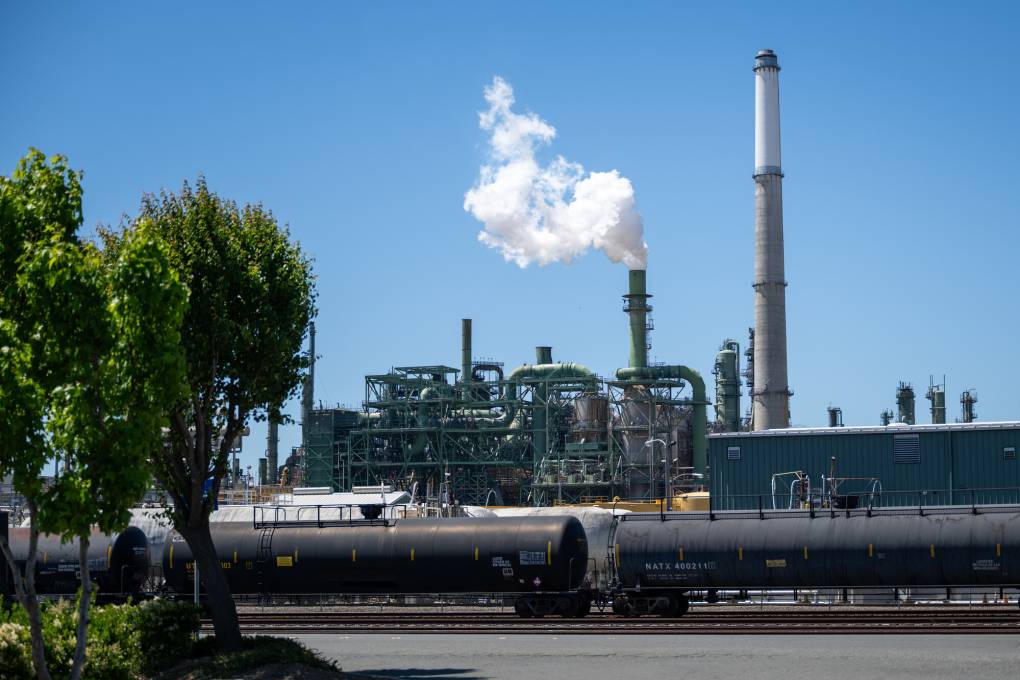
"caption": "The Valero Benicia Refinery in Benicia, on May 8, 2025, processes up to 170,000 barrels of oil a day, making gasoline, diesel, and other fuels for California. Valero plans to shut down the Benicia refinery by April 2026, citing high costs and strict environmental rules.",
"credit": "Beth LaBerge/KQED",
"altTag": null,
"description": null,
"imgSizes": {
"medium": {
"file": "https://cdn.kqed.org/wp-content/uploads/sites/10/2025/05/250509-BeniciaRefinery-30-BL_qed-800x533.jpg",
"width": 800,
"height": 533,
"mimeType": "image/jpeg"
},
"large": {
"file": "https://cdn.kqed.org/wp-content/uploads/sites/10/2025/05/250509-BeniciaRefinery-30-BL_qed-1020x680.jpg",
"width": 1020,
"height": 680,
"mimeType": "image/jpeg"
},
"thumbnail": {
"file": "https://cdn.kqed.org/wp-content/uploads/sites/10/2025/05/250509-BeniciaRefinery-30-BL_qed-160x107.jpg",
"width": 160,
"height": 107,
"mimeType": "image/jpeg"
},
"1536x1536": {
"file": "https://cdn.kqed.org/wp-content/uploads/sites/10/2025/05/250509-BeniciaRefinery-30-BL_qed-1536x1024.jpg",
"width": 1536,
"height": 1024,
"mimeType": "image/jpeg"
},
"post-thumbnail": {
"file": "https://cdn.kqed.org/wp-content/uploads/sites/10/2025/05/250509-BeniciaRefinery-30-BL_qed-672x372.jpg",
"width": 672,
"height": 372,
"mimeType": "image/jpeg"
},
"twentyfourteen-full-width": {
"file": "https://cdn.kqed.org/wp-content/uploads/sites/10/2025/05/250509-BeniciaRefinery-30-BL_qed-1038x576.jpg",
"width": 1038,
"height": 576,
"mimeType": "image/jpeg"
},
"full-width": {
"file": "https://cdn.kqed.org/wp-content/uploads/sites/10/2025/05/250509-BeniciaRefinery-30-BL_qed-1920x1280.jpg",
"width": 1920,
"height": 1280,
"mimeType": "image/jpeg"
},
"kqedFullSize": {
"file": "https://cdn.kqed.org/wp-content/uploads/sites/10/2025/05/250509-BeniciaRefinery-30-BL_qed.jpg",
"width": 1999,
"height": 1333
}
},
"isLoading": false,
"fetchFailed": false
},
"news_12040954": {
"type": "attachments",
"id": "news_12040954",
"meta": {
"index": "attachments_1716263798",
"site": "news",
"id": "12040954",
"found": true
},
"title": "20241204-BART-JY-028_qed",
"publishDate": 1747772322,
"status": "inherit",
"parent": 12040951,
"modified": 1747772344,
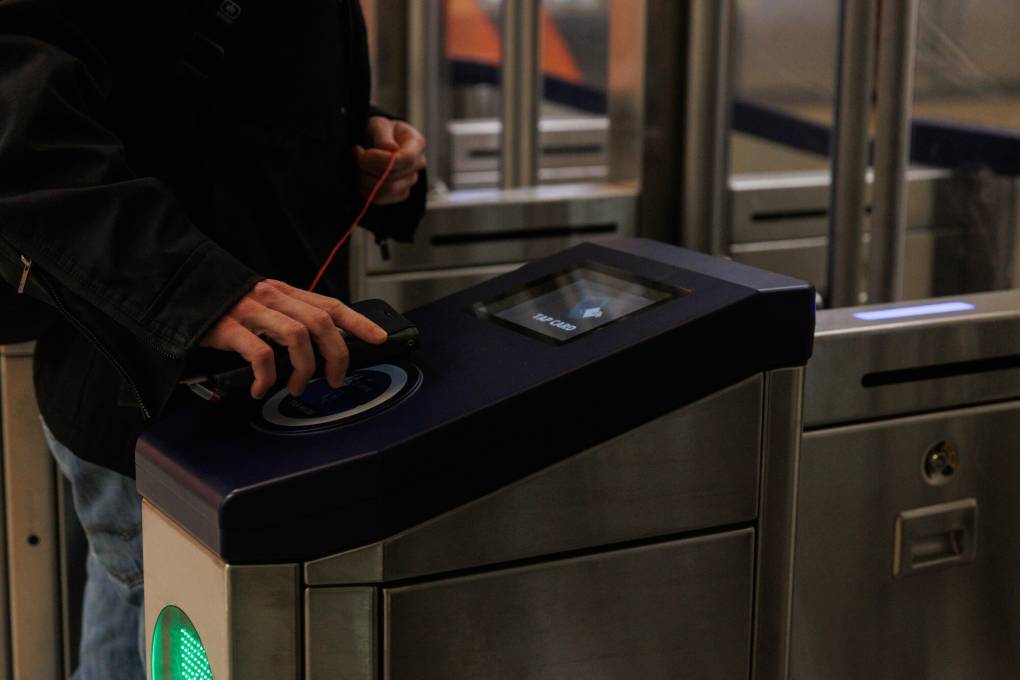
"caption": "A passenger tags their Clipper card at Montgomery BART Station in San Francisco on Dec. 4, 2024.",
"credit": "Juliana Yamada/KQED",
"altTag": null,
"description": null,
"imgSizes": {
"medium": {
"file": "https://cdn.kqed.org/wp-content/uploads/sites/10/2025/05/20241204-BART-JY-028_qed-800x533.jpg",
"width": 800,
"height": 533,
"mimeType": "image/jpeg"
},
"large": {
"file": "https://cdn.kqed.org/wp-content/uploads/sites/10/2025/05/20241204-BART-JY-028_qed-1020x680.jpg",
"width": 1020,
"height": 680,
"mimeType": "image/jpeg"
},
"thumbnail": {
"file": "https://cdn.kqed.org/wp-content/uploads/sites/10/2025/05/20241204-BART-JY-028_qed-160x107.jpg",
"width": 160,
"height": 107,
"mimeType": "image/jpeg"
},
"1536x1536": {
"file": "https://cdn.kqed.org/wp-content/uploads/sites/10/2025/05/20241204-BART-JY-028_qed-1536x1024.jpg",
"width": 1536,
"height": 1024,
"mimeType": "image/jpeg"
},
"post-thumbnail": {
"file": "https://cdn.kqed.org/wp-content/uploads/sites/10/2025/05/20241204-BART-JY-028_qed-672x372.jpg",
"width": 672,
"height": 372,
"mimeType": "image/jpeg"
},
"twentyfourteen-full-width": {
"file": "https://cdn.kqed.org/wp-content/uploads/sites/10/2025/05/20241204-BART-JY-028_qed-1038x576.jpg",
"width": 1038,
"height": 576,
"mimeType": "image/jpeg"
},
"full-width": {
"file": "https://cdn.kqed.org/wp-content/uploads/sites/10/2025/05/20241204-BART-JY-028_qed-1920x1280.jpg",
"width": 1920,
"height": 1280,
"mimeType": "image/jpeg"
},
"kqedFullSize": {
"file": "https://cdn.kqed.org/wp-content/uploads/sites/10/2025/05/20241204-BART-JY-028_qed.jpg",
"width": 1999,
"height": 1333
}
},
"isLoading": false,
"fetchFailed": false
},
"news_12040970": {
"type": "attachments",
"id": "news_12040970",
"meta": {
"index": "attachments_1716263798",
"site": "news",
"id": "12040970",
"found": true
},
"title": "250520-BARBARA LEE SWORN IN-MD-03-KQED-1",
"publishDate": 1747773660,
"status": "inherit",
"parent": 12040935,
"modified": 1747774366,
"caption": "Barbara Lee speaks to supporters after being sworn in as Mayor of Oakland at Oakland City Hall on May 20, 2025.",
"credit": "Martin do Nascimento/KQED",
"altTag": null,
"description": null,
"imgSizes": {
"medium": {
"file": "https://cdn.kqed.org/wp-content/uploads/sites/10/2025/05/250520-BARBARA-LEE-SWORN-IN-MD-03-KQED-1-800x533.jpg",
"width": 800,
"height": 533,
"mimeType": "image/jpeg"
},
"large": {
"file": "https://cdn.kqed.org/wp-content/uploads/sites/10/2025/05/250520-BARBARA-LEE-SWORN-IN-MD-03-KQED-1-1020x680.jpg",
"width": 1020,
"height": 680,
"mimeType": "image/jpeg"
},
"thumbnail": {
"file": "https://cdn.kqed.org/wp-content/uploads/sites/10/2025/05/250520-BARBARA-LEE-SWORN-IN-MD-03-KQED-1-160x107.jpg",
"width": 160,
"height": 107,
"mimeType": "image/jpeg"
},
"1536x1536": {
"file": "https://cdn.kqed.org/wp-content/uploads/sites/10/2025/05/250520-BARBARA-LEE-SWORN-IN-MD-03-KQED-1-1536x1024.jpg",
"width": 1536,
"height": 1024,
"mimeType": "image/jpeg"
},
"post-thumbnail": {
"file": "https://cdn.kqed.org/wp-content/uploads/sites/10/2025/05/250520-BARBARA-LEE-SWORN-IN-MD-03-KQED-1-672x372.jpg",
"width": 672,
"height": 372,
"mimeType": "image/jpeg"
},
"twentyfourteen-full-width": {
"file": "https://cdn.kqed.org/wp-content/uploads/sites/10/2025/05/250520-BARBARA-LEE-SWORN-IN-MD-03-KQED-1-1038x576.jpg",
"width": 1038,
"height": 576,
"mimeType": "image/jpeg"
},
"full-width": {
"file": "https://cdn.kqed.org/wp-content/uploads/sites/10/2025/05/250520-BARBARA-LEE-SWORN-IN-MD-03-KQED-1-1920x1280.jpg",
"width": 1920,
"height": 1280,
"mimeType": "image/jpeg"
},
"kqedFullSize": {
"file": "https://cdn.kqed.org/wp-content/uploads/sites/10/2025/05/250520-BARBARA-LEE-SWORN-IN-MD-03-KQED-1.jpg",
"width": 2000,
"height": 1333
}
},
"isLoading": false,
"fetchFailed": false
},
"news_11993195": {
"type": "attachments",
"id": "news_11993195",
"meta": {
"index": "attachments_1716263798",
"site": "news",
"id": "11993195",
"found": true
},
"title": "240313-BART CRISIS INTERVENTION UNIT-MD-16_qed",
"publishDate": 1720461197,
"status": "inherit",
"parent": 11993189,
"modified": 1747766652,
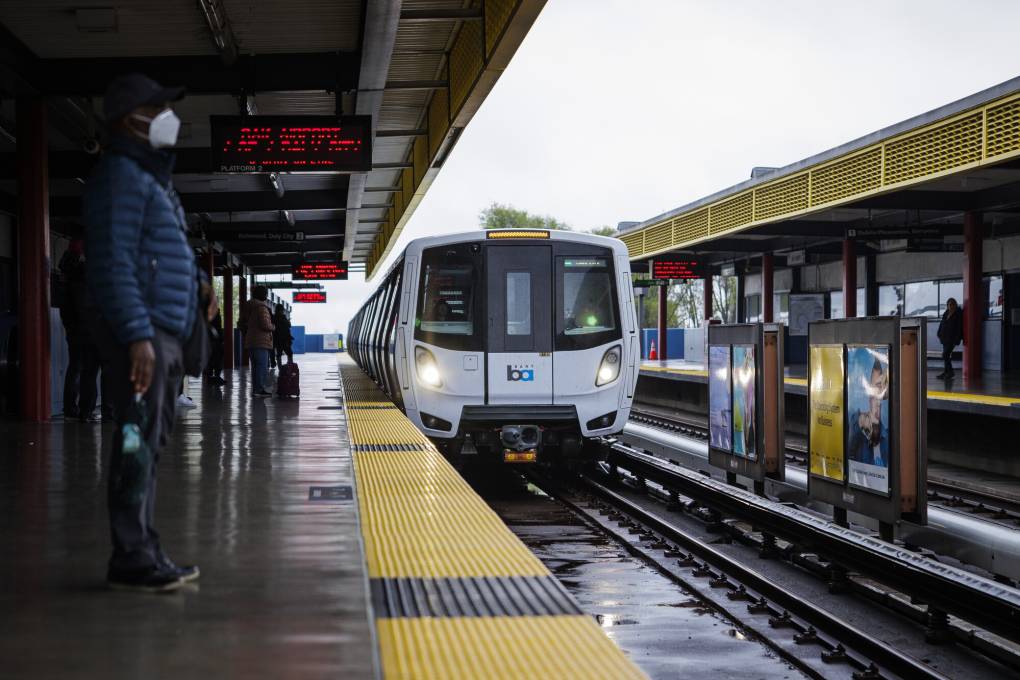
"caption": "A train approaches the San Leandro BART station on March 13, 2024.",
"credit": "Martin do Nascimento/KQED",
"altTag": null,
"description": null,
"imgSizes": {
"medium": {
"file": "https://cdn.kqed.org/wp-content/uploads/sites/10/2024/07/240313-BART-CRISIS-INTERVENTION-UNIT-MD-16_qed-800x533.jpg",
"width": 800,
"height": 533,
"mimeType": "image/jpeg"
},
"large": {
"file": "https://cdn.kqed.org/wp-content/uploads/sites/10/2024/07/240313-BART-CRISIS-INTERVENTION-UNIT-MD-16_qed-1020x680.jpg",
"width": 1020,
"height": 680,
"mimeType": "image/jpeg"
},
"thumbnail": {
"file": "https://cdn.kqed.org/wp-content/uploads/sites/10/2024/07/240313-BART-CRISIS-INTERVENTION-UNIT-MD-16_qed-160x107.jpg",
"width": 160,
"height": 107,
"mimeType": "image/jpeg"
},
"1536x1536": {
"file": "https://cdn.kqed.org/wp-content/uploads/sites/10/2024/07/240313-BART-CRISIS-INTERVENTION-UNIT-MD-16_qed-1536x1024.jpg",
"width": 1536,
"height": 1024,
"mimeType": "image/jpeg"
},
"post-thumbnail": {
"file": "https://cdn.kqed.org/wp-content/uploads/sites/10/2024/07/240313-BART-CRISIS-INTERVENTION-UNIT-MD-16_qed-672x372.jpg",
"width": 672,
"height": 372,
"mimeType": "image/jpeg"
},
"twentyfourteen-full-width": {
"file": "https://cdn.kqed.org/wp-content/uploads/sites/10/2024/07/240313-BART-CRISIS-INTERVENTION-UNIT-MD-16_qed-1038x576.jpg",
"width": 1038,
"height": 576,
"mimeType": "image/jpeg"
},
"full-width": {
"file": "https://cdn.kqed.org/wp-content/uploads/sites/10/2024/07/240313-BART-CRISIS-INTERVENTION-UNIT-MD-16_qed-1920x1280.jpg",
"width": 1920,
"height": 1280,
"mimeType": "image/jpeg"
},
"kqedFullSize": {
"file": "https://cdn.kqed.org/wp-content/uploads/sites/10/2024/07/240313-BART-CRISIS-INTERVENTION-UNIT-MD-16_qed.jpg",
"width": 1999,
"height": 1333
}
},
"isLoading": false,
"fetchFailed": false
}
},
"audioPlayerReducer": {
"postId": "stream_live",
"isPaused": true,
"isPlaying": false,
"pfsActive": false,
"pledgeModalIsOpen": true,
"playerDrawerIsOpen": false,
"liveAudioPlayStartedAt": 0,
"liveAudioPlayContext": ""
},
"authorsReducer": {
"danbrekke": {
"type": "authors",
"id": "222",
"meta": {
"index": "authors_1716337520",
"id": "222",
"found": true
},
"name": "Dan Brekke",
"firstName": "Dan",
"lastName": "Brekke",
"slug": "danbrekke",
"email": "dbrekke@kqed.org",
"display_author_email": true,
"staff_mastheads": [
"news",
"science"
],
"title": "KQED Editor and Reporter",
"bio": "Dan Brekke is a reporter and editor for KQED News, responsible for coverage of topics ranging from California water issues to the Bay Area's transportation challenges. In a newsroom career that began in Chicago in 1972, Dan has worked for \u003cem>The San Francisco Examiner,\u003c/em> Wired and TechTV and has been published in The New York Times, The New York Times Magazine, Business 2.0, Salon and elsewhere.\r\n\r\nSince joining KQED in 2007, Dan has reported, edited and produced both radio and online features and breaking news pieces. He has shared as both editor and reporter in four Society of Professional Journalists Norcal Excellence in Journalism awards and one Edward R. Murrow regional award. He was chosen for a spring 2017 residency at the Mesa Refuge to advance his research on California salmon.\r\n\r\nEmail Dan at: \u003ca href=\"mailto:dbrekke@kqed.org\">dbrekke@kqed.org\u003c/a>\r\n\r\n\u003cstrong>Twitter:\u003c/strong> \u003ca href=\"https://twitter.com/danbrekke\" rel=\"noopener noreferrer\">twitter.com/danbrekke\u003c/a>\r\n\u003cstrong>Facebook:\u003c/strong> \u003ca href=\"https://www.facebook.com/danbrekke\" rel=\"noopener noreferrer\">www.facebook.com/danbrekke\u003c/a>\r\n\u003cstrong>LinkedIn:\u003c/strong> \u003ca href=\"https://www.linkedin.com/in/danbrekke\" rel=\"noopener noreferrer\">www.linkedin.com/in/danbrekke\u003c/a>",
"avatar": "https://secure.gravatar.com/avatar/8f1f0d2a978fb3b23426c922c7e2af558fa36905b49c4ce76a97dc3c72d27226?s=600&d=mm&r=g",
"twitter": "danbrekke",
"bluesky": null,
"facebook": null,
"instagram": "https://www.instagram.com/dan.brekke/",
"linkedin": "https://www.linkedin.com/in/danbrekke/",
"sites": [
{
"site": "news",
"roles": [
"administrator",
"create_posts"
]
},
{
"site": "stateofhealth",
"roles": [
"editor"
]
},
{
"site": "science",
"roles": [
"editor"
]
},
{
"site": "quest",
"roles": [
"contributor"
]
},
{
"site": "food",
"roles": [
"contributor"
]
},
{
"site": "forum",
"roles": [
"contributor"
]
},
{
"site": "elections",
"roles": [
"editor"
]
},
{
"site": "liveblog",
"roles": [
"editor"
]
}
],
"headData": {
"title": "Dan Brekke | KQED",
"description": "KQED Editor and Reporter",
"ogImgSrc": "https://secure.gravatar.com/avatar/8f1f0d2a978fb3b23426c922c7e2af558fa36905b49c4ce76a97dc3c72d27226?s=600&d=mm&r=g",
"twImgSrc": "https://secure.gravatar.com/avatar/8f1f0d2a978fb3b23426c922c7e2af558fa36905b49c4ce76a97dc3c72d27226?s=600&d=mm&r=g"
},
"isLoading": false,
"link": "/author/danbrekke"
},
"matthewgreen": {
"type": "authors",
"id": "1263",
"meta": {
"index": "authors_1716337520",
"id": "1263",
"found": true
},
"name": "Matthew Green",
"firstName": "Matthew",
"lastName": "Green",
"slug": "matthewgreen",
"email": "mgreen@kqed.org",
"display_author_email": false,
"staff_mastheads": [],
"title": "KQED Editor/Reporter",
"bio": "Matthew Green is a digital media producer for KQED News. He previously produced \u003ca href=\"http://www.kqed.org/lowdown\">The Lowdown\u003c/a>, KQED’s multimedia news education blog. Matthew's written for numerous Bay Area publications, including the Oakland Tribune and San Francisco Chronicle. He also taught journalism classes at Fremont High School in East Oakland.\r\n\r\nEmail: mgreen@kqed.org; Twitter: @MGreenKQED",
"avatar": "https://secure.gravatar.com/avatar/3bf498d1267ca02c8494f33d8cfc575e?s=600&d=blank&r=g",
"twitter": "MGreenKQED",
"facebook": null,
"instagram": null,
"linkedin": null,
"sites": [
{
"site": "news",
"roles": []
},
{
"site": "lowdown",
"roles": []
},
{
"site": "science",
"roles": []
},
{
"site": "education",
"roles": []
},
{
"site": "quest",
"roles": []
},
{
"site": "liveblog",
"roles": []
}
],
"headData": {
"title": "Matthew Green | KQED",
"description": "KQED Editor/Reporter",
"ogImgSrc": "https://secure.gravatar.com/avatar/3bf498d1267ca02c8494f33d8cfc575e?s=600&d=blank&r=g",
"twImgSrc": "https://secure.gravatar.com/avatar/3bf498d1267ca02c8494f33d8cfc575e?s=600&d=blank&r=g"
},
"isLoading": false,
"link": "/author/matthewgreen"
},
"ccabreralomeli": {
"type": "authors",
"id": "11708",
"meta": {
"index": "authors_1716337520",
"id": "11708",
"found": true
},
"name": "Carlos Cabrera-Lomelí",
"firstName": "Carlos",
"lastName": "Cabrera-Lomelí",
"slug": "ccabreralomeli",
"email": "ccabreralomeli@KQED.org",
"display_author_email": true,
"staff_mastheads": [
"news"
],
"title": "Community Reporter",
"bio": "Carlos Cabrera-Lomelí is a community reporter with KQED's digital engagement team. He also reports and co-produces for KQED's bilingual news hub KQED en Español. He grew up in San Francisco's Mission District and has previously worked with Univision, 48 Hills and REFORMA in Mexico City.",
"avatar": "https://secure.gravatar.com/avatar/c309be9665e484f887b818c89e273ecc673004f426f36b24d00a4d813a2e0518?s=600&d=blank&r=g",
"twitter": "@LomeliCabrera",
"bluesky": null,
"facebook": null,
"instagram": null,
"linkedin": null,
"sites": [
{
"site": "arts",
"roles": [
"editor"
]
},
{
"site": "news",
"roles": [
"editor"
]
},
{
"site": "about",
"roles": [
"editor"
]
},
{
"site": "science",
"roles": [
"editor"
]
},
{
"site": "perspectives",
"roles": [
"editor"
]
},
{
"site": "elections",
"roles": [
"editor"
]
},
{
"site": "liveblog",
"roles": [
"contributor"
]
}
],
"headData": {
"title": "Carlos Cabrera-Lomelí | KQED",
"description": "Community Reporter",
"ogImgSrc": "https://secure.gravatar.com/avatar/c309be9665e484f887b818c89e273ecc673004f426f36b24d00a4d813a2e0518?s=600&d=blank&r=g",
"twImgSrc": "https://secure.gravatar.com/avatar/c309be9665e484f887b818c89e273ecc673004f426f36b24d00a4d813a2e0518?s=600&d=blank&r=g"
},
"isLoading": false,
"link": "/author/ccabreralomeli"
},
"otaylor": {
"type": "authors",
"id": "11770",
"meta": {
"index": "authors_1716337520",
"id": "11770",
"found": true
},
"name": "Otis R. Taylor Jr.",
"firstName": "Otis R.",
"lastName": "Taylor Jr.",
"slug": "otaylor",
"email": "otaylor@kqed.org",
"display_author_email": false,
"staff_mastheads": [
"news"
],
"title": "KQED Editor",
"bio": null,
"avatar": "https://secure.gravatar.com/avatar/fe73e14d4842ac8e1c03d57def2530f57f1c5b0ca7d4a987ccc5bd90956cb7c6?s=600&d=blank&r=g",
"twitter": "otisrtaylorjr",
"bluesky": null,
"facebook": null,
"instagram": null,
"linkedin": null,
"sites": [
{
"site": "arts",
"roles": [
"subscriber"
]
},
{
"site": "news",
"roles": [
"subscriber"
]
},
{
"site": "science",
"roles": [
"subscriber"
]
},
{
"site": "liveblog",
"roles": [
"subscriber"
]
}
],
"headData": {
"title": "Otis R. Taylor Jr. | KQED",
"description": "KQED Editor",
"ogImgSrc": "https://secure.gravatar.com/avatar/fe73e14d4842ac8e1c03d57def2530f57f1c5b0ca7d4a987ccc5bd90956cb7c6?s=600&d=blank&r=g",
"twImgSrc": "https://secure.gravatar.com/avatar/fe73e14d4842ac8e1c03d57def2530f57f1c5b0ca7d4a987ccc5bd90956cb7c6?s=600&d=blank&r=g"
},
"isLoading": false,
"link": "/author/otaylor"
},
"sjohnson": {
"type": "authors",
"id": "11840",
"meta": {
"index": "authors_1716337520",
"id": "11840",
"found": true
},
"name": "Sydney Johnson",
"firstName": "Sydney",
"lastName": "Johnson",
"slug": "sjohnson",
"email": "sjohnson@kqed.org",
"display_author_email": false,
"staff_mastheads": [
"news"
],
"title": "KQED Reporter",
"bio": "Sydney Johnson is a general assignment reporter at KQED. She previously reported on public health and city government at the San Francisco Examiner, and before that, she covered statewide education policy for EdSource. Her reporting has won multiple local, state and national awards. Sydney is a graduate of the University of California, Berkeley and lives in San Francisco.",
"avatar": "https://secure.gravatar.com/avatar/97855f2719b72ad6190b7c535fe642c8?s=600&d=blank&r=g",
"twitter": "sydneyfjohnson",
"facebook": null,
"instagram": null,
"linkedin": null,
"sites": [
{
"site": "news",
"roles": [
"editor"
]
}
],
"headData": {
"title": "Sydney Johnson | KQED",
"description": "KQED Reporter",
"ogImgSrc": "https://secure.gravatar.com/avatar/97855f2719b72ad6190b7c535fe642c8?s=600&d=blank&r=g",
"twImgSrc": "https://secure.gravatar.com/avatar/97855f2719b72ad6190b7c535fe642c8?s=600&d=blank&r=g"
},
"isLoading": false,
"link": "/author/sjohnson"
},
"kdebenedetti": {
"type": "authors",
"id": "11913",
"meta": {
"index": "authors_1716337520",
"id": "11913",
"found": true
},
"name": "Katie DeBenedetti",
"firstName": "Katie",
"lastName": "DeBenedetti",
"slug": "kdebenedetti",
"email": "kdebenedetti@kqed.org",
"display_author_email": false,
"staff_mastheads": [
"news",
"science"
],
"title": "KQED Contributor",
"bio": "Katie DeBenedetti is a digital reporter covering daily news for the Express Desk. Prior to joining KQED as a culture reporting intern in January 2024, she covered education and city government for the Napa Valley Register.",
"avatar": "https://secure.gravatar.com/avatar/6e31073cb8f7e4214ab03f42771d0f45?s=600&d=blank&r=g",
"twitter": null,
"facebook": null,
"instagram": null,
"linkedin": null,
"sites": [
{
"site": "news",
"roles": [
"author"
]
},
{
"site": "science",
"roles": [
"author"
]
},
{
"site": "liveblog",
"roles": [
"author"
]
}
],
"headData": {
"title": "Katie DeBenedetti | KQED",
"description": "KQED Contributor",
"ogImgSrc": "https://secure.gravatar.com/avatar/6e31073cb8f7e4214ab03f42771d0f45?s=600&d=blank&r=g",
"twImgSrc": "https://secure.gravatar.com/avatar/6e31073cb8f7e4214ab03f42771d0f45?s=600&d=blank&r=g"
},
"isLoading": false,
"link": "/author/kdebenedetti"
},
"slim": {
"type": "authors",
"id": "11920",
"meta": {
"index": "authors_1716337520",
"id": "11920",
"found": true
},
"name": "Samantha Lim",
"firstName": "Samantha",
"lastName": "Lim",
"slug": "slim",
"email": "slim@KQED.org",
"display_author_email": false,
"staff_mastheads": [],
"title": "KQED Contributor",
"bio": null,
"avatar": "https://secure.gravatar.com/avatar/82e592e6c15fe1a04d385e8ad0fb0b4e?s=600&d=blank&r=g",
"twitter": null,
"facebook": null,
"instagram": null,
"linkedin": null,
"sites": [
{
"site": "news",
"roles": []
}
],
"headData": {
"title": "Samantha Lim | KQED",
"description": "KQED Contributor",
"ogImgSrc": "https://secure.gravatar.com/avatar/82e592e6c15fe1a04d385e8ad0fb0b4e?s=600&d=blank&r=g",
"twImgSrc": "https://secure.gravatar.com/avatar/82e592e6c15fe1a04d385e8ad0fb0b4e?s=600&d=blank&r=g"
},
"isLoading": false,
"link": "/author/slim"
}
},
"pagesReducer": {
"news_category_local": {
"type": "terms",
"id": "news_28250",
"meta": {
"index": "terms_1716263798",
"site": "news",
"id": "28250",
"score": 12.940577
},
"featImg": null,
"name": "Local",
"description": null,
"taxonomy": "category",
"headData": {
"twImgId": null,
"twTitle": null,
"ogTitle": null,
"ogImgId": null,
"twDescription": null,
"description": null,
"title": "Local Archives | KQED News",
"ogDescription": null
},
"ttid": 28267,
"slug": "local",
"isLoading": false,
"title": "Local",
"pageMeta": {
"site": "news",
"WpPageTemplate": "page-topic-editorial",
"currentPage": 114
},
"blocks": [
{
"blockName": "kqed/post-list",
"attrs": {
"layout": "cardArticle2",
"query": "posts/news?category=local",
"seeMore": false,
"paginated": true,
"page": 114
}
},
{
"blockName": "kqed/ad"
}
]
}
},
"pfsSessionReducer": {},
"postsReducer": {
"stream_live": {
"type": "live",
"id": "stream_live",
"audioUrl": "https://streams.kqed.org/kqedradio",
"title": "Live Stream",
"excerpt": "Live Stream information currently unavailable.",
"link": "/radio",
"featImg": "",
"label": {
"name": "KQED Live",
"link": "/"
}
},
"stream_kqedNewscast": {
"type": "posts",
"id": "stream_kqedNewscast",
"audioUrl": "https://www.kqed.org/.stream/anon/radio/RDnews/newscast.mp3?_=1",
"title": "KQED Newscast",
"featImg": "",
"label": {
"name": "88.5 FM",
"link": "/"
}
},
"news_12041470": {
"type": "posts",
"id": "news_12041470",
"meta": {
"index": "posts_1716263798",
"site": "news",
"id": "12041470",
"score": null,
"sort": [
1748036613000
]
},
"guestAuthors": [],
"slug": "suspicious-playground-fires-parents-neighbors-sfs-outer-richmond-on-edge",
"title": "Suspicious Playground Fires Have Parents, Neighbors in SF’s Outer Richmond on Edge",
"publishDate": 1748036613,
"format": "standard",
"headTitle": "Suspicious Playground Fires Have Parents, Neighbors in SF’s Outer Richmond on Edge | KQED",
"labelTerm": {
"site": "news"
},
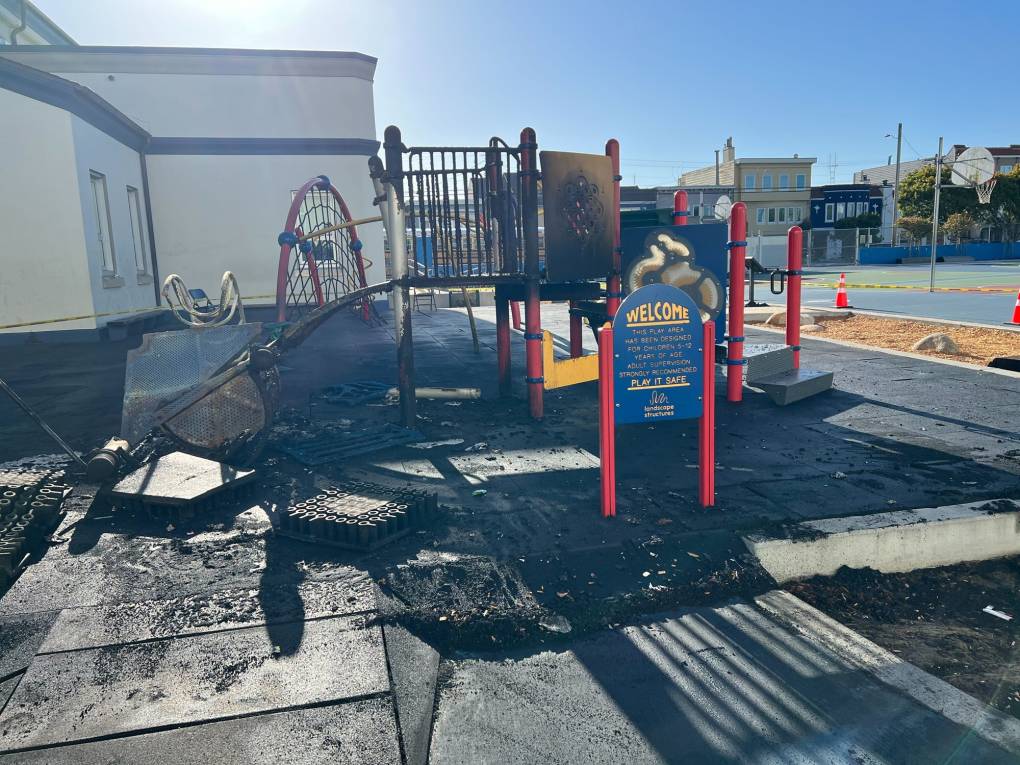
"content": "\u003cp>A series of fires that have destroyed two playgrounds in San Francisco’s \u003ca href=\"https://www.kqed.org/news/12033966/sfs-single-family-home-neighborhoods-apartments-65-story-towers-downtown\">Outer Richmond\u003c/a> in the last week have frightened residents and raised suspicions of foul play, with little known about who or what started the blazes.\u003c/p>\n\u003cp>San Francisco firefighters and police officers are investigating four fires that have broken out in the neighborhood this month, but no suspects have been identified and no arrests have been made.\u003c/p>\n\u003cp>The most recent two fires burned down playgrounds at Lafayette Elementary School and Lincoln Park just a few days before summer vacation begins.\u003c/p>\n\u003cp>[ad fullwidth]\u003c/p>\n\u003cp>“It’s just unreasonable to believe that these could be random, unassociated acts when they are so close together in location and temporal proximity,” said Hallie Albert, vice president of Lafayette’s Parent Teacher Association. “It raises the very reasonable suspicion that they are connected, and that leaves us all very concerned.”\u003c/p>\n\u003cp>Albert, who is also the parent of a fourth-grader at Lafayette, said a sense of fear and anxiety has pervaded the school community, although it varies from person to person. If someone did intentionally start the fires, parents are mostly worried that it could happen again at other play structures and areas frequented by children, she said.\u003c/p>\n\u003cfigure id=\"attachment_12041527\" class=\"wp-caption aligncenter\" style=\"max-width: 2000px\">\u003cimg loading=\"lazy\" decoding=\"async\" class=\"wp-image-12041527 size-full\" src=\"https://cdn.kqed.org/wp-content/uploads/sites/10/2025/05/SFPlayground2.jpg\" alt=\"\" width=\"2000\" height=\"1500\" srcset=\"https://cdn.kqed.org/wp-content/uploads/sites/10/2025/05/SFPlayground2.jpg 2000w, https://cdn.kqed.org/wp-content/uploads/sites/10/2025/05/SFPlayground2-800x600.jpg 800w, https://cdn.kqed.org/wp-content/uploads/sites/10/2025/05/SFPlayground2-1020x765.jpg 1020w, https://cdn.kqed.org/wp-content/uploads/sites/10/2025/05/SFPlayground2-160x120.jpg 160w, https://cdn.kqed.org/wp-content/uploads/sites/10/2025/05/SFPlayground2-1536x1152.jpg 1536w, https://cdn.kqed.org/wp-content/uploads/sites/10/2025/05/SFPlayground2-1920x1440.jpg 1920w\" sizes=\"auto, (max-width: 2000px) 100vw, 2000px\">\u003cfigcaption class=\"wp-caption-text\">The playground at Lafayette Elementary School in San Francisco’s Outer Richmond was destroyed in a suspicious fire, one of four blazes under investigation in the neighborhood this month. \u003ccite>(Courtesy of Hallie Albert)\u003c/cite>\u003c/figcaption>\u003c/figure>\n\u003cp>The fires’ causes have not been determined. Samuel Menchaca, a spokesperson for the \u003ca href=\"https://www.kqed.org/news/tag/san-francisco-fire-department\">San Francisco Fire Department\u003c/a>, said firefighters and officers are taking their investigations seriously and urged people to report anything suspicious or abnormal in the area right away.\u003c/p>\n\u003cp>The first fire broke out on May 1, when firefighters responded around 1:30 a.m. to calls of a storage container burning outside Lafayette Elementary School. The container, which stored thousands of dollars’ worth of PTA merchandise, games, decorations and other event supplies, was completely destroyed, Albert said.\u003c/p>\n\u003cp>On May 10, a small fire was reported at the playground at Lincoln Park around 11 p.m. It burned a hole through a slide, but there was no further damage.[aside postID=news_12041112 hero='https://cdn.kqed.org/wp-content/uploads/sites/10/2025/05/IMG_6619_qed-1020x599.jpg']Earlier this week, a second fire broke out at Lafayette Elementary School around 10:30 p.m. on May 18, completely destroying the school’s playground. All that was left of the structure when devastated parents arrived at the school the next morning was twisted metal, rubble and ash. Fortunately, no one was hurt.\u003c/p>\n\u003cp>Over the next few days, parents and school staff helped to clean up the site. Many of them also volunteered to decorate the fence surrounding the playground. It is now adorned with a colorful display of ribbons and flowers, Albert said.\u003c/p>\n\u003cp>On Wednesday, community members met with school officials and local authorities to discuss the fire and to figure out the next steps.\u003c/p>\n\u003cp>Parents expressed concern over the safety of their children, some of whom were coming home from school with soot and ash on their clothes. The school assured them that emergency procedures were in place, and a cleaning crew was sent out to clear away the debris, Albert said.\u003c/p>\n\u003cfigure id=\"attachment_12041532\" class=\"wp-caption alignleft\" style=\"max-width: 640px\">\u003cimg loading=\"lazy\" decoding=\"async\" class=\"size-large wp-image-12041532\" src=\"https://cdn.kqed.org/wp-content/uploads/sites/10/2025/05/SFPlayground3-1020x1360.jpg\" alt=\"\" width=\"640\" height=\"853\" srcset=\"https://cdn.kqed.org/wp-content/uploads/sites/10/2025/05/SFPlayground3-1020x1360.jpg 1020w, https://cdn.kqed.org/wp-content/uploads/sites/10/2025/05/SFPlayground3-800x1066.jpg 800w, https://cdn.kqed.org/wp-content/uploads/sites/10/2025/05/SFPlayground3-160x213.jpg 160w, https://cdn.kqed.org/wp-content/uploads/sites/10/2025/05/SFPlayground3-1152x1536.jpg 1152w, https://cdn.kqed.org/wp-content/uploads/sites/10/2025/05/SFPlayground3-1536x2048.jpg 1536w, https://cdn.kqed.org/wp-content/uploads/sites/10/2025/05/SFPlayground3-scaled.jpg 1920w\" sizes=\"auto, (max-width: 640px) 100vw, 640px\">\u003cfigcaption class=\"wp-caption-text\">Parents and school staff spent several days cleaning up the site and transforming the playground fence into a vibrant display adorned with colorful ribbons and flowers. \u003ccite>(Courtesy of Erin Montoya)\u003c/cite>\u003c/figcaption>\u003c/figure>\n\u003cp>Another parent asked whether the fire at Lafayette had any connection to the one at Lincoln Park. According to Albert, it was the first time any of them had heard the word “arson” being used to describe what may have happened.\u003c/p>\n\u003cp>“We understand that two incidents in a short time are concerning, and we are working closely with the Fire Department to investigate both cases,” Katrina Kincade, a spokesperson for the \u003ca href=\"https://www.kqed.org/news/tag/sfusd\">San Francisco Unified School District\u003c/a>, said in a statement to KQED. “Until the investigation is complete, we are not making assumptions about the causes of the fires.”\u003c/p>\n\u003cp>A few hours after the community meeting ended on Wednesday, firefighters responded to another emergency call at Lincoln Park around 11 p.m. A second fire had occurred at the park’s play structure, and the damage was far worse than before.\u003c/p>\n\u003cp>According to Daniel Montes, a spokesperson for the San Francisco Recreation and Parks Department, the playground was almost entirely destroyed. All that remains is a small play area for toddlers that was untouched by the fire.\u003c/p>\n\u003cp>“It’s disheartening to see vandalism in any park,” Montes said. “The play area has been effectively destroyed, and this is a treasured space for kids and families in the Richmond neighborhood. We are still trying to assess the damage, but it is closed off to the public for now.”\u003c/p>\n\u003cp>As summer vacation starts, Albert said she’s trying to figure out new ways to keep her children entertained outdoors without some of the play structures that were previously available.\u003c/p>\n\u003cp>“One of the reasons many of us live and love living in Outer Richmond is because we have a more mellowed feel while still being in the city. Our kids are able to go out and be in the neighborhood and play,” she said. “It’s really quite sad and disheartening that they no longer have the spaces that have been burned.”\u003c/p>\n\u003cp>\u003c/p>\n",
"blocks": [],
"excerpt": "The two most recent of four fires this month in the westside San Francisco neighborhood destroyed playgrounds at Lafayette Elementary School and Lincoln Park. Authorities are investigating.",
"status": "publish",
"parent": 0,
"modified": 1748038123,
"stats": {
"hasAudio": false,
"hasVideo": false,
"hasChartOrMap": false,
"iframeSrcs": [],
"hasGoogleForm": false,
"hasGallery": false,
"hasHearkenModule": false,
"hasPolis": false,
"paragraphCount": 20,
"wordCount": 917
},
"headData": {
"title": "Suspicious Playground Fires Have Parents, Neighbors in SF’s Outer Richmond on Edge | KQED",
"description": "The two most recent of four fires this month in the westside San Francisco neighborhood destroyed playgrounds at Lafayette Elementary School and Lincoln Park. Authorities are investigating.",
"ogTitle": "",
"ogDescription": "",
"ogImgId": "",
"twTitle": "",
"twDescription": "",
"twImgId": "",
"schema": {
"@context": "https://schema.org",
"@type": "NewsArticle",
"headline": "Suspicious Playground Fires Have Parents, Neighbors in SF’s Outer Richmond on Edge",
"datePublished": "2025-05-23T14:43:33-07:00",
"dateModified": "2025-05-23T15:08:43-07:00",
"image": "https://cdn.kqed.org/wp-content/uploads/2020/02/KQED-OG-Image@1x.png",
"isAccessibleForFree": "True",
"publisher": {
"@type": "NewsMediaOrganization",
"@id": "https://www.kqed.org/#organization",
"name": "KQED",
"logo": "https://cdn.kqed.org/wp-content/uploads/2020/02/KQED-OG-Image@1x.png",
"url": "https://www.kqed.org",
"sameAs": [
"https://www.facebook.com/KQED",
"https://twitter.com/KQED",
"https://www.instagram.com/kqed/",
"https://www.tiktok.com/@kqedofficial",
"https://www.linkedin.com/company/kqed",
"https://www.youtube.com/channel/UCeC0IOo7i1P_61zVUWbJ4nw"
]
}
}
},
"sticky": false,
"nprStoryId": "kqed-12041470",
"templateType": "standard",
"featuredImageType": "standard",
"excludeFromSiteSearch": "Include",
"articleAge": "0",
"path": "/news/12041470/suspicious-playground-fires-parents-neighbors-sfs-outer-richmond-on-edge",
"audioTrackLength": null,
"parsedContent": [
{
"type": "contentString",
"content": "\u003cdiv class=\"post-body\">\u003cp>\u003cp>A series of fires that have destroyed two playgrounds in San Francisco’s \u003ca href=\"https://www.kqed.org/news/12033966/sfs-single-family-home-neighborhoods-apartments-65-story-towers-downtown\">Outer Richmond\u003c/a> in the last week have frightened residents and raised suspicions of foul play, with little known about who or what started the blazes.\u003c/p>\n\u003cp>San Francisco firefighters and police officers are investigating four fires that have broken out in the neighborhood this month, but no suspects have been identified and no arrests have been made.\u003c/p>\n\u003cp>The most recent two fires burned down playgrounds at Lafayette Elementary School and Lincoln Park just a few days before summer vacation begins.\u003c/p>\n\u003cp>\u003c/p>\u003c/div>",
"attributes": {
"named": {},
"numeric": []
}
},
{
"type": "component",
"content": "",
"name": "ad",
"attributes": {
"named": {
"label": "fullwidth"
},
"numeric": [
"fullwidth"
]
}
},
{
"type": "contentString",
"content": "\u003cdiv class=\"post-body\">\u003cp>\u003c/p>\n\u003cp>“It’s just unreasonable to believe that these could be random, unassociated acts when they are so close together in location and temporal proximity,” said Hallie Albert, vice president of Lafayette’s Parent Teacher Association. “It raises the very reasonable suspicion that they are connected, and that leaves us all very concerned.”\u003c/p>\n\u003cp>Albert, who is also the parent of a fourth-grader at Lafayette, said a sense of fear and anxiety has pervaded the school community, although it varies from person to person. If someone did intentionally start the fires, parents are mostly worried that it could happen again at other play structures and areas frequented by children, she said.\u003c/p>\n\u003cfigure id=\"attachment_12041527\" class=\"wp-caption aligncenter\" style=\"max-width: 2000px\">\u003cimg loading=\"lazy\" decoding=\"async\" class=\"wp-image-12041527 size-full\" src=\"https://cdn.kqed.org/wp-content/uploads/sites/10/2025/05/SFPlayground2.jpg\" alt=\"\" width=\"2000\" height=\"1500\" srcset=\"https://cdn.kqed.org/wp-content/uploads/sites/10/2025/05/SFPlayground2.jpg 2000w, https://cdn.kqed.org/wp-content/uploads/sites/10/2025/05/SFPlayground2-800x600.jpg 800w, https://cdn.kqed.org/wp-content/uploads/sites/10/2025/05/SFPlayground2-1020x765.jpg 1020w, https://cdn.kqed.org/wp-content/uploads/sites/10/2025/05/SFPlayground2-160x120.jpg 160w, https://cdn.kqed.org/wp-content/uploads/sites/10/2025/05/SFPlayground2-1536x1152.jpg 1536w, https://cdn.kqed.org/wp-content/uploads/sites/10/2025/05/SFPlayground2-1920x1440.jpg 1920w\" sizes=\"auto, (max-width: 2000px) 100vw, 2000px\">\u003cfigcaption class=\"wp-caption-text\">The playground at Lafayette Elementary School in San Francisco’s Outer Richmond was destroyed in a suspicious fire, one of four blazes under investigation in the neighborhood this month. \u003ccite>(Courtesy of Hallie Albert)\u003c/cite>\u003c/figcaption>\u003c/figure>\n\u003cp>The fires’ causes have not been determined. Samuel Menchaca, a spokesperson for the \u003ca href=\"https://www.kqed.org/news/tag/san-francisco-fire-department\">San Francisco Fire Department\u003c/a>, said firefighters and officers are taking their investigations seriously and urged people to report anything suspicious or abnormal in the area right away.\u003c/p>\n\u003cp>The first fire broke out on May 1, when firefighters responded around 1:30 a.m. to calls of a storage container burning outside Lafayette Elementary School. The container, which stored thousands of dollars’ worth of PTA merchandise, games, decorations and other event supplies, was completely destroyed, Albert said.\u003c/p>\n\u003cp>On May 10, a small fire was reported at the playground at Lincoln Park around 11 p.m. It burned a hole through a slide, but there was no further damage.\u003c/p>\u003c/div>",
"attributes": {
"named": {},
"numeric": []
}
},
{
"type": "component",
"content": "",
"name": "aside",
"attributes": {
"named": {
"postid": "news_12041112",
"hero": "https://cdn.kqed.org/wp-content/uploads/sites/10/2025/05/IMG_6619_qed-1020x599.jpg",
"label": ""
},
"numeric": []
}
},
{
"type": "contentString",
"content": "\u003cdiv class=\"post-body\">\u003cp>Earlier this week, a second fire broke out at Lafayette Elementary School around 10:30 p.m. on May 18, completely destroying the school’s playground. All that was left of the structure when devastated parents arrived at the school the next morning was twisted metal, rubble and ash. Fortunately, no one was hurt.\u003c/p>\n\u003cp>Over the next few days, parents and school staff helped to clean up the site. Many of them also volunteered to decorate the fence surrounding the playground. It is now adorned with a colorful display of ribbons and flowers, Albert said.\u003c/p>\n\u003cp>On Wednesday, community members met with school officials and local authorities to discuss the fire and to figure out the next steps.\u003c/p>\n\u003cp>Parents expressed concern over the safety of their children, some of whom were coming home from school with soot and ash on their clothes. The school assured them that emergency procedures were in place, and a cleaning crew was sent out to clear away the debris, Albert said.\u003c/p>\n\u003cfigure id=\"attachment_12041532\" class=\"wp-caption alignleft\" style=\"max-width: 640px\">\u003cimg loading=\"lazy\" decoding=\"async\" class=\"size-large wp-image-12041532\" src=\"https://cdn.kqed.org/wp-content/uploads/sites/10/2025/05/SFPlayground3-1020x1360.jpg\" alt=\"\" width=\"640\" height=\"853\" srcset=\"https://cdn.kqed.org/wp-content/uploads/sites/10/2025/05/SFPlayground3-1020x1360.jpg 1020w, https://cdn.kqed.org/wp-content/uploads/sites/10/2025/05/SFPlayground3-800x1066.jpg 800w, https://cdn.kqed.org/wp-content/uploads/sites/10/2025/05/SFPlayground3-160x213.jpg 160w, https://cdn.kqed.org/wp-content/uploads/sites/10/2025/05/SFPlayground3-1152x1536.jpg 1152w, https://cdn.kqed.org/wp-content/uploads/sites/10/2025/05/SFPlayground3-1536x2048.jpg 1536w, https://cdn.kqed.org/wp-content/uploads/sites/10/2025/05/SFPlayground3-scaled.jpg 1920w\" sizes=\"auto, (max-width: 640px) 100vw, 640px\">\u003cfigcaption class=\"wp-caption-text\">Parents and school staff spent several days cleaning up the site and transforming the playground fence into a vibrant display adorned with colorful ribbons and flowers. \u003ccite>(Courtesy of Erin Montoya)\u003c/cite>\u003c/figcaption>\u003c/figure>\n\u003cp>Another parent asked whether the fire at Lafayette had any connection to the one at Lincoln Park. According to Albert, it was the first time any of them had heard the word “arson” being used to describe what may have happened.\u003c/p>\n\u003cp>“We understand that two incidents in a short time are concerning, and we are working closely with the Fire Department to investigate both cases,” Katrina Kincade, a spokesperson for the \u003ca href=\"https://www.kqed.org/news/tag/sfusd\">San Francisco Unified School District\u003c/a>, said in a statement to KQED. “Until the investigation is complete, we are not making assumptions about the causes of the fires.”\u003c/p>\n\u003cp>A few hours after the community meeting ended on Wednesday, firefighters responded to another emergency call at Lincoln Park around 11 p.m. A second fire had occurred at the park’s play structure, and the damage was far worse than before.\u003c/p>\n\u003cp>According to Daniel Montes, a spokesperson for the San Francisco Recreation and Parks Department, the playground was almost entirely destroyed. All that remains is a small play area for toddlers that was untouched by the fire.\u003c/p>\n\u003cp>“It’s disheartening to see vandalism in any park,” Montes said. “The play area has been effectively destroyed, and this is a treasured space for kids and families in the Richmond neighborhood. We are still trying to assess the damage, but it is closed off to the public for now.”\u003c/p>\n\u003cp>As summer vacation starts, Albert said she’s trying to figure out new ways to keep her children entertained outdoors without some of the play structures that were previously available.\u003c/p>\n\u003cp>“One of the reasons many of us live and love living in Outer Richmond is because we have a more mellowed feel while still being in the city. Our kids are able to go out and be in the neighborhood and play,” she said. “It’s really quite sad and disheartening that they no longer have the spaces that have been burned.”\u003c/p>\n\u003cp>\u003c/p>\n\u003c/div>\u003c/p>",
"attributes": {
"named": {},
"numeric": []
}
}
],
"link": "/news/12041470/suspicious-playground-fires-parents-neighbors-sfs-outer-richmond-on-edge",
"authors": [
"11920"
],
"categories": [
"news_34167",
"news_28250",
"news_8"
],
"tags": [
"news_24350",
"news_2043",
"news_17626",
"news_17725",
"news_22456",
"news_20516",
"news_38"
],
"featImg": "news_12041523",
"label": "news"
},
"news_12041112": {
"type": "posts",
"id": "news_12041112",
"meta": {
"index": "posts_1716263798",
"site": "news",
"id": "12041112",
"score": null,
"sort": [
1748026292000
]
},
"guestAuthors": [],
"slug": "sf-supervisor-calls-for-parks-audit-after-nonprofit-partner-misspends-3-8-million",
"title": "Meltdown at SF Parks Nonprofit Spurs a Funding Freeze and Push for City Audit",
"publishDate": 1748026292,
"format": "standard",
"headTitle": "Meltdown at SF Parks Nonprofit Spurs a Funding Freeze and Push for City Audit | KQED",
"labelTerm": {
"site": "news"
},
"content": "\u003cp>\u003cem>Updated 11:51 a.m. Friday\u003c/em>\u003c/p>\n\u003cp>It’s been a rocky couple of weeks for the\u003ca href=\"https://www.kqed.org/news/tag/san-francisco-recreation-and-park-commission\"> San Francisco Recreation and Park Department\u003c/a> and its nonprofit affiliate.\u003c/p>\n\u003cp>On Friday morning, Mayor Daniel Lurie directed city departments to pause any outstanding grants and not enter into any new agreements with the San Francisco Parks Alliance, halting city funding for the prominent nonprofit that raises funds for the city’s open spaces.\u003c/p>\n\u003cp>The freeze comes as City Attorney David Chiu and Controller Greg Wagner announced a public integrity review of the Parks Alliance’s finances following “widespread media reports of financial mismanagement and improper use of restricted funding.”\u003c/p>\n\u003cp>[ad fullwidth]\u003c/p>\n\u003cp>And earlier this week, Supervisor Jackie Fielder introduced a motion calling for an official audit of the parks department, which she said has not been subject to a thorough financial and equity review in over a decade.\u003c/p>\n\u003cp>The move on Tuesday to evaluate the department, which supervisors could vote on as soon as next week, came just a day after the \u003cem>San Francisco Chronicle\u003c/em> reported that the city’s District Attorney’s Office had \u003ca href=\"https://www.sfchronicle.com/sf/article/da-launches-criminal-probe-nonprofit-misspending-20335694.php\">launched a criminal investigation\u003c/a> into the Parks Alliance.\u003c/p>\n\u003cp>The organization, which Fielder called “a magnet and a who’s who in the city for very powerful people,” faces a mounting financial crisis, and recently \u003ca href=\"https://www.sfchronicle.com/sf/article/parks-alliance-20331332.php\">admitted to misspending\u003c/a> at least $3.8 million.\u003c/p>\n\u003cfigure id=\"attachment_12041396\" class=\"wp-caption aligncenter\" style=\"max-width: 2000px\">\u003cimg loading=\"lazy\" decoding=\"async\" class=\"size-full wp-image-12041396\" src=\"https://cdn.kqed.org/wp-content/uploads/sites/10/2025/05/250128-SFImmigration-25-BL_qed.jpg\" alt=\"\" width=\"2000\" height=\"1333\" srcset=\"https://cdn.kqed.org/wp-content/uploads/sites/10/2025/05/250128-SFImmigration-25-BL_qed.jpg 2000w, https://cdn.kqed.org/wp-content/uploads/sites/10/2025/05/250128-SFImmigration-25-BL_qed-800x533.jpg 800w, https://cdn.kqed.org/wp-content/uploads/sites/10/2025/05/250128-SFImmigration-25-BL_qed-1020x680.jpg 1020w, https://cdn.kqed.org/wp-content/uploads/sites/10/2025/05/250128-SFImmigration-25-BL_qed-160x107.jpg 160w, https://cdn.kqed.org/wp-content/uploads/sites/10/2025/05/250128-SFImmigration-25-BL_qed-1536x1024.jpg 1536w, https://cdn.kqed.org/wp-content/uploads/sites/10/2025/05/250128-SFImmigration-25-BL_qed-1920x1280.jpg 1920w\" sizes=\"auto, (max-width: 2000px) 100vw, 2000px\">\u003cfigcaption class=\"wp-caption-text\">San Francisco Supervisor Jackie Fielder speaks during a press conference with elected and public safety officials and labor leaders in front of City Hall in San Francisco on Tuesday, Jan. 28, 2025, to reaffirm San Francisco’s commitment to being a Sanctuary City. \u003ccite>(Beth LaBerge/KQED)\u003c/cite>\u003c/figcaption>\u003c/figure>\n\u003cp>“With all of the mistrust in city government from San Franciscans, I think it’s all the more important for the Recreation and Parks Department to undertake this audit as questions surrounded their affiliated nonprofits,” Fielder, who chairs the board’s Government Audit and Oversight Committee, told KQED.\u003c/p>\n\u003cp>She said the audit is intended, in part, to investigate the department’s financial ties to the nonprofit.\u003c/p>\n\u003cp>“One thing that we’re going to look into with the audit is any and all financial and in-kind relationships with the SF Parks Alliance, including but not limited to the special restricted funds for the general manager and the Recreation and Park Commission,” she said.\u003c/p>\n\u003cp>The review of the Parks Alliance’s finances by the city attorney and controller, meanwhile, is looking into those restricted funds that the nonprofit has raised through agreements with the parks department and the Port of San Francisco.[aside postID=news_12029839 hero='https://cdn.kqed.org/wp-content/uploads/sites/10/2025/03/250224-Presidio-20-BL_qed-1020x680.jpg']“The public reports of financial mismanagement at the Parks Alliance are extremely troubling,” Chiu said in a statement. “Any contributions meant to benefit the public should be used for that purpose. We are working together with the Controller to assess compliance with our agreements and ensure transparency.”\u003c/p>\n\u003cp>\u003ca href=\"https://sfstandard.com/2025/05/20/san-francisco-parks-alliance-nonprofit-scandal-bonuses/\">The \u003cem>SF Standard\u003c/em> also reported\u003c/a> that four former top executives of the Parks Alliance received bonuses last year, even as their organization was racking up a prodigious deficit.\u003c/p>\n\u003cp>Fielder said the parks department was “not happy” about the proposed audit.”\u003c/p>\n\u003cp>“They took issue with some of the claims, but I stand by every single one of them, and I hope that they just cooperate with the audit,” she said, expressing confidence that more developments would surface around the Parks Alliance’s ties to the department.\u003c/p>\n\u003cp>Tamara Aparton, a parks spokesperson, said the department operates transparently, with oversight from its commission, the Controller’s Office and the Board of Supervisors.\u003c/p>\n\u003cp>“We welcome public inquiry and are happy to share all relevant information — much of which is already available through a simple legislative or public document search,” she told KQED in an email.\u003c/p>\n\u003cfigure id=\"attachment_12041118\" class=\"wp-caption aligncenter\" style=\"max-width: 2000px\">\u003cimg loading=\"lazy\" decoding=\"async\" class=\"size-full wp-image-12041118\" src=\"https://cdn.kqed.org/wp-content/uploads/sites/10/2025/05/250206-RainbowFalls-01-BL_qed.jpg\" alt=\"\" width=\"2000\" height=\"1333\" srcset=\"https://cdn.kqed.org/wp-content/uploads/sites/10/2025/05/250206-RainbowFalls-01-BL_qed.jpg 2000w, https://cdn.kqed.org/wp-content/uploads/sites/10/2025/05/250206-RainbowFalls-01-BL_qed-800x533.jpg 800w, https://cdn.kqed.org/wp-content/uploads/sites/10/2025/05/250206-RainbowFalls-01-BL_qed-1020x680.jpg 1020w, https://cdn.kqed.org/wp-content/uploads/sites/10/2025/05/250206-RainbowFalls-01-BL_qed-160x107.jpg 160w, https://cdn.kqed.org/wp-content/uploads/sites/10/2025/05/250206-RainbowFalls-01-BL_qed-1536x1024.jpg 1536w, https://cdn.kqed.org/wp-content/uploads/sites/10/2025/05/250206-RainbowFalls-01-BL_qed-1920x1280.jpg 1920w\" sizes=\"auto, (max-width: 2000px) 100vw, 2000px\">\u003cfigcaption class=\"wp-caption-text\">Rainbow Falls at Golden Gate Park in San Francisco on Feb. 6, 2025. \u003ccite>(Beth LaBerge/KQED)\u003c/cite>\u003c/figcaption>\u003c/figure>\n\u003cp>This isn’t the first time the Parks Alliance, which \u003ca href=\"https://www.kqed.org/news/11896762/sf-supervisors-issue-subpoena-into-records-between-parks-nonprofit-and-city-after-report-finds-lack-of-transparency\">operates independently from the parks department but is closely linked to it,\u003c/a> has been mired in controversy. In 2020, Mohammed Nuru, the city’s former chief of public works, \u003ca href=\"https://www.kqed.org/news/11839531/report-corrupt-sf-official-directed-nonprofit-to-pay-60k-to-organizations-under-fbi-investigation\">funneled nearly $1 million\u003c/a> in donations from various city contractors into a Parks Alliance account that he used as his personal slush fund. Two years later, Nuru was convicted of fraud and \u003ca href=\"https://www.kqed.org/news/11923588/disgraced-former-sf-public-works-chief-mohammed-nuru-sentenced-to-7-years-for-bribery-scheme\">sentenced to seven years\u003c/a> in federal prison.\u003c/p>\n\u003cp>In 2021, the Board of Supervisors \u003ca href=\"https://www.kqed.org/news/11896762\">issued a subpoena\u003c/a> to obtain financial transactions between the Alliance and the parks department, after Supervisor Connie Chan raised concerns that the nonprofit’s donations were unduly influencing the department to invest in certain neighborhoods over others.[aside postID=news_12035795 hero='https://cdn.kqed.org/wp-content/uploads/sites/10/2025/04/20250412_SunsetDunesGrandOpening_GC-17_qed-1020x680.jpg']The Alliance did not respond to KQED’s request for comment.\u003c/p>\n\u003cp>The most recent revelations about the organization follow a series of \u003ca href=\"https://www.kqed.org/news/12035871/sf-will-let-nonprofits-report-less-about-themselves-fears-political-attacks\">scandals\u003c/a> involving multiple city-funded nonprofits \u003ca href=\"https://www.kqed.org/news/12026600/sfs-black-social-equity-program-mired-in-scandal-being-revived-rebranded\">accused of misusing city funds\u003c/a> or unfairly awarding grants based on personal connections.\u003c/p>\n\u003cp>Fielder, who represents much of the Mission District and Bernal Heights, said she also hoped the audit would scrutinize some of projects the parks department is currently pursuing, \u003ca href=\"https://sfbos.org/sites/default/files/r0115-25.pdf\">including a waiver\u003c/a> its general manager and the mayor recently secured to fundraise $12.5 million for the redevelopment of Sue Bierman Park in the city’s wealthy Financial District.\u003c/p>\n\u003cp>“In my district, at the Mission Recreation Center, there is at least one drinking fountain that is inoperable due to its lead levels,” she said. “It’s not something that would be accepted in other parts of San Francisco that are just better resourced.”\u003c/p>\n\u003cp>It’s this kind of disparity that Fielder hopes the audit will address.\u003c/p>\n\u003cp>“While the Mission Rec Center has a defunct drinking fountain, a whole downtown park is getting an entire renovation,” she said. “I just want, in this audit, to ensure that our city’s public resources are equitably allocated to San Franciscans across the city, not just the ones who live downtown or in traditionally well-served neighborhoods.”\u003c/p>\n\u003cp>\u003c/p>\n",
"blocks": [],
"excerpt": "Supervisor Jackie Fielder introduced the motion for an audit of the parks department after the city’s DA launched a criminal investigation into the nonprofit San Francisco Parks Alliance.",
"status": "publish",
"parent": 0,
"modified": 1750971153,
"stats": {
"hasAudio": false,
"hasVideo": false,
"hasChartOrMap": false,
"iframeSrcs": [],
"hasGoogleForm": false,
"hasGallery": false,
"hasHearkenModule": false,
"hasPolis": false,
"paragraphCount": 25,
"wordCount": 1048
},
"headData": {
"title": "Meltdown at SF Parks Nonprofit Spurs a Funding Freeze and Push for City Audit | KQED",
"description": "Supervisor Jackie Fielder introduced the motion for an audit of the parks department after the city’s DA launched a criminal investigation into the nonprofit San Francisco Parks Alliance.",
"ogTitle": "",
"ogDescription": "",
"ogImgId": "",
"twTitle": "",
"twDescription": "",
"twImgId": "",
"schema": {
"@context": "https://schema.org",
"@type": "NewsArticle",
"headline": "Meltdown at SF Parks Nonprofit Spurs a Funding Freeze and Push for City Audit",
"datePublished": "2025-05-23T11:51:32-07:00",
"dateModified": "2025-06-26T13:52:33-07:00",
"image": "https://cdn.kqed.org/wp-content/uploads/2020/02/KQED-OG-Image@1x.png",
"isAccessibleForFree": "True",
"publisher": {
"@type": "NewsMediaOrganization",
"@id": "https://www.kqed.org/#organization",
"name": "KQED",
"logo": "https://cdn.kqed.org/wp-content/uploads/2020/02/KQED-OG-Image@1x.png",
"url": "https://www.kqed.org",
"sameAs": [
"https://www.facebook.com/KQED",
"https://twitter.com/KQED",
"https://www.instagram.com/kqed/",
"https://www.tiktok.com/@kqedofficial",
"https://www.linkedin.com/company/kqed",
"https://www.youtube.com/channel/UCeC0IOo7i1P_61zVUWbJ4nw"
]
}
}
},
"primaryCategory": {
"termId": 8,
"slug": "news",
"name": "News"
},
"sticky": false,
"nprStoryId": "kqed-12041112",
"templateType": "standard",
"featuredImageType": "standard",
"excludeFromSiteSearch": "Include",
"articleAge": "0",
"path": "/news/12041112/sf-supervisor-calls-for-parks-audit-after-nonprofit-partner-misspends-3-8-million",
"audioTrackLength": null,
"parsedContent": [
{
"type": "contentString",
"content": "\u003cdiv class=\"post-body\">\u003cp>\u003cp>\u003cem>Updated 11:51 a.m. Friday\u003c/em>\u003c/p>\n\u003cp>It’s been a rocky couple of weeks for the\u003ca href=\"https://www.kqed.org/news/tag/san-francisco-recreation-and-park-commission\"> San Francisco Recreation and Park Department\u003c/a> and its nonprofit affiliate.\u003c/p>\n\u003cp>On Friday morning, Mayor Daniel Lurie directed city departments to pause any outstanding grants and not enter into any new agreements with the San Francisco Parks Alliance, halting city funding for the prominent nonprofit that raises funds for the city’s open spaces.\u003c/p>\n\u003cp>The freeze comes as City Attorney David Chiu and Controller Greg Wagner announced a public integrity review of the Parks Alliance’s finances following “widespread media reports of financial mismanagement and improper use of restricted funding.”\u003c/p>\n\u003cp>\u003c/p>\u003c/div>",
"attributes": {
"named": {},
"numeric": []
}
},
{
"type": "component",
"content": "",
"name": "ad",
"attributes": {
"named": {
"label": "fullwidth"
},
"numeric": [
"fullwidth"
]
}
},
{
"type": "contentString",
"content": "\u003cdiv class=\"post-body\">\u003cp>\u003c/p>\n\u003cp>And earlier this week, Supervisor Jackie Fielder introduced a motion calling for an official audit of the parks department, which she said has not been subject to a thorough financial and equity review in over a decade.\u003c/p>\n\u003cp>The move on Tuesday to evaluate the department, which supervisors could vote on as soon as next week, came just a day after the \u003cem>San Francisco Chronicle\u003c/em> reported that the city’s District Attorney’s Office had \u003ca href=\"https://www.sfchronicle.com/sf/article/da-launches-criminal-probe-nonprofit-misspending-20335694.php\">launched a criminal investigation\u003c/a> into the Parks Alliance.\u003c/p>\n\u003cp>The organization, which Fielder called “a magnet and a who’s who in the city for very powerful people,” faces a mounting financial crisis, and recently \u003ca href=\"https://www.sfchronicle.com/sf/article/parks-alliance-20331332.php\">admitted to misspending\u003c/a> at least $3.8 million.\u003c/p>\n\u003cfigure id=\"attachment_12041396\" class=\"wp-caption aligncenter\" style=\"max-width: 2000px\">\u003cimg loading=\"lazy\" decoding=\"async\" class=\"size-full wp-image-12041396\" src=\"https://cdn.kqed.org/wp-content/uploads/sites/10/2025/05/250128-SFImmigration-25-BL_qed.jpg\" alt=\"\" width=\"2000\" height=\"1333\" srcset=\"https://cdn.kqed.org/wp-content/uploads/sites/10/2025/05/250128-SFImmigration-25-BL_qed.jpg 2000w, https://cdn.kqed.org/wp-content/uploads/sites/10/2025/05/250128-SFImmigration-25-BL_qed-800x533.jpg 800w, https://cdn.kqed.org/wp-content/uploads/sites/10/2025/05/250128-SFImmigration-25-BL_qed-1020x680.jpg 1020w, https://cdn.kqed.org/wp-content/uploads/sites/10/2025/05/250128-SFImmigration-25-BL_qed-160x107.jpg 160w, https://cdn.kqed.org/wp-content/uploads/sites/10/2025/05/250128-SFImmigration-25-BL_qed-1536x1024.jpg 1536w, https://cdn.kqed.org/wp-content/uploads/sites/10/2025/05/250128-SFImmigration-25-BL_qed-1920x1280.jpg 1920w\" sizes=\"auto, (max-width: 2000px) 100vw, 2000px\">\u003cfigcaption class=\"wp-caption-text\">San Francisco Supervisor Jackie Fielder speaks during a press conference with elected and public safety officials and labor leaders in front of City Hall in San Francisco on Tuesday, Jan. 28, 2025, to reaffirm San Francisco’s commitment to being a Sanctuary City. \u003ccite>(Beth LaBerge/KQED)\u003c/cite>\u003c/figcaption>\u003c/figure>\n\u003cp>“With all of the mistrust in city government from San Franciscans, I think it’s all the more important for the Recreation and Parks Department to undertake this audit as questions surrounded their affiliated nonprofits,” Fielder, who chairs the board’s Government Audit and Oversight Committee, told KQED.\u003c/p>\n\u003cp>She said the audit is intended, in part, to investigate the department’s financial ties to the nonprofit.\u003c/p>\n\u003cp>“One thing that we’re going to look into with the audit is any and all financial and in-kind relationships with the SF Parks Alliance, including but not limited to the special restricted funds for the general manager and the Recreation and Park Commission,” she said.\u003c/p>\n\u003cp>The review of the Parks Alliance’s finances by the city attorney and controller, meanwhile, is looking into those restricted funds that the nonprofit has raised through agreements with the parks department and the Port of San Francisco.\u003c/p>\u003c/div>",
"attributes": {
"named": {},
"numeric": []
}
},
{
"type": "component",
"content": "",
"name": "aside",
"attributes": {
"named": {
"postid": "news_12029839",
"hero": "https://cdn.kqed.org/wp-content/uploads/sites/10/2025/03/250224-Presidio-20-BL_qed-1020x680.jpg",
"label": ""
},
"numeric": []
}
},
{
"type": "contentString",
"content": "\u003cdiv class=\"post-body\">\u003cp>“The public reports of financial mismanagement at the Parks Alliance are extremely troubling,” Chiu said in a statement. “Any contributions meant to benefit the public should be used for that purpose. We are working together with the Controller to assess compliance with our agreements and ensure transparency.”\u003c/p>\n\u003cp>\u003ca href=\"https://sfstandard.com/2025/05/20/san-francisco-parks-alliance-nonprofit-scandal-bonuses/\">The \u003cem>SF Standard\u003c/em> also reported\u003c/a> that four former top executives of the Parks Alliance received bonuses last year, even as their organization was racking up a prodigious deficit.\u003c/p>\n\u003cp>Fielder said the parks department was “not happy” about the proposed audit.”\u003c/p>\n\u003cp>“They took issue with some of the claims, but I stand by every single one of them, and I hope that they just cooperate with the audit,” she said, expressing confidence that more developments would surface around the Parks Alliance’s ties to the department.\u003c/p>\n\u003cp>Tamara Aparton, a parks spokesperson, said the department operates transparently, with oversight from its commission, the Controller’s Office and the Board of Supervisors.\u003c/p>\n\u003cp>“We welcome public inquiry and are happy to share all relevant information — much of which is already available through a simple legislative or public document search,” she told KQED in an email.\u003c/p>\n\u003cfigure id=\"attachment_12041118\" class=\"wp-caption aligncenter\" style=\"max-width: 2000px\">\u003cimg loading=\"lazy\" decoding=\"async\" class=\"size-full wp-image-12041118\" src=\"https://cdn.kqed.org/wp-content/uploads/sites/10/2025/05/250206-RainbowFalls-01-BL_qed.jpg\" alt=\"\" width=\"2000\" height=\"1333\" srcset=\"https://cdn.kqed.org/wp-content/uploads/sites/10/2025/05/250206-RainbowFalls-01-BL_qed.jpg 2000w, https://cdn.kqed.org/wp-content/uploads/sites/10/2025/05/250206-RainbowFalls-01-BL_qed-800x533.jpg 800w, https://cdn.kqed.org/wp-content/uploads/sites/10/2025/05/250206-RainbowFalls-01-BL_qed-1020x680.jpg 1020w, https://cdn.kqed.org/wp-content/uploads/sites/10/2025/05/250206-RainbowFalls-01-BL_qed-160x107.jpg 160w, https://cdn.kqed.org/wp-content/uploads/sites/10/2025/05/250206-RainbowFalls-01-BL_qed-1536x1024.jpg 1536w, https://cdn.kqed.org/wp-content/uploads/sites/10/2025/05/250206-RainbowFalls-01-BL_qed-1920x1280.jpg 1920w\" sizes=\"auto, (max-width: 2000px) 100vw, 2000px\">\u003cfigcaption class=\"wp-caption-text\">Rainbow Falls at Golden Gate Park in San Francisco on Feb. 6, 2025. \u003ccite>(Beth LaBerge/KQED)\u003c/cite>\u003c/figcaption>\u003c/figure>\n\u003cp>This isn’t the first time the Parks Alliance, which \u003ca href=\"https://www.kqed.org/news/11896762/sf-supervisors-issue-subpoena-into-records-between-parks-nonprofit-and-city-after-report-finds-lack-of-transparency\">operates independently from the parks department but is closely linked to it,\u003c/a> has been mired in controversy. In 2020, Mohammed Nuru, the city’s former chief of public works, \u003ca href=\"https://www.kqed.org/news/11839531/report-corrupt-sf-official-directed-nonprofit-to-pay-60k-to-organizations-under-fbi-investigation\">funneled nearly $1 million\u003c/a> in donations from various city contractors into a Parks Alliance account that he used as his personal slush fund. Two years later, Nuru was convicted of fraud and \u003ca href=\"https://www.kqed.org/news/11923588/disgraced-former-sf-public-works-chief-mohammed-nuru-sentenced-to-7-years-for-bribery-scheme\">sentenced to seven years\u003c/a> in federal prison.\u003c/p>\n\u003cp>In 2021, the Board of Supervisors \u003ca href=\"https://www.kqed.org/news/11896762\">issued a subpoena\u003c/a> to obtain financial transactions between the Alliance and the parks department, after Supervisor Connie Chan raised concerns that the nonprofit’s donations were unduly influencing the department to invest in certain neighborhoods over others.\u003c/p>\u003c/div>",
"attributes": {
"named": {},
"numeric": []
}
},
{
"type": "component",
"content": "",
"name": "aside",
"attributes": {
"named": {
"postid": "news_12035795",
"hero": "https://cdn.kqed.org/wp-content/uploads/sites/10/2025/04/20250412_SunsetDunesGrandOpening_GC-17_qed-1020x680.jpg",
"label": ""
},
"numeric": []
}
},
{
"type": "contentString",
"content": "\u003cdiv class=\"post-body\">\u003cp>The Alliance did not respond to KQED’s request for comment.\u003c/p>\n\u003cp>The most recent revelations about the organization follow a series of \u003ca href=\"https://www.kqed.org/news/12035871/sf-will-let-nonprofits-report-less-about-themselves-fears-political-attacks\">scandals\u003c/a> involving multiple city-funded nonprofits \u003ca href=\"https://www.kqed.org/news/12026600/sfs-black-social-equity-program-mired-in-scandal-being-revived-rebranded\">accused of misusing city funds\u003c/a> or unfairly awarding grants based on personal connections.\u003c/p>\n\u003cp>Fielder, who represents much of the Mission District and Bernal Heights, said she also hoped the audit would scrutinize some of projects the parks department is currently pursuing, \u003ca href=\"https://sfbos.org/sites/default/files/r0115-25.pdf\">including a waiver\u003c/a> its general manager and the mayor recently secured to fundraise $12.5 million for the redevelopment of Sue Bierman Park in the city’s wealthy Financial District.\u003c/p>\n\u003cp>“In my district, at the Mission Recreation Center, there is at least one drinking fountain that is inoperable due to its lead levels,” she said. “It’s not something that would be accepted in other parts of San Francisco that are just better resourced.”\u003c/p>\n\u003cp>It’s this kind of disparity that Fielder hopes the audit will address.\u003c/p>\n\u003cp>“While the Mission Rec Center has a defunct drinking fountain, a whole downtown park is getting an entire renovation,” she said. “I just want, in this audit, to ensure that our city’s public resources are equitably allocated to San Franciscans across the city, not just the ones who live downtown or in traditionally well-served neighborhoods.”\u003c/p>\n\u003cp>\u003c/p>\n\u003c/div>\u003c/p>",
"attributes": {
"named": {},
"numeric": []
}
}
],
"link": "/news/12041112/sf-supervisor-calls-for-parks-audit-after-nonprofit-partner-misspends-3-8-million",
"authors": [
"1263"
],
"categories": [
"news_28250",
"news_8"
],
"tags": [
"news_34420",
"news_1386",
"news_34055",
"news_2905",
"news_17968",
"news_38"
],
"featImg": "news_12046160",
"label": "news"
},
"news_12041463": {
"type": "posts",
"id": "news_12041463",
"meta": {
"index": "posts_1716263798",
"site": "news",
"id": "12041463",
"score": null,
"sort": [
1748024276000
]
},
"guestAuthors": [],
"slug": "memorial-day-weekend-weather-wont-feel-summer-much-bay-area",
"title": "Memorial Day Weekend Weather Won’t Quite Feel Like Summer for Much of Bay Area",
"publishDate": 1748024276,
"format": "standard",
"headTitle": "Memorial Day Weekend Weather Won’t Quite Feel Like Summer for Much of Bay Area | KQED",
"labelTerm": {
"site": "news"
},
"content": "\u003cp>\u003ca href=\"https://www.kqed.org/news/12040892/5-best-bay-area-hikes-things-to-do-memorial-day-weekend\">Memorial Day weekend\u003c/a> will usher in the summer season with mild \u003ca href=\"https://www.kqed.org/news/tag/weather\">weather\u003c/a> as Bay Area temperatures lull between warm-ups.\u003c/p>\n\u003cp>If you’re looking to get some sun or a tan, you might need to head to the outer edges of the Bay, according to the National Weather Service. Temperatures in the inland parts of Sonoma and Santa Clara counties could reach into the 80s on Saturday, but San Francisco and its surrounding counties will likely linger in the 60s throughout the holiday weekend.\u003c/p>\n\u003cp>Friday temperatures will be cooler than earlier in the week, settling around the high 60s and low 70s in most Bay Area counties.\u003c/p>\n\u003cp>[ad fullwidth]\u003c/p>\n\u003cp>While Monterey County and parts of Sonoma could hit the 80s, Brayden Murdock, a meteorologist with the weather service’s Bay Area office, warned that people trying to beat the heat with a trip to the beach won’t find a sunny coastline.\u003c/p>\n\u003cp>“The marine environment is going to be a bit on the rougher side,” he said. “Windy conditions, that can mean some sea breeze and sea spray, and then on top of that, the water is still pretty cold.”\u003c/p>\n\u003cfigure id=\"attachment_12028751\" class=\"wp-caption aligncenter\" style=\"max-width: 2000px\">\u003cimg loading=\"lazy\" decoding=\"async\" class=\"size-full wp-image-12028751\" src=\"https://cdn.kqed.org/wp-content/uploads/sites/10/2025/02/SuperPod.jpg\" alt=\"\" width=\"2000\" height=\"1097\" srcset=\"https://cdn.kqed.org/wp-content/uploads/sites/10/2025/02/SuperPod.jpg 2000w, https://cdn.kqed.org/wp-content/uploads/sites/10/2025/02/SuperPod-800x439.jpg 800w, https://cdn.kqed.org/wp-content/uploads/sites/10/2025/02/SuperPod-1020x559.jpg 1020w, https://cdn.kqed.org/wp-content/uploads/sites/10/2025/02/SuperPod-160x88.jpg 160w, https://cdn.kqed.org/wp-content/uploads/sites/10/2025/02/SuperPod-1536x842.jpg 1536w, https://cdn.kqed.org/wp-content/uploads/sites/10/2025/02/SuperPod-1920x1053.jpg 1920w\" sizes=\"auto, (max-width: 2000px) 100vw, 2000px\">\u003cfigcaption class=\"wp-caption-text\">Thousands of dolphins swim in the waters off Monterey in a still image from a video captured by boat captain Evan Brodsky on Feb. 21. \u003ccite>(Evan Brodsky/Monterey Bay Whale Watch)\u003c/cite>\u003c/figcaption>\u003c/figure>\n\u003cp>Since the sea surface temperature in the Pacific Ocean is about 50 degrees, Murdock said that unsuspecting swimmers could risk cold water shock. Boating is also going to be somewhat hazardous due to winds, he said. There will be small craft advisories and gale warnings, which indicate high winds, spanning the Bay Area’s coastline for much of the weekend.\u003c/p>\n\u003cp>Unfortunately for Memorial Day beachgoers, “I want to keep people kind of aware that as they go through the weekend that maybe the marine environment is \u003ca href=\"https://www.kqed.org/news/12041127/dont-go-into-the-water-at-ocean-beach-sf-officials-urge-ahead-of-memorial-day-weekend\">not so much your friend\u003c/a>,” Murdock said.\u003c/p>\n\u003cp>The valley, on the other hand, will be in top form for \u003ca href=\"https://www.kqed.org/arts/13970127/green-day-justin-timberlake-noah-kahan-to-headline-bottlerock\">BottleRock\u003c/a> this weekend, with warm but mild temperatures for the Napa area.[aside postID=news_12041127 hero='https://cdn.kqed.org/wp-content/uploads/sites/10/2025/05/250210-SurferSewage-16-BL_qed-1020x680.jpg']Throughout the music festival, Napa is looking at low to mid-70s weather throughout the day, and slightly breezy, cool nights – perfect for dancing, drinking wine and bundling up after the sun goes down.\u003c/p>\n\u003cp>The weekend’s weather will also be right for barbecues, so long as people take proper fire precautions. Murdock said that on Thursday, the weather service recorded a fair number of fires as the Bay Area enters its \u003ca href=\"https://www.kqed.org/science/1996980/californias-snowpack-shrinks-igniting-concerns-of-early-wildfires\">dry summer season\u003c/a>.\u003c/p>\n\u003cp>“On Memorial Day weekend, a lot of people get out and about, [and] unfortunately, sometimes that comes with some increased wildfire risk,” he told KQED. “We’re not going to be seeing the winds that hit the criteria for fire weather watch or even a red flag warning, but we still want people to be aware it is dry out there.”\u003c/p>\n\u003cp>He said grillers should keep an eye out for any sparks or coals that jump into the grass, and anyone out four-wheeling or dirt biking should stay on well-groomed paths, since the exhaust pipes on their bikes can easily spark a fire.\u003c/p>\n\u003cp>Next week, temperatures will rise to about the same highs as earlier this week, ushering in June with beautiful, sunny skies.\u003c/p>\n\u003cp>\u003c/p>\n",
"blocks": [],
"excerpt": "Temperatures are forecast to lull between warm-ups earlier this week and next, but Monterey County and parts of Sonoma could hit the 80s.",
"status": "publish",
"parent": 0,
"modified": 1748029291,
"stats": {
"hasAudio": false,
"hasVideo": false,
"hasChartOrMap": false,
"iframeSrcs": [],
"hasGoogleForm": false,
"hasGallery": false,
"hasHearkenModule": false,
"hasPolis": false,
"paragraphCount": 14,
"wordCount": 577
},
"headData": {
"title": "Memorial Day Weekend Weather Won’t Quite Feel Like Summer for Much of Bay Area | KQED",
"description": "Temperatures are forecast to lull between warm-ups earlier this week and next, but Monterey County and parts of Sonoma could hit the 80s.",
"ogTitle": "",
"ogDescription": "",
"ogImgId": "",
"twTitle": "",
"twDescription": "",
"twImgId": "",
"schema": {
"@context": "https://schema.org",
"@type": "NewsArticle",
"headline": "Memorial Day Weekend Weather Won’t Quite Feel Like Summer for Much of Bay Area",
"datePublished": "2025-05-23T11:17:56-07:00",
"dateModified": "2025-05-23T12:41:31-07:00",
"image": "https://cdn.kqed.org/wp-content/uploads/2020/02/KQED-OG-Image@1x.png",
"isAccessibleForFree": "True",
"publisher": {
"@type": "NewsMediaOrganization",
"@id": "https://www.kqed.org/#organization",
"name": "KQED",
"logo": "https://cdn.kqed.org/wp-content/uploads/2020/02/KQED-OG-Image@1x.png",
"url": "https://www.kqed.org",
"sameAs": [
"https://www.facebook.com/KQED",
"https://twitter.com/KQED",
"https://www.instagram.com/kqed/",
"https://www.tiktok.com/@kqedofficial",
"https://www.linkedin.com/company/kqed",
"https://www.youtube.com/channel/UCeC0IOo7i1P_61zVUWbJ4nw"
]
}
}
},
"sticky": false,
"nprStoryId": "kqed-12041463",
"templateType": "standard",
"featuredImageType": "standard",
"excludeFromSiteSearch": "Include",
"articleAge": "0",
"path": "/news/12041463/memorial-day-weekend-weather-wont-feel-summer-much-bay-area",
"audioTrackLength": null,
"parsedContent": [
{
"type": "contentString",
"content": "\u003cdiv class=\"post-body\">\u003cp>\u003cp>\u003ca href=\"https://www.kqed.org/news/12040892/5-best-bay-area-hikes-things-to-do-memorial-day-weekend\">Memorial Day weekend\u003c/a> will usher in the summer season with mild \u003ca href=\"https://www.kqed.org/news/tag/weather\">weather\u003c/a> as Bay Area temperatures lull between warm-ups.\u003c/p>\n\u003cp>If you’re looking to get some sun or a tan, you might need to head to the outer edges of the Bay, according to the National Weather Service. Temperatures in the inland parts of Sonoma and Santa Clara counties could reach into the 80s on Saturday, but San Francisco and its surrounding counties will likely linger in the 60s throughout the holiday weekend.\u003c/p>\n\u003cp>Friday temperatures will be cooler than earlier in the week, settling around the high 60s and low 70s in most Bay Area counties.\u003c/p>\n\u003cp>\u003c/p>\u003c/div>",
"attributes": {
"named": {},
"numeric": []
}
},
{
"type": "component",
"content": "",
"name": "ad",
"attributes": {
"named": {
"label": "fullwidth"
},
"numeric": [
"fullwidth"
]
}
},
{
"type": "contentString",
"content": "\u003cdiv class=\"post-body\">\u003cp>\u003c/p>\n\u003cp>While Monterey County and parts of Sonoma could hit the 80s, Brayden Murdock, a meteorologist with the weather service’s Bay Area office, warned that people trying to beat the heat with a trip to the beach won’t find a sunny coastline.\u003c/p>\n\u003cp>“The marine environment is going to be a bit on the rougher side,” he said. “Windy conditions, that can mean some sea breeze and sea spray, and then on top of that, the water is still pretty cold.”\u003c/p>\n\u003cfigure id=\"attachment_12028751\" class=\"wp-caption aligncenter\" style=\"max-width: 2000px\">\u003cimg loading=\"lazy\" decoding=\"async\" class=\"size-full wp-image-12028751\" src=\"https://cdn.kqed.org/wp-content/uploads/sites/10/2025/02/SuperPod.jpg\" alt=\"\" width=\"2000\" height=\"1097\" srcset=\"https://cdn.kqed.org/wp-content/uploads/sites/10/2025/02/SuperPod.jpg 2000w, https://cdn.kqed.org/wp-content/uploads/sites/10/2025/02/SuperPod-800x439.jpg 800w, https://cdn.kqed.org/wp-content/uploads/sites/10/2025/02/SuperPod-1020x559.jpg 1020w, https://cdn.kqed.org/wp-content/uploads/sites/10/2025/02/SuperPod-160x88.jpg 160w, https://cdn.kqed.org/wp-content/uploads/sites/10/2025/02/SuperPod-1536x842.jpg 1536w, https://cdn.kqed.org/wp-content/uploads/sites/10/2025/02/SuperPod-1920x1053.jpg 1920w\" sizes=\"auto, (max-width: 2000px) 100vw, 2000px\">\u003cfigcaption class=\"wp-caption-text\">Thousands of dolphins swim in the waters off Monterey in a still image from a video captured by boat captain Evan Brodsky on Feb. 21. \u003ccite>(Evan Brodsky/Monterey Bay Whale Watch)\u003c/cite>\u003c/figcaption>\u003c/figure>\n\u003cp>Since the sea surface temperature in the Pacific Ocean is about 50 degrees, Murdock said that unsuspecting swimmers could risk cold water shock. Boating is also going to be somewhat hazardous due to winds, he said. There will be small craft advisories and gale warnings, which indicate high winds, spanning the Bay Area’s coastline for much of the weekend.\u003c/p>\n\u003cp>Unfortunately for Memorial Day beachgoers, “I want to keep people kind of aware that as they go through the weekend that maybe the marine environment is \u003ca href=\"https://www.kqed.org/news/12041127/dont-go-into-the-water-at-ocean-beach-sf-officials-urge-ahead-of-memorial-day-weekend\">not so much your friend\u003c/a>,” Murdock said.\u003c/p>\n\u003cp>The valley, on the other hand, will be in top form for \u003ca href=\"https://www.kqed.org/arts/13970127/green-day-justin-timberlake-noah-kahan-to-headline-bottlerock\">BottleRock\u003c/a> this weekend, with warm but mild temperatures for the Napa area.\u003c/p>\u003c/div>",
"attributes": {
"named": {},
"numeric": []
}
},
{
"type": "component",
"content": "",
"name": "aside",
"attributes": {
"named": {
"postid": "news_12041127",
"hero": "https://cdn.kqed.org/wp-content/uploads/sites/10/2025/05/250210-SurferSewage-16-BL_qed-1020x680.jpg",
"label": ""
},
"numeric": []
}
},
{
"type": "contentString",
"content": "\u003cdiv class=\"post-body\">\u003cp>Throughout the music festival, Napa is looking at low to mid-70s weather throughout the day, and slightly breezy, cool nights – perfect for dancing, drinking wine and bundling up after the sun goes down.\u003c/p>\n\u003cp>The weekend’s weather will also be right for barbecues, so long as people take proper fire precautions. Murdock said that on Thursday, the weather service recorded a fair number of fires as the Bay Area enters its \u003ca href=\"https://www.kqed.org/science/1996980/californias-snowpack-shrinks-igniting-concerns-of-early-wildfires\">dry summer season\u003c/a>.\u003c/p>\n\u003cp>“On Memorial Day weekend, a lot of people get out and about, [and] unfortunately, sometimes that comes with some increased wildfire risk,” he told KQED. “We’re not going to be seeing the winds that hit the criteria for fire weather watch or even a red flag warning, but we still want people to be aware it is dry out there.”\u003c/p>\n\u003cp>He said grillers should keep an eye out for any sparks or coals that jump into the grass, and anyone out four-wheeling or dirt biking should stay on well-groomed paths, since the exhaust pipes on their bikes can easily spark a fire.\u003c/p>\n\u003cp>Next week, temperatures will rise to about the same highs as earlier this week, ushering in June with beautiful, sunny skies.\u003c/p>\n\u003cp>\u003c/p>\n\u003c/div>\u003c/p>",
"attributes": {
"named": {},
"numeric": []
}
}
],
"link": "/news/12041463/memorial-day-weekend-weather-wont-feel-summer-much-bay-area",
"authors": [
"11913"
],
"categories": [
"news_34165",
"news_28250",
"news_8"
],
"tags": [
"news_1386",
"news_34945",
"news_19204",
"news_18352",
"news_18146",
"news_6615",
"news_34054",
"news_22531",
"news_38",
"news_21285",
"news_3"
],
"featImg": "news_12041468",
"label": "news"
},
"news_12041279": {
"type": "posts",
"id": "news_12041279",
"meta": {
"index": "posts_1716263798",
"site": "news",
"id": "12041279",
"score": null,
"sort": [
1747950258000
]
},
"guestAuthors": [],
"slug": "ousd-cancels-controversial-after-school-cuts-but-deep-divisions-within-school-board-remain",
"title": "OUSD Cancels Controversial After-School Cuts, but Deep Divisions Within School Board Remain",
"publishDate": 1747950258,
"format": "standard",
"headTitle": "OUSD Cancels Controversial After-School Cuts, but Deep Divisions Within School Board Remain | KQED",
"labelTerm": {
"site": "news"
},
"content": "\u003cp>\u003cem>Updated 3:30 p.m. Thursday\u003c/em>\u003c/p>\n\u003cp>\u003ca href=\"https://www.kqed.org/news/tag/oakland-school-board\">Oakland’s school board\u003c/a> voted Wednesday to cancel spending caps that would have cut after-school care by at least 50% next year. However, that funding will likely remain in limbo until the new fiscal year begins in July, adding uncertainty for the services’ providers, already wary of infighting in district leadership.\u003c/p>\n\u003cp>Lukas Brekke-Miesner, the executive director of Oakland Kids First, which runs Castlemont High School’s after-school enrichment program, told KQED that his and other agencies were instructed Wednesday by the district’s head of expanded learning to plan for programs as usual.\u003c/p>\n\u003cp>But, he said, “If July becomes this really critical moment to figure everything out, I wouldn’t say that this board has demonstrated sufficient acumen to navigate what could be a very difficult process.”\u003c/p>\n\u003cp>“And I’m unclear within the central office who would be equipped to shepherd that through,” Brekke-Miesner continued.\u003c/p>\n\u003cp>[ad fullwidth]\u003c/p>\n\u003cp>This year has been a rollercoaster for the Oakland Unified School District. Board members are deeply divided and a majority voted last month on a \u003ca href=\"https://www.kqed.org/news/12037315/oakland-school-board-votes-remove-superintendent-sparking-worries-instability\">separation agreement with longtime Superintendent Kyla Johnson-Trammell\u003c/a>, terminating her contract early this summer.\u003c/p>\n\u003cp>Much of the controversy between board members began surrounding a set of budget proposals co-sponsored by Board President Jennifer Brouhard in March — one of which, referred to as alternative budget adjustments, put caps on contracts the district has with consultants and service providers, certain employee salaries and for books and supplies.\u003c/p>\n\u003cfigure id=\"attachment_12041367\" class=\"wp-caption aligncenter\" style=\"max-width: 2000px\">\u003cimg loading=\"lazy\" decoding=\"async\" class=\"wp-image-12041367 size-full\" src=\"https://cdn.kqed.org/wp-content/uploads/sites/10/2025/05/20250423_OUSDSupe_GC-18_qed.jpg\" alt=\"\" width=\"2000\" height=\"1316\" srcset=\"https://cdn.kqed.org/wp-content/uploads/sites/10/2025/05/20250423_OUSDSupe_GC-18_qed.jpg 2000w, https://cdn.kqed.org/wp-content/uploads/sites/10/2025/05/20250423_OUSDSupe_GC-18_qed-800x526.jpg 800w, https://cdn.kqed.org/wp-content/uploads/sites/10/2025/05/20250423_OUSDSupe_GC-18_qed-1020x671.jpg 1020w, https://cdn.kqed.org/wp-content/uploads/sites/10/2025/05/20250423_OUSDSupe_GC-18_qed-160x105.jpg 160w, https://cdn.kqed.org/wp-content/uploads/sites/10/2025/05/20250423_OUSDSupe_GC-18_qed-1536x1011.jpg 1536w, https://cdn.kqed.org/wp-content/uploads/sites/10/2025/05/20250423_OUSDSupe_GC-18_qed-1920x1263.jpg 1920w\" sizes=\"auto, (max-width: 2000px) 100vw, 2000px\">\u003cfigcaption class=\"wp-caption-text\">Oakland Unified School District board president Jennifer Brouhard speaks during a meeting at Metwest High School in Oakland on April 23, 2025. \u003ccite>(Gina Castro/KQED)\u003c/cite>\u003c/figcaption>\u003c/figure>\n\u003cp>Members of the district’s budget staff and board member Mike Hutchinson, who chairs the budget and finance committee, adamantly opposed the resolution at the time, saying it was rushed and could have unintended consequences. But the budget measures passed with a slim majority.\u003c/p>\n\u003cp>While the resolution aimed to restrict spending on services and salaries that don’t directly serve students, the language used caused it to backfire, leading district staff to place caps on contracts with local nonprofits who provide enrichment and after care services in OUSD schools next fall, requiring at least 50% reductions in their services. In total, the resolution would have resulted in $29 million in budget cuts.\u003c/p>\n\u003cp>After community outrage, the board held a special meeting on Wednesday where it debated for nearly three hours whether to slash the alternative budget adjustments, or add last-minute changes to the legislation it was discussing that would keep but delay the cuts. Those changes earned frank criticism from district staff.[aside postID=news_12039737 hero='https://cdn.kqed.org/wp-content/uploads/sites/10/2025/05/OaklandSchoolChildren-1020x696.jpg']“If you don’t want this repeat cycle, we would have conferred and I would have been able to see this [amendment] prior to 30 minutes before the meeting,” budget chief Lisa Grant-Dawson said. “Please know that if you adopt this [amended] resolution, it still will have problems.”\u003c/p>\n\u003cp>Ultimately, the board majority chose to repeal the resolution entirely, but the meeting further deepened the chasm between board members and with staff — and could threaten their collective goal to serve Oakland students.\u003c/p>\n\u003cp>Grant-Dawson told KQED after the meeting that even with the budget adjustments repealed, staff won’t have time to reinstate the funding to schools until after the budget process is completed at the end of June.\u003c/p>\n\u003cp>“We’re too far into budget development to take off the [caps] and then rebalance and still be ready for the [Local Control and Accountability Plan] and budget,” she said. “We’re literally weeks away from our public hearing as well as the adoption.\u003c/p>\n\u003cp>“This has created a whole different degree of consternation of us having to adjust all these budgets. It took me almost a month to figure out what was the most equitable way to do it, because we’re not talking about five lines of data, we are talking about thousands of lines of data to change,” Grant-Dawson continued.\u003c/p>\n\u003cp>She said the plan is to lift the spending limits once the budget process wraps up at the end of June.\u003c/p>\n\u003cfigure id=\"attachment_12041376\" class=\"wp-caption aligncenter\" style=\"max-width: 1999px\">\u003cimg loading=\"lazy\" decoding=\"async\" class=\"size-full wp-image-12041376\" src=\"https://cdn.kqed.org/wp-content/uploads/sites/10/2025/05/20250226_Youth-Vote_DMB_00088_qed.jpg\" alt=\"\" width=\"1999\" height=\"1333\" srcset=\"https://cdn.kqed.org/wp-content/uploads/sites/10/2025/05/20250226_Youth-Vote_DMB_00088_qed.jpg 1999w, https://cdn.kqed.org/wp-content/uploads/sites/10/2025/05/20250226_Youth-Vote_DMB_00088_qed-800x533.jpg 800w, https://cdn.kqed.org/wp-content/uploads/sites/10/2025/05/20250226_Youth-Vote_DMB_00088_qed-1020x680.jpg 1020w, https://cdn.kqed.org/wp-content/uploads/sites/10/2025/05/20250226_Youth-Vote_DMB_00088_qed-160x107.jpg 160w, https://cdn.kqed.org/wp-content/uploads/sites/10/2025/05/20250226_Youth-Vote_DMB_00088_qed-1536x1024.jpg 1536w, https://cdn.kqed.org/wp-content/uploads/sites/10/2025/05/20250226_Youth-Vote_DMB_00088_qed-1920x1280.jpg 1920w\" sizes=\"auto, (max-width: 1999px) 100vw, 1999px\">\u003cfigcaption class=\"wp-caption-text\">Lukas Brekke-Miesner, executive director of Oakland Kids First, which helped launch youth voting in Oakland in 2019, at Willard Park in Berkeley on Feb. 26, 2025. \u003ccite>(David M. Barreda/KQED)\u003c/cite>\u003c/figcaption>\u003c/figure>\n\u003cp>According to Brekke-Miesner, stalling that technical change won’t financially impact his program, but it does extend his and other aftercare program providers’ uncertainty.\u003c/p>\n\u003cp>“It creates a lot of confusion, and a delay like this basically means that agencies are going into summer not knowing if everything is going to be remediated and restored,” Brekke-Miesner said. “That means that they could then have to lay off staff in July or August, or tell families in July or August that, ‘Actually, your kid doesn’t have aftercare next year,’ when the ship has sailed on any other alternatives.”\u003c/p>\n\u003cp>It is expected that when Johnson-Trammell departs the district at the end of June, other executive staff, including Grant-Dawson, could leave with her. Grant-Dawson was previously set to depart OUSD in alignment with Johnson-Trammell’s transition out in 2026.\u003c/p>\n\u003cp>An application was also opened for an interim superintendent earlier this month, but no one has been named to take over in July.\u003c/p>\n\u003cp>Brekke-Miesner said that while questions of who will be district leadership are a concern, ultimately, his main worry is with the school board’s inability to get along.\u003c/p>\n\u003cp>“The level of discourse and derision and disrespect is just so constant and high level that I think it thwarts the ability to really effectively try to solve some really complicated problems,” he told KQED. “I think collectively, the board has to kind of have a ‘Come to Jesus moment’ because it’s going to require a lot more cooperation and respect.”\u003c/p>\n\u003cp>\u003c/p>\n",
"blocks": [],
"excerpt": "Oakland schools repealed a measure that accidentally cut school nonprofit funding, but the debacle only heightened tensions between school board members after a year of turmoil. ",
"status": "publish",
"parent": 0,
"modified": 1747953467,
"stats": {
"hasAudio": false,
"hasVideo": false,
"hasChartOrMap": false,
"iframeSrcs": [],
"hasGoogleForm": false,
"hasGallery": false,
"hasHearkenModule": false,
"hasPolis": false,
"paragraphCount": 23,
"wordCount": 1030
},
"headData": {
"title": "OUSD Cancels Controversial After-School Cuts, but Deep Divisions Within School Board Remain | KQED",
"description": "Oakland schools repealed a measure that accidentally cut school nonprofit funding, but the debacle only heightened tensions between school board members after a year of turmoil. ",
"ogTitle": "",
"ogDescription": "",
"ogImgId": "",
"twTitle": "",
"twDescription": "",
"twImgId": "",
"schema": {
"@context": "https://schema.org",
"@type": "NewsArticle",
"headline": "OUSD Cancels Controversial After-School Cuts, but Deep Divisions Within School Board Remain",
"datePublished": "2025-05-22T14:44:18-07:00",
"dateModified": "2025-05-22T15:37:47-07:00",
"image": "https://cdn.kqed.org/wp-content/uploads/2020/02/KQED-OG-Image@1x.png",
"isAccessibleForFree": "True",
"publisher": {
"@type": "NewsMediaOrganization",
"@id": "https://www.kqed.org/#organization",
"name": "KQED",
"logo": "https://cdn.kqed.org/wp-content/uploads/2020/02/KQED-OG-Image@1x.png",
"url": "https://www.kqed.org",
"sameAs": [
"https://www.facebook.com/KQED",
"https://twitter.com/KQED",
"https://www.instagram.com/kqed/",
"https://www.tiktok.com/@kqedofficial",
"https://www.linkedin.com/company/kqed",
"https://www.youtube.com/channel/UCeC0IOo7i1P_61zVUWbJ4nw"
]
}
}
},
"sticky": false,
"nprStoryId": "kqed-12041279",
"templateType": "standard",
"featuredImageType": "standard",
"excludeFromSiteSearch": "Include",
"articleAge": "0",
"path": "/news/12041279/ousd-cancels-controversial-after-school-cuts-but-deep-divisions-within-school-board-remain",
"audioTrackLength": null,
"parsedContent": [
{
"type": "contentString",
"content": "\u003cdiv class=\"post-body\">\u003cp>\u003cp>\u003cem>Updated 3:30 p.m. Thursday\u003c/em>\u003c/p>\n\u003cp>\u003ca href=\"https://www.kqed.org/news/tag/oakland-school-board\">Oakland’s school board\u003c/a> voted Wednesday to cancel spending caps that would have cut after-school care by at least 50% next year. However, that funding will likely remain in limbo until the new fiscal year begins in July, adding uncertainty for the services’ providers, already wary of infighting in district leadership.\u003c/p>\n\u003cp>Lukas Brekke-Miesner, the executive director of Oakland Kids First, which runs Castlemont High School’s after-school enrichment program, told KQED that his and other agencies were instructed Wednesday by the district’s head of expanded learning to plan for programs as usual.\u003c/p>\n\u003cp>But, he said, “If July becomes this really critical moment to figure everything out, I wouldn’t say that this board has demonstrated sufficient acumen to navigate what could be a very difficult process.”\u003c/p>\n\u003cp>“And I’m unclear within the central office who would be equipped to shepherd that through,” Brekke-Miesner continued.\u003c/p>\n\u003cp>\u003c/p>\u003c/div>",
"attributes": {
"named": {},
"numeric": []
}
},
{
"type": "component",
"content": "",
"name": "ad",
"attributes": {
"named": {
"label": "fullwidth"
},
"numeric": [
"fullwidth"
]
}
},
{
"type": "contentString",
"content": "\u003cdiv class=\"post-body\">\u003cp>\u003c/p>\n\u003cp>This year has been a rollercoaster for the Oakland Unified School District. Board members are deeply divided and a majority voted last month on a \u003ca href=\"https://www.kqed.org/news/12037315/oakland-school-board-votes-remove-superintendent-sparking-worries-instability\">separation agreement with longtime Superintendent Kyla Johnson-Trammell\u003c/a>, terminating her contract early this summer.\u003c/p>\n\u003cp>Much of the controversy between board members began surrounding a set of budget proposals co-sponsored by Board President Jennifer Brouhard in March — one of which, referred to as alternative budget adjustments, put caps on contracts the district has with consultants and service providers, certain employee salaries and for books and supplies.\u003c/p>\n\u003cfigure id=\"attachment_12041367\" class=\"wp-caption aligncenter\" style=\"max-width: 2000px\">\u003cimg loading=\"lazy\" decoding=\"async\" class=\"wp-image-12041367 size-full\" src=\"https://cdn.kqed.org/wp-content/uploads/sites/10/2025/05/20250423_OUSDSupe_GC-18_qed.jpg\" alt=\"\" width=\"2000\" height=\"1316\" srcset=\"https://cdn.kqed.org/wp-content/uploads/sites/10/2025/05/20250423_OUSDSupe_GC-18_qed.jpg 2000w, https://cdn.kqed.org/wp-content/uploads/sites/10/2025/05/20250423_OUSDSupe_GC-18_qed-800x526.jpg 800w, https://cdn.kqed.org/wp-content/uploads/sites/10/2025/05/20250423_OUSDSupe_GC-18_qed-1020x671.jpg 1020w, https://cdn.kqed.org/wp-content/uploads/sites/10/2025/05/20250423_OUSDSupe_GC-18_qed-160x105.jpg 160w, https://cdn.kqed.org/wp-content/uploads/sites/10/2025/05/20250423_OUSDSupe_GC-18_qed-1536x1011.jpg 1536w, https://cdn.kqed.org/wp-content/uploads/sites/10/2025/05/20250423_OUSDSupe_GC-18_qed-1920x1263.jpg 1920w\" sizes=\"auto, (max-width: 2000px) 100vw, 2000px\">\u003cfigcaption class=\"wp-caption-text\">Oakland Unified School District board president Jennifer Brouhard speaks during a meeting at Metwest High School in Oakland on April 23, 2025. \u003ccite>(Gina Castro/KQED)\u003c/cite>\u003c/figcaption>\u003c/figure>\n\u003cp>Members of the district’s budget staff and board member Mike Hutchinson, who chairs the budget and finance committee, adamantly opposed the resolution at the time, saying it was rushed and could have unintended consequences. But the budget measures passed with a slim majority.\u003c/p>\n\u003cp>While the resolution aimed to restrict spending on services and salaries that don’t directly serve students, the language used caused it to backfire, leading district staff to place caps on contracts with local nonprofits who provide enrichment and after care services in OUSD schools next fall, requiring at least 50% reductions in their services. In total, the resolution would have resulted in $29 million in budget cuts.\u003c/p>\n\u003cp>After community outrage, the board held a special meeting on Wednesday where it debated for nearly three hours whether to slash the alternative budget adjustments, or add last-minute changes to the legislation it was discussing that would keep but delay the cuts. Those changes earned frank criticism from district staff.\u003c/p>\u003c/div>",
"attributes": {
"named": {},
"numeric": []
}
},
{
"type": "component",
"content": "",
"name": "aside",
"attributes": {
"named": {
"postid": "news_12039737",
"hero": "https://cdn.kqed.org/wp-content/uploads/sites/10/2025/05/OaklandSchoolChildren-1020x696.jpg",
"label": ""
},
"numeric": []
}
},
{
"type": "contentString",
"content": "\u003cdiv class=\"post-body\">\u003cp>“If you don’t want this repeat cycle, we would have conferred and I would have been able to see this [amendment] prior to 30 minutes before the meeting,” budget chief Lisa Grant-Dawson said. “Please know that if you adopt this [amended] resolution, it still will have problems.”\u003c/p>\n\u003cp>Ultimately, the board majority chose to repeal the resolution entirely, but the meeting further deepened the chasm between board members and with staff — and could threaten their collective goal to serve Oakland students.\u003c/p>\n\u003cp>Grant-Dawson told KQED after the meeting that even with the budget adjustments repealed, staff won’t have time to reinstate the funding to schools until after the budget process is completed at the end of June.\u003c/p>\n\u003cp>“We’re too far into budget development to take off the [caps] and then rebalance and still be ready for the [Local Control and Accountability Plan] and budget,” she said. “We’re literally weeks away from our public hearing as well as the adoption.\u003c/p>\n\u003cp>“This has created a whole different degree of consternation of us having to adjust all these budgets. It took me almost a month to figure out what was the most equitable way to do it, because we’re not talking about five lines of data, we are talking about thousands of lines of data to change,” Grant-Dawson continued.\u003c/p>\n\u003cp>She said the plan is to lift the spending limits once the budget process wraps up at the end of June.\u003c/p>\n\u003cfigure id=\"attachment_12041376\" class=\"wp-caption aligncenter\" style=\"max-width: 1999px\">\u003cimg loading=\"lazy\" decoding=\"async\" class=\"size-full wp-image-12041376\" src=\"https://cdn.kqed.org/wp-content/uploads/sites/10/2025/05/20250226_Youth-Vote_DMB_00088_qed.jpg\" alt=\"\" width=\"1999\" height=\"1333\" srcset=\"https://cdn.kqed.org/wp-content/uploads/sites/10/2025/05/20250226_Youth-Vote_DMB_00088_qed.jpg 1999w, https://cdn.kqed.org/wp-content/uploads/sites/10/2025/05/20250226_Youth-Vote_DMB_00088_qed-800x533.jpg 800w, https://cdn.kqed.org/wp-content/uploads/sites/10/2025/05/20250226_Youth-Vote_DMB_00088_qed-1020x680.jpg 1020w, https://cdn.kqed.org/wp-content/uploads/sites/10/2025/05/20250226_Youth-Vote_DMB_00088_qed-160x107.jpg 160w, https://cdn.kqed.org/wp-content/uploads/sites/10/2025/05/20250226_Youth-Vote_DMB_00088_qed-1536x1024.jpg 1536w, https://cdn.kqed.org/wp-content/uploads/sites/10/2025/05/20250226_Youth-Vote_DMB_00088_qed-1920x1280.jpg 1920w\" sizes=\"auto, (max-width: 1999px) 100vw, 1999px\">\u003cfigcaption class=\"wp-caption-text\">Lukas Brekke-Miesner, executive director of Oakland Kids First, which helped launch youth voting in Oakland in 2019, at Willard Park in Berkeley on Feb. 26, 2025. \u003ccite>(David M. Barreda/KQED)\u003c/cite>\u003c/figcaption>\u003c/figure>\n\u003cp>According to Brekke-Miesner, stalling that technical change won’t financially impact his program, but it does extend his and other aftercare program providers’ uncertainty.\u003c/p>\n\u003cp>“It creates a lot of confusion, and a delay like this basically means that agencies are going into summer not knowing if everything is going to be remediated and restored,” Brekke-Miesner said. “That means that they could then have to lay off staff in July or August, or tell families in July or August that, ‘Actually, your kid doesn’t have aftercare next year,’ when the ship has sailed on any other alternatives.”\u003c/p>\n\u003cp>It is expected that when Johnson-Trammell departs the district at the end of June, other executive staff, including Grant-Dawson, could leave with her. Grant-Dawson was previously set to depart OUSD in alignment with Johnson-Trammell’s transition out in 2026.\u003c/p>\n\u003cp>An application was also opened for an interim superintendent earlier this month, but no one has been named to take over in July.\u003c/p>\n\u003cp>Brekke-Miesner said that while questions of who will be district leadership are a concern, ultimately, his main worry is with the school board’s inability to get along.\u003c/p>\n\u003cp>“The level of discourse and derision and disrespect is just so constant and high level that I think it thwarts the ability to really effectively try to solve some really complicated problems,” he told KQED. “I think collectively, the board has to kind of have a ‘Come to Jesus moment’ because it’s going to require a lot more cooperation and respect.”\u003c/p>\n\u003cp>\u003c/p>\n\u003c/div>\u003c/p>",
"attributes": {
"named": {},
"numeric": []
}
}
],
"link": "/news/12041279/ousd-cancels-controversial-after-school-cuts-but-deep-divisions-within-school-board-remain",
"authors": [
"11913"
],
"categories": [
"news_18540",
"news_34551",
"news_28250",
"news_8"
],
"tags": [
"news_3854",
"news_20754",
"news_18352",
"news_20013",
"news_19904",
"news_34054",
"news_2432",
"news_4281",
"news_3202",
"news_24851",
"news_1826",
"news_3366"
],
"featImg": "news_12041290",
"label": "news"
},
"news_12040516": {
"type": "posts",
"id": "news_12040516",
"meta": {
"index": "posts_1716263798",
"site": "news",
"id": "12040516",
"score": null,
"sort": [
1747940712000
]
},
"guestAuthors": [],
"slug": "carnaval-san-francisco-2025-parade-route-map-parking-headliners-mexican-institute-of-sound-wampi-muni-street-closures",
"title": "Carnaval San Francisco 2025: From the Parade Route to Parking and Street Closures, What to Know",
"publishDate": 1747940712,
"format": "standard",
"headTitle": "Carnaval San Francisco 2025: From the Parade Route to Parking and Street Closures, What to Know | KQED",
"labelTerm": {
"site": "news"
},
"content": "\u003cp>In just a few days, Carnaval San Francisco will take over \u003ca href=\"https://www.kqed.org/news/tag/mission-district\">the streets of San Francisco’s Mission District\u003c/a>, bringing a flurry of colors, feathers and sequins moving to the beats of samba, cumbia and reggaeton.\u003c/p>\n\u003cp>This community celebration, now in its 47th year, will fall on Memorial\u003c/p>\n\u003chr>\n\u003cp>Day weekend: Saturday, May 24 and Sunday, May 25. With \u003ca href=\"https://carnavalsanfrancisco.org/festival/\">a two-day festival\u003c/a> featuring headliners \u003ca href=\"https://english.elpais.com/international/2023-07-09/mexican-institute-of-sound-mexico-flourishes-when-everything-seems-darkest.html\">Mexican Institute of Sound\u003c/a> and Cuban rising star \u003ca href=\"https://www.grammy.com/news/cuban-reparto-artists-to-know-el-taiger-wampi\">Wampi\u003c/a>, and a \u003ca href=\"https://carnavalsanfrancisco.org/parade/\">Grand Parade on Sunday\u003c/a> featuring over 70 different contingents, Carnaval is one of San Francisco’s most emblematic celebrations — and it’s all completely free.\u003c/p>\n\u003cp>\u003cstrong>Jump straight to:\u003c/strong>\u003c/p>\n\u003cul>\n\u003cli>\u003cstrong>\u003ca href=\"#when-is-carnaval-2025-sf\">What time does Carnaval San Francisco start on Memorial Day weekend?\u003c/a>\u003c/strong>\u003c/li>\n\u003cli>\u003cstrong>\u003ca href=\"#map-carnaval-parade-sf\">MAP: Where can I watch the Carnaval San Francisco Grand Parade?\u003c/a>\u003c/strong>\u003c/li>\n\u003cli>\u003cstrong>\u003ca href=\"#street-closures-carnaval\">What streets will be closed for Carnaval?\u003c/a>\u003c/strong>\u003c/li>\n\u003cli>\u003cstrong>\u003ca href=\"#what-bands-headliner-carnaval-mexican-institute-sound-wampi\">Who’s playing at Carnaval San Francisco this year?\u003c/a>\u003c/strong>\u003c/li>\n\u003cli>\u003cstrong>\u003ca href=\"#parking-muni-sf-carnaval\">What’s the parking situation at Carnaval San Francisco?\u003c/a>\u003c/strong>\u003c/li>\n\u003c/ul>\n\u003cp>Never seen the Grand Parade before? Picture Mission Street not full of the usual commuter traffic and Muni buses — but instead brimming with beautifully decorated floats accompanied by thousands of dancers and musicians representing the many cultures of Latin America and the Caribbean.\u003c/p>\n\u003cp>And that’s only Sunday. With over 3,000 dancers, musicians and artists sharing their work throughout the weekend, you’ll never run out of things to do. Keep reading for all the information you need to make the most of Carnaval 2025.\u003c/p>\n\u003cp>[ad fullwidth]\u003c/p>\n\u003ch2>\u003cstrong>Carnaval 2025: An ode to the African diaspora of the Americas\u003c/strong>\u003c/h2>\n\u003cp>Back in 1979, Carnaval was first held in SF’s Precita Park as part of an effort by artists and organizers to pay homage to the historic Carnaval celebrations across Latin America and the Caribbean — while giving a platform for local musicians and dancers to come together and pass on traditions. This community celebration has now grown to include over twenty blocks of the Mission District, making it one of the biggest celebrations of its kind on the West Coast.\u003c/p>\n\u003cp>The culture and history of the African diaspora have always been integral to Carnaval, Carnaval Executive Director Rodrigo Durán said. “This year, we are highlighting the contributions and the gifts that the folks from the African diaspora have given us in the Americas — from Alaska all the way down to Patagonia,” he said.\u003c/p>\n\u003cp>So much of the music you usually hear at Carnaval — \u003ca href=\"https://hearingtheamericas.org/s/the-americas/page/samba\">samba\u003c/a>, \u003ca href=\"https://www.nps.gov/articles/000/oiste-listening-to-the-salsa-stories-of-afro-latin-music.htm\">salsa\u003c/a>, \u003ca href=\"https://latv.com/bachatas-african-roots/\">bachata\u003c/a>, \u003ca href=\"https://www.latinousa.org/loudthehistoryofreggaeton/\">reggaeton\u003c/a> and \u003ca href=\"https://www.npr.org/2020/10/16/924409951/cumbia-the-musical-backbone-of-latin-america\">cumbia\u003c/a> — was created by enslaved African people brought to the Americas and their descendants. While there will be plenty of opportunities to hear these genres at Carnaval 2025, you’ll also get to explore even more music from the African diaspora that’s not as widely heard in the United States. (Jump to: \u003ca href=\"#what-bands-headliner-carnaval-mexican-institute-sound-wampi\">Who’s playing at Carnaval San Francisco this year?\u003c/a>)\u003c/p>\n\u003cfigure id=\"attachment_12019080\" class=\"wp-caption aligncenter\" style=\"max-width: 2560px\">\u003cimg loading=\"lazy\" decoding=\"async\" class=\"size-full wp-image-12019080\" src=\"https://cdn.kqed.org/wp-content/uploads/sites/10/2024/12/23_240526-CarnavalParade-14-BL-scaled.jpg\" alt=\"\" width=\"2560\" height=\"1707\" srcset=\"https://cdn.kqed.org/wp-content/uploads/sites/10/2024/12/23_240526-CarnavalParade-14-BL-scaled.jpg 2560w, https://cdn.kqed.org/wp-content/uploads/sites/10/2024/12/23_240526-CarnavalParade-14-BL-800x533.jpg 800w, https://cdn.kqed.org/wp-content/uploads/sites/10/2024/12/23_240526-CarnavalParade-14-BL-1020x680.jpg 1020w, https://cdn.kqed.org/wp-content/uploads/sites/10/2024/12/23_240526-CarnavalParade-14-BL-160x107.jpg 160w, https://cdn.kqed.org/wp-content/uploads/sites/10/2024/12/23_240526-CarnavalParade-14-BL-1536x1024.jpg 1536w, https://cdn.kqed.org/wp-content/uploads/sites/10/2024/12/23_240526-CarnavalParade-14-BL-2048x1365.jpg 2048w, https://cdn.kqed.org/wp-content/uploads/sites/10/2024/12/23_240526-CarnavalParade-14-BL-1920x1280.jpg 1920w\" sizes=\"auto, (max-width: 2560px) 100vw, 2560px\">\u003cfigcaption class=\"wp-caption-text\">Cathedral City High School Ballet Folklórico performs during the Carnaval Grand Parade in San Francisco’s Mission District on May 26, 2024. \u003ccite>(Beth LaBerge/KQED)\u003c/cite>\u003c/figcaption>\u003c/figure>\n\u003ch2>\u003cstrong>\u003ca id=\"when-is-carnaval-2025-sf\">\u003c/a>Where is Carnaval San Francisco, and what’s the schedule?\u003c/strong>\u003c/h2>\n\u003cp>Carnaval has two main components: the festival and Sunday’s Grand Parade.\u003c/p>\n\u003cp>The festival happens on Saturday and Sunday: on both days, gates open at 11 a.m. and festivities wrap up by 6 p.m. (Jump to: \u003ca href=\"#map-carnaval-parade-sf\">Informational about Carnaval San Francisco Grand Parade.\u003c/a>)\u003c/p>\n\u003cfigure id=\"attachment_12040527\" class=\"wp-caption aligncenter\" style=\"max-width: 791px\">\u003ca href=\"https://cdn.kqed.org/wp-content/uploads/sites/10/2025/05/CSF25-Festival-Map-v2-copy.jpg\">\u003cimg loading=\"lazy\" decoding=\"async\" class=\"size-full wp-image-12040527\" src=\"https://cdn.kqed.org/wp-content/uploads/sites/10/2025/05/CSF25-Festival-Map-v2-copy.jpg\" alt=\"\" width=\"791\" height=\"1024\" srcset=\"https://cdn.kqed.org/wp-content/uploads/sites/10/2025/05/CSF25-Festival-Map-v2-copy.jpg 791w, https://cdn.kqed.org/wp-content/uploads/sites/10/2025/05/CSF25-Festival-Map-v2-copy-160x207.jpg 160w\" sizes=\"auto, (max-width: 791px) 100vw, 791px\">\u003c/a>\u003cfigcaption class=\"wp-caption-text\">The 2025 SF Carnaval map.\u003c/figcaption>\u003c/figure>\n\u003cp>The festival will take place on Harrison Street, from 16th to 24th streets. Hundreds of artisans and food vendors fill up this space, with DJs jamming out at block parties on 18th, 19th, 20th and 22nd streets.\u003c/p>\n\u003cp>Four stages will be set up throughout Harrison Street, featuring performances from headliners \u003ca href=\"https://www.grammy.com/news/cuban-reparto-artists-to-know-el-taiger-wampi\">Wampi\u003c/a> and the \u003ca href=\"https://english.elpais.com/international/2023-07-09/mexican-institute-of-sound-mexico-flourishes-when-everything-seems-darkest.html\">Mexican Institute of Sound\u003c/a>, along with dozens of other artists like \u003ca href=\"https://www.bululusf.com/\">Bululú\u003c/a>, \u003ca href=\"https://www.bayarealatinjazzfestival.com/index.php/edgardo-cambon\">Edgardo Cambón & his Salsa Orchestra\u003c/a> and \u003ca href=\"https://ensambles-sf.com/\">Ballet Folklorico de San Francisco\u003c/a>. There’ll also be freestyle rap battles in Spanish offered by \u003ca href=\"https://www.redbull.com/int-en/event-series/red-bull-batalla\">Red Bull Batalla\u003c/a>: the largest freestyle competition in the world. \u003ca href=\"https://carnavalsanfrancisco.org/festival/\">Check out the full Carnaval 2025 festival lineup.\u003c/a>\u003c/p>\n\u003cp>Throughout the weekend, \u003ca href=\"https://carnavalsanfrancisco.org/festival/\">there will also be five different block parties\u003c/a>, each with live DJs hitting different musical styles. One of those block parties — Colores de Amor on Harrison and 20th — will feature drag performances on Sunday by \u003ca href=\"https://www.instagram.com/per_sia/\">Per Sia\u003c/a> and \u003ca href=\"https://www.instagram.com/sweetestmilksf/\">Dulce De Leche\u003c/a>, along with DJ sets from \u003ca href=\"https://www.instagram.com/djbrownangel/\">Brown Angel\u003c/a>.\u003c/p>\n\u003cfigure id=\"attachment_11987826\" class=\"wp-caption aligncenter\" style=\"max-width: 2000px\">\u003cimg loading=\"lazy\" decoding=\"async\" class=\"size-full wp-image-11987826\" src=\"https://cdn.kqed.org/wp-content/uploads/sites/10/2024/05/240526-CarnavalParade-02-BL.jpg\" alt=\"Two women dressed in decorative attire for a parade look at each other outside.\" width=\"2000\" height=\"1333\" srcset=\"https://cdn.kqed.org/wp-content/uploads/sites/10/2024/05/240526-CarnavalParade-02-BL.jpg 2000w, https://cdn.kqed.org/wp-content/uploads/sites/10/2024/05/240526-CarnavalParade-02-BL-800x533.jpg 800w, https://cdn.kqed.org/wp-content/uploads/sites/10/2024/05/240526-CarnavalParade-02-BL-1020x680.jpg 1020w, https://cdn.kqed.org/wp-content/uploads/sites/10/2024/05/240526-CarnavalParade-02-BL-160x107.jpg 160w, https://cdn.kqed.org/wp-content/uploads/sites/10/2024/05/240526-CarnavalParade-02-BL-1536x1024.jpg 1536w, https://cdn.kqed.org/wp-content/uploads/sites/10/2024/05/240526-CarnavalParade-02-BL-1920x1280.jpg 1920w\" sizes=\"auto, (max-width: 2000px) 100vw, 2000px\">\u003cfigcaption class=\"wp-caption-text\">Alma Mejia (left) and Sandra Sandoval, from the group Xiuhcoatl Danza Azteca, talk before the Carnaval Grand Parade in San Francisco’s Mission District. \u003ccite>(Beth LaBerge/KQED)\u003c/cite>\u003c/figcaption>\u003c/figure>\n\u003ch2>\u003cstrong>Where are the entrances to the Carnaval 2025 festival?\u003c/strong>\u003c/h2>\n\u003cp>You’ll find free entrances (and exits) on every street from 16th to 24th streets, located at:\u003c/p>\n\u003cul>\n\u003cli>16th and Harrison\u003c/li>\n\u003cli>17th and Alabama\u003c/li>\n\u003cli>18th and Folsom\u003c/li>\n\u003cli>19th and Alabama\u003c/li>\n\u003cli>20th and Folsom\u003c/li>\n\u003cli>21st and Folsom\u003c/li>\n\u003cli>21st and Alabama\u003c/li>\n\u003cli>23rd and Folsom\u003c/li>\n\u003cli>24th and Harrison.\u003c/li>\n\u003c/ul>\n\u003cp>Security staff will be present at each entrance to check bags.\u003c/p>\n\u003cp>Consuming alcohol is allowed in the festival, but only in specific enclosed areas, requiring visitors to provide identification for access.\u003c/p>\n\u003cfigure id=\"attachment_11987817\" class=\"wp-caption aligncenter\" style=\"max-width: 2000px\">\u003cimg loading=\"lazy\" decoding=\"async\" class=\"size-full wp-image-11987817\" src=\"https://cdn.kqed.org/wp-content/uploads/sites/10/2024/05/240526-CarnavalParade-04-BL.jpg\" alt=\"A woman wearing colorful clothing adjusts the hat of another woman.\" width=\"2000\" height=\"1333\" srcset=\"https://cdn.kqed.org/wp-content/uploads/sites/10/2024/05/240526-CarnavalParade-04-BL.jpg 2000w, https://cdn.kqed.org/wp-content/uploads/sites/10/2024/05/240526-CarnavalParade-04-BL-800x533.jpg 800w, https://cdn.kqed.org/wp-content/uploads/sites/10/2024/05/240526-CarnavalParade-04-BL-1020x680.jpg 1020w, https://cdn.kqed.org/wp-content/uploads/sites/10/2024/05/240526-CarnavalParade-04-BL-160x107.jpg 160w, https://cdn.kqed.org/wp-content/uploads/sites/10/2024/05/240526-CarnavalParade-04-BL-1536x1024.jpg 1536w, https://cdn.kqed.org/wp-content/uploads/sites/10/2024/05/240526-CarnavalParade-04-BL-1920x1280.jpg 1920w\" sizes=\"auto, (max-width: 2000px) 100vw, 2000px\">\u003cfigcaption class=\"wp-caption-text\">San Simón Cochabamba Filial California members Stephanie Nonalaya help Kasandra Barrientos with her hat before dancing in the Carnaval Grand Parade in San Francisco’s Mission District on May 26, 2024. \u003ccite>(Beth LaBerge/KQED)\u003c/cite>\u003c/figcaption>\u003c/figure>\n\u003ch2>\u003cstrong>\u003ca id=\"map-carnaval-parade-sf\">\u003c/a>When does the Carnaval Grand Parade start, and what’s the parade route?\u003c/strong>\u003c/h2>\n\u003cp>The Carnaval Grand Parade takes place on Sunday, May 25, starting at 10 a.m., and features dozens of floats and hundreds of dancers moving through the entire neighborhood.\u003c/p>\n\u003cp>The Carnaval parade route begins at Bryant and 24th streets, then moves through 24th Street, takes a right on Mission Street, stays on that street all the way to 15th Street, and wraps up at Harrison and 15th Street. The dancers and musicians in the parade perform nonstop the whole way, which is a particularly impressive feat when you consider that some of the most elaborate outfits can weigh up to 40 pounds.\u003c/p>\n\u003cfigure id=\"attachment_12040531\" class=\"wp-caption aligncenter\" style=\"max-width: 792px\">\u003ca href=\"https://cdn.kqed.org/wp-content/uploads/sites/10/2025/05/CSF25-ParadeMap_kpix-r5prmqeqref9h1lflzuoo3lzamh5efqb3qllrmyjq2-copy.jpg\">\u003cimg loading=\"lazy\" decoding=\"async\" class=\"size-full wp-image-12040531\" src=\"https://cdn.kqed.org/wp-content/uploads/sites/10/2025/05/CSF25-ParadeMap_kpix-r5prmqeqref9h1lflzuoo3lzamh5efqb3qllrmyjq2-copy.jpg\" alt=\"\" width=\"792\" height=\"1024\" srcset=\"https://cdn.kqed.org/wp-content/uploads/sites/10/2025/05/CSF25-ParadeMap_kpix-r5prmqeqref9h1lflzuoo3lzamh5efqb3qllrmyjq2-copy.jpg 792w, https://cdn.kqed.org/wp-content/uploads/sites/10/2025/05/CSF25-ParadeMap_kpix-r5prmqeqref9h1lflzuoo3lzamh5efqb3qllrmyjq2-copy-160x207.jpg 160w\" sizes=\"auto, (max-width: 792px) 100vw, 792px\">\u003c/a>\u003cfigcaption class=\"wp-caption-text\">Carnaval SF parade route.\u003c/figcaption>\u003c/figure>\n\u003cp>On top of that, there’s a contest element — as contingents, or comparsas, compete against each other in multiple categories. Judges will rank each comparsa on originality, choreography and production design.\u003c/p>\n\u003cp>If you can’t make it exactly at the 10 a.m. parade start time, don’t worry: The parade goes on for hours before finally wrapping up at 2 p.m.\u003c/p>\n\u003cp>Can’t make it in person at all? \u003ca href=\"https://www.cbsnews.com/sanfrancisco/live/\">KPIX will be streaming the parade online.\u003c/a>\u003c/p>\n\u003ch2>\u003ca id=\"street-closures-carnaval\">\u003c/a>What streets will be closed for Carnaval 2025?\u003c/h2>\n\u003cp>Street closures in the Mission District will begin as early as Friday afternoon, when crews begin setting up the festival space along Harrison Street.\u003c/p>\n\u003cp>From 4 p.m. to Monday 2 a.m., cars will not be able to circulate in the areas between 16th and 24th streets and between Folsom and Alabama streets.\u003c/p>\n\u003cp>On Sunday, a bigger part of the neighborhood will be blocked off from 9 a.m. to 4 p.m. due to the Grand Parade:\u003c/p>\n\u003cul>\n\u003cli>Mission Street between 15th and 24th streets\u003c/li>\n\u003cli>15th Street between Mission and Alabama streets\u003c/li>\n\u003cli>24th Street between York and Mission streets\u003c/li>\n\u003cli>Bryant Street between 17th and Cesar Chavez streets\u003c/li>\n\u003cli>Harrison Street between 15th and 16th streets\u003c/li>\n\u003cli>Treat Avenue between Harrison and Alameda streets.\u003c/li>\n\u003c/ul>\n\u003cp>Many parking spots usually available for residents in this area will also be off-limits. If you live on any of the streets that’ll be taken over by Carnaval this weekend and need to move your car in or out of your garage, look for a Carnaval staff member so they can escort your vehicle through the emergency access lanes.\u003c/p>\n\u003ch2>\u003cstrong>A few things to look for at the Carnaval San Francisco Grand Parade\u003c/strong>\u003c/h2>\n\u003cp>What makes San Francisco’s Carnaval distinct from other Carnaval celebrations you may see in Rio de Janeiro or Barranquilla: the way it reflects not just one national culture, but instead brings together the diversity and histories of California’s Latin American and Caribbean diasporas.\u003c/p>\n\u003cp>This is exemplified by this year’s grand marshals, who’ll be leading the parade: Brazilian-born musician, dancer and teacher \u003ca href=\"https://www.instagram.com/dandhadahora/\">Dandha Da Hora\u003c/a>, and seven-time Grammy-nominated percussionist and bandleader \u003ca href=\"https://johnsantosofficial.com/bio\">John Santos\u003c/a>, born in San Francisco to a Puerto Rican and Cape Verdean family.\u003c/p>\n\u003cp>Who are the King and Queen of Carnaval? This year, German Tike, originally from Colombia, and Zoel Esperanza, an Afro-Mexican dancer and musician now settled in New York, will wear the crowns during the parade.\u003c/p>\n\u003cp>The 70 different comparsas that make up this year’s parade include long-standing groups like Flavaz of D’ Caribbean, who’ve won multiple Carnaval categories year after year with high-energy choreography representing the music of Trinidad and Tobago. You’ll also find first-time groups like Karimba Afrikans, which will feature uniquely Afro-Colombian musical traditions like \u003ca href=\"https://colombiaone.com/2025/03/02/barranquilla-carnival-dances/#:~:text=Son%20de%20Negros,powerful%20cultural%20expression%20of%20resistance.\">mapalé and son de negro\u003c/a>, with many dancers flying in from Barranquilla, Colombia just to perform at Carnaval.\u003c/p>\n\u003cp>And while you dance to the music, make sure to pay close attention to what the performers are wearing — as many comparsas start preparing their parade outfits months in advance. Dancers with \u003ca href=\"https://www.kqed.org/news/11987673/carnaval-putleco-brings-a-oaxacan-festival-of-colors-to-the-bay-area\">Carnaval Putleco, a comparsa which honors the culture of Putla, Oaxaca\u003c/a>, will be wearing tiliches: incredibly colorful and elaborate full-body suits made out of hundreds of ribbons, shells and beads.\u003c/p>\n\u003cp>\u003ca href=\"https://carnavalsanfrancisco.org/parade/\">See the full list of participating comparsas at Carnaval San Francisco.\u003c/a>\u003c/p>\n\u003cfigure id=\"attachment_11987821\" class=\"wp-caption aligncenter\" style=\"max-width: 2000px\">\u003cimg loading=\"lazy\" decoding=\"async\" class=\"size-full wp-image-11987821\" src=\"https://cdn.kqed.org/wp-content/uploads/sites/10/2024/05/240526-CarnavalParade-23-BL.jpg\" alt=\"Several people dressed in decorative attire walk down the street during a parade.\" width=\"2000\" height=\"1333\" srcset=\"https://cdn.kqed.org/wp-content/uploads/sites/10/2024/05/240526-CarnavalParade-23-BL.jpg 2000w, https://cdn.kqed.org/wp-content/uploads/sites/10/2024/05/240526-CarnavalParade-23-BL-800x533.jpg 800w, https://cdn.kqed.org/wp-content/uploads/sites/10/2024/05/240526-CarnavalParade-23-BL-1020x680.jpg 1020w, https://cdn.kqed.org/wp-content/uploads/sites/10/2024/05/240526-CarnavalParade-23-BL-160x107.jpg 160w, https://cdn.kqed.org/wp-content/uploads/sites/10/2024/05/240526-CarnavalParade-23-BL-1536x1024.jpg 1536w, https://cdn.kqed.org/wp-content/uploads/sites/10/2024/05/240526-CarnavalParade-23-BL-1920x1280.jpg 1920w\" sizes=\"auto, (max-width: 2000px) 100vw, 2000px\">\u003cfigcaption class=\"wp-caption-text\">Groups from Oaxaca dance on Mission Street during the Carnaval Grand Parade in San Francisco’s Mission District on May 26, 2024.\u003c/figcaption>\u003c/figure>\n\u003ch2>\u003cstrong>If the Carnaval San Francisco Grand Parade is free, can I just show up?\u003c/strong>\u003c/h2>\n\u003cp>Yes: no tickets or registration required. Just show up anywhere along the parade route and enjoy the show.\u003c/p>\n\u003cp>However, if you want a unique vantage point, \u003ca href=\"https://givebutter.com/2025GrandParade\">you can purchase special Grand Stand seats for the Carnaval parade\u003c/a>. These elevated bleachers, located along Mission Street between 22nd and 23rd streets, are next to the judges’ tables, where each contingent will pause and perform for an extra amount of time. Keep in mind that Grand Stand tickets will only be available before the parade and will not be sold day of.\u003c/p>\n\u003cp>There are no truly bad spots from which to watch the parade, but if you post up at 24th Street, you’ll be much closer to the performers — albeit a bit more cramped with foot traffic. If you’re on Mission Street, you’ll definitely have a lot more room to move around.\u003c/p>\n\u003cfigure id=\"attachment_11987831\" class=\"wp-caption aligncenter\" style=\"max-width: 2000px\">\u003cimg loading=\"lazy\" decoding=\"async\" class=\"size-full wp-image-11987831\" src=\"https://cdn.kqed.org/wp-content/uploads/sites/10/2024/05/CarnavalDiptych2.jpg\" alt=\"Side-by-side images of women dressed in elaborate attire for a parade.\" width=\"2000\" height=\"1334\" srcset=\"https://cdn.kqed.org/wp-content/uploads/sites/10/2024/05/CarnavalDiptych2.jpg 2000w, https://cdn.kqed.org/wp-content/uploads/sites/10/2024/05/CarnavalDiptych2-800x534.jpg 800w, https://cdn.kqed.org/wp-content/uploads/sites/10/2024/05/CarnavalDiptych2-1020x680.jpg 1020w, https://cdn.kqed.org/wp-content/uploads/sites/10/2024/05/CarnavalDiptych2-160x107.jpg 160w, https://cdn.kqed.org/wp-content/uploads/sites/10/2024/05/CarnavalDiptych2-1536x1025.jpg 1536w, https://cdn.kqed.org/wp-content/uploads/sites/10/2024/05/CarnavalDiptych2-1920x1281.jpg 1920w\" sizes=\"auto, (max-width: 2000px) 100vw, 2000px\">\u003cfigcaption class=\"wp-caption-text\">Left: Jediah Pratt, 15, dances with Loco Bloco in the Carnaval Grand Parade. Right: Loco Bloco dancers perform. \u003ccite>(Beth LaBerge/KQED)\u003c/cite>\u003c/figcaption>\u003c/figure>\n\u003ch2>\u003cstrong>\u003ca id=\"what-bands-headliner-carnaval-mexican-institute-sound-wampi\">\u003c/a>Who’s headlining this year at Carnaval San Francisco?\u003c/strong>\u003c/h2>\n\u003cp>Over 50 musicians, DJs and dance groups will perform throughout the weekend across the four stages and five block parties located throughout Harrison Street. This year’s headliners are:\u003c/p>\n\u003cp>\u003cstrong>Mexican Institute of Sound:\u003c/strong> Led by Grammy-nominated Camilo Lara, Mexican Institute of Sound \u003ca href=\"https://www.npr.org/2021/02/17/968638797/the-man-running-an-entire-nations-institute-of-sound\">has transformed Mexico City’s electronic music scene\u003c/a>, deftly combining cumbia, electronica, rock and mambo. The group’s work is even featured on the Grand Theft Auto V soundtrack. \u003cem>Performing on Saturday at 5 p.m. on the 17th and Harrison Street stage.\u003c/em>\u003c/p>\n\u003cp>\u003cstrong>Wampi:\u003c/strong> Currently residing in Cuba, Wampi specializes in a distinctly Cuban genre: \u003ca href=\"https://www.grammy.com/news/cuban-reparto-artists-to-know-el-taiger-wampi\">reparto\u003c/a>, which evolved in the late 2000s and mixes reggaeton, hip hop and the more traditional \u003ca href=\"https://www.kennedy-center.org/artists/t/ta-tn/-timba-street/#:~:text=Timba%20is%20the%20fusion%20of,Soul%2C%20and%20Go%2DGo.\">timba\u003c/a>. “He really is a trailblazer with what he’s doing,” Carnaval Executive Director Durán said, adding reparto’s popularity has grown all over the Caribbean — and that it’s time for it to flourish in California. \u003cem>Performing on Saturday at 5 p.m. on the 22nd and Harrison Street stage.\u003c/em>\u003c/p>\n\u003cp>\u003ca href=\"https://carnavalsanfrancisco.org/festival/\">See the full list of performers at Carnaval San Francisco.\u003c/a>\u003c/p>\n\u003cfigure id=\"attachment_11987823\" class=\"wp-caption aligncenter\" style=\"max-width: 2000px\">\u003cimg loading=\"lazy\" decoding=\"async\" class=\"size-full wp-image-11987823\" src=\"https://cdn.kqed.org/wp-content/uploads/sites/10/2024/05/240526-CarnavalParade-11-BL-1.jpg\" alt=\"Several people dressed in red walk down the street during a parade.\" width=\"2000\" height=\"1333\" srcset=\"https://cdn.kqed.org/wp-content/uploads/sites/10/2024/05/240526-CarnavalParade-11-BL-1.jpg 2000w, https://cdn.kqed.org/wp-content/uploads/sites/10/2024/05/240526-CarnavalParade-11-BL-1-800x533.jpg 800w, https://cdn.kqed.org/wp-content/uploads/sites/10/2024/05/240526-CarnavalParade-11-BL-1-1020x680.jpg 1020w, https://cdn.kqed.org/wp-content/uploads/sites/10/2024/05/240526-CarnavalParade-11-BL-1-160x107.jpg 160w, https://cdn.kqed.org/wp-content/uploads/sites/10/2024/05/240526-CarnavalParade-11-BL-1-1536x1024.jpg 1536w, https://cdn.kqed.org/wp-content/uploads/sites/10/2024/05/240526-CarnavalParade-11-BL-1-1920x1280.jpg 1920w\" sizes=\"auto, (max-width: 2000px) 100vw, 2000px\">\u003cfigcaption class=\"wp-caption-text\">Danza Mestiza celebrates Selena during the Carnaval Grand Parade in San Francisco’s Mission District on May 26, 2024. \u003ccite>(Beth LaBerge/KQED)\u003c/cite>\u003c/figcaption>\u003c/figure>\n\u003ch2>\u003cstrong>Is Carnaval San Francisco family-friendly?\u003c/strong>\u003c/h2>\n\u003cp>Yes: For many Bay Area families, going to Carnaval with the kids, teens and grandparents is a decades-long tradition. In the festival space, organizers have set up a Kids Zone at Harrison and 18th Street where families can paint, dance and play drums.\u003c/p>\n\u003cp>And this year, Durán said, “the Smurfs are coming to Carnaval.”\u003c/p>\n\u003cp>The upcoming release of Paramount Pictures’ \u003cem>Smurfs\u003c/em> movie means there’ll be Smurfs characters with giveaways and photo opportunities at the Kids Zone on Harrison Street, and at the nearby Casa de Carnaval at 683 Florida St. throughout the weekend.\u003c/p>\n\u003cp>You’ll also find an area set up for skateboarding on 23rd and Treat, next to a health and wellness pavilion offering testing for both COVID-19 and blood pressure.\u003c/p>\n\u003cp>Event staff will be present at several points throughout the festival, including an information booth on 19th and Harrison.\u003c/p>\n\u003ch2>\u003cstrong>\u003ca id=\"parking-muni-sf-carnaval\">\u003c/a>How do I get to Carnaval San Francisco? What about parking?\u003c/strong>\u003c/h2>\n\u003cp>If you’re planning to drive into the Mission during Carnaval weekend, it’s not going to be easy.\u003c/p>\n\u003cp>The areas surrounding Harrison Street, from 16th to 24th streets, will be closed off to cars the whole weekend, which means a lot of the neighborhood’s parking spots will be off-limits. Even residents will have to move their cars to make way for the festival, so there’ll be a lot of competition for the few remaining spots left.\u003c/p>\n\u003cp>“Driving in is not the best idea,” said Carnaval’s Durán, who recommends that folks instead use public transit or a ridesharing app to get to the celebrations. But if you do need to drive, he suggested looking for a spot to the west of Harrison Street (past Valencia Street) as the streets on the eastern half of the Mission District will see the most competition for parking.\u003c/p>\n\u003cp>On Sunday, all cars parked along the Grand Parade route will have to move, including Mission Street from 24th Street to 15th Street, chunks of 24th and 15th streets as well, and sections of Bryant Street.\u003c/p>\n\u003cp>Remember, if you live on any of the streets that’ll be taken over by Carnaval this weekend and need to move your car in or out of your garage, look for a Carnaval staff member so they can escort your vehicle through the emergency access lanes.\u003c/p>\n\u003cfigure id=\"attachment_11750066\" class=\"wp-caption aligncenter\" style=\"max-width: 1920px\">\u003cimg loading=\"lazy\" decoding=\"async\" class=\"size-full wp-image-11750066\" src=\"https://cdn.kqed.org/wp-content/uploads/sites/10/2019/05/IMG_1603-e1558922311567.jpg\" alt=\"\" width=\"1920\" height=\"1280\">\u003cfigcaption class=\"wp-caption-text\">More than 400 members of Karibbean Vibrationz celebrate the group’s 10-year anniversary at Carnaval with a performance titled, ‘Evolution to Epicness.’ \u003ccite>(Audrey Garces/KQED)\u003c/cite>\u003c/figcaption>\u003c/figure>\n\u003ch2>\u003cstrong>Taking public transit to Carnaval San Francisco\u003c/strong>\u003c/h2>\n\u003cp>BART will continue operating with a weekday schedule at both 16th and 24th Mission stations. On Saturday, you can ride the 22, 33, 55 and 48 Muni bus routes, which will pass near the festival entrances, and the 9, 12, 14, 14R and 49 bus lines can drop you off a few blocks away. Prepare for your trip on Muni \u003ca href=\"https://www.sfmta.com/trip-planner\">using SFMTA’s online planning tool\u003c/a>.\u003c/p>\n\u003cp>SFMTA officials confirmed with KQED that the complete list of Muni services affected by the festival and parade will be available a few days ahead of Carnaval.\u003c/p>\n\u003cp>If you want to avoid congestion caused by all the changes to Muni service, your best bet would be to take BART to either the 16th or 24th Mission BART stations. Prepare for your trip on BART \u003ca href=\"https://www.bart.gov/planner\">using the agency’s online planning tool\u003c/a>.\u003c/p>\n\u003cp>[ad floatright]\u003c/p>\n",
"blocks": [],
"excerpt": "The Mission District’s biggest party is almost here. Where to park, how to watch the parade, who’s headlining and what family activities are available.",
"status": "publish",
"parent": 0,
"modified": 1747940545,
"stats": {
"hasAudio": false,
"hasVideo": false,
"hasChartOrMap": false,
"iframeSrcs": [],
"hasGoogleForm": false,
"hasGallery": false,
"hasHearkenModule": false,
"hasPolis": false,
"paragraphCount": 54,
"wordCount": 2589
},
"headData": {
"title": "Carnaval San Francisco 2025: From the Parade Route to Parking and Street Closures, What to Know | KQED",
"description": "The Mission District’s biggest party is almost here. Where to park, how to watch the parade, who’s headlining and what family activities are available.",
"ogTitle": "",
"ogDescription": "",
"ogImgId": "",
"twTitle": "",
"twDescription": "",
"twImgId": "",
"schema": {
"@context": "https://schema.org",
"@type": "NewsArticle",
"headline": "Carnaval San Francisco 2025: From the Parade Route to Parking and Street Closures, What to Know",
"datePublished": "2025-05-22T12:05:12-07:00",
"dateModified": "2025-05-22T12:02:25-07:00",
"image": "https://cdn.kqed.org/wp-content/uploads/2020/02/KQED-OG-Image@1x.png",
"isAccessibleForFree": "True",
"publisher": {
"@type": "NewsMediaOrganization",
"@id": "https://www.kqed.org/#organization",
"name": "KQED",
"logo": "https://cdn.kqed.org/wp-content/uploads/2020/02/KQED-OG-Image@1x.png",
"url": "https://www.kqed.org",
"sameAs": [
"https://www.facebook.com/KQED",
"https://twitter.com/KQED",
"https://www.instagram.com/kqed/",
"https://www.tiktok.com/@kqedofficial",
"https://www.linkedin.com/company/kqed",
"https://www.youtube.com/channel/UCeC0IOo7i1P_61zVUWbJ4nw"
]
}
}
},
"sticky": false,
"nprStoryId": "kqed-12040516",
"templateType": "standard",
"featuredImageType": "standard",
"excludeFromSiteSearch": "Include",
"articleAge": "0",
"path": "/news/12040516/carnaval-san-francisco-2025-parade-route-map-parking-headliners-mexican-institute-of-sound-wampi-muni-street-closures",
"audioTrackLength": null,
"parsedContent": [
{
"type": "contentString",
"content": "\u003cdiv class=\"post-body\">\u003cp>\u003cp>In just a few days, Carnaval San Francisco will take over \u003ca href=\"https://www.kqed.org/news/tag/mission-district\">the streets of San Francisco’s Mission District\u003c/a>, bringing a flurry of colors, feathers and sequins moving to the beats of samba, cumbia and reggaeton.\u003c/p>\n\u003cp>This community celebration, now in its 47th year, will fall on Memorial\u003c/p>\n\u003chr>\n\u003cp>Day weekend: Saturday, May 24 and Sunday, May 25. With \u003ca href=\"https://carnavalsanfrancisco.org/festival/\">a two-day festival\u003c/a> featuring headliners \u003ca href=\"https://english.elpais.com/international/2023-07-09/mexican-institute-of-sound-mexico-flourishes-when-everything-seems-darkest.html\">Mexican Institute of Sound\u003c/a> and Cuban rising star \u003ca href=\"https://www.grammy.com/news/cuban-reparto-artists-to-know-el-taiger-wampi\">Wampi\u003c/a>, and a \u003ca href=\"https://carnavalsanfrancisco.org/parade/\">Grand Parade on Sunday\u003c/a> featuring over 70 different contingents, Carnaval is one of San Francisco’s most emblematic celebrations — and it’s all completely free.\u003c/p>\n\u003cp>\u003cstrong>Jump straight to:\u003c/strong>\u003c/p>\n\u003cul>\n\u003cli>\u003cstrong>\u003ca href=\"#when-is-carnaval-2025-sf\">What time does Carnaval San Francisco start on Memorial Day weekend?\u003c/a>\u003c/strong>\u003c/li>\n\u003cli>\u003cstrong>\u003ca href=\"#map-carnaval-parade-sf\">MAP: Where can I watch the Carnaval San Francisco Grand Parade?\u003c/a>\u003c/strong>\u003c/li>\n\u003cli>\u003cstrong>\u003ca href=\"#street-closures-carnaval\">What streets will be closed for Carnaval?\u003c/a>\u003c/strong>\u003c/li>\n\u003cli>\u003cstrong>\u003ca href=\"#what-bands-headliner-carnaval-mexican-institute-sound-wampi\">Who’s playing at Carnaval San Francisco this year?\u003c/a>\u003c/strong>\u003c/li>\n\u003cli>\u003cstrong>\u003ca href=\"#parking-muni-sf-carnaval\">What’s the parking situation at Carnaval San Francisco?\u003c/a>\u003c/strong>\u003c/li>\n\u003c/ul>\n\u003cp>Never seen the Grand Parade before? Picture Mission Street not full of the usual commuter traffic and Muni buses — but instead brimming with beautifully decorated floats accompanied by thousands of dancers and musicians representing the many cultures of Latin America and the Caribbean.\u003c/p>\n\u003cp>And that’s only Sunday. With over 3,000 dancers, musicians and artists sharing their work throughout the weekend, you’ll never run out of things to do. Keep reading for all the information you need to make the most of Carnaval 2025.\u003c/p>\n\u003cp>\u003c/p>\u003c/div>",
"attributes": {
"named": {},
"numeric": []
}
},
{
"type": "component",
"content": "",
"name": "ad",
"attributes": {
"named": {
"label": "fullwidth"
},
"numeric": [
"fullwidth"
]
}
},
{
"type": "contentString",
"content": "\u003cdiv class=\"post-body\">\u003cp>\u003c/p>\n\u003ch2>\u003cstrong>Carnaval 2025: An ode to the African diaspora of the Americas\u003c/strong>\u003c/h2>\n\u003cp>Back in 1979, Carnaval was first held in SF’s Precita Park as part of an effort by artists and organizers to pay homage to the historic Carnaval celebrations across Latin America and the Caribbean — while giving a platform for local musicians and dancers to come together and pass on traditions. This community celebration has now grown to include over twenty blocks of the Mission District, making it one of the biggest celebrations of its kind on the West Coast.\u003c/p>\n\u003cp>The culture and history of the African diaspora have always been integral to Carnaval, Carnaval Executive Director Rodrigo Durán said. “This year, we are highlighting the contributions and the gifts that the folks from the African diaspora have given us in the Americas — from Alaska all the way down to Patagonia,” he said.\u003c/p>\n\u003cp>So much of the music you usually hear at Carnaval — \u003ca href=\"https://hearingtheamericas.org/s/the-americas/page/samba\">samba\u003c/a>, \u003ca href=\"https://www.nps.gov/articles/000/oiste-listening-to-the-salsa-stories-of-afro-latin-music.htm\">salsa\u003c/a>, \u003ca href=\"https://latv.com/bachatas-african-roots/\">bachata\u003c/a>, \u003ca href=\"https://www.latinousa.org/loudthehistoryofreggaeton/\">reggaeton\u003c/a> and \u003ca href=\"https://www.npr.org/2020/10/16/924409951/cumbia-the-musical-backbone-of-latin-america\">cumbia\u003c/a> — was created by enslaved African people brought to the Americas and their descendants. While there will be plenty of opportunities to hear these genres at Carnaval 2025, you’ll also get to explore even more music from the African diaspora that’s not as widely heard in the United States. (Jump to: \u003ca href=\"#what-bands-headliner-carnaval-mexican-institute-sound-wampi\">Who’s playing at Carnaval San Francisco this year?\u003c/a>)\u003c/p>\n\u003cfigure id=\"attachment_12019080\" class=\"wp-caption aligncenter\" style=\"max-width: 2560px\">\u003cimg loading=\"lazy\" decoding=\"async\" class=\"size-full wp-image-12019080\" src=\"https://cdn.kqed.org/wp-content/uploads/sites/10/2024/12/23_240526-CarnavalParade-14-BL-scaled.jpg\" alt=\"\" width=\"2560\" height=\"1707\" srcset=\"https://cdn.kqed.org/wp-content/uploads/sites/10/2024/12/23_240526-CarnavalParade-14-BL-scaled.jpg 2560w, https://cdn.kqed.org/wp-content/uploads/sites/10/2024/12/23_240526-CarnavalParade-14-BL-800x533.jpg 800w, https://cdn.kqed.org/wp-content/uploads/sites/10/2024/12/23_240526-CarnavalParade-14-BL-1020x680.jpg 1020w, https://cdn.kqed.org/wp-content/uploads/sites/10/2024/12/23_240526-CarnavalParade-14-BL-160x107.jpg 160w, https://cdn.kqed.org/wp-content/uploads/sites/10/2024/12/23_240526-CarnavalParade-14-BL-1536x1024.jpg 1536w, https://cdn.kqed.org/wp-content/uploads/sites/10/2024/12/23_240526-CarnavalParade-14-BL-2048x1365.jpg 2048w, https://cdn.kqed.org/wp-content/uploads/sites/10/2024/12/23_240526-CarnavalParade-14-BL-1920x1280.jpg 1920w\" sizes=\"auto, (max-width: 2560px) 100vw, 2560px\">\u003cfigcaption class=\"wp-caption-text\">Cathedral City High School Ballet Folklórico performs during the Carnaval Grand Parade in San Francisco’s Mission District on May 26, 2024. \u003ccite>(Beth LaBerge/KQED)\u003c/cite>\u003c/figcaption>\u003c/figure>\n\u003ch2>\u003cstrong>\u003ca id=\"when-is-carnaval-2025-sf\">\u003c/a>Where is Carnaval San Francisco, and what’s the schedule?\u003c/strong>\u003c/h2>\n\u003cp>Carnaval has two main components: the festival and Sunday’s Grand Parade.\u003c/p>\n\u003cp>The festival happens on Saturday and Sunday: on both days, gates open at 11 a.m. and festivities wrap up by 6 p.m. (Jump to: \u003ca href=\"#map-carnaval-parade-sf\">Informational about Carnaval San Francisco Grand Parade.\u003c/a>)\u003c/p>\n\u003cfigure id=\"attachment_12040527\" class=\"wp-caption aligncenter\" style=\"max-width: 791px\">\u003ca href=\"https://cdn.kqed.org/wp-content/uploads/sites/10/2025/05/CSF25-Festival-Map-v2-copy.jpg\">\u003cimg loading=\"lazy\" decoding=\"async\" class=\"size-full wp-image-12040527\" src=\"https://cdn.kqed.org/wp-content/uploads/sites/10/2025/05/CSF25-Festival-Map-v2-copy.jpg\" alt=\"\" width=\"791\" height=\"1024\" srcset=\"https://cdn.kqed.org/wp-content/uploads/sites/10/2025/05/CSF25-Festival-Map-v2-copy.jpg 791w, https://cdn.kqed.org/wp-content/uploads/sites/10/2025/05/CSF25-Festival-Map-v2-copy-160x207.jpg 160w\" sizes=\"auto, (max-width: 791px) 100vw, 791px\">\u003c/a>\u003cfigcaption class=\"wp-caption-text\">The 2025 SF Carnaval map.\u003c/figcaption>\u003c/figure>\n\u003cp>The festival will take place on Harrison Street, from 16th to 24th streets. Hundreds of artisans and food vendors fill up this space, with DJs jamming out at block parties on 18th, 19th, 20th and 22nd streets.\u003c/p>\n\u003cp>Four stages will be set up throughout Harrison Street, featuring performances from headliners \u003ca href=\"https://www.grammy.com/news/cuban-reparto-artists-to-know-el-taiger-wampi\">Wampi\u003c/a> and the \u003ca href=\"https://english.elpais.com/international/2023-07-09/mexican-institute-of-sound-mexico-flourishes-when-everything-seems-darkest.html\">Mexican Institute of Sound\u003c/a>, along with dozens of other artists like \u003ca href=\"https://www.bululusf.com/\">Bululú\u003c/a>, \u003ca href=\"https://www.bayarealatinjazzfestival.com/index.php/edgardo-cambon\">Edgardo Cambón & his Salsa Orchestra\u003c/a> and \u003ca href=\"https://ensambles-sf.com/\">Ballet Folklorico de San Francisco\u003c/a>. There’ll also be freestyle rap battles in Spanish offered by \u003ca href=\"https://www.redbull.com/int-en/event-series/red-bull-batalla\">Red Bull Batalla\u003c/a>: the largest freestyle competition in the world. \u003ca href=\"https://carnavalsanfrancisco.org/festival/\">Check out the full Carnaval 2025 festival lineup.\u003c/a>\u003c/p>\n\u003cp>Throughout the weekend, \u003ca href=\"https://carnavalsanfrancisco.org/festival/\">there will also be five different block parties\u003c/a>, each with live DJs hitting different musical styles. One of those block parties — Colores de Amor on Harrison and 20th — will feature drag performances on Sunday by \u003ca href=\"https://www.instagram.com/per_sia/\">Per Sia\u003c/a> and \u003ca href=\"https://www.instagram.com/sweetestmilksf/\">Dulce De Leche\u003c/a>, along with DJ sets from \u003ca href=\"https://www.instagram.com/djbrownangel/\">Brown Angel\u003c/a>.\u003c/p>\n\u003cfigure id=\"attachment_11987826\" class=\"wp-caption aligncenter\" style=\"max-width: 2000px\">\u003cimg loading=\"lazy\" decoding=\"async\" class=\"size-full wp-image-11987826\" src=\"https://cdn.kqed.org/wp-content/uploads/sites/10/2024/05/240526-CarnavalParade-02-BL.jpg\" alt=\"Two women dressed in decorative attire for a parade look at each other outside.\" width=\"2000\" height=\"1333\" srcset=\"https://cdn.kqed.org/wp-content/uploads/sites/10/2024/05/240526-CarnavalParade-02-BL.jpg 2000w, https://cdn.kqed.org/wp-content/uploads/sites/10/2024/05/240526-CarnavalParade-02-BL-800x533.jpg 800w, https://cdn.kqed.org/wp-content/uploads/sites/10/2024/05/240526-CarnavalParade-02-BL-1020x680.jpg 1020w, https://cdn.kqed.org/wp-content/uploads/sites/10/2024/05/240526-CarnavalParade-02-BL-160x107.jpg 160w, https://cdn.kqed.org/wp-content/uploads/sites/10/2024/05/240526-CarnavalParade-02-BL-1536x1024.jpg 1536w, https://cdn.kqed.org/wp-content/uploads/sites/10/2024/05/240526-CarnavalParade-02-BL-1920x1280.jpg 1920w\" sizes=\"auto, (max-width: 2000px) 100vw, 2000px\">\u003cfigcaption class=\"wp-caption-text\">Alma Mejia (left) and Sandra Sandoval, from the group Xiuhcoatl Danza Azteca, talk before the Carnaval Grand Parade in San Francisco’s Mission District. \u003ccite>(Beth LaBerge/KQED)\u003c/cite>\u003c/figcaption>\u003c/figure>\n\u003ch2>\u003cstrong>Where are the entrances to the Carnaval 2025 festival?\u003c/strong>\u003c/h2>\n\u003cp>You’ll find free entrances (and exits) on every street from 16th to 24th streets, located at:\u003c/p>\n\u003cul>\n\u003cli>16th and Harrison\u003c/li>\n\u003cli>17th and Alabama\u003c/li>\n\u003cli>18th and Folsom\u003c/li>\n\u003cli>19th and Alabama\u003c/li>\n\u003cli>20th and Folsom\u003c/li>\n\u003cli>21st and Folsom\u003c/li>\n\u003cli>21st and Alabama\u003c/li>\n\u003cli>23rd and Folsom\u003c/li>\n\u003cli>24th and Harrison.\u003c/li>\n\u003c/ul>\n\u003cp>Security staff will be present at each entrance to check bags.\u003c/p>\n\u003cp>Consuming alcohol is allowed in the festival, but only in specific enclosed areas, requiring visitors to provide identification for access.\u003c/p>\n\u003cfigure id=\"attachment_11987817\" class=\"wp-caption aligncenter\" style=\"max-width: 2000px\">\u003cimg loading=\"lazy\" decoding=\"async\" class=\"size-full wp-image-11987817\" src=\"https://cdn.kqed.org/wp-content/uploads/sites/10/2024/05/240526-CarnavalParade-04-BL.jpg\" alt=\"A woman wearing colorful clothing adjusts the hat of another woman.\" width=\"2000\" height=\"1333\" srcset=\"https://cdn.kqed.org/wp-content/uploads/sites/10/2024/05/240526-CarnavalParade-04-BL.jpg 2000w, https://cdn.kqed.org/wp-content/uploads/sites/10/2024/05/240526-CarnavalParade-04-BL-800x533.jpg 800w, https://cdn.kqed.org/wp-content/uploads/sites/10/2024/05/240526-CarnavalParade-04-BL-1020x680.jpg 1020w, https://cdn.kqed.org/wp-content/uploads/sites/10/2024/05/240526-CarnavalParade-04-BL-160x107.jpg 160w, https://cdn.kqed.org/wp-content/uploads/sites/10/2024/05/240526-CarnavalParade-04-BL-1536x1024.jpg 1536w, https://cdn.kqed.org/wp-content/uploads/sites/10/2024/05/240526-CarnavalParade-04-BL-1920x1280.jpg 1920w\" sizes=\"auto, (max-width: 2000px) 100vw, 2000px\">\u003cfigcaption class=\"wp-caption-text\">San Simón Cochabamba Filial California members Stephanie Nonalaya help Kasandra Barrientos with her hat before dancing in the Carnaval Grand Parade in San Francisco’s Mission District on May 26, 2024. \u003ccite>(Beth LaBerge/KQED)\u003c/cite>\u003c/figcaption>\u003c/figure>\n\u003ch2>\u003cstrong>\u003ca id=\"map-carnaval-parade-sf\">\u003c/a>When does the Carnaval Grand Parade start, and what’s the parade route?\u003c/strong>\u003c/h2>\n\u003cp>The Carnaval Grand Parade takes place on Sunday, May 25, starting at 10 a.m., and features dozens of floats and hundreds of dancers moving through the entire neighborhood.\u003c/p>\n\u003cp>The Carnaval parade route begins at Bryant and 24th streets, then moves through 24th Street, takes a right on Mission Street, stays on that street all the way to 15th Street, and wraps up at Harrison and 15th Street. The dancers and musicians in the parade perform nonstop the whole way, which is a particularly impressive feat when you consider that some of the most elaborate outfits can weigh up to 40 pounds.\u003c/p>\n\u003cfigure id=\"attachment_12040531\" class=\"wp-caption aligncenter\" style=\"max-width: 792px\">\u003ca href=\"https://cdn.kqed.org/wp-content/uploads/sites/10/2025/05/CSF25-ParadeMap_kpix-r5prmqeqref9h1lflzuoo3lzamh5efqb3qllrmyjq2-copy.jpg\">\u003cimg loading=\"lazy\" decoding=\"async\" class=\"size-full wp-image-12040531\" src=\"https://cdn.kqed.org/wp-content/uploads/sites/10/2025/05/CSF25-ParadeMap_kpix-r5prmqeqref9h1lflzuoo3lzamh5efqb3qllrmyjq2-copy.jpg\" alt=\"\" width=\"792\" height=\"1024\" srcset=\"https://cdn.kqed.org/wp-content/uploads/sites/10/2025/05/CSF25-ParadeMap_kpix-r5prmqeqref9h1lflzuoo3lzamh5efqb3qllrmyjq2-copy.jpg 792w, https://cdn.kqed.org/wp-content/uploads/sites/10/2025/05/CSF25-ParadeMap_kpix-r5prmqeqref9h1lflzuoo3lzamh5efqb3qllrmyjq2-copy-160x207.jpg 160w\" sizes=\"auto, (max-width: 792px) 100vw, 792px\">\u003c/a>\u003cfigcaption class=\"wp-caption-text\">Carnaval SF parade route.\u003c/figcaption>\u003c/figure>\n\u003cp>On top of that, there’s a contest element — as contingents, or comparsas, compete against each other in multiple categories. Judges will rank each comparsa on originality, choreography and production design.\u003c/p>\n\u003cp>If you can’t make it exactly at the 10 a.m. parade start time, don’t worry: The parade goes on for hours before finally wrapping up at 2 p.m.\u003c/p>\n\u003cp>Can’t make it in person at all? \u003ca href=\"https://www.cbsnews.com/sanfrancisco/live/\">KPIX will be streaming the parade online.\u003c/a>\u003c/p>\n\u003ch2>\u003ca id=\"street-closures-carnaval\">\u003c/a>What streets will be closed for Carnaval 2025?\u003c/h2>\n\u003cp>Street closures in the Mission District will begin as early as Friday afternoon, when crews begin setting up the festival space along Harrison Street.\u003c/p>\n\u003cp>From 4 p.m. to Monday 2 a.m., cars will not be able to circulate in the areas between 16th and 24th streets and between Folsom and Alabama streets.\u003c/p>\n\u003cp>On Sunday, a bigger part of the neighborhood will be blocked off from 9 a.m. to 4 p.m. due to the Grand Parade:\u003c/p>\n\u003cul>\n\u003cli>Mission Street between 15th and 24th streets\u003c/li>\n\u003cli>15th Street between Mission and Alabama streets\u003c/li>\n\u003cli>24th Street between York and Mission streets\u003c/li>\n\u003cli>Bryant Street between 17th and Cesar Chavez streets\u003c/li>\n\u003cli>Harrison Street between 15th and 16th streets\u003c/li>\n\u003cli>Treat Avenue between Harrison and Alameda streets.\u003c/li>\n\u003c/ul>\n\u003cp>Many parking spots usually available for residents in this area will also be off-limits. If you live on any of the streets that’ll be taken over by Carnaval this weekend and need to move your car in or out of your garage, look for a Carnaval staff member so they can escort your vehicle through the emergency access lanes.\u003c/p>\n\u003ch2>\u003cstrong>A few things to look for at the Carnaval San Francisco Grand Parade\u003c/strong>\u003c/h2>\n\u003cp>What makes San Francisco’s Carnaval distinct from other Carnaval celebrations you may see in Rio de Janeiro or Barranquilla: the way it reflects not just one national culture, but instead brings together the diversity and histories of California’s Latin American and Caribbean diasporas.\u003c/p>\n\u003cp>This is exemplified by this year’s grand marshals, who’ll be leading the parade: Brazilian-born musician, dancer and teacher \u003ca href=\"https://www.instagram.com/dandhadahora/\">Dandha Da Hora\u003c/a>, and seven-time Grammy-nominated percussionist and bandleader \u003ca href=\"https://johnsantosofficial.com/bio\">John Santos\u003c/a>, born in San Francisco to a Puerto Rican and Cape Verdean family.\u003c/p>\n\u003cp>Who are the King and Queen of Carnaval? This year, German Tike, originally from Colombia, and Zoel Esperanza, an Afro-Mexican dancer and musician now settled in New York, will wear the crowns during the parade.\u003c/p>\n\u003cp>The 70 different comparsas that make up this year’s parade include long-standing groups like Flavaz of D’ Caribbean, who’ve won multiple Carnaval categories year after year with high-energy choreography representing the music of Trinidad and Tobago. You’ll also find first-time groups like Karimba Afrikans, which will feature uniquely Afro-Colombian musical traditions like \u003ca href=\"https://colombiaone.com/2025/03/02/barranquilla-carnival-dances/#:~:text=Son%20de%20Negros,powerful%20cultural%20expression%20of%20resistance.\">mapalé and son de negro\u003c/a>, with many dancers flying in from Barranquilla, Colombia just to perform at Carnaval.\u003c/p>\n\u003cp>And while you dance to the music, make sure to pay close attention to what the performers are wearing — as many comparsas start preparing their parade outfits months in advance. Dancers with \u003ca href=\"https://www.kqed.org/news/11987673/carnaval-putleco-brings-a-oaxacan-festival-of-colors-to-the-bay-area\">Carnaval Putleco, a comparsa which honors the culture of Putla, Oaxaca\u003c/a>, will be wearing tiliches: incredibly colorful and elaborate full-body suits made out of hundreds of ribbons, shells and beads.\u003c/p>\n\u003cp>\u003ca href=\"https://carnavalsanfrancisco.org/parade/\">See the full list of participating comparsas at Carnaval San Francisco.\u003c/a>\u003c/p>\n\u003cfigure id=\"attachment_11987821\" class=\"wp-caption aligncenter\" style=\"max-width: 2000px\">\u003cimg loading=\"lazy\" decoding=\"async\" class=\"size-full wp-image-11987821\" src=\"https://cdn.kqed.org/wp-content/uploads/sites/10/2024/05/240526-CarnavalParade-23-BL.jpg\" alt=\"Several people dressed in decorative attire walk down the street during a parade.\" width=\"2000\" height=\"1333\" srcset=\"https://cdn.kqed.org/wp-content/uploads/sites/10/2024/05/240526-CarnavalParade-23-BL.jpg 2000w, https://cdn.kqed.org/wp-content/uploads/sites/10/2024/05/240526-CarnavalParade-23-BL-800x533.jpg 800w, https://cdn.kqed.org/wp-content/uploads/sites/10/2024/05/240526-CarnavalParade-23-BL-1020x680.jpg 1020w, https://cdn.kqed.org/wp-content/uploads/sites/10/2024/05/240526-CarnavalParade-23-BL-160x107.jpg 160w, https://cdn.kqed.org/wp-content/uploads/sites/10/2024/05/240526-CarnavalParade-23-BL-1536x1024.jpg 1536w, https://cdn.kqed.org/wp-content/uploads/sites/10/2024/05/240526-CarnavalParade-23-BL-1920x1280.jpg 1920w\" sizes=\"auto, (max-width: 2000px) 100vw, 2000px\">\u003cfigcaption class=\"wp-caption-text\">Groups from Oaxaca dance on Mission Street during the Carnaval Grand Parade in San Francisco’s Mission District on May 26, 2024.\u003c/figcaption>\u003c/figure>\n\u003ch2>\u003cstrong>If the Carnaval San Francisco Grand Parade is free, can I just show up?\u003c/strong>\u003c/h2>\n\u003cp>Yes: no tickets or registration required. Just show up anywhere along the parade route and enjoy the show.\u003c/p>\n\u003cp>However, if you want a unique vantage point, \u003ca href=\"https://givebutter.com/2025GrandParade\">you can purchase special Grand Stand seats for the Carnaval parade\u003c/a>. These elevated bleachers, located along Mission Street between 22nd and 23rd streets, are next to the judges’ tables, where each contingent will pause and perform for an extra amount of time. Keep in mind that Grand Stand tickets will only be available before the parade and will not be sold day of.\u003c/p>\n\u003cp>There are no truly bad spots from which to watch the parade, but if you post up at 24th Street, you’ll be much closer to the performers — albeit a bit more cramped with foot traffic. If you’re on Mission Street, you’ll definitely have a lot more room to move around.\u003c/p>\n\u003cfigure id=\"attachment_11987831\" class=\"wp-caption aligncenter\" style=\"max-width: 2000px\">\u003cimg loading=\"lazy\" decoding=\"async\" class=\"size-full wp-image-11987831\" src=\"https://cdn.kqed.org/wp-content/uploads/sites/10/2024/05/CarnavalDiptych2.jpg\" alt=\"Side-by-side images of women dressed in elaborate attire for a parade.\" width=\"2000\" height=\"1334\" srcset=\"https://cdn.kqed.org/wp-content/uploads/sites/10/2024/05/CarnavalDiptych2.jpg 2000w, https://cdn.kqed.org/wp-content/uploads/sites/10/2024/05/CarnavalDiptych2-800x534.jpg 800w, https://cdn.kqed.org/wp-content/uploads/sites/10/2024/05/CarnavalDiptych2-1020x680.jpg 1020w, https://cdn.kqed.org/wp-content/uploads/sites/10/2024/05/CarnavalDiptych2-160x107.jpg 160w, https://cdn.kqed.org/wp-content/uploads/sites/10/2024/05/CarnavalDiptych2-1536x1025.jpg 1536w, https://cdn.kqed.org/wp-content/uploads/sites/10/2024/05/CarnavalDiptych2-1920x1281.jpg 1920w\" sizes=\"auto, (max-width: 2000px) 100vw, 2000px\">\u003cfigcaption class=\"wp-caption-text\">Left: Jediah Pratt, 15, dances with Loco Bloco in the Carnaval Grand Parade. Right: Loco Bloco dancers perform. \u003ccite>(Beth LaBerge/KQED)\u003c/cite>\u003c/figcaption>\u003c/figure>\n\u003ch2>\u003cstrong>\u003ca id=\"what-bands-headliner-carnaval-mexican-institute-sound-wampi\">\u003c/a>Who’s headlining this year at Carnaval San Francisco?\u003c/strong>\u003c/h2>\n\u003cp>Over 50 musicians, DJs and dance groups will perform throughout the weekend across the four stages and five block parties located throughout Harrison Street. This year’s headliners are:\u003c/p>\n\u003cp>\u003cstrong>Mexican Institute of Sound:\u003c/strong> Led by Grammy-nominated Camilo Lara, Mexican Institute of Sound \u003ca href=\"https://www.npr.org/2021/02/17/968638797/the-man-running-an-entire-nations-institute-of-sound\">has transformed Mexico City’s electronic music scene\u003c/a>, deftly combining cumbia, electronica, rock and mambo. The group’s work is even featured on the Grand Theft Auto V soundtrack. \u003cem>Performing on Saturday at 5 p.m. on the 17th and Harrison Street stage.\u003c/em>\u003c/p>\n\u003cp>\u003cstrong>Wampi:\u003c/strong> Currently residing in Cuba, Wampi specializes in a distinctly Cuban genre: \u003ca href=\"https://www.grammy.com/news/cuban-reparto-artists-to-know-el-taiger-wampi\">reparto\u003c/a>, which evolved in the late 2000s and mixes reggaeton, hip hop and the more traditional \u003ca href=\"https://www.kennedy-center.org/artists/t/ta-tn/-timba-street/#:~:text=Timba%20is%20the%20fusion%20of,Soul%2C%20and%20Go%2DGo.\">timba\u003c/a>. “He really is a trailblazer with what he’s doing,” Carnaval Executive Director Durán said, adding reparto’s popularity has grown all over the Caribbean — and that it’s time for it to flourish in California. \u003cem>Performing on Saturday at 5 p.m. on the 22nd and Harrison Street stage.\u003c/em>\u003c/p>\n\u003cp>\u003ca href=\"https://carnavalsanfrancisco.org/festival/\">See the full list of performers at Carnaval San Francisco.\u003c/a>\u003c/p>\n\u003cfigure id=\"attachment_11987823\" class=\"wp-caption aligncenter\" style=\"max-width: 2000px\">\u003cimg loading=\"lazy\" decoding=\"async\" class=\"size-full wp-image-11987823\" src=\"https://cdn.kqed.org/wp-content/uploads/sites/10/2024/05/240526-CarnavalParade-11-BL-1.jpg\" alt=\"Several people dressed in red walk down the street during a parade.\" width=\"2000\" height=\"1333\" srcset=\"https://cdn.kqed.org/wp-content/uploads/sites/10/2024/05/240526-CarnavalParade-11-BL-1.jpg 2000w, https://cdn.kqed.org/wp-content/uploads/sites/10/2024/05/240526-CarnavalParade-11-BL-1-800x533.jpg 800w, https://cdn.kqed.org/wp-content/uploads/sites/10/2024/05/240526-CarnavalParade-11-BL-1-1020x680.jpg 1020w, https://cdn.kqed.org/wp-content/uploads/sites/10/2024/05/240526-CarnavalParade-11-BL-1-160x107.jpg 160w, https://cdn.kqed.org/wp-content/uploads/sites/10/2024/05/240526-CarnavalParade-11-BL-1-1536x1024.jpg 1536w, https://cdn.kqed.org/wp-content/uploads/sites/10/2024/05/240526-CarnavalParade-11-BL-1-1920x1280.jpg 1920w\" sizes=\"auto, (max-width: 2000px) 100vw, 2000px\">\u003cfigcaption class=\"wp-caption-text\">Danza Mestiza celebrates Selena during the Carnaval Grand Parade in San Francisco’s Mission District on May 26, 2024. \u003ccite>(Beth LaBerge/KQED)\u003c/cite>\u003c/figcaption>\u003c/figure>\n\u003ch2>\u003cstrong>Is Carnaval San Francisco family-friendly?\u003c/strong>\u003c/h2>\n\u003cp>Yes: For many Bay Area families, going to Carnaval with the kids, teens and grandparents is a decades-long tradition. In the festival space, organizers have set up a Kids Zone at Harrison and 18th Street where families can paint, dance and play drums.\u003c/p>\n\u003cp>And this year, Durán said, “the Smurfs are coming to Carnaval.”\u003c/p>\n\u003cp>The upcoming release of Paramount Pictures’ \u003cem>Smurfs\u003c/em> movie means there’ll be Smurfs characters with giveaways and photo opportunities at the Kids Zone on Harrison Street, and at the nearby Casa de Carnaval at 683 Florida St. throughout the weekend.\u003c/p>\n\u003cp>You’ll also find an area set up for skateboarding on 23rd and Treat, next to a health and wellness pavilion offering testing for both COVID-19 and blood pressure.\u003c/p>\n\u003cp>Event staff will be present at several points throughout the festival, including an information booth on 19th and Harrison.\u003c/p>\n\u003ch2>\u003cstrong>\u003ca id=\"parking-muni-sf-carnaval\">\u003c/a>How do I get to Carnaval San Francisco? What about parking?\u003c/strong>\u003c/h2>\n\u003cp>If you’re planning to drive into the Mission during Carnaval weekend, it’s not going to be easy.\u003c/p>\n\u003cp>The areas surrounding Harrison Street, from 16th to 24th streets, will be closed off to cars the whole weekend, which means a lot of the neighborhood’s parking spots will be off-limits. Even residents will have to move their cars to make way for the festival, so there’ll be a lot of competition for the few remaining spots left.\u003c/p>\n\u003cp>“Driving in is not the best idea,” said Carnaval’s Durán, who recommends that folks instead use public transit or a ridesharing app to get to the celebrations. But if you do need to drive, he suggested looking for a spot to the west of Harrison Street (past Valencia Street) as the streets on the eastern half of the Mission District will see the most competition for parking.\u003c/p>\n\u003cp>On Sunday, all cars parked along the Grand Parade route will have to move, including Mission Street from 24th Street to 15th Street, chunks of 24th and 15th streets as well, and sections of Bryant Street.\u003c/p>\n\u003cp>Remember, if you live on any of the streets that’ll be taken over by Carnaval this weekend and need to move your car in or out of your garage, look for a Carnaval staff member so they can escort your vehicle through the emergency access lanes.\u003c/p>\n\u003cfigure id=\"attachment_11750066\" class=\"wp-caption aligncenter\" style=\"max-width: 1920px\">\u003cimg loading=\"lazy\" decoding=\"async\" class=\"size-full wp-image-11750066\" src=\"https://cdn.kqed.org/wp-content/uploads/sites/10/2019/05/IMG_1603-e1558922311567.jpg\" alt=\"\" width=\"1920\" height=\"1280\">\u003cfigcaption class=\"wp-caption-text\">More than 400 members of Karibbean Vibrationz celebrate the group’s 10-year anniversary at Carnaval with a performance titled, ‘Evolution to Epicness.’ \u003ccite>(Audrey Garces/KQED)\u003c/cite>\u003c/figcaption>\u003c/figure>\n\u003ch2>\u003cstrong>Taking public transit to Carnaval San Francisco\u003c/strong>\u003c/h2>\n\u003cp>BART will continue operating with a weekday schedule at both 16th and 24th Mission stations. On Saturday, you can ride the 22, 33, 55 and 48 Muni bus routes, which will pass near the festival entrances, and the 9, 12, 14, 14R and 49 bus lines can drop you off a few blocks away. Prepare for your trip on Muni \u003ca href=\"https://www.sfmta.com/trip-planner\">using SFMTA’s online planning tool\u003c/a>.\u003c/p>\n\u003cp>SFMTA officials confirmed with KQED that the complete list of Muni services affected by the festival and parade will be available a few days ahead of Carnaval.\u003c/p>\n\u003cp>If you want to avoid congestion caused by all the changes to Muni service, your best bet would be to take BART to either the 16th or 24th Mission BART stations. Prepare for your trip on BART \u003ca href=\"https://www.bart.gov/planner\">using the agency’s online planning tool\u003c/a>.\u003c/p>\n\u003cp>\u003c/p>\u003c/div>",
"attributes": {
"named": {},
"numeric": []
}
},
{
"type": "component",
"content": "",
"name": "ad",
"attributes": {
"named": {
"label": "floatright"
},
"numeric": [
"floatright"
]
}
},
{
"type": "contentString",
"content": "\u003cdiv class=\"post-body\">\u003cp>\u003c/p>\n\u003c/div>\u003c/p>",
"attributes": {
"named": {},
"numeric": []
}
}
],
"link": "/news/12040516/carnaval-san-francisco-2025-parade-route-map-parking-headliners-mexican-institute-of-sound-wampi-muni-street-closures",
"authors": [
"11708"
],
"categories": [
"news_223",
"news_34168",
"news_28250",
"news_8"
],
"tags": [
"news_32707",
"news_1500",
"news_27626",
"news_26702",
"news_38"
],
"featImg": "news_11987833",
"label": "news"
},
"news_12021914": {
"type": "posts",
"id": "news_12021914",
"meta": {
"index": "posts_1716263798",
"site": "news",
"id": "12021914",
"score": null,
"sort": [
1747929639000
]
},
"guestAuthors": [],
"slug": "rise-east-unlocks-100-million-to-reimagine-east-oakland",
"title": "Rise East Unlocks $100 Million to Reimagine East Oakland",
"publishDate": 1747929639,
"format": "video",
"headTitle": "Rise East Unlocks $100 Million to Reimagine East Oakland | KQED",
"labelTerm": {
"site": "news"
},
"content": "\u003cp>\u003cstrong>Rise East\u003c/strong> did \u003cem>it\u003c/em>.\u003c/p>\n\u003cp>In 2023, Rise East — anchored by a collective of nonprofits known as the 40×40 Council — received a $50 million grant from \u003cstrong>Blue Meridian Partners\u003c/strong>, a national philanthropic organization. But there was a catch: The money could only be unlocked if Rise East raised $50 million from local donors.\u003c/p>\n\u003cp>On the \u003ca href=\"https://www.kqed.org/forum/2010101909974/live-from-east-oakland-can-100-million-revitalize-oaklands-black-community\">Thursday episode of \u003cstrong>\u003cem>Forum\u003c/em>\u003c/strong>\u003c/a>, Rise East formally announced it had surpassed the goal. The work of investing $100 million in East Oakland to drive systemic change — with a focus on education, public safety and housing — has already begun.\u003c/p>\n\u003cp>What we’re talking about is a 40-square-block area — roughly from Interstate 580 to the San Francisco Bay and from Seminary Avenue to the San Leandro border — that has the densest concentration of Black people in Oakland. It’s where our shared history of disinvestment in Black communities can’t hide.\u003c/p>\n\u003cp>[ad fullwidth]\u003c/p>\n\u003cp>Rise East has a \u003ca href=\"https://www.riseeast.org/\">10-year plan\u003c/a> to address decades of harm. And it’s East Oakland natives who are leading the effort with hopes of keeping Black families in the neighborhood while encouraging the return of those displaced by economic barriers and systemic disinvestment.\u003c/p>\n\u003cp>\u003cstrong>Carolyn Johnson\u003c/strong>, CEO of the \u003cstrong>Black Cultural Zone,\u003c/strong> which, among other things, addresses the displacement of Black People and Black businesses in Oakland, emphasizes the need for affordable housing and job creation. For a community to exist and thrive, there has to be a place reserved for the community.\u003c/p>\n\u003cp>“There hasn’t been an effort like this that actually has the voices of folks who are born and raised in the area to be a part of the conversation,” Johnson told my colleague \u003cstrong>Brian Watt\u003c/strong> in November. “My vision is to see commercial corridors that are thriving, that are vibrant, that are filled with cultural artisans, makers.”\u003c/p>\n\u003cp>https://www.youtube.com/watch?v=lfO3NRN8jig\u003c/p>\n\u003cp>The Liberation Park project, a formerly abandoned lot that has been converted into a cultural hub, and the 8321 International Welcome Center are key Rise East initiatives. Johnson, who grew up in East Oakland, said Rise East is focused on healing and strengthening the Black community.\u003c/p>\n\u003cp>“If we don’t hold ‘place,’ we won’t be here,” she said. “So real estate is an important part, and really giving people opportunities to build economic wealth is critical.”\u003c/p>\n\u003cp>The $100 million is an investment in the health, safety and prosperity of East Oakland. It’s not enough to cure systemic inequities, but it can change the fortunes of a neighborhood and city.\u003c/p>\n\u003cp>The $100 million experiment offers a glimpse of \u003ca href=\"https://www.kqed.org/reparations\">what reparations could look like\u003c/a> — not as a payout, but as an investment in public safety, a response to the decades of mass incarceration that undermined a generation of Black and brown families and destabilized their communities. Ballooning police budgets won’t solve what that kind of harm has done.\u003c/p>\n\u003cfigure id=\"attachment_12020008\" class=\"wp-caption aligncenter\" style=\"max-width: 2000px\">\u003cimg loading=\"lazy\" decoding=\"async\" class=\"size-full wp-image-12020008\" src=\"https://cdn.kqed.org/wp-content/uploads/sites/10/2024/12/241010-RiseEastDeepDown-33-BL.jpg\" alt=\"\" width=\"2000\" height=\"1333\" srcset=\"https://cdn.kqed.org/wp-content/uploads/sites/10/2024/12/241010-RiseEastDeepDown-33-BL.jpg 2000w, https://cdn.kqed.org/wp-content/uploads/sites/10/2024/12/241010-RiseEastDeepDown-33-BL-800x533.jpg 800w, https://cdn.kqed.org/wp-content/uploads/sites/10/2024/12/241010-RiseEastDeepDown-33-BL-1020x680.jpg 1020w, https://cdn.kqed.org/wp-content/uploads/sites/10/2024/12/241010-RiseEastDeepDown-33-BL-160x107.jpg 160w, https://cdn.kqed.org/wp-content/uploads/sites/10/2024/12/241010-RiseEastDeepDown-33-BL-1536x1024.jpg 1536w, https://cdn.kqed.org/wp-content/uploads/sites/10/2024/12/241010-RiseEastDeepDown-33-BL-1920x1280.jpg 1920w\" sizes=\"auto, (max-width: 2000px) 100vw, 2000px\">\u003cfigcaption class=\"wp-caption-text\">Carolyn Johnson (center right), CEO of Black Culture Zone, leads a fundraising walking tour for the Rise East collective along International Boulevard in Oakland on Oct. 10, 2024. \u003ccite>(Beth LaBerge/KQED)\u003c/cite>\u003c/figcaption>\u003c/figure>\n\u003cp>Oakland residents deserve \u003ca href=\"https://www.kqed.org/news/12040935/barbara-lee-sworn-in-as-oaklands-mayor-says-today-marks-a-new-era\">hope that doesn’t hinge on an election\u003c/a>. Oakland is the birthplace and home of much of the \u003ca href=\"https://www.kqed.org/bayareahiphop\">Bay Area’s culture\u003c/a>. Just ask the people rooted there; the people determined to build the future they want to see. For KQED, \u003ca href=\"https://www.sfchronicle.com/author/olivia-cruz-mayeda/\">\u003cstrong>Olivia Cruz Mayeda\u003c/strong>\u003c/a> chronicled how the $100 million investment could bring its long-time residents relief in \u003cstrong>\u003cem>Deep Down\u003c/em>\u003c/strong>, \u003ca href=\"https://www.instagram.com/kqedarts/reel/DABtsbHyy2l/\">a five-part Instagram video series\u003c/a>.\u003c/p>\n\u003cp>\u003cem>Deep Down\u003c/em> captured the beauty and realness of East Oakland, as well as the artists, business owners, community leaders and residents who dream of a better future. The series centered East Oakland’s cultural intersections — \u003ca href=\"https://www.sfchronicle.com/eastbay/article/east-oakland-neighborhood-diversity-20279937.php\">Black, Japanese, Filipino, Indigenous and Latino families\u003c/a> living next to each other — that cracked under the weight of history.[aside postID=news_12008909 hero='https://cdn.kqed.org/wp-content/uploads/sites/10/2024/10/Deep-Down-1020x680.jpg']For a November 2023 \u003ca href=\"https://www.kqed.org/newsletters/political-breakdown\">\u003cstrong>\u003cem>Political Breakdown\u003c/em>\u003c/strong>\u003c/a> newsletter, I wrote about the disinvestment in East Oakland that began when the General Motors assembly plant closed and moved to Fremont in 1963. The closure started an exodus of resources, and white residents fled the city for the suburbs, attracted by low-interest housing loans and newly-built highways that made it easier to commute to work in downtown Oakland, San Francisco or the South Bay.\u003c/p>\n\u003cp>\u003ca href=\"https://www.kqed.org/news/11943263/americas-highway-system-is-a-monument-to-environmental-racism-and-a-history-of-inequity\">Black neighborhoods in Oakland were bulldozed to make room for the highways\u003c/a>. Urban renewal, redlining and police violence contributed to East Oakland’s decline. Predatory check-cashing stores replaced banks. The one-two punch of the foreclosure crisis and the Great Recession crushed Black homeowners. Between 2007 and 2011, more than 10,500 Oakland homes were foreclosed.\u003c/p>\n\u003cp>Rise East plans to focus on investments in education, community safety, health care, affordable housing and boosting the local economy — you know, the areas that simply can’t be addressed through a tough-on-crime approach. The decade-long, community-led effort will be driven by local nonprofits and leaders rooted in East Oakland.\u003c/p>\n\u003cfigure id=\"attachment_12020003\" class=\"wp-caption aligncenter\" style=\"max-width: 2000px\">\u003cimg loading=\"lazy\" decoding=\"async\" class=\"size-full wp-image-12020003\" src=\"https://cdn.kqed.org/wp-content/uploads/sites/10/2024/12/241010-RiseEastDeepDown-56-BL.jpg\" alt=\"\" width=\"2000\" height=\"1333\" srcset=\"https://cdn.kqed.org/wp-content/uploads/sites/10/2024/12/241010-RiseEastDeepDown-56-BL.jpg 2000w, https://cdn.kqed.org/wp-content/uploads/sites/10/2024/12/241010-RiseEastDeepDown-56-BL-800x533.jpg 800w, https://cdn.kqed.org/wp-content/uploads/sites/10/2024/12/241010-RiseEastDeepDown-56-BL-1020x680.jpg 1020w, https://cdn.kqed.org/wp-content/uploads/sites/10/2024/12/241010-RiseEastDeepDown-56-BL-160x107.jpg 160w, https://cdn.kqed.org/wp-content/uploads/sites/10/2024/12/241010-RiseEastDeepDown-56-BL-1536x1024.jpg 1536w, https://cdn.kqed.org/wp-content/uploads/sites/10/2024/12/241010-RiseEastDeepDown-56-BL-1920x1280.jpg 1920w\" sizes=\"auto, (max-width: 2000px) 100vw, 2000px\">\u003cfigcaption class=\"wp-caption-text\">The East Oakland Youth Development Center in Oakland on Oct. 10, 2024. \u003ccite>(Beth LaBerge/KQED)\u003c/cite>\u003c/figcaption>\u003c/figure>\n\u003cp>When I talked to \u003cstrong>Selena Wilson\u003c/strong>, CEO of the \u003ca href=\"https://eoydc.org/\">East Oakland Youth Development Center\u003c/a>, for the \u003cem>Political Breakdown\u003c/em> newsletter, she told me Rise East would succeed in raising $50 million. When we talked earlier this week, we reflected on how much Oakland — and the country — has changed in less than two years.\u003c/p>\n\u003cp>Oakland is in a \u003ca href=\"https://www.kqed.org/news/12038739/oakland-budget-keeps-fire-stations-closed-police-cuts-in-place-despite-new-sales-tax\">budget crisis\u003c/a> — and it could get worse. Same with the \u003ca href=\"https://www.kqed.org/news/12040189/ousd-after-school-programs-could-be-cut-by-at-least-50\">school district\u003c/a>. \u003ca href=\"https://www.kqed.org/news/12041026/new-trump-administration-rules-could-cut-off-crucial-federal-homelessness-funding\">Federal dollars are drying up\u003c/a>, and the cuts are coming fast. Philanthropy, once eager in the wake of George Floyd’s murder five years ago, is stepping back — cautious now, quiet.\u003c/p>\n\u003cp>\u003ca href=\"https://www.kqed.org/news/12034699/racial-justice-advocates-stay-course-dei-faces-mounting-attacks\">DEI has become a dirty word\u003c/a> in some circles, an easy target for people who’ve stopped pretending to care about systemic inequality. And \u003ca href=\"https://www.kqed.org/news/12033818/lgbtq-activists-rally-at-newsoms-home-demand-stronger-trans-rights-commitment\">queer and trans people are being demonized\u003c/a> — their existence politicized, their rights rolled back, their humanity debated like policy.\u003c/p>\n\u003cp>“The marginalized communities that we’re centering in this work are literally under attack in a different way, and so in that way the need has become even greater,” Wilson, an East Oakland native, said. “It’s kind of one of those two steps forward, three steps back, but we shall persist.”\u003c/p>\n\u003cp>We’re witnessing the renaissance of East Oakland.\u003c/p>\n\u003cp>“We are undeterred. We are not discouraged. We are lionized, if anything, to triple down,” Wilson said.\u003c/p>\n\u003cp>[ad floatright]\u003c/p>\n",
"blocks": [],
"excerpt": "Rise East successfully raised $50 million to unlock a matching grant to invest in a decade-long, community-led effort to rebuild and revitalize East Oakland through education, housing, public safety, and economic opportunity.",
"status": "publish",
"parent": 0,
"modified": 1747922628,
"stats": {
"hasAudio": false,
"hasVideo": true,
"hasChartOrMap": false,
"iframeSrcs": [],
"hasGoogleForm": false,
"hasGallery": false,
"hasHearkenModule": false,
"hasPolis": false,
"paragraphCount": 23,
"wordCount": 1120
},
"headData": {
"title": "Rise East Unlocks $100 Million to Reimagine East Oakland | KQED",
"description": "Rise East successfully raised $50 million to unlock a matching grant to invest in a decade-long, community-led effort to rebuild and revitalize East Oakland through education, housing, public safety, and economic opportunity.",
"ogTitle": "",
"ogDescription": "",
"ogImgId": "",
"twTitle": "",
"twDescription": "",
"twImgId": "",
"schema": {
"@context": "https://schema.org",
"@type": "NewsArticle",
"headline": "Rise East Unlocks $100 Million to Reimagine East Oakland",
"datePublished": "2025-05-22T09:00:39-07:00",
"dateModified": "2025-05-22T07:03:48-07:00",
"image": "https://cdn.kqed.org/wp-content/uploads/2020/02/KQED-OG-Image@1x.png",
"isAccessibleForFree": "True",
"publisher": {
"@type": "NewsMediaOrganization",
"@id": "https://www.kqed.org/#organization",
"name": "KQED",
"logo": "https://cdn.kqed.org/wp-content/uploads/2020/02/KQED-OG-Image@1x.png",
"url": "https://www.kqed.org",
"sameAs": [
"https://www.facebook.com/KQED",
"https://twitter.com/KQED",
"https://www.instagram.com/kqed/",
"https://www.tiktok.com/@kqedofficial",
"https://www.linkedin.com/company/kqed",
"https://www.youtube.com/channel/UCeC0IOo7i1P_61zVUWbJ4nw"
]
}
}
},
"videoEmbed": "https://youtu.be/tywuT0z_WY0",
"sticky": false,
"templateType": "standard",
"featuredImageType": "standard",
"excludeFromSiteSearch": "Include",
"articleAge": "0",
"path": "/news/12021914/rise-east-unlocks-100-million-to-reimagine-east-oakland",
"audioTrackLength": null,
"parsedContent": [
{
"type": "contentString",
"content": "\u003cdiv class=\"post-body\">\u003cp>\u003cp>\u003cstrong>Rise East\u003c/strong> did \u003cem>it\u003c/em>.\u003c/p>\n\u003cp>In 2023, Rise East — anchored by a collective of nonprofits known as the 40×40 Council — received a $50 million grant from \u003cstrong>Blue Meridian Partners\u003c/strong>, a national philanthropic organization. But there was a catch: The money could only be unlocked if Rise East raised $50 million from local donors.\u003c/p>\n\u003cp>On the \u003ca href=\"https://www.kqed.org/forum/2010101909974/live-from-east-oakland-can-100-million-revitalize-oaklands-black-community\">Thursday episode of \u003cstrong>\u003cem>Forum\u003c/em>\u003c/strong>\u003c/a>, Rise East formally announced it had surpassed the goal. The work of investing $100 million in East Oakland to drive systemic change — with a focus on education, public safety and housing — has already begun.\u003c/p>\n\u003cp>What we’re talking about is a 40-square-block area — roughly from Interstate 580 to the San Francisco Bay and from Seminary Avenue to the San Leandro border — that has the densest concentration of Black people in Oakland. It’s where our shared history of disinvestment in Black communities can’t hide.\u003c/p>\n\u003cp>\u003c/p>\u003c/div>",
"attributes": {
"named": {},
"numeric": []
}
},
{
"type": "component",
"content": "",
"name": "ad",
"attributes": {
"named": {
"label": "fullwidth"
},
"numeric": [
"fullwidth"
]
}
},
{
"type": "contentString",
"content": "\u003cdiv class=\"post-body\">\u003cp>\u003c/p>\n\u003cp>Rise East has a \u003ca href=\"https://www.riseeast.org/\">10-year plan\u003c/a> to address decades of harm. And it’s East Oakland natives who are leading the effort with hopes of keeping Black families in the neighborhood while encouraging the return of those displaced by economic barriers and systemic disinvestment.\u003c/p>\n\u003cp>\u003cstrong>Carolyn Johnson\u003c/strong>, CEO of the \u003cstrong>Black Cultural Zone,\u003c/strong> which, among other things, addresses the displacement of Black People and Black businesses in Oakland, emphasizes the need for affordable housing and job creation. For a community to exist and thrive, there has to be a place reserved for the community.\u003c/p>\n\u003cp>“There hasn’t been an effort like this that actually has the voices of folks who are born and raised in the area to be a part of the conversation,” Johnson told my colleague \u003cstrong>Brian Watt\u003c/strong> in November. “My vision is to see commercial corridors that are thriving, that are vibrant, that are filled with cultural artisans, makers.”\u003c/p>\u003c/p>\u003cp>\u003cspan class='utils-parseShortcode-shortcodes-__youtubeShortcode__embedYoutube'>\n \u003cspan class='utils-parseShortcode-shortcodes-__youtubeShortcode__embedYoutubeInside'>\n \u003ciframe\n loading='lazy'\n class='utils-parseShortcode-shortcodes-__youtubeShortcode__youtubePlayer'\n type='text/html'\n src='//www.youtube.com/embed/lfO3NRN8jig'\n title='//www.youtube.com/embed/lfO3NRN8jig'\n allowfullscreen='true'\n style='border:0;'>\u003c/iframe>\n \u003c/span>\n \u003c/span>\u003c/p>\u003cp>\u003cp>The Liberation Park project, a formerly abandoned lot that has been converted into a cultural hub, and the 8321 International Welcome Center are key Rise East initiatives. Johnson, who grew up in East Oakland, said Rise East is focused on healing and strengthening the Black community.\u003c/p>\n\u003cp>“If we don’t hold ‘place,’ we won’t be here,” she said. “So real estate is an important part, and really giving people opportunities to build economic wealth is critical.”\u003c/p>\n\u003cp>The $100 million is an investment in the health, safety and prosperity of East Oakland. It’s not enough to cure systemic inequities, but it can change the fortunes of a neighborhood and city.\u003c/p>\n\u003cp>The $100 million experiment offers a glimpse of \u003ca href=\"https://www.kqed.org/reparations\">what reparations could look like\u003c/a> — not as a payout, but as an investment in public safety, a response to the decades of mass incarceration that undermined a generation of Black and brown families and destabilized their communities. Ballooning police budgets won’t solve what that kind of harm has done.\u003c/p>\n\u003cfigure id=\"attachment_12020008\" class=\"wp-caption aligncenter\" style=\"max-width: 2000px\">\u003cimg loading=\"lazy\" decoding=\"async\" class=\"size-full wp-image-12020008\" src=\"https://cdn.kqed.org/wp-content/uploads/sites/10/2024/12/241010-RiseEastDeepDown-33-BL.jpg\" alt=\"\" width=\"2000\" height=\"1333\" srcset=\"https://cdn.kqed.org/wp-content/uploads/sites/10/2024/12/241010-RiseEastDeepDown-33-BL.jpg 2000w, https://cdn.kqed.org/wp-content/uploads/sites/10/2024/12/241010-RiseEastDeepDown-33-BL-800x533.jpg 800w, https://cdn.kqed.org/wp-content/uploads/sites/10/2024/12/241010-RiseEastDeepDown-33-BL-1020x680.jpg 1020w, https://cdn.kqed.org/wp-content/uploads/sites/10/2024/12/241010-RiseEastDeepDown-33-BL-160x107.jpg 160w, https://cdn.kqed.org/wp-content/uploads/sites/10/2024/12/241010-RiseEastDeepDown-33-BL-1536x1024.jpg 1536w, https://cdn.kqed.org/wp-content/uploads/sites/10/2024/12/241010-RiseEastDeepDown-33-BL-1920x1280.jpg 1920w\" sizes=\"auto, (max-width: 2000px) 100vw, 2000px\">\u003cfigcaption class=\"wp-caption-text\">Carolyn Johnson (center right), CEO of Black Culture Zone, leads a fundraising walking tour for the Rise East collective along International Boulevard in Oakland on Oct. 10, 2024. \u003ccite>(Beth LaBerge/KQED)\u003c/cite>\u003c/figcaption>\u003c/figure>\n\u003cp>Oakland residents deserve \u003ca href=\"https://www.kqed.org/news/12040935/barbara-lee-sworn-in-as-oaklands-mayor-says-today-marks-a-new-era\">hope that doesn’t hinge on an election\u003c/a>. Oakland is the birthplace and home of much of the \u003ca href=\"https://www.kqed.org/bayareahiphop\">Bay Area’s culture\u003c/a>. Just ask the people rooted there; the people determined to build the future they want to see. For KQED, \u003ca href=\"https://www.sfchronicle.com/author/olivia-cruz-mayeda/\">\u003cstrong>Olivia Cruz Mayeda\u003c/strong>\u003c/a> chronicled how the $100 million investment could bring its long-time residents relief in \u003cstrong>\u003cem>Deep Down\u003c/em>\u003c/strong>, \u003ca href=\"https://www.instagram.com/kqedarts/reel/DABtsbHyy2l/\">a five-part Instagram video series\u003c/a>.\u003c/p>\n\u003cp>\u003cem>Deep Down\u003c/em> captured the beauty and realness of East Oakland, as well as the artists, business owners, community leaders and residents who dream of a better future. The series centered East Oakland’s cultural intersections — \u003ca href=\"https://www.sfchronicle.com/eastbay/article/east-oakland-neighborhood-diversity-20279937.php\">Black, Japanese, Filipino, Indigenous and Latino families\u003c/a> living next to each other — that cracked under the weight of history.\u003c/p>\u003c/div>",
"attributes": {
"named": {},
"numeric": []
}
},
{
"type": "component",
"content": "",
"name": "aside",
"attributes": {
"named": {
"postid": "news_12008909",
"hero": "https://cdn.kqed.org/wp-content/uploads/sites/10/2024/10/Deep-Down-1020x680.jpg",
"label": ""
},
"numeric": []
}
},
{
"type": "contentString",
"content": "\u003cdiv class=\"post-body\">\u003cp>For a November 2023 \u003ca href=\"https://www.kqed.org/newsletters/political-breakdown\">\u003cstrong>\u003cem>Political Breakdown\u003c/em>\u003c/strong>\u003c/a> newsletter, I wrote about the disinvestment in East Oakland that began when the General Motors assembly plant closed and moved to Fremont in 1963. The closure started an exodus of resources, and white residents fled the city for the suburbs, attracted by low-interest housing loans and newly-built highways that made it easier to commute to work in downtown Oakland, San Francisco or the South Bay.\u003c/p>\n\u003cp>\u003ca href=\"https://www.kqed.org/news/11943263/americas-highway-system-is-a-monument-to-environmental-racism-and-a-history-of-inequity\">Black neighborhoods in Oakland were bulldozed to make room for the highways\u003c/a>. Urban renewal, redlining and police violence contributed to East Oakland’s decline. Predatory check-cashing stores replaced banks. The one-two punch of the foreclosure crisis and the Great Recession crushed Black homeowners. Between 2007 and 2011, more than 10,500 Oakland homes were foreclosed.\u003c/p>\n\u003cp>Rise East plans to focus on investments in education, community safety, health care, affordable housing and boosting the local economy — you know, the areas that simply can’t be addressed through a tough-on-crime approach. The decade-long, community-led effort will be driven by local nonprofits and leaders rooted in East Oakland.\u003c/p>\n\u003cfigure id=\"attachment_12020003\" class=\"wp-caption aligncenter\" style=\"max-width: 2000px\">\u003cimg loading=\"lazy\" decoding=\"async\" class=\"size-full wp-image-12020003\" src=\"https://cdn.kqed.org/wp-content/uploads/sites/10/2024/12/241010-RiseEastDeepDown-56-BL.jpg\" alt=\"\" width=\"2000\" height=\"1333\" srcset=\"https://cdn.kqed.org/wp-content/uploads/sites/10/2024/12/241010-RiseEastDeepDown-56-BL.jpg 2000w, https://cdn.kqed.org/wp-content/uploads/sites/10/2024/12/241010-RiseEastDeepDown-56-BL-800x533.jpg 800w, https://cdn.kqed.org/wp-content/uploads/sites/10/2024/12/241010-RiseEastDeepDown-56-BL-1020x680.jpg 1020w, https://cdn.kqed.org/wp-content/uploads/sites/10/2024/12/241010-RiseEastDeepDown-56-BL-160x107.jpg 160w, https://cdn.kqed.org/wp-content/uploads/sites/10/2024/12/241010-RiseEastDeepDown-56-BL-1536x1024.jpg 1536w, https://cdn.kqed.org/wp-content/uploads/sites/10/2024/12/241010-RiseEastDeepDown-56-BL-1920x1280.jpg 1920w\" sizes=\"auto, (max-width: 2000px) 100vw, 2000px\">\u003cfigcaption class=\"wp-caption-text\">The East Oakland Youth Development Center in Oakland on Oct. 10, 2024. \u003ccite>(Beth LaBerge/KQED)\u003c/cite>\u003c/figcaption>\u003c/figure>\n\u003cp>When I talked to \u003cstrong>Selena Wilson\u003c/strong>, CEO of the \u003ca href=\"https://eoydc.org/\">East Oakland Youth Development Center\u003c/a>, for the \u003cem>Political Breakdown\u003c/em> newsletter, she told me Rise East would succeed in raising $50 million. When we talked earlier this week, we reflected on how much Oakland — and the country — has changed in less than two years.\u003c/p>\n\u003cp>Oakland is in a \u003ca href=\"https://www.kqed.org/news/12038739/oakland-budget-keeps-fire-stations-closed-police-cuts-in-place-despite-new-sales-tax\">budget crisis\u003c/a> — and it could get worse. Same with the \u003ca href=\"https://www.kqed.org/news/12040189/ousd-after-school-programs-could-be-cut-by-at-least-50\">school district\u003c/a>. \u003ca href=\"https://www.kqed.org/news/12041026/new-trump-administration-rules-could-cut-off-crucial-federal-homelessness-funding\">Federal dollars are drying up\u003c/a>, and the cuts are coming fast. Philanthropy, once eager in the wake of George Floyd’s murder five years ago, is stepping back — cautious now, quiet.\u003c/p>\n\u003cp>\u003ca href=\"https://www.kqed.org/news/12034699/racial-justice-advocates-stay-course-dei-faces-mounting-attacks\">DEI has become a dirty word\u003c/a> in some circles, an easy target for people who’ve stopped pretending to care about systemic inequality. And \u003ca href=\"https://www.kqed.org/news/12033818/lgbtq-activists-rally-at-newsoms-home-demand-stronger-trans-rights-commitment\">queer and trans people are being demonized\u003c/a> — their existence politicized, their rights rolled back, their humanity debated like policy.\u003c/p>\n\u003cp>“The marginalized communities that we’re centering in this work are literally under attack in a different way, and so in that way the need has become even greater,” Wilson, an East Oakland native, said. “It’s kind of one of those two steps forward, three steps back, but we shall persist.”\u003c/p>\n\u003cp>We’re witnessing the renaissance of East Oakland.\u003c/p>\n\u003cp>“We are undeterred. We are not discouraged. We are lionized, if anything, to triple down,” Wilson said.\u003c/p>\n\u003cp>\u003c/p>\u003c/div>",
"attributes": {
"named": {},
"numeric": []
}
},
{
"type": "component",
"content": "",
"name": "ad",
"attributes": {
"named": {
"label": "floatright"
},
"numeric": [
"floatright"
]
}
},
{
"type": "contentString",
"content": "\u003cdiv class=\"post-body\">\u003cp>\u003c/p>\n\u003c/div>\u003c/p>",
"attributes": {
"named": {},
"numeric": []
}
}
],
"link": "/news/12021914/rise-east-unlocks-100-million-to-reimagine-east-oakland",
"authors": [
"11770"
],
"categories": [
"news_31795",
"news_28250",
"news_8"
],
"tags": [
"news_1386",
"news_28272",
"news_18538",
"news_22960",
"news_34638",
"news_18352",
"news_18066",
"news_33935",
"news_27626",
"news_5605",
"news_3424",
"news_34054",
"news_28497"
],
"featImg": "news_12020002",
"label": "news"
},
"news_12041127": {
"type": "posts",
"id": "news_12041127",
"meta": {
"index": "posts_1716263798",
"site": "news",
"id": "12041127",
"score": null,
"sort": [
1747924234000
]
},
"guestAuthors": [],
"slug": "dont-go-into-the-water-at-ocean-beach-sf-officials-urge-ahead-of-memorial-day-weekend",
"title": "‘Don’t Go Into the Water’ at Ocean Beach, SF Officials Urge Ahead of Memorial Day Weekend",
"publishDate": 1747924234,
"format": "standard",
"headTitle": "‘Don’t Go Into the Water’ at Ocean Beach, SF Officials Urge Ahead of Memorial Day Weekend | KQED",
"labelTerm": {
"site": "news"
},
"content": "\u003cp>Bottom line: \u003ca href=\"https://www.kqed.org/news/tag/ocean-beach\">Ocean Beach\u003c/a> don’t play.\u003c/p>\n\u003cp>Ahead of a sunny Memorial Day weekend, the San Francisco Fire Department is urging anyone headed to the city’s beachfront to, in no uncertain terms, stay the hell out of the water.\u003c/p>\n\u003cp>“Ocean Beach is its own animal. And we want to just have people aware of it,” said Mariano Elias, a Fire Department spokesperson. “Because people have died. … That is the reality.”\u003c/p>\n\u003cp>[ad fullwidth]\u003c/p>\n\u003cp>Unless you’re a very strong swimmer or surfer familiar with the water at this beach and have reviewed the most recent tide charts, the general recommendation is “don’t go into the water,” he said.\u003c/p>\n\u003cp>\u003ca href=\"https://files.constantcontact.com/5e99cb80601/6958c4fd-a1c9-47bc-a470-d6c6ca6f880e.pdf\">The warning\u003c/a>, issued in partnership with local offices of the National Park Service and National Weather Service, which help manage and monitor the shoreline, follows a series of recent instances of people getting swept away by the beach’s notoriously strong rip currents.\u003c/p>\n\u003cfigure id=\"attachment_12033006\" class=\"wp-caption aligncenter\" style=\"max-width: 2000px\">\u003cimg loading=\"lazy\" decoding=\"async\" class=\"size-full wp-image-12033006\" src=\"https://cdn.kqed.org/wp-content/uploads/sites/10/2025/03/250325-APARTMENTSONWESTSIDE-10-BL-KQED.jpg\" alt=\"\" width=\"2000\" height=\"1333\" srcset=\"https://cdn.kqed.org/wp-content/uploads/sites/10/2025/03/250325-APARTMENTSONWESTSIDE-10-BL-KQED.jpg 2000w, https://cdn.kqed.org/wp-content/uploads/sites/10/2025/03/250325-APARTMENTSONWESTSIDE-10-BL-KQED-800x533.jpg 800w, https://cdn.kqed.org/wp-content/uploads/sites/10/2025/03/250325-APARTMENTSONWESTSIDE-10-BL-KQED-1020x680.jpg 1020w, https://cdn.kqed.org/wp-content/uploads/sites/10/2025/03/250325-APARTMENTSONWESTSIDE-10-BL-KQED-160x107.jpg 160w, https://cdn.kqed.org/wp-content/uploads/sites/10/2025/03/250325-APARTMENTSONWESTSIDE-10-BL-KQED-1536x1024.jpg 1536w, https://cdn.kqed.org/wp-content/uploads/sites/10/2025/03/250325-APARTMENTSONWESTSIDE-10-BL-KQED-1920x1280.jpg 1920w\" sizes=\"auto, (max-width: 2000px) 100vw, 2000px\">\u003cfigcaption class=\"wp-caption-text\">A view of the Sunset District and Ocean Beach in San Francisco on March 25, 2025. \u003ccite>(Beth LaBerge/KQED)\u003c/cite>\u003c/figcaption>\u003c/figure>\n\u003cp>In one fatal incident this month, a man who tried to retrieve his dog from the water at Ocean Beach near Lawton Street got caught in the current and lost consciousness. Two bystanders pulled him out of the water, attempted CPR and called 911. Fire Department rescuers were unable to revive him, and he was pronounced dead, Elias said, noting that the dog made it out of the water on its own.\u003c/p>\n\u003cp>The department has not yet released information on the man’s identity, he added.\u003c/p>\n\u003cp>Two days later, on a warm, sunny Saturday afternoon, members of the department’s surf rescue team responded to another incident, near Fort Funston, where a young man from Modesto went swimming and got similarly pulled out by the current, Elias said. The man’s younger brother jumped in to try to help him but got caught as well, and he ended up fighting the current for about 20 minutes before making it back to shore, completely fatigued, with his unconscious brother in tow, onlookers reported.\u003c/p>\n\u003cp>\u003cimg loading=\"lazy\" decoding=\"async\" class=\"alignleft size-full wp-image-12041149\" src=\"https://cdn.kqed.org/wp-content/uploads/sites/10/2025/05/Rip_Currents_Sign4-20top-Copy-e1747867324142.jpg\" alt=\"\" width=\"350\" height=\"236\">\u003c/p>\n\u003cp>“This has happened before, I’ve seen it in my career, where a family comes to the beach to enjoy the water and the warm weather,” said Elias, whose department fields an average of about 45 Ocean Beach-related rescue calls each year. “It’s warm, so they want to get in the water and swim.”\u003c/p>\n\u003cp>A fire rescue crew was able to revive both brothers after transporting them to the parking lot on the cliff above the beach and performing life-saving measures.\u003c/p>\n\u003cp>Elias, who was part of that day’s rescue operation, noted that when members of a surf rescue crew respond to an incident like this, it takes their entire fire station offline for the duration of the rescue.\u003c/p>\n\u003cp>“It does take quite a few individuals to do an operation like this,” he said. “Someone in the water would take out that whole station out of play for another 911 call.”\u003c/p>\n\u003ch2>What is a rip current?\u003c/h2>\n\u003cp>A rip current, sometimes referred to (incorrectly) as a rip tide, is defined as a localized current that flows toward the ocean “perpendicular or at an acute angle to the shoreline,” according to \u003ca href=\"https://oceanservice.noaa.gov/education/tutorial_currents/03coastal3.html#:~:text=When%20waves%20travel%20from%20deep,the%20force%20of%20the%20current.\">the National Oceanic and Atmospheric Administration\u003c/a>. It commonly forms close to shore around low spots or breaks in sandbars, as well as near structures like jetties and piers.\u003c/p>\n\u003cp>A rip current can look like a strip of darker water forming a gap in the waves breaking around it, and it is much easier to spot from higher ground, according to the \u003ca href=\"https://www.weather.gov/safety/ripcurrent-science\">National Weather Service\u003c/a>.\u003c/p>\n\u003cp>https://youtu.be/RJ4hcaJ91TY?si=9uRQlApyBIdy53ki\u003c/p>\n\u003cp>“A person caught in a rip can be swept away from shore very quickly,” according to NOAA’s site, which notes that the currents don’t actually pull you under and emphasizes the importance of not panicking if caught in one.\u003c/p>\n\u003cp>The best way to escape a rip current is by swimming parallel to the shore instead of toward it, since most rip currents are less than 80 feet wide. A swimmer can also let the current carry them out to sea until the force weakens, because rip currents stay close to shore and usually dissipate just beyond the line of breaking waves, NOAA’s site said.\u003c/p>\n\u003cp>The 3.5-mile expanse of Ocean Beach lining San Francisco’s western perimeter is widely considered \u003ca href=\"https://www.sfgate.com/news/article/Why-S-F-s-Ocean-Beach-is-Deadly-Several-3002654.php\">among the most dangerous stretches of urban shoreline\u003c/a> in the country, the force of its rips fueled by billions of gallons of water that slosh in and out of the Golden Gate during each tidal shift, creating unusual lateral currents. Additionally, the beach faces prevailing westerly swells and winds, and its coarse-grained sand creates a steep gradient, all of which helps strengthen the force of rips.[aside postID=news_12036078 hero='https://cdn.kqed.org/wp-content/uploads/sites/10/2025/04/20250412_SunsetDunesGrandOpening_GC-15_qed-1020x680.jpg']Although warning signs are posted at the entrances to the beach, there are no lifeguards, and the water can often appear deceptively calm, veiling the forces beneath its surface. Even shallow areas can be dangerous, with instances of people being swept out in just 3 feet of water.\u003c/p>\n\u003cp>“Ocean Beach is NOT a swimming beach, and the public should NOT enter the water,” the fire department’s joint press release states. The ocean, it said, is “insidiously dangerous in the summer months, luring people in during times of heat and seemingly benign conditions only to be swept into cold, turbulent waters.”\u003c/p>\n\u003cp>This statement encourages people who want to swim to go to nearby Stinson Beach, across the bridge in Marin, where Golden Gate National Recreation Area staffs on-duty lifeguards seven days a week from 10 a.m. to 6 p.m. between Memorial Day and Labor Day.\u003c/p>\n\u003cp>The statement goes on to note that the Pacific coastline attracts visitors from around the world for “its rugged beauty,” imploring visitors to “live to share your wonderful stories and photos.”\u003c/p>\n\u003ch2>Tips to stay safe in a rip current\u003c/h2>\n\u003col>\n\u003cli>Stay calm — rip currents don’t pull you under.\u003c/li>\n\u003cli>If caught in a rip current, do not fight it.\u003c/li>\n\u003cli>Swim parallel to shore, and then once out of the current, back towards shore.\u003c/li>\n\u003cli>If you can’t escape, float or tread water to conserve energy until you are rescued.\u003c/li>\n\u003cli>If you need help, wave your hands high in the air and call for help.\u003c/li>\n\u003cli>Keep pets on a leash and do not swim after them if they get swept into the sea. Most dogs will get out of the water on their own (and cats won’t get near it).\u003c/li>\n\u003c/ol>\n\u003cp>[ad floatright]\u003c/p>\n",
"blocks": [],
"excerpt": "The San Francisco Fire Department’s warning for all but the strongest swimmers or surfers follows recent instances of people getting swept away by the beach’s notorious rip currents. ",
"status": "publish",
"parent": 0,
"modified": 1747870700,
"stats": {
"hasAudio": false,
"hasVideo": false,
"hasChartOrMap": false,
"iframeSrcs": [],
"hasGoogleForm": false,
"hasGallery": false,
"hasHearkenModule": false,
"hasPolis": false,
"paragraphCount": 23,
"wordCount": 1151
},
"headData": {
"title": "‘Don’t Go Into the Water’ at Ocean Beach, SF Officials Urge Ahead of Memorial Day Weekend | KQED",
"description": "The San Francisco Fire Department’s warning for all but the strongest swimmers or surfers follows recent instances of people getting swept away by the beach’s notorious rip currents. ",
"ogTitle": "",
"ogDescription": "",
"ogImgId": "",
"twTitle": "",
"twDescription": "",
"twImgId": "",
"schema": {
"@context": "https://schema.org",
"@type": "NewsArticle",
"headline": "‘Don’t Go Into the Water’ at Ocean Beach, SF Officials Urge Ahead of Memorial Day Weekend",
"datePublished": "2025-05-22T07:30:34-07:00",
"dateModified": "2025-05-21T16:38:20-07:00",
"image": "https://cdn.kqed.org/wp-content/uploads/2020/02/KQED-OG-Image@1x.png",
"isAccessibleForFree": "True",
"publisher": {
"@type": "NewsMediaOrganization",
"@id": "https://www.kqed.org/#organization",
"name": "KQED",
"logo": "https://cdn.kqed.org/wp-content/uploads/2020/02/KQED-OG-Image@1x.png",
"url": "https://www.kqed.org",
"sameAs": [
"https://www.facebook.com/KQED",
"https://twitter.com/KQED",
"https://www.instagram.com/kqed/",
"https://www.tiktok.com/@kqedofficial",
"https://www.linkedin.com/company/kqed",
"https://www.youtube.com/channel/UCeC0IOo7i1P_61zVUWbJ4nw"
]
}
}
},
"sticky": false,
"templateType": "standard",
"featuredImageType": "standard",
"excludeFromSiteSearch": "Include",
"articleAge": "0",
"path": "/news/12041127/dont-go-into-the-water-at-ocean-beach-sf-officials-urge-ahead-of-memorial-day-weekend",
"audioTrackLength": null,
"parsedContent": [
{
"type": "contentString",
"content": "\u003cdiv class=\"post-body\">\u003cp>\u003cp>Bottom line: \u003ca href=\"https://www.kqed.org/news/tag/ocean-beach\">Ocean Beach\u003c/a> don’t play.\u003c/p>\n\u003cp>Ahead of a sunny Memorial Day weekend, the San Francisco Fire Department is urging anyone headed to the city’s beachfront to, in no uncertain terms, stay the hell out of the water.\u003c/p>\n\u003cp>“Ocean Beach is its own animal. And we want to just have people aware of it,” said Mariano Elias, a Fire Department spokesperson. “Because people have died. … That is the reality.”\u003c/p>\n\u003cp>\u003c/p>\u003c/div>",
"attributes": {
"named": {},
"numeric": []
}
},
{
"type": "component",
"content": "",
"name": "ad",
"attributes": {
"named": {
"label": "fullwidth"
},
"numeric": [
"fullwidth"
]
}
},
{
"type": "contentString",
"content": "\u003cdiv class=\"post-body\">\u003cp>\u003c/p>\n\u003cp>Unless you’re a very strong swimmer or surfer familiar with the water at this beach and have reviewed the most recent tide charts, the general recommendation is “don’t go into the water,” he said.\u003c/p>\n\u003cp>\u003ca href=\"https://files.constantcontact.com/5e99cb80601/6958c4fd-a1c9-47bc-a470-d6c6ca6f880e.pdf\">The warning\u003c/a>, issued in partnership with local offices of the National Park Service and National Weather Service, which help manage and monitor the shoreline, follows a series of recent instances of people getting swept away by the beach’s notoriously strong rip currents.\u003c/p>\n\u003cfigure id=\"attachment_12033006\" class=\"wp-caption aligncenter\" style=\"max-width: 2000px\">\u003cimg loading=\"lazy\" decoding=\"async\" class=\"size-full wp-image-12033006\" src=\"https://cdn.kqed.org/wp-content/uploads/sites/10/2025/03/250325-APARTMENTSONWESTSIDE-10-BL-KQED.jpg\" alt=\"\" width=\"2000\" height=\"1333\" srcset=\"https://cdn.kqed.org/wp-content/uploads/sites/10/2025/03/250325-APARTMENTSONWESTSIDE-10-BL-KQED.jpg 2000w, https://cdn.kqed.org/wp-content/uploads/sites/10/2025/03/250325-APARTMENTSONWESTSIDE-10-BL-KQED-800x533.jpg 800w, https://cdn.kqed.org/wp-content/uploads/sites/10/2025/03/250325-APARTMENTSONWESTSIDE-10-BL-KQED-1020x680.jpg 1020w, https://cdn.kqed.org/wp-content/uploads/sites/10/2025/03/250325-APARTMENTSONWESTSIDE-10-BL-KQED-160x107.jpg 160w, https://cdn.kqed.org/wp-content/uploads/sites/10/2025/03/250325-APARTMENTSONWESTSIDE-10-BL-KQED-1536x1024.jpg 1536w, https://cdn.kqed.org/wp-content/uploads/sites/10/2025/03/250325-APARTMENTSONWESTSIDE-10-BL-KQED-1920x1280.jpg 1920w\" sizes=\"auto, (max-width: 2000px) 100vw, 2000px\">\u003cfigcaption class=\"wp-caption-text\">A view of the Sunset District and Ocean Beach in San Francisco on March 25, 2025. \u003ccite>(Beth LaBerge/KQED)\u003c/cite>\u003c/figcaption>\u003c/figure>\n\u003cp>In one fatal incident this month, a man who tried to retrieve his dog from the water at Ocean Beach near Lawton Street got caught in the current and lost consciousness. Two bystanders pulled him out of the water, attempted CPR and called 911. Fire Department rescuers were unable to revive him, and he was pronounced dead, Elias said, noting that the dog made it out of the water on its own.\u003c/p>\n\u003cp>The department has not yet released information on the man’s identity, he added.\u003c/p>\n\u003cp>Two days later, on a warm, sunny Saturday afternoon, members of the department’s surf rescue team responded to another incident, near Fort Funston, where a young man from Modesto went swimming and got similarly pulled out by the current, Elias said. The man’s younger brother jumped in to try to help him but got caught as well, and he ended up fighting the current for about 20 minutes before making it back to shore, completely fatigued, with his unconscious brother in tow, onlookers reported.\u003c/p>\n\u003cp>\u003cimg loading=\"lazy\" decoding=\"async\" class=\"alignleft size-full wp-image-12041149\" src=\"https://cdn.kqed.org/wp-content/uploads/sites/10/2025/05/Rip_Currents_Sign4-20top-Copy-e1747867324142.jpg\" alt=\"\" width=\"350\" height=\"236\">\u003c/p>\n\u003cp>“This has happened before, I’ve seen it in my career, where a family comes to the beach to enjoy the water and the warm weather,” said Elias, whose department fields an average of about 45 Ocean Beach-related rescue calls each year. “It’s warm, so they want to get in the water and swim.”\u003c/p>\n\u003cp>A fire rescue crew was able to revive both brothers after transporting them to the parking lot on the cliff above the beach and performing life-saving measures.\u003c/p>\n\u003cp>Elias, who was part of that day’s rescue operation, noted that when members of a surf rescue crew respond to an incident like this, it takes their entire fire station offline for the duration of the rescue.\u003c/p>\n\u003cp>“It does take quite a few individuals to do an operation like this,” he said. “Someone in the water would take out that whole station out of play for another 911 call.”\u003c/p>\n\u003ch2>What is a rip current?\u003c/h2>\n\u003cp>A rip current, sometimes referred to (incorrectly) as a rip tide, is defined as a localized current that flows toward the ocean “perpendicular or at an acute angle to the shoreline,” according to \u003ca href=\"https://oceanservice.noaa.gov/education/tutorial_currents/03coastal3.html#:~:text=When%20waves%20travel%20from%20deep,the%20force%20of%20the%20current.\">the National Oceanic and Atmospheric Administration\u003c/a>. It commonly forms close to shore around low spots or breaks in sandbars, as well as near structures like jetties and piers.\u003c/p>\n\u003cp>A rip current can look like a strip of darker water forming a gap in the waves breaking around it, and it is much easier to spot from higher ground, according to the \u003ca href=\"https://www.weather.gov/safety/ripcurrent-science\">National Weather Service\u003c/a>.\u003c/p>\u003c/p>\u003cp>\u003cspan class='utils-parseShortcode-shortcodes-__youtubeShortcode__embedYoutube'>\n \u003cspan class='utils-parseShortcode-shortcodes-__youtubeShortcode__embedYoutubeInside'>\n \u003ciframe\n loading='lazy'\n class='utils-parseShortcode-shortcodes-__youtubeShortcode__youtubePlayer'\n type='text/html'\n src='//www.youtube.com/embed/RJ4hcaJ91TY'\n title='//www.youtube.com/embed/RJ4hcaJ91TY'\n allowfullscreen='true'\n style='border:0;'>\u003c/iframe>\n \u003c/span>\n \u003c/span>\u003c/p>\u003cp>\u003cp>“A person caught in a rip can be swept away from shore very quickly,” according to NOAA’s site, which notes that the currents don’t actually pull you under and emphasizes the importance of not panicking if caught in one.\u003c/p>\n\u003cp>The best way to escape a rip current is by swimming parallel to the shore instead of toward it, since most rip currents are less than 80 feet wide. A swimmer can also let the current carry them out to sea until the force weakens, because rip currents stay close to shore and usually dissipate just beyond the line of breaking waves, NOAA’s site said.\u003c/p>\n\u003cp>The 3.5-mile expanse of Ocean Beach lining San Francisco’s western perimeter is widely considered \u003ca href=\"https://www.sfgate.com/news/article/Why-S-F-s-Ocean-Beach-is-Deadly-Several-3002654.php\">among the most dangerous stretches of urban shoreline\u003c/a> in the country, the force of its rips fueled by billions of gallons of water that slosh in and out of the Golden Gate during each tidal shift, creating unusual lateral currents. Additionally, the beach faces prevailing westerly swells and winds, and its coarse-grained sand creates a steep gradient, all of which helps strengthen the force of rips.\u003c/p>\u003c/div>",
"attributes": {
"named": {},
"numeric": []
}
},
{
"type": "component",
"content": "",
"name": "aside",
"attributes": {
"named": {
"postid": "news_12036078",
"hero": "https://cdn.kqed.org/wp-content/uploads/sites/10/2025/04/20250412_SunsetDunesGrandOpening_GC-15_qed-1020x680.jpg",
"label": ""
},
"numeric": []
}
},
{
"type": "contentString",
"content": "\u003cdiv class=\"post-body\">\u003cp>Although warning signs are posted at the entrances to the beach, there are no lifeguards, and the water can often appear deceptively calm, veiling the forces beneath its surface. Even shallow areas can be dangerous, with instances of people being swept out in just 3 feet of water.\u003c/p>\n\u003cp>“Ocean Beach is NOT a swimming beach, and the public should NOT enter the water,” the fire department’s joint press release states. The ocean, it said, is “insidiously dangerous in the summer months, luring people in during times of heat and seemingly benign conditions only to be swept into cold, turbulent waters.”\u003c/p>\n\u003cp>This statement encourages people who want to swim to go to nearby Stinson Beach, across the bridge in Marin, where Golden Gate National Recreation Area staffs on-duty lifeguards seven days a week from 10 a.m. to 6 p.m. between Memorial Day and Labor Day.\u003c/p>\n\u003cp>The statement goes on to note that the Pacific coastline attracts visitors from around the world for “its rugged beauty,” imploring visitors to “live to share your wonderful stories and photos.”\u003c/p>\n\u003ch2>Tips to stay safe in a rip current\u003c/h2>\n\u003col>\n\u003cli>Stay calm — rip currents don’t pull you under.\u003c/li>\n\u003cli>If caught in a rip current, do not fight it.\u003c/li>\n\u003cli>Swim parallel to shore, and then once out of the current, back towards shore.\u003c/li>\n\u003cli>If you can’t escape, float or tread water to conserve energy until you are rescued.\u003c/li>\n\u003cli>If you need help, wave your hands high in the air and call for help.\u003c/li>\n\u003cli>Keep pets on a leash and do not swim after them if they get swept into the sea. Most dogs will get out of the water on their own (and cats won’t get near it).\u003c/li>\n\u003c/ol>\n\u003cp>\u003c/p>\u003c/div>",
"attributes": {
"named": {},
"numeric": []
}
},
{
"type": "component",
"content": "",
"name": "ad",
"attributes": {
"named": {
"label": "floatright"
},
"numeric": [
"floatright"
]
}
},
{
"type": "contentString",
"content": "\u003cdiv class=\"post-body\">\u003cp>\u003c/p>\n\u003c/div>\u003c/p>",
"attributes": {
"named": {},
"numeric": []
}
}
],
"link": "/news/12041127/dont-go-into-the-water-at-ocean-beach-sf-officials-urge-ahead-of-memorial-day-weekend",
"authors": [
"1263"
],
"categories": [
"news_31795",
"news_28250",
"news_8"
],
"tags": [
"news_1386",
"news_3242",
"news_34076",
"news_240",
"news_22531",
"news_22456",
"news_38",
"news_1513"
],
"featImg": "news_12041156",
"label": "news"
},
"news_12041124": {
"type": "posts",
"id": "news_12041124",
"meta": {
"index": "posts_1716263798",
"site": "news",
"id": "12041124",
"score": null,
"sort": [
1747922457000
]
},
"guestAuthors": [],
"slug": "sunset-residents-weigh-recall-of-supervisor-engardio-over-great-highway-closure",
"title": "Sunset Residents Weigh Recall of Supervisor Engardio Over Great Highway Closure",
"publishDate": 1747922457,
"format": "standard",
"headTitle": "Sunset Residents Weigh Recall of Supervisor Engardio Over Great Highway Closure | KQED",
"labelTerm": {
"site": "news"
},
"content": "\u003cp>On a recent sunny Tuesday in San Francisco’s Sunset District, Pamela Vincent was relaxing on her porch when a young woman walked by, handing out fliers \u003ca href=\"https://www.kqed.org/news/12016404/divide-over-sfs-great-highway-closure-sparks-recall-push-against-supervisor\">opposing the recall effort\u003c/a> against District 4 Supervisor Joel Engardio.\u003c/p>\n\u003cp>“I want him recalled, I do,” Vincent told the anti-recall staffer.\u003c/p>\n\u003cp>Vincent, a former disability attorney, said she is upset with Engardio for \u003ca href=\"https://www.kqed.org/news/12035795/sunset-dunes-san-franciscos-controversial-new-park-officially-opens\">closing the upper stretch\u003c/a> of the Great Highway to cars, and because she distrusts the biggest funders behind the effort to stop the recall.\u003c/p>\n\u003cp>[ad fullwidth]\u003c/p>\n\u003cp>Today is the deadline to submit at least 10,000 signatures to qualify the recall of Engardio for the ballot. The pro-recall group recently claimed it had over 9,000 verified names, including Vincent.\u003c/p>\n\u003cp>“I really feel like Joel has let us down… about closing down the Great Highway, about why he is taking money from tech bros,” Vincent said. “I really have problems with that.”\u003c/p>\n\u003cfigure id=\"attachment_12040290\" class=\"wp-caption aligncenter\" style=\"max-width: 2000px\">\u003ca href=\"https://cdn.kqed.org/wp-content/uploads/sites/10/2025/05/250514-ENGARDIO-RECALL-MD-14-KQED.jpg\">\u003cimg loading=\"lazy\" decoding=\"async\" class=\"size-full wp-image-12040290\" src=\"https://cdn.kqed.org/wp-content/uploads/sites/10/2025/05/250514-ENGARDIO-RECALL-MD-14-KQED.jpg\" alt=\"\" width=\"2000\" height=\"1334\" srcset=\"https://cdn.kqed.org/wp-content/uploads/sites/10/2025/05/250514-ENGARDIO-RECALL-MD-14-KQED.jpg 2000w, https://cdn.kqed.org/wp-content/uploads/sites/10/2025/05/250514-ENGARDIO-RECALL-MD-14-KQED-800x534.jpg 800w, https://cdn.kqed.org/wp-content/uploads/sites/10/2025/05/250514-ENGARDIO-RECALL-MD-14-KQED-1020x680.jpg 1020w, https://cdn.kqed.org/wp-content/uploads/sites/10/2025/05/250514-ENGARDIO-RECALL-MD-14-KQED-160x107.jpg 160w, https://cdn.kqed.org/wp-content/uploads/sites/10/2025/05/250514-ENGARDIO-RECALL-MD-14-KQED-1536x1025.jpg 1536w, https://cdn.kqed.org/wp-content/uploads/sites/10/2025/05/250514-ENGARDIO-RECALL-MD-14-KQED-1920x1281.jpg 1920w\" sizes=\"auto, (max-width: 2000px) 100vw, 2000px\">\u003c/a>\u003cfigcaption class=\"wp-caption-text\">Sharon Liu-Bettencourt prepares to go door-knocking with the anti-recall campaign in the Outer Sunset neighborhood of San Francisco on May 14, 2025. \u003ccite>(Martin do Nascimento/KQED)\u003c/cite>\u003c/figcaption>\u003c/figure>\n\u003cp>The pro-recall movement has appealed to some west side residents who were angry about losing the thoroughfare after San Francisco \u003ca href=\"https://www.kqed.org/science/1995077/yes-on-k-declares-victory-on-san-franciscos-proposition-k\">voters approved Proposition K in November\u003c/a>, permanently closing a portion of the Great Highway to cars. However, a majority of District 4 residents living nearest to the 2-mile strip opposed the measure.\u003c/p>\n\u003cp>A successful recall won’t automatically put cars back on the Great Highway, the canvasser told Vincent.\u003c/p>\n\u003cp>“I feel like Joel has been a real representative for us, from fighting for merit-based admissions at Lowell High School, which is a big issue in my community, to bringing the Sunset Market here,” the anti-recall canvasser told Vincent.\u003c/p>\n\u003cp>Engardio, who gained political prominence for supporting the recalls of former \u003ca href=\"https://www.kqed.org/news/11916212/chesa-boudin-recall-sf-voters-on-track-to-oust-district-attorney\">District Attorney Chesa Boudin\u003c/a> and three \u003ca href=\"https://www.kqed.org/news/11904879/sf-school-board-recall-results-alison-collins-gabriela-lopez-and-faauuga-moliga-headed-for-recall\">San Francisco school board members\u003c/a> in 2022, now finds himself on the other side of a recall.\u003c/p>\n\u003cp>[aside postID=news_12037539 hero='https://cdn.kqed.org/wp-content/uploads/sites/10/2025/04/250424-JOEL-ENGARDIO-ON-PB-BL-02-KQED-1020x680.jpg']\u003c/p>\n\u003cp>“Recalls are a part of our democracy and people do have the right to pursue a recall,” Engardio, who was elected in 2022, said. ”I’m hearing from a lot of people in the Sunset who do not think this rises to the occasion of a recall. I joined four other supervisors to put something on the ballot so everyone could have a voice and decide what to do with their coast, because the coast does belong to everyone.”\u003c/p>\n\u003cp>Engardio supported Proposition K last fall. He and others argue that removing cars has created space for a stunning beachside park, \u003ca href=\"https://www.kqed.org/news/12035795/sunset-dunes-san-franciscos-controversial-new-park-officially-opens\">known as Sunset Dunes\u003c/a>. Now the sand-brushed highway is home to rotating art displays, pop-up shows and car-free lanes for cycling, skating or moseying about.\u003c/p>\n\u003cp>“I go to the park as often as I can so I can see for myself what’s happening,” Engardio told KQED, “and it is pretty magical.”\u003c/p>\n\u003cp>His supporters include the SF Bike Coalition, Sierra Club and the pro-housing development group SF YIMBY, as well as fellow Supervisors Matt Dorsey, Bilal Mahmood, Danny Sauter and Stephen Sherrill.\u003c/p>\n\u003cp>San Franciscans like Brian Quan are supporting the campaign to keep Enagrdio in office. He grew up in the city and now lives in Outer Richmond in Supervisor Connie Chan’s district. Quan said he supported Proposition K because the lower portion of the Great Highway — from Sloat to Skyline boulevards — is already scheduled to close in 2026 due to coastal erosion.\u003c/p>\n\u003cfigure id=\"attachment_12040207\" class=\"wp-caption aligncenter\" style=\"max-width: 2000px\">\u003ca href=\"https://cdn.kqed.org/wp-content/uploads/sites/10/2025/05/250514-ENGARDIO-RECALL-MD-13-KQED.jpg\">\u003cimg loading=\"lazy\" decoding=\"async\" class=\"size-full wp-image-12040207\" src=\"https://cdn.kqed.org/wp-content/uploads/sites/10/2025/05/250514-ENGARDIO-RECALL-MD-13-KQED.jpg\" alt=\"\" width=\"2000\" height=\"1334\" srcset=\"https://cdn.kqed.org/wp-content/uploads/sites/10/2025/05/250514-ENGARDIO-RECALL-MD-13-KQED.jpg 2000w, https://cdn.kqed.org/wp-content/uploads/sites/10/2025/05/250514-ENGARDIO-RECALL-MD-13-KQED-800x534.jpg 800w, https://cdn.kqed.org/wp-content/uploads/sites/10/2025/05/250514-ENGARDIO-RECALL-MD-13-KQED-1020x680.jpg 1020w, https://cdn.kqed.org/wp-content/uploads/sites/10/2025/05/250514-ENGARDIO-RECALL-MD-13-KQED-160x107.jpg 160w, https://cdn.kqed.org/wp-content/uploads/sites/10/2025/05/250514-ENGARDIO-RECALL-MD-13-KQED-1536x1025.jpg 1536w, https://cdn.kqed.org/wp-content/uploads/sites/10/2025/05/250514-ENGARDIO-RECALL-MD-13-KQED-1920x1281.jpg 1920w\" sizes=\"auto, (max-width: 2000px) 100vw, 2000px\">\u003c/a>\u003cfigcaption class=\"wp-caption-text\">Brian Quan outside his home in San Francisco on May 14, 2025. \u003ccite>(Martin do Nascimento/KQED)\u003c/cite>\u003c/figcaption>\u003c/figure>\n\u003cp>“Seeing the extension of the Great Highway near the zoo slowly collapsing into the sea over the past 20 years, and trying to imagine that intersection on Sloat and the Great Highway collapsing in possibly just 20 years also, that was my impetus for supporting Prop. K,” said Quan, treasurer of the committee to stop the recall.\u003c/p>\n\u003cp>Engardio also has support from District 4 residents like Frank Noto, who voted against Proposition K. Noto said he’s happy that crime rates, particularly car break-ins, are down in the area and agrees with the supervisor’s stance to increase policing.\u003c/p>\n\u003cp>He also likes the Sunset Night Market, which Engardio spearheaded, saying it’s brought thousands of people to dine and dance in the foggy neighborhood.\u003c/p>\n\u003cp>Others just don’t want to go through another recall election.\u003c/p>\n\u003cp>“We have plenty of elections already here in San Francisco, so it seems like I’d rather the city’s money not go to that when we’re supposedly having some budget issues right now,” said Tyler Stegall, a District 4 resident who has worked for the campaign to stop the recall. \u003c/p>\n\u003cp>[aside postID=news_12016404 hero='https://cdn.kqed.org/wp-content/uploads/sites/10/2024/12/20230915-SunsetNightMarket-13-JY_qed-1020x680.jpg']\u003c/p>\n\u003cp>If the recall qualifies and voters remove Engardio, Mayor Daniel Lurie would appoint an interim supervisor and voters would choose a permanent replacement in next year’s election. While the recall would not reverse Proposition K, Supervisor Chan has said she could look into a ballot measure to open the Great Highway to cars on weekdays if the recall qualifies.\u003c/p>\n\u003cp>San Francisco initially closed the upper portion of the Great Highway to vehicles as part of its COVID-19 response, making room for more spacious outdoor recreation. Since then, debate over whether the highway should remain car-free has played out in public forums, lawsuits and at the ballot box.\u003c/p>\n\u003cp>Some local businesses and drivers say the closure has worsened traffic in the area, or argue the city should first provide significant public transit alternatives.\u003c/p>\n\u003cp>“Frontline workers or nurses like myself who can’t afford to be stuck in traffic for an extra 40 minutes a day,” said Julia Quon, a nursing student who lives in the Sunset. She voted for Engardio in 2022, but changed her mind after Proposition K passed.\u003c/p>\n\u003cp>“Not only is this affecting how people get to work, but it’s like how our elders get to the doctor, how people drop off their kids at school,” said Quon, who is also a member of the Chinese American Democratic Club, a moderate group that opposed Proposition K and is now backing the recall.\u003c/p>\n\u003cfigure id=\"attachment_12040206\" class=\"wp-caption aligncenter\" style=\"max-width: 2000px\">\u003ca href=\"https://cdn.kqed.org/wp-content/uploads/sites/10/2025/05/250514-ENGARDIO-RECALL-MD-08-KQED.jpg\">\u003cimg loading=\"lazy\" decoding=\"async\" class=\"size-full wp-image-12040206\" src=\"https://cdn.kqed.org/wp-content/uploads/sites/10/2025/05/250514-ENGARDIO-RECALL-MD-08-KQED.jpg\" alt=\"\" width=\"2000\" height=\"1334\" srcset=\"https://cdn.kqed.org/wp-content/uploads/sites/10/2025/05/250514-ENGARDIO-RECALL-MD-08-KQED.jpg 2000w, https://cdn.kqed.org/wp-content/uploads/sites/10/2025/05/250514-ENGARDIO-RECALL-MD-08-KQED-800x534.jpg 800w, https://cdn.kqed.org/wp-content/uploads/sites/10/2025/05/250514-ENGARDIO-RECALL-MD-08-KQED-1020x680.jpg 1020w, https://cdn.kqed.org/wp-content/uploads/sites/10/2025/05/250514-ENGARDIO-RECALL-MD-08-KQED-160x107.jpg 160w, https://cdn.kqed.org/wp-content/uploads/sites/10/2025/05/250514-ENGARDIO-RECALL-MD-08-KQED-1536x1025.jpg 1536w, https://cdn.kqed.org/wp-content/uploads/sites/10/2025/05/250514-ENGARDIO-RECALL-MD-08-KQED-1920x1281.jpg 1920w\" sizes=\"auto, (max-width: 2000px) 100vw, 2000px\">\u003c/a>\u003cfigcaption class=\"wp-caption-text\">A flier left at a home by Sharon Liu-Bettencourt with the anti-recall campaign in the Outer Sunset neighborhood of San Francisco on May 14, 2025. \u003ccite>(Martin do Nascimento/KQED)\u003c/cite>\u003c/figcaption>\u003c/figure>\n\u003cp>Vincent said she’s concerned about Engardio’s alliance with ultra-wealthy tech and real estate donors — and political organizing groups they support, like GrowSF, which endorsed Proposition K.\u003c/p>\n\u003cp>Yelp CEO Jeremy Stoppelman has contributed $125,000 to Stand With Joel, a committee supporting Engardio. Chris Larsen, who founded the cryptocurrency company Ripple, has donated $100,000 to the anti-recall fund. Tech investor Ron Conway and Twilio co-founder John Wolthuis each gave $25,000.\u003c/p>\n\u003cp>This week, Vin Budhai, who led the “No on K” campaign and has been steering the pro-recall effort, abruptly stepped down. The recall campaign’s top donor is Lisa Arjes, a plaintiff in a lawsuit challenging Proposition K, who has contributed just over $20,000. The Chinese American Democratic Club gave $7,000.\u003c/p>\n\u003cp>“We live in this post-Citizens United world where money is speech and a very small group of oligarchs has control over everything,” said Otto Pippenger, field director for the recall campaign, referring to the U.S. Supreme Court decision that gave individuals and corporations virtually unlimited spending power in elections. “This is about a supervisor who feels his real constituency is a pretty small group of very powerful people.”\u003c/p>\n\u003cp>[aside postID=news_12035795 hero='https://cdn.kqed.org/wp-content/uploads/sites/10/2025/04/20250412_SunsetDunesGrandOpening_GC-17_qed-1020x680.jpg']\u003c/p>\n\u003cp>The pro-recall campaign has also faced campaign finance issues and accusations from opponents that it misled voters into believing the recall would overturn Proposition K. A \u003ca href=\"https://www.sfpublicpress.org/complaint-alleges-ethics-violations-by-campaign-to-recall-engardio/\">complaint\u003c/a> filed earlier this year alleged that a committee supporting the recall failed to properly disclose debts and more than $19,000 in expenses.\u003c/p>\n\u003cp>“The recall campaign’s latest filings contribute a significant amount of evidence that they may have repeatedly failed to comply with basic campaign finance laws by not reporting the large majority of their expenses,” Lian Chang, campaign manager for the Stand With Joel, said in a statement. “San Franciscans deserve the truth in real time — not after the damage is already done.”\u003c/p>\n\u003cp>Engardio said he’s working with the city on traffic improvements and that he stands by the park — recall or not.\u003c/p>\n\u003cp>“It’s important that we embrace joyful things,” he said. “Go out and see for yourself and see all the different ages and families and people and backgrounds all having better and more access to the coast.”\u003c/p>\n\u003cp>[ad floatright]\u003c/p>\n",
"blocks": [],
"excerpt": "Residents in San Francisco’s Sunset neighborhood are weighing whether to recall Supervisor Joel Engardio, primarily over his support for closing the Upper Great Highway to cars.\r\n",
"status": "publish",
"parent": 0,
"modified": 1747929135,
"stats": {
"hasAudio": false,
"hasVideo": false,
"hasChartOrMap": false,
"iframeSrcs": [],
"hasGoogleForm": false,
"hasGallery": false,
"hasHearkenModule": false,
"hasPolis": false,
"paragraphCount": 37,
"wordCount": 1552
},
"headData": {
"title": "Sunset Residents Weigh Recall of Supervisor Engardio Over Great Highway Closure | KQED",
"description": "Residents in San Francisco’s Sunset neighborhood are weighing whether to recall Supervisor Joel Engardio, primarily over his support for closing the Upper Great Highway to cars.\r\n",
"ogTitle": "",
"ogDescription": "",
"ogImgId": "",
"twTitle": "",
"twDescription": "",
"twImgId": "",
"schema": {
"@context": "https://schema.org",
"@type": "NewsArticle",
"headline": "Sunset Residents Weigh Recall of Supervisor Engardio Over Great Highway Closure",
"datePublished": "2025-05-22T07:00:57-07:00",
"dateModified": "2025-05-22T08:52:15-07:00",
"image": "https://cdn.kqed.org/wp-content/uploads/2020/02/KQED-OG-Image@1x.png",
"isAccessibleForFree": "True",
"publisher": {
"@type": "NewsMediaOrganization",
"@id": "https://www.kqed.org/#organization",
"name": "KQED",
"logo": "https://cdn.kqed.org/wp-content/uploads/2020/02/KQED-OG-Image@1x.png",
"url": "https://www.kqed.org",
"sameAs": [
"https://www.facebook.com/KQED",
"https://twitter.com/KQED",
"https://www.instagram.com/kqed/",
"https://www.tiktok.com/@kqedofficial",
"https://www.linkedin.com/company/kqed",
"https://www.youtube.com/channel/UCeC0IOo7i1P_61zVUWbJ4nw"
]
}
}
},
"sticky": false,
"nprStoryId": "kqed-12041124",
"templateType": "standard",
"featuredImageType": "standard",
"excludeFromSiteSearch": "Include",
"articleAge": "0",
"path": "/news/12041124/sunset-residents-weigh-recall-of-supervisor-engardio-over-great-highway-closure",
"audioTrackLength": null,
"parsedContent": [
{
"type": "contentString",
"content": "\u003cdiv class=\"post-body\">\u003cp>\u003cp>On a recent sunny Tuesday in San Francisco’s Sunset District, Pamela Vincent was relaxing on her porch when a young woman walked by, handing out fliers \u003ca href=\"https://www.kqed.org/news/12016404/divide-over-sfs-great-highway-closure-sparks-recall-push-against-supervisor\">opposing the recall effort\u003c/a> against District 4 Supervisor Joel Engardio.\u003c/p>\n\u003cp>“I want him recalled, I do,” Vincent told the anti-recall staffer.\u003c/p>\n\u003cp>Vincent, a former disability attorney, said she is upset with Engardio for \u003ca href=\"https://www.kqed.org/news/12035795/sunset-dunes-san-franciscos-controversial-new-park-officially-opens\">closing the upper stretch\u003c/a> of the Great Highway to cars, and because she distrusts the biggest funders behind the effort to stop the recall.\u003c/p>\n\u003cp>\u003c/p>\u003c/div>",
"attributes": {
"named": {},
"numeric": []
}
},
{
"type": "component",
"content": "",
"name": "ad",
"attributes": {
"named": {
"label": "fullwidth"
},
"numeric": [
"fullwidth"
]
}
},
{
"type": "contentString",
"content": "\u003cdiv class=\"post-body\">\u003cp>\u003c/p>\n\u003cp>Today is the deadline to submit at least 10,000 signatures to qualify the recall of Engardio for the ballot. The pro-recall group recently claimed it had over 9,000 verified names, including Vincent.\u003c/p>\n\u003cp>“I really feel like Joel has let us down… about closing down the Great Highway, about why he is taking money from tech bros,” Vincent said. “I really have problems with that.”\u003c/p>\n\u003cfigure id=\"attachment_12040290\" class=\"wp-caption aligncenter\" style=\"max-width: 2000px\">\u003ca href=\"https://cdn.kqed.org/wp-content/uploads/sites/10/2025/05/250514-ENGARDIO-RECALL-MD-14-KQED.jpg\">\u003cimg loading=\"lazy\" decoding=\"async\" class=\"size-full wp-image-12040290\" src=\"https://cdn.kqed.org/wp-content/uploads/sites/10/2025/05/250514-ENGARDIO-RECALL-MD-14-KQED.jpg\" alt=\"\" width=\"2000\" height=\"1334\" srcset=\"https://cdn.kqed.org/wp-content/uploads/sites/10/2025/05/250514-ENGARDIO-RECALL-MD-14-KQED.jpg 2000w, https://cdn.kqed.org/wp-content/uploads/sites/10/2025/05/250514-ENGARDIO-RECALL-MD-14-KQED-800x534.jpg 800w, https://cdn.kqed.org/wp-content/uploads/sites/10/2025/05/250514-ENGARDIO-RECALL-MD-14-KQED-1020x680.jpg 1020w, https://cdn.kqed.org/wp-content/uploads/sites/10/2025/05/250514-ENGARDIO-RECALL-MD-14-KQED-160x107.jpg 160w, https://cdn.kqed.org/wp-content/uploads/sites/10/2025/05/250514-ENGARDIO-RECALL-MD-14-KQED-1536x1025.jpg 1536w, https://cdn.kqed.org/wp-content/uploads/sites/10/2025/05/250514-ENGARDIO-RECALL-MD-14-KQED-1920x1281.jpg 1920w\" sizes=\"auto, (max-width: 2000px) 100vw, 2000px\">\u003c/a>\u003cfigcaption class=\"wp-caption-text\">Sharon Liu-Bettencourt prepares to go door-knocking with the anti-recall campaign in the Outer Sunset neighborhood of San Francisco on May 14, 2025. \u003ccite>(Martin do Nascimento/KQED)\u003c/cite>\u003c/figcaption>\u003c/figure>\n\u003cp>The pro-recall movement has appealed to some west side residents who were angry about losing the thoroughfare after San Francisco \u003ca href=\"https://www.kqed.org/science/1995077/yes-on-k-declares-victory-on-san-franciscos-proposition-k\">voters approved Proposition K in November\u003c/a>, permanently closing a portion of the Great Highway to cars. However, a majority of District 4 residents living nearest to the 2-mile strip opposed the measure.\u003c/p>\n\u003cp>A successful recall won’t automatically put cars back on the Great Highway, the canvasser told Vincent.\u003c/p>\n\u003cp>“I feel like Joel has been a real representative for us, from fighting for merit-based admissions at Lowell High School, which is a big issue in my community, to bringing the Sunset Market here,” the anti-recall canvasser told Vincent.\u003c/p>\n\u003cp>Engardio, who gained political prominence for supporting the recalls of former \u003ca href=\"https://www.kqed.org/news/11916212/chesa-boudin-recall-sf-voters-on-track-to-oust-district-attorney\">District Attorney Chesa Boudin\u003c/a> and three \u003ca href=\"https://www.kqed.org/news/11904879/sf-school-board-recall-results-alison-collins-gabriela-lopez-and-faauuga-moliga-headed-for-recall\">San Francisco school board members\u003c/a> in 2022, now finds himself on the other side of a recall.\u003c/p>\n\u003cp>\u003c/p>\u003c/div>",
"attributes": {
"named": {},
"numeric": []
}
},
{
"type": "component",
"content": "",
"name": "aside",
"attributes": {
"named": {
"postid": "news_12037539",
"hero": "https://cdn.kqed.org/wp-content/uploads/sites/10/2025/04/250424-JOEL-ENGARDIO-ON-PB-BL-02-KQED-1020x680.jpg",
"label": ""
},
"numeric": []
}
},
{
"type": "contentString",
"content": "\u003cdiv class=\"post-body\">\u003cp>\u003c/p>\n\u003cp>“Recalls are a part of our democracy and people do have the right to pursue a recall,” Engardio, who was elected in 2022, said. ”I’m hearing from a lot of people in the Sunset who do not think this rises to the occasion of a recall. I joined four other supervisors to put something on the ballot so everyone could have a voice and decide what to do with their coast, because the coast does belong to everyone.”\u003c/p>\n\u003cp>Engardio supported Proposition K last fall. He and others argue that removing cars has created space for a stunning beachside park, \u003ca href=\"https://www.kqed.org/news/12035795/sunset-dunes-san-franciscos-controversial-new-park-officially-opens\">known as Sunset Dunes\u003c/a>. Now the sand-brushed highway is home to rotating art displays, pop-up shows and car-free lanes for cycling, skating or moseying about.\u003c/p>\n\u003cp>“I go to the park as often as I can so I can see for myself what’s happening,” Engardio told KQED, “and it is pretty magical.”\u003c/p>\n\u003cp>His supporters include the SF Bike Coalition, Sierra Club and the pro-housing development group SF YIMBY, as well as fellow Supervisors Matt Dorsey, Bilal Mahmood, Danny Sauter and Stephen Sherrill.\u003c/p>\n\u003cp>San Franciscans like Brian Quan are supporting the campaign to keep Enagrdio in office. He grew up in the city and now lives in Outer Richmond in Supervisor Connie Chan’s district. Quan said he supported Proposition K because the lower portion of the Great Highway — from Sloat to Skyline boulevards — is already scheduled to close in 2026 due to coastal erosion.\u003c/p>\n\u003cfigure id=\"attachment_12040207\" class=\"wp-caption aligncenter\" style=\"max-width: 2000px\">\u003ca href=\"https://cdn.kqed.org/wp-content/uploads/sites/10/2025/05/250514-ENGARDIO-RECALL-MD-13-KQED.jpg\">\u003cimg loading=\"lazy\" decoding=\"async\" class=\"size-full wp-image-12040207\" src=\"https://cdn.kqed.org/wp-content/uploads/sites/10/2025/05/250514-ENGARDIO-RECALL-MD-13-KQED.jpg\" alt=\"\" width=\"2000\" height=\"1334\" srcset=\"https://cdn.kqed.org/wp-content/uploads/sites/10/2025/05/250514-ENGARDIO-RECALL-MD-13-KQED.jpg 2000w, https://cdn.kqed.org/wp-content/uploads/sites/10/2025/05/250514-ENGARDIO-RECALL-MD-13-KQED-800x534.jpg 800w, https://cdn.kqed.org/wp-content/uploads/sites/10/2025/05/250514-ENGARDIO-RECALL-MD-13-KQED-1020x680.jpg 1020w, https://cdn.kqed.org/wp-content/uploads/sites/10/2025/05/250514-ENGARDIO-RECALL-MD-13-KQED-160x107.jpg 160w, https://cdn.kqed.org/wp-content/uploads/sites/10/2025/05/250514-ENGARDIO-RECALL-MD-13-KQED-1536x1025.jpg 1536w, https://cdn.kqed.org/wp-content/uploads/sites/10/2025/05/250514-ENGARDIO-RECALL-MD-13-KQED-1920x1281.jpg 1920w\" sizes=\"auto, (max-width: 2000px) 100vw, 2000px\">\u003c/a>\u003cfigcaption class=\"wp-caption-text\">Brian Quan outside his home in San Francisco on May 14, 2025. \u003ccite>(Martin do Nascimento/KQED)\u003c/cite>\u003c/figcaption>\u003c/figure>\n\u003cp>“Seeing the extension of the Great Highway near the zoo slowly collapsing into the sea over the past 20 years, and trying to imagine that intersection on Sloat and the Great Highway collapsing in possibly just 20 years also, that was my impetus for supporting Prop. K,” said Quan, treasurer of the committee to stop the recall.\u003c/p>\n\u003cp>Engardio also has support from District 4 residents like Frank Noto, who voted against Proposition K. Noto said he’s happy that crime rates, particularly car break-ins, are down in the area and agrees with the supervisor’s stance to increase policing.\u003c/p>\n\u003cp>He also likes the Sunset Night Market, which Engardio spearheaded, saying it’s brought thousands of people to dine and dance in the foggy neighborhood.\u003c/p>\n\u003cp>Others just don’t want to go through another recall election.\u003c/p>\n\u003cp>“We have plenty of elections already here in San Francisco, so it seems like I’d rather the city’s money not go to that when we’re supposedly having some budget issues right now,” said Tyler Stegall, a District 4 resident who has worked for the campaign to stop the recall. \u003c/p>\n\u003cp>\u003c/p>\u003c/div>",
"attributes": {
"named": {},
"numeric": []
}
},
{
"type": "component",
"content": "",
"name": "aside",
"attributes": {
"named": {
"postid": "news_12016404",
"hero": "https://cdn.kqed.org/wp-content/uploads/sites/10/2024/12/20230915-SunsetNightMarket-13-JY_qed-1020x680.jpg",
"label": ""
},
"numeric": []
}
},
{
"type": "contentString",
"content": "\u003cdiv class=\"post-body\">\u003cp>\u003c/p>\n\u003cp>If the recall qualifies and voters remove Engardio, Mayor Daniel Lurie would appoint an interim supervisor and voters would choose a permanent replacement in next year’s election. While the recall would not reverse Proposition K, Supervisor Chan has said she could look into a ballot measure to open the Great Highway to cars on weekdays if the recall qualifies.\u003c/p>\n\u003cp>San Francisco initially closed the upper portion of the Great Highway to vehicles as part of its COVID-19 response, making room for more spacious outdoor recreation. Since then, debate over whether the highway should remain car-free has played out in public forums, lawsuits and at the ballot box.\u003c/p>\n\u003cp>Some local businesses and drivers say the closure has worsened traffic in the area, or argue the city should first provide significant public transit alternatives.\u003c/p>\n\u003cp>“Frontline workers or nurses like myself who can’t afford to be stuck in traffic for an extra 40 minutes a day,” said Julia Quon, a nursing student who lives in the Sunset. She voted for Engardio in 2022, but changed her mind after Proposition K passed.\u003c/p>\n\u003cp>“Not only is this affecting how people get to work, but it’s like how our elders get to the doctor, how people drop off their kids at school,” said Quon, who is also a member of the Chinese American Democratic Club, a moderate group that opposed Proposition K and is now backing the recall.\u003c/p>\n\u003cfigure id=\"attachment_12040206\" class=\"wp-caption aligncenter\" style=\"max-width: 2000px\">\u003ca href=\"https://cdn.kqed.org/wp-content/uploads/sites/10/2025/05/250514-ENGARDIO-RECALL-MD-08-KQED.jpg\">\u003cimg loading=\"lazy\" decoding=\"async\" class=\"size-full wp-image-12040206\" src=\"https://cdn.kqed.org/wp-content/uploads/sites/10/2025/05/250514-ENGARDIO-RECALL-MD-08-KQED.jpg\" alt=\"\" width=\"2000\" height=\"1334\" srcset=\"https://cdn.kqed.org/wp-content/uploads/sites/10/2025/05/250514-ENGARDIO-RECALL-MD-08-KQED.jpg 2000w, https://cdn.kqed.org/wp-content/uploads/sites/10/2025/05/250514-ENGARDIO-RECALL-MD-08-KQED-800x534.jpg 800w, https://cdn.kqed.org/wp-content/uploads/sites/10/2025/05/250514-ENGARDIO-RECALL-MD-08-KQED-1020x680.jpg 1020w, https://cdn.kqed.org/wp-content/uploads/sites/10/2025/05/250514-ENGARDIO-RECALL-MD-08-KQED-160x107.jpg 160w, https://cdn.kqed.org/wp-content/uploads/sites/10/2025/05/250514-ENGARDIO-RECALL-MD-08-KQED-1536x1025.jpg 1536w, https://cdn.kqed.org/wp-content/uploads/sites/10/2025/05/250514-ENGARDIO-RECALL-MD-08-KQED-1920x1281.jpg 1920w\" sizes=\"auto, (max-width: 2000px) 100vw, 2000px\">\u003c/a>\u003cfigcaption class=\"wp-caption-text\">A flier left at a home by Sharon Liu-Bettencourt with the anti-recall campaign in the Outer Sunset neighborhood of San Francisco on May 14, 2025. \u003ccite>(Martin do Nascimento/KQED)\u003c/cite>\u003c/figcaption>\u003c/figure>\n\u003cp>Vincent said she’s concerned about Engardio’s alliance with ultra-wealthy tech and real estate donors — and political organizing groups they support, like GrowSF, which endorsed Proposition K.\u003c/p>\n\u003cp>Yelp CEO Jeremy Stoppelman has contributed $125,000 to Stand With Joel, a committee supporting Engardio. Chris Larsen, who founded the cryptocurrency company Ripple, has donated $100,000 to the anti-recall fund. Tech investor Ron Conway and Twilio co-founder John Wolthuis each gave $25,000.\u003c/p>\n\u003cp>This week, Vin Budhai, who led the “No on K” campaign and has been steering the pro-recall effort, abruptly stepped down. The recall campaign’s top donor is Lisa Arjes, a plaintiff in a lawsuit challenging Proposition K, who has contributed just over $20,000. The Chinese American Democratic Club gave $7,000.\u003c/p>\n\u003cp>“We live in this post-Citizens United world where money is speech and a very small group of oligarchs has control over everything,” said Otto Pippenger, field director for the recall campaign, referring to the U.S. Supreme Court decision that gave individuals and corporations virtually unlimited spending power in elections. “This is about a supervisor who feels his real constituency is a pretty small group of very powerful people.”\u003c/p>\n\u003cp>\u003c/p>\u003c/div>",
"attributes": {
"named": {},
"numeric": []
}
},
{
"type": "component",
"content": "",
"name": "aside",
"attributes": {
"named": {
"postid": "news_12035795",
"hero": "https://cdn.kqed.org/wp-content/uploads/sites/10/2025/04/20250412_SunsetDunesGrandOpening_GC-17_qed-1020x680.jpg",
"label": ""
},
"numeric": []
}
},
{
"type": "contentString",
"content": "\u003cdiv class=\"post-body\">\u003cp>\u003c/p>\n\u003cp>The pro-recall campaign has also faced campaign finance issues and accusations from opponents that it misled voters into believing the recall would overturn Proposition K. A \u003ca href=\"https://www.sfpublicpress.org/complaint-alleges-ethics-violations-by-campaign-to-recall-engardio/\">complaint\u003c/a> filed earlier this year alleged that a committee supporting the recall failed to properly disclose debts and more than $19,000 in expenses.\u003c/p>\n\u003cp>“The recall campaign’s latest filings contribute a significant amount of evidence that they may have repeatedly failed to comply with basic campaign finance laws by not reporting the large majority of their expenses,” Lian Chang, campaign manager for the Stand With Joel, said in a statement. “San Franciscans deserve the truth in real time — not after the damage is already done.”\u003c/p>\n\u003cp>Engardio said he’s working with the city on traffic improvements and that he stands by the park — recall or not.\u003c/p>\n\u003cp>“It’s important that we embrace joyful things,” he said. “Go out and see for yourself and see all the different ages and families and people and backgrounds all having better and more access to the coast.”\u003c/p>\n\u003cp>\u003c/p>\u003c/div>",
"attributes": {
"named": {},
"numeric": []
}
},
{
"type": "component",
"content": "",
"name": "ad",
"attributes": {
"named": {
"label": "floatright"
},
"numeric": [
"floatright"
]
}
},
{
"type": "contentString",
"content": "\u003cdiv class=\"post-body\">\u003cp>\u003c/p>\n\u003c/div>\u003c/p>",
"attributes": {
"named": {},
"numeric": []
}
}
],
"link": "/news/12041124/sunset-residents-weigh-recall-of-supervisor-engardio-over-great-highway-closure",
"authors": [
"11840"
],
"categories": [
"news_28250",
"news_8",
"news_13"
],
"tags": [
"news_27626",
"news_34377",
"news_31578",
"news_17968",
"news_21509",
"news_38",
"news_31584"
],
"featImg": "news_12040438",
"label": "news"
},
"news_12040941": {
"type": "posts",
"id": "news_12040941",
"meta": {
"index": "posts_1716263798",
"site": "news",
"id": "12040941",
"score": null,
"sort": [
1747853704000
]
},
"guestAuthors": [],
"slug": "benicia-takes-first-steps-toward-future-without-valero-refinery",
"title": "Benicia Takes First Steps Toward Future Without Valero Refinery",
"publishDate": 1747853704,
"format": "standard",
"headTitle": "Benicia Takes First Steps Toward Future Without Valero Refinery | KQED",
"labelTerm": {
"site": "news"
},
"content": "\u003cp>\u003cem>Updated 11:55 a.m. Wednesday\u003c/em>\u003c/p>\n\u003cp>Benicia city leaders are taking initial steps to prepare for the\u003ca href=\"https://www.kqed.org/news/12037668/potential-valero-refinery-closure-leaves-benicia-state-officials-scrambling-to-pick-up-pieces\"> likely closure of the Valero refinery\u003c/a>, a month after the oil giant \u003ca href=\"https://www.kqed.org/news/12036242/oil-giant-valero-announces-plans-to-shutter-troubled-benicia-refinery\">announced plans\u003c/a> to cease operations at its sprawling Solano County facility within a year.\u003c/p>\n\u003cp>The City Council on Tuesday unanimously approved the mayor’s proposal to \u003ca href=\"https://legistarweb-production.s3.amazonaws.com/uploads/attachment/pdf/3344895/Staff_Report_-_ACT_Task_Force_Groups.pdf\">create four economic and community-focused task forces\u003c/a> to “understand potential economic impacts, develop strategies to mitigate those impacts and plan for the future.”\u003c/p>\n\u003cp>The groups are intended to ready the small North Bay city for the potentially seismic fallout if Valero makes good on its intent to cease operations at the refinery by April 2026.\u003c/p>\n\u003cp>[ad fullwidth]\u003c/p>\n\u003cp>Valero is Benicia’s largest employer and accounts for almost 20% of its tax base.\u003c/p>\n\u003cp>“I think we are taking some serious steps trying to address as many of the known and unknown facts that we have,” said Mayor Steve Young, who tapped specific council members to head each of the groups, and said no one attending the meeting voiced any opposition to the plan. “We’re basically trying to utilize the respective strengths of the council members, all of whom have significant things that they can bring to the table.”\u003c/p>\n\u003cfigure id=\"attachment_12039648\" class=\"wp-caption aligncenter\" style=\"max-width: 2000px\">\u003cimg loading=\"lazy\" decoding=\"async\" class=\"size-full wp-image-12039648\" src=\"https://cdn.kqed.org/wp-content/uploads/sites/10/2025/05/250509-BENICIAREFINERY-56-BL-KQED.jpg\" alt=\"\" width=\"2000\" height=\"1333\" srcset=\"https://cdn.kqed.org/wp-content/uploads/sites/10/2025/05/250509-BENICIAREFINERY-56-BL-KQED.jpg 2000w, https://cdn.kqed.org/wp-content/uploads/sites/10/2025/05/250509-BENICIAREFINERY-56-BL-KQED-800x533.jpg 800w, https://cdn.kqed.org/wp-content/uploads/sites/10/2025/05/250509-BENICIAREFINERY-56-BL-KQED-1020x680.jpg 1020w, https://cdn.kqed.org/wp-content/uploads/sites/10/2025/05/250509-BENICIAREFINERY-56-BL-KQED-160x107.jpg 160w, https://cdn.kqed.org/wp-content/uploads/sites/10/2025/05/250509-BENICIAREFINERY-56-BL-KQED-1536x1024.jpg 1536w, https://cdn.kqed.org/wp-content/uploads/sites/10/2025/05/250509-BENICIAREFINERY-56-BL-KQED-1920x1280.jpg 1920w\" sizes=\"auto, (max-width: 2000px) 100vw, 2000px\">\u003cfigcaption class=\"wp-caption-text\">Benicia Mayor Steve Young sits in the City Hall offices in Benicia on May 8, 2025. \u003ccite>(Beth LaBerge/KQED)\u003c/cite>\u003c/figcaption>\u003c/figure>\n\u003cp>That includes a group to address economic recovery options for the city as it braces for a massive budget shortfall, and another to collaborate with nonprofits, schools and local sports leagues that have long relied on Valero’s donations, and now face losing their primary funding source.\u003c/p>\n\u003cp>“We’re in a situation where we’re going to have $10 [million] to $12 million less than last year,” Young said. “The hit on the community is going to be severe. My main job is to ease that transition as much as we can.”\u003c/p>\n\u003cp>A third group would map out next steps for the city’s port and the many businesses in its industrial park that for decades have supplied equipment and services to Valero, while a fourth would tackle plans to redevelop the 930 acres of land the company owns.\u003c/p>\n\u003cp>Oakland-based Signature Development Group recently announced it was \u003ca href=\"https://www.cbsnews.com/sanfrancisco/news/valero-benicia-refinery-signature-development-group-consulted-site-future/\">in talks with Valero\u003c/a> to redevelop the land on the eastern side of the city into housing and commercial property.[aside postID=news_12039505 hero='https://cdn.kqed.org/wp-content/uploads/sites/10/2025/05/250509-BENICIAREFINERY-52-BL-KQED-1020x680.jpg']Doing so, however, would require a costly remediation effort — one Valero is legally required to undertake— that would likely take a decade to complete before any development takes place. During that time, the city would receive no revenue, Young said.\u003c/p>\n\u003cp>Valero has taken the land off the market, which implies that it’s given Signature the exclusive right to negotiate for it, he said.\u003c/p>\n\u003cp>“So [Signature’s] got a year to sort of do their due diligence, look at redeveloping options and then at the end of that year presumably buy the site and then move forward with who knows what kind of development options,” Young said.\u003c/p>\n\u003cp>He noted, however, “there are so many unknowns that probably things will pivot a month from now, three months from now. Six months from now, we might be doing something different.”\u003c/p>\n\u003cp>Councilmember Terry Scott, whom Young asked to help lead the redevelopment group, said his priority is to focus on the 400 acres of the Valero property that haven’t been used for manufacturing and processing operations. That land wouldn’t require the same degree of remediation, and could potentially be turned into housing and other uses within several years.\u003c/p>\n\u003cp>As for the refinery property, he said, the city would need to court industries that could operate on land that will remain fairly contaminated, even after the remediation process.\u003c/p>\n\u003cfigure id=\"attachment_12038710\" class=\"wp-caption aligncenter\" style=\"max-width: 2000px\">\u003cimg loading=\"lazy\" decoding=\"async\" class=\"size-full wp-image-12038710\" src=\"https://cdn.kqed.org/wp-content/uploads/sites/10/2025/05/Air-District-Valero-Benicia-e1746467055636.jpg\" alt=\"\" width=\"2000\" height=\"1500\">\u003cfigcaption class=\"wp-caption-text\">A fire at the Valero Oil Refinery in Benicia, California. The fire comes just weeks after Valero executives announced they were considering closing the sprawling refinery by next April. \u003ccite>(Courtesy of Bay Area Air District)\u003c/cite>\u003c/figcaption>\u003c/figure>\n\u003cp>“There’s gonna be some pretty bad brown spots there,” said Scott, who is hoping to attract less-polluting industries to replace the refinery. “This will not be growing gardens, and having front lawns and having kids running across it.”\u003c/p>\n\u003cp>\u003ca href=\"https://www.kqed.org/news/12036242/oil-giant-valero-announces-plans-to-shutter-troubled-benicia-refinery\">Valero’s announcement in mid-April\u003c/a> to “idle, restructure or cease” operations at the refinery that it’s operated since 2000, caught Young and other city officials completely off guard. The company cited California’s tough “regulatory and enforcement environment” as the main driver behind its move to consider closing the sixth-largest refinery in the state, which makes up about 9% of the state’s total crude oil capacity.\u003c/p>\n\u003cp>The news dropped less than two weeks after the City Council unanimously approved modest rules to increase their oversight of the refinery, and some six months since regional and state air regulators fined the company \u003ca href=\"https://www.kqed.org/news/12011785/bay-area-air-district-hits-valeros-benicia-refinery-with-historic-82-million-fine\">a record $82 million\u003c/a> for secretly exceeding toxic emissions standards for more than 15 years.[aside postID=forum_2010101909783 hero='https://cdn.kqed.org/wp-content/uploads/sites/43/2025/05/230921-VALERO-BENICIA-REFINERY-MD-02_qed-1020x680.jpg']Although that money is reserved for future public health initiatives, Young said he is pressing regulators to consider “a lenient and liberal” interpretation of what they mean by public health, so that Benicia leaders may use those funds “to offset some of the losses that the city’s going to see.”\u003c/p>\n\u003cp>Young also hopes he can help broker a deal with Valero and state officials to convince the company to continue operating the refinery for at least a few more years. He additionally intends to make the case that closing the facility next year could pose a serious national security threat, as it’s currently the sole provider of roughly 50 million gallons of jet fuel to nearby Travis Air Force Base, which it delivers via a direct pipeline.\u003c/p>\n\u003cp>“The threat of no jet fuel for Travis potentially puts the future of the whole base at risk,” he said. “If we could get three years instead of one year, that certainly eases the transition period for the city and gives us a little bit of breathing room to try to stabilize the financial hit that we’re going to see, and at the same time, plan for the eventual closure.”\u003c/p>\n\u003cp>Young said members of the City Council and community leaders have so far been generally supportive of the proposal to form task forces as part of the city’s abrupt effort to begin processing and planning for an uncertain future. People, he said, are glad to see that the city is at least trying to create a blueprint.\u003c/p>\n\u003cp>“Even though a lot of it is out of our hands, we are addressing it to the best of our ability so far,” he said.\u003c/p>\n\u003cp>Scott called Valero’s announcement last month “a warning shot” that he hopes will galvanize the community into action.\u003c/p>\n\u003cp>“We cannot let weeks or months go by without really looking at the future and saying, what are the things that we can do?” he said.\u003c/p>\n\u003cp>[ad floatright]\u003c/p>\n",
"blocks": [],
"excerpt": "The Solano County city’s leaders voted to form task forces to address the fallout from the potential Valero refinery closure. ",
"status": "publish",
"parent": 0,
"modified": 1747853724,
"stats": {
"hasAudio": false,
"hasVideo": false,
"hasChartOrMap": false,
"iframeSrcs": [],
"hasGoogleForm": false,
"hasGallery": false,
"hasHearkenModule": false,
"hasPolis": false,
"paragraphCount": 26,
"wordCount": 1246
},
"headData": {
"title": "Benicia Takes First Steps Toward Future Without Valero Refinery | KQED",
"description": "The Solano County city’s leaders voted to form task forces to address the fallout from the potential Valero refinery closure. ",
"ogTitle": "",
"ogDescription": "",
"ogImgId": "",
"twTitle": "",
"twDescription": "",
"twImgId": "",
"schema": {
"@context": "https://schema.org",
"@type": "NewsArticle",
"headline": "Benicia Takes First Steps Toward Future Without Valero Refinery",
"datePublished": "2025-05-21T11:55:04-07:00",
"dateModified": "2025-05-21T11:55:24-07:00",
"image": "https://cdn.kqed.org/wp-content/uploads/2020/02/KQED-OG-Image@1x.png",
"isAccessibleForFree": "True",
"publisher": {
"@type": "NewsMediaOrganization",
"@id": "https://www.kqed.org/#organization",
"name": "KQED",
"logo": "https://cdn.kqed.org/wp-content/uploads/2020/02/KQED-OG-Image@1x.png",
"url": "https://www.kqed.org",
"sameAs": [
"https://www.facebook.com/KQED",
"https://twitter.com/KQED",
"https://www.instagram.com/kqed/",
"https://www.tiktok.com/@kqedofficial",
"https://www.linkedin.com/company/kqed",
"https://www.youtube.com/channel/UCeC0IOo7i1P_61zVUWbJ4nw"
]
}
}
},
"sticky": false,
"nprStoryId": "kqed-12040941",
"templateType": "standard",
"featuredImageType": "standard",
"excludeFromSiteSearch": "Include",
"articleAge": "0",
"path": "/news/12040941/benicia-takes-first-steps-toward-future-without-valero-refinery",
"audioTrackLength": null,
"parsedContent": [
{
"type": "contentString",
"content": "\u003cdiv class=\"post-body\">\u003cp>\u003cp>\u003cem>Updated 11:55 a.m. Wednesday\u003c/em>\u003c/p>\n\u003cp>Benicia city leaders are taking initial steps to prepare for the\u003ca href=\"https://www.kqed.org/news/12037668/potential-valero-refinery-closure-leaves-benicia-state-officials-scrambling-to-pick-up-pieces\"> likely closure of the Valero refinery\u003c/a>, a month after the oil giant \u003ca href=\"https://www.kqed.org/news/12036242/oil-giant-valero-announces-plans-to-shutter-troubled-benicia-refinery\">announced plans\u003c/a> to cease operations at its sprawling Solano County facility within a year.\u003c/p>\n\u003cp>The City Council on Tuesday unanimously approved the mayor’s proposal to \u003ca href=\"https://legistarweb-production.s3.amazonaws.com/uploads/attachment/pdf/3344895/Staff_Report_-_ACT_Task_Force_Groups.pdf\">create four economic and community-focused task forces\u003c/a> to “understand potential economic impacts, develop strategies to mitigate those impacts and plan for the future.”\u003c/p>\n\u003cp>The groups are intended to ready the small North Bay city for the potentially seismic fallout if Valero makes good on its intent to cease operations at the refinery by April 2026.\u003c/p>\n\u003cp>\u003c/p>\u003c/div>",
"attributes": {
"named": {},
"numeric": []
}
},
{
"type": "component",
"content": "",
"name": "ad",
"attributes": {
"named": {
"label": "fullwidth"
},
"numeric": [
"fullwidth"
]
}
},
{
"type": "contentString",
"content": "\u003cdiv class=\"post-body\">\u003cp>\u003c/p>\n\u003cp>Valero is Benicia’s largest employer and accounts for almost 20% of its tax base.\u003c/p>\n\u003cp>“I think we are taking some serious steps trying to address as many of the known and unknown facts that we have,” said Mayor Steve Young, who tapped specific council members to head each of the groups, and said no one attending the meeting voiced any opposition to the plan. “We’re basically trying to utilize the respective strengths of the council members, all of whom have significant things that they can bring to the table.”\u003c/p>\n\u003cfigure id=\"attachment_12039648\" class=\"wp-caption aligncenter\" style=\"max-width: 2000px\">\u003cimg loading=\"lazy\" decoding=\"async\" class=\"size-full wp-image-12039648\" src=\"https://cdn.kqed.org/wp-content/uploads/sites/10/2025/05/250509-BENICIAREFINERY-56-BL-KQED.jpg\" alt=\"\" width=\"2000\" height=\"1333\" srcset=\"https://cdn.kqed.org/wp-content/uploads/sites/10/2025/05/250509-BENICIAREFINERY-56-BL-KQED.jpg 2000w, https://cdn.kqed.org/wp-content/uploads/sites/10/2025/05/250509-BENICIAREFINERY-56-BL-KQED-800x533.jpg 800w, https://cdn.kqed.org/wp-content/uploads/sites/10/2025/05/250509-BENICIAREFINERY-56-BL-KQED-1020x680.jpg 1020w, https://cdn.kqed.org/wp-content/uploads/sites/10/2025/05/250509-BENICIAREFINERY-56-BL-KQED-160x107.jpg 160w, https://cdn.kqed.org/wp-content/uploads/sites/10/2025/05/250509-BENICIAREFINERY-56-BL-KQED-1536x1024.jpg 1536w, https://cdn.kqed.org/wp-content/uploads/sites/10/2025/05/250509-BENICIAREFINERY-56-BL-KQED-1920x1280.jpg 1920w\" sizes=\"auto, (max-width: 2000px) 100vw, 2000px\">\u003cfigcaption class=\"wp-caption-text\">Benicia Mayor Steve Young sits in the City Hall offices in Benicia on May 8, 2025. \u003ccite>(Beth LaBerge/KQED)\u003c/cite>\u003c/figcaption>\u003c/figure>\n\u003cp>That includes a group to address economic recovery options for the city as it braces for a massive budget shortfall, and another to collaborate with nonprofits, schools and local sports leagues that have long relied on Valero’s donations, and now face losing their primary funding source.\u003c/p>\n\u003cp>“We’re in a situation where we’re going to have $10 [million] to $12 million less than last year,” Young said. “The hit on the community is going to be severe. My main job is to ease that transition as much as we can.”\u003c/p>\n\u003cp>A third group would map out next steps for the city’s port and the many businesses in its industrial park that for decades have supplied equipment and services to Valero, while a fourth would tackle plans to redevelop the 930 acres of land the company owns.\u003c/p>\n\u003cp>Oakland-based Signature Development Group recently announced it was \u003ca href=\"https://www.cbsnews.com/sanfrancisco/news/valero-benicia-refinery-signature-development-group-consulted-site-future/\">in talks with Valero\u003c/a> to redevelop the land on the eastern side of the city into housing and commercial property.\u003c/p>\u003c/div>",
"attributes": {
"named": {},
"numeric": []
}
},
{
"type": "component",
"content": "",
"name": "aside",
"attributes": {
"named": {
"postid": "news_12039505",
"hero": "https://cdn.kqed.org/wp-content/uploads/sites/10/2025/05/250509-BENICIAREFINERY-52-BL-KQED-1020x680.jpg",
"label": ""
},
"numeric": []
}
},
{
"type": "contentString",
"content": "\u003cdiv class=\"post-body\">\u003cp>Doing so, however, would require a costly remediation effort — one Valero is legally required to undertake— that would likely take a decade to complete before any development takes place. During that time, the city would receive no revenue, Young said.\u003c/p>\n\u003cp>Valero has taken the land off the market, which implies that it’s given Signature the exclusive right to negotiate for it, he said.\u003c/p>\n\u003cp>“So [Signature’s] got a year to sort of do their due diligence, look at redeveloping options and then at the end of that year presumably buy the site and then move forward with who knows what kind of development options,” Young said.\u003c/p>\n\u003cp>He noted, however, “there are so many unknowns that probably things will pivot a month from now, three months from now. Six months from now, we might be doing something different.”\u003c/p>\n\u003cp>Councilmember Terry Scott, whom Young asked to help lead the redevelopment group, said his priority is to focus on the 400 acres of the Valero property that haven’t been used for manufacturing and processing operations. That land wouldn’t require the same degree of remediation, and could potentially be turned into housing and other uses within several years.\u003c/p>\n\u003cp>As for the refinery property, he said, the city would need to court industries that could operate on land that will remain fairly contaminated, even after the remediation process.\u003c/p>\n\u003cfigure id=\"attachment_12038710\" class=\"wp-caption aligncenter\" style=\"max-width: 2000px\">\u003cimg loading=\"lazy\" decoding=\"async\" class=\"size-full wp-image-12038710\" src=\"https://cdn.kqed.org/wp-content/uploads/sites/10/2025/05/Air-District-Valero-Benicia-e1746467055636.jpg\" alt=\"\" width=\"2000\" height=\"1500\">\u003cfigcaption class=\"wp-caption-text\">A fire at the Valero Oil Refinery in Benicia, California. The fire comes just weeks after Valero executives announced they were considering closing the sprawling refinery by next April. \u003ccite>(Courtesy of Bay Area Air District)\u003c/cite>\u003c/figcaption>\u003c/figure>\n\u003cp>“There’s gonna be some pretty bad brown spots there,” said Scott, who is hoping to attract less-polluting industries to replace the refinery. “This will not be growing gardens, and having front lawns and having kids running across it.”\u003c/p>\n\u003cp>\u003ca href=\"https://www.kqed.org/news/12036242/oil-giant-valero-announces-plans-to-shutter-troubled-benicia-refinery\">Valero’s announcement in mid-April\u003c/a> to “idle, restructure or cease” operations at the refinery that it’s operated since 2000, caught Young and other city officials completely off guard. The company cited California’s tough “regulatory and enforcement environment” as the main driver behind its move to consider closing the sixth-largest refinery in the state, which makes up about 9% of the state’s total crude oil capacity.\u003c/p>\n\u003cp>The news dropped less than two weeks after the City Council unanimously approved modest rules to increase their oversight of the refinery, and some six months since regional and state air regulators fined the company \u003ca href=\"https://www.kqed.org/news/12011785/bay-area-air-district-hits-valeros-benicia-refinery-with-historic-82-million-fine\">a record $82 million\u003c/a> for secretly exceeding toxic emissions standards for more than 15 years.\u003c/p>\u003c/div>",
"attributes": {
"named": {},
"numeric": []
}
},
{
"type": "component",
"content": "",
"name": "aside",
"attributes": {
"named": {
"postid": "forum_2010101909783",
"hero": "https://cdn.kqed.org/wp-content/uploads/sites/43/2025/05/230921-VALERO-BENICIA-REFINERY-MD-02_qed-1020x680.jpg",
"label": ""
},
"numeric": []
}
},
{
"type": "contentString",
"content": "\u003cdiv class=\"post-body\">\u003cp>Although that money is reserved for future public health initiatives, Young said he is pressing regulators to consider “a lenient and liberal” interpretation of what they mean by public health, so that Benicia leaders may use those funds “to offset some of the losses that the city’s going to see.”\u003c/p>\n\u003cp>Young also hopes he can help broker a deal with Valero and state officials to convince the company to continue operating the refinery for at least a few more years. He additionally intends to make the case that closing the facility next year could pose a serious national security threat, as it’s currently the sole provider of roughly 50 million gallons of jet fuel to nearby Travis Air Force Base, which it delivers via a direct pipeline.\u003c/p>\n\u003cp>“The threat of no jet fuel for Travis potentially puts the future of the whole base at risk,” he said. “If we could get three years instead of one year, that certainly eases the transition period for the city and gives us a little bit of breathing room to try to stabilize the financial hit that we’re going to see, and at the same time, plan for the eventual closure.”\u003c/p>\n\u003cp>Young said members of the City Council and community leaders have so far been generally supportive of the proposal to form task forces as part of the city’s abrupt effort to begin processing and planning for an uncertain future. People, he said, are glad to see that the city is at least trying to create a blueprint.\u003c/p>\n\u003cp>“Even though a lot of it is out of our hands, we are addressing it to the best of our ability so far,” he said.\u003c/p>\n\u003cp>Scott called Valero’s announcement last month “a warning shot” that he hopes will galvanize the community into action.\u003c/p>\n\u003cp>“We cannot let weeks or months go by without really looking at the future and saying, what are the things that we can do?” he said.\u003c/p>\n\u003cp>\u003c/p>\u003c/div>",
"attributes": {
"named": {},
"numeric": []
}
},
{
"type": "component",
"content": "",
"name": "ad",
"attributes": {
"named": {
"label": "floatright"
},
"numeric": [
"floatright"
]
}
},
{
"type": "contentString",
"content": "\u003cdiv class=\"post-body\">\u003cp>\u003c/p>\n\u003c/div>\u003c/p>",
"attributes": {
"named": {},
"numeric": []
}
}
],
"link": "/news/12040941/benicia-takes-first-steps-toward-future-without-valero-refinery",
"authors": [
"1263"
],
"categories": [
"news_19906",
"news_457",
"news_28250",
"news_8"
],
"tags": [
"news_2036",
"news_1386",
"news_20389",
"news_20902",
"news_21826",
"news_31830",
"news_19960",
"news_20022",
"news_21030"
],
"featImg": "news_12040943",
"label": "news"
},
"news_12040951": {
"type": "posts",
"id": "news_12040951",
"meta": {
"index": "posts_1716263798",
"site": "news",
"id": "12040951",
"score": null,
"sort": [
1747839640000
]
},
"guestAuthors": [],
"slug": "bart-raise-fares-again-deficit-looms",
"title": "BART to Raise Fares Again as Deficit Looms",
"publishDate": 1747839640,
"format": "standard",
"headTitle": "BART to Raise Fares Again as Deficit Looms | KQED",
"labelTerm": {
"site": "news"
},
"content": "\u003cp>\u003ca href=\"https://www.kqed.org/news/tag/bart\">BART\u003c/a> is moving forward with the latest in a series of \u003ca href=\"https://www.kqed.org/news/tag/bart-fares\">fare hikes\u003c/a> designed to keep up with inflation as it faces a future of major deficits and potential service cuts.\u003c/p>\n\u003cp>The 6.2% increase is scheduled to take effect Jan. 1. The surge continues a program of inflation-based increases the agency has imposed every two years since 2004.\u003c/p>\n\u003cp>The one-way cost for the shortest trips on the system, such as those between stops in downtown San Francisco and Oakland, will rise from $2.45 to $2.60. A moderate-length commute — from El Cerrito Plaza to San Francisco’s Civic Center station — will go up 35 cents to $5.70 each way. BART calculates that the average passenger fare will rise from about 30 cents to $5.\u003c/p>\n\u003cp>[ad fullwidth]\u003c/p>\n\u003cp>The latest hike is detailed in \u003ca href=\"https://www.documentcloud.org/documents/25949336-title-vi-analysis-for-2026-inflation-based-fare-increase-report/\">a federally required analysis\u003c/a> of the equity impact on minority and low-income riders that the BART board of directors is slated to approve Thursday.\u003c/p>\n\u003cp>The 106-page report, which includes dozens of pages of largely critical comments from people surveyed about the proposed increase earlier this year, concludes that higher fares will have no disparate impact on BART’s substantial number of customers who are people of color or who have lower incomes.\u003c/p>\n\u003cp>\u003c!-- iframe plugin v.4.3 wordpress.org/plugins/iframe/ -->\u003cbr>\n\u003ciframe loading=\"lazy\" title=\"BART Fare Increases, 1972-2026\" aria-label=\"Table\" id=\"datawrapper-chart-20HRx\" src=\"https://datawrapper.dwcdn.net/20HRx/2/\" scrolling=\"no\" frameborder=\"0\" style=\"width: 0; min-width: 100% !important; border: none;\" height=\"1020\" data-external=\"1\" width=\"100%\" class=\"iframe-class\">\u003c/iframe>\u003c/p>\n\u003cp>Survey respondents who supported the higher fares said they understand the need, as the agency faces a budget crisis that could lead to service cuts as soon as mid-2026.\u003c/p>\n\u003cp>“Look, no one wants to have to pay more for things,” one of those surveyed wrote. “But I’d rather BART double fares than cut service. BART is essential to my ability to live, work, and have fun in the Bay Area.”\u003c/p>\n\u003cp>But those saying they were willing to pay more were outnumbered about two to one by people saying the agency’s fares are high enough.\u003c/p>\n\u003cfigure id=\"attachment_12040953\" class=\"wp-caption aligncenter\" style=\"max-width: 2000px\">\u003cimg loading=\"lazy\" decoding=\"async\" class=\"wp-image-12040953 size-full\" src=\"https://cdn.kqed.org/wp-content/uploads/sites/10/2025/05/20241204-BART-JY-033_qed.jpg\" alt=\"\" width=\"2000\" height=\"1333\" srcset=\"https://cdn.kqed.org/wp-content/uploads/sites/10/2025/05/20241204-BART-JY-033_qed.jpg 2000w, https://cdn.kqed.org/wp-content/uploads/sites/10/2025/05/20241204-BART-JY-033_qed-800x533.jpg 800w, https://cdn.kqed.org/wp-content/uploads/sites/10/2025/05/20241204-BART-JY-033_qed-1020x680.jpg 1020w, https://cdn.kqed.org/wp-content/uploads/sites/10/2025/05/20241204-BART-JY-033_qed-160x107.jpg 160w, https://cdn.kqed.org/wp-content/uploads/sites/10/2025/05/20241204-BART-JY-033_qed-1536x1024.jpg 1536w, https://cdn.kqed.org/wp-content/uploads/sites/10/2025/05/20241204-BART-JY-033_qed-1920x1280.jpg 1920w\" sizes=\"auto, (max-width: 2000px) 100vw, 2000px\">\u003cfigcaption class=\"wp-caption-text\">People walk through Montgomery BART Station in San Francisco on Dec. 4, 2024. \u003ccite>(Juliana Yamada/KQED)\u003c/cite>\u003c/figcaption>\u003c/figure>\n\u003cp>“The more you increase the prices, the less likely people will want to even ride the BART, which will lower your revenue,” one commenter wrote. “… Y’all are just making Bart less and less accessible at this point.”\u003c/p>\n\u003cp>Because the BART board elected to phase in the previous inflation-related increase \u003ca href=\"https://www.kqed.org/news/12016154/bart-fare-increase-january-second-year-in-a-row\">over the past two years\u003c/a>, the next hike will mark the third straight year fares have gone up for the first time in the agency’s history.\u003c/p>\n\u003cp>BART offers a 50% discount for lower-income riders through the regional \u003ca href=\"https://www.clipperstartcard.com/s/\">Clipper Start\u003c/a> program. The initiative, which the Metropolitan Transportation Commission launched in 2020, offers reduced fares on more than 20 Bay Area transit operators and is available to those with household income of less than 200% of the region’s federally defined poverty level.[aside postID=news_12040762 hero='https://cdn.kqed.org/wp-content/uploads/sites/10/2024/06/240313-BART-CRISIS-INTERVENTION-UNIT-MD-15-1020x679.jpg']BART management has already baked the 6.2% increase into its revenue projections for the next two fiscal years. The agency is forecasting a balanced budget this year, thanks largely to one-time state aid for its day-to-day operations and to a lesser extent, on a series of cost-cutting moves such as a partial hiring freeze.\u003c/p>\n\u003cp>However, additional revenue from the new fare hike — somewhere between $15 million and $20 million a year — will do little to solve BART deficits projected to total more than $1 billion by the end of the decade.\u003c/p>\n\u003cp>The fiscal crisis is driven mostly by the continuing loss of ridership and fare revenue triggered by the COVID-19 pandemic five years ago.\u003c/p>\n\u003cp>BART is among several Bay Area transit agencies, including Muni, AC Transit and Caltrain, that are banking on a regional tax measure planned for the November 2026 ballot to reduce their funding shortfalls.\u003c/p>\n\u003cp>Without revenue from such a measure, BART has warned that a range of draconian service cuts are likely. Those could include shutting down two of its five lines, closing stations, reducing operating hours and running trains just once an hour.\u003c/p>\n\u003cp>\u003c/p>\n",
"blocks": [],
"excerpt": "The Bay Area transit agency plans a 6.2% increase starting Jan. 1, marking the third consecutive year of rising fares.",
"status": "publish",
"parent": 0,
"modified": 1747783476,
"stats": {
"hasAudio": false,
"hasVideo": false,
"hasChartOrMap": true,
"iframeSrcs": [
"https://datawrapper.dwcdn.net/20HRx/2/"
],
"hasGoogleForm": false,
"hasGallery": false,
"hasHearkenModule": false,
"hasPolis": false,
"paragraphCount": 18,
"wordCount": 696
},
"headData": {
"title": "BART to Raise Fares Again as Deficit Looms | KQED",
"description": "The Bay Area transit agency plans a 6.2% increase starting Jan. 1, marking the third consecutive year of rising fares.",
"ogTitle": "",
"ogDescription": "",
"ogImgId": "",
"twTitle": "",
"twDescription": "",
"twImgId": "",
"schema": {
"@context": "https://schema.org",
"@type": "NewsArticle",
"headline": "BART to Raise Fares Again as Deficit Looms",
"datePublished": "2025-05-21T08:00:40-07:00",
"dateModified": "2025-05-20T16:24:36-07:00",
"image": "https://cdn.kqed.org/wp-content/uploads/2020/02/KQED-OG-Image@1x.png",
"isAccessibleForFree": "True",
"publisher": {
"@type": "NewsMediaOrganization",
"@id": "https://www.kqed.org/#organization",
"name": "KQED",
"logo": "https://cdn.kqed.org/wp-content/uploads/2020/02/KQED-OG-Image@1x.png",
"url": "https://www.kqed.org",
"sameAs": [
"https://www.facebook.com/KQED",
"https://twitter.com/KQED",
"https://www.instagram.com/kqed/",
"https://www.tiktok.com/@kqedofficial",
"https://www.linkedin.com/company/kqed",
"https://www.youtube.com/channel/UCeC0IOo7i1P_61zVUWbJ4nw"
]
}
}
},
"sticky": false,
"templateType": "standard",
"featuredImageType": "standard",
"excludeFromSiteSearch": "Include",
"articleAge": "0",
"path": "/news/12040951/bart-raise-fares-again-deficit-looms",
"audioTrackLength": null,
"parsedContent": [
{
"type": "contentString",
"content": "\u003cdiv class=\"post-body\">\u003cp>\u003cp>\u003ca href=\"https://www.kqed.org/news/tag/bart\">BART\u003c/a> is moving forward with the latest in a series of \u003ca href=\"https://www.kqed.org/news/tag/bart-fares\">fare hikes\u003c/a> designed to keep up with inflation as it faces a future of major deficits and potential service cuts.\u003c/p>\n\u003cp>The 6.2% increase is scheduled to take effect Jan. 1. The surge continues a program of inflation-based increases the agency has imposed every two years since 2004.\u003c/p>\n\u003cp>The one-way cost for the shortest trips on the system, such as those between stops in downtown San Francisco and Oakland, will rise from $2.45 to $2.60. A moderate-length commute — from El Cerrito Plaza to San Francisco’s Civic Center station — will go up 35 cents to $5.70 each way. BART calculates that the average passenger fare will rise from about 30 cents to $5.\u003c/p>\n\u003cp>\u003c/p>\u003c/div>",
"attributes": {
"named": {},
"numeric": []
}
},
{
"type": "component",
"content": "",
"name": "ad",
"attributes": {
"named": {
"label": "fullwidth"
},
"numeric": [
"fullwidth"
]
}
},
{
"type": "contentString",
"content": "\u003cdiv class=\"post-body\">\u003cp>\u003c/p>\n\u003cp>The latest hike is detailed in \u003ca href=\"https://www.documentcloud.org/documents/25949336-title-vi-analysis-for-2026-inflation-based-fare-increase-report/\">a federally required analysis\u003c/a> of the equity impact on minority and low-income riders that the BART board of directors is slated to approve Thursday.\u003c/p>\n\u003cp>The 106-page report, which includes dozens of pages of largely critical comments from people surveyed about the proposed increase earlier this year, concludes that higher fares will have no disparate impact on BART’s substantial number of customers who are people of color or who have lower incomes.\u003c/p>\n\u003cp>\u003c!-- iframe plugin v.4.3 wordpress.org/plugins/iframe/ -->\u003cbr>\n\u003ciframe loading=\"lazy\" title=\"BART Fare Increases, 1972-2026\" aria-label=\"Table\" id=\"datawrapper-chart-20HRx\" src=\"https://datawrapper.dwcdn.net/20HRx/2/\" scrolling=\"no\" frameborder=\"0\" style=\"width: 0; min-width: 100% !important; border: none;\" height=\"1020\" data-external=\"1\" width=\"100%\" class=\"iframe-class\">\u003c/iframe>\u003c/p>\n\u003cp>Survey respondents who supported the higher fares said they understand the need, as the agency faces a budget crisis that could lead to service cuts as soon as mid-2026.\u003c/p>\n\u003cp>“Look, no one wants to have to pay more for things,” one of those surveyed wrote. “But I’d rather BART double fares than cut service. BART is essential to my ability to live, work, and have fun in the Bay Area.”\u003c/p>\n\u003cp>But those saying they were willing to pay more were outnumbered about two to one by people saying the agency’s fares are high enough.\u003c/p>\n\u003cfigure id=\"attachment_12040953\" class=\"wp-caption aligncenter\" style=\"max-width: 2000px\">\u003cimg loading=\"lazy\" decoding=\"async\" class=\"wp-image-12040953 size-full\" src=\"https://cdn.kqed.org/wp-content/uploads/sites/10/2025/05/20241204-BART-JY-033_qed.jpg\" alt=\"\" width=\"2000\" height=\"1333\" srcset=\"https://cdn.kqed.org/wp-content/uploads/sites/10/2025/05/20241204-BART-JY-033_qed.jpg 2000w, https://cdn.kqed.org/wp-content/uploads/sites/10/2025/05/20241204-BART-JY-033_qed-800x533.jpg 800w, https://cdn.kqed.org/wp-content/uploads/sites/10/2025/05/20241204-BART-JY-033_qed-1020x680.jpg 1020w, https://cdn.kqed.org/wp-content/uploads/sites/10/2025/05/20241204-BART-JY-033_qed-160x107.jpg 160w, https://cdn.kqed.org/wp-content/uploads/sites/10/2025/05/20241204-BART-JY-033_qed-1536x1024.jpg 1536w, https://cdn.kqed.org/wp-content/uploads/sites/10/2025/05/20241204-BART-JY-033_qed-1920x1280.jpg 1920w\" sizes=\"auto, (max-width: 2000px) 100vw, 2000px\">\u003cfigcaption class=\"wp-caption-text\">People walk through Montgomery BART Station in San Francisco on Dec. 4, 2024. \u003ccite>(Juliana Yamada/KQED)\u003c/cite>\u003c/figcaption>\u003c/figure>\n\u003cp>“The more you increase the prices, the less likely people will want to even ride the BART, which will lower your revenue,” one commenter wrote. “… Y’all are just making Bart less and less accessible at this point.”\u003c/p>\n\u003cp>Because the BART board elected to phase in the previous inflation-related increase \u003ca href=\"https://www.kqed.org/news/12016154/bart-fare-increase-january-second-year-in-a-row\">over the past two years\u003c/a>, the next hike will mark the third straight year fares have gone up for the first time in the agency’s history.\u003c/p>\n\u003cp>BART offers a 50% discount for lower-income riders through the regional \u003ca href=\"https://www.clipperstartcard.com/s/\">Clipper Start\u003c/a> program. The initiative, which the Metropolitan Transportation Commission launched in 2020, offers reduced fares on more than 20 Bay Area transit operators and is available to those with household income of less than 200% of the region’s federally defined poverty level.\u003c/p>\u003c/div>",
"attributes": {
"named": {},
"numeric": []
}
},
{
"type": "component",
"content": "",
"name": "aside",
"attributes": {
"named": {
"postid": "news_12040762",
"hero": "https://cdn.kqed.org/wp-content/uploads/sites/10/2024/06/240313-BART-CRISIS-INTERVENTION-UNIT-MD-15-1020x679.jpg",
"label": ""
},
"numeric": []
}
},
{
"type": "contentString",
"content": "\u003cdiv class=\"post-body\">\u003cp>BART management has already baked the 6.2% increase into its revenue projections for the next two fiscal years. The agency is forecasting a balanced budget this year, thanks largely to one-time state aid for its day-to-day operations and to a lesser extent, on a series of cost-cutting moves such as a partial hiring freeze.\u003c/p>\n\u003cp>However, additional revenue from the new fare hike — somewhere between $15 million and $20 million a year — will do little to solve BART deficits projected to total more than $1 billion by the end of the decade.\u003c/p>\n\u003cp>The fiscal crisis is driven mostly by the continuing loss of ridership and fare revenue triggered by the COVID-19 pandemic five years ago.\u003c/p>\n\u003cp>BART is among several Bay Area transit agencies, including Muni, AC Transit and Caltrain, that are banking on a regional tax measure planned for the November 2026 ballot to reduce their funding shortfalls.\u003c/p>\n\u003cp>Without revenue from such a measure, BART has warned that a range of draconian service cuts are likely. Those could include shutting down two of its five lines, closing stations, reducing operating hours and running trains just once an hour.\u003c/p>\n\u003cp>\u003c/p>\n\u003c/div>\u003c/p>",
"attributes": {
"named": {},
"numeric": []
}
}
],
"link": "/news/12040951/bart-raise-fares-again-deficit-looms",
"authors": [
"222"
],
"categories": [
"news_28250",
"news_8",
"news_1397"
],
"tags": [
"news_269",
"news_31530",
"news_1386",
"news_17768",
"news_1764",
"news_1533",
"news_20517"
],
"featImg": "news_12040954",
"label": "news"
},
"news_12040935": {
"type": "posts",
"id": "news_12040935",
"meta": {
"index": "posts_1716263798",
"site": "news",
"id": "12040935",
"score": null,
"sort": [
1747774785000
]
},
"guestAuthors": [],
"slug": "barbara-lee-sworn-in-as-oaklands-mayor-says-today-marks-a-new-era",
"title": "Barbara Lee, Sworn In as Oakland’s Mayor, Says ‘Today Marks a New Era’",
"publishDate": 1747774785,
"format": "standard",
"headTitle": "Barbara Lee, Sworn In as Oakland’s Mayor, Says ‘Today Marks a New Era’ | KQED",
"labelTerm": {
"site": "news"
},
"content": "\u003cp>New Oakland Mayor \u003ca href=\"https://www.kqed.org/news/tag/barbara-lee\">Barbara Lee\u003c/a>, a progressive powerhouse and longtime former congresswoman, was sworn in Tuesday afternoon and once again promised to unify and revitalize the city after months of political and financial turmoil.\u003c/p>\n\u003cp>“Today marks a new era for Oakland,” Lee, 78, said during her inauguration speech in front of a crowd of residents gathered at City Hall to celebrate. “We are a city of doers, dreamers, entrepreneurs, artists and innovators. Together, we’re going to do the hard work to put Oakland back on the right track.”\u003c/p>\n\u003cp>Lee, who served in Congress for more than three decades, faces \u003ca href=\"https://www.kqed.org/news/12040023/barbara-lee-oaklands-next-mayor-is-ready-to-govern-in-a-new-way\">no shortage of challenges\u003c/a> in her new role. In addition to addressing Oakland’s projected $265 million shortfall in its next two-year budget cycle, the newly elected mayor will also need to tackle the city’s public safety issues, including stubbornly high rates of crime and homelessness, and insufficient housing.\u003c/p>\n\u003cp>[ad fullwidth]\u003c/p>\n\u003cp>Lee’s plan for her \u003ca href=\"https://www.kqed.org/news/12036919/barbara-lee-pledges-to-unite-oakland-in-first-remarks-as-mayor-elect\">first 100 days in office\u003c/a>, which she introduced during her campaign, includes bringing together business leaders to develop new initiatives for Oakland’s economic growth, securing county funds to address homelessness, implementing new public safety strategies and prosecuting illegal dumping.\u003c/p>\n\u003cp>Residents “were clear about the need to transform Oakland into a safer and cleaner city,” Lee said. “Over the next 100 days, we will bring Oaklanders from all walks of life to help inform how our government can better serve the people and usher in a new era of prosperity and progress.”\u003c/p>\n\u003cfigure id=\"attachment_12040971\" class=\"wp-caption aligncenter\" style=\"max-width: 2000px\">\u003cimg loading=\"lazy\" decoding=\"async\" class=\"size-full wp-image-12040971\" src=\"https://cdn.kqed.org/wp-content/uploads/sites/10/2025/05/250520-BARBARA-LEE-SWORN-IN-MD-04-KQED-1.jpg\" alt=\"\" width=\"2000\" height=\"1334\" srcset=\"https://cdn.kqed.org/wp-content/uploads/sites/10/2025/05/250520-BARBARA-LEE-SWORN-IN-MD-04-KQED-1.jpg 2000w, https://cdn.kqed.org/wp-content/uploads/sites/10/2025/05/250520-BARBARA-LEE-SWORN-IN-MD-04-KQED-1-800x534.jpg 800w, https://cdn.kqed.org/wp-content/uploads/sites/10/2025/05/250520-BARBARA-LEE-SWORN-IN-MD-04-KQED-1-1020x680.jpg 1020w, https://cdn.kqed.org/wp-content/uploads/sites/10/2025/05/250520-BARBARA-LEE-SWORN-IN-MD-04-KQED-1-160x107.jpg 160w, https://cdn.kqed.org/wp-content/uploads/sites/10/2025/05/250520-BARBARA-LEE-SWORN-IN-MD-04-KQED-1-1536x1025.jpg 1536w, https://cdn.kqed.org/wp-content/uploads/sites/10/2025/05/250520-BARBARA-LEE-SWORN-IN-MD-04-KQED-1-1920x1281.jpg 1920w\" sizes=\"auto, (max-width: 2000px) 100vw, 2000px\">\u003cfigcaption class=\"wp-caption-text\">Barbara Lee is sworn in as mayor of Oakland as Bill Patterson holds a Bible that belonged to her grandfather at Oakland City Hall on May 20, 2025. \u003ccite>(Martin do Nascimento/KQED)\u003c/cite>\u003c/figcaption>\u003c/figure>\n\u003cp>Handling Oakland’s finances will be no small feat, as city leaders attempt to piece together a budget that will bridge Oakland’s looming fiscal shortfall without jeopardizing essential city services.\u003c/p>\n\u003cp>Kevin Jenkins, who had served as interim mayor after Sheng Thao was ousted from office in a recall election, introduced a \u003ca href=\"https://www.kqed.org/news/12038739/oakland-budget-keeps-fire-stations-closed-police-cuts-in-place-despite-new-sales-tax\">new budget proposal\u003c/a> last week that includes several public safety service cuts, such as the continued closure of two fire stations and a cap on police overtime.\u003c/p>\n\u003cp>Lee said the city’s fiscal crisis will require both short-term and long-term solutions, and added that she is working with financial advisors to review areas of concern in the city’s spending. She said she’s also been meeting with county, state and federal officials, as well as working groups made up of Oakland residents and business partners to identify new funding streams.[aside postID=news_12040023 hero='https://cdn.kqed.org/wp-content/uploads/sites/10/2025/04/250421-BARBARA-LEE-PRESSER-MD-05-KQED-1020x680.jpg']“My job is to lead our city out of a budget crisis and into a period of financial stability,” Lee said.\u003c/p>\n\u003cp>The mayor, who received strong support from labor unions throughout Oakland during her campaign, said she’s also been in talks with labor leaders. Everyone will need to make concessions so that the city can balance its budget, and labor groups will be a part of that, Lee said.\u003c/p>\n\u003cp>In terms of public safety, Lee previously said she plans to increase the city’s police force to 700 sworn officers while also introducing new violence prevention and mental health programs. She also proposed several solutions for addressing homelessness, such as job training and financial assistance.\u003c/p>\n\u003cp>“Public safety is a big priority,” Lee told reporters after taking the oath of office. “The mayor’s job … is to keep the city safe and to help address crime rates and bring down crime rates so people are safe.”\u003c/p>\n\u003cp>It marks a new chapter for a city that’s been troubled by months of instability. In November, Oakland voted overwhelmingly to recall Thao after an FBI raid of her home and criticisms over her response to the city’s challenges cast a dark shadow over Thao’s administration.\u003c/p>\n\u003cfigure id=\"attachment_12040972\" class=\"wp-caption aligncenter\" style=\"max-width: 2000px\">\u003cimg loading=\"lazy\" decoding=\"async\" class=\"size-full wp-image-12040972\" src=\"https://cdn.kqed.org/wp-content/uploads/sites/10/2025/05/250520-BARBARA-LEE-SWORN-IN-MD-05-KQED-1.jpg\" alt=\"\" width=\"2000\" height=\"1334\" srcset=\"https://cdn.kqed.org/wp-content/uploads/sites/10/2025/05/250520-BARBARA-LEE-SWORN-IN-MD-05-KQED-1.jpg 2000w, https://cdn.kqed.org/wp-content/uploads/sites/10/2025/05/250520-BARBARA-LEE-SWORN-IN-MD-05-KQED-1-800x534.jpg 800w, https://cdn.kqed.org/wp-content/uploads/sites/10/2025/05/250520-BARBARA-LEE-SWORN-IN-MD-05-KQED-1-1020x680.jpg 1020w, https://cdn.kqed.org/wp-content/uploads/sites/10/2025/05/250520-BARBARA-LEE-SWORN-IN-MD-05-KQED-1-160x107.jpg 160w, https://cdn.kqed.org/wp-content/uploads/sites/10/2025/05/250520-BARBARA-LEE-SWORN-IN-MD-05-KQED-1-1536x1025.jpg 1536w, https://cdn.kqed.org/wp-content/uploads/sites/10/2025/05/250520-BARBARA-LEE-SWORN-IN-MD-05-KQED-1-1920x1281.jpg 1920w\" sizes=\"auto, (max-width: 2000px) 100vw, 2000px\">\u003cfigcaption class=\"wp-caption-text\">Barbara Lee hugs Bill Patterson after being sworn in as Mayor of Oakland at Oakland City Hall on May 20, 2025. \u003ccite>(Martin do Nascimento/KQED)\u003c/cite>\u003c/figcaption>\u003c/figure>\n\u003cp>Lee, who will finish out the final year and a half of Thao’s term, announced her intent to run in January. Before representing Oakland in Congress, she also served in the California State Assembly for six years and the state Senate for two. She retired from Congress last year after an unsuccessful campaign for the U.S. Senate.\u003c/p>\n\u003cp>Lee’s mayoral campaign garnered enthusiastic support from most of the City Council and Jenkins. She emphasized her track record of bringing federal funding to Oakland and promised to use her political connections and reputation to attract more investments into the city.\u003c/p>\n\u003cp>However, the special election became unexpectedly tight when former Councilmember Loren Taylor, a moderate politician who appealed to voters frustrated by Oakland’s progressive tilt, took an early lead in the ballot counting process. While Lee eventually secured the victory, Taylor garnered significant support from the city’s affluent hillside residents.\u003c/p>\n\u003cp>\u003cem>KQED’s \u003c/em>\u003ca href=\"https://www.kqed.org/author/ahall\">\u003cem>Alex Hall\u003c/em>\u003c/a>\u003cem> contributed to this report.\u003c/em>\u003c/p>\n\u003cp>\u003c/p>\n",
"blocks": [],
"excerpt": "The former congresswoman faces no shortage of challenges as Oakland’s mayor, including a budget crisis, stubbornly high rates of crime and homelessness, and insufficient housing.",
"status": "publish",
"parent": 0,
"modified": 1747776264,
"stats": {
"hasAudio": false,
"hasVideo": false,
"hasChartOrMap": false,
"iframeSrcs": [],
"hasGoogleForm": false,
"hasGallery": false,
"hasHearkenModule": false,
"hasPolis": false,
"paragraphCount": 18,
"wordCount": 877
},
"headData": {
"title": "Barbara Lee, Sworn In as Oakland’s Mayor, Says ‘Today Marks a New Era’ | KQED",
"description": "The former congresswoman faces no shortage of challenges as Oakland’s mayor, including a budget crisis, stubbornly high rates of crime and homelessness, and insufficient housing.",
"ogTitle": "",
"ogDescription": "",
"ogImgId": "",
"twTitle": "",
"twDescription": "",
"twImgId": "",
"schema": {
"@context": "https://schema.org",
"@type": "NewsArticle",
"headline": "Barbara Lee, Sworn In as Oakland’s Mayor, Says ‘Today Marks a New Era’",
"datePublished": "2025-05-20T13:59:45-07:00",
"dateModified": "2025-05-20T14:24:24-07:00",
"image": "https://cdn.kqed.org/wp-content/uploads/2020/02/KQED-OG-Image@1x.png",
"isAccessibleForFree": "True",
"publisher": {
"@type": "NewsMediaOrganization",
"@id": "https://www.kqed.org/#organization",
"name": "KQED",
"logo": "https://cdn.kqed.org/wp-content/uploads/2020/02/KQED-OG-Image@1x.png",
"url": "https://www.kqed.org",
"sameAs": [
"https://www.facebook.com/KQED",
"https://twitter.com/KQED",
"https://www.instagram.com/kqed/",
"https://www.tiktok.com/@kqedofficial",
"https://www.linkedin.com/company/kqed",
"https://www.youtube.com/channel/UCeC0IOo7i1P_61zVUWbJ4nw"
]
}
}
},
"sticky": false,
"nprStoryId": "kqed-12040935",
"templateType": "standard",
"featuredImageType": "standard",
"excludeFromSiteSearch": "Include",
"articleAge": "0",
"path": "/news/12040935/barbara-lee-sworn-in-as-oaklands-mayor-says-today-marks-a-new-era",
"audioTrackLength": null,
"parsedContent": [
{
"type": "contentString",
"content": "\u003cdiv class=\"post-body\">\u003cp>\u003cp>New Oakland Mayor \u003ca href=\"https://www.kqed.org/news/tag/barbara-lee\">Barbara Lee\u003c/a>, a progressive powerhouse and longtime former congresswoman, was sworn in Tuesday afternoon and once again promised to unify and revitalize the city after months of political and financial turmoil.\u003c/p>\n\u003cp>“Today marks a new era for Oakland,” Lee, 78, said during her inauguration speech in front of a crowd of residents gathered at City Hall to celebrate. “We are a city of doers, dreamers, entrepreneurs, artists and innovators. Together, we’re going to do the hard work to put Oakland back on the right track.”\u003c/p>\n\u003cp>Lee, who served in Congress for more than three decades, faces \u003ca href=\"https://www.kqed.org/news/12040023/barbara-lee-oaklands-next-mayor-is-ready-to-govern-in-a-new-way\">no shortage of challenges\u003c/a> in her new role. In addition to addressing Oakland’s projected $265 million shortfall in its next two-year budget cycle, the newly elected mayor will also need to tackle the city’s public safety issues, including stubbornly high rates of crime and homelessness, and insufficient housing.\u003c/p>\n\u003cp>\u003c/p>\u003c/div>",
"attributes": {
"named": {},
"numeric": []
}
},
{
"type": "component",
"content": "",
"name": "ad",
"attributes": {
"named": {
"label": "fullwidth"
},
"numeric": [
"fullwidth"
]
}
},
{
"type": "contentString",
"content": "\u003cdiv class=\"post-body\">\u003cp>\u003c/p>\n\u003cp>Lee’s plan for her \u003ca href=\"https://www.kqed.org/news/12036919/barbara-lee-pledges-to-unite-oakland-in-first-remarks-as-mayor-elect\">first 100 days in office\u003c/a>, which she introduced during her campaign, includes bringing together business leaders to develop new initiatives for Oakland’s economic growth, securing county funds to address homelessness, implementing new public safety strategies and prosecuting illegal dumping.\u003c/p>\n\u003cp>Residents “were clear about the need to transform Oakland into a safer and cleaner city,” Lee said. “Over the next 100 days, we will bring Oaklanders from all walks of life to help inform how our government can better serve the people and usher in a new era of prosperity and progress.”\u003c/p>\n\u003cfigure id=\"attachment_12040971\" class=\"wp-caption aligncenter\" style=\"max-width: 2000px\">\u003cimg loading=\"lazy\" decoding=\"async\" class=\"size-full wp-image-12040971\" src=\"https://cdn.kqed.org/wp-content/uploads/sites/10/2025/05/250520-BARBARA-LEE-SWORN-IN-MD-04-KQED-1.jpg\" alt=\"\" width=\"2000\" height=\"1334\" srcset=\"https://cdn.kqed.org/wp-content/uploads/sites/10/2025/05/250520-BARBARA-LEE-SWORN-IN-MD-04-KQED-1.jpg 2000w, https://cdn.kqed.org/wp-content/uploads/sites/10/2025/05/250520-BARBARA-LEE-SWORN-IN-MD-04-KQED-1-800x534.jpg 800w, https://cdn.kqed.org/wp-content/uploads/sites/10/2025/05/250520-BARBARA-LEE-SWORN-IN-MD-04-KQED-1-1020x680.jpg 1020w, https://cdn.kqed.org/wp-content/uploads/sites/10/2025/05/250520-BARBARA-LEE-SWORN-IN-MD-04-KQED-1-160x107.jpg 160w, https://cdn.kqed.org/wp-content/uploads/sites/10/2025/05/250520-BARBARA-LEE-SWORN-IN-MD-04-KQED-1-1536x1025.jpg 1536w, https://cdn.kqed.org/wp-content/uploads/sites/10/2025/05/250520-BARBARA-LEE-SWORN-IN-MD-04-KQED-1-1920x1281.jpg 1920w\" sizes=\"auto, (max-width: 2000px) 100vw, 2000px\">\u003cfigcaption class=\"wp-caption-text\">Barbara Lee is sworn in as mayor of Oakland as Bill Patterson holds a Bible that belonged to her grandfather at Oakland City Hall on May 20, 2025. \u003ccite>(Martin do Nascimento/KQED)\u003c/cite>\u003c/figcaption>\u003c/figure>\n\u003cp>Handling Oakland’s finances will be no small feat, as city leaders attempt to piece together a budget that will bridge Oakland’s looming fiscal shortfall without jeopardizing essential city services.\u003c/p>\n\u003cp>Kevin Jenkins, who had served as interim mayor after Sheng Thao was ousted from office in a recall election, introduced a \u003ca href=\"https://www.kqed.org/news/12038739/oakland-budget-keeps-fire-stations-closed-police-cuts-in-place-despite-new-sales-tax\">new budget proposal\u003c/a> last week that includes several public safety service cuts, such as the continued closure of two fire stations and a cap on police overtime.\u003c/p>\n\u003cp>Lee said the city’s fiscal crisis will require both short-term and long-term solutions, and added that she is working with financial advisors to review areas of concern in the city’s spending. She said she’s also been meeting with county, state and federal officials, as well as working groups made up of Oakland residents and business partners to identify new funding streams.\u003c/p>\u003c/div>",
"attributes": {
"named": {},
"numeric": []
}
},
{
"type": "component",
"content": "",
"name": "aside",
"attributes": {
"named": {
"postid": "news_12040023",
"hero": "https://cdn.kqed.org/wp-content/uploads/sites/10/2025/04/250421-BARBARA-LEE-PRESSER-MD-05-KQED-1020x680.jpg",
"label": ""
},
"numeric": []
}
},
{
"type": "contentString",
"content": "\u003cdiv class=\"post-body\">\u003cp>“My job is to lead our city out of a budget crisis and into a period of financial stability,” Lee said.\u003c/p>\n\u003cp>The mayor, who received strong support from labor unions throughout Oakland during her campaign, said she’s also been in talks with labor leaders. Everyone will need to make concessions so that the city can balance its budget, and labor groups will be a part of that, Lee said.\u003c/p>\n\u003cp>In terms of public safety, Lee previously said she plans to increase the city’s police force to 700 sworn officers while also introducing new violence prevention and mental health programs. She also proposed several solutions for addressing homelessness, such as job training and financial assistance.\u003c/p>\n\u003cp>“Public safety is a big priority,” Lee told reporters after taking the oath of office. “The mayor’s job … is to keep the city safe and to help address crime rates and bring down crime rates so people are safe.”\u003c/p>\n\u003cp>It marks a new chapter for a city that’s been troubled by months of instability. In November, Oakland voted overwhelmingly to recall Thao after an FBI raid of her home and criticisms over her response to the city’s challenges cast a dark shadow over Thao’s administration.\u003c/p>\n\u003cfigure id=\"attachment_12040972\" class=\"wp-caption aligncenter\" style=\"max-width: 2000px\">\u003cimg loading=\"lazy\" decoding=\"async\" class=\"size-full wp-image-12040972\" src=\"https://cdn.kqed.org/wp-content/uploads/sites/10/2025/05/250520-BARBARA-LEE-SWORN-IN-MD-05-KQED-1.jpg\" alt=\"\" width=\"2000\" height=\"1334\" srcset=\"https://cdn.kqed.org/wp-content/uploads/sites/10/2025/05/250520-BARBARA-LEE-SWORN-IN-MD-05-KQED-1.jpg 2000w, https://cdn.kqed.org/wp-content/uploads/sites/10/2025/05/250520-BARBARA-LEE-SWORN-IN-MD-05-KQED-1-800x534.jpg 800w, https://cdn.kqed.org/wp-content/uploads/sites/10/2025/05/250520-BARBARA-LEE-SWORN-IN-MD-05-KQED-1-1020x680.jpg 1020w, https://cdn.kqed.org/wp-content/uploads/sites/10/2025/05/250520-BARBARA-LEE-SWORN-IN-MD-05-KQED-1-160x107.jpg 160w, https://cdn.kqed.org/wp-content/uploads/sites/10/2025/05/250520-BARBARA-LEE-SWORN-IN-MD-05-KQED-1-1536x1025.jpg 1536w, https://cdn.kqed.org/wp-content/uploads/sites/10/2025/05/250520-BARBARA-LEE-SWORN-IN-MD-05-KQED-1-1920x1281.jpg 1920w\" sizes=\"auto, (max-width: 2000px) 100vw, 2000px\">\u003cfigcaption class=\"wp-caption-text\">Barbara Lee hugs Bill Patterson after being sworn in as Mayor of Oakland at Oakland City Hall on May 20, 2025. \u003ccite>(Martin do Nascimento/KQED)\u003c/cite>\u003c/figcaption>\u003c/figure>\n\u003cp>Lee, who will finish out the final year and a half of Thao’s term, announced her intent to run in January. Before representing Oakland in Congress, she also served in the California State Assembly for six years and the state Senate for two. She retired from Congress last year after an unsuccessful campaign for the U.S. Senate.\u003c/p>\n\u003cp>Lee’s mayoral campaign garnered enthusiastic support from most of the City Council and Jenkins. She emphasized her track record of bringing federal funding to Oakland and promised to use her political connections and reputation to attract more investments into the city.\u003c/p>\n\u003cp>However, the special election became unexpectedly tight when former Councilmember Loren Taylor, a moderate politician who appealed to voters frustrated by Oakland’s progressive tilt, took an early lead in the ballot counting process. While Lee eventually secured the victory, Taylor garnered significant support from the city’s affluent hillside residents.\u003c/p>\n\u003cp>\u003cem>KQED’s \u003c/em>\u003ca href=\"https://www.kqed.org/author/ahall\">\u003cem>Alex Hall\u003c/em>\u003c/a>\u003cem> contributed to this report.\u003c/em>\u003c/p>\n\u003cp>\u003c/p>\n\u003c/div>\u003c/p>",
"attributes": {
"named": {},
"numeric": []
}
}
],
"link": "/news/12040935/barbara-lee-sworn-in-as-oaklands-mayor-says-today-marks-a-new-era",
"authors": [
"11920"
],
"categories": [
"news_28250",
"news_8",
"news_13"
],
"tags": [
"news_22185",
"news_18352",
"news_27626",
"news_34377",
"news_34054",
"news_34661",
"news_17968"
],
"featImg": "news_12040970",
"label": "news"
},
"news_12040881": {
"type": "posts",
"id": "news_12040881",
"meta": {
"index": "posts_1716263798",
"site": "news",
"id": "12040881",
"score": null,
"sort": [
1747759608000
]
},
"guestAuthors": [],
"slug": "fire-barts-san-leandro-station-causes-widespread-service-disruptions",
"title": "Fire at BART’s San Leandro Station Causes Widespread Service Disruptions",
"publishDate": 1747759608,
"format": "standard",
"headTitle": "Fire at BART’s San Leandro Station Causes Widespread Service Disruptions | KQED",
"labelTerm": {
"site": "news"
},
"content": "\u003cp>\u003cem>Updated 3:45 p.m. Tuesday\u003c/em>\u003c/p>\n\u003cp>A fire at \u003ca href=\"https://www.kqed.org/news/tag/bart\">BART\u003c/a>‘s San Leandro station early Tuesday triggered the system’s second major service disruption this month, halting trains in much of the East Bay and South Bay.\u003c/p>\n\u003cp>BART didn’t immediately provide details about the blaze, but \u003ca href=\"https://x.com/mattbiglerradio/status/1924824585448652964\">video posted on social media\u003c/a> showed what appeared to be an electrical fire along the trackway at the station shortly before 5 a.m.\u003c/p>\n\u003cp>Spokesperson Chris Filippi told reporters at the San Leandro station that the fire had damaged train control equipment and a high-voltage electrical cable that feeds power to the system’s third rail.\u003c/p>\n\u003cp>[ad fullwidth]\u003c/p>\n\u003cp>The fire shut down all BART service south of Oakland’s Lake Merritt station, stranding passengers on the Green Line between San Jose’s Berryessa station and Daly City, on the Blue Line between Dublin/Pleasanton and Daly City, and on the Orange Line between Richmond and Berryessa.[aside postID=news_12040762 hero='https://cdn.kqed.org/wp-content/uploads/sites/10/2024/06/240313-BART-CRISIS-INTERVENTION-UNIT-MD-15-1020x679.jpg']\u003c/p>\n\u003cp>Into the early afternoon, the smell of burnt plastic hung in the air at the San Leandro station as police cordoned off the area with yellow tape. Crews were working on removing burned insulation and cables from under the track when Jonathan Woods walked up to the station, only for members of BART’s Crisis Intervention Team to turn him away because the power was off.\u003c/p>\n\u003cp>Woods was there to put money on his Clipper card ahead of a trip to San Francisco on Wednesday.\u003c/p>\n\u003cp>“I only take Bart when I go to the city, and so I can leave my car parked here,” he said.\u003c/p>\n\u003cp>The agency \u003ca href=\"https://x.com/SFBART/status/1924867958662431049\">said on social media\u003c/a> just before 10 a.m. that it could still take six to eight hours to restore normal service. It advised customers to seek alternate transportation.\u003c/p>\n\u003cp>Hali Shannon of Oakland tugged on the Lake Merritt BART station doors only to discover they were locked. She was running late for a business appointment in San Francisco, so a KQED reporter gave her a ride to West Oakland BART, which was open.\u003c/p>\n\u003cp>“I’m working on getting a new car,” she said. “So recently, I have been depending on Bart and a few other means of transportation, like Uber and things like that.”\u003c/p>\n\u003cp>Shannon said she primarily uses BART to avoid traffic when traveling to San Francisco, where she was headed to Powell Station. She’s experienced BART disruptions before.\u003c/p>\n\u003cp>“In the past when I used to take it all the time, but normally I drive so I haven’t had any major issues since I’ve been taking BART,” she said.\u003c/p>\n\u003cp>The agency said \u003ca href=\"https://x.com/SFBART/status/1924867958662431049\">on social media\u003c/a> just before 10 a.m. that it could still take six to eight hours to restore normal service. It advised customers to seek alternate transportation.\u003c/p>\n\u003cp>AC Transit is offering replacement service between the Lake Merritt and Fremont stations. VTA is running substitute service between the Milpitas and Berryessa stations.\u003c/p>\n\u003cp>Tuesday’s incident marked the second time in recent weeks that BART has suffered a service meltdown. On May 9, \u003ca href=\"https://www.kqed.org/news/12039472/bart-shuts-down-entire-train-service-due-to-computer-networking-problem\">a still-unexplained computer network failure\u003c/a> shut down the system for several hours.\u003c/p>\n\u003cp>\u003cem>KQED’s \u003ca href=\"https://www.kqed.org/author/bkrans\">Brian Krans\u003c/a> contributed to this report.\u003c/em>\u003c/p>\n\u003cp>\u003c/p>\n",
"blocks": [],
"excerpt": "Trains were halted in much of the East Bay and South Bay on Tuesday morning, marking the system’s second major service disruption this month.",
"status": "publish",
"parent": 0,
"modified": 1747781152,
"stats": {
"hasAudio": false,
"hasVideo": false,
"hasChartOrMap": false,
"iframeSrcs": [],
"hasGoogleForm": false,
"hasGallery": false,
"hasHearkenModule": false,
"hasPolis": false,
"paragraphCount": 19,
"wordCount": 566
},
"headData": {
"title": "Fire at BART’s San Leandro Station Causes Widespread Service Disruptions | KQED",
"description": "Trains were halted in much of the East Bay and South Bay on Tuesday morning, marking the system’s second major service disruption this month.",
"ogTitle": "",
"ogDescription": "",
"ogImgId": "",
"twTitle": "",
"twDescription": "",
"twImgId": "",
"schema": {
"@context": "https://schema.org",
"@type": "NewsArticle",
"headline": "Fire at BART’s San Leandro Station Causes Widespread Service Disruptions",
"datePublished": "2025-05-20T09:46:48-07:00",
"dateModified": "2025-05-20T15:45:52-07:00",
"image": "https://cdn.kqed.org/wp-content/uploads/2020/02/KQED-OG-Image@1x.png",
"isAccessibleForFree": "True",
"publisher": {
"@type": "NewsMediaOrganization",
"@id": "https://www.kqed.org/#organization",
"name": "KQED",
"logo": "https://cdn.kqed.org/wp-content/uploads/2020/02/KQED-OG-Image@1x.png",
"url": "https://www.kqed.org",
"sameAs": [
"https://www.facebook.com/KQED",
"https://twitter.com/KQED",
"https://www.instagram.com/kqed/",
"https://www.tiktok.com/@kqedofficial",
"https://www.linkedin.com/company/kqed",
"https://www.youtube.com/channel/UCeC0IOo7i1P_61zVUWbJ4nw"
]
}
}
},
"sticky": false,
"nprStoryId": "kqed-12040881",
"templateType": "standard",
"featuredImageType": "standard",
"excludeFromSiteSearch": "Include",
"articleAge": "0",
"path": "/news/12040881/fire-barts-san-leandro-station-causes-widespread-service-disruptions",
"audioTrackLength": null,
"parsedContent": [
{
"type": "contentString",
"content": "\u003cdiv class=\"post-body\">\u003cp>\u003cp>\u003cem>Updated 3:45 p.m. Tuesday\u003c/em>\u003c/p>\n\u003cp>A fire at \u003ca href=\"https://www.kqed.org/news/tag/bart\">BART\u003c/a>‘s San Leandro station early Tuesday triggered the system’s second major service disruption this month, halting trains in much of the East Bay and South Bay.\u003c/p>\n\u003cp>BART didn’t immediately provide details about the blaze, but \u003ca href=\"https://x.com/mattbiglerradio/status/1924824585448652964\">video posted on social media\u003c/a> showed what appeared to be an electrical fire along the trackway at the station shortly before 5 a.m.\u003c/p>\n\u003cp>Spokesperson Chris Filippi told reporters at the San Leandro station that the fire had damaged train control equipment and a high-voltage electrical cable that feeds power to the system’s third rail.\u003c/p>\n\u003cp>\u003c/p>\u003c/div>",
"attributes": {
"named": {},
"numeric": []
}
},
{
"type": "component",
"content": "",
"name": "ad",
"attributes": {
"named": {
"label": "fullwidth"
},
"numeric": [
"fullwidth"
]
}
},
{
"type": "contentString",
"content": "\u003cdiv class=\"post-body\">\u003cp>\u003c/p>\n\u003cp>The fire shut down all BART service south of Oakland’s Lake Merritt station, stranding passengers on the Green Line between San Jose’s Berryessa station and Daly City, on the Blue Line between Dublin/Pleasanton and Daly City, and on the Orange Line between Richmond and Berryessa.\u003c/p>\u003c/div>",
"attributes": {
"named": {},
"numeric": []
}
},
{
"type": "component",
"content": "",
"name": "aside",
"attributes": {
"named": {
"postid": "news_12040762",
"hero": "https://cdn.kqed.org/wp-content/uploads/sites/10/2024/06/240313-BART-CRISIS-INTERVENTION-UNIT-MD-15-1020x679.jpg",
"label": ""
},
"numeric": []
}
},
{
"type": "contentString",
"content": "\u003cdiv class=\"post-body\">\u003cp>\u003c/p>\n\u003cp>Into the early afternoon, the smell of burnt plastic hung in the air at the San Leandro station as police cordoned off the area with yellow tape. Crews were working on removing burned insulation and cables from under the track when Jonathan Woods walked up to the station, only for members of BART’s Crisis Intervention Team to turn him away because the power was off.\u003c/p>\n\u003cp>Woods was there to put money on his Clipper card ahead of a trip to San Francisco on Wednesday.\u003c/p>\n\u003cp>“I only take Bart when I go to the city, and so I can leave my car parked here,” he said.\u003c/p>\n\u003cp>The agency \u003ca href=\"https://x.com/SFBART/status/1924867958662431049\">said on social media\u003c/a> just before 10 a.m. that it could still take six to eight hours to restore normal service. It advised customers to seek alternate transportation.\u003c/p>\n\u003cp>Hali Shannon of Oakland tugged on the Lake Merritt BART station doors only to discover they were locked. She was running late for a business appointment in San Francisco, so a KQED reporter gave her a ride to West Oakland BART, which was open.\u003c/p>\n\u003cp>“I’m working on getting a new car,” she said. “So recently, I have been depending on Bart and a few other means of transportation, like Uber and things like that.”\u003c/p>\n\u003cp>Shannon said she primarily uses BART to avoid traffic when traveling to San Francisco, where she was headed to Powell Station. She’s experienced BART disruptions before.\u003c/p>\n\u003cp>“In the past when I used to take it all the time, but normally I drive so I haven’t had any major issues since I’ve been taking BART,” she said.\u003c/p>\n\u003cp>The agency said \u003ca href=\"https://x.com/SFBART/status/1924867958662431049\">on social media\u003c/a> just before 10 a.m. that it could still take six to eight hours to restore normal service. It advised customers to seek alternate transportation.\u003c/p>\n\u003cp>AC Transit is offering replacement service between the Lake Merritt and Fremont stations. VTA is running substitute service between the Milpitas and Berryessa stations.\u003c/p>\n\u003cp>Tuesday’s incident marked the second time in recent weeks that BART has suffered a service meltdown. On May 9, \u003ca href=\"https://www.kqed.org/news/12039472/bart-shuts-down-entire-train-service-due-to-computer-networking-problem\">a still-unexplained computer network failure\u003c/a> shut down the system for several hours.\u003c/p>\n\u003cp>\u003cem>KQED’s \u003ca href=\"https://www.kqed.org/author/bkrans\">Brian Krans\u003c/a> contributed to this report.\u003c/em>\u003c/p>\n\u003cp>\u003c/p>\n\u003c/div>\u003c/p>",
"attributes": {
"named": {},
"numeric": []
}
}
],
"link": "/news/12040881/fire-barts-san-leandro-station-causes-widespread-service-disruptions",
"authors": [
"222"
],
"categories": [
"news_28250",
"news_8",
"news_1397"
],
"tags": [
"news_269",
"news_5226",
"news_33084",
"news_1386",
"news_17768",
"news_18352",
"news_34054",
"news_1764",
"news_1533",
"news_38",
"news_23276",
"news_20517"
],
"featImg": "news_11993195",
"label": "news"
}
},
"podcastsReducer": {
"isFetching": false,
"fetchFailed": false,
"hasFetched": false,
"podcasts": {}
},
"radioProgramsReducer": {
"isFetching": false,
"fetchFailed": false,
"hasFetched": false,
"radioPrograms": {}
},
"radioSearchSegmentsReducer": {},
"programsReducer": {
"all-things-considered": {
"id": "all-things-considered",
"title": "All Things Considered",
"info": "Every weekday, \u003cem>All Things Considered\u003c/em> hosts Robert Siegel, Audie Cornish, Ari Shapiro, and Kelly McEvers present the program's trademark mix of news, interviews, commentaries, reviews, and offbeat features. Michel Martin hosts on the weekends.",
"airtime": "MON-FRI 1pm-2pm, 4:30pm-6:30pm\u003cbr />SAT-SUN 5pm-6pm",
"imageSrc": "https://cdn.kqed.org/wp-content/uploads/2024/04/All-Things-Considered-Podcast-Tile-360x360-1.jpg",
"officialWebsiteLink": "https://www.npr.org/programs/all-things-considered/",
"meta": {
"site": "news",
"source": "npr"
},
"link": "/radio/program/all-things-considered"
},
"american-suburb-podcast": {
"id": "american-suburb-podcast",
"title": "American Suburb: The Podcast",
"tagline": "The flip side of gentrification, told through one town",
"info": "Gentrification is changing cities across America, forcing people from neighborhoods they have long called home. Call them the displaced. Now those priced out of the Bay Area are looking for a better life in an unlikely place. American Suburb follows this migration to one California town along the Delta, 45 miles from San Francisco. But is this once sleepy suburb ready for them?",
"imageSrc": "https://cdn.kqed.org/wp-content/uploads/2024/04/American-Suburb-Podcast-Tile-703x703-1.jpg",
"officialWebsiteLink": "/news/series/american-suburb-podcast",
"meta": {
"site": "news",
"source": "kqed",
"order": 19
},
"link": "/news/series/american-suburb-podcast/",
"subscribe": {
"npr": "https://rpb3r.app.goo.gl/RBrW",
"apple": "https://itunes.apple.com/WebObjects/MZStore.woa/wa/viewPodcast?mt=2&id=1287748328",
"tuneIn": "https://tunein.com/radio/American-Suburb-p1086805/",
"rss": "https://ww2.kqed.org/news/series/american-suburb-podcast/feed/podcast",
"google": "https://podcasts.google.com/feed/aHR0cHM6Ly9mZWVkcy5tZWdhcGhvbmUuZm0vS1FJTkMzMDExODgxNjA5"
}
},
"baycurious": {
"id": "baycurious",
"title": "Bay Curious",
"tagline": "Exploring the Bay Area, one question at a time",
"info": "KQED’s new podcast, Bay Curious, gets to the bottom of the mysteries — both profound and peculiar — that give the Bay Area its unique identity. And we’ll do it with your help! You ask the questions. You decide what Bay Curious investigates. And you join us on the journey to find the answers.",
"imageSrc": "https://cdn.kqed.org/wp-content/uploads/2024/04/Bay-Curious-Podcast-Tile-703x703-1.jpg",
"imageAlt": "KQED Bay Curious",
"officialWebsiteLink": "/news/series/baycurious",
"meta": {
"site": "news",
"source": "kqed",
"order": 3
},
"link": "/podcasts/baycurious",
"subscribe": {
"apple": "https://podcasts.apple.com/us/podcast/bay-curious/id1172473406",
"npr": "https://www.npr.org/podcasts/500557090/bay-curious",
"rss": "https://ww2.kqed.org/news/category/bay-curious-podcast/feed/podcast",
"amazon": "https://music.amazon.com/podcasts/9a90d476-aa04-455d-9a4c-0871ed6216d4/bay-curious",
"stitcher": "https://www.stitcher.com/podcast/kqed/bay-curious",
"spotify": "https://open.spotify.com/show/6O76IdmhixfijmhTZLIJ8k"
}
},
"bbc-world-service": {
"id": "bbc-world-service",
"title": "BBC World Service",
"info": "The day's top stories from BBC News compiled twice daily in the week, once at weekends.",
"airtime": "MON-FRI 9pm-10pm, TUE-FRI 1am-2am",
"imageSrc": "https://cdn.kqed.org/wp-content/uploads/2024/04/BBC-World-Service-Podcast-Tile-360x360-1.jpg",
"officialWebsiteLink": "https://www.bbc.co.uk/sounds/play/live:bbc_world_service",
"meta": {
"site": "news",
"source": "BBC World Service"
},
"link": "/radio/program/bbc-world-service",
"subscribe": {
"apple": "https://itunes.apple.com/us/podcast/global-news-podcast/id135067274?mt=2",
"tuneIn": "https://tunein.com/radio/BBC-World-Service-p455581/",
"rss": "https://podcasts.files.bbci.co.uk/p02nq0gn.rss"
}
},
"californiareport": {
"id": "californiareport",
"title": "The California Report",
"tagline": "California, day by day",
"info": "KQED’s statewide radio news program providing daily coverage of issues, trends and public policy decisions.",
"imageSrc": "https://cdn.kqed.org/wp-content/uploads/2024/04/The-California-Report-Podcast-Tile-703x703-1.jpg",
"imageAlt": "KQED The California Report",
"officialWebsiteLink": "/californiareport",
"meta": {
"site": "news",
"source": "kqed",
"order": 8
},
"link": "/californiareport",
"subscribe": {
"apple": "https://podcasts.apple.com/us/podcast/kqeds-the-california-report/id79681292",
"amazon": "https://music.amazon.com/podcasts/26099305-72af-4542-9dde-ac1807fe36d5/kqed-s-the-california-report",
"npr": "https://www.npr.org/podcasts/432285393/the-california-report",
"stitcher": "https://www.stitcher.com/podcast/kqedfm-kqeds-the-california-report-podcast-8838",
"rss": "https://ww2.kqed.org/news/tag/tcram/feed/podcast"
}
},
"californiareportmagazine": {
"id": "californiareportmagazine",
"title": "The California Report Magazine",
"tagline": "Your state, your stories",
"info": "Every week, The California Report Magazine takes you on a road trip for the ears: to visit the places and meet the people who make California unique. The in-depth storytelling podcast from the California Report.",
"airtime": "FRI 4:30pm-5pm, 6:30pm-7pm, 11pm-11:30pm",
"imageSrc": "https://cdn.kqed.org/wp-content/uploads/2024/04/The-California-Report-Magazine-Podcast-Tile-703x703-1.jpg",
"imageAlt": "KQED The California Report Magazine",
"officialWebsiteLink": "/californiareportmagazine",
"meta": {
"site": "news",
"source": "kqed",
"order": 10
},
"link": "/californiareportmagazine",
"subscribe": {
"apple": "https://podcasts.apple.com/us/podcast/the-california-report-magazine/id1314750545",
"google": "https://podcasts.google.com/feed/aHR0cHM6Ly9mZWVkcy5tZWdhcGhvbmUuZm0vS1FJTkM3NjkwNjk1OTAz",
"npr": "https://www.npr.org/podcasts/564733126/the-california-report-magazine",
"stitcher": "https://www.stitcher.com/podcast/kqed/the-california-report-magazine",
"rss": "https://ww2.kqed.org/news/tag/tcrmag/feed/podcast"
}
},
"city-arts": {
"id": "city-arts",
"title": "City Arts & Lectures",
"info": "A one-hour radio program to hear celebrated writers, artists and thinkers address contemporary ideas and values, often discussing the creative process. Please note: tapes or transcripts are not available",
"imageSrc": "https://ww2.kqed.org/radio/wp-content/uploads/sites/50/2018/05/cityartsandlecture-300x300.jpg",
"officialWebsiteLink": "https://www.cityarts.net/",
"airtime": "SUN 1pm-2pm, TUE 10pm, WED 1am",
"meta": {
"site": "news",
"source": "City Arts & Lectures"
},
"link": "https://www.cityarts.net",
"subscribe": {
"tuneIn": "https://tunein.com/radio/City-Arts-and-Lectures-p692/",
"rss": "https://www.cityarts.net/feed/"
}
},
"closealltabs": {
"id": "closealltabs",
"title": "Close All Tabs",
"tagline": "Your irreverent guide to the trends redefining our world",
"info": "Close All Tabs breaks down how digital culture shapes our world through thoughtful insights and irreverent humor.",
"imageSrc": "https://cdn.kqed.org/wp-content/uploads/2025/02/CAT_2_Tile-scaled.jpg",
"imageAlt": "KQED Close All Tabs",
"officialWebsiteLink": "/podcasts/closealltabs",
"meta": {
"site": "news",
"source": "kqed",
"order": 1
},
"link": "/podcasts/closealltabs",
"subscribe": {
"apple": "https://podcasts.apple.com/us/podcast/close-all-tabs/id214663465",
"rss": "https://feeds.megaphone.fm/KQINC6993880386",
"amazon": "https://music.amazon.com/podcasts/92d9d4ac-67a3-4eed-b10a-fb45d45b1ef2/close-all-tabs",
"spotify": "https://open.spotify.com/show/6LAJFHnGK1pYXYzv6SIol6?si=deb0cae19813417c"
}
},
"code-switch-life-kit": {
"id": "code-switch-life-kit",
"title": "Code Switch / Life Kit",
"info": "\u003cem>Code Switch\u003c/em>, which listeners will hear in the first part of the hour, has fearless and much-needed conversations about race. Hosted by journalists of color, the show tackles the subject of race head-on, exploring how it impacts every part of society — from politics and pop culture to history, sports and more.\u003cbr />\u003cbr />\u003cem>Life Kit\u003c/em>, which will be in the second part of the hour, guides you through spaces and feelings no one prepares you for — from finances to mental health, from workplace microaggressions to imposter syndrome, from relationships to parenting. The show features experts with real world experience and shares their knowledge. Because everyone needs a little help being human.\u003cbr />\u003cbr />\u003ca href=\"https://www.npr.org/podcasts/510312/codeswitch\">\u003cem>Code Switch\u003c/em> offical site and podcast\u003c/a>\u003cbr />\u003ca href=\"https://www.npr.org/lifekit\">\u003cem>Life Kit\u003c/em> offical site and podcast\u003c/a>\u003cbr />",
"airtime": "SUN 9pm-10pm",
"imageSrc": "https://cdn.kqed.org/wp-content/uploads/2024/04/Code-Switch-Life-Kit-Podcast-Tile-360x360-1.jpg",
"meta": {
"site": "radio",
"source": "npr"
},
"link": "/radio/program/code-switch-life-kit",
"subscribe": {
"apple": "https://podcasts.apple.com/podcast/1112190608?mt=2&at=11l79Y&ct=nprdirectory",
"google": "https://podcasts.google.com/feed/aHR0cHM6Ly93d3cubnByLm9yZy9yc3MvcG9kY2FzdC5waHA_aWQ9NTEwMzEy",
"spotify": "https://open.spotify.com/show/3bExJ9JQpkwNhoHvaIIuyV",
"rss": "https://feeds.npr.org/510312/podcast.xml"
}
},
"commonwealth-club": {
"id": "commonwealth-club",
"title": "Commonwealth Club of California Podcast",
"info": "The Commonwealth Club of California is the nation's oldest and largest public affairs forum. As a non-partisan forum, The Club brings to the public airwaves diverse viewpoints on important topics. The Club's weekly radio broadcast - the oldest in the U.S., dating back to 1924 - is carried across the nation on public radio stations and is now podcasting. Our website archive features audio of our recent programs, as well as selected speeches from our long and distinguished history. This podcast feed is usually updated twice a week and is always un-edited.",
"airtime": "THU 10pm, FRI 1am",
"imageSrc": "https://cdn.kqed.org/wp-content/uploads/2024/04/Commonwealth-Club-Podcast-Tile-360x360-1.jpg",
"officialWebsiteLink": "https://www.commonwealthclub.org/podcasts",
"meta": {
"site": "news",
"source": "Commonwealth Club of California"
},
"link": "/radio/program/commonwealth-club",
"subscribe": {
"apple": "https://itunes.apple.com/us/podcast/commonwealth-club-of-california-podcast/id976334034?mt=2",
"google": "https://podcasts.google.com/feed/aHR0cDovL3d3dy5jb21tb253ZWFsdGhjbHViLm9yZy9hdWRpby9wb2RjYXN0L3dlZWtseS54bWw",
"tuneIn": "https://tunein.com/radio/Commonwealth-Club-of-California-p1060/"
}
},
"forum": {
"id": "forum",
"title": "Forum",
"tagline": "The conversation starts here",
"info": "KQED’s live call-in program discussing local, state, national and international issues, as well as in-depth interviews.",
"airtime": "MON-FRI 9am-11am, 10pm-11pm",
"imageSrc": "https://cdn.kqed.org/wp-content/uploads/2024/04/Forum-Podcast-Tile-703x703-1.jpg",
"imageAlt": "KQED Forum with Mina Kim and Alexis Madrigal",
"officialWebsiteLink": "/forum",
"meta": {
"site": "news",
"source": "kqed",
"order": 9
},
"link": "/forum",
"subscribe": {
"apple": "https://podcasts.apple.com/us/podcast/kqeds-forum/id73329719",
"google": "https://podcasts.google.com/feed/aHR0cHM6Ly9mZWVkcy5tZWdhcGhvbmUuZm0vS1FJTkM5NTU3MzgxNjMz",
"npr": "https://www.npr.org/podcasts/432307980/forum",
"stitcher": "https://www.stitcher.com/podcast/kqedfm-kqeds-forum-podcast",
"rss": "https://feeds.megaphone.fm/KQINC9557381633"
}
},
"freakonomics-radio": {
"id": "freakonomics-radio",
"title": "Freakonomics Radio",
"info": "Freakonomics Radio is a one-hour award-winning podcast and public-radio project hosted by Stephen Dubner, with co-author Steve Levitt as a regular guest. It is produced in partnership with WNYC.",
"imageSrc": "https://ww2.kqed.org/news/wp-content/uploads/sites/10/2018/05/freakonomicsRadio.png",
"officialWebsiteLink": "http://freakonomics.com/",
"airtime": "SUN 1am-2am, SAT 3pm-4pm",
"meta": {
"site": "radio",
"source": "WNYC"
},
"link": "/radio/program/freakonomics-radio",
"subscribe": {
"npr": "https://rpb3r.app.goo.gl/4s8b",
"apple": "https://itunes.apple.com/us/podcast/freakonomics-radio/id354668519",
"tuneIn": "https://tunein.com/podcasts/WNYC-Podcasts/Freakonomics-Radio-p272293/",
"rss": "https://feeds.feedburner.com/freakonomicsradio"
}
},
"fresh-air": {
"id": "fresh-air",
"title": "Fresh Air",
"info": "Hosted by Terry Gross, \u003cem>Fresh Air from WHYY\u003c/em> is the Peabody Award-winning weekday magazine of contemporary arts and issues. One of public radio's most popular programs, Fresh Air features intimate conversations with today's biggest luminaries.",
"airtime": "MON-FRI 7pm-8pm",
"imageSrc": "https://cdn.kqed.org/wp-content/uploads/2024/04/Fresh-Air-Podcast-Tile-360x360-1.jpg",
"officialWebsiteLink": "https://www.npr.org/programs/fresh-air/",
"meta": {
"site": "radio",
"source": "npr"
},
"link": "/radio/program/fresh-air",
"subscribe": {
"npr": "https://rpb3r.app.goo.gl/4s8b",
"apple": "https://itunes.apple.com/WebObjects/MZStore.woa/wa/viewPodcast?s=143441&mt=2&id=214089682&at=11l79Y&ct=nprdirectory",
"tuneIn": "https://tunein.com/radio/Fresh-Air-p17/",
"rss": "https://feeds.npr.org/381444908/podcast.xml"
}
},
"here-and-now": {
"id": "here-and-now",
"title": "Here & Now",
"info": "A live production of NPR and WBUR Boston, in collaboration with stations across the country, Here & Now reflects the fluid world of news as it's happening in the middle of the day, with timely, in-depth news, interviews and conversation. Hosted by Robin Young, Jeremy Hobson and Tonya Mosley.",
"airtime": "MON-THU 11am-12pm",
"imageSrc": "https://cdn.kqed.org/wp-content/uploads/2024/04/Here-And-Now-Podcast-Tile-360x360-1.jpg",
"officialWebsiteLink": "http://www.wbur.org/hereandnow",
"meta": {
"site": "news",
"source": "npr"
},
"link": "/radio/program/here-and-now",
"subsdcribe": {
"apple": "https://itunes.apple.com/WebObjects/MZStore.woa/wa/viewPodcast?mt=2&id=426698661",
"tuneIn": "https://tunein.com/radio/Here--Now-p211/",
"rss": "https://feeds.npr.org/510051/podcast.xml"
}
},
"hidden-brain": {
"id": "hidden-brain",
"title": "Hidden Brain",
"info": "Shankar Vedantam uses science and storytelling to reveal the unconscious patterns that drive human behavior, shape our choices and direct our relationships.",
"imageSrc": "https://ww2.kqed.org/radio/wp-content/uploads/sites/50/2018/05/hiddenbrain.jpg",
"officialWebsiteLink": "https://www.npr.org/series/423302056/hidden-brain",
"airtime": "SUN 7pm-8pm",
"meta": {
"site": "news",
"source": "NPR"
},
"link": "/radio/program/hidden-brain",
"subscribe": {
"apple": "https://itunes.apple.com/us/podcast/hidden-brain/id1028908750?mt=2",
"tuneIn": "https://tunein.com/podcasts/Science-Podcasts/Hidden-Brain-p787503/",
"rss": "https://feeds.npr.org/510308/podcast.xml"
}
},
"how-i-built-this": {
"id": "how-i-built-this",
"title": "How I Built This with Guy Raz",
"info": "Guy Raz dives into the stories behind some of the world's best known companies. How I Built This weaves a narrative journey about innovators, entrepreneurs and idealists—and the movements they built.",
"imageSrc": "https://ww2.kqed.org/news/wp-content/uploads/sites/10/2018/05/howIBuiltThis.png",
"officialWebsiteLink": "https://www.npr.org/podcasts/510313/how-i-built-this",
"airtime": "SUN 7:30pm-8pm",
"meta": {
"site": "news",
"source": "npr"
},
"link": "/radio/program/how-i-built-this",
"subscribe": {
"npr": "https://rpb3r.app.goo.gl/3zxy",
"apple": "https://itunes.apple.com/us/podcast/how-i-built-this-with-guy-raz/id1150510297?mt=2",
"tuneIn": "https://tunein.com/podcasts/Arts--Culture-Podcasts/How-I-Built-This-p910896/",
"rss": "https://feeds.npr.org/510313/podcast.xml"
}
},
"hyphenacion": {
"id": "hyphenacion",
"title": "Hyphenación",
"tagline": "Where conversation and cultura meet",
"info": "What kind of no sabo word is Hyphenación? For us, it’s about living within a hyphenation. Like being a third-gen Mexican-American from the Texas border now living that Bay Area Chicano life. Like Xorje! Each week we bring together a couple of hyphenated Latinos to talk all about personal life choices: family, careers, relationships, belonging … everything is on the table. ",
"imageSrc": "https://cdn.kqed.org/wp-content/uploads/2025/03/Hyphenacion_FinalAssets_PodcastTile.png",
"imageAlt": "KQED Hyphenación",
"officialWebsiteLink": "/podcasts/hyphenacion",
"meta": {
"site": "news",
"source": "kqed",
"order": 15
},
"link": "/podcasts/hyphenacion",
"subscribe": {
"apple": "https://podcasts.apple.com/us/podcast/hyphenaci%C3%B3n/id1191591838",
"spotify": "https://open.spotify.com/show/2p3Fifq96nw9BPcmFdIq0o?si=39209f7b25774f38",
"youtube": "https://www.youtube.com/c/kqedarts",
"amazon": "https://music.amazon.com/podcasts/6c3dd23c-93fb-4aab-97ba-1725fa6315f1/hyphenaci%C3%B3n",
"rss": "https://feeds.megaphone.fm/KQINC2275451163"
}
},
"jerrybrown": {
"id": "jerrybrown",
"title": "The Political Mind of Jerry Brown",
"tagline": "Lessons from a lifetime in politics",
"info": "The Political Mind of Jerry Brown brings listeners the wisdom of the former Governor, Mayor, and presidential candidate. Scott Shafer interviewed Brown for more than 40 hours, covering the former governor's life and half-century in the political game – and Brown has some lessons he'd like to share. ",
"imageSrc": "https://cdn.kqed.org/wp-content/uploads/2024/04/The-Political-Mind-of-Jerry-Brown-Podcast-Tile-703x703-1.jpg",
"imageAlt": "KQED The Political Mind of Jerry Brown",
"officialWebsiteLink": "/podcasts/jerrybrown",
"meta": {
"site": "news",
"source": "kqed",
"order": 18
},
"link": "/podcasts/jerrybrown",
"subscribe": {
"npr": "https://www.npr.org/podcasts/790253322/the-political-mind-of-jerry-brown",
"apple": "https://itunes.apple.com/us/podcast/id1492194549",
"rss": "https://ww2.kqed.org/news/series/jerrybrown/feed/podcast/",
"tuneIn": "http://tun.in/pjGcK",
"stitcher": "https://www.stitcher.com/podcast/kqed/the-political-mind-of-jerry-brown",
"spotify": "https://open.spotify.com/show/54C1dmuyFyKMFttY6X2j6r?si=K8SgRCoISNK6ZbjpXrX5-w",
"amazon": "https://music.amazon.com/podcasts/44420f75-3b0e-4301-ab3b-16da6b09e543/the-political-mind-of-jerry-brown"
}
},
"latino-usa": {
"id": "latino-usa",
"title": "Latino USA",
"airtime": "MON 1am-2am, SUN 6pm-7pm",
"info": "Latino USA, the radio journal of news and culture, is the only national, English-language radio program produced from a Latino perspective.",
"imageSrc": "https://ww2.kqed.org/radio/wp-content/uploads/sites/50/2018/04/latinoUsa.jpg",
"officialWebsiteLink": "http://latinousa.org/",
"meta": {
"site": "news",
"source": "npr"
},
"link": "/radio/program/latino-usa",
"subscribe": {
"npr": "https://rpb3r.app.goo.gl/xtTd",
"apple": "https://itunes.apple.com/WebObjects/MZStore.woa/wa/viewPodcast?s=143441&mt=2&id=79681317&at=11l79Y&ct=nprdirectory",
"tuneIn": "https://tunein.com/radio/Latino-USA-p621/",
"rss": "https://feeds.npr.org/510016/podcast.xml"
}
},
"marketplace": {
"id": "marketplace",
"title": "Marketplace",
"info": "Our flagship program, helmed by Kai Ryssdal, examines what the day in money delivered, through stories, conversations, newsworthy numbers and more. Updated Monday through Friday at about 3:30 p.m. PT.",
"airtime": "MON-FRI 4pm-4:30pm, MON-WED 6:30pm-7pm",
"imageSrc": "https://cdn.kqed.org/wp-content/uploads/2024/04/Marketplace-Podcast-Tile-360x360-1.jpg",
"officialWebsiteLink": "https://www.marketplace.org/",
"meta": {
"site": "news",
"source": "American Public Media"
},
"link": "/radio/program/marketplace",
"subscribe": {
"apple": "https://itunes.apple.com/WebObjects/MZStore.woa/wa/viewPodcast?s=143441&mt=2&id=201853034&at=11l79Y&ct=nprdirectory",
"tuneIn": "https://tunein.com/radio/APM-Marketplace-p88/",
"rss": "https://feeds.publicradio.org/public_feeds/marketplace-pm/rss/rss"
}
},
"masters-of-scale": {
"id": "masters-of-scale",
"title": "Masters of Scale",
"info": "Masters of Scale is an original podcast in which LinkedIn co-founder and Greylock Partner Reid Hoffman sets out to describe and prove theories that explain how great entrepreneurs take their companies from zero to a gazillion in ingenious fashion.",
"airtime": "Every other Wednesday June 12 through October 16 at 8pm (repeats Thursdays at 2am)",
"imageSrc": "https://cdn.kqed.org/wp-content/uploads/2024/04/Masters-of-Scale-Podcast-Tile-360x360-1.jpg",
"officialWebsiteLink": "https://mastersofscale.com/",
"meta": {
"site": "radio",
"source": "WaitWhat"
},
"link": "/radio/program/masters-of-scale",
"subscribe": {
"apple": "http://mastersofscale.app.link/",
"rss": "https://rss.art19.com/masters-of-scale"
}
},
"mindshift": {
"id": "mindshift",
"title": "MindShift",
"tagline": "A podcast about the future of learning and how we raise our kids",
"info": "The MindShift podcast explores the innovations in education that are shaping how kids learn. Hosts Ki Sung and Katrina Schwartz introduce listeners to educators, researchers, parents and students who are developing effective ways to improve how kids learn. We cover topics like how fed-up administrators are developing surprising tactics to deal with classroom disruptions; how listening to podcasts are helping kids develop reading skills; the consequences of overparenting; and why interdisciplinary learning can engage students on all ends of the traditional achievement spectrum. This podcast is part of the MindShift education site, a division of KQED News. KQED is an NPR/PBS member station based in San Francisco. You can also visit the MindShift website for episodes and supplemental blog posts or tweet us \u003ca href=\"https://twitter.com/MindShiftKQED\">@MindShiftKQED\u003c/a> or visit us at \u003ca href=\"/mindshift\">MindShift.KQED.org\u003c/a>",
"imageSrc": "https://cdn.kqed.org/wp-content/uploads/2024/04/Mindshift-Podcast-Tile-703x703-1.jpg",
"imageAlt": "KQED MindShift: How We Will Learn",
"officialWebsiteLink": "/mindshift/",
"meta": {
"site": "news",
"source": "kqed",
"order": 12
},
"link": "/podcasts/mindshift",
"subscribe": {
"apple": "https://podcasts.apple.com/us/podcast/mindshift-podcast/id1078765985",
"google": "https://podcasts.google.com/feed/aHR0cHM6Ly9mZWVkcy5tZWdhcGhvbmUuZm0vS1FJTkM1NzY0NjAwNDI5",
"npr": "https://www.npr.org/podcasts/464615685/mind-shift-podcast",
"stitcher": "https://www.stitcher.com/podcast/kqed/stories-teachers-share",
"spotify": "https://open.spotify.com/show/0MxSpNYZKNprFLCl7eEtyx"
}
},
"morning-edition": {
"id": "morning-edition",
"title": "Morning Edition",
"info": "\u003cem>Morning Edition\u003c/em> takes listeners around the country and the world with multi-faceted stories and commentaries every weekday. Hosts Steve Inskeep, David Greene and Rachel Martin bring you the latest breaking news and features to prepare you for the day.",
"airtime": "MON-FRI 3am-9am",
"imageSrc": "https://cdn.kqed.org/wp-content/uploads/2024/04/Morning-Edition-Podcast-Tile-360x360-1.jpg",
"officialWebsiteLink": "https://www.npr.org/programs/morning-edition/",
"meta": {
"site": "news",
"source": "npr"
},
"link": "/radio/program/morning-edition"
},
"onourwatch": {
"id": "onourwatch",
"title": "On Our Watch",
"tagline": "Deeply-reported investigative journalism",
"info": "For decades, the process for how police police themselves has been inconsistent – if not opaque. In some states, like California, these proceedings were completely hidden. After a new police transparency law unsealed scores of internal affairs files, our reporters set out to examine these cases and the shadow world of police discipline. On Our Watch brings listeners into the rooms where officers are questioned and witnesses are interrogated to find out who this system is really protecting. Is it the officers, or the public they've sworn to serve?",
"imageSrc": "https://cdn.kqed.org/wp-content/uploads/2024/04/On-Our-Watch-Podcast-Tile-703x703-1.jpg",
"imageAlt": "On Our Watch from NPR and KQED",
"officialWebsiteLink": "/podcasts/onourwatch",
"meta": {
"site": "news",
"source": "kqed",
"order": 11
},
"link": "/podcasts/onourwatch",
"subscribe": {
"apple": "https://podcasts.apple.com/podcast/id1567098962",
"google": "https://podcasts.google.com/feed/aHR0cHM6Ly9mZWVkcy5ucHIub3JnLzUxMDM2MC9wb2RjYXN0LnhtbD9zYz1nb29nbGVwb2RjYXN0cw",
"npr": "https://rpb3r.app.goo.gl/onourwatch",
"spotify": "https://open.spotify.com/show/0OLWoyizopu6tY1XiuX70x",
"tuneIn": "https://tunein.com/radio/On-Our-Watch-p1436229/",
"stitcher": "https://www.stitcher.com/show/on-our-watch",
"rss": "https://feeds.npr.org/510360/podcast.xml"
}
},
"on-the-media": {
"id": "on-the-media",
"title": "On The Media",
"info": "Our weekly podcast explores how the media 'sausage' is made, casts an incisive eye on fluctuations in the marketplace of ideas, and examines threats to the freedom of information and expression in America and abroad. For one hour a week, the show tries to lift the veil from the process of \"making media,\" especially news media, because it's through that lens that we see the world and the world sees us",
"airtime": "SUN 2pm-3pm, MON 12am-1am",
"imageSrc": "https://ww2.kqed.org/radio/wp-content/uploads/sites/50/2018/04/onTheMedia.png",
"officialWebsiteLink": "https://www.wnycstudios.org/shows/otm",
"meta": {
"site": "news",
"source": "wnyc"
},
"link": "/radio/program/on-the-media",
"subscribe": {
"apple": "https://itunes.apple.com/us/podcast/on-the-media/id73330715?mt=2",
"tuneIn": "https://tunein.com/radio/On-the-Media-p69/",
"rss": "http://feeds.wnyc.org/onthemedia"
}
},
"pbs-newshour": {
"id": "pbs-newshour",
"title": "PBS NewsHour",
"info": "Analysis, background reports and updates from the PBS NewsHour putting today's news in context.",
"airtime": "MON-FRI 3pm-4pm",
"imageSrc": "https://cdn.kqed.org/wp-content/uploads/2024/04/PBS-News-Hour-Podcast-Tile-360x360-1.jpg",
"officialWebsiteLink": "https://www.pbs.org/newshour/",
"meta": {
"site": "news",
"source": "pbs"
},
"link": "/radio/program/pbs-newshour",
"subscribe": {
"apple": "https://itunes.apple.com/us/podcast/pbs-newshour-full-show/id394432287?mt=2",
"tuneIn": "https://tunein.com/radio/PBS-NewsHour---Full-Show-p425698/",
"rss": "https://www.pbs.org/newshour/feeds/rss/podcasts/show"
}
},
"perspectives": {
"id": "perspectives",
"title": "Perspectives",
"tagline": "KQED's series of daily listener commentaries since 1991",
"info": "KQED's series of daily listener commentaries since 1991.",
"imageSrc": "https://cdn.kqed.org/wp-content/uploads/2025/01/Perspectives_Tile_Final.jpg",
"imageAlt": "KQED Perspectives",
"officialWebsiteLink": "/perspectives/",
"meta": {
"site": "radio",
"source": "kqed",
"order": 14
},
"link": "/perspectives",
"subscribe": {
"apple": "https://podcasts.apple.com/us/podcast/id73801135",
"npr": "https://www.npr.org/podcasts/432309616/perspectives",
"rss": "https://ww2.kqed.org/perspectives/category/perspectives/feed/",
"google": "https://podcasts.google.com/feed/aHR0cHM6Ly93dzIua3FlZC5vcmcvcGVyc3BlY3RpdmVzL2NhdGVnb3J5L3BlcnNwZWN0aXZlcy9mZWVkLw"
}
},
"planet-money": {
"id": "planet-money",
"title": "Planet Money",
"info": "The economy explained. Imagine you could call up a friend and say, Meet me at the bar and tell me what's going on with the economy. Now imagine that's actually a fun evening.",
"airtime": "SUN 3pm-4pm",
"imageSrc": "https://ww2.kqed.org/radio/wp-content/uploads/sites/50/2018/04/planetmoney.jpg",
"officialWebsiteLink": "https://www.npr.org/sections/money/",
"meta": {
"site": "news",
"source": "npr"
},
"link": "/radio/program/planet-money",
"subscribe": {
"npr": "https://rpb3r.app.goo.gl/M4f5",
"apple": "https://itunes.apple.com/us/podcast/planet-money/id290783428?mt=2",
"tuneIn": "https://tunein.com/podcasts/Business--Economics-Podcasts/Planet-Money-p164680/",
"rss": "https://feeds.npr.org/510289/podcast.xml"
}
},
"politicalbreakdown": {
"id": "politicalbreakdown",
"title": "Political Breakdown",
"tagline": "Politics from a personal perspective",
"info": "Political Breakdown is a new series that explores the political intersection of California and the nation. Each week hosts Scott Shafer and Marisa Lagos are joined with a new special guest to unpack politics -- with personality — and offer an insider’s glimpse at how politics happens.",
"airtime": "THU 6:30pm-7pm",
"imageSrc": "https://cdn.kqed.org/wp-content/uploads/2024/04/Political-Breakdown-2024-Podcast-Tile-703x703-1.jpg",
"imageAlt": "KQED Political Breakdown",
"officialWebsiteLink": "/podcasts/politicalbreakdown",
"meta": {
"site": "radio",
"source": "kqed",
"order": 5
},
"link": "/podcasts/politicalbreakdown",
"subscribe": {
"apple": "https://podcasts.apple.com/us/podcast/political-breakdown/id1327641087",
"amazon": "https://music.amazon.com/podcasts/e0c2d153-ad36-4c8d-901d-f1da6a724824/political-breakdown",
"npr": "https://www.npr.org/podcasts/572155894/political-breakdown",
"stitcher": "https://www.stitcher.com/podcast/kqed/political-breakdown",
"spotify": "https://open.spotify.com/show/07RVyIjIdk2WDuVehvBMoN",
"rss": "https://ww2.kqed.org/news/tag/political-breakdown/feed/podcast"
}
},
"possible": {
"id": "possible",
"title": "Possible",
"info": "Possible is hosted by entrepreneur Reid Hoffman and writer Aria Finger. Together in Possible, Hoffman and Finger lead enlightening discussions about building a brighter collective future. The show features interviews with visionary guests like Trevor Noah, Sam Altman and Janette Sadik-Khan. Possible paints an optimistic portrait of the world we can create through science, policy, business, art and our shared humanity. It asks: What if everything goes right for once? How can we get there? Each episode also includes a short fiction story generated by advanced AI GPT-4, serving as a thought-provoking springboard to speculate how humanity could leverage technology for good.",
"airtime": "SUN 2pm",
"imageSrc": "https://cdn.kqed.org/wp-content/uploads/2024/04/Possible-Podcast-Tile-360x360-1.jpg",
"officialWebsiteLink": "https://www.possible.fm/",
"meta": {
"site": "news",
"source": "Possible"
},
"link": "/radio/program/possible",
"subscribe": {
"apple": "https://podcasts.apple.com/us/podcast/possible/id1677184070",
"spotify": "https://open.spotify.com/show/730YpdUSNlMyPQwNnyjp4k"
}
},
"pri-the-world": {
"id": "pri-the-world",
"title": "PRI's The World: Latest Edition",
"info": "Each weekday, host Marco Werman and his team of producers bring you the world's most interesting stories in an hour of radio that reminds us just how small our planet really is.",
"airtime": "MON-FRI 2pm-3pm",
"imageSrc": "https://cdn.kqed.org/wp-content/uploads/2024/04/The-World-Podcast-Tile-360x360-1.jpg",
"officialWebsiteLink": "https://www.pri.org/programs/the-world",
"meta": {
"site": "news",
"source": "PRI"
},
"link": "/radio/program/pri-the-world",
"subscribe": {
"apple": "https://itunes.apple.com/us/podcast/pris-the-world-latest-edition/id278196007?mt=2",
"tuneIn": "https://tunein.com/podcasts/News--Politics-Podcasts/PRIs-The-World-p24/",
"rss": "http://feeds.feedburner.com/pri/theworld"
}
},
"radiolab": {
"id": "radiolab",
"title": "Radiolab",
"info": "A two-time Peabody Award-winner, Radiolab is an investigation told through sounds and stories, and centered around one big idea. In the Radiolab world, information sounds like music and science and culture collide. Hosted by Jad Abumrad and Robert Krulwich, the show is designed for listeners who demand skepticism, but appreciate wonder. WNYC Studios is the producer of other leading podcasts including Freakonomics Radio, Death, Sex & Money, On the Media and many more.",
"airtime": "SUN 12am-1am, SAT 2pm-3pm",
"imageSrc": "https://ww2.kqed.org/radio/wp-content/uploads/sites/50/2018/04/radiolab1400.png",
"officialWebsiteLink": "https://www.wnycstudios.org/shows/radiolab/",
"meta": {
"site": "science",
"source": "WNYC"
},
"link": "/radio/program/radiolab",
"subscribe": {
"apple": "https://itunes.apple.com/us/podcast/radiolab/id152249110?mt=2",
"tuneIn": "https://tunein.com/radio/RadioLab-p68032/",
"rss": "https://feeds.wnyc.org/radiolab"
}
},
"reveal": {
"id": "reveal",
"title": "Reveal",
"info": "Created by The Center for Investigative Reporting and PRX, Reveal is public radios first one-hour weekly radio show and podcast dedicated to investigative reporting. Credible, fact based and without a partisan agenda, Reveal combines the power and artistry of driveway moment storytelling with data-rich reporting on critically important issues. The result is stories that inform and inspire, arming our listeners with information to right injustices, hold the powerful accountable and improve lives.Reveal is hosted by Al Letson and showcases the award-winning work of CIR and newsrooms large and small across the nation. In a radio and podcast market crowded with choices, Reveal focuses on important and often surprising stories that illuminate the world for our listeners.",
"airtime": "SAT 4pm-5pm",
"imageSrc": "https://ww2.kqed.org/radio/wp-content/uploads/sites/50/2018/04/reveal300px.png",
"officialWebsiteLink": "https://www.revealnews.org/episodes/",
"meta": {
"site": "news",
"source": "npr"
},
"link": "/radio/program/reveal",
"subscribe": {
"apple": "https://itunes.apple.com/us/podcast/reveal/id886009669",
"tuneIn": "https://tunein.com/radio/Reveal-p679597/",
"rss": "http://feeds.revealradio.org/revealpodcast"
}
},
"rightnowish": {
"id": "rightnowish",
"title": "Rightnowish",
"tagline": "Art is where you find it",
"info": "Rightnowish digs into life in the Bay Area right now… ish. Journalist Pendarvis Harshaw takes us to galleries painted on the sides of liquor stores in West Oakland. We'll dance in warehouses in the Bayview, make smoothies with kids in South Berkeley, and listen to classical music in a 1984 Cutlass Supreme in Richmond. Every week, Pen talks to movers and shakers about how the Bay Area shapes what they create, and how they shape the place we call home.",
"imageSrc": "https://cdn.kqed.org/wp-content/uploads/2024/04/Rightnowish-Podcast-Tile-500x500-1.jpg",
"imageAlt": "KQED Rightnowish with Pendarvis Harshaw",
"officialWebsiteLink": "/podcasts/rightnowish",
"meta": {
"site": "arts",
"source": "kqed",
"order": 16
},
"link": "/podcasts/rightnowish",
"subscribe": {
"npr": "https://www.npr.org/podcasts/721590300/rightnowish",
"rss": "https://ww2.kqed.org/arts/programs/rightnowish/feed/podcast",
"apple": "https://podcasts.apple.com/us/podcast/rightnowish/id1482187648",
"stitcher": "https://www.stitcher.com/podcast/kqed/rightnowish",
"google": "https://podcasts.google.com/feed/aHR0cHM6Ly9mZWVkcy5tZWdhcGhvbmUuZm0vS1FJTkMxMjU5MTY3NDc4",
"spotify": "https://open.spotify.com/show/7kEJuafTzTVan7B78ttz1I"
}
},
"science-friday": {
"id": "science-friday",
"title": "Science Friday",
"info": "Science Friday is a weekly science talk show, broadcast live over public radio stations nationwide. Each week, the show focuses on science topics that are in the news and tries to bring an educated, balanced discussion to bear on the scientific issues at hand. Panels of expert guests join host Ira Flatow, a veteran science journalist, to discuss science and to take questions from listeners during the call-in portion of the program.",
"airtime": "FRI 11am-1pm",
"imageSrc": "https://cdn.kqed.org/wp-content/uploads/2024/04/Science-Friday-Podcast-Tile-360x360-1.jpg",
"officialWebsiteLink": "https://www.wnycstudios.org/shows/science-friday",
"meta": {
"site": "news",
"source": "npr"
},
"link": "/radio/program/science-friday",
"subscribe": {
"apple": "https://itunes.apple.com/WebObjects/MZStore.woa/wa/viewPodcast?s=143441&mt=2&id=73329284&at=11l79Y&ct=nprdirectory",
"tuneIn": "https://tunein.com/radio/Science-Friday-p394/",
"rss": "http://feeds.wnyc.org/science-friday"
}
},
"snap-judgment": {
"id": "snap-judgment",
"title": "Snap Judgment",
"tagline": "Real stories with killer beats",
"info": "The Snap Judgment radio show and podcast mixes real stories with killer beats to produce cinematic, dramatic radio. Snap's musical brand of storytelling dares listeners to see the world through the eyes of another. This is storytelling... with a BEAT!! Snap first aired on public radio stations nationwide in July 2010. Today, Snap Judgment airs on over 450 public radio stations and is brought to the airwaves by KQED & PRX.",
"airtime": "SAT 1pm-2pm, 9pm-10pm",
"imageSrc": "https://cdn.kqed.org/wp-content/uploads/2024/05/Snap-Judgment-Podcast-Tile-703x703-1.jpg",
"imageAlt": "KQED Snap Judgment",
"officialWebsiteLink": "https://snapjudgment.org",
"meta": {
"site": "arts",
"source": "kqed",
"order": 4
},
"link": "https://snapjudgment.org",
"subscribe": {
"apple": "https://podcasts.apple.com/us/podcast/snap-judgment/id283657561",
"npr": "https://www.npr.org/podcasts/449018144/snap-judgment",
"stitcher": "https://www.pandora.com/podcast/snap-judgment/PC:241?source=stitcher-sunset",
"spotify": "https://open.spotify.com/show/3Cct7ZWmxHNAtLgBTqjC5v",
"rss": "https://snap.feed.snapjudgment.org/"
}
},
"soldout": {
"id": "soldout",
"title": "SOLD OUT: Rethinking Housing in America",
"tagline": "A new future for housing",
"info": "Sold Out: Rethinking Housing in America",
"imageSrc": "https://cdn.kqed.org/wp-content/uploads/2024/04/Sold-Out-Podcast-Tile-703x703-1.jpg",
"imageAlt": "KQED Sold Out: Rethinking Housing in America",
"officialWebsiteLink": "/podcasts/soldout",
"meta": {
"site": "news",
"source": "kqed",
"order": 13
},
"link": "/podcasts/soldout",
"subscribe": {
"npr": "https://www.npr.org/podcasts/911586047/s-o-l-d-o-u-t-a-new-future-for-housing",
"apple": "https://podcasts.apple.com/us/podcast/introducing-sold-out-rethinking-housing-in-america/id1531354937",
"rss": "https://feeds.megaphone.fm/soldout",
"spotify": "https://open.spotify.com/show/38dTBSk2ISFoPiyYNoKn1X",
"stitcher": "https://www.stitcher.com/podcast/kqed/sold-out-rethinking-housing-in-america",
"tunein": "https://tunein.com/radio/SOLD-OUT-Rethinking-Housing-in-America-p1365871/"
}
},
"spooked": {
"id": "spooked",
"title": "Spooked",
"tagline": "True-life supernatural stories",
"info": "",
"imageSrc": "https://cdn.kqed.org/wp-content/uploads/2024/10/Spooked-Podcast-Tile-703x703-1.jpg",
"imageAlt": "KQED Spooked",
"officialWebsiteLink": "https://spookedpodcast.org/",
"meta": {
"site": "news",
"source": "kqed",
"order": 7
},
"link": "https://spookedpodcast.org/",
"subscribe": {
"apple": "https://podcasts.apple.com/us/podcast/spooked/id1279361017",
"npr": "https://www.npr.org/podcasts/549547848/snap-judgment-presents-spooked",
"spotify": "https://open.spotify.com/show/76571Rfl3m7PLJQZKQIGCT",
"rss": "https://feeds.simplecast.com/TBotaapn"
}
},
"tech-nation": {
"id": "tech-nation",
"title": "Tech Nation Radio Podcast",
"info": "Tech Nation is a weekly public radio program, hosted by Dr. Moira Gunn. Founded in 1993, it has grown from a simple interview show to a multi-faceted production, featuring conversations with noted technology and science leaders, and a weekly science and technology-related commentary.",
"airtime": "FRI 10pm",
"imageSrc": "https://cdn.kqed.org/wp-content/uploads/2024/04/Tech-Nation-Radio-Podcast-Tile-360x360-1.jpg",
"officialWebsiteLink": "http://technation.podomatic.com/",
"meta": {
"site": "science",
"source": "Tech Nation Media"
},
"link": "/radio/program/tech-nation",
"subscribe": {
"rss": "https://technation.podomatic.com/rss2.xml"
}
},
"ted-radio-hour": {
"id": "ted-radio-hour",
"title": "TED Radio Hour",
"info": "The TED Radio Hour is a journey through fascinating ideas, astonishing inventions, fresh approaches to old problems, and new ways to think and create.",
"airtime": "SUN 3pm-4pm, SAT 10pm-11pm",
"imageSrc": "https://ww2.kqed.org/radio/wp-content/uploads/sites/50/2018/04/tedRadioHour.jpg",
"officialWebsiteLink": "https://www.npr.org/programs/ted-radio-hour/?showDate=2018-06-22",
"meta": {
"site": "news",
"source": "npr"
},
"link": "/radio/program/ted-radio-hour",
"subscribe": {
"npr": "https://rpb3r.app.goo.gl/8vsS",
"apple": "https://itunes.apple.com/WebObjects/MZStore.woa/wa/viewPodcast?s=143441&mt=2&id=523121474&at=11l79Y&ct=nprdirectory",
"tuneIn": "https://tunein.com/radio/TED-Radio-Hour-p418021/",
"rss": "https://feeds.npr.org/510298/podcast.xml"
}
},
"thebay": {
"id": "thebay",
"title": "The Bay",
"tagline": "Local news to keep you rooted",
"info": "Host Devin Katayama walks you through the biggest story of the day with reporters and newsmakers.",
"imageSrc": "https://cdn.kqed.org/wp-content/uploads/2024/04/The-Bay-Podcast-Tile-703x703-1.jpg",
"imageAlt": "KQED The Bay",
"officialWebsiteLink": "/podcasts/thebay",
"meta": {
"site": "radio",
"source": "kqed",
"order": 2
},
"link": "/podcasts/thebay",
"subscribe": {
"apple": "https://podcasts.apple.com/us/podcast/the-bay/id1350043452",
"amazon": "https://music.amazon.com/podcasts/d800ea4c-7a2c-42f2-b861-edaf78a5db0b/the-bay",
"npr": "https://www.npr.org/podcasts/586725995/the-bay",
"stitcher": "https://www.stitcher.com/podcast/kqed/the-bay",
"spotify": "https://open.spotify.com/show/4BIKBKIujizLHlIlBNaAqQ",
"rss": "https://feeds.megaphone.fm/KQINC8259786327"
}
},
"thelatest": {
"id": "thelatest",
"title": "The Latest",
"tagline": "Trusted local news in real time",
"info": "",
"imageSrc": "https://cdn.kqed.org/wp-content/uploads/2025/05/The-Latest-2025-Podcast-Tile-703x703-1.jpg",
"imageAlt": "KQED The Latest",
"officialWebsiteLink": "/thelatest",
"meta": {
"site": "news",
"source": "kqed",
"order": 6
},
"link": "/thelatest",
"subscribe": {
"apple": "https://podcasts.apple.com/us/podcast/the-latest-from-kqed/id1197721799",
"npr": "https://www.npr.org/podcasts/1257949365/the-latest-from-k-q-e-d",
"spotify": "https://open.spotify.com/show/5KIIXMgM9GTi5AepwOYvIZ?si=bd3053fec7244dba",
"rss": "https://feeds.megaphone.fm/KQINC9137121918"
}
},
"theleap": {
"id": "theleap",
"title": "The Leap",
"tagline": "What if you closed your eyes, and jumped?",
"info": "Stories about people making dramatic, risky changes, told by award-winning public radio reporter Judy Campbell.",
"imageSrc": "https://cdn.kqed.org/wp-content/uploads/2024/04/The-Leap-Podcast-Tile-703x703-1.jpg",
"imageAlt": "KQED The Leap",
"officialWebsiteLink": "/podcasts/theleap",
"meta": {
"site": "news",
"source": "kqed",
"order": 17
},
"link": "/podcasts/theleap",
"subscribe": {
"apple": "https://podcasts.apple.com/us/podcast/the-leap/id1046668171",
"npr": "https://www.npr.org/podcasts/447248267/the-leap",
"stitcher": "https://www.stitcher.com/podcast/kqed/the-leap",
"spotify": "https://open.spotify.com/show/3sSlVHHzU0ytLwuGs1SD1U",
"rss": "https://ww2.kqed.org/news/programs/the-leap/feed/podcast"
}
},
"the-moth-radio-hour": {
"id": "the-moth-radio-hour",
"title": "The Moth Radio Hour",
"info": "Since its launch in 1997, The Moth has presented thousands of true stories, told live and without notes, to standing-room-only crowds worldwide. Moth storytellers stand alone, under a spotlight, with only a microphone and a roomful of strangers. The storyteller and the audience embark on a high-wire act of shared experience which is both terrifying and exhilarating. Since 2008, The Moth podcast has featured many of our favorite stories told live on Moth stages around the country. For information on all of our programs and live events, visit themoth.org.",
"airtime": "SAT 8pm-9pm and SUN 11am-12pm",
"imageSrc": "https://ww2.kqed.org/radio/wp-content/uploads/sites/50/2018/04/theMoth.jpg",
"officialWebsiteLink": "https://themoth.org/",
"meta": {
"site": "arts",
"source": "prx"
},
"link": "/radio/program/the-moth-radio-hour",
"subscribe": {
"apple": "https://itunes.apple.com/us/podcast/the-moth-podcast/id275699983?mt=2",
"tuneIn": "https://tunein.com/radio/The-Moth-p273888/",
"rss": "http://feeds.themoth.org/themothpodcast"
}
},
"the-new-yorker-radio-hour": {
"id": "the-new-yorker-radio-hour",
"title": "The New Yorker Radio Hour",
"info": "The New Yorker Radio Hour is a weekly program presented by the magazine's editor, David Remnick, and produced by WNYC Studios and The New Yorker. Each episode features a diverse mix of interviews, profiles, storytelling, and an occasional burst of humor inspired by the magazine, and shaped by its writers, artists, and editors. This isn't a radio version of a magazine, but something all its own, reflecting the rich possibilities of audio storytelling and conversation. Theme music for the show was composed and performed by Merrill Garbus of tUnE-YArDs.",
"airtime": "SAT 10am-11am",
"imageSrc": "https://cdn.kqed.org/wp-content/uploads/2024/04/The-New-Yorker-Podcast-Tile-360x360-1.jpg",
"officialWebsiteLink": "https://www.wnycstudios.org/shows/tnyradiohour",
"meta": {
"site": "arts",
"source": "WNYC"
},
"link": "/radio/program/the-new-yorker-radio-hour",
"subscribe": {
"apple": "https://itunes.apple.com/us/podcast/id1050430296",
"tuneIn": "https://tunein.com/podcasts/WNYC-Podcasts/New-Yorker-Radio-Hour-p803804/",
"rss": "https://feeds.feedburner.com/newyorkerradiohour"
}
},
"the-sam-sanders-show": {
"id": "the-sam-sanders-show",
"title": "The Sam Sanders Show",
"info": "One of public radio's most dynamic voices, Sam Sanders helped launch The NPR Politics Podcast and hosted NPR's hit show It's Been A Minute. Now, the award-winning host returns with something brand new, The Sam Sanders Show. Every week, Sam Sanders and friends dig into the culture that shapes our lives: what's driving the biggest trends, how artists really think, and even the memes you can't stop scrolling past. Sam is beloved for his way of unpacking the world and bringing you up close to fresh currents and engaging conversations. The Sam Sanders Show is smart, funny and always a good time.",
"airtime": "FRI 12-1pm AND SAT 11am-12pm",
"imageSrc": "https://cdn.kqed.org/wp-content/uploads/2025/11/The-Sam-Sanders-Show-Podcast-Tile-400x400-1.jpg",
"officialWebsiteLink": "https://www.kcrw.com/shows/the-sam-sanders-show/latest",
"meta": {
"site": "arts",
"source": "KCRW"
},
"link": "https://www.kcrw.com/shows/the-sam-sanders-show/latest",
"subscribe": {
"rss": "https://feed.cdnstream1.com/zjb/feed/download/ac/28/59/ac28594c-e1d0-4231-8728-61865cdc80e8.xml"
}
},
"the-splendid-table": {
"id": "the-splendid-table",
"title": "The Splendid Table",
"info": "\u003cem>The Splendid Table\u003c/em> hosts our nation's conversations about cooking, sustainability and food culture.",
"imageSrc": "https://cdn.kqed.org/wp-content/uploads/2024/04/The-Splendid-Table-Podcast-Tile-360x360-1.jpg",
"officialWebsiteLink": "https://www.splendidtable.org/",
"airtime": "SUN 10-11 pm",
"meta": {
"site": "radio",
"source": "npr"
},
"link": "/radio/program/the-splendid-table"
},
"this-american-life": {
"id": "this-american-life",
"title": "This American Life",
"info": "This American Life is a weekly public radio show, heard by 2.2 million people on more than 500 stations. Another 2.5 million people download the weekly podcast. It is hosted by Ira Glass, produced in collaboration with Chicago Public Media, delivered to stations by PRX The Public Radio Exchange, and has won all of the major broadcasting awards.",
"airtime": "SAT 12pm-1pm, 7pm-8pm",
"imageSrc": "https://ww2.kqed.org/radio/wp-content/uploads/sites/50/2018/04/thisAmericanLife.png",
"officialWebsiteLink": "https://www.thisamericanlife.org/",
"meta": {
"site": "news",
"source": "wbez"
},
"link": "/radio/program/this-american-life",
"subscribe": {
"apple": "https://itunes.apple.com/WebObjects/MZStore.woa/wa/viewPodcast?s=143441&mt=2&id=201671138&at=11l79Y&ct=nprdirectory",
"rss": "https://www.thisamericanlife.org/podcast/rss.xml"
}
},
"tinydeskradio": {
"id": "tinydeskradio",
"title": "Tiny Desk Radio",
"info": "We're bringing the best of Tiny Desk to the airwaves, only on public radio.",
"airtime": "SUN 8pm and SAT 9pm",
"imageSrc": "https://cdn.kqed.org/wp-content/uploads/2025/04/300x300-For-Member-Station-Logo-Tiny-Desk-Radio-@2x.png",
"officialWebsiteLink": "https://www.npr.org/series/g-s1-52030/tiny-desk-radio",
"meta": {
"site": "news",
"source": "npr"
},
"link": "/radio/program/tinydeskradio",
"subscribe": {
"rss": "https://feeds.npr.org/g-s1-52030/rss.xml"
}
},
"wait-wait-dont-tell-me": {
"id": "wait-wait-dont-tell-me",
"title": "Wait Wait... Don't Tell Me!",
"info": "Peter Sagal and Bill Kurtis host the weekly NPR News quiz show alongside some of the best and brightest news and entertainment personalities.",
"airtime": "SUN 10am-11am, SAT 11am-12pm, SAT 6pm-7pm",
"imageSrc": "https://cdn.kqed.org/wp-content/uploads/2024/04/Wait-Wait-Podcast-Tile-300x300-1.jpg",
"officialWebsiteLink": "https://www.npr.org/programs/wait-wait-dont-tell-me/",
"meta": {
"site": "news",
"source": "npr"
},
"link": "/radio/program/wait-wait-dont-tell-me",
"subscribe": {
"npr": "https://rpb3r.app.goo.gl/Xogv",
"apple": "https://itunes.apple.com/WebObjects/MZStore.woa/wa/viewPodcast?s=143441&mt=2&id=121493804&at=11l79Y&ct=nprdirectory",
"tuneIn": "https://tunein.com/radio/Wait-Wait-Dont-Tell-Me-p46/",
"rss": "https://feeds.npr.org/344098539/podcast.xml"
}
},
"weekend-edition-saturday": {
"id": "weekend-edition-saturday",
"title": "Weekend Edition Saturday",
"info": "Weekend Edition Saturday wraps up the week's news and offers a mix of analysis and features on a wide range of topics, including arts, sports, entertainment, and human interest stories. The two-hour program is hosted by NPR's Peabody Award-winning Scott Simon.",
"airtime": "SAT 5am-10am",
"imageSrc": "https://cdn.kqed.org/wp-content/uploads/2024/04/Weekend-Edition-Podcast-Tile-360x360-1.jpg",
"officialWebsiteLink": "https://www.npr.org/programs/weekend-edition-saturday/",
"meta": {
"site": "news",
"source": "npr"
},
"link": "/radio/program/weekend-edition-saturday"
},
"weekend-edition-sunday": {
"id": "weekend-edition-sunday",
"title": "Weekend Edition Sunday",
"info": "Weekend Edition Sunday features interviews with newsmakers, artists, scientists, politicians, musicians, writers, theologians and historians. The program has covered news events from Nelson Mandela's 1990 release from a South African prison to the capture of Saddam Hussein.",
"airtime": "SUN 5am-10am",
"imageSrc": "https://cdn.kqed.org/wp-content/uploads/2024/04/Weekend-Edition-Podcast-Tile-360x360-1.jpg",
"officialWebsiteLink": "https://www.npr.org/programs/weekend-edition-sunday/",
"meta": {
"site": "news",
"source": "npr"
},
"link": "/radio/program/weekend-edition-sunday"
}
},
"racesReducer": {},
"racesGenElectionReducer": {},
"racesGenElection2026Reducer": {},
"racesGenElection2026PresidentialReducer": {},
"radioSchedulesReducer": {},
"listsReducer": {
"posts/news?category=local": {
"isFetching": false,
"latestQuery": {
"from": 1356,
"size": 12
},
"vitalsOnly": false,
"totalRequested": 12,
"isLoading": false,
"isLoadingMore": true,
"total": {
"value": 1987,
"relation": "eq"
},
"items": [
"news_12041470",
"news_12041112",
"news_12041463",
"news_12041279",
"news_12040516",
"news_12021914",
"news_12041127",
"news_12041124",
"news_12040941",
"news_12040951",
"news_12040935",
"news_12040881"
],
"complete": true
}
},
"recallGuideReducer": {
"intros": {},
"policy": {},
"candidates": {}
},
"savedArticleReducer": {
"articles": [],
"status": {}
},
"newslettersReducer": {
"isFetching": false,
"fetchFailed": false,
"hasFetched": false,
"newsletters": {},
"isSubscribing": false,
"isUnsubscribing": false,
"subscribedNewsletters": {}
},
"termsReducer": {
"about": {
"name": "About",
"type": "terms",
"id": "about",
"slug": "about",
"link": "/about",
"taxonomy": "site"
},
"arts": {
"name": "Arts & Culture",
"grouping": [
"arts",
"pop",
"trulyca"
],
"description": "KQED Arts provides daily in-depth coverage of the Bay Area's music, art, film, performing arts, literature and arts news, as well as cultural commentary and criticism.",
"type": "terms",
"id": "arts",
"slug": "arts",
"link": "/arts",
"taxonomy": "site"
},
"artschool": {
"name": "Art School",
"parent": "arts",
"type": "terms",
"id": "artschool",
"slug": "artschool",
"link": "/artschool",
"taxonomy": "site"
},
"bayareabites": {
"name": "KQED food",
"grouping": [
"food",
"bayareabites",
"checkplease"
],
"parent": "food",
"type": "terms",
"id": "bayareabites",
"slug": "bayareabites",
"link": "/food",
"taxonomy": "site"
},
"bayareahiphop": {
"name": "Bay Area Hiphop",
"type": "terms",
"id": "bayareahiphop",
"slug": "bayareahiphop",
"link": "/bayareahiphop",
"taxonomy": "site"
},
"campaign21": {
"name": "Campaign 21",
"type": "terms",
"id": "campaign21",
"slug": "campaign21",
"link": "/campaign21",
"taxonomy": "site"
},
"careers": {
"name": "Careers",
"type": "terms",
"id": "careers",
"slug": "careers",
"link": "/careers",
"taxonomy": "site"
},
"checkplease": {
"name": "KQED food",
"grouping": [
"food",
"bayareabites",
"checkplease"
],
"parent": "food",
"type": "terms",
"id": "checkplease",
"slug": "checkplease",
"link": "/food",
"taxonomy": "site"
},
"education": {
"name": "Education",
"grouping": [
"education"
],
"type": "terms",
"id": "education",
"slug": "education",
"link": "/education",
"taxonomy": "site"
},
"elections": {
"name": "Elections",
"type": "terms",
"id": "elections",
"slug": "elections",
"link": "/elections",
"taxonomy": "site"
},
"events": {
"name": "Events",
"type": "terms",
"id": "events",
"slug": "events",
"link": "/events",
"taxonomy": "site"
},
"event": {
"name": "Event",
"alias": "events",
"type": "terms",
"id": "event",
"slug": "event",
"link": "/event",
"taxonomy": "site"
},
"filmschoolshorts": {
"name": "Film School Shorts",
"type": "terms",
"id": "filmschoolshorts",
"slug": "filmschoolshorts",
"link": "/filmschoolshorts",
"taxonomy": "site"
},
"food": {
"name": "KQED food",
"grouping": [
"food",
"bayareabites",
"checkplease"
],
"type": "terms",
"id": "food",
"slug": "food",
"link": "/food",
"taxonomy": "site"
},
"forum": {
"name": "Forum",
"relatedContentQuery": "posts/forum?",
"parent": "news",
"type": "terms",
"id": "forum",
"slug": "forum",
"link": "/forum",
"taxonomy": "site"
},
"futureofyou": {
"name": "Future of You",
"grouping": [
"science",
"futureofyou"
],
"parent": "science",
"type": "terms",
"id": "futureofyou",
"slug": "futureofyou",
"link": "/futureofyou",
"taxonomy": "site"
},
"jpepinheart": {
"name": "KQED food",
"relatedContentQuery": "posts/food,bayareabites,checkplease",
"parent": "food",
"type": "terms",
"id": "jpepinheart",
"slug": "jpepinheart",
"link": "/food",
"taxonomy": "site"
},
"liveblog": {
"name": "Live Blog",
"type": "terms",
"id": "liveblog",
"slug": "liveblog",
"link": "/liveblog",
"taxonomy": "site"
},
"livetv": {
"name": "Live TV",
"parent": "tv",
"type": "terms",
"id": "livetv",
"slug": "livetv",
"link": "/livetv",
"taxonomy": "site"
},
"lowdown": {
"name": "The Lowdown",
"relatedContentQuery": "posts/lowdown?",
"parent": "news",
"type": "terms",
"id": "lowdown",
"slug": "lowdown",
"link": "/lowdown",
"taxonomy": "site"
},
"mindshift": {
"name": "Mindshift",
"parent": "news",
"description": "MindShift explores the future of education by highlighting the innovative – and sometimes counterintuitive – ways educators and parents are helping all children succeed.",
"type": "terms",
"id": "mindshift",
"slug": "mindshift",
"link": "/mindshift",
"taxonomy": "site"
},
"news": {
"name": "News",
"grouping": [
"news",
"forum"
],
"type": "terms",
"id": "news",
"slug": "news",
"link": "/news",
"taxonomy": "site"
},
"newsletters": {
"name": "newsletters",
"type": "terms",
"id": "newsletters",
"slug": "newsletters",
"link": "/newsletters",
"taxonomy": "site"
},
"perspectives": {
"name": "Perspectives",
"parent": "radio",
"type": "terms",
"id": "perspectives",
"slug": "perspectives",
"link": "/perspectives",
"taxonomy": "site"
},
"podcasts": {
"name": "Podcasts",
"type": "terms",
"id": "podcasts",
"slug": "podcasts",
"link": "/podcasts",
"taxonomy": "site"
},
"pop": {
"name": "Pop",
"parent": "arts",
"type": "terms",
"id": "pop",
"slug": "pop",
"link": "/pop",
"taxonomy": "site"
},
"pressroom": {
"name": "Pressroom",
"type": "terms",
"id": "pressroom",
"slug": "pressroom",
"link": "/pressroom",
"taxonomy": "site"
},
"quest": {
"name": "Quest",
"parent": "science",
"type": "terms",
"id": "quest",
"slug": "quest",
"link": "/quest",
"taxonomy": "site"
},
"radio": {
"name": "Radio",
"grouping": [
"forum",
"perspectives"
],
"description": "Listen to KQED Public Radio – home of Forum and The California Report – on 88.5 FM in San Francisco, 89.3 FM in Sacramento, 88.3 FM in Santa Rosa and 88.1 FM in Martinez.",
"type": "terms",
"id": "radio",
"slug": "radio",
"link": "/radio",
"taxonomy": "site"
},
"root": {
"name": "KQED",
"image": "https://ww2.kqed.org/app/uploads/2020/02/KQED-OG-Image@1x.png",
"imageWidth": 1200,
"imageHeight": 630,
"headData": {
"title": "KQED | News, Radio, Podcasts, TV | Public Media for Northern California",
"description": "KQED provides public radio, television, and independent reporting on issues that matter to the Bay Area. We’re the NPR and PBS member station for Northern California."
},
"type": "terms",
"id": "root",
"slug": "root",
"link": "/root",
"taxonomy": "site"
},
"science": {
"name": "Science",
"grouping": [
"science",
"futureofyou"
],
"description": "KQED Science brings you award-winning science and environment coverage from the Bay Area and beyond.",
"type": "terms",
"id": "science",
"slug": "science",
"link": "/science",
"taxonomy": "site"
},
"stateofhealth": {
"name": "State of Health",
"parent": "science",
"type": "terms",
"id": "stateofhealth",
"slug": "stateofhealth",
"link": "/stateofhealth",
"taxonomy": "site"
},
"support": {
"name": "Support",
"type": "terms",
"id": "support",
"slug": "support",
"link": "/support",
"taxonomy": "site"
},
"thedolist": {
"name": "The Do List",
"parent": "arts",
"type": "terms",
"id": "thedolist",
"slug": "thedolist",
"link": "/thedolist",
"taxonomy": "site"
},
"trulyca": {
"name": "Truly CA",
"grouping": [
"arts",
"pop",
"trulyca"
],
"parent": "arts",
"type": "terms",
"id": "trulyca",
"slug": "trulyca",
"link": "/trulyca",
"taxonomy": "site"
},
"tv": {
"name": "TV",
"type": "terms",
"id": "tv",
"slug": "tv",
"link": "/tv",
"taxonomy": "site"
},
"voterguide": {
"name": "Voter Guide",
"parent": "elections",
"alias": "elections",
"type": "terms",
"id": "voterguide",
"slug": "voterguide",
"link": "/voterguide",
"taxonomy": "site"
},
"guiaelectoral": {
"name": "Guia Electoral",
"parent": "elections",
"alias": "elections",
"type": "terms",
"id": "guiaelectoral",
"slug": "guiaelectoral",
"link": "/guiaelectoral",
"taxonomy": "site"
},
"news_category_local": {
"isLoading": true
},
"news_28250": {
"type": "terms",
"id": "news_28250",
"meta": {
"index": "terms_1716263798",
"site": "news",
"id": "28250",
"found": true
},
"relationships": {},
"featImg": null,
"name": "Local",
"description": null,
"taxonomy": "category",
"headData": {
"twImgId": null,
"twTitle": null,
"ogTitle": null,
"ogImgId": null,
"twDescription": null,
"description": null,
"title": "Local Archives | KQED News",
"ogDescription": null
},
"ttid": 28267,
"slug": "local",
"isLoading": false,
"link": "/news/category/local"
},
"news_34167": {
"type": "terms",
"id": "news_34167",
"meta": {
"index": "terms_1716263798",
"site": "news",
"id": "34167",
"found": true
},
"relationships": {},
"name": "Criminal Justice",
"slug": "criminal-justice",
"taxonomy": "category",
"description": null,
"featImg": null,
"headData": {
"title": "Criminal Justice Archives | KQED News",
"description": null,
"ogTitle": null,
"ogDescription": null,
"ogImgId": null,
"twTitle": null,
"twDescription": null,
"twImgId": null
},
"ttid": 34184,
"isLoading": false,
"link": "/news/category/criminal-justice"
},
"news_8": {
"type": "terms",
"id": "news_8",
"meta": {
"index": "terms_1716263798",
"site": "news",
"id": "8",
"found": true
},
"relationships": {},
"featImg": null,
"name": "News",
"description": null,
"taxonomy": "category",
"headData": {
"twImgId": null,
"twTitle": null,
"ogTitle": null,
"ogImgId": null,
"twDescription": null,
"description": null,
"title": "News Archives | KQED News",
"ogDescription": null
},
"ttid": 8,
"slug": "news",
"isLoading": false,
"link": "/news/category/news"
},
"news_24350": {
"type": "terms",
"id": "news_24350",
"meta": {
"index": "terms_1716263798",
"site": "news",
"id": "24350",
"found": true
},
"relationships": {},
"featImg": null,
"name": "arson",
"description": null,
"taxonomy": "tag",
"headData": {
"twImgId": null,
"twTitle": null,
"ogTitle": null,
"ogImgId": null,
"twDescription": null,
"description": null,
"title": "arson Archives | KQED News",
"ogDescription": null
},
"ttid": 24367,
"slug": "arson",
"isLoading": false,
"link": "/news/tag/arson"
},
"news_2043": {
"type": "terms",
"id": "news_2043",
"meta": {
"index": "terms_1716263798",
"site": "news",
"id": "2043",
"found": true
},
"relationships": {},
"featImg": null,
"name": "children",
"description": null,
"taxonomy": "tag",
"headData": {
"twImgId": null,
"twTitle": null,
"ogTitle": null,
"ogImgId": null,
"twDescription": null,
"description": null,
"title": "children Archives | KQED News",
"ogDescription": null
},
"ttid": 2058,
"slug": "children",
"isLoading": false,
"link": "/news/tag/children"
},
"news_17626": {
"type": "terms",
"id": "news_17626",
"meta": {
"index": "terms_1716263798",
"site": "news",
"id": "17626",
"found": true
},
"relationships": {},
"featImg": null,
"name": "crime",
"description": null,
"taxonomy": "tag",
"headData": {
"twImgId": null,
"twTitle": null,
"ogTitle": null,
"ogImgId": null,
"twDescription": null,
"description": null,
"title": "crime Archives | KQED News",
"ogDescription": null
},
"ttid": 17660,
"slug": "crime",
"isLoading": false,
"link": "/news/tag/crime"
},
"news_17725": {
"type": "terms",
"id": "news_17725",
"meta": {
"index": "terms_1716263798",
"site": "news",
"id": "17725",
"found": true
},
"relationships": {},
"featImg": null,
"name": "criminal justice",
"description": null,
"taxonomy": "tag",
"headData": {
"twImgId": null,
"twTitle": null,
"ogTitle": null,
"ogImgId": null,
"twDescription": null,
"description": null,
"title": "criminal justice Archives | KQED News",
"ogDescription": null
},
"ttid": 17759,
"slug": "criminal-justice",
"isLoading": false,
"link": "/news/tag/criminal-justice"
},
"news_22456": {
"type": "terms",
"id": "news_22456",
"meta": {
"index": "terms_1716263798",
"site": "news",
"id": "22456",
"found": true
},
"relationships": {},
"featImg": null,
"name": "public safety",
"description": null,
"taxonomy": "tag",
"headData": {
"twImgId": null,
"twTitle": null,
"ogTitle": null,
"ogImgId": null,
"twDescription": null,
"description": null,
"title": "public safety Archives | KQED News",
"ogDescription": null
},
"ttid": 22473,
"slug": "public-safety",
"isLoading": false,
"link": "/news/tag/public-safety"
},
"news_20516": {
"type": "terms",
"id": "news_20516",
"meta": {
"index": "terms_1716263798",
"site": "news",
"id": "20516",
"found": true
},
"relationships": {},
"featImg": null,
"name": "public schools",
"description": null,
"taxonomy": "tag",
"headData": {
"twImgId": null,
"twTitle": null,
"ogTitle": null,
"ogImgId": null,
"twDescription": null,
"description": null,
"title": "public schools Archives | KQED News",
"ogDescription": null
},
"ttid": 20533,
"slug": "public-schools",
"isLoading": false,
"link": "/news/tag/public-schools"
},
"news_38": {
"type": "terms",
"id": "news_38",
"meta": {
"index": "terms_1716263798",
"site": "news",
"id": "38",
"found": true
},
"relationships": {},
"featImg": null,
"name": "San Francisco",
"description": null,
"taxonomy": "tag",
"headData": {
"twImgId": null,
"twTitle": null,
"ogTitle": null,
"ogImgId": null,
"twDescription": null,
"description": null,
"title": "San Francisco Archives | KQED News",
"ogDescription": null
},
"ttid": 58,
"slug": "san-francisco",
"isLoading": false,
"link": "/news/tag/san-francisco"
},
"news_33745": {
"type": "terms",
"id": "news_33745",
"meta": {
"index": "terms_1716263798",
"site": "news",
"id": "33745",
"found": true
},
"relationships": {},
"featImg": null,
"name": "Criminal Justice",
"description": null,
"taxonomy": "interest",
"headData": {
"twImgId": null,
"twTitle": null,
"ogTitle": null,
"ogImgId": null,
"twDescription": null,
"description": null,
"title": "Criminal Justice Archives | KQED News",
"ogDescription": null
},
"ttid": 33762,
"slug": "criminal-justice",
"isLoading": false,
"link": "/news/interest/criminal-justice"
},
"news_33733": {
"type": "terms",
"id": "news_33733",
"meta": {
"index": "terms_1716263798",
"site": "news",
"id": "33733",
"found": true
},
"relationships": {},
"featImg": null,
"name": "News",
"description": null,
"taxonomy": "interest",
"headData": {
"twImgId": null,
"twTitle": null,
"ogTitle": null,
"ogImgId": null,
"twDescription": null,
"description": null,
"title": "News Archives | KQED News",
"ogDescription": null
},
"ttid": 33750,
"slug": "news",
"isLoading": false,
"link": "/news/interest/news"
},
"news_33729": {
"type": "terms",
"id": "news_33729",
"meta": {
"index": "terms_1716263798",
"site": "news",
"id": "33729",
"found": true
},
"relationships": {},
"featImg": null,
"name": "San Francisco",
"description": null,
"taxonomy": "interest",
"headData": {
"twImgId": null,
"twTitle": null,
"ogTitle": null,
"ogImgId": null,
"twDescription": null,
"description": null,
"title": "San Francisco Archives | KQED News",
"ogDescription": null
},
"ttid": 33746,
"slug": "san-francisco",
"isLoading": false,
"link": "/news/interest/san-francisco"
},
"news_34420": {
"type": "terms",
"id": "news_34420",
"meta": {
"index": "terms_1716263798",
"site": "news",
"id": "34420",
"found": true
},
"relationships": {},
"name": "audit",
"slug": "audit",
"taxonomy": "tag",
"description": null,
"featImg": null,
"headData": {
"title": "audit | KQED News",
"description": null,
"ogTitle": null,
"ogDescription": null,
"ogImgId": null,
"twTitle": null,
"twDescription": null,
"twImgId": null
},
"ttid": 34437,
"isLoading": false,
"link": "/news/tag/audit"
},
"news_1386": {
"type": "terms",
"id": "news_1386",
"meta": {
"index": "terms_1716263798",
"site": "news",
"id": "1386",
"found": true
},
"relationships": {},
"featImg": null,
"name": "Bay Area",
"description": null,
"taxonomy": "tag",
"headData": {
"twImgId": null,
"twTitle": null,
"ogTitle": null,
"ogImgId": null,
"twDescription": null,
"description": null,
"title": "Bay Area Archives | KQED News",
"ogDescription": null
},
"ttid": 1398,
"slug": "bay-area",
"isLoading": false,
"link": "/news/tag/bay-area"
},
"news_34055": {
"type": "terms",
"id": "news_34055",
"meta": {
"index": "terms_1716263798",
"site": "news",
"id": "34055",
"found": true
},
"relationships": {},
"name": "Daniel Lurie",
"slug": "daniel-lurie",
"taxonomy": "tag",
"description": null,
"featImg": null,
"headData": {
"title": "Daniel Lurie | KQED News",
"description": null,
"ogTitle": null,
"ogDescription": null,
"ogImgId": null,
"twTitle": null,
"twDescription": null,
"twImgId": null
},
"ttid": 34072,
"isLoading": false,
"link": "/news/tag/daniel-lurie"
},
"news_2905": {
"type": "terms",
"id": "news_2905",
"meta": {
"index": "terms_1716263798",
"site": "news",
"id": "2905",
"found": true
},
"relationships": {},
"featImg": null,
"name": "parks",
"description": null,
"taxonomy": "tag",
"headData": {
"twImgId": null,
"twTitle": null,
"ogTitle": null,
"ogImgId": null,
"twDescription": null,
"description": null,
"title": "parks Archives | KQED News",
"ogDescription": null
},
"ttid": 2923,
"slug": "parks",
"isLoading": false,
"link": "/news/tag/parks"
},
"news_17968": {
"type": "terms",
"id": "news_17968",
"meta": {
"index": "terms_1716263798",
"site": "news",
"id": "17968",
"found": true
},
"relationships": {},
"name": "Politics",
"slug": "politics",
"taxonomy": "tag",
"description": null,
"featImg": null,
"headData": {
"title": "Politics | KQED News",
"description": null,
"ogTitle": null,
"ogDescription": null,
"ogImgId": null,
"twTitle": null,
"twDescription": null,
"twImgId": null
},
"ttid": 18002,
"isLoading": false,
"link": "/news/tag/politics"
},
"news_34165": {
"type": "terms",
"id": "news_34165",
"meta": {
"index": "terms_1716263798",
"site": "news",
"id": "34165",
"found": true
},
"relationships": {},
"name": "Climate",
"slug": "climate",
"taxonomy": "category",
"description": null,
"featImg": null,
"headData": {
"title": "Climate Archives | KQED News",
"description": null,
"ogTitle": null,
"ogDescription": null,
"ogImgId": null,
"twTitle": null,
"twDescription": null,
"twImgId": null
},
"ttid": 34182,
"isLoading": false,
"link": "/news/category/climate"
},
"news_34945": {
"type": "terms",
"id": "news_34945",
"meta": {
"index": "terms_1716263798",
"site": "news",
"id": "34945",
"found": true
},
"relationships": {},
"name": "bay area weather",
"slug": "bay-area-weather",
"taxonomy": "tag",
"description": null,
"featImg": null,
"headData": {
"title": "bay area weather | KQED News",
"description": null,
"ogTitle": null,
"ogDescription": null,
"ogImgId": null,
"twTitle": null,
"twDescription": null,
"twImgId": null
},
"ttid": 34962,
"isLoading": false,
"link": "/news/tag/bay-area-weather"
},
"news_19204": {
"type": "terms",
"id": "news_19204",
"meta": {
"index": "terms_1716263798",
"site": "news",
"id": "19204",
"found": true
},
"relationships": {},
"featImg": null,
"name": "climate",
"description": null,
"taxonomy": "tag",
"headData": {
"twImgId": null,
"twTitle": null,
"ogTitle": null,
"ogImgId": null,
"twDescription": null,
"description": null,
"title": "climate Archives | KQED News",
"ogDescription": null
},
"ttid": 19221,
"slug": "climate",
"isLoading": false,
"link": "/news/tag/climate"
},
"news_18352": {
"type": "terms",
"id": "news_18352",
"meta": {
"index": "terms_1716263798",
"site": "news",
"id": "18352",
"found": true
},
"relationships": {},
"featImg": null,
"name": "East Bay",
"description": null,
"taxonomy": "tag",
"headData": {
"twImgId": null,
"twTitle": null,
"ogTitle": null,
"ogImgId": null,
"twDescription": null,
"description": null,
"title": "East Bay Archives | KQED News",
"ogDescription": null
},
"ttid": 18386,
"slug": "east-bay",
"isLoading": false,
"link": "/news/tag/east-bay"
},
"news_18146": {
"type": "terms",
"id": "news_18146",
"meta": {
"index": "terms_1716263798",
"site": "news",
"id": "18146",
"found": true
},
"relationships": {},
"featImg": null,
"name": "Memorial Day",
"description": null,
"taxonomy": "tag",
"headData": {
"twImgId": null,
"twTitle": null,
"ogTitle": null,
"ogImgId": null,
"twDescription": null,
"description": null,
"title": "Memorial Day Archives | KQED News",
"ogDescription": null
},
"ttid": 18180,
"slug": "memorial-day",
"isLoading": false,
"link": "/news/tag/memorial-day"
},
"news_6615": {
"type": "terms",
"id": "news_6615",
"meta": {
"index": "terms_1716263798",
"site": "news",
"id": "6615",
"found": true
},
"relationships": {},
"featImg": null,
"name": "North Bay",
"description": null,
"taxonomy": "tag",
"headData": {
"twImgId": null,
"twTitle": null,
"ogTitle": null,
"ogImgId": null,
"twDescription": null,
"description": null,
"title": "North Bay Archives | KQED News",
"ogDescription": null
},
"ttid": 6639,
"slug": "north-bay",
"isLoading": false,
"link": "/news/tag/north-bay"
},
"news_34054": {
"type": "terms",
"id": "news_34054",
"meta": {
"index": "terms_1716263798",
"site": "news",
"id": "34054",
"found": true
},
"relationships": {},
"featImg": null,
"name": "oakland",
"description": null,
"taxonomy": "tag",
"headData": {
"twImgId": null,
"twTitle": null,
"ogTitle": null,
"ogImgId": null,
"twDescription": null,
"description": null,
"title": "oakland Archives | KQED News",
"ogDescription": null
},
"ttid": 34071,
"slug": "oakland",
"isLoading": false,
"link": "/news/tag/oakland"
},
"news_22531": {
"type": "terms",
"id": "news_22531",
"meta": {
"index": "terms_1716263798",
"site": "news",
"id": "22531",
"found": true
},
"relationships": {},
"featImg": null,
"name": "oceans",
"description": null,
"taxonomy": "tag",
"headData": {
"twImgId": null,
"twTitle": null,
"ogTitle": null,
"ogImgId": null,
"twDescription": null,
"description": null,
"title": "oceans Archives | KQED News",
"ogDescription": null
},
"ttid": 22548,
"slug": "oceans",
"isLoading": false,
"link": "/news/tag/oceans"
},
"news_21285": {
"type": "terms",
"id": "news_21285",
"meta": {
"index": "terms_1716263798",
"site": "news",
"id": "21285",
"found": true
},
"relationships": {},
"featImg": null,
"name": "South Bay",
"description": null,
"taxonomy": "tag",
"headData": {
"twImgId": null,
"twTitle": null,
"ogTitle": null,
"ogImgId": null,
"twDescription": null,
"description": null,
"title": "South Bay Archives | KQED News",
"ogDescription": null
},
"ttid": 21302,
"slug": "south-bay",
"isLoading": false,
"link": "/news/tag/south-bay"
},
"news_3": {
"type": "terms",
"id": "news_3",
"meta": {
"index": "terms_1716263798",
"site": "news",
"id": "3",
"found": true
},
"relationships": {},
"featImg": null,
"name": "weather",
"description": null,
"taxonomy": "tag",
"headData": {
"twImgId": null,
"twTitle": null,
"ogTitle": null,
"ogImgId": null,
"twDescription": null,
"description": null,
"title": "weather Archives | KQED News",
"ogDescription": null
},
"ttid": 3,
"slug": "weather",
"isLoading": false,
"link": "/news/tag/weather"
},
"news_33738": {
"type": "terms",
"id": "news_33738",
"meta": {
"index": "terms_1716263798",
"site": "news",
"id": "33738",
"found": true
},
"relationships": {},
"featImg": null,
"name": "California",
"description": null,
"taxonomy": "interest",
"headData": {
"twImgId": null,
"twTitle": null,
"ogTitle": null,
"ogImgId": null,
"twDescription": null,
"description": null,
"title": "California Archives | KQED News",
"ogDescription": null
},
"ttid": 33755,
"slug": "california",
"isLoading": false,
"link": "/news/interest/california"
},
"news_33750": {
"type": "terms",
"id": "news_33750",
"meta": {
"index": "terms_1716263798",
"site": "news",
"id": "33750",
"found": true
},
"relationships": {},
"featImg": null,
"name": "Climate",
"description": null,
"taxonomy": "interest",
"headData": {
"twImgId": null,
"twTitle": null,
"ogTitle": null,
"ogImgId": null,
"twDescription": null,
"description": null,
"title": "Climate Archives | KQED News",
"ogDescription": null
},
"ttid": 33767,
"slug": "climate",
"isLoading": false,
"link": "/news/interest/climate"
},
"news_18540": {
"type": "terms",
"id": "news_18540",
"meta": {
"index": "terms_1716263798",
"site": "news",
"id": "18540",
"found": true
},
"relationships": {},
"featImg": null,
"name": "Education",
"description": null,
"taxonomy": "category",
"headData": {
"twImgId": null,
"twTitle": null,
"ogTitle": null,
"ogImgId": null,
"twDescription": null,
"description": null,
"title": "Education Archives | KQED News",
"ogDescription": null
},
"ttid": 2595,
"slug": "education",
"isLoading": false,
"link": "/news/category/education"
},
"news_34551": {
"type": "terms",
"id": "news_34551",
"meta": {
"index": "terms_1716263798",
"site": "news",
"id": "34551",
"found": true
},
"relationships": {},
"name": "Labor",
"slug": "labor",
"taxonomy": "category",
"description": "We examine worker safety, workplace regulation, employment trends and union organizing.",
"featImg": null,
"headData": {
"title": "Labor | KQED News",
"description": "We examine worker safety, workplace regulation, employment trends and union organizing.",
"ogTitle": null,
"ogDescription": null,
"ogImgId": null,
"twTitle": null,
"twDescription": null,
"twImgId": null
},
"ttid": 34568,
"isLoading": false,
"link": "/news/category/labor"
},
"news_3854": {
"type": "terms",
"id": "news_3854",
"meta": {
"index": "terms_1716263798",
"site": "news",
"id": "3854",
"found": true
},
"relationships": {},
"featImg": null,
"name": "budget cuts",
"description": null,
"taxonomy": "tag",
"headData": {
"twImgId": null,
"twTitle": null,
"ogTitle": null,
"ogImgId": null,
"twDescription": null,
"description": null,
"title": "budget cuts Archives | KQED News",
"ogDescription": null
},
"ttid": 3873,
"slug": "budget-cuts",
"isLoading": false,
"link": "/news/tag/budget-cuts"
},
"news_20754": {
"type": "terms",
"id": "news_20754",
"meta": {
"index": "terms_1716263798",
"site": "news",
"id": "20754",
"found": true
},
"relationships": {},
"featImg": null,
"name": "child care",
"description": null,
"taxonomy": "tag",
"headData": {
"twImgId": null,
"twTitle": null,
"ogTitle": null,
"ogImgId": null,
"twDescription": null,
"description": null,
"title": "child care Archives | KQED News",
"ogDescription": null
},
"ttid": 20771,
"slug": "child-care",
"isLoading": false,
"link": "/news/tag/child-care"
},
"news_20013": {
"type": "terms",
"id": "news_20013",
"meta": {
"index": "terms_1716263798",
"site": "news",
"id": "20013",
"found": true
},
"relationships": {},
"featImg": null,
"name": "education",
"description": null,
"taxonomy": "tag",
"headData": {
"twImgId": null,
"twTitle": null,
"ogTitle": null,
"ogImgId": null,
"twDescription": null,
"description": null,
"title": "education Archives | KQED News",
"ogDescription": null
},
"ttid": 20030,
"slug": "education",
"isLoading": false,
"link": "/news/tag/education"
},
"news_19904": {
"type": "terms",
"id": "news_19904",
"meta": {
"index": "terms_1716263798",
"site": "news",
"id": "19904",
"found": true
},
"relationships": {},
"name": "Labor",
"slug": "labor",
"taxonomy": "tag",
"description": null,
"featImg": null,
"headData": {
"title": "Labor | KQED News",
"description": null,
"ogTitle": null,
"ogDescription": null,
"ogImgId": null,
"twTitle": null,
"twDescription": null,
"twImgId": null
},
"ttid": 19921,
"isLoading": false,
"link": "/news/tag/labor"
},
"news_2432": {
"type": "terms",
"id": "news_2432",
"meta": {
"index": "terms_1716263798",
"site": "news",
"id": "2432",
"found": true
},
"relationships": {},
"featImg": null,
"name": "Oakland Education Association",
"description": null,
"taxonomy": "tag",
"headData": {
"twImgId": null,
"twTitle": null,
"ogTitle": null,
"ogImgId": null,
"twDescription": null,
"description": null,
"title": "Oakland Education Association Archives | KQED News",
"ogDescription": null
},
"ttid": 2447,
"slug": "oakland-education-association",
"isLoading": false,
"link": "/news/tag/oakland-education-association"
},
"news_4281": {
"type": "terms",
"id": "news_4281",
"meta": {
"index": "terms_1716263798",
"site": "news",
"id": "4281",
"found": true
},
"relationships": {},
"featImg": null,
"name": "Oakland School Board",
"description": null,
"taxonomy": "tag",
"headData": {
"twImgId": null,
"twTitle": null,
"ogTitle": null,
"ogImgId": null,
"twDescription": null,
"description": null,
"title": "Oakland School Board Archives | KQED News",
"ogDescription": null
},
"ttid": 4300,
"slug": "oakland-school-board",
"isLoading": false,
"link": "/news/tag/oakland-school-board"
},
"news_3202": {
"type": "terms",
"id": "news_3202",
"meta": {
"index": "terms_1716263798",
"site": "news",
"id": "3202",
"found": true
},
"relationships": {},
"featImg": null,
"name": "Oakland schools",
"description": null,
"taxonomy": "tag",
"headData": {
"twImgId": null,
"twTitle": null,
"ogTitle": null,
"ogImgId": null,
"twDescription": null,
"description": null,
"title": "Oakland schools Archives | KQED News",
"ogDescription": null
},
"ttid": 3220,
"slug": "oakland-schools",
"isLoading": false,
"link": "/news/tag/oakland-schools"
},
"news_24851": {
"type": "terms",
"id": "news_24851",
"meta": {
"index": "terms_1716263798",
"site": "news",
"id": "24851",
"found": true
},
"relationships": {},
"featImg": null,
"name": "Oakland teachers",
"description": null,
"taxonomy": "tag",
"headData": {
"twImgId": null,
"twTitle": null,
"ogTitle": null,
"ogImgId": null,
"twDescription": null,
"description": null,
"title": "Oakland teachers Archives | KQED News",
"ogDescription": null
},
"ttid": 24868,
"slug": "oakland-teachers",
"isLoading": false,
"link": "/news/tag/oakland-teachers"
},
"news_1826": {
"type": "terms",
"id": "news_1826",
"meta": {
"index": "terms_1716263798",
"site": "news",
"id": "1826",
"found": true
},
"relationships": {},
"featImg": null,
"name": "Oakland Unified School District",
"description": null,
"taxonomy": "tag",
"headData": {
"twImgId": null,
"twTitle": null,
"ogTitle": null,
"ogImgId": null,
"twDescription": null,
"description": null,
"title": "Oakland Unified School District Archives | KQED News",
"ogDescription": null
},
"ttid": 1841,
"slug": "oakland-unified-school-district",
"isLoading": false,
"link": "/news/tag/oakland-unified-school-district"
},
"news_3366": {
"type": "terms",
"id": "news_3366",
"meta": {
"index": "terms_1716263798",
"site": "news",
"id": "3366",
"found": true
},
"relationships": {},
"featImg": null,
"name": "OUSD",
"description": null,
"taxonomy": "tag",
"headData": {
"twImgId": null,
"twTitle": null,
"ogTitle": null,
"ogImgId": null,
"twDescription": null,
"description": null,
"title": "OUSD Archives | KQED News",
"ogDescription": null
},
"ttid": 3384,
"slug": "ousd",
"isLoading": false,
"link": "/news/tag/ousd"
},
"news_33746": {
"type": "terms",
"id": "news_33746",
"meta": {
"index": "terms_1716263798",
"site": "news",
"id": "33746",
"found": true
},
"relationships": {},
"featImg": null,
"name": "Education",
"description": null,
"taxonomy": "interest",
"headData": {
"twImgId": null,
"twTitle": null,
"ogTitle": null,
"ogImgId": null,
"twDescription": null,
"description": null,
"title": "Education Archives | KQED News",
"ogDescription": null
},
"ttid": 33763,
"slug": "education",
"isLoading": false,
"link": "/news/interest/education"
},
"news_33730": {
"type": "terms",
"id": "news_33730",
"meta": {
"index": "terms_1716263798",
"site": "news",
"id": "33730",
"found": true
},
"relationships": {},
"featImg": null,
"name": "Oakland",
"description": null,
"taxonomy": "interest",
"headData": {
"twImgId": null,
"twTitle": null,
"ogTitle": null,
"ogImgId": null,
"twDescription": null,
"description": null,
"title": "Oakland Archives | KQED News",
"ogDescription": null
},
"ttid": 33747,
"slug": "oakland",
"isLoading": false,
"link": "/news/interest/oakland"
},
"news_223": {
"type": "terms",
"id": "news_223",
"meta": {
"index": "terms_1716263798",
"site": "news",
"id": "223",
"found": true
},
"relationships": {},
"featImg": null,
"name": "Arts and Culture",
"description": null,
"taxonomy": "category",
"headData": {
"twImgId": null,
"twTitle": null,
"ogTitle": null,
"ogImgId": null,
"twDescription": null,
"description": null,
"title": "Arts and Culture Archives | KQED News",
"ogDescription": null
},
"ttid": 231,
"slug": "arts-and-culture",
"isLoading": false,
"link": "/news/category/arts-and-culture"
},
"news_34168": {
"type": "terms",
"id": "news_34168",
"meta": {
"index": "terms_1716263798",
"site": "news",
"id": "34168",
"found": true
},
"relationships": {},
"name": "Guides and Explainers",
"slug": "guides-and-explainers",
"taxonomy": "category",
"description": null,
"featImg": null,
"headData": {
"title": "Guides and Explainers Archives | KQED News",
"description": null,
"ogTitle": null,
"ogDescription": null,
"ogImgId": null,
"twTitle": null,
"twDescription": null,
"twImgId": null
},
"ttid": 34185,
"isLoading": false,
"link": "/news/category/guides-and-explainers"
},
"news_32707": {
"type": "terms",
"id": "news_32707",
"meta": {
"index": "terms_1716263798",
"site": "news",
"id": "32707",
"found": true
},
"relationships": {},
"featImg": null,
"name": "audience-news",
"description": null,
"taxonomy": "tag",
"headData": {
"twImgId": null,
"twTitle": null,
"ogTitle": null,
"ogImgId": null,
"twDescription": null,
"description": null,
"title": "audience-news Archives | KQED News",
"ogDescription": null
},
"ttid": 32724,
"slug": "audience-news",
"isLoading": false,
"link": "/news/tag/audience-news"
},
"news_1500": {
"type": "terms",
"id": "news_1500",
"meta": {
"index": "terms_1716263798",
"site": "news",
"id": "1500",
"found": true
},
"relationships": {},
"featImg": null,
"name": "Carnaval",
"description": null,
"taxonomy": "tag",
"headData": {
"twImgId": null,
"twTitle": null,
"ogTitle": null,
"ogImgId": null,
"twDescription": null,
"description": null,
"title": "Carnaval Archives | KQED News",
"ogDescription": null
},
"ttid": 1512,
"slug": "carnaval",
"isLoading": false,
"link": "/news/tag/carnaval"
},
"news_27626": {
"type": "terms",
"id": "news_27626",
"meta": {
"index": "terms_1716263798",
"site": "news",
"id": "27626",
"found": true
},
"relationships": {},
"featImg": null,
"name": "featured-news",
"description": null,
"taxonomy": "tag",
"headData": {
"twImgId": null,
"twTitle": null,
"ogTitle": null,
"ogImgId": null,
"twDescription": null,
"description": null,
"title": "featured-news Archives | KQED News",
"ogDescription": null
},
"ttid": 27643,
"slug": "featured-news",
"isLoading": false,
"link": "/news/tag/featured-news"
},
"news_26702": {
"type": "terms",
"id": "news_26702",
"meta": {
"index": "terms_1716263798",
"site": "news",
"id": "26702",
"found": true
},
"relationships": {},
"featImg": null,
"name": "KQED guides",
"description": null,
"taxonomy": "tag",
"headData": {
"twImgId": null,
"twTitle": null,
"ogTitle": null,
"ogImgId": null,
"twDescription": null,
"description": null,
"title": "KQED guides Archives | KQED News",
"ogDescription": null
},
"ttid": 26719,
"slug": "kqed-guides",
"isLoading": false,
"link": "/news/tag/kqed-guides"
},
"news_33736": {
"type": "terms",
"id": "news_33736",
"meta": {
"index": "terms_1716263798",
"site": "news",
"id": "33736",
"found": true
},
"relationships": {},
"featImg": null,
"name": "Arts and Culture",
"description": null,
"taxonomy": "interest",
"headData": {
"twImgId": null,
"twTitle": null,
"ogTitle": null,
"ogImgId": null,
"twDescription": null,
"description": null,
"title": "Arts and Culture Archives | KQED News",
"ogDescription": null
},
"ttid": 33753,
"slug": "arts-and-culture",
"isLoading": false,
"link": "/news/interest/arts-and-culture"
},
"news_33749": {
"type": "terms",
"id": "news_33749",
"meta": {
"index": "terms_1716263798",
"site": "news",
"id": "33749",
"found": true
},
"relationships": {},
"featImg": null,
"name": "Entertainment",
"description": null,
"taxonomy": "interest",
"headData": {
"twImgId": null,
"twTitle": null,
"ogTitle": null,
"ogImgId": null,
"twDescription": null,
"description": null,
"title": "Entertainment Archives | KQED News",
"ogDescription": null
},
"ttid": 33766,
"slug": "entertainment",
"isLoading": false,
"link": "/news/interest/entertainment"
},
"news_31795": {
"type": "terms",
"id": "news_31795",
"meta": {
"index": "terms_1716263798",
"site": "news",
"id": "31795",
"found": true
},
"relationships": {},
"featImg": null,
"name": "California",
"description": null,
"taxonomy": "category",
"headData": {
"twImgId": null,
"twTitle": null,
"ogTitle": null,
"ogImgId": null,
"twDescription": null,
"description": null,
"title": "California Archives | KQED News",
"ogDescription": null
},
"ttid": 31812,
"slug": "california",
"isLoading": false,
"link": "/news/category/california"
},
"news_28272": {
"type": "terms",
"id": "news_28272",
"meta": {
"index": "terms_1716263798",
"site": "news",
"id": "28272",
"found": true
},
"relationships": {},
"featImg": null,
"name": "black californians",
"description": null,
"taxonomy": "tag",
"headData": {
"twImgId": null,
"twTitle": null,
"ogTitle": null,
"ogImgId": null,
"twDescription": null,
"description": null,
"title": "black californians Archives | KQED News",
"ogDescription": null
},
"ttid": 28289,
"slug": "black-californians",
"isLoading": false,
"link": "/news/tag/black-californians"
},
"news_18538": {
"type": "terms",
"id": "news_18538",
"meta": {
"index": "terms_1716263798",
"site": "news",
"id": "18538",
"found": true
},
"relationships": {},
"featImg": null,
"name": "California",
"description": null,
"taxonomy": "tag",
"headData": {
"twImgId": null,
"twTitle": null,
"ogTitle": null,
"ogImgId": null,
"twDescription": null,
"description": null,
"title": "California Archives | KQED News",
"ogDescription": null
},
"ttid": 31,
"slug": "california",
"isLoading": false,
"link": "/news/tag/california"
},
"news_22960": {
"type": "terms",
"id": "news_22960",
"meta": {
"index": "terms_1716263798",
"site": "news",
"id": "22960",
"found": true
},
"relationships": {},
"featImg": null,
"name": "community",
"description": null,
"taxonomy": "tag",
"headData": {
"twImgId": null,
"twTitle": null,
"ogTitle": null,
"ogImgId": null,
"twDescription": null,
"description": null,
"title": "community Archives | KQED News",
"ogDescription": null
},
"ttid": 22977,
"slug": "community",
"isLoading": false,
"link": "/news/tag/community"
},
"news_34638": {
"type": "terms",
"id": "news_34638",
"meta": {
"index": "terms_1716263798",
"site": "news",
"id": "34638",
"found": true
},
"relationships": {},
"name": "deep east oakland",
"slug": "deep-east-oakland",
"taxonomy": "tag",
"description": null,
"featImg": null,
"headData": {
"title": "deep east oakland | KQED News",
"description": null,
"ogTitle": null,
"ogDescription": null,
"ogImgId": null,
"twTitle": null,
"twDescription": null,
"twImgId": null
},
"ttid": 34655,
"isLoading": false,
"link": "/news/tag/deep-east-oakland"
},
"news_18066": {
"type": "terms",
"id": "news_18066",
"meta": {
"index": "terms_1716263798",
"site": "news",
"id": "18066",
"found": true
},
"relationships": {},
"featImg": null,
"name": "east oakland",
"description": null,
"taxonomy": "tag",
"headData": {
"twImgId": null,
"twTitle": null,
"ogTitle": null,
"ogImgId": null,
"twDescription": null,
"description": null,
"title": "east oakland Archives | KQED News",
"ogDescription": null
},
"ttid": 18100,
"slug": "east-oakland",
"isLoading": false,
"link": "/news/tag/east-oakland"
},
"news_33935": {
"type": "terms",
"id": "news_33935",
"meta": {
"index": "terms_1716263798",
"site": "news",
"id": "33935",
"found": true
},
"relationships": {},
"featImg": null,
"name": "featured-california-reparations",
"description": null,
"taxonomy": "tag",
"headData": {
"twImgId": null,
"twTitle": null,
"ogTitle": null,
"ogImgId": null,
"twDescription": null,
"description": null,
"title": "featured-california-reparations Archives | KQED News",
"ogDescription": null
},
"ttid": 33952,
"slug": "featured-california-reparations",
"isLoading": false,
"link": "/news/tag/featured-california-reparations"
},
"news_5605": {
"type": "terms",
"id": "news_5605",
"meta": {
"index": "terms_1716263798",
"site": "news",
"id": "5605",
"found": true
},
"relationships": {},
"featImg": null,
"name": "inequality",
"description": null,
"taxonomy": "tag",
"headData": {
"twImgId": null,
"twTitle": null,
"ogTitle": null,
"ogImgId": null,
"twDescription": null,
"description": null,
"title": "inequality Archives | KQED News",
"ogDescription": null
},
"ttid": 5629,
"slug": "inequality",
"isLoading": false,
"link": "/news/tag/inequality"
},
"news_3424": {
"type": "terms",
"id": "news_3424",
"meta": {
"index": "terms_1716263798",
"site": "news",
"id": "3424",
"found": true
},
"relationships": {},
"featImg": null,
"name": "nonprofits",
"description": null,
"taxonomy": "tag",
"headData": {
"twImgId": null,
"twTitle": null,
"ogTitle": null,
"ogImgId": null,
"twDescription": null,
"description": null,
"title": "nonprofits Archives | KQED News",
"ogDescription": null
},
"ttid": 3442,
"slug": "nonprofits",
"isLoading": false,
"link": "/news/tag/nonprofits"
},
"news_28497": {
"type": "terms",
"id": "news_28497",
"meta": {
"index": "terms_1716263798",
"site": "news",
"id": "28497",
"found": true
},
"relationships": {},
"featImg": null,
"name": "systemic racism",
"description": null,
"taxonomy": "tag",
"headData": {
"twImgId": null,
"twTitle": null,
"ogTitle": null,
"ogImgId": null,
"twDescription": null,
"description": null,
"title": "systemic racism Archives | KQED News",
"ogDescription": null
},
"ttid": 28514,
"slug": "systemic-racism",
"isLoading": false,
"link": "/news/tag/systemic-racism"
},
"news_33741": {
"type": "terms",
"id": "news_33741",
"meta": {
"index": "terms_1716263798",
"site": "news",
"id": "33741",
"found": true
},
"relationships": {},
"featImg": null,
"name": "East Bay",
"description": null,
"taxonomy": "interest",
"headData": {
"twImgId": null,
"twTitle": null,
"ogTitle": null,
"ogImgId": null,
"twDescription": null,
"description": null,
"title": "East Bay Archives | KQED News",
"ogDescription": null
},
"ttid": 33758,
"slug": "east-bay",
"isLoading": false,
"link": "/news/interest/east-bay"
},
"news_3242": {
"type": "terms",
"id": "news_3242",
"meta": {
"index": "terms_1716263798",
"site": "news",
"id": "3242",
"found": true
},
"relationships": {},
"featImg": null,
"name": "beaches",
"description": null,
"taxonomy": "tag",
"headData": {
"twImgId": null,
"twTitle": null,
"ogTitle": null,
"ogImgId": null,
"twDescription": null,
"description": null,
"title": "beaches Archives | KQED News",
"ogDescription": null
},
"ttid": 3260,
"slug": "beaches",
"isLoading": false,
"link": "/news/tag/beaches"
},
"news_34076": {
"type": "terms",
"id": "news_34076",
"meta": {
"index": "terms_1716263798",
"site": "news",
"id": "34076",
"found": true
},
"relationships": {},
"featImg": null,
"name": "California coast",
"description": null,
"taxonomy": "tag",
"headData": {
"twImgId": null,
"twTitle": null,
"ogTitle": null,
"ogImgId": null,
"twDescription": null,
"description": null,
"title": "California coast Archives | KQED News",
"ogDescription": null
},
"ttid": 34093,
"slug": "california-coast",
"isLoading": false,
"link": "/news/tag/california-coast"
},
"news_240": {
"type": "terms",
"id": "news_240",
"meta": {
"index": "terms_1716263798",
"site": "news",
"id": "240",
"found": true
},
"relationships": {},
"featImg": null,
"name": "Ocean Beach",
"description": null,
"taxonomy": "tag",
"headData": {
"twImgId": null,
"twTitle": null,
"ogTitle": null,
"ogImgId": null,
"twDescription": null,
"description": null,
"title": "Ocean Beach Archives | KQED News",
"ogDescription": null
},
"ttid": 248,
"slug": "ocean-beach",
"isLoading": false,
"link": "/news/tag/ocean-beach"
},
"news_1513": {
"type": "terms",
"id": "news_1513",
"meta": {
"index": "terms_1716263798",
"site": "news",
"id": "1513",
"found": true
},
"relationships": {},
"featImg": null,
"name": "San Francisco Fire Department",
"description": null,
"taxonomy": "tag",
"headData": {
"twImgId": null,
"twTitle": null,
"ogTitle": null,
"ogImgId": null,
"twDescription": null,
"description": null,
"title": "San Francisco Fire Department Archives | KQED News",
"ogDescription": null
},
"ttid": 1525,
"slug": "san-francisco-fire-department",
"isLoading": false,
"link": "/news/tag/san-francisco-fire-department"
},
"news_13": {
"type": "terms",
"id": "news_13",
"meta": {
"index": "terms_1716263798",
"site": "news",
"id": "13",
"found": true
},
"relationships": {},
"name": "Politics",
"slug": "politics",
"taxonomy": "category",
"description": null,
"featImg": null,
"headData": {
"title": "Politics | KQED News",
"description": null,
"ogTitle": null,
"ogDescription": null,
"ogImgId": null,
"twTitle": null,
"twDescription": null,
"twImgId": null
},
"ttid": 13,
"isLoading": false,
"link": "/news/category/politics"
},
"news_34377": {
"type": "terms",
"id": "news_34377",
"meta": {
"index": "terms_1716263798",
"site": "news",
"id": "34377",
"found": true
},
"relationships": {},
"name": "featured-politics",
"slug": "featured-politics",
"taxonomy": "tag",
"description": null,
"featImg": null,
"headData": {
"title": "featured-politics Archives | KQED News",
"description": null,
"ogTitle": null,
"ogDescription": null,
"ogImgId": null,
"twTitle": null,
"twDescription": null,
"twImgId": null
},
"ttid": 34394,
"isLoading": false,
"link": "/news/tag/featured-politics"
},
"news_31578": {
"type": "terms",
"id": "news_31578",
"meta": {
"index": "terms_1716263798",
"site": "news",
"id": "31578",
"found": true
},
"relationships": {},
"featImg": null,
"name": "Joel Engardio",
"description": null,
"taxonomy": "tag",
"headData": {
"twImgId": null,
"twTitle": null,
"ogTitle": null,
"ogImgId": null,
"twDescription": null,
"description": null,
"title": "Joel Engardio Archives | KQED News",
"ogDescription": null
},
"ttid": 31595,
"slug": "joel-engardio",
"isLoading": false,
"link": "/news/tag/joel-engardio"
},
"news_21509": {
"type": "terms",
"id": "news_21509",
"meta": {
"index": "terms_1716263798",
"site": "news",
"id": "21509",
"found": true
},
"relationships": {},
"featImg": null,
"name": "recall",
"description": null,
"taxonomy": "tag",
"headData": {
"twImgId": null,
"twTitle": null,
"ogTitle": null,
"ogImgId": null,
"twDescription": null,
"description": null,
"title": "recall Archives | KQED News",
"ogDescription": null
},
"ttid": 21526,
"slug": "recall",
"isLoading": false,
"link": "/news/tag/recall"
},
"news_31584": {
"type": "terms",
"id": "news_31584",
"meta": {
"index": "terms_1716263798",
"site": "news",
"id": "31584",
"found": true
},
"relationships": {},
"featImg": null,
"name": "sunset district",
"description": null,
"taxonomy": "tag",
"headData": {
"twImgId": null,
"twTitle": null,
"ogTitle": null,
"ogImgId": null,
"twDescription": null,
"description": null,
"title": "sunset district Archives | KQED News",
"ogDescription": null
},
"ttid": 31601,
"slug": "sunset-district",
"isLoading": false,
"link": "/news/tag/sunset-district"
},
"news_33734": {
"type": "terms",
"id": "news_33734",
"meta": {
"index": "terms_1716263798",
"site": "news",
"id": "33734",
"found": true
},
"relationships": {},
"featImg": null,
"name": "Local Politics",
"description": null,
"taxonomy": "interest",
"headData": {
"twImgId": null,
"twTitle": null,
"ogTitle": null,
"ogImgId": null,
"twDescription": null,
"description": null,
"title": "Local Politics Archives | KQED News",
"ogDescription": null
},
"ttid": 33751,
"slug": "local-politics",
"isLoading": false,
"link": "/news/interest/local-politics"
},
"news_19906": {
"type": "terms",
"id": "news_19906",
"meta": {
"index": "terms_1716263798",
"site": "news",
"id": "19906",
"found": true
},
"relationships": {},
"featImg": null,
"name": "Environment",
"description": null,
"taxonomy": "category",
"headData": {
"twImgId": null,
"twTitle": null,
"ogTitle": null,
"ogImgId": null,
"twDescription": null,
"description": null,
"title": "Environment Archives | KQED News",
"ogDescription": null
},
"ttid": 19923,
"slug": "environment",
"isLoading": false,
"link": "/news/category/environment"
},
"news_457": {
"type": "terms",
"id": "news_457",
"meta": {
"index": "terms_1716263798",
"site": "news",
"id": "457",
"found": true
},
"relationships": {},
"featImg": null,
"name": "Health",
"description": null,
"taxonomy": "category",
"headData": {
"twImgId": null,
"twTitle": null,
"ogTitle": null,
"ogImgId": null,
"twDescription": null,
"description": null,
"title": "Health Archives | KQED News",
"ogDescription": null
},
"ttid": 16998,
"slug": "health",
"isLoading": false,
"link": "/news/category/health"
},
"news_2036": {
"type": "terms",
"id": "news_2036",
"meta": {
"index": "terms_1716263798",
"site": "news",
"id": "2036",
"found": true
},
"relationships": {},
"featImg": null,
"name": "air pollution",
"description": null,
"taxonomy": "tag",
"headData": {
"twImgId": null,
"twTitle": null,
"ogTitle": null,
"ogImgId": null,
"twDescription": null,
"description": null,
"title": "air pollution Archives | KQED News",
"ogDescription": null
},
"ttid": 2051,
"slug": "air-pollution",
"isLoading": false,
"link": "/news/tag/air-pollution"
},
"news_20389": {
"type": "terms",
"id": "news_20389",
"meta": {
"index": "terms_1716263798",
"site": "news",
"id": "20389",
"found": true
},
"relationships": {},
"featImg": null,
"name": "Bay Area refineries",
"description": null,
"taxonomy": "tag",
"headData": {
"twImgId": null,
"twTitle": null,
"ogTitle": null,
"ogImgId": null,
"twDescription": null,
"description": null,
"title": "Bay Area refineries Archives | KQED News",
"ogDescription": null
},
"ttid": 20406,
"slug": "bay-area-refineries",
"isLoading": false,
"link": "/news/tag/bay-area-refineries"
},
"news_20902": {
"type": "terms",
"id": "news_20902",
"meta": {
"index": "terms_1716263798",
"site": "news",
"id": "20902",
"found": true
},
"relationships": {},
"featImg": null,
"name": "Benicia",
"description": null,
"taxonomy": "tag",
"headData": {
"twImgId": null,
"twTitle": null,
"ogTitle": null,
"ogImgId": null,
"twDescription": null,
"description": null,
"title": "Benicia Archives | KQED News",
"ogDescription": null
},
"ttid": 20919,
"slug": "benicia",
"isLoading": false,
"link": "/news/tag/benicia"
},
"news_21826": {
"type": "terms",
"id": "news_21826",
"meta": {
"index": "terms_1716263798",
"site": "news",
"id": "21826",
"found": true
},
"relationships": {},
"featImg": null,
"name": "Benicia Refinery",
"description": null,
"taxonomy": "tag",
"headData": {
"twImgId": null,
"twTitle": null,
"ogTitle": null,
"ogImgId": null,
"twDescription": null,
"description": null,
"title": "Benicia Refinery Archives | KQED News",
"ogDescription": null
},
"ttid": 21843,
"slug": "benicia-refinery",
"isLoading": false,
"link": "/news/tag/benicia-refinery"
},
"news_31830": {
"type": "terms",
"id": "news_31830",
"meta": {
"index": "terms_1716263798",
"site": "news",
"id": "31830",
"found": true
},
"relationships": {},
"featImg": null,
"name": "environmental pollution",
"description": null,
"taxonomy": "tag",
"headData": {
"twImgId": null,
"twTitle": null,
"ogTitle": null,
"ogImgId": null,
"twDescription": null,
"description": null,
"title": "environmental pollution Archives | KQED News",
"ogDescription": null
},
"ttid": 31847,
"slug": "environmental-pollution",
"isLoading": false,
"link": "/news/tag/environmental-pollution"
},
"news_19960": {
"type": "terms",
"id": "news_19960",
"meta": {
"index": "terms_1716263798",
"site": "news",
"id": "19960",
"found": true
},
"relationships": {},
"featImg": null,
"name": "public health",
"description": null,
"taxonomy": "tag",
"headData": {
"twImgId": null,
"twTitle": null,
"ogTitle": null,
"ogImgId": null,
"twDescription": null,
"description": null,
"title": "public health Archives | KQED News",
"ogDescription": null
},
"ttid": 19977,
"slug": "public-health",
"isLoading": false,
"link": "/news/tag/public-health"
},
"news_20022": {
"type": "terms",
"id": "news_20022",
"meta": {
"index": "terms_1716263798",
"site": "news",
"id": "20022",
"found": true
},
"relationships": {},
"featImg": null,
"name": "Valero",
"description": null,
"taxonomy": "tag",
"headData": {
"twImgId": null,
"twTitle": null,
"ogTitle": null,
"ogImgId": null,
"twDescription": null,
"description": null,
"title": "Valero Archives | KQED News",
"ogDescription": null
},
"ttid": 20039,
"slug": "valero",
"isLoading": false,
"link": "/news/tag/valero"
},
"news_21030": {
"type": "terms",
"id": "news_21030",
"meta": {
"index": "terms_1716263798",
"site": "news",
"id": "21030",
"found": true
},
"relationships": {},
"featImg": null,
"name": "Valero Refinery",
"description": null,
"taxonomy": "tag",
"headData": {
"twImgId": null,
"twTitle": null,
"ogTitle": null,
"ogImgId": null,
"twDescription": null,
"description": null,
"title": "Valero Refinery Archives | KQED News",
"ogDescription": null
},
"ttid": 21047,
"slug": "valero-refinery",
"isLoading": false,
"link": "/news/tag/valero-refinery"
},
"news_33747": {
"type": "terms",
"id": "news_33747",
"meta": {
"index": "terms_1716263798",
"site": "news",
"id": "33747",
"found": true
},
"relationships": {},
"featImg": null,
"name": "Health",
"description": null,
"taxonomy": "interest",
"headData": {
"twImgId": null,
"twTitle": null,
"ogTitle": null,
"ogImgId": null,
"twDescription": null,
"description": null,
"title": "Health Archives | KQED News",
"ogDescription": null
},
"ttid": 33764,
"slug": "health",
"isLoading": false,
"link": "/news/interest/health"
},
"news_1397": {
"type": "terms",
"id": "news_1397",
"meta": {
"index": "terms_1716263798",
"site": "news",
"id": "1397",
"found": true
},
"relationships": {},
"featImg": null,
"name": "Transportation",
"description": null,
"taxonomy": "category",
"headData": {
"twImgId": null,
"twTitle": null,
"ogTitle": null,
"ogImgId": null,
"twDescription": null,
"description": null,
"title": "Transportation Archives | KQED News",
"ogDescription": null
},
"ttid": 1409,
"slug": "transportation",
"isLoading": false,
"link": "/news/category/transportation"
},
"news_269": {
"type": "terms",
"id": "news_269",
"meta": {
"index": "terms_1716263798",
"site": "news",
"id": "269",
"found": true
},
"relationships": {},
"featImg": null,
"name": "BART",
"description": null,
"taxonomy": "tag",
"headData": {
"twImgId": null,
"twTitle": null,
"ogTitle": null,
"ogImgId": null,
"twDescription": null,
"description": null,
"title": "BART Archives | KQED News",
"ogDescription": null
},
"ttid": 277,
"slug": "bart",
"isLoading": false,
"link": "/news/tag/bart"
},
"news_31530": {
"type": "terms",
"id": "news_31530",
"meta": {
"index": "terms_1716263798",
"site": "news",
"id": "31530",
"found": true
},
"relationships": {},
"featImg": null,
"name": "BART fares",
"description": null,
"taxonomy": "tag",
"headData": {
"twImgId": null,
"twTitle": null,
"ogTitle": null,
"ogImgId": null,
"twDescription": null,
"description": null,
"title": "BART fares Archives | KQED News",
"ogDescription": null
},
"ttid": 31547,
"slug": "bart-fares",
"isLoading": false,
"link": "/news/tag/bart-fares"
},
"news_17768": {
"type": "terms",
"id": "news_17768",
"meta": {
"index": "terms_1716263798",
"site": "news",
"id": "17768",
"found": true
},
"relationships": {},
"featImg": null,
"name": "commuting",
"description": null,
"taxonomy": "tag",
"headData": {
"twImgId": null,
"twTitle": null,
"ogTitle": null,
"ogImgId": null,
"twDescription": null,
"description": null,
"title": "commuting Archives | KQED News",
"ogDescription": null
},
"ttid": 17802,
"slug": "commuting",
"isLoading": false,
"link": "/news/tag/commuting"
},
"news_1764": {
"type": "terms",
"id": "news_1764",
"meta": {
"index": "terms_1716263798",
"site": "news",
"id": "1764",
"found": true
},
"relationships": {},
"featImg": null,
"name": "public transit",
"description": null,
"taxonomy": "tag",
"headData": {
"twImgId": null,
"twTitle": null,
"ogTitle": null,
"ogImgId": null,
"twDescription": null,
"description": null,
"title": "public transit Archives | KQED News",
"ogDescription": null
},
"ttid": 1777,
"slug": "public-transit",
"isLoading": false,
"link": "/news/tag/public-transit"
},
"news_1533": {
"type": "terms",
"id": "news_1533",
"meta": {
"index": "terms_1716263798",
"site": "news",
"id": "1533",
"found": true
},
"relationships": {},
"featImg": null,
"name": "public transportation",
"description": null,
"taxonomy": "tag",
"headData": {
"twImgId": null,
"twTitle": null,
"ogTitle": null,
"ogImgId": null,
"twDescription": null,
"description": null,
"title": "public transportation Archives | KQED News",
"ogDescription": null
},
"ttid": 1545,
"slug": "public-transportation",
"isLoading": false,
"link": "/news/tag/public-transportation"
},
"news_20517": {
"type": "terms",
"id": "news_20517",
"meta": {
"index": "terms_1716263798",
"site": "news",
"id": "20517",
"found": true
},
"relationships": {},
"featImg": null,
"name": "transportation",
"description": null,
"taxonomy": "tag",
"headData": {
"twImgId": null,
"twTitle": null,
"ogTitle": null,
"ogImgId": null,
"twDescription": null,
"description": null,
"title": "transportation Archives | KQED News",
"ogDescription": null
},
"ttid": 20534,
"slug": "transportation",
"isLoading": false,
"link": "/news/tag/transportation"
},
"news_22185": {
"type": "terms",
"id": "news_22185",
"meta": {
"index": "terms_1716263798",
"site": "news",
"id": "22185",
"found": true
},
"relationships": {},
"featImg": null,
"name": "Barbara Lee",
"description": null,
"taxonomy": "tag",
"headData": {
"twImgId": null,
"twTitle": null,
"ogTitle": null,
"ogImgId": null,
"twDescription": null,
"description": null,
"title": "Barbara Lee Archives | KQED News",
"ogDescription": null
},
"ttid": 22202,
"slug": "barbara-lee",
"isLoading": false,
"link": "/news/tag/barbara-lee"
},
"news_34661": {
"type": "terms",
"id": "news_34661",
"meta": {
"index": "terms_1716263798",
"site": "news",
"id": "34661",
"found": true
},
"relationships": {},
"name": "Oakland Mayor",
"slug": "oakland-mayor",
"taxonomy": "tag",
"description": null,
"featImg": null,
"headData": {
"title": "Oakland Mayor | KQED News",
"description": null,
"ogTitle": null,
"ogDescription": null,
"ogImgId": null,
"twTitle": null,
"twDescription": null,
"twImgId": null
},
"ttid": 34678,
"isLoading": false,
"link": "/news/tag/oakland-mayor"
},
"news_5226": {
"type": "terms",
"id": "news_5226",
"meta": {
"index": "terms_1716263798",
"site": "news",
"id": "5226",
"found": true
},
"relationships": {},
"featImg": null,
"name": "BART delays",
"description": null,
"taxonomy": "tag",
"headData": {
"twImgId": null,
"twTitle": null,
"ogTitle": null,
"ogImgId": null,
"twDescription": null,
"description": null,
"title": "BART delays Archives | KQED News",
"ogDescription": null
},
"ttid": 5247,
"slug": "bart-delays",
"isLoading": false,
"link": "/news/tag/bart-delays"
},
"news_33084": {
"type": "terms",
"id": "news_33084",
"meta": {
"index": "terms_1716263798",
"site": "news",
"id": "33084",
"found": true
},
"relationships": {},
"featImg": null,
"name": "BART schedule",
"description": null,
"taxonomy": "tag",
"headData": {
"twImgId": null,
"twTitle": null,
"ogTitle": null,
"ogImgId": null,
"twDescription": null,
"description": null,
"title": "BART schedule Archives | KQED News",
"ogDescription": null
},
"ttid": 33101,
"slug": "bart-schedule",
"isLoading": false,
"link": "/news/tag/bart-schedule"
},
"news_23276": {
"type": "terms",
"id": "news_23276",
"meta": {
"index": "terms_1716263798",
"site": "news",
"id": "23276",
"found": true
},
"relationships": {},
"featImg": null,
"name": "San Leandro",
"description": null,
"taxonomy": "tag",
"headData": {
"twImgId": null,
"twTitle": null,
"ogTitle": null,
"ogImgId": null,
"twDescription": null,
"description": null,
"title": "San Leandro Archives | KQED News",
"ogDescription": null
},
"ttid": 23293,
"slug": "san-leandro",
"isLoading": false,
"link": "/news/tag/san-leandro"
}
},
"userPermissionsReducer": {
"wpLoggedIn": false
},
"eventsReducer": {},
"fssReducer": {},
"tvDailyScheduleReducer": {},
"tvWeeklyScheduleReducer": {},
"tvPrimetimeScheduleReducer": {},
"tvMonthlyScheduleReducer": {},
"userAccountReducer": {
"user": {
"email": null,
"emailStatus": "EMAIL_UNVALIDATED",
"loggedStatus": "LOGGED_OUT",
"loggingChecked": false,
"articles": [],
"firstName": null,
"lastName": null,
"phoneNumber": null,
"fetchingMembership": false,
"membershipError": false,
"memberships": [
{
"id": null,
"startDate": null,
"firstName": null,
"lastName": null,
"familyNumber": null,
"memberNumber": null,
"memberSince": null,
"expirationDate": null,
"pfsEligible": false,
"isSustaining": false,
"membershipLevel": "Prospect",
"membershipStatus": "Non Member",
"lastGiftDate": null,
"renewalDate": null,
"lastDonationAmount": null
}
]
},
"authModal": {
"isOpen": false,
"view": "LANDING_VIEW"
},
"error": null
},
"youthMediaReducer": {},
"checkPleaseReducer": {
"filterData": {
"region": {
"key": "Restaurant Region",
"filters": [
"Any Region"
]
},
"cuisine": {
"key": "Restaurant Cuisine",
"filters": [
"Any Cuisine"
]
}
},
"restaurantDataById": {},
"restaurantIdsSorted": [],
"error": null
},
"userAgentReducer": {
"userAgent": "Mozilla/5.0 AppleWebKit/537.36 (KHTML, like Gecko; compatible; ClaudeBot/1.0; +claudebot@anthropic.com)",
"isBot": true
},
"requestOutcomesReducer": {
"notFound": []
}
}