window.__IS_SSR__=true
window.__INITIAL_STATE__={
"attachmentsReducer": {
"audio_0": {
"type": "attachments",
"id": "audio_0",
"imgSizes": {
"kqedFullSize": {
"file": "https://ww2.kqed.org/news/wp-content/themes/KQED-unified/img/audio_bgs/background0.jpg"
}
}
},
"audio_1": {
"type": "attachments",
"id": "audio_1",
"imgSizes": {
"kqedFullSize": {
"file": "https://ww2.kqed.org/news/wp-content/themes/KQED-unified/img/audio_bgs/background1.jpg"
}
}
},
"audio_2": {
"type": "attachments",
"id": "audio_2",
"imgSizes": {
"kqedFullSize": {
"file": "https://ww2.kqed.org/news/wp-content/themes/KQED-unified/img/audio_bgs/background2.jpg"
}
}
},
"audio_3": {
"type": "attachments",
"id": "audio_3",
"imgSizes": {
"kqedFullSize": {
"file": "https://ww2.kqed.org/news/wp-content/themes/KQED-unified/img/audio_bgs/background3.jpg"
}
}
},
"audio_4": {
"type": "attachments",
"id": "audio_4",
"imgSizes": {
"kqedFullSize": {
"file": "https://ww2.kqed.org/news/wp-content/themes/KQED-unified/img/audio_bgs/background4.jpg"
}
}
},
"placeholder": {
"type": "attachments",
"id": "placeholder",
"imgSizes": {
"thumbnail": {
"file": "https://cdn.kqed.org/wp-content/uploads/2024/12/KQED-Default-Image-816638274-2000x1333-1-160x107.jpg",
"width": 160,
"height": 107,
"mimeType": "image/jpeg"
},
"medium": {
"file": "https://cdn.kqed.org/wp-content/uploads/2024/12/KQED-Default-Image-816638274-2000x1333-1-800x533.jpg",
"width": 800,
"height": 533,
"mimeType": "image/jpeg"
},
"medium_large": {
"file": "https://cdn.kqed.org/wp-content/uploads/2024/12/KQED-Default-Image-816638274-2000x1333-1-768x512.jpg",
"width": 768,
"height": 512,
"mimeType": "image/jpeg"
},
"large": {
"file": "https://cdn.kqed.org/wp-content/uploads/2024/12/KQED-Default-Image-816638274-2000x1333-1-1020x680.jpg",
"width": 1020,
"height": 680,
"mimeType": "image/jpeg"
},
"1536x1536": {
"file": "https://cdn.kqed.org/wp-content/uploads/2024/12/KQED-Default-Image-816638274-2000x1333-1-1536x1024.jpg",
"width": 1536,
"height": 1024,
"mimeType": "image/jpeg"
},
"fd-lrg": {
"file": "https://cdn.kqed.org/wp-content/uploads/2024/12/KQED-Default-Image-816638274-2000x1333-1-1536x1024.jpg",
"width": 1536,
"height": 1024,
"mimeType": "image/jpeg"
},
"fd-med": {
"file": "https://cdn.kqed.org/wp-content/uploads/2024/12/KQED-Default-Image-816638274-2000x1333-1-1020x680.jpg",
"width": 1020,
"height": 680,
"mimeType": "image/jpeg"
},
"fd-sm": {
"file": "https://cdn.kqed.org/wp-content/uploads/2024/12/KQED-Default-Image-816638274-2000x1333-1-800x533.jpg",
"width": 800,
"height": 533,
"mimeType": "image/jpeg"
},
"post-thumbnail": {
"file": "https://cdn.kqed.org/wp-content/uploads/2024/12/KQED-Default-Image-816638274-2000x1333-1-672x372.jpg",
"width": 672,
"height": 372,
"mimeType": "image/jpeg"
},
"twentyfourteen-full-width": {
"file": "https://cdn.kqed.org/wp-content/uploads/2024/12/KQED-Default-Image-816638274-2000x1333-1-1038x576.jpg",
"width": 1038,
"height": 576,
"mimeType": "image/jpeg"
},
"xxsmall": {
"file": "https://cdn.kqed.org/wp-content/uploads/2024/12/KQED-Default-Image-816638274-2000x1333-1-160x107.jpg",
"width": 160,
"height": 107,
"mimeType": "image/jpeg"
},
"xsmall": {
"file": "https://cdn.kqed.org/wp-content/uploads/2024/12/KQED-Default-Image-816638274-2000x1333-1-672x372.jpg",
"width": 672,
"height": 372,
"mimeType": "image/jpeg"
},
"small": {
"file": "https://cdn.kqed.org/wp-content/uploads/2024/12/KQED-Default-Image-816638274-2000x1333-1-672x372.jpg",
"width": 672,
"height": 372,
"mimeType": "image/jpeg"
},
"xlarge": {
"file": "https://cdn.kqed.org/wp-content/uploads/2024/12/KQED-Default-Image-816638274-2000x1333-1-1020x680.jpg",
"width": 1020,
"height": 680,
"mimeType": "image/jpeg"
},
"full-width": {
"file": "https://cdn.kqed.org/wp-content/uploads/2024/12/KQED-Default-Image-816638274-2000x1333-1-1920x1280.jpg",
"width": 1920,
"height": 1280,
"mimeType": "image/jpeg"
},
"guest-author-32": {
"file": "https://cdn.kqed.org/wp-content/uploads/2025/01/KQED-Default-Image-816638274-1333x1333-1-160x160.jpg",
"width": 32,
"height": 32,
"mimeType": "image/jpeg"
},
"guest-author-50": {
"file": "https://cdn.kqed.org/wp-content/uploads/2025/01/KQED-Default-Image-816638274-1333x1333-1-160x160.jpg",
"width": 50,
"height": 50,
"mimeType": "image/jpeg"
},
"guest-author-64": {
"file": "https://cdn.kqed.org/wp-content/uploads/2025/01/KQED-Default-Image-816638274-1333x1333-1-160x160.jpg",
"width": 64,
"height": 64,
"mimeType": "image/jpeg"
},
"guest-author-96": {
"file": "https://cdn.kqed.org/wp-content/uploads/2025/01/KQED-Default-Image-816638274-1333x1333-1-160x160.jpg",
"width": 96,
"height": 96,
"mimeType": "image/jpeg"
},
"guest-author-128": {
"file": "https://cdn.kqed.org/wp-content/uploads/2025/01/KQED-Default-Image-816638274-1333x1333-1-160x160.jpg",
"width": 128,
"height": 128,
"mimeType": "image/jpeg"
},
"detail": {
"file": "https://cdn.kqed.org/wp-content/uploads/2025/01/KQED-Default-Image-816638274-1333x1333-1-160x160.jpg",
"width": 160,
"height": 160,
"mimeType": "image/jpeg"
},
"kqedFullSize": {
"file": "https://cdn.kqed.org/wp-content/uploads/2024/12/KQED-Default-Image-816638274-2000x1333-1.jpg",
"width": 2000,
"height": 1333
}
}
},
"news_12045910": {
"type": "attachments",
"id": "news_12045910",
"meta": {
"index": "attachments_1716263798",
"site": "news",
"id": "12045910",
"found": true
},
"title": "007_KQED_SFDykeMarch_06252022_qed",
"publishDate": 1750873530,
"status": "inherit",
"parent": 12045907,
"modified": 1750873542,
"caption": "The San Francisco Dyke March fills 16th Street in the Mission District on June 25, 2022.",
"credit": "Beth LaBerge/KQED",
"altTag": null,
"description": null,
"imgSizes": {
"thumbnail": {
"file": "https://cdn.kqed.org/wp-content/uploads/sites/10/2025/06/007_KQED_SFDykeMarch_06252022_qed-160x107.jpg",
"width": 160,
"height": 107,
"mimeType": "image/jpeg"
},
"1536x1536": {
"file": "https://cdn.kqed.org/wp-content/uploads/sites/10/2025/06/007_KQED_SFDykeMarch_06252022_qed-1536x1024.jpg",
"width": 1536,
"height": 1024,
"mimeType": "image/jpeg"
},
"post-thumbnail": {
"file": "https://cdn.kqed.org/wp-content/uploads/sites/10/2025/06/007_KQED_SFDykeMarch_06252022_qed-672x372.jpg",
"width": 672,
"height": 372,
"mimeType": "image/jpeg"
},
"twentyfourteen-full-width": {
"file": "https://cdn.kqed.org/wp-content/uploads/sites/10/2025/06/007_KQED_SFDykeMarch_06252022_qed-1038x576.jpg",
"width": 1038,
"height": 576,
"mimeType": "image/jpeg"
},
"kqedFullSize": {
"file": "https://cdn.kqed.org/wp-content/uploads/sites/10/2025/06/007_KQED_SFDykeMarch_06252022_qed.jpg",
"width": 2000,
"height": 1333
}
},
"isLoading": false,
"fetchFailed": false
},
"news_12045967": {
"type": "attachments",
"id": "news_12045967",
"meta": {
"index": "attachments_1716263798",
"site": "news",
"id": "12045967",
"found": true
},
"title": "250228-WaterCitiesSF-06-BL_qed",
"publishDate": 1750878560,
"status": "inherit",
"parent": 12067175,
"modified": 1765845734,
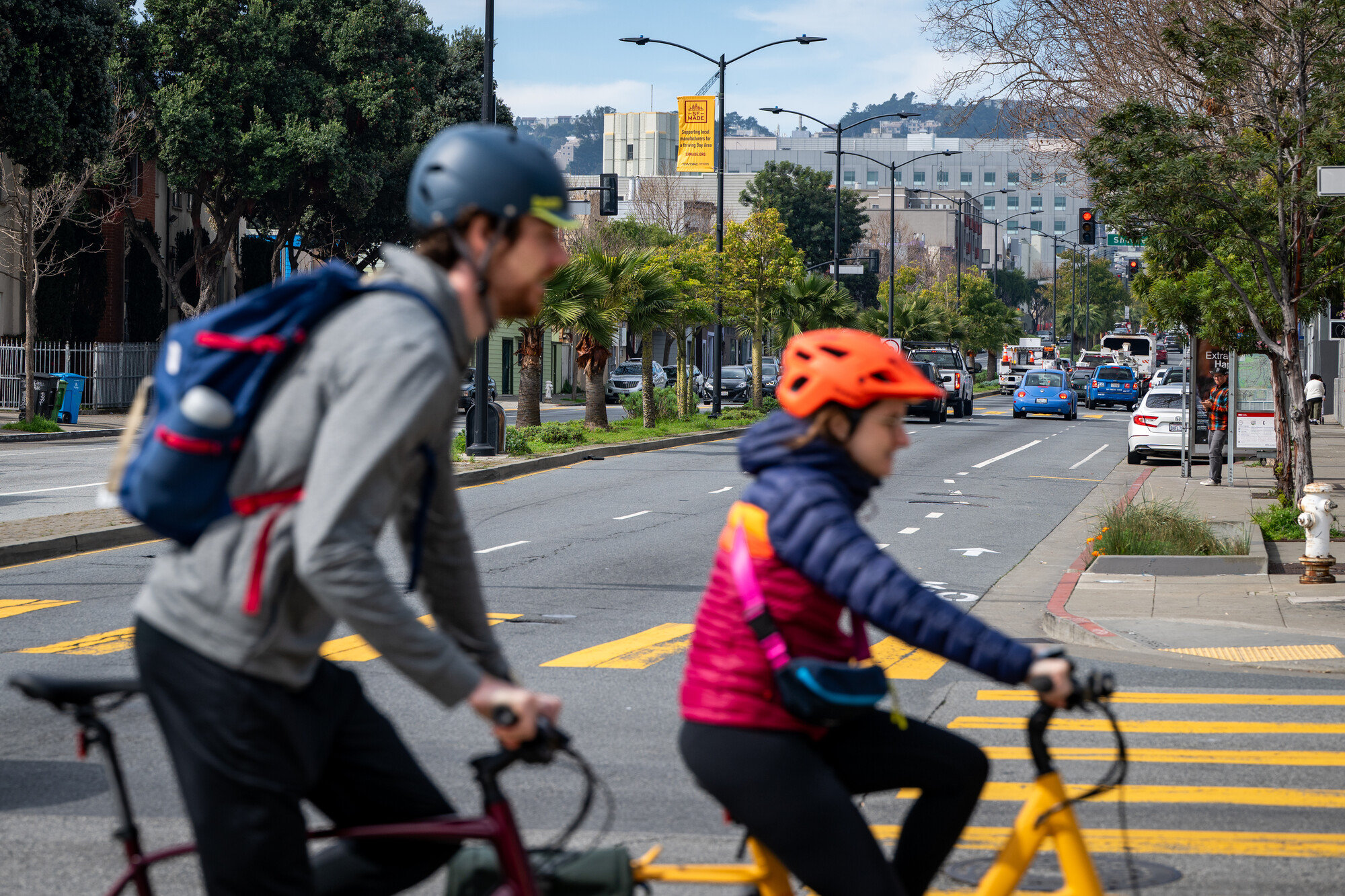
"caption": "Trees line the center median on Cesar Chavez Street in San Francisco on Feb. 28, 2025. A streetscape project added trees, widened sidewalks, introduced stormwater planters, and improved pedestrian safety with redesigned intersections.",
"credit": "Beth LaBerge/KQED",
"altTag": null,
"description": null,
"imgSizes": {
"thumbnail": {
"file": "https://cdn.kqed.org/wp-content/uploads/sites/10/2025/06/250228-WaterCitiesSF-06-BL_qed-160x107.jpg",
"width": 160,
"height": 107,
"mimeType": "image/jpeg"
},
"1536x1536": {
"file": "https://cdn.kqed.org/wp-content/uploads/sites/10/2025/06/250228-WaterCitiesSF-06-BL_qed-1536x1024.jpg",
"width": 1536,
"height": 1024,
"mimeType": "image/jpeg"
},
"post-thumbnail": {
"file": "https://cdn.kqed.org/wp-content/uploads/sites/10/2025/06/250228-WaterCitiesSF-06-BL_qed-672x372.jpg",
"width": 672,
"height": 372,
"mimeType": "image/jpeg"
},
"twentyfourteen-full-width": {
"file": "https://cdn.kqed.org/wp-content/uploads/sites/10/2025/06/250228-WaterCitiesSF-06-BL_qed-1038x576.jpg",
"width": 1038,
"height": 576,
"mimeType": "image/jpeg"
},
"kqedFullSize": {
"file": "https://cdn.kqed.org/wp-content/uploads/sites/10/2025/06/250228-WaterCitiesSF-06-BL_qed.jpg",
"width": 2000,
"height": 1333
}
},
"isLoading": false,
"fetchFailed": false
},
"news_12045711": {
"type": "attachments",
"id": "news_12045711",
"meta": {
"index": "attachments_1716263798",
"site": "news",
"id": "12045711",
"found": true
},
"title": "A 'For Rent' sign in Berkeley on June 23, 2025.",
"publishDate": 1750790413,
"status": "inherit",
"parent": 12045703,
"modified": 1750790430,
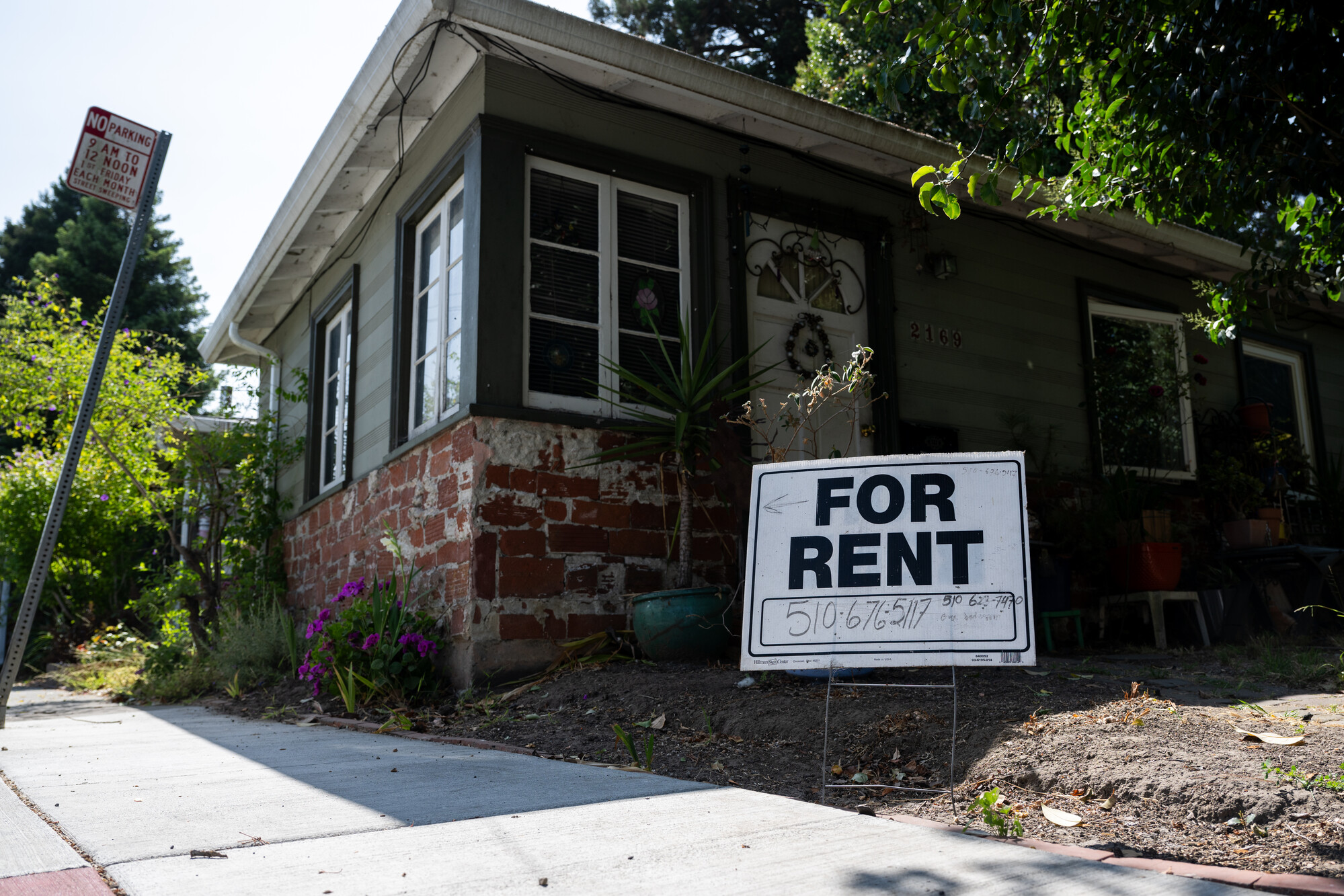
"caption": "A \"For Rent\" sign in Berkeley on June 23, 2025.",
"credit": "Beth LaBerge/KQED",
"altTag": null,
"description": null,
"imgSizes": {
"thumbnail": {
"file": "https://cdn.kqed.org/wp-content/uploads/sites/10/2025/06/250623-BerkeleyMiddleHousing-18-BL_qed-160x107.jpg",
"width": 160,
"height": 107,
"mimeType": "image/jpeg"
},
"1536x1536": {
"file": "https://cdn.kqed.org/wp-content/uploads/sites/10/2025/06/250623-BerkeleyMiddleHousing-18-BL_qed-1536x1024.jpg",
"width": 1536,
"height": 1024,
"mimeType": "image/jpeg"
},
"post-thumbnail": {
"file": "https://cdn.kqed.org/wp-content/uploads/sites/10/2025/06/250623-BerkeleyMiddleHousing-18-BL_qed-672x372.jpg",
"width": 672,
"height": 372,
"mimeType": "image/jpeg"
},
"twentyfourteen-full-width": {
"file": "https://cdn.kqed.org/wp-content/uploads/sites/10/2025/06/250623-BerkeleyMiddleHousing-18-BL_qed-1038x576.jpg",
"width": 1038,
"height": 576,
"mimeType": "image/jpeg"
},
"kqedFullSize": {
"file": "https://cdn.kqed.org/wp-content/uploads/sites/10/2025/06/250623-BerkeleyMiddleHousing-18-BL_qed.jpg",
"width": 1999,
"height": 1333
}
},
"isLoading": false,
"fetchFailed": false
},
"news_12029736": {
"type": "attachments",
"id": "news_12029736",
"meta": {
"index": "attachments_1716263798",
"site": "news",
"id": "12029736",
"found": true
},
"title": "The Antioch Police Department in Antioch on March 3, 2025.",
"publishDate": 1741135055,
"status": "inherit",
"parent": 0,
"modified": 1741135070,
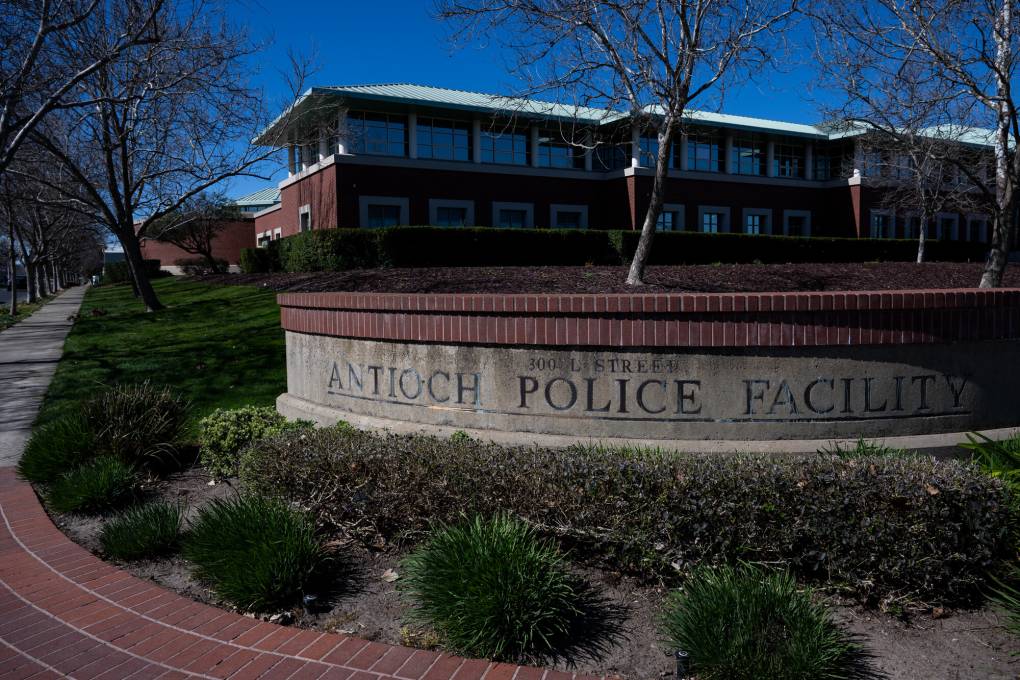
"caption": "The Antioch Police Department in Antioch on March 3, 2025.",
"credit": "Beth LaBerge/KQED",
"altTag": null,
"description": null,
"imgSizes": {
"medium": {
"file": "https://cdn.kqed.org/wp-content/uploads/sites/10/2025/03/250303-AntiochPolice-02-BL_qed-800x533.jpg",
"width": 800,
"height": 533,
"mimeType": "image/jpeg"
},
"large": {
"file": "https://cdn.kqed.org/wp-content/uploads/sites/10/2025/03/250303-AntiochPolice-02-BL_qed-1020x680.jpg",
"width": 1020,
"height": 680,
"mimeType": "image/jpeg"
},
"thumbnail": {
"file": "https://cdn.kqed.org/wp-content/uploads/sites/10/2025/03/250303-AntiochPolice-02-BL_qed-160x107.jpg",
"width": 160,
"height": 107,
"mimeType": "image/jpeg"
},
"1536x1536": {
"file": "https://cdn.kqed.org/wp-content/uploads/sites/10/2025/03/250303-AntiochPolice-02-BL_qed-1536x1024.jpg",
"width": 1536,
"height": 1024,
"mimeType": "image/jpeg"
},
"post-thumbnail": {
"file": "https://cdn.kqed.org/wp-content/uploads/sites/10/2025/03/250303-AntiochPolice-02-BL_qed-672x372.jpg",
"width": 672,
"height": 372,
"mimeType": "image/jpeg"
},
"twentyfourteen-full-width": {
"file": "https://cdn.kqed.org/wp-content/uploads/sites/10/2025/03/250303-AntiochPolice-02-BL_qed-1038x576.jpg",
"width": 1038,
"height": 576,
"mimeType": "image/jpeg"
},
"full-width": {
"file": "https://cdn.kqed.org/wp-content/uploads/sites/10/2025/03/250303-AntiochPolice-02-BL_qed-1920x1280.jpg",
"width": 1920,
"height": 1280,
"mimeType": "image/jpeg"
},
"kqedFullSize": {
"file": "https://cdn.kqed.org/wp-content/uploads/sites/10/2025/03/250303-AntiochPolice-02-BL_qed.jpg",
"width": 2000,
"height": 1333
}
},
"isLoading": false,
"fetchFailed": false
},
"news_12030422": {
"type": "attachments",
"id": "news_12030422",
"meta": {
"index": "attachments_1716263798",
"site": "news",
"id": "12030422",
"found": true
},
"title": "20250306_SANJOSEDISTRICT3_GC-28-KQED",
"publishDate": 1741388139,
"status": "inherit",
"parent": 0,
"modified": 1741388243,
"caption": "San Jose City Council District 3 candidate, Anthony Tordillos smiles, following a candidates forum, at the San Jose Women’s Club in San Jose on March 6, 2025.",
"credit": "Gina Castro/KQED",
"altTag": null,
"description": null,
"imgSizes": {
"medium": {
"file": "https://cdn.kqed.org/wp-content/uploads/sites/10/2025/03/20250306_SANJOSEDISTRICT3_GC-28-KQED-800x533.jpg",
"width": 800,
"height": 533,
"mimeType": "image/jpeg"
},
"large": {
"file": "https://cdn.kqed.org/wp-content/uploads/sites/10/2025/03/20250306_SANJOSEDISTRICT3_GC-28-KQED-1020x680.jpg",
"width": 1020,
"height": 680,
"mimeType": "image/jpeg"
},
"thumbnail": {
"file": "https://cdn.kqed.org/wp-content/uploads/sites/10/2025/03/20250306_SANJOSEDISTRICT3_GC-28-KQED-160x107.jpg",
"width": 160,
"height": 107,
"mimeType": "image/jpeg"
},
"1536x1536": {
"file": "https://cdn.kqed.org/wp-content/uploads/sites/10/2025/03/20250306_SANJOSEDISTRICT3_GC-28-KQED-1536x1024.jpg",
"width": 1536,
"height": 1024,
"mimeType": "image/jpeg"
},
"post-thumbnail": {
"file": "https://cdn.kqed.org/wp-content/uploads/sites/10/2025/03/20250306_SANJOSEDISTRICT3_GC-28-KQED-672x372.jpg",
"width": 672,
"height": 372,
"mimeType": "image/jpeg"
},
"twentyfourteen-full-width": {
"file": "https://cdn.kqed.org/wp-content/uploads/sites/10/2025/03/20250306_SANJOSEDISTRICT3_GC-28-KQED-1038x576.jpg",
"width": 1038,
"height": 576,
"mimeType": "image/jpeg"
},
"full-width": {
"file": "https://cdn.kqed.org/wp-content/uploads/sites/10/2025/03/20250306_SANJOSEDISTRICT3_GC-28-KQED-1920x1280.jpg",
"width": 1920,
"height": 1280,
"mimeType": "image/jpeg"
},
"kqedFullSize": {
"file": "https://cdn.kqed.org/wp-content/uploads/sites/10/2025/03/20250306_SANJOSEDISTRICT3_GC-28-KQED.jpg",
"width": 2000,
"height": 1333
}
},
"isLoading": false,
"fetchFailed": false
},
"news_12045595": {
"type": "attachments",
"id": "news_12045595",
"meta": {
"index": "attachments_1716263798",
"site": "news",
"id": "12045595",
"found": true
},
"title": "250623-BERKELEYMIDDLEHOUSING-03-BL-KQED",
"publishDate": 1750715458,
"status": "inherit",
"parent": 0,
"modified": 1750715524,
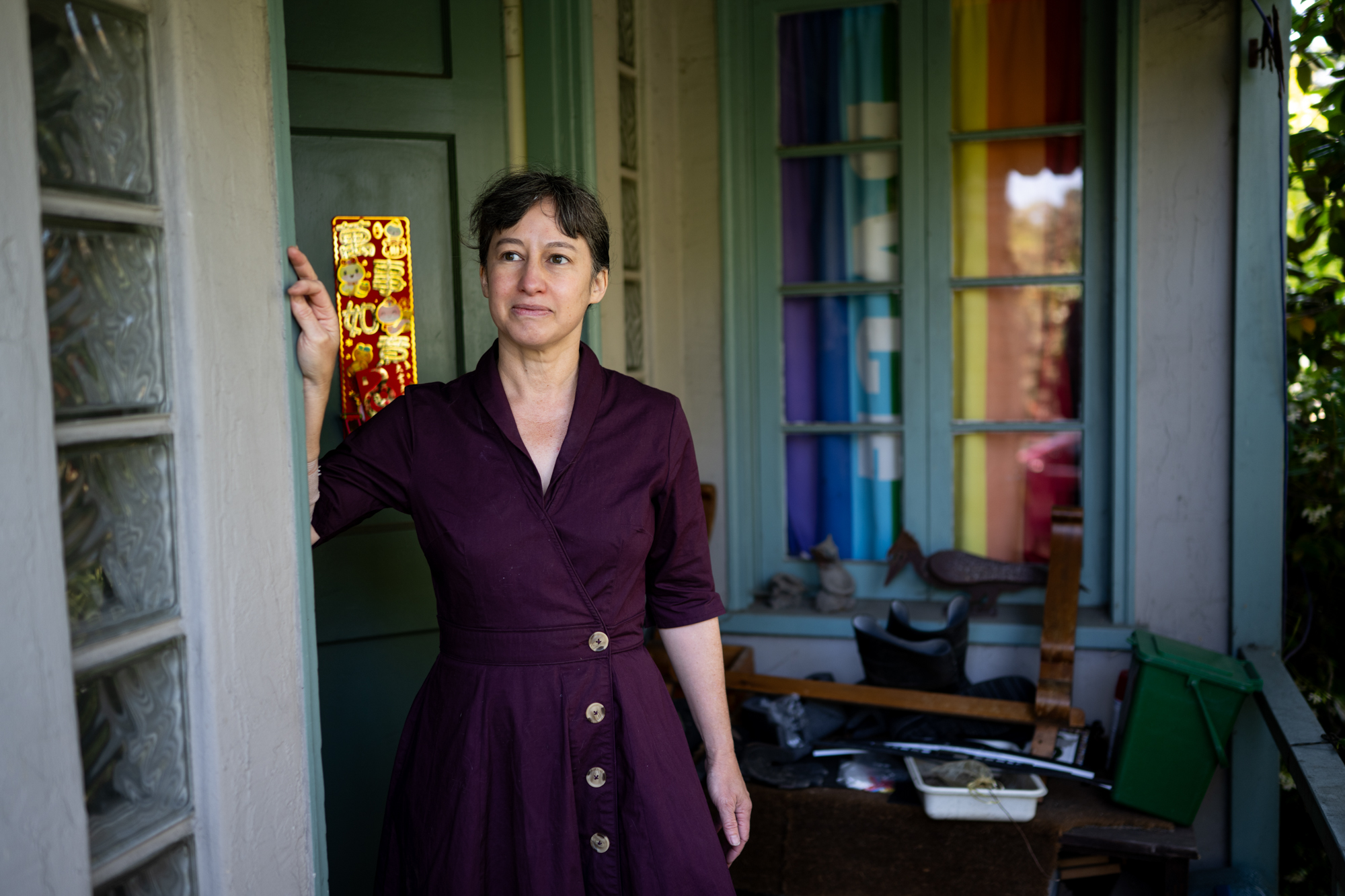
"caption": "Aimee Baldwin, whose Chinese American family has lived in Berkeley since the early 1900s, at her home in Berkeley on June 23, 2025. As the city considers a proposal to allow small apartment buildings in single-family neighborhoods, Baldwin says addressing past exclusion will require more than zoning changes.",
"credit": "Beth LaBerge/KQED",
"altTag": null,
"description": null,
"imgSizes": {
"thumbnail": {
"file": "https://cdn.kqed.org/wp-content/uploads/sites/10/2025/06/250623-BERKELEYMIDDLEHOUSING-03-BL-KQED-160x107.jpg",
"width": 160,
"height": 107,
"mimeType": "image/jpeg"
},
"1536x1536": {
"file": "https://cdn.kqed.org/wp-content/uploads/sites/10/2025/06/250623-BERKELEYMIDDLEHOUSING-03-BL-KQED-1536x1024.jpg",
"width": 1536,
"height": 1024,
"mimeType": "image/jpeg"
},
"post-thumbnail": {
"file": "https://cdn.kqed.org/wp-content/uploads/sites/10/2025/06/250623-BERKELEYMIDDLEHOUSING-03-BL-KQED-672x372.jpg",
"width": 672,
"height": 372,
"mimeType": "image/jpeg"
},
"twentyfourteen-full-width": {
"file": "https://cdn.kqed.org/wp-content/uploads/sites/10/2025/06/250623-BERKELEYMIDDLEHOUSING-03-BL-KQED-1038x576.jpg",
"width": 1038,
"height": 576,
"mimeType": "image/jpeg"
},
"kqedFullSize": {
"file": "https://cdn.kqed.org/wp-content/uploads/sites/10/2025/06/250623-BERKELEYMIDDLEHOUSING-03-BL-KQED.jpg",
"width": 2000,
"height": 1333
}
},
"isLoading": false,
"fetchFailed": false
},
"news_12045592": {
"type": "attachments",
"id": "news_12045592",
"meta": {
"index": "attachments_1716263798",
"site": "news",
"id": "12045592",
"found": true
},
"title": "250623-SF BUDGET ACTIVISTS-MD-01-KQED-1",
"publishDate": 1750714470,
"status": "inherit",
"parent": 0,
"modified": 1750714513,
"caption": "Joe Wilson, Executive Director at Hospitality House addresses the press at City Hall in San Francisco on June 23, 2025.",
"credit": "Martin do Nascimento/KQED",
"altTag": null,
"description": null,
"imgSizes": {
"thumbnail": {
"file": "https://cdn.kqed.org/wp-content/uploads/sites/10/2025/06/250623-SF-BUDGET-ACTIVISTS-MD-01-KQED-1-160x107.jpg",
"width": 160,
"height": 107,
"mimeType": "image/jpeg"
},
"1536x1536": {
"file": "https://cdn.kqed.org/wp-content/uploads/sites/10/2025/06/250623-SF-BUDGET-ACTIVISTS-MD-01-KQED-1-1536x1025.jpg",
"width": 1536,
"height": 1025,
"mimeType": "image/jpeg"
},
"post-thumbnail": {
"file": "https://cdn.kqed.org/wp-content/uploads/sites/10/2025/06/250623-SF-BUDGET-ACTIVISTS-MD-01-KQED-1-672x372.jpg",
"width": 672,
"height": 372,
"mimeType": "image/jpeg"
},
"twentyfourteen-full-width": {
"file": "https://cdn.kqed.org/wp-content/uploads/sites/10/2025/06/250623-SF-BUDGET-ACTIVISTS-MD-01-KQED-1-1038x576.jpg",
"width": 1038,
"height": 576,
"mimeType": "image/jpeg"
},
"kqedFullSize": {
"file": "https://cdn.kqed.org/wp-content/uploads/sites/10/2025/06/250623-SF-BUDGET-ACTIVISTS-MD-01-KQED-1.jpg",
"width": 2000,
"height": 1334
}
},
"isLoading": false,
"fetchFailed": false
},
"news_12016456": {
"type": "attachments",
"id": "news_12016456",
"meta": {
"index": "attachments_1716263798",
"site": "news",
"id": "12016456",
"found": true
},
"title": "BCN-20241113-SHERIFFCORPUS-01",
"publishDate": 1733259575,
"status": "inherit",
"parent": 12016445,
"modified": 1733259688,
"caption": "San Mateo County Sheriff Christina Corpus addressing the county Board of Supervisors on Nov. 13, 2024, in Redwood City, following a scathing report about her leadership team.",
"credit": "Alise Maripuu/Bay City News",
"altTag": null,
"description": null,
"imgSizes": {
"medium": {
"file": "https://cdn.kqed.org/wp-content/uploads/sites/10/2024/12/BCN-20241113-SHERIFFCORPUS-01-800x600.jpeg",
"width": 800,
"height": 600,
"mimeType": "image/jpeg"
},
"large": {
"file": "https://cdn.kqed.org/wp-content/uploads/sites/10/2024/12/BCN-20241113-SHERIFFCORPUS-01-1020x765.jpeg",
"width": 1020,
"height": 765,
"mimeType": "image/jpeg"
},
"thumbnail": {
"file": "https://cdn.kqed.org/wp-content/uploads/sites/10/2024/12/BCN-20241113-SHERIFFCORPUS-01-160x120.jpeg",
"width": 160,
"height": 120,
"mimeType": "image/jpeg"
},
"1536x1536": {
"file": "https://cdn.kqed.org/wp-content/uploads/sites/10/2024/12/BCN-20241113-SHERIFFCORPUS-01-1536x1152.jpeg",
"width": 1536,
"height": 1152,
"mimeType": "image/jpeg"
},
"2048x2048": {
"file": "https://cdn.kqed.org/wp-content/uploads/sites/10/2024/12/BCN-20241113-SHERIFFCORPUS-01-2048x1536.jpeg",
"width": 2048,
"height": 1536,
"mimeType": "image/jpeg"
},
"post-thumbnail": {
"file": "https://cdn.kqed.org/wp-content/uploads/sites/10/2024/12/BCN-20241113-SHERIFFCORPUS-01-672x372.jpeg",
"width": 672,
"height": 372,
"mimeType": "image/jpeg"
},
"twentyfourteen-full-width": {
"file": "https://cdn.kqed.org/wp-content/uploads/sites/10/2024/12/BCN-20241113-SHERIFFCORPUS-01-1038x576.jpeg",
"width": 1038,
"height": 576,
"mimeType": "image/jpeg"
},
"full-width": {
"file": "https://cdn.kqed.org/wp-content/uploads/sites/10/2024/12/BCN-20241113-SHERIFFCORPUS-01-1920x1440.jpeg",
"width": 1920,
"height": 1440,
"mimeType": "image/jpeg"
},
"kqedFullSize": {
"file": "https://cdn.kqed.org/wp-content/uploads/sites/10/2024/12/BCN-20241113-SHERIFFCORPUS-01-scaled-e1740697386743.jpeg",
"width": 2000,
"height": 1500
}
},
"isLoading": false,
"fetchFailed": false
},
"news_12045714": {
"type": "attachments",
"id": "news_12045714",
"meta": {
"index": "attachments_1716263798",
"site": "news",
"id": "12045714",
"found": true
},
"title": "Lake Tahoe Boat Capsize",
"publishDate": 1750791061,
"status": "inherit",
"parent": 12045712,
"modified": 1750791149,
"caption": "Washoe County Sheriffs conduct a search at D.L. Bliss State Park after a weekend incident in which a boat capsized, killing several people, on Monday, June 23, 2025, in Lake Tahoe, California.",
"credit": "Brooke Hess-Homeier/AP Photo",
"altTag": null,
"description": null,
"imgSizes": {
"thumbnail": {
"file": "https://cdn.kqed.org/wp-content/uploads/sites/10/2025/06/LakeTahoeAP-160x107.jpg",
"width": 160,
"height": 107,
"mimeType": "image/jpeg"
},
"1536x1536": {
"file": "https://cdn.kqed.org/wp-content/uploads/sites/10/2025/06/LakeTahoeAP-1536x1024.jpg",
"width": 1536,
"height": 1024,
"mimeType": "image/jpeg"
},
"post-thumbnail": {
"file": "https://cdn.kqed.org/wp-content/uploads/sites/10/2025/06/LakeTahoeAP-672x372.jpg",
"width": 672,
"height": 372,
"mimeType": "image/jpeg"
},
"twentyfourteen-full-width": {
"file": "https://cdn.kqed.org/wp-content/uploads/sites/10/2025/06/LakeTahoeAP-1038x576.jpg",
"width": 1038,
"height": 576,
"mimeType": "image/jpeg"
},
"kqedFullSize": {
"file": "https://cdn.kqed.org/wp-content/uploads/sites/10/2025/06/LakeTahoeAP.jpg",
"width": 2000,
"height": 1333
}
},
"isLoading": false,
"fetchFailed": false
},
"news_11992016": {
"type": "attachments",
"id": "news_11992016",
"meta": {
"index": "attachments_1716263798",
"site": "news",
"id": "11992016",
"found": true
},
"title": "017_KQED_SFPrideParade_06262022",
"publishDate": 1719376408,
"status": "inherit",
"parent": 11991990,
"modified": 1719376451,
"caption": "Drag queens Nicki Jizz, Heaven on Earth and Snaxx dance on the Oasis SF float during the San Francisco Pride Parade on June 26, 2022.",
"credit": "Beth LaBerge/KQED",
"altTag": "Drag dancer dance on an outdoor stage.",
"description": null,
"imgSizes": {
"medium": {
"file": "https://cdn.kqed.org/wp-content/uploads/sites/10/2024/06/017_KQED_SFPrideParade_06262022-800x533.jpg",
"width": 800,
"height": 533,
"mimeType": "image/jpeg"
},
"large": {
"file": "https://cdn.kqed.org/wp-content/uploads/sites/10/2024/06/017_KQED_SFPrideParade_06262022-1020x680.jpg",
"width": 1020,
"height": 680,
"mimeType": "image/jpeg"
},
"thumbnail": {
"file": "https://cdn.kqed.org/wp-content/uploads/sites/10/2024/06/017_KQED_SFPrideParade_06262022-160x107.jpg",
"width": 160,
"height": 107,
"mimeType": "image/jpeg"
},
"1536x1536": {
"file": "https://cdn.kqed.org/wp-content/uploads/sites/10/2024/06/017_KQED_SFPrideParade_06262022-1536x1024.jpg",
"width": 1536,
"height": 1024,
"mimeType": "image/jpeg"
},
"2048x2048": {
"file": "https://cdn.kqed.org/wp-content/uploads/sites/10/2024/06/017_KQED_SFPrideParade_06262022-2048x1365.jpg",
"width": 2048,
"height": 1365,
"mimeType": "image/jpeg"
},
"post-thumbnail": {
"file": "https://cdn.kqed.org/wp-content/uploads/sites/10/2024/06/017_KQED_SFPrideParade_06262022-672x372.jpg",
"width": 672,
"height": 372,
"mimeType": "image/jpeg"
},
"twentyfourteen-full-width": {
"file": "https://cdn.kqed.org/wp-content/uploads/sites/10/2024/06/017_KQED_SFPrideParade_06262022-1038x576.jpg",
"width": 1038,
"height": 576,
"mimeType": "image/jpeg"
},
"full-width": {
"file": "https://cdn.kqed.org/wp-content/uploads/sites/10/2024/06/017_KQED_SFPrideParade_06262022-1920x1280.jpg",
"width": 1920,
"height": 1280,
"mimeType": "image/jpeg"
},
"kqedFullSize": {
"file": "https://cdn.kqed.org/wp-content/uploads/sites/10/2024/06/017_KQED_SFPrideParade_06262022-scaled.jpg",
"width": 2560,
"height": 1707
}
},
"isLoading": false,
"fetchFailed": false
},
"news_12045412": {
"type": "attachments",
"id": "news_12045412",
"meta": {
"index": "attachments_1716263798",
"site": "news",
"id": "12045412",
"found": true
},
"title": "Mideast Wars Democrats",
"publishDate": 1750608426,
"status": "inherit",
"parent": 12045408,
"modified": 1750608519,
"caption": "Sen. Bernie Sanders, I-Vt., from left, Sen. Chris Murphy, D-Conn., and Rep. Ro Khanna, D-Calif., speak to reporters on Capitol Hill in Washington, April 4, 2019.",
"credit": "J. Scott Applewhite/AP Photo",
"altTag": "A man with a blue tie stands in the center at a podium with two other men in suits standing behind him.",
"description": null,
"imgSizes": {
"medium": {
"file": "https://cdn.kqed.org/wp-content/uploads/sites/10/2025/06/AP25172526736197-2000x1333.jpg",
"width": 2000,
"height": 1333,
"mimeType": "image/jpeg"
},
"large": {
"file": "https://cdn.kqed.org/wp-content/uploads/sites/10/2025/06/AP25172526736197-2000x1333.jpg",
"width": 2000,
"height": 1333,
"mimeType": "image/jpeg"
},
"thumbnail": {
"file": "https://cdn.kqed.org/wp-content/uploads/sites/10/2025/06/AP25172526736197-160x107.jpg",
"width": 160,
"height": 107,
"mimeType": "image/jpeg"
},
"1536x1536": {
"file": "https://cdn.kqed.org/wp-content/uploads/sites/10/2025/06/AP25172526736197-1536x1024.jpg",
"width": 1536,
"height": 1024,
"mimeType": "image/jpeg"
},
"2048x2048": {
"file": "https://cdn.kqed.org/wp-content/uploads/sites/10/2025/06/AP25172526736197-2048x1365.jpg",
"width": 2048,
"height": 1365,
"mimeType": "image/jpeg"
},
"post-thumbnail": {
"file": "https://cdn.kqed.org/wp-content/uploads/sites/10/2025/06/AP25172526736197-672x372.jpg",
"width": 672,
"height": 372,
"mimeType": "image/jpeg"
},
"twentyfourteen-full-width": {
"file": "https://cdn.kqed.org/wp-content/uploads/sites/10/2025/06/AP25172526736197-1038x576.jpg",
"width": 1038,
"height": 576,
"mimeType": "image/jpeg"
},
"full-width": {
"file": "https://cdn.kqed.org/wp-content/uploads/sites/10/2025/06/AP25172526736197-2000x1333.jpg",
"width": 2000,
"height": 1333,
"mimeType": "image/jpeg"
},
"kqedFullSize": {
"file": "https://cdn.kqed.org/wp-content/uploads/sites/10/2025/06/AP25172526736197-scaled.jpg",
"width": 2560,
"height": 1707
}
},
"isLoading": false,
"fetchFailed": false
},
"news_12045063": {
"type": "attachments",
"id": "news_12045063",
"meta": {
"index": "attachments_1716263798",
"site": "news",
"id": "12045063",
"found": true
},
"title": "things-to-do-with-kids-bay-area",
"publishDate": 1750347778,
"status": "inherit",
"parent": 12045055,
"modified": 1750452471,
"caption": "This summer the Bay Area will be spoiled for options when it comes to outdoor movie screenings for the kids. ",
"credit": "iStock/Getty Images Plus",
"altTag": null,
"description": null,
"imgSizes": {
"medium": {
"file": "https://cdn.kqed.org/wp-content/uploads/sites/10/2025/06/GettyImages-1450590312-2000x1334.jpg",
"width": 2000,
"height": 1334,
"mimeType": "image/jpeg"
},
"large": {
"file": "https://cdn.kqed.org/wp-content/uploads/sites/10/2025/06/GettyImages-1450590312-2000x1334.jpg",
"width": 2000,
"height": 1334,
"mimeType": "image/jpeg"
},
"thumbnail": {
"file": "https://cdn.kqed.org/wp-content/uploads/sites/10/2025/06/GettyImages-1450590312-160x107.jpg",
"width": 160,
"height": 107,
"mimeType": "image/jpeg"
},
"1536x1536": {
"file": "https://cdn.kqed.org/wp-content/uploads/sites/10/2025/06/GettyImages-1450590312-1536x1024.jpg",
"width": 1536,
"height": 1024,
"mimeType": "image/jpeg"
},
"2048x2048": {
"file": "https://cdn.kqed.org/wp-content/uploads/sites/10/2025/06/GettyImages-1450590312-2048x1366.jpg",
"width": 2048,
"height": 1366,
"mimeType": "image/jpeg"
},
"post-thumbnail": {
"file": "https://cdn.kqed.org/wp-content/uploads/sites/10/2025/06/GettyImages-1450590312-672x372.jpg",
"width": 672,
"height": 372,
"mimeType": "image/jpeg"
},
"twentyfourteen-full-width": {
"file": "https://cdn.kqed.org/wp-content/uploads/sites/10/2025/06/GettyImages-1450590312-1038x576.jpg",
"width": 1038,
"height": 576,
"mimeType": "image/jpeg"
},
"full-width": {
"file": "https://cdn.kqed.org/wp-content/uploads/sites/10/2025/06/GettyImages-1450590312-2000x1334.jpg",
"width": 2000,
"height": 1334,
"mimeType": "image/jpeg"
},
"kqedFullSize": {
"file": "https://cdn.kqed.org/wp-content/uploads/sites/10/2025/06/GettyImages-1450590312.jpg",
"width": 2120,
"height": 1414
}
},
"isLoading": false,
"fetchFailed": false
}
},
"audioPlayerReducer": {
"postId": "stream_live",
"isPaused": true,
"isPlaying": false,
"pfsActive": false,
"pledgeModalIsOpen": true,
"playerDrawerIsOpen": false,
"liveAudioPlayStartedAt": 0,
"liveAudioPlayContext": ""
},
"authorsReducer": {
"gmarzorati": {
"type": "authors",
"id": "227",
"meta": {
"index": "authors_1716337520",
"id": "227",
"found": true
},
"name": "Guy Marzorati",
"firstName": "Guy",
"lastName": "Marzorati",
"slug": "gmarzorati",
"email": "gmarzorati@KQED.org",
"display_author_email": true,
"staff_mastheads": [
"news"
],
"title": "Correspondent",
"bio": "Guy Marzorati is a correspondent on KQED's California Politics and Government Desk, based in San Jose. A graduate of Santa Clara University, Guy joined KQED in 2013. He reports on state and local politics and produces KQED's digital voter guide.",
"avatar": "https://secure.gravatar.com/avatar/e7038b8dbfd55b104369b76b1cd0b9de?s=600&d=blank&r=g",
"twitter": "guymarzorati",
"facebook": null,
"instagram": null,
"linkedin": null,
"sites": [
{
"site": "",
"roles": [
"editor"
]
},
{
"site": "news",
"roles": [
"editor"
]
},
{
"site": "science",
"roles": [
"editor"
]
},
{
"site": "forum",
"roles": [
"editor"
]
},
{
"site": "elections",
"roles": [
"editor"
]
},
{
"site": "liveblog",
"roles": [
"editor"
]
}
],
"headData": {
"title": "Guy Marzorati | KQED",
"description": "Correspondent",
"ogImgSrc": "https://secure.gravatar.com/avatar/e7038b8dbfd55b104369b76b1cd0b9de?s=600&d=blank&r=g",
"twImgSrc": "https://secure.gravatar.com/avatar/e7038b8dbfd55b104369b76b1cd0b9de?s=600&d=blank&r=g"
},
"isLoading": false,
"link": "/author/gmarzorati"
},
"kqednewsstaffandwires": {
"type": "authors",
"id": "237",
"meta": {
"index": "authors_1716337520",
"id": "237",
"found": true
},
"name": "KQED News Staff and Wires",
"firstName": "KQED News Staff and Wires",
"lastName": null,
"slug": "kqednewsstaffandwires",
"email": "onlinenewsstaff@kqed.org",
"display_author_email": false,
"staff_mastheads": [],
"title": null,
"bio": null,
"avatar": "https://secure.gravatar.com/avatar/72295af8ebbfbd19a4948f5271285664?s=600&d=blank&r=g",
"twitter": null,
"facebook": null,
"instagram": null,
"linkedin": null,
"sites": [
{
"site": "arts",
"roles": [
"contributor"
]
},
{
"site": "news",
"roles": [
"contributor"
]
},
{
"site": "lowdown",
"roles": [
"author"
]
},
{
"site": "stateofhealth",
"roles": [
"contributor"
]
},
{
"site": "food",
"roles": [
"author"
]
}
],
"headData": {
"title": "KQED News Staff and Wires | KQED",
"description": null,
"ogImgSrc": "https://secure.gravatar.com/avatar/72295af8ebbfbd19a4948f5271285664?s=600&d=blank&r=g",
"twImgSrc": "https://secure.gravatar.com/avatar/72295af8ebbfbd19a4948f5271285664?s=600&d=blank&r=g"
},
"isLoading": false,
"link": "/author/kqednewsstaffandwires"
},
"matthewgreen": {
"type": "authors",
"id": "1263",
"meta": {
"index": "authors_1716337520",
"id": "1263",
"found": true
},
"name": "Matthew Green",
"firstName": "Matthew",
"lastName": "Green",
"slug": "matthewgreen",
"email": "mgreen@kqed.org",
"display_author_email": false,
"staff_mastheads": [],
"title": "KQED Editor/Reporter",
"bio": "Matthew Green is a digital media producer for KQED News. He previously produced \u003ca href=\"http://www.kqed.org/lowdown\">The Lowdown\u003c/a>, KQED’s multimedia news education blog. Matthew's written for numerous Bay Area publications, including the Oakland Tribune and San Francisco Chronicle. He also taught journalism classes at Fremont High School in East Oakland.\r\n\r\nEmail: mgreen@kqed.org; Twitter: @MGreenKQED",
"avatar": "https://secure.gravatar.com/avatar/3bf498d1267ca02c8494f33d8cfc575e?s=600&d=blank&r=g",
"twitter": "MGreenKQED",
"facebook": null,
"instagram": null,
"linkedin": null,
"sites": [
{
"site": "news",
"roles": []
},
{
"site": "lowdown",
"roles": []
},
{
"site": "science",
"roles": []
},
{
"site": "education",
"roles": []
},
{
"site": "quest",
"roles": []
},
{
"site": "liveblog",
"roles": []
}
],
"headData": {
"title": "Matthew Green | KQED",
"description": "KQED Editor/Reporter",
"ogImgSrc": "https://secure.gravatar.com/avatar/3bf498d1267ca02c8494f33d8cfc575e?s=600&d=blank&r=g",
"twImgSrc": "https://secure.gravatar.com/avatar/3bf498d1267ca02c8494f33d8cfc575e?s=600&d=blank&r=g"
},
"isLoading": false,
"link": "/author/matthewgreen"
},
"carlysevern": {
"type": "authors",
"id": "3243",
"meta": {
"index": "authors_1716337520",
"id": "3243",
"found": true
},
"name": "Carly Severn",
"firstName": "Carly",
"lastName": "Severn",
"slug": "carlysevern",
"email": "csevern@kqed.org",
"display_author_email": false,
"staff_mastheads": [
"news"
],
"title": "Senior Editor, Audience News ",
"bio": "Carly is KQED's Senior Editor of Audience News on the Digital News team, and has reported for the California Report Magazine, Bay Curious and KQED Arts. She's formerly the host of \u003ca href=\"http://ww2.kqed.org/pop/category/the-cooler/\" rel=\"noopener noreferrer\">The Cooler\u003c/a> podcast.",
"avatar": "https://secure.gravatar.com/avatar/54037bf5c128fe678f0ef26cec97a93f2e7f220a22d7285703328f12c42c1b1d?s=600&d=blank&r=g",
"twitter": "teacupinthebay",
"bluesky": null,
"facebook": null,
"instagram": null,
"linkedin": null,
"sites": [
{
"site": "",
"roles": [
"editor"
]
},
{
"site": "arts",
"roles": [
"editor"
]
},
{
"site": "news",
"roles": [
"administrator"
]
},
{
"site": "pop",
"roles": [
"editor"
]
},
{
"site": "futureofyou",
"roles": [
"editor"
]
},
{
"site": "about",
"roles": [
"administrator"
]
},
{
"site": "mindshift",
"roles": [
"editor"
]
},
{
"site": "bayareabites",
"roles": [
"editor"
]
},
{
"site": "stateofhealth",
"roles": [
"editor"
]
},
{
"site": "science",
"roles": [
"editor"
]
},
{
"site": "food",
"roles": [
"contributor"
]
},
{
"site": "forum",
"roles": [
"editor"
]
},
{
"site": "perspectives",
"roles": [
"administrator"
]
},
{
"site": "liveblog",
"roles": [
"editor"
]
}
],
"headData": {
"title": "Carly Severn | KQED",
"description": "Senior Editor, Audience News ",
"ogImgSrc": "https://secure.gravatar.com/avatar/54037bf5c128fe678f0ef26cec97a93f2e7f220a22d7285703328f12c42c1b1d?s=600&d=blank&r=g",
"twImgSrc": "https://secure.gravatar.com/avatar/54037bf5c128fe678f0ef26cec97a93f2e7f220a22d7285703328f12c42c1b1d?s=600&d=blank&r=g"
},
"isLoading": false,
"link": "/author/carlysevern"
},
"ebaldassari": {
"type": "authors",
"id": "11652",
"meta": {
"index": "authors_1716337520",
"id": "11652",
"found": true
},
"name": "Erin Baldassari",
"firstName": "Erin",
"lastName": "Baldassari",
"slug": "ebaldassari",
"email": "ebaldassari@KQED.org",
"display_author_email": true,
"staff_mastheads": [
"news"
],
"title": "Staff Writer",
"bio": "Erin Baldassari covers housing for KQED. She's a former print journalist and most recently worked as the transportation reporter for the \u003cem>Mercury News\u003c/em> and \u003cem>East Bay Times. \u003c/em>There, she focused on how the Bay Area’s housing shortage has changed the way people move around the region. She also served on the \u003cem>East Bay Times\u003c/em>’ 2017 Pulitzer Prize-winning team for coverage of the Ghost Ship Fire in Oakland. Prior to that, Erin worked as a breaking news and general assignment reporter for a variety of outlets in the Bay Area and the greater Boston area. A Tufts University alumna, Erin grew up in the foothills of the Sierra Nevada mountains and in Sonoma County. She is a life-long KQED listener.",
"avatar": "https://secure.gravatar.com/avatar/5e95cad64a8ca08288082212e199d2b0cbeb4fd8e8ef5339395f361032bbe005?s=600&d=blank&r=g",
"twitter": "e_baldi",
"bluesky": null,
"facebook": null,
"instagram": null,
"linkedin": null,
"sites": [
{
"site": "news",
"roles": [
"edit_others_posts",
"editor"
]
},
{
"site": "science",
"roles": [
"editor"
]
},
{
"site": "liveblog",
"roles": [
"editor"
]
}
],
"headData": {
"title": "Erin Baldassari | KQED",
"description": "Staff Writer",
"ogImgSrc": "https://secure.gravatar.com/avatar/5e95cad64a8ca08288082212e199d2b0cbeb4fd8e8ef5339395f361032bbe005?s=600&d=blank&r=g",
"twImgSrc": "https://secure.gravatar.com/avatar/5e95cad64a8ca08288082212e199d2b0cbeb4fd8e8ef5339395f361032bbe005?s=600&d=blank&r=g"
},
"isLoading": false,
"link": "/author/ebaldassari"
},
"ccabreralomeli": {
"type": "authors",
"id": "11708",
"meta": {
"index": "authors_1716337520",
"id": "11708",
"found": true
},
"name": "Carlos Cabrera-Lomelí",
"firstName": "Carlos",
"lastName": "Cabrera-Lomelí",
"slug": "ccabreralomeli",
"email": "ccabreralomeli@KQED.org",
"display_author_email": true,
"staff_mastheads": [
"news"
],
"title": "Community Reporter",
"bio": "Carlos Cabrera-Lomelí is a community reporter with KQED's digital engagement team. He also reports and co-produces for KQED's bilingual news hub KQED en Español. He grew up in San Francisco's Mission District and has previously worked with Univision, 48 Hills and REFORMA in Mexico City.",
"avatar": "https://secure.gravatar.com/avatar/c309be9665e484f887b818c89e273ecc673004f426f36b24d00a4d813a2e0518?s=600&d=blank&r=g",
"twitter": "@LomeliCabrera",
"bluesky": null,
"facebook": null,
"instagram": null,
"linkedin": null,
"sites": [
{
"site": "arts",
"roles": [
"editor"
]
},
{
"site": "news",
"roles": [
"editor"
]
},
{
"site": "about",
"roles": [
"editor"
]
},
{
"site": "science",
"roles": [
"editor"
]
},
{
"site": "perspectives",
"roles": [
"editor"
]
},
{
"site": "elections",
"roles": [
"editor"
]
},
{
"site": "liveblog",
"roles": [
"contributor"
]
}
],
"headData": {
"title": "Carlos Cabrera-Lomelí | KQED",
"description": "Community Reporter",
"ogImgSrc": "https://secure.gravatar.com/avatar/c309be9665e484f887b818c89e273ecc673004f426f36b24d00a4d813a2e0518?s=600&d=blank&r=g",
"twImgSrc": "https://secure.gravatar.com/avatar/c309be9665e484f887b818c89e273ecc673004f426f36b24d00a4d813a2e0518?s=600&d=blank&r=g"
},
"isLoading": false,
"link": "/author/ccabreralomeli"
},
"nnavarro": {
"type": "authors",
"id": "11756",
"meta": {
"index": "authors_1716337520",
"id": "11756",
"found": true
},
"name": "Natalia Navarro",
"firstName": "Natalia",
"lastName": "Navarro",
"slug": "nnavarro",
"email": "nnavarro@kqed.org",
"display_author_email": true,
"staff_mastheads": [
"news"
],
"title": "Afternoon News Anchor",
"bio": "Natalia Navarro is KQED's afternoon radio news anchor. She came to KQED in 2021 from Colorado Public Radio, where she was a reporter and host. She has received several awards for her work covering daily and breaking news from professional organizations such as the San Francisco Press Club, Society of Professional Journalists and the Colorado Broadcasters Association. Natalia is originally from Tucson, Arizona, where she got her start in journalism writing for the Arizona Daily Star, Arizona Public Media and the Tucson Weekly. Natalia earned her bachelor's degree in journalism and economics, and her master's degree in journalism from the University of Arizona.",
"avatar": "https://secure.gravatar.com/avatar/a2bdb19fd9520bdea295a2d5f9b2ad65ec51cf0bf559fb1cc041d3a0a04d62ad?s=600&d=blank&r=g",
"twitter": "@NataliaVNavarro",
"bluesky": null,
"facebook": null,
"instagram": null,
"linkedin": null,
"sites": [
{
"site": "news",
"roles": [
"editor"
]
}
],
"headData": {
"title": "Natalia Navarro | KQED",
"description": "Afternoon News Anchor",
"ogImgSrc": "https://secure.gravatar.com/avatar/a2bdb19fd9520bdea295a2d5f9b2ad65ec51cf0bf559fb1cc041d3a0a04d62ad?s=600&d=blank&r=g",
"twImgSrc": "https://secure.gravatar.com/avatar/a2bdb19fd9520bdea295a2d5f9b2ad65ec51cf0bf559fb1cc041d3a0a04d62ad?s=600&d=blank&r=g"
},
"isLoading": false,
"link": "/author/nnavarro"
},
"nkhan": {
"type": "authors",
"id": "11867",
"meta": {
"index": "authors_1716337520",
"id": "11867",
"found": true
},
"name": "Nisa Khan",
"firstName": "Nisa",
"lastName": "Khan",
"slug": "nkhan",
"email": "nkhan@kqed.org",
"display_author_email": false,
"staff_mastheads": [],
"title": "KQED Contributor",
"bio": "Nisa Khan is a reporter for KQED's Audience News Desk. She was formerly a data reporter at Michigan Radio. She earned a Bachelor of Science in Information from the University of Michigan and a Master of Arts in Communication from Stanford University.",
"avatar": "https://secure.gravatar.com/avatar/8720459eef081ff64582b3506b124d58523e80e120704a0cbd9892533c914991?s=600&d=blank&r=g",
"twitter": "mnisakhan",
"bluesky": null,
"facebook": null,
"instagram": null,
"linkedin": null,
"sites": [
{
"site": "arts",
"roles": [
"editor"
]
},
{
"site": "news",
"roles": [
"editor"
]
},
{
"site": "science",
"roles": [
"editor",
"author"
]
},
{
"site": "forum",
"roles": [
"editor"
]
},
{
"site": "liveblog",
"roles": [
"contributor"
]
}
],
"headData": {
"title": "Nisa Khan | KQED",
"description": "KQED Contributor",
"ogImgSrc": "https://secure.gravatar.com/avatar/8720459eef081ff64582b3506b124d58523e80e120704a0cbd9892533c914991?s=600&d=blank&r=g",
"twImgSrc": "https://secure.gravatar.com/avatar/8720459eef081ff64582b3506b124d58523e80e120704a0cbd9892533c914991?s=600&d=blank&r=g"
},
"isLoading": false,
"link": "/author/nkhan"
},
"kdebenedetti": {
"type": "authors",
"id": "11913",
"meta": {
"index": "authors_1716337520",
"id": "11913",
"found": true
},
"name": "Katie DeBenedetti",
"firstName": "Katie",
"lastName": "DeBenedetti",
"slug": "kdebenedetti",
"email": "kdebenedetti@kqed.org",
"display_author_email": false,
"staff_mastheads": [
"news",
"science"
],
"title": "KQED Contributor",
"bio": "Katie DeBenedetti is a digital reporter covering daily news for the Express Desk. Prior to joining KQED as a culture reporting intern in January 2024, she covered education and city government for the Napa Valley Register.",
"avatar": "https://secure.gravatar.com/avatar/6e31073cb8f7e4214ab03f42771d0f45?s=600&d=blank&r=g",
"twitter": null,
"facebook": null,
"instagram": null,
"linkedin": null,
"sites": [
{
"site": "news",
"roles": [
"author"
]
},
{
"site": "science",
"roles": [
"author"
]
},
{
"site": "liveblog",
"roles": [
"author"
]
}
],
"headData": {
"title": "Katie DeBenedetti | KQED",
"description": "KQED Contributor",
"ogImgSrc": "https://secure.gravatar.com/avatar/6e31073cb8f7e4214ab03f42771d0f45?s=600&d=blank&r=g",
"twImgSrc": "https://secure.gravatar.com/avatar/6e31073cb8f7e4214ab03f42771d0f45?s=600&d=blank&r=g"
},
"isLoading": false,
"link": "/author/kdebenedetti"
},
"bkrans": {
"type": "authors",
"id": "11923",
"meta": {
"index": "authors_1716337520",
"id": "11923",
"found": true
},
"name": "Brian Krans",
"firstName": "Brian",
"lastName": "Krans",
"slug": "bkrans",
"email": "bkrans@kqed.org",
"display_author_email": false,
"staff_mastheads": [
"news"
],
"title": "KQED Contributing Reporter",
"bio": "Brian Krans is an award-winning local news and investigative reporter who has been proudly working as a general assignment reporter for KQED since August 2023. He lives in Richmond, where he also reports on air pollution for Richmondside. He is also a founding member of the Vallejo Sun.",
"avatar": "https://secure.gravatar.com/avatar/71fa91f931774612559f7640390b53d9c2840ff72b20f195a25239aab2d9fbb9?s=600&d=blank&r=g",
"twitter": "citizenkrans",
"bluesky": null,
"facebook": null,
"instagram": null,
"linkedin": null,
"sites": [
{
"site": "news",
"roles": [
"editor"
]
}
],
"headData": {
"title": "Brian Krans | KQED",
"description": "KQED Contributing Reporter",
"ogImgSrc": "https://secure.gravatar.com/avatar/71fa91f931774612559f7640390b53d9c2840ff72b20f195a25239aab2d9fbb9?s=600&d=blank&r=g",
"twImgSrc": "https://secure.gravatar.com/avatar/71fa91f931774612559f7640390b53d9c2840ff72b20f195a25239aab2d9fbb9?s=600&d=blank&r=g"
},
"isLoading": false,
"link": "/author/bkrans"
}
},
"pagesReducer": {
"news_category_local": {
"type": "terms",
"id": "news_28250",
"meta": {
"index": "terms_1716263798",
"site": "news",
"id": "28250",
"score": 12.940407
},
"featImg": null,
"name": "Local",
"description": null,
"taxonomy": "category",
"headData": {
"twImgId": null,
"twTitle": null,
"ogTitle": null,
"ogImgId": null,
"twDescription": null,
"description": null,
"title": "Local Archives | KQED News",
"ogDescription": null
},
"ttid": 28267,
"slug": "local",
"isLoading": false,
"title": "Local",
"pageMeta": {
"site": "news",
"WpPageTemplate": "page-topic-editorial",
"currentPage": 108
},
"blocks": [
{
"blockName": "kqed/post-list",
"attrs": {
"layout": "cardArticle2",
"query": "posts/news?category=local",
"seeMore": false,
"paginated": true,
"page": 108
}
},
{
"blockName": "kqed/ad"
}
]
}
},
"pfsSessionReducer": {},
"postsReducer": {
"stream_live": {
"type": "live",
"id": "stream_live",
"audioUrl": "https://streams.kqed.org/kqedradio",
"title": "Live Stream",
"excerpt": "Live Stream information currently unavailable.",
"link": "/radio",
"featImg": "",
"label": {
"name": "KQED Live",
"link": "/"
}
},
"stream_kqedNewscast": {
"type": "posts",
"id": "stream_kqedNewscast",
"audioUrl": "https://www.kqed.org/.stream/anon/radio/RDnews/newscast.mp3?_=1",
"title": "KQED Newscast",
"featImg": "",
"label": {
"name": "88.5 FM",
"link": "/"
}
},
"news_12045907": {
"type": "posts",
"id": "news_12045907",
"meta": {
"index": "posts_1716263798",
"site": "news",
"id": "12045907",
"score": null,
"sort": [
1750946434000
]
},
"guestAuthors": [],
"slug": "sf-dyke-march-returns-in-full-force-for-pride-weekend-with-inclusivity-at-its-core",
"title": "SF Dyke March Returns in Full Force for Pride Weekend With Inclusivity at Its Core",
"publishDate": 1750946434,
"format": "standard",
"headTitle": "SF Dyke March Returns in Full Force for Pride Weekend With Inclusivity at Its Core | KQED",
"labelTerm": {
"site": "news"
},
"content": "\u003cp>The \u003ca href=\"https://www.kqed.org/news/11992072/dyke-march-canceled-for-san-francisco-pride-organizers-say\">San Francisco Dyke March\u003c/a> will return to Dolores Park this weekend as an organized march and rally for the first time in six years, and it’s more inclusive than ever, according to its new leaders.\u003c/p>\n\u003cp>Interim leadership has worked for the last year to mount a comeback on Saturday after the last leaders resigned two weeks before last year’s Pride weekend.\u003c/p>\n\u003cp>The slogan for this year is “Dyke Solidarity, Dyke Resistance.”\u003c/p>\n\u003cp>[ad fullwidth]\u003c/p>\n\u003cp>“In this time of immense oppression from our regime in power, visibility is critical to show that we care about the world that’s happening around us, and we deserve to take space and to exhibit the power that we have,” said M Rocket, interim project director for the march.\u003c/p>\n\u003cp>The long-running Pride institution has been taking place at Dolores Park since the early 1990s, but since 2018, the Dyke March organizing group dwindled due to internal conflicts around racism and trans inclusion, the deaths of several leaders and burnout. Smaller renegade marches have taken place instead in recent years.\u003c/p>\n\u003cfigure id=\"attachment_12032189\" class=\"wp-caption aligncenter\" style=\"max-width: 2000px\">\u003ca href=\"https://cdn.kqed.org/wp-content/uploads/sites/10/2025/03/040_KQEDArts_SFDykeMarch_06252022_qed.jpg\">\u003cimg loading=\"lazy\" decoding=\"async\" class=\"size-full wp-image-12032189\" src=\"https://cdn.kqed.org/wp-content/uploads/sites/10/2025/03/040_KQEDArts_SFDykeMarch_06252022_qed.jpg\" alt=\"\" width=\"2000\" height=\"1333\" srcset=\"https://cdn.kqed.org/wp-content/uploads/sites/10/2025/03/040_KQEDArts_SFDykeMarch_06252022_qed.jpg 2000w, https://cdn.kqed.org/wp-content/uploads/sites/10/2025/03/040_KQEDArts_SFDykeMarch_06252022_qed-800x533.jpg 800w, https://cdn.kqed.org/wp-content/uploads/sites/10/2025/03/040_KQEDArts_SFDykeMarch_06252022_qed-1020x680.jpg 1020w, https://cdn.kqed.org/wp-content/uploads/sites/10/2025/03/040_KQEDArts_SFDykeMarch_06252022_qed-160x107.jpg 160w, https://cdn.kqed.org/wp-content/uploads/sites/10/2025/03/040_KQEDArts_SFDykeMarch_06252022_qed-1536x1024.jpg 1536w, https://cdn.kqed.org/wp-content/uploads/sites/10/2025/03/040_KQEDArts_SFDykeMarch_06252022_qed-1920x1280.jpg 1920w\" sizes=\"auto, (max-width: 2000px) 100vw, 2000px\">\u003c/a>\u003cfigcaption class=\"wp-caption-text\">The license plate of a Harley Davidson at the end of the San Francisco Dyke March at Dolores Park on June 25, 2022. \u003ccite>(Beth LaBerge/KQED)\u003c/cite>\u003c/figcaption>\u003c/figure>\n\u003cp>A group of four queer organizers wanted to bring the Dyke March back in full force, and it turned out they weren’t the only ones. The interim steering committee held four town halls over the last eight months to gauge interest and gather support, and found more than 200 people passionate about the march to return.\u003c/p>\n\u003cp>“Some people still see the Dyke March as some sort of authoritative entity. And it’s not,” Rocket said. “It’s a loose organization made up of dedicated volunteers who care about keeping it going. And all of us are in positions of service, not of authority.”\u003c/p>\n\u003cp>For the steering committee, “dyke” is more than a sexuality or a reclaimed slur; it’s a political identity.\u003c/p>\n\u003cp>The town halls were a forum for sometimes heated debates about what the organization’s values would be, especially around the inclusion of transgender people and opposing Israel’s war in Gaza. The group took feedback from community members and published their \u003ca href=\"https://www.thedykemarch.org/about\">value statement\u003c/a> in May, which proclaims they are “against war, imperialism, and all forms of genocide,” embraces all gender expressions and sexualities, and declares bodily autonomy an “absolute right.”[aside postID=news_12044243 hero='https://cdn.kqed.org/wp-content/uploads/sites/10/2024/06/017_KQED_SFPrideParade_06262022-1020x680.jpg']“There had been trouble in years past of trans exclusionists, you know, dykes not wanting trans people in our spaces, which is absurd,” Rocket said. “Trans dykes are dykes, and so we wanted to ensure that that was explicit throughout all of our values and it’s the most trans-positive set of values to come out of the Dyke March ever. I’m really proud of that.”\u003c/p>\n\u003cp>The group expects up to 20,000 people to show up at Dolores Park on Saturday.\u003c/p>\n\u003cp>Rocket estimates the cost of running the march and rally is around $80,000, including the cost of city permits and trash, bathroom and medical services at the park.\u003c/p>\n\u003cp>The interim steering committee has so far \u003ca href=\"https://give.communityin.org/sfdykemarch25?ref=ab_7nso2pFFiWl7nso2pFFiWl\">raised nearly $70,000\u003c/a>, and will hold a final \u003ca href=\"https://www.eventbrite.com/e/moby-dyke-night-fundraiser-for-the-san-francisco-dyke-march-tickets-1415441316079?utm_experiment=test_share_listing&aff=ebdsshios\">pre-Pride fundraiser\u003c/a> at Moby Dick bar in the Castro on Thursday.\u003c/p>\n\u003cp>“I’m really excited for the rally in the park,” Rocket said. “That’s my favorite part, is to exhibit our power, our visibility, our art and culture, and our activism from the platform of the stage.”\u003c/p>\n\u003cp>The rally will run from 11 a.m. to 5 p.m. Saturday with music, drag, comedy and speeches.\u003c/p>\n\u003cp>Performers include East Bay band Skip the Needle, jazz pianist Tammy Hall, comedian Marga Gomez and drag king Leigh Crow. Speakers include Imani Rupert-Gordon, executive director of the National Center for LGBTQ Rights in San Francisco; retired San Francisco Fire Chief Jeanine Nicholson, who was the first openly LGBTQ chief of the SFFD; and Franco Stevens, founder of the Curve Foundation and Curve Magazine.\u003c/p>\n\u003cp>After the rally, \u003ca href=\"https://www.instagram.com/p/DLQUDi2yhy2/\">the march\u003c/a> will leave from and return to Dolores Park.\u003c/p>\n\u003cp>In August, Dyke March leaders will hold another town hall to roll out a new organizational membership model, and then hold elections for a new board in September.\u003c/p>\n\u003cp>\u003c/p>\n",
"blocks": [],
"excerpt": "Interim San Francisco Dyke March leadership has been working to bring an organized march and rally back to Dolores Park for the first time in six years. \r\n",
"status": "publish",
"parent": 0,
"modified": 1750968126,
"stats": {
"hasAudio": false,
"hasVideo": false,
"hasChartOrMap": false,
"iframeSrcs": [],
"hasGoogleForm": false,
"hasGallery": false,
"hasHearkenModule": false,
"hasPolis": false,
"paragraphCount": 19,
"wordCount": 753
},
"headData": {
"title": "SF Dyke March Returns in Full Force for Pride Weekend With Inclusivity at Its Core | KQED",
"description": "Interim San Francisco Dyke March leadership has been working to bring an organized march and rally back to Dolores Park for the first time in six years. \r\n",
"ogTitle": "",
"ogDescription": "",
"ogImgId": "",
"twTitle": "",
"twDescription": "",
"twImgId": "",
"schema": {
"@context": "https://schema.org",
"@type": "NewsArticle",
"headline": "SF Dyke March Returns in Full Force for Pride Weekend With Inclusivity at Its Core",
"datePublished": "2025-06-26T07:00:34-07:00",
"dateModified": "2025-06-26T13:02:06-07:00",
"image": "https://cdn.kqed.org/wp-content/uploads/2020/02/KQED-OG-Image@1x.png",
"isAccessibleForFree": "True",
"publisher": {
"@type": "NewsMediaOrganization",
"@id": "https://www.kqed.org/#organization",
"name": "KQED",
"logo": "https://cdn.kqed.org/wp-content/uploads/2020/02/KQED-OG-Image@1x.png",
"url": "https://www.kqed.org",
"sameAs": [
"https://www.facebook.com/KQED",
"https://twitter.com/KQED",
"https://www.instagram.com/kqed/",
"https://www.tiktok.com/@kqedofficial",
"https://www.linkedin.com/company/kqed",
"https://www.youtube.com/channel/UCeC0IOo7i1P_61zVUWbJ4nw"
]
}
}
},
"primaryCategory": {
"termId": 8,
"slug": "news",
"name": "News"
},
"sticky": false,
"nprStoryId": "kqed-12045907",
"templateType": "standard",
"featuredImageType": "standard",
"excludeFromSiteSearch": "Include",
"articleAge": "0",
"path": "/news/12045907/sf-dyke-march-returns-in-full-force-for-pride-weekend-with-inclusivity-at-its-core",
"audioTrackLength": null,
"parsedContent": [
{
"type": "contentString",
"content": "\u003cdiv class=\"post-body\">\u003cp>\u003cp>The \u003ca href=\"https://www.kqed.org/news/11992072/dyke-march-canceled-for-san-francisco-pride-organizers-say\">San Francisco Dyke March\u003c/a> will return to Dolores Park this weekend as an organized march and rally for the first time in six years, and it’s more inclusive than ever, according to its new leaders.\u003c/p>\n\u003cp>Interim leadership has worked for the last year to mount a comeback on Saturday after the last leaders resigned two weeks before last year’s Pride weekend.\u003c/p>\n\u003cp>The slogan for this year is “Dyke Solidarity, Dyke Resistance.”\u003c/p>\n\u003cp>\u003c/p>\u003c/div>",
"attributes": {
"named": {},
"numeric": []
}
},
{
"type": "component",
"content": "",
"name": "ad",
"attributes": {
"named": {
"label": "fullwidth"
},
"numeric": [
"fullwidth"
]
}
},
{
"type": "contentString",
"content": "\u003cdiv class=\"post-body\">\u003cp>\u003c/p>\n\u003cp>“In this time of immense oppression from our regime in power, visibility is critical to show that we care about the world that’s happening around us, and we deserve to take space and to exhibit the power that we have,” said M Rocket, interim project director for the march.\u003c/p>\n\u003cp>The long-running Pride institution has been taking place at Dolores Park since the early 1990s, but since 2018, the Dyke March organizing group dwindled due to internal conflicts around racism and trans inclusion, the deaths of several leaders and burnout. Smaller renegade marches have taken place instead in recent years.\u003c/p>\n\u003cfigure id=\"attachment_12032189\" class=\"wp-caption aligncenter\" style=\"max-width: 2000px\">\u003ca href=\"https://cdn.kqed.org/wp-content/uploads/sites/10/2025/03/040_KQEDArts_SFDykeMarch_06252022_qed.jpg\">\u003cimg loading=\"lazy\" decoding=\"async\" class=\"size-full wp-image-12032189\" src=\"https://cdn.kqed.org/wp-content/uploads/sites/10/2025/03/040_KQEDArts_SFDykeMarch_06252022_qed.jpg\" alt=\"\" width=\"2000\" height=\"1333\" srcset=\"https://cdn.kqed.org/wp-content/uploads/sites/10/2025/03/040_KQEDArts_SFDykeMarch_06252022_qed.jpg 2000w, https://cdn.kqed.org/wp-content/uploads/sites/10/2025/03/040_KQEDArts_SFDykeMarch_06252022_qed-800x533.jpg 800w, https://cdn.kqed.org/wp-content/uploads/sites/10/2025/03/040_KQEDArts_SFDykeMarch_06252022_qed-1020x680.jpg 1020w, https://cdn.kqed.org/wp-content/uploads/sites/10/2025/03/040_KQEDArts_SFDykeMarch_06252022_qed-160x107.jpg 160w, https://cdn.kqed.org/wp-content/uploads/sites/10/2025/03/040_KQEDArts_SFDykeMarch_06252022_qed-1536x1024.jpg 1536w, https://cdn.kqed.org/wp-content/uploads/sites/10/2025/03/040_KQEDArts_SFDykeMarch_06252022_qed-1920x1280.jpg 1920w\" sizes=\"auto, (max-width: 2000px) 100vw, 2000px\">\u003c/a>\u003cfigcaption class=\"wp-caption-text\">The license plate of a Harley Davidson at the end of the San Francisco Dyke March at Dolores Park on June 25, 2022. \u003ccite>(Beth LaBerge/KQED)\u003c/cite>\u003c/figcaption>\u003c/figure>\n\u003cp>A group of four queer organizers wanted to bring the Dyke March back in full force, and it turned out they weren’t the only ones. The interim steering committee held four town halls over the last eight months to gauge interest and gather support, and found more than 200 people passionate about the march to return.\u003c/p>\n\u003cp>“Some people still see the Dyke March as some sort of authoritative entity. And it’s not,” Rocket said. “It’s a loose organization made up of dedicated volunteers who care about keeping it going. And all of us are in positions of service, not of authority.”\u003c/p>\n\u003cp>For the steering committee, “dyke” is more than a sexuality or a reclaimed slur; it’s a political identity.\u003c/p>\n\u003cp>The town halls were a forum for sometimes heated debates about what the organization’s values would be, especially around the inclusion of transgender people and opposing Israel’s war in Gaza. The group took feedback from community members and published their \u003ca href=\"https://www.thedykemarch.org/about\">value statement\u003c/a> in May, which proclaims they are “against war, imperialism, and all forms of genocide,” embraces all gender expressions and sexualities, and declares bodily autonomy an “absolute right.”\u003c/p>\u003c/div>",
"attributes": {
"named": {},
"numeric": []
}
},
{
"type": "component",
"content": "",
"name": "aside",
"attributes": {
"named": {
"postid": "news_12044243",
"hero": "https://cdn.kqed.org/wp-content/uploads/sites/10/2024/06/017_KQED_SFPrideParade_06262022-1020x680.jpg",
"label": ""
},
"numeric": []
}
},
{
"type": "contentString",
"content": "\u003cdiv class=\"post-body\">\u003cp>“There had been trouble in years past of trans exclusionists, you know, dykes not wanting trans people in our spaces, which is absurd,” Rocket said. “Trans dykes are dykes, and so we wanted to ensure that that was explicit throughout all of our values and it’s the most trans-positive set of values to come out of the Dyke March ever. I’m really proud of that.”\u003c/p>\n\u003cp>The group expects up to 20,000 people to show up at Dolores Park on Saturday.\u003c/p>\n\u003cp>Rocket estimates the cost of running the march and rally is around $80,000, including the cost of city permits and trash, bathroom and medical services at the park.\u003c/p>\n\u003cp>The interim steering committee has so far \u003ca href=\"https://give.communityin.org/sfdykemarch25?ref=ab_7nso2pFFiWl7nso2pFFiWl\">raised nearly $70,000\u003c/a>, and will hold a final \u003ca href=\"https://www.eventbrite.com/e/moby-dyke-night-fundraiser-for-the-san-francisco-dyke-march-tickets-1415441316079?utm_experiment=test_share_listing&aff=ebdsshios\">pre-Pride fundraiser\u003c/a> at Moby Dick bar in the Castro on Thursday.\u003c/p>\n\u003cp>“I’m really excited for the rally in the park,” Rocket said. “That’s my favorite part, is to exhibit our power, our visibility, our art and culture, and our activism from the platform of the stage.”\u003c/p>\n\u003cp>The rally will run from 11 a.m. to 5 p.m. Saturday with music, drag, comedy and speeches.\u003c/p>\n\u003cp>Performers include East Bay band Skip the Needle, jazz pianist Tammy Hall, comedian Marga Gomez and drag king Leigh Crow. Speakers include Imani Rupert-Gordon, executive director of the National Center for LGBTQ Rights in San Francisco; retired San Francisco Fire Chief Jeanine Nicholson, who was the first openly LGBTQ chief of the SFFD; and Franco Stevens, founder of the Curve Foundation and Curve Magazine.\u003c/p>\n\u003cp>After the rally, \u003ca href=\"https://www.instagram.com/p/DLQUDi2yhy2/\">the march\u003c/a> will leave from and return to Dolores Park.\u003c/p>\n\u003cp>In August, Dyke March leaders will hold another town hall to roll out a new organizational membership model, and then hold elections for a new board in September.\u003c/p>\n\u003cp>\u003c/p>\n\u003c/div>\u003c/p>",
"attributes": {
"named": {},
"numeric": []
}
}
],
"link": "/news/12045907/sf-dyke-march-returns-in-full-force-for-pride-weekend-with-inclusivity-at-its-core",
"authors": [
"11756"
],
"categories": [
"news_28250",
"news_8",
"news_13"
],
"tags": [
"news_1386",
"news_20004",
"news_20003",
"news_38"
],
"featImg": "news_12045910",
"label": "news"
},
"news_12045959": {
"type": "posts",
"id": "news_12045959",
"meta": {
"index": "posts_1716263798",
"site": "news",
"id": "12045959",
"score": null,
"sort": [
1750896167000
]
},
"guestAuthors": [],
"slug": "sf-ends-program-allowing-residents-to-request-street-safety-improvements",
"title": "SF Ends Program Allowing Residents to Request Street Safety Improvements",
"publishDate": 1750896167,
"format": "standard",
"headTitle": "SF Ends Program Allowing Residents to Request Street Safety Improvements | KQED",
"labelTerm": {
"site": "news"
},
"content": "\u003cp>If you’ve been hoping for a new speed bump on your street, don’t hold your breath.\u003c/p>\n\u003cp>\u003ca href=\"https://www.kqed.org/news/tag/sfmta\">San Francisco transportation officials \u003c/a>are suspending a popular, long-running program that allows residents to request street safety improvements in their neighborhoods.\u003c/p>\n\u003cp>The San Francisco Municipal Transportation Agency this week said it would be “temporarily pausing” its Residential Traffic Calming Program, citing “rising construction costs, record demand, and a challenging fiscal landscape.”\u003c/p>\n\u003cp>[ad fullwidth]\u003c/p>\n\u003cp>The move comes as the agency faces an \u003ca href=\"https://www.kqed.org/news/12037653/sfmta-launches-major-reorganization-to-address-mounting-budget-shortfall\">anticipated $322 million budget deficit\u003c/a> next year when federal and state one-time relief funds run out.\u003c/p>\n\u003cp>Since the launch of the traffic calming program in 2013, residents have been able to ask the city to install new speed-reducing devices, such as concrete islands, speed bumps (and humps), road markings and rubber road cushions, in their neighborhoods.\u003c/p>\n\u003cfigure id=\"attachment_12015012\" class=\"wp-caption aligncenter\" style=\"max-width: 1695px\">\u003ca href=\"https://cdn.kqed.org/wp-content/uploads/sites/10/2024/11/MUNI-with-GBUS.png\">\u003cimg loading=\"lazy\" decoding=\"async\" class=\"size-full wp-image-12015012\" src=\"https://cdn.kqed.org/wp-content/uploads/sites/10/2024/11/MUNI-with-GBUS.png\" alt=\"\" width=\"1695\" height=\"1158\" srcset=\"https://cdn.kqed.org/wp-content/uploads/sites/10/2024/11/MUNI-with-GBUS.png 1695w, https://cdn.kqed.org/wp-content/uploads/sites/10/2024/11/MUNI-with-GBUS-800x547.png 800w, https://cdn.kqed.org/wp-content/uploads/sites/10/2024/11/MUNI-with-GBUS-1020x697.png 1020w, https://cdn.kqed.org/wp-content/uploads/sites/10/2024/11/MUNI-with-GBUS-160x109.png 160w, https://cdn.kqed.org/wp-content/uploads/sites/10/2024/11/MUNI-with-GBUS-1536x1049.png 1536w\" sizes=\"auto, (max-width: 1695px) 100vw, 1695px\">\u003c/a>\u003cfigcaption class=\"wp-caption-text\">SFMTA is talking about huge cuts to service to help close a $300 million budget deficit by next year. \u003ccite>(Mark Wilson/Getty Images)\u003c/cite>\u003c/figcaption>\u003c/figure>\n\u003cp>“A surge in applications during the pandemic — when the SFMTA made the process more accessible — has left a significant backlog of projects, many of which are now ready for construction,” the agency said in a statement, noting it would stop taking applications on July 1.\u003c/p>\n\u003cp>SFMTA has installed over 1,200 traffic-calming devices throughout the city since 2018, including more than 500 directly requested by residents, according to the agency.\u003c/p>\n\u003cp>“This work has helped advance\u003ca href=\"https://www.kqed.org/news/12010882/tragic-sf-pedestrian-death-raises-question-vision-zero-failure\"> San Francisco’s Vision Zero goals \u003c/a>— and that effort continues, even as new residential applications are temporarily paused,” it added, referring to \u003ca href=\"https://www.sfmta.com/vision-zero-sf\">an initiative\u003c/a> the city launched in 2014 to end traffic fatalities within a decade.[aside postID=news_12020559 hero='https://cdn.kqed.org/wp-content/uploads/sites/10/2025/01/250107-PedestrianDeathStepback-26-1020x680.jpg']The policy \u003ca href=\"https://www.kqed.org/news/12041243/san-franciscos-streets-still-deadly-advocates-want-lurie-to-do-more\">officially expired\u003c/a> in 2024, the city’s deadliest \u003ca href=\"https://www.sfchronicle.com/bayarea/article/more-people-died-sf-crashes-homicides-19998860.php\">year\u003c/a> in at least two decades, when \u003ca href=\"https://www.sf.gov/data--traffic-fatalities\">42 people, \u003c/a>including 24 pedestrians, were killed in crashes.\u003c/p>\n\u003cp>The city’s Civil Grand Jury, a government watchdog group, last week released a \u003ca href=\"https://media.api.sf.gov/documents/2025_CGJ_Report_Failed_Vision.pdf\">scathing report\u003c/a> — dubbed “Failed Vision”— that attributed the rise in fatalities in part to “critical failures” in traffic enforcement by the city’s police department, which in recent years has issued significantly fewer traffic tickets amid staffing shortages and new regulations.\u003c/p>\n\u003cp>The number of traffic citations issued by police in the city declined by nearly 90% from 2014 to 2024, \u003ca href=\"https://www.sanfranciscopolice.org/stay-safe/crime-data/traffic-violation-reports\">according to department data\u003c/a>.\u003c/p>\n\u003cp>“There’s a sense of lawlessness on the city streets, due to the almost complete lack of \u003ca href=\"https://www.kqed.org/news/11929172/sf-on-track-for-deadliest-year-in-traffic-deaths-and-new-report-blames-inadequate-misdirected-police-enforcement\">enforcement in recent years\u003c/a>,” Jury Foreperson Michael Carboy said in a \u003ca href=\"https://media.api.sf.gov/documents/2025_CGJ_Report_Failed_Vision_Press_Release.pdf\">statement\u003c/a>.\u003c/p>\n\u003cp>With eight \u003ca href=\"https://www.sf.gov/data--traffic-fatalities\">pedestrian deaths\u003c/a> in San Francisco so far this year, safety advocates urged the city not to give up on Vision Zero.[aside postID=news_12041243 hero='https://cdn.kqed.org/wp-content/uploads/sites/10/2025/05/250519-VISIONZEROACTIVISM-15-BL-KQED-1020x680.jpg']Marta Lindsey, a spokesperson for Walk San Francisco, a pedestrian advocacy group, said that while the city’s crowd-sourced traffic calming program was well-intentioned, the piecemeal approach was inefficient.\u003c/p>\n\u003cp>“I hope SFMTA catches up on this backlog, but then comes back with a better program that can be proactive and bring speed humps to entire neighborhoods where they’re needed instead of this ‘speed hump by speed-hump’ approach.”\u003c/p>\n\u003cp>Speed, she said, continues to be the number one cause of severe and fatal crashes in San Francisco.\u003c/p>\n\u003cp>“This threat is real. It’s outside our windows every day,” she said. \u003cstrong>“\u003c/strong>People are really seeing and feeling how out of control speeding is on our streets. And they want something to be done that’s concrete. Literally concrete.”\u003c/p>\n\u003cp>\u003cem>This report includes reporting from KQED’s \u003c/em>\u003ca href=\"https://www.kqed.org/author/jasminegarnett\">\u003cem>Jasmine Garnett\u003c/em>\u003c/a>\u003c/p>\n\u003cp>\u003c/p>\n",
"blocks": [],
"excerpt": "The move comes as the agency faces an anticipated $322 million budget deficit next year when federal and state one-time relief funds run out.",
"status": "publish",
"parent": 0,
"modified": 1750910748,
"stats": {
"hasAudio": false,
"hasVideo": false,
"hasChartOrMap": false,
"iframeSrcs": [],
"hasGoogleForm": false,
"hasGallery": false,
"hasHearkenModule": false,
"hasPolis": false,
"paragraphCount": 18,
"wordCount": 649
},
"headData": {
"title": "SF Ends Program Allowing Residents to Request Street Safety Improvements | KQED",
"description": "The move comes as the agency faces an anticipated $322 million budget deficit next year when federal and state one-time relief funds run out.",
"ogTitle": "",
"ogDescription": "",
"ogImgId": "",
"twTitle": "",
"twDescription": "",
"twImgId": "",
"schema": {
"@context": "https://schema.org",
"@type": "NewsArticle",
"headline": "SF Ends Program Allowing Residents to Request Street Safety Improvements",
"datePublished": "2025-06-25T17:02:47-07:00",
"dateModified": "2025-06-25T21:05:48-07:00",
"image": "https://cdn.kqed.org/wp-content/uploads/2020/02/KQED-OG-Image@1x.png",
"isAccessibleForFree": "True",
"publisher": {
"@type": "NewsMediaOrganization",
"@id": "https://www.kqed.org/#organization",
"name": "KQED",
"logo": "https://cdn.kqed.org/wp-content/uploads/2020/02/KQED-OG-Image@1x.png",
"url": "https://www.kqed.org",
"sameAs": [
"https://www.facebook.com/KQED",
"https://twitter.com/KQED",
"https://www.instagram.com/kqed/",
"https://www.tiktok.com/@kqedofficial",
"https://www.linkedin.com/company/kqed",
"https://www.youtube.com/channel/UCeC0IOo7i1P_61zVUWbJ4nw"
]
}
}
},
"primaryCategory": {
"termId": 8,
"slug": "news",
"name": "News"
},
"sticky": false,
"nprStoryId": "kqed-12045959",
"templateType": "standard",
"featuredImageType": "standard",
"excludeFromSiteSearch": "Include",
"articleAge": "0",
"path": "/news/12045959/sf-ends-program-allowing-residents-to-request-street-safety-improvements",
"audioTrackLength": null,
"parsedContent": [
{
"type": "contentString",
"content": "\u003cdiv class=\"post-body\">\u003cp>\u003cp>If you’ve been hoping for a new speed bump on your street, don’t hold your breath.\u003c/p>\n\u003cp>\u003ca href=\"https://www.kqed.org/news/tag/sfmta\">San Francisco transportation officials \u003c/a>are suspending a popular, long-running program that allows residents to request street safety improvements in their neighborhoods.\u003c/p>\n\u003cp>The San Francisco Municipal Transportation Agency this week said it would be “temporarily pausing” its Residential Traffic Calming Program, citing “rising construction costs, record demand, and a challenging fiscal landscape.”\u003c/p>\n\u003cp>\u003c/p>\u003c/div>",
"attributes": {
"named": {},
"numeric": []
}
},
{
"type": "component",
"content": "",
"name": "ad",
"attributes": {
"named": {
"label": "fullwidth"
},
"numeric": [
"fullwidth"
]
}
},
{
"type": "contentString",
"content": "\u003cdiv class=\"post-body\">\u003cp>\u003c/p>\n\u003cp>The move comes as the agency faces an \u003ca href=\"https://www.kqed.org/news/12037653/sfmta-launches-major-reorganization-to-address-mounting-budget-shortfall\">anticipated $322 million budget deficit\u003c/a> next year when federal and state one-time relief funds run out.\u003c/p>\n\u003cp>Since the launch of the traffic calming program in 2013, residents have been able to ask the city to install new speed-reducing devices, such as concrete islands, speed bumps (and humps), road markings and rubber road cushions, in their neighborhoods.\u003c/p>\n\u003cfigure id=\"attachment_12015012\" class=\"wp-caption aligncenter\" style=\"max-width: 1695px\">\u003ca href=\"https://cdn.kqed.org/wp-content/uploads/sites/10/2024/11/MUNI-with-GBUS.png\">\u003cimg loading=\"lazy\" decoding=\"async\" class=\"size-full wp-image-12015012\" src=\"https://cdn.kqed.org/wp-content/uploads/sites/10/2024/11/MUNI-with-GBUS.png\" alt=\"\" width=\"1695\" height=\"1158\" srcset=\"https://cdn.kqed.org/wp-content/uploads/sites/10/2024/11/MUNI-with-GBUS.png 1695w, https://cdn.kqed.org/wp-content/uploads/sites/10/2024/11/MUNI-with-GBUS-800x547.png 800w, https://cdn.kqed.org/wp-content/uploads/sites/10/2024/11/MUNI-with-GBUS-1020x697.png 1020w, https://cdn.kqed.org/wp-content/uploads/sites/10/2024/11/MUNI-with-GBUS-160x109.png 160w, https://cdn.kqed.org/wp-content/uploads/sites/10/2024/11/MUNI-with-GBUS-1536x1049.png 1536w\" sizes=\"auto, (max-width: 1695px) 100vw, 1695px\">\u003c/a>\u003cfigcaption class=\"wp-caption-text\">SFMTA is talking about huge cuts to service to help close a $300 million budget deficit by next year. \u003ccite>(Mark Wilson/Getty Images)\u003c/cite>\u003c/figcaption>\u003c/figure>\n\u003cp>“A surge in applications during the pandemic — when the SFMTA made the process more accessible — has left a significant backlog of projects, many of which are now ready for construction,” the agency said in a statement, noting it would stop taking applications on July 1.\u003c/p>\n\u003cp>SFMTA has installed over 1,200 traffic-calming devices throughout the city since 2018, including more than 500 directly requested by residents, according to the agency.\u003c/p>\n\u003cp>“This work has helped advance\u003ca href=\"https://www.kqed.org/news/12010882/tragic-sf-pedestrian-death-raises-question-vision-zero-failure\"> San Francisco’s Vision Zero goals \u003c/a>— and that effort continues, even as new residential applications are temporarily paused,” it added, referring to \u003ca href=\"https://www.sfmta.com/vision-zero-sf\">an initiative\u003c/a> the city launched in 2014 to end traffic fatalities within a decade.\u003c/p>\u003c/div>",
"attributes": {
"named": {},
"numeric": []
}
},
{
"type": "component",
"content": "",
"name": "aside",
"attributes": {
"named": {
"postid": "news_12020559",
"hero": "https://cdn.kqed.org/wp-content/uploads/sites/10/2025/01/250107-PedestrianDeathStepback-26-1020x680.jpg",
"label": ""
},
"numeric": []
}
},
{
"type": "contentString",
"content": "\u003cdiv class=\"post-body\">\u003cp>The policy \u003ca href=\"https://www.kqed.org/news/12041243/san-franciscos-streets-still-deadly-advocates-want-lurie-to-do-more\">officially expired\u003c/a> in 2024, the city’s deadliest \u003ca href=\"https://www.sfchronicle.com/bayarea/article/more-people-died-sf-crashes-homicides-19998860.php\">year\u003c/a> in at least two decades, when \u003ca href=\"https://www.sf.gov/data--traffic-fatalities\">42 people, \u003c/a>including 24 pedestrians, were killed in crashes.\u003c/p>\n\u003cp>The city’s Civil Grand Jury, a government watchdog group, last week released a \u003ca href=\"https://media.api.sf.gov/documents/2025_CGJ_Report_Failed_Vision.pdf\">scathing report\u003c/a> — dubbed “Failed Vision”— that attributed the rise in fatalities in part to “critical failures” in traffic enforcement by the city’s police department, which in recent years has issued significantly fewer traffic tickets amid staffing shortages and new regulations.\u003c/p>\n\u003cp>The number of traffic citations issued by police in the city declined by nearly 90% from 2014 to 2024, \u003ca href=\"https://www.sanfranciscopolice.org/stay-safe/crime-data/traffic-violation-reports\">according to department data\u003c/a>.\u003c/p>\n\u003cp>“There’s a sense of lawlessness on the city streets, due to the almost complete lack of \u003ca href=\"https://www.kqed.org/news/11929172/sf-on-track-for-deadliest-year-in-traffic-deaths-and-new-report-blames-inadequate-misdirected-police-enforcement\">enforcement in recent years\u003c/a>,” Jury Foreperson Michael Carboy said in a \u003ca href=\"https://media.api.sf.gov/documents/2025_CGJ_Report_Failed_Vision_Press_Release.pdf\">statement\u003c/a>.\u003c/p>\n\u003cp>With eight \u003ca href=\"https://www.sf.gov/data--traffic-fatalities\">pedestrian deaths\u003c/a> in San Francisco so far this year, safety advocates urged the city not to give up on Vision Zero.\u003c/p>\u003c/div>",
"attributes": {
"named": {},
"numeric": []
}
},
{
"type": "component",
"content": "",
"name": "aside",
"attributes": {
"named": {
"postid": "news_12041243",
"hero": "https://cdn.kqed.org/wp-content/uploads/sites/10/2025/05/250519-VISIONZEROACTIVISM-15-BL-KQED-1020x680.jpg",
"label": ""
},
"numeric": []
}
},
{
"type": "contentString",
"content": "\u003cdiv class=\"post-body\">\u003cp>Marta Lindsey, a spokesperson for Walk San Francisco, a pedestrian advocacy group, said that while the city’s crowd-sourced traffic calming program was well-intentioned, the piecemeal approach was inefficient.\u003c/p>\n\u003cp>“I hope SFMTA catches up on this backlog, but then comes back with a better program that can be proactive and bring speed humps to entire neighborhoods where they’re needed instead of this ‘speed hump by speed-hump’ approach.”\u003c/p>\n\u003cp>Speed, she said, continues to be the number one cause of severe and fatal crashes in San Francisco.\u003c/p>\n\u003cp>“This threat is real. It’s outside our windows every day,” she said. \u003cstrong>“\u003c/strong>People are really seeing and feeling how out of control speeding is on our streets. And they want something to be done that’s concrete. Literally concrete.”\u003c/p>\n\u003cp>\u003cem>This report includes reporting from KQED’s \u003c/em>\u003ca href=\"https://www.kqed.org/author/jasminegarnett\">\u003cem>Jasmine Garnett\u003c/em>\u003c/a>\u003c/p>\n\u003cp>\u003c/p>\n\u003c/div>\u003c/p>",
"attributes": {
"named": {},
"numeric": []
}
}
],
"link": "/news/12045959/sf-ends-program-allowing-residents-to-request-street-safety-improvements",
"authors": [
"1263"
],
"categories": [
"news_28250",
"news_8",
"news_1397"
],
"tags": [
"news_34055",
"news_5535",
"news_22456",
"news_38",
"news_18120",
"news_31838",
"news_3029"
],
"featImg": "news_12045967",
"label": "news"
},
"news_12045703": {
"type": "posts",
"id": "news_12045703",
"meta": {
"index": "posts_1716263798",
"site": "news",
"id": "12045703",
"score": null,
"sort": [
1750879006000
]
},
"guestAuthors": [],
"slug": "facing-costly-lawsuit-berkeley-likely-to-pause-ban-on-rent-setting-algorithms",
"title": "Facing Costly Lawsuit, Berkeley Pauses Its Ban on Rent-Setting Algorithms",
"publishDate": 1750879006,
"format": "standard",
"headTitle": "Facing Costly Lawsuit, Berkeley Pauses Its Ban on Rent-Setting Algorithms | KQED",
"labelTerm": {
"site": "news"
},
"content": "\u003cp>\u003cem>Updated 12:15 p.m. Wednesday\u003c/em>\u003c/p>\n\u003cp>Berkeley postponed its recent ban on \u003ca href=\"https://www.kqed.org/news/11995878/ai-raising-the-rent-san-francisco-could-be-the-first-city-to-ban-the-practice\">rent-setting algorithms\u003c/a>, several months after a leading property management software company \u003ca href=\"https://www.berkeleyside.org/2025/04/03/realpage-sues-berkeley-over-impending-ban-on-rent-pricing-algorithms\">sued \u003c/a>the city in federal court.\u003c/p>\n\u003cp>The City Council voted unanimously Tuesday evening to push back the ban — originally intended to go into effect this spring — in an effort to avoid a costly legal battle with RealPage, the Texas-based company that filed suit in April, arguing the ban violates its First Amendment rights.\u003c/p>\n\u003cp>The deferral, to March 2026, follows \u003ca href=\"https://berkeleyca.gov/sites/default/files/documents/2025-03-11%20Item%2018%20Adopt%20an%20Ordinance%20to%20Prohibit.pdf\">a warning from\u003c/a> City Attorney Farimah Brown that the pending litigation poses “significant costs for the City,” which already faces \u003ca href=\"https://www.berkeleyside.org/2025/04/24/berkeley-budget-deficit-spending-cut-hiring-freeze\">a $27 million budget deficit\u003c/a>. RealPage has tentatively agreed to suspend its lawsuit if the city repeals the ban or delays enforcement of it, she said.\u003c/p>\n\u003cp>[ad fullwidth]\u003c/p>\n\u003cp>“The postponement action is intended to give the Council time to facilitate a resolution of the RealPage litigation and to determine a path forward for the ordinance without the time pressure imposed by litigation deadlines,” Brown told KQED in an email. “Council will likely be debating a range of possible next steps in the months to come.”\u003c/p>\n\u003cp>The ordinance, which the council overwhelmingly approved in March, would bar landlords from using the algorithmic software sold by companies like RealPage that offer pricing and occupancy recommendations based on proprietary rental data. Tenants’ advocates argue the tools allow landlords to collude on pricing decisions, driving up rents and vacancy rates.\u003c/p>\n\u003cp>“These recommendations allow landlords to manipulate the market and the practice amounts to illegal price-fixing,” the city’s Housing Advisory Commission, which sponsored the ordinance, wrote in its \u003ca href=\"https://berkeleyca.gov/sites/default/files/documents/2025-03-11%20Item%2018%20Adopt%20an%20Ordinance%20to%20Prohibit.pdf\">March report\u003c/a> to the council.\u003c/p>\n\u003cfigure id=\"attachment_12035868\" class=\"wp-caption aligncenter\" style=\"max-width: 1999px\">\u003cimg loading=\"lazy\" decoding=\"async\" class=\"size-full wp-image-12035868\" src=\"https://cdn.kqed.org/wp-content/uploads/sites/10/2025/04/240718-BerkeleyMissingMiddleHousing-45-BL_qed.jpg\" alt=\"\" width=\"1999\" height=\"1333\" srcset=\"https://cdn.kqed.org/wp-content/uploads/sites/10/2025/04/240718-BerkeleyMissingMiddleHousing-45-BL_qed.jpg 1999w, https://cdn.kqed.org/wp-content/uploads/sites/10/2025/04/240718-BerkeleyMissingMiddleHousing-45-BL_qed-800x533.jpg 800w, https://cdn.kqed.org/wp-content/uploads/sites/10/2025/04/240718-BerkeleyMissingMiddleHousing-45-BL_qed-1020x680.jpg 1020w, https://cdn.kqed.org/wp-content/uploads/sites/10/2025/04/240718-BerkeleyMissingMiddleHousing-45-BL_qed-160x107.jpg 160w, https://cdn.kqed.org/wp-content/uploads/sites/10/2025/04/240718-BerkeleyMissingMiddleHousing-45-BL_qed-1536x1024.jpg 1536w, https://cdn.kqed.org/wp-content/uploads/sites/10/2025/04/240718-BerkeleyMissingMiddleHousing-45-BL_qed-1920x1280.jpg 1920w\" sizes=\"auto, (max-width: 1999px) 100vw, 1999px\">\u003cfigcaption class=\"wp-caption-text\">Single-family homes line Claremont Boulevard in the Claremont neighborhood of Berkeley on July 18, 2024. \u003ccite>(Beth LaBerge/KQED)\u003c/cite>\u003c/figcaption>\u003c/figure>\n\u003cp>“The use of algorithmic devices in setting rents and occupancy levels contributes to double-digit rent increases, increased rates of eviction, and artificial housing scarcity.”\u003c/p>\n\u003cp>Nearly 60% of Berkeley’s residents are renters, over half of whom are considered lower income and pay a significant portion of their income on rent, according to the commission.\u003c/p>\n\u003cp>“The use of these algorithmic devices is widespread in markets throughout the country and has helped fuel the national housing affordability crisis,” the commission wrote.\u003c/p>\n\u003cp>Berkeley is the first city to be sued by RealPage over such a prohibition, even though similar bans have recently been adopted in a growing number of cities across the country, including \u003ca href=\"https://www.kqed.org/news/11995878/ai-raising-the-rent-san-francisco-could-be-the-first-city-to-ban-the-practice\">San Francisco\u003c/a>, which led the charge last year, followed by \u003ca href=\"https://stateline.org/2025/03/28/cities-lead-bans-on-algorithmic-rent-hikes-as-states-lag-behind/\">Philadelphia, Minneapolis\u003c/a> and \u003ca href=\"https://www.nbcsandiego.com/news/local/san-diego-bans-algorithmic-rent-price-fixing/3825140/\">San Diego\u003c/a>.\u003c/p>\n\u003cp>RealPage did not respond to KQED’s questions about the litigation, and specifically why it sued Berkeley and not other larger, more well-resourced cities.[aside postID=news_11995878 hero='https://cdn.kqed.org/wp-content/uploads/sites/10/2024/07/008_SanFrancisco_Housing_07292021_qed-1020x680.jpg']In its lawsuit, the company contends that Berkeley’s ban is based on “misinformation” and illegally prevents the company from communicating data-driven pricing recommendations to its clients.\u003c/p>\n\u003cp>On its website, it argues that the “misguided” ordinance could ultimately have a “detrimental” impact on housing in the city.\u003c/p>\n\u003cp>RealPage’s software is simply intended “to optimize revenue — not to maximize rents,” the company said. “It makes rental price recommendations in all directions: higher, lower, or at the current rent price.”\u003c/p>\n\u003cp>More than 30 class-action lawsuits have been filed in recent years against RealPage and landlords who use the software, including a \u003ca href=\"https://www.courthousenews.com/wp-content/uploads/2025/04/realpage-v-berkeley-northern-district-california-free-speech-landlords.pdf\">2022 suit\u003c/a> accusing nearly 50 trade associations — including the East Bay Rental Housing Association and the Berkeley Property Owners Association — of serving as “conduits of the cartel.”\u003c/p>\n\u003cp>Six major real estate firms named in lawsuits over the software own over 1,300 apartments in Berkeley, the city’s housing commission reported.\u003c/p>\n\u003cp>Last year, the Biden administration’s Justice Department — joined by California and seven other states — \u003ca href=\"https://www.justice.gov/archives/opa/pr/justice-department-sues-realpage-algorithmic-pricing-scheme-harms-millions-american-renters\">sued the company\u003c/a> “for its unlawful scheme to decrease competition among landlords in apartment pricing,” accusing it of scheming to “monopolize the market.” The suit is moving forward under the Trump administration.\u003c/p>\n\u003cp>“By feeding sensitive data into a sophisticated algorithm powered by artificial intelligence, RealPage has found a modern way to violate a century-old law through systematic coordination of rental housing prices — undermining competition and fairness for consumers in the process,” former Deputy Attorney General Lisa Monaco said in a statement last August announcing the suit. “Training a machine to break the law is still breaking the law.”\u003c/p>\n\u003cp>\u003c/p>\n",
"blocks": [],
"excerpt": "After it was sued by a major property management software company, the city postponed its recent prohibition on rent-setting algorithms to March 2026.",
"status": "publish",
"parent": 0,
"modified": 1750890828,
"stats": {
"hasAudio": false,
"hasVideo": false,
"hasChartOrMap": false,
"iframeSrcs": [],
"hasGoogleForm": false,
"hasGallery": false,
"hasHearkenModule": false,
"hasPolis": false,
"paragraphCount": 20,
"wordCount": 779
},
"headData": {
"title": "Facing Costly Lawsuit, Berkeley Pauses Its Ban on Rent-Setting Algorithms | KQED",
"description": "After it was sued by a major property management software company, the city postponed its recent prohibition on rent-setting algorithms to March 2026.",
"ogTitle": "",
"ogDescription": "",
"ogImgId": "",
"twTitle": "",
"twDescription": "",
"twImgId": "",
"schema": {
"@context": "https://schema.org",
"@type": "NewsArticle",
"headline": "Facing Costly Lawsuit, Berkeley Pauses Its Ban on Rent-Setting Algorithms",
"datePublished": "2025-06-25T12:16:46-07:00",
"dateModified": "2025-06-25T15:33:48-07:00",
"image": "https://cdn.kqed.org/wp-content/uploads/2020/02/KQED-OG-Image@1x.png",
"isAccessibleForFree": "True",
"publisher": {
"@type": "NewsMediaOrganization",
"@id": "https://www.kqed.org/#organization",
"name": "KQED",
"logo": "https://cdn.kqed.org/wp-content/uploads/2020/02/KQED-OG-Image@1x.png",
"url": "https://www.kqed.org",
"sameAs": [
"https://www.facebook.com/KQED",
"https://twitter.com/KQED",
"https://www.instagram.com/kqed/",
"https://www.tiktok.com/@kqedofficial",
"https://www.linkedin.com/company/kqed",
"https://www.youtube.com/channel/UCeC0IOo7i1P_61zVUWbJ4nw"
]
}
}
},
"primaryCategory": {
"termId": 8,
"slug": "news",
"name": "News"
},
"sticky": false,
"nprStoryId": "kqed-12045703",
"templateType": "standard",
"featuredImageType": "standard",
"excludeFromSiteSearch": "Include",
"articleAge": "0",
"path": "/news/12045703/facing-costly-lawsuit-berkeley-likely-to-pause-ban-on-rent-setting-algorithms",
"audioTrackLength": null,
"parsedContent": [
{
"type": "contentString",
"content": "\u003cdiv class=\"post-body\">\u003cp>\u003cp>\u003cem>Updated 12:15 p.m. Wednesday\u003c/em>\u003c/p>\n\u003cp>Berkeley postponed its recent ban on \u003ca href=\"https://www.kqed.org/news/11995878/ai-raising-the-rent-san-francisco-could-be-the-first-city-to-ban-the-practice\">rent-setting algorithms\u003c/a>, several months after a leading property management software company \u003ca href=\"https://www.berkeleyside.org/2025/04/03/realpage-sues-berkeley-over-impending-ban-on-rent-pricing-algorithms\">sued \u003c/a>the city in federal court.\u003c/p>\n\u003cp>The City Council voted unanimously Tuesday evening to push back the ban — originally intended to go into effect this spring — in an effort to avoid a costly legal battle with RealPage, the Texas-based company that filed suit in April, arguing the ban violates its First Amendment rights.\u003c/p>\n\u003cp>The deferral, to March 2026, follows \u003ca href=\"https://berkeleyca.gov/sites/default/files/documents/2025-03-11%20Item%2018%20Adopt%20an%20Ordinance%20to%20Prohibit.pdf\">a warning from\u003c/a> City Attorney Farimah Brown that the pending litigation poses “significant costs for the City,” which already faces \u003ca href=\"https://www.berkeleyside.org/2025/04/24/berkeley-budget-deficit-spending-cut-hiring-freeze\">a $27 million budget deficit\u003c/a>. RealPage has tentatively agreed to suspend its lawsuit if the city repeals the ban or delays enforcement of it, she said.\u003c/p>\n\u003cp>\u003c/p>\u003c/div>",
"attributes": {
"named": {},
"numeric": []
}
},
{
"type": "component",
"content": "",
"name": "ad",
"attributes": {
"named": {
"label": "fullwidth"
},
"numeric": [
"fullwidth"
]
}
},
{
"type": "contentString",
"content": "\u003cdiv class=\"post-body\">\u003cp>\u003c/p>\n\u003cp>“The postponement action is intended to give the Council time to facilitate a resolution of the RealPage litigation and to determine a path forward for the ordinance without the time pressure imposed by litigation deadlines,” Brown told KQED in an email. “Council will likely be debating a range of possible next steps in the months to come.”\u003c/p>\n\u003cp>The ordinance, which the council overwhelmingly approved in March, would bar landlords from using the algorithmic software sold by companies like RealPage that offer pricing and occupancy recommendations based on proprietary rental data. Tenants’ advocates argue the tools allow landlords to collude on pricing decisions, driving up rents and vacancy rates.\u003c/p>\n\u003cp>“These recommendations allow landlords to manipulate the market and the practice amounts to illegal price-fixing,” the city’s Housing Advisory Commission, which sponsored the ordinance, wrote in its \u003ca href=\"https://berkeleyca.gov/sites/default/files/documents/2025-03-11%20Item%2018%20Adopt%20an%20Ordinance%20to%20Prohibit.pdf\">March report\u003c/a> to the council.\u003c/p>\n\u003cfigure id=\"attachment_12035868\" class=\"wp-caption aligncenter\" style=\"max-width: 1999px\">\u003cimg loading=\"lazy\" decoding=\"async\" class=\"size-full wp-image-12035868\" src=\"https://cdn.kqed.org/wp-content/uploads/sites/10/2025/04/240718-BerkeleyMissingMiddleHousing-45-BL_qed.jpg\" alt=\"\" width=\"1999\" height=\"1333\" srcset=\"https://cdn.kqed.org/wp-content/uploads/sites/10/2025/04/240718-BerkeleyMissingMiddleHousing-45-BL_qed.jpg 1999w, https://cdn.kqed.org/wp-content/uploads/sites/10/2025/04/240718-BerkeleyMissingMiddleHousing-45-BL_qed-800x533.jpg 800w, https://cdn.kqed.org/wp-content/uploads/sites/10/2025/04/240718-BerkeleyMissingMiddleHousing-45-BL_qed-1020x680.jpg 1020w, https://cdn.kqed.org/wp-content/uploads/sites/10/2025/04/240718-BerkeleyMissingMiddleHousing-45-BL_qed-160x107.jpg 160w, https://cdn.kqed.org/wp-content/uploads/sites/10/2025/04/240718-BerkeleyMissingMiddleHousing-45-BL_qed-1536x1024.jpg 1536w, https://cdn.kqed.org/wp-content/uploads/sites/10/2025/04/240718-BerkeleyMissingMiddleHousing-45-BL_qed-1920x1280.jpg 1920w\" sizes=\"auto, (max-width: 1999px) 100vw, 1999px\">\u003cfigcaption class=\"wp-caption-text\">Single-family homes line Claremont Boulevard in the Claremont neighborhood of Berkeley on July 18, 2024. \u003ccite>(Beth LaBerge/KQED)\u003c/cite>\u003c/figcaption>\u003c/figure>\n\u003cp>“The use of algorithmic devices in setting rents and occupancy levels contributes to double-digit rent increases, increased rates of eviction, and artificial housing scarcity.”\u003c/p>\n\u003cp>Nearly 60% of Berkeley’s residents are renters, over half of whom are considered lower income and pay a significant portion of their income on rent, according to the commission.\u003c/p>\n\u003cp>“The use of these algorithmic devices is widespread in markets throughout the country and has helped fuel the national housing affordability crisis,” the commission wrote.\u003c/p>\n\u003cp>Berkeley is the first city to be sued by RealPage over such a prohibition, even though similar bans have recently been adopted in a growing number of cities across the country, including \u003ca href=\"https://www.kqed.org/news/11995878/ai-raising-the-rent-san-francisco-could-be-the-first-city-to-ban-the-practice\">San Francisco\u003c/a>, which led the charge last year, followed by \u003ca href=\"https://stateline.org/2025/03/28/cities-lead-bans-on-algorithmic-rent-hikes-as-states-lag-behind/\">Philadelphia, Minneapolis\u003c/a> and \u003ca href=\"https://www.nbcsandiego.com/news/local/san-diego-bans-algorithmic-rent-price-fixing/3825140/\">San Diego\u003c/a>.\u003c/p>\n\u003cp>RealPage did not respond to KQED’s questions about the litigation, and specifically why it sued Berkeley and not other larger, more well-resourced cities.\u003c/p>\u003c/div>",
"attributes": {
"named": {},
"numeric": []
}
},
{
"type": "component",
"content": "",
"name": "aside",
"attributes": {
"named": {
"postid": "news_11995878",
"hero": "https://cdn.kqed.org/wp-content/uploads/sites/10/2024/07/008_SanFrancisco_Housing_07292021_qed-1020x680.jpg",
"label": ""
},
"numeric": []
}
},
{
"type": "contentString",
"content": "\u003cdiv class=\"post-body\">\u003cp>In its lawsuit, the company contends that Berkeley’s ban is based on “misinformation” and illegally prevents the company from communicating data-driven pricing recommendations to its clients.\u003c/p>\n\u003cp>On its website, it argues that the “misguided” ordinance could ultimately have a “detrimental” impact on housing in the city.\u003c/p>\n\u003cp>RealPage’s software is simply intended “to optimize revenue — not to maximize rents,” the company said. “It makes rental price recommendations in all directions: higher, lower, or at the current rent price.”\u003c/p>\n\u003cp>More than 30 class-action lawsuits have been filed in recent years against RealPage and landlords who use the software, including a \u003ca href=\"https://www.courthousenews.com/wp-content/uploads/2025/04/realpage-v-berkeley-northern-district-california-free-speech-landlords.pdf\">2022 suit\u003c/a> accusing nearly 50 trade associations — including the East Bay Rental Housing Association and the Berkeley Property Owners Association — of serving as “conduits of the cartel.”\u003c/p>\n\u003cp>Six major real estate firms named in lawsuits over the software own over 1,300 apartments in Berkeley, the city’s housing commission reported.\u003c/p>\n\u003cp>Last year, the Biden administration’s Justice Department — joined by California and seven other states — \u003ca href=\"https://www.justice.gov/archives/opa/pr/justice-department-sues-realpage-algorithmic-pricing-scheme-harms-millions-american-renters\">sued the company\u003c/a> “for its unlawful scheme to decrease competition among landlords in apartment pricing,” accusing it of scheming to “monopolize the market.” The suit is moving forward under the Trump administration.\u003c/p>\n\u003cp>“By feeding sensitive data into a sophisticated algorithm powered by artificial intelligence, RealPage has found a modern way to violate a century-old law through systematic coordination of rental housing prices — undermining competition and fairness for consumers in the process,” former Deputy Attorney General Lisa Monaco said in a statement last August announcing the suit. “Training a machine to break the law is still breaking the law.”\u003c/p>\n\u003cp>\u003c/p>\n\u003c/div>\u003c/p>",
"attributes": {
"named": {},
"numeric": []
}
}
],
"link": "/news/12045703/facing-costly-lawsuit-berkeley-likely-to-pause-ban-on-rent-setting-algorithms",
"authors": [
"1263"
],
"categories": [
"news_6266",
"news_28250",
"news_8"
],
"tags": [
"news_3921",
"news_25184",
"news_34755",
"news_32945",
"news_129",
"news_673",
"news_18352",
"news_1775",
"news_20967",
"news_3924"
],
"featImg": "news_12045711",
"label": "news"
},
"news_12045925": {
"type": "posts",
"id": "news_12045925",
"meta": {
"index": "posts_1716263798",
"site": "news",
"id": "12045925",
"score": null,
"sort": [
1750877445000
]
},
"guestAuthors": [],
"slug": "7-year-sentence-for-former-antioch-cop-stands-out-among-east-bay-officers-cases",
"title": "7-Year Sentence for Former Antioch Police Officer Stands Out Among East Bay Officers’ Cases",
"publishDate": 1750877445,
"format": "standard",
"headTitle": "7-Year Sentence for Former Antioch Police Officer Stands Out Among East Bay Officers’ Cases | KQED",
"labelTerm": {
"site": "news"
},
"content": "\u003cp>A former \u003ca href=\"https://www.kqed.org/news/tag/antioch-police-department\">Antioch police officer\u003c/a> who was found \u003ca href=\"https://www.kqed.org/news/12031189/federal-trial-of-former-antioch-police-officer-ends-in-limited-split-verdict\">guilty of using excessive force\u003c/a> with his police K-9 has been sentenced to seven years in prison, marking one of the longest sentences in recent years among East Bay officers convicted of on-duty crimes.\u003c/p>\n\u003cp>Morteza Amiri, 34, was convicted in March of violating a man’s civil rights through excessive force and falsifying records related to the incident, and in a separate trial last August, he was convicted of committing wire fraud by faking a college degree to earn wage bumps and monetary incentives at work.\u003c/p>\n\u003cp>Amiri’s sentence was decided Tuesday afternoon by U.S. District Judge Jeffrey White, who presided over both of his federal criminal trials and said the former officer abused his power as a law enforcement official, noting \u003ca href=\"https://www.kqed.org/news/12029300/former-antioch-officers-face-trial-for-alleged-conspiracy-civil-rights-violations\">offensive text messages\u003c/a> he exchanged in group chats with other officers.\u003c/p>\n\u003cp>[ad fullwidth]\u003c/p>\n\u003cp>The charges against him followed a \u003ca href=\"https://www.kqed.org/news/11985781/antioch-police-targeted-black-people-with-dogs-and-40mm-launchers-suit-alleges\">sprawling FBI investigation\u003c/a> into two East Bay police departments that unveiled widespread corruption and patterns of racism and excessive force by officers.\u003c/p>\n\u003cp>“Amiri betrayed the public’s trust, abused his authority, and violated the civil rights of a person he was sworn to protect,” FBI Special Agent in Charge Sanjay Virmani said in a statement. “Today’s sentence sends a clear message: no badge is a shield from accountability.”\u003c/p>\n\u003cp>Hundreds of messages Amiri sent and received were reviewed during his eight-day civil rights trial in March, where prosecutors attempted to prove that he had conspired with other former officers to use excessive force against victims repeatedly over a three-year period.\u003c/p>\n\u003cfigure id=\"attachment_12029718\" class=\"wp-caption aligncenter\" style=\"max-width: 2000px\">\u003cimg loading=\"lazy\" decoding=\"async\" class=\"size-full wp-image-12029718\" src=\"https://cdn.kqed.org/wp-content/uploads/sites/10/2025/03/250303-ANTIOCHPOLICE-10-BL-KQED.jpg\" alt=\"\" width=\"2000\" height=\"1333\" srcset=\"https://cdn.kqed.org/wp-content/uploads/sites/10/2025/03/250303-ANTIOCHPOLICE-10-BL-KQED.jpg 2000w, https://cdn.kqed.org/wp-content/uploads/sites/10/2025/03/250303-ANTIOCHPOLICE-10-BL-KQED-800x533.jpg 800w, https://cdn.kqed.org/wp-content/uploads/sites/10/2025/03/250303-ANTIOCHPOLICE-10-BL-KQED-1020x680.jpg 1020w, https://cdn.kqed.org/wp-content/uploads/sites/10/2025/03/250303-ANTIOCHPOLICE-10-BL-KQED-160x107.jpg 160w, https://cdn.kqed.org/wp-content/uploads/sites/10/2025/03/250303-ANTIOCHPOLICE-10-BL-KQED-1536x1024.jpg 1536w, https://cdn.kqed.org/wp-content/uploads/sites/10/2025/03/250303-ANTIOCHPOLICE-10-BL-KQED-1920x1280.jpg 1920w\" sizes=\"auto, (max-width: 2000px) 100vw, 2000px\">\u003cfigcaption class=\"wp-caption-text\">An Antioch Police vehicle drives through Antioch on March 3, 2025. \u003ccite>(Beth LaBerge/KQED)\u003c/cite>\u003c/figcaption>\u003c/figure>\n\u003cp>Amiri was acquitted of the conspiracy charge, along with two other alleged displays of excessive force by the dog in a split verdict.\u003c/p>\n\u003cp>He was found guilty of deploying the K-9, Purcy, after pulling over a man on a bike in 2019, who, according to Amiri, did not have his bike light on.\u003c/p>\n\u003cp>After approaching the man, who \u003ca href=\"https://www.kqed.org/news/12030325/dog-bites-foam-bullets-and-fear-victims-testify-to-ex-antioch-officers-excessive-force\">testified during Amiri’s trial\u003c/a> that he was punched to the ground, Amiri called for his K-9 to be deployed.\u003c/p>\n\u003cp>In later texts, he called his approach to the victim “a stretch.”\u003c/p>\n\u003cp>That charge carried up to a 10-year sentence, and falsifying the related report — which omitted that his roommate, a Pittsburg police officer, was riding along — could have garnered up to 20.\u003c/p>\n\u003cp>In a related trial last August, he was found guilty of conspiracy to defraud and defrauding the Antioch Police Department by paying someone to complete a bachelor’s degree under his name, earning him a pay bump and other financial incentives.[aside postID=news_12041857 hero='https://cdn.kqed.org/wp-content/uploads/sites/10/2024/09/240408-FCIDublin-009-BL_qed-1020x680.jpg']Each of those charges carried a sentence of up to 20 years.\u003c/p>\n\u003cp>The sentence handed down by White on Tuesday considered several factors, he said, including an appeal from Amiri’s attorney, Paul Goyette, that he has been productive since being \u003ca href=\"https://www.kqed.org/news/12031908/former-east-bay-cop-is-a-flight-risk-judge-rules-in-jailing-him-until-sentencing\">remanded into custody\u003c/a> in mid-March pending his sentencing.\u003c/p>\n\u003cp>Goyette wrote in a briefing that Amiri had taken courses in parenting, substance use recovery, emotional intelligence and improving judgment and decision making, among others. He has also begun treatment for PTSD, which he was diagnosed with in 2023.\u003c/p>\n\u003cp>Dozens of family members and former colleagues also wrote letters of support for Amiri, urging a lighter sentence.\u003c/p>\n\u003cp>Still, White said during the sentencing that “the court cannot ignore the pleasure Mr. Amiri seemed to take in the attack [that he was convicted of],” according to the \u003ca href=\"https://www.mercurynews.com/2025/06/24/he-is-a-danger-to-the-community-former-antioch-cop-sentenced-to-7-years-for-k9-attack-and-fraud/\">\u003cem>Mercury News\u003c/em>\u003c/a>\u003cem>. \u003c/em>\u003c/p>\n\u003cp>“He is a danger to the community,” White continued.\u003c/p>\n\u003cp>In addition to the seven-year prison term, Amiri was also sentenced to three years of supervised release and ordered to pay a combined restitution of nearly $14,000 to the victim of his civil rights violation and the city of Antioch.\u003c/p>\n\u003cp>Goyette told KQED he was disappointed but not surprised by the sentence, and said his team planned to appeal. He noted that as a former police officer, Amiri has spent the months of his custody thus far mostly in solitary confinement, out of concerns for his safety.\u003c/p>\n\u003cp>Fellow former officer Devon Wenger, whose civil rights trial was originally happening in tandem with Amiri’s but \u003ca href=\"https://www.kqed.org/news/12031189/federal-trial-of-former-antioch-police-officer-ends-in-limited-split-verdict\">resulted in a mistrial\u003c/a> three days in, will go back on trial for the alleged crimes in August.\u003c/p>\n\u003cp>\u003c/p>\n",
"blocks": [],
"excerpt": "Morteza Amiri was found guilty of using excessive force with his police K-9 and falsifying records about it, leading to one of the longest sentences in recent years among East Bay officers. ",
"status": "publish",
"parent": 0,
"modified": 1750887636,
"stats": {
"hasAudio": false,
"hasVideo": false,
"hasChartOrMap": false,
"iframeSrcs": [],
"hasGoogleForm": false,
"hasGallery": false,
"hasHearkenModule": false,
"hasPolis": false,
"paragraphCount": 22,
"wordCount": 757
},
"headData": {
"title": "7-Year Sentence for Former Antioch Police Officer Stands Out Among East Bay Officers’ Cases | KQED",
"description": "Morteza Amiri was found guilty of using excessive force with his police K-9 and falsifying records about it, leading to one of the longest sentences in recent years among East Bay officers. ",
"ogTitle": "",
"ogDescription": "",
"ogImgId": "",
"twTitle": "",
"twDescription": "",
"twImgId": "",
"schema": {
"@context": "https://schema.org",
"@type": "NewsArticle",
"headline": "7-Year Sentence for Former Antioch Police Officer Stands Out Among East Bay Officers’ Cases",
"datePublished": "2025-06-25T11:50:45-07:00",
"dateModified": "2025-06-25T14:40:36-07:00",
"image": "https://cdn.kqed.org/wp-content/uploads/2020/02/KQED-OG-Image@1x.png",
"isAccessibleForFree": "True",
"publisher": {
"@type": "NewsMediaOrganization",
"@id": "https://www.kqed.org/#organization",
"name": "KQED",
"logo": "https://cdn.kqed.org/wp-content/uploads/2020/02/KQED-OG-Image@1x.png",
"url": "https://www.kqed.org",
"sameAs": [
"https://www.facebook.com/KQED",
"https://twitter.com/KQED",
"https://www.instagram.com/kqed/",
"https://www.tiktok.com/@kqedofficial",
"https://www.linkedin.com/company/kqed",
"https://www.youtube.com/channel/UCeC0IOo7i1P_61zVUWbJ4nw"
]
}
}
},
"primaryCategory": {
"termId": 8,
"slug": "news",
"name": "News"
},
"sticky": false,
"nprStoryId": "kqed-12045925",
"templateType": "standard",
"featuredImageType": "standard",
"excludeFromSiteSearch": "Include",
"articleAge": "0",
"path": "/news/12045925/7-year-sentence-for-former-antioch-cop-stands-out-among-east-bay-officers-cases",
"audioTrackLength": null,
"parsedContent": [
{
"type": "contentString",
"content": "\u003cdiv class=\"post-body\">\u003cp>\u003cp>A former \u003ca href=\"https://www.kqed.org/news/tag/antioch-police-department\">Antioch police officer\u003c/a> who was found \u003ca href=\"https://www.kqed.org/news/12031189/federal-trial-of-former-antioch-police-officer-ends-in-limited-split-verdict\">guilty of using excessive force\u003c/a> with his police K-9 has been sentenced to seven years in prison, marking one of the longest sentences in recent years among East Bay officers convicted of on-duty crimes.\u003c/p>\n\u003cp>Morteza Amiri, 34, was convicted in March of violating a man’s civil rights through excessive force and falsifying records related to the incident, and in a separate trial last August, he was convicted of committing wire fraud by faking a college degree to earn wage bumps and monetary incentives at work.\u003c/p>\n\u003cp>Amiri’s sentence was decided Tuesday afternoon by U.S. District Judge Jeffrey White, who presided over both of his federal criminal trials and said the former officer abused his power as a law enforcement official, noting \u003ca href=\"https://www.kqed.org/news/12029300/former-antioch-officers-face-trial-for-alleged-conspiracy-civil-rights-violations\">offensive text messages\u003c/a> he exchanged in group chats with other officers.\u003c/p>\n\u003cp>\u003c/p>\u003c/div>",
"attributes": {
"named": {},
"numeric": []
}
},
{
"type": "component",
"content": "",
"name": "ad",
"attributes": {
"named": {
"label": "fullwidth"
},
"numeric": [
"fullwidth"
]
}
},
{
"type": "contentString",
"content": "\u003cdiv class=\"post-body\">\u003cp>\u003c/p>\n\u003cp>The charges against him followed a \u003ca href=\"https://www.kqed.org/news/11985781/antioch-police-targeted-black-people-with-dogs-and-40mm-launchers-suit-alleges\">sprawling FBI investigation\u003c/a> into two East Bay police departments that unveiled widespread corruption and patterns of racism and excessive force by officers.\u003c/p>\n\u003cp>“Amiri betrayed the public’s trust, abused his authority, and violated the civil rights of a person he was sworn to protect,” FBI Special Agent in Charge Sanjay Virmani said in a statement. “Today’s sentence sends a clear message: no badge is a shield from accountability.”\u003c/p>\n\u003cp>Hundreds of messages Amiri sent and received were reviewed during his eight-day civil rights trial in March, where prosecutors attempted to prove that he had conspired with other former officers to use excessive force against victims repeatedly over a three-year period.\u003c/p>\n\u003cfigure id=\"attachment_12029718\" class=\"wp-caption aligncenter\" style=\"max-width: 2000px\">\u003cimg loading=\"lazy\" decoding=\"async\" class=\"size-full wp-image-12029718\" src=\"https://cdn.kqed.org/wp-content/uploads/sites/10/2025/03/250303-ANTIOCHPOLICE-10-BL-KQED.jpg\" alt=\"\" width=\"2000\" height=\"1333\" srcset=\"https://cdn.kqed.org/wp-content/uploads/sites/10/2025/03/250303-ANTIOCHPOLICE-10-BL-KQED.jpg 2000w, https://cdn.kqed.org/wp-content/uploads/sites/10/2025/03/250303-ANTIOCHPOLICE-10-BL-KQED-800x533.jpg 800w, https://cdn.kqed.org/wp-content/uploads/sites/10/2025/03/250303-ANTIOCHPOLICE-10-BL-KQED-1020x680.jpg 1020w, https://cdn.kqed.org/wp-content/uploads/sites/10/2025/03/250303-ANTIOCHPOLICE-10-BL-KQED-160x107.jpg 160w, https://cdn.kqed.org/wp-content/uploads/sites/10/2025/03/250303-ANTIOCHPOLICE-10-BL-KQED-1536x1024.jpg 1536w, https://cdn.kqed.org/wp-content/uploads/sites/10/2025/03/250303-ANTIOCHPOLICE-10-BL-KQED-1920x1280.jpg 1920w\" sizes=\"auto, (max-width: 2000px) 100vw, 2000px\">\u003cfigcaption class=\"wp-caption-text\">An Antioch Police vehicle drives through Antioch on March 3, 2025. \u003ccite>(Beth LaBerge/KQED)\u003c/cite>\u003c/figcaption>\u003c/figure>\n\u003cp>Amiri was acquitted of the conspiracy charge, along with two other alleged displays of excessive force by the dog in a split verdict.\u003c/p>\n\u003cp>He was found guilty of deploying the K-9, Purcy, after pulling over a man on a bike in 2019, who, according to Amiri, did not have his bike light on.\u003c/p>\n\u003cp>After approaching the man, who \u003ca href=\"https://www.kqed.org/news/12030325/dog-bites-foam-bullets-and-fear-victims-testify-to-ex-antioch-officers-excessive-force\">testified during Amiri’s trial\u003c/a> that he was punched to the ground, Amiri called for his K-9 to be deployed.\u003c/p>\n\u003cp>In later texts, he called his approach to the victim “a stretch.”\u003c/p>\n\u003cp>That charge carried up to a 10-year sentence, and falsifying the related report — which omitted that his roommate, a Pittsburg police officer, was riding along — could have garnered up to 20.\u003c/p>\n\u003cp>In a related trial last August, he was found guilty of conspiracy to defraud and defrauding the Antioch Police Department by paying someone to complete a bachelor’s degree under his name, earning him a pay bump and other financial incentives.\u003c/p>\u003c/div>",
"attributes": {
"named": {},
"numeric": []
}
},
{
"type": "component",
"content": "",
"name": "aside",
"attributes": {
"named": {
"postid": "news_12041857",
"hero": "https://cdn.kqed.org/wp-content/uploads/sites/10/2024/09/240408-FCIDublin-009-BL_qed-1020x680.jpg",
"label": ""
},
"numeric": []
}
},
{
"type": "contentString",
"content": "\u003cdiv class=\"post-body\">\u003cp>Each of those charges carried a sentence of up to 20 years.\u003c/p>\n\u003cp>The sentence handed down by White on Tuesday considered several factors, he said, including an appeal from Amiri’s attorney, Paul Goyette, that he has been productive since being \u003ca href=\"https://www.kqed.org/news/12031908/former-east-bay-cop-is-a-flight-risk-judge-rules-in-jailing-him-until-sentencing\">remanded into custody\u003c/a> in mid-March pending his sentencing.\u003c/p>\n\u003cp>Goyette wrote in a briefing that Amiri had taken courses in parenting, substance use recovery, emotional intelligence and improving judgment and decision making, among others. He has also begun treatment for PTSD, which he was diagnosed with in 2023.\u003c/p>\n\u003cp>Dozens of family members and former colleagues also wrote letters of support for Amiri, urging a lighter sentence.\u003c/p>\n\u003cp>Still, White said during the sentencing that “the court cannot ignore the pleasure Mr. Amiri seemed to take in the attack [that he was convicted of],” according to the \u003ca href=\"https://www.mercurynews.com/2025/06/24/he-is-a-danger-to-the-community-former-antioch-cop-sentenced-to-7-years-for-k9-attack-and-fraud/\">\u003cem>Mercury News\u003c/em>\u003c/a>\u003cem>. \u003c/em>\u003c/p>\n\u003cp>“He is a danger to the community,” White continued.\u003c/p>\n\u003cp>In addition to the seven-year prison term, Amiri was also sentenced to three years of supervised release and ordered to pay a combined restitution of nearly $14,000 to the victim of his civil rights violation and the city of Antioch.\u003c/p>\n\u003cp>Goyette told KQED he was disappointed but not surprised by the sentence, and said his team planned to appeal. He noted that as a former police officer, Amiri has spent the months of his custody thus far mostly in solitary confinement, out of concerns for his safety.\u003c/p>\n\u003cp>Fellow former officer Devon Wenger, whose civil rights trial was originally happening in tandem with Amiri’s but \u003ca href=\"https://www.kqed.org/news/12031189/federal-trial-of-former-antioch-police-officer-ends-in-limited-split-verdict\">resulted in a mistrial\u003c/a> three days in, will go back on trial for the alleged crimes in August.\u003c/p>\n\u003cp>\u003c/p>\n\u003c/div>\u003c/p>",
"attributes": {
"named": {},
"numeric": []
}
}
],
"link": "/news/12045925/7-year-sentence-for-former-antioch-cop-stands-out-among-east-bay-officers-cases",
"authors": [
"11913"
],
"categories": [
"news_34167",
"news_28250",
"news_8"
],
"tags": [
"news_19122",
"news_32621",
"news_17725",
"news_18352",
"news_22009",
"news_19954",
"news_22050"
],
"featImg": "news_12029736",
"label": "news"
},
"news_12045682": {
"type": "posts",
"id": "news_12045682",
"meta": {
"index": "posts_1716263798",
"site": "news",
"id": "12045682",
"score": null,
"sort": [
1750867014000
]
},
"guestAuthors": [],
"slug": "tordillos-cites-desire-for-new-type-of-politics-in-san-jose-in-apparent-council-win",
"title": "Tordillos Cites Desire for ‘New Type of Politics in San José’ in Apparent Council Win",
"publishDate": 1750867014,
"format": "standard",
"headTitle": "Tordillos Cites Desire for ‘New Type of Politics in San José’ in Apparent Council Win | KQED",
"labelTerm": {
"site": "news"
},
"content": "\u003cp>In a city long divided by the political interests of business and organized labor, San José Planning Commission Chair Anthony Tordillos charted a unique path to his apparent victory in Tuesday’s \u003ca href=\"https://www.kqed.org/news/12037469/after-recount-tordillos-advances-to-runoff-election-for-san-jose-council-seat\">special City Council election\u003c/a>.\u003c/p>\n\u003cp>\u003ca href=\"https://www.kqed.org/news/12044929/in-san-jose-council-runoff-candidates-aim-to-heal-citys-political-divides\">Backed by a coalition\u003c/a> that included business groups, moderate political organizations and a handful of labor unions, Tordillos opened a wide lead over nonprofit executive Gabby Chavez-Lopez, 65% to 35%. He said voters wanted “a new type of politics in San José,” and the results could shake up the alignment of power at City Hall.\u003c/p>\n\u003cp>“When I first entered this race, seven months ago, I think a lot of folks did not expect us to make it this far — most folks didn’t even expect us to make it into the runoff to begin with,” Tordillos said. “But we focused on getting out there, talking to as many voters as possible, really building those direct relationships with the people of District 3, and I think that’s carried us very far.”\u003c/p>\n\u003cp>[ad fullwidth]\u003c/p>\n\u003cp>Tuesday’s vote was the culmination of a campaign that began after the \u003ca href=\"https://www.kqed.org/news/12013122/san-jose-councilmember-omar-torres-resigns-arrested\">shocking resignation and arrest\u003c/a> of former District 3 Councilmember Omar Torres, who pleaded no contest to charges of child sexual abuse. Tordillos acknowledged the district had “been through a lot” and said he was committed to rebuilding trust between City Hall and voters in the downtown district.[aside postID=news_12043418 hero='https://cdn.kqed.org/wp-content/uploads/sites/10/2025/06/250529-SJARRESTSHELTERVOTE-22-BL-KQED.jpg']\u003c/p>\n\u003cp>“First priority is just going to make sure that we staff up the District 3 office so that we can be responsive to constituent concerns, start to build those bridges with all of our neighborhood associations, all of our community leaders, so that we can really hit the ground running and represent all of the people of District 3,” Tordillos said. “After that, focus on policy. I’ve run a policy-centric campaign focused on housing affordability and homelessness and public safety.”\u003c/p>\n\u003cp>Tordillos is seen as more progressive than the current interim District 3 councilmember Carl Salas, but his status as a political newcomer with a broad coalition of support makes it difficult to predict how he might shift the City Council’s \u003ca href=\"https://www.kqed.org/news/12033826/low-turnout-high-stakes-district-3-election-could-shift-power-san-jose\">political alignment\u003c/a>.\u003c/p>\n\u003cp>\u003ca href=\"https://www.kqed.org/news/tag/matt-mahan\">Mayor Matt Mahan\u003c/a> endorsed Tordillos after his preferred candidate failed to advance to the runoff. Tordillos aligns with the mayor on promoting housing development downtown and using a data-driven approach to track the city’s progress on key priorities.\u003c/p>\n\u003cp>But Tordillos has resisted Mahan’s push for a long-term realignment of homeless dollars \u003ca href=\"https://www.kqed.org/news/12043418/san-jose-council-approves-mahans-shelter-enforcement-plan\">from permanent housing to shelter\u003c/a>, and he opposed the mayor’s plan to arrest unhoused people who \u003ca href=\"https://www.kqed.org/news/12042370/in-san-jose-a-controversial-choice-for-unhoused-shelter-or-arrest\">refuse multiple offers of shelter\u003c/a>.\u003c/p>\n\u003cp>“He and I don’t agree on every issue,” Mahan said. “But we’ve had hours of deep conversations talking about data, and so he’s got the right mindset.”\u003c/p>\n\u003cfigure id=\"attachment_12045752\" class=\"wp-caption aligncenter\" style=\"max-width: 2000px\">\u003cimg loading=\"lazy\" decoding=\"async\" class=\"size-full wp-image-12045752\" src=\"https://cdn.kqed.org/wp-content/uploads/sites/10/2025/06/250408-SanJoseSpecialElection-08-BL_qed.jpg\" alt=\"\" width=\"2000\" height=\"1333\" srcset=\"https://cdn.kqed.org/wp-content/uploads/sites/10/2025/06/250408-SanJoseSpecialElection-08-BL_qed.jpg 2000w, https://cdn.kqed.org/wp-content/uploads/sites/10/2025/06/250408-SanJoseSpecialElection-08-BL_qed-160x107.jpg 160w, https://cdn.kqed.org/wp-content/uploads/sites/10/2025/06/250408-SanJoseSpecialElection-08-BL_qed-1536x1024.jpg 1536w\" sizes=\"auto, (max-width: 2000px) 100vw, 2000px\">\u003cfigcaption class=\"wp-caption-text\">Gabby Chavez-Lopez speaks to supporters during an election night party in San José on April 8, 2025.\u003c/figcaption>\u003c/figure>\n\u003cp>Chavez-Lopez did not concede the race on Tuesday, but acknowledged the early results were disappointing. A longtime community activist and executive director of the Latina Coalition of Silicon Valley, she ran with the support of the South Bay Labor Council and a long list of South Bay elected officials.\u003c/p>\n\u003cp>“I feel like we really led a positive, affirming campaign that was really trying to play to people’s hopes more than their fears,” Chavez-Lopez said.\u003c/p>\n\u003cp>After \u003ca href=\"https://www.kqed.org/news/12034920/san-jose-city-council-election-headed-to-runoff-chavez-lopez-leads\">finishing first in the April 8 election\u003c/a>, Chavez-Lopez faced a deluge of negative ads in the runoff campaign, bankrolled by outside groups including the California Association of Realtors and the San José Police Officers Association.\u003c/p>\n\u003cp>The Realtors spent more than $160,000 in the runoff, including on mailers that labeled Chavez-Lopez “Greedy Gabby.” The Chavez-Lopez campaign believed the attack was a result of her support for expanding rent control.\u003c/p>\n\u003cp>“The amount of vitriol and just attacks that I experienced as a woman, as a mother, as somebody that’s just a longtime public servant…has been something,” Chavez-Lopez said. “Hopefully, I can go out and change things moving forward and make it more of an accessible place for other women who might want to run after me.”\u003c/p>\n\u003cp>The District 3 seat has long been a \u003ca href=\"https://www.kqed.org/news/12031808/homelessness-trust-center-san-jose-district-3-special-election\">marquee position on the council\u003c/a>, covering downtown, the San José State campus and historic neighborhoods such as Japantown and Guadalupe-Washington. Former mayors Susan Hammer, Sam Liccardo and Tom McEnery, along with former Santa Clara County Supervisor Cindy Chavez, all held the seat.\u003c/p>\n\u003cfigure id=\"attachment_11984099\" class=\"wp-caption aligncenter\" style=\"max-width: 2000px\">\u003cimg loading=\"lazy\" decoding=\"async\" class=\"size-full wp-image-11984099\" src=\"https://cdn.kqed.org/wp-content/uploads/sites/10/2024/04/San-Jose-License-Plate-Readers-08.jpg\" alt=\"A white middle-aged man speaks into microphones wearing a blue suit and a white collared shirt with no tie.\" width=\"2000\" height=\"1333\" srcset=\"https://cdn.kqed.org/wp-content/uploads/sites/10/2024/04/San-Jose-License-Plate-Readers-08.jpg 2000w, https://cdn.kqed.org/wp-content/uploads/sites/10/2024/04/San-Jose-License-Plate-Readers-08-800x533.jpg 800w, https://cdn.kqed.org/wp-content/uploads/sites/10/2024/04/San-Jose-License-Plate-Readers-08-1020x680.jpg 1020w, https://cdn.kqed.org/wp-content/uploads/sites/10/2024/04/San-Jose-License-Plate-Readers-08-160x107.jpg 160w, https://cdn.kqed.org/wp-content/uploads/sites/10/2024/04/San-Jose-License-Plate-Readers-08-1536x1024.jpg 1536w, https://cdn.kqed.org/wp-content/uploads/sites/10/2024/04/San-Jose-License-Plate-Readers-08-1920x1280.jpg 1920w\" sizes=\"auto, (max-width: 2000px) 100vw, 2000px\">\u003cfigcaption class=\"wp-caption-text\">San José Mayor Matt Mahan endorsed Anthony Tordillos after his preferred candidate, Matthew Quevedo, failed to advance to the runoff. \u003ccite>(Joseph Geha/KQED)\u003c/cite>\u003c/figcaption>\u003c/figure>\n\u003cp>The district is also at the center of many of the city’s vexing challenges, such as reducing homelessness and \u003ca href=\"https://www.kqed.org/news/12031953/san-joses-district-3-is-picking-a-new-city-councilmember-and-the-stakes-are-high\">building a vibrant downtown\u003c/a>.\u003c/p>\n\u003cp>“We have the majority of the unhoused population [in District 3] who are living in abject human suffering, so we have to address that head-on. We have this proposed plan for BART to come through downtown to bring downtown San José back to its glory,” said County Supervisor Betty Duong, who endorsed Chavez-Lopez in the election.\u003c/p>\n\u003cp>“So there’s a lot of work to do and it’s going to require partnership, empathy, compassion for those who are the most vulnerable and also bold leadership,” Duong added.\u003c/p>\n\u003cp>Gabrielle Antolovich, board president of the Billy DeFrank LGBTQ+ Community Center, thinks Tordillos will be up for the challenge. She recalled hearing him at an early candidate forum and was impressed with his policy knowledge.\u003c/p>\n\u003cp>“You ask him a question and you actually get an answer,” she said. “And part of it is that he’s not a politician just jumping from being a regular person to becoming City Council — he’s been on the Planning Commission.”\u003c/p>\n\u003cp>“At first, I was afraid that he was a gay man…with all the negativity that’s out there about LGBTQs, and I immediately felt protective because I’m old and he’s young and I thought I’ve got to protect him from the hate out there,” Antolovich added. “But he is a completely different creature. He carries himself really well, he’s very professional and he cares.”\u003c/p>\n\u003cp>[ad floatright]\u003c/p>\n",
"blocks": [],
"excerpt": "Anthony Tordillos holds a wide lead over Gabby Chavez-Lopez in the special election for the District 3 seat on the City Council.",
"status": "publish",
"parent": 0,
"modified": 1751044192,
"stats": {
"hasAudio": false,
"hasVideo": false,
"hasChartOrMap": false,
"iframeSrcs": [],
"hasGoogleForm": false,
"hasGallery": false,
"hasHearkenModule": false,
"hasPolis": false,
"paragraphCount": 23,
"wordCount": 1116
},
"headData": {
"title": "Tordillos Cites Desire for ‘New Type of Politics in San José’ in Apparent Council Win | KQED",
"description": "Anthony Tordillos holds a wide lead over Gabby Chavez-Lopez in the special election for the District 3 seat on the City Council.",
"ogTitle": "",
"ogDescription": "",
"ogImgId": "",
"twTitle": "",
"twDescription": "",
"twImgId": "",
"schema": {
"@context": "https://schema.org",
"@type": "NewsArticle",
"headline": "Tordillos Cites Desire for ‘New Type of Politics in San José’ in Apparent Council Win",
"datePublished": "2025-06-25T08:56:54-07:00",
"dateModified": "2025-06-27T10:09:52-07:00",
"image": "https://cdn.kqed.org/wp-content/uploads/2020/02/KQED-OG-Image@1x.png",
"isAccessibleForFree": "True",
"publisher": {
"@type": "NewsMediaOrganization",
"@id": "https://www.kqed.org/#organization",
"name": "KQED",
"logo": "https://cdn.kqed.org/wp-content/uploads/2020/02/KQED-OG-Image@1x.png",
"url": "https://www.kqed.org",
"sameAs": [
"https://www.facebook.com/KQED",
"https://twitter.com/KQED",
"https://www.instagram.com/kqed/",
"https://www.tiktok.com/@kqedofficial",
"https://www.linkedin.com/company/kqed",
"https://www.youtube.com/channel/UCeC0IOo7i1P_61zVUWbJ4nw"
]
}
}
},
"primaryCategory": {
"termId": 8,
"slug": "news",
"name": "News"
},
"audioUrl": "https://traffic.omny.fm/d/clips/0af137ef-751e-4b19-a055-aaef00d2d578/ffca7e9f-6831-4[…]f-aaef00f5a073/119b0fb1-9bb5-4897-85e0-b309010124b8/audio.mp3",
"sticky": false,
"nprStoryId": "kqed-12045682",
"templateType": "standard",
"featuredImageType": "standard",
"excludeFromSiteSearch": "Include",
"articleAge": "0",
"path": "/news/12045682/tordillos-cites-desire-for-new-type-of-politics-in-san-jose-in-apparent-council-win",
"audioTrackLength": null,
"parsedContent": [
{
"type": "contentString",
"content": "\u003cdiv class=\"post-body\">\u003cp>\u003cp>In a city long divided by the political interests of business and organized labor, San José Planning Commission Chair Anthony Tordillos charted a unique path to his apparent victory in Tuesday’s \u003ca href=\"https://www.kqed.org/news/12037469/after-recount-tordillos-advances-to-runoff-election-for-san-jose-council-seat\">special City Council election\u003c/a>.\u003c/p>\n\u003cp>\u003ca href=\"https://www.kqed.org/news/12044929/in-san-jose-council-runoff-candidates-aim-to-heal-citys-political-divides\">Backed by a coalition\u003c/a> that included business groups, moderate political organizations and a handful of labor unions, Tordillos opened a wide lead over nonprofit executive Gabby Chavez-Lopez, 65% to 35%. He said voters wanted “a new type of politics in San José,” and the results could shake up the alignment of power at City Hall.\u003c/p>\n\u003cp>“When I first entered this race, seven months ago, I think a lot of folks did not expect us to make it this far — most folks didn’t even expect us to make it into the runoff to begin with,” Tordillos said. “But we focused on getting out there, talking to as many voters as possible, really building those direct relationships with the people of District 3, and I think that’s carried us very far.”\u003c/p>\n\u003cp>\u003c/p>\u003c/div>",
"attributes": {
"named": {},
"numeric": []
}
},
{
"type": "component",
"content": "",
"name": "ad",
"attributes": {
"named": {
"label": "fullwidth"
},
"numeric": [
"fullwidth"
]
}
},
{
"type": "contentString",
"content": "\u003cdiv class=\"post-body\">\u003cp>\u003c/p>\n\u003cp>Tuesday’s vote was the culmination of a campaign that began after the \u003ca href=\"https://www.kqed.org/news/12013122/san-jose-councilmember-omar-torres-resigns-arrested\">shocking resignation and arrest\u003c/a> of former District 3 Councilmember Omar Torres, who pleaded no contest to charges of child sexual abuse. Tordillos acknowledged the district had “been through a lot” and said he was committed to rebuilding trust between City Hall and voters in the downtown district.\u003c/p>\u003c/div>",
"attributes": {
"named": {},
"numeric": []
}
},
{
"type": "component",
"content": "",
"name": "aside",
"attributes": {
"named": {
"postid": "news_12043418",
"hero": "https://cdn.kqed.org/wp-content/uploads/sites/10/2025/06/250529-SJARRESTSHELTERVOTE-22-BL-KQED.jpg",
"label": ""
},
"numeric": []
}
},
{
"type": "contentString",
"content": "\u003cdiv class=\"post-body\">\u003cp>\u003c/p>\n\u003cp>“First priority is just going to make sure that we staff up the District 3 office so that we can be responsive to constituent concerns, start to build those bridges with all of our neighborhood associations, all of our community leaders, so that we can really hit the ground running and represent all of the people of District 3,” Tordillos said. “After that, focus on policy. I’ve run a policy-centric campaign focused on housing affordability and homelessness and public safety.”\u003c/p>\n\u003cp>Tordillos is seen as more progressive than the current interim District 3 councilmember Carl Salas, but his status as a political newcomer with a broad coalition of support makes it difficult to predict how he might shift the City Council’s \u003ca href=\"https://www.kqed.org/news/12033826/low-turnout-high-stakes-district-3-election-could-shift-power-san-jose\">political alignment\u003c/a>.\u003c/p>\n\u003cp>\u003ca href=\"https://www.kqed.org/news/tag/matt-mahan\">Mayor Matt Mahan\u003c/a> endorsed Tordillos after his preferred candidate failed to advance to the runoff. Tordillos aligns with the mayor on promoting housing development downtown and using a data-driven approach to track the city’s progress on key priorities.\u003c/p>\n\u003cp>But Tordillos has resisted Mahan’s push for a long-term realignment of homeless dollars \u003ca href=\"https://www.kqed.org/news/12043418/san-jose-council-approves-mahans-shelter-enforcement-plan\">from permanent housing to shelter\u003c/a>, and he opposed the mayor’s plan to arrest unhoused people who \u003ca href=\"https://www.kqed.org/news/12042370/in-san-jose-a-controversial-choice-for-unhoused-shelter-or-arrest\">refuse multiple offers of shelter\u003c/a>.\u003c/p>\n\u003cp>“He and I don’t agree on every issue,” Mahan said. “But we’ve had hours of deep conversations talking about data, and so he’s got the right mindset.”\u003c/p>\n\u003cfigure id=\"attachment_12045752\" class=\"wp-caption aligncenter\" style=\"max-width: 2000px\">\u003cimg loading=\"lazy\" decoding=\"async\" class=\"size-full wp-image-12045752\" src=\"https://cdn.kqed.org/wp-content/uploads/sites/10/2025/06/250408-SanJoseSpecialElection-08-BL_qed.jpg\" alt=\"\" width=\"2000\" height=\"1333\" srcset=\"https://cdn.kqed.org/wp-content/uploads/sites/10/2025/06/250408-SanJoseSpecialElection-08-BL_qed.jpg 2000w, https://cdn.kqed.org/wp-content/uploads/sites/10/2025/06/250408-SanJoseSpecialElection-08-BL_qed-160x107.jpg 160w, https://cdn.kqed.org/wp-content/uploads/sites/10/2025/06/250408-SanJoseSpecialElection-08-BL_qed-1536x1024.jpg 1536w\" sizes=\"auto, (max-width: 2000px) 100vw, 2000px\">\u003cfigcaption class=\"wp-caption-text\">Gabby Chavez-Lopez speaks to supporters during an election night party in San José on April 8, 2025.\u003c/figcaption>\u003c/figure>\n\u003cp>Chavez-Lopez did not concede the race on Tuesday, but acknowledged the early results were disappointing. A longtime community activist and executive director of the Latina Coalition of Silicon Valley, she ran with the support of the South Bay Labor Council and a long list of South Bay elected officials.\u003c/p>\n\u003cp>“I feel like we really led a positive, affirming campaign that was really trying to play to people’s hopes more than their fears,” Chavez-Lopez said.\u003c/p>\n\u003cp>After \u003ca href=\"https://www.kqed.org/news/12034920/san-jose-city-council-election-headed-to-runoff-chavez-lopez-leads\">finishing first in the April 8 election\u003c/a>, Chavez-Lopez faced a deluge of negative ads in the runoff campaign, bankrolled by outside groups including the California Association of Realtors and the San José Police Officers Association.\u003c/p>\n\u003cp>The Realtors spent more than $160,000 in the runoff, including on mailers that labeled Chavez-Lopez “Greedy Gabby.” The Chavez-Lopez campaign believed the attack was a result of her support for expanding rent control.\u003c/p>\n\u003cp>“The amount of vitriol and just attacks that I experienced as a woman, as a mother, as somebody that’s just a longtime public servant…has been something,” Chavez-Lopez said. “Hopefully, I can go out and change things moving forward and make it more of an accessible place for other women who might want to run after me.”\u003c/p>\n\u003cp>The District 3 seat has long been a \u003ca href=\"https://www.kqed.org/news/12031808/homelessness-trust-center-san-jose-district-3-special-election\">marquee position on the council\u003c/a>, covering downtown, the San José State campus and historic neighborhoods such as Japantown and Guadalupe-Washington. Former mayors Susan Hammer, Sam Liccardo and Tom McEnery, along with former Santa Clara County Supervisor Cindy Chavez, all held the seat.\u003c/p>\n\u003cfigure id=\"attachment_11984099\" class=\"wp-caption aligncenter\" style=\"max-width: 2000px\">\u003cimg loading=\"lazy\" decoding=\"async\" class=\"size-full wp-image-11984099\" src=\"https://cdn.kqed.org/wp-content/uploads/sites/10/2024/04/San-Jose-License-Plate-Readers-08.jpg\" alt=\"A white middle-aged man speaks into microphones wearing a blue suit and a white collared shirt with no tie.\" width=\"2000\" height=\"1333\" srcset=\"https://cdn.kqed.org/wp-content/uploads/sites/10/2024/04/San-Jose-License-Plate-Readers-08.jpg 2000w, https://cdn.kqed.org/wp-content/uploads/sites/10/2024/04/San-Jose-License-Plate-Readers-08-800x533.jpg 800w, https://cdn.kqed.org/wp-content/uploads/sites/10/2024/04/San-Jose-License-Plate-Readers-08-1020x680.jpg 1020w, https://cdn.kqed.org/wp-content/uploads/sites/10/2024/04/San-Jose-License-Plate-Readers-08-160x107.jpg 160w, https://cdn.kqed.org/wp-content/uploads/sites/10/2024/04/San-Jose-License-Plate-Readers-08-1536x1024.jpg 1536w, https://cdn.kqed.org/wp-content/uploads/sites/10/2024/04/San-Jose-License-Plate-Readers-08-1920x1280.jpg 1920w\" sizes=\"auto, (max-width: 2000px) 100vw, 2000px\">\u003cfigcaption class=\"wp-caption-text\">San José Mayor Matt Mahan endorsed Anthony Tordillos after his preferred candidate, Matthew Quevedo, failed to advance to the runoff. \u003ccite>(Joseph Geha/KQED)\u003c/cite>\u003c/figcaption>\u003c/figure>\n\u003cp>The district is also at the center of many of the city’s vexing challenges, such as reducing homelessness and \u003ca href=\"https://www.kqed.org/news/12031953/san-joses-district-3-is-picking-a-new-city-councilmember-and-the-stakes-are-high\">building a vibrant downtown\u003c/a>.\u003c/p>\n\u003cp>“We have the majority of the unhoused population [in District 3] who are living in abject human suffering, so we have to address that head-on. We have this proposed plan for BART to come through downtown to bring downtown San José back to its glory,” said County Supervisor Betty Duong, who endorsed Chavez-Lopez in the election.\u003c/p>\n\u003cp>“So there’s a lot of work to do and it’s going to require partnership, empathy, compassion for those who are the most vulnerable and also bold leadership,” Duong added.\u003c/p>\n\u003cp>Gabrielle Antolovich, board president of the Billy DeFrank LGBTQ+ Community Center, thinks Tordillos will be up for the challenge. She recalled hearing him at an early candidate forum and was impressed with his policy knowledge.\u003c/p>\n\u003cp>“You ask him a question and you actually get an answer,” she said. “And part of it is that he’s not a politician just jumping from being a regular person to becoming City Council — he’s been on the Planning Commission.”\u003c/p>\n\u003cp>“At first, I was afraid that he was a gay man…with all the negativity that’s out there about LGBTQs, and I immediately felt protective because I’m old and he’s young and I thought I’ve got to protect him from the hate out there,” Antolovich added. “But he is a completely different creature. He carries himself really well, he’s very professional and he cares.”\u003c/p>\n\u003cp>\u003c/p>\u003c/div>",
"attributes": {
"named": {},
"numeric": []
}
},
{
"type": "component",
"content": "",
"name": "ad",
"attributes": {
"named": {
"label": "floatright"
},
"numeric": [
"floatright"
]
}
},
{
"type": "contentString",
"content": "\u003cdiv class=\"post-body\">\u003cp>\u003c/p>\n\u003c/div>\u003c/p>",
"attributes": {
"named": {},
"numeric": []
}
}
],
"link": "/news/12045682/tordillos-cites-desire-for-new-type-of-politics-in-san-jose-in-apparent-council-win",
"authors": [
"227"
],
"categories": [
"news_28250",
"news_8",
"news_13"
],
"tags": [
"news_34377",
"news_17968",
"news_18541",
"news_21285"
],
"featImg": "news_12030422",
"label": "news"
},
"news_12045685": {
"type": "posts",
"id": "news_12045685",
"meta": {
"index": "posts_1716263798",
"site": "news",
"id": "12045685",
"score": null,
"sort": [
1750852800000
]
},
"guestAuthors": [],
"slug": "berkeley-considers-middle-housing-plan-that-could-reshape-neighborhoods",
"title": "Berkeley Considers Middle Housing Plan That Could Reshape Neighborhoods",
"publishDate": 1750852800,
"format": "standard",
"headTitle": "Berkeley Considers Middle Housing Plan That Could Reshape Neighborhoods | KQED",
"labelTerm": {
"site": "news"
},
"content": "\u003cp>Aimee Baldwin is worried her home is in danger of being seen as the “scruffy house” on the block.\u003c/p>\n\u003cp>There’s often a jumble of loose lumber and supplies the artist uses for projects in front of the garage, plants that need to be potted and a sprawling garden she describes as “chaotic” — a mix of California native flowers and shrubs that spill from the front yard and run down the side.\u003c/p>\n\u003cp>In the backyard are the persimmon and Asian pear trees her grandparents, Frank and Jackie Kee, planted after they moved to Francisco Street in the mid-1950s, near what is now the North Berkeley BART station. Back then, it was a blue-collar neighborhood — her grandfather worked as a gardener at a Japanese-owned plant nursery — with a set of train tracks running through the block.\u003c/p>\n\u003cp>[ad fullwidth]\u003c/p>\n\u003cp>Today, those tracks have been converted into a greenway, complete with a pocket community garden Baldwin helps tend. Recently, the 960 square-foot house across from hers sold for $1.1 million, and the new owners are renovating.\u003c/p>\n\u003cp>“I kind of wonder how much are people going to start to look down on me for having things a little funky and weird,” she said, “when other people are clearly working on fixing up their house and fixing up their yard and trying to make it look nice.”\u003c/p>\n\u003cfigure id=\"attachment_12045597\" class=\"wp-caption aligncenter\" style=\"max-width: 2000px\">\u003cimg loading=\"lazy\" decoding=\"async\" class=\"wp-image-12045597 size-full\" src=\"https://cdn.kqed.org/wp-content/uploads/sites/10/2025/06/250623-BERKELEYMIDDLEHOUSING-08-BL-KQED.jpg\" alt=\"\" width=\"2000\" height=\"1333\" srcset=\"https://cdn.kqed.org/wp-content/uploads/sites/10/2025/06/250623-BERKELEYMIDDLEHOUSING-08-BL-KQED.jpg 2000w, https://cdn.kqed.org/wp-content/uploads/sites/10/2025/06/250623-BERKELEYMIDDLEHOUSING-08-BL-KQED-160x107.jpg 160w, https://cdn.kqed.org/wp-content/uploads/sites/10/2025/06/250623-BERKELEYMIDDLEHOUSING-08-BL-KQED-1536x1024.jpg 1536w\" sizes=\"auto, (max-width: 2000px) 100vw, 2000px\">\u003cfigcaption class=\"wp-caption-text\">Aimee Baldwin walks along the West Street Pathway near her home on June 23, 2025. Her neighborhood gardening group helped plant native species along the path. \u003ccite>(Beth LaBerge/KQED)\u003c/cite>\u003c/figcaption>\u003c/figure>\n\u003cp>Baldwin is concerned not only for the changes already underway but also about what might come if the Berkeley City Council votes Thursday to allow more duplexes, fourplexes and small apartments in most neighborhoods throughout the city.\u003c/p>\n\u003cp>If the measure is approved, it would be a historic reversal of more than a century of city planning. In 1916, Berkeley \u003ca href=\"https://babel.hathitrust.org/cgi/pt?id=uc1.c044977650&seq=9&q1=dance\">set aside\u003c/a> parts of the city as single-family neighborhoods, a provision \u003ca href=\"https://www.google.com/books/edition/Planning_Problems_of_Town_City_and_Regio/lnmiAAAAMAAJ?hl=en&gbpv=1&dq=chinese&pg=PA189&printsec=frontcover\">first applied\u003c/a> to Elmwood Park to combat a \u003ca href=\"https://www.google.com/books/edition/Berkeley_Civic_Bulletin/u0reKZelu2MC?hl=en&gbpv=1&dq=elmwood&pg=RA2-PA105&printsec=frontcover\">perceived invasion\u003c/a> “by flats, apartment houses and stores.”\u003c/p>\n\u003cp>While California has already essentially outlawed single-family zoning by allowing homeowners to build both accessory dwelling units, or ADUs, on their properties and \u003ca href=\"https://www.kqed.org/news/11980785/these-california-companies-want-to-buy-your-backyard-and-build-a-house\">subdivide lots to build up to two duplexes\u003c/a> in most urban neighborhoods, Berkeley’s proposed \u003ca href=\"https://berkeleyca.gov/sites/default/files/documents/2025-06-26%20Special%20Item%2001%20Zoning%20Ordinance%20and%20General%20Plan.pdf\">Middle Housing ordinance\u003c/a> would go further. It would allow greater flexibility in home design and increase the number of units permitted in each building.[aside postID=news_11996949 hero='https://cdn.kqed.org/wp-content/uploads/sites/10/2024/07/005_KQED_Housing_Berkeley_ShadowStandards_02272020__qed-1-1020x680.jpg']The ordinance would allow three-story buildings, with the number of units determined by lot size. A typical 5,000-square-foot property could potentially have five to seven units, not including ADUs. Neighborhoods in the Berkeley hills, with steep, narrow, winding roads, are excluded because of fire-safety concerns.\u003c/p>\n\u003cp>Councilmember Rashi Kesarwani, who has long championed the proposal, said the idea is to promote more housing on existing lots, with the expectation that the new homes will be more accessible to middle-income earners who don’t qualify for deed-restricted affordable housing.\u003c/p>\n\u003cp>“The goal is to think about the future of our city and what kind of community we want to be,” Kesarwani said. “I believe that we need to be a city that has housing opportunities for our middle-class workers. And really, the only way we can do that cost-effectively is through middle housing.”\u003c/p>\n\u003cp>Baldwin’s block already has a diverse mix of single-family homes, duplexes and the occasional low-rise apartment building, making it emblematic of the kind of development the city’s proposed Middle Housing ordinance seeks to promote. Despite this mix, the neighborhood maintains a suburban feel, she said. Baldwin is concerned that the plan could pressure the remaining working-class families to sell, driving them out of the city.\u003c/p>\n\u003cp>“What is middle housing getting us, besides what I fear is the opportunity for basically really large profiteering companies to come and strip our neighborhood of the community that we have,” she asked.\u003c/p>\n\u003cfigure id=\"attachment_12045599\" class=\"wp-caption aligncenter\" style=\"max-width: 2000px\">\u003cimg loading=\"lazy\" decoding=\"async\" class=\"size-full wp-image-12045599\" src=\"https://cdn.kqed.org/wp-content/uploads/sites/10/2025/06/250623-BERKELEYMIDDLEHOUSING-14-BL-KQED.jpg\" alt=\"\" width=\"2000\" height=\"1333\" srcset=\"https://cdn.kqed.org/wp-content/uploads/sites/10/2025/06/250623-BERKELEYMIDDLEHOUSING-14-BL-KQED.jpg 2000w, https://cdn.kqed.org/wp-content/uploads/sites/10/2025/06/250623-BERKELEYMIDDLEHOUSING-14-BL-KQED-160x107.jpg 160w, https://cdn.kqed.org/wp-content/uploads/sites/10/2025/06/250623-BERKELEYMIDDLEHOUSING-14-BL-KQED-1536x1024.jpg 1536w\" sizes=\"auto, (max-width: 2000px) 100vw, 2000px\">\u003cfigcaption class=\"wp-caption-text\">An apartment building in Berkeley on June 23, 2025. \u003ccite>(Beth LaBerge/KQED)\u003c/cite>\u003c/figcaption>\u003c/figure>\n\u003cp>Her fears were echoed in \u003ca href=\"https://records.cityofberkeley.info/PublicAccess/api/Document/AY6R0ICLRi%C3%89I234utuTkx9iIqj755tb9wZppF2iGC%C3%81oYukxBg2GzZxdeoyRdXi6G0eZY03AA90QQ6g5%C3%89I%C3%81hjxz0%3D/\">letters sent to the council\u003c/a> ahead of Thursday’s meeting. Some residents, like Clifford Fred, are concerned about the sheer volume of development that could be unleashed, writing: “Berkeley city officials are turning what used to be a beautiful, low-rise, human-scaled city into an ugly warren of high rises and massive buildings stretching relentlessly from the Oakland border to the Albany border.”\u003c/p>\n\u003cp>Others are more apprehensive about where the new homes and apartments would be built. The proposed Middle Housing ordinance would allow greater density in parts of the city that have historically allowed duplexes and apartments, and less density in the city’s existing single-family neighborhoods.\u003c/p>\n\u003cp>This would only further exacerbate disparities in development, wrote a group of residents, including Eugene Turitz of Friends of Adeline and Wilhelimenia Wilson, executive director of Healthy Black Families Inc., in a joint letter.\u003c/p>\n\u003cp>“[Middle Housing] is discriminatory because of its predictable consequences, as neighborhoods in the ‘flats’ become repositories of excessive densities — with no additional amenities like parks or neighborhood-supporting services,” they wrote.\u003c/p>\n\u003cp>It’s unclear, however, how developers will respond to Berkeley’s Middle Housing proposal, should it be adopted. In September, Sacramento \u003ca href=\"https://sacramentocityexpress.com/2024/09/19/sacramento-first-in-california-to-allow-multi-unit-housing-in-every-neighborhood/#:~:text=The%20Missing%20Middle%20Housing%20(MMH,and%20proximity%20to%20public%20transit.\">approved\u003c/a> a similar ordinance, becoming the first in the state to do so, though Santa Rosa is considering a \u003ca href=\"https://www.srcity.org/3495/Missing-Middle-Housing\">proposal\u003c/a> as well.\u003c/p>\n\u003cfigure id=\"attachment_12045600\" class=\"wp-caption aligncenter\" style=\"max-width: 2000px\">\u003cimg loading=\"lazy\" decoding=\"async\" class=\"size-full wp-image-12045600\" src=\"https://cdn.kqed.org/wp-content/uploads/sites/10/2025/06/250623-BERKELEYMIDDLEHOUSING-21-BL-KQED.jpg\" alt=\"\" width=\"2000\" height=\"1333\" srcset=\"https://cdn.kqed.org/wp-content/uploads/sites/10/2025/06/250623-BERKELEYMIDDLEHOUSING-21-BL-KQED.jpg 2000w, https://cdn.kqed.org/wp-content/uploads/sites/10/2025/06/250623-BERKELEYMIDDLEHOUSING-21-BL-KQED-160x107.jpg 160w, https://cdn.kqed.org/wp-content/uploads/sites/10/2025/06/250623-BERKELEYMIDDLEHOUSING-21-BL-KQED-1536x1024.jpg 1536w\" sizes=\"auto, (max-width: 2000px) 100vw, 2000px\">\u003cfigcaption class=\"wp-caption-text\">A house for sale in Berkeley on June 23, 2025. \u003ccite>(Beth LaBerge/KQED)\u003c/cite>\u003c/figcaption>\u003c/figure>\n\u003cp>Since going into effect in October, Sacramento has received 19 applications, most for duplexes with ADUs, Nguyen Nguyen, an associate planner for the city, wrote in an email to KQED. Of those, nine have been approved and six are in progress.\u003c/p>\n\u003cp>Nguyen said staff are seeing projects that otherwise would not have been allowed without the new ordinance, but added that developers tend to prefer projects on vacant lots over properties with existing homes that would first need to be demolished.\u003c/p>\n\u003cp>Builders proposing projects under the ordinance have also tended to be less experienced than typical developers, he said. “They are usually a local property owner or local entrepreneur or small real estate investor who needs extra hand-holding and technical assistance,” he added.\u003c/p>\n\u003cp>Financing is also a challenge, according to Nguyen. Projects proposing three or more units are reviewed under the Commercial Building Code, which creates higher construction and permitting costs. Projects with four or more units require a licensed professional, which adds more cost.\u003c/p>\n\u003cp>Sacramento’s experience, though nascent, aligns with predictions from a study David Garcia \u003ca href=\"https://ternercenter.berkeley.edu/wp-content/uploads/2024/06/Missing-Middle-Development-Math-Final-June-2024.pdf\">published last year\u003c/a> for UC Berkeley’s Terner Center on Housing Innovation. In it, he found that most forms of “middle housing” — buildings with two and 10 units — are not financially feasible, except for duplexes under the right conditions.\u003c/p>\n\u003cfigure id=\"attachment_12045598\" class=\"wp-caption aligncenter\" style=\"max-width: 2000px\">\u003cimg loading=\"lazy\" decoding=\"async\" class=\"size-full wp-image-12045598\" src=\"https://cdn.kqed.org/wp-content/uploads/sites/10/2025/06/250623-BERKELEYMIDDLEHOUSING-12-BL-KQED.jpg\" alt=\"\" width=\"2000\" height=\"1333\" srcset=\"https://cdn.kqed.org/wp-content/uploads/sites/10/2025/06/250623-BERKELEYMIDDLEHOUSING-12-BL-KQED.jpg 2000w, https://cdn.kqed.org/wp-content/uploads/sites/10/2025/06/250623-BERKELEYMIDDLEHOUSING-12-BL-KQED-160x107.jpg 160w, https://cdn.kqed.org/wp-content/uploads/sites/10/2025/06/250623-BERKELEYMIDDLEHOUSING-12-BL-KQED-1536x1024.jpg 1536w\" sizes=\"auto, (max-width: 2000px) 100vw, 2000px\">\u003cfigcaption class=\"wp-caption-text\">A sign promoting homes at North Berkeley BART in Berkeley on June 23, 2025. \u003ccite>(Beth LaBerge/KQED)\u003c/cite>\u003c/figcaption>\u003c/figure>\n\u003cp>“There are so many other factors that go into whether or not a missing middle housing project can work in real life. So, it’s not just the zoning,” Garcia told KQED. “It’s all these other little rules that dictate what can be built on the sites — whether that’s setbacks, height restrictions, roof pitch materials, easements, things like that.”\u003c/p>\n\u003cp>Developers who pursue middle housing projects often find themselves mired in site-by-site problem-solving, Garcia said, making the projects unappealing to large, corporate investors.\u003c/p>\n\u003cp>“There’s no economies of scale there,” Garcia said. “A traditional large developer is not really gonna get out of bed for anything lower than 100 units. And that’s not what we’re talking about here.”\u003c/p>\n\u003cp>Jordan Klein, director of planning and development in Berkeley, thinks it unlikely his department will be overwhelmed with applications. In the first three years after the state’s lot-split law, SB 9, went into effect, developers submitted 17 applications, 12 of which were deemed eligible. Of those dozen, five single-family homes and one ADU have been approved.\u003c/p>\n\u003cp>“If we get 10 middle housing projects a year, I think that’ll be a success,” Klein said. “I think we’ll be excited about that. Adding maybe an average of three units per project. That’s 40 units a year. That would be great.”\u003c/p>\n\u003cp>In fact, some proponents of the ordinance say it doesn’t go far enough and want to see it strengthened by removing density limits to allow for \u003ca href=\"https://records.cityofberkeley.info/PublicAccess/api/Document/AY6R0ICLRi%C3%89I234utuTkx9iIqj755tb9wZppF2iGC%C3%81oYukxBg2GzZxdeoyRdXi6G0eZY03AA90QQ6g5%C3%89I%C3%81hjxz0%3D/\">more units\u003c/a> within the same building envelope.\u003c/p>\n\u003cfigure id=\"attachment_12045601\" class=\"wp-caption aligncenter\" style=\"max-width: 2000px\">\u003cimg loading=\"lazy\" decoding=\"async\" class=\"size-full wp-image-12045601\" src=\"https://cdn.kqed.org/wp-content/uploads/sites/10/2025/06/250623-BERKELEYMIDDLEHOUSING-29-BL-KQED.jpg\" alt=\"\" width=\"2000\" height=\"1333\" srcset=\"https://cdn.kqed.org/wp-content/uploads/sites/10/2025/06/250623-BERKELEYMIDDLEHOUSING-29-BL-KQED.jpg 2000w, https://cdn.kqed.org/wp-content/uploads/sites/10/2025/06/250623-BERKELEYMIDDLEHOUSING-29-BL-KQED-160x107.jpg 160w, https://cdn.kqed.org/wp-content/uploads/sites/10/2025/06/250623-BERKELEYMIDDLEHOUSING-29-BL-KQED-1536x1024.jpg 1536w\" sizes=\"auto, (max-width: 2000px) 100vw, 2000px\">\u003cfigcaption class=\"wp-caption-text\">Deborah Matthews, a longtime Berkeley resident and former candidate for City Council District 3, near her home in Berkeley on June 23, 2025, where she’s been involved in community housing advocacy. \u003ccite>(Beth LaBerge/KQED)\u003c/cite>\u003c/figcaption>\u003c/figure>\n\u003cp>In South Berkeley, resident and real estate agent Deborah Matthews shares concerns about limiting development in the city’s historically exclusionary neighborhoods — but also acknowledges the demographic shift that has already taken place.\u003c/p>\n\u003cp>To her, the city’s \u003ca href=\"https://darrellowens.substack.com/p/the-history-of-gentrification-in\">downzoning efforts\u003c/a> in the 1960s, which limited new apartments in residential neighborhoods, have already driven up home prices and pushed out many lower- and middle-income families, including many Black residents. Berkeley’s Black population peaked in 1970 at \u003ca href=\"https://census.bayareametro.gov/historical-data/1970/berkeley\">about 24%\u003c/a> of the population. In 2024, it was \u003ca href=\"https://www.census.gov/quickfacts/fact/table/berkeleycitycalifornia/PST045223\">just over 7%\u003c/a>.\u003c/p>\n\u003cp>The exodus is felt on Sunday strolls through South Berkeley, as much as it is heard. Where gospel music once rang out from churches, now there is silence.\u003c/p>\n\u003cp>“It was such a wonderful celebration,” Matthews said, recalling her weekly walks some three decades ago. “You would interact with people that would walk by. They’d stop and start talking with you, and people would kind of do a little rhythm dance or hand clapping or just something that they enjoyed about listening to that music.”\u003c/p>\n\u003cp>Over the past 25 years, the price of a “\u003ca href=\"https://www.zillow.com/research/data/\">typical\u003c/a>” Berkeley home rose more than 270%, from around $385,000 in January 2000 to just over $1.4 million in May 2025, according to Zillow.\u003c/p>\n\u003cp>And while the Middle Housing ordinance doesn’t specifically address homeownership, the city is considering separate proposals to allow homeowners to \u003ca href=\"https://berkeleyca.gov/sites/default/files/documents/2024-05-14%20Item%2028%20Increasing%20Entry%20Level%20Homeownership%20Opportunities%20Implementation%20of%20AB%201033_0.pdf\">convert ADUs into condominiums\u003c/a> and to \u003ca href=\"https://berkeleyca.gov/sites/default/files/documents/2025-01-21%20Item%2026%20Expanding%20Homeownership.pdf\">subdivide lots\u003c/a> that don’t qualify under the state’s lot split law. Taken together with Middle Housing, Matthews said, it will allow more opportunity for homeownership.\u003c/p>\n\u003cp>“What I’m hoping is that it will provide an opportunity, first of all, for homeownership and access to people who haven’t had it before, or who feel that they’ve been left out for a number of years — and rightfully so,” she said. “That assumption, that feeling, that lack of being able to participate in the housing market, it has been very accurate.”\u003c/p>\n\u003cp>But she said the final proposal should provide that opportunity throughout the city, rather than concentrating development in areas that have already borne the brunt of it.\u003c/p>\n\u003cp>“Berkeley must implement inclusionary housing development in more than a ceremonial process,” Matthews said. “Middle Housing must be an equitable action throughout our city, providing housing in every district and neighborhood to meet residents’ needs.”\u003c/p>\n\u003cp>[ad floatright]\u003c/p>\n",
"blocks": [],
"excerpt": "Berkeley was the first U.S. city to make some neighborhoods off-limits to anything but single-family homes. Now, it’s considering allowing small apartment buildings in most areas.",
"status": "publish",
"parent": 0,
"modified": 1751475753,
"stats": {
"hasAudio": false,
"hasVideo": false,
"hasChartOrMap": false,
"iframeSrcs": [],
"hasGoogleForm": false,
"hasGallery": false,
"hasHearkenModule": false,
"hasPolis": false,
"paragraphCount": 39,
"wordCount": 1944
},
"headData": {
"title": "Berkeley Considers Middle Housing Plan That Could Reshape Neighborhoods | KQED",
"description": "Berkeley was the first U.S. city to make some neighborhoods off-limits to anything but single-family homes. Now, it’s considering allowing small apartment buildings in most areas.",
"ogTitle": "",
"ogDescription": "",
"ogImgId": "",
"twTitle": "",
"twDescription": "",
"twImgId": "",
"schema": {
"@context": "https://schema.org",
"@type": "NewsArticle",
"headline": "Berkeley Considers Middle Housing Plan That Could Reshape Neighborhoods",
"datePublished": "2025-06-25T05:00:00-07:00",
"dateModified": "2025-07-02T10:02:33-07:00",
"image": "https://cdn.kqed.org/wp-content/uploads/2020/02/KQED-OG-Image@1x.png",
"isAccessibleForFree": "True",
"publisher": {
"@type": "NewsMediaOrganization",
"@id": "https://www.kqed.org/#organization",
"name": "KQED",
"logo": "https://cdn.kqed.org/wp-content/uploads/2020/02/KQED-OG-Image@1x.png",
"url": "https://www.kqed.org",
"sameAs": [
"https://www.facebook.com/KQED",
"https://twitter.com/KQED",
"https://www.instagram.com/kqed/",
"https://www.tiktok.com/@kqedofficial",
"https://www.linkedin.com/company/kqed",
"https://www.youtube.com/channel/UCeC0IOo7i1P_61zVUWbJ4nw"
]
}
}
},
"primaryCategory": {
"termId": 8,
"slug": "news",
"name": "News"
},
"audioUrl": "https://traffic.omny.fm/d/clips/0af137ef-751e-4b19-a055-aaef00d2d578/ffca7e9f-6831-4[…]f-aaef00f5a073/f034c5c2-78c6-4534-8dd3-b308010457dd/audio.mp3",
"sticky": false,
"nprStoryId": "kqed-12045685",
"templateType": "standard",
"featuredImageType": "standard",
"excludeFromSiteSearch": "Include",
"articleAge": "0",
"path": "/news/12045685/berkeley-considers-middle-housing-plan-that-could-reshape-neighborhoods",
"audioTrackLength": null,
"parsedContent": [
{
"type": "contentString",
"content": "\u003cdiv class=\"post-body\">\u003cp>\u003cp>Aimee Baldwin is worried her home is in danger of being seen as the “scruffy house” on the block.\u003c/p>\n\u003cp>There’s often a jumble of loose lumber and supplies the artist uses for projects in front of the garage, plants that need to be potted and a sprawling garden she describes as “chaotic” — a mix of California native flowers and shrubs that spill from the front yard and run down the side.\u003c/p>\n\u003cp>In the backyard are the persimmon and Asian pear trees her grandparents, Frank and Jackie Kee, planted after they moved to Francisco Street in the mid-1950s, near what is now the North Berkeley BART station. Back then, it was a blue-collar neighborhood — her grandfather worked as a gardener at a Japanese-owned plant nursery — with a set of train tracks running through the block.\u003c/p>\n\u003cp>\u003c/p>\u003c/div>",
"attributes": {
"named": {},
"numeric": []
}
},
{
"type": "component",
"content": "",
"name": "ad",
"attributes": {
"named": {
"label": "fullwidth"
},
"numeric": [
"fullwidth"
]
}
},
{
"type": "contentString",
"content": "\u003cdiv class=\"post-body\">\u003cp>\u003c/p>\n\u003cp>Today, those tracks have been converted into a greenway, complete with a pocket community garden Baldwin helps tend. Recently, the 960 square-foot house across from hers sold for $1.1 million, and the new owners are renovating.\u003c/p>\n\u003cp>“I kind of wonder how much are people going to start to look down on me for having things a little funky and weird,” she said, “when other people are clearly working on fixing up their house and fixing up their yard and trying to make it look nice.”\u003c/p>\n\u003cfigure id=\"attachment_12045597\" class=\"wp-caption aligncenter\" style=\"max-width: 2000px\">\u003cimg loading=\"lazy\" decoding=\"async\" class=\"wp-image-12045597 size-full\" src=\"https://cdn.kqed.org/wp-content/uploads/sites/10/2025/06/250623-BERKELEYMIDDLEHOUSING-08-BL-KQED.jpg\" alt=\"\" width=\"2000\" height=\"1333\" srcset=\"https://cdn.kqed.org/wp-content/uploads/sites/10/2025/06/250623-BERKELEYMIDDLEHOUSING-08-BL-KQED.jpg 2000w, https://cdn.kqed.org/wp-content/uploads/sites/10/2025/06/250623-BERKELEYMIDDLEHOUSING-08-BL-KQED-160x107.jpg 160w, https://cdn.kqed.org/wp-content/uploads/sites/10/2025/06/250623-BERKELEYMIDDLEHOUSING-08-BL-KQED-1536x1024.jpg 1536w\" sizes=\"auto, (max-width: 2000px) 100vw, 2000px\">\u003cfigcaption class=\"wp-caption-text\">Aimee Baldwin walks along the West Street Pathway near her home on June 23, 2025. Her neighborhood gardening group helped plant native species along the path. \u003ccite>(Beth LaBerge/KQED)\u003c/cite>\u003c/figcaption>\u003c/figure>\n\u003cp>Baldwin is concerned not only for the changes already underway but also about what might come if the Berkeley City Council votes Thursday to allow more duplexes, fourplexes and small apartments in most neighborhoods throughout the city.\u003c/p>\n\u003cp>If the measure is approved, it would be a historic reversal of more than a century of city planning. In 1916, Berkeley \u003ca href=\"https://babel.hathitrust.org/cgi/pt?id=uc1.c044977650&seq=9&q1=dance\">set aside\u003c/a> parts of the city as single-family neighborhoods, a provision \u003ca href=\"https://www.google.com/books/edition/Planning_Problems_of_Town_City_and_Regio/lnmiAAAAMAAJ?hl=en&gbpv=1&dq=chinese&pg=PA189&printsec=frontcover\">first applied\u003c/a> to Elmwood Park to combat a \u003ca href=\"https://www.google.com/books/edition/Berkeley_Civic_Bulletin/u0reKZelu2MC?hl=en&gbpv=1&dq=elmwood&pg=RA2-PA105&printsec=frontcover\">perceived invasion\u003c/a> “by flats, apartment houses and stores.”\u003c/p>\n\u003cp>While California has already essentially outlawed single-family zoning by allowing homeowners to build both accessory dwelling units, or ADUs, on their properties and \u003ca href=\"https://www.kqed.org/news/11980785/these-california-companies-want-to-buy-your-backyard-and-build-a-house\">subdivide lots to build up to two duplexes\u003c/a> in most urban neighborhoods, Berkeley’s proposed \u003ca href=\"https://berkeleyca.gov/sites/default/files/documents/2025-06-26%20Special%20Item%2001%20Zoning%20Ordinance%20and%20General%20Plan.pdf\">Middle Housing ordinance\u003c/a> would go further. It would allow greater flexibility in home design and increase the number of units permitted in each building.\u003c/p>\u003c/div>",
"attributes": {
"named": {},
"numeric": []
}
},
{
"type": "component",
"content": "",
"name": "aside",
"attributes": {
"named": {
"postid": "news_11996949",
"hero": "https://cdn.kqed.org/wp-content/uploads/sites/10/2024/07/005_KQED_Housing_Berkeley_ShadowStandards_02272020__qed-1-1020x680.jpg",
"label": ""
},
"numeric": []
}
},
{
"type": "contentString",
"content": "\u003cdiv class=\"post-body\">\u003cp>The ordinance would allow three-story buildings, with the number of units determined by lot size. A typical 5,000-square-foot property could potentially have five to seven units, not including ADUs. Neighborhoods in the Berkeley hills, with steep, narrow, winding roads, are excluded because of fire-safety concerns.\u003c/p>\n\u003cp>Councilmember Rashi Kesarwani, who has long championed the proposal, said the idea is to promote more housing on existing lots, with the expectation that the new homes will be more accessible to middle-income earners who don’t qualify for deed-restricted affordable housing.\u003c/p>\n\u003cp>“The goal is to think about the future of our city and what kind of community we want to be,” Kesarwani said. “I believe that we need to be a city that has housing opportunities for our middle-class workers. And really, the only way we can do that cost-effectively is through middle housing.”\u003c/p>\n\u003cp>Baldwin’s block already has a diverse mix of single-family homes, duplexes and the occasional low-rise apartment building, making it emblematic of the kind of development the city’s proposed Middle Housing ordinance seeks to promote. Despite this mix, the neighborhood maintains a suburban feel, she said. Baldwin is concerned that the plan could pressure the remaining working-class families to sell, driving them out of the city.\u003c/p>\n\u003cp>“What is middle housing getting us, besides what I fear is the opportunity for basically really large profiteering companies to come and strip our neighborhood of the community that we have,” she asked.\u003c/p>\n\u003cfigure id=\"attachment_12045599\" class=\"wp-caption aligncenter\" style=\"max-width: 2000px\">\u003cimg loading=\"lazy\" decoding=\"async\" class=\"size-full wp-image-12045599\" src=\"https://cdn.kqed.org/wp-content/uploads/sites/10/2025/06/250623-BERKELEYMIDDLEHOUSING-14-BL-KQED.jpg\" alt=\"\" width=\"2000\" height=\"1333\" srcset=\"https://cdn.kqed.org/wp-content/uploads/sites/10/2025/06/250623-BERKELEYMIDDLEHOUSING-14-BL-KQED.jpg 2000w, https://cdn.kqed.org/wp-content/uploads/sites/10/2025/06/250623-BERKELEYMIDDLEHOUSING-14-BL-KQED-160x107.jpg 160w, https://cdn.kqed.org/wp-content/uploads/sites/10/2025/06/250623-BERKELEYMIDDLEHOUSING-14-BL-KQED-1536x1024.jpg 1536w\" sizes=\"auto, (max-width: 2000px) 100vw, 2000px\">\u003cfigcaption class=\"wp-caption-text\">An apartment building in Berkeley on June 23, 2025. \u003ccite>(Beth LaBerge/KQED)\u003c/cite>\u003c/figcaption>\u003c/figure>\n\u003cp>Her fears were echoed in \u003ca href=\"https://records.cityofberkeley.info/PublicAccess/api/Document/AY6R0ICLRi%C3%89I234utuTkx9iIqj755tb9wZppF2iGC%C3%81oYukxBg2GzZxdeoyRdXi6G0eZY03AA90QQ6g5%C3%89I%C3%81hjxz0%3D/\">letters sent to the council\u003c/a> ahead of Thursday’s meeting. Some residents, like Clifford Fred, are concerned about the sheer volume of development that could be unleashed, writing: “Berkeley city officials are turning what used to be a beautiful, low-rise, human-scaled city into an ugly warren of high rises and massive buildings stretching relentlessly from the Oakland border to the Albany border.”\u003c/p>\n\u003cp>Others are more apprehensive about where the new homes and apartments would be built. The proposed Middle Housing ordinance would allow greater density in parts of the city that have historically allowed duplexes and apartments, and less density in the city’s existing single-family neighborhoods.\u003c/p>\n\u003cp>This would only further exacerbate disparities in development, wrote a group of residents, including Eugene Turitz of Friends of Adeline and Wilhelimenia Wilson, executive director of Healthy Black Families Inc., in a joint letter.\u003c/p>\n\u003cp>“[Middle Housing] is discriminatory because of its predictable consequences, as neighborhoods in the ‘flats’ become repositories of excessive densities — with no additional amenities like parks or neighborhood-supporting services,” they wrote.\u003c/p>\n\u003cp>It’s unclear, however, how developers will respond to Berkeley’s Middle Housing proposal, should it be adopted. In September, Sacramento \u003ca href=\"https://sacramentocityexpress.com/2024/09/19/sacramento-first-in-california-to-allow-multi-unit-housing-in-every-neighborhood/#:~:text=The%20Missing%20Middle%20Housing%20(MMH,and%20proximity%20to%20public%20transit.\">approved\u003c/a> a similar ordinance, becoming the first in the state to do so, though Santa Rosa is considering a \u003ca href=\"https://www.srcity.org/3495/Missing-Middle-Housing\">proposal\u003c/a> as well.\u003c/p>\n\u003cfigure id=\"attachment_12045600\" class=\"wp-caption aligncenter\" style=\"max-width: 2000px\">\u003cimg loading=\"lazy\" decoding=\"async\" class=\"size-full wp-image-12045600\" src=\"https://cdn.kqed.org/wp-content/uploads/sites/10/2025/06/250623-BERKELEYMIDDLEHOUSING-21-BL-KQED.jpg\" alt=\"\" width=\"2000\" height=\"1333\" srcset=\"https://cdn.kqed.org/wp-content/uploads/sites/10/2025/06/250623-BERKELEYMIDDLEHOUSING-21-BL-KQED.jpg 2000w, https://cdn.kqed.org/wp-content/uploads/sites/10/2025/06/250623-BERKELEYMIDDLEHOUSING-21-BL-KQED-160x107.jpg 160w, https://cdn.kqed.org/wp-content/uploads/sites/10/2025/06/250623-BERKELEYMIDDLEHOUSING-21-BL-KQED-1536x1024.jpg 1536w\" sizes=\"auto, (max-width: 2000px) 100vw, 2000px\">\u003cfigcaption class=\"wp-caption-text\">A house for sale in Berkeley on June 23, 2025. \u003ccite>(Beth LaBerge/KQED)\u003c/cite>\u003c/figcaption>\u003c/figure>\n\u003cp>Since going into effect in October, Sacramento has received 19 applications, most for duplexes with ADUs, Nguyen Nguyen, an associate planner for the city, wrote in an email to KQED. Of those, nine have been approved and six are in progress.\u003c/p>\n\u003cp>Nguyen said staff are seeing projects that otherwise would not have been allowed without the new ordinance, but added that developers tend to prefer projects on vacant lots over properties with existing homes that would first need to be demolished.\u003c/p>\n\u003cp>Builders proposing projects under the ordinance have also tended to be less experienced than typical developers, he said. “They are usually a local property owner or local entrepreneur or small real estate investor who needs extra hand-holding and technical assistance,” he added.\u003c/p>\n\u003cp>Financing is also a challenge, according to Nguyen. Projects proposing three or more units are reviewed under the Commercial Building Code, which creates higher construction and permitting costs. Projects with four or more units require a licensed professional, which adds more cost.\u003c/p>\n\u003cp>Sacramento’s experience, though nascent, aligns with predictions from a study David Garcia \u003ca href=\"https://ternercenter.berkeley.edu/wp-content/uploads/2024/06/Missing-Middle-Development-Math-Final-June-2024.pdf\">published last year\u003c/a> for UC Berkeley’s Terner Center on Housing Innovation. In it, he found that most forms of “middle housing” — buildings with two and 10 units — are not financially feasible, except for duplexes under the right conditions.\u003c/p>\n\u003cfigure id=\"attachment_12045598\" class=\"wp-caption aligncenter\" style=\"max-width: 2000px\">\u003cimg loading=\"lazy\" decoding=\"async\" class=\"size-full wp-image-12045598\" src=\"https://cdn.kqed.org/wp-content/uploads/sites/10/2025/06/250623-BERKELEYMIDDLEHOUSING-12-BL-KQED.jpg\" alt=\"\" width=\"2000\" height=\"1333\" srcset=\"https://cdn.kqed.org/wp-content/uploads/sites/10/2025/06/250623-BERKELEYMIDDLEHOUSING-12-BL-KQED.jpg 2000w, https://cdn.kqed.org/wp-content/uploads/sites/10/2025/06/250623-BERKELEYMIDDLEHOUSING-12-BL-KQED-160x107.jpg 160w, https://cdn.kqed.org/wp-content/uploads/sites/10/2025/06/250623-BERKELEYMIDDLEHOUSING-12-BL-KQED-1536x1024.jpg 1536w\" sizes=\"auto, (max-width: 2000px) 100vw, 2000px\">\u003cfigcaption class=\"wp-caption-text\">A sign promoting homes at North Berkeley BART in Berkeley on June 23, 2025. \u003ccite>(Beth LaBerge/KQED)\u003c/cite>\u003c/figcaption>\u003c/figure>\n\u003cp>“There are so many other factors that go into whether or not a missing middle housing project can work in real life. So, it’s not just the zoning,” Garcia told KQED. “It’s all these other little rules that dictate what can be built on the sites — whether that’s setbacks, height restrictions, roof pitch materials, easements, things like that.”\u003c/p>\n\u003cp>Developers who pursue middle housing projects often find themselves mired in site-by-site problem-solving, Garcia said, making the projects unappealing to large, corporate investors.\u003c/p>\n\u003cp>“There’s no economies of scale there,” Garcia said. “A traditional large developer is not really gonna get out of bed for anything lower than 100 units. And that’s not what we’re talking about here.”\u003c/p>\n\u003cp>Jordan Klein, director of planning and development in Berkeley, thinks it unlikely his department will be overwhelmed with applications. In the first three years after the state’s lot-split law, SB 9, went into effect, developers submitted 17 applications, 12 of which were deemed eligible. Of those dozen, five single-family homes and one ADU have been approved.\u003c/p>\n\u003cp>“If we get 10 middle housing projects a year, I think that’ll be a success,” Klein said. “I think we’ll be excited about that. Adding maybe an average of three units per project. That’s 40 units a year. That would be great.”\u003c/p>\n\u003cp>In fact, some proponents of the ordinance say it doesn’t go far enough and want to see it strengthened by removing density limits to allow for \u003ca href=\"https://records.cityofberkeley.info/PublicAccess/api/Document/AY6R0ICLRi%C3%89I234utuTkx9iIqj755tb9wZppF2iGC%C3%81oYukxBg2GzZxdeoyRdXi6G0eZY03AA90QQ6g5%C3%89I%C3%81hjxz0%3D/\">more units\u003c/a> within the same building envelope.\u003c/p>\n\u003cfigure id=\"attachment_12045601\" class=\"wp-caption aligncenter\" style=\"max-width: 2000px\">\u003cimg loading=\"lazy\" decoding=\"async\" class=\"size-full wp-image-12045601\" src=\"https://cdn.kqed.org/wp-content/uploads/sites/10/2025/06/250623-BERKELEYMIDDLEHOUSING-29-BL-KQED.jpg\" alt=\"\" width=\"2000\" height=\"1333\" srcset=\"https://cdn.kqed.org/wp-content/uploads/sites/10/2025/06/250623-BERKELEYMIDDLEHOUSING-29-BL-KQED.jpg 2000w, https://cdn.kqed.org/wp-content/uploads/sites/10/2025/06/250623-BERKELEYMIDDLEHOUSING-29-BL-KQED-160x107.jpg 160w, https://cdn.kqed.org/wp-content/uploads/sites/10/2025/06/250623-BERKELEYMIDDLEHOUSING-29-BL-KQED-1536x1024.jpg 1536w\" sizes=\"auto, (max-width: 2000px) 100vw, 2000px\">\u003cfigcaption class=\"wp-caption-text\">Deborah Matthews, a longtime Berkeley resident and former candidate for City Council District 3, near her home in Berkeley on June 23, 2025, where she’s been involved in community housing advocacy. \u003ccite>(Beth LaBerge/KQED)\u003c/cite>\u003c/figcaption>\u003c/figure>\n\u003cp>In South Berkeley, resident and real estate agent Deborah Matthews shares concerns about limiting development in the city’s historically exclusionary neighborhoods — but also acknowledges the demographic shift that has already taken place.\u003c/p>\n\u003cp>To her, the city’s \u003ca href=\"https://darrellowens.substack.com/p/the-history-of-gentrification-in\">downzoning efforts\u003c/a> in the 1960s, which limited new apartments in residential neighborhoods, have already driven up home prices and pushed out many lower- and middle-income families, including many Black residents. Berkeley’s Black population peaked in 1970 at \u003ca href=\"https://census.bayareametro.gov/historical-data/1970/berkeley\">about 24%\u003c/a> of the population. In 2024, it was \u003ca href=\"https://www.census.gov/quickfacts/fact/table/berkeleycitycalifornia/PST045223\">just over 7%\u003c/a>.\u003c/p>\n\u003cp>The exodus is felt on Sunday strolls through South Berkeley, as much as it is heard. Where gospel music once rang out from churches, now there is silence.\u003c/p>\n\u003cp>“It was such a wonderful celebration,” Matthews said, recalling her weekly walks some three decades ago. “You would interact with people that would walk by. They’d stop and start talking with you, and people would kind of do a little rhythm dance or hand clapping or just something that they enjoyed about listening to that music.”\u003c/p>\n\u003cp>Over the past 25 years, the price of a “\u003ca href=\"https://www.zillow.com/research/data/\">typical\u003c/a>” Berkeley home rose more than 270%, from around $385,000 in January 2000 to just over $1.4 million in May 2025, according to Zillow.\u003c/p>\n\u003cp>And while the Middle Housing ordinance doesn’t specifically address homeownership, the city is considering separate proposals to allow homeowners to \u003ca href=\"https://berkeleyca.gov/sites/default/files/documents/2024-05-14%20Item%2028%20Increasing%20Entry%20Level%20Homeownership%20Opportunities%20Implementation%20of%20AB%201033_0.pdf\">convert ADUs into condominiums\u003c/a> and to \u003ca href=\"https://berkeleyca.gov/sites/default/files/documents/2025-01-21%20Item%2026%20Expanding%20Homeownership.pdf\">subdivide lots\u003c/a> that don’t qualify under the state’s lot split law. Taken together with Middle Housing, Matthews said, it will allow more opportunity for homeownership.\u003c/p>\n\u003cp>“What I’m hoping is that it will provide an opportunity, first of all, for homeownership and access to people who haven’t had it before, or who feel that they’ve been left out for a number of years — and rightfully so,” she said. “That assumption, that feeling, that lack of being able to participate in the housing market, it has been very accurate.”\u003c/p>\n\u003cp>But she said the final proposal should provide that opportunity throughout the city, rather than concentrating development in areas that have already borne the brunt of it.\u003c/p>\n\u003cp>“Berkeley must implement inclusionary housing development in more than a ceremonial process,” Matthews said. “Middle Housing must be an equitable action throughout our city, providing housing in every district and neighborhood to meet residents’ needs.”\u003c/p>\n\u003cp>\u003c/p>\u003c/div>",
"attributes": {
"named": {},
"numeric": []
}
},
{
"type": "component",
"content": "",
"name": "ad",
"attributes": {
"named": {
"label": "floatright"
},
"numeric": [
"floatright"
]
}
},
{
"type": "contentString",
"content": "\u003cdiv class=\"post-body\">\u003cp>\u003c/p>\n\u003c/div>\u003c/p>",
"attributes": {
"named": {},
"numeric": []
}
}
],
"link": "/news/12045685/berkeley-considers-middle-housing-plan-that-could-reshape-neighborhoods",
"authors": [
"11652"
],
"categories": [
"news_6266",
"news_28250",
"news_8"
],
"tags": [
"news_3921",
"news_32945",
"news_129",
"news_18538",
"news_18352",
"news_1775",
"news_30796",
"news_21308"
],
"featImg": "news_12045595",
"label": "news"
},
"news_12045555": {
"type": "posts",
"id": "news_12045555",
"meta": {
"index": "posts_1716263798",
"site": "news",
"id": "12045555",
"score": null,
"sort": [
1750800959000
]
},
"guestAuthors": [],
"slug": "activists-flood-sf-city-hall-to-protest-immigrant-support-and-legal-aid-cuts",
"title": "Activists Flood SF City Hall to Protest Immigrant Support and Legal Aid Cuts",
"publishDate": 1750800959,
"format": "standard",
"headTitle": "Activists Flood SF City Hall to Protest Immigrant Support and Legal Aid Cuts | KQED",
"labelTerm": {
"site": "news"
},
"content": "\u003cp>Hundreds of activists flooded \u003ca href=\"https://www.kqed.org/news/tag/san-francisco\">San Francisco\u003c/a>’s City Hall Monday to protest cuts to nonprofit funding in the city’s pending budget, saying the mayor is pulling back support for working-class and low-income San Franciscans at a time these communities are facing threats from the federal government.\u003c/p>\n\u003cp>During more than eight hours of public comment on the city’s spending plan, hundreds of housing caseworkers, immigrants’ rights advocates and nonprofit employees set to have their budgets and roles slashed to cure the city’s massive shortfall, voiced their frustrations to city supervisors.\u003c/p>\n\u003cp>“San Francisco was built on the backs of immigrants and working-class communities of color, and right now, we need San Francisco to put its money where its mouth is,” said Claire Lau, a campaign coordinator with the Chinese Progressive Association. “We see that in all levels of government, our social safety net is already falling apart … We need the city to strengthen our social safety net here, right at home.”\u003c/p>\n\u003cp>[ad fullwidth]\u003c/p>\n\u003cp>Lurie’s proposal balances a $782 million shortfall over the next two years, in part by shaving $200 million off of nonprofits’ budgets. Public safety departments and his own office maintain their funding under his plan.\u003c/p>\n\u003cp>The proposal also eliminates \u003ca href=\"https://www.kqed.org/news/12044717/dozens-of-protesters-disrupt-sf-supervisors-meeting-to-resist-city-job-cuts\">1,400 city positions\u003c/a> across 40 different departments. Many of these positions are vacant, but about 400 are currently staffed, and around 100 people could be laid off.\u003c/p>\n\u003cfigure id=\"attachment_12045558\" class=\"wp-caption aligncenter\" style=\"max-width: 2000px\">\u003cimg loading=\"lazy\" decoding=\"async\" class=\"size-full wp-image-12045558\" src=\"https://cdn.kqed.org/wp-content/uploads/sites/10/2025/06/250623-SF-BUDGET-ACTIVISTS-MD-02-KQED.jpg\" alt=\"\" width=\"2000\" height=\"1334\" srcset=\"https://cdn.kqed.org/wp-content/uploads/sites/10/2025/06/250623-SF-BUDGET-ACTIVISTS-MD-02-KQED.jpg 2000w, https://cdn.kqed.org/wp-content/uploads/sites/10/2025/06/250623-SF-BUDGET-ACTIVISTS-MD-02-KQED-160x107.jpg 160w, https://cdn.kqed.org/wp-content/uploads/sites/10/2025/06/250623-SF-BUDGET-ACTIVISTS-MD-02-KQED-1536x1025.jpg 1536w\" sizes=\"auto, (max-width: 2000px) 100vw, 2000px\">\u003cfigcaption class=\"wp-caption-text\">Members of the public line up to provide public comment on San Francisco’s proposed budget at City Hall in San Francisco on June 23, 2025. \u003ccite>(Martin do Nascimento/KQED)\u003c/cite>\u003c/figcaption>\u003c/figure>\n\u003cp>Organizers gathered Monday during the board’s Budget and Appropriations Committee meeting, some of whom have begun calling themselves the \u003ca href=\"https://www.kqed.org/news/12042690/sf-labor-unions-community-groups-decry-budget-cuts-at-city-hall\">People’s Budget Coalition\u003c/a>, suggested instead that cuts should come from the police’s $60 million overtime budget, and continued funding for a jail in San Bruno that was initially slated to be opened temporarily.\u003c/p>\n\u003cp>Laura Chiera, the executive director of Legal Services to the Elderly, which works with seniors to ensure they aren’t evicted, said the organization is preparing to lose all funding for its general legal services division.\u003c/p>\n\u003cp>She said the service is essential to protect tenants — like a recent senior whose landlord locked him out and turned off his power after he refused a request to leave.[aside postID=news_12044717 hero='https://cdn.kqed.org/wp-content/uploads/sites/10/2025/06/20250617_SFBUDGETPROTEST_GC-23-KQED.jpg']“The only way to get that power back on for a 77-year-old with severe mobility issues — who has no light, no power, no heat — is to go to court and sue and get a court order ordering that landlord to turn that power on and to not change the keys,” Chiera said. “That was funded by the funding that’s being cut.”\u003c/p>\n\u003cp>The coalition is especially concerned about reduced services for immigrants, given the recent escalation of Immigration and Customs Enforcement actions throughout the state.\u003c/p>\n\u003cp>Lurie’s budget plan cuts $250,000 from the Office of Civic Engagement and Immigration Affairs during its second year, and makes deep cuts to nonprofits that serve immigrant families in need of legal support and housing.\u003c/p>\n\u003cp>In recent weeks, \u003ca href=\"https://www.kqed.org/news/12042887/ice-arrests-15-people-in-san-francisco-including-a-child\">at least 20 people\u003c/a> have been disappeared by ICE agents at court hearings and asylum case check-ins in San Francisco. In Southern California, ICE agents have arrested people at high school graduations, workplaces and gas stations.\u003c/p>\n\u003cp>“Immigrant families are being torn apart at schools, at workplaces, and in communities,” Lau said. “Some are afraid to go to school, some are afraid to go work and those who do go to work are afraid to speak up when their rights are being violated.”\u003c/p>\n\u003cfigure id=\"attachment_12036905\" class=\"wp-caption aligncenter\" style=\"max-width: 2000px\">\u003cimg loading=\"lazy\" decoding=\"async\" class=\"size-full wp-image-12036905\" src=\"https://cdn.kqed.org/wp-content/uploads/sites/10/2025/04/250418-SFPDFILE-29-BL-KQED.jpg\" alt=\"\" width=\"2000\" height=\"1333\" srcset=\"https://cdn.kqed.org/wp-content/uploads/sites/10/2025/04/250418-SFPDFILE-29-BL-KQED.jpg 2000w, https://cdn.kqed.org/wp-content/uploads/sites/10/2025/04/250418-SFPDFILE-29-BL-KQED-800x533.jpg 800w, https://cdn.kqed.org/wp-content/uploads/sites/10/2025/04/250418-SFPDFILE-29-BL-KQED-1020x680.jpg 1020w, https://cdn.kqed.org/wp-content/uploads/sites/10/2025/04/250418-SFPDFILE-29-BL-KQED-160x107.jpg 160w, https://cdn.kqed.org/wp-content/uploads/sites/10/2025/04/250418-SFPDFILE-29-BL-KQED-1536x1024.jpg 1536w, https://cdn.kqed.org/wp-content/uploads/sites/10/2025/04/250418-SFPDFILE-29-BL-KQED-1920x1280.jpg 1920w\" sizes=\"auto, (max-width: 2000px) 100vw, 2000px\">\u003cfigcaption class=\"wp-caption-text\">Mayor Daniel Lurie speaks with SFMTA employees at 16th and Mission Streets in San Francisco on April 18, 2025. \u003ccite>(Beth LaBerge/KQED)\u003c/cite>\u003c/figcaption>\u003c/figure>\n\u003cp>She called on the supervisors to increase funding for the city’s Rapid Response Network, which verifies and reports ICE raids, and protect immigrant-oriented food security programs and mental health services.\u003c/p>\n\u003cp>Around noon, nearly two hours into the marathon comment period, coalition leaders unrolled banners over the City Hall rotunda’s second- and third-story railings that read “No Cuts!” and “New Jail steals $$ from crucial services,” referring to the ongoing funding for the San Bruno annex. Organizers lined the stairs of the room with signs urging the supervisors to “Protect Immigrants Rights.”\u003c/p>\n\u003cp>After about five minutes, sheriff’s officers confiscated the banners, but the long line of commenters winding through the caverns stayed put for another six hours, organizer Anya Worley-Ziegmann said.\u003c/p>\n\u003cp>“We appeal to the Board of Supervisors today to look at options,” said Joe Wilson, the executive director of Hospitality House, a community center that serves the Tenderloin and South of Market neighborhoods. “Options create possibilities, possibilities create hope. Hope is what we need in this budget … and we need a board that fights for hopefulness and fights for its people every single day of the year, not just on budget day.”\u003c/p>\n\u003cp>The Budget and Appropriations committee will reconvene to discuss amendments to the city’s budget on Wednesday, after which it will advance to the whole board for a vote, likely on the July 1 deadline next Tuesday.\u003c/p>\n\u003cp>\u003c/p>\n",
"blocks": [],
"excerpt": "Mayor Daniel Lurie’s budget plan restricts funding that activists say is essential for immigrants and working-class residents to fight back against threats from the Trump administration.",
"status": "publish",
"parent": 0,
"modified": 1750802271,
"stats": {
"hasAudio": false,
"hasVideo": false,
"hasChartOrMap": false,
"iframeSrcs": [],
"hasGoogleForm": false,
"hasGallery": false,
"hasHearkenModule": false,
"hasPolis": false,
"paragraphCount": 19,
"wordCount": 916
},
"headData": {
"title": "Activists Flood SF City Hall to Protest Immigrant Support and Legal Aid Cuts | KQED",
"description": "Mayor Daniel Lurie’s budget plan restricts funding that activists say is essential for immigrants and working-class residents to fight back against threats from the Trump administration.",
"ogTitle": "",
"ogDescription": "",
"ogImgId": "",
"twTitle": "",
"twDescription": "",
"twImgId": "",
"schema": {
"@context": "https://schema.org",
"@type": "NewsArticle",
"headline": "Activists Flood SF City Hall to Protest Immigrant Support and Legal Aid Cuts",
"datePublished": "2025-06-24T14:35:59-07:00",
"dateModified": "2025-06-24T14:57:51-07:00",
"image": "https://cdn.kqed.org/wp-content/uploads/2020/02/KQED-OG-Image@1x.png",
"isAccessibleForFree": "True",
"publisher": {
"@type": "NewsMediaOrganization",
"@id": "https://www.kqed.org/#organization",
"name": "KQED",
"logo": "https://cdn.kqed.org/wp-content/uploads/2020/02/KQED-OG-Image@1x.png",
"url": "https://www.kqed.org",
"sameAs": [
"https://www.facebook.com/KQED",
"https://twitter.com/KQED",
"https://www.instagram.com/kqed/",
"https://www.tiktok.com/@kqedofficial",
"https://www.linkedin.com/company/kqed",
"https://www.youtube.com/channel/UCeC0IOo7i1P_61zVUWbJ4nw"
]
}
}
},
"sticky": false,
"nprStoryId": "kqed-12045555",
"templateType": "standard",
"featuredImageType": "standard",
"excludeFromSiteSearch": "Include",
"articleAge": "0",
"path": "/news/12045555/activists-flood-sf-city-hall-to-protest-immigrant-support-and-legal-aid-cuts",
"audioTrackLength": null,
"parsedContent": [
{
"type": "contentString",
"content": "\u003cdiv class=\"post-body\">\u003cp>\u003cp>Hundreds of activists flooded \u003ca href=\"https://www.kqed.org/news/tag/san-francisco\">San Francisco\u003c/a>’s City Hall Monday to protest cuts to nonprofit funding in the city’s pending budget, saying the mayor is pulling back support for working-class and low-income San Franciscans at a time these communities are facing threats from the federal government.\u003c/p>\n\u003cp>During more than eight hours of public comment on the city’s spending plan, hundreds of housing caseworkers, immigrants’ rights advocates and nonprofit employees set to have their budgets and roles slashed to cure the city’s massive shortfall, voiced their frustrations to city supervisors.\u003c/p>\n\u003cp>“San Francisco was built on the backs of immigrants and working-class communities of color, and right now, we need San Francisco to put its money where its mouth is,” said Claire Lau, a campaign coordinator with the Chinese Progressive Association. “We see that in all levels of government, our social safety net is already falling apart … We need the city to strengthen our social safety net here, right at home.”\u003c/p>\n\u003cp>\u003c/p>\u003c/div>",
"attributes": {
"named": {},
"numeric": []
}
},
{
"type": "component",
"content": "",
"name": "ad",
"attributes": {
"named": {
"label": "fullwidth"
},
"numeric": [
"fullwidth"
]
}
},
{
"type": "contentString",
"content": "\u003cdiv class=\"post-body\">\u003cp>\u003c/p>\n\u003cp>Lurie’s proposal balances a $782 million shortfall over the next two years, in part by shaving $200 million off of nonprofits’ budgets. Public safety departments and his own office maintain their funding under his plan.\u003c/p>\n\u003cp>The proposal also eliminates \u003ca href=\"https://www.kqed.org/news/12044717/dozens-of-protesters-disrupt-sf-supervisors-meeting-to-resist-city-job-cuts\">1,400 city positions\u003c/a> across 40 different departments. Many of these positions are vacant, but about 400 are currently staffed, and around 100 people could be laid off.\u003c/p>\n\u003cfigure id=\"attachment_12045558\" class=\"wp-caption aligncenter\" style=\"max-width: 2000px\">\u003cimg loading=\"lazy\" decoding=\"async\" class=\"size-full wp-image-12045558\" src=\"https://cdn.kqed.org/wp-content/uploads/sites/10/2025/06/250623-SF-BUDGET-ACTIVISTS-MD-02-KQED.jpg\" alt=\"\" width=\"2000\" height=\"1334\" srcset=\"https://cdn.kqed.org/wp-content/uploads/sites/10/2025/06/250623-SF-BUDGET-ACTIVISTS-MD-02-KQED.jpg 2000w, https://cdn.kqed.org/wp-content/uploads/sites/10/2025/06/250623-SF-BUDGET-ACTIVISTS-MD-02-KQED-160x107.jpg 160w, https://cdn.kqed.org/wp-content/uploads/sites/10/2025/06/250623-SF-BUDGET-ACTIVISTS-MD-02-KQED-1536x1025.jpg 1536w\" sizes=\"auto, (max-width: 2000px) 100vw, 2000px\">\u003cfigcaption class=\"wp-caption-text\">Members of the public line up to provide public comment on San Francisco’s proposed budget at City Hall in San Francisco on June 23, 2025. \u003ccite>(Martin do Nascimento/KQED)\u003c/cite>\u003c/figcaption>\u003c/figure>\n\u003cp>Organizers gathered Monday during the board’s Budget and Appropriations Committee meeting, some of whom have begun calling themselves the \u003ca href=\"https://www.kqed.org/news/12042690/sf-labor-unions-community-groups-decry-budget-cuts-at-city-hall\">People’s Budget Coalition\u003c/a>, suggested instead that cuts should come from the police’s $60 million overtime budget, and continued funding for a jail in San Bruno that was initially slated to be opened temporarily.\u003c/p>\n\u003cp>Laura Chiera, the executive director of Legal Services to the Elderly, which works with seniors to ensure they aren’t evicted, said the organization is preparing to lose all funding for its general legal services division.\u003c/p>\n\u003cp>She said the service is essential to protect tenants — like a recent senior whose landlord locked him out and turned off his power after he refused a request to leave.\u003c/p>\u003c/div>",
"attributes": {
"named": {},
"numeric": []
}
},
{
"type": "component",
"content": "",
"name": "aside",
"attributes": {
"named": {
"postid": "news_12044717",
"hero": "https://cdn.kqed.org/wp-content/uploads/sites/10/2025/06/20250617_SFBUDGETPROTEST_GC-23-KQED.jpg",
"label": ""
},
"numeric": []
}
},
{
"type": "contentString",
"content": "\u003cdiv class=\"post-body\">\u003cp>“The only way to get that power back on for a 77-year-old with severe mobility issues — who has no light, no power, no heat — is to go to court and sue and get a court order ordering that landlord to turn that power on and to not change the keys,” Chiera said. “That was funded by the funding that’s being cut.”\u003c/p>\n\u003cp>The coalition is especially concerned about reduced services for immigrants, given the recent escalation of Immigration and Customs Enforcement actions throughout the state.\u003c/p>\n\u003cp>Lurie’s budget plan cuts $250,000 from the Office of Civic Engagement and Immigration Affairs during its second year, and makes deep cuts to nonprofits that serve immigrant families in need of legal support and housing.\u003c/p>\n\u003cp>In recent weeks, \u003ca href=\"https://www.kqed.org/news/12042887/ice-arrests-15-people-in-san-francisco-including-a-child\">at least 20 people\u003c/a> have been disappeared by ICE agents at court hearings and asylum case check-ins in San Francisco. In Southern California, ICE agents have arrested people at high school graduations, workplaces and gas stations.\u003c/p>\n\u003cp>“Immigrant families are being torn apart at schools, at workplaces, and in communities,” Lau said. “Some are afraid to go to school, some are afraid to go work and those who do go to work are afraid to speak up when their rights are being violated.”\u003c/p>\n\u003cfigure id=\"attachment_12036905\" class=\"wp-caption aligncenter\" style=\"max-width: 2000px\">\u003cimg loading=\"lazy\" decoding=\"async\" class=\"size-full wp-image-12036905\" src=\"https://cdn.kqed.org/wp-content/uploads/sites/10/2025/04/250418-SFPDFILE-29-BL-KQED.jpg\" alt=\"\" width=\"2000\" height=\"1333\" srcset=\"https://cdn.kqed.org/wp-content/uploads/sites/10/2025/04/250418-SFPDFILE-29-BL-KQED.jpg 2000w, https://cdn.kqed.org/wp-content/uploads/sites/10/2025/04/250418-SFPDFILE-29-BL-KQED-800x533.jpg 800w, https://cdn.kqed.org/wp-content/uploads/sites/10/2025/04/250418-SFPDFILE-29-BL-KQED-1020x680.jpg 1020w, https://cdn.kqed.org/wp-content/uploads/sites/10/2025/04/250418-SFPDFILE-29-BL-KQED-160x107.jpg 160w, https://cdn.kqed.org/wp-content/uploads/sites/10/2025/04/250418-SFPDFILE-29-BL-KQED-1536x1024.jpg 1536w, https://cdn.kqed.org/wp-content/uploads/sites/10/2025/04/250418-SFPDFILE-29-BL-KQED-1920x1280.jpg 1920w\" sizes=\"auto, (max-width: 2000px) 100vw, 2000px\">\u003cfigcaption class=\"wp-caption-text\">Mayor Daniel Lurie speaks with SFMTA employees at 16th and Mission Streets in San Francisco on April 18, 2025. \u003ccite>(Beth LaBerge/KQED)\u003c/cite>\u003c/figcaption>\u003c/figure>\n\u003cp>She called on the supervisors to increase funding for the city’s Rapid Response Network, which verifies and reports ICE raids, and protect immigrant-oriented food security programs and mental health services.\u003c/p>\n\u003cp>Around noon, nearly two hours into the marathon comment period, coalition leaders unrolled banners over the City Hall rotunda’s second- and third-story railings that read “No Cuts!” and “New Jail steals $$ from crucial services,” referring to the ongoing funding for the San Bruno annex. Organizers lined the stairs of the room with signs urging the supervisors to “Protect Immigrants Rights.”\u003c/p>\n\u003cp>After about five minutes, sheriff’s officers confiscated the banners, but the long line of commenters winding through the caverns stayed put for another six hours, organizer Anya Worley-Ziegmann said.\u003c/p>\n\u003cp>“We appeal to the Board of Supervisors today to look at options,” said Joe Wilson, the executive director of Hospitality House, a community center that serves the Tenderloin and South of Market neighborhoods. “Options create possibilities, possibilities create hope. Hope is what we need in this budget … and we need a board that fights for hopefulness and fights for its people every single day of the year, not just on budget day.”\u003c/p>\n\u003cp>The Budget and Appropriations committee will reconvene to discuss amendments to the city’s budget on Wednesday, after which it will advance to the whole board for a vote, likely on the July 1 deadline next Tuesday.\u003c/p>\n\u003cp>\u003c/p>\n\u003c/div>\u003c/p>",
"attributes": {
"named": {},
"numeric": []
}
}
],
"link": "/news/12045555/activists-flood-sf-city-hall-to-protest-immigrant-support-and-legal-aid-cuts",
"authors": [
"11913"
],
"categories": [
"news_31795",
"news_28250",
"news_8",
"news_13"
],
"tags": [
"news_35067",
"news_3854",
"news_32983",
"news_34055",
"news_17968",
"news_38"
],
"featImg": "news_12045592",
"label": "news"
},
"news_12045697": {
"type": "posts",
"id": "news_12045697",
"meta": {
"index": "posts_1716263798",
"site": "news",
"id": "12045697",
"score": null,
"sort": [
1750795882000
]
},
"guestAuthors": [],
"slug": "san-mateo-county-supervisors-take-historic-vote-to-remove-sheriff",
"title": "San Mateo County Supervisors Take Historic Vote to Remove Sheriff",
"publishDate": 1750795882,
"format": "standard",
"headTitle": "San Mateo County Supervisors Take Historic Vote to Remove Sheriff | KQED",
"labelTerm": {
"site": "news"
},
"content": "\u003cp>In a rapid-fire roll-call vote, \u003ca href=\"https://www.kqed.org/news/tag/san-mateo-county\">San Mateo County\u003c/a> supervisors moved unanimously Tuesday morning to use their voter-approved authority to remove Sheriff Christina Corpus from office before the end of her first term.\u003c/p>\n\u003cp>The vote is historic on many levels, as Corpus was the first woman and first Latina to run for sheriff in county history. It also marks the first time in California’s history that an elected body voted to remove an elected sheriff from office.\u003c/p>\n\u003cp>“I think this is a very regrettable chapter in the history of San Mateo County, and the taxpayers are paying a very heavy price,” Supervisor Jackie Speier said in Tuesday’s special meeting before making the motion for the vote to remove Corpus, which Supervisor Lisa Gauthier immediately seconded.\u003c/p>\n\u003cp>[ad fullwidth]\u003c/p>\n\u003cp>Corpus did not appear publicly before the five-member Board of Supervisors at the hearing, and she has not responded to a request for comment. She will have the opportunity to appeal the board’s vote, a move her attorneys say she will absolutely take.\u003c/p>\n\u003cp>The process of removing Corpus began last year when an “unprecedented” number of complaints were filed against Corpus’ former \u003ca href=\"https://www.kqed.org/news/12015538/timeline-whats-going-on-with-the-san-mateo-county-sheriffs-office\">Executive Director Victor Aenlle\u003c/a>, who was also Corpus’ campaign manager.\u003c/p>\n\u003cfigure id=\"attachment_11969606\" class=\"wp-caption aligncenter\" style=\"max-width: 2000px\">\u003cimg loading=\"lazy\" decoding=\"async\" class=\"size-full wp-image-11969606\" src=\"https://cdn.kqed.org/wp-content/uploads/sites/10/2023/12/20231211-SAN-MATEO-SHERIFF-020-JY-KQED.jpg\" alt=\"The side of a police car.\" width=\"2000\" height=\"1333\" srcset=\"https://cdn.kqed.org/wp-content/uploads/sites/10/2023/12/20231211-SAN-MATEO-SHERIFF-020-JY-KQED.jpg 2000w, https://cdn.kqed.org/wp-content/uploads/sites/10/2023/12/20231211-SAN-MATEO-SHERIFF-020-JY-KQED-800x533.jpg 800w, https://cdn.kqed.org/wp-content/uploads/sites/10/2023/12/20231211-SAN-MATEO-SHERIFF-020-JY-KQED-1020x680.jpg 1020w, https://cdn.kqed.org/wp-content/uploads/sites/10/2023/12/20231211-SAN-MATEO-SHERIFF-020-JY-KQED-160x107.jpg 160w, https://cdn.kqed.org/wp-content/uploads/sites/10/2023/12/20231211-SAN-MATEO-SHERIFF-020-JY-KQED-1536x1024.jpg 1536w, https://cdn.kqed.org/wp-content/uploads/sites/10/2023/12/20231211-SAN-MATEO-SHERIFF-020-JY-KQED-1920x1280.jpg 1920w\" sizes=\"auto, (max-width: 2000px) 100vw, 2000px\">\u003cfigcaption class=\"wp-caption-text\">A San Mateo County Sheriff’s Department squad car is seen in Redwood City on Dec. 11, 2023. \u003ccite>(Juliana Yamada/KQED)\u003c/cite>\u003c/figcaption>\u003c/figure>\n\u003cp>The county hired retired Judge LaDoris Cordell to conduct an independent investigation, and the report \u003ca href=\"https://sanmateocounty.legistar.com/View.ashx?M=F&ID=13544883&GUID=95923619-2B6F-477A-8684-CD64124A3BAA\">published in November\u003c/a> sustained several findings against Corpus, including that Corpus used racial and homophobic slurs in the workplace; that she and her executive team engaged in retaliation and intimidation; and that she and Aenlle were in a romantic relationship that created a conflict of interest.\u003c/p>\n\u003cp>Overall, Cordell \u003ca href=\"https://www.kqed.org/news/12015538/timeline-whats-going-on-with-the-san-mateo-county-sheriffs-office\">concluded Corpus’ leadership\u003c/a> was beset with “lies, secrecy, intimidation, retaliation, conflicts of interest, and abuses of authority.”\u003c/p>\n\u003cp>The day that report was set to come out, sheriff’s deputies arrested Carlos Tapia, the head of the deputies’ union and a vocal critic of Corpus. San Mateo County District Attorney Stephen Wagstaffe soon found “there was no basis to believe any violation of law had occurred, and Tapia “should not have been arrested” on suspicion of time card fraud.\u003c/p>\n\u003cp>The board soon took a \u003ca href=\"https://www.kqed.org/news/12014310/san-mateo-county-supervisors-to-hold-vote-of-no-confidence-in-sheriff-christina-corpus\">vote of no confidence\u003c/a> in Corpus and eliminated Aenlle’s \u003ca href=\"https://www.kqed.org/news/12037502/embattled-san-mateo-sheriff-brings-back-former-aide-alleged-romantic-partner\">civilian position\u003c/a>. Corpus, instead, promoted Aenlle to assistant sheriff, a sworn position the county determined he wasn’t fit to occupy.[aside postID=news_12015538 hero='https://cdn.kqed.org/wp-content/uploads/sites/10/2024/11/GettyImages-1459218721-1020x694.jpg']In the following months, local, state and federal lawmakers — many of whom were previously Corpus’ supporters — called on the sheriff to resign. She didn’t, but most of her leadership team did. Many of them had been personally recruited by Corpus to join her, including \u003ca href=\"https://www.kqed.org/news/12026356/lawsuit-alleges-continued-intimidation-retaliation-at-san-mateo-sheriffs-office\">several who have filed lawsuits\u003c/a> against Corpus and the county.\u003c/p>\n\u003cp>In March, voters \u003ca href=\"https://www.kqed.org/news/12029793/san-mateo-county-poised-historic-removal-sheriff-after-special-election\">passed the measure\u003c/a> by 84% to allow supervisors to remove Corpus.\u003c/p>\n\u003cp>Thomas “Tip” Mazzucco, one of three attorneys appearing on behalf of Corpus at Tuesday’s meeting, said the board shouldn’t have been able to reach the four votes needed to remove the sheriff. He said Supervisors Noelia Corzo and Ray Mueller, two former Corpus supporters who later championed the push to remove her, should have recused themselves from the vote because of “statements they have made.”\u003c/p>\n\u003cp>“Sheriff Corpus is not resigning. She hasn’t run and hid from you. She’s not going anywhere,” Mazzucco said. “She will exhaust all her administrative remedies and then all her judicial remedies. This is political. It’s not practical. It’s become personal, and we will take this as far as we need to take it.”\u003c/p>\n\u003cp>Corzo said she looks forward to the day when all the information available to supervisors is made public, including transcripts from Corpus’ Skelly hearing, a routine, pre-disciplinary process for public employees in California.\u003c/p>\n\u003cp>That pre-removal conference was held behind closed doors, and the report from the county’s Chief Probation Officer John Keene has been kept confidential at Corpus’ request, according to the county. In it, \u003ca href=\"https://www.smcgov.org/ceo/news/san-mateo-county-supervisors-accept-recommendation-remove-sheriff-christina-corpus-office\">he stated\u003c/a> that he found Corpus “violated the for-cause provisions” and that her removal was warranted.\u003c/p>\n\u003cp>Besides Cordell’s extensive report, the county also relied on an investigation prepared by the law firm Keker, Van Nest & Peters, which used 524 pages of documentary evidence and 42 witness interviews. That report concluded that Corpus violated the law “related to the performance of the sheriff’s duties … flagrant and repeated neglect of the sheriff’s duties … and obstruction of an investigation into the conduct of the sheriff.”\u003c/p>\n\u003cp>“We stand firm in knowing that this process is one that will do right by the community and is the right thing to do,” Corzo said.\u003c/p>\n\u003cp>The board’s vote on Tuesday brings San Mateo County into entirely uncharted territory, as no other charter county board has successfully voted to remove its sheriff.\u003c/p>\n\u003cp>Los Angeles County voters gave supervisors the authority to remove then-Sheriff Alex Villanueva in 2022, but the board didn’t need to use it as he lost re-election to a primary challenger. San Francisco’s board brought then-Sheriff Ross Mirkarimi to a vote of potential removal in 2012, but not enough supervisors voted to do so.\u003c/p>\n\u003cp>County Attorney John D. Nibbelin said the county would officially notify Corpus of the board’s vote via email. She then has five calendar days to file a notice of appeal.\u003c/p>\n\u003cp>The county, then, is obligated to offer her the option to pick one of “three neutral hearing officers with experience in public safety officer disciplinary matters” to oversee a formal removal hearing.\u003c/p>\n\u003cp>Once Corpus chooses her preferred officer to oversee her hearing, it could occur in private, if Corpus chooses to, within 30 to 60 calendar days after the officer has been notified. After that hearing is concluded, the hearing officer would have 45 days to submit a written advisory opinion to the board.\u003c/p>\n\u003cp>“Thereafter, the board would have 30 days to act on that advisory opinion,” Nibbelin said, reiterating that Tuesday’s vote “would constitute a final decision of this board to remove the sheriff.”\u003c/p>\n\u003cp>[ad floatright]\u003c/p>\n",
"blocks": [],
"excerpt": "In a first in California’s history, San Mateo County’s Board of Supervisors unanimously voted to remove Sheriff Christina Corpus, a decision she can appeal. ",
"status": "publish",
"parent": 0,
"modified": 1750797575,
"stats": {
"hasAudio": false,
"hasVideo": false,
"hasChartOrMap": false,
"iframeSrcs": [],
"hasGoogleForm": false,
"hasGallery": false,
"hasHearkenModule": false,
"hasPolis": false,
"paragraphCount": 24,
"wordCount": 1094
},
"headData": {
"title": "San Mateo County Supervisors Take Historic Vote to Remove Sheriff | KQED",
"description": "In a first in California’s history, San Mateo County’s Board of Supervisors unanimously voted to remove Sheriff Christina Corpus, a decision she can appeal. ",
"ogTitle": "",
"ogDescription": "",
"ogImgId": "",
"twTitle": "",
"twDescription": "",
"twImgId": "",
"schema": {
"@context": "https://schema.org",
"@type": "NewsArticle",
"headline": "San Mateo County Supervisors Take Historic Vote to Remove Sheriff",
"datePublished": "2025-06-24T13:11:22-07:00",
"dateModified": "2025-06-24T13:39:35-07:00",
"image": "https://cdn.kqed.org/wp-content/uploads/2020/02/KQED-OG-Image@1x.png",
"isAccessibleForFree": "True",
"publisher": {
"@type": "NewsMediaOrganization",
"@id": "https://www.kqed.org/#organization",
"name": "KQED",
"logo": "https://cdn.kqed.org/wp-content/uploads/2020/02/KQED-OG-Image@1x.png",
"url": "https://www.kqed.org",
"sameAs": [
"https://www.facebook.com/KQED",
"https://twitter.com/KQED",
"https://www.instagram.com/kqed/",
"https://www.tiktok.com/@kqedofficial",
"https://www.linkedin.com/company/kqed",
"https://www.youtube.com/channel/UCeC0IOo7i1P_61zVUWbJ4nw"
]
}
}
},
"sticky": false,
"nprStoryId": "kqed-12045697",
"templateType": "standard",
"featuredImageType": "standard",
"excludeFromSiteSearch": "Include",
"articleAge": "0",
"path": "/news/12045697/san-mateo-county-supervisors-take-historic-vote-to-remove-sheriff",
"audioTrackLength": null,
"parsedContent": [
{
"type": "contentString",
"content": "\u003cdiv class=\"post-body\">\u003cp>\u003cp>In a rapid-fire roll-call vote, \u003ca href=\"https://www.kqed.org/news/tag/san-mateo-county\">San Mateo County\u003c/a> supervisors moved unanimously Tuesday morning to use their voter-approved authority to remove Sheriff Christina Corpus from office before the end of her first term.\u003c/p>\n\u003cp>The vote is historic on many levels, as Corpus was the first woman and first Latina to run for sheriff in county history. It also marks the first time in California’s history that an elected body voted to remove an elected sheriff from office.\u003c/p>\n\u003cp>“I think this is a very regrettable chapter in the history of San Mateo County, and the taxpayers are paying a very heavy price,” Supervisor Jackie Speier said in Tuesday’s special meeting before making the motion for the vote to remove Corpus, which Supervisor Lisa Gauthier immediately seconded.\u003c/p>\n\u003cp>\u003c/p>\u003c/div>",
"attributes": {
"named": {},
"numeric": []
}
},
{
"type": "component",
"content": "",
"name": "ad",
"attributes": {
"named": {
"label": "fullwidth"
},
"numeric": [
"fullwidth"
]
}
},
{
"type": "contentString",
"content": "\u003cdiv class=\"post-body\">\u003cp>\u003c/p>\n\u003cp>Corpus did not appear publicly before the five-member Board of Supervisors at the hearing, and she has not responded to a request for comment. She will have the opportunity to appeal the board’s vote, a move her attorneys say she will absolutely take.\u003c/p>\n\u003cp>The process of removing Corpus began last year when an “unprecedented” number of complaints were filed against Corpus’ former \u003ca href=\"https://www.kqed.org/news/12015538/timeline-whats-going-on-with-the-san-mateo-county-sheriffs-office\">Executive Director Victor Aenlle\u003c/a>, who was also Corpus’ campaign manager.\u003c/p>\n\u003cfigure id=\"attachment_11969606\" class=\"wp-caption aligncenter\" style=\"max-width: 2000px\">\u003cimg loading=\"lazy\" decoding=\"async\" class=\"size-full wp-image-11969606\" src=\"https://cdn.kqed.org/wp-content/uploads/sites/10/2023/12/20231211-SAN-MATEO-SHERIFF-020-JY-KQED.jpg\" alt=\"The side of a police car.\" width=\"2000\" height=\"1333\" srcset=\"https://cdn.kqed.org/wp-content/uploads/sites/10/2023/12/20231211-SAN-MATEO-SHERIFF-020-JY-KQED.jpg 2000w, https://cdn.kqed.org/wp-content/uploads/sites/10/2023/12/20231211-SAN-MATEO-SHERIFF-020-JY-KQED-800x533.jpg 800w, https://cdn.kqed.org/wp-content/uploads/sites/10/2023/12/20231211-SAN-MATEO-SHERIFF-020-JY-KQED-1020x680.jpg 1020w, https://cdn.kqed.org/wp-content/uploads/sites/10/2023/12/20231211-SAN-MATEO-SHERIFF-020-JY-KQED-160x107.jpg 160w, https://cdn.kqed.org/wp-content/uploads/sites/10/2023/12/20231211-SAN-MATEO-SHERIFF-020-JY-KQED-1536x1024.jpg 1536w, https://cdn.kqed.org/wp-content/uploads/sites/10/2023/12/20231211-SAN-MATEO-SHERIFF-020-JY-KQED-1920x1280.jpg 1920w\" sizes=\"auto, (max-width: 2000px) 100vw, 2000px\">\u003cfigcaption class=\"wp-caption-text\">A San Mateo County Sheriff’s Department squad car is seen in Redwood City on Dec. 11, 2023. \u003ccite>(Juliana Yamada/KQED)\u003c/cite>\u003c/figcaption>\u003c/figure>\n\u003cp>The county hired retired Judge LaDoris Cordell to conduct an independent investigation, and the report \u003ca href=\"https://sanmateocounty.legistar.com/View.ashx?M=F&ID=13544883&GUID=95923619-2B6F-477A-8684-CD64124A3BAA\">published in November\u003c/a> sustained several findings against Corpus, including that Corpus used racial and homophobic slurs in the workplace; that she and her executive team engaged in retaliation and intimidation; and that she and Aenlle were in a romantic relationship that created a conflict of interest.\u003c/p>\n\u003cp>Overall, Cordell \u003ca href=\"https://www.kqed.org/news/12015538/timeline-whats-going-on-with-the-san-mateo-county-sheriffs-office\">concluded Corpus’ leadership\u003c/a> was beset with “lies, secrecy, intimidation, retaliation, conflicts of interest, and abuses of authority.”\u003c/p>\n\u003cp>The day that report was set to come out, sheriff’s deputies arrested Carlos Tapia, the head of the deputies’ union and a vocal critic of Corpus. San Mateo County District Attorney Stephen Wagstaffe soon found “there was no basis to believe any violation of law had occurred, and Tapia “should not have been arrested” on suspicion of time card fraud.\u003c/p>\n\u003cp>The board soon took a \u003ca href=\"https://www.kqed.org/news/12014310/san-mateo-county-supervisors-to-hold-vote-of-no-confidence-in-sheriff-christina-corpus\">vote of no confidence\u003c/a> in Corpus and eliminated Aenlle’s \u003ca href=\"https://www.kqed.org/news/12037502/embattled-san-mateo-sheriff-brings-back-former-aide-alleged-romantic-partner\">civilian position\u003c/a>. Corpus, instead, promoted Aenlle to assistant sheriff, a sworn position the county determined he wasn’t fit to occupy.\u003c/p>\u003c/div>",
"attributes": {
"named": {},
"numeric": []
}
},
{
"type": "component",
"content": "",
"name": "aside",
"attributes": {
"named": {
"postid": "news_12015538",
"hero": "https://cdn.kqed.org/wp-content/uploads/sites/10/2024/11/GettyImages-1459218721-1020x694.jpg",
"label": ""
},
"numeric": []
}
},
{
"type": "contentString",
"content": "\u003cdiv class=\"post-body\">\u003cp>In the following months, local, state and federal lawmakers — many of whom were previously Corpus’ supporters — called on the sheriff to resign. She didn’t, but most of her leadership team did. Many of them had been personally recruited by Corpus to join her, including \u003ca href=\"https://www.kqed.org/news/12026356/lawsuit-alleges-continued-intimidation-retaliation-at-san-mateo-sheriffs-office\">several who have filed lawsuits\u003c/a> against Corpus and the county.\u003c/p>\n\u003cp>In March, voters \u003ca href=\"https://www.kqed.org/news/12029793/san-mateo-county-poised-historic-removal-sheriff-after-special-election\">passed the measure\u003c/a> by 84% to allow supervisors to remove Corpus.\u003c/p>\n\u003cp>Thomas “Tip” Mazzucco, one of three attorneys appearing on behalf of Corpus at Tuesday’s meeting, said the board shouldn’t have been able to reach the four votes needed to remove the sheriff. He said Supervisors Noelia Corzo and Ray Mueller, two former Corpus supporters who later championed the push to remove her, should have recused themselves from the vote because of “statements they have made.”\u003c/p>\n\u003cp>“Sheriff Corpus is not resigning. She hasn’t run and hid from you. She’s not going anywhere,” Mazzucco said. “She will exhaust all her administrative remedies and then all her judicial remedies. This is political. It’s not practical. It’s become personal, and we will take this as far as we need to take it.”\u003c/p>\n\u003cp>Corzo said she looks forward to the day when all the information available to supervisors is made public, including transcripts from Corpus’ Skelly hearing, a routine, pre-disciplinary process for public employees in California.\u003c/p>\n\u003cp>That pre-removal conference was held behind closed doors, and the report from the county’s Chief Probation Officer John Keene has been kept confidential at Corpus’ request, according to the county. In it, \u003ca href=\"https://www.smcgov.org/ceo/news/san-mateo-county-supervisors-accept-recommendation-remove-sheriff-christina-corpus-office\">he stated\u003c/a> that he found Corpus “violated the for-cause provisions” and that her removal was warranted.\u003c/p>\n\u003cp>Besides Cordell’s extensive report, the county also relied on an investigation prepared by the law firm Keker, Van Nest & Peters, which used 524 pages of documentary evidence and 42 witness interviews. That report concluded that Corpus violated the law “related to the performance of the sheriff’s duties … flagrant and repeated neglect of the sheriff’s duties … and obstruction of an investigation into the conduct of the sheriff.”\u003c/p>\n\u003cp>“We stand firm in knowing that this process is one that will do right by the community and is the right thing to do,” Corzo said.\u003c/p>\n\u003cp>The board’s vote on Tuesday brings San Mateo County into entirely uncharted territory, as no other charter county board has successfully voted to remove its sheriff.\u003c/p>\n\u003cp>Los Angeles County voters gave supervisors the authority to remove then-Sheriff Alex Villanueva in 2022, but the board didn’t need to use it as he lost re-election to a primary challenger. San Francisco’s board brought then-Sheriff Ross Mirkarimi to a vote of potential removal in 2012, but not enough supervisors voted to do so.\u003c/p>\n\u003cp>County Attorney John D. Nibbelin said the county would officially notify Corpus of the board’s vote via email. She then has five calendar days to file a notice of appeal.\u003c/p>\n\u003cp>The county, then, is obligated to offer her the option to pick one of “three neutral hearing officers with experience in public safety officer disciplinary matters” to oversee a formal removal hearing.\u003c/p>\n\u003cp>Once Corpus chooses her preferred officer to oversee her hearing, it could occur in private, if Corpus chooses to, within 30 to 60 calendar days after the officer has been notified. After that hearing is concluded, the hearing officer would have 45 days to submit a written advisory opinion to the board.\u003c/p>\n\u003cp>“Thereafter, the board would have 30 days to act on that advisory opinion,” Nibbelin said, reiterating that Tuesday’s vote “would constitute a final decision of this board to remove the sheriff.”\u003c/p>\n\u003cp>\u003c/p>\u003c/div>",
"attributes": {
"named": {},
"numeric": []
}
},
{
"type": "component",
"content": "",
"name": "ad",
"attributes": {
"named": {
"label": "floatright"
},
"numeric": [
"floatright"
]
}
},
{
"type": "contentString",
"content": "\u003cdiv class=\"post-body\">\u003cp>\u003c/p>\n\u003c/div>\u003c/p>",
"attributes": {
"named": {},
"numeric": []
}
}
],
"link": "/news/12045697/san-mateo-county-supervisors-take-historic-vote-to-remove-sheriff",
"authors": [
"11923"
],
"categories": [
"news_31795",
"news_28250",
"news_8",
"news_13"
],
"tags": [
"news_32354",
"news_27626",
"news_1259",
"news_17968",
"news_551",
"news_20846"
],
"featImg": "news_12016456",
"label": "news"
},
"news_12045712": {
"type": "posts",
"id": "news_12045712",
"meta": {
"index": "posts_1716263798",
"site": "news",
"id": "12045712",
"score": null,
"sort": [
1750792708000
]
},
"guestAuthors": [],
"slug": "sf-tech-executive-family-were-celebrating-on-lake-tahoe-before-deadly-boat-accident",
"title": "SF Tech Executive, Family Were Celebrating on Lake Tahoe Before Deadly Boat Accident",
"publishDate": 1750792708,
"format": "standard",
"headTitle": "SF Tech Executive, Family Were Celebrating on Lake Tahoe Before Deadly Boat Accident | KQED",
"labelTerm": {
"site": "news"
},
"content": "\u003cp>\u003cem>Updated 2:53 p.m. Tuesday\u003c/em>\u003c/p>\n\u003cp>The widow of a victim of Saturday’s \u003ca href=\"https://www.kqed.org/news/12045531/lake-tahoe-boat-accidents-7th-victim-is-found-by-divers-1-person-still-missing\">fatal boating accident\u003c/a> on Lake Tahoe said the San Francisco-based DoorDash executive and his parents were having a “joyful time” with friends before a surprise storm capsized their power boat.\u003c/p>\n\u003cp>Josh Pickles, 37, and his parents, Terry Pickles, 73, and Paula Bozinovich, 71, had gone out on the water with friends and family when they were caught by a powerful storm that capsized the boat near D.L. Bliss State Park on the lake’s south shore on Saturday afternoon.\u003c/p>\n\u003cp>Pickles’ widow, Jordan Sugar-Carlsgaard, said she had stayed back at the family’s Lake Tahoe home with their 7-month-old daughter while the group took the 27-foot Chris-Craft Launch 2 out on the water.\u003c/p>\n\u003cp>[ad fullwidth]\u003c/p>\n\u003cp>“No words can express the pain and anguish we feel knowing their lives were lost during what was meant to be a joyful time on the lake,” she said in a statement. “Our hearts go out to those who tragically lost their lives and the two survivors of this unexpected and deadly storm on Lake Tahoe.”\u003c/p>\n\u003cp>Ten people were on the powerboat, which was owned by Pickles and his father, when it flipped. Eight died, and two were rescued and taken to a hospital. Along with Pickles and his parents, who lived in Redwood City, the other victims included Pickles’ uncle Peter Bayes, 72, of Lincoln and Timothy O’Leary, 71, of Auburn, both near Sacramento. The three other victims, Teresa Giullari, 66, James Guck, 69, and Stephen Lindsay, 63, were visiting from upstate New York.\u003c/p>\n\u003cp>Pickles had worked in strategic sourcing and procurement for DoorDash for more than six years, and previously, he had stints with Bay Area-based Salesforce and Cisco. He and Sugar-Carlsgaard have homes both in Tahoe and the Bay Area.\u003c/p>\n\u003cp>Sugar-Carlsgaard, who works as a senior executive assistant for Airbnb CEO Brian Chesky, said that the group was assembled to celebrate Bozinovich’s 71st birthday over the weekend.[aside postID=news_12045531 hero='https://cdn.kqed.org/wp-content/uploads/sites/10/2025/06/Side-by-side-Featured.jpg']They, along with many other boaters out on the lake, found themselves suddenly caught in a microburst storm, which produces a column of sinking air that can bring strong rains and winds.\u003c/p>\n\u003cp>The weather deteriorated suddenly as the storm swept across the lake, according to Michael Cane, who works as a lab director and boat captain of UC Davis’s research center in Tahoe.\u003c/p>\n\u003cp>Winds up to 35 mph blew north to south across the length of the oval-shaped lake, spurring wave heights up to 8 feet along the south shore, where Pickles’ group was boating. The previous week, wave heights in the area hovered below half a foot, according to the UC Davis center’s data.\u003c/p>\n\u003cp>Dozens of other watercraft sank, capsized and washed ashore in the weekend’s perilous conditions.\u003c/p>\n\u003cp>The El Dorado County Sheriff’s Office responded at around 3 p.m. Saturday to calls of the overturned boat that Pickles and his group were on, and officials rescued two people and recovered the bodies of six who had died. The other two victims were found by dive teams from local sheriff’s offices in the following days. The identities or conditions of the two survivors have not been provided.\u003c/p>\n\u003cp>“The El Dorado County Sheriff’s Office extends its deepest heartfelt condolences to the families of those who were lost and all those who have been affected by this tragic event,” the agency said in a statement on Tuesday.\u003c/p>\n\u003cp>Sugar-Carlsgaard expressed gratitude for their rescue efforts, saying, “We are profoundly thankful for their help in the tragic situation.”\u003c/p>\n\u003cp>In a statement, DoorDash Chief Financial Officer Ravi Inukonda said the company was “heartbroken” over the death of Pickles.\u003c/p>\n\u003cp>“Josh loved his team and was an inspiration to everyone who had the privilege of knowing him,” he wrote. “During his nearly seven years at DoorDash, he brought a contagious spirit that lifted those around him. The loss of Josh is immeasurable. We miss him deeply and will carry his memory with us always.”\u003c/p>\n\u003cp>Friends and family of Guck and Giullari, who appeared to be a couple in social media posts, shared photos of the pair on Facebook after the news. Their daughter-in-law, whose Facebook username is Christine Elizabeth, said that the loss was “unimaginable.”\u003c/p>\n\u003cp>“My in-laws and their friends were on this boat,” she wrote Monday. “They were on vacation, living their best life, and it has turned into a nightmare.”\u003c/p>\n\u003cp>“What a lovely couple who enjoyed life. I am shocked and sad,” a commenter wrote under a photo of the pair posted by a friend.\u003c/p>\n\u003cp>Stephen Lindsay’s sister Diane wrote on Facebook that losing her brother has left her family numb and heartbroken.\u003c/p>\n\u003cp>“The hole in our hearts will never be made full again,” she wrote of Lindsay, who she called Zippy. He appears to have been married to Bozinovich’s relative, Julie Bozinovich Lindsay. “My brother was the most amazing person. We cannot stop crying. We miss him so much!”\u003c/p>\n\u003cp>\u003c/p>\n",
"blocks": [],
"excerpt": "DoorDash executive Josh Pickles, 37, and his parents were having a “joyful time” with friends and family before a surprise storm capsized their boat on Saturday, Pickles’ widow said.",
"status": "publish",
"parent": 0,
"modified": 1750802023,
"stats": {
"hasAudio": false,
"hasVideo": false,
"hasChartOrMap": false,
"iframeSrcs": [],
"hasGoogleForm": false,
"hasGallery": false,
"hasHearkenModule": false,
"hasPolis": false,
"paragraphCount": 23,
"wordCount": 903
},
"headData": {
"title": "SF Tech Executive, Family Were Celebrating on Lake Tahoe Before Deadly Boat Accident | KQED",
"description": "DoorDash executive Josh Pickles, 37, and his parents were having a “joyful time” with friends and family before a surprise storm capsized their boat on Saturday, Pickles’ widow said.",
"ogTitle": "",
"ogDescription": "",
"ogImgId": "",
"twTitle": "",
"twDescription": "",
"twImgId": "",
"schema": {
"@context": "https://schema.org",
"@type": "NewsArticle",
"headline": "SF Tech Executive, Family Were Celebrating on Lake Tahoe Before Deadly Boat Accident",
"datePublished": "2025-06-24T12:18:28-07:00",
"dateModified": "2025-06-24T14:53:43-07:00",
"image": "https://cdn.kqed.org/wp-content/uploads/2020/02/KQED-OG-Image@1x.png",
"isAccessibleForFree": "True",
"publisher": {
"@type": "NewsMediaOrganization",
"@id": "https://www.kqed.org/#organization",
"name": "KQED",
"logo": "https://cdn.kqed.org/wp-content/uploads/2020/02/KQED-OG-Image@1x.png",
"url": "https://www.kqed.org",
"sameAs": [
"https://www.facebook.com/KQED",
"https://twitter.com/KQED",
"https://www.instagram.com/kqed/",
"https://www.tiktok.com/@kqedofficial",
"https://www.linkedin.com/company/kqed",
"https://www.youtube.com/channel/UCeC0IOo7i1P_61zVUWbJ4nw"
]
}
}
},
"sticky": false,
"nprStoryId": "kqed-12045712",
"templateType": "standard",
"featuredImageType": "standard",
"excludeFromSiteSearch": "Include",
"articleAge": "0",
"path": "/news/12045712/sf-tech-executive-family-were-celebrating-on-lake-tahoe-before-deadly-boat-accident",
"audioTrackLength": null,
"parsedContent": [
{
"type": "contentString",
"content": "\u003cdiv class=\"post-body\">\u003cp>\u003cp>\u003cem>Updated 2:53 p.m. Tuesday\u003c/em>\u003c/p>\n\u003cp>The widow of a victim of Saturday’s \u003ca href=\"https://www.kqed.org/news/12045531/lake-tahoe-boat-accidents-7th-victim-is-found-by-divers-1-person-still-missing\">fatal boating accident\u003c/a> on Lake Tahoe said the San Francisco-based DoorDash executive and his parents were having a “joyful time” with friends before a surprise storm capsized their power boat.\u003c/p>\n\u003cp>Josh Pickles, 37, and his parents, Terry Pickles, 73, and Paula Bozinovich, 71, had gone out on the water with friends and family when they were caught by a powerful storm that capsized the boat near D.L. Bliss State Park on the lake’s south shore on Saturday afternoon.\u003c/p>\n\u003cp>Pickles’ widow, Jordan Sugar-Carlsgaard, said she had stayed back at the family’s Lake Tahoe home with their 7-month-old daughter while the group took the 27-foot Chris-Craft Launch 2 out on the water.\u003c/p>\n\u003cp>\u003c/p>\u003c/div>",
"attributes": {
"named": {},
"numeric": []
}
},
{
"type": "component",
"content": "",
"name": "ad",
"attributes": {
"named": {
"label": "fullwidth"
},
"numeric": [
"fullwidth"
]
}
},
{
"type": "contentString",
"content": "\u003cdiv class=\"post-body\">\u003cp>\u003c/p>\n\u003cp>“No words can express the pain and anguish we feel knowing their lives were lost during what was meant to be a joyful time on the lake,” she said in a statement. “Our hearts go out to those who tragically lost their lives and the two survivors of this unexpected and deadly storm on Lake Tahoe.”\u003c/p>\n\u003cp>Ten people were on the powerboat, which was owned by Pickles and his father, when it flipped. Eight died, and two were rescued and taken to a hospital. Along with Pickles and his parents, who lived in Redwood City, the other victims included Pickles’ uncle Peter Bayes, 72, of Lincoln and Timothy O’Leary, 71, of Auburn, both near Sacramento. The three other victims, Teresa Giullari, 66, James Guck, 69, and Stephen Lindsay, 63, were visiting from upstate New York.\u003c/p>\n\u003cp>Pickles had worked in strategic sourcing and procurement for DoorDash for more than six years, and previously, he had stints with Bay Area-based Salesforce and Cisco. He and Sugar-Carlsgaard have homes both in Tahoe and the Bay Area.\u003c/p>\n\u003cp>Sugar-Carlsgaard, who works as a senior executive assistant for Airbnb CEO Brian Chesky, said that the group was assembled to celebrate Bozinovich’s 71st birthday over the weekend.\u003c/p>\u003c/div>",
"attributes": {
"named": {},
"numeric": []
}
},
{
"type": "component",
"content": "",
"name": "aside",
"attributes": {
"named": {
"postid": "news_12045531",
"hero": "https://cdn.kqed.org/wp-content/uploads/sites/10/2025/06/Side-by-side-Featured.jpg",
"label": ""
},
"numeric": []
}
},
{
"type": "contentString",
"content": "\u003cdiv class=\"post-body\">\u003cp>They, along with many other boaters out on the lake, found themselves suddenly caught in a microburst storm, which produces a column of sinking air that can bring strong rains and winds.\u003c/p>\n\u003cp>The weather deteriorated suddenly as the storm swept across the lake, according to Michael Cane, who works as a lab director and boat captain of UC Davis’s research center in Tahoe.\u003c/p>\n\u003cp>Winds up to 35 mph blew north to south across the length of the oval-shaped lake, spurring wave heights up to 8 feet along the south shore, where Pickles’ group was boating. The previous week, wave heights in the area hovered below half a foot, according to the UC Davis center’s data.\u003c/p>\n\u003cp>Dozens of other watercraft sank, capsized and washed ashore in the weekend’s perilous conditions.\u003c/p>\n\u003cp>The El Dorado County Sheriff’s Office responded at around 3 p.m. Saturday to calls of the overturned boat that Pickles and his group were on, and officials rescued two people and recovered the bodies of six who had died. The other two victims were found by dive teams from local sheriff’s offices in the following days. The identities or conditions of the two survivors have not been provided.\u003c/p>\n\u003cp>“The El Dorado County Sheriff’s Office extends its deepest heartfelt condolences to the families of those who were lost and all those who have been affected by this tragic event,” the agency said in a statement on Tuesday.\u003c/p>\n\u003cp>Sugar-Carlsgaard expressed gratitude for their rescue efforts, saying, “We are profoundly thankful for their help in the tragic situation.”\u003c/p>\n\u003cp>In a statement, DoorDash Chief Financial Officer Ravi Inukonda said the company was “heartbroken” over the death of Pickles.\u003c/p>\n\u003cp>“Josh loved his team and was an inspiration to everyone who had the privilege of knowing him,” he wrote. “During his nearly seven years at DoorDash, he brought a contagious spirit that lifted those around him. The loss of Josh is immeasurable. We miss him deeply and will carry his memory with us always.”\u003c/p>\n\u003cp>Friends and family of Guck and Giullari, who appeared to be a couple in social media posts, shared photos of the pair on Facebook after the news. Their daughter-in-law, whose Facebook username is Christine Elizabeth, said that the loss was “unimaginable.”\u003c/p>\n\u003cp>“My in-laws and their friends were on this boat,” she wrote Monday. “They were on vacation, living their best life, and it has turned into a nightmare.”\u003c/p>\n\u003cp>“What a lovely couple who enjoyed life. I am shocked and sad,” a commenter wrote under a photo of the pair posted by a friend.\u003c/p>\n\u003cp>Stephen Lindsay’s sister Diane wrote on Facebook that losing her brother has left her family numb and heartbroken.\u003c/p>\n\u003cp>“The hole in our hearts will never be made full again,” she wrote of Lindsay, who she called Zippy. He appears to have been married to Bozinovich’s relative, Julie Bozinovich Lindsay. “My brother was the most amazing person. We cannot stop crying. We miss him so much!”\u003c/p>\n\u003cp>\u003c/p>\n\u003c/div>\u003c/p>",
"attributes": {
"named": {},
"numeric": []
}
}
],
"link": "/news/12045712/sf-tech-executive-family-were-celebrating-on-lake-tahoe-before-deadly-boat-accident",
"authors": [
"11913"
],
"categories": [
"news_31795",
"news_34165",
"news_28250",
"news_8"
],
"tags": [
"news_18538",
"news_23064",
"news_19204",
"news_255",
"news_22434",
"news_26532",
"news_1430",
"news_22456",
"news_38",
"news_25259",
"news_1083",
"news_35370",
"news_3"
],
"featImg": "news_12045714",
"label": "news"
},
"news_12044243": {
"type": "posts",
"id": "news_12044243",
"meta": {
"index": "posts_1716263798",
"site": "news",
"id": "12044243",
"score": null,
"sort": [
1750773950000
]
},
"guestAuthors": [],
"slug": "san-francisco-pride-2025-parade-route-times-street-closures-safety-lgbtq",
"title": "San Francisco Pride 2025: Your Parade Times, Maps, Street Closures and Safety Advice",
"publishDate": 1750773950,
"format": "standard",
"headTitle": "San Francisco Pride 2025: Your Parade Times, Maps, Street Closures and Safety Advice | KQED",
"labelTerm": {
"site": "news"
},
"content": "\u003cp>\u003ca href=\"https://www.kqed.org/news/tag/san-francisco-pride\">San Francisco Pride\u003c/a> 2025 — one of the biggest LGBTQ+ events in the world — is this weekend.\u003c/p>\n\u003cp>The theme this year is “Queer Joy is Resistance,” which \u003ca href=\"https://sfpride.org/theme/\">SF Pride organizers say “serves as a unifying message\u003c/a> and \u003ca href=\"https://apnews.com/article/trump-lgbt-pride-8891156c62d55273fe22b56c3b98ce97\">a reflection of the current social and political climate.\u003c/a>”\u003c/p>\n\u003cp>And this year, SF Pride is taking place against the backdrop of\u003ca href=\"https://www.kqed.org/news/12023784/after-trumps-order-on-two-genders-trans-rights-groups-taking-action\"> the White House’s attacks on the rights of trans people \u003c/a>and President Donald Trump’s \u003ca href=\"https://www.kqed.org/news/tag/dei\">hostility toward diversity, equity and inclusion efforts\u003c/a>, which earlier this month extended to a threat to \u003ca href=\"https://www.kqed.org/news/12042566/shameful-bay-area-leaders-condemn-trumps-threat-to-rename-usns-harvey-milk\">remove Harvey Milk’s name from a U.S. Navy ship.\u003c/a> Several previous corporate sponsors have also \u003ca href=\"https://www.kqed.org/news/12031588/san-francisco-pride-struggles-secure-sponsorships-ahead-2025-parade\">withdrawn their financial support from the 2025 San Francisco celebrations.\u003c/a>\u003c/p>\n\u003cp>[ad fullwidth]\u003c/p>\n\u003cul>\n\u003cli>\u003cstrong>Jump straight to: \u003ca href=\"#when-is-sf-pride-2025\">When does SF Pride 2025 start?\u003c/a>\u003c/strong>\u003c/li>\n\u003c/ul>\n\u003cp>But amid all this, SF Pride weekend still promises \u003ca href=\"https://sfpride.org/events/\">a slate of parties, joyful celebrations and, of course, the iconic SF Pride Parade on Sunday\u003c/a>. So, whether it’s your first Pride or your 30th, keep reading for all the details about the parade and celebrations happening at Civic Center and beyond this weekend.\u003c/p>\n\u003cfigure id=\"attachment_11991991\" class=\"wp-caption alignnone\" style=\"max-width: 2000px\">\u003cimg loading=\"lazy\" decoding=\"async\" class=\"size-full wp-image-11991991\" src=\"https://cdn.kqed.org/wp-content/uploads/sites/10/2024/06/047_KQED_SFPRIDEPARADE_06262022-KQED.jpg\" alt=\"A group of flag twirlers holding rainbow flags perform on a street.\" width=\"2000\" height=\"1333\" srcset=\"https://cdn.kqed.org/wp-content/uploads/sites/10/2024/06/047_KQED_SFPRIDEPARADE_06262022-KQED.jpg 2000w, https://cdn.kqed.org/wp-content/uploads/sites/10/2024/06/047_KQED_SFPRIDEPARADE_06262022-KQED-800x533.jpg 800w, https://cdn.kqed.org/wp-content/uploads/sites/10/2024/06/047_KQED_SFPRIDEPARADE_06262022-KQED-1020x680.jpg 1020w, https://cdn.kqed.org/wp-content/uploads/sites/10/2024/06/047_KQED_SFPRIDEPARADE_06262022-KQED-160x107.jpg 160w, https://cdn.kqed.org/wp-content/uploads/sites/10/2024/06/047_KQED_SFPRIDEPARADE_06262022-KQED-1536x1024.jpg 1536w, https://cdn.kqed.org/wp-content/uploads/sites/10/2024/06/047_KQED_SFPRIDEPARADE_06262022-KQED-1920x1280.jpg 1920w\" sizes=\"auto, (max-width: 2000px) 100vw, 2000px\">\u003cfigcaption class=\"wp-caption-text\">Members of the Righteously Outrageous Twirling Corps perform during the San Francisco Pride Parade on June 26, 2022. \u003ccite>(Beth LaBerge/KQED)\u003c/cite>\u003c/figcaption>\u003c/figure>\n\u003cp>\u003cstrong>Jump straight to:\u003c/strong>\u003c/p>\n\u003cul>\n\u003cli>\u003cstrong>\u003ca href=\"#sf-pride-parade-route-map\">What is the route for the SF Pride Parade?\u003c/a>\u003c/strong>\u003c/li>\n\u003cli>\u003cstrong>\u003ca href=\"#sf-pride-parade-street-closures\">Can I get a map of which streets will be closed during the SF Pride?\u003c/a>\u003c/strong>\u003c/li>\n\u003cli>\u003cstrong>\u003ca href=\"#sf-pride-transit-muni-bart-parking\">\u003cstrong>Will I be able to find parking for the SF Pride Parade?\u003c/strong>\u003c/a>\u003c/strong>\u003c/li>\n\u003cli>\u003ca href=\"#sf-pride-accessibility\">\u003cstrong>Can I get accessibility accommodations at SF Pride?\u003c/strong>\u003c/a>\u003c/li>\n\u003c/ul>\n\u003cp>And regardless of how you plan to celebrate or who you hope to meet, this guide also offers some important tips on how to reduce STI and overdose risks.\u003c/p>\n\u003cp>“It’s Pride — we’re all going to these events to have a good time,” said Samuel Cuadra, associate director of community engagement at the \u003ca href=\"https://www.sfcommunityhealth.org/about\">San Francisco Community Health Center\u003c/a>, which provides medical services to lower-income residents, primarily communities of color, as well as LGBTQ+ and unhoused individuals.\u003c/p>\n\u003cp>“Having a plan in place ensures you have a good time, you’re safe, you hang out with your friends and make memories at Pride that are good and not regretful,” Cuadra told KQED in 2024.\u003c/p>\n\u003cp>\u003cstrong>Jump straight to:\u003c/strong>\u003c/p>\n\u003cul>\n\u003cli>\u003ca href=\"#drug-testing-sf-pride\">\u003cstrong>What should I know about drugs at SF Pride?\u003c/strong>\u003c/a>\u003c/li>\n\u003cli>\u003ca href=\"#safer-sex-sf-pride-testing\">\u003cstrong>How do I prepare for potentially having new sexual partners?\u003c/strong>\u003c/a>\u003c/li>\n\u003c/ul>\n\u003ch2>\u003ca id=\"when-is-sf-pride-2025\">\u003c/a>When is SF Pride 2025?\u003c/h2>\n\u003cp>This year, SF Pride falls on June 28 and June 29: this weekend.\u003c/p>\n\u003cp>The SF Pride Celebration is a free \u003ca href=\"https://sfpride.org/entertainment/\">two-day event in the city’s Civic Center\u003c/a> that includes several block parties and musical performances. The celebration will happen from noon–6 p.m. on both days.\u003c/p>\n\u003cp>SF Pride’s legendary \u003ca href=\"https://sfpride.org/parade\">Pride Parade \u003c/a>takes place at 10 a.m. Sunday.\u003c/p>\n\u003cp>There are \u003ca href=\"https://sfpride.org/events/\">many more events, \u003c/a>official and unofficial, taking place in the days leading up to SF Pride weekend There will also be \u003ca href=\"https://www.tixr.com/groups/so-sf/events/pride-25-block-party-w-kim-petras-tinashe-more-138898\">a Pride Block Party on Saturday\u003c/a>, headlined by performers Kim Petras and Tinashe. Drag queen Nicki Jizz — who, alongside previous headliner Kehlani, was \u003ca href=\"https://www.sfchronicle.com/entertainment/article/pride-so-sf-adam-kraft-nicki-jizz-palestine-israel-20369155.php\">one of several artists to pull out of performing at the Block Party\u003c/a> — is now hosting \u003ca href=\"https://www.eventbrite.com/e/envy-tickets-1310542109729?aff=oddtdtcreator\">a separate Pride party at El Rio in the Mission District\u003c/a> on Sunday.\u003c/p>\n\u003cp>Two more events taking place that week which aren’t produced by SF Pride: \u003ca href=\"https://www.transmarch.org/\">The SF Trans March \u003c/a>will take place on Friday. \u003ca href=\"https://give.communityin.org/sfdykemarch25?ref=ab_A6UxUGXr77uA6UxUGXr77u\">The SF Dyke March\u003c/a>, which was \u003ca href=\"https://www.kqed.org/news/11992072/dyke-march-canceled-for-san-francisco-pride-organizers-say\">canceled for 2024\u003c/a>, will return on Saturday.\u003c/p>\n\u003cfigure id=\"attachment_12044625\" class=\"wp-caption alignnone\" style=\"max-width: 846px\">\u003cimg loading=\"lazy\" decoding=\"async\" class=\"size-full wp-image-12044625\" src=\"https://cdn.kqed.org/wp-content/uploads/sites/10/2025/06/lineup2025-1.png\" alt=\"\" width=\"846\" height=\"1078\" srcset=\"https://cdn.kqed.org/wp-content/uploads/sites/10/2025/06/lineup2025-1.png 846w, https://cdn.kqed.org/wp-content/uploads/sites/10/2025/06/lineup2025-1-160x204.png 160w\" sizes=\"auto, (max-width: 846px) 100vw, 846px\">\u003cfigcaption class=\"wp-caption-text\">Photo courtesy of SF Pride\u003c/figcaption>\u003c/figure>\n\u003ch2>\u003ca id=\"sf-pride-parade-route-map\">\u003c/a>When is the SF Pride Parade? And what’s the parade route?\u003c/h2>\n\u003cp>The SF Pride Parade is one of the nation’s oldest Pride traditions, with hundreds of different floats and thousands of people marching, representing the wide variety of LGBTQ+ experiences.\u003c/p>\n\u003cp>The parade on Sunday starts at 10 a.m. on Market Street at Embarcadero Plaza. The parade goes down Market Street and ends around Market and 9th streets, where the rest of the celebration will take place.\u003c/p>\n\u003cp>Your \u003ca href=\"https://sfpride.org/transit/\">closest BART station\u003c/a> to join those festivities will be Civic Center BART. You can visit \u003ca href=\"https://511.org/\">511.org to plan out your route.\u003c/a>\u003c/p>\n\u003ch2>\u003ca id=\"sf-pride-parade-street-closures\">\u003c/a>What streets will be closed for the SF Pride Parade and Celebration?\u003c/h2>\n\u003cp>You should expect multiple street closures on SF Pride weekend, as well as several Muni routes in the city to be rerouted. Keep an eye on \u003ca href=\"https://www.sfmta.com/\">sfmta.com\u003c/a> for the latest updates.\u003c/p>\n\u003cp>\u003cstrong>Street closures on Thursday for SF Pride setup\u003c/strong>\u003c/p>\n\u003cp>SFMTA says that street closures and Muni service changes will begin on Thursday and last through around 6 a.m. on Monday.\u003c/p>\n\u003cp>According to the SFMTA, Grove between Polk and Larkin Streets will be closed for the SF Pride setup all day Thursday. Then, these streets will be closed from 7 p.m. on Thursday to 6 a.m. Monday:\u003c/p>\n\u003cul>\n\u003cli>Polk between McAllister and Grove\u003c/li>\n\u003cli>Larkin between McAllister and Market\u003c/li>\n\u003cli>Fulton between Hyde and Larkin.\u003c/li>\n\u003c/ul>\n\u003cp>\u003ca href=\"https://www.sfmta.com/travel-updates/sf-pride-festival-set-thursday-june-26-2025\">Read more information about street closures and rerouted Muni lines on Thursday from sfmta.com.\u003c/a>\u003c/p>\n\u003cfigure id=\"attachment_12045663\" class=\"wp-caption alignnone\" style=\"max-width: 604px\">\u003cimg loading=\"lazy\" decoding=\"async\" class=\"size-full wp-image-12045663\" src=\"https://cdn.kqed.org/wp-content/uploads/sites/10/2025/06/Set-Up-1.jpeg\" alt=\"\" width=\"604\" height=\"580\" srcset=\"https://cdn.kqed.org/wp-content/uploads/sites/10/2025/06/Set-Up-1.jpeg 604w, https://cdn.kqed.org/wp-content/uploads/sites/10/2025/06/Set-Up-1-160x154.jpeg 160w\" sizes=\"auto, (max-width: 604px) 100vw, 604px\">\u003cfigcaption class=\"wp-caption-text\">Street closures and rerouted Muni lines on Thursday for SF Pride setup. \u003ccite>(Courtesy SFMTA)\u003c/cite>\u003c/figcaption>\u003c/figure>\n\u003cp>\u003cstrong>Street closures on Friday and Saturday for the SF Pride Celebration\u003c/strong>\u003c/p>\n\u003cp>According to the SFMTA, streets that will be closed for the SF Pride Celebration will be:\u003c/p>\n\u003cul>\n\u003cli>Polk between Turk and Market\u003c/li>\n\u003cli>Larkin between Turk and Market\u003c/li>\n\u003cli>Hyde between Turk and Market\u003c/li>\n\u003cli>Golden Gate between Van Ness and Leavenworth\u003c/li>\n\u003cli>McAllister between Van Ness and Leavenworth\u003c/li>\n\u003cli>Fulton between Hyde and Larkin\u003c/li>\n\u003cli>Grove between Van Ness and Hyde.\u003c/li>\n\u003c/ul>\n\u003cp>A map showing street closures and rerouted Muni lines for the SF Pride Celebrations on Saturday:\u003c/p>\n\u003cfigure id=\"attachment_12045614\" class=\"wp-caption alignnone\" style=\"max-width: 533px\">\u003cimg loading=\"lazy\" decoding=\"async\" class=\"wp-image-12045614 size-full\" src=\"https://cdn.kqed.org/wp-content/uploads/sites/10/2025/06/SF-Celebration-Parade-map.png\" alt=\"\" width=\"533\" height=\"509\" srcset=\"https://cdn.kqed.org/wp-content/uploads/sites/10/2025/06/SF-Celebration-Parade-map.png 533w, https://cdn.kqed.org/wp-content/uploads/sites/10/2025/06/SF-Celebration-Parade-map-160x153.png 160w\" sizes=\"auto, (max-width: 533px) 100vw, 533px\">\u003cfigcaption class=\"wp-caption-text\">Street closures and Muni reroutes on Saturday (courtesy SFMTA)\u003c/figcaption>\u003c/figure>\n\u003cp>\u003cstrong>Street closures on Sunday for the SF Pride Parade\u003c/strong>\u003c/p>\n\u003cp>For the parade on Sunday, the following streets will be closed all day:\u003c/p>\n\u003cul>\n\u003cli>Polk between Turk and Market\u003c/li>\n\u003cli>Larkin between Turk and Market\u003c/li>\n\u003cli>Hyde between Turk and Market\u003c/li>\n\u003cli>Golden Gate between Van Ness and Leavenworth\u003c/li>\n\u003cli>McAllister between Van Ness and Leavenworth\u003c/li>\n\u003cli>Fulton between Hyde and Larkin\u003c/li>\n\u003cli>Grove between Van Ness and Hyde.\u003c/li>\n\u003c/ul>\n\u003cp>The following streets will be closed from 12 a.m. to 5 p.m. on Sunday:\u003c/p>\n\u003cul>\n\u003cli>Leavenworth between McAllister and Market\u003c/li>\n\u003cli>Sutter between Sansome and Market\u003c/li>\n\u003cli>Sansome northbound lanes between Sutter and Bush.\u003c/li>\n\u003c/ul>\n\u003cp>These streets will be closed from 6 a.m. to 5 p.m. on Sunday:\u003c/p>\n\u003cul>\n\u003cli>Market between 8th St and 9th\u003c/li>\n\u003cli>Steuart from Market to Howard Streets\u003c/li>\n\u003cli>Spear from Market to Folsom (Intersections will be open.)\u003c/li>\n\u003cli>Main from Market to Folsom (Intersections will be open.)\u003c/li>\n\u003cli>Beale from Market to Mission\u003c/li>\n\u003cli>Beale regular traffic lanes from Mission to Howard (although the Muni lane and access to the Transit Center will stay open)\u003c/li>\n\u003cli>Beale from Mission to Folsom (although intersections will be open.)\u003c/li>\n\u003c/ul>\n\u003cp>Market St from Beale to 9th — the Parade route — will remain closed until 8 p.m. on Sunday.\u003c/p>\n\u003cfigure id=\"attachment_12045615\" class=\"wp-caption alignnone\" style=\"max-width: 617px\">\u003cimg loading=\"lazy\" decoding=\"async\" class=\"wp-image-12045615 size-full\" src=\"https://cdn.kqed.org/wp-content/uploads/sites/10/2025/06/SF-Parade-map.png\" alt=\"\" width=\"617\" height=\"604\" srcset=\"https://cdn.kqed.org/wp-content/uploads/sites/10/2025/06/SF-Parade-map.png 617w, https://cdn.kqed.org/wp-content/uploads/sites/10/2025/06/SF-Parade-map-160x157.png 160w\" sizes=\"auto, (max-width: 617px) 100vw, 617px\">\u003cfigcaption class=\"wp-caption-text\">Street closures and Muni reroutes on Sunday (courtesy SFMTA)\u003c/figcaption>\u003c/figure>\n\u003ch2>\u003ca id=\"sf-pride-transit-muni-bart-parking\">\u003c/a>Will I be able to find parking at SF Pride?\u003c/h2>\n\u003cp>If you plan to park near Market Street on June 29 for the SF Pride Parade, you may want to rethink that strategy.\u003c/p>\n\u003cp>Finding a public parking spot in downtown San Francisco is already difficult on any other day of the year and nearly impossible during Pride. That said, there are private parking lots downtown, but they can be pricey, usually charging at least $30–$40 per car — and likely more during big events. You may need to drive to pretty far-off neighborhoods to find a spot, or you can \u003ca href=\"https://spothero.com/search?kind=address&latitude=37.793301236424945&longitude=-122.39645940189274&%243p=a_hasoffers&%24affiliate_json=http%3A%2F%2Ftracking.spothero.com%2Faff_c%3Foffer_id%3D1%26aff_id%3D1433%26file_id%3D28%26source%3Dsfpridestartline%26aff_sub2%3Dparkingpage%26format%3Djson&_branch_match_id=1326649323374618505&utm_source=Partnerships&utm_campaign=Tune_Platform&utm_medium=paid+advertising&_branch_referrer=H4sIAAAAAAAAA32SwU7EIBCGn6bc7LZA260JMSbq0Yvx3MxSusVlCwI18e0dtnWzrsaEy%2FzDzPzzwRijC7ebTXA2jsrbHJzLjZ4OmxhKR5%2FfX1R5d9BTL6DvvQqBGIg6zr0SrMmblrGipKzmlLe8IsZO%2ByV5U1Kas7bmVcuLctvShpOMcuYEdCMEOwzKh6TAMGijIaruLdhJjOgnY%2FcZfcITPUicvc%2FP7qQ9oo41nczY06lLp%2FuMPZQZrZO8BJwxjLGxWgS6xTDY2UuFURic170KEXzEVdVaGuYdxawDn2Y62KfEYP0RIsrJHZm9OTkMZ4u%2FuCXbZ3LoMaNVWhs7XCyOja%2B8Z82jNFoeVqWgTVNx4JzSpq4L2FY71ZYVg%2B1OFut1G2InZ%2B%2FVJD%2Bx5vXl4SLxAWZOu66Xg5J26sF%2Fdm7eGR3QMiYTlBG68xOs0j%2Bc9hZMgkRJkKM6qoUGGXGk%2BIWCOIij%2BAHkjz9waiko%2BQYiSrI4ENfzyQUk8T8icg1IIB7yA44ovgD2DmjT%2FAIAAA%3D%3D&view=dl\">reserve a parking spot ahead of time using SpotHero\u003c/a>.\u003c/p>\n\u003cp>Another option is to drive to a BART station outside the city, park there, and take BART to any of the downtown San Francisco stations on Market Street (Civic Center, Powell, Montgomery and Embarcadero). That way, you’ll avoid the weekend traffic coming into the city on the Bay Bridge or Highway 101.\u003cbr>\n\u003ca id=\"anchor3\">\u003c/a>\u003c/p>\n\u003ch2>Are there things I \u003ci>can’t\u003c/i> bring to San Francisco Pride?\u003c/h2>\n\u003cp>There are usually security checkpoints to get into both the Pride parade and celebrations taking place at the Civic Center.\u003c/p>\n\u003cp>\u003ca href=\"https://web.archive.org/web/20240601162439/https://sfpride.org/faq/\">In past years\u003c/a>, event organizers have strongly discouraged people from bringing “bags of any kind into the celebration.” But there are still some bags that will be allowed into the event, including:\u003c/p>\n\u003cul>\n\u003cli>Totally clear plastic bags that do not exceed 12” x 6” x 12.”\u003c/li>\n\u003cli>Small clutch bags, smaller than 4.5” x 6.5” in size, with or without a handle.\u003c/li>\n\u003cli>Fanny packs/crossbody bags that are smaller than 12” x 6” x 4.”\u003c/li>\n\u003c/ul>\n\u003cp>In the past, organizers have also published a list of prohibited items at the parade and celebrations. The list includes:\u003c/p>\n\u003cul>\n\u003cli>Water bottles with any liquid in them (even if they are sealed). Empty water bottles, however, are allowed, and refilling stations are available in the Civic Center celebration space.\u003c/li>\n\u003cli>Weapons, regardless of permit.\u003c/li>\n\u003cli>Umbrellas.\u003c/li>\n\u003cli>Cans, thermoses and glass bottles.\u003c/li>\n\u003cli>Outside food products and containers.\u003c/li>\n\u003cli>Alcoholic beverages.\u003c/li>\n\u003cli>Chairs of any kind.\u003c/li>\n\u003cli>Brooms, poles and sticks (including selfie sticks).\u003c/li>\n\u003cli>Beach balls and inflatables.\u003c/li>\n\u003cli>Banners, totems or oversized signage.\u003c/li>\n\u003c/ul>\n\u003ch2>What’s the weather like in San Francisco during Pride weekend?\u003c/h2>\n\u003cp>You can monitor the \u003ca href=\"https://forecast.weather.gov/MapClick.php?lat=37.781539&lon=-122.416571\">National Weather Service\u003c/a> to see what the weather will be like for the weekend. Currently, it is forecasted to be sunny during the day on Saturday, with a high of 69°F, and mostly sunny on Sunday, with a high of 68°F.\u003c/p>\n\u003cp>While that sounds like perfect weather for Pride, just remember that this is San Francisco and the weather can change very quickly. Even on a sunny day, it’s normal for the weather to still feel chilly, thanks to the strong winds pushing in from the bay.[aside postID=arts_13977374 hero='https://cdn.kqed.org/wp-content/uploads/sites/2/2025/06/teresita-at-proyecto-2000x1125.jpg']No matter the weather, remember to drink water, especially if you’re planning on drinking alcohol or taking any drugs. Cuadra, from SFCHC, said some mistakenly think that drinking water will prevent you from feeling the effects of alcohol or drugs.\u003c/p>\n\u003cp>“But it really doesn’t — it will just help your body regulate itself,” he said. “So if you’re drinking alcohol, having a cup of water between each [drink] isn’t going to stop you from getting drunk. … But you will feel much less hungover the next day.”\u003c/p>\n\u003cp>If you plan to bring water bottles to either the parade or the celebration at the Civic Center, don’t forget that they have to be empty plastic bottles that you can refill at each event.\u003c/p>\n\u003ch2>\u003ca id=\"sf-pride-accessibility\">\u003c/a>What to know about accessibility at Pride\u003c/h2>\n\u003cp>The Pride parade has \u003ca href=\"https://sfpride.org/accessibility/\">a free accessible viewing area\u003c/a>, which organizers say provides an “unobstructed view” of the parade for each person who needs it, plus one guest. This area at the parade grandstands also has accessible restroom facilities. In order to request a spot, \u003ca href=\"https://docs.google.com/forms/d/e/1FAIpQLSfsSAMJ_jH4mwg3hMMClLSsVuwqPqqTEn4kYIA1RIBA11igEQ/viewform\" target=\"_blank\" rel=\"noopener\">you will need to complete an online form\u003c/a>.\u003c/p>\n\u003cp>According to \u003ca href=\"https://docs.google.com/forms/d/e/1FAIpQLSfsSAMJ_jH4mwg3hMMClLSsVuwqPqqTEn4kYIA1RIBA11igEQ/viewform\" target=\"_blank\" rel=\"noopener\">the form\u003c/a>, “we try to reserve a space with unobstructed view for every person who needs this accommodation, but due to limited capacity it is available on a ‘first come, first served’ basis.”\u003c/p>\n\u003cp>SF Pride also offers American Sign Language (ASL) interpretation and a special seating platform at the main stage on both days for deaf or hard of hearing ticket holders. To access this service, you will need to pick up a wristband at the SF Pride information booth at Fulton and Larkin streets. This service is first-come, first-served.\u003c/p>\n\u003cp>For the parade, there is also \u003ca href=\"https://www.eventbrite.com/e/2025-san-francisco-pride-parade-grandstand-seating-tickets-1235165285619?aff=ebdsoporgprofile\">a ticketed option for around $75\u003c/a>, if you want to guarantee a seat.\u003c/p>\n\u003cp>If you need more assistance on the day, you can visit the SF Pride information booth at Fulton and Larkin streets.\u003c/p>\n\u003cp>\u003cstrong>Taking BART to Pride?\u003c/strong>\u003c/p>\n\u003cp>All BART stations have accessible elevators, but being prepared for issues with those elevators is a good idea. You can sign up for \u003ca href=\"https://www.bart.gov/news/alerts\">BART alerts\u003c/a> to be notified of an issue with the elevator at the station you plan to use or check the status of elevator operations at any station by calling 510-834-LIFT.\u003c/p>\n\u003cfigure id=\"attachment_11991999\" class=\"wp-caption alignnone\" style=\"max-width: 2560px\">\u003ca href=\"https://cdn.kqed.org/wp-content/uploads/sites/10/2024/06/043_KQED_SFPrideParade_06262022-scaled.jpg\">\u003cimg loading=\"lazy\" decoding=\"async\" class=\"wp-image-11991999 size-full\" src=\"https://cdn.kqed.org/wp-content/uploads/sites/10/2024/06/043_KQED_SFPrideParade_06262022-scaled.jpg\" alt=\"A festively dressed dancer performs in front of samba drummer on the street, with the San Francisco Ferry Building in the background.\" width=\"2560\" height=\"1707\" srcset=\"https://cdn.kqed.org/wp-content/uploads/sites/10/2024/06/043_KQED_SFPrideParade_06262022-scaled.jpg 2560w, https://cdn.kqed.org/wp-content/uploads/sites/10/2024/06/043_KQED_SFPrideParade_06262022-800x533.jpg 800w, https://cdn.kqed.org/wp-content/uploads/sites/10/2024/06/043_KQED_SFPrideParade_06262022-1020x680.jpg 1020w, https://cdn.kqed.org/wp-content/uploads/sites/10/2024/06/043_KQED_SFPrideParade_06262022-160x107.jpg 160w, https://cdn.kqed.org/wp-content/uploads/sites/10/2024/06/043_KQED_SFPrideParade_06262022-1536x1024.jpg 1536w, https://cdn.kqed.org/wp-content/uploads/sites/10/2024/06/043_KQED_SFPrideParade_06262022-2048x1365.jpg 2048w, https://cdn.kqed.org/wp-content/uploads/sites/10/2024/06/043_KQED_SFPrideParade_06262022-1920x1280.jpg 1920w\" sizes=\"auto, (max-width: 2560px) 100vw, 2560px\">\u003c/a>\u003cfigcaption class=\"wp-caption-text\">A group of samba dancers and drummers participate in the Pride Parade on Market Street in San Francisco on June 26, 2022. \u003ccite>(Beth LaBerge/KQED)\u003c/cite>\u003c/figcaption>\u003c/figure>\n\u003ch2>\u003ca id=\"drug-testing-sf-pride\">\u003c/a>My friends and I are thinking of doing drugs during Pride weekend. How do we keep each other safe?\u003c/h2>\n\u003cp>Taking party drugs (molly, cocaine, ketamine, 2C-B or “tusi”) has become more dangerous in recent years as these drugs are now being laced with fentanyl more frequently. And while we’re certainly not encouraging folks to do drugs at Pride, we do hope this information can help reduce the risk of a bad trip or an accidental overdose.\u003c/p>\n\u003cp>\u003cstrong>Before going out …\u003c/strong>\u003c/p>\n\u003cp>First off, Cuadra said, check in with yourself now, before the weekend starts, about what type of experience you want to have. “If you’re being realistic with yourself and you would like to do some drugs this weekend,” he said, “that’s probably something you want to prepare for ahead of time.”\u003c/p>\n\u003cp>Making a decision now about what you want to do can keep you from making risky decisions later on, Cuadra said.\u003c/p>\n\u003cp>“You run a risk whenever you take any drugs, but I think the risk is heightened if you’re at a club and looking for drugs right there and then,” he said. “Maybe you don’t know the person that’s selling it to you at the club. You just might be a little bit more desperate for whatever you can get your hands on.”\u003c/p>\n\u003cp>Cuadra adds that if you do buy drugs, it’s best to do so in advance and from someone you know and trust — which, in turn, gives you more time to test for fentanyl. Many party drugs are increasingly laced with fentanyl, many times without the user’s knowledge. A 2022 scientific study found that \u003ca href=\"https://www.npr.org/sections/health-shots/2023/09/14/1199396794/fentanyl-mixed-with-cocaine-or-meth-is-driving-the-4th-wave-of-the-overdose-cris\">nearly a third of overdoses reported nationwide in 2021 involved both fentanyl and stimulants such as \u003c/a>cocaine.\u003c/p>\n\u003cp>Even if you were told by someone else that none of your drugs have fentanyl, it’s still a good idea to test them for yourself, Cuadra said.\u003c/p>\n\u003cp>“People who do drugs that are not opioids sometimes think, ‘Well, I’m not doing opioids, so why should I be testing for fentanyl?’” he said. “Unfortunately, more opioid overdoses happen with people who are not used to those drugs because your body hasn’t built up a tolerance.”\u003c/p>\n\u003cp>The nonprofit FentCheck \u003ca href=\"https://fentcheck.org/check-your-drugs-1\">provides a list of bars and other community spaces\u003c/a> that offer fentanyl test strips and Narcan. The group also has a \u003ca href=\"https://fentcheck.org/check-your-drugs\">step-by-step tutorial on using test strips\u003c/a>.\u003c/p>\n\u003cp>\u003cstrong>While you’re out …\u003c/strong>\u003c/p>\n\u003cp>Wherever you end up on Pride weekend, go with a group of friends. Even if you end up meeting someone else, Cuadra said, having your friends nearby can make the night less anxiety-inducing, especially if you’re having a bad trip.\u003c/p>\n\u003cp>“Even if you’re taking a drug regularly, it might not have the desired effect that day,” he said. “It might just mean you’re in a different space, and it’s just nice to check in with someone and take whatever steps you need to get into a better headspace or a safer environment.”\u003c/p>\n\u003cp>Something else to consider bringing with you when going out: Narcan. Narcan is the brand name for a naloxone nasal spray that is administered to someone when they are experiencing an opioid overdose (including from fentanyl).\u003c/p>\n\u003cp>Anyone can buy Narcan at a pharmacy without needing a prescription, and you can also get it free of charge at the \u003ca href=\"https://www.sf.gov/location/behavioral-health-access-center-bhac\">San Francisco Department of Public Health’s Community Behavioral Health Services\u003c/a> pharmacy at 1380 Howard St. The pharmacy is open Monday to Friday from 8 a.m. to 7 p.m. and on weekdays from 9 a.m. to 4 p.m.\u003c/p>\n\u003ch2>\u003ca id=\"safer-sex-sf-pride-testing\">\u003c/a>Hooking up with somebody new? Protect each other’s sexual health\u003c/h2>\n\u003cp>For decades, Pride in San Francisco has been a time when LGBTQ+ people have come together \u003ca href=\"https://www.sfaf.org/resource-library/sfaf-history/\">to advocate for the health needs of their community\u003c/a>. Part of celebrating Pride is honoring that legacy and protecting our own sexual health and that of our partners.\u003c/p>\n\u003cp>“One of the most important things one can do before initiating a new sexual relationship is to get screened for HIV and STIs (sexually transmitted infections) and to know your status,” said Dr. Stephanie Cohen, director of HIV and STI prevention at the San Francisco Department of Public Health (SFDPH).\u003c/p>\n\u003cp>If you have insurance, call your health care provider and share that you need to know your status ahead of Pride weekend. And if you are uninsured, multiple clinics around the Bay Area offer free or low-cost STI testing. Here’s just a handful of them:\u003c/p>\n\u003cul>\n\u003cli>San Francisco: \u003ca href=\"https://www.sfaf.org/programs/magnet/\">Magnet (the sexual health clinic located at Strut\u003c/a>) and the \u003ca href=\"https://www.sfcityclinic.org/services/sti-and-hiv-testing\">SF Free Clinic\u003c/a>.\u003c/li>\n\u003cli>Oakland: \u003ca href=\"https://www.oaklandlgbtqcenter.org/sexual-health-services\">The Glenn Burke Wellness Clinic at the LGBTQ Community Center\u003c/a>.\u003c/li>\n\u003cli>San José: \u003ca href=\"https://publichealth.sccgov.org/sti-and-hiv-testing-services\">The Crane Center\u003c/a>.\u003c/li>\n\u003c/ul>\n\u003cp>“We have more ways than ever to stay healthy and protect ourselves from HIV and STIs,” Cohen said, adding that people can talk to their providers about HIV pre-exposure prophylaxis — or HIV PrEP — which comes either as a pill or injection and can help protect people from HIV infection.\u003c/p>\n\u003cp>“HIV PrEP starts working quickly,” she said. “If somebody is not on HIV PrEP but anticipates that they may be having new partners during Pride, they can start and will be protected by [Pride] weekend.”\u003c/p>\n\u003cfigure id=\"attachment_11992016\" class=\"wp-caption alignnone\" style=\"max-width: 2560px\">\u003ca href=\"https://cdn.kqed.org/wp-content/uploads/sites/10/2024/06/017_KQED_SFPrideParade_06262022-scaled.jpg\">\u003cimg loading=\"lazy\" decoding=\"async\" class=\"size-full wp-image-11992016\" src=\"https://cdn.kqed.org/wp-content/uploads/sites/10/2024/06/017_KQED_SFPrideParade_06262022-scaled.jpg\" alt=\"Drag dancer dance on an outdoor stage.\" width=\"2560\" height=\"1707\" srcset=\"https://cdn.kqed.org/wp-content/uploads/sites/10/2024/06/017_KQED_SFPrideParade_06262022-scaled.jpg 2560w, https://cdn.kqed.org/wp-content/uploads/sites/10/2024/06/017_KQED_SFPrideParade_06262022-800x533.jpg 800w, https://cdn.kqed.org/wp-content/uploads/sites/10/2024/06/017_KQED_SFPrideParade_06262022-1020x680.jpg 1020w, https://cdn.kqed.org/wp-content/uploads/sites/10/2024/06/017_KQED_SFPrideParade_06262022-160x107.jpg 160w, https://cdn.kqed.org/wp-content/uploads/sites/10/2024/06/017_KQED_SFPrideParade_06262022-1536x1024.jpg 1536w, https://cdn.kqed.org/wp-content/uploads/sites/10/2024/06/017_KQED_SFPrideParade_06262022-2048x1365.jpg 2048w, https://cdn.kqed.org/wp-content/uploads/sites/10/2024/06/017_KQED_SFPrideParade_06262022-1920x1280.jpg 1920w\" sizes=\"auto, (max-width: 2560px) 100vw, 2560px\">\u003c/a>\u003cfigcaption class=\"wp-caption-text\">Drag queens Nicki Jizz, Heaven on Earth and Snaxx dance on the Oasis SF float during the San Francisco Pride Parade on June 26, 2022. \u003ccite>(Beth LaBerge/KQED)\u003c/cite>\u003c/figcaption>\u003c/figure>\n\u003cp>Cohen also points out that \u003ca href=\"https://www.ucsf.edu/news/2023/02/424861/doxycycline-sti-prevention-highly-effective-minimal-drug-resistance\">doxycycline post-exposure prophylaxis — or DoxyPEP —\u003c/a> an antibiotic taken after sex, can help prevent infections from other STIs, like chlamydia and syphilis. “We’ve shown through research that that strategy is very effective at preventing bacterial STIs,” she said.\u003c/p>\n\u003cp>\u003ca href=\"https://www.sf.gov/get-mpox-vaccines-testing-and-treatment\">Vaccines for mpox are still available\u003c/a>, and San Francisco health officials are encouraging at-risk populations, like men who have sex with men, to get vaccinated. Public health experts say we haven’t seen an outbreak this year like the one in 2022, \u003ca href=\"https://www.kqed.org/news/11988079/2024-mpox-vaccine-formerly-monkeypox-symptoms-rash\">but getting vaccinated continues to be a way to protect the wider community from another potential outbreak\u003c/a>.\u003c/p>\n\u003cp>Cohen said that although talking to your physician about STI prevention is critical, the conversations you have with your partner before having sex are equally important.\u003c/p>\n\u003cp>“We never want to leave out talking to your partner,” she said. She acknowledges these talks can sometimes be a bit awkward, especially if you are just getting to know the person. “Some people prefer to have those conversations via chat, especially if they’re meeting someone on an app,” she said. “That’s perhaps a little lower stress than a face-to-face conversation.”\u003c/p>\n\u003cp>And remember, these conversations don’t have to be a thorough examination of each other’s dating history. They can be pretty straightforward.\u003c/p>\n\u003cp>“Make sure to ask your partner if they’ve been tested, what prevention strategies they use and decide [on] condoms or something that you or your partner also want to use as an additional layer of protection,” Cohen said. “We always want to think about all these different options together.”\u003c/p>\n\u003cp>\u003cem>This story was originally published on June 18.\u003c/em>\u003c/p>\n\u003cp>[ad floatright]\u003c/p>\n",
"blocks": [],
"excerpt": "When is SF Pride 2025? What's the parade route? And what parties and events are taking place for SF Pride this weekend? We've got the answers.",
"status": "publish",
"parent": 0,
"modified": 1750789640,
"stats": {
"hasAudio": false,
"hasVideo": false,
"hasChartOrMap": false,
"iframeSrcs": [],
"hasGoogleForm": false,
"hasGallery": false,
"hasHearkenModule": false,
"hasPolis": false,
"paragraphCount": 75,
"wordCount": 3322
},
"headData": {
"title": "San Francisco Pride 2025: Your Parade Times, Maps, Street Closures and Safety Advice | KQED",
"description": "When is SF Pride 2025? What's the parade route? And what parties and events are taking place for SF Pride this weekend? We've got the answers.",
"ogTitle": "",
"ogDescription": "",
"ogImgId": "",
"twTitle": "",
"twDescription": "",
"twImgId": "",
"schema": {
"@context": "https://schema.org",
"@type": "NewsArticle",
"headline": "San Francisco Pride 2025: Your Parade Times, Maps, Street Closures and Safety Advice",
"datePublished": "2025-06-24T07:05:50-07:00",
"dateModified": "2025-06-24T11:27:20-07:00",
"image": "https://cdn.kqed.org/wp-content/uploads/2020/02/KQED-OG-Image@1x.png",
"isAccessibleForFree": "True",
"publisher": {
"@type": "NewsMediaOrganization",
"@id": "https://www.kqed.org/#organization",
"name": "KQED",
"logo": "https://cdn.kqed.org/wp-content/uploads/2020/02/KQED-OG-Image@1x.png",
"url": "https://www.kqed.org",
"sameAs": [
"https://www.facebook.com/KQED",
"https://twitter.com/KQED",
"https://www.instagram.com/kqed/",
"https://www.tiktok.com/@kqedofficial",
"https://www.linkedin.com/company/kqed",
"https://www.youtube.com/channel/UCeC0IOo7i1P_61zVUWbJ4nw"
]
}
}
},
"sticky": false,
"nprStoryId": "kqed-12044243",
"templateType": "standard",
"featuredImageType": "standard",
"excludeFromSiteSearch": "Include",
"articleAge": "0",
"path": "/news/12044243/san-francisco-pride-2025-parade-route-times-street-closures-safety-lgbtq",
"audioTrackLength": null,
"parsedContent": [
{
"type": "contentString",
"content": "\u003cdiv class=\"post-body\">\u003cp>\u003cp>\u003ca href=\"https://www.kqed.org/news/tag/san-francisco-pride\">San Francisco Pride\u003c/a> 2025 — one of the biggest LGBTQ+ events in the world — is this weekend.\u003c/p>\n\u003cp>The theme this year is “Queer Joy is Resistance,” which \u003ca href=\"https://sfpride.org/theme/\">SF Pride organizers say “serves as a unifying message\u003c/a> and \u003ca href=\"https://apnews.com/article/trump-lgbt-pride-8891156c62d55273fe22b56c3b98ce97\">a reflection of the current social and political climate.\u003c/a>”\u003c/p>\n\u003cp>And this year, SF Pride is taking place against the backdrop of\u003ca href=\"https://www.kqed.org/news/12023784/after-trumps-order-on-two-genders-trans-rights-groups-taking-action\"> the White House’s attacks on the rights of trans people \u003c/a>and President Donald Trump’s \u003ca href=\"https://www.kqed.org/news/tag/dei\">hostility toward diversity, equity and inclusion efforts\u003c/a>, which earlier this month extended to a threat to \u003ca href=\"https://www.kqed.org/news/12042566/shameful-bay-area-leaders-condemn-trumps-threat-to-rename-usns-harvey-milk\">remove Harvey Milk’s name from a U.S. Navy ship.\u003c/a> Several previous corporate sponsors have also \u003ca href=\"https://www.kqed.org/news/12031588/san-francisco-pride-struggles-secure-sponsorships-ahead-2025-parade\">withdrawn their financial support from the 2025 San Francisco celebrations.\u003c/a>\u003c/p>\n\u003cp>\u003c/p>\u003c/div>",
"attributes": {
"named": {},
"numeric": []
}
},
{
"type": "component",
"content": "",
"name": "ad",
"attributes": {
"named": {
"label": "fullwidth"
},
"numeric": [
"fullwidth"
]
}
},
{
"type": "contentString",
"content": "\u003cdiv class=\"post-body\">\u003cp>\u003c/p>\n\u003cul>\n\u003cli>\u003cstrong>Jump straight to: \u003ca href=\"#when-is-sf-pride-2025\">When does SF Pride 2025 start?\u003c/a>\u003c/strong>\u003c/li>\n\u003c/ul>\n\u003cp>But amid all this, SF Pride weekend still promises \u003ca href=\"https://sfpride.org/events/\">a slate of parties, joyful celebrations and, of course, the iconic SF Pride Parade on Sunday\u003c/a>. So, whether it’s your first Pride or your 30th, keep reading for all the details about the parade and celebrations happening at Civic Center and beyond this weekend.\u003c/p>\n\u003cfigure id=\"attachment_11991991\" class=\"wp-caption alignnone\" style=\"max-width: 2000px\">\u003cimg loading=\"lazy\" decoding=\"async\" class=\"size-full wp-image-11991991\" src=\"https://cdn.kqed.org/wp-content/uploads/sites/10/2024/06/047_KQED_SFPRIDEPARADE_06262022-KQED.jpg\" alt=\"A group of flag twirlers holding rainbow flags perform on a street.\" width=\"2000\" height=\"1333\" srcset=\"https://cdn.kqed.org/wp-content/uploads/sites/10/2024/06/047_KQED_SFPRIDEPARADE_06262022-KQED.jpg 2000w, https://cdn.kqed.org/wp-content/uploads/sites/10/2024/06/047_KQED_SFPRIDEPARADE_06262022-KQED-800x533.jpg 800w, https://cdn.kqed.org/wp-content/uploads/sites/10/2024/06/047_KQED_SFPRIDEPARADE_06262022-KQED-1020x680.jpg 1020w, https://cdn.kqed.org/wp-content/uploads/sites/10/2024/06/047_KQED_SFPRIDEPARADE_06262022-KQED-160x107.jpg 160w, https://cdn.kqed.org/wp-content/uploads/sites/10/2024/06/047_KQED_SFPRIDEPARADE_06262022-KQED-1536x1024.jpg 1536w, https://cdn.kqed.org/wp-content/uploads/sites/10/2024/06/047_KQED_SFPRIDEPARADE_06262022-KQED-1920x1280.jpg 1920w\" sizes=\"auto, (max-width: 2000px) 100vw, 2000px\">\u003cfigcaption class=\"wp-caption-text\">Members of the Righteously Outrageous Twirling Corps perform during the San Francisco Pride Parade on June 26, 2022. \u003ccite>(Beth LaBerge/KQED)\u003c/cite>\u003c/figcaption>\u003c/figure>\n\u003cp>\u003cstrong>Jump straight to:\u003c/strong>\u003c/p>\n\u003cul>\n\u003cli>\u003cstrong>\u003ca href=\"#sf-pride-parade-route-map\">What is the route for the SF Pride Parade?\u003c/a>\u003c/strong>\u003c/li>\n\u003cli>\u003cstrong>\u003ca href=\"#sf-pride-parade-street-closures\">Can I get a map of which streets will be closed during the SF Pride?\u003c/a>\u003c/strong>\u003c/li>\n\u003cli>\u003cstrong>\u003ca href=\"#sf-pride-transit-muni-bart-parking\">\u003cstrong>Will I be able to find parking for the SF Pride Parade?\u003c/strong>\u003c/a>\u003c/strong>\u003c/li>\n\u003cli>\u003ca href=\"#sf-pride-accessibility\">\u003cstrong>Can I get accessibility accommodations at SF Pride?\u003c/strong>\u003c/a>\u003c/li>\n\u003c/ul>\n\u003cp>And regardless of how you plan to celebrate or who you hope to meet, this guide also offers some important tips on how to reduce STI and overdose risks.\u003c/p>\n\u003cp>“It’s Pride — we’re all going to these events to have a good time,” said Samuel Cuadra, associate director of community engagement at the \u003ca href=\"https://www.sfcommunityhealth.org/about\">San Francisco Community Health Center\u003c/a>, which provides medical services to lower-income residents, primarily communities of color, as well as LGBTQ+ and unhoused individuals.\u003c/p>\n\u003cp>“Having a plan in place ensures you have a good time, you’re safe, you hang out with your friends and make memories at Pride that are good and not regretful,” Cuadra told KQED in 2024.\u003c/p>\n\u003cp>\u003cstrong>Jump straight to:\u003c/strong>\u003c/p>\n\u003cul>\n\u003cli>\u003ca href=\"#drug-testing-sf-pride\">\u003cstrong>What should I know about drugs at SF Pride?\u003c/strong>\u003c/a>\u003c/li>\n\u003cli>\u003ca href=\"#safer-sex-sf-pride-testing\">\u003cstrong>How do I prepare for potentially having new sexual partners?\u003c/strong>\u003c/a>\u003c/li>\n\u003c/ul>\n\u003ch2>\u003ca id=\"when-is-sf-pride-2025\">\u003c/a>When is SF Pride 2025?\u003c/h2>\n\u003cp>This year, SF Pride falls on June 28 and June 29: this weekend.\u003c/p>\n\u003cp>The SF Pride Celebration is a free \u003ca href=\"https://sfpride.org/entertainment/\">two-day event in the city’s Civic Center\u003c/a> that includes several block parties and musical performances. The celebration will happen from noon–6 p.m. on both days.\u003c/p>\n\u003cp>SF Pride’s legendary \u003ca href=\"https://sfpride.org/parade\">Pride Parade \u003c/a>takes place at 10 a.m. Sunday.\u003c/p>\n\u003cp>There are \u003ca href=\"https://sfpride.org/events/\">many more events, \u003c/a>official and unofficial, taking place in the days leading up to SF Pride weekend There will also be \u003ca href=\"https://www.tixr.com/groups/so-sf/events/pride-25-block-party-w-kim-petras-tinashe-more-138898\">a Pride Block Party on Saturday\u003c/a>, headlined by performers Kim Petras and Tinashe. Drag queen Nicki Jizz — who, alongside previous headliner Kehlani, was \u003ca href=\"https://www.sfchronicle.com/entertainment/article/pride-so-sf-adam-kraft-nicki-jizz-palestine-israel-20369155.php\">one of several artists to pull out of performing at the Block Party\u003c/a> — is now hosting \u003ca href=\"https://www.eventbrite.com/e/envy-tickets-1310542109729?aff=oddtdtcreator\">a separate Pride party at El Rio in the Mission District\u003c/a> on Sunday.\u003c/p>\n\u003cp>Two more events taking place that week which aren’t produced by SF Pride: \u003ca href=\"https://www.transmarch.org/\">The SF Trans March \u003c/a>will take place on Friday. \u003ca href=\"https://give.communityin.org/sfdykemarch25?ref=ab_A6UxUGXr77uA6UxUGXr77u\">The SF Dyke March\u003c/a>, which was \u003ca href=\"https://www.kqed.org/news/11992072/dyke-march-canceled-for-san-francisco-pride-organizers-say\">canceled for 2024\u003c/a>, will return on Saturday.\u003c/p>\n\u003cfigure id=\"attachment_12044625\" class=\"wp-caption alignnone\" style=\"max-width: 846px\">\u003cimg loading=\"lazy\" decoding=\"async\" class=\"size-full wp-image-12044625\" src=\"https://cdn.kqed.org/wp-content/uploads/sites/10/2025/06/lineup2025-1.png\" alt=\"\" width=\"846\" height=\"1078\" srcset=\"https://cdn.kqed.org/wp-content/uploads/sites/10/2025/06/lineup2025-1.png 846w, https://cdn.kqed.org/wp-content/uploads/sites/10/2025/06/lineup2025-1-160x204.png 160w\" sizes=\"auto, (max-width: 846px) 100vw, 846px\">\u003cfigcaption class=\"wp-caption-text\">Photo courtesy of SF Pride\u003c/figcaption>\u003c/figure>\n\u003ch2>\u003ca id=\"sf-pride-parade-route-map\">\u003c/a>When is the SF Pride Parade? And what’s the parade route?\u003c/h2>\n\u003cp>The SF Pride Parade is one of the nation’s oldest Pride traditions, with hundreds of different floats and thousands of people marching, representing the wide variety of LGBTQ+ experiences.\u003c/p>\n\u003cp>The parade on Sunday starts at 10 a.m. on Market Street at Embarcadero Plaza. The parade goes down Market Street and ends around Market and 9th streets, where the rest of the celebration will take place.\u003c/p>\n\u003cp>Your \u003ca href=\"https://sfpride.org/transit/\">closest BART station\u003c/a> to join those festivities will be Civic Center BART. You can visit \u003ca href=\"https://511.org/\">511.org to plan out your route.\u003c/a>\u003c/p>\n\u003ch2>\u003ca id=\"sf-pride-parade-street-closures\">\u003c/a>What streets will be closed for the SF Pride Parade and Celebration?\u003c/h2>\n\u003cp>You should expect multiple street closures on SF Pride weekend, as well as several Muni routes in the city to be rerouted. Keep an eye on \u003ca href=\"https://www.sfmta.com/\">sfmta.com\u003c/a> for the latest updates.\u003c/p>\n\u003cp>\u003cstrong>Street closures on Thursday for SF Pride setup\u003c/strong>\u003c/p>\n\u003cp>SFMTA says that street closures and Muni service changes will begin on Thursday and last through around 6 a.m. on Monday.\u003c/p>\n\u003cp>According to the SFMTA, Grove between Polk and Larkin Streets will be closed for the SF Pride setup all day Thursday. Then, these streets will be closed from 7 p.m. on Thursday to 6 a.m. Monday:\u003c/p>\n\u003cul>\n\u003cli>Polk between McAllister and Grove\u003c/li>\n\u003cli>Larkin between McAllister and Market\u003c/li>\n\u003cli>Fulton between Hyde and Larkin.\u003c/li>\n\u003c/ul>\n\u003cp>\u003ca href=\"https://www.sfmta.com/travel-updates/sf-pride-festival-set-thursday-june-26-2025\">Read more information about street closures and rerouted Muni lines on Thursday from sfmta.com.\u003c/a>\u003c/p>\n\u003cfigure id=\"attachment_12045663\" class=\"wp-caption alignnone\" style=\"max-width: 604px\">\u003cimg loading=\"lazy\" decoding=\"async\" class=\"size-full wp-image-12045663\" src=\"https://cdn.kqed.org/wp-content/uploads/sites/10/2025/06/Set-Up-1.jpeg\" alt=\"\" width=\"604\" height=\"580\" srcset=\"https://cdn.kqed.org/wp-content/uploads/sites/10/2025/06/Set-Up-1.jpeg 604w, https://cdn.kqed.org/wp-content/uploads/sites/10/2025/06/Set-Up-1-160x154.jpeg 160w\" sizes=\"auto, (max-width: 604px) 100vw, 604px\">\u003cfigcaption class=\"wp-caption-text\">Street closures and rerouted Muni lines on Thursday for SF Pride setup. \u003ccite>(Courtesy SFMTA)\u003c/cite>\u003c/figcaption>\u003c/figure>\n\u003cp>\u003cstrong>Street closures on Friday and Saturday for the SF Pride Celebration\u003c/strong>\u003c/p>\n\u003cp>According to the SFMTA, streets that will be closed for the SF Pride Celebration will be:\u003c/p>\n\u003cul>\n\u003cli>Polk between Turk and Market\u003c/li>\n\u003cli>Larkin between Turk and Market\u003c/li>\n\u003cli>Hyde between Turk and Market\u003c/li>\n\u003cli>Golden Gate between Van Ness and Leavenworth\u003c/li>\n\u003cli>McAllister between Van Ness and Leavenworth\u003c/li>\n\u003cli>Fulton between Hyde and Larkin\u003c/li>\n\u003cli>Grove between Van Ness and Hyde.\u003c/li>\n\u003c/ul>\n\u003cp>A map showing street closures and rerouted Muni lines for the SF Pride Celebrations on Saturday:\u003c/p>\n\u003cfigure id=\"attachment_12045614\" class=\"wp-caption alignnone\" style=\"max-width: 533px\">\u003cimg loading=\"lazy\" decoding=\"async\" class=\"wp-image-12045614 size-full\" src=\"https://cdn.kqed.org/wp-content/uploads/sites/10/2025/06/SF-Celebration-Parade-map.png\" alt=\"\" width=\"533\" height=\"509\" srcset=\"https://cdn.kqed.org/wp-content/uploads/sites/10/2025/06/SF-Celebration-Parade-map.png 533w, https://cdn.kqed.org/wp-content/uploads/sites/10/2025/06/SF-Celebration-Parade-map-160x153.png 160w\" sizes=\"auto, (max-width: 533px) 100vw, 533px\">\u003cfigcaption class=\"wp-caption-text\">Street closures and Muni reroutes on Saturday (courtesy SFMTA)\u003c/figcaption>\u003c/figure>\n\u003cp>\u003cstrong>Street closures on Sunday for the SF Pride Parade\u003c/strong>\u003c/p>\n\u003cp>For the parade on Sunday, the following streets will be closed all day:\u003c/p>\n\u003cul>\n\u003cli>Polk between Turk and Market\u003c/li>\n\u003cli>Larkin between Turk and Market\u003c/li>\n\u003cli>Hyde between Turk and Market\u003c/li>\n\u003cli>Golden Gate between Van Ness and Leavenworth\u003c/li>\n\u003cli>McAllister between Van Ness and Leavenworth\u003c/li>\n\u003cli>Fulton between Hyde and Larkin\u003c/li>\n\u003cli>Grove between Van Ness and Hyde.\u003c/li>\n\u003c/ul>\n\u003cp>The following streets will be closed from 12 a.m. to 5 p.m. on Sunday:\u003c/p>\n\u003cul>\n\u003cli>Leavenworth between McAllister and Market\u003c/li>\n\u003cli>Sutter between Sansome and Market\u003c/li>\n\u003cli>Sansome northbound lanes between Sutter and Bush.\u003c/li>\n\u003c/ul>\n\u003cp>These streets will be closed from 6 a.m. to 5 p.m. on Sunday:\u003c/p>\n\u003cul>\n\u003cli>Market between 8th St and 9th\u003c/li>\n\u003cli>Steuart from Market to Howard Streets\u003c/li>\n\u003cli>Spear from Market to Folsom (Intersections will be open.)\u003c/li>\n\u003cli>Main from Market to Folsom (Intersections will be open.)\u003c/li>\n\u003cli>Beale from Market to Mission\u003c/li>\n\u003cli>Beale regular traffic lanes from Mission to Howard (although the Muni lane and access to the Transit Center will stay open)\u003c/li>\n\u003cli>Beale from Mission to Folsom (although intersections will be open.)\u003c/li>\n\u003c/ul>\n\u003cp>Market St from Beale to 9th — the Parade route — will remain closed until 8 p.m. on Sunday.\u003c/p>\n\u003cfigure id=\"attachment_12045615\" class=\"wp-caption alignnone\" style=\"max-width: 617px\">\u003cimg loading=\"lazy\" decoding=\"async\" class=\"wp-image-12045615 size-full\" src=\"https://cdn.kqed.org/wp-content/uploads/sites/10/2025/06/SF-Parade-map.png\" alt=\"\" width=\"617\" height=\"604\" srcset=\"https://cdn.kqed.org/wp-content/uploads/sites/10/2025/06/SF-Parade-map.png 617w, https://cdn.kqed.org/wp-content/uploads/sites/10/2025/06/SF-Parade-map-160x157.png 160w\" sizes=\"auto, (max-width: 617px) 100vw, 617px\">\u003cfigcaption class=\"wp-caption-text\">Street closures and Muni reroutes on Sunday (courtesy SFMTA)\u003c/figcaption>\u003c/figure>\n\u003ch2>\u003ca id=\"sf-pride-transit-muni-bart-parking\">\u003c/a>Will I be able to find parking at SF Pride?\u003c/h2>\n\u003cp>If you plan to park near Market Street on June 29 for the SF Pride Parade, you may want to rethink that strategy.\u003c/p>\n\u003cp>Finding a public parking spot in downtown San Francisco is already difficult on any other day of the year and nearly impossible during Pride. That said, there are private parking lots downtown, but they can be pricey, usually charging at least $30–$40 per car — and likely more during big events. You may need to drive to pretty far-off neighborhoods to find a spot, or you can \u003ca href=\"https://spothero.com/search?kind=address&latitude=37.793301236424945&longitude=-122.39645940189274&%243p=a_hasoffers&%24affiliate_json=http%3A%2F%2Ftracking.spothero.com%2Faff_c%3Foffer_id%3D1%26aff_id%3D1433%26file_id%3D28%26source%3Dsfpridestartline%26aff_sub2%3Dparkingpage%26format%3Djson&_branch_match_id=1326649323374618505&utm_source=Partnerships&utm_campaign=Tune_Platform&utm_medium=paid+advertising&_branch_referrer=H4sIAAAAAAAAA32SwU7EIBCGn6bc7LZA260JMSbq0Yvx3MxSusVlCwI18e0dtnWzrsaEy%2FzDzPzzwRijC7ebTXA2jsrbHJzLjZ4OmxhKR5%2FfX1R5d9BTL6DvvQqBGIg6zr0SrMmblrGipKzmlLe8IsZO%2ByV5U1Kas7bmVcuLctvShpOMcuYEdCMEOwzKh6TAMGijIaruLdhJjOgnY%2FcZfcITPUicvc%2FP7qQ9oo41nczY06lLp%2FuMPZQZrZO8BJwxjLGxWgS6xTDY2UuFURic170KEXzEVdVaGuYdxawDn2Y62KfEYP0RIsrJHZm9OTkMZ4u%2FuCXbZ3LoMaNVWhs7XCyOja%2B8Z82jNFoeVqWgTVNx4JzSpq4L2FY71ZYVg%2B1OFut1G2InZ%2B%2FVJD%2Bx5vXl4SLxAWZOu66Xg5J26sF%2Fdm7eGR3QMiYTlBG68xOs0j%2Bc9hZMgkRJkKM6qoUGGXGk%2BIWCOIij%2BAHkjz9waiko%2BQYiSrI4ENfzyQUk8T8icg1IIB7yA44ovgD2DmjT%2FAIAAA%3D%3D&view=dl\">reserve a parking spot ahead of time using SpotHero\u003c/a>.\u003c/p>\n\u003cp>Another option is to drive to a BART station outside the city, park there, and take BART to any of the downtown San Francisco stations on Market Street (Civic Center, Powell, Montgomery and Embarcadero). That way, you’ll avoid the weekend traffic coming into the city on the Bay Bridge or Highway 101.\u003cbr>\n\u003ca id=\"anchor3\">\u003c/a>\u003c/p>\n\u003ch2>Are there things I \u003ci>can’t\u003c/i> bring to San Francisco Pride?\u003c/h2>\n\u003cp>There are usually security checkpoints to get into both the Pride parade and celebrations taking place at the Civic Center.\u003c/p>\n\u003cp>\u003ca href=\"https://web.archive.org/web/20240601162439/https://sfpride.org/faq/\">In past years\u003c/a>, event organizers have strongly discouraged people from bringing “bags of any kind into the celebration.” But there are still some bags that will be allowed into the event, including:\u003c/p>\n\u003cul>\n\u003cli>Totally clear plastic bags that do not exceed 12” x 6” x 12.”\u003c/li>\n\u003cli>Small clutch bags, smaller than 4.5” x 6.5” in size, with or without a handle.\u003c/li>\n\u003cli>Fanny packs/crossbody bags that are smaller than 12” x 6” x 4.”\u003c/li>\n\u003c/ul>\n\u003cp>In the past, organizers have also published a list of prohibited items at the parade and celebrations. The list includes:\u003c/p>\n\u003cul>\n\u003cli>Water bottles with any liquid in them (even if they are sealed). Empty water bottles, however, are allowed, and refilling stations are available in the Civic Center celebration space.\u003c/li>\n\u003cli>Weapons, regardless of permit.\u003c/li>\n\u003cli>Umbrellas.\u003c/li>\n\u003cli>Cans, thermoses and glass bottles.\u003c/li>\n\u003cli>Outside food products and containers.\u003c/li>\n\u003cli>Alcoholic beverages.\u003c/li>\n\u003cli>Chairs of any kind.\u003c/li>\n\u003cli>Brooms, poles and sticks (including selfie sticks).\u003c/li>\n\u003cli>Beach balls and inflatables.\u003c/li>\n\u003cli>Banners, totems or oversized signage.\u003c/li>\n\u003c/ul>\n\u003ch2>What’s the weather like in San Francisco during Pride weekend?\u003c/h2>\n\u003cp>You can monitor the \u003ca href=\"https://forecast.weather.gov/MapClick.php?lat=37.781539&lon=-122.416571\">National Weather Service\u003c/a> to see what the weather will be like for the weekend. Currently, it is forecasted to be sunny during the day on Saturday, with a high of 69°F, and mostly sunny on Sunday, with a high of 68°F.\u003c/p>\n\u003cp>While that sounds like perfect weather for Pride, just remember that this is San Francisco and the weather can change very quickly. Even on a sunny day, it’s normal for the weather to still feel chilly, thanks to the strong winds pushing in from the bay.\u003c/p>\u003c/div>",
"attributes": {
"named": {},
"numeric": []
}
},
{
"type": "component",
"content": "",
"name": "aside",
"attributes": {
"named": {
"postid": "arts_13977374",
"hero": "https://cdn.kqed.org/wp-content/uploads/sites/2/2025/06/teresita-at-proyecto-2000x1125.jpg",
"label": ""
},
"numeric": []
}
},
{
"type": "contentString",
"content": "\u003cdiv class=\"post-body\">\u003cp>No matter the weather, remember to drink water, especially if you’re planning on drinking alcohol or taking any drugs. Cuadra, from SFCHC, said some mistakenly think that drinking water will prevent you from feeling the effects of alcohol or drugs.\u003c/p>\n\u003cp>“But it really doesn’t — it will just help your body regulate itself,” he said. “So if you’re drinking alcohol, having a cup of water between each [drink] isn’t going to stop you from getting drunk. … But you will feel much less hungover the next day.”\u003c/p>\n\u003cp>If you plan to bring water bottles to either the parade or the celebration at the Civic Center, don’t forget that they have to be empty plastic bottles that you can refill at each event.\u003c/p>\n\u003ch2>\u003ca id=\"sf-pride-accessibility\">\u003c/a>What to know about accessibility at Pride\u003c/h2>\n\u003cp>The Pride parade has \u003ca href=\"https://sfpride.org/accessibility/\">a free accessible viewing area\u003c/a>, which organizers say provides an “unobstructed view” of the parade for each person who needs it, plus one guest. This area at the parade grandstands also has accessible restroom facilities. In order to request a spot, \u003ca href=\"https://docs.google.com/forms/d/e/1FAIpQLSfsSAMJ_jH4mwg3hMMClLSsVuwqPqqTEn4kYIA1RIBA11igEQ/viewform\" target=\"_blank\" rel=\"noopener\">you will need to complete an online form\u003c/a>.\u003c/p>\n\u003cp>According to \u003ca href=\"https://docs.google.com/forms/d/e/1FAIpQLSfsSAMJ_jH4mwg3hMMClLSsVuwqPqqTEn4kYIA1RIBA11igEQ/viewform\" target=\"_blank\" rel=\"noopener\">the form\u003c/a>, “we try to reserve a space with unobstructed view for every person who needs this accommodation, but due to limited capacity it is available on a ‘first come, first served’ basis.”\u003c/p>\n\u003cp>SF Pride also offers American Sign Language (ASL) interpretation and a special seating platform at the main stage on both days for deaf or hard of hearing ticket holders. To access this service, you will need to pick up a wristband at the SF Pride information booth at Fulton and Larkin streets. This service is first-come, first-served.\u003c/p>\n\u003cp>For the parade, there is also \u003ca href=\"https://www.eventbrite.com/e/2025-san-francisco-pride-parade-grandstand-seating-tickets-1235165285619?aff=ebdsoporgprofile\">a ticketed option for around $75\u003c/a>, if you want to guarantee a seat.\u003c/p>\n\u003cp>If you need more assistance on the day, you can visit the SF Pride information booth at Fulton and Larkin streets.\u003c/p>\n\u003cp>\u003cstrong>Taking BART to Pride?\u003c/strong>\u003c/p>\n\u003cp>All BART stations have accessible elevators, but being prepared for issues with those elevators is a good idea. You can sign up for \u003ca href=\"https://www.bart.gov/news/alerts\">BART alerts\u003c/a> to be notified of an issue with the elevator at the station you plan to use or check the status of elevator operations at any station by calling 510-834-LIFT.\u003c/p>\n\u003cfigure id=\"attachment_11991999\" class=\"wp-caption alignnone\" style=\"max-width: 2560px\">\u003ca href=\"https://cdn.kqed.org/wp-content/uploads/sites/10/2024/06/043_KQED_SFPrideParade_06262022-scaled.jpg\">\u003cimg loading=\"lazy\" decoding=\"async\" class=\"wp-image-11991999 size-full\" src=\"https://cdn.kqed.org/wp-content/uploads/sites/10/2024/06/043_KQED_SFPrideParade_06262022-scaled.jpg\" alt=\"A festively dressed dancer performs in front of samba drummer on the street, with the San Francisco Ferry Building in the background.\" width=\"2560\" height=\"1707\" srcset=\"https://cdn.kqed.org/wp-content/uploads/sites/10/2024/06/043_KQED_SFPrideParade_06262022-scaled.jpg 2560w, https://cdn.kqed.org/wp-content/uploads/sites/10/2024/06/043_KQED_SFPrideParade_06262022-800x533.jpg 800w, https://cdn.kqed.org/wp-content/uploads/sites/10/2024/06/043_KQED_SFPrideParade_06262022-1020x680.jpg 1020w, https://cdn.kqed.org/wp-content/uploads/sites/10/2024/06/043_KQED_SFPrideParade_06262022-160x107.jpg 160w, https://cdn.kqed.org/wp-content/uploads/sites/10/2024/06/043_KQED_SFPrideParade_06262022-1536x1024.jpg 1536w, https://cdn.kqed.org/wp-content/uploads/sites/10/2024/06/043_KQED_SFPrideParade_06262022-2048x1365.jpg 2048w, https://cdn.kqed.org/wp-content/uploads/sites/10/2024/06/043_KQED_SFPrideParade_06262022-1920x1280.jpg 1920w\" sizes=\"auto, (max-width: 2560px) 100vw, 2560px\">\u003c/a>\u003cfigcaption class=\"wp-caption-text\">A group of samba dancers and drummers participate in the Pride Parade on Market Street in San Francisco on June 26, 2022. \u003ccite>(Beth LaBerge/KQED)\u003c/cite>\u003c/figcaption>\u003c/figure>\n\u003ch2>\u003ca id=\"drug-testing-sf-pride\">\u003c/a>My friends and I are thinking of doing drugs during Pride weekend. How do we keep each other safe?\u003c/h2>\n\u003cp>Taking party drugs (molly, cocaine, ketamine, 2C-B or “tusi”) has become more dangerous in recent years as these drugs are now being laced with fentanyl more frequently. And while we’re certainly not encouraging folks to do drugs at Pride, we do hope this information can help reduce the risk of a bad trip or an accidental overdose.\u003c/p>\n\u003cp>\u003cstrong>Before going out …\u003c/strong>\u003c/p>\n\u003cp>First off, Cuadra said, check in with yourself now, before the weekend starts, about what type of experience you want to have. “If you’re being realistic with yourself and you would like to do some drugs this weekend,” he said, “that’s probably something you want to prepare for ahead of time.”\u003c/p>\n\u003cp>Making a decision now about what you want to do can keep you from making risky decisions later on, Cuadra said.\u003c/p>\n\u003cp>“You run a risk whenever you take any drugs, but I think the risk is heightened if you’re at a club and looking for drugs right there and then,” he said. “Maybe you don’t know the person that’s selling it to you at the club. You just might be a little bit more desperate for whatever you can get your hands on.”\u003c/p>\n\u003cp>Cuadra adds that if you do buy drugs, it’s best to do so in advance and from someone you know and trust — which, in turn, gives you more time to test for fentanyl. Many party drugs are increasingly laced with fentanyl, many times without the user’s knowledge. A 2022 scientific study found that \u003ca href=\"https://www.npr.org/sections/health-shots/2023/09/14/1199396794/fentanyl-mixed-with-cocaine-or-meth-is-driving-the-4th-wave-of-the-overdose-cris\">nearly a third of overdoses reported nationwide in 2021 involved both fentanyl and stimulants such as \u003c/a>cocaine.\u003c/p>\n\u003cp>Even if you were told by someone else that none of your drugs have fentanyl, it’s still a good idea to test them for yourself, Cuadra said.\u003c/p>\n\u003cp>“People who do drugs that are not opioids sometimes think, ‘Well, I’m not doing opioids, so why should I be testing for fentanyl?’” he said. “Unfortunately, more opioid overdoses happen with people who are not used to those drugs because your body hasn’t built up a tolerance.”\u003c/p>\n\u003cp>The nonprofit FentCheck \u003ca href=\"https://fentcheck.org/check-your-drugs-1\">provides a list of bars and other community spaces\u003c/a> that offer fentanyl test strips and Narcan. The group also has a \u003ca href=\"https://fentcheck.org/check-your-drugs\">step-by-step tutorial on using test strips\u003c/a>.\u003c/p>\n\u003cp>\u003cstrong>While you’re out …\u003c/strong>\u003c/p>\n\u003cp>Wherever you end up on Pride weekend, go with a group of friends. Even if you end up meeting someone else, Cuadra said, having your friends nearby can make the night less anxiety-inducing, especially if you’re having a bad trip.\u003c/p>\n\u003cp>“Even if you’re taking a drug regularly, it might not have the desired effect that day,” he said. “It might just mean you’re in a different space, and it’s just nice to check in with someone and take whatever steps you need to get into a better headspace or a safer environment.”\u003c/p>\n\u003cp>Something else to consider bringing with you when going out: Narcan. Narcan is the brand name for a naloxone nasal spray that is administered to someone when they are experiencing an opioid overdose (including from fentanyl).\u003c/p>\n\u003cp>Anyone can buy Narcan at a pharmacy without needing a prescription, and you can also get it free of charge at the \u003ca href=\"https://www.sf.gov/location/behavioral-health-access-center-bhac\">San Francisco Department of Public Health’s Community Behavioral Health Services\u003c/a> pharmacy at 1380 Howard St. The pharmacy is open Monday to Friday from 8 a.m. to 7 p.m. and on weekdays from 9 a.m. to 4 p.m.\u003c/p>\n\u003ch2>\u003ca id=\"safer-sex-sf-pride-testing\">\u003c/a>Hooking up with somebody new? Protect each other’s sexual health\u003c/h2>\n\u003cp>For decades, Pride in San Francisco has been a time when LGBTQ+ people have come together \u003ca href=\"https://www.sfaf.org/resource-library/sfaf-history/\">to advocate for the health needs of their community\u003c/a>. Part of celebrating Pride is honoring that legacy and protecting our own sexual health and that of our partners.\u003c/p>\n\u003cp>“One of the most important things one can do before initiating a new sexual relationship is to get screened for HIV and STIs (sexually transmitted infections) and to know your status,” said Dr. Stephanie Cohen, director of HIV and STI prevention at the San Francisco Department of Public Health (SFDPH).\u003c/p>\n\u003cp>If you have insurance, call your health care provider and share that you need to know your status ahead of Pride weekend. And if you are uninsured, multiple clinics around the Bay Area offer free or low-cost STI testing. Here’s just a handful of them:\u003c/p>\n\u003cul>\n\u003cli>San Francisco: \u003ca href=\"https://www.sfaf.org/programs/magnet/\">Magnet (the sexual health clinic located at Strut\u003c/a>) and the \u003ca href=\"https://www.sfcityclinic.org/services/sti-and-hiv-testing\">SF Free Clinic\u003c/a>.\u003c/li>\n\u003cli>Oakland: \u003ca href=\"https://www.oaklandlgbtqcenter.org/sexual-health-services\">The Glenn Burke Wellness Clinic at the LGBTQ Community Center\u003c/a>.\u003c/li>\n\u003cli>San José: \u003ca href=\"https://publichealth.sccgov.org/sti-and-hiv-testing-services\">The Crane Center\u003c/a>.\u003c/li>\n\u003c/ul>\n\u003cp>“We have more ways than ever to stay healthy and protect ourselves from HIV and STIs,” Cohen said, adding that people can talk to their providers about HIV pre-exposure prophylaxis — or HIV PrEP — which comes either as a pill or injection and can help protect people from HIV infection.\u003c/p>\n\u003cp>“HIV PrEP starts working quickly,” she said. “If somebody is not on HIV PrEP but anticipates that they may be having new partners during Pride, they can start and will be protected by [Pride] weekend.”\u003c/p>\n\u003cfigure id=\"attachment_11992016\" class=\"wp-caption alignnone\" style=\"max-width: 2560px\">\u003ca href=\"https://cdn.kqed.org/wp-content/uploads/sites/10/2024/06/017_KQED_SFPrideParade_06262022-scaled.jpg\">\u003cimg loading=\"lazy\" decoding=\"async\" class=\"size-full wp-image-11992016\" src=\"https://cdn.kqed.org/wp-content/uploads/sites/10/2024/06/017_KQED_SFPrideParade_06262022-scaled.jpg\" alt=\"Drag dancer dance on an outdoor stage.\" width=\"2560\" height=\"1707\" srcset=\"https://cdn.kqed.org/wp-content/uploads/sites/10/2024/06/017_KQED_SFPrideParade_06262022-scaled.jpg 2560w, https://cdn.kqed.org/wp-content/uploads/sites/10/2024/06/017_KQED_SFPrideParade_06262022-800x533.jpg 800w, https://cdn.kqed.org/wp-content/uploads/sites/10/2024/06/017_KQED_SFPrideParade_06262022-1020x680.jpg 1020w, https://cdn.kqed.org/wp-content/uploads/sites/10/2024/06/017_KQED_SFPrideParade_06262022-160x107.jpg 160w, https://cdn.kqed.org/wp-content/uploads/sites/10/2024/06/017_KQED_SFPrideParade_06262022-1536x1024.jpg 1536w, https://cdn.kqed.org/wp-content/uploads/sites/10/2024/06/017_KQED_SFPrideParade_06262022-2048x1365.jpg 2048w, https://cdn.kqed.org/wp-content/uploads/sites/10/2024/06/017_KQED_SFPrideParade_06262022-1920x1280.jpg 1920w\" sizes=\"auto, (max-width: 2560px) 100vw, 2560px\">\u003c/a>\u003cfigcaption class=\"wp-caption-text\">Drag queens Nicki Jizz, Heaven on Earth and Snaxx dance on the Oasis SF float during the San Francisco Pride Parade on June 26, 2022. \u003ccite>(Beth LaBerge/KQED)\u003c/cite>\u003c/figcaption>\u003c/figure>\n\u003cp>Cohen also points out that \u003ca href=\"https://www.ucsf.edu/news/2023/02/424861/doxycycline-sti-prevention-highly-effective-minimal-drug-resistance\">doxycycline post-exposure prophylaxis — or DoxyPEP —\u003c/a> an antibiotic taken after sex, can help prevent infections from other STIs, like chlamydia and syphilis. “We’ve shown through research that that strategy is very effective at preventing bacterial STIs,” she said.\u003c/p>\n\u003cp>\u003ca href=\"https://www.sf.gov/get-mpox-vaccines-testing-and-treatment\">Vaccines for mpox are still available\u003c/a>, and San Francisco health officials are encouraging at-risk populations, like men who have sex with men, to get vaccinated. Public health experts say we haven’t seen an outbreak this year like the one in 2022, \u003ca href=\"https://www.kqed.org/news/11988079/2024-mpox-vaccine-formerly-monkeypox-symptoms-rash\">but getting vaccinated continues to be a way to protect the wider community from another potential outbreak\u003c/a>.\u003c/p>\n\u003cp>Cohen said that although talking to your physician about STI prevention is critical, the conversations you have with your partner before having sex are equally important.\u003c/p>\n\u003cp>“We never want to leave out talking to your partner,” she said. She acknowledges these talks can sometimes be a bit awkward, especially if you are just getting to know the person. “Some people prefer to have those conversations via chat, especially if they’re meeting someone on an app,” she said. “That’s perhaps a little lower stress than a face-to-face conversation.”\u003c/p>\n\u003cp>And remember, these conversations don’t have to be a thorough examination of each other’s dating history. They can be pretty straightforward.\u003c/p>\n\u003cp>“Make sure to ask your partner if they’ve been tested, what prevention strategies they use and decide [on] condoms or something that you or your partner also want to use as an additional layer of protection,” Cohen said. “We always want to think about all these different options together.”\u003c/p>\n\u003cp>\u003cem>This story was originally published on June 18.\u003c/em>\u003c/p>\n\u003cp>\u003c/p>\u003c/div>",
"attributes": {
"named": {},
"numeric": []
}
},
{
"type": "component",
"content": "",
"name": "ad",
"attributes": {
"named": {
"label": "floatright"
},
"numeric": [
"floatright"
]
}
},
{
"type": "contentString",
"content": "\u003cdiv class=\"post-body\">\u003cp>\u003c/p>\n\u003c/div>\u003c/p>",
"attributes": {
"named": {},
"numeric": []
}
}
],
"link": "/news/12044243/san-francisco-pride-2025-parade-route-times-street-closures-safety-lgbtq",
"authors": [
"11708",
"11867",
"3243"
],
"categories": [
"news_28250",
"news_8"
],
"tags": [
"news_32707",
"news_138",
"news_20004",
"news_20003",
"news_19345",
"news_38",
"news_1345"
],
"featImg": "news_11992016",
"label": "news"
},
"news_12045408": {
"type": "posts",
"id": "news_12045408",
"meta": {
"index": "posts_1716263798",
"site": "news",
"id": "12045408",
"score": null,
"sort": [
1750613622000
]
},
"guestAuthors": [],
"slug": "im-furious-bay-area-leaders-criticize-trump-for-foregoing-congress-on-iran-strikes",
"title": "‘I’m Furious’: Bay Area Leaders Criticize Trump for Foregoing Congress on Iran Strikes",
"publishDate": 1750613622,
"format": "standard",
"headTitle": "‘I’m Furious’: Bay Area Leaders Criticize Trump for Foregoing Congress on Iran Strikes | KQED",
"labelTerm": {
"site": "news"
},
"content": "\u003cp>\u003cem>Updated 1:00 p.m. Sunday\u003c/em>\u003c/p>\n\u003cp>Bay Area lawmakers are urging de-escalation, and blasting President Donald Trump for not getting authorization from Congress before striking three Iranian nuclear facilities Saturday. East Bay Rep. Lateefah Simon called the U.S. strikes on Iran “lawless, dangerous and immoral.”\u003c/p>\n\u003cp>“When we normalize war as a reactionary decision, an easy decision … we lose our moral compass as a nation,” Simon said. “No one is safe under a presidency that chooses bombs over dialogue, chaos over peace.”\u003c/p>\n\u003cp>Rep. Jared Huffman, who represents the North Coast, echoed those sentiments, saying that Trump’s actions in Iran are not just dangerous, but “a direct violation of the constitution and Congress’s authority to declare war.”\u003c/p>\n\u003cp>Huffman added that there were “diplomatic and strategic alternatives to address the threat posed by Iran’s nuclear ambitions” that the administration ignored.\u003cbr>\n“What may seem ‘successful’ in the moment is more likely to lead to awful ramifications for our service members, national security, and our global credibility,” he said.\u003c/p>\n\u003cp>[ad fullwidth]\u003c/p>\n\u003cp>South Bay Rep. Sam Liccardo stressed the danger of Iran obtaining nuclear weapons, and urged the country’s leaders to allow international inspectors to return their work unimpeded.\u003c/p>\n\u003cp>“If we can’t get to that point then we continue to have a threat from Iran, and that threat will take many forms,” Liccardo said. “They will pick the retaliation [against U.S. troops] at a time and place of their choosing, and American lives will be lost.”\u003c/p>\n\u003ch2>Disagreement among national Democrats\u003c/h2>\n\u003cp>After nearly two years of stark divisions over the \u003ca href=\"https://apnews.com/hub/israel-hamas-war\">war in Gaza\u003c/a> and support for Israel, Democrats seemed to remain at odds over policy toward Iran. Progressives demanded unified opposition before Trump announced U.S. strikes against Tehran’s nuclear program but party leaders were treading more cautiously.\u003c/p>\n\u003cp>U.S. leaders of all stripes have found common ground for two decades on the position that Iran could not be allowed to obtain a nuclear weapon. The longtime U.S. foe has supported groups that have killed Americans across the Mideast and threatened to destroy Israel. \u003ca href=\"https://apnews.com/article/israel-iran-war-nuclear-talks-geneva-news-06-21-2025-a7b0cdaba28b5817467ccf712d214579\">But Trump’s announcement Saturday that the U.S. had struck three nuclear sites\u003c/a> could become the Democratic Party’s latest schism, just as it was \u003ca href=\"https://apnews.com/article/trump-iran-maga-tucker-carlson-charlie-kirk-409c839e4eadf2a39a1b957213379b08\">sharply dividing\u003c/a> Trump’s isolationist \u003ca href=\"https://apnews.com/article/trump-iran-israel-maga-jones-kirk-carlson-greene-bannon-7ffad821874e1a68b63ff1308c5ba4e9\">“Make America Great Again”\u003c/a> base from more hawkish conservatives.\u003c/p>\n\u003cp>Ken Martin, chair of the Democratic National Committee, noted that in January, Trump suggested the U.S. could “measure our success not only by the battles we win, but also by the wars that we end, and perhaps most importantly, the wars we never get into.”\u003c/p>\n\u003cp>“Today, against his own words, the president sent bombers into Iran,” Martin said in a statement. “Americans overwhelmingly do not want to go to war. Americans do not want to risk the safety of our troops abroad.”\u003c/p>\n\u003cp>Sen. Peter Welch, a Vermont Democrat, said the U.S. entering the war in Iran “does not make America more secure.”\u003c/p>\n\u003cp>“This bombing was an act of war that risks retaliation by the Iranian regime,” Welch said in a statement.\u003c/p>\n\u003cp>While progressives in the lead-up to the military action had staked out clear opposition to Trump’s potential intervention, the party leadership played the safer ground of insisting on a role for Congress before any use of force.\u003c/p>\n\u003cp>Martin’s statement took a similar tact, stating, “Americans do not want a president who bypasses our constitution and pulls us towards war without Congressional approval. Donald Trump needs to bring his case to Congress immediately.”\u003c/p>\n\u003cp>Virginia Democratic Sen. Tim Kaine called Trump’s actions, “Horrible judgement” and said he’d “push for all senators to vote on whether they are for this third idiotic Middle East war.”\u003c/p>\n\u003cp>Many prominent Democrats with 2028 presidential aspirations had been silent on the \u003ca href=\"https://apnews.com/article/israel-iran-war-nuclear-gaza-news-06-20-2025-8adbedb3427a76be7dbde4a18a05f75f\">Israel-Iran war\u003c/a>, even before Trump’s announcement — underscoring how politically tricky the issue can be for the party.\u003c/p>\n\u003cp>“They are sort of hedging their bets,” said Joel Rubin, a former deputy assistant secretary of state who served under Democratic President Barack Obama and is now a strategist on foreign policy. “The beasts of the Democratic Party’s constituencies right now are so hostile to Israel’s war in Gaza that it’s really difficult to come out looking like one would corroborate an unauthorized war that supports Israel without blowback.”\u003c/p>\n\u003ch2>Progressive Democrats also are using Trump’s ideas and words\u003c/h2>\n\u003cp>Rep. Ro Khanna, D-Calif., had called Trump’s consideration of an attack “a defining moment for our party.” Khanna had introduced legislation with Rep. Thomas Massie, R-Ky., that called on the Republican president to “terminate” the use of U.S. armed forces against Iran unless “explicitly authorized” by a declaration of war from Congress.\u003c/p>\n\u003cp>In a statement Saturday night, Khanna said Congress needs to vote on the bipartisan War Powers Resolution to ensure there is no further conflict and escalation.\u003c/p>\n\u003cp>“Stopping Iran from having a nuclear bomb is a top priority, but dragging the U.S. into another Middle East war is not the solution.” he said.\u003c/p>\n\u003cp>Khanna used Trump’s own campaign arguments of putting American interests first when the congressman spoke to Theo Von, a \u003ca href=\"https://apnews.com/article/who-is-theo-von-aed4f15f1e24585e0173eba42b995be9\">comedian\u003c/a> who has been supportive of the president and is popular in the so-called “manosphere” of male Trump supporters.\u003c/p>\n\u003cp>“That’s going to cost this country a lot of money that should be being spent here at home,” said Khanna, who is said to be among the many Democrats eyeing the party’s 2028 primary.\u003c/p>\n\u003cp>Vermont Sen. Bernie Sanders, an independent who twice sought the Democratic presidential nomination, had pointed to Trump’s stated goal during his inaugural speech of being known as “a peacemaker and a unifier.”\u003c/p>\n\u003cp>“Supporting Netanyahu’s war against Iran would be a catastrophic mistake,” Sanders said about Israeli Prime Minister Benjamin Netanyahu.\u003c/p>\n\u003cp>Sanders reintroduced legislation prohibiting the use of federal money for force against Iran, insisted that U.S. military intervention would be unwise and illegal and accused Israel of striking unprovoked. Senate Democratic leader Chuck Schumer of New York signed on to a similar bill from Sanders in 2020, but so far was holding off this time.\u003c/p>\n\u003cp>Some believed the party should stake out a clear anti-war stance.\u003c/p>\n\u003cp>“The leaders of the Democratic Party need to step up and loudly oppose war with Iran and demand a vote in Congress,” said Tommy Vietor, a former Obama aide, on X.\u003c/p>\n\u003ch2>Mainstream Democrats are cautious, while critical\u003c/h2>\n\u003cp>The staunch support from the Democratic administration of President Joe Biden and Vice President Kamala Harris for Israel’s war against Hamas \u003ca href=\"https://apnews.com/article/harris-trump-mideast-gaza-hezbollah-hamas-623945957dac623c238041242e13340a\">loomed over\u003c/a> the party’s White House ticket in 2024, even with the criticism of Israel’s handling of the humanitarian crisis in Gaza. Trump exploited the divisions to \u003ca href=\"https://apnews.com/article/president-elect-donald-trump-smaller-faith-groups-copts-amish-chabad-eee11dc29462ea9051bb4086c571dd1b\">make inroads with Arab American voters\u003c/a> and Orthodox Jews on his way back to the White House.\u003c/p>\n\u003cp>Today, the Israel-Iran war is the latest test for a party struggling to repair its coalition before next year’s midterm elections and the quick-to-follow kickoff to the 2028 presidential race. The party will look to bridge the divide between an activist base that is skeptical of foreign interventions and already critical of U.S. support for Israel and more traditional Democrats and independents who make up a sizable, if not always vocal, voting bloc.\u003c/p>\n\u003cp>In a statement after Israel’s first strikes on Iran, Schumer said Israel has a right to defend itself and “the United States’ commitment to Israel’s security and defense must be ironclad as they prepare for Iran’s response.”\u003c/p>\n\u003cp>Sen. Jacky Rosen, D-Nev., said “the U.S. must continue to stand with Israel, as it has for decades, at this dangerous moment.”\u003c/p>\n\u003cp>Other Democrats have condemned Israel’s strikes and accused Netanyahu of sabotaging nuclear talks with Iran. They are reminding the public that Trump withdrew in 2018 from a nuclear agreement that limited Tehran’s enrichment of uranium in exchange for the lifting of economic sanctions negotiated during the Obama administration.\u003c/p>\n\u003cp>“Trump created the problem,” Sen. Chris Murphy, D-Conn., posted on X.\u003c/p>\n\u003ch2>The progressives’ pushback\u003c/h2>\n\u003cp>A \u003ca href=\"https://apnorc.org/wp-content/uploads/2024/09/Pearson-Institute_AP-NORC-2024-Topline-Final.pdf\">Pearson Institute/Associated Press-NORC Center for Public Affairs Research poll from September 2024\u003c/a> found that about half of Democrats said the U.S. was being “too supportive” of Israel and about 4 in 10 said their level of support was “about right.” Democrats were more likely than independents and Republicans to say the Israeli government had “a lot” of responsibility for the continuation of the war between Israel and Hamas.\u003c/p>\n\u003cp>About 6 in 10 Democrats and half of Republicans felt Iran was an adversary with whom the U.S. was in conflict.\u003c/p>\n\u003cp>___\u003c/p>\n\u003cp>[ad floatright]\u003c/p>\n\u003cp>\u003cem>Associated Press writers Adriana Gomez Licon, Thomas Beaumont, Mary Clare Jalonick, Linley Sanders, Will Weissert and Lisa Mascaro in Washington contributed to this report. KQED’s Rachael Vasquez, Maria Fernanda Bernal and Lakshmi Sarah contributed to this report.\u003c/em>\u003c/p>\n\n",
"blocks": [],
"excerpt": "East Bay Rep. Lateefa Simon called the strikes “lawless, dangerous and immoral.” North Coast Rep. Jared Huffman said they’re a “direct violation of the constitution.”",
"status": "publish",
"parent": 0,
"modified": 1750626376,
"stats": {
"hasAudio": false,
"hasVideo": false,
"hasChartOrMap": false,
"iframeSrcs": [],
"hasGoogleForm": false,
"hasGallery": false,
"hasHearkenModule": false,
"hasPolis": false,
"paragraphCount": 40,
"wordCount": 1590
},
"headData": {
"title": "‘I’m Furious’: Bay Area Leaders Criticize Trump for Foregoing Congress on Iran Strikes | KQED",
"description": "East Bay Rep. Lateefa Simon called the strikes “lawless, dangerous and immoral.” North Coast Rep. Jared Huffman said they’re a “direct violation of the constitution.”",
"ogTitle": "",
"ogDescription": "",
"ogImgId": "",
"twTitle": "",
"twDescription": "",
"twImgId": "",
"schema": {
"@context": "https://schema.org",
"@type": "NewsArticle",
"headline": "‘I’m Furious’: Bay Area Leaders Criticize Trump for Foregoing Congress on Iran Strikes",
"datePublished": "2025-06-22T10:33:42-07:00",
"dateModified": "2025-06-22T14:06:16-07:00",
"image": "https://cdn.kqed.org/wp-content/uploads/2020/02/KQED-OG-Image@1x.png",
"isAccessibleForFree": "True",
"publisher": {
"@type": "NewsMediaOrganization",
"@id": "https://www.kqed.org/#organization",
"name": "KQED",
"logo": "https://cdn.kqed.org/wp-content/uploads/2020/02/KQED-OG-Image@1x.png",
"url": "https://www.kqed.org",
"sameAs": [
"https://www.facebook.com/KQED",
"https://twitter.com/KQED",
"https://www.instagram.com/kqed/",
"https://www.tiktok.com/@kqedofficial",
"https://www.linkedin.com/company/kqed",
"https://www.youtube.com/channel/UCeC0IOo7i1P_61zVUWbJ4nw"
]
}
}
},
"sticky": false,
"WpOldSlug": "a-direct-violation-bay-area-leaders-criticize-trump-for-foregoing-congress-on-iran-strikes",
"nprStoryId": "kqed-12045408",
"templateType": "standard",
"featuredImageType": "standard",
"excludeFromSiteSearch": "Include",
"showOnAuthorArchivePages": "No",
"articleAge": "0",
"path": "/news/12045408/im-furious-bay-area-leaders-criticize-trump-for-foregoing-congress-on-iran-strikes",
"audioTrackLength": null,
"parsedContent": [
{
"type": "contentString",
"content": "\u003cdiv class=\"post-body\">\u003cp>\u003cp>\u003cem>Updated 1:00 p.m. Sunday\u003c/em>\u003c/p>\n\u003cp>Bay Area lawmakers are urging de-escalation, and blasting President Donald Trump for not getting authorization from Congress before striking three Iranian nuclear facilities Saturday. East Bay Rep. Lateefah Simon called the U.S. strikes on Iran “lawless, dangerous and immoral.”\u003c/p>\n\u003cp>“When we normalize war as a reactionary decision, an easy decision … we lose our moral compass as a nation,” Simon said. “No one is safe under a presidency that chooses bombs over dialogue, chaos over peace.”\u003c/p>\n\u003cp>Rep. Jared Huffman, who represents the North Coast, echoed those sentiments, saying that Trump’s actions in Iran are not just dangerous, but “a direct violation of the constitution and Congress’s authority to declare war.”\u003c/p>\n\u003cp>Huffman added that there were “diplomatic and strategic alternatives to address the threat posed by Iran’s nuclear ambitions” that the administration ignored.\u003cbr>\n“What may seem ‘successful’ in the moment is more likely to lead to awful ramifications for our service members, national security, and our global credibility,” he said.\u003c/p>\n\u003cp>\u003c/p>\u003c/div>",
"attributes": {
"named": {},
"numeric": []
}
},
{
"type": "component",
"content": "",
"name": "ad",
"attributes": {
"named": {
"label": "fullwidth"
},
"numeric": [
"fullwidth"
]
}
},
{
"type": "contentString",
"content": "\u003cdiv class=\"post-body\">\u003cp>\u003c/p>\n\u003cp>South Bay Rep. Sam Liccardo stressed the danger of Iran obtaining nuclear weapons, and urged the country’s leaders to allow international inspectors to return their work unimpeded.\u003c/p>\n\u003cp>“If we can’t get to that point then we continue to have a threat from Iran, and that threat will take many forms,” Liccardo said. “They will pick the retaliation [against U.S. troops] at a time and place of their choosing, and American lives will be lost.”\u003c/p>\n\u003ch2>Disagreement among national Democrats\u003c/h2>\n\u003cp>After nearly two years of stark divisions over the \u003ca href=\"https://apnews.com/hub/israel-hamas-war\">war in Gaza\u003c/a> and support for Israel, Democrats seemed to remain at odds over policy toward Iran. Progressives demanded unified opposition before Trump announced U.S. strikes against Tehran’s nuclear program but party leaders were treading more cautiously.\u003c/p>\n\u003cp>U.S. leaders of all stripes have found common ground for two decades on the position that Iran could not be allowed to obtain a nuclear weapon. The longtime U.S. foe has supported groups that have killed Americans across the Mideast and threatened to destroy Israel. \u003ca href=\"https://apnews.com/article/israel-iran-war-nuclear-talks-geneva-news-06-21-2025-a7b0cdaba28b5817467ccf712d214579\">But Trump’s announcement Saturday that the U.S. had struck three nuclear sites\u003c/a> could become the Democratic Party’s latest schism, just as it was \u003ca href=\"https://apnews.com/article/trump-iran-maga-tucker-carlson-charlie-kirk-409c839e4eadf2a39a1b957213379b08\">sharply dividing\u003c/a> Trump’s isolationist \u003ca href=\"https://apnews.com/article/trump-iran-israel-maga-jones-kirk-carlson-greene-bannon-7ffad821874e1a68b63ff1308c5ba4e9\">“Make America Great Again”\u003c/a> base from more hawkish conservatives.\u003c/p>\n\u003cp>Ken Martin, chair of the Democratic National Committee, noted that in January, Trump suggested the U.S. could “measure our success not only by the battles we win, but also by the wars that we end, and perhaps most importantly, the wars we never get into.”\u003c/p>\n\u003cp>“Today, against his own words, the president sent bombers into Iran,” Martin said in a statement. “Americans overwhelmingly do not want to go to war. Americans do not want to risk the safety of our troops abroad.”\u003c/p>\n\u003cp>Sen. Peter Welch, a Vermont Democrat, said the U.S. entering the war in Iran “does not make America more secure.”\u003c/p>\n\u003cp>“This bombing was an act of war that risks retaliation by the Iranian regime,” Welch said in a statement.\u003c/p>\n\u003cp>While progressives in the lead-up to the military action had staked out clear opposition to Trump’s potential intervention, the party leadership played the safer ground of insisting on a role for Congress before any use of force.\u003c/p>\n\u003cp>Martin’s statement took a similar tact, stating, “Americans do not want a president who bypasses our constitution and pulls us towards war without Congressional approval. Donald Trump needs to bring his case to Congress immediately.”\u003c/p>\n\u003cp>Virginia Democratic Sen. Tim Kaine called Trump’s actions, “Horrible judgement” and said he’d “push for all senators to vote on whether they are for this third idiotic Middle East war.”\u003c/p>\n\u003cp>Many prominent Democrats with 2028 presidential aspirations had been silent on the \u003ca href=\"https://apnews.com/article/israel-iran-war-nuclear-gaza-news-06-20-2025-8adbedb3427a76be7dbde4a18a05f75f\">Israel-Iran war\u003c/a>, even before Trump’s announcement — underscoring how politically tricky the issue can be for the party.\u003c/p>\n\u003cp>“They are sort of hedging their bets,” said Joel Rubin, a former deputy assistant secretary of state who served under Democratic President Barack Obama and is now a strategist on foreign policy. “The beasts of the Democratic Party’s constituencies right now are so hostile to Israel’s war in Gaza that it’s really difficult to come out looking like one would corroborate an unauthorized war that supports Israel without blowback.”\u003c/p>\n\u003ch2>Progressive Democrats also are using Trump’s ideas and words\u003c/h2>\n\u003cp>Rep. Ro Khanna, D-Calif., had called Trump’s consideration of an attack “a defining moment for our party.” Khanna had introduced legislation with Rep. Thomas Massie, R-Ky., that called on the Republican president to “terminate” the use of U.S. armed forces against Iran unless “explicitly authorized” by a declaration of war from Congress.\u003c/p>\n\u003cp>In a statement Saturday night, Khanna said Congress needs to vote on the bipartisan War Powers Resolution to ensure there is no further conflict and escalation.\u003c/p>\n\u003cp>“Stopping Iran from having a nuclear bomb is a top priority, but dragging the U.S. into another Middle East war is not the solution.” he said.\u003c/p>\n\u003cp>Khanna used Trump’s own campaign arguments of putting American interests first when the congressman spoke to Theo Von, a \u003ca href=\"https://apnews.com/article/who-is-theo-von-aed4f15f1e24585e0173eba42b995be9\">comedian\u003c/a> who has been supportive of the president and is popular in the so-called “manosphere” of male Trump supporters.\u003c/p>\n\u003cp>“That’s going to cost this country a lot of money that should be being spent here at home,” said Khanna, who is said to be among the many Democrats eyeing the party’s 2028 primary.\u003c/p>\n\u003cp>Vermont Sen. Bernie Sanders, an independent who twice sought the Democratic presidential nomination, had pointed to Trump’s stated goal during his inaugural speech of being known as “a peacemaker and a unifier.”\u003c/p>\n\u003cp>“Supporting Netanyahu’s war against Iran would be a catastrophic mistake,” Sanders said about Israeli Prime Minister Benjamin Netanyahu.\u003c/p>\n\u003cp>Sanders reintroduced legislation prohibiting the use of federal money for force against Iran, insisted that U.S. military intervention would be unwise and illegal and accused Israel of striking unprovoked. Senate Democratic leader Chuck Schumer of New York signed on to a similar bill from Sanders in 2020, but so far was holding off this time.\u003c/p>\n\u003cp>Some believed the party should stake out a clear anti-war stance.\u003c/p>\n\u003cp>“The leaders of the Democratic Party need to step up and loudly oppose war with Iran and demand a vote in Congress,” said Tommy Vietor, a former Obama aide, on X.\u003c/p>\n\u003ch2>Mainstream Democrats are cautious, while critical\u003c/h2>\n\u003cp>The staunch support from the Democratic administration of President Joe Biden and Vice President Kamala Harris for Israel’s war against Hamas \u003ca href=\"https://apnews.com/article/harris-trump-mideast-gaza-hezbollah-hamas-623945957dac623c238041242e13340a\">loomed over\u003c/a> the party’s White House ticket in 2024, even with the criticism of Israel’s handling of the humanitarian crisis in Gaza. Trump exploited the divisions to \u003ca href=\"https://apnews.com/article/president-elect-donald-trump-smaller-faith-groups-copts-amish-chabad-eee11dc29462ea9051bb4086c571dd1b\">make inroads with Arab American voters\u003c/a> and Orthodox Jews on his way back to the White House.\u003c/p>\n\u003cp>Today, the Israel-Iran war is the latest test for a party struggling to repair its coalition before next year’s midterm elections and the quick-to-follow kickoff to the 2028 presidential race. The party will look to bridge the divide between an activist base that is skeptical of foreign interventions and already critical of U.S. support for Israel and more traditional Democrats and independents who make up a sizable, if not always vocal, voting bloc.\u003c/p>\n\u003cp>In a statement after Israel’s first strikes on Iran, Schumer said Israel has a right to defend itself and “the United States’ commitment to Israel’s security and defense must be ironclad as they prepare for Iran’s response.”\u003c/p>\n\u003cp>Sen. Jacky Rosen, D-Nev., said “the U.S. must continue to stand with Israel, as it has for decades, at this dangerous moment.”\u003c/p>\n\u003cp>Other Democrats have condemned Israel’s strikes and accused Netanyahu of sabotaging nuclear talks with Iran. They are reminding the public that Trump withdrew in 2018 from a nuclear agreement that limited Tehran’s enrichment of uranium in exchange for the lifting of economic sanctions negotiated during the Obama administration.\u003c/p>\n\u003cp>“Trump created the problem,” Sen. Chris Murphy, D-Conn., posted on X.\u003c/p>\n\u003ch2>The progressives’ pushback\u003c/h2>\n\u003cp>A \u003ca href=\"https://apnorc.org/wp-content/uploads/2024/09/Pearson-Institute_AP-NORC-2024-Topline-Final.pdf\">Pearson Institute/Associated Press-NORC Center for Public Affairs Research poll from September 2024\u003c/a> found that about half of Democrats said the U.S. was being “too supportive” of Israel and about 4 in 10 said their level of support was “about right.” Democrats were more likely than independents and Republicans to say the Israeli government had “a lot” of responsibility for the continuation of the war between Israel and Hamas.\u003c/p>\n\u003cp>About 6 in 10 Democrats and half of Republicans felt Iran was an adversary with whom the U.S. was in conflict.\u003c/p>\n\u003cp>___\u003c/p>\n\u003cp>\u003c/p>\u003c/div>",
"attributes": {
"named": {},
"numeric": []
}
},
{
"type": "component",
"content": "",
"name": "ad",
"attributes": {
"named": {
"label": "floatright"
},
"numeric": [
"floatright"
]
}
},
{
"type": "contentString",
"content": "\u003cdiv class=\"post-body\">\u003cp>\u003c/p>\n\u003cp>\u003cem>Associated Press writers Adriana Gomez Licon, Thomas Beaumont, Mary Clare Jalonick, Linley Sanders, Will Weissert and Lisa Mascaro in Washington contributed to this report. KQED’s Rachael Vasquez, Maria Fernanda Bernal and Lakshmi Sarah contributed to this report.\u003c/em>\u003c/p>\n\n\u003c/div>\u003c/p>",
"attributes": {
"named": {},
"numeric": []
}
}
],
"link": "/news/12045408/im-furious-bay-area-leaders-criticize-trump-for-foregoing-congress-on-iran-strikes",
"authors": [
"237"
],
"categories": [
"news_31795",
"news_28250",
"news_8"
],
"tags": [
"news_27626",
"news_339",
"news_26833",
"news_35566"
],
"featImg": "news_12045412",
"label": "news"
},
"news_12045055": {
"type": "posts",
"id": "news_12045055",
"meta": {
"index": "posts_1716263798",
"site": "news",
"id": "12045055",
"score": null,
"sort": [
1750444236000
]
},
"guestAuthors": [],
"slug": "outdoor-movie-screenings-for-kids-around-the-bay-area-this-summer",
"title": "Outdoor Movie Screenings for Kids Around the Bay Area This Summer",
"publishDate": 1750444236,
"format": "standard",
"headTitle": "Outdoor Movie Screenings for Kids Around the Bay Area This Summer | KQED",
"labelTerm": {
"site": "news"
},
"content": "\u003cp>If you’re looking for things to do with kids in the Bay Area this summer, you might be especially spoiled for outdoor family-friendly movie screenings.\u003c/p>\n\u003cp>Despite \u003ca href=\"https://www.kqed.org/arts/13975608/sundown-cinema-canceled-san-francisco-movie-series\"> the abrupt demise of San Francisco’s beloved Sundown Cinema\u003c/a> outdoor film series, many cities and countries in the Bay are hosting their own movie screenings in local parks and public spaces — and they’re usually free.\u003c/p>\n\u003cp>Keep reading for our list of movies for kids being screened around the Bay Area this summer.\u003c/p>\n\u003cp>\u003cstrong>Jump straight to where to watch outdoor kids’ movies in:\u003c/strong>\u003c/p>\n\u003cul>\n\u003cli>\u003cstrong>\u003ca href=\"#things-to-do-with-kids-bay-area-movies-east-bay\">East Bay\u003c/a>\u003c/strong>\u003c/li>\n\u003cli>\u003cstrong>\u003ca href=\"#things-to-do-with-kids-bay-area-movies-north-bay\">North Bay\u003c/a>\u003c/strong>\u003c/li>\n\u003cli>\u003cstrong>\u003ca href=\"#things-to-do-with-kids-bay-area-movies-south-bay\">South Bay\u003c/a>\u003c/strong>\u003c/li>\n\u003c/ul>\n\u003cp>[ad fullwidth]\u003c/p>\n\u003ch2>\u003cstrong>Watching movies outdoors in the Bay Area: Tips for first-timers\u003c/strong>\u003c/h2>\n\u003cp>These movies usually start just after dusk around 8:30 p.m., so audiences can see the projected screen as clearly as possible. It’s a good idea to get to the “theater” early to secure a good view of the screen. Most screenings don’t require a ticket or reservation, but some of the special showings do ask for an RSVP.\u003c/p>\n\u003cp>[aside postID=news_12044161 hero='https://cdn.kqed.org/wp-content/uploads/sites/10/2025/06/inntown-3-2000x1333.jpg']\u003c/p>\n\u003cp>Before heading out to any show, be sure to check the weather and see if the screening will continue in the event of rain or other disruptive weather.\u003c/p>\n\u003cp>For the comfiest experience bring picnic blankets, a sweater and (non-crackling) snacks. A camping chair could offer you the most comfort, but be mindful you’re not blocking anyone’s view of the screen with your set-up. Remember that some venues may also discourage — or outright prohibit — pets or alcohol.\u003c/p>\n\u003cp>If you are seeking captions for an outdoor movie, you may need to contact the city’s parks and recreation department at least two days in advance. For example, for the Berkeley showings, contact the city at least two days before the screening at jolee@berkeleyca.gov or (510) 926-1458, and for Santa Cruz shows, call (831) 423-5590. According to \u003ca href=\"https://beachboardwalk.com/movies/\">the Santa Cruz Movies on the Beach website\u003c/a>, a “limited number of assistive listening devices (ALDs) are available for check-out at the Mini Golf Kiosk inside Neptune’s Kingdom.”\u003c/p>\n\u003ch2>\u003cstrong>Bay Area outdoor movie screenings for families this summer \u003c/strong>\u003c/h2>\n\u003cfigure id=\"attachment_12045064\" class=\"wp-caption aligncenter\" style=\"max-width: 1024px\">\u003cimg loading=\"lazy\" decoding=\"async\" class=\"size-full wp-image-12045064\" src=\"https://cdn.kqed.org/wp-content/uploads/sites/10/2025/06/GettyImages-1298826859.jpg\" alt=\"\" width=\"1024\" height=\"653\" srcset=\"https://cdn.kqed.org/wp-content/uploads/sites/10/2025/06/GettyImages-1298826859.jpg 1024w, https://cdn.kqed.org/wp-content/uploads/sites/10/2025/06/GettyImages-1298826859-160x102.jpg 160w\" sizes=\"auto, (max-width: 1024px) 100vw, 1024px\">\u003cfigcaption class=\"wp-caption-text\">Thrive City is the district surrounding the Chase Center arena in San Francisco where the film ‘Wicked’ will be screened on July 19. \u003ccite>(San Francisco Chronicle/Hearst Newspapers via Getty Images)\u003c/cite>\u003c/figcaption>\u003c/figure>\n\u003cp>\u003cstrong>San Francisco \u003c/strong>\u003c/p>\n\u003cp>\u003ca href=\"https://www.chasecenter.com/thrive-city/\">Thrive City at Chase Center\u003c/a> will \u003ca href=\"https://www.chasecenter.com/events/blankets-and-blockbusters-20250719/\">screen \u003cem>Wicked \u003c/em>on July 19.\u003c/a>\u003c/p>\n\u003cp>\u003cstrong>\u003ca id=\"things-to-do-with-kids-bay-area-movies-east-bay\">\u003c/a>East Bay: Berkeley \u003c/strong>\u003c/p>\n\u003cp>Berkeley has \u003ca href=\"https://berkeleyca.gov/community-recreation/news/summer-evening-movies-berkeley-parks\">a free series of children’s movies running through September\u003c/a> at its various parks — and one screening of \u003ca href=\"https://ca-berkeley.civicrec.com/CA/berkeley-ca/catalog?filter=c2VhcmNoPTIzOTA3MzY%3D\">\u003cem>Finding Dory\u003c/em> at its pools\u003c/a>.\u003c/p>\n\u003cul>\n\u003cli>\u003cem>The Wild Robot: \u003c/em>June 27, San Pablo Park\u003c/li>\n\u003cli>\u003cem>Cars 3\u003c/em>: July 11, Glendale La Loma Park\u003c/li>\n\u003cli>\u003cem>Finding Dory\u003c/em>: July 18 at West Campus Pool (registration required)\u003c/li>\n\u003cli>\u003cem>IF\u003c/em>: July 25, Live Oak Park, 1301 Shattuck Avenue\u003c/li>\n\u003cli>\u003cem>Despicable Me 4\u003c/em>: Aug. 8, Cedar Rose Park\u003c/li>\n\u003cli>\u003cem>Sonic the Hedgehog 3\u003c/em>: Aug. 22, Grove Park\u003c/li>\n\u003cli>\u003cem>Wicked\u003c/em>: Sept. 5, Willard Park\u003c/li>\n\u003cli>\u003cem>Inside Out 2\u003c/em>: Sept. 12, Codornices Park,\u003c/li>\n\u003c/ul>\n\u003cp>\u003cstrong>East Bay: Oakland \u003c/strong>\u003c/p>\n\u003cp>Oakland offers its \u003ca href=\"https://www.visitoakland.com/event/jack-london-square%3A-waterfront-flicks/33905/\">Waterfront Flicks\u003c/a> series in Jack London Square from July 12 to August 16, including classics like \u003cem>Space Jam:\u003c/em>\u003c/p>\n\u003cul>\n\u003cli>\u003cem>Space Jam: \u003c/em>July 12\u003c/li>\n\u003cli>\u003cem>The Princess and The Frog:\u003c/em> July 19\u003c/li>\n\u003cli>\u003cem>Minions: \u003c/em>July 26\u003c/li>\n\u003cli>\u003cem>Despicable Me 4: \u003c/em>August 9[aside postID=news_12042763 hero='https://cdn.kqed.org/wp-content/uploads/sites/10/2025/06/GettyImages-2167750287-1020x680.jpg']\u003c/li>\n\u003c/ul>\n\u003cp>\u003cstrong>East Bay: Alameda \u003c/strong>\u003c/p>\n\u003cp>Alameda Parks and Recreation Department is \u003ca href=\"https://www.alamedaca.gov/files/assets/public/v/1/departments/alameda/rec-and-park/arpd-pdfs/spring-apr-may/2025-starlight-movies-in-the-park-flyer.pdf\">hosting six children’s movies\u003c/a> outdoors this summer — all of them free except for a showing of the seminal \u003cem>Sky High \u003c/em>ticketed at $15 per person:\u003c/p>\n\u003cul>\n\u003cli>\u003cem>Despicable Me 4: \u003c/em>July 27\u003c/li>\n\u003cli>\u003cem>Sky High: \u003c/em>July 18\u003c/li>\n\u003cli>\u003cem>The Wild Robot: \u003c/em>July 25\u003c/li>\n\u003cli>\u003cem>Mufasa: The Lion King: \u003c/em>Aug. 22\u003c/li>\n\u003cli>\u003cem>Sonic the Hedgehog 3: \u003c/em>Sept. 26\u003c/li>\n\u003c/ul>\n\u003cp>\u003cstrong>East Bay: Antioch \u003c/strong>\u003c/p>\n\u003cp>Antioch is organizing \u003ca href=\"https://www.antiochca.gov/outdoor-movie-night/\">several free movie screenings\u003c/a> in July\u003cem>. \u003c/em>A food truck will also be available, as well as first-come, first-served popcorn and refreshments.\u003c/p>\n\u003cul>\n\u003cli>\u003cem>Moana 2\u003c/em>: July 10\u003c/li>\n\u003cli>\u003cem>A Goofy Movie\u003c/em>: July 17\u003c/li>\n\u003cli>\u003cem>The Parent Trap \u003c/em>(1998): July 24\u003c/li>\n\u003cli>\u003cem>Holes: \u003c/em>July 31\u003c/li>\n\u003c/ul>\n\u003cp>\u003cstrong>More East Bay outdoor movie screenings for families this summer\u003c/strong>\u003c/p>\n\u003cul>\n\u003cli>\u003ca href=\"https://www.pinole.gov/calendar/?title=movie\">Pinole outdoor movie screenings\u003c/a>\u003c/li>\n\u003cli>\u003ca href=\"https://piedmont.ca.gov/cms/one.aspx?portalId=13659823&pageId=14128087¤tDate=2025-07-01&todaysDate=2025-04-30&view=monthly\">Piedmont outdoor movie screenings\u003c/a>\u003c/li>\n\u003cli>\u003ca href=\"https://www.danville.ca.gov/calendar.aspx?Keywords=moonlight&startDate=&enddate=&CID=39,31,25,22,14,28,43,24,40&showPastEvents=false\">Danville outdoor movie screenings\u003c/a>\u003c/li>\n\u003cli>\u003ca href=\"https://dublin.ca.gov/1327/Picnic-Flix\">Dublin outdoor movie screenings\u003c/a>\u003c/li>\n\u003cli>\u003ca href=\"https://www.haywardrec.org/calendar.aspx?Keywords=movie&startDate=&enddate=&CID=35,23,43,28,14,29,31,40,27&showPastEvents=false\">Hayward outdoor movie screenings\u003c/a>\u003c/li>\n\u003cli>\u003ca href=\"https://www.herculesca.gov/Home/Components/Calendar/Event/9316/269?npage=5&toggle=allupcoming\">Hercules outdoor movie screenings\u003c/a>\u003c/li>\n\u003cli>\u003ca href=\"https://www.ci.emeryville.ca.us/calendar.aspx?Keywords=movie&startDate=&enddate=&CID=20,14&showPastEvents=false\">Emeryville outdoor movie screenings\u003c/a> (use arrows to see the calendar)\u003c/li>\n\u003cli>\u003ca href=\"https://www.cityofmartinez.org/home/showpublisheddocument/4785/638772105373270000\">Martinez outdoor movie screenings\u003c/a>\u003c/li>\n\u003cli>\u003ca href=\"https://www.unioncity.org/419/Community-Events\">Union City outdoor movie screenings\u003c/a>\u003c/li>\n\u003cli>\u003ca href=\"https://www.walnutcreekca.gov/community/what-s-happening/city-events-calendar/-curm-6/-cury-2025/-selcat-31\">Walnut Creek outdoor movie screenings\u003c/a>[aside postID=news_11979339 hero='https://cdn.kqed.org/wp-content/uploads/sites/10/2024/03/GettyImages-1244474782_qut.jpg']\u003c/li>\n\u003c/ul>\n\u003cp>\u003cstrong>\u003ca id=\"things-to-do-with-kids-bay-area-movies-north-bay\">\u003c/a>North Bay: Mill Valley \u003c/strong>\u003c/p>\n\u003cp>\u003ca href=\"https://www.cityofmillvalley.gov/840/Movies-in-the-Park\">Mill Valley’s Friday outdoor movie series\u003c/a> returns to Old Mill Park, and stretches into the fall.\u003c/p>\n\u003cul>\n\u003cli>\u003cem>Luca\u003c/em>: August 1\u003c/li>\n\u003cli>\u003cem>Inside Out 2:\u003c/em> September 5\u003c/li>\n\u003cli>\u003cem>The Little Mermaid (2023)\u003c/em>: October 3rd\u003c/li>\n\u003c/ul>\n\u003cp>\u003cstrong>North Bay: Santa Rosa\u003c/strong>\u003c/p>\n\u003cp>Santa Rosa’s Howarth Park will host\u003ca href=\"https://www.srcity.org/2170/Movies-in-the-Park\"> five Friday night outdoor movies for children \u003c/a>from August 15 to September 12, with films still to be announced. You’ll also find food vendors and pre-movie activities for kids.\u003c/p>\n\u003cp>\u003cstrong>\u003ca id=\"things-to-do-with-kids-bay-area-movies-south-bay\">\u003c/a>South Bay: San José \u003c/strong>\u003c/p>\n\u003cp>San José has not one but \u003cem>two \u003c/em>outdoor movie series. Firstly, \u003ca href=\"https://www.sanjoseca.gov/your-government/departments-offices/parks-recreation-neighborhood-services/programs-activities/placemaking\">Viva Parks Association’s “Free Movie Nights Under the Stars,”\u003c/a> offers family screenings in parks around the city parks:\u003c/p>\n\u003cul>\n\u003cli>\u003cem>A Goofy Movie\u003c/em>: June 26, Lake Cunningham Action Sports Park\u003c/li>\n\u003cli>\u003cem>Despicable Me 4\u003c/em>: July 3, Cahill Park\u003c/li>\n\u003cli>\u003cem>Inside Out 2\u003c/em>: July 10, Silver Leaf Park\u003c/li>\n\u003cli>\u003cem>The Emoji Movie\u003c/em>: July 17, Mercado Park\u003c/li>\n\u003cli>\u003cem>The Lady and the Tramp\u003c/em>: July 24, Cimarron Park\u003c/li>\n\u003cli>\u003cem>Migration\u003c/em>: July 31, Starbird Park\u003c/li>\n\u003cli>\u003cem>The Garfield Movie\u003c/em>: August 7, Rubino Park\u003c/li>\n\u003cli>\u003cem>How to Train Your Dragon\u003c/em>: The Hidden World: August 14, Kelley Park\u003c/li>\n\u003cli>\u003cem>Moana 2\u003c/em>: August 21, Brigadoon Park\u003c/li>\n\u003cli>\u003cem>Sonic the Hedgehog 3\u003c/em>: August 28, Calahan Park\u003c/li>\n\u003c/ul>\n\u003cp>Over in St. James’ Park, \u003ca href=\"https://sjdowntown.com/starlight-cinema/\">the Downtown San José Starlight Cinema series\u003c/a> will present three movies this summer, with pre-movie entertainment:\u003c/p>\n\u003cul>\n\u003cli>School of Rock: June 29\u003c/li>\n\u003cli>Nacho Libre: July 13\u003c/li>\n\u003cli>A Minecraft Movie: July 27\u003c/li>\n\u003c/ul>\n\u003cp>\u003cstrong>More South Bay outdoor movie screenings for families this summer\u003c/strong>\u003c/p>\n\u003cul>\n\u003cli>\u003ca href=\"https://www.paloalto.gov/Events-Directory/Community-Services/Family-Movie-Night-Series\">Palo Alto\u003c/a>\u003c/li>\n\u003cli>\u003ca href=\"https://www.ci.millbrae.ca.us/355/Movies\">Millbrae\u003c/a>\u003c/li>\n\u003cli>\u003ca href=\"https://www.redwoodcity.org/residents/redwood-city-events/movies\">Redwood City\u003c/a>\u003c/li>\n\u003cli>\u003ca href=\"https://www.mountainview.gov/our-city/departments/community-services/special-events/summer-outdoor-movie-night-series\">Mountain View\u003c/a>\u003c/li>\n\u003c/ul>\n\u003ch2>\u003cstrong>Further afield: Movies for kids on the beach in Santa Cruz \u003c/strong>\u003c/h2>\n\u003cp>Yes, it’s a drive from the Bay Area. But Santa Cruz’s free movie screenings take place right on the beach, in front of the historic Colonnade — with \u003ca href=\"https://beachboardwalk.com/movies/\">films on offer every Friday except the Fourth of July\u003c/a>.\u003c/p>\n\u003cul>\n\u003cli>\u003cem>Men in Black\u003c/em>: June 20\u003c/li>\n\u003cli>\u003cem>Ghostbusters \u003c/em>(1984): June 27\u003c/li>\n\u003cli>\u003cem>Jumanji \u003c/em>(1995): July 11\u003c/li>\n\u003cli>\u003cem>Clueless\u003c/em>: July 18\u003c/li>\n\u003cli>\u003cem>The Wizard of Oz\u003c/em>: July 25\u003c/li>\n\u003cli>\u003cem>Despicable Me 4\u003c/em>: August 1\u003c/li>\n\u003cli>\u003cem>The Goonies\u003c/em>: August 8\u003c/li>\n\u003c/ul>\n\u003cp>\u003c/p>\n",
"blocks": [],
"excerpt": "Our summer guide to outdoor movie screenings for kids and families across the Bay Area and beyond. ",
"status": "publish",
"parent": 0,
"modified": 1750452644,
"stats": {
"hasAudio": false,
"hasVideo": false,
"hasChartOrMap": false,
"iframeSrcs": [],
"hasGoogleForm": false,
"hasGallery": false,
"hasHearkenModule": false,
"hasPolis": false,
"paragraphCount": 31,
"wordCount": 1123
},
"headData": {
"title": "Outdoor Movie Screenings for Kids Around the Bay Area This Summer | KQED",
"description": "Our summer guide to outdoor movie screenings for kids and families across the Bay Area and beyond. ",
"ogTitle": "",
"ogDescription": "",
"ogImgId": "",
"twTitle": "",
"twDescription": "",
"twImgId": "",
"schema": {
"@context": "https://schema.org",
"@type": "NewsArticle",
"headline": "Outdoor Movie Screenings for Kids Around the Bay Area This Summer",
"datePublished": "2025-06-20T11:30:36-07:00",
"dateModified": "2025-06-20T13:50:44-07:00",
"image": "https://cdn.kqed.org/wp-content/uploads/2020/02/KQED-OG-Image@1x.png",
"isAccessibleForFree": "True",
"publisher": {
"@type": "NewsMediaOrganization",
"@id": "https://www.kqed.org/#organization",
"name": "KQED",
"logo": "https://cdn.kqed.org/wp-content/uploads/2020/02/KQED-OG-Image@1x.png",
"url": "https://www.kqed.org",
"sameAs": [
"https://www.facebook.com/KQED",
"https://twitter.com/KQED",
"https://www.instagram.com/kqed/",
"https://www.tiktok.com/@kqedofficial",
"https://www.linkedin.com/company/kqed",
"https://www.youtube.com/channel/UCeC0IOo7i1P_61zVUWbJ4nw"
]
}
}
},
"sticky": false,
"nprStoryId": "kqed-12045055",
"templateType": "standard",
"featuredImageType": "standard",
"excludeFromSiteSearch": "Include",
"articleAge": "0",
"path": "/news/12045055/outdoor-movie-screenings-for-kids-around-the-bay-area-this-summer",
"audioTrackLength": null,
"parsedContent": [
{
"type": "contentString",
"content": "\u003cdiv class=\"post-body\">\u003cp>\u003cp>If you’re looking for things to do with kids in the Bay Area this summer, you might be especially spoiled for outdoor family-friendly movie screenings.\u003c/p>\n\u003cp>Despite \u003ca href=\"https://www.kqed.org/arts/13975608/sundown-cinema-canceled-san-francisco-movie-series\"> the abrupt demise of San Francisco’s beloved Sundown Cinema\u003c/a> outdoor film series, many cities and countries in the Bay are hosting their own movie screenings in local parks and public spaces — and they’re usually free.\u003c/p>\n\u003cp>Keep reading for our list of movies for kids being screened around the Bay Area this summer.\u003c/p>\n\u003cp>\u003cstrong>Jump straight to where to watch outdoor kids’ movies in:\u003c/strong>\u003c/p>\n\u003cul>\n\u003cli>\u003cstrong>\u003ca href=\"#things-to-do-with-kids-bay-area-movies-east-bay\">East Bay\u003c/a>\u003c/strong>\u003c/li>\n\u003cli>\u003cstrong>\u003ca href=\"#things-to-do-with-kids-bay-area-movies-north-bay\">North Bay\u003c/a>\u003c/strong>\u003c/li>\n\u003cli>\u003cstrong>\u003ca href=\"#things-to-do-with-kids-bay-area-movies-south-bay\">South Bay\u003c/a>\u003c/strong>\u003c/li>\n\u003c/ul>\n\u003cp>\u003c/p>\u003c/div>",
"attributes": {
"named": {},
"numeric": []
}
},
{
"type": "component",
"content": "",
"name": "ad",
"attributes": {
"named": {
"label": "fullwidth"
},
"numeric": [
"fullwidth"
]
}
},
{
"type": "contentString",
"content": "\u003cdiv class=\"post-body\">\u003cp>\u003c/p>\n\u003ch2>\u003cstrong>Watching movies outdoors in the Bay Area: Tips for first-timers\u003c/strong>\u003c/h2>\n\u003cp>These movies usually start just after dusk around 8:30 p.m., so audiences can see the projected screen as clearly as possible. It’s a good idea to get to the “theater” early to secure a good view of the screen. Most screenings don’t require a ticket or reservation, but some of the special showings do ask for an RSVP.\u003c/p>\n\u003cp>\u003c/p>\u003c/div>",
"attributes": {
"named": {},
"numeric": []
}
},
{
"type": "component",
"content": "",
"name": "aside",
"attributes": {
"named": {
"postid": "news_12044161",
"hero": "https://cdn.kqed.org/wp-content/uploads/sites/10/2025/06/inntown-3-2000x1333.jpg",
"label": ""
},
"numeric": []
}
},
{
"type": "contentString",
"content": "\u003cdiv class=\"post-body\">\u003cp>\u003c/p>\n\u003cp>Before heading out to any show, be sure to check the weather and see if the screening will continue in the event of rain or other disruptive weather.\u003c/p>\n\u003cp>For the comfiest experience bring picnic blankets, a sweater and (non-crackling) snacks. A camping chair could offer you the most comfort, but be mindful you’re not blocking anyone’s view of the screen with your set-up. Remember that some venues may also discourage — or outright prohibit — pets or alcohol.\u003c/p>\n\u003cp>If you are seeking captions for an outdoor movie, you may need to contact the city’s parks and recreation department at least two days in advance. For example, for the Berkeley showings, contact the city at least two days before the screening at jolee@berkeleyca.gov or (510) 926-1458, and for Santa Cruz shows, call (831) 423-5590. According to \u003ca href=\"https://beachboardwalk.com/movies/\">the Santa Cruz Movies on the Beach website\u003c/a>, a “limited number of assistive listening devices (ALDs) are available for check-out at the Mini Golf Kiosk inside Neptune’s Kingdom.”\u003c/p>\n\u003ch2>\u003cstrong>Bay Area outdoor movie screenings for families this summer \u003c/strong>\u003c/h2>\n\u003cfigure id=\"attachment_12045064\" class=\"wp-caption aligncenter\" style=\"max-width: 1024px\">\u003cimg loading=\"lazy\" decoding=\"async\" class=\"size-full wp-image-12045064\" src=\"https://cdn.kqed.org/wp-content/uploads/sites/10/2025/06/GettyImages-1298826859.jpg\" alt=\"\" width=\"1024\" height=\"653\" srcset=\"https://cdn.kqed.org/wp-content/uploads/sites/10/2025/06/GettyImages-1298826859.jpg 1024w, https://cdn.kqed.org/wp-content/uploads/sites/10/2025/06/GettyImages-1298826859-160x102.jpg 160w\" sizes=\"auto, (max-width: 1024px) 100vw, 1024px\">\u003cfigcaption class=\"wp-caption-text\">Thrive City is the district surrounding the Chase Center arena in San Francisco where the film ‘Wicked’ will be screened on July 19. \u003ccite>(San Francisco Chronicle/Hearst Newspapers via Getty Images)\u003c/cite>\u003c/figcaption>\u003c/figure>\n\u003cp>\u003cstrong>San Francisco \u003c/strong>\u003c/p>\n\u003cp>\u003ca href=\"https://www.chasecenter.com/thrive-city/\">Thrive City at Chase Center\u003c/a> will \u003ca href=\"https://www.chasecenter.com/events/blankets-and-blockbusters-20250719/\">screen \u003cem>Wicked \u003c/em>on July 19.\u003c/a>\u003c/p>\n\u003cp>\u003cstrong>\u003ca id=\"things-to-do-with-kids-bay-area-movies-east-bay\">\u003c/a>East Bay: Berkeley \u003c/strong>\u003c/p>\n\u003cp>Berkeley has \u003ca href=\"https://berkeleyca.gov/community-recreation/news/summer-evening-movies-berkeley-parks\">a free series of children’s movies running through September\u003c/a> at its various parks — and one screening of \u003ca href=\"https://ca-berkeley.civicrec.com/CA/berkeley-ca/catalog?filter=c2VhcmNoPTIzOTA3MzY%3D\">\u003cem>Finding Dory\u003c/em> at its pools\u003c/a>.\u003c/p>\n\u003cul>\n\u003cli>\u003cem>The Wild Robot: \u003c/em>June 27, San Pablo Park\u003c/li>\n\u003cli>\u003cem>Cars 3\u003c/em>: July 11, Glendale La Loma Park\u003c/li>\n\u003cli>\u003cem>Finding Dory\u003c/em>: July 18 at West Campus Pool (registration required)\u003c/li>\n\u003cli>\u003cem>IF\u003c/em>: July 25, Live Oak Park, 1301 Shattuck Avenue\u003c/li>\n\u003cli>\u003cem>Despicable Me 4\u003c/em>: Aug. 8, Cedar Rose Park\u003c/li>\n\u003cli>\u003cem>Sonic the Hedgehog 3\u003c/em>: Aug. 22, Grove Park\u003c/li>\n\u003cli>\u003cem>Wicked\u003c/em>: Sept. 5, Willard Park\u003c/li>\n\u003cli>\u003cem>Inside Out 2\u003c/em>: Sept. 12, Codornices Park,\u003c/li>\n\u003c/ul>\n\u003cp>\u003cstrong>East Bay: Oakland \u003c/strong>\u003c/p>\n\u003cp>Oakland offers its \u003ca href=\"https://www.visitoakland.com/event/jack-london-square%3A-waterfront-flicks/33905/\">Waterfront Flicks\u003c/a> series in Jack London Square from July 12 to August 16, including classics like \u003cem>Space Jam:\u003c/em>\u003c/p>\n\u003cul>\n\u003cli>\u003cem>Space Jam: \u003c/em>July 12\u003c/li>\n\u003cli>\u003cem>The Princess and The Frog:\u003c/em> July 19\u003c/li>\n\u003cli>\u003cem>Minions: \u003c/em>July 26\u003c/li>\n\u003cli>\u003cem>Despicable Me 4: \u003c/em>August 9\u003c/p>\u003c/div>",
"attributes": {
"named": {},
"numeric": []
}
},
{
"type": "component",
"content": "",
"name": "aside",
"attributes": {
"named": {
"postid": "news_12042763",
"hero": "https://cdn.kqed.org/wp-content/uploads/sites/10/2025/06/GettyImages-2167750287-1020x680.jpg",
"label": ""
},
"numeric": []
}
},
{
"type": "contentString",
"content": "\u003cdiv class=\"post-body\">\u003cp>\u003c/li>\n\u003c/ul>\n\u003cp>\u003cstrong>East Bay: Alameda \u003c/strong>\u003c/p>\n\u003cp>Alameda Parks and Recreation Department is \u003ca href=\"https://www.alamedaca.gov/files/assets/public/v/1/departments/alameda/rec-and-park/arpd-pdfs/spring-apr-may/2025-starlight-movies-in-the-park-flyer.pdf\">hosting six children’s movies\u003c/a> outdoors this summer — all of them free except for a showing of the seminal \u003cem>Sky High \u003c/em>ticketed at $15 per person:\u003c/p>\n\u003cul>\n\u003cli>\u003cem>Despicable Me 4: \u003c/em>July 27\u003c/li>\n\u003cli>\u003cem>Sky High: \u003c/em>July 18\u003c/li>\n\u003cli>\u003cem>The Wild Robot: \u003c/em>July 25\u003c/li>\n\u003cli>\u003cem>Mufasa: The Lion King: \u003c/em>Aug. 22\u003c/li>\n\u003cli>\u003cem>Sonic the Hedgehog 3: \u003c/em>Sept. 26\u003c/li>\n\u003c/ul>\n\u003cp>\u003cstrong>East Bay: Antioch \u003c/strong>\u003c/p>\n\u003cp>Antioch is organizing \u003ca href=\"https://www.antiochca.gov/outdoor-movie-night/\">several free movie screenings\u003c/a> in July\u003cem>. \u003c/em>A food truck will also be available, as well as first-come, first-served popcorn and refreshments.\u003c/p>\n\u003cul>\n\u003cli>\u003cem>Moana 2\u003c/em>: July 10\u003c/li>\n\u003cli>\u003cem>A Goofy Movie\u003c/em>: July 17\u003c/li>\n\u003cli>\u003cem>The Parent Trap \u003c/em>(1998): July 24\u003c/li>\n\u003cli>\u003cem>Holes: \u003c/em>July 31\u003c/li>\n\u003c/ul>\n\u003cp>\u003cstrong>More East Bay outdoor movie screenings for families this summer\u003c/strong>\u003c/p>\n\u003cul>\n\u003cli>\u003ca href=\"https://www.pinole.gov/calendar/?title=movie\">Pinole outdoor movie screenings\u003c/a>\u003c/li>\n\u003cli>\u003ca href=\"https://piedmont.ca.gov/cms/one.aspx?portalId=13659823&pageId=14128087¤tDate=2025-07-01&todaysDate=2025-04-30&view=monthly\">Piedmont outdoor movie screenings\u003c/a>\u003c/li>\n\u003cli>\u003ca href=\"https://www.danville.ca.gov/calendar.aspx?Keywords=moonlight&startDate=&enddate=&CID=39,31,25,22,14,28,43,24,40&showPastEvents=false\">Danville outdoor movie screenings\u003c/a>\u003c/li>\n\u003cli>\u003ca href=\"https://dublin.ca.gov/1327/Picnic-Flix\">Dublin outdoor movie screenings\u003c/a>\u003c/li>\n\u003cli>\u003ca href=\"https://www.haywardrec.org/calendar.aspx?Keywords=movie&startDate=&enddate=&CID=35,23,43,28,14,29,31,40,27&showPastEvents=false\">Hayward outdoor movie screenings\u003c/a>\u003c/li>\n\u003cli>\u003ca href=\"https://www.herculesca.gov/Home/Components/Calendar/Event/9316/269?npage=5&toggle=allupcoming\">Hercules outdoor movie screenings\u003c/a>\u003c/li>\n\u003cli>\u003ca href=\"https://www.ci.emeryville.ca.us/calendar.aspx?Keywords=movie&startDate=&enddate=&CID=20,14&showPastEvents=false\">Emeryville outdoor movie screenings\u003c/a> (use arrows to see the calendar)\u003c/li>\n\u003cli>\u003ca href=\"https://www.cityofmartinez.org/home/showpublisheddocument/4785/638772105373270000\">Martinez outdoor movie screenings\u003c/a>\u003c/li>\n\u003cli>\u003ca href=\"https://www.unioncity.org/419/Community-Events\">Union City outdoor movie screenings\u003c/a>\u003c/li>\n\u003cli>\u003ca href=\"https://www.walnutcreekca.gov/community/what-s-happening/city-events-calendar/-curm-6/-cury-2025/-selcat-31\">Walnut Creek outdoor movie screenings\u003c/a>\u003c/p>\u003c/div>",
"attributes": {
"named": {},
"numeric": []
}
},
{
"type": "component",
"content": "",
"name": "aside",
"attributes": {
"named": {
"postid": "news_11979339",
"hero": "https://cdn.kqed.org/wp-content/uploads/sites/10/2024/03/GettyImages-1244474782_qut.jpg",
"label": ""
},
"numeric": []
}
},
{
"type": "contentString",
"content": "\u003cdiv class=\"post-body\">\u003cp>\u003c/li>\n\u003c/ul>\n\u003cp>\u003cstrong>\u003ca id=\"things-to-do-with-kids-bay-area-movies-north-bay\">\u003c/a>North Bay: Mill Valley \u003c/strong>\u003c/p>\n\u003cp>\u003ca href=\"https://www.cityofmillvalley.gov/840/Movies-in-the-Park\">Mill Valley’s Friday outdoor movie series\u003c/a> returns to Old Mill Park, and stretches into the fall.\u003c/p>\n\u003cul>\n\u003cli>\u003cem>Luca\u003c/em>: August 1\u003c/li>\n\u003cli>\u003cem>Inside Out 2:\u003c/em> September 5\u003c/li>\n\u003cli>\u003cem>The Little Mermaid (2023)\u003c/em>: October 3rd\u003c/li>\n\u003c/ul>\n\u003cp>\u003cstrong>North Bay: Santa Rosa\u003c/strong>\u003c/p>\n\u003cp>Santa Rosa’s Howarth Park will host\u003ca href=\"https://www.srcity.org/2170/Movies-in-the-Park\"> five Friday night outdoor movies for children \u003c/a>from August 15 to September 12, with films still to be announced. You’ll also find food vendors and pre-movie activities for kids.\u003c/p>\n\u003cp>\u003cstrong>\u003ca id=\"things-to-do-with-kids-bay-area-movies-south-bay\">\u003c/a>South Bay: San José \u003c/strong>\u003c/p>\n\u003cp>San José has not one but \u003cem>two \u003c/em>outdoor movie series. Firstly, \u003ca href=\"https://www.sanjoseca.gov/your-government/departments-offices/parks-recreation-neighborhood-services/programs-activities/placemaking\">Viva Parks Association’s “Free Movie Nights Under the Stars,”\u003c/a> offers family screenings in parks around the city parks:\u003c/p>\n\u003cul>\n\u003cli>\u003cem>A Goofy Movie\u003c/em>: June 26, Lake Cunningham Action Sports Park\u003c/li>\n\u003cli>\u003cem>Despicable Me 4\u003c/em>: July 3, Cahill Park\u003c/li>\n\u003cli>\u003cem>Inside Out 2\u003c/em>: July 10, Silver Leaf Park\u003c/li>\n\u003cli>\u003cem>The Emoji Movie\u003c/em>: July 17, Mercado Park\u003c/li>\n\u003cli>\u003cem>The Lady and the Tramp\u003c/em>: July 24, Cimarron Park\u003c/li>\n\u003cli>\u003cem>Migration\u003c/em>: July 31, Starbird Park\u003c/li>\n\u003cli>\u003cem>The Garfield Movie\u003c/em>: August 7, Rubino Park\u003c/li>\n\u003cli>\u003cem>How to Train Your Dragon\u003c/em>: The Hidden World: August 14, Kelley Park\u003c/li>\n\u003cli>\u003cem>Moana 2\u003c/em>: August 21, Brigadoon Park\u003c/li>\n\u003cli>\u003cem>Sonic the Hedgehog 3\u003c/em>: August 28, Calahan Park\u003c/li>\n\u003c/ul>\n\u003cp>Over in St. James’ Park, \u003ca href=\"https://sjdowntown.com/starlight-cinema/\">the Downtown San José Starlight Cinema series\u003c/a> will present three movies this summer, with pre-movie entertainment:\u003c/p>\n\u003cul>\n\u003cli>School of Rock: June 29\u003c/li>\n\u003cli>Nacho Libre: July 13\u003c/li>\n\u003cli>A Minecraft Movie: July 27\u003c/li>\n\u003c/ul>\n\u003cp>\u003cstrong>More South Bay outdoor movie screenings for families this summer\u003c/strong>\u003c/p>\n\u003cul>\n\u003cli>\u003ca href=\"https://www.paloalto.gov/Events-Directory/Community-Services/Family-Movie-Night-Series\">Palo Alto\u003c/a>\u003c/li>\n\u003cli>\u003ca href=\"https://www.ci.millbrae.ca.us/355/Movies\">Millbrae\u003c/a>\u003c/li>\n\u003cli>\u003ca href=\"https://www.redwoodcity.org/residents/redwood-city-events/movies\">Redwood City\u003c/a>\u003c/li>\n\u003cli>\u003ca href=\"https://www.mountainview.gov/our-city/departments/community-services/special-events/summer-outdoor-movie-night-series\">Mountain View\u003c/a>\u003c/li>\n\u003c/ul>\n\u003ch2>\u003cstrong>Further afield: Movies for kids on the beach in Santa Cruz \u003c/strong>\u003c/h2>\n\u003cp>Yes, it’s a drive from the Bay Area. But Santa Cruz’s free movie screenings take place right on the beach, in front of the historic Colonnade — with \u003ca href=\"https://beachboardwalk.com/movies/\">films on offer every Friday except the Fourth of July\u003c/a>.\u003c/p>\n\u003cul>\n\u003cli>\u003cem>Men in Black\u003c/em>: June 20\u003c/li>\n\u003cli>\u003cem>Ghostbusters \u003c/em>(1984): June 27\u003c/li>\n\u003cli>\u003cem>Jumanji \u003c/em>(1995): July 11\u003c/li>\n\u003cli>\u003cem>Clueless\u003c/em>: July 18\u003c/li>\n\u003cli>\u003cem>The Wizard of Oz\u003c/em>: July 25\u003c/li>\n\u003cli>\u003cem>Despicable Me 4\u003c/em>: August 1\u003c/li>\n\u003cli>\u003cem>The Goonies\u003c/em>: August 8\u003c/li>\n\u003c/ul>\n\u003cp>\u003c/p>\n\u003c/div>\u003c/p>",
"attributes": {
"named": {},
"numeric": []
}
}
],
"link": "/news/12045055/outdoor-movie-screenings-for-kids-around-the-bay-area-this-summer",
"authors": [
"11867",
"3243"
],
"categories": [
"news_223",
"news_34168",
"news_28250",
"news_8"
],
"tags": [
"news_32662",
"news_32707",
"news_2043",
"news_17762",
"news_26702",
"news_701"
],
"featImg": "news_12045063",
"label": "news"
}
},
"podcastsReducer": {
"isFetching": false,
"fetchFailed": false,
"hasFetched": false,
"podcasts": {}
},
"radioProgramsReducer": {
"isFetching": false,
"fetchFailed": false,
"hasFetched": false,
"radioPrograms": {}
},
"radioSearchSegmentsReducer": {},
"programsReducer": {
"all-things-considered": {
"id": "all-things-considered",
"title": "All Things Considered",
"info": "Every weekday, \u003cem>All Things Considered\u003c/em> hosts Robert Siegel, Audie Cornish, Ari Shapiro, and Kelly McEvers present the program's trademark mix of news, interviews, commentaries, reviews, and offbeat features. Michel Martin hosts on the weekends.",
"airtime": "MON-FRI 1pm-2pm, 4:30pm-6:30pm\u003cbr />SAT-SUN 5pm-6pm",
"imageSrc": "https://cdn.kqed.org/wp-content/uploads/2024/04/All-Things-Considered-Podcast-Tile-360x360-1.jpg",
"officialWebsiteLink": "https://www.npr.org/programs/all-things-considered/",
"meta": {
"site": "news",
"source": "npr"
},
"link": "/radio/program/all-things-considered"
},
"american-suburb-podcast": {
"id": "american-suburb-podcast",
"title": "American Suburb: The Podcast",
"tagline": "The flip side of gentrification, told through one town",
"info": "Gentrification is changing cities across America, forcing people from neighborhoods they have long called home. Call them the displaced. Now those priced out of the Bay Area are looking for a better life in an unlikely place. American Suburb follows this migration to one California town along the Delta, 45 miles from San Francisco. But is this once sleepy suburb ready for them?",
"imageSrc": "https://cdn.kqed.org/wp-content/uploads/2024/04/American-Suburb-Podcast-Tile-703x703-1.jpg",
"officialWebsiteLink": "/news/series/american-suburb-podcast",
"meta": {
"site": "news",
"source": "kqed",
"order": 19
},
"link": "/news/series/american-suburb-podcast/",
"subscribe": {
"npr": "https://rpb3r.app.goo.gl/RBrW",
"apple": "https://itunes.apple.com/WebObjects/MZStore.woa/wa/viewPodcast?mt=2&id=1287748328",
"tuneIn": "https://tunein.com/radio/American-Suburb-p1086805/",
"rss": "https://ww2.kqed.org/news/series/american-suburb-podcast/feed/podcast",
"google": "https://podcasts.google.com/feed/aHR0cHM6Ly9mZWVkcy5tZWdhcGhvbmUuZm0vS1FJTkMzMDExODgxNjA5"
}
},
"baycurious": {
"id": "baycurious",
"title": "Bay Curious",
"tagline": "Exploring the Bay Area, one question at a time",
"info": "KQED’s new podcast, Bay Curious, gets to the bottom of the mysteries — both profound and peculiar — that give the Bay Area its unique identity. And we’ll do it with your help! You ask the questions. You decide what Bay Curious investigates. And you join us on the journey to find the answers.",
"imageSrc": "https://cdn.kqed.org/wp-content/uploads/2024/04/Bay-Curious-Podcast-Tile-703x703-1.jpg",
"imageAlt": "KQED Bay Curious",
"officialWebsiteLink": "/news/series/baycurious",
"meta": {
"site": "news",
"source": "kqed",
"order": 3
},
"link": "/podcasts/baycurious",
"subscribe": {
"apple": "https://podcasts.apple.com/us/podcast/bay-curious/id1172473406",
"npr": "https://www.npr.org/podcasts/500557090/bay-curious",
"rss": "https://ww2.kqed.org/news/category/bay-curious-podcast/feed/podcast",
"amazon": "https://music.amazon.com/podcasts/9a90d476-aa04-455d-9a4c-0871ed6216d4/bay-curious",
"stitcher": "https://www.stitcher.com/podcast/kqed/bay-curious",
"spotify": "https://open.spotify.com/show/6O76IdmhixfijmhTZLIJ8k"
}
},
"bbc-world-service": {
"id": "bbc-world-service",
"title": "BBC World Service",
"info": "The day's top stories from BBC News compiled twice daily in the week, once at weekends.",
"airtime": "MON-FRI 9pm-10pm, TUE-FRI 1am-2am",
"imageSrc": "https://cdn.kqed.org/wp-content/uploads/2024/04/BBC-World-Service-Podcast-Tile-360x360-1.jpg",
"officialWebsiteLink": "https://www.bbc.co.uk/sounds/play/live:bbc_world_service",
"meta": {
"site": "news",
"source": "BBC World Service"
},
"link": "/radio/program/bbc-world-service",
"subscribe": {
"apple": "https://itunes.apple.com/us/podcast/global-news-podcast/id135067274?mt=2",
"tuneIn": "https://tunein.com/radio/BBC-World-Service-p455581/",
"rss": "https://podcasts.files.bbci.co.uk/p02nq0gn.rss"
}
},
"californiareport": {
"id": "californiareport",
"title": "The California Report",
"tagline": "California, day by day",
"info": "KQED’s statewide radio news program providing daily coverage of issues, trends and public policy decisions.",
"imageSrc": "https://cdn.kqed.org/wp-content/uploads/2024/04/The-California-Report-Podcast-Tile-703x703-1.jpg",
"imageAlt": "KQED The California Report",
"officialWebsiteLink": "/californiareport",
"meta": {
"site": "news",
"source": "kqed",
"order": 8
},
"link": "/californiareport",
"subscribe": {
"apple": "https://podcasts.apple.com/us/podcast/kqeds-the-california-report/id79681292",
"amazon": "https://music.amazon.com/podcasts/26099305-72af-4542-9dde-ac1807fe36d5/kqed-s-the-california-report",
"npr": "https://www.npr.org/podcasts/432285393/the-california-report",
"stitcher": "https://www.stitcher.com/podcast/kqedfm-kqeds-the-california-report-podcast-8838",
"rss": "https://ww2.kqed.org/news/tag/tcram/feed/podcast"
}
},
"californiareportmagazine": {
"id": "californiareportmagazine",
"title": "The California Report Magazine",
"tagline": "Your state, your stories",
"info": "Every week, The California Report Magazine takes you on a road trip for the ears: to visit the places and meet the people who make California unique. The in-depth storytelling podcast from the California Report.",
"airtime": "FRI 4:30pm-5pm, 6:30pm-7pm, 11pm-11:30pm",
"imageSrc": "https://cdn.kqed.org/wp-content/uploads/2024/04/The-California-Report-Magazine-Podcast-Tile-703x703-1.jpg",
"imageAlt": "KQED The California Report Magazine",
"officialWebsiteLink": "/californiareportmagazine",
"meta": {
"site": "news",
"source": "kqed",
"order": 10
},
"link": "/californiareportmagazine",
"subscribe": {
"apple": "https://podcasts.apple.com/us/podcast/the-california-report-magazine/id1314750545",
"google": "https://podcasts.google.com/feed/aHR0cHM6Ly9mZWVkcy5tZWdhcGhvbmUuZm0vS1FJTkM3NjkwNjk1OTAz",
"npr": "https://www.npr.org/podcasts/564733126/the-california-report-magazine",
"stitcher": "https://www.stitcher.com/podcast/kqed/the-california-report-magazine",
"rss": "https://ww2.kqed.org/news/tag/tcrmag/feed/podcast"
}
},
"city-arts": {
"id": "city-arts",
"title": "City Arts & Lectures",
"info": "A one-hour radio program to hear celebrated writers, artists and thinkers address contemporary ideas and values, often discussing the creative process. Please note: tapes or transcripts are not available",
"imageSrc": "https://ww2.kqed.org/radio/wp-content/uploads/sites/50/2018/05/cityartsandlecture-300x300.jpg",
"officialWebsiteLink": "https://www.cityarts.net/",
"airtime": "SUN 1pm-2pm, TUE 10pm, WED 1am",
"meta": {
"site": "news",
"source": "City Arts & Lectures"
},
"link": "https://www.cityarts.net",
"subscribe": {
"tuneIn": "https://tunein.com/radio/City-Arts-and-Lectures-p692/",
"rss": "https://www.cityarts.net/feed/"
}
},
"closealltabs": {
"id": "closealltabs",
"title": "Close All Tabs",
"tagline": "Your irreverent guide to the trends redefining our world",
"info": "Close All Tabs breaks down how digital culture shapes our world through thoughtful insights and irreverent humor.",
"imageSrc": "https://cdn.kqed.org/wp-content/uploads/2025/02/CAT_2_Tile-scaled.jpg",
"imageAlt": "KQED Close All Tabs",
"officialWebsiteLink": "/podcasts/closealltabs",
"meta": {
"site": "news",
"source": "kqed",
"order": 1
},
"link": "/podcasts/closealltabs",
"subscribe": {
"apple": "https://podcasts.apple.com/us/podcast/close-all-tabs/id214663465",
"rss": "https://feeds.megaphone.fm/KQINC6993880386",
"amazon": "https://music.amazon.com/podcasts/92d9d4ac-67a3-4eed-b10a-fb45d45b1ef2/close-all-tabs",
"spotify": "https://open.spotify.com/show/6LAJFHnGK1pYXYzv6SIol6?si=deb0cae19813417c"
}
},
"code-switch-life-kit": {
"id": "code-switch-life-kit",
"title": "Code Switch / Life Kit",
"info": "\u003cem>Code Switch\u003c/em>, which listeners will hear in the first part of the hour, has fearless and much-needed conversations about race. Hosted by journalists of color, the show tackles the subject of race head-on, exploring how it impacts every part of society — from politics and pop culture to history, sports and more.\u003cbr />\u003cbr />\u003cem>Life Kit\u003c/em>, which will be in the second part of the hour, guides you through spaces and feelings no one prepares you for — from finances to mental health, from workplace microaggressions to imposter syndrome, from relationships to parenting. The show features experts with real world experience and shares their knowledge. Because everyone needs a little help being human.\u003cbr />\u003cbr />\u003ca href=\"https://www.npr.org/podcasts/510312/codeswitch\">\u003cem>Code Switch\u003c/em> offical site and podcast\u003c/a>\u003cbr />\u003ca href=\"https://www.npr.org/lifekit\">\u003cem>Life Kit\u003c/em> offical site and podcast\u003c/a>\u003cbr />",
"airtime": "SUN 9pm-10pm",
"imageSrc": "https://cdn.kqed.org/wp-content/uploads/2024/04/Code-Switch-Life-Kit-Podcast-Tile-360x360-1.jpg",
"meta": {
"site": "radio",
"source": "npr"
},
"link": "/radio/program/code-switch-life-kit",
"subscribe": {
"apple": "https://podcasts.apple.com/podcast/1112190608?mt=2&at=11l79Y&ct=nprdirectory",
"google": "https://podcasts.google.com/feed/aHR0cHM6Ly93d3cubnByLm9yZy9yc3MvcG9kY2FzdC5waHA_aWQ9NTEwMzEy",
"spotify": "https://open.spotify.com/show/3bExJ9JQpkwNhoHvaIIuyV",
"rss": "https://feeds.npr.org/510312/podcast.xml"
}
},
"commonwealth-club": {
"id": "commonwealth-club",
"title": "Commonwealth Club of California Podcast",
"info": "The Commonwealth Club of California is the nation's oldest and largest public affairs forum. As a non-partisan forum, The Club brings to the public airwaves diverse viewpoints on important topics. The Club's weekly radio broadcast - the oldest in the U.S., dating back to 1924 - is carried across the nation on public radio stations and is now podcasting. Our website archive features audio of our recent programs, as well as selected speeches from our long and distinguished history. This podcast feed is usually updated twice a week and is always un-edited.",
"airtime": "THU 10pm, FRI 1am",
"imageSrc": "https://cdn.kqed.org/wp-content/uploads/2024/04/Commonwealth-Club-Podcast-Tile-360x360-1.jpg",
"officialWebsiteLink": "https://www.commonwealthclub.org/podcasts",
"meta": {
"site": "news",
"source": "Commonwealth Club of California"
},
"link": "/radio/program/commonwealth-club",
"subscribe": {
"apple": "https://itunes.apple.com/us/podcast/commonwealth-club-of-california-podcast/id976334034?mt=2",
"google": "https://podcasts.google.com/feed/aHR0cDovL3d3dy5jb21tb253ZWFsdGhjbHViLm9yZy9hdWRpby9wb2RjYXN0L3dlZWtseS54bWw",
"tuneIn": "https://tunein.com/radio/Commonwealth-Club-of-California-p1060/"
}
},
"forum": {
"id": "forum",
"title": "Forum",
"tagline": "The conversation starts here",
"info": "KQED’s live call-in program discussing local, state, national and international issues, as well as in-depth interviews.",
"airtime": "MON-FRI 9am-11am, 10pm-11pm",
"imageSrc": "https://cdn.kqed.org/wp-content/uploads/2024/04/Forum-Podcast-Tile-703x703-1.jpg",
"imageAlt": "KQED Forum with Mina Kim and Alexis Madrigal",
"officialWebsiteLink": "/forum",
"meta": {
"site": "news",
"source": "kqed",
"order": 9
},
"link": "/forum",
"subscribe": {
"apple": "https://podcasts.apple.com/us/podcast/kqeds-forum/id73329719",
"google": "https://podcasts.google.com/feed/aHR0cHM6Ly9mZWVkcy5tZWdhcGhvbmUuZm0vS1FJTkM5NTU3MzgxNjMz",
"npr": "https://www.npr.org/podcasts/432307980/forum",
"stitcher": "https://www.stitcher.com/podcast/kqedfm-kqeds-forum-podcast",
"rss": "https://feeds.megaphone.fm/KQINC9557381633"
}
},
"freakonomics-radio": {
"id": "freakonomics-radio",
"title": "Freakonomics Radio",
"info": "Freakonomics Radio is a one-hour award-winning podcast and public-radio project hosted by Stephen Dubner, with co-author Steve Levitt as a regular guest. It is produced in partnership with WNYC.",
"imageSrc": "https://ww2.kqed.org/news/wp-content/uploads/sites/10/2018/05/freakonomicsRadio.png",
"officialWebsiteLink": "http://freakonomics.com/",
"airtime": "SUN 1am-2am, SAT 3pm-4pm",
"meta": {
"site": "radio",
"source": "WNYC"
},
"link": "/radio/program/freakonomics-radio",
"subscribe": {
"npr": "https://rpb3r.app.goo.gl/4s8b",
"apple": "https://itunes.apple.com/us/podcast/freakonomics-radio/id354668519",
"tuneIn": "https://tunein.com/podcasts/WNYC-Podcasts/Freakonomics-Radio-p272293/",
"rss": "https://feeds.feedburner.com/freakonomicsradio"
}
},
"fresh-air": {
"id": "fresh-air",
"title": "Fresh Air",
"info": "Hosted by Terry Gross, \u003cem>Fresh Air from WHYY\u003c/em> is the Peabody Award-winning weekday magazine of contemporary arts and issues. One of public radio's most popular programs, Fresh Air features intimate conversations with today's biggest luminaries.",
"airtime": "MON-FRI 7pm-8pm",
"imageSrc": "https://cdn.kqed.org/wp-content/uploads/2024/04/Fresh-Air-Podcast-Tile-360x360-1.jpg",
"officialWebsiteLink": "https://www.npr.org/programs/fresh-air/",
"meta": {
"site": "radio",
"source": "npr"
},
"link": "/radio/program/fresh-air",
"subscribe": {
"npr": "https://rpb3r.app.goo.gl/4s8b",
"apple": "https://itunes.apple.com/WebObjects/MZStore.woa/wa/viewPodcast?s=143441&mt=2&id=214089682&at=11l79Y&ct=nprdirectory",
"tuneIn": "https://tunein.com/radio/Fresh-Air-p17/",
"rss": "https://feeds.npr.org/381444908/podcast.xml"
}
},
"here-and-now": {
"id": "here-and-now",
"title": "Here & Now",
"info": "A live production of NPR and WBUR Boston, in collaboration with stations across the country, Here & Now reflects the fluid world of news as it's happening in the middle of the day, with timely, in-depth news, interviews and conversation. Hosted by Robin Young, Jeremy Hobson and Tonya Mosley.",
"airtime": "MON-THU 11am-12pm",
"imageSrc": "https://cdn.kqed.org/wp-content/uploads/2024/04/Here-And-Now-Podcast-Tile-360x360-1.jpg",
"officialWebsiteLink": "http://www.wbur.org/hereandnow",
"meta": {
"site": "news",
"source": "npr"
},
"link": "/radio/program/here-and-now",
"subsdcribe": {
"apple": "https://itunes.apple.com/WebObjects/MZStore.woa/wa/viewPodcast?mt=2&id=426698661",
"tuneIn": "https://tunein.com/radio/Here--Now-p211/",
"rss": "https://feeds.npr.org/510051/podcast.xml"
}
},
"hidden-brain": {
"id": "hidden-brain",
"title": "Hidden Brain",
"info": "Shankar Vedantam uses science and storytelling to reveal the unconscious patterns that drive human behavior, shape our choices and direct our relationships.",
"imageSrc": "https://ww2.kqed.org/radio/wp-content/uploads/sites/50/2018/05/hiddenbrain.jpg",
"officialWebsiteLink": "https://www.npr.org/series/423302056/hidden-brain",
"airtime": "SUN 7pm-8pm",
"meta": {
"site": "news",
"source": "NPR"
},
"link": "/radio/program/hidden-brain",
"subscribe": {
"apple": "https://itunes.apple.com/us/podcast/hidden-brain/id1028908750?mt=2",
"tuneIn": "https://tunein.com/podcasts/Science-Podcasts/Hidden-Brain-p787503/",
"rss": "https://feeds.npr.org/510308/podcast.xml"
}
},
"how-i-built-this": {
"id": "how-i-built-this",
"title": "How I Built This with Guy Raz",
"info": "Guy Raz dives into the stories behind some of the world's best known companies. How I Built This weaves a narrative journey about innovators, entrepreneurs and idealists—and the movements they built.",
"imageSrc": "https://ww2.kqed.org/news/wp-content/uploads/sites/10/2018/05/howIBuiltThis.png",
"officialWebsiteLink": "https://www.npr.org/podcasts/510313/how-i-built-this",
"airtime": "SUN 7:30pm-8pm",
"meta": {
"site": "news",
"source": "npr"
},
"link": "/radio/program/how-i-built-this",
"subscribe": {
"npr": "https://rpb3r.app.goo.gl/3zxy",
"apple": "https://itunes.apple.com/us/podcast/how-i-built-this-with-guy-raz/id1150510297?mt=2",
"tuneIn": "https://tunein.com/podcasts/Arts--Culture-Podcasts/How-I-Built-This-p910896/",
"rss": "https://feeds.npr.org/510313/podcast.xml"
}
},
"hyphenacion": {
"id": "hyphenacion",
"title": "Hyphenación",
"tagline": "Where conversation and cultura meet",
"info": "What kind of no sabo word is Hyphenación? For us, it’s about living within a hyphenation. Like being a third-gen Mexican-American from the Texas border now living that Bay Area Chicano life. Like Xorje! Each week we bring together a couple of hyphenated Latinos to talk all about personal life choices: family, careers, relationships, belonging … everything is on the table. ",
"imageSrc": "https://cdn.kqed.org/wp-content/uploads/2025/03/Hyphenacion_FinalAssets_PodcastTile.png",
"imageAlt": "KQED Hyphenación",
"officialWebsiteLink": "/podcasts/hyphenacion",
"meta": {
"site": "news",
"source": "kqed",
"order": 15
},
"link": "/podcasts/hyphenacion",
"subscribe": {
"apple": "https://podcasts.apple.com/us/podcast/hyphenaci%C3%B3n/id1191591838",
"spotify": "https://open.spotify.com/show/2p3Fifq96nw9BPcmFdIq0o?si=39209f7b25774f38",
"youtube": "https://www.youtube.com/c/kqedarts",
"amazon": "https://music.amazon.com/podcasts/6c3dd23c-93fb-4aab-97ba-1725fa6315f1/hyphenaci%C3%B3n",
"rss": "https://feeds.megaphone.fm/KQINC2275451163"
}
},
"jerrybrown": {
"id": "jerrybrown",
"title": "The Political Mind of Jerry Brown",
"tagline": "Lessons from a lifetime in politics",
"info": "The Political Mind of Jerry Brown brings listeners the wisdom of the former Governor, Mayor, and presidential candidate. Scott Shafer interviewed Brown for more than 40 hours, covering the former governor's life and half-century in the political game – and Brown has some lessons he'd like to share. ",
"imageSrc": "https://cdn.kqed.org/wp-content/uploads/2024/04/The-Political-Mind-of-Jerry-Brown-Podcast-Tile-703x703-1.jpg",
"imageAlt": "KQED The Political Mind of Jerry Brown",
"officialWebsiteLink": "/podcasts/jerrybrown",
"meta": {
"site": "news",
"source": "kqed",
"order": 18
},
"link": "/podcasts/jerrybrown",
"subscribe": {
"npr": "https://www.npr.org/podcasts/790253322/the-political-mind-of-jerry-brown",
"apple": "https://itunes.apple.com/us/podcast/id1492194549",
"rss": "https://ww2.kqed.org/news/series/jerrybrown/feed/podcast/",
"tuneIn": "http://tun.in/pjGcK",
"stitcher": "https://www.stitcher.com/podcast/kqed/the-political-mind-of-jerry-brown",
"spotify": "https://open.spotify.com/show/54C1dmuyFyKMFttY6X2j6r?si=K8SgRCoISNK6ZbjpXrX5-w",
"amazon": "https://music.amazon.com/podcasts/44420f75-3b0e-4301-ab3b-16da6b09e543/the-political-mind-of-jerry-brown"
}
},
"latino-usa": {
"id": "latino-usa",
"title": "Latino USA",
"airtime": "MON 1am-2am, SUN 6pm-7pm",
"info": "Latino USA, the radio journal of news and culture, is the only national, English-language radio program produced from a Latino perspective.",
"imageSrc": "https://ww2.kqed.org/radio/wp-content/uploads/sites/50/2018/04/latinoUsa.jpg",
"officialWebsiteLink": "http://latinousa.org/",
"meta": {
"site": "news",
"source": "npr"
},
"link": "/radio/program/latino-usa",
"subscribe": {
"npr": "https://rpb3r.app.goo.gl/xtTd",
"apple": "https://itunes.apple.com/WebObjects/MZStore.woa/wa/viewPodcast?s=143441&mt=2&id=79681317&at=11l79Y&ct=nprdirectory",
"tuneIn": "https://tunein.com/radio/Latino-USA-p621/",
"rss": "https://feeds.npr.org/510016/podcast.xml"
}
},
"marketplace": {
"id": "marketplace",
"title": "Marketplace",
"info": "Our flagship program, helmed by Kai Ryssdal, examines what the day in money delivered, through stories, conversations, newsworthy numbers and more. Updated Monday through Friday at about 3:30 p.m. PT.",
"airtime": "MON-FRI 4pm-4:30pm, MON-WED 6:30pm-7pm",
"imageSrc": "https://cdn.kqed.org/wp-content/uploads/2024/04/Marketplace-Podcast-Tile-360x360-1.jpg",
"officialWebsiteLink": "https://www.marketplace.org/",
"meta": {
"site": "news",
"source": "American Public Media"
},
"link": "/radio/program/marketplace",
"subscribe": {
"apple": "https://itunes.apple.com/WebObjects/MZStore.woa/wa/viewPodcast?s=143441&mt=2&id=201853034&at=11l79Y&ct=nprdirectory",
"tuneIn": "https://tunein.com/radio/APM-Marketplace-p88/",
"rss": "https://feeds.publicradio.org/public_feeds/marketplace-pm/rss/rss"
}
},
"masters-of-scale": {
"id": "masters-of-scale",
"title": "Masters of Scale",
"info": "Masters of Scale is an original podcast in which LinkedIn co-founder and Greylock Partner Reid Hoffman sets out to describe and prove theories that explain how great entrepreneurs take their companies from zero to a gazillion in ingenious fashion.",
"airtime": "Every other Wednesday June 12 through October 16 at 8pm (repeats Thursdays at 2am)",
"imageSrc": "https://cdn.kqed.org/wp-content/uploads/2024/04/Masters-of-Scale-Podcast-Tile-360x360-1.jpg",
"officialWebsiteLink": "https://mastersofscale.com/",
"meta": {
"site": "radio",
"source": "WaitWhat"
},
"link": "/radio/program/masters-of-scale",
"subscribe": {
"apple": "http://mastersofscale.app.link/",
"rss": "https://rss.art19.com/masters-of-scale"
}
},
"mindshift": {
"id": "mindshift",
"title": "MindShift",
"tagline": "A podcast about the future of learning and how we raise our kids",
"info": "The MindShift podcast explores the innovations in education that are shaping how kids learn. Hosts Ki Sung and Katrina Schwartz introduce listeners to educators, researchers, parents and students who are developing effective ways to improve how kids learn. We cover topics like how fed-up administrators are developing surprising tactics to deal with classroom disruptions; how listening to podcasts are helping kids develop reading skills; the consequences of overparenting; and why interdisciplinary learning can engage students on all ends of the traditional achievement spectrum. This podcast is part of the MindShift education site, a division of KQED News. KQED is an NPR/PBS member station based in San Francisco. You can also visit the MindShift website for episodes and supplemental blog posts or tweet us \u003ca href=\"https://twitter.com/MindShiftKQED\">@MindShiftKQED\u003c/a> or visit us at \u003ca href=\"/mindshift\">MindShift.KQED.org\u003c/a>",
"imageSrc": "https://cdn.kqed.org/wp-content/uploads/2024/04/Mindshift-Podcast-Tile-703x703-1.jpg",
"imageAlt": "KQED MindShift: How We Will Learn",
"officialWebsiteLink": "/mindshift/",
"meta": {
"site": "news",
"source": "kqed",
"order": 12
},
"link": "/podcasts/mindshift",
"subscribe": {
"apple": "https://podcasts.apple.com/us/podcast/mindshift-podcast/id1078765985",
"google": "https://podcasts.google.com/feed/aHR0cHM6Ly9mZWVkcy5tZWdhcGhvbmUuZm0vS1FJTkM1NzY0NjAwNDI5",
"npr": "https://www.npr.org/podcasts/464615685/mind-shift-podcast",
"stitcher": "https://www.stitcher.com/podcast/kqed/stories-teachers-share",
"spotify": "https://open.spotify.com/show/0MxSpNYZKNprFLCl7eEtyx"
}
},
"morning-edition": {
"id": "morning-edition",
"title": "Morning Edition",
"info": "\u003cem>Morning Edition\u003c/em> takes listeners around the country and the world with multi-faceted stories and commentaries every weekday. Hosts Steve Inskeep, David Greene and Rachel Martin bring you the latest breaking news and features to prepare you for the day.",
"airtime": "MON-FRI 3am-9am",
"imageSrc": "https://cdn.kqed.org/wp-content/uploads/2024/04/Morning-Edition-Podcast-Tile-360x360-1.jpg",
"officialWebsiteLink": "https://www.npr.org/programs/morning-edition/",
"meta": {
"site": "news",
"source": "npr"
},
"link": "/radio/program/morning-edition"
},
"onourwatch": {
"id": "onourwatch",
"title": "On Our Watch",
"tagline": "Deeply-reported investigative journalism",
"info": "For decades, the process for how police police themselves has been inconsistent – if not opaque. In some states, like California, these proceedings were completely hidden. After a new police transparency law unsealed scores of internal affairs files, our reporters set out to examine these cases and the shadow world of police discipline. On Our Watch brings listeners into the rooms where officers are questioned and witnesses are interrogated to find out who this system is really protecting. Is it the officers, or the public they've sworn to serve?",
"imageSrc": "https://cdn.kqed.org/wp-content/uploads/2024/04/On-Our-Watch-Podcast-Tile-703x703-1.jpg",
"imageAlt": "On Our Watch from NPR and KQED",
"officialWebsiteLink": "/podcasts/onourwatch",
"meta": {
"site": "news",
"source": "kqed",
"order": 11
},
"link": "/podcasts/onourwatch",
"subscribe": {
"apple": "https://podcasts.apple.com/podcast/id1567098962",
"google": "https://podcasts.google.com/feed/aHR0cHM6Ly9mZWVkcy5ucHIub3JnLzUxMDM2MC9wb2RjYXN0LnhtbD9zYz1nb29nbGVwb2RjYXN0cw",
"npr": "https://rpb3r.app.goo.gl/onourwatch",
"spotify": "https://open.spotify.com/show/0OLWoyizopu6tY1XiuX70x",
"tuneIn": "https://tunein.com/radio/On-Our-Watch-p1436229/",
"stitcher": "https://www.stitcher.com/show/on-our-watch",
"rss": "https://feeds.npr.org/510360/podcast.xml"
}
},
"on-the-media": {
"id": "on-the-media",
"title": "On The Media",
"info": "Our weekly podcast explores how the media 'sausage' is made, casts an incisive eye on fluctuations in the marketplace of ideas, and examines threats to the freedom of information and expression in America and abroad. For one hour a week, the show tries to lift the veil from the process of \"making media,\" especially news media, because it's through that lens that we see the world and the world sees us",
"airtime": "SUN 2pm-3pm, MON 12am-1am",
"imageSrc": "https://ww2.kqed.org/radio/wp-content/uploads/sites/50/2018/04/onTheMedia.png",
"officialWebsiteLink": "https://www.wnycstudios.org/shows/otm",
"meta": {
"site": "news",
"source": "wnyc"
},
"link": "/radio/program/on-the-media",
"subscribe": {
"apple": "https://itunes.apple.com/us/podcast/on-the-media/id73330715?mt=2",
"tuneIn": "https://tunein.com/radio/On-the-Media-p69/",
"rss": "http://feeds.wnyc.org/onthemedia"
}
},
"pbs-newshour": {
"id": "pbs-newshour",
"title": "PBS NewsHour",
"info": "Analysis, background reports and updates from the PBS NewsHour putting today's news in context.",
"airtime": "MON-FRI 3pm-4pm",
"imageSrc": "https://cdn.kqed.org/wp-content/uploads/2024/04/PBS-News-Hour-Podcast-Tile-360x360-1.jpg",
"officialWebsiteLink": "https://www.pbs.org/newshour/",
"meta": {
"site": "news",
"source": "pbs"
},
"link": "/radio/program/pbs-newshour",
"subscribe": {
"apple": "https://itunes.apple.com/us/podcast/pbs-newshour-full-show/id394432287?mt=2",
"tuneIn": "https://tunein.com/radio/PBS-NewsHour---Full-Show-p425698/",
"rss": "https://www.pbs.org/newshour/feeds/rss/podcasts/show"
}
},
"perspectives": {
"id": "perspectives",
"title": "Perspectives",
"tagline": "KQED's series of daily listener commentaries since 1991",
"info": "KQED's series of daily listener commentaries since 1991.",
"imageSrc": "https://cdn.kqed.org/wp-content/uploads/2025/01/Perspectives_Tile_Final.jpg",
"imageAlt": "KQED Perspectives",
"officialWebsiteLink": "/perspectives/",
"meta": {
"site": "radio",
"source": "kqed",
"order": 14
},
"link": "/perspectives",
"subscribe": {
"apple": "https://podcasts.apple.com/us/podcast/id73801135",
"npr": "https://www.npr.org/podcasts/432309616/perspectives",
"rss": "https://ww2.kqed.org/perspectives/category/perspectives/feed/",
"google": "https://podcasts.google.com/feed/aHR0cHM6Ly93dzIua3FlZC5vcmcvcGVyc3BlY3RpdmVzL2NhdGVnb3J5L3BlcnNwZWN0aXZlcy9mZWVkLw"
}
},
"planet-money": {
"id": "planet-money",
"title": "Planet Money",
"info": "The economy explained. Imagine you could call up a friend and say, Meet me at the bar and tell me what's going on with the economy. Now imagine that's actually a fun evening.",
"airtime": "SUN 3pm-4pm",
"imageSrc": "https://ww2.kqed.org/radio/wp-content/uploads/sites/50/2018/04/planetmoney.jpg",
"officialWebsiteLink": "https://www.npr.org/sections/money/",
"meta": {
"site": "news",
"source": "npr"
},
"link": "/radio/program/planet-money",
"subscribe": {
"npr": "https://rpb3r.app.goo.gl/M4f5",
"apple": "https://itunes.apple.com/us/podcast/planet-money/id290783428?mt=2",
"tuneIn": "https://tunein.com/podcasts/Business--Economics-Podcasts/Planet-Money-p164680/",
"rss": "https://feeds.npr.org/510289/podcast.xml"
}
},
"politicalbreakdown": {
"id": "politicalbreakdown",
"title": "Political Breakdown",
"tagline": "Politics from a personal perspective",
"info": "Political Breakdown is a new series that explores the political intersection of California and the nation. Each week hosts Scott Shafer and Marisa Lagos are joined with a new special guest to unpack politics -- with personality — and offer an insider’s glimpse at how politics happens.",
"airtime": "THU 6:30pm-7pm",
"imageSrc": "https://cdn.kqed.org/wp-content/uploads/2024/04/Political-Breakdown-2024-Podcast-Tile-703x703-1.jpg",
"imageAlt": "KQED Political Breakdown",
"officialWebsiteLink": "/podcasts/politicalbreakdown",
"meta": {
"site": "radio",
"source": "kqed",
"order": 5
},
"link": "/podcasts/politicalbreakdown",
"subscribe": {
"apple": "https://podcasts.apple.com/us/podcast/political-breakdown/id1327641087",
"amazon": "https://music.amazon.com/podcasts/e0c2d153-ad36-4c8d-901d-f1da6a724824/political-breakdown",
"npr": "https://www.npr.org/podcasts/572155894/political-breakdown",
"stitcher": "https://www.stitcher.com/podcast/kqed/political-breakdown",
"spotify": "https://open.spotify.com/show/07RVyIjIdk2WDuVehvBMoN",
"rss": "https://ww2.kqed.org/news/tag/political-breakdown/feed/podcast"
}
},
"possible": {
"id": "possible",
"title": "Possible",
"info": "Possible is hosted by entrepreneur Reid Hoffman and writer Aria Finger. Together in Possible, Hoffman and Finger lead enlightening discussions about building a brighter collective future. The show features interviews with visionary guests like Trevor Noah, Sam Altman and Janette Sadik-Khan. Possible paints an optimistic portrait of the world we can create through science, policy, business, art and our shared humanity. It asks: What if everything goes right for once? How can we get there? Each episode also includes a short fiction story generated by advanced AI GPT-4, serving as a thought-provoking springboard to speculate how humanity could leverage technology for good.",
"airtime": "SUN 2pm",
"imageSrc": "https://cdn.kqed.org/wp-content/uploads/2024/04/Possible-Podcast-Tile-360x360-1.jpg",
"officialWebsiteLink": "https://www.possible.fm/",
"meta": {
"site": "news",
"source": "Possible"
},
"link": "/radio/program/possible",
"subscribe": {
"apple": "https://podcasts.apple.com/us/podcast/possible/id1677184070",
"spotify": "https://open.spotify.com/show/730YpdUSNlMyPQwNnyjp4k"
}
},
"pri-the-world": {
"id": "pri-the-world",
"title": "PRI's The World: Latest Edition",
"info": "Each weekday, host Marco Werman and his team of producers bring you the world's most interesting stories in an hour of radio that reminds us just how small our planet really is.",
"airtime": "MON-FRI 2pm-3pm",
"imageSrc": "https://cdn.kqed.org/wp-content/uploads/2024/04/The-World-Podcast-Tile-360x360-1.jpg",
"officialWebsiteLink": "https://www.pri.org/programs/the-world",
"meta": {
"site": "news",
"source": "PRI"
},
"link": "/radio/program/pri-the-world",
"subscribe": {
"apple": "https://itunes.apple.com/us/podcast/pris-the-world-latest-edition/id278196007?mt=2",
"tuneIn": "https://tunein.com/podcasts/News--Politics-Podcasts/PRIs-The-World-p24/",
"rss": "http://feeds.feedburner.com/pri/theworld"
}
},
"radiolab": {
"id": "radiolab",
"title": "Radiolab",
"info": "A two-time Peabody Award-winner, Radiolab is an investigation told through sounds and stories, and centered around one big idea. In the Radiolab world, information sounds like music and science and culture collide. Hosted by Jad Abumrad and Robert Krulwich, the show is designed for listeners who demand skepticism, but appreciate wonder. WNYC Studios is the producer of other leading podcasts including Freakonomics Radio, Death, Sex & Money, On the Media and many more.",
"airtime": "SUN 12am-1am, SAT 2pm-3pm",
"imageSrc": "https://ww2.kqed.org/radio/wp-content/uploads/sites/50/2018/04/radiolab1400.png",
"officialWebsiteLink": "https://www.wnycstudios.org/shows/radiolab/",
"meta": {
"site": "science",
"source": "WNYC"
},
"link": "/radio/program/radiolab",
"subscribe": {
"apple": "https://itunes.apple.com/us/podcast/radiolab/id152249110?mt=2",
"tuneIn": "https://tunein.com/radio/RadioLab-p68032/",
"rss": "https://feeds.wnyc.org/radiolab"
}
},
"reveal": {
"id": "reveal",
"title": "Reveal",
"info": "Created by The Center for Investigative Reporting and PRX, Reveal is public radios first one-hour weekly radio show and podcast dedicated to investigative reporting. Credible, fact based and without a partisan agenda, Reveal combines the power and artistry of driveway moment storytelling with data-rich reporting on critically important issues. The result is stories that inform and inspire, arming our listeners with information to right injustices, hold the powerful accountable and improve lives.Reveal is hosted by Al Letson and showcases the award-winning work of CIR and newsrooms large and small across the nation. In a radio and podcast market crowded with choices, Reveal focuses on important and often surprising stories that illuminate the world for our listeners.",
"airtime": "SAT 4pm-5pm",
"imageSrc": "https://ww2.kqed.org/radio/wp-content/uploads/sites/50/2018/04/reveal300px.png",
"officialWebsiteLink": "https://www.revealnews.org/episodes/",
"meta": {
"site": "news",
"source": "npr"
},
"link": "/radio/program/reveal",
"subscribe": {
"apple": "https://itunes.apple.com/us/podcast/reveal/id886009669",
"tuneIn": "https://tunein.com/radio/Reveal-p679597/",
"rss": "http://feeds.revealradio.org/revealpodcast"
}
},
"rightnowish": {
"id": "rightnowish",
"title": "Rightnowish",
"tagline": "Art is where you find it",
"info": "Rightnowish digs into life in the Bay Area right now… ish. Journalist Pendarvis Harshaw takes us to galleries painted on the sides of liquor stores in West Oakland. We'll dance in warehouses in the Bayview, make smoothies with kids in South Berkeley, and listen to classical music in a 1984 Cutlass Supreme in Richmond. Every week, Pen talks to movers and shakers about how the Bay Area shapes what they create, and how they shape the place we call home.",
"imageSrc": "https://cdn.kqed.org/wp-content/uploads/2024/04/Rightnowish-Podcast-Tile-500x500-1.jpg",
"imageAlt": "KQED Rightnowish with Pendarvis Harshaw",
"officialWebsiteLink": "/podcasts/rightnowish",
"meta": {
"site": "arts",
"source": "kqed",
"order": 16
},
"link": "/podcasts/rightnowish",
"subscribe": {
"npr": "https://www.npr.org/podcasts/721590300/rightnowish",
"rss": "https://ww2.kqed.org/arts/programs/rightnowish/feed/podcast",
"apple": "https://podcasts.apple.com/us/podcast/rightnowish/id1482187648",
"stitcher": "https://www.stitcher.com/podcast/kqed/rightnowish",
"google": "https://podcasts.google.com/feed/aHR0cHM6Ly9mZWVkcy5tZWdhcGhvbmUuZm0vS1FJTkMxMjU5MTY3NDc4",
"spotify": "https://open.spotify.com/show/7kEJuafTzTVan7B78ttz1I"
}
},
"science-friday": {
"id": "science-friday",
"title": "Science Friday",
"info": "Science Friday is a weekly science talk show, broadcast live over public radio stations nationwide. Each week, the show focuses on science topics that are in the news and tries to bring an educated, balanced discussion to bear on the scientific issues at hand. Panels of expert guests join host Ira Flatow, a veteran science journalist, to discuss science and to take questions from listeners during the call-in portion of the program.",
"airtime": "FRI 11am-1pm",
"imageSrc": "https://cdn.kqed.org/wp-content/uploads/2024/04/Science-Friday-Podcast-Tile-360x360-1.jpg",
"officialWebsiteLink": "https://www.wnycstudios.org/shows/science-friday",
"meta": {
"site": "news",
"source": "npr"
},
"link": "/radio/program/science-friday",
"subscribe": {
"apple": "https://itunes.apple.com/WebObjects/MZStore.woa/wa/viewPodcast?s=143441&mt=2&id=73329284&at=11l79Y&ct=nprdirectory",
"tuneIn": "https://tunein.com/radio/Science-Friday-p394/",
"rss": "http://feeds.wnyc.org/science-friday"
}
},
"snap-judgment": {
"id": "snap-judgment",
"title": "Snap Judgment",
"tagline": "Real stories with killer beats",
"info": "The Snap Judgment radio show and podcast mixes real stories with killer beats to produce cinematic, dramatic radio. Snap's musical brand of storytelling dares listeners to see the world through the eyes of another. This is storytelling... with a BEAT!! Snap first aired on public radio stations nationwide in July 2010. Today, Snap Judgment airs on over 450 public radio stations and is brought to the airwaves by KQED & PRX.",
"airtime": "SAT 1pm-2pm, 9pm-10pm",
"imageSrc": "https://cdn.kqed.org/wp-content/uploads/2024/05/Snap-Judgment-Podcast-Tile-703x703-1.jpg",
"imageAlt": "KQED Snap Judgment",
"officialWebsiteLink": "https://snapjudgment.org",
"meta": {
"site": "arts",
"source": "kqed",
"order": 4
},
"link": "https://snapjudgment.org",
"subscribe": {
"apple": "https://podcasts.apple.com/us/podcast/snap-judgment/id283657561",
"npr": "https://www.npr.org/podcasts/449018144/snap-judgment",
"stitcher": "https://www.pandora.com/podcast/snap-judgment/PC:241?source=stitcher-sunset",
"spotify": "https://open.spotify.com/show/3Cct7ZWmxHNAtLgBTqjC5v",
"rss": "https://snap.feed.snapjudgment.org/"
}
},
"soldout": {
"id": "soldout",
"title": "SOLD OUT: Rethinking Housing in America",
"tagline": "A new future for housing",
"info": "Sold Out: Rethinking Housing in America",
"imageSrc": "https://cdn.kqed.org/wp-content/uploads/2024/04/Sold-Out-Podcast-Tile-703x703-1.jpg",
"imageAlt": "KQED Sold Out: Rethinking Housing in America",
"officialWebsiteLink": "/podcasts/soldout",
"meta": {
"site": "news",
"source": "kqed",
"order": 13
},
"link": "/podcasts/soldout",
"subscribe": {
"npr": "https://www.npr.org/podcasts/911586047/s-o-l-d-o-u-t-a-new-future-for-housing",
"apple": "https://podcasts.apple.com/us/podcast/introducing-sold-out-rethinking-housing-in-america/id1531354937",
"rss": "https://feeds.megaphone.fm/soldout",
"spotify": "https://open.spotify.com/show/38dTBSk2ISFoPiyYNoKn1X",
"stitcher": "https://www.stitcher.com/podcast/kqed/sold-out-rethinking-housing-in-america",
"tunein": "https://tunein.com/radio/SOLD-OUT-Rethinking-Housing-in-America-p1365871/"
}
},
"spooked": {
"id": "spooked",
"title": "Spooked",
"tagline": "True-life supernatural stories",
"info": "",
"imageSrc": "https://cdn.kqed.org/wp-content/uploads/2024/10/Spooked-Podcast-Tile-703x703-1.jpg",
"imageAlt": "KQED Spooked",
"officialWebsiteLink": "https://spookedpodcast.org/",
"meta": {
"site": "news",
"source": "kqed",
"order": 7
},
"link": "https://spookedpodcast.org/",
"subscribe": {
"apple": "https://podcasts.apple.com/us/podcast/spooked/id1279361017",
"npr": "https://www.npr.org/podcasts/549547848/snap-judgment-presents-spooked",
"spotify": "https://open.spotify.com/show/76571Rfl3m7PLJQZKQIGCT",
"rss": "https://feeds.simplecast.com/TBotaapn"
}
},
"tech-nation": {
"id": "tech-nation",
"title": "Tech Nation Radio Podcast",
"info": "Tech Nation is a weekly public radio program, hosted by Dr. Moira Gunn. Founded in 1993, it has grown from a simple interview show to a multi-faceted production, featuring conversations with noted technology and science leaders, and a weekly science and technology-related commentary.",
"airtime": "FRI 10pm",
"imageSrc": "https://cdn.kqed.org/wp-content/uploads/2024/04/Tech-Nation-Radio-Podcast-Tile-360x360-1.jpg",
"officialWebsiteLink": "http://technation.podomatic.com/",
"meta": {
"site": "science",
"source": "Tech Nation Media"
},
"link": "/radio/program/tech-nation",
"subscribe": {
"rss": "https://technation.podomatic.com/rss2.xml"
}
},
"ted-radio-hour": {
"id": "ted-radio-hour",
"title": "TED Radio Hour",
"info": "The TED Radio Hour is a journey through fascinating ideas, astonishing inventions, fresh approaches to old problems, and new ways to think and create.",
"airtime": "SUN 3pm-4pm, SAT 10pm-11pm",
"imageSrc": "https://ww2.kqed.org/radio/wp-content/uploads/sites/50/2018/04/tedRadioHour.jpg",
"officialWebsiteLink": "https://www.npr.org/programs/ted-radio-hour/?showDate=2018-06-22",
"meta": {
"site": "news",
"source": "npr"
},
"link": "/radio/program/ted-radio-hour",
"subscribe": {
"npr": "https://rpb3r.app.goo.gl/8vsS",
"apple": "https://itunes.apple.com/WebObjects/MZStore.woa/wa/viewPodcast?s=143441&mt=2&id=523121474&at=11l79Y&ct=nprdirectory",
"tuneIn": "https://tunein.com/radio/TED-Radio-Hour-p418021/",
"rss": "https://feeds.npr.org/510298/podcast.xml"
}
},
"thebay": {
"id": "thebay",
"title": "The Bay",
"tagline": "Local news to keep you rooted",
"info": "Host Devin Katayama walks you through the biggest story of the day with reporters and newsmakers.",
"imageSrc": "https://cdn.kqed.org/wp-content/uploads/2024/04/The-Bay-Podcast-Tile-703x703-1.jpg",
"imageAlt": "KQED The Bay",
"officialWebsiteLink": "/podcasts/thebay",
"meta": {
"site": "radio",
"source": "kqed",
"order": 2
},
"link": "/podcasts/thebay",
"subscribe": {
"apple": "https://podcasts.apple.com/us/podcast/the-bay/id1350043452",
"amazon": "https://music.amazon.com/podcasts/d800ea4c-7a2c-42f2-b861-edaf78a5db0b/the-bay",
"npr": "https://www.npr.org/podcasts/586725995/the-bay",
"stitcher": "https://www.stitcher.com/podcast/kqed/the-bay",
"spotify": "https://open.spotify.com/show/4BIKBKIujizLHlIlBNaAqQ",
"rss": "https://feeds.megaphone.fm/KQINC8259786327"
}
},
"thelatest": {
"id": "thelatest",
"title": "The Latest",
"tagline": "Trusted local news in real time",
"info": "",
"imageSrc": "https://cdn.kqed.org/wp-content/uploads/2025/05/The-Latest-2025-Podcast-Tile-703x703-1.jpg",
"imageAlt": "KQED The Latest",
"officialWebsiteLink": "/thelatest",
"meta": {
"site": "news",
"source": "kqed",
"order": 6
},
"link": "/thelatest",
"subscribe": {
"apple": "https://podcasts.apple.com/us/podcast/the-latest-from-kqed/id1197721799",
"npr": "https://www.npr.org/podcasts/1257949365/the-latest-from-k-q-e-d",
"spotify": "https://open.spotify.com/show/5KIIXMgM9GTi5AepwOYvIZ?si=bd3053fec7244dba",
"rss": "https://feeds.megaphone.fm/KQINC9137121918"
}
},
"theleap": {
"id": "theleap",
"title": "The Leap",
"tagline": "What if you closed your eyes, and jumped?",
"info": "Stories about people making dramatic, risky changes, told by award-winning public radio reporter Judy Campbell.",
"imageSrc": "https://cdn.kqed.org/wp-content/uploads/2024/04/The-Leap-Podcast-Tile-703x703-1.jpg",
"imageAlt": "KQED The Leap",
"officialWebsiteLink": "/podcasts/theleap",
"meta": {
"site": "news",
"source": "kqed",
"order": 17
},
"link": "/podcasts/theleap",
"subscribe": {
"apple": "https://podcasts.apple.com/us/podcast/the-leap/id1046668171",
"npr": "https://www.npr.org/podcasts/447248267/the-leap",
"stitcher": "https://www.stitcher.com/podcast/kqed/the-leap",
"spotify": "https://open.spotify.com/show/3sSlVHHzU0ytLwuGs1SD1U",
"rss": "https://ww2.kqed.org/news/programs/the-leap/feed/podcast"
}
},
"the-moth-radio-hour": {
"id": "the-moth-radio-hour",
"title": "The Moth Radio Hour",
"info": "Since its launch in 1997, The Moth has presented thousands of true stories, told live and without notes, to standing-room-only crowds worldwide. Moth storytellers stand alone, under a spotlight, with only a microphone and a roomful of strangers. The storyteller and the audience embark on a high-wire act of shared experience which is both terrifying and exhilarating. Since 2008, The Moth podcast has featured many of our favorite stories told live on Moth stages around the country. For information on all of our programs and live events, visit themoth.org.",
"airtime": "SAT 8pm-9pm and SUN 11am-12pm",
"imageSrc": "https://ww2.kqed.org/radio/wp-content/uploads/sites/50/2018/04/theMoth.jpg",
"officialWebsiteLink": "https://themoth.org/",
"meta": {
"site": "arts",
"source": "prx"
},
"link": "/radio/program/the-moth-radio-hour",
"subscribe": {
"apple": "https://itunes.apple.com/us/podcast/the-moth-podcast/id275699983?mt=2",
"tuneIn": "https://tunein.com/radio/The-Moth-p273888/",
"rss": "http://feeds.themoth.org/themothpodcast"
}
},
"the-new-yorker-radio-hour": {
"id": "the-new-yorker-radio-hour",
"title": "The New Yorker Radio Hour",
"info": "The New Yorker Radio Hour is a weekly program presented by the magazine's editor, David Remnick, and produced by WNYC Studios and The New Yorker. Each episode features a diverse mix of interviews, profiles, storytelling, and an occasional burst of humor inspired by the magazine, and shaped by its writers, artists, and editors. This isn't a radio version of a magazine, but something all its own, reflecting the rich possibilities of audio storytelling and conversation. Theme music for the show was composed and performed by Merrill Garbus of tUnE-YArDs.",
"airtime": "SAT 10am-11am",
"imageSrc": "https://cdn.kqed.org/wp-content/uploads/2024/04/The-New-Yorker-Podcast-Tile-360x360-1.jpg",
"officialWebsiteLink": "https://www.wnycstudios.org/shows/tnyradiohour",
"meta": {
"site": "arts",
"source": "WNYC"
},
"link": "/radio/program/the-new-yorker-radio-hour",
"subscribe": {
"apple": "https://itunes.apple.com/us/podcast/id1050430296",
"tuneIn": "https://tunein.com/podcasts/WNYC-Podcasts/New-Yorker-Radio-Hour-p803804/",
"rss": "https://feeds.feedburner.com/newyorkerradiohour"
}
},
"the-sam-sanders-show": {
"id": "the-sam-sanders-show",
"title": "The Sam Sanders Show",
"info": "One of public radio's most dynamic voices, Sam Sanders helped launch The NPR Politics Podcast and hosted NPR's hit show It's Been A Minute. Now, the award-winning host returns with something brand new, The Sam Sanders Show. Every week, Sam Sanders and friends dig into the culture that shapes our lives: what's driving the biggest trends, how artists really think, and even the memes you can't stop scrolling past. Sam is beloved for his way of unpacking the world and bringing you up close to fresh currents and engaging conversations. The Sam Sanders Show is smart, funny and always a good time.",
"airtime": "FRI 12-1pm AND SAT 11am-12pm",
"imageSrc": "https://cdn.kqed.org/wp-content/uploads/2025/11/The-Sam-Sanders-Show-Podcast-Tile-400x400-1.jpg",
"officialWebsiteLink": "https://www.kcrw.com/shows/the-sam-sanders-show/latest",
"meta": {
"site": "arts",
"source": "KCRW"
},
"link": "https://www.kcrw.com/shows/the-sam-sanders-show/latest",
"subscribe": {
"rss": "https://feed.cdnstream1.com/zjb/feed/download/ac/28/59/ac28594c-e1d0-4231-8728-61865cdc80e8.xml"
}
},
"the-splendid-table": {
"id": "the-splendid-table",
"title": "The Splendid Table",
"info": "\u003cem>The Splendid Table\u003c/em> hosts our nation's conversations about cooking, sustainability and food culture.",
"imageSrc": "https://cdn.kqed.org/wp-content/uploads/2024/04/The-Splendid-Table-Podcast-Tile-360x360-1.jpg",
"officialWebsiteLink": "https://www.splendidtable.org/",
"airtime": "SUN 10-11 pm",
"meta": {
"site": "radio",
"source": "npr"
},
"link": "/radio/program/the-splendid-table"
},
"this-american-life": {
"id": "this-american-life",
"title": "This American Life",
"info": "This American Life is a weekly public radio show, heard by 2.2 million people on more than 500 stations. Another 2.5 million people download the weekly podcast. It is hosted by Ira Glass, produced in collaboration with Chicago Public Media, delivered to stations by PRX The Public Radio Exchange, and has won all of the major broadcasting awards.",
"airtime": "SAT 12pm-1pm, 7pm-8pm",
"imageSrc": "https://ww2.kqed.org/radio/wp-content/uploads/sites/50/2018/04/thisAmericanLife.png",
"officialWebsiteLink": "https://www.thisamericanlife.org/",
"meta": {
"site": "news",
"source": "wbez"
},
"link": "/radio/program/this-american-life",
"subscribe": {
"apple": "https://itunes.apple.com/WebObjects/MZStore.woa/wa/viewPodcast?s=143441&mt=2&id=201671138&at=11l79Y&ct=nprdirectory",
"rss": "https://www.thisamericanlife.org/podcast/rss.xml"
}
},
"tinydeskradio": {
"id": "tinydeskradio",
"title": "Tiny Desk Radio",
"info": "We're bringing the best of Tiny Desk to the airwaves, only on public radio.",
"airtime": "SUN 8pm and SAT 9pm",
"imageSrc": "https://cdn.kqed.org/wp-content/uploads/2025/04/300x300-For-Member-Station-Logo-Tiny-Desk-Radio-@2x.png",
"officialWebsiteLink": "https://www.npr.org/series/g-s1-52030/tiny-desk-radio",
"meta": {
"site": "news",
"source": "npr"
},
"link": "/radio/program/tinydeskradio",
"subscribe": {
"rss": "https://feeds.npr.org/g-s1-52030/rss.xml"
}
},
"wait-wait-dont-tell-me": {
"id": "wait-wait-dont-tell-me",
"title": "Wait Wait... Don't Tell Me!",
"info": "Peter Sagal and Bill Kurtis host the weekly NPR News quiz show alongside some of the best and brightest news and entertainment personalities.",
"airtime": "SUN 10am-11am, SAT 11am-12pm, SAT 6pm-7pm",
"imageSrc": "https://cdn.kqed.org/wp-content/uploads/2024/04/Wait-Wait-Podcast-Tile-300x300-1.jpg",
"officialWebsiteLink": "https://www.npr.org/programs/wait-wait-dont-tell-me/",
"meta": {
"site": "news",
"source": "npr"
},
"link": "/radio/program/wait-wait-dont-tell-me",
"subscribe": {
"npr": "https://rpb3r.app.goo.gl/Xogv",
"apple": "https://itunes.apple.com/WebObjects/MZStore.woa/wa/viewPodcast?s=143441&mt=2&id=121493804&at=11l79Y&ct=nprdirectory",
"tuneIn": "https://tunein.com/radio/Wait-Wait-Dont-Tell-Me-p46/",
"rss": "https://feeds.npr.org/344098539/podcast.xml"
}
},
"weekend-edition-saturday": {
"id": "weekend-edition-saturday",
"title": "Weekend Edition Saturday",
"info": "Weekend Edition Saturday wraps up the week's news and offers a mix of analysis and features on a wide range of topics, including arts, sports, entertainment, and human interest stories. The two-hour program is hosted by NPR's Peabody Award-winning Scott Simon.",
"airtime": "SAT 5am-10am",
"imageSrc": "https://cdn.kqed.org/wp-content/uploads/2024/04/Weekend-Edition-Podcast-Tile-360x360-1.jpg",
"officialWebsiteLink": "https://www.npr.org/programs/weekend-edition-saturday/",
"meta": {
"site": "news",
"source": "npr"
},
"link": "/radio/program/weekend-edition-saturday"
},
"weekend-edition-sunday": {
"id": "weekend-edition-sunday",
"title": "Weekend Edition Sunday",
"info": "Weekend Edition Sunday features interviews with newsmakers, artists, scientists, politicians, musicians, writers, theologians and historians. The program has covered news events from Nelson Mandela's 1990 release from a South African prison to the capture of Saddam Hussein.",
"airtime": "SUN 5am-10am",
"imageSrc": "https://cdn.kqed.org/wp-content/uploads/2024/04/Weekend-Edition-Podcast-Tile-360x360-1.jpg",
"officialWebsiteLink": "https://www.npr.org/programs/weekend-edition-sunday/",
"meta": {
"site": "news",
"source": "npr"
},
"link": "/radio/program/weekend-edition-sunday"
}
},
"racesReducer": {},
"racesGenElectionReducer": {},
"racesGenElection2026Reducer": {},
"racesGenElection2026PresidentialReducer": {},
"radioSchedulesReducer": {},
"listsReducer": {
"posts/news?category=local": {
"isFetching": false,
"latestQuery": {
"from": 1284,
"size": 12
},
"vitalsOnly": false,
"totalRequested": 12,
"isLoading": false,
"isLoadingMore": true,
"total": {
"value": 1984,
"relation": "eq"
},
"items": [
"news_12045907",
"news_12045959",
"news_12045703",
"news_12045925",
"news_12045682",
"news_12045685",
"news_12045555",
"news_12045697",
"news_12045712",
"news_12044243",
"news_12045408",
"news_12045055"
],
"complete": true
}
},
"recallGuideReducer": {
"intros": {},
"policy": {},
"candidates": {}
},
"savedArticleReducer": {
"articles": [],
"status": {}
},
"newslettersReducer": {
"isFetching": false,
"fetchFailed": false,
"hasFetched": false,
"newsletters": {},
"isSubscribing": false,
"isUnsubscribing": false,
"subscribedNewsletters": {}
},
"termsReducer": {
"about": {
"name": "About",
"type": "terms",
"id": "about",
"slug": "about",
"link": "/about",
"taxonomy": "site"
},
"arts": {
"name": "Arts & Culture",
"grouping": [
"arts",
"pop",
"trulyca"
],
"description": "KQED Arts provides daily in-depth coverage of the Bay Area's music, art, film, performing arts, literature and arts news, as well as cultural commentary and criticism.",
"type": "terms",
"id": "arts",
"slug": "arts",
"link": "/arts",
"taxonomy": "site"
},
"artschool": {
"name": "Art School",
"parent": "arts",
"type": "terms",
"id": "artschool",
"slug": "artschool",
"link": "/artschool",
"taxonomy": "site"
},
"bayareabites": {
"name": "KQED food",
"grouping": [
"food",
"bayareabites",
"checkplease"
],
"parent": "food",
"type": "terms",
"id": "bayareabites",
"slug": "bayareabites",
"link": "/food",
"taxonomy": "site"
},
"bayareahiphop": {
"name": "Bay Area Hiphop",
"type": "terms",
"id": "bayareahiphop",
"slug": "bayareahiphop",
"link": "/bayareahiphop",
"taxonomy": "site"
},
"campaign21": {
"name": "Campaign 21",
"type": "terms",
"id": "campaign21",
"slug": "campaign21",
"link": "/campaign21",
"taxonomy": "site"
},
"careers": {
"name": "Careers",
"type": "terms",
"id": "careers",
"slug": "careers",
"link": "/careers",
"taxonomy": "site"
},
"checkplease": {
"name": "KQED food",
"grouping": [
"food",
"bayareabites",
"checkplease"
],
"parent": "food",
"type": "terms",
"id": "checkplease",
"slug": "checkplease",
"link": "/food",
"taxonomy": "site"
},
"education": {
"name": "Education",
"grouping": [
"education"
],
"type": "terms",
"id": "education",
"slug": "education",
"link": "/education",
"taxonomy": "site"
},
"elections": {
"name": "Elections",
"type": "terms",
"id": "elections",
"slug": "elections",
"link": "/elections",
"taxonomy": "site"
},
"events": {
"name": "Events",
"type": "terms",
"id": "events",
"slug": "events",
"link": "/events",
"taxonomy": "site"
},
"event": {
"name": "Event",
"alias": "events",
"type": "terms",
"id": "event",
"slug": "event",
"link": "/event",
"taxonomy": "site"
},
"filmschoolshorts": {
"name": "Film School Shorts",
"type": "terms",
"id": "filmschoolshorts",
"slug": "filmschoolshorts",
"link": "/filmschoolshorts",
"taxonomy": "site"
},
"food": {
"name": "KQED food",
"grouping": [
"food",
"bayareabites",
"checkplease"
],
"type": "terms",
"id": "food",
"slug": "food",
"link": "/food",
"taxonomy": "site"
},
"forum": {
"name": "Forum",
"relatedContentQuery": "posts/forum?",
"parent": "news",
"type": "terms",
"id": "forum",
"slug": "forum",
"link": "/forum",
"taxonomy": "site"
},
"futureofyou": {
"name": "Future of You",
"grouping": [
"science",
"futureofyou"
],
"parent": "science",
"type": "terms",
"id": "futureofyou",
"slug": "futureofyou",
"link": "/futureofyou",
"taxonomy": "site"
},
"jpepinheart": {
"name": "KQED food",
"relatedContentQuery": "posts/food,bayareabites,checkplease",
"parent": "food",
"type": "terms",
"id": "jpepinheart",
"slug": "jpepinheart",
"link": "/food",
"taxonomy": "site"
},
"liveblog": {
"name": "Live Blog",
"type": "terms",
"id": "liveblog",
"slug": "liveblog",
"link": "/liveblog",
"taxonomy": "site"
},
"livetv": {
"name": "Live TV",
"parent": "tv",
"type": "terms",
"id": "livetv",
"slug": "livetv",
"link": "/livetv",
"taxonomy": "site"
},
"lowdown": {
"name": "The Lowdown",
"relatedContentQuery": "posts/lowdown?",
"parent": "news",
"type": "terms",
"id": "lowdown",
"slug": "lowdown",
"link": "/lowdown",
"taxonomy": "site"
},
"mindshift": {
"name": "Mindshift",
"parent": "news",
"description": "MindShift explores the future of education by highlighting the innovative – and sometimes counterintuitive – ways educators and parents are helping all children succeed.",
"type": "terms",
"id": "mindshift",
"slug": "mindshift",
"link": "/mindshift",
"taxonomy": "site"
},
"news": {
"name": "News",
"grouping": [
"news",
"forum"
],
"type": "terms",
"id": "news",
"slug": "news",
"link": "/news",
"taxonomy": "site"
},
"newsletters": {
"name": "newsletters",
"type": "terms",
"id": "newsletters",
"slug": "newsletters",
"link": "/newsletters",
"taxonomy": "site"
},
"perspectives": {
"name": "Perspectives",
"parent": "radio",
"type": "terms",
"id": "perspectives",
"slug": "perspectives",
"link": "/perspectives",
"taxonomy": "site"
},
"podcasts": {
"name": "Podcasts",
"type": "terms",
"id": "podcasts",
"slug": "podcasts",
"link": "/podcasts",
"taxonomy": "site"
},
"pop": {
"name": "Pop",
"parent": "arts",
"type": "terms",
"id": "pop",
"slug": "pop",
"link": "/pop",
"taxonomy": "site"
},
"pressroom": {
"name": "Pressroom",
"type": "terms",
"id": "pressroom",
"slug": "pressroom",
"link": "/pressroom",
"taxonomy": "site"
},
"quest": {
"name": "Quest",
"parent": "science",
"type": "terms",
"id": "quest",
"slug": "quest",
"link": "/quest",
"taxonomy": "site"
},
"radio": {
"name": "Radio",
"grouping": [
"forum",
"perspectives"
],
"description": "Listen to KQED Public Radio – home of Forum and The California Report – on 88.5 FM in San Francisco, 89.3 FM in Sacramento, 88.3 FM in Santa Rosa and 88.1 FM in Martinez.",
"type": "terms",
"id": "radio",
"slug": "radio",
"link": "/radio",
"taxonomy": "site"
},
"root": {
"name": "KQED",
"image": "https://ww2.kqed.org/app/uploads/2020/02/KQED-OG-Image@1x.png",
"imageWidth": 1200,
"imageHeight": 630,
"headData": {
"title": "KQED | News, Radio, Podcasts, TV | Public Media for Northern California",
"description": "KQED provides public radio, television, and independent reporting on issues that matter to the Bay Area. We’re the NPR and PBS member station for Northern California."
},
"type": "terms",
"id": "root",
"slug": "root",
"link": "/root",
"taxonomy": "site"
},
"science": {
"name": "Science",
"grouping": [
"science",
"futureofyou"
],
"description": "KQED Science brings you award-winning science and environment coverage from the Bay Area and beyond.",
"type": "terms",
"id": "science",
"slug": "science",
"link": "/science",
"taxonomy": "site"
},
"stateofhealth": {
"name": "State of Health",
"parent": "science",
"type": "terms",
"id": "stateofhealth",
"slug": "stateofhealth",
"link": "/stateofhealth",
"taxonomy": "site"
},
"support": {
"name": "Support",
"type": "terms",
"id": "support",
"slug": "support",
"link": "/support",
"taxonomy": "site"
},
"thedolist": {
"name": "The Do List",
"parent": "arts",
"type": "terms",
"id": "thedolist",
"slug": "thedolist",
"link": "/thedolist",
"taxonomy": "site"
},
"trulyca": {
"name": "Truly CA",
"grouping": [
"arts",
"pop",
"trulyca"
],
"parent": "arts",
"type": "terms",
"id": "trulyca",
"slug": "trulyca",
"link": "/trulyca",
"taxonomy": "site"
},
"tv": {
"name": "TV",
"type": "terms",
"id": "tv",
"slug": "tv",
"link": "/tv",
"taxonomy": "site"
},
"voterguide": {
"name": "Voter Guide",
"parent": "elections",
"alias": "elections",
"type": "terms",
"id": "voterguide",
"slug": "voterguide",
"link": "/voterguide",
"taxonomy": "site"
},
"guiaelectoral": {
"name": "Guia Electoral",
"parent": "elections",
"alias": "elections",
"type": "terms",
"id": "guiaelectoral",
"slug": "guiaelectoral",
"link": "/guiaelectoral",
"taxonomy": "site"
},
"news_category_local": {
"isLoading": true
},
"news_28250": {
"type": "terms",
"id": "news_28250",
"meta": {
"index": "terms_1716263798",
"site": "news",
"id": "28250",
"found": true
},
"relationships": {},
"featImg": null,
"name": "Local",
"description": null,
"taxonomy": "category",
"headData": {
"twImgId": null,
"twTitle": null,
"ogTitle": null,
"ogImgId": null,
"twDescription": null,
"description": null,
"title": "Local Archives | KQED News",
"ogDescription": null
},
"ttid": 28267,
"slug": "local",
"isLoading": false,
"link": "/news/category/local"
},
"news_8": {
"type": "terms",
"id": "news_8",
"meta": {
"index": "terms_1716263798",
"site": "news",
"id": "8",
"found": true
},
"relationships": {},
"featImg": null,
"name": "News",
"description": null,
"taxonomy": "category",
"headData": {
"twImgId": null,
"twTitle": null,
"ogTitle": null,
"ogImgId": null,
"twDescription": null,
"description": null,
"title": "News Archives | KQED News",
"ogDescription": null
},
"ttid": 8,
"slug": "news",
"isLoading": false,
"link": "/news/category/news"
},
"news_13": {
"type": "terms",
"id": "news_13",
"meta": {
"index": "terms_1716263798",
"site": "news",
"id": "13",
"found": true
},
"relationships": {},
"name": "Politics",
"slug": "politics",
"taxonomy": "category",
"description": null,
"featImg": null,
"headData": {
"title": "Politics | KQED News",
"description": null,
"ogTitle": null,
"ogDescription": null,
"ogImgId": null,
"twTitle": null,
"twDescription": null,
"twImgId": null
},
"ttid": 13,
"isLoading": false,
"link": "/news/category/politics"
},
"news_1386": {
"type": "terms",
"id": "news_1386",
"meta": {
"index": "terms_1716263798",
"site": "news",
"id": "1386",
"found": true
},
"relationships": {},
"featImg": null,
"name": "Bay Area",
"description": null,
"taxonomy": "tag",
"headData": {
"twImgId": null,
"twTitle": null,
"ogTitle": null,
"ogImgId": null,
"twDescription": null,
"description": null,
"title": "Bay Area Archives | KQED News",
"ogDescription": null
},
"ttid": 1398,
"slug": "bay-area",
"isLoading": false,
"link": "/news/tag/bay-area"
},
"news_20004": {
"type": "terms",
"id": "news_20004",
"meta": {
"index": "terms_1716263798",
"site": "news",
"id": "20004",
"found": true
},
"relationships": {},
"featImg": null,
"name": "LGBTQ",
"description": null,
"taxonomy": "tag",
"headData": {
"twImgId": null,
"twTitle": null,
"ogTitle": null,
"ogImgId": null,
"twDescription": null,
"description": null,
"title": "LGBTQ Archives | KQED News",
"ogDescription": null
},
"ttid": 20021,
"slug": "lgbtq",
"isLoading": false,
"link": "/news/tag/lgbtq"
},
"news_20003": {
"type": "terms",
"id": "news_20003",
"meta": {
"index": "terms_1716263798",
"site": "news",
"id": "20003",
"found": true
},
"relationships": {},
"featImg": null,
"name": "LGBTQ community",
"description": null,
"taxonomy": "tag",
"headData": {
"twImgId": null,
"twTitle": null,
"ogTitle": null,
"ogImgId": null,
"twDescription": null,
"description": null,
"title": "LGBTQ community Archives | KQED News",
"ogDescription": null
},
"ttid": 20020,
"slug": "lgbtq-community",
"isLoading": false,
"link": "/news/tag/lgbtq-community"
},
"news_38": {
"type": "terms",
"id": "news_38",
"meta": {
"index": "terms_1716263798",
"site": "news",
"id": "38",
"found": true
},
"relationships": {},
"featImg": null,
"name": "San Francisco",
"description": null,
"taxonomy": "tag",
"headData": {
"twImgId": null,
"twTitle": null,
"ogTitle": null,
"ogImgId": null,
"twDescription": null,
"description": null,
"title": "San Francisco Archives | KQED News",
"ogDescription": null
},
"ttid": 58,
"slug": "san-francisco",
"isLoading": false,
"link": "/news/tag/san-francisco"
},
"news_33734": {
"type": "terms",
"id": "news_33734",
"meta": {
"index": "terms_1716263798",
"site": "news",
"id": "33734",
"found": true
},
"relationships": {},
"featImg": null,
"name": "Local Politics",
"description": null,
"taxonomy": "interest",
"headData": {
"twImgId": null,
"twTitle": null,
"ogTitle": null,
"ogImgId": null,
"twDescription": null,
"description": null,
"title": "Local Politics Archives | KQED News",
"ogDescription": null
},
"ttid": 33751,
"slug": "local-politics",
"isLoading": false,
"link": "/news/interest/local-politics"
},
"news_33733": {
"type": "terms",
"id": "news_33733",
"meta": {
"index": "terms_1716263798",
"site": "news",
"id": "33733",
"found": true
},
"relationships": {},
"featImg": null,
"name": "News",
"description": null,
"taxonomy": "interest",
"headData": {
"twImgId": null,
"twTitle": null,
"ogTitle": null,
"ogImgId": null,
"twDescription": null,
"description": null,
"title": "News Archives | KQED News",
"ogDescription": null
},
"ttid": 33750,
"slug": "news",
"isLoading": false,
"link": "/news/interest/news"
},
"news_33729": {
"type": "terms",
"id": "news_33729",
"meta": {
"index": "terms_1716263798",
"site": "news",
"id": "33729",
"found": true
},
"relationships": {},
"featImg": null,
"name": "San Francisco",
"description": null,
"taxonomy": "interest",
"headData": {
"twImgId": null,
"twTitle": null,
"ogTitle": null,
"ogImgId": null,
"twDescription": null,
"description": null,
"title": "San Francisco Archives | KQED News",
"ogDescription": null
},
"ttid": 33746,
"slug": "san-francisco",
"isLoading": false,
"link": "/news/interest/san-francisco"
},
"news_1397": {
"type": "terms",
"id": "news_1397",
"meta": {
"index": "terms_1716263798",
"site": "news",
"id": "1397",
"found": true
},
"relationships": {},
"featImg": null,
"name": "Transportation",
"description": null,
"taxonomy": "category",
"headData": {
"twImgId": null,
"twTitle": null,
"ogTitle": null,
"ogImgId": null,
"twDescription": null,
"description": null,
"title": "Transportation Archives | KQED News",
"ogDescription": null
},
"ttid": 1409,
"slug": "transportation",
"isLoading": false,
"link": "/news/category/transportation"
},
"news_34055": {
"type": "terms",
"id": "news_34055",
"meta": {
"index": "terms_1716263798",
"site": "news",
"id": "34055",
"found": true
},
"relationships": {},
"name": "Daniel Lurie",
"slug": "daniel-lurie",
"taxonomy": "tag",
"description": null,
"featImg": null,
"headData": {
"title": "Daniel Lurie | KQED News",
"description": null,
"ogTitle": null,
"ogDescription": null,
"ogImgId": null,
"twTitle": null,
"twDescription": null,
"twImgId": null
},
"ttid": 34072,
"isLoading": false,
"link": "/news/tag/daniel-lurie"
},
"news_5535": {
"type": "terms",
"id": "news_5535",
"meta": {
"index": "terms_1716263798",
"site": "news",
"id": "5535",
"found": true
},
"relationships": {},
"featImg": null,
"name": "pedestrian safety",
"description": null,
"taxonomy": "tag",
"headData": {
"twImgId": null,
"twTitle": null,
"ogTitle": null,
"ogImgId": null,
"twDescription": null,
"description": null,
"title": "pedestrian safety Archives | KQED News",
"ogDescription": null
},
"ttid": 5558,
"slug": "pedestrian-safety",
"isLoading": false,
"link": "/news/tag/pedestrian-safety"
},
"news_22456": {
"type": "terms",
"id": "news_22456",
"meta": {
"index": "terms_1716263798",
"site": "news",
"id": "22456",
"found": true
},
"relationships": {},
"featImg": null,
"name": "public safety",
"description": null,
"taxonomy": "tag",
"headData": {
"twImgId": null,
"twTitle": null,
"ogTitle": null,
"ogImgId": null,
"twDescription": null,
"description": null,
"title": "public safety Archives | KQED News",
"ogDescription": null
},
"ttid": 22473,
"slug": "public-safety",
"isLoading": false,
"link": "/news/tag/public-safety"
},
"news_18120": {
"type": "terms",
"id": "news_18120",
"meta": {
"index": "terms_1716263798",
"site": "news",
"id": "18120",
"found": true
},
"relationships": {},
"featImg": null,
"name": "Vision Zero",
"description": null,
"taxonomy": "tag",
"headData": {
"twImgId": null,
"twTitle": null,
"ogTitle": null,
"ogImgId": null,
"twDescription": null,
"description": null,
"title": "Vision Zero Archives | KQED News",
"ogDescription": null
},
"ttid": 18154,
"slug": "vision-zero",
"isLoading": false,
"link": "/news/tag/vision-zero"
},
"news_31838": {
"type": "terms",
"id": "news_31838",
"meta": {
"index": "terms_1716263798",
"site": "news",
"id": "31838",
"found": true
},
"relationships": {},
"featImg": null,
"name": "Vision Zero SF",
"description": null,
"taxonomy": "tag",
"headData": {
"twImgId": null,
"twTitle": null,
"ogTitle": null,
"ogImgId": null,
"twDescription": null,
"description": null,
"title": "Vision Zero SF Archives | KQED News",
"ogDescription": null
},
"ttid": 31855,
"slug": "vision-zero-sf",
"isLoading": false,
"link": "/news/tag/vision-zero-sf"
},
"news_3029": {
"type": "terms",
"id": "news_3029",
"meta": {
"index": "terms_1716263798",
"site": "news",
"id": "3029",
"found": true
},
"relationships": {},
"featImg": null,
"name": "walking",
"description": null,
"taxonomy": "tag",
"headData": {
"twImgId": null,
"twTitle": null,
"ogTitle": null,
"ogImgId": null,
"twDescription": null,
"description": null,
"title": "walking Archives | KQED News",
"ogDescription": null
},
"ttid": 3047,
"slug": "walking",
"isLoading": false,
"link": "/news/tag/walking"
},
"news_6266": {
"type": "terms",
"id": "news_6266",
"meta": {
"index": "terms_1716263798",
"site": "news",
"id": "6266",
"found": true
},
"relationships": {},
"featImg": null,
"name": "Housing",
"description": null,
"taxonomy": "category",
"headData": {
"twImgId": null,
"twTitle": null,
"ogTitle": null,
"ogImgId": null,
"twDescription": null,
"description": null,
"title": "Housing Archives | KQED News",
"ogDescription": null
},
"ttid": 6290,
"slug": "housing",
"isLoading": false,
"link": "/news/category/housing"
},
"news_3921": {
"type": "terms",
"id": "news_3921",
"meta": {
"index": "terms_1716263798",
"site": "news",
"id": "3921",
"found": true
},
"relationships": {},
"featImg": null,
"name": "affordable housing",
"description": null,
"taxonomy": "tag",
"headData": {
"twImgId": null,
"twTitle": null,
"ogTitle": null,
"ogImgId": null,
"twDescription": null,
"description": null,
"title": "affordable housing Archives | KQED News",
"ogDescription": null
},
"ttid": 3940,
"slug": "affordable-housing",
"isLoading": false,
"link": "/news/tag/affordable-housing"
},
"news_25184": {
"type": "terms",
"id": "news_25184",
"meta": {
"index": "terms_1716263798",
"site": "news",
"id": "25184",
"found": true
},
"relationships": {},
"featImg": null,
"name": "AI",
"description": null,
"taxonomy": "tag",
"headData": {
"twImgId": null,
"twTitle": null,
"ogTitle": null,
"ogImgId": null,
"twDescription": null,
"description": null,
"title": "AI Archives | KQED News",
"ogDescription": null
},
"ttid": 25201,
"slug": "ai",
"isLoading": false,
"link": "/news/tag/ai"
},
"news_34755": {
"type": "terms",
"id": "news_34755",
"meta": {
"index": "terms_1716263798",
"site": "news",
"id": "34755",
"found": true
},
"relationships": {},
"name": "artificial intelligence",
"slug": "artificial-intelligence",
"taxonomy": "tag",
"description": null,
"featImg": null,
"headData": {
"title": "artificial intelligence | KQED News",
"description": null,
"ogTitle": null,
"ogDescription": null,
"ogImgId": null,
"twTitle": null,
"twDescription": null,
"twImgId": null
},
"ttid": 34772,
"isLoading": false,
"link": "/news/tag/artificial-intelligence"
},
"news_32945": {
"type": "terms",
"id": "news_32945",
"meta": {
"index": "terms_1716263798",
"site": "news",
"id": "32945",
"found": true
},
"relationships": {},
"featImg": null,
"name": "bay area housing",
"description": null,
"taxonomy": "tag",
"headData": {
"twImgId": null,
"twTitle": null,
"ogTitle": null,
"ogImgId": null,
"twDescription": null,
"description": null,
"title": "bay area housing Archives | KQED News",
"ogDescription": null
},
"ttid": 32962,
"slug": "bay-area-housing",
"isLoading": false,
"link": "/news/tag/bay-area-housing"
},
"news_129": {
"type": "terms",
"id": "news_129",
"meta": {
"index": "terms_1716263798",
"site": "news",
"id": "129",
"found": true
},
"relationships": {},
"featImg": null,
"name": "Berkeley",
"description": null,
"taxonomy": "tag",
"headData": {
"twImgId": null,
"twTitle": null,
"ogTitle": null,
"ogImgId": null,
"twDescription": null,
"description": null,
"title": "Berkeley Archives | KQED News",
"ogDescription": null
},
"ttid": 133,
"slug": "berkeley",
"isLoading": false,
"link": "/news/tag/berkeley"
},
"news_673": {
"type": "terms",
"id": "news_673",
"meta": {
"index": "terms_1716263798",
"site": "news",
"id": "673",
"found": true
},
"relationships": {},
"featImg": null,
"name": "Berkeley City Council",
"description": null,
"taxonomy": "tag",
"headData": {
"twImgId": null,
"twTitle": null,
"ogTitle": null,
"ogImgId": null,
"twDescription": null,
"description": null,
"title": "Berkeley City Council Archives | KQED News",
"ogDescription": null
},
"ttid": 682,
"slug": "berkeley-city-council",
"isLoading": false,
"link": "/news/tag/berkeley-city-council"
},
"news_18352": {
"type": "terms",
"id": "news_18352",
"meta": {
"index": "terms_1716263798",
"site": "news",
"id": "18352",
"found": true
},
"relationships": {},
"featImg": null,
"name": "East Bay",
"description": null,
"taxonomy": "tag",
"headData": {
"twImgId": null,
"twTitle": null,
"ogTitle": null,
"ogImgId": null,
"twDescription": null,
"description": null,
"title": "East Bay Archives | KQED News",
"ogDescription": null
},
"ttid": 18386,
"slug": "east-bay",
"isLoading": false,
"link": "/news/tag/east-bay"
},
"news_1775": {
"type": "terms",
"id": "news_1775",
"meta": {
"index": "terms_1716263798",
"site": "news",
"id": "1775",
"found": true
},
"relationships": {},
"featImg": null,
"name": "housing",
"description": null,
"taxonomy": "tag",
"headData": {
"twImgId": null,
"twTitle": null,
"ogTitle": null,
"ogImgId": null,
"twDescription": null,
"description": null,
"title": "housing Archives | KQED News",
"ogDescription": null
},
"ttid": 1790,
"slug": "housing",
"isLoading": false,
"link": "/news/tag/housing"
},
"news_20967": {
"type": "terms",
"id": "news_20967",
"meta": {
"index": "terms_1716263798",
"site": "news",
"id": "20967",
"found": true
},
"relationships": {},
"featImg": null,
"name": "Rent",
"description": null,
"taxonomy": "tag",
"headData": {
"twImgId": null,
"twTitle": null,
"ogTitle": null,
"ogImgId": null,
"twDescription": null,
"description": null,
"title": "Rent Archives | KQED News",
"ogDescription": null
},
"ttid": 20984,
"slug": "rent",
"isLoading": false,
"link": "/news/tag/rent"
},
"news_3924": {
"type": "terms",
"id": "news_3924",
"meta": {
"index": "terms_1716263798",
"site": "news",
"id": "3924",
"found": true
},
"relationships": {},
"name": "Rent Control",
"slug": "rent-control",
"taxonomy": "tag",
"description": null,
"featImg": null,
"headData": {
"title": "Rent Control | KQED News",
"description": null,
"ogTitle": null,
"ogDescription": null,
"ogImgId": null,
"twTitle": null,
"twDescription": null,
"twImgId": null
},
"ttid": 3943,
"isLoading": false,
"link": "/news/tag/rent-control"
},
"news_33742": {
"type": "terms",
"id": "news_33742",
"meta": {
"index": "terms_1716263798",
"site": "news",
"id": "33742",
"found": true
},
"relationships": {},
"featImg": null,
"name": "Berkeley",
"description": null,
"taxonomy": "interest",
"headData": {
"twImgId": null,
"twTitle": null,
"ogTitle": null,
"ogImgId": null,
"twDescription": null,
"description": null,
"title": "Berkeley Archives | KQED News",
"ogDescription": null
},
"ttid": 33759,
"slug": "berkeley",
"isLoading": false,
"link": "/news/interest/berkeley"
},
"news_33739": {
"type": "terms",
"id": "news_33739",
"meta": {
"index": "terms_1716263798",
"site": "news",
"id": "33739",
"found": true
},
"relationships": {},
"featImg": null,
"name": "Housing",
"description": null,
"taxonomy": "interest",
"headData": {
"twImgId": null,
"twTitle": null,
"ogTitle": null,
"ogImgId": null,
"twDescription": null,
"description": null,
"title": "Housing Archives | KQED News",
"ogDescription": null
},
"ttid": 33756,
"slug": "housing",
"isLoading": false,
"link": "/news/interest/housing"
},
"news_34167": {
"type": "terms",
"id": "news_34167",
"meta": {
"index": "terms_1716263798",
"site": "news",
"id": "34167",
"found": true
},
"relationships": {},
"name": "Criminal Justice",
"slug": "criminal-justice",
"taxonomy": "category",
"description": null,
"featImg": null,
"headData": {
"title": "Criminal Justice Archives | KQED News",
"description": null,
"ogTitle": null,
"ogDescription": null,
"ogImgId": null,
"twTitle": null,
"twDescription": null,
"twImgId": null
},
"ttid": 34184,
"isLoading": false,
"link": "/news/category/criminal-justice"
},
"news_19122": {
"type": "terms",
"id": "news_19122",
"meta": {
"index": "terms_1716263798",
"site": "news",
"id": "19122",
"found": true
},
"relationships": {},
"featImg": null,
"name": "Antioch",
"description": null,
"taxonomy": "tag",
"headData": {
"twImgId": null,
"twTitle": null,
"ogTitle": null,
"ogImgId": null,
"twDescription": null,
"description": null,
"title": "Antioch Archives | KQED News",
"ogDescription": null
},
"ttid": 19139,
"slug": "antioch",
"isLoading": false,
"link": "/news/tag/antioch"
},
"news_32621": {
"type": "terms",
"id": "news_32621",
"meta": {
"index": "terms_1716263798",
"site": "news",
"id": "32621",
"found": true
},
"relationships": {},
"featImg": null,
"name": "Antioch Police Department",
"description": null,
"taxonomy": "tag",
"headData": {
"twImgId": null,
"twTitle": null,
"ogTitle": null,
"ogImgId": null,
"twDescription": null,
"description": null,
"title": "Antioch Police Department Archives | KQED News",
"ogDescription": null
},
"ttid": 32638,
"slug": "antioch-police-department",
"isLoading": false,
"link": "/news/tag/antioch-police-department"
},
"news_17725": {
"type": "terms",
"id": "news_17725",
"meta": {
"index": "terms_1716263798",
"site": "news",
"id": "17725",
"found": true
},
"relationships": {},
"featImg": null,
"name": "criminal justice",
"description": null,
"taxonomy": "tag",
"headData": {
"twImgId": null,
"twTitle": null,
"ogTitle": null,
"ogImgId": null,
"twDescription": null,
"description": null,
"title": "criminal justice Archives | KQED News",
"ogDescription": null
},
"ttid": 17759,
"slug": "criminal-justice",
"isLoading": false,
"link": "/news/tag/criminal-justice"
},
"news_22009": {
"type": "terms",
"id": "news_22009",
"meta": {
"index": "terms_1716263798",
"site": "news",
"id": "22009",
"found": true
},
"relationships": {},
"featImg": null,
"name": "excessive use of force",
"description": null,
"taxonomy": "tag",
"headData": {
"twImgId": null,
"twTitle": null,
"ogTitle": null,
"ogImgId": null,
"twDescription": null,
"description": null,
"title": "excessive use of force Archives | KQED News",
"ogDescription": null
},
"ttid": 22026,
"slug": "excessive-use-of-force",
"isLoading": false,
"link": "/news/tag/excessive-use-of-force"
},
"news_19954": {
"type": "terms",
"id": "news_19954",
"meta": {
"index": "terms_1716263798",
"site": "news",
"id": "19954",
"found": true
},
"relationships": {},
"featImg": null,
"name": "Law and Justice",
"description": null,
"taxonomy": "tag",
"headData": {
"twImgId": null,
"twTitle": null,
"ogTitle": null,
"ogImgId": null,
"twDescription": null,
"description": null,
"title": "Law and Justice Archives | KQED News",
"ogDescription": null
},
"ttid": 19971,
"slug": "law-and-justice",
"isLoading": false,
"link": "/news/tag/law-and-justice"
},
"news_22050": {
"type": "terms",
"id": "news_22050",
"meta": {
"index": "terms_1716263798",
"site": "news",
"id": "22050",
"found": true
},
"relationships": {},
"featImg": null,
"name": "police brutality",
"description": null,
"taxonomy": "tag",
"headData": {
"twImgId": null,
"twTitle": null,
"ogTitle": null,
"ogImgId": null,
"twDescription": null,
"description": null,
"title": "police brutality Archives | KQED News",
"ogDescription": null
},
"ttid": 22067,
"slug": "police-brutality",
"isLoading": false,
"link": "/news/tag/police-brutality"
},
"news_33745": {
"type": "terms",
"id": "news_33745",
"meta": {
"index": "terms_1716263798",
"site": "news",
"id": "33745",
"found": true
},
"relationships": {},
"featImg": null,
"name": "Criminal Justice",
"description": null,
"taxonomy": "interest",
"headData": {
"twImgId": null,
"twTitle": null,
"ogTitle": null,
"ogImgId": null,
"twDescription": null,
"description": null,
"title": "Criminal Justice Archives | KQED News",
"ogDescription": null
},
"ttid": 33762,
"slug": "criminal-justice",
"isLoading": false,
"link": "/news/interest/criminal-justice"
},
"news_33741": {
"type": "terms",
"id": "news_33741",
"meta": {
"index": "terms_1716263798",
"site": "news",
"id": "33741",
"found": true
},
"relationships": {},
"featImg": null,
"name": "East Bay",
"description": null,
"taxonomy": "interest",
"headData": {
"twImgId": null,
"twTitle": null,
"ogTitle": null,
"ogImgId": null,
"twDescription": null,
"description": null,
"title": "East Bay Archives | KQED News",
"ogDescription": null
},
"ttid": 33758,
"slug": "east-bay",
"isLoading": false,
"link": "/news/interest/east-bay"
},
"news_34377": {
"type": "terms",
"id": "news_34377",
"meta": {
"index": "terms_1716263798",
"site": "news",
"id": "34377",
"found": true
},
"relationships": {},
"name": "featured-politics",
"slug": "featured-politics",
"taxonomy": "tag",
"description": null,
"featImg": null,
"headData": {
"title": "featured-politics Archives | KQED News",
"description": null,
"ogTitle": null,
"ogDescription": null,
"ogImgId": null,
"twTitle": null,
"twDescription": null,
"twImgId": null
},
"ttid": 34394,
"isLoading": false,
"link": "/news/tag/featured-politics"
},
"news_17968": {
"type": "terms",
"id": "news_17968",
"meta": {
"index": "terms_1716263798",
"site": "news",
"id": "17968",
"found": true
},
"relationships": {},
"name": "Politics",
"slug": "politics",
"taxonomy": "tag",
"description": null,
"featImg": null,
"headData": {
"title": "Politics | KQED News",
"description": null,
"ogTitle": null,
"ogDescription": null,
"ogImgId": null,
"twTitle": null,
"twDescription": null,
"twImgId": null
},
"ttid": 18002,
"isLoading": false,
"link": "/news/tag/politics"
},
"news_18541": {
"type": "terms",
"id": "news_18541",
"meta": {
"index": "terms_1716263798",
"site": "news",
"id": "18541",
"found": true
},
"relationships": {},
"featImg": null,
"name": "San Jose",
"description": null,
"taxonomy": "tag",
"headData": {
"twImgId": null,
"twTitle": null,
"ogTitle": null,
"ogImgId": null,
"twDescription": null,
"description": null,
"title": "San Jose Archives | KQED News",
"ogDescription": null
},
"ttid": 91,
"slug": "san-jose",
"isLoading": false,
"link": "/news/tag/san-jose"
},
"news_21285": {
"type": "terms",
"id": "news_21285",
"meta": {
"index": "terms_1716263798",
"site": "news",
"id": "21285",
"found": true
},
"relationships": {},
"featImg": null,
"name": "South Bay",
"description": null,
"taxonomy": "tag",
"headData": {
"twImgId": null,
"twTitle": null,
"ogTitle": null,
"ogImgId": null,
"twDescription": null,
"description": null,
"title": "South Bay Archives | KQED News",
"ogDescription": null
},
"ttid": 21302,
"slug": "south-bay",
"isLoading": false,
"link": "/news/tag/south-bay"
},
"news_33731": {
"type": "terms",
"id": "news_33731",
"meta": {
"index": "terms_1716263798",
"site": "news",
"id": "33731",
"found": true
},
"relationships": {},
"featImg": null,
"name": "South Bay",
"description": null,
"taxonomy": "interest",
"headData": {
"twImgId": null,
"twTitle": null,
"ogTitle": null,
"ogImgId": null,
"twDescription": null,
"description": null,
"title": "South Bay Archives | KQED News",
"ogDescription": null
},
"ttid": 33748,
"slug": "south-bay",
"isLoading": false,
"link": "/news/interest/south-bay"
},
"news_18538": {
"type": "terms",
"id": "news_18538",
"meta": {
"index": "terms_1716263798",
"site": "news",
"id": "18538",
"found": true
},
"relationships": {},
"featImg": null,
"name": "California",
"description": null,
"taxonomy": "tag",
"headData": {
"twImgId": null,
"twTitle": null,
"ogTitle": null,
"ogImgId": null,
"twDescription": null,
"description": null,
"title": "California Archives | KQED News",
"ogDescription": null
},
"ttid": 31,
"slug": "california",
"isLoading": false,
"link": "/news/tag/california"
},
"news_30796": {
"type": "terms",
"id": "news_30796",
"meta": {
"index": "terms_1716263798",
"site": "news",
"id": "30796",
"found": true
},
"relationships": {},
"featImg": null,
"name": "housing market",
"description": null,
"taxonomy": "tag",
"headData": {
"twImgId": null,
"twTitle": null,
"ogTitle": null,
"ogImgId": null,
"twDescription": null,
"description": null,
"title": "housing market Archives | KQED News",
"ogDescription": null
},
"ttid": 30813,
"slug": "housing-market",
"isLoading": false,
"link": "/news/tag/housing-market"
},
"news_21308": {
"type": "terms",
"id": "news_21308",
"meta": {
"index": "terms_1716263798",
"site": "news",
"id": "21308",
"found": true
},
"relationships": {},
"featImg": null,
"name": "low-income",
"description": null,
"taxonomy": "tag",
"headData": {
"twImgId": null,
"twTitle": null,
"ogTitle": null,
"ogImgId": null,
"twDescription": null,
"description": null,
"title": "low-income Archives | KQED News",
"ogDescription": null
},
"ttid": 21325,
"slug": "low-income",
"isLoading": false,
"link": "/news/tag/low-income"
},
"news_31795": {
"type": "terms",
"id": "news_31795",
"meta": {
"index": "terms_1716263798",
"site": "news",
"id": "31795",
"found": true
},
"relationships": {},
"featImg": null,
"name": "California",
"description": null,
"taxonomy": "category",
"headData": {
"twImgId": null,
"twTitle": null,
"ogTitle": null,
"ogImgId": null,
"twDescription": null,
"description": null,
"title": "California Archives | KQED News",
"ogDescription": null
},
"ttid": 31812,
"slug": "california",
"isLoading": false,
"link": "/news/category/california"
},
"news_35067": {
"type": "terms",
"id": "news_35067",
"meta": {
"index": "terms_1716263798",
"site": "news",
"id": "35067",
"found": true
},
"relationships": {},
"name": "budget crisis",
"slug": "budget-crisis",
"taxonomy": "tag",
"description": null,
"featImg": null,
"headData": {
"title": "budget crisis | KQED News",
"description": null,
"ogTitle": null,
"ogDescription": null,
"ogImgId": null,
"twTitle": null,
"twDescription": null,
"twImgId": null
},
"ttid": 35084,
"isLoading": false,
"link": "/news/tag/budget-crisis"
},
"news_3854": {
"type": "terms",
"id": "news_3854",
"meta": {
"index": "terms_1716263798",
"site": "news",
"id": "3854",
"found": true
},
"relationships": {},
"featImg": null,
"name": "budget cuts",
"description": null,
"taxonomy": "tag",
"headData": {
"twImgId": null,
"twTitle": null,
"ogTitle": null,
"ogImgId": null,
"twDescription": null,
"description": null,
"title": "budget cuts Archives | KQED News",
"ogDescription": null
},
"ttid": 3873,
"slug": "budget-cuts",
"isLoading": false,
"link": "/news/tag/budget-cuts"
},
"news_32983": {
"type": "terms",
"id": "news_32983",
"meta": {
"index": "terms_1716263798",
"site": "news",
"id": "32983",
"found": true
},
"relationships": {},
"featImg": null,
"name": "city budgets",
"description": null,
"taxonomy": "tag",
"headData": {
"twImgId": null,
"twTitle": null,
"ogTitle": null,
"ogImgId": null,
"twDescription": null,
"description": null,
"title": "city budgets Archives | KQED News",
"ogDescription": null
},
"ttid": 33000,
"slug": "city-budgets",
"isLoading": false,
"link": "/news/tag/city-budgets"
},
"news_32354": {
"type": "terms",
"id": "news_32354",
"meta": {
"index": "terms_1716263798",
"site": "news",
"id": "32354",
"found": true
},
"relationships": {},
"featImg": null,
"name": "christina corpus",
"description": null,
"taxonomy": "tag",
"headData": {
"twImgId": null,
"twTitle": null,
"ogTitle": null,
"ogImgId": null,
"twDescription": null,
"description": null,
"title": "christina corpus Archives | KQED News",
"ogDescription": null
},
"ttid": 32371,
"slug": "christina-corpus",
"isLoading": false,
"link": "/news/tag/christina-corpus"
},
"news_27626": {
"type": "terms",
"id": "news_27626",
"meta": {
"index": "terms_1716263798",
"site": "news",
"id": "27626",
"found": true
},
"relationships": {},
"featImg": null,
"name": "featured-news",
"description": null,
"taxonomy": "tag",
"headData": {
"twImgId": null,
"twTitle": null,
"ogTitle": null,
"ogImgId": null,
"twDescription": null,
"description": null,
"title": "featured-news Archives | KQED News",
"ogDescription": null
},
"ttid": 27643,
"slug": "featured-news",
"isLoading": false,
"link": "/news/tag/featured-news"
},
"news_1259": {
"type": "terms",
"id": "news_1259",
"meta": {
"index": "terms_1716263798",
"site": "news",
"id": "1259",
"found": true
},
"relationships": {},
"featImg": null,
"name": "Peninsula",
"description": null,
"taxonomy": "tag",
"headData": {
"twImgId": null,
"twTitle": null,
"ogTitle": null,
"ogImgId": null,
"twDescription": null,
"description": null,
"title": "Peninsula Archives | KQED News",
"ogDescription": null
},
"ttid": 1271,
"slug": "peninsula",
"isLoading": false,
"link": "/news/tag/peninsula"
},
"news_551": {
"type": "terms",
"id": "news_551",
"meta": {
"index": "terms_1716263798",
"site": "news",
"id": "551",
"found": true
},
"relationships": {},
"featImg": null,
"name": "San Mateo County",
"description": null,
"taxonomy": "tag",
"headData": {
"twImgId": null,
"twTitle": null,
"ogTitle": null,
"ogImgId": null,
"twDescription": null,
"description": null,
"title": "San Mateo County Archives | KQED News",
"ogDescription": null
},
"ttid": 560,
"slug": "san-mateo-county",
"isLoading": false,
"link": "/news/tag/san-mateo-county"
},
"news_20846": {
"type": "terms",
"id": "news_20846",
"meta": {
"index": "terms_1716263798",
"site": "news",
"id": "20846",
"found": true
},
"relationships": {},
"featImg": null,
"name": "San Mateo County Sheriff's Office",
"description": null,
"taxonomy": "tag",
"headData": {
"twImgId": null,
"twTitle": null,
"ogTitle": null,
"ogImgId": null,
"twDescription": null,
"description": null,
"title": "San Mateo County Sheriff's Office Archives | KQED News",
"ogDescription": null
},
"ttid": 20863,
"slug": "san-mateo-county-sheriffs-office",
"isLoading": false,
"link": "/news/tag/san-mateo-county-sheriffs-office"
},
"news_33744": {
"type": "terms",
"id": "news_33744",
"meta": {
"index": "terms_1716263798",
"site": "news",
"id": "33744",
"found": true
},
"relationships": {},
"featImg": null,
"name": "Peninsula",
"description": null,
"taxonomy": "interest",
"headData": {
"twImgId": null,
"twTitle": null,
"ogTitle": null,
"ogImgId": null,
"twDescription": null,
"description": null,
"title": "Peninsula Archives | KQED News",
"ogDescription": null
},
"ttid": 33761,
"slug": "peninsula",
"isLoading": false,
"link": "/news/interest/peninsula"
},
"news_34165": {
"type": "terms",
"id": "news_34165",
"meta": {
"index": "terms_1716263798",
"site": "news",
"id": "34165",
"found": true
},
"relationships": {},
"name": "Climate",
"slug": "climate",
"taxonomy": "category",
"description": null,
"featImg": null,
"headData": {
"title": "Climate Archives | KQED News",
"description": null,
"ogTitle": null,
"ogDescription": null,
"ogImgId": null,
"twTitle": null,
"twDescription": null,
"twImgId": null
},
"ttid": 34182,
"isLoading": false,
"link": "/news/category/climate"
},
"news_23064": {
"type": "terms",
"id": "news_23064",
"meta": {
"index": "terms_1716263798",
"site": "news",
"id": "23064",
"found": true
},
"relationships": {},
"featImg": null,
"name": "California weather",
"description": null,
"taxonomy": "tag",
"headData": {
"twImgId": null,
"twTitle": null,
"ogTitle": null,
"ogImgId": null,
"twDescription": null,
"description": null,
"title": "California weather Archives | KQED News",
"ogDescription": null
},
"ttid": 23081,
"slug": "california-weather",
"isLoading": false,
"link": "/news/tag/california-weather"
},
"news_19204": {
"type": "terms",
"id": "news_19204",
"meta": {
"index": "terms_1716263798",
"site": "news",
"id": "19204",
"found": true
},
"relationships": {},
"featImg": null,
"name": "climate",
"description": null,
"taxonomy": "tag",
"headData": {
"twImgId": null,
"twTitle": null,
"ogTitle": null,
"ogImgId": null,
"twDescription": null,
"description": null,
"title": "climate Archives | KQED News",
"ogDescription": null
},
"ttid": 19221,
"slug": "climate",
"isLoading": false,
"link": "/news/tag/climate"
},
"news_255": {
"type": "terms",
"id": "news_255",
"meta": {
"index": "terms_1716263798",
"site": "news",
"id": "255",
"found": true
},
"relationships": {},
"featImg": null,
"name": "climate change",
"description": null,
"taxonomy": "tag",
"headData": {
"twImgId": null,
"twTitle": null,
"ogTitle": null,
"ogImgId": null,
"twDescription": null,
"description": null,
"title": "climate change Archives | KQED News",
"ogDescription": null
},
"ttid": 263,
"slug": "climate-change",
"isLoading": false,
"link": "/news/tag/climate-change"
},
"news_22434": {
"type": "terms",
"id": "news_22434",
"meta": {
"index": "terms_1716263798",
"site": "news",
"id": "22434",
"found": true
},
"relationships": {},
"featImg": null,
"name": "death",
"description": null,
"taxonomy": "tag",
"headData": {
"twImgId": null,
"twTitle": null,
"ogTitle": null,
"ogImgId": null,
"twDescription": null,
"description": null,
"title": "death Archives | KQED News",
"ogDescription": null
},
"ttid": 22451,
"slug": "death",
"isLoading": false,
"link": "/news/tag/death"
},
"news_26532": {
"type": "terms",
"id": "news_26532",
"meta": {
"index": "terms_1716263798",
"site": "news",
"id": "26532",
"found": true
},
"relationships": {},
"featImg": null,
"name": "doordash",
"description": null,
"taxonomy": "tag",
"headData": {
"twImgId": null,
"twTitle": null,
"ogTitle": null,
"ogImgId": null,
"twDescription": null,
"description": null,
"title": "doordash Archives | KQED News",
"ogDescription": null
},
"ttid": 26549,
"slug": "doordash",
"isLoading": false,
"link": "/news/tag/doordash"
},
"news_1430": {
"type": "terms",
"id": "news_1430",
"meta": {
"index": "terms_1716263798",
"site": "news",
"id": "1430",
"found": true
},
"relationships": {},
"featImg": null,
"name": "Lake Tahoe",
"description": null,
"taxonomy": "tag",
"headData": {
"twImgId": null,
"twTitle": null,
"ogTitle": null,
"ogImgId": null,
"twDescription": null,
"description": null,
"title": "Lake Tahoe Archives | KQED News",
"ogDescription": null
},
"ttid": 1442,
"slug": "lake-tahoe",
"isLoading": false,
"link": "/news/tag/lake-tahoe"
},
"news_25259": {
"type": "terms",
"id": "news_25259",
"meta": {
"index": "terms_1716263798",
"site": "news",
"id": "25259",
"found": true
},
"relationships": {},
"featImg": null,
"name": "South Lake Tahoe",
"description": null,
"taxonomy": "tag",
"headData": {
"twImgId": null,
"twTitle": null,
"ogTitle": null,
"ogImgId": null,
"twDescription": null,
"description": null,
"title": "South Lake Tahoe Archives | KQED News",
"ogDescription": null
},
"ttid": 25276,
"slug": "south-lake-tahoe",
"isLoading": false,
"link": "/news/tag/south-lake-tahoe"
},
"news_1083": {
"type": "terms",
"id": "news_1083",
"meta": {
"index": "terms_1716263798",
"site": "news",
"id": "1083",
"found": true
},
"relationships": {},
"featImg": null,
"name": "storm",
"description": null,
"taxonomy": "tag",
"headData": {
"twImgId": null,
"twTitle": null,
"ogTitle": null,
"ogImgId": null,
"twDescription": null,
"description": null,
"title": "storm Archives | KQED News",
"ogDescription": null
},
"ttid": 1094,
"slug": "storm",
"isLoading": false,
"link": "/news/tag/storm"
},
"news_35370": {
"type": "terms",
"id": "news_35370",
"meta": {
"index": "terms_1716263798",
"site": "news",
"id": "35370",
"found": true
},
"relationships": {},
"name": "storms",
"slug": "storms",
"taxonomy": "tag",
"description": null,
"featImg": null,
"headData": {
"title": "storms | KQED News",
"description": null,
"ogTitle": null,
"ogDescription": null,
"ogImgId": null,
"twTitle": null,
"twDescription": null,
"twImgId": null
},
"ttid": 35387,
"isLoading": false,
"link": "/news/tag/storms"
},
"news_3": {
"type": "terms",
"id": "news_3",
"meta": {
"index": "terms_1716263798",
"site": "news",
"id": "3",
"found": true
},
"relationships": {},
"featImg": null,
"name": "weather",
"description": null,
"taxonomy": "tag",
"headData": {
"twImgId": null,
"twTitle": null,
"ogTitle": null,
"ogImgId": null,
"twDescription": null,
"description": null,
"title": "weather Archives | KQED News",
"ogDescription": null
},
"ttid": 3,
"slug": "weather",
"isLoading": false,
"link": "/news/tag/weather"
},
"news_33738": {
"type": "terms",
"id": "news_33738",
"meta": {
"index": "terms_1716263798",
"site": "news",
"id": "33738",
"found": true
},
"relationships": {},
"featImg": null,
"name": "California",
"description": null,
"taxonomy": "interest",
"headData": {
"twImgId": null,
"twTitle": null,
"ogTitle": null,
"ogImgId": null,
"twDescription": null,
"description": null,
"title": "California Archives | KQED News",
"ogDescription": null
},
"ttid": 33755,
"slug": "california",
"isLoading": false,
"link": "/news/interest/california"
},
"news_33750": {
"type": "terms",
"id": "news_33750",
"meta": {
"index": "terms_1716263798",
"site": "news",
"id": "33750",
"found": true
},
"relationships": {},
"featImg": null,
"name": "Climate",
"description": null,
"taxonomy": "interest",
"headData": {
"twImgId": null,
"twTitle": null,
"ogTitle": null,
"ogImgId": null,
"twDescription": null,
"description": null,
"title": "Climate Archives | KQED News",
"ogDescription": null
},
"ttid": 33767,
"slug": "climate",
"isLoading": false,
"link": "/news/interest/climate"
},
"news_32707": {
"type": "terms",
"id": "news_32707",
"meta": {
"index": "terms_1716263798",
"site": "news",
"id": "32707",
"found": true
},
"relationships": {},
"featImg": null,
"name": "audience-news",
"description": null,
"taxonomy": "tag",
"headData": {
"twImgId": null,
"twTitle": null,
"ogTitle": null,
"ogImgId": null,
"twDescription": null,
"description": null,
"title": "audience-news Archives | KQED News",
"ogDescription": null
},
"ttid": 32724,
"slug": "audience-news",
"isLoading": false,
"link": "/news/tag/audience-news"
},
"news_138": {
"type": "terms",
"id": "news_138",
"meta": {
"index": "terms_1716263798",
"site": "news",
"id": "138",
"found": true
},
"relationships": {},
"featImg": null,
"name": "Gay Pride",
"description": null,
"taxonomy": "tag",
"headData": {
"twImgId": null,
"twTitle": null,
"ogTitle": null,
"ogImgId": null,
"twDescription": null,
"description": null,
"title": "Gay Pride Archives | KQED News",
"ogDescription": null
},
"ttid": 142,
"slug": "gay-pride",
"isLoading": false,
"link": "/news/tag/gay-pride"
},
"news_19345": {
"type": "terms",
"id": "news_19345",
"meta": {
"index": "terms_1716263798",
"site": "news",
"id": "19345",
"found": true
},
"relationships": {},
"featImg": null,
"name": "LGBTQ rights",
"description": null,
"taxonomy": "tag",
"headData": {
"twImgId": null,
"twTitle": null,
"ogTitle": null,
"ogImgId": null,
"twDescription": null,
"description": null,
"title": "LGBTQ rights Archives | KQED News",
"ogDescription": null
},
"ttid": 19362,
"slug": "lgbtq-rights",
"isLoading": false,
"link": "/news/tag/lgbtq-rights"
},
"news_1345": {
"type": "terms",
"id": "news_1345",
"meta": {
"index": "terms_1716263798",
"site": "news",
"id": "1345",
"found": true
},
"relationships": {},
"featImg": null,
"name": "SF Pride",
"description": null,
"taxonomy": "tag",
"headData": {
"twImgId": null,
"twTitle": null,
"ogTitle": null,
"ogImgId": null,
"twDescription": null,
"description": null,
"title": "SF Pride Archives | KQED News",
"ogDescription": null
},
"ttid": 1357,
"slug": "sf-pride",
"isLoading": false,
"link": "/news/tag/sf-pride"
},
"news_33749": {
"type": "terms",
"id": "news_33749",
"meta": {
"index": "terms_1716263798",
"site": "news",
"id": "33749",
"found": true
},
"relationships": {},
"featImg": null,
"name": "Entertainment",
"description": null,
"taxonomy": "interest",
"headData": {
"twImgId": null,
"twTitle": null,
"ogTitle": null,
"ogImgId": null,
"twDescription": null,
"description": null,
"title": "Entertainment Archives | KQED News",
"ogDescription": null
},
"ttid": 33766,
"slug": "entertainment",
"isLoading": false,
"link": "/news/interest/entertainment"
},
"news_33740": {
"type": "terms",
"id": "news_33740",
"meta": {
"index": "terms_1716263798",
"site": "news",
"id": "33740",
"found": true
},
"relationships": {},
"featImg": null,
"name": "Events",
"description": null,
"taxonomy": "interest",
"headData": {
"twImgId": null,
"twTitle": null,
"ogTitle": null,
"ogImgId": null,
"twDescription": null,
"description": null,
"title": "Events Archives | KQED News",
"ogDescription": null
},
"ttid": 33757,
"slug": "events",
"isLoading": false,
"link": "/news/interest/events"
},
"news_339": {
"type": "terms",
"id": "news_339",
"meta": {
"index": "terms_1716263798",
"site": "news",
"id": "339",
"found": true
},
"relationships": {},
"featImg": null,
"name": "Iran",
"description": null,
"taxonomy": "tag",
"headData": {
"twImgId": null,
"twTitle": null,
"ogTitle": null,
"ogImgId": null,
"twDescription": null,
"description": null,
"title": "Iran Archives | KQED News",
"ogDescription": null
},
"ttid": 347,
"slug": "iran",
"isLoading": false,
"link": "/news/tag/iran"
},
"news_26833": {
"type": "terms",
"id": "news_26833",
"meta": {
"index": "terms_1716263798",
"site": "news",
"id": "26833",
"found": true
},
"relationships": {},
"featImg": null,
"name": "Iranian Americans",
"description": null,
"taxonomy": "tag",
"headData": {
"twImgId": null,
"twTitle": null,
"ogTitle": null,
"ogImgId": null,
"twDescription": null,
"description": null,
"title": "Iranian Americans Archives | KQED News",
"ogDescription": null
},
"ttid": 26850,
"slug": "iranian-americans",
"isLoading": false,
"link": "/news/tag/iranian-americans"
},
"news_35566": {
"type": "terms",
"id": "news_35566",
"meta": {
"index": "terms_1716263798",
"site": "news",
"id": "35566",
"found": true
},
"relationships": {},
"name": "war",
"slug": "war",
"taxonomy": "tag",
"description": null,
"featImg": null,
"headData": {
"title": "war | KQED News",
"description": null,
"ogTitle": null,
"ogDescription": null,
"ogImgId": null,
"twTitle": null,
"twDescription": null,
"twImgId": null
},
"ttid": 35583,
"isLoading": false,
"link": "/news/tag/war"
},
"news_223": {
"type": "terms",
"id": "news_223",
"meta": {
"index": "terms_1716263798",
"site": "news",
"id": "223",
"found": true
},
"relationships": {},
"featImg": null,
"name": "Arts and Culture",
"description": null,
"taxonomy": "category",
"headData": {
"twImgId": null,
"twTitle": null,
"ogTitle": null,
"ogImgId": null,
"twDescription": null,
"description": null,
"title": "Arts and Culture Archives | KQED News",
"ogDescription": null
},
"ttid": 231,
"slug": "arts-and-culture",
"isLoading": false,
"link": "/news/category/arts-and-culture"
},
"news_34168": {
"type": "terms",
"id": "news_34168",
"meta": {
"index": "terms_1716263798",
"site": "news",
"id": "34168",
"found": true
},
"relationships": {},
"name": "Guides and Explainers",
"slug": "guides-and-explainers",
"taxonomy": "category",
"description": null,
"featImg": null,
"headData": {
"title": "Guides and Explainers Archives | KQED News",
"description": null,
"ogTitle": null,
"ogDescription": null,
"ogImgId": null,
"twTitle": null,
"twDescription": null,
"twImgId": null
},
"ttid": 34185,
"isLoading": false,
"link": "/news/category/guides-and-explainers"
},
"news_32662": {
"type": "terms",
"id": "news_32662",
"meta": {
"index": "terms_1716263798",
"site": "news",
"id": "32662",
"found": true
},
"relationships": {},
"featImg": null,
"name": "arts and culture",
"description": null,
"taxonomy": "tag",
"headData": {
"twImgId": null,
"twTitle": null,
"ogTitle": null,
"ogImgId": null,
"twDescription": null,
"description": null,
"title": "arts and culture Archives | KQED News",
"ogDescription": null
},
"ttid": 32679,
"slug": "arts-and-culture",
"isLoading": false,
"link": "/news/tag/arts-and-culture"
},
"news_2043": {
"type": "terms",
"id": "news_2043",
"meta": {
"index": "terms_1716263798",
"site": "news",
"id": "2043",
"found": true
},
"relationships": {},
"featImg": null,
"name": "children",
"description": null,
"taxonomy": "tag",
"headData": {
"twImgId": null,
"twTitle": null,
"ogTitle": null,
"ogImgId": null,
"twDescription": null,
"description": null,
"title": "children Archives | KQED News",
"ogDescription": null
},
"ttid": 2058,
"slug": "children",
"isLoading": false,
"link": "/news/tag/children"
},
"news_17762": {
"type": "terms",
"id": "news_17762",
"meta": {
"index": "terms_1716263798",
"site": "news",
"id": "17762",
"found": true
},
"relationships": {},
"featImg": null,
"name": "kids",
"description": null,
"taxonomy": "tag",
"headData": {
"twImgId": null,
"twTitle": null,
"ogTitle": null,
"ogImgId": null,
"twDescription": null,
"description": null,
"title": "kids Archives | KQED News",
"ogDescription": null
},
"ttid": 17796,
"slug": "kids",
"isLoading": false,
"link": "/news/tag/kids"
},
"news_26702": {
"type": "terms",
"id": "news_26702",
"meta": {
"index": "terms_1716263798",
"site": "news",
"id": "26702",
"found": true
},
"relationships": {},
"featImg": null,
"name": "KQED guides",
"description": null,
"taxonomy": "tag",
"headData": {
"twImgId": null,
"twTitle": null,
"ogTitle": null,
"ogImgId": null,
"twDescription": null,
"description": null,
"title": "KQED guides Archives | KQED News",
"ogDescription": null
},
"ttid": 26719,
"slug": "kqed-guides",
"isLoading": false,
"link": "/news/tag/kqed-guides"
},
"news_701": {
"type": "terms",
"id": "news_701",
"meta": {
"index": "terms_1716263798",
"site": "news",
"id": "701",
"found": true
},
"relationships": {},
"featImg": null,
"name": "movies",
"description": null,
"taxonomy": "tag",
"headData": {
"twImgId": null,
"twTitle": null,
"ogTitle": null,
"ogImgId": null,
"twDescription": null,
"description": null,
"title": "movies Archives | KQED News",
"ogDescription": null
},
"ttid": 710,
"slug": "movies",
"isLoading": false,
"link": "/news/tag/movies"
},
"news_33736": {
"type": "terms",
"id": "news_33736",
"meta": {
"index": "terms_1716263798",
"site": "news",
"id": "33736",
"found": true
},
"relationships": {},
"featImg": null,
"name": "Arts and Culture",
"description": null,
"taxonomy": "interest",
"headData": {
"twImgId": null,
"twTitle": null,
"ogTitle": null,
"ogImgId": null,
"twDescription": null,
"description": null,
"title": "Arts and Culture Archives | KQED News",
"ogDescription": null
},
"ttid": 33753,
"slug": "arts-and-culture",
"isLoading": false,
"link": "/news/interest/arts-and-culture"
},
"news_33743": {
"type": "terms",
"id": "news_33743",
"meta": {
"index": "terms_1716263798",
"site": "news",
"id": "33743",
"found": true
},
"relationships": {},
"featImg": null,
"name": "North Bay",
"description": null,
"taxonomy": "interest",
"headData": {
"twImgId": null,
"twTitle": null,
"ogTitle": null,
"ogImgId": null,
"twDescription": null,
"description": null,
"title": "North Bay Archives | KQED News",
"ogDescription": null
},
"ttid": 33760,
"slug": "north-bay",
"isLoading": false,
"link": "/news/interest/north-bay"
}
},
"userPermissionsReducer": {
"wpLoggedIn": false
},
"eventsReducer": {},
"fssReducer": {},
"tvDailyScheduleReducer": {},
"tvWeeklyScheduleReducer": {},
"tvPrimetimeScheduleReducer": {},
"tvMonthlyScheduleReducer": {},
"userAccountReducer": {
"user": {
"email": null,
"emailStatus": "EMAIL_UNVALIDATED",
"loggedStatus": "LOGGED_OUT",
"loggingChecked": false,
"articles": [],
"firstName": null,
"lastName": null,
"phoneNumber": null,
"fetchingMembership": false,
"membershipError": false,
"memberships": [
{
"id": null,
"startDate": null,
"firstName": null,
"lastName": null,
"familyNumber": null,
"memberNumber": null,
"memberSince": null,
"expirationDate": null,
"pfsEligible": false,
"isSustaining": false,
"membershipLevel": "Prospect",
"membershipStatus": "Non Member",
"lastGiftDate": null,
"renewalDate": null,
"lastDonationAmount": null
}
]
},
"authModal": {
"isOpen": false,
"view": "LANDING_VIEW"
},
"error": null
},
"youthMediaReducer": {},
"checkPleaseReducer": {
"filterData": {
"region": {
"key": "Restaurant Region",
"filters": [
"Any Region"
]
},
"cuisine": {
"key": "Restaurant Cuisine",
"filters": [
"Any Cuisine"
]
}
},
"restaurantDataById": {},
"restaurantIdsSorted": [],
"error": null
},
"userAgentReducer": {
"userAgent": "Mozilla/5.0 AppleWebKit/537.36 (KHTML, like Gecko; compatible; ClaudeBot/1.0; +claudebot@anthropic.com)",
"isBot": true
},
"requestOutcomesReducer": {
"notFound": []
}
}