window.__IS_SSR__=true
window.__INITIAL_STATE__={
"attachmentsReducer": {
"audio_0": {
"type": "attachments",
"id": "audio_0",
"imgSizes": {
"kqedFullSize": {
"file": "https://ww2.kqed.org/news/wp-content/themes/KQED-unified/img/audio_bgs/background0.jpg"
}
}
},
"audio_1": {
"type": "attachments",
"id": "audio_1",
"imgSizes": {
"kqedFullSize": {
"file": "https://ww2.kqed.org/news/wp-content/themes/KQED-unified/img/audio_bgs/background1.jpg"
}
}
},
"audio_2": {
"type": "attachments",
"id": "audio_2",
"imgSizes": {
"kqedFullSize": {
"file": "https://ww2.kqed.org/news/wp-content/themes/KQED-unified/img/audio_bgs/background2.jpg"
}
}
},
"audio_3": {
"type": "attachments",
"id": "audio_3",
"imgSizes": {
"kqedFullSize": {
"file": "https://ww2.kqed.org/news/wp-content/themes/KQED-unified/img/audio_bgs/background3.jpg"
}
}
},
"audio_4": {
"type": "attachments",
"id": "audio_4",
"imgSizes": {
"kqedFullSize": {
"file": "https://ww2.kqed.org/news/wp-content/themes/KQED-unified/img/audio_bgs/background4.jpg"
}
}
},
"placeholder": {
"type": "attachments",
"id": "placeholder",
"imgSizes": {
"thumbnail": {
"file": "https://cdn.kqed.org/wp-content/uploads/2024/12/KQED-Default-Image-816638274-2000x1333-1-160x107.jpg",
"width": 160,
"height": 107,
"mimeType": "image/jpeg"
},
"medium": {
"file": "https://cdn.kqed.org/wp-content/uploads/2024/12/KQED-Default-Image-816638274-2000x1333-1-800x533.jpg",
"width": 800,
"height": 533,
"mimeType": "image/jpeg"
},
"medium_large": {
"file": "https://cdn.kqed.org/wp-content/uploads/2024/12/KQED-Default-Image-816638274-2000x1333-1-768x512.jpg",
"width": 768,
"height": 512,
"mimeType": "image/jpeg"
},
"large": {
"file": "https://cdn.kqed.org/wp-content/uploads/2024/12/KQED-Default-Image-816638274-2000x1333-1-1020x680.jpg",
"width": 1020,
"height": 680,
"mimeType": "image/jpeg"
},
"1536x1536": {
"file": "https://cdn.kqed.org/wp-content/uploads/2024/12/KQED-Default-Image-816638274-2000x1333-1-1536x1024.jpg",
"width": 1536,
"height": 1024,
"mimeType": "image/jpeg"
},
"fd-lrg": {
"file": "https://cdn.kqed.org/wp-content/uploads/2024/12/KQED-Default-Image-816638274-2000x1333-1-1536x1024.jpg",
"width": 1536,
"height": 1024,
"mimeType": "image/jpeg"
},
"fd-med": {
"file": "https://cdn.kqed.org/wp-content/uploads/2024/12/KQED-Default-Image-816638274-2000x1333-1-1020x680.jpg",
"width": 1020,
"height": 680,
"mimeType": "image/jpeg"
},
"fd-sm": {
"file": "https://cdn.kqed.org/wp-content/uploads/2024/12/KQED-Default-Image-816638274-2000x1333-1-800x533.jpg",
"width": 800,
"height": 533,
"mimeType": "image/jpeg"
},
"post-thumbnail": {
"file": "https://cdn.kqed.org/wp-content/uploads/2024/12/KQED-Default-Image-816638274-2000x1333-1-672x372.jpg",
"width": 672,
"height": 372,
"mimeType": "image/jpeg"
},
"twentyfourteen-full-width": {
"file": "https://cdn.kqed.org/wp-content/uploads/2024/12/KQED-Default-Image-816638274-2000x1333-1-1038x576.jpg",
"width": 1038,
"height": 576,
"mimeType": "image/jpeg"
},
"xxsmall": {
"file": "https://cdn.kqed.org/wp-content/uploads/2024/12/KQED-Default-Image-816638274-2000x1333-1-160x107.jpg",
"width": 160,
"height": 107,
"mimeType": "image/jpeg"
},
"xsmall": {
"file": "https://cdn.kqed.org/wp-content/uploads/2024/12/KQED-Default-Image-816638274-2000x1333-1-672x372.jpg",
"width": 672,
"height": 372,
"mimeType": "image/jpeg"
},
"small": {
"file": "https://cdn.kqed.org/wp-content/uploads/2024/12/KQED-Default-Image-816638274-2000x1333-1-672x372.jpg",
"width": 672,
"height": 372,
"mimeType": "image/jpeg"
},
"xlarge": {
"file": "https://cdn.kqed.org/wp-content/uploads/2024/12/KQED-Default-Image-816638274-2000x1333-1-1020x680.jpg",
"width": 1020,
"height": 680,
"mimeType": "image/jpeg"
},
"full-width": {
"file": "https://cdn.kqed.org/wp-content/uploads/2024/12/KQED-Default-Image-816638274-2000x1333-1-1920x1280.jpg",
"width": 1920,
"height": 1280,
"mimeType": "image/jpeg"
},
"guest-author-32": {
"file": "https://cdn.kqed.org/wp-content/uploads/2025/01/KQED-Default-Image-816638274-1333x1333-1-160x160.jpg",
"width": 32,
"height": 32,
"mimeType": "image/jpeg"
},
"guest-author-50": {
"file": "https://cdn.kqed.org/wp-content/uploads/2025/01/KQED-Default-Image-816638274-1333x1333-1-160x160.jpg",
"width": 50,
"height": 50,
"mimeType": "image/jpeg"
},
"guest-author-64": {
"file": "https://cdn.kqed.org/wp-content/uploads/2025/01/KQED-Default-Image-816638274-1333x1333-1-160x160.jpg",
"width": 64,
"height": 64,
"mimeType": "image/jpeg"
},
"guest-author-96": {
"file": "https://cdn.kqed.org/wp-content/uploads/2025/01/KQED-Default-Image-816638274-1333x1333-1-160x160.jpg",
"width": 96,
"height": 96,
"mimeType": "image/jpeg"
},
"guest-author-128": {
"file": "https://cdn.kqed.org/wp-content/uploads/2025/01/KQED-Default-Image-816638274-1333x1333-1-160x160.jpg",
"width": 128,
"height": 128,
"mimeType": "image/jpeg"
},
"detail": {
"file": "https://cdn.kqed.org/wp-content/uploads/2025/01/KQED-Default-Image-816638274-1333x1333-1-160x160.jpg",
"width": 160,
"height": 160,
"mimeType": "image/jpeg"
},
"kqedFullSize": {
"file": "https://cdn.kqed.org/wp-content/uploads/2024/12/KQED-Default-Image-816638274-2000x1333-1.jpg",
"width": 2000,
"height": 1333
}
}
},
"news_11426341": {
"type": "attachments",
"id": "news_11426341",
"meta": {
"index": "attachments_1716263798",
"site": "news",
"id": "11426341",
"found": true
},
"parent": 11426333,
"imgSizes": {
"small": {
"file": "https://ww2.kqed.org/app/uploads/sites/10/2017/04/GettyImages-540947072-520x395.jpg",
"width": 520,
"mimeType": "image/jpeg",
"height": 395
},
"twentyfourteen-full-width": {
"file": "https://ww2.kqed.org/app/uploads/sites/10/2017/04/GettyImages-540947072-1038x576.jpg",
"width": 1038,
"mimeType": "image/jpeg",
"height": 576
},
"thumbnail": {
"file": "https://ww2.kqed.org/app/uploads/sites/10/2017/04/GettyImages-540947072-160x121.jpg",
"width": 160,
"mimeType": "image/jpeg",
"height": 121
},
"fd-sm": {
"file": "https://ww2.kqed.org/app/uploads/sites/10/2017/04/GettyImages-540947072-960x729.jpg",
"width": 960,
"mimeType": "image/jpeg",
"height": 729
},
"post-thumbnail": {
"file": "https://ww2.kqed.org/app/uploads/sites/10/2017/04/GettyImages-540947072-672x372.jpg",
"width": 672,
"mimeType": "image/jpeg",
"height": 372
},
"xsmall": {
"file": "https://ww2.kqed.org/app/uploads/sites/10/2017/04/GettyImages-540947072-375x285.jpg",
"width": 375,
"mimeType": "image/jpeg",
"height": 285
},
"kqedFullSize": {
"file": "https://ww2.kqed.org/app/uploads/sites/10/2017/04/GettyImages-540947072-e1493159423938.jpg",
"width": 1920,
"height": 1458
},
"large": {
"file": "https://ww2.kqed.org/app/uploads/sites/10/2017/04/GettyImages-540947072-1020x774.jpg",
"width": 1020,
"mimeType": "image/jpeg",
"height": 774
},
"xlarge": {
"file": "https://ww2.kqed.org/app/uploads/sites/10/2017/04/GettyImages-540947072-1180x896.jpg",
"width": 1180,
"mimeType": "image/jpeg",
"height": 896
},
"guest-author-50": {
"file": "https://ww2.kqed.org/app/uploads/sites/10/2017/04/GettyImages-540947072-50x50.jpg",
"width": 50,
"mimeType": "image/jpeg",
"height": 50
},
"guest-author-96": {
"file": "https://ww2.kqed.org/app/uploads/sites/10/2017/04/GettyImages-540947072-96x96.jpg",
"width": 96,
"mimeType": "image/jpeg",
"height": 96
},
"medium": {
"file": "https://ww2.kqed.org/app/uploads/sites/10/2017/04/GettyImages-540947072-800x607.jpg",
"width": 800,
"mimeType": "image/jpeg",
"height": 607
},
"guest-author-64": {
"file": "https://ww2.kqed.org/app/uploads/sites/10/2017/04/GettyImages-540947072-64x64.jpg",
"width": 64,
"mimeType": "image/jpeg",
"height": 64
},
"guest-author-32": {
"file": "https://ww2.kqed.org/app/uploads/sites/10/2017/04/GettyImages-540947072-32x32.jpg",
"width": 32,
"mimeType": "image/jpeg",
"height": 32
},
"fd-lrg": {
"file": "https://ww2.kqed.org/app/uploads/sites/10/2017/04/GettyImages-540947072-1920x1458.jpg",
"width": 1920,
"mimeType": "image/jpeg",
"height": 1458
},
"fd-med": {
"file": "https://ww2.kqed.org/app/uploads/sites/10/2017/04/GettyImages-540947072-1180x896.jpg",
"width": 1180,
"mimeType": "image/jpeg",
"height": 896
},
"full-width": {
"file": "https://ww2.kqed.org/app/uploads/sites/10/2017/04/GettyImages-540947072-1920x1458.jpg",
"width": 1920,
"mimeType": "image/jpeg",
"height": 1458
},
"detail": {
"file": "https://ww2.kqed.org/app/uploads/sites/10/2017/04/GettyImages-540947072-150x150.jpg",
"width": 150,
"mimeType": "image/jpeg",
"height": 150
},
"guest-author-128": {
"file": "https://ww2.kqed.org/app/uploads/sites/10/2017/04/GettyImages-540947072-128x128.jpg",
"width": 128,
"mimeType": "image/jpeg",
"height": 128
},
"xxsmall": {
"file": "https://ww2.kqed.org/app/uploads/sites/10/2017/04/GettyImages-540947072-240x182.jpg",
"width": 240,
"mimeType": "image/jpeg",
"height": 182
}
},
"publishDate": 1493142054,
"modified": 1493163340,
"caption": "Firearms like this Beretta ARX-160 semi-automatic are banned under California law. ",
"description": null,
"title": "Sale Of Automatic Weapons Comes Under Scrutiny After Orlando Shootings",
"credit": "George Frey/Getty Images",
"status": "inherit",
"isLoading": false,
"fetchFailed": false
},
"news_11364194": {
"type": "attachments",
"id": "news_11364194",
"meta": {
"index": "attachments_1716263798",
"site": "news",
"id": "11364194",
"found": true
},
"parent": 11364187,
"imgSizes": {
"small": {
"file": "https://ww2.kqed.org/app/uploads/sites/10/2017/03/TrumpBudget-520x350.jpg",
"width": 520,
"mimeType": "image/jpeg",
"height": 350
},
"twentyfourteen-full-width": {
"file": "https://ww2.kqed.org/app/uploads/sites/10/2017/03/TrumpBudget-1038x576.jpg",
"width": 1038,
"mimeType": "image/jpeg",
"height": 576
},
"thumbnail": {
"file": "https://ww2.kqed.org/app/uploads/sites/10/2017/03/TrumpBudget-160x108.jpg",
"width": 160,
"mimeType": "image/jpeg",
"height": 108
},
"fd-sm": {
"file": "https://ww2.kqed.org/app/uploads/sites/10/2017/03/TrumpBudget-960x647.jpg",
"width": 960,
"mimeType": "image/jpeg",
"height": 647
},
"post-thumbnail": {
"file": "https://ww2.kqed.org/app/uploads/sites/10/2017/03/TrumpBudget-672x372.jpg",
"width": 672,
"mimeType": "image/jpeg",
"height": 372
},
"xsmall": {
"file": "https://ww2.kqed.org/app/uploads/sites/10/2017/03/TrumpBudget-375x253.jpg",
"width": 375,
"mimeType": "image/jpeg",
"height": 253
},
"kqedFullSize": {
"file": "https://ww2.kqed.org/app/uploads/sites/10/2017/03/TrumpBudget.jpg",
"width": 1920,
"height": 1293
},
"large": {
"file": "https://ww2.kqed.org/app/uploads/sites/10/2017/03/TrumpBudget-1020x687.jpg",
"width": 1020,
"mimeType": "image/jpeg",
"height": 687
},
"xlarge": {
"file": "https://ww2.kqed.org/app/uploads/sites/10/2017/03/TrumpBudget-1180x795.jpg",
"width": 1180,
"mimeType": "image/jpeg",
"height": 795
},
"guest-author-50": {
"file": "https://ww2.kqed.org/app/uploads/sites/10/2017/03/TrumpBudget-50x50.jpg",
"width": 50,
"mimeType": "image/jpeg",
"height": 50
},
"guest-author-96": {
"file": "https://ww2.kqed.org/app/uploads/sites/10/2017/03/TrumpBudget-96x96.jpg",
"width": 96,
"mimeType": "image/jpeg",
"height": 96
},
"medium": {
"file": "https://ww2.kqed.org/app/uploads/sites/10/2017/03/TrumpBudget-800x539.jpg",
"width": 800,
"mimeType": "image/jpeg",
"height": 539
},
"guest-author-64": {
"file": "https://ww2.kqed.org/app/uploads/sites/10/2017/03/TrumpBudget-64x64.jpg",
"width": 64,
"mimeType": "image/jpeg",
"height": 64
},
"guest-author-32": {
"file": "https://ww2.kqed.org/app/uploads/sites/10/2017/03/TrumpBudget-32x32.jpg",
"width": 32,
"mimeType": "image/jpeg",
"height": 32
},
"fd-lrg": {
"file": "https://ww2.kqed.org/app/uploads/sites/10/2017/03/TrumpBudget-1920x1293.jpg",
"width": 1920,
"mimeType": "image/jpeg",
"height": 1293
},
"fd-med": {
"file": "https://ww2.kqed.org/app/uploads/sites/10/2017/03/TrumpBudget-1180x795.jpg",
"width": 1180,
"mimeType": "image/jpeg",
"height": 795
},
"full-width": {
"file": "https://ww2.kqed.org/app/uploads/sites/10/2017/03/TrumpBudget-1920x1293.jpg",
"width": 1920,
"mimeType": "image/jpeg",
"height": 1293
},
"detail": {
"file": "https://ww2.kqed.org/app/uploads/sites/10/2017/03/TrumpBudget-150x150.jpg",
"width": 150,
"mimeType": "image/jpeg",
"height": 150
},
"guest-author-128": {
"file": "https://ww2.kqed.org/app/uploads/sites/10/2017/03/TrumpBudget-128x128.jpg",
"width": 128,
"mimeType": "image/jpeg",
"height": 128
},
"xxsmall": {
"file": "https://ww2.kqed.org/app/uploads/sites/10/2017/03/TrumpBudget-240x162.jpg",
"width": 240,
"mimeType": "image/jpeg",
"height": 162
}
},
"publishDate": 1489790148,
"modified": 1489790185,
"caption": "President Donald Trump discusses the federal budget with economic advisers on Feb. 22, 2017.",
"description": "President Donald Trump discusses the federal budget with economic advisers on Feb. 22, 2017.",
"title": "TrumpBudget",
"credit": "Olivier Douliery-Pool/Getty Images",
"status": "inherit",
"isLoading": false,
"fetchFailed": false
},
"news_11416990": {
"type": "attachments",
"id": "news_11416990",
"meta": {
"index": "attachments_1716263798",
"site": "news",
"id": "11416990",
"found": true
},
"parent": 11416982,
"imgSizes": {
"small": {
"file": "https://ww2.kqed.org/app/uploads/sites/10/2017/04/ann-coulter-1920-520x376.jpg",
"width": 520,
"mimeType": "image/jpeg",
"height": 376
},
"twentyfourteen-full-width": {
"file": "https://ww2.kqed.org/app/uploads/sites/10/2017/04/ann-coulter-1920-1038x576.jpg",
"width": 1038,
"mimeType": "image/jpeg",
"height": 576
},
"thumbnail": {
"file": "https://ww2.kqed.org/app/uploads/sites/10/2017/04/ann-coulter-1920-160x116.jpg",
"width": 160,
"mimeType": "image/jpeg",
"height": 116
},
"fd-sm": {
"file": "https://ww2.kqed.org/app/uploads/sites/10/2017/04/ann-coulter-1920-960x695.jpg",
"width": 960,
"mimeType": "image/jpeg",
"height": 695
},
"post-thumbnail": {
"file": "https://ww2.kqed.org/app/uploads/sites/10/2017/04/ann-coulter-1920-672x372.jpg",
"width": 672,
"mimeType": "image/jpeg",
"height": 372
},
"xsmall": {
"file": "https://ww2.kqed.org/app/uploads/sites/10/2017/04/ann-coulter-1920-375x271.jpg",
"width": 375,
"mimeType": "image/jpeg",
"height": 271
},
"kqedFullSize": {
"file": "https://ww2.kqed.org/app/uploads/sites/10/2017/04/ann-coulter-1920.jpg",
"width": 1920,
"height": 1390
},
"large": {
"file": "https://ww2.kqed.org/app/uploads/sites/10/2017/04/ann-coulter-1920-1020x738.jpg",
"width": 1020,
"mimeType": "image/jpeg",
"height": 738
},
"xlarge": {
"file": "https://ww2.kqed.org/app/uploads/sites/10/2017/04/ann-coulter-1920-1180x854.jpg",
"width": 1180,
"mimeType": "image/jpeg",
"height": 854
},
"guest-author-50": {
"file": "https://ww2.kqed.org/app/uploads/sites/10/2017/04/ann-coulter-1920-50x50.jpg",
"width": 50,
"mimeType": "image/jpeg",
"height": 50
},
"guest-author-96": {
"file": "https://ww2.kqed.org/app/uploads/sites/10/2017/04/ann-coulter-1920-96x96.jpg",
"width": 96,
"mimeType": "image/jpeg",
"height": 96
},
"medium": {
"file": "https://ww2.kqed.org/app/uploads/sites/10/2017/04/ann-coulter-1920-800x579.jpg",
"width": 800,
"mimeType": "image/jpeg",
"height": 579
},
"guest-author-64": {
"file": "https://ww2.kqed.org/app/uploads/sites/10/2017/04/ann-coulter-1920-64x64.jpg",
"width": 64,
"mimeType": "image/jpeg",
"height": 64
},
"guest-author-32": {
"file": "https://ww2.kqed.org/app/uploads/sites/10/2017/04/ann-coulter-1920-32x32.jpg",
"width": 32,
"mimeType": "image/jpeg",
"height": 32
},
"fd-lrg": {
"file": "https://ww2.kqed.org/app/uploads/sites/10/2017/04/ann-coulter-1920-1920x1390.jpg",
"width": 1920,
"mimeType": "image/jpeg",
"height": 1390
},
"fd-med": {
"file": "https://ww2.kqed.org/app/uploads/sites/10/2017/04/ann-coulter-1920-1180x854.jpg",
"width": 1180,
"mimeType": "image/jpeg",
"height": 854
},
"full-width": {
"file": "https://ww2.kqed.org/app/uploads/sites/10/2017/04/ann-coulter-1920-1920x1390.jpg",
"width": 1920,
"mimeType": "image/jpeg",
"height": 1390
},
"detail": {
"file": "https://ww2.kqed.org/app/uploads/sites/10/2017/04/ann-coulter-1920-150x150.jpg",
"width": 150,
"mimeType": "image/jpeg",
"height": 150
},
"guest-author-128": {
"file": "https://ww2.kqed.org/app/uploads/sites/10/2017/04/ann-coulter-1920-128x128.jpg",
"width": 128,
"mimeType": "image/jpeg",
"height": 128
},
"xxsmall": {
"file": "https://ww2.kqed.org/app/uploads/sites/10/2017/04/ann-coulter-1920-240x174.jpg",
"width": 240,
"mimeType": "image/jpeg",
"height": 174
}
},
"publishDate": 1492637435,
"modified": 1492639016,
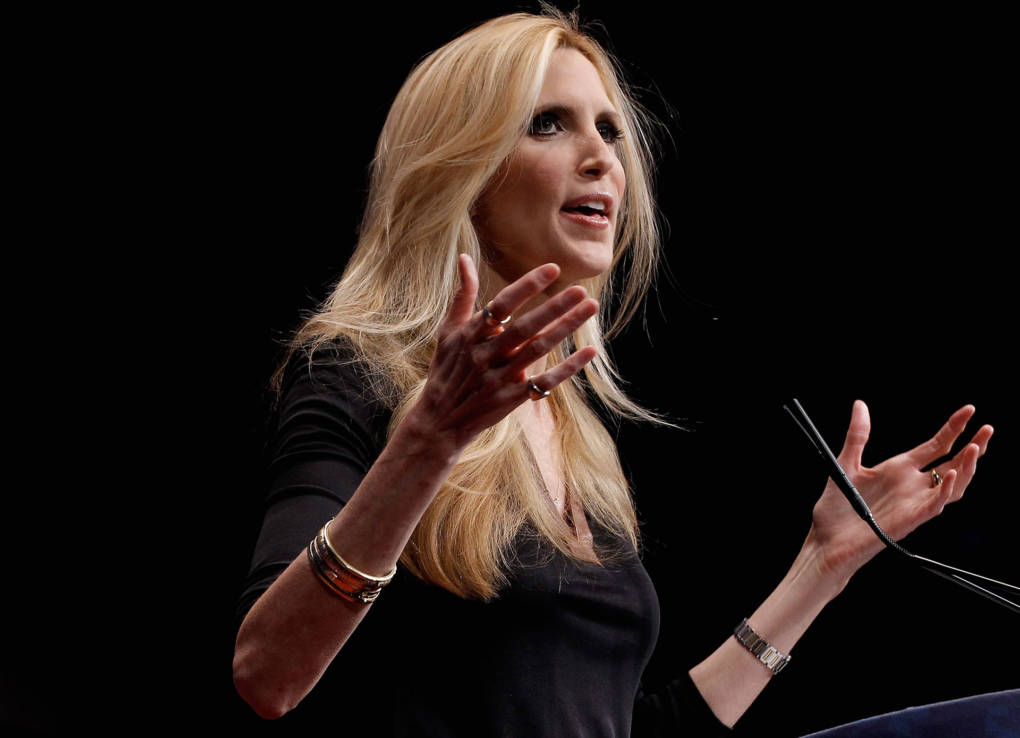
"caption": "Conservative author and pundit Ann Coulter delivers remarks to the Conservative Political Action Conference (CPAC) at the Marriott Wardman Park Feb. 10, 2012, in Washington, D.C.",
"description": null,
"title": "ann-coulter-1920",
"credit": "Chip Somodevilla/Getty Images",
"status": "inherit",
"isLoading": false,
"fetchFailed": false
},
"news_11418413": {
"type": "attachments",
"id": "news_11418413",
"meta": {
"index": "attachments_1716263798",
"site": "news",
"id": "11418413",
"found": true
},
"parent": 11416893,
"imgSizes": {
"small": {
"file": "https://ww2.kqed.org/app/uploads/sites/10/2018/04/RS24990_20170420_DanielMaher_Credit_BertJohnson-4-qut-520x347.jpg",
"width": 520,
"mimeType": "image/jpeg",
"height": 347
},
"twentyfourteen-full-width": {
"file": "https://ww2.kqed.org/app/uploads/sites/10/2018/04/RS24990_20170420_DanielMaher_Credit_BertJohnson-4-qut-1038x576.jpg",
"width": 1038,
"mimeType": "image/jpeg",
"height": 576
},
"thumbnail": {
"file": "https://ww2.kqed.org/app/uploads/sites/10/2018/04/RS24990_20170420_DanielMaher_Credit_BertJohnson-4-qut-160x107.jpg",
"width": 160,
"mimeType": "image/jpeg",
"height": 107
},
"fd-sm": {
"file": "https://ww2.kqed.org/app/uploads/sites/10/2018/04/RS24990_20170420_DanielMaher_Credit_BertJohnson-4-qut-960x640.jpg",
"width": 960,
"mimeType": "image/jpeg",
"height": 640
},
"post-thumbnail": {
"file": "https://ww2.kqed.org/app/uploads/sites/10/2018/04/RS24990_20170420_DanielMaher_Credit_BertJohnson-4-qut-672x372.jpg",
"width": 672,
"mimeType": "image/jpeg",
"height": 372
},
"xsmall": {
"file": "https://ww2.kqed.org/app/uploads/sites/10/2018/04/RS24990_20170420_DanielMaher_Credit_BertJohnson-4-qut-375x250.jpg",
"width": 375,
"mimeType": "image/jpeg",
"height": 250
},
"kqedFullSize": {
"file": "https://ww2.kqed.org/app/uploads/sites/10/2018/04/RS24990_20170420_DanielMaher_Credit_BertJohnson-4-qut.jpg",
"width": 1920,
"height": 1280
},
"large": {
"file": "https://ww2.kqed.org/app/uploads/sites/10/2018/04/RS24990_20170420_DanielMaher_Credit_BertJohnson-4-qut-1020x680.jpg",
"width": 1020,
"mimeType": "image/jpeg",
"height": 680
},
"xlarge": {
"file": "https://ww2.kqed.org/app/uploads/sites/10/2018/04/RS24990_20170420_DanielMaher_Credit_BertJohnson-4-qut-1180x787.jpg",
"width": 1180,
"mimeType": "image/jpeg",
"height": 787
},
"guest-author-50": {
"file": "https://ww2.kqed.org/app/uploads/sites/10/2018/04/RS24990_20170420_DanielMaher_Credit_BertJohnson-4-qut-50x50.jpg",
"width": 50,
"mimeType": "image/jpeg",
"height": 50
},
"guest-author-96": {
"file": "https://ww2.kqed.org/app/uploads/sites/10/2018/04/RS24990_20170420_DanielMaher_Credit_BertJohnson-4-qut-96x96.jpg",
"width": 96,
"mimeType": "image/jpeg",
"height": 96
},
"medium": {
"file": "https://ww2.kqed.org/app/uploads/sites/10/2018/04/RS24990_20170420_DanielMaher_Credit_BertJohnson-4-qut-800x533.jpg",
"width": 800,
"mimeType": "image/jpeg",
"height": 533
},
"guest-author-64": {
"file": "https://ww2.kqed.org/app/uploads/sites/10/2018/04/RS24990_20170420_DanielMaher_Credit_BertJohnson-4-qut-64x64.jpg",
"width": 64,
"mimeType": "image/jpeg",
"height": 64
},
"guest-author-32": {
"file": "https://ww2.kqed.org/app/uploads/sites/10/2018/04/RS24990_20170420_DanielMaher_Credit_BertJohnson-4-qut-32x32.jpg",
"width": 32,
"mimeType": "image/jpeg",
"height": 32
},
"fd-lrg": {
"file": "https://ww2.kqed.org/app/uploads/sites/10/2018/04/RS24990_20170420_DanielMaher_Credit_BertJohnson-4-qut-1920x1280.jpg",
"width": 1920,
"mimeType": "image/jpeg",
"height": 1280
},
"fd-med": {
"file": "https://ww2.kqed.org/app/uploads/sites/10/2018/04/RS24990_20170420_DanielMaher_Credit_BertJohnson-4-qut-1180x787.jpg",
"width": 1180,
"mimeType": "image/jpeg",
"height": 787
},
"full-width": {
"file": "https://ww2.kqed.org/app/uploads/sites/10/2018/04/RS24990_20170420_DanielMaher_Credit_BertJohnson-4-qut-1920x1280.jpg",
"width": 1920,
"mimeType": "image/jpeg",
"height": 1280
},
"detail": {
"file": "https://ww2.kqed.org/app/uploads/sites/10/2018/04/RS24990_20170420_DanielMaher_Credit_BertJohnson-4-qut-150x150.jpg",
"width": 150,
"mimeType": "image/jpeg",
"height": 150
},
"guest-author-128": {
"file": "https://ww2.kqed.org/app/uploads/sites/10/2018/04/RS24990_20170420_DanielMaher_Credit_BertJohnson-4-qut-128x128.jpg",
"width": 128,
"mimeType": "image/jpeg",
"height": 128
},
"xxsmall": {
"file": "https://ww2.kqed.org/app/uploads/sites/10/2018/04/RS24990_20170420_DanielMaher_Credit_BertJohnson-4-qut-240x160.jpg",
"width": 240,
"mimeType": "image/jpeg",
"height": 160
}
},
"publishDate": 1492712890,
"modified": 1492815353,
"caption": "Daniel Maher supervises the fleet of trucks at the Ecology Center in Berkeley, which pioneered curbside recycling. He trains at-risk youth in green-collar jobs. ",
"description": "Daniel Maher supervises the fleet of trucks at the Ecology Center in Berkeley, which pioneered curbside recycling. He trains at-risk youth in green collar jobs. ",
"title": "Daniel Maher",
"credit": "Bert Johnson/KQED",
"status": "inherit",
"isLoading": false,
"fetchFailed": false
},
"news_11420121": {
"type": "attachments",
"id": "news_11420121",
"meta": {
"index": "attachments_1716263798",
"site": "news",
"id": "11420121",
"found": true
},
"parent": 11420036,
"imgSizes": {
"small": {
"file": "https://ww2.kqed.org/app/uploads/sites/10/2017/04/RS24861_GettyImages-658393874-qut-520x347.jpg",
"width": 520,
"mimeType": "image/jpeg",
"height": 347
},
"twentyfourteen-full-width": {
"file": "https://ww2.kqed.org/app/uploads/sites/10/2017/04/RS24861_GettyImages-658393874-qut-1038x576.jpg",
"width": 1038,
"mimeType": "image/jpeg",
"height": 576
},
"thumbnail": {
"file": "https://ww2.kqed.org/app/uploads/sites/10/2017/04/RS24861_GettyImages-658393874-qut-160x107.jpg",
"width": 160,
"mimeType": "image/jpeg",
"height": 107
},
"fd-sm": {
"file": "https://ww2.kqed.org/app/uploads/sites/10/2017/04/RS24861_GettyImages-658393874-qut-960x640.jpg",
"width": 960,
"mimeType": "image/jpeg",
"height": 640
},
"post-thumbnail": {
"file": "https://ww2.kqed.org/app/uploads/sites/10/2017/04/RS24861_GettyImages-658393874-qut-672x372.jpg",
"width": 672,
"mimeType": "image/jpeg",
"height": 372
},
"xsmall": {
"file": "https://ww2.kqed.org/app/uploads/sites/10/2017/04/RS24861_GettyImages-658393874-qut-375x250.jpg",
"width": 375,
"mimeType": "image/jpeg",
"height": 250
},
"kqedFullSize": {
"file": "https://ww2.kqed.org/app/uploads/sites/10/2017/04/RS24861_GettyImages-658393874-qut.jpg",
"width": 1920,
"height": 1280
},
"large": {
"file": "https://ww2.kqed.org/app/uploads/sites/10/2017/04/RS24861_GettyImages-658393874-qut-1020x680.jpg",
"width": 1020,
"mimeType": "image/jpeg",
"height": 680
},
"xlarge": {
"file": "https://ww2.kqed.org/app/uploads/sites/10/2017/04/RS24861_GettyImages-658393874-qut-1180x787.jpg",
"width": 1180,
"mimeType": "image/jpeg",
"height": 787
},
"guest-author-50": {
"file": "https://ww2.kqed.org/app/uploads/sites/10/2017/04/RS24861_GettyImages-658393874-qut-50x50.jpg",
"width": 50,
"mimeType": "image/jpeg",
"height": 50
},
"guest-author-96": {
"file": "https://ww2.kqed.org/app/uploads/sites/10/2017/04/RS24861_GettyImages-658393874-qut-96x96.jpg",
"width": 96,
"mimeType": "image/jpeg",
"height": 96
},
"medium": {
"file": "https://ww2.kqed.org/app/uploads/sites/10/2017/04/RS24861_GettyImages-658393874-qut-800x533.jpg",
"width": 800,
"mimeType": "image/jpeg",
"height": 533
},
"guest-author-64": {
"file": "https://ww2.kqed.org/app/uploads/sites/10/2017/04/RS24861_GettyImages-658393874-qut-64x64.jpg",
"width": 64,
"mimeType": "image/jpeg",
"height": 64
},
"guest-author-32": {
"file": "https://ww2.kqed.org/app/uploads/sites/10/2017/04/RS24861_GettyImages-658393874-qut-32x32.jpg",
"width": 32,
"mimeType": "image/jpeg",
"height": 32
},
"fd-lrg": {
"file": "https://ww2.kqed.org/app/uploads/sites/10/2017/04/RS24861_GettyImages-658393874-qut-1920x1280.jpg",
"width": 1920,
"mimeType": "image/jpeg",
"height": 1280
},
"fd-med": {
"file": "https://ww2.kqed.org/app/uploads/sites/10/2017/04/RS24861_GettyImages-658393874-qut-1180x787.jpg",
"width": 1180,
"mimeType": "image/jpeg",
"height": 787
},
"full-width": {
"file": "https://ww2.kqed.org/app/uploads/sites/10/2017/04/RS24861_GettyImages-658393874-qut-1920x1280.jpg",
"width": 1920,
"mimeType": "image/jpeg",
"height": 1280
},
"detail": {
"file": "https://ww2.kqed.org/app/uploads/sites/10/2017/04/RS24861_GettyImages-658393874-qut-150x150.jpg",
"width": 150,
"mimeType": "image/jpeg",
"height": 150
},
"guest-author-128": {
"file": "https://ww2.kqed.org/app/uploads/sites/10/2017/04/RS24861_GettyImages-658393874-qut-128x128.jpg",
"width": 128,
"mimeType": "image/jpeg",
"height": 128
},
"xxsmall": {
"file": "https://ww2.kqed.org/app/uploads/sites/10/2017/04/RS24861_GettyImages-658393874-qut-240x160.jpg",
"width": 240,
"mimeType": "image/jpeg",
"height": 160
}
},
"publishDate": 1492798698,
"modified": 1492813215,
"caption": "U.S. Attorney General Jeff Sessions is making good on his promise to crack down on so-called sanctuary cities.",
"description": null,
"title": "RS24861_GettyImages-658393874-qut",
"credit": "JIM WATSON/AFP/Getty Images",
"status": "inherit",
"isLoading": false,
"fetchFailed": false
},
"news_11418538": {
"type": "attachments",
"id": "news_11418538",
"meta": {
"index": "attachments_1716263798",
"site": "news",
"id": "11418538",
"found": true
},
"parent": 11418506,
"imgSizes": {
"small": {
"file": "https://ww2.kqed.org/app/uploads/sites/10/2017/04/11510_transform-520x390.jpg",
"width": 520,
"mimeType": "image/jpeg",
"height": 390
},
"twentyfourteen-full-width": {
"file": "https://ww2.kqed.org/app/uploads/sites/10/2017/04/11510_transform-1038x576.jpg",
"width": 1038,
"mimeType": "image/jpeg",
"height": 576
},
"thumbnail": {
"file": "https://ww2.kqed.org/app/uploads/sites/10/2017/04/11510_transform-160x120.jpg",
"width": 160,
"mimeType": "image/jpeg",
"height": 120
},
"fd-sm": {
"file": "https://ww2.kqed.org/app/uploads/sites/10/2017/04/11510_transform-960x720.jpg",
"width": 960,
"mimeType": "image/jpeg",
"height": 720
},
"post-thumbnail": {
"file": "https://ww2.kqed.org/app/uploads/sites/10/2017/04/11510_transform-672x372.jpg",
"width": 672,
"mimeType": "image/jpeg",
"height": 372
},
"xsmall": {
"file": "https://ww2.kqed.org/app/uploads/sites/10/2017/04/11510_transform-375x281.jpg",
"width": 375,
"mimeType": "image/jpeg",
"height": 281
},
"kqedFullSize": {
"file": "https://ww2.kqed.org/app/uploads/sites/10/2017/04/11510_transform.jpg",
"width": 1920,
"height": 1440
},
"large": {
"file": "https://ww2.kqed.org/app/uploads/sites/10/2017/04/11510_transform-1020x765.jpg",
"width": 1020,
"mimeType": "image/jpeg",
"height": 765
},
"xlarge": {
"file": "https://ww2.kqed.org/app/uploads/sites/10/2017/04/11510_transform-1180x885.jpg",
"width": 1180,
"mimeType": "image/jpeg",
"height": 885
},
"guest-author-50": {
"file": "https://ww2.kqed.org/app/uploads/sites/10/2017/04/11510_transform-50x50.jpg",
"width": 50,
"mimeType": "image/jpeg",
"height": 50
},
"guest-author-96": {
"file": "https://ww2.kqed.org/app/uploads/sites/10/2017/04/11510_transform-96x96.jpg",
"width": 96,
"mimeType": "image/jpeg",
"height": 96
},
"medium": {
"file": "https://ww2.kqed.org/app/uploads/sites/10/2017/04/11510_transform-800x600.jpg",
"width": 800,
"mimeType": "image/jpeg",
"height": 600
},
"guest-author-64": {
"file": "https://ww2.kqed.org/app/uploads/sites/10/2017/04/11510_transform-64x64.jpg",
"width": 64,
"mimeType": "image/jpeg",
"height": 64
},
"guest-author-32": {
"file": "https://ww2.kqed.org/app/uploads/sites/10/2017/04/11510_transform-32x32.jpg",
"width": 32,
"mimeType": "image/jpeg",
"height": 32
},
"fd-lrg": {
"file": "https://ww2.kqed.org/app/uploads/sites/10/2017/04/11510_transform-1920x1440.jpg",
"width": 1920,
"mimeType": "image/jpeg",
"height": 1440
},
"fd-med": {
"file": "https://ww2.kqed.org/app/uploads/sites/10/2017/04/11510_transform-1180x885.jpg",
"width": 1180,
"mimeType": "image/jpeg",
"height": 885
},
"full-width": {
"file": "https://ww2.kqed.org/app/uploads/sites/10/2017/04/11510_transform-1920x1440.jpg",
"width": 1920,
"mimeType": "image/jpeg",
"height": 1440
},
"detail": {
"file": "https://ww2.kqed.org/app/uploads/sites/10/2017/04/11510_transform-150x150.jpg",
"width": 150,
"mimeType": "image/jpeg",
"height": 150
},
"guest-author-128": {
"file": "https://ww2.kqed.org/app/uploads/sites/10/2017/04/11510_transform-128x128.jpg",
"width": 128,
"mimeType": "image/jpeg",
"height": 128
},
"xxsmall": {
"file": "https://ww2.kqed.org/app/uploads/sites/10/2017/04/11510_transform-240x180.jpg",
"width": 240,
"mimeType": "image/jpeg",
"height": 180
}
},
"publishDate": 1492716360,
"modified": 1607553769,
"caption": "Prisons confine inmates during group therapy in metal cages, also known as therapeutic modules, at California State Prison in Sacramento.",
"description": null,
"title": "11510_transform",
"credit": "Julie Small/KQED",
"status": "inherit",
"altTag": null,
"isLoading": false,
"fetchFailed": false
},
"news_11418670": {
"type": "attachments",
"id": "news_11418670",
"meta": {
"index": "attachments_1716263798",
"site": "news",
"id": "11418670",
"found": true
},
"parent": 11418665,
"imgSizes": {
"small": {
"file": "https://ww2.kqed.org/app/uploads/sites/10/2017/04/HugoCastro-520x293.jpg",
"width": 520,
"mimeType": "image/jpeg",
"height": 293
},
"thumbnail": {
"file": "https://ww2.kqed.org/app/uploads/sites/10/2017/04/HugoCastro-160x90.jpg",
"width": 160,
"mimeType": "image/jpeg",
"height": 90
},
"post-thumbnail": {
"file": "https://ww2.kqed.org/app/uploads/sites/10/2017/04/HugoCastro-672x372.jpg",
"width": 672,
"mimeType": "image/jpeg",
"height": 372
},
"xsmall": {
"file": "https://ww2.kqed.org/app/uploads/sites/10/2017/04/HugoCastro-375x211.jpg",
"width": 375,
"mimeType": "image/jpeg",
"height": 211
},
"kqedFullSize": {
"file": "https://ww2.kqed.org/app/uploads/sites/10/2017/04/HugoCastro.jpg",
"width": 800,
"height": 450
},
"guest-author-50": {
"file": "https://ww2.kqed.org/app/uploads/sites/10/2017/04/HugoCastro-50x50.jpg",
"width": 50,
"mimeType": "image/jpeg",
"height": 50
},
"guest-author-96": {
"file": "https://ww2.kqed.org/app/uploads/sites/10/2017/04/HugoCastro-96x96.jpg",
"width": 96,
"mimeType": "image/jpeg",
"height": 96
},
"medium": {
"file": "https://ww2.kqed.org/app/uploads/sites/10/2017/04/HugoCastro-800x450.jpg",
"width": 800,
"mimeType": "image/jpeg",
"height": 450
},
"guest-author-64": {
"file": "https://ww2.kqed.org/app/uploads/sites/10/2017/04/HugoCastro-64x64.jpg",
"width": 64,
"mimeType": "image/jpeg",
"height": 64
},
"guest-author-32": {
"file": "https://ww2.kqed.org/app/uploads/sites/10/2017/04/HugoCastro-32x32.jpg",
"width": 32,
"mimeType": "image/jpeg",
"height": 32
},
"detail": {
"file": "https://ww2.kqed.org/app/uploads/sites/10/2017/04/HugoCastro-150x150.jpg",
"width": 150,
"mimeType": "image/jpeg",
"height": 150
},
"guest-author-128": {
"file": "https://ww2.kqed.org/app/uploads/sites/10/2017/04/HugoCastro-128x128.jpg",
"width": 128,
"mimeType": "image/jpeg",
"height": 128
},
"xxsmall": {
"file": "https://ww2.kqed.org/app/uploads/sites/10/2017/04/HugoCastro-240x135.jpg",
"width": 240,
"mimeType": "image/jpeg",
"height": 135
}
},
"publishDate": 1492721089,
"modified": 1492721123,
"caption": "Hugo Castro, a San Diego activist, volunteers to help Haitian refugees in Mexico, March 16, 2017.",
"description": "Hugo Castro, a San Diego activist, volunteers to help Haitian refugees in Mexico, March 16, 2017.",
"title": "HugoCastro",
"credit": "Matthew Bowler/KPBS",
"status": "inherit",
"isLoading": false,
"fetchFailed": false
},
"news_11417188": {
"type": "attachments",
"id": "news_11417188",
"meta": {
"index": "attachments_1716263798",
"site": "news",
"id": "11417188",
"found": true
},
"parent": 11417082,
"imgSizes": {
"small": {
"file": "https://ww2.kqed.org/app/uploads/sites/10/2017/04/Memorial2-520x347.jpg",
"width": 520,
"mimeType": "image/jpeg",
"height": 347
},
"twentyfourteen-full-width": {
"file": "https://ww2.kqed.org/app/uploads/sites/10/2017/04/Memorial2-1038x576.jpg",
"width": 1038,
"mimeType": "image/jpeg",
"height": 576
},
"thumbnail": {
"file": "https://ww2.kqed.org/app/uploads/sites/10/2017/04/Memorial2-160x107.jpg",
"width": 160,
"mimeType": "image/jpeg",
"height": 107
},
"fd-sm": {
"file": "https://ww2.kqed.org/app/uploads/sites/10/2017/04/Memorial2-960x640.jpg",
"width": 960,
"mimeType": "image/jpeg",
"height": 640
},
"post-thumbnail": {
"file": "https://ww2.kqed.org/app/uploads/sites/10/2017/04/Memorial2-672x372.jpg",
"width": 672,
"mimeType": "image/jpeg",
"height": 372
},
"xsmall": {
"file": "https://ww2.kqed.org/app/uploads/sites/10/2017/04/Memorial2-375x250.jpg",
"width": 375,
"mimeType": "image/jpeg",
"height": 250
},
"kqedFullSize": {
"file": "https://ww2.kqed.org/app/uploads/sites/10/2017/04/Memorial2.jpg",
"width": 5472,
"height": 3648
},
"large": {
"file": "https://ww2.kqed.org/app/uploads/sites/10/2017/04/Memorial2-1020x680.jpg",
"width": 1020,
"mimeType": "image/jpeg",
"height": 680
},
"xlarge": {
"file": "https://ww2.kqed.org/app/uploads/sites/10/2017/04/Memorial2-1180x787.jpg",
"width": 1180,
"mimeType": "image/jpeg",
"height": 787
},
"guest-author-50": {
"file": "https://ww2.kqed.org/app/uploads/sites/10/2017/04/Memorial2-50x50.jpg",
"width": 50,
"mimeType": "image/jpeg",
"height": 50
},
"guest-author-96": {
"file": "https://ww2.kqed.org/app/uploads/sites/10/2017/04/Memorial2-96x96.jpg",
"width": 96,
"mimeType": "image/jpeg",
"height": 96
},
"medium": {
"file": "https://ww2.kqed.org/app/uploads/sites/10/2017/04/Memorial2-800x533.jpg",
"width": 800,
"mimeType": "image/jpeg",
"height": 533
},
"guest-author-64": {
"file": "https://ww2.kqed.org/app/uploads/sites/10/2017/04/Memorial2-64x64.jpg",
"width": 64,
"mimeType": "image/jpeg",
"height": 64
},
"guest-author-32": {
"file": "https://ww2.kqed.org/app/uploads/sites/10/2017/04/Memorial2-32x32.jpg",
"width": 32,
"mimeType": "image/jpeg",
"height": 32
},
"fd-lrg": {
"file": "https://ww2.kqed.org/app/uploads/sites/10/2017/04/Memorial2-1920x1280.jpg",
"width": 1920,
"mimeType": "image/jpeg",
"height": 1280
},
"fd-med": {
"file": "https://ww2.kqed.org/app/uploads/sites/10/2017/04/Memorial2-1180x787.jpg",
"width": 1180,
"mimeType": "image/jpeg",
"height": 787
},
"full-width": {
"file": "https://ww2.kqed.org/app/uploads/sites/10/2017/04/Memorial2-1920x1280.jpg",
"width": 1920,
"mimeType": "image/jpeg",
"height": 1280
},
"detail": {
"file": "https://ww2.kqed.org/app/uploads/sites/10/2017/04/Memorial2-150x150.jpg",
"width": 150,
"mimeType": "image/jpeg",
"height": 150
},
"guest-author-128": {
"file": "https://ww2.kqed.org/app/uploads/sites/10/2017/04/Memorial2-128x128.jpg",
"width": 128,
"mimeType": "image/jpeg",
"height": 128
},
"xxsmall": {
"file": "https://ww2.kqed.org/app/uploads/sites/10/2017/04/Memorial2-240x160.jpg",
"width": 240,
"mimeType": "image/jpeg",
"height": 160
}
},
"publishDate": 1492644331,
"modified": 1492645101,
"caption": "A memorial outside the Catholic Charities building in downtown Fresno, near where 3 people were killed on Tuesday. ",
"description": null,
"title": "Memorial2",
"credit": "Vanessa Rancano/KQED ",
"status": "inherit",
"isLoading": false,
"fetchFailed": false
},
"news_11415632": {
"type": "attachments",
"id": "news_11415632",
"meta": {
"index": "attachments_1716263798",
"site": "news",
"id": "11415632",
"found": true
},
"parent": 11415553,
"imgSizes": {
"small": {
"file": "https://ww2.kqed.org/app/uploads/sites/10/2017/04/DREAMERDeported-520x342.jpg",
"width": 520,
"mimeType": "image/jpeg",
"height": 342
},
"twentyfourteen-full-width": {
"file": "https://ww2.kqed.org/app/uploads/sites/10/2017/04/DREAMERDeported-1038x576.jpg",
"width": 1038,
"mimeType": "image/jpeg",
"height": 576
},
"thumbnail": {
"file": "https://ww2.kqed.org/app/uploads/sites/10/2017/04/DREAMERDeported-160x105.jpg",
"width": 160,
"mimeType": "image/jpeg",
"height": 105
},
"fd-sm": {
"file": "https://ww2.kqed.org/app/uploads/sites/10/2017/04/DREAMERDeported-960x631.jpg",
"width": 960,
"mimeType": "image/jpeg",
"height": 631
},
"post-thumbnail": {
"file": "https://ww2.kqed.org/app/uploads/sites/10/2017/04/DREAMERDeported-672x372.jpg",
"width": 672,
"mimeType": "image/jpeg",
"height": 372
},
"xsmall": {
"file": "https://ww2.kqed.org/app/uploads/sites/10/2017/04/DREAMERDeported-375x246.jpg",
"width": 375,
"mimeType": "image/jpeg",
"height": 246
},
"kqedFullSize": {
"file": "https://ww2.kqed.org/app/uploads/sites/10/2017/04/DREAMERDeported.jpg",
"width": 1920,
"height": 1262
},
"large": {
"file": "https://ww2.kqed.org/app/uploads/sites/10/2017/04/DREAMERDeported-1020x670.jpg",
"width": 1020,
"mimeType": "image/jpeg",
"height": 670
},
"xlarge": {
"file": "https://ww2.kqed.org/app/uploads/sites/10/2017/04/DREAMERDeported-1180x776.jpg",
"width": 1180,
"mimeType": "image/jpeg",
"height": 776
},
"guest-author-50": {
"file": "https://ww2.kqed.org/app/uploads/sites/10/2017/04/DREAMERDeported-50x50.jpg",
"width": 50,
"mimeType": "image/jpeg",
"height": 50
},
"guest-author-96": {
"file": "https://ww2.kqed.org/app/uploads/sites/10/2017/04/DREAMERDeported-96x96.jpg",
"width": 96,
"mimeType": "image/jpeg",
"height": 96
},
"medium": {
"file": "https://ww2.kqed.org/app/uploads/sites/10/2017/04/DREAMERDeported-800x526.jpg",
"width": 800,
"mimeType": "image/jpeg",
"height": 526
},
"guest-author-64": {
"file": "https://ww2.kqed.org/app/uploads/sites/10/2017/04/DREAMERDeported-64x64.jpg",
"width": 64,
"mimeType": "image/jpeg",
"height": 64
},
"guest-author-32": {
"file": "https://ww2.kqed.org/app/uploads/sites/10/2017/04/DREAMERDeported-32x32.jpg",
"width": 32,
"mimeType": "image/jpeg",
"height": 32
},
"fd-lrg": {
"file": "https://ww2.kqed.org/app/uploads/sites/10/2017/04/DREAMERDeported-1920x1262.jpg",
"width": 1920,
"mimeType": "image/jpeg",
"height": 1262
},
"fd-med": {
"file": "https://ww2.kqed.org/app/uploads/sites/10/2017/04/DREAMERDeported-1180x776.jpg",
"width": 1180,
"mimeType": "image/jpeg",
"height": 776
},
"full-width": {
"file": "https://ww2.kqed.org/app/uploads/sites/10/2017/04/DREAMERDeported-1920x1262.jpg",
"width": 1920,
"mimeType": "image/jpeg",
"height": 1262
},
"detail": {
"file": "https://ww2.kqed.org/app/uploads/sites/10/2017/04/DREAMERDeported-150x150.jpg",
"width": 150,
"mimeType": "image/jpeg",
"height": 150
},
"guest-author-128": {
"file": "https://ww2.kqed.org/app/uploads/sites/10/2017/04/DREAMERDeported-128x128.jpg",
"width": 128,
"mimeType": "image/jpeg",
"height": 128
},
"xxsmall": {
"file": "https://ww2.kqed.org/app/uploads/sites/10/2017/04/DREAMERDeported-240x158.jpg",
"width": 240,
"mimeType": "image/jpeg",
"height": 158
}
},
"publishDate": 1492565430,
"modified": 1492565481,
"caption": "Juan Manuel Montes was deported despite having protection under the Deferred Action for Childhood Arrivals (DACA) program.",
"description": "Juan Manuel Montes was deported despite having protection under the Deferred Action for Childhood Arrivals (DACA) program.",
"title": "DREAMERDeported",
"credit": "Juan Gastelum/National Immigration Law Center",
"status": "inherit",
"isLoading": false,
"fetchFailed": false
},
"news_11415224": {
"type": "attachments",
"id": "news_11415224",
"meta": {
"index": "attachments_1716263798",
"site": "news",
"id": "11415224",
"found": true
},
"parent": 11415023,
"imgSizes": {
"small": {
"file": "https://ww2.kqed.org/app/uploads/sites/10/2017/04/fremont-car-fire-1920-520x520.jpg",
"width": 520,
"mimeType": "image/jpeg",
"height": 520
},
"twentyfourteen-full-width": {
"file": "https://ww2.kqed.org/app/uploads/sites/10/2017/04/fremont-car-fire-1920-1038x576.jpg",
"width": 1038,
"mimeType": "image/jpeg",
"height": 576
},
"thumbnail": {
"file": "https://ww2.kqed.org/app/uploads/sites/10/2017/04/fremont-car-fire-1920-160x160.jpg",
"width": 160,
"mimeType": "image/jpeg",
"height": 160
},
"fd-sm": {
"file": "https://ww2.kqed.org/app/uploads/sites/10/2017/04/fremont-car-fire-1920-960x960.jpg",
"width": 960,
"mimeType": "image/jpeg",
"height": 960
},
"post-thumbnail": {
"file": "https://ww2.kqed.org/app/uploads/sites/10/2017/04/fremont-car-fire-1920-672x372.jpg",
"width": 672,
"mimeType": "image/jpeg",
"height": 372
},
"xsmall": {
"file": "https://ww2.kqed.org/app/uploads/sites/10/2017/04/fremont-car-fire-1920-375x375.jpg",
"width": 375,
"mimeType": "image/jpeg",
"height": 375
},
"kqedFullSize": {
"file": "https://ww2.kqed.org/app/uploads/sites/10/2017/04/fremont-car-fire-1920.jpg",
"width": 1920,
"height": 1920
},
"large": {
"file": "https://ww2.kqed.org/app/uploads/sites/10/2017/04/fremont-car-fire-1920-1020x1020.jpg",
"width": 1020,
"mimeType": "image/jpeg",
"height": 1020
},
"xlarge": {
"file": "https://ww2.kqed.org/app/uploads/sites/10/2017/04/fremont-car-fire-1920-1180x1180.jpg",
"width": 1180,
"mimeType": "image/jpeg",
"height": 1180
},
"guest-author-50": {
"file": "https://ww2.kqed.org/app/uploads/sites/10/2017/04/fremont-car-fire-1920-50x50.jpg",
"width": 50,
"mimeType": "image/jpeg",
"height": 50
},
"guest-author-96": {
"file": "https://ww2.kqed.org/app/uploads/sites/10/2017/04/fremont-car-fire-1920-96x96.jpg",
"width": 96,
"mimeType": "image/jpeg",
"height": 96
},
"medium": {
"file": "https://ww2.kqed.org/app/uploads/sites/10/2017/04/fremont-car-fire-1920-800x800.jpg",
"width": 800,
"mimeType": "image/jpeg",
"height": 800
},
"guest-author-64": {
"file": "https://ww2.kqed.org/app/uploads/sites/10/2017/04/fremont-car-fire-1920-64x64.jpg",
"width": 64,
"mimeType": "image/jpeg",
"height": 64
},
"guest-author-32": {
"file": "https://ww2.kqed.org/app/uploads/sites/10/2017/04/fremont-car-fire-1920-32x32.jpg",
"width": 32,
"mimeType": "image/jpeg",
"height": 32
},
"fd-lrg": {
"file": "https://ww2.kqed.org/app/uploads/sites/10/2017/04/fremont-car-fire-1920-1920x1920.jpg",
"width": 1920,
"mimeType": "image/jpeg",
"height": 1920
},
"fd-med": {
"file": "https://ww2.kqed.org/app/uploads/sites/10/2017/04/fremont-car-fire-1920-1180x1180.jpg",
"width": 1180,
"mimeType": "image/jpeg",
"height": 1180
},
"full-width": {
"file": "https://ww2.kqed.org/app/uploads/sites/10/2017/04/fremont-car-fire-1920-1920x1920.jpg",
"width": 1920,
"mimeType": "image/jpeg",
"height": 1920
},
"detail": {
"file": "https://ww2.kqed.org/app/uploads/sites/10/2017/04/fremont-car-fire-1920-150x150.jpg",
"width": 150,
"mimeType": "image/jpeg",
"height": 150
},
"guest-author-128": {
"file": "https://ww2.kqed.org/app/uploads/sites/10/2017/04/fremont-car-fire-1920-128x128.jpg",
"width": 128,
"mimeType": "image/jpeg",
"height": 128
},
"xxsmall": {
"file": "https://ww2.kqed.org/app/uploads/sites/10/2017/04/fremont-car-fire-1920-240x240.jpg",
"width": 240,
"mimeType": "image/jpeg",
"height": 240
}
},
"publishDate": 1492548633,
"modified": 1492550529,
"caption": "Cars burn at Insurance Auto Auctions in Fremont on April 15, 2017.",
"description": null,
"title": "fremont-car-fire-1920",
"credit": "Fremont Fire Department",
"status": "inherit",
"isLoading": false,
"fetchFailed": false
},
"news_11415295": {
"type": "attachments",
"id": "news_11415295",
"meta": {
"index": "attachments_1716263798",
"site": "news",
"id": "11415295",
"found": true
},
"parent": 11415223,
"imgSizes": {
"small": {
"file": "https://ww2.kqed.org/app/uploads/sites/10/2017/04/CatholicCharitiesFresno-520x347.jpg",
"width": 520,
"mimeType": "image/jpeg",
"height": 347
},
"twentyfourteen-full-width": {
"file": "https://ww2.kqed.org/app/uploads/sites/10/2017/04/CatholicCharitiesFresno-1038x576.jpg",
"width": 1038,
"mimeType": "image/jpeg",
"height": 576
},
"thumbnail": {
"file": "https://ww2.kqed.org/app/uploads/sites/10/2017/04/CatholicCharitiesFresno-160x107.jpg",
"width": 160,
"mimeType": "image/jpeg",
"height": 107
},
"fd-sm": {
"file": "https://ww2.kqed.org/app/uploads/sites/10/2017/04/CatholicCharitiesFresno-960x642.jpg",
"width": 960,
"mimeType": "image/jpeg",
"height": 642
},
"post-thumbnail": {
"file": "https://ww2.kqed.org/app/uploads/sites/10/2017/04/CatholicCharitiesFresno-672x372.jpg",
"width": 672,
"mimeType": "image/jpeg",
"height": 372
},
"xsmall": {
"file": "https://ww2.kqed.org/app/uploads/sites/10/2017/04/CatholicCharitiesFresno-375x251.jpg",
"width": 375,
"mimeType": "image/jpeg",
"height": 251
},
"kqedFullSize": {
"file": "https://ww2.kqed.org/app/uploads/sites/10/2017/04/CatholicCharitiesFresno.jpg",
"width": 1920,
"height": 1283
},
"large": {
"file": "https://ww2.kqed.org/app/uploads/sites/10/2017/04/CatholicCharitiesFresno-1020x682.jpg",
"width": 1020,
"mimeType": "image/jpeg",
"height": 682
},
"xlarge": {
"file": "https://ww2.kqed.org/app/uploads/sites/10/2017/04/CatholicCharitiesFresno-1180x789.jpg",
"width": 1180,
"mimeType": "image/jpeg",
"height": 789
},
"guest-author-50": {
"file": "https://ww2.kqed.org/app/uploads/sites/10/2017/04/CatholicCharitiesFresno-50x50.jpg",
"width": 50,
"mimeType": "image/jpeg",
"height": 50
},
"guest-author-96": {
"file": "https://ww2.kqed.org/app/uploads/sites/10/2017/04/CatholicCharitiesFresno-96x96.jpg",
"width": 96,
"mimeType": "image/jpeg",
"height": 96
},
"medium": {
"file": "https://ww2.kqed.org/app/uploads/sites/10/2017/04/CatholicCharitiesFresno-800x535.jpg",
"width": 800,
"mimeType": "image/jpeg",
"height": 535
},
"guest-author-64": {
"file": "https://ww2.kqed.org/app/uploads/sites/10/2017/04/CatholicCharitiesFresno-64x64.jpg",
"width": 64,
"mimeType": "image/jpeg",
"height": 64
},
"guest-author-32": {
"file": "https://ww2.kqed.org/app/uploads/sites/10/2017/04/CatholicCharitiesFresno-32x32.jpg",
"width": 32,
"mimeType": "image/jpeg",
"height": 32
},
"fd-lrg": {
"file": "https://ww2.kqed.org/app/uploads/sites/10/2017/04/CatholicCharitiesFresno-1920x1283.jpg",
"width": 1920,
"mimeType": "image/jpeg",
"height": 1283
},
"fd-med": {
"file": "https://ww2.kqed.org/app/uploads/sites/10/2017/04/CatholicCharitiesFresno-1180x789.jpg",
"width": 1180,
"mimeType": "image/jpeg",
"height": 789
},
"full-width": {
"file": "https://ww2.kqed.org/app/uploads/sites/10/2017/04/CatholicCharitiesFresno-1920x1283.jpg",
"width": 1920,
"mimeType": "image/jpeg",
"height": 1283
},
"detail": {
"file": "https://ww2.kqed.org/app/uploads/sites/10/2017/04/CatholicCharitiesFresno-150x150.jpg",
"width": 150,
"mimeType": "image/jpeg",
"height": 150
},
"guest-author-128": {
"file": "https://ww2.kqed.org/app/uploads/sites/10/2017/04/CatholicCharitiesFresno-128x128.jpg",
"width": 128,
"mimeType": "image/jpeg",
"height": 128
},
"xxsmall": {
"file": "https://ww2.kqed.org/app/uploads/sites/10/2017/04/CatholicCharitiesFresno-240x160.jpg",
"width": 240,
"mimeType": "image/jpeg",
"height": 160
}
},
"publishDate": 1492549356,
"modified": 1492549402,
"caption": "The shooting happened outside this Catholic Charities building, but a spokeswoman said the charity doesn't believe the suspect was tied to the nonprofit organization.",
"description": "The shooting happened outside this Catholic Charities building, but a spokeswoman said the charity doesn't believe the suspect was tied to the nonprofit organization.",
"title": "CatholicCharitiesFresno",
"credit": "Google Maps",
"status": "inherit",
"isLoading": false,
"fetchFailed": false
},
"news_11406901": {
"type": "attachments",
"id": "news_11406901",
"meta": {
"index": "attachments_1716263798",
"site": "news",
"id": "11406901",
"found": true
},
"parent": 11406742,
"imgSizes": {
"small": {
"file": "https://ww2.kqed.org/app/uploads/sites/10/2017/04/RS2757_142322021-520x324.jpg",
"width": 520,
"mimeType": "image/jpeg",
"height": 324
},
"twentyfourteen-full-width": {
"file": "https://ww2.kqed.org/app/uploads/sites/10/2017/04/RS2757_142322021-1038x576.jpg",
"width": 1038,
"mimeType": "image/jpeg",
"height": 576
},
"thumbnail": {
"file": "https://ww2.kqed.org/app/uploads/sites/10/2017/04/RS2757_142322021-160x100.jpg",
"width": 160,
"mimeType": "image/jpeg",
"height": 100
},
"fd-sm": {
"file": "https://ww2.kqed.org/app/uploads/sites/10/2017/04/RS2757_142322021-960x598.jpg",
"width": 960,
"mimeType": "image/jpeg",
"height": 598
},
"post-thumbnail": {
"file": "https://ww2.kqed.org/app/uploads/sites/10/2017/04/RS2757_142322021-672x372.jpg",
"width": 672,
"mimeType": "image/jpeg",
"height": 372
},
"xsmall": {
"file": "https://ww2.kqed.org/app/uploads/sites/10/2017/04/RS2757_142322021-375x233.jpg",
"width": 375,
"mimeType": "image/jpeg",
"height": 233
},
"kqedFullSize": {
"file": "https://ww2.kqed.org/app/uploads/sites/10/2017/04/RS2757_142322021.jpg",
"width": 4203,
"height": 2616
},
"large": {
"file": "https://ww2.kqed.org/app/uploads/sites/10/2017/04/RS2757_142322021-1020x635.jpg",
"width": 1020,
"mimeType": "image/jpeg",
"height": 635
},
"xlarge": {
"file": "https://ww2.kqed.org/app/uploads/sites/10/2017/04/RS2757_142322021-1180x734.jpg",
"width": 1180,
"mimeType": "image/jpeg",
"height": 734
},
"guest-author-50": {
"file": "https://ww2.kqed.org/app/uploads/sites/10/2017/04/RS2757_142322021-50x50.jpg",
"width": 50,
"mimeType": "image/jpeg",
"height": 50
},
"guest-author-96": {
"file": "https://ww2.kqed.org/app/uploads/sites/10/2017/04/RS2757_142322021-96x96.jpg",
"width": 96,
"mimeType": "image/jpeg",
"height": 96
},
"medium": {
"file": "https://ww2.kqed.org/app/uploads/sites/10/2017/04/RS2757_142322021-800x498.jpg",
"width": 800,
"mimeType": "image/jpeg",
"height": 498
},
"guest-author-64": {
"file": "https://ww2.kqed.org/app/uploads/sites/10/2017/04/RS2757_142322021-64x64.jpg",
"width": 64,
"mimeType": "image/jpeg",
"height": 64
},
"guest-author-32": {
"file": "https://ww2.kqed.org/app/uploads/sites/10/2017/04/RS2757_142322021-32x32.jpg",
"width": 32,
"mimeType": "image/jpeg",
"height": 32
},
"fd-lrg": {
"file": "https://ww2.kqed.org/app/uploads/sites/10/2017/04/RS2757_142322021-1920x1195.jpg",
"width": 1920,
"mimeType": "image/jpeg",
"height": 1195
},
"fd-med": {
"file": "https://ww2.kqed.org/app/uploads/sites/10/2017/04/RS2757_142322021-1180x734.jpg",
"width": 1180,
"mimeType": "image/jpeg",
"height": 734
},
"full-width": {
"file": "https://ww2.kqed.org/app/uploads/sites/10/2017/04/RS2757_142322021-1920x1195.jpg",
"width": 1920,
"mimeType": "image/jpeg",
"height": 1195
},
"detail": {
"file": "https://ww2.kqed.org/app/uploads/sites/10/2017/04/RS2757_142322021-150x150.jpg",
"width": 150,
"mimeType": "image/jpeg",
"height": 150
},
"guest-author-128": {
"file": "https://ww2.kqed.org/app/uploads/sites/10/2017/04/RS2757_142322021-128x128.jpg",
"width": 128,
"mimeType": "image/jpeg",
"height": 128
},
"xxsmall": {
"file": "https://ww2.kqed.org/app/uploads/sites/10/2017/04/RS2757_142322021-240x149.jpg",
"width": 240,
"mimeType": "image/jpeg",
"height": 149
}
},
"publishDate": 1492114971,
"modified": 1492471629,
"caption": "The U.S. Supreme Court will begin oral arguments on Wednesday in a challenge to states' bans on funding for religious schools. ",
"description": null,
"title": "RS2757_142322021",
"credit": "Karen Bleier/Getty Images",
"status": "inherit",
"isLoading": false,
"fetchFailed": false
}
},
"audioPlayerReducer": {
"postId": "stream_live",
"isPaused": true,
"isPlaying": false,
"pfsActive": false,
"pledgeModalIsOpen": true,
"playerDrawerIsOpen": false,
"liveAudioPlayStartedAt": 0,
"liveAudioPlayContext": ""
},
"authorsReducer": {
"byline_news_11426580": {
"type": "authors",
"id": "byline_news_11426580",
"meta": {
"override": true
},
"slug": "byline_news_11426580",
"name": "\u003cstrong>Sudhin Thanawala\u003cbr />Associated Press\u003c/strong>",
"isLoading": false
},
"byline_news_11424910": {
"type": "authors",
"id": "byline_news_11424910",
"meta": {
"override": true
},
"slug": "byline_news_11424910",
"name": "\u003cstrong>Associated Press\u003c/strong>",
"isLoading": false
},
"byline_news_11418665": {
"type": "authors",
"id": "byline_news_11418665",
"meta": {
"override": true
},
"slug": "byline_news_11418665",
"name": "\u003cstrong>\u003ca href=\"http://www.kpbs.org/staff/jean-guerrero/\">Jean Guerrero\u003c/a>\u003cbr>\u003ca href=\"http://www.kpbs.org/\">KPBS\u003c/a>\u003c/strong>",
"isLoading": false
},
"byline_news_11415223": {
"type": "authors",
"id": "byline_news_11415223",
"meta": {
"override": true
},
"slug": "byline_news_11415223",
"name": "Scott Smith \u003cbr> Associated Press",
"isLoading": false
},
"lisapickoffwhite-2": {
"type": "authors",
"id": "199",
"meta": {
"index": "authors_1716337520",
"id": "199",
"found": true
},
"name": "Lisa Pickoff-White",
"firstName": "Lisa",
"lastName": "Pickoff-White",
"slug": "lisapickoffwhite-2",
"email": "lpickoffwhite@kqed.org",
"display_author_email": false,
"staff_mastheads": [
"news"
],
"title": "Data Journalist, Senior Producer",
"bio": "Lisa Pickoff-White is KQED's data reporter. Lisa specializes in simplifying complex topics and bringing them to life through compelling visuals, including photography and data visualizations. She previously has worked at the Center for Investigative Reporting and other national outlets. Her work has been honored with awards from the Online News Association, Investigative Reporters and Editors, the Society of Professional Journalists and SXSW Interactive. \u003cstrong> \u003c/strong>",
"avatar": "https://secure.gravatar.com/avatar/5513c5f3967df792aa65bee2501e84d6?s=600&d=blank&r=g",
"twitter": "pickoffwhite",
"facebook": null,
"instagram": null,
"linkedin": null,
"sites": [
{
"site": "",
"roles": [
"editor"
]
},
{
"site": "arts",
"roles": []
},
{
"site": "news",
"roles": [
"administrator"
]
},
{
"site": "about",
"roles": [
"editor"
]
},
{
"site": "stateofhealth",
"roles": [
"administrator"
]
},
{
"site": "science",
"roles": [
"editor"
]
},
{
"site": "quest",
"roles": [
"editor"
]
},
{
"site": "forum",
"roles": [
"editor"
]
}
],
"headData": {
"title": "Lisa Pickoff-White | KQED",
"description": "Data Journalist, Senior Producer",
"ogImgSrc": "https://secure.gravatar.com/avatar/5513c5f3967df792aa65bee2501e84d6?s=600&d=blank&r=g",
"twImgSrc": "https://secure.gravatar.com/avatar/5513c5f3967df792aa65bee2501e84d6?s=600&d=blank&r=g"
},
"isLoading": false,
"link": "/author/lisapickoffwhite-2"
},
"gmarzorati": {
"type": "authors",
"id": "227",
"meta": {
"index": "authors_1716337520",
"id": "227",
"found": true
},
"name": "Guy Marzorati",
"firstName": "Guy",
"lastName": "Marzorati",
"slug": "gmarzorati",
"email": "gmarzorati@KQED.org",
"display_author_email": true,
"staff_mastheads": [
"news"
],
"title": "Correspondent",
"bio": "Guy Marzorati is a correspondent on KQED's California Politics and Government Desk, based in San Jose. A graduate of Santa Clara University, Guy joined KQED in 2013. He reports on state and local politics and produces KQED's digital voter guide.",
"avatar": "https://secure.gravatar.com/avatar/771cddf45ce3a8ed533d82dcc214e9ef925d76d2af5794a33da1ce439eb54a32?s=600&d=blank&r=g",
"twitter": "guymarzorati",
"bluesky": null,
"facebook": null,
"instagram": null,
"linkedin": null,
"sites": [
{
"site": "",
"roles": [
"editor"
]
},
{
"site": "news",
"roles": [
"editor"
]
},
{
"site": "science",
"roles": [
"editor"
]
},
{
"site": "forum",
"roles": [
"editor"
]
},
{
"site": "elections",
"roles": [
"editor"
]
},
{
"site": "liveblog",
"roles": [
"editor"
]
}
],
"headData": {
"title": "Guy Marzorati | KQED",
"description": "Correspondent",
"ogImgSrc": "https://secure.gravatar.com/avatar/771cddf45ce3a8ed533d82dcc214e9ef925d76d2af5794a33da1ce439eb54a32?s=600&d=blank&r=g",
"twImgSrc": "https://secure.gravatar.com/avatar/771cddf45ce3a8ed533d82dcc214e9ef925d76d2af5794a33da1ce439eb54a32?s=600&d=blank&r=g"
},
"isLoading": false,
"link": "/author/gmarzorati"
},
"kqednewsstaffandwires": {
"type": "authors",
"id": "237",
"meta": {
"index": "authors_1716337520",
"id": "237",
"found": true
},
"name": "KQED News Staff and Wires",
"firstName": "KQED News Staff and Wires",
"lastName": null,
"slug": "kqednewsstaffandwires",
"email": "onlinenewsstaff@kqed.org",
"display_author_email": false,
"staff_mastheads": [],
"title": null,
"bio": null,
"avatar": "https://secure.gravatar.com/avatar/72295af8ebbfbd19a4948f5271285664?s=600&d=blank&r=g",
"twitter": null,
"facebook": null,
"instagram": null,
"linkedin": null,
"sites": [
{
"site": "arts",
"roles": [
"contributor"
]
},
{
"site": "news",
"roles": [
"contributor"
]
},
{
"site": "lowdown",
"roles": [
"author"
]
},
{
"site": "stateofhealth",
"roles": [
"contributor"
]
},
{
"site": "food",
"roles": [
"author"
]
}
],
"headData": {
"title": "KQED News Staff and Wires | KQED",
"description": null,
"ogImgSrc": "https://secure.gravatar.com/avatar/72295af8ebbfbd19a4948f5271285664?s=600&d=blank&r=g",
"twImgSrc": "https://secure.gravatar.com/avatar/72295af8ebbfbd19a4948f5271285664?s=600&d=blank&r=g"
},
"isLoading": false,
"link": "/author/kqednewsstaffandwires"
},
"sasha-khokha": {
"type": "authors",
"id": "254",
"meta": {
"index": "authors_1716337520",
"id": "254",
"found": true
},
"name": "Sasha Khokha",
"firstName": "Sasha",
"lastName": "Khokha",
"slug": "sasha-khokha",
"email": "skhokha@kqed.org",
"display_author_email": true,
"staff_mastheads": [
"news"
],
"title": "Host, The California Report Magazine",
"bio": "Sasha Khokha is the host of \u003cem>The California Report's \u003c/em> weekly magazine program, which takes listeners on sound-rich excursions to meet the people that make the Golden State unique -- through audio documentaries and long-form stories. As \u003cem>The California Report's\u003c/em> Central Valley Bureau Chief based in Fresno for nearly a dozen years, Sasha brought the lives and concerns of rural Californians to listeners around the state. Her reporting helped expose the hidden price immigrant women janitors and farmworkers may pay to keep their jobs: sexual assault at work. It inspired two new California laws to protect them from sexual harassment. She was a key member of the reporting team for the Frontline film \u003cem>Rape on the Night Shift, \u003c/em>which was nominated for two national Emmys. Sasha has also won a national Edward R. Murrow and a national PRNDI award for investigative reporting, as well as multiple prizes from the Society for Professional Journalists. Sasha is a proud alum of the UC Berkeley Graduate School of Journalism and Brown University and a member of the South Asian Journalists Association.",
"avatar": "https://secure.gravatar.com/avatar/e4b5e1541aaeea2aa356aa1fb2a68950?s=600&d=blank&r=g",
"twitter": "KQEDSashaKhokha",
"facebook": null,
"instagram": null,
"linkedin": null,
"sites": [
{
"site": "news",
"roles": [
"editor"
]
},
{
"site": "stateofhealth",
"roles": [
"author"
]
},
{
"site": "science",
"roles": [
"author"
]
},
{
"site": "quest",
"roles": [
"subscriber"
]
}
],
"headData": {
"title": "Sasha Khokha | KQED",
"description": "Host, The California Report Magazine",
"ogImgSrc": "https://secure.gravatar.com/avatar/e4b5e1541aaeea2aa356aa1fb2a68950?s=600&d=blank&r=g",
"twImgSrc": "https://secure.gravatar.com/avatar/e4b5e1541aaeea2aa356aa1fb2a68950?s=600&d=blank&r=g"
},
"isLoading": false,
"link": "/author/sasha-khokha"
},
"tgoldberg": {
"type": "authors",
"id": "258",
"meta": {
"index": "authors_1716337520",
"id": "258",
"found": true
},
"name": "Ted Goldberg",
"firstName": "Ted",
"lastName": "Goldberg",
"slug": "tgoldberg",
"email": "tgoldberg@kqed.org",
"display_author_email": true,
"staff_mastheads": [
"news"
],
"title": "KQED Managing Editor, News and Newscasts",
"bio": "Ted Goldberg is Managing Editor of News and Newscasts at KQED. His main reporting beat is the Bay Area's oil refining industry.\r\n\r\nPrior to joining KQED in 2014, Ted worked at CBS News and WCBS AM in New York and Bay City News and KCBS Radio in San Francisco. He graduated from Oberlin College in Ohio in 1998.",
"avatar": "https://secure.gravatar.com/avatar/30ce2e4fe89135e104f89be2394d16225b9d36c121b5b3cb7651ce642978b96f?s=600&d=blank&r=g",
"twitter": "TedrickG",
"bluesky": null,
"facebook": null,
"instagram": null,
"linkedin": null,
"sites": [
{
"site": "news",
"roles": [
"editor"
]
},
{
"site": "science",
"roles": [
"editor"
]
}
],
"headData": {
"title": "Ted Goldberg | KQED",
"description": "KQED Managing Editor, News and Newscasts",
"ogImgSrc": "https://secure.gravatar.com/avatar/30ce2e4fe89135e104f89be2394d16225b9d36c121b5b3cb7651ce642978b96f?s=600&d=blank&r=g",
"twImgSrc": "https://secure.gravatar.com/avatar/30ce2e4fe89135e104f89be2394d16225b9d36c121b5b3cb7651ce642978b96f?s=600&d=blank&r=g"
},
"isLoading": false,
"link": "/author/tgoldberg"
},
"mlagos": {
"type": "authors",
"id": "3239",
"meta": {
"index": "authors_1716337520",
"id": "3239",
"found": true
},
"name": "Marisa Lagos",
"firstName": "Marisa",
"lastName": "Lagos",
"slug": "mlagos",
"email": "mlagos@kqed.org",
"display_author_email": false,
"staff_mastheads": [
"news"
],
"title": "KQED Contributor",
"bio": "Marisa Lagos is a correspondent for KQED’s California Politics and Government Desk and co-hosts the award-winning show and podcast, Political Breakdown. At KQED, Lagos also conducts reporting, analysis and investigations into state, local and national politics for radio, TV, online and onstage. In 2022, she and co-host, Scott Shafer, moderated the only gubernatorial debate in California. In 2020, the \u003ci>Washington Post\u003c/i> named her one of the top political journalists in California; she was nominated for a Peabody and won several other awards for her work investigating the 2017 California wildfires. She has worked at the \u003ci>San Francisco Chronicle\u003c/i>, \u003ci>San Francisco Examiner\u003c/i> and \u003ci>Los Angeles Times\u003c/i>. A UC Santa Barbara graduate, she lives in San Francisco with her two sons and husband.",
"avatar": "https://secure.gravatar.com/avatar/a261a0d3696fc066871ef96b85b5e7d2?s=600&d=blank&r=g",
"twitter": "@mlagos",
"facebook": null,
"instagram": null,
"linkedin": null,
"sites": [
{
"site": "arts",
"roles": [
"author"
]
},
{
"site": "news",
"roles": [
"editor"
]
},
{
"site": "science",
"roles": [
"editor"
]
},
{
"site": "forum",
"roles": [
"author"
]
},
{
"site": "liveblog",
"roles": [
"author"
]
}
],
"headData": {
"title": "Marisa Lagos | KQED",
"description": "KQED Contributor",
"ogImgSrc": "https://secure.gravatar.com/avatar/a261a0d3696fc066871ef96b85b5e7d2?s=600&d=blank&r=g",
"twImgSrc": "https://secure.gravatar.com/avatar/a261a0d3696fc066871ef96b85b5e7d2?s=600&d=blank&r=g"
},
"isLoading": false,
"link": "/author/mlagos"
},
"jsmall": {
"type": "authors",
"id": "6625",
"meta": {
"index": "authors_1716337520",
"id": "6625",
"found": true
},
"name": "Julie Small",
"firstName": "Julie",
"lastName": "Small",
"slug": "jsmall",
"email": "jsmall@kqed.org",
"display_author_email": true,
"staff_mastheads": [
"news"
],
"title": "KQED Contributor",
"bio": "Julie Small reports on criminal justice and immigration.\r\n\r\nShe was part of a team at KQED awarded a regional 2019 Edward R. Murrow award for continuing coverage of the Trump Administration's family separation policy.\r\n\r\nThe Society for Professional Journalists recognized Julie's 2018 \u003ca href=\"https://www.kqed.org/news/11636262/the-officer-tased-him-31-times-the-sheriff-called-his-death-an-accident\">reporting\u003c/a> on the San Joaquin County Sheriff's \u003ca href=\"https://www.kqed.org/news/11634689/autopsy-doctors-sheriff-overrode-death-findings-to-protect-law-enforcement\">interference\u003c/a> in death investigations with an Excellence in Journalism Award for Ongoing Coverage.\r\n\r\nJulie's\u003ca href=\"https://www.kqed.org/news/11039666/two-mentally-ill-inmates-died-one-month-in-santa-clara\"> reporting\u003c/a> with Lisa Pickoff-White on the treatment of mentally ill offenders in California jails earned a 2017 regional Edward R. Murrow Award for news reporting and an investigative reporting award from the SPJ of Northern California.\r\n\r\nBefore joining KQED, Julie covered government and politics in Sacramento for Southern California Public Radio (SCPR). Her 2010 \u003ca href=\"https://www.scpr.org/specials/prisonmedical/\">series\u003c/a> on lapses in California’s prison medical care also won a regional Edward R. Murrow Award for investigative reporting and a Golden Mic Award from the RTNDA of Southern California.\r\n\r\nJulie began her career in journalism in 2000 as the deputy foreign editor for public radio's \u003cem>Marketplace, \u003c/em>while earning her master's degree in journalism from USC’s Annenberg School of Communication.",
"avatar": "https://secure.gravatar.com/avatar/236dc12b6acae3aacdd008a5a0aa2fd6fd55b1755fa3d3d923df5d3588e0a764?s=600&d=blank&r=g",
"twitter": "@SmallRadio2",
"bluesky": null,
"facebook": null,
"instagram": null,
"linkedin": null,
"sites": [
{
"site": "news",
"roles": [
"editor"
]
},
{
"site": "stateofhealth",
"roles": [
"author"
]
},
{
"site": "science",
"roles": [
"author"
]
},
{
"site": "liveblog",
"roles": [
"author"
]
}
],
"headData": {
"title": "Julie Small | KQED",
"description": "KQED Contributor",
"ogImgSrc": "https://secure.gravatar.com/avatar/236dc12b6acae3aacdd008a5a0aa2fd6fd55b1755fa3d3d923df5d3588e0a764?s=600&d=blank&r=g",
"twImgSrc": "https://secure.gravatar.com/avatar/236dc12b6acae3aacdd008a5a0aa2fd6fd55b1755fa3d3d923df5d3588e0a764?s=600&d=blank&r=g"
},
"isLoading": false,
"link": "/author/jsmall"
},
"vrancano": {
"type": "authors",
"id": "11276",
"meta": {
"index": "authors_1716337520",
"id": "11276",
"found": true
},
"name": "Vanessa Rancaño",
"firstName": "Vanessa",
"lastName": "Rancaño",
"slug": "vrancano",
"email": "vrancano@kqed.org",
"display_author_email": false,
"staff_mastheads": [
"news"
],
"title": "Reporter",
"bio": "Vanessa Rancaño is a features reporter for KQED. She’s also covered homelessness and education for the station and reported from the Central Valley. Her work has aired across public radio, from flagship national news shows to longform narrative podcasts. Before taking up a mic, she worked as a freelance print journalist. She’s been recognized with a number of national and regional awards. Vanessa grew up in California's Central Valley. She's a former NPR Kroc Fellow, and a graduate of the UC Berkeley Graduate School of Journalism.",
"avatar": "https://secure.gravatar.com/avatar/b3a383dfb0e7ee1c17568f2cf067904ab654d6e3de9743fc661f3c788ade1bed?s=600&d=blank&r=g",
"twitter": "vanessarancano",
"bluesky": null,
"facebook": null,
"instagram": null,
"linkedin": null,
"sites": [
{
"site": "arts",
"roles": [
"editor"
]
},
{
"site": "news",
"roles": [
"editor"
]
},
{
"site": "liveblog",
"roles": [
"contributor"
]
}
],
"headData": {
"title": "Vanessa Rancaño | KQED",
"description": "Reporter",
"ogImgSrc": "https://secure.gravatar.com/avatar/b3a383dfb0e7ee1c17568f2cf067904ab654d6e3de9743fc661f3c788ade1bed?s=600&d=blank&r=g",
"twImgSrc": "https://secure.gravatar.com/avatar/b3a383dfb0e7ee1c17568f2cf067904ab654d6e3de9743fc661f3c788ade1bed?s=600&d=blank&r=g"
},
"isLoading": false,
"link": "/author/vrancano"
}
},
"pagesReducer": {
"news_category_law-and-justice": {
"type": "terms",
"id": "news_6188",
"meta": {
"index": "terms_1716263798",
"site": "news",
"id": "6188",
"score": 13.557941
},
"featImg": null,
"name": "Law and Justice",
"description": null,
"taxonomy": "category",
"headData": {
"twImgId": null,
"twTitle": null,
"ogTitle": null,
"ogImgId": null,
"twDescription": null,
"description": null,
"title": "Law and Justice Archives | KQED News",
"ogDescription": null
},
"ttid": 6212,
"slug": "law-and-justice",
"isLoading": false,
"title": "Law and Justice",
"pageMeta": {
"site": "news",
"WpPageTemplate": "page-topic-editorial",
"currentPage": 321
},
"blocks": [
{
"blockName": "kqed/post-list",
"attrs": {
"layout": "cardArticle2",
"query": "posts/news?category=law-and-justice",
"seeMore": false,
"paginated": true,
"page": 321
}
},
{
"blockName": "kqed/ad"
}
]
}
},
"pfsSessionReducer": {},
"postsReducer": {
"stream_live": {
"type": "live",
"id": "stream_live",
"audioUrl": "https://hls.kqed.org/hls/kqed_app/playlist.m3u8",
"title": "Live Stream",
"excerpt": "Live Stream information currently unavailable.",
"link": "/radio",
"featImg": "",
"label": {
"name": "KQED Live",
"link": "/"
}
},
"stream_kqedNewscast": {
"type": "posts",
"id": "stream_kqedNewscast",
"audioUrl": "https://www.kqed.org/.stream/anon/radio/RDnews/newscast.mp3?_=1",
"title": "KQED Newscast",
"featImg": "",
"label": {
"name": "88.5 FM",
"link": "/"
}
},
"news_11426333": {
"type": "posts",
"id": "news_11426333",
"meta": {
"index": "posts_1716263798",
"site": "news",
"id": "11426333",
"score": null,
"sort": [
1493164250000
]
},
"parent": 0,
"labelTerm": {
"site": "news",
"term": 72
},
"blocks": [],
"publishDate": 1493164250,
"format": "standard",
"disqusTitle": "NRA, Gun Owners Sue Over Expanded Assault Rifle Ban",
"title": "NRA, Gun Owners Sue Over Expanded Assault Rifle Ban",
"headTitle": "The California Report | KQED News",
"content": "\u003cp>The National Rifle Association this week filed what a spokeswoman said will be the first of a half-dozen lawsuits challenging a series of gun control restrictions passed by both lawmakers and voters last year.\u003c/p>\n\u003cp>NRA spokeswoman Amy Hunter said the suits will target what gun enthusiasts call \"gunmageddon\" -- a \u003ca href=\"https://ww2.kqed.org/news/2016/06/30/california-legislature-passes-a-dozen-new-gun-regulations/\" target=\"_blank\" rel=\"noopener noreferrer\">package of bills signed last July into law by Gov. Jerry Brown\u003c/a> combined with \u003ca href=\"https://ww2.kqed.org/news/2016/10/19/ballot-measure-seeks-to-regulate-ammunition-sales-take-guns-from-felons/\" target=\"_blank\" rel=\"noopener noreferrer\">Proposition 63\u003c/a>, which voters overwhelmingly approved in November.\u003c/p>\n\u003cp>The lawsuit filed Monday in federal court by the NRA, the California Rifle and Pistol Association and seven California residents takes aim at two of the laws, \u003ca href=\"https://leginfo.legislature.ca.gov/faces/billTextClient.xhtml?bill_id=201520160SB880\" target=\"_blank\" rel=\"noopener noreferrer\">Senate Bill 880 \u003c/a>and \u003ca href=\"http://leginfo.legislature.ca.gov/faces/billTextClient.xhtml?bill_id=201520160AB1135\" target=\"_blank\" rel=\"noopener noreferrer\">Assembly Bill 1135\u003c/a>, passed last summer by the Legislature.\u003c/p>\n\u003cp>[audio src=\"http://www.kqed.org/.stream/anon/radio/tcr/2017/04/2017-04-27e-tcr.mp3\" Image=\"https://ww2.kqed.org/news/wp-content/uploads/sites/10/2017/04/GettyImages-540947072-800x607.jpg\" Title=\"NRA, Gun Owners Sue Over Expanded Assault Rifle Ban\" program=\"The California Report\"]\u003c/p>\n\u003cp>Those laws expanded the state’s definition of a banned assault rifle to include semi-automatic rifles with detachable ammunition magazines and guns that can hold more than 10 rounds.\u003c/p>\n\u003cp>[ad fullwidth]\u003c/p>\n\u003cp>\"Our issue ... is that these are firearms that are among the most popular and commonly used rifles in America and in California,\" Hunter, the NRA spokeswoman, said. \"I mean, there's millions of them, and they are the most common and popular rifles used for self-defense and for competition.\"\u003c/p>\n\u003cp>The suit argues that the laws passed last year are overly broad, banning dozens of popular rifles by classifying them as assault weapons. It also challenges the retroactivity of the laws and says a restriction on passing on the firearms to family members violates the Takings Clause of the Fifth Amendment.\u003c/p>\n\u003cp>In general, the suit argues that the gun features banned by the new laws -- such as pistol grips -- are actually there to make firearms safer to handle.\u003c/p>\n\u003cp>\"When they expanded the definition, they based it on features that are actually ergonomic features, that make rifles easier to use and safer to use,\" Hunter said.\u003c/p>\n\u003cp>She said the laws don't make anyone safer, but would make otherwise law-abiding gun owners felons if they don't register their rifles by the end of the year. Hunter said that while semi-automatic rifles have been used in some high-profile crimes, \"the vast majority of what gun activists call assault weapons are used by law-abiding people for self-defense and competition,\" not by criminals.\u003c/p>\n\u003cp>Assemblyman Marc Levine (D-Marin) countered that the guns targeted by the laws are \"military-style weapons with detachable magazines that have been used to murder countless Americans.\"\u003c/p>\n\u003cp>\"These have been extraordinarily sad, tragic events that continue to occur,\" said Levine, who wrote the Assembly bill. \"Gun deaths are preventable.\"\u003c/p>\n\u003cp>He said the laws simply closed a loophole in earlier gun control measures that the gun industry exploited. And, Levine accused the NRA of waiting to file the suit until it had a more sympathetic U.S. Supreme Court under President Trump.\u003c/p>\n\u003cp>\"It was a cynical ploy by the gun lobby to undermine laws to protect innocent people,\" Levine said of the timing. \"They plotted to wait until they had a Supreme Court stacked in their favor.\"\u003c/p>\n\u003cp>In a \u003ca href=\"https://www.nraila.org/articles/20170424/lawsuit-filed-against-californias-assault-weapons-control-act\" target=\"_blank\" rel=\"noopener noreferrer\">statement\u003c/a>, the NRA stated that the lawsuit \"seeks to have the courts declare the (gun laws) unconstitutional because the ill-conceived law will do nothing to stop terrorists or violent criminals, and infringes on the right to keep and bear arms under the Second Amendment.\"\u003c/p>\n\u003cp>The group added that the suit is one of many \"challenging other aspects of the unconstitutional laws passed last year,\" that will be filed in the coming weeks.\u003c/p>\n\u003cp>Levine predicted that the state will prevail in court.\u003c/p>\n\u003cp>\u003c/p>\n\u003cp>[documentcloud url=\"https://www.documentcloud.org/documents/3677879-Rupp-v-Becerra-Filed-4-24-17-Complaint\" notes=\"true\" text=\"true\" search=\"true\" sidebar=\"true\" pdf=\"true\" responsive=\"true\" page=\"1\"]\u003c/p>\n\n",
"disqusIdentifier": "11426333 https://ww2.kqed.org/news/?p=11426333",
"disqusUrl": "https://ww2.kqed.org/news/2017/04/25/nra-gun-owners-sue-over-expanded-assault-rifle-ban/",
"stats": {
"hasVideo": false,
"hasChartOrMap": false,
"hasAudio": true,
"hasPolis": false,
"wordCount": 669,
"hasGoogleForm": false,
"hasGallery": false,
"hasHearkenModule": false,
"iframeSrcs": [],
"paragraphCount": 19
},
"modified": 1618879090,
"excerpt": "Suit argues that the laws passed last year are overly broad, banning dozens of popular rifles by classifying them as assault weapons.",
"headData": {
"twImgId": "",
"twTitle": "",
"ogTitle": "",
"ogImgId": "",
"twDescription": "",
"description": "Suit argues that the laws passed last year are overly broad, banning dozens of popular rifles by classifying them as assault weapons.",
"title": "NRA, Gun Owners Sue Over Expanded Assault Rifle Ban | KQED",
"ogDescription": "",
"schema": {
"@context": "https://schema.org",
"@type": "NewsArticle",
"headline": "NRA, Gun Owners Sue Over Expanded Assault Rifle Ban",
"datePublished": "2017-04-25T16:50:50-07:00",
"dateModified": "2021-04-19T17:38:10-07:00",
"image": "https://cdn.kqed.org/wp-content/uploads/2020/02/KQED-OG-Image@1x.png",
"isAccessibleForFree": "True",
"publisher": {
"@type": "NewsMediaOrganization",
"@id": "https://www.kqed.org/#organization",
"name": "KQED",
"logo": "https://cdn.kqed.org/wp-content/uploads/2020/02/KQED-OG-Image@1x.png",
"url": "https://www.kqed.org",
"sameAs": [
"https://www.facebook.com/KQED",
"https://twitter.com/KQED",
"https://www.instagram.com/kqed/",
"https://www.tiktok.com/@kqedofficial",
"https://www.linkedin.com/company/kqed",
"https://www.youtube.com/channel/UCeC0IOo7i1P_61zVUWbJ4nw"
]
}
}
},
"guestAuthors": [],
"slug": "nra-gun-owners-sue-over-expanded-assault-rifle-ban",
"status": "publish",
"templateType": "standard",
"featuredImageType": "standard",
"path": "/news/11426333/nra-gun-owners-sue-over-expanded-assault-rifle-ban",
"audioTrackLength": null,
"parsedContent": [
{
"type": "contentString",
"content": "\u003cdiv class=\"post-body\">\u003cp>\u003cp>The National Rifle Association this week filed what a spokeswoman said will be the first of a half-dozen lawsuits challenging a series of gun control restrictions passed by both lawmakers and voters last year.\u003c/p>\n\u003cp>NRA spokeswoman Amy Hunter said the suits will target what gun enthusiasts call \"gunmageddon\" -- a \u003ca href=\"https://ww2.kqed.org/news/2016/06/30/california-legislature-passes-a-dozen-new-gun-regulations/\" target=\"_blank\" rel=\"noopener noreferrer\">package of bills signed last July into law by Gov. Jerry Brown\u003c/a> combined with \u003ca href=\"https://ww2.kqed.org/news/2016/10/19/ballot-measure-seeks-to-regulate-ammunition-sales-take-guns-from-felons/\" target=\"_blank\" rel=\"noopener noreferrer\">Proposition 63\u003c/a>, which voters overwhelmingly approved in November.\u003c/p>\n\u003cp>The lawsuit filed Monday in federal court by the NRA, the California Rifle and Pistol Association and seven California residents takes aim at two of the laws, \u003ca href=\"https://leginfo.legislature.ca.gov/faces/billTextClient.xhtml?bill_id=201520160SB880\" target=\"_blank\" rel=\"noopener noreferrer\">Senate Bill 880 \u003c/a>and \u003ca href=\"http://leginfo.legislature.ca.gov/faces/billTextClient.xhtml?bill_id=201520160AB1135\" target=\"_blank\" rel=\"noopener noreferrer\">Assembly Bill 1135\u003c/a>, passed last summer by the Legislature.\u003c/p>\n\u003cp>\u003c/p>\u003c/div>",
"attributes": {
"named": {},
"numeric": []
}
},
{
"type": "component",
"content": "",
"name": "audio",
"attributes": {
"named": {
"src": "http://www.kqed.org/.stream/anon/radio/tcr/2017/04/2017-04-27e-tcr.mp3",
"image": "https://ww2.kqed.org/news/wp-content/uploads/sites/10/2017/04/GettyImages-540947072-800x607.jpg",
"title": "NRA, Gun Owners Sue Over Expanded Assault Rifle Ban",
"program": "The California Report",
"label": ""
},
"numeric": []
}
},
{
"type": "contentString",
"content": "\u003cdiv class=\"post-body\">\u003cp>\u003c/p>\n\u003cp>Those laws expanded the state’s definition of a banned assault rifle to include semi-automatic rifles with detachable ammunition magazines and guns that can hold more than 10 rounds.\u003c/p>\n\u003cp>\u003c/p>\u003c/div>",
"attributes": {
"named": {},
"numeric": []
}
},
{
"type": "component",
"content": "",
"name": "ad",
"attributes": {
"named": {
"label": "fullwidth"
},
"numeric": [
"fullwidth"
]
}
},
{
"type": "contentString",
"content": "\u003cdiv class=\"post-body\">\u003cp>\u003c/p>\n\u003cp>\"Our issue ... is that these are firearms that are among the most popular and commonly used rifles in America and in California,\" Hunter, the NRA spokeswoman, said. \"I mean, there's millions of them, and they are the most common and popular rifles used for self-defense and for competition.\"\u003c/p>\n\u003cp>The suit argues that the laws passed last year are overly broad, banning dozens of popular rifles by classifying them as assault weapons. It also challenges the retroactivity of the laws and says a restriction on passing on the firearms to family members violates the Takings Clause of the Fifth Amendment.\u003c/p>\n\u003cp>In general, the suit argues that the gun features banned by the new laws -- such as pistol grips -- are actually there to make firearms safer to handle.\u003c/p>\n\u003cp>\"When they expanded the definition, they based it on features that are actually ergonomic features, that make rifles easier to use and safer to use,\" Hunter said.\u003c/p>\n\u003cp>She said the laws don't make anyone safer, but would make otherwise law-abiding gun owners felons if they don't register their rifles by the end of the year. Hunter said that while semi-automatic rifles have been used in some high-profile crimes, \"the vast majority of what gun activists call assault weapons are used by law-abiding people for self-defense and competition,\" not by criminals.\u003c/p>\n\u003cp>Assemblyman Marc Levine (D-Marin) countered that the guns targeted by the laws are \"military-style weapons with detachable magazines that have been used to murder countless Americans.\"\u003c/p>\n\u003cp>\"These have been extraordinarily sad, tragic events that continue to occur,\" said Levine, who wrote the Assembly bill. \"Gun deaths are preventable.\"\u003c/p>\n\u003cp>He said the laws simply closed a loophole in earlier gun control measures that the gun industry exploited. And, Levine accused the NRA of waiting to file the suit until it had a more sympathetic U.S. Supreme Court under President Trump.\u003c/p>\n\u003cp>\"It was a cynical ploy by the gun lobby to undermine laws to protect innocent people,\" Levine said of the timing. \"They plotted to wait until they had a Supreme Court stacked in their favor.\"\u003c/p>\n\u003cp>In a \u003ca href=\"https://www.nraila.org/articles/20170424/lawsuit-filed-against-californias-assault-weapons-control-act\" target=\"_blank\" rel=\"noopener noreferrer\">statement\u003c/a>, the NRA stated that the lawsuit \"seeks to have the courts declare the (gun laws) unconstitutional because the ill-conceived law will do nothing to stop terrorists or violent criminals, and infringes on the right to keep and bear arms under the Second Amendment.\"\u003c/p>\n\u003cp>The group added that the suit is one of many \"challenging other aspects of the unconstitutional laws passed last year,\" that will be filed in the coming weeks.\u003c/p>\n\u003cp>Levine predicted that the state will prevail in court.\u003c/p>\n\u003cp>\u003c/p>\n\u003cp>\u003c/p>\u003c/div>",
"attributes": {
"named": {},
"numeric": []
}
},
{
"type": "component",
"content": "",
"name": "documentcloud",
"attributes": {
"named": {
"url": "https://www.documentcloud.org/documents/3677879-Rupp-v-Becerra-Filed-4-24-17-Complaint",
"notes": "true",
"text": "true",
"search": "true",
"sidebar": "true",
"pdf": "true",
"responsive": "true",
"page": "1",
"label": ""
},
"numeric": []
}
},
{
"type": "contentString",
"content": "\u003cdiv class=\"post-body\">\u003cp>\u003c/p>\n\n\u003c/div>\u003c/p>",
"attributes": {
"named": {},
"numeric": []
}
}
],
"link": "/news/11426333/nra-gun-owners-sue-over-expanded-assault-rifle-ban",
"authors": [
"3239"
],
"programs": [
"news_6944",
"news_72"
],
"categories": [
"news_6188",
"news_8",
"news_13"
],
"tags": [
"news_2795",
"news_2960",
"news_3619",
"news_17286"
],
"featImg": "news_11426341",
"label": "news_72"
},
"news_11426580": {
"type": "posts",
"id": "news_11426580",
"meta": {
"index": "posts_1716263798",
"site": "news",
"id": "11426580",
"score": null,
"sort": [
1493153190000
]
},
"parent": 0,
"labelTerm": {
"site": "news",
"term": 72
},
"blocks": [],
"publishDate": 1493153190,
"format": "standard",
"disqusTitle": "Federal Judge Blocks Trump Order on 'Sanctuary City' Funding",
"title": "Federal Judge Blocks Trump Order on 'Sanctuary City' Funding",
"headTitle": "The California Report | KQED News",
"content": "\u003cp>A federal judge on Tuesday blocked President Trump's attempt to withhold funding from \"sanctuary cities\" that do not cooperate with U.S. immigration officials, saying the president has no authority to attach new conditions to federal spending.\u003c/p>\n\u003cp>U.S. District Judge William Orrick of San Francisco issued the preliminary injunction in two lawsuits -- one brought by the city of San Francisco, the other by Santa Clara County -- against an executive order targeting communities that protect immigrants from deportation.\u003c/p>\n\u003cp>The injunction will stay in place while the lawsuits work their way through court.\u003c/p>\n\u003cp>[contextly_sidebar id=\"7SpI0JYpzDn4rqPauHukrLG54o5NVjtS\"]\u003c/p>\n\u003cp>The judge rejected the administration's argument that the executive order applies only to a relatively small pot of money and said Trump cannot set new conditions on spending approved by Congress.\u003c/p>\n\u003cp>[ad fullwidth]\u003c/p>\n\u003cp>\"Federal funding that bears no meaningful relationship to immigration enforcement cannot be threatened merely because a jurisdiction chooses an immigration enforcement strategy of which the president disapproves,\" the judge said.\u003c/p>\n\u003cp>It was the third major setback for the administration on immigration policy. The Justice Department had no immediate comment.\u003c/p>\n\u003cp>San Francisco City Attorney Dennis Herrera praised the ruling Tuesday and said the president was \"forced to back down.\"\u003c/p>\n\u003cp>\"This is why we have courts -- to halt the overreach of a president and an attorney general who either don't understand the Constitution or chose to ignore it,\" Herrera said in a statement.\u003c/p>\n\u003cp>Santa Clara County Counsel James Williams said the ruling will allow cities and counties across the country to prepare budgets without the \"unconstitutional threat of federal defunding hanging over our heads.\"\u003c/p>\n\u003cp>A Justice Department attorney, Chad Readler, previously defended the president's executive order as an attempt to use his \"bully pulpit\" to \"encourage communities and states to comply with the law.\"\u003c/p>\n\u003cp>Readler also said the order applied to only three Justice Department and Homeland Security grants that would affect less than $1 million for Santa Clara County and possibly no money for San Francisco.\u003c/p>\n\u003cp>But the judge said executive order was written broadly to reach all federal grants and potentially jeopardized hundreds of millions of dollars in funding to San Francisco and Santa Clara.\u003c/p>\n\u003cp>He cited comments by the president and Attorney General Jeff Sessions as evidence of the order's scope and said the president himself had called it a \"weapon\" to use against recalcitrant cities.\u003c/p>\n\u003cp>The government hasn't cut off any money yet or declared any communities to be sanctuary cities. But the Justice Department sent letters last week advising communities to prove they are in compliance. California was informed it could lose $18.2 million.\u003c/p>\n\u003cp>Sanctuary cities is a loosely defined term for jurisdictions that don't comply with immigration authorities.\u003c/p>\n\u003cp>The Trump administration argued that the executive order applied narrowly to cities that forbid officials from reporting people's immigration status to federal authorities. But Orrick said it could also be construed to apply to cities that refuse to hold jail inmates for immigration authorities.\u003c/p>\n\u003cp>The Trump administration says sanctuary cities allow dangerous criminals back on the street and that the order is needed to keep the country safe. San Francisco and other sanctuary cities say turning local police into immigration officers erodes the trust that is needed to get people to report crime.\u003c/p>\n\u003cp>The order has also led to lawsuits by Seattle; two Massachusetts cities, Lawrence and Chelsea; and a third San Francisco Bay Area government, the city of Richmond. The San Francisco and Santa Clara County lawsuits were the first to get a hearing before a judge.\u003c/p>\n\u003cp>On Tuesday, mayors from several cities threatened with the loss of federal grants emerged from a meeting with Sessions saying they remain confused about how to prove their police are in compliance with immigration policies.\u003c/p>\n\u003cp>The sanctuary city order was among a flurry of immigration measures Trump signed after taking office in January, including a ban on travelers from seven Muslim-majority countries and a directive calling for a wall on the Mexican border.\u003c/p>\n\u003cp>A federal appeals court blocked the travel ban. The administration then revised it, but the new version also is stalled in court.\u003c/p>\n\u003cp>\u003cem>Associated Press writer Sadie Gurman in Washington contributed to this story.\u003c/em>\u003c/p>\n\u003cp>\u003c/p>\n\u003cp>[documentcloud url=\"https://www.documentcloud.org/documents/3678063-U-S-District-Court-Sancutary-City-Injunction\" notes=\"true\" text=\"true\" search=\"true\" sidebar=\"true\" pdf=\"true\" responsive=\"true\" page=\"1\"]\u003c/p>\n\n",
"disqusIdentifier": "11426580 https://ww2.kqed.org/news/?p=11426580",
"disqusUrl": "https://ww2.kqed.org/news/2017/04/25/federal-judge-blocks-trump-order-on-sanctuary-city-funding/",
"stats": {
"hasVideo": false,
"hasChartOrMap": false,
"hasAudio": false,
"hasPolis": false,
"wordCount": 723,
"hasGoogleForm": false,
"hasGallery": false,
"hasHearkenModule": false,
"iframeSrcs": [],
"paragraphCount": 26
},
"modified": 1618879103,
"excerpt": "Ruling says president has no authority to attach new conditions to federal spending. Suits by S.F. and Santa Clara counties were prompted by executive order to withhold funding from communities that limit cooperation with U.S. immigration authorities.",
"headData": {
"twImgId": "",
"twTitle": "",
"ogTitle": "",
"ogImgId": "",
"twDescription": "",
"description": "Ruling says president has no authority to attach new conditions to federal spending. Suits by S.F. and Santa Clara counties were prompted by executive order to withhold funding from communities that limit cooperation with U.S. immigration authorities.",
"title": "Federal Judge Blocks Trump Order on 'Sanctuary City' Funding | KQED",
"ogDescription": "",
"schema": {
"@context": "https://schema.org",
"@type": "NewsArticle",
"headline": "Federal Judge Blocks Trump Order on 'Sanctuary City' Funding",
"datePublished": "2017-04-25T13:46:30-07:00",
"dateModified": "2021-04-19T17:38:23-07:00",
"image": "https://cdn.kqed.org/wp-content/uploads/2020/02/KQED-OG-Image@1x.png",
"isAccessibleForFree": "True",
"publisher": {
"@type": "NewsMediaOrganization",
"@id": "https://www.kqed.org/#organization",
"name": "KQED",
"logo": "https://cdn.kqed.org/wp-content/uploads/2020/02/KQED-OG-Image@1x.png",
"url": "https://www.kqed.org",
"sameAs": [
"https://www.facebook.com/KQED",
"https://twitter.com/KQED",
"https://www.instagram.com/kqed/",
"https://www.tiktok.com/@kqedofficial",
"https://www.linkedin.com/company/kqed",
"https://www.youtube.com/channel/UCeC0IOo7i1P_61zVUWbJ4nw"
]
}
}
},
"guestAuthors": [],
"slug": "federal-judge-blocks-trump-order-on-sanctuary-city-funding",
"status": "publish",
"templateType": "standard",
"nprByline": "\u003cstrong>Sudhin Thanawala\u003cbr />Associated Press\u003c/strong>",
"featuredImageType": "standard",
"path": "/news/11426580/federal-judge-blocks-trump-order-on-sanctuary-city-funding",
"audioTrackLength": null,
"parsedContent": [
{
"type": "contentString",
"content": "\u003cdiv class=\"post-body\">\u003cp>\u003cp>A federal judge on Tuesday blocked President Trump's attempt to withhold funding from \"sanctuary cities\" that do not cooperate with U.S. immigration officials, saying the president has no authority to attach new conditions to federal spending.\u003c/p>\n\u003cp>U.S. District Judge William Orrick of San Francisco issued the preliminary injunction in two lawsuits -- one brought by the city of San Francisco, the other by Santa Clara County -- against an executive order targeting communities that protect immigrants from deportation.\u003c/p>\n\u003cp>The injunction will stay in place while the lawsuits work their way through court.\u003c/p>\n\u003cp>\u003c/p>\u003cp>\u003c/p>\u003cp>\u003c/p>\n\u003cp>The judge rejected the administration's argument that the executive order applies only to a relatively small pot of money and said Trump cannot set new conditions on spending approved by Congress.\u003c/p>\n\u003cp>\u003c/p>\u003c/div>",
"attributes": {
"named": {},
"numeric": []
}
},
{
"type": "component",
"content": "",
"name": "ad",
"attributes": {
"named": {
"label": "fullwidth"
},
"numeric": [
"fullwidth"
]
}
},
{
"type": "contentString",
"content": "\u003cdiv class=\"post-body\">\u003cp>\u003c/p>\n\u003cp>\"Federal funding that bears no meaningful relationship to immigration enforcement cannot be threatened merely because a jurisdiction chooses an immigration enforcement strategy of which the president disapproves,\" the judge said.\u003c/p>\n\u003cp>It was the third major setback for the administration on immigration policy. The Justice Department had no immediate comment.\u003c/p>\n\u003cp>San Francisco City Attorney Dennis Herrera praised the ruling Tuesday and said the president was \"forced to back down.\"\u003c/p>\n\u003cp>\"This is why we have courts -- to halt the overreach of a president and an attorney general who either don't understand the Constitution or chose to ignore it,\" Herrera said in a statement.\u003c/p>\n\u003cp>Santa Clara County Counsel James Williams said the ruling will allow cities and counties across the country to prepare budgets without the \"unconstitutional threat of federal defunding hanging over our heads.\"\u003c/p>\n\u003cp>A Justice Department attorney, Chad Readler, previously defended the president's executive order as an attempt to use his \"bully pulpit\" to \"encourage communities and states to comply with the law.\"\u003c/p>\n\u003cp>Readler also said the order applied to only three Justice Department and Homeland Security grants that would affect less than $1 million for Santa Clara County and possibly no money for San Francisco.\u003c/p>\n\u003cp>But the judge said executive order was written broadly to reach all federal grants and potentially jeopardized hundreds of millions of dollars in funding to San Francisco and Santa Clara.\u003c/p>\n\u003cp>He cited comments by the president and Attorney General Jeff Sessions as evidence of the order's scope and said the president himself had called it a \"weapon\" to use against recalcitrant cities.\u003c/p>\n\u003cp>The government hasn't cut off any money yet or declared any communities to be sanctuary cities. But the Justice Department sent letters last week advising communities to prove they are in compliance. California was informed it could lose $18.2 million.\u003c/p>\n\u003cp>Sanctuary cities is a loosely defined term for jurisdictions that don't comply with immigration authorities.\u003c/p>\n\u003cp>The Trump administration argued that the executive order applied narrowly to cities that forbid officials from reporting people's immigration status to federal authorities. But Orrick said it could also be construed to apply to cities that refuse to hold jail inmates for immigration authorities.\u003c/p>\n\u003cp>The Trump administration says sanctuary cities allow dangerous criminals back on the street and that the order is needed to keep the country safe. San Francisco and other sanctuary cities say turning local police into immigration officers erodes the trust that is needed to get people to report crime.\u003c/p>\n\u003cp>The order has also led to lawsuits by Seattle; two Massachusetts cities, Lawrence and Chelsea; and a third San Francisco Bay Area government, the city of Richmond. The San Francisco and Santa Clara County lawsuits were the first to get a hearing before a judge.\u003c/p>\n\u003cp>On Tuesday, mayors from several cities threatened with the loss of federal grants emerged from a meeting with Sessions saying they remain confused about how to prove their police are in compliance with immigration policies.\u003c/p>\n\u003cp>The sanctuary city order was among a flurry of immigration measures Trump signed after taking office in January, including a ban on travelers from seven Muslim-majority countries and a directive calling for a wall on the Mexican border.\u003c/p>\n\u003cp>A federal appeals court blocked the travel ban. The administration then revised it, but the new version also is stalled in court.\u003c/p>\n\u003cp>\u003cem>Associated Press writer Sadie Gurman in Washington contributed to this story.\u003c/em>\u003c/p>\n\u003cp>\u003c/p>\n\u003cp>\u003c/p>\u003c/div>",
"attributes": {
"named": {},
"numeric": []
}
},
{
"type": "component",
"content": "",
"name": "documentcloud",
"attributes": {
"named": {
"url": "https://www.documentcloud.org/documents/3678063-U-S-District-Court-Sancutary-City-Injunction",
"notes": "true",
"text": "true",
"search": "true",
"sidebar": "true",
"pdf": "true",
"responsive": "true",
"page": "1",
"label": ""
},
"numeric": []
}
},
{
"type": "contentString",
"content": "\u003cdiv class=\"post-body\">\u003cp>\u003c/p>\n\n\u003c/div>\u003c/p>",
"attributes": {
"named": {},
"numeric": []
}
}
],
"link": "/news/11426580/federal-judge-blocks-trump-order-on-sanctuary-city-funding",
"authors": [
"byline_news_11426580"
],
"programs": [
"news_6944",
"news_72"
],
"categories": [
"news_1169",
"news_6188",
"news_8",
"news_13"
],
"tags": [
"news_19542",
"news_20445",
"news_17041"
],
"featImg": "news_11364194",
"label": "news_72"
},
"news_11424910": {
"type": "posts",
"id": "news_11424910",
"meta": {
"index": "posts_1716263798",
"site": "news",
"id": "11424910",
"score": null,
"sort": [
1493068905000
]
},
"parent": 0,
"labelTerm": {},
"blocks": [],
"publishDate": 1493068905,
"format": "standard",
"disqusTitle": "Ann Coulter's Backers at UC Berkeley File Lawsuit",
"title": "Ann Coulter's Backers at UC Berkeley File Lawsuit",
"headTitle": "The California Report | KQED News",
"content": "\u003cp>UC Berkeley students who invited Ann Coulter to speak on campus filed a lawsuit Monday against the university, saying it is discriminating against conservative speakers and violating students' rights to free speech.\u003c/p>\n\u003cp>A legal team led by Harmeet Dhillon, a San Francisco attorney who represents the Berkeley College Republicans, filed the lawsuit in U.S. District Court in San Francisco.\u003c/p>\n\u003cfigure id=\"attachment_11425643\" class=\"wp-caption alignleft\" style=\"max-width: 300px\">\u003cimg class=\"wp-image-11425643\" src=\"https://ww2.kqed.org/news/wp-content/uploads/sites/10/2017/04/RS25025_20170424_HarmeetDhillon_Credit_BertJohnson-1-qut-160x240.jpg\" alt=\"Harmeet Dhillon, trial lawyer and member of the Republican National Committee, was photographed during a press conference at her firm's office in San Francisco on April 24, 2017.\" width=\"300\" height=\"450\" srcset=\"https://ww2.kqed.org/app/uploads/sites/10/2017/04/RS25025_20170424_HarmeetDhillon_Credit_BertJohnson-1-qut-160x240.jpg 160w, https://ww2.kqed.org/app/uploads/sites/10/2017/04/RS25025_20170424_HarmeetDhillon_Credit_BertJohnson-1-qut-800x1200.jpg 800w, https://ww2.kqed.org/app/uploads/sites/10/2017/04/RS25025_20170424_HarmeetDhillon_Credit_BertJohnson-1-qut-1020x1530.jpg 1020w, https://ww2.kqed.org/app/uploads/sites/10/2017/04/RS25025_20170424_HarmeetDhillon_Credit_BertJohnson-1-qut.jpg 1920w, https://ww2.kqed.org/app/uploads/sites/10/2017/04/RS25025_20170424_HarmeetDhillon_Credit_BertJohnson-1-qut-1180x1770.jpg 1180w, https://ww2.kqed.org/app/uploads/sites/10/2017/04/RS25025_20170424_HarmeetDhillon_Credit_BertJohnson-1-qut-960x1440.jpg 960w, https://ww2.kqed.org/app/uploads/sites/10/2017/04/RS25025_20170424_HarmeetDhillon_Credit_BertJohnson-1-qut-240x360.jpg 240w, https://ww2.kqed.org/app/uploads/sites/10/2017/04/RS25025_20170424_HarmeetDhillon_Credit_BertJohnson-1-qut-375x563.jpg 375w, https://ww2.kqed.org/app/uploads/sites/10/2017/04/RS25025_20170424_HarmeetDhillon_Credit_BertJohnson-1-qut-520x780.jpg 520w\" sizes=\"(max-width: 300px) 100vw, 300px\">\u003cfigcaption class=\"wp-caption-text\">Harmeet Dhillon, trial lawyer and member of the Republican National Committee, was photographed during a press conference at her firm's office in San Francisco on April 24, 2017. \u003ccite>(Bert Johnson/KQED)\u003c/cite>\u003c/figcaption>\u003c/figure>\n\u003cp>Dhillon is also a committeewoman for the Republican National Convention for California and former vice chairwoman of the California Republican Party.\u003c/p>\n\u003cp>\"This case arises from efforts by one of California's leading public universities, UC Berkeley -- once known as the \"birthplace of the Free Speech Movement\" -- to restrict and stifle the speech of conservative students whose voices fall beyond the campus political orthodoxy,\" the lawsuit says.\u003c/p>\n\u003cp>Campus Republicans invited Coulter to speak at Berkeley this Thursday, but Berkeley officials informed the group last week that the event was being called off for security concerns.\u003c/p>\n\u003cp>[ad fullwidth]\u003c/p>\n\u003cp>The cancellation came after a series of violent clashes this year on campus and in downtown Berkeley between far-right and far-left protesters.\u003c/p>\n\u003cp>The university then backtracked and offered an alternate date, but Coulter has insisted that she still plans to come Thursday.\u003c/p>\n\u003cp>Coulter tweeted Monday that the lawsuit \"demands appropriate & safe venue for my speech THIS THURSDAY.\"\u003c/p>\n\u003cp>https://twitter.com/AnnCoulter/status/856564736778829824\u003c/p>\n\u003cp>The lawsuit demands unstated damages, compensation for attorney fees, a trial by jury and an injunction against Berkeley officials from \"restricting the exercise of political expression on the UC Berkeley campus.\"\u003c/p>\n\u003cp>UC Berkeley spokesman Dan Mogulof said the university's attorneys were reviewing the complaint but were confident that \"we are on very solid legal grounds.\" The university and its police department say they have credible intelligence of security concerns if the event goes ahead Thursday, and they have to balance their need to allow free speech with the need to ensure campus security.\u003c/p>\n\u003cp>\u003c/p>\n\u003cp>\"The constitution permits the university to take such steps to protect public safety while facilitating expressive activities, and that is exactly what we are doing,\" Mogulof said.\u003c/p>\n\n",
"disqusIdentifier": "11424910 https://ww2.kqed.org/news/?p=11424910",
"disqusUrl": "https://ww2.kqed.org/news/2017/04/24/ann-coulters-backers-at-uc-berkeley-file-lawsuit/",
"stats": {
"hasVideo": false,
"hasChartOrMap": false,
"hasAudio": false,
"hasPolis": false,
"wordCount": 375,
"hasGoogleForm": false,
"hasGallery": false,
"hasHearkenModule": false,
"iframeSrcs": [],
"paragraphCount": 13
},
"modified": 1493100195,
"excerpt": "Cal Republicans who invited right-wing pundit to speak on campus sue university, saying it is discriminating against conservative speakers and violating students' rights to free speech.",
"headData": {
"twImgId": "",
"twTitle": "",
"ogTitle": "",
"ogImgId": "",
"twDescription": "",
"description": "Cal Republicans who invited right-wing pundit to speak on campus sue university, saying it is discriminating against conservative speakers and violating students' rights to free speech.",
"title": "Ann Coulter's Backers at UC Berkeley File Lawsuit | KQED",
"ogDescription": "",
"schema": {
"@context": "https://schema.org",
"@type": "NewsArticle",
"headline": "Ann Coulter's Backers at UC Berkeley File Lawsuit",
"datePublished": "2017-04-24T14:21:45-07:00",
"dateModified": "2017-04-24T23:03:15-07:00",
"image": "https://cdn.kqed.org/wp-content/uploads/2020/02/KQED-OG-Image@1x.png",
"isAccessibleForFree": "True",
"publisher": {
"@type": "NewsMediaOrganization",
"@id": "https://www.kqed.org/#organization",
"name": "KQED",
"logo": "https://cdn.kqed.org/wp-content/uploads/2020/02/KQED-OG-Image@1x.png",
"url": "https://www.kqed.org",
"sameAs": [
"https://www.facebook.com/KQED",
"https://twitter.com/KQED",
"https://www.instagram.com/kqed/",
"https://www.tiktok.com/@kqedofficial",
"https://www.linkedin.com/company/kqed",
"https://www.youtube.com/channel/UCeC0IOo7i1P_61zVUWbJ4nw"
]
}
}
},
"guestAuthors": [],
"slug": "ann-coulters-backers-at-uc-berkeley-file-lawsuit",
"status": "publish",
"nprByline": "\u003cstrong>Associated Press\u003c/strong>",
"source": "Associated Press",
"path": "/news/11424910/ann-coulters-backers-at-uc-berkeley-file-lawsuit",
"audioTrackLength": null,
"parsedContent": [
{
"type": "contentString",
"content": "\u003cdiv class=\"post-body\">\u003cp>\u003cp>UC Berkeley students who invited Ann Coulter to speak on campus filed a lawsuit Monday against the university, saying it is discriminating against conservative speakers and violating students' rights to free speech.\u003c/p>\n\u003cp>A legal team led by Harmeet Dhillon, a San Francisco attorney who represents the Berkeley College Republicans, filed the lawsuit in U.S. District Court in San Francisco.\u003c/p>\n\u003cfigure id=\"attachment_11425643\" class=\"wp-caption alignleft\" style=\"max-width: 300px\">\u003cimg class=\"wp-image-11425643\" src=\"https://ww2.kqed.org/news/wp-content/uploads/sites/10/2017/04/RS25025_20170424_HarmeetDhillon_Credit_BertJohnson-1-qut-160x240.jpg\" alt=\"Harmeet Dhillon, trial lawyer and member of the Republican National Committee, was photographed during a press conference at her firm's office in San Francisco on April 24, 2017.\" width=\"300\" height=\"450\" srcset=\"https://ww2.kqed.org/app/uploads/sites/10/2017/04/RS25025_20170424_HarmeetDhillon_Credit_BertJohnson-1-qut-160x240.jpg 160w, https://ww2.kqed.org/app/uploads/sites/10/2017/04/RS25025_20170424_HarmeetDhillon_Credit_BertJohnson-1-qut-800x1200.jpg 800w, https://ww2.kqed.org/app/uploads/sites/10/2017/04/RS25025_20170424_HarmeetDhillon_Credit_BertJohnson-1-qut-1020x1530.jpg 1020w, https://ww2.kqed.org/app/uploads/sites/10/2017/04/RS25025_20170424_HarmeetDhillon_Credit_BertJohnson-1-qut.jpg 1920w, https://ww2.kqed.org/app/uploads/sites/10/2017/04/RS25025_20170424_HarmeetDhillon_Credit_BertJohnson-1-qut-1180x1770.jpg 1180w, https://ww2.kqed.org/app/uploads/sites/10/2017/04/RS25025_20170424_HarmeetDhillon_Credit_BertJohnson-1-qut-960x1440.jpg 960w, https://ww2.kqed.org/app/uploads/sites/10/2017/04/RS25025_20170424_HarmeetDhillon_Credit_BertJohnson-1-qut-240x360.jpg 240w, https://ww2.kqed.org/app/uploads/sites/10/2017/04/RS25025_20170424_HarmeetDhillon_Credit_BertJohnson-1-qut-375x563.jpg 375w, https://ww2.kqed.org/app/uploads/sites/10/2017/04/RS25025_20170424_HarmeetDhillon_Credit_BertJohnson-1-qut-520x780.jpg 520w\" sizes=\"(max-width: 300px) 100vw, 300px\">\u003cfigcaption class=\"wp-caption-text\">Harmeet Dhillon, trial lawyer and member of the Republican National Committee, was photographed during a press conference at her firm's office in San Francisco on April 24, 2017. \u003ccite>(Bert Johnson/KQED)\u003c/cite>\u003c/figcaption>\u003c/figure>\n\u003cp>Dhillon is also a committeewoman for the Republican National Convention for California and former vice chairwoman of the California Republican Party.\u003c/p>\n\u003cp>\"This case arises from efforts by one of California's leading public universities, UC Berkeley -- once known as the \"birthplace of the Free Speech Movement\" -- to restrict and stifle the speech of conservative students whose voices fall beyond the campus political orthodoxy,\" the lawsuit says.\u003c/p>\n\u003cp>Campus Republicans invited Coulter to speak at Berkeley this Thursday, but Berkeley officials informed the group last week that the event was being called off for security concerns.\u003c/p>\n\u003cp>\u003c/p>\u003c/div>",
"attributes": {
"named": {},
"numeric": []
}
},
{
"type": "component",
"content": "",
"name": "ad",
"attributes": {
"named": {
"label": "fullwidth"
},
"numeric": [
"fullwidth"
]
}
},
{
"type": "contentString",
"content": "\u003cdiv class=\"post-body\">\u003cp>\u003c/p>\n\u003cp>The cancellation came after a series of violent clashes this year on campus and in downtown Berkeley between far-right and far-left protesters.\u003c/p>\n\u003cp>The university then backtracked and offered an alternate date, but Coulter has insisted that she still plans to come Thursday.\u003c/p>\n\u003cp>Coulter tweeted Monday that the lawsuit \"demands appropriate & safe venue for my speech THIS THURSDAY.\"\u003c/p>\u003c/p>\u003c/div>",
"attributes": {
"named": {},
"numeric": []
}
},
{
"type": "component",
"content": "",
"name": "singleTwitterStatus",
"attributes": {
"named": {
"id": "856564736778829824"
},
"numeric": []
}
},
{
"type": "contentString",
"content": "\u003cdiv class=\"post-body\">\u003cp>\n\u003cp>The lawsuit demands unstated damages, compensation for attorney fees, a trial by jury and an injunction against Berkeley officials from \"restricting the exercise of political expression on the UC Berkeley campus.\"\u003c/p>\n\u003cp>UC Berkeley spokesman Dan Mogulof said the university's attorneys were reviewing the complaint but were confident that \"we are on very solid legal grounds.\" The university and its police department say they have credible intelligence of security concerns if the event goes ahead Thursday, and they have to balance their need to allow free speech with the need to ensure campus security.\u003c/p>\n\u003cp>\u003c/p>\n\u003cp>\"The constitution permits the university to take such steps to protect public safety while facilitating expressive activities, and that is exactly what we are doing,\" Mogulof said.\u003c/p>\n\n\u003c/div>\u003c/p>",
"attributes": {
"named": {},
"numeric": []
}
}
],
"link": "/news/11424910/ann-coulters-backers-at-uc-berkeley-file-lawsuit",
"authors": [
"byline_news_11424910"
],
"programs": [
"news_6944",
"news_72"
],
"categories": [
"news_18540",
"news_6188",
"news_8"
],
"tags": [
"news_20817",
"news_20359",
"news_17597"
],
"featImg": "news_11416990",
"label": "source_news_11424910"
},
"news_11416893": {
"type": "posts",
"id": "news_11416893",
"meta": {
"index": "posts_1716263798",
"site": "news",
"id": "11416893",
"score": null,
"sort": [
1492812904000
]
},
"parent": 0,
"labelTerm": {
"site": "news",
"term": 72
},
"blocks": [],
"publishDate": 1492812904,
"format": "image",
"disqusTitle": "Should a Mistake Made Long Ago Doom This Immigrant’s Future?",
"title": "Should a Mistake Made Long Ago Doom This Immigrant’s Future?",
"headTitle": "The California Report | KQED News",
"content": "\u003cp>\u003cstrong>Update, March 30, 2018, 5:13 p.m:\u003c/strong>\u003c/p>\n\u003cp>Gov. Jerry Brown announced today that he had granted a “full and unconditional” pardon to Daniel Maher and 55 other people. Maher served five years in prison for armed robbery and attempted kidnapping when he was 21.\u003c/p>\n\u003cp>The conviction cost Maher, who moved to the United States legally from Macau when he was three, his green card and made him deportable.\u003c/p>\n\u003cp>Brown said Maher has “lived an honest and upright life” since his release from custody 18 years ago and deserved \u003ca href=\"https://www.gov.ca.gov/2018/03/30/governor-brown-grants-executive-clemency/\" target=\"_blank\" rel=\"noopener noreferrer\">executive clemency\u003c/a>. With the pardon, Maher can now ask an immigration judge to toss out his deportation order because the pardon removes the grounds for that immigration enforcement.\u003c/p>\n\u003cp>“It’s a great surprise. I just can’t believe it,” said Maher, 44. “This actually opens up a lot of doors.”\u003c/p>\n\u003cp>[ad fullwidth]\u003c/p>\n\u003cp>Various immigration attorneys agreed the governor’s executive clemency can significantly help Maher regain his legal permanent resident status.\u003c/p>\n\u003cp>\u003cstrong>Original story:\u003c/strong>\u003c/p>\n\u003cp>You really get a sense of how many plastic bottles Americans use -- even in an eco-friendly city like Berkeley -- when you hang out at an open-air recycling facility like the\u003ca href=\"http://ecologycenter.org/recycling/\"> Ecology Center. \u003c/a>Trucks pull in every few minutes, dumping loads of plastic onto an enormous pile.\u003c/p>\n\u003cp>“It’s been a big push, to collect all the plastics,” says Daniel Maher, who supervises the fleet of trucks that pick up Berkeley’s curbside recycling. “Yeah, we can collect everything. But what’s going to be done with it? Is it going to turn into fuel for somebody’s cook fire? Is it going to be something that’s filling up the river?\"\u003c/p>\n\u003cp>Maher says most of the plastic ends up getting sent to China.\u003c/p>\n\u003cp>That’s kind of ironic, since Maher is doing his best not to get shipped to China himself.\u003c/p>\n\u003cp>He’s technically on a list of deportees, because of a crime he committed more than two decades ago. And he’s worried that with President Trump’s \u003ca href=\"https://templates.legal/13768-executive-order/\">push to deport immigrants with criminal records\u003c/a>, he could get picked up by Immigration and Customs Enforcement (ICE) at any time.\u003c/p>\n\u003cp>Maher is originally from Macau, a former Portuguese colony that became part of China long after he left. He and his parents came to California when he was three to join his grandparents, who had a flower farm in Union City. They moved around: San Francisco, San Jose. As a teenager, he fell in with the wrong crowd.\u003c/p>\n\u003cp>\"Misfits are there for one reason or another. Maybe they were, you know, looked at as nerds as well. A lot of my friends were in gifted education,” says Maher.\u003c/p>\n\u003cp>[audio src=\"http://www.kqed.org/.stream/anon/radio/tcrmag/2017/04/2017-04-21b-tcrmag.mp3\" Image=\"https://ww2.kqed.org/news/wp-content/uploads/sites/10/2018/04/RS24990_20170420_DanielMaher_Credit_BertJohnson-4-qut-1920x1280.jpg\" Title=\"Should a Mistake Made Long Ago Doom This Immigrant’s Future?\" program=\"The California Report\"]\u003c/p>\n\u003cp>Some of those same friends started to turn their energies in another direction after they graduated from high school. They came up with a plan to rob drug dealers.\u003c/p>\n\u003cp>\"I think what made it easier for me to go along with it was the fact that we were actually going after drug dealers. People that were preying on others,\" he says. \"So that was our way of rationalizing what we did. Clearly that didn't work out very well for me.\"\u003c/p>\n\u003cp>When he was 21, Maher was charged with a felony, convicted of armed robbery, attempted kidnapping.\u003c/p>\n\u003cp>“It was totally out of character,” he says. “It was a real jumbled, bad time. I totally regretted it afterwards.”\u003c/p>\n\u003cp>And here's another big regret: Since he came to the U.S. with a green card, he could have applied for his U.S. citizenship when he turned 18. But he was too distracted.\u003c/p>\n\u003cp>After serving five years in prison (he was released early for good behavior), he was put in immigration custody. It came as a shock. Daniel thought of himself as American. But to the U.S. government, he was a violent immigrant felon. That meant they could take away his green card and deport him.\u003c/p>\n\u003cfigure id=\"attachment_11418414\" class=\"wp-caption aligncenter\" style=\"max-width: 800px\">\u003cimg class=\"wp-image-11418414 size-medium\" src=\"https://ww2.kqed.org/news/wp-content/uploads/sites/10/2018/04/RS24987_20170420_DanielMaher_Credit_BertJohnson-1-qut-800x1200.jpg\" alt=\"Daniel Maher at the Ecology Center in Berkeley. \" width=\"800\" height=\"1200\">\u003cfigcaption class=\"wp-caption-text\">Daniel Maher at the Ecology Center in Berkeley. \u003ccite>(Bert Johnson/KQED)\u003c/cite>\u003c/figcaption>\u003c/figure>\n\u003cp>Here’s where it gets complicated. Years after Daniel’s family immigrated, Macau became part of China. So the plan was to deport him to China -- even though he doesn’t identify as Chinese culturally. Nor does he speak the language.\u003c/p>\n\u003cp>But China doesn’t have an agreement to accept deportees from the U.S. So after a year and a half in a detention center, Daniel was released in 2001.\u003c/p>\n\u003cp>He didn’t have a green card anymore. But as long as he agreed to keep checking in with immigration officials and staying out of trouble, he could get a temporary work permit. He learned web design, then found a job at a recycling center. His life really turned around.\u003c/p>\n\u003cp>Today, the 43-year-old Daniel I meet, the one with the close-cropped hair and the easy giggle, doesn’t seem like the same guy. Daniel tells me I wouldn’t even recognize his 21-year-old self.\u003c/p>\n\u003cp>“I used to walk around with a scowl,” he laughs. “Not anymore. I can't even picture that life anymore.”\u003c/p>\n\u003ch3>Redemption Through Recycling\u003c/h3>\n\u003cp>Daniel has won accolades from his peers for his work with at-risk youth interested in green-collar jobs. He's become a manager in charge of the fleet, the go-to guy for computer fixes and managing the routes for recycling drivers. For years, his prison term and his potential deportation felt like a thing of the past.\u003c/p>\n\u003cp>Until one day in 2015, when ICE came looking for him at work. His name was on a list of Chinese nationals, including some corrupt government officials China was hoping to extradite under an agreement with the U.S. government. This was 15 years after he was released from prison.\u003c/p>\n\u003cp>\"This was the last thing on my mind,\" says Maher. \"I didn't have any reason to believe that something in the past would come back to haunt me like this.\"\u003c/p>\n\u003cp>Maher says ICE put him in a holding cell, without food or water for 24 hours.\u003c/p>\n\u003cp>Then they transferred him to a private detention center in Southern California. His co-workers and his parents had no idea where he was.\u003c/p>\n\u003cp>“If I was going to be deported, I’d at least like my family to be prepared,” says Maher. “But I was unable to make any phone calls out for about a week and a half.”\u003c/p>\n\u003cp>This time around, Maher says, immigration detention was different from when he was held 15 years ago in a center run by the U.S. government. This time, he was in a private facility that felt more like a prison.\u003c/p>\n\u003cp>\"And that’s where a lot of my troubles began. It took a month for me to get [medication] I was supposed to take daily. You know, if you’re really in that system, it's really the twilight zone,” recalls Maher.\u003c/p>\n\u003cfigure id=\"attachment_11418331\" class=\"wp-caption aligncenter\" style=\"max-width: 800px\">\u003cimg class=\"size-medium wp-image-11418331\" src=\"https://ww2.kqed.org/news/wp-content/uploads/sites/10/2017/04/ecology-center-800x533.jpg\" alt=\"Bundles of recycled material at the Ecology Center in Berkeley.\" width=\"800\" height=\"533\" srcset=\"https://ww2.kqed.org/app/uploads/sites/10/2017/04/ecology-center-800x533.jpg 800w, https://ww2.kqed.org/app/uploads/sites/10/2017/04/ecology-center-160x107.jpg 160w, https://ww2.kqed.org/app/uploads/sites/10/2017/04/ecology-center-1020x680.jpg 1020w, https://ww2.kqed.org/app/uploads/sites/10/2017/04/ecology-center-1920x1280.jpg 1920w, https://ww2.kqed.org/app/uploads/sites/10/2017/04/ecology-center-1180x787.jpg 1180w, https://ww2.kqed.org/app/uploads/sites/10/2017/04/ecology-center-960x640.jpg 960w, https://ww2.kqed.org/app/uploads/sites/10/2017/04/ecology-center-240x160.jpg 240w, https://ww2.kqed.org/app/uploads/sites/10/2017/04/ecology-center-375x250.jpg 375w, https://ww2.kqed.org/app/uploads/sites/10/2017/04/ecology-center-520x347.jpg 520w\" sizes=\"(max-width: 800px) 100vw, 800px\">\u003cfigcaption class=\"wp-caption-text\">Bundles of recycled material at the Ecology Center in Berkeley. \u003ccite>(Sasha Khokha/KQED)\u003c/cite>\u003c/figcaption>\u003c/figure>\n\u003cp>When the Chinese government officials came to interview him, he couldn’t communicate with them.\u003c/p>\n\u003cp>\"I think they pretty much shook their heads,” says Maher. “'What are we going to do with this guy? He doesn’t speak the language. He's definitely not one of the corrupt government officials we're looking for.' So it's like, 'Why are we having this conversation?' \"\u003c/p>\n\u003cp>After a lot of\u003ca href=\"http://ecologycenter.org/blog/immigrants-are-notdisposable-rally-81215-to-demand-release-of-daniel-maher-ecology-center-recycling-director/\"> advocacy from his co-workers\u003c/a> at the Ecology Center, his lawyers and even some elected officials, Daniel was released from immigration custody after three months. But he’s still in limbo. ICE knows he’s here. They just don’t know what to do with him.\u003c/p>\n\u003ch3>Starting a Family Life After Years On Hold\u003c/h3>\n\u003cp>For more than 15 years, Daniel was unsure when or if he’d be deported. By the time he reached his early 40s, he finally felt free to give himself permission to live his life, to get into a relationship. A few weeks before he was picked up by ICE in 2015, he had just started dating a woman named Katrina.\u003c/p>\n\u003cp>\"I’d actually just started to let go,\" says Maher. \"It just came at that time where I said, 'You know, if I keep waiting I'll never have a chance at a family or in any kind of happiness.' \"\u003c/p>\n\u003cp>This summer, Daniel plans to get married to Katrina, and become a stepdad to 7-year-old Kyle. He attends Kyle's Cub Scout meetings, trying to impart some of the lessons about honesty and good moral character he says he’s learned over the last two decades.\u003c/p>\n\u003cp>Katrina says Daniel has been a big part of their happiness. Until she met him, she raised Kyle as a single mom.\u003c/p>\n\u003cp>“One day I asked him, ‘What do you want for your present on your birthday?’ He's like, ‘I want a dad.’ And I said, ‘Where are we going to get a dad?' He’s like, 'Toys R Us.' He’s always wanted a dad. So Daniel’s kind of like the cherry on top of our lives,” she smiles.\u003c/p>\n\u003cp>[contextly_sidebar id=\"WPmcnxSYGGTpNyoWL9HSDTj85xMTl9rN\"]\u003c/p>\n\u003cp>But even as they start their new life together, Daniel is on edge.\u003c/p>\n\u003cp>He’s still technically on a list of deportees and could be detained again at any time. Even though there’s no place to send him. But what if things change? President Trump has \u003ca href=\"https://www.whitehouse.gov/the-press-office/2017/01/25/presidential-executive-order-enhancing-public-safety-interior-united\">signed an executive order\u003c/a> authorizing the secretary of Homeland Security and the secretary of State to \u003ca href=\"https://www.washingtonpost.com/local/social-issues/like-obama-before-him-trump-is-freeing-foreign-born-criminals/2017/04/06/d9776a3c-149c-11e7-ada0-1489b735b3a3_story.html?utm_term=.6f739b9b9309\">sanction countries\u003c/a> that refuse to take deportees from the U.S., which could potentially change China's policy.\u003c/p>\n\u003cp>\"It's on my mind all the time,\" sighs Daniel. “Every time I sleep at night it's like, you know, I have all these plans, a lot of things that I want to get done. Is it going to be interrupted?”\u003c/p>\n\u003cp>Maher says he always has money in his pocket, so he can buy a toothbrush and phone card if he gets put in detention again. He's set up a password manager so Katrina can access his bank accounts.\u003c/p>\n\u003cfigure id=\"attachment_11418335\" class=\"wp-caption aligncenter\" style=\"max-width: 800px\">\u003cimg class=\"wp-image-11418335 size-medium\" src=\"https://ww2.kqed.org/news/wp-content/uploads/sites/10/2018/04/family-from-behind-800x533.jpg\" alt=\" Daniel plans to marry his fiancee, Katrina, and become a stepson to seven-year old Kyle. "He's the cherry on top of our lives right now," says Katrina. They didn't want to show their faces in a photo, to protect Kyle's privacy at school. \" width=\"800\" height=\"533\" srcset=\"https://ww2.kqed.org/app/uploads/sites/10/2018/04/family-from-behind-800x533.jpg 800w, https://ww2.kqed.org/app/uploads/sites/10/2018/04/family-from-behind-160x107.jpg 160w, https://ww2.kqed.org/app/uploads/sites/10/2018/04/family-from-behind-1020x680.jpg 1020w, https://ww2.kqed.org/app/uploads/sites/10/2018/04/family-from-behind-1920x1280.jpg 1920w, https://ww2.kqed.org/app/uploads/sites/10/2018/04/family-from-behind-1180x787.jpg 1180w, https://ww2.kqed.org/app/uploads/sites/10/2018/04/family-from-behind-960x640.jpg 960w, https://ww2.kqed.org/app/uploads/sites/10/2018/04/family-from-behind-240x160.jpg 240w, https://ww2.kqed.org/app/uploads/sites/10/2018/04/family-from-behind-375x250.jpg 375w, https://ww2.kqed.org/app/uploads/sites/10/2018/04/family-from-behind-520x347.jpg 520w\" sizes=\"(max-width: 800px) 100vw, 800px\">\u003cfigcaption class=\"wp-caption-text\">Daniel plans to marry his fiancee, Katrina, and become a stepfather to 7-year-old Kyle. \"He's the cherry on top of our lives,\" says Katrina. They didn't want to show their faces in a photo, to protect Kyle's privacy at school. \u003ccite>(Sasha Khokha/KQED)\u003c/cite>\u003c/figcaption>\u003c/figure>\n\u003cp>“I even have a schedule of all my bills, when they're due,” explains Maher. “Now I have to make it easier for somebody else to take over my life from there.”\u003c/p>\n\u003cp>There is one possible solution for Daniel. But it’s a long shot. He’s petitioning a state court to reduce his 23-year-old felony charge to a misdemeanor, and give him a certificate of rehabilitation. That would allow him to ask for a pardon from the governor. He could then go to an immigration judge and argue that he’s no longer deportable.\u003c/p>\n\u003cp>Maher says he knows just what he would say to Gov. Jerry Brown if he had a chance:\u003c/p>\n\u003cp>“'Hey, here’s a guy who's definitely spent his youth doing bad things. But look at what he's done since, you know, he's turned his life around. He stayed out of trouble. He's a family man now. He's teaching at-risk youth, he’s a positive force in the community.'\"\u003c/p>\n\u003cp>“I understand the underlying reasoning behind deporting violent felons,” says Maher. “I just feel that there should be considerations based on those that are clearly not going to change their path. And those that actually do.\u003c/p>\n\u003cp>[ad floatright]\u003c/p>\n\u003cp>\"Does one moment in time justify changing a person's life for the long term, or can we change it for the better, give that person a second chance, because he's shown that he's changed?\" asks Maher. \"I'm all for that second chance.\"\u003c/p>\n\n",
"disqusIdentifier": "11416893 https://ww2.kqed.org/news/?p=11416893",
"disqusUrl": "https://ww2.kqed.org/news/2017/04/21/should-a-mistake-made-long-ago-doom-this-immigrants-future/",
"stats": {
"hasVideo": false,
"hasChartOrMap": false,
"hasAudio": true,
"hasPolis": false,
"wordCount": 2121,
"hasGoogleForm": false,
"hasGallery": false,
"hasHearkenModule": false,
"iframeSrcs": [],
"paragraphCount": 54
},
"modified": 1652733000,
"excerpt": "Daniel Maher has lived in the U.S. since he was 3. At 21, he decided to rob drug dealers. He did time in prison. Now, having turned his life around at 43, he’s fearful of deportation.",
"headData": {
"twImgId": "",
"twTitle": "",
"ogTitle": "",
"ogImgId": "",
"twDescription": "",
"description": "Daniel Maher has lived in the U.S. since he was 3. At 21, he decided to rob drug dealers. He did time in prison. Now, having turned his life around at 43, he’s fearful of deportation.",
"title": "Should a Mistake Made Long Ago Doom This Immigrant’s Future? | KQED",
"ogDescription": "",
"schema": {
"@context": "https://schema.org",
"@type": "NewsArticle",
"headline": "Should a Mistake Made Long Ago Doom This Immigrant’s Future?",
"datePublished": "2017-04-21T15:15:04-07:00",
"dateModified": "2022-05-16T13:30:00-07:00",
"image": "https://cdn.kqed.org/wp-content/uploads/2020/02/KQED-OG-Image@1x.png",
"isAccessibleForFree": "True",
"publisher": {
"@type": "NewsMediaOrganization",
"@id": "https://www.kqed.org/#organization",
"name": "KQED",
"logo": "https://cdn.kqed.org/wp-content/uploads/2020/02/KQED-OG-Image@1x.png",
"url": "https://www.kqed.org",
"sameAs": [
"https://www.facebook.com/KQED",
"https://twitter.com/KQED",
"https://www.instagram.com/kqed/",
"https://www.tiktok.com/@kqedofficial",
"https://www.linkedin.com/company/kqed",
"https://www.youtube.com/channel/UCeC0IOo7i1P_61zVUWbJ4nw"
]
}
}
},
"guestAuthors": [],
"slug": "should-a-mistake-made-long-ago-doom-this-immigrants-future",
"status": "publish",
"customPermalink": "2017/04/20/should-a-mistake-made-long-ago-doom-this-immigrants-future/",
"excludeFromSiteSearch": "Include",
"path": "/news/11416893/should-a-mistake-made-long-ago-doom-this-immigrants-future",
"audioTrackLength": null,
"parsedContent": [
{
"type": "contentString",
"content": "\u003cdiv class=\"post-body\">\u003cp>\u003cp>\u003cstrong>Update, March 30, 2018, 5:13 p.m:\u003c/strong>\u003c/p>\n\u003cp>Gov. Jerry Brown announced today that he had granted a “full and unconditional” pardon to Daniel Maher and 55 other people. Maher served five years in prison for armed robbery and attempted kidnapping when he was 21.\u003c/p>\n\u003cp>The conviction cost Maher, who moved to the United States legally from Macau when he was three, his green card and made him deportable.\u003c/p>\n\u003cp>Brown said Maher has “lived an honest and upright life” since his release from custody 18 years ago and deserved \u003ca href=\"https://www.gov.ca.gov/2018/03/30/governor-brown-grants-executive-clemency/\" target=\"_blank\" rel=\"noopener noreferrer\">executive clemency\u003c/a>. With the pardon, Maher can now ask an immigration judge to toss out his deportation order because the pardon removes the grounds for that immigration enforcement.\u003c/p>\n\u003cp>“It’s a great surprise. I just can’t believe it,” said Maher, 44. “This actually opens up a lot of doors.”\u003c/p>\n\u003cp>\u003c/p>\u003c/div>",
"attributes": {
"named": {},
"numeric": []
}
},
{
"type": "component",
"content": "",
"name": "ad",
"attributes": {
"named": {
"label": "fullwidth"
},
"numeric": [
"fullwidth"
]
}
},
{
"type": "contentString",
"content": "\u003cdiv class=\"post-body\">\u003cp>\u003c/p>\n\u003cp>Various immigration attorneys agreed the governor’s executive clemency can significantly help Maher regain his legal permanent resident status.\u003c/p>\n\u003cp>\u003cstrong>Original story:\u003c/strong>\u003c/p>\n\u003cp>You really get a sense of how many plastic bottles Americans use -- even in an eco-friendly city like Berkeley -- when you hang out at an open-air recycling facility like the\u003ca href=\"http://ecologycenter.org/recycling/\"> Ecology Center. \u003c/a>Trucks pull in every few minutes, dumping loads of plastic onto an enormous pile.\u003c/p>\n\u003cp>“It’s been a big push, to collect all the plastics,” says Daniel Maher, who supervises the fleet of trucks that pick up Berkeley’s curbside recycling. “Yeah, we can collect everything. But what’s going to be done with it? Is it going to turn into fuel for somebody’s cook fire? Is it going to be something that’s filling up the river?\"\u003c/p>\n\u003cp>Maher says most of the plastic ends up getting sent to China.\u003c/p>\n\u003cp>That’s kind of ironic, since Maher is doing his best not to get shipped to China himself.\u003c/p>\n\u003cp>He’s technically on a list of deportees, because of a crime he committed more than two decades ago. And he’s worried that with President Trump’s \u003ca href=\"https://templates.legal/13768-executive-order/\">push to deport immigrants with criminal records\u003c/a>, he could get picked up by Immigration and Customs Enforcement (ICE) at any time.\u003c/p>\n\u003cp>Maher is originally from Macau, a former Portuguese colony that became part of China long after he left. He and his parents came to California when he was three to join his grandparents, who had a flower farm in Union City. They moved around: San Francisco, San Jose. As a teenager, he fell in with the wrong crowd.\u003c/p>\n\u003cp>\"Misfits are there for one reason or another. Maybe they were, you know, looked at as nerds as well. A lot of my friends were in gifted education,” says Maher.\u003c/p>\n\u003cp>\u003c/p>\u003c/div>",
"attributes": {
"named": {},
"numeric": []
}
},
{
"type": "component",
"content": "",
"name": "audio",
"attributes": {
"named": {
"src": "http://www.kqed.org/.stream/anon/radio/tcrmag/2017/04/2017-04-21b-tcrmag.mp3",
"image": "https://ww2.kqed.org/news/wp-content/uploads/sites/10/2018/04/RS24990_20170420_DanielMaher_Credit_BertJohnson-4-qut-1920x1280.jpg",
"title": "Should a Mistake Made Long Ago Doom This Immigrant’s Future?",
"program": "The California Report",
"label": ""
},
"numeric": []
}
},
{
"type": "contentString",
"content": "\u003cdiv class=\"post-body\">\u003cp>\u003c/p>\n\u003cp>Some of those same friends started to turn their energies in another direction after they graduated from high school. They came up with a plan to rob drug dealers.\u003c/p>\n\u003cp>\"I think what made it easier for me to go along with it was the fact that we were actually going after drug dealers. People that were preying on others,\" he says. \"So that was our way of rationalizing what we did. Clearly that didn't work out very well for me.\"\u003c/p>\n\u003cp>When he was 21, Maher was charged with a felony, convicted of armed robbery, attempted kidnapping.\u003c/p>\n\u003cp>“It was totally out of character,” he says. “It was a real jumbled, bad time. I totally regretted it afterwards.”\u003c/p>\n\u003cp>And here's another big regret: Since he came to the U.S. with a green card, he could have applied for his U.S. citizenship when he turned 18. But he was too distracted.\u003c/p>\n\u003cp>After serving five years in prison (he was released early for good behavior), he was put in immigration custody. It came as a shock. Daniel thought of himself as American. But to the U.S. government, he was a violent immigrant felon. That meant they could take away his green card and deport him.\u003c/p>\n\u003cfigure id=\"attachment_11418414\" class=\"wp-caption aligncenter\" style=\"max-width: 800px\">\u003cimg class=\"wp-image-11418414 size-medium\" src=\"https://ww2.kqed.org/news/wp-content/uploads/sites/10/2018/04/RS24987_20170420_DanielMaher_Credit_BertJohnson-1-qut-800x1200.jpg\" alt=\"Daniel Maher at the Ecology Center in Berkeley. \" width=\"800\" height=\"1200\">\u003cfigcaption class=\"wp-caption-text\">Daniel Maher at the Ecology Center in Berkeley. \u003ccite>(Bert Johnson/KQED)\u003c/cite>\u003c/figcaption>\u003c/figure>\n\u003cp>Here’s where it gets complicated. Years after Daniel’s family immigrated, Macau became part of China. So the plan was to deport him to China -- even though he doesn’t identify as Chinese culturally. Nor does he speak the language.\u003c/p>\n\u003cp>But China doesn’t have an agreement to accept deportees from the U.S. So after a year and a half in a detention center, Daniel was released in 2001.\u003c/p>\n\u003cp>He didn’t have a green card anymore. But as long as he agreed to keep checking in with immigration officials and staying out of trouble, he could get a temporary work permit. He learned web design, then found a job at a recycling center. His life really turned around.\u003c/p>\n\u003cp>Today, the 43-year-old Daniel I meet, the one with the close-cropped hair and the easy giggle, doesn’t seem like the same guy. Daniel tells me I wouldn’t even recognize his 21-year-old self.\u003c/p>\n\u003cp>“I used to walk around with a scowl,” he laughs. “Not anymore. I can't even picture that life anymore.”\u003c/p>\n\u003ch3>Redemption Through Recycling\u003c/h3>\n\u003cp>Daniel has won accolades from his peers for his work with at-risk youth interested in green-collar jobs. He's become a manager in charge of the fleet, the go-to guy for computer fixes and managing the routes for recycling drivers. For years, his prison term and his potential deportation felt like a thing of the past.\u003c/p>\n\u003cp>Until one day in 2015, when ICE came looking for him at work. His name was on a list of Chinese nationals, including some corrupt government officials China was hoping to extradite under an agreement with the U.S. government. This was 15 years after he was released from prison.\u003c/p>\n\u003cp>\"This was the last thing on my mind,\" says Maher. \"I didn't have any reason to believe that something in the past would come back to haunt me like this.\"\u003c/p>\n\u003cp>Maher says ICE put him in a holding cell, without food or water for 24 hours.\u003c/p>\n\u003cp>Then they transferred him to a private detention center in Southern California. His co-workers and his parents had no idea where he was.\u003c/p>\n\u003cp>“If I was going to be deported, I’d at least like my family to be prepared,” says Maher. “But I was unable to make any phone calls out for about a week and a half.”\u003c/p>\n\u003cp>This time around, Maher says, immigration detention was different from when he was held 15 years ago in a center run by the U.S. government. This time, he was in a private facility that felt more like a prison.\u003c/p>\n\u003cp>\"And that’s where a lot of my troubles began. It took a month for me to get [medication] I was supposed to take daily. You know, if you’re really in that system, it's really the twilight zone,” recalls Maher.\u003c/p>\n\u003cfigure id=\"attachment_11418331\" class=\"wp-caption aligncenter\" style=\"max-width: 800px\">\u003cimg class=\"size-medium wp-image-11418331\" src=\"https://ww2.kqed.org/news/wp-content/uploads/sites/10/2017/04/ecology-center-800x533.jpg\" alt=\"Bundles of recycled material at the Ecology Center in Berkeley.\" width=\"800\" height=\"533\" srcset=\"https://ww2.kqed.org/app/uploads/sites/10/2017/04/ecology-center-800x533.jpg 800w, https://ww2.kqed.org/app/uploads/sites/10/2017/04/ecology-center-160x107.jpg 160w, https://ww2.kqed.org/app/uploads/sites/10/2017/04/ecology-center-1020x680.jpg 1020w, https://ww2.kqed.org/app/uploads/sites/10/2017/04/ecology-center-1920x1280.jpg 1920w, https://ww2.kqed.org/app/uploads/sites/10/2017/04/ecology-center-1180x787.jpg 1180w, https://ww2.kqed.org/app/uploads/sites/10/2017/04/ecology-center-960x640.jpg 960w, https://ww2.kqed.org/app/uploads/sites/10/2017/04/ecology-center-240x160.jpg 240w, https://ww2.kqed.org/app/uploads/sites/10/2017/04/ecology-center-375x250.jpg 375w, https://ww2.kqed.org/app/uploads/sites/10/2017/04/ecology-center-520x347.jpg 520w\" sizes=\"(max-width: 800px) 100vw, 800px\">\u003cfigcaption class=\"wp-caption-text\">Bundles of recycled material at the Ecology Center in Berkeley. \u003ccite>(Sasha Khokha/KQED)\u003c/cite>\u003c/figcaption>\u003c/figure>\n\u003cp>When the Chinese government officials came to interview him, he couldn’t communicate with them.\u003c/p>\n\u003cp>\"I think they pretty much shook their heads,” says Maher. “'What are we going to do with this guy? He doesn’t speak the language. He's definitely not one of the corrupt government officials we're looking for.' So it's like, 'Why are we having this conversation?' \"\u003c/p>\n\u003cp>After a lot of\u003ca href=\"http://ecologycenter.org/blog/immigrants-are-notdisposable-rally-81215-to-demand-release-of-daniel-maher-ecology-center-recycling-director/\"> advocacy from his co-workers\u003c/a> at the Ecology Center, his lawyers and even some elected officials, Daniel was released from immigration custody after three months. But he’s still in limbo. ICE knows he’s here. They just don’t know what to do with him.\u003c/p>\n\u003ch3>Starting a Family Life After Years On Hold\u003c/h3>\n\u003cp>For more than 15 years, Daniel was unsure when or if he’d be deported. By the time he reached his early 40s, he finally felt free to give himself permission to live his life, to get into a relationship. A few weeks before he was picked up by ICE in 2015, he had just started dating a woman named Katrina.\u003c/p>\n\u003cp>\"I’d actually just started to let go,\" says Maher. \"It just came at that time where I said, 'You know, if I keep waiting I'll never have a chance at a family or in any kind of happiness.' \"\u003c/p>\n\u003cp>This summer, Daniel plans to get married to Katrina, and become a stepdad to 7-year-old Kyle. He attends Kyle's Cub Scout meetings, trying to impart some of the lessons about honesty and good moral character he says he’s learned over the last two decades.\u003c/p>\n\u003cp>Katrina says Daniel has been a big part of their happiness. Until she met him, she raised Kyle as a single mom.\u003c/p>\n\u003cp>“One day I asked him, ‘What do you want for your present on your birthday?’ He's like, ‘I want a dad.’ And I said, ‘Where are we going to get a dad?' He’s like, 'Toys R Us.' He’s always wanted a dad. So Daniel’s kind of like the cherry on top of our lives,” she smiles.\u003c/p>\n\u003cp>\u003c/p>\u003cp>\u003c/p>\u003cp>\u003c/p>\n\u003cp>But even as they start their new life together, Daniel is on edge.\u003c/p>\n\u003cp>He’s still technically on a list of deportees and could be detained again at any time. Even though there’s no place to send him. But what if things change? President Trump has \u003ca href=\"https://www.whitehouse.gov/the-press-office/2017/01/25/presidential-executive-order-enhancing-public-safety-interior-united\">signed an executive order\u003c/a> authorizing the secretary of Homeland Security and the secretary of State to \u003ca href=\"https://www.washingtonpost.com/local/social-issues/like-obama-before-him-trump-is-freeing-foreign-born-criminals/2017/04/06/d9776a3c-149c-11e7-ada0-1489b735b3a3_story.html?utm_term=.6f739b9b9309\">sanction countries\u003c/a> that refuse to take deportees from the U.S., which could potentially change China's policy.\u003c/p>\n\u003cp>\"It's on my mind all the time,\" sighs Daniel. “Every time I sleep at night it's like, you know, I have all these plans, a lot of things that I want to get done. Is it going to be interrupted?”\u003c/p>\n\u003cp>Maher says he always has money in his pocket, so he can buy a toothbrush and phone card if he gets put in detention again. He's set up a password manager so Katrina can access his bank accounts.\u003c/p>\n\u003cfigure id=\"attachment_11418335\" class=\"wp-caption aligncenter\" style=\"max-width: 800px\">\u003cimg class=\"wp-image-11418335 size-medium\" src=\"https://ww2.kqed.org/news/wp-content/uploads/sites/10/2018/04/family-from-behind-800x533.jpg\" alt=\" Daniel plans to marry his fiancee, Katrina, and become a stepson to seven-year old Kyle. "He's the cherry on top of our lives right now," says Katrina. They didn't want to show their faces in a photo, to protect Kyle's privacy at school. \" width=\"800\" height=\"533\" srcset=\"https://ww2.kqed.org/app/uploads/sites/10/2018/04/family-from-behind-800x533.jpg 800w, https://ww2.kqed.org/app/uploads/sites/10/2018/04/family-from-behind-160x107.jpg 160w, https://ww2.kqed.org/app/uploads/sites/10/2018/04/family-from-behind-1020x680.jpg 1020w, https://ww2.kqed.org/app/uploads/sites/10/2018/04/family-from-behind-1920x1280.jpg 1920w, https://ww2.kqed.org/app/uploads/sites/10/2018/04/family-from-behind-1180x787.jpg 1180w, https://ww2.kqed.org/app/uploads/sites/10/2018/04/family-from-behind-960x640.jpg 960w, https://ww2.kqed.org/app/uploads/sites/10/2018/04/family-from-behind-240x160.jpg 240w, https://ww2.kqed.org/app/uploads/sites/10/2018/04/family-from-behind-375x250.jpg 375w, https://ww2.kqed.org/app/uploads/sites/10/2018/04/family-from-behind-520x347.jpg 520w\" sizes=\"(max-width: 800px) 100vw, 800px\">\u003cfigcaption class=\"wp-caption-text\">Daniel plans to marry his fiancee, Katrina, and become a stepfather to 7-year-old Kyle. \"He's the cherry on top of our lives,\" says Katrina. They didn't want to show their faces in a photo, to protect Kyle's privacy at school. \u003ccite>(Sasha Khokha/KQED)\u003c/cite>\u003c/figcaption>\u003c/figure>\n\u003cp>“I even have a schedule of all my bills, when they're due,” explains Maher. “Now I have to make it easier for somebody else to take over my life from there.”\u003c/p>\n\u003cp>There is one possible solution for Daniel. But it’s a long shot. He’s petitioning a state court to reduce his 23-year-old felony charge to a misdemeanor, and give him a certificate of rehabilitation. That would allow him to ask for a pardon from the governor. He could then go to an immigration judge and argue that he’s no longer deportable.\u003c/p>\n\u003cp>Maher says he knows just what he would say to Gov. Jerry Brown if he had a chance:\u003c/p>\n\u003cp>“'Hey, here’s a guy who's definitely spent his youth doing bad things. But look at what he's done since, you know, he's turned his life around. He stayed out of trouble. He's a family man now. He's teaching at-risk youth, he’s a positive force in the community.'\"\u003c/p>\n\u003cp>“I understand the underlying reasoning behind deporting violent felons,” says Maher. “I just feel that there should be considerations based on those that are clearly not going to change their path. And those that actually do.\u003c/p>\n\u003cp>\u003c/p>\u003c/div>",
"attributes": {
"named": {},
"numeric": []
}
},
{
"type": "component",
"content": "",
"name": "ad",
"attributes": {
"named": {
"label": "floatright"
},
"numeric": [
"floatright"
]
}
},
{
"type": "contentString",
"content": "\u003cdiv class=\"post-body\">\u003cp>\u003c/p>\n\u003cp>\"Does one moment in time justify changing a person's life for the long term, or can we change it for the better, give that person a second chance, because he's shown that he's changed?\" asks Maher. \"I'm all for that second chance.\"\u003c/p>\n\n\u003c/div>\u003c/p>",
"attributes": {
"named": {},
"numeric": []
}
}
],
"link": "/news/11416893/should-a-mistake-made-long-ago-doom-this-immigrants-future",
"authors": [
"254"
],
"programs": [
"news_72"
],
"categories": [
"news_1169",
"news_6188",
"news_8",
"news_13"
],
"tags": [
"news_129",
"news_18378",
"news_382",
"news_17286"
],
"featImg": "news_11418413",
"label": "news_72"
},
"news_11420036": {
"type": "posts",
"id": "news_11420036",
"meta": {
"index": "posts_1716263798",
"site": "news",
"id": "11420036",
"score": null,
"sort": [
1492801144000
]
},
"guestAuthors": [],
"slug": "sessions-threatens-to-cut-18-million-to-california-over-sanctuary-policies",
"title": "Sessions Threatens to Cut $18 Million to California Over ‘Sanctuary’ Policies",
"publishDate": 1492801144,
"format": "standard",
"headTitle": "Sessions Threatens to Cut $18 Million to California Over ‘Sanctuary’ Policies | KQED",
"labelTerm": {
"term": 72,
"site": "news"
},
"content": "\u003cp>U.S. Attorney General Jeff Sessions, who has made going after so-called sanctuary cities a cornerstone of his tenure, \u003ca href=\"http://documents.latimes.com/justice-departments-letter-states-sanctuary-cities/\">sent a letter\u003c/a> Friday to California correctional leaders threatening to cut off $18 million a year in public safety grants if the state can’t prove it is cooperating with federal immigration law.\u003c/p>\n\u003cp>It was one of nine letters sent to jurisdictions across the nation on Friday with policies that restrict local law enforcement cooperation with federal immigration actions. The letter asks the California Board of State and Community Corrections — an agency in the Department of Corrections and Rehabilitation that oversees an $18 million a year federal grant program — to prove by June 30 that the state complies with a federal law that \u003ca href=\"https://www.law.cornell.edu/uscode/text/8/1373\">requires local governments to communicate with\u003c/a> federal immigration officials about the immigration status of people they come in contact with.\u003c/p>\n\u003cp>“Many of these jurisdictions are … crumbling under the weight of illegal immigration and violent crime,” the Justice Department said in a news release, despite the fact that\u003ca href=\"https://www.usnews.com/news/articles/2016-09-26/us-crime-rate-rises-slightly-remains-near-20-year-low\"> violent crime rates in the U.S. are near record lows\u003c/a>.\u003c/p>\n\u003cp>[contextly_sidebar id=”2mLv47RLRO5pJ0MDFsFi29BQkFJAu8Py”]\u003c/p>\n\u003cp>The news release also stated, “Just several weeks ago in California’s Bay Area, after a raid captured 11 MS-13 members on charges including murder, extortion and drug trafficking, city officials seemed more concerned with reassuring illegal immigrants that the raid was unrelated to immigration than with warning other MS-13 members that they were next.”\u003c/p>\n\u003cp>[ad fullwidth]\u003c/p>\n\u003cp>Tracie Cone, a spokeswoman for the Board of State and Community Corrections, said in a written statement that the board complies with the federal law cited in the letter.\u003c/p>\n\u003cp>In the past, California officials at both the state and local level have argued that while their sanctuary laws prevent them from participating in immigration raids or holding people in jails or prison who would otherwise be released, they \u003ca href=\"https://ww2.kqed.org/news/2016/11/29/donald-trump-wants-to-cut-funding-from-sanctuary-cities-but-can-he/\">do communicate with federal officials and therefore follow the law\u003c/a>.\u003c/p>\n\u003cp>Angela Chan, an immigrants rights attorney who has helped draft sanctuary laws, said the letter is nothing more than posturing by Sessions.\u003c/p>\n\u003cp>\u003cspan style=\"font-weight: 400\">“There’s no teeth in this whatsoever,” she said. “\u003c/span>\u003cspan class=\"s1\">There’s still nothing in this letter that says we are going to pull funding, nothing in this letter that says we believe you are violating this federal statute, and nothing in this letter that says the federal government has the power to pull funding.” \u003c/span>\u003c/p>\n\u003cp>[documentcloud url=\"https://www.documentcloud.org/documents/3675426-Justice-Department-4-21-letters-to-sanctuary\" notes=\"true\" text=\"true\" search=\"true\" sidebar=\"true\" pdf=\"true\" responsive=\"true\" page=\"1\"]\u003c/p>\n\u003cp>California’s Trust Act prohibits local jails from holding most undocumented immigrants strictly for Immigration and Customs Enforcement (ICE) if they should otherwise be released, and many of the counties that receive the money under the grant program at issue — known as the \u003ca href=\"https://www.bja.gov/jag/\">Edward Byrne Memorial Justice Assistance Grant Program\u003c/a>, or JAG — have their own sanctuary policies.\u003c/p>\n\u003cp>But threats by Sessions and President Trump have inspired many Democrats in California to push for even stronger protections for undocumented immigrants, ever since Trump issued a \u003ca href=\"https://www.federalregister.gov/documents/2017/01/30/2017-02102/enhancing-public-safety-in-the-interior-of-the-united-states\">Jan. 25 executive order\u003c/a> directing the Justice Department to strip funding from sanctuary jurisdictions.\u003c/p>\n\u003cp>California lawmakers are \u003ca href=\"https://ww2.kqed.org/news/2017/04/13/california-debates-whether-to-become-a-sanctuary-state/\">weighing a bill that would expand\u003c/a> the statewide restrictions even further. Senate President Kevin de León, who is authoring the legislation, lashed out Friday over the letters.\u003c/p>\n\u003cp>“It has become abundantly clear that Attorney General Sessions and the Trump Administration are basing their law enforcement policies on principles of white supremacy — not American values,” he said in a written statement. “Their constant and systematic targeting of diverse cities and states goes beyond constitutional norms and will be challenged at every level.”\u003c/p>\n\u003cp>In an interview, de León said that whether the letter is simply posturing or not, “when they make threats to withhold needed police officers, we take that seriously.” He compared the threat to “holding a gun to the head” of cities, counties and states that want to protect “hard-working immigrants” and said he remains committed to his legislation, \u003ca href=\"http://leginfo.legislature.ca.gov/faces/billNavClient.xhtml?bill_id=201720180SB54\">Senate Bill 54\u003c/a>.\u003c/p>\n\u003cp>De León noted that the bill has been amended to allow law enforcement officials to work with Immigration and Customs Enforcement if they come across people with serious and violent criminal histories.\u003c/p>\n\u003cp>Meanwhile, San Francisco — which has a \u003ca href=\"https://ww2.kqed.org/news/2017/04/06/long-history-of-sanctuary-laws-debate-in-san-francisco/\">long history of protecting undocumented immigrants\u003c/a> — and Santa Clara counties already sued the federal government over the executive order, saying it is \u003ca href=\"https://ww2.kqed.org/news/2017/01/31/s-f-files-suit-against-trump-saying-punishing-sanctuary-cities-is-illegal/\">unconstitutional\u003c/a>.\u003c/p>\n\u003cp>They want a court to \u003ca href=\"https://ww2.kqed.org/news/2017/03/09/s-f-city-attorney-asks-court-to-block-trump-order-stripping-sanctuary-city-funding/\">block the order\u003c/a> from taking effect; a judge considering the case \u003ca href=\"https://ww2.kqed.org/news/2017/04/14/trumps-plan-to-cut-sanctuary-funds-threatens-s-f-santa-clara-counties-judge-says/\">seems inclined to side with the counties \u003c/a>while the case plays out in court.\u003c/p>\n\u003cp>\u003c/p>\n\u003cp>Among the \u003ca href=\"http://www.bscc.ca.gov/downloads/2016%20JAG%20Project%20Descriptions%20-%20Rev%202.3.17.pdf\">counties that receive JAG grants\u003c/a> to pay for programs in the areas of education and crime prevention, law enforcement and prosecution, and courts, including indigent defense:\u003c/p>\n\u003cul>\n\u003cli>Contra Costa County\u003c/li>\n\u003cli>Kern County\u003c/li>\n\u003cli>Los Angeles County\u003c/li>\n\u003cli>San Diego County\u003c/li>\n\u003cli>San Francisco City and County\u003c/li>\n\u003cli>San Joaquin County\u003c/li>\n\u003cli>San Mateo County\u003c/li>\n\u003cli>Ventura County\u003c/li>\n\u003cli>Butte County\u003c/li>\n\u003cli>Merced County\u003c/li>\n\u003cli>Placer County\u003c/li>\n\u003cli>Santa Cruz County\u003c/li>\n\u003cli>Sonoma County\u003c/li>\n\u003cli>Stanislaus County\u003c/li>\n\u003cli>Tulare County\u003c/li>\n\u003cli>Yolo County\u003c/li>\n\u003cli>Calaveras County\u003c/li>\n\u003cli>Humboldt County\u003c/li>\n\u003cli>Imperial County\u003c/li>\n\u003cli>Kings County\u003c/li>\n\u003cli>Lassen County\u003c/li>\n\u003cli>Madera County\u003c/li>\n\u003cli>Mariposa County\u003c/li>\n\u003cli>Mendocino County\u003c/li>\n\u003cli>Modoc County\u003c/li>\n\u003cli>Mono County\u003c/li>\n\u003cli>Plumas County\u003c/li>\n\u003cli>San Benito County\u003c/li>\n\u003cli>Shasta County\u003c/li>\n\u003cli>Tehama County\u003c/li>\n\u003cli>Tuolumne County\u003c/li>\n\u003cli>Yuba County\u003c/li>\n\u003c/ul>\n\n",
"blocks": [],
"excerpt": "U.S. Attorney General Jeff Sessions threatened to cut off $18 million a year in public safety grants if California can't prove it’s cooperating with federal immigration law.\r\n",
"status": "publish",
"parent": 0,
"modified": 1721110051,
"stats": {
"hasAudio": false,
"hasVideo": false,
"hasChartOrMap": false,
"iframeSrcs": [],
"hasGoogleForm": false,
"hasGallery": false,
"hasHearkenModule": false,
"hasPolis": false,
"paragraphCount": 21,
"wordCount": 917
},
"headData": {
"title": "Sessions Threatens to Cut $18 Million to California Over ‘Sanctuary’ Policies | KQED",
"description": "U.S. Attorney General Jeff Sessions threatened to cut off $18 million a year in public safety grants if California can't prove it’s cooperating with federal immigration law.\r\n",
"ogTitle": "",
"ogDescription": "",
"ogImgId": "",
"twTitle": "",
"twDescription": "",
"twImgId": "",
"schema": {
"@context": "https://schema.org",
"@type": "NewsArticle",
"headline": "Sessions Threatens to Cut $18 Million to California Over ‘Sanctuary’ Policies",
"datePublished": "2017-04-21T11:59:04-07:00",
"dateModified": "2024-07-15T23:07:31-07:00",
"image": "https://cdn.kqed.org/wp-content/uploads/2020/02/KQED-OG-Image@1x.png",
"isAccessibleForFree": "True",
"publisher": {
"@type": "NewsMediaOrganization",
"@id": "https://www.kqed.org/#organization",
"name": "KQED",
"logo": "https://cdn.kqed.org/wp-content/uploads/2020/02/KQED-OG-Image@1x.png",
"url": "https://www.kqed.org",
"sameAs": [
"https://www.facebook.com/KQED",
"https://twitter.com/KQED",
"https://www.instagram.com/kqed/",
"https://www.tiktok.com/@kqedofficial",
"https://www.linkedin.com/company/kqed",
"https://www.youtube.com/channel/UCeC0IOo7i1P_61zVUWbJ4nw"
]
}
}
},
"sticky": false,
"templateType": "standard",
"featuredImageType": "standard",
"path": "/news/11420036/sessions-threatens-to-cut-18-million-to-california-over-sanctuary-policies",
"audioTrackLength": null,
"parsedContent": [
{
"type": "contentString",
"content": "\u003cdiv class=\"post-body\">\u003cp>\u003cp>U.S. Attorney General Jeff Sessions, who has made going after so-called sanctuary cities a cornerstone of his tenure, \u003ca href=\"http://documents.latimes.com/justice-departments-letter-states-sanctuary-cities/\">sent a letter\u003c/a> Friday to California correctional leaders threatening to cut off $18 million a year in public safety grants if the state can’t prove it is cooperating with federal immigration law.\u003c/p>\n\u003cp>It was one of nine letters sent to jurisdictions across the nation on Friday with policies that restrict local law enforcement cooperation with federal immigration actions. The letter asks the California Board of State and Community Corrections — an agency in the Department of Corrections and Rehabilitation that oversees an $18 million a year federal grant program — to prove by June 30 that the state complies with a federal law that \u003ca href=\"https://www.law.cornell.edu/uscode/text/8/1373\">requires local governments to communicate with\u003c/a> federal immigration officials about the immigration status of people they come in contact with.\u003c/p>\n\u003cp>“Many of these jurisdictions are … crumbling under the weight of illegal immigration and violent crime,” the Justice Department said in a news release, despite the fact that\u003ca href=\"https://www.usnews.com/news/articles/2016-09-26/us-crime-rate-rises-slightly-remains-near-20-year-low\"> violent crime rates in the U.S. are near record lows\u003c/a>.\u003c/p>\n\u003cp>\u003c/p>\u003cp>\u003c/p>\u003cp>\u003c/p>\n\u003cp>The news release also stated, “Just several weeks ago in California’s Bay Area, after a raid captured 11 MS-13 members on charges including murder, extortion and drug trafficking, city officials seemed more concerned with reassuring illegal immigrants that the raid was unrelated to immigration than with warning other MS-13 members that they were next.”\u003c/p>\n\u003cp>\u003c/p>\u003c/div>",
"attributes": {
"named": {},
"numeric": []
}
},
{
"type": "component",
"content": "",
"name": "ad",
"attributes": {
"named": {
"label": "fullwidth"
},
"numeric": [
"fullwidth"
]
}
},
{
"type": "contentString",
"content": "\u003cdiv class=\"post-body\">\u003cp>\u003c/p>\n\u003cp>Tracie Cone, a spokeswoman for the Board of State and Community Corrections, said in a written statement that the board complies with the federal law cited in the letter.\u003c/p>\n\u003cp>In the past, California officials at both the state and local level have argued that while their sanctuary laws prevent them from participating in immigration raids or holding people in jails or prison who would otherwise be released, they \u003ca href=\"https://ww2.kqed.org/news/2016/11/29/donald-trump-wants-to-cut-funding-from-sanctuary-cities-but-can-he/\">do communicate with federal officials and therefore follow the law\u003c/a>.\u003c/p>\n\u003cp>Angela Chan, an immigrants rights attorney who has helped draft sanctuary laws, said the letter is nothing more than posturing by Sessions.\u003c/p>\n\u003cp>\u003cspan style=\"font-weight: 400\">“There’s no teeth in this whatsoever,” she said. “\u003c/span>\u003cspan class=\"s1\">There’s still nothing in this letter that says we are going to pull funding, nothing in this letter that says we believe you are violating this federal statute, and nothing in this letter that says the federal government has the power to pull funding.” \u003c/span>\u003c/p>\n\u003cp>\u003c/p>\u003c/div>",
"attributes": {
"named": {},
"numeric": []
}
},
{
"type": "component",
"content": "",
"name": "documentcloud",
"attributes": {
"named": {
"url": "https://www.documentcloud.org/documents/3675426-Justice-Department-4-21-letters-to-sanctuary",
"notes": "true",
"text": "true",
"search": "true",
"sidebar": "true",
"pdf": "true",
"responsive": "true",
"page": "1",
"label": ""
},
"numeric": []
}
},
{
"type": "contentString",
"content": "\u003cdiv class=\"post-body\">\u003cp>\u003c/p>\n\u003cp>California’s Trust Act prohibits local jails from holding most undocumented immigrants strictly for Immigration and Customs Enforcement (ICE) if they should otherwise be released, and many of the counties that receive the money under the grant program at issue — known as the \u003ca href=\"https://www.bja.gov/jag/\">Edward Byrne Memorial Justice Assistance Grant Program\u003c/a>, or JAG — have their own sanctuary policies.\u003c/p>\n\u003cp>But threats by Sessions and President Trump have inspired many Democrats in California to push for even stronger protections for undocumented immigrants, ever since Trump issued a \u003ca href=\"https://www.federalregister.gov/documents/2017/01/30/2017-02102/enhancing-public-safety-in-the-interior-of-the-united-states\">Jan. 25 executive order\u003c/a> directing the Justice Department to strip funding from sanctuary jurisdictions.\u003c/p>\n\u003cp>California lawmakers are \u003ca href=\"https://ww2.kqed.org/news/2017/04/13/california-debates-whether-to-become-a-sanctuary-state/\">weighing a bill that would expand\u003c/a> the statewide restrictions even further. Senate President Kevin de León, who is authoring the legislation, lashed out Friday over the letters.\u003c/p>\n\u003cp>“It has become abundantly clear that Attorney General Sessions and the Trump Administration are basing their law enforcement policies on principles of white supremacy — not American values,” he said in a written statement. “Their constant and systematic targeting of diverse cities and states goes beyond constitutional norms and will be challenged at every level.”\u003c/p>\n\u003cp>In an interview, de León said that whether the letter is simply posturing or not, “when they make threats to withhold needed police officers, we take that seriously.” He compared the threat to “holding a gun to the head” of cities, counties and states that want to protect “hard-working immigrants” and said he remains committed to his legislation, \u003ca href=\"http://leginfo.legislature.ca.gov/faces/billNavClient.xhtml?bill_id=201720180SB54\">Senate Bill 54\u003c/a>.\u003c/p>\n\u003cp>De León noted that the bill has been amended to allow law enforcement officials to work with Immigration and Customs Enforcement if they come across people with serious and violent criminal histories.\u003c/p>\n\u003cp>Meanwhile, San Francisco — which has a \u003ca href=\"https://ww2.kqed.org/news/2017/04/06/long-history-of-sanctuary-laws-debate-in-san-francisco/\">long history of protecting undocumented immigrants\u003c/a> — and Santa Clara counties already sued the federal government over the executive order, saying it is \u003ca href=\"https://ww2.kqed.org/news/2017/01/31/s-f-files-suit-against-trump-saying-punishing-sanctuary-cities-is-illegal/\">unconstitutional\u003c/a>.\u003c/p>\n\u003cp>They want a court to \u003ca href=\"https://ww2.kqed.org/news/2017/03/09/s-f-city-attorney-asks-court-to-block-trump-order-stripping-sanctuary-city-funding/\">block the order\u003c/a> from taking effect; a judge considering the case \u003ca href=\"https://ww2.kqed.org/news/2017/04/14/trumps-plan-to-cut-sanctuary-funds-threatens-s-f-santa-clara-counties-judge-says/\">seems inclined to side with the counties \u003c/a>while the case plays out in court.\u003c/p>\n\u003cp>\u003c/p>\n\u003cp>Among the \u003ca href=\"http://www.bscc.ca.gov/downloads/2016%20JAG%20Project%20Descriptions%20-%20Rev%202.3.17.pdf\">counties that receive JAG grants\u003c/a> to pay for programs in the areas of education and crime prevention, law enforcement and prosecution, and courts, including indigent defense:\u003c/p>\n\u003cul>\n\u003cli>Contra Costa County\u003c/li>\n\u003cli>Kern County\u003c/li>\n\u003cli>Los Angeles County\u003c/li>\n\u003cli>San Diego County\u003c/li>\n\u003cli>San Francisco City and County\u003c/li>\n\u003cli>San Joaquin County\u003c/li>\n\u003cli>San Mateo County\u003c/li>\n\u003cli>Ventura County\u003c/li>\n\u003cli>Butte County\u003c/li>\n\u003cli>Merced County\u003c/li>\n\u003cli>Placer County\u003c/li>\n\u003cli>Santa Cruz County\u003c/li>\n\u003cli>Sonoma County\u003c/li>\n\u003cli>Stanislaus County\u003c/li>\n\u003cli>Tulare County\u003c/li>\n\u003cli>Yolo County\u003c/li>\n\u003cli>Calaveras County\u003c/li>\n\u003cli>Humboldt County\u003c/li>\n\u003cli>Imperial County\u003c/li>\n\u003cli>Kings County\u003c/li>\n\u003cli>Lassen County\u003c/li>\n\u003cli>Madera County\u003c/li>\n\u003cli>Mariposa County\u003c/li>\n\u003cli>Mendocino County\u003c/li>\n\u003cli>Modoc County\u003c/li>\n\u003cli>Mono County\u003c/li>\n\u003cli>Plumas County\u003c/li>\n\u003cli>San Benito County\u003c/li>\n\u003cli>Shasta County\u003c/li>\n\u003cli>Tehama County\u003c/li>\n\u003cli>Tuolumne County\u003c/li>\n\u003cli>Yuba County\u003c/li>\n\u003c/ul>\n\n\u003c/div>\u003c/p>",
"attributes": {
"named": {},
"numeric": []
}
}
],
"link": "/news/11420036/sessions-threatens-to-cut-18-million-to-california-over-sanctuary-policies",
"authors": [
"3239"
],
"programs": [
"news_6944",
"news_72"
],
"categories": [
"news_1169",
"news_6188",
"news_8",
"news_13"
],
"tags": [
"news_20377",
"news_17968",
"news_20445",
"news_17286",
"news_20529",
"news_244"
],
"featImg": "news_11420121",
"label": "news_72"
},
"news_11418506": {
"type": "posts",
"id": "news_11418506",
"meta": {
"index": "posts_1716263798",
"site": "news",
"id": "11418506",
"score": null,
"sort": [
1492729544000
]
},
"parent": 0,
"labelTerm": {
"site": "news",
"term": 72
},
"blocks": [],
"publishDate": 1492729544,
"format": "audio",
"disqusTitle": "Judge Threatens to Fine California Prisons for Delayed Mental Health Treatment",
"title": "Judge Threatens to Fine California Prisons for Delayed Mental Health Treatment",
"headTitle": "The California Report | KQED News",
"content": "\u003cp>California prison officials could face hundreds of thousands of dollars in fines a day if they can't comply with a federal court order to eliminate delays in treatment for the most severely mentally ill inmates.\u003c/p>\n\u003cp>U.S. District Judge Kimberly Mueller this week threatened to fine prison officials to get them to meet the terms of a 1995 settlement of a decades-old class-action lawsuit. In 2009, state officials agreed that any prisoner with a life-threatening psychiatric crisis would get help within 24 hours. And inmates with severe mental illnesses would receive care within 30 days.\u003c/p>\n\u003cp>[contextly_sidebar id=\"kGXCSBdofUjwOtsxuO73a5jIRF8WO6jS\"]But in February, nearly a quarter of the 671 men and women eligible for acute care waited longer than 24 hours, according to a KQED analysis.\u003c/p>\n\u003cp>Mueller determined that there are enough \"mental health crisis\" beds in California. She’s giving prison officials until May 15 to comply with her order to eliminate the waitlist. Starting May 16, California prisons could be required to pay a fine of $1,000 a day for each inmate waiting for treatment.\u003c/p>\n\u003cp>Attorney Michael Bien, who sued to ensure mentally ill prisoners get the help they need, says that hundreds of people are waiting to get into inpatient programs at state hospitals and special psychiatric units within the prisons.\u003c/p>\n\u003cp>[ad fullwidth]\u003c/p>\n\u003cp>\"Some people died while on the waitlist,\" he said. \"We’re talking about a group of people where the doctors in the prison system agree that they need to get inpatient care, and the people running the inpatient program also agree the person qualifies. But instead of going, they’re on a waitlist.\"\u003c/p>\n\u003cp>At times prison officials have eliminated the backlog, but waits are growing again.\u003c/p>\n\u003cp>Prison officials are still evaluating the judge’s order. Vicky Waters, a spokeswoman with the California Department of Corrections and Rehabilitation, wrote in a statement that “mental health care delivery to inmates is very important to the department.”\u003c/p>\n\u003cp>\u003c/p>\n\u003cp>[documentcloud url=\"https://www.documentcloud.org/documents/3674715-April-Order-for-California-to-Comply-With-Timely\" notes=\"true\" text=\"true\" search=\"true\" sidebar=\"true\" pdf=\"true\" responsive=\"true\" page=\"1\"]\u003c/p>\n\n",
"disqusIdentifier": "11418506 https://ww2.kqed.org/news/?p=11418506",
"disqusUrl": "https://ww2.kqed.org/news/2017/04/20/judge-threatens-to-fine-california-prisons-for-delayed-mental-health-treatment/",
"stats": {
"hasVideo": false,
"hasChartOrMap": false,
"hasAudio": false,
"hasPolis": false,
"wordCount": 359,
"hasGoogleForm": false,
"hasGallery": false,
"hasHearkenModule": false,
"iframeSrcs": [],
"paragraphCount": 11
},
"modified": 1618879130,
"excerpt": "In February, nearly a quarter of people eligible for acute mental health care waited longer than 24 hours.",
"headData": {
"twImgId": "",
"twTitle": "",
"ogTitle": "",
"ogImgId": "",
"twDescription": "",
"description": "In February, nearly a quarter of people eligible for acute mental health care waited longer than 24 hours.",
"title": "Judge Threatens to Fine California Prisons for Delayed Mental Health Treatment | KQED",
"ogDescription": "",
"schema": {
"@context": "https://schema.org",
"@type": "NewsArticle",
"headline": "Judge Threatens to Fine California Prisons for Delayed Mental Health Treatment",
"datePublished": "2017-04-20T16:05:44-07:00",
"dateModified": "2021-04-19T17:38:50-07:00",
"image": "https://cdn.kqed.org/wp-content/uploads/2020/02/KQED-OG-Image@1x.png",
"isAccessibleForFree": "True",
"publisher": {
"@type": "NewsMediaOrganization",
"@id": "https://www.kqed.org/#organization",
"name": "KQED",
"logo": "https://cdn.kqed.org/wp-content/uploads/2020/02/KQED-OG-Image@1x.png",
"url": "https://www.kqed.org",
"sameAs": [
"https://www.facebook.com/KQED",
"https://twitter.com/KQED",
"https://www.instagram.com/kqed/",
"https://www.tiktok.com/@kqedofficial",
"https://www.linkedin.com/company/kqed",
"https://www.youtube.com/channel/UCeC0IOo7i1P_61zVUWbJ4nw"
]
}
}
},
"guestAuthors": [],
"slug": "judge-threatens-to-fine-california-prisons-for-delayed-mental-health-treatment",
"status": "publish",
"templateType": "standard",
"audioUrl": "http://www.kqed.org/.stream/anon/radio/tcr/2017/04/2017-04-21c-tcr.mp3",
"featuredImageType": "standard",
"path": "/news/11418506/judge-threatens-to-fine-california-prisons-for-delayed-mental-health-treatment",
"audioTrackLength": null,
"parsedContent": [
{
"type": "contentString",
"content": "\u003cdiv class=\"post-body\">\u003cp>\u003cp>California prison officials could face hundreds of thousands of dollars in fines a day if they can't comply with a federal court order to eliminate delays in treatment for the most severely mentally ill inmates.\u003c/p>\n\u003cp>U.S. District Judge Kimberly Mueller this week threatened to fine prison officials to get them to meet the terms of a 1995 settlement of a decades-old class-action lawsuit. In 2009, state officials agreed that any prisoner with a life-threatening psychiatric crisis would get help within 24 hours. And inmates with severe mental illnesses would receive care within 30 days.\u003c/p>\n\u003cp>\u003c/p>\u003cp>\u003c/p>\u003cp>But in February, nearly a quarter of the 671 men and women eligible for acute care waited longer than 24 hours, according to a KQED analysis.\u003c/p>\n\u003cp>Mueller determined that there are enough \"mental health crisis\" beds in California. She’s giving prison officials until May 15 to comply with her order to eliminate the waitlist. Starting May 16, California prisons could be required to pay a fine of $1,000 a day for each inmate waiting for treatment.\u003c/p>\n\u003cp>Attorney Michael Bien, who sued to ensure mentally ill prisoners get the help they need, says that hundreds of people are waiting to get into inpatient programs at state hospitals and special psychiatric units within the prisons.\u003c/p>\n\u003cp>\u003c/p>\u003c/div>",
"attributes": {
"named": {},
"numeric": []
}
},
{
"type": "component",
"content": "",
"name": "ad",
"attributes": {
"named": {
"label": "fullwidth"
},
"numeric": [
"fullwidth"
]
}
},
{
"type": "contentString",
"content": "\u003cdiv class=\"post-body\">\u003cp>\u003c/p>\n\u003cp>\"Some people died while on the waitlist,\" he said. \"We’re talking about a group of people where the doctors in the prison system agree that they need to get inpatient care, and the people running the inpatient program also agree the person qualifies. But instead of going, they’re on a waitlist.\"\u003c/p>\n\u003cp>At times prison officials have eliminated the backlog, but waits are growing again.\u003c/p>\n\u003cp>Prison officials are still evaluating the judge’s order. Vicky Waters, a spokeswoman with the California Department of Corrections and Rehabilitation, wrote in a statement that “mental health care delivery to inmates is very important to the department.”\u003c/p>\n\u003cp>\u003c/p>\n\u003cp>\u003c/p>\u003c/div>",
"attributes": {
"named": {},
"numeric": []
}
},
{
"type": "component",
"content": "",
"name": "documentcloud",
"attributes": {
"named": {
"url": "https://www.documentcloud.org/documents/3674715-April-Order-for-California-to-Comply-With-Timely",
"notes": "true",
"text": "true",
"search": "true",
"sidebar": "true",
"pdf": "true",
"responsive": "true",
"page": "1",
"label": ""
},
"numeric": []
}
},
{
"type": "contentString",
"content": "\u003cdiv class=\"post-body\">\u003cp>\u003c/p>\n\n\u003c/div>\u003c/p>",
"attributes": {
"named": {},
"numeric": []
}
}
],
"link": "/news/11418506/judge-threatens-to-fine-california-prisons-for-delayed-mental-health-treatment",
"authors": [
"199",
"6625"
],
"programs": [
"news_72"
],
"categories": [
"news_457",
"news_6188"
],
"tags": [
"news_3215",
"news_2109",
"news_17286"
],
"featImg": "news_11418538",
"label": "news_72"
},
"news_11418665": {
"type": "posts",
"id": "news_11418665",
"meta": {
"index": "posts_1716263798",
"site": "news",
"id": "11418665",
"score": null,
"sort": [
1492722141000
]
},
"parent": 0,
"labelTerm": {
"site": "news",
"term": 72
},
"blocks": [],
"publishDate": 1492722141,
"format": "standard",
"disqusTitle": "Missing San Diego Activist Recovering After Being Found Wounded in Mexico",
"title": "Missing San Diego Activist Recovering After Being Found Wounded in Mexico",
"headTitle": "The California Report | KQED News",
"content": "\u003cp>Border Angels Founder Enrique Morones is working with the U.S. Embassy in Mexico City to have his volunteer coordinator Hugo Castro transferred to a San Diego hospital from the Red Cross facility in the State of Mexico.\u003c/p>\n\u003cp>The San Diego activist is receiving medical attention and is stable after being found wounded Tuesday on an street called Avenida San Rafael in Tlalnepantla de Baz, a city in the State of Mexico, Mexico's attorney general said in a press release Tuesday. He had been missing for nearly five days.\u003c/p>\n\u003cp>Investigators at the office of the special prosecutor for disappeared persons received an anonymous phone call describing his location.\u003c/p>\n\u003cp>Details surrounding his disappearance are still unclear, but \u003ca href=\"http://www.gob.mx/pgr\">the office of Mexico's attorney general\u003c/a> said it has since launched an investigation into \"the illegal deprivation of freedom\" of Castro.\u003c/p>\n\u003cp>Castro's partner, Gaba Cortes, shared a few details on her Facebook page Tuesday night, saying representatives from the attorney general's office had been with her all day.\u003c/p>\n\u003cp>[ad fullwidth]\u003c/p>\n\u003cp>\"The health state of Hugo Castro is delicate, he is hospitalized, the medical prognosis is guarded,\" she wrote.\u003c/p>\n\u003cp>[audio src=\"http://www.kqed.org/.stream/anon/radio/tcr/2017/04/2017-04-20b-tcr.mp3\" Image=\"https://ww2.kqed.org/news/wp-content/uploads/sites/10/2017/04/HugoCastro.jpg\" Title=\"Missing San Diego Activist Recovering After Being Found Wounded in Mexico\" program=\"The California Report\"]\u003c/p>\n\u003cp>Morones said he was \"delighted\" to learn that his volunteer was found alive, although he is very worried about Castro's physical health and is also unaware of the circumstances.\u003c/p>\n\u003cp>\"He is so loved by so many people, I'm sure that positive energy and all the help from so many people played a key role,\" Morones said. \"There's been so many people helping us -- the U.S. government, the Mexican government, organizations, individuals, and we really want to thank everybody because it takes a team effort.\"\u003c/p>\n\u003cp>Castro, a U.S. citizen, went missing Thursday evening after posting a \u003ca href=\"https://www.facebook.com/BorderAngelsBaja/videos/vb.1313385868/10212363095375163/?type=2&theater\">Facebook Live video\u003c/a> from the shoulder of a highway near Mexico City, saying a group of criminals was \"hunting\" him.\u003c/p>\n\u003cp>\"Seriously, I was threatened, they want to kill me,\" he said in Spanish, asking for someone to pick him up, describing his location as Kilometer 37 of the highway to Puebla out of the Mexican capital.\u003c/p>\n\u003cp>https://www.youtube.com/watch?v=GpYX91GwXAE\u003c/p>\n\u003cp>Castro is a volunteer coordinator at Border Angels, a San Diego-based advocacy group. KPBS aired a story on Monday that followed Castro as he delivered \u003ca href=\"http://www.kpbs.org/news/2017/apr/10/san-diego-volunteers-try-help-haitians-survive-mex/\">donations to migrant shelters\u003c/a> in Tijuana.\u003c/p>\n\u003cp>His disappearance came while he was en route to Querétaro, Mexico to participate in a caravan that is following asylum seekers from Central America on their dangerous trek to the U.S.-Mexico border.\u003c/p>\n\u003cp>The caravan is meant to raise awareness about allegations that the U.S. has been turning away refugees without reviewing their cases, as well as human rights abuses they reportedly suffer in Mexico.\u003c/p>\n\u003cp>Castro said in his Facebook Live video, posted at 6:28 p.m. on Thursday, that a criminal organization had been following him for days and that they were now cornering him on the highway in freight vehicles. Castro had been traveling on buses and taxis.\u003c/p>\n\u003cp>He pointed the camera at an area of the highway where he said the drivers of freight vehicles were pulling over and watching him. The video is unclear but the tail lights of a vehicle are visible on the shoulder.\u003c/p>\n\u003cp>Castro, who appeared distressed, said he was almost out of money and that his phone's battery would soon die.\u003c/p>\n\u003cp>He added that the criminal organization that he believed was following him was from Tamaulipas and that he suspected the government and various transportation industries were involved.\u003c/p>\n\u003cp>\"I can't trust the police,\" he said.\u003c/p>\n\u003cp>[contextly_sidebar id=\"p60voug8mGsWHNlDE3D1JyOMahVuMjQC\"]\u003c/p>\n\u003cp>U.S. consular officials in Mexico have been aware of the disappearance of Castro and said they plan to assist in the search, a spokesman told KPBS on Monday.\u003c/p>\n\u003cp>\"The welfare of U.S. citizens is one of the Department's highest priorities,\" said Preeti Shah, a spokesman for the U.S. Consulate. \"We stand ready to provide all possible consular assistance. Due to privacy considerations, we have no further comment at this time.\"\u003c/p>\n\u003cp>Castro is one of the highest-profile American individuals to disappear in a country where officials estimate more than 10,000 people are missing. Mexico's attorney general is investigating. According to some estimates, only about 1 percent of those who go missing are ever found.\u003c/p>\n\u003cp>Border Angels founder Enrique Morones told KPBS that Castro had received multiple death threats in recent months due to his work to protect Haitian migrants.\u003c/p>\n\u003cp>“These people that threatened him were trying to take advantage of the Haitians and Hugo was defending them,\" Morones said.\u003c/p>\n\u003cp>In Mexico, drug cartels regularly profit off of migrants. They kidnap hundreds of them each month for human trafficking or ransom.\u003c/p>\n\u003cp>Castro, who regularly posted Facebook Live videos, \u003ca href=\"https://www.facebook.com/BorderAngelsBaja/videos/vb.1313385868/10212047170357235/?type=3&theater\">posted one\u003c/a> on March 10 from the Tijuana side of the San Ysidro Port of Entry, where he said he had just received a death threat. He recounted the incident in the dark, saying he had been advising a newly deported group of about 50 migrants on how to avoid being robbed, kidnapped and exploited.\u003c/p>\n\u003cp>A cab driver confronted Castro, saying he was going to kill him for interfering with his plans to pick up the deported migrants, Castro said. \u003c/p>\n\u003cp>He added that the angry driver -- from the Taxi Amarillo line in Tijuana -- called his friends and that several of them surrounded Castro, backing off only when they saw security cameras at the port of entry.\u003c/p>\n\u003cp>\u003c/p>\n\u003cp>\"If anything happens to me, I hold responsible the Taxi Amarillo line of cabs here in Tijuana,\" he said.\u003c/p>\n\n",
"disqusIdentifier": "11418665 https://ww2.kqed.org/news/?p=11418665",
"disqusUrl": "https://ww2.kqed.org/news/2017/04/20/missing-san-diego-activist-recovering-after-being-found-wounded-in-mexico/",
"stats": {
"hasVideo": true,
"hasChartOrMap": false,
"hasAudio": true,
"hasPolis": false,
"wordCount": 973,
"hasGoogleForm": false,
"hasGallery": false,
"hasHearkenModule": false,
"iframeSrcs": [],
"paragraphCount": 31
},
"modified": 1492722141,
"excerpt": "Hugo Castro had been missing for nearly five days after posting a Facebook Live video from the shoulder of a highway, saying a group of criminals was 'hunting' him.",
"headData": {
"twImgId": "",
"twTitle": "",
"ogTitle": "",
"ogImgId": "",
"twDescription": "",
"description": "Hugo Castro had been missing for nearly five days after posting a Facebook Live video from the shoulder of a highway, saying a group of criminals was 'hunting' him.",
"title": "Missing San Diego Activist Recovering After Being Found Wounded in Mexico | KQED",
"ogDescription": "",
"schema": {
"@context": "https://schema.org",
"@type": "NewsArticle",
"headline": "Missing San Diego Activist Recovering After Being Found Wounded in Mexico",
"datePublished": "2017-04-20T14:02:21-07:00",
"dateModified": "2017-04-20T14:02:21-07:00",
"image": "https://cdn.kqed.org/wp-content/uploads/2020/02/KQED-OG-Image@1x.png",
"isAccessibleForFree": "True",
"publisher": {
"@type": "NewsMediaOrganization",
"@id": "https://www.kqed.org/#organization",
"name": "KQED",
"logo": "https://cdn.kqed.org/wp-content/uploads/2020/02/KQED-OG-Image@1x.png",
"url": "https://www.kqed.org",
"sameAs": [
"https://www.facebook.com/KQED",
"https://twitter.com/KQED",
"https://www.instagram.com/kqed/",
"https://www.tiktok.com/@kqedofficial",
"https://www.linkedin.com/company/kqed",
"https://www.youtube.com/channel/UCeC0IOo7i1P_61zVUWbJ4nw"
]
}
}
},
"guestAuthors": [],
"slug": "missing-san-diego-activist-recovering-after-being-found-wounded-in-mexico",
"status": "publish",
"nprByline": "\u003cstrong>\u003ca href=\"http://www.kpbs.org/staff/jean-guerrero/\">Jean Guerrero\u003c/a>\u003cbr>\u003ca href=\"http://www.kpbs.org/\">KPBS\u003c/a>\u003c/strong>",
"path": "/news/11418665/missing-san-diego-activist-recovering-after-being-found-wounded-in-mexico",
"audioTrackLength": null,
"parsedContent": [
{
"type": "contentString",
"content": "\u003cdiv class=\"post-body\">\u003cp>\u003cp>Border Angels Founder Enrique Morones is working with the U.S. Embassy in Mexico City to have his volunteer coordinator Hugo Castro transferred to a San Diego hospital from the Red Cross facility in the State of Mexico.\u003c/p>\n\u003cp>The San Diego activist is receiving medical attention and is stable after being found wounded Tuesday on an street called Avenida San Rafael in Tlalnepantla de Baz, a city in the State of Mexico, Mexico's attorney general said in a press release Tuesday. He had been missing for nearly five days.\u003c/p>\n\u003cp>Investigators at the office of the special prosecutor for disappeared persons received an anonymous phone call describing his location.\u003c/p>\n\u003cp>Details surrounding his disappearance are still unclear, but \u003ca href=\"http://www.gob.mx/pgr\">the office of Mexico's attorney general\u003c/a> said it has since launched an investigation into \"the illegal deprivation of freedom\" of Castro.\u003c/p>\n\u003cp>Castro's partner, Gaba Cortes, shared a few details on her Facebook page Tuesday night, saying representatives from the attorney general's office had been with her all day.\u003c/p>\n\u003cp>\u003c/p>\u003c/div>",
"attributes": {
"named": {},
"numeric": []
}
},
{
"type": "component",
"content": "",
"name": "ad",
"attributes": {
"named": {
"label": "fullwidth"
},
"numeric": [
"fullwidth"
]
}
},
{
"type": "contentString",
"content": "\u003cdiv class=\"post-body\">\u003cp>\u003c/p>\n\u003cp>\"The health state of Hugo Castro is delicate, he is hospitalized, the medical prognosis is guarded,\" she wrote.\u003c/p>\n\u003cp>\u003c/p>\u003c/div>",
"attributes": {
"named": {},
"numeric": []
}
},
{
"type": "component",
"content": "",
"name": "audio",
"attributes": {
"named": {
"src": "http://www.kqed.org/.stream/anon/radio/tcr/2017/04/2017-04-20b-tcr.mp3",
"image": "https://ww2.kqed.org/news/wp-content/uploads/sites/10/2017/04/HugoCastro.jpg",
"title": "Missing San Diego Activist Recovering After Being Found Wounded in Mexico",
"program": "The California Report",
"label": ""
},
"numeric": []
}
},
{
"type": "contentString",
"content": "\u003cdiv class=\"post-body\">\u003cp>\u003c/p>\n\u003cp>Morones said he was \"delighted\" to learn that his volunteer was found alive, although he is very worried about Castro's physical health and is also unaware of the circumstances.\u003c/p>\n\u003cp>\"He is so loved by so many people, I'm sure that positive energy and all the help from so many people played a key role,\" Morones said. \"There's been so many people helping us -- the U.S. government, the Mexican government, organizations, individuals, and we really want to thank everybody because it takes a team effort.\"\u003c/p>\n\u003cp>Castro, a U.S. citizen, went missing Thursday evening after posting a \u003ca href=\"https://www.facebook.com/BorderAngelsBaja/videos/vb.1313385868/10212363095375163/?type=2&theater\">Facebook Live video\u003c/a> from the shoulder of a highway near Mexico City, saying a group of criminals was \"hunting\" him.\u003c/p>\n\u003cp>\"Seriously, I was threatened, they want to kill me,\" he said in Spanish, asking for someone to pick him up, describing his location as Kilometer 37 of the highway to Puebla out of the Mexican capital.\u003c/p>\u003c/p>\u003cp>\u003cspan class='utils-parseShortcode-shortcodes-__youtubeShortcode__embedYoutube'>\n \u003cspan class='utils-parseShortcode-shortcodes-__youtubeShortcode__embedYoutubeInside'>\n \u003ciframe\n loading='lazy'\n class='utils-parseShortcode-shortcodes-__youtubeShortcode__youtubePlayer'\n type='text/html'\n src='//www.youtube.com/embed/GpYX91GwXAE'\n title='//www.youtube.com/embed/GpYX91GwXAE'\n allowfullscreen='true'\n style='border:0;'>\u003c/iframe>\n \u003c/span>\n \u003c/span>\u003c/p>\u003cp>\u003cp>Castro is a volunteer coordinator at Border Angels, a San Diego-based advocacy group. KPBS aired a story on Monday that followed Castro as he delivered \u003ca href=\"http://www.kpbs.org/news/2017/apr/10/san-diego-volunteers-try-help-haitians-survive-mex/\">donations to migrant shelters\u003c/a> in Tijuana.\u003c/p>\n\u003cp>His disappearance came while he was en route to Querétaro, Mexico to participate in a caravan that is following asylum seekers from Central America on their dangerous trek to the U.S.-Mexico border.\u003c/p>\n\u003cp>The caravan is meant to raise awareness about allegations that the U.S. has been turning away refugees without reviewing their cases, as well as human rights abuses they reportedly suffer in Mexico.\u003c/p>\n\u003cp>Castro said in his Facebook Live video, posted at 6:28 p.m. on Thursday, that a criminal organization had been following him for days and that they were now cornering him on the highway in freight vehicles. Castro had been traveling on buses and taxis.\u003c/p>\n\u003cp>He pointed the camera at an area of the highway where he said the drivers of freight vehicles were pulling over and watching him. The video is unclear but the tail lights of a vehicle are visible on the shoulder.\u003c/p>\n\u003cp>Castro, who appeared distressed, said he was almost out of money and that his phone's battery would soon die.\u003c/p>\n\u003cp>He added that the criminal organization that he believed was following him was from Tamaulipas and that he suspected the government and various transportation industries were involved.\u003c/p>\n\u003cp>\"I can't trust the police,\" he said.\u003c/p>\n\u003cp>\u003c/p>\u003cp>\u003c/p>\u003cp>\u003c/p>\n\u003cp>U.S. consular officials in Mexico have been aware of the disappearance of Castro and said they plan to assist in the search, a spokesman told KPBS on Monday.\u003c/p>\n\u003cp>\"The welfare of U.S. citizens is one of the Department's highest priorities,\" said Preeti Shah, a spokesman for the U.S. Consulate. \"We stand ready to provide all possible consular assistance. Due to privacy considerations, we have no further comment at this time.\"\u003c/p>\n\u003cp>Castro is one of the highest-profile American individuals to disappear in a country where officials estimate more than 10,000 people are missing. Mexico's attorney general is investigating. According to some estimates, only about 1 percent of those who go missing are ever found.\u003c/p>\n\u003cp>Border Angels founder Enrique Morones told KPBS that Castro had received multiple death threats in recent months due to his work to protect Haitian migrants.\u003c/p>\n\u003cp>“These people that threatened him were trying to take advantage of the Haitians and Hugo was defending them,\" Morones said.\u003c/p>\n\u003cp>In Mexico, drug cartels regularly profit off of migrants. They kidnap hundreds of them each month for human trafficking or ransom.\u003c/p>\n\u003cp>Castro, who regularly posted Facebook Live videos, \u003ca href=\"https://www.facebook.com/BorderAngelsBaja/videos/vb.1313385868/10212047170357235/?type=3&theater\">posted one\u003c/a> on March 10 from the Tijuana side of the San Ysidro Port of Entry, where he said he had just received a death threat. He recounted the incident in the dark, saying he had been advising a newly deported group of about 50 migrants on how to avoid being robbed, kidnapped and exploited.\u003c/p>\n\u003cp>A cab driver confronted Castro, saying he was going to kill him for interfering with his plans to pick up the deported migrants, Castro said. \u003c/p>\n\u003cp>He added that the angry driver -- from the Taxi Amarillo line in Tijuana -- called his friends and that several of them surrounded Castro, backing off only when they saw security cameras at the port of entry.\u003c/p>\n\u003cp>\u003c/p>\n\u003cp>\"If anything happens to me, I hold responsible the Taxi Amarillo line of cabs here in Tijuana,\" he said.\u003c/p>\n\n\u003c/div>\u003c/p>",
"attributes": {
"named": {},
"numeric": []
}
}
],
"link": "/news/11418665/missing-san-diego-activist-recovering-after-being-found-wounded-in-mexico",
"authors": [
"byline_news_11418665"
],
"programs": [
"news_72"
],
"categories": [
"news_1169",
"news_6188",
"news_8"
],
"tags": [
"news_2403",
"news_4486",
"news_17286"
],
"affiliates": [
"news_7054"
],
"featImg": "news_11418670",
"label": "news_72"
},
"news_11417082": {
"type": "posts",
"id": "news_11417082",
"meta": {
"index": "posts_1716263798",
"site": "news",
"id": "11417082",
"score": null,
"sort": [
1492656684000
]
},
"parent": 0,
"labelTerm": {
"site": "news",
"term": 72
},
"blocks": [],
"publishDate": 1492656684,
"format": "audio",
"disqusTitle": "As Fresno Mourns, New Details Emerge in 'Hate Crime' Shooting",
"title": "As Fresno Mourns, New Details Emerge in 'Hate Crime' Shooting",
"headTitle": "The California Report | KQED News",
"content": "\u003cp>\u003cstrong>Update, 5:30 p.m., Thursday:\u003c/strong> \u003c/p>\n\u003cp>The man accused of a racially motivated shooting rampage in Fresno has been charged with one count of first-degree murder in the killing of a motel security guard days earlier.\u003c/p>\n\u003cp>The Fresno County district attorney's office announced the charge Thursday against Kori Ali Muhammad.\u003c/p>\n\u003cp>Prosecutors say they're holding off on three additional counts in the deaths of three white men Tuesday while investigators piece together their case.\u003c/p>\n\u003cp>Authorities say Muhammad, who is black, told police he wanted to kill as many white people as possible after he learned he was wanted in the shooting death of unarmed security guard Carl Williams. Williams was also white.\u003c/p>\n\u003cp>[ad fullwidth]\u003c/p>\n\u003cp>Muhammad is due in court Friday.\u003c/p>\n\u003cp>\u003cstrong>Original Post:\u003cbr>\n\u003c/strong>Five days before a shooting rampage that left three white men dead in downtown Fresno on Tuesday, Kori Ali Muhammad shot an unarmed motel security guard, an act that would set off a chain of events leading to Tuesday's mass shooting.\u003c/p>\n\u003cp>Police say Muhammad, 39, gave rare and unusual details about his movements and the killings over several hours of questioning following his arrest, even returning with officers to the crime scenes and demonstrating his actions.\u003c/p>\n\u003cp>Muhammad told police he watched them investigate the security guard's killing from a nearby rooftop, and practiced voodoo rituals while in hiding.\u003c/p>\n\u003cp>[contextly_sidebar id=\"odAk14Xb1Tm8GXTVJHSLiRGMTJl61RlC\"]\u003c/p>\n\u003cp>At a memorial set up outside the Catholic Charities building, one of the sites of Tuesday's shootings, Regina Collins paid her respects and also shared fears, noting that her mother was a block away when the shooting happened.\u003c/p>\n\u003cp>“It could have been her,” Collins said. “I have four little ones. I mean, we even come here and pick up food sometimes when we’re in need. ... It could have been us.”\u003c/p>\n\u003cp>At a briefing, Fresno Police Chief Jerry Dyer shared more details on the suspect. For example, while Muhammad claimed to police that he is Muslim, he also said he prays to seven different gods.\u003c/p>\n\u003cfigure id=\"attachment_11418421\" class=\"wp-caption aligncenter\" style=\"max-width: 800px\">\u003cimg src=\"https://ww2.kqed.org/news/wp-content/uploads/sites/10/2017/04/Muhammad-800x414.jpg\" alt=\"Two photographs of Kori Ali Muhammad released by the Fresno Police Department.\" width=\"800\" height=\"414\" class=\"size-medium wp-image-11418421\" srcset=\"https://ww2.kqed.org/app/uploads/sites/10/2017/04/Muhammad-800x414.jpg 800w, https://ww2.kqed.org/app/uploads/sites/10/2017/04/Muhammad-160x83.jpg 160w, https://ww2.kqed.org/app/uploads/sites/10/2017/04/Muhammad-1020x528.jpg 1020w, https://ww2.kqed.org/app/uploads/sites/10/2017/04/Muhammad.jpg 1920w, https://ww2.kqed.org/app/uploads/sites/10/2017/04/Muhammad-1180x611.jpg 1180w, https://ww2.kqed.org/app/uploads/sites/10/2017/04/Muhammad-960x497.jpg 960w, https://ww2.kqed.org/app/uploads/sites/10/2017/04/Muhammad-240x124.jpg 240w, https://ww2.kqed.org/app/uploads/sites/10/2017/04/Muhammad-375x194.jpg 375w, https://ww2.kqed.org/app/uploads/sites/10/2017/04/Muhammad-520x269.jpg 520w\" sizes=\"(max-width: 800px) 100vw, 800px\">\u003cfigcaption class=\"wp-caption-text\">Two photographs of Kori Ali Muhammad released by the Fresno Police Department. \u003ccite>(FRESNO POLICE/AFP/Getty Images)\u003c/cite>\u003c/figcaption>\u003c/figure>\n\u003cp>Dyer also shared a timeline of events that began last Thursday night, when Muhammad allegedly shot 25-year-old Carl Williams, a security guard at a Motel 6. Muhammad said he felt Williams had insulted him when he visited a woman at the motel.\u003c/p>\n\u003cp>It wasn't until Tuesday, when Muhammad saw on the local news that he was a suspect in the murder of the guard, that Muhammad decided to kill more. \u003c/p>\n\u003cp>According to Dyer, \"Once [Muhammad] saw he was wanted for murder, he was not going to go down for shooting a security guard for disrespecting him, but that he was going to kill as many white males as possible.\"\u003c/p>\n\u003cfigure id=\"attachment_11417100\" class=\"wp-caption aligncenter\" style=\"max-width: 800px\">\u003cimg class=\"size-medium wp-image-11417100\" src=\"https://ww2.kqed.org/news/wp-content/uploads/sites/10/2017/04/Carl-Williams-800x618.jpg\" alt=\"Carl Williams was shot and killed while working as a security guard at a Fresno motel last week. Kori Ali Muhammad is the suspect.\" width=\"800\" height=\"618\" srcset=\"https://ww2.kqed.org/app/uploads/sites/10/2017/04/Carl-Williams-800x618.jpg 800w, https://ww2.kqed.org/app/uploads/sites/10/2017/04/Carl-Williams-160x124.jpg 160w, https://ww2.kqed.org/app/uploads/sites/10/2017/04/Carl-Williams-1020x788.jpg 1020w, https://ww2.kqed.org/app/uploads/sites/10/2017/04/Carl-Williams-1180x912.jpg 1180w, https://ww2.kqed.org/app/uploads/sites/10/2017/04/Carl-Williams-960x742.jpg 960w, https://ww2.kqed.org/app/uploads/sites/10/2017/04/Carl-Williams-240x185.jpg 240w, https://ww2.kqed.org/app/uploads/sites/10/2017/04/Carl-Williams-375x290.jpg 375w, https://ww2.kqed.org/app/uploads/sites/10/2017/04/Carl-Williams-520x402.jpg 520w, https://ww2.kqed.org/app/uploads/sites/10/2017/04/Carl-Williams.jpg 1650w\" sizes=\"(max-width: 800px) 100vw, 800px\">\u003cfigcaption class=\"wp-caption-text\">Carl Williams was shot and killed while working as a security guard at a Fresno motel last week. Kori Ali Muhammad is the suspect. \u003ccite>(Courtesy Fresno Police Department)\u003c/cite>\u003c/figcaption>\u003c/figure>\n\u003cp>After that moment, Dyer said Muhammad approached two men in a PG&E truck.\u003c/p>\n\u003cp>When he noticed the driver was Latino, he intentionally targeted the white man in the passenger seat, 34-year-old Zackary Randalls, killing him and sparing the driver. Randalls had a wife and two young children, according to police.\u003c/p>\n\u003cfigure id=\"attachment_11417101\" class=\"wp-caption aligncenter\" style=\"max-width: 800px\">\u003cimg class=\"size-medium wp-image-11417101\" src=\"https://ww2.kqed.org/news/wp-content/uploads/sites/10/2017/04/Zackary-Randalls-2-800x618.jpg\" alt=\"Zackaray Randalls was shot while doing a ridealong in a PG&E truck. \" width=\"800\" height=\"618\" srcset=\"https://ww2.kqed.org/app/uploads/sites/10/2017/04/Zackary-Randalls-2-800x618.jpg 800w, https://ww2.kqed.org/app/uploads/sites/10/2017/04/Zackary-Randalls-2-160x124.jpg 160w, https://ww2.kqed.org/app/uploads/sites/10/2017/04/Zackary-Randalls-2-1020x788.jpg 1020w, https://ww2.kqed.org/app/uploads/sites/10/2017/04/Zackary-Randalls-2-1180x912.jpg 1180w, https://ww2.kqed.org/app/uploads/sites/10/2017/04/Zackary-Randalls-2-960x742.jpg 960w, https://ww2.kqed.org/app/uploads/sites/10/2017/04/Zackary-Randalls-2-240x185.jpg 240w, https://ww2.kqed.org/app/uploads/sites/10/2017/04/Zackary-Randalls-2-375x290.jpg 375w, https://ww2.kqed.org/app/uploads/sites/10/2017/04/Zackary-Randalls-2-520x402.jpg 520w, https://ww2.kqed.org/app/uploads/sites/10/2017/04/Zackary-Randalls-2.jpg 1650w\" sizes=\"(max-width: 800px) 100vw, 800px\">\u003cfigcaption class=\"wp-caption-text\">Zackary Randalls was shot while doing a ride-along in a PG&E truck. \u003ccite>(Courtesy Fresno Police Department)\u003c/cite>\u003c/figcaption>\u003c/figure>\n\u003cp>Next, Dyer said Muhammad shot at another white man walking out of a house, but did not hit him, and then shot at a car, but stopped shooting when he saw two Latina women inside. \u003c/p>\n\u003cp>Then, after shooting another white man on the sidewalk, Muhammad stood over him and shot him two more times as he laid on the ground. That man was 37-year-old Mark Gassett, a father of two.\u003c/p>\n\u003cp>One of Gassett's former neighbors, Andrea Hernandez remembered him as kind and funny.\u003c/p>\n\u003cp>“At first I thought, 'OK, it’s a real bad dream',\" she said. \"After that, reality hit.”\u003c/p>\n\u003cfigure id=\"attachment_11417097\" class=\"wp-caption aligncenter\" style=\"max-width: 800px\">\u003cimg class=\"size-medium wp-image-11417097\" src=\"https://ww2.kqed.org/news/wp-content/uploads/sites/10/2017/04/Mark-Gassett-800x618.jpg\" alt=\"Muhammad allegedly shot Mark Gassett three times.\" width=\"800\" height=\"618\" srcset=\"https://ww2.kqed.org/app/uploads/sites/10/2017/04/Mark-Gassett-800x618.jpg 800w, https://ww2.kqed.org/app/uploads/sites/10/2017/04/Mark-Gassett-160x124.jpg 160w, https://ww2.kqed.org/app/uploads/sites/10/2017/04/Mark-Gassett-1020x788.jpg 1020w, https://ww2.kqed.org/app/uploads/sites/10/2017/04/Mark-Gassett-1180x912.jpg 1180w, https://ww2.kqed.org/app/uploads/sites/10/2017/04/Mark-Gassett-960x742.jpg 960w, https://ww2.kqed.org/app/uploads/sites/10/2017/04/Mark-Gassett-240x185.jpg 240w, https://ww2.kqed.org/app/uploads/sites/10/2017/04/Mark-Gassett-375x290.jpg 375w, https://ww2.kqed.org/app/uploads/sites/10/2017/04/Mark-Gassett-520x402.jpg 520w, https://ww2.kqed.org/app/uploads/sites/10/2017/04/Mark-Gassett.jpg 1650w\" sizes=\"(max-width: 800px) 100vw, 800px\">\u003cfigcaption class=\"wp-caption-text\">Muhammad allegedly shot Mark Gassett three times. \u003ccite>(Courtesy Fresno Police Department)\u003c/cite>\u003c/figcaption>\u003c/figure>\n\u003cp>Finally, police detailed how Muhammad shot at three white men at a bus stop. Muhammad chased 58-year-old David Martin Jackson and shot him twice, killing him.\u003c/p>\n\u003cp>When he ran out of bullets, Dyer said, Muhammad wrapped the gun in clothes and put it down. Another man picked the weapon up after speaking briefly with Muhammad. Police said they're searching for that man.\u003c/p>\n\u003cp>“I want to make a desperate plea to that individual to turn himself in,” Dyer said.\u003c/p>\n\u003cfigure id=\"attachment_11417099\" class=\"wp-caption aligncenter\" style=\"max-width: 800px\">\u003cimg class=\"size-medium wp-image-11417099\" src=\"https://ww2.kqed.org/news/wp-content/uploads/sites/10/2017/04/David-Jackson-800x618.jpg\" alt=\"37-year-old David Jackson\" width=\"800\" height=\"618\" srcset=\"https://ww2.kqed.org/app/uploads/sites/10/2017/04/David-Jackson-800x618.jpg 800w, https://ww2.kqed.org/app/uploads/sites/10/2017/04/David-Jackson-160x124.jpg 160w, https://ww2.kqed.org/app/uploads/sites/10/2017/04/David-Jackson-1020x788.jpg 1020w, https://ww2.kqed.org/app/uploads/sites/10/2017/04/David-Jackson-1180x912.jpg 1180w, https://ww2.kqed.org/app/uploads/sites/10/2017/04/David-Jackson-960x742.jpg 960w, https://ww2.kqed.org/app/uploads/sites/10/2017/04/David-Jackson-240x185.jpg 240w, https://ww2.kqed.org/app/uploads/sites/10/2017/04/David-Jackson-375x290.jpg 375w, https://ww2.kqed.org/app/uploads/sites/10/2017/04/David-Jackson-520x402.jpg 520w, https://ww2.kqed.org/app/uploads/sites/10/2017/04/David-Jackson.jpg 1650w\" sizes=\"(max-width: 800px) 100vw, 800px\">\u003cfigcaption class=\"wp-caption-text\">David Jackson \u003ccite>(Courtesy Fresno Police Department)\u003c/cite>\u003c/figcaption>\u003c/figure>\n\u003cp>Dyer said Muhammad had been unusually cooperative in walking police through what happened, and described him as coherent, but detached.\u003c/p>\n\u003cp>“Kori Muhammad is a very calloused individual. As he spoke about the shooting and shooting individuals he did so in a very calloused manner and in fact many times laughed,\" said Dyer.\u003c/p>\n\u003cfigure id=\"attachment_11417093\" class=\"wp-caption aligncenter\" style=\"max-width: 800px\">\u003cimg class=\"size-medium wp-image-11417093\" src=\"https://ww2.kqed.org/news/wp-content/uploads/sites/10/2017/04/20000101_0103-800x533.jpg\" alt=\"A local news reporter in front of the memorial near where the shootings took place.\" width=\"800\" height=\"533\" srcset=\"https://ww2.kqed.org/app/uploads/sites/10/2017/04/20000101_0103-800x533.jpg 800w, https://ww2.kqed.org/app/uploads/sites/10/2017/04/20000101_0103-160x107.jpg 160w, https://ww2.kqed.org/app/uploads/sites/10/2017/04/20000101_0103-1020x680.jpg 1020w, https://ww2.kqed.org/app/uploads/sites/10/2017/04/20000101_0103-1920x1280.jpg 1920w, https://ww2.kqed.org/app/uploads/sites/10/2017/04/20000101_0103-1180x787.jpg 1180w, https://ww2.kqed.org/app/uploads/sites/10/2017/04/20000101_0103-960x640.jpg 960w, https://ww2.kqed.org/app/uploads/sites/10/2017/04/20000101_0103-240x160.jpg 240w, https://ww2.kqed.org/app/uploads/sites/10/2017/04/20000101_0103-375x250.jpg 375w, https://ww2.kqed.org/app/uploads/sites/10/2017/04/20000101_0103-520x347.jpg 520w\" sizes=\"(max-width: 800px) 100vw, 800px\">\u003cfigcaption class=\"wp-caption-text\">A local news reporter in front of the memorial near where the shootings took place. \u003ccite>(Vanessa Rancano/KQED news )\u003c/cite>\u003c/figcaption>\u003c/figure>\n\u003cp>Dyer said Muhammad -- born Kori McDonald -- also spoke with his mother while in custody and “he told her not to cry, that he’s still alive and that his magic is powerful.”\u003c/p>\n\u003cp>Muhammad told police he did not like white people because they are responsible for oppressing Black people, and that African-Americans and Latinos needed to have their own land with their own laws. \u003c/p>\n\u003cp>Dyer said Muhammad appeared to be proud of what he’d done. \u003c/p>\n\u003cp>“He’s not a terrorist,” Dyer said. “But he is a racist.”\u003c/p>\n\u003cp>Muhammad is expected to be charged with murder on Thursday. He could face the death penalty.\u003c/p>\n\u003cp>\u003c/p>\n\u003cp>\u003cem>This post includes reporting from The Associated Press\u003c/em>\u003c/p>\n\n",
"disqusIdentifier": "11417082 https://ww2.kqed.org/news/?p=11417082",
"disqusUrl": "https://ww2.kqed.org/news/2017/04/19/as-fresno-mourns-new-details-emerge-in-hate-crime-shooting/",
"stats": {
"hasVideo": false,
"hasChartOrMap": false,
"hasAudio": false,
"hasPolis": false,
"wordCount": 979,
"hasGoogleForm": false,
"hasGallery": false,
"hasHearkenModule": false,
"iframeSrcs": [],
"paragraphCount": 35
},
"modified": 1492735675,
"excerpt": "Kori Ali Muhammad is accused of killing four white men over one week in Fresno.",
"headData": {
"twImgId": "",
"twTitle": "",
"ogTitle": "",
"ogImgId": "",
"twDescription": "",
"description": "Kori Ali Muhammad is accused of killing four white men over one week in Fresno.",
"title": "As Fresno Mourns, New Details Emerge in 'Hate Crime' Shooting | KQED",
"ogDescription": "",
"schema": {
"@context": "https://schema.org",
"@type": "NewsArticle",
"headline": "As Fresno Mourns, New Details Emerge in 'Hate Crime' Shooting",
"datePublished": "2017-04-19T19:51:24-07:00",
"dateModified": "2017-04-20T17:47:55-07:00",
"image": "https://cdn.kqed.org/wp-content/uploads/2020/02/KQED-OG-Image@1x.png",
"isAccessibleForFree": "True",
"publisher": {
"@type": "NewsMediaOrganization",
"@id": "https://www.kqed.org/#organization",
"name": "KQED",
"logo": "https://cdn.kqed.org/wp-content/uploads/2020/02/KQED-OG-Image@1x.png",
"url": "https://www.kqed.org",
"sameAs": [
"https://www.facebook.com/KQED",
"https://twitter.com/KQED",
"https://www.instagram.com/kqed/",
"https://www.tiktok.com/@kqedofficial",
"https://www.linkedin.com/company/kqed",
"https://www.youtube.com/channel/UCeC0IOo7i1P_61zVUWbJ4nw"
]
}
}
},
"guestAuthors": [],
"slug": "as-fresno-mourns-new-details-emerge-in-hate-crime-shooting",
"status": "publish",
"audioUrl": "http://www.kqed.org/.stream/anon/radio/tcr/2017/04/2017-04-20c-tcr.mp3",
"guestFields": "0",
"path": "/news/11417082/as-fresno-mourns-new-details-emerge-in-hate-crime-shooting",
"audioTrackLength": null,
"parsedContent": [
{
"type": "contentString",
"content": "\u003cdiv class=\"post-body\">\u003cp>\u003cp>\u003cstrong>Update, 5:30 p.m., Thursday:\u003c/strong> \u003c/p>\n\u003cp>The man accused of a racially motivated shooting rampage in Fresno has been charged with one count of first-degree murder in the killing of a motel security guard days earlier.\u003c/p>\n\u003cp>The Fresno County district attorney's office announced the charge Thursday against Kori Ali Muhammad.\u003c/p>\n\u003cp>Prosecutors say they're holding off on three additional counts in the deaths of three white men Tuesday while investigators piece together their case.\u003c/p>\n\u003cp>Authorities say Muhammad, who is black, told police he wanted to kill as many white people as possible after he learned he was wanted in the shooting death of unarmed security guard Carl Williams. Williams was also white.\u003c/p>\n\u003cp>\u003c/p>\u003c/div>",
"attributes": {
"named": {},
"numeric": []
}
},
{
"type": "component",
"content": "",
"name": "ad",
"attributes": {
"named": {
"label": "fullwidth"
},
"numeric": [
"fullwidth"
]
}
},
{
"type": "contentString",
"content": "\u003cdiv class=\"post-body\">\u003cp>\u003c/p>\n\u003cp>Muhammad is due in court Friday.\u003c/p>\n\u003cp>\u003cstrong>Original Post:\u003cbr>\n\u003c/strong>Five days before a shooting rampage that left three white men dead in downtown Fresno on Tuesday, Kori Ali Muhammad shot an unarmed motel security guard, an act that would set off a chain of events leading to Tuesday's mass shooting.\u003c/p>\n\u003cp>Police say Muhammad, 39, gave rare and unusual details about his movements and the killings over several hours of questioning following his arrest, even returning with officers to the crime scenes and demonstrating his actions.\u003c/p>\n\u003cp>Muhammad told police he watched them investigate the security guard's killing from a nearby rooftop, and practiced voodoo rituals while in hiding.\u003c/p>\n\u003cp>\u003c/p>\u003cp>\u003c/p>\u003cp>\u003c/p>\n\u003cp>At a memorial set up outside the Catholic Charities building, one of the sites of Tuesday's shootings, Regina Collins paid her respects and also shared fears, noting that her mother was a block away when the shooting happened.\u003c/p>\n\u003cp>“It could have been her,” Collins said. “I have four little ones. I mean, we even come here and pick up food sometimes when we’re in need. ... It could have been us.”\u003c/p>\n\u003cp>At a briefing, Fresno Police Chief Jerry Dyer shared more details on the suspect. For example, while Muhammad claimed to police that he is Muslim, he also said he prays to seven different gods.\u003c/p>\n\u003cfigure id=\"attachment_11418421\" class=\"wp-caption aligncenter\" style=\"max-width: 800px\">\u003cimg src=\"https://ww2.kqed.org/news/wp-content/uploads/sites/10/2017/04/Muhammad-800x414.jpg\" alt=\"Two photographs of Kori Ali Muhammad released by the Fresno Police Department.\" width=\"800\" height=\"414\" class=\"size-medium wp-image-11418421\" srcset=\"https://ww2.kqed.org/app/uploads/sites/10/2017/04/Muhammad-800x414.jpg 800w, https://ww2.kqed.org/app/uploads/sites/10/2017/04/Muhammad-160x83.jpg 160w, https://ww2.kqed.org/app/uploads/sites/10/2017/04/Muhammad-1020x528.jpg 1020w, https://ww2.kqed.org/app/uploads/sites/10/2017/04/Muhammad.jpg 1920w, https://ww2.kqed.org/app/uploads/sites/10/2017/04/Muhammad-1180x611.jpg 1180w, https://ww2.kqed.org/app/uploads/sites/10/2017/04/Muhammad-960x497.jpg 960w, https://ww2.kqed.org/app/uploads/sites/10/2017/04/Muhammad-240x124.jpg 240w, https://ww2.kqed.org/app/uploads/sites/10/2017/04/Muhammad-375x194.jpg 375w, https://ww2.kqed.org/app/uploads/sites/10/2017/04/Muhammad-520x269.jpg 520w\" sizes=\"(max-width: 800px) 100vw, 800px\">\u003cfigcaption class=\"wp-caption-text\">Two photographs of Kori Ali Muhammad released by the Fresno Police Department. \u003ccite>(FRESNO POLICE/AFP/Getty Images)\u003c/cite>\u003c/figcaption>\u003c/figure>\n\u003cp>Dyer also shared a timeline of events that began last Thursday night, when Muhammad allegedly shot 25-year-old Carl Williams, a security guard at a Motel 6. Muhammad said he felt Williams had insulted him when he visited a woman at the motel.\u003c/p>\n\u003cp>It wasn't until Tuesday, when Muhammad saw on the local news that he was a suspect in the murder of the guard, that Muhammad decided to kill more. \u003c/p>\n\u003cp>According to Dyer, \"Once [Muhammad] saw he was wanted for murder, he was not going to go down for shooting a security guard for disrespecting him, but that he was going to kill as many white males as possible.\"\u003c/p>\n\u003cfigure id=\"attachment_11417100\" class=\"wp-caption aligncenter\" style=\"max-width: 800px\">\u003cimg class=\"size-medium wp-image-11417100\" src=\"https://ww2.kqed.org/news/wp-content/uploads/sites/10/2017/04/Carl-Williams-800x618.jpg\" alt=\"Carl Williams was shot and killed while working as a security guard at a Fresno motel last week. Kori Ali Muhammad is the suspect.\" width=\"800\" height=\"618\" srcset=\"https://ww2.kqed.org/app/uploads/sites/10/2017/04/Carl-Williams-800x618.jpg 800w, https://ww2.kqed.org/app/uploads/sites/10/2017/04/Carl-Williams-160x124.jpg 160w, https://ww2.kqed.org/app/uploads/sites/10/2017/04/Carl-Williams-1020x788.jpg 1020w, https://ww2.kqed.org/app/uploads/sites/10/2017/04/Carl-Williams-1180x912.jpg 1180w, https://ww2.kqed.org/app/uploads/sites/10/2017/04/Carl-Williams-960x742.jpg 960w, https://ww2.kqed.org/app/uploads/sites/10/2017/04/Carl-Williams-240x185.jpg 240w, https://ww2.kqed.org/app/uploads/sites/10/2017/04/Carl-Williams-375x290.jpg 375w, https://ww2.kqed.org/app/uploads/sites/10/2017/04/Carl-Williams-520x402.jpg 520w, https://ww2.kqed.org/app/uploads/sites/10/2017/04/Carl-Williams.jpg 1650w\" sizes=\"(max-width: 800px) 100vw, 800px\">\u003cfigcaption class=\"wp-caption-text\">Carl Williams was shot and killed while working as a security guard at a Fresno motel last week. Kori Ali Muhammad is the suspect. \u003ccite>(Courtesy Fresno Police Department)\u003c/cite>\u003c/figcaption>\u003c/figure>\n\u003cp>After that moment, Dyer said Muhammad approached two men in a PG&E truck.\u003c/p>\n\u003cp>When he noticed the driver was Latino, he intentionally targeted the white man in the passenger seat, 34-year-old Zackary Randalls, killing him and sparing the driver. Randalls had a wife and two young children, according to police.\u003c/p>\n\u003cfigure id=\"attachment_11417101\" class=\"wp-caption aligncenter\" style=\"max-width: 800px\">\u003cimg class=\"size-medium wp-image-11417101\" src=\"https://ww2.kqed.org/news/wp-content/uploads/sites/10/2017/04/Zackary-Randalls-2-800x618.jpg\" alt=\"Zackaray Randalls was shot while doing a ridealong in a PG&E truck. \" width=\"800\" height=\"618\" srcset=\"https://ww2.kqed.org/app/uploads/sites/10/2017/04/Zackary-Randalls-2-800x618.jpg 800w, https://ww2.kqed.org/app/uploads/sites/10/2017/04/Zackary-Randalls-2-160x124.jpg 160w, https://ww2.kqed.org/app/uploads/sites/10/2017/04/Zackary-Randalls-2-1020x788.jpg 1020w, https://ww2.kqed.org/app/uploads/sites/10/2017/04/Zackary-Randalls-2-1180x912.jpg 1180w, https://ww2.kqed.org/app/uploads/sites/10/2017/04/Zackary-Randalls-2-960x742.jpg 960w, https://ww2.kqed.org/app/uploads/sites/10/2017/04/Zackary-Randalls-2-240x185.jpg 240w, https://ww2.kqed.org/app/uploads/sites/10/2017/04/Zackary-Randalls-2-375x290.jpg 375w, https://ww2.kqed.org/app/uploads/sites/10/2017/04/Zackary-Randalls-2-520x402.jpg 520w, https://ww2.kqed.org/app/uploads/sites/10/2017/04/Zackary-Randalls-2.jpg 1650w\" sizes=\"(max-width: 800px) 100vw, 800px\">\u003cfigcaption class=\"wp-caption-text\">Zackary Randalls was shot while doing a ride-along in a PG&E truck. \u003ccite>(Courtesy Fresno Police Department)\u003c/cite>\u003c/figcaption>\u003c/figure>\n\u003cp>Next, Dyer said Muhammad shot at another white man walking out of a house, but did not hit him, and then shot at a car, but stopped shooting when he saw two Latina women inside. \u003c/p>\n\u003cp>Then, after shooting another white man on the sidewalk, Muhammad stood over him and shot him two more times as he laid on the ground. That man was 37-year-old Mark Gassett, a father of two.\u003c/p>\n\u003cp>One of Gassett's former neighbors, Andrea Hernandez remembered him as kind and funny.\u003c/p>\n\u003cp>“At first I thought, 'OK, it’s a real bad dream',\" she said. \"After that, reality hit.”\u003c/p>\n\u003cfigure id=\"attachment_11417097\" class=\"wp-caption aligncenter\" style=\"max-width: 800px\">\u003cimg class=\"size-medium wp-image-11417097\" src=\"https://ww2.kqed.org/news/wp-content/uploads/sites/10/2017/04/Mark-Gassett-800x618.jpg\" alt=\"Muhammad allegedly shot Mark Gassett three times.\" width=\"800\" height=\"618\" srcset=\"https://ww2.kqed.org/app/uploads/sites/10/2017/04/Mark-Gassett-800x618.jpg 800w, https://ww2.kqed.org/app/uploads/sites/10/2017/04/Mark-Gassett-160x124.jpg 160w, https://ww2.kqed.org/app/uploads/sites/10/2017/04/Mark-Gassett-1020x788.jpg 1020w, https://ww2.kqed.org/app/uploads/sites/10/2017/04/Mark-Gassett-1180x912.jpg 1180w, https://ww2.kqed.org/app/uploads/sites/10/2017/04/Mark-Gassett-960x742.jpg 960w, https://ww2.kqed.org/app/uploads/sites/10/2017/04/Mark-Gassett-240x185.jpg 240w, https://ww2.kqed.org/app/uploads/sites/10/2017/04/Mark-Gassett-375x290.jpg 375w, https://ww2.kqed.org/app/uploads/sites/10/2017/04/Mark-Gassett-520x402.jpg 520w, https://ww2.kqed.org/app/uploads/sites/10/2017/04/Mark-Gassett.jpg 1650w\" sizes=\"(max-width: 800px) 100vw, 800px\">\u003cfigcaption class=\"wp-caption-text\">Muhammad allegedly shot Mark Gassett three times. \u003ccite>(Courtesy Fresno Police Department)\u003c/cite>\u003c/figcaption>\u003c/figure>\n\u003cp>Finally, police detailed how Muhammad shot at three white men at a bus stop. Muhammad chased 58-year-old David Martin Jackson and shot him twice, killing him.\u003c/p>\n\u003cp>When he ran out of bullets, Dyer said, Muhammad wrapped the gun in clothes and put it down. Another man picked the weapon up after speaking briefly with Muhammad. Police said they're searching for that man.\u003c/p>\n\u003cp>“I want to make a desperate plea to that individual to turn himself in,” Dyer said.\u003c/p>\n\u003cfigure id=\"attachment_11417099\" class=\"wp-caption aligncenter\" style=\"max-width: 800px\">\u003cimg class=\"size-medium wp-image-11417099\" src=\"https://ww2.kqed.org/news/wp-content/uploads/sites/10/2017/04/David-Jackson-800x618.jpg\" alt=\"37-year-old David Jackson\" width=\"800\" height=\"618\" srcset=\"https://ww2.kqed.org/app/uploads/sites/10/2017/04/David-Jackson-800x618.jpg 800w, https://ww2.kqed.org/app/uploads/sites/10/2017/04/David-Jackson-160x124.jpg 160w, https://ww2.kqed.org/app/uploads/sites/10/2017/04/David-Jackson-1020x788.jpg 1020w, https://ww2.kqed.org/app/uploads/sites/10/2017/04/David-Jackson-1180x912.jpg 1180w, https://ww2.kqed.org/app/uploads/sites/10/2017/04/David-Jackson-960x742.jpg 960w, https://ww2.kqed.org/app/uploads/sites/10/2017/04/David-Jackson-240x185.jpg 240w, https://ww2.kqed.org/app/uploads/sites/10/2017/04/David-Jackson-375x290.jpg 375w, https://ww2.kqed.org/app/uploads/sites/10/2017/04/David-Jackson-520x402.jpg 520w, https://ww2.kqed.org/app/uploads/sites/10/2017/04/David-Jackson.jpg 1650w\" sizes=\"(max-width: 800px) 100vw, 800px\">\u003cfigcaption class=\"wp-caption-text\">David Jackson \u003ccite>(Courtesy Fresno Police Department)\u003c/cite>\u003c/figcaption>\u003c/figure>\n\u003cp>Dyer said Muhammad had been unusually cooperative in walking police through what happened, and described him as coherent, but detached.\u003c/p>\n\u003cp>“Kori Muhammad is a very calloused individual. As he spoke about the shooting and shooting individuals he did so in a very calloused manner and in fact many times laughed,\" said Dyer.\u003c/p>\n\u003cfigure id=\"attachment_11417093\" class=\"wp-caption aligncenter\" style=\"max-width: 800px\">\u003cimg class=\"size-medium wp-image-11417093\" src=\"https://ww2.kqed.org/news/wp-content/uploads/sites/10/2017/04/20000101_0103-800x533.jpg\" alt=\"A local news reporter in front of the memorial near where the shootings took place.\" width=\"800\" height=\"533\" srcset=\"https://ww2.kqed.org/app/uploads/sites/10/2017/04/20000101_0103-800x533.jpg 800w, https://ww2.kqed.org/app/uploads/sites/10/2017/04/20000101_0103-160x107.jpg 160w, https://ww2.kqed.org/app/uploads/sites/10/2017/04/20000101_0103-1020x680.jpg 1020w, https://ww2.kqed.org/app/uploads/sites/10/2017/04/20000101_0103-1920x1280.jpg 1920w, https://ww2.kqed.org/app/uploads/sites/10/2017/04/20000101_0103-1180x787.jpg 1180w, https://ww2.kqed.org/app/uploads/sites/10/2017/04/20000101_0103-960x640.jpg 960w, https://ww2.kqed.org/app/uploads/sites/10/2017/04/20000101_0103-240x160.jpg 240w, https://ww2.kqed.org/app/uploads/sites/10/2017/04/20000101_0103-375x250.jpg 375w, https://ww2.kqed.org/app/uploads/sites/10/2017/04/20000101_0103-520x347.jpg 520w\" sizes=\"(max-width: 800px) 100vw, 800px\">\u003cfigcaption class=\"wp-caption-text\">A local news reporter in front of the memorial near where the shootings took place. \u003ccite>(Vanessa Rancano/KQED news )\u003c/cite>\u003c/figcaption>\u003c/figure>\n\u003cp>Dyer said Muhammad -- born Kori McDonald -- also spoke with his mother while in custody and “he told her not to cry, that he’s still alive and that his magic is powerful.”\u003c/p>\n\u003cp>Muhammad told police he did not like white people because they are responsible for oppressing Black people, and that African-Americans and Latinos needed to have their own land with their own laws. \u003c/p>\n\u003cp>Dyer said Muhammad appeared to be proud of what he’d done. \u003c/p>\n\u003cp>“He’s not a terrorist,” Dyer said. “But he is a racist.”\u003c/p>\n\u003cp>Muhammad is expected to be charged with murder on Thursday. He could face the death penalty.\u003c/p>\n\u003cp>\u003c/p>\n\u003cp>\u003cem>This post includes reporting from The Associated Press\u003c/em>\u003c/p>\n\n\u003c/div>\u003c/p>",
"attributes": {
"named": {},
"numeric": []
}
}
],
"link": "/news/11417082/as-fresno-mourns-new-details-emerge-in-hate-crime-shooting",
"authors": [
"11276"
],
"programs": [
"news_72"
],
"categories": [
"news_6188",
"news_8"
],
"tags": [
"news_37",
"news_18939",
"news_17286",
"news_17041"
],
"featImg": "news_11417188",
"label": "news_72"
},
"news_11415553": {
"type": "posts",
"id": "news_11415553",
"meta": {
"index": "posts_1716263798",
"site": "news",
"id": "11415553",
"score": null,
"sort": [
1492565759000
]
},
"parent": 0,
"labelTerm": {
"site": "news",
"term": 72
},
"blocks": [],
"publishDate": 1492565759,
"format": "audio",
"disqusTitle": "First Known DREAMer Deported Under President Trump",
"title": "First Known DREAMer Deported Under President Trump",
"headTitle": "The California Report | KQED News",
"content": "\u003cp>SAN DIEGO -- A man has been sent to Mexico in what an advocacy group says is the first known deportation of someone who was part of a program to shield people who came to the U.S. as young children.\u003c/p>\n\u003cp>The National Immigration Law Center sued the federal government Tuesday in San Diego to obtain records on Juan Manuel Montes, who was detained by the Border Patrol in February in the border town of Calexico.\u003c/p>\n\u003cp>The group says the 23-year-old Montes had permission to work and live in the United States under the Deferred Action for Childhood Arrivals (DACA) program introduced in 2012 under President Obama.\u003c/p>\n\u003cp>“I was forced out because I was nervous and didn’t know what to do or say, but my home is there,” said Montes in a statement released by his lawyers. \"I miss my job. I miss school. And I want to continue to work toward better opportunities. But most of all, I miss my family, and I have hope that I will be able to go back so I can be with them again.\"\u003c/p>\n\u003cp>\u003ca href=\"http://www.pbs.org/newshour/rundown/first-protected-dreamer-deported-president-trump/\" target=\"_blank\">According to the PBS NewsHour\u003c/a>, one day before Montes was detained by the Border Patrol, President Trump told reporters that his administration would address the issue with “great heart,” when asked by the NewsHour’s Lisa Desjardins whether he planned to cut the DACA program.\u003c/p>\n\u003cp>[ad fullwidth]\u003c/p>\n\u003cp>“But the DACA situation is a very, very -- it’s a very difficult thing for me, because, you know, I love these kids,” he told reporters.\u003c/p>\n\u003cp>https://www.youtube.com/watch?v=-aLKecRUviA\u003c/p>\n\u003cp>U.S. Customs and Border Protection said it doesn't comment on pending litigation.\u003c/p>\n\u003cp>\u003c/p>\n\u003cp>U.S. Citizenship and Immigration Services didn't immediately respond to a request for comment.\u003c/p>\n\n",
"disqusIdentifier": "11415553 https://ww2.kqed.org/news/?p=11415553",
"disqusUrl": "https://ww2.kqed.org/news/2017/04/18/first-known-dreamer-deported-under-president-trump/",
"stats": {
"hasVideo": true,
"hasChartOrMap": false,
"hasAudio": false,
"hasPolis": false,
"wordCount": 301,
"hasGoogleForm": false,
"hasGallery": false,
"hasHearkenModule": false,
"iframeSrcs": [],
"paragraphCount": 10
},
"modified": 1492641834,
"excerpt": "A man has been sent to Mexico in what an advocacy group says is the first-known deportation of someone protected under the DACA program.",
"headData": {
"twImgId": "",
"twTitle": "",
"ogTitle": "",
"ogImgId": "",
"twDescription": "",
"description": "A man has been sent to Mexico in what an advocacy group says is the first-known deportation of someone protected under the DACA program.",
"title": "First Known DREAMer Deported Under President Trump | KQED",
"ogDescription": "",
"schema": {
"@context": "https://schema.org",
"@type": "NewsArticle",
"headline": "First Known DREAMer Deported Under President Trump",
"datePublished": "2017-04-18T18:35:59-07:00",
"dateModified": "2017-04-19T15:43:54-07:00",
"image": "https://cdn.kqed.org/wp-content/uploads/2020/02/KQED-OG-Image@1x.png",
"isAccessibleForFree": "True",
"publisher": {
"@type": "NewsMediaOrganization",
"@id": "https://www.kqed.org/#organization",
"name": "KQED",
"logo": "https://cdn.kqed.org/wp-content/uploads/2020/02/KQED-OG-Image@1x.png",
"url": "https://www.kqed.org",
"sameAs": [
"https://www.facebook.com/KQED",
"https://twitter.com/KQED",
"https://www.instagram.com/kqed/",
"https://www.tiktok.com/@kqedofficial",
"https://www.linkedin.com/company/kqed",
"https://www.youtube.com/channel/UCeC0IOo7i1P_61zVUWbJ4nw"
]
}
}
},
"guestAuthors": [],
"slug": "first-known-dreamer-deported-under-president-trump",
"status": "publish",
"audioUrl": "http://www.kqed.org/.stream/anon/radio/tcr/2017/04/2017-04-19e-tcr.mp3",
"guestFields": "0",
"path": "/news/11415553/first-known-dreamer-deported-under-president-trump",
"audioTrackLength": null,
"parsedContent": [
{
"type": "contentString",
"content": "\u003cdiv class=\"post-body\">\u003cp>\u003cp>SAN DIEGO -- A man has been sent to Mexico in what an advocacy group says is the first known deportation of someone who was part of a program to shield people who came to the U.S. as young children.\u003c/p>\n\u003cp>The National Immigration Law Center sued the federal government Tuesday in San Diego to obtain records on Juan Manuel Montes, who was detained by the Border Patrol in February in the border town of Calexico.\u003c/p>\n\u003cp>The group says the 23-year-old Montes had permission to work and live in the United States under the Deferred Action for Childhood Arrivals (DACA) program introduced in 2012 under President Obama.\u003c/p>\n\u003cp>“I was forced out because I was nervous and didn’t know what to do or say, but my home is there,” said Montes in a statement released by his lawyers. \"I miss my job. I miss school. And I want to continue to work toward better opportunities. But most of all, I miss my family, and I have hope that I will be able to go back so I can be with them again.\"\u003c/p>\n\u003cp>\u003ca href=\"http://www.pbs.org/newshour/rundown/first-protected-dreamer-deported-president-trump/\" target=\"_blank\">According to the PBS NewsHour\u003c/a>, one day before Montes was detained by the Border Patrol, President Trump told reporters that his administration would address the issue with “great heart,” when asked by the NewsHour’s Lisa Desjardins whether he planned to cut the DACA program.\u003c/p>\n\u003cp>\u003c/p>\u003c/div>",
"attributes": {
"named": {},
"numeric": []
}
},
{
"type": "component",
"content": "",
"name": "ad",
"attributes": {
"named": {
"label": "fullwidth"
},
"numeric": [
"fullwidth"
]
}
},
{
"type": "contentString",
"content": "\u003cdiv class=\"post-body\">\u003cp>\u003c/p>\n\u003cp>“But the DACA situation is a very, very -- it’s a very difficult thing for me, because, you know, I love these kids,” he told reporters.\u003c/p>\u003c/p>\u003cp>\u003cspan class='utils-parseShortcode-shortcodes-__youtubeShortcode__embedYoutube'>\n \u003cspan class='utils-parseShortcode-shortcodes-__youtubeShortcode__embedYoutubeInside'>\n \u003ciframe\n loading='lazy'\n class='utils-parseShortcode-shortcodes-__youtubeShortcode__youtubePlayer'\n type='text/html'\n src='//www.youtube.com/embed/-aLKecRUviA'\n title='//www.youtube.com/embed/-aLKecRUviA'\n allowfullscreen='true'\n style='border:0;'>\u003c/iframe>\n \u003c/span>\n \u003c/span>\u003c/p>\u003cp>\u003cp>U.S. Customs and Border Protection said it doesn't comment on pending litigation.\u003c/p>\n\u003cp>\u003c/p>\n\u003cp>U.S. Citizenship and Immigration Services didn't immediately respond to a request for comment.\u003c/p>\n\n\u003c/div>\u003c/p>",
"attributes": {
"named": {},
"numeric": []
}
}
],
"link": "/news/11415553/first-known-dreamer-deported-under-president-trump",
"authors": [
"237"
],
"programs": [
"news_72"
],
"categories": [
"news_1169",
"news_6188",
"news_8",
"news_13"
],
"tags": [
"news_20226",
"news_17286",
"news_244"
],
"featImg": "news_11415632",
"label": "news_72"
},
"news_11415023": {
"type": "posts",
"id": "news_11415023",
"meta": {
"index": "posts_1716263798",
"site": "news",
"id": "11415023",
"score": null,
"sort": [
1492551230000
]
},
"parent": 0,
"labelTerm": {
"site": "news",
"term": 6944
},
"blocks": [],
"publishDate": 1492551230,
"format": "standard",
"disqusTitle": "Fire That Torched Dozens of Cars in Fremont Deemed Suspicious",
"title": "Fire That Torched Dozens of Cars in Fremont Deemed Suspicious",
"headTitle": "News Fix | KQED News",
"content": "\u003cp>Fremont police detectives have joined the investigation into a fire that burned at least 34 cars at a massive auto yard in Fremont over the weekend.\u003c/p>\n\u003cp>The fire took place at Insurance Auto Auctions (IAA) at 6700 Stevenson Blvd. on Saturday afternoon.\u003c/p>\n\u003cp>\"It appears to be suspicious,\" said Fremont Fire Department Division Chief Diane Hendry.\u003c/p>\n\u003cp>The yard was closed Saturday just after 4 p.m. when the fire began. A security guard alerted authorities to the blaze. When firefighters arrived multiple cars were engulfed in the fire, Hendry said.\u003c/p>\n\u003cp>Initially the fire was difficult to fight. Because the facility was closed, firefighters had to cut through a fence to get to the blaze.\u003c/p>\n\u003cp>[ad fullwidth]\u003c/p>\n\u003cp>\"It did take more time in the beginning to determine the best access,\" Hendry said. She added that firefighters needed to lay out several hundred feet of hose to reach the nearest fire hydrant.\u003c/p>\n\u003cp>A yard manager was brought in to use a forklift to pluck cars out of the fire's path to keep it from spreading. The fire was contained and then extinguished that afternoon.\u003c/p>\n\u003cp>It's unclear what caused the fire, and Hendry would not say what leads investigators to believe that it is suspicious.\u003c/p>\n\u003cp>No one was injured in the fire.\u003c/p>\n\u003cp>Insurance Auto Auction sells vehicles to the highest bidders. It sits on a 60-acre site.\u003c/p>\n\u003cp>The facility reopened on Monday but cordoned off the area damaged by the fire, according to Tobin Richer, a spokesman for KAR Auction Services, the Indiana company that owns IAA.\u003c/p>\n\u003cp>\u003c/p>\n\u003cp>Fremont fire officials say the blaze caused $34,000 in damages to the lot's vehicles, but the company is still working to quantify the extent of the financial damage, Richer said in an email.\u003c/p>\n\n",
"disqusIdentifier": "11415023 https://ww2.kqed.org/news/?p=11415023",
"disqusUrl": "https://ww2.kqed.org/news/2017/04/18/fire-that-torched-dozens-of-cars-in-fremont-deemed-suspicious/",
"stats": {
"hasVideo": false,
"hasChartOrMap": false,
"hasAudio": false,
"hasPolis": false,
"wordCount": 297,
"hasGoogleForm": false,
"hasGallery": false,
"hasHearkenModule": false,
"iframeSrcs": [],
"paragraphCount": 14
},
"modified": 1492551230,
"excerpt": "It's unclear what caused auto yard blaze, and Fremont Fire Department Division Chief Diane Hendry would not say what leads investigators to believe that it is suspicious.",
"headData": {
"twImgId": "",
"twTitle": "",
"ogTitle": "",
"ogImgId": "",
"twDescription": "",
"description": "It's unclear what caused auto yard blaze, and Fremont Fire Department Division Chief Diane Hendry would not say what leads investigators to believe that it is suspicious.",
"title": "Fire That Torched Dozens of Cars in Fremont Deemed Suspicious | KQED",
"ogDescription": "",
"schema": {
"@context": "https://schema.org",
"@type": "NewsArticle",
"headline": "Fire That Torched Dozens of Cars in Fremont Deemed Suspicious",
"datePublished": "2017-04-18T14:33:50-07:00",
"dateModified": "2017-04-18T14:33:50-07:00",
"image": "https://cdn.kqed.org/wp-content/uploads/2020/02/KQED-OG-Image@1x.png",
"isAccessibleForFree": "True",
"publisher": {
"@type": "NewsMediaOrganization",
"@id": "https://www.kqed.org/#organization",
"name": "KQED",
"logo": "https://cdn.kqed.org/wp-content/uploads/2020/02/KQED-OG-Image@1x.png",
"url": "https://www.kqed.org",
"sameAs": [
"https://www.facebook.com/KQED",
"https://twitter.com/KQED",
"https://www.instagram.com/kqed/",
"https://www.tiktok.com/@kqedofficial",
"https://www.linkedin.com/company/kqed",
"https://www.youtube.com/channel/UCeC0IOo7i1P_61zVUWbJ4nw"
]
}
}
},
"guestAuthors": [],
"slug": "fire-that-torched-dozens-of-cars-in-fremont-deemed-suspicious",
"status": "publish",
"path": "/news/11415023/fire-that-torched-dozens-of-cars-in-fremont-deemed-suspicious",
"audioTrackLength": null,
"parsedContent": [
{
"type": "contentString",
"content": "\u003cdiv class=\"post-body\">\u003cp>\u003cp>Fremont police detectives have joined the investigation into a fire that burned at least 34 cars at a massive auto yard in Fremont over the weekend.\u003c/p>\n\u003cp>The fire took place at Insurance Auto Auctions (IAA) at 6700 Stevenson Blvd. on Saturday afternoon.\u003c/p>\n\u003cp>\"It appears to be suspicious,\" said Fremont Fire Department Division Chief Diane Hendry.\u003c/p>\n\u003cp>The yard was closed Saturday just after 4 p.m. when the fire began. A security guard alerted authorities to the blaze. When firefighters arrived multiple cars were engulfed in the fire, Hendry said.\u003c/p>\n\u003cp>Initially the fire was difficult to fight. Because the facility was closed, firefighters had to cut through a fence to get to the blaze.\u003c/p>\n\u003cp>\u003c/p>\u003c/div>",
"attributes": {
"named": {},
"numeric": []
}
},
{
"type": "component",
"content": "",
"name": "ad",
"attributes": {
"named": {
"label": "fullwidth"
},
"numeric": [
"fullwidth"
]
}
},
{
"type": "contentString",
"content": "\u003cdiv class=\"post-body\">\u003cp>\u003c/p>\n\u003cp>\"It did take more time in the beginning to determine the best access,\" Hendry said. She added that firefighters needed to lay out several hundred feet of hose to reach the nearest fire hydrant.\u003c/p>\n\u003cp>A yard manager was brought in to use a forklift to pluck cars out of the fire's path to keep it from spreading. The fire was contained and then extinguished that afternoon.\u003c/p>\n\u003cp>It's unclear what caused the fire, and Hendry would not say what leads investigators to believe that it is suspicious.\u003c/p>\n\u003cp>No one was injured in the fire.\u003c/p>\n\u003cp>Insurance Auto Auction sells vehicles to the highest bidders. It sits on a 60-acre site.\u003c/p>\n\u003cp>The facility reopened on Monday but cordoned off the area damaged by the fire, according to Tobin Richer, a spokesman for KAR Auction Services, the Indiana company that owns IAA.\u003c/p>\n\u003cp>\u003c/p>\n\u003cp>Fremont fire officials say the blaze caused $34,000 in damages to the lot's vehicles, but the company is still working to quantify the extent of the financial damage, Richer said in an email.\u003c/p>\n\n\u003c/div>\u003c/p>",
"attributes": {
"named": {},
"numeric": []
}
}
],
"link": "/news/11415023/fire-that-torched-dozens-of-cars-in-fremont-deemed-suspicious",
"authors": [
"258"
],
"programs": [
"news_6944"
],
"categories": [
"news_19906",
"news_6188",
"news_8",
"news_1397"
],
"tags": [
"news_212",
"news_66"
],
"featImg": "news_11415224",
"label": "news_6944"
},
"news_11415223": {
"type": "posts",
"id": "news_11415223",
"meta": {
"index": "posts_1716263798",
"site": "news",
"id": "11415223",
"score": null,
"sort": [
1492549693000
]
},
"parent": 0,
"labelTerm": {
"site": "news",
"term": 72
},
"blocks": [],
"publishDate": 1492549693,
"format": "audio",
"disqusTitle": "Police: Fresno Gunman Shot, Killed 3 White Men on Street at Random",
"title": "Police: Fresno Gunman Shot, Killed 3 White Men on Street at Random",
"headTitle": "The California Report | KQED News",
"content": "\u003cp>FRESNO -- A man who shot and killed three people at random on the streets of downtown Fresno shouted \"Allahu akbar\" during his arrest Tuesday and had posted on social media that he disliked white people, authorities said.\u003c/p>\n\u003cp>Kori Ali Muhammad, 39, was arrested shortly after the morning rampage that left three white men dead, police said. Muhammad, who is black, fired 16 rounds in one minute at four places within a block.\u003c/p>\n\u003cp>https://twitter.com/beecourts/status/854423995159937024\u003c/p>\n\u003cp>He walked up to a utility truck and shot a Pacific Gas & Electric Co. employee sitting in the passenger seat, authorities say. The driver of the truck sped off to the police department for help, but the man died.\u003c/p>\n\u003cp>Muhammad then shot at another person and missed. He aimed at a third, killing him on the sidewalk of a neighborhood lined with tall trees. The final victim was gunned down in the parking lot of a charity building.\u003c/p>\n\u003cp>[ad fullwidth]\u003c/p>\n\u003cp>\"These individuals who were chosen today did not do anything to deserve what they got,\" Fresno Police Chief Jerry Dyer said. \"These were unprovoked attacks by an individual that was intent on carrying out homicides today. He did that.\"\u003c/p>\n\u003cp>It's too soon to say whether Muhammad, who was homeless and filled his social media feeds with racially charged posts, had ties to any militant groups or causes, Dyer said.\u003c/p>\n\u003cp>Stephen Hughes, 66, said he and his wife rushed home Tuesday after receiving a frantic call from a neighbor. Hughes came home to see a body draped in a blanket on the sidewalk leading to his front door.\u003cbr>\nHe first thought the shooting was gang-related, but then he noticed the bag of groceries near the body.\u003c/p>\n\u003cp>\"This guy doesn't look like a drug guy. It looks like a guy carrying his groceries home from the store,\" Hughes said.\u003c/p>\n\u003cp>Muhammad had a criminal past and was wanted in connection with a shooting last week that killed a security guard at a Fresno motel who had responded to a disturbance. The security guard also was a white man.\u003c/p>\n\u003cp>On what appeared to be Muhammad's Facebook page, he repeatedly posted \"#LetBlackPeopleGo\" and encouraged \"black warriors\" to \"mount up.\" A flurry of posts emerged in the past day.\u003c/p>\n\u003cp>He wrote that his \"kill rate increases tremendously on the other side\" and also posted about \"white devils.\" On several occasions, he wrote updates that included the phrase \"Allahu Akbar,\" meaning \"God is great\" in Arabic.\u003c/p>\n\u003cp>Muhammad has a criminal history that includes arrests on weapons, drugs and false imprisonment charges and making terrorist threats. He had been associated with gangs but was not a confirmed member, police say.\u003c/p>\n\u003cp>Muhammad was charged in 2005 with possessing cocaine with intent to distribute, court records show. Federal prosecutors said at the time that he was also in possession of a 9mm semi-automatic handgun and two rifles after being convicted of a felony.\u003c/p>\n\u003cp>He claimed insanity, and his attorney requested a psychiatric examination for his client, saying Muhammad \"appeared eccentric with some bizarre beliefs.\" A psychiatrist who examined Muhammad believed he had psychosis, Muhammad's attorney said in the court filing.\u003c/p>\n\u003cp>He also \"suffered auditory hallucinations and had at least two prior mental health hospitalizations,\" according to court documents. His attorney said that Muhammad had \"paranoia\" and thought the justice system and his defense attorney were conspiring against him, court papers said.\u003c/p>\n\u003cp>The attorney who represented Muhammad in that case did not return a call for comment Tuesday.\u003c/p>\n\u003cp>Public records list Muhammad as Cory Taylor and other aliases with addresses in Fresno and Sacramento. A woman who identified herself as Taylor's grandmother said Tuesday that the family last saw him on Easter Sunday. She hung up the phone before giving her name.\u003c/p>\n\u003cp>Authorities spotted Muhammad running and took him into custody. Police are looking for the revolver.\u003c/p>\n\u003cp>Police say two of the victims may have been clients of Catholic Charities, which provides a variety of services for refugees, the homeless and those for disabilities.\u003c/p>\n\u003cp>Catholic Charities doesn't believe Muhammad has ties to the nonprofit, spokeswoman Teresa Dominguez said.\u003c/p>\n\u003cp>Seyed Ali Ghazvini, imam of the Islamic Cultural Center of Fresno, said Muhammad was not a member of his congregation and he did not recognize him. The imam said he is consulting with other faith leaders.\u003c/p>\n\u003cp>\"We are very sorry for this to happen,\" Ghazvini said. \"We offer condolences for the victims, we pray for the victims and their families.\"\u003c/p>\n\u003cp>\u003c/p>\n\u003cp>\u003cem>This story has been updated and corrected to show that police say the suspect posted on social media that he dislikes white people, not that he told officers that. Also Seyed Ali Ghazvini's first name was misspelled Sayed.\u003cbr>\n\u003c/em>\u003c/p>\n\n",
"disqusIdentifier": "11415223 https://ww2.kqed.org/news/?p=11415223",
"disqusUrl": "https://ww2.kqed.org/news/2017/04/18/man-kills-3-in-downtown-fresno-says-he-hates-white-people/",
"stats": {
"hasVideo": false,
"hasChartOrMap": false,
"hasAudio": false,
"hasPolis": false,
"wordCount": 783,
"hasGoogleForm": false,
"hasGallery": false,
"hasHearkenModule": false,
"iframeSrcs": [],
"paragraphCount": 25
},
"modified": 1492623688,
"excerpt": "Kori Ali Muhammad was arrested shortly after the rampage. He had posted on social media that he disliked white people.",
"headData": {
"twImgId": "",
"twTitle": "",
"ogTitle": "",
"ogImgId": "",
"twDescription": "",
"description": "Kori Ali Muhammad was arrested shortly after the rampage. He had posted on social media that he disliked white people.",
"title": "Police: Fresno Gunman Shot, Killed 3 White Men on Street at Random | KQED",
"ogDescription": "",
"schema": {
"@context": "https://schema.org",
"@type": "NewsArticle",
"headline": "Police: Fresno Gunman Shot, Killed 3 White Men on Street at Random",
"datePublished": "2017-04-18T14:08:13-07:00",
"dateModified": "2017-04-19T10:41:28-07:00",
"image": "https://cdn.kqed.org/wp-content/uploads/2020/02/KQED-OG-Image@1x.png",
"isAccessibleForFree": "True",
"publisher": {
"@type": "NewsMediaOrganization",
"@id": "https://www.kqed.org/#organization",
"name": "KQED",
"logo": "https://cdn.kqed.org/wp-content/uploads/2020/02/KQED-OG-Image@1x.png",
"url": "https://www.kqed.org",
"sameAs": [
"https://www.facebook.com/KQED",
"https://twitter.com/KQED",
"https://www.instagram.com/kqed/",
"https://www.tiktok.com/@kqedofficial",
"https://www.linkedin.com/company/kqed",
"https://www.youtube.com/channel/UCeC0IOo7i1P_61zVUWbJ4nw"
]
}
}
},
"guestAuthors": [],
"slug": "man-kills-3-in-downtown-fresno-says-he-hates-white-people",
"status": "publish",
"audioUrl": "http://www.kqed.org/.stream/anon/radio/tcr/2017/04/2017-04-19a-tcr.mp3",
"nprByline": "Scott Smith \u003cbr> Associated Press",
"guestFields": "0",
"path": "/news/11415223/man-kills-3-in-downtown-fresno-says-he-hates-white-people",
"audioTrackLength": null,
"parsedContent": [
{
"type": "contentString",
"content": "\u003cdiv class=\"post-body\">\u003cp>\u003cp>FRESNO -- A man who shot and killed three people at random on the streets of downtown Fresno shouted \"Allahu akbar\" during his arrest Tuesday and had posted on social media that he disliked white people, authorities said.\u003c/p>\n\u003cp>Kori Ali Muhammad, 39, was arrested shortly after the morning rampage that left three white men dead, police said. Muhammad, who is black, fired 16 rounds in one minute at four places within a block.\u003c/p>\u003c/p>\u003c/div>",
"attributes": {
"named": {},
"numeric": []
}
},
{
"type": "component",
"content": "",
"name": "singleTwitterStatus",
"attributes": {
"named": {
"id": "854423995159937024"
},
"numeric": []
}
},
{
"type": "contentString",
"content": "\u003cdiv class=\"post-body\">\u003cp>\n\u003cp>He walked up to a utility truck and shot a Pacific Gas & Electric Co. employee sitting in the passenger seat, authorities say. The driver of the truck sped off to the police department for help, but the man died.\u003c/p>\n\u003cp>Muhammad then shot at another person and missed. He aimed at a third, killing him on the sidewalk of a neighborhood lined with tall trees. The final victim was gunned down in the parking lot of a charity building.\u003c/p>\n\u003cp>\u003c/p>\u003c/div>",
"attributes": {
"named": {},
"numeric": []
}
},
{
"type": "component",
"content": "",
"name": "ad",
"attributes": {
"named": {
"label": "fullwidth"
},
"numeric": [
"fullwidth"
]
}
},
{
"type": "contentString",
"content": "\u003cdiv class=\"post-body\">\u003cp>\u003c/p>\n\u003cp>\"These individuals who were chosen today did not do anything to deserve what they got,\" Fresno Police Chief Jerry Dyer said. \"These were unprovoked attacks by an individual that was intent on carrying out homicides today. He did that.\"\u003c/p>\n\u003cp>It's too soon to say whether Muhammad, who was homeless and filled his social media feeds with racially charged posts, had ties to any militant groups or causes, Dyer said.\u003c/p>\n\u003cp>Stephen Hughes, 66, said he and his wife rushed home Tuesday after receiving a frantic call from a neighbor. Hughes came home to see a body draped in a blanket on the sidewalk leading to his front door.\u003cbr>\nHe first thought the shooting was gang-related, but then he noticed the bag of groceries near the body.\u003c/p>\n\u003cp>\"This guy doesn't look like a drug guy. It looks like a guy carrying his groceries home from the store,\" Hughes said.\u003c/p>\n\u003cp>Muhammad had a criminal past and was wanted in connection with a shooting last week that killed a security guard at a Fresno motel who had responded to a disturbance. The security guard also was a white man.\u003c/p>\n\u003cp>On what appeared to be Muhammad's Facebook page, he repeatedly posted \"#LetBlackPeopleGo\" and encouraged \"black warriors\" to \"mount up.\" A flurry of posts emerged in the past day.\u003c/p>\n\u003cp>He wrote that his \"kill rate increases tremendously on the other side\" and also posted about \"white devils.\" On several occasions, he wrote updates that included the phrase \"Allahu Akbar,\" meaning \"God is great\" in Arabic.\u003c/p>\n\u003cp>Muhammad has a criminal history that includes arrests on weapons, drugs and false imprisonment charges and making terrorist threats. He had been associated with gangs but was not a confirmed member, police say.\u003c/p>\n\u003cp>Muhammad was charged in 2005 with possessing cocaine with intent to distribute, court records show. Federal prosecutors said at the time that he was also in possession of a 9mm semi-automatic handgun and two rifles after being convicted of a felony.\u003c/p>\n\u003cp>He claimed insanity, and his attorney requested a psychiatric examination for his client, saying Muhammad \"appeared eccentric with some bizarre beliefs.\" A psychiatrist who examined Muhammad believed he had psychosis, Muhammad's attorney said in the court filing.\u003c/p>\n\u003cp>He also \"suffered auditory hallucinations and had at least two prior mental health hospitalizations,\" according to court documents. His attorney said that Muhammad had \"paranoia\" and thought the justice system and his defense attorney were conspiring against him, court papers said.\u003c/p>\n\u003cp>The attorney who represented Muhammad in that case did not return a call for comment Tuesday.\u003c/p>\n\u003cp>Public records list Muhammad as Cory Taylor and other aliases with addresses in Fresno and Sacramento. A woman who identified herself as Taylor's grandmother said Tuesday that the family last saw him on Easter Sunday. She hung up the phone before giving her name.\u003c/p>\n\u003cp>Authorities spotted Muhammad running and took him into custody. Police are looking for the revolver.\u003c/p>\n\u003cp>Police say two of the victims may have been clients of Catholic Charities, which provides a variety of services for refugees, the homeless and those for disabilities.\u003c/p>\n\u003cp>Catholic Charities doesn't believe Muhammad has ties to the nonprofit, spokeswoman Teresa Dominguez said.\u003c/p>\n\u003cp>Seyed Ali Ghazvini, imam of the Islamic Cultural Center of Fresno, said Muhammad was not a member of his congregation and he did not recognize him. The imam said he is consulting with other faith leaders.\u003c/p>\n\u003cp>\"We are very sorry for this to happen,\" Ghazvini said. \"We offer condolences for the victims, we pray for the victims and their families.\"\u003c/p>\n\u003cp>\u003c/p>\n\u003cp>\u003cem>This story has been updated and corrected to show that police say the suspect posted on social media that he dislikes white people, not that he told officers that. Also Seyed Ali Ghazvini's first name was misspelled Sayed.\u003cbr>\n\u003c/em>\u003c/p>\n\n\u003c/div>\u003c/p>",
"attributes": {
"named": {},
"numeric": []
}
}
],
"link": "/news/11415223/man-kills-3-in-downtown-fresno-says-he-hates-white-people",
"authors": [
"byline_news_11415223"
],
"programs": [
"news_72"
],
"categories": [
"news_6188",
"news_8"
],
"tags": [
"news_37",
"news_17286"
],
"featImg": "news_11415295",
"label": "news_72"
},
"news_11406742": {
"type": "posts",
"id": "news_11406742",
"meta": {
"index": "posts_1716263798",
"site": "news",
"id": "11406742",
"score": null,
"sort": [
1492500639000
]
},
"guestAuthors": [],
"slug": "how-a-supreme-court-ruling-on-a-missouri-playgrounds-funding-could-alter-californias-school-voucher-ban",
"title": "How a Supreme Court Ruling About a Missouri Playground Could Alter California's School Voucher Ban",
"publishDate": 1492500639,
"format": "audio",
"headTitle": "How a Supreme Court Ruling About a Missouri Playground Could Alter California’s School Voucher Ban | KQED",
"labelTerm": {
"term": 72,
"site": "news"
},
"content": "\u003cp>Since California’s constitution was passed in 1879, a strict separation between church and state has been enshrined in state law. That includes a \u003ca href=\"https://leginfo.legislature.ca.gov/faces/codes_displaySection.xhtml?lawCode=CONS§ionNum=SEC.%208.&article=IX\">clear ban\u003c/a> on spending public money “for support of any sectarian or denominational school,” or on “any school not under the exclusive control of the officers of the public schools.”\u003c/p>\n\u003cp>That could come under fire this week, when the U.S. Supreme Court hears arguments Wednesday in a case that challenges a state’s ban on funding a religious school.\u003c/p>\n\u003cp>In \u003cem>Trinity Lutheran Church v. Comer\u003c/em>, the court will decide whether the state of Missouri violated the rights of a church in Columbia, Missouri, when it denied the church funds to upgrade its preschool playground, even though the project qualified for state aid. The church lost in the 8th U.S. Circuit Court of Appeals and now it’s up to the Supreme Court.\u003c/p>\n\u003cp>The court’s new conservative majority could rule specifically on the playground fund and find that a new rubber surface is simply not a religious expenditure. Or they could rule more broadly on Blaine Amendments, the constitutional provisions in Missouri, California, and dozens of other states that block funding to religiously affiliated schools.\u003c/p>\n\u003cp>“If the court writes a broad opinion striking down such restrictions, it will have a dramatic effect in California,” said UC Irvine School of Law Dean Erwin Chemerinsky.\u003c/p>\n\u003cp>[ad fullwidth]\u003c/p>\n\u003cp>\u003cstrong>What are Blaine Amendments? \u003c/strong>\u003c/p>\n\u003cp>Thirty-eight states have versions of the law that could come under fire in \u003cem>Trinity Lutheran. \u003c/em>Many were passed with hints of (or, at times, open) hostility toward Catholics in general and a suspicion of private Catholic schools in particular. California courts have consistently upheld the state’s Blaine Amendment, even \u003ca href=\"http://law.justia.com/cases/california/court-of-appeal/3d/79/661.html\">blocking funding \u003c/a>to non-religious entities like the Stanford School of Medicine.\u003c/p>\n\u003cp>Defenders of the laws argue that they provide important protections that should extend even to areas as secular as playgrounds.\u003c/p>\n\u003cp>“The reason why the state has the ability to make this choice is it can decide that it does not want to entangle itself with decisions about how churches use their money,” said Daniel Mach, director of the Program on Freedom of Religion and Belief with the ACLU, which \u003ca href=\"http://www.scotusblog.com/wp-content/uploads/2016/07/15-577_amicus_resp_aclu.pdf\">supports Missouri\u003c/a> in the case.\u003c/p>\n\u003cp>\u003cstrong>Opening the Door for Vouchers? \u003c/strong>\u003c/p>\n\u003cp>For many legal experts, a wide ruling in the \u003cem>Trinity Lutheran \u003c/em>case would raise another issue: school vouchers. If the court strikes down Blaine Amendments generally, it could make it legal for California to grant students a voucher (or money) to use at the school of their choice. Currently, a voucher program would require a state constitutional amendment.\u003c/p>\n\u003cp>Even if a ruling at the Supreme Court level makes California’s ban on religious school funding unconstitutional, there is little indication that a voucher program would be well received in the state. It’s doubtful Gov. Jerry Brown and the Democratic Legislature would advocate for the shift, and California voters have twice voted down a private school voucher initiative. The last time the issue was on the ballot in 2000, voters \u003ca href=\"https://ballotpedia.org/California_Proposition_38,_School_Vouchers_(2000)\">rejected the school choice initiative\u003c/a> by a 71 percent to 29 percent margin.\u003c/p>\n\u003cp>But many legal experts believe the addition of Neil Gorsuch to the nation’s highest court could at least chip away at the legal protection behind one of California’s original statutes.\u003c/p>\n\u003cp>\u003cspan style=\"font-weight: 400\">“One of the areas where Neil Gorsuch as a federal court of appeals judge was most often on the conservative side was on religion questions,” said Chemerinsky. “He very much was siding with religion, in terms of there being able to be more aid from government, siding with religion in terms of their challenges based on free exercise.”\u003c/span>\u003c/p>\n\u003cp>Supporters of the Lutheran Church argue that the strict church-state wall discriminates against religious schools.\u003c/p>\n\u003cp>\u003c/p>\n\u003cp>“It is burdensome on allowing parents to choose how they want their children educated,” said Meriem Hubbard, a senior attorney with the Pacific Legal Foundation, which filed \u003ca href=\"http://www.scotusblog.com/wp-content/uploads/2016/04/TrinityLutheranMeritsAmicusPLF.pdf\">an amicus brief\u003c/a> on behalf of Trinity Lutheran. She says a ruling against Missouri “could open a lot of opportunities for parents to send their children to the school of their choice.”\u003c/p>\n\n",
"blocks": [],
"excerpt": "The Supreme Court could strike down bans on state funding for private school, reopening the choice debate.",
"status": "publish",
"parent": 0,
"modified": 1721152551,
"stats": {
"hasAudio": false,
"hasVideo": false,
"hasChartOrMap": false,
"iframeSrcs": [],
"hasGoogleForm": false,
"hasGallery": false,
"hasHearkenModule": false,
"hasPolis": false,
"paragraphCount": 18,
"wordCount": 727
},
"headData": {
"title": "How a Supreme Court Ruling About a Missouri Playground Could Alter California's School Voucher Ban | KQED",
"description": "The Supreme Court could strike down bans on state funding for private school, reopening the choice debate.",
"ogTitle": "",
"ogDescription": "",
"ogImgId": "",
"twTitle": "",
"twDescription": "",
"twImgId": "",
"schema": {
"@context": "https://schema.org",
"@type": "NewsArticle",
"headline": "How a Supreme Court Ruling About a Missouri Playground Could Alter California's School Voucher Ban",
"datePublished": "2017-04-18T00:30:39-07:00",
"dateModified": "2024-07-16T10:55:51-07:00",
"image": "https://cdn.kqed.org/wp-content/uploads/2020/02/KQED-OG-Image@1x.png",
"isAccessibleForFree": "True",
"publisher": {
"@type": "NewsMediaOrganization",
"@id": "https://www.kqed.org/#organization",
"name": "KQED",
"logo": "https://cdn.kqed.org/wp-content/uploads/2020/02/KQED-OG-Image@1x.png",
"url": "https://www.kqed.org",
"sameAs": [
"https://www.facebook.com/KQED",
"https://twitter.com/KQED",
"https://www.instagram.com/kqed/",
"https://www.tiktok.com/@kqedofficial",
"https://www.linkedin.com/company/kqed",
"https://www.youtube.com/channel/UCeC0IOo7i1P_61zVUWbJ4nw"
]
}
}
},
"audioUrl": "http://www.kqed.org/.stream/anon/radio/tcr/2017/04/2017-04-18e-tcr.mp3",
"guestFields": "0",
"sticky": false,
"path": "/news/11406742/how-a-supreme-court-ruling-on-a-missouri-playgrounds-funding-could-alter-californias-school-voucher-ban",
"audioTrackLength": null,
"parsedContent": [
{
"type": "contentString",
"content": "\u003cdiv class=\"post-body\">\u003cp>\u003cp>Since California’s constitution was passed in 1879, a strict separation between church and state has been enshrined in state law. That includes a \u003ca href=\"https://leginfo.legislature.ca.gov/faces/codes_displaySection.xhtml?lawCode=CONS§ionNum=SEC.%208.&article=IX\">clear ban\u003c/a> on spending public money “for support of any sectarian or denominational school,” or on “any school not under the exclusive control of the officers of the public schools.”\u003c/p>\n\u003cp>That could come under fire this week, when the U.S. Supreme Court hears arguments Wednesday in a case that challenges a state’s ban on funding a religious school.\u003c/p>\n\u003cp>In \u003cem>Trinity Lutheran Church v. Comer\u003c/em>, the court will decide whether the state of Missouri violated the rights of a church in Columbia, Missouri, when it denied the church funds to upgrade its preschool playground, even though the project qualified for state aid. The church lost in the 8th U.S. Circuit Court of Appeals and now it’s up to the Supreme Court.\u003c/p>\n\u003cp>The court’s new conservative majority could rule specifically on the playground fund and find that a new rubber surface is simply not a religious expenditure. Or they could rule more broadly on Blaine Amendments, the constitutional provisions in Missouri, California, and dozens of other states that block funding to religiously affiliated schools.\u003c/p>\n\u003cp>“If the court writes a broad opinion striking down such restrictions, it will have a dramatic effect in California,” said UC Irvine School of Law Dean Erwin Chemerinsky.\u003c/p>\n\u003cp>\u003c/p>\u003c/div>",
"attributes": {
"named": {},
"numeric": []
}
},
{
"type": "component",
"content": "",
"name": "ad",
"attributes": {
"named": {
"label": "fullwidth"
},
"numeric": [
"fullwidth"
]
}
},
{
"type": "contentString",
"content": "\u003cdiv class=\"post-body\">\u003cp>\u003c/p>\n\u003cp>\u003cstrong>What are Blaine Amendments? \u003c/strong>\u003c/p>\n\u003cp>Thirty-eight states have versions of the law that could come under fire in \u003cem>Trinity Lutheran. \u003c/em>Many were passed with hints of (or, at times, open) hostility toward Catholics in general and a suspicion of private Catholic schools in particular. California courts have consistently upheld the state’s Blaine Amendment, even \u003ca href=\"http://law.justia.com/cases/california/court-of-appeal/3d/79/661.html\">blocking funding \u003c/a>to non-religious entities like the Stanford School of Medicine.\u003c/p>\n\u003cp>Defenders of the laws argue that they provide important protections that should extend even to areas as secular as playgrounds.\u003c/p>\n\u003cp>“The reason why the state has the ability to make this choice is it can decide that it does not want to entangle itself with decisions about how churches use their money,” said Daniel Mach, director of the Program on Freedom of Religion and Belief with the ACLU, which \u003ca href=\"http://www.scotusblog.com/wp-content/uploads/2016/07/15-577_amicus_resp_aclu.pdf\">supports Missouri\u003c/a> in the case.\u003c/p>\n\u003cp>\u003cstrong>Opening the Door for Vouchers? \u003c/strong>\u003c/p>\n\u003cp>For many legal experts, a wide ruling in the \u003cem>Trinity Lutheran \u003c/em>case would raise another issue: school vouchers. If the court strikes down Blaine Amendments generally, it could make it legal for California to grant students a voucher (or money) to use at the school of their choice. Currently, a voucher program would require a state constitutional amendment.\u003c/p>\n\u003cp>Even if a ruling at the Supreme Court level makes California’s ban on religious school funding unconstitutional, there is little indication that a voucher program would be well received in the state. It’s doubtful Gov. Jerry Brown and the Democratic Legislature would advocate for the shift, and California voters have twice voted down a private school voucher initiative. The last time the issue was on the ballot in 2000, voters \u003ca href=\"https://ballotpedia.org/California_Proposition_38,_School_Vouchers_(2000)\">rejected the school choice initiative\u003c/a> by a 71 percent to 29 percent margin.\u003c/p>\n\u003cp>But many legal experts believe the addition of Neil Gorsuch to the nation’s highest court could at least chip away at the legal protection behind one of California’s original statutes.\u003c/p>\n\u003cp>\u003cspan style=\"font-weight: 400\">“One of the areas where Neil Gorsuch as a federal court of appeals judge was most often on the conservative side was on religion questions,” said Chemerinsky. “He very much was siding with religion, in terms of there being able to be more aid from government, siding with religion in terms of their challenges based on free exercise.”\u003c/span>\u003c/p>\n\u003cp>Supporters of the Lutheran Church argue that the strict church-state wall discriminates against religious schools.\u003c/p>\n\u003cp>\u003c/p>\n\u003cp>“It is burdensome on allowing parents to choose how they want their children educated,” said Meriem Hubbard, a senior attorney with the Pacific Legal Foundation, which filed \u003ca href=\"http://www.scotusblog.com/wp-content/uploads/2016/04/TrinityLutheranMeritsAmicusPLF.pdf\">an amicus brief\u003c/a> on behalf of Trinity Lutheran. She says a ruling against Missouri “could open a lot of opportunities for parents to send their children to the school of their choice.”\u003c/p>\n\n\u003c/div>\u003c/p>",
"attributes": {
"named": {},
"numeric": []
}
}
],
"link": "/news/11406742/how-a-supreme-court-ruling-on-a-missouri-playgrounds-funding-could-alter-californias-school-voucher-ban",
"authors": [
"227"
],
"programs": [
"news_6944",
"news_72"
],
"categories": [
"news_18540",
"news_6188",
"news_8",
"news_13"
],
"tags": [
"news_20515",
"news_17286",
"news_17041"
],
"featImg": "news_11406901",
"label": "news_72"
}
},
"podcastsReducer": {
"isFetching": false,
"fetchFailed": false,
"hasFetched": false,
"podcasts": {}
},
"radioProgramsReducer": {
"isFetching": false,
"fetchFailed": false,
"hasFetched": false,
"radioPrograms": {}
},
"radioSearchSegmentsReducer": {},
"programsReducer": {
"all-things-considered": {
"id": "all-things-considered",
"title": "All Things Considered",
"info": "Every weekday, \u003cem>All Things Considered\u003c/em> hosts Robert Siegel, Audie Cornish, Ari Shapiro, and Kelly McEvers present the program's trademark mix of news, interviews, commentaries, reviews, and offbeat features. Michel Martin hosts on the weekends.",
"airtime": "MON-FRI 1pm-2pm, 4:30pm-6:30pm\u003cbr />SAT-SUN 5pm-6pm",
"imageSrc": "https://cdn.kqed.org/wp-content/uploads/2024/04/All-Things-Considered-Podcast-Tile-360x360-1.jpg",
"officialWebsiteLink": "https://www.npr.org/programs/all-things-considered/",
"meta": {
"site": "news",
"source": "npr"
},
"link": "/radio/program/all-things-considered"
},
"american-suburb-podcast": {
"id": "american-suburb-podcast",
"title": "American Suburb: The Podcast",
"tagline": "The flip side of gentrification, told through one town",
"info": "Gentrification is changing cities across America, forcing people from neighborhoods they have long called home. Call them the displaced. Now those priced out of the Bay Area are looking for a better life in an unlikely place. American Suburb follows this migration to one California town along the Delta, 45 miles from San Francisco. But is this once sleepy suburb ready for them?",
"imageSrc": "https://cdn.kqed.org/wp-content/uploads/2024/04/American-Suburb-Podcast-Tile-703x703-1.jpg",
"officialWebsiteLink": "/news/series/american-suburb-podcast",
"meta": {
"site": "news",
"source": "kqed",
"order": 19
},
"link": "/news/series/american-suburb-podcast/",
"subscribe": {
"npr": "https://rpb3r.app.goo.gl/RBrW",
"apple": "https://itunes.apple.com/WebObjects/MZStore.woa/wa/viewPodcast?mt=2&id=1287748328",
"tuneIn": "https://tunein.com/radio/American-Suburb-p1086805/",
"rss": "https://ww2.kqed.org/news/series/american-suburb-podcast/feed/podcast",
"google": "https://podcasts.google.com/feed/aHR0cHM6Ly9mZWVkcy5tZWdhcGhvbmUuZm0vS1FJTkMzMDExODgxNjA5"
}
},
"baycurious": {
"id": "baycurious",
"title": "Bay Curious",
"tagline": "Exploring the Bay Area, one question at a time",
"info": "KQED’s new podcast, Bay Curious, gets to the bottom of the mysteries — both profound and peculiar — that give the Bay Area its unique identity. And we’ll do it with your help! You ask the questions. You decide what Bay Curious investigates. And you join us on the journey to find the answers.",
"imageSrc": "https://cdn.kqed.org/wp-content/uploads/2024/04/Bay-Curious-Podcast-Tile-703x703-1.jpg",
"imageAlt": "KQED Bay Curious",
"officialWebsiteLink": "/news/series/baycurious",
"meta": {
"site": "news",
"source": "kqed",
"order": 3
},
"link": "/podcasts/baycurious",
"subscribe": {
"apple": "https://podcasts.apple.com/us/podcast/bay-curious/id1172473406",
"npr": "https://www.npr.org/podcasts/500557090/bay-curious",
"rss": "https://ww2.kqed.org/news/category/bay-curious-podcast/feed/podcast",
"amazon": "https://music.amazon.com/podcasts/9a90d476-aa04-455d-9a4c-0871ed6216d4/bay-curious",
"stitcher": "https://www.stitcher.com/podcast/kqed/bay-curious",
"spotify": "https://open.spotify.com/show/6O76IdmhixfijmhTZLIJ8k"
}
},
"bbc-world-service": {
"id": "bbc-world-service",
"title": "BBC World Service",
"info": "The day's top stories from BBC News compiled twice daily in the week, once at weekends.",
"airtime": "MON-FRI 9pm-10pm, TUE-FRI 1am-2am",
"imageSrc": "https://cdn.kqed.org/wp-content/uploads/2024/04/BBC-World-Service-Podcast-Tile-360x360-1.jpg",
"officialWebsiteLink": "https://www.bbc.co.uk/sounds/play/live:bbc_world_service",
"meta": {
"site": "news",
"source": "BBC World Service"
},
"link": "/radio/program/bbc-world-service",
"subscribe": {
"apple": "https://itunes.apple.com/us/podcast/global-news-podcast/id135067274?mt=2",
"tuneIn": "https://tunein.com/radio/BBC-World-Service-p455581/",
"rss": "https://podcasts.files.bbci.co.uk/p02nq0gn.rss"
}
},
"californiareport": {
"id": "californiareport",
"title": "The California Report",
"tagline": "California, day by day",
"info": "KQED’s statewide radio news program providing daily coverage of issues, trends and public policy decisions.",
"imageSrc": "https://cdn.kqed.org/wp-content/uploads/2024/04/The-California-Report-Podcast-Tile-703x703-1.jpg",
"imageAlt": "KQED The California Report",
"officialWebsiteLink": "/californiareport",
"meta": {
"site": "news",
"source": "kqed",
"order": 8
},
"link": "/californiareport",
"subscribe": {
"apple": "https://podcasts.apple.com/us/podcast/kqeds-the-california-report/id79681292",
"amazon": "https://music.amazon.com/podcasts/26099305-72af-4542-9dde-ac1807fe36d5/kqed-s-the-california-report",
"npr": "https://www.npr.org/podcasts/432285393/the-california-report",
"stitcher": "https://www.stitcher.com/podcast/kqedfm-kqeds-the-california-report-podcast-8838",
"rss": "https://ww2.kqed.org/news/tag/tcram/feed/podcast"
}
},
"californiareportmagazine": {
"id": "californiareportmagazine",
"title": "The California Report Magazine",
"tagline": "Your state, your stories",
"info": "Every week, The California Report Magazine takes you on a road trip for the ears: to visit the places and meet the people who make California unique. The in-depth storytelling podcast from the California Report.",
"airtime": "FRI 4:30pm-5pm, 6:30pm-7pm, 11pm-11:30pm",
"imageSrc": "https://cdn.kqed.org/wp-content/uploads/2024/04/The-California-Report-Magazine-Podcast-Tile-703x703-1.jpg",
"imageAlt": "KQED The California Report Magazine",
"officialWebsiteLink": "/californiareportmagazine",
"meta": {
"site": "news",
"source": "kqed",
"order": 10
},
"link": "/californiareportmagazine",
"subscribe": {
"apple": "https://podcasts.apple.com/us/podcast/the-california-report-magazine/id1314750545",
"google": "https://podcasts.google.com/feed/aHR0cHM6Ly9mZWVkcy5tZWdhcGhvbmUuZm0vS1FJTkM3NjkwNjk1OTAz",
"npr": "https://www.npr.org/podcasts/564733126/the-california-report-magazine",
"stitcher": "https://www.stitcher.com/podcast/kqed/the-california-report-magazine",
"rss": "https://ww2.kqed.org/news/tag/tcrmag/feed/podcast"
}
},
"city-arts": {
"id": "city-arts",
"title": "City Arts & Lectures",
"info": "A one-hour radio program to hear celebrated writers, artists and thinkers address contemporary ideas and values, often discussing the creative process. Please note: tapes or transcripts are not available",
"imageSrc": "https://ww2.kqed.org/radio/wp-content/uploads/sites/50/2018/05/cityartsandlecture-300x300.jpg",
"officialWebsiteLink": "https://www.cityarts.net/",
"airtime": "SUN 1pm-2pm, TUE 10pm, WED 1am",
"meta": {
"site": "news",
"source": "City Arts & Lectures"
},
"link": "https://www.cityarts.net",
"subscribe": {
"tuneIn": "https://tunein.com/radio/City-Arts-and-Lectures-p692/",
"rss": "https://www.cityarts.net/feed/"
}
},
"closealltabs": {
"id": "closealltabs",
"title": "Close All Tabs",
"tagline": "Your irreverent guide to the trends redefining our world",
"info": "Close All Tabs breaks down how digital culture shapes our world through thoughtful insights and irreverent humor.",
"imageSrc": "https://cdn.kqed.org/wp-content/uploads/2025/02/CAT_2_Tile-scaled.jpg",
"imageAlt": "KQED Close All Tabs",
"officialWebsiteLink": "/podcasts/closealltabs",
"meta": {
"site": "news",
"source": "kqed",
"order": 1
},
"link": "/podcasts/closealltabs",
"subscribe": {
"apple": "https://podcasts.apple.com/us/podcast/close-all-tabs/id214663465",
"rss": "https://feeds.megaphone.fm/KQINC6993880386",
"amazon": "https://music.amazon.com/podcasts/92d9d4ac-67a3-4eed-b10a-fb45d45b1ef2/close-all-tabs",
"spotify": "https://open.spotify.com/show/6LAJFHnGK1pYXYzv6SIol6?si=deb0cae19813417c"
}
},
"code-switch-life-kit": {
"id": "code-switch-life-kit",
"title": "Code Switch / Life Kit",
"info": "\u003cem>Code Switch\u003c/em>, which listeners will hear in the first part of the hour, has fearless and much-needed conversations about race. Hosted by journalists of color, the show tackles the subject of race head-on, exploring how it impacts every part of society — from politics and pop culture to history, sports and more.\u003cbr />\u003cbr />\u003cem>Life Kit\u003c/em>, which will be in the second part of the hour, guides you through spaces and feelings no one prepares you for — from finances to mental health, from workplace microaggressions to imposter syndrome, from relationships to parenting. The show features experts with real world experience and shares their knowledge. Because everyone needs a little help being human.\u003cbr />\u003cbr />\u003ca href=\"https://www.npr.org/podcasts/510312/codeswitch\">\u003cem>Code Switch\u003c/em> offical site and podcast\u003c/a>\u003cbr />\u003ca href=\"https://www.npr.org/lifekit\">\u003cem>Life Kit\u003c/em> offical site and podcast\u003c/a>\u003cbr />",
"airtime": "SUN 9pm-10pm",
"imageSrc": "https://cdn.kqed.org/wp-content/uploads/2024/04/Code-Switch-Life-Kit-Podcast-Tile-360x360-1.jpg",
"meta": {
"site": "radio",
"source": "npr"
},
"link": "/radio/program/code-switch-life-kit",
"subscribe": {
"apple": "https://podcasts.apple.com/podcast/1112190608?mt=2&at=11l79Y&ct=nprdirectory",
"google": "https://podcasts.google.com/feed/aHR0cHM6Ly93d3cubnByLm9yZy9yc3MvcG9kY2FzdC5waHA_aWQ9NTEwMzEy",
"spotify": "https://open.spotify.com/show/3bExJ9JQpkwNhoHvaIIuyV",
"rss": "https://feeds.npr.org/510312/podcast.xml"
}
},
"commonwealth-club": {
"id": "commonwealth-club",
"title": "Commonwealth Club of California Podcast",
"info": "The Commonwealth Club of California is the nation's oldest and largest public affairs forum. As a non-partisan forum, The Club brings to the public airwaves diverse viewpoints on important topics. The Club's weekly radio broadcast - the oldest in the U.S., dating back to 1924 - is carried across the nation on public radio stations and is now podcasting. Our website archive features audio of our recent programs, as well as selected speeches from our long and distinguished history. This podcast feed is usually updated twice a week and is always un-edited.",
"airtime": "THU 10pm, FRI 1am",
"imageSrc": "https://cdn.kqed.org/wp-content/uploads/2024/04/Commonwealth-Club-Podcast-Tile-360x360-1.jpg",
"officialWebsiteLink": "https://www.commonwealthclub.org/podcasts",
"meta": {
"site": "news",
"source": "Commonwealth Club of California"
},
"link": "/radio/program/commonwealth-club",
"subscribe": {
"apple": "https://itunes.apple.com/us/podcast/commonwealth-club-of-california-podcast/id976334034?mt=2",
"google": "https://podcasts.google.com/feed/aHR0cDovL3d3dy5jb21tb253ZWFsdGhjbHViLm9yZy9hdWRpby9wb2RjYXN0L3dlZWtseS54bWw",
"tuneIn": "https://tunein.com/radio/Commonwealth-Club-of-California-p1060/"
}
},
"forum": {
"id": "forum",
"title": "Forum",
"tagline": "The conversation starts here",
"info": "KQED’s live call-in program discussing local, state, national and international issues, as well as in-depth interviews.",
"airtime": "MON-FRI 9am-11am, 10pm-11pm",
"imageSrc": "https://cdn.kqed.org/wp-content/uploads/2024/04/Forum-Podcast-Tile-703x703-1.jpg",
"imageAlt": "KQED Forum with Mina Kim and Alexis Madrigal",
"officialWebsiteLink": "/forum",
"meta": {
"site": "news",
"source": "kqed",
"order": 9
},
"link": "/forum",
"subscribe": {
"apple": "https://podcasts.apple.com/us/podcast/kqeds-forum/id73329719",
"google": "https://podcasts.google.com/feed/aHR0cHM6Ly9mZWVkcy5tZWdhcGhvbmUuZm0vS1FJTkM5NTU3MzgxNjMz",
"npr": "https://www.npr.org/podcasts/432307980/forum",
"stitcher": "https://www.stitcher.com/podcast/kqedfm-kqeds-forum-podcast",
"rss": "https://feeds.megaphone.fm/KQINC9557381633"
}
},
"freakonomics-radio": {
"id": "freakonomics-radio",
"title": "Freakonomics Radio",
"info": "Freakonomics Radio is a one-hour award-winning podcast and public-radio project hosted by Stephen Dubner, with co-author Steve Levitt as a regular guest. It is produced in partnership with WNYC.",
"imageSrc": "https://ww2.kqed.org/news/wp-content/uploads/sites/10/2018/05/freakonomicsRadio.png",
"officialWebsiteLink": "http://freakonomics.com/",
"airtime": "SUN 1am-2am, SAT 3pm-4pm",
"meta": {
"site": "radio",
"source": "WNYC"
},
"link": "/radio/program/freakonomics-radio",
"subscribe": {
"npr": "https://rpb3r.app.goo.gl/4s8b",
"apple": "https://itunes.apple.com/us/podcast/freakonomics-radio/id354668519",
"tuneIn": "https://tunein.com/podcasts/WNYC-Podcasts/Freakonomics-Radio-p272293/",
"rss": "https://feeds.feedburner.com/freakonomicsradio"
}
},
"fresh-air": {
"id": "fresh-air",
"title": "Fresh Air",
"info": "Hosted by Terry Gross, \u003cem>Fresh Air from WHYY\u003c/em> is the Peabody Award-winning weekday magazine of contemporary arts and issues. One of public radio's most popular programs, Fresh Air features intimate conversations with today's biggest luminaries.",
"airtime": "MON-FRI 7pm-8pm",
"imageSrc": "https://cdn.kqed.org/wp-content/uploads/2024/04/Fresh-Air-Podcast-Tile-360x360-1.jpg",
"officialWebsiteLink": "https://www.npr.org/programs/fresh-air/",
"meta": {
"site": "radio",
"source": "npr"
},
"link": "/radio/program/fresh-air",
"subscribe": {
"npr": "https://rpb3r.app.goo.gl/4s8b",
"apple": "https://itunes.apple.com/WebObjects/MZStore.woa/wa/viewPodcast?s=143441&mt=2&id=214089682&at=11l79Y&ct=nprdirectory",
"tuneIn": "https://tunein.com/radio/Fresh-Air-p17/",
"rss": "https://feeds.npr.org/381444908/podcast.xml"
}
},
"here-and-now": {
"id": "here-and-now",
"title": "Here & Now",
"info": "A live production of NPR and WBUR Boston, in collaboration with stations across the country, Here & Now reflects the fluid world of news as it's happening in the middle of the day, with timely, in-depth news, interviews and conversation. Hosted by Robin Young, Jeremy Hobson and Tonya Mosley.",
"airtime": "MON-THU 11am-12pm",
"imageSrc": "https://cdn.kqed.org/wp-content/uploads/2024/04/Here-And-Now-Podcast-Tile-360x360-1.jpg",
"officialWebsiteLink": "http://www.wbur.org/hereandnow",
"meta": {
"site": "news",
"source": "npr"
},
"link": "/radio/program/here-and-now",
"subsdcribe": {
"apple": "https://itunes.apple.com/WebObjects/MZStore.woa/wa/viewPodcast?mt=2&id=426698661",
"tuneIn": "https://tunein.com/radio/Here--Now-p211/",
"rss": "https://feeds.npr.org/510051/podcast.xml"
}
},
"hidden-brain": {
"id": "hidden-brain",
"title": "Hidden Brain",
"info": "Shankar Vedantam uses science and storytelling to reveal the unconscious patterns that drive human behavior, shape our choices and direct our relationships.",
"imageSrc": "https://ww2.kqed.org/radio/wp-content/uploads/sites/50/2018/05/hiddenbrain.jpg",
"officialWebsiteLink": "https://www.npr.org/series/423302056/hidden-brain",
"airtime": "SUN 7pm-8pm",
"meta": {
"site": "news",
"source": "NPR"
},
"link": "/radio/program/hidden-brain",
"subscribe": {
"apple": "https://itunes.apple.com/us/podcast/hidden-brain/id1028908750?mt=2",
"tuneIn": "https://tunein.com/podcasts/Science-Podcasts/Hidden-Brain-p787503/",
"rss": "https://feeds.npr.org/510308/podcast.xml"
}
},
"how-i-built-this": {
"id": "how-i-built-this",
"title": "How I Built This with Guy Raz",
"info": "Guy Raz dives into the stories behind some of the world's best known companies. How I Built This weaves a narrative journey about innovators, entrepreneurs and idealists—and the movements they built.",
"imageSrc": "https://ww2.kqed.org/news/wp-content/uploads/sites/10/2018/05/howIBuiltThis.png",
"officialWebsiteLink": "https://www.npr.org/podcasts/510313/how-i-built-this",
"airtime": "SUN 7:30pm-8pm",
"meta": {
"site": "news",
"source": "npr"
},
"link": "/radio/program/how-i-built-this",
"subscribe": {
"npr": "https://rpb3r.app.goo.gl/3zxy",
"apple": "https://itunes.apple.com/us/podcast/how-i-built-this-with-guy-raz/id1150510297?mt=2",
"tuneIn": "https://tunein.com/podcasts/Arts--Culture-Podcasts/How-I-Built-This-p910896/",
"rss": "https://feeds.npr.org/510313/podcast.xml"
}
},
"hyphenacion": {
"id": "hyphenacion",
"title": "Hyphenación",
"tagline": "Where conversation and cultura meet",
"info": "What kind of no sabo word is Hyphenación? For us, it’s about living within a hyphenation. Like being a third-gen Mexican-American from the Texas border now living that Bay Area Chicano life. Like Xorje! Each week we bring together a couple of hyphenated Latinos to talk all about personal life choices: family, careers, relationships, belonging … everything is on the table. ",
"imageSrc": "https://cdn.kqed.org/wp-content/uploads/2025/03/Hyphenacion_FinalAssets_PodcastTile.png",
"imageAlt": "KQED Hyphenación",
"officialWebsiteLink": "/podcasts/hyphenacion",
"meta": {
"site": "news",
"source": "kqed",
"order": 15
},
"link": "/podcasts/hyphenacion",
"subscribe": {
"apple": "https://podcasts.apple.com/us/podcast/hyphenaci%C3%B3n/id1191591838",
"spotify": "https://open.spotify.com/show/2p3Fifq96nw9BPcmFdIq0o?si=39209f7b25774f38",
"youtube": "https://www.youtube.com/c/kqedarts",
"amazon": "https://music.amazon.com/podcasts/6c3dd23c-93fb-4aab-97ba-1725fa6315f1/hyphenaci%C3%B3n",
"rss": "https://feeds.megaphone.fm/KQINC2275451163"
}
},
"jerrybrown": {
"id": "jerrybrown",
"title": "The Political Mind of Jerry Brown",
"tagline": "Lessons from a lifetime in politics",
"info": "The Political Mind of Jerry Brown brings listeners the wisdom of the former Governor, Mayor, and presidential candidate. Scott Shafer interviewed Brown for more than 40 hours, covering the former governor's life and half-century in the political game – and Brown has some lessons he'd like to share. ",
"imageSrc": "https://cdn.kqed.org/wp-content/uploads/2024/04/The-Political-Mind-of-Jerry-Brown-Podcast-Tile-703x703-1.jpg",
"imageAlt": "KQED The Political Mind of Jerry Brown",
"officialWebsiteLink": "/podcasts/jerrybrown",
"meta": {
"site": "news",
"source": "kqed",
"order": 18
},
"link": "/podcasts/jerrybrown",
"subscribe": {
"npr": "https://www.npr.org/podcasts/790253322/the-political-mind-of-jerry-brown",
"apple": "https://itunes.apple.com/us/podcast/id1492194549",
"rss": "https://ww2.kqed.org/news/series/jerrybrown/feed/podcast/",
"tuneIn": "http://tun.in/pjGcK",
"stitcher": "https://www.stitcher.com/podcast/kqed/the-political-mind-of-jerry-brown",
"spotify": "https://open.spotify.com/show/54C1dmuyFyKMFttY6X2j6r?si=K8SgRCoISNK6ZbjpXrX5-w",
"amazon": "https://music.amazon.com/podcasts/44420f75-3b0e-4301-ab3b-16da6b09e543/the-political-mind-of-jerry-brown"
}
},
"latino-usa": {
"id": "latino-usa",
"title": "Latino USA",
"airtime": "MON 1am-2am, SUN 6pm-7pm",
"info": "Latino USA, the radio journal of news and culture, is the only national, English-language radio program produced from a Latino perspective.",
"imageSrc": "https://ww2.kqed.org/radio/wp-content/uploads/sites/50/2018/04/latinoUsa.jpg",
"officialWebsiteLink": "http://latinousa.org/",
"meta": {
"site": "news",
"source": "npr"
},
"link": "/radio/program/latino-usa",
"subscribe": {
"npr": "https://rpb3r.app.goo.gl/xtTd",
"apple": "https://itunes.apple.com/WebObjects/MZStore.woa/wa/viewPodcast?s=143441&mt=2&id=79681317&at=11l79Y&ct=nprdirectory",
"tuneIn": "https://tunein.com/radio/Latino-USA-p621/",
"rss": "https://feeds.npr.org/510016/podcast.xml"
}
},
"marketplace": {
"id": "marketplace",
"title": "Marketplace",
"info": "Our flagship program, helmed by Kai Ryssdal, examines what the day in money delivered, through stories, conversations, newsworthy numbers and more. Updated Monday through Friday at about 3:30 p.m. PT.",
"airtime": "MON-FRI 4pm-4:30pm, MON-WED 6:30pm-7pm",
"imageSrc": "https://cdn.kqed.org/wp-content/uploads/2024/04/Marketplace-Podcast-Tile-360x360-1.jpg",
"officialWebsiteLink": "https://www.marketplace.org/",
"meta": {
"site": "news",
"source": "American Public Media"
},
"link": "/radio/program/marketplace",
"subscribe": {
"apple": "https://itunes.apple.com/WebObjects/MZStore.woa/wa/viewPodcast?s=143441&mt=2&id=201853034&at=11l79Y&ct=nprdirectory",
"tuneIn": "https://tunein.com/radio/APM-Marketplace-p88/",
"rss": "https://feeds.publicradio.org/public_feeds/marketplace-pm/rss/rss"
}
},
"masters-of-scale": {
"id": "masters-of-scale",
"title": "Masters of Scale",
"info": "Masters of Scale is an original podcast in which LinkedIn co-founder and Greylock Partner Reid Hoffman sets out to describe and prove theories that explain how great entrepreneurs take their companies from zero to a gazillion in ingenious fashion.",
"airtime": "Every other Wednesday June 12 through October 16 at 8pm (repeats Thursdays at 2am)",
"imageSrc": "https://cdn.kqed.org/wp-content/uploads/2024/04/Masters-of-Scale-Podcast-Tile-360x360-1.jpg",
"officialWebsiteLink": "https://mastersofscale.com/",
"meta": {
"site": "radio",
"source": "WaitWhat"
},
"link": "/radio/program/masters-of-scale",
"subscribe": {
"apple": "http://mastersofscale.app.link/",
"rss": "https://rss.art19.com/masters-of-scale"
}
},
"mindshift": {
"id": "mindshift",
"title": "MindShift",
"tagline": "A podcast about the future of learning and how we raise our kids",
"info": "The MindShift podcast explores the innovations in education that are shaping how kids learn. Hosts Ki Sung and Katrina Schwartz introduce listeners to educators, researchers, parents and students who are developing effective ways to improve how kids learn. We cover topics like how fed-up administrators are developing surprising tactics to deal with classroom disruptions; how listening to podcasts are helping kids develop reading skills; the consequences of overparenting; and why interdisciplinary learning can engage students on all ends of the traditional achievement spectrum. This podcast is part of the MindShift education site, a division of KQED News. KQED is an NPR/PBS member station based in San Francisco. You can also visit the MindShift website for episodes and supplemental blog posts or tweet us \u003ca href=\"https://twitter.com/MindShiftKQED\">@MindShiftKQED\u003c/a> or visit us at \u003ca href=\"/mindshift\">MindShift.KQED.org\u003c/a>",
"imageSrc": "https://cdn.kqed.org/wp-content/uploads/2024/04/Mindshift-Podcast-Tile-703x703-1.jpg",
"imageAlt": "KQED MindShift: How We Will Learn",
"officialWebsiteLink": "/mindshift/",
"meta": {
"site": "news",
"source": "kqed",
"order": 12
},
"link": "/podcasts/mindshift",
"subscribe": {
"apple": "https://podcasts.apple.com/us/podcast/mindshift-podcast/id1078765985",
"google": "https://podcasts.google.com/feed/aHR0cHM6Ly9mZWVkcy5tZWdhcGhvbmUuZm0vS1FJTkM1NzY0NjAwNDI5",
"npr": "https://www.npr.org/podcasts/464615685/mind-shift-podcast",
"stitcher": "https://www.stitcher.com/podcast/kqed/stories-teachers-share",
"spotify": "https://open.spotify.com/show/0MxSpNYZKNprFLCl7eEtyx"
}
},
"morning-edition": {
"id": "morning-edition",
"title": "Morning Edition",
"info": "\u003cem>Morning Edition\u003c/em> takes listeners around the country and the world with multi-faceted stories and commentaries every weekday. Hosts Steve Inskeep, David Greene and Rachel Martin bring you the latest breaking news and features to prepare you for the day.",
"airtime": "MON-FRI 3am-9am",
"imageSrc": "https://cdn.kqed.org/wp-content/uploads/2024/04/Morning-Edition-Podcast-Tile-360x360-1.jpg",
"officialWebsiteLink": "https://www.npr.org/programs/morning-edition/",
"meta": {
"site": "news",
"source": "npr"
},
"link": "/radio/program/morning-edition"
},
"onourwatch": {
"id": "onourwatch",
"title": "On Our Watch",
"tagline": "Deeply-reported investigative journalism",
"info": "For decades, the process for how police police themselves has been inconsistent – if not opaque. In some states, like California, these proceedings were completely hidden. After a new police transparency law unsealed scores of internal affairs files, our reporters set out to examine these cases and the shadow world of police discipline. On Our Watch brings listeners into the rooms where officers are questioned and witnesses are interrogated to find out who this system is really protecting. Is it the officers, or the public they've sworn to serve?",
"imageSrc": "https://cdn.kqed.org/wp-content/uploads/2024/04/On-Our-Watch-Podcast-Tile-703x703-1.jpg",
"imageAlt": "On Our Watch from NPR and KQED",
"officialWebsiteLink": "/podcasts/onourwatch",
"meta": {
"site": "news",
"source": "kqed",
"order": 11
},
"link": "/podcasts/onourwatch",
"subscribe": {
"apple": "https://podcasts.apple.com/podcast/id1567098962",
"google": "https://podcasts.google.com/feed/aHR0cHM6Ly9mZWVkcy5ucHIub3JnLzUxMDM2MC9wb2RjYXN0LnhtbD9zYz1nb29nbGVwb2RjYXN0cw",
"npr": "https://rpb3r.app.goo.gl/onourwatch",
"spotify": "https://open.spotify.com/show/0OLWoyizopu6tY1XiuX70x",
"tuneIn": "https://tunein.com/radio/On-Our-Watch-p1436229/",
"stitcher": "https://www.stitcher.com/show/on-our-watch",
"rss": "https://feeds.npr.org/510360/podcast.xml"
}
},
"on-the-media": {
"id": "on-the-media",
"title": "On The Media",
"info": "Our weekly podcast explores how the media 'sausage' is made, casts an incisive eye on fluctuations in the marketplace of ideas, and examines threats to the freedom of information and expression in America and abroad. For one hour a week, the show tries to lift the veil from the process of \"making media,\" especially news media, because it's through that lens that we see the world and the world sees us",
"airtime": "SUN 2pm-3pm, MON 12am-1am",
"imageSrc": "https://ww2.kqed.org/radio/wp-content/uploads/sites/50/2018/04/onTheMedia.png",
"officialWebsiteLink": "https://www.wnycstudios.org/shows/otm",
"meta": {
"site": "news",
"source": "wnyc"
},
"link": "/radio/program/on-the-media",
"subscribe": {
"apple": "https://itunes.apple.com/us/podcast/on-the-media/id73330715?mt=2",
"tuneIn": "https://tunein.com/radio/On-the-Media-p69/",
"rss": "http://feeds.wnyc.org/onthemedia"
}
},
"pbs-newshour": {
"id": "pbs-newshour",
"title": "PBS NewsHour",
"info": "Analysis, background reports and updates from the PBS NewsHour putting today's news in context.",
"airtime": "MON-FRI 3pm-4pm",
"imageSrc": "https://cdn.kqed.org/wp-content/uploads/2024/04/PBS-News-Hour-Podcast-Tile-360x360-1.jpg",
"officialWebsiteLink": "https://www.pbs.org/newshour/",
"meta": {
"site": "news",
"source": "pbs"
},
"link": "/radio/program/pbs-newshour",
"subscribe": {
"apple": "https://itunes.apple.com/us/podcast/pbs-newshour-full-show/id394432287?mt=2",
"tuneIn": "https://tunein.com/radio/PBS-NewsHour---Full-Show-p425698/",
"rss": "https://www.pbs.org/newshour/feeds/rss/podcasts/show"
}
},
"perspectives": {
"id": "perspectives",
"title": "Perspectives",
"tagline": "KQED's series of daily listener commentaries since 1991",
"info": "KQED's series of daily listener commentaries since 1991.",
"imageSrc": "https://cdn.kqed.org/wp-content/uploads/2025/01/Perspectives_Tile_Final.jpg",
"imageAlt": "KQED Perspectives",
"officialWebsiteLink": "/perspectives/",
"meta": {
"site": "radio",
"source": "kqed",
"order": 14
},
"link": "/perspectives",
"subscribe": {
"apple": "https://podcasts.apple.com/us/podcast/id73801135",
"npr": "https://www.npr.org/podcasts/432309616/perspectives",
"rss": "https://ww2.kqed.org/perspectives/category/perspectives/feed/",
"google": "https://podcasts.google.com/feed/aHR0cHM6Ly93dzIua3FlZC5vcmcvcGVyc3BlY3RpdmVzL2NhdGVnb3J5L3BlcnNwZWN0aXZlcy9mZWVkLw"
}
},
"planet-money": {
"id": "planet-money",
"title": "Planet Money",
"info": "The economy explained. Imagine you could call up a friend and say, Meet me at the bar and tell me what's going on with the economy. Now imagine that's actually a fun evening.",
"airtime": "SUN 3pm-4pm",
"imageSrc": "https://ww2.kqed.org/radio/wp-content/uploads/sites/50/2018/04/planetmoney.jpg",
"officialWebsiteLink": "https://www.npr.org/sections/money/",
"meta": {
"site": "news",
"source": "npr"
},
"link": "/radio/program/planet-money",
"subscribe": {
"npr": "https://rpb3r.app.goo.gl/M4f5",
"apple": "https://itunes.apple.com/us/podcast/planet-money/id290783428?mt=2",
"tuneIn": "https://tunein.com/podcasts/Business--Economics-Podcasts/Planet-Money-p164680/",
"rss": "https://feeds.npr.org/510289/podcast.xml"
}
},
"politicalbreakdown": {
"id": "politicalbreakdown",
"title": "Political Breakdown",
"tagline": "Politics from a personal perspective",
"info": "Political Breakdown is a new series that explores the political intersection of California and the nation. Each week hosts Scott Shafer and Marisa Lagos are joined with a new special guest to unpack politics -- with personality — and offer an insider’s glimpse at how politics happens.",
"airtime": "THU 6:30pm-7pm",
"imageSrc": "https://cdn.kqed.org/wp-content/uploads/2024/04/Political-Breakdown-2024-Podcast-Tile-703x703-1.jpg",
"imageAlt": "KQED Political Breakdown",
"officialWebsiteLink": "/podcasts/politicalbreakdown",
"meta": {
"site": "radio",
"source": "kqed",
"order": 5
},
"link": "/podcasts/politicalbreakdown",
"subscribe": {
"apple": "https://podcasts.apple.com/us/podcast/political-breakdown/id1327641087",
"amazon": "https://music.amazon.com/podcasts/e0c2d153-ad36-4c8d-901d-f1da6a724824/political-breakdown",
"npr": "https://www.npr.org/podcasts/572155894/political-breakdown",
"stitcher": "https://www.stitcher.com/podcast/kqed/political-breakdown",
"spotify": "https://open.spotify.com/show/07RVyIjIdk2WDuVehvBMoN",
"rss": "https://ww2.kqed.org/news/tag/political-breakdown/feed/podcast"
}
},
"possible": {
"id": "possible",
"title": "Possible",
"info": "Possible is hosted by entrepreneur Reid Hoffman and writer Aria Finger. Together in Possible, Hoffman and Finger lead enlightening discussions about building a brighter collective future. The show features interviews with visionary guests like Trevor Noah, Sam Altman and Janette Sadik-Khan. Possible paints an optimistic portrait of the world we can create through science, policy, business, art and our shared humanity. It asks: What if everything goes right for once? How can we get there? Each episode also includes a short fiction story generated by advanced AI GPT-4, serving as a thought-provoking springboard to speculate how humanity could leverage technology for good.",
"airtime": "SUN 2pm",
"imageSrc": "https://cdn.kqed.org/wp-content/uploads/2024/04/Possible-Podcast-Tile-360x360-1.jpg",
"officialWebsiteLink": "https://www.possible.fm/",
"meta": {
"site": "news",
"source": "Possible"
},
"link": "/radio/program/possible",
"subscribe": {
"apple": "https://podcasts.apple.com/us/podcast/possible/id1677184070",
"spotify": "https://open.spotify.com/show/730YpdUSNlMyPQwNnyjp4k"
}
},
"pri-the-world": {
"id": "pri-the-world",
"title": "PRI's The World: Latest Edition",
"info": "Each weekday, host Marco Werman and his team of producers bring you the world's most interesting stories in an hour of radio that reminds us just how small our planet really is.",
"airtime": "MON-FRI 2pm-3pm",
"imageSrc": "https://cdn.kqed.org/wp-content/uploads/2024/04/The-World-Podcast-Tile-360x360-1.jpg",
"officialWebsiteLink": "https://www.pri.org/programs/the-world",
"meta": {
"site": "news",
"source": "PRI"
},
"link": "/radio/program/pri-the-world",
"subscribe": {
"apple": "https://itunes.apple.com/us/podcast/pris-the-world-latest-edition/id278196007?mt=2",
"tuneIn": "https://tunein.com/podcasts/News--Politics-Podcasts/PRIs-The-World-p24/",
"rss": "http://feeds.feedburner.com/pri/theworld"
}
},
"radiolab": {
"id": "radiolab",
"title": "Radiolab",
"info": "A two-time Peabody Award-winner, Radiolab is an investigation told through sounds and stories, and centered around one big idea. In the Radiolab world, information sounds like music and science and culture collide. Hosted by Jad Abumrad and Robert Krulwich, the show is designed for listeners who demand skepticism, but appreciate wonder. WNYC Studios is the producer of other leading podcasts including Freakonomics Radio, Death, Sex & Money, On the Media and many more.",
"airtime": "SUN 12am-1am, SAT 2pm-3pm",
"imageSrc": "https://ww2.kqed.org/radio/wp-content/uploads/sites/50/2018/04/radiolab1400.png",
"officialWebsiteLink": "https://www.wnycstudios.org/shows/radiolab/",
"meta": {
"site": "science",
"source": "WNYC"
},
"link": "/radio/program/radiolab",
"subscribe": {
"apple": "https://itunes.apple.com/us/podcast/radiolab/id152249110?mt=2",
"tuneIn": "https://tunein.com/radio/RadioLab-p68032/",
"rss": "https://feeds.wnyc.org/radiolab"
}
},
"reveal": {
"id": "reveal",
"title": "Reveal",
"info": "Created by The Center for Investigative Reporting and PRX, Reveal is public radios first one-hour weekly radio show and podcast dedicated to investigative reporting. Credible, fact based and without a partisan agenda, Reveal combines the power and artistry of driveway moment storytelling with data-rich reporting on critically important issues. The result is stories that inform and inspire, arming our listeners with information to right injustices, hold the powerful accountable and improve lives.Reveal is hosted by Al Letson and showcases the award-winning work of CIR and newsrooms large and small across the nation. In a radio and podcast market crowded with choices, Reveal focuses on important and often surprising stories that illuminate the world for our listeners.",
"airtime": "SAT 4pm-5pm",
"imageSrc": "https://ww2.kqed.org/radio/wp-content/uploads/sites/50/2018/04/reveal300px.png",
"officialWebsiteLink": "https://www.revealnews.org/episodes/",
"meta": {
"site": "news",
"source": "npr"
},
"link": "/radio/program/reveal",
"subscribe": {
"apple": "https://itunes.apple.com/us/podcast/reveal/id886009669",
"tuneIn": "https://tunein.com/radio/Reveal-p679597/",
"rss": "http://feeds.revealradio.org/revealpodcast"
}
},
"rightnowish": {
"id": "rightnowish",
"title": "Rightnowish",
"tagline": "Art is where you find it",
"info": "Rightnowish digs into life in the Bay Area right now… ish. Journalist Pendarvis Harshaw takes us to galleries painted on the sides of liquor stores in West Oakland. We'll dance in warehouses in the Bayview, make smoothies with kids in South Berkeley, and listen to classical music in a 1984 Cutlass Supreme in Richmond. Every week, Pen talks to movers and shakers about how the Bay Area shapes what they create, and how they shape the place we call home.",
"imageSrc": "https://cdn.kqed.org/wp-content/uploads/2024/04/Rightnowish-Podcast-Tile-500x500-1.jpg",
"imageAlt": "KQED Rightnowish with Pendarvis Harshaw",
"officialWebsiteLink": "/podcasts/rightnowish",
"meta": {
"site": "arts",
"source": "kqed",
"order": 16
},
"link": "/podcasts/rightnowish",
"subscribe": {
"npr": "https://www.npr.org/podcasts/721590300/rightnowish",
"rss": "https://ww2.kqed.org/arts/programs/rightnowish/feed/podcast",
"apple": "https://podcasts.apple.com/us/podcast/rightnowish/id1482187648",
"stitcher": "https://www.stitcher.com/podcast/kqed/rightnowish",
"google": "https://podcasts.google.com/feed/aHR0cHM6Ly9mZWVkcy5tZWdhcGhvbmUuZm0vS1FJTkMxMjU5MTY3NDc4",
"spotify": "https://open.spotify.com/show/7kEJuafTzTVan7B78ttz1I"
}
},
"science-friday": {
"id": "science-friday",
"title": "Science Friday",
"info": "Science Friday is a weekly science talk show, broadcast live over public radio stations nationwide. Each week, the show focuses on science topics that are in the news and tries to bring an educated, balanced discussion to bear on the scientific issues at hand. Panels of expert guests join host Ira Flatow, a veteran science journalist, to discuss science and to take questions from listeners during the call-in portion of the program.",
"airtime": "FRI 11am-1pm",
"imageSrc": "https://cdn.kqed.org/wp-content/uploads/2024/04/Science-Friday-Podcast-Tile-360x360-1.jpg",
"officialWebsiteLink": "https://www.wnycstudios.org/shows/science-friday",
"meta": {
"site": "news",
"source": "npr"
},
"link": "/radio/program/science-friday",
"subscribe": {
"apple": "https://itunes.apple.com/WebObjects/MZStore.woa/wa/viewPodcast?s=143441&mt=2&id=73329284&at=11l79Y&ct=nprdirectory",
"tuneIn": "https://tunein.com/radio/Science-Friday-p394/",
"rss": "http://feeds.wnyc.org/science-friday"
}
},
"snap-judgment": {
"id": "snap-judgment",
"title": "Snap Judgment",
"tagline": "Real stories with killer beats",
"info": "The Snap Judgment radio show and podcast mixes real stories with killer beats to produce cinematic, dramatic radio. Snap's musical brand of storytelling dares listeners to see the world through the eyes of another. This is storytelling... with a BEAT!! Snap first aired on public radio stations nationwide in July 2010. Today, Snap Judgment airs on over 450 public radio stations and is brought to the airwaves by KQED & PRX.",
"airtime": "SAT 1pm-2pm, 9pm-10pm",
"imageSrc": "https://cdn.kqed.org/wp-content/uploads/2024/05/Snap-Judgment-Podcast-Tile-703x703-1.jpg",
"imageAlt": "KQED Snap Judgment",
"officialWebsiteLink": "https://snapjudgment.org",
"meta": {
"site": "arts",
"source": "kqed",
"order": 4
},
"link": "https://snapjudgment.org",
"subscribe": {
"apple": "https://podcasts.apple.com/us/podcast/snap-judgment/id283657561",
"npr": "https://www.npr.org/podcasts/449018144/snap-judgment",
"stitcher": "https://www.pandora.com/podcast/snap-judgment/PC:241?source=stitcher-sunset",
"spotify": "https://open.spotify.com/show/3Cct7ZWmxHNAtLgBTqjC5v",
"rss": "https://snap.feed.snapjudgment.org/"
}
},
"soldout": {
"id": "soldout",
"title": "SOLD OUT: Rethinking Housing in America",
"tagline": "A new future for housing",
"info": "Sold Out: Rethinking Housing in America",
"imageSrc": "https://cdn.kqed.org/wp-content/uploads/2024/04/Sold-Out-Podcast-Tile-703x703-1.jpg",
"imageAlt": "KQED Sold Out: Rethinking Housing in America",
"officialWebsiteLink": "/podcasts/soldout",
"meta": {
"site": "news",
"source": "kqed",
"order": 13
},
"link": "/podcasts/soldout",
"subscribe": {
"npr": "https://www.npr.org/podcasts/911586047/s-o-l-d-o-u-t-a-new-future-for-housing",
"apple": "https://podcasts.apple.com/us/podcast/introducing-sold-out-rethinking-housing-in-america/id1531354937",
"rss": "https://feeds.megaphone.fm/soldout",
"spotify": "https://open.spotify.com/show/38dTBSk2ISFoPiyYNoKn1X",
"stitcher": "https://www.stitcher.com/podcast/kqed/sold-out-rethinking-housing-in-america",
"tunein": "https://tunein.com/radio/SOLD-OUT-Rethinking-Housing-in-America-p1365871/"
}
},
"spooked": {
"id": "spooked",
"title": "Spooked",
"tagline": "True-life supernatural stories",
"info": "",
"imageSrc": "https://cdn.kqed.org/wp-content/uploads/2024/10/Spooked-Podcast-Tile-703x703-1.jpg",
"imageAlt": "KQED Spooked",
"officialWebsiteLink": "https://spookedpodcast.org/",
"meta": {
"site": "news",
"source": "kqed",
"order": 7
},
"link": "https://spookedpodcast.org/",
"subscribe": {
"apple": "https://podcasts.apple.com/us/podcast/spooked/id1279361017",
"npr": "https://www.npr.org/podcasts/549547848/snap-judgment-presents-spooked",
"spotify": "https://open.spotify.com/show/76571Rfl3m7PLJQZKQIGCT",
"rss": "https://feeds.simplecast.com/TBotaapn"
}
},
"tech-nation": {
"id": "tech-nation",
"title": "Tech Nation Radio Podcast",
"info": "Tech Nation is a weekly public radio program, hosted by Dr. Moira Gunn. Founded in 1993, it has grown from a simple interview show to a multi-faceted production, featuring conversations with noted technology and science leaders, and a weekly science and technology-related commentary.",
"airtime": "FRI 10pm",
"imageSrc": "https://cdn.kqed.org/wp-content/uploads/2024/04/Tech-Nation-Radio-Podcast-Tile-360x360-1.jpg",
"officialWebsiteLink": "http://technation.podomatic.com/",
"meta": {
"site": "science",
"source": "Tech Nation Media"
},
"link": "/radio/program/tech-nation",
"subscribe": {
"rss": "https://technation.podomatic.com/rss2.xml"
}
},
"ted-radio-hour": {
"id": "ted-radio-hour",
"title": "TED Radio Hour",
"info": "The TED Radio Hour is a journey through fascinating ideas, astonishing inventions, fresh approaches to old problems, and new ways to think and create.",
"airtime": "SUN 3pm-4pm, SAT 10pm-11pm",
"imageSrc": "https://ww2.kqed.org/radio/wp-content/uploads/sites/50/2018/04/tedRadioHour.jpg",
"officialWebsiteLink": "https://www.npr.org/programs/ted-radio-hour/?showDate=2018-06-22",
"meta": {
"site": "news",
"source": "npr"
},
"link": "/radio/program/ted-radio-hour",
"subscribe": {
"npr": "https://rpb3r.app.goo.gl/8vsS",
"apple": "https://itunes.apple.com/WebObjects/MZStore.woa/wa/viewPodcast?s=143441&mt=2&id=523121474&at=11l79Y&ct=nprdirectory",
"tuneIn": "https://tunein.com/radio/TED-Radio-Hour-p418021/",
"rss": "https://feeds.npr.org/510298/podcast.xml"
}
},
"thebay": {
"id": "thebay",
"title": "The Bay",
"tagline": "Local news to keep you rooted",
"info": "Host Devin Katayama walks you through the biggest story of the day with reporters and newsmakers.",
"imageSrc": "https://cdn.kqed.org/wp-content/uploads/2024/04/The-Bay-Podcast-Tile-703x703-1.jpg",
"imageAlt": "KQED The Bay",
"officialWebsiteLink": "/podcasts/thebay",
"meta": {
"site": "radio",
"source": "kqed",
"order": 2
},
"link": "/podcasts/thebay",
"subscribe": {
"apple": "https://podcasts.apple.com/us/podcast/the-bay/id1350043452",
"amazon": "https://music.amazon.com/podcasts/d800ea4c-7a2c-42f2-b861-edaf78a5db0b/the-bay",
"npr": "https://www.npr.org/podcasts/586725995/the-bay",
"stitcher": "https://www.stitcher.com/podcast/kqed/the-bay",
"spotify": "https://open.spotify.com/show/4BIKBKIujizLHlIlBNaAqQ",
"rss": "https://feeds.megaphone.fm/KQINC8259786327"
}
},
"thelatest": {
"id": "thelatest",
"title": "The Latest",
"tagline": "Trusted local news in real time",
"info": "",
"imageSrc": "https://cdn.kqed.org/wp-content/uploads/2025/05/The-Latest-2025-Podcast-Tile-703x703-1.jpg",
"imageAlt": "KQED The Latest",
"officialWebsiteLink": "/thelatest",
"meta": {
"site": "news",
"source": "kqed",
"order": 6
},
"link": "/thelatest",
"subscribe": {
"apple": "https://podcasts.apple.com/us/podcast/the-latest-from-kqed/id1197721799",
"npr": "https://www.npr.org/podcasts/1257949365/the-latest-from-k-q-e-d",
"spotify": "https://open.spotify.com/show/5KIIXMgM9GTi5AepwOYvIZ?si=bd3053fec7244dba",
"rss": "https://feeds.megaphone.fm/KQINC9137121918"
}
},
"theleap": {
"id": "theleap",
"title": "The Leap",
"tagline": "What if you closed your eyes, and jumped?",
"info": "Stories about people making dramatic, risky changes, told by award-winning public radio reporter Judy Campbell.",
"imageSrc": "https://cdn.kqed.org/wp-content/uploads/2024/04/The-Leap-Podcast-Tile-703x703-1.jpg",
"imageAlt": "KQED The Leap",
"officialWebsiteLink": "/podcasts/theleap",
"meta": {
"site": "news",
"source": "kqed",
"order": 17
},
"link": "/podcasts/theleap",
"subscribe": {
"apple": "https://podcasts.apple.com/us/podcast/the-leap/id1046668171",
"npr": "https://www.npr.org/podcasts/447248267/the-leap",
"stitcher": "https://www.stitcher.com/podcast/kqed/the-leap",
"spotify": "https://open.spotify.com/show/3sSlVHHzU0ytLwuGs1SD1U",
"rss": "https://ww2.kqed.org/news/programs/the-leap/feed/podcast"
}
},
"the-moth-radio-hour": {
"id": "the-moth-radio-hour",
"title": "The Moth Radio Hour",
"info": "Since its launch in 1997, The Moth has presented thousands of true stories, told live and without notes, to standing-room-only crowds worldwide. Moth storytellers stand alone, under a spotlight, with only a microphone and a roomful of strangers. The storyteller and the audience embark on a high-wire act of shared experience which is both terrifying and exhilarating. Since 2008, The Moth podcast has featured many of our favorite stories told live on Moth stages around the country. For information on all of our programs and live events, visit themoth.org.",
"airtime": "SAT 8pm-9pm and SUN 11am-12pm",
"imageSrc": "https://ww2.kqed.org/radio/wp-content/uploads/sites/50/2018/04/theMoth.jpg",
"officialWebsiteLink": "https://themoth.org/",
"meta": {
"site": "arts",
"source": "prx"
},
"link": "/radio/program/the-moth-radio-hour",
"subscribe": {
"apple": "https://itunes.apple.com/us/podcast/the-moth-podcast/id275699983?mt=2",
"tuneIn": "https://tunein.com/radio/The-Moth-p273888/",
"rss": "http://feeds.themoth.org/themothpodcast"
}
},
"the-new-yorker-radio-hour": {
"id": "the-new-yorker-radio-hour",
"title": "The New Yorker Radio Hour",
"info": "The New Yorker Radio Hour is a weekly program presented by the magazine's editor, David Remnick, and produced by WNYC Studios and The New Yorker. Each episode features a diverse mix of interviews, profiles, storytelling, and an occasional burst of humor inspired by the magazine, and shaped by its writers, artists, and editors. This isn't a radio version of a magazine, but something all its own, reflecting the rich possibilities of audio storytelling and conversation. Theme music for the show was composed and performed by Merrill Garbus of tUnE-YArDs.",
"airtime": "SAT 10am-11am",
"imageSrc": "https://cdn.kqed.org/wp-content/uploads/2024/04/The-New-Yorker-Podcast-Tile-360x360-1.jpg",
"officialWebsiteLink": "https://www.wnycstudios.org/shows/tnyradiohour",
"meta": {
"site": "arts",
"source": "WNYC"
},
"link": "/radio/program/the-new-yorker-radio-hour",
"subscribe": {
"apple": "https://itunes.apple.com/us/podcast/id1050430296",
"tuneIn": "https://tunein.com/podcasts/WNYC-Podcasts/New-Yorker-Radio-Hour-p803804/",
"rss": "https://feeds.feedburner.com/newyorkerradiohour"
}
},
"the-sam-sanders-show": {
"id": "the-sam-sanders-show",
"title": "The Sam Sanders Show",
"info": "One of public radio's most dynamic voices, Sam Sanders helped launch The NPR Politics Podcast and hosted NPR's hit show It's Been A Minute. Now, the award-winning host returns with something brand new, The Sam Sanders Show. Every week, Sam Sanders and friends dig into the culture that shapes our lives: what's driving the biggest trends, how artists really think, and even the memes you can't stop scrolling past. Sam is beloved for his way of unpacking the world and bringing you up close to fresh currents and engaging conversations. The Sam Sanders Show is smart, funny and always a good time.",
"airtime": "FRI 12-1pm AND SAT 11am-12pm",
"imageSrc": "https://cdn.kqed.org/wp-content/uploads/2025/11/The-Sam-Sanders-Show-Podcast-Tile-400x400-1.jpg",
"officialWebsiteLink": "https://www.kcrw.com/shows/the-sam-sanders-show/latest",
"meta": {
"site": "arts",
"source": "KCRW"
},
"link": "https://www.kcrw.com/shows/the-sam-sanders-show/latest",
"subscribe": {
"rss": "https://feed.cdnstream1.com/zjb/feed/download/ac/28/59/ac28594c-e1d0-4231-8728-61865cdc80e8.xml"
}
},
"the-splendid-table": {
"id": "the-splendid-table",
"title": "The Splendid Table",
"info": "\u003cem>The Splendid Table\u003c/em> hosts our nation's conversations about cooking, sustainability and food culture.",
"imageSrc": "https://cdn.kqed.org/wp-content/uploads/2024/04/The-Splendid-Table-Podcast-Tile-360x360-1.jpg",
"officialWebsiteLink": "https://www.splendidtable.org/",
"airtime": "SUN 10-11 pm",
"meta": {
"site": "radio",
"source": "npr"
},
"link": "/radio/program/the-splendid-table"
},
"this-american-life": {
"id": "this-american-life",
"title": "This American Life",
"info": "This American Life is a weekly public radio show, heard by 2.2 million people on more than 500 stations. Another 2.5 million people download the weekly podcast. It is hosted by Ira Glass, produced in collaboration with Chicago Public Media, delivered to stations by PRX The Public Radio Exchange, and has won all of the major broadcasting awards.",
"airtime": "SAT 12pm-1pm, 7pm-8pm",
"imageSrc": "https://ww2.kqed.org/radio/wp-content/uploads/sites/50/2018/04/thisAmericanLife.png",
"officialWebsiteLink": "https://www.thisamericanlife.org/",
"meta": {
"site": "news",
"source": "wbez"
},
"link": "/radio/program/this-american-life",
"subscribe": {
"apple": "https://itunes.apple.com/WebObjects/MZStore.woa/wa/viewPodcast?s=143441&mt=2&id=201671138&at=11l79Y&ct=nprdirectory",
"rss": "https://www.thisamericanlife.org/podcast/rss.xml"
}
},
"tinydeskradio": {
"id": "tinydeskradio",
"title": "Tiny Desk Radio",
"info": "We're bringing the best of Tiny Desk to the airwaves, only on public radio.",
"airtime": "SUN 8pm and SAT 9pm",
"imageSrc": "https://cdn.kqed.org/wp-content/uploads/2025/04/300x300-For-Member-Station-Logo-Tiny-Desk-Radio-@2x.png",
"officialWebsiteLink": "https://www.npr.org/series/g-s1-52030/tiny-desk-radio",
"meta": {
"site": "news",
"source": "npr"
},
"link": "/radio/program/tinydeskradio",
"subscribe": {
"rss": "https://feeds.npr.org/g-s1-52030/rss.xml"
}
},
"wait-wait-dont-tell-me": {
"id": "wait-wait-dont-tell-me",
"title": "Wait Wait... Don't Tell Me!",
"info": "Peter Sagal and Bill Kurtis host the weekly NPR News quiz show alongside some of the best and brightest news and entertainment personalities.",
"airtime": "SUN 10am-11am, SAT 11am-12pm, SAT 6pm-7pm",
"imageSrc": "https://cdn.kqed.org/wp-content/uploads/2024/04/Wait-Wait-Podcast-Tile-300x300-1.jpg",
"officialWebsiteLink": "https://www.npr.org/programs/wait-wait-dont-tell-me/",
"meta": {
"site": "news",
"source": "npr"
},
"link": "/radio/program/wait-wait-dont-tell-me",
"subscribe": {
"npr": "https://rpb3r.app.goo.gl/Xogv",
"apple": "https://itunes.apple.com/WebObjects/MZStore.woa/wa/viewPodcast?s=143441&mt=2&id=121493804&at=11l79Y&ct=nprdirectory",
"tuneIn": "https://tunein.com/radio/Wait-Wait-Dont-Tell-Me-p46/",
"rss": "https://feeds.npr.org/344098539/podcast.xml"
}
},
"weekend-edition-saturday": {
"id": "weekend-edition-saturday",
"title": "Weekend Edition Saturday",
"info": "Weekend Edition Saturday wraps up the week's news and offers a mix of analysis and features on a wide range of topics, including arts, sports, entertainment, and human interest stories. The two-hour program is hosted by NPR's Peabody Award-winning Scott Simon.",
"airtime": "SAT 5am-10am",
"imageSrc": "https://cdn.kqed.org/wp-content/uploads/2024/04/Weekend-Edition-Podcast-Tile-360x360-1.jpg",
"officialWebsiteLink": "https://www.npr.org/programs/weekend-edition-saturday/",
"meta": {
"site": "news",
"source": "npr"
},
"link": "/radio/program/weekend-edition-saturday"
},
"weekend-edition-sunday": {
"id": "weekend-edition-sunday",
"title": "Weekend Edition Sunday",
"info": "Weekend Edition Sunday features interviews with newsmakers, artists, scientists, politicians, musicians, writers, theologians and historians. The program has covered news events from Nelson Mandela's 1990 release from a South African prison to the capture of Saddam Hussein.",
"airtime": "SUN 5am-10am",
"imageSrc": "https://cdn.kqed.org/wp-content/uploads/2024/04/Weekend-Edition-Podcast-Tile-360x360-1.jpg",
"officialWebsiteLink": "https://www.npr.org/programs/weekend-edition-sunday/",
"meta": {
"site": "news",
"source": "npr"
},
"link": "/radio/program/weekend-edition-sunday"
}
},
"racesReducer": {},
"racesGenElectionReducer": {},
"racesGenElection2026Reducer": {},
"racesGenElection2026PresidentialReducer": {},
"radioSchedulesReducer": {},
"listsReducer": {
"posts/news?category=law-and-justice": {
"isFetching": false,
"latestQuery": {
"from": 3840,
"size": 12
},
"vitalsOnly": false,
"totalRequested": 12,
"isLoading": false,
"isLoadingMore": true,
"total": {
"value": 6274,
"relation": "eq"
},
"items": [
"news_11426333",
"news_11426580",
"news_11424910",
"news_11416893",
"news_11420036",
"news_11418506",
"news_11418665",
"news_11417082",
"news_11415553",
"news_11415023",
"news_11415223",
"news_11406742"
],
"complete": true
}
},
"recallGuideReducer": {
"intros": {},
"policy": {},
"candidates": {}
},
"savedArticleReducer": {
"articles": [],
"status": {}
},
"newslettersReducer": {
"isFetching": false,
"fetchFailed": false,
"hasFetched": false,
"newsletters": {},
"isSubscribing": false,
"isUnsubscribing": false,
"subscribedNewsletters": {}
},
"termsReducer": {
"about": {
"name": "About",
"type": "terms",
"id": "about",
"slug": "about",
"link": "/about",
"taxonomy": "site"
},
"arts": {
"name": "Arts & Culture",
"grouping": [
"arts",
"pop",
"trulyca"
],
"description": "KQED Arts provides daily in-depth coverage of the Bay Area's music, art, film, performing arts, literature and arts news, as well as cultural commentary and criticism.",
"type": "terms",
"id": "arts",
"slug": "arts",
"link": "/arts",
"taxonomy": "site"
},
"artschool": {
"name": "Art School",
"parent": "arts",
"type": "terms",
"id": "artschool",
"slug": "artschool",
"link": "/artschool",
"taxonomy": "site"
},
"bayareabites": {
"name": "KQED food",
"grouping": [
"food",
"bayareabites",
"checkplease"
],
"parent": "food",
"type": "terms",
"id": "bayareabites",
"slug": "bayareabites",
"link": "/food",
"taxonomy": "site"
},
"bayareahiphop": {
"name": "Bay Area Hiphop",
"type": "terms",
"id": "bayareahiphop",
"slug": "bayareahiphop",
"link": "/bayareahiphop",
"taxonomy": "site"
},
"campaign21": {
"name": "Campaign 21",
"type": "terms",
"id": "campaign21",
"slug": "campaign21",
"link": "/campaign21",
"taxonomy": "site"
},
"careers": {
"name": "Careers",
"type": "terms",
"id": "careers",
"slug": "careers",
"link": "/careers",
"taxonomy": "site"
},
"checkplease": {
"name": "KQED food",
"grouping": [
"food",
"bayareabites",
"checkplease"
],
"parent": "food",
"type": "terms",
"id": "checkplease",
"slug": "checkplease",
"link": "/food",
"taxonomy": "site"
},
"education": {
"name": "Education",
"grouping": [
"education"
],
"type": "terms",
"id": "education",
"slug": "education",
"link": "/education",
"taxonomy": "site"
},
"elections": {
"name": "Elections",
"type": "terms",
"id": "elections",
"slug": "elections",
"link": "/elections",
"taxonomy": "site"
},
"events": {
"name": "Events",
"type": "terms",
"id": "events",
"slug": "events",
"link": "/events",
"taxonomy": "site"
},
"event": {
"name": "Event",
"alias": "events",
"type": "terms",
"id": "event",
"slug": "event",
"link": "/event",
"taxonomy": "site"
},
"filmschoolshorts": {
"name": "Film School Shorts",
"type": "terms",
"id": "filmschoolshorts",
"slug": "filmschoolshorts",
"link": "/filmschoolshorts",
"taxonomy": "site"
},
"food": {
"name": "KQED food",
"grouping": [
"food",
"bayareabites",
"checkplease"
],
"type": "terms",
"id": "food",
"slug": "food",
"link": "/food",
"taxonomy": "site"
},
"forum": {
"name": "Forum",
"relatedContentQuery": "posts/forum?",
"parent": "news",
"type": "terms",
"id": "forum",
"slug": "forum",
"link": "/forum",
"taxonomy": "site"
},
"futureofyou": {
"name": "Future of You",
"grouping": [
"science",
"futureofyou"
],
"parent": "science",
"type": "terms",
"id": "futureofyou",
"slug": "futureofyou",
"link": "/futureofyou",
"taxonomy": "site"
},
"jpepinheart": {
"name": "KQED food",
"relatedContentQuery": "posts/food,bayareabites,checkplease",
"parent": "food",
"type": "terms",
"id": "jpepinheart",
"slug": "jpepinheart",
"link": "/food",
"taxonomy": "site"
},
"liveblog": {
"name": "Live Blog",
"type": "terms",
"id": "liveblog",
"slug": "liveblog",
"link": "/liveblog",
"taxonomy": "site"
},
"livetv": {
"name": "Live TV",
"parent": "tv",
"type": "terms",
"id": "livetv",
"slug": "livetv",
"link": "/livetv",
"taxonomy": "site"
},
"lowdown": {
"name": "The Lowdown",
"relatedContentQuery": "posts/lowdown?",
"parent": "news",
"type": "terms",
"id": "lowdown",
"slug": "lowdown",
"link": "/lowdown",
"taxonomy": "site"
},
"mindshift": {
"name": "Mindshift",
"parent": "news",
"description": "MindShift explores the future of education by highlighting the innovative – and sometimes counterintuitive – ways educators and parents are helping all children succeed.",
"type": "terms",
"id": "mindshift",
"slug": "mindshift",
"link": "/mindshift",
"taxonomy": "site"
},
"news": {
"name": "News",
"grouping": [
"news",
"forum"
],
"type": "terms",
"id": "news",
"slug": "news",
"link": "/news",
"taxonomy": "site"
},
"newsletters": {
"name": "newsletters",
"type": "terms",
"id": "newsletters",
"slug": "newsletters",
"link": "/newsletters",
"taxonomy": "site"
},
"perspectives": {
"name": "Perspectives",
"parent": "radio",
"type": "terms",
"id": "perspectives",
"slug": "perspectives",
"link": "/perspectives",
"taxonomy": "site"
},
"podcasts": {
"name": "Podcasts",
"type": "terms",
"id": "podcasts",
"slug": "podcasts",
"link": "/podcasts",
"taxonomy": "site"
},
"pop": {
"name": "Pop",
"parent": "arts",
"type": "terms",
"id": "pop",
"slug": "pop",
"link": "/pop",
"taxonomy": "site"
},
"pressroom": {
"name": "Pressroom",
"type": "terms",
"id": "pressroom",
"slug": "pressroom",
"link": "/pressroom",
"taxonomy": "site"
},
"quest": {
"name": "Quest",
"parent": "science",
"type": "terms",
"id": "quest",
"slug": "quest",
"link": "/quest",
"taxonomy": "site"
},
"radio": {
"name": "Radio",
"grouping": [
"forum",
"perspectives"
],
"description": "Listen to KQED Public Radio – home of Forum and The California Report – on 88.5 FM in San Francisco, 89.3 FM in Sacramento, 88.3 FM in Santa Rosa and 88.1 FM in Martinez.",
"type": "terms",
"id": "radio",
"slug": "radio",
"link": "/radio",
"taxonomy": "site"
},
"root": {
"name": "KQED",
"image": "https://ww2.kqed.org/app/uploads/2020/02/KQED-OG-Image@1x.png",
"imageWidth": 1200,
"imageHeight": 630,
"headData": {
"title": "KQED | News, Radio, Podcasts, TV | Public Media for Northern California",
"description": "KQED provides public radio, television, and independent reporting on issues that matter to the Bay Area. We’re the NPR and PBS member station for Northern California."
},
"type": "terms",
"id": "root",
"slug": "root",
"link": "/root",
"taxonomy": "site"
},
"science": {
"name": "Science",
"grouping": [
"science",
"futureofyou"
],
"description": "KQED Science brings you award-winning science and environment coverage from the Bay Area and beyond.",
"type": "terms",
"id": "science",
"slug": "science",
"link": "/science",
"taxonomy": "site"
},
"stateofhealth": {
"name": "State of Health",
"parent": "science",
"type": "terms",
"id": "stateofhealth",
"slug": "stateofhealth",
"link": "/stateofhealth",
"taxonomy": "site"
},
"support": {
"name": "Support",
"type": "terms",
"id": "support",
"slug": "support",
"link": "/support",
"taxonomy": "site"
},
"thedolist": {
"name": "The Do List",
"parent": "arts",
"type": "terms",
"id": "thedolist",
"slug": "thedolist",
"link": "/thedolist",
"taxonomy": "site"
},
"trulyca": {
"name": "Truly CA",
"grouping": [
"arts",
"pop",
"trulyca"
],
"parent": "arts",
"type": "terms",
"id": "trulyca",
"slug": "trulyca",
"link": "/trulyca",
"taxonomy": "site"
},
"tv": {
"name": "TV",
"type": "terms",
"id": "tv",
"slug": "tv",
"link": "/tv",
"taxonomy": "site"
},
"voterguide": {
"name": "Voter Guide",
"parent": "elections",
"alias": "elections",
"type": "terms",
"id": "voterguide",
"slug": "voterguide",
"link": "/voterguide",
"taxonomy": "site"
},
"guiaelectoral": {
"name": "Guia Electoral",
"parent": "elections",
"alias": "elections",
"type": "terms",
"id": "guiaelectoral",
"slug": "guiaelectoral",
"link": "/guiaelectoral",
"taxonomy": "site"
},
"news_category_law-and-justice": {
"isLoading": true
},
"news_6188": {
"type": "terms",
"id": "news_6188",
"meta": {
"index": "terms_1716263798",
"site": "news",
"id": "6188",
"found": true
},
"relationships": {},
"featImg": null,
"name": "Law and Justice",
"description": null,
"taxonomy": "category",
"headData": {
"twImgId": null,
"twTitle": null,
"ogTitle": null,
"ogImgId": null,
"twDescription": null,
"description": null,
"title": "Law and Justice Archives | KQED News",
"ogDescription": null
},
"ttid": 6212,
"slug": "law-and-justice",
"isLoading": false,
"link": "/news/category/law-and-justice"
},
"source_news_11424910": {
"type": "terms",
"id": "source_news_11424910",
"meta": {
"override": true
},
"name": "Associated Press",
"isLoading": false
},
"news_6944": {
"type": "terms",
"id": "news_6944",
"meta": {
"index": "terms_1716263798",
"site": "news",
"id": "6944",
"found": true
},
"relationships": {},
"featImg": "https://ww2.kqed.org/app/uploads/sites/10/2014/10/News-Fix-Logo-Web-Banners-04.png",
"name": "News Fix",
"description": null,
"taxonomy": "program",
"headData": {
"twImgId": null,
"twTitle": null,
"ogTitle": null,
"ogImgId": null,
"twDescription": null,
"description": "The News Fix is a daily news podcast from KQED that breaks down the latest headlines and provides in-depth analysis of the stories that matter to the Bay Area.",
"title": "News Fix - Daily Dose of Bay Area News | KQED",
"ogDescription": null
},
"ttid": 6968,
"slug": "news-fix",
"isLoading": false,
"link": "/news/program/news-fix"
},
"news_72": {
"type": "terms",
"id": "news_72",
"meta": {
"index": "terms_1716263798",
"site": "news",
"id": "72",
"found": true
},
"relationships": {},
"featImg": "https://ww2.kqed.org/app/uploads/sites/10/2014/10/TCR-2-Logo-Web-Banners-03.png",
"name": "The California Report",
"description": null,
"taxonomy": "program",
"headData": {
"twImgId": null,
"twTitle": null,
"ogTitle": null,
"ogImgId": null,
"twDescription": null,
"description": null,
"title": "The California Report Archives | KQED News",
"ogDescription": null
},
"ttid": 6969,
"slug": "the-california-report",
"isLoading": false,
"link": "/news/program/the-california-report"
},
"news_8": {
"type": "terms",
"id": "news_8",
"meta": {
"index": "terms_1716263798",
"site": "news",
"id": "8",
"found": true
},
"relationships": {},
"featImg": null,
"name": "News",
"description": null,
"taxonomy": "category",
"headData": {
"twImgId": null,
"twTitle": null,
"ogTitle": null,
"ogImgId": null,
"twDescription": null,
"description": null,
"title": "News Archives | KQED News",
"ogDescription": null
},
"ttid": 8,
"slug": "news",
"isLoading": false,
"link": "/news/category/news"
},
"news_13": {
"type": "terms",
"id": "news_13",
"meta": {
"index": "terms_1716263798",
"site": "news",
"id": "13",
"found": true
},
"relationships": {},
"name": "Politics",
"slug": "politics",
"taxonomy": "category",
"description": null,
"featImg": null,
"headData": {
"title": "Politics | KQED News",
"description": null,
"ogTitle": null,
"ogDescription": null,
"ogImgId": null,
"twTitle": null,
"twDescription": null,
"twImgId": null
},
"ttid": 13,
"isLoading": false,
"link": "/news/category/politics"
},
"news_2795": {
"type": "terms",
"id": "news_2795",
"meta": {
"index": "terms_1716263798",
"site": "news",
"id": "2795",
"found": true
},
"relationships": {},
"featImg": null,
"name": "gun control",
"description": null,
"taxonomy": "tag",
"headData": {
"twImgId": null,
"twTitle": null,
"ogTitle": null,
"ogImgId": null,
"twDescription": null,
"description": null,
"title": "gun control Archives | KQED News",
"ogDescription": null
},
"ttid": 2813,
"slug": "gun-control",
"isLoading": false,
"link": "/news/tag/gun-control"
},
"news_2960": {
"type": "terms",
"id": "news_2960",
"meta": {
"index": "terms_1716263798",
"site": "news",
"id": "2960",
"found": true
},
"relationships": {},
"featImg": null,
"name": "legislation",
"description": null,
"taxonomy": "tag",
"headData": {
"twImgId": null,
"twTitle": null,
"ogTitle": null,
"ogImgId": null,
"twDescription": null,
"description": null,
"title": "legislation Archives | KQED News",
"ogDescription": null
},
"ttid": 2978,
"slug": "legislation",
"isLoading": false,
"link": "/news/tag/legislation"
},
"news_3619": {
"type": "terms",
"id": "news_3619",
"meta": {
"index": "terms_1716263798",
"site": "news",
"id": "3619",
"found": true
},
"relationships": {},
"featImg": null,
"name": "NRA",
"description": null,
"taxonomy": "tag",
"headData": {
"twImgId": null,
"twTitle": null,
"ogTitle": null,
"ogImgId": null,
"twDescription": null,
"description": null,
"title": "NRA Archives | KQED News",
"ogDescription": null
},
"ttid": 3637,
"slug": "nra",
"isLoading": false,
"link": "/news/tag/nra"
},
"news_17286": {
"type": "terms",
"id": "news_17286",
"meta": {
"index": "terms_1716263798",
"site": "news",
"id": "17286",
"found": true
},
"relationships": {},
"featImg": null,
"name": "tcr",
"description": null,
"taxonomy": "tag",
"headData": {
"twImgId": null,
"twTitle": null,
"ogTitle": null,
"ogImgId": null,
"twDescription": null,
"description": null,
"title": "tcr Archives | KQED News",
"ogDescription": null
},
"ttid": 17318,
"slug": "tcr",
"isLoading": false,
"link": "/news/tag/tcr"
},
"news_1169": {
"type": "terms",
"id": "news_1169",
"meta": {
"index": "terms_1716263798",
"site": "news",
"id": "1169",
"found": true
},
"relationships": {},
"featImg": null,
"name": "Immigration",
"description": null,
"taxonomy": "category",
"headData": {
"twImgId": null,
"twTitle": null,
"ogTitle": null,
"ogImgId": null,
"twDescription": null,
"description": null,
"title": "Immigration Archives | KQED News",
"ogDescription": null
},
"ttid": 1180,
"slug": "immigration",
"isLoading": false,
"link": "/news/category/immigration"
},
"news_19542": {
"type": "terms",
"id": "news_19542",
"meta": {
"index": "terms_1716263798",
"site": "news",
"id": "19542",
"found": true
},
"relationships": {},
"featImg": null,
"name": "featured",
"description": null,
"taxonomy": "tag",
"headData": {
"twImgId": null,
"twTitle": null,
"ogTitle": null,
"ogImgId": null,
"twDescription": null,
"description": null,
"title": "featured Archives | KQED News",
"ogDescription": null
},
"ttid": 19559,
"slug": "featured",
"isLoading": false,
"link": "/news/tag/featured"
},
"news_20445": {
"type": "terms",
"id": "news_20445",
"meta": {
"index": "terms_1716263798",
"site": "news",
"id": "20445",
"found": true
},
"relationships": {},
"featImg": null,
"name": "Sanctuary Cities",
"description": null,
"taxonomy": "tag",
"headData": {
"twImgId": null,
"twTitle": null,
"ogTitle": null,
"ogImgId": null,
"twDescription": null,
"description": null,
"title": "Sanctuary Cities Archives | KQED News",
"ogDescription": null
},
"ttid": 20462,
"slug": "sanctuary-cities",
"isLoading": false,
"link": "/news/tag/sanctuary-cities"
},
"news_17041": {
"type": "terms",
"id": "news_17041",
"meta": {
"index": "terms_1716263798",
"site": "news",
"id": "17041",
"found": true
},
"relationships": {},
"featImg": null,
"name": "the-california-report-featured",
"description": null,
"taxonomy": "tag",
"headData": {
"twImgId": null,
"twTitle": null,
"ogTitle": null,
"ogImgId": null,
"twDescription": null,
"description": null,
"title": "the-california-report-featured Archives | KQED News",
"ogDescription": null
},
"ttid": 17067,
"slug": "the-california-report-featured",
"isLoading": false,
"link": "/news/tag/the-california-report-featured"
},
"news_18540": {
"type": "terms",
"id": "news_18540",
"meta": {
"index": "terms_1716263798",
"site": "news",
"id": "18540",
"found": true
},
"relationships": {},
"featImg": null,
"name": "Education",
"description": null,
"taxonomy": "category",
"headData": {
"twImgId": null,
"twTitle": null,
"ogTitle": null,
"ogImgId": null,
"twDescription": null,
"description": null,
"title": "Education Archives | KQED News",
"ogDescription": null
},
"ttid": 2595,
"slug": "education",
"isLoading": false,
"link": "/news/category/education"
},
"news_20817": {
"type": "terms",
"id": "news_20817",
"meta": {
"index": "terms_1716263798",
"site": "news",
"id": "20817",
"found": true
},
"relationships": {},
"featImg": null,
"name": "Ann Coulter",
"description": null,
"taxonomy": "tag",
"headData": {
"twImgId": null,
"twTitle": null,
"ogTitle": null,
"ogImgId": null,
"twDescription": null,
"description": null,
"title": "Ann Coulter Archives | KQED News",
"ogDescription": null
},
"ttid": 20834,
"slug": "ann-coulter",
"isLoading": false,
"link": "/news/tag/ann-coulter"
},
"news_20359": {
"type": "terms",
"id": "news_20359",
"meta": {
"index": "terms_1716263798",
"site": "news",
"id": "20359",
"found": true
},
"relationships": {},
"featImg": null,
"name": "Harmeet Dhillon",
"description": null,
"taxonomy": "tag",
"headData": {
"twImgId": null,
"twTitle": null,
"ogTitle": null,
"ogImgId": null,
"twDescription": null,
"description": null,
"title": "Harmeet Dhillon Archives | KQED News",
"ogDescription": null
},
"ttid": 20376,
"slug": "harmeet-dhillon",
"isLoading": false,
"link": "/news/tag/harmeet-dhillon"
},
"news_17597": {
"type": "terms",
"id": "news_17597",
"meta": {
"index": "terms_1716263798",
"site": "news",
"id": "17597",
"found": true
},
"relationships": {},
"featImg": null,
"name": "UC Berkeley",
"description": null,
"taxonomy": "tag",
"headData": {
"twImgId": null,
"twTitle": null,
"ogTitle": null,
"ogImgId": null,
"twDescription": null,
"description": null,
"title": "UC Berkeley Archives | KQED News",
"ogDescription": null
},
"ttid": 17631,
"slug": "uc-berkeley",
"isLoading": false,
"link": "/news/tag/uc-berkeley"
},
"news_129": {
"type": "terms",
"id": "news_129",
"meta": {
"index": "terms_1716263798",
"site": "news",
"id": "129",
"found": true
},
"relationships": {},
"featImg": null,
"name": "Berkeley",
"description": null,
"taxonomy": "tag",
"headData": {
"twImgId": null,
"twTitle": null,
"ogTitle": null,
"ogImgId": null,
"twDescription": null,
"description": null,
"title": "Berkeley Archives | KQED News",
"ogDescription": null
},
"ttid": 133,
"slug": "berkeley",
"isLoading": false,
"link": "/news/tag/berkeley"
},
"news_18378": {
"type": "terms",
"id": "news_18378",
"meta": {
"index": "terms_1716263798",
"site": "news",
"id": "18378",
"found": true
},
"relationships": {},
"featImg": null,
"name": "China",
"description": null,
"taxonomy": "tag",
"headData": {
"twImgId": null,
"twTitle": null,
"ogTitle": null,
"ogImgId": null,
"twDescription": null,
"description": null,
"title": "China Archives | KQED News",
"ogDescription": null
},
"ttid": 18412,
"slug": "china",
"isLoading": false,
"link": "/news/tag/china"
},
"news_382": {
"type": "terms",
"id": "news_382",
"meta": {
"index": "terms_1716263798",
"site": "news",
"id": "382",
"found": true
},
"relationships": {},
"featImg": null,
"name": "recycling",
"description": null,
"taxonomy": "tag",
"headData": {
"twImgId": null,
"twTitle": null,
"ogTitle": null,
"ogImgId": null,
"twDescription": null,
"description": null,
"title": "recycling Archives | KQED News",
"ogDescription": null
},
"ttid": 390,
"slug": "recycling",
"isLoading": false,
"link": "/news/tag/recycling"
},
"news_20377": {
"type": "terms",
"id": "news_20377",
"meta": {
"index": "terms_1716263798",
"site": "news",
"id": "20377",
"found": true
},
"relationships": {},
"featImg": null,
"name": "jeff sessions",
"description": null,
"taxonomy": "tag",
"headData": {
"twImgId": null,
"twTitle": null,
"ogTitle": null,
"ogImgId": null,
"twDescription": null,
"description": null,
"title": "jeff sessions Archives | KQED News",
"ogDescription": null
},
"ttid": 20394,
"slug": "jeff-sessions",
"isLoading": false,
"link": "/news/tag/jeff-sessions"
},
"news_17968": {
"type": "terms",
"id": "news_17968",
"meta": {
"index": "terms_1716263798",
"site": "news",
"id": "17968",
"found": true
},
"relationships": {},
"name": "Politics",
"slug": "politics",
"taxonomy": "tag",
"description": null,
"featImg": null,
"headData": {
"title": "Politics | KQED News",
"description": null,
"ogTitle": null,
"ogDescription": null,
"ogImgId": null,
"twTitle": null,
"twDescription": null,
"twImgId": null
},
"ttid": 18002,
"isLoading": false,
"link": "/news/tag/politics"
},
"news_20529": {
"type": "terms",
"id": "news_20529",
"meta": {
"index": "terms_1716263798",
"site": "news",
"id": "20529",
"found": true
},
"relationships": {},
"featImg": null,
"name": "U.S. Immigration and Customs Enforcement",
"description": null,
"taxonomy": "tag",
"headData": {
"twImgId": null,
"twTitle": null,
"ogTitle": null,
"ogImgId": null,
"twDescription": null,
"description": null,
"title": "U.S. Immigration and Customs Enforcement Archives | KQED News",
"ogDescription": null
},
"ttid": 20546,
"slug": "u-s-immigration-and-customs-enforcement",
"isLoading": false,
"link": "/news/tag/u-s-immigration-and-customs-enforcement"
},
"news_244": {
"type": "terms",
"id": "news_244",
"meta": {
"index": "terms_1716263798",
"site": "news",
"id": "244",
"found": true
},
"relationships": {},
"featImg": null,
"name": "undocumented immigrants",
"description": null,
"taxonomy": "tag",
"headData": {
"twImgId": null,
"twTitle": null,
"ogTitle": null,
"ogImgId": null,
"twDescription": null,
"description": null,
"title": "undocumented immigrants Archives | KQED News",
"ogDescription": null
},
"ttid": 252,
"slug": "undocumented-immigrants",
"isLoading": false,
"link": "/news/tag/undocumented-immigrants"
},
"news_457": {
"type": "terms",
"id": "news_457",
"meta": {
"index": "terms_1716263798",
"site": "news",
"id": "457",
"found": true
},
"relationships": {},
"featImg": null,
"name": "Health",
"description": null,
"taxonomy": "category",
"headData": {
"twImgId": null,
"twTitle": null,
"ogTitle": null,
"ogImgId": null,
"twDescription": null,
"description": null,
"title": "Health Archives | KQED News",
"ogDescription": null
},
"ttid": 16998,
"slug": "health",
"isLoading": false,
"link": "/news/category/health"
},
"news_3215": {
"type": "terms",
"id": "news_3215",
"meta": {
"index": "terms_1716263798",
"site": "news",
"id": "3215",
"found": true
},
"relationships": {},
"featImg": null,
"name": "California Department of Corrections",
"description": null,
"taxonomy": "tag",
"headData": {
"twImgId": null,
"twTitle": null,
"ogTitle": null,
"ogImgId": null,
"twDescription": null,
"description": null,
"title": "California Department of Corrections Archives | KQED News",
"ogDescription": null
},
"ttid": 3233,
"slug": "california-department-of-corrections",
"isLoading": false,
"link": "/news/tag/california-department-of-corrections"
},
"news_2109": {
"type": "terms",
"id": "news_2109",
"meta": {
"index": "terms_1716263798",
"site": "news",
"id": "2109",
"found": true
},
"relationships": {},
"featImg": null,
"name": "mental health",
"description": null,
"taxonomy": "tag",
"headData": {
"twImgId": null,
"twTitle": null,
"ogTitle": null,
"ogImgId": null,
"twDescription": null,
"description": null,
"title": "mental health Archives | KQED News",
"ogDescription": null
},
"ttid": 2124,
"slug": "mental-health",
"isLoading": false,
"link": "/news/tag/mental-health"
},
"news_2403": {
"type": "terms",
"id": "news_2403",
"meta": {
"index": "terms_1716263798",
"site": "news",
"id": "2403",
"found": true
},
"relationships": {},
"featImg": null,
"name": "Mexico",
"description": null,
"taxonomy": "tag",
"headData": {
"twImgId": null,
"twTitle": null,
"ogTitle": null,
"ogImgId": null,
"twDescription": null,
"description": null,
"title": "Mexico Archives | KQED News",
"ogDescription": null
},
"ttid": 2418,
"slug": "mexico",
"isLoading": false,
"link": "/news/tag/mexico"
},
"news_4486": {
"type": "terms",
"id": "news_4486",
"meta": {
"index": "terms_1716263798",
"site": "news",
"id": "4486",
"found": true
},
"relationships": {},
"featImg": null,
"name": "San Diego",
"description": null,
"taxonomy": "tag",
"headData": {
"twImgId": null,
"twTitle": null,
"ogTitle": null,
"ogImgId": null,
"twDescription": null,
"description": null,
"title": "San Diego Archives | KQED News",
"ogDescription": null
},
"ttid": 4505,
"slug": "san-diego",
"isLoading": false,
"link": "/news/tag/san-diego"
},
"news_7054": {
"type": "terms",
"id": "news_7054",
"meta": {
"index": "terms_1716263798",
"site": "news",
"id": "7054",
"found": true
},
"relationships": {},
"featImg": null,
"name": "KPBS",
"description": null,
"taxonomy": "affiliate",
"headData": {
"twImgId": null,
"twTitle": null,
"ogTitle": null,
"ogImgId": null,
"twDescription": null,
"description": null,
"title": "KPBS Archives | KQED Arts",
"ogDescription": null
},
"ttid": 7081,
"slug": "kpbs",
"isLoading": false,
"link": "/news/affiliate/kpbs"
},
"news_37": {
"type": "terms",
"id": "news_37",
"meta": {
"index": "terms_1716263798",
"site": "news",
"id": "37",
"found": true
},
"relationships": {},
"featImg": null,
"name": "Fresno",
"description": null,
"taxonomy": "tag",
"headData": {
"twImgId": null,
"twTitle": null,
"ogTitle": null,
"ogImgId": null,
"twDescription": null,
"description": null,
"title": "Fresno Archives | KQED News",
"ogDescription": null
},
"ttid": 37,
"slug": "fresno",
"isLoading": false,
"link": "/news/tag/fresno"
},
"news_18939": {
"type": "terms",
"id": "news_18939",
"meta": {
"index": "terms_1716263798",
"site": "news",
"id": "18939",
"found": true
},
"relationships": {},
"featImg": null,
"name": "mass shootings",
"description": null,
"taxonomy": "tag",
"headData": {
"twImgId": null,
"twTitle": null,
"ogTitle": null,
"ogImgId": null,
"twDescription": null,
"description": null,
"title": "mass shootings Archives | KQED News",
"ogDescription": null
},
"ttid": 18956,
"slug": "mass-shootings",
"isLoading": false,
"link": "/news/tag/mass-shootings"
},
"news_20226": {
"type": "terms",
"id": "news_20226",
"meta": {
"index": "terms_1716263798",
"site": "news",
"id": "20226",
"found": true
},
"relationships": {},
"featImg": null,
"name": "DACA",
"description": null,
"taxonomy": "tag",
"headData": {
"twImgId": null,
"twTitle": null,
"ogTitle": null,
"ogImgId": null,
"twDescription": null,
"description": null,
"title": "DACA Archives | KQED News",
"ogDescription": null
},
"ttid": 20243,
"slug": "daca",
"isLoading": false,
"link": "/news/tag/daca"
},
"news_19906": {
"type": "terms",
"id": "news_19906",
"meta": {
"index": "terms_1716263798",
"site": "news",
"id": "19906",
"found": true
},
"relationships": {},
"featImg": null,
"name": "Environment",
"description": null,
"taxonomy": "category",
"headData": {
"twImgId": null,
"twTitle": null,
"ogTitle": null,
"ogImgId": null,
"twDescription": null,
"description": null,
"title": "Environment Archives | KQED News",
"ogDescription": null
},
"ttid": 19923,
"slug": "environment",
"isLoading": false,
"link": "/news/category/environment"
},
"news_1397": {
"type": "terms",
"id": "news_1397",
"meta": {
"index": "terms_1716263798",
"site": "news",
"id": "1397",
"found": true
},
"relationships": {},
"featImg": null,
"name": "Transportation",
"description": null,
"taxonomy": "category",
"headData": {
"twImgId": null,
"twTitle": null,
"ogTitle": null,
"ogImgId": null,
"twDescription": null,
"description": null,
"title": "Transportation Archives | KQED News",
"ogDescription": null
},
"ttid": 1409,
"slug": "transportation",
"isLoading": false,
"link": "/news/category/transportation"
},
"news_212": {
"type": "terms",
"id": "news_212",
"meta": {
"index": "terms_1716263798",
"site": "news",
"id": "212",
"found": true
},
"relationships": {},
"featImg": null,
"name": "Fire",
"description": null,
"taxonomy": "tag",
"headData": {
"twImgId": null,
"twTitle": null,
"ogTitle": null,
"ogImgId": null,
"twDescription": null,
"description": null,
"title": "Fire Archives | KQED News",
"ogDescription": null
},
"ttid": 220,
"slug": "fire",
"isLoading": false,
"link": "/news/tag/fire"
},
"news_66": {
"type": "terms",
"id": "news_66",
"meta": {
"index": "terms_1716263798",
"site": "news",
"id": "66",
"found": true
},
"relationships": {},
"featImg": null,
"name": "Fremont",
"description": null,
"taxonomy": "tag",
"headData": {
"twImgId": null,
"twTitle": null,
"ogTitle": null,
"ogImgId": null,
"twDescription": null,
"description": null,
"title": "Fremont Archives | KQED News",
"ogDescription": null
},
"ttid": 67,
"slug": "fremont",
"isLoading": false,
"link": "/news/tag/fremont"
},
"news_20515": {
"type": "terms",
"id": "news_20515",
"meta": {
"index": "terms_1716263798",
"site": "news",
"id": "20515",
"found": true
},
"relationships": {},
"featImg": null,
"name": "school choice",
"description": null,
"taxonomy": "tag",
"headData": {
"twImgId": null,
"twTitle": null,
"ogTitle": null,
"ogImgId": null,
"twDescription": null,
"description": null,
"title": "school choice Archives | KQED News",
"ogDescription": null
},
"ttid": 20532,
"slug": "school-choice",
"isLoading": false,
"link": "/news/tag/school-choice"
}
},
"userPermissionsReducer": {
"wpLoggedIn": false
},
"eventsReducer": {},
"fssReducer": {},
"tvDailyScheduleReducer": {},
"tvWeeklyScheduleReducer": {},
"tvPrimetimeScheduleReducer": {},
"tvMonthlyScheduleReducer": {},
"userAccountReducer": {
"user": {
"email": null,
"emailStatus": "EMAIL_UNVALIDATED",
"loggedStatus": "LOGGED_OUT",
"loggingChecked": false,
"articles": [],
"firstName": null,
"lastName": null,
"phoneNumber": null,
"fetchingMembership": false,
"membershipError": false,
"memberships": [
{
"id": null,
"startDate": null,
"firstName": null,
"lastName": null,
"familyNumber": null,
"memberNumber": null,
"memberSince": null,
"expirationDate": null,
"pfsEligible": false,
"isSustaining": false,
"membershipLevel": "Prospect",
"membershipStatus": "Non Member",
"lastGiftDate": null,
"renewalDate": null,
"lastDonationAmount": null
}
]
},
"authModal": {
"isOpen": false,
"view": "LANDING_VIEW"
},
"error": null
},
"youthMediaReducer": {},
"checkPleaseReducer": {
"filterData": {
"region": {
"key": "Restaurant Region",
"filters": [
"Any Region"
]
},
"cuisine": {
"key": "Restaurant Cuisine",
"filters": [
"Any Cuisine"
]
}
},
"restaurantDataById": {},
"restaurantIdsSorted": [],
"error": null
},
"userAgentReducer": {
"userAgent": "Mozilla/5.0 AppleWebKit/537.36 (KHTML, like Gecko; compatible; ClaudeBot/1.0; +claudebot@anthropic.com)",
"isBot": true
},
"requestOutcomesReducer": {
"notFound": []
},
"navPromosReducer": {
"isFetching": false,
"fetchFailed": false,
"hasFetched": true,
"promos": {
"news": {
"name": "2026 Voter Guide",
"link": "/voterguide",
"imageURL": "https://cdn.kqed.org/wp-content/uploads/2026/10/Nav-News-Nov2026ElectionCoverage@2x-7bd4aad4.png",
"description": "Get informed in minutes with our Voter Guide for California’s November 3 election."
},
"podcasts-radio": {},
"video-tv": {},
"events": {},
"support": {}
}
}
}