window.__IS_SSR__=true
window.__INITIAL_STATE__={
"attachmentsReducer": {
"audio_0": {
"type": "attachments",
"id": "audio_0",
"imgSizes": {
"kqedFullSize": {
"file": "https://ww2.kqed.org/news/wp-content/themes/KQED-unified/img/audio_bgs/background0.jpg"
}
}
},
"audio_1": {
"type": "attachments",
"id": "audio_1",
"imgSizes": {
"kqedFullSize": {
"file": "https://ww2.kqed.org/news/wp-content/themes/KQED-unified/img/audio_bgs/background1.jpg"
}
}
},
"audio_2": {
"type": "attachments",
"id": "audio_2",
"imgSizes": {
"kqedFullSize": {
"file": "https://ww2.kqed.org/news/wp-content/themes/KQED-unified/img/audio_bgs/background2.jpg"
}
}
},
"audio_3": {
"type": "attachments",
"id": "audio_3",
"imgSizes": {
"kqedFullSize": {
"file": "https://ww2.kqed.org/news/wp-content/themes/KQED-unified/img/audio_bgs/background3.jpg"
}
}
},
"audio_4": {
"type": "attachments",
"id": "audio_4",
"imgSizes": {
"kqedFullSize": {
"file": "https://ww2.kqed.org/news/wp-content/themes/KQED-unified/img/audio_bgs/background4.jpg"
}
}
},
"placeholder": {
"type": "attachments",
"id": "placeholder",
"imgSizes": {
"thumbnail": {
"file": "https://cdn.kqed.org/wp-content/uploads/2024/12/KQED-Default-Image-816638274-2000x1333-1-160x107.jpg",
"width": 160,
"height": 107,
"mimeType": "image/jpeg"
},
"medium": {
"file": "https://cdn.kqed.org/wp-content/uploads/2024/12/KQED-Default-Image-816638274-2000x1333-1-800x533.jpg",
"width": 800,
"height": 533,
"mimeType": "image/jpeg"
},
"medium_large": {
"file": "https://cdn.kqed.org/wp-content/uploads/2024/12/KQED-Default-Image-816638274-2000x1333-1-768x512.jpg",
"width": 768,
"height": 512,
"mimeType": "image/jpeg"
},
"large": {
"file": "https://cdn.kqed.org/wp-content/uploads/2024/12/KQED-Default-Image-816638274-2000x1333-1-1020x680.jpg",
"width": 1020,
"height": 680,
"mimeType": "image/jpeg"
},
"1536x1536": {
"file": "https://cdn.kqed.org/wp-content/uploads/2024/12/KQED-Default-Image-816638274-2000x1333-1-1536x1024.jpg",
"width": 1536,
"height": 1024,
"mimeType": "image/jpeg"
},
"fd-lrg": {
"file": "https://cdn.kqed.org/wp-content/uploads/2024/12/KQED-Default-Image-816638274-2000x1333-1-1536x1024.jpg",
"width": 1536,
"height": 1024,
"mimeType": "image/jpeg"
},
"fd-med": {
"file": "https://cdn.kqed.org/wp-content/uploads/2024/12/KQED-Default-Image-816638274-2000x1333-1-1020x680.jpg",
"width": 1020,
"height": 680,
"mimeType": "image/jpeg"
},
"fd-sm": {
"file": "https://cdn.kqed.org/wp-content/uploads/2024/12/KQED-Default-Image-816638274-2000x1333-1-800x533.jpg",
"width": 800,
"height": 533,
"mimeType": "image/jpeg"
},
"post-thumbnail": {
"file": "https://cdn.kqed.org/wp-content/uploads/2024/12/KQED-Default-Image-816638274-2000x1333-1-672x372.jpg",
"width": 672,
"height": 372,
"mimeType": "image/jpeg"
},
"twentyfourteen-full-width": {
"file": "https://cdn.kqed.org/wp-content/uploads/2024/12/KQED-Default-Image-816638274-2000x1333-1-1038x576.jpg",
"width": 1038,
"height": 576,
"mimeType": "image/jpeg"
},
"xxsmall": {
"file": "https://cdn.kqed.org/wp-content/uploads/2024/12/KQED-Default-Image-816638274-2000x1333-1-160x107.jpg",
"width": 160,
"height": 107,
"mimeType": "image/jpeg"
},
"xsmall": {
"file": "https://cdn.kqed.org/wp-content/uploads/2024/12/KQED-Default-Image-816638274-2000x1333-1-672x372.jpg",
"width": 672,
"height": 372,
"mimeType": "image/jpeg"
},
"small": {
"file": "https://cdn.kqed.org/wp-content/uploads/2024/12/KQED-Default-Image-816638274-2000x1333-1-672x372.jpg",
"width": 672,
"height": 372,
"mimeType": "image/jpeg"
},
"xlarge": {
"file": "https://cdn.kqed.org/wp-content/uploads/2024/12/KQED-Default-Image-816638274-2000x1333-1-1020x680.jpg",
"width": 1020,
"height": 680,
"mimeType": "image/jpeg"
},
"full-width": {
"file": "https://cdn.kqed.org/wp-content/uploads/2024/12/KQED-Default-Image-816638274-2000x1333-1-1920x1280.jpg",
"width": 1920,
"height": 1280,
"mimeType": "image/jpeg"
},
"guest-author-32": {
"file": "https://cdn.kqed.org/wp-content/uploads/2025/01/KQED-Default-Image-816638274-1333x1333-1-160x160.jpg",
"width": 32,
"height": 32,
"mimeType": "image/jpeg"
},
"guest-author-50": {
"file": "https://cdn.kqed.org/wp-content/uploads/2025/01/KQED-Default-Image-816638274-1333x1333-1-160x160.jpg",
"width": 50,
"height": 50,
"mimeType": "image/jpeg"
},
"guest-author-64": {
"file": "https://cdn.kqed.org/wp-content/uploads/2025/01/KQED-Default-Image-816638274-1333x1333-1-160x160.jpg",
"width": 64,
"height": 64,
"mimeType": "image/jpeg"
},
"guest-author-96": {
"file": "https://cdn.kqed.org/wp-content/uploads/2025/01/KQED-Default-Image-816638274-1333x1333-1-160x160.jpg",
"width": 96,
"height": 96,
"mimeType": "image/jpeg"
},
"guest-author-128": {
"file": "https://cdn.kqed.org/wp-content/uploads/2025/01/KQED-Default-Image-816638274-1333x1333-1-160x160.jpg",
"width": 128,
"height": 128,
"mimeType": "image/jpeg"
},
"detail": {
"file": "https://cdn.kqed.org/wp-content/uploads/2025/01/KQED-Default-Image-816638274-1333x1333-1-160x160.jpg",
"width": 160,
"height": 160,
"mimeType": "image/jpeg"
},
"kqedFullSize": {
"file": "https://cdn.kqed.org/wp-content/uploads/2024/12/KQED-Default-Image-816638274-2000x1333-1.jpg",
"width": 2000,
"height": 1333
}
}
},
"news_11452321": {
"type": "attachments",
"id": "news_11452321",
"meta": {
"index": "attachments_1716263798",
"site": "news",
"id": "11452321",
"found": true
},
"parent": 11452058,
"imgSizes": {
"small": {
"file": "https://ww2.kqed.org/app/uploads/sites/10/2017/05/HaagMelinda-1-520x413.jpg",
"width": 520,
"mimeType": "image/jpeg",
"height": 413
},
"twentyfourteen-full-width": {
"file": "https://ww2.kqed.org/app/uploads/sites/10/2017/05/HaagMelinda-1-1038x576.jpg",
"width": 1038,
"mimeType": "image/jpeg",
"height": 576
},
"thumbnail": {
"file": "https://ww2.kqed.org/app/uploads/sites/10/2017/05/HaagMelinda-1-160x127.jpg",
"width": 160,
"mimeType": "image/jpeg",
"height": 127
},
"fd-sm": {
"file": "https://ww2.kqed.org/app/uploads/sites/10/2017/05/HaagMelinda-1-960x763.jpg",
"width": 960,
"mimeType": "image/jpeg",
"height": 763
},
"post-thumbnail": {
"file": "https://ww2.kqed.org/app/uploads/sites/10/2017/05/HaagMelinda-1-672x372.jpg",
"width": 672,
"mimeType": "image/jpeg",
"height": 372
},
"xsmall": {
"file": "https://ww2.kqed.org/app/uploads/sites/10/2017/05/HaagMelinda-1-375x298.jpg",
"width": 375,
"mimeType": "image/jpeg",
"height": 298
},
"kqedFullSize": {
"file": "https://ww2.kqed.org/app/uploads/sites/10/2017/05/HaagMelinda-1.jpg",
"width": 1920,
"height": 1525
},
"large": {
"file": "https://ww2.kqed.org/app/uploads/sites/10/2017/05/HaagMelinda-1-1020x810.jpg",
"width": 1020,
"mimeType": "image/jpeg",
"height": 810
},
"xlarge": {
"file": "https://ww2.kqed.org/app/uploads/sites/10/2017/05/HaagMelinda-1-1180x937.jpg",
"width": 1180,
"mimeType": "image/jpeg",
"height": 937
},
"guest-author-50": {
"file": "https://ww2.kqed.org/app/uploads/sites/10/2017/05/HaagMelinda-1-50x50.jpg",
"width": 50,
"mimeType": "image/jpeg",
"height": 50
},
"guest-author-96": {
"file": "https://ww2.kqed.org/app/uploads/sites/10/2017/05/HaagMelinda-1-96x96.jpg",
"width": 96,
"mimeType": "image/jpeg",
"height": 96
},
"medium": {
"file": "https://ww2.kqed.org/app/uploads/sites/10/2017/05/HaagMelinda-1-800x635.jpg",
"width": 800,
"mimeType": "image/jpeg",
"height": 635
},
"guest-author-64": {
"file": "https://ww2.kqed.org/app/uploads/sites/10/2017/05/HaagMelinda-1-64x64.jpg",
"width": 64,
"mimeType": "image/jpeg",
"height": 64
},
"guest-author-32": {
"file": "https://ww2.kqed.org/app/uploads/sites/10/2017/05/HaagMelinda-1-32x32.jpg",
"width": 32,
"mimeType": "image/jpeg",
"height": 32
},
"fd-lrg": {
"file": "https://ww2.kqed.org/app/uploads/sites/10/2017/05/HaagMelinda-1-1920x1525.jpg",
"width": 1920,
"mimeType": "image/jpeg",
"height": 1525
},
"fd-med": {
"file": "https://ww2.kqed.org/app/uploads/sites/10/2017/05/HaagMelinda-1-1180x937.jpg",
"width": 1180,
"mimeType": "image/jpeg",
"height": 937
},
"full-width": {
"file": "https://ww2.kqed.org/app/uploads/sites/10/2017/05/HaagMelinda-1-1920x1525.jpg",
"width": 1920,
"mimeType": "image/jpeg",
"height": 1525
},
"detail": {
"file": "https://ww2.kqed.org/app/uploads/sites/10/2017/05/HaagMelinda-1-150x150.jpg",
"width": 150,
"mimeType": "image/jpeg",
"height": 150
},
"guest-author-128": {
"file": "https://ww2.kqed.org/app/uploads/sites/10/2017/05/HaagMelinda-1-128x128.jpg",
"width": 128,
"mimeType": "image/jpeg",
"height": 128
},
"xxsmall": {
"file": "https://ww2.kqed.org/app/uploads/sites/10/2017/05/HaagMelinda-1-240x191.jpg",
"width": 240,
"mimeType": "image/jpeg",
"height": 191
}
},
"publishDate": 1494524283,
"modified": 1494524314,
"caption": "Melinda Haag is the former U.S. attorney for the Northern District of California.",
"description": "Melinda Haag is the former U.S. attorney for the Northern District of California.",
"title": "HaagMelinda",
"credit": "File photo",
"status": "inherit",
"isLoading": false,
"fetchFailed": false
},
"news_10935078": {
"type": "attachments",
"id": "news_10935078",
"meta": {
"index": "attachments_1716263798",
"site": "news",
"id": "10935078",
"found": true
},
"parent": 10935025,
"imgSizes": {
"twentyfourteen-full-width": {
"file": "https://ww2.kqed.org/app/uploads/sites/10/2016/04/RS19220_IMG_6595-qut-1038x576.jpg",
"width": 1038,
"mimeType": "image/jpeg",
"height": 576
},
"thumbnail": {
"file": "https://ww2.kqed.org/app/uploads/sites/10/2016/04/RS19220_IMG_6595-qut-400x300.jpg",
"width": 400,
"mimeType": "image/jpeg",
"height": 300
},
"fd-sm": {
"file": "https://ww2.kqed.org/app/uploads/sites/10/2016/04/RS19220_IMG_6595-qut-960x720.jpg",
"width": 960,
"mimeType": "image/jpeg",
"height": 720
},
"post-thumbnail": {
"file": "https://ww2.kqed.org/app/uploads/sites/10/2016/04/RS19220_IMG_6595-qut-672x372.jpg",
"width": 672,
"mimeType": "image/jpeg",
"height": 372
},
"kqedFullSize": {
"file": "https://ww2.kqed.org/app/uploads/sites/10/2016/04/RS19220_IMG_6595-qut.jpg",
"width": 1920,
"height": 1440
},
"large": {
"file": "https://ww2.kqed.org/app/uploads/sites/10/2016/04/RS19220_IMG_6595-qut-1920x1440.jpg",
"width": 1920,
"mimeType": "image/jpeg",
"height": 1440
},
"guest-author-96": {
"file": "https://ww2.kqed.org/app/uploads/sites/10/2016/04/RS19220_IMG_6595-qut-96x96.jpg",
"width": 96,
"mimeType": "image/jpeg",
"height": 96
},
"medium": {
"file": "https://ww2.kqed.org/app/uploads/sites/10/2016/04/RS19220_IMG_6595-qut-800x600.jpg",
"width": 800,
"mimeType": "image/jpeg",
"height": 600
},
"guest-author-64": {
"file": "https://ww2.kqed.org/app/uploads/sites/10/2016/04/RS19220_IMG_6595-qut-64x64.jpg",
"width": 64,
"mimeType": "image/jpeg",
"height": 64
},
"guest-author-32": {
"file": "https://ww2.kqed.org/app/uploads/sites/10/2016/04/RS19220_IMG_6595-qut-32x32.jpg",
"width": 32,
"mimeType": "image/jpeg",
"height": 32
},
"jmtc-small-thumb": {
"file": "https://ww2.kqed.org/app/uploads/sites/10/2016/04/RS19220_IMG_6595-qut-280x150.jpg",
"width": 280,
"mimeType": "image/jpeg",
"height": 150
},
"fd-lrg": {
"file": "https://ww2.kqed.org/app/uploads/sites/10/2016/04/RS19220_IMG_6595-qut-1920x1440.jpg",
"width": 1920,
"mimeType": "image/jpeg",
"height": 1440
},
"fd-med": {
"file": "https://ww2.kqed.org/app/uploads/sites/10/2016/04/RS19220_IMG_6595-qut-1180x885.jpg",
"width": 1180,
"mimeType": "image/jpeg",
"height": 885
},
"detail": {
"file": "https://ww2.kqed.org/app/uploads/sites/10/2016/04/RS19220_IMG_6595-qut-75x75.jpg",
"width": 75,
"mimeType": "image/jpeg",
"height": 75
},
"guest-author-128": {
"file": "https://ww2.kqed.org/app/uploads/sites/10/2016/04/RS19220_IMG_6595-qut-128x128.jpg",
"width": 128,
"mimeType": "image/jpeg",
"height": 128
}
},
"publishDate": 1461186638,
"modified": 1494463336,
"caption": "A power outage at this Valero refinery in Benicia sent toxic gas into the sky for close to a week. Chris Howe, safety director for the refinery, gave a tour of the refinery on March 2, 2016.",
"description": "Chris Howe, safety director for Valero's Benicia refinery, points to where trains would come to deliver crude oil during a tour on March 2, 2016.",
"title": "RS19220_IMG_6595-qut",
"credit": "Julie Small/KQED",
"status": "inherit",
"isLoading": false,
"fetchFailed": false
},
"news_11449028": {
"type": "attachments",
"id": "news_11449028",
"meta": {
"index": "attachments_1716263798",
"site": "news",
"id": "11449028",
"found": true
},
"parent": 11448328,
"imgSizes": {
"small": {
"file": "https://ww2.kqed.org/app/uploads/sites/10/2017/05/RS25317_GettyImages-499985222-qut-520x350.jpg",
"width": 520,
"mimeType": "image/jpeg",
"height": 350
},
"twentyfourteen-full-width": {
"file": "https://ww2.kqed.org/app/uploads/sites/10/2017/05/RS25317_GettyImages-499985222-qut-1038x576.jpg",
"width": 1038,
"mimeType": "image/jpeg",
"height": 576
},
"thumbnail": {
"file": "https://ww2.kqed.org/app/uploads/sites/10/2017/05/RS25317_GettyImages-499985222-qut-160x108.jpg",
"width": 160,
"mimeType": "image/jpeg",
"height": 108
},
"fd-sm": {
"file": "https://ww2.kqed.org/app/uploads/sites/10/2017/05/RS25317_GettyImages-499985222-qut-960x646.jpg",
"width": 960,
"mimeType": "image/jpeg",
"height": 646
},
"post-thumbnail": {
"file": "https://ww2.kqed.org/app/uploads/sites/10/2017/05/RS25317_GettyImages-499985222-qut-672x372.jpg",
"width": 672,
"mimeType": "image/jpeg",
"height": 372
},
"xsmall": {
"file": "https://ww2.kqed.org/app/uploads/sites/10/2017/05/RS25317_GettyImages-499985222-qut-375x252.jpg",
"width": 375,
"mimeType": "image/jpeg",
"height": 252
},
"kqedFullSize": {
"file": "https://ww2.kqed.org/app/uploads/sites/10/2017/05/RS25317_GettyImages-499985222-qut.jpg",
"width": 1920,
"height": 1292
},
"large": {
"file": "https://ww2.kqed.org/app/uploads/sites/10/2017/05/RS25317_GettyImages-499985222-qut-1020x686.jpg",
"width": 1020,
"mimeType": "image/jpeg",
"height": 686
},
"xlarge": {
"file": "https://ww2.kqed.org/app/uploads/sites/10/2017/05/RS25317_GettyImages-499985222-qut-1180x794.jpg",
"width": 1180,
"mimeType": "image/jpeg",
"height": 794
},
"guest-author-50": {
"file": "https://ww2.kqed.org/app/uploads/sites/10/2017/05/RS25317_GettyImages-499985222-qut-50x50.jpg",
"width": 50,
"mimeType": "image/jpeg",
"height": 50
},
"guest-author-96": {
"file": "https://ww2.kqed.org/app/uploads/sites/10/2017/05/RS25317_GettyImages-499985222-qut-96x96.jpg",
"width": 96,
"mimeType": "image/jpeg",
"height": 96
},
"medium": {
"file": "https://ww2.kqed.org/app/uploads/sites/10/2017/05/RS25317_GettyImages-499985222-qut-800x538.jpg",
"width": 800,
"mimeType": "image/jpeg",
"height": 538
},
"guest-author-64": {
"file": "https://ww2.kqed.org/app/uploads/sites/10/2017/05/RS25317_GettyImages-499985222-qut-64x64.jpg",
"width": 64,
"mimeType": "image/jpeg",
"height": 64
},
"guest-author-32": {
"file": "https://ww2.kqed.org/app/uploads/sites/10/2017/05/RS25317_GettyImages-499985222-qut-32x32.jpg",
"width": 32,
"mimeType": "image/jpeg",
"height": 32
},
"fd-lrg": {
"file": "https://ww2.kqed.org/app/uploads/sites/10/2017/05/RS25317_GettyImages-499985222-qut-1920x1292.jpg",
"width": 1920,
"mimeType": "image/jpeg",
"height": 1292
},
"fd-med": {
"file": "https://ww2.kqed.org/app/uploads/sites/10/2017/05/RS25317_GettyImages-499985222-qut-1180x794.jpg",
"width": 1180,
"mimeType": "image/jpeg",
"height": 794
},
"full-width": {
"file": "https://ww2.kqed.org/app/uploads/sites/10/2017/05/RS25317_GettyImages-499985222-qut-1920x1292.jpg",
"width": 1920,
"mimeType": "image/jpeg",
"height": 1292
},
"detail": {
"file": "https://ww2.kqed.org/app/uploads/sites/10/2017/05/RS25317_GettyImages-499985222-qut-150x150.jpg",
"width": 150,
"mimeType": "image/jpeg",
"height": 150
},
"guest-author-128": {
"file": "https://ww2.kqed.org/app/uploads/sites/10/2017/05/RS25317_GettyImages-499985222-qut-128x128.jpg",
"width": 128,
"mimeType": "image/jpeg",
"height": 128
},
"xxsmall": {
"file": "https://ww2.kqed.org/app/uploads/sites/10/2017/05/RS25317_GettyImages-499985222-qut-240x162.jpg",
"width": 240,
"mimeType": "image/jpeg",
"height": 162
}
},
"publishDate": 1494376630,
"modified": 1494454570,
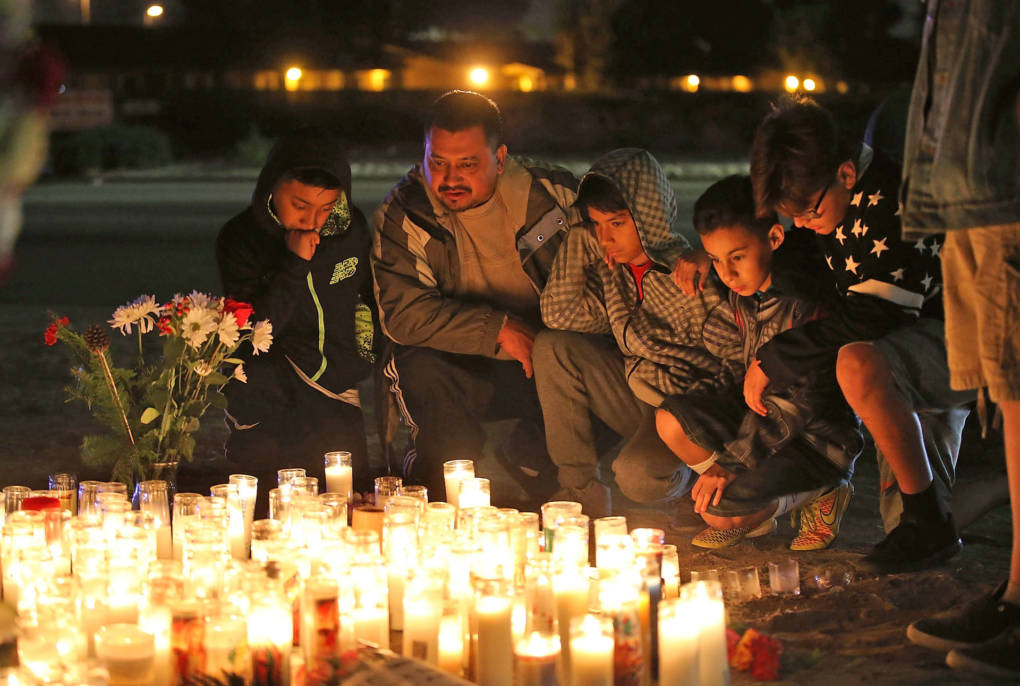
"caption": "Mourners visit a makeshift memorial near the Inland Regional Center on Dec. 4, 2015, in San Bernardino, California. The FBI officially labeled the attack carried out by Syed Farook and his wife, Tashfeen Malik, an act of terrorism. ",
"description": null,
"title": "Community Mourns As Investigation Continues Into San Bernardino Mass Shooting",
"credit": "Justin Sullivan/Getty Images",
"status": "inherit",
"isLoading": false,
"fetchFailed": false
},
"news_11450218": {
"type": "attachments",
"id": "news_11450218",
"meta": {
"index": "attachments_1716263798",
"site": "news",
"id": "11450218",
"found": true
},
"parent": 11450213,
"imgSizes": {
"small": {
"file": "https://ww2.kqed.org/app/uploads/sites/10/2017/05/GettyImages-677798384-520x347.jpg",
"width": 520,
"mimeType": "image/jpeg",
"height": 347
},
"twentyfourteen-full-width": {
"file": "https://ww2.kqed.org/app/uploads/sites/10/2017/05/GettyImages-677798384-1038x576.jpg",
"width": 1038,
"mimeType": "image/jpeg",
"height": 576
},
"thumbnail": {
"file": "https://ww2.kqed.org/app/uploads/sites/10/2017/05/GettyImages-677798384-160x107.jpg",
"width": 160,
"mimeType": "image/jpeg",
"height": 107
},
"fd-sm": {
"file": "https://ww2.kqed.org/app/uploads/sites/10/2017/05/GettyImages-677798384-960x640.jpg",
"width": 960,
"mimeType": "image/jpeg",
"height": 640
},
"post-thumbnail": {
"file": "https://ww2.kqed.org/app/uploads/sites/10/2017/05/GettyImages-677798384-672x372.jpg",
"width": 672,
"mimeType": "image/jpeg",
"height": 372
},
"xsmall": {
"file": "https://ww2.kqed.org/app/uploads/sites/10/2017/05/GettyImages-677798384-375x250.jpg",
"width": 375,
"mimeType": "image/jpeg",
"height": 250
},
"kqedFullSize": {
"file": "https://ww2.kqed.org/app/uploads/sites/10/2017/05/GettyImages-677798384-e1494437803157.jpg",
"width": 1920,
"height": 1280
},
"large": {
"file": "https://ww2.kqed.org/app/uploads/sites/10/2017/05/GettyImages-677798384-1020x680.jpg",
"width": 1020,
"mimeType": "image/jpeg",
"height": 680
},
"xlarge": {
"file": "https://ww2.kqed.org/app/uploads/sites/10/2017/05/GettyImages-677798384-1180x787.jpg",
"width": 1180,
"mimeType": "image/jpeg",
"height": 787
},
"guest-author-50": {
"file": "https://ww2.kqed.org/app/uploads/sites/10/2017/05/GettyImages-677798384-50x50.jpg",
"width": 50,
"mimeType": "image/jpeg",
"height": 50
},
"guest-author-96": {
"file": "https://ww2.kqed.org/app/uploads/sites/10/2017/05/GettyImages-677798384-96x96.jpg",
"width": 96,
"mimeType": "image/jpeg",
"height": 96
},
"medium": {
"file": "https://ww2.kqed.org/app/uploads/sites/10/2017/05/GettyImages-677798384-800x533.jpg",
"width": 800,
"mimeType": "image/jpeg",
"height": 533
},
"guest-author-64": {
"file": "https://ww2.kqed.org/app/uploads/sites/10/2017/05/GettyImages-677798384-64x64.jpg",
"width": 64,
"mimeType": "image/jpeg",
"height": 64
},
"guest-author-32": {
"file": "https://ww2.kqed.org/app/uploads/sites/10/2017/05/GettyImages-677798384-32x32.jpg",
"width": 32,
"mimeType": "image/jpeg",
"height": 32
},
"fd-lrg": {
"file": "https://ww2.kqed.org/app/uploads/sites/10/2017/05/GettyImages-677798384-1920x1280.jpg",
"width": 1920,
"mimeType": "image/jpeg",
"height": 1280
},
"fd-med": {
"file": "https://ww2.kqed.org/app/uploads/sites/10/2017/05/GettyImages-677798384-1180x787.jpg",
"width": 1180,
"mimeType": "image/jpeg",
"height": 787
},
"full-width": {
"file": "https://ww2.kqed.org/app/uploads/sites/10/2017/05/GettyImages-677798384-1920x1280.jpg",
"width": 1920,
"mimeType": "image/jpeg",
"height": 1280
},
"detail": {
"file": "https://ww2.kqed.org/app/uploads/sites/10/2017/05/GettyImages-677798384-150x150.jpg",
"width": 150,
"mimeType": "image/jpeg",
"height": 150
},
"guest-author-128": {
"file": "https://ww2.kqed.org/app/uploads/sites/10/2017/05/GettyImages-677798384-128x128.jpg",
"width": 128,
"mimeType": "image/jpeg",
"height": 128
},
"xxsmall": {
"file": "https://ww2.kqed.org/app/uploads/sites/10/2017/05/GettyImages-677798384-240x160.jpg",
"width": 240,
"mimeType": "image/jpeg",
"height": 160
}
},
"publishDate": 1494437773,
"modified": 1494451890,
"caption": "Former director of the Federal Bureau of Investigation James Comey testifies in front of the Senate Judiciary Committee during an oversight hearing on the FBI on Capitol Hill May 3, 2017, in Washington, D.C.",
"description": null,
"title": "FBI Director Comey Testifies At Senate Judiciary Committee Oversight Hearing",
"credit": "Eric Thayer/Getty Images",
"status": "inherit",
"isLoading": false,
"fetchFailed": false
},
"news_11448827": {
"type": "attachments",
"id": "news_11448827",
"meta": {
"index": "attachments_1716263798",
"site": "news",
"id": "11448827",
"found": true
},
"parent": 11448826,
"imgSizes": {
"small": {
"file": "https://ww2.kqed.org/app/uploads/sites/10/2017/05/gettyimages-677798454_custom-2c7cf9a62c74e14a0a2bb239835237443c75413d-520x345.jpg",
"width": 520,
"mimeType": "image/jpeg",
"height": 345
},
"twentyfourteen-full-width": {
"file": "https://ww2.kqed.org/app/uploads/sites/10/2017/05/gettyimages-677798454_custom-2c7cf9a62c74e14a0a2bb239835237443c75413d-1038x576.jpg",
"width": 1038,
"mimeType": "image/jpeg",
"height": 576
},
"thumbnail": {
"file": "https://ww2.kqed.org/app/uploads/sites/10/2017/05/gettyimages-677798454_custom-2c7cf9a62c74e14a0a2bb239835237443c75413d-160x106.jpg",
"width": 160,
"mimeType": "image/jpeg",
"height": 106
},
"fd-sm": {
"file": "https://ww2.kqed.org/app/uploads/sites/10/2017/05/gettyimages-677798454_custom-2c7cf9a62c74e14a0a2bb239835237443c75413d-960x638.jpg",
"width": 960,
"mimeType": "image/jpeg",
"height": 638
},
"post-thumbnail": {
"file": "https://ww2.kqed.org/app/uploads/sites/10/2017/05/gettyimages-677798454_custom-2c7cf9a62c74e14a0a2bb239835237443c75413d-672x372.jpg",
"width": 672,
"mimeType": "image/jpeg",
"height": 372
},
"xsmall": {
"file": "https://ww2.kqed.org/app/uploads/sites/10/2017/05/gettyimages-677798454_custom-2c7cf9a62c74e14a0a2bb239835237443c75413d-375x249.jpg",
"width": 375,
"mimeType": "image/jpeg",
"height": 249
},
"kqedFullSize": {
"file": "https://ww2.kqed.org/app/uploads/sites/10/2017/05/gettyimages-677798454_custom-2c7cf9a62c74e14a0a2bb239835237443c75413d-e1494367629301.jpg",
"width": 1920,
"height": 1275
},
"large": {
"file": "https://ww2.kqed.org/app/uploads/sites/10/2017/05/gettyimages-677798454_custom-2c7cf9a62c74e14a0a2bb239835237443c75413d-1020x677.jpg",
"width": 1020,
"mimeType": "image/jpeg",
"height": 677
},
"xlarge": {
"file": "https://ww2.kqed.org/app/uploads/sites/10/2017/05/gettyimages-677798454_custom-2c7cf9a62c74e14a0a2bb239835237443c75413d-1180x784.jpg",
"width": 1180,
"mimeType": "image/jpeg",
"height": 784
},
"guest-author-50": {
"file": "https://ww2.kqed.org/app/uploads/sites/10/2017/05/gettyimages-677798454_custom-2c7cf9a62c74e14a0a2bb239835237443c75413d-50x50.jpg",
"width": 50,
"mimeType": "image/jpeg",
"height": 50
},
"guest-author-96": {
"file": "https://ww2.kqed.org/app/uploads/sites/10/2017/05/gettyimages-677798454_custom-2c7cf9a62c74e14a0a2bb239835237443c75413d-96x96.jpg",
"width": 96,
"mimeType": "image/jpeg",
"height": 96
},
"medium": {
"file": "https://ww2.kqed.org/app/uploads/sites/10/2017/05/gettyimages-677798454_custom-2c7cf9a62c74e14a0a2bb239835237443c75413d-800x531.jpg",
"width": 800,
"mimeType": "image/jpeg",
"height": 531
},
"guest-author-64": {
"file": "https://ww2.kqed.org/app/uploads/sites/10/2017/05/gettyimages-677798454_custom-2c7cf9a62c74e14a0a2bb239835237443c75413d-64x64.jpg",
"width": 64,
"mimeType": "image/jpeg",
"height": 64
},
"guest-author-32": {
"file": "https://ww2.kqed.org/app/uploads/sites/10/2017/05/gettyimages-677798454_custom-2c7cf9a62c74e14a0a2bb239835237443c75413d-32x32.jpg",
"width": 32,
"mimeType": "image/jpeg",
"height": 32
},
"fd-lrg": {
"file": "https://ww2.kqed.org/app/uploads/sites/10/2017/05/gettyimages-677798454_custom-2c7cf9a62c74e14a0a2bb239835237443c75413d-1920x1275.jpg",
"width": 1920,
"mimeType": "image/jpeg",
"height": 1275
},
"fd-med": {
"file": "https://ww2.kqed.org/app/uploads/sites/10/2017/05/gettyimages-677798454_custom-2c7cf9a62c74e14a0a2bb239835237443c75413d-1180x784.jpg",
"width": 1180,
"mimeType": "image/jpeg",
"height": 784
},
"full-width": {
"file": "https://ww2.kqed.org/app/uploads/sites/10/2017/05/gettyimages-677798454_custom-2c7cf9a62c74e14a0a2bb239835237443c75413d-1920x1275.jpg",
"width": 1920,
"mimeType": "image/jpeg",
"height": 1275
},
"detail": {
"file": "https://ww2.kqed.org/app/uploads/sites/10/2017/05/gettyimages-677798454_custom-2c7cf9a62c74e14a0a2bb239835237443c75413d-150x150.jpg",
"width": 150,
"mimeType": "image/jpeg",
"height": 150
},
"guest-author-128": {
"file": "https://ww2.kqed.org/app/uploads/sites/10/2017/05/gettyimages-677798454_custom-2c7cf9a62c74e14a0a2bb239835237443c75413d-128x128.jpg",
"width": 128,
"mimeType": "image/jpeg",
"height": 128
},
"xxsmall": {
"file": "https://ww2.kqed.org/app/uploads/sites/10/2017/05/gettyimages-677798454_custom-2c7cf9a62c74e14a0a2bb239835237443c75413d-240x159.jpg",
"width": 240,
"mimeType": "image/jpeg",
"height": 159
}
},
"publishDate": 1494367489,
"modified": 1494369145,
"caption": "Director of the Federal Bureau of Investigation, James Comey, testifies in front of the Senate Judiciary Committee during an oversight hearing on the FBI on May 3. Comey was terminated from his position on Tuesday, May 9, according to a statement from the White House press secretary.",
"description": "Director of the Federal Bureau of Investigation, James Comey testifies in front of the Senate Judiciary Committee during an oversight hearing on the FBI on May 3. Comey was terminated from his position on Tuesday according to a statement from the White House press secretary.",
"title": "Director of the Federal Bureau of Investigation, James Comey testifies in front of the Senate Judiciary Committee during an oversight hearing on the FBI on May 3. Comey was terminated from his position on Tuesday according to a statement from the White House press secretary.",
"credit": "Eric Thayer/Getty Images",
"status": "inherit",
"isLoading": false,
"fetchFailed": false
},
"news_11448450": {
"type": "attachments",
"id": "news_11448450",
"meta": {
"index": "attachments_1716263798",
"site": "news",
"id": "11448450",
"found": true
},
"parent": 11447002,
"imgSizes": {
"small": {
"file": "https://ww2.kqed.org/app/uploads/sites/10/2017/05/Cyclist-520x346.jpg",
"width": 520,
"mimeType": "image/jpeg",
"height": 346
},
"twentyfourteen-full-width": {
"file": "https://ww2.kqed.org/app/uploads/sites/10/2017/05/Cyclist-1038x576.jpg",
"width": 1038,
"mimeType": "image/jpeg",
"height": 576
},
"thumbnail": {
"file": "https://ww2.kqed.org/app/uploads/sites/10/2017/05/Cyclist-160x106.jpg",
"width": 160,
"mimeType": "image/jpeg",
"height": 106
},
"fd-sm": {
"file": "https://ww2.kqed.org/app/uploads/sites/10/2017/05/Cyclist-960x638.jpg",
"width": 960,
"mimeType": "image/jpeg",
"height": 638
},
"post-thumbnail": {
"file": "https://ww2.kqed.org/app/uploads/sites/10/2017/05/Cyclist-672x372.jpg",
"width": 672,
"mimeType": "image/jpeg",
"height": 372
},
"xsmall": {
"file": "https://ww2.kqed.org/app/uploads/sites/10/2017/05/Cyclist-375x249.jpg",
"width": 375,
"mimeType": "image/jpeg",
"height": 249
},
"kqedFullSize": {
"file": "https://ww2.kqed.org/app/uploads/sites/10/2017/05/Cyclist.jpg",
"width": 1920,
"height": 1276
},
"large": {
"file": "https://ww2.kqed.org/app/uploads/sites/10/2017/05/Cyclist-1020x678.jpg",
"width": 1020,
"mimeType": "image/jpeg",
"height": 678
},
"xlarge": {
"file": "https://ww2.kqed.org/app/uploads/sites/10/2017/05/Cyclist-1180x784.jpg",
"width": 1180,
"mimeType": "image/jpeg",
"height": 784
},
"guest-author-50": {
"file": "https://ww2.kqed.org/app/uploads/sites/10/2017/05/Cyclist-50x50.jpg",
"width": 50,
"mimeType": "image/jpeg",
"height": 50
},
"guest-author-96": {
"file": "https://ww2.kqed.org/app/uploads/sites/10/2017/05/Cyclist-96x96.jpg",
"width": 96,
"mimeType": "image/jpeg",
"height": 96
},
"medium": {
"file": "https://ww2.kqed.org/app/uploads/sites/10/2017/05/Cyclist-800x532.jpg",
"width": 800,
"mimeType": "image/jpeg",
"height": 532
},
"guest-author-64": {
"file": "https://ww2.kqed.org/app/uploads/sites/10/2017/05/Cyclist-64x64.jpg",
"width": 64,
"mimeType": "image/jpeg",
"height": 64
},
"guest-author-32": {
"file": "https://ww2.kqed.org/app/uploads/sites/10/2017/05/Cyclist-32x32.jpg",
"width": 32,
"mimeType": "image/jpeg",
"height": 32
},
"fd-lrg": {
"file": "https://ww2.kqed.org/app/uploads/sites/10/2017/05/Cyclist-1920x1276.jpg",
"width": 1920,
"mimeType": "image/jpeg",
"height": 1276
},
"fd-med": {
"file": "https://ww2.kqed.org/app/uploads/sites/10/2017/05/Cyclist-1180x784.jpg",
"width": 1180,
"mimeType": "image/jpeg",
"height": 784
},
"full-width": {
"file": "https://ww2.kqed.org/app/uploads/sites/10/2017/05/Cyclist-1920x1276.jpg",
"width": 1920,
"mimeType": "image/jpeg",
"height": 1276
},
"detail": {
"file": "https://ww2.kqed.org/app/uploads/sites/10/2017/05/Cyclist-150x150.jpg",
"width": 150,
"mimeType": "image/jpeg",
"height": 150
},
"guest-author-128": {
"file": "https://ww2.kqed.org/app/uploads/sites/10/2017/05/Cyclist-128x128.jpg",
"width": 128,
"mimeType": "image/jpeg",
"height": 128
},
"xxsmall": {
"file": "https://ww2.kqed.org/app/uploads/sites/10/2017/05/Cyclist-240x160.jpg",
"width": 240,
"mimeType": "image/jpeg",
"height": 160
}
},
"publishDate": 1494353882,
"modified": 1494353960,
"caption": "A cyclist rides her bike down Market Street in San Francisco.",
"description": "A cyclist rides her bike down Market Street in San Francisco.",
"title": "Cyclist",
"credit": "Justin Sullivan/Getty Images",
"status": "inherit",
"isLoading": false,
"fetchFailed": false
},
"news_11446716": {
"type": "attachments",
"id": "news_11446716",
"meta": {
"index": "attachments_1716263798",
"site": "news",
"id": "11446716",
"found": true
},
"parent": 11416593,
"imgSizes": {
"small": {
"file": "https://ww2.kqed.org/app/uploads/sites/10/2017/05/SalinasFenceClimb-520x320.jpg",
"width": 520,
"mimeType": "image/jpeg",
"height": 320
},
"twentyfourteen-full-width": {
"file": "https://ww2.kqed.org/app/uploads/sites/10/2017/05/SalinasFenceClimb-1038x576.jpg",
"width": 1038,
"mimeType": "image/jpeg",
"height": 576
},
"thumbnail": {
"file": "https://ww2.kqed.org/app/uploads/sites/10/2017/05/SalinasFenceClimb-160x99.jpg",
"width": 160,
"mimeType": "image/jpeg",
"height": 99
},
"fd-sm": {
"file": "https://ww2.kqed.org/app/uploads/sites/10/2017/05/SalinasFenceClimb-960x592.jpg",
"width": 960,
"mimeType": "image/jpeg",
"height": 592
},
"post-thumbnail": {
"file": "https://ww2.kqed.org/app/uploads/sites/10/2017/05/SalinasFenceClimb-672x372.jpg",
"width": 672,
"mimeType": "image/jpeg",
"height": 372
},
"xsmall": {
"file": "https://ww2.kqed.org/app/uploads/sites/10/2017/05/SalinasFenceClimb-375x231.jpg",
"width": 375,
"mimeType": "image/jpeg",
"height": 231
},
"kqedFullSize": {
"file": "https://ww2.kqed.org/app/uploads/sites/10/2017/05/SalinasFenceClimb.jpg",
"width": 1920,
"height": 1183
},
"large": {
"file": "https://ww2.kqed.org/app/uploads/sites/10/2017/05/SalinasFenceClimb-1020x628.jpg",
"width": 1020,
"mimeType": "image/jpeg",
"height": 628
},
"xlarge": {
"file": "https://ww2.kqed.org/app/uploads/sites/10/2017/05/SalinasFenceClimb-1180x727.jpg",
"width": 1180,
"mimeType": "image/jpeg",
"height": 727
},
"guest-author-50": {
"file": "https://ww2.kqed.org/app/uploads/sites/10/2017/05/SalinasFenceClimb-50x50.jpg",
"width": 50,
"mimeType": "image/jpeg",
"height": 50
},
"guest-author-96": {
"file": "https://ww2.kqed.org/app/uploads/sites/10/2017/05/SalinasFenceClimb-96x96.jpg",
"width": 96,
"mimeType": "image/jpeg",
"height": 96
},
"medium": {
"file": "https://ww2.kqed.org/app/uploads/sites/10/2017/05/SalinasFenceClimb-800x493.jpg",
"width": 800,
"mimeType": "image/jpeg",
"height": 493
},
"guest-author-64": {
"file": "https://ww2.kqed.org/app/uploads/sites/10/2017/05/SalinasFenceClimb-64x64.jpg",
"width": 64,
"mimeType": "image/jpeg",
"height": 64
},
"guest-author-32": {
"file": "https://ww2.kqed.org/app/uploads/sites/10/2017/05/SalinasFenceClimb-32x32.jpg",
"width": 32,
"mimeType": "image/jpeg",
"height": 32
},
"fd-lrg": {
"file": "https://ww2.kqed.org/app/uploads/sites/10/2017/05/SalinasFenceClimb-1920x1183.jpg",
"width": 1920,
"mimeType": "image/jpeg",
"height": 1183
},
"fd-med": {
"file": "https://ww2.kqed.org/app/uploads/sites/10/2017/05/SalinasFenceClimb-1180x727.jpg",
"width": 1180,
"mimeType": "image/jpeg",
"height": 727
},
"full-width": {
"file": "https://ww2.kqed.org/app/uploads/sites/10/2017/05/SalinasFenceClimb-1920x1183.jpg",
"width": 1920,
"mimeType": "image/jpeg",
"height": 1183
},
"detail": {
"file": "https://ww2.kqed.org/app/uploads/sites/10/2017/05/SalinasFenceClimb-150x150.jpg",
"width": 150,
"mimeType": "image/jpeg",
"height": 150
},
"guest-author-128": {
"file": "https://ww2.kqed.org/app/uploads/sites/10/2017/05/SalinasFenceClimb-128x128.jpg",
"width": 128,
"mimeType": "image/jpeg",
"height": 128
},
"xxsmall": {
"file": "https://ww2.kqed.org/app/uploads/sites/10/2017/05/SalinasFenceClimb-240x148.jpg",
"width": 240,
"mimeType": "image/jpeg",
"height": 148
}
},
"publishDate": 1494267045,
"modified": 1494286469,
"caption": "A man climbs over a fence bordering the railroad tracks that separate Chinatown from the rest of downtown Salinas. It's a common route for many Chinatown residents since accessible walking routes in and out of the neighborhood are scarce.",
"description": "A man climbs over a fence bordering the railroad tracks which separate Chinatown from the rest of downtown Salinas. It's a common route for many Chinatown residents since accessible walking routes in and out of the neighborhood are scarce.",
"title": "SalinasFenceClimb",
"credit": "Sarah Craig/KQED",
"status": "inherit",
"isLoading": false,
"fetchFailed": false
},
"news_11443321": {
"type": "attachments",
"id": "news_11443321",
"meta": {
"index": "attachments_1716263798",
"site": "news",
"id": "11443321",
"found": true
},
"parent": 11443320,
"imgSizes": {
"small": {
"file": "https://ww2.kqed.org/app/uploads/sites/10/2017/05/11833-pg278_b5f2_1-edit_custom-eeedfeb01c6b70597cabea39d0cda18bf635dd0a-520x747.jpg",
"width": 520,
"mimeType": "image/jpeg",
"height": 747
},
"twentyfourteen-full-width": {
"file": "https://ww2.kqed.org/app/uploads/sites/10/2017/05/11833-pg278_b5f2_1-edit_custom-eeedfeb01c6b70597cabea39d0cda18bf635dd0a-1038x576.jpg",
"width": 1038,
"mimeType": "image/jpeg",
"height": 576
},
"thumbnail": {
"file": "https://ww2.kqed.org/app/uploads/sites/10/2017/05/11833-pg278_b5f2_1-edit_custom-eeedfeb01c6b70597cabea39d0cda18bf635dd0a-160x230.jpg",
"width": 160,
"mimeType": "image/jpeg",
"height": 230
},
"fd-sm": {
"file": "https://ww2.kqed.org/app/uploads/sites/10/2017/05/11833-pg278_b5f2_1-edit_custom-eeedfeb01c6b70597cabea39d0cda18bf635dd0a-960x1379.jpg",
"width": 960,
"mimeType": "image/jpeg",
"height": 1379
},
"post-thumbnail": {
"file": "https://ww2.kqed.org/app/uploads/sites/10/2017/05/11833-pg278_b5f2_1-edit_custom-eeedfeb01c6b70597cabea39d0cda18bf635dd0a-672x372.jpg",
"width": 672,
"mimeType": "image/jpeg",
"height": 372
},
"xsmall": {
"file": "https://ww2.kqed.org/app/uploads/sites/10/2017/05/11833-pg278_b5f2_1-edit_custom-eeedfeb01c6b70597cabea39d0cda18bf635dd0a-375x539.jpg",
"width": 375,
"mimeType": "image/jpeg",
"height": 539
},
"kqedFullSize": {
"file": "https://ww2.kqed.org/app/uploads/sites/10/2017/05/11833-pg278_b5f2_1-edit_custom-eeedfeb01c6b70597cabea39d0cda18bf635dd0a.jpg",
"width": 1425,
"height": 2048
},
"large": {
"file": "https://ww2.kqed.org/app/uploads/sites/10/2017/05/11833-pg278_b5f2_1-edit_custom-eeedfeb01c6b70597cabea39d0cda18bf635dd0a-1020x1466.jpg",
"width": 1020,
"mimeType": "image/jpeg",
"height": 1466
},
"xlarge": {
"file": "https://ww2.kqed.org/app/uploads/sites/10/2017/05/11833-pg278_b5f2_1-edit_custom-eeedfeb01c6b70597cabea39d0cda18bf635dd0a-1180x1695.jpg",
"width": 1180,
"mimeType": "image/jpeg",
"height": 1695
},
"guest-author-50": {
"file": "https://ww2.kqed.org/app/uploads/sites/10/2017/05/11833-pg278_b5f2_1-edit_custom-eeedfeb01c6b70597cabea39d0cda18bf635dd0a-50x50.jpg",
"width": 50,
"mimeType": "image/jpeg",
"height": 50
},
"guest-author-96": {
"file": "https://ww2.kqed.org/app/uploads/sites/10/2017/05/11833-pg278_b5f2_1-edit_custom-eeedfeb01c6b70597cabea39d0cda18bf635dd0a-96x96.jpg",
"width": 96,
"mimeType": "image/jpeg",
"height": 96
},
"medium": {
"file": "https://ww2.kqed.org/app/uploads/sites/10/2017/05/11833-pg278_b5f2_1-edit_custom-eeedfeb01c6b70597cabea39d0cda18bf635dd0a-800x1149.jpg",
"width": 800,
"mimeType": "image/jpeg",
"height": 1149
},
"guest-author-64": {
"file": "https://ww2.kqed.org/app/uploads/sites/10/2017/05/11833-pg278_b5f2_1-edit_custom-eeedfeb01c6b70597cabea39d0cda18bf635dd0a-64x64.jpg",
"width": 64,
"mimeType": "image/jpeg",
"height": 64
},
"guest-author-32": {
"file": "https://ww2.kqed.org/app/uploads/sites/10/2017/05/11833-pg278_b5f2_1-edit_custom-eeedfeb01c6b70597cabea39d0cda18bf635dd0a-32x32.jpg",
"width": 32,
"mimeType": "image/jpeg",
"height": 32
},
"fd-med": {
"file": "https://ww2.kqed.org/app/uploads/sites/10/2017/05/11833-pg278_b5f2_1-edit_custom-eeedfeb01c6b70597cabea39d0cda18bf635dd0a-1180x1695.jpg",
"width": 1180,
"mimeType": "image/jpeg",
"height": 1695
},
"detail": {
"file": "https://ww2.kqed.org/app/uploads/sites/10/2017/05/11833-pg278_b5f2_1-edit_custom-eeedfeb01c6b70597cabea39d0cda18bf635dd0a-150x150.jpg",
"width": 150,
"mimeType": "image/jpeg",
"height": 150
},
"guest-author-128": {
"file": "https://ww2.kqed.org/app/uploads/sites/10/2017/05/11833-pg278_b5f2_1-edit_custom-eeedfeb01c6b70597cabea39d0cda18bf635dd0a-128x128.jpg",
"width": 128,
"mimeType": "image/jpeg",
"height": 128
},
"xxsmall": {
"file": "https://ww2.kqed.org/app/uploads/sites/10/2017/05/11833-pg278_b5f2_1-edit_custom-eeedfeb01c6b70597cabea39d0cda18bf635dd0a-240x345.jpg",
"width": 240,
"mimeType": "image/jpeg",
"height": 345
}
},
"publishDate": 1494085441,
"modified": 1494288901,
"caption": "A \"Statue for Our Harbor\" was published in 1881. It expressed the fear of Chinese immigrants, which led to the passage of the Chinese Exclusion Act 135 years ago.",
"description": "\u003cem>A Statue for Our Harbor\u003c/em> was\u003cem> \u003c/em>published in 1881. It expressed the fear of Chinese immigrants, which led to the passage of the Chinese Exclusion Act 135 years ago.",
"title": "A Statue for Our Harbor was published in 1881. It expressed the fear of Chinese immigrants, which led to the passage of the Chinese Exclusion Act 135 years ago.",
"credit": "George Frederick Keller/Historical Society of Pennsylvania",
"status": "inherit",
"isLoading": false,
"fetchFailed": false
},
"news_11441844": {
"type": "attachments",
"id": "news_11441844",
"meta": {
"index": "attachments_1716263798",
"site": "news",
"id": "11441844",
"found": true
},
"parent": 11441779,
"imgSizes": {
"small": {
"file": "https://ww2.kqed.org/app/uploads/sites/10/2017/05/Shaun-Gallon-800-520x390.jpg",
"width": 520,
"mimeType": "image/jpeg",
"height": 390
},
"twentyfourteen-full-width": {
"file": "https://ww2.kqed.org/app/uploads/sites/10/2017/05/Shaun-Gallon-800-800x576.jpg",
"width": 800,
"mimeType": "image/jpeg",
"height": 576
},
"thumbnail": {
"file": "https://ww2.kqed.org/app/uploads/sites/10/2017/05/Shaun-Gallon-800-160x120.jpg",
"width": 160,
"mimeType": "image/jpeg",
"height": 120
},
"post-thumbnail": {
"file": "https://ww2.kqed.org/app/uploads/sites/10/2017/05/Shaun-Gallon-800-672x372.jpg",
"width": 672,
"mimeType": "image/jpeg",
"height": 372
},
"xsmall": {
"file": "https://ww2.kqed.org/app/uploads/sites/10/2017/05/Shaun-Gallon-800-375x281.jpg",
"width": 375,
"mimeType": "image/jpeg",
"height": 281
},
"kqedFullSize": {
"file": "https://ww2.kqed.org/app/uploads/sites/10/2017/05/Shaun-Gallon-800.jpg",
"width": 800,
"height": 600
},
"guest-author-50": {
"file": "https://ww2.kqed.org/app/uploads/sites/10/2017/05/Shaun-Gallon-800-50x50.jpg",
"width": 50,
"mimeType": "image/jpeg",
"height": 50
},
"guest-author-96": {
"file": "https://ww2.kqed.org/app/uploads/sites/10/2017/05/Shaun-Gallon-800-96x96.jpg",
"width": 96,
"mimeType": "image/jpeg",
"height": 96
},
"medium": {
"file": "https://ww2.kqed.org/app/uploads/sites/10/2017/05/Shaun-Gallon-800-800x600.jpg",
"width": 800,
"mimeType": "image/jpeg",
"height": 600
},
"guest-author-64": {
"file": "https://ww2.kqed.org/app/uploads/sites/10/2017/05/Shaun-Gallon-800-64x64.jpg",
"width": 64,
"mimeType": "image/jpeg",
"height": 64
},
"guest-author-32": {
"file": "https://ww2.kqed.org/app/uploads/sites/10/2017/05/Shaun-Gallon-800-32x32.jpg",
"width": 32,
"mimeType": "image/jpeg",
"height": 32
},
"detail": {
"file": "https://ww2.kqed.org/app/uploads/sites/10/2017/05/Shaun-Gallon-800-150x150.jpg",
"width": 150,
"mimeType": "image/jpeg",
"height": 150
},
"guest-author-128": {
"file": "https://ww2.kqed.org/app/uploads/sites/10/2017/05/Shaun-Gallon-800-128x128.jpg",
"width": 128,
"mimeType": "image/jpeg",
"height": 128
},
"xxsmall": {
"file": "https://ww2.kqed.org/app/uploads/sites/10/2017/05/Shaun-Gallon-800-240x180.jpg",
"width": 240,
"mimeType": "image/jpeg",
"height": 180
}
},
"publishDate": 1494007681,
"modified": 1494019000,
"caption": "Shaun Gallon, 38, of Forestville was arrested in the killing of his brother, and investigators interrogated him in the 2004 Jenner killings. The bodies of 22-year-old Lindsay Cutshall and her 26-year-old fiance, Jason Allen, were found next to each other on a driftwood-strewn beach near Jenner on Aug. 18, 2004.",
"description": null,
"title": "Shaun-Gallon-800",
"credit": "Sonoma County Sheriff's Office",
"status": "inherit",
"isLoading": false,
"fetchFailed": false
},
"news_11440547": {
"type": "attachments",
"id": "news_11440547",
"meta": {
"index": "attachments_1716263798",
"site": "news",
"id": "11440547",
"found": true
},
"parent": 11438626,
"imgSizes": {
"small": {
"file": "https://ww2.kqed.org/app/uploads/sites/10/2017/05/BudSniff-520x344.jpg",
"width": 520,
"mimeType": "image/jpeg",
"height": 344
},
"twentyfourteen-full-width": {
"file": "https://ww2.kqed.org/app/uploads/sites/10/2017/05/BudSniff-1038x576.jpg",
"width": 1038,
"mimeType": "image/jpeg",
"height": 576
},
"thumbnail": {
"file": "https://ww2.kqed.org/app/uploads/sites/10/2017/05/BudSniff-160x106.jpg",
"width": 160,
"mimeType": "image/jpeg",
"height": 106
},
"fd-sm": {
"file": "https://ww2.kqed.org/app/uploads/sites/10/2017/05/BudSniff-960x636.jpg",
"width": 960,
"mimeType": "image/jpeg",
"height": 636
},
"post-thumbnail": {
"file": "https://ww2.kqed.org/app/uploads/sites/10/2017/05/BudSniff-672x372.jpg",
"width": 672,
"mimeType": "image/jpeg",
"height": 372
},
"xsmall": {
"file": "https://ww2.kqed.org/app/uploads/sites/10/2017/05/BudSniff-375x248.jpg",
"width": 375,
"mimeType": "image/jpeg",
"height": 248
},
"kqedFullSize": {
"file": "https://ww2.kqed.org/app/uploads/sites/10/2017/05/BudSniff.jpg",
"width": 1920,
"height": 1271
},
"large": {
"file": "https://ww2.kqed.org/app/uploads/sites/10/2017/05/BudSniff-1020x675.jpg",
"width": 1020,
"mimeType": "image/jpeg",
"height": 675
},
"xlarge": {
"file": "https://ww2.kqed.org/app/uploads/sites/10/2017/05/BudSniff-1180x781.jpg",
"width": 1180,
"mimeType": "image/jpeg",
"height": 781
},
"guest-author-50": {
"file": "https://ww2.kqed.org/app/uploads/sites/10/2017/05/BudSniff-50x50.jpg",
"width": 50,
"mimeType": "image/jpeg",
"height": 50
},
"guest-author-96": {
"file": "https://ww2.kqed.org/app/uploads/sites/10/2017/05/BudSniff-96x96.jpg",
"width": 96,
"mimeType": "image/jpeg",
"height": 96
},
"medium": {
"file": "https://ww2.kqed.org/app/uploads/sites/10/2017/05/BudSniff-800x530.jpg",
"width": 800,
"mimeType": "image/jpeg",
"height": 530
},
"guest-author-64": {
"file": "https://ww2.kqed.org/app/uploads/sites/10/2017/05/BudSniff-64x64.jpg",
"width": 64,
"mimeType": "image/jpeg",
"height": 64
},
"guest-author-32": {
"file": "https://ww2.kqed.org/app/uploads/sites/10/2017/05/BudSniff-32x32.jpg",
"width": 32,
"mimeType": "image/jpeg",
"height": 32
},
"fd-lrg": {
"file": "https://ww2.kqed.org/app/uploads/sites/10/2017/05/BudSniff-1920x1271.jpg",
"width": 1920,
"mimeType": "image/jpeg",
"height": 1271
},
"fd-med": {
"file": "https://ww2.kqed.org/app/uploads/sites/10/2017/05/BudSniff-1180x781.jpg",
"width": 1180,
"mimeType": "image/jpeg",
"height": 781
},
"full-width": {
"file": "https://ww2.kqed.org/app/uploads/sites/10/2017/05/BudSniff-1920x1271.jpg",
"width": 1920,
"mimeType": "image/jpeg",
"height": 1271
},
"detail": {
"file": "https://ww2.kqed.org/app/uploads/sites/10/2017/05/BudSniff-150x150.jpg",
"width": 150,
"mimeType": "image/jpeg",
"height": 150
},
"guest-author-128": {
"file": "https://ww2.kqed.org/app/uploads/sites/10/2017/05/BudSniff-128x128.jpg",
"width": 128,
"mimeType": "image/jpeg",
"height": 128
},
"xxsmall": {
"file": "https://ww2.kqed.org/app/uploads/sites/10/2017/05/BudSniff-240x159.jpg",
"width": 240,
"mimeType": "image/jpeg",
"height": 159
}
},
"publishDate": 1493934360,
"modified": 1493934405,
"caption": "A grower inspects a marijuana nug in Mendocino County.",
"description": "A grower inspects a marijuana nug in Mendocino County.",
"title": "BudSniff",
"credit": "JOSH EDELSON/AFP/Getty Images",
"status": "inherit",
"isLoading": false,
"fetchFailed": false
},
"news_11438848": {
"type": "attachments",
"id": "news_11438848",
"meta": {
"index": "attachments_1716263798",
"site": "news",
"id": "11438848",
"found": true
},
"parent": 11438829,
"imgSizes": {
"small": {
"file": "https://ww2.kqed.org/app/uploads/sites/10/2017/05/Screen-Shot-2017-05-03-at-1.44.55-PM-520x293.png",
"width": 520,
"mimeType": "image/png",
"height": 293
},
"twentyfourteen-full-width": {
"file": "https://ww2.kqed.org/app/uploads/sites/10/2017/05/Screen-Shot-2017-05-03-at-1.44.55-PM-1038x576.png",
"width": 1038,
"mimeType": "image/png",
"height": 576
},
"thumbnail": {
"file": "https://ww2.kqed.org/app/uploads/sites/10/2017/05/Screen-Shot-2017-05-03-at-1.44.55-PM-160x90.png",
"width": 160,
"mimeType": "image/png",
"height": 90
},
"fd-sm": {
"file": "https://ww2.kqed.org/app/uploads/sites/10/2017/05/Screen-Shot-2017-05-03-at-1.44.55-PM-960x541.png",
"width": 960,
"mimeType": "image/png",
"height": 541
},
"post-thumbnail": {
"file": "https://ww2.kqed.org/app/uploads/sites/10/2017/05/Screen-Shot-2017-05-03-at-1.44.55-PM-672x372.png",
"width": 672,
"mimeType": "image/png",
"height": 372
},
"xsmall": {
"file": "https://ww2.kqed.org/app/uploads/sites/10/2017/05/Screen-Shot-2017-05-03-at-1.44.55-PM-375x211.png",
"width": 375,
"mimeType": "image/png",
"height": 211
},
"kqedFullSize": {
"file": "https://ww2.kqed.org/app/uploads/sites/10/2017/05/Screen-Shot-2017-05-03-at-1.44.55-PM.png",
"width": 1277,
"height": 719
},
"large": {
"file": "https://ww2.kqed.org/app/uploads/sites/10/2017/05/Screen-Shot-2017-05-03-at-1.44.55-PM-1020x574.png",
"width": 1020,
"mimeType": "image/png",
"height": 574
},
"xlarge": {
"file": "https://ww2.kqed.org/app/uploads/sites/10/2017/05/Screen-Shot-2017-05-03-at-1.44.55-PM-1180x664.png",
"width": 1180,
"mimeType": "image/png",
"height": 664
},
"guest-author-50": {
"file": "https://ww2.kqed.org/app/uploads/sites/10/2017/05/Screen-Shot-2017-05-03-at-1.44.55-PM-50x50.png",
"width": 50,
"mimeType": "image/png",
"height": 50
},
"guest-author-96": {
"file": "https://ww2.kqed.org/app/uploads/sites/10/2017/05/Screen-Shot-2017-05-03-at-1.44.55-PM-96x96.png",
"width": 96,
"mimeType": "image/png",
"height": 96
},
"medium": {
"file": "https://ww2.kqed.org/app/uploads/sites/10/2017/05/Screen-Shot-2017-05-03-at-1.44.55-PM-800x450.png",
"width": 800,
"mimeType": "image/png",
"height": 450
},
"guest-author-64": {
"file": "https://ww2.kqed.org/app/uploads/sites/10/2017/05/Screen-Shot-2017-05-03-at-1.44.55-PM-64x64.png",
"width": 64,
"mimeType": "image/png",
"height": 64
},
"guest-author-32": {
"file": "https://ww2.kqed.org/app/uploads/sites/10/2017/05/Screen-Shot-2017-05-03-at-1.44.55-PM-32x32.png",
"width": 32,
"mimeType": "image/png",
"height": 32
},
"fd-med": {
"file": "https://ww2.kqed.org/app/uploads/sites/10/2017/05/Screen-Shot-2017-05-03-at-1.44.55-PM-1180x664.png",
"width": 1180,
"mimeType": "image/png",
"height": 664
},
"detail": {
"file": "https://ww2.kqed.org/app/uploads/sites/10/2017/05/Screen-Shot-2017-05-03-at-1.44.55-PM-150x150.png",
"width": 150,
"mimeType": "image/png",
"height": 150
},
"guest-author-128": {
"file": "https://ww2.kqed.org/app/uploads/sites/10/2017/05/Screen-Shot-2017-05-03-at-1.44.55-PM-128x128.png",
"width": 128,
"mimeType": "image/png",
"height": 128
},
"xxsmall": {
"file": "https://ww2.kqed.org/app/uploads/sites/10/2017/05/Screen-Shot-2017-05-03-at-1.44.55-PM-240x135.png",
"width": 240,
"mimeType": "image/png",
"height": 135
}
},
"publishDate": 1493844367,
"modified": 1493844590,
"caption": "SFPD shut down the 900 block of Market Street in San Francisco after police shot and killed a man stabbing another man .",
"description": null,
"title": "Screen Shot 2017-05-03 at 1.44.55 PM",
"credit": "Cesar Saldaña/KQED",
"status": "inherit",
"isLoading": false,
"fetchFailed": false
},
"news_11440373": {
"type": "attachments",
"id": "news_11440373",
"meta": {
"index": "attachments_1716263798",
"site": "news",
"id": "11440373",
"found": true
},
"parent": 11440368,
"imgSizes": {
"small": {
"file": "https://ww2.kqed.org/app/uploads/sites/10/2017/05/Health_Nurse2_GettyImages-656418986-qut-520x347.jpg",
"width": 520,
"mimeType": "image/jpeg",
"height": 347
},
"twentyfourteen-full-width": {
"file": "https://ww2.kqed.org/app/uploads/sites/10/2017/05/Health_Nurse2_GettyImages-656418986-qut-1038x576.jpg",
"width": 1038,
"mimeType": "image/jpeg",
"height": 576
},
"thumbnail": {
"file": "https://ww2.kqed.org/app/uploads/sites/10/2017/05/Health_Nurse2_GettyImages-656418986-qut-160x107.jpg",
"width": 160,
"mimeType": "image/jpeg",
"height": 107
},
"fd-sm": {
"file": "https://ww2.kqed.org/app/uploads/sites/10/2017/05/Health_Nurse2_GettyImages-656418986-qut-960x640.jpg",
"width": 960,
"mimeType": "image/jpeg",
"height": 640
},
"post-thumbnail": {
"file": "https://ww2.kqed.org/app/uploads/sites/10/2017/05/Health_Nurse2_GettyImages-656418986-qut-672x372.jpg",
"width": 672,
"mimeType": "image/jpeg",
"height": 372
},
"xsmall": {
"file": "https://ww2.kqed.org/app/uploads/sites/10/2017/05/Health_Nurse2_GettyImages-656418986-qut-375x250.jpg",
"width": 375,
"mimeType": "image/jpeg",
"height": 250
},
"kqedFullSize": {
"file": "https://ww2.kqed.org/app/uploads/sites/10/2017/05/Health_Nurse2_GettyImages-656418986-qut.jpg",
"width": 1920,
"height": 1280
},
"large": {
"file": "https://ww2.kqed.org/app/uploads/sites/10/2017/05/Health_Nurse2_GettyImages-656418986-qut-1020x680.jpg",
"width": 1020,
"mimeType": "image/jpeg",
"height": 680
},
"xlarge": {
"file": "https://ww2.kqed.org/app/uploads/sites/10/2017/05/Health_Nurse2_GettyImages-656418986-qut-1180x787.jpg",
"width": 1180,
"mimeType": "image/jpeg",
"height": 787
},
"guest-author-50": {
"file": "https://ww2.kqed.org/app/uploads/sites/10/2017/05/Health_Nurse2_GettyImages-656418986-qut-50x50.jpg",
"width": 50,
"mimeType": "image/jpeg",
"height": 50
},
"guest-author-96": {
"file": "https://ww2.kqed.org/app/uploads/sites/10/2017/05/Health_Nurse2_GettyImages-656418986-qut-96x96.jpg",
"width": 96,
"mimeType": "image/jpeg",
"height": 96
},
"medium": {
"file": "https://ww2.kqed.org/app/uploads/sites/10/2017/05/Health_Nurse2_GettyImages-656418986-qut-800x533.jpg",
"width": 800,
"mimeType": "image/jpeg",
"height": 533
},
"guest-author-64": {
"file": "https://ww2.kqed.org/app/uploads/sites/10/2017/05/Health_Nurse2_GettyImages-656418986-qut-64x64.jpg",
"width": 64,
"mimeType": "image/jpeg",
"height": 64
},
"guest-author-32": {
"file": "https://ww2.kqed.org/app/uploads/sites/10/2017/05/Health_Nurse2_GettyImages-656418986-qut-32x32.jpg",
"width": 32,
"mimeType": "image/jpeg",
"height": 32
},
"fd-lrg": {
"file": "https://ww2.kqed.org/app/uploads/sites/10/2017/05/Health_Nurse2_GettyImages-656418986-qut-1920x1280.jpg",
"width": 1920,
"mimeType": "image/jpeg",
"height": 1280
},
"fd-med": {
"file": "https://ww2.kqed.org/app/uploads/sites/10/2017/05/Health_Nurse2_GettyImages-656418986-qut-1180x787.jpg",
"width": 1180,
"mimeType": "image/jpeg",
"height": 787
},
"full-width": {
"file": "https://ww2.kqed.org/app/uploads/sites/10/2017/05/Health_Nurse2_GettyImages-656418986-qut-1920x1280.jpg",
"width": 1920,
"mimeType": "image/jpeg",
"height": 1280
},
"detail": {
"file": "https://ww2.kqed.org/app/uploads/sites/10/2017/05/Health_Nurse2_GettyImages-656418986-qut-150x150.jpg",
"width": 150,
"mimeType": "image/jpeg",
"height": 150
},
"guest-author-128": {
"file": "https://ww2.kqed.org/app/uploads/sites/10/2017/05/Health_Nurse2_GettyImages-656418986-qut-128x128.jpg",
"width": 128,
"mimeType": "image/jpeg",
"height": 128
},
"xxsmall": {
"file": "https://ww2.kqed.org/app/uploads/sites/10/2017/05/Health_Nurse2_GettyImages-656418986-qut-240x160.jpg",
"width": 240,
"mimeType": "image/jpeg",
"height": 160
}
},
"publishDate": 1493925282,
"modified": 1493933628,
"caption": "Nurse Katie Baker examines patient Mildred Arce at the Esperanza Health Center in Philadelphia, Pennsylvania, on March 13, 2017.",
"description": null,
"title": "US-HEALTH-CARE-POVERTY-MEDICARE",
"credit": "DOMINICK REUTER/AFP/Getty Images",
"status": "inherit",
"isLoading": false,
"fetchFailed": false
}
},
"audioPlayerReducer": {
"postId": "stream_live",
"isPaused": true,
"isPlaying": false,
"pfsActive": false,
"pledgeModalIsOpen": true,
"playerDrawerIsOpen": false,
"liveAudioPlayStartedAt": 0,
"liveAudioPlayContext": ""
},
"authorsReducer": {
"byline_news_11450213": {
"type": "authors",
"id": "byline_news_11450213",
"meta": {
"override": true
},
"slug": "byline_news_11450213",
"name": "\u003cstrong>Julie Pace, Eileen Sullivan & Eric Tucker\u003cbr>Associated Press\u003c/strong>",
"isLoading": false
},
"byline_news_11448826": {
"type": "authors",
"id": "byline_news_11448826",
"meta": {
"override": true
},
"slug": "byline_news_11448826",
"name": "\u003cstrong>\u003ca href=\"http://www.npr.org/people/404496424/jessica-taylor\">Jessica Taylor\u003c/a>\u003cbr />\u003ca href=\"http://www.npr.org/\">NPR\u003c/a>\u003c/strong>",
"isLoading": false
},
"byline_news_11443320": {
"type": "authors",
"id": "byline_news_11443320",
"meta": {
"override": true
},
"slug": "byline_news_11443320",
"name": "Kat Chow",
"isLoading": false
},
"byline_news_11441779": {
"type": "authors",
"id": "byline_news_11441779",
"meta": {
"override": true
},
"slug": "byline_news_11441779",
"name": "\u003cstrong>Ellen Knickmeyer\u003cbr />Associated Press\u003c/strong>",
"isLoading": false
},
"dclyde": {
"type": "authors",
"id": "104",
"meta": {
"index": "authors_1716337520",
"id": "104",
"found": true
},
"name": "Don Clyde",
"firstName": "Don",
"lastName": "Clyde",
"slug": "dclyde",
"email": "dclyde@kqed.org",
"display_author_email": false,
"staff_mastheads": [],
"title": "KQED Contributor",
"bio": "Don Clyde is an online producer, reporter and copy editor for KQED News. Before venturing into journalism, he worked as a medical device engineer and scientist for nearly a decade after earning a degree in physics from UC Berkeley. He loves travel, reading, living in Oakland, and most importantly, a good walk. Email him at dclyde@kqed.org or follow him @clydedon.",
"avatar": "https://secure.gravatar.com/avatar/decd3e640c3eedbd0a574275aebb2d19?s=600&d=blank&r=g",
"twitter": "clydedon",
"facebook": null,
"instagram": null,
"linkedin": null,
"sites": [
{
"site": "artschool",
"roles": [
"editor"
]
},
{
"site": "news",
"roles": [
"administrator"
]
},
{
"site": "futureofyou",
"roles": [
"editor"
]
},
{
"site": "about",
"roles": [
"editor"
]
},
{
"site": "mindshift",
"roles": [
"contributor"
]
},
{
"site": "bayareabites",
"roles": [
"contributor"
]
},
{
"site": "lowdown",
"roles": [
"editor"
]
},
{
"site": "stateofhealth",
"roles": [
"administrator"
]
},
{
"site": "spark",
"roles": [
"administrator"
]
},
{
"site": "trulyca",
"roles": [
"administrator"
]
},
{
"site": "imagemakers",
"roles": [
"administrator"
]
},
{
"site": "science",
"roles": []
},
{
"site": "education",
"roles": [
"editor"
]
},
{
"site": "quest",
"roles": [
"subscriber"
]
},
{
"site": "checkplease",
"roles": [
"subscriber"
]
},
{
"site": "forum",
"roles": [
"editor"
]
},
{
"site": "perspectives",
"roles": [
"editor"
]
}
],
"headData": {
"title": "Don Clyde | KQED",
"description": "KQED Contributor",
"ogImgSrc": "https://secure.gravatar.com/avatar/decd3e640c3eedbd0a574275aebb2d19?s=600&d=blank&r=g",
"twImgSrc": "https://secure.gravatar.com/avatar/decd3e640c3eedbd0a574275aebb2d19?s=600&d=blank&r=g"
},
"isLoading": false,
"link": "/author/dclyde"
},
"tgoldberg": {
"type": "authors",
"id": "258",
"meta": {
"index": "authors_1716337520",
"id": "258",
"found": true
},
"name": "Ted Goldberg",
"firstName": "Ted",
"lastName": "Goldberg",
"slug": "tgoldberg",
"email": "tgoldberg@kqed.org",
"display_author_email": true,
"staff_mastheads": [
"news"
],
"title": "KQED Managing Editor, News and Newscasts",
"bio": "Ted Goldberg is Managing Editor of News and Newscasts at KQED. His main reporting beat is the Bay Area's oil refining industry.\r\n\r\nPrior to joining KQED in 2014, Ted worked at CBS News and WCBS AM in New York and Bay City News and KCBS Radio in San Francisco. He graduated from Oberlin College in Ohio in 1998.",
"avatar": "https://secure.gravatar.com/avatar/30ce2e4fe89135e104f89be2394d16225b9d36c121b5b3cb7651ce642978b96f?s=600&d=blank&r=g",
"twitter": "TedrickG",
"bluesky": null,
"facebook": null,
"instagram": null,
"linkedin": null,
"sites": [
{
"site": "news",
"roles": [
"editor"
]
},
{
"site": "science",
"roles": [
"editor"
]
}
],
"headData": {
"title": "Ted Goldberg | KQED",
"description": "KQED Managing Editor, News and Newscasts",
"ogImgSrc": "https://secure.gravatar.com/avatar/30ce2e4fe89135e104f89be2394d16225b9d36c121b5b3cb7651ce642978b96f?s=600&d=blank&r=g",
"twImgSrc": "https://secure.gravatar.com/avatar/30ce2e4fe89135e104f89be2394d16225b9d36c121b5b3cb7651ce642978b96f?s=600&d=blank&r=g"
},
"isLoading": false,
"link": "/author/tgoldberg"
},
"mlagos": {
"type": "authors",
"id": "3239",
"meta": {
"index": "authors_1716337520",
"id": "3239",
"found": true
},
"name": "Marisa Lagos",
"firstName": "Marisa",
"lastName": "Lagos",
"slug": "mlagos",
"email": "mlagos@kqed.org",
"display_author_email": false,
"staff_mastheads": [
"news"
],
"title": "KQED Contributor",
"bio": "Marisa Lagos is a correspondent for KQED’s California Politics and Government Desk and co-hosts the award-winning show and podcast, Political Breakdown. At KQED, Lagos also conducts reporting, analysis and investigations into state, local and national politics for radio, TV, online and onstage. In 2022, she and co-host, Scott Shafer, moderated the only gubernatorial debate in California. In 2020, the \u003ci>Washington Post\u003c/i> named her one of the top political journalists in California; she was nominated for a Peabody and won several other awards for her work investigating the 2017 California wildfires. She has worked at the \u003ci>San Francisco Chronicle\u003c/i>, \u003ci>San Francisco Examiner\u003c/i> and \u003ci>Los Angeles Times\u003c/i>. A UC Santa Barbara graduate, she lives in San Francisco with her two sons and husband.",
"avatar": "https://secure.gravatar.com/avatar/a261a0d3696fc066871ef96b85b5e7d2?s=600&d=blank&r=g",
"twitter": "@mlagos",
"facebook": null,
"instagram": null,
"linkedin": null,
"sites": [
{
"site": "arts",
"roles": [
"author"
]
},
{
"site": "news",
"roles": [
"editor"
]
},
{
"site": "science",
"roles": [
"editor"
]
},
{
"site": "forum",
"roles": [
"author"
]
},
{
"site": "liveblog",
"roles": [
"author"
]
}
],
"headData": {
"title": "Marisa Lagos | KQED",
"description": "KQED Contributor",
"ogImgSrc": "https://secure.gravatar.com/avatar/a261a0d3696fc066871ef96b85b5e7d2?s=600&d=blank&r=g",
"twImgSrc": "https://secure.gravatar.com/avatar/a261a0d3696fc066871ef96b85b5e7d2?s=600&d=blank&r=g"
},
"isLoading": false,
"link": "/author/mlagos"
},
"ewirtschafter": {
"type": "authors",
"id": "11259",
"meta": {
"index": "authors_1716337520",
"id": "11259",
"found": true
},
"name": "Eli Wirtschafter",
"firstName": "Eli",
"lastName": "Wirtschafter",
"slug": "ewirtschafter",
"email": "ewirtschafter@KQED.org",
"display_author_email": false,
"staff_mastheads": [],
"title": "KQED Contributor",
"bio": "Eli Wirtschafter is a freelance reporter and producer focusing on transportation, art, and activism. He previously interned with \u003cem>The California Report\u003c/em> and KQED Local News\u003cem>.\u003c/em> Eli is also KALW's transportation reporter, and a graduate of KALW's \u003ca href=\"http://kalw.org/post/enrollment-now-open-kalws-audio-academy#stream/0\" target=\"_blank\" rel=\"noopener noreferrer\">Audio Academy.\u003c/a> Eli's work has been heard on NPR, Here & Now, and BackStory. Find him on Twitter at \u003ca href=\"https://twitter.com/RadioEli\" target=\"_blank\" rel=\"noopener noreferrer\">@RadioEli\u003c/a>.",
"avatar": "https://secure.gravatar.com/avatar/dd6917a8f3309e9659ae1da5ffc10865559102003d58d9f077ca49c7f7ca792e?s=600&d=blank&r=g",
"twitter": "RadioEli",
"bluesky": null,
"facebook": null,
"instagram": null,
"linkedin": null,
"sites": [
{
"site": "arts",
"roles": [
"subscriber"
]
},
{
"site": "news",
"roles": [
"author"
]
},
{
"site": "science",
"roles": [
"author"
]
}
],
"headData": {
"title": "Eli Wirtschafter | KQED",
"description": "KQED Contributor",
"ogImgSrc": "https://secure.gravatar.com/avatar/dd6917a8f3309e9659ae1da5ffc10865559102003d58d9f077ca49c7f7ca792e?s=600&d=blank&r=g",
"twImgSrc": "https://secure.gravatar.com/avatar/dd6917a8f3309e9659ae1da5ffc10865559102003d58d9f077ca49c7f7ca792e?s=600&d=blank&r=g"
},
"isLoading": false,
"link": "/author/ewirtschafter"
},
"rlevi": {
"type": "authors",
"id": "11260",
"meta": {
"index": "authors_1716337520",
"id": "11260",
"found": true
},
"name": "Ryan Levi",
"firstName": "Ryan",
"lastName": "Levi",
"slug": "rlevi",
"email": "rlevi@KQED.org",
"display_author_email": false,
"staff_mastheads": [],
"title": "KQED Contributor",
"bio": "Ryan Levi was a reporter and podcast producer at KQED News from 2016-2019. He worked on \u003ca href=\"https://www.kqed.org/news/series/baycurious\">Bay Curious\u003c/a>, \u003ca href=\"https://www.kqed.org/news/tag/the-bay/\">The Bay, \u003c/a>and \u003ca href=\"https://podcasts.apple.com/us/podcast/the-california-report-magazine/id1314750545\">The California Report Magazine\u003c/a>, as well as hosting and producing the weekly \u003ca href=\"https://www.kqed.org/news/program/qedup/\">Q'ed Up podcast. \u003c/a>He also helped inaugurate KQED's weekend news coverage in 2017 as one of two original digital producers. Ryan holds degrees in multimedia journalism and Spanish from the University of Missouri.",
"avatar": "https://secure.gravatar.com/avatar/4cb2ddd028ac8807d1adf09609c5555d?s=600&d=blank&r=g",
"twitter": "ryan_levi",
"facebook": null,
"instagram": null,
"linkedin": null,
"sites": [
{
"site": "arts",
"roles": [
"editor"
]
},
{
"site": "news",
"roles": [
"subscriber"
]
},
{
"site": "stateofhealth",
"roles": [
"editor"
]
},
{
"site": "science",
"roles": [
"editor"
]
},
{
"site": "forum",
"roles": [
"administrator"
]
},
{
"site": "perspectives",
"roles": [
"administrator"
]
}
],
"headData": {
"title": "Ryan Levi | KQED",
"description": "KQED Contributor",
"ogImgSrc": "https://secure.gravatar.com/avatar/4cb2ddd028ac8807d1adf09609c5555d?s=600&d=blank&r=g",
"twImgSrc": "https://secure.gravatar.com/avatar/4cb2ddd028ac8807d1adf09609c5555d?s=600&d=blank&r=g"
},
"isLoading": false,
"link": "/author/rlevi"
},
"cfeibel": {
"type": "authors",
"id": "11314",
"meta": {
"index": "authors_1716337520",
"id": "11314",
"found": true
},
"name": "Carrie Feibel",
"firstName": "Carrie",
"lastName": "Feibel",
"slug": "cfeibel",
"email": "cfeibel@KQED.org",
"display_author_email": false,
"staff_mastheads": [],
"title": "KQED Contributor",
"bio": "Carrie Feibel is a former health editor at KQED, where she has also reported for radio and online. Her stories have appeared on the national NPR shows \u003cem>Morning Edition\u003c/em>, \u003cem>All Things Considered\u003c/em>, and \u003cem>Here & Now\u003c/em>, and on the national website, Kaiser Health News. Her print career included stints at the \u003cem>Houston Chronicle\u003c/em>, \u003cem>The (Bergen) Record,\u003c/em> and the Associated Press in New York City. A native of St. Louis, Feibel attended Cornell University, and earned a master's in journalism from Columbia University.",
"avatar": "https://secure.gravatar.com/avatar/c64a7e3c9a910e1bffd4ad32a5264aa9?s=600&d=blank&r=g",
"twitter": "KQEDHealth",
"facebook": null,
"instagram": null,
"linkedin": null,
"sites": [
{
"site": "news",
"roles": [
"subscriber"
]
},
{
"site": "stateofhealth",
"roles": [
"administrator"
]
}
],
"headData": {
"title": "Carrie Feibel | KQED",
"description": "KQED Contributor",
"ogImgSrc": "https://secure.gravatar.com/avatar/c64a7e3c9a910e1bffd4ad32a5264aa9?s=600&d=blank&r=g",
"twImgSrc": "https://secure.gravatar.com/avatar/c64a7e3c9a910e1bffd4ad32a5264aa9?s=600&d=blank&r=g"
},
"isLoading": false,
"link": "/author/cfeibel"
},
"scraig": {
"type": "authors",
"id": "11327",
"meta": {
"index": "authors_1716337520",
"id": "11327",
"found": true
},
"name": "Sarah Craig",
"firstName": "Sarah",
"lastName": "Craig",
"slug": "scraig",
"email": "scraig@KQED.org",
"display_author_email": false,
"staff_mastheads": [],
"title": "KQED Contributor",
"bio": "Sarah Craig is a freelance radio reporter and documentary photographer. She is currently working on \u003cem>Dreams of Dust\u003c/em>, @dreamsofdust, a multimedia project that documents stories of climate migration in California’s Central Valley, previously funded by the California Humanities. Her completed projects include \u003cem>\u003ca href=\"http://www.facesoffracking.org/\" target=\"_blank\" rel=\"nofollow noopener noreferrer\">Faces of Fracking\u003c/a>,\u003c/em> an investigation into the impact of fracking on the people and places of California, and \u003cem>\u003ca href=\"http://sarahcraig.visura.co/gulf-disaster-2\" target=\"_blank\" rel=\"nofollow noopener noreferrer\">The Gulf Disaster\u003c/a>,\u003c/em> stories on the lives of fishermen in the aftermath of the BP spill. Her work has been published by Marketplace, KQED's Bay Curious and Q'ed Up podcasts, KQED's California Report Magazine, KALW's Crosscurrents, Grist.org, High Country News, Earth Island Journal, and others. Sarah received a B.A. in Geography at Vassar College and attended the \u003ca href=\"http://www.salt.edu/\" target=\"_blank\" rel=\"nofollow noopener noreferrer\">Salt Institute of Documentary Studies\u003c/a> in Portland, ME. She recently received an Excellence in Journalism Award from the NorCal Society of Professional Journalists for her documentary radio piece, \u003ca href=\"http://kalw.org/post/215-will-water-come#stream/0\">\"Will the Water Come.\"\u003c/a> Email: scraig@kqed.org Twitter: @sarahcraigmedia Website: sarahcraigmedia.com",
"avatar": "https://secure.gravatar.com/avatar/97f17950c828429d3df9f2907412a50b?s=600&d=blank&r=g",
"twitter": null,
"facebook": null,
"instagram": null,
"linkedin": null,
"sites": [
{
"site": "news",
"roles": [
"subscriber"
]
},
{
"site": "science",
"roles": [
"editor"
]
}
],
"headData": {
"title": "Sarah Craig | KQED",
"description": "KQED Contributor",
"ogImgSrc": "https://secure.gravatar.com/avatar/97f17950c828429d3df9f2907412a50b?s=600&d=blank&r=g",
"twImgSrc": "https://secure.gravatar.com/avatar/97f17950c828429d3df9f2907412a50b?s=600&d=blank&r=g"
},
"isLoading": false,
"link": "/author/scraig"
}
},
"pagesReducer": {
"news_category_law-and-justice": {
"type": "terms",
"id": "news_6188",
"meta": {
"index": "terms_1716263798",
"site": "news",
"id": "6188",
"score": 13.557983
},
"featImg": null,
"name": "Law and Justice",
"description": null,
"taxonomy": "category",
"headData": {
"twImgId": null,
"twTitle": null,
"ogTitle": null,
"ogImgId": null,
"twDescription": null,
"description": null,
"title": "Law and Justice Archives | KQED News",
"ogDescription": null
},
"ttid": 6212,
"slug": "law-and-justice",
"isLoading": false,
"title": "Law and Justice",
"pageMeta": {
"site": "news",
"WpPageTemplate": "page-topic-editorial",
"currentPage": 319
},
"blocks": [
{
"blockName": "kqed/post-list",
"attrs": {
"layout": "cardArticle2",
"query": "posts/news?category=law-and-justice",
"seeMore": false,
"paginated": true,
"page": 319
}
},
{
"blockName": "kqed/ad"
}
]
}
},
"pfsSessionReducer": {},
"postsReducer": {
"stream_live": {
"type": "live",
"id": "stream_live",
"audioUrl": "https://hls.kqed.org/hls/kqed_app/playlist.m3u8",
"title": "Live Stream",
"excerpt": "Live Stream information currently unavailable.",
"link": "/radio",
"featImg": "",
"label": {
"name": "KQED Live",
"link": "/"
}
},
"stream_kqedNewscast": {
"type": "posts",
"id": "stream_kqedNewscast",
"audioUrl": "https://www.kqed.org/.stream/anon/radio/RDnews/newscast.mp3?_=1",
"title": "KQED Newscast",
"featImg": "",
"label": {
"name": "88.5 FM",
"link": "/"
}
},
"news_11452058": {
"type": "posts",
"id": "news_11452058",
"meta": {
"index": "posts_1716263798",
"site": "news",
"id": "11452058",
"score": null,
"sort": [
1494522968000
]
},
"parent": 0,
"labelTerm": {
"site": "news",
"term": 72
},
"blocks": [],
"publishDate": 1494522968,
"format": "audio",
"disqusTitle": "After Comey, Former Top S.F. Federal Prosecutor Calls on Keeping Politics Out of the FBI",
"title": "After Comey, Former Top S.F. Federal Prosecutor Calls on Keeping Politics Out of the FBI",
"headTitle": "The California Report | KQED News",
"content": "\u003cp>Melinda Haag is calling on top Justice Department officials to shield federal law enforcement agents and lawyers from the political turmoil she says led to the firing of FBI Director James Comey.\u003c/p>\n\u003cp>\"It appears that there's political interference here, or at least a strong smell of political interference,\" said Haag, who served as U.S. attorney for the Northern District of California from 2010 to 2015.\u003c/p>\n\u003cp>Comey's FBI was in the midst of investigating allegations of collusion between the Trump campaign and the Russians.\u003c/p>\n\u003cp>President Trump's firing of the director is \"startling and troubling and it certainly smacks of politics,\" said Haag.\u003c/p>\n\u003cp>Haag is now in private practice. She is the global head of litigation at the San Francisco-based Orrick law firm. After being appointed by President Obama and confirmed by the Senate, Haag oversaw some of the Bay Area's most significant criminal cases, including the prosecutions of former state Sen. Leland Yee and Giants slugger Barry Bonds.\u003c/p>\n\u003cp>[ad fullwidth]\u003c/p>\n\u003cp>The White House has said Comey was fired for mishandling the investigation into Hillary Clinton's emails.\u003c/p>\n\u003cp>Haag agrees Comey did not handle that case well, but says he should not have lost his job over it.\u003c/p>\n\u003cp>\"I don't believe it was a firing offense,\" she said.\u003c/p>\n\u003cp>Deputy Attorney General Rod Rosenstein played a key role in firing Comey. Because Attorney General Jeff Sessions recused himself from all matters related to the Russia probes, Rosenstein will take the lead.\u003c/p>\n\u003cp>Haag worked with Rosenstein when he served as a U.S. attorney in Maryland.\u003c/p>\n\u003cp>She said he needs to persuade the public that he's dedicated to shielding federal law enforcement officials and lawyers from politics. If he can't, he needs to appoint a special prosecutor to take over the Russia investigation, she said.\u003c/p>\n\u003cp>\"I can only imagine that the FBI at this moment is in tremendous turmoil,\" Haag said.\u003c/p>\n\u003cp>\u003c/p>\n\u003cp>\u003cem>KQED's Mina Kim contributed reporting to this post. \u003c/em>\u003c/p>\n\n",
"disqusIdentifier": "11452058 https://ww2.kqed.org/news/?p=11452058",
"disqusUrl": "https://ww2.kqed.org/news/2017/05/11/after-comey-former-top-sf-federal-prosecutor-calls-on-keeping-politics-out-of-the-fbi/",
"stats": {
"hasVideo": false,
"hasChartOrMap": false,
"hasAudio": false,
"hasPolis": false,
"wordCount": 331,
"hasGoogleForm": false,
"hasGallery": false,
"hasHearkenModule": false,
"iframeSrcs": [],
"paragraphCount": 15
},
"modified": 1494548024,
"excerpt": "Comey's firing is troubling and smacks of politics, said U.S. Attorney Melinda Haag. ",
"headData": {
"twImgId": "",
"twTitle": "",
"ogTitle": "",
"ogImgId": "",
"twDescription": "",
"description": "Comey's firing is troubling and smacks of politics, said U.S. Attorney Melinda Haag. ",
"title": "After Comey, Former Top S.F. Federal Prosecutor Calls on Keeping Politics Out of the FBI | KQED",
"ogDescription": "",
"schema": {
"@context": "https://schema.org",
"@type": "NewsArticle",
"headline": "After Comey, Former Top S.F. Federal Prosecutor Calls on Keeping Politics Out of the FBI",
"datePublished": "2017-05-11T10:16:08-07:00",
"dateModified": "2017-05-11T17:13:44-07:00",
"image": "https://cdn.kqed.org/wp-content/uploads/2020/02/KQED-OG-Image@1x.png",
"isAccessibleForFree": "True",
"publisher": {
"@type": "NewsMediaOrganization",
"@id": "https://www.kqed.org/#organization",
"name": "KQED",
"logo": "https://cdn.kqed.org/wp-content/uploads/2020/02/KQED-OG-Image@1x.png",
"url": "https://www.kqed.org",
"sameAs": [
"https://www.facebook.com/KQED",
"https://twitter.com/KQED",
"https://www.instagram.com/kqed/",
"https://www.tiktok.com/@kqedofficial",
"https://www.linkedin.com/company/kqed",
"https://www.youtube.com/channel/UCeC0IOo7i1P_61zVUWbJ4nw"
]
}
}
},
"guestAuthors": [],
"slug": "after-comey-former-top-sf-federal-prosecutor-calls-on-keeping-politics-out-of-the-fbi",
"status": "publish",
"audioUrl": "http://www.kqed.org/.stream/anon/radio/RDnews/2017/05/20170510ComeySpecialPros2way.mp3",
"guestFields": "0",
"path": "/news/11452058/after-comey-former-top-sf-federal-prosecutor-calls-on-keeping-politics-out-of-the-fbi",
"audioTrackLength": null,
"parsedContent": [
{
"type": "contentString",
"content": "\u003cdiv class=\"post-body\">\u003cp>\u003cp>Melinda Haag is calling on top Justice Department officials to shield federal law enforcement agents and lawyers from the political turmoil she says led to the firing of FBI Director James Comey.\u003c/p>\n\u003cp>\"It appears that there's political interference here, or at least a strong smell of political interference,\" said Haag, who served as U.S. attorney for the Northern District of California from 2010 to 2015.\u003c/p>\n\u003cp>Comey's FBI was in the midst of investigating allegations of collusion between the Trump campaign and the Russians.\u003c/p>\n\u003cp>President Trump's firing of the director is \"startling and troubling and it certainly smacks of politics,\" said Haag.\u003c/p>\n\u003cp>Haag is now in private practice. She is the global head of litigation at the San Francisco-based Orrick law firm. After being appointed by President Obama and confirmed by the Senate, Haag oversaw some of the Bay Area's most significant criminal cases, including the prosecutions of former state Sen. Leland Yee and Giants slugger Barry Bonds.\u003c/p>\n\u003cp>\u003c/p>\u003c/div>",
"attributes": {
"named": {},
"numeric": []
}
},
{
"type": "component",
"content": "",
"name": "ad",
"attributes": {
"named": {
"label": "fullwidth"
},
"numeric": [
"fullwidth"
]
}
},
{
"type": "contentString",
"content": "\u003cdiv class=\"post-body\">\u003cp>\u003c/p>\n\u003cp>The White House has said Comey was fired for mishandling the investigation into Hillary Clinton's emails.\u003c/p>\n\u003cp>Haag agrees Comey did not handle that case well, but says he should not have lost his job over it.\u003c/p>\n\u003cp>\"I don't believe it was a firing offense,\" she said.\u003c/p>\n\u003cp>Deputy Attorney General Rod Rosenstein played a key role in firing Comey. Because Attorney General Jeff Sessions recused himself from all matters related to the Russia probes, Rosenstein will take the lead.\u003c/p>\n\u003cp>Haag worked with Rosenstein when he served as a U.S. attorney in Maryland.\u003c/p>\n\u003cp>She said he needs to persuade the public that he's dedicated to shielding federal law enforcement officials and lawyers from politics. If he can't, he needs to appoint a special prosecutor to take over the Russia investigation, she said.\u003c/p>\n\u003cp>\"I can only imagine that the FBI at this moment is in tremendous turmoil,\" Haag said.\u003c/p>\n\u003cp>\u003c/p>\n\u003cp>\u003cem>KQED's Mina Kim contributed reporting to this post. \u003c/em>\u003c/p>\n\n\u003c/div>\u003c/p>",
"attributes": {
"named": {},
"numeric": []
}
}
],
"link": "/news/11452058/after-comey-former-top-sf-federal-prosecutor-calls-on-keeping-politics-out-of-the-fbi",
"authors": [
"258"
],
"programs": [
"news_6944",
"news_72"
],
"categories": [
"news_6188",
"news_8",
"news_13"
],
"tags": [
"news_1323",
"news_425",
"news_20383",
"news_17286"
],
"featImg": "news_11452321",
"label": "news_72"
},
"news_11450295": {
"type": "posts",
"id": "news_11450295",
"meta": {
"index": "posts_1716263798",
"site": "news",
"id": "11450295",
"score": null,
"sort": [
1494458771000
]
},
"parent": 0,
"labelTerm": {
"site": "news",
"term": 72
},
"blocks": [],
"publishDate": 1494458771,
"format": "standard",
"disqusTitle": "After Valero Refinery Outage, Three Probes ... and Rising Gas Prices",
"title": "After Valero Refinery Outage, Three Probes ... and Rising Gas Prices",
"headTitle": "The California Report | KQED News",
"content": "\u003cp>State workplace regulators have begun an investigation into the power outage at Valero's Benicia refinery that has been sending flames, smoke and toxic gas into the sky for close to a week.\u003c/p>\n\u003cp>The outage is renewing concern among environmentalists and could soon be felt by consumers around the region: a leading oil expert says the refinery’s shutdown will increase the cost of gas throughout the Bay Area.\u003c/p>\n\u003cp>The incident, which began Friday morning, led to the release of a large plume of smoke that sent at least 12 people to local hospitals, according to Solano County health officials. It prompted the evacuation of a nearby industrial area and shelter-in-place orders for two elementary schools.\u003c/p>\n\u003cp>Valero says its refinery is still working to restore operations, a process that is causing intermittent flaring. In fact, \u003ca href=\"https://w3.calema.ca.gov/operational/malhaz.nsf/f1841a103c102734882563e200760c4a/7f32b10d0259de568825811c006be190?OpenDocument&Highlight=0,valero\" target=\"_blank\" rel=\"noopener noreferrer\">another flaring incident\u003c/a> at the Benicia plant was reported to state emergency officials on Wednesday.\u003c/p>\n\u003cp>On Tuesday, California's Division of Occupational Safety and Health (Cal/OSHA) started its probe.\u003c/p>\n\u003cp>[ad fullwidth]\u003c/p>\n\u003cp>\"The focus of the investigation is to ensure the safe operation of the refinery, to determine whether last week's incident damaged any equipment, and if so, ensure that there are appropriate repairs made,\" said Cal/OSHA spokeswoman Erika Monterroza.\u003c/p>\n\u003cp>No Valero workers were injured in the incident, but Cal/OSHA does occasionally probe refineries after significant safety incidents.\u003c/p>\n\u003cp>The state's investigation comes as local air regulators conduct their own investigations into Valero's flaring.\u003c/p>\n\u003cp>Since Friday's outage, the Bay Area Air Quality Management District has issued \u003ca href=\"http://www.baaqmd.gov/~/media/files/communications-and-outreach/publications/news-releases/2017/2017_045_valeronovs_050917-pdf.pdf?la=en\" target=\"_blank\" rel=\"noopener noreferrer\">six notices of violation\u003c/a> to the refinery for excess emissions and public nuisance.[contextly_sidebar id=\"TJ7LjckRfi9xYpZunjde9L5OeiQBsX66\"]\u003c/p>\n\u003cp>And, for the first time in 18 months, Solano County is investigating the refinery.\u003c/p>\n\u003cp>Hazardous materials specialists at the county's Department of Resource Management interviewed Valero officials about the incident on Wednesday, according to its director, Terry Schmidtbauer.\u003c/p>\n\u003cp>\"The main thing is, how does a plant lose complete power?\" Schmidtbauer said in an interview Wednesday.\u003c/p>\n\u003cp>Pacific Gas & Electric says the outage began shortly after crews took one of two transmission lines offline to complete upgrades.\u003c/p>\n\u003cp>Valero says it does not have a backup power source because it never got a permit to create a co-generation unit -- an addition that the company says would increase its carbon footprint.\u003c/p>\n\u003cp>The last time Solano County conducted a probe of Valero was following a petroleum release in December 2015 after an above-ground tank at the facility became corroded.\u003c/p>\n\u003cp>The county has inspected the refinery five times in the last 2½ years, said Schmidtbauer.\u003c/p>\n\u003cp>For Friday's incident the company is required to file a follow-up report to the Governor's Office of Emergency Services within 30 days, said Robb Mayberry, a Cal OES spokesman.[contextly_sidebar id=\"SSdojvDvj7Buvew7Sx2C9XnHo4OYmwkK\"]\u003c/p>\n\u003cp>Meanwhile, Benicia officials are conducting a top-to-bottom review of their emergency responses after the \u003ca href=\"https://ww2.kqed.org/news/2017/05/09/benicia-mayor-calls-for-key-emergency-improvements-after-valero-refinery-outage-and-flaring/\" target=\"_blank\" rel=\"noopener noreferrer\">outage revealed weaknesses \u003c/a>in the way the city communicates with its residents about potential disasters.\u003c/p>\n\u003cp>Environmentalists say the flaring is another reason for stricter oversight of the oil industry.\u003c/p>\n\u003cp>\"The black clouds of pollution from this latest accident are a vivid reminder of how dangerous these refineries are to nearby communities,\" said Hollin Kretzmann of the Center for Biological Diversity.\u003c/p>\n\u003cp>\"This dirty industry has a long and disturbing history of violating our clean air protections,\" said Kretzmann. \"We need to crack down on these accident-prone refineries immediately and rapidly shift toward cleaner, safer energy.\"\u003c/p>\n\u003cp>The outage is expected to increase the cost of gasoline in the Bay Area, according to Denton Cinquegrana, chief oil analyst at the Oil Price Information Service, who's been watching gasoline market trades in reaction to Valero's shutdown.\u003c/p>\n\u003cp>\"Prices have been falling off as of late, but now they're starting to move back up based on the event,\" Cinquegrana said. \"I do believe that you're going to start to see that kind of make its way downstream and out to the street level.\"\u003c/p>\n\u003cp>Flaring incidents at Chevron's Richmond refinery, the Phillips 66 facility in Rodeo and Shell's Martinez plant \u003ca href=\"https://ww2.kqed.org/news/2017/01/13/bay-area-refinery-malfunctions-lead-to-jump-in-gasoline-prices/\" target=\"_blank\" rel=\"noopener noreferrer\">sent local gas prices up in January\u003c/a>.\u003c/p>\n\u003cp>\u003c/p>\n\u003cp>The average cost of a gallon of regular unleaded in California was $2.97, Triple A announced Wednesday.\u003c/p>\n\n",
"disqusIdentifier": "11450295 https://ww2.kqed.org/news/?p=11450295",
"disqusUrl": "https://ww2.kqed.org/news/2017/05/10/after-valero-refinery-outage-three-probes-and-rising-gas-prices/",
"stats": {
"hasVideo": false,
"hasChartOrMap": false,
"hasAudio": false,
"hasPolis": false,
"wordCount": 721,
"hasGoogleForm": false,
"hasGallery": false,
"hasHearkenModule": false,
"iframeSrcs": [],
"paragraphCount": 27
},
"modified": 1494463338,
"excerpt": "'We need to crack down on these accident-prone refineries immediately,' said the Center for Biological Diversity's Hollin Kretzmann.",
"headData": {
"twImgId": "",
"twTitle": "",
"ogTitle": "",
"ogImgId": "",
"twDescription": "",
"description": "'We need to crack down on these accident-prone refineries immediately,' said the Center for Biological Diversity's Hollin Kretzmann.",
"title": "After Valero Refinery Outage, Three Probes ... and Rising Gas Prices | KQED",
"ogDescription": "",
"schema": {
"@context": "https://schema.org",
"@type": "NewsArticle",
"headline": "After Valero Refinery Outage, Three Probes ... and Rising Gas Prices",
"datePublished": "2017-05-10T16:26:11-07:00",
"dateModified": "2017-05-10T17:42:18-07:00",
"image": "https://cdn.kqed.org/wp-content/uploads/2020/02/KQED-OG-Image@1x.png",
"isAccessibleForFree": "True",
"publisher": {
"@type": "NewsMediaOrganization",
"@id": "https://www.kqed.org/#organization",
"name": "KQED",
"logo": "https://cdn.kqed.org/wp-content/uploads/2020/02/KQED-OG-Image@1x.png",
"url": "https://www.kqed.org",
"sameAs": [
"https://www.facebook.com/KQED",
"https://twitter.com/KQED",
"https://www.instagram.com/kqed/",
"https://www.tiktok.com/@kqedofficial",
"https://www.linkedin.com/company/kqed",
"https://www.youtube.com/channel/UCeC0IOo7i1P_61zVUWbJ4nw"
]
}
}
},
"guestAuthors": [],
"slug": "after-valero-refinery-outage-three-probes-and-rising-gas-prices",
"status": "publish",
"path": "/news/11450295/after-valero-refinery-outage-three-probes-and-rising-gas-prices",
"audioTrackLength": null,
"parsedContent": [
{
"type": "contentString",
"content": "\u003cdiv class=\"post-body\">\u003cp>\u003cp>State workplace regulators have begun an investigation into the power outage at Valero's Benicia refinery that has been sending flames, smoke and toxic gas into the sky for close to a week.\u003c/p>\n\u003cp>The outage is renewing concern among environmentalists and could soon be felt by consumers around the region: a leading oil expert says the refinery’s shutdown will increase the cost of gas throughout the Bay Area.\u003c/p>\n\u003cp>The incident, which began Friday morning, led to the release of a large plume of smoke that sent at least 12 people to local hospitals, according to Solano County health officials. It prompted the evacuation of a nearby industrial area and shelter-in-place orders for two elementary schools.\u003c/p>\n\u003cp>Valero says its refinery is still working to restore operations, a process that is causing intermittent flaring. In fact, \u003ca href=\"https://w3.calema.ca.gov/operational/malhaz.nsf/f1841a103c102734882563e200760c4a/7f32b10d0259de568825811c006be190?OpenDocument&Highlight=0,valero\" target=\"_blank\" rel=\"noopener noreferrer\">another flaring incident\u003c/a> at the Benicia plant was reported to state emergency officials on Wednesday.\u003c/p>\n\u003cp>On Tuesday, California's Division of Occupational Safety and Health (Cal/OSHA) started its probe.\u003c/p>\n\u003cp>\u003c/p>\u003c/div>",
"attributes": {
"named": {},
"numeric": []
}
},
{
"type": "component",
"content": "",
"name": "ad",
"attributes": {
"named": {
"label": "fullwidth"
},
"numeric": [
"fullwidth"
]
}
},
{
"type": "contentString",
"content": "\u003cdiv class=\"post-body\">\u003cp>\u003c/p>\n\u003cp>\"The focus of the investigation is to ensure the safe operation of the refinery, to determine whether last week's incident damaged any equipment, and if so, ensure that there are appropriate repairs made,\" said Cal/OSHA spokeswoman Erika Monterroza.\u003c/p>\n\u003cp>No Valero workers were injured in the incident, but Cal/OSHA does occasionally probe refineries after significant safety incidents.\u003c/p>\n\u003cp>The state's investigation comes as local air regulators conduct their own investigations into Valero's flaring.\u003c/p>\n\u003cp>Since Friday's outage, the Bay Area Air Quality Management District has issued \u003ca href=\"http://www.baaqmd.gov/~/media/files/communications-and-outreach/publications/news-releases/2017/2017_045_valeronovs_050917-pdf.pdf?la=en\" target=\"_blank\" rel=\"noopener noreferrer\">six notices of violation\u003c/a> to the refinery for excess emissions and public nuisance.\u003c/p>\u003cp>\u003c/p>\u003cp>\u003c/p>\n\u003cp>And, for the first time in 18 months, Solano County is investigating the refinery.\u003c/p>\n\u003cp>Hazardous materials specialists at the county's Department of Resource Management interviewed Valero officials about the incident on Wednesday, according to its director, Terry Schmidtbauer.\u003c/p>\n\u003cp>\"The main thing is, how does a plant lose complete power?\" Schmidtbauer said in an interview Wednesday.\u003c/p>\n\u003cp>Pacific Gas & Electric says the outage began shortly after crews took one of two transmission lines offline to complete upgrades.\u003c/p>\n\u003cp>Valero says it does not have a backup power source because it never got a permit to create a co-generation unit -- an addition that the company says would increase its carbon footprint.\u003c/p>\n\u003cp>The last time Solano County conducted a probe of Valero was following a petroleum release in December 2015 after an above-ground tank at the facility became corroded.\u003c/p>\n\u003cp>The county has inspected the refinery five times in the last 2½ years, said Schmidtbauer.\u003c/p>\n\u003cp>For Friday's incident the company is required to file a follow-up report to the Governor's Office of Emergency Services within 30 days, said Robb Mayberry, a Cal OES spokesman.\u003c/p>\u003cp>\u003c/p>\u003cp>\u003c/p>\n\u003cp>Meanwhile, Benicia officials are conducting a top-to-bottom review of their emergency responses after the \u003ca href=\"https://ww2.kqed.org/news/2017/05/09/benicia-mayor-calls-for-key-emergency-improvements-after-valero-refinery-outage-and-flaring/\" target=\"_blank\" rel=\"noopener noreferrer\">outage revealed weaknesses \u003c/a>in the way the city communicates with its residents about potential disasters.\u003c/p>\n\u003cp>Environmentalists say the flaring is another reason for stricter oversight of the oil industry.\u003c/p>\n\u003cp>\"The black clouds of pollution from this latest accident are a vivid reminder of how dangerous these refineries are to nearby communities,\" said Hollin Kretzmann of the Center for Biological Diversity.\u003c/p>\n\u003cp>\"This dirty industry has a long and disturbing history of violating our clean air protections,\" said Kretzmann. \"We need to crack down on these accident-prone refineries immediately and rapidly shift toward cleaner, safer energy.\"\u003c/p>\n\u003cp>The outage is expected to increase the cost of gasoline in the Bay Area, according to Denton Cinquegrana, chief oil analyst at the Oil Price Information Service, who's been watching gasoline market trades in reaction to Valero's shutdown.\u003c/p>\n\u003cp>\"Prices have been falling off as of late, but now they're starting to move back up based on the event,\" Cinquegrana said. \"I do believe that you're going to start to see that kind of make its way downstream and out to the street level.\"\u003c/p>\n\u003cp>Flaring incidents at Chevron's Richmond refinery, the Phillips 66 facility in Rodeo and Shell's Martinez plant \u003ca href=\"https://ww2.kqed.org/news/2017/01/13/bay-area-refinery-malfunctions-lead-to-jump-in-gasoline-prices/\" target=\"_blank\" rel=\"noopener noreferrer\">sent local gas prices up in January\u003c/a>.\u003c/p>\n\u003cp>\u003c/p>\n\u003cp>The average cost of a gallon of regular unleaded in California was $2.97, Triple A announced Wednesday.\u003c/p>\n\n\u003c/div>\u003c/p>",
"attributes": {
"named": {},
"numeric": []
}
}
],
"link": "/news/11450295/after-valero-refinery-outage-three-probes-and-rising-gas-prices",
"authors": [
"258"
],
"programs": [
"news_6944",
"news_72"
],
"categories": [
"news_1758",
"news_19906",
"news_457",
"news_6188",
"news_8",
"news_13",
"news_356",
"news_1397"
],
"featImg": "news_10935078",
"label": "news_72"
},
"news_11448328": {
"type": "posts",
"id": "news_11448328",
"meta": {
"index": "posts_1716263798",
"site": "news",
"id": "11448328",
"score": null,
"sort": [
1494444276000
]
},
"parent": 0,
"labelTerm": {
"site": "news",
"term": 72
},
"blocks": [],
"publishDate": 1494444276,
"format": "audio",
"disqusTitle": "Victims' Families Sue Tech Companies Over San Bernardino Shooting",
"title": "Victims' Families Sue Tech Companies Over San Bernardino Shooting",
"headTitle": "The California Report | KQED News",
"content": "\u003cp>When Gregory Clayborn heard that his daughter, Sierra, had been one of 14 people killed in a \u003ca href=\"https://ww2.kqed.org/news/2016/12/02/san-bernardino-shootings-signs-have-faded-but-memories-remain-piercing/\" target=\"_blank\" rel=\"noopener noreferrer\">mass shooting in San Bernardino\u003c/a> on Dec. 2, 2015, he says he was filled with rage.\u003c/p>\n\u003cp>\"But I decided to channel that rage into something positive to try and bring about a change so that this won't have to happen again,\" Clayborn says.\u003c/p>\n\u003cp>For Clayborn, that change is getting digital platforms like Facebook, Twitter and Google to prevent terrorist organizations like ISIS from using their websites.\u003c/p>\n\u003cp>In a lawsuit filed along with the families of two other victims, Clayborn claims the technology companies know ISIS is using their platforms to recruit followers and plan attacks, and that they aren't doing enough to prevent it.\u003c/p>\n\u003cp>[contextly_sidebar id=\"5OVB837ZvVN0YZfypNWOtfWraqqQZDNC\"]\u003c/p>\n\u003cp>\"For years, Defendants have knowingly and recklessly provided the terrorist group ISIS with accounts to use its social networks as a tool for spreading extremist propaganda, raising funds, and attracting new recruits,\" alleges the lawsuit, which was \u003ca href=\"http://www.npr.org/sections/thetwo-way/2017/05/04/526830849/san-bernardino-victims-families-accuse-tech-giants-of-enabling-isis\" target=\"_blank\" rel=\"noopener noreferrer\">filed in federal district court \u003c/a>in Los Angeles on May 3.\u003c/p>\n\u003cp>[ad fullwidth]\u003c/p>\n\u003cp>Tashfeen Malik, who opened fire at the Inland Regional Center along with her husband, Syed Rizwan Farook, on Dec. 2, 2015, \u003ca href=\"http://www.latimes.com/local/lanow/la-me-ln-malik-facebook-messages-jihad-20151214-story.html?_r=0\" target=\"_blank\" rel=\"noopener noreferrer\">pledged allegiance to ISIS\u003c/a> on her Facebook page the day of the attack and had exchanged messages on the platform about her desire to carry out an attack.\u003c/p>\n\u003cp>The lawsuit details numerous other examples of terrorist organizations' active presence on social media sites and their use of those sites to recruit and radicalize individuals who go on to commit acts of terror.\u003c/p>\n\u003cfigure id=\"attachment_11450383\" class=\"wp-caption aligncenter\" style=\"max-width: 800px\">\u003cimg class=\"size-medium wp-image-11450383\" src=\"https://ww2.kqed.org/news/wp-content/uploads/sites/10/2017/05/SBShootingTruck-800x503.jpg\" alt=\"Investigators survey the SUV driven by Syed Farook and Tashfeen Malik after their Dec. 2, 2015, attack in San Bernardino.\" width=\"800\" height=\"503\" srcset=\"https://ww2.kqed.org/app/uploads/sites/10/2017/05/SBShootingTruck-800x503.jpg 800w, https://ww2.kqed.org/app/uploads/sites/10/2017/05/SBShootingTruck-160x101.jpg 160w, https://ww2.kqed.org/app/uploads/sites/10/2017/05/SBShootingTruck-1020x641.jpg 1020w, https://ww2.kqed.org/app/uploads/sites/10/2017/05/SBShootingTruck.jpg 1920w, https://ww2.kqed.org/app/uploads/sites/10/2017/05/SBShootingTruck-1180x741.jpg 1180w, https://ww2.kqed.org/app/uploads/sites/10/2017/05/SBShootingTruck-960x603.jpg 960w, https://ww2.kqed.org/app/uploads/sites/10/2017/05/SBShootingTruck-240x151.jpg 240w, https://ww2.kqed.org/app/uploads/sites/10/2017/05/SBShootingTruck-375x236.jpg 375w, https://ww2.kqed.org/app/uploads/sites/10/2017/05/SBShootingTruck-520x327.jpg 520w\" sizes=\"(max-width: 800px) 100vw, 800px\">\u003cfigcaption class=\"wp-caption-text\">Investigators survey the SUV driven by Syed Farook and Tashfeen Malik after their Dec. 2, 2015, attack in San Bernardino. \u003ccite>(Joe Raedle/Getty Images)\u003c/cite>\u003c/figcaption>\u003c/figure>\n\u003cp>The suit is the latest chapter in what has become an ongoing legal battle to force companies to take a more active role in preventing terrorists from using their platforms. A similar suit was filed against the same three companies in connection with the \u003ca href=\"http://www.orlandosentinel.com/business/brinkmann-on-business/os-bz-pulse-twitter-isis-20170403-story.html\" target=\"_blank\" rel=\"noopener noreferrer\">June 12, 2016, massacre\u003c/a> at the Pulse nightclub in Orlando, Florida.\u003c/p>\n\u003cp>\u003ca href=\"https://www.eff.org/issues/cda230\" target=\"_blank\" rel=\"noopener noreferrer\">Current law\u003c/a> offers digital platforms broad protections from liability for content posted by users, which would protect companies like Facebook, Twitter and Google from these types of suits.\u003c/p>\n\u003cp>Clayborn's attorneys argue this law doesn't protect them because they are making money by putting advertisements on ISIS posts and pages. They say this creates new content that the companies should be held responsible for.\u003c/p>\n\u003cp>\"Their bottom line is making money,\" Clayborn says about Facebook, Google and Twitter. \"They don't really care about anything else. If they did, they'd have algorithms to stop this and monitor this type of activity. They know how to do it, but they won't do it because of the money involved.\"\u003c/p>\n\u003cp>Clayborn wants the sites to shut down any accounts connected with terrorists or terrorist organizations, but some worry that could lead to regular users having their content censored as well.\u003c/p>\n\u003cp>[contextly_sidebar id=\"vVAYBAhT2oHlQU1ffueVRGuUebsSovKx\"]\u003c/p>\n\u003cp>\"Generally, we find the more you do to prevent criminals and terrorists from using the internet, the more you're going to be preventing legitimate internet users from doing the same things,\" says Jeremy Malcolm, a senior global policy analyst with the Electronic Frontier Foundation.\u003c/p>\n\u003cp>Malcolm says the voices pushing for more content regulation have gained steam after concerns over the proliferation of \"fake news\" during the 2016 presidential campaign and terror attacks in the United States and abroad. But he says it's not reasonable to expect terrorists not to use social media any more than one could expect them not to use roads or the post office.\u003c/p>\n\u003cp>Instead, he advocates for empowering users to call out and report dangerous content like they would on a subway or at an airport.\u003c/p>\n\u003cp>\"I think that's the best approach rather than requiring platforms to proactively seek out and remove information, because they're going to make mistakes if that happens,\" he says. \"That's just going to lead to unnecessary censorship.\"\u003c/p>\n\u003cp>Clayborn says that argument doesn't work when you've lost a child to an act of terror.\u003c/p>\n\u003cp>\"Where would you be if you were the parent of that child? Would you still be talking about limiting the censoring of the internet? Or would you be pursuing a way so that this wouldn't happen to anyone else?\" he asks.\u003c/p>\n\u003cp>A Facebook spokesperson said in an email, \"There is no place on Facebook for groups that engage in terrorist activity or for content that expresses support for such activity, and we take swift action to remove this content when it’s reported to us.\"\u003c/p>\n\u003cp>\u003c/p>\n\u003cp>A Twitter spokesperson declined to comment, and Google did not respond to KQED's request for comment.\u003c/p>\n\n",
"disqusIdentifier": "11448328 https://ww2.kqed.org/news/?p=11448328",
"disqusUrl": "https://ww2.kqed.org/news/2017/05/10/victims-families-sue-tech-companies-over-san-bernardino-shooting/",
"stats": {
"hasVideo": false,
"hasChartOrMap": false,
"hasAudio": false,
"hasPolis": false,
"wordCount": 785,
"hasGoogleForm": false,
"hasGallery": false,
"hasHearkenModule": false,
"iframeSrcs": [],
"paragraphCount": 24
},
"modified": 1494454717,
"excerpt": "The lawsuit argues that Facebook, Twitter and Google should be held liable for terrorist activity on their websites.",
"headData": {
"twImgId": "",
"twTitle": "",
"ogTitle": "",
"ogImgId": "",
"twDescription": "",
"description": "The lawsuit argues that Facebook, Twitter and Google should be held liable for terrorist activity on their websites.",
"title": "Victims' Families Sue Tech Companies Over San Bernardino Shooting | KQED",
"ogDescription": "",
"schema": {
"@context": "https://schema.org",
"@type": "NewsArticle",
"headline": "Victims' Families Sue Tech Companies Over San Bernardino Shooting",
"datePublished": "2017-05-10T12:24:36-07:00",
"dateModified": "2017-05-10T15:18:37-07:00",
"image": "https://cdn.kqed.org/wp-content/uploads/2020/02/KQED-OG-Image@1x.png",
"isAccessibleForFree": "True",
"publisher": {
"@type": "NewsMediaOrganization",
"@id": "https://www.kqed.org/#organization",
"name": "KQED",
"logo": "https://cdn.kqed.org/wp-content/uploads/2020/02/KQED-OG-Image@1x.png",
"url": "https://www.kqed.org",
"sameAs": [
"https://www.facebook.com/KQED",
"https://twitter.com/KQED",
"https://www.instagram.com/kqed/",
"https://www.tiktok.com/@kqedofficial",
"https://www.linkedin.com/company/kqed",
"https://www.youtube.com/channel/UCeC0IOo7i1P_61zVUWbJ4nw"
]
}
}
},
"guestAuthors": [],
"slug": "victims-families-sue-tech-companies-over-san-bernardino-shooting",
"status": "publish",
"audioUrl": "http://www.kqed.org/.stream/anon/radio/tcr/2017/05/2017-05-10c-tcr.mp3",
"guestFields": "0",
"path": "/news/11448328/victims-families-sue-tech-companies-over-san-bernardino-shooting",
"audioTrackLength": null,
"parsedContent": [
{
"type": "contentString",
"content": "\u003cdiv class=\"post-body\">\u003cp>\u003cp>When Gregory Clayborn heard that his daughter, Sierra, had been one of 14 people killed in a \u003ca href=\"https://ww2.kqed.org/news/2016/12/02/san-bernardino-shootings-signs-have-faded-but-memories-remain-piercing/\" target=\"_blank\" rel=\"noopener noreferrer\">mass shooting in San Bernardino\u003c/a> on Dec. 2, 2015, he says he was filled with rage.\u003c/p>\n\u003cp>\"But I decided to channel that rage into something positive to try and bring about a change so that this won't have to happen again,\" Clayborn says.\u003c/p>\n\u003cp>For Clayborn, that change is getting digital platforms like Facebook, Twitter and Google to prevent terrorist organizations like ISIS from using their websites.\u003c/p>\n\u003cp>In a lawsuit filed along with the families of two other victims, Clayborn claims the technology companies know ISIS is using their platforms to recruit followers and plan attacks, and that they aren't doing enough to prevent it.\u003c/p>\n\u003cp>\u003c/p>\u003cp>\u003c/p>\u003cp>\u003c/p>\n\u003cp>\"For years, Defendants have knowingly and recklessly provided the terrorist group ISIS with accounts to use its social networks as a tool for spreading extremist propaganda, raising funds, and attracting new recruits,\" alleges the lawsuit, which was \u003ca href=\"http://www.npr.org/sections/thetwo-way/2017/05/04/526830849/san-bernardino-victims-families-accuse-tech-giants-of-enabling-isis\" target=\"_blank\" rel=\"noopener noreferrer\">filed in federal district court \u003c/a>in Los Angeles on May 3.\u003c/p>\n\u003cp>\u003c/p>\u003c/div>",
"attributes": {
"named": {},
"numeric": []
}
},
{
"type": "component",
"content": "",
"name": "ad",
"attributes": {
"named": {
"label": "fullwidth"
},
"numeric": [
"fullwidth"
]
}
},
{
"type": "contentString",
"content": "\u003cdiv class=\"post-body\">\u003cp>\u003c/p>\n\u003cp>Tashfeen Malik, who opened fire at the Inland Regional Center along with her husband, Syed Rizwan Farook, on Dec. 2, 2015, \u003ca href=\"http://www.latimes.com/local/lanow/la-me-ln-malik-facebook-messages-jihad-20151214-story.html?_r=0\" target=\"_blank\" rel=\"noopener noreferrer\">pledged allegiance to ISIS\u003c/a> on her Facebook page the day of the attack and had exchanged messages on the platform about her desire to carry out an attack.\u003c/p>\n\u003cp>The lawsuit details numerous other examples of terrorist organizations' active presence on social media sites and their use of those sites to recruit and radicalize individuals who go on to commit acts of terror.\u003c/p>\n\u003cfigure id=\"attachment_11450383\" class=\"wp-caption aligncenter\" style=\"max-width: 800px\">\u003cimg class=\"size-medium wp-image-11450383\" src=\"https://ww2.kqed.org/news/wp-content/uploads/sites/10/2017/05/SBShootingTruck-800x503.jpg\" alt=\"Investigators survey the SUV driven by Syed Farook and Tashfeen Malik after their Dec. 2, 2015, attack in San Bernardino.\" width=\"800\" height=\"503\" srcset=\"https://ww2.kqed.org/app/uploads/sites/10/2017/05/SBShootingTruck-800x503.jpg 800w, https://ww2.kqed.org/app/uploads/sites/10/2017/05/SBShootingTruck-160x101.jpg 160w, https://ww2.kqed.org/app/uploads/sites/10/2017/05/SBShootingTruck-1020x641.jpg 1020w, https://ww2.kqed.org/app/uploads/sites/10/2017/05/SBShootingTruck.jpg 1920w, https://ww2.kqed.org/app/uploads/sites/10/2017/05/SBShootingTruck-1180x741.jpg 1180w, https://ww2.kqed.org/app/uploads/sites/10/2017/05/SBShootingTruck-960x603.jpg 960w, https://ww2.kqed.org/app/uploads/sites/10/2017/05/SBShootingTruck-240x151.jpg 240w, https://ww2.kqed.org/app/uploads/sites/10/2017/05/SBShootingTruck-375x236.jpg 375w, https://ww2.kqed.org/app/uploads/sites/10/2017/05/SBShootingTruck-520x327.jpg 520w\" sizes=\"(max-width: 800px) 100vw, 800px\">\u003cfigcaption class=\"wp-caption-text\">Investigators survey the SUV driven by Syed Farook and Tashfeen Malik after their Dec. 2, 2015, attack in San Bernardino. \u003ccite>(Joe Raedle/Getty Images)\u003c/cite>\u003c/figcaption>\u003c/figure>\n\u003cp>The suit is the latest chapter in what has become an ongoing legal battle to force companies to take a more active role in preventing terrorists from using their platforms. A similar suit was filed against the same three companies in connection with the \u003ca href=\"http://www.orlandosentinel.com/business/brinkmann-on-business/os-bz-pulse-twitter-isis-20170403-story.html\" target=\"_blank\" rel=\"noopener noreferrer\">June 12, 2016, massacre\u003c/a> at the Pulse nightclub in Orlando, Florida.\u003c/p>\n\u003cp>\u003ca href=\"https://www.eff.org/issues/cda230\" target=\"_blank\" rel=\"noopener noreferrer\">Current law\u003c/a> offers digital platforms broad protections from liability for content posted by users, which would protect companies like Facebook, Twitter and Google from these types of suits.\u003c/p>\n\u003cp>Clayborn's attorneys argue this law doesn't protect them because they are making money by putting advertisements on ISIS posts and pages. They say this creates new content that the companies should be held responsible for.\u003c/p>\n\u003cp>\"Their bottom line is making money,\" Clayborn says about Facebook, Google and Twitter. \"They don't really care about anything else. If they did, they'd have algorithms to stop this and monitor this type of activity. They know how to do it, but they won't do it because of the money involved.\"\u003c/p>\n\u003cp>Clayborn wants the sites to shut down any accounts connected with terrorists or terrorist organizations, but some worry that could lead to regular users having their content censored as well.\u003c/p>\n\u003cp>\u003c/p>\u003cp>\u003c/p>\u003cp>\u003c/p>\n\u003cp>\"Generally, we find the more you do to prevent criminals and terrorists from using the internet, the more you're going to be preventing legitimate internet users from doing the same things,\" says Jeremy Malcolm, a senior global policy analyst with the Electronic Frontier Foundation.\u003c/p>\n\u003cp>Malcolm says the voices pushing for more content regulation have gained steam after concerns over the proliferation of \"fake news\" during the 2016 presidential campaign and terror attacks in the United States and abroad. But he says it's not reasonable to expect terrorists not to use social media any more than one could expect them not to use roads or the post office.\u003c/p>\n\u003cp>Instead, he advocates for empowering users to call out and report dangerous content like they would on a subway or at an airport.\u003c/p>\n\u003cp>\"I think that's the best approach rather than requiring platforms to proactively seek out and remove information, because they're going to make mistakes if that happens,\" he says. \"That's just going to lead to unnecessary censorship.\"\u003c/p>\n\u003cp>Clayborn says that argument doesn't work when you've lost a child to an act of terror.\u003c/p>\n\u003cp>\"Where would you be if you were the parent of that child? Would you still be talking about limiting the censoring of the internet? Or would you be pursuing a way so that this wouldn't happen to anyone else?\" he asks.\u003c/p>\n\u003cp>A Facebook spokesperson said in an email, \"There is no place on Facebook for groups that engage in terrorist activity or for content that expresses support for such activity, and we take swift action to remove this content when it’s reported to us.\"\u003c/p>\n\u003cp>\u003c/p>\n\u003cp>A Twitter spokesperson declined to comment, and Google did not respond to KQED's request for comment.\u003c/p>\n\n\u003c/div>\u003c/p>",
"attributes": {
"named": {},
"numeric": []
}
}
],
"link": "/news/11448328/victims-families-sue-tech-companies-over-san-bernardino-shooting",
"authors": [
"11260"
],
"programs": [
"news_6944",
"news_72"
],
"categories": [
"news_6188",
"news_8",
"news_248"
],
"tags": [
"news_249",
"news_93",
"news_2717",
"news_17286",
"news_346"
],
"featImg": "news_11449028",
"label": "news_72"
},
"news_11450213": {
"type": "posts",
"id": "news_11450213",
"meta": {
"index": "posts_1716263798",
"site": "news",
"id": "11450213",
"score": null,
"sort": [
1494438860000
]
},
"parent": 0,
"labelTerm": {
"site": "news",
"term": 72
},
"blocks": [],
"publishDate": 1494438860,
"format": "standard",
"disqusTitle": "Comey Sought More Resources for Russia Investigation Before Firing",
"title": "Comey Sought More Resources for Russia Investigation Before Firing",
"headTitle": "The California Report | KQED News",
"content": "\u003cp>In the days before his\u003ca href=\"https://ww2.kqed.org/news/2017/05/09/president-trump-fires-fbi-director-james-comey/\"> firing\u003c/a> by President Trump, FBI Director James Comey told U.S. lawmakers he had asked the Justice Department for more resources to pursue the bureau's investigation into Russia's interference in last year's presidential election, three U.S. officials said Wednesday.\u003c/p>\n\u003cp>The officials said Comey met last week with Rod Rosenstein, the deputy attorney general, to make the request. Comey then alerted lawmakers with ties to the concurrent congressional investigations into Russia's meddling, according to the officials, who insisted on anonymity in order to disclose the private conversations.\u003c/p>\n\u003cp>Justice Department spokeswoman Sarah Isgur Flores said it was false that Comey had asked Rosenstein for money for the Russia investigation.\u003c/p>\n\u003cp>The revelations raise new questions about what prompted Trump's decision to fire Comey. The White House has cited a memo from Rosenstein, in which he criticizes Comey's handling of last year's investigation into Democrat Hillary Clinton's email practices\u003c/p>\n\u003cp>Rosenstein's memo makes no mention of the FBI's Russia investigation, which is probing both Russia's hacking of Democratic groups last year and whether Trump campaign associates had ties to Moscow's election interference.\u003c/p>\n\u003cp>[ad fullwidth]\u003c/p>\n\u003cp>Trump defended his decision Wednesday, asserting in a flurry of tweets that both Democrats and Republicans \"will be thanking me\" for his action. He did not mention any effect the dismissal might have on the FBI and congressional investigations into contacts between his 2016 election campaign and Russia.\u003c/p>\n\u003cblockquote class=\"twitter-tweet\" data-width=\"550\" data-dnt=\"true\">\n\u003cp lang=\"en\" dir=\"ltr\">Cryin' Chuck Schumer stated recently, \"I do not have confidence in him (James Comey) any longer.\" Then acts so indignant. \u003ca href=\"https://twitter.com/hashtag/draintheswamp?src=hash&ref_src=twsrc%5Etfw\">#draintheswamp\u003c/a>\u003c/p>\n\u003cp>— Donald J. Trump (@realDonaldTrump) \u003ca href=\"https://twitter.com/realDonaldTrump/status/862135824745467905?ref_src=twsrc%5Etfw\">May 10, 2017\u003c/a>\u003c/p>\u003c/blockquote>\n\u003cp>\u003cscript async src=\"https://platform.twitter.com/widgets.js\" charset=\"utf-8\">\u003c/script>\u003c/p>\n\u003cblockquote class=\"twitter-tweet\" data-width=\"550\" data-dnt=\"true\">\n\u003cp lang=\"en\" dir=\"ltr\">The Democrats have said some of the worst things about James Comey, including the fact that he should be fired, but now they play so sad!\u003c/p>\n\u003cp>— Donald J. Trump (@realDonaldTrump) \u003ca href=\"https://twitter.com/realDonaldTrump/status/862263649821503489?ref_src=twsrc%5Etfw\">May 10, 2017\u003c/a>\u003c/p>\u003c/blockquote>\n\u003cp>\u003cscript async src=\"https://platform.twitter.com/widgets.js\" charset=\"utf-8\">\u003c/script>\u003c/p>\n\u003cblockquote class=\"twitter-tweet\" data-width=\"550\" data-dnt=\"true\">\n\u003cp lang=\"en\" dir=\"ltr\">James Comey will be replaced by someone who will do a far better job, bringing back the spirit and prestige of the FBI.\u003c/p>\n\u003cp>— Donald J. Trump (@realDonaldTrump) \u003ca href=\"https://twitter.com/realDonaldTrump/status/862265729718128641?ref_src=twsrc%5Etfw\">May 10, 2017\u003c/a>\u003c/p>\u003c/blockquote>\n\u003cp>\u003cscript async src=\"https://platform.twitter.com/widgets.js\" charset=\"utf-8\">\u003c/script>\u003c/p>\n\u003cblockquote class=\"twitter-tweet\" data-width=\"550\" data-dnt=\"true\">\n\u003cp lang=\"en\" dir=\"ltr\">Comey lost the confidence of almost everyone in Washington, Republican and Democrat alike. When things calm down, they will be thanking me!\u003c/p>\n\u003cp>— Donald J. Trump (@realDonaldTrump) \u003ca href=\"https://twitter.com/realDonaldTrump/status/862267781336752128?ref_src=twsrc%5Etfw\">May 10, 2017\u003c/a>\u003c/p>\u003c/blockquote>\n\u003cp>\u003cscript async src=\"https://platform.twitter.com/widgets.js\" charset=\"utf-8\">\u003c/script>\u003c/p>\n\u003cp>\"He wasn't doing a good job. Very simply. He was not doing a good job,\" Trump said in brief remarks to reporters in the Oval Office, where he was joined by former Secretary of State Henry Kissinger.\u003c/p>\n\u003cp>The abrupt firing of Comey threw into question the future of the FBI's investigation and immediately raised suspicions of an underhanded effort to stymie a probe that has shadowed the administration from the outset. Trump has ridiculed the investigations as \"a hoax\" and denied any campaign involvement with the Russians.\u003c/p>\n\u003cp>Democrats compared Comey's ouster to President Richard Nixon's \"Saturday Night Massacre\" during the Watergate investigation and renewed calls for the appointment of a special prosecutor.\u003c/p>\n\u003cp>Ironically, Kissinger, who was meeting with Trump, was Nixon's secretary of state in 1973, having just moved over from being Nixon's national security adviser.\u003c/p>\n\u003cp>Earlier Wednesday, Senate Democratic leader Chuck Schumer of New York urged Attorney General Jeff Sessions and his deputy, Rosenstein, to appear before the Senate to answer questions about the circumstances surrounding Trump's action.\u003c/p>\n\u003cp>However, Senate Majority Leader Mitch McConnell brushed aside calls for a special prosecutor, saying a new investigation into Russian meddling would only \"impede the current work being done.\" He noted that Democrats had repeatedly criticized Comey in the past and some had called for his removal.\u003c/p>\n\u003cp>Trump made a similar case on Twitter, saying Comey had \"lost the confidence of almost everyone in Washington,\" adding: \"When things calm down, they will be thanking me!\"\u003c/p>\n\u003cp>Vice President Mike Pence said at the Capitol that Trump had made \"the right decision at the right time.\"\u003c/p>\n\u003cp>The Justice Department said Sessions was interviewing candidates to serve as an interim replacement. Comey's deputy, FBI veteran Andrew McCabe, became acting director after Comey was fired.\u003c/p>\n\u003cp>In his brief letter Tuesday to Comey, Trump said the firing was necessary to restore \"public trust and confidence\" in the FBI. The administration paired the letter with a scathing review by Rosenstein, the recently confirmed deputy attorney general, of how Comey handled the investigation into Clinton's email practices, including his decision to hold a news conference announcing its findings and releasing \"derogatory information\" about Clinton.\u003c/p>\n\u003cp>\"You can't make this stuff up,\" Rep. Adam Schiff of California, top Democrat on the House intelligence committee, said Wednesday on MSNBC. As to Trump's contention that the firing had to do with Comey's decision-making on such matters as the Clinton emails, he said, \"Nobody believes that.\"\u003c/p>\n\u003cp>Trump, in his letter, pointedly thanked Comey for telling him three times \"that I am not under investigation.\" The FBI has not confirmed that Comey ever made those assurances to the president. In public hearings, Comey has declined to answer when asked if Trump is under investigation, urging lawmakers not to read anything into that statement.\u003c/p>\n\u003cp>While Comey has drawn anger from Democrats since he reopened the email investigation in the closing days of last year's campaign, they didn't buy that justification for his firing. Several Republicans joined them in raising alarms of how it could affect probes into possible coordination between Trump associates and Russia to influence the election.\u003c/p>\n\u003cp>In one of the strongest statements by Republicans, Sen. Richard Burr of North Carolina, chairman of the Senate intelligence committee, said, \"I am troubled by the timing and reasoning of Director Comey's termination.\"\u003c/p>\n\u003cp>\"His dismissal further confuses an already difficult investigation by the committee,\" Burr said.[contextly_sidebar id=\"tdRpwtjmhWeRM6H7jHyrLgu4duKaXiTl\"]\u003c/p>\n\u003cp>Schumer told Trump in a phone call he thought dumping Comey was a mistake. On Wednesday, Trump labeled the Senate minority leader \"Cryin' Chuck Schumer.\"\u003c/p>\n\u003cp>Trump will now appoint a successor at the FBI, which has been investigating since late July, and who will almost certainly have an impact on how the probe moves forward and whether the public will accept its outcome.\u003c/p>\n\u003cp>It was only the second firing of an FBI director in history. President Bill Clinton dismissed William Sessions amid allegations of ethical lapses in 1993.\u003c/p>\n\u003cp>Republican Sen. John McCain of Arizona said Congress must form a special committee to investigate Russia's interference in the election.\u003c/p>\n\u003cp>Comey, 56, was nominated by President Barack Obama for the FBI post in 2013 to a 10-year term, though that appointment does not ensure a director will serve the full term.\u003c/p>\n\u003cp>Praised frequently by both parties for his independence and integrity, he spent three decades in law enforcement. Before the past months' controversies, the former deputy attorney general in the George W. Bush administration was perhaps best known for a remarkable 2004 standoff with top officials over a federal domestic surveillance program. In March of that year, Comey rushed to the hospital bed of Attorney General John Ashcroft to physically stop White House officials in their bid to get his ailing boss to reauthorize a secret no-warrant wiretapping program.\u003c/p>\n\u003cp>But his prominent role in the 2016 presidential campaign raised questions about his judgment and impartiality. Though the FBI did not recommend charges against Clinton for mishandling classified information, Comey was blisteringly critical of her decision to use a personal email account and private internet server during her four years as secretary of state.\u003c/p>\n\u003cp>Comey strongly defended his decisions during a Senate Judiciary Committee hearing last week. He said he was \"mildly nauseous\" at the thought of having swayed the election, but also said he would do the same again.\u003c/p>\n\u003cp>Clinton has partially blamed her loss on Comey's disclosure to Congress less than two weeks before Election Day that the email investigation would be revisited. Comey later said the FBI, again, had found no reason to bring any charges.\u003c/p>\n\u003cp>___\u003c/p>\n\u003cp>[ad floatright]\u003c/p>\n\u003cp>AP writers Darlene Superville, Ken Thomas, Vivian Salama, Catherine Lucey and Sadie Gurman in Washington and Michael Balsamo in Los Angeles contributed to this report.\u003c/p>\n\n",
"disqusIdentifier": "11450213 https://ww2.kqed.org/news/?p=11450213",
"disqusUrl": "https://ww2.kqed.org/news/2017/05/10/comey-sought-more-resources-for-russia-investigation-before-firing/",
"stats": {
"hasVideo": false,
"hasChartOrMap": false,
"hasAudio": false,
"hasPolis": false,
"wordCount": 1334,
"hasGoogleForm": false,
"hasGallery": false,
"hasHearkenModule": false,
"iframeSrcs": [],
"paragraphCount": 42
},
"modified": 1494452334,
"excerpt": "Revelations raise new questions about what prompted President Trump's decision to fire FBI director. ",
"headData": {
"twImgId": "",
"twTitle": "",
"ogTitle": "",
"ogImgId": "",
"twDescription": "",
"description": "Revelations raise new questions about what prompted President Trump's decision to fire FBI director. ",
"title": "Comey Sought More Resources for Russia Investigation Before Firing | KQED",
"ogDescription": "",
"schema": {
"@context": "https://schema.org",
"@type": "NewsArticle",
"headline": "Comey Sought More Resources for Russia Investigation Before Firing",
"datePublished": "2017-05-10T10:54:20-07:00",
"dateModified": "2017-05-10T14:38:54-07:00",
"image": "https://cdn.kqed.org/wp-content/uploads/2020/02/KQED-OG-Image@1x.png",
"isAccessibleForFree": "True",
"publisher": {
"@type": "NewsMediaOrganization",
"@id": "https://www.kqed.org/#organization",
"name": "KQED",
"logo": "https://cdn.kqed.org/wp-content/uploads/2020/02/KQED-OG-Image@1x.png",
"url": "https://www.kqed.org",
"sameAs": [
"https://www.facebook.com/KQED",
"https://twitter.com/KQED",
"https://www.instagram.com/kqed/",
"https://www.tiktok.com/@kqedofficial",
"https://www.linkedin.com/company/kqed",
"https://www.youtube.com/channel/UCeC0IOo7i1P_61zVUWbJ4nw"
]
}
}
},
"guestAuthors": [],
"slug": "comey-sought-more-resources-for-russia-investigation-before-firing",
"status": "publish",
"nprByline": "\u003cstrong>Julie Pace, Eileen Sullivan & Eric Tucker\u003cbr>Associated Press\u003c/strong>",
"path": "/news/11450213/comey-sought-more-resources-for-russia-investigation-before-firing",
"audioTrackLength": null,
"parsedContent": [
{
"type": "contentString",
"content": "\u003cdiv class=\"post-body\">\u003cp>\u003cp>In the days before his\u003ca href=\"https://ww2.kqed.org/news/2017/05/09/president-trump-fires-fbi-director-james-comey/\"> firing\u003c/a> by President Trump, FBI Director James Comey told U.S. lawmakers he had asked the Justice Department for more resources to pursue the bureau's investigation into Russia's interference in last year's presidential election, three U.S. officials said Wednesday.\u003c/p>\n\u003cp>The officials said Comey met last week with Rod Rosenstein, the deputy attorney general, to make the request. Comey then alerted lawmakers with ties to the concurrent congressional investigations into Russia's meddling, according to the officials, who insisted on anonymity in order to disclose the private conversations.\u003c/p>\n\u003cp>Justice Department spokeswoman Sarah Isgur Flores said it was false that Comey had asked Rosenstein for money for the Russia investigation.\u003c/p>\n\u003cp>The revelations raise new questions about what prompted Trump's decision to fire Comey. The White House has cited a memo from Rosenstein, in which he criticizes Comey's handling of last year's investigation into Democrat Hillary Clinton's email practices\u003c/p>\n\u003cp>Rosenstein's memo makes no mention of the FBI's Russia investigation, which is probing both Russia's hacking of Democratic groups last year and whether Trump campaign associates had ties to Moscow's election interference.\u003c/p>\n\u003cp>\u003c/p>\u003c/div>",
"attributes": {
"named": {},
"numeric": []
}
},
{
"type": "component",
"content": "",
"name": "ad",
"attributes": {
"named": {
"label": "fullwidth"
},
"numeric": [
"fullwidth"
]
}
},
{
"type": "contentString",
"content": "\u003cdiv class=\"post-body\">\u003cp>\u003c/p>\n\u003cp>Trump defended his decision Wednesday, asserting in a flurry of tweets that both Democrats and Republicans \"will be thanking me\" for his action. He did not mention any effect the dismissal might have on the FBI and congressional investigations into contacts between his 2016 election campaign and Russia.\u003c/p>\n\u003cblockquote class=\"twitter-tweet\" data-width=\"550\" data-dnt=\"true\">\n\u003cp lang=\"en\" dir=\"ltr\">Cryin' Chuck Schumer stated recently, \"I do not have confidence in him (James Comey) any longer.\" Then acts so indignant. \u003ca href=\"https://twitter.com/hashtag/draintheswamp?src=hash&ref_src=twsrc%5Etfw\">#draintheswamp\u003c/a>\u003c/p>\n\u003cp>— Donald J. Trump (@realDonaldTrump) \u003ca href=\"https://twitter.com/realDonaldTrump/status/862135824745467905?ref_src=twsrc%5Etfw\">May 10, 2017\u003c/a>\u003c/p>\u003c/blockquote>\n\u003cp>\u003cscript async src=\"https://platform.twitter.com/widgets.js\" charset=\"utf-8\">\u003c/script>\u003c/p>\n\u003cblockquote class=\"twitter-tweet\" data-width=\"550\" data-dnt=\"true\">\n\u003cp lang=\"en\" dir=\"ltr\">The Democrats have said some of the worst things about James Comey, including the fact that he should be fired, but now they play so sad!\u003c/p>\n\u003cp>— Donald J. Trump (@realDonaldTrump) \u003ca href=\"https://twitter.com/realDonaldTrump/status/862263649821503489?ref_src=twsrc%5Etfw\">May 10, 2017\u003c/a>\u003c/p>\u003c/blockquote>\n\u003cp>\u003cscript async src=\"https://platform.twitter.com/widgets.js\" charset=\"utf-8\">\u003c/script>\u003c/p>\n\u003cblockquote class=\"twitter-tweet\" data-width=\"550\" data-dnt=\"true\">\n\u003cp lang=\"en\" dir=\"ltr\">James Comey will be replaced by someone who will do a far better job, bringing back the spirit and prestige of the FBI.\u003c/p>\n\u003cp>— Donald J. Trump (@realDonaldTrump) \u003ca href=\"https://twitter.com/realDonaldTrump/status/862265729718128641?ref_src=twsrc%5Etfw\">May 10, 2017\u003c/a>\u003c/p>\u003c/blockquote>\n\u003cp>\u003cscript async src=\"https://platform.twitter.com/widgets.js\" charset=\"utf-8\">\u003c/script>\u003c/p>\n\u003cblockquote class=\"twitter-tweet\" data-width=\"550\" data-dnt=\"true\">\n\u003cp lang=\"en\" dir=\"ltr\">Comey lost the confidence of almost everyone in Washington, Republican and Democrat alike. When things calm down, they will be thanking me!\u003c/p>\n\u003cp>— Donald J. Trump (@realDonaldTrump) \u003ca href=\"https://twitter.com/realDonaldTrump/status/862267781336752128?ref_src=twsrc%5Etfw\">May 10, 2017\u003c/a>\u003c/p>\u003c/blockquote>\n\u003cp>\u003cscript async src=\"https://platform.twitter.com/widgets.js\" charset=\"utf-8\">\u003c/script>\u003c/p>\n\u003cp>\"He wasn't doing a good job. Very simply. He was not doing a good job,\" Trump said in brief remarks to reporters in the Oval Office, where he was joined by former Secretary of State Henry Kissinger.\u003c/p>\n\u003cp>The abrupt firing of Comey threw into question the future of the FBI's investigation and immediately raised suspicions of an underhanded effort to stymie a probe that has shadowed the administration from the outset. Trump has ridiculed the investigations as \"a hoax\" and denied any campaign involvement with the Russians.\u003c/p>\n\u003cp>Democrats compared Comey's ouster to President Richard Nixon's \"Saturday Night Massacre\" during the Watergate investigation and renewed calls for the appointment of a special prosecutor.\u003c/p>\n\u003cp>Ironically, Kissinger, who was meeting with Trump, was Nixon's secretary of state in 1973, having just moved over from being Nixon's national security adviser.\u003c/p>\n\u003cp>Earlier Wednesday, Senate Democratic leader Chuck Schumer of New York urged Attorney General Jeff Sessions and his deputy, Rosenstein, to appear before the Senate to answer questions about the circumstances surrounding Trump's action.\u003c/p>\n\u003cp>However, Senate Majority Leader Mitch McConnell brushed aside calls for a special prosecutor, saying a new investigation into Russian meddling would only \"impede the current work being done.\" He noted that Democrats had repeatedly criticized Comey in the past and some had called for his removal.\u003c/p>\n\u003cp>Trump made a similar case on Twitter, saying Comey had \"lost the confidence of almost everyone in Washington,\" adding: \"When things calm down, they will be thanking me!\"\u003c/p>\n\u003cp>Vice President Mike Pence said at the Capitol that Trump had made \"the right decision at the right time.\"\u003c/p>\n\u003cp>The Justice Department said Sessions was interviewing candidates to serve as an interim replacement. Comey's deputy, FBI veteran Andrew McCabe, became acting director after Comey was fired.\u003c/p>\n\u003cp>In his brief letter Tuesday to Comey, Trump said the firing was necessary to restore \"public trust and confidence\" in the FBI. The administration paired the letter with a scathing review by Rosenstein, the recently confirmed deputy attorney general, of how Comey handled the investigation into Clinton's email practices, including his decision to hold a news conference announcing its findings and releasing \"derogatory information\" about Clinton.\u003c/p>\n\u003cp>\"You can't make this stuff up,\" Rep. Adam Schiff of California, top Democrat on the House intelligence committee, said Wednesday on MSNBC. As to Trump's contention that the firing had to do with Comey's decision-making on such matters as the Clinton emails, he said, \"Nobody believes that.\"\u003c/p>\n\u003cp>Trump, in his letter, pointedly thanked Comey for telling him three times \"that I am not under investigation.\" The FBI has not confirmed that Comey ever made those assurances to the president. In public hearings, Comey has declined to answer when asked if Trump is under investigation, urging lawmakers not to read anything into that statement.\u003c/p>\n\u003cp>While Comey has drawn anger from Democrats since he reopened the email investigation in the closing days of last year's campaign, they didn't buy that justification for his firing. Several Republicans joined them in raising alarms of how it could affect probes into possible coordination between Trump associates and Russia to influence the election.\u003c/p>\n\u003cp>In one of the strongest statements by Republicans, Sen. Richard Burr of North Carolina, chairman of the Senate intelligence committee, said, \"I am troubled by the timing and reasoning of Director Comey's termination.\"\u003c/p>\n\u003cp>\"His dismissal further confuses an already difficult investigation by the committee,\" Burr said.\u003c/p>\u003cp>\u003c/p>\u003cp>\u003c/p>\n\u003cp>Schumer told Trump in a phone call he thought dumping Comey was a mistake. On Wednesday, Trump labeled the Senate minority leader \"Cryin' Chuck Schumer.\"\u003c/p>\n\u003cp>Trump will now appoint a successor at the FBI, which has been investigating since late July, and who will almost certainly have an impact on how the probe moves forward and whether the public will accept its outcome.\u003c/p>\n\u003cp>It was only the second firing of an FBI director in history. President Bill Clinton dismissed William Sessions amid allegations of ethical lapses in 1993.\u003c/p>\n\u003cp>Republican Sen. John McCain of Arizona said Congress must form a special committee to investigate Russia's interference in the election.\u003c/p>\n\u003cp>Comey, 56, was nominated by President Barack Obama for the FBI post in 2013 to a 10-year term, though that appointment does not ensure a director will serve the full term.\u003c/p>\n\u003cp>Praised frequently by both parties for his independence and integrity, he spent three decades in law enforcement. Before the past months' controversies, the former deputy attorney general in the George W. Bush administration was perhaps best known for a remarkable 2004 standoff with top officials over a federal domestic surveillance program. In March of that year, Comey rushed to the hospital bed of Attorney General John Ashcroft to physically stop White House officials in their bid to get his ailing boss to reauthorize a secret no-warrant wiretapping program.\u003c/p>\n\u003cp>But his prominent role in the 2016 presidential campaign raised questions about his judgment and impartiality. Though the FBI did not recommend charges against Clinton for mishandling classified information, Comey was blisteringly critical of her decision to use a personal email account and private internet server during her four years as secretary of state.\u003c/p>\n\u003cp>Comey strongly defended his decisions during a Senate Judiciary Committee hearing last week. He said he was \"mildly nauseous\" at the thought of having swayed the election, but also said he would do the same again.\u003c/p>\n\u003cp>Clinton has partially blamed her loss on Comey's disclosure to Congress less than two weeks before Election Day that the email investigation would be revisited. Comey later said the FBI, again, had found no reason to bring any charges.\u003c/p>\n\u003cp>___\u003c/p>\n\u003cp>\u003c/p>\u003c/div>",
"attributes": {
"named": {},
"numeric": []
}
},
{
"type": "component",
"content": "",
"name": "ad",
"attributes": {
"named": {
"label": "floatright"
},
"numeric": [
"floatright"
]
}
},
{
"type": "contentString",
"content": "\u003cdiv class=\"post-body\">\u003cp>\u003c/p>\n\u003cp>AP writers Darlene Superville, Ken Thomas, Vivian Salama, Catherine Lucey and Sadie Gurman in Washington and Michael Balsamo in Los Angeles contributed to this report.\u003c/p>\n\n\u003c/div>\u003c/p>",
"attributes": {
"named": {},
"numeric": []
}
}
],
"link": "/news/11450213/comey-sought-more-resources-for-russia-investigation-before-firing",
"authors": [
"byline_news_11450213"
],
"programs": [
"news_6944",
"news_72"
],
"categories": [
"news_6188",
"news_8",
"news_13"
],
"tags": [
"news_1323",
"news_425",
"news_19542",
"news_20383",
"news_20279",
"news_17286"
],
"featImg": "news_11450218",
"label": "news_72"
},
"news_11448826": {
"type": "posts",
"id": "news_11448826",
"meta": {
"index": "posts_1716263798",
"site": "news",
"id": "11448826",
"score": null,
"sort": [
1494377760000
]
},
"parent": 0,
"labelTerm": {},
"blocks": [],
"publishDate": 1494377760,
"format": "standard",
"disqusTitle": "President Trump Fires FBI Director James Comey",
"title": "President Trump Fires FBI Director James Comey",
"headTitle": "The California Report | KQED News",
"content": "\u003cp>\u003cstrong>Updated at 9:22 p.m. ET\u003c/strong>\u003c/p>\n\u003cp>The president has fired FBI Director James Comey, who was overseeing an investigation into Russian meddling in the 2016 elections and possible ties to the Trump campaign and top aides.\u003c/p>\n\u003cp>The White House pointed to Comey's handling of the probe into Democratic presidential nominee Hillary Clinton's private email server while secretary of state as the reason for his dismissal. But Democrats were quick to call the move \u003ca href=\"http://www.npr.org/2017/05/09/527677009/nothing-less-than-nixonian-democrats-react-to-comey-firing\">\"Nixonian,\"\u003c/a> claiming that the decision by President Trump was part of an effort to impede the Justice Department's Russia investigation which, in the view of many leading Capitol Hill Democrats, could now only be managed by a special prosecutor going forward.\u003c/p>\n\u003cp>[contextly_sidebar id=\"k818C8K6OQZHsKqpY3gDbg9mJLadMcgE\"]\u003c/p>\n\u003cp>\"Today, President Donald J. Trump informed FBI Director James Comey that he has been terminated and removed from office. President Trump acted based on the clear recommendations of both Deputy Attorney General Rod Rosenstein and Attorney General Jeff Sessions,\" White House press secretary Sean Spicer said in a statement.\u003c/p>\n\u003cp>[ad fullwidth]\u003c/p>\n\u003cp>\"The FBI is one of our Nation's most cherished and respected institutions and today will mark a new beginning for our crown jewel of law enforcement,\" the president said in the statement.\u003c/p>\n\u003cp>[ComeyLetter]\u003c/p>\n\u003ch3>Russia probe looms over surprise dismissal\u003c/h3>\n\u003cp>The abrupt decision by the White House brings to an end a tumultuous tenure for the career prosecutor who found himself at the center of controversy about the 2016 election, taking heat from both sides.\u003c/p>\n\u003cp>But it also raised questions about the ongoing Russia probe, with Democrats saying the firing was an effort by the White House to derail the investigation.\u003c/p>\n\u003cp>[contextly_sidebar id=\"VaybQVaWkmjLDjl8fmG8g8Mq88CxuJ4E\"]\u003c/p>\n\u003cp>\"The first question the administration has to answer is, 'Why now?'\" said Senate Democratic Leader Chuck Schumer, D-N.Y. \"If the administration had objections to the way Director Comey handled the Clinton investigation, they had those objections the minute the president got into office. But they didn't fire him then. Why did it happen today?\"\u003c/p>\n\u003cp>\"If Deputy Attorney General Rosenstein does not appoint an independent special prosecutor, every American will rightly suspect that the decision to fire Director Comey was part of a cover-up,\" Schumer continued.\u003c/p>\n\u003ch3>FBI Director became a flashpoint in 2016 election\u003c/h3>\n\u003cp>Comey first made waves in July 2016 when he announced that the FBI was \u003ca href=\"http://www.npr.org/sections/thetwo-way/2016/07/05/484785586/fbi-recommends-no-charges-for-hillary-clinton-in-email-server-case\">not recommending any charges\u003c/a> against Democratic presidential nominee Hillary Clinton over her handling of her controversial private server while she was secretary of state during the Obama administration.\u003c/p>\n\u003cp>But even though there would be no prosecution, Comey's press conference in and of itself was damning, as he declared that Clinton and her staff had been \"extremely careless\" in handling classified data — fodder that Trump and Republicans would use throughout the campaign.\u003c/p>\n\u003cp>[contextly_sidebar id=\"QV3UFD190E7qSw6JLODT7BMkn9Ph2pvz\"]\u003c/p>\n\u003cp>But Rosenstein, Trump's deputy attorney general, said in his memorandum to Attorney General Jeff Sessions that those actions were in part what motivated his dismissal:\u003c/p>\n\u003cblockquote>\n\u003cp>\"The Director was wrong to usurp the Attorney General's authority on July 5, 2016, and announce his conclusion that the case should be closed without prosecution. It is not the function of the Director to make such an announcement. At most, the Director should have said the FBI had completed its investigation and presented its findings to federal prosecutors.\"\u003c/p>\n\u003c/blockquote>\n\u003cp>On Twitter last week, Trump \u003ca href=\"https://twitter.com/realDonaldTrump/status/859601184285491201\">claimed\u003c/a> that Comey \"was the best thing that ever happened to Hillary Clinton in that he gave her a free pass for many bad deeds!\"\u003c/p>\n\u003cp>Comey again found himself at the center of a political firestorm when less than two weeks before Election Day last year he notified Congress he was re-opening the investigation into Clinton's emails. Clinton \u003ca href=\"http://www.npr.org/2017/05/02/526586505/clinton-blames-2016-loss-on-comey-letter-russian-interference-and-herself\">said last week\u003c/a> she believed that controversial decision contributed to her loss.\u003c/p>\n\u003cp>During the campaign, Trump \u003ca href=\"http://thehill.com/policy/national-security/332641-flashback-trump-praised-comey-in-october\">said\u003c/a> that Comey's decision to re-open the Clinton investigation \"took a lot of guts.\"\u003c/p>\n\u003cp>\"It makes me mildly nauseous to think that we might have had some impact on the election,\" \u003ca href=\"http://www.npr.org/2017/05/03/526720922/fbi-director-comey-testifies-before-senate-judiciary-committee\">Comey testified\u003c/a> before the Senate Judiciary Committee last week in defending his decision. \"But honestly, it wouldn't change the decision.\"\u003c/p>\n\u003cp>[contextly_sidebar id=\"pLfvsQawVlc7vbLyKQB7YtWQGxsQaRXL\"]\u003c/p>\n\u003cp>During that same testimony, Comey said that Clinton aide Huma Abedin had forwarded \"hundreds and thousands\" of Clinton's emails, \"some of which contained classified information\" to her then-husband, former Rep. Anthony Weiner, to print out. The discovery of those emails while Weiner was being investigated for possible lewd contact with a minor online is what triggered the re-opening of the Clinton investigation just before Election Day. However, after \u003ca href=\"https://www.propublica.org/article/comeys-testimony-on-huma-abedin-forwarding-emails-was-inaccurate\">ProPublica\u003c/a> reported Comey's testimony had been inaccurate, and that there had only been a \"small number\" of emails forwarded, Comey had to clarify those comments in a \u003ca href=\"https://www.judiciary.senate.gov/imo/media/doc/2017-05-09%20FBI%20to%20CEG%20-%20Comey%20Testimony%20Supplement.pdf\">letter\u003c/a> to the Senate Judiciary Committee released Tuesday nearly the same time news of his firing began to break in the media.\u003c/p>\n\u003cp>Comey \u003ca href=\"http://www.npr.org/sections/thetwo-way/2017/03/20/520765159/watch-live-house-hearing-on-russian-attempts-to-interfere-in-u-s-election\">confirmed\u003c/a> earlier this year that the FBI was investigating possible coordination between the Trump campaign and Russian attempts to influence the U.S. presidential election. The president has repeatedly downplayed any investigation, dismissing it as a \"total hoax.\"\u003c/p>\n\u003cp>In his letter to Comey relieving him of his duties effective immediately, Trump alluded to the ongoing Russia investigation but also stressed that he had not personally been implicated:\u003c/p>\n\u003cblockquote>\n\u003cp>\"While I greatly appreciate you informing me. on three separate occasions. that I am not under investigation, I nevertheless concur with the judgment of the Department of Justice that you are not able to effectively lead the Bureau.\"\u003c/p>\n\u003c/blockquote>\n\u003cp>But the ongoing Russia investigation badly complicates Trump's decision to fire Comey.\u003c/p>\n\u003cp>Sessions, who recommended Comey's dismissal, had already \u003ca href=\"http://www.npr.org/2017/03/02/518198749/attorney-general-sessions-to-recuse-himself-from-any-trump-campaign-investigatio\">recused himself\u003c/a> from any investigation into Russian meddling in the 2016 election, leaving any inquiry to be led by Rosenstein. The decision by Sessions, who was a top Trump surrogate, came in March after he first testified he had no contact with Russian officials during the campaign but then later clarified that he did twice meet with Russian Ambassador to the U.S. Sergey Kislyak.\u003c/p>\n\u003cp>\"Given that the Attorney General supposedly recused himself from the Russia investigation, he should not have played any role in removing the lead investigator from his duties,\" Sen. Patrick Leahy, D-Vt., a senior Judiciary Committee member, said in a statement. \"Deputy Attorney General Rosenstein now has no choice but to appoint a Special Counsel. His integrity, and the integrity of the entire Justice Department, are at stake.\u003c/p>\n\u003ch3>Republicans raise concerns over firing \u003c/h3>\n\u003cp>It wasn't just Democrats who were questioning the rapid turn of events. Senate Intelligence Committee Chairman Richard Burr said in a statement that he was \"troubled by the timing and reasoning of Director Comey's termination.\"\u003c/p>\n\u003cp>\"Director Comey has been more forthcoming with information than any FBI Director I can recall in my tenure on the congressional intelligence committees,\" the North Carolina Republican said. \"His dismissal, I believe, is a loss for the Bureau and the nation.\u003c/p>\n\u003cp>[contextly_sidebar id=\"Kqi3HsmW5cOzCoWr1VYxyQUhM9X8g40b\"]\u003c/p>\n\u003cp>Rep. Justin Amash, R-Mich., who's been critical of Trump in the past, \u003ca href=\"https://twitter.com/justinamash/status/862089192603607041\">tweeted\u003c/a> that he and his staff were \"reviewing legislation to establish an independent commission on Russia,\" calling Trump's comments in his letter to Comey underscoring that he himself wasn't under investigation \"bizarre.\"\u003c/p>\n\u003cp>Comey was just four years into a ten-year term after being nominated by President Obama in 2013. His pick drew bipartisan praise and he was \u003ca href=\"http://thehill.com/blogs/floor-action/senate/314179-senate-votes-93-1-to-confirm-obamas-nominee-to-lead-the-fbi\">confirmed\u003c/a> by the Senate overwhelmingly by a vote of 93-1. A former Republican, Comey served as the deputy attorney general for nearly two years under President George W. Bush.\u003c/p>\n\u003cp>Comey has repeatedly reiterated he planned to remain at the FBI, \u003ca href=\"http://www.npr.org/2017/03/08/519235979/youre-stuck-with-me-fbi-director-says-citing-no-plans-to-leave-job\">saying in March\u003c/a>, \"You're stuck with me for about 6 1/2 years.\"\u003c/p>\n\u003cp>Trump does have the authority to fire the FBI director, even without a reason, as \u003ca href=\"http://www.newsweek.com/can-president-fire-fbi-director-trump-comey-594716\">Newsweek\u003c/a> noted just last week.\u003c/p>\n\u003cp>[ad floatright]\u003c/p>\n\u003cp>But a president has only taken such action once before. In 1993 President Bill Clinton \u003ca href=\"http://www.nytimes.com/1993/07/20/us/defiant-fbi-chief-removed-from-job-by-the-president.html\">dismissed\u003c/a> FBI Director William Sessions amid ethics concerns after Sessions refused to resign. But that was after the culmination of a long investigation that found that Sessions had abused his office. \u003c/p>\n\u003cdiv class=\"fullattribution\">Copyright 2017 NPR. To see more, visit http://www.npr.org/.\u003cimg src=\"https://www.google-analytics.com/__utm.gif?utmac=UA-5828686-4&utmdt=President+Trump+Fires+FBI+Director+James+Comey&utme=8(APIKey)9(MDAxOTAwOTE4MDEyMTkxMDAzNjczZDljZA004)\">\u003c/div>\n\n",
"disqusIdentifier": "11448826 https://ww2.kqed.org/news/?p=11448826",
"disqusUrl": "https://ww2.kqed.org/news/2017/05/09/president-trump-fires-fbi-director-james-comey/",
"stats": {
"hasVideo": false,
"hasChartOrMap": false,
"hasAudio": false,
"hasPolis": false,
"wordCount": 1362,
"hasGoogleForm": false,
"hasGallery": false,
"hasHearkenModule": false,
"iframeSrcs": [],
"paragraphCount": 39
},
"modified": 1494438736,
"excerpt": "The White House pointed to Comey's handling of Clinton's email server as the reason for his firing, but Democrats argued it was designed to derail the investigation into Russian election interference.",
"headData": {
"twImgId": "",
"twTitle": "",
"ogTitle": "",
"ogImgId": "",
"twDescription": "",
"description": "The White House pointed to Comey's handling of Clinton's email server as the reason for his firing, but Democrats argued it was designed to derail the investigation into Russian election interference.",
"title": "President Trump Fires FBI Director James Comey | KQED",
"ogDescription": "",
"schema": {
"@context": "https://schema.org",
"@type": "NewsArticle",
"headline": "President Trump Fires FBI Director James Comey",
"datePublished": "2017-05-09T17:56:00-07:00",
"dateModified": "2017-05-10T10:52:16-07:00",
"image": "https://cdn.kqed.org/wp-content/uploads/2020/02/KQED-OG-Image@1x.png",
"isAccessibleForFree": "True",
"publisher": {
"@type": "NewsMediaOrganization",
"@id": "https://www.kqed.org/#organization",
"name": "KQED",
"logo": "https://cdn.kqed.org/wp-content/uploads/2020/02/KQED-OG-Image@1x.png",
"url": "https://www.kqed.org",
"sameAs": [
"https://www.facebook.com/KQED",
"https://twitter.com/KQED",
"https://www.instagram.com/kqed/",
"https://www.tiktok.com/@kqedofficial",
"https://www.linkedin.com/company/kqed",
"https://www.youtube.com/channel/UCeC0IOo7i1P_61zVUWbJ4nw"
]
}
}
},
"guestAuthors": [],
"slug": "president-trump-fires-fbi-director-james-comey",
"status": "publish",
"sourceUrl": "http://www.npr.org/",
"nprApiLink": "http://api.npr.org/query?id=527663050&apiKey=MDAxOTAwOTE4MDEyMTkxMDAzNjczZDljZA004",
"nprByline": "\u003cstrong>\u003ca href=\"http://www.npr.org/people/404496424/jessica-taylor\">Jessica Taylor\u003c/a>\u003cbr />\u003ca href=\"http://www.npr.org/\">NPR\u003c/a>\u003c/strong>",
"nprStoryDate": "Tue, 09 May 2017 17:56:00 -0400",
"nprLastModifiedDate": "Tue, 09 May 2017 21:23:57 -0400",
"nprHtmlLink": "http://www.npr.org/2017/05/09/527663050/president-trump-fires-fbi-director-james-comey?ft=nprml&f=527663050",
"nprImageAgency": "Getty Images",
"nprImageCredit": "Eric Thayer",
"source": "NPR",
"nprStoryId": "527663050",
"nprRetrievedStory": "1",
"nprPubDate": "Tue, 09 May 2017 21:23:00 -0400",
"path": "/news/11448826/president-trump-fires-fbi-director-james-comey",
"audioTrackLength": null,
"parsedContent": [
{
"type": "contentString",
"content": "\u003cdiv class=\"post-body\">\u003cp>\u003cp>\u003cstrong>Updated at 9:22 p.m. ET\u003c/strong>\u003c/p>\n\u003cp>The president has fired FBI Director James Comey, who was overseeing an investigation into Russian meddling in the 2016 elections and possible ties to the Trump campaign and top aides.\u003c/p>\n\u003cp>The White House pointed to Comey's handling of the probe into Democratic presidential nominee Hillary Clinton's private email server while secretary of state as the reason for his dismissal. But Democrats were quick to call the move \u003ca href=\"http://www.npr.org/2017/05/09/527677009/nothing-less-than-nixonian-democrats-react-to-comey-firing\">\"Nixonian,\"\u003c/a> claiming that the decision by President Trump was part of an effort to impede the Justice Department's Russia investigation which, in the view of many leading Capitol Hill Democrats, could now only be managed by a special prosecutor going forward.\u003c/p>\n\u003cp>\u003c/p>\u003cp>\u003c/p>\u003cp>\u003c/p>\n\u003cp>\"Today, President Donald J. Trump informed FBI Director James Comey that he has been terminated and removed from office. President Trump acted based on the clear recommendations of both Deputy Attorney General Rod Rosenstein and Attorney General Jeff Sessions,\" White House press secretary Sean Spicer said in a statement.\u003c/p>\n\u003cp>\u003c/p>\u003c/div>",
"attributes": {
"named": {},
"numeric": []
}
},
{
"type": "component",
"content": "",
"name": "ad",
"attributes": {
"named": {
"label": "fullwidth"
},
"numeric": [
"fullwidth"
]
}
},
{
"type": "contentString",
"content": "\u003cdiv class=\"post-body\">\u003cp>\u003c/p>\n\u003cp>\"The FBI is one of our Nation's most cherished and respected institutions and today will mark a new beginning for our crown jewel of law enforcement,\" the president said in the statement.\u003c/p>\n\u003cp>[ComeyLetter]\u003c/p>\n\u003ch3>Russia probe looms over surprise dismissal\u003c/h3>\n\u003cp>The abrupt decision by the White House brings to an end a tumultuous tenure for the career prosecutor who found himself at the center of controversy about the 2016 election, taking heat from both sides.\u003c/p>\n\u003cp>But it also raised questions about the ongoing Russia probe, with Democrats saying the firing was an effort by the White House to derail the investigation.\u003c/p>\n\u003cp>\u003c/p>\u003cp>\u003c/p>\u003cp>\u003c/p>\n\u003cp>\"The first question the administration has to answer is, 'Why now?'\" said Senate Democratic Leader Chuck Schumer, D-N.Y. \"If the administration had objections to the way Director Comey handled the Clinton investigation, they had those objections the minute the president got into office. But they didn't fire him then. Why did it happen today?\"\u003c/p>\n\u003cp>\"If Deputy Attorney General Rosenstein does not appoint an independent special prosecutor, every American will rightly suspect that the decision to fire Director Comey was part of a cover-up,\" Schumer continued.\u003c/p>\n\u003ch3>FBI Director became a flashpoint in 2016 election\u003c/h3>\n\u003cp>Comey first made waves in July 2016 when he announced that the FBI was \u003ca href=\"http://www.npr.org/sections/thetwo-way/2016/07/05/484785586/fbi-recommends-no-charges-for-hillary-clinton-in-email-server-case\">not recommending any charges\u003c/a> against Democratic presidential nominee Hillary Clinton over her handling of her controversial private server while she was secretary of state during the Obama administration.\u003c/p>\n\u003cp>But even though there would be no prosecution, Comey's press conference in and of itself was damning, as he declared that Clinton and her staff had been \"extremely careless\" in handling classified data — fodder that Trump and Republicans would use throughout the campaign.\u003c/p>\n\u003cp>\u003c/p>\u003cp>\u003c/p>\u003cp>\u003c/p>\n\u003cp>But Rosenstein, Trump's deputy attorney general, said in his memorandum to Attorney General Jeff Sessions that those actions were in part what motivated his dismissal:\u003c/p>\n\u003cblockquote>\n\u003cp>\"The Director was wrong to usurp the Attorney General's authority on July 5, 2016, and announce his conclusion that the case should be closed without prosecution. It is not the function of the Director to make such an announcement. At most, the Director should have said the FBI had completed its investigation and presented its findings to federal prosecutors.\"\u003c/p>\n\u003c/blockquote>\n\u003cp>On Twitter last week, Trump \u003ca href=\"https://twitter.com/realDonaldTrump/status/859601184285491201\">claimed\u003c/a> that Comey \"was the best thing that ever happened to Hillary Clinton in that he gave her a free pass for many bad deeds!\"\u003c/p>\n\u003cp>Comey again found himself at the center of a political firestorm when less than two weeks before Election Day last year he notified Congress he was re-opening the investigation into Clinton's emails. Clinton \u003ca href=\"http://www.npr.org/2017/05/02/526586505/clinton-blames-2016-loss-on-comey-letter-russian-interference-and-herself\">said last week\u003c/a> she believed that controversial decision contributed to her loss.\u003c/p>\n\u003cp>During the campaign, Trump \u003ca href=\"http://thehill.com/policy/national-security/332641-flashback-trump-praised-comey-in-october\">said\u003c/a> that Comey's decision to re-open the Clinton investigation \"took a lot of guts.\"\u003c/p>\n\u003cp>\"It makes me mildly nauseous to think that we might have had some impact on the election,\" \u003ca href=\"http://www.npr.org/2017/05/03/526720922/fbi-director-comey-testifies-before-senate-judiciary-committee\">Comey testified\u003c/a> before the Senate Judiciary Committee last week in defending his decision. \"But honestly, it wouldn't change the decision.\"\u003c/p>\n\u003cp>\u003c/p>\u003cp>\u003c/p>\u003cp>\u003c/p>\n\u003cp>During that same testimony, Comey said that Clinton aide Huma Abedin had forwarded \"hundreds and thousands\" of Clinton's emails, \"some of which contained classified information\" to her then-husband, former Rep. Anthony Weiner, to print out. The discovery of those emails while Weiner was being investigated for possible lewd contact with a minor online is what triggered the re-opening of the Clinton investigation just before Election Day. However, after \u003ca href=\"https://www.propublica.org/article/comeys-testimony-on-huma-abedin-forwarding-emails-was-inaccurate\">ProPublica\u003c/a> reported Comey's testimony had been inaccurate, and that there had only been a \"small number\" of emails forwarded, Comey had to clarify those comments in a \u003ca href=\"https://www.judiciary.senate.gov/imo/media/doc/2017-05-09%20FBI%20to%20CEG%20-%20Comey%20Testimony%20Supplement.pdf\">letter\u003c/a> to the Senate Judiciary Committee released Tuesday nearly the same time news of his firing began to break in the media.\u003c/p>\n\u003cp>Comey \u003ca href=\"http://www.npr.org/sections/thetwo-way/2017/03/20/520765159/watch-live-house-hearing-on-russian-attempts-to-interfere-in-u-s-election\">confirmed\u003c/a> earlier this year that the FBI was investigating possible coordination between the Trump campaign and Russian attempts to influence the U.S. presidential election. The president has repeatedly downplayed any investigation, dismissing it as a \"total hoax.\"\u003c/p>\n\u003cp>In his letter to Comey relieving him of his duties effective immediately, Trump alluded to the ongoing Russia investigation but also stressed that he had not personally been implicated:\u003c/p>\n\u003cblockquote>\n\u003cp>\"While I greatly appreciate you informing me. on three separate occasions. that I am not under investigation, I nevertheless concur with the judgment of the Department of Justice that you are not able to effectively lead the Bureau.\"\u003c/p>\n\u003c/blockquote>\n\u003cp>But the ongoing Russia investigation badly complicates Trump's decision to fire Comey.\u003c/p>\n\u003cp>Sessions, who recommended Comey's dismissal, had already \u003ca href=\"http://www.npr.org/2017/03/02/518198749/attorney-general-sessions-to-recuse-himself-from-any-trump-campaign-investigatio\">recused himself\u003c/a> from any investigation into Russian meddling in the 2016 election, leaving any inquiry to be led by Rosenstein. The decision by Sessions, who was a top Trump surrogate, came in March after he first testified he had no contact with Russian officials during the campaign but then later clarified that he did twice meet with Russian Ambassador to the U.S. Sergey Kislyak.\u003c/p>\n\u003cp>\"Given that the Attorney General supposedly recused himself from the Russia investigation, he should not have played any role in removing the lead investigator from his duties,\" Sen. Patrick Leahy, D-Vt., a senior Judiciary Committee member, said in a statement. \"Deputy Attorney General Rosenstein now has no choice but to appoint a Special Counsel. His integrity, and the integrity of the entire Justice Department, are at stake.\u003c/p>\n\u003ch3>Republicans raise concerns over firing \u003c/h3>\n\u003cp>It wasn't just Democrats who were questioning the rapid turn of events. Senate Intelligence Committee Chairman Richard Burr said in a statement that he was \"troubled by the timing and reasoning of Director Comey's termination.\"\u003c/p>\n\u003cp>\"Director Comey has been more forthcoming with information than any FBI Director I can recall in my tenure on the congressional intelligence committees,\" the North Carolina Republican said. \"His dismissal, I believe, is a loss for the Bureau and the nation.\u003c/p>\n\u003cp>\u003c/p>\u003cp>\u003c/p>\u003cp>\u003c/p>\n\u003cp>Rep. Justin Amash, R-Mich., who's been critical of Trump in the past, \u003ca href=\"https://twitter.com/justinamash/status/862089192603607041\">tweeted\u003c/a> that he and his staff were \"reviewing legislation to establish an independent commission on Russia,\" calling Trump's comments in his letter to Comey underscoring that he himself wasn't under investigation \"bizarre.\"\u003c/p>\n\u003cp>Comey was just four years into a ten-year term after being nominated by President Obama in 2013. His pick drew bipartisan praise and he was \u003ca href=\"http://thehill.com/blogs/floor-action/senate/314179-senate-votes-93-1-to-confirm-obamas-nominee-to-lead-the-fbi\">confirmed\u003c/a> by the Senate overwhelmingly by a vote of 93-1. A former Republican, Comey served as the deputy attorney general for nearly two years under President George W. Bush.\u003c/p>\n\u003cp>Comey has repeatedly reiterated he planned to remain at the FBI, \u003ca href=\"http://www.npr.org/2017/03/08/519235979/youre-stuck-with-me-fbi-director-says-citing-no-plans-to-leave-job\">saying in March\u003c/a>, \"You're stuck with me for about 6 1/2 years.\"\u003c/p>\n\u003cp>Trump does have the authority to fire the FBI director, even without a reason, as \u003ca href=\"http://www.newsweek.com/can-president-fire-fbi-director-trump-comey-594716\">Newsweek\u003c/a> noted just last week.\u003c/p>\n\u003cp>\u003c/p>\u003c/div>",
"attributes": {
"named": {},
"numeric": []
}
},
{
"type": "component",
"content": "",
"name": "ad",
"attributes": {
"named": {
"label": "floatright"
},
"numeric": [
"floatright"
]
}
},
{
"type": "contentString",
"content": "\u003cdiv class=\"post-body\">\u003cp>\u003c/p>\n\u003cp>But a president has only taken such action once before. In 1993 President Bill Clinton \u003ca href=\"http://www.nytimes.com/1993/07/20/us/defiant-fbi-chief-removed-from-job-by-the-president.html\">dismissed\u003c/a> FBI Director William Sessions amid ethics concerns after Sessions refused to resign. But that was after the culmination of a long investigation that found that Sessions had abused his office. \u003c/p>\n\u003cdiv class=\"fullattribution\">Copyright 2017 NPR. To see more, visit http://www.npr.org/.\u003cimg src=\"https://www.google-analytics.com/__utm.gif?utmac=UA-5828686-4&utmdt=President+Trump+Fires+FBI+Director+James+Comey&utme=8(APIKey)9(MDAxOTAwOTE4MDEyMTkxMDAzNjczZDljZA004)\">\u003c/div>\n\n\u003c/div>\u003c/p>",
"attributes": {
"named": {},
"numeric": []
}
}
],
"link": "/news/11448826/president-trump-fires-fbi-director-james-comey",
"authors": [
"byline_news_11448826"
],
"programs": [
"news_6944",
"news_72"
],
"categories": [
"news_6188",
"news_8",
"news_13"
],
"tags": [
"news_1323",
"news_425",
"news_20383"
],
"affiliates": [
"news_253"
],
"featImg": "news_11448827",
"label": "source_news_11448826"
},
"news_11447002": {
"type": "posts",
"id": "news_11447002",
"meta": {
"index": "posts_1716263798",
"site": "news",
"id": "11447002",
"score": null,
"sort": [
1494355645000
]
},
"parent": 0,
"labelTerm": {
"site": "news",
"term": 72
},
"blocks": [],
"publishDate": 1494355645,
"format": "audio",
"disqusTitle": "Bill to Allow Cyclists to Roll Through Stop Signs Fails",
"title": "Bill to Allow Cyclists to Roll Through Stop Signs Fails",
"headTitle": "The California Report | KQED News",
"content": "\u003cp>A proposal to allow bikes to roll through intersections has come to a skidding stop -- for now.\u003c/p>\n\u003cp>\u003ca href=\"https://leginfo.legislature.ca.gov/faces/billNavClient.xhtml?bill_id=201720180AB1103\" target=\"_blank\">AB 1103\u003c/a> would have let bicyclists treat stop signs like yield signs. On Monday, the measure stalled in an Assembly committee.\u003c/p>\n\u003cp>An unlikely duo brought the legislation: San Francisco Democrat \u003ca href=\"https://a19.asmdc.org/\" target=\"_blank\">Phil Ting\u003c/a> and Republican \u003ca href=\"https://ad33.asmrc.org/\" target=\"_blank\">Jay Obernolte\u003c/a>, whose district lies in the Mojave Desert.\u003c/p>\n\u003cp>They are united by a belief that bicyclists would be safer if the law allowed what so many cyclists already do -- roll through stop signs.\u003c/p>\n\u003cp>\"We're just trying to have the law reflect what happens in reality,\" Ting says. \"People stop at stop signs when it's dangerous, and people don't stop at stop signs when it's empty and when it's clear.\"\u003c/p>\n\u003cp>[ad fullwidth]\u003c/p>\n\u003cp>There's only one state where bikers can roll through stop signs: Idaho.\u003c/p>\n\u003cp>Bicycle injuries there dropped by 14.5 percent after the Legislature changed the law.\u003c/p>\n\u003cp>\"There is no single measure that would promote bicycle safety more in California,\" says Obernolte.\u003c/p>\n\u003cp>Idaho isn't quite the same as California. But a \u003ca href=\"https://meggsreport.files.wordpress.com/2011/09/idaho-law-jasonmeggs-2010version.pdf\">UC Berkeley study\u003c/a> compared Idaho's largest city -- Boise -- to similar cities in California and found that bicycling in Boise was 30 to 60 percent safer.\u003c/p>\n\u003cp>At Monday's hearing, Jason Meggs, who wrote the study, said that cyclists have more control when they keep up their momentum.\u003c/p>\n\u003cp>He added that the law encouraged more people to bike and led drivers to look out for cyclists. \"When more people bicycle, each bicyclist individually is safer.\"\u003c/p>\n\u003cp>\"We have a lot of data that says it's safer,\" says Obernolte. \"I haven't seen any data that says that it's not as safe.\"\u003c/p>\n\u003cp>Sylvia Rees, an advocate with the \u003ca href=\"http://www.ccbnet.org/\" target=\"_blank\">California Council of the Blind, \u003c/a>also testified at the hearing. She said she had been hit by a bicyclist who slowed down, saw that no cars were coming, \"but neglected to see me, a blind woman, crossing in the crosswalk.\"\u003c/p>\n\u003cp>\u003ca href=\"https://calstate.aaa.com/?zip=94044&stateprov=ca&city=pacifica&devicecd=PC&referer=www.aaa.com\" target=\"_blank\">The American Automobile Association \u003c/a>opposes the measure, as does the \u003ca href=\"http://www.californiapolicechiefs.org/\" target=\"_blank\">California Police Chiefs Association\u003c/a>.\u003c/p>\n\u003cp>\u003c/p>\n\u003cp>Supporters of the measure are holding off until next year when they plan to reintroduce the bill. They decided they needed more time to convince their fellow lawmakers.\u003c/p>\n\n",
"disqusIdentifier": "11447002 https://ww2.kqed.org/news/?p=11447002",
"disqusUrl": "https://ww2.kqed.org/news/2017/05/09/bill-to-allow-cyclists-to-roll-through-stop-signs-fails/",
"stats": {
"hasVideo": false,
"hasChartOrMap": false,
"hasAudio": false,
"hasPolis": false,
"wordCount": 376,
"hasGoogleForm": false,
"hasGallery": false,
"hasHearkenModule": false,
"iframeSrcs": [],
"paragraphCount": 17
},
"modified": 1494364793,
"excerpt": "A state bill that would have let bicyclists treat stop signs like yield signs stalled in committee on Monday.",
"headData": {
"twImgId": "",
"twTitle": "",
"ogTitle": "",
"ogImgId": "",
"twDescription": "",
"description": "A state bill that would have let bicyclists treat stop signs like yield signs stalled in committee on Monday.",
"title": "Bill to Allow Cyclists to Roll Through Stop Signs Fails | KQED",
"ogDescription": "",
"schema": {
"@context": "https://schema.org",
"@type": "NewsArticle",
"headline": "Bill to Allow Cyclists to Roll Through Stop Signs Fails",
"datePublished": "2017-05-09T11:47:25-07:00",
"dateModified": "2017-05-09T14:19:53-07:00",
"image": "https://cdn.kqed.org/wp-content/uploads/2020/02/KQED-OG-Image@1x.png",
"isAccessibleForFree": "True",
"publisher": {
"@type": "NewsMediaOrganization",
"@id": "https://www.kqed.org/#organization",
"name": "KQED",
"logo": "https://cdn.kqed.org/wp-content/uploads/2020/02/KQED-OG-Image@1x.png",
"url": "https://www.kqed.org",
"sameAs": [
"https://www.facebook.com/KQED",
"https://twitter.com/KQED",
"https://www.instagram.com/kqed/",
"https://www.tiktok.com/@kqedofficial",
"https://www.linkedin.com/company/kqed",
"https://www.youtube.com/channel/UCeC0IOo7i1P_61zVUWbJ4nw"
]
}
}
},
"guestAuthors": [],
"slug": "bill-to-allow-cyclists-to-roll-through-stop-signs-fails",
"status": "publish",
"audioUrl": "http://www.kqed.org/.stream/anon/radio/tcr/2017/05/2017-05-09e-tcr.mp3",
"guestFields": "0",
"path": "/news/11447002/bill-to-allow-cyclists-to-roll-through-stop-signs-fails",
"audioTrackLength": null,
"parsedContent": [
{
"type": "contentString",
"content": "\u003cdiv class=\"post-body\">\u003cp>\u003cp>A proposal to allow bikes to roll through intersections has come to a skidding stop -- for now.\u003c/p>\n\u003cp>\u003ca href=\"https://leginfo.legislature.ca.gov/faces/billNavClient.xhtml?bill_id=201720180AB1103\" target=\"_blank\">AB 1103\u003c/a> would have let bicyclists treat stop signs like yield signs. On Monday, the measure stalled in an Assembly committee.\u003c/p>\n\u003cp>An unlikely duo brought the legislation: San Francisco Democrat \u003ca href=\"https://a19.asmdc.org/\" target=\"_blank\">Phil Ting\u003c/a> and Republican \u003ca href=\"https://ad33.asmrc.org/\" target=\"_blank\">Jay Obernolte\u003c/a>, whose district lies in the Mojave Desert.\u003c/p>\n\u003cp>They are united by a belief that bicyclists would be safer if the law allowed what so many cyclists already do -- roll through stop signs.\u003c/p>\n\u003cp>\"We're just trying to have the law reflect what happens in reality,\" Ting says. \"People stop at stop signs when it's dangerous, and people don't stop at stop signs when it's empty and when it's clear.\"\u003c/p>\n\u003cp>\u003c/p>\u003c/div>",
"attributes": {
"named": {},
"numeric": []
}
},
{
"type": "component",
"content": "",
"name": "ad",
"attributes": {
"named": {
"label": "fullwidth"
},
"numeric": [
"fullwidth"
]
}
},
{
"type": "contentString",
"content": "\u003cdiv class=\"post-body\">\u003cp>\u003c/p>\n\u003cp>There's only one state where bikers can roll through stop signs: Idaho.\u003c/p>\n\u003cp>Bicycle injuries there dropped by 14.5 percent after the Legislature changed the law.\u003c/p>\n\u003cp>\"There is no single measure that would promote bicycle safety more in California,\" says Obernolte.\u003c/p>\n\u003cp>Idaho isn't quite the same as California. But a \u003ca href=\"https://meggsreport.files.wordpress.com/2011/09/idaho-law-jasonmeggs-2010version.pdf\">UC Berkeley study\u003c/a> compared Idaho's largest city -- Boise -- to similar cities in California and found that bicycling in Boise was 30 to 60 percent safer.\u003c/p>\n\u003cp>At Monday's hearing, Jason Meggs, who wrote the study, said that cyclists have more control when they keep up their momentum.\u003c/p>\n\u003cp>He added that the law encouraged more people to bike and led drivers to look out for cyclists. \"When more people bicycle, each bicyclist individually is safer.\"\u003c/p>\n\u003cp>\"We have a lot of data that says it's safer,\" says Obernolte. \"I haven't seen any data that says that it's not as safe.\"\u003c/p>\n\u003cp>Sylvia Rees, an advocate with the \u003ca href=\"http://www.ccbnet.org/\" target=\"_blank\">California Council of the Blind, \u003c/a>also testified at the hearing. She said she had been hit by a bicyclist who slowed down, saw that no cars were coming, \"but neglected to see me, a blind woman, crossing in the crosswalk.\"\u003c/p>\n\u003cp>\u003ca href=\"https://calstate.aaa.com/?zip=94044&stateprov=ca&city=pacifica&devicecd=PC&referer=www.aaa.com\" target=\"_blank\">The American Automobile Association \u003c/a>opposes the measure, as does the \u003ca href=\"http://www.californiapolicechiefs.org/\" target=\"_blank\">California Police Chiefs Association\u003c/a>.\u003c/p>\n\u003cp>\u003c/p>\n\u003cp>Supporters of the measure are holding off until next year when they plan to reintroduce the bill. They decided they needed more time to convince their fellow lawmakers.\u003c/p>\n\n\u003c/div>\u003c/p>",
"attributes": {
"named": {},
"numeric": []
}
}
],
"link": "/news/11447002/bill-to-allow-cyclists-to-roll-through-stop-signs-fails",
"authors": [
"11259"
],
"programs": [
"news_6944",
"news_72"
],
"categories": [
"news_6188",
"news_8",
"news_13",
"news_1397"
],
"tags": [
"news_578",
"news_78",
"news_17286"
],
"featImg": "news_11448450",
"label": "news_72"
},
"news_11416593": {
"type": "posts",
"id": "news_11416593",
"meta": {
"index": "posts_1716263798",
"site": "news",
"id": "11416593",
"score": null,
"sort": [
1494313834000
]
},
"parent": 0,
"labelTerm": {
"site": "news",
"term": 72
},
"blocks": [],
"publishDate": 1494313834,
"format": "image",
"disqusTitle": "Can Salinas' Chinatown Design Its Way Out of Violence?",
"title": "Can Salinas' Chinatown Design Its Way Out of Violence?",
"headTitle": "The California Report | KQED News",
"content": "\u003cp>With surprise and intrigue in his voice, local tour guide Wellington Lee describes the murder plot that targeted his grandfather in Salinas' Chinatown in April 1912.\u003c/p>\n\u003cp>\"They shot up the whole place. It ended up where four men were killed and four were arrested and they sent the guilty to San Quentin,\" he says.\u003c/p>\n\u003cp>Lee is standing in front of the spot where the failed assassination took place -- his former home. The violence, he says, stemmed from a \u003ca href=\"http://juliareynolds.com/?page_id=998\" target=\"_blank\">rivalry between Chinese tongs\u003c/a>, a type of association comparable to the Italian Mafia.\u003c/p>\n\u003cp>Fast forward from the early 1900s to the 1940s and '50s, when Lee grew up in Chinatown. At that point, the tongs were still running the place. They were in charge of the gambling halls and brothels that were the center of adult entertainment for the surrounding soldiers and fieldworkers.\u003c/p>\n\u003cp>[audio src=\"http://www.kqed.org/.stream/anon/radio/tcr/2017/05/2017-05-09d-tcr.mp3\" Image=\"https://ww2.kqed.org/news/wp-content/uploads/sites/10/2017/04/SecondEdits-28-800x533.jpg\" Title=\"Can Salinas' Chinatown Design Its Way Out of Violence?\" program=\"The California Report\"]\u003c/p>\n\u003cp>\"The weekends were jumping,” Lee says as he walks down Soledad Street, the main thoroughfare. \"This is where everyone came for all the vices, prostitution, whatever. I was just a kid growing up, smelling all this perfume. And then the music blaring from all the bars. It’s nothing like that anymore.\"\u003c/p>\n\u003cp>[ad fullwidth]\u003c/p>\n\u003cp>The Chinatown of today is unrecognizable, compared with the Chinatown that Lee and his grandfather knew. The tongs have been replaced by gangs, and the violence and chaos that comes with them. \u003c/p>\n\u003cp>In February, Chinatown saw \u003ca href=\"http://www.thecalifornian.com/story/news/my-safety/2017/02/16/quadruple-shooting-erupts-salinas-chinatown/97982072/\" target=\"_blank\">four shootings\u003c/a> and \u003ca href=\"http://www.kion546.com/news/salinas-police-investigating-homicide-in-chinatown/356053420\" target=\"_blank\">one homicide\u003c/a> in the span of nine days. A month after that, a historic \u003ca href=\"http://www.montereycountyweekly.com/blogs/news_blog/salinas-fire-officials-announce-chinatown-fire-was-an-accident/article_b1e62446-1982-11e7-9f21-3fdc3155fb91.html\" target=\"_blank\">Chinatown building caught fire\u003c/a> and is set to be torn down.\u003c/p>\n\u003cp>[gallery type=\"square\" ids=\"11418255,11418530,11418537,11418529,11418533,11418528,11418531,11418534,11418535\"]\u003c/p>\n\u003cp>All the bars that Lee once frequented to watch TV as a kid have either been torn down or shuttered up. And Lee’s home, where the shootings took place in 1912, was demolished. In its stead is an empty lot, covered in weeds.\u003c/p>\n\u003cp>\"It was part of the urban renewal plan,\" Lee says. \"They asked people to move. We had to have someone tear our home down because we couldn’t keep up with the repairs.\"\u003c/p>\n\u003cp>That happened in 1961. In the '70s, Lee saw Chinatown go downhill. That's when the streets around the community were widened to make it faster for cars to get to the highway. And that meant that all the streets going from Chinatown into downtown Salinas -- across the railroad tracks -- were cut off.\u003c/p>\n\u003cfigure id=\"attachment_11418502\" class=\"wp-caption aligncenter\" style=\"max-width: 800px\">\u003cimg class=\"size-medium wp-image-11418502\" src=\"https://ww2.kqed.org/news/wp-content/uploads/sites/10/2017/04/SecondEdits-27-800x533.jpg\" alt=\"A Chinatown resident walks down Soledad Street -- pointed one-way -- to take a shower at the recently opened Chinatown Health Services Center.\" width=\"800\" height=\"533\" srcset=\"https://ww2.kqed.org/app/uploads/sites/10/2017/04/SecondEdits-27-800x533.jpg 800w, https://ww2.kqed.org/app/uploads/sites/10/2017/04/SecondEdits-27-160x107.jpg 160w, https://ww2.kqed.org/app/uploads/sites/10/2017/04/SecondEdits-27-1020x680.jpg 1020w, https://ww2.kqed.org/app/uploads/sites/10/2017/04/SecondEdits-27-1920x1280.jpg 1920w, https://ww2.kqed.org/app/uploads/sites/10/2017/04/SecondEdits-27-1180x786.jpg 1180w, https://ww2.kqed.org/app/uploads/sites/10/2017/04/SecondEdits-27-960x640.jpg 960w, https://ww2.kqed.org/app/uploads/sites/10/2017/04/SecondEdits-27-240x160.jpg 240w, https://ww2.kqed.org/app/uploads/sites/10/2017/04/SecondEdits-27-375x250.jpg 375w, https://ww2.kqed.org/app/uploads/sites/10/2017/04/SecondEdits-27-520x347.jpg 520w, https://ww2.kqed.org/app/uploads/sites/10/2017/04/SecondEdits-27.jpg 2000w\" sizes=\"(max-width: 800px) 100vw, 800px\">\u003cfigcaption class=\"wp-caption-text\">A Chinatown resident walks down Soledad Street -- pointed one way -- to take a shower at the recently opened Chinatown Health Services Center. \u003ccite>(Sarah Craig/KQED)\u003c/cite>\u003c/figcaption>\u003c/figure>\n\u003cp>Lee thinks the design was planned to keep all the vices contained in the \u003ca href=\"https://www.google.com/maps/search/chinatown,+salinas/@36.6781423,-121.6522571,17z\" target=\"_blank\">small five-block neighborhood\u003c/a>. The result -- whether intentional or not -- isolated the area. And this isolation made the vices of Chinatown worse.\u003c/p>\n\u003cp>Longtime homeless residents Jimmy Rice and Diana West noticed the change.\u003c/p>\n\u003cp>\"This used to be a really nice place to come,” Rice says. “But all the drugs moved in and the businesses were shut down because of drugs.” \u003c/p>\n\u003cp>Along with drugs, the area also saw an increase in prostitution. It got so bad that the city changed all the streets to be one way and to point in the same direction. The reasoning was that it would discourage traffic, but Rice and West see it differently.\u003c/p>\n\u003cp>[gallery type=\"square\" columns=\"2\" size=\"medium\" ids=\"11418323,11418322,11418400,11418404\"]\u003c/p>\n\u003cp>\"All these one-way streets didn't deter nothing,” says Rice.\u003c/p>\n\u003cp>West agrees. \"It didn’t deter nothing. If you were coming in, you knew what you were coming in for -- either for drugs, prostitution or to get high.\"\u003c/p>\n\u003cp>But for the first time in over 30 years the homeless couple has lived there, the design of those streets could change. That’s because the \u003ca href=\"http://www.thecalifornian.com/story/news/local/2016/11/30/salinas-awards-212k-chinatown-deal/94649416/\" target=\"_blank\">city of Salinas is trying to plan\u003c/a> its way out of the dilemma.\u003c/p>\n\u003cp>Pretty much everyone is on board to get rid of the one-way streets, put in a pedestrian railroad crossing and make Chinatown more walkable.\u003c/p>\n\u003cfigure id=\"attachment_11418504\" class=\"wp-caption aligncenter\" style=\"max-width: 800px\">\u003cimg class=\"size-medium wp-image-11418504\" src=\"https://ww2.kqed.org/news/wp-content/uploads/sites/10/2017/04/SecondEdits-21-800x533.jpg\" alt=\"The view out of Commander Crabill's police vehicle shows homeless residents standing outside Victory Mission, a homeless services center in Salinas' Chinatown.\" width=\"800\" height=\"533\" srcset=\"https://ww2.kqed.org/app/uploads/sites/10/2017/04/SecondEdits-21-800x533.jpg 800w, https://ww2.kqed.org/app/uploads/sites/10/2017/04/SecondEdits-21-160x107.jpg 160w, https://ww2.kqed.org/app/uploads/sites/10/2017/04/SecondEdits-21-1020x680.jpg 1020w, https://ww2.kqed.org/app/uploads/sites/10/2017/04/SecondEdits-21-1920x1280.jpg 1920w, https://ww2.kqed.org/app/uploads/sites/10/2017/04/SecondEdits-21-1180x786.jpg 1180w, https://ww2.kqed.org/app/uploads/sites/10/2017/04/SecondEdits-21-960x640.jpg 960w, https://ww2.kqed.org/app/uploads/sites/10/2017/04/SecondEdits-21-240x160.jpg 240w, https://ww2.kqed.org/app/uploads/sites/10/2017/04/SecondEdits-21-375x250.jpg 375w, https://ww2.kqed.org/app/uploads/sites/10/2017/04/SecondEdits-21-520x347.jpg 520w, https://ww2.kqed.org/app/uploads/sites/10/2017/04/SecondEdits-21.jpg 2000w\" sizes=\"(max-width: 800px) 100vw, 800px\">\u003cfigcaption class=\"wp-caption-text\">The view out of Cmdr. David Crabill's police vehicle shows homeless residents standing outside Victory Mission, a homeless services center in Salinas' Chinatown. \u003ccite>(Sarah Craig/KQED)\u003c/cite>\u003c/figcaption>\u003c/figure>\n\u003cp>\u003ca href=\"https://csumb.edu/directory/people/seth-pollack\" target=\"_blank\">Seth Pollack\u003c/a>, a professor of service learning at CSU Monterey Bay, believes in this power of design.\u003c/p>\n\u003cp>With simple design changes, Pollack says, “You’re going to have energy, you’re going to have people exchanging, you’re going to have new business, you’re going to have people come to Chinatown for something other than prostitution, drugs and alcohol. Wouldn’t it be nice to come to Chinatown for some Chinese food? Or for good food in general? Or to see some art?\"\u003c/p>\n\u003cp>Just as when we cut off air flow or circulation -- whether it’s a part of your body or a city -- decay happens. But Pollack says it’s not just the built environment that will change Chinatown. He sees it as a first step for changing our mental environment and demystifying the \"other\" -- the \"other\" being the huge homeless population that currently resides there.\u003c/p>\n\u003cfigure id=\"attachment_11418517\" class=\"wp-caption aligncenter\" style=\"max-width: 800px\">\u003cimg class=\"size-medium wp-image-11418517\" src=\"https://ww2.kqed.org/news/wp-content/uploads/sites/10/2017/04/SecondEdits-11-800x533.jpg\" alt=\"Diana Blaylock cuddles with one of her two dogs on Soledad Street in Salinas' Chinatown. She's been homeless for 3 years and was shaken by the recent shooting that happened three tents down from hers. "At first the shooting scared me, but I'm fixing to get out of here."\" width=\"800\" height=\"533\" srcset=\"https://ww2.kqed.org/app/uploads/sites/10/2017/04/SecondEdits-11-800x533.jpg 800w, https://ww2.kqed.org/app/uploads/sites/10/2017/04/SecondEdits-11-160x107.jpg 160w, https://ww2.kqed.org/app/uploads/sites/10/2017/04/SecondEdits-11-1020x680.jpg 1020w, https://ww2.kqed.org/app/uploads/sites/10/2017/04/SecondEdits-11-1920x1280.jpg 1920w, https://ww2.kqed.org/app/uploads/sites/10/2017/04/SecondEdits-11-1180x786.jpg 1180w, https://ww2.kqed.org/app/uploads/sites/10/2017/04/SecondEdits-11-960x640.jpg 960w, https://ww2.kqed.org/app/uploads/sites/10/2017/04/SecondEdits-11-240x160.jpg 240w, https://ww2.kqed.org/app/uploads/sites/10/2017/04/SecondEdits-11-375x250.jpg 375w, https://ww2.kqed.org/app/uploads/sites/10/2017/04/SecondEdits-11-520x347.jpg 520w, https://ww2.kqed.org/app/uploads/sites/10/2017/04/SecondEdits-11.jpg 2000w\" sizes=\"(max-width: 800px) 100vw, 800px\">\u003cfigcaption class=\"wp-caption-text\">Diana Blaylock cuddles with one of her two dogs on Soledad Street in Salinas' Chinatown. She's been homeless for three years and was shaken by the recent shooting that happened three tents down from hers. \"At first the shooting scared me, but I'm fixing to get out of here.\" \u003ccite>(Sarah Craig/KQED)\u003c/cite>\u003c/figcaption>\u003c/figure>\n\u003cp>For \u003ca href=\"https://www.cityofsalinas.org/our-city-services/city-manager/community-safety-division/profiles/jose-arreola\" target=\"_blank\">Jose Arreola\u003c/a>, director of the city’s Community Safety Division, it’s less about demystifying the other than it is about moving the other to a different location. Or moving the activities that go on -- mainly using and dealing drugs -- elsewhere.\u003c/p>\n\u003cp>\"Those drugs are gonna get sold, that’s a huge business. The demand for it is not going to go away, so they will get sold someplace else,\" he says. \"What we will get rid of, it looks like, is the concentration of those problems in one area.\"\u003c/p>\n\u003cp>Whether this concentration is good or bad depends on who you talk to. And the next step in the planning process is to talk to all of the stakeholders in the area -- homeless organizations, the Asian community, surrounding businesses, etc. This input has already been collected twice before -- in 2007 and 2010 -- during \u003ca href=\"http://www.thecalifornian.com/story/news/local/2016/09/01/salinas-starts-chinatown-revitalization/89747042/\" target=\"_blank\">previous Chinatown revitalization plans\u003c/a>. But they failed because the funding fell through.\u003c/p>\n\u003cp>[ad floatright]\u003c/p>\n\u003cp>To discourage those who come to Chinatown to deal the daily fix, the city will have to wait over a year for the plan to be completed. Then it is looking at an estimated price tag -- taken from the 2010 plan -- of $30 million to $50 million to implement it. But maybe, this time around, the third plan’s a charm.\u003c/p>\n\u003cfigure id=\"attachment_11418522\" class=\"wp-caption aligncenter\" style=\"max-width: 800px\">\u003cimg class=\"size-medium wp-image-11418522\" src=\"https://ww2.kqed.org/news/wp-content/uploads/sites/10/2017/04/SecondEdits-26-800x533.jpg\" alt=\"A man rests from pushing his cart as the sun sets behind the railroad tracks in Salinas' Chinatown.\" width=\"800\" height=\"533\" srcset=\"https://ww2.kqed.org/app/uploads/sites/10/2017/04/SecondEdits-26-800x533.jpg 800w, https://ww2.kqed.org/app/uploads/sites/10/2017/04/SecondEdits-26-160x107.jpg 160w, https://ww2.kqed.org/app/uploads/sites/10/2017/04/SecondEdits-26-1020x680.jpg 1020w, https://ww2.kqed.org/app/uploads/sites/10/2017/04/SecondEdits-26-1920x1280.jpg 1920w, https://ww2.kqed.org/app/uploads/sites/10/2017/04/SecondEdits-26-1180x786.jpg 1180w, https://ww2.kqed.org/app/uploads/sites/10/2017/04/SecondEdits-26-960x640.jpg 960w, https://ww2.kqed.org/app/uploads/sites/10/2017/04/SecondEdits-26-240x160.jpg 240w, https://ww2.kqed.org/app/uploads/sites/10/2017/04/SecondEdits-26-375x250.jpg 375w, https://ww2.kqed.org/app/uploads/sites/10/2017/04/SecondEdits-26-520x347.jpg 520w, https://ww2.kqed.org/app/uploads/sites/10/2017/04/SecondEdits-26.jpg 2000w\" sizes=\"(max-width: 800px) 100vw, 800px\">\u003cfigcaption class=\"wp-caption-text\">A man rests from pushing his cart as the sun sets behind the railroad tracks in Salinas' Chinatown. \u003ccite>(Sarah Craig/KQED)\u003c/cite>\u003c/figcaption>\u003c/figure>\n\n",
"disqusIdentifier": "11416593 https://ww2.kqed.org/news/?p=11416593",
"disqusUrl": "https://ww2.kqed.org/news/2017/05/09/can-salinas-chinatown-design-its-way-out-of-violence/",
"stats": {
"hasVideo": false,
"hasChartOrMap": false,
"hasAudio": true,
"hasPolis": false,
"wordCount": 1203,
"hasGoogleForm": false,
"hasGallery": true,
"hasHearkenModule": false,
"iframeSrcs": [],
"paragraphCount": 29
},
"modified": 1494352967,
"excerpt": "Simple city design tweaks -- like revamping a multitude of one-way streets -- could result in less isolation and more revitalization.",
"headData": {
"twImgId": "",
"twTitle": "",
"ogTitle": "",
"ogImgId": "",
"twDescription": "",
"description": "Simple city design tweaks -- like revamping a multitude of one-way streets -- could result in less isolation and more revitalization.",
"title": "Can Salinas' Chinatown Design Its Way Out of Violence? | KQED",
"ogDescription": "",
"schema": {
"@context": "https://schema.org",
"@type": "NewsArticle",
"headline": "Can Salinas' Chinatown Design Its Way Out of Violence?",
"datePublished": "2017-05-09T00:10:34-07:00",
"dateModified": "2017-05-09T11:02:47-07:00",
"image": "https://cdn.kqed.org/wp-content/uploads/2020/02/KQED-OG-Image@1x.png",
"isAccessibleForFree": "True",
"publisher": {
"@type": "NewsMediaOrganization",
"@id": "https://www.kqed.org/#organization",
"name": "KQED",
"logo": "https://cdn.kqed.org/wp-content/uploads/2020/02/KQED-OG-Image@1x.png",
"url": "https://www.kqed.org",
"sameAs": [
"https://www.facebook.com/KQED",
"https://twitter.com/KQED",
"https://www.instagram.com/kqed/",
"https://www.tiktok.com/@kqedofficial",
"https://www.linkedin.com/company/kqed",
"https://www.youtube.com/channel/UCeC0IOo7i1P_61zVUWbJ4nw"
]
}
}
},
"guestAuthors": [],
"slug": "can-salinas-chinatown-design-its-way-out-of-violence",
"status": "publish",
"path": "/news/11416593/can-salinas-chinatown-design-its-way-out-of-violence",
"audioTrackLength": null,
"parsedContent": [
{
"type": "contentString",
"content": "\u003cdiv class=\"post-body\">\u003cp>\u003cp>With surprise and intrigue in his voice, local tour guide Wellington Lee describes the murder plot that targeted his grandfather in Salinas' Chinatown in April 1912.\u003c/p>\n\u003cp>\"They shot up the whole place. It ended up where four men were killed and four were arrested and they sent the guilty to San Quentin,\" he says.\u003c/p>\n\u003cp>Lee is standing in front of the spot where the failed assassination took place -- his former home. The violence, he says, stemmed from a \u003ca href=\"http://juliareynolds.com/?page_id=998\" target=\"_blank\">rivalry between Chinese tongs\u003c/a>, a type of association comparable to the Italian Mafia.\u003c/p>\n\u003cp>Fast forward from the early 1900s to the 1940s and '50s, when Lee grew up in Chinatown. At that point, the tongs were still running the place. They were in charge of the gambling halls and brothels that were the center of adult entertainment for the surrounding soldiers and fieldworkers.\u003c/p>\n\u003cp>\u003c/p>\u003c/div>",
"attributes": {
"named": {},
"numeric": []
}
},
{
"type": "component",
"content": "",
"name": "audio",
"attributes": {
"named": {
"src": "http://www.kqed.org/.stream/anon/radio/tcr/2017/05/2017-05-09d-tcr.mp3",
"image": "https://ww2.kqed.org/news/wp-content/uploads/sites/10/2017/04/SecondEdits-28-800x533.jpg",
"title": "Can Salinas' Chinatown Design Its Way Out of Violence?",
"program": "The California Report",
"label": ""
},
"numeric": []
}
},
{
"type": "contentString",
"content": "\u003cdiv class=\"post-body\">\u003cp>\u003c/p>\n\u003cp>\"The weekends were jumping,” Lee says as he walks down Soledad Street, the main thoroughfare. \"This is where everyone came for all the vices, prostitution, whatever. I was just a kid growing up, smelling all this perfume. And then the music blaring from all the bars. It’s nothing like that anymore.\"\u003c/p>\n\u003cp>\u003c/p>\u003c/div>",
"attributes": {
"named": {},
"numeric": []
}
},
{
"type": "component",
"content": "",
"name": "ad",
"attributes": {
"named": {
"label": "fullwidth"
},
"numeric": [
"fullwidth"
]
}
},
{
"type": "contentString",
"content": "\u003cdiv class=\"post-body\">\u003cp>\u003c/p>\n\u003cp>The Chinatown of today is unrecognizable, compared with the Chinatown that Lee and his grandfather knew. The tongs have been replaced by gangs, and the violence and chaos that comes with them. \u003c/p>\n\u003cp>In February, Chinatown saw \u003ca href=\"http://www.thecalifornian.com/story/news/my-safety/2017/02/16/quadruple-shooting-erupts-salinas-chinatown/97982072/\" target=\"_blank\">four shootings\u003c/a> and \u003ca href=\"http://www.kion546.com/news/salinas-police-investigating-homicide-in-chinatown/356053420\" target=\"_blank\">one homicide\u003c/a> in the span of nine days. A month after that, a historic \u003ca href=\"http://www.montereycountyweekly.com/blogs/news_blog/salinas-fire-officials-announce-chinatown-fire-was-an-accident/article_b1e62446-1982-11e7-9f21-3fdc3155fb91.html\" target=\"_blank\">Chinatown building caught fire\u003c/a> and is set to be torn down.\u003c/p>\n\u003cp>\u003c/p>\u003c/div>",
"attributes": {
"named": {},
"numeric": []
}
},
{
"type": "component",
"content": "",
"name": "gallery",
"attributes": {
"named": {
"type": "square",
"ids": "11418255,11418530,11418537,11418529,11418533,11418528,11418531,11418534,11418535",
"label": ""
},
"numeric": []
}
},
{
"type": "contentString",
"content": "\u003cdiv class=\"post-body\">\u003cp>\u003c/p>\n\u003cp>All the bars that Lee once frequented to watch TV as a kid have either been torn down or shuttered up. And Lee’s home, where the shootings took place in 1912, was demolished. In its stead is an empty lot, covered in weeds.\u003c/p>\n\u003cp>\"It was part of the urban renewal plan,\" Lee says. \"They asked people to move. We had to have someone tear our home down because we couldn’t keep up with the repairs.\"\u003c/p>\n\u003cp>That happened in 1961. In the '70s, Lee saw Chinatown go downhill. That's when the streets around the community were widened to make it faster for cars to get to the highway. And that meant that all the streets going from Chinatown into downtown Salinas -- across the railroad tracks -- were cut off.\u003c/p>\n\u003cfigure id=\"attachment_11418502\" class=\"wp-caption aligncenter\" style=\"max-width: 800px\">\u003cimg class=\"size-medium wp-image-11418502\" src=\"https://ww2.kqed.org/news/wp-content/uploads/sites/10/2017/04/SecondEdits-27-800x533.jpg\" alt=\"A Chinatown resident walks down Soledad Street -- pointed one-way -- to take a shower at the recently opened Chinatown Health Services Center.\" width=\"800\" height=\"533\" srcset=\"https://ww2.kqed.org/app/uploads/sites/10/2017/04/SecondEdits-27-800x533.jpg 800w, https://ww2.kqed.org/app/uploads/sites/10/2017/04/SecondEdits-27-160x107.jpg 160w, https://ww2.kqed.org/app/uploads/sites/10/2017/04/SecondEdits-27-1020x680.jpg 1020w, https://ww2.kqed.org/app/uploads/sites/10/2017/04/SecondEdits-27-1920x1280.jpg 1920w, https://ww2.kqed.org/app/uploads/sites/10/2017/04/SecondEdits-27-1180x786.jpg 1180w, https://ww2.kqed.org/app/uploads/sites/10/2017/04/SecondEdits-27-960x640.jpg 960w, https://ww2.kqed.org/app/uploads/sites/10/2017/04/SecondEdits-27-240x160.jpg 240w, https://ww2.kqed.org/app/uploads/sites/10/2017/04/SecondEdits-27-375x250.jpg 375w, https://ww2.kqed.org/app/uploads/sites/10/2017/04/SecondEdits-27-520x347.jpg 520w, https://ww2.kqed.org/app/uploads/sites/10/2017/04/SecondEdits-27.jpg 2000w\" sizes=\"(max-width: 800px) 100vw, 800px\">\u003cfigcaption class=\"wp-caption-text\">A Chinatown resident walks down Soledad Street -- pointed one way -- to take a shower at the recently opened Chinatown Health Services Center. \u003ccite>(Sarah Craig/KQED)\u003c/cite>\u003c/figcaption>\u003c/figure>\n\u003cp>Lee thinks the design was planned to keep all the vices contained in the \u003ca href=\"https://www.google.com/maps/search/chinatown,+salinas/@36.6781423,-121.6522571,17z\" target=\"_blank\">small five-block neighborhood\u003c/a>. The result -- whether intentional or not -- isolated the area. And this isolation made the vices of Chinatown worse.\u003c/p>\n\u003cp>Longtime homeless residents Jimmy Rice and Diana West noticed the change.\u003c/p>\n\u003cp>\"This used to be a really nice place to come,” Rice says. “But all the drugs moved in and the businesses were shut down because of drugs.” \u003c/p>\n\u003cp>Along with drugs, the area also saw an increase in prostitution. It got so bad that the city changed all the streets to be one way and to point in the same direction. The reasoning was that it would discourage traffic, but Rice and West see it differently.\u003c/p>\n\u003cp>\u003c/p>\u003c/div>",
"attributes": {
"named": {},
"numeric": []
}
},
{
"type": "component",
"content": "",
"name": "gallery",
"attributes": {
"named": {
"type": "square",
"columns": "2",
"size": "medium",
"ids": "11418323,11418322,11418400,11418404",
"label": ""
},
"numeric": []
}
},
{
"type": "contentString",
"content": "\u003cdiv class=\"post-body\">\u003cp>\u003c/p>\n\u003cp>\"All these one-way streets didn't deter nothing,” says Rice.\u003c/p>\n\u003cp>West agrees. \"It didn’t deter nothing. If you were coming in, you knew what you were coming in for -- either for drugs, prostitution or to get high.\"\u003c/p>\n\u003cp>But for the first time in over 30 years the homeless couple has lived there, the design of those streets could change. That’s because the \u003ca href=\"http://www.thecalifornian.com/story/news/local/2016/11/30/salinas-awards-212k-chinatown-deal/94649416/\" target=\"_blank\">city of Salinas is trying to plan\u003c/a> its way out of the dilemma.\u003c/p>\n\u003cp>Pretty much everyone is on board to get rid of the one-way streets, put in a pedestrian railroad crossing and make Chinatown more walkable.\u003c/p>\n\u003cfigure id=\"attachment_11418504\" class=\"wp-caption aligncenter\" style=\"max-width: 800px\">\u003cimg class=\"size-medium wp-image-11418504\" src=\"https://ww2.kqed.org/news/wp-content/uploads/sites/10/2017/04/SecondEdits-21-800x533.jpg\" alt=\"The view out of Commander Crabill's police vehicle shows homeless residents standing outside Victory Mission, a homeless services center in Salinas' Chinatown.\" width=\"800\" height=\"533\" srcset=\"https://ww2.kqed.org/app/uploads/sites/10/2017/04/SecondEdits-21-800x533.jpg 800w, https://ww2.kqed.org/app/uploads/sites/10/2017/04/SecondEdits-21-160x107.jpg 160w, https://ww2.kqed.org/app/uploads/sites/10/2017/04/SecondEdits-21-1020x680.jpg 1020w, https://ww2.kqed.org/app/uploads/sites/10/2017/04/SecondEdits-21-1920x1280.jpg 1920w, https://ww2.kqed.org/app/uploads/sites/10/2017/04/SecondEdits-21-1180x786.jpg 1180w, https://ww2.kqed.org/app/uploads/sites/10/2017/04/SecondEdits-21-960x640.jpg 960w, https://ww2.kqed.org/app/uploads/sites/10/2017/04/SecondEdits-21-240x160.jpg 240w, https://ww2.kqed.org/app/uploads/sites/10/2017/04/SecondEdits-21-375x250.jpg 375w, https://ww2.kqed.org/app/uploads/sites/10/2017/04/SecondEdits-21-520x347.jpg 520w, https://ww2.kqed.org/app/uploads/sites/10/2017/04/SecondEdits-21.jpg 2000w\" sizes=\"(max-width: 800px) 100vw, 800px\">\u003cfigcaption class=\"wp-caption-text\">The view out of Cmdr. David Crabill's police vehicle shows homeless residents standing outside Victory Mission, a homeless services center in Salinas' Chinatown. \u003ccite>(Sarah Craig/KQED)\u003c/cite>\u003c/figcaption>\u003c/figure>\n\u003cp>\u003ca href=\"https://csumb.edu/directory/people/seth-pollack\" target=\"_blank\">Seth Pollack\u003c/a>, a professor of service learning at CSU Monterey Bay, believes in this power of design.\u003c/p>\n\u003cp>With simple design changes, Pollack says, “You’re going to have energy, you’re going to have people exchanging, you’re going to have new business, you’re going to have people come to Chinatown for something other than prostitution, drugs and alcohol. Wouldn’t it be nice to come to Chinatown for some Chinese food? Or for good food in general? Or to see some art?\"\u003c/p>\n\u003cp>Just as when we cut off air flow or circulation -- whether it’s a part of your body or a city -- decay happens. But Pollack says it’s not just the built environment that will change Chinatown. He sees it as a first step for changing our mental environment and demystifying the \"other\" -- the \"other\" being the huge homeless population that currently resides there.\u003c/p>\n\u003cfigure id=\"attachment_11418517\" class=\"wp-caption aligncenter\" style=\"max-width: 800px\">\u003cimg class=\"size-medium wp-image-11418517\" src=\"https://ww2.kqed.org/news/wp-content/uploads/sites/10/2017/04/SecondEdits-11-800x533.jpg\" alt=\"Diana Blaylock cuddles with one of her two dogs on Soledad Street in Salinas' Chinatown. She's been homeless for 3 years and was shaken by the recent shooting that happened three tents down from hers. "At first the shooting scared me, but I'm fixing to get out of here."\" width=\"800\" height=\"533\" srcset=\"https://ww2.kqed.org/app/uploads/sites/10/2017/04/SecondEdits-11-800x533.jpg 800w, https://ww2.kqed.org/app/uploads/sites/10/2017/04/SecondEdits-11-160x107.jpg 160w, https://ww2.kqed.org/app/uploads/sites/10/2017/04/SecondEdits-11-1020x680.jpg 1020w, https://ww2.kqed.org/app/uploads/sites/10/2017/04/SecondEdits-11-1920x1280.jpg 1920w, https://ww2.kqed.org/app/uploads/sites/10/2017/04/SecondEdits-11-1180x786.jpg 1180w, https://ww2.kqed.org/app/uploads/sites/10/2017/04/SecondEdits-11-960x640.jpg 960w, https://ww2.kqed.org/app/uploads/sites/10/2017/04/SecondEdits-11-240x160.jpg 240w, https://ww2.kqed.org/app/uploads/sites/10/2017/04/SecondEdits-11-375x250.jpg 375w, https://ww2.kqed.org/app/uploads/sites/10/2017/04/SecondEdits-11-520x347.jpg 520w, https://ww2.kqed.org/app/uploads/sites/10/2017/04/SecondEdits-11.jpg 2000w\" sizes=\"(max-width: 800px) 100vw, 800px\">\u003cfigcaption class=\"wp-caption-text\">Diana Blaylock cuddles with one of her two dogs on Soledad Street in Salinas' Chinatown. She's been homeless for three years and was shaken by the recent shooting that happened three tents down from hers. \"At first the shooting scared me, but I'm fixing to get out of here.\" \u003ccite>(Sarah Craig/KQED)\u003c/cite>\u003c/figcaption>\u003c/figure>\n\u003cp>For \u003ca href=\"https://www.cityofsalinas.org/our-city-services/city-manager/community-safety-division/profiles/jose-arreola\" target=\"_blank\">Jose Arreola\u003c/a>, director of the city’s Community Safety Division, it’s less about demystifying the other than it is about moving the other to a different location. Or moving the activities that go on -- mainly using and dealing drugs -- elsewhere.\u003c/p>\n\u003cp>\"Those drugs are gonna get sold, that’s a huge business. The demand for it is not going to go away, so they will get sold someplace else,\" he says. \"What we will get rid of, it looks like, is the concentration of those problems in one area.\"\u003c/p>\n\u003cp>Whether this concentration is good or bad depends on who you talk to. And the next step in the planning process is to talk to all of the stakeholders in the area -- homeless organizations, the Asian community, surrounding businesses, etc. This input has already been collected twice before -- in 2007 and 2010 -- during \u003ca href=\"http://www.thecalifornian.com/story/news/local/2016/09/01/salinas-starts-chinatown-revitalization/89747042/\" target=\"_blank\">previous Chinatown revitalization plans\u003c/a>. But they failed because the funding fell through.\u003c/p>\n\u003cp>\u003c/p>\u003c/div>",
"attributes": {
"named": {},
"numeric": []
}
},
{
"type": "component",
"content": "",
"name": "ad",
"attributes": {
"named": {
"label": "floatright"
},
"numeric": [
"floatright"
]
}
},
{
"type": "contentString",
"content": "\u003cdiv class=\"post-body\">\u003cp>\u003c/p>\n\u003cp>To discourage those who come to Chinatown to deal the daily fix, the city will have to wait over a year for the plan to be completed. Then it is looking at an estimated price tag -- taken from the 2010 plan -- of $30 million to $50 million to implement it. But maybe, this time around, the third plan’s a charm.\u003c/p>\n\u003cfigure id=\"attachment_11418522\" class=\"wp-caption aligncenter\" style=\"max-width: 800px\">\u003cimg class=\"size-medium wp-image-11418522\" src=\"https://ww2.kqed.org/news/wp-content/uploads/sites/10/2017/04/SecondEdits-26-800x533.jpg\" alt=\"A man rests from pushing his cart as the sun sets behind the railroad tracks in Salinas' Chinatown.\" width=\"800\" height=\"533\" srcset=\"https://ww2.kqed.org/app/uploads/sites/10/2017/04/SecondEdits-26-800x533.jpg 800w, https://ww2.kqed.org/app/uploads/sites/10/2017/04/SecondEdits-26-160x107.jpg 160w, https://ww2.kqed.org/app/uploads/sites/10/2017/04/SecondEdits-26-1020x680.jpg 1020w, https://ww2.kqed.org/app/uploads/sites/10/2017/04/SecondEdits-26-1920x1280.jpg 1920w, https://ww2.kqed.org/app/uploads/sites/10/2017/04/SecondEdits-26-1180x786.jpg 1180w, https://ww2.kqed.org/app/uploads/sites/10/2017/04/SecondEdits-26-960x640.jpg 960w, https://ww2.kqed.org/app/uploads/sites/10/2017/04/SecondEdits-26-240x160.jpg 240w, https://ww2.kqed.org/app/uploads/sites/10/2017/04/SecondEdits-26-375x250.jpg 375w, https://ww2.kqed.org/app/uploads/sites/10/2017/04/SecondEdits-26-520x347.jpg 520w, https://ww2.kqed.org/app/uploads/sites/10/2017/04/SecondEdits-26.jpg 2000w\" sizes=\"(max-width: 800px) 100vw, 800px\">\u003cfigcaption class=\"wp-caption-text\">A man rests from pushing his cart as the sun sets behind the railroad tracks in Salinas' Chinatown. \u003ccite>(Sarah Craig/KQED)\u003c/cite>\u003c/figcaption>\u003c/figure>\n\n\u003c/div>\u003c/p>",
"attributes": {
"named": {},
"numeric": []
}
}
],
"link": "/news/11416593/can-salinas-chinatown-design-its-way-out-of-violence",
"authors": [
"11327"
],
"programs": [
"news_72"
],
"categories": [
"news_1758",
"news_6266",
"news_6188",
"news_8",
"news_1397"
],
"tags": [
"news_393",
"news_160",
"news_4020",
"news_4889",
"news_17286",
"news_17041"
],
"featImg": "news_11446716",
"label": "news_72"
},
"news_11443320": {
"type": "posts",
"id": "news_11443320",
"meta": {
"index": "posts_1716263798",
"site": "news",
"id": "11443320",
"score": null,
"sort": [
1494085983000
]
},
"parent": 0,
"labelTerm": {},
"blocks": [],
"publishDate": 1494085983,
"format": "standard",
"disqusTitle": "As Chinese Exclusion Act Turns 135, Experts Point to Parallels Today",
"title": "As Chinese Exclusion Act Turns 135, Experts Point to Parallels Today",
"headTitle": "The California Report | KQED News",
"content": "\u003cp>A Chinese man \u003ca href=\"http://digitallibrary.hsp.org/admin/media/hsp_dams/images/8/9/7/62338_ca_object_representations_media_89725_full_jpeg.jpg\">stands on a pedestal\u003c/a> surrounded by a harbor as a cartoon imitation of the Statue of Liberty. His clothes are tattered, his hair is in a long, thin tail, his eyes squint. The words \"diseases,\" \"filth,\" \"immorality\" and \"ruin to white labor\" float around his head.\u003c/p>\n\u003cp>This man is the center of an iconic image from 1881 called \"\u003ca href=\"http://digitallibrary.hsp.org/admin/media/hsp_dams/images/8/9/7/62338_ca_object_representations_media_89725_full_jpeg.jpg\">A Statue for Our Harbor\u003c/a>,\" made by the cartoonist George Frederick Keller. The image reflects the widespread anti-Chinese and anti-immigrant sentiment of the time, and was used to drum up support for the passage of the \u003ca href=\"https://www.ourdocuments.gov/doc.php?flash=true&doc=47\">Chinese Exclusion Act\u003c/a>, which turns 135 on Saturday. The law limited Chinese immigration and barred them from becoming naturalized U.S. citizens.\u003c/p>\n\u003cp>Experts point to the parallels between the political climate of the exclusion era and today: a close and contentious presidential election that stirred anti-immigrant sentiment; the growing economic anxiety of white Americans; and policies that would drastically shape the country's immigration laws.[contextly_sidebar id=\"OQUWLBNfz2Ep1Tb8RCOvCjs7om10ta5P\"]\u003c/p>\n\u003cp>On Saturday, a group of Asian-American activists are organizing a rally in San Francisco to acknowledge the anniversary of the Chinese Exclusion Act and to \"learn from our past and prevent it from repeating,\" according to Cynthia Choi, who works with Chinese For Affirmative Action, one of the groups organizing the event.\u003c/p>\n\u003cp>\"This is important for the Chinese-American and broader Asian-American community, to stand up against the new targets to this new form of exclusion, for us to say it was wrong 135 years ago and it's wrong today,\" Choi said. \"We're in a unique period where ... accurate information is not as easily attained, so there are a number of people who are on the fence, who are confused about the policies, who — more dangerously — feel as though this doesn't affect them.\"\u003c/p>\n\u003cp>[ad fullwidth]\u003c/p>\n\u003cp>\u003cstrong>Then And Now: Race And Class\u003c/strong>\u003c/p>\n\u003cp>\"Beginning in 1882, the United States stopped being a nation of immigrants that welcomed foreigners without restrictions, borders or gates. Instead, it became a ... gatekeeping nation,\" Erika Lee, a professor at the University of Minnesota, wrote in her book \u003ca href=\"https://muse.jhu.edu/article/180457\">\u003cem>At America's Gates: Chinese Immigration During The Exclusion Era, 1882-1943\u003c/em>\u003c/a>. \"In the process, the very definition of what it meant to be an 'American' became even more exclusionary.\"\u003c/p>\n\u003cp>The Chinese exclusion law was the very first time in American history that immigrants were barred because of their race and class. In 1882, when Congress passed the law, there were 39,600 men and women from China who arrived in the U.S. Just three years later, there were only 22, according to early records that Lee came across in her research.\u003c/p>\n\u003cp>The 1876 presidential race between Rutherford Hayes and Samuel Tilden was a major turning point in the country's stance on immigration. Leading up to the election, the race was so close and electoral votes were so coveted, it brought California's ongoing fight to push out Chinese immigrants to the national stage, Lee said. Many Californians worried that Chinese laborers would take their jobs, and that they were sexually lecherous threats to society.[contextly_sidebar id=\"hyKCyWOTBmuma3vComRqYDKa03FprCZc\"]\u003c/p>\n\u003cp>Lee said that anti-immigrant measures in the 1880s — and today — were driven by both working-class people and elites, as well as those who had a \"vested economic interest in border walls and detention centers.\" The Chinese Exclusion Act set the groundwork for immigrant detention centers and the country's first large-scale deportation of a single immigrant group. Specifically, the exclusion era brought an expansion of the federal government in terms of hiring more immigrant inspectors, whose responsibilities included working as interpreters and at the detention facilities.\u003c/p>\n\u003cp>As for today's parallel? Lee points to \u003ca href=\"http://www.latimes.com/business/la-fi-border-wall-20170323-story.html\">companies that are vying to build a U.S.-Mexico border wall\u003c/a>, and the question of whether there will be \u003ca href=\"http://www.npr.org/2017/01/04/508048666/will-the-private-prison-business-see-a-trump-bump\">more privately owned immigrant detention centers\u003c/a> under President Trump.\u003c/p>\n\u003cp>Lee says that today's equivalent is the proposed \"Muslim ban,\" because it singles out specific groups of people for discrimination. \"The fact that we don't explicitly name Muslims [in the executive order] is more of a reflection of how our racial sensibilities have changed over the past 135 years, in terms of being more polite in our racism.\"\u003c/p>\n\u003cp>And, Lee says, like the proposed ban — which Trump says will be in place until vetting procedures are strengthened — the Chinese Exclusion Act was also originally proposed as a temporary law. The exclusion act was meant to be law for a decade but lasted 61 years. It was repealed in 1943 with the Magnuson Act, when the U.S. wanted to foster an alliance with China in the war against Japan. In 2012, Congress \u003ca href=\"https://www.c-span.org/video/?c3342595/apologizing-chinese-exclusion-act-1882\">passed a resolution formally expressing regret\u003c/a> to Chinese-Americans for the exclusion law and other discriminatory measures.\u003c/p>\n\u003cp>But while there are many links between the exclusion era and today, there are also important differences. Trump's immigration orders have created \"one of the most divisive eras around immigration\" in history, Lee told NPR. And his policies have had wide-reaching consequences for immigrants that have been met with protests across the country.\u003c/p>\n\u003cp>\"I cannot think of another time or a set of laws that has the promise to transform immigration so dramatically at every level,\" Lee said. Trump's policies have included banning refugees, increasing border security and interior enforcement, expanding deportation and expedited removal, \u003ca href=\"https://www.nytimes.com/2017/04/18/us/politics/executive-order-hire-buy-american-h1b-visa-trump.html\">reforming the H1-B visa program\u003c/a> and attempting to enact a travel ban. Still, Lee said, what's different is the nationwide grass-roots efforts and legal challenges that have sprung up against Trump's immigration policies. \"There were no protests in support of Chinese immigrants [during the exclusion era in the U.S.],\" Lee said.\u003c/p>\n\u003cp>But it's unclear if some immigrants today draw a link between the historical exclusions and Trump's various immigration restrictions, according to Janelle Wong, the director of the Asian-American studies program at the University of Maryland, College Park.\u003c/p>\n\u003cp>\"On the one hand, more than 60 percent of Asian-American registered voters oppose a 'Muslim Ban.' This is pretty consistent across groups,\" Wong wrote in an email, citing her work on the \u003ca href=\"http://naasurvey.com/wp-content/uploads/2016/10/NAAS16-Fall-Oct5-slides.pdf\">National Asian American Survey\u003c/a>. \"On the other hand, the survey also shows that about 20 percent of Chinese Americans, and Asian-American registered voters as a whole, support such a ban. This, despite the fact that Chinese were the first in U.S. history to be excluded according to these kinds of ascriptive characteristics.\"\u003c/p>\n\u003cp>Choi, the rally organizer, said she feels that while the Chinese-Americans who support the ban are a minority, \"they're a vocal one.\" Choi said that many of the rally's speeches will be translated into Cantonese and Mandarin, which she hopes will draw in people who might speak only Chinese.\u003c/p>\n\u003cp>In 1885, a student named Saum Song Bo wrote a scathing open letter in a New York newspaper. He was struck by the irony that the U.S. was erecting the Statue Of Liberty three years after passing the Chinese Exclusion Act:\u003c/p>\n\u003cblockquote>\u003cp>\"That statue represents Liberty holding a torch which lights the passage of those of all nations who come into this country. But are the Chinese allowed to come? As for the Chinese who are here, are they allowed to enjoy liberty as men of all other nationalities enjoy it? Are they allowed to go about everywhere free from the insults, abuse, assaults, wrongs and injuries from which men of other nationalities are free?\"\u003c/p>\u003c/blockquote>\n\u003cp>[ad floatright]\u003c/p>\n\u003cp>Liberty, for Bo and many other immigrants in that era, felt out of reach.\u003c/p>\n\u003cdiv class=\"fullattribution\">Copyright 2017 NPR. To see more, visit http://www.npr.org/.\u003cimg src=\"https://www.google-analytics.com/__utm.gif?utmac=UA-5828686-4&utmdt=As+Chinese+Exclusion+Act+Turns+135%2C+Experts+Point+To+Parallels+Today&utme=8(APIKey)9(MDAxOTAwOTE4MDEyMTkxMDAzNjczZDljZA004)\">\u003c/div>\n\n",
"disqusIdentifier": "11443320 https://ww2.kqed.org/news/?p=11443320",
"disqusUrl": "https://ww2.kqed.org/news/2017/05/06/as-chinese-exclusion-act-turns-135-experts-point-to-parallels-today/",
"stats": {
"hasVideo": false,
"hasChartOrMap": false,
"hasAudio": false,
"hasPolis": false,
"wordCount": 1281,
"hasGoogleForm": false,
"hasGallery": false,
"hasHearkenModule": false,
"iframeSrcs": [],
"paragraphCount": 23
},
"modified": 1494289400,
"excerpt": "The law limited Chinese immigration and barred them from becoming naturalized U.S. citizens.",
"headData": {
"twImgId": "",
"twTitle": "",
"ogTitle": "",
"ogImgId": "",
"twDescription": "",
"description": "The law limited Chinese immigration and barred them from becoming naturalized U.S. citizens.",
"title": "As Chinese Exclusion Act Turns 135, Experts Point to Parallels Today | KQED",
"ogDescription": "",
"schema": {
"@context": "https://schema.org",
"@type": "NewsArticle",
"headline": "As Chinese Exclusion Act Turns 135, Experts Point to Parallels Today",
"datePublished": "2017-05-06T08:53:03-07:00",
"dateModified": "2017-05-08T17:23:20-07:00",
"image": "https://cdn.kqed.org/wp-content/uploads/2020/02/KQED-OG-Image@1x.png",
"isAccessibleForFree": "True",
"publisher": {
"@type": "NewsMediaOrganization",
"@id": "https://www.kqed.org/#organization",
"name": "KQED",
"logo": "https://cdn.kqed.org/wp-content/uploads/2020/02/KQED-OG-Image@1x.png",
"url": "https://www.kqed.org",
"sameAs": [
"https://www.facebook.com/KQED",
"https://twitter.com/KQED",
"https://www.instagram.com/kqed/",
"https://www.tiktok.com/@kqedofficial",
"https://www.linkedin.com/company/kqed",
"https://www.youtube.com/channel/UCeC0IOo7i1P_61zVUWbJ4nw"
]
}
}
},
"guestAuthors": [],
"slug": "as-chinese-exclusion-act-turns-135-experts-point-to-parallels-today",
"status": "publish",
"nprApiLink": "http://api.npr.org/query?id=527091890&apiKey=MDAxOTAwOTE4MDEyMTkxMDAzNjczZDljZA004",
"nprByline": "Kat Chow",
"nprStoryDate": "Fri, 05 May 2017 18:06:00 -0400",
"nprLastModifiedDate": "Fri, 05 May 2017 19:28:42 -0400",
"nprHtmlLink": "http://www.npr.org/sections/codeswitch/2017/05/05/527091890/the-135-year-bridge-between-the-chinese-exclusion-act-and-a-proposed-travel-ban?ft=nprml&f=527091890",
"nprImageAgency": "Historical Society of Pennsylvania",
"nprImageCredit": "George Frederick Keller",
"source": "NPR",
"nprStoryId": "527091890",
"nprRetrievedStory": "1",
"nprPubDate": "Fri, 05 May 2017 19:28:00 -0400",
"path": "/news/11443320/as-chinese-exclusion-act-turns-135-experts-point-to-parallels-today",
"audioTrackLength": null,
"parsedContent": [
{
"type": "contentString",
"content": "\u003cdiv class=\"post-body\">\u003cp>\u003cp>A Chinese man \u003ca href=\"http://digitallibrary.hsp.org/admin/media/hsp_dams/images/8/9/7/62338_ca_object_representations_media_89725_full_jpeg.jpg\">stands on a pedestal\u003c/a> surrounded by a harbor as a cartoon imitation of the Statue of Liberty. His clothes are tattered, his hair is in a long, thin tail, his eyes squint. The words \"diseases,\" \"filth,\" \"immorality\" and \"ruin to white labor\" float around his head.\u003c/p>\n\u003cp>This man is the center of an iconic image from 1881 called \"\u003ca href=\"http://digitallibrary.hsp.org/admin/media/hsp_dams/images/8/9/7/62338_ca_object_representations_media_89725_full_jpeg.jpg\">A Statue for Our Harbor\u003c/a>,\" made by the cartoonist George Frederick Keller. The image reflects the widespread anti-Chinese and anti-immigrant sentiment of the time, and was used to drum up support for the passage of the \u003ca href=\"https://www.ourdocuments.gov/doc.php?flash=true&doc=47\">Chinese Exclusion Act\u003c/a>, which turns 135 on Saturday. The law limited Chinese immigration and barred them from becoming naturalized U.S. citizens.\u003c/p>\n\u003cp>Experts point to the parallels between the political climate of the exclusion era and today: a close and contentious presidential election that stirred anti-immigrant sentiment; the growing economic anxiety of white Americans; and policies that would drastically shape the country's immigration laws.\u003c/p>\u003cp>\u003c/p>\u003cp>\u003c/p>\n\u003cp>On Saturday, a group of Asian-American activists are organizing a rally in San Francisco to acknowledge the anniversary of the Chinese Exclusion Act and to \"learn from our past and prevent it from repeating,\" according to Cynthia Choi, who works with Chinese For Affirmative Action, one of the groups organizing the event.\u003c/p>\n\u003cp>\"This is important for the Chinese-American and broader Asian-American community, to stand up against the new targets to this new form of exclusion, for us to say it was wrong 135 years ago and it's wrong today,\" Choi said. \"We're in a unique period where ... accurate information is not as easily attained, so there are a number of people who are on the fence, who are confused about the policies, who — more dangerously — feel as though this doesn't affect them.\"\u003c/p>\n\u003cp>\u003c/p>\u003c/div>",
"attributes": {
"named": {},
"numeric": []
}
},
{
"type": "component",
"content": "",
"name": "ad",
"attributes": {
"named": {
"label": "fullwidth"
},
"numeric": [
"fullwidth"
]
}
},
{
"type": "contentString",
"content": "\u003cdiv class=\"post-body\">\u003cp>\u003c/p>\n\u003cp>\u003cstrong>Then And Now: Race And Class\u003c/strong>\u003c/p>\n\u003cp>\"Beginning in 1882, the United States stopped being a nation of immigrants that welcomed foreigners without restrictions, borders or gates. Instead, it became a ... gatekeeping nation,\" Erika Lee, a professor at the University of Minnesota, wrote in her book \u003ca href=\"https://muse.jhu.edu/article/180457\">\u003cem>At America's Gates: Chinese Immigration During The Exclusion Era, 1882-1943\u003c/em>\u003c/a>. \"In the process, the very definition of what it meant to be an 'American' became even more exclusionary.\"\u003c/p>\n\u003cp>The Chinese exclusion law was the very first time in American history that immigrants were barred because of their race and class. In 1882, when Congress passed the law, there were 39,600 men and women from China who arrived in the U.S. Just three years later, there were only 22, according to early records that Lee came across in her research.\u003c/p>\n\u003cp>The 1876 presidential race between Rutherford Hayes and Samuel Tilden was a major turning point in the country's stance on immigration. Leading up to the election, the race was so close and electoral votes were so coveted, it brought California's ongoing fight to push out Chinese immigrants to the national stage, Lee said. Many Californians worried that Chinese laborers would take their jobs, and that they were sexually lecherous threats to society.\u003c/p>\u003cp>\u003c/p>\u003cp>\u003c/p>\n\u003cp>Lee said that anti-immigrant measures in the 1880s — and today — were driven by both working-class people and elites, as well as those who had a \"vested economic interest in border walls and detention centers.\" The Chinese Exclusion Act set the groundwork for immigrant detention centers and the country's first large-scale deportation of a single immigrant group. Specifically, the exclusion era brought an expansion of the federal government in terms of hiring more immigrant inspectors, whose responsibilities included working as interpreters and at the detention facilities.\u003c/p>\n\u003cp>As for today's parallel? Lee points to \u003ca href=\"http://www.latimes.com/business/la-fi-border-wall-20170323-story.html\">companies that are vying to build a U.S.-Mexico border wall\u003c/a>, and the question of whether there will be \u003ca href=\"http://www.npr.org/2017/01/04/508048666/will-the-private-prison-business-see-a-trump-bump\">more privately owned immigrant detention centers\u003c/a> under President Trump.\u003c/p>\n\u003cp>Lee says that today's equivalent is the proposed \"Muslim ban,\" because it singles out specific groups of people for discrimination. \"The fact that we don't explicitly name Muslims [in the executive order] is more of a reflection of how our racial sensibilities have changed over the past 135 years, in terms of being more polite in our racism.\"\u003c/p>\n\u003cp>And, Lee says, like the proposed ban — which Trump says will be in place until vetting procedures are strengthened — the Chinese Exclusion Act was also originally proposed as a temporary law. The exclusion act was meant to be law for a decade but lasted 61 years. It was repealed in 1943 with the Magnuson Act, when the U.S. wanted to foster an alliance with China in the war against Japan. In 2012, Congress \u003ca href=\"https://www.c-span.org/video/?c3342595/apologizing-chinese-exclusion-act-1882\">passed a resolution formally expressing regret\u003c/a> to Chinese-Americans for the exclusion law and other discriminatory measures.\u003c/p>\n\u003cp>But while there are many links between the exclusion era and today, there are also important differences. Trump's immigration orders have created \"one of the most divisive eras around immigration\" in history, Lee told NPR. And his policies have had wide-reaching consequences for immigrants that have been met with protests across the country.\u003c/p>\n\u003cp>\"I cannot think of another time or a set of laws that has the promise to transform immigration so dramatically at every level,\" Lee said. Trump's policies have included banning refugees, increasing border security and interior enforcement, expanding deportation and expedited removal, \u003ca href=\"https://www.nytimes.com/2017/04/18/us/politics/executive-order-hire-buy-american-h1b-visa-trump.html\">reforming the H1-B visa program\u003c/a> and attempting to enact a travel ban. Still, Lee said, what's different is the nationwide grass-roots efforts and legal challenges that have sprung up against Trump's immigration policies. \"There were no protests in support of Chinese immigrants [during the exclusion era in the U.S.],\" Lee said.\u003c/p>\n\u003cp>But it's unclear if some immigrants today draw a link between the historical exclusions and Trump's various immigration restrictions, according to Janelle Wong, the director of the Asian-American studies program at the University of Maryland, College Park.\u003c/p>\n\u003cp>\"On the one hand, more than 60 percent of Asian-American registered voters oppose a 'Muslim Ban.' This is pretty consistent across groups,\" Wong wrote in an email, citing her work on the \u003ca href=\"http://naasurvey.com/wp-content/uploads/2016/10/NAAS16-Fall-Oct5-slides.pdf\">National Asian American Survey\u003c/a>. \"On the other hand, the survey also shows that about 20 percent of Chinese Americans, and Asian-American registered voters as a whole, support such a ban. This, despite the fact that Chinese were the first in U.S. history to be excluded according to these kinds of ascriptive characteristics.\"\u003c/p>\n\u003cp>Choi, the rally organizer, said she feels that while the Chinese-Americans who support the ban are a minority, \"they're a vocal one.\" Choi said that many of the rally's speeches will be translated into Cantonese and Mandarin, which she hopes will draw in people who might speak only Chinese.\u003c/p>\n\u003cp>In 1885, a student named Saum Song Bo wrote a scathing open letter in a New York newspaper. He was struck by the irony that the U.S. was erecting the Statue Of Liberty three years after passing the Chinese Exclusion Act:\u003c/p>\n\u003cblockquote>\u003cp>\"That statue represents Liberty holding a torch which lights the passage of those of all nations who come into this country. But are the Chinese allowed to come? As for the Chinese who are here, are they allowed to enjoy liberty as men of all other nationalities enjoy it? Are they allowed to go about everywhere free from the insults, abuse, assaults, wrongs and injuries from which men of other nationalities are free?\"\u003c/p>\u003c/blockquote>\n\u003cp>\u003c/p>\u003c/div>",
"attributes": {
"named": {},
"numeric": []
}
},
{
"type": "component",
"content": "",
"name": "ad",
"attributes": {
"named": {
"label": "floatright"
},
"numeric": [
"floatright"
]
}
},
{
"type": "contentString",
"content": "\u003cdiv class=\"post-body\">\u003cp>\u003c/p>\n\u003cp>Liberty, for Bo and many other immigrants in that era, felt out of reach.\u003c/p>\n\u003cdiv class=\"fullattribution\">Copyright 2017 NPR. To see more, visit http://www.npr.org/.\u003cimg src=\"https://www.google-analytics.com/__utm.gif?utmac=UA-5828686-4&utmdt=As+Chinese+Exclusion+Act+Turns+135%2C+Experts+Point+To+Parallels+Today&utme=8(APIKey)9(MDAxOTAwOTE4MDEyMTkxMDAzNjczZDljZA004)\">\u003c/div>\n\n\u003c/div>\u003c/p>",
"attributes": {
"named": {},
"numeric": []
}
}
],
"link": "/news/11443320/as-chinese-exclusion-act-turns-135-experts-point-to-parallels-today",
"authors": [
"byline_news_11443320"
],
"programs": [
"news_6944",
"news_72"
],
"categories": [
"news_1169",
"news_6188",
"news_8"
],
"tags": [
"news_1006",
"news_17653",
"news_1323",
"news_6627"
],
"featImg": "news_11443321",
"label": "source_news_11443320"
},
"news_11441779": {
"type": "posts",
"id": "news_11441779",
"meta": {
"index": "posts_1716263798",
"site": "news",
"id": "11441779",
"score": null,
"sort": [
1494008579000
]
},
"parent": 0,
"labelTerm": {
"site": "news",
"term": 72
},
"blocks": [],
"publishDate": 1494008579,
"format": "standard",
"disqusTitle": "Suspect Identified in 2004 California Beach Killings",
"title": "Suspect Identified in 2004 California Beach Killings",
"headTitle": "The California Report | KQED News",
"content": "\u003cp>California authorities believe they have finally solved the shocking slaying of two young Bible-camp counselors on a Northern California beach more than a decade ago.\u003c/p>\n\u003cp>The killings and the mysteries surrounding them long had drawn national attention: 22-year-old Lindsay Cutshall and her 26-year-old fiance, Jason Allen, were found next to each other on a driftwood-strewn beach near the Sonoma County village of Jenner on Aug. 18, 2004.\u003c/p>\n\u003cp>The two Bible-camp workers were still zipped into their sleeping bags on the beach about 80 miles (130 kilometers) north of San Francisco, and authorities believe they were shot in the head as they slept.\u003c/p>\n\u003cp>\"Many of us will never forget when Sonoma County was rocked by the discovery of a young innocent couple found murdered on a Sonoma County beach,\" Sheriff Steve Freitas said Friday.\u003c/p>\n\u003cfigure id=\"attachment_11441847\" class=\"wp-caption alignright\" style=\"max-width: 800px\">\u003cimg class=\"size-medium wp-image-11441847\" src=\"https://ww2.kqed.org/news/wp-content/uploads/sites/10/2017/05/18238845_1570017409689493_4700511365048006277_o-800x554.jpg\" alt=\"\" width=\"800\" height=\"554\" srcset=\"https://ww2.kqed.org/app/uploads/sites/10/2017/05/18238845_1570017409689493_4700511365048006277_o-800x554.jpg 800w, https://ww2.kqed.org/app/uploads/sites/10/2017/05/18238845_1570017409689493_4700511365048006277_o-160x111.jpg 160w, https://ww2.kqed.org/app/uploads/sites/10/2017/05/18238845_1570017409689493_4700511365048006277_o-1020x707.jpg 1020w, https://ww2.kqed.org/app/uploads/sites/10/2017/05/18238845_1570017409689493_4700511365048006277_o-1180x817.jpg 1180w, https://ww2.kqed.org/app/uploads/sites/10/2017/05/18238845_1570017409689493_4700511365048006277_o-960x665.jpg 960w, https://ww2.kqed.org/app/uploads/sites/10/2017/05/18238845_1570017409689493_4700511365048006277_o-240x166.jpg 240w, https://ww2.kqed.org/app/uploads/sites/10/2017/05/18238845_1570017409689493_4700511365048006277_o-375x260.jpg 375w, https://ww2.kqed.org/app/uploads/sites/10/2017/05/18238845_1570017409689493_4700511365048006277_o-520x360.jpg 520w, https://ww2.kqed.org/app/uploads/sites/10/2017/05/18238845_1570017409689493_4700511365048006277_o.jpg 1813w\" sizes=\"(max-width: 800px) 100vw, 800px\">\u003cfigcaption class=\"wp-caption-text\">Lindsay Cutshall and her 26-year-old fiance, Jason Allen, were found next to each other on a driftwood-strewn beach near Jenner on Aug. 18, 2004. \u003ccite>(Sonoma County Sheriffs Office)\u003c/cite>\u003c/figcaption>\u003c/figure>\n\u003cp>This spring, authorities arrested a Sonoma County man, Shaun Gallon, 38, in the unrelated March 17 fatal shooting of his brother, Freitas told reporters Friday. Freitas said Gallon had come under scrutiny earlier in the beach killings, but authorities gave no details why.\u003c/p>\n\u003cp>[ad fullwidth]\u003c/p>\n\u003cp>Questioned about the 2004 killings while in custody now, Gallon had relayed \"information about the killings that no other person could have known,\" the sheriff said of the 2004 case. Authorities have since found further corroborating evidence, he said.\u003c/p>\n\u003cp>\"We feel confident we have Jason and Lindsay's killer,\" Freitas said.\u003c/p>\n\u003cp>Gallon was arrested and charged with murder on March 25 for the shooting death of his younger brother. Investigators say Gallon shot his 36-year-old brother in the home they shared with their mother. Police say they recovered an assault-style rifle they believe Gallon assembled.\u003c/p>\n\u003cp>He is being held in the Sonoma County Jail without bail, but he has not yet been charged in the beach killings, Freitas said.\u003c/p>\n\u003cp>Authorities never charged anyone in the 2004 killings, and no motive has ever been made public, though the sheriff said Gallon had initially been a \"person of interest\" in the case.\u003c/p>\n\u003cp>\u003c!-- iframe plugin v.4.3 wordpress.org/plugins/iframe/ -->\u003cbr>\n\u003ciframe src=\"https://www.facebook.com/plugins/video.php?href=https%3A%2F%2Fwww.facebook.com%2Fktvu%2Fvideos%2Fvb.20980557060%2F10154596389267061%2F%3Ftype%3D3&show_text=0&width=560\" width=\"560\" height=\"315\" style=\"border:none;overflow:hidden\" scrolling=\"no\" frameborder=\"0\" allowtransparency=\"true\" allowfullscreen=\"true\" class=\"iframe-class\">\u003c/iframe>\u003c/p>\n\u003cp>Authorities have said neither victim was robbed or sexually assaulted.\u003c/p>\n\u003cp>Cutshall, a native of Fresno, Ohio, and Allen, from Zeeland, Michigan, were on a weekend trip. They worked at a Christian youth camp in California's Sierra Nevada foothills. They had been due to marry within weeks.\u003c/p>\n\u003cp>Freitas said authorities believed the killing of the young couple was random, and that there was no previous connection between the two and the suspect.\u003c/p>\n\u003cp>Authorities previously said they also were still trying to find a motive in the shooting death of Gallon's brother, Shamus, saying there was no known conflict between the two before the shooting.\u003c/p>\n\u003cp>In a statement read by the sheriff, the dead couple's parents thanked law enforcement, whose \"humanity and professionalism would not allow them to give up the case.\"\u003c/p>\n\u003cp>\u003c/p>\n\u003cp>The parents' statement also offered prayers for the suspect \"who heartlessly committed this crime\" and for the people around the beach town of Jenner, who had described themselves as haunted by the case.\u003c/p>\n\n",
"disqusIdentifier": "11441779 https://ww2.kqed.org/news/?p=11441779",
"disqusUrl": "https://ww2.kqed.org/news/2017/05/05/killer-identified-in-2004-california-beach-case/",
"stats": {
"hasVideo": false,
"hasChartOrMap": false,
"hasAudio": false,
"hasPolis": false,
"wordCount": 535,
"hasGoogleForm": false,
"hasGallery": false,
"hasHearkenModule": false,
"iframeSrcs": [],
"paragraphCount": 19
},
"modified": 1494019201,
"excerpt": "Sonoma County sheriff says 38-year-old Shaun Gallon of Forestville was arrested in the slaying of his brother, and investigators interrogated him in the 2004 killings.",
"headData": {
"twImgId": "",
"twTitle": "",
"ogTitle": "",
"ogImgId": "",
"twDescription": "",
"description": "Sonoma County sheriff says 38-year-old Shaun Gallon of Forestville was arrested in the slaying of his brother, and investigators interrogated him in the 2004 killings.",
"title": "Suspect Identified in 2004 California Beach Killings | KQED",
"ogDescription": "",
"schema": {
"@context": "https://schema.org",
"@type": "NewsArticle",
"headline": "Suspect Identified in 2004 California Beach Killings",
"datePublished": "2017-05-05T11:22:59-07:00",
"dateModified": "2017-05-05T14:20:01-07:00",
"image": "https://cdn.kqed.org/wp-content/uploads/2020/02/KQED-OG-Image@1x.png",
"isAccessibleForFree": "True",
"publisher": {
"@type": "NewsMediaOrganization",
"@id": "https://www.kqed.org/#organization",
"name": "KQED",
"logo": "https://cdn.kqed.org/wp-content/uploads/2020/02/KQED-OG-Image@1x.png",
"url": "https://www.kqed.org",
"sameAs": [
"https://www.facebook.com/KQED",
"https://twitter.com/KQED",
"https://www.instagram.com/kqed/",
"https://www.tiktok.com/@kqedofficial",
"https://www.linkedin.com/company/kqed",
"https://www.youtube.com/channel/UCeC0IOo7i1P_61zVUWbJ4nw"
]
}
}
},
"guestAuthors": [],
"slug": "killer-identified-in-2004-california-beach-case",
"status": "publish",
"nprByline": "\u003cstrong>Ellen Knickmeyer\u003cbr />Associated Press\u003c/strong>",
"path": "/news/11441779/killer-identified-in-2004-california-beach-case",
"audioTrackLength": null,
"parsedContent": [
{
"type": "contentString",
"content": "\u003cdiv class=\"post-body\">\u003cp>\u003cp>California authorities believe they have finally solved the shocking slaying of two young Bible-camp counselors on a Northern California beach more than a decade ago.\u003c/p>\n\u003cp>The killings and the mysteries surrounding them long had drawn national attention: 22-year-old Lindsay Cutshall and her 26-year-old fiance, Jason Allen, were found next to each other on a driftwood-strewn beach near the Sonoma County village of Jenner on Aug. 18, 2004.\u003c/p>\n\u003cp>The two Bible-camp workers were still zipped into their sleeping bags on the beach about 80 miles (130 kilometers) north of San Francisco, and authorities believe they were shot in the head as they slept.\u003c/p>\n\u003cp>\"Many of us will never forget when Sonoma County was rocked by the discovery of a young innocent couple found murdered on a Sonoma County beach,\" Sheriff Steve Freitas said Friday.\u003c/p>\n\u003cfigure id=\"attachment_11441847\" class=\"wp-caption alignright\" style=\"max-width: 800px\">\u003cimg class=\"size-medium wp-image-11441847\" src=\"https://ww2.kqed.org/news/wp-content/uploads/sites/10/2017/05/18238845_1570017409689493_4700511365048006277_o-800x554.jpg\" alt=\"\" width=\"800\" height=\"554\" srcset=\"https://ww2.kqed.org/app/uploads/sites/10/2017/05/18238845_1570017409689493_4700511365048006277_o-800x554.jpg 800w, https://ww2.kqed.org/app/uploads/sites/10/2017/05/18238845_1570017409689493_4700511365048006277_o-160x111.jpg 160w, https://ww2.kqed.org/app/uploads/sites/10/2017/05/18238845_1570017409689493_4700511365048006277_o-1020x707.jpg 1020w, https://ww2.kqed.org/app/uploads/sites/10/2017/05/18238845_1570017409689493_4700511365048006277_o-1180x817.jpg 1180w, https://ww2.kqed.org/app/uploads/sites/10/2017/05/18238845_1570017409689493_4700511365048006277_o-960x665.jpg 960w, https://ww2.kqed.org/app/uploads/sites/10/2017/05/18238845_1570017409689493_4700511365048006277_o-240x166.jpg 240w, https://ww2.kqed.org/app/uploads/sites/10/2017/05/18238845_1570017409689493_4700511365048006277_o-375x260.jpg 375w, https://ww2.kqed.org/app/uploads/sites/10/2017/05/18238845_1570017409689493_4700511365048006277_o-520x360.jpg 520w, https://ww2.kqed.org/app/uploads/sites/10/2017/05/18238845_1570017409689493_4700511365048006277_o.jpg 1813w\" sizes=\"(max-width: 800px) 100vw, 800px\">\u003cfigcaption class=\"wp-caption-text\">Lindsay Cutshall and her 26-year-old fiance, Jason Allen, were found next to each other on a driftwood-strewn beach near Jenner on Aug. 18, 2004. \u003ccite>(Sonoma County Sheriffs Office)\u003c/cite>\u003c/figcaption>\u003c/figure>\n\u003cp>This spring, authorities arrested a Sonoma County man, Shaun Gallon, 38, in the unrelated March 17 fatal shooting of his brother, Freitas told reporters Friday. Freitas said Gallon had come under scrutiny earlier in the beach killings, but authorities gave no details why.\u003c/p>\n\u003cp>\u003c/p>\u003c/div>",
"attributes": {
"named": {},
"numeric": []
}
},
{
"type": "component",
"content": "",
"name": "ad",
"attributes": {
"named": {
"label": "fullwidth"
},
"numeric": [
"fullwidth"
]
}
},
{
"type": "contentString",
"content": "\u003cdiv class=\"post-body\">\u003cp>\u003c/p>\n\u003cp>Questioned about the 2004 killings while in custody now, Gallon had relayed \"information about the killings that no other person could have known,\" the sheriff said of the 2004 case. Authorities have since found further corroborating evidence, he said.\u003c/p>\n\u003cp>\"We feel confident we have Jason and Lindsay's killer,\" Freitas said.\u003c/p>\n\u003cp>Gallon was arrested and charged with murder on March 25 for the shooting death of his younger brother. Investigators say Gallon shot his 36-year-old brother in the home they shared with their mother. Police say they recovered an assault-style rifle they believe Gallon assembled.\u003c/p>\n\u003cp>He is being held in the Sonoma County Jail without bail, but he has not yet been charged in the beach killings, Freitas said.\u003c/p>\n\u003cp>Authorities never charged anyone in the 2004 killings, and no motive has ever been made public, though the sheriff said Gallon had initially been a \"person of interest\" in the case.\u003c/p>\n\u003cp>\u003c!-- iframe plugin v.4.3 wordpress.org/plugins/iframe/ -->\u003cbr>\n\u003ciframe src=\"https://www.facebook.com/plugins/video.php?href=https%3A%2F%2Fwww.facebook.com%2Fktvu%2Fvideos%2Fvb.20980557060%2F10154596389267061%2F%3Ftype%3D3&show_text=0&width=560\" width=\"560\" height=\"315\" style=\"border:none;overflow:hidden\" scrolling=\"no\" frameborder=\"0\" allowtransparency=\"true\" allowfullscreen=\"true\" class=\"iframe-class\">\u003c/iframe>\u003c/p>\n\u003cp>Authorities have said neither victim was robbed or sexually assaulted.\u003c/p>\n\u003cp>Cutshall, a native of Fresno, Ohio, and Allen, from Zeeland, Michigan, were on a weekend trip. They worked at a Christian youth camp in California's Sierra Nevada foothills. They had been due to marry within weeks.\u003c/p>\n\u003cp>Freitas said authorities believed the killing of the young couple was random, and that there was no previous connection between the two and the suspect.\u003c/p>\n\u003cp>Authorities previously said they also were still trying to find a motive in the shooting death of Gallon's brother, Shamus, saying there was no known conflict between the two before the shooting.\u003c/p>\n\u003cp>In a statement read by the sheriff, the dead couple's parents thanked law enforcement, whose \"humanity and professionalism would not allow them to give up the case.\"\u003c/p>\n\u003cp>\u003c/p>\n\u003cp>The parents' statement also offered prayers for the suspect \"who heartlessly committed this crime\" and for the people around the beach town of Jenner, who had described themselves as haunted by the case.\u003c/p>\n\n\u003c/div>\u003c/p>",
"attributes": {
"named": {},
"numeric": []
}
}
],
"link": "/news/11441779/killer-identified-in-2004-california-beach-case",
"authors": [
"byline_news_11441779"
],
"programs": [
"news_6944",
"news_72"
],
"categories": [
"news_6188",
"news_8"
],
"tags": [
"news_4981"
],
"featImg": "news_11441844",
"label": "news_72"
},
"news_11438626": {
"type": "posts",
"id": "news_11438626",
"meta": {
"index": "posts_1716263798",
"site": "news",
"id": "11438626",
"score": null,
"sort": [
1493967926000
]
},
"parent": 0,
"labelTerm": {
"site": "news",
"term": 72
},
"blocks": [],
"publishDate": 1493967926,
"format": "audio",
"disqusTitle": "Growing or Selling Pot? California Has Some New Rules for You",
"title": "Growing or Selling Pot? California Has Some New Rules for You",
"headTitle": "The California Report | KQED News",
"content": "\u003cp>\u003ci>Marisa Lagos and Scott Shafer are the hosts of \u003c/i>\u003ca href=\"https://ww2.kqed.org/news/tag/political-breakdown/\">Political Breakdown\u003c/a>\u003ci>, a new weekly podcast and radio program on California politics. Subscribe on \u003ca href=\"https://itunes.apple.com/us/podcast/political-breakdown/id1327641087?mt=2\">Apple Podcasts\u003c/a>. \u003c/i>\u003c/p>\n\u003cp>Six months after voters legalized marijuana in the Golden State, state officials are working to create regulations to govern the \u003ca href=\"https://static.cdfa.ca.gov/MCCP/document/CalCannabis%20Proposed%20Medical%20Regulations_4.28.17.pdf\">cultivation\u003c/a>, \u003ca href=\"https://www.cdph.ca.gov/Documents/OMCS_Initial_Text_DPH-17-004.pdf\">manufacturing\u003c/a>, testing, \u003ca href=\"http://bmcr.ca.gov/laws_regs/mcrsa_ptor.pdf\">distribution and sales\u003c/a> of cannabis goods.\u003c/p>\n\u003cp>\u003ca href=\"https://cannabis.ca.gov/\">Proposals released last week \u003c/a>spell out in detail the draft rules that will eventually govern everything from where and how cannabis can be grown to how it must be packaged, tracked and sold. On Friday, the state will additionally release proposed regulations for testing facilities -- under state law, all marijuana must be tested for safety before it can be sold to consumers.\u003c/p>\n\u003cp>In general, the rules are \u003ca href=\"http://www.sfchronicle.com/business/article/California-issues-historic-medical-marijuana-rules-11107573.php\">aimed at making sure consumers get clean, safe cannabis\u003c/a> and that the industry complies with all state and local laws. They are expected to drive up prices slightly.\u003c/p>\n\u003cp>The regulations must be in place by Jan. 1, when Proposition 64 dictates that recreational cannabis can be sold in California. Currently, it's legal for adults over the age of 21 to possess marijuana and use it in the privacy of their homes, but to buy the drug at a medical dispensary, you must still have a medical marijuana recommendation from a doctor.\u003c/p>\n\u003cfigure id=\"attachment_11440615\" class=\"wp-caption aligncenter\" style=\"max-width: 800px\">\u003cimg class=\"size-medium wp-image-11440615\" src=\"https://ww2.kqed.org/news/wp-content/uploads/sites/10/2017/05/BudsForSale-800x559.jpg\" alt=\"A salesman prepares an order at a medical marijuana dispensary in Los Angeles.\" width=\"800\" height=\"559\" srcset=\"https://ww2.kqed.org/app/uploads/sites/10/2017/05/BudsForSale-800x559.jpg 800w, https://ww2.kqed.org/app/uploads/sites/10/2017/05/BudsForSale-160x112.jpg 160w, https://ww2.kqed.org/app/uploads/sites/10/2017/05/BudsForSale-1020x713.jpg 1020w, https://ww2.kqed.org/app/uploads/sites/10/2017/05/BudsForSale.jpg 1920w, https://ww2.kqed.org/app/uploads/sites/10/2017/05/BudsForSale-1180x825.jpg 1180w, https://ww2.kqed.org/app/uploads/sites/10/2017/05/BudsForSale-960x671.jpg 960w, https://ww2.kqed.org/app/uploads/sites/10/2017/05/BudsForSale-240x168.jpg 240w, https://ww2.kqed.org/app/uploads/sites/10/2017/05/BudsForSale-375x262.jpg 375w, https://ww2.kqed.org/app/uploads/sites/10/2017/05/BudsForSale-520x363.jpg 520w\" sizes=\"(max-width: 800px) 100vw, 800px\">\u003cfigcaption class=\"wp-caption-text\">A salesman prepares an order at a medical marijuana dispensary in Los Angeles. \u003ccite>(MARK RALSTON/AFP/Getty Images)\u003c/cite>\u003c/figcaption>\u003c/figure>\n\u003cp>The \u003ca href=\"http://bmcr.ca.gov/\">Bureau of Medical Cannabis Regulation\u003c/a> -- a state agency created by the Legislature in 2015 -- is overseeing the regulatory process, along with the California Department of Food and Agriculture and Department of Public Health, which will each have a role in licensing various sectors of the cannabis trade.\u003c/p>\n\u003cp>[ad fullwidth]\u003c/p>\n\u003cp>Lori Ajax, chief of the Bureau of Medical Cannabis Regulation, said the regulations are \"basically the details of the requirements,\" for anyone who wants to apply for a license to be involved in the cannabis business.\u003c/p>\n\u003cp>\"For example, our dispensaries -- in our regulations, we've laid out what kind of security requirements they will have to follow, such as having cameras or security guards, and what their hours of operations will be,\" she said. \"That will be the statewide standard, and local jurisdictions will have to at least have that minimum but they can be more restrictive at the local level.\"\u003c/p>\n\u003cp>Here are a few highlights from the proposed regulations:\u003c/p>\n\u003cul>\n\u003cli>Cannabis businesses must be located more than 600 feet from schools, have to carry $5,000 insurance in case their inventory must be destroyed by the state and must prove they have approval from the property owner. They also must comply with environmental laws and show where their water and power will come from.\u003c/li>\n\u003cli>Packaging must protect from contamination, be tamper evident and cannot imitate packaging used for kids.\u003c/li>\n\u003cli>Indoor grows must get 42 percent of their energy from renewable sources.\u003c/li>\n\u003cli>Cannabis dispensaries have to have video surveillance, may only be open between 6 a.m. and 9 p.m. and can sell only 8 eight ounces per day to a medical patient. They cannot give out free samples.\u003c/li>\n\u003cli>All plants and products will be tracked from seed to sale; products must be tested by a third-party licensed laboratory.\u003c/li>\n\u003c/ul>\n\u003cp>The regulations aren't the only action the state is taking to implement marijuana law. Gov. Jerry Brown rolled out \u003ca href=\"http://www.dof.ca.gov/budget/Trailer_Bill_Language/documents/200CannabisRegulationDraft.pdf\">proposed legislation\u003c/a> recently that aims to bring a package of laws governing medical cannabis passed by the Legislature in 2015 in line with Proposition 64, which legalized recreational marijuana use for adults.\u003c/p>\n\u003cp>Under Brown's legislation, for example, marijuana cultivators, manufacturers and retailers could also distribute their product. That would reverse a rule set out in the 2015 legislation that required third-party distributors -- something \u003ca href=\"http://www.sacbee.com/news/politics-government/capitol-alert/article139743428.html\">the powerful Teamsters union had fought for\u003c/a>.\u003c/p>\n\u003cp>[contextly_sidebar id=\"c7lwOMCoNaROz2PRPstZF33AHLMK8G0H\"]\u003c/p>\n\u003cp>The governor is also seeking to clarify conflicting laws around permitting by cities, counties and the state. The 2015 legislation required cannabis businesses to secure local licenses before they could apply for a state license; but not all local governments have set up a permitting system. So Brown wants to allow businesses to apply for state licenses if they can show they are complying with local law and environmental laws.\u003c/p>\n\u003cp>While some \u003ca href=\"http://www.latimes.com/politics/la-pol-sac-medical-recreational-pot-rules-rift-20170414-story.html\">legislators, law enforcement groups and unions are unhappy\u003c/a> with some details of the proposals, California's large cannabis industry has reacted warmly.\u003c/p>\n\u003cp>Among those praising the Brown administration is Avis Bulbulyan, CEO of Siva Enterprises, a cannabis consulting and business management firm. Bulbulyan chairs the Los Angeles Cannabis Task Force and has and helped dozens of cannabis businesses navigate the application process in other states as well as California. He also consults with cities and counties to help them develop local regulations.\u003c/p>\n\u003cp>\"The state has been very proactive in the way they are going about this,\" Bulbulyan said. \"They are going out of their way to understand what the industry is about ... they're doing a phenomenal job.\"\u003c/p>\n\u003cp>\u003c/p>\n\u003cp>The public now has 45 days to comment on the regulations. For more information, \u003ca href=\"http://bmcr.ca.gov/\" target=\"_blank\">visit the state Bureau of Medical Cannabis Regulation\u003c/a>.\u003c/p>\n\n",
"disqusIdentifier": "11438626 https://ww2.kqed.org/news/?p=11438626",
"disqusUrl": "https://ww2.kqed.org/news/2017/05/05/growing-or-selling-pot-california-has-some-new-rules-for-you/",
"stats": {
"hasVideo": false,
"hasChartOrMap": false,
"hasAudio": false,
"hasPolis": false,
"wordCount": 852,
"hasGoogleForm": false,
"hasGallery": false,
"hasHearkenModule": false,
"iframeSrcs": [],
"paragraphCount": 19
},
"modified": 1516315034,
"excerpt": "State officials are asking the public to weigh in on detailed proposals to regulate the marijuana trade.",
"headData": {
"twImgId": "",
"twTitle": "",
"ogTitle": "",
"ogImgId": "",
"twDescription": "",
"description": "State officials are asking the public to weigh in on detailed proposals to regulate the marijuana trade.",
"title": "Growing or Selling Pot? California Has Some New Rules for You | KQED",
"ogDescription": "",
"schema": {
"@context": "https://schema.org",
"@type": "NewsArticle",
"headline": "Growing or Selling Pot? California Has Some New Rules for You",
"datePublished": "2017-05-05T00:05:26-07:00",
"dateModified": "2018-01-18T14:37:14-08:00",
"image": "https://cdn.kqed.org/wp-content/uploads/2020/02/KQED-OG-Image@1x.png",
"isAccessibleForFree": "True",
"publisher": {
"@type": "NewsMediaOrganization",
"@id": "https://www.kqed.org/#organization",
"name": "KQED",
"logo": "https://cdn.kqed.org/wp-content/uploads/2020/02/KQED-OG-Image@1x.png",
"url": "https://www.kqed.org",
"sameAs": [
"https://www.facebook.com/KQED",
"https://twitter.com/KQED",
"https://www.instagram.com/kqed/",
"https://www.tiktok.com/@kqedofficial",
"https://www.linkedin.com/company/kqed",
"https://www.youtube.com/channel/UCeC0IOo7i1P_61zVUWbJ4nw"
]
}
}
},
"guestAuthors": [],
"slug": "growing-or-selling-pot-california-has-some-new-rules-for-you",
"status": "publish",
"audioUrl": "http://www.kqed.org/.stream/anon/radio/tcr/2017/05/2017-05-05d-tcr.mp3",
"path": "/news/11438626/growing-or-selling-pot-california-has-some-new-rules-for-you",
"audioTrackLength": null,
"parsedContent": [
{
"type": "contentString",
"content": "\u003cdiv class=\"post-body\">\u003cp>\u003cp>\u003ci>Marisa Lagos and Scott Shafer are the hosts of \u003c/i>\u003ca href=\"https://ww2.kqed.org/news/tag/political-breakdown/\">Political Breakdown\u003c/a>\u003ci>, a new weekly podcast and radio program on California politics. Subscribe on \u003ca href=\"https://itunes.apple.com/us/podcast/political-breakdown/id1327641087?mt=2\">Apple Podcasts\u003c/a>. \u003c/i>\u003c/p>\n\u003cp>Six months after voters legalized marijuana in the Golden State, state officials are working to create regulations to govern the \u003ca href=\"https://static.cdfa.ca.gov/MCCP/document/CalCannabis%20Proposed%20Medical%20Regulations_4.28.17.pdf\">cultivation\u003c/a>, \u003ca href=\"https://www.cdph.ca.gov/Documents/OMCS_Initial_Text_DPH-17-004.pdf\">manufacturing\u003c/a>, testing, \u003ca href=\"http://bmcr.ca.gov/laws_regs/mcrsa_ptor.pdf\">distribution and sales\u003c/a> of cannabis goods.\u003c/p>\n\u003cp>\u003ca href=\"https://cannabis.ca.gov/\">Proposals released last week \u003c/a>spell out in detail the draft rules that will eventually govern everything from where and how cannabis can be grown to how it must be packaged, tracked and sold. On Friday, the state will additionally release proposed regulations for testing facilities -- under state law, all marijuana must be tested for safety before it can be sold to consumers.\u003c/p>\n\u003cp>In general, the rules are \u003ca href=\"http://www.sfchronicle.com/business/article/California-issues-historic-medical-marijuana-rules-11107573.php\">aimed at making sure consumers get clean, safe cannabis\u003c/a> and that the industry complies with all state and local laws. They are expected to drive up prices slightly.\u003c/p>\n\u003cp>The regulations must be in place by Jan. 1, when Proposition 64 dictates that recreational cannabis can be sold in California. Currently, it's legal for adults over the age of 21 to possess marijuana and use it in the privacy of their homes, but to buy the drug at a medical dispensary, you must still have a medical marijuana recommendation from a doctor.\u003c/p>\n\u003cfigure id=\"attachment_11440615\" class=\"wp-caption aligncenter\" style=\"max-width: 800px\">\u003cimg class=\"size-medium wp-image-11440615\" src=\"https://ww2.kqed.org/news/wp-content/uploads/sites/10/2017/05/BudsForSale-800x559.jpg\" alt=\"A salesman prepares an order at a medical marijuana dispensary in Los Angeles.\" width=\"800\" height=\"559\" srcset=\"https://ww2.kqed.org/app/uploads/sites/10/2017/05/BudsForSale-800x559.jpg 800w, https://ww2.kqed.org/app/uploads/sites/10/2017/05/BudsForSale-160x112.jpg 160w, https://ww2.kqed.org/app/uploads/sites/10/2017/05/BudsForSale-1020x713.jpg 1020w, https://ww2.kqed.org/app/uploads/sites/10/2017/05/BudsForSale.jpg 1920w, https://ww2.kqed.org/app/uploads/sites/10/2017/05/BudsForSale-1180x825.jpg 1180w, https://ww2.kqed.org/app/uploads/sites/10/2017/05/BudsForSale-960x671.jpg 960w, https://ww2.kqed.org/app/uploads/sites/10/2017/05/BudsForSale-240x168.jpg 240w, https://ww2.kqed.org/app/uploads/sites/10/2017/05/BudsForSale-375x262.jpg 375w, https://ww2.kqed.org/app/uploads/sites/10/2017/05/BudsForSale-520x363.jpg 520w\" sizes=\"(max-width: 800px) 100vw, 800px\">\u003cfigcaption class=\"wp-caption-text\">A salesman prepares an order at a medical marijuana dispensary in Los Angeles. \u003ccite>(MARK RALSTON/AFP/Getty Images)\u003c/cite>\u003c/figcaption>\u003c/figure>\n\u003cp>The \u003ca href=\"http://bmcr.ca.gov/\">Bureau of Medical Cannabis Regulation\u003c/a> -- a state agency created by the Legislature in 2015 -- is overseeing the regulatory process, along with the California Department of Food and Agriculture and Department of Public Health, which will each have a role in licensing various sectors of the cannabis trade.\u003c/p>\n\u003cp>\u003c/p>\u003c/div>",
"attributes": {
"named": {},
"numeric": []
}
},
{
"type": "component",
"content": "",
"name": "ad",
"attributes": {
"named": {
"label": "fullwidth"
},
"numeric": [
"fullwidth"
]
}
},
{
"type": "contentString",
"content": "\u003cdiv class=\"post-body\">\u003cp>\u003c/p>\n\u003cp>Lori Ajax, chief of the Bureau of Medical Cannabis Regulation, said the regulations are \"basically the details of the requirements,\" for anyone who wants to apply for a license to be involved in the cannabis business.\u003c/p>\n\u003cp>\"For example, our dispensaries -- in our regulations, we've laid out what kind of security requirements they will have to follow, such as having cameras or security guards, and what their hours of operations will be,\" she said. \"That will be the statewide standard, and local jurisdictions will have to at least have that minimum but they can be more restrictive at the local level.\"\u003c/p>\n\u003cp>Here are a few highlights from the proposed regulations:\u003c/p>\n\u003cul>\n\u003cli>Cannabis businesses must be located more than 600 feet from schools, have to carry $5,000 insurance in case their inventory must be destroyed by the state and must prove they have approval from the property owner. They also must comply with environmental laws and show where their water and power will come from.\u003c/li>\n\u003cli>Packaging must protect from contamination, be tamper evident and cannot imitate packaging used for kids.\u003c/li>\n\u003cli>Indoor grows must get 42 percent of their energy from renewable sources.\u003c/li>\n\u003cli>Cannabis dispensaries have to have video surveillance, may only be open between 6 a.m. and 9 p.m. and can sell only 8 eight ounces per day to a medical patient. They cannot give out free samples.\u003c/li>\n\u003cli>All plants and products will be tracked from seed to sale; products must be tested by a third-party licensed laboratory.\u003c/li>\n\u003c/ul>\n\u003cp>The regulations aren't the only action the state is taking to implement marijuana law. Gov. Jerry Brown rolled out \u003ca href=\"http://www.dof.ca.gov/budget/Trailer_Bill_Language/documents/200CannabisRegulationDraft.pdf\">proposed legislation\u003c/a> recently that aims to bring a package of laws governing medical cannabis passed by the Legislature in 2015 in line with Proposition 64, which legalized recreational marijuana use for adults.\u003c/p>\n\u003cp>Under Brown's legislation, for example, marijuana cultivators, manufacturers and retailers could also distribute their product. That would reverse a rule set out in the 2015 legislation that required third-party distributors -- something \u003ca href=\"http://www.sacbee.com/news/politics-government/capitol-alert/article139743428.html\">the powerful Teamsters union had fought for\u003c/a>.\u003c/p>\n\u003cp>\u003c/p>\u003cp>\u003c/p>\u003cp>\u003c/p>\n\u003cp>The governor is also seeking to clarify conflicting laws around permitting by cities, counties and the state. The 2015 legislation required cannabis businesses to secure local licenses before they could apply for a state license; but not all local governments have set up a permitting system. So Brown wants to allow businesses to apply for state licenses if they can show they are complying with local law and environmental laws.\u003c/p>\n\u003cp>While some \u003ca href=\"http://www.latimes.com/politics/la-pol-sac-medical-recreational-pot-rules-rift-20170414-story.html\">legislators, law enforcement groups and unions are unhappy\u003c/a> with some details of the proposals, California's large cannabis industry has reacted warmly.\u003c/p>\n\u003cp>Among those praising the Brown administration is Avis Bulbulyan, CEO of Siva Enterprises, a cannabis consulting and business management firm. Bulbulyan chairs the Los Angeles Cannabis Task Force and has and helped dozens of cannabis businesses navigate the application process in other states as well as California. He also consults with cities and counties to help them develop local regulations.\u003c/p>\n\u003cp>\"The state has been very proactive in the way they are going about this,\" Bulbulyan said. \"They are going out of their way to understand what the industry is about ... they're doing a phenomenal job.\"\u003c/p>\n\u003cp>\u003c/p>\n\u003cp>The public now has 45 days to comment on the regulations. For more information, \u003ca href=\"http://bmcr.ca.gov/\" target=\"_blank\">visit the state Bureau of Medical Cannabis Regulation\u003c/a>.\u003c/p>\n\n\u003c/div>\u003c/p>",
"attributes": {
"named": {},
"numeric": []
}
}
],
"link": "/news/11438626/growing-or-selling-pot-california-has-some-new-rules-for-you",
"authors": [
"3239"
],
"programs": [
"news_6944",
"news_72"
],
"categories": [
"news_6188",
"news_8",
"news_13"
],
"tags": [
"news_2960",
"news_102",
"news_19895",
"news_17286",
"news_17041"
],
"featImg": "news_11440547",
"label": "news_72"
},
"news_11438829": {
"type": "posts",
"id": "news_11438829",
"meta": {
"index": "posts_1716263798",
"site": "news",
"id": "11438829",
"score": null,
"sort": [
1493939731000
]
},
"parent": 0,
"labelTerm": {
"site": "news",
"term": 6944
},
"blocks": [],
"publishDate": 1493939731,
"format": "standard",
"disqusTitle": "Man Killed in SFPD Officer-Involved Shooting Identified",
"title": "Man Killed in SFPD Officer-Involved Shooting Identified",
"headTitle": "News Fix | KQED News",
"content": "\u003cp>\u003cem>Updated May 4 at 4:30 p.m.\u003c/em>\u003c/p>\n\u003cp>At least one San Francisco police officer shot and killed a white male while he was stabbing an Asian man on the 900 block of Market Street, \u003ca href=\"https://ww2.kqed.org/news/2017/01/23/san-franciscos-new-police-chief-to-head-department-in-troubled-times/\" target=\"_blank\">San Francisco Police Chief William Scott\u003c/a> said during a press conference Wednesday afternoon.\u003c/p>\n\u003cp>The San Francisco Medical Examiner's Office has identified the man who was fatally shot as 26-year-old Nicholas Flusche. The medical examiner's office did not identify a fixed local address for Flusche.\u003c/p>\n\u003cp>Two uniformed SFPD officers were on a foot beat at approximately 11:22 a.m. when they observed the stabbing, Scott said.\u003c/p>\n\u003cp>It is unclear if one or both officers were involved in the shooting, which took place between Fifth and Sixth streets. Scott said the SFPD homicide and internal affairs division, the Department of Police Accountability, the San Francisco District Attorney's Independent Investigation Bureau and the Medical Examiner's Office are investigating the shooting.\u003c/p>\n\u003cp>[ad fullwidth]\u003c/p>\n\u003cp>\"The loss of life is tragic, and it doesn’t matter how it happened. It’s tragic,\" Scott said.\u003c/p>\n\u003cp>The stabbing victim was treated and released from San Francisco General Hospital late Wednesday, according to SFPD.\u003c/p>\n\u003cp>This is the first fatal officer-involved shooting by San Francisco police this year. A man was wounded, but survived, a shooting by an SFPD officer on Jan. 6.\u003c/p>\n\u003cp>Three people were killed by SFPD officers in 2016. San Francisco officers fatally shot six people in 2015 and three people in 2014.\u003c/p>\n\u003cp>\u003ca href=\"https://ww2.kqed.org/news/2016/05/19/suhr-resigns-after-series-of-fatal-officer-involved-shootings/\" target=\"_blank\">Former SFPD Chief Greg Suhr resigned in May 2016\u003c/a> following a series of controversial and deadly officer-involved shootings and multiple racist and homophobic text message scandals emerging from San Francisco police officers.\u003c/p>\n\u003cp>Scott stepped into the role as chief on Jan 23.\u003c/p>\n\u003cp>\u003c/p>\n\u003cp>\u003cem>KQED's Cesar Saldaña, Alex Emslie and the Associated Press contributed to this report.\u003c/em>\u003c/p>\n\n",
"disqusIdentifier": "11438829 https://ww2.kqed.org/news/?p=11438829",
"disqusUrl": "https://ww2.kqed.org/news/2017/05/04/sfpd-confirms-officer-involved-shooting/",
"stats": {
"hasVideo": false,
"hasChartOrMap": false,
"hasAudio": false,
"hasPolis": false,
"wordCount": 310,
"hasGoogleForm": false,
"hasGallery": false,
"hasHearkenModule": false,
"iframeSrcs": [],
"paragraphCount": 14
},
"modified": 1494025485,
"excerpt": "Two uniformed SFPD officers were on a foot beat at approximately 11:22 a.m. when they observed the stabbing, Scott said.\r\n",
"headData": {
"twImgId": "",
"twTitle": "",
"ogTitle": "",
"ogImgId": "",
"twDescription": "",
"description": "Two uniformed SFPD officers were on a foot beat at approximately 11:22 a.m. when they observed the stabbing, Scott said.\r\n",
"title": "Man Killed in SFPD Officer-Involved Shooting Identified | KQED",
"ogDescription": "",
"schema": {
"@context": "https://schema.org",
"@type": "NewsArticle",
"headline": "Man Killed in SFPD Officer-Involved Shooting Identified",
"datePublished": "2017-05-04T16:15:31-07:00",
"dateModified": "2017-05-05T16:04:45-07:00",
"image": "https://cdn.kqed.org/wp-content/uploads/2020/02/KQED-OG-Image@1x.png",
"isAccessibleForFree": "True",
"publisher": {
"@type": "NewsMediaOrganization",
"@id": "https://www.kqed.org/#organization",
"name": "KQED",
"logo": "https://cdn.kqed.org/wp-content/uploads/2020/02/KQED-OG-Image@1x.png",
"url": "https://www.kqed.org",
"sameAs": [
"https://www.facebook.com/KQED",
"https://twitter.com/KQED",
"https://www.instagram.com/kqed/",
"https://www.tiktok.com/@kqedofficial",
"https://www.linkedin.com/company/kqed",
"https://www.youtube.com/channel/UCeC0IOo7i1P_61zVUWbJ4nw"
]
}
}
},
"guestAuthors": [],
"slug": "sfpd-confirms-officer-involved-shooting",
"status": "publish",
"customPermalink": "2017/05/03/sfpd-confirms-officer-involved-shooting/",
"path": "/news/11438829/sfpd-confirms-officer-involved-shooting",
"audioTrackLength": null,
"parsedContent": [
{
"type": "contentString",
"content": "\u003cdiv class=\"post-body\">\u003cp>\u003cp>\u003cem>Updated May 4 at 4:30 p.m.\u003c/em>\u003c/p>\n\u003cp>At least one San Francisco police officer shot and killed a white male while he was stabbing an Asian man on the 900 block of Market Street, \u003ca href=\"https://ww2.kqed.org/news/2017/01/23/san-franciscos-new-police-chief-to-head-department-in-troubled-times/\" target=\"_blank\">San Francisco Police Chief William Scott\u003c/a> said during a press conference Wednesday afternoon.\u003c/p>\n\u003cp>The San Francisco Medical Examiner's Office has identified the man who was fatally shot as 26-year-old Nicholas Flusche. The medical examiner's office did not identify a fixed local address for Flusche.\u003c/p>\n\u003cp>Two uniformed SFPD officers were on a foot beat at approximately 11:22 a.m. when they observed the stabbing, Scott said.\u003c/p>\n\u003cp>It is unclear if one or both officers were involved in the shooting, which took place between Fifth and Sixth streets. Scott said the SFPD homicide and internal affairs division, the Department of Police Accountability, the San Francisco District Attorney's Independent Investigation Bureau and the Medical Examiner's Office are investigating the shooting.\u003c/p>\n\u003cp>\u003c/p>\u003c/div>",
"attributes": {
"named": {},
"numeric": []
}
},
{
"type": "component",
"content": "",
"name": "ad",
"attributes": {
"named": {
"label": "fullwidth"
},
"numeric": [
"fullwidth"
]
}
},
{
"type": "contentString",
"content": "\u003cdiv class=\"post-body\">\u003cp>\u003c/p>\n\u003cp>\"The loss of life is tragic, and it doesn’t matter how it happened. It’s tragic,\" Scott said.\u003c/p>\n\u003cp>The stabbing victim was treated and released from San Francisco General Hospital late Wednesday, according to SFPD.\u003c/p>\n\u003cp>This is the first fatal officer-involved shooting by San Francisco police this year. A man was wounded, but survived, a shooting by an SFPD officer on Jan. 6.\u003c/p>\n\u003cp>Three people were killed by SFPD officers in 2016. San Francisco officers fatally shot six people in 2015 and three people in 2014.\u003c/p>\n\u003cp>\u003ca href=\"https://ww2.kqed.org/news/2016/05/19/suhr-resigns-after-series-of-fatal-officer-involved-shootings/\" target=\"_blank\">Former SFPD Chief Greg Suhr resigned in May 2016\u003c/a> following a series of controversial and deadly officer-involved shootings and multiple racist and homophobic text message scandals emerging from San Francisco police officers.\u003c/p>\n\u003cp>Scott stepped into the role as chief on Jan 23.\u003c/p>\n\u003cp>\u003c/p>\n\u003cp>\u003cem>KQED's Cesar Saldaña, Alex Emslie and the Associated Press contributed to this report.\u003c/em>\u003c/p>\n\n\u003c/div>\u003c/p>",
"attributes": {
"named": {},
"numeric": []
}
}
],
"link": "/news/11438829/sfpd-confirms-officer-involved-shooting",
"authors": [
"104"
],
"programs": [
"news_6944"
],
"categories": [
"news_6188",
"news_8"
],
"tags": [
"news_20038",
"news_545"
],
"featImg": "news_11438848",
"label": "news_6944"
},
"news_11440368": {
"type": "posts",
"id": "news_11440368",
"meta": {
"index": "posts_1716263798",
"site": "news",
"id": "11440368",
"score": null,
"sort": [
1493925419000
]
},
"parent": 0,
"labelTerm": {
"site": "news",
"term": 72
},
"blocks": [],
"publishDate": 1493925419,
"format": "audio",
"disqusTitle": "Your Guide: What Does New GOP Health Bill Mean for Californians?",
"title": "Your Guide: What Does New GOP Health Bill Mean for Californians?",
"headTitle": "The California Report | KQED News",
"content": "\u003cp>The House on Thursday narrowly voted to approve a Republican-drafted bill that would eliminate many of the provisions of the Affordable Care Act. It was the first step toward keeping one of President Trump’s campaign pledges and a victory for GOP lawmakers who have long railed against Obamacare, as the ACA is commonly known. The vote was 217-213.\u003c/p>\n\u003cp>The measure moves to the Senate, where its fate is far from certain. But what could it mean for California?\u003c/p>\n\u003cp>Nothing immediately for patients, but insurance companies in the state are in the middle of setting premium rates for 2018. Even the uncertainty about the bill's fate could prompt more insurance companies to drop out of Covered California -- or raise rates to hedge against that uncertainty.\u003c/p>\n\u003cp>\u003cstrong>If the current bill becomes law, here is how it could affect different categories of patients:\u003c/strong>\u003c/p>\n\u003cul>\n\u003cli>\u003cstrong>Those with pre-existing conditions who buy their own insurance:\u003c/strong> The bill pushes decisions about their fate back onto the states. Each state could decide whether to keep consumer protections for patients with pre-existing conditions, or ditch them by asking the Trump administration for a \"waiver.\" Given California’s Democratic leadership, the state would probably keep those protections. But in states that opt to remove the protections and grant insurers more flexibility on pricing, insurance premiums for patients with pre-existing conditions could skyrocket.\u003c/li>\n\u003cli>\u003cstrong>Californians on Medi-Cal:\u003c/strong> Like the earlier version, this bill radically restructures how the federal government helps pay for Medicaid (Medi-Cal). California has calculated it would lose $24 billion/year for Medi-Cal funding by 2027. \u003cstrong>Where would it find the money to backfill that loss?\u003c/strong> Medi-Cal services might be cut, or eligibility rules tightened. It's estimated that the 3.7 million Californians who gained Medi-Cal coverage under the Affordable Care Act (Obamacare), would eventually lose that coverage.\u003c/li>\n\u003cli>\u003cstrong>Californians who buy plans on Covered California:\u003c/strong> The federal tax credits that help these Californians buy health plans would be restructured. The tax credits would range from $2,000 to $4,000, depending on your age. \u003cstrong>Who would lose?\u003c/strong> Poorer consumers who get thousands of dollars more right now, under the Affordable Care Act, would get less of that financial assistance. Some younger consumers could get more money. But the maximum assistance would be $4,000 a year for premiums, which doesn't go far in many parts of California.\u003c/li>\n\u003c/ul>\n\u003cp>[ad fullwidth]\u003c/p>\u003cp>\u003c/p>\n",
"disqusIdentifier": "11440368 https://ww2.kqed.org/news/?p=11440368",
"disqusUrl": "https://ww2.kqed.org/news/2017/05/04/your-guide-what-does-new-gop-bill-mean-for-californians/",
"stats": {
"hasVideo": false,
"hasChartOrMap": false,
"hasAudio": false,
"hasPolis": false,
"wordCount": 409,
"hasGoogleForm": false,
"hasGallery": false,
"hasHearkenModule": false,
"iframeSrcs": [],
"paragraphCount": 6
},
"modified": 1494010810,
"excerpt": "Nothing immediately, but uncertainty about the bill's fate could prompt more insurance companies to drop out of Covered California -- or raise rates to hedge against that uncertainty. ",
"headData": {
"twImgId": "",
"twTitle": "",
"ogTitle": "",
"ogImgId": "",
"twDescription": "",
"description": "Nothing immediately, but uncertainty about the bill's fate could prompt more insurance companies to drop out of Covered California -- or raise rates to hedge against that uncertainty. ",
"title": "Your Guide: What Does New GOP Health Bill Mean for Californians? | KQED",
"ogDescription": "",
"schema": {
"@context": "https://schema.org",
"@type": "NewsArticle",
"headline": "Your Guide: What Does New GOP Health Bill Mean for Californians?",
"datePublished": "2017-05-04T12:16:59-07:00",
"dateModified": "2017-05-05T12:00:10-07:00",
"image": "https://cdn.kqed.org/wp-content/uploads/2020/02/KQED-OG-Image@1x.png",
"isAccessibleForFree": "True",
"publisher": {
"@type": "NewsMediaOrganization",
"@id": "https://www.kqed.org/#organization",
"name": "KQED",
"logo": "https://cdn.kqed.org/wp-content/uploads/2020/02/KQED-OG-Image@1x.png",
"url": "https://www.kqed.org",
"sameAs": [
"https://www.facebook.com/KQED",
"https://twitter.com/KQED",
"https://www.instagram.com/kqed/",
"https://www.tiktok.com/@kqedofficial",
"https://www.linkedin.com/company/kqed",
"https://www.youtube.com/channel/UCeC0IOo7i1P_61zVUWbJ4nw"
]
}
}
},
"guestAuthors": [],
"slug": "your-guide-what-does-new-gop-bill-mean-for-californians",
"status": "publish",
"audioUrl": "http://www.kqed.org/.stream/anon/radio/tcr/2017/05/2017-05-05c-tcr.mp3",
"guestFields": "0",
"path": "/news/11440368/your-guide-what-does-new-gop-bill-mean-for-californians",
"audioTrackLength": null,
"parsedContent": [
{
"type": "contentString",
"content": "\u003cdiv class=\"post-body\">\u003cp>\u003cp>The House on Thursday narrowly voted to approve a Republican-drafted bill that would eliminate many of the provisions of the Affordable Care Act. It was the first step toward keeping one of President Trump’s campaign pledges and a victory for GOP lawmakers who have long railed against Obamacare, as the ACA is commonly known. The vote was 217-213.\u003c/p>\n\u003cp>The measure moves to the Senate, where its fate is far from certain. But what could it mean for California?\u003c/p>\n\u003cp>Nothing immediately for patients, but insurance companies in the state are in the middle of setting premium rates for 2018. Even the uncertainty about the bill's fate could prompt more insurance companies to drop out of Covered California -- or raise rates to hedge against that uncertainty.\u003c/p>\n\u003cp>\u003cstrong>If the current bill becomes law, here is how it could affect different categories of patients:\u003c/strong>\u003c/p>\n\u003cul>\n\u003cli>\u003cstrong>Those with pre-existing conditions who buy their own insurance:\u003c/strong> The bill pushes decisions about their fate back onto the states. Each state could decide whether to keep consumer protections for patients with pre-existing conditions, or ditch them by asking the Trump administration for a \"waiver.\" Given California’s Democratic leadership, the state would probably keep those protections. But in states that opt to remove the protections and grant insurers more flexibility on pricing, insurance premiums for patients with pre-existing conditions could skyrocket.\u003c/li>\n\u003cli>\u003cstrong>Californians on Medi-Cal:\u003c/strong> Like the earlier version, this bill radically restructures how the federal government helps pay for Medicaid (Medi-Cal). California has calculated it would lose $24 billion/year for Medi-Cal funding by 2027. \u003cstrong>Where would it find the money to backfill that loss?\u003c/strong> Medi-Cal services might be cut, or eligibility rules tightened. It's estimated that the 3.7 million Californians who gained Medi-Cal coverage under the Affordable Care Act (Obamacare), would eventually lose that coverage.\u003c/li>\n\u003cli>\u003cstrong>Californians who buy plans on Covered California:\u003c/strong> The federal tax credits that help these Californians buy health plans would be restructured. The tax credits would range from $2,000 to $4,000, depending on your age. \u003cstrong>Who would lose?\u003c/strong> Poorer consumers who get thousands of dollars more right now, under the Affordable Care Act, would get less of that financial assistance. Some younger consumers could get more money. But the maximum assistance would be $4,000 a year for premiums, which doesn't go far in many parts of California.\u003c/li>\n\u003c/ul>\n\u003cp>\u003c/p>\u003c/div>",
"attributes": {
"named": {},
"numeric": []
}
},
{
"type": "component",
"content": "",
"name": "ad",
"attributes": {
"named": {
"label": "fullwidth"
},
"numeric": [
"fullwidth"
]
}
},
{
"type": "contentString",
"content": "\u003cdiv class=\"post-body\">\u003cp>\u003c/p>\u003cp>\u003c/p>\n\u003c/div>\u003c/p>",
"attributes": {
"named": {},
"numeric": []
}
}
],
"link": "/news/11440368/your-guide-what-does-new-gop-bill-mean-for-californians",
"authors": [
"11314"
],
"programs": [
"news_6944",
"news_72"
],
"categories": [
"news_457",
"news_6188",
"news_8",
"news_13"
],
"tags": [
"news_20890",
"news_5164",
"news_3890"
],
"featImg": "news_11440373",
"label": "news_72"
}
},
"podcastsReducer": {
"isFetching": false,
"fetchFailed": false,
"hasFetched": false,
"podcasts": {}
},
"radioProgramsReducer": {
"isFetching": false,
"fetchFailed": false,
"hasFetched": false,
"radioPrograms": {}
},
"radioSearchSegmentsReducer": {},
"programsReducer": {
"all-things-considered": {
"id": "all-things-considered",
"title": "All Things Considered",
"info": "Every weekday, \u003cem>All Things Considered\u003c/em> hosts Robert Siegel, Audie Cornish, Ari Shapiro, and Kelly McEvers present the program's trademark mix of news, interviews, commentaries, reviews, and offbeat features. Michel Martin hosts on the weekends.",
"airtime": "MON-FRI 1pm-2pm, 4:30pm-6:30pm\u003cbr />SAT-SUN 5pm-6pm",
"imageSrc": "https://cdn.kqed.org/wp-content/uploads/2024/04/All-Things-Considered-Podcast-Tile-360x360-1.jpg",
"officialWebsiteLink": "https://www.npr.org/programs/all-things-considered/",
"meta": {
"site": "news",
"source": "npr"
},
"link": "/radio/program/all-things-considered"
},
"american-suburb-podcast": {
"id": "american-suburb-podcast",
"title": "American Suburb: The Podcast",
"tagline": "The flip side of gentrification, told through one town",
"info": "Gentrification is changing cities across America, forcing people from neighborhoods they have long called home. Call them the displaced. Now those priced out of the Bay Area are looking for a better life in an unlikely place. American Suburb follows this migration to one California town along the Delta, 45 miles from San Francisco. But is this once sleepy suburb ready for them?",
"imageSrc": "https://cdn.kqed.org/wp-content/uploads/2024/04/American-Suburb-Podcast-Tile-703x703-1.jpg",
"officialWebsiteLink": "/news/series/american-suburb-podcast",
"meta": {
"site": "news",
"source": "kqed",
"order": 19
},
"link": "/news/series/american-suburb-podcast/",
"subscribe": {
"npr": "https://rpb3r.app.goo.gl/RBrW",
"apple": "https://itunes.apple.com/WebObjects/MZStore.woa/wa/viewPodcast?mt=2&id=1287748328",
"tuneIn": "https://tunein.com/radio/American-Suburb-p1086805/",
"rss": "https://ww2.kqed.org/news/series/american-suburb-podcast/feed/podcast",
"google": "https://podcasts.google.com/feed/aHR0cHM6Ly9mZWVkcy5tZWdhcGhvbmUuZm0vS1FJTkMzMDExODgxNjA5"
}
},
"baycurious": {
"id": "baycurious",
"title": "Bay Curious",
"tagline": "Exploring the Bay Area, one question at a time",
"info": "KQED’s new podcast, Bay Curious, gets to the bottom of the mysteries — both profound and peculiar — that give the Bay Area its unique identity. And we’ll do it with your help! You ask the questions. You decide what Bay Curious investigates. And you join us on the journey to find the answers.",
"imageSrc": "https://cdn.kqed.org/wp-content/uploads/2024/04/Bay-Curious-Podcast-Tile-703x703-1.jpg",
"imageAlt": "KQED Bay Curious",
"officialWebsiteLink": "/news/series/baycurious",
"meta": {
"site": "news",
"source": "kqed",
"order": 3
},
"link": "/podcasts/baycurious",
"subscribe": {
"apple": "https://podcasts.apple.com/us/podcast/bay-curious/id1172473406",
"npr": "https://www.npr.org/podcasts/500557090/bay-curious",
"rss": "https://ww2.kqed.org/news/category/bay-curious-podcast/feed/podcast",
"amazon": "https://music.amazon.com/podcasts/9a90d476-aa04-455d-9a4c-0871ed6216d4/bay-curious",
"stitcher": "https://www.stitcher.com/podcast/kqed/bay-curious",
"spotify": "https://open.spotify.com/show/6O76IdmhixfijmhTZLIJ8k"
}
},
"bbc-world-service": {
"id": "bbc-world-service",
"title": "BBC World Service",
"info": "The day's top stories from BBC News compiled twice daily in the week, once at weekends.",
"airtime": "MON-FRI 9pm-10pm, TUE-FRI 1am-2am",
"imageSrc": "https://cdn.kqed.org/wp-content/uploads/2024/04/BBC-World-Service-Podcast-Tile-360x360-1.jpg",
"officialWebsiteLink": "https://www.bbc.co.uk/sounds/play/live:bbc_world_service",
"meta": {
"site": "news",
"source": "BBC World Service"
},
"link": "/radio/program/bbc-world-service",
"subscribe": {
"apple": "https://itunes.apple.com/us/podcast/global-news-podcast/id135067274?mt=2",
"tuneIn": "https://tunein.com/radio/BBC-World-Service-p455581/",
"rss": "https://podcasts.files.bbci.co.uk/p02nq0gn.rss"
}
},
"californiareport": {
"id": "californiareport",
"title": "The California Report",
"tagline": "California, day by day",
"info": "KQED’s statewide radio news program providing daily coverage of issues, trends and public policy decisions.",
"imageSrc": "https://cdn.kqed.org/wp-content/uploads/2024/04/The-California-Report-Podcast-Tile-703x703-1.jpg",
"imageAlt": "KQED The California Report",
"officialWebsiteLink": "/californiareport",
"meta": {
"site": "news",
"source": "kqed",
"order": 8
},
"link": "/californiareport",
"subscribe": {
"apple": "https://podcasts.apple.com/us/podcast/kqeds-the-california-report/id79681292",
"amazon": "https://music.amazon.com/podcasts/26099305-72af-4542-9dde-ac1807fe36d5/kqed-s-the-california-report",
"npr": "https://www.npr.org/podcasts/432285393/the-california-report",
"stitcher": "https://www.stitcher.com/podcast/kqedfm-kqeds-the-california-report-podcast-8838",
"rss": "https://ww2.kqed.org/news/tag/tcram/feed/podcast"
}
},
"californiareportmagazine": {
"id": "californiareportmagazine",
"title": "The California Report Magazine",
"tagline": "Your state, your stories",
"info": "Every week, The California Report Magazine takes you on a road trip for the ears: to visit the places and meet the people who make California unique. The in-depth storytelling podcast from the California Report.",
"airtime": "FRI 4:30pm-5pm, 6:30pm-7pm, 11pm-11:30pm",
"imageSrc": "https://cdn.kqed.org/wp-content/uploads/2024/04/The-California-Report-Magazine-Podcast-Tile-703x703-1.jpg",
"imageAlt": "KQED The California Report Magazine",
"officialWebsiteLink": "/californiareportmagazine",
"meta": {
"site": "news",
"source": "kqed",
"order": 10
},
"link": "/californiareportmagazine",
"subscribe": {
"apple": "https://podcasts.apple.com/us/podcast/the-california-report-magazine/id1314750545",
"google": "https://podcasts.google.com/feed/aHR0cHM6Ly9mZWVkcy5tZWdhcGhvbmUuZm0vS1FJTkM3NjkwNjk1OTAz",
"npr": "https://www.npr.org/podcasts/564733126/the-california-report-magazine",
"stitcher": "https://www.stitcher.com/podcast/kqed/the-california-report-magazine",
"rss": "https://ww2.kqed.org/news/tag/tcrmag/feed/podcast"
}
},
"city-arts": {
"id": "city-arts",
"title": "City Arts & Lectures",
"info": "A one-hour radio program to hear celebrated writers, artists and thinkers address contemporary ideas and values, often discussing the creative process. Please note: tapes or transcripts are not available",
"imageSrc": "https://ww2.kqed.org/radio/wp-content/uploads/sites/50/2018/05/cityartsandlecture-300x300.jpg",
"officialWebsiteLink": "https://www.cityarts.net/",
"airtime": "SUN 1pm-2pm, TUE 10pm, WED 1am",
"meta": {
"site": "news",
"source": "City Arts & Lectures"
},
"link": "https://www.cityarts.net",
"subscribe": {
"tuneIn": "https://tunein.com/radio/City-Arts-and-Lectures-p692/",
"rss": "https://www.cityarts.net/feed/"
}
},
"closealltabs": {
"id": "closealltabs",
"title": "Close All Tabs",
"tagline": "Your irreverent guide to the trends redefining our world",
"info": "Close All Tabs breaks down how digital culture shapes our world through thoughtful insights and irreverent humor.",
"imageSrc": "https://cdn.kqed.org/wp-content/uploads/2025/02/CAT_2_Tile-scaled.jpg",
"imageAlt": "KQED Close All Tabs",
"officialWebsiteLink": "/podcasts/closealltabs",
"meta": {
"site": "news",
"source": "kqed",
"order": 1
},
"link": "/podcasts/closealltabs",
"subscribe": {
"apple": "https://podcasts.apple.com/us/podcast/close-all-tabs/id214663465",
"rss": "https://feeds.megaphone.fm/KQINC6993880386",
"amazon": "https://music.amazon.com/podcasts/92d9d4ac-67a3-4eed-b10a-fb45d45b1ef2/close-all-tabs",
"spotify": "https://open.spotify.com/show/6LAJFHnGK1pYXYzv6SIol6?si=deb0cae19813417c"
}
},
"code-switch-life-kit": {
"id": "code-switch-life-kit",
"title": "Code Switch / Life Kit",
"info": "\u003cem>Code Switch\u003c/em>, which listeners will hear in the first part of the hour, has fearless and much-needed conversations about race. Hosted by journalists of color, the show tackles the subject of race head-on, exploring how it impacts every part of society — from politics and pop culture to history, sports and more.\u003cbr />\u003cbr />\u003cem>Life Kit\u003c/em>, which will be in the second part of the hour, guides you through spaces and feelings no one prepares you for — from finances to mental health, from workplace microaggressions to imposter syndrome, from relationships to parenting. The show features experts with real world experience and shares their knowledge. Because everyone needs a little help being human.\u003cbr />\u003cbr />\u003ca href=\"https://www.npr.org/podcasts/510312/codeswitch\">\u003cem>Code Switch\u003c/em> offical site and podcast\u003c/a>\u003cbr />\u003ca href=\"https://www.npr.org/lifekit\">\u003cem>Life Kit\u003c/em> offical site and podcast\u003c/a>\u003cbr />",
"airtime": "SUN 9pm-10pm",
"imageSrc": "https://cdn.kqed.org/wp-content/uploads/2024/04/Code-Switch-Life-Kit-Podcast-Tile-360x360-1.jpg",
"meta": {
"site": "radio",
"source": "npr"
},
"link": "/radio/program/code-switch-life-kit",
"subscribe": {
"apple": "https://podcasts.apple.com/podcast/1112190608?mt=2&at=11l79Y&ct=nprdirectory",
"google": "https://podcasts.google.com/feed/aHR0cHM6Ly93d3cubnByLm9yZy9yc3MvcG9kY2FzdC5waHA_aWQ9NTEwMzEy",
"spotify": "https://open.spotify.com/show/3bExJ9JQpkwNhoHvaIIuyV",
"rss": "https://feeds.npr.org/510312/podcast.xml"
}
},
"commonwealth-club": {
"id": "commonwealth-club",
"title": "Commonwealth Club of California Podcast",
"info": "The Commonwealth Club of California is the nation's oldest and largest public affairs forum. As a non-partisan forum, The Club brings to the public airwaves diverse viewpoints on important topics. The Club's weekly radio broadcast - the oldest in the U.S., dating back to 1924 - is carried across the nation on public radio stations and is now podcasting. Our website archive features audio of our recent programs, as well as selected speeches from our long and distinguished history. This podcast feed is usually updated twice a week and is always un-edited.",
"airtime": "THU 10pm, FRI 1am",
"imageSrc": "https://cdn.kqed.org/wp-content/uploads/2024/04/Commonwealth-Club-Podcast-Tile-360x360-1.jpg",
"officialWebsiteLink": "https://www.commonwealthclub.org/podcasts",
"meta": {
"site": "news",
"source": "Commonwealth Club of California"
},
"link": "/radio/program/commonwealth-club",
"subscribe": {
"apple": "https://itunes.apple.com/us/podcast/commonwealth-club-of-california-podcast/id976334034?mt=2",
"google": "https://podcasts.google.com/feed/aHR0cDovL3d3dy5jb21tb253ZWFsdGhjbHViLm9yZy9hdWRpby9wb2RjYXN0L3dlZWtseS54bWw",
"tuneIn": "https://tunein.com/radio/Commonwealth-Club-of-California-p1060/"
}
},
"forum": {
"id": "forum",
"title": "Forum",
"tagline": "The conversation starts here",
"info": "KQED’s live call-in program discussing local, state, national and international issues, as well as in-depth interviews.",
"airtime": "MON-FRI 9am-11am, 10pm-11pm",
"imageSrc": "https://cdn.kqed.org/wp-content/uploads/2024/04/Forum-Podcast-Tile-703x703-1.jpg",
"imageAlt": "KQED Forum with Mina Kim and Alexis Madrigal",
"officialWebsiteLink": "/forum",
"meta": {
"site": "news",
"source": "kqed",
"order": 9
},
"link": "/forum",
"subscribe": {
"apple": "https://podcasts.apple.com/us/podcast/kqeds-forum/id73329719",
"google": "https://podcasts.google.com/feed/aHR0cHM6Ly9mZWVkcy5tZWdhcGhvbmUuZm0vS1FJTkM5NTU3MzgxNjMz",
"npr": "https://www.npr.org/podcasts/432307980/forum",
"stitcher": "https://www.stitcher.com/podcast/kqedfm-kqeds-forum-podcast",
"rss": "https://feeds.megaphone.fm/KQINC9557381633"
}
},
"freakonomics-radio": {
"id": "freakonomics-radio",
"title": "Freakonomics Radio",
"info": "Freakonomics Radio is a one-hour award-winning podcast and public-radio project hosted by Stephen Dubner, with co-author Steve Levitt as a regular guest. It is produced in partnership with WNYC.",
"imageSrc": "https://ww2.kqed.org/news/wp-content/uploads/sites/10/2018/05/freakonomicsRadio.png",
"officialWebsiteLink": "http://freakonomics.com/",
"airtime": "SUN 1am-2am, SAT 3pm-4pm",
"meta": {
"site": "radio",
"source": "WNYC"
},
"link": "/radio/program/freakonomics-radio",
"subscribe": {
"npr": "https://rpb3r.app.goo.gl/4s8b",
"apple": "https://itunes.apple.com/us/podcast/freakonomics-radio/id354668519",
"tuneIn": "https://tunein.com/podcasts/WNYC-Podcasts/Freakonomics-Radio-p272293/",
"rss": "https://feeds.feedburner.com/freakonomicsradio"
}
},
"fresh-air": {
"id": "fresh-air",
"title": "Fresh Air",
"info": "Hosted by Terry Gross, \u003cem>Fresh Air from WHYY\u003c/em> is the Peabody Award-winning weekday magazine of contemporary arts and issues. One of public radio's most popular programs, Fresh Air features intimate conversations with today's biggest luminaries.",
"airtime": "MON-FRI 7pm-8pm",
"imageSrc": "https://cdn.kqed.org/wp-content/uploads/2024/04/Fresh-Air-Podcast-Tile-360x360-1.jpg",
"officialWebsiteLink": "https://www.npr.org/programs/fresh-air/",
"meta": {
"site": "radio",
"source": "npr"
},
"link": "/radio/program/fresh-air",
"subscribe": {
"npr": "https://rpb3r.app.goo.gl/4s8b",
"apple": "https://itunes.apple.com/WebObjects/MZStore.woa/wa/viewPodcast?s=143441&mt=2&id=214089682&at=11l79Y&ct=nprdirectory",
"tuneIn": "https://tunein.com/radio/Fresh-Air-p17/",
"rss": "https://feeds.npr.org/381444908/podcast.xml"
}
},
"here-and-now": {
"id": "here-and-now",
"title": "Here & Now",
"info": "A live production of NPR and WBUR Boston, in collaboration with stations across the country, Here & Now reflects the fluid world of news as it's happening in the middle of the day, with timely, in-depth news, interviews and conversation. Hosted by Robin Young, Jeremy Hobson and Tonya Mosley.",
"airtime": "MON-THU 11am-12pm",
"imageSrc": "https://cdn.kqed.org/wp-content/uploads/2024/04/Here-And-Now-Podcast-Tile-360x360-1.jpg",
"officialWebsiteLink": "http://www.wbur.org/hereandnow",
"meta": {
"site": "news",
"source": "npr"
},
"link": "/radio/program/here-and-now",
"subsdcribe": {
"apple": "https://itunes.apple.com/WebObjects/MZStore.woa/wa/viewPodcast?mt=2&id=426698661",
"tuneIn": "https://tunein.com/radio/Here--Now-p211/",
"rss": "https://feeds.npr.org/510051/podcast.xml"
}
},
"hidden-brain": {
"id": "hidden-brain",
"title": "Hidden Brain",
"info": "Shankar Vedantam uses science and storytelling to reveal the unconscious patterns that drive human behavior, shape our choices and direct our relationships.",
"imageSrc": "https://ww2.kqed.org/radio/wp-content/uploads/sites/50/2018/05/hiddenbrain.jpg",
"officialWebsiteLink": "https://www.npr.org/series/423302056/hidden-brain",
"airtime": "SUN 7pm-8pm",
"meta": {
"site": "news",
"source": "NPR"
},
"link": "/radio/program/hidden-brain",
"subscribe": {
"apple": "https://itunes.apple.com/us/podcast/hidden-brain/id1028908750?mt=2",
"tuneIn": "https://tunein.com/podcasts/Science-Podcasts/Hidden-Brain-p787503/",
"rss": "https://feeds.npr.org/510308/podcast.xml"
}
},
"how-i-built-this": {
"id": "how-i-built-this",
"title": "How I Built This with Guy Raz",
"info": "Guy Raz dives into the stories behind some of the world's best known companies. How I Built This weaves a narrative journey about innovators, entrepreneurs and idealists—and the movements they built.",
"imageSrc": "https://ww2.kqed.org/news/wp-content/uploads/sites/10/2018/05/howIBuiltThis.png",
"officialWebsiteLink": "https://www.npr.org/podcasts/510313/how-i-built-this",
"airtime": "SUN 7:30pm-8pm",
"meta": {
"site": "news",
"source": "npr"
},
"link": "/radio/program/how-i-built-this",
"subscribe": {
"npr": "https://rpb3r.app.goo.gl/3zxy",
"apple": "https://itunes.apple.com/us/podcast/how-i-built-this-with-guy-raz/id1150510297?mt=2",
"tuneIn": "https://tunein.com/podcasts/Arts--Culture-Podcasts/How-I-Built-This-p910896/",
"rss": "https://feeds.npr.org/510313/podcast.xml"
}
},
"hyphenacion": {
"id": "hyphenacion",
"title": "Hyphenación",
"tagline": "Where conversation and cultura meet",
"info": "What kind of no sabo word is Hyphenación? For us, it’s about living within a hyphenation. Like being a third-gen Mexican-American from the Texas border now living that Bay Area Chicano life. Like Xorje! Each week we bring together a couple of hyphenated Latinos to talk all about personal life choices: family, careers, relationships, belonging … everything is on the table. ",
"imageSrc": "https://cdn.kqed.org/wp-content/uploads/2025/03/Hyphenacion_FinalAssets_PodcastTile.png",
"imageAlt": "KQED Hyphenación",
"officialWebsiteLink": "/podcasts/hyphenacion",
"meta": {
"site": "news",
"source": "kqed",
"order": 15
},
"link": "/podcasts/hyphenacion",
"subscribe": {
"apple": "https://podcasts.apple.com/us/podcast/hyphenaci%C3%B3n/id1191591838",
"spotify": "https://open.spotify.com/show/2p3Fifq96nw9BPcmFdIq0o?si=39209f7b25774f38",
"youtube": "https://www.youtube.com/c/kqedarts",
"amazon": "https://music.amazon.com/podcasts/6c3dd23c-93fb-4aab-97ba-1725fa6315f1/hyphenaci%C3%B3n",
"rss": "https://feeds.megaphone.fm/KQINC2275451163"
}
},
"jerrybrown": {
"id": "jerrybrown",
"title": "The Political Mind of Jerry Brown",
"tagline": "Lessons from a lifetime in politics",
"info": "The Political Mind of Jerry Brown brings listeners the wisdom of the former Governor, Mayor, and presidential candidate. Scott Shafer interviewed Brown for more than 40 hours, covering the former governor's life and half-century in the political game – and Brown has some lessons he'd like to share. ",
"imageSrc": "https://cdn.kqed.org/wp-content/uploads/2024/04/The-Political-Mind-of-Jerry-Brown-Podcast-Tile-703x703-1.jpg",
"imageAlt": "KQED The Political Mind of Jerry Brown",
"officialWebsiteLink": "/podcasts/jerrybrown",
"meta": {
"site": "news",
"source": "kqed",
"order": 18
},
"link": "/podcasts/jerrybrown",
"subscribe": {
"npr": "https://www.npr.org/podcasts/790253322/the-political-mind-of-jerry-brown",
"apple": "https://itunes.apple.com/us/podcast/id1492194549",
"rss": "https://ww2.kqed.org/news/series/jerrybrown/feed/podcast/",
"tuneIn": "http://tun.in/pjGcK",
"stitcher": "https://www.stitcher.com/podcast/kqed/the-political-mind-of-jerry-brown",
"spotify": "https://open.spotify.com/show/54C1dmuyFyKMFttY6X2j6r?si=K8SgRCoISNK6ZbjpXrX5-w",
"amazon": "https://music.amazon.com/podcasts/44420f75-3b0e-4301-ab3b-16da6b09e543/the-political-mind-of-jerry-brown"
}
},
"latino-usa": {
"id": "latino-usa",
"title": "Latino USA",
"airtime": "MON 1am-2am, SUN 6pm-7pm",
"info": "Latino USA, the radio journal of news and culture, is the only national, English-language radio program produced from a Latino perspective.",
"imageSrc": "https://ww2.kqed.org/radio/wp-content/uploads/sites/50/2018/04/latinoUsa.jpg",
"officialWebsiteLink": "http://latinousa.org/",
"meta": {
"site": "news",
"source": "npr"
},
"link": "/radio/program/latino-usa",
"subscribe": {
"npr": "https://rpb3r.app.goo.gl/xtTd",
"apple": "https://itunes.apple.com/WebObjects/MZStore.woa/wa/viewPodcast?s=143441&mt=2&id=79681317&at=11l79Y&ct=nprdirectory",
"tuneIn": "https://tunein.com/radio/Latino-USA-p621/",
"rss": "https://feeds.npr.org/510016/podcast.xml"
}
},
"marketplace": {
"id": "marketplace",
"title": "Marketplace",
"info": "Our flagship program, helmed by Kai Ryssdal, examines what the day in money delivered, through stories, conversations, newsworthy numbers and more. Updated Monday through Friday at about 3:30 p.m. PT.",
"airtime": "MON-FRI 4pm-4:30pm, MON-WED 6:30pm-7pm",
"imageSrc": "https://cdn.kqed.org/wp-content/uploads/2024/04/Marketplace-Podcast-Tile-360x360-1.jpg",
"officialWebsiteLink": "https://www.marketplace.org/",
"meta": {
"site": "news",
"source": "American Public Media"
},
"link": "/radio/program/marketplace",
"subscribe": {
"apple": "https://itunes.apple.com/WebObjects/MZStore.woa/wa/viewPodcast?s=143441&mt=2&id=201853034&at=11l79Y&ct=nprdirectory",
"tuneIn": "https://tunein.com/radio/APM-Marketplace-p88/",
"rss": "https://feeds.publicradio.org/public_feeds/marketplace-pm/rss/rss"
}
},
"masters-of-scale": {
"id": "masters-of-scale",
"title": "Masters of Scale",
"info": "Masters of Scale is an original podcast in which LinkedIn co-founder and Greylock Partner Reid Hoffman sets out to describe and prove theories that explain how great entrepreneurs take their companies from zero to a gazillion in ingenious fashion.",
"airtime": "Every other Wednesday June 12 through October 16 at 8pm (repeats Thursdays at 2am)",
"imageSrc": "https://cdn.kqed.org/wp-content/uploads/2024/04/Masters-of-Scale-Podcast-Tile-360x360-1.jpg",
"officialWebsiteLink": "https://mastersofscale.com/",
"meta": {
"site": "radio",
"source": "WaitWhat"
},
"link": "/radio/program/masters-of-scale",
"subscribe": {
"apple": "http://mastersofscale.app.link/",
"rss": "https://rss.art19.com/masters-of-scale"
}
},
"mindshift": {
"id": "mindshift",
"title": "MindShift",
"tagline": "A podcast about the future of learning and how we raise our kids",
"info": "The MindShift podcast explores the innovations in education that are shaping how kids learn. Hosts Ki Sung and Katrina Schwartz introduce listeners to educators, researchers, parents and students who are developing effective ways to improve how kids learn. We cover topics like how fed-up administrators are developing surprising tactics to deal with classroom disruptions; how listening to podcasts are helping kids develop reading skills; the consequences of overparenting; and why interdisciplinary learning can engage students on all ends of the traditional achievement spectrum. This podcast is part of the MindShift education site, a division of KQED News. KQED is an NPR/PBS member station based in San Francisco. You can also visit the MindShift website for episodes and supplemental blog posts or tweet us \u003ca href=\"https://twitter.com/MindShiftKQED\">@MindShiftKQED\u003c/a> or visit us at \u003ca href=\"/mindshift\">MindShift.KQED.org\u003c/a>",
"imageSrc": "https://cdn.kqed.org/wp-content/uploads/2024/04/Mindshift-Podcast-Tile-703x703-1.jpg",
"imageAlt": "KQED MindShift: How We Will Learn",
"officialWebsiteLink": "/mindshift/",
"meta": {
"site": "news",
"source": "kqed",
"order": 12
},
"link": "/podcasts/mindshift",
"subscribe": {
"apple": "https://podcasts.apple.com/us/podcast/mindshift-podcast/id1078765985",
"google": "https://podcasts.google.com/feed/aHR0cHM6Ly9mZWVkcy5tZWdhcGhvbmUuZm0vS1FJTkM1NzY0NjAwNDI5",
"npr": "https://www.npr.org/podcasts/464615685/mind-shift-podcast",
"stitcher": "https://www.stitcher.com/podcast/kqed/stories-teachers-share",
"spotify": "https://open.spotify.com/show/0MxSpNYZKNprFLCl7eEtyx"
}
},
"morning-edition": {
"id": "morning-edition",
"title": "Morning Edition",
"info": "\u003cem>Morning Edition\u003c/em> takes listeners around the country and the world with multi-faceted stories and commentaries every weekday. Hosts Steve Inskeep, David Greene and Rachel Martin bring you the latest breaking news and features to prepare you for the day.",
"airtime": "MON-FRI 3am-9am",
"imageSrc": "https://cdn.kqed.org/wp-content/uploads/2024/04/Morning-Edition-Podcast-Tile-360x360-1.jpg",
"officialWebsiteLink": "https://www.npr.org/programs/morning-edition/",
"meta": {
"site": "news",
"source": "npr"
},
"link": "/radio/program/morning-edition"
},
"onourwatch": {
"id": "onourwatch",
"title": "On Our Watch",
"tagline": "Deeply-reported investigative journalism",
"info": "For decades, the process for how police police themselves has been inconsistent – if not opaque. In some states, like California, these proceedings were completely hidden. After a new police transparency law unsealed scores of internal affairs files, our reporters set out to examine these cases and the shadow world of police discipline. On Our Watch brings listeners into the rooms where officers are questioned and witnesses are interrogated to find out who this system is really protecting. Is it the officers, or the public they've sworn to serve?",
"imageSrc": "https://cdn.kqed.org/wp-content/uploads/2024/04/On-Our-Watch-Podcast-Tile-703x703-1.jpg",
"imageAlt": "On Our Watch from NPR and KQED",
"officialWebsiteLink": "/podcasts/onourwatch",
"meta": {
"site": "news",
"source": "kqed",
"order": 11
},
"link": "/podcasts/onourwatch",
"subscribe": {
"apple": "https://podcasts.apple.com/podcast/id1567098962",
"google": "https://podcasts.google.com/feed/aHR0cHM6Ly9mZWVkcy5ucHIub3JnLzUxMDM2MC9wb2RjYXN0LnhtbD9zYz1nb29nbGVwb2RjYXN0cw",
"npr": "https://rpb3r.app.goo.gl/onourwatch",
"spotify": "https://open.spotify.com/show/0OLWoyizopu6tY1XiuX70x",
"tuneIn": "https://tunein.com/radio/On-Our-Watch-p1436229/",
"stitcher": "https://www.stitcher.com/show/on-our-watch",
"rss": "https://feeds.npr.org/510360/podcast.xml"
}
},
"on-the-media": {
"id": "on-the-media",
"title": "On The Media",
"info": "Our weekly podcast explores how the media 'sausage' is made, casts an incisive eye on fluctuations in the marketplace of ideas, and examines threats to the freedom of information and expression in America and abroad. For one hour a week, the show tries to lift the veil from the process of \"making media,\" especially news media, because it's through that lens that we see the world and the world sees us",
"airtime": "SUN 2pm-3pm, MON 12am-1am",
"imageSrc": "https://ww2.kqed.org/radio/wp-content/uploads/sites/50/2018/04/onTheMedia.png",
"officialWebsiteLink": "https://www.wnycstudios.org/shows/otm",
"meta": {
"site": "news",
"source": "wnyc"
},
"link": "/radio/program/on-the-media",
"subscribe": {
"apple": "https://itunes.apple.com/us/podcast/on-the-media/id73330715?mt=2",
"tuneIn": "https://tunein.com/radio/On-the-Media-p69/",
"rss": "http://feeds.wnyc.org/onthemedia"
}
},
"pbs-newshour": {
"id": "pbs-newshour",
"title": "PBS NewsHour",
"info": "Analysis, background reports and updates from the PBS NewsHour putting today's news in context.",
"airtime": "MON-FRI 3pm-4pm",
"imageSrc": "https://cdn.kqed.org/wp-content/uploads/2024/04/PBS-News-Hour-Podcast-Tile-360x360-1.jpg",
"officialWebsiteLink": "https://www.pbs.org/newshour/",
"meta": {
"site": "news",
"source": "pbs"
},
"link": "/radio/program/pbs-newshour",
"subscribe": {
"apple": "https://itunes.apple.com/us/podcast/pbs-newshour-full-show/id394432287?mt=2",
"tuneIn": "https://tunein.com/radio/PBS-NewsHour---Full-Show-p425698/",
"rss": "https://www.pbs.org/newshour/feeds/rss/podcasts/show"
}
},
"perspectives": {
"id": "perspectives",
"title": "Perspectives",
"tagline": "KQED's series of daily listener commentaries since 1991",
"info": "KQED's series of daily listener commentaries since 1991.",
"imageSrc": "https://cdn.kqed.org/wp-content/uploads/2025/01/Perspectives_Tile_Final.jpg",
"imageAlt": "KQED Perspectives",
"officialWebsiteLink": "/perspectives/",
"meta": {
"site": "radio",
"source": "kqed",
"order": 14
},
"link": "/perspectives",
"subscribe": {
"apple": "https://podcasts.apple.com/us/podcast/id73801135",
"npr": "https://www.npr.org/podcasts/432309616/perspectives",
"rss": "https://ww2.kqed.org/perspectives/category/perspectives/feed/",
"google": "https://podcasts.google.com/feed/aHR0cHM6Ly93dzIua3FlZC5vcmcvcGVyc3BlY3RpdmVzL2NhdGVnb3J5L3BlcnNwZWN0aXZlcy9mZWVkLw"
}
},
"planet-money": {
"id": "planet-money",
"title": "Planet Money",
"info": "The economy explained. Imagine you could call up a friend and say, Meet me at the bar and tell me what's going on with the economy. Now imagine that's actually a fun evening.",
"airtime": "SUN 3pm-4pm",
"imageSrc": "https://ww2.kqed.org/radio/wp-content/uploads/sites/50/2018/04/planetmoney.jpg",
"officialWebsiteLink": "https://www.npr.org/sections/money/",
"meta": {
"site": "news",
"source": "npr"
},
"link": "/radio/program/planet-money",
"subscribe": {
"npr": "https://rpb3r.app.goo.gl/M4f5",
"apple": "https://itunes.apple.com/us/podcast/planet-money/id290783428?mt=2",
"tuneIn": "https://tunein.com/podcasts/Business--Economics-Podcasts/Planet-Money-p164680/",
"rss": "https://feeds.npr.org/510289/podcast.xml"
}
},
"politicalbreakdown": {
"id": "politicalbreakdown",
"title": "Political Breakdown",
"tagline": "Politics from a personal perspective",
"info": "Political Breakdown is a new series that explores the political intersection of California and the nation. Each week hosts Scott Shafer and Marisa Lagos are joined with a new special guest to unpack politics -- with personality — and offer an insider’s glimpse at how politics happens.",
"airtime": "THU 6:30pm-7pm",
"imageSrc": "https://cdn.kqed.org/wp-content/uploads/2024/04/Political-Breakdown-2024-Podcast-Tile-703x703-1.jpg",
"imageAlt": "KQED Political Breakdown",
"officialWebsiteLink": "/podcasts/politicalbreakdown",
"meta": {
"site": "radio",
"source": "kqed",
"order": 5
},
"link": "/podcasts/politicalbreakdown",
"subscribe": {
"apple": "https://podcasts.apple.com/us/podcast/political-breakdown/id1327641087",
"amazon": "https://music.amazon.com/podcasts/e0c2d153-ad36-4c8d-901d-f1da6a724824/political-breakdown",
"npr": "https://www.npr.org/podcasts/572155894/political-breakdown",
"stitcher": "https://www.stitcher.com/podcast/kqed/political-breakdown",
"spotify": "https://open.spotify.com/show/07RVyIjIdk2WDuVehvBMoN",
"rss": "https://ww2.kqed.org/news/tag/political-breakdown/feed/podcast"
}
},
"possible": {
"id": "possible",
"title": "Possible",
"info": "Possible is hosted by entrepreneur Reid Hoffman and writer Aria Finger. Together in Possible, Hoffman and Finger lead enlightening discussions about building a brighter collective future. The show features interviews with visionary guests like Trevor Noah, Sam Altman and Janette Sadik-Khan. Possible paints an optimistic portrait of the world we can create through science, policy, business, art and our shared humanity. It asks: What if everything goes right for once? How can we get there? Each episode also includes a short fiction story generated by advanced AI GPT-4, serving as a thought-provoking springboard to speculate how humanity could leverage technology for good.",
"airtime": "SUN 2pm",
"imageSrc": "https://cdn.kqed.org/wp-content/uploads/2024/04/Possible-Podcast-Tile-360x360-1.jpg",
"officialWebsiteLink": "https://www.possible.fm/",
"meta": {
"site": "news",
"source": "Possible"
},
"link": "/radio/program/possible",
"subscribe": {
"apple": "https://podcasts.apple.com/us/podcast/possible/id1677184070",
"spotify": "https://open.spotify.com/show/730YpdUSNlMyPQwNnyjp4k"
}
},
"pri-the-world": {
"id": "pri-the-world",
"title": "PRI's The World: Latest Edition",
"info": "Each weekday, host Marco Werman and his team of producers bring you the world's most interesting stories in an hour of radio that reminds us just how small our planet really is.",
"airtime": "MON-FRI 2pm-3pm",
"imageSrc": "https://cdn.kqed.org/wp-content/uploads/2024/04/The-World-Podcast-Tile-360x360-1.jpg",
"officialWebsiteLink": "https://www.pri.org/programs/the-world",
"meta": {
"site": "news",
"source": "PRI"
},
"link": "/radio/program/pri-the-world",
"subscribe": {
"apple": "https://itunes.apple.com/us/podcast/pris-the-world-latest-edition/id278196007?mt=2",
"tuneIn": "https://tunein.com/podcasts/News--Politics-Podcasts/PRIs-The-World-p24/",
"rss": "http://feeds.feedburner.com/pri/theworld"
}
},
"radiolab": {
"id": "radiolab",
"title": "Radiolab",
"info": "A two-time Peabody Award-winner, Radiolab is an investigation told through sounds and stories, and centered around one big idea. In the Radiolab world, information sounds like music and science and culture collide. Hosted by Jad Abumrad and Robert Krulwich, the show is designed for listeners who demand skepticism, but appreciate wonder. WNYC Studios is the producer of other leading podcasts including Freakonomics Radio, Death, Sex & Money, On the Media and many more.",
"airtime": "SUN 12am-1am, SAT 2pm-3pm",
"imageSrc": "https://ww2.kqed.org/radio/wp-content/uploads/sites/50/2018/04/radiolab1400.png",
"officialWebsiteLink": "https://www.wnycstudios.org/shows/radiolab/",
"meta": {
"site": "science",
"source": "WNYC"
},
"link": "/radio/program/radiolab",
"subscribe": {
"apple": "https://itunes.apple.com/us/podcast/radiolab/id152249110?mt=2",
"tuneIn": "https://tunein.com/radio/RadioLab-p68032/",
"rss": "https://feeds.wnyc.org/radiolab"
}
},
"reveal": {
"id": "reveal",
"title": "Reveal",
"info": "Created by The Center for Investigative Reporting and PRX, Reveal is public radios first one-hour weekly radio show and podcast dedicated to investigative reporting. Credible, fact based and without a partisan agenda, Reveal combines the power and artistry of driveway moment storytelling with data-rich reporting on critically important issues. The result is stories that inform and inspire, arming our listeners with information to right injustices, hold the powerful accountable and improve lives.Reveal is hosted by Al Letson and showcases the award-winning work of CIR and newsrooms large and small across the nation. In a radio and podcast market crowded with choices, Reveal focuses on important and often surprising stories that illuminate the world for our listeners.",
"airtime": "SAT 4pm-5pm",
"imageSrc": "https://ww2.kqed.org/radio/wp-content/uploads/sites/50/2018/04/reveal300px.png",
"officialWebsiteLink": "https://www.revealnews.org/episodes/",
"meta": {
"site": "news",
"source": "npr"
},
"link": "/radio/program/reveal",
"subscribe": {
"apple": "https://itunes.apple.com/us/podcast/reveal/id886009669",
"tuneIn": "https://tunein.com/radio/Reveal-p679597/",
"rss": "http://feeds.revealradio.org/revealpodcast"
}
},
"rightnowish": {
"id": "rightnowish",
"title": "Rightnowish",
"tagline": "Art is where you find it",
"info": "Rightnowish digs into life in the Bay Area right now… ish. Journalist Pendarvis Harshaw takes us to galleries painted on the sides of liquor stores in West Oakland. We'll dance in warehouses in the Bayview, make smoothies with kids in South Berkeley, and listen to classical music in a 1984 Cutlass Supreme in Richmond. Every week, Pen talks to movers and shakers about how the Bay Area shapes what they create, and how they shape the place we call home.",
"imageSrc": "https://cdn.kqed.org/wp-content/uploads/2024/04/Rightnowish-Podcast-Tile-500x500-1.jpg",
"imageAlt": "KQED Rightnowish with Pendarvis Harshaw",
"officialWebsiteLink": "/podcasts/rightnowish",
"meta": {
"site": "arts",
"source": "kqed",
"order": 16
},
"link": "/podcasts/rightnowish",
"subscribe": {
"npr": "https://www.npr.org/podcasts/721590300/rightnowish",
"rss": "https://ww2.kqed.org/arts/programs/rightnowish/feed/podcast",
"apple": "https://podcasts.apple.com/us/podcast/rightnowish/id1482187648",
"stitcher": "https://www.stitcher.com/podcast/kqed/rightnowish",
"google": "https://podcasts.google.com/feed/aHR0cHM6Ly9mZWVkcy5tZWdhcGhvbmUuZm0vS1FJTkMxMjU5MTY3NDc4",
"spotify": "https://open.spotify.com/show/7kEJuafTzTVan7B78ttz1I"
}
},
"science-friday": {
"id": "science-friday",
"title": "Science Friday",
"info": "Science Friday is a weekly science talk show, broadcast live over public radio stations nationwide. Each week, the show focuses on science topics that are in the news and tries to bring an educated, balanced discussion to bear on the scientific issues at hand. Panels of expert guests join host Ira Flatow, a veteran science journalist, to discuss science and to take questions from listeners during the call-in portion of the program.",
"airtime": "FRI 11am-1pm",
"imageSrc": "https://cdn.kqed.org/wp-content/uploads/2024/04/Science-Friday-Podcast-Tile-360x360-1.jpg",
"officialWebsiteLink": "https://www.wnycstudios.org/shows/science-friday",
"meta": {
"site": "news",
"source": "npr"
},
"link": "/radio/program/science-friday",
"subscribe": {
"apple": "https://itunes.apple.com/WebObjects/MZStore.woa/wa/viewPodcast?s=143441&mt=2&id=73329284&at=11l79Y&ct=nprdirectory",
"tuneIn": "https://tunein.com/radio/Science-Friday-p394/",
"rss": "http://feeds.wnyc.org/science-friday"
}
},
"snap-judgment": {
"id": "snap-judgment",
"title": "Snap Judgment",
"tagline": "Real stories with killer beats",
"info": "The Snap Judgment radio show and podcast mixes real stories with killer beats to produce cinematic, dramatic radio. Snap's musical brand of storytelling dares listeners to see the world through the eyes of another. This is storytelling... with a BEAT!! Snap first aired on public radio stations nationwide in July 2010. Today, Snap Judgment airs on over 450 public radio stations and is brought to the airwaves by KQED & PRX.",
"airtime": "SAT 1pm-2pm, 9pm-10pm",
"imageSrc": "https://cdn.kqed.org/wp-content/uploads/2024/05/Snap-Judgment-Podcast-Tile-703x703-1.jpg",
"imageAlt": "KQED Snap Judgment",
"officialWebsiteLink": "https://snapjudgment.org",
"meta": {
"site": "arts",
"source": "kqed",
"order": 4
},
"link": "https://snapjudgment.org",
"subscribe": {
"apple": "https://podcasts.apple.com/us/podcast/snap-judgment/id283657561",
"npr": "https://www.npr.org/podcasts/449018144/snap-judgment",
"stitcher": "https://www.pandora.com/podcast/snap-judgment/PC:241?source=stitcher-sunset",
"spotify": "https://open.spotify.com/show/3Cct7ZWmxHNAtLgBTqjC5v",
"rss": "https://snap.feed.snapjudgment.org/"
}
},
"soldout": {
"id": "soldout",
"title": "SOLD OUT: Rethinking Housing in America",
"tagline": "A new future for housing",
"info": "Sold Out: Rethinking Housing in America",
"imageSrc": "https://cdn.kqed.org/wp-content/uploads/2024/04/Sold-Out-Podcast-Tile-703x703-1.jpg",
"imageAlt": "KQED Sold Out: Rethinking Housing in America",
"officialWebsiteLink": "/podcasts/soldout",
"meta": {
"site": "news",
"source": "kqed",
"order": 13
},
"link": "/podcasts/soldout",
"subscribe": {
"npr": "https://www.npr.org/podcasts/911586047/s-o-l-d-o-u-t-a-new-future-for-housing",
"apple": "https://podcasts.apple.com/us/podcast/introducing-sold-out-rethinking-housing-in-america/id1531354937",
"rss": "https://feeds.megaphone.fm/soldout",
"spotify": "https://open.spotify.com/show/38dTBSk2ISFoPiyYNoKn1X",
"stitcher": "https://www.stitcher.com/podcast/kqed/sold-out-rethinking-housing-in-america",
"tunein": "https://tunein.com/radio/SOLD-OUT-Rethinking-Housing-in-America-p1365871/"
}
},
"spooked": {
"id": "spooked",
"title": "Spooked",
"tagline": "True-life supernatural stories",
"info": "",
"imageSrc": "https://cdn.kqed.org/wp-content/uploads/2024/10/Spooked-Podcast-Tile-703x703-1.jpg",
"imageAlt": "KQED Spooked",
"officialWebsiteLink": "https://spookedpodcast.org/",
"meta": {
"site": "news",
"source": "kqed",
"order": 7
},
"link": "https://spookedpodcast.org/",
"subscribe": {
"apple": "https://podcasts.apple.com/us/podcast/spooked/id1279361017",
"npr": "https://www.npr.org/podcasts/549547848/snap-judgment-presents-spooked",
"spotify": "https://open.spotify.com/show/76571Rfl3m7PLJQZKQIGCT",
"rss": "https://feeds.simplecast.com/TBotaapn"
}
},
"tech-nation": {
"id": "tech-nation",
"title": "Tech Nation Radio Podcast",
"info": "Tech Nation is a weekly public radio program, hosted by Dr. Moira Gunn. Founded in 1993, it has grown from a simple interview show to a multi-faceted production, featuring conversations with noted technology and science leaders, and a weekly science and technology-related commentary.",
"airtime": "FRI 10pm",
"imageSrc": "https://cdn.kqed.org/wp-content/uploads/2024/04/Tech-Nation-Radio-Podcast-Tile-360x360-1.jpg",
"officialWebsiteLink": "http://technation.podomatic.com/",
"meta": {
"site": "science",
"source": "Tech Nation Media"
},
"link": "/radio/program/tech-nation",
"subscribe": {
"rss": "https://technation.podomatic.com/rss2.xml"
}
},
"ted-radio-hour": {
"id": "ted-radio-hour",
"title": "TED Radio Hour",
"info": "The TED Radio Hour is a journey through fascinating ideas, astonishing inventions, fresh approaches to old problems, and new ways to think and create.",
"airtime": "SUN 3pm-4pm, SAT 10pm-11pm",
"imageSrc": "https://ww2.kqed.org/radio/wp-content/uploads/sites/50/2018/04/tedRadioHour.jpg",
"officialWebsiteLink": "https://www.npr.org/programs/ted-radio-hour/?showDate=2018-06-22",
"meta": {
"site": "news",
"source": "npr"
},
"link": "/radio/program/ted-radio-hour",
"subscribe": {
"npr": "https://rpb3r.app.goo.gl/8vsS",
"apple": "https://itunes.apple.com/WebObjects/MZStore.woa/wa/viewPodcast?s=143441&mt=2&id=523121474&at=11l79Y&ct=nprdirectory",
"tuneIn": "https://tunein.com/radio/TED-Radio-Hour-p418021/",
"rss": "https://feeds.npr.org/510298/podcast.xml"
}
},
"thebay": {
"id": "thebay",
"title": "The Bay",
"tagline": "Local news to keep you rooted",
"info": "Host Devin Katayama walks you through the biggest story of the day with reporters and newsmakers.",
"imageSrc": "https://cdn.kqed.org/wp-content/uploads/2024/04/The-Bay-Podcast-Tile-703x703-1.jpg",
"imageAlt": "KQED The Bay",
"officialWebsiteLink": "/podcasts/thebay",
"meta": {
"site": "radio",
"source": "kqed",
"order": 2
},
"link": "/podcasts/thebay",
"subscribe": {
"apple": "https://podcasts.apple.com/us/podcast/the-bay/id1350043452",
"amazon": "https://music.amazon.com/podcasts/d800ea4c-7a2c-42f2-b861-edaf78a5db0b/the-bay",
"npr": "https://www.npr.org/podcasts/586725995/the-bay",
"stitcher": "https://www.stitcher.com/podcast/kqed/the-bay",
"spotify": "https://open.spotify.com/show/4BIKBKIujizLHlIlBNaAqQ",
"rss": "https://feeds.megaphone.fm/KQINC8259786327"
}
},
"thelatest": {
"id": "thelatest",
"title": "The Latest",
"tagline": "Trusted local news in real time",
"info": "",
"imageSrc": "https://cdn.kqed.org/wp-content/uploads/2025/05/The-Latest-2025-Podcast-Tile-703x703-1.jpg",
"imageAlt": "KQED The Latest",
"officialWebsiteLink": "/thelatest",
"meta": {
"site": "news",
"source": "kqed",
"order": 6
},
"link": "/thelatest",
"subscribe": {
"apple": "https://podcasts.apple.com/us/podcast/the-latest-from-kqed/id1197721799",
"npr": "https://www.npr.org/podcasts/1257949365/the-latest-from-k-q-e-d",
"spotify": "https://open.spotify.com/show/5KIIXMgM9GTi5AepwOYvIZ?si=bd3053fec7244dba",
"rss": "https://feeds.megaphone.fm/KQINC9137121918"
}
},
"theleap": {
"id": "theleap",
"title": "The Leap",
"tagline": "What if you closed your eyes, and jumped?",
"info": "Stories about people making dramatic, risky changes, told by award-winning public radio reporter Judy Campbell.",
"imageSrc": "https://cdn.kqed.org/wp-content/uploads/2024/04/The-Leap-Podcast-Tile-703x703-1.jpg",
"imageAlt": "KQED The Leap",
"officialWebsiteLink": "/podcasts/theleap",
"meta": {
"site": "news",
"source": "kqed",
"order": 17
},
"link": "/podcasts/theleap",
"subscribe": {
"apple": "https://podcasts.apple.com/us/podcast/the-leap/id1046668171",
"npr": "https://www.npr.org/podcasts/447248267/the-leap",
"stitcher": "https://www.stitcher.com/podcast/kqed/the-leap",
"spotify": "https://open.spotify.com/show/3sSlVHHzU0ytLwuGs1SD1U",
"rss": "https://ww2.kqed.org/news/programs/the-leap/feed/podcast"
}
},
"the-moth-radio-hour": {
"id": "the-moth-radio-hour",
"title": "The Moth Radio Hour",
"info": "Since its launch in 1997, The Moth has presented thousands of true stories, told live and without notes, to standing-room-only crowds worldwide. Moth storytellers stand alone, under a spotlight, with only a microphone and a roomful of strangers. The storyteller and the audience embark on a high-wire act of shared experience which is both terrifying and exhilarating. Since 2008, The Moth podcast has featured many of our favorite stories told live on Moth stages around the country. For information on all of our programs and live events, visit themoth.org.",
"airtime": "SAT 8pm-9pm and SUN 11am-12pm",
"imageSrc": "https://ww2.kqed.org/radio/wp-content/uploads/sites/50/2018/04/theMoth.jpg",
"officialWebsiteLink": "https://themoth.org/",
"meta": {
"site": "arts",
"source": "prx"
},
"link": "/radio/program/the-moth-radio-hour",
"subscribe": {
"apple": "https://itunes.apple.com/us/podcast/the-moth-podcast/id275699983?mt=2",
"tuneIn": "https://tunein.com/radio/The-Moth-p273888/",
"rss": "http://feeds.themoth.org/themothpodcast"
}
},
"the-new-yorker-radio-hour": {
"id": "the-new-yorker-radio-hour",
"title": "The New Yorker Radio Hour",
"info": "The New Yorker Radio Hour is a weekly program presented by the magazine's editor, David Remnick, and produced by WNYC Studios and The New Yorker. Each episode features a diverse mix of interviews, profiles, storytelling, and an occasional burst of humor inspired by the magazine, and shaped by its writers, artists, and editors. This isn't a radio version of a magazine, but something all its own, reflecting the rich possibilities of audio storytelling and conversation. Theme music for the show was composed and performed by Merrill Garbus of tUnE-YArDs.",
"airtime": "SAT 10am-11am",
"imageSrc": "https://cdn.kqed.org/wp-content/uploads/2024/04/The-New-Yorker-Podcast-Tile-360x360-1.jpg",
"officialWebsiteLink": "https://www.wnycstudios.org/shows/tnyradiohour",
"meta": {
"site": "arts",
"source": "WNYC"
},
"link": "/radio/program/the-new-yorker-radio-hour",
"subscribe": {
"apple": "https://itunes.apple.com/us/podcast/id1050430296",
"tuneIn": "https://tunein.com/podcasts/WNYC-Podcasts/New-Yorker-Radio-Hour-p803804/",
"rss": "https://feeds.feedburner.com/newyorkerradiohour"
}
},
"the-sam-sanders-show": {
"id": "the-sam-sanders-show",
"title": "The Sam Sanders Show",
"info": "One of public radio's most dynamic voices, Sam Sanders helped launch The NPR Politics Podcast and hosted NPR's hit show It's Been A Minute. Now, the award-winning host returns with something brand new, The Sam Sanders Show. Every week, Sam Sanders and friends dig into the culture that shapes our lives: what's driving the biggest trends, how artists really think, and even the memes you can't stop scrolling past. Sam is beloved for his way of unpacking the world and bringing you up close to fresh currents and engaging conversations. The Sam Sanders Show is smart, funny and always a good time.",
"airtime": "FRI 12-1pm AND SAT 11am-12pm",
"imageSrc": "https://cdn.kqed.org/wp-content/uploads/2025/11/The-Sam-Sanders-Show-Podcast-Tile-400x400-1.jpg",
"officialWebsiteLink": "https://www.kcrw.com/shows/the-sam-sanders-show/latest",
"meta": {
"site": "arts",
"source": "KCRW"
},
"link": "https://www.kcrw.com/shows/the-sam-sanders-show/latest",
"subscribe": {
"rss": "https://feed.cdnstream1.com/zjb/feed/download/ac/28/59/ac28594c-e1d0-4231-8728-61865cdc80e8.xml"
}
},
"the-splendid-table": {
"id": "the-splendid-table",
"title": "The Splendid Table",
"info": "\u003cem>The Splendid Table\u003c/em> hosts our nation's conversations about cooking, sustainability and food culture.",
"imageSrc": "https://cdn.kqed.org/wp-content/uploads/2024/04/The-Splendid-Table-Podcast-Tile-360x360-1.jpg",
"officialWebsiteLink": "https://www.splendidtable.org/",
"airtime": "SUN 10-11 pm",
"meta": {
"site": "radio",
"source": "npr"
},
"link": "/radio/program/the-splendid-table"
},
"this-american-life": {
"id": "this-american-life",
"title": "This American Life",
"info": "This American Life is a weekly public radio show, heard by 2.2 million people on more than 500 stations. Another 2.5 million people download the weekly podcast. It is hosted by Ira Glass, produced in collaboration with Chicago Public Media, delivered to stations by PRX The Public Radio Exchange, and has won all of the major broadcasting awards.",
"airtime": "SAT 12pm-1pm, 7pm-8pm",
"imageSrc": "https://ww2.kqed.org/radio/wp-content/uploads/sites/50/2018/04/thisAmericanLife.png",
"officialWebsiteLink": "https://www.thisamericanlife.org/",
"meta": {
"site": "news",
"source": "wbez"
},
"link": "/radio/program/this-american-life",
"subscribe": {
"apple": "https://itunes.apple.com/WebObjects/MZStore.woa/wa/viewPodcast?s=143441&mt=2&id=201671138&at=11l79Y&ct=nprdirectory",
"rss": "https://www.thisamericanlife.org/podcast/rss.xml"
}
},
"tinydeskradio": {
"id": "tinydeskradio",
"title": "Tiny Desk Radio",
"info": "We're bringing the best of Tiny Desk to the airwaves, only on public radio.",
"airtime": "SUN 8pm and SAT 9pm",
"imageSrc": "https://cdn.kqed.org/wp-content/uploads/2025/04/300x300-For-Member-Station-Logo-Tiny-Desk-Radio-@2x.png",
"officialWebsiteLink": "https://www.npr.org/series/g-s1-52030/tiny-desk-radio",
"meta": {
"site": "news",
"source": "npr"
},
"link": "/radio/program/tinydeskradio",
"subscribe": {
"rss": "https://feeds.npr.org/g-s1-52030/rss.xml"
}
},
"wait-wait-dont-tell-me": {
"id": "wait-wait-dont-tell-me",
"title": "Wait Wait... Don't Tell Me!",
"info": "Peter Sagal and Bill Kurtis host the weekly NPR News quiz show alongside some of the best and brightest news and entertainment personalities.",
"airtime": "SUN 10am-11am, SAT 11am-12pm, SAT 6pm-7pm",
"imageSrc": "https://cdn.kqed.org/wp-content/uploads/2024/04/Wait-Wait-Podcast-Tile-300x300-1.jpg",
"officialWebsiteLink": "https://www.npr.org/programs/wait-wait-dont-tell-me/",
"meta": {
"site": "news",
"source": "npr"
},
"link": "/radio/program/wait-wait-dont-tell-me",
"subscribe": {
"npr": "https://rpb3r.app.goo.gl/Xogv",
"apple": "https://itunes.apple.com/WebObjects/MZStore.woa/wa/viewPodcast?s=143441&mt=2&id=121493804&at=11l79Y&ct=nprdirectory",
"tuneIn": "https://tunein.com/radio/Wait-Wait-Dont-Tell-Me-p46/",
"rss": "https://feeds.npr.org/344098539/podcast.xml"
}
},
"weekend-edition-saturday": {
"id": "weekend-edition-saturday",
"title": "Weekend Edition Saturday",
"info": "Weekend Edition Saturday wraps up the week's news and offers a mix of analysis and features on a wide range of topics, including arts, sports, entertainment, and human interest stories. The two-hour program is hosted by NPR's Peabody Award-winning Scott Simon.",
"airtime": "SAT 5am-10am",
"imageSrc": "https://cdn.kqed.org/wp-content/uploads/2024/04/Weekend-Edition-Podcast-Tile-360x360-1.jpg",
"officialWebsiteLink": "https://www.npr.org/programs/weekend-edition-saturday/",
"meta": {
"site": "news",
"source": "npr"
},
"link": "/radio/program/weekend-edition-saturday"
},
"weekend-edition-sunday": {
"id": "weekend-edition-sunday",
"title": "Weekend Edition Sunday",
"info": "Weekend Edition Sunday features interviews with newsmakers, artists, scientists, politicians, musicians, writers, theologians and historians. The program has covered news events from Nelson Mandela's 1990 release from a South African prison to the capture of Saddam Hussein.",
"airtime": "SUN 5am-10am",
"imageSrc": "https://cdn.kqed.org/wp-content/uploads/2024/04/Weekend-Edition-Podcast-Tile-360x360-1.jpg",
"officialWebsiteLink": "https://www.npr.org/programs/weekend-edition-sunday/",
"meta": {
"site": "news",
"source": "npr"
},
"link": "/radio/program/weekend-edition-sunday"
}
},
"racesReducer": {},
"racesGenElectionReducer": {},
"racesGenElection2026Reducer": {},
"racesGenElection2026PresidentialReducer": {},
"radioSchedulesReducer": {},
"listsReducer": {
"posts/news?category=law-and-justice": {
"isFetching": false,
"latestQuery": {
"from": 3816,
"size": 12
},
"vitalsOnly": false,
"totalRequested": 12,
"isLoading": false,
"isLoadingMore": true,
"total": {
"value": 6274,
"relation": "eq"
},
"items": [
"news_11452058",
"news_11450295",
"news_11448328",
"news_11450213",
"news_11448826",
"news_11447002",
"news_11416593",
"news_11443320",
"news_11441779",
"news_11438626",
"news_11438829",
"news_11440368"
],
"complete": true
}
},
"recallGuideReducer": {
"intros": {},
"policy": {},
"candidates": {}
},
"savedArticleReducer": {
"articles": [],
"status": {}
},
"newslettersReducer": {
"isFetching": false,
"fetchFailed": false,
"hasFetched": false,
"newsletters": {},
"isSubscribing": false,
"isUnsubscribing": false,
"subscribedNewsletters": {}
},
"termsReducer": {
"about": {
"name": "About",
"type": "terms",
"id": "about",
"slug": "about",
"link": "/about",
"taxonomy": "site"
},
"arts": {
"name": "Arts & Culture",
"grouping": [
"arts",
"pop",
"trulyca"
],
"description": "KQED Arts provides daily in-depth coverage of the Bay Area's music, art, film, performing arts, literature and arts news, as well as cultural commentary and criticism.",
"type": "terms",
"id": "arts",
"slug": "arts",
"link": "/arts",
"taxonomy": "site"
},
"artschool": {
"name": "Art School",
"parent": "arts",
"type": "terms",
"id": "artschool",
"slug": "artschool",
"link": "/artschool",
"taxonomy": "site"
},
"bayareabites": {
"name": "KQED food",
"grouping": [
"food",
"bayareabites",
"checkplease"
],
"parent": "food",
"type": "terms",
"id": "bayareabites",
"slug": "bayareabites",
"link": "/food",
"taxonomy": "site"
},
"bayareahiphop": {
"name": "Bay Area Hiphop",
"type": "terms",
"id": "bayareahiphop",
"slug": "bayareahiphop",
"link": "/bayareahiphop",
"taxonomy": "site"
},
"campaign21": {
"name": "Campaign 21",
"type": "terms",
"id": "campaign21",
"slug": "campaign21",
"link": "/campaign21",
"taxonomy": "site"
},
"careers": {
"name": "Careers",
"type": "terms",
"id": "careers",
"slug": "careers",
"link": "/careers",
"taxonomy": "site"
},
"checkplease": {
"name": "KQED food",
"grouping": [
"food",
"bayareabites",
"checkplease"
],
"parent": "food",
"type": "terms",
"id": "checkplease",
"slug": "checkplease",
"link": "/food",
"taxonomy": "site"
},
"education": {
"name": "Education",
"grouping": [
"education"
],
"type": "terms",
"id": "education",
"slug": "education",
"link": "/education",
"taxonomy": "site"
},
"elections": {
"name": "Elections",
"type": "terms",
"id": "elections",
"slug": "elections",
"link": "/elections",
"taxonomy": "site"
},
"events": {
"name": "Events",
"type": "terms",
"id": "events",
"slug": "events",
"link": "/events",
"taxonomy": "site"
},
"event": {
"name": "Event",
"alias": "events",
"type": "terms",
"id": "event",
"slug": "event",
"link": "/event",
"taxonomy": "site"
},
"filmschoolshorts": {
"name": "Film School Shorts",
"type": "terms",
"id": "filmschoolshorts",
"slug": "filmschoolshorts",
"link": "/filmschoolshorts",
"taxonomy": "site"
},
"food": {
"name": "KQED food",
"grouping": [
"food",
"bayareabites",
"checkplease"
],
"type": "terms",
"id": "food",
"slug": "food",
"link": "/food",
"taxonomy": "site"
},
"forum": {
"name": "Forum",
"relatedContentQuery": "posts/forum?",
"parent": "news",
"type": "terms",
"id": "forum",
"slug": "forum",
"link": "/forum",
"taxonomy": "site"
},
"futureofyou": {
"name": "Future of You",
"grouping": [
"science",
"futureofyou"
],
"parent": "science",
"type": "terms",
"id": "futureofyou",
"slug": "futureofyou",
"link": "/futureofyou",
"taxonomy": "site"
},
"jpepinheart": {
"name": "KQED food",
"relatedContentQuery": "posts/food,bayareabites,checkplease",
"parent": "food",
"type": "terms",
"id": "jpepinheart",
"slug": "jpepinheart",
"link": "/food",
"taxonomy": "site"
},
"liveblog": {
"name": "Live Blog",
"type": "terms",
"id": "liveblog",
"slug": "liveblog",
"link": "/liveblog",
"taxonomy": "site"
},
"livetv": {
"name": "Live TV",
"parent": "tv",
"type": "terms",
"id": "livetv",
"slug": "livetv",
"link": "/livetv",
"taxonomy": "site"
},
"lowdown": {
"name": "The Lowdown",
"relatedContentQuery": "posts/lowdown?",
"parent": "news",
"type": "terms",
"id": "lowdown",
"slug": "lowdown",
"link": "/lowdown",
"taxonomy": "site"
},
"mindshift": {
"name": "Mindshift",
"parent": "news",
"description": "MindShift explores the future of education by highlighting the innovative – and sometimes counterintuitive – ways educators and parents are helping all children succeed.",
"type": "terms",
"id": "mindshift",
"slug": "mindshift",
"link": "/mindshift",
"taxonomy": "site"
},
"news": {
"name": "News",
"grouping": [
"news",
"forum"
],
"type": "terms",
"id": "news",
"slug": "news",
"link": "/news",
"taxonomy": "site"
},
"newsletters": {
"name": "newsletters",
"type": "terms",
"id": "newsletters",
"slug": "newsletters",
"link": "/newsletters",
"taxonomy": "site"
},
"perspectives": {
"name": "Perspectives",
"parent": "radio",
"type": "terms",
"id": "perspectives",
"slug": "perspectives",
"link": "/perspectives",
"taxonomy": "site"
},
"podcasts": {
"name": "Podcasts",
"type": "terms",
"id": "podcasts",
"slug": "podcasts",
"link": "/podcasts",
"taxonomy": "site"
},
"pop": {
"name": "Pop",
"parent": "arts",
"type": "terms",
"id": "pop",
"slug": "pop",
"link": "/pop",
"taxonomy": "site"
},
"pressroom": {
"name": "Pressroom",
"type": "terms",
"id": "pressroom",
"slug": "pressroom",
"link": "/pressroom",
"taxonomy": "site"
},
"quest": {
"name": "Quest",
"parent": "science",
"type": "terms",
"id": "quest",
"slug": "quest",
"link": "/quest",
"taxonomy": "site"
},
"radio": {
"name": "Radio",
"grouping": [
"forum",
"perspectives"
],
"description": "Listen to KQED Public Radio – home of Forum and The California Report – on 88.5 FM in San Francisco, 89.3 FM in Sacramento, 88.3 FM in Santa Rosa and 88.1 FM in Martinez.",
"type": "terms",
"id": "radio",
"slug": "radio",
"link": "/radio",
"taxonomy": "site"
},
"root": {
"name": "KQED",
"image": "https://ww2.kqed.org/app/uploads/2020/02/KQED-OG-Image@1x.png",
"imageWidth": 1200,
"imageHeight": 630,
"headData": {
"title": "KQED | News, Radio, Podcasts, TV | Public Media for Northern California",
"description": "KQED provides public radio, television, and independent reporting on issues that matter to the Bay Area. We’re the NPR and PBS member station for Northern California."
},
"type": "terms",
"id": "root",
"slug": "root",
"link": "/root",
"taxonomy": "site"
},
"science": {
"name": "Science",
"grouping": [
"science",
"futureofyou"
],
"description": "KQED Science brings you award-winning science and environment coverage from the Bay Area and beyond.",
"type": "terms",
"id": "science",
"slug": "science",
"link": "/science",
"taxonomy": "site"
},
"stateofhealth": {
"name": "State of Health",
"parent": "science",
"type": "terms",
"id": "stateofhealth",
"slug": "stateofhealth",
"link": "/stateofhealth",
"taxonomy": "site"
},
"support": {
"name": "Support",
"type": "terms",
"id": "support",
"slug": "support",
"link": "/support",
"taxonomy": "site"
},
"thedolist": {
"name": "The Do List",
"parent": "arts",
"type": "terms",
"id": "thedolist",
"slug": "thedolist",
"link": "/thedolist",
"taxonomy": "site"
},
"trulyca": {
"name": "Truly CA",
"grouping": [
"arts",
"pop",
"trulyca"
],
"parent": "arts",
"type": "terms",
"id": "trulyca",
"slug": "trulyca",
"link": "/trulyca",
"taxonomy": "site"
},
"tv": {
"name": "TV",
"type": "terms",
"id": "tv",
"slug": "tv",
"link": "/tv",
"taxonomy": "site"
},
"voterguide": {
"name": "Voter Guide",
"parent": "elections",
"alias": "elections",
"type": "terms",
"id": "voterguide",
"slug": "voterguide",
"link": "/voterguide",
"taxonomy": "site"
},
"guiaelectoral": {
"name": "Guia Electoral",
"parent": "elections",
"alias": "elections",
"type": "terms",
"id": "guiaelectoral",
"slug": "guiaelectoral",
"link": "/guiaelectoral",
"taxonomy": "site"
},
"news_category_law-and-justice": {
"isLoading": true
},
"news_6188": {
"type": "terms",
"id": "news_6188",
"meta": {
"index": "terms_1716263798",
"site": "news",
"id": "6188",
"found": true
},
"relationships": {},
"featImg": null,
"name": "Law and Justice",
"description": null,
"taxonomy": "category",
"headData": {
"twImgId": null,
"twTitle": null,
"ogTitle": null,
"ogImgId": null,
"twDescription": null,
"description": null,
"title": "Law and Justice Archives | KQED News",
"ogDescription": null
},
"ttid": 6212,
"slug": "law-and-justice",
"isLoading": false,
"link": "/news/category/law-and-justice"
},
"source_news_11448826": {
"type": "terms",
"id": "source_news_11448826",
"meta": {
"override": true
},
"name": "NPR",
"link": "http://www.npr.org/",
"isLoading": false
},
"source_news_11443320": {
"type": "terms",
"id": "source_news_11443320",
"meta": {
"override": true
},
"name": "NPR",
"isLoading": false
},
"news_6944": {
"type": "terms",
"id": "news_6944",
"meta": {
"index": "terms_1716263798",
"site": "news",
"id": "6944",
"found": true
},
"relationships": {},
"featImg": "https://ww2.kqed.org/app/uploads/sites/10/2014/10/News-Fix-Logo-Web-Banners-04.png",
"name": "News Fix",
"description": null,
"taxonomy": "program",
"headData": {
"twImgId": null,
"twTitle": null,
"ogTitle": null,
"ogImgId": null,
"twDescription": null,
"description": "The News Fix is a daily news podcast from KQED that breaks down the latest headlines and provides in-depth analysis of the stories that matter to the Bay Area.",
"title": "News Fix - Daily Dose of Bay Area News | KQED",
"ogDescription": null
},
"ttid": 6968,
"slug": "news-fix",
"isLoading": false,
"link": "/news/program/news-fix"
},
"news_72": {
"type": "terms",
"id": "news_72",
"meta": {
"index": "terms_1716263798",
"site": "news",
"id": "72",
"found": true
},
"relationships": {},
"featImg": "https://ww2.kqed.org/app/uploads/sites/10/2014/10/TCR-2-Logo-Web-Banners-03.png",
"name": "The California Report",
"description": null,
"taxonomy": "program",
"headData": {
"twImgId": null,
"twTitle": null,
"ogTitle": null,
"ogImgId": null,
"twDescription": null,
"description": null,
"title": "The California Report Archives | KQED News",
"ogDescription": null
},
"ttid": 6969,
"slug": "the-california-report",
"isLoading": false,
"link": "/news/program/the-california-report"
},
"news_8": {
"type": "terms",
"id": "news_8",
"meta": {
"index": "terms_1716263798",
"site": "news",
"id": "8",
"found": true
},
"relationships": {},
"featImg": null,
"name": "News",
"description": null,
"taxonomy": "category",
"headData": {
"twImgId": null,
"twTitle": null,
"ogTitle": null,
"ogImgId": null,
"twDescription": null,
"description": null,
"title": "News Archives | KQED News",
"ogDescription": null
},
"ttid": 8,
"slug": "news",
"isLoading": false,
"link": "/news/category/news"
},
"news_13": {
"type": "terms",
"id": "news_13",
"meta": {
"index": "terms_1716263798",
"site": "news",
"id": "13",
"found": true
},
"relationships": {},
"name": "Politics",
"slug": "politics",
"taxonomy": "category",
"description": null,
"featImg": null,
"headData": {
"title": "Politics | KQED News",
"description": null,
"ogTitle": null,
"ogDescription": null,
"ogImgId": null,
"twTitle": null,
"twDescription": null,
"twImgId": null
},
"ttid": 13,
"isLoading": false,
"link": "/news/category/politics"
},
"news_1323": {
"type": "terms",
"id": "news_1323",
"meta": {
"index": "terms_1716263798",
"site": "news",
"id": "1323",
"found": true
},
"relationships": {},
"featImg": null,
"name": "Donald Trump",
"description": null,
"taxonomy": "tag",
"headData": {
"twImgId": null,
"twTitle": null,
"ogTitle": null,
"ogImgId": null,
"twDescription": null,
"description": null,
"title": "Donald Trump Archives | KQED News",
"ogDescription": null
},
"ttid": 1335,
"slug": "donald-trump",
"isLoading": false,
"link": "/news/tag/donald-trump"
},
"news_425": {
"type": "terms",
"id": "news_425",
"meta": {
"index": "terms_1716263798",
"site": "news",
"id": "425",
"found": true
},
"relationships": {},
"featImg": null,
"name": "FBI",
"description": null,
"taxonomy": "tag",
"headData": {
"twImgId": null,
"twTitle": null,
"ogTitle": null,
"ogImgId": null,
"twDescription": null,
"description": null,
"title": "FBI Archives | KQED News",
"ogDescription": null
},
"ttid": 434,
"slug": "fbi",
"isLoading": false,
"link": "/news/tag/fbi"
},
"news_20383": {
"type": "terms",
"id": "news_20383",
"meta": {
"index": "terms_1716263798",
"site": "news",
"id": "20383",
"found": true
},
"relationships": {},
"featImg": null,
"name": "James Comey",
"description": null,
"taxonomy": "tag",
"headData": {
"twImgId": null,
"twTitle": null,
"ogTitle": null,
"ogImgId": null,
"twDescription": null,
"description": null,
"title": "James Comey Archives | KQED News",
"ogDescription": null
},
"ttid": 20400,
"slug": "james-comey",
"isLoading": false,
"link": "/news/tag/james-comey"
},
"news_17286": {
"type": "terms",
"id": "news_17286",
"meta": {
"index": "terms_1716263798",
"site": "news",
"id": "17286",
"found": true
},
"relationships": {},
"featImg": null,
"name": "tcr",
"description": null,
"taxonomy": "tag",
"headData": {
"twImgId": null,
"twTitle": null,
"ogTitle": null,
"ogImgId": null,
"twDescription": null,
"description": null,
"title": "tcr Archives | KQED News",
"ogDescription": null
},
"ttid": 17318,
"slug": "tcr",
"isLoading": false,
"link": "/news/tag/tcr"
},
"news_1758": {
"type": "terms",
"id": "news_1758",
"meta": {
"index": "terms_1716263798",
"site": "news",
"id": "1758",
"found": true
},
"relationships": {},
"featImg": null,
"name": "Economy",
"description": null,
"taxonomy": "category",
"headData": {
"twImgId": null,
"twTitle": null,
"ogTitle": null,
"ogImgId": null,
"twDescription": null,
"description": "Full coverage of the economy",
"title": "Economy Archives | KQED News",
"ogDescription": null
},
"ttid": 2648,
"slug": "economy",
"isLoading": false,
"link": "/news/category/economy"
},
"news_19906": {
"type": "terms",
"id": "news_19906",
"meta": {
"index": "terms_1716263798",
"site": "news",
"id": "19906",
"found": true
},
"relationships": {},
"featImg": null,
"name": "Environment",
"description": null,
"taxonomy": "category",
"headData": {
"twImgId": null,
"twTitle": null,
"ogTitle": null,
"ogImgId": null,
"twDescription": null,
"description": null,
"title": "Environment Archives | KQED News",
"ogDescription": null
},
"ttid": 19923,
"slug": "environment",
"isLoading": false,
"link": "/news/category/environment"
},
"news_457": {
"type": "terms",
"id": "news_457",
"meta": {
"index": "terms_1716263798",
"site": "news",
"id": "457",
"found": true
},
"relationships": {},
"featImg": null,
"name": "Health",
"description": null,
"taxonomy": "category",
"headData": {
"twImgId": null,
"twTitle": null,
"ogTitle": null,
"ogImgId": null,
"twDescription": null,
"description": null,
"title": "Health Archives | KQED News",
"ogDescription": null
},
"ttid": 16998,
"slug": "health",
"isLoading": false,
"link": "/news/category/health"
},
"news_356": {
"type": "terms",
"id": "news_356",
"meta": {
"index": "terms_1716263798",
"site": "news",
"id": "356",
"found": true
},
"relationships": {},
"featImg": null,
"name": "Science",
"description": null,
"taxonomy": "category",
"headData": {
"twImgId": null,
"twTitle": null,
"ogTitle": null,
"ogImgId": null,
"twDescription": null,
"description": null,
"title": "Science Archives | KQED News",
"ogDescription": null
},
"ttid": 364,
"slug": "science",
"isLoading": false,
"link": "/news/category/science"
},
"news_1397": {
"type": "terms",
"id": "news_1397",
"meta": {
"index": "terms_1716263798",
"site": "news",
"id": "1397",
"found": true
},
"relationships": {},
"featImg": null,
"name": "Transportation",
"description": null,
"taxonomy": "category",
"headData": {
"twImgId": null,
"twTitle": null,
"ogTitle": null,
"ogImgId": null,
"twDescription": null,
"description": null,
"title": "Transportation Archives | KQED News",
"ogDescription": null
},
"ttid": 1409,
"slug": "transportation",
"isLoading": false,
"link": "/news/category/transportation"
},
"news_248": {
"type": "terms",
"id": "news_248",
"meta": {
"index": "terms_1716263798",
"site": "news",
"id": "248",
"found": true
},
"relationships": {},
"featImg": null,
"name": "Technology",
"description": null,
"taxonomy": "category",
"headData": {
"twImgId": null,
"twTitle": null,
"ogTitle": null,
"ogImgId": null,
"twDescription": null,
"description": null,
"title": "Technology Archives | KQED News",
"ogDescription": null
},
"ttid": 256,
"slug": "technology",
"isLoading": false,
"link": "/news/category/technology"
},
"news_249": {
"type": "terms",
"id": "news_249",
"meta": {
"index": "terms_1716263798",
"site": "news",
"id": "249",
"found": true
},
"relationships": {},
"featImg": null,
"name": "Facebook",
"description": null,
"taxonomy": "tag",
"headData": {
"twImgId": null,
"twTitle": null,
"ogTitle": null,
"ogImgId": null,
"twDescription": null,
"description": null,
"title": "Facebook Archives | KQED News",
"ogDescription": null
},
"ttid": 257,
"slug": "facebook",
"isLoading": false,
"link": "/news/tag/facebook"
},
"news_93": {
"type": "terms",
"id": "news_93",
"meta": {
"index": "terms_1716263798",
"site": "news",
"id": "93",
"found": true
},
"relationships": {},
"featImg": null,
"name": "Google",
"description": null,
"taxonomy": "tag",
"headData": {
"twImgId": null,
"twTitle": null,
"ogTitle": null,
"ogImgId": null,
"twDescription": null,
"description": null,
"title": "Google Archives | KQED News",
"ogDescription": null
},
"ttid": 96,
"slug": "google",
"isLoading": false,
"link": "/news/tag/google"
},
"news_2717": {
"type": "terms",
"id": "news_2717",
"meta": {
"index": "terms_1716263798",
"site": "news",
"id": "2717",
"found": true
},
"relationships": {},
"featImg": null,
"name": "San Bernardino",
"description": null,
"taxonomy": "tag",
"headData": {
"twImgId": null,
"twTitle": null,
"ogTitle": null,
"ogImgId": null,
"twDescription": null,
"description": null,
"title": "San Bernardino Archives | KQED News",
"ogDescription": null
},
"ttid": 2735,
"slug": "san-bernardino",
"isLoading": false,
"link": "/news/tag/san-bernardino"
},
"news_346": {
"type": "terms",
"id": "news_346",
"meta": {
"index": "terms_1716263798",
"site": "news",
"id": "346",
"found": true
},
"relationships": {},
"featImg": null,
"name": "Twitter",
"description": null,
"taxonomy": "tag",
"headData": {
"twImgId": null,
"twTitle": null,
"ogTitle": null,
"ogImgId": null,
"twDescription": null,
"description": null,
"title": "Twitter Archives | KQED News",
"ogDescription": null
},
"ttid": 354,
"slug": "twitter",
"isLoading": false,
"link": "/news/tag/twitter"
},
"news_19542": {
"type": "terms",
"id": "news_19542",
"meta": {
"index": "terms_1716263798",
"site": "news",
"id": "19542",
"found": true
},
"relationships": {},
"featImg": null,
"name": "featured",
"description": null,
"taxonomy": "tag",
"headData": {
"twImgId": null,
"twTitle": null,
"ogTitle": null,
"ogImgId": null,
"twDescription": null,
"description": null,
"title": "featured Archives | KQED News",
"ogDescription": null
},
"ttid": 19559,
"slug": "featured",
"isLoading": false,
"link": "/news/tag/featured"
},
"news_20279": {
"type": "terms",
"id": "news_20279",
"meta": {
"index": "terms_1716263798",
"site": "news",
"id": "20279",
"found": true
},
"relationships": {},
"featImg": null,
"name": "Russia",
"description": null,
"taxonomy": "tag",
"headData": {
"twImgId": null,
"twTitle": null,
"ogTitle": null,
"ogImgId": null,
"twDescription": null,
"description": null,
"title": "Russia Archives | KQED News",
"ogDescription": null
},
"ttid": 20296,
"slug": "russia",
"isLoading": false,
"link": "/news/tag/russia"
},
"news_253": {
"type": "terms",
"id": "news_253",
"meta": {
"index": "terms_1716263798",
"site": "news",
"id": "253",
"found": true
},
"relationships": {},
"featImg": null,
"name": "NPR",
"description": null,
"taxonomy": "affiliate",
"headData": {
"twImgId": null,
"twTitle": null,
"ogTitle": null,
"ogImgId": null,
"twDescription": null,
"description": "KQED is the NPR station for the Bay Area, providing award-winning news, programming, and community engagement.",
"title": "NPR Archives - Get the Latest News and Reports from California | KQED",
"ogDescription": null
},
"ttid": 7083,
"slug": "npr",
"isLoading": false,
"link": "/news/affiliate/npr"
},
"news_578": {
"type": "terms",
"id": "news_578",
"meta": {
"index": "terms_1716263798",
"site": "news",
"id": "578",
"found": true
},
"relationships": {},
"featImg": null,
"name": "bicycles",
"description": null,
"taxonomy": "tag",
"headData": {
"twImgId": null,
"twTitle": null,
"ogTitle": null,
"ogImgId": null,
"twDescription": null,
"description": null,
"title": "bicycles Archives | KQED News",
"ogDescription": null
},
"ttid": 587,
"slug": "bicycles",
"isLoading": false,
"link": "/news/tag/bicycles"
},
"news_78": {
"type": "terms",
"id": "news_78",
"meta": {
"index": "terms_1716263798",
"site": "news",
"id": "78",
"found": true
},
"relationships": {},
"featImg": null,
"name": "roads",
"description": null,
"taxonomy": "tag",
"headData": {
"twImgId": null,
"twTitle": null,
"ogTitle": null,
"ogImgId": null,
"twDescription": null,
"description": null,
"title": "roads Archives | KQED News",
"ogDescription": null
},
"ttid": 79,
"slug": "roads",
"isLoading": false,
"link": "/news/tag/roads"
},
"news_6266": {
"type": "terms",
"id": "news_6266",
"meta": {
"index": "terms_1716263798",
"site": "news",
"id": "6266",
"found": true
},
"relationships": {},
"featImg": null,
"name": "Housing",
"description": null,
"taxonomy": "category",
"headData": {
"twImgId": null,
"twTitle": null,
"ogTitle": null,
"ogImgId": null,
"twDescription": null,
"description": null,
"title": "Housing Archives | KQED News",
"ogDescription": null
},
"ttid": 6290,
"slug": "housing",
"isLoading": false,
"link": "/news/category/housing"
},
"news_393": {
"type": "terms",
"id": "news_393",
"meta": {
"index": "terms_1716263798",
"site": "news",
"id": "393",
"found": true
},
"relationships": {},
"featImg": null,
"name": "Chinatown",
"description": null,
"taxonomy": "tag",
"headData": {
"twImgId": null,
"twTitle": null,
"ogTitle": null,
"ogImgId": null,
"twDescription": null,
"description": null,
"title": "Chinatown Archives | KQED News",
"ogDescription": null
},
"ttid": 401,
"slug": "chinatown",
"isLoading": false,
"link": "/news/tag/chinatown"
},
"news_160": {
"type": "terms",
"id": "news_160",
"meta": {
"index": "terms_1716263798",
"site": "news",
"id": "160",
"found": true
},
"relationships": {},
"featImg": null,
"name": "history",
"description": null,
"taxonomy": "tag",
"headData": {
"twImgId": null,
"twTitle": null,
"ogTitle": null,
"ogImgId": null,
"twDescription": null,
"description": null,
"title": "history Archives | KQED News",
"ogDescription": null
},
"ttid": 167,
"slug": "history",
"isLoading": false,
"link": "/news/tag/history"
},
"news_4020": {
"type": "terms",
"id": "news_4020",
"meta": {
"index": "terms_1716263798",
"site": "news",
"id": "4020",
"found": true
},
"relationships": {},
"name": "Homelessness",
"slug": "homelessness",
"taxonomy": "tag",
"description": null,
"featImg": null,
"headData": {
"title": "Homelessness | KQED News",
"description": null,
"ogTitle": null,
"ogDescription": null,
"ogImgId": null,
"twTitle": null,
"twDescription": null,
"twImgId": null,
"metaRobotsNoIndex": "index"
},
"ttid": 4039,
"isLoading": false,
"link": "/news/tag/homelessness"
},
"news_4889": {
"type": "terms",
"id": "news_4889",
"meta": {
"index": "terms_1716263798",
"site": "news",
"id": "4889",
"found": true
},
"relationships": {},
"featImg": null,
"name": "Salinas",
"description": null,
"taxonomy": "tag",
"headData": {
"twImgId": null,
"twTitle": null,
"ogTitle": null,
"ogImgId": null,
"twDescription": null,
"description": null,
"title": "Salinas Archives | KQED News",
"ogDescription": null
},
"ttid": 4908,
"slug": "salinas",
"isLoading": false,
"link": "/news/tag/salinas"
},
"news_17041": {
"type": "terms",
"id": "news_17041",
"meta": {
"index": "terms_1716263798",
"site": "news",
"id": "17041",
"found": true
},
"relationships": {},
"featImg": null,
"name": "the-california-report-featured",
"description": null,
"taxonomy": "tag",
"headData": {
"twImgId": null,
"twTitle": null,
"ogTitle": null,
"ogImgId": null,
"twDescription": null,
"description": null,
"title": "the-california-report-featured Archives | KQED News",
"ogDescription": null
},
"ttid": 17067,
"slug": "the-california-report-featured",
"isLoading": false,
"link": "/news/tag/the-california-report-featured"
},
"news_1169": {
"type": "terms",
"id": "news_1169",
"meta": {
"index": "terms_1716263798",
"site": "news",
"id": "1169",
"found": true
},
"relationships": {},
"featImg": null,
"name": "Immigration",
"description": null,
"taxonomy": "category",
"headData": {
"twImgId": null,
"twTitle": null,
"ogTitle": null,
"ogImgId": null,
"twDescription": null,
"description": null,
"title": "Immigration Archives | KQED News",
"ogDescription": null
},
"ttid": 1180,
"slug": "immigration",
"isLoading": false,
"link": "/news/category/immigration"
},
"news_1006": {
"type": "terms",
"id": "news_1006",
"meta": {
"index": "terms_1716263798",
"site": "news",
"id": "1006",
"found": true
},
"relationships": {},
"featImg": null,
"name": "American Muslims",
"description": null,
"taxonomy": "tag",
"headData": {
"twImgId": null,
"twTitle": null,
"ogTitle": null,
"ogImgId": null,
"twDescription": null,
"description": null,
"title": "American Muslims Archives | KQED News",
"ogDescription": null
},
"ttid": 1016,
"slug": "american-muslims",
"isLoading": false,
"link": "/news/tag/american-muslims"
},
"news_17653": {
"type": "terms",
"id": "news_17653",
"meta": {
"index": "terms_1716263798",
"site": "news",
"id": "17653",
"found": true
},
"relationships": {},
"featImg": null,
"name": "Chinese",
"description": null,
"taxonomy": "tag",
"headData": {
"twImgId": null,
"twTitle": null,
"ogTitle": null,
"ogImgId": null,
"twDescription": null,
"description": null,
"title": "Chinese Archives | KQED News",
"ogDescription": null
},
"ttid": 17687,
"slug": "chinese",
"isLoading": false,
"link": "/news/tag/chinese"
},
"news_6627": {
"type": "terms",
"id": "news_6627",
"meta": {
"index": "terms_1716263798",
"site": "news",
"id": "6627",
"found": true
},
"relationships": {},
"featImg": null,
"name": "San Francisco history",
"description": null,
"taxonomy": "tag",
"headData": {
"twImgId": null,
"twTitle": null,
"ogTitle": null,
"ogImgId": null,
"twDescription": null,
"description": null,
"title": "San Francisco history Archives | KQED News",
"ogDescription": null
},
"ttid": 6651,
"slug": "san-francisco-history",
"isLoading": false,
"link": "/news/tag/san-francisco-history"
},
"news_4981": {
"type": "terms",
"id": "news_4981",
"meta": {
"index": "terms_1716263798",
"site": "news",
"id": "4981",
"found": true
},
"relationships": {},
"featImg": null,
"name": "Sonoma County",
"description": null,
"taxonomy": "tag",
"headData": {
"twImgId": null,
"twTitle": null,
"ogTitle": null,
"ogImgId": null,
"twDescription": null,
"description": null,
"title": "Sonoma County Archives | KQED News",
"ogDescription": null
},
"ttid": 5000,
"slug": "sonoma-county",
"isLoading": false,
"link": "/news/tag/sonoma-county"
},
"news_2960": {
"type": "terms",
"id": "news_2960",
"meta": {
"index": "terms_1716263798",
"site": "news",
"id": "2960",
"found": true
},
"relationships": {},
"featImg": null,
"name": "legislation",
"description": null,
"taxonomy": "tag",
"headData": {
"twImgId": null,
"twTitle": null,
"ogTitle": null,
"ogImgId": null,
"twDescription": null,
"description": null,
"title": "legislation Archives | KQED News",
"ogDescription": null
},
"ttid": 2978,
"slug": "legislation",
"isLoading": false,
"link": "/news/tag/legislation"
},
"news_102": {
"type": "terms",
"id": "news_102",
"meta": {
"index": "terms_1716263798",
"site": "news",
"id": "102",
"found": true
},
"relationships": {},
"featImg": null,
"name": "marijuana",
"description": null,
"taxonomy": "tag",
"headData": {
"twImgId": null,
"twTitle": null,
"ogTitle": null,
"ogImgId": null,
"twDescription": null,
"description": null,
"title": "marijuana Archives | KQED News",
"ogDescription": null
},
"ttid": 106,
"slug": "marijuana",
"isLoading": false,
"link": "/news/tag/marijuana"
},
"news_19895": {
"type": "terms",
"id": "news_19895",
"meta": {
"index": "terms_1716263798",
"site": "news",
"id": "19895",
"found": true
},
"relationships": {},
"featImg": null,
"name": "Proposition 64",
"description": null,
"taxonomy": "tag",
"headData": {
"twImgId": null,
"twTitle": null,
"ogTitle": null,
"ogImgId": null,
"twDescription": null,
"description": null,
"title": "Proposition 64 Archives | KQED News",
"ogDescription": null
},
"ttid": 19912,
"slug": "proposition-64",
"isLoading": false,
"link": "/news/tag/proposition-64"
},
"news_20038": {
"type": "terms",
"id": "news_20038",
"meta": {
"index": "terms_1716263798",
"site": "news",
"id": "20038",
"found": true
},
"relationships": {},
"featImg": null,
"name": "officer-involed shooting",
"description": null,
"taxonomy": "tag",
"headData": {
"twImgId": null,
"twTitle": null,
"ogTitle": null,
"ogImgId": null,
"twDescription": null,
"description": null,
"title": "officer-involed shooting Archives | KQED News",
"ogDescription": null
},
"ttid": 20055,
"slug": "officer-involed-shooting",
"isLoading": false,
"link": "/news/tag/officer-involed-shooting"
},
"news_545": {
"type": "terms",
"id": "news_545",
"meta": {
"index": "terms_1716263798",
"site": "news",
"id": "545",
"found": true
},
"relationships": {},
"featImg": null,
"name": "San Francisco Police Department",
"description": null,
"taxonomy": "tag",
"headData": {
"twImgId": null,
"twTitle": null,
"ogTitle": null,
"ogImgId": null,
"twDescription": null,
"description": null,
"title": "San Francisco Police Department Archives | KQED News",
"ogDescription": null
},
"ttid": 554,
"slug": "san-francisco-police-department",
"isLoading": false,
"link": "/news/tag/san-francisco-police-department"
},
"news_20890": {
"type": "terms",
"id": "news_20890",
"meta": {
"index": "terms_1716263798",
"site": "news",
"id": "20890",
"found": true
},
"relationships": {},
"name": "ahca",
"slug": "ahca",
"taxonomy": "tag",
"description": null,
"featImg": null,
"headData": {
"title": "ahca | KQED News",
"description": null,
"ogTitle": null,
"ogDescription": null,
"ogImgId": null,
"twTitle": null,
"twDescription": null,
"twImgId": null,
"metaRobotsNoIndex": "noindex"
},
"ttid": 20907,
"isLoading": false,
"link": "/news/tag/ahca"
},
"news_5164": {
"type": "terms",
"id": "news_5164",
"meta": {
"index": "terms_1716263798",
"site": "news",
"id": "5164",
"found": true
},
"relationships": {},
"featImg": null,
"name": "Covered California",
"description": null,
"taxonomy": "tag",
"headData": {
"twImgId": null,
"twTitle": null,
"ogTitle": null,
"ogImgId": null,
"twDescription": null,
"description": null,
"title": "Covered California Archives | KQED News",
"ogDescription": null
},
"ttid": 5185,
"slug": "covered-california",
"isLoading": false,
"link": "/news/tag/covered-california"
},
"news_3890": {
"type": "terms",
"id": "news_3890",
"meta": {
"index": "terms_1716263798",
"site": "news",
"id": "3890",
"found": true
},
"relationships": {},
"featImg": null,
"name": "Obamacare",
"description": null,
"taxonomy": "tag",
"headData": {
"twImgId": null,
"twTitle": null,
"ogTitle": null,
"ogImgId": null,
"twDescription": null,
"description": null,
"title": "Obamacare Archives | KQED News",
"ogDescription": null
},
"ttid": 3909,
"slug": "obamacare",
"isLoading": false,
"link": "/news/tag/obamacare"
}
},
"userPermissionsReducer": {
"wpLoggedIn": false
},
"eventsReducer": {},
"fssReducer": {},
"tvDailyScheduleReducer": {},
"tvWeeklyScheduleReducer": {},
"tvPrimetimeScheduleReducer": {},
"tvMonthlyScheduleReducer": {},
"userAccountReducer": {
"user": {
"email": null,
"emailStatus": "EMAIL_UNVALIDATED",
"loggedStatus": "LOGGED_OUT",
"loggingChecked": false,
"articles": [],
"firstName": null,
"lastName": null,
"phoneNumber": null,
"fetchingMembership": false,
"membershipError": false,
"memberships": [
{
"id": null,
"startDate": null,
"firstName": null,
"lastName": null,
"familyNumber": null,
"memberNumber": null,
"memberSince": null,
"expirationDate": null,
"pfsEligible": false,
"isSustaining": false,
"membershipLevel": "Prospect",
"membershipStatus": "Non Member",
"lastGiftDate": null,
"renewalDate": null,
"lastDonationAmount": null
}
]
},
"authModal": {
"isOpen": false,
"view": "LANDING_VIEW"
},
"error": null
},
"youthMediaReducer": {},
"checkPleaseReducer": {
"filterData": {
"region": {
"key": "Restaurant Region",
"filters": [
"Any Region"
]
},
"cuisine": {
"key": "Restaurant Cuisine",
"filters": [
"Any Cuisine"
]
}
},
"restaurantDataById": {},
"restaurantIdsSorted": [],
"error": null
},
"userAgentReducer": {
"userAgent": "Mozilla/5.0 AppleWebKit/537.36 (KHTML, like Gecko; compatible; ClaudeBot/1.0; +claudebot@anthropic.com)",
"isBot": true
},
"requestOutcomesReducer": {
"notFound": []
},
"navPromosReducer": {
"isFetching": false,
"fetchFailed": false,
"hasFetched": true,
"promos": {
"news": {
"name": "2026 Voter Guide",
"link": "/voterguide",
"imageURL": "https://cdn.kqed.org/wp-content/uploads/2026/10/Nav-News-Nov2026ElectionCoverage@2x-7bd4aad4.png",
"description": "Get informed in minutes with our Voter Guide for California’s November 3 election."
},
"podcasts-radio": {},
"video-tv": {},
"events": {},
"support": {}
}
}
}