window.__IS_SSR__=true
window.__INITIAL_STATE__={
"attachmentsReducer": {
"audio_0": {
"type": "attachments",
"id": "audio_0",
"imgSizes": {
"kqedFullSize": {
"file": "https://ww2.kqed.org/news/wp-content/themes/KQED-unified/img/audio_bgs/background0.jpg"
}
}
},
"audio_1": {
"type": "attachments",
"id": "audio_1",
"imgSizes": {
"kqedFullSize": {
"file": "https://ww2.kqed.org/news/wp-content/themes/KQED-unified/img/audio_bgs/background1.jpg"
}
}
},
"audio_2": {
"type": "attachments",
"id": "audio_2",
"imgSizes": {
"kqedFullSize": {
"file": "https://ww2.kqed.org/news/wp-content/themes/KQED-unified/img/audio_bgs/background2.jpg"
}
}
},
"audio_3": {
"type": "attachments",
"id": "audio_3",
"imgSizes": {
"kqedFullSize": {
"file": "https://ww2.kqed.org/news/wp-content/themes/KQED-unified/img/audio_bgs/background3.jpg"
}
}
},
"audio_4": {
"type": "attachments",
"id": "audio_4",
"imgSizes": {
"kqedFullSize": {
"file": "https://ww2.kqed.org/news/wp-content/themes/KQED-unified/img/audio_bgs/background4.jpg"
}
}
},
"placeholder": {
"type": "attachments",
"id": "placeholder",
"imgSizes": {
"thumbnail": {
"file": "https://cdn.kqed.org/wp-content/uploads/2024/12/KQED-Default-Image-816638274-2000x1333-1-160x107.jpg",
"width": 160,
"height": 107,
"mimeType": "image/jpeg"
},
"medium": {
"file": "https://cdn.kqed.org/wp-content/uploads/2024/12/KQED-Default-Image-816638274-2000x1333-1-800x533.jpg",
"width": 800,
"height": 533,
"mimeType": "image/jpeg"
},
"medium_large": {
"file": "https://cdn.kqed.org/wp-content/uploads/2024/12/KQED-Default-Image-816638274-2000x1333-1-768x512.jpg",
"width": 768,
"height": 512,
"mimeType": "image/jpeg"
},
"large": {
"file": "https://cdn.kqed.org/wp-content/uploads/2024/12/KQED-Default-Image-816638274-2000x1333-1-1020x680.jpg",
"width": 1020,
"height": 680,
"mimeType": "image/jpeg"
},
"1536x1536": {
"file": "https://cdn.kqed.org/wp-content/uploads/2024/12/KQED-Default-Image-816638274-2000x1333-1-1536x1024.jpg",
"width": 1536,
"height": 1024,
"mimeType": "image/jpeg"
},
"fd-lrg": {
"file": "https://cdn.kqed.org/wp-content/uploads/2024/12/KQED-Default-Image-816638274-2000x1333-1-1536x1024.jpg",
"width": 1536,
"height": 1024,
"mimeType": "image/jpeg"
},
"fd-med": {
"file": "https://cdn.kqed.org/wp-content/uploads/2024/12/KQED-Default-Image-816638274-2000x1333-1-1020x680.jpg",
"width": 1020,
"height": 680,
"mimeType": "image/jpeg"
},
"fd-sm": {
"file": "https://cdn.kqed.org/wp-content/uploads/2024/12/KQED-Default-Image-816638274-2000x1333-1-800x533.jpg",
"width": 800,
"height": 533,
"mimeType": "image/jpeg"
},
"post-thumbnail": {
"file": "https://cdn.kqed.org/wp-content/uploads/2024/12/KQED-Default-Image-816638274-2000x1333-1-672x372.jpg",
"width": 672,
"height": 372,
"mimeType": "image/jpeg"
},
"twentyfourteen-full-width": {
"file": "https://cdn.kqed.org/wp-content/uploads/2024/12/KQED-Default-Image-816638274-2000x1333-1-1038x576.jpg",
"width": 1038,
"height": 576,
"mimeType": "image/jpeg"
},
"xxsmall": {
"file": "https://cdn.kqed.org/wp-content/uploads/2024/12/KQED-Default-Image-816638274-2000x1333-1-160x107.jpg",
"width": 160,
"height": 107,
"mimeType": "image/jpeg"
},
"xsmall": {
"file": "https://cdn.kqed.org/wp-content/uploads/2024/12/KQED-Default-Image-816638274-2000x1333-1-672x372.jpg",
"width": 672,
"height": 372,
"mimeType": "image/jpeg"
},
"small": {
"file": "https://cdn.kqed.org/wp-content/uploads/2024/12/KQED-Default-Image-816638274-2000x1333-1-672x372.jpg",
"width": 672,
"height": 372,
"mimeType": "image/jpeg"
},
"xlarge": {
"file": "https://cdn.kqed.org/wp-content/uploads/2024/12/KQED-Default-Image-816638274-2000x1333-1-1020x680.jpg",
"width": 1020,
"height": 680,
"mimeType": "image/jpeg"
},
"full-width": {
"file": "https://cdn.kqed.org/wp-content/uploads/2024/12/KQED-Default-Image-816638274-2000x1333-1-1920x1280.jpg",
"width": 1920,
"height": 1280,
"mimeType": "image/jpeg"
},
"guest-author-32": {
"file": "https://cdn.kqed.org/wp-content/uploads/2025/01/KQED-Default-Image-816638274-1333x1333-1-160x160.jpg",
"width": 32,
"height": 32,
"mimeType": "image/jpeg"
},
"guest-author-50": {
"file": "https://cdn.kqed.org/wp-content/uploads/2025/01/KQED-Default-Image-816638274-1333x1333-1-160x160.jpg",
"width": 50,
"height": 50,
"mimeType": "image/jpeg"
},
"guest-author-64": {
"file": "https://cdn.kqed.org/wp-content/uploads/2025/01/KQED-Default-Image-816638274-1333x1333-1-160x160.jpg",
"width": 64,
"height": 64,
"mimeType": "image/jpeg"
},
"guest-author-96": {
"file": "https://cdn.kqed.org/wp-content/uploads/2025/01/KQED-Default-Image-816638274-1333x1333-1-160x160.jpg",
"width": 96,
"height": 96,
"mimeType": "image/jpeg"
},
"guest-author-128": {
"file": "https://cdn.kqed.org/wp-content/uploads/2025/01/KQED-Default-Image-816638274-1333x1333-1-160x160.jpg",
"width": 128,
"height": 128,
"mimeType": "image/jpeg"
},
"detail": {
"file": "https://cdn.kqed.org/wp-content/uploads/2025/01/KQED-Default-Image-816638274-1333x1333-1-160x160.jpg",
"width": 160,
"height": 160,
"mimeType": "image/jpeg"
},
"kqedFullSize": {
"file": "https://cdn.kqed.org/wp-content/uploads/2024/12/KQED-Default-Image-816638274-2000x1333-1.jpg",
"width": 2000,
"height": 1333
}
}
},
"news_11580908": {
"type": "attachments",
"id": "news_11580908",
"meta": {
"index": "attachments_1716263798",
"site": "news",
"id": "11580908",
"found": true
},
"parent": 11580713,
"imgSizes": {
"small": {
"file": "https://ww2.kqed.org/app/uploads/sites/10/2017/07/NR440_MARQUEE-520x293.jpg",
"width": 520,
"mimeType": "image/jpeg",
"height": 293
},
"twentyfourteen-full-width": {
"file": "https://ww2.kqed.org/app/uploads/sites/10/2017/07/NR440_MARQUEE-1038x576.jpg",
"width": 1038,
"mimeType": "image/jpeg",
"height": 576
},
"thumbnail": {
"file": "https://ww2.kqed.org/app/uploads/sites/10/2017/07/NR440_MARQUEE-160x90.jpg",
"width": 160,
"mimeType": "image/jpeg",
"height": 90
},
"fd-sm": {
"file": "https://ww2.kqed.org/app/uploads/sites/10/2017/07/NR440_MARQUEE-960x540.jpg",
"width": 960,
"mimeType": "image/jpeg",
"height": 540
},
"post-thumbnail": {
"file": "https://ww2.kqed.org/app/uploads/sites/10/2017/07/NR440_MARQUEE-672x372.jpg",
"width": 672,
"mimeType": "image/jpeg",
"height": 372
},
"xsmall": {
"file": "https://ww2.kqed.org/app/uploads/sites/10/2017/07/NR440_MARQUEE-375x211.jpg",
"width": 375,
"mimeType": "image/jpeg",
"height": 211
},
"kqedFullSize": {
"file": "https://ww2.kqed.org/app/uploads/sites/10/2017/07/NR440_MARQUEE.jpg",
"width": 1280,
"height": 720
},
"large": {
"file": "https://ww2.kqed.org/app/uploads/sites/10/2017/07/NR440_MARQUEE-1020x574.jpg",
"width": 1020,
"mimeType": "image/jpeg",
"height": 574
},
"xlarge": {
"file": "https://ww2.kqed.org/app/uploads/sites/10/2017/07/NR440_MARQUEE-1180x664.jpg",
"width": 1180,
"mimeType": "image/jpeg",
"height": 664
},
"guest-author-50": {
"file": "https://ww2.kqed.org/app/uploads/sites/10/2017/07/NR440_MARQUEE-50x50.jpg",
"width": 50,
"mimeType": "image/jpeg",
"height": 50
},
"guest-author-96": {
"file": "https://ww2.kqed.org/app/uploads/sites/10/2017/07/NR440_MARQUEE-96x96.jpg",
"width": 96,
"mimeType": "image/jpeg",
"height": 96
},
"medium": {
"file": "https://ww2.kqed.org/app/uploads/sites/10/2017/07/NR440_MARQUEE-800x450.jpg",
"width": 800,
"mimeType": "image/jpeg",
"height": 450
},
"guest-author-64": {
"file": "https://ww2.kqed.org/app/uploads/sites/10/2017/07/NR440_MARQUEE-64x64.jpg",
"width": 64,
"mimeType": "image/jpeg",
"height": 64
},
"guest-author-32": {
"file": "https://ww2.kqed.org/app/uploads/sites/10/2017/07/NR440_MARQUEE-32x32.jpg",
"width": 32,
"mimeType": "image/jpeg",
"height": 32
},
"fd-med": {
"file": "https://ww2.kqed.org/app/uploads/sites/10/2017/07/NR440_MARQUEE-1180x664.jpg",
"width": 1180,
"mimeType": "image/jpeg",
"height": 664
},
"detail": {
"file": "https://ww2.kqed.org/app/uploads/sites/10/2017/07/NR440_MARQUEE-150x150.jpg",
"width": 150,
"mimeType": "image/jpeg",
"height": 150
},
"guest-author-128": {
"file": "https://ww2.kqed.org/app/uploads/sites/10/2017/07/NR440_MARQUEE-128x128.jpg",
"width": 128,
"mimeType": "image/jpeg",
"height": 128
},
"xxsmall": {
"file": "https://ww2.kqed.org/app/uploads/sites/10/2017/07/NR440_MARQUEE-240x135.jpg",
"width": 240,
"mimeType": "image/jpeg",
"height": 135
}
},
"publishDate": 1500680885,
"modified": 1500680885,
"caption": null,
"description": null,
"title": "NR440_MARQUEE",
"credit": null,
"status": "inherit",
"isLoading": false,
"fetchFailed": false
},
"news_11580549": {
"type": "attachments",
"id": "news_11580549",
"meta": {
"index": "attachments_1716263798",
"site": "news",
"id": "11580549",
"found": true
},
"parent": 11579605,
"imgSizes": {
"small": {
"file": "https://ww2.kqed.org/app/uploads/sites/10/2017/07/RS26049_20170721_093551-qut-520x390.jpg",
"width": 520,
"mimeType": "image/jpeg",
"height": 390
},
"twentyfourteen-full-width": {
"file": "https://ww2.kqed.org/app/uploads/sites/10/2017/07/RS26049_20170721_093551-qut-1038x576.jpg",
"width": 1038,
"mimeType": "image/jpeg",
"height": 576
},
"thumbnail": {
"file": "https://ww2.kqed.org/app/uploads/sites/10/2017/07/RS26049_20170721_093551-qut-160x120.jpg",
"width": 160,
"mimeType": "image/jpeg",
"height": 120
},
"fd-sm": {
"file": "https://ww2.kqed.org/app/uploads/sites/10/2017/07/RS26049_20170721_093551-qut-960x720.jpg",
"width": 960,
"mimeType": "image/jpeg",
"height": 720
},
"post-thumbnail": {
"file": "https://ww2.kqed.org/app/uploads/sites/10/2017/07/RS26049_20170721_093551-qut-672x372.jpg",
"width": 672,
"mimeType": "image/jpeg",
"height": 372
},
"xsmall": {
"file": "https://ww2.kqed.org/app/uploads/sites/10/2017/07/RS26049_20170721_093551-qut-375x281.jpg",
"width": 375,
"mimeType": "image/jpeg",
"height": 281
},
"kqedFullSize": {
"file": "https://ww2.kqed.org/app/uploads/sites/10/2017/07/RS26049_20170721_093551-qut.jpg",
"width": 1920,
"height": 1440
},
"large": {
"file": "https://ww2.kqed.org/app/uploads/sites/10/2017/07/RS26049_20170721_093551-qut-1020x765.jpg",
"width": 1020,
"mimeType": "image/jpeg",
"height": 765
},
"xlarge": {
"file": "https://ww2.kqed.org/app/uploads/sites/10/2017/07/RS26049_20170721_093551-qut-1180x885.jpg",
"width": 1180,
"mimeType": "image/jpeg",
"height": 885
},
"guest-author-50": {
"file": "https://ww2.kqed.org/app/uploads/sites/10/2017/07/RS26049_20170721_093551-qut-50x50.jpg",
"width": 50,
"mimeType": "image/jpeg",
"height": 50
},
"guest-author-96": {
"file": "https://ww2.kqed.org/app/uploads/sites/10/2017/07/RS26049_20170721_093551-qut-96x96.jpg",
"width": 96,
"mimeType": "image/jpeg",
"height": 96
},
"medium": {
"file": "https://ww2.kqed.org/app/uploads/sites/10/2017/07/RS26049_20170721_093551-qut-800x600.jpg",
"width": 800,
"mimeType": "image/jpeg",
"height": 600
},
"guest-author-64": {
"file": "https://ww2.kqed.org/app/uploads/sites/10/2017/07/RS26049_20170721_093551-qut-64x64.jpg",
"width": 64,
"mimeType": "image/jpeg",
"height": 64
},
"guest-author-32": {
"file": "https://ww2.kqed.org/app/uploads/sites/10/2017/07/RS26049_20170721_093551-qut-32x32.jpg",
"width": 32,
"mimeType": "image/jpeg",
"height": 32
},
"fd-lrg": {
"file": "https://ww2.kqed.org/app/uploads/sites/10/2017/07/RS26049_20170721_093551-qut-1920x1440.jpg",
"width": 1920,
"mimeType": "image/jpeg",
"height": 1440
},
"fd-med": {
"file": "https://ww2.kqed.org/app/uploads/sites/10/2017/07/RS26049_20170721_093551-qut-1180x885.jpg",
"width": 1180,
"mimeType": "image/jpeg",
"height": 885
},
"full-width": {
"file": "https://ww2.kqed.org/app/uploads/sites/10/2017/07/RS26049_20170721_093551-qut-1920x1440.jpg",
"width": 1920,
"mimeType": "image/jpeg",
"height": 1440
},
"detail": {
"file": "https://ww2.kqed.org/app/uploads/sites/10/2017/07/RS26049_20170721_093551-qut-150x150.jpg",
"width": 150,
"mimeType": "image/jpeg",
"height": 150
},
"guest-author-128": {
"file": "https://ww2.kqed.org/app/uploads/sites/10/2017/07/RS26049_20170721_093551-qut-128x128.jpg",
"width": 128,
"mimeType": "image/jpeg",
"height": 128
},
"xxsmall": {
"file": "https://ww2.kqed.org/app/uploads/sites/10/2017/07/RS26049_20170721_093551-qut-240x180.jpg",
"width": 240,
"mimeType": "image/jpeg",
"height": 180
}
},
"publishDate": 1500680171,
"modified": 1500682547,
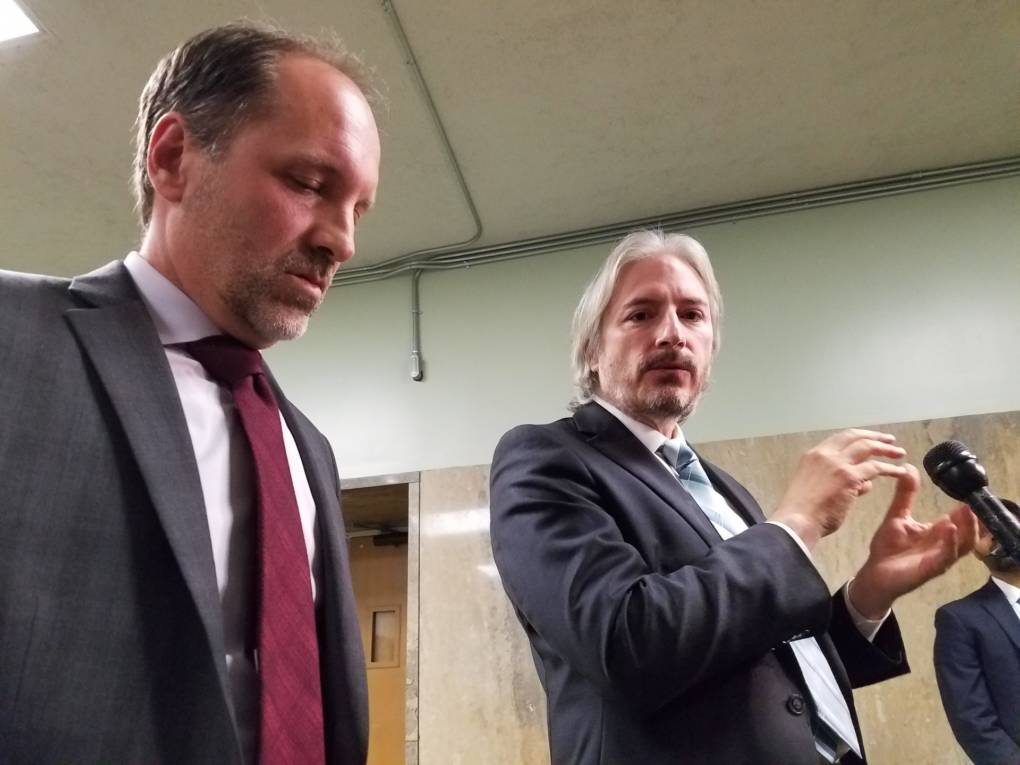
"caption": "Juan Francisco Lopez Sanchez's defense attorneys Francisco Ugarte and Matt Gonzalez on July 21, 2017, at the San Francisco Hall of Justice.\n",
"description": "Juan Francisco Lopez Sanchez's defense attorneys Fracisco Ugarte and Matt Gonzales on July 21, 2017 at the San Francisco Hall of Justice.\n",
"title": "RS26049_20170721_093551-qut",
"credit": "Alex Emslie/KQED",
"status": "inherit",
"isLoading": false,
"fetchFailed": false
},
"news_11579850": {
"type": "attachments",
"id": "news_11579850",
"meta": {
"index": "attachments_1716263798",
"site": "news",
"id": "11579850",
"found": true
},
"parent": 11579541,
"imgSizes": {
"small": {
"file": "https://ww2.kqed.org/app/uploads/sites/10/2017/07/RS26054_GettyImages-621780074-qut-520x365.jpg",
"width": 520,
"mimeType": "image/jpeg",
"height": 365
},
"twentyfourteen-full-width": {
"file": "https://ww2.kqed.org/app/uploads/sites/10/2017/07/RS26054_GettyImages-621780074-qut-1038x576.jpg",
"width": 1038,
"mimeType": "image/jpeg",
"height": 576
},
"thumbnail": {
"file": "https://ww2.kqed.org/app/uploads/sites/10/2017/07/RS26054_GettyImages-621780074-qut-160x112.jpg",
"width": 160,
"mimeType": "image/jpeg",
"height": 112
},
"fd-sm": {
"file": "https://ww2.kqed.org/app/uploads/sites/10/2017/07/RS26054_GettyImages-621780074-qut-960x674.jpg",
"width": 960,
"mimeType": "image/jpeg",
"height": 674
},
"post-thumbnail": {
"file": "https://ww2.kqed.org/app/uploads/sites/10/2017/07/RS26054_GettyImages-621780074-qut-672x372.jpg",
"width": 672,
"mimeType": "image/jpeg",
"height": 372
},
"xsmall": {
"file": "https://ww2.kqed.org/app/uploads/sites/10/2017/07/RS26054_GettyImages-621780074-qut-375x263.jpg",
"width": 375,
"mimeType": "image/jpeg",
"height": 263
},
"kqedFullSize": {
"file": "https://ww2.kqed.org/app/uploads/sites/10/2017/07/RS26054_GettyImages-621780074-qut.jpg",
"width": 1920,
"height": 1348
},
"large": {
"file": "https://ww2.kqed.org/app/uploads/sites/10/2017/07/RS26054_GettyImages-621780074-qut-1020x716.jpg",
"width": 1020,
"mimeType": "image/jpeg",
"height": 716
},
"xlarge": {
"file": "https://ww2.kqed.org/app/uploads/sites/10/2017/07/RS26054_GettyImages-621780074-qut-1180x828.jpg",
"width": 1180,
"mimeType": "image/jpeg",
"height": 828
},
"guest-author-50": {
"file": "https://ww2.kqed.org/app/uploads/sites/10/2017/07/RS26054_GettyImages-621780074-qut-50x50.jpg",
"width": 50,
"mimeType": "image/jpeg",
"height": 50
},
"guest-author-96": {
"file": "https://ww2.kqed.org/app/uploads/sites/10/2017/07/RS26054_GettyImages-621780074-qut-96x96.jpg",
"width": 96,
"mimeType": "image/jpeg",
"height": 96
},
"medium": {
"file": "https://ww2.kqed.org/app/uploads/sites/10/2017/07/RS26054_GettyImages-621780074-qut-800x562.jpg",
"width": 800,
"mimeType": "image/jpeg",
"height": 562
},
"guest-author-64": {
"file": "https://ww2.kqed.org/app/uploads/sites/10/2017/07/RS26054_GettyImages-621780074-qut-64x64.jpg",
"width": 64,
"mimeType": "image/jpeg",
"height": 64
},
"guest-author-32": {
"file": "https://ww2.kqed.org/app/uploads/sites/10/2017/07/RS26054_GettyImages-621780074-qut-32x32.jpg",
"width": 32,
"mimeType": "image/jpeg",
"height": 32
},
"fd-lrg": {
"file": "https://ww2.kqed.org/app/uploads/sites/10/2017/07/RS26054_GettyImages-621780074-qut-1920x1348.jpg",
"width": 1920,
"mimeType": "image/jpeg",
"height": 1348
},
"fd-med": {
"file": "https://ww2.kqed.org/app/uploads/sites/10/2017/07/RS26054_GettyImages-621780074-qut-1180x828.jpg",
"width": 1180,
"mimeType": "image/jpeg",
"height": 828
},
"full-width": {
"file": "https://ww2.kqed.org/app/uploads/sites/10/2017/07/RS26054_GettyImages-621780074-qut-1920x1348.jpg",
"width": 1920,
"mimeType": "image/jpeg",
"height": 1348
},
"detail": {
"file": "https://ww2.kqed.org/app/uploads/sites/10/2017/07/RS26054_GettyImages-621780074-qut-150x150.jpg",
"width": 150,
"mimeType": "image/jpeg",
"height": 150
},
"guest-author-128": {
"file": "https://ww2.kqed.org/app/uploads/sites/10/2017/07/RS26054_GettyImages-621780074-qut-128x128.jpg",
"width": 128,
"mimeType": "image/jpeg",
"height": 128
},
"xxsmall": {
"file": "https://ww2.kqed.org/app/uploads/sites/10/2017/07/RS26054_GettyImages-621780074-qut-240x169.jpg",
"width": 240,
"mimeType": "image/jpeg",
"height": 169
}
},
"publishDate": 1500676115,
"modified": 1500676219,
"caption": "File photo: Voters cast their ballots in the US presidential election at a fire station in Alhambra, California, on November 8, 2016. ",
"description": "File photo: Voters cast their ballots in the US presidential election at a fire station in Alhambra, California, on November 8, 2016. ",
"title": "RS26054_GettyImages-621780074-qut",
"credit": "Ringo Chiu/AFP/Getty Images",
"status": "inherit",
"isLoading": false,
"fetchFailed": false
},
"news_11579604": {
"type": "attachments",
"id": "news_11579604",
"meta": {
"index": "attachments_1716263798",
"site": "news",
"id": "11579604",
"found": true
},
"parent": 11579535,
"imgSizes": {
"small": {
"file": "https://ww2.kqed.org/app/uploads/sites/10/2018/07/RS25113_20170501_MayDay_credit_BertJohnson-2-qut-520x347.jpg",
"width": 520,
"mimeType": "image/jpeg",
"height": 347
},
"twentyfourteen-full-width": {
"file": "https://ww2.kqed.org/app/uploads/sites/10/2018/07/RS25113_20170501_MayDay_credit_BertJohnson-2-qut-1038x576.jpg",
"width": 1038,
"mimeType": "image/jpeg",
"height": 576
},
"thumbnail": {
"file": "https://ww2.kqed.org/app/uploads/sites/10/2018/07/RS25113_20170501_MayDay_credit_BertJohnson-2-qut-160x107.jpg",
"width": 160,
"mimeType": "image/jpeg",
"height": 107
},
"fd-sm": {
"file": "https://ww2.kqed.org/app/uploads/sites/10/2018/07/RS25113_20170501_MayDay_credit_BertJohnson-2-qut-960x640.jpg",
"width": 960,
"mimeType": "image/jpeg",
"height": 640
},
"post-thumbnail": {
"file": "https://ww2.kqed.org/app/uploads/sites/10/2018/07/RS25113_20170501_MayDay_credit_BertJohnson-2-qut-672x372.jpg",
"width": 672,
"mimeType": "image/jpeg",
"height": 372
},
"xsmall": {
"file": "https://ww2.kqed.org/app/uploads/sites/10/2018/07/RS25113_20170501_MayDay_credit_BertJohnson-2-qut-375x250.jpg",
"width": 375,
"mimeType": "image/jpeg",
"height": 250
},
"kqedFullSize": {
"file": "https://ww2.kqed.org/app/uploads/sites/10/2018/07/RS25113_20170501_MayDay_credit_BertJohnson-2-qut.jpg",
"width": 1920,
"height": 1280
},
"large": {
"file": "https://ww2.kqed.org/app/uploads/sites/10/2018/07/RS25113_20170501_MayDay_credit_BertJohnson-2-qut-1020x680.jpg",
"width": 1020,
"mimeType": "image/jpeg",
"height": 680
},
"xlarge": {
"file": "https://ww2.kqed.org/app/uploads/sites/10/2018/07/RS25113_20170501_MayDay_credit_BertJohnson-2-qut-1180x787.jpg",
"width": 1180,
"mimeType": "image/jpeg",
"height": 787
},
"guest-author-50": {
"file": "https://ww2.kqed.org/app/uploads/sites/10/2018/07/RS25113_20170501_MayDay_credit_BertJohnson-2-qut-50x50.jpg",
"width": 50,
"mimeType": "image/jpeg",
"height": 50
},
"guest-author-96": {
"file": "https://ww2.kqed.org/app/uploads/sites/10/2018/07/RS25113_20170501_MayDay_credit_BertJohnson-2-qut-96x96.jpg",
"width": 96,
"mimeType": "image/jpeg",
"height": 96
},
"medium": {
"file": "https://ww2.kqed.org/app/uploads/sites/10/2018/07/RS25113_20170501_MayDay_credit_BertJohnson-2-qut-800x533.jpg",
"width": 800,
"mimeType": "image/jpeg",
"height": 533
},
"guest-author-64": {
"file": "https://ww2.kqed.org/app/uploads/sites/10/2018/07/RS25113_20170501_MayDay_credit_BertJohnson-2-qut-64x64.jpg",
"width": 64,
"mimeType": "image/jpeg",
"height": 64
},
"guest-author-32": {
"file": "https://ww2.kqed.org/app/uploads/sites/10/2018/07/RS25113_20170501_MayDay_credit_BertJohnson-2-qut-32x32.jpg",
"width": 32,
"mimeType": "image/jpeg",
"height": 32
},
"fd-lrg": {
"file": "https://ww2.kqed.org/app/uploads/sites/10/2018/07/RS25113_20170501_MayDay_credit_BertJohnson-2-qut-1920x1280.jpg",
"width": 1920,
"mimeType": "image/jpeg",
"height": 1280
},
"fd-med": {
"file": "https://ww2.kqed.org/app/uploads/sites/10/2018/07/RS25113_20170501_MayDay_credit_BertJohnson-2-qut-1180x787.jpg",
"width": 1180,
"mimeType": "image/jpeg",
"height": 787
},
"full-width": {
"file": "https://ww2.kqed.org/app/uploads/sites/10/2018/07/RS25113_20170501_MayDay_credit_BertJohnson-2-qut-1920x1280.jpg",
"width": 1920,
"mimeType": "image/jpeg",
"height": 1280
},
"detail": {
"file": "https://ww2.kqed.org/app/uploads/sites/10/2018/07/RS25113_20170501_MayDay_credit_BertJohnson-2-qut-150x150.jpg",
"width": 150,
"mimeType": "image/jpeg",
"height": 150
},
"guest-author-128": {
"file": "https://ww2.kqed.org/app/uploads/sites/10/2018/07/RS25113_20170501_MayDay_credit_BertJohnson-2-qut-128x128.jpg",
"width": 128,
"mimeType": "image/jpeg",
"height": 128
},
"xxsmall": {
"file": "https://ww2.kqed.org/app/uploads/sites/10/2018/07/RS25113_20170501_MayDay_credit_BertJohnson-2-qut-240x160.jpg",
"width": 240,
"mimeType": "image/jpeg",
"height": 160
}
},
"publishDate": 1500667297,
"modified": 1500667387,
"caption": "Activists with the Bay Resistance coalition blocked the entrance to a parking lot behind the San Francisco ICE building during May Day protests on May 1, 2017. The day's events were called \"A Day Without Immigrants\" to highlight the pressures immigrant workers say they face under a Trump administration.",
"description": "Activists with the Bay Resistance coalition blocked the entrance to a parking lot behind the San Francisco ICE building during May Day protests on May 1, 2017. The day's events were called \"A Day Without Immigrants\" to highlight the pressures immigrant workers say they face under a Trump administration.",
"title": "RS25113_20170501_MayDay_credit_BertJohnson-2-qut",
"credit": "Bert Johnson/KQED",
"status": "inherit",
"isLoading": false,
"fetchFailed": false
},
"news_11577979": {
"type": "attachments",
"id": "news_11577979",
"meta": {
"index": "attachments_1716263798",
"site": "news",
"id": "11577979",
"found": true
},
"parent": 11577944,
"imgSizes": {
"small": {
"file": "https://ww2.kqed.org/app/uploads/sites/10/2017/07/RS26042_GettyImages-699318066-qut-520x367.jpg",
"width": 520,
"mimeType": "image/jpeg",
"height": 367
},
"twentyfourteen-full-width": {
"file": "https://ww2.kqed.org/app/uploads/sites/10/2017/07/RS26042_GettyImages-699318066-qut-1038x576.jpg",
"width": 1038,
"mimeType": "image/jpeg",
"height": 576
},
"thumbnail": {
"file": "https://ww2.kqed.org/app/uploads/sites/10/2017/07/RS26042_GettyImages-699318066-qut-160x113.jpg",
"width": 160,
"mimeType": "image/jpeg",
"height": 113
},
"fd-sm": {
"file": "https://ww2.kqed.org/app/uploads/sites/10/2017/07/RS26042_GettyImages-699318066-qut-960x678.jpg",
"width": 960,
"mimeType": "image/jpeg",
"height": 678
},
"post-thumbnail": {
"file": "https://ww2.kqed.org/app/uploads/sites/10/2017/07/RS26042_GettyImages-699318066-qut-672x372.jpg",
"width": 672,
"mimeType": "image/jpeg",
"height": 372
},
"xsmall": {
"file": "https://ww2.kqed.org/app/uploads/sites/10/2017/07/RS26042_GettyImages-699318066-qut-375x265.jpg",
"width": 375,
"mimeType": "image/jpeg",
"height": 265
},
"kqedFullSize": {
"file": "https://ww2.kqed.org/app/uploads/sites/10/2017/07/RS26042_GettyImages-699318066-qut.jpg",
"width": 1920,
"height": 1356
},
"large": {
"file": "https://ww2.kqed.org/app/uploads/sites/10/2017/07/RS26042_GettyImages-699318066-qut-1020x720.jpg",
"width": 1020,
"mimeType": "image/jpeg",
"height": 720
},
"xlarge": {
"file": "https://ww2.kqed.org/app/uploads/sites/10/2017/07/RS26042_GettyImages-699318066-qut-1180x833.jpg",
"width": 1180,
"mimeType": "image/jpeg",
"height": 833
},
"guest-author-50": {
"file": "https://ww2.kqed.org/app/uploads/sites/10/2017/07/RS26042_GettyImages-699318066-qut-50x50.jpg",
"width": 50,
"mimeType": "image/jpeg",
"height": 50
},
"guest-author-96": {
"file": "https://ww2.kqed.org/app/uploads/sites/10/2017/07/RS26042_GettyImages-699318066-qut-96x96.jpg",
"width": 96,
"mimeType": "image/jpeg",
"height": 96
},
"medium": {
"file": "https://ww2.kqed.org/app/uploads/sites/10/2017/07/RS26042_GettyImages-699318066-qut-800x565.jpg",
"width": 800,
"mimeType": "image/jpeg",
"height": 565
},
"guest-author-64": {
"file": "https://ww2.kqed.org/app/uploads/sites/10/2017/07/RS26042_GettyImages-699318066-qut-64x64.jpg",
"width": 64,
"mimeType": "image/jpeg",
"height": 64
},
"guest-author-32": {
"file": "https://ww2.kqed.org/app/uploads/sites/10/2017/07/RS26042_GettyImages-699318066-qut-32x32.jpg",
"width": 32,
"mimeType": "image/jpeg",
"height": 32
},
"fd-lrg": {
"file": "https://ww2.kqed.org/app/uploads/sites/10/2017/07/RS26042_GettyImages-699318066-qut-1920x1356.jpg",
"width": 1920,
"mimeType": "image/jpeg",
"height": 1356
},
"fd-med": {
"file": "https://ww2.kqed.org/app/uploads/sites/10/2017/07/RS26042_GettyImages-699318066-qut-1180x833.jpg",
"width": 1180,
"mimeType": "image/jpeg",
"height": 833
},
"full-width": {
"file": "https://ww2.kqed.org/app/uploads/sites/10/2017/07/RS26042_GettyImages-699318066-qut-1920x1356.jpg",
"width": 1920,
"mimeType": "image/jpeg",
"height": 1356
},
"detail": {
"file": "https://ww2.kqed.org/app/uploads/sites/10/2017/07/RS26042_GettyImages-699318066-qut-150x150.jpg",
"width": 150,
"mimeType": "image/jpeg",
"height": 150
},
"guest-author-128": {
"file": "https://ww2.kqed.org/app/uploads/sites/10/2017/07/RS26042_GettyImages-699318066-qut-128x128.jpg",
"width": 128,
"mimeType": "image/jpeg",
"height": 128
},
"xxsmall": {
"file": "https://ww2.kqed.org/app/uploads/sites/10/2017/07/RS26042_GettyImages-699318066-qut-240x170.jpg",
"width": 240,
"mimeType": "image/jpeg",
"height": 170
}
},
"publishDate": 1500587902,
"modified": 1500595405,
"caption": "U.S. Sen. Kamala Harris (D-CA) speaks during a hearing before the Senate (Select) Intelligence Committee June 21, 2017, on Capitol Hill in Washington, D.C.",
"description": null,
"title": "Senate Select Committee Holds Hearing On Russia's Cyber Efforts During 2016 Election",
"credit": "Alex Wong/Getty Images",
"status": "inherit",
"isLoading": false,
"fetchFailed": false
},
"news_11577825": {
"type": "attachments",
"id": "news_11577825",
"meta": {
"index": "attachments_1716263798",
"site": "news",
"id": "11577825",
"found": true
},
"parent": 11577817,
"imgSizes": {
"small": {
"file": "https://ww2.kqed.org/app/uploads/sites/10/2017/07/BettyDukes_GettyImages-111060531-qut-520x352.jpg",
"width": 520,
"mimeType": "image/jpeg",
"height": 352
},
"twentyfourteen-full-width": {
"file": "https://ww2.kqed.org/app/uploads/sites/10/2017/07/BettyDukes_GettyImages-111060531-qut-1038x576.jpg",
"width": 1038,
"mimeType": "image/jpeg",
"height": 576
},
"thumbnail": {
"file": "https://ww2.kqed.org/app/uploads/sites/10/2017/07/BettyDukes_GettyImages-111060531-qut-160x108.jpg",
"width": 160,
"mimeType": "image/jpeg",
"height": 108
},
"fd-sm": {
"file": "https://ww2.kqed.org/app/uploads/sites/10/2017/07/BettyDukes_GettyImages-111060531-qut-960x650.jpg",
"width": 960,
"mimeType": "image/jpeg",
"height": 650
},
"post-thumbnail": {
"file": "https://ww2.kqed.org/app/uploads/sites/10/2017/07/BettyDukes_GettyImages-111060531-qut-672x372.jpg",
"width": 672,
"mimeType": "image/jpeg",
"height": 372
},
"xsmall": {
"file": "https://ww2.kqed.org/app/uploads/sites/10/2017/07/BettyDukes_GettyImages-111060531-qut-375x254.jpg",
"width": 375,
"mimeType": "image/jpeg",
"height": 254
},
"kqedFullSize": {
"file": "https://ww2.kqed.org/app/uploads/sites/10/2017/07/BettyDukes_GettyImages-111060531-qut.jpg",
"width": 1920,
"height": 1299
},
"large": {
"file": "https://ww2.kqed.org/app/uploads/sites/10/2017/07/BettyDukes_GettyImages-111060531-qut-1020x690.jpg",
"width": 1020,
"mimeType": "image/jpeg",
"height": 690
},
"xlarge": {
"file": "https://ww2.kqed.org/app/uploads/sites/10/2017/07/BettyDukes_GettyImages-111060531-qut-1180x798.jpg",
"width": 1180,
"mimeType": "image/jpeg",
"height": 798
},
"guest-author-50": {
"file": "https://ww2.kqed.org/app/uploads/sites/10/2017/07/BettyDukes_GettyImages-111060531-qut-50x50.jpg",
"width": 50,
"mimeType": "image/jpeg",
"height": 50
},
"guest-author-96": {
"file": "https://ww2.kqed.org/app/uploads/sites/10/2017/07/BettyDukes_GettyImages-111060531-qut-96x96.jpg",
"width": 96,
"mimeType": "image/jpeg",
"height": 96
},
"medium": {
"file": "https://ww2.kqed.org/app/uploads/sites/10/2017/07/BettyDukes_GettyImages-111060531-qut-800x541.jpg",
"width": 800,
"mimeType": "image/jpeg",
"height": 541
},
"guest-author-64": {
"file": "https://ww2.kqed.org/app/uploads/sites/10/2017/07/BettyDukes_GettyImages-111060531-qut-64x64.jpg",
"width": 64,
"mimeType": "image/jpeg",
"height": 64
},
"guest-author-32": {
"file": "https://ww2.kqed.org/app/uploads/sites/10/2017/07/BettyDukes_GettyImages-111060531-qut-32x32.jpg",
"width": 32,
"mimeType": "image/jpeg",
"height": 32
},
"fd-lrg": {
"file": "https://ww2.kqed.org/app/uploads/sites/10/2017/07/BettyDukes_GettyImages-111060531-qut-1920x1299.jpg",
"width": 1920,
"mimeType": "image/jpeg",
"height": 1299
},
"fd-med": {
"file": "https://ww2.kqed.org/app/uploads/sites/10/2017/07/BettyDukes_GettyImages-111060531-qut-1180x798.jpg",
"width": 1180,
"mimeType": "image/jpeg",
"height": 798
},
"full-width": {
"file": "https://ww2.kqed.org/app/uploads/sites/10/2017/07/BettyDukes_GettyImages-111060531-qut-1920x1299.jpg",
"width": 1920,
"mimeType": "image/jpeg",
"height": 1299
},
"detail": {
"file": "https://ww2.kqed.org/app/uploads/sites/10/2017/07/BettyDukes_GettyImages-111060531-qut-150x150.jpg",
"width": 150,
"mimeType": "image/jpeg",
"height": 150
},
"guest-author-128": {
"file": "https://ww2.kqed.org/app/uploads/sites/10/2017/07/BettyDukes_GettyImages-111060531-qut-128x128.jpg",
"width": 128,
"mimeType": "image/jpeg",
"height": 128
},
"xxsmall": {
"file": "https://ww2.kqed.org/app/uploads/sites/10/2017/07/BettyDukes_GettyImages-111060531-qut-240x162.jpg",
"width": 240,
"mimeType": "image/jpeg",
"height": 162
}
},
"publishDate": 1500580158,
"modified": 1500588485,
"caption": "Betty Dukes (R), one of the six named plaintiffs in the Dukes v. Walmart case, speaks to the media in front of the U.S. Supreme Court on March 29, 2011, in Washington, D.C. ",
"description": null,
"title": "Supporters Of The Women Of Wal-Mart Demonstrate Against The Retailer As Supreme Court Hears Their Case",
"credit": "Alex Wong/Getty Images",
"status": "inherit",
"isLoading": false,
"fetchFailed": false
},
"news_11576371": {
"type": "attachments",
"id": "news_11576371",
"meta": {
"index": "attachments_1716263798",
"site": "news",
"id": "11576371",
"found": true
},
"parent": 11576323,
"imgSizes": {
"small": {
"file": "https://ww2.kqed.org/app/uploads/sites/10/2017/07/AlexPadilla-520x320.jpg",
"width": 520,
"mimeType": "image/jpeg",
"height": 320
},
"twentyfourteen-full-width": {
"file": "https://ww2.kqed.org/app/uploads/sites/10/2017/07/AlexPadilla-1038x576.jpg",
"width": 1038,
"mimeType": "image/jpeg",
"height": 576
},
"thumbnail": {
"file": "https://ww2.kqed.org/app/uploads/sites/10/2017/07/AlexPadilla-160x98.jpg",
"width": 160,
"mimeType": "image/jpeg",
"height": 98
},
"fd-sm": {
"file": "https://ww2.kqed.org/app/uploads/sites/10/2017/07/AlexPadilla-960x591.jpg",
"width": 960,
"mimeType": "image/jpeg",
"height": 591
},
"post-thumbnail": {
"file": "https://ww2.kqed.org/app/uploads/sites/10/2017/07/AlexPadilla-672x372.jpg",
"width": 672,
"mimeType": "image/jpeg",
"height": 372
},
"xsmall": {
"file": "https://ww2.kqed.org/app/uploads/sites/10/2017/07/AlexPadilla-375x231.jpg",
"width": 375,
"mimeType": "image/jpeg",
"height": 231
},
"kqedFullSize": {
"file": "https://ww2.kqed.org/app/uploads/sites/10/2017/07/AlexPadilla.jpg",
"width": 1920,
"height": 1181
},
"large": {
"file": "https://ww2.kqed.org/app/uploads/sites/10/2017/07/AlexPadilla-1020x627.jpg",
"width": 1020,
"mimeType": "image/jpeg",
"height": 627
},
"xlarge": {
"file": "https://ww2.kqed.org/app/uploads/sites/10/2017/07/AlexPadilla-1180x726.jpg",
"width": 1180,
"mimeType": "image/jpeg",
"height": 726
},
"guest-author-50": {
"file": "https://ww2.kqed.org/app/uploads/sites/10/2017/07/AlexPadilla-50x50.jpg",
"width": 50,
"mimeType": "image/jpeg",
"height": 50
},
"guest-author-96": {
"file": "https://ww2.kqed.org/app/uploads/sites/10/2017/07/AlexPadilla-96x96.jpg",
"width": 96,
"mimeType": "image/jpeg",
"height": 96
},
"medium": {
"file": "https://ww2.kqed.org/app/uploads/sites/10/2017/07/AlexPadilla-800x492.jpg",
"width": 800,
"mimeType": "image/jpeg",
"height": 492
},
"guest-author-64": {
"file": "https://ww2.kqed.org/app/uploads/sites/10/2017/07/AlexPadilla-64x64.jpg",
"width": 64,
"mimeType": "image/jpeg",
"height": 64
},
"guest-author-32": {
"file": "https://ww2.kqed.org/app/uploads/sites/10/2017/07/AlexPadilla-32x32.jpg",
"width": 32,
"mimeType": "image/jpeg",
"height": 32
},
"fd-lrg": {
"file": "https://ww2.kqed.org/app/uploads/sites/10/2017/07/AlexPadilla-1920x1181.jpg",
"width": 1920,
"mimeType": "image/jpeg",
"height": 1181
},
"fd-med": {
"file": "https://ww2.kqed.org/app/uploads/sites/10/2017/07/AlexPadilla-1180x726.jpg",
"width": 1180,
"mimeType": "image/jpeg",
"height": 726
},
"full-width": {
"file": "https://ww2.kqed.org/app/uploads/sites/10/2017/07/AlexPadilla-1920x1181.jpg",
"width": 1920,
"mimeType": "image/jpeg",
"height": 1181
},
"detail": {
"file": "https://ww2.kqed.org/app/uploads/sites/10/2017/07/AlexPadilla-150x150.jpg",
"width": 150,
"mimeType": "image/jpeg",
"height": 150
},
"guest-author-128": {
"file": "https://ww2.kqed.org/app/uploads/sites/10/2017/07/AlexPadilla-128x128.jpg",
"width": 128,
"mimeType": "image/jpeg",
"height": 128
},
"xxsmall": {
"file": "https://ww2.kqed.org/app/uploads/sites/10/2017/07/AlexPadilla-240x148.jpg",
"width": 240,
"mimeType": "image/jpeg",
"height": 148
}
},
"publishDate": 1500505060,
"modified": 1500506835,
"caption": "California Secretary of State Alex Padilla speaks at a press conference on July 19, 2017, in Washington, D.C.",
"description": "California Secretary of State Alex Padilla speaks at a press conference on July 19, 2017 in Washington, DC.",
"title": "AlexPadilla",
"credit": "Joe Raedle/Getty Images",
"status": "inherit",
"isLoading": false,
"fetchFailed": false
},
"news_11285268": {
"type": "attachments",
"id": "news_11285268",
"meta": {
"index": "attachments_1716263798",
"site": "news",
"id": "11285268",
"found": true
},
"parent": 11285264,
"imgSizes": {
"small": {
"file": "https://ww2.kqed.org/app/uploads/sites/10/2017/01/Scotus-520x302.jpg",
"width": 520,
"mimeType": "image/jpeg",
"height": 302
},
"twentyfourteen-full-width": {
"file": "https://ww2.kqed.org/app/uploads/sites/10/2017/01/Scotus-1038x576.jpg",
"width": 1038,
"mimeType": "image/jpeg",
"height": 576
},
"thumbnail": {
"file": "https://ww2.kqed.org/app/uploads/sites/10/2017/01/Scotus-160x93.jpg",
"width": 160,
"mimeType": "image/jpeg",
"height": 93
},
"fd-sm": {
"file": "https://ww2.kqed.org/app/uploads/sites/10/2017/01/Scotus-960x558.jpg",
"width": 960,
"mimeType": "image/jpeg",
"height": 558
},
"post-thumbnail": {
"file": "https://ww2.kqed.org/app/uploads/sites/10/2017/01/Scotus-672x372.jpg",
"width": 672,
"mimeType": "image/jpeg",
"height": 372
},
"xsmall": {
"file": "https://ww2.kqed.org/app/uploads/sites/10/2017/01/Scotus-375x218.jpg",
"width": 375,
"mimeType": "image/jpeg",
"height": 218
},
"kqedFullSize": {
"file": "https://ww2.kqed.org/app/uploads/sites/10/2017/01/Scotus.jpg",
"width": 1920,
"height": 1115
},
"large": {
"file": "https://ww2.kqed.org/app/uploads/sites/10/2017/01/Scotus-1020x592.jpg",
"width": 1020,
"mimeType": "image/jpeg",
"height": 592
},
"xlarge": {
"file": "https://ww2.kqed.org/app/uploads/sites/10/2017/01/Scotus-1180x685.jpg",
"width": 1180,
"mimeType": "image/jpeg",
"height": 685
},
"guest-author-50": {
"file": "https://ww2.kqed.org/app/uploads/sites/10/2017/01/Scotus-50x50.jpg",
"width": 50,
"mimeType": "image/jpeg",
"height": 50
},
"guest-author-96": {
"file": "https://ww2.kqed.org/app/uploads/sites/10/2017/01/Scotus-96x96.jpg",
"width": 96,
"mimeType": "image/jpeg",
"height": 96
},
"medium": {
"file": "https://ww2.kqed.org/app/uploads/sites/10/2017/01/Scotus-800x465.jpg",
"width": 800,
"mimeType": "image/jpeg",
"height": 465
},
"guest-author-64": {
"file": "https://ww2.kqed.org/app/uploads/sites/10/2017/01/Scotus-64x64.jpg",
"width": 64,
"mimeType": "image/jpeg",
"height": 64
},
"guest-author-32": {
"file": "https://ww2.kqed.org/app/uploads/sites/10/2017/01/Scotus-32x32.jpg",
"width": 32,
"mimeType": "image/jpeg",
"height": 32
},
"jmtc-small-thumb": {
"file": "https://ww2.kqed.org/app/uploads/sites/10/2017/01/Scotus-280x150.jpg",
"width": 280,
"mimeType": "image/jpeg",
"height": 150
},
"fd-lrg": {
"file": "https://ww2.kqed.org/app/uploads/sites/10/2017/01/Scotus-1920x1115.jpg",
"width": 1920,
"mimeType": "image/jpeg",
"height": 1115
},
"fd-med": {
"file": "https://ww2.kqed.org/app/uploads/sites/10/2017/01/Scotus-1180x685.jpg",
"width": 1180,
"mimeType": "image/jpeg",
"height": 685
},
"full-width": {
"file": "https://ww2.kqed.org/app/uploads/sites/10/2017/01/Scotus-1920x1115.jpg",
"width": 1920,
"mimeType": "image/jpeg",
"height": 1115
},
"detail": {
"file": "https://ww2.kqed.org/app/uploads/sites/10/2017/01/Scotus-150x150.jpg",
"width": 150,
"mimeType": "image/jpeg",
"height": 150
},
"guest-author-128": {
"file": "https://ww2.kqed.org/app/uploads/sites/10/2017/01/Scotus-128x128.jpg",
"width": 128,
"mimeType": "image/jpeg",
"height": 128
},
"xxsmall": {
"file": "https://ww2.kqed.org/app/uploads/sites/10/2017/01/Scotus-240x139.jpg",
"width": 240,
"mimeType": "image/jpeg",
"height": 139
}
},
"publishDate": 1485310961,
"modified": 1485387052,
"caption": "The U.S. Supreme Court in Washington, D.C.",
"description": "The U.S. Supreme Court in Washington, D.C.",
"title": "Scotus",
"credit": "Zach Gibson/AFP/Getty Images",
"status": "inherit",
"isLoading": false,
"fetchFailed": false
},
"news_11573260": {
"type": "attachments",
"id": "news_11573260",
"meta": {
"index": "attachments_1716263798",
"site": "news",
"id": "11573260",
"found": true
},
"parent": 11573091,
"imgSizes": {
"small": {
"file": "https://ww2.kqed.org/app/uploads/sites/10/2017/07/GalvezTunnel-520x287.jpg",
"width": 520,
"mimeType": "image/jpeg",
"height": 287
},
"twentyfourteen-full-width": {
"file": "https://ww2.kqed.org/app/uploads/sites/10/2017/07/GalvezTunnel-1038x576.jpg",
"width": 1038,
"mimeType": "image/jpeg",
"height": 576
},
"thumbnail": {
"file": "https://ww2.kqed.org/app/uploads/sites/10/2017/07/GalvezTunnel-160x88.jpg",
"width": 160,
"mimeType": "image/jpeg",
"height": 88
},
"fd-sm": {
"file": "https://ww2.kqed.org/app/uploads/sites/10/2017/07/GalvezTunnel-960x529.jpg",
"width": 960,
"mimeType": "image/jpeg",
"height": 529
},
"post-thumbnail": {
"file": "https://ww2.kqed.org/app/uploads/sites/10/2017/07/GalvezTunnel-672x372.jpg",
"width": 672,
"mimeType": "image/jpeg",
"height": 372
},
"xsmall": {
"file": "https://ww2.kqed.org/app/uploads/sites/10/2017/07/GalvezTunnel-375x207.jpg",
"width": 375,
"mimeType": "image/jpeg",
"height": 207
},
"kqedFullSize": {
"file": "https://ww2.kqed.org/app/uploads/sites/10/2017/07/GalvezTunnel.jpg",
"width": 1920,
"height": 1058
},
"large": {
"file": "https://ww2.kqed.org/app/uploads/sites/10/2017/07/GalvezTunnel-1020x562.jpg",
"width": 1020,
"mimeType": "image/jpeg",
"height": 562
},
"xlarge": {
"file": "https://ww2.kqed.org/app/uploads/sites/10/2017/07/GalvezTunnel-1180x650.jpg",
"width": 1180,
"mimeType": "image/jpeg",
"height": 650
},
"guest-author-50": {
"file": "https://ww2.kqed.org/app/uploads/sites/10/2017/07/GalvezTunnel-50x50.jpg",
"width": 50,
"mimeType": "image/jpeg",
"height": 50
},
"guest-author-96": {
"file": "https://ww2.kqed.org/app/uploads/sites/10/2017/07/GalvezTunnel-96x96.jpg",
"width": 96,
"mimeType": "image/jpeg",
"height": 96
},
"medium": {
"file": "https://ww2.kqed.org/app/uploads/sites/10/2017/07/GalvezTunnel-800x441.jpg",
"width": 800,
"mimeType": "image/jpeg",
"height": 441
},
"guest-author-64": {
"file": "https://ww2.kqed.org/app/uploads/sites/10/2017/07/GalvezTunnel-64x64.jpg",
"width": 64,
"mimeType": "image/jpeg",
"height": 64
},
"guest-author-32": {
"file": "https://ww2.kqed.org/app/uploads/sites/10/2017/07/GalvezTunnel-32x32.jpg",
"width": 32,
"mimeType": "image/jpeg",
"height": 32
},
"fd-lrg": {
"file": "https://ww2.kqed.org/app/uploads/sites/10/2017/07/GalvezTunnel-1920x1058.jpg",
"width": 1920,
"mimeType": "image/jpeg",
"height": 1058
},
"fd-med": {
"file": "https://ww2.kqed.org/app/uploads/sites/10/2017/07/GalvezTunnel-1180x650.jpg",
"width": 1180,
"mimeType": "image/jpeg",
"height": 650
},
"full-width": {
"file": "https://ww2.kqed.org/app/uploads/sites/10/2017/07/GalvezTunnel-1920x1058.jpg",
"width": 1920,
"mimeType": "image/jpeg",
"height": 1058
},
"detail": {
"file": "https://ww2.kqed.org/app/uploads/sites/10/2017/07/GalvezTunnel-150x150.jpg",
"width": 150,
"mimeType": "image/jpeg",
"height": 150
},
"guest-author-128": {
"file": "https://ww2.kqed.org/app/uploads/sites/10/2017/07/GalvezTunnel-128x128.jpg",
"width": 128,
"mimeType": "image/jpeg",
"height": 128
},
"xxsmall": {
"file": "https://ww2.kqed.org/app/uploads/sites/10/2017/07/GalvezTunnel-240x132.jpg",
"width": 240,
"mimeType": "image/jpeg",
"height": 132
}
},
"publishDate": 1500336797,
"modified": 1500336838,
"caption": "The inside of the Galvez Tunnel near the U.S.-Mexico border, June 12, 2017.",
"description": "The inside of the Galvez Tunnel near the U.S.-Mexico border, June 12, 2017.",
"title": "GalvezTunnel",
"credit": "Jean Guerrero/KPBS",
"status": "inherit",
"isLoading": false,
"fetchFailed": false
},
"news_11573000": {
"type": "attachments",
"id": "news_11573000",
"meta": {
"index": "attachments_1716263798",
"site": "news",
"id": "11573000",
"found": true
},
"parent": 11572823,
"imgSizes": {
"small": {
"file": "https://ww2.kqed.org/app/uploads/sites/10/2017/07/Green-Sheet-17-CA-MVU-016308-520x347.jpg",
"width": 520,
"mimeType": "image/jpeg",
"height": 347
},
"twentyfourteen-full-width": {
"file": "https://ww2.kqed.org/app/uploads/sites/10/2017/07/Green-Sheet-17-CA-MVU-016308-1038x576.jpg",
"width": 1038,
"mimeType": "image/jpeg",
"height": 576
},
"thumbnail": {
"file": "https://ww2.kqed.org/app/uploads/sites/10/2017/07/Green-Sheet-17-CA-MVU-016308-160x107.jpg",
"width": 160,
"mimeType": "image/jpeg",
"height": 107
},
"fd-sm": {
"file": "https://ww2.kqed.org/app/uploads/sites/10/2017/07/Green-Sheet-17-CA-MVU-016308-960x640.jpg",
"width": 960,
"mimeType": "image/jpeg",
"height": 640
},
"post-thumbnail": {
"file": "https://ww2.kqed.org/app/uploads/sites/10/2017/07/Green-Sheet-17-CA-MVU-016308-672x372.jpg",
"width": 672,
"mimeType": "image/jpeg",
"height": 372
},
"xsmall": {
"file": "https://ww2.kqed.org/app/uploads/sites/10/2017/07/Green-Sheet-17-CA-MVU-016308-375x250.jpg",
"width": 375,
"mimeType": "image/jpeg",
"height": 250
},
"kqedFullSize": {
"file": "https://ww2.kqed.org/app/uploads/sites/10/2017/07/Green-Sheet-17-CA-MVU-016308.jpg",
"width": 1500,
"height": 1000
},
"large": {
"file": "https://ww2.kqed.org/app/uploads/sites/10/2017/07/Green-Sheet-17-CA-MVU-016308-1020x680.jpg",
"width": 1020,
"mimeType": "image/jpeg",
"height": 680
},
"xlarge": {
"file": "https://ww2.kqed.org/app/uploads/sites/10/2017/07/Green-Sheet-17-CA-MVU-016308-1180x787.jpg",
"width": 1180,
"mimeType": "image/jpeg",
"height": 787
},
"guest-author-50": {
"file": "https://ww2.kqed.org/app/uploads/sites/10/2017/07/Green-Sheet-17-CA-MVU-016308-50x50.jpg",
"width": 50,
"mimeType": "image/jpeg",
"height": 50
},
"guest-author-96": {
"file": "https://ww2.kqed.org/app/uploads/sites/10/2017/07/Green-Sheet-17-CA-MVU-016308-96x96.jpg",
"width": 96,
"mimeType": "image/jpeg",
"height": 96
},
"medium": {
"file": "https://ww2.kqed.org/app/uploads/sites/10/2017/07/Green-Sheet-17-CA-MVU-016308-800x533.jpg",
"width": 800,
"mimeType": "image/jpeg",
"height": 533
},
"guest-author-64": {
"file": "https://ww2.kqed.org/app/uploads/sites/10/2017/07/Green-Sheet-17-CA-MVU-016308-64x64.jpg",
"width": 64,
"mimeType": "image/jpeg",
"height": 64
},
"guest-author-32": {
"file": "https://ww2.kqed.org/app/uploads/sites/10/2017/07/Green-Sheet-17-CA-MVU-016308-32x32.jpg",
"width": 32,
"mimeType": "image/jpeg",
"height": 32
},
"fd-med": {
"file": "https://ww2.kqed.org/app/uploads/sites/10/2017/07/Green-Sheet-17-CA-MVU-016308-1180x787.jpg",
"width": 1180,
"mimeType": "image/jpeg",
"height": 787
},
"detail": {
"file": "https://ww2.kqed.org/app/uploads/sites/10/2017/07/Green-Sheet-17-CA-MVU-016308-150x150.jpg",
"width": 150,
"mimeType": "image/jpeg",
"height": 150
},
"guest-author-128": {
"file": "https://ww2.kqed.org/app/uploads/sites/10/2017/07/Green-Sheet-17-CA-MVU-016308-128x128.jpg",
"width": 128,
"mimeType": "image/jpeg",
"height": 128
},
"xxsmall": {
"file": "https://ww2.kqed.org/app/uploads/sites/10/2017/07/Green-Sheet-17-CA-MVU-016308-240x160.jpg",
"width": 240,
"mimeType": "image/jpeg",
"height": 160
}
},
"publishDate": 1500327136,
"modified": 1500327187,
"caption": "The site of the accident, which led to Frank Anaya's death.",
"description": null,
"title": "Green Sheet 17-CA-MVU-016308",
"credit": "Cal Fire",
"status": "inherit",
"isLoading": false,
"fetchFailed": false
},
"news_11413938": {
"type": "attachments",
"id": "news_11413938",
"meta": {
"index": "attachments_1716263798",
"site": "news",
"id": "11413938",
"found": true
},
"parent": 11413623,
"imgSizes": {
"small": {
"file": "https://ww2.kqed.org/app/uploads/sites/10/2017/04/GettyImages-53198031-520x372.jpg",
"width": 520,
"mimeType": "image/jpeg",
"height": 372
},
"twentyfourteen-full-width": {
"file": "https://ww2.kqed.org/app/uploads/sites/10/2017/04/GettyImages-53198031-1038x576.jpg",
"width": 1038,
"mimeType": "image/jpeg",
"height": 576
},
"thumbnail": {
"file": "https://ww2.kqed.org/app/uploads/sites/10/2017/04/GettyImages-53198031-160x114.jpg",
"width": 160,
"mimeType": "image/jpeg",
"height": 114
},
"fd-sm": {
"file": "https://ww2.kqed.org/app/uploads/sites/10/2017/04/GettyImages-53198031-960x686.jpg",
"width": 960,
"mimeType": "image/jpeg",
"height": 686
},
"post-thumbnail": {
"file": "https://ww2.kqed.org/app/uploads/sites/10/2017/04/GettyImages-53198031-672x372.jpg",
"width": 672,
"mimeType": "image/jpeg",
"height": 372
},
"xsmall": {
"file": "https://ww2.kqed.org/app/uploads/sites/10/2017/04/GettyImages-53198031-375x268.jpg",
"width": 375,
"mimeType": "image/jpeg",
"height": 268
},
"kqedFullSize": {
"file": "https://ww2.kqed.org/app/uploads/sites/10/2017/04/GettyImages-53198031-e1492481120333.jpg",
"width": 1920,
"height": 1373
},
"large": {
"file": "https://ww2.kqed.org/app/uploads/sites/10/2017/04/GettyImages-53198031-1020x729.jpg",
"width": 1020,
"mimeType": "image/jpeg",
"height": 729
},
"xlarge": {
"file": "https://ww2.kqed.org/app/uploads/sites/10/2017/04/GettyImages-53198031-1180x844.jpg",
"width": 1180,
"mimeType": "image/jpeg",
"height": 844
},
"guest-author-50": {
"file": "https://ww2.kqed.org/app/uploads/sites/10/2017/04/GettyImages-53198031-50x50.jpg",
"width": 50,
"mimeType": "image/jpeg",
"height": 50
},
"guest-author-96": {
"file": "https://ww2.kqed.org/app/uploads/sites/10/2017/04/GettyImages-53198031-96x96.jpg",
"width": 96,
"mimeType": "image/jpeg",
"height": 96
},
"medium": {
"file": "https://ww2.kqed.org/app/uploads/sites/10/2017/04/GettyImages-53198031-800x572.jpg",
"width": 800,
"mimeType": "image/jpeg",
"height": 572
},
"guest-author-64": {
"file": "https://ww2.kqed.org/app/uploads/sites/10/2017/04/GettyImages-53198031-64x64.jpg",
"width": 64,
"mimeType": "image/jpeg",
"height": 64
},
"guest-author-32": {
"file": "https://ww2.kqed.org/app/uploads/sites/10/2017/04/GettyImages-53198031-32x32.jpg",
"width": 32,
"mimeType": "image/jpeg",
"height": 32
},
"fd-lrg": {
"file": "https://ww2.kqed.org/app/uploads/sites/10/2017/04/GettyImages-53198031-1920x1373.jpg",
"width": 1920,
"mimeType": "image/jpeg",
"height": 1373
},
"fd-med": {
"file": "https://ww2.kqed.org/app/uploads/sites/10/2017/04/GettyImages-53198031-1180x844.jpg",
"width": 1180,
"mimeType": "image/jpeg",
"height": 844
},
"full-width": {
"file": "https://ww2.kqed.org/app/uploads/sites/10/2017/04/GettyImages-53198031-1920x1373.jpg",
"width": 1920,
"mimeType": "image/jpeg",
"height": 1373
},
"detail": {
"file": "https://ww2.kqed.org/app/uploads/sites/10/2017/04/GettyImages-53198031-150x150.jpg",
"width": 150,
"mimeType": "image/jpeg",
"height": 150
},
"guest-author-128": {
"file": "https://ww2.kqed.org/app/uploads/sites/10/2017/04/GettyImages-53198031-128x128.jpg",
"width": 128,
"mimeType": "image/jpeg",
"height": 128
},
"xxsmall": {
"file": "https://ww2.kqed.org/app/uploads/sites/10/2017/04/GettyImages-53198031-240x172.jpg",
"width": 240,
"mimeType": "image/jpeg",
"height": 172
}
},
"publishDate": 1492480907,
"modified": 1500074911,
"caption": "Passengers ready to board a train arriving at BART's Balboa Park Station.",
"description": null,
"title": "BART-Balboa Park",
"credit": "Justin Sullivan/Getty Images",
"status": "inherit",
"isLoading": false,
"fetchFailed": false
},
"news_11567675": {
"type": "attachments",
"id": "news_11567675",
"meta": {
"index": "attachments_1716263798",
"site": "news",
"id": "11567675",
"found": true
},
"parent": 11567672,
"imgSizes": {
"small": {
"file": "https://ww2.kqed.org/app/uploads/sites/10/2017/07/RS16572_alt_596-520x350.jpg",
"width": 520,
"mimeType": "image/jpeg",
"height": 350
},
"twentyfourteen-full-width": {
"file": "https://ww2.kqed.org/app/uploads/sites/10/2017/07/RS16572_alt_596-1038x576.jpg",
"width": 1038,
"mimeType": "image/jpeg",
"height": 576
},
"thumbnail": {
"file": "https://ww2.kqed.org/app/uploads/sites/10/2017/07/RS16572_alt_596-160x108.jpg",
"width": 160,
"mimeType": "image/jpeg",
"height": 108
},
"fd-sm": {
"file": "https://ww2.kqed.org/app/uploads/sites/10/2017/07/RS16572_alt_596-960x646.jpg",
"width": 960,
"mimeType": "image/jpeg",
"height": 646
},
"post-thumbnail": {
"file": "https://ww2.kqed.org/app/uploads/sites/10/2017/07/RS16572_alt_596-672x372.jpg",
"width": 672,
"mimeType": "image/jpeg",
"height": 372
},
"xsmall": {
"file": "https://ww2.kqed.org/app/uploads/sites/10/2017/07/RS16572_alt_596-375x252.jpg",
"width": 375,
"mimeType": "image/jpeg",
"height": 252
},
"kqedFullSize": {
"file": "https://ww2.kqed.org/app/uploads/sites/10/2017/07/RS16572_alt_596.jpg",
"width": 1920,
"height": 1292
},
"large": {
"file": "https://ww2.kqed.org/app/uploads/sites/10/2017/07/RS16572_alt_596-1020x686.jpg",
"width": 1020,
"mimeType": "image/jpeg",
"height": 686
},
"xlarge": {
"file": "https://ww2.kqed.org/app/uploads/sites/10/2017/07/RS16572_alt_596-1180x794.jpg",
"width": 1180,
"mimeType": "image/jpeg",
"height": 794
},
"guest-author-50": {
"file": "https://ww2.kqed.org/app/uploads/sites/10/2017/07/RS16572_alt_596-50x50.jpg",
"width": 50,
"mimeType": "image/jpeg",
"height": 50
},
"guest-author-96": {
"file": "https://ww2.kqed.org/app/uploads/sites/10/2017/07/RS16572_alt_596-96x96.jpg",
"width": 96,
"mimeType": "image/jpeg",
"height": 96
},
"medium": {
"file": "https://ww2.kqed.org/app/uploads/sites/10/2017/07/RS16572_alt_596-800x538.jpg",
"width": 800,
"mimeType": "image/jpeg",
"height": 538
},
"guest-author-64": {
"file": "https://ww2.kqed.org/app/uploads/sites/10/2017/07/RS16572_alt_596-64x64.jpg",
"width": 64,
"mimeType": "image/jpeg",
"height": 64
},
"guest-author-32": {
"file": "https://ww2.kqed.org/app/uploads/sites/10/2017/07/RS16572_alt_596-32x32.jpg",
"width": 32,
"mimeType": "image/jpeg",
"height": 32
},
"fd-lrg": {
"file": "https://ww2.kqed.org/app/uploads/sites/10/2017/07/RS16572_alt_596-1920x1292.jpg",
"width": 1920,
"mimeType": "image/jpeg",
"height": 1292
},
"fd-med": {
"file": "https://ww2.kqed.org/app/uploads/sites/10/2017/07/RS16572_alt_596-1180x794.jpg",
"width": 1180,
"mimeType": "image/jpeg",
"height": 794
},
"full-width": {
"file": "https://ww2.kqed.org/app/uploads/sites/10/2017/07/RS16572_alt_596-1920x1292.jpg",
"width": 1920,
"mimeType": "image/jpeg",
"height": 1292
},
"detail": {
"file": "https://ww2.kqed.org/app/uploads/sites/10/2017/07/RS16572_alt_596-150x150.jpg",
"width": 150,
"mimeType": "image/jpeg",
"height": 150
},
"guest-author-128": {
"file": "https://ww2.kqed.org/app/uploads/sites/10/2017/07/RS16572_alt_596-128x128.jpg",
"width": 128,
"mimeType": "image/jpeg",
"height": 128
},
"xxsmall": {
"file": "https://ww2.kqed.org/app/uploads/sites/10/2017/07/RS16572_alt_596-240x162.jpg",
"width": 240,
"mimeType": "image/jpeg",
"height": 162
}
},
"publishDate": 1500056255,
"modified": 1500069344,
"caption": "Juan Francisco Lopez Sanchez's defense attorneys Matt Gonzalez (center) and Francisco Ugarte (right) are seeking the testimony of Bureau of Land Management Ranger John Woychowski.",
"description": "Juan Francisco Lopez Sanchez's defense attorneys Matt Gonzalez and Francisco Ugarte are seeking the testimony of Bureau of Land Management Ranger John Woychowski.",
"title": "RS16572_alt_596",
"credit": "Alex Emslie/KQED",
"status": "inherit",
"isLoading": false,
"fetchFailed": false
}
},
"audioPlayerReducer": {
"postId": "stream_live",
"isPaused": true,
"isPlaying": false,
"pfsActive": false,
"pledgeModalIsOpen": true,
"playerDrawerIsOpen": false,
"liveAudioPlayStartedAt": 0,
"liveAudioPlayContext": ""
},
"authorsReducer": {
"byline_news_11579535": {
"type": "authors",
"id": "byline_news_11579535",
"meta": {
"override": true
},
"slug": "byline_news_11579535",
"name": "\u003cstrong>Bill Chappell\u003c/strong>",
"isLoading": false
},
"byline_news_11577817": {
"type": "authors",
"id": "byline_news_11577817",
"meta": {
"override": true
},
"slug": "byline_news_11577817",
"name": "\u003cstrong>Associated Press\u003c/strong>",
"isLoading": false
},
"byline_news_11576015": {
"type": "authors",
"id": "byline_news_11576015",
"meta": {
"override": true
},
"slug": "byline_news_11576015",
"name": "Merrit Kennedy",
"isLoading": false
},
"byline_news_11573091": {
"type": "authors",
"id": "byline_news_11573091",
"meta": {
"override": true
},
"slug": "byline_news_11573091",
"name": "\u003cstrong>\u003ca href=\"http://www.kpbs.org/staff/jean-guerrero/\">Jean Guerrero\u003c/a>\u003cbr>\u003ca href=\"http://www.kpbs.org/\">KPBS\u003c/a>\u003c/strong>",
"isLoading": false
},
"danbrekke": {
"type": "authors",
"id": "222",
"meta": {
"index": "authors_1716337520",
"id": "222",
"found": true
},
"name": "Dan Brekke",
"firstName": "Dan",
"lastName": "Brekke",
"slug": "danbrekke",
"email": "dbrekke@kqed.org",
"display_author_email": true,
"staff_mastheads": [
"news",
"science"
],
"title": "KQED Editor and Reporter",
"bio": "Dan Brekke is a reporter and editor for KQED News, responsible for coverage of topics ranging from California water issues to the Bay Area's transportation challenges. In a newsroom career that began in Chicago in 1972, Dan has worked for \u003cem>The San Francisco Examiner,\u003c/em> Wired and TechTV and has been published in The New York Times, The New York Times Magazine, Business 2.0, Salon and elsewhere.\r\n\r\nSince joining KQED in 2007, Dan has reported, edited and produced both radio and online features and breaking news pieces. He has shared as both editor and reporter in four Society of Professional Journalists Norcal Excellence in Journalism awards and one Edward R. Murrow regional award. He was chosen for a spring 2017 residency at the Mesa Refuge to advance his research on California salmon.\r\n\r\nEmail Dan at: \u003ca href=\"mailto:dbrekke@kqed.org\">dbrekke@kqed.org\u003c/a>\r\n\r\n\u003cstrong>Twitter:\u003c/strong> \u003ca href=\"https://twitter.com/danbrekke\" rel=\"noopener noreferrer\">twitter.com/danbrekke\u003c/a>\r\n\u003cstrong>Facebook:\u003c/strong> \u003ca href=\"https://www.facebook.com/danbrekke\" rel=\"noopener noreferrer\">www.facebook.com/danbrekke\u003c/a>\r\n\u003cstrong>LinkedIn:\u003c/strong> \u003ca href=\"https://www.linkedin.com/in/danbrekke\" rel=\"noopener noreferrer\">www.linkedin.com/in/danbrekke\u003c/a>",
"avatar": "https://secure.gravatar.com/avatar/8f1f0d2a978fb3b23426c922c7e2af558fa36905b49c4ce76a97dc3c72d27226?s=600&d=mm&r=g",
"twitter": "danbrekke",
"bluesky": null,
"facebook": null,
"instagram": "https://www.instagram.com/dan.brekke/",
"linkedin": "https://www.linkedin.com/in/danbrekke/",
"sites": [
{
"site": "news",
"roles": [
"administrator",
"create_posts"
]
},
{
"site": "stateofhealth",
"roles": [
"editor"
]
},
{
"site": "science",
"roles": [
"editor"
]
},
{
"site": "quest",
"roles": [
"contributor"
]
},
{
"site": "food",
"roles": [
"contributor"
]
},
{
"site": "forum",
"roles": [
"contributor"
]
},
{
"site": "elections",
"roles": [
"editor"
]
},
{
"site": "liveblog",
"roles": [
"editor"
]
}
],
"headData": {
"title": "Dan Brekke | KQED",
"description": "KQED Editor and Reporter",
"ogImgSrc": "https://secure.gravatar.com/avatar/8f1f0d2a978fb3b23426c922c7e2af558fa36905b49c4ce76a97dc3c72d27226?s=600&d=mm&r=g",
"twImgSrc": "https://secure.gravatar.com/avatar/8f1f0d2a978fb3b23426c922c7e2af558fa36905b49c4ce76a97dc3c72d27226?s=600&d=mm&r=g"
},
"isLoading": false,
"link": "/author/danbrekke"
},
"kqed": {
"type": "authors",
"id": "236",
"meta": {
"index": "authors_1716337520",
"id": "236",
"found": true
},
"name": "KQED News Staff",
"firstName": "KQED News Staff",
"lastName": null,
"slug": "kqed",
"email": "faq@kqed.org",
"display_author_email": false,
"staff_mastheads": [],
"title": null,
"bio": null,
"avatar": "https://secure.gravatar.com/avatar/ef0e801a68c4c54afa9180db14084167?s=600&d=blank&r=g",
"twitter": null,
"facebook": null,
"instagram": null,
"linkedin": null,
"sites": [
{
"site": "arts",
"roles": [
"contributor"
]
},
{
"site": "news",
"roles": [
"editor"
]
},
{
"site": "futureofyou",
"roles": [
"author"
]
}
],
"headData": {
"title": "KQED News Staff | KQED",
"description": null,
"ogImgSrc": "https://secure.gravatar.com/avatar/ef0e801a68c4c54afa9180db14084167?s=600&d=blank&r=g",
"twImgSrc": "https://secure.gravatar.com/avatar/ef0e801a68c4c54afa9180db14084167?s=600&d=blank&r=g"
},
"isLoading": false,
"link": "/author/kqed"
},
"tgoldberg": {
"type": "authors",
"id": "258",
"meta": {
"index": "authors_1716337520",
"id": "258",
"found": true
},
"name": "Ted Goldberg",
"firstName": "Ted",
"lastName": "Goldberg",
"slug": "tgoldberg",
"email": "tgoldberg@kqed.org",
"display_author_email": true,
"staff_mastheads": [
"news"
],
"title": "KQED Managing Editor, News and Newscasts",
"bio": "Ted Goldberg is Managing Editor of News and Newscasts at KQED. His main reporting beat is the Bay Area's oil refining industry.\r\n\r\nPrior to joining KQED in 2014, Ted worked at CBS News and WCBS AM in New York and Bay City News and KCBS Radio in San Francisco. He graduated from Oberlin College in Ohio in 1998.",
"avatar": "https://secure.gravatar.com/avatar/30ce2e4fe89135e104f89be2394d16225b9d36c121b5b3cb7651ce642978b96f?s=600&d=blank&r=g",
"twitter": "TedrickG",
"bluesky": null,
"facebook": null,
"instagram": null,
"linkedin": null,
"sites": [
{
"site": "news",
"roles": [
"editor"
]
},
{
"site": "science",
"roles": [
"editor"
]
}
],
"headData": {
"title": "Ted Goldberg | KQED",
"description": "KQED Managing Editor, News and Newscasts",
"ogImgSrc": "https://secure.gravatar.com/avatar/30ce2e4fe89135e104f89be2394d16225b9d36c121b5b3cb7651ce642978b96f?s=600&d=blank&r=g",
"twImgSrc": "https://secure.gravatar.com/avatar/30ce2e4fe89135e104f89be2394d16225b9d36c121b5b3cb7651ce642978b96f?s=600&d=blank&r=g"
},
"isLoading": false,
"link": "/author/tgoldberg"
},
"aemslie": {
"type": "authors",
"id": "3206",
"meta": {
"index": "authors_1716337520",
"id": "3206",
"found": true
},
"name": "Alex Emslie",
"firstName": "Alex",
"lastName": "Emslie",
"slug": "aemslie",
"email": "aemslie@kqed.org",
"display_author_email": true,
"staff_mastheads": [
"news"
],
"title": "KQED Senior Editor",
"bio": "Alex Emslie is senior editor of talent and development at KQED, where he manages dozens of early career journalists and oversees news department internships.\r\n\r\nHe is a former carpenter and proud graduate of City College of San Francisco and San Francisco State University, where he studied journalism and criminal justice before joining KQED in 2013.\r\n\r\nAlex produced investigative journalism focused on \u003ca href=\"https://www.kqed.org/news/11667594/the-trials-of-marvin-mutch-video\">criminal justice\u003c/a> and policing for most of a decade. He has broken major stories about \u003ca href=\"https://www.kqed.org/news/135682/amid-a-series-of-vallejo-police-shootings-one-officers-name-stands-out\">police use of deadly force\u003c/a>, \u003ca href=\"https://www.kqed.org/news/10454955/racist-texts-prompt-sfpd-internal-investigation\">officer misconduct\u003c/a> and \u003ca href=\"https://www.kqed.org/news/11712239/terrorist-or-troll-judge-to-weigh-whether-oakland-man-really-intended-to-attack-bay-area\">other\u003c/a> \u003ca href=\"https://www.kqed.org/news/11221414/hayward-paid-159000-to-husband-of-retired-police-chief-documents-show\">high\u003c/a>-\u003ca href=\"https://www.kqed.org/news/10622762/the-forgotten-tracking-two-homicides-in-san-francisco-public-housing\">profile\u003c/a> \u003ca href=\"https://www.kqed.org/news/11624516/federal-agency-promoted-ranger-just-months-after-his-gun-was-stolen-and-used-in-steinle-killing\">cases\u003c/a>. He co-founded the \u003ca href=\"https://projects.scpr.org/california-reporting-project/\">California Reporting Project\u003c/a> in 2019 to obtain and report on previously confidential police internal investigations. The effort produced well over 100 original stories and changed the course of multiple criminal cases.\r\n\r\nHis work has been recognized with numerous journalism awards, including a national Edward R. Murrow award for several years of \u003ca href=\"https://www.kqed.org/news/11688481/sfpd-officers-in-mario-woods-case-recount-shooting-in-newly-filed-depositions\">reporting\u003c/a> on the San Francisco Police shooting of Mario Woods. His \u003ca href=\"https://www.kqed.org/news/147854/half-of-those-killed-by-san-francisco-police-are-mentally-ill\">reporting\u003c/a> on police killings of people in psychiatric crisis was cited in amicus briefs before the U.S. Supreme Court.\r\n\r\nAlex now enjoys mentoring the next generation of journalists at KQED.",
"avatar": "https://secure.gravatar.com/avatar/e691e65209f20e9da202bd730ead5663?s=600&d=blank&r=g",
"twitter": "SFNewsReporter",
"facebook": null,
"instagram": null,
"linkedin": null,
"sites": [
{
"site": "arts",
"roles": [
"editor"
]
},
{
"site": "news",
"roles": [
"editor"
]
},
{
"site": "mindshift",
"roles": [
"editor"
]
},
{
"site": "stateofhealth",
"roles": [
"editor"
]
},
{
"site": "science",
"roles": [
"administrator"
]
}
],
"headData": {
"title": "Alex Emslie | KQED",
"description": "KQED Senior Editor",
"ogImgSrc": "https://secure.gravatar.com/avatar/e691e65209f20e9da202bd730ead5663?s=600&d=blank&r=g",
"twImgSrc": "https://secure.gravatar.com/avatar/e691e65209f20e9da202bd730ead5663?s=600&d=blank&r=g"
},
"isLoading": false,
"link": "/author/aemslie"
},
"mlagos": {
"type": "authors",
"id": "3239",
"meta": {
"index": "authors_1716337520",
"id": "3239",
"found": true
},
"name": "Marisa Lagos",
"firstName": "Marisa",
"lastName": "Lagos",
"slug": "mlagos",
"email": "mlagos@kqed.org",
"display_author_email": false,
"staff_mastheads": [
"news"
],
"title": "KQED Contributor",
"bio": "Marisa Lagos is a correspondent for KQED’s California Politics and Government Desk and co-hosts the award-winning show and podcast, Political Breakdown. At KQED, Lagos also conducts reporting, analysis and investigations into state, local and national politics for radio, TV, online and onstage. In 2022, she and co-host, Scott Shafer, moderated the only gubernatorial debate in California. In 2020, the \u003ci>Washington Post\u003c/i> named her one of the top political journalists in California; she was nominated for a Peabody and won several other awards for her work investigating the 2017 California wildfires. She has worked at the \u003ci>San Francisco Chronicle\u003c/i>, \u003ci>San Francisco Examiner\u003c/i> and \u003ci>Los Angeles Times\u003c/i>. A UC Santa Barbara graduate, she lives in San Francisco with her two sons and husband.",
"avatar": "https://secure.gravatar.com/avatar/a261a0d3696fc066871ef96b85b5e7d2?s=600&d=blank&r=g",
"twitter": "@mlagos",
"facebook": null,
"instagram": null,
"linkedin": null,
"sites": [
{
"site": "arts",
"roles": [
"author"
]
},
{
"site": "news",
"roles": [
"editor"
]
},
{
"site": "science",
"roles": [
"editor"
]
},
{
"site": "forum",
"roles": [
"author"
]
},
{
"site": "liveblog",
"roles": [
"author"
]
}
],
"headData": {
"title": "Marisa Lagos | KQED",
"description": "KQED Contributor",
"ogImgSrc": "https://secure.gravatar.com/avatar/a261a0d3696fc066871ef96b85b5e7d2?s=600&d=blank&r=g",
"twImgSrc": "https://secure.gravatar.com/avatar/a261a0d3696fc066871ef96b85b5e7d2?s=600&d=blank&r=g"
},
"isLoading": false,
"link": "/author/mlagos"
},
"jsepulvado": {
"type": "authors",
"id": "11298",
"meta": {
"index": "authors_1716337520",
"id": "11298",
"found": true
},
"name": "John Sepulvado",
"firstName": "John",
"lastName": "Sepulvado",
"slug": "jsepulvado",
"email": "jsepulvado@KQED.org",
"display_author_email": false,
"staff_mastheads": [],
"title": null,
"bio": "John Sepulvado is a former morning host of \u003cem>The California Report\u003c/em>. Prior to joining KQED in September 2016, John was the local host of NPR’s \u003cem>Weekend Edition\u003c/em> at Oregon Public Broadcasting (OPB). He has also served as a producer for America Public Media’s \u003cem>Marketplace Weekend\u003c/em> and worked as a national correspondent for CNN and as news director at WUSF in Tampa, Florida. John has earned prestigious RTDNA Murrow and PRNDI awards for investigative reporting, and helped CNN take home a Peabody Award for coverage of the 2010 Gulf oil spill. John attended Florida A&M in Tallahassee and is also a member of Phi Theta Kappa. He left KQED in 2019.",
"avatar": "https://secure.gravatar.com/avatar/b976d3c4cf11750a793b670e5acb7a1c?s=600&d=blank&r=g",
"twitter": null,
"facebook": null,
"instagram": null,
"linkedin": null,
"sites": [
{
"site": "news",
"roles": [
"author",
"edit_others_posts"
]
}
],
"headData": {
"title": "John Sepulvado | KQED",
"description": null,
"ogImgSrc": "https://secure.gravatar.com/avatar/b976d3c4cf11750a793b670e5acb7a1c?s=600&d=blank&r=g",
"twImgSrc": "https://secure.gravatar.com/avatar/b976d3c4cf11750a793b670e5acb7a1c?s=600&d=blank&r=g"
},
"isLoading": false,
"link": "/author/jsepulvado"
}
},
"pagesReducer": {
"news_category_law-and-justice": {
"type": "terms",
"id": "news_6188",
"meta": {
"index": "terms_1716263798",
"site": "news",
"id": "6188",
"score": 13.557983
},
"featImg": null,
"name": "Law and Justice",
"description": null,
"taxonomy": "category",
"headData": {
"twImgId": null,
"twTitle": null,
"ogTitle": null,
"ogImgId": null,
"twDescription": null,
"description": null,
"title": "Law and Justice Archives | KQED News",
"ogDescription": null
},
"ttid": 6212,
"slug": "law-and-justice",
"isLoading": false,
"title": "Law and Justice",
"pageMeta": {
"site": "news",
"WpPageTemplate": "page-topic-editorial",
"currentPage": 308
},
"blocks": [
{
"blockName": "kqed/post-list",
"attrs": {
"layout": "cardArticle2",
"query": "posts/news?category=law-and-justice",
"seeMore": false,
"paginated": true,
"page": 308
}
},
{
"blockName": "kqed/ad"
}
]
}
},
"pfsSessionReducer": {},
"postsReducer": {
"stream_live": {
"type": "live",
"id": "stream_live",
"audioUrl": "https://hls.kqed.org/hls/kqed_app/playlist.m3u8",
"title": "Live Stream",
"excerpt": "Live Stream information currently unavailable.",
"link": "/radio",
"featImg": "",
"label": {
"name": "KQED Live",
"link": "/"
}
},
"stream_kqedNewscast": {
"type": "posts",
"id": "stream_kqedNewscast",
"audioUrl": "https://www.kqed.org/.stream/anon/radio/RDnews/newscast.mp3?_=1",
"title": "KQED Newscast",
"featImg": "",
"label": {
"name": "88.5 FM",
"link": "/"
}
},
"news_11580713": {
"type": "posts",
"id": "news_11580713",
"meta": {
"index": "posts_1716263798",
"site": "news",
"id": "11580713",
"score": null,
"sort": [
1500686087000
]
},
"guestAuthors": [],
"slug": "political-analysis-bay-area-native-sings-hamilton-self-driving-cars",
"title": "Political Analysis, Self-Driving Cars, Bay Area Native Sings 'Hamilton'",
"publishDate": 1500686087,
"format": "video",
"headTitle": "Political Analysis, Self-Driving Cars, Bay Area Native Sings ‘Hamilton’ | KQED",
"labelTerm": {
"term": 7052,
"site": "news"
},
"content": "\u003cp>\u003cstrong>Political Analysis\u003c/strong>\u003c/p>\n\u003cp>Chaos within the Trump administration was back in the spotlight this morning, when White House Press Secretary Sean Spicer resigned, saying he strongly disagreed with the president’s pick for communications director. We also discuss continuing fallout over the investigation into alleged ties between Russia and the Trump administration, the GOP’s efforts to dismantle Obamacare, and Gov. Jerry Brown’s success in lobbying for an extension of California’s cap-and-trade program.\u003c/p>\n\u003cp>Guests:\u003c/p>\n\u003cul>\n\u003cli> Marisa Lagos, KQED politics and government reporter\u003c/li>\n\u003cli> Carla Marinucci, Politico senior writer\u003c/li>\n\u003cli> Sean Walsh, Wilson Walsh Consulting\u003c/li>\n\u003c/ul>\n\u003cp> \u003c/p>\n\u003cp>\u003cstrong>Self-Driving Cars\u003c/strong>\u003c/p>\n\u003cp>[ad fullwidth]\u003c/p>\n\u003cp>Big automakers and tech companies are racing to perfect technology to make self-driving cars a reality. Much of the innovation is happening here in the Bay Area, fueled by engineering talent, Silicon Valley startup culture and putting prototypes through their paces.\u003c/p>\n\u003cp>Guests:\u003c/p>\n\u003cul>\n\u003cli> David Baker & Carolyn Said, San Francisco Chronicle business reporters\u003c/li>\n\u003c/ul>\n\u003cp>\u003cstrong>Bay Area Native Sings ‘Hamilton’\u003c/strong>\u003c/p>\n\u003cp>\u003c/p>\n\u003cp>The hip-hop musical “Hamilton” has been breaking box office records and stealing hearts with its diverse cast bringing to life the story of one of America’s founding fathers. Bay Area native Ryan Vasquez got his start at the Children’s Musical Theater in San Jose, and is now performing in the Tony-Award winning show’s San Francisco run.\u003c/p>\n\n",
"blocks": [],
"excerpt": "Chaos within the Trump administration was back in the spotlight this morning, when White House Press Secretary Sean Spicer resigned, saying he strongly disagreed with the president’s pick for communications director. ",
"status": "publish",
"parent": 0,
"modified": 1738109493,
"stats": {
"hasAudio": false,
"hasVideo": false,
"hasChartOrMap": false,
"iframeSrcs": [],
"hasGoogleForm": false,
"hasGallery": false,
"hasHearkenModule": false,
"hasPolis": false,
"paragraphCount": 10,
"wordCount": 256
},
"headData": {
"title": "Political Analysis, Self-Driving Cars, Bay Area Native Sings 'Hamilton' | KQED",
"description": "Chaos within the Trump administration was back in the spotlight this morning, when White House Press Secretary Sean Spicer resigned, saying he strongly disagreed with the president’s pick for communications director. ",
"ogTitle": "",
"ogDescription": "",
"ogImgId": "",
"twTitle": "",
"twDescription": "",
"twImgId": "",
"schema": {
"@context": "https://schema.org",
"@type": "NewsArticle",
"headline": "Political Analysis, Self-Driving Cars, Bay Area Native Sings 'Hamilton'",
"datePublished": "2017-07-21T18:14:47-07:00",
"dateModified": "2025-01-28T16:11:33-08:00",
"image": "https://cdn.kqed.org/wp-content/uploads/2020/02/KQED-OG-Image@1x.png",
"isAccessibleForFree": "True",
"publisher": {
"@type": "NewsMediaOrganization",
"@id": "https://www.kqed.org/#organization",
"name": "KQED",
"logo": "https://cdn.kqed.org/wp-content/uploads/2020/02/KQED-OG-Image@1x.png",
"url": "https://www.kqed.org",
"sameAs": [
"https://www.facebook.com/KQED",
"https://twitter.com/KQED",
"https://www.instagram.com/kqed/",
"https://www.tiktok.com/@kqedofficial",
"https://www.linkedin.com/company/kqed",
"https://www.youtube.com/channel/UCeC0IOo7i1P_61zVUWbJ4nw"
]
}
}
},
"videoEmbed": "https://youtu.be/T7HQ0OpjmJA",
"sticky": false,
"path": "/news/11580713/political-analysis-bay-area-native-sings-hamilton-self-driving-cars",
"audioTrackLength": null,
"parsedContent": [
{
"type": "contentString",
"content": "\u003cdiv class=\"post-body\">\u003cp>\u003cp>\u003cstrong>Political Analysis\u003c/strong>\u003c/p>\n\u003cp>Chaos within the Trump administration was back in the spotlight this morning, when White House Press Secretary Sean Spicer resigned, saying he strongly disagreed with the president’s pick for communications director. We also discuss continuing fallout over the investigation into alleged ties between Russia and the Trump administration, the GOP’s efforts to dismantle Obamacare, and Gov. Jerry Brown’s success in lobbying for an extension of California’s cap-and-trade program.\u003c/p>\n\u003cp>Guests:\u003c/p>\n\u003cul>\n\u003cli> Marisa Lagos, KQED politics and government reporter\u003c/li>\n\u003cli> Carla Marinucci, Politico senior writer\u003c/li>\n\u003cli> Sean Walsh, Wilson Walsh Consulting\u003c/li>\n\u003c/ul>\n\u003cp> \u003c/p>\n\u003cp>\u003cstrong>Self-Driving Cars\u003c/strong>\u003c/p>\n\u003cp>\u003c/p>\u003c/div>",
"attributes": {
"named": {},
"numeric": []
}
},
{
"type": "component",
"content": "",
"name": "ad",
"attributes": {
"named": {
"label": "fullwidth"
},
"numeric": [
"fullwidth"
]
}
},
{
"type": "contentString",
"content": "\u003cdiv class=\"post-body\">\u003cp>\u003c/p>\n\u003cp>Big automakers and tech companies are racing to perfect technology to make self-driving cars a reality. Much of the innovation is happening here in the Bay Area, fueled by engineering talent, Silicon Valley startup culture and putting prototypes through their paces.\u003c/p>\n\u003cp>Guests:\u003c/p>\n\u003cul>\n\u003cli> David Baker & Carolyn Said, San Francisco Chronicle business reporters\u003c/li>\n\u003c/ul>\n\u003cp>\u003cstrong>Bay Area Native Sings ‘Hamilton’\u003c/strong>\u003c/p>\n\u003cp>\u003c/p>\n\u003cp>The hip-hop musical “Hamilton” has been breaking box office records and stealing hearts with its diverse cast bringing to life the story of one of America’s founding fathers. Bay Area native Ryan Vasquez got his start at the Children’s Musical Theater in San Jose, and is now performing in the Tony-Award winning show’s San Francisco run.\u003c/p>\n\n\u003c/div>\u003c/p>",
"attributes": {
"named": {},
"numeric": []
}
}
],
"link": "/news/11580713/political-analysis-bay-area-native-sings-hamilton-self-driving-cars",
"authors": [
"236"
],
"programs": [
"news_7052"
],
"categories": [
"news_223",
"news_18540",
"news_457",
"news_6188",
"news_8",
"news_13",
"news_248",
"news_1397"
],
"tags": [
"news_19133",
"news_782",
"news_262",
"news_1323",
"news_20297",
"news_19177",
"news_20562",
"news_3890",
"news_17968",
"news_2011",
"news_20871",
"news_18078",
"news_1631",
"news_4592"
],
"featImg": "news_11580908",
"label": "news_7052"
},
"news_11579605": {
"type": "posts",
"id": "news_11579605",
"meta": {
"index": "posts_1716263798",
"site": "news",
"id": "11579605",
"score": null,
"sort": [
1500682863000
]
},
"guestAuthors": [],
"slug": "prosecution-seeks-to-seal-witness-list-in-steinle-murder-trial-after-kqeds-publication-of-rangers-name",
"title": "Prosecution Seeks to Seal Witness List in Steinle Murder Trial After KQED's Publication of Ranger's Name",
"publishDate": 1500682863,
"format": "standard",
"headTitle": "Prosecution Seeks to Seal Witness List in Steinle Murder Trial After KQED’s Publication of Ranger’s Name | KQED",
"labelTerm": {
"term": 6944,
"site": "news"
},
"content": "\u003cp>The lead prosecuting attorney in the murder trial of Juan Francisco Lopez Sanchez for allegedly killing Kathryn Steinle is arguing that the identity of additional witnesses in the case should be kept secret after \u003ca href=\"https://ww2.kqed.org/news/2017/07/07/court-filing-ids-fed-whose-stolen-gun-was-used-in-kate-steinle-killing/\" target=\"_blank\" rel=\"noopener noreferrer\">KQED published the name of a federal ranger\u003c/a> whose stolen gun was used in the slaying.\u003c/p>\n\u003cp>The \u003ca href=\"https://www.documentcloud.org/documents/3899015-People-s-Notice-of-Motion-and-Motion-for-a.html\" target=\"_blank\" rel=\"noopener noreferrer\">prosecution’s motion\u003c/a> filed Thursday and obtained Friday by KQED accuses Lopez Sanchez’s defense of abusing subpoena power and publicizing Bureau of Land Management ranger John Woychowski’s name “merely to further his obvious agenda: to precondition potential jurors by casting blame on a federal officer whose stolen firearm was the murder weapon,” according to the filing.\u003c/p>\n\u003cp>The gun was reportedly stolen from Woychowski’s parked car four days before Juan Francisco Lopez Sanchez, a Mexican national with a long record of entering the United States illegally, allegedly fired the weapon on July 1, 2015, while handling it near Pier 14, close to the Ferry Building in San Francisco.\u003c/p>\n\u003cp>[audio src=\"http://www.kqed.org/.stream/anon/radio/RDnews/2017/07/Steinle5302way170721.mp3\" title=\"Prosecution Seeks to Seal Witness List in Steinle Murder Trial After KQED’s Publication of Ranger’s Name\" program=\"KQED News\" image=\"https://ww2.kqed.org/news/wp-content/uploads/sites/10/2015/07/steinle.jpg\"]\u003c/p>\n\u003cp>The bullet appears to have ricocheted before striking Steinle in the back, according to testimony at a preliminary hearing in the case, and Lopez Sanchez’s defense attorneys are arguing that it went off accidentally before their client knew what he was holding.\u003cbr>\n[contextly_sidebar id=”KdBU1ovrOto03OrdselvOoy1DRaBqSvG”]\u003cbr>\n“The people do not want other witnesses to be subject to this gamesmanship and harassment,” Assistant District Attorney Diana Garcia’s motion says. “It is potentially compromising to the People’s prosecution of Defendant for murder because defense counsel’s tactics may discourage witnesses from cooperating and voluntarily testifying.”\u003c/p>\n\u003cp>[ad fullwidth]\u003c/p>\n\u003cp>Whether or not Woychowski will testify is still being litigated, and two federal attorneys were present at a hearing in San Francisco Superior Court on Friday, though they did not address the court and declined to comment after. The matter may be heard in open court next Friday.\u003c/p>\n\u003cp>The attorneys for the U.S. Department of Justice and the Department of the Interior \u003ca href=\"https://ww2.kqed.org/news/2017/07/14/feds-balk-at-subpoena-for-rangers-testimony-in-kathryn-steinle-murder-case/\" target=\"_blank\" rel=\"noopener noreferrer\">argued in a July 13 letter\u003c/a> that, in seeking to subpoena Woychowski’s testimony, the defense skirted procedure and case law that requires federal permission for an employee to testify in a state court case.\u003c/p>\n\u003cp>“[I]t is the Department’s general policy not to allow its employees to testify or to produce Department records either upon request or by subpoena,” the letter says, citing Department of the Interior regulations.\u003c/p>\n\u003cp>State and federal attorneys speaking on the condition of anonymity said the procedure the U.S. government is requiring is routine and in place to ensure federal employees are authorized to testify about whatever they’re subpoenaed for.\u003c/p>\n\u003cp>“Even assuming the BLM officer’s testimony is relevant to the murder charge here, there was no need for defense counsel’s underhanded tactics that caused public humiliation of an officer who happened to be the victim of an auto burglary that is still an open police investigation,” Garcia’s motion says. “Defense counsel disregarded a long-established procedure for the appearance in state court of federal agents, and then as if by fiat, sought the arrest of a federal law enforcement officer anyway.”\u003c/p>\n\u003cp>After the federal government indicated Woychowski would not comply with the state court subpoena, Lopez Sanchez’s defense filed a “body attachment,” which could result in arrest to produce a witness for trial.\u003c/p>\n\u003cp>They say the law in question contains an exception for criminal cases, like the murder trial, and the federal government should comply with the court’s order.\u003c/p>\n\u003cp>“The federal government often articulates things that are wrong,” said Chief Deputy Public Defender Matt Gonzalez, one of Lopez Sanchez’s defense attorneys. “They have an attitude about the state courts and their [federal] supremacy that is in effect ignoring the fact that one of their employees not only violated their own agency rules but what is now state law, and clearly played a role in the outcome.”\u003c/p>\n\u003cp>Last year a state law passed — a year after Steinle was killed– that makes it an infraction carrying a $1,000 fine when law enforcement officers leave their guns unsecured.\u003c/p>\n\u003cp>A defense declaration filed Friday in response to the prosecution’s request to seal its witness list says defense attorneys repeatedly asked prosecutors if the subpoena for Woychowski’s testimony should be kept secret.\u003c/p>\n\u003cp>“Garcia expressly stated she did not want to file motions under seal,” Gonzalez’s declaration says. “Garcia actually said she did not believe the media would follow the case very closely, as it was an old story. This surprised me, and I told her I did not agree with that assessment.”\u003c/p>\n\u003cp>The declaration continues: “Garcia said she did not want motions done under seal and expressed no concern as to whether the BLM officer was publicly named.”\u003c/p>\n\u003cp>Nevertheless, the defense did not publicize Woychowski’s name, and requested the court keep the subpoena under seal. The defense’s motion and judge’s order for the subpoena were discovered in a routine check on the case by KQED.\u003c/p>\n\u003cp>“Up to that time the defense had not released his name, despite numerous media requests, until the press discovered it on their own,” Gonzalez’s declaration says. “I understand that the reporter who broke the story learned of the subpoena, four days after it was filed, by reviewing the case file.”\u003c/p>\n\u003cp>Read the \u003ca href=\"https://www.documentcloud.org/documents/3899015-People-s-Notice-of-Motion-and-Motion-for-a.html\" target=\"_blank\" rel=\"noopener noreferrer\">prosecution’s motion\u003c/a>, followed by the \u003ca href=\"https://www.documentcloud.org/documents/3899013-170720-Reply-to-People-s-Motion-for-a-Protective.html\" target=\"_blank\" rel=\"noopener noreferrer\">defense’s response\u003c/a>, below.\u003c/p>\n\u003cp>[documentcloud url=\"https://www.documentcloud.org/documents/3899015-People-s-Notice-of-Motion-and-Motion-for-a\" notes=\"true\" text=\"true\" search=\"true\" sidebar=\"true\" pdf=\"true\" responsive=\"true\" page=\"1\"]\u003c/p>\n\u003cp>\u003c/p>\n\u003cp>[documentcloud url=\"https://www.documentcloud.org/documents/3899013-170720-Reply-to-People-s-Motion-for-a-Protective\" notes=\"true\" text=\"true\" search=\"true\" sidebar=\"true\" pdf=\"true\" responsive=\"true\" page=\"1\"]\u003c/p>\n\n",
"blocks": [],
"excerpt": "Prosecutors argue defense abused subpoena power 'in his zeal to seek press coverage,' but defense tried to keep ranger's identity under seal, and KQED discovered it without help.",
"status": "publish",
"parent": 0,
"modified": 1721147198,
"stats": {
"hasAudio": true,
"hasVideo": false,
"hasChartOrMap": false,
"iframeSrcs": [],
"hasGoogleForm": false,
"hasGallery": false,
"hasHearkenModule": false,
"hasPolis": false,
"paragraphCount": 23,
"wordCount": 1058
},
"headData": {
"title": "Prosecution Seeks to Seal Witness List in Steinle Murder Trial After KQED's Publication of Ranger's Name | KQED",
"description": "Prosecutors argue defense abused subpoena power 'in his zeal to seek press coverage,' but defense tried to keep ranger's identity under seal, and KQED discovered it without help.",
"ogTitle": "",
"ogDescription": "",
"ogImgId": "",
"twTitle": "",
"twDescription": "",
"twImgId": "",
"schema": {
"@context": "https://schema.org",
"@type": "NewsArticle",
"headline": "Prosecution Seeks to Seal Witness List in Steinle Murder Trial After KQED's Publication of Ranger's Name",
"datePublished": "2017-07-21T17:21:03-07:00",
"dateModified": "2024-07-16T09:26:38-07:00",
"image": "https://cdn.kqed.org/wp-content/uploads/2020/02/KQED-OG-Image@1x.png",
"isAccessibleForFree": "True",
"publisher": {
"@type": "NewsMediaOrganization",
"@id": "https://www.kqed.org/#organization",
"name": "KQED",
"logo": "https://cdn.kqed.org/wp-content/uploads/2020/02/KQED-OG-Image@1x.png",
"url": "https://www.kqed.org",
"sameAs": [
"https://www.facebook.com/KQED",
"https://twitter.com/KQED",
"https://www.instagram.com/kqed/",
"https://www.tiktok.com/@kqedofficial",
"https://www.linkedin.com/company/kqed",
"https://www.youtube.com/channel/UCeC0IOo7i1P_61zVUWbJ4nw"
]
}
}
},
"sticky": false,
"templateType": "standard",
"featuredImageType": "standard",
"path": "/news/11579605/prosecution-seeks-to-seal-witness-list-in-steinle-murder-trial-after-kqeds-publication-of-rangers-name",
"audioTrackLength": null,
"parsedContent": [
{
"type": "contentString",
"content": "\u003cdiv class=\"post-body\">\u003cp>\u003cp>The lead prosecuting attorney in the murder trial of Juan Francisco Lopez Sanchez for allegedly killing Kathryn Steinle is arguing that the identity of additional witnesses in the case should be kept secret after \u003ca href=\"https://ww2.kqed.org/news/2017/07/07/court-filing-ids-fed-whose-stolen-gun-was-used-in-kate-steinle-killing/\" target=\"_blank\" rel=\"noopener noreferrer\">KQED published the name of a federal ranger\u003c/a> whose stolen gun was used in the slaying.\u003c/p>\n\u003cp>The \u003ca href=\"https://www.documentcloud.org/documents/3899015-People-s-Notice-of-Motion-and-Motion-for-a.html\" target=\"_blank\" rel=\"noopener noreferrer\">prosecution’s motion\u003c/a> filed Thursday and obtained Friday by KQED accuses Lopez Sanchez’s defense of abusing subpoena power and publicizing Bureau of Land Management ranger John Woychowski’s name “merely to further his obvious agenda: to precondition potential jurors by casting blame on a federal officer whose stolen firearm was the murder weapon,” according to the filing.\u003c/p>\n\u003cp>The gun was reportedly stolen from Woychowski’s parked car four days before Juan Francisco Lopez Sanchez, a Mexican national with a long record of entering the United States illegally, allegedly fired the weapon on July 1, 2015, while handling it near Pier 14, close to the Ferry Building in San Francisco.\u003c/p>\n\u003cp>\u003c/p>\u003c/div>",
"attributes": {
"named": {},
"numeric": []
}
},
{
"type": "component",
"content": "",
"name": "audio",
"attributes": {
"named": {
"src": "http://www.kqed.org/.stream/anon/radio/RDnews/2017/07/Steinle5302way170721.mp3",
"title": "Prosecution Seeks to Seal Witness List in Steinle Murder Trial After KQED’s Publication of Ranger’s Name",
"program": "KQED News",
"image": "https://ww2.kqed.org/news/wp-content/uploads/sites/10/2015/07/steinle.jpg",
"label": ""
},
"numeric": []
}
},
{
"type": "contentString",
"content": "\u003cdiv class=\"post-body\">\u003cp>\u003c/p>\n\u003cp>The bullet appears to have ricocheted before striking Steinle in the back, according to testimony at a preliminary hearing in the case, and Lopez Sanchez’s defense attorneys are arguing that it went off accidentally before their client knew what he was holding.\u003cbr>\n\u003c/p>\u003cp>\u003c/p>\u003cp>\u003cbr>\n“The people do not want other witnesses to be subject to this gamesmanship and harassment,” Assistant District Attorney Diana Garcia’s motion says. “It is potentially compromising to the People’s prosecution of Defendant for murder because defense counsel’s tactics may discourage witnesses from cooperating and voluntarily testifying.”\u003c/p>\n\u003cp>\u003c/p>\u003c/div>",
"attributes": {
"named": {},
"numeric": []
}
},
{
"type": "component",
"content": "",
"name": "ad",
"attributes": {
"named": {
"label": "fullwidth"
},
"numeric": [
"fullwidth"
]
}
},
{
"type": "contentString",
"content": "\u003cdiv class=\"post-body\">\u003cp>\u003c/p>\n\u003cp>Whether or not Woychowski will testify is still being litigated, and two federal attorneys were present at a hearing in San Francisco Superior Court on Friday, though they did not address the court and declined to comment after. The matter may be heard in open court next Friday.\u003c/p>\n\u003cp>The attorneys for the U.S. Department of Justice and the Department of the Interior \u003ca href=\"https://ww2.kqed.org/news/2017/07/14/feds-balk-at-subpoena-for-rangers-testimony-in-kathryn-steinle-murder-case/\" target=\"_blank\" rel=\"noopener noreferrer\">argued in a July 13 letter\u003c/a> that, in seeking to subpoena Woychowski’s testimony, the defense skirted procedure and case law that requires federal permission for an employee to testify in a state court case.\u003c/p>\n\u003cp>“[I]t is the Department’s general policy not to allow its employees to testify or to produce Department records either upon request or by subpoena,” the letter says, citing Department of the Interior regulations.\u003c/p>\n\u003cp>State and federal attorneys speaking on the condition of anonymity said the procedure the U.S. government is requiring is routine and in place to ensure federal employees are authorized to testify about whatever they’re subpoenaed for.\u003c/p>\n\u003cp>“Even assuming the BLM officer’s testimony is relevant to the murder charge here, there was no need for defense counsel’s underhanded tactics that caused public humiliation of an officer who happened to be the victim of an auto burglary that is still an open police investigation,” Garcia’s motion says. “Defense counsel disregarded a long-established procedure for the appearance in state court of federal agents, and then as if by fiat, sought the arrest of a federal law enforcement officer anyway.”\u003c/p>\n\u003cp>After the federal government indicated Woychowski would not comply with the state court subpoena, Lopez Sanchez’s defense filed a “body attachment,” which could result in arrest to produce a witness for trial.\u003c/p>\n\u003cp>They say the law in question contains an exception for criminal cases, like the murder trial, and the federal government should comply with the court’s order.\u003c/p>\n\u003cp>“The federal government often articulates things that are wrong,” said Chief Deputy Public Defender Matt Gonzalez, one of Lopez Sanchez’s defense attorneys. “They have an attitude about the state courts and their [federal] supremacy that is in effect ignoring the fact that one of their employees not only violated their own agency rules but what is now state law, and clearly played a role in the outcome.”\u003c/p>\n\u003cp>Last year a state law passed — a year after Steinle was killed– that makes it an infraction carrying a $1,000 fine when law enforcement officers leave their guns unsecured.\u003c/p>\n\u003cp>A defense declaration filed Friday in response to the prosecution’s request to seal its witness list says defense attorneys repeatedly asked prosecutors if the subpoena for Woychowski’s testimony should be kept secret.\u003c/p>\n\u003cp>“Garcia expressly stated she did not want to file motions under seal,” Gonzalez’s declaration says. “Garcia actually said she did not believe the media would follow the case very closely, as it was an old story. This surprised me, and I told her I did not agree with that assessment.”\u003c/p>\n\u003cp>The declaration continues: “Garcia said she did not want motions done under seal and expressed no concern as to whether the BLM officer was publicly named.”\u003c/p>\n\u003cp>Nevertheless, the defense did not publicize Woychowski’s name, and requested the court keep the subpoena under seal. The defense’s motion and judge’s order for the subpoena were discovered in a routine check on the case by KQED.\u003c/p>\n\u003cp>“Up to that time the defense had not released his name, despite numerous media requests, until the press discovered it on their own,” Gonzalez’s declaration says. “I understand that the reporter who broke the story learned of the subpoena, four days after it was filed, by reviewing the case file.”\u003c/p>\n\u003cp>Read the \u003ca href=\"https://www.documentcloud.org/documents/3899015-People-s-Notice-of-Motion-and-Motion-for-a.html\" target=\"_blank\" rel=\"noopener noreferrer\">prosecution’s motion\u003c/a>, followed by the \u003ca href=\"https://www.documentcloud.org/documents/3899013-170720-Reply-to-People-s-Motion-for-a-Protective.html\" target=\"_blank\" rel=\"noopener noreferrer\">defense’s response\u003c/a>, below.\u003c/p>\n\u003cp>\u003c/p>\u003c/div>",
"attributes": {
"named": {},
"numeric": []
}
},
{
"type": "component",
"content": "",
"name": "documentcloud",
"attributes": {
"named": {
"url": "https://www.documentcloud.org/documents/3899015-People-s-Notice-of-Motion-and-Motion-for-a",
"notes": "true",
"text": "true",
"search": "true",
"sidebar": "true",
"pdf": "true",
"responsive": "true",
"page": "1",
"label": ""
},
"numeric": []
}
},
{
"type": "contentString",
"content": "\u003cdiv class=\"post-body\">\u003cp>\u003c/p>\n\u003cp>\u003c/p>\n\u003cp>\u003c/p>\u003c/div>",
"attributes": {
"named": {},
"numeric": []
}
},
{
"type": "component",
"content": "",
"name": "documentcloud",
"attributes": {
"named": {
"url": "https://www.documentcloud.org/documents/3899013-170720-Reply-to-People-s-Motion-for-a-Protective",
"notes": "true",
"text": "true",
"search": "true",
"sidebar": "true",
"pdf": "true",
"responsive": "true",
"page": "1",
"label": ""
},
"numeric": []
}
},
{
"type": "contentString",
"content": "\u003cdiv class=\"post-body\">\u003cp>\u003c/p>\n\n\u003c/div>\u003c/p>",
"attributes": {
"named": {},
"numeric": []
}
}
],
"link": "/news/11579605/prosecution-seeks-to-seal-witness-list-in-steinle-murder-trial-after-kqeds-publication-of-rangers-name",
"authors": [
"3206"
],
"programs": [
"news_6944"
],
"categories": [
"news_6188",
"news_8"
],
"tags": [
"news_18310",
"news_18308"
],
"featImg": "news_11580549",
"label": "news_6944"
},
"news_11579541": {
"type": "posts",
"id": "news_11579541",
"meta": {
"index": "posts_1716263798",
"site": "news",
"id": "11579541",
"score": null,
"sort": [
1500679148000
]
},
"parent": 0,
"labelTerm": {
"site": "news",
"term": 72
},
"blocks": [],
"publishDate": 1500679148,
"format": "audio",
"disqusTitle": "DA: Hackers Penetrated Voter Registrations in 2016 Through State's Election Site",
"title": "DA: Hackers Penetrated Voter Registrations in 2016 Through State's Election Site",
"headTitle": "The California Report | KQED News",
"content": "\u003cp>Hackers successfully penetrated state-run online voter registration systems in 2016, triggering confusion and heated exchanges between voters, poll workers and poll watchers during California's June 7 primary, Riverside County District Attorney Michael Hestrin said Friday.\u003c/p>\n\u003cp>\"I think that pretty quickly, as is sort of the case around our politics, partisanship got into it,\" Hestrin told \u003cem>The California Report\u003c/em>. \"And frankly the victims of these changes were both Republicans and Democrats.\"\u003c/p>\n\u003cp>Hestrin's investigation would ultimately show that hackers accessed voter registration information, indiscriminate of party, through \u003ca href=\"http://www.sos.ca.gov/elections/\">the California Secretary of State's election website\u003c/a>, and changed some voters' party affiliations. But because the state did not collect the IP addresses of the visits, there's no way to know where the hacker -- or hackers -- were based.\u003c/p>\n\u003cp>\"I have no idea who they are, or why they did this,\" Hestrin said. \"Not sure who did it, not sure why, just know it was happening across a broad section.\"\u003c/p>\n\u003cp>Twenty formal complaints were filed by voters turned away by poll workers, leaving them unable to vote in their party's primary. Hestrin said he believes -- from anecdotal accounts -- that many, many more people were turned away but did not complain, opting instead to forgo voting or to vote by provisional ballot.\u003c/p>\n\u003cp>[ad fullwidth]\u003c/p>\n\u003cp>Hestrin said there is currently an active investigation into the hack, but investigators are at a dead-end because there is no new information.\u003c/p>\n\u003cp>\"Short of someone coming to us and confessing, I don't see how this inquiry goes forward,\" he said.\u003c/p>\n\u003cp>So far, that inquiry ends at the office of \u003ca href=\"http://www.sos.ca.gov/administration/about-alex-padilla/\">Secretary of State Alex Padilla\u003c/a>, where the hack took place.\u003c/p>\n\u003cp>\"As we have previously stated,\" said the Secretary of State's Office, \"we do not have any evidence to suggest a breach of our voter registration database, nor have we subsequently received any information or evidence from individuals, counties, or federal officials of any breach.\"\u003c/p>\n\u003cp>\u003c/p>\n\u003cp>\u003cem>Update: The headline has been updated to attribute the statement to Riverside District Attorney Michael Hestrin.\u003c/em>\u003c/p>\n\n",
"disqusIdentifier": "11579541 https://ww2.kqed.org/news/?p=11579541",
"disqusUrl": "https://ww2.kqed.org/news/2017/07/21/hackers-penetrated-voter-registrations-in-2016-through-states-election-site/",
"stats": {
"hasVideo": false,
"hasChartOrMap": false,
"hasAudio": false,
"hasPolis": false,
"wordCount": 336,
"hasGoogleForm": false,
"hasGallery": false,
"hasHearkenModule": false,
"iframeSrcs": [],
"paragraphCount": 12
},
"modified": 1500922526,
"excerpt": "'Not sure who did it, not sure why, just know it was happening across a broad section,' says Riverside County district attorney.",
"headData": {
"twImgId": "",
"twTitle": "",
"ogTitle": "",
"ogImgId": "",
"twDescription": "",
"description": "'Not sure who did it, not sure why, just know it was happening across a broad section,' says Riverside County district attorney.",
"title": "DA: Hackers Penetrated Voter Registrations in 2016 Through State's Election Site | KQED",
"ogDescription": "",
"schema": {
"@context": "https://schema.org",
"@type": "NewsArticle",
"headline": "DA: Hackers Penetrated Voter Registrations in 2016 Through State's Election Site",
"datePublished": "2017-07-21T16:19:08-07:00",
"dateModified": "2017-07-24T11:55:26-07:00",
"image": "https://cdn.kqed.org/wp-content/uploads/2020/02/KQED-OG-Image@1x.png",
"isAccessibleForFree": "True",
"publisher": {
"@type": "NewsMediaOrganization",
"@id": "https://www.kqed.org/#organization",
"name": "KQED",
"logo": "https://cdn.kqed.org/wp-content/uploads/2020/02/KQED-OG-Image@1x.png",
"url": "https://www.kqed.org",
"sameAs": [
"https://www.facebook.com/KQED",
"https://twitter.com/KQED",
"https://www.instagram.com/kqed/",
"https://www.tiktok.com/@kqedofficial",
"https://www.linkedin.com/company/kqed",
"https://www.youtube.com/channel/UCeC0IOo7i1P_61zVUWbJ4nw"
]
}
}
},
"guestAuthors": [],
"slug": "hackers-penetrated-voter-registrations-in-2016-through-states-election-site",
"status": "publish",
"audioUrl": "http://www.kqed.org/.stream/anon/radio/tcr/2017/07/2017-07-24a-tcr.mp3",
"guestFields": "0",
"path": "/news/11579541/hackers-penetrated-voter-registrations-in-2016-through-states-election-site",
"audioTrackLength": null,
"parsedContent": [
{
"type": "contentString",
"content": "\u003cdiv class=\"post-body\">\u003cp>\u003cp>Hackers successfully penetrated state-run online voter registration systems in 2016, triggering confusion and heated exchanges between voters, poll workers and poll watchers during California's June 7 primary, Riverside County District Attorney Michael Hestrin said Friday.\u003c/p>\n\u003cp>\"I think that pretty quickly, as is sort of the case around our politics, partisanship got into it,\" Hestrin told \u003cem>The California Report\u003c/em>. \"And frankly the victims of these changes were both Republicans and Democrats.\"\u003c/p>\n\u003cp>Hestrin's investigation would ultimately show that hackers accessed voter registration information, indiscriminate of party, through \u003ca href=\"http://www.sos.ca.gov/elections/\">the California Secretary of State's election website\u003c/a>, and changed some voters' party affiliations. But because the state did not collect the IP addresses of the visits, there's no way to know where the hacker -- or hackers -- were based.\u003c/p>\n\u003cp>\"I have no idea who they are, or why they did this,\" Hestrin said. \"Not sure who did it, not sure why, just know it was happening across a broad section.\"\u003c/p>\n\u003cp>Twenty formal complaints were filed by voters turned away by poll workers, leaving them unable to vote in their party's primary. Hestrin said he believes -- from anecdotal accounts -- that many, many more people were turned away but did not complain, opting instead to forgo voting or to vote by provisional ballot.\u003c/p>\n\u003cp>\u003c/p>\u003c/div>",
"attributes": {
"named": {},
"numeric": []
}
},
{
"type": "component",
"content": "",
"name": "ad",
"attributes": {
"named": {
"label": "fullwidth"
},
"numeric": [
"fullwidth"
]
}
},
{
"type": "contentString",
"content": "\u003cdiv class=\"post-body\">\u003cp>\u003c/p>\n\u003cp>Hestrin said there is currently an active investigation into the hack, but investigators are at a dead-end because there is no new information.\u003c/p>\n\u003cp>\"Short of someone coming to us and confessing, I don't see how this inquiry goes forward,\" he said.\u003c/p>\n\u003cp>So far, that inquiry ends at the office of \u003ca href=\"http://www.sos.ca.gov/administration/about-alex-padilla/\">Secretary of State Alex Padilla\u003c/a>, where the hack took place.\u003c/p>\n\u003cp>\"As we have previously stated,\" said the Secretary of State's Office, \"we do not have any evidence to suggest a breach of our voter registration database, nor have we subsequently received any information or evidence from individuals, counties, or federal officials of any breach.\"\u003c/p>\n\u003cp>\u003c/p>\n\u003cp>\u003cem>Update: The headline has been updated to attribute the statement to Riverside District Attorney Michael Hestrin.\u003c/em>\u003c/p>\n\n\u003c/div>\u003c/p>",
"attributes": {
"named": {},
"numeric": []
}
}
],
"link": "/news/11579541/hackers-penetrated-voter-registrations-in-2016-through-states-election-site",
"authors": [
"11298"
],
"programs": [
"news_72"
],
"categories": [
"news_6188",
"news_8",
"news_13",
"news_248"
],
"tags": [
"news_17619",
"news_3706",
"news_17286",
"news_20469",
"news_20572",
"news_2027"
],
"featImg": "news_11579850",
"label": "news_72"
},
"news_11579535": {
"type": "posts",
"id": "news_11579535",
"meta": {
"index": "posts_1716263798",
"site": "news",
"id": "11579535",
"score": null,
"sort": [
1500665344000
]
},
"guestAuthors": [],
"slug": "california-urges-trump-to-affirm-american-values-keep-daca",
"title": "California Urges Trump To 'Affirm American Values,' Keep DACA",
"publishDate": 1500665344,
"format": "standard",
"headTitle": "California Urges Trump To ‘Affirm American Values,’ Keep DACA | KQED",
"labelTerm": {},
"content": "\u003cp>Citing concern for the nearly 800,000 young immigrants who have been granted protections under the Deferred Action for Childhood Arrivals program, California Attorney General Xavier Becerra and 19 of his colleagues are asking President Trump to keep the program running.\u003c/p>\n\u003cp>In \u003ca href=\"https://oag.ca.gov/system/files/attachments/press_releases/7-21-17%20%20Letter%20from%20State%20AGs%20to%20President%20Trump%20re%20DACA.final_.pdf\">a letter to the president\u003c/a>, Becerra and the other attorneys general are urging Trump to refuse a request from Texas and nine other states that wrote to Attorney General Jeff Sessions, asking the Trump administration to rescind DACA, which was established by President Barack Obama in a June 15, 2012, memorandum.\u003c/p>\n\u003cp>Instead, the state officials say, the president should defend the program that benefits “Dreamers” — people brought to the U.S. illegally as children — by providing a legal framework for them to live and work in the country. More than 200,000 DACA grantees live in California.\u003c/p>\n\u003cp>Becerra wrote to Trump:\u003c/p>\n\u003cblockquote>\u003cp>“You have repeatedly expressed your support for Dreamers. Today, we join together to urge you not to capitulate to the demands Texas and nine other states set forth in their June 29, 2017, letter to Attorney General Jeff Sessions. That letter demands, under threat of litigation, that your Administration end the DACA initiative. The arguments set forth in that letter are wrong as a matter of law and policy.”\u003c/p>\u003c/blockquote>\n\u003cp>In that \u003ca href=\"https://www.texasattorneygeneral.gov/files/epress/DACA_letter_6_29_2017.pdf?cachebuster:5\">June 29 letter\u003c/a>, Texas Attorney General Ken Paxton said the DACA program is unlawful, writing that it “covers over one million otherwise unlawfully present aliens.”\u003c/p>\n\u003cp>[ad fullwidth]\u003c/p>\n\u003cp>Paxton and his allies from Tennessee, Louisiana and other states sent the letter after Trump made headlines by \u003ca href=\"http://www.npr.org/2017/06/16/533255575/trump-allows-dreamers-to-stay-removes-protections-for-parents\">reversing himself on a campaign promise\u003c/a> to dismantle DACA. In June, the Department of Homeland Security revoked DAPA — the similar Obama-era program that protected the parents of U.S. citizens and legal residents — but the agency left DACA intact.\u003c/p>\n\u003cp>“We’re going to take care of everybody,” Trump told ABC at the time. “But I will tell you, we’re looking at this, the whole immigration situation, we’re looking at it with great heart.”\u003c/p>\n\u003cp>In the letter Becerra sent to the White House on Friday, he wrote:\u003c/p>\n\u003cblockquote>\u003cp>“Mr. President, now is the time to affirm the commitment you made, both to the ‘incredible kids’ who benefit from DACA and to their families and our communities, to handle this issue ‘with heart.’ You said Dreamers should ‘rest easy.’ We urge you to affirm America’s values and tradition as a nation of immigrants and make clear that you will not only continue DACA, but that you will defend it.”\u003c/p>\u003c/blockquote>\n\u003cp>Becerra was joined by attorneys general from Connecticut, Delaware, Hawaii, Illinois, Iowa, Maine, Maryland, Massachusetts, Minnesota, New Mexico, New York, North Carolina, Oregon, Pennsylvania, Rhode Island, Virginia, Vermont, Washington and Washington, D.C.\u003c/p>\n\u003cfigure id=\"attachment_11579539\" class=\"wp-caption alignright\" style=\"max-width: 800px\">\u003cimg loading=\"lazy\" decoding=\"async\" class=\"size-medium wp-image-11579539\" src=\"https://ww2.kqed.org/news/wp-content/uploads/sites/10/2017/07/RS25430_20170515_StateCapitol_AG_XavierBecerra_credit_BertJohnson-3-qut-800x533.jpg\" alt=\"California Attorney General Xavier Becerra spoke to journalists in Sacramento on May 15, 2017.\" width=\"800\" height=\"533\" srcset=\"https://cdn.kqed.org/wp-content/uploads/sites/10/2017/07/RS25430_20170515_StateCapitol_AG_XavierBecerra_credit_BertJohnson-3-qut-800x533.jpg 800w, https://cdn.kqed.org/wp-content/uploads/sites/10/2017/07/RS25430_20170515_StateCapitol_AG_XavierBecerra_credit_BertJohnson-3-qut-160x107.jpg 160w, https://cdn.kqed.org/wp-content/uploads/sites/10/2017/07/RS25430_20170515_StateCapitol_AG_XavierBecerra_credit_BertJohnson-3-qut-1020x680.jpg 1020w, https://cdn.kqed.org/wp-content/uploads/sites/10/2017/07/RS25430_20170515_StateCapitol_AG_XavierBecerra_credit_BertJohnson-3-qut.jpg 1920w, https://cdn.kqed.org/wp-content/uploads/sites/10/2017/07/RS25430_20170515_StateCapitol_AG_XavierBecerra_credit_BertJohnson-3-qut-1180x787.jpg 1180w, https://cdn.kqed.org/wp-content/uploads/sites/10/2017/07/RS25430_20170515_StateCapitol_AG_XavierBecerra_credit_BertJohnson-3-qut-960x640.jpg 960w, https://cdn.kqed.org/wp-content/uploads/sites/10/2017/07/RS25430_20170515_StateCapitol_AG_XavierBecerra_credit_BertJohnson-3-qut-240x160.jpg 240w, https://cdn.kqed.org/wp-content/uploads/sites/10/2017/07/RS25430_20170515_StateCapitol_AG_XavierBecerra_credit_BertJohnson-3-qut-375x250.jpg 375w, https://cdn.kqed.org/wp-content/uploads/sites/10/2017/07/RS25430_20170515_StateCapitol_AG_XavierBecerra_credit_BertJohnson-3-qut-520x347.jpg 520w\" sizes=\"auto, (max-width: 800px) 100vw, 800px\">\u003cfigcaption class=\"wp-caption-text\">California Attorney General Xavier Becerra spoke to journalists in Sacramento on May 15, 2017. \u003ccite>(Bert Johnson/KQED)\u003c/cite>\u003c/figcaption>\u003c/figure>\n\u003cp>The issue is also the subject of new legislation on Capitol Hill. On Thursday, the bipartisan “Dream Act” was \u003ca href=\"https://www.washingtonpost.com/local/immigration/durbin-graham-file-dream-act-hoping-to-ward-off-legal-challenge-to-daca/2017/07/20/19ade326-6cd4-11e7-b9e2-2056e768a7e5_story.html?utm_term=.7e0eab467776\">introduced in the Senate\u003c/a> by Sen. Richard Durbin, D-Ill., and Sen. Lindsey Graham, R-S.C., who want to offer a path to permanent legal status to people who arrived in the U.S. as children, can pass a background check, and otherwise fit the DACA criteria.\u003c/p>\n\u003cp>Graham also said he’s unsure how a federal court might rule on the legal challenge to the president’s power to grant legal residency to hundreds of thousands of immigrants. But, he said, “These DACA kids have come out of the shadows at the invitation of their government.”\u003c/p>\n\u003cp>\u003c/p>\n\u003cp>Saying those young people deserve to be treated fairly, Graham added, “If you told them to go back home, they would go to where they were raised. They’re no more connected with a foreign country than I am.”\u003c/p>\n\n",
"blocks": [],
"excerpt": "\"You have repeatedly expressed your support for Dreamers. Today, we join together to urge you not to capitulate,\" California AG Xavier Becerra tells President Trump.",
"status": "publish",
"parent": 0,
"modified": 1738180342,
"stats": {
"hasAudio": false,
"hasVideo": false,
"hasChartOrMap": false,
"iframeSrcs": [],
"hasGoogleForm": false,
"hasGallery": false,
"hasHearkenModule": false,
"hasPolis": false,
"paragraphCount": 16,
"wordCount": 659
},
"headData": {
"title": "California Urges Trump To 'Affirm American Values,' Keep DACA | KQED",
"description": ""You have repeatedly expressed your support for Dreamers. Today, we join together to urge you not to capitulate," California AG Xavier Becerra tells President Trump.",
"ogTitle": "",
"ogDescription": "",
"ogImgId": "",
"twTitle": "",
"twDescription": "",
"twImgId": "",
"schema": {
"@context": "https://schema.org",
"@type": "NewsArticle",
"headline": "California Urges Trump To 'Affirm American Values,' Keep DACA",
"datePublished": "2017-07-21T12:29:04-07:00",
"dateModified": "2025-01-29T11:52:22-08:00",
"image": "https://cdn.kqed.org/wp-content/uploads/2020/02/KQED-OG-Image@1x.png",
"isAccessibleForFree": "True",
"publisher": {
"@type": "NewsMediaOrganization",
"@id": "https://www.kqed.org/#organization",
"name": "KQED",
"logo": "https://cdn.kqed.org/wp-content/uploads/2020/02/KQED-OG-Image@1x.png",
"url": "https://www.kqed.org",
"sameAs": [
"https://www.facebook.com/KQED",
"https://twitter.com/KQED",
"https://www.instagram.com/kqed/",
"https://www.tiktok.com/@kqedofficial",
"https://www.linkedin.com/company/kqed",
"https://www.youtube.com/channel/UCeC0IOo7i1P_61zVUWbJ4nw"
]
}
}
},
"source": "NPR",
"sourceUrl": "http://www.npr.org",
"sticky": false,
"nprByline": "\u003cstrong>Bill Chappell\u003c/strong>",
"nprStoryId": "538583044",
"nprApiLink": "http://api.npr.org/query?id=538583044&apiKey=MDAxOTAwOTE4MDEyMTkxMDAzNjczZDljZA004",
"nprHtmlLink": "http://www.npr.org/sections/thetwo-way/2017/07/21/538583044/20-attorneys-general-write-to-trump-urging-him-to-keep-daca?ft=nprml&f=538583044",
"nprRetrievedStory": "1",
"nprPubDate": "Fri, 21 Jul 2017 15:13:00 -0400",
"nprStoryDate": "Fri, 21 Jul 2017 14:27:00 -0400",
"nprLastModifiedDate": "Fri, 21 Jul 2017 15:13:58 -0400",
"path": "/news/11579535/california-urges-trump-to-affirm-american-values-keep-daca",
"audioTrackLength": null,
"parsedContent": [
{
"type": "contentString",
"content": "\u003cdiv class=\"post-body\">\u003cp>\u003cp>Citing concern for the nearly 800,000 young immigrants who have been granted protections under the Deferred Action for Childhood Arrivals program, California Attorney General Xavier Becerra and 19 of his colleagues are asking President Trump to keep the program running.\u003c/p>\n\u003cp>In \u003ca href=\"https://oag.ca.gov/system/files/attachments/press_releases/7-21-17%20%20Letter%20from%20State%20AGs%20to%20President%20Trump%20re%20DACA.final_.pdf\">a letter to the president\u003c/a>, Becerra and the other attorneys general are urging Trump to refuse a request from Texas and nine other states that wrote to Attorney General Jeff Sessions, asking the Trump administration to rescind DACA, which was established by President Barack Obama in a June 15, 2012, memorandum.\u003c/p>\n\u003cp>Instead, the state officials say, the president should defend the program that benefits “Dreamers” — people brought to the U.S. illegally as children — by providing a legal framework for them to live and work in the country. More than 200,000 DACA grantees live in California.\u003c/p>\n\u003cp>Becerra wrote to Trump:\u003c/p>\n\u003cblockquote>\u003cp>“You have repeatedly expressed your support for Dreamers. Today, we join together to urge you not to capitulate to the demands Texas and nine other states set forth in their June 29, 2017, letter to Attorney General Jeff Sessions. That letter demands, under threat of litigation, that your Administration end the DACA initiative. The arguments set forth in that letter are wrong as a matter of law and policy.”\u003c/p>\u003c/blockquote>\n\u003cp>In that \u003ca href=\"https://www.texasattorneygeneral.gov/files/epress/DACA_letter_6_29_2017.pdf?cachebuster:5\">June 29 letter\u003c/a>, Texas Attorney General Ken Paxton said the DACA program is unlawful, writing that it “covers over one million otherwise unlawfully present aliens.”\u003c/p>\n\u003cp>\u003c/p>\u003c/div>",
"attributes": {
"named": {},
"numeric": []
}
},
{
"type": "component",
"content": "",
"name": "ad",
"attributes": {
"named": {
"label": "fullwidth"
},
"numeric": [
"fullwidth"
]
}
},
{
"type": "contentString",
"content": "\u003cdiv class=\"post-body\">\u003cp>\u003c/p>\n\u003cp>Paxton and his allies from Tennessee, Louisiana and other states sent the letter after Trump made headlines by \u003ca href=\"http://www.npr.org/2017/06/16/533255575/trump-allows-dreamers-to-stay-removes-protections-for-parents\">reversing himself on a campaign promise\u003c/a> to dismantle DACA. In June, the Department of Homeland Security revoked DAPA — the similar Obama-era program that protected the parents of U.S. citizens and legal residents — but the agency left DACA intact.\u003c/p>\n\u003cp>“We’re going to take care of everybody,” Trump told ABC at the time. “But I will tell you, we’re looking at this, the whole immigration situation, we’re looking at it with great heart.”\u003c/p>\n\u003cp>In the letter Becerra sent to the White House on Friday, he wrote:\u003c/p>\n\u003cblockquote>\u003cp>“Mr. President, now is the time to affirm the commitment you made, both to the ‘incredible kids’ who benefit from DACA and to their families and our communities, to handle this issue ‘with heart.’ You said Dreamers should ‘rest easy.’ We urge you to affirm America’s values and tradition as a nation of immigrants and make clear that you will not only continue DACA, but that you will defend it.”\u003c/p>\u003c/blockquote>\n\u003cp>Becerra was joined by attorneys general from Connecticut, Delaware, Hawaii, Illinois, Iowa, Maine, Maryland, Massachusetts, Minnesota, New Mexico, New York, North Carolina, Oregon, Pennsylvania, Rhode Island, Virginia, Vermont, Washington and Washington, D.C.\u003c/p>\n\u003cfigure id=\"attachment_11579539\" class=\"wp-caption alignright\" style=\"max-width: 800px\">\u003cimg loading=\"lazy\" decoding=\"async\" class=\"size-medium wp-image-11579539\" src=\"https://ww2.kqed.org/news/wp-content/uploads/sites/10/2017/07/RS25430_20170515_StateCapitol_AG_XavierBecerra_credit_BertJohnson-3-qut-800x533.jpg\" alt=\"California Attorney General Xavier Becerra spoke to journalists in Sacramento on May 15, 2017.\" width=\"800\" height=\"533\" srcset=\"https://cdn.kqed.org/wp-content/uploads/sites/10/2017/07/RS25430_20170515_StateCapitol_AG_XavierBecerra_credit_BertJohnson-3-qut-800x533.jpg 800w, https://cdn.kqed.org/wp-content/uploads/sites/10/2017/07/RS25430_20170515_StateCapitol_AG_XavierBecerra_credit_BertJohnson-3-qut-160x107.jpg 160w, https://cdn.kqed.org/wp-content/uploads/sites/10/2017/07/RS25430_20170515_StateCapitol_AG_XavierBecerra_credit_BertJohnson-3-qut-1020x680.jpg 1020w, https://cdn.kqed.org/wp-content/uploads/sites/10/2017/07/RS25430_20170515_StateCapitol_AG_XavierBecerra_credit_BertJohnson-3-qut.jpg 1920w, https://cdn.kqed.org/wp-content/uploads/sites/10/2017/07/RS25430_20170515_StateCapitol_AG_XavierBecerra_credit_BertJohnson-3-qut-1180x787.jpg 1180w, https://cdn.kqed.org/wp-content/uploads/sites/10/2017/07/RS25430_20170515_StateCapitol_AG_XavierBecerra_credit_BertJohnson-3-qut-960x640.jpg 960w, https://cdn.kqed.org/wp-content/uploads/sites/10/2017/07/RS25430_20170515_StateCapitol_AG_XavierBecerra_credit_BertJohnson-3-qut-240x160.jpg 240w, https://cdn.kqed.org/wp-content/uploads/sites/10/2017/07/RS25430_20170515_StateCapitol_AG_XavierBecerra_credit_BertJohnson-3-qut-375x250.jpg 375w, https://cdn.kqed.org/wp-content/uploads/sites/10/2017/07/RS25430_20170515_StateCapitol_AG_XavierBecerra_credit_BertJohnson-3-qut-520x347.jpg 520w\" sizes=\"auto, (max-width: 800px) 100vw, 800px\">\u003cfigcaption class=\"wp-caption-text\">California Attorney General Xavier Becerra spoke to journalists in Sacramento on May 15, 2017. \u003ccite>(Bert Johnson/KQED)\u003c/cite>\u003c/figcaption>\u003c/figure>\n\u003cp>The issue is also the subject of new legislation on Capitol Hill. On Thursday, the bipartisan “Dream Act” was \u003ca href=\"https://www.washingtonpost.com/local/immigration/durbin-graham-file-dream-act-hoping-to-ward-off-legal-challenge-to-daca/2017/07/20/19ade326-6cd4-11e7-b9e2-2056e768a7e5_story.html?utm_term=.7e0eab467776\">introduced in the Senate\u003c/a> by Sen. Richard Durbin, D-Ill., and Sen. Lindsey Graham, R-S.C., who want to offer a path to permanent legal status to people who arrived in the U.S. as children, can pass a background check, and otherwise fit the DACA criteria.\u003c/p>\n\u003cp>Graham also said he’s unsure how a federal court might rule on the legal challenge to the president’s power to grant legal residency to hundreds of thousands of immigrants. But, he said, “These DACA kids have come out of the shadows at the invitation of their government.”\u003c/p>\n\u003cp>\u003c/p>\n\u003cp>Saying those young people deserve to be treated fairly, Graham added, “If you told them to go back home, they would go to where they were raised. They’re no more connected with a foreign country than I am.”\u003c/p>\n\n\u003c/div>\u003c/p>",
"attributes": {
"named": {},
"numeric": []
}
}
],
"link": "/news/11579535/california-urges-trump-to-affirm-american-values-keep-daca",
"authors": [
"byline_news_11579535"
],
"programs": [
"news_6944",
"news_72"
],
"categories": [
"news_1169",
"news_6188",
"news_8",
"news_33520",
"news_13"
],
"tags": [
"news_20226",
"news_1323",
"news_278",
"news_20202",
"news_17968",
"news_17286",
"news_20378"
],
"featImg": "news_11579604",
"label": "source_news_11579535"
},
"news_11577944": {
"type": "posts",
"id": "news_11577944",
"meta": {
"index": "posts_1716263798",
"site": "news",
"id": "11577944",
"score": null,
"sort": [
1500594453000
]
},
"parent": 0,
"labelTerm": {
"site": "news",
"term": 72
},
"blocks": [],
"publishDate": 1500594453,
"format": "standard",
"disqusTitle": "Kamala Harris and Rand Paul Introduce National Bail Reform Bill",
"title": "Kamala Harris and Rand Paul Introduce National Bail Reform Bill",
"headTitle": "The California Report | KQED News",
"content": "\u003cp>A bill introduced Thursday by California Sen. Kamala Harris, a Democrat, and Kentucky Sen. Rand Paul, a Republican, seeks to incentivize state and tribal court systems to ditch monetary bail.\u003c/p>\n\u003cp>The bill would allocate $10 million over three years to fund federal grants for courts instituting pretrial services and data-driven risk evaluations thought to reduce racial and economic disparities between defendants who are held and those who are released pending trial.\u003c/p>\n\u003caside class=\"pullquote alignright\">'Every day, the national movement for bail reform is growing. This bipartisan federal legislation is the latest sign that bail reform is not a partisan issue or a rural or urban issue or a regional issue -- it is an American issue.'\u003ccite>Bob Hertzberg,\u003cbr>\nState Senator, D-Van Nuys\u003c/cite>\u003c/aside>\n\u003cp>\"In our country, whether you stay in jail or not is wholly determined by whether you’re wealthy or not -- and that’s wrong,\" Harris said in a written statement announcing the bill. \"We must come together to reform a bail system that is discriminatory, wasteful, and fails to keep our communities safe.”\u003c/p>\n\u003cp>The \u003ca href=\"https://www.harris.senate.gov/sites/default/files/HEN17684.pdf\" target=\"_blank\" rel=\"noopener noreferrer\">bill's text\u003c/a> notes that typically higher bail amounts are set for people of color.\u003c/p>\n\u003cp>\"African American and Hispanic defendants are more likely to be detained pretrial than white defendants and less likely to be able to post money bail so they can be released,\" it says. \"Moreover, race and money bail amounts are significantly correlated. Nationally, African American men pay 35 percent higher money bail amounts than white men, and Hispanic men pay 19 percent higher money bail amounts than white men.\"\u003c/p>\n\u003cp>[ad fullwidth]\u003c/p>\n\u003cp>Decisions about whether defendants should be released pending trial hinge on risk to public safety and the likelihood that they will show up to court -- factors generally weighed by judges. Defendants can be released without conditions on their \"own recognizance,\" with conditions, or only after they've backed their promise to return to court with a monetary payment.\u003c/p>\n\u003cp>A burgeoning national movement to reform the bail system seeks to make release decisions less subjective and significantly reduce the number of people jailed while awaiting trial. Harris and Paul's bill estimates that 450,000 people are incarcerated in the U.S. without having been convicted of a crime. They are awaiting trial.\u003cbr>\n[contextly_sidebar id=\"bD9kf3cs5aZ84JYdgREmNyxfv1E8PsqN\"]\u003cbr>\nRacial equity groups hailed the bill's introduction Thursday. Rashad Robinson, executive director of Color Of Change, said ending money bail is essential to reducing the country's reliance on incarceration.\u003c/p>\n\u003cp>\"It benefits no one other than the for-profit bail industry, which has devastated Black communities by locking up people -- the vast majority of whom have not even been convicted of a crime -- all so that its corporate backers can line their pockets,\" Robinson said in a written statement. \"This multi-billion dollar industry has not only extorted our communities and broken up our families, but has also ruthlessly fought to influence politicians and block criminal justice reform.\"\u003c/p>\n\u003cp>Attempts to reach California and national bail agent trade groups, which have opposed \u003ca href=\"https://ww2.kqed.org/news/2017/05/31/bail-reform-bill-approved-by-senate-assembly-next-up/\" target=\"_blank\" rel=\"noopener noreferrer\">legislative\u003c/a> and \u003ca href=\"https://ww2.kqed.org/news/2016/01/27/federal-judge-sends-bail-reform-effort-back-to-the-drawing-board/\" target=\"_blank\" rel=\"noopener noreferrer\">legal efforts\u003c/a> to change the system, were unsuccessful.\u003c/p>\n\u003cp>Harris and Paul's legislation would spread $10 million among state and tribal court systems to replace the use of bail with \"risk-based decision making that includes objective, research-based, and locally-validated assessment tools that do not result in unwarranted disparities,\" according to the bill.\u003c/p>\n\u003cp>The federal grants would require \"a presumption of release in most cases,\" and conditions on those releases to be the \"least restrictive\" that \"would reasonably assure the appearance of the defendant and the safety of others in the community.\"\u003c/p>\n\u003cp>The bill pushes would-be grant recipients to ensure defendants access to defense attorneys as early in the process as possible.\u003c/p>\n\u003cp>It would also allocate $5 million to the federal Bureau of Justice Statistics to track pretrial defendants in state courts.\u003c/p>\n\u003cp>California state legislators are considering a bill that may implement some of the federal bill's grant conditions. An attempt in the state Assembly \u003ca href=\"http://www.mercurynews.com/2017/06/01/climate-change-and-bail-reform-bills-fall-short-in-the-california-assembly/\" target=\"_blank\" rel=\"noopener noreferrer\">failed by one vote last month\u003c/a>, but a similar state Senate bill \u003ca href=\"https://ww2.kqed.org/news/2017/07/11/bail-reform-bill-gets-tweaks-clears-key-hurdle/\" target=\"_blank\" rel=\"noopener noreferrer\">remains alive\u003c/a>, and is headed for a vote in the Assembly.\u003c/p>\n\u003cp>That bill's author, state Sen. Bob Hertzberg, D-Van Nuys, said in a statement that the federal bill echoes his efforts.\u003c/p>\n\u003cp>\u003c/p>\n\u003cp>“Every day, the national movement for bail reform is growing,” Hertzberg said. “This bipartisan federal legislation is the latest sign that bail reform is not a partisan issue or a rural or urban issue or a regional issue -- it is an American issue.\"\u003c/p>\n\n",
"disqusIdentifier": "11577944 https://ww2.kqed.org/news/?p=11577944",
"disqusUrl": "https://ww2.kqed.org/news/2017/07/20/kamala-harris-and-rand-paul-introduce-national-bail-reform-bill/",
"stats": {
"hasVideo": false,
"hasChartOrMap": false,
"hasAudio": false,
"hasPolis": false,
"wordCount": 751,
"hasGoogleForm": false,
"hasGallery": false,
"hasHearkenModule": false,
"iframeSrcs": [],
"paragraphCount": 18
},
"modified": 1500664028,
"excerpt": "The legislation, introduced by Sens. Kamala Harris and Rand Paul seeks to incentivize state and tribal court systems to ditch money bail.",
"headData": {
"twImgId": "",
"twTitle": "",
"ogTitle": "",
"ogImgId": "",
"twDescription": "",
"description": "The legislation, introduced by Sens. Kamala Harris and Rand Paul seeks to incentivize state and tribal court systems to ditch money bail.",
"title": "Kamala Harris and Rand Paul Introduce National Bail Reform Bill | KQED",
"ogDescription": "",
"schema": {
"@context": "https://schema.org",
"@type": "NewsArticle",
"headline": "Kamala Harris and Rand Paul Introduce National Bail Reform Bill",
"datePublished": "2017-07-20T16:47:33-07:00",
"dateModified": "2017-07-21T12:07:08-07:00",
"image": "https://cdn.kqed.org/wp-content/uploads/2020/02/KQED-OG-Image@1x.png",
"isAccessibleForFree": "True",
"publisher": {
"@type": "NewsMediaOrganization",
"@id": "https://www.kqed.org/#organization",
"name": "KQED",
"logo": "https://cdn.kqed.org/wp-content/uploads/2020/02/KQED-OG-Image@1x.png",
"url": "https://www.kqed.org",
"sameAs": [
"https://www.facebook.com/KQED",
"https://twitter.com/KQED",
"https://www.instagram.com/kqed/",
"https://www.tiktok.com/@kqedofficial",
"https://www.linkedin.com/company/kqed",
"https://www.youtube.com/channel/UCeC0IOo7i1P_61zVUWbJ4nw"
]
}
}
},
"guestAuthors": [],
"slug": "kamala-harris-and-rand-paul-introduce-national-bail-reform-bill",
"status": "publish",
"path": "/news/11577944/kamala-harris-and-rand-paul-introduce-national-bail-reform-bill",
"audioTrackLength": null,
"parsedContent": [
{
"type": "contentString",
"content": "\u003cdiv class=\"post-body\">\u003cp>\u003cp>A bill introduced Thursday by California Sen. Kamala Harris, a Democrat, and Kentucky Sen. Rand Paul, a Republican, seeks to incentivize state and tribal court systems to ditch monetary bail.\u003c/p>\n\u003cp>The bill would allocate $10 million over three years to fund federal grants for courts instituting pretrial services and data-driven risk evaluations thought to reduce racial and economic disparities between defendants who are held and those who are released pending trial.\u003c/p>\n\u003caside class=\"pullquote alignright\">'Every day, the national movement for bail reform is growing. This bipartisan federal legislation is the latest sign that bail reform is not a partisan issue or a rural or urban issue or a regional issue -- it is an American issue.'\u003ccite>Bob Hertzberg,\u003cbr>\nState Senator, D-Van Nuys\u003c/cite>\u003c/aside>\n\u003cp>\"In our country, whether you stay in jail or not is wholly determined by whether you’re wealthy or not -- and that’s wrong,\" Harris said in a written statement announcing the bill. \"We must come together to reform a bail system that is discriminatory, wasteful, and fails to keep our communities safe.”\u003c/p>\n\u003cp>The \u003ca href=\"https://www.harris.senate.gov/sites/default/files/HEN17684.pdf\" target=\"_blank\" rel=\"noopener noreferrer\">bill's text\u003c/a> notes that typically higher bail amounts are set for people of color.\u003c/p>\n\u003cp>\"African American and Hispanic defendants are more likely to be detained pretrial than white defendants and less likely to be able to post money bail so they can be released,\" it says. \"Moreover, race and money bail amounts are significantly correlated. Nationally, African American men pay 35 percent higher money bail amounts than white men, and Hispanic men pay 19 percent higher money bail amounts than white men.\"\u003c/p>\n\u003cp>\u003c/p>\u003c/div>",
"attributes": {
"named": {},
"numeric": []
}
},
{
"type": "component",
"content": "",
"name": "ad",
"attributes": {
"named": {
"label": "fullwidth"
},
"numeric": [
"fullwidth"
]
}
},
{
"type": "contentString",
"content": "\u003cdiv class=\"post-body\">\u003cp>\u003c/p>\n\u003cp>Decisions about whether defendants should be released pending trial hinge on risk to public safety and the likelihood that they will show up to court -- factors generally weighed by judges. Defendants can be released without conditions on their \"own recognizance,\" with conditions, or only after they've backed their promise to return to court with a monetary payment.\u003c/p>\n\u003cp>A burgeoning national movement to reform the bail system seeks to make release decisions less subjective and significantly reduce the number of people jailed while awaiting trial. Harris and Paul's bill estimates that 450,000 people are incarcerated in the U.S. without having been convicted of a crime. They are awaiting trial.\u003cbr>\n\u003c/p>\u003cp>\u003c/p>\u003cp>\u003cbr>\nRacial equity groups hailed the bill's introduction Thursday. Rashad Robinson, executive director of Color Of Change, said ending money bail is essential to reducing the country's reliance on incarceration.\u003c/p>\n\u003cp>\"It benefits no one other than the for-profit bail industry, which has devastated Black communities by locking up people -- the vast majority of whom have not even been convicted of a crime -- all so that its corporate backers can line their pockets,\" Robinson said in a written statement. \"This multi-billion dollar industry has not only extorted our communities and broken up our families, but has also ruthlessly fought to influence politicians and block criminal justice reform.\"\u003c/p>\n\u003cp>Attempts to reach California and national bail agent trade groups, which have opposed \u003ca href=\"https://ww2.kqed.org/news/2017/05/31/bail-reform-bill-approved-by-senate-assembly-next-up/\" target=\"_blank\" rel=\"noopener noreferrer\">legislative\u003c/a> and \u003ca href=\"https://ww2.kqed.org/news/2016/01/27/federal-judge-sends-bail-reform-effort-back-to-the-drawing-board/\" target=\"_blank\" rel=\"noopener noreferrer\">legal efforts\u003c/a> to change the system, were unsuccessful.\u003c/p>\n\u003cp>Harris and Paul's legislation would spread $10 million among state and tribal court systems to replace the use of bail with \"risk-based decision making that includes objective, research-based, and locally-validated assessment tools that do not result in unwarranted disparities,\" according to the bill.\u003c/p>\n\u003cp>The federal grants would require \"a presumption of release in most cases,\" and conditions on those releases to be the \"least restrictive\" that \"would reasonably assure the appearance of the defendant and the safety of others in the community.\"\u003c/p>\n\u003cp>The bill pushes would-be grant recipients to ensure defendants access to defense attorneys as early in the process as possible.\u003c/p>\n\u003cp>It would also allocate $5 million to the federal Bureau of Justice Statistics to track pretrial defendants in state courts.\u003c/p>\n\u003cp>California state legislators are considering a bill that may implement some of the federal bill's grant conditions. An attempt in the state Assembly \u003ca href=\"http://www.mercurynews.com/2017/06/01/climate-change-and-bail-reform-bills-fall-short-in-the-california-assembly/\" target=\"_blank\" rel=\"noopener noreferrer\">failed by one vote last month\u003c/a>, but a similar state Senate bill \u003ca href=\"https://ww2.kqed.org/news/2017/07/11/bail-reform-bill-gets-tweaks-clears-key-hurdle/\" target=\"_blank\" rel=\"noopener noreferrer\">remains alive\u003c/a>, and is headed for a vote in the Assembly.\u003c/p>\n\u003cp>That bill's author, state Sen. Bob Hertzberg, D-Van Nuys, said in a statement that the federal bill echoes his efforts.\u003c/p>\n\u003cp>\u003c/p>\n\u003cp>“Every day, the national movement for bail reform is growing,” Hertzberg said. “This bipartisan federal legislation is the latest sign that bail reform is not a partisan issue or a rural or urban issue or a regional issue -- it is an American issue.\"\u003c/p>\n\n\u003c/div>\u003c/p>",
"attributes": {
"named": {},
"numeric": []
}
}
],
"link": "/news/11577944/kamala-harris-and-rand-paul-introduce-national-bail-reform-bill",
"authors": [
"3206"
],
"programs": [
"news_6944",
"news_72"
],
"categories": [
"news_6188",
"news_8",
"news_13"
],
"tags": [
"news_18821",
"news_20756",
"news_19542",
"news_61",
"news_17286"
],
"featImg": "news_11577979",
"label": "news_72"
},
"news_11577817": {
"type": "posts",
"id": "news_11577817",
"meta": {
"index": "posts_1716263798",
"site": "news",
"id": "11577817",
"score": null,
"sort": [
1500580635000
]
},
"guestAuthors": [],
"slug": "antioch-woman-who-led-walmart-class-action-suit-over-gender-bias-dies",
"title": "Antioch Woman Who Led Walmart Class-Action Suit Over Gender Bias Dies",
"publishDate": 1500580635,
"format": "standard",
"headTitle": "Antioch Woman Who Led Walmart Class-Action Suit Over Gender Bias Dies | KQED",
"labelTerm": {
"term": 72,
"site": "news"
},
"content": "\u003cp>The Walmart greeter who took the retail giant all the way to the U.S. Supreme Court in the largest gender bias class-action lawsuit in U.S. history has died, a family member said Tuesday.\u003c/p>\n\u003cp>Betty Dukes died July 10 at her home in Antioch, said her niece, Rita Roland. Dukes was 67.\u003c/p>\n\u003cp>“She was a very tough lady, very driven and passionate about what she believed in. She was persuasive. She just didn’t want to tell her point, she wanted you to have an understanding so you could come to the same conclusions that she had,” Roland said.\u003c/p>\n\u003cp>As the lead plaintiff in Dukes v. Walmart, she alleged in the 2001 lawsuit that the company violated the 1964 Civil Rights Act, which made it illegal for employers to discriminate on the basis of race, creed or gender.\u003c/p>\n\u003cp>Dukes said Walmart systemically paid women less than their male counterparts and promoted men to higher positions at faster rates than women. The case reached the U.S. Supreme Court in 2011, where it was dismissed. But Roland said the dismissal was not in vain for her aunt.\u003c/p>\n\u003cp>[ad fullwidth]\u003c/p>\n\u003cp>“The one thing I do know is the work that she did is fluid. It has not stopped,” said the Milpitas woman, who often traveled with Dukes when she was working on the case. “She was one of many voices fighting for the same cause.”\u003c/p>\n\u003cp>An ordained minister, Dukes’ faith was the foundation for everything she did, including taking on the retail giant, Roland said.\u003c/p>\n\u003cp>“She believed in helping people,” Roland said.\u003c/p>\n\u003cp>In her off time, Dukes helped organize community banquets with speakers celebrating Martin Luther King Day, Black History Month and the election of President Barack Obama. She also helped distribute food to the needy.\u003c/p>\n\u003cp>At least twice a year, she would also speak to groups about her past struggles and how people should work to fight for women’s rights and against discrimination, Roland said.\u003c/p>\n\u003cp>And she always did it looking her Sunday best. “Matching purse, shoes and accessories. She took pride in the way she dressed,” said Roland.\u003c/p>\n\u003cp>Born in Louisiana in 1950, Dukes moved West at a young age with her mother, who was in search of work. She later married but had no children.\u003c/p>\n\u003cp>In 1994, Dukes enthusiastically accepted an offer to work the Walmart cash registers part time for $5 an hour. She dreamed of turning around a hard life by advancing, through work and determination, into Walmart corporate management.\u003c/p>\n\u003cp>“I was focused on Walmart’s aggressive customer service,” Dukes said in a 2011 interview during her lunch break, after first saying grace over a meal of fast-food hamburgers and chicken nuggets. “I wanted to advance. I wanted to make that money.”\u003c/p>\n\u003cp>When Dukes needed change to make a small purchase during her break, she asked a colleague to open a cash register with a 1-cent transaction, which she claimed was a common practice.\u003c/p>\n\u003cp>She was demoted for misconduct. She complained to a manager that the punishment was too severe and part of a long campaign of discrimination that began almost as soon as she started working for Walmart in Pittsburg, a blue-collar city of about 100,000 in Contra Costa County.\u003c/p>\n\u003cp>When those complaints were ignored, Dukes sought legal advice and ended up serving as the lead plaintiff in what would become the vast class-action suit.\u003c/p>\n\u003cp>\u003c/p>\n\u003cp>Dukes worked for Walmart until last year. Services are pending.\u003c/p>\n\n",
"blocks": [],
"excerpt": "Dukes alleged in the lawsuit that Walmart violated the 1964 Civil Rights Act, which made it illegal for employers to discriminate on the basis of race, creed or gender.",
"status": "publish",
"parent": 0,
"modified": 1721147622,
"stats": {
"hasAudio": false,
"hasVideo": false,
"hasChartOrMap": false,
"iframeSrcs": [],
"hasGoogleForm": false,
"hasGallery": false,
"hasHearkenModule": false,
"hasPolis": false,
"paragraphCount": 20,
"wordCount": 598
},
"headData": {
"title": "Antioch Woman Who Led Walmart Class-Action Suit Over Gender Bias Dies | KQED",
"description": "Dukes alleged in the lawsuit that Walmart violated the 1964 Civil Rights Act, which made it illegal for employers to discriminate on the basis of race, creed or gender.",
"ogTitle": "",
"ogDescription": "",
"ogImgId": "",
"twTitle": "",
"twDescription": "",
"twImgId": "",
"schema": {
"@context": "https://schema.org",
"@type": "NewsArticle",
"headline": "Antioch Woman Who Led Walmart Class-Action Suit Over Gender Bias Dies",
"datePublished": "2017-07-20T12:57:15-07:00",
"dateModified": "2024-07-16T09:33:42-07:00",
"image": "https://cdn.kqed.org/wp-content/uploads/2020/02/KQED-OG-Image@1x.png",
"isAccessibleForFree": "True",
"publisher": {
"@type": "NewsMediaOrganization",
"@id": "https://www.kqed.org/#organization",
"name": "KQED",
"logo": "https://cdn.kqed.org/wp-content/uploads/2020/02/KQED-OG-Image@1x.png",
"url": "https://www.kqed.org",
"sameAs": [
"https://www.facebook.com/KQED",
"https://twitter.com/KQED",
"https://www.instagram.com/kqed/",
"https://www.tiktok.com/@kqedofficial",
"https://www.linkedin.com/company/kqed",
"https://www.youtube.com/channel/UCeC0IOo7i1P_61zVUWbJ4nw"
]
}
}
},
"sticky": false,
"nprByline": "\u003cstrong>Associated Press\u003c/strong>",
"path": "/news/11577817/antioch-woman-who-led-walmart-class-action-suit-over-gender-bias-dies",
"audioTrackLength": null,
"parsedContent": [
{
"type": "contentString",
"content": "\u003cdiv class=\"post-body\">\u003cp>\u003cp>The Walmart greeter who took the retail giant all the way to the U.S. Supreme Court in the largest gender bias class-action lawsuit in U.S. history has died, a family member said Tuesday.\u003c/p>\n\u003cp>Betty Dukes died July 10 at her home in Antioch, said her niece, Rita Roland. Dukes was 67.\u003c/p>\n\u003cp>“She was a very tough lady, very driven and passionate about what she believed in. She was persuasive. She just didn’t want to tell her point, she wanted you to have an understanding so you could come to the same conclusions that she had,” Roland said.\u003c/p>\n\u003cp>As the lead plaintiff in Dukes v. Walmart, she alleged in the 2001 lawsuit that the company violated the 1964 Civil Rights Act, which made it illegal for employers to discriminate on the basis of race, creed or gender.\u003c/p>\n\u003cp>Dukes said Walmart systemically paid women less than their male counterparts and promoted men to higher positions at faster rates than women. The case reached the U.S. Supreme Court in 2011, where it was dismissed. But Roland said the dismissal was not in vain for her aunt.\u003c/p>\n\u003cp>\u003c/p>\u003c/div>",
"attributes": {
"named": {},
"numeric": []
}
},
{
"type": "component",
"content": "",
"name": "ad",
"attributes": {
"named": {
"label": "fullwidth"
},
"numeric": [
"fullwidth"
]
}
},
{
"type": "contentString",
"content": "\u003cdiv class=\"post-body\">\u003cp>\u003c/p>\n\u003cp>“The one thing I do know is the work that she did is fluid. It has not stopped,” said the Milpitas woman, who often traveled with Dukes when she was working on the case. “She was one of many voices fighting for the same cause.”\u003c/p>\n\u003cp>An ordained minister, Dukes’ faith was the foundation for everything she did, including taking on the retail giant, Roland said.\u003c/p>\n\u003cp>“She believed in helping people,” Roland said.\u003c/p>\n\u003cp>In her off time, Dukes helped organize community banquets with speakers celebrating Martin Luther King Day, Black History Month and the election of President Barack Obama. She also helped distribute food to the needy.\u003c/p>\n\u003cp>At least twice a year, she would also speak to groups about her past struggles and how people should work to fight for women’s rights and against discrimination, Roland said.\u003c/p>\n\u003cp>And she always did it looking her Sunday best. “Matching purse, shoes and accessories. She took pride in the way she dressed,” said Roland.\u003c/p>\n\u003cp>Born in Louisiana in 1950, Dukes moved West at a young age with her mother, who was in search of work. She later married but had no children.\u003c/p>\n\u003cp>In 1994, Dukes enthusiastically accepted an offer to work the Walmart cash registers part time for $5 an hour. She dreamed of turning around a hard life by advancing, through work and determination, into Walmart corporate management.\u003c/p>\n\u003cp>“I was focused on Walmart’s aggressive customer service,” Dukes said in a 2011 interview during her lunch break, after first saying grace over a meal of fast-food hamburgers and chicken nuggets. “I wanted to advance. I wanted to make that money.”\u003c/p>\n\u003cp>When Dukes needed change to make a small purchase during her break, she asked a colleague to open a cash register with a 1-cent transaction, which she claimed was a common practice.\u003c/p>\n\u003cp>She was demoted for misconduct. She complained to a manager that the punishment was too severe and part of a long campaign of discrimination that began almost as soon as she started working for Walmart in Pittsburg, a blue-collar city of about 100,000 in Contra Costa County.\u003c/p>\n\u003cp>When those complaints were ignored, Dukes sought legal advice and ended up serving as the lead plaintiff in what would become the vast class-action suit.\u003c/p>\n\u003cp>\u003c/p>\n\u003cp>Dukes worked for Walmart until last year. Services are pending.\u003c/p>\n\n\u003c/div>\u003c/p>",
"attributes": {
"named": {},
"numeric": []
}
}
],
"link": "/news/11577817/antioch-woman-who-led-walmart-class-action-suit-over-gender-bias-dies",
"authors": [
"byline_news_11577817"
],
"programs": [
"news_6944",
"news_72"
],
"categories": [
"news_6188",
"news_8"
],
"tags": [
"news_17725",
"news_1563"
],
"featImg": "news_11577825",
"label": "news_72"
},
"news_11576323": {
"type": "posts",
"id": "news_11576323",
"meta": {
"index": "posts_1716263798",
"site": "news",
"id": "11576323",
"score": null,
"sort": [
1500506412000
]
},
"parent": 0,
"labelTerm": {
"site": "news",
"term": 72
},
"blocks": [],
"publishDate": 1500506412,
"format": "audio",
"disqusTitle": "Trump Election Commission Should Focus on Russian Meddling, California Democrats Say",
"title": "Trump Election Commission Should Focus on Russian Meddling, California Democrats Say",
"headTitle": "The California Report | KQED News",
"content": "\u003cp>As President Trump’s \u003ca href=\"https://www.nytimes.com/2017/07/09/us/voter-fraud-secretary-of-state.html\">controversial election commission\u003c/a> held its first meeting in Washington, D.C., on Wednesday, California Democrats were also in the nation’s capital -- denouncing the group’s work.\u003c/p>\n\u003cp>California Secretary of State Alex Padilla has been among the\u003ca href=\"http://www.sos.ca.gov/administration/news-releases-and-advisories/2017-news-releases-and-advisories/secretary-state-alex-padilla-responds-presidential-election-commission-request-personal-data-california-voters/\"> most outspoken critics \u003c/a>of the \u003ca href=\"https://www.whitehouse.gov/blog/2017/07/13/presidential-advisory-commission-election-integrity\">Presidential Advisory Commission on Election Integrity\u003c/a>, created by Trump after his repeated unsubstantiated claims that millions of illegal votes were cast in last year’s presidential election -- many in California.\u003c/p>\n\u003cp>The commission raised the hackles of both Republican and Democratic state officials last month when it sent a letter to all 50 states, asking for detailed personal information of all registered voters -- including things like party affiliation, birthdates, partial Social Security numbers and voting history. The commission ended up \u003ca href=\"http://www.reuters.com/article/us-usa-trump-vote-idUSKBN19V29W\">putting that request on hold\u003c/a> after seven lawsuits were filed, challenging the group's conduct and legality.\u003c/p>\n\u003cp>[contextly_sidebar id=\"6Yr56dcU39NkglSnOaZUyvMHa15PHM41\"]\u003c/p>\n\u003cp>But before the request was paused, \u003ca href=\"https://www.washingtonpost.com/news/post-nation/wp/2017/07/05/most-states-are-now-partially-or-fully-refusing-to-hand-over-data-to-trumps-voter-fraud-commission/?utm_term=.8c7f35858cdc\">officials from 44 states said they would not or could not hand over some or all of the desired voter data\u003c/a>, many citing state laws.\u003c/p>\n\u003cp>[ad fullwidth]\u003c/p>\n\u003cp>Padilla said Wednesday that if Trump was serious about making U.S. elections more secure, he’d be focused outside the country’s borders.\u003c/p>\n\u003cp>\"I mean, it's baffling. ... The intelligence community is unanimous in its conclusion there was Russian interference with our elections, but instead of accepting that finding and acting on it, the president has chosen to ignore it, and investigate American citizens instead,\" Padilla said.\u003c/p>\n\u003cp>\"Every day that goes by that the president continues to ignore or deny the Russian interference of our elections, is a day less we have to prepare for the 2018 elections and making sure that they are safe and secure as possible.\"\u003c/p>\n\u003cp>Padilla, California's top election official, was in Washington, D.C., meeting with voting rights groups and Silicon Valley congresswoman Anna Eshoo, a Democrat who \u003ca href=\"http://eshoo.house.gov/wp-content/uploads/2017/07/7.18.17-Letter-to-Election-Integrity-Commission-re-voter-data-request.pdf\">penned a letter this week\u003c/a> asking the commission to permanently withdraw the voter information request.\u003c/p>\n\u003caside class=\"pullquote alignright\">'Housing all of our country’s voter reg information in one single place makes it vulnerable to identity thieves and foreign actors who want to influence our elections.'\u003ccite>Congresswoman Anna Eshoo\u003c/cite>\u003c/aside>\n\u003cp>The letter was \u003ca href=\"http://www.latimes.com/politics/essential/la-pol-ca-essential-politics-updates-rep-anna-eshoo-asks-trump-s-election-1500403020-htmlstory.html\">signed by 72 other Democratic lawmakers\u003c/a> -- and Eshoo said Republicans have also, privately, expressed their concerns.\u003c/p>\n\u003cp>Eshoo praised Padilla’s refusal to cooperate with the commission's request for personal information. She thinks the commission will be used as a pretense to push laws that make it harder for Americans to vote, noting that its vice chair, Kansas Secretary of State Kris Kobach, is well known for his dubious claims of widespread illegal voting.\u003c/p>\n\u003cp>\"According to the FBI, names, birthdates, Social Security numbers are among most critical pieces of information that criminals need to commit identity theft,\" Eshoo said, adding that the commission is proposing to store all this private information in a single, centralized federal database.\u003c/p>\n\u003cp>\u003c/p>\n\u003cp>\"Housing all of our country's voter reg information in one single place makes it vulnerable to identity thieves and foreign actors who want to influence our elections,\" Eshoo said. \"This request for sensitive voter data represents, I think, an appalling threat to the privacy of hundreds of millions of Americans.\"\u003c/p>\n\n",
"disqusIdentifier": "11576323 https://ww2.kqed.org/news/?p=11576323",
"disqusUrl": "https://ww2.kqed.org/news/2017/07/19/trump-election-commission-should-focus-on-russian-meddling-california-democrats-say/",
"stats": {
"hasVideo": false,
"hasChartOrMap": false,
"hasAudio": false,
"hasPolis": false,
"wordCount": 545,
"hasGoogleForm": false,
"hasGallery": false,
"hasHearkenModule": false,
"iframeSrcs": [],
"paragraphCount": 15
},
"modified": 1500573576,
"excerpt": "California’s top election official is ‘baffled’ by the Trump administration’s prioritization of looking into domestic voter fraud.",
"headData": {
"twImgId": "",
"twTitle": "",
"ogTitle": "",
"ogImgId": "",
"twDescription": "",
"description": "California’s top election official is ‘baffled’ by the Trump administration’s prioritization of looking into domestic voter fraud.",
"title": "Trump Election Commission Should Focus on Russian Meddling, California Democrats Say | KQED",
"ogDescription": "",
"schema": {
"@context": "https://schema.org",
"@type": "NewsArticle",
"headline": "Trump Election Commission Should Focus on Russian Meddling, California Democrats Say",
"datePublished": "2017-07-19T16:20:12-07:00",
"dateModified": "2017-07-20T10:59:36-07:00",
"image": "https://cdn.kqed.org/wp-content/uploads/2020/02/KQED-OG-Image@1x.png",
"isAccessibleForFree": "True",
"publisher": {
"@type": "NewsMediaOrganization",
"@id": "https://www.kqed.org/#organization",
"name": "KQED",
"logo": "https://cdn.kqed.org/wp-content/uploads/2020/02/KQED-OG-Image@1x.png",
"url": "https://www.kqed.org",
"sameAs": [
"https://www.facebook.com/KQED",
"https://twitter.com/KQED",
"https://www.instagram.com/kqed/",
"https://www.tiktok.com/@kqedofficial",
"https://www.linkedin.com/company/kqed",
"https://www.youtube.com/channel/UCeC0IOo7i1P_61zVUWbJ4nw"
]
}
}
},
"guestAuthors": [],
"slug": "trump-election-commission-should-focus-on-russian-meddling-california-democrats-say",
"status": "publish",
"audioUrl": "http://www.kqed.org/.stream/anon/radio/tcr/2017/07/2017-07-20b-tcr.mp3",
"guestFields": "0",
"path": "/news/11576323/trump-election-commission-should-focus-on-russian-meddling-california-democrats-say",
"audioTrackLength": null,
"parsedContent": [
{
"type": "contentString",
"content": "\u003cdiv class=\"post-body\">\u003cp>\u003cp>As President Trump’s \u003ca href=\"https://www.nytimes.com/2017/07/09/us/voter-fraud-secretary-of-state.html\">controversial election commission\u003c/a> held its first meeting in Washington, D.C., on Wednesday, California Democrats were also in the nation’s capital -- denouncing the group’s work.\u003c/p>\n\u003cp>California Secretary of State Alex Padilla has been among the\u003ca href=\"http://www.sos.ca.gov/administration/news-releases-and-advisories/2017-news-releases-and-advisories/secretary-state-alex-padilla-responds-presidential-election-commission-request-personal-data-california-voters/\"> most outspoken critics \u003c/a>of the \u003ca href=\"https://www.whitehouse.gov/blog/2017/07/13/presidential-advisory-commission-election-integrity\">Presidential Advisory Commission on Election Integrity\u003c/a>, created by Trump after his repeated unsubstantiated claims that millions of illegal votes were cast in last year’s presidential election -- many in California.\u003c/p>\n\u003cp>The commission raised the hackles of both Republican and Democratic state officials last month when it sent a letter to all 50 states, asking for detailed personal information of all registered voters -- including things like party affiliation, birthdates, partial Social Security numbers and voting history. The commission ended up \u003ca href=\"http://www.reuters.com/article/us-usa-trump-vote-idUSKBN19V29W\">putting that request on hold\u003c/a> after seven lawsuits were filed, challenging the group's conduct and legality.\u003c/p>\n\u003cp>\u003c/p>\u003cp>\u003c/p>\u003cp>\u003c/p>\n\u003cp>But before the request was paused, \u003ca href=\"https://www.washingtonpost.com/news/post-nation/wp/2017/07/05/most-states-are-now-partially-or-fully-refusing-to-hand-over-data-to-trumps-voter-fraud-commission/?utm_term=.8c7f35858cdc\">officials from 44 states said they would not or could not hand over some or all of the desired voter data\u003c/a>, many citing state laws.\u003c/p>\n\u003cp>\u003c/p>\u003c/div>",
"attributes": {
"named": {},
"numeric": []
}
},
{
"type": "component",
"content": "",
"name": "ad",
"attributes": {
"named": {
"label": "fullwidth"
},
"numeric": [
"fullwidth"
]
}
},
{
"type": "contentString",
"content": "\u003cdiv class=\"post-body\">\u003cp>\u003c/p>\n\u003cp>Padilla said Wednesday that if Trump was serious about making U.S. elections more secure, he’d be focused outside the country’s borders.\u003c/p>\n\u003cp>\"I mean, it's baffling. ... The intelligence community is unanimous in its conclusion there was Russian interference with our elections, but instead of accepting that finding and acting on it, the president has chosen to ignore it, and investigate American citizens instead,\" Padilla said.\u003c/p>\n\u003cp>\"Every day that goes by that the president continues to ignore or deny the Russian interference of our elections, is a day less we have to prepare for the 2018 elections and making sure that they are safe and secure as possible.\"\u003c/p>\n\u003cp>Padilla, California's top election official, was in Washington, D.C., meeting with voting rights groups and Silicon Valley congresswoman Anna Eshoo, a Democrat who \u003ca href=\"http://eshoo.house.gov/wp-content/uploads/2017/07/7.18.17-Letter-to-Election-Integrity-Commission-re-voter-data-request.pdf\">penned a letter this week\u003c/a> asking the commission to permanently withdraw the voter information request.\u003c/p>\n\u003caside class=\"pullquote alignright\">'Housing all of our country’s voter reg information in one single place makes it vulnerable to identity thieves and foreign actors who want to influence our elections.'\u003ccite>Congresswoman Anna Eshoo\u003c/cite>\u003c/aside>\n\u003cp>The letter was \u003ca href=\"http://www.latimes.com/politics/essential/la-pol-ca-essential-politics-updates-rep-anna-eshoo-asks-trump-s-election-1500403020-htmlstory.html\">signed by 72 other Democratic lawmakers\u003c/a> -- and Eshoo said Republicans have also, privately, expressed their concerns.\u003c/p>\n\u003cp>Eshoo praised Padilla’s refusal to cooperate with the commission's request for personal information. She thinks the commission will be used as a pretense to push laws that make it harder for Americans to vote, noting that its vice chair, Kansas Secretary of State Kris Kobach, is well known for his dubious claims of widespread illegal voting.\u003c/p>\n\u003cp>\"According to the FBI, names, birthdates, Social Security numbers are among most critical pieces of information that criminals need to commit identity theft,\" Eshoo said, adding that the commission is proposing to store all this private information in a single, centralized federal database.\u003c/p>\n\u003cp>\u003c/p>\n\u003cp>\"Housing all of our country's voter reg information in one single place makes it vulnerable to identity thieves and foreign actors who want to influence our elections,\" Eshoo said. \"This request for sensitive voter data represents, I think, an appalling threat to the privacy of hundreds of millions of Americans.\"\u003c/p>\n\n\u003c/div>\u003c/p>",
"attributes": {
"named": {},
"numeric": []
}
}
],
"link": "/news/11576323/trump-election-commission-should-focus-on-russian-meddling-california-democrats-say",
"authors": [
"3239"
],
"programs": [
"news_6944",
"news_72"
],
"categories": [
"news_6188",
"news_8",
"news_13"
],
"tags": [
"news_19112",
"news_21275",
"news_1323",
"news_17286",
"news_20469",
"news_20572",
"news_2027"
],
"featImg": "news_11576371",
"label": "news_72"
},
"news_11576015": {
"type": "posts",
"id": "news_11576015",
"meta": {
"index": "posts_1716263798",
"site": "news",
"id": "11576015",
"score": null,
"sort": [
1500491139000
]
},
"parent": 0,
"labelTerm": {
"site": "news",
"term": 72
},
"blocks": [],
"publishDate": 1500491139,
"format": "standard",
"disqusTitle": "Supreme Court Upholds 'Grandparent' Exemption to Trump Travel Ban",
"title": "Supreme Court Upholds 'Grandparent' Exemption to Trump Travel Ban",
"headTitle": "The California Report | KQED News",
"content": "\u003cp>The Supreme Court \u003ca href=\"https://www.supremecourt.gov/orders/courtorders/071917zr_o7jp.pdf\" target=\"_blank\" rel=\"noopener noreferrer\">has upheld parts\u003c/a> of a lower court order that widened the definition of which citizens from the six Muslim-majority countries covered by the Trump administration's travel ban are still eligible to travel to the U.S.\u003c/p>\n\u003cp>The order leaves in place the action of a U.S. District Court judge in Hawaii who broadened the definition of close family to include categories such as the grandparents and cousins of a person in the U.S.\u003c/p>\n\u003cp>However, the Supreme Court blocked another part of the lower court order, which said that citizens with formal assurances from a U.S. refugee resettlement agency are eligible.\u003c/p>\n\u003cp>Since the travel ban was introduced, defining which citizens from the six countries are exempted has been redefined multiple times.\u003c/p>\n\u003cp>Last month, \u003ca href=\"http://www.npr.org/sections/thetwo-way/2017/06/26/533934989/supreme-court-will-hear-cases-on-president-trumps-travel-ban\" target=\"_blank\" rel=\"noopener noreferrer\">as we reported\u003c/a>, the Supreme Court ruled that parts of the Trump administration's ban can take effect while the justices prepare to hear oral arguments on the case later this year.\u003c/p>\n\u003cp>[ad fullwidth]\u003c/p>\n\u003cp>But the court said travelers from the six countries -- Iran, Libya, Somalia, Sudan, Syria and Yemen -- can be exempted from the ban if they have a \"bona fide relationship\" with a person in the U.S., including close family members.\u003c/p>\n\u003cp>The legal question here is centered on how to define a \"bona fide relationship.\" \u003ca href=\"http://www.npr.org/sections/thetwo-way/2017/07/14/537159288/hawaii-judge-exempts-grandparents-and-other-relatives-from-trump-travel-ban\" target=\"_blank\" rel=\"noopener noreferrer\">As we reported\u003c/a>, the Trump administration argued that assurances from a refugee agency are \"not sufficient\" to constitute this relationship.\u003c/p>\n\u003cp>However, the judge in Hawaii rejected this argument. \"An assurance from a United States refugee resettlement agency, in fact, meets each of the Supreme Court's touchstones: it is formal, it is a documented contract, it is binding, it triggers responsibilities and obligations,\" federal District Court Judge Derrick Watson wrote. \"Bona fide does not get any more bona fide than that.\"\u003c/p>\n\u003cp>The Supreme Court justices, however, stayed that portion of the Hawaii judge's order, without elaborating. It sent the case back to the 9th Circuit for a ruling. The Trump administration had asked the high court to settle the dispute, leapfrogging the 9th Circuit, which the justices denied without comment.\u003c/p>\n\u003cp>The order said that Justices Clarence Thomas, Samuel Alito and Neil Gorsuch would have stayed the entire lower court order, including the broadening of close family categories.\u003c/p>\n\u003cp>Naureen Shah, Amnesty International USA senior director of campaigns, stated that today's order \"jeopardizes the safety of thousands of people across the world, including vulnerable families fleeing war and violence.\"\u003c/p>\n\u003cp>Earlier this week, \u003ca href=\"http://www.npr.org/sections/thetwo-way/2017/07/17/537764480/grandparents-eligible-for-visas-under-expanded-instructions-on-travel-ban\">the State Department released\u003c/a> new instructions to U.S. embassies and consulates, instructing them to implement the Hawaii court's order expanding the definition of close family to include grandparents, grandchildren, brothers-in-law, sisters-in-law, aunts and uncles, nephews and nieces, and cousins.\u003c/p>\n\u003cp>\u003c/p>\n\u003cp>Copyright 2017 NPR. To see more, visit http://www.npr.org/.\u003c/p>\n\n",
"disqusIdentifier": "11576015 https://ww2.kqed.org/news/?p=11576015",
"disqusUrl": "https://ww2.kqed.org/news/2017/07/19/supreme-court-upholds-grandparent-exemption-to-trump-travel-ban/",
"stats": {
"hasVideo": false,
"hasChartOrMap": false,
"hasAudio": false,
"hasPolis": false,
"wordCount": 466,
"hasGoogleForm": false,
"hasGallery": false,
"hasHearkenModule": false,
"iframeSrcs": [],
"paragraphCount": 15
},
"modified": 1500504647,
"excerpt": "The high court upheld a lower court order that said grandparents and other relatives qualify as close family and are exempted from the Trump travel ban for citizens of six Muslim-majority countries.",
"headData": {
"twImgId": "",
"twTitle": "",
"ogTitle": "",
"ogImgId": "",
"twDescription": "",
"description": "The high court upheld a lower court order that said grandparents and other relatives qualify as close family and are exempted from the Trump travel ban for citizens of six Muslim-majority countries.",
"title": "Supreme Court Upholds 'Grandparent' Exemption to Trump Travel Ban | KQED",
"ogDescription": "",
"schema": {
"@context": "https://schema.org",
"@type": "NewsArticle",
"headline": "Supreme Court Upholds 'Grandparent' Exemption to Trump Travel Ban",
"datePublished": "2017-07-19T12:05:39-07:00",
"dateModified": "2017-07-19T15:50:47-07:00",
"image": "https://cdn.kqed.org/wp-content/uploads/2020/02/KQED-OG-Image@1x.png",
"isAccessibleForFree": "True",
"publisher": {
"@type": "NewsMediaOrganization",
"@id": "https://www.kqed.org/#organization",
"name": "KQED",
"logo": "https://cdn.kqed.org/wp-content/uploads/2020/02/KQED-OG-Image@1x.png",
"url": "https://www.kqed.org",
"sameAs": [
"https://www.facebook.com/KQED",
"https://twitter.com/KQED",
"https://www.instagram.com/kqed/",
"https://www.tiktok.com/@kqedofficial",
"https://www.linkedin.com/company/kqed",
"https://www.youtube.com/channel/UCeC0IOo7i1P_61zVUWbJ4nw"
]
}
}
},
"guestAuthors": [],
"slug": "supreme-court-upholds-grandparent-exemption-to-trump-travel-ban",
"status": "publish",
"nprApiLink": "http://api.npr.org/query?id=538115295&apiKey=MDAxOTAwOTE4MDEyMTkxMDAzNjczZDljZA004",
"nprByline": "Merrit Kennedy",
"nprStoryDate": "Wed, 19 Jul 2017 14:30:00 -0400",
"nprLastModifiedDate": "Wed, 19 Jul 2017 14:36:18 -0400",
"nprHtmlLink": "http://www.npr.org/sections/thetwo-way/2017/07/19/538115295/supreme-court-upholds-grandparent-exemption-to-trump-travel-ban?ft=nprml&f=538115295",
"nprImageAgency": "AP",
"nprImageCredit": "J. Scott Applewhite",
"nprStoryId": "538115295",
"nprRetrievedStory": "1",
"nprPubDate": "Wed, 19 Jul 2017 14:36:00 -0400",
"path": "/news/11576015/supreme-court-upholds-grandparent-exemption-to-trump-travel-ban",
"audioTrackLength": null,
"parsedContent": [
{
"type": "contentString",
"content": "\u003cdiv class=\"post-body\">\u003cp>\u003cp>The Supreme Court \u003ca href=\"https://www.supremecourt.gov/orders/courtorders/071917zr_o7jp.pdf\" target=\"_blank\" rel=\"noopener noreferrer\">has upheld parts\u003c/a> of a lower court order that widened the definition of which citizens from the six Muslim-majority countries covered by the Trump administration's travel ban are still eligible to travel to the U.S.\u003c/p>\n\u003cp>The order leaves in place the action of a U.S. District Court judge in Hawaii who broadened the definition of close family to include categories such as the grandparents and cousins of a person in the U.S.\u003c/p>\n\u003cp>However, the Supreme Court blocked another part of the lower court order, which said that citizens with formal assurances from a U.S. refugee resettlement agency are eligible.\u003c/p>\n\u003cp>Since the travel ban was introduced, defining which citizens from the six countries are exempted has been redefined multiple times.\u003c/p>\n\u003cp>Last month, \u003ca href=\"http://www.npr.org/sections/thetwo-way/2017/06/26/533934989/supreme-court-will-hear-cases-on-president-trumps-travel-ban\" target=\"_blank\" rel=\"noopener noreferrer\">as we reported\u003c/a>, the Supreme Court ruled that parts of the Trump administration's ban can take effect while the justices prepare to hear oral arguments on the case later this year.\u003c/p>\n\u003cp>\u003c/p>\u003c/div>",
"attributes": {
"named": {},
"numeric": []
}
},
{
"type": "component",
"content": "",
"name": "ad",
"attributes": {
"named": {
"label": "fullwidth"
},
"numeric": [
"fullwidth"
]
}
},
{
"type": "contentString",
"content": "\u003cdiv class=\"post-body\">\u003cp>\u003c/p>\n\u003cp>But the court said travelers from the six countries -- Iran, Libya, Somalia, Sudan, Syria and Yemen -- can be exempted from the ban if they have a \"bona fide relationship\" with a person in the U.S., including close family members.\u003c/p>\n\u003cp>The legal question here is centered on how to define a \"bona fide relationship.\" \u003ca href=\"http://www.npr.org/sections/thetwo-way/2017/07/14/537159288/hawaii-judge-exempts-grandparents-and-other-relatives-from-trump-travel-ban\" target=\"_blank\" rel=\"noopener noreferrer\">As we reported\u003c/a>, the Trump administration argued that assurances from a refugee agency are \"not sufficient\" to constitute this relationship.\u003c/p>\n\u003cp>However, the judge in Hawaii rejected this argument. \"An assurance from a United States refugee resettlement agency, in fact, meets each of the Supreme Court's touchstones: it is formal, it is a documented contract, it is binding, it triggers responsibilities and obligations,\" federal District Court Judge Derrick Watson wrote. \"Bona fide does not get any more bona fide than that.\"\u003c/p>\n\u003cp>The Supreme Court justices, however, stayed that portion of the Hawaii judge's order, without elaborating. It sent the case back to the 9th Circuit for a ruling. The Trump administration had asked the high court to settle the dispute, leapfrogging the 9th Circuit, which the justices denied without comment.\u003c/p>\n\u003cp>The order said that Justices Clarence Thomas, Samuel Alito and Neil Gorsuch would have stayed the entire lower court order, including the broadening of close family categories.\u003c/p>\n\u003cp>Naureen Shah, Amnesty International USA senior director of campaigns, stated that today's order \"jeopardizes the safety of thousands of people across the world, including vulnerable families fleeing war and violence.\"\u003c/p>\n\u003cp>Earlier this week, \u003ca href=\"http://www.npr.org/sections/thetwo-way/2017/07/17/537764480/grandparents-eligible-for-visas-under-expanded-instructions-on-travel-ban\">the State Department released\u003c/a> new instructions to U.S. embassies and consulates, instructing them to implement the Hawaii court's order expanding the definition of close family to include grandparents, grandchildren, brothers-in-law, sisters-in-law, aunts and uncles, nephews and nieces, and cousins.\u003c/p>\n\u003cp>\u003c/p>\n\u003cp>Copyright 2017 NPR. To see more, visit http://www.npr.org/.\u003c/p>\n\n\u003c/div>\u003c/p>",
"attributes": {
"named": {},
"numeric": []
}
}
],
"link": "/news/11576015/supreme-court-upholds-grandparent-exemption-to-trump-travel-ban",
"authors": [
"byline_news_11576015"
],
"programs": [
"news_6944",
"news_72"
],
"categories": [
"news_1169",
"news_6188",
"news_8"
],
"tags": [
"news_1323",
"news_20467"
],
"featImg": "news_11285268",
"label": "news_72"
},
"news_11573091": {
"type": "posts",
"id": "news_11573091",
"meta": {
"index": "posts_1716263798",
"site": "news",
"id": "11573091",
"score": null,
"sort": [
1500363000000
]
},
"parent": 0,
"labelTerm": {
"site": "news",
"term": 72
},
"blocks": [],
"publishDate": 1500363000,
"format": "standard",
"disqusTitle": "U.S.-Mexico Drug Tunnels Evolving Amid Increased Border Security",
"title": "U.S.-Mexico Drug Tunnels Evolving Amid Increased Border Security",
"headTitle": "The California Report | KQED News",
"content": "\u003cp>Under the corrugated steel plates that divide the U.S. and Mexico in Otay Mesa, dozens of clandestine cross-border tunnels slash through the soil.\u003c/p>\n\u003cp>As President Trump looks to \u003ca href=\"http://www.npr.org/2017/05/24/529904884/president-trumps-big-wall-is-now-just-74-miles-long-in-his-budget-plan\">build new barriers\u003c/a> along the border, criminal organizations in Mexico are improving the tunnels they use to smuggle people and drugs under the border fence -- making them smaller and maintaining a high level of sophistication, featuring electricity and railways.\u003c/p>\n\u003cp>Smuggling tunnels vary in shape and size, but generally fall under one of these three categories, according to U.S. Border Patrol:\u003c/p>\n\u003cul>\n\u003cli>\u003cstrong>Rudimentary tunnels\u003c/strong>, or “gopher holes,” are cheaply made and stretch short distances, maybe 50 feet. They are used to smuggle humans or small quantities of drugs under the border.\u003c/li>\n\u003cli>\u003cstrong>Interconnecting tunnels\u003c/strong> exploit existing municipal infrastructure, linking up with storm drains and sewer lines. They are used to smuggle humans and drugs under the border.\u003c/li>\n\u003cli>\u003cstrong>Sophisticated tunnels\u003c/strong> can stretch for long distances (\u003ca href=\"http://www.kpbs.org/news/2016/apr/20/another-otay-mesa-drug-tunnel-discovered/\">the longest ever found\u003c/a> was equivalent to the length of eight football fields) and are often equipped with lighting, electricity, ventilation, water pumps, railways and more. They are used to move large volumes of drugs under the border.\u003c/li>\n\u003c/ul>\n\u003cp>In San Diego, tunnels are\u003ca href=\"http://www.kpbs.org/news/2013/oct/31/sophisticated-cross-border-tunnel-discovered-otay-/\"> usually sophisticated\u003c/a>, partly because of the highly organized criminal organization operating in Baja California -- the Sinaloa Cartel -- as well as the characteristics of Otay Mesa, a neighborhood that exists on both sides of the border. In the U.S. and in Mexico, Otay Mesa is crowded with warehouses, providing numerous spaces to hide tunnel entry and exit points.\u003c/p>\n\u003cp>https://www.youtube.com/watch?v=AvQx_s2vMd8\u003c/p>\n\u003cp>[ad fullwidth]\u003c/p>\n\u003cp>According to the U.S. Border Patrol, in the past three decades, 29 of the 62 sophisticated tunnels that have been found along the U.S.-Mexico border were in the San Diego sector. Meanwhile, of the 197 total tunnels discovered along the border, 62 were in the San Diego sector. These figures exclude about 100 unfinished tunnels found on the Mexican side of the border.\u003c/p>\n\u003cp>Drug tunnels began to proliferate in response to increased border security, particularly border fence construction launched in the 1990s, according to U.S. and Mexican researchers.\u003c/p>\n\u003cp>“The more sophisticated our border infrastructure has become, the more the smugglers have upped their game,” said David Shirk, director of the \u003ca href=\"https://www.sandiego.edu/peace/institutes/tbi/\">Trans-Border Institute\u003c/a> at the University of San Diego.\u003c/p>\n\u003cp>Shirk said cartels are going as far as consulting with top engineers in Europe to perfect their tunnel architecture.\u003c/p>\n\u003cp>“And they have every incentive to do so. If it costs $1 million to make a tunnel like that, they can make that back on the first run,” he said.\u003c/p>\n\u003cp>Drug seizures in tunnels are often in the multimillion-dollar range, which suggests that cartels are making hundreds of millions of dollars on these tunnels.\u003c/p>\n\u003ch3>The 'Tunnel Rats' Get to Work\u003c/h3>\n\u003cp>Lance Lenoir is captain of Border Patrol’s five-person tunnel entry team, known as the Tunnel Rats. When a tunnel is discovered with an exit in the U.S., the Tunnel Rats get to work.\u003c/p>\n\u003cp>“What we do is assess the tunnel, characterize it, go in, pull out evidence, map it, get rid of it,” Lenoir said.\u003c/p>\n\u003cfigure id=\"attachment_11573266\" class=\"wp-caption aligncenter\" style=\"max-width: 800px\">\u003cimg class=\"size-medium wp-image-11573266\" src=\"https://ww2.kqed.org/news/wp-content/uploads/sites/10/2017/07/LanceLenoir-800x449.jpg\" alt=\"Lance Lenoir of Border Patrol stands inside Galvez Tunnel, June 12, 2017.\" width=\"800\" height=\"449\" srcset=\"https://ww2.kqed.org/app/uploads/sites/10/2017/07/LanceLenoir.jpg 800w, https://ww2.kqed.org/app/uploads/sites/10/2017/07/LanceLenoir-160x90.jpg 160w, https://ww2.kqed.org/app/uploads/sites/10/2017/07/LanceLenoir-240x135.jpg 240w, https://ww2.kqed.org/app/uploads/sites/10/2017/07/LanceLenoir-375x210.jpg 375w, https://ww2.kqed.org/app/uploads/sites/10/2017/07/LanceLenoir-520x292.jpg 520w\" sizes=\"(max-width: 800px) 100vw, 800px\">\u003cfigcaption class=\"wp-caption-text\">Lance Lenoir of Border Patrol stands inside Galvez Tunnel, June 12, 2017. \u003ccite>(Matthew Bowler/KPBS)\u003c/cite>\u003c/figcaption>\u003c/figure>\n\u003cp>By “get rid of it,” Lenoir means they fill the tunnel with cement on the U.S. side of the border -- what Border Patrol calls “remediation” of the tunnel. The tunnels often remain open on the Mexican side.\u003c/p>\n\u003cp>Lenoir said the sophisticated tunnels centered around San Diego are becoming narrower and harder to detect -- ranging anywhere from 36 inches to less than 4 feet in diameter.\u003c/p>\n\u003cp>So far, the most reliable method of detection has been what Lenoir called “good old-fashioned police work,” with officials pursuing leads from informants who notice suspicious jackhammer sounds, large piles of dirt, or people coming and going at unusual hours. But U.S. federal agencies are now seeking to improve tunnel detection technologies.\u003c/p>\n\u003ch3>Tunnel Detection Technology 'Lacking'\u003c/h3>\n\u003cp>“We need to bring the technology piece. Right now, it’s lacking,” Lenoir said. “I mean we’re talking about a niche problem that doesn’t have any parallel to commercial or industry standard.”\u003c/p>\n\u003cp>Existing technology -- ranging from ground-penetrating radar to sensors that detect changes in microgravity -- gets thrown off by surface clutter and noise, and there is a lot of cross-border traffic in this area. Radio and electromagnetic interference is another problem. Heterogeneous geology along the U.S.-Mexico border -- a mix of porous, sandy and rocky -- also makes it hard to see what is underground.\u003c/p>\n\u003cp>https://www.youtube.com/watch?v=blC2tYPZHJ8\u003c/p>\n\u003cp>Lenoir said he does not know if plans to expand the border fence will affect tunneling. But the cartels keep getting more creative in making tunnels, and he said he wants to make sure the U.S. gets more creative in finding them.\u003c/p>\n\u003cp>“You can’t go to Walmart and buy those things -- so that’s what we’re working on actively right now,” Lenoir said.\u003c/p>\n\u003ch3>The Galvez Tunnel Remains Open\u003c/h3>\n\u003cp>About 90 feet under Otay Mesa, footsteps from the \u003ca href=\"http://www.npr.org/2015/12/12/459502959/the-bridge-above-the-border-new-pathway-links-tijuana-and-san-diego\">Cross Border Xpress bridge\u003c/a> that connects San Diego and Tijuana, lies a drug tunnel about 6 feet high and 4 feet wide, with lighting and ventilation.\u003c/p>\n\u003cp>It is called the Galvez Tunnel. Unlike most tunnels discovered in the U.S., this one was left partly open to train the Tunnel Rats. It used to have a rail system for transporting cocaine, marijuana and other drugs. U.S. investigators found the tunnel before it was finished.\u003c/p>\n\u003cp>On a recent Monday, the Tunnel Rats opened it up to give reporters a tour. Lenoir wore a tan shirt with an illustrated cartoon rat on the back.\u003c/p>\n\u003cp>“This is like the Cadillac of tunnels,” he said, placing a hand on the sandstone walls, which did not require shoring with cement because they were naturally stable.\u003c/p>\n\u003cp>Despite the tunnel’s sophistication, tool marks along the walls show it was made with a mere hammer drill, like most tunnels.\u003c/p>\n\u003cp>“Pure manual labor. Blood, sweat and tears,” Lenoir said.\u003c/p>\n\u003ch3>Cartels Get Creative\u003c/h3>\n\u003cp>Some of the most creative elements of drug tunnels involve the way cartels disguise the entry and exit points. The Galvez Tunnel is a good example of that creativity.\u003c/p>\n\u003cp>“This one in particular was hid under a bathroom floor that actually raised and lowered to get in and out. We’ve seen elevators, bona fide elevators with up and down buttons, everything but the music,” Lenoir said.\u003c/p>\n\u003cfigure id=\"attachment_11573273\" class=\"wp-caption aligncenter\" style=\"max-width: 800px\">\u003cimg class=\"size-medium wp-image-11573273\" src=\"https://ww2.kqed.org/news/wp-content/uploads/sites/10/2017/07/SandbagsTunnel-800x449.jpg\" alt=\"A pile of sandbags in the Galvez Tunnel mark the point where it was sealed with concrete.\" width=\"800\" height=\"449\" srcset=\"https://ww2.kqed.org/app/uploads/sites/10/2017/07/SandbagsTunnel.jpg 800w, https://ww2.kqed.org/app/uploads/sites/10/2017/07/SandbagsTunnel-160x90.jpg 160w, https://ww2.kqed.org/app/uploads/sites/10/2017/07/SandbagsTunnel-240x135.jpg 240w, https://ww2.kqed.org/app/uploads/sites/10/2017/07/SandbagsTunnel-375x210.jpg 375w, https://ww2.kqed.org/app/uploads/sites/10/2017/07/SandbagsTunnel-520x292.jpg 520w\" sizes=\"(max-width: 800px) 100vw, 800px\">\u003cfigcaption class=\"wp-caption-text\">A pile of sandbags in the Galvez Tunnel mark the point where it was sealed with concrete. \u003ccite>(Matthew Bowler/KPBS)\u003c/cite>\u003c/figcaption>\u003c/figure>\n\u003cp>For ventilation, criminal groups often utilize things like leaf blowers and floor dryers.\u003c/p>\n\u003cp>“My personal favorite is the bounce house blower,” Lenoir said. “Very ingenious.”\u003c/p>\n\u003cp>The creativity of the tunnels is consistent with Mexican drug cartels’ way of overcoming the border fence above-ground -- using catapults, drones and ladders to get the drugs across, for example.\u003c/p>\n\u003cp>“The cartels are always trying to innovate and respond to challenges in exactly the same way that any other business does,” said Tom Wainwright,\u003ca href=\"https://www.amazon.com/Narconomics-How-Run-Drug-Cartel/dp/1610395832\"> author of \"Narconomics,\"\u003c/a> and Britain editor for The Economist. “The message seems to be that whatever technology is used on the U.S. side, the cartels are going to counter with technology of their own.”\u003c/p>\n\u003cp>Jose Manuel Valenzuela, an investigator for the Mexican border research institute El Colegio de la Frontera Norte, said he does not think tunnel detection technology will ever be good enough to prevent the problem.\u003c/p>\n\u003cp>If the U.S. and Mexican governments really want to stop drug tunnels, Valenzuela said, they need to chase the massive profits they generate -- in the banks. He said that with existing regulatory regimes, banks are a blind spot for authorities on both sides of the border.\u003c/p>\n\u003cp>[ad floatright]\u003c/p>\n\u003cp>“That’s the large tunnel of the drug market -- the banks,” he said. “Until we look at that perspective, we’ll keep talking about this game of cat and mouse.\"\u003c/p>\n\n",
"disqusIdentifier": "11573091 https://ww2.kqed.org/news/?p=11573091",
"disqusUrl": "https://ww2.kqed.org/news/2017/07/18/u-s-mexico-drug-tunnels-evolving-amid-increased-border-security/",
"stats": {
"hasVideo": true,
"hasChartOrMap": false,
"hasAudio": false,
"hasPolis": false,
"wordCount": 1389,
"hasGoogleForm": false,
"hasGallery": false,
"hasHearkenModule": false,
"iframeSrcs": [],
"paragraphCount": 36
},
"modified": 1500415500,
"excerpt": "‘The more sophisticated our border infrastructure has become, the more the smugglers have upped their game.’",
"headData": {
"twImgId": "",
"twTitle": "",
"ogTitle": "",
"ogImgId": "",
"twDescription": "",
"description": "‘The more sophisticated our border infrastructure has become, the more the smugglers have upped their game.’",
"title": "U.S.-Mexico Drug Tunnels Evolving Amid Increased Border Security | KQED",
"ogDescription": "",
"schema": {
"@context": "https://schema.org",
"@type": "NewsArticle",
"headline": "U.S.-Mexico Drug Tunnels Evolving Amid Increased Border Security",
"datePublished": "2017-07-18T00:30:00-07:00",
"dateModified": "2017-07-18T15:05:00-07:00",
"image": "https://cdn.kqed.org/wp-content/uploads/2020/02/KQED-OG-Image@1x.png",
"isAccessibleForFree": "True",
"publisher": {
"@type": "NewsMediaOrganization",
"@id": "https://www.kqed.org/#organization",
"name": "KQED",
"logo": "https://cdn.kqed.org/wp-content/uploads/2020/02/KQED-OG-Image@1x.png",
"url": "https://www.kqed.org",
"sameAs": [
"https://www.facebook.com/KQED",
"https://twitter.com/KQED",
"https://www.instagram.com/kqed/",
"https://www.tiktok.com/@kqedofficial",
"https://www.linkedin.com/company/kqed",
"https://www.youtube.com/channel/UCeC0IOo7i1P_61zVUWbJ4nw"
]
}
}
},
"guestAuthors": [],
"slug": "u-s-mexico-drug-tunnels-evolving-amid-increased-border-security",
"status": "publish",
"nprByline": "\u003cstrong>\u003ca href=\"http://www.kpbs.org/staff/jean-guerrero/\">Jean Guerrero\u003c/a>\u003cbr>\u003ca href=\"http://www.kpbs.org/\">KPBS\u003c/a>\u003c/strong>",
"path": "/news/11573091/u-s-mexico-drug-tunnels-evolving-amid-increased-border-security",
"audioTrackLength": null,
"parsedContent": [
{
"type": "contentString",
"content": "\u003cdiv class=\"post-body\">\u003cp>\u003cp>Under the corrugated steel plates that divide the U.S. and Mexico in Otay Mesa, dozens of clandestine cross-border tunnels slash through the soil.\u003c/p>\n\u003cp>As President Trump looks to \u003ca href=\"http://www.npr.org/2017/05/24/529904884/president-trumps-big-wall-is-now-just-74-miles-long-in-his-budget-plan\">build new barriers\u003c/a> along the border, criminal organizations in Mexico are improving the tunnels they use to smuggle people and drugs under the border fence -- making them smaller and maintaining a high level of sophistication, featuring electricity and railways.\u003c/p>\n\u003cp>Smuggling tunnels vary in shape and size, but generally fall under one of these three categories, according to U.S. Border Patrol:\u003c/p>\n\u003cul>\n\u003cli>\u003cstrong>Rudimentary tunnels\u003c/strong>, or “gopher holes,” are cheaply made and stretch short distances, maybe 50 feet. They are used to smuggle humans or small quantities of drugs under the border.\u003c/li>\n\u003cli>\u003cstrong>Interconnecting tunnels\u003c/strong> exploit existing municipal infrastructure, linking up with storm drains and sewer lines. They are used to smuggle humans and drugs under the border.\u003c/li>\n\u003cli>\u003cstrong>Sophisticated tunnels\u003c/strong> can stretch for long distances (\u003ca href=\"http://www.kpbs.org/news/2016/apr/20/another-otay-mesa-drug-tunnel-discovered/\">the longest ever found\u003c/a> was equivalent to the length of eight football fields) and are often equipped with lighting, electricity, ventilation, water pumps, railways and more. They are used to move large volumes of drugs under the border.\u003c/li>\n\u003c/ul>\n\u003cp>In San Diego, tunnels are\u003ca href=\"http://www.kpbs.org/news/2013/oct/31/sophisticated-cross-border-tunnel-discovered-otay-/\"> usually sophisticated\u003c/a>, partly because of the highly organized criminal organization operating in Baja California -- the Sinaloa Cartel -- as well as the characteristics of Otay Mesa, a neighborhood that exists on both sides of the border. In the U.S. and in Mexico, Otay Mesa is crowded with warehouses, providing numerous spaces to hide tunnel entry and exit points.\u003c/p>\u003c/p>\u003cp>\u003cspan class='utils-parseShortcode-shortcodes-__youtubeShortcode__embedYoutube'>\n \u003cspan class='utils-parseShortcode-shortcodes-__youtubeShortcode__embedYoutubeInside'>\n \u003ciframe\n loading='lazy'\n class='utils-parseShortcode-shortcodes-__youtubeShortcode__youtubePlayer'\n type='text/html'\n src='//www.youtube.com/embed/AvQx_s2vMd8'\n title='//www.youtube.com/embed/AvQx_s2vMd8'\n allowfullscreen='true'\n style='border:0;'>\u003c/iframe>\n \u003c/span>\n \u003c/span>\u003c/p>\u003cp>\u003cp>\u003c/p>\u003c/div>",
"attributes": {
"named": {},
"numeric": []
}
},
{
"type": "component",
"content": "",
"name": "ad",
"attributes": {
"named": {
"label": "fullwidth"
},
"numeric": [
"fullwidth"
]
}
},
{
"type": "contentString",
"content": "\u003cdiv class=\"post-body\">\u003cp>\u003c/p>\n\u003cp>According to the U.S. Border Patrol, in the past three decades, 29 of the 62 sophisticated tunnels that have been found along the U.S.-Mexico border were in the San Diego sector. Meanwhile, of the 197 total tunnels discovered along the border, 62 were in the San Diego sector. These figures exclude about 100 unfinished tunnels found on the Mexican side of the border.\u003c/p>\n\u003cp>Drug tunnels began to proliferate in response to increased border security, particularly border fence construction launched in the 1990s, according to U.S. and Mexican researchers.\u003c/p>\n\u003cp>“The more sophisticated our border infrastructure has become, the more the smugglers have upped their game,” said David Shirk, director of the \u003ca href=\"https://www.sandiego.edu/peace/institutes/tbi/\">Trans-Border Institute\u003c/a> at the University of San Diego.\u003c/p>\n\u003cp>Shirk said cartels are going as far as consulting with top engineers in Europe to perfect their tunnel architecture.\u003c/p>\n\u003cp>“And they have every incentive to do so. If it costs $1 million to make a tunnel like that, they can make that back on the first run,” he said.\u003c/p>\n\u003cp>Drug seizures in tunnels are often in the multimillion-dollar range, which suggests that cartels are making hundreds of millions of dollars on these tunnels.\u003c/p>\n\u003ch3>The 'Tunnel Rats' Get to Work\u003c/h3>\n\u003cp>Lance Lenoir is captain of Border Patrol’s five-person tunnel entry team, known as the Tunnel Rats. When a tunnel is discovered with an exit in the U.S., the Tunnel Rats get to work.\u003c/p>\n\u003cp>“What we do is assess the tunnel, characterize it, go in, pull out evidence, map it, get rid of it,” Lenoir said.\u003c/p>\n\u003cfigure id=\"attachment_11573266\" class=\"wp-caption aligncenter\" style=\"max-width: 800px\">\u003cimg class=\"size-medium wp-image-11573266\" src=\"https://ww2.kqed.org/news/wp-content/uploads/sites/10/2017/07/LanceLenoir-800x449.jpg\" alt=\"Lance Lenoir of Border Patrol stands inside Galvez Tunnel, June 12, 2017.\" width=\"800\" height=\"449\" srcset=\"https://ww2.kqed.org/app/uploads/sites/10/2017/07/LanceLenoir.jpg 800w, https://ww2.kqed.org/app/uploads/sites/10/2017/07/LanceLenoir-160x90.jpg 160w, https://ww2.kqed.org/app/uploads/sites/10/2017/07/LanceLenoir-240x135.jpg 240w, https://ww2.kqed.org/app/uploads/sites/10/2017/07/LanceLenoir-375x210.jpg 375w, https://ww2.kqed.org/app/uploads/sites/10/2017/07/LanceLenoir-520x292.jpg 520w\" sizes=\"(max-width: 800px) 100vw, 800px\">\u003cfigcaption class=\"wp-caption-text\">Lance Lenoir of Border Patrol stands inside Galvez Tunnel, June 12, 2017. \u003ccite>(Matthew Bowler/KPBS)\u003c/cite>\u003c/figcaption>\u003c/figure>\n\u003cp>By “get rid of it,” Lenoir means they fill the tunnel with cement on the U.S. side of the border -- what Border Patrol calls “remediation” of the tunnel. The tunnels often remain open on the Mexican side.\u003c/p>\n\u003cp>Lenoir said the sophisticated tunnels centered around San Diego are becoming narrower and harder to detect -- ranging anywhere from 36 inches to less than 4 feet in diameter.\u003c/p>\n\u003cp>So far, the most reliable method of detection has been what Lenoir called “good old-fashioned police work,” with officials pursuing leads from informants who notice suspicious jackhammer sounds, large piles of dirt, or people coming and going at unusual hours. But U.S. federal agencies are now seeking to improve tunnel detection technologies.\u003c/p>\n\u003ch3>Tunnel Detection Technology 'Lacking'\u003c/h3>\n\u003cp>“We need to bring the technology piece. Right now, it’s lacking,” Lenoir said. “I mean we’re talking about a niche problem that doesn’t have any parallel to commercial or industry standard.”\u003c/p>\n\u003cp>Existing technology -- ranging from ground-penetrating radar to sensors that detect changes in microgravity -- gets thrown off by surface clutter and noise, and there is a lot of cross-border traffic in this area. Radio and electromagnetic interference is another problem. Heterogeneous geology along the U.S.-Mexico border -- a mix of porous, sandy and rocky -- also makes it hard to see what is underground.\u003c/p>\u003c/p>\u003cp>\u003cspan class='utils-parseShortcode-shortcodes-__youtubeShortcode__embedYoutube'>\n \u003cspan class='utils-parseShortcode-shortcodes-__youtubeShortcode__embedYoutubeInside'>\n \u003ciframe\n loading='lazy'\n class='utils-parseShortcode-shortcodes-__youtubeShortcode__youtubePlayer'\n type='text/html'\n src='//www.youtube.com/embed/blC2tYPZHJ8'\n title='//www.youtube.com/embed/blC2tYPZHJ8'\n allowfullscreen='true'\n style='border:0;'>\u003c/iframe>\n \u003c/span>\n \u003c/span>\u003c/p>\u003cp>\u003cp>Lenoir said he does not know if plans to expand the border fence will affect tunneling. But the cartels keep getting more creative in making tunnels, and he said he wants to make sure the U.S. gets more creative in finding them.\u003c/p>\n\u003cp>“You can’t go to Walmart and buy those things -- so that’s what we’re working on actively right now,” Lenoir said.\u003c/p>\n\u003ch3>The Galvez Tunnel Remains Open\u003c/h3>\n\u003cp>About 90 feet under Otay Mesa, footsteps from the \u003ca href=\"http://www.npr.org/2015/12/12/459502959/the-bridge-above-the-border-new-pathway-links-tijuana-and-san-diego\">Cross Border Xpress bridge\u003c/a> that connects San Diego and Tijuana, lies a drug tunnel about 6 feet high and 4 feet wide, with lighting and ventilation.\u003c/p>\n\u003cp>It is called the Galvez Tunnel. Unlike most tunnels discovered in the U.S., this one was left partly open to train the Tunnel Rats. It used to have a rail system for transporting cocaine, marijuana and other drugs. U.S. investigators found the tunnel before it was finished.\u003c/p>\n\u003cp>On a recent Monday, the Tunnel Rats opened it up to give reporters a tour. Lenoir wore a tan shirt with an illustrated cartoon rat on the back.\u003c/p>\n\u003cp>“This is like the Cadillac of tunnels,” he said, placing a hand on the sandstone walls, which did not require shoring with cement because they were naturally stable.\u003c/p>\n\u003cp>Despite the tunnel’s sophistication, tool marks along the walls show it was made with a mere hammer drill, like most tunnels.\u003c/p>\n\u003cp>“Pure manual labor. Blood, sweat and tears,” Lenoir said.\u003c/p>\n\u003ch3>Cartels Get Creative\u003c/h3>\n\u003cp>Some of the most creative elements of drug tunnels involve the way cartels disguise the entry and exit points. The Galvez Tunnel is a good example of that creativity.\u003c/p>\n\u003cp>“This one in particular was hid under a bathroom floor that actually raised and lowered to get in and out. We’ve seen elevators, bona fide elevators with up and down buttons, everything but the music,” Lenoir said.\u003c/p>\n\u003cfigure id=\"attachment_11573273\" class=\"wp-caption aligncenter\" style=\"max-width: 800px\">\u003cimg class=\"size-medium wp-image-11573273\" src=\"https://ww2.kqed.org/news/wp-content/uploads/sites/10/2017/07/SandbagsTunnel-800x449.jpg\" alt=\"A pile of sandbags in the Galvez Tunnel mark the point where it was sealed with concrete.\" width=\"800\" height=\"449\" srcset=\"https://ww2.kqed.org/app/uploads/sites/10/2017/07/SandbagsTunnel.jpg 800w, https://ww2.kqed.org/app/uploads/sites/10/2017/07/SandbagsTunnel-160x90.jpg 160w, https://ww2.kqed.org/app/uploads/sites/10/2017/07/SandbagsTunnel-240x135.jpg 240w, https://ww2.kqed.org/app/uploads/sites/10/2017/07/SandbagsTunnel-375x210.jpg 375w, https://ww2.kqed.org/app/uploads/sites/10/2017/07/SandbagsTunnel-520x292.jpg 520w\" sizes=\"(max-width: 800px) 100vw, 800px\">\u003cfigcaption class=\"wp-caption-text\">A pile of sandbags in the Galvez Tunnel mark the point where it was sealed with concrete. \u003ccite>(Matthew Bowler/KPBS)\u003c/cite>\u003c/figcaption>\u003c/figure>\n\u003cp>For ventilation, criminal groups often utilize things like leaf blowers and floor dryers.\u003c/p>\n\u003cp>“My personal favorite is the bounce house blower,” Lenoir said. “Very ingenious.”\u003c/p>\n\u003cp>The creativity of the tunnels is consistent with Mexican drug cartels’ way of overcoming the border fence above-ground -- using catapults, drones and ladders to get the drugs across, for example.\u003c/p>\n\u003cp>“The cartels are always trying to innovate and respond to challenges in exactly the same way that any other business does,” said Tom Wainwright,\u003ca href=\"https://www.amazon.com/Narconomics-How-Run-Drug-Cartel/dp/1610395832\"> author of \"Narconomics,\"\u003c/a> and Britain editor for The Economist. “The message seems to be that whatever technology is used on the U.S. side, the cartels are going to counter with technology of their own.”\u003c/p>\n\u003cp>Jose Manuel Valenzuela, an investigator for the Mexican border research institute El Colegio de la Frontera Norte, said he does not think tunnel detection technology will ever be good enough to prevent the problem.\u003c/p>\n\u003cp>If the U.S. and Mexican governments really want to stop drug tunnels, Valenzuela said, they need to chase the massive profits they generate -- in the banks. He said that with existing regulatory regimes, banks are a blind spot for authorities on both sides of the border.\u003c/p>\n\u003cp>\u003c/p>\u003c/div>",
"attributes": {
"named": {},
"numeric": []
}
},
{
"type": "component",
"content": "",
"name": "ad",
"attributes": {
"named": {
"label": "floatright"
},
"numeric": [
"floatright"
]
}
},
{
"type": "contentString",
"content": "\u003cdiv class=\"post-body\">\u003cp>\u003c/p>\n\u003cp>“That’s the large tunnel of the drug market -- the banks,” he said. “Until we look at that perspective, we’ll keep talking about this game of cat and mouse.\"\u003c/p>\n\n\u003c/div>\u003c/p>",
"attributes": {
"named": {},
"numeric": []
}
}
],
"link": "/news/11573091/u-s-mexico-drug-tunnels-evolving-amid-increased-border-security",
"authors": [
"byline_news_11573091"
],
"programs": [
"news_72"
],
"categories": [
"news_6188",
"news_8",
"news_13"
],
"tags": [
"news_20446",
"news_2587",
"news_4486",
"news_17286"
],
"affiliates": [
"news_7054"
],
"featImg": "news_11573260",
"label": "news_72"
},
"news_11572823": {
"type": "posts",
"id": "news_11572823",
"meta": {
"index": "posts_1716263798",
"site": "news",
"id": "11572823",
"score": null,
"sort": [
1500329178000
]
},
"parent": 0,
"labelTerm": {
"site": "news",
"term": 72
},
"blocks": [],
"publishDate": 1500329178,
"format": "standard",
"disqusTitle": "Report Details Dramatic Moments Before Inmate Firefighter Suffered Fatal Injuries",
"title": "Report Details Dramatic Moments Before Inmate Firefighter Suffered Fatal Injuries",
"headTitle": "The California Report | KQED News",
"content": "\u003cp>State workplace regulators said Monday they have launched an investigation into the death of an inmate firefighter in San Diego County this month, the second fatality involving a prison firefighter in California this year.\u003c/p>\n\u003cp>In fact, the only state firefighters to be killed in the line of duty this year were prisoners, Cal Fire officials said.\u003c/p>\n\u003cp>\u003ca href=\"https://ww2.kqed.org/news/2017/07/11/state-investigates-another-serious-inmate-firefighter-accident/\" target=\"_blank\" rel=\"noopener noreferrer\">Frank Anaya\u003c/a> died last Tuesday after he fell onto an active chainsaw being operated on a steep hill in Lakeside a week earlier.\u003c/p>\n\u003cp>The incident took place in the early afternoon of July 5, moments after a wildfire was reported near Interstate 8.\u003c/p>\n\u003cp>Anaya's team was called to the scene and began cutting fire lines with a separate saw team. He was helping another inmate firefighter, known as a sawyer, who was using a Stihl MS461 chainsaw. The 22-year-old Anaya was pulling away branches after they were cut and exposing them so the other prisoner could cut them from their bases.\u003c/p>\n\u003cp>[ad fullwidth]\u003c/p>\n\u003cp>Minutes after they began working, a sawyer on the other saw team lost his footing and slid down a hill.\u003c/p>\n\u003cp>Around 2:20 that afternoon -- in 92-degree heat -- Anaya was standing on a rock on a 58 percent slope, pushing sumac brush, when a branch he was leaning on snapped. He lost balance, stepped forward and inadvertently straddled the 24-inch bar of the chainsaw, which struck the back of his upper right thigh, according to a preliminary report from Cal Fire.\u003c/p>\n\u003cp>\"Oww, I've been hit,\" Anaya said, according to the fire agency's \"green sheet.\"\u003c/p>\n\u003cp>Another inmate firefighter holding the chainsaw felt the device grab on Anaya's chaps. That prisoner turned the saw off, removed it from the Kevlar protection it was then entwined in and pulled the bleeding Anaya to an area where paramedics began administering first aid.\u003c/p>\n\u003cp>He died at Sharp Memorial Hospital in San Diego.\u003c/p>\n\u003cp>Cal Fire is conducting a \"serious accident review\" of the incident to determine if any of the department's rules were broken or if it should lead to any policy changes. A top-ranking agency official, though, says there doesn't seem to be any wrongdoing.\u003c/p>\n\u003cp>\"At this point it does not appear that there were any blatant violations of any policy or protocol,\" said Dave Teter, a Cal Fire deputy director and chief of the department's fire protection programs, in an interview on Monday.\u003c/p>\n\u003cp>\"These guys are in the heat of battle,\" Teter said. \"They're trying to get ahead of the fire. They know that there were structures on the top of the hill so they were focused on getting the job done.\"\u003c/p>\n\u003cp>The California Department of Corrections and Rehabilitation (CDCR) mistakenly said earlier this month that Anaya had accidentally cut himself.\u003c/p>\n\u003cp>California’s Division of Occupational Safety and Health (Cal/OSHA) is investigating Cal Fire and the CDCR in connection with Anaya's July 11 death, Cal/OSHA spokesman Luke Brown said in an email Monday.\u003c/p>\n\u003cp>The state workplace safety agency is also investigating the same two departments in connection with the May 24 death of inmate \u003ca href=\"https://ww2.kqed.org/news/2017/06/06/emergency-response-to-inmate-firefighter-killed-in-northern-california-hampered-by-broken-radio/\" target=\"_blank\" rel=\"noopener noreferrer\">Matthew Beck\u003c/a>. He was clearing brush near the community of Orleans (Humboldt County) in Six Rivers National Forest when a 3,000-pound tree fell on him.\u003c/p>\n\u003cp>State prison officials have emphasized that injuries to inmate firefighters are rare, that the two recent accidents are isolated incidents and that the safety record of the inmate firefighting program is excellent.\u003c/p>\n\u003cp>But three of the five inmates to die in the line of duty since the prison firefighting program began in the 1940s were killed in the last two years.\u003c/p>\n\u003cp>Over a year before Anaya and Beck were killed, \u003ca href=\"http://www.latimes.com/local/lanow/la-me-ln-female-inmate-firefighter-death-20160226-story.html\" target=\"_blank\" rel=\"noopener noreferrer\">Shawna Lynn Jones\u003c/a> was struck in the head by a falling boulder while helping work a fire in Malibu. She became the first female inmate firefighter to die in state history.\u003c/p>\n\u003cp>\u003c/p>\n\u003cp>California relies heavily on prisoners during wildfire season. Inmates in the program receive $2 an hour when battling fires, and some of them get time off their sentences. The state estimates the program saves as much as $90 million a year.\u003c/p>\n\n",
"disqusIdentifier": "11572823 https://ww2.kqed.org/news/?p=11572823",
"disqusUrl": "https://ww2.kqed.org/news/2017/07/17/report-details-dramatic-moments-before-inmate-firefighter-suffered-fatal-injuries/",
"stats": {
"hasVideo": false,
"hasChartOrMap": false,
"hasAudio": false,
"hasPolis": false,
"wordCount": 692,
"hasGoogleForm": false,
"hasGallery": false,
"hasHearkenModule": false,
"iframeSrcs": [],
"paragraphCount": 22
},
"modified": 1500329178,
"excerpt": "The only state firefighters to be killed in the line of duty this year were prisoners, Cal Fire officials said.",
"headData": {
"twImgId": "",
"twTitle": "",
"ogTitle": "",
"ogImgId": "",
"twDescription": "",
"description": "The only state firefighters to be killed in the line of duty this year were prisoners, Cal Fire officials said.",
"title": "Report Details Dramatic Moments Before Inmate Firefighter Suffered Fatal Injuries | KQED",
"ogDescription": "",
"schema": {
"@context": "https://schema.org",
"@type": "NewsArticle",
"headline": "Report Details Dramatic Moments Before Inmate Firefighter Suffered Fatal Injuries",
"datePublished": "2017-07-17T15:06:18-07:00",
"dateModified": "2017-07-17T15:06:18-07:00",
"image": "https://cdn.kqed.org/wp-content/uploads/2020/02/KQED-OG-Image@1x.png",
"isAccessibleForFree": "True",
"publisher": {
"@type": "NewsMediaOrganization",
"@id": "https://www.kqed.org/#organization",
"name": "KQED",
"logo": "https://cdn.kqed.org/wp-content/uploads/2020/02/KQED-OG-Image@1x.png",
"url": "https://www.kqed.org",
"sameAs": [
"https://www.facebook.com/KQED",
"https://twitter.com/KQED",
"https://www.instagram.com/kqed/",
"https://www.tiktok.com/@kqedofficial",
"https://www.linkedin.com/company/kqed",
"https://www.youtube.com/channel/UCeC0IOo7i1P_61zVUWbJ4nw"
]
}
}
},
"guestAuthors": [],
"slug": "report-details-dramatic-moments-before-inmate-firefighter-suffered-fatal-injuries",
"status": "publish",
"path": "/news/11572823/report-details-dramatic-moments-before-inmate-firefighter-suffered-fatal-injuries",
"audioTrackLength": null,
"parsedContent": [
{
"type": "contentString",
"content": "\u003cdiv class=\"post-body\">\u003cp>\u003cp>State workplace regulators said Monday they have launched an investigation into the death of an inmate firefighter in San Diego County this month, the second fatality involving a prison firefighter in California this year.\u003c/p>\n\u003cp>In fact, the only state firefighters to be killed in the line of duty this year were prisoners, Cal Fire officials said.\u003c/p>\n\u003cp>\u003ca href=\"https://ww2.kqed.org/news/2017/07/11/state-investigates-another-serious-inmate-firefighter-accident/\" target=\"_blank\" rel=\"noopener noreferrer\">Frank Anaya\u003c/a> died last Tuesday after he fell onto an active chainsaw being operated on a steep hill in Lakeside a week earlier.\u003c/p>\n\u003cp>The incident took place in the early afternoon of July 5, moments after a wildfire was reported near Interstate 8.\u003c/p>\n\u003cp>Anaya's team was called to the scene and began cutting fire lines with a separate saw team. He was helping another inmate firefighter, known as a sawyer, who was using a Stihl MS461 chainsaw. The 22-year-old Anaya was pulling away branches after they were cut and exposing them so the other prisoner could cut them from their bases.\u003c/p>\n\u003cp>\u003c/p>\u003c/div>",
"attributes": {
"named": {},
"numeric": []
}
},
{
"type": "component",
"content": "",
"name": "ad",
"attributes": {
"named": {
"label": "fullwidth"
},
"numeric": [
"fullwidth"
]
}
},
{
"type": "contentString",
"content": "\u003cdiv class=\"post-body\">\u003cp>\u003c/p>\n\u003cp>Minutes after they began working, a sawyer on the other saw team lost his footing and slid down a hill.\u003c/p>\n\u003cp>Around 2:20 that afternoon -- in 92-degree heat -- Anaya was standing on a rock on a 58 percent slope, pushing sumac brush, when a branch he was leaning on snapped. He lost balance, stepped forward and inadvertently straddled the 24-inch bar of the chainsaw, which struck the back of his upper right thigh, according to a preliminary report from Cal Fire.\u003c/p>\n\u003cp>\"Oww, I've been hit,\" Anaya said, according to the fire agency's \"green sheet.\"\u003c/p>\n\u003cp>Another inmate firefighter holding the chainsaw felt the device grab on Anaya's chaps. That prisoner turned the saw off, removed it from the Kevlar protection it was then entwined in and pulled the bleeding Anaya to an area where paramedics began administering first aid.\u003c/p>\n\u003cp>He died at Sharp Memorial Hospital in San Diego.\u003c/p>\n\u003cp>Cal Fire is conducting a \"serious accident review\" of the incident to determine if any of the department's rules were broken or if it should lead to any policy changes. A top-ranking agency official, though, says there doesn't seem to be any wrongdoing.\u003c/p>\n\u003cp>\"At this point it does not appear that there were any blatant violations of any policy or protocol,\" said Dave Teter, a Cal Fire deputy director and chief of the department's fire protection programs, in an interview on Monday.\u003c/p>\n\u003cp>\"These guys are in the heat of battle,\" Teter said. \"They're trying to get ahead of the fire. They know that there were structures on the top of the hill so they were focused on getting the job done.\"\u003c/p>\n\u003cp>The California Department of Corrections and Rehabilitation (CDCR) mistakenly said earlier this month that Anaya had accidentally cut himself.\u003c/p>\n\u003cp>California’s Division of Occupational Safety and Health (Cal/OSHA) is investigating Cal Fire and the CDCR in connection with Anaya's July 11 death, Cal/OSHA spokesman Luke Brown said in an email Monday.\u003c/p>\n\u003cp>The state workplace safety agency is also investigating the same two departments in connection with the May 24 death of inmate \u003ca href=\"https://ww2.kqed.org/news/2017/06/06/emergency-response-to-inmate-firefighter-killed-in-northern-california-hampered-by-broken-radio/\" target=\"_blank\" rel=\"noopener noreferrer\">Matthew Beck\u003c/a>. He was clearing brush near the community of Orleans (Humboldt County) in Six Rivers National Forest when a 3,000-pound tree fell on him.\u003c/p>\n\u003cp>State prison officials have emphasized that injuries to inmate firefighters are rare, that the two recent accidents are isolated incidents and that the safety record of the inmate firefighting program is excellent.\u003c/p>\n\u003cp>But three of the five inmates to die in the line of duty since the prison firefighting program began in the 1940s were killed in the last two years.\u003c/p>\n\u003cp>Over a year before Anaya and Beck were killed, \u003ca href=\"http://www.latimes.com/local/lanow/la-me-ln-female-inmate-firefighter-death-20160226-story.html\" target=\"_blank\" rel=\"noopener noreferrer\">Shawna Lynn Jones\u003c/a> was struck in the head by a falling boulder while helping work a fire in Malibu. She became the first female inmate firefighter to die in state history.\u003c/p>\n\u003cp>\u003c/p>\n\u003cp>California relies heavily on prisoners during wildfire season. Inmates in the program receive $2 an hour when battling fires, and some of them get time off their sentences. The state estimates the program saves as much as $90 million a year.\u003c/p>\n\n\u003c/div>\u003c/p>",
"attributes": {
"named": {},
"numeric": []
}
}
],
"link": "/news/11572823/report-details-dramatic-moments-before-inmate-firefighter-suffered-fatal-injuries",
"authors": [
"258"
],
"programs": [
"news_6944",
"news_72"
],
"categories": [
"news_457",
"news_6188",
"news_8"
],
"tags": [
"news_21241"
],
"featImg": "news_11573000",
"label": "news_72"
},
"news_11565389": {
"type": "posts",
"id": "news_11565389",
"meta": {
"index": "posts_1716263798",
"site": "news",
"id": "11565389",
"score": null,
"sort": [
1500075199000
]
},
"parent": 0,
"labelTerm": {
"site": "news",
"term": 6944
},
"blocks": [],
"publishDate": 1500075199,
"format": "standard",
"disqusTitle": "BART Crime: How Much Should the Agency Be Telling Us?",
"title": "BART Crime: How Much Should the Agency Be Telling Us?",
"headTitle": "News Fix | KQED News",
"content": "\u003cp>[dropcap]I[/dropcap]f you take BART every day, you know the system has issues.\u003c/p>\n\u003cp>Rush-hour trains are very crowded. Equipment breakdowns, medical emergencies and \"police actions\" can bring the entire jam-packed system to a halt. Many stations are dirty -- really dirty -- and have become refuges for people living on the streets. And maybe it's just me, but I hardly ever make a trip on the system these days without seeing someone duck out through a side gate to avoid paying for their ride.\u003c/p>\n\u003cp>Now, crime on BART -- both how much crime occurs and how much the agency does and should tell the public about it -- has become the transit district's storm of the moment.\u003c/p>\n\u003cp>It's not that there's a bloody reign of terror on BART. Although crime \u003ca href=\"http://www.sfgate.com/crime/article/Crime-stats-show-where-surge-in-BART-robberies-is-11108092.php\" target=\"_blank\" rel=\"noopener noreferrer\">is up\u003c/a> on the system, the transit agency's crime rate pales in comparison to that of some of the communities it serves.\u003c/p>\n\u003cp>What's drawing attention to crime on the system's trains right now is a series of high-profile crimes and a pair of recent BART decisions regarding what it discloses about offenses that occur on BART property.\u003c/p>\n\u003cp>[ad fullwidth]\u003c/p>\n\u003cp>One of those decisions involves whether to release video of recent mass robberies on BART.\u003c/p>\n\u003cp>The other centers on a decision by the agency's new police chief, Carlos Rojas, to halt the distribution of detailed narratives of crimes on BART and instead give brief generic reports of offenses through \u003ca href=\"https://www.crimemapping.com/map/agency/454\" target=\"_blank\" rel=\"noopener noreferrer\">CrimeMapping.com\u003c/a>, a commercial online incident reporting system.\u003c/p>\n\u003cp>[dropcap]T[/dropcap]he fact BART police produced a detailed daily crime log may come as news to most people. The log had only a few hundred email subscribers. But it served as a tip sheet for the news media and an alert to concerned members of the public. And in comparison to CrimeMapping.com, it gave detailed descriptions of crimes and suspects.\u003c/p>\n\u003cp>Below is one example of the difference. First, by way of \u003ca href=\"http://www.mercurynews.com/2017/07/11/bart-police-chief-crime-reports-released-to-public-on-case-by-case-basis/\" target=\"_blank\" rel=\"noopener noreferrer\">the East Bay Times\u003c/a>, a copy of BART's daily crime log from June 3:\u003c/p>\n\u003cp>\u003ca href=\"https://ww2.kqed.org/news/wp-content/uploads/sites/10/2017/07/bartlogs.jpg\">\u003cimg class=\"aligncenter size-full wp-image-11567666\" src=\"https://ww2.kqed.org/news/wp-content/uploads/sites/10/2017/07/bartlogs.jpg\" alt=\"\" width=\"620\" height=\"693\" srcset=\"https://ww2.kqed.org/app/uploads/sites/10/2017/07/bartlogs.jpg 620w, https://ww2.kqed.org/app/uploads/sites/10/2017/07/bartlogs-160x179.jpg 160w, https://ww2.kqed.org/app/uploads/sites/10/2017/07/bartlogs-240x268.jpg 240w, https://ww2.kqed.org/app/uploads/sites/10/2017/07/bartlogs-375x419.jpg 375w, https://ww2.kqed.org/app/uploads/sites/10/2017/07/bartlogs-520x581.jpg 520w\" sizes=\"(max-width: 620px) 100vw, 620px\">\u003c/a>\u003c/p>\n\u003cp>Take a look at the first item in that report:\u003c/p>\n\u003cblockquote>\u003cp>\u003cstrong>Sexual battery -- Lake Merritt Station\u003c/strong>\u003c/p>\n\u003cp>6/3/2017 2232 hours An officer responded to the station agent's booth to meet with a female victim who reported a male subject who had off-boarded from a train had reached under her skirt to grab her buttocks. The female described the person as being a Black male adult, 6', medium build, with a short buzz cut, wearing a light blue t-shirt and dark jeans. The male suspect fled out of the station via the 8th Street stairwell. An area check was conducted and the suspect was not located. L15 1706-171.\u003c/p>\u003c/blockquote>\n\u003cp>Now, after I've drilled down to the week in question and filtered out all the Oakland Police Department crime reports for the area, here's how CrimeMapping.com displays the incident:\u003c/p>\n\u003cfigure id=\"attachment_11567674\" class=\"wp-caption aligncenter\" style=\"max-width: 800px\">\u003ca href=\"https://ww2.kqed.org/news/wp-content/uploads/sites/10/2017/07/Screenshot-2017-07-14-10.50.15.png\">\u003cimg class=\"size-medium wp-image-11567674\" src=\"https://ww2.kqed.org/news/wp-content/uploads/sites/10/2017/07/Screenshot-2017-07-14-10.50.15-800x382.png\" alt=\"\" width=\"800\" height=\"382\" srcset=\"https://ww2.kqed.org/app/uploads/sites/10/2017/07/Screenshot-2017-07-14-10.50.15-800x382.png 800w, https://ww2.kqed.org/app/uploads/sites/10/2017/07/Screenshot-2017-07-14-10.50.15-160x76.png 160w, https://ww2.kqed.org/app/uploads/sites/10/2017/07/Screenshot-2017-07-14-10.50.15-1020x487.png 1020w, https://ww2.kqed.org/app/uploads/sites/10/2017/07/Screenshot-2017-07-14-10.50.15-1180x564.png 1180w, https://ww2.kqed.org/app/uploads/sites/10/2017/07/Screenshot-2017-07-14-10.50.15-960x459.png 960w, https://ww2.kqed.org/app/uploads/sites/10/2017/07/Screenshot-2017-07-14-10.50.15-240x115.png 240w, https://ww2.kqed.org/app/uploads/sites/10/2017/07/Screenshot-2017-07-14-10.50.15-375x179.png 375w, https://ww2.kqed.org/app/uploads/sites/10/2017/07/Screenshot-2017-07-14-10.50.15-520x248.png 520w, https://ww2.kqed.org/app/uploads/sites/10/2017/07/Screenshot-2017-07-14-10.50.15.png 1229w\" sizes=\"(max-width: 800px) 100vw, 800px\">\u003c/a>\u003cfigcaption class=\"wp-caption-text\">A screen shot of the CrimeMapping.com entry for a sexual battery complaint logged by BART police on June 3, 2017.\u003c/figcaption>\u003c/figure>\n\u003cp>You can click on that image for a larger version of the screen shot and a better idea of what's on that page. But the description of the crime is now \"Sexual Battery,\" period. The address is given as the 800 block of Madison Street in Oakland, not Lake Merritt BART. And the circumstances -- information it would be helpful for other riders to know -- have vanished.\u003c/p>\n\u003cp>That's not the only problem. The two other incidents reported at Oakland BART stations on the June 3 crime log -- one at MacArthur, one at West Oakland -- don't show up at all on CrimeMapping.\u003c/p>\n\u003cp>Chief Rojas has defended the adoption of CrimeMapping as a move to a \"modern\" crime-reporting tool that other agencies use. He has also said the site could be a challenge, \"especially if you're not technology-savvy.\"\u003c/p>\n\u003cp>Speaking to reporters Thursday at BART's Powell Street Station, he offered another justification for the change: Compiling the daily log took up too much time in a police agency that is seriously understaffed.\u003c/p>\n\u003cp>\"One of our problems is that we don't have enough officers out in the field, out on the system,\" Rojas said. \"And that log -- I'm not aware of any agency that creates a log in that detail and sends it out to folks -- it would take two to three hours a shift and usually four to six hours in a 24-hour period for a lieutenant to put that together.\"\u003c/p>\n\u003cp>Still, Rojas conceded that CrimeMapping \"falls short\" when it comes to its crime narratives, and he repeated assurances he's given BART board members that the department will work to improve that.\u003c/p>\n\u003cp>[dropcap]T[/dropcap]hen there's BART's video controversy. To understand that, it helps to go back 18 months to an embarrassing -- some would say scandalous -- moment for the transit agency.\u003c/p>\n\u003cp>In January 2016, a man aboard a San Francisco-bound train shot and killed a fellow passenger at BART's West Oakland Station. The incident \u003ca href=\"https://ww2.kqed.org/news/2016/01/21/bart-says-it-will-install-surveillance-cameras-on-every-car/\" target=\"_blank\" rel=\"noopener noreferrer\">exposed the fact\u003c/a> that virtually all of what looked like security cameras on the system's trains were merely boxes with flashing lights that looked like they were recording something.\u003c/p>\n\u003cp>The disclosure prompted BART to launch a crash program of installing cameras, and was well on its way to finishing that project when the first of a pair of headline-grabbing incidents occurred at BART's Coliseum Station in East Oakland.\u003c/p>\n\u003cp>In \u003ca href=\"https://ww2.kqed.org/news/2017/05/12/bart-cops-investigating-weekend-train-robbery-in-oakland/\" target=\"_blank\" rel=\"noopener noreferrer\">late April\u003c/a>, a crowd of teenagers jumped fare gates at the station and rushed aboard a train that was stopped at the platform. They robbed several passengers and beat up one of them before fleeing.\u003c/p>\n\u003cp>\u003ca href=\"http://www.sfchronicle.com/bayarea/article/BART-robbery-mob-was-waiting-and-train-doors-11133988.php\" target=\"_blank\" rel=\"noopener noreferrer\">Subsequent reporting\u003c/a> on the incident disclosed that only five of the nine cars on the train -- not including the car where the attack occurred -- had working surveillance cameras. However, video was captured on the station's platform and fare gates.\u003c/p>\n\u003cp>On June 30, \u003ca href=\"http://www.eastbaytimes.com/2017/07/06/another-teen-robbery-aboard-bart-train-at-coliseum-station-but-victim-ok/\" target=\"_blank\" rel=\"noopener noreferrer\">a similar incident occurred\u003c/a> aboard a train at the station, with police reporting about a dozen teenagers robbing a passenger of a mobile phone, then fighting with a passenger who pursued them and managed to retrieve it.\u003c/p>\n\u003cp>A couple salient points about the April 22 and June 30 incidents: The earlier attack was described in a BART police crime log, which alerted reporters and led to widespread media coverage within 48 hours.\u003c/p>\n\u003cp>But since the district had replaced its daily log with CrimeMapping.com weeks before the June 30 episode, its only public description of the crime was \"Robbery: first degree-strong arm, hands, fists, feet etc. Incident #1706-1626.\" The story, featuring an off-duty security guard who confronted a group of teenagers and retrieved a stolen phone, didn't become public until the San Francisco Chronicle \u003ca href=\"http://www.sfgate.com/bayarea/article/Another-violent-teen-robbery-on-BART-in-Oakland-11268585.php\" target=\"_blank\" rel=\"noopener noreferrer\">broke it\u003c/a> five days later.\u003c/p>\n\u003cp>That left BART with some explaining to do, both internally and externally. What was up with CrimeMapping? Why hadn't the agency issued a press release about the second Coliseum robbery?\u003c/p>\n\u003cp>Kerry Hamill, BART's assistant general manager for external affairs, set out to answer those questions in \u003ca href=\"http://sanfrancisco.cbslocal.com/2017/07/09/bart-withholding-surveillance-videos-of-crime-to-avoid-stereotypes/\" target=\"_blank\" rel=\"noopener noreferrer\">a July 7 memo\u003c/a> to the agency's elected board of directors.\u003c/p>\n\u003cp>CrimeMapping, she wrote, \"has increased the efficiency, accuracy and transparency of our crime reporting.\" If members of the media were dissatisfied with it, Hamill said, it was because many reporters were unfamiliar with the CrimeMapping interface.\u003c/p>\n\u003cp>Addressing why there was no press release on the June 30 incident, Hamill said it wasn't a serious enough matter to warrant an alert to the media:\u003c/p>\n\u003cblockquote>\u003cp>The Media Department has criteria for whether to issue a press release, and this incident did not meet them. The robbery was thwarted by the victim’s fellow riders, then the assailants were all detained and identified thanks to a bolstered police presence at Coliseum station. No property was taken, and no injuries required medical attention.\u003c/p>\n\u003cp>There is no benefit to riders, criminal procedure, BART police investigations, or the District generally to elevate such an incident with a press release. To do so would be grossly out of step with other transit jurisdictions and municipal governments, and would paint an inaccurate picture of the BART system as crime-ridden when incidents of crime on transit, including BART, are fewer than in the surrounding communities. The new mapping tool presents crime in a context of what is occurring outside our stations—in the days following the recent attempted robbery, there were over 118 assaults and 33 robberies in the immediate area. All of these incidents were ignored by local media.\u003c/p>\u003c/blockquote>\n\u003cp>From there, Hamill headed for deeper water.\u003c/p>\n\u003cp>\"Disproportionate elevation of crimes on transit interfaces with local media in such a way to unfairly affect and characterize riders of color,\" she wrote, \"leading to sweeping generalizations in media reports and a high level of racially insensitive commentary directed toward the District through our social media channels, email, and call centers.\"\u003c/p>\n\u003cp>One of the BART directors, Contra Costa County board member Debora Allen, wrote back asking for a clarification. \"I don’t understand what role the color of one's skin plays in this issue,\" Allen wrote. \"Can you explain?\"\u003c/p>\n\u003cp>Perhaps thinking she was writing for an audience of one, Hamill did.\u003c/p>\n\u003cp>\"The social media reaction to the original Coliseum incident in April was startling in the level of racial profiling that it prompted,\" Hamill told Allen. \"The General Manager got a call about the incident on her voicemail that used racist and incendiary language that made my mouth drop. Many posts used patently offensive language that often involved racial slurs (no news articles ever referenced the race of the offenders yet some members of the public leapt to their own conclusions). Some telephone calls and posts even involved vague threats. The media has proven its tendency to highlight material in the most inflammatory way possible.\"\u003c/p>\n\u003cp>Neither she nor Allen had mentioned surveillance video to this point in their exchange. Then Hamill offered this observation:\u003c/p>\n\u003cblockquote>\u003cp>If we were to regularly feed the news media video of crimes on our system that involve minority suspects, particularly when they are minors, we would certainly face questions as to why we were sensationalizing relatively minor crimes and perpetuating false stereotypes in the process.\u003c/p>\u003c/blockquote>\n\u003cp>[dropcap]H[/dropcap]amill is talking about stuff that actually happens in the world. It's undeniable that we in the media do gravitate toward crime stories, the more sensational and fear-inducing the better. Racial stereotyping is real and was rampant after the April 22 \"mob\" robbery at Coliseum BART.\u003c/p>\n\u003cp>But Hamill's statements managed to plow into a crowd of politically and culturally explosive topics: race, people's sense of personal safety when they're out in public, crime and punishment, the public's right to know what their institutions are doing. \u003c/p>\n\u003cp>Allen, the BART director who called attention to Hamill's comments, said in an interview earlier this week that though she hasn't seen the available videos of the BART Coliseum robberies, she wants BART to make them public. She says it's a matter of transparency, of making the public aware of how such incidents can occur on the transit system.\u003c/p>\n\u003cp>\"I'm not asking for video of every phone snatching to be shown on the nightly news,\" she said. \"I'm asking for the video of the larger attacks to be shown.\"\u003c/p>\n\u003cp>Asked whether there was a way of alerting the public to crime dangers on BART through some other means -- written reports like this one, for instance -- she said she didn't think so.\u003c/p>\n\u003cp>\"I don't think people pay as close attention to a written report,\" Allen said. \"I think it (video) has a different value.\"\u003c/p>\n\u003cp>BART Board President Rebecca Saltzman, who represents a district that includes parts of Berkeley and Oakland, said she recognizes that there's public dissatisfaction with the amount of crime information the district is releasing.\u003c/p>\n\u003cp>A regular BART rider herself, she said she feels safe when riding the trains.\u003c/p>\n\u003cp>\"I'm often riding BART late at night or alone,\" Saltzman said. \"But I feel more secure on BART than on many city streets.\"\u003c/p>\n\u003cp>But staying alert is key, she added.\u003c/p>\n\u003cp>[ad floatright]\u003c/p>\n\u003cp>\"You have to be aware, just like you should be aware when you're walking on a city street,\" Saltzman said. \"It's important not to get lost in your cellphone or your tablet, especially if you're sitting by a (train) door. ... You should behave the same way you would in any public place and know unfortunately there is a potential for crime, even though overall it's quite safe.\"\u003c/p>\n\n",
"disqusIdentifier": "11565389 https://ww2.kqed.org/news/?p=11565389",
"disqusUrl": "https://ww2.kqed.org/news/2017/07/14/bart-crime-how-much-should-the-agency-be-telling-us-about-it/",
"stats": {
"hasVideo": false,
"hasChartOrMap": false,
"hasAudio": false,
"hasPolis": false,
"wordCount": 2107,
"hasGoogleForm": false,
"hasGallery": false,
"hasHearkenModule": false,
"iframeSrcs": [],
"paragraphCount": 54
},
"modified": 1500085874,
"excerpt": "Agency officials caught in controversy about what they're willing to make public -- and about their reasoning for wanting to withhold some information. ",
"headData": {
"twImgId": "",
"twTitle": "",
"ogTitle": "",
"ogImgId": "",
"twDescription": "",
"description": "Agency officials caught in controversy about what they're willing to make public -- and about their reasoning for wanting to withhold some information. ",
"title": "BART Crime: How Much Should the Agency Be Telling Us? | KQED",
"ogDescription": "",
"schema": {
"@context": "https://schema.org",
"@type": "NewsArticle",
"headline": "BART Crime: How Much Should the Agency Be Telling Us?",
"datePublished": "2017-07-14T16:33:19-07:00",
"dateModified": "2017-07-14T19:31:14-07:00",
"image": "https://cdn.kqed.org/wp-content/uploads/2020/02/KQED-OG-Image@1x.png",
"isAccessibleForFree": "True",
"publisher": {
"@type": "NewsMediaOrganization",
"@id": "https://www.kqed.org/#organization",
"name": "KQED",
"logo": "https://cdn.kqed.org/wp-content/uploads/2020/02/KQED-OG-Image@1x.png",
"url": "https://www.kqed.org",
"sameAs": [
"https://www.facebook.com/KQED",
"https://twitter.com/KQED",
"https://www.instagram.com/kqed/",
"https://www.tiktok.com/@kqedofficial",
"https://www.linkedin.com/company/kqed",
"https://www.youtube.com/channel/UCeC0IOo7i1P_61zVUWbJ4nw"
]
}
}
},
"guestAuthors": [],
"slug": "bart-crime-how-much-should-the-agency-be-telling-us-about-it",
"status": "publish",
"path": "/news/11565389/bart-crime-how-much-should-the-agency-be-telling-us-about-it",
"audioTrackLength": null,
"parsedContent": [
{
"type": "contentString",
"content": "\u003cdiv class=\"post-body\">\u003cp>\u003cp>\u003c/p>\u003cp>\u003cspan class=\"utils-parseShortcode-shortcodes-__dropcapShortcode__dropcap\">I\u003c/span>\u003c/p>\u003cp>f you take BART every day, you know the system has issues.\u003c/p>\n\u003cp>Rush-hour trains are very crowded. Equipment breakdowns, medical emergencies and \"police actions\" can bring the entire jam-packed system to a halt. Many stations are dirty -- really dirty -- and have become refuges for people living on the streets. And maybe it's just me, but I hardly ever make a trip on the system these days without seeing someone duck out through a side gate to avoid paying for their ride.\u003c/p>\n\u003cp>Now, crime on BART -- both how much crime occurs and how much the agency does and should tell the public about it -- has become the transit district's storm of the moment.\u003c/p>\n\u003cp>It's not that there's a bloody reign of terror on BART. Although crime \u003ca href=\"http://www.sfgate.com/crime/article/Crime-stats-show-where-surge-in-BART-robberies-is-11108092.php\" target=\"_blank\" rel=\"noopener noreferrer\">is up\u003c/a> on the system, the transit agency's crime rate pales in comparison to that of some of the communities it serves.\u003c/p>\n\u003cp>What's drawing attention to crime on the system's trains right now is a series of high-profile crimes and a pair of recent BART decisions regarding what it discloses about offenses that occur on BART property.\u003c/p>\n\u003cp>\u003c/p>\u003c/div>",
"attributes": {
"named": {},
"numeric": []
}
},
{
"type": "component",
"content": "",
"name": "ad",
"attributes": {
"named": {
"label": "fullwidth"
},
"numeric": [
"fullwidth"
]
}
},
{
"type": "contentString",
"content": "\u003cdiv class=\"post-body\">\u003cp>\u003c/p>\n\u003cp>One of those decisions involves whether to release video of recent mass robberies on BART.\u003c/p>\n\u003cp>The other centers on a decision by the agency's new police chief, Carlos Rojas, to halt the distribution of detailed narratives of crimes on BART and instead give brief generic reports of offenses through \u003ca href=\"https://www.crimemapping.com/map/agency/454\" target=\"_blank\" rel=\"noopener noreferrer\">CrimeMapping.com\u003c/a>, a commercial online incident reporting system.\u003c/p>\n\u003cp>\u003c/p>\u003cp>\u003cspan class=\"utils-parseShortcode-shortcodes-__dropcapShortcode__dropcap\">T\u003c/span>\u003c/p>\u003cp>he fact BART police produced a detailed daily crime log may come as news to most people. The log had only a few hundred email subscribers. But it served as a tip sheet for the news media and an alert to concerned members of the public. And in comparison to CrimeMapping.com, it gave detailed descriptions of crimes and suspects.\u003c/p>\n\u003cp>Below is one example of the difference. First, by way of \u003ca href=\"http://www.mercurynews.com/2017/07/11/bart-police-chief-crime-reports-released-to-public-on-case-by-case-basis/\" target=\"_blank\" rel=\"noopener noreferrer\">the East Bay Times\u003c/a>, a copy of BART's daily crime log from June 3:\u003c/p>\n\u003cp>\u003ca href=\"https://ww2.kqed.org/news/wp-content/uploads/sites/10/2017/07/bartlogs.jpg\">\u003cimg class=\"aligncenter size-full wp-image-11567666\" src=\"https://ww2.kqed.org/news/wp-content/uploads/sites/10/2017/07/bartlogs.jpg\" alt=\"\" width=\"620\" height=\"693\" srcset=\"https://ww2.kqed.org/app/uploads/sites/10/2017/07/bartlogs.jpg 620w, https://ww2.kqed.org/app/uploads/sites/10/2017/07/bartlogs-160x179.jpg 160w, https://ww2.kqed.org/app/uploads/sites/10/2017/07/bartlogs-240x268.jpg 240w, https://ww2.kqed.org/app/uploads/sites/10/2017/07/bartlogs-375x419.jpg 375w, https://ww2.kqed.org/app/uploads/sites/10/2017/07/bartlogs-520x581.jpg 520w\" sizes=\"(max-width: 620px) 100vw, 620px\">\u003c/a>\u003c/p>\n\u003cp>Take a look at the first item in that report:\u003c/p>\n\u003cblockquote>\u003cp>\u003cstrong>Sexual battery -- Lake Merritt Station\u003c/strong>\u003c/p>\n\u003cp>6/3/2017 2232 hours An officer responded to the station agent's booth to meet with a female victim who reported a male subject who had off-boarded from a train had reached under her skirt to grab her buttocks. The female described the person as being a Black male adult, 6', medium build, with a short buzz cut, wearing a light blue t-shirt and dark jeans. The male suspect fled out of the station via the 8th Street stairwell. An area check was conducted and the suspect was not located. L15 1706-171.\u003c/p>\u003c/blockquote>\n\u003cp>Now, after I've drilled down to the week in question and filtered out all the Oakland Police Department crime reports for the area, here's how CrimeMapping.com displays the incident:\u003c/p>\n\u003cfigure id=\"attachment_11567674\" class=\"wp-caption aligncenter\" style=\"max-width: 800px\">\u003ca href=\"https://ww2.kqed.org/news/wp-content/uploads/sites/10/2017/07/Screenshot-2017-07-14-10.50.15.png\">\u003cimg class=\"size-medium wp-image-11567674\" src=\"https://ww2.kqed.org/news/wp-content/uploads/sites/10/2017/07/Screenshot-2017-07-14-10.50.15-800x382.png\" alt=\"\" width=\"800\" height=\"382\" srcset=\"https://ww2.kqed.org/app/uploads/sites/10/2017/07/Screenshot-2017-07-14-10.50.15-800x382.png 800w, https://ww2.kqed.org/app/uploads/sites/10/2017/07/Screenshot-2017-07-14-10.50.15-160x76.png 160w, https://ww2.kqed.org/app/uploads/sites/10/2017/07/Screenshot-2017-07-14-10.50.15-1020x487.png 1020w, https://ww2.kqed.org/app/uploads/sites/10/2017/07/Screenshot-2017-07-14-10.50.15-1180x564.png 1180w, https://ww2.kqed.org/app/uploads/sites/10/2017/07/Screenshot-2017-07-14-10.50.15-960x459.png 960w, https://ww2.kqed.org/app/uploads/sites/10/2017/07/Screenshot-2017-07-14-10.50.15-240x115.png 240w, https://ww2.kqed.org/app/uploads/sites/10/2017/07/Screenshot-2017-07-14-10.50.15-375x179.png 375w, https://ww2.kqed.org/app/uploads/sites/10/2017/07/Screenshot-2017-07-14-10.50.15-520x248.png 520w, https://ww2.kqed.org/app/uploads/sites/10/2017/07/Screenshot-2017-07-14-10.50.15.png 1229w\" sizes=\"(max-width: 800px) 100vw, 800px\">\u003c/a>\u003cfigcaption class=\"wp-caption-text\">A screen shot of the CrimeMapping.com entry for a sexual battery complaint logged by BART police on June 3, 2017.\u003c/figcaption>\u003c/figure>\n\u003cp>You can click on that image for a larger version of the screen shot and a better idea of what's on that page. But the description of the crime is now \"Sexual Battery,\" period. The address is given as the 800 block of Madison Street in Oakland, not Lake Merritt BART. And the circumstances -- information it would be helpful for other riders to know -- have vanished.\u003c/p>\n\u003cp>That's not the only problem. The two other incidents reported at Oakland BART stations on the June 3 crime log -- one at MacArthur, one at West Oakland -- don't show up at all on CrimeMapping.\u003c/p>\n\u003cp>Chief Rojas has defended the adoption of CrimeMapping as a move to a \"modern\" crime-reporting tool that other agencies use. He has also said the site could be a challenge, \"especially if you're not technology-savvy.\"\u003c/p>\n\u003cp>Speaking to reporters Thursday at BART's Powell Street Station, he offered another justification for the change: Compiling the daily log took up too much time in a police agency that is seriously understaffed.\u003c/p>\n\u003cp>\"One of our problems is that we don't have enough officers out in the field, out on the system,\" Rojas said. \"And that log -- I'm not aware of any agency that creates a log in that detail and sends it out to folks -- it would take two to three hours a shift and usually four to six hours in a 24-hour period for a lieutenant to put that together.\"\u003c/p>\n\u003cp>Still, Rojas conceded that CrimeMapping \"falls short\" when it comes to its crime narratives, and he repeated assurances he's given BART board members that the department will work to improve that.\u003c/p>\n\u003cp>\u003c/p>\u003cp>\u003cspan class=\"utils-parseShortcode-shortcodes-__dropcapShortcode__dropcap\">T\u003c/span>\u003c/p>\u003cp>hen there's BART's video controversy. To understand that, it helps to go back 18 months to an embarrassing -- some would say scandalous -- moment for the transit agency.\u003c/p>\n\u003cp>In January 2016, a man aboard a San Francisco-bound train shot and killed a fellow passenger at BART's West Oakland Station. The incident \u003ca href=\"https://ww2.kqed.org/news/2016/01/21/bart-says-it-will-install-surveillance-cameras-on-every-car/\" target=\"_blank\" rel=\"noopener noreferrer\">exposed the fact\u003c/a> that virtually all of what looked like security cameras on the system's trains were merely boxes with flashing lights that looked like they were recording something.\u003c/p>\n\u003cp>The disclosure prompted BART to launch a crash program of installing cameras, and was well on its way to finishing that project when the first of a pair of headline-grabbing incidents occurred at BART's Coliseum Station in East Oakland.\u003c/p>\n\u003cp>In \u003ca href=\"https://ww2.kqed.org/news/2017/05/12/bart-cops-investigating-weekend-train-robbery-in-oakland/\" target=\"_blank\" rel=\"noopener noreferrer\">late April\u003c/a>, a crowd of teenagers jumped fare gates at the station and rushed aboard a train that was stopped at the platform. They robbed several passengers and beat up one of them before fleeing.\u003c/p>\n\u003cp>\u003ca href=\"http://www.sfchronicle.com/bayarea/article/BART-robbery-mob-was-waiting-and-train-doors-11133988.php\" target=\"_blank\" rel=\"noopener noreferrer\">Subsequent reporting\u003c/a> on the incident disclosed that only five of the nine cars on the train -- not including the car where the attack occurred -- had working surveillance cameras. However, video was captured on the station's platform and fare gates.\u003c/p>\n\u003cp>On June 30, \u003ca href=\"http://www.eastbaytimes.com/2017/07/06/another-teen-robbery-aboard-bart-train-at-coliseum-station-but-victim-ok/\" target=\"_blank\" rel=\"noopener noreferrer\">a similar incident occurred\u003c/a> aboard a train at the station, with police reporting about a dozen teenagers robbing a passenger of a mobile phone, then fighting with a passenger who pursued them and managed to retrieve it.\u003c/p>\n\u003cp>A couple salient points about the April 22 and June 30 incidents: The earlier attack was described in a BART police crime log, which alerted reporters and led to widespread media coverage within 48 hours.\u003c/p>\n\u003cp>But since the district had replaced its daily log with CrimeMapping.com weeks before the June 30 episode, its only public description of the crime was \"Robbery: first degree-strong arm, hands, fists, feet etc. Incident #1706-1626.\" The story, featuring an off-duty security guard who confronted a group of teenagers and retrieved a stolen phone, didn't become public until the San Francisco Chronicle \u003ca href=\"http://www.sfgate.com/bayarea/article/Another-violent-teen-robbery-on-BART-in-Oakland-11268585.php\" target=\"_blank\" rel=\"noopener noreferrer\">broke it\u003c/a> five days later.\u003c/p>\n\u003cp>That left BART with some explaining to do, both internally and externally. What was up with CrimeMapping? Why hadn't the agency issued a press release about the second Coliseum robbery?\u003c/p>\n\u003cp>Kerry Hamill, BART's assistant general manager for external affairs, set out to answer those questions in \u003ca href=\"http://sanfrancisco.cbslocal.com/2017/07/09/bart-withholding-surveillance-videos-of-crime-to-avoid-stereotypes/\" target=\"_blank\" rel=\"noopener noreferrer\">a July 7 memo\u003c/a> to the agency's elected board of directors.\u003c/p>\n\u003cp>CrimeMapping, she wrote, \"has increased the efficiency, accuracy and transparency of our crime reporting.\" If members of the media were dissatisfied with it, Hamill said, it was because many reporters were unfamiliar with the CrimeMapping interface.\u003c/p>\n\u003cp>Addressing why there was no press release on the June 30 incident, Hamill said it wasn't a serious enough matter to warrant an alert to the media:\u003c/p>\n\u003cblockquote>\u003cp>The Media Department has criteria for whether to issue a press release, and this incident did not meet them. The robbery was thwarted by the victim’s fellow riders, then the assailants were all detained and identified thanks to a bolstered police presence at Coliseum station. No property was taken, and no injuries required medical attention.\u003c/p>\n\u003cp>There is no benefit to riders, criminal procedure, BART police investigations, or the District generally to elevate such an incident with a press release. To do so would be grossly out of step with other transit jurisdictions and municipal governments, and would paint an inaccurate picture of the BART system as crime-ridden when incidents of crime on transit, including BART, are fewer than in the surrounding communities. The new mapping tool presents crime in a context of what is occurring outside our stations—in the days following the recent attempted robbery, there were over 118 assaults and 33 robberies in the immediate area. All of these incidents were ignored by local media.\u003c/p>\u003c/blockquote>\n\u003cp>From there, Hamill headed for deeper water.\u003c/p>\n\u003cp>\"Disproportionate elevation of crimes on transit interfaces with local media in such a way to unfairly affect and characterize riders of color,\" she wrote, \"leading to sweeping generalizations in media reports and a high level of racially insensitive commentary directed toward the District through our social media channels, email, and call centers.\"\u003c/p>\n\u003cp>One of the BART directors, Contra Costa County board member Debora Allen, wrote back asking for a clarification. \"I don’t understand what role the color of one's skin plays in this issue,\" Allen wrote. \"Can you explain?\"\u003c/p>\n\u003cp>Perhaps thinking she was writing for an audience of one, Hamill did.\u003c/p>\n\u003cp>\"The social media reaction to the original Coliseum incident in April was startling in the level of racial profiling that it prompted,\" Hamill told Allen. \"The General Manager got a call about the incident on her voicemail that used racist and incendiary language that made my mouth drop. Many posts used patently offensive language that often involved racial slurs (no news articles ever referenced the race of the offenders yet some members of the public leapt to their own conclusions). Some telephone calls and posts even involved vague threats. The media has proven its tendency to highlight material in the most inflammatory way possible.\"\u003c/p>\n\u003cp>Neither she nor Allen had mentioned surveillance video to this point in their exchange. Then Hamill offered this observation:\u003c/p>\n\u003cblockquote>\u003cp>If we were to regularly feed the news media video of crimes on our system that involve minority suspects, particularly when they are minors, we would certainly face questions as to why we were sensationalizing relatively minor crimes and perpetuating false stereotypes in the process.\u003c/p>\u003c/blockquote>\n\u003cp>\u003c/p>\u003cp>\u003cspan class=\"utils-parseShortcode-shortcodes-__dropcapShortcode__dropcap\">H\u003c/span>\u003c/p>\u003cp>amill is talking about stuff that actually happens in the world. It's undeniable that we in the media do gravitate toward crime stories, the more sensational and fear-inducing the better. Racial stereotyping is real and was rampant after the April 22 \"mob\" robbery at Coliseum BART.\u003c/p>\n\u003cp>But Hamill's statements managed to plow into a crowd of politically and culturally explosive topics: race, people's sense of personal safety when they're out in public, crime and punishment, the public's right to know what their institutions are doing. \u003c/p>\n\u003cp>Allen, the BART director who called attention to Hamill's comments, said in an interview earlier this week that though she hasn't seen the available videos of the BART Coliseum robberies, she wants BART to make them public. She says it's a matter of transparency, of making the public aware of how such incidents can occur on the transit system.\u003c/p>\n\u003cp>\"I'm not asking for video of every phone snatching to be shown on the nightly news,\" she said. \"I'm asking for the video of the larger attacks to be shown.\"\u003c/p>\n\u003cp>Asked whether there was a way of alerting the public to crime dangers on BART through some other means -- written reports like this one, for instance -- she said she didn't think so.\u003c/p>\n\u003cp>\"I don't think people pay as close attention to a written report,\" Allen said. \"I think it (video) has a different value.\"\u003c/p>\n\u003cp>BART Board President Rebecca Saltzman, who represents a district that includes parts of Berkeley and Oakland, said she recognizes that there's public dissatisfaction with the amount of crime information the district is releasing.\u003c/p>\n\u003cp>A regular BART rider herself, she said she feels safe when riding the trains.\u003c/p>\n\u003cp>\"I'm often riding BART late at night or alone,\" Saltzman said. \"But I feel more secure on BART than on many city streets.\"\u003c/p>\n\u003cp>But staying alert is key, she added.\u003c/p>\n\u003cp>\u003c/p>\u003c/div>",
"attributes": {
"named": {},
"numeric": []
}
},
{
"type": "component",
"content": "",
"name": "ad",
"attributes": {
"named": {
"label": "floatright"
},
"numeric": [
"floatright"
]
}
},
{
"type": "contentString",
"content": "\u003cdiv class=\"post-body\">\u003cp>\u003c/p>\n\u003cp>\"You have to be aware, just like you should be aware when you're walking on a city street,\" Saltzman said. \"It's important not to get lost in your cellphone or your tablet, especially if you're sitting by a (train) door. ... You should behave the same way you would in any public place and know unfortunately there is a potential for crime, even though overall it's quite safe.\"\u003c/p>\n\n\u003c/div>\u003c/p>",
"attributes": {
"named": {},
"numeric": []
}
}
],
"link": "/news/11565389/bart-crime-how-much-should-the-agency-be-telling-us-about-it",
"authors": [
"222"
],
"programs": [
"news_6944"
],
"categories": [
"news_6188",
"news_8",
"news_1397"
],
"tags": [
"news_269",
"news_17626",
"news_19542"
],
"featImg": "news_11413938",
"label": "news_6944"
},
"news_11567672": {
"type": "posts",
"id": "news_11567672",
"meta": {
"index": "posts_1716263798",
"site": "news",
"id": "11567672",
"score": null,
"sort": [
1500074498000
]
},
"parent": 0,
"labelTerm": {
"site": "news",
"term": 6944
},
"blocks": [],
"publishDate": 1500074498,
"format": "standard",
"disqusTitle": "Feds Balk at Subpoena for Ranger's Testimony in Kathryn Steinle Murder Case",
"title": "Feds Balk at Subpoena for Ranger's Testimony in Kathryn Steinle Murder Case",
"headTitle": "News Fix | KQED News",
"content": "\u003cp>An attorney for the U.S. Department of the Interior's Bureau of Land Management is arguing that the federal government must give its permission for a \u003ca href=\"https://ww2.kqed.org/news/2017/07/07/court-filing-ids-fed-whose-stolen-gun-was-used-in-kate-steinle-killing/\" target=\"_blank\" rel=\"noopener noreferrer\">ranger whose stolen gun\u003c/a> was used to kill Kathryn Steinle to testify in an upcoming murder trial.\u003c/p>\n\u003cp>And that's unlikely.\u003c/p>\n\u003cp>But the legal reasoning offered in a Thursday letter to defense attorneys for Juan Francisco Lopez Sanchez, who is accused of killing Steinle, appears to contradict itself.\u003c/p>\n\u003cp>The letter cites a federal case from 1951, and Department of the Interior regulations growing out of it, that generally prohibit federal employees from being subpoenaed to testify about their jobs or as experts.\u003c/p>\n\u003cp>\"[I]t is the Department's general policy not to allow its employees to testify or to produce Department records either upon request or by subpoena,\" the letter says, citing U.S. Department of the Interior regulations.\u003c/p>\n\u003cfigure id=\"attachment_11553719\" class=\"wp-caption alignright\" style=\"max-width: 640px\">\u003cimg class=\"size-full wp-image-11553719\" src=\"https://ww2.kqed.org/news/wp-content/uploads/sites/10/2017/07/Woychowski.jpg\" alt=\"Bureau of Land Management Ranger John Woychowski was named El Centro Field Office 'Ranger of the Year' in 2011.\" width=\"640\" height=\"465\" srcset=\"https://ww2.kqed.org/app/uploads/sites/10/2017/07/Woychowski.jpg 640w, https://ww2.kqed.org/app/uploads/sites/10/2017/07/Woychowski-160x116.jpg 160w, https://ww2.kqed.org/app/uploads/sites/10/2017/07/Woychowski-240x174.jpg 240w, https://ww2.kqed.org/app/uploads/sites/10/2017/07/Woychowski-375x272.jpg 375w, https://ww2.kqed.org/app/uploads/sites/10/2017/07/Woychowski-520x378.jpg 520w\" sizes=\"(max-width: 640px) 100vw, 640px\">\u003cfigcaption class=\"wp-caption-text\">Bureau of Land Management Ranger John Woychowski was named El Centro Field Office 'Ranger of the Year' in 2011. \u003ccite>(Bureau of Land Management California via Internet Archive)\u003c/cite>\u003c/figcaption>\u003c/figure>\n\u003cp>The letter continues:\u003c/p>\n\u003cp>[ad fullwidth]\u003c/p>\n\u003cp>\"While these regulations provide at § 2.80 (c) (4) that this subpart does not apply to 'Federal, State and Tribal criminal court proceedings' in fact, the Department will review your ... Request and decide whether to deny it, or narrow the scope of any testimony or production allowed based on your written response.\"\u003c/p>\n\u003cp>Kathryn Steinle's slaying has garnered national attention, driven largely by politicians and pundits pushing for harsher immigration policies. Lopez Sanchez is a Mexican national with a long history of deportations and illegal re-entries in the U.S.\u003c/p>\n\u003cp>But his defense attorneys argue that Lopez Sanchez has no history of violent crime or theft, and he simply picked up an object wrapped in cloth that he found on San Francisco's Pier 14. They say Steinle's death was an accident: Woychowski's lost Sig Sauer pistol went off in Lopez Sanchez's hands, the bullet ricocheted off the pier and struck Steinle in the back about 100 feet away.\u003c/p>\n\u003cp>Woychowski's testimony is critical to the case, defense attorneys said, and the federal government's arguments against it don't apply.\u003c/p>\n\u003cp>[contextly_sidebar id=\"sBZItuCVVdM4ftLgMpsKS5GAJe7ZUBnM\"]\u003c/p>\n\u003cp>\"We’re citing Bureau of Land Management’s own regulations for why the objection that they’re raising doesn’t apply,\" said Matt Gonzalez, San Francisco chief deputy public defender and one of Lopez Sanchez's defense attorneys. \"He started the chain of events that put this gun on that pier, in our opinion, and so his relevance is obvious.\"\u003c/p>\n\u003cp>The court's subpoena required Woychowski to attend a hearing in San Francisco on Friday and to bring \"documentation, records, and communications regarding your Sig Sauer firearm reported stolen to San Francisco Police Department on June 27, 2015, including any records, requests, or notice submitted to your employer.\"\u003c/p>\n\u003cp>\"Mr. Woychowski has in his possession evidence that is relevant to the case that will help the jury understand the condition of the weapon at the time that he left it in the back seat of a car in a backpack fully loaded,\" said Deputy Public Defender Francisco Ugarte, who also represents Lopez Sanchez. \"We don’t know the history of the weapon. We know nothing really about the condition it was held in. It’s the federal government: We’re not even sure why they should have standing in this case to prevent one of its employees, who was off-duty, to not testify in court.\"\u003c/p>\n\u003cp>Ugarte wrote in a motion filed Friday in San Francisco Superior Court that \"[t]he agency's policy as stated to Defendant would prohibit an employee of BLM from responding to a service of divorce papers or a fix-it-ticket; the policy does not apply in those cases and does not apply here.\"\u003c/p>\n\u003cp>\"He’s the last known person to have held the weapon before it reached the pier,\" Ugarte said. \"He knows about the condition in which the weapon was stored and the history of the weapon itself. This incident involved a ricochet shot of 100 feet that points toward an accident. ... He should simply appear in court and help us understand what happened.\"\u003c/p>\n\u003cp>A spokeswoman for the Bureau of Land Management declined to comment. Read the defense attorneys' latest motion in the case, the subpoena and the Department of the Interior attorney's response below.\u003c/p>\n\u003cp>\u003c/p>\n\u003cp>[documentcloud url=\"https://www.documentcloud.org/documents/3894863-170714-Ex-Parte-Motion-Requesting-Issuance-of\" notes=\"true\" text=\"true\" search=\"true\" sidebar=\"true\" pdf=\"true\" responsive=\"true\" page=\"1\"]\u003c/p>\n\n",
"disqusIdentifier": "11567672 https://ww2.kqed.org/news/?p=11567672",
"disqusUrl": "https://ww2.kqed.org/news/2017/07/14/feds-balk-at-subpoena-for-rangers-testimony-in-kathryn-steinle-murder-case/",
"stats": {
"hasVideo": false,
"hasChartOrMap": false,
"hasAudio": false,
"hasPolis": false,
"wordCount": 767,
"hasGoogleForm": false,
"hasGallery": false,
"hasHearkenModule": false,
"iframeSrcs": [],
"paragraphCount": 20
},
"modified": 1618878411,
"excerpt": "A BLM attorney cites a federal case from 1951, and Department of the Interior regulations growing out of it, that generally prohibit federal employees from being subpoenaed to testify about their jobs or as experts.",
"headData": {
"twImgId": "",
"twTitle": "",
"ogTitle": "",
"ogImgId": "",
"twDescription": "",
"description": "A BLM attorney cites a federal case from 1951, and Department of the Interior regulations growing out of it, that generally prohibit federal employees from being subpoenaed to testify about their jobs or as experts.",
"title": "Feds Balk at Subpoena for Ranger's Testimony in Kathryn Steinle Murder Case | KQED",
"ogDescription": "",
"schema": {
"@context": "https://schema.org",
"@type": "NewsArticle",
"headline": "Feds Balk at Subpoena for Ranger's Testimony in Kathryn Steinle Murder Case",
"datePublished": "2017-07-14T16:21:38-07:00",
"dateModified": "2021-04-19T17:26:51-07:00",
"image": "https://cdn.kqed.org/wp-content/uploads/2020/02/KQED-OG-Image@1x.png",
"isAccessibleForFree": "True",
"publisher": {
"@type": "NewsMediaOrganization",
"@id": "https://www.kqed.org/#organization",
"name": "KQED",
"logo": "https://cdn.kqed.org/wp-content/uploads/2020/02/KQED-OG-Image@1x.png",
"url": "https://www.kqed.org",
"sameAs": [
"https://www.facebook.com/KQED",
"https://twitter.com/KQED",
"https://www.instagram.com/kqed/",
"https://www.tiktok.com/@kqedofficial",
"https://www.linkedin.com/company/kqed",
"https://www.youtube.com/channel/UCeC0IOo7i1P_61zVUWbJ4nw"
]
}
}
},
"guestAuthors": [],
"slug": "feds-balk-at-subpoena-for-rangers-testimony-in-kathryn-steinle-murder-case",
"status": "publish",
"templateType": "standard",
"featuredImageType": "standard",
"path": "/news/11567672/feds-balk-at-subpoena-for-rangers-testimony-in-kathryn-steinle-murder-case",
"audioTrackLength": null,
"parsedContent": [
{
"type": "contentString",
"content": "\u003cdiv class=\"post-body\">\u003cp>\u003cp>An attorney for the U.S. Department of the Interior's Bureau of Land Management is arguing that the federal government must give its permission for a \u003ca href=\"https://ww2.kqed.org/news/2017/07/07/court-filing-ids-fed-whose-stolen-gun-was-used-in-kate-steinle-killing/\" target=\"_blank\" rel=\"noopener noreferrer\">ranger whose stolen gun\u003c/a> was used to kill Kathryn Steinle to testify in an upcoming murder trial.\u003c/p>\n\u003cp>And that's unlikely.\u003c/p>\n\u003cp>But the legal reasoning offered in a Thursday letter to defense attorneys for Juan Francisco Lopez Sanchez, who is accused of killing Steinle, appears to contradict itself.\u003c/p>\n\u003cp>The letter cites a federal case from 1951, and Department of the Interior regulations growing out of it, that generally prohibit federal employees from being subpoenaed to testify about their jobs or as experts.\u003c/p>\n\u003cp>\"[I]t is the Department's general policy not to allow its employees to testify or to produce Department records either upon request or by subpoena,\" the letter says, citing U.S. Department of the Interior regulations.\u003c/p>\n\u003cfigure id=\"attachment_11553719\" class=\"wp-caption alignright\" style=\"max-width: 640px\">\u003cimg class=\"size-full wp-image-11553719\" src=\"https://ww2.kqed.org/news/wp-content/uploads/sites/10/2017/07/Woychowski.jpg\" alt=\"Bureau of Land Management Ranger John Woychowski was named El Centro Field Office 'Ranger of the Year' in 2011.\" width=\"640\" height=\"465\" srcset=\"https://ww2.kqed.org/app/uploads/sites/10/2017/07/Woychowski.jpg 640w, https://ww2.kqed.org/app/uploads/sites/10/2017/07/Woychowski-160x116.jpg 160w, https://ww2.kqed.org/app/uploads/sites/10/2017/07/Woychowski-240x174.jpg 240w, https://ww2.kqed.org/app/uploads/sites/10/2017/07/Woychowski-375x272.jpg 375w, https://ww2.kqed.org/app/uploads/sites/10/2017/07/Woychowski-520x378.jpg 520w\" sizes=\"(max-width: 640px) 100vw, 640px\">\u003cfigcaption class=\"wp-caption-text\">Bureau of Land Management Ranger John Woychowski was named El Centro Field Office 'Ranger of the Year' in 2011. \u003ccite>(Bureau of Land Management California via Internet Archive)\u003c/cite>\u003c/figcaption>\u003c/figure>\n\u003cp>The letter continues:\u003c/p>\n\u003cp>\u003c/p>\u003c/div>",
"attributes": {
"named": {},
"numeric": []
}
},
{
"type": "component",
"content": "",
"name": "ad",
"attributes": {
"named": {
"label": "fullwidth"
},
"numeric": [
"fullwidth"
]
}
},
{
"type": "contentString",
"content": "\u003cdiv class=\"post-body\">\u003cp>\u003c/p>\n\u003cp>\"While these regulations provide at § 2.80 (c) (4) that this subpart does not apply to 'Federal, State and Tribal criminal court proceedings' in fact, the Department will review your ... Request and decide whether to deny it, or narrow the scope of any testimony or production allowed based on your written response.\"\u003c/p>\n\u003cp>Kathryn Steinle's slaying has garnered national attention, driven largely by politicians and pundits pushing for harsher immigration policies. Lopez Sanchez is a Mexican national with a long history of deportations and illegal re-entries in the U.S.\u003c/p>\n\u003cp>But his defense attorneys argue that Lopez Sanchez has no history of violent crime or theft, and he simply picked up an object wrapped in cloth that he found on San Francisco's Pier 14. They say Steinle's death was an accident: Woychowski's lost Sig Sauer pistol went off in Lopez Sanchez's hands, the bullet ricocheted off the pier and struck Steinle in the back about 100 feet away.\u003c/p>\n\u003cp>Woychowski's testimony is critical to the case, defense attorneys said, and the federal government's arguments against it don't apply.\u003c/p>\n\u003cp>\u003c/p>\u003cp>\u003c/p>\u003cp>\u003c/p>\n\u003cp>\"We’re citing Bureau of Land Management’s own regulations for why the objection that they’re raising doesn’t apply,\" said Matt Gonzalez, San Francisco chief deputy public defender and one of Lopez Sanchez's defense attorneys. \"He started the chain of events that put this gun on that pier, in our opinion, and so his relevance is obvious.\"\u003c/p>\n\u003cp>The court's subpoena required Woychowski to attend a hearing in San Francisco on Friday and to bring \"documentation, records, and communications regarding your Sig Sauer firearm reported stolen to San Francisco Police Department on June 27, 2015, including any records, requests, or notice submitted to your employer.\"\u003c/p>\n\u003cp>\"Mr. Woychowski has in his possession evidence that is relevant to the case that will help the jury understand the condition of the weapon at the time that he left it in the back seat of a car in a backpack fully loaded,\" said Deputy Public Defender Francisco Ugarte, who also represents Lopez Sanchez. \"We don’t know the history of the weapon. We know nothing really about the condition it was held in. It’s the federal government: We’re not even sure why they should have standing in this case to prevent one of its employees, who was off-duty, to not testify in court.\"\u003c/p>\n\u003cp>Ugarte wrote in a motion filed Friday in San Francisco Superior Court that \"[t]he agency's policy as stated to Defendant would prohibit an employee of BLM from responding to a service of divorce papers or a fix-it-ticket; the policy does not apply in those cases and does not apply here.\"\u003c/p>\n\u003cp>\"He’s the last known person to have held the weapon before it reached the pier,\" Ugarte said. \"He knows about the condition in which the weapon was stored and the history of the weapon itself. This incident involved a ricochet shot of 100 feet that points toward an accident. ... He should simply appear in court and help us understand what happened.\"\u003c/p>\n\u003cp>A spokeswoman for the Bureau of Land Management declined to comment. Read the defense attorneys' latest motion in the case, the subpoena and the Department of the Interior attorney's response below.\u003c/p>\n\u003cp>\u003c/p>\n\u003cp>\u003c/p>\u003c/div>",
"attributes": {
"named": {},
"numeric": []
}
},
{
"type": "component",
"content": "",
"name": "documentcloud",
"attributes": {
"named": {
"url": "https://www.documentcloud.org/documents/3894863-170714-Ex-Parte-Motion-Requesting-Issuance-of",
"notes": "true",
"text": "true",
"search": "true",
"sidebar": "true",
"pdf": "true",
"responsive": "true",
"page": "1",
"label": ""
},
"numeric": []
}
},
{
"type": "contentString",
"content": "\u003cdiv class=\"post-body\">\u003cp>\u003c/p>\n\n\u003c/div>\u003c/p>",
"attributes": {
"named": {},
"numeric": []
}
}
],
"link": "/news/11567672/feds-balk-at-subpoena-for-rangers-testimony-in-kathryn-steinle-murder-case",
"authors": [
"3206"
],
"programs": [
"news_6944"
],
"categories": [
"news_6188",
"news_8"
],
"tags": [
"news_21256",
"news_18310",
"news_18308"
],
"featImg": "news_11567675",
"label": "news_6944"
}
},
"podcastsReducer": {
"isFetching": false,
"fetchFailed": false,
"hasFetched": false,
"podcasts": {}
},
"radioProgramsReducer": {
"isFetching": false,
"fetchFailed": false,
"hasFetched": false,
"radioPrograms": {}
},
"radioSearchSegmentsReducer": {},
"programsReducer": {
"all-things-considered": {
"id": "all-things-considered",
"title": "All Things Considered",
"info": "Every weekday, \u003cem>All Things Considered\u003c/em> hosts Robert Siegel, Audie Cornish, Ari Shapiro, and Kelly McEvers present the program's trademark mix of news, interviews, commentaries, reviews, and offbeat features. Michel Martin hosts on the weekends.",
"airtime": "MON-FRI 1pm-2pm, 4:30pm-6:30pm\u003cbr />SAT-SUN 5pm-6pm",
"imageSrc": "https://cdn.kqed.org/wp-content/uploads/2024/04/All-Things-Considered-Podcast-Tile-360x360-1.jpg",
"officialWebsiteLink": "https://www.npr.org/programs/all-things-considered/",
"meta": {
"site": "news",
"source": "npr"
},
"link": "/radio/program/all-things-considered"
},
"american-suburb-podcast": {
"id": "american-suburb-podcast",
"title": "American Suburb: The Podcast",
"tagline": "The flip side of gentrification, told through one town",
"info": "Gentrification is changing cities across America, forcing people from neighborhoods they have long called home. Call them the displaced. Now those priced out of the Bay Area are looking for a better life in an unlikely place. American Suburb follows this migration to one California town along the Delta, 45 miles from San Francisco. But is this once sleepy suburb ready for them?",
"imageSrc": "https://cdn.kqed.org/wp-content/uploads/2024/04/American-Suburb-Podcast-Tile-703x703-1.jpg",
"officialWebsiteLink": "/news/series/american-suburb-podcast",
"meta": {
"site": "news",
"source": "kqed",
"order": 19
},
"link": "/news/series/american-suburb-podcast/",
"subscribe": {
"npr": "https://rpb3r.app.goo.gl/RBrW",
"apple": "https://itunes.apple.com/WebObjects/MZStore.woa/wa/viewPodcast?mt=2&id=1287748328",
"tuneIn": "https://tunein.com/radio/American-Suburb-p1086805/",
"rss": "https://ww2.kqed.org/news/series/american-suburb-podcast/feed/podcast",
"google": "https://podcasts.google.com/feed/aHR0cHM6Ly9mZWVkcy5tZWdhcGhvbmUuZm0vS1FJTkMzMDExODgxNjA5"
}
},
"baycurious": {
"id": "baycurious",
"title": "Bay Curious",
"tagline": "Exploring the Bay Area, one question at a time",
"info": "KQED’s new podcast, Bay Curious, gets to the bottom of the mysteries — both profound and peculiar — that give the Bay Area its unique identity. And we’ll do it with your help! You ask the questions. You decide what Bay Curious investigates. And you join us on the journey to find the answers.",
"imageSrc": "https://cdn.kqed.org/wp-content/uploads/2024/04/Bay-Curious-Podcast-Tile-703x703-1.jpg",
"imageAlt": "KQED Bay Curious",
"officialWebsiteLink": "/news/series/baycurious",
"meta": {
"site": "news",
"source": "kqed",
"order": 3
},
"link": "/podcasts/baycurious",
"subscribe": {
"apple": "https://podcasts.apple.com/us/podcast/bay-curious/id1172473406",
"npr": "https://www.npr.org/podcasts/500557090/bay-curious",
"rss": "https://ww2.kqed.org/news/category/bay-curious-podcast/feed/podcast",
"amazon": "https://music.amazon.com/podcasts/9a90d476-aa04-455d-9a4c-0871ed6216d4/bay-curious",
"stitcher": "https://www.stitcher.com/podcast/kqed/bay-curious",
"spotify": "https://open.spotify.com/show/6O76IdmhixfijmhTZLIJ8k"
}
},
"bbc-world-service": {
"id": "bbc-world-service",
"title": "BBC World Service",
"info": "The day's top stories from BBC News compiled twice daily in the week, once at weekends.",
"airtime": "MON-FRI 9pm-10pm, TUE-FRI 1am-2am",
"imageSrc": "https://cdn.kqed.org/wp-content/uploads/2024/04/BBC-World-Service-Podcast-Tile-360x360-1.jpg",
"officialWebsiteLink": "https://www.bbc.co.uk/sounds/play/live:bbc_world_service",
"meta": {
"site": "news",
"source": "BBC World Service"
},
"link": "/radio/program/bbc-world-service",
"subscribe": {
"apple": "https://itunes.apple.com/us/podcast/global-news-podcast/id135067274?mt=2",
"tuneIn": "https://tunein.com/radio/BBC-World-Service-p455581/",
"rss": "https://podcasts.files.bbci.co.uk/p02nq0gn.rss"
}
},
"californiareport": {
"id": "californiareport",
"title": "The California Report",
"tagline": "California, day by day",
"info": "KQED’s statewide radio news program providing daily coverage of issues, trends and public policy decisions.",
"imageSrc": "https://cdn.kqed.org/wp-content/uploads/2024/04/The-California-Report-Podcast-Tile-703x703-1.jpg",
"imageAlt": "KQED The California Report",
"officialWebsiteLink": "/californiareport",
"meta": {
"site": "news",
"source": "kqed",
"order": 8
},
"link": "/californiareport",
"subscribe": {
"apple": "https://podcasts.apple.com/us/podcast/kqeds-the-california-report/id79681292",
"amazon": "https://music.amazon.com/podcasts/26099305-72af-4542-9dde-ac1807fe36d5/kqed-s-the-california-report",
"npr": "https://www.npr.org/podcasts/432285393/the-california-report",
"stitcher": "https://www.stitcher.com/podcast/kqedfm-kqeds-the-california-report-podcast-8838",
"rss": "https://ww2.kqed.org/news/tag/tcram/feed/podcast"
}
},
"californiareportmagazine": {
"id": "californiareportmagazine",
"title": "The California Report Magazine",
"tagline": "Your state, your stories",
"info": "Every week, The California Report Magazine takes you on a road trip for the ears: to visit the places and meet the people who make California unique. The in-depth storytelling podcast from the California Report.",
"airtime": "FRI 4:30pm-5pm, 6:30pm-7pm, 11pm-11:30pm",
"imageSrc": "https://cdn.kqed.org/wp-content/uploads/2024/04/The-California-Report-Magazine-Podcast-Tile-703x703-1.jpg",
"imageAlt": "KQED The California Report Magazine",
"officialWebsiteLink": "/californiareportmagazine",
"meta": {
"site": "news",
"source": "kqed",
"order": 10
},
"link": "/californiareportmagazine",
"subscribe": {
"apple": "https://podcasts.apple.com/us/podcast/the-california-report-magazine/id1314750545",
"google": "https://podcasts.google.com/feed/aHR0cHM6Ly9mZWVkcy5tZWdhcGhvbmUuZm0vS1FJTkM3NjkwNjk1OTAz",
"npr": "https://www.npr.org/podcasts/564733126/the-california-report-magazine",
"stitcher": "https://www.stitcher.com/podcast/kqed/the-california-report-magazine",
"rss": "https://ww2.kqed.org/news/tag/tcrmag/feed/podcast"
}
},
"city-arts": {
"id": "city-arts",
"title": "City Arts & Lectures",
"info": "A one-hour radio program to hear celebrated writers, artists and thinkers address contemporary ideas and values, often discussing the creative process. Please note: tapes or transcripts are not available",
"imageSrc": "https://ww2.kqed.org/radio/wp-content/uploads/sites/50/2018/05/cityartsandlecture-300x300.jpg",
"officialWebsiteLink": "https://www.cityarts.net/",
"airtime": "SUN 1pm-2pm, TUE 10pm, WED 1am",
"meta": {
"site": "news",
"source": "City Arts & Lectures"
},
"link": "https://www.cityarts.net",
"subscribe": {
"tuneIn": "https://tunein.com/radio/City-Arts-and-Lectures-p692/",
"rss": "https://www.cityarts.net/feed/"
}
},
"closealltabs": {
"id": "closealltabs",
"title": "Close All Tabs",
"tagline": "Your irreverent guide to the trends redefining our world",
"info": "Close All Tabs breaks down how digital culture shapes our world through thoughtful insights and irreverent humor.",
"imageSrc": "https://cdn.kqed.org/wp-content/uploads/2025/02/CAT_2_Tile-scaled.jpg",
"imageAlt": "KQED Close All Tabs",
"officialWebsiteLink": "/podcasts/closealltabs",
"meta": {
"site": "news",
"source": "kqed",
"order": 1
},
"link": "/podcasts/closealltabs",
"subscribe": {
"apple": "https://podcasts.apple.com/us/podcast/close-all-tabs/id214663465",
"rss": "https://feeds.megaphone.fm/KQINC6993880386",
"amazon": "https://music.amazon.com/podcasts/92d9d4ac-67a3-4eed-b10a-fb45d45b1ef2/close-all-tabs",
"spotify": "https://open.spotify.com/show/6LAJFHnGK1pYXYzv6SIol6?si=deb0cae19813417c"
}
},
"code-switch-life-kit": {
"id": "code-switch-life-kit",
"title": "Code Switch / Life Kit",
"info": "\u003cem>Code Switch\u003c/em>, which listeners will hear in the first part of the hour, has fearless and much-needed conversations about race. Hosted by journalists of color, the show tackles the subject of race head-on, exploring how it impacts every part of society — from politics and pop culture to history, sports and more.\u003cbr />\u003cbr />\u003cem>Life Kit\u003c/em>, which will be in the second part of the hour, guides you through spaces and feelings no one prepares you for — from finances to mental health, from workplace microaggressions to imposter syndrome, from relationships to parenting. The show features experts with real world experience and shares their knowledge. Because everyone needs a little help being human.\u003cbr />\u003cbr />\u003ca href=\"https://www.npr.org/podcasts/510312/codeswitch\">\u003cem>Code Switch\u003c/em> offical site and podcast\u003c/a>\u003cbr />\u003ca href=\"https://www.npr.org/lifekit\">\u003cem>Life Kit\u003c/em> offical site and podcast\u003c/a>\u003cbr />",
"airtime": "SUN 9pm-10pm",
"imageSrc": "https://cdn.kqed.org/wp-content/uploads/2024/04/Code-Switch-Life-Kit-Podcast-Tile-360x360-1.jpg",
"meta": {
"site": "radio",
"source": "npr"
},
"link": "/radio/program/code-switch-life-kit",
"subscribe": {
"apple": "https://podcasts.apple.com/podcast/1112190608?mt=2&at=11l79Y&ct=nprdirectory",
"google": "https://podcasts.google.com/feed/aHR0cHM6Ly93d3cubnByLm9yZy9yc3MvcG9kY2FzdC5waHA_aWQ9NTEwMzEy",
"spotify": "https://open.spotify.com/show/3bExJ9JQpkwNhoHvaIIuyV",
"rss": "https://feeds.npr.org/510312/podcast.xml"
}
},
"commonwealth-club": {
"id": "commonwealth-club",
"title": "Commonwealth Club of California Podcast",
"info": "The Commonwealth Club of California is the nation's oldest and largest public affairs forum. As a non-partisan forum, The Club brings to the public airwaves diverse viewpoints on important topics. The Club's weekly radio broadcast - the oldest in the U.S., dating back to 1924 - is carried across the nation on public radio stations and is now podcasting. Our website archive features audio of our recent programs, as well as selected speeches from our long and distinguished history. This podcast feed is usually updated twice a week and is always un-edited.",
"airtime": "THU 10pm, FRI 1am",
"imageSrc": "https://cdn.kqed.org/wp-content/uploads/2024/04/Commonwealth-Club-Podcast-Tile-360x360-1.jpg",
"officialWebsiteLink": "https://www.commonwealthclub.org/podcasts",
"meta": {
"site": "news",
"source": "Commonwealth Club of California"
},
"link": "/radio/program/commonwealth-club",
"subscribe": {
"apple": "https://itunes.apple.com/us/podcast/commonwealth-club-of-california-podcast/id976334034?mt=2",
"google": "https://podcasts.google.com/feed/aHR0cDovL3d3dy5jb21tb253ZWFsdGhjbHViLm9yZy9hdWRpby9wb2RjYXN0L3dlZWtseS54bWw",
"tuneIn": "https://tunein.com/radio/Commonwealth-Club-of-California-p1060/"
}
},
"forum": {
"id": "forum",
"title": "Forum",
"tagline": "The conversation starts here",
"info": "KQED’s live call-in program discussing local, state, national and international issues, as well as in-depth interviews.",
"airtime": "MON-FRI 9am-11am, 10pm-11pm",
"imageSrc": "https://cdn.kqed.org/wp-content/uploads/2024/04/Forum-Podcast-Tile-703x703-1.jpg",
"imageAlt": "KQED Forum with Mina Kim and Alexis Madrigal",
"officialWebsiteLink": "/forum",
"meta": {
"site": "news",
"source": "kqed",
"order": 9
},
"link": "/forum",
"subscribe": {
"apple": "https://podcasts.apple.com/us/podcast/kqeds-forum/id73329719",
"google": "https://podcasts.google.com/feed/aHR0cHM6Ly9mZWVkcy5tZWdhcGhvbmUuZm0vS1FJTkM5NTU3MzgxNjMz",
"npr": "https://www.npr.org/podcasts/432307980/forum",
"stitcher": "https://www.stitcher.com/podcast/kqedfm-kqeds-forum-podcast",
"rss": "https://feeds.megaphone.fm/KQINC9557381633"
}
},
"freakonomics-radio": {
"id": "freakonomics-radio",
"title": "Freakonomics Radio",
"info": "Freakonomics Radio is a one-hour award-winning podcast and public-radio project hosted by Stephen Dubner, with co-author Steve Levitt as a regular guest. It is produced in partnership with WNYC.",
"imageSrc": "https://ww2.kqed.org/news/wp-content/uploads/sites/10/2018/05/freakonomicsRadio.png",
"officialWebsiteLink": "http://freakonomics.com/",
"airtime": "SUN 1am-2am, SAT 3pm-4pm",
"meta": {
"site": "radio",
"source": "WNYC"
},
"link": "/radio/program/freakonomics-radio",
"subscribe": {
"npr": "https://rpb3r.app.goo.gl/4s8b",
"apple": "https://itunes.apple.com/us/podcast/freakonomics-radio/id354668519",
"tuneIn": "https://tunein.com/podcasts/WNYC-Podcasts/Freakonomics-Radio-p272293/",
"rss": "https://feeds.feedburner.com/freakonomicsradio"
}
},
"fresh-air": {
"id": "fresh-air",
"title": "Fresh Air",
"info": "Hosted by Terry Gross, \u003cem>Fresh Air from WHYY\u003c/em> is the Peabody Award-winning weekday magazine of contemporary arts and issues. One of public radio's most popular programs, Fresh Air features intimate conversations with today's biggest luminaries.",
"airtime": "MON-FRI 7pm-8pm",
"imageSrc": "https://cdn.kqed.org/wp-content/uploads/2024/04/Fresh-Air-Podcast-Tile-360x360-1.jpg",
"officialWebsiteLink": "https://www.npr.org/programs/fresh-air/",
"meta": {
"site": "radio",
"source": "npr"
},
"link": "/radio/program/fresh-air",
"subscribe": {
"npr": "https://rpb3r.app.goo.gl/4s8b",
"apple": "https://itunes.apple.com/WebObjects/MZStore.woa/wa/viewPodcast?s=143441&mt=2&id=214089682&at=11l79Y&ct=nprdirectory",
"tuneIn": "https://tunein.com/radio/Fresh-Air-p17/",
"rss": "https://feeds.npr.org/381444908/podcast.xml"
}
},
"here-and-now": {
"id": "here-and-now",
"title": "Here & Now",
"info": "A live production of NPR and WBUR Boston, in collaboration with stations across the country, Here & Now reflects the fluid world of news as it's happening in the middle of the day, with timely, in-depth news, interviews and conversation. Hosted by Robin Young, Jeremy Hobson and Tonya Mosley.",
"airtime": "MON-THU 11am-12pm",
"imageSrc": "https://cdn.kqed.org/wp-content/uploads/2024/04/Here-And-Now-Podcast-Tile-360x360-1.jpg",
"officialWebsiteLink": "http://www.wbur.org/hereandnow",
"meta": {
"site": "news",
"source": "npr"
},
"link": "/radio/program/here-and-now",
"subsdcribe": {
"apple": "https://itunes.apple.com/WebObjects/MZStore.woa/wa/viewPodcast?mt=2&id=426698661",
"tuneIn": "https://tunein.com/radio/Here--Now-p211/",
"rss": "https://feeds.npr.org/510051/podcast.xml"
}
},
"hidden-brain": {
"id": "hidden-brain",
"title": "Hidden Brain",
"info": "Shankar Vedantam uses science and storytelling to reveal the unconscious patterns that drive human behavior, shape our choices and direct our relationships.",
"imageSrc": "https://ww2.kqed.org/radio/wp-content/uploads/sites/50/2018/05/hiddenbrain.jpg",
"officialWebsiteLink": "https://www.npr.org/series/423302056/hidden-brain",
"airtime": "SUN 7pm-8pm",
"meta": {
"site": "news",
"source": "NPR"
},
"link": "/radio/program/hidden-brain",
"subscribe": {
"apple": "https://itunes.apple.com/us/podcast/hidden-brain/id1028908750?mt=2",
"tuneIn": "https://tunein.com/podcasts/Science-Podcasts/Hidden-Brain-p787503/",
"rss": "https://feeds.npr.org/510308/podcast.xml"
}
},
"how-i-built-this": {
"id": "how-i-built-this",
"title": "How I Built This with Guy Raz",
"info": "Guy Raz dives into the stories behind some of the world's best known companies. How I Built This weaves a narrative journey about innovators, entrepreneurs and idealists—and the movements they built.",
"imageSrc": "https://ww2.kqed.org/news/wp-content/uploads/sites/10/2018/05/howIBuiltThis.png",
"officialWebsiteLink": "https://www.npr.org/podcasts/510313/how-i-built-this",
"airtime": "SUN 7:30pm-8pm",
"meta": {
"site": "news",
"source": "npr"
},
"link": "/radio/program/how-i-built-this",
"subscribe": {
"npr": "https://rpb3r.app.goo.gl/3zxy",
"apple": "https://itunes.apple.com/us/podcast/how-i-built-this-with-guy-raz/id1150510297?mt=2",
"tuneIn": "https://tunein.com/podcasts/Arts--Culture-Podcasts/How-I-Built-This-p910896/",
"rss": "https://feeds.npr.org/510313/podcast.xml"
}
},
"hyphenacion": {
"id": "hyphenacion",
"title": "Hyphenación",
"tagline": "Where conversation and cultura meet",
"info": "What kind of no sabo word is Hyphenación? For us, it’s about living within a hyphenation. Like being a third-gen Mexican-American from the Texas border now living that Bay Area Chicano life. Like Xorje! Each week we bring together a couple of hyphenated Latinos to talk all about personal life choices: family, careers, relationships, belonging … everything is on the table. ",
"imageSrc": "https://cdn.kqed.org/wp-content/uploads/2025/03/Hyphenacion_FinalAssets_PodcastTile.png",
"imageAlt": "KQED Hyphenación",
"officialWebsiteLink": "/podcasts/hyphenacion",
"meta": {
"site": "news",
"source": "kqed",
"order": 15
},
"link": "/podcasts/hyphenacion",
"subscribe": {
"apple": "https://podcasts.apple.com/us/podcast/hyphenaci%C3%B3n/id1191591838",
"spotify": "https://open.spotify.com/show/2p3Fifq96nw9BPcmFdIq0o?si=39209f7b25774f38",
"youtube": "https://www.youtube.com/c/kqedarts",
"amazon": "https://music.amazon.com/podcasts/6c3dd23c-93fb-4aab-97ba-1725fa6315f1/hyphenaci%C3%B3n",
"rss": "https://feeds.megaphone.fm/KQINC2275451163"
}
},
"jerrybrown": {
"id": "jerrybrown",
"title": "The Political Mind of Jerry Brown",
"tagline": "Lessons from a lifetime in politics",
"info": "The Political Mind of Jerry Brown brings listeners the wisdom of the former Governor, Mayor, and presidential candidate. Scott Shafer interviewed Brown for more than 40 hours, covering the former governor's life and half-century in the political game – and Brown has some lessons he'd like to share. ",
"imageSrc": "https://cdn.kqed.org/wp-content/uploads/2024/04/The-Political-Mind-of-Jerry-Brown-Podcast-Tile-703x703-1.jpg",
"imageAlt": "KQED The Political Mind of Jerry Brown",
"officialWebsiteLink": "/podcasts/jerrybrown",
"meta": {
"site": "news",
"source": "kqed",
"order": 18
},
"link": "/podcasts/jerrybrown",
"subscribe": {
"npr": "https://www.npr.org/podcasts/790253322/the-political-mind-of-jerry-brown",
"apple": "https://itunes.apple.com/us/podcast/id1492194549",
"rss": "https://ww2.kqed.org/news/series/jerrybrown/feed/podcast/",
"tuneIn": "http://tun.in/pjGcK",
"stitcher": "https://www.stitcher.com/podcast/kqed/the-political-mind-of-jerry-brown",
"spotify": "https://open.spotify.com/show/54C1dmuyFyKMFttY6X2j6r?si=K8SgRCoISNK6ZbjpXrX5-w",
"amazon": "https://music.amazon.com/podcasts/44420f75-3b0e-4301-ab3b-16da6b09e543/the-political-mind-of-jerry-brown"
}
},
"latino-usa": {
"id": "latino-usa",
"title": "Latino USA",
"airtime": "MON 1am-2am, SUN 6pm-7pm",
"info": "Latino USA, the radio journal of news and culture, is the only national, English-language radio program produced from a Latino perspective.",
"imageSrc": "https://ww2.kqed.org/radio/wp-content/uploads/sites/50/2018/04/latinoUsa.jpg",
"officialWebsiteLink": "http://latinousa.org/",
"meta": {
"site": "news",
"source": "npr"
},
"link": "/radio/program/latino-usa",
"subscribe": {
"npr": "https://rpb3r.app.goo.gl/xtTd",
"apple": "https://itunes.apple.com/WebObjects/MZStore.woa/wa/viewPodcast?s=143441&mt=2&id=79681317&at=11l79Y&ct=nprdirectory",
"tuneIn": "https://tunein.com/radio/Latino-USA-p621/",
"rss": "https://feeds.npr.org/510016/podcast.xml"
}
},
"marketplace": {
"id": "marketplace",
"title": "Marketplace",
"info": "Our flagship program, helmed by Kai Ryssdal, examines what the day in money delivered, through stories, conversations, newsworthy numbers and more. Updated Monday through Friday at about 3:30 p.m. PT.",
"airtime": "MON-FRI 4pm-4:30pm, MON-WED 6:30pm-7pm",
"imageSrc": "https://cdn.kqed.org/wp-content/uploads/2024/04/Marketplace-Podcast-Tile-360x360-1.jpg",
"officialWebsiteLink": "https://www.marketplace.org/",
"meta": {
"site": "news",
"source": "American Public Media"
},
"link": "/radio/program/marketplace",
"subscribe": {
"apple": "https://itunes.apple.com/WebObjects/MZStore.woa/wa/viewPodcast?s=143441&mt=2&id=201853034&at=11l79Y&ct=nprdirectory",
"tuneIn": "https://tunein.com/radio/APM-Marketplace-p88/",
"rss": "https://feeds.publicradio.org/public_feeds/marketplace-pm/rss/rss"
}
},
"masters-of-scale": {
"id": "masters-of-scale",
"title": "Masters of Scale",
"info": "Masters of Scale is an original podcast in which LinkedIn co-founder and Greylock Partner Reid Hoffman sets out to describe and prove theories that explain how great entrepreneurs take their companies from zero to a gazillion in ingenious fashion.",
"airtime": "Every other Wednesday June 12 through October 16 at 8pm (repeats Thursdays at 2am)",
"imageSrc": "https://cdn.kqed.org/wp-content/uploads/2024/04/Masters-of-Scale-Podcast-Tile-360x360-1.jpg",
"officialWebsiteLink": "https://mastersofscale.com/",
"meta": {
"site": "radio",
"source": "WaitWhat"
},
"link": "/radio/program/masters-of-scale",
"subscribe": {
"apple": "http://mastersofscale.app.link/",
"rss": "https://rss.art19.com/masters-of-scale"
}
},
"mindshift": {
"id": "mindshift",
"title": "MindShift",
"tagline": "A podcast about the future of learning and how we raise our kids",
"info": "The MindShift podcast explores the innovations in education that are shaping how kids learn. Hosts Ki Sung and Katrina Schwartz introduce listeners to educators, researchers, parents and students who are developing effective ways to improve how kids learn. We cover topics like how fed-up administrators are developing surprising tactics to deal with classroom disruptions; how listening to podcasts are helping kids develop reading skills; the consequences of overparenting; and why interdisciplinary learning can engage students on all ends of the traditional achievement spectrum. This podcast is part of the MindShift education site, a division of KQED News. KQED is an NPR/PBS member station based in San Francisco. You can also visit the MindShift website for episodes and supplemental blog posts or tweet us \u003ca href=\"https://twitter.com/MindShiftKQED\">@MindShiftKQED\u003c/a> or visit us at \u003ca href=\"/mindshift\">MindShift.KQED.org\u003c/a>",
"imageSrc": "https://cdn.kqed.org/wp-content/uploads/2024/04/Mindshift-Podcast-Tile-703x703-1.jpg",
"imageAlt": "KQED MindShift: How We Will Learn",
"officialWebsiteLink": "/mindshift/",
"meta": {
"site": "news",
"source": "kqed",
"order": 12
},
"link": "/podcasts/mindshift",
"subscribe": {
"apple": "https://podcasts.apple.com/us/podcast/mindshift-podcast/id1078765985",
"google": "https://podcasts.google.com/feed/aHR0cHM6Ly9mZWVkcy5tZWdhcGhvbmUuZm0vS1FJTkM1NzY0NjAwNDI5",
"npr": "https://www.npr.org/podcasts/464615685/mind-shift-podcast",
"stitcher": "https://www.stitcher.com/podcast/kqed/stories-teachers-share",
"spotify": "https://open.spotify.com/show/0MxSpNYZKNprFLCl7eEtyx"
}
},
"morning-edition": {
"id": "morning-edition",
"title": "Morning Edition",
"info": "\u003cem>Morning Edition\u003c/em> takes listeners around the country and the world with multi-faceted stories and commentaries every weekday. Hosts Steve Inskeep, David Greene and Rachel Martin bring you the latest breaking news and features to prepare you for the day.",
"airtime": "MON-FRI 3am-9am",
"imageSrc": "https://cdn.kqed.org/wp-content/uploads/2024/04/Morning-Edition-Podcast-Tile-360x360-1.jpg",
"officialWebsiteLink": "https://www.npr.org/programs/morning-edition/",
"meta": {
"site": "news",
"source": "npr"
},
"link": "/radio/program/morning-edition"
},
"onourwatch": {
"id": "onourwatch",
"title": "On Our Watch",
"tagline": "Deeply-reported investigative journalism",
"info": "For decades, the process for how police police themselves has been inconsistent – if not opaque. In some states, like California, these proceedings were completely hidden. After a new police transparency law unsealed scores of internal affairs files, our reporters set out to examine these cases and the shadow world of police discipline. On Our Watch brings listeners into the rooms where officers are questioned and witnesses are interrogated to find out who this system is really protecting. Is it the officers, or the public they've sworn to serve?",
"imageSrc": "https://cdn.kqed.org/wp-content/uploads/2024/04/On-Our-Watch-Podcast-Tile-703x703-1.jpg",
"imageAlt": "On Our Watch from NPR and KQED",
"officialWebsiteLink": "/podcasts/onourwatch",
"meta": {
"site": "news",
"source": "kqed",
"order": 11
},
"link": "/podcasts/onourwatch",
"subscribe": {
"apple": "https://podcasts.apple.com/podcast/id1567098962",
"google": "https://podcasts.google.com/feed/aHR0cHM6Ly9mZWVkcy5ucHIub3JnLzUxMDM2MC9wb2RjYXN0LnhtbD9zYz1nb29nbGVwb2RjYXN0cw",
"npr": "https://rpb3r.app.goo.gl/onourwatch",
"spotify": "https://open.spotify.com/show/0OLWoyizopu6tY1XiuX70x",
"tuneIn": "https://tunein.com/radio/On-Our-Watch-p1436229/",
"stitcher": "https://www.stitcher.com/show/on-our-watch",
"rss": "https://feeds.npr.org/510360/podcast.xml"
}
},
"on-the-media": {
"id": "on-the-media",
"title": "On The Media",
"info": "Our weekly podcast explores how the media 'sausage' is made, casts an incisive eye on fluctuations in the marketplace of ideas, and examines threats to the freedom of information and expression in America and abroad. For one hour a week, the show tries to lift the veil from the process of \"making media,\" especially news media, because it's through that lens that we see the world and the world sees us",
"airtime": "SUN 2pm-3pm, MON 12am-1am",
"imageSrc": "https://ww2.kqed.org/radio/wp-content/uploads/sites/50/2018/04/onTheMedia.png",
"officialWebsiteLink": "https://www.wnycstudios.org/shows/otm",
"meta": {
"site": "news",
"source": "wnyc"
},
"link": "/radio/program/on-the-media",
"subscribe": {
"apple": "https://itunes.apple.com/us/podcast/on-the-media/id73330715?mt=2",
"tuneIn": "https://tunein.com/radio/On-the-Media-p69/",
"rss": "http://feeds.wnyc.org/onthemedia"
}
},
"pbs-newshour": {
"id": "pbs-newshour",
"title": "PBS NewsHour",
"info": "Analysis, background reports and updates from the PBS NewsHour putting today's news in context.",
"airtime": "MON-FRI 3pm-4pm",
"imageSrc": "https://cdn.kqed.org/wp-content/uploads/2024/04/PBS-News-Hour-Podcast-Tile-360x360-1.jpg",
"officialWebsiteLink": "https://www.pbs.org/newshour/",
"meta": {
"site": "news",
"source": "pbs"
},
"link": "/radio/program/pbs-newshour",
"subscribe": {
"apple": "https://itunes.apple.com/us/podcast/pbs-newshour-full-show/id394432287?mt=2",
"tuneIn": "https://tunein.com/radio/PBS-NewsHour---Full-Show-p425698/",
"rss": "https://www.pbs.org/newshour/feeds/rss/podcasts/show"
}
},
"perspectives": {
"id": "perspectives",
"title": "Perspectives",
"tagline": "KQED's series of daily listener commentaries since 1991",
"info": "KQED's series of daily listener commentaries since 1991.",
"imageSrc": "https://cdn.kqed.org/wp-content/uploads/2025/01/Perspectives_Tile_Final.jpg",
"imageAlt": "KQED Perspectives",
"officialWebsiteLink": "/perspectives/",
"meta": {
"site": "radio",
"source": "kqed",
"order": 14
},
"link": "/perspectives",
"subscribe": {
"apple": "https://podcasts.apple.com/us/podcast/id73801135",
"npr": "https://www.npr.org/podcasts/432309616/perspectives",
"rss": "https://ww2.kqed.org/perspectives/category/perspectives/feed/",
"google": "https://podcasts.google.com/feed/aHR0cHM6Ly93dzIua3FlZC5vcmcvcGVyc3BlY3RpdmVzL2NhdGVnb3J5L3BlcnNwZWN0aXZlcy9mZWVkLw"
}
},
"planet-money": {
"id": "planet-money",
"title": "Planet Money",
"info": "The economy explained. Imagine you could call up a friend and say, Meet me at the bar and tell me what's going on with the economy. Now imagine that's actually a fun evening.",
"airtime": "SUN 3pm-4pm",
"imageSrc": "https://ww2.kqed.org/radio/wp-content/uploads/sites/50/2018/04/planetmoney.jpg",
"officialWebsiteLink": "https://www.npr.org/sections/money/",
"meta": {
"site": "news",
"source": "npr"
},
"link": "/radio/program/planet-money",
"subscribe": {
"npr": "https://rpb3r.app.goo.gl/M4f5",
"apple": "https://itunes.apple.com/us/podcast/planet-money/id290783428?mt=2",
"tuneIn": "https://tunein.com/podcasts/Business--Economics-Podcasts/Planet-Money-p164680/",
"rss": "https://feeds.npr.org/510289/podcast.xml"
}
},
"politicalbreakdown": {
"id": "politicalbreakdown",
"title": "Political Breakdown",
"tagline": "Politics from a personal perspective",
"info": "Political Breakdown is a new series that explores the political intersection of California and the nation. Each week hosts Scott Shafer and Marisa Lagos are joined with a new special guest to unpack politics -- with personality — and offer an insider’s glimpse at how politics happens.",
"airtime": "THU 6:30pm-7pm",
"imageSrc": "https://cdn.kqed.org/wp-content/uploads/2024/04/Political-Breakdown-2024-Podcast-Tile-703x703-1.jpg",
"imageAlt": "KQED Political Breakdown",
"officialWebsiteLink": "/podcasts/politicalbreakdown",
"meta": {
"site": "radio",
"source": "kqed",
"order": 5
},
"link": "/podcasts/politicalbreakdown",
"subscribe": {
"apple": "https://podcasts.apple.com/us/podcast/political-breakdown/id1327641087",
"amazon": "https://music.amazon.com/podcasts/e0c2d153-ad36-4c8d-901d-f1da6a724824/political-breakdown",
"npr": "https://www.npr.org/podcasts/572155894/political-breakdown",
"stitcher": "https://www.stitcher.com/podcast/kqed/political-breakdown",
"spotify": "https://open.spotify.com/show/07RVyIjIdk2WDuVehvBMoN",
"rss": "https://ww2.kqed.org/news/tag/political-breakdown/feed/podcast"
}
},
"possible": {
"id": "possible",
"title": "Possible",
"info": "Possible is hosted by entrepreneur Reid Hoffman and writer Aria Finger. Together in Possible, Hoffman and Finger lead enlightening discussions about building a brighter collective future. The show features interviews with visionary guests like Trevor Noah, Sam Altman and Janette Sadik-Khan. Possible paints an optimistic portrait of the world we can create through science, policy, business, art and our shared humanity. It asks: What if everything goes right for once? How can we get there? Each episode also includes a short fiction story generated by advanced AI GPT-4, serving as a thought-provoking springboard to speculate how humanity could leverage technology for good.",
"airtime": "SUN 2pm",
"imageSrc": "https://cdn.kqed.org/wp-content/uploads/2024/04/Possible-Podcast-Tile-360x360-1.jpg",
"officialWebsiteLink": "https://www.possible.fm/",
"meta": {
"site": "news",
"source": "Possible"
},
"link": "/radio/program/possible",
"subscribe": {
"apple": "https://podcasts.apple.com/us/podcast/possible/id1677184070",
"spotify": "https://open.spotify.com/show/730YpdUSNlMyPQwNnyjp4k"
}
},
"pri-the-world": {
"id": "pri-the-world",
"title": "PRI's The World: Latest Edition",
"info": "Each weekday, host Marco Werman and his team of producers bring you the world's most interesting stories in an hour of radio that reminds us just how small our planet really is.",
"airtime": "MON-FRI 2pm-3pm",
"imageSrc": "https://cdn.kqed.org/wp-content/uploads/2024/04/The-World-Podcast-Tile-360x360-1.jpg",
"officialWebsiteLink": "https://www.pri.org/programs/the-world",
"meta": {
"site": "news",
"source": "PRI"
},
"link": "/radio/program/pri-the-world",
"subscribe": {
"apple": "https://itunes.apple.com/us/podcast/pris-the-world-latest-edition/id278196007?mt=2",
"tuneIn": "https://tunein.com/podcasts/News--Politics-Podcasts/PRIs-The-World-p24/",
"rss": "http://feeds.feedburner.com/pri/theworld"
}
},
"radiolab": {
"id": "radiolab",
"title": "Radiolab",
"info": "A two-time Peabody Award-winner, Radiolab is an investigation told through sounds and stories, and centered around one big idea. In the Radiolab world, information sounds like music and science and culture collide. Hosted by Jad Abumrad and Robert Krulwich, the show is designed for listeners who demand skepticism, but appreciate wonder. WNYC Studios is the producer of other leading podcasts including Freakonomics Radio, Death, Sex & Money, On the Media and many more.",
"airtime": "SUN 12am-1am, SAT 2pm-3pm",
"imageSrc": "https://ww2.kqed.org/radio/wp-content/uploads/sites/50/2018/04/radiolab1400.png",
"officialWebsiteLink": "https://www.wnycstudios.org/shows/radiolab/",
"meta": {
"site": "science",
"source": "WNYC"
},
"link": "/radio/program/radiolab",
"subscribe": {
"apple": "https://itunes.apple.com/us/podcast/radiolab/id152249110?mt=2",
"tuneIn": "https://tunein.com/radio/RadioLab-p68032/",
"rss": "https://feeds.wnyc.org/radiolab"
}
},
"reveal": {
"id": "reveal",
"title": "Reveal",
"info": "Created by The Center for Investigative Reporting and PRX, Reveal is public radios first one-hour weekly radio show and podcast dedicated to investigative reporting. Credible, fact based and without a partisan agenda, Reveal combines the power and artistry of driveway moment storytelling with data-rich reporting on critically important issues. The result is stories that inform and inspire, arming our listeners with information to right injustices, hold the powerful accountable and improve lives.Reveal is hosted by Al Letson and showcases the award-winning work of CIR and newsrooms large and small across the nation. In a radio and podcast market crowded with choices, Reveal focuses on important and often surprising stories that illuminate the world for our listeners.",
"airtime": "SAT 4pm-5pm",
"imageSrc": "https://ww2.kqed.org/radio/wp-content/uploads/sites/50/2018/04/reveal300px.png",
"officialWebsiteLink": "https://www.revealnews.org/episodes/",
"meta": {
"site": "news",
"source": "npr"
},
"link": "/radio/program/reveal",
"subscribe": {
"apple": "https://itunes.apple.com/us/podcast/reveal/id886009669",
"tuneIn": "https://tunein.com/radio/Reveal-p679597/",
"rss": "http://feeds.revealradio.org/revealpodcast"
}
},
"rightnowish": {
"id": "rightnowish",
"title": "Rightnowish",
"tagline": "Art is where you find it",
"info": "Rightnowish digs into life in the Bay Area right now… ish. Journalist Pendarvis Harshaw takes us to galleries painted on the sides of liquor stores in West Oakland. We'll dance in warehouses in the Bayview, make smoothies with kids in South Berkeley, and listen to classical music in a 1984 Cutlass Supreme in Richmond. Every week, Pen talks to movers and shakers about how the Bay Area shapes what they create, and how they shape the place we call home.",
"imageSrc": "https://cdn.kqed.org/wp-content/uploads/2024/04/Rightnowish-Podcast-Tile-500x500-1.jpg",
"imageAlt": "KQED Rightnowish with Pendarvis Harshaw",
"officialWebsiteLink": "/podcasts/rightnowish",
"meta": {
"site": "arts",
"source": "kqed",
"order": 16
},
"link": "/podcasts/rightnowish",
"subscribe": {
"npr": "https://www.npr.org/podcasts/721590300/rightnowish",
"rss": "https://ww2.kqed.org/arts/programs/rightnowish/feed/podcast",
"apple": "https://podcasts.apple.com/us/podcast/rightnowish/id1482187648",
"stitcher": "https://www.stitcher.com/podcast/kqed/rightnowish",
"google": "https://podcasts.google.com/feed/aHR0cHM6Ly9mZWVkcy5tZWdhcGhvbmUuZm0vS1FJTkMxMjU5MTY3NDc4",
"spotify": "https://open.spotify.com/show/7kEJuafTzTVan7B78ttz1I"
}
},
"science-friday": {
"id": "science-friday",
"title": "Science Friday",
"info": "Science Friday is a weekly science talk show, broadcast live over public radio stations nationwide. Each week, the show focuses on science topics that are in the news and tries to bring an educated, balanced discussion to bear on the scientific issues at hand. Panels of expert guests join host Ira Flatow, a veteran science journalist, to discuss science and to take questions from listeners during the call-in portion of the program.",
"airtime": "FRI 11am-1pm",
"imageSrc": "https://cdn.kqed.org/wp-content/uploads/2024/04/Science-Friday-Podcast-Tile-360x360-1.jpg",
"officialWebsiteLink": "https://www.wnycstudios.org/shows/science-friday",
"meta": {
"site": "news",
"source": "npr"
},
"link": "/radio/program/science-friday",
"subscribe": {
"apple": "https://itunes.apple.com/WebObjects/MZStore.woa/wa/viewPodcast?s=143441&mt=2&id=73329284&at=11l79Y&ct=nprdirectory",
"tuneIn": "https://tunein.com/radio/Science-Friday-p394/",
"rss": "http://feeds.wnyc.org/science-friday"
}
},
"snap-judgment": {
"id": "snap-judgment",
"title": "Snap Judgment",
"tagline": "Real stories with killer beats",
"info": "The Snap Judgment radio show and podcast mixes real stories with killer beats to produce cinematic, dramatic radio. Snap's musical brand of storytelling dares listeners to see the world through the eyes of another. This is storytelling... with a BEAT!! Snap first aired on public radio stations nationwide in July 2010. Today, Snap Judgment airs on over 450 public radio stations and is brought to the airwaves by KQED & PRX.",
"airtime": "SAT 1pm-2pm, 9pm-10pm",
"imageSrc": "https://cdn.kqed.org/wp-content/uploads/2024/05/Snap-Judgment-Podcast-Tile-703x703-1.jpg",
"imageAlt": "KQED Snap Judgment",
"officialWebsiteLink": "https://snapjudgment.org",
"meta": {
"site": "arts",
"source": "kqed",
"order": 4
},
"link": "https://snapjudgment.org",
"subscribe": {
"apple": "https://podcasts.apple.com/us/podcast/snap-judgment/id283657561",
"npr": "https://www.npr.org/podcasts/449018144/snap-judgment",
"stitcher": "https://www.pandora.com/podcast/snap-judgment/PC:241?source=stitcher-sunset",
"spotify": "https://open.spotify.com/show/3Cct7ZWmxHNAtLgBTqjC5v",
"rss": "https://snap.feed.snapjudgment.org/"
}
},
"soldout": {
"id": "soldout",
"title": "SOLD OUT: Rethinking Housing in America",
"tagline": "A new future for housing",
"info": "Sold Out: Rethinking Housing in America",
"imageSrc": "https://cdn.kqed.org/wp-content/uploads/2024/04/Sold-Out-Podcast-Tile-703x703-1.jpg",
"imageAlt": "KQED Sold Out: Rethinking Housing in America",
"officialWebsiteLink": "/podcasts/soldout",
"meta": {
"site": "news",
"source": "kqed",
"order": 13
},
"link": "/podcasts/soldout",
"subscribe": {
"npr": "https://www.npr.org/podcasts/911586047/s-o-l-d-o-u-t-a-new-future-for-housing",
"apple": "https://podcasts.apple.com/us/podcast/introducing-sold-out-rethinking-housing-in-america/id1531354937",
"rss": "https://feeds.megaphone.fm/soldout",
"spotify": "https://open.spotify.com/show/38dTBSk2ISFoPiyYNoKn1X",
"stitcher": "https://www.stitcher.com/podcast/kqed/sold-out-rethinking-housing-in-america",
"tunein": "https://tunein.com/radio/SOLD-OUT-Rethinking-Housing-in-America-p1365871/"
}
},
"spooked": {
"id": "spooked",
"title": "Spooked",
"tagline": "True-life supernatural stories",
"info": "",
"imageSrc": "https://cdn.kqed.org/wp-content/uploads/2024/10/Spooked-Podcast-Tile-703x703-1.jpg",
"imageAlt": "KQED Spooked",
"officialWebsiteLink": "https://spookedpodcast.org/",
"meta": {
"site": "news",
"source": "kqed",
"order": 7
},
"link": "https://spookedpodcast.org/",
"subscribe": {
"apple": "https://podcasts.apple.com/us/podcast/spooked/id1279361017",
"npr": "https://www.npr.org/podcasts/549547848/snap-judgment-presents-spooked",
"spotify": "https://open.spotify.com/show/76571Rfl3m7PLJQZKQIGCT",
"rss": "https://feeds.simplecast.com/TBotaapn"
}
},
"tech-nation": {
"id": "tech-nation",
"title": "Tech Nation Radio Podcast",
"info": "Tech Nation is a weekly public radio program, hosted by Dr. Moira Gunn. Founded in 1993, it has grown from a simple interview show to a multi-faceted production, featuring conversations with noted technology and science leaders, and a weekly science and technology-related commentary.",
"airtime": "FRI 10pm",
"imageSrc": "https://cdn.kqed.org/wp-content/uploads/2024/04/Tech-Nation-Radio-Podcast-Tile-360x360-1.jpg",
"officialWebsiteLink": "http://technation.podomatic.com/",
"meta": {
"site": "science",
"source": "Tech Nation Media"
},
"link": "/radio/program/tech-nation",
"subscribe": {
"rss": "https://technation.podomatic.com/rss2.xml"
}
},
"ted-radio-hour": {
"id": "ted-radio-hour",
"title": "TED Radio Hour",
"info": "The TED Radio Hour is a journey through fascinating ideas, astonishing inventions, fresh approaches to old problems, and new ways to think and create.",
"airtime": "SUN 3pm-4pm, SAT 10pm-11pm",
"imageSrc": "https://ww2.kqed.org/radio/wp-content/uploads/sites/50/2018/04/tedRadioHour.jpg",
"officialWebsiteLink": "https://www.npr.org/programs/ted-radio-hour/?showDate=2018-06-22",
"meta": {
"site": "news",
"source": "npr"
},
"link": "/radio/program/ted-radio-hour",
"subscribe": {
"npr": "https://rpb3r.app.goo.gl/8vsS",
"apple": "https://itunes.apple.com/WebObjects/MZStore.woa/wa/viewPodcast?s=143441&mt=2&id=523121474&at=11l79Y&ct=nprdirectory",
"tuneIn": "https://tunein.com/radio/TED-Radio-Hour-p418021/",
"rss": "https://feeds.npr.org/510298/podcast.xml"
}
},
"thebay": {
"id": "thebay",
"title": "The Bay",
"tagline": "Local news to keep you rooted",
"info": "Host Devin Katayama walks you through the biggest story of the day with reporters and newsmakers.",
"imageSrc": "https://cdn.kqed.org/wp-content/uploads/2024/04/The-Bay-Podcast-Tile-703x703-1.jpg",
"imageAlt": "KQED The Bay",
"officialWebsiteLink": "/podcasts/thebay",
"meta": {
"site": "radio",
"source": "kqed",
"order": 2
},
"link": "/podcasts/thebay",
"subscribe": {
"apple": "https://podcasts.apple.com/us/podcast/the-bay/id1350043452",
"amazon": "https://music.amazon.com/podcasts/d800ea4c-7a2c-42f2-b861-edaf78a5db0b/the-bay",
"npr": "https://www.npr.org/podcasts/586725995/the-bay",
"stitcher": "https://www.stitcher.com/podcast/kqed/the-bay",
"spotify": "https://open.spotify.com/show/4BIKBKIujizLHlIlBNaAqQ",
"rss": "https://feeds.megaphone.fm/KQINC8259786327"
}
},
"thelatest": {
"id": "thelatest",
"title": "The Latest",
"tagline": "Trusted local news in real time",
"info": "",
"imageSrc": "https://cdn.kqed.org/wp-content/uploads/2025/05/The-Latest-2025-Podcast-Tile-703x703-1.jpg",
"imageAlt": "KQED The Latest",
"officialWebsiteLink": "/thelatest",
"meta": {
"site": "news",
"source": "kqed",
"order": 6
},
"link": "/thelatest",
"subscribe": {
"apple": "https://podcasts.apple.com/us/podcast/the-latest-from-kqed/id1197721799",
"npr": "https://www.npr.org/podcasts/1257949365/the-latest-from-k-q-e-d",
"spotify": "https://open.spotify.com/show/5KIIXMgM9GTi5AepwOYvIZ?si=bd3053fec7244dba",
"rss": "https://feeds.megaphone.fm/KQINC9137121918"
}
},
"theleap": {
"id": "theleap",
"title": "The Leap",
"tagline": "What if you closed your eyes, and jumped?",
"info": "Stories about people making dramatic, risky changes, told by award-winning public radio reporter Judy Campbell.",
"imageSrc": "https://cdn.kqed.org/wp-content/uploads/2024/04/The-Leap-Podcast-Tile-703x703-1.jpg",
"imageAlt": "KQED The Leap",
"officialWebsiteLink": "/podcasts/theleap",
"meta": {
"site": "news",
"source": "kqed",
"order": 17
},
"link": "/podcasts/theleap",
"subscribe": {
"apple": "https://podcasts.apple.com/us/podcast/the-leap/id1046668171",
"npr": "https://www.npr.org/podcasts/447248267/the-leap",
"stitcher": "https://www.stitcher.com/podcast/kqed/the-leap",
"spotify": "https://open.spotify.com/show/3sSlVHHzU0ytLwuGs1SD1U",
"rss": "https://ww2.kqed.org/news/programs/the-leap/feed/podcast"
}
},
"the-moth-radio-hour": {
"id": "the-moth-radio-hour",
"title": "The Moth Radio Hour",
"info": "Since its launch in 1997, The Moth has presented thousands of true stories, told live and without notes, to standing-room-only crowds worldwide. Moth storytellers stand alone, under a spotlight, with only a microphone and a roomful of strangers. The storyteller and the audience embark on a high-wire act of shared experience which is both terrifying and exhilarating. Since 2008, The Moth podcast has featured many of our favorite stories told live on Moth stages around the country. For information on all of our programs and live events, visit themoth.org.",
"airtime": "SAT 8pm-9pm and SUN 11am-12pm",
"imageSrc": "https://ww2.kqed.org/radio/wp-content/uploads/sites/50/2018/04/theMoth.jpg",
"officialWebsiteLink": "https://themoth.org/",
"meta": {
"site": "arts",
"source": "prx"
},
"link": "/radio/program/the-moth-radio-hour",
"subscribe": {
"apple": "https://itunes.apple.com/us/podcast/the-moth-podcast/id275699983?mt=2",
"tuneIn": "https://tunein.com/radio/The-Moth-p273888/",
"rss": "http://feeds.themoth.org/themothpodcast"
}
},
"the-new-yorker-radio-hour": {
"id": "the-new-yorker-radio-hour",
"title": "The New Yorker Radio Hour",
"info": "The New Yorker Radio Hour is a weekly program presented by the magazine's editor, David Remnick, and produced by WNYC Studios and The New Yorker. Each episode features a diverse mix of interviews, profiles, storytelling, and an occasional burst of humor inspired by the magazine, and shaped by its writers, artists, and editors. This isn't a radio version of a magazine, but something all its own, reflecting the rich possibilities of audio storytelling and conversation. Theme music for the show was composed and performed by Merrill Garbus of tUnE-YArDs.",
"airtime": "SAT 10am-11am",
"imageSrc": "https://cdn.kqed.org/wp-content/uploads/2024/04/The-New-Yorker-Podcast-Tile-360x360-1.jpg",
"officialWebsiteLink": "https://www.wnycstudios.org/shows/tnyradiohour",
"meta": {
"site": "arts",
"source": "WNYC"
},
"link": "/radio/program/the-new-yorker-radio-hour",
"subscribe": {
"apple": "https://itunes.apple.com/us/podcast/id1050430296",
"tuneIn": "https://tunein.com/podcasts/WNYC-Podcasts/New-Yorker-Radio-Hour-p803804/",
"rss": "https://feeds.feedburner.com/newyorkerradiohour"
}
},
"the-sam-sanders-show": {
"id": "the-sam-sanders-show",
"title": "The Sam Sanders Show",
"info": "One of public radio's most dynamic voices, Sam Sanders helped launch The NPR Politics Podcast and hosted NPR's hit show It's Been A Minute. Now, the award-winning host returns with something brand new, The Sam Sanders Show. Every week, Sam Sanders and friends dig into the culture that shapes our lives: what's driving the biggest trends, how artists really think, and even the memes you can't stop scrolling past. Sam is beloved for his way of unpacking the world and bringing you up close to fresh currents and engaging conversations. The Sam Sanders Show is smart, funny and always a good time.",
"airtime": "FRI 12-1pm AND SAT 11am-12pm",
"imageSrc": "https://cdn.kqed.org/wp-content/uploads/2025/11/The-Sam-Sanders-Show-Podcast-Tile-400x400-1.jpg",
"officialWebsiteLink": "https://www.kcrw.com/shows/the-sam-sanders-show/latest",
"meta": {
"site": "arts",
"source": "KCRW"
},
"link": "https://www.kcrw.com/shows/the-sam-sanders-show/latest",
"subscribe": {
"rss": "https://feed.cdnstream1.com/zjb/feed/download/ac/28/59/ac28594c-e1d0-4231-8728-61865cdc80e8.xml"
}
},
"the-splendid-table": {
"id": "the-splendid-table",
"title": "The Splendid Table",
"info": "\u003cem>The Splendid Table\u003c/em> hosts our nation's conversations about cooking, sustainability and food culture.",
"imageSrc": "https://cdn.kqed.org/wp-content/uploads/2024/04/The-Splendid-Table-Podcast-Tile-360x360-1.jpg",
"officialWebsiteLink": "https://www.splendidtable.org/",
"airtime": "SUN 10-11 pm",
"meta": {
"site": "radio",
"source": "npr"
},
"link": "/radio/program/the-splendid-table"
},
"this-american-life": {
"id": "this-american-life",
"title": "This American Life",
"info": "This American Life is a weekly public radio show, heard by 2.2 million people on more than 500 stations. Another 2.5 million people download the weekly podcast. It is hosted by Ira Glass, produced in collaboration with Chicago Public Media, delivered to stations by PRX The Public Radio Exchange, and has won all of the major broadcasting awards.",
"airtime": "SAT 12pm-1pm, 7pm-8pm",
"imageSrc": "https://ww2.kqed.org/radio/wp-content/uploads/sites/50/2018/04/thisAmericanLife.png",
"officialWebsiteLink": "https://www.thisamericanlife.org/",
"meta": {
"site": "news",
"source": "wbez"
},
"link": "/radio/program/this-american-life",
"subscribe": {
"apple": "https://itunes.apple.com/WebObjects/MZStore.woa/wa/viewPodcast?s=143441&mt=2&id=201671138&at=11l79Y&ct=nprdirectory",
"rss": "https://www.thisamericanlife.org/podcast/rss.xml"
}
},
"tinydeskradio": {
"id": "tinydeskradio",
"title": "Tiny Desk Radio",
"info": "We're bringing the best of Tiny Desk to the airwaves, only on public radio.",
"airtime": "SUN 8pm and SAT 9pm",
"imageSrc": "https://cdn.kqed.org/wp-content/uploads/2025/04/300x300-For-Member-Station-Logo-Tiny-Desk-Radio-@2x.png",
"officialWebsiteLink": "https://www.npr.org/series/g-s1-52030/tiny-desk-radio",
"meta": {
"site": "news",
"source": "npr"
},
"link": "/radio/program/tinydeskradio",
"subscribe": {
"rss": "https://feeds.npr.org/g-s1-52030/rss.xml"
}
},
"wait-wait-dont-tell-me": {
"id": "wait-wait-dont-tell-me",
"title": "Wait Wait... Don't Tell Me!",
"info": "Peter Sagal and Bill Kurtis host the weekly NPR News quiz show alongside some of the best and brightest news and entertainment personalities.",
"airtime": "SUN 10am-11am, SAT 11am-12pm, SAT 6pm-7pm",
"imageSrc": "https://cdn.kqed.org/wp-content/uploads/2024/04/Wait-Wait-Podcast-Tile-300x300-1.jpg",
"officialWebsiteLink": "https://www.npr.org/programs/wait-wait-dont-tell-me/",
"meta": {
"site": "news",
"source": "npr"
},
"link": "/radio/program/wait-wait-dont-tell-me",
"subscribe": {
"npr": "https://rpb3r.app.goo.gl/Xogv",
"apple": "https://itunes.apple.com/WebObjects/MZStore.woa/wa/viewPodcast?s=143441&mt=2&id=121493804&at=11l79Y&ct=nprdirectory",
"tuneIn": "https://tunein.com/radio/Wait-Wait-Dont-Tell-Me-p46/",
"rss": "https://feeds.npr.org/344098539/podcast.xml"
}
},
"weekend-edition-saturday": {
"id": "weekend-edition-saturday",
"title": "Weekend Edition Saturday",
"info": "Weekend Edition Saturday wraps up the week's news and offers a mix of analysis and features on a wide range of topics, including arts, sports, entertainment, and human interest stories. The two-hour program is hosted by NPR's Peabody Award-winning Scott Simon.",
"airtime": "SAT 5am-10am",
"imageSrc": "https://cdn.kqed.org/wp-content/uploads/2024/04/Weekend-Edition-Podcast-Tile-360x360-1.jpg",
"officialWebsiteLink": "https://www.npr.org/programs/weekend-edition-saturday/",
"meta": {
"site": "news",
"source": "npr"
},
"link": "/radio/program/weekend-edition-saturday"
},
"weekend-edition-sunday": {
"id": "weekend-edition-sunday",
"title": "Weekend Edition Sunday",
"info": "Weekend Edition Sunday features interviews with newsmakers, artists, scientists, politicians, musicians, writers, theologians and historians. The program has covered news events from Nelson Mandela's 1990 release from a South African prison to the capture of Saddam Hussein.",
"airtime": "SUN 5am-10am",
"imageSrc": "https://cdn.kqed.org/wp-content/uploads/2024/04/Weekend-Edition-Podcast-Tile-360x360-1.jpg",
"officialWebsiteLink": "https://www.npr.org/programs/weekend-edition-sunday/",
"meta": {
"site": "news",
"source": "npr"
},
"link": "/radio/program/weekend-edition-sunday"
}
},
"racesReducer": {},
"racesGenElectionReducer": {},
"racesGenElection2026Reducer": {},
"racesGenElection2026PresidentialReducer": {},
"radioSchedulesReducer": {},
"listsReducer": {
"posts/news?category=law-and-justice": {
"isFetching": false,
"latestQuery": {
"from": 3684,
"size": 12
},
"vitalsOnly": false,
"totalRequested": 12,
"isLoading": false,
"isLoadingMore": true,
"total": {
"value": 6274,
"relation": "eq"
},
"items": [
"news_11580713",
"news_11579605",
"news_11579541",
"news_11579535",
"news_11577944",
"news_11577817",
"news_11576323",
"news_11576015",
"news_11573091",
"news_11572823",
"news_11565389",
"news_11567672"
],
"complete": true
}
},
"recallGuideReducer": {
"intros": {},
"policy": {},
"candidates": {}
},
"savedArticleReducer": {
"articles": [],
"status": {}
},
"newslettersReducer": {
"isFetching": false,
"fetchFailed": false,
"hasFetched": false,
"newsletters": {},
"isSubscribing": false,
"isUnsubscribing": false,
"subscribedNewsletters": {}
},
"termsReducer": {
"about": {
"name": "About",
"type": "terms",
"id": "about",
"slug": "about",
"link": "/about",
"taxonomy": "site"
},
"arts": {
"name": "Arts & Culture",
"grouping": [
"arts",
"pop",
"trulyca"
],
"description": "KQED Arts provides daily in-depth coverage of the Bay Area's music, art, film, performing arts, literature and arts news, as well as cultural commentary and criticism.",
"type": "terms",
"id": "arts",
"slug": "arts",
"link": "/arts",
"taxonomy": "site"
},
"artschool": {
"name": "Art School",
"parent": "arts",
"type": "terms",
"id": "artschool",
"slug": "artschool",
"link": "/artschool",
"taxonomy": "site"
},
"bayareabites": {
"name": "KQED food",
"grouping": [
"food",
"bayareabites",
"checkplease"
],
"parent": "food",
"type": "terms",
"id": "bayareabites",
"slug": "bayareabites",
"link": "/food",
"taxonomy": "site"
},
"bayareahiphop": {
"name": "Bay Area Hiphop",
"type": "terms",
"id": "bayareahiphop",
"slug": "bayareahiphop",
"link": "/bayareahiphop",
"taxonomy": "site"
},
"campaign21": {
"name": "Campaign 21",
"type": "terms",
"id": "campaign21",
"slug": "campaign21",
"link": "/campaign21",
"taxonomy": "site"
},
"careers": {
"name": "Careers",
"type": "terms",
"id": "careers",
"slug": "careers",
"link": "/careers",
"taxonomy": "site"
},
"checkplease": {
"name": "KQED food",
"grouping": [
"food",
"bayareabites",
"checkplease"
],
"parent": "food",
"type": "terms",
"id": "checkplease",
"slug": "checkplease",
"link": "/food",
"taxonomy": "site"
},
"education": {
"name": "Education",
"grouping": [
"education"
],
"type": "terms",
"id": "education",
"slug": "education",
"link": "/education",
"taxonomy": "site"
},
"elections": {
"name": "Elections",
"type": "terms",
"id": "elections",
"slug": "elections",
"link": "/elections",
"taxonomy": "site"
},
"events": {
"name": "Events",
"type": "terms",
"id": "events",
"slug": "events",
"link": "/events",
"taxonomy": "site"
},
"event": {
"name": "Event",
"alias": "events",
"type": "terms",
"id": "event",
"slug": "event",
"link": "/event",
"taxonomy": "site"
},
"filmschoolshorts": {
"name": "Film School Shorts",
"type": "terms",
"id": "filmschoolshorts",
"slug": "filmschoolshorts",
"link": "/filmschoolshorts",
"taxonomy": "site"
},
"food": {
"name": "KQED food",
"grouping": [
"food",
"bayareabites",
"checkplease"
],
"type": "terms",
"id": "food",
"slug": "food",
"link": "/food",
"taxonomy": "site"
},
"forum": {
"name": "Forum",
"relatedContentQuery": "posts/forum?",
"parent": "news",
"type": "terms",
"id": "forum",
"slug": "forum",
"link": "/forum",
"taxonomy": "site"
},
"futureofyou": {
"name": "Future of You",
"grouping": [
"science",
"futureofyou"
],
"parent": "science",
"type": "terms",
"id": "futureofyou",
"slug": "futureofyou",
"link": "/futureofyou",
"taxonomy": "site"
},
"jpepinheart": {
"name": "KQED food",
"relatedContentQuery": "posts/food,bayareabites,checkplease",
"parent": "food",
"type": "terms",
"id": "jpepinheart",
"slug": "jpepinheart",
"link": "/food",
"taxonomy": "site"
},
"liveblog": {
"name": "Live Blog",
"type": "terms",
"id": "liveblog",
"slug": "liveblog",
"link": "/liveblog",
"taxonomy": "site"
},
"livetv": {
"name": "Live TV",
"parent": "tv",
"type": "terms",
"id": "livetv",
"slug": "livetv",
"link": "/livetv",
"taxonomy": "site"
},
"lowdown": {
"name": "The Lowdown",
"relatedContentQuery": "posts/lowdown?",
"parent": "news",
"type": "terms",
"id": "lowdown",
"slug": "lowdown",
"link": "/lowdown",
"taxonomy": "site"
},
"mindshift": {
"name": "Mindshift",
"parent": "news",
"description": "MindShift explores the future of education by highlighting the innovative – and sometimes counterintuitive – ways educators and parents are helping all children succeed.",
"type": "terms",
"id": "mindshift",
"slug": "mindshift",
"link": "/mindshift",
"taxonomy": "site"
},
"news": {
"name": "News",
"grouping": [
"news",
"forum"
],
"type": "terms",
"id": "news",
"slug": "news",
"link": "/news",
"taxonomy": "site"
},
"newsletters": {
"name": "newsletters",
"type": "terms",
"id": "newsletters",
"slug": "newsletters",
"link": "/newsletters",
"taxonomy": "site"
},
"perspectives": {
"name": "Perspectives",
"parent": "radio",
"type": "terms",
"id": "perspectives",
"slug": "perspectives",
"link": "/perspectives",
"taxonomy": "site"
},
"podcasts": {
"name": "Podcasts",
"type": "terms",
"id": "podcasts",
"slug": "podcasts",
"link": "/podcasts",
"taxonomy": "site"
},
"pop": {
"name": "Pop",
"parent": "arts",
"type": "terms",
"id": "pop",
"slug": "pop",
"link": "/pop",
"taxonomy": "site"
},
"pressroom": {
"name": "Pressroom",
"type": "terms",
"id": "pressroom",
"slug": "pressroom",
"link": "/pressroom",
"taxonomy": "site"
},
"quest": {
"name": "Quest",
"parent": "science",
"type": "terms",
"id": "quest",
"slug": "quest",
"link": "/quest",
"taxonomy": "site"
},
"radio": {
"name": "Radio",
"grouping": [
"forum",
"perspectives"
],
"description": "Listen to KQED Public Radio – home of Forum and The California Report – on 88.5 FM in San Francisco, 89.3 FM in Sacramento, 88.3 FM in Santa Rosa and 88.1 FM in Martinez.",
"type": "terms",
"id": "radio",
"slug": "radio",
"link": "/radio",
"taxonomy": "site"
},
"root": {
"name": "KQED",
"image": "https://ww2.kqed.org/app/uploads/2020/02/KQED-OG-Image@1x.png",
"imageWidth": 1200,
"imageHeight": 630,
"headData": {
"title": "KQED | News, Radio, Podcasts, TV | Public Media for Northern California",
"description": "KQED provides public radio, television, and independent reporting on issues that matter to the Bay Area. We’re the NPR and PBS member station for Northern California."
},
"type": "terms",
"id": "root",
"slug": "root",
"link": "/root",
"taxonomy": "site"
},
"science": {
"name": "Science",
"grouping": [
"science",
"futureofyou"
],
"description": "KQED Science brings you award-winning science and environment coverage from the Bay Area and beyond.",
"type": "terms",
"id": "science",
"slug": "science",
"link": "/science",
"taxonomy": "site"
},
"stateofhealth": {
"name": "State of Health",
"parent": "science",
"type": "terms",
"id": "stateofhealth",
"slug": "stateofhealth",
"link": "/stateofhealth",
"taxonomy": "site"
},
"support": {
"name": "Support",
"type": "terms",
"id": "support",
"slug": "support",
"link": "/support",
"taxonomy": "site"
},
"thedolist": {
"name": "The Do List",
"parent": "arts",
"type": "terms",
"id": "thedolist",
"slug": "thedolist",
"link": "/thedolist",
"taxonomy": "site"
},
"trulyca": {
"name": "Truly CA",
"grouping": [
"arts",
"pop",
"trulyca"
],
"parent": "arts",
"type": "terms",
"id": "trulyca",
"slug": "trulyca",
"link": "/trulyca",
"taxonomy": "site"
},
"tv": {
"name": "TV",
"type": "terms",
"id": "tv",
"slug": "tv",
"link": "/tv",
"taxonomy": "site"
},
"voterguide": {
"name": "Voter Guide",
"parent": "elections",
"alias": "elections",
"type": "terms",
"id": "voterguide",
"slug": "voterguide",
"link": "/voterguide",
"taxonomy": "site"
},
"guiaelectoral": {
"name": "Guia Electoral",
"parent": "elections",
"alias": "elections",
"type": "terms",
"id": "guiaelectoral",
"slug": "guiaelectoral",
"link": "/guiaelectoral",
"taxonomy": "site"
},
"news_category_law-and-justice": {
"isLoading": true
},
"news_6188": {
"type": "terms",
"id": "news_6188",
"meta": {
"index": "terms_1716263798",
"site": "news",
"id": "6188",
"found": true
},
"relationships": {},
"featImg": null,
"name": "Law and Justice",
"description": null,
"taxonomy": "category",
"headData": {
"twImgId": null,
"twTitle": null,
"ogTitle": null,
"ogImgId": null,
"twDescription": null,
"description": null,
"title": "Law and Justice Archives | KQED News",
"ogDescription": null
},
"ttid": 6212,
"slug": "law-and-justice",
"isLoading": false,
"link": "/news/category/law-and-justice"
},
"source_news_11579535": {
"type": "terms",
"id": "source_news_11579535",
"meta": {
"override": true
},
"name": "NPR",
"link": "http://www.npr.org",
"isLoading": false
},
"news_7052": {
"type": "terms",
"id": "news_7052",
"meta": {
"index": "terms_1716263798",
"site": "news",
"id": "7052",
"found": true
},
"relationships": {
"ogImgId": {
"data": {
"type": "attachments",
"id": "news_117396"
}
}
},
"featImg": "https://ww2.kqed.org/app/uploads/sites/10/2014/10/KQED-Newsroom-Logo-Web-Banners-051.png",
"name": "KQED Newsroom",
"description": null,
"taxonomy": "program",
"headData": {
"twImgId": null,
"twTitle": null,
"ogTitle": "KQED Newsroom",
"ogImgId": "news_117396",
"twDescription": null,
"description": "KQED Newsroom airs every Friday on KQED-9",
"title": "KQED Newsroom | KQED Arts",
"ogDescription": "KQED Newsroom is our weekly show highlighting the issues that matter most to the people of Northern California."
},
"ttid": 7078,
"slug": "kqed-newsroom",
"isLoading": false,
"link": "/news/program/kqed-newsroom"
},
"news_223": {
"type": "terms",
"id": "news_223",
"meta": {
"index": "terms_1716263798",
"site": "news",
"id": "223",
"found": true
},
"relationships": {},
"featImg": null,
"name": "Arts and Culture",
"description": null,
"taxonomy": "category",
"headData": {
"twImgId": null,
"twTitle": null,
"ogTitle": null,
"ogImgId": null,
"twDescription": null,
"description": null,
"title": "Arts and Culture Archives | KQED News",
"ogDescription": null
},
"ttid": 231,
"slug": "arts-and-culture",
"isLoading": false,
"link": "/news/category/arts-and-culture"
},
"news_18540": {
"type": "terms",
"id": "news_18540",
"meta": {
"index": "terms_1716263798",
"site": "news",
"id": "18540",
"found": true
},
"relationships": {},
"featImg": null,
"name": "Education",
"description": null,
"taxonomy": "category",
"headData": {
"twImgId": null,
"twTitle": null,
"ogTitle": null,
"ogImgId": null,
"twDescription": null,
"description": null,
"title": "Education Archives | KQED News",
"ogDescription": null
},
"ttid": 2595,
"slug": "education",
"isLoading": false,
"link": "/news/category/education"
},
"news_457": {
"type": "terms",
"id": "news_457",
"meta": {
"index": "terms_1716263798",
"site": "news",
"id": "457",
"found": true
},
"relationships": {},
"featImg": null,
"name": "Health",
"description": null,
"taxonomy": "category",
"headData": {
"twImgId": null,
"twTitle": null,
"ogTitle": null,
"ogImgId": null,
"twDescription": null,
"description": null,
"title": "Health Archives | KQED News",
"ogDescription": null
},
"ttid": 16998,
"slug": "health",
"isLoading": false,
"link": "/news/category/health"
},
"news_8": {
"type": "terms",
"id": "news_8",
"meta": {
"index": "terms_1716263798",
"site": "news",
"id": "8",
"found": true
},
"relationships": {},
"featImg": null,
"name": "News",
"description": null,
"taxonomy": "category",
"headData": {
"twImgId": null,
"twTitle": null,
"ogTitle": null,
"ogImgId": null,
"twDescription": null,
"description": null,
"title": "News Archives | KQED News",
"ogDescription": null
},
"ttid": 8,
"slug": "news",
"isLoading": false,
"link": "/news/category/news"
},
"news_13": {
"type": "terms",
"id": "news_13",
"meta": {
"index": "terms_1716263798",
"site": "news",
"id": "13",
"found": true
},
"relationships": {},
"name": "Politics",
"slug": "politics",
"taxonomy": "category",
"description": null,
"featImg": null,
"headData": {
"title": "Politics | KQED News",
"description": null,
"ogTitle": null,
"ogDescription": null,
"ogImgId": null,
"twTitle": null,
"twDescription": null,
"twImgId": null
},
"ttid": 13,
"isLoading": false,
"link": "/news/category/politics"
},
"news_248": {
"type": "terms",
"id": "news_248",
"meta": {
"index": "terms_1716263798",
"site": "news",
"id": "248",
"found": true
},
"relationships": {},
"featImg": null,
"name": "Technology",
"description": null,
"taxonomy": "category",
"headData": {
"twImgId": null,
"twTitle": null,
"ogTitle": null,
"ogImgId": null,
"twDescription": null,
"description": null,
"title": "Technology Archives | KQED News",
"ogDescription": null
},
"ttid": 256,
"slug": "technology",
"isLoading": false,
"link": "/news/category/technology"
},
"news_1397": {
"type": "terms",
"id": "news_1397",
"meta": {
"index": "terms_1716263798",
"site": "news",
"id": "1397",
"found": true
},
"relationships": {},
"featImg": null,
"name": "Transportation",
"description": null,
"taxonomy": "category",
"headData": {
"twImgId": null,
"twTitle": null,
"ogTitle": null,
"ogImgId": null,
"twDescription": null,
"description": null,
"title": "Transportation Archives | KQED News",
"ogDescription": null
},
"ttid": 1409,
"slug": "transportation",
"isLoading": false,
"link": "/news/category/transportation"
},
"news_19133": {
"type": "terms",
"id": "news_19133",
"meta": {
"index": "terms_1716263798",
"site": "news",
"id": "19133",
"found": true
},
"relationships": {},
"featImg": null,
"name": "Arts",
"description": null,
"taxonomy": "tag",
"headData": {
"twImgId": null,
"twTitle": null,
"ogTitle": null,
"ogImgId": null,
"twDescription": null,
"description": null,
"title": "Arts Archives | KQED News",
"ogDescription": null
},
"ttid": 19150,
"slug": "arts",
"isLoading": false,
"link": "/news/tag/arts"
},
"news_782": {
"type": "terms",
"id": "news_782",
"meta": {
"index": "terms_1716263798",
"site": "news",
"id": "782",
"found": true
},
"relationships": {},
"featImg": null,
"name": "cap and trade",
"description": null,
"taxonomy": "tag",
"headData": {
"twImgId": null,
"twTitle": null,
"ogTitle": null,
"ogImgId": null,
"twDescription": null,
"description": null,
"title": "cap and trade Archives | KQED News",
"ogDescription": null
},
"ttid": 791,
"slug": "cap-and-trade",
"isLoading": false,
"link": "/news/tag/cap-and-trade"
},
"news_262": {
"type": "terms",
"id": "news_262",
"meta": {
"index": "terms_1716263798",
"site": "news",
"id": "262",
"found": true
},
"relationships": {},
"featImg": null,
"name": "Carla Marinucci",
"description": null,
"taxonomy": "tag",
"headData": {
"twImgId": null,
"twTitle": null,
"ogTitle": null,
"ogImgId": null,
"twDescription": null,
"description": null,
"title": "Carla Marinucci Archives | KQED News",
"ogDescription": null
},
"ttid": 270,
"slug": "carla-marinucci",
"isLoading": false,
"link": "/news/tag/carla-marinucci"
},
"news_1323": {
"type": "terms",
"id": "news_1323",
"meta": {
"index": "terms_1716263798",
"site": "news",
"id": "1323",
"found": true
},
"relationships": {},
"featImg": null,
"name": "Donald Trump",
"description": null,
"taxonomy": "tag",
"headData": {
"twImgId": null,
"twTitle": null,
"ogTitle": null,
"ogImgId": null,
"twDescription": null,
"description": null,
"title": "Donald Trump Archives | KQED News",
"ogDescription": null
},
"ttid": 1335,
"slug": "donald-trump",
"isLoading": false,
"link": "/news/tag/donald-trump"
},
"news_20297": {
"type": "terms",
"id": "news_20297",
"meta": {
"index": "terms_1716263798",
"site": "news",
"id": "20297",
"found": true
},
"relationships": {},
"featImg": "https://ww2.kqed.org/app/uploads/sites/10/2014/10/KQED-Newsroom-Logo-Web-Banners-051.png",
"name": "KQED Newsroom Full Episodes",
"description": null,
"taxonomy": "tag",
"headData": {
"twImgId": null,
"twTitle": null,
"ogTitle": null,
"ogImgId": null,
"twDescription": null,
"description": null,
"title": "KQED Newsroom Full Episodes Archives | KQED News",
"ogDescription": null
},
"ttid": 20314,
"slug": "kqed-newsroom-episode",
"isLoading": false,
"link": "/news/tag/kqed-newsroom-episode"
},
"news_19177": {
"type": "terms",
"id": "news_19177",
"meta": {
"index": "terms_1716263798",
"site": "news",
"id": "19177",
"found": true
},
"relationships": {},
"featImg": null,
"name": "kqed-newsroom-featured",
"description": null,
"taxonomy": "tag",
"headData": {
"twImgId": null,
"twTitle": null,
"ogTitle": null,
"ogImgId": null,
"twDescription": null,
"description": null,
"title": "kqed-newsroom-featured Archives | KQED News",
"ogDescription": null
},
"ttid": 19194,
"slug": "kqed-newsroom-featured",
"isLoading": false,
"link": "/news/tag/kqed-newsroom-featured"
},
"news_20562": {
"type": "terms",
"id": "news_20562",
"meta": {
"index": "terms_1716263798",
"site": "news",
"id": "20562",
"found": true
},
"relationships": {},
"featImg": null,
"name": "Marisa Lagos",
"description": null,
"taxonomy": "tag",
"headData": {
"twImgId": null,
"twTitle": null,
"ogTitle": null,
"ogImgId": null,
"twDescription": null,
"description": null,
"title": "Marisa Lagos Archives | KQED News",
"ogDescription": null
},
"ttid": 20579,
"slug": "marisa-lagos",
"isLoading": false,
"link": "/news/tag/marisa-lagos"
},
"news_3890": {
"type": "terms",
"id": "news_3890",
"meta": {
"index": "terms_1716263798",
"site": "news",
"id": "3890",
"found": true
},
"relationships": {},
"featImg": null,
"name": "Obamacare",
"description": null,
"taxonomy": "tag",
"headData": {
"twImgId": null,
"twTitle": null,
"ogTitle": null,
"ogImgId": null,
"twDescription": null,
"description": null,
"title": "Obamacare Archives | KQED News",
"ogDescription": null
},
"ttid": 3909,
"slug": "obamacare",
"isLoading": false,
"link": "/news/tag/obamacare"
},
"news_17968": {
"type": "terms",
"id": "news_17968",
"meta": {
"index": "terms_1716263798",
"site": "news",
"id": "17968",
"found": true
},
"relationships": {},
"name": "Politics",
"slug": "politics",
"taxonomy": "tag",
"description": null,
"featImg": null,
"headData": {
"title": "Politics | KQED News",
"description": null,
"ogTitle": null,
"ogDescription": null,
"ogImgId": null,
"twTitle": null,
"twDescription": null,
"twImgId": null
},
"ttid": 18002,
"isLoading": false,
"link": "/news/tag/politics"
},
"news_2011": {
"type": "terms",
"id": "news_2011",
"meta": {
"index": "terms_1716263798",
"site": "news",
"id": "2011",
"found": true
},
"relationships": {},
"featImg": null,
"name": "Rachael Myrow",
"description": null,
"taxonomy": "tag",
"headData": {
"twImgId": null,
"twTitle": null,
"ogTitle": null,
"ogImgId": null,
"twDescription": null,
"description": null,
"title": "Rachael Myrow Archives | KQED News",
"ogDescription": null
},
"ttid": 2026,
"slug": "rachael-myrow-2",
"isLoading": false,
"link": "/news/tag/rachael-myrow-2"
},
"news_20871": {
"type": "terms",
"id": "news_20871",
"meta": {
"index": "terms_1716263798",
"site": "news",
"id": "20871",
"found": true
},
"relationships": {},
"featImg": null,
"name": "sean walsh",
"description": null,
"taxonomy": "tag",
"headData": {
"twImgId": null,
"twTitle": null,
"ogTitle": null,
"ogImgId": null,
"twDescription": null,
"description": null,
"title": "sean walsh Archives | KQED News",
"ogDescription": null
},
"ttid": 20888,
"slug": "sean-walsh",
"isLoading": false,
"link": "/news/tag/sean-walsh"
},
"news_18078": {
"type": "terms",
"id": "news_18078",
"meta": {
"index": "terms_1716263798",
"site": "news",
"id": "18078",
"found": true
},
"relationships": {},
"featImg": null,
"name": "self-driving cars",
"description": null,
"taxonomy": "tag",
"headData": {
"twImgId": null,
"twTitle": null,
"ogTitle": null,
"ogImgId": null,
"twDescription": null,
"description": null,
"title": "self-driving cars Archives | KQED News",
"ogDescription": null
},
"ttid": 18112,
"slug": "self-driving-cars",
"isLoading": false,
"link": "/news/tag/self-driving-cars"
},
"news_1631": {
"type": "terms",
"id": "news_1631",
"meta": {
"index": "terms_1716263798",
"site": "news",
"id": "1631",
"found": true
},
"relationships": {},
"name": "Technology",
"slug": "technology",
"taxonomy": "tag",
"description": null,
"featImg": null,
"headData": {
"title": "Technology | KQED News",
"description": null,
"ogTitle": null,
"ogDescription": null,
"ogImgId": null,
"twTitle": null,
"twDescription": null,
"twImgId": null
},
"ttid": 1643,
"isLoading": false,
"link": "/news/tag/technology"
},
"news_4592": {
"type": "terms",
"id": "news_4592",
"meta": {
"index": "terms_1716263798",
"site": "news",
"id": "4592",
"found": true
},
"relationships": {},
"featImg": null,
"name": "thuy vu",
"description": null,
"taxonomy": "tag",
"headData": {
"twImgId": null,
"twTitle": null,
"ogTitle": null,
"ogImgId": null,
"twDescription": null,
"description": null,
"title": "thuy vu Archives | KQED News",
"ogDescription": null
},
"ttid": 4611,
"slug": "thuy-vu",
"isLoading": false,
"link": "/news/tag/thuy-vu"
},
"news_6944": {
"type": "terms",
"id": "news_6944",
"meta": {
"index": "terms_1716263798",
"site": "news",
"id": "6944",
"found": true
},
"relationships": {},
"featImg": "https://ww2.kqed.org/app/uploads/sites/10/2014/10/News-Fix-Logo-Web-Banners-04.png",
"name": "News Fix",
"description": null,
"taxonomy": "program",
"headData": {
"twImgId": null,
"twTitle": null,
"ogTitle": null,
"ogImgId": null,
"twDescription": null,
"description": "The News Fix is a daily news podcast from KQED that breaks down the latest headlines and provides in-depth analysis of the stories that matter to the Bay Area.",
"title": "News Fix - Daily Dose of Bay Area News | KQED",
"ogDescription": null
},
"ttid": 6968,
"slug": "news-fix",
"isLoading": false,
"link": "/news/program/news-fix"
},
"news_18310": {
"type": "terms",
"id": "news_18310",
"meta": {
"index": "terms_1716263798",
"site": "news",
"id": "18310",
"found": true
},
"relationships": {},
"featImg": null,
"name": "Juan Francisco Lopez-Sanchez",
"description": null,
"taxonomy": "tag",
"headData": {
"twImgId": null,
"twTitle": null,
"ogTitle": null,
"ogImgId": null,
"twDescription": null,
"description": null,
"title": "Juan Francisco Lopez-Sanchez Archives | KQED News",
"ogDescription": null
},
"ttid": 18344,
"slug": "juan-francisco-lopez-sanchez",
"isLoading": false,
"link": "/news/tag/juan-francisco-lopez-sanchez"
},
"news_18308": {
"type": "terms",
"id": "news_18308",
"meta": {
"index": "terms_1716263798",
"site": "news",
"id": "18308",
"found": true
},
"relationships": {},
"featImg": null,
"name": "Kathryn Steinle",
"description": null,
"taxonomy": "tag",
"headData": {
"twImgId": null,
"twTitle": null,
"ogTitle": null,
"ogImgId": null,
"twDescription": null,
"description": null,
"title": "Kathryn Steinle Archives | KQED News",
"ogDescription": null
},
"ttid": 18342,
"slug": "kathryn-steinle",
"isLoading": false,
"link": "/news/tag/kathryn-steinle"
},
"news_72": {
"type": "terms",
"id": "news_72",
"meta": {
"index": "terms_1716263798",
"site": "news",
"id": "72",
"found": true
},
"relationships": {},
"featImg": "https://ww2.kqed.org/app/uploads/sites/10/2014/10/TCR-2-Logo-Web-Banners-03.png",
"name": "The California Report",
"description": null,
"taxonomy": "program",
"headData": {
"twImgId": null,
"twTitle": null,
"ogTitle": null,
"ogImgId": null,
"twDescription": null,
"description": null,
"title": "The California Report Archives | KQED News",
"ogDescription": null
},
"ttid": 6969,
"slug": "the-california-report",
"isLoading": false,
"link": "/news/program/the-california-report"
},
"news_17619": {
"type": "terms",
"id": "news_17619",
"meta": {
"index": "terms_1716263798",
"site": "news",
"id": "17619",
"found": true
},
"relationships": {},
"featImg": null,
"name": "cybersecurity",
"description": null,
"taxonomy": "tag",
"headData": {
"twImgId": null,
"twTitle": null,
"ogTitle": null,
"ogImgId": null,
"twDescription": null,
"description": null,
"title": "cybersecurity Archives | KQED News",
"ogDescription": null
},
"ttid": 17653,
"slug": "cybersecurity",
"isLoading": false,
"link": "/news/tag/cybersecurity"
},
"news_3706": {
"type": "terms",
"id": "news_3706",
"meta": {
"index": "terms_1716263798",
"site": "news",
"id": "3706",
"found": true
},
"relationships": {},
"featImg": null,
"name": "hacking",
"description": null,
"taxonomy": "tag",
"headData": {
"twImgId": null,
"twTitle": null,
"ogTitle": null,
"ogImgId": null,
"twDescription": null,
"description": null,
"title": "hacking Archives | KQED News",
"ogDescription": null
},
"ttid": 3724,
"slug": "hacking",
"isLoading": false,
"link": "/news/tag/hacking"
},
"news_17286": {
"type": "terms",
"id": "news_17286",
"meta": {
"index": "terms_1716263798",
"site": "news",
"id": "17286",
"found": true
},
"relationships": {},
"featImg": null,
"name": "tcr",
"description": null,
"taxonomy": "tag",
"headData": {
"twImgId": null,
"twTitle": null,
"ogTitle": null,
"ogImgId": null,
"twDescription": null,
"description": null,
"title": "tcr Archives | KQED News",
"ogDescription": null
},
"ttid": 17318,
"slug": "tcr",
"isLoading": false,
"link": "/news/tag/tcr"
},
"news_20469": {
"type": "terms",
"id": "news_20469",
"meta": {
"index": "terms_1716263798",
"site": "news",
"id": "20469",
"found": true
},
"relationships": {},
"featImg": null,
"name": "Voter Fraud",
"description": null,
"taxonomy": "tag",
"headData": {
"twImgId": null,
"twTitle": null,
"ogTitle": null,
"ogImgId": null,
"twDescription": null,
"description": null,
"title": "Voter Fraud Archives | KQED News",
"ogDescription": null
},
"ttid": 20486,
"slug": "voter-fraud",
"isLoading": false,
"link": "/news/tag/voter-fraud"
},
"news_20572": {
"type": "terms",
"id": "news_20572",
"meta": {
"index": "terms_1716263798",
"site": "news",
"id": "20572",
"found": true
},
"relationships": {},
"featImg": null,
"name": "voter registration",
"description": null,
"taxonomy": "tag",
"headData": {
"twImgId": null,
"twTitle": null,
"ogTitle": null,
"ogImgId": null,
"twDescription": null,
"description": null,
"title": "voter registration Archives | KQED News",
"ogDescription": null
},
"ttid": 20589,
"slug": "voter-registration",
"isLoading": false,
"link": "/news/tag/voter-registration"
},
"news_2027": {
"type": "terms",
"id": "news_2027",
"meta": {
"index": "terms_1716263798",
"site": "news",
"id": "2027",
"found": true
},
"relationships": {},
"featImg": null,
"name": "voting",
"description": null,
"taxonomy": "tag",
"headData": {
"twImgId": null,
"twTitle": null,
"ogTitle": null,
"ogImgId": null,
"twDescription": null,
"description": null,
"title": "voting Archives | KQED News",
"ogDescription": null
},
"ttid": 2042,
"slug": "voting",
"isLoading": false,
"link": "/news/tag/voting"
},
"news_1169": {
"type": "terms",
"id": "news_1169",
"meta": {
"index": "terms_1716263798",
"site": "news",
"id": "1169",
"found": true
},
"relationships": {},
"featImg": null,
"name": "Immigration",
"description": null,
"taxonomy": "category",
"headData": {
"twImgId": null,
"twTitle": null,
"ogTitle": null,
"ogImgId": null,
"twDescription": null,
"description": null,
"title": "Immigration Archives | KQED News",
"ogDescription": null
},
"ttid": 1180,
"slug": "immigration",
"isLoading": false,
"link": "/news/category/immigration"
},
"news_33520": {
"type": "terms",
"id": "news_33520",
"meta": {
"index": "terms_1716263798",
"site": "news",
"id": "33520",
"found": true
},
"relationships": {},
"featImg": null,
"name": "Podcast",
"description": null,
"taxonomy": "category",
"headData": {
"twImgId": null,
"twTitle": null,
"ogTitle": null,
"ogImgId": null,
"twDescription": null,
"description": null,
"title": "Podcast Archives | KQED News",
"ogDescription": null
},
"ttid": 33537,
"slug": "podcast",
"isLoading": false,
"link": "/news/category/podcast"
},
"news_20226": {
"type": "terms",
"id": "news_20226",
"meta": {
"index": "terms_1716263798",
"site": "news",
"id": "20226",
"found": true
},
"relationships": {},
"featImg": null,
"name": "DACA",
"description": null,
"taxonomy": "tag",
"headData": {
"twImgId": null,
"twTitle": null,
"ogTitle": null,
"ogImgId": null,
"twDescription": null,
"description": null,
"title": "DACA Archives | KQED News",
"ogDescription": null
},
"ttid": 20243,
"slug": "daca",
"isLoading": false,
"link": "/news/tag/daca"
},
"news_278": {
"type": "terms",
"id": "news_278",
"meta": {
"index": "terms_1716263798",
"site": "news",
"id": "278",
"found": true
},
"relationships": {},
"featImg": null,
"name": "DREAM Act",
"description": null,
"taxonomy": "tag",
"headData": {
"twImgId": null,
"twTitle": null,
"ogTitle": null,
"ogImgId": null,
"twDescription": null,
"description": null,
"title": "DREAM Act Archives | KQED News",
"ogDescription": null
},
"ttid": 286,
"slug": "dream-act",
"isLoading": false,
"link": "/news/tag/dream-act"
},
"news_20202": {
"type": "terms",
"id": "news_20202",
"meta": {
"index": "terms_1716263798",
"site": "news",
"id": "20202",
"found": true
},
"relationships": {},
"featImg": null,
"name": "immigration",
"description": null,
"taxonomy": "tag",
"headData": {
"twImgId": null,
"twTitle": null,
"ogTitle": null,
"ogImgId": null,
"twDescription": null,
"description": null,
"title": "immigration Archives | KQED News",
"ogDescription": null
},
"ttid": 20219,
"slug": "immigration",
"isLoading": false,
"link": "/news/tag/immigration"
},
"news_20378": {
"type": "terms",
"id": "news_20378",
"meta": {
"index": "terms_1716263798",
"site": "news",
"id": "20378",
"found": true
},
"relationships": {},
"featImg": null,
"name": "Xavier Becerra",
"description": null,
"taxonomy": "tag",
"headData": {
"twImgId": null,
"twTitle": null,
"ogTitle": null,
"ogImgId": null,
"twDescription": null,
"description": null,
"title": "Xavier Becerra Archives | KQED News",
"ogDescription": null
},
"ttid": 20395,
"slug": "xavier-becerra",
"isLoading": false,
"link": "/news/tag/xavier-becerra"
},
"news_18821": {
"type": "terms",
"id": "news_18821",
"meta": {
"index": "terms_1716263798",
"site": "news",
"id": "18821",
"found": true
},
"relationships": {},
"featImg": null,
"name": "bail",
"description": null,
"taxonomy": "tag",
"headData": {
"twImgId": null,
"twTitle": null,
"ogTitle": null,
"ogImgId": null,
"twDescription": null,
"description": null,
"title": "bail Archives | KQED News",
"ogDescription": null
},
"ttid": 18838,
"slug": "bail",
"isLoading": false,
"link": "/news/tag/bail"
},
"news_20756": {
"type": "terms",
"id": "news_20756",
"meta": {
"index": "terms_1716263798",
"site": "news",
"id": "20756",
"found": true
},
"relationships": {},
"featImg": null,
"name": "bail bonds",
"description": null,
"taxonomy": "tag",
"headData": {
"twImgId": null,
"twTitle": null,
"ogTitle": null,
"ogImgId": null,
"twDescription": null,
"description": null,
"title": "bail bonds Archives | KQED News",
"ogDescription": null
},
"ttid": 20773,
"slug": "bail-bonds",
"isLoading": false,
"link": "/news/tag/bail-bonds"
},
"news_19542": {
"type": "terms",
"id": "news_19542",
"meta": {
"index": "terms_1716263798",
"site": "news",
"id": "19542",
"found": true
},
"relationships": {},
"featImg": null,
"name": "featured",
"description": null,
"taxonomy": "tag",
"headData": {
"twImgId": null,
"twTitle": null,
"ogTitle": null,
"ogImgId": null,
"twDescription": null,
"description": null,
"title": "featured Archives | KQED News",
"ogDescription": null
},
"ttid": 19559,
"slug": "featured",
"isLoading": false,
"link": "/news/tag/featured"
},
"news_61": {
"type": "terms",
"id": "news_61",
"meta": {
"index": "terms_1716263798",
"site": "news",
"id": "61",
"found": true
},
"relationships": {},
"name": "Kamala Harris",
"slug": "kamala-harris",
"taxonomy": "tag",
"description": "Browse all our stories on Vice President Kamala Harris, including archive coverage of her accomplishments — and controversies — during her time in Bay Area and California politics before 2020.\r\n\r\nThe Oakland-born, Berkeley-raised Harris was San Francisco district attorney from 2004–10, California attorney general from 2011–17 and United States senator for California from 2017–21. In 2020, she became the first woman, the first Black woman and the first South Asian woman to be elected to vice president.",
"featImg": null,
"headData": {
"title": "Kamala Harris Archives | KQED News",
"description": "Browse all our stories on Vice President Kamala Harris, including archive coverage of her accomplishments — and controversies — during her time in Bay Area and California politics before 2020. The Oakland-born, Berkeley-raised Harris was San Francisco district attorney from 2004–10, California attorney general from 2011–17 and United States senator for California from 2017–21. In 2020, she became the first woman, the first Black woman and the first South Asian woman to be elected to vice president.",
"ogTitle": null,
"ogDescription": null,
"ogImgId": null,
"twTitle": null,
"twDescription": null,
"twImgId": null
},
"ttid": 62,
"isLoading": false,
"link": "/news/tag/kamala-harris"
},
"news_17725": {
"type": "terms",
"id": "news_17725",
"meta": {
"index": "terms_1716263798",
"site": "news",
"id": "17725",
"found": true
},
"relationships": {},
"featImg": null,
"name": "criminal justice",
"description": null,
"taxonomy": "tag",
"headData": {
"twImgId": null,
"twTitle": null,
"ogTitle": null,
"ogImgId": null,
"twDescription": null,
"description": null,
"title": "criminal justice Archives | KQED News",
"ogDescription": null
},
"ttid": 17759,
"slug": "criminal-justice",
"isLoading": false,
"link": "/news/tag/criminal-justice"
},
"news_1563": {
"type": "terms",
"id": "news_1563",
"meta": {
"index": "terms_1716263798",
"site": "news",
"id": "1563",
"found": true
},
"relationships": {},
"featImg": null,
"name": "Walmart",
"description": null,
"taxonomy": "tag",
"headData": {
"twImgId": null,
"twTitle": null,
"ogTitle": null,
"ogImgId": null,
"twDescription": null,
"description": null,
"title": "Walmart Archives | KQED News",
"ogDescription": null
},
"ttid": 1575,
"slug": "walmart",
"isLoading": false,
"link": "/news/tag/walmart"
},
"news_19112": {
"type": "terms",
"id": "news_19112",
"meta": {
"index": "terms_1716263798",
"site": "news",
"id": "19112",
"found": true
},
"relationships": {},
"featImg": null,
"name": "Alex Padilla",
"description": null,
"taxonomy": "tag",
"headData": {
"twImgId": null,
"twTitle": null,
"ogTitle": null,
"ogImgId": null,
"twDescription": null,
"description": null,
"title": "Alex Padilla Archives | KQED News",
"ogDescription": null
},
"ttid": 19129,
"slug": "alex-padilla",
"isLoading": false,
"link": "/news/tag/alex-padilla"
},
"news_21275": {
"type": "terms",
"id": "news_21275",
"meta": {
"index": "terms_1716263798",
"site": "news",
"id": "21275",
"found": true
},
"relationships": {},
"featImg": null,
"name": "anna eshoo",
"description": null,
"taxonomy": "tag",
"headData": {
"twImgId": null,
"twTitle": null,
"ogTitle": null,
"ogImgId": null,
"twDescription": null,
"description": null,
"title": "anna eshoo Archives | KQED News",
"ogDescription": null
},
"ttid": 21292,
"slug": "anna-eshoo",
"isLoading": false,
"link": "/news/tag/anna-eshoo"
},
"news_20467": {
"type": "terms",
"id": "news_20467",
"meta": {
"index": "terms_1716263798",
"site": "news",
"id": "20467",
"found": true
},
"relationships": {},
"featImg": null,
"name": "Travel Ban",
"description": null,
"taxonomy": "tag",
"headData": {
"twImgId": null,
"twTitle": null,
"ogTitle": null,
"ogImgId": null,
"twDescription": null,
"description": null,
"title": "Travel Ban Archives | KQED News",
"ogDescription": null
},
"ttid": 20484,
"slug": "travel-ban",
"isLoading": false,
"link": "/news/tag/travel-ban"
},
"news_20446": {
"type": "terms",
"id": "news_20446",
"meta": {
"index": "terms_1716263798",
"site": "news",
"id": "20446",
"found": true
},
"relationships": {},
"featImg": null,
"name": "Border Wall",
"description": null,
"taxonomy": "tag",
"headData": {
"twImgId": null,
"twTitle": null,
"ogTitle": null,
"ogImgId": null,
"twDescription": null,
"description": null,
"title": "Border Wall Archives | KQED News",
"ogDescription": null
},
"ttid": 20463,
"slug": "border-wall",
"isLoading": false,
"link": "/news/tag/border-wall"
},
"news_2587": {
"type": "terms",
"id": "news_2587",
"meta": {
"index": "terms_1716263798",
"site": "news",
"id": "2587",
"found": true
},
"relationships": {},
"featImg": null,
"name": "drugs",
"description": null,
"taxonomy": "tag",
"headData": {
"twImgId": null,
"twTitle": null,
"ogTitle": null,
"ogImgId": null,
"twDescription": null,
"description": null,
"title": "drugs Archives | KQED News",
"ogDescription": null
},
"ttid": 2603,
"slug": "drugs",
"isLoading": false,
"link": "/news/tag/drugs"
},
"news_4486": {
"type": "terms",
"id": "news_4486",
"meta": {
"index": "terms_1716263798",
"site": "news",
"id": "4486",
"found": true
},
"relationships": {},
"featImg": null,
"name": "San Diego",
"description": null,
"taxonomy": "tag",
"headData": {
"twImgId": null,
"twTitle": null,
"ogTitle": null,
"ogImgId": null,
"twDescription": null,
"description": null,
"title": "San Diego Archives | KQED News",
"ogDescription": null
},
"ttid": 4505,
"slug": "san-diego",
"isLoading": false,
"link": "/news/tag/san-diego"
},
"news_7054": {
"type": "terms",
"id": "news_7054",
"meta": {
"index": "terms_1716263798",
"site": "news",
"id": "7054",
"found": true
},
"relationships": {},
"featImg": null,
"name": "KPBS",
"description": null,
"taxonomy": "affiliate",
"headData": {
"twImgId": null,
"twTitle": null,
"ogTitle": null,
"ogImgId": null,
"twDescription": null,
"description": null,
"title": "KPBS Archives | KQED Arts",
"ogDescription": null
},
"ttid": 7081,
"slug": "kpbs",
"isLoading": false,
"link": "/news/affiliate/kpbs"
},
"news_21241": {
"type": "terms",
"id": "news_21241",
"meta": {
"index": "terms_1716263798",
"site": "news",
"id": "21241",
"found": true
},
"relationships": {},
"featImg": null,
"name": "Inmate firefighters",
"description": null,
"taxonomy": "tag",
"headData": {
"twImgId": null,
"twTitle": null,
"ogTitle": null,
"ogImgId": null,
"twDescription": null,
"description": null,
"title": "Inmate firefighters Archives | KQED News",
"ogDescription": null
},
"ttid": 21258,
"slug": "inmate-firefighters",
"isLoading": false,
"link": "/news/tag/inmate-firefighters"
},
"news_269": {
"type": "terms",
"id": "news_269",
"meta": {
"index": "terms_1716263798",
"site": "news",
"id": "269",
"found": true
},
"relationships": {},
"featImg": null,
"name": "BART",
"description": null,
"taxonomy": "tag",
"headData": {
"twImgId": null,
"twTitle": null,
"ogTitle": null,
"ogImgId": null,
"twDescription": null,
"description": null,
"title": "BART Archives | KQED News",
"ogDescription": null
},
"ttid": 277,
"slug": "bart",
"isLoading": false,
"link": "/news/tag/bart"
},
"news_17626": {
"type": "terms",
"id": "news_17626",
"meta": {
"index": "terms_1716263798",
"site": "news",
"id": "17626",
"found": true
},
"relationships": {},
"featImg": null,
"name": "crime",
"description": null,
"taxonomy": "tag",
"headData": {
"twImgId": null,
"twTitle": null,
"ogTitle": null,
"ogImgId": null,
"twDescription": null,
"description": null,
"title": "crime Archives | KQED News",
"ogDescription": null
},
"ttid": 17660,
"slug": "crime",
"isLoading": false,
"link": "/news/tag/crime"
},
"news_21256": {
"type": "terms",
"id": "news_21256",
"meta": {
"index": "terms_1716263798",
"site": "news",
"id": "21256",
"found": true
},
"relationships": {},
"featImg": null,
"name": "Bureau of Land Management",
"description": null,
"taxonomy": "tag",
"headData": {
"twImgId": null,
"twTitle": null,
"ogTitle": null,
"ogImgId": null,
"twDescription": null,
"description": null,
"title": "Bureau of Land Management Archives | KQED News",
"ogDescription": null
},
"ttid": 21273,
"slug": "bureau-of-land-management",
"isLoading": false,
"link": "/news/tag/bureau-of-land-management"
}
},
"userPermissionsReducer": {
"wpLoggedIn": false
},
"eventsReducer": {},
"fssReducer": {},
"tvDailyScheduleReducer": {},
"tvWeeklyScheduleReducer": {},
"tvPrimetimeScheduleReducer": {},
"tvMonthlyScheduleReducer": {},
"userAccountReducer": {
"user": {
"email": null,
"emailStatus": "EMAIL_UNVALIDATED",
"loggedStatus": "LOGGED_OUT",
"loggingChecked": false,
"articles": [],
"firstName": null,
"lastName": null,
"phoneNumber": null,
"fetchingMembership": false,
"membershipError": false,
"memberships": [
{
"id": null,
"startDate": null,
"firstName": null,
"lastName": null,
"familyNumber": null,
"memberNumber": null,
"memberSince": null,
"expirationDate": null,
"pfsEligible": false,
"isSustaining": false,
"membershipLevel": "Prospect",
"membershipStatus": "Non Member",
"lastGiftDate": null,
"renewalDate": null,
"lastDonationAmount": null
}
]
},
"authModal": {
"isOpen": false,
"view": "LANDING_VIEW"
},
"error": null
},
"youthMediaReducer": {},
"checkPleaseReducer": {
"filterData": {
"region": {
"key": "Restaurant Region",
"filters": [
"Any Region"
]
},
"cuisine": {
"key": "Restaurant Cuisine",
"filters": [
"Any Cuisine"
]
}
},
"restaurantDataById": {},
"restaurantIdsSorted": [],
"error": null
},
"userAgentReducer": {
"userAgent": "Mozilla/5.0 AppleWebKit/537.36 (KHTML, like Gecko; compatible; ClaudeBot/1.0; +claudebot@anthropic.com)",
"isBot": true
},
"requestOutcomesReducer": {
"notFound": []
},
"navPromosReducer": {
"isFetching": false,
"fetchFailed": false,
"hasFetched": true,
"promos": {
"news": {
"name": "2026 Voter Guide",
"link": "/voterguide",
"imageURL": "https://cdn.kqed.org/wp-content/uploads/2026/10/Nav-News-Nov2026ElectionCoverage@2x-7bd4aad4.png",
"description": "Get informed in minutes with our Voter Guide for California’s November 3 election."
},
"podcasts-radio": {},
"video-tv": {},
"events": {},
"support": {}
}
}
}