window.__IS_SSR__=true
window.__INITIAL_STATE__={
"attachmentsReducer": {
"audio_0": {
"type": "attachments",
"id": "audio_0",
"imgSizes": {
"kqedFullSize": {
"file": "https://ww2.kqed.org/news/wp-content/themes/KQED-unified/img/audio_bgs/background0.jpg"
}
}
},
"audio_1": {
"type": "attachments",
"id": "audio_1",
"imgSizes": {
"kqedFullSize": {
"file": "https://ww2.kqed.org/news/wp-content/themes/KQED-unified/img/audio_bgs/background1.jpg"
}
}
},
"audio_2": {
"type": "attachments",
"id": "audio_2",
"imgSizes": {
"kqedFullSize": {
"file": "https://ww2.kqed.org/news/wp-content/themes/KQED-unified/img/audio_bgs/background2.jpg"
}
}
},
"audio_3": {
"type": "attachments",
"id": "audio_3",
"imgSizes": {
"kqedFullSize": {
"file": "https://ww2.kqed.org/news/wp-content/themes/KQED-unified/img/audio_bgs/background3.jpg"
}
}
},
"audio_4": {
"type": "attachments",
"id": "audio_4",
"imgSizes": {
"kqedFullSize": {
"file": "https://ww2.kqed.org/news/wp-content/themes/KQED-unified/img/audio_bgs/background4.jpg"
}
}
},
"placeholder": {
"type": "attachments",
"id": "placeholder",
"imgSizes": {
"thumbnail": {
"file": "https://cdn.kqed.org/wp-content/uploads/2024/12/KQED-Default-Image-816638274-2000x1333-1-160x107.jpg",
"width": 160,
"height": 107,
"mimeType": "image/jpeg"
},
"medium": {
"file": "https://cdn.kqed.org/wp-content/uploads/2024/12/KQED-Default-Image-816638274-2000x1333-1-800x533.jpg",
"width": 800,
"height": 533,
"mimeType": "image/jpeg"
},
"medium_large": {
"file": "https://cdn.kqed.org/wp-content/uploads/2024/12/KQED-Default-Image-816638274-2000x1333-1-768x512.jpg",
"width": 768,
"height": 512,
"mimeType": "image/jpeg"
},
"large": {
"file": "https://cdn.kqed.org/wp-content/uploads/2024/12/KQED-Default-Image-816638274-2000x1333-1-1020x680.jpg",
"width": 1020,
"height": 680,
"mimeType": "image/jpeg"
},
"1536x1536": {
"file": "https://cdn.kqed.org/wp-content/uploads/2024/12/KQED-Default-Image-816638274-2000x1333-1-1536x1024.jpg",
"width": 1536,
"height": 1024,
"mimeType": "image/jpeg"
},
"fd-lrg": {
"file": "https://cdn.kqed.org/wp-content/uploads/2024/12/KQED-Default-Image-816638274-2000x1333-1-1536x1024.jpg",
"width": 1536,
"height": 1024,
"mimeType": "image/jpeg"
},
"fd-med": {
"file": "https://cdn.kqed.org/wp-content/uploads/2024/12/KQED-Default-Image-816638274-2000x1333-1-1020x680.jpg",
"width": 1020,
"height": 680,
"mimeType": "image/jpeg"
},
"fd-sm": {
"file": "https://cdn.kqed.org/wp-content/uploads/2024/12/KQED-Default-Image-816638274-2000x1333-1-800x533.jpg",
"width": 800,
"height": 533,
"mimeType": "image/jpeg"
},
"post-thumbnail": {
"file": "https://cdn.kqed.org/wp-content/uploads/2024/12/KQED-Default-Image-816638274-2000x1333-1-672x372.jpg",
"width": 672,
"height": 372,
"mimeType": "image/jpeg"
},
"twentyfourteen-full-width": {
"file": "https://cdn.kqed.org/wp-content/uploads/2024/12/KQED-Default-Image-816638274-2000x1333-1-1038x576.jpg",
"width": 1038,
"height": 576,
"mimeType": "image/jpeg"
},
"xxsmall": {
"file": "https://cdn.kqed.org/wp-content/uploads/2024/12/KQED-Default-Image-816638274-2000x1333-1-160x107.jpg",
"width": 160,
"height": 107,
"mimeType": "image/jpeg"
},
"xsmall": {
"file": "https://cdn.kqed.org/wp-content/uploads/2024/12/KQED-Default-Image-816638274-2000x1333-1-672x372.jpg",
"width": 672,
"height": 372,
"mimeType": "image/jpeg"
},
"small": {
"file": "https://cdn.kqed.org/wp-content/uploads/2024/12/KQED-Default-Image-816638274-2000x1333-1-672x372.jpg",
"width": 672,
"height": 372,
"mimeType": "image/jpeg"
},
"xlarge": {
"file": "https://cdn.kqed.org/wp-content/uploads/2024/12/KQED-Default-Image-816638274-2000x1333-1-1020x680.jpg",
"width": 1020,
"height": 680,
"mimeType": "image/jpeg"
},
"full-width": {
"file": "https://cdn.kqed.org/wp-content/uploads/2024/12/KQED-Default-Image-816638274-2000x1333-1-1920x1280.jpg",
"width": 1920,
"height": 1280,
"mimeType": "image/jpeg"
},
"guest-author-32": {
"file": "https://cdn.kqed.org/wp-content/uploads/2025/01/KQED-Default-Image-816638274-1333x1333-1-160x160.jpg",
"width": 32,
"height": 32,
"mimeType": "image/jpeg"
},
"guest-author-50": {
"file": "https://cdn.kqed.org/wp-content/uploads/2025/01/KQED-Default-Image-816638274-1333x1333-1-160x160.jpg",
"width": 50,
"height": 50,
"mimeType": "image/jpeg"
},
"guest-author-64": {
"file": "https://cdn.kqed.org/wp-content/uploads/2025/01/KQED-Default-Image-816638274-1333x1333-1-160x160.jpg",
"width": 64,
"height": 64,
"mimeType": "image/jpeg"
},
"guest-author-96": {
"file": "https://cdn.kqed.org/wp-content/uploads/2025/01/KQED-Default-Image-816638274-1333x1333-1-160x160.jpg",
"width": 96,
"height": 96,
"mimeType": "image/jpeg"
},
"guest-author-128": {
"file": "https://cdn.kqed.org/wp-content/uploads/2025/01/KQED-Default-Image-816638274-1333x1333-1-160x160.jpg",
"width": 128,
"height": 128,
"mimeType": "image/jpeg"
},
"detail": {
"file": "https://cdn.kqed.org/wp-content/uploads/2025/01/KQED-Default-Image-816638274-1333x1333-1-160x160.jpg",
"width": 160,
"height": 160,
"mimeType": "image/jpeg"
},
"kqedFullSize": {
"file": "https://cdn.kqed.org/wp-content/uploads/2024/12/KQED-Default-Image-816638274-2000x1333-1.jpg",
"width": 2000,
"height": 1333
}
}
},
"news_10851534": {
"type": "attachments",
"id": "news_10851534",
"meta": {
"index": "attachments_1716263798",
"site": "news",
"id": "10851534",
"found": true
},
"parent": 0,
"imgSizes": {
"twentyfourteen-full-width": {
"file": "https://ww2.kqed.org/app/uploads/sites/10/2016/02/sfpdinsignia-1038x576.jpg",
"width": 1038,
"mimeType": "image/jpeg",
"height": 576
},
"thumbnail": {
"file": "https://ww2.kqed.org/app/uploads/sites/10/2016/02/sfpdinsignia-400x310.jpg",
"width": 400,
"mimeType": "image/jpeg",
"height": 310
},
"fd-sm": {
"file": "https://ww2.kqed.org/app/uploads/sites/10/2016/02/sfpdinsignia-960x744.jpg",
"width": 960,
"mimeType": "image/jpeg",
"height": 744
},
"post-thumbnail": {
"file": "https://ww2.kqed.org/app/uploads/sites/10/2016/02/sfpdinsignia-672x372.jpg",
"width": 672,
"mimeType": "image/jpeg",
"height": 372
},
"kqedFullSize": {
"file": "https://ww2.kqed.org/app/uploads/sites/10/2016/02/sfpdinsignia.jpg",
"width": 1920,
"height": 1488
},
"large": {
"file": "https://ww2.kqed.org/app/uploads/sites/10/2016/02/sfpdinsignia-1440x1116.jpg",
"width": 1440,
"mimeType": "image/jpeg",
"height": 1116
},
"guest-author-96": {
"file": "https://ww2.kqed.org/app/uploads/sites/10/2016/02/sfpdinsignia-96x96.jpg",
"width": 96,
"mimeType": "image/jpeg",
"height": 96
},
"medium": {
"file": "https://ww2.kqed.org/app/uploads/sites/10/2016/02/sfpdinsignia-800x620.jpg",
"width": 800,
"mimeType": "image/jpeg",
"height": 620
},
"guest-author-64": {
"file": "https://ww2.kqed.org/app/uploads/sites/10/2016/02/sfpdinsignia-64x64.jpg",
"width": 64,
"mimeType": "image/jpeg",
"height": 64
},
"guest-author-32": {
"file": "https://ww2.kqed.org/app/uploads/sites/10/2016/02/sfpdinsignia-32x32.jpg",
"width": 32,
"mimeType": "image/jpeg",
"height": 32
},
"jmtc-small-thumb": {
"file": "https://ww2.kqed.org/app/uploads/sites/10/2016/02/sfpdinsignia-280x150.jpg",
"width": 280,
"mimeType": "image/jpeg",
"height": 150
},
"fd-lrg": {
"file": "https://ww2.kqed.org/app/uploads/sites/10/2016/02/sfpdinsignia-1920x1488.jpg",
"width": 1920,
"mimeType": "image/jpeg",
"height": 1488
},
"fd-med": {
"file": "https://ww2.kqed.org/app/uploads/sites/10/2016/02/sfpdinsignia-1180x915.jpg",
"width": 1180,
"mimeType": "image/jpeg",
"height": 915
},
"detail": {
"file": "https://ww2.kqed.org/app/uploads/sites/10/2016/02/sfpdinsignia-75x75.jpg",
"width": 75,
"mimeType": "image/jpeg",
"height": 75
},
"medium_large": {
"file": "https://ww2.kqed.org/app/uploads/sites/10/2016/02/sfpdinsignia-768x595.jpg",
"width": 768,
"mimeType": "image/jpeg",
"height": 595
},
"guest-author-128": {
"file": "https://ww2.kqed.org/app/uploads/sites/10/2016/02/sfpdinsignia-128x128.jpg",
"width": 128,
"mimeType": "image/jpeg",
"height": 128
}
},
"publishDate": 1454360486,
"modified": 1454361619,
"caption": "San Francisco Police Department insignia on patrol car. ",
"description": null,
"title": "SFPD Insignia",
"credit": "Dan Brekke/KQED",
"status": "inherit",
"isLoading": false,
"fetchFailed": false
},
"news_11657141": {
"type": "attachments",
"id": "news_11657141",
"meta": {
"index": "attachments_1716263798",
"site": "news",
"id": "11657141",
"found": true
},
"parent": 11657135,
"imgSizes": {
"small": {
"file": "https://ww2.kqed.org/app/uploads/sites/10/2018/03/gowest_032118_final-520x350.jpg",
"width": 520,
"mimeType": "image/jpeg",
"height": 350
},
"twentyfourteen-full-width": {
"file": "https://ww2.kqed.org/app/uploads/sites/10/2018/03/gowest_032118_final-1038x576.jpg",
"width": 1038,
"mimeType": "image/jpeg",
"height": 576
},
"thumbnail": {
"file": "https://ww2.kqed.org/app/uploads/sites/10/2018/03/gowest_032118_final-160x108.jpg",
"width": 160,
"mimeType": "image/jpeg",
"height": 108
},
"fd-sm": {
"file": "https://ww2.kqed.org/app/uploads/sites/10/2018/03/gowest_032118_final-960x647.jpg",
"width": 960,
"mimeType": "image/jpeg",
"height": 647
},
"post-thumbnail": {
"file": "https://ww2.kqed.org/app/uploads/sites/10/2018/03/gowest_032118_final-672x372.jpg",
"width": 672,
"mimeType": "image/jpeg",
"height": 372
},
"xsmall": {
"file": "https://ww2.kqed.org/app/uploads/sites/10/2018/03/gowest_032118_final-375x253.jpg",
"width": 375,
"mimeType": "image/jpeg",
"height": 253
},
"kqedFullSize": {
"file": "https://ww2.kqed.org/app/uploads/sites/10/2018/03/gowest_032118_final.jpg",
"width": 1920,
"height": 1294
},
"large": {
"file": "https://ww2.kqed.org/app/uploads/sites/10/2018/03/gowest_032118_final-1020x687.jpg",
"width": 1020,
"mimeType": "image/jpeg",
"height": 687
},
"xlarge": {
"file": "https://ww2.kqed.org/app/uploads/sites/10/2018/03/gowest_032118_final-1180x795.jpg",
"width": 1180,
"mimeType": "image/jpeg",
"height": 795
},
"guest-author-50": {
"file": "https://ww2.kqed.org/app/uploads/sites/10/2018/03/gowest_032118_final-50x50.jpg",
"width": 50,
"mimeType": "image/jpeg",
"height": 50
},
"guest-author-96": {
"file": "https://ww2.kqed.org/app/uploads/sites/10/2018/03/gowest_032118_final-96x96.jpg",
"width": 96,
"mimeType": "image/jpeg",
"height": 96
},
"medium": {
"file": "https://ww2.kqed.org/app/uploads/sites/10/2018/03/gowest_032118_final-800x539.jpg",
"width": 800,
"mimeType": "image/jpeg",
"height": 539
},
"guest-author-64": {
"file": "https://ww2.kqed.org/app/uploads/sites/10/2018/03/gowest_032118_final-64x64.jpg",
"width": 64,
"mimeType": "image/jpeg",
"height": 64
},
"guest-author-32": {
"file": "https://ww2.kqed.org/app/uploads/sites/10/2018/03/gowest_032118_final-32x32.jpg",
"width": 32,
"mimeType": "image/jpeg",
"height": 32
},
"fd-lrg": {
"file": "https://ww2.kqed.org/app/uploads/sites/10/2018/03/gowest_032118_final-1920x1294.jpg",
"width": 1920,
"mimeType": "image/jpeg",
"height": 1294
},
"fd-med": {
"file": "https://ww2.kqed.org/app/uploads/sites/10/2018/03/gowest_032118_final-1180x795.jpg",
"width": 1180,
"mimeType": "image/jpeg",
"height": 795
},
"full-width": {
"file": "https://ww2.kqed.org/app/uploads/sites/10/2018/03/gowest_032118_final-1920x1294.jpg",
"width": 1920,
"mimeType": "image/jpeg",
"height": 1294
},
"detail": {
"file": "https://ww2.kqed.org/app/uploads/sites/10/2018/03/gowest_032118_final-150x150.jpg",
"width": 150,
"mimeType": "image/jpeg",
"height": 150
},
"guest-author-128": {
"file": "https://ww2.kqed.org/app/uploads/sites/10/2018/03/gowest_032118_final-128x128.jpg",
"width": 128,
"mimeType": "image/jpeg",
"height": 128
},
"xxsmall": {
"file": "https://ww2.kqed.org/app/uploads/sites/10/2018/03/gowest_032118_final-240x162.jpg",
"width": 240,
"mimeType": "image/jpeg",
"height": 162
}
},
"publishDate": 1521662146,
"modified": 1521662167,
"caption": null,
"description": null,
"title": "gowest_032118_final",
"credit": null,
"status": "inherit",
"isLoading": false,
"fetchFailed": false
},
"news_11657091": {
"type": "attachments",
"id": "news_11657091",
"meta": {
"index": "attachments_1716263798",
"site": "news",
"id": "11657091",
"found": true
},
"parent": 11657090,
"imgSizes": {
"small": {
"file": "https://ww2.kqed.org/app/uploads/sites/10/2018/03/gettyimages-475157855-890852ec7848300ee093bd93b49383703d5034e3-520x390.jpg",
"width": 520,
"mimeType": "image/jpeg",
"height": 390
},
"twentyfourteen-full-width": {
"file": "https://ww2.kqed.org/app/uploads/sites/10/2018/03/gettyimages-475157855-890852ec7848300ee093bd93b49383703d5034e3-1038x576.jpg",
"width": 1038,
"mimeType": "image/jpeg",
"height": 576
},
"thumbnail": {
"file": "https://ww2.kqed.org/app/uploads/sites/10/2018/03/gettyimages-475157855-890852ec7848300ee093bd93b49383703d5034e3-160x120.jpg",
"width": 160,
"mimeType": "image/jpeg",
"height": 120
},
"fd-sm": {
"file": "https://ww2.kqed.org/app/uploads/sites/10/2018/03/gettyimages-475157855-890852ec7848300ee093bd93b49383703d5034e3-960x720.jpg",
"width": 960,
"mimeType": "image/jpeg",
"height": 720
},
"post-thumbnail": {
"file": "https://ww2.kqed.org/app/uploads/sites/10/2018/03/gettyimages-475157855-890852ec7848300ee093bd93b49383703d5034e3-672x372.jpg",
"width": 672,
"mimeType": "image/jpeg",
"height": 372
},
"xsmall": {
"file": "https://ww2.kqed.org/app/uploads/sites/10/2018/03/gettyimages-475157855-890852ec7848300ee093bd93b49383703d5034e3-375x281.jpg",
"width": 375,
"mimeType": "image/jpeg",
"height": 281
},
"kqedFullSize": {
"file": "https://ww2.kqed.org/app/uploads/sites/10/2018/03/gettyimages-475157855-890852ec7848300ee093bd93b49383703d5034e3-e1521659667142.jpg",
"width": 1920,
"height": 1439
},
"large": {
"file": "https://ww2.kqed.org/app/uploads/sites/10/2018/03/gettyimages-475157855-890852ec7848300ee093bd93b49383703d5034e3-1020x765.jpg",
"width": 1020,
"mimeType": "image/jpeg",
"height": 765
},
"xlarge": {
"file": "https://ww2.kqed.org/app/uploads/sites/10/2018/03/gettyimages-475157855-890852ec7848300ee093bd93b49383703d5034e3-1180x885.jpg",
"width": 1180,
"mimeType": "image/jpeg",
"height": 885
},
"guest-author-50": {
"file": "https://ww2.kqed.org/app/uploads/sites/10/2018/03/gettyimages-475157855-890852ec7848300ee093bd93b49383703d5034e3-50x50.jpg",
"width": 50,
"mimeType": "image/jpeg",
"height": 50
},
"guest-author-96": {
"file": "https://ww2.kqed.org/app/uploads/sites/10/2018/03/gettyimages-475157855-890852ec7848300ee093bd93b49383703d5034e3-96x96.jpg",
"width": 96,
"mimeType": "image/jpeg",
"height": 96
},
"medium": {
"file": "https://ww2.kqed.org/app/uploads/sites/10/2018/03/gettyimages-475157855-890852ec7848300ee093bd93b49383703d5034e3-800x600.jpg",
"width": 800,
"mimeType": "image/jpeg",
"height": 600
},
"guest-author-64": {
"file": "https://ww2.kqed.org/app/uploads/sites/10/2018/03/gettyimages-475157855-890852ec7848300ee093bd93b49383703d5034e3-64x64.jpg",
"width": 64,
"mimeType": "image/jpeg",
"height": 64
},
"guest-author-32": {
"file": "https://ww2.kqed.org/app/uploads/sites/10/2018/03/gettyimages-475157855-890852ec7848300ee093bd93b49383703d5034e3-32x32.jpg",
"width": 32,
"mimeType": "image/jpeg",
"height": 32
},
"fd-lrg": {
"file": "https://ww2.kqed.org/app/uploads/sites/10/2018/03/gettyimages-475157855-890852ec7848300ee093bd93b49383703d5034e3-1920x1439.jpg",
"width": 1920,
"mimeType": "image/jpeg",
"height": 1439
},
"fd-med": {
"file": "https://ww2.kqed.org/app/uploads/sites/10/2018/03/gettyimages-475157855-890852ec7848300ee093bd93b49383703d5034e3-1180x885.jpg",
"width": 1180,
"mimeType": "image/jpeg",
"height": 885
},
"full-width": {
"file": "https://ww2.kqed.org/app/uploads/sites/10/2018/03/gettyimages-475157855-890852ec7848300ee093bd93b49383703d5034e3-1920x1439.jpg",
"width": 1920,
"mimeType": "image/jpeg",
"height": 1439
},
"detail": {
"file": "https://ww2.kqed.org/app/uploads/sites/10/2018/03/gettyimages-475157855-890852ec7848300ee093bd93b49383703d5034e3-150x150.jpg",
"width": 150,
"mimeType": "image/jpeg",
"height": 150
},
"guest-author-128": {
"file": "https://ww2.kqed.org/app/uploads/sites/10/2018/03/gettyimages-475157855-890852ec7848300ee093bd93b49383703d5034e3-128x128.jpg",
"width": 128,
"mimeType": "image/jpeg",
"height": 128
},
"xxsmall": {
"file": "https://ww2.kqed.org/app/uploads/sites/10/2018/03/gettyimages-475157855-890852ec7848300ee093bd93b49383703d5034e3-240x180.jpg",
"width": 240,
"mimeType": "image/jpeg",
"height": 180
}
},
"publishDate": 1521659335,
"modified": 1521659671,
"caption": "A 1996 law sits at the heart of a major question about the modern Internet: How much responsibility should fall to online platforms for how their users act and get treated?",
"description": "A 1996 law sits at the heart of a major question about the modern Internet: How much responsibility should fall to online platforms for how their users act and get treated?",
"title": "A 1996 law sits at the heart of a major question about the modern Internet: How much responsibility should fall to online platforms for how their users act and get treated?",
"credit": "Oivind Hovland/Getty Images/Ikon Images",
"status": "inherit",
"isLoading": false,
"fetchFailed": false
},
"news_11656936": {
"type": "attachments",
"id": "news_11656936",
"meta": {
"index": "attachments_1716263798",
"site": "news",
"id": "11656936",
"found": true
},
"parent": 11656933,
"imgSizes": {
"small": {
"file": "https://ww2.kqed.org/app/uploads/sites/10/2018/03/LAPDbodycam-520x347.jpg",
"width": 520,
"mimeType": "image/jpeg",
"height": 347
},
"twentyfourteen-full-width": {
"file": "https://ww2.kqed.org/app/uploads/sites/10/2018/03/LAPDbodycam-1038x576.jpg",
"width": 1038,
"mimeType": "image/jpeg",
"height": 576
},
"thumbnail": {
"file": "https://ww2.kqed.org/app/uploads/sites/10/2018/03/LAPDbodycam-160x107.jpg",
"width": 160,
"mimeType": "image/jpeg",
"height": 107
},
"fd-sm": {
"file": "https://ww2.kqed.org/app/uploads/sites/10/2018/03/LAPDbodycam-960x640.jpg",
"width": 960,
"mimeType": "image/jpeg",
"height": 640
},
"post-thumbnail": {
"file": "https://ww2.kqed.org/app/uploads/sites/10/2018/03/LAPDbodycam-672x372.jpg",
"width": 672,
"mimeType": "image/jpeg",
"height": 372
},
"xsmall": {
"file": "https://ww2.kqed.org/app/uploads/sites/10/2018/03/LAPDbodycam-375x250.jpg",
"width": 375,
"mimeType": "image/jpeg",
"height": 250
},
"kqedFullSize": {
"file": "https://ww2.kqed.org/app/uploads/sites/10/2018/03/LAPDbodycam.jpg",
"width": 1920,
"height": 1280
},
"large": {
"file": "https://ww2.kqed.org/app/uploads/sites/10/2018/03/LAPDbodycam-1020x680.jpg",
"width": 1020,
"mimeType": "image/jpeg",
"height": 680
},
"xlarge": {
"file": "https://ww2.kqed.org/app/uploads/sites/10/2018/03/LAPDbodycam-1180x787.jpg",
"width": 1180,
"mimeType": "image/jpeg",
"height": 787
},
"guest-author-50": {
"file": "https://ww2.kqed.org/app/uploads/sites/10/2018/03/LAPDbodycam-50x50.jpg",
"width": 50,
"mimeType": "image/jpeg",
"height": 50
},
"guest-author-96": {
"file": "https://ww2.kqed.org/app/uploads/sites/10/2018/03/LAPDbodycam-96x96.jpg",
"width": 96,
"mimeType": "image/jpeg",
"height": 96
},
"medium": {
"file": "https://ww2.kqed.org/app/uploads/sites/10/2018/03/LAPDbodycam-800x533.jpg",
"width": 800,
"mimeType": "image/jpeg",
"height": 533
},
"guest-author-64": {
"file": "https://ww2.kqed.org/app/uploads/sites/10/2018/03/LAPDbodycam-64x64.jpg",
"width": 64,
"mimeType": "image/jpeg",
"height": 64
},
"guest-author-32": {
"file": "https://ww2.kqed.org/app/uploads/sites/10/2018/03/LAPDbodycam-32x32.jpg",
"width": 32,
"mimeType": "image/jpeg",
"height": 32
},
"fd-lrg": {
"file": "https://ww2.kqed.org/app/uploads/sites/10/2018/03/LAPDbodycam-1920x1280.jpg",
"width": 1920,
"mimeType": "image/jpeg",
"height": 1280
},
"fd-med": {
"file": "https://ww2.kqed.org/app/uploads/sites/10/2018/03/LAPDbodycam-1180x787.jpg",
"width": 1180,
"mimeType": "image/jpeg",
"height": 787
},
"full-width": {
"file": "https://ww2.kqed.org/app/uploads/sites/10/2018/03/LAPDbodycam-1920x1280.jpg",
"width": 1920,
"mimeType": "image/jpeg",
"height": 1280
},
"detail": {
"file": "https://ww2.kqed.org/app/uploads/sites/10/2018/03/LAPDbodycam-150x150.jpg",
"width": 150,
"mimeType": "image/jpeg",
"height": 150
},
"guest-author-128": {
"file": "https://ww2.kqed.org/app/uploads/sites/10/2018/03/LAPDbodycam-128x128.jpg",
"width": 128,
"mimeType": "image/jpeg",
"height": 128
},
"xxsmall": {
"file": "https://ww2.kqed.org/app/uploads/sites/10/2018/03/LAPDbodycam-240x160.jpg",
"width": 240,
"mimeType": "image/jpeg",
"height": 160
}
},
"publishDate": 1521585822,
"modified": 1521585878,
"caption": "A Los Angeles police officer wear an AXON body camera.",
"description": "A Los Angeles police officer wear an AXON body camera.",
"title": "LAPDbodycam",
"credit": "David McNew/Getty Images",
"status": "inherit",
"isLoading": false,
"fetchFailed": false
},
"news_11654421": {
"type": "attachments",
"id": "news_11654421",
"meta": {
"index": "attachments_1716263798",
"site": "news",
"id": "11654421",
"found": true
},
"parent": 11654420,
"imgSizes": {
"small": {
"file": "https://ww2.kqed.org/app/uploads/sites/10/2018/03/RS21360_alt_507-520x418.jpg",
"width": 520,
"mimeType": "image/jpeg",
"height": 418
},
"twentyfourteen-full-width": {
"file": "https://ww2.kqed.org/app/uploads/sites/10/2018/03/RS21360_alt_507-1038x576.jpg",
"width": 1038,
"mimeType": "image/jpeg",
"height": 576
},
"thumbnail": {
"file": "https://ww2.kqed.org/app/uploads/sites/10/2018/03/RS21360_alt_507-160x129.jpg",
"width": 160,
"mimeType": "image/jpeg",
"height": 129
},
"fd-sm": {
"file": "https://ww2.kqed.org/app/uploads/sites/10/2018/03/RS21360_alt_507-960x772.jpg",
"width": 960,
"mimeType": "image/jpeg",
"height": 772
},
"post-thumbnail": {
"file": "https://ww2.kqed.org/app/uploads/sites/10/2018/03/RS21360_alt_507-672x372.jpg",
"width": 672,
"mimeType": "image/jpeg",
"height": 372
},
"xsmall": {
"file": "https://ww2.kqed.org/app/uploads/sites/10/2018/03/RS21360_alt_507-375x301.jpg",
"width": 375,
"mimeType": "image/jpeg",
"height": 301
},
"kqedFullSize": {
"file": "https://ww2.kqed.org/app/uploads/sites/10/2018/03/RS21360_alt_507.jpg",
"width": 1920,
"height": 1543
},
"large": {
"file": "https://ww2.kqed.org/app/uploads/sites/10/2018/03/RS21360_alt_507-1020x820.jpg",
"width": 1020,
"mimeType": "image/jpeg",
"height": 820
},
"xlarge": {
"file": "https://ww2.kqed.org/app/uploads/sites/10/2018/03/RS21360_alt_507-1180x948.jpg",
"width": 1180,
"mimeType": "image/jpeg",
"height": 948
},
"guest-author-50": {
"file": "https://ww2.kqed.org/app/uploads/sites/10/2018/03/RS21360_alt_507-50x50.jpg",
"width": 50,
"mimeType": "image/jpeg",
"height": 50
},
"guest-author-96": {
"file": "https://ww2.kqed.org/app/uploads/sites/10/2018/03/RS21360_alt_507-96x96.jpg",
"width": 96,
"mimeType": "image/jpeg",
"height": 96
},
"medium": {
"file": "https://ww2.kqed.org/app/uploads/sites/10/2018/03/RS21360_alt_507-800x643.jpg",
"width": 800,
"mimeType": "image/jpeg",
"height": 643
},
"guest-author-64": {
"file": "https://ww2.kqed.org/app/uploads/sites/10/2018/03/RS21360_alt_507-64x64.jpg",
"width": 64,
"mimeType": "image/jpeg",
"height": 64
},
"guest-author-32": {
"file": "https://ww2.kqed.org/app/uploads/sites/10/2018/03/RS21360_alt_507-32x32.jpg",
"width": 32,
"mimeType": "image/jpeg",
"height": 32
},
"fd-lrg": {
"file": "https://ww2.kqed.org/app/uploads/sites/10/2018/03/RS21360_alt_507-1920x1543.jpg",
"width": 1920,
"mimeType": "image/jpeg",
"height": 1543
},
"fd-med": {
"file": "https://ww2.kqed.org/app/uploads/sites/10/2018/03/RS21360_alt_507-1180x948.jpg",
"width": 1180,
"mimeType": "image/jpeg",
"height": 948
},
"full-width": {
"file": "https://ww2.kqed.org/app/uploads/sites/10/2018/03/RS21360_alt_507-1920x1543.jpg",
"width": 1920,
"mimeType": "image/jpeg",
"height": 1543
},
"detail": {
"file": "https://ww2.kqed.org/app/uploads/sites/10/2018/03/RS21360_alt_507-150x150.jpg",
"width": 150,
"mimeType": "image/jpeg",
"height": 150
},
"guest-author-128": {
"file": "https://ww2.kqed.org/app/uploads/sites/10/2018/03/RS21360_alt_507-128x128.jpg",
"width": 128,
"mimeType": "image/jpeg",
"height": 128
},
"xxsmall": {
"file": "https://ww2.kqed.org/app/uploads/sites/10/2018/03/RS21360_alt_507-240x193.jpg",
"width": 240,
"mimeType": "image/jpeg",
"height": 193
}
},
"publishDate": 1520456937,
"modified": 1520456979,
"caption": null,
"description": null,
"title": "RS21360_alt_507",
"credit": "Alex Emslie/KQED",
"status": "inherit",
"isLoading": false,
"fetchFailed": false
},
"news_11656837": {
"type": "attachments",
"id": "news_11656837",
"meta": {
"index": "attachments_1716263798",
"site": "news",
"id": "11656837",
"found": true
},
"parent": 11656836,
"imgSizes": {
"small": {
"file": "https://ww2.kqed.org/app/uploads/sites/10/2018/03/gettyimages-872186594_sq-48f2ff912303e1158006941bceccedf9ede5ab21-520x520.jpg",
"width": 520,
"mimeType": "image/jpeg",
"height": 520
},
"twentyfourteen-full-width": {
"file": "https://ww2.kqed.org/app/uploads/sites/10/2018/03/gettyimages-872186594_sq-48f2ff912303e1158006941bceccedf9ede5ab21-1038x576.jpg",
"width": 1038,
"mimeType": "image/jpeg",
"height": 576
},
"thumbnail": {
"file": "https://ww2.kqed.org/app/uploads/sites/10/2018/03/gettyimages-872186594_sq-48f2ff912303e1158006941bceccedf9ede5ab21-160x160.jpg",
"width": 160,
"mimeType": "image/jpeg",
"height": 160
},
"fd-sm": {
"file": "https://ww2.kqed.org/app/uploads/sites/10/2018/03/gettyimages-872186594_sq-48f2ff912303e1158006941bceccedf9ede5ab21-960x960.jpg",
"width": 960,
"mimeType": "image/jpeg",
"height": 960
},
"post-thumbnail": {
"file": "https://ww2.kqed.org/app/uploads/sites/10/2018/03/gettyimages-872186594_sq-48f2ff912303e1158006941bceccedf9ede5ab21-672x372.jpg",
"width": 672,
"mimeType": "image/jpeg",
"height": 372
},
"xsmall": {
"file": "https://ww2.kqed.org/app/uploads/sites/10/2018/03/gettyimages-872186594_sq-48f2ff912303e1158006941bceccedf9ede5ab21-375x375.jpg",
"width": 375,
"mimeType": "image/jpeg",
"height": 375
},
"kqedFullSize": {
"file": "https://ww2.kqed.org/app/uploads/sites/10/2018/03/gettyimages-872186594_sq-48f2ff912303e1158006941bceccedf9ede5ab21-e1521573131479.jpg",
"width": 1920,
"height": 1920
},
"large": {
"file": "https://ww2.kqed.org/app/uploads/sites/10/2018/03/gettyimages-872186594_sq-48f2ff912303e1158006941bceccedf9ede5ab21-1020x1020.jpg",
"width": 1020,
"mimeType": "image/jpeg",
"height": 1020
},
"xlarge": {
"file": "https://ww2.kqed.org/app/uploads/sites/10/2018/03/gettyimages-872186594_sq-48f2ff912303e1158006941bceccedf9ede5ab21-1180x1180.jpg",
"width": 1180,
"mimeType": "image/jpeg",
"height": 1180
},
"guest-author-50": {
"file": "https://ww2.kqed.org/app/uploads/sites/10/2018/03/gettyimages-872186594_sq-48f2ff912303e1158006941bceccedf9ede5ab21-50x50.jpg",
"width": 50,
"mimeType": "image/jpeg",
"height": 50
},
"guest-author-96": {
"file": "https://ww2.kqed.org/app/uploads/sites/10/2018/03/gettyimages-872186594_sq-48f2ff912303e1158006941bceccedf9ede5ab21-96x96.jpg",
"width": 96,
"mimeType": "image/jpeg",
"height": 96
},
"medium": {
"file": "https://ww2.kqed.org/app/uploads/sites/10/2018/03/gettyimages-872186594_sq-48f2ff912303e1158006941bceccedf9ede5ab21-800x800.jpg",
"width": 800,
"mimeType": "image/jpeg",
"height": 800
},
"guest-author-64": {
"file": "https://ww2.kqed.org/app/uploads/sites/10/2018/03/gettyimages-872186594_sq-48f2ff912303e1158006941bceccedf9ede5ab21-64x64.jpg",
"width": 64,
"mimeType": "image/jpeg",
"height": 64
},
"guest-author-32": {
"file": "https://ww2.kqed.org/app/uploads/sites/10/2018/03/gettyimages-872186594_sq-48f2ff912303e1158006941bceccedf9ede5ab21-32x32.jpg",
"width": 32,
"mimeType": "image/jpeg",
"height": 32
},
"fd-lrg": {
"file": "https://ww2.kqed.org/app/uploads/sites/10/2018/03/gettyimages-872186594_sq-48f2ff912303e1158006941bceccedf9ede5ab21-1920x1920.jpg",
"width": 1920,
"mimeType": "image/jpeg",
"height": 1920
},
"fd-med": {
"file": "https://ww2.kqed.org/app/uploads/sites/10/2018/03/gettyimages-872186594_sq-48f2ff912303e1158006941bceccedf9ede5ab21-1180x1180.jpg",
"width": 1180,
"mimeType": "image/jpeg",
"height": 1180
},
"full-width": {
"file": "https://ww2.kqed.org/app/uploads/sites/10/2018/03/gettyimages-872186594_sq-48f2ff912303e1158006941bceccedf9ede5ab21-1920x1920.jpg",
"width": 1920,
"mimeType": "image/jpeg",
"height": 1920
},
"detail": {
"file": "https://ww2.kqed.org/app/uploads/sites/10/2018/03/gettyimages-872186594_sq-48f2ff912303e1158006941bceccedf9ede5ab21-150x150.jpg",
"width": 150,
"mimeType": "image/jpeg",
"height": 150
},
"guest-author-128": {
"file": "https://ww2.kqed.org/app/uploads/sites/10/2018/03/gettyimages-872186594_sq-48f2ff912303e1158006941bceccedf9ede5ab21-128x128.jpg",
"width": 128,
"mimeType": "image/jpeg",
"height": 128
},
"xxsmall": {
"file": "https://ww2.kqed.org/app/uploads/sites/10/2018/03/gettyimages-872186594_sq-48f2ff912303e1158006941bceccedf9ede5ab21-240x240.jpg",
"width": 240,
"mimeType": "image/jpeg",
"height": 240
}
},
"publishDate": 1521572706,
"modified": 1521573148,
"caption": "Cambridge Analytica's CEO Alexander Nix gives an interview during the 2017 Web Summit in Lisbon on Nov. 9.",
"description": "Cambridge Analytica's CEO Alexander Nix gives an interview during the 2017 Web Summit in Lisbon on Nov. 9.",
"title": "Cambridge Analytica's CEO Alexander Nix gives an interview during the 2017 Web Summit in Lisbon on Nov. 9.",
"credit": "Patricia De Melo Moreira/AFP/Getty Images",
"status": "inherit",
"isLoading": false,
"fetchFailed": false
},
"news_11656814": {
"type": "attachments",
"id": "news_11656814",
"meta": {
"index": "attachments_1716263798",
"site": "news",
"id": "11656814",
"found": true
},
"parent": 11656813,
"imgSizes": {
"small": {
"file": "https://ww2.kqed.org/app/uploads/sites/10/2018/03/scotus-pro-life-ee5d75887fe2141a1d6dbcb025526559b9769ee9-520x390.jpg",
"width": 520,
"mimeType": "image/jpeg",
"height": 390
},
"twentyfourteen-full-width": {
"file": "https://ww2.kqed.org/app/uploads/sites/10/2018/03/scotus-pro-life-ee5d75887fe2141a1d6dbcb025526559b9769ee9-1038x576.jpg",
"width": 1038,
"mimeType": "image/jpeg",
"height": 576
},
"thumbnail": {
"file": "https://ww2.kqed.org/app/uploads/sites/10/2018/03/scotus-pro-life-ee5d75887fe2141a1d6dbcb025526559b9769ee9-160x120.jpg",
"width": 160,
"mimeType": "image/jpeg",
"height": 120
},
"fd-sm": {
"file": "https://ww2.kqed.org/app/uploads/sites/10/2018/03/scotus-pro-life-ee5d75887fe2141a1d6dbcb025526559b9769ee9-960x720.jpg",
"width": 960,
"mimeType": "image/jpeg",
"height": 720
},
"post-thumbnail": {
"file": "https://ww2.kqed.org/app/uploads/sites/10/2018/03/scotus-pro-life-ee5d75887fe2141a1d6dbcb025526559b9769ee9-672x372.jpg",
"width": 672,
"mimeType": "image/jpeg",
"height": 372
},
"xsmall": {
"file": "https://ww2.kqed.org/app/uploads/sites/10/2018/03/scotus-pro-life-ee5d75887fe2141a1d6dbcb025526559b9769ee9-375x281.jpg",
"width": 375,
"mimeType": "image/jpeg",
"height": 281
},
"kqedFullSize": {
"file": "https://ww2.kqed.org/app/uploads/sites/10/2018/03/scotus-pro-life-ee5d75887fe2141a1d6dbcb025526559b9769ee9-e1521570912567.jpg",
"width": 1920,
"height": 1440
},
"large": {
"file": "https://ww2.kqed.org/app/uploads/sites/10/2018/03/scotus-pro-life-ee5d75887fe2141a1d6dbcb025526559b9769ee9-1020x765.jpg",
"width": 1020,
"mimeType": "image/jpeg",
"height": 765
},
"xlarge": {
"file": "https://ww2.kqed.org/app/uploads/sites/10/2018/03/scotus-pro-life-ee5d75887fe2141a1d6dbcb025526559b9769ee9-1180x885.jpg",
"width": 1180,
"mimeType": "image/jpeg",
"height": 885
},
"guest-author-50": {
"file": "https://ww2.kqed.org/app/uploads/sites/10/2018/03/scotus-pro-life-ee5d75887fe2141a1d6dbcb025526559b9769ee9-50x50.jpg",
"width": 50,
"mimeType": "image/jpeg",
"height": 50
},
"guest-author-96": {
"file": "https://ww2.kqed.org/app/uploads/sites/10/2018/03/scotus-pro-life-ee5d75887fe2141a1d6dbcb025526559b9769ee9-96x96.jpg",
"width": 96,
"mimeType": "image/jpeg",
"height": 96
},
"medium": {
"file": "https://ww2.kqed.org/app/uploads/sites/10/2018/03/scotus-pro-life-ee5d75887fe2141a1d6dbcb025526559b9769ee9-800x600.jpg",
"width": 800,
"mimeType": "image/jpeg",
"height": 600
},
"guest-author-64": {
"file": "https://ww2.kqed.org/app/uploads/sites/10/2018/03/scotus-pro-life-ee5d75887fe2141a1d6dbcb025526559b9769ee9-64x64.jpg",
"width": 64,
"mimeType": "image/jpeg",
"height": 64
},
"guest-author-32": {
"file": "https://ww2.kqed.org/app/uploads/sites/10/2018/03/scotus-pro-life-ee5d75887fe2141a1d6dbcb025526559b9769ee9-32x32.jpg",
"width": 32,
"mimeType": "image/jpeg",
"height": 32
},
"fd-lrg": {
"file": "https://ww2.kqed.org/app/uploads/sites/10/2018/03/scotus-pro-life-ee5d75887fe2141a1d6dbcb025526559b9769ee9-1920x1440.jpg",
"width": 1920,
"mimeType": "image/jpeg",
"height": 1440
},
"fd-med": {
"file": "https://ww2.kqed.org/app/uploads/sites/10/2018/03/scotus-pro-life-ee5d75887fe2141a1d6dbcb025526559b9769ee9-1180x885.jpg",
"width": 1180,
"mimeType": "image/jpeg",
"height": 885
},
"full-width": {
"file": "https://ww2.kqed.org/app/uploads/sites/10/2018/03/scotus-pro-life-ee5d75887fe2141a1d6dbcb025526559b9769ee9-1920x1440.jpg",
"width": 1920,
"mimeType": "image/jpeg",
"height": 1440
},
"detail": {
"file": "https://ww2.kqed.org/app/uploads/sites/10/2018/03/scotus-pro-life-ee5d75887fe2141a1d6dbcb025526559b9769ee9-150x150.jpg",
"width": 150,
"mimeType": "image/jpeg",
"height": 150
},
"guest-author-128": {
"file": "https://ww2.kqed.org/app/uploads/sites/10/2018/03/scotus-pro-life-ee5d75887fe2141a1d6dbcb025526559b9769ee9-128x128.jpg",
"width": 128,
"mimeType": "image/jpeg",
"height": 128
},
"xxsmall": {
"file": "https://ww2.kqed.org/app/uploads/sites/10/2018/03/scotus-pro-life-ee5d75887fe2141a1d6dbcb025526559b9769ee9-240x180.jpg",
"width": 240,
"mimeType": "image/jpeg",
"height": 180
}
},
"publishDate": 1521570746,
"modified": 1521570900,
"caption": "Anti-abortion activists protest in the rain in front of the Supreme Court. The court is hearing arguments Tuesday on the state of crisis pregnancy centers.",
"description": "Anti-abortion activists protest in the rain in front of the Supreme Court. The court is hearing arguments Tuesday on the state of crisis pregnancy centers.",
"title": "Anti-abortion activists protest in the rain in front of the Supreme Court. The court is hearing arguments Tuesday on the state of crisis pregnancy centers.",
"credit": "Lee Sheehan/NPR",
"status": "inherit",
"isLoading": false,
"fetchFailed": false
},
"news_10951736": {
"type": "attachments",
"id": "news_10951736",
"meta": {
"index": "attachments_1716263798",
"site": "news",
"id": "10951736",
"found": true
},
"parent": 10951668,
"imgSizes": {
"jmtc-small-thumb": {
"file": "https://ww2.kqed.org/app/uploads/sites/10/2016/05/Screenshot-2016-05-10-15.55.43-280x150.png",
"width": 280,
"mimeType": "image/png",
"height": 150
},
"thumbnail": {
"file": "https://ww2.kqed.org/app/uploads/sites/10/2016/05/Screenshot-2016-05-10-15.55.43-400x246.png",
"width": 400,
"mimeType": "image/png",
"height": 246
},
"post-thumbnail": {
"file": "https://ww2.kqed.org/app/uploads/sites/10/2016/05/Screenshot-2016-05-10-15.55.43-672x372.png",
"width": 672,
"mimeType": "image/png",
"height": 372
},
"kqedFullSize": {
"file": "https://ww2.kqed.org/app/uploads/sites/10/2016/05/Screenshot-2016-05-10-15.55.43.png",
"width": 800,
"height": 491
},
"guest-author-96": {
"file": "https://ww2.kqed.org/app/uploads/sites/10/2016/05/Screenshot-2016-05-10-15.55.43-96x96.png",
"width": 96,
"mimeType": "image/png",
"height": 96
},
"medium": {
"file": "https://ww2.kqed.org/app/uploads/sites/10/2016/05/Screenshot-2016-05-10-15.55.43-800x491.png",
"width": 800,
"mimeType": "image/png",
"height": 491
},
"guest-author-64": {
"file": "https://ww2.kqed.org/app/uploads/sites/10/2016/05/Screenshot-2016-05-10-15.55.43-64x64.png",
"width": 64,
"mimeType": "image/png",
"height": 64
},
"detail": {
"file": "https://ww2.kqed.org/app/uploads/sites/10/2016/05/Screenshot-2016-05-10-15.55.43-150x150.png",
"width": 150,
"mimeType": "image/png",
"height": 150
},
"guest-author-32": {
"file": "https://ww2.kqed.org/app/uploads/sites/10/2016/05/Screenshot-2016-05-10-15.55.43-32x32.png",
"width": 32,
"mimeType": "image/png",
"height": 32
},
"guest-author-128": {
"file": "https://ww2.kqed.org/app/uploads/sites/10/2016/05/Screenshot-2016-05-10-15.55.43-128x128.png",
"width": 128,
"mimeType": "image/png",
"height": 128
}
},
"publishDate": 1462921044,
"modified": 1521513197,
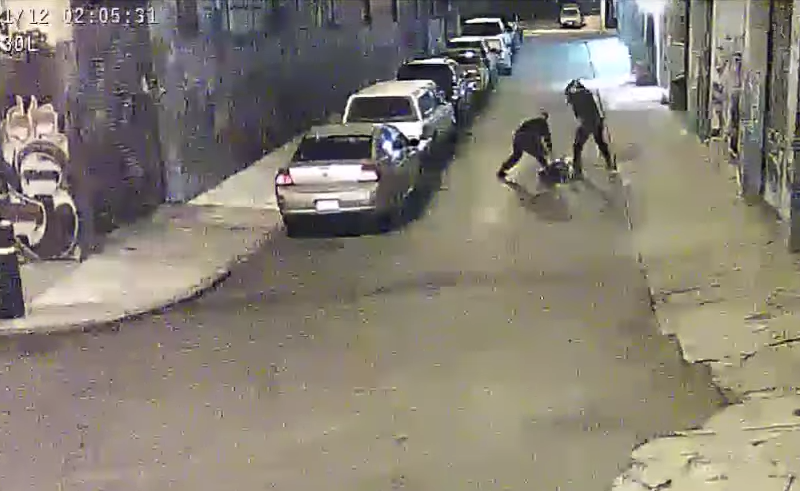
"caption": "Frame from video showing Alameda County sheriff's deputies beating car theft suspect Stanislav Petrov on Nov. 12, 2015. ",
"description": "Frame from video showing Alameda County sheriff's deputies beating car theft suspect Stanislav Petrov on Nov. 12, 2015. ",
"title": "Stanislav Petrov-Alameda County Deputies",
"credit": "San Francisco Public Defender",
"status": "inherit",
"isLoading": false,
"fetchFailed": false
},
"news_11656630": {
"type": "attachments",
"id": "news_11656630",
"meta": {
"index": "attachments_1716263798",
"site": "news",
"id": "11656630",
"found": true
},
"parent": 11656627,
"imgSizes": {
"small": {
"file": "https://ww2.kqed.org/app/uploads/sites/10/2018/03/subverting_031918_final-520x397.jpg",
"width": 520,
"mimeType": "image/jpeg",
"height": 397
},
"twentyfourteen-full-width": {
"file": "https://ww2.kqed.org/app/uploads/sites/10/2018/03/subverting_031918_final-1038x576.jpg",
"width": 1038,
"mimeType": "image/jpeg",
"height": 576
},
"thumbnail": {
"file": "https://ww2.kqed.org/app/uploads/sites/10/2018/03/subverting_031918_final-160x122.jpg",
"width": 160,
"mimeType": "image/jpeg",
"height": 122
},
"fd-sm": {
"file": "https://ww2.kqed.org/app/uploads/sites/10/2018/03/subverting_031918_final-960x733.jpg",
"width": 960,
"mimeType": "image/jpeg",
"height": 733
},
"post-thumbnail": {
"file": "https://ww2.kqed.org/app/uploads/sites/10/2018/03/subverting_031918_final-672x372.jpg",
"width": 672,
"mimeType": "image/jpeg",
"height": 372
},
"xsmall": {
"file": "https://ww2.kqed.org/app/uploads/sites/10/2018/03/subverting_031918_final-375x286.jpg",
"width": 375,
"mimeType": "image/jpeg",
"height": 286
},
"kqedFullSize": {
"file": "https://ww2.kqed.org/app/uploads/sites/10/2018/03/subverting_031918_final.jpg",
"width": 1920,
"height": 1465
},
"large": {
"file": "https://ww2.kqed.org/app/uploads/sites/10/2018/03/subverting_031918_final-1020x778.jpg",
"width": 1020,
"mimeType": "image/jpeg",
"height": 778
},
"xlarge": {
"file": "https://ww2.kqed.org/app/uploads/sites/10/2018/03/subverting_031918_final-1180x900.jpg",
"width": 1180,
"mimeType": "image/jpeg",
"height": 900
},
"guest-author-50": {
"file": "https://ww2.kqed.org/app/uploads/sites/10/2018/03/subverting_031918_final-50x50.jpg",
"width": 50,
"mimeType": "image/jpeg",
"height": 50
},
"guest-author-96": {
"file": "https://ww2.kqed.org/app/uploads/sites/10/2018/03/subverting_031918_final-96x96.jpg",
"width": 96,
"mimeType": "image/jpeg",
"height": 96
},
"medium": {
"file": "https://ww2.kqed.org/app/uploads/sites/10/2018/03/subverting_031918_final-800x610.jpg",
"width": 800,
"mimeType": "image/jpeg",
"height": 610
},
"guest-author-64": {
"file": "https://ww2.kqed.org/app/uploads/sites/10/2018/03/subverting_031918_final-64x64.jpg",
"width": 64,
"mimeType": "image/jpeg",
"height": 64
},
"guest-author-32": {
"file": "https://ww2.kqed.org/app/uploads/sites/10/2018/03/subverting_031918_final-32x32.jpg",
"width": 32,
"mimeType": "image/jpeg",
"height": 32
},
"fd-lrg": {
"file": "https://ww2.kqed.org/app/uploads/sites/10/2018/03/subverting_031918_final-1920x1465.jpg",
"width": 1920,
"mimeType": "image/jpeg",
"height": 1465
},
"fd-med": {
"file": "https://ww2.kqed.org/app/uploads/sites/10/2018/03/subverting_031918_final-1180x900.jpg",
"width": 1180,
"mimeType": "image/jpeg",
"height": 900
},
"full-width": {
"file": "https://ww2.kqed.org/app/uploads/sites/10/2018/03/subverting_031918_final-1920x1465.jpg",
"width": 1920,
"mimeType": "image/jpeg",
"height": 1465
},
"detail": {
"file": "https://ww2.kqed.org/app/uploads/sites/10/2018/03/subverting_031918_final-150x150.jpg",
"width": 150,
"mimeType": "image/jpeg",
"height": 150
},
"guest-author-128": {
"file": "https://ww2.kqed.org/app/uploads/sites/10/2018/03/subverting_031918_final-128x128.jpg",
"width": 128,
"mimeType": "image/jpeg",
"height": 128
},
"xxsmall": {
"file": "https://ww2.kqed.org/app/uploads/sites/10/2018/03/subverting_031918_final-240x183.jpg",
"width": 240,
"mimeType": "image/jpeg",
"height": 183
}
},
"publishDate": 1521493264,
"modified": 1521493283,
"caption": null,
"description": null,
"title": "subverting_031918_final",
"credit": null,
"status": "inherit",
"isLoading": false,
"fetchFailed": false
},
"news_11652536": {
"type": "attachments",
"id": "news_11652536",
"meta": {
"index": "attachments_1716263798",
"site": "news",
"id": "11652536",
"found": true
},
"parent": 11652522,
"imgSizes": {
"small": {
"file": "https://ww2.kqed.org/app/uploads/sites/10/2018/02/JohnKelly-520x345.jpg",
"width": 520,
"mimeType": "image/jpeg",
"height": 345
},
"twentyfourteen-full-width": {
"file": "https://ww2.kqed.org/app/uploads/sites/10/2018/02/JohnKelly-1038x576.jpg",
"width": 1038,
"mimeType": "image/jpeg",
"height": 576
},
"thumbnail": {
"file": "https://ww2.kqed.org/app/uploads/sites/10/2018/02/JohnKelly-160x106.jpg",
"width": 160,
"mimeType": "image/jpeg",
"height": 106
},
"fd-sm": {
"file": "https://ww2.kqed.org/app/uploads/sites/10/2018/02/JohnKelly-960x638.jpg",
"width": 960,
"mimeType": "image/jpeg",
"height": 638
},
"post-thumbnail": {
"file": "https://ww2.kqed.org/app/uploads/sites/10/2018/02/JohnKelly-672x372.jpg",
"width": 672,
"mimeType": "image/jpeg",
"height": 372
},
"xsmall": {
"file": "https://ww2.kqed.org/app/uploads/sites/10/2018/02/JohnKelly-375x249.jpg",
"width": 375,
"mimeType": "image/jpeg",
"height": 249
},
"kqedFullSize": {
"file": "https://ww2.kqed.org/app/uploads/sites/10/2018/02/JohnKelly.jpg",
"width": 1920,
"height": 1275
},
"large": {
"file": "https://ww2.kqed.org/app/uploads/sites/10/2018/02/JohnKelly-1020x677.jpg",
"width": 1020,
"mimeType": "image/jpeg",
"height": 677
},
"xlarge": {
"file": "https://ww2.kqed.org/app/uploads/sites/10/2018/02/JohnKelly-1180x784.jpg",
"width": 1180,
"mimeType": "image/jpeg",
"height": 784
},
"guest-author-50": {
"file": "https://ww2.kqed.org/app/uploads/sites/10/2018/02/JohnKelly-50x50.jpg",
"width": 50,
"mimeType": "image/jpeg",
"height": 50
},
"guest-author-96": {
"file": "https://ww2.kqed.org/app/uploads/sites/10/2018/02/JohnKelly-96x96.jpg",
"width": 96,
"mimeType": "image/jpeg",
"height": 96
},
"medium": {
"file": "https://ww2.kqed.org/app/uploads/sites/10/2018/02/JohnKelly-800x531.jpg",
"width": 800,
"mimeType": "image/jpeg",
"height": 531
},
"guest-author-64": {
"file": "https://ww2.kqed.org/app/uploads/sites/10/2018/02/JohnKelly-64x64.jpg",
"width": 64,
"mimeType": "image/jpeg",
"height": 64
},
"guest-author-32": {
"file": "https://ww2.kqed.org/app/uploads/sites/10/2018/02/JohnKelly-32x32.jpg",
"width": 32,
"mimeType": "image/jpeg",
"height": 32
},
"fd-lrg": {
"file": "https://ww2.kqed.org/app/uploads/sites/10/2018/02/JohnKelly-1920x1275.jpg",
"width": 1920,
"mimeType": "image/jpeg",
"height": 1275
},
"fd-med": {
"file": "https://ww2.kqed.org/app/uploads/sites/10/2018/02/JohnKelly-1180x784.jpg",
"width": 1180,
"mimeType": "image/jpeg",
"height": 784
},
"full-width": {
"file": "https://ww2.kqed.org/app/uploads/sites/10/2018/02/JohnKelly-1920x1275.jpg",
"width": 1920,
"mimeType": "image/jpeg",
"height": 1275
},
"detail": {
"file": "https://ww2.kqed.org/app/uploads/sites/10/2018/02/JohnKelly-150x150.jpg",
"width": 150,
"mimeType": "image/jpeg",
"height": 150
},
"guest-author-128": {
"file": "https://ww2.kqed.org/app/uploads/sites/10/2018/02/JohnKelly-128x128.jpg",
"width": 128,
"mimeType": "image/jpeg",
"height": 128
},
"xxsmall": {
"file": "https://ww2.kqed.org/app/uploads/sites/10/2018/02/JohnKelly-240x159.jpg",
"width": 240,
"mimeType": "image/jpeg",
"height": 159
}
},
"publishDate": 1519764520,
"modified": 1519764617,
"caption": "Last year, then-Homeland Security Secretary John Kelly said the Trump administration was considering a plan to separate families in its custody as a way to deter more people from coming to the U.S.",
"description": "Last year, then-Homeland Security Secretary John Kelly said the Trump administration was considering a plan to separate families in its custody as a way to deter more people from coming to the U.S.",
"title": "JohnKelly",
"credit": "Chip Somodevilla/Getty Images",
"status": "inherit",
"isLoading": false,
"fetchFailed": false
},
"news_11655683": {
"type": "attachments",
"id": "news_11655683",
"meta": {
"index": "attachments_1716263798",
"site": "news",
"id": "11655683",
"found": true
},
"parent": 11655297,
"imgSizes": {
"small": {
"file": "https://ww2.kqed.org/app/uploads/sites/10/2018/03/DYRZ5D-UMAAEj0x-520x390.jpg",
"width": 520,
"mimeType": "image/jpeg",
"height": 390
},
"twentyfourteen-full-width": {
"file": "https://ww2.kqed.org/app/uploads/sites/10/2018/03/DYRZ5D-UMAAEj0x-1038x576.jpg",
"width": 1038,
"mimeType": "image/jpeg",
"height": 576
},
"thumbnail": {
"file": "https://ww2.kqed.org/app/uploads/sites/10/2018/03/DYRZ5D-UMAAEj0x-160x120.jpg",
"width": 160,
"mimeType": "image/jpeg",
"height": 120
},
"fd-sm": {
"file": "https://ww2.kqed.org/app/uploads/sites/10/2018/03/DYRZ5D-UMAAEj0x-960x720.jpg",
"width": 960,
"mimeType": "image/jpeg",
"height": 720
},
"post-thumbnail": {
"file": "https://ww2.kqed.org/app/uploads/sites/10/2018/03/DYRZ5D-UMAAEj0x-672x372.jpg",
"width": 672,
"mimeType": "image/jpeg",
"height": 372
},
"xsmall": {
"file": "https://ww2.kqed.org/app/uploads/sites/10/2018/03/DYRZ5D-UMAAEj0x-375x281.jpg",
"width": 375,
"mimeType": "image/jpeg",
"height": 281
},
"kqedFullSize": {
"file": "https://ww2.kqed.org/app/uploads/sites/10/2018/03/DYRZ5D-UMAAEj0x.jpg",
"width": 1200,
"height": 900
},
"large": {
"file": "https://ww2.kqed.org/app/uploads/sites/10/2018/03/DYRZ5D-UMAAEj0x-1020x765.jpg",
"width": 1020,
"mimeType": "image/jpeg",
"height": 765
},
"xlarge": {
"file": "https://ww2.kqed.org/app/uploads/sites/10/2018/03/DYRZ5D-UMAAEj0x-1180x885.jpg",
"width": 1180,
"mimeType": "image/jpeg",
"height": 885
},
"guest-author-50": {
"file": "https://ww2.kqed.org/app/uploads/sites/10/2018/03/DYRZ5D-UMAAEj0x-50x50.jpg",
"width": 50,
"mimeType": "image/jpeg",
"height": 50
},
"guest-author-96": {
"file": "https://ww2.kqed.org/app/uploads/sites/10/2018/03/DYRZ5D-UMAAEj0x-96x96.jpg",
"width": 96,
"mimeType": "image/jpeg",
"height": 96
},
"medium": {
"file": "https://ww2.kqed.org/app/uploads/sites/10/2018/03/DYRZ5D-UMAAEj0x-800x600.jpg",
"width": 800,
"mimeType": "image/jpeg",
"height": 600
},
"guest-author-64": {
"file": "https://ww2.kqed.org/app/uploads/sites/10/2018/03/DYRZ5D-UMAAEj0x-64x64.jpg",
"width": 64,
"mimeType": "image/jpeg",
"height": 64
},
"guest-author-32": {
"file": "https://ww2.kqed.org/app/uploads/sites/10/2018/03/DYRZ5D-UMAAEj0x-32x32.jpg",
"width": 32,
"mimeType": "image/jpeg",
"height": 32
},
"fd-med": {
"file": "https://ww2.kqed.org/app/uploads/sites/10/2018/03/DYRZ5D-UMAAEj0x-1180x885.jpg",
"width": 1180,
"mimeType": "image/jpeg",
"height": 885
},
"detail": {
"file": "https://ww2.kqed.org/app/uploads/sites/10/2018/03/DYRZ5D-UMAAEj0x-150x150.jpg",
"width": 150,
"mimeType": "image/jpeg",
"height": 150
},
"guest-author-128": {
"file": "https://ww2.kqed.org/app/uploads/sites/10/2018/03/DYRZ5D-UMAAEj0x-128x128.jpg",
"width": 128,
"mimeType": "image/jpeg",
"height": 128
},
"xxsmall": {
"file": "https://ww2.kqed.org/app/uploads/sites/10/2018/03/DYRZ5D-UMAAEj0x-240x180.jpg",
"width": 240,
"mimeType": "image/jpeg",
"height": 180
}
},
"publishDate": 1521055779,
"modified": 1521416223,
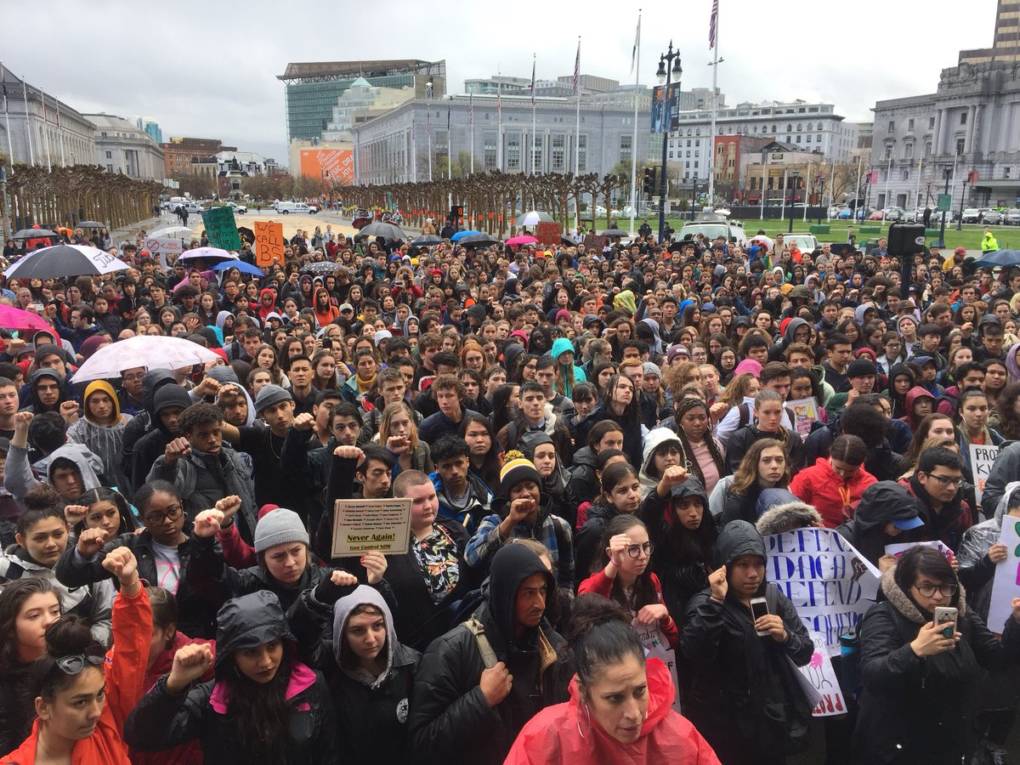
"caption": "Students from various schools across San Francisco walked out of their schools on March 14, 2018 and marched to Civic Center.",
"description": "Students from various schools across San Francisco walked out of their schools on March 14, 2018 and marched to Civic Center.",
"title": "DYRZ5D-UMAAEj0x",
"credit": "Erika Aguilar/KQED",
"status": "inherit",
"isLoading": false,
"fetchFailed": false
},
"news_11655970": {
"type": "attachments",
"id": "news_11655970",
"meta": {
"index": "attachments_1716263798",
"site": "news",
"id": "11655970",
"found": true
},
"parent": 11655692,
"imgSizes": {
"small": {
"file": "https://ww2.kqed.org/app/uploads/sites/10/2019/03/RS29876_untitled-12-qut-520x347.jpg",
"width": 520,
"mimeType": "image/jpeg",
"height": 347
},
"twentyfourteen-full-width": {
"file": "https://ww2.kqed.org/app/uploads/sites/10/2019/03/RS29876_untitled-12-qut-1038x576.jpg",
"width": 1038,
"mimeType": "image/jpeg",
"height": 576
},
"thumbnail": {
"file": "https://ww2.kqed.org/app/uploads/sites/10/2019/03/RS29876_untitled-12-qut-160x107.jpg",
"width": 160,
"mimeType": "image/jpeg",
"height": 107
},
"fd-sm": {
"file": "https://ww2.kqed.org/app/uploads/sites/10/2019/03/RS29876_untitled-12-qut-960x640.jpg",
"width": 960,
"mimeType": "image/jpeg",
"height": 640
},
"post-thumbnail": {
"file": "https://ww2.kqed.org/app/uploads/sites/10/2019/03/RS29876_untitled-12-qut-672x372.jpg",
"width": 672,
"mimeType": "image/jpeg",
"height": 372
},
"xsmall": {
"file": "https://ww2.kqed.org/app/uploads/sites/10/2019/03/RS29876_untitled-12-qut-375x250.jpg",
"width": 375,
"mimeType": "image/jpeg",
"height": 250
},
"kqedFullSize": {
"file": "https://ww2.kqed.org/app/uploads/sites/10/2019/03/RS29876_untitled-12-qut.jpg",
"width": 1920,
"height": 1280
},
"large": {
"file": "https://ww2.kqed.org/app/uploads/sites/10/2019/03/RS29876_untitled-12-qut-1020x680.jpg",
"width": 1020,
"mimeType": "image/jpeg",
"height": 680
},
"xlarge": {
"file": "https://ww2.kqed.org/app/uploads/sites/10/2019/03/RS29876_untitled-12-qut-1180x787.jpg",
"width": 1180,
"mimeType": "image/jpeg",
"height": 787
},
"guest-author-50": {
"file": "https://ww2.kqed.org/app/uploads/sites/10/2019/03/RS29876_untitled-12-qut-50x50.jpg",
"width": 50,
"mimeType": "image/jpeg",
"height": 50
},
"guest-author-96": {
"file": "https://ww2.kqed.org/app/uploads/sites/10/2019/03/RS29876_untitled-12-qut-96x96.jpg",
"width": 96,
"mimeType": "image/jpeg",
"height": 96
},
"medium": {
"file": "https://ww2.kqed.org/app/uploads/sites/10/2019/03/RS29876_untitled-12-qut-800x533.jpg",
"width": 800,
"mimeType": "image/jpeg",
"height": 533
},
"guest-author-64": {
"file": "https://ww2.kqed.org/app/uploads/sites/10/2019/03/RS29876_untitled-12-qut-64x64.jpg",
"width": 64,
"mimeType": "image/jpeg",
"height": 64
},
"guest-author-32": {
"file": "https://ww2.kqed.org/app/uploads/sites/10/2019/03/RS29876_untitled-12-qut-32x32.jpg",
"width": 32,
"mimeType": "image/jpeg",
"height": 32
},
"fd-lrg": {
"file": "https://ww2.kqed.org/app/uploads/sites/10/2019/03/RS29876_untitled-12-qut-1920x1280.jpg",
"width": 1920,
"mimeType": "image/jpeg",
"height": 1280
},
"fd-med": {
"file": "https://ww2.kqed.org/app/uploads/sites/10/2019/03/RS29876_untitled-12-qut-1180x787.jpg",
"width": 1180,
"mimeType": "image/jpeg",
"height": 787
},
"full-width": {
"file": "https://ww2.kqed.org/app/uploads/sites/10/2019/03/RS29876_untitled-12-qut-1920x1280.jpg",
"width": 1920,
"mimeType": "image/jpeg",
"height": 1280
},
"detail": {
"file": "https://ww2.kqed.org/app/uploads/sites/10/2019/03/RS29876_untitled-12-qut-150x150.jpg",
"width": 150,
"mimeType": "image/jpeg",
"height": 150
},
"guest-author-128": {
"file": "https://ww2.kqed.org/app/uploads/sites/10/2019/03/RS29876_untitled-12-qut-128x128.jpg",
"width": 128,
"mimeType": "image/jpeg",
"height": 128
},
"xxsmall": {
"file": "https://ww2.kqed.org/app/uploads/sites/10/2019/03/RS29876_untitled-12-qut-240x160.jpg",
"width": 240,
"mimeType": "image/jpeg",
"height": 160
}
},
"publishDate": 1521138392,
"modified": 1521336865,
"caption": "Hundreds of Oakland Technical High School students hold a walkout on March 14, 2018 to protest gun violence one month after the Parkland, Florida mass shooting left 17 dead.",
"description": "Hundreds of Oakland Technical High School students hold a walkout on March 14, 2018 to protest gun violence one month after the Parkland, Florida mass shooting left 17 dead.",
"title": "RS29876_untitled-12-qut",
"credit": "Samantha Shanahan/KQED",
"status": "inherit",
"isLoading": false,
"fetchFailed": false
}
},
"audioPlayerReducer": {
"postId": "stream_live",
"isPaused": true,
"isPlaying": false,
"pfsActive": false,
"pledgeModalIsOpen": true,
"playerDrawerIsOpen": false,
"liveAudioPlayStartedAt": 0,
"liveAudioPlayContext": ""
},
"authorsReducer": {
"byline_news_11657090": {
"type": "authors",
"id": "byline_news_11657090",
"meta": {
"override": true
},
"slug": "byline_news_11657090",
"name": "\u003cstrong>Alina Selyukh\u003c/strong>",
"isLoading": false
},
"byline_news_11656933": {
"type": "authors",
"id": "byline_news_11656933",
"meta": {
"override": true
},
"slug": "byline_news_11656933",
"name": "\u003cstrong>\u003ca href=\"http://www.scpr.org/about/people/staff/frank-stoltze\">Frank Stoltze\u003c/a>\u003c/strong>",
"isLoading": false
},
"byline_news_11656836": {
"type": "authors",
"id": "byline_news_11656836",
"meta": {
"override": true
},
"slug": "byline_news_11656836",
"name": "Scott Neuman",
"isLoading": false
},
"byline_news_11656813": {
"type": "authors",
"id": "byline_news_11656813",
"meta": {
"override": true
},
"slug": "byline_news_11656813",
"name": "Nina Totenberg",
"isLoading": false
},
"byline_news_11656503": {
"type": "authors",
"id": "byline_news_11656503",
"meta": {
"override": true
},
"slug": "byline_news_11656503",
"name": "Associated Press",
"isLoading": false
},
"byline_news_11656512": {
"type": "authors",
"id": "byline_news_11656512",
"meta": {
"override": true
},
"slug": "byline_news_11656512",
"name": "\u003cstrong>\u003ca href=\"https://twitter.com/raquelmdillon?lang=en\">Raquel Maria Dillon\u003c/a>\u003c/strong>",
"isLoading": false
},
"aemslie": {
"type": "authors",
"id": "3206",
"meta": {
"index": "authors_1716337520",
"id": "3206",
"found": true
},
"name": "Alex Emslie",
"firstName": "Alex",
"lastName": "Emslie",
"slug": "aemslie",
"email": "aemslie@kqed.org",
"display_author_email": true,
"staff_mastheads": [
"news"
],
"title": "KQED Senior Editor",
"bio": "Alex Emslie is senior editor of talent and development at KQED, where he manages dozens of early career journalists and oversees news department internships.\r\n\r\nHe is a former carpenter and proud graduate of City College of San Francisco and San Francisco State University, where he studied journalism and criminal justice before joining KQED in 2013.\r\n\r\nAlex produced investigative journalism focused on \u003ca href=\"https://www.kqed.org/news/11667594/the-trials-of-marvin-mutch-video\">criminal justice\u003c/a> and policing for most of a decade. He has broken major stories about \u003ca href=\"https://www.kqed.org/news/135682/amid-a-series-of-vallejo-police-shootings-one-officers-name-stands-out\">police use of deadly force\u003c/a>, \u003ca href=\"https://www.kqed.org/news/10454955/racist-texts-prompt-sfpd-internal-investigation\">officer misconduct\u003c/a> and \u003ca href=\"https://www.kqed.org/news/11712239/terrorist-or-troll-judge-to-weigh-whether-oakland-man-really-intended-to-attack-bay-area\">other\u003c/a> \u003ca href=\"https://www.kqed.org/news/11221414/hayward-paid-159000-to-husband-of-retired-police-chief-documents-show\">high\u003c/a>-\u003ca href=\"https://www.kqed.org/news/10622762/the-forgotten-tracking-two-homicides-in-san-francisco-public-housing\">profile\u003c/a> \u003ca href=\"https://www.kqed.org/news/11624516/federal-agency-promoted-ranger-just-months-after-his-gun-was-stolen-and-used-in-steinle-killing\">cases\u003c/a>. He co-founded the \u003ca href=\"https://projects.scpr.org/california-reporting-project/\">California Reporting Project\u003c/a> in 2019 to obtain and report on previously confidential police internal investigations. The effort produced well over 100 original stories and changed the course of multiple criminal cases.\r\n\r\nHis work has been recognized with numerous journalism awards, including a national Edward R. Murrow award for several years of \u003ca href=\"https://www.kqed.org/news/11688481/sfpd-officers-in-mario-woods-case-recount-shooting-in-newly-filed-depositions\">reporting\u003c/a> on the San Francisco Police shooting of Mario Woods. His \u003ca href=\"https://www.kqed.org/news/147854/half-of-those-killed-by-san-francisco-police-are-mentally-ill\">reporting\u003c/a> on police killings of people in psychiatric crisis was cited in amicus briefs before the U.S. Supreme Court.\r\n\r\nAlex now enjoys mentoring the next generation of journalists at KQED.",
"avatar": "https://secure.gravatar.com/avatar/e691e65209f20e9da202bd730ead5663?s=600&d=blank&r=g",
"twitter": "SFNewsReporter",
"facebook": null,
"instagram": null,
"linkedin": null,
"sites": [
{
"site": "arts",
"roles": [
"editor"
]
},
{
"site": "news",
"roles": [
"editor"
]
},
{
"site": "mindshift",
"roles": [
"editor"
]
},
{
"site": "stateofhealth",
"roles": [
"editor"
]
},
{
"site": "science",
"roles": [
"administrator"
]
}
],
"headData": {
"title": "Alex Emslie | KQED",
"description": "KQED Senior Editor",
"ogImgSrc": "https://secure.gravatar.com/avatar/e691e65209f20e9da202bd730ead5663?s=600&d=blank&r=g",
"twImgSrc": "https://secure.gravatar.com/avatar/e691e65209f20e9da202bd730ead5663?s=600&d=blank&r=g"
},
"isLoading": false,
"link": "/author/aemslie"
},
"markfiore": {
"type": "authors",
"id": "3236",
"meta": {
"index": "authors_1716337520",
"id": "3236",
"found": true
},
"name": "Mark Fiore",
"firstName": "Mark",
"lastName": "Fiore",
"slug": "markfiore",
"email": "mark@markfiore.com",
"display_author_email": false,
"staff_mastheads": [
"news"
],
"title": "KQED News Cartoonist",
"bio": "\u003ca href=\"http://www.MarkFiore.com\">MarkFiore.com\u003c/a> | \u003ca href=\"https://twitter.com/markfiore\">Follow on Twitter\u003c/a> | \u003ca href=\"https://www.facebook.com/pages/Mark-Fiore-Animated-Political-Cartoons/94451707396?ref=bookmarks\">Facebook\u003c/a> | \u003ca href=\"mailto:mark@markfiore.com\">email\u003c/a>\r\n\r\nPulitzer Prize-winner, Mark Fiore, who the Wall Street Journal has called “the undisputed guru of the form,” creates animated political cartoons in San Francisco, where his work has been featured regularly on the San Francisco Chronicle’s web site, SFGate.com. His work has appeared on Newsweek.com, Slate.com, CBSNews.com, MotherJones.com, DailyKos.com and NPR’s web site. Fiore’s political animation has appeared on CNN, Frontline, Bill Moyers Journal, Salon.com and cable and broadcast outlets across the globe.\r\n\r\nBeginning his professional life by drawing traditional political cartoons for newspapers, Fiore’s work appeared in publications ranging from the Washington Post to the Los Angeles Times. In the late 1990s, he began to experiment with animating political cartoons and, after a short stint at the San Jose Mercury News as their staff cartoonist, Fiore devoted all his energies to animation.\r\nGrowing up in California, Fiore also spent a good portion of his life in the backwoods of Idaho. It was this combination that shaped him politically. Mark majored in political science at Colorado College, where, in a perfect send-off for a cartoonist, he received his diploma in 1991 as commencement speaker Dick Cheney smiled approvingly.\r\nMark Fiore was awarded the Pulitzer Prize for political cartooning in 2010, a Robert F. Kennedy Journalism Award in 2004 and has twice received an Online Journalism Award for commentary from the Online News Association (2002, 2008). Fiore has received two awards for his work in new media from the National Cartoonists Society (2001, 2002), and in 2006 received The James Madison Freedom of Information Award from The Society of Professional Journalists.",
"avatar": "https://secure.gravatar.com/avatar/fc4e2a612b15b67bad0c6f0e1db4ca9b?s=600&d=blank&r=g",
"twitter": "MarkFiore",
"facebook": null,
"instagram": "https://www.instagram.com/markfiore/?hl=en",
"linkedin": null,
"sites": [
{
"site": "arts",
"roles": [
"contributor"
]
},
{
"site": "news",
"roles": [
"editor"
]
},
{
"site": "futureofyou",
"roles": [
"editor"
]
},
{
"site": "science",
"roles": [
"editor"
]
}
],
"headData": {
"title": "Mark Fiore | KQED",
"description": "KQED News Cartoonist",
"ogImgSrc": "https://secure.gravatar.com/avatar/fc4e2a612b15b67bad0c6f0e1db4ca9b?s=600&d=blank&r=g",
"twImgSrc": "https://secure.gravatar.com/avatar/fc4e2a612b15b67bad0c6f0e1db4ca9b?s=600&d=blank&r=g"
},
"isLoading": false,
"link": "/author/markfiore"
},
"rlevi": {
"type": "authors",
"id": "11260",
"meta": {
"index": "authors_1716337520",
"id": "11260",
"found": true
},
"name": "Ryan Levi",
"firstName": "Ryan",
"lastName": "Levi",
"slug": "rlevi",
"email": "rlevi@KQED.org",
"display_author_email": false,
"staff_mastheads": [],
"title": "KQED Contributor",
"bio": "Ryan Levi was a reporter and podcast producer at KQED News from 2016-2019. He worked on \u003ca href=\"https://www.kqed.org/news/series/baycurious\">Bay Curious\u003c/a>, \u003ca href=\"https://www.kqed.org/news/tag/the-bay/\">The Bay, \u003c/a>and \u003ca href=\"https://podcasts.apple.com/us/podcast/the-california-report-magazine/id1314750545\">The California Report Magazine\u003c/a>, as well as hosting and producing the weekly \u003ca href=\"https://www.kqed.org/news/program/qedup/\">Q'ed Up podcast. \u003c/a>He also helped inaugurate KQED's weekend news coverage in 2017 as one of two original digital producers. Ryan holds degrees in multimedia journalism and Spanish from the University of Missouri.",
"avatar": "https://secure.gravatar.com/avatar/4cb2ddd028ac8807d1adf09609c5555d?s=600&d=blank&r=g",
"twitter": "ryan_levi",
"facebook": null,
"instagram": null,
"linkedin": null,
"sites": [
{
"site": "arts",
"roles": [
"editor"
]
},
{
"site": "news",
"roles": [
"subscriber"
]
},
{
"site": "stateofhealth",
"roles": [
"editor"
]
},
{
"site": "science",
"roles": [
"editor"
]
},
{
"site": "forum",
"roles": [
"administrator"
]
},
{
"site": "perspectives",
"roles": [
"administrator"
]
}
],
"headData": {
"title": "Ryan Levi | KQED",
"description": "KQED Contributor",
"ogImgSrc": "https://secure.gravatar.com/avatar/4cb2ddd028ac8807d1adf09609c5555d?s=600&d=blank&r=g",
"twImgSrc": "https://secure.gravatar.com/avatar/4cb2ddd028ac8807d1adf09609c5555d?s=600&d=blank&r=g"
},
"isLoading": false,
"link": "/author/rlevi"
}
},
"pagesReducer": {
"news_category_law-and-justice": {
"type": "terms",
"id": "news_6188",
"meta": {
"index": "terms_1716263798",
"site": "news",
"id": "6188",
"score": 13.558331
},
"featImg": null,
"name": "Law and Justice",
"description": null,
"taxonomy": "category",
"headData": {
"twImgId": null,
"twTitle": null,
"ogTitle": null,
"ogImgId": null,
"twDescription": null,
"description": null,
"title": "Law and Justice Archives | KQED News",
"ogDescription": null
},
"ttid": 6212,
"slug": "law-and-justice",
"isLoading": false,
"title": "Law and Justice",
"pageMeta": {
"site": "news",
"WpPageTemplate": "page-topic-editorial",
"currentPage": 263
},
"blocks": [
{
"blockName": "kqed/post-list",
"attrs": {
"layout": "cardArticle2",
"query": "posts/news?category=law-and-justice",
"seeMore": false,
"paginated": true,
"page": 263
}
},
{
"blockName": "kqed/ad"
}
]
}
},
"pfsSessionReducer": {},
"postsReducer": {
"stream_live": {
"type": "live",
"id": "stream_live",
"audioUrl": "https://streams.kqed.org/kqedradio",
"title": "Live Stream",
"excerpt": "Live Stream information currently unavailable.",
"link": "/radio",
"featImg": "",
"label": {
"name": "KQED Live",
"link": "/"
}
},
"stream_kqedNewscast": {
"type": "posts",
"id": "stream_kqedNewscast",
"audioUrl": "https://www.kqed.org/.stream/anon/radio/RDnews/newscast.mp3?_=1",
"title": "KQED Newscast",
"featImg": "",
"label": {
"name": "88.5 FM",
"link": "/"
}
},
"news_11656894": {
"type": "posts",
"id": "news_11656894",
"meta": {
"index": "posts_1716263798",
"site": "news",
"id": "11656894",
"score": null,
"sort": [
1521670618000
]
},
"parent": 0,
"labelTerm": {
"site": "news",
"term": 72
},
"blocks": [],
"publishDate": 1521670618,
"format": "standard",
"disqusTitle": "S.F. Officer's Testimony Allowed to Stand -- Despite Episode of Misconduct, Dishonesty",
"title": "S.F. Officer's Testimony Allowed to Stand -- Despite Episode of Misconduct, Dishonesty",
"headTitle": "The California Report | KQED News",
"content": "\u003cp>A Superior Court judge has chastised the San Francisco district attorney's office for withholding \"damning\" information about a key police witness in a criminal case.\u003c/p>\n\u003cp>That witness, a veteran San Francisco Police Department officer and high-ranking member of the city's police union, was once disciplined for misconduct and dishonest testimony and apparently lied about that history during a recent preliminary hearing.\u003c/p>\n\u003cp>Judge Ross Moody told prosecutors last Friday he was troubled by their failure to inform attorneys for a defendant facing trial on firearms charges about Officer James Trail's history.\u003c/p>\n\u003cp>But Moody also ruled that despite that history, Trail's testimony in a December preliminary hearing was enough to hold the defendant for trial.\u003c/p>\n\u003cp>Moody's ruling came despite evidence that Trail, a veteran of Ingleside Station and member of the Police Officers' Association board of directors, was untruthful about that misconduct during the preliminary hearing.\u003c/p>\n\u003cp>[ad fullwidth]\u003c/p>\n\u003cp>\"What would ever be enough to overcome an officer’s testimony?\" Deputy San Francisco Public Defender Chesa Boudin asked Moody after he made his ruling.\u003c/p>\n\u003cp>Boudin, defending 20-year-old Quinntez Woodson in the firearms case, also raised questions about Trail's credibility at the December preliminary hearing. But because of the apparent 14-year failure by the Police Department to notify defense attorneys about a 2004 misconduct episode involving Trail, he didn't know the full scope of the officer's history.\u003c/p>\n\u003cp>The department appears to have omitted Trail from a non-public list of officers with records of misconduct that could result in challenges to their credibility in court.\u003c/p>\n\u003caside class=\"pullquote alignright\">\u003cspan style=\"font-size: x-large\">\u003cstrong>'When you allow the Police Department to be its own guardian, ... you end up with situations like this, where an officer with a detailed track record -- many hundreds of pages documenting his misconduct -- is somehow accidentally left off the Brady list for 14 years.'\u003c/strong>\u003c/span>\u003ccite>Chesa Boudin,\u003cbr>\nDeputy San Francisco Public Defender\u003c/cite>\u003c/aside>\n\u003cp>Trail was left off the list despite an official finding that he lied in a police report and to investigators about shooting a suspect in 2004. He did not respond to a request for comment.\u003c/p>\n\u003cp>Prosecutors have a legal duty to disclose that kind of information to defense attorneys under the landmark 1963 U.S. Supreme Court case \u003ca href=\"https://www.oyez.org/cases/1962/490\" target=\"_blank\" rel=\"noopener\">Brady v. Maryland\u003c/a>. But that obligation conflicts with a host of California state laws that keep peace officer personnel files so secret that even district attorneys don't have access to them.\u003c/p>\n\u003cp>But Trail's history was known to higher-ups in the San Francisco District Attorney's Office, including DA George Gascón, before the officer testified in the Woodson case in December. As police chief, Gascón participated in a probe of Trail's misconduct case.\u003c/p>\n\u003cp>\u003cstrong>2004 Excelsior District Shooting\u003c/strong>\u003c/p>\n\u003cp>On April 27, 2004, Officer Trail and his partner at the time, Officer Mike Androvich, were patrolling the Sunnydale housing project when they saw a black Chevrolet Monte Carlo believed to be connected to a recent shooting in the neighborhood, according to a transcript of Trail's later testimony.\u003c/p>\n\u003cp>He said he and his partner both recognized the driver, then 37-year-old Robert Lamar Edwards, whom they knew by a different name.\u003c/p>\n\u003cp>\"I said to my partner, who also said to me, 'It's Bobby T.,'\" Trail testified at a hearing to revoke Edwards' probation six months later.\u003c/p>\n\u003cp>Ana Gonzalez, now head of the district attorney's criminal division, was the prosecutor on the case.\u003c/p>\n\u003cp>Trail said he already knew Edwards from when the defendant had \"shot up a liquor store\" and that he had \"chased the suspect over fences\" and \"through back yards.\"\u003c/p>\n\u003cp>What happened next is in question. Trail said Edwards rolled through a stop sign at Sunnydale Avenue and Schwerin Street.\u003c/p>\n\u003cp>Officer Androvich, who was driving, turned the squad car around and pulled up behind Edwards, who stopped. The officers walked up on either side of Edwards' vehicle with their guns drawn.\u003c/p>\n\u003cp>Trail testified that he and his partner both yelled at Edwards to turn his car off. As Trail looked in the passenger-side window, he said he saw what looked like a heavy object covered up by a T-shirt in Edward's lap.\u003c/p>\n\u003cp>\"I thought it was a gun,\" Trail testified. When Edwards hesitated to put his hands out the driver's side window, the officer said, he became concerned.\u003c/p>\n\u003cp>\"I'm afraid he's going to shoot my partner,\" Trail said. So he opened the front passenger door and reached in, attempting \"to grab the gun.\"\u003c/p>\n\u003cp>The officer said Edwards threw the car into reverse, pinning him against the opened car door. Then, he testified, Edwards launched the car forward, with Trail's body mostly outside the car as he held on to the roof with his left hand and the open passenger door with his gun hand.\u003c/p>\n\u003cp>\"I'm holding on for my life,\" Trail said. But he couldn't keep up with the car and began to fall. Shooting Edwards, he said, \"was my only resort.\"\u003c/p>\n\u003cfigure id=\"attachment_11657018\" class=\"wp-caption aligncenter\" style=\"max-width: 654px\">\u003cimg class=\"wp-image-11657018 size-full\" src=\"https://ww2.kqed.org/news/wp-content/uploads/sites/10/2018/03/MTR-1-1.jpg\" alt=\"An excerpt from an Oct. 21, 2004 probation revocation hearing for Robert Edwards, in which defense attorney Christopher Martin questions SFPD Officer John Trail.\" width=\"654\" height=\"437\" srcset=\"https://ww2.kqed.org/app/uploads/sites/10/2018/03/MTR-1-1.jpg 654w, https://ww2.kqed.org/app/uploads/sites/10/2018/03/MTR-1-1-160x107.jpg 160w, https://ww2.kqed.org/app/uploads/sites/10/2018/03/MTR-1-1-240x160.jpg 240w, https://ww2.kqed.org/app/uploads/sites/10/2018/03/MTR-1-1-375x251.jpg 375w, https://ww2.kqed.org/app/uploads/sites/10/2018/03/MTR-1-1-520x347.jpg 520w\" sizes=\"(max-width: 654px) 100vw, 654px\">\u003cfigcaption class=\"wp-caption-text\">An excerpt from an Oct. 21, 2004 probation revocation hearing for Robert Edwards, in which defense attorney Christopher Martin questions SFPD Officer John Trail.\u003c/figcaption>\u003c/figure>\n\u003cp>After letting go of the window to fire a shot, Trail testified that he fell and was dragged by the car, injuring his arm. And Edwards drove away.\u003c/p>\n\u003cp>Edwards was later arrested -- he appears to have turned himself in and was seeking medical attention for a gunshot wound. He faced charges of assault with a deadly weapon, battery against a peace officer and hit and run.\u003c/p>\n\u003cp>But Edwards' defense attorney, Christopher Martin, had another witness -- a telephone-line worker who was parked nearby and saw something completely different.\u003c/p>\n\u003cp>After Trail finished testifying, Martin called Neil White to the stand.\u003c/p>\n\u003cp>\u003cstrong>A Different Story\u003c/strong>\u003c/p>\n\u003cp>According to the court transcript, White told the court he was working at the corner of Schwerin Street and Sunnydale Avenue and noticed a black-and-white SFPD squad car pull alongside Edwards' car in a crosswalk, with the vehicles facing opposite directions.\u003c/p>\n\u003cp>\"They were facing each other,\" White said, \"[It] looked like they were talking.\"\u003c/p>\n\u003cp>Edwards pulled over on his own, White testified, and the squad car made a U-turn and pulled up behind him.\u003c/p>\n\u003cp>Both officers approached the car with their guns drawn, held low and behind the back of their legs, White said. As Trail opened the passenger-side door, White testified, a plume of exhaust belched from the car.\u003c/p>\n\u003cp>\"Whether the car was being started or accelerating, I don't know,\" White said. \"As that happened, he [Trail] opened up the car door and pulled his gun in the car and fired a shot.\"\u003c/p>\n\u003cfigure id=\"attachment_11657020\" class=\"wp-caption aligncenter\" style=\"max-width: 652px\">\u003cimg class=\"size-full wp-image-11657020\" src=\"https://ww2.kqed.org/news/wp-content/uploads/sites/10/2018/03/mtr-2.jpg\" alt=\"An excerpt from an Oct. 21, 2004 probation revocation hearing for Robert Edwards, in which defense attorney Christopher Martin questions witness Neil White.\" width=\"652\" height=\"302\" srcset=\"https://ww2.kqed.org/app/uploads/sites/10/2018/03/mtr-2.jpg 652w, https://ww2.kqed.org/app/uploads/sites/10/2018/03/mtr-2-160x74.jpg 160w, https://ww2.kqed.org/app/uploads/sites/10/2018/03/mtr-2-240x111.jpg 240w, https://ww2.kqed.org/app/uploads/sites/10/2018/03/mtr-2-375x174.jpg 375w, https://ww2.kqed.org/app/uploads/sites/10/2018/03/mtr-2-520x241.jpg 520w\" sizes=\"(max-width: 652px) 100vw, 652px\">\u003cfigcaption class=\"wp-caption-text\">An excerpt from an Oct. 21, 2004 probation revocation hearing for Robert Edwards, in which defense attorney Christopher Martin questions witness Neil White.\u003c/figcaption>\u003c/figure>\n\u003cp>White said the car never backed up, but it did then accelerate forward for 20 or 30 feet, then slowed to almost a stop.\u003c/p>\n\u003cp>At that point, Trail, uninjured, caught up to Edwards' car on foot and grabbed the still-open passenger side door.\u003c/p>\n\u003cp>\"[It] looked like he grabbed a hold of the car door, spun his pistol around inside the car; looked like he was going to fire a second shot,\" White testified. The car sped up again, \"and with the officer's hand on the door, it looked to -- that it drug him to the ground, and he took a tumble on the ground after that.\"\u003c/p>\n\u003cp>At the end of that October 2004 hearing, Edwards stayed out of jail and Trail was facing discipline and a criminal investigation for improperly firing his gun, filing an inaccurate police report and misrepresenting the truth.\u003c/p>\n\u003cp>\u003cstrong>Drawn-Out Discipline, and an Accidental Discovery\u003c/strong>\u003c/p>\n\u003cp>It took the Police Department and the city's Police Commission six years to weigh Trail's case.\u003c/p>\n\u003cp>Deputy Public Defender Chesa Boudin said in court last Friday that a criminal investigation into Trail's actions led by former District Attorney Kamala Harris stretched into mid-2005. Boudin said Ana Gonzalez took part in that investigation. The DA's office eventually declined to pursue charges against Trail.\u003c/p>\n\u003cp>The Police Department named Trail and his partner, Androvich, \u003ca href=\"http://sanfranciscopolice.org/officer-month-july-2005\" target=\"_blank\" rel=\"noopener\">officers of the month\u003c/a> in July 2005 for \"strength of character, compassion, and commitment to the community\" while the Office of Citizen Complaints was still investigating Trail for potential misconduct.\u003c/p>\n\u003cp>In 2009, Trail was \u003ca href=\"http://sanfranciscopolice.org/sites/default/files/FileCenter/Documents/23853-09oct16_ingleside_newsletter.pdf\" target=\"_blank\" rel=\"noopener\">awarded the Police Department's Silver Medal of Valor\u003c/a> for his role in an incident shortly after he shot Edwards in which officers shot and killed a homicide suspect. At the time of the award, the department's misconduct charges were still pending.\u003c/p>\n\u003cfigure id=\"attachment_11656996\" class=\"wp-caption aligncenter\" style=\"max-width: 800px\">\u003cimg class=\"wp-image-11656996 size-medium\" src=\"https://ww2.kqed.org/news/wp-content/uploads/sites/10/2018/03/Late-2010-stipulation-800x115.jpg\" alt=\"\" width=\"800\" height=\"115\" srcset=\"https://ww2.kqed.org/app/uploads/sites/10/2018/03/Late-2010-stipulation-800x115.jpg 800w, https://ww2.kqed.org/app/uploads/sites/10/2018/03/Late-2010-stipulation-160x23.jpg 160w, https://ww2.kqed.org/app/uploads/sites/10/2018/03/Late-2010-stipulation-1020x146.jpg 1020w, https://ww2.kqed.org/app/uploads/sites/10/2018/03/Late-2010-stipulation-960x138.jpg 960w, https://ww2.kqed.org/app/uploads/sites/10/2018/03/Late-2010-stipulation-240x34.jpg 240w, https://ww2.kqed.org/app/uploads/sites/10/2018/03/Late-2010-stipulation-375x54.jpg 375w, https://ww2.kqed.org/app/uploads/sites/10/2018/03/Late-2010-stipulation-520x75.jpg 520w, https://ww2.kqed.org/app/uploads/sites/10/2018/03/Late-2010-stipulation.jpg 1172w\" sizes=\"(max-width: 800px) 100vw, 800px\">\u003cfigcaption class=\"wp-caption-text\">A San Francisco Police Commission document showing charges of misconduct against SFPD Officer James Trail in late 2010.\u003c/figcaption>\u003c/figure>\n\u003cp>Trail eventually admitted to improperly firing his weapon in late 2010, according to Police Commission disciplinary records and multiple sources familiar with the outcome. Investigators' findings that he misrepresented the truth and filed an inaccurate police report were dropped as a result of a sort of plea bargain called a stipulated agreement.\u003c/p>\n\u003cp>Nevertheless, those findings about dishonesty are still considered information that should be turned over to the defense under Brady v. Maryland, a San Francisco Superior Court judge ruled. But until last month, February of this year, they never have been.\u003c/p>\n\u003cp>Generally, records of police officer misconduct and disciplinary proceedings are kept almost entirely secret. Boudin said he believes Trail's name was accidentally associated with an internal affairs case number on a Jan. 4, 2006, \u003ca href=\"https://sanfranciscopolice.org/ftp/meetingarchive/sanfranciscopolice.org/index.aspx-page=2905.html\" target=\"_blank\" rel=\"noopener\">Police Commission agenda\u003c/a>.\u003c/p>\n\u003cp>But for the defense's accidental discovery, \"We would have gone to trial and it would have been my client’s word against Officer Trail’s, and nobody ever would have known that he had a history of filing false police reports and lying,\" Boudin said.\u003c/p>\n\u003cp>\"When you allow the Police Department to be its own guardian, to check and make its own independent decisions without any external review about which officers have Brady material, you end up with situations like this, where an officer with a detailed track record -- many hundreds of pages documenting his misconduct -- is somehow accidentally left off the Brady list for 14 years,\" Boudin said.\u003c/p>\n\u003cp>\u003cstrong>A Chase, and a Dropped Gun\u003c/strong>\u003c/p>\n\u003cp>At around noon on Aug. 3 2017, Trail and his partner, Officer Brian Hopkins, started to pull an otherwise unidentified red car over on Geneva Avenue after the driver allegedly drove around a pedestrian in the crosswalk.\u003c/p>\n\u003cfigure id=\"attachment_11656397\" class=\"wp-caption alignright\" style=\"max-width: 448px\">\u003ca href=\"https://ww2.kqed.org/news/wp-content/uploads/sites/10/2018/03/Trail-Gun.jpg\">\u003cimg class=\"size-full wp-image-11656397\" src=\"https://ww2.kqed.org/news/wp-content/uploads/sites/10/2018/03/Trail-Gun.jpg\" alt=\"A photograph from the case against Quinntez Woodson showing SFPD Officer James Trail reaching for a gun on the sidewalk.\" width=\"448\" height=\"441\">\u003c/a>\u003cfigcaption class=\"wp-caption-text\">A photograph from the case against Quinntez Woodson showing SFPD Officer James Trail reaching for a gun on the sidewalk.\u003c/figcaption>\u003c/figure>\n\u003cp>The car started to pull over, but then Woodson, a passenger in the vehicle, allegedly jumped out and started running. The officers didn't chase the car and didn't note its license plate number.\u003c/p>\n\u003cp>Trail pursued on foot while Hopkins drove, the officers said in police reports. Neither officer turned on his body camera.\u003c/p>\n\u003cp>Trail said in a police report that as he ran behind Woodson, he saw him throw a heavy object wrapped in a red bandanna, and the officer heard what he described as a loud thud.\u003c/p>\n\u003cp>The officer said he found a red bandanna and 9mm handgun on the sidewalk and stayed with them while Hopkins caught up to and arrested Woodson. He was charged with three felonies for illegal possession of a firearm -- in part because he was found to have committed a 2012 residential robbery, when he was a juvenile.\u003c/p>\n\u003cp>Trail's testimony was the only prosecution evidence in the preliminary hearing, but Woodson's attorney, Chesa Boudin, said he was never notified about the misconduct in the officer's past.\u003c/p>\n\u003cp>During that hearing, Boudin asked Trail about his record.\u003c/p>\n\u003cp>\"Have you ever written a false [police] report?\" Boudin asked.\u003c/p>\n\u003cp>\"No,\" Trail said.\u003c/p>\n\u003cp>\"Never misrepresented the truth when testifying or participating in official proceedings?\" Boudin asked.\u003c/p>\n\u003cp>\"No,\" Trail said.\u003c/p>\n\u003cp>Since that hearing, Boudin has filed a series of motions based on the 2006 Police Commission records showing Trail was found to have filed an inaccurate report and misrepresented the truth about the 2004 Edwards shooting.\u003c/p>\n\u003cp>Boudin says his motions resulted in disclosure of nearly 2,000 pages of material on Trail that a judge has reviewed and determined should be provided to the defense under the prosecution's Brady v. Maryland disclosure obligations. Under a court order, most of the records involving Trail remain sealed and beyond public view.\u003c/p>\n\u003cp>In a hearing before Superior Court Judge Ross Moody last Friday, Boudin moved to dismiss the charges against Woodson based on Trail's prior misconduct record.\u003c/p>\n\u003cp>Had he been notified of Trail's history before the preliminary hearing, Boudin argued, he could have shown Trail was not being truthful in denying the earlier misconduct case.\u003c/p>\n\u003caside class=\"pullquote alignright\">\u003cspan style=\"font-size: x-large\">\u003cstrong>'The district attorney should have disclosed this information. ... Information that is this damning should have been turned over to the defense.'\u003c/strong>\u003c/span>\u003ccite>Ross Moody,\u003cbr>\nSan Francisco Superior Court Judge\u003c/cite>\u003c/aside>\n\u003cp>Assistant District Attorney Kathleen McBride told Judge Moody during the Friday hearing that because the defense discovered the material on its own, the prosecution did not suppress it. She argued suppression is an element necessary to prove a Brady violation.\u003c/p>\n\u003cp>\"I’m troubled by your argument,\" Judge Moody told McBride. \"Your office was in at least constructive possession of damning material regarding Officer Trail.\" He noted sealed documents about Trail's misconduct case with the name of District Attorney Gascón -- then the city's police chief -- \"right at the top.\"\u003c/p>\n\u003cp>\"Why do you not have an obligation under Brady v. Maryland?\" Moody asked McBride.\u003c/p>\n\u003cp>McBride said it was the defense's obligation to investigate \"its obvious suspicion that there was more to the story regarding Officer Trail.\"\u003c/p>\n\u003cp>But since Boudin raised the issue, Trail's status on the Police Department's Brady list has changed. He's now listed as \"pending,\" McBride said, \"which would require me to notice Mr. Boudin.\"\u003c/p>\n\u003cp>\"What would ever be enough to overcome an officer's testimony?\" Boudin asked in court. \"Is the standard really so low that the court is willing to accept blindly the testimony of an officer who lied in that very hearing?\"\u003c/p>\n\u003cp>Moody called it \"a very close case.\"\u003c/p>\n\u003cp>\"The district attorney should have disclosed this information,\" Moody said. \"Information that is this damning should have been turned over to the defense.\"\u003c/p>\n\u003cp>The prosecution has another witness, a paramedic whom the prosecution says corroborates Trail's version of events in the Woodson case. The paramedic didn't testify at the preliminary hearing, but with Trail's history of misconduct exposed, he'll likely be much more important to the prosecution's case as it moves toward trial in April.\u003c/p>\n\u003cp>Moody ultimately ruled that revelations about Trail's misconduct wouldn't necessarily have changed the outcome of the preliminary hearing.\u003c/p>\n\u003cp>[ad floatright]\u003c/p>\n\u003cp>\"The court’s ruling today sets a dangerous precedent encouraging the district attorney to violate Brady and encouraging officers to lie on the stand,\" Boudin told Judge Moody.\u003c/p>\n\n",
"disqusIdentifier": "11656894 https://ww2.kqed.org/news/?p=11656894",
"disqusUrl": "https://ww2.kqed.org/news/2018/03/21/s-f-officers-testimony-allowed-to-stand-despite-episode-of-misconduct-dishonesty/",
"stats": {
"hasVideo": false,
"hasChartOrMap": false,
"hasAudio": false,
"hasPolis": false,
"wordCount": 2488,
"hasGoogleForm": false,
"hasGallery": false,
"hasHearkenModule": false,
"iframeSrcs": [],
"paragraphCount": 77
},
"modified": 1521684393,
"excerpt": "Police Department appears to have left Officer James Trail off a list of cops found to have committed misconduct that could affect their credibility on the witness stand.",
"headData": {
"twImgId": "",
"twTitle": "",
"ogTitle": "",
"ogImgId": "",
"twDescription": "",
"description": "Police Department appears to have left Officer James Trail off a list of cops found to have committed misconduct that could affect their credibility on the witness stand.",
"title": "S.F. Officer's Testimony Allowed to Stand -- Despite Episode of Misconduct, Dishonesty | KQED",
"ogDescription": "",
"schema": {
"@context": "https://schema.org",
"@type": "NewsArticle",
"headline": "S.F. Officer's Testimony Allowed to Stand -- Despite Episode of Misconduct, Dishonesty",
"datePublished": "2018-03-21T15:16:58-07:00",
"dateModified": "2018-03-21T19:06:33-07:00",
"image": "https://cdn.kqed.org/wp-content/uploads/2020/02/KQED-OG-Image@1x.png",
"isAccessibleForFree": "True",
"publisher": {
"@type": "NewsMediaOrganization",
"@id": "https://www.kqed.org/#organization",
"name": "KQED",
"logo": "https://cdn.kqed.org/wp-content/uploads/2020/02/KQED-OG-Image@1x.png",
"url": "https://www.kqed.org",
"sameAs": [
"https://www.facebook.com/KQED",
"https://twitter.com/KQED",
"https://www.instagram.com/kqed/",
"https://www.tiktok.com/@kqedofficial",
"https://www.linkedin.com/company/kqed",
"https://www.youtube.com/channel/UCeC0IOo7i1P_61zVUWbJ4nw"
]
}
}
},
"guestAuthors": [],
"slug": "s-f-officers-testimony-allowed-to-stand-despite-episode-of-misconduct-dishonesty",
"status": "publish",
"path": "/news/11656894/s-f-officers-testimony-allowed-to-stand-despite-episode-of-misconduct-dishonesty",
"audioTrackLength": null,
"parsedContent": [
{
"type": "contentString",
"content": "\u003cdiv class=\"post-body\">\u003cp>\u003cp>A Superior Court judge has chastised the San Francisco district attorney's office for withholding \"damning\" information about a key police witness in a criminal case.\u003c/p>\n\u003cp>That witness, a veteran San Francisco Police Department officer and high-ranking member of the city's police union, was once disciplined for misconduct and dishonest testimony and apparently lied about that history during a recent preliminary hearing.\u003c/p>\n\u003cp>Judge Ross Moody told prosecutors last Friday he was troubled by their failure to inform attorneys for a defendant facing trial on firearms charges about Officer James Trail's history.\u003c/p>\n\u003cp>But Moody also ruled that despite that history, Trail's testimony in a December preliminary hearing was enough to hold the defendant for trial.\u003c/p>\n\u003cp>Moody's ruling came despite evidence that Trail, a veteran of Ingleside Station and member of the Police Officers' Association board of directors, was untruthful about that misconduct during the preliminary hearing.\u003c/p>\n\u003cp>\u003c/p>\u003c/div>",
"attributes": {
"named": {},
"numeric": []
}
},
{
"type": "component",
"content": "",
"name": "ad",
"attributes": {
"named": {
"label": "fullwidth"
},
"numeric": [
"fullwidth"
]
}
},
{
"type": "contentString",
"content": "\u003cdiv class=\"post-body\">\u003cp>\u003c/p>\n\u003cp>\"What would ever be enough to overcome an officer’s testimony?\" Deputy San Francisco Public Defender Chesa Boudin asked Moody after he made his ruling.\u003c/p>\n\u003cp>Boudin, defending 20-year-old Quinntez Woodson in the firearms case, also raised questions about Trail's credibility at the December preliminary hearing. But because of the apparent 14-year failure by the Police Department to notify defense attorneys about a 2004 misconduct episode involving Trail, he didn't know the full scope of the officer's history.\u003c/p>\n\u003cp>The department appears to have omitted Trail from a non-public list of officers with records of misconduct that could result in challenges to their credibility in court.\u003c/p>\n\u003caside class=\"pullquote alignright\">\u003cspan style=\"font-size: x-large\">\u003cstrong>'When you allow the Police Department to be its own guardian, ... you end up with situations like this, where an officer with a detailed track record -- many hundreds of pages documenting his misconduct -- is somehow accidentally left off the Brady list for 14 years.'\u003c/strong>\u003c/span>\u003ccite>Chesa Boudin,\u003cbr>\nDeputy San Francisco Public Defender\u003c/cite>\u003c/aside>\n\u003cp>Trail was left off the list despite an official finding that he lied in a police report and to investigators about shooting a suspect in 2004. He did not respond to a request for comment.\u003c/p>\n\u003cp>Prosecutors have a legal duty to disclose that kind of information to defense attorneys under the landmark 1963 U.S. Supreme Court case \u003ca href=\"https://www.oyez.org/cases/1962/490\" target=\"_blank\" rel=\"noopener\">Brady v. Maryland\u003c/a>. But that obligation conflicts with a host of California state laws that keep peace officer personnel files so secret that even district attorneys don't have access to them.\u003c/p>\n\u003cp>But Trail's history was known to higher-ups in the San Francisco District Attorney's Office, including DA George Gascón, before the officer testified in the Woodson case in December. As police chief, Gascón participated in a probe of Trail's misconduct case.\u003c/p>\n\u003cp>\u003cstrong>2004 Excelsior District Shooting\u003c/strong>\u003c/p>\n\u003cp>On April 27, 2004, Officer Trail and his partner at the time, Officer Mike Androvich, were patrolling the Sunnydale housing project when they saw a black Chevrolet Monte Carlo believed to be connected to a recent shooting in the neighborhood, according to a transcript of Trail's later testimony.\u003c/p>\n\u003cp>He said he and his partner both recognized the driver, then 37-year-old Robert Lamar Edwards, whom they knew by a different name.\u003c/p>\n\u003cp>\"I said to my partner, who also said to me, 'It's Bobby T.,'\" Trail testified at a hearing to revoke Edwards' probation six months later.\u003c/p>\n\u003cp>Ana Gonzalez, now head of the district attorney's criminal division, was the prosecutor on the case.\u003c/p>\n\u003cp>Trail said he already knew Edwards from when the defendant had \"shot up a liquor store\" and that he had \"chased the suspect over fences\" and \"through back yards.\"\u003c/p>\n\u003cp>What happened next is in question. Trail said Edwards rolled through a stop sign at Sunnydale Avenue and Schwerin Street.\u003c/p>\n\u003cp>Officer Androvich, who was driving, turned the squad car around and pulled up behind Edwards, who stopped. The officers walked up on either side of Edwards' vehicle with their guns drawn.\u003c/p>\n\u003cp>Trail testified that he and his partner both yelled at Edwards to turn his car off. As Trail looked in the passenger-side window, he said he saw what looked like a heavy object covered up by a T-shirt in Edward's lap.\u003c/p>\n\u003cp>\"I thought it was a gun,\" Trail testified. When Edwards hesitated to put his hands out the driver's side window, the officer said, he became concerned.\u003c/p>\n\u003cp>\"I'm afraid he's going to shoot my partner,\" Trail said. So he opened the front passenger door and reached in, attempting \"to grab the gun.\"\u003c/p>\n\u003cp>The officer said Edwards threw the car into reverse, pinning him against the opened car door. Then, he testified, Edwards launched the car forward, with Trail's body mostly outside the car as he held on to the roof with his left hand and the open passenger door with his gun hand.\u003c/p>\n\u003cp>\"I'm holding on for my life,\" Trail said. But he couldn't keep up with the car and began to fall. Shooting Edwards, he said, \"was my only resort.\"\u003c/p>\n\u003cfigure id=\"attachment_11657018\" class=\"wp-caption aligncenter\" style=\"max-width: 654px\">\u003cimg class=\"wp-image-11657018 size-full\" src=\"https://ww2.kqed.org/news/wp-content/uploads/sites/10/2018/03/MTR-1-1.jpg\" alt=\"An excerpt from an Oct. 21, 2004 probation revocation hearing for Robert Edwards, in which defense attorney Christopher Martin questions SFPD Officer John Trail.\" width=\"654\" height=\"437\" srcset=\"https://ww2.kqed.org/app/uploads/sites/10/2018/03/MTR-1-1.jpg 654w, https://ww2.kqed.org/app/uploads/sites/10/2018/03/MTR-1-1-160x107.jpg 160w, https://ww2.kqed.org/app/uploads/sites/10/2018/03/MTR-1-1-240x160.jpg 240w, https://ww2.kqed.org/app/uploads/sites/10/2018/03/MTR-1-1-375x251.jpg 375w, https://ww2.kqed.org/app/uploads/sites/10/2018/03/MTR-1-1-520x347.jpg 520w\" sizes=\"(max-width: 654px) 100vw, 654px\">\u003cfigcaption class=\"wp-caption-text\">An excerpt from an Oct. 21, 2004 probation revocation hearing for Robert Edwards, in which defense attorney Christopher Martin questions SFPD Officer John Trail.\u003c/figcaption>\u003c/figure>\n\u003cp>After letting go of the window to fire a shot, Trail testified that he fell and was dragged by the car, injuring his arm. And Edwards drove away.\u003c/p>\n\u003cp>Edwards was later arrested -- he appears to have turned himself in and was seeking medical attention for a gunshot wound. He faced charges of assault with a deadly weapon, battery against a peace officer and hit and run.\u003c/p>\n\u003cp>But Edwards' defense attorney, Christopher Martin, had another witness -- a telephone-line worker who was parked nearby and saw something completely different.\u003c/p>\n\u003cp>After Trail finished testifying, Martin called Neil White to the stand.\u003c/p>\n\u003cp>\u003cstrong>A Different Story\u003c/strong>\u003c/p>\n\u003cp>According to the court transcript, White told the court he was working at the corner of Schwerin Street and Sunnydale Avenue and noticed a black-and-white SFPD squad car pull alongside Edwards' car in a crosswalk, with the vehicles facing opposite directions.\u003c/p>\n\u003cp>\"They were facing each other,\" White said, \"[It] looked like they were talking.\"\u003c/p>\n\u003cp>Edwards pulled over on his own, White testified, and the squad car made a U-turn and pulled up behind him.\u003c/p>\n\u003cp>Both officers approached the car with their guns drawn, held low and behind the back of their legs, White said. As Trail opened the passenger-side door, White testified, a plume of exhaust belched from the car.\u003c/p>\n\u003cp>\"Whether the car was being started or accelerating, I don't know,\" White said. \"As that happened, he [Trail] opened up the car door and pulled his gun in the car and fired a shot.\"\u003c/p>\n\u003cfigure id=\"attachment_11657020\" class=\"wp-caption aligncenter\" style=\"max-width: 652px\">\u003cimg class=\"size-full wp-image-11657020\" src=\"https://ww2.kqed.org/news/wp-content/uploads/sites/10/2018/03/mtr-2.jpg\" alt=\"An excerpt from an Oct. 21, 2004 probation revocation hearing for Robert Edwards, in which defense attorney Christopher Martin questions witness Neil White.\" width=\"652\" height=\"302\" srcset=\"https://ww2.kqed.org/app/uploads/sites/10/2018/03/mtr-2.jpg 652w, https://ww2.kqed.org/app/uploads/sites/10/2018/03/mtr-2-160x74.jpg 160w, https://ww2.kqed.org/app/uploads/sites/10/2018/03/mtr-2-240x111.jpg 240w, https://ww2.kqed.org/app/uploads/sites/10/2018/03/mtr-2-375x174.jpg 375w, https://ww2.kqed.org/app/uploads/sites/10/2018/03/mtr-2-520x241.jpg 520w\" sizes=\"(max-width: 652px) 100vw, 652px\">\u003cfigcaption class=\"wp-caption-text\">An excerpt from an Oct. 21, 2004 probation revocation hearing for Robert Edwards, in which defense attorney Christopher Martin questions witness Neil White.\u003c/figcaption>\u003c/figure>\n\u003cp>White said the car never backed up, but it did then accelerate forward for 20 or 30 feet, then slowed to almost a stop.\u003c/p>\n\u003cp>At that point, Trail, uninjured, caught up to Edwards' car on foot and grabbed the still-open passenger side door.\u003c/p>\n\u003cp>\"[It] looked like he grabbed a hold of the car door, spun his pistol around inside the car; looked like he was going to fire a second shot,\" White testified. The car sped up again, \"and with the officer's hand on the door, it looked to -- that it drug him to the ground, and he took a tumble on the ground after that.\"\u003c/p>\n\u003cp>At the end of that October 2004 hearing, Edwards stayed out of jail and Trail was facing discipline and a criminal investigation for improperly firing his gun, filing an inaccurate police report and misrepresenting the truth.\u003c/p>\n\u003cp>\u003cstrong>Drawn-Out Discipline, and an Accidental Discovery\u003c/strong>\u003c/p>\n\u003cp>It took the Police Department and the city's Police Commission six years to weigh Trail's case.\u003c/p>\n\u003cp>Deputy Public Defender Chesa Boudin said in court last Friday that a criminal investigation into Trail's actions led by former District Attorney Kamala Harris stretched into mid-2005. Boudin said Ana Gonzalez took part in that investigation. The DA's office eventually declined to pursue charges against Trail.\u003c/p>\n\u003cp>The Police Department named Trail and his partner, Androvich, \u003ca href=\"http://sanfranciscopolice.org/officer-month-july-2005\" target=\"_blank\" rel=\"noopener\">officers of the month\u003c/a> in July 2005 for \"strength of character, compassion, and commitment to the community\" while the Office of Citizen Complaints was still investigating Trail for potential misconduct.\u003c/p>\n\u003cp>In 2009, Trail was \u003ca href=\"http://sanfranciscopolice.org/sites/default/files/FileCenter/Documents/23853-09oct16_ingleside_newsletter.pdf\" target=\"_blank\" rel=\"noopener\">awarded the Police Department's Silver Medal of Valor\u003c/a> for his role in an incident shortly after he shot Edwards in which officers shot and killed a homicide suspect. At the time of the award, the department's misconduct charges were still pending.\u003c/p>\n\u003cfigure id=\"attachment_11656996\" class=\"wp-caption aligncenter\" style=\"max-width: 800px\">\u003cimg class=\"wp-image-11656996 size-medium\" src=\"https://ww2.kqed.org/news/wp-content/uploads/sites/10/2018/03/Late-2010-stipulation-800x115.jpg\" alt=\"\" width=\"800\" height=\"115\" srcset=\"https://ww2.kqed.org/app/uploads/sites/10/2018/03/Late-2010-stipulation-800x115.jpg 800w, https://ww2.kqed.org/app/uploads/sites/10/2018/03/Late-2010-stipulation-160x23.jpg 160w, https://ww2.kqed.org/app/uploads/sites/10/2018/03/Late-2010-stipulation-1020x146.jpg 1020w, https://ww2.kqed.org/app/uploads/sites/10/2018/03/Late-2010-stipulation-960x138.jpg 960w, https://ww2.kqed.org/app/uploads/sites/10/2018/03/Late-2010-stipulation-240x34.jpg 240w, https://ww2.kqed.org/app/uploads/sites/10/2018/03/Late-2010-stipulation-375x54.jpg 375w, https://ww2.kqed.org/app/uploads/sites/10/2018/03/Late-2010-stipulation-520x75.jpg 520w, https://ww2.kqed.org/app/uploads/sites/10/2018/03/Late-2010-stipulation.jpg 1172w\" sizes=\"(max-width: 800px) 100vw, 800px\">\u003cfigcaption class=\"wp-caption-text\">A San Francisco Police Commission document showing charges of misconduct against SFPD Officer James Trail in late 2010.\u003c/figcaption>\u003c/figure>\n\u003cp>Trail eventually admitted to improperly firing his weapon in late 2010, according to Police Commission disciplinary records and multiple sources familiar with the outcome. Investigators' findings that he misrepresented the truth and filed an inaccurate police report were dropped as a result of a sort of plea bargain called a stipulated agreement.\u003c/p>\n\u003cp>Nevertheless, those findings about dishonesty are still considered information that should be turned over to the defense under Brady v. Maryland, a San Francisco Superior Court judge ruled. But until last month, February of this year, they never have been.\u003c/p>\n\u003cp>Generally, records of police officer misconduct and disciplinary proceedings are kept almost entirely secret. Boudin said he believes Trail's name was accidentally associated with an internal affairs case number on a Jan. 4, 2006, \u003ca href=\"https://sanfranciscopolice.org/ftp/meetingarchive/sanfranciscopolice.org/index.aspx-page=2905.html\" target=\"_blank\" rel=\"noopener\">Police Commission agenda\u003c/a>.\u003c/p>\n\u003cp>But for the defense's accidental discovery, \"We would have gone to trial and it would have been my client’s word against Officer Trail’s, and nobody ever would have known that he had a history of filing false police reports and lying,\" Boudin said.\u003c/p>\n\u003cp>\"When you allow the Police Department to be its own guardian, to check and make its own independent decisions without any external review about which officers have Brady material, you end up with situations like this, where an officer with a detailed track record -- many hundreds of pages documenting his misconduct -- is somehow accidentally left off the Brady list for 14 years,\" Boudin said.\u003c/p>\n\u003cp>\u003cstrong>A Chase, and a Dropped Gun\u003c/strong>\u003c/p>\n\u003cp>At around noon on Aug. 3 2017, Trail and his partner, Officer Brian Hopkins, started to pull an otherwise unidentified red car over on Geneva Avenue after the driver allegedly drove around a pedestrian in the crosswalk.\u003c/p>\n\u003cfigure id=\"attachment_11656397\" class=\"wp-caption alignright\" style=\"max-width: 448px\">\u003ca href=\"https://ww2.kqed.org/news/wp-content/uploads/sites/10/2018/03/Trail-Gun.jpg\">\u003cimg class=\"size-full wp-image-11656397\" src=\"https://ww2.kqed.org/news/wp-content/uploads/sites/10/2018/03/Trail-Gun.jpg\" alt=\"A photograph from the case against Quinntez Woodson showing SFPD Officer James Trail reaching for a gun on the sidewalk.\" width=\"448\" height=\"441\">\u003c/a>\u003cfigcaption class=\"wp-caption-text\">A photograph from the case against Quinntez Woodson showing SFPD Officer James Trail reaching for a gun on the sidewalk.\u003c/figcaption>\u003c/figure>\n\u003cp>The car started to pull over, but then Woodson, a passenger in the vehicle, allegedly jumped out and started running. The officers didn't chase the car and didn't note its license plate number.\u003c/p>\n\u003cp>Trail pursued on foot while Hopkins drove, the officers said in police reports. Neither officer turned on his body camera.\u003c/p>\n\u003cp>Trail said in a police report that as he ran behind Woodson, he saw him throw a heavy object wrapped in a red bandanna, and the officer heard what he described as a loud thud.\u003c/p>\n\u003cp>The officer said he found a red bandanna and 9mm handgun on the sidewalk and stayed with them while Hopkins caught up to and arrested Woodson. He was charged with three felonies for illegal possession of a firearm -- in part because he was found to have committed a 2012 residential robbery, when he was a juvenile.\u003c/p>\n\u003cp>Trail's testimony was the only prosecution evidence in the preliminary hearing, but Woodson's attorney, Chesa Boudin, said he was never notified about the misconduct in the officer's past.\u003c/p>\n\u003cp>During that hearing, Boudin asked Trail about his record.\u003c/p>\n\u003cp>\"Have you ever written a false [police] report?\" Boudin asked.\u003c/p>\n\u003cp>\"No,\" Trail said.\u003c/p>\n\u003cp>\"Never misrepresented the truth when testifying or participating in official proceedings?\" Boudin asked.\u003c/p>\n\u003cp>\"No,\" Trail said.\u003c/p>\n\u003cp>Since that hearing, Boudin has filed a series of motions based on the 2006 Police Commission records showing Trail was found to have filed an inaccurate report and misrepresented the truth about the 2004 Edwards shooting.\u003c/p>\n\u003cp>Boudin says his motions resulted in disclosure of nearly 2,000 pages of material on Trail that a judge has reviewed and determined should be provided to the defense under the prosecution's Brady v. Maryland disclosure obligations. Under a court order, most of the records involving Trail remain sealed and beyond public view.\u003c/p>\n\u003cp>In a hearing before Superior Court Judge Ross Moody last Friday, Boudin moved to dismiss the charges against Woodson based on Trail's prior misconduct record.\u003c/p>\n\u003cp>Had he been notified of Trail's history before the preliminary hearing, Boudin argued, he could have shown Trail was not being truthful in denying the earlier misconduct case.\u003c/p>\n\u003caside class=\"pullquote alignright\">\u003cspan style=\"font-size: x-large\">\u003cstrong>'The district attorney should have disclosed this information. ... Information that is this damning should have been turned over to the defense.'\u003c/strong>\u003c/span>\u003ccite>Ross Moody,\u003cbr>\nSan Francisco Superior Court Judge\u003c/cite>\u003c/aside>\n\u003cp>Assistant District Attorney Kathleen McBride told Judge Moody during the Friday hearing that because the defense discovered the material on its own, the prosecution did not suppress it. She argued suppression is an element necessary to prove a Brady violation.\u003c/p>\n\u003cp>\"I’m troubled by your argument,\" Judge Moody told McBride. \"Your office was in at least constructive possession of damning material regarding Officer Trail.\" He noted sealed documents about Trail's misconduct case with the name of District Attorney Gascón -- then the city's police chief -- \"right at the top.\"\u003c/p>\n\u003cp>\"Why do you not have an obligation under Brady v. Maryland?\" Moody asked McBride.\u003c/p>\n\u003cp>McBride said it was the defense's obligation to investigate \"its obvious suspicion that there was more to the story regarding Officer Trail.\"\u003c/p>\n\u003cp>But since Boudin raised the issue, Trail's status on the Police Department's Brady list has changed. He's now listed as \"pending,\" McBride said, \"which would require me to notice Mr. Boudin.\"\u003c/p>\n\u003cp>\"What would ever be enough to overcome an officer's testimony?\" Boudin asked in court. \"Is the standard really so low that the court is willing to accept blindly the testimony of an officer who lied in that very hearing?\"\u003c/p>\n\u003cp>Moody called it \"a very close case.\"\u003c/p>\n\u003cp>\"The district attorney should have disclosed this information,\" Moody said. \"Information that is this damning should have been turned over to the defense.\"\u003c/p>\n\u003cp>The prosecution has another witness, a paramedic whom the prosecution says corroborates Trail's version of events in the Woodson case. The paramedic didn't testify at the preliminary hearing, but with Trail's history of misconduct exposed, he'll likely be much more important to the prosecution's case as it moves toward trial in April.\u003c/p>\n\u003cp>Moody ultimately ruled that revelations about Trail's misconduct wouldn't necessarily have changed the outcome of the preliminary hearing.\u003c/p>\n\u003cp>\u003c/p>\u003c/div>",
"attributes": {
"named": {},
"numeric": []
}
},
{
"type": "component",
"content": "",
"name": "ad",
"attributes": {
"named": {
"label": "floatright"
},
"numeric": [
"floatright"
]
}
},
{
"type": "contentString",
"content": "\u003cdiv class=\"post-body\">\u003cp>\u003c/p>\n\u003cp>\"The court’s ruling today sets a dangerous precedent encouraging the district attorney to violate Brady and encouraging officers to lie on the stand,\" Boudin told Judge Moody.\u003c/p>\n\n\u003c/div>\u003c/p>",
"attributes": {
"named": {},
"numeric": []
}
}
],
"link": "/news/11656894/s-f-officers-testimony-allowed-to-stand-despite-episode-of-misconduct-dishonesty",
"authors": [
"3206"
],
"programs": [
"news_72"
],
"categories": [
"news_6188",
"news_8"
],
"tags": [
"news_545"
],
"featImg": "news_10851534",
"label": "news_72"
},
"news_11657135": {
"type": "posts",
"id": "news_11657135",
"meta": {
"index": "posts_1716263798",
"site": "news",
"id": "11657135",
"score": null,
"sort": [
1521665648000
]
},
"guestAuthors": [],
"slug": "go-west-young-mink",
"title": "Go West, Young Mink!",
"publishDate": 1521665648,
"format": "standard",
"headTitle": "Go West, Young Mink! | KQED",
"labelTerm": {
"term": 18515,
"site": "news"
},
"content": "\u003cp>San Francisco supervisors voted unanimously to \u003ca href=\"http://bit.ly/fiorefurban\" target=\"_blank\" rel=\"noopener\">ban the sale of fur\u003c/a> apparel and accessories, although you’ll still be able to buy used fur products at vintage clothing shops.\u003c/p>\n\u003cp>San Francisco now joins Berkeley and West Hollywood in banning the sale of fur.\u003c/p>\n\u003cp>Animal welfare groups and most likely \u003ca href=\"https://goo.gl/images/gCpFHe\">these\u003c/a> \u003ca href=\"https://goo.gl/images/xjAUvp\" target=\"_blank\" rel=\"noopener\">guys\u003c/a> applaud the new law.\u003c/p>\n\u003cp>[ad fullwidth]\u003c/p>\u003cp>\u003c/p>\n",
"blocks": [],
"excerpt": "San Francisco supervisors voted unanimously to ban the sale of fur apparel and accessories. Do you support the fur ban? ",
"status": "publish",
"parent": 0,
"modified": 1721114972,
"stats": {
"hasAudio": false,
"hasVideo": false,
"hasChartOrMap": false,
"iframeSrcs": [],
"hasGoogleForm": false,
"hasGallery": false,
"hasHearkenModule": false,
"hasPolis": false,
"paragraphCount": 5,
"wordCount": 58
},
"headData": {
"title": "Go West, Young Mink! | KQED",
"description": "San Francisco supervisors voted unanimously to ban the sale of fur apparel and accessories. Do you support the fur ban? ",
"ogTitle": "",
"ogDescription": "",
"ogImgId": "",
"twTitle": "",
"twDescription": "",
"twImgId": "",
"schema": {
"@context": "https://schema.org",
"@type": "NewsArticle",
"headline": "Go West, Young Mink!",
"datePublished": "2018-03-21T13:54:08-07:00",
"dateModified": "2024-07-16T00:29:32-07:00",
"image": "https://cdn.kqed.org/wp-content/uploads/2020/02/KQED-OG-Image@1x.png",
"isAccessibleForFree": "True",
"publisher": {
"@type": "NewsMediaOrganization",
"@id": "https://www.kqed.org/#organization",
"name": "KQED",
"logo": "https://cdn.kqed.org/wp-content/uploads/2020/02/KQED-OG-Image@1x.png",
"url": "https://www.kqed.org",
"sameAs": [
"https://www.facebook.com/KQED",
"https://twitter.com/KQED",
"https://www.instagram.com/kqed/",
"https://www.tiktok.com/@kqedofficial",
"https://www.linkedin.com/company/kqed",
"https://www.youtube.com/channel/UCeC0IOo7i1P_61zVUWbJ4nw"
]
}
}
},
"sticky": false,
"path": "/news/11657135/go-west-young-mink",
"audioTrackLength": null,
"parsedContent": [
{
"type": "contentString",
"content": "\u003cdiv class=\"post-body\">\u003cp>\u003cp>San Francisco supervisors voted unanimously to \u003ca href=\"http://bit.ly/fiorefurban\" target=\"_blank\" rel=\"noopener\">ban the sale of fur\u003c/a> apparel and accessories, although you’ll still be able to buy used fur products at vintage clothing shops.\u003c/p>\n\u003cp>San Francisco now joins Berkeley and West Hollywood in banning the sale of fur.\u003c/p>\n\u003cp>Animal welfare groups and most likely \u003ca href=\"https://goo.gl/images/gCpFHe\">these\u003c/a> \u003ca href=\"https://goo.gl/images/xjAUvp\" target=\"_blank\" rel=\"noopener\">guys\u003c/a> applaud the new law.\u003c/p>\n\u003cp>\u003c/p>\u003c/div>",
"attributes": {
"named": {},
"numeric": []
}
},
{
"type": "component",
"content": "",
"name": "ad",
"attributes": {
"named": {
"label": "fullwidth"
},
"numeric": [
"fullwidth"
]
}
},
{
"type": "contentString",
"content": "\u003cdiv class=\"post-body\">\u003cp>\u003c/p>\u003cp>\u003c/p>\n\u003c/div>\u003c/p>",
"attributes": {
"named": {},
"numeric": []
}
}
],
"link": "/news/11657135/go-west-young-mink",
"authors": [
"3236"
],
"series": [
"news_18515"
],
"categories": [
"news_19906",
"news_6188",
"news_8",
"news_13"
],
"tags": [
"news_2549",
"news_18132",
"news_17725",
"news_20150",
"news_20949",
"news_17968"
],
"featImg": "news_11657141",
"label": "news_18515"
},
"news_11657090": {
"type": "posts",
"id": "news_11657090",
"meta": {
"index": "posts_1716263798",
"site": "news",
"id": "11657090",
"score": null,
"sort": [
1521660793000
]
},
"guestAuthors": [],
"slug": "section-230-a-key-legal-shield-for-facebook-google-is-about-to-change",
"title": "Section 230: A Key Legal Shield for Facebook, Google Is About to Change",
"publishDate": 1521660793,
"format": "audio",
"headTitle": "Section 230: A Key Legal Shield for Facebook, Google Is About to Change | KQED",
"labelTerm": {},
"content": "\u003cp>It’s 1995, and Chris Cox is on a plane reading a newspaper. One article about a recent court decision catches his eye. This moment, in a way, ends up changing his life — and, to this day, it continues to change ours.\u003c/p>\n\u003cp>The case that caught the congressman’s attention involved some posts on a bulletin board — the early-Internet precursor to today’s social media. The ruling led to a new law, co-authored by Cox and often called simply “Section 230.”\u003c/p>\n\u003cp>This 1996 statute became known as “\u003ca href=\"https://www.theverge.com/2017/8/1/16072680/cda-230-stop-enabling-sex-traffickers-act-liability-shield-senate-backpage\" target=\"_blank\" rel=\"noopener\">a core pillar of Internet freedom\u003c/a>” and “\u003ca href=\"https://www.theatlantic.com/business/archive/2013/09/the-law-that-gave-us-the-modern-internet-and-the-campaign-to-kill-it/279588/\" target=\"_blank\" rel=\"noopener\">the law that gave us modern Internet\u003c/a>” — a critical component of free speech online. But the journey of Section 230 runs through some of the darkest corners of the web. Most egregiously, the law has been used to defend Backpage.com, a website featuring ads for sex with children forced into prostitution.\u003c/p>\n\u003cp>Today, this law still sits at the heart of a major question about the modern Internet: \u003cem>How much responsibility do online platforms have for how their users behave or get treated? \u003c/em>\u003c/p>\n\u003cp>In the first major change to Section 230 in years, Congress is voting this week to make Internet companies take a little more responsibility than they have for content on their sites.\u003c/p>\n\u003cp>[ad fullwidth]\u003c/p>\n\u003cp>\u003cstrong>Library or newspaper?\u003c/strong>\u003c/p>\n\u003cp>The court decision that started it all had to do with some online posts about a company called Stratton Oakmont. On one finance-themed bulletin board, someone had accused the investment firm of fraud.\u003c/p>\n\u003cp>Years later, Stratton Oakmont’s crimes would be turned into a Hollywood film, “The Wolf of Wall Street.” But in 1994, the firm called the accusations libel and wanted to sue. But because it was the Internet, the posts were anonymous. So instead, the firm sued Prodigy, the online service that hosted the bulletin board.\u003c/p>\n\u003cp>Prodigy argued it couldn’t be responsible for a user’s post — like a library, it could not liable for what’s inside its books. Or, in now-familiar terms: It’s a platform, not a publisher.\u003c/p>\n\u003cp>The court disagreed, but for an unexpected reason: Prodigy moderated posts, cleaning up foul language. And because of that, the court treated Prodigy like a newspaper liable for its articles.\u003c/p>\n\u003cp>As Cox read about this ruling, he thought this was “exactly the wrong result”: How was this amazing new thing — the Internet — going to blossom, if companies got punished for \u003cem>trying \u003c/em>to keep things clean? “This struck me as a way to make the Internet a cesspool,” he says.\u003c/p>\n\u003cp>At this moment, Cox was flying from his home in California to return to Congress. Back at work, Cox, a Republican, teamed up with his friend, Oregon Democrat Ron Wyden, to rectify the court precedent.\u003c/p>\n\u003cp>Together, they produced Section 230 — perhaps the only 20-year-old statute to be claimed by Internet companies and advocates as technologically prescient.\u003c/p>\n\u003cfigure id=\"attachment_11657102\" class=\"wp-caption aligncenter\" style=\"max-width: 800px\">\u003cimg loading=\"lazy\" decoding=\"async\" class=\"size-medium wp-image-11657102\" src=\"https://ww2.kqed.org/news/wp-content/uploads/sites/10/2018/03/gettyimages-74894454-ff2dbd2102b9d83f3365f569745d84ed536b9ef1-s800-c85-800x600.jpg\" alt=\"Sen. Ron Wyden, D-Ore., (left) and Rep. Christopher Cox, R-Calif., speak about the Communications Decency Act at a news conference in 1997.\" width=\"800\" height=\"600\" srcset=\"https://cdn.kqed.org/wp-content/uploads/sites/10/2018/03/gettyimages-74894454-ff2dbd2102b9d83f3365f569745d84ed536b9ef1-s800-c85.jpg 800w, https://cdn.kqed.org/wp-content/uploads/sites/10/2018/03/gettyimages-74894454-ff2dbd2102b9d83f3365f569745d84ed536b9ef1-s800-c85-160x120.jpg 160w, https://cdn.kqed.org/wp-content/uploads/sites/10/2018/03/gettyimages-74894454-ff2dbd2102b9d83f3365f569745d84ed536b9ef1-s800-c85-240x180.jpg 240w, https://cdn.kqed.org/wp-content/uploads/sites/10/2018/03/gettyimages-74894454-ff2dbd2102b9d83f3365f569745d84ed536b9ef1-s800-c85-375x281.jpg 375w, https://cdn.kqed.org/wp-content/uploads/sites/10/2018/03/gettyimages-74894454-ff2dbd2102b9d83f3365f569745d84ed536b9ef1-s800-c85-520x390.jpg 520w\" sizes=\"(max-width: 800px) 100vw, 800px\">\u003cfigcaption class=\"wp-caption-text\">Sen. Ron Wyden, D-Ore., (left) and Rep. Christopher Cox, R-Calif., speak about the Communications Decency Act at a news conference in 1997. \u003ccite>(Douglas Graham/Congressional Quarterly/Getty Images)\u003c/cite>\u003c/figcaption>\u003c/figure>\n\u003cp>\u003cstrong>“The original purpose”\u003c/strong>\u003c/p>\n\u003cp>Section 230 lives inside the Communications Decency Act of 1996, and it gives websites broad legal immunity: With \u003ca href=\"https://www.law.cornell.edu/uscode/text/47/230\" target=\"_blank\" rel=\"noopener\">some exceptions\u003c/a>, online platforms can’t be sued for something posted by a user — and that remains true even if they act a little like publishers, by moderating posts or setting specific standards.\u003c/p>\n\u003cp>“Section 230 is as important as the First Amendment to protecting free speech online, certainly here in the U.S.,” says Emma Llanso, a free expression advocate at the Center for Democracy and Technology.\u003c/p>\n\u003cp>The argument goes that without Section 230, we would never have platforms like YouTube, Facebook, Twitter, Yelp or Reddit — sites that allow ordinary people to post opinions or write reviews.\u003c/p>\n\u003cp>It’s “the one line of federal code that has created more economic value in this country than any other,” says Michael Beckerman, who runs the Internet Association, which represents many of Silicon Valley’s largest companies.\u003c/p>\n\u003cp>But Section 230 is also tied to some of the worst stuff on the Internet, protecting sites when they host revenge porn, extremely gruesome videos or violent death threats. The broad leeway given to Internet companies represents “power without responsibility,” Georgetown University law professor Rebecca Tushnet wrote in an \u003ca href=\"https://scholarship.law.georgetown.edu/cgi/viewcontent.cgi?referer=https://www.google.com/&httpsredir=1&article=1078&context=fwps_papers\" target=\"_blank\" rel=\"noopener\">oft-cited paper\u003c/a>.\u003c/p>\n\u003cp>Cox says, “The original purpose of this law was to help clean up the Internet, not to facilitate people doing bad things on the Internet.”\u003c/p>\n\u003cp>\u003cstrong>“A Teflon shield”\u003c/strong>\u003c/p>\n\u003cp>The original purpose hasn’t always prevailed in court. And one specific example has prompted Congress to vote to amend Section 230 — the first cutback to websites’ protections in years.\u003c/p>\n\u003cp>It’s the case of Backpage.com, a site ostensibly for classifieds, but one well known for its adult-services ads. Among them — if you know what to look for — are sex ads featuring children forced into prostitution.\u003c/p>\n\u003cp>“All of those terms were indicative of an underage child — Lolita, fresh, new to town,” says Mary Mazzio, a filmmaker whose documentary \u003ca href=\"https://www.youtube.com/watch?v=Bq-PdMr7pTY\" target=\"_blank\" rel=\"noopener\">I Am Jane Doe\u003c/a> tells the story of several young girls sold for sex on Backpage.\u003c/p>\n\u003cp>Over the years, victims and their families brought case after case against Backpage — and lost. The website kept convincing judges across the country that Section 230 shielded it from liability for the posts of its users. Major digital-rights groups, including the Center for Democracy and Technology, argued that holding Backpage liable could have chilling effects for social media and other websites.\u003c/p>\n\u003cp>This bewildered Mazzio: “How is it possibly legal that a website that makes millions and millions of dollars has no accountability for this crime?” she says. “Section 230 has turned into a Teflon shield, not to protect free speech but to protect business revenue.”\u003c/p>\n\u003cp>The Supreme Court \u003ca href=\"https://www.reuters.com/article/us-usa-court-backpage/u-s-supreme-court-will-not-examine-tech-industry-legal-shield-idUSKBN14T1OR\" target=\"_blank\" rel=\"noopener\">last year declined\u003c/a> to hear victims’ appeal in the case of Backpage and Section 230.\u003c/p>\n\u003cfigure id=\"attachment_11657103\" class=\"wp-caption aligncenter\" style=\"max-width: 800px\">\u003cimg loading=\"lazy\" decoding=\"async\" class=\"size-medium wp-image-11657103\" src=\"https://ww2.kqed.org/news/wp-content/uploads/sites/10/2018/03/ap_17010723014058_custom-c331d1a425fbd4ea23a10bdbe84b51e9c2f3689a-s800-c85-800x532.jpg\" alt=\"Kubiiki P. wipes tears as she testifies at a 2017 Senate hearing, speaking about her young daughter being sold for sex on Backpage.com.\" width=\"800\" height=\"532\" srcset=\"https://cdn.kqed.org/wp-content/uploads/sites/10/2018/03/ap_17010723014058_custom-c331d1a425fbd4ea23a10bdbe84b51e9c2f3689a-s800-c85.jpg 800w, https://cdn.kqed.org/wp-content/uploads/sites/10/2018/03/ap_17010723014058_custom-c331d1a425fbd4ea23a10bdbe84b51e9c2f3689a-s800-c85-160x106.jpg 160w, https://cdn.kqed.org/wp-content/uploads/sites/10/2018/03/ap_17010723014058_custom-c331d1a425fbd4ea23a10bdbe84b51e9c2f3689a-s800-c85-240x160.jpg 240w, https://cdn.kqed.org/wp-content/uploads/sites/10/2018/03/ap_17010723014058_custom-c331d1a425fbd4ea23a10bdbe84b51e9c2f3689a-s800-c85-375x249.jpg 375w, https://cdn.kqed.org/wp-content/uploads/sites/10/2018/03/ap_17010723014058_custom-c331d1a425fbd4ea23a10bdbe84b51e9c2f3689a-s800-c85-520x346.jpg 520w\" sizes=\"(max-width: 800px) 100vw, 800px\">\u003cfigcaption class=\"wp-caption-text\">Kubiiki P. wipes tears as she testifies at a 2017 Senate hearing, speaking about her young daughter being sold for sex on Backpage.com. \u003ccite>(Cliff Owen/AP)\u003c/cite>\u003c/figcaption>\u003c/figure>\n\u003cp>\u003cstrong>“The judge-made law”\u003c/strong>\u003c/p>\n\u003cp>Eventually, \u003ca href=\"https://www.congress.gov/114/crpt/srpt214/CRPT-114srpt214.pdf\" target=\"_blank\" rel=\"noopener\">mounting evidence \u003c/a>showed that Backpage was \u003ca href=\"https://www.washingtonpost.com/local/public-safety/backpage-has-always-claimed-it-doesnt-control-sex-related-ads-new-documents-show-otherwise/2017/07/10/b3158ef6-553c-11e7-b38e-35fd8e0c288f_story.html?utm_term=.4bc40802346a\" target=\"_blank\" rel=\"noopener\">actively involved\u003c/a> in the sex ads. That means the site \u003cem>is\u003c/em> a publisher liable for its content. Backpage and its founders are now facing a federal grand jury in Arizona.\u003c/p>\n\u003cp>To Sen. Ron Wyden, co-author of the law, the Department of Justice missed the mark for not going after Backpage earlier, since Section 230 does not preclude federal criminal investigations.\u003c/p>\n\u003cp>Beyond Backpage, similar concerns continue to play out with sites that solicit revenge porn, publicly acknowledge potential risks to users or ignore harassment complaints.\u003c/p>\n\u003cp>“I’m afraid … the judge-made law has drifted away from the original purpose of the statute,” says Cox, who is now president of Morgan Lewis Consulting. He says he was shocked to learn how many Section 230 rulings have cited other rulings instead of the actual statute, stretching the law.\u003c/p>\n\u003cp>Cox argues that websites that are “involved in soliciting” unlawful materials or “connected to unlawful activity” should not be immune under Section 230. Congress should revisit the law, he says, and “make the statute longer and make it crystal clear.”\u003c/p>\n\u003cfigure id=\"attachment_11657110\" class=\"wp-caption aligncenter\" style=\"max-width: 800px\">\u003cimg loading=\"lazy\" decoding=\"async\" class=\"size-medium wp-image-11657110\" src=\"https://ww2.kqed.org/news/wp-content/uploads/sites/10/2018/03/ap_17024824143064_custom-d653a51b6064adee259e3179278a99f7730fb5e9-s800-c85-800x509.jpg\" alt=\"Backpage.com executives — CEO Carl Ferrer (from left), former owner James Larkin, Chief Operating Officer Andrew Padilla, former owner Michael Lacey -- are sworn in to testify before a Senate Homeland Security and Governmental Affairs subcommittee on investigations, Jan. 10, 2017.\" width=\"800\" height=\"509\" srcset=\"https://cdn.kqed.org/wp-content/uploads/sites/10/2018/03/ap_17024824143064_custom-d653a51b6064adee259e3179278a99f7730fb5e9-s800-c85.jpg 800w, https://cdn.kqed.org/wp-content/uploads/sites/10/2018/03/ap_17024824143064_custom-d653a51b6064adee259e3179278a99f7730fb5e9-s800-c85-160x102.jpg 160w, https://cdn.kqed.org/wp-content/uploads/sites/10/2018/03/ap_17024824143064_custom-d653a51b6064adee259e3179278a99f7730fb5e9-s800-c85-240x153.jpg 240w, https://cdn.kqed.org/wp-content/uploads/sites/10/2018/03/ap_17024824143064_custom-d653a51b6064adee259e3179278a99f7730fb5e9-s800-c85-375x239.jpg 375w, https://cdn.kqed.org/wp-content/uploads/sites/10/2018/03/ap_17024824143064_custom-d653a51b6064adee259e3179278a99f7730fb5e9-s800-c85-520x331.jpg 520w\" sizes=\"(max-width: 800px) 100vw, 800px\">\u003cfigcaption class=\"wp-caption-text\">Backpage.com executives — CEO Carl Ferrer (from left), former owner James Larkin, Chief Operating Officer Andrew Padilla, former owner Michael Lacey — are sworn in to testify before a Senate Homeland Security and Governmental Affairs subcommittee on investigations, Jan. 10, 2017. \u003ccite>(Cliff Owen/AP)\u003c/cite>\u003c/figcaption>\u003c/figure>\n\u003cp>\u003cstrong>Responsibility\u003c/strong>\u003c/p>\n\u003cp>Cox draws this distinction of websites like Backpage — \u003cem>involved \u003c/em>or \u003cem>connected \u003c/em>with their content — and sites that are “pure intermediaries.” He wouldn’t say whether that term applied to Facebook or Google.\u003c/p>\n\u003cp>Interestingly, the Internet giants themselves — as well as Wyden — talk about the law as being rooted in responsibility.\u003c/p>\n\u003cp>“The real key to Section 230,” Wyden says, “was making sure that companies in return for that protection — that they wouldn’t be sued indiscriminately — were being responsible in terms of policing their platforms.”\u003c/p>\n\u003cp>Beckerman of the Internet Association describes Section 230 as “not a blanket amnesty” but a call for responsible policing of platforms. The Internet companies say that on sex trafficking, they actively help investigate cases — and that generally, without Section 230, websites would resort to more censorship or decide to know as little as possible about what happens on their platforms.\u003c/p>\n\u003cp>But Danielle Citron, a University of Maryland law professor who authored the book “Hate Crimes in Cyberspace,” argues that responsibility is exactly what is missing from the law.\u003c/p>\n\u003cp>“Yes, let’s think about the consequences for speech,” she says, pointing to the flip side of the freewheeling Internet. “There are countless individuals who are chased offline as a result of cyber mobs and harassment.”\u003c/p>\n\u003cfigure id=\"attachment_11657112\" class=\"wp-caption aligncenter\" style=\"max-width: 800px\">\u003cimg loading=\"lazy\" decoding=\"async\" class=\"size-medium wp-image-11657112\" src=\"https://ww2.kqed.org/news/wp-content/uploads/sites/10/2018/03/ap_39348704874_custom-bc950dc456c6b4533b841bd5324e9216dc45c73c-s800-c85-800x531.jpg\" alt=\"People rally in 2014 at the Washington state Supreme Court, which heard a case filed by three victims of sex trafficking against Backpage.com, saying the website helped promote the exploitation of children.\" width=\"800\" height=\"531\" srcset=\"https://cdn.kqed.org/wp-content/uploads/sites/10/2018/03/ap_39348704874_custom-bc950dc456c6b4533b841bd5324e9216dc45c73c-s800-c85.jpg 800w, https://cdn.kqed.org/wp-content/uploads/sites/10/2018/03/ap_39348704874_custom-bc950dc456c6b4533b841bd5324e9216dc45c73c-s800-c85-160x106.jpg 160w, https://cdn.kqed.org/wp-content/uploads/sites/10/2018/03/ap_39348704874_custom-bc950dc456c6b4533b841bd5324e9216dc45c73c-s800-c85-240x159.jpg 240w, https://cdn.kqed.org/wp-content/uploads/sites/10/2018/03/ap_39348704874_custom-bc950dc456c6b4533b841bd5324e9216dc45c73c-s800-c85-375x249.jpg 375w, https://cdn.kqed.org/wp-content/uploads/sites/10/2018/03/ap_39348704874_custom-bc950dc456c6b4533b841bd5324e9216dc45c73c-s800-c85-520x345.jpg 520w\" sizes=\"(max-width: 800px) 100vw, 800px\">\u003cfigcaption class=\"wp-caption-text\">People rally in 2014 at the Washington state Supreme Court, which heard a case filed by three victims of sex trafficking against Backpage.com, saying the website helped promote the exploitation of children. \u003ccite>(Rachel La Corte/AP)\u003c/cite>\u003c/figcaption>\u003c/figure>\n\u003cp>\u003cstrong>A rift among companies\u003c/strong>\u003c/p>\n\u003cp>Politically, the story of Section 230 has recently taken a surprising turn.\u003c/p>\n\u003cp>The Backpage saga has galvanized lawmakers to act on bills amending Section 230 with the goal of stemming online sex trafficking. The legislation — already passed by the House and co-sponsored by a majority of the Senate — allows more state and civil lawsuits against websites related to online sex trafficking, for “knowingly assisting, supporting or facilitating” crimes.\u003c/p>\n\u003cp>The Senate is expected to pass the bill as early as Wednesday, sending it to President Trump for his signature. The White House has supported the legislation.\u003c/p>\n\u003cp>And for the first time, after years of staunch defiance, the Internet Association came out in support of legislation to change Section 230, shocking smaller Internet companies and digital-rights groups by breaking ranks.\u003c/p>\n\u003cp>The industry giants are narrowly threading the needle. After the bill passed the House, the Internet Association said the industry not only is “committed to ending trafficking online” but also “will defend against attempts to weaken these crucial protections” of Section 230.\u003c/p>\n\u003cp>“We all share the same goal,” the association’s Beckerman told NPR, “and that’s to ensure that victims are able to have justice they need, but also enable our companies to stop this practice.”\u003c/p>\n\u003cp>Engine, a group advocating on behalf of smaller Internet companies, argues that Silicon Valley behemoths like Google, Facebook and Twitter can handle more lawsuits and the legal uncertainty that would smother a startup.\u003c/p>\n\u003cp>\u003cstrong>Not the last challenge\u003c/strong>\u003c/p>\n\u003cp>Wyden points out that these are the very same platforms facing massive scrutiny for being manipulated by Russian operatives during the 2016 election, making it a politically touchy moment for the companies to fight over sex-trafficking legislation.\u003c/p>\n\u003cp>“The big companies have a lot of egg on their face over the election, and nobody wants to be seen as being soft on sex trafficking,” he says.\u003c/p>\n\u003cp>Wyden and Cox have opposed the legislation to amend Section 230, along with groups including Engine and the Center for Democracy and Technology. Opponents of the bill say it could lead to crimes moving deeper into the dark web and to websites resorting to more censorship or ignorance of what happens on their platforms to avoid liability.\u003c/p>\n\u003cp>Sen. Rob Portman, R-Ohio, author of the Senate bill, says the tech community “overreacted” to amending Section 230 “to the point that they weren’t willing to look at the obvious problem, which is that it’s been abused to sell people online.”\u003c/p>\n\u003cp>Wyden says all this should be a wake-up call for Silicon Valley:\u003c/p>\n\u003cp>“If the technology companies do not wake up to their responsibilities — and use the power 230 gives them — to better protect the public against sex trafficking and countries that try to hack our political system, you bet that companies can expect (this legislation) will not be the last challenge for them.”\u003c/p>\n\u003cp>\u003cem>NPR researcher Will Chase and Business Desk intern Ian Wren contributed to this report. \u003c/em>\u003c/p>\n\u003cp>[ad floatright]\u003c/p>\n\u003cp>Copyright 2018 NPR. To see more, visit http://www.npr.org/.\u003c/p>\n\n",
"blocks": [],
"excerpt": "The 1996 law is praised by the tech industry as the core pillar of Internet freedom. But its path also runs through some of the darkest corners of the Web, such as online sex trafficking of children.",
"status": "publish",
"parent": 0,
"modified": 1721115002,
"stats": {
"hasAudio": false,
"hasVideo": false,
"hasChartOrMap": false,
"iframeSrcs": [],
"hasGoogleForm": false,
"hasGallery": false,
"hasHearkenModule": false,
"hasPolis": false,
"paragraphCount": 59,
"wordCount": 2106
},
"headData": {
"title": "Section 230: A Key Legal Shield for Facebook, Google Is About to Change | KQED",
"description": "The 1996 law is praised by the tech industry as the core pillar of Internet freedom. But its path also runs through some of the darkest corners of the Web, such as online sex trafficking of children.",
"ogTitle": "",
"ogDescription": "",
"ogImgId": "",
"twTitle": "",
"twDescription": "",
"twImgId": "",
"schema": {
"@context": "https://schema.org",
"@type": "NewsArticle",
"headline": "Section 230: A Key Legal Shield for Facebook, Google Is About to Change",
"datePublished": "2018-03-21T12:33:13-07:00",
"dateModified": "2024-07-16T00:30:02-07:00",
"image": "https://cdn.kqed.org/wp-content/uploads/2020/02/KQED-OG-Image@1x.png",
"isAccessibleForFree": "True",
"publisher": {
"@type": "NewsMediaOrganization",
"@id": "https://www.kqed.org/#organization",
"name": "KQED",
"logo": "https://cdn.kqed.org/wp-content/uploads/2020/02/KQED-OG-Image@1x.png",
"url": "https://www.kqed.org",
"sameAs": [
"https://www.facebook.com/KQED",
"https://twitter.com/KQED",
"https://www.instagram.com/kqed/",
"https://www.tiktok.com/@kqedofficial",
"https://www.linkedin.com/company/kqed",
"https://www.youtube.com/channel/UCeC0IOo7i1P_61zVUWbJ4nw"
]
}
}
},
"source": "NPR",
"sourceUrl": "https://www.npr.org",
"audioUrl": "https://www.kqed.org/.stream/anon/radio/RDnews/2018/03/20180321mesection230akeylegalshieldforfacebookgoogleisabouttochange.mp3",
"sticky": false,
"nprImageCredit": "Oivind Hovland",
"nprByline": "\u003cstrong>Alina Selyukh\u003c/strong>",
"nprImageAgency": "Getty Images/Ikon Images",
"nprStoryId": "591622450",
"nprApiLink": "http://api.npr.org/query?id=591622450&apiKey=MDAxOTAwOTE4MDEyMTkxMDAzNjczZDljZA004",
"nprHtmlLink": "https://www.npr.org/sections/alltechconsidered/2018/03/21/591622450/section-230-a-key-legal-shield-for-facebook-google-is-about-to-change?ft=nprml&f=591622450",
"nprRetrievedStory": "1",
"nprPubDate": "Wed, 21 Mar 2018 11:39:00 -0400",
"nprStoryDate": "Wed, 21 Mar 2018 05:11:00 -0400",
"nprLastModifiedDate": "Wed, 21 Mar 2018 11:39:40 -0400",
"nprAudio": "https://ondemand.npr.org/anon.npr-mp3/npr/me/2018/03/20180321_me_section_230_a_key_legal_shield_for_facebook_google_is_about_to_change.mp3?orgId=1&topicId=1006&d=422&p=3&story=591622450&ft=nprml&f=591622450",
"nprAudioM3u": "http://api.npr.org/m3u/1595481756-8fdbdd.m3u?orgId=1&topicId=1006&d=422&p=3&story=591622450&ft=nprml&f=591622450",
"path": "/news/11657090/section-230-a-key-legal-shield-for-facebook-google-is-about-to-change",
"audioTrackLength": null,
"parsedContent": [
{
"type": "contentString",
"content": "\u003cdiv class=\"post-body\">\u003cp>\u003cp>It’s 1995, and Chris Cox is on a plane reading a newspaper. One article about a recent court decision catches his eye. This moment, in a way, ends up changing his life — and, to this day, it continues to change ours.\u003c/p>\n\u003cp>The case that caught the congressman’s attention involved some posts on a bulletin board — the early-Internet precursor to today’s social media. The ruling led to a new law, co-authored by Cox and often called simply “Section 230.”\u003c/p>\n\u003cp>This 1996 statute became known as “\u003ca href=\"https://www.theverge.com/2017/8/1/16072680/cda-230-stop-enabling-sex-traffickers-act-liability-shield-senate-backpage\" target=\"_blank\" rel=\"noopener\">a core pillar of Internet freedom\u003c/a>” and “\u003ca href=\"https://www.theatlantic.com/business/archive/2013/09/the-law-that-gave-us-the-modern-internet-and-the-campaign-to-kill-it/279588/\" target=\"_blank\" rel=\"noopener\">the law that gave us modern Internet\u003c/a>” — a critical component of free speech online. But the journey of Section 230 runs through some of the darkest corners of the web. Most egregiously, the law has been used to defend Backpage.com, a website featuring ads for sex with children forced into prostitution.\u003c/p>\n\u003cp>Today, this law still sits at the heart of a major question about the modern Internet: \u003cem>How much responsibility do online platforms have for how their users behave or get treated? \u003c/em>\u003c/p>\n\u003cp>In the first major change to Section 230 in years, Congress is voting this week to make Internet companies take a little more responsibility than they have for content on their sites.\u003c/p>\n\u003cp>\u003c/p>\u003c/div>",
"attributes": {
"named": {},
"numeric": []
}
},
{
"type": "component",
"content": "",
"name": "ad",
"attributes": {
"named": {
"label": "fullwidth"
},
"numeric": [
"fullwidth"
]
}
},
{
"type": "contentString",
"content": "\u003cdiv class=\"post-body\">\u003cp>\u003c/p>\n\u003cp>\u003cstrong>Library or newspaper?\u003c/strong>\u003c/p>\n\u003cp>The court decision that started it all had to do with some online posts about a company called Stratton Oakmont. On one finance-themed bulletin board, someone had accused the investment firm of fraud.\u003c/p>\n\u003cp>Years later, Stratton Oakmont’s crimes would be turned into a Hollywood film, “The Wolf of Wall Street.” But in 1994, the firm called the accusations libel and wanted to sue. But because it was the Internet, the posts were anonymous. So instead, the firm sued Prodigy, the online service that hosted the bulletin board.\u003c/p>\n\u003cp>Prodigy argued it couldn’t be responsible for a user’s post — like a library, it could not liable for what’s inside its books. Or, in now-familiar terms: It’s a platform, not a publisher.\u003c/p>\n\u003cp>The court disagreed, but for an unexpected reason: Prodigy moderated posts, cleaning up foul language. And because of that, the court treated Prodigy like a newspaper liable for its articles.\u003c/p>\n\u003cp>As Cox read about this ruling, he thought this was “exactly the wrong result”: How was this amazing new thing — the Internet — going to blossom, if companies got punished for \u003cem>trying \u003c/em>to keep things clean? “This struck me as a way to make the Internet a cesspool,” he says.\u003c/p>\n\u003cp>At this moment, Cox was flying from his home in California to return to Congress. Back at work, Cox, a Republican, teamed up with his friend, Oregon Democrat Ron Wyden, to rectify the court precedent.\u003c/p>\n\u003cp>Together, they produced Section 230 — perhaps the only 20-year-old statute to be claimed by Internet companies and advocates as technologically prescient.\u003c/p>\n\u003cfigure id=\"attachment_11657102\" class=\"wp-caption aligncenter\" style=\"max-width: 800px\">\u003cimg loading=\"lazy\" decoding=\"async\" class=\"size-medium wp-image-11657102\" src=\"https://ww2.kqed.org/news/wp-content/uploads/sites/10/2018/03/gettyimages-74894454-ff2dbd2102b9d83f3365f569745d84ed536b9ef1-s800-c85-800x600.jpg\" alt=\"Sen. Ron Wyden, D-Ore., (left) and Rep. Christopher Cox, R-Calif., speak about the Communications Decency Act at a news conference in 1997.\" width=\"800\" height=\"600\" srcset=\"https://cdn.kqed.org/wp-content/uploads/sites/10/2018/03/gettyimages-74894454-ff2dbd2102b9d83f3365f569745d84ed536b9ef1-s800-c85.jpg 800w, https://cdn.kqed.org/wp-content/uploads/sites/10/2018/03/gettyimages-74894454-ff2dbd2102b9d83f3365f569745d84ed536b9ef1-s800-c85-160x120.jpg 160w, https://cdn.kqed.org/wp-content/uploads/sites/10/2018/03/gettyimages-74894454-ff2dbd2102b9d83f3365f569745d84ed536b9ef1-s800-c85-240x180.jpg 240w, https://cdn.kqed.org/wp-content/uploads/sites/10/2018/03/gettyimages-74894454-ff2dbd2102b9d83f3365f569745d84ed536b9ef1-s800-c85-375x281.jpg 375w, https://cdn.kqed.org/wp-content/uploads/sites/10/2018/03/gettyimages-74894454-ff2dbd2102b9d83f3365f569745d84ed536b9ef1-s800-c85-520x390.jpg 520w\" sizes=\"(max-width: 800px) 100vw, 800px\">\u003cfigcaption class=\"wp-caption-text\">Sen. Ron Wyden, D-Ore., (left) and Rep. Christopher Cox, R-Calif., speak about the Communications Decency Act at a news conference in 1997. \u003ccite>(Douglas Graham/Congressional Quarterly/Getty Images)\u003c/cite>\u003c/figcaption>\u003c/figure>\n\u003cp>\u003cstrong>“The original purpose”\u003c/strong>\u003c/p>\n\u003cp>Section 230 lives inside the Communications Decency Act of 1996, and it gives websites broad legal immunity: With \u003ca href=\"https://www.law.cornell.edu/uscode/text/47/230\" target=\"_blank\" rel=\"noopener\">some exceptions\u003c/a>, online platforms can’t be sued for something posted by a user — and that remains true even if they act a little like publishers, by moderating posts or setting specific standards.\u003c/p>\n\u003cp>“Section 230 is as important as the First Amendment to protecting free speech online, certainly here in the U.S.,” says Emma Llanso, a free expression advocate at the Center for Democracy and Technology.\u003c/p>\n\u003cp>The argument goes that without Section 230, we would never have platforms like YouTube, Facebook, Twitter, Yelp or Reddit — sites that allow ordinary people to post opinions or write reviews.\u003c/p>\n\u003cp>It’s “the one line of federal code that has created more economic value in this country than any other,” says Michael Beckerman, who runs the Internet Association, which represents many of Silicon Valley’s largest companies.\u003c/p>\n\u003cp>But Section 230 is also tied to some of the worst stuff on the Internet, protecting sites when they host revenge porn, extremely gruesome videos or violent death threats. The broad leeway given to Internet companies represents “power without responsibility,” Georgetown University law professor Rebecca Tushnet wrote in an \u003ca href=\"https://scholarship.law.georgetown.edu/cgi/viewcontent.cgi?referer=https://www.google.com/&httpsredir=1&article=1078&context=fwps_papers\" target=\"_blank\" rel=\"noopener\">oft-cited paper\u003c/a>.\u003c/p>\n\u003cp>Cox says, “The original purpose of this law was to help clean up the Internet, not to facilitate people doing bad things on the Internet.”\u003c/p>\n\u003cp>\u003cstrong>“A Teflon shield”\u003c/strong>\u003c/p>\n\u003cp>The original purpose hasn’t always prevailed in court. And one specific example has prompted Congress to vote to amend Section 230 — the first cutback to websites’ protections in years.\u003c/p>\n\u003cp>It’s the case of Backpage.com, a site ostensibly for classifieds, but one well known for its adult-services ads. Among them — if you know what to look for — are sex ads featuring children forced into prostitution.\u003c/p>\n\u003cp>“All of those terms were indicative of an underage child — Lolita, fresh, new to town,” says Mary Mazzio, a filmmaker whose documentary \u003ca href=\"https://www.youtube.com/watch?v=Bq-PdMr7pTY\" target=\"_blank\" rel=\"noopener\">I Am Jane Doe\u003c/a> tells the story of several young girls sold for sex on Backpage.\u003c/p>\n\u003cp>Over the years, victims and their families brought case after case against Backpage — and lost. The website kept convincing judges across the country that Section 230 shielded it from liability for the posts of its users. Major digital-rights groups, including the Center for Democracy and Technology, argued that holding Backpage liable could have chilling effects for social media and other websites.\u003c/p>\n\u003cp>This bewildered Mazzio: “How is it possibly legal that a website that makes millions and millions of dollars has no accountability for this crime?” she says. “Section 230 has turned into a Teflon shield, not to protect free speech but to protect business revenue.”\u003c/p>\n\u003cp>The Supreme Court \u003ca href=\"https://www.reuters.com/article/us-usa-court-backpage/u-s-supreme-court-will-not-examine-tech-industry-legal-shield-idUSKBN14T1OR\" target=\"_blank\" rel=\"noopener\">last year declined\u003c/a> to hear victims’ appeal in the case of Backpage and Section 230.\u003c/p>\n\u003cfigure id=\"attachment_11657103\" class=\"wp-caption aligncenter\" style=\"max-width: 800px\">\u003cimg loading=\"lazy\" decoding=\"async\" class=\"size-medium wp-image-11657103\" src=\"https://ww2.kqed.org/news/wp-content/uploads/sites/10/2018/03/ap_17010723014058_custom-c331d1a425fbd4ea23a10bdbe84b51e9c2f3689a-s800-c85-800x532.jpg\" alt=\"Kubiiki P. wipes tears as she testifies at a 2017 Senate hearing, speaking about her young daughter being sold for sex on Backpage.com.\" width=\"800\" height=\"532\" srcset=\"https://cdn.kqed.org/wp-content/uploads/sites/10/2018/03/ap_17010723014058_custom-c331d1a425fbd4ea23a10bdbe84b51e9c2f3689a-s800-c85.jpg 800w, https://cdn.kqed.org/wp-content/uploads/sites/10/2018/03/ap_17010723014058_custom-c331d1a425fbd4ea23a10bdbe84b51e9c2f3689a-s800-c85-160x106.jpg 160w, https://cdn.kqed.org/wp-content/uploads/sites/10/2018/03/ap_17010723014058_custom-c331d1a425fbd4ea23a10bdbe84b51e9c2f3689a-s800-c85-240x160.jpg 240w, https://cdn.kqed.org/wp-content/uploads/sites/10/2018/03/ap_17010723014058_custom-c331d1a425fbd4ea23a10bdbe84b51e9c2f3689a-s800-c85-375x249.jpg 375w, https://cdn.kqed.org/wp-content/uploads/sites/10/2018/03/ap_17010723014058_custom-c331d1a425fbd4ea23a10bdbe84b51e9c2f3689a-s800-c85-520x346.jpg 520w\" sizes=\"(max-width: 800px) 100vw, 800px\">\u003cfigcaption class=\"wp-caption-text\">Kubiiki P. wipes tears as she testifies at a 2017 Senate hearing, speaking about her young daughter being sold for sex on Backpage.com. \u003ccite>(Cliff Owen/AP)\u003c/cite>\u003c/figcaption>\u003c/figure>\n\u003cp>\u003cstrong>“The judge-made law”\u003c/strong>\u003c/p>\n\u003cp>Eventually, \u003ca href=\"https://www.congress.gov/114/crpt/srpt214/CRPT-114srpt214.pdf\" target=\"_blank\" rel=\"noopener\">mounting evidence \u003c/a>showed that Backpage was \u003ca href=\"https://www.washingtonpost.com/local/public-safety/backpage-has-always-claimed-it-doesnt-control-sex-related-ads-new-documents-show-otherwise/2017/07/10/b3158ef6-553c-11e7-b38e-35fd8e0c288f_story.html?utm_term=.4bc40802346a\" target=\"_blank\" rel=\"noopener\">actively involved\u003c/a> in the sex ads. That means the site \u003cem>is\u003c/em> a publisher liable for its content. Backpage and its founders are now facing a federal grand jury in Arizona.\u003c/p>\n\u003cp>To Sen. Ron Wyden, co-author of the law, the Department of Justice missed the mark for not going after Backpage earlier, since Section 230 does not preclude federal criminal investigations.\u003c/p>\n\u003cp>Beyond Backpage, similar concerns continue to play out with sites that solicit revenge porn, publicly acknowledge potential risks to users or ignore harassment complaints.\u003c/p>\n\u003cp>“I’m afraid … the judge-made law has drifted away from the original purpose of the statute,” says Cox, who is now president of Morgan Lewis Consulting. He says he was shocked to learn how many Section 230 rulings have cited other rulings instead of the actual statute, stretching the law.\u003c/p>\n\u003cp>Cox argues that websites that are “involved in soliciting” unlawful materials or “connected to unlawful activity” should not be immune under Section 230. Congress should revisit the law, he says, and “make the statute longer and make it crystal clear.”\u003c/p>\n\u003cfigure id=\"attachment_11657110\" class=\"wp-caption aligncenter\" style=\"max-width: 800px\">\u003cimg loading=\"lazy\" decoding=\"async\" class=\"size-medium wp-image-11657110\" src=\"https://ww2.kqed.org/news/wp-content/uploads/sites/10/2018/03/ap_17024824143064_custom-d653a51b6064adee259e3179278a99f7730fb5e9-s800-c85-800x509.jpg\" alt=\"Backpage.com executives — CEO Carl Ferrer (from left), former owner James Larkin, Chief Operating Officer Andrew Padilla, former owner Michael Lacey -- are sworn in to testify before a Senate Homeland Security and Governmental Affairs subcommittee on investigations, Jan. 10, 2017.\" width=\"800\" height=\"509\" srcset=\"https://cdn.kqed.org/wp-content/uploads/sites/10/2018/03/ap_17024824143064_custom-d653a51b6064adee259e3179278a99f7730fb5e9-s800-c85.jpg 800w, https://cdn.kqed.org/wp-content/uploads/sites/10/2018/03/ap_17024824143064_custom-d653a51b6064adee259e3179278a99f7730fb5e9-s800-c85-160x102.jpg 160w, https://cdn.kqed.org/wp-content/uploads/sites/10/2018/03/ap_17024824143064_custom-d653a51b6064adee259e3179278a99f7730fb5e9-s800-c85-240x153.jpg 240w, https://cdn.kqed.org/wp-content/uploads/sites/10/2018/03/ap_17024824143064_custom-d653a51b6064adee259e3179278a99f7730fb5e9-s800-c85-375x239.jpg 375w, https://cdn.kqed.org/wp-content/uploads/sites/10/2018/03/ap_17024824143064_custom-d653a51b6064adee259e3179278a99f7730fb5e9-s800-c85-520x331.jpg 520w\" sizes=\"(max-width: 800px) 100vw, 800px\">\u003cfigcaption class=\"wp-caption-text\">Backpage.com executives — CEO Carl Ferrer (from left), former owner James Larkin, Chief Operating Officer Andrew Padilla, former owner Michael Lacey — are sworn in to testify before a Senate Homeland Security and Governmental Affairs subcommittee on investigations, Jan. 10, 2017. \u003ccite>(Cliff Owen/AP)\u003c/cite>\u003c/figcaption>\u003c/figure>\n\u003cp>\u003cstrong>Responsibility\u003c/strong>\u003c/p>\n\u003cp>Cox draws this distinction of websites like Backpage — \u003cem>involved \u003c/em>or \u003cem>connected \u003c/em>with their content — and sites that are “pure intermediaries.” He wouldn’t say whether that term applied to Facebook or Google.\u003c/p>\n\u003cp>Interestingly, the Internet giants themselves — as well as Wyden — talk about the law as being rooted in responsibility.\u003c/p>\n\u003cp>“The real key to Section 230,” Wyden says, “was making sure that companies in return for that protection — that they wouldn’t be sued indiscriminately — were being responsible in terms of policing their platforms.”\u003c/p>\n\u003cp>Beckerman of the Internet Association describes Section 230 as “not a blanket amnesty” but a call for responsible policing of platforms. The Internet companies say that on sex trafficking, they actively help investigate cases — and that generally, without Section 230, websites would resort to more censorship or decide to know as little as possible about what happens on their platforms.\u003c/p>\n\u003cp>But Danielle Citron, a University of Maryland law professor who authored the book “Hate Crimes in Cyberspace,” argues that responsibility is exactly what is missing from the law.\u003c/p>\n\u003cp>“Yes, let’s think about the consequences for speech,” she says, pointing to the flip side of the freewheeling Internet. “There are countless individuals who are chased offline as a result of cyber mobs and harassment.”\u003c/p>\n\u003cfigure id=\"attachment_11657112\" class=\"wp-caption aligncenter\" style=\"max-width: 800px\">\u003cimg loading=\"lazy\" decoding=\"async\" class=\"size-medium wp-image-11657112\" src=\"https://ww2.kqed.org/news/wp-content/uploads/sites/10/2018/03/ap_39348704874_custom-bc950dc456c6b4533b841bd5324e9216dc45c73c-s800-c85-800x531.jpg\" alt=\"People rally in 2014 at the Washington state Supreme Court, which heard a case filed by three victims of sex trafficking against Backpage.com, saying the website helped promote the exploitation of children.\" width=\"800\" height=\"531\" srcset=\"https://cdn.kqed.org/wp-content/uploads/sites/10/2018/03/ap_39348704874_custom-bc950dc456c6b4533b841bd5324e9216dc45c73c-s800-c85.jpg 800w, https://cdn.kqed.org/wp-content/uploads/sites/10/2018/03/ap_39348704874_custom-bc950dc456c6b4533b841bd5324e9216dc45c73c-s800-c85-160x106.jpg 160w, https://cdn.kqed.org/wp-content/uploads/sites/10/2018/03/ap_39348704874_custom-bc950dc456c6b4533b841bd5324e9216dc45c73c-s800-c85-240x159.jpg 240w, https://cdn.kqed.org/wp-content/uploads/sites/10/2018/03/ap_39348704874_custom-bc950dc456c6b4533b841bd5324e9216dc45c73c-s800-c85-375x249.jpg 375w, https://cdn.kqed.org/wp-content/uploads/sites/10/2018/03/ap_39348704874_custom-bc950dc456c6b4533b841bd5324e9216dc45c73c-s800-c85-520x345.jpg 520w\" sizes=\"(max-width: 800px) 100vw, 800px\">\u003cfigcaption class=\"wp-caption-text\">People rally in 2014 at the Washington state Supreme Court, which heard a case filed by three victims of sex trafficking against Backpage.com, saying the website helped promote the exploitation of children. \u003ccite>(Rachel La Corte/AP)\u003c/cite>\u003c/figcaption>\u003c/figure>\n\u003cp>\u003cstrong>A rift among companies\u003c/strong>\u003c/p>\n\u003cp>Politically, the story of Section 230 has recently taken a surprising turn.\u003c/p>\n\u003cp>The Backpage saga has galvanized lawmakers to act on bills amending Section 230 with the goal of stemming online sex trafficking. The legislation — already passed by the House and co-sponsored by a majority of the Senate — allows more state and civil lawsuits against websites related to online sex trafficking, for “knowingly assisting, supporting or facilitating” crimes.\u003c/p>\n\u003cp>The Senate is expected to pass the bill as early as Wednesday, sending it to President Trump for his signature. The White House has supported the legislation.\u003c/p>\n\u003cp>And for the first time, after years of staunch defiance, the Internet Association came out in support of legislation to change Section 230, shocking smaller Internet companies and digital-rights groups by breaking ranks.\u003c/p>\n\u003cp>The industry giants are narrowly threading the needle. After the bill passed the House, the Internet Association said the industry not only is “committed to ending trafficking online” but also “will defend against attempts to weaken these crucial protections” of Section 230.\u003c/p>\n\u003cp>“We all share the same goal,” the association’s Beckerman told NPR, “and that’s to ensure that victims are able to have justice they need, but also enable our companies to stop this practice.”\u003c/p>\n\u003cp>Engine, a group advocating on behalf of smaller Internet companies, argues that Silicon Valley behemoths like Google, Facebook and Twitter can handle more lawsuits and the legal uncertainty that would smother a startup.\u003c/p>\n\u003cp>\u003cstrong>Not the last challenge\u003c/strong>\u003c/p>\n\u003cp>Wyden points out that these are the very same platforms facing massive scrutiny for being manipulated by Russian operatives during the 2016 election, making it a politically touchy moment for the companies to fight over sex-trafficking legislation.\u003c/p>\n\u003cp>“The big companies have a lot of egg on their face over the election, and nobody wants to be seen as being soft on sex trafficking,” he says.\u003c/p>\n\u003cp>Wyden and Cox have opposed the legislation to amend Section 230, along with groups including Engine and the Center for Democracy and Technology. Opponents of the bill say it could lead to crimes moving deeper into the dark web and to websites resorting to more censorship or ignorance of what happens on their platforms to avoid liability.\u003c/p>\n\u003cp>Sen. Rob Portman, R-Ohio, author of the Senate bill, says the tech community “overreacted” to amending Section 230 “to the point that they weren’t willing to look at the obvious problem, which is that it’s been abused to sell people online.”\u003c/p>\n\u003cp>Wyden says all this should be a wake-up call for Silicon Valley:\u003c/p>\n\u003cp>“If the technology companies do not wake up to their responsibilities — and use the power 230 gives them — to better protect the public against sex trafficking and countries that try to hack our political system, you bet that companies can expect (this legislation) will not be the last challenge for them.”\u003c/p>\n\u003cp>\u003cem>NPR researcher Will Chase and Business Desk intern Ian Wren contributed to this report. \u003c/em>\u003c/p>\n\u003cp>\u003c/p>\u003c/div>",
"attributes": {
"named": {},
"numeric": []
}
},
{
"type": "component",
"content": "",
"name": "ad",
"attributes": {
"named": {
"label": "floatright"
},
"numeric": [
"floatright"
]
}
},
{
"type": "contentString",
"content": "\u003cdiv class=\"post-body\">\u003cp>\u003c/p>\n\u003cp>Copyright 2018 NPR. To see more, visit http://www.npr.org/.\u003c/p>\n\n\u003c/div>\u003c/p>",
"attributes": {
"named": {},
"numeric": []
}
}
],
"link": "/news/11657090/section-230-a-key-legal-shield-for-facebook-google-is-about-to-change",
"authors": [
"byline_news_11657090"
],
"programs": [
"news_6944",
"news_72"
],
"categories": [
"news_6188",
"news_8",
"news_248"
],
"tags": [
"news_249",
"news_93",
"news_3137",
"news_5568",
"news_17968"
],
"featImg": "news_11657091",
"label": "source_news_11657090"
},
"news_11656933": {
"type": "posts",
"id": "news_11656933",
"meta": {
"index": "posts_1716263798",
"site": "news",
"id": "11656933",
"score": null,
"sort": [
1521644483000
]
},
"parent": 0,
"labelTerm": {
"site": "news",
"term": 72
},
"blocks": [],
"publishDate": 1521644483,
"format": "audio",
"disqusTitle": "LAPD Will Make Body Camera Videos Public Under New Policy",
"title": "LAPD Will Make Body Camera Videos Public Under New Policy",
"headTitle": "The California Report | KQED News",
"content": "\u003cp>In an historic decision, the Los Angeles Police Commission Tuesday voted unanimously to direct the LAPD to release all relevant video of officer-involved shootings from body-worn, patrol car, bystander and other cameras within 45 days of the shooting.\u003c/p>\n\u003cp>LAPD officers shot at people 46 times last year -- firing their weapons more often than any other police department in the county.\u003c/p>\n\u003cp>After opposing the release of video when the department began deploying cameras in 2015, Chief Charlie Beck and leaders of the union that represents rank-and-file officers expressed support for the decision.\u003c/p>\n\u003cp>The new policy also requires the release of video any time an officer uses force that results in a suspect going to the hospital. In addition, it allows the chief and commission to decide to release video of other high-profile incidents.\u003c/p>\n\u003cp>https://twitter.com/LAPDHQ/status/976151698338078720\u003c/p>\n\u003cp>[ad fullwidth]\u003c/p>\n\u003cp>\"This is information the public should have, should see,\" Commissioner Shane Murphy Goldsmith said Tuesday.\u003c/p>\n\u003cp>The LAPD would become the largest department in the nation to release such video.\u003c/p>\n\u003cp>Commission Vice President Matthew Johnson spearheaded the effort, starting with a public survey last year than showed overwhelming public support for release of at least some footage.\u003c/p>\n\u003cp>“Frankly, there have been many situations in controversial shootings where I felt like if the public could only see this, this would not be controversial,” Johnson said at the time.\u003c/p>\n\u003cp>“It’s all about public trust,” Johnson said after the meeting. “Without transparency, you can’t have public trust.”\u003c/p>\n\u003cp>Now, the public will see often graphic shooting videos from body-worn cameras that sit on the chest of 7,000 officers working the streets -- about 35 shootings and other high-profile incidents a year, according to Police Commission Executive Director Richard Tefank.\u003c/p>\n\u003caside class=\"pullquote alignright\">'It’s all about public trust. Without transparency, you can’t have public trust.'\u003ccite>L.A. Police Commission Vice President Matthew Johnson\u003c/cite>\u003c/aside>\n\u003cp>After the commission vote on Tuesday, Beck held a news conference to talk about the policy, which he was quick to note is \"not set in stone.\" Beck warned the video has its limits.\u003c/p>\n\u003cp>“These videos are taken at chest point-of-view -- often obscured by the officer’s hands or the steering wheel or their close proximity to the suspect involved,” he said.\u003c/p>\n\u003cp>Beck said he nonetheless hoped the videos would give the public an appreciation for the job his officers have.\u003c/p>\n\u003cp>“This is a very, very difficult, very dynamic and very dangerous profession,\" he said.\u003c/p>\n\u003cp>The department can delay the release of video if doing so would endanger officers or witness -- or if it harms the investigation. Beck predicted those cases would be rare.\u003c/p>\n\u003cp>He noted he would have withheld video of the 2015 shooting of a homeless black man in Venice because he asked prosecutors to file criminal charges against the officer. In that case, he said video might have corrupted any criminal case. In the end, District Attorney Jackie Lacey \u003ca href=\"https://www.kqed.org/news/11654778/no-charges-against-ex-lapd-officer-for-fatally-shooting-homeless-man\" rel=\"noopener\" target=\"_blank\">decided the officer acted legally\u003c/a>.\u003c/p>\n\u003cfigure id=\"attachment_11656940\" class=\"wp-caption aligncenter\" style=\"max-width: 800px\">\u003cimg src=\"https://ww2.kqed.org/news/wp-content/uploads/sites/10/2018/03/FabianLAPD-800x577.jpg\" alt=\"LAPD Sgt. Fabian Ospina stands next to the docking stations where Central Division officers upload hours of video from body worn cameras daily.\" width=\"800\" height=\"577\" class=\"size-medium wp-image-11656940\" srcset=\"https://ww2.kqed.org/app/uploads/sites/10/2018/03/FabianLAPD-800x577.jpg 800w, https://ww2.kqed.org/app/uploads/sites/10/2018/03/FabianLAPD-160x115.jpg 160w, https://ww2.kqed.org/app/uploads/sites/10/2018/03/FabianLAPD-1020x735.jpg 1020w, https://ww2.kqed.org/app/uploads/sites/10/2018/03/FabianLAPD-960x692.jpg 960w, https://ww2.kqed.org/app/uploads/sites/10/2018/03/FabianLAPD-240x173.jpg 240w, https://ww2.kqed.org/app/uploads/sites/10/2018/03/FabianLAPD-375x270.jpg 375w, https://ww2.kqed.org/app/uploads/sites/10/2018/03/FabianLAPD-520x375.jpg 520w, https://ww2.kqed.org/app/uploads/sites/10/2018/03/FabianLAPD.jpg 1024w\" sizes=\"(max-width: 800px) 100vw, 800px\">\u003cfigcaption class=\"wp-caption-text\">LAPD Sgt. Fabian Ospina stands next to the docking stations where Central Division officers upload hours of video from body-worn cameras daily. \u003ccite>(FRANK STOLTZE/KPCC)\u003c/cite>\u003c/figcaption>\u003c/figure>\n\u003cp>Some police watchdogs were skeptical the new policy would reduce shootings at the LAPD.\u003c/p>\n\u003cp>“This is a tool that is not going to reduce the murders by police,” said Hamid Khan of the Stop LAPD Spying Coalition.\u003c/p>\n\u003cp>An attorney representing the American Civil Liberties Union of Southern California expressed appreciation for the new policy, saying it “can be a step toward greater transparency.”\u003c/p>\n\u003cp>“However, the commission’s work is not done,” said ACLU attorney Melanie Ochoa, who criticized the commission for allowing the LAPD to withhold some video of in-custody deaths in city jails and elsewhere.\u003c/p>\n\u003cp>“Allowing them to withhold video in cases where the department finds no misconduct creates suspicion and serves no purpose,” Ochoa said.\u003c/p>\n\u003cp>Law enforcement and police watchdogs alike are closely watching the decision and its consequences.\u003c/p>\n\u003cp>\"All eyes are on Los Angeles,\" Goldsmith said.\u003c/p>\n\u003cp>Police unions representing the rank and file once opposed the use of cameras and often are still reluctant to make video public. But their attitudes have changed, said Christine Gardiner of Cal State Fullerton’s Center for Public Policy, who has studied the use of body cameras.\u003c/p>\n\u003cp>\"When body cameras first came out, it seemed like it would bring accountability on the police -- and from the community, that remains the perspective,\" she said. \"But by and large, police officers see them as often exonerating them when they're accused of something.\"\u003c/p>\n\u003cp>The Policing Project at New York University’s School of Law conducted a public survey and found overwhelming support for the release of video.\u003c/p>\n\u003cp>Two-thirds of respondents said video \"definitely\" should be released at some point. Another 21 percent said video should \"probably\" be released.\u003c/p>\n\u003cp>LAPD officers were surveyed too: Thirty-one percent said \"definitely\" and 32 percent said \"probably.\" Chief Beck had earlier said officers have gotten more accustomed to body cameras, and the discussion around them has evolved -- and that he now supports the release of some video.\u003c/p>\n\u003cp>Goldsmith -- who as a commissioner sees videos now -- warns they can be graphic and hard to figure out. You may only see one angle and won’t know what’s going through everybody’s mind.\u003c/p>\n\u003cp>\"It’s not like watching an episode of 'Law and Order,'\" she said.\u003c/p>\n\u003cp>But she hopes releasing them -- along with other evidence to provide the context of the shooting -- will help people on all sides of the issue better understand what happened.\u003c/p>\n\u003cp>The videos would not be released on their own, according to LAPD spokesman Josh Rubenstein. The department will offer other evidence of what happened.\u003c/p>\n\u003cp>\u003c/p>\n\u003cp>\"It will be a story. There will be context,\" he said. \"It won’t be telling people to just go to the website and here’s the video.\"\u003c/p>\n\n",
"disqusIdentifier": "11656933 https://ww2.kqed.org/news/?p=11656933",
"disqusUrl": "https://ww2.kqed.org/news/2018/03/21/lapd-will-make-body-camera-videos-public-under-new-policy/",
"stats": {
"hasVideo": false,
"hasChartOrMap": false,
"hasAudio": false,
"hasPolis": false,
"wordCount": 1002,
"hasGoogleForm": false,
"hasGallery": false,
"hasHearkenModule": false,
"iframeSrcs": [],
"paragraphCount": 35
},
"modified": 1521662537,
"excerpt": "In an historic decision, the L.A. Police Commission voted unanimously to direct the LAPD to release all relevant video of officer-involved shootings within 45 days of the shooting.",
"headData": {
"twImgId": "",
"twTitle": "",
"ogTitle": "",
"ogImgId": "",
"twDescription": "",
"description": "In an historic decision, the L.A. Police Commission voted unanimously to direct the LAPD to release all relevant video of officer-involved shootings within 45 days of the shooting.",
"title": "LAPD Will Make Body Camera Videos Public Under New Policy | KQED",
"ogDescription": "",
"schema": {
"@context": "https://schema.org",
"@type": "NewsArticle",
"headline": "LAPD Will Make Body Camera Videos Public Under New Policy",
"datePublished": "2018-03-21T08:01:23-07:00",
"dateModified": "2018-03-21T13:02:17-07:00",
"image": "https://cdn.kqed.org/wp-content/uploads/2020/02/KQED-OG-Image@1x.png",
"isAccessibleForFree": "True",
"publisher": {
"@type": "NewsMediaOrganization",
"@id": "https://www.kqed.org/#organization",
"name": "KQED",
"logo": "https://cdn.kqed.org/wp-content/uploads/2020/02/KQED-OG-Image@1x.png",
"url": "https://www.kqed.org",
"sameAs": [
"https://www.facebook.com/KQED",
"https://twitter.com/KQED",
"https://www.instagram.com/kqed/",
"https://www.tiktok.com/@kqedofficial",
"https://www.linkedin.com/company/kqed",
"https://www.youtube.com/channel/UCeC0IOo7i1P_61zVUWbJ4nw"
]
}
}
},
"guestAuthors": [],
"slug": "lapd-will-make-body-camera-videos-public-under-new-policy",
"status": "publish",
"audioUrl": "https://www.kqed.org/.stream/anon/radio/tcr/2018/03/BodyCamVoteHamel.mp3",
"nprByline": "\u003cstrong>\u003ca href=\"http://www.scpr.org/about/people/staff/frank-stoltze\">Frank Stoltze\u003c/a>\u003c/strong>",
"path": "/news/11656933/lapd-will-make-body-camera-videos-public-under-new-policy",
"audioDuration": 139000,
"audioTrackLength": null,
"parsedContent": [
{
"type": "contentString",
"content": "\u003cdiv class=\"post-body\">\u003cp>\u003cp>In an historic decision, the Los Angeles Police Commission Tuesday voted unanimously to direct the LAPD to release all relevant video of officer-involved shootings from body-worn, patrol car, bystander and other cameras within 45 days of the shooting.\u003c/p>\n\u003cp>LAPD officers shot at people 46 times last year -- firing their weapons more often than any other police department in the county.\u003c/p>\n\u003cp>After opposing the release of video when the department began deploying cameras in 2015, Chief Charlie Beck and leaders of the union that represents rank-and-file officers expressed support for the decision.\u003c/p>\n\u003cp>The new policy also requires the release of video any time an officer uses force that results in a suspect going to the hospital. In addition, it allows the chief and commission to decide to release video of other high-profile incidents.\u003c/p>\u003c/p>\u003c/div>",
"attributes": {
"named": {},
"numeric": []
}
},
{
"type": "component",
"content": "",
"name": "singleTwitterStatus",
"attributes": {
"named": {
"id": "976151698338078720"
},
"numeric": []
}
},
{
"type": "contentString",
"content": "\u003cdiv class=\"post-body\">\u003cp>\n\u003cp>\u003c/p>\u003c/div>",
"attributes": {
"named": {},
"numeric": []
}
},
{
"type": "component",
"content": "",
"name": "ad",
"attributes": {
"named": {
"label": "fullwidth"
},
"numeric": [
"fullwidth"
]
}
},
{
"type": "contentString",
"content": "\u003cdiv class=\"post-body\">\u003cp>\u003c/p>\n\u003cp>\"This is information the public should have, should see,\" Commissioner Shane Murphy Goldsmith said Tuesday.\u003c/p>\n\u003cp>The LAPD would become the largest department in the nation to release such video.\u003c/p>\n\u003cp>Commission Vice President Matthew Johnson spearheaded the effort, starting with a public survey last year than showed overwhelming public support for release of at least some footage.\u003c/p>\n\u003cp>“Frankly, there have been many situations in controversial shootings where I felt like if the public could only see this, this would not be controversial,” Johnson said at the time.\u003c/p>\n\u003cp>“It’s all about public trust,” Johnson said after the meeting. “Without transparency, you can’t have public trust.”\u003c/p>\n\u003cp>Now, the public will see often graphic shooting videos from body-worn cameras that sit on the chest of 7,000 officers working the streets -- about 35 shootings and other high-profile incidents a year, according to Police Commission Executive Director Richard Tefank.\u003c/p>\n\u003caside class=\"pullquote alignright\">'It’s all about public trust. Without transparency, you can’t have public trust.'\u003ccite>L.A. Police Commission Vice President Matthew Johnson\u003c/cite>\u003c/aside>\n\u003cp>After the commission vote on Tuesday, Beck held a news conference to talk about the policy, which he was quick to note is \"not set in stone.\" Beck warned the video has its limits.\u003c/p>\n\u003cp>“These videos are taken at chest point-of-view -- often obscured by the officer’s hands or the steering wheel or their close proximity to the suspect involved,” he said.\u003c/p>\n\u003cp>Beck said he nonetheless hoped the videos would give the public an appreciation for the job his officers have.\u003c/p>\n\u003cp>“This is a very, very difficult, very dynamic and very dangerous profession,\" he said.\u003c/p>\n\u003cp>The department can delay the release of video if doing so would endanger officers or witness -- or if it harms the investigation. Beck predicted those cases would be rare.\u003c/p>\n\u003cp>He noted he would have withheld video of the 2015 shooting of a homeless black man in Venice because he asked prosecutors to file criminal charges against the officer. In that case, he said video might have corrupted any criminal case. In the end, District Attorney Jackie Lacey \u003ca href=\"https://www.kqed.org/news/11654778/no-charges-against-ex-lapd-officer-for-fatally-shooting-homeless-man\" rel=\"noopener\" target=\"_blank\">decided the officer acted legally\u003c/a>.\u003c/p>\n\u003cfigure id=\"attachment_11656940\" class=\"wp-caption aligncenter\" style=\"max-width: 800px\">\u003cimg src=\"https://ww2.kqed.org/news/wp-content/uploads/sites/10/2018/03/FabianLAPD-800x577.jpg\" alt=\"LAPD Sgt. Fabian Ospina stands next to the docking stations where Central Division officers upload hours of video from body worn cameras daily.\" width=\"800\" height=\"577\" class=\"size-medium wp-image-11656940\" srcset=\"https://ww2.kqed.org/app/uploads/sites/10/2018/03/FabianLAPD-800x577.jpg 800w, https://ww2.kqed.org/app/uploads/sites/10/2018/03/FabianLAPD-160x115.jpg 160w, https://ww2.kqed.org/app/uploads/sites/10/2018/03/FabianLAPD-1020x735.jpg 1020w, https://ww2.kqed.org/app/uploads/sites/10/2018/03/FabianLAPD-960x692.jpg 960w, https://ww2.kqed.org/app/uploads/sites/10/2018/03/FabianLAPD-240x173.jpg 240w, https://ww2.kqed.org/app/uploads/sites/10/2018/03/FabianLAPD-375x270.jpg 375w, https://ww2.kqed.org/app/uploads/sites/10/2018/03/FabianLAPD-520x375.jpg 520w, https://ww2.kqed.org/app/uploads/sites/10/2018/03/FabianLAPD.jpg 1024w\" sizes=\"(max-width: 800px) 100vw, 800px\">\u003cfigcaption class=\"wp-caption-text\">LAPD Sgt. Fabian Ospina stands next to the docking stations where Central Division officers upload hours of video from body-worn cameras daily. \u003ccite>(FRANK STOLTZE/KPCC)\u003c/cite>\u003c/figcaption>\u003c/figure>\n\u003cp>Some police watchdogs were skeptical the new policy would reduce shootings at the LAPD.\u003c/p>\n\u003cp>“This is a tool that is not going to reduce the murders by police,” said Hamid Khan of the Stop LAPD Spying Coalition.\u003c/p>\n\u003cp>An attorney representing the American Civil Liberties Union of Southern California expressed appreciation for the new policy, saying it “can be a step toward greater transparency.”\u003c/p>\n\u003cp>“However, the commission’s work is not done,” said ACLU attorney Melanie Ochoa, who criticized the commission for allowing the LAPD to withhold some video of in-custody deaths in city jails and elsewhere.\u003c/p>\n\u003cp>“Allowing them to withhold video in cases where the department finds no misconduct creates suspicion and serves no purpose,” Ochoa said.\u003c/p>\n\u003cp>Law enforcement and police watchdogs alike are closely watching the decision and its consequences.\u003c/p>\n\u003cp>\"All eyes are on Los Angeles,\" Goldsmith said.\u003c/p>\n\u003cp>Police unions representing the rank and file once opposed the use of cameras and often are still reluctant to make video public. But their attitudes have changed, said Christine Gardiner of Cal State Fullerton’s Center for Public Policy, who has studied the use of body cameras.\u003c/p>\n\u003cp>\"When body cameras first came out, it seemed like it would bring accountability on the police -- and from the community, that remains the perspective,\" she said. \"But by and large, police officers see them as often exonerating them when they're accused of something.\"\u003c/p>\n\u003cp>The Policing Project at New York University’s School of Law conducted a public survey and found overwhelming support for the release of video.\u003c/p>\n\u003cp>Two-thirds of respondents said video \"definitely\" should be released at some point. Another 21 percent said video should \"probably\" be released.\u003c/p>\n\u003cp>LAPD officers were surveyed too: Thirty-one percent said \"definitely\" and 32 percent said \"probably.\" Chief Beck had earlier said officers have gotten more accustomed to body cameras, and the discussion around them has evolved -- and that he now supports the release of some video.\u003c/p>\n\u003cp>Goldsmith -- who as a commissioner sees videos now -- warns they can be graphic and hard to figure out. You may only see one angle and won’t know what’s going through everybody’s mind.\u003c/p>\n\u003cp>\"It’s not like watching an episode of 'Law and Order,'\" she said.\u003c/p>\n\u003cp>But she hopes releasing them -- along with other evidence to provide the context of the shooting -- will help people on all sides of the issue better understand what happened.\u003c/p>\n\u003cp>The videos would not be released on their own, according to LAPD spokesman Josh Rubenstein. The department will offer other evidence of what happened.\u003c/p>\n\u003cp>\u003c/p>\n\u003cp>\"It will be a story. There will be context,\" he said. \"It won’t be telling people to just go to the website and here’s the video.\"\u003c/p>\n\n\u003c/div>\u003c/p>",
"attributes": {
"named": {},
"numeric": []
}
}
],
"link": "/news/11656933/lapd-will-make-body-camera-videos-public-under-new-policy",
"authors": [
"byline_news_11656933"
],
"programs": [
"news_72"
],
"categories": [
"news_6188",
"news_8"
],
"tags": [
"news_18002",
"news_1470",
"news_116",
"news_4379",
"news_17286"
],
"affiliates": [
"news_7055"
],
"featImg": "news_11656936",
"label": "news_72"
},
"news_11654420": {
"type": "posts",
"id": "news_11654420",
"meta": {
"index": "posts_1716263798",
"site": "news",
"id": "11654420",
"score": null,
"sort": [
1521587731000
]
},
"parent": 0,
"labelTerm": {
"site": "news",
"term": 72
},
"blocks": [],
"publishDate": 1521587731,
"format": "audio",
"disqusTitle": "Jury Finds in Favor of S.F. Police Officers Who Fatally Shot Mentally Ill Man",
"title": "Jury Finds in Favor of S.F. Police Officers Who Fatally Shot Mentally Ill Man",
"headTitle": "The California Report | KQED News",
"content": "\u003cp>\u003cstrong>Update 4:50 p.m. Tuesday, March 20:\u003c/strong> A federal jury found in favor of two San Francisco police officers Tuesday who fatally shot a mentally ill man in his home as he walked toward them with an X-Acto knife in his hand.\u003c/p>\n\u003cp>The verdict marks an end point to over seven years of litigation over the December 2010 death of Vinh \"Tony\" Bui. San Francisco lost a pretrial appeal to the 9th Circuit in which \u003ca href=\"https://www.courthousenews.com/wp-content/uploads/2017/06/Ninth.Knife_.Memo_.pdf\" target=\"_blank\" rel=\"noopener\">judges wrote\u003c/a> that a jury could find \"the relatively slight and somewhat impaired Bui, who made no threatening motions with the small blade in the officers' presence, did not present a significant threat of death or serious physical injury.\"\u003c/p>\n\u003cp>But after a week-long trial and about four hours of deliberation, the jury found in favor of officers Austin Wilson and Timothy Ortiz. Specifically, the jury found neither officer used excessive force when they shot Bui, and neither officer was negligent.\u003c/p>\n\u003cp>\"While we are grateful for a verdict in favor of the officers and the City, there are no winners or losers in cases like these. Any loss of life is tragic,\" Deputy City Attorney Sean Connolly said in a written statement. \"Police officers have a difficult and unenviable job and are frequently called upon to make life and death decisions in dangerous and evolving circumstances. We appreciate that the jury took the time to consider the facts and the law before ruling in the officers’ favor.\"\u003c/p>\n\u003cp>Plaintiff's attorneys did not respond to request for comment.\u003c/p>\n\u003cp>[ad fullwidth]\u003c/p>\n\u003cp>\u003cstrong>Original Post 4:08 p.m. March 7:\u003c/strong> Chien Van Bui and his wife, Ai Huynh, went to great lengths over the life of their mentally ill son, Vinh \"Tony\" Bui, to shield him from dangerous, potentially violent situations. They succeeded until late 2010, when he was fatally shot at age 46 in the living room of the family's San Francisco home by two city police officers.\u003c/p>\n\u003cp>Bui's death is the subject of a federal civil rights trial that opened Wednesday after nearly eight years of pretrial litigation and a \u003ca href=\"https://www.courthousenews.com/ninth-circuit-wont-let-sp-police-officers-off-killing/\" target=\"_blank\" rel=\"noopener\">recent appellate ruling\u003c/a> that SFPD officers Timothy Ortiz and Austin Wilson are not automatically immune from liability.\u003c/p>\n\u003cp>Tony Bui was born in Vietnam in the early 1960s, according to the plaintiff's opening statement, as U.S. involvement in the Vietnam War was escalating. His father was a soldier in the Army of the Republic of Vietnam -- allied with the U.S. -- and his mother took care of Bui and his four siblings.\u003c/p>\n\u003cp>In 1975, the Vietnam War ended, and the elder Bui was out of a job. The family scraped by selling handwoven baskets, which Tony Bui helped deliver. But five years later, his parents began to worry he would be drafted, \"and because he was slow, he would not survive,\" plaintiff's attorney Karen Leigh Snell told the jury.\u003c/p>\n\u003cp>Family members living in the U.S. were able to sponsor Bui's immigration, Snell said. He and one sister moved to San Francisco, by way of a refugee camp in Thailand.\u003c/p>\n\u003cp>Bui was a busboy for several years while family members worked to sponsor immigration for his parents, Snell said. Eventually, the extended family was reunited and living in a three-bedroom house in San Francisco's Portola neighborhood.\u003c/p>\n\u003cp>“He was a beloved member of a close-knit family, and they miss him,” Snell said.\u003c/p>\n\u003cp>The house was more crowded than usual on Dec. 29, 2010 -- Bui's then 15-year-old niece, Melina Herrera, was hosting a gathering for more than a dozen classmates.\u003c/p>\n\u003caside class=\"alignright\">\n\u003ch3>S.F. Police Shooting Raises Questions About City's Response to Psychiatric Crises\u003c/h3>\n\u003cfigure>\u003ca href=\"https://www.kqed.org/news/11317958/s-f-police-shooting-raises-questions-about-citys-response-to-psychiatric-crises\" target=\"_blank\" rel=\"noopener\">\u003cimg src=\"https://ww2.kqed.org/wp-content/uploads/sites/10/2017/02/CIT-S12544_alt_564-1180x777.jpg\" alt=\"\">\u003c/a>\u003c/figure>\n\u003cp>Deployment of specially trained officers remains spotty. Department says changes are coming, including training for every officer.\u003c/p>\n\u003c/aside>\n\u003cp>\"It was winter break and we were all hanging out,\" Herrera, now a 22-year-old San Francisco State University student, testified after opening statements Wednesday. \"My parents were super welcoming.\"\u003c/p>\n\u003cp>But there was a family rule scrawled on paper signs throughout the house. They said, with some variation: \"Do Not Slam the Door.\"\u003c/p>\n\u003cp>The sound of a slamming door was known to send Bui into a crisis. By then he had been diagnosed with schizophrenia.\u003c/p>\n\u003cp>\"Slamming the door was something that would cause him to act differently,\" Herrera said.\u003c/p>\n\u003cp>One of the teenagers slammed the bathroom door, and Herrera got word in the backyard that there was an issue with her uncle, she testified. She went inside to check it out, and waited for her friend, Sharon Hong, to come out of the bathroom. When she did, Tony Bui appeared behind her.\u003c/p>\n\u003cp>\"Sharon was walking toward me ... and Sharon shrieked,\" Herrera said. \"I thought Tony had slapped her in the back.\"\u003c/p>\n\u003cp>Actually, Bui had punctured Hong's back with a small razor-sharp X-Acto knife he used to open mail, Herrera testified. Photographs of the wound shown in court during the plaintiff's opening statement show a tiny red mark near the center of the teen's lower back.\u003c/p>\n\u003cp>Herrera called her mother \"because she's the person I would ask what to do next,\" she testified, \"because Tony was in the state of mind where typically he would go to San Francisco General Hospital.\"\u003c/p>\n\u003cp>That had happened once about 10 years earlier, according to \u003ca href=\"https://www.sfchronicle.com/bayarea/article/S-F-police-killing-of-mentally-ill-man-exposes-6797077.php\" target=\"_blank\" rel=\"noopener\">reporting by the San Francisco Chronicle\u003c/a>, and SFPD officers had calmly persuaded Bui to go with them to the hospital.\u003c/p>\n\u003cp>But this time would be different.\u003c/p>\n\u003cp>SFPD officers Austin Wilson and Timothy Ortiz responded to Herrera's call about the stabbing shortly before 4 p.m., followed a few seconds later by Inspector Kevin Whitfield. And although a dispatcher broadcast multiple times that the call involved a person with mental illness, the officers would later say they didn't know that information.\u003c/p>\n\u003cp>At the door, the officers talked to Cindy Tran, one of Bui's sisters and the only adult home at the time.\u003c/p>\n\u003cp>\"Cindy Tran told the officers nothing happened,\" Deputy City Attorney Sean Connolly said during the defense's opening statement. \"She inserts confusion into the situation.\"\u003c/p>\n\u003cp>Ortiz broadcast back to dispatch that the call appeared to have no merit and that the officers were sorting out what exactly had happened.\u003c/p>\n\u003caside class=\"alignright\">\n\u003ch3>More Than Half of Those Killed by San Francisco Police Are Mentally Ill\u003c/h3>\n\u003cfigure>\u003ca href=\"https://www.kqed.org/news/147854/half-of-those-killed-by-san-francisco-police-are-mentally-ill\" target=\"_blank\" rel=\"noopener\">\u003cimg src=\"https://ww2.kqed.org/wp-content/uploads/sites/10/2014/09/RS12546_Dial-it-down-feature-image.jpg-alt_155-1038x576.jpg\" alt=\"\">\u003c/a>\u003c/figure>\n\u003cp>Bay Area police are adopting new techniques for responding to people in psychiatric crisis.\u003c/p>\n\u003c/aside>\n\u003cp>Whitfield, a seasoned investigator, \"knew something wasn't right,\" Connolly said. \"He could see in that living room 10 to 20 teenagers sitting very quietly. He had a suspicion that the police were not getting the full story.\"\u003c/p>\n\u003cp>Connolly continued: \"He said, 'Someone called about a stabbing. Was anyone here stabbed?' \"\u003c/p>\n\u003cp>Several of the teens gestured to Hong, who lifted a sweater to reveal a several-inch blood stain that had seeped into a white undershirt, shown on a photograph the defense displayed in court.\u003c/p>\n\u003cp>Now, Connolly said, the officers were dealing with an emergency, and didn't have time to make any kind of plan.\u003c/p>\n\u003cp>“The problem, fundamentally, with plaintiff’s case and all the things they think could have happened or should have happened -- there was no time to do any of those things,” Connolly said.\u003c/p>\n\u003cp>The group of kids directed them toward the back of the house, and the officers converged around the closed bathroom door. They ordered Bui out, and he emerged, still holding the small razor blade.\u003c/p>\n\u003cp>Tran began yelling at the officers, \"Police man, he's mental!\" plaintiff's attorney Snell told the jury. \"The officers told her to get back,\" she said.\u003c/p>\n\u003cp>They ordered Bui to drop the knife, but it's not clear he understood what was happening, Snell said.\u003c/p>\n\u003cp>\"Cindy could see Tony’s face,\" Snell said. \"She’ll tell you he looked pale, scared and confused.\"\u003c/p>\n\u003cp>The officers backed up some 12 to 15 feet into the living room full of people as Bui moved forward.\u003c/p>\n\u003cp>\"Tony paused at the threshold between the hallway and the living room, and these two officers opened fire,\" Snell said.\u003c/p>\n\u003cp>Ortiz fired twice, missing once and hitting Bui once in the chest, Snell said. Wilson fired once and also hit Bui.\u003c/p>\n\u003cp>\"He died 45 minutes later,\" Snell said. \"A reasonable officer in their situation would not have shot and killed my client's son.\"\u003c/p>\n\u003cp>Snell argued the officers had plenty of time to understand the situation, come up with a plan and consider alternatives that may have saved Bui's life. She said that the house was calm, and no one was in danger when they arrived.\u003c/p>\n\u003cp>But Connolly argued that time is not something patrol officers have, despite evolution of SFPD policies since the Bui shooting that emphasize \"\u003ca href=\"https://www.kqed.org/news/10928749/time-and-distance-central-to-controversy-over-san-franciscos-latest-fatal-police-shooting\" target=\"_blank\" rel=\"noopener\">time and distance\u003c/a>\" when officers are confronting mentally ill suspects armed with bladed weapons.\u003c/p>\n\u003cp>\"This case boils down to 74 seconds,\" he said, referencing the time between the officers' first conversation with Tran at the home and the moment they broadcast that shots had been fired. \"They shot Bui because that's what they are trained to do in this difficult situation. They shot Bui because they had to.\"\u003c/p>\n\u003cp>Bui's parents, however, are banking on an unusual outcome for their civil case.\u003c/p>\n\u003cp>Recent California case law holds officers accountable if they unreasonably create a dangerous situation that leads to deadly force. And the 9th U.S. Circuit Court of Appeals ruled the jury could find \"that the relatively slight and somewhat impaired Bui, who made no threatening motions with the small blade in the officers' presence, did not present a significant threat of death or serious physical injury.\"\u003c/p>\n\u003cp>[ad floatright]\u003c/p>\n\u003cp>\"They will tell you they were afraid for themselves and the teenagers,\" Snell said. \"They will also tell you if they had known he was mentally challenged, they wouldn’t have done anything differently. Ladies and gentlemen, that is unacceptable.\"\u003c/p>\n\n",
"disqusIdentifier": "11654420 https://ww2.kqed.org/news/?p=11654420",
"disqusUrl": "https://ww2.kqed.org/news/2018/03/20/s-f-police-had-no-time-to-avoid-fatally-shooting-mentally-ill-man-city-argues-in-court/",
"stats": {
"hasVideo": false,
"hasChartOrMap": false,
"hasAudio": false,
"hasPolis": false,
"wordCount": 1647,
"hasGoogleForm": false,
"hasGallery": false,
"hasHearkenModule": false,
"iframeSrcs": [],
"paragraphCount": 50
},
"modified": 1521668832,
"excerpt": "The two officers fatally shot a mentally ill man in his home in 2010 as he walked toward them with an X-Acto knife in his hand.",
"headData": {
"twImgId": "",
"twTitle": "",
"ogTitle": "",
"ogImgId": "",
"twDescription": "",
"description": "The two officers fatally shot a mentally ill man in his home in 2010 as he walked toward them with an X-Acto knife in his hand.",
"title": "Jury Finds in Favor of S.F. Police Officers Who Fatally Shot Mentally Ill Man | KQED",
"ogDescription": "",
"schema": {
"@context": "https://schema.org",
"@type": "NewsArticle",
"headline": "Jury Finds in Favor of S.F. Police Officers Who Fatally Shot Mentally Ill Man",
"datePublished": "2018-03-20T16:15:31-07:00",
"dateModified": "2018-03-21T14:47:12-07:00",
"image": "https://cdn.kqed.org/wp-content/uploads/2020/02/KQED-OG-Image@1x.png",
"isAccessibleForFree": "True",
"publisher": {
"@type": "NewsMediaOrganization",
"@id": "https://www.kqed.org/#organization",
"name": "KQED",
"logo": "https://cdn.kqed.org/wp-content/uploads/2020/02/KQED-OG-Image@1x.png",
"url": "https://www.kqed.org",
"sameAs": [
"https://www.facebook.com/KQED",
"https://twitter.com/KQED",
"https://www.instagram.com/kqed/",
"https://www.tiktok.com/@kqedofficial",
"https://www.linkedin.com/company/kqed",
"https://www.youtube.com/channel/UCeC0IOo7i1P_61zVUWbJ4nw"
]
}
}
},
"guestAuthors": [],
"slug": "s-f-police-had-no-time-to-avoid-fatally-shooting-mentally-ill-man-city-argues-in-court",
"status": "publish",
"audioUrl": "https://www.kqed.org/.stream/anon/radio/tcr/2018/03/SFPDShootingEmslie180308.mp3",
"path": "/news/11654420/s-f-police-had-no-time-to-avoid-fatally-shooting-mentally-ill-man-city-argues-in-court",
"audioDuration": 83000,
"audioTrackLength": null,
"parsedContent": [
{
"type": "contentString",
"content": "\u003cdiv class=\"post-body\">\u003cp>\u003cp>\u003cstrong>Update 4:50 p.m. Tuesday, March 20:\u003c/strong> A federal jury found in favor of two San Francisco police officers Tuesday who fatally shot a mentally ill man in his home as he walked toward them with an X-Acto knife in his hand.\u003c/p>\n\u003cp>The verdict marks an end point to over seven years of litigation over the December 2010 death of Vinh \"Tony\" Bui. San Francisco lost a pretrial appeal to the 9th Circuit in which \u003ca href=\"https://www.courthousenews.com/wp-content/uploads/2017/06/Ninth.Knife_.Memo_.pdf\" target=\"_blank\" rel=\"noopener\">judges wrote\u003c/a> that a jury could find \"the relatively slight and somewhat impaired Bui, who made no threatening motions with the small blade in the officers' presence, did not present a significant threat of death or serious physical injury.\"\u003c/p>\n\u003cp>But after a week-long trial and about four hours of deliberation, the jury found in favor of officers Austin Wilson and Timothy Ortiz. Specifically, the jury found neither officer used excessive force when they shot Bui, and neither officer was negligent.\u003c/p>\n\u003cp>\"While we are grateful for a verdict in favor of the officers and the City, there are no winners or losers in cases like these. Any loss of life is tragic,\" Deputy City Attorney Sean Connolly said in a written statement. \"Police officers have a difficult and unenviable job and are frequently called upon to make life and death decisions in dangerous and evolving circumstances. We appreciate that the jury took the time to consider the facts and the law before ruling in the officers’ favor.\"\u003c/p>\n\u003cp>Plaintiff's attorneys did not respond to request for comment.\u003c/p>\n\u003cp>\u003c/p>\u003c/div>",
"attributes": {
"named": {},
"numeric": []
}
},
{
"type": "component",
"content": "",
"name": "ad",
"attributes": {
"named": {
"label": "fullwidth"
},
"numeric": [
"fullwidth"
]
}
},
{
"type": "contentString",
"content": "\u003cdiv class=\"post-body\">\u003cp>\u003c/p>\n\u003cp>\u003cstrong>Original Post 4:08 p.m. March 7:\u003c/strong> Chien Van Bui and his wife, Ai Huynh, went to great lengths over the life of their mentally ill son, Vinh \"Tony\" Bui, to shield him from dangerous, potentially violent situations. They succeeded until late 2010, when he was fatally shot at age 46 in the living room of the family's San Francisco home by two city police officers.\u003c/p>\n\u003cp>Bui's death is the subject of a federal civil rights trial that opened Wednesday after nearly eight years of pretrial litigation and a \u003ca href=\"https://www.courthousenews.com/ninth-circuit-wont-let-sp-police-officers-off-killing/\" target=\"_blank\" rel=\"noopener\">recent appellate ruling\u003c/a> that SFPD officers Timothy Ortiz and Austin Wilson are not automatically immune from liability.\u003c/p>\n\u003cp>Tony Bui was born in Vietnam in the early 1960s, according to the plaintiff's opening statement, as U.S. involvement in the Vietnam War was escalating. His father was a soldier in the Army of the Republic of Vietnam -- allied with the U.S. -- and his mother took care of Bui and his four siblings.\u003c/p>\n\u003cp>In 1975, the Vietnam War ended, and the elder Bui was out of a job. The family scraped by selling handwoven baskets, which Tony Bui helped deliver. But five years later, his parents began to worry he would be drafted, \"and because he was slow, he would not survive,\" plaintiff's attorney Karen Leigh Snell told the jury.\u003c/p>\n\u003cp>Family members living in the U.S. were able to sponsor Bui's immigration, Snell said. He and one sister moved to San Francisco, by way of a refugee camp in Thailand.\u003c/p>\n\u003cp>Bui was a busboy for several years while family members worked to sponsor immigration for his parents, Snell said. Eventually, the extended family was reunited and living in a three-bedroom house in San Francisco's Portola neighborhood.\u003c/p>\n\u003cp>“He was a beloved member of a close-knit family, and they miss him,” Snell said.\u003c/p>\n\u003cp>The house was more crowded than usual on Dec. 29, 2010 -- Bui's then 15-year-old niece, Melina Herrera, was hosting a gathering for more than a dozen classmates.\u003c/p>\n\u003caside class=\"alignright\">\n\u003ch3>S.F. Police Shooting Raises Questions About City's Response to Psychiatric Crises\u003c/h3>\n\u003cfigure>\u003ca href=\"https://www.kqed.org/news/11317958/s-f-police-shooting-raises-questions-about-citys-response-to-psychiatric-crises\" target=\"_blank\" rel=\"noopener\">\u003cimg src=\"https://ww2.kqed.org/wp-content/uploads/sites/10/2017/02/CIT-S12544_alt_564-1180x777.jpg\" alt=\"\">\u003c/a>\u003c/figure>\n\u003cp>Deployment of specially trained officers remains spotty. Department says changes are coming, including training for every officer.\u003c/p>\n\u003c/aside>\n\u003cp>\"It was winter break and we were all hanging out,\" Herrera, now a 22-year-old San Francisco State University student, testified after opening statements Wednesday. \"My parents were super welcoming.\"\u003c/p>\n\u003cp>But there was a family rule scrawled on paper signs throughout the house. They said, with some variation: \"Do Not Slam the Door.\"\u003c/p>\n\u003cp>The sound of a slamming door was known to send Bui into a crisis. By then he had been diagnosed with schizophrenia.\u003c/p>\n\u003cp>\"Slamming the door was something that would cause him to act differently,\" Herrera said.\u003c/p>\n\u003cp>One of the teenagers slammed the bathroom door, and Herrera got word in the backyard that there was an issue with her uncle, she testified. She went inside to check it out, and waited for her friend, Sharon Hong, to come out of the bathroom. When she did, Tony Bui appeared behind her.\u003c/p>\n\u003cp>\"Sharon was walking toward me ... and Sharon shrieked,\" Herrera said. \"I thought Tony had slapped her in the back.\"\u003c/p>\n\u003cp>Actually, Bui had punctured Hong's back with a small razor-sharp X-Acto knife he used to open mail, Herrera testified. Photographs of the wound shown in court during the plaintiff's opening statement show a tiny red mark near the center of the teen's lower back.\u003c/p>\n\u003cp>Herrera called her mother \"because she's the person I would ask what to do next,\" she testified, \"because Tony was in the state of mind where typically he would go to San Francisco General Hospital.\"\u003c/p>\n\u003cp>That had happened once about 10 years earlier, according to \u003ca href=\"https://www.sfchronicle.com/bayarea/article/S-F-police-killing-of-mentally-ill-man-exposes-6797077.php\" target=\"_blank\" rel=\"noopener\">reporting by the San Francisco Chronicle\u003c/a>, and SFPD officers had calmly persuaded Bui to go with them to the hospital.\u003c/p>\n\u003cp>But this time would be different.\u003c/p>\n\u003cp>SFPD officers Austin Wilson and Timothy Ortiz responded to Herrera's call about the stabbing shortly before 4 p.m., followed a few seconds later by Inspector Kevin Whitfield. And although a dispatcher broadcast multiple times that the call involved a person with mental illness, the officers would later say they didn't know that information.\u003c/p>\n\u003cp>At the door, the officers talked to Cindy Tran, one of Bui's sisters and the only adult home at the time.\u003c/p>\n\u003cp>\"Cindy Tran told the officers nothing happened,\" Deputy City Attorney Sean Connolly said during the defense's opening statement. \"She inserts confusion into the situation.\"\u003c/p>\n\u003cp>Ortiz broadcast back to dispatch that the call appeared to have no merit and that the officers were sorting out what exactly had happened.\u003c/p>\n\u003caside class=\"alignright\">\n\u003ch3>More Than Half of Those Killed by San Francisco Police Are Mentally Ill\u003c/h3>\n\u003cfigure>\u003ca href=\"https://www.kqed.org/news/147854/half-of-those-killed-by-san-francisco-police-are-mentally-ill\" target=\"_blank\" rel=\"noopener\">\u003cimg src=\"https://ww2.kqed.org/wp-content/uploads/sites/10/2014/09/RS12546_Dial-it-down-feature-image.jpg-alt_155-1038x576.jpg\" alt=\"\">\u003c/a>\u003c/figure>\n\u003cp>Bay Area police are adopting new techniques for responding to people in psychiatric crisis.\u003c/p>\n\u003c/aside>\n\u003cp>Whitfield, a seasoned investigator, \"knew something wasn't right,\" Connolly said. \"He could see in that living room 10 to 20 teenagers sitting very quietly. He had a suspicion that the police were not getting the full story.\"\u003c/p>\n\u003cp>Connolly continued: \"He said, 'Someone called about a stabbing. Was anyone here stabbed?' \"\u003c/p>\n\u003cp>Several of the teens gestured to Hong, who lifted a sweater to reveal a several-inch blood stain that had seeped into a white undershirt, shown on a photograph the defense displayed in court.\u003c/p>\n\u003cp>Now, Connolly said, the officers were dealing with an emergency, and didn't have time to make any kind of plan.\u003c/p>\n\u003cp>“The problem, fundamentally, with plaintiff’s case and all the things they think could have happened or should have happened -- there was no time to do any of those things,” Connolly said.\u003c/p>\n\u003cp>The group of kids directed them toward the back of the house, and the officers converged around the closed bathroom door. They ordered Bui out, and he emerged, still holding the small razor blade.\u003c/p>\n\u003cp>Tran began yelling at the officers, \"Police man, he's mental!\" plaintiff's attorney Snell told the jury. \"The officers told her to get back,\" she said.\u003c/p>\n\u003cp>They ordered Bui to drop the knife, but it's not clear he understood what was happening, Snell said.\u003c/p>\n\u003cp>\"Cindy could see Tony’s face,\" Snell said. \"She’ll tell you he looked pale, scared and confused.\"\u003c/p>\n\u003cp>The officers backed up some 12 to 15 feet into the living room full of people as Bui moved forward.\u003c/p>\n\u003cp>\"Tony paused at the threshold between the hallway and the living room, and these two officers opened fire,\" Snell said.\u003c/p>\n\u003cp>Ortiz fired twice, missing once and hitting Bui once in the chest, Snell said. Wilson fired once and also hit Bui.\u003c/p>\n\u003cp>\"He died 45 minutes later,\" Snell said. \"A reasonable officer in their situation would not have shot and killed my client's son.\"\u003c/p>\n\u003cp>Snell argued the officers had plenty of time to understand the situation, come up with a plan and consider alternatives that may have saved Bui's life. She said that the house was calm, and no one was in danger when they arrived.\u003c/p>\n\u003cp>But Connolly argued that time is not something patrol officers have, despite evolution of SFPD policies since the Bui shooting that emphasize \"\u003ca href=\"https://www.kqed.org/news/10928749/time-and-distance-central-to-controversy-over-san-franciscos-latest-fatal-police-shooting\" target=\"_blank\" rel=\"noopener\">time and distance\u003c/a>\" when officers are confronting mentally ill suspects armed with bladed weapons.\u003c/p>\n\u003cp>\"This case boils down to 74 seconds,\" he said, referencing the time between the officers' first conversation with Tran at the home and the moment they broadcast that shots had been fired. \"They shot Bui because that's what they are trained to do in this difficult situation. They shot Bui because they had to.\"\u003c/p>\n\u003cp>Bui's parents, however, are banking on an unusual outcome for their civil case.\u003c/p>\n\u003cp>Recent California case law holds officers accountable if they unreasonably create a dangerous situation that leads to deadly force. And the 9th U.S. Circuit Court of Appeals ruled the jury could find \"that the relatively slight and somewhat impaired Bui, who made no threatening motions with the small blade in the officers' presence, did not present a significant threat of death or serious physical injury.\"\u003c/p>\n\u003cp>\u003c/p>\u003c/div>",
"attributes": {
"named": {},
"numeric": []
}
},
{
"type": "component",
"content": "",
"name": "ad",
"attributes": {
"named": {
"label": "floatright"
},
"numeric": [
"floatright"
]
}
},
{
"type": "contentString",
"content": "\u003cdiv class=\"post-body\">\u003cp>\u003c/p>\n\u003cp>\"They will tell you they were afraid for themselves and the teenagers,\" Snell said. \"They will also tell you if they had known he was mentally challenged, they wouldn’t have done anything differently. Ladies and gentlemen, that is unacceptable.\"\u003c/p>\n\n\u003c/div>\u003c/p>",
"attributes": {
"named": {},
"numeric": []
}
}
],
"link": "/news/11654420/s-f-police-had-no-time-to-avoid-fatally-shooting-mentally-ill-man-city-argues-in-court",
"authors": [
"3206"
],
"programs": [
"news_6944",
"news_72"
],
"categories": [
"news_6188",
"news_8"
],
"tags": [
"news_17983",
"news_4379",
"news_545"
],
"featImg": "news_11654421",
"label": "news_72"
},
"news_11656836": {
"type": "posts",
"id": "news_11656836",
"meta": {
"index": "posts_1716263798",
"site": "news",
"id": "11656836",
"score": null,
"sort": [
1521574091000
]
},
"parent": 0,
"labelTerm": {},
"blocks": [],
"publishDate": 1521574091,
"format": "standard",
"disqusTitle": "U.K. Seeks Search Warrant on Cambridge Analytica; CEO Seen in Hidden Camera Report",
"title": "U.K. Seeks Search Warrant on Cambridge Analytica; CEO Seen in Hidden Camera Report",
"headTitle": "The California Report | KQED News",
"content": "\u003cp>The British government says it is seeking a warrant to search databases and servers belonging to Cambridge Analytica, the London-based company accused of using data from 50 million Facebook users to influence the 2016 presidential campaign.\u003c/p>\n\u003cp>U.K. Information Minister Elizabeth Denham had demanded access to Cambridge Analytica's databases by Monday following reports that the company improperly mined user data from Facebook to target potential voters. However, after the firm missed the deadline, Denham told Britain's Channel 4: \"I'll be applying to the court for a warrant.\"\u003c/p>\n\u003cp>Cambridge Analytica says it used legal means to obtain the data and did not violate Facebook's terms of service. \u003ca href=\"https://newsroom.fb.com/news/2018/03/forensic-audits-cambridge-analytica/\">Facebook has promised\u003c/a> \"a comprehensive internal and external review.\"\u003c/p>\n\u003cp>On Friday, \u003ca href=\"https://www.kqed.org/news/11656429/facebook-suspends-political-data-firm-used-in-trump-campaign\" rel=\"noopener\" target=\"_blank\">Facebook barred Cambridge Analytica\u003c/a> pending its investigation.\u003c/p>\n\u003cp>[audio src=\"https://www.kqed.org/.stream/anon/radio/tcr/2018/03/Facebook2WayHarnettNelson.mp3\" Image=\"https://ww2.kqed.org/news/wp-content/uploads/sites/10/2018/03/ap_18076418925538_wide-426cac13c80aae9ce0460b00a1d487e115ea6fd1-1180x664.jpg\" Title=\"Data Breach Compromises 50 Million Facebook Users - But Is it Really Just Business as Usual for Facebook?\" program=\"The California Report\"]\u003c/p>\n\u003cp>Denham's statement follows the latest revelation in the British media about the firm co-founded by former White House adviser Steve Bannon and heavyweight Republican donor Robert Mercer. The company is an offshoot of behavioral research and strategic communications company SCL Group with ties to the 2016 Trump presidential campaign.\u003c/p>\n\u003cp>[ad fullwidth]\u003c/p>\n\u003cp>On Monday, \u003ca href=\"https://www.channel4.com/news/cambridge-analytica-revealed-trumps-election-consultants-filmed-saying-they-use-bribes-and-sex-workers-to-entrap-politicians-investigation\">Channel 4 broadcast a hidden-camera exclusive\u003c/a> that appeared to catch Cambridge Analytica CEO Alexander Nix acknowledging that the firm works secretly in political campaigns around the world by using front companies and subcontractors.\u003c/p>\n\u003cp>In a statement issued Monday, Cambridge Analytica charged that the video was \"edited and scripted to grossly misrepresent the nature of those conversations and how the company conducts its business.\"\u003c/p>\n\u003cp>Channel 4 says the recordings were made of meetings at London hotels between November 2017 and January 2018. They included Nix and two others speaking to an undercover reporter posing as a representative for a wealthy client trying to get candidates elected in Sri Lanka.\u003c/p>\n\u003cp>Nix attempts to sell the company's potential services, including the deployment of political dirty tricks and \"honey traps\" to target opponents -- including secretly filming politicians taking bribes or in the company of prostitutes.\u003c/p>\n\u003cp>\"We'll offer a large amount of money to the candidate, to finance his campaign in exchange for land for instance,\" Nix says on hidden camera. \"We'll have the whole thing recorded, we'll blank out the face of our guy and we post it on the Internet.\"\u003c/p>\n\u003cp>He is heard saying that one strategy for compromising opponents is to \"send some girls around to the candidate's house,\" adding that he prefers to use Ukrainian girls. They \"are very beautiful, I find that works very well,\" he says.\u003c/p>\n\u003cp>Two other individuals, the company's chief data officer, Alex Tayler and Mark Turnbull, the managing director of CA Political Global, also appear in the hidden-camera footage.\u003c/p>\n\u003cp>Nix advises the undercover reporter that \"I'm just giving you examples of what can be done, what has been done.\"\u003c/p>\n\u003cp>Nix also says in the footage that he is willing to help his \"client\" lie to the public. \"It sounds a dreadful thing to say, but these are things that don't necessarily need to be true, as long as they're believed,\" he says and adds that \"often we set up, if we are working, we can set up fake IDs and websites\" posing as students or tourists. \u003c/p>\n\u003cp>\u003c/p>\n\u003cp>Copyright 2018 NPR. To see more, visit http://www.npr.org/.\u003c/p>\n\n",
"disqusIdentifier": "11656836 https://ww2.kqed.org/news/?p=11656836",
"disqusUrl": "https://ww2.kqed.org/news/2018/03/20/u-k-seeks-search-warrant-on-cambridge-analytica-ceo-seen-in-hidden-camera-report/",
"stats": {
"hasVideo": false,
"hasChartOrMap": false,
"hasAudio": true,
"hasPolis": false,
"wordCount": 599,
"hasGoogleForm": false,
"hasGallery": false,
"hasHearkenModule": false,
"iframeSrcs": [],
"paragraphCount": 17
},
"modified": 1521581250,
"excerpt": "Britain's information minister has demanded access to the company's servers. Meanwhile, a British media report details Alexander Nix discussing employing dirty tactics against political opponents.",
"headData": {
"twImgId": "",
"twTitle": "",
"ogTitle": "",
"ogImgId": "",
"twDescription": "",
"description": "Britain's information minister has demanded access to the company's servers. Meanwhile, a British media report details Alexander Nix discussing employing dirty tactics against political opponents.",
"title": "U.K. Seeks Search Warrant on Cambridge Analytica; CEO Seen in Hidden Camera Report | KQED",
"ogDescription": "",
"schema": {
"@context": "https://schema.org",
"@type": "NewsArticle",
"headline": "U.K. Seeks Search Warrant on Cambridge Analytica; CEO Seen in Hidden Camera Report",
"datePublished": "2018-03-20T12:28:11-07:00",
"dateModified": "2018-03-20T14:27:30-07:00",
"image": "https://cdn.kqed.org/wp-content/uploads/2020/02/KQED-OG-Image@1x.png",
"isAccessibleForFree": "True",
"publisher": {
"@type": "NewsMediaOrganization",
"@id": "https://www.kqed.org/#organization",
"name": "KQED",
"logo": "https://cdn.kqed.org/wp-content/uploads/2020/02/KQED-OG-Image@1x.png",
"url": "https://www.kqed.org",
"sameAs": [
"https://www.facebook.com/KQED",
"https://twitter.com/KQED",
"https://www.instagram.com/kqed/",
"https://www.tiktok.com/@kqedofficial",
"https://www.linkedin.com/company/kqed",
"https://www.youtube.com/channel/UCeC0IOo7i1P_61zVUWbJ4nw"
]
}
}
},
"guestAuthors": [],
"slug": "u-k-seeks-search-warrant-on-cambridge-analytica-ceo-seen-in-hidden-camera-report",
"status": "publish",
"sourceUrl": "https://www.npr.org/",
"nprApiLink": "http://api.npr.org/query?id=595124809&apiKey=MDAxOTAwOTE4MDEyMTkxMDAzNjczZDljZA004",
"nprByline": "Scott Neuman",
"nprStoryDate": "Tue, 20 Mar 2018 05:44:00 -0400",
"nprLastModifiedDate": "Tue, 20 Mar 2018 12:01:30 -0400",
"nprHtmlLink": "https://www.npr.org/sections/thetwo-way/2018/03/20/595124809/u-k-seeks-search-warrant-on-cambridge-analytica-ceo-seen-in-hidden-camera-report?ft=nprml&f=595124809",
"nprImageAgency": "AFP/Getty Images",
"nprImageCredit": "Patricia De Melo Moreira",
"source": "NPR",
"nprStoryId": "595124809",
"nprRetrievedStory": "1",
"nprPubDate": "Tue, 20 Mar 2018 12:01:00 -0400",
"path": "/news/11656836/u-k-seeks-search-warrant-on-cambridge-analytica-ceo-seen-in-hidden-camera-report",
"audioTrackLength": null,
"parsedContent": [
{
"type": "contentString",
"content": "\u003cdiv class=\"post-body\">\u003cp>\u003cp>The British government says it is seeking a warrant to search databases and servers belonging to Cambridge Analytica, the London-based company accused of using data from 50 million Facebook users to influence the 2016 presidential campaign.\u003c/p>\n\u003cp>U.K. Information Minister Elizabeth Denham had demanded access to Cambridge Analytica's databases by Monday following reports that the company improperly mined user data from Facebook to target potential voters. However, after the firm missed the deadline, Denham told Britain's Channel 4: \"I'll be applying to the court for a warrant.\"\u003c/p>\n\u003cp>Cambridge Analytica says it used legal means to obtain the data and did not violate Facebook's terms of service. \u003ca href=\"https://newsroom.fb.com/news/2018/03/forensic-audits-cambridge-analytica/\">Facebook has promised\u003c/a> \"a comprehensive internal and external review.\"\u003c/p>\n\u003cp>On Friday, \u003ca href=\"https://www.kqed.org/news/11656429/facebook-suspends-political-data-firm-used-in-trump-campaign\" rel=\"noopener\" target=\"_blank\">Facebook barred Cambridge Analytica\u003c/a> pending its investigation.\u003c/p>\n\u003cp>\u003c/p>\u003c/div>",
"attributes": {
"named": {},
"numeric": []
}
},
{
"type": "component",
"content": "",
"name": "audio",
"attributes": {
"named": {
"src": "https://www.kqed.org/.stream/anon/radio/tcr/2018/03/Facebook2WayHarnettNelson.mp3",
"image": "https://ww2.kqed.org/news/wp-content/uploads/sites/10/2018/03/ap_18076418925538_wide-426cac13c80aae9ce0460b00a1d487e115ea6fd1-1180x664.jpg",
"title": "Data Breach Compromises 50 Million Facebook Users - But Is it Really Just Business as Usual for Facebook?",
"program": "The California Report",
"label": ""
},
"numeric": []
}
},
{
"type": "contentString",
"content": "\u003cdiv class=\"post-body\">\u003cp>\u003c/p>\n\u003cp>Denham's statement follows the latest revelation in the British media about the firm co-founded by former White House adviser Steve Bannon and heavyweight Republican donor Robert Mercer. The company is an offshoot of behavioral research and strategic communications company SCL Group with ties to the 2016 Trump presidential campaign.\u003c/p>\n\u003cp>\u003c/p>\u003c/div>",
"attributes": {
"named": {},
"numeric": []
}
},
{
"type": "component",
"content": "",
"name": "ad",
"attributes": {
"named": {
"label": "fullwidth"
},
"numeric": [
"fullwidth"
]
}
},
{
"type": "contentString",
"content": "\u003cdiv class=\"post-body\">\u003cp>\u003c/p>\n\u003cp>On Monday, \u003ca href=\"https://www.channel4.com/news/cambridge-analytica-revealed-trumps-election-consultants-filmed-saying-they-use-bribes-and-sex-workers-to-entrap-politicians-investigation\">Channel 4 broadcast a hidden-camera exclusive\u003c/a> that appeared to catch Cambridge Analytica CEO Alexander Nix acknowledging that the firm works secretly in political campaigns around the world by using front companies and subcontractors.\u003c/p>\n\u003cp>In a statement issued Monday, Cambridge Analytica charged that the video was \"edited and scripted to grossly misrepresent the nature of those conversations and how the company conducts its business.\"\u003c/p>\n\u003cp>Channel 4 says the recordings were made of meetings at London hotels between November 2017 and January 2018. They included Nix and two others speaking to an undercover reporter posing as a representative for a wealthy client trying to get candidates elected in Sri Lanka.\u003c/p>\n\u003cp>Nix attempts to sell the company's potential services, including the deployment of political dirty tricks and \"honey traps\" to target opponents -- including secretly filming politicians taking bribes or in the company of prostitutes.\u003c/p>\n\u003cp>\"We'll offer a large amount of money to the candidate, to finance his campaign in exchange for land for instance,\" Nix says on hidden camera. \"We'll have the whole thing recorded, we'll blank out the face of our guy and we post it on the Internet.\"\u003c/p>\n\u003cp>He is heard saying that one strategy for compromising opponents is to \"send some girls around to the candidate's house,\" adding that he prefers to use Ukrainian girls. They \"are very beautiful, I find that works very well,\" he says.\u003c/p>\n\u003cp>Two other individuals, the company's chief data officer, Alex Tayler and Mark Turnbull, the managing director of CA Political Global, also appear in the hidden-camera footage.\u003c/p>\n\u003cp>Nix advises the undercover reporter that \"I'm just giving you examples of what can be done, what has been done.\"\u003c/p>\n\u003cp>Nix also says in the footage that he is willing to help his \"client\" lie to the public. \"It sounds a dreadful thing to say, but these are things that don't necessarily need to be true, as long as they're believed,\" he says and adds that \"often we set up, if we are working, we can set up fake IDs and websites\" posing as students or tourists. \u003c/p>\n\u003cp>\u003c/p>\n\u003cp>Copyright 2018 NPR. To see more, visit http://www.npr.org/.\u003c/p>\n\n\u003c/div>\u003c/p>",
"attributes": {
"named": {},
"numeric": []
}
}
],
"link": "/news/11656836/u-k-seeks-search-warrant-on-cambridge-analytica-ceo-seen-in-hidden-camera-report",
"authors": [
"byline_news_11656836"
],
"programs": [
"news_6944",
"news_72"
],
"categories": [
"news_6188",
"news_8",
"news_13",
"news_248"
],
"tags": [
"news_22790",
"news_249",
"news_2125",
"news_17286"
],
"affiliates": [
"news_253"
],
"featImg": "news_11656837",
"label": "source_news_11656836"
},
"news_11656813": {
"type": "posts",
"id": "news_11656813",
"meta": {
"index": "posts_1716263798",
"site": "news",
"id": "11656813",
"score": null,
"sort": [
1521571043000
]
},
"parent": 0,
"labelTerm": {},
"blocks": [],
"publishDate": 1521571043,
"format": "standard",
"disqusTitle": "Justices Appear Skeptical of California Law Challenged by Anti-Abortion Centers",
"title": "Justices Appear Skeptical of California Law Challenged by Anti-Abortion Centers",
"headTitle": "The California Report | KQED News",
"content": "\u003cp>Supreme Court justices on both sides of the ideological spectrum expressed skepticism Tuesday about California's \"truth-in-advertising\" law requiring anti-abortion clinics to more fully disclose what they are. \u003c/p>\n\u003cp>The anti-abortion \"crisis pregnancy centers\" objected to the law on free-speech grounds. \u003c/p>\n\u003cp>While some more liberal justices appeared receptive to the state's case initially at the court Tuesday, the arguments appeared to unwind during several instances. Problems repeatedly arose for those defending the statute. \u003c/p>\n\u003cp>Justice Anthony Kennedy, the potential swing justice in this case, said the law in certain circumstances would seem to impose an undue burden. He cited a hypothetical example of a billboard in Los Angeles with the words \"Choose Life.\" He asked the lawyer for the state if it was paid for by an unlicensed facility if it would have to say so in large font and in multiple languages.\u003c/p>\n\u003cp>The lawyer for the state said that it would. For Kennedy, that seemed to be too much.\u003c/p>\n\u003ch2>What this case is about\u003c/h2>\n\u003cp>The case Tuesday pitted the right to know against the right of free speech. On one side are self-identified \"crisis pregnancy centers\" that seek to prevent abortions, and on the other side is the state of California, which enacted a law to ensure that these centers do not intentionally or unintentionally mislead the women who walk through their doors.\u003c/p>\n\u003cp>[ad fullwidth]\u003c/p>\n\u003cp>Supporters of the California law call the state's effort nothing more than seeking \"truth in advertising.\" But anti-abortion pregnancy centers see the law as unconstitutional, compelling speech that turns them into mouthpieces for a government message they disagree with.\u003c/p>\n\u003cp>Passions run high when it comes to abortion. Add the fact that most anti-abortion pregnancy centers have a firm Christian perspective, and you have quite a volatile mix.\u003c/p>\n\u003cp>\u003c!-- iframe plugin v.4.3 wordpress.org/plugins/iframe/ -->\u003cbr>\n\u003ciframe src=\"https://www.npr.org/player/embed/593675135/595123613\" width=\"100%\" height=\"290\" frameborder=\"0\" scrolling=\"no\" title=\"NPR embedded audio player\" class=\"iframe-class\">\u003c/iframe>\u003c/p>\n\u003ch2>Notice requirements for unlicensed and licensed centers\u003c/h2>\n\u003cp>The case before the Supreme Court began in 2015 when California passed a law known as the FACT Act. (It stands for Freedom, Accountability, Comprehensive Care and Transparency.) \u003c/p>\n\u003cp>The impetus was two-fold -- first, allegations that pregnancy centers opposed to abortion were using deceptive practices; and second, concern that lower-income women, in particular, weren't aware of the free pregnancy-related services California provides, from pre-natal and delivery care to birth control and abortion.\u003c/p>\n\u003cp>The FACT Act requires unlicensed crisis pregnancy centers to post a sign or otherwise disclose to their clients in writing that the center is not a licensed medical facility and has no licensed medical provider who supervises the provision of services. The disclosure requirement extends to advertising, which anti-abortion pregnancy centers object to as an attempt to \"drown out\" their message.\u003c/p>\n\u003cp>But even the aggressively anti-abortion Trump administration has sided with California in arguing that this provision is constitutional.\u003c/p>\n\u003cp>The administration, however, opposes the second provision of the law dealing with \u003cem>licensed \u003c/em>centers. It requires clinics that do not provide a full range of reproductive care, including services covered by Medicaid, to post a sign that says the state provides free or low cost access to pre-natal and delivery care, birth control, and other reproductive care, including abortion.\u003c/p>\n\u003cp>The sign is to include the phone number of the county social services office for referrals. But licensed centers do not have to post the notice in their advertising.\u003c/p>\n\u003ch2>Protecting women from deception or trampling on the \"pro-life\" message?\u003c/h2>\n\u003cfigure id=\"attachment_11656815\" class=\"wp-caption aligncenter\" style=\"max-width: 800px\">\u003cimg src=\"https://ww2.kqed.org/news/wp-content/uploads/sites/10/2018/03/ap_17027732875712_custom-7aa30a80646d0ac85cb487b84824e832e410de28-800x533.jpg\" alt='Anti-abortion activists converge in front of the Supreme Court last year during the annual \"March for Life.\"' width=\"800\" height=\"533\" class=\"size-medium wp-image-11656815\">\u003cfigcaption class=\"wp-caption-text\">Anti-abortion activists converge in front of the Supreme Court last year during the annual \"March for Life.\" \u003ccite>(Andrew Harnik/AP)\u003c/cite>\u003c/figcaption>\u003c/figure>\n\u003cp>As the state sees it, the provisions for licensed and unlicensed clinics are neutral public health measures.\u003c/p>\n\u003cp>\"We're simply trying to make sure the recipient of health care information or advice understands exactly what he or she is entitled to in terms of services and that the information is accurate,\" said California Attorney General Xavier Becerra in defending the law.\u003c/p>\n\u003cp>That is not how the anti-abortion centers see it.\u003c/p>\n\u003cp>The law \"is requiring a licensed center ... that is pro-life and wants to help women choose life, point the way to an abortion,\" said lawyer Kristen Waggoner, who represents the anti-abortion pregnancy centers that are challenging the California law. That, she adds, \"is not simply information.\"\u003c/p>\n\u003cp>As for \u003cem>unlicensed\u003c/em> centers, she said, there is no need to disclose the lack of a medical license. \"They're not doing anything that requires a license,\" she said, \"so why would they need to say that?\"\u003c/p>\n\u003cp>There are plenty of good reasons, replies Nancy Northup, president and CEO of the Center for Reproductive Rights.\u003c/p>\n\u003cp>\"There has been an explosion of these fake health clinics that mislead women in ways that are very troubling and in some cases dangerous to their health,\" Northup said. \"If these fake medical centers had on their front doors, 'We're pro-life centers. We're here to help you decide to continue your pregnancy,' there's nothing wrong with that, and that's fine. But what they're trying to do instead is lure women in on false pretenses.\"\u003c/p>\n\u003cp>In recent years, the number of pregnancy centers that counsel against abortion has dramatically increased. Today there are about 2,700 of them around the country, more than three times the number of clinics that provide abortions.\u003c/p>\n\u003cp>And just as some states provide taxpayer funds for abortions, 14 states directly fund anti-abortion pregnancy centers. From 2001 to 2006, the centers received an estimated $30 million in federal funding.\u003c/p>\n\u003cp>There is no data on how many of the 2,700 anti-abortion pregnancy centers are unlicensed. But unlicensed clinics offer pregnancy tests, limited ultrasounds, and, to an unskeptical eye, they can look very much like a licensed medical facility.\u003c/p>\n\u003cp>The personnel wear surgical scrubs or white coats and ask clients to fill out medical history questionnaires. Indeed, many clinics locate next to or across the street from a full service women's reproductive health center and some use similar sounding names.\u003c/p>\n\u003ch2>Manipulating search engines\u003c/h2>\n\u003cp>Do these anti-abortion pregnancy centers\u003cem> deliberately\u003c/em> locate close to abortion clinics? \"I sure hope so,\" said anti-abortion advocate Waggoner, \"because women should have both options. And they shouldn't see only a provider that has a financial incentive to get them to abort a child.\" Waggoner is arguing in the Supreme Court on Tuesday on behalf of the National Institute of Family and Life Advocates, NIFLA, an umbrella group of anti-abortion pregnancy centers.\u003c/p>\n\u003cp>Some anti-abortion pregnancy center personnel are even more blunt.\u003c/p>\n\u003cp>Jacob Hall is director of services and client care at Care Net, an organization that supports crisis pregnancy centers. At a recent Care Net conference, he advised the centers on how to use search engines to identify key words for their marketing and websites, the object being to attract women searching online for an abortion clinic to an anti-abortion pregnancy center instead.\u003c/p>\n\u003cp>\"I know 'abortion pill' is something people are searching,\" he said. \"'Abortion clinic,' 'abortion clinic near me,' 'abortion cost,'\" Hall said. \"Fantastic key words if those phrases are on your website. If they're not, easy, just add them. Just say, 'we're here to talk to you about abortion, including abortion pills and abortion surgery.'\"\u003c/p>\n\u003cp>At the same conference, Jana Pinson, director of a crisis pregnancy center in Texas, said she had great success with the term, \"planning parenthood.\" Though her clinic opposes abortion, she changed her website tag to 'The Number One Source of Abortion Information in the Coastal Bend,' \"because we are,\" she said.\u003c/p>\n\u003cp>Brian Fisher, of Human Coalition, another group that helps anti-abortion clinics, has also advocated using these tactics to attract women seeking an abortion in hopes of derailing their plans. This sort of marketing is necessary, he argued last year, because \"the abortion-determined woman will not walk into a pregnancy center voluntarily.\"\u003c/p>\n\u003cp>Several women NPR contacted were infuriated by these tactics.\u003c/p>\n\u003cp>Annie Filkowski went to a clinic because it advertised free pregnancy tests. She spent hours there before learning she was not pregnant, and when she then asked a counselor to write her a birth control prescription or give her advice on which method to use, she said the counselor told her, \"Birth control causes infertility and can give you cancer\" and other \"crazy\" things.\u003c/p>\n\u003cp>Dartricia Walker said she went to a clinic for a pregnancy that she very much wanted. She mistakenly thought it was a medically licensed facility, and that the person who conducted the ultrasound was a nurse. Neither was true. She then had a miscarriage that a doctor later told her might have been avoided had she received adequate medical care.\u003c/p>\n\u003cp>\"I was really upset that I was given the wrong date,\" Walker said, \"because if I had known that I was due sooner, I would have gone sooner to an OB-GYN.\"\u003c/p>\n\u003cp>There are excellent clinics that oppose abortion, too. For an example of those, NIFLA, which is challenging the California law, referred us to \"Informed Choices,\" a licensed clinic in Gilroy, California, that has a staff of five, including two nurses, plus a volunteer OB-GYN who supervises medical procedures, and 20 other volunteers.\u003c/p>\n\u003cp>Christine Vatuone, the executive director, said that while the clinic does oppose abortion, and will not refer patients to an abortion provider, all patients are clearly told that they have three options: abortion, adoption and parenting -- and that every room in the center has a sign with five promises: \"that we will treat them with respect, that we will protect their privacy, that we will not pressure them, that we will support them, and that we will not lie to them.\"\u003c/p>\n\u003cp>Still there is room for confusion about the clinic. Google \"pregnancy, Gilroy, CA,\" and the first three results are for Informed Choices, while the fourth is Planned Parenthood.\u003c/p>\n\u003cp>Google \"Abortion, Gilroy, CA\" and Informed Choices comes up, too.\u003c/p>\n\u003cp>And \"on advice of counsel,\" the clinic does not display the mandatory language in the California law advising patients that the state provides free access to a full range of care from pre-natal to abortion.\u003c/p>\n\u003cp>Many patients who seek out clinics that will support their pregnancy say they are thrilled with the counseling and material support clinics like Informed Choices provide, everything from food to baby clothes, diapers, car seats and emotional support.\u003c/p>\n\u003cp>\"It just gave me that push to let me know that, you know, I can do this,\" said Laura Wu after visiting a crisis pregnancy center in New York. \"It is possible for me to do this alone.\" \u003c/p>\n\u003cp>[ad floatright]\u003c/p>\n\u003cp>Copyright 2018 NPR. To see more, visit http://www.npr.org/.\u003c/p>\n\n",
"disqusIdentifier": "11656813 https://ww2.kqed.org/news/?p=11656813",
"disqusUrl": "https://ww2.kqed.org/news/2018/03/20/justices-appear-skeptical-of-california-law-challenged-by-anti-abortion-centers/",
"stats": {
"hasVideo": false,
"hasChartOrMap": false,
"hasAudio": false,
"hasPolis": false,
"wordCount": 1765,
"hasGoogleForm": false,
"hasGallery": false,
"hasHearkenModule": false,
"iframeSrcs": [],
"paragraphCount": 46
},
"modified": 1521583890,
"excerpt": "The high court is hearing arguments on whether anti-abortion pregnancy centers, which can often appear to be abortion clinics, have to disclose more fully what they are, as required by California law.",
"headData": {
"twImgId": "",
"twTitle": "",
"ogTitle": "",
"ogImgId": "",
"twDescription": "",
"description": "The high court is hearing arguments on whether anti-abortion pregnancy centers, which can often appear to be abortion clinics, have to disclose more fully what they are, as required by California law.",
"title": "Justices Appear Skeptical of California Law Challenged by Anti-Abortion Centers | KQED",
"ogDescription": "",
"schema": {
"@context": "https://schema.org",
"@type": "NewsArticle",
"headline": "Justices Appear Skeptical of California Law Challenged by Anti-Abortion Centers",
"datePublished": "2018-03-20T11:37:23-07:00",
"dateModified": "2018-03-20T15:11:30-07:00",
"image": "https://cdn.kqed.org/wp-content/uploads/2020/02/KQED-OG-Image@1x.png",
"isAccessibleForFree": "True",
"publisher": {
"@type": "NewsMediaOrganization",
"@id": "https://www.kqed.org/#organization",
"name": "KQED",
"logo": "https://cdn.kqed.org/wp-content/uploads/2020/02/KQED-OG-Image@1x.png",
"url": "https://www.kqed.org",
"sameAs": [
"https://www.facebook.com/KQED",
"https://twitter.com/KQED",
"https://www.instagram.com/kqed/",
"https://www.tiktok.com/@kqedofficial",
"https://www.linkedin.com/company/kqed",
"https://www.youtube.com/channel/UCeC0IOo7i1P_61zVUWbJ4nw"
]
}
}
},
"guestAuthors": [],
"slug": "justices-appear-skeptical-of-california-law-challenged-by-anti-abortion-centers",
"status": "publish",
"nprApiLink": "http://api.npr.org/query?id=593675135&apiKey=MDAxOTAwOTE4MDEyMTkxMDAzNjczZDljZA004",
"nprStoryDate": "Tue, 20 Mar 2018 05:00:00 -0400",
"nprLastModifiedDate": "Tue, 20 Mar 2018 12:16:20 -0400",
"nprHtmlLink": "https://www.npr.org/2018/03/20/593675135/abortion-and-freedom-of-speech-a-volatile-mix-heads-to-the-supreme-court?ft=nprml&f=593675135",
"nprAudio": "https://ondemand.npr.org/anon.npr-mp3/npr/me/2018/03/20180320_me_abortion_and_freedom_of_speech_a_volatile_mix_heads_to_the_supreme_court.mp3?orgId=1&topicId=1070&d=422&p=3&story=593675135&ft=nprml&f=593675135",
"nprImageAgency": "NPR",
"source": "NPR",
"nprAudioM3u": "http://api.npr.org/m3u/1595123613-b2d7fa.m3u?orgId=1&topicId=1070&d=422&p=3&story=593675135&ft=nprml&f=593675135",
"nprStoryId": "593675135",
"sourceUrl": "https://www.npr.org/",
"nprByline": "Nina Totenberg",
"nprImageCredit": "Lee Sheehan",
"nprRetrievedStory": "1",
"nprPubDate": "Tue, 20 Mar 2018 12:16:00 -0400",
"path": "/news/11656813/justices-appear-skeptical-of-california-law-challenged-by-anti-abortion-centers",
"audioUrl": "https://ondemand.npr.org/anon.npr-mp3/npr/me/2018/03/20180320_me_abortion_and_freedom_of_speech_a_volatile_mix_heads_to_the_supreme_court.mp3?orgId=1&topicId=1070&d=422&p=3&story=593675135&ft=nprml&f=593675135",
"audioTrackLength": null,
"parsedContent": [
{
"type": "contentString",
"content": "\u003cdiv class=\"post-body\">\u003cp>\u003cp>Supreme Court justices on both sides of the ideological spectrum expressed skepticism Tuesday about California's \"truth-in-advertising\" law requiring anti-abortion clinics to more fully disclose what they are. \u003c/p>\n\u003cp>The anti-abortion \"crisis pregnancy centers\" objected to the law on free-speech grounds. \u003c/p>\n\u003cp>While some more liberal justices appeared receptive to the state's case initially at the court Tuesday, the arguments appeared to unwind during several instances. Problems repeatedly arose for those defending the statute. \u003c/p>\n\u003cp>Justice Anthony Kennedy, the potential swing justice in this case, said the law in certain circumstances would seem to impose an undue burden. He cited a hypothetical example of a billboard in Los Angeles with the words \"Choose Life.\" He asked the lawyer for the state if it was paid for by an unlicensed facility if it would have to say so in large font and in multiple languages.\u003c/p>\n\u003cp>The lawyer for the state said that it would. For Kennedy, that seemed to be too much.\u003c/p>\n\u003ch2>What this case is about\u003c/h2>\n\u003cp>The case Tuesday pitted the right to know against the right of free speech. On one side are self-identified \"crisis pregnancy centers\" that seek to prevent abortions, and on the other side is the state of California, which enacted a law to ensure that these centers do not intentionally or unintentionally mislead the women who walk through their doors.\u003c/p>\n\u003cp>\u003c/p>\u003c/div>",
"attributes": {
"named": {},
"numeric": []
}
},
{
"type": "component",
"content": "",
"name": "ad",
"attributes": {
"named": {
"label": "fullwidth"
},
"numeric": [
"fullwidth"
]
}
},
{
"type": "contentString",
"content": "\u003cdiv class=\"post-body\">\u003cp>\u003c/p>\n\u003cp>Supporters of the California law call the state's effort nothing more than seeking \"truth in advertising.\" But anti-abortion pregnancy centers see the law as unconstitutional, compelling speech that turns them into mouthpieces for a government message they disagree with.\u003c/p>\n\u003cp>Passions run high when it comes to abortion. Add the fact that most anti-abortion pregnancy centers have a firm Christian perspective, and you have quite a volatile mix.\u003c/p>\n\u003cp>\u003c!-- iframe plugin v.4.3 wordpress.org/plugins/iframe/ -->\u003cbr>\n\u003ciframe src=\"https://www.npr.org/player/embed/593675135/595123613\" width=\"100%\" height=\"290\" frameborder=\"0\" scrolling=\"no\" title=\"NPR embedded audio player\" class=\"iframe-class\">\u003c/iframe>\u003c/p>\n\u003ch2>Notice requirements for unlicensed and licensed centers\u003c/h2>\n\u003cp>The case before the Supreme Court began in 2015 when California passed a law known as the FACT Act. (It stands for Freedom, Accountability, Comprehensive Care and Transparency.) \u003c/p>\n\u003cp>The impetus was two-fold -- first, allegations that pregnancy centers opposed to abortion were using deceptive practices; and second, concern that lower-income women, in particular, weren't aware of the free pregnancy-related services California provides, from pre-natal and delivery care to birth control and abortion.\u003c/p>\n\u003cp>The FACT Act requires unlicensed crisis pregnancy centers to post a sign or otherwise disclose to their clients in writing that the center is not a licensed medical facility and has no licensed medical provider who supervises the provision of services. The disclosure requirement extends to advertising, which anti-abortion pregnancy centers object to as an attempt to \"drown out\" their message.\u003c/p>\n\u003cp>But even the aggressively anti-abortion Trump administration has sided with California in arguing that this provision is constitutional.\u003c/p>\n\u003cp>The administration, however, opposes the second provision of the law dealing with \u003cem>licensed \u003c/em>centers. It requires clinics that do not provide a full range of reproductive care, including services covered by Medicaid, to post a sign that says the state provides free or low cost access to pre-natal and delivery care, birth control, and other reproductive care, including abortion.\u003c/p>\n\u003cp>The sign is to include the phone number of the county social services office for referrals. But licensed centers do not have to post the notice in their advertising.\u003c/p>\n\u003ch2>Protecting women from deception or trampling on the \"pro-life\" message?\u003c/h2>\n\u003cfigure id=\"attachment_11656815\" class=\"wp-caption aligncenter\" style=\"max-width: 800px\">\u003cimg src=\"https://ww2.kqed.org/news/wp-content/uploads/sites/10/2018/03/ap_17027732875712_custom-7aa30a80646d0ac85cb487b84824e832e410de28-800x533.jpg\" alt='Anti-abortion activists converge in front of the Supreme Court last year during the annual \"March for Life.\"' width=\"800\" height=\"533\" class=\"size-medium wp-image-11656815\">\u003cfigcaption class=\"wp-caption-text\">Anti-abortion activists converge in front of the Supreme Court last year during the annual \"March for Life.\" \u003ccite>(Andrew Harnik/AP)\u003c/cite>\u003c/figcaption>\u003c/figure>\n\u003cp>As the state sees it, the provisions for licensed and unlicensed clinics are neutral public health measures.\u003c/p>\n\u003cp>\"We're simply trying to make sure the recipient of health care information or advice understands exactly what he or she is entitled to in terms of services and that the information is accurate,\" said California Attorney General Xavier Becerra in defending the law.\u003c/p>\n\u003cp>That is not how the anti-abortion centers see it.\u003c/p>\n\u003cp>The law \"is requiring a licensed center ... that is pro-life and wants to help women choose life, point the way to an abortion,\" said lawyer Kristen Waggoner, who represents the anti-abortion pregnancy centers that are challenging the California law. That, she adds, \"is not simply information.\"\u003c/p>\n\u003cp>As for \u003cem>unlicensed\u003c/em> centers, she said, there is no need to disclose the lack of a medical license. \"They're not doing anything that requires a license,\" she said, \"so why would they need to say that?\"\u003c/p>\n\u003cp>There are plenty of good reasons, replies Nancy Northup, president and CEO of the Center for Reproductive Rights.\u003c/p>\n\u003cp>\"There has been an explosion of these fake health clinics that mislead women in ways that are very troubling and in some cases dangerous to their health,\" Northup said. \"If these fake medical centers had on their front doors, 'We're pro-life centers. We're here to help you decide to continue your pregnancy,' there's nothing wrong with that, and that's fine. But what they're trying to do instead is lure women in on false pretenses.\"\u003c/p>\n\u003cp>In recent years, the number of pregnancy centers that counsel against abortion has dramatically increased. Today there are about 2,700 of them around the country, more than three times the number of clinics that provide abortions.\u003c/p>\n\u003cp>And just as some states provide taxpayer funds for abortions, 14 states directly fund anti-abortion pregnancy centers. From 2001 to 2006, the centers received an estimated $30 million in federal funding.\u003c/p>\n\u003cp>There is no data on how many of the 2,700 anti-abortion pregnancy centers are unlicensed. But unlicensed clinics offer pregnancy tests, limited ultrasounds, and, to an unskeptical eye, they can look very much like a licensed medical facility.\u003c/p>\n\u003cp>The personnel wear surgical scrubs or white coats and ask clients to fill out medical history questionnaires. Indeed, many clinics locate next to or across the street from a full service women's reproductive health center and some use similar sounding names.\u003c/p>\n\u003ch2>Manipulating search engines\u003c/h2>\n\u003cp>Do these anti-abortion pregnancy centers\u003cem> deliberately\u003c/em> locate close to abortion clinics? \"I sure hope so,\" said anti-abortion advocate Waggoner, \"because women should have both options. And they shouldn't see only a provider that has a financial incentive to get them to abort a child.\" Waggoner is arguing in the Supreme Court on Tuesday on behalf of the National Institute of Family and Life Advocates, NIFLA, an umbrella group of anti-abortion pregnancy centers.\u003c/p>\n\u003cp>Some anti-abortion pregnancy center personnel are even more blunt.\u003c/p>\n\u003cp>Jacob Hall is director of services and client care at Care Net, an organization that supports crisis pregnancy centers. At a recent Care Net conference, he advised the centers on how to use search engines to identify key words for their marketing and websites, the object being to attract women searching online for an abortion clinic to an anti-abortion pregnancy center instead.\u003c/p>\n\u003cp>\"I know 'abortion pill' is something people are searching,\" he said. \"'Abortion clinic,' 'abortion clinic near me,' 'abortion cost,'\" Hall said. \"Fantastic key words if those phrases are on your website. If they're not, easy, just add them. Just say, 'we're here to talk to you about abortion, including abortion pills and abortion surgery.'\"\u003c/p>\n\u003cp>At the same conference, Jana Pinson, director of a crisis pregnancy center in Texas, said she had great success with the term, \"planning parenthood.\" Though her clinic opposes abortion, she changed her website tag to 'The Number One Source of Abortion Information in the Coastal Bend,' \"because we are,\" she said.\u003c/p>\n\u003cp>Brian Fisher, of Human Coalition, another group that helps anti-abortion clinics, has also advocated using these tactics to attract women seeking an abortion in hopes of derailing their plans. This sort of marketing is necessary, he argued last year, because \"the abortion-determined woman will not walk into a pregnancy center voluntarily.\"\u003c/p>\n\u003cp>Several women NPR contacted were infuriated by these tactics.\u003c/p>\n\u003cp>Annie Filkowski went to a clinic because it advertised free pregnancy tests. She spent hours there before learning she was not pregnant, and when she then asked a counselor to write her a birth control prescription or give her advice on which method to use, she said the counselor told her, \"Birth control causes infertility and can give you cancer\" and other \"crazy\" things.\u003c/p>\n\u003cp>Dartricia Walker said she went to a clinic for a pregnancy that she very much wanted. She mistakenly thought it was a medically licensed facility, and that the person who conducted the ultrasound was a nurse. Neither was true. She then had a miscarriage that a doctor later told her might have been avoided had she received adequate medical care.\u003c/p>\n\u003cp>\"I was really upset that I was given the wrong date,\" Walker said, \"because if I had known that I was due sooner, I would have gone sooner to an OB-GYN.\"\u003c/p>\n\u003cp>There are excellent clinics that oppose abortion, too. For an example of those, NIFLA, which is challenging the California law, referred us to \"Informed Choices,\" a licensed clinic in Gilroy, California, that has a staff of five, including two nurses, plus a volunteer OB-GYN who supervises medical procedures, and 20 other volunteers.\u003c/p>\n\u003cp>Christine Vatuone, the executive director, said that while the clinic does oppose abortion, and will not refer patients to an abortion provider, all patients are clearly told that they have three options: abortion, adoption and parenting -- and that every room in the center has a sign with five promises: \"that we will treat them with respect, that we will protect their privacy, that we will not pressure them, that we will support them, and that we will not lie to them.\"\u003c/p>\n\u003cp>Still there is room for confusion about the clinic. Google \"pregnancy, Gilroy, CA,\" and the first three results are for Informed Choices, while the fourth is Planned Parenthood.\u003c/p>\n\u003cp>Google \"Abortion, Gilroy, CA\" and Informed Choices comes up, too.\u003c/p>\n\u003cp>And \"on advice of counsel,\" the clinic does not display the mandatory language in the California law advising patients that the state provides free access to a full range of care from pre-natal to abortion.\u003c/p>\n\u003cp>Many patients who seek out clinics that will support their pregnancy say they are thrilled with the counseling and material support clinics like Informed Choices provide, everything from food to baby clothes, diapers, car seats and emotional support.\u003c/p>\n\u003cp>\"It just gave me that push to let me know that, you know, I can do this,\" said Laura Wu after visiting a crisis pregnancy center in New York. \"It is possible for me to do this alone.\" \u003c/p>\n\u003cp>\u003c/p>\u003c/div>",
"attributes": {
"named": {},
"numeric": []
}
},
{
"type": "component",
"content": "",
"name": "ad",
"attributes": {
"named": {
"label": "floatright"
},
"numeric": [
"floatright"
]
}
},
{
"type": "contentString",
"content": "\u003cdiv class=\"post-body\">\u003cp>\u003c/p>\n\u003cp>Copyright 2018 NPR. To see more, visit http://www.npr.org/.\u003c/p>\n\n\u003c/div>\u003c/p>",
"attributes": {
"named": {},
"numeric": []
}
}
],
"link": "/news/11656813/justices-appear-skeptical-of-california-law-challenged-by-anti-abortion-centers",
"authors": [
"byline_news_11656813"
],
"programs": [
"news_6944",
"news_72"
],
"categories": [
"news_457",
"news_6188",
"news_8",
"news_13"
],
"tags": [
"news_866",
"news_17286",
"news_17041",
"news_1172"
],
"affiliates": [
"news_253"
],
"featImg": "news_11656814",
"label": "source_news_11656813"
},
"news_11656704": {
"type": "posts",
"id": "news_11656704",
"meta": {
"index": "posts_1716263798",
"site": "news",
"id": "11656704",
"score": null,
"sort": [
1521566502000
]
},
"parent": 0,
"labelTerm": {
"site": "news",
"term": 6944
},
"blocks": [],
"publishDate": 1521566502,
"format": "standard",
"disqusTitle": "Court Hears Evidence in Deputies' Beating of Suspect in Mission District Alley",
"title": "Court Hears Evidence in Deputies' Beating of Suspect in Mission District Alley",
"headTitle": "News Fix | KQED News",
"content": "\u003cp>Three civilian witnesses who awakened to find a pair of Alameda County sheriff's deputies clubbing a car theft suspect in a darkened San Francisco alley told investigators they never saw the man resist arrest.\u003c/p>\n\u003cp>But three officers who arrived on the scene of the brutal November 2015 beating, which was recorded by a private surveillance camera and one of the deputies' body cameras, told investigators that suspect Stanislav Petrov appeared to be resisting even after being severely injured by dozens of baton blows. \u003c/p>\n\u003cp>The \u003ca href=\"https://www.kqed.org/news/10758015/s-f-public-defender-releases-video-of-police-nightstick-beating\" rel=\"noopener\" target=\"_blank\">surveillance footage\u003c/a> released the following day by the San Francisco Public Defender's Office shows former Alameda County deputies Luis Santamaria and Paul Wieber striking Petrov more than 30 times as he tries to squirm away, puts his hands over his head and pleads for them to stop. The video skips for a few seconds approximately every 10 seconds, so the total number of strikes, as well as Petrov's movements during those times, is unknown.\u003c/p>\n\u003cp>Santamaria and Wieber are each \u003ca href=\"https://www.kqed.org/news/10968659/alameda-county-deputies-plead-not-guilty-in-beating-case\" rel=\"noopener\" target=\"_blank\">facing felony charges\u003c/a> of assault under color of authority, battery with serious bodily injury and assault with a deadly weapon. \u003c/p>\n\u003cp>Both appeared in San Francisco Superior Court Monday for a preliminary hearing. Judge Bruce Chan is expected to decide by the end of this week whether there is enough evidence for them to stand trial.\u003c/p>\n\u003cp>[ad fullwidth]\u003c/p>\n\u003cp>Petrov was suspected of driving a stolen vehicle in San Leandro and crashed into a sheriff's cruiser earlier that evening when deputies attempted to trap him in a hotel parking lot. A deputy was injured in that collision. Petrov then led officers on a high-speed chase to San Francisco that ended on a Mission District side street. \u003c/p>\n\u003cp>Petrov was \u003ca href=\"https://www.kqed.org/news/10759333/victim-of-alameda-deputies-beating-remains-hospitalized\" rel=\"noopener\" target=\"_blank\">hospitalized after the beating\u003c/a> with head wounds and severely fractured arms, requiring multiple \u003ca href=\"https://www.kqed.org/news/10763497/surgery-for-man-beaten-by-alameda-county-sheriffs-deputies\" rel=\"noopener\" target=\"_blank\">surgeries\u003c/a>. In April 2016, he was named in \u003ca href=\"https://www.sfgate.com/news/bayarea/article/Man-Beaten-By-Deputies-Pleads-Not-Guilty-To-7255416.php\" rel=\"noopener\" target=\"_blank\">a federal indictment\u003c/a> on unrelated firearm and methamphetamine distribution charges.\u003c/p>\n\u003cp>Defense attorneys are arguing that the deputies' use of force was reasonable, justified and legal.\u003c/p>\n\u003cp>On Monday, San Francisco Assistant District Attorney Kelly Burke called Alameda County Sheriff's Commander Colby Staysa as the prosecution's first witness. He testified about recovering about a minute of video footage recovered from Wieber's body camera after it was accidentally switched on during the beating.\u003c/p>\n\u003caside class=\"alignright\">\n\u003ch4>Alameda Sheriff Launches Probe Into Deputies' Beating of Car Theft Suspect\u003c/h4>\n\u003cp>\u003ca href=\"https://www.kqed.org/news/10758015/s-f-public-defender-releases-video-of-police-nightstick-beating\" target=\"_blank\" rel=\"noopener\">\u003cimg src=\"https://ww2.kqed.org/news/wp-content/uploads/sites/10/2016/03/Petrov-beating.jpg\">\u003c/a>Violent arrest followed pursuit into San Francisco, where suspect was repeatedly struck while on the ground.\u003c/p>\u003c/aside>\n\u003cp>Then the body camera video was played in court.\u003c/p>\n\u003cp>One of the deputies can be heard yelling between baton strikes: \"Get on the fucking ground!\" and \"Give us your hands, motherfucker!\"\u003c/p>\n\u003cp>Petrov can be heard moaning. The video appeared to stop just as other officers arrived at the scene of the beating and Wieber began to back away from Petrov.\u003c/p>\n\u003cp>Staysa testified that he had known Santamaria for about 10 years and had personally approved him to train new deputies in the field. He called the training assignment \"one of the most important jobs we have in the sheriff's office.\"\u003c/p>\n\u003cp>Staysa said Santamaria was also a K-9 officer and had a dog with him. He was supervising Wieber, who had recently transferred from Santa Rita Jail to patrol duty.\u003c/p>\n\u003cp>The deputies wrote their reports about the incident several days later, Staysa testified, after the surveillance video became national news.\u003c/p>\n\u003cp>\"They worked with an attorney to write their reports?\" Burke asked him.\u003c/p>\n\u003cp>\"That's correct,\" Staysa said.\u003c/p>\n\u003cp>Burke next called San Francisco police Sgt. Thomas MacMahon, who was a criminal investigator for SFPD's internal affairs division and led the early investigation into the beating, to the stand.\u003c/p>\n\u003cp>MacMahon described speaking to three nearby residents -- a couple and another man who lived on another floor of the same building near Clinton Park and Stevenson Street.\u003c/p>\n\u003cp>The couple owned a surveillance camera facing Valencia Street. They told MacMahon they awoke to the noise of footsteps and yelling in the alley, the inspector testified. They didn't look outside, but instead switched on a live video feed from their camera. Although the final video recording had gaps every 10 seconds, the live feed was uninterrupted.\u003c/p>\n\u003cp>https://www.youtube.com/watch?v=irh3JUch7Hg&feature=youtu.be&a\u003c/p>\n\u003cp>\"He said he heard the person saying 'Stop, please,'\" MacMahon testified one the witnesses told him. \"He never saw him try to get up beyond him trying to move away from the blows.\"\u003c/p>\n\u003cp>Another witness separately woke up to the sound of running in alley. Then he heard the baton strikes.\u003c/p>\n\u003cp>\"At first he said he thought they might have been gunshots echoing through the alley,\" MacMahon said.\u003c/p>\n\u003cp>He then looked out the window and saw the suspect trying to cover his head to shield himself.\u003c/p>\n\u003cp>All three witnesses said Petrov never resisted arrest.\u003c/p>\n\u003cp>Wieber's attorney, William Rapoport, asked Inspector MacMahon about an interview with SFPD Officer Patrick Cummins, one of the first officers to join the two deputies in the alley.\u003c/p>\n\u003cp>Cummins said \"it looked like a fully engaged fight was going on,\" MacMahon testified. Cummins said Petrov tried to kick one of the deputies as they stepped away.\u003c/p>\n\u003cp>Cummins \"delivered a knee strike to abdomen of the subject,\" Rapoport read from a transcript of MacMahon's interview with the officer. Then, Cummins said, he had punched Petrov in the face.\u003c/p>\n\u003caside class=\"alignright\">\n\u003ch4>New Obstruction of Justice Allegations Expand Alameda County Sheriffs' Beating Scandal\u003c/h4>\n\u003cfigure>\u003ca href=\"https://www.kqed.org/news/10913089/new-obstruction-of-justice-allegations-expand-alameda-county-sheriffs-beating-scandal\" target=\"_blank\" rel=\"noopener\">\u003cimg src=\"https://ww2.kqed.org/wp-content/uploads/sites/10/2016/03/Stanislav-Petrov-in-hospital-bed-1920x1600.jpg\" alt=\"\">\u003c/a>\u003c/figure>\n\u003cp>Third deputy placed on leave for allegedly trying to bribe witness with property stolen from beaten man.\u003cbr>\n\u003c/p>\u003c/aside>\n\u003cp>\"There was something going on there,\" Cummins said, according to the transcript. \"It wasn’t as if he was lying there doing nothing.\"\u003c/p>\n\u003cp>Rapoport also mentioned two other officers who said they thought Petrov was resisting when the arrived on the scene.\u003c/p>\n\u003cp>Santamaria's attorney, Michael Rains, asked MacMahon about a report from a use-of-force expert, UC Berkeley Police Lt. Joey Williams.\u003c/p>\n\u003cp>Williams initially concluded in March 2016, that \"there are instances in the video where the deputies’ use of force was out of policy, but in the totality of the situation, those instances could be explained,\" MacMahon told the court. \u003c/p>\n\u003cp>But about a month later, Williams contacted MacMahon and said he had had second thoughts about that conclusion.\u003c/p>\n\u003cp>\"He said the force was not reasonable in his second report, while in the first report it was absolutely the opposite, the force was objectively reasonable,\" Rains said outside court. \u003c/p>\n\u003cp>He also accused the district attorney's office of replacing the original investigator in the case because it seemed like he \"wasn't going in the direction Mr. Gascón wanted; so they got rid of him.\"\u003c/p>\n\u003cp>[ad floatright]\u003c/p>\n\u003cp>\"I suggest the defense attorneys watch the video before making that statement,\" DA's spokesman Alex Bastian said in response.\u003c/p>\n\n",
"disqusIdentifier": "11656704 https://ww2.kqed.org/news/?p=11656704",
"disqusUrl": "https://ww2.kqed.org/news/2018/03/20/court-hears-evidence-in-deputies-beating-of-suspect-in-mission-district-alley/",
"stats": {
"hasVideo": true,
"hasChartOrMap": false,
"hasAudio": false,
"hasPolis": false,
"wordCount": 1126,
"hasGoogleForm": false,
"hasGallery": false,
"hasHearkenModule": false,
"iframeSrcs": [],
"paragraphCount": 40
},
"modified": 1521856187,
"excerpt": "A San Francisco Superior Court judge is expected to decide this week if there is enough evidence for a pair of Alameda County deputies to stand trial for felony assault and battery charges.",
"headData": {
"twImgId": "",
"twTitle": "",
"ogTitle": "",
"ogImgId": "",
"twDescription": "",
"description": "A San Francisco Superior Court judge is expected to decide this week if there is enough evidence for a pair of Alameda County deputies to stand trial for felony assault and battery charges.",
"title": "Court Hears Evidence in Deputies' Beating of Suspect in Mission District Alley | KQED",
"ogDescription": "",
"schema": {
"@context": "https://schema.org",
"@type": "NewsArticle",
"headline": "Court Hears Evidence in Deputies' Beating of Suspect in Mission District Alley",
"datePublished": "2018-03-20T10:21:42-07:00",
"dateModified": "2018-03-23T18:49:47-07:00",
"image": "https://cdn.kqed.org/wp-content/uploads/2020/02/KQED-OG-Image@1x.png",
"isAccessibleForFree": "True",
"publisher": {
"@type": "NewsMediaOrganization",
"@id": "https://www.kqed.org/#organization",
"name": "KQED",
"logo": "https://cdn.kqed.org/wp-content/uploads/2020/02/KQED-OG-Image@1x.png",
"url": "https://www.kqed.org",
"sameAs": [
"https://www.facebook.com/KQED",
"https://twitter.com/KQED",
"https://www.instagram.com/kqed/",
"https://www.tiktok.com/@kqedofficial",
"https://www.linkedin.com/company/kqed",
"https://www.youtube.com/channel/UCeC0IOo7i1P_61zVUWbJ4nw"
]
}
}
},
"guestAuthors": [],
"slug": "court-hears-evidence-in-deputies-beating-of-suspect-in-mission-district-alley",
"status": "publish",
"path": "/news/11656704/court-hears-evidence-in-deputies-beating-of-suspect-in-mission-district-alley",
"audioTrackLength": null,
"parsedContent": [
{
"type": "contentString",
"content": "\u003cdiv class=\"post-body\">\u003cp>\u003cp>Three civilian witnesses who awakened to find a pair of Alameda County sheriff's deputies clubbing a car theft suspect in a darkened San Francisco alley told investigators they never saw the man resist arrest.\u003c/p>\n\u003cp>But three officers who arrived on the scene of the brutal November 2015 beating, which was recorded by a private surveillance camera and one of the deputies' body cameras, told investigators that suspect Stanislav Petrov appeared to be resisting even after being severely injured by dozens of baton blows. \u003c/p>\n\u003cp>The \u003ca href=\"https://www.kqed.org/news/10758015/s-f-public-defender-releases-video-of-police-nightstick-beating\" rel=\"noopener\" target=\"_blank\">surveillance footage\u003c/a> released the following day by the San Francisco Public Defender's Office shows former Alameda County deputies Luis Santamaria and Paul Wieber striking Petrov more than 30 times as he tries to squirm away, puts his hands over his head and pleads for them to stop. The video skips for a few seconds approximately every 10 seconds, so the total number of strikes, as well as Petrov's movements during those times, is unknown.\u003c/p>\n\u003cp>Santamaria and Wieber are each \u003ca href=\"https://www.kqed.org/news/10968659/alameda-county-deputies-plead-not-guilty-in-beating-case\" rel=\"noopener\" target=\"_blank\">facing felony charges\u003c/a> of assault under color of authority, battery with serious bodily injury and assault with a deadly weapon. \u003c/p>\n\u003cp>Both appeared in San Francisco Superior Court Monday for a preliminary hearing. Judge Bruce Chan is expected to decide by the end of this week whether there is enough evidence for them to stand trial.\u003c/p>\n\u003cp>\u003c/p>\u003c/div>",
"attributes": {
"named": {},
"numeric": []
}
},
{
"type": "component",
"content": "",
"name": "ad",
"attributes": {
"named": {
"label": "fullwidth"
},
"numeric": [
"fullwidth"
]
}
},
{
"type": "contentString",
"content": "\u003cdiv class=\"post-body\">\u003cp>\u003c/p>\n\u003cp>Petrov was suspected of driving a stolen vehicle in San Leandro and crashed into a sheriff's cruiser earlier that evening when deputies attempted to trap him in a hotel parking lot. A deputy was injured in that collision. Petrov then led officers on a high-speed chase to San Francisco that ended on a Mission District side street. \u003c/p>\n\u003cp>Petrov was \u003ca href=\"https://www.kqed.org/news/10759333/victim-of-alameda-deputies-beating-remains-hospitalized\" rel=\"noopener\" target=\"_blank\">hospitalized after the beating\u003c/a> with head wounds and severely fractured arms, requiring multiple \u003ca href=\"https://www.kqed.org/news/10763497/surgery-for-man-beaten-by-alameda-county-sheriffs-deputies\" rel=\"noopener\" target=\"_blank\">surgeries\u003c/a>. In April 2016, he was named in \u003ca href=\"https://www.sfgate.com/news/bayarea/article/Man-Beaten-By-Deputies-Pleads-Not-Guilty-To-7255416.php\" rel=\"noopener\" target=\"_blank\">a federal indictment\u003c/a> on unrelated firearm and methamphetamine distribution charges.\u003c/p>\n\u003cp>Defense attorneys are arguing that the deputies' use of force was reasonable, justified and legal.\u003c/p>\n\u003cp>On Monday, San Francisco Assistant District Attorney Kelly Burke called Alameda County Sheriff's Commander Colby Staysa as the prosecution's first witness. He testified about recovering about a minute of video footage recovered from Wieber's body camera after it was accidentally switched on during the beating.\u003c/p>\n\u003caside class=\"alignright\">\n\u003ch4>Alameda Sheriff Launches Probe Into Deputies' Beating of Car Theft Suspect\u003c/h4>\n\u003cp>\u003ca href=\"https://www.kqed.org/news/10758015/s-f-public-defender-releases-video-of-police-nightstick-beating\" target=\"_blank\" rel=\"noopener\">\u003cimg src=\"https://ww2.kqed.org/news/wp-content/uploads/sites/10/2016/03/Petrov-beating.jpg\">\u003c/a>Violent arrest followed pursuit into San Francisco, where suspect was repeatedly struck while on the ground.\u003c/p>\u003c/aside>\n\u003cp>Then the body camera video was played in court.\u003c/p>\n\u003cp>One of the deputies can be heard yelling between baton strikes: \"Get on the fucking ground!\" and \"Give us your hands, motherfucker!\"\u003c/p>\n\u003cp>Petrov can be heard moaning. The video appeared to stop just as other officers arrived at the scene of the beating and Wieber began to back away from Petrov.\u003c/p>\n\u003cp>Staysa testified that he had known Santamaria for about 10 years and had personally approved him to train new deputies in the field. He called the training assignment \"one of the most important jobs we have in the sheriff's office.\"\u003c/p>\n\u003cp>Staysa said Santamaria was also a K-9 officer and had a dog with him. He was supervising Wieber, who had recently transferred from Santa Rita Jail to patrol duty.\u003c/p>\n\u003cp>The deputies wrote their reports about the incident several days later, Staysa testified, after the surveillance video became national news.\u003c/p>\n\u003cp>\"They worked with an attorney to write their reports?\" Burke asked him.\u003c/p>\n\u003cp>\"That's correct,\" Staysa said.\u003c/p>\n\u003cp>Burke next called San Francisco police Sgt. Thomas MacMahon, who was a criminal investigator for SFPD's internal affairs division and led the early investigation into the beating, to the stand.\u003c/p>\n\u003cp>MacMahon described speaking to three nearby residents -- a couple and another man who lived on another floor of the same building near Clinton Park and Stevenson Street.\u003c/p>\n\u003cp>The couple owned a surveillance camera facing Valencia Street. They told MacMahon they awoke to the noise of footsteps and yelling in the alley, the inspector testified. They didn't look outside, but instead switched on a live video feed from their camera. Although the final video recording had gaps every 10 seconds, the live feed was uninterrupted.\u003c/p>\u003c/p>\u003cp>\u003cspan class='utils-parseShortcode-shortcodes-__youtubeShortcode__embedYoutube'>\n \u003cspan class='utils-parseShortcode-shortcodes-__youtubeShortcode__embedYoutubeInside'>\n \u003ciframe\n loading='lazy'\n class='utils-parseShortcode-shortcodes-__youtubeShortcode__youtubePlayer'\n type='text/html'\n src='//www.youtube.com/embed/irh3JUch7Hg'\n title='//www.youtube.com/embed/irh3JUch7Hg'\n allowfullscreen='true'\n style='border:0;'>\u003c/iframe>\n \u003c/span>\n \u003c/span>\u003c/p>\u003cp>\u003cp>\"He said he heard the person saying 'Stop, please,'\" MacMahon testified one the witnesses told him. \"He never saw him try to get up beyond him trying to move away from the blows.\"\u003c/p>\n\u003cp>Another witness separately woke up to the sound of running in alley. Then he heard the baton strikes.\u003c/p>\n\u003cp>\"At first he said he thought they might have been gunshots echoing through the alley,\" MacMahon said.\u003c/p>\n\u003cp>He then looked out the window and saw the suspect trying to cover his head to shield himself.\u003c/p>\n\u003cp>All three witnesses said Petrov never resisted arrest.\u003c/p>\n\u003cp>Wieber's attorney, William Rapoport, asked Inspector MacMahon about an interview with SFPD Officer Patrick Cummins, one of the first officers to join the two deputies in the alley.\u003c/p>\n\u003cp>Cummins said \"it looked like a fully engaged fight was going on,\" MacMahon testified. Cummins said Petrov tried to kick one of the deputies as they stepped away.\u003c/p>\n\u003cp>Cummins \"delivered a knee strike to abdomen of the subject,\" Rapoport read from a transcript of MacMahon's interview with the officer. Then, Cummins said, he had punched Petrov in the face.\u003c/p>\n\u003caside class=\"alignright\">\n\u003ch4>New Obstruction of Justice Allegations Expand Alameda County Sheriffs' Beating Scandal\u003c/h4>\n\u003cfigure>\u003ca href=\"https://www.kqed.org/news/10913089/new-obstruction-of-justice-allegations-expand-alameda-county-sheriffs-beating-scandal\" target=\"_blank\" rel=\"noopener\">\u003cimg src=\"https://ww2.kqed.org/wp-content/uploads/sites/10/2016/03/Stanislav-Petrov-in-hospital-bed-1920x1600.jpg\" alt=\"\">\u003c/a>\u003c/figure>\n\u003cp>Third deputy placed on leave for allegedly trying to bribe witness with property stolen from beaten man.\u003cbr>\n\u003c/p>\u003c/aside>\n\u003cp>\"There was something going on there,\" Cummins said, according to the transcript. \"It wasn’t as if he was lying there doing nothing.\"\u003c/p>\n\u003cp>Rapoport also mentioned two other officers who said they thought Petrov was resisting when the arrived on the scene.\u003c/p>\n\u003cp>Santamaria's attorney, Michael Rains, asked MacMahon about a report from a use-of-force expert, UC Berkeley Police Lt. Joey Williams.\u003c/p>\n\u003cp>Williams initially concluded in March 2016, that \"there are instances in the video where the deputies’ use of force was out of policy, but in the totality of the situation, those instances could be explained,\" MacMahon told the court. \u003c/p>\n\u003cp>But about a month later, Williams contacted MacMahon and said he had had second thoughts about that conclusion.\u003c/p>\n\u003cp>\"He said the force was not reasonable in his second report, while in the first report it was absolutely the opposite, the force was objectively reasonable,\" Rains said outside court. \u003c/p>\n\u003cp>He also accused the district attorney's office of replacing the original investigator in the case because it seemed like he \"wasn't going in the direction Mr. Gascón wanted; so they got rid of him.\"\u003c/p>\n\u003cp>\u003c/p>\u003c/div>",
"attributes": {
"named": {},
"numeric": []
}
},
{
"type": "component",
"content": "",
"name": "ad",
"attributes": {
"named": {
"label": "floatright"
},
"numeric": [
"floatright"
]
}
},
{
"type": "contentString",
"content": "\u003cdiv class=\"post-body\">\u003cp>\u003c/p>\n\u003cp>\"I suggest the defense attorneys watch the video before making that statement,\" DA's spokesman Alex Bastian said in response.\u003c/p>\n\n\u003c/div>\u003c/p>",
"attributes": {
"named": {},
"numeric": []
}
}
],
"link": "/news/11656704/court-hears-evidence-in-deputies-beating-of-suspect-in-mission-district-alley",
"authors": [
"3206"
],
"programs": [
"news_6944"
],
"categories": [
"news_6188",
"news_8"
],
"tags": [
"news_18906",
"news_18046",
"news_18905"
],
"featImg": "news_10951736",
"label": "news_6944"
},
"news_11656627": {
"type": "posts",
"id": "news_11656627",
"meta": {
"index": "posts_1716263798",
"site": "news",
"id": "11656627",
"score": null,
"sort": [
1521486005000
]
},
"guestAuthors": [],
"slug": "foreshadowing-facebook-woes",
"title": "Foreshadowing Facebook Woes",
"publishDate": 1521486005,
"format": "standard",
"headTitle": "Foreshadowing Facebook Woes | KQED",
"labelTerm": {
"term": 18515,
"site": "news"
},
"content": "\u003cp>Facebook is in hot water again, with \u003ca href=\"http://bit.ly/fioreschifffacebook\">Rep. Adam Schiff telling KQED\u003c/a>, “I think Facebook should come back and testify.”\u003c/p>\n\u003cp>The ranking Democrat on the House Intelligence Committee was responding to reports that Cambridge Analytica, the data analytics firm that worked closely with the Trump campaign, \u003ca href=\"https://www.kqed.org/news/11656429/facebook-suspends-political-data-firm-used-in-trump-campaign\">harvested personal information\u003c/a> from over 50 million Facebook users.\u003c/p>\n\u003cp>Even when “the Facebook” first began at Harvard and then-student Mark Zuckerberg was happy with a total of 650 users, he had to immediately address privacy concerns, \u003ca href=\"http://www.thecrimson.com/article/2004/2/9/hundreds-register-for-new-facebook-website/\">telling the Harvard Crimson\u003c/a>, “people have very good control over who can see their information.”\u003c/p>\n\u003cp>[ad fullwidth]\u003c/p>\u003cp>\u003c/p>\n",
"blocks": [],
"excerpt": "Facebook is in hot water again, with Rep. Adam Schiff telling KQED, \"I think Facebook should come back and testify.\"",
"status": "publish",
"parent": 0,
"modified": 1727476189,
"stats": {
"hasAudio": false,
"hasVideo": false,
"hasChartOrMap": false,
"iframeSrcs": [],
"hasGoogleForm": false,
"hasGallery": false,
"hasHearkenModule": false,
"hasPolis": false,
"paragraphCount": 5,
"wordCount": 106
},
"headData": {
"title": "Foreshadowing Facebook Woes | KQED",
"description": "Facebook is in hot water again, with Rep. Adam Schiff telling KQED, "I think Facebook should come back and testify."",
"ogTitle": "",
"ogDescription": "",
"ogImgId": "",
"twTitle": "",
"twDescription": "",
"twImgId": "",
"schema": {
"@context": "https://schema.org",
"@type": "NewsArticle",
"headline": "Foreshadowing Facebook Woes",
"datePublished": "2018-03-19T12:00:05-07:00",
"dateModified": "2024-09-27T15:29:49-07:00",
"image": "https://cdn.kqed.org/wp-content/uploads/2020/02/KQED-OG-Image@1x.png",
"isAccessibleForFree": "True",
"publisher": {
"@type": "NewsMediaOrganization",
"@id": "https://www.kqed.org/#organization",
"name": "KQED",
"logo": "https://cdn.kqed.org/wp-content/uploads/2020/02/KQED-OG-Image@1x.png",
"url": "https://www.kqed.org",
"sameAs": [
"https://www.facebook.com/KQED",
"https://twitter.com/KQED",
"https://www.instagram.com/kqed/",
"https://www.tiktok.com/@kqedofficial",
"https://www.linkedin.com/company/kqed",
"https://www.youtube.com/channel/UCeC0IOo7i1P_61zVUWbJ4nw"
]
}
}
},
"sticky": false,
"path": "/news/11656627/foreshadowing-facebook-woes",
"audioTrackLength": null,
"parsedContent": [
{
"type": "contentString",
"content": "\u003cdiv class=\"post-body\">\u003cp>\u003cp>Facebook is in hot water again, with \u003ca href=\"http://bit.ly/fioreschifffacebook\">Rep. Adam Schiff telling KQED\u003c/a>, “I think Facebook should come back and testify.”\u003c/p>\n\u003cp>The ranking Democrat on the House Intelligence Committee was responding to reports that Cambridge Analytica, the data analytics firm that worked closely with the Trump campaign, \u003ca href=\"https://www.kqed.org/news/11656429/facebook-suspends-political-data-firm-used-in-trump-campaign\">harvested personal information\u003c/a> from over 50 million Facebook users.\u003c/p>\n\u003cp>Even when “the Facebook” first began at Harvard and then-student Mark Zuckerberg was happy with a total of 650 users, he had to immediately address privacy concerns, \u003ca href=\"http://www.thecrimson.com/article/2004/2/9/hundreds-register-for-new-facebook-website/\">telling the Harvard Crimson\u003c/a>, “people have very good control over who can see their information.”\u003c/p>\n\u003cp>\u003c/p>\u003c/div>",
"attributes": {
"named": {},
"numeric": []
}
},
{
"type": "component",
"content": "",
"name": "ad",
"attributes": {
"named": {
"label": "fullwidth"
},
"numeric": [
"fullwidth"
]
}
},
{
"type": "contentString",
"content": "\u003cdiv class=\"post-body\">\u003cp>\u003c/p>\u003cp>\u003c/p>\n\u003c/div>\u003c/p>",
"attributes": {
"named": {},
"numeric": []
}
}
],
"link": "/news/11656627/foreshadowing-facebook-woes",
"authors": [
"3236"
],
"series": [
"news_18515"
],
"categories": [
"news_6188",
"news_8",
"news_13",
"news_248"
],
"tags": [
"news_20716",
"news_22790",
"news_1323",
"news_20150",
"news_249",
"news_250",
"news_20949",
"news_21120"
],
"featImg": "news_11656630",
"label": "news_18515"
},
"news_11656503": {
"type": "posts",
"id": "news_11656503",
"meta": {
"index": "posts_1716263798",
"site": "news",
"id": "11656503",
"score": null,
"sort": [
1521421635000
]
},
"parent": 0,
"labelTerm": {
"site": "news",
"term": 72
},
"blocks": [],
"publishDate": 1521421635,
"format": "standard",
"disqusTitle": "Immigrant Mother Reunited With Child Months After Separation by U.S. Government",
"title": "Immigrant Mother Reunited With Child Months After Separation by U.S. Government",
"headTitle": "The California Report | KQED News",
"content": "\u003cp>A Congolese mother has been reunited with her 7-year-old daughter months after they crossed the California-Mexico border seeking asylum and were separated by the U.S. government, an American Civil Liberties Union lawyer said Saturday.\u003c/p>\n\u003cp>The daughter had been placed in a Chicago facility while the mother was held in San Diego, about 2,000 miles (3,200 kilometers) away, after they entered the U.S. in November and turned themselves in to U.S. Customs and Border Protection agents. The mother was released from detention earlier this month.\u003c/p>\n\u003cp>Lee Gelernt, deputy director of the ACLU Immigrants' Rights Project, said the woman was allowed to travel to Chicago from San Diego on Tuesday, after a DNA test requested by the government confirmed she was the girl's mother. He says the daughter was released late Friday and brought to a Chicago shelter where she and her mother will be staying.\u003c/p>\n\u003cp>\"They were hugging each other and sobbing,\" Gelernt said. \"It was just incredibly emotional.\"\u003c/p>\n\u003cp>The woman is at the center of an ACLU lawsuit accusing the government of unlawfully separating immigrant families. Gelernt says the ACLU continues to pursue the lawsuit on behalf of other parents, many of whom are \"facing the same trauma\" as the Congolese mother and daughter.\u003c/p>\n\u003cp>[ad fullwidth]\u003c/p>\n\u003cp>A hearing in the case is scheduled next month in San Diego.\u003c/p>\n\u003caside class=\"alignright\">\n\u003ch3>Read More From KQED's Coverage\u003c/h3>\n\u003cp> \u003c/p>\n\u003cul>\n\u003cli>\u003ca href=\"https://www.kqed.org/news/11655006/aclu-sues-trump-administration-to-stop-family-separation\" target=\"_blank\" rel=\"noopener\">ACLU Sues Trump Administration to Stop Family Separation\u003c/a>\u003c/li>\n\u003cli>\u003ca href=\"https://www.kqed.org/news/11652522/aclu-sues-u-s-over-separation-of-mother-and-child-seeking-asylum\" target=\"_blank\" rel=\"noopener\">ACLU Sues U.S. Over Separation of Mother and Child Seeking Asylum\u003c/a>\u003c/li>\n\u003c/ul>\n\u003c/aside>\n\u003cp>The ACLU says President Trump's administration is targeting families seeking asylum under U.S. law. While no formal policy has been announced to hold adult asylum seekers separately from their children, top administration officials have said the system is overwhelmed by people making false asylum claims.\u003c/p>\n\u003cp>A 1997 settlement in a long-running lawsuit over treatment of immigrant children requires the U.S. government to release the children from custody when possible or otherwise hold them in the \"least restrictive setting\" available.\u003c/p>\n\u003cp>The Trump administration has called for ending the settlement as part of changes it's seeking to immigration laws.\u003c/p>\n\u003cp>The woman reunited with her daughter Friday is from a village in the Democratic Republic of the Congo and speaks little English. According to the ACLU lawsuit, she passed the initial screening to determine whether she had a \"credible fear\" of returning to the Democratic Republic of the Congo.\u003c/p>\n\u003cp>\u003c/p>\n\u003cp>The ACLU has withheld the identities of the woman and child citing potential danger if they are denied asylum and returned to Congo.\u003c/p>\n\n",
"disqusIdentifier": "11656503 https://ww2.kqed.org/news/?p=11656503",
"disqusUrl": "https://ww2.kqed.org/news/2018/03/18/immigrant-mother-reunited-with-child-months-after-separation-by-us-government/",
"stats": {
"hasVideo": false,
"hasChartOrMap": false,
"hasAudio": false,
"hasPolis": false,
"wordCount": 428,
"hasGoogleForm": false,
"hasGallery": false,
"hasHearkenModule": false,
"iframeSrcs": [],
"paragraphCount": 13
},
"modified": 1521505716,
"excerpt": "The woman is at the center of an ACLU lawsuit accusing the government of unlawfully separating immigrant families.",
"headData": {
"twImgId": "",
"twTitle": "",
"ogTitle": "",
"ogImgId": "",
"twDescription": "",
"description": "The woman is at the center of an ACLU lawsuit accusing the government of unlawfully separating immigrant families.",
"title": "Immigrant Mother Reunited With Child Months After Separation by U.S. Government | KQED",
"ogDescription": "",
"schema": {
"@context": "https://schema.org",
"@type": "NewsArticle",
"headline": "Immigrant Mother Reunited With Child Months After Separation by U.S. Government",
"datePublished": "2018-03-18T18:07:15-07:00",
"dateModified": "2018-03-19T17:28:36-07:00",
"image": "https://cdn.kqed.org/wp-content/uploads/2020/02/KQED-OG-Image@1x.png",
"isAccessibleForFree": "True",
"publisher": {
"@type": "NewsMediaOrganization",
"@id": "https://www.kqed.org/#organization",
"name": "KQED",
"logo": "https://cdn.kqed.org/wp-content/uploads/2020/02/KQED-OG-Image@1x.png",
"url": "https://www.kqed.org",
"sameAs": [
"https://www.facebook.com/KQED",
"https://twitter.com/KQED",
"https://www.instagram.com/kqed/",
"https://www.tiktok.com/@kqedofficial",
"https://www.linkedin.com/company/kqed",
"https://www.youtube.com/channel/UCeC0IOo7i1P_61zVUWbJ4nw"
]
}
}
},
"guestAuthors": [],
"slug": "immigrant-mother-reunited-with-child-months-after-separation-by-us-government",
"status": "publish",
"nprByline": "Associated Press",
"path": "/news/11656503/immigrant-mother-reunited-with-child-months-after-separation-by-us-government",
"audioTrackLength": null,
"parsedContent": [
{
"type": "contentString",
"content": "\u003cdiv class=\"post-body\">\u003cp>\u003cp>A Congolese mother has been reunited with her 7-year-old daughter months after they crossed the California-Mexico border seeking asylum and were separated by the U.S. government, an American Civil Liberties Union lawyer said Saturday.\u003c/p>\n\u003cp>The daughter had been placed in a Chicago facility while the mother was held in San Diego, about 2,000 miles (3,200 kilometers) away, after they entered the U.S. in November and turned themselves in to U.S. Customs and Border Protection agents. The mother was released from detention earlier this month.\u003c/p>\n\u003cp>Lee Gelernt, deputy director of the ACLU Immigrants' Rights Project, said the woman was allowed to travel to Chicago from San Diego on Tuesday, after a DNA test requested by the government confirmed she was the girl's mother. He says the daughter was released late Friday and brought to a Chicago shelter where she and her mother will be staying.\u003c/p>\n\u003cp>\"They were hugging each other and sobbing,\" Gelernt said. \"It was just incredibly emotional.\"\u003c/p>\n\u003cp>The woman is at the center of an ACLU lawsuit accusing the government of unlawfully separating immigrant families. Gelernt says the ACLU continues to pursue the lawsuit on behalf of other parents, many of whom are \"facing the same trauma\" as the Congolese mother and daughter.\u003c/p>\n\u003cp>\u003c/p>\u003c/div>",
"attributes": {
"named": {},
"numeric": []
}
},
{
"type": "component",
"content": "",
"name": "ad",
"attributes": {
"named": {
"label": "fullwidth"
},
"numeric": [
"fullwidth"
]
}
},
{
"type": "contentString",
"content": "\u003cdiv class=\"post-body\">\u003cp>\u003c/p>\n\u003cp>A hearing in the case is scheduled next month in San Diego.\u003c/p>\n\u003caside class=\"alignright\">\n\u003ch3>Read More From KQED's Coverage\u003c/h3>\n\u003cp> \u003c/p>\n\u003cul>\n\u003cli>\u003ca href=\"https://www.kqed.org/news/11655006/aclu-sues-trump-administration-to-stop-family-separation\" target=\"_blank\" rel=\"noopener\">ACLU Sues Trump Administration to Stop Family Separation\u003c/a>\u003c/li>\n\u003cli>\u003ca href=\"https://www.kqed.org/news/11652522/aclu-sues-u-s-over-separation-of-mother-and-child-seeking-asylum\" target=\"_blank\" rel=\"noopener\">ACLU Sues U.S. Over Separation of Mother and Child Seeking Asylum\u003c/a>\u003c/li>\n\u003c/ul>\n\u003c/aside>\n\u003cp>The ACLU says President Trump's administration is targeting families seeking asylum under U.S. law. While no formal policy has been announced to hold adult asylum seekers separately from their children, top administration officials have said the system is overwhelmed by people making false asylum claims.\u003c/p>\n\u003cp>A 1997 settlement in a long-running lawsuit over treatment of immigrant children requires the U.S. government to release the children from custody when possible or otherwise hold them in the \"least restrictive setting\" available.\u003c/p>\n\u003cp>The Trump administration has called for ending the settlement as part of changes it's seeking to immigration laws.\u003c/p>\n\u003cp>The woman reunited with her daughter Friday is from a village in the Democratic Republic of the Congo and speaks little English. According to the ACLU lawsuit, she passed the initial screening to determine whether she had a \"credible fear\" of returning to the Democratic Republic of the Congo.\u003c/p>\n\u003cp>\u003c/p>\n\u003cp>The ACLU has withheld the identities of the woman and child citing potential danger if they are denied asylum and returned to Congo.\u003c/p>\n\n\u003c/div>\u003c/p>",
"attributes": {
"named": {},
"numeric": []
}
}
],
"link": "/news/11656503/immigrant-mother-reunited-with-child-months-after-separation-by-us-government",
"authors": [
"byline_news_11656503"
],
"programs": [
"news_6944",
"news_72"
],
"categories": [
"news_1169",
"news_6188",
"news_8"
],
"tags": [
"news_21200",
"news_20606",
"news_17286"
],
"featImg": "news_11652536",
"label": "news_72"
},
"news_11656512": {
"type": "posts",
"id": "news_11656512",
"meta": {
"index": "posts_1716263798",
"site": "news",
"id": "11656512",
"score": null,
"sort": [
1521417621000
]
},
"guestAuthors": [],
"slug": "rep-jared-huffman-gets-an-earful-at-student-gun-violence-summit",
"title": "Rep. Jared Huffman Gets an Earful at Student Gun Violence Summit",
"publishDate": 1521417621,
"format": "standard",
"headTitle": "Rep. Jared Huffman Gets an Earful at Student Gun Violence Summit | KQED",
"labelTerm": {
"term": 6944,
"site": "news"
},
"content": "\u003cp>Following nationwide student walkouts this past week, North Bay Representative Jared Huffman visited Dominican University in San Rafael to urge students to continue calling for gun regulations.\u003c/p>\n\u003cp>Student leaders and activists from 15 public and private high schools and colleges across Marin and Sonoma and as far away as Mendocino attended the summit Sunday.\u003c/p>\n\u003cp>Huffman said the energy from young activists makes a difference, especially for elected officials who have been working for gun regulation for years without much progress.\u003c/p>\n\u003cp>“Many of us have been beating our heads against the wall of gun reform for years and getting nowhere. And along come these young people who are just speaking so eloquently and so emotionally. And they are changing the country and changing the world in ways that we can’t,” he said.\u003c/p>\n\u003cp>Huffman told the students that they should register to vote, educate themselves about policy and not get distracted by President Trump’s rhetoric.\u003c/p>\n\u003caside class=\"alignright\">\n\u003ch3>Read More of KQED’s Coverage of Student Walkouts in the Bay Area\u003c/h3>\n\u003cp>\u003c/p>\n\u003cul>\n\u003cli>\n\u003ca href=\"https://www.kqed.org/news/11655692/photos-bay-area-students-join-national-walkout-to-end-gun-violence\" target=\"_blank\" rel=\"noopener\">PHOTOS: Bay Area Students Join National Walkout to End Gun Violence\u003c/a>\n\u003c/li>\n\u003cli>\n\u003ca href=\"https://www.kqed.org/news/11655297/thousands-of-bay-area-students-join-national-walkout-to-end-gun-violence\" target=\"_blank\" rel=\"noopener\">Thousands of Bay Area Students Join National Walkout to End Gun Violence\u003c/a>\n\u003c/li>\n\u003c/ul>\n\u003c/aside>\n\u003cp>“This is about celebrating and encouraging this amazing younger generation that is stepping up and giving voice to their concerns and aspirations,” he said. “It’s about how we can support them and work with them in what I hope will be an intergenerational and transformational coalition to bring some sanity to our gun laws.”\u003c/p>\n\u003cp>[ad fullwidth]\u003c/p>\n\u003cp>The students pushed him to not forget inner cities where gun violence is more common. They grilled him with questions about why their teachers seemed confused about procedures during school lock-down drills. They hooted and booed when Huffman asked them what they thought of Trump’s proposal to arm classroom teachers.\u003c/p>\n\u003cfigure id=\"attachment_11656520\" class=\"wp-caption aligncenter\" style=\"max-width: 1920px\">\u003cimg loading=\"lazy\" decoding=\"async\" class=\"size-full wp-image-11656520\" src=\"https://ww2.kqed.org/news/wp-content/uploads/sites/10/2018/03/RS29945_IMG_4203-qut-1.jpg\" alt=\"A student from Encinal High School in Alameda holds up a sign during a walkout to protest gun violence on March 14, 2018.\" width=\"1920\" height=\"1280\" srcset=\"https://cdn.kqed.org/wp-content/uploads/sites/10/2018/03/RS29945_IMG_4203-qut-1.jpg 1920w, https://cdn.kqed.org/wp-content/uploads/sites/10/2018/03/RS29945_IMG_4203-qut-1-160x107.jpg 160w, https://cdn.kqed.org/wp-content/uploads/sites/10/2018/03/RS29945_IMG_4203-qut-1-800x533.jpg 800w, https://cdn.kqed.org/wp-content/uploads/sites/10/2018/03/RS29945_IMG_4203-qut-1-1020x680.jpg 1020w, https://cdn.kqed.org/wp-content/uploads/sites/10/2018/03/RS29945_IMG_4203-qut-1-1180x787.jpg 1180w, https://cdn.kqed.org/wp-content/uploads/sites/10/2018/03/RS29945_IMG_4203-qut-1-960x640.jpg 960w, https://cdn.kqed.org/wp-content/uploads/sites/10/2018/03/RS29945_IMG_4203-qut-1-240x160.jpg 240w, https://cdn.kqed.org/wp-content/uploads/sites/10/2018/03/RS29945_IMG_4203-qut-1-375x250.jpg 375w, https://cdn.kqed.org/wp-content/uploads/sites/10/2018/03/RS29945_IMG_4203-qut-1-520x347.jpg 520w\" sizes=\"(max-width: 1920px) 100vw, 1920px\">\u003cfigcaption class=\"wp-caption-text\">A student from Encinal High School in Alameda holds up a sign during a walkout to protest gun violence on March 14, 2018. \u003ccite>(Sheraz Sadiq/KQED)\u003c/cite>\u003c/figcaption>\u003c/figure>\n\u003cp>Emma Gonzalez, a survivor of the school shooting in Parkland, Florida who spoke at a gun control rally just days after the attack, was scheduled to speak but her flight was delayed. Instead, Bradley Thornton, a 20-year-old college student and 2015 graduate of Marjory Stoneman Douglas High School, used Skype to address the Northern California students.\u003c/p>\n\u003cp>\u003c/p>\n\u003cp>“One of my favorite things about your advocacy is that when the adults, the governor of Florida, the state legislature and President Trump and others offer things that are rather cosmetic as a response, that are not substantive or responsive to the scale of this problem, you guys call them out. You say this is not good enough,” Huffman told Thornton. “Keep setting the bar high.”\u003c/p>\n\n",
"blocks": [],
"excerpt": "Students from 15 public and private high schools and colleges across Marin, Sonoma and Mendocino counties attended the gun violence summit on Sunday.",
"status": "publish",
"parent": 0,
"modified": 1721114922,
"stats": {
"hasAudio": false,
"hasVideo": false,
"hasChartOrMap": false,
"iframeSrcs": [],
"hasGoogleForm": false,
"hasGallery": false,
"hasHearkenModule": false,
"hasPolis": false,
"paragraphCount": 12,
"wordCount": 465
},
"headData": {
"title": "Rep. Jared Huffman Gets an Earful at Student Gun Violence Summit | KQED",
"description": "Students from 15 public and private high schools and colleges across Marin, Sonoma and Mendocino counties attended the gun violence summit on Sunday.",
"ogTitle": "",
"ogDescription": "",
"ogImgId": "",
"twTitle": "",
"twDescription": "",
"twImgId": "",
"schema": {
"@context": "https://schema.org",
"@type": "NewsArticle",
"headline": "Rep. Jared Huffman Gets an Earful at Student Gun Violence Summit",
"datePublished": "2018-03-18T17:00:21-07:00",
"dateModified": "2024-07-16T00:28:42-07:00",
"image": "https://cdn.kqed.org/wp-content/uploads/2020/02/KQED-OG-Image@1x.png",
"isAccessibleForFree": "True",
"publisher": {
"@type": "NewsMediaOrganization",
"@id": "https://www.kqed.org/#organization",
"name": "KQED",
"logo": "https://cdn.kqed.org/wp-content/uploads/2020/02/KQED-OG-Image@1x.png",
"url": "https://www.kqed.org",
"sameAs": [
"https://www.facebook.com/KQED",
"https://twitter.com/KQED",
"https://www.instagram.com/kqed/",
"https://www.tiktok.com/@kqedofficial",
"https://www.linkedin.com/company/kqed",
"https://www.youtube.com/channel/UCeC0IOo7i1P_61zVUWbJ4nw"
]
}
}
},
"sticky": false,
"nprByline": "\u003cstrong>\u003ca href=\"https://twitter.com/raquelmdillon?lang=en\">Raquel Maria Dillon\u003c/a>\u003c/strong>",
"path": "/news/11656512/rep-jared-huffman-gets-an-earful-at-student-gun-violence-summit",
"audioTrackLength": null,
"parsedContent": [
{
"type": "contentString",
"content": "\u003cdiv class=\"post-body\">\u003cp>\u003cp>Following nationwide student walkouts this past week, North Bay Representative Jared Huffman visited Dominican University in San Rafael to urge students to continue calling for gun regulations.\u003c/p>\n\u003cp>Student leaders and activists from 15 public and private high schools and colleges across Marin and Sonoma and as far away as Mendocino attended the summit Sunday.\u003c/p>\n\u003cp>Huffman said the energy from young activists makes a difference, especially for elected officials who have been working for gun regulation for years without much progress.\u003c/p>\n\u003cp>“Many of us have been beating our heads against the wall of gun reform for years and getting nowhere. And along come these young people who are just speaking so eloquently and so emotionally. And they are changing the country and changing the world in ways that we can’t,” he said.\u003c/p>\n\u003cp>Huffman told the students that they should register to vote, educate themselves about policy and not get distracted by President Trump’s rhetoric.\u003c/p>\n\u003caside class=\"alignright\">\n\u003ch3>Read More of KQED’s Coverage of Student Walkouts in the Bay Area\u003c/h3>\n\u003cp>\u003c/p>\n\u003cul>\n\u003cli>\n\u003ca href=\"https://www.kqed.org/news/11655692/photos-bay-area-students-join-national-walkout-to-end-gun-violence\" target=\"_blank\" rel=\"noopener\">PHOTOS: Bay Area Students Join National Walkout to End Gun Violence\u003c/a>\n\u003c/li>\n\u003cli>\n\u003ca href=\"https://www.kqed.org/news/11655297/thousands-of-bay-area-students-join-national-walkout-to-end-gun-violence\" target=\"_blank\" rel=\"noopener\">Thousands of Bay Area Students Join National Walkout to End Gun Violence\u003c/a>\n\u003c/li>\n\u003c/ul>\n\u003c/aside>\n\u003cp>“This is about celebrating and encouraging this amazing younger generation that is stepping up and giving voice to their concerns and aspirations,” he said. “It’s about how we can support them and work with them in what I hope will be an intergenerational and transformational coalition to bring some sanity to our gun laws.”\u003c/p>\n\u003cp>\u003c/p>\u003c/div>",
"attributes": {
"named": {},
"numeric": []
}
},
{
"type": "component",
"content": "",
"name": "ad",
"attributes": {
"named": {
"label": "fullwidth"
},
"numeric": [
"fullwidth"
]
}
},
{
"type": "contentString",
"content": "\u003cdiv class=\"post-body\">\u003cp>\u003c/p>\n\u003cp>The students pushed him to not forget inner cities where gun violence is more common. They grilled him with questions about why their teachers seemed confused about procedures during school lock-down drills. They hooted and booed when Huffman asked them what they thought of Trump’s proposal to arm classroom teachers.\u003c/p>\n\u003cfigure id=\"attachment_11656520\" class=\"wp-caption aligncenter\" style=\"max-width: 1920px\">\u003cimg loading=\"lazy\" decoding=\"async\" class=\"size-full wp-image-11656520\" src=\"https://ww2.kqed.org/news/wp-content/uploads/sites/10/2018/03/RS29945_IMG_4203-qut-1.jpg\" alt=\"A student from Encinal High School in Alameda holds up a sign during a walkout to protest gun violence on March 14, 2018.\" width=\"1920\" height=\"1280\" srcset=\"https://cdn.kqed.org/wp-content/uploads/sites/10/2018/03/RS29945_IMG_4203-qut-1.jpg 1920w, https://cdn.kqed.org/wp-content/uploads/sites/10/2018/03/RS29945_IMG_4203-qut-1-160x107.jpg 160w, https://cdn.kqed.org/wp-content/uploads/sites/10/2018/03/RS29945_IMG_4203-qut-1-800x533.jpg 800w, https://cdn.kqed.org/wp-content/uploads/sites/10/2018/03/RS29945_IMG_4203-qut-1-1020x680.jpg 1020w, https://cdn.kqed.org/wp-content/uploads/sites/10/2018/03/RS29945_IMG_4203-qut-1-1180x787.jpg 1180w, https://cdn.kqed.org/wp-content/uploads/sites/10/2018/03/RS29945_IMG_4203-qut-1-960x640.jpg 960w, https://cdn.kqed.org/wp-content/uploads/sites/10/2018/03/RS29945_IMG_4203-qut-1-240x160.jpg 240w, https://cdn.kqed.org/wp-content/uploads/sites/10/2018/03/RS29945_IMG_4203-qut-1-375x250.jpg 375w, https://cdn.kqed.org/wp-content/uploads/sites/10/2018/03/RS29945_IMG_4203-qut-1-520x347.jpg 520w\" sizes=\"(max-width: 1920px) 100vw, 1920px\">\u003cfigcaption class=\"wp-caption-text\">A student from Encinal High School in Alameda holds up a sign during a walkout to protest gun violence on March 14, 2018. \u003ccite>(Sheraz Sadiq/KQED)\u003c/cite>\u003c/figcaption>\u003c/figure>\n\u003cp>Emma Gonzalez, a survivor of the school shooting in Parkland, Florida who spoke at a gun control rally just days after the attack, was scheduled to speak but her flight was delayed. Instead, Bradley Thornton, a 20-year-old college student and 2015 graduate of Marjory Stoneman Douglas High School, used Skype to address the Northern California students.\u003c/p>\n\u003cp>\u003c/p>\n\u003cp>“One of my favorite things about your advocacy is that when the adults, the governor of Florida, the state legislature and President Trump and others offer things that are rather cosmetic as a response, that are not substantive or responsive to the scale of this problem, you guys call them out. You say this is not good enough,” Huffman told Thornton. “Keep setting the bar high.”\u003c/p>\n\n\u003c/div>\u003c/p>",
"attributes": {
"named": {},
"numeric": []
}
}
],
"link": "/news/11656512/rep-jared-huffman-gets-an-earful-at-student-gun-violence-summit",
"authors": [
"byline_news_11656512"
],
"programs": [
"news_6944"
],
"categories": [
"news_18540",
"news_6188",
"news_8",
"news_13"
],
"tags": [
"news_2795",
"news_2563",
"news_23074"
],
"featImg": "news_11655683",
"label": "news_6944"
},
"news_11656343": {
"type": "posts",
"id": "news_11656343",
"meta": {
"index": "posts_1716263798",
"site": "news",
"id": "11656343",
"score": null,
"sort": [
1521340062000
]
},
"parent": 0,
"labelTerm": {},
"blocks": [],
"publishDate": 1521340062,
"format": "audio",
"disqusTitle": "Gun Violence Isn't New to These Oakland Students",
"title": "Gun Violence Isn't New to These Oakland Students",
"headTitle": "Q’ed Up | KQED News",
"content": "\u003cp>\u003cem>Stay caught up with the best of KQED's reporting each week by subscribing to the \u003ca href=\"https://itunes.apple.com/us/podcast/qed-up/id1197721799?mt=2\" target=\"_blank\" rel=\"noopener\">Q'ed Up podcast\u003c/a>.\u003c/em>\u003c/p>\n\u003cp>Tillerson and McCabe are gone, but you can't fire the news.\u003c/p>\n\u003ch3>1. \u003ca href=\"https://www.kqed.org/news/11655297/thousands-of-bay-area-students-join-national-walkout-to-end-gun-violence\" target=\"_blank\" rel=\"noopener\">These students know a lot about gun violence\u003c/a>\u003c/h3>\n\u003cfigure id=\"attachment_11656443\" class=\"wp-caption aligncenter\" style=\"max-width: 800px\">\u003ca href=\"https://ww2.kqed.org/news/wp-content/uploads/sites/10/2018/03/RS29889_untitled-qut.jpg\">\u003cimg class=\"size-medium wp-image-11656443\" src=\"https://ww2.kqed.org/news/wp-content/uploads/sites/10/2018/03/RS29889_untitled-qut-800x533.jpg\" alt=\"Students from Oakland Technical High School stand up against gun violence on March 14, 2018, one month after the school shooting in Parkland, Florida, killed 17 people. \" width=\"800\" height=\"533\" srcset=\"https://ww2.kqed.org/app/uploads/sites/10/2018/03/RS29889_untitled-qut-800x533.jpg 800w, https://ww2.kqed.org/app/uploads/sites/10/2018/03/RS29889_untitled-qut-160x107.jpg 160w, https://ww2.kqed.org/app/uploads/sites/10/2018/03/RS29889_untitled-qut-1020x680.jpg 1020w, https://ww2.kqed.org/app/uploads/sites/10/2018/03/RS29889_untitled-qut.jpg 1920w, https://ww2.kqed.org/app/uploads/sites/10/2018/03/RS29889_untitled-qut-1180x787.jpg 1180w, https://ww2.kqed.org/app/uploads/sites/10/2018/03/RS29889_untitled-qut-960x640.jpg 960w, https://ww2.kqed.org/app/uploads/sites/10/2018/03/RS29889_untitled-qut-240x160.jpg 240w, https://ww2.kqed.org/app/uploads/sites/10/2018/03/RS29889_untitled-qut-375x250.jpg 375w, https://ww2.kqed.org/app/uploads/sites/10/2018/03/RS29889_untitled-qut-520x347.jpg 520w\" sizes=\"(max-width: 800px) 100vw, 800px\">\u003c/a>\u003cfigcaption class=\"wp-caption-text\">Students from Oakland Technical High School stand up against gun violence on March 14, 2018, one month after the school shooting in Parkland, Florida, killed 17 people. \u003ccite>(Samantha Shanahan/KQED)\u003c/cite>\u003c/figcaption>\u003c/figure>\n\u003cp>Thousands of young people across the Bay Area and the country \u003ca href=\"https://www.kqed.org/news/11655297/thousands-of-bay-area-students-join-national-walkout-to-end-gun-violence\" target=\"_blank\" rel=\"noopener\">walked out of their schools\u003c/a> this week to protest gun violence and to remember the 17 people killed at Marjory Stoneman Douglas High School in Florida last month.\u003c/p>\n\u003cp>But what stood out to me most — among the chants, the impassioned pleas for action from Congress and the moments of silence — was hearing from students in Oakland who told KQED's Vanessa Rancaño that they've been dealing with gun violence for a long time, and no one has planned walkouts for them.\u003c/p>\n\u003ch3>2. \u003ca href=\"https://www.kqed.org/news/11655838/how-california-went-from-anti-illegal-immigration-to-sanctuary-state\" target=\"_blank\" rel=\"noopener\">California wasn't always a sanctuary for immigrants\u003c/a>\u003c/h3>\n\u003cfigure id=\"attachment_11656071\" class=\"wp-caption aligncenter\" style=\"max-width: 800px\">\u003ca href=\"https://ww2.kqed.org/news/wp-content/uploads/sites/10/2018/03/94Marchers.jpg\">\u003cimg class=\"size-medium wp-image-11656071\" src=\"https://ww2.kqed.org/news/wp-content/uploads/sites/10/2018/03/94Marchers-800x504.jpg\" alt=\"About 200 demonstrators protesting Proposition 187 march along Senter Road in San Jose on Oct. 25, 1994. The march began in Morgan Hill and ended at St. Joseph's Cathedral in downtown San Jose.\" width=\"800\" height=\"504\" srcset=\"https://ww2.kqed.org/app/uploads/sites/10/2018/03/94Marchers-800x504.jpg 800w, https://ww2.kqed.org/app/uploads/sites/10/2018/03/94Marchers-160x101.jpg 160w, https://ww2.kqed.org/app/uploads/sites/10/2018/03/94Marchers-1020x643.jpg 1020w, https://ww2.kqed.org/app/uploads/sites/10/2018/03/94Marchers.jpg 1180w, https://ww2.kqed.org/app/uploads/sites/10/2018/03/94Marchers-960x605.jpg 960w, https://ww2.kqed.org/app/uploads/sites/10/2018/03/94Marchers-240x151.jpg 240w, https://ww2.kqed.org/app/uploads/sites/10/2018/03/94Marchers-375x236.jpg 375w, https://ww2.kqed.org/app/uploads/sites/10/2018/03/94Marchers-520x328.jpg 520w\" sizes=\"(max-width: 800px) 100vw, 800px\">\u003c/a>\u003cfigcaption class=\"wp-caption-text\">About 200 demonstrators protesting Proposition 187 march along Senter Road in San Jose on Oct. 25, 1994. The march began in Morgan Hill and ended at St. Joseph's Cathedral in downtown San Jose. \u003ccite>(Patrick Tehan/Mercury News)\u003c/cite>\u003c/figcaption>\u003c/figure>\n\u003cp>I moved to the Bay Area in June 2016, so I've only ever known California as an uber-liberal place that is literally being sued by the federal government for trying to protect undocumented immigrants from deportation. \u003c/p>\n\u003cp>[ad fullwidth]\u003c/p>\n\u003cp>But it hasn't always been like this.\u003c/p>\n\u003cp>I had heard of Proposition 187, which passed in 1994 and denied undocumented immigrants access to publicly funded services before being struck down by a federal court. However, I didn't realize how much the debate around it changed the state's relationship with immigrants until \u003ca href=\"https://www.kqed.org/news/11655838/how-california-went-from-anti-illegal-immigration-to-sanctuary-state\" target=\"_blank\" rel=\"noopener\">this story\u003c/a> from KQED's Farida Jhabvala Romero.\u003c/p>\n\u003ch3>3. \u003ca href=\"https://www.kqed.org/news/11655911/how-is-middle-class-defined-in-palo-alto\" target=\"_blank\" rel=\"noopener\">What does it mean to be 'middle class' in Palo Alto?\u003c/a>\u003c/h3>\n\u003cfigure id=\"attachment_11655974\" class=\"wp-caption aligncenter\" style=\"max-width: 594px\">\u003ca href=\"https://ww2.kqed.org/news/wp-content/uploads/sites/10/2018/03/PaloAltoVentureCapitalists.jpg\">\u003cimg class=\"size-full wp-image-11655974\" src=\"https://ww2.kqed.org/news/wp-content/uploads/sites/10/2018/03/PaloAltoVentureCapitalists.jpg\" alt=\"Two men eat lunch and converse at Local Union 271, a farm-to-table restaurant on University Avenue in Palo Alto, on Aug. 25, 2016. \" width=\"594\" height=\"396\" srcset=\"https://ww2.kqed.org/app/uploads/sites/10/2018/03/PaloAltoVentureCapitalists.jpg 594w, https://ww2.kqed.org/app/uploads/sites/10/2018/03/PaloAltoVentureCapitalists-160x107.jpg 160w, https://ww2.kqed.org/app/uploads/sites/10/2018/03/PaloAltoVentureCapitalists-240x160.jpg 240w, https://ww2.kqed.org/app/uploads/sites/10/2018/03/PaloAltoVentureCapitalists-375x250.jpg 375w, https://ww2.kqed.org/app/uploads/sites/10/2018/03/PaloAltoVentureCapitalists-520x347.jpg 520w\" sizes=\"(max-width: 594px) 100vw, 594px\">\u003c/a>\u003cfigcaption class=\"wp-caption-text\">Two men eat lunch and converse at Local Union 271, a farm-to-table restaurant on University Avenue in Palo Alto, on Aug. 25, 2016. \u003ccite>(Photo via Smith Collection/Gado/Getty Images)\u003c/cite>\u003c/figcaption>\u003c/figure>\n\u003cp>There are people living in Palo Alto making $400,000 who see themselves as middle class. As someone living on a journalist's salary, that sounds bonkers. But as someone who lives in Palo Alto, it makes a little more sense.\u003c/p>\n\u003cp>Everything (especially housing) in Palo Alto is so expensive and so many folks at Stanford and working in tech are so wealthy, that I can see how the definition of \"middle class\" can get warped. KQED's Tonya Mosley wrote a \u003ca href=\"https://www.kqed.org/news/11655911/how-is-middle-class-defined-in-palo-alto\" target=\"_blank\" rel=\"noopener\">fascinating story\u003c/a> that gets into all of these complexities of what it means to be \"middle class\" in one of the richest parts of the country.\u003c/p>\n\u003ch3>4. \u003ca href=\"https://www.kqed.org/news/11655609/paradise-isnt-lost-its-in-butte-county\" target=\"_blank\" rel=\"noopener\">Looking for Paradise? Head to Butte County\u003c/a>\u003c/h3>\n\u003cfigure id=\"attachment_11655658\" class=\"wp-caption aligncenter\" style=\"max-width: 800px\">\u003ca href=\"https://ww2.kqed.org/news/wp-content/uploads/sites/10/2018/03/RS29859_First-GND001-qut.jpg\">\u003cimg class=\"size-medium wp-image-11655658\" src=\"https://ww2.kqed.org/news/wp-content/uploads/sites/10/2018/03/RS29859_First-GND001-qut-800x609.jpg\" alt=\"First Gold Nugget Committee 1959, in celebration of discovery of the 54 pound nugget on April 12,1859.\" width=\"800\" height=\"609\" srcset=\"https://ww2.kqed.org/app/uploads/sites/10/2018/03/RS29859_First-GND001-qut-800x609.jpg 800w, https://ww2.kqed.org/app/uploads/sites/10/2018/03/RS29859_First-GND001-qut-160x122.jpg 160w, https://ww2.kqed.org/app/uploads/sites/10/2018/03/RS29859_First-GND001-qut-1020x776.jpg 1020w, https://ww2.kqed.org/app/uploads/sites/10/2018/03/RS29859_First-GND001-qut-1920x1461.jpg 1920w, https://ww2.kqed.org/app/uploads/sites/10/2018/03/RS29859_First-GND001-qut-1180x898.jpg 1180w, https://ww2.kqed.org/app/uploads/sites/10/2018/03/RS29859_First-GND001-qut-960x730.jpg 960w, https://ww2.kqed.org/app/uploads/sites/10/2018/03/RS29859_First-GND001-qut-240x183.jpg 240w, https://ww2.kqed.org/app/uploads/sites/10/2018/03/RS29859_First-GND001-qut-375x285.jpg 375w, https://ww2.kqed.org/app/uploads/sites/10/2018/03/RS29859_First-GND001-qut-520x396.jpg 520w\" sizes=\"(max-width: 800px) 100vw, 800px\">\u003c/a>\u003cfigcaption class=\"wp-caption-text\">The First Gold Nugget Committee 1959, celebrating the discovery of a 54-pound nugget on April 12,1859. \u003ccite>(Courtesy of Mark Thorp)\u003c/cite>\u003c/figcaption>\u003c/figure>\n\u003cp>There are two amazing facts about \u003ca href=\"https://www.kqed.org/news/11655609/paradise-isnt-lost-its-in-butte-county\" target=\"_blank\" rel=\"noopener\">Paradise, California\u003c/a>, about 10 miles east of Chico in Butte County:\u003c/p>\n\u003col>\n\u003cli>It's called Paradise. That's its real name.\u003c/li>\n\u003cli>It's home to the largest gold nugget ever found. 54 pounds! That's like six newborn babies worth of gold.\u003c/li>\n\u003c/ol>\n\u003ch3>5. \u003ca href=\"https://www.kqed.org/news/11655269/how-oakland-became-a-gnome-mans-land\" target=\"_blank\" rel=\"noopener\">Why are there thousands of gnomes all over Oakland?\u003c/a>\u003c/h3>\n\u003cfigure id=\"attachment_11655277\" class=\"wp-caption aligncenter\" style=\"max-width: 800px\">\u003ca href=\"https://ww2.kqed.org/news/wp-content/uploads/sites/10/2018/03/RS20455_160723_gnomes_bhs05-qut.jpg\">\u003cimg class=\"size-medium wp-image-11655277\" src=\"https://ww2.kqed.org/news/wp-content/uploads/sites/10/2018/03/RS20455_160723_gnomes_bhs05-qut-800x533.jpg\" alt=\"Being on the sidewalks of Oakland can sometimes be a messy spot for the gnomes. This particular one was recently visited by a local dog.\" width=\"800\" height=\"533\" srcset=\"https://ww2.kqed.org/app/uploads/sites/10/2018/03/RS20455_160723_gnomes_bhs05-qut-800x533.jpg 800w, https://ww2.kqed.org/app/uploads/sites/10/2018/03/RS20455_160723_gnomes_bhs05-qut-160x107.jpg 160w, https://ww2.kqed.org/app/uploads/sites/10/2018/03/RS20455_160723_gnomes_bhs05-qut-1020x680.jpg 1020w, https://ww2.kqed.org/app/uploads/sites/10/2018/03/RS20455_160723_gnomes_bhs05-qut.jpg 1920w, https://ww2.kqed.org/app/uploads/sites/10/2018/03/RS20455_160723_gnomes_bhs05-qut-1180x787.jpg 1180w, https://ww2.kqed.org/app/uploads/sites/10/2018/03/RS20455_160723_gnomes_bhs05-qut-960x640.jpg 960w, https://ww2.kqed.org/app/uploads/sites/10/2018/03/RS20455_160723_gnomes_bhs05-qut-240x160.jpg 240w, https://ww2.kqed.org/app/uploads/sites/10/2018/03/RS20455_160723_gnomes_bhs05-qut-375x250.jpg 375w, https://ww2.kqed.org/app/uploads/sites/10/2018/03/RS20455_160723_gnomes_bhs05-qut-520x347.jpg 520w\" sizes=\"(max-width: 800px) 100vw, 800px\">\u003c/a>\u003cfigcaption class=\"wp-caption-text\">Being on the sidewalks of Oakland can sometimes be a messy spot for the gnomes. This particular one was recently visited by a local dog. \u003ccite>(Brittany Hosea-Small/KQED)\u003c/cite>\u003c/figcaption>\u003c/figure>\n\u003cp>I generally hate gnomes. They're small, creepy and generally off-putting. But the story of how thousands of tiny, \u003ca href=\"https://www.kqed.org/news/11655269/how-oakland-became-a-gnome-mans-land\" target=\"_blank\" rel=\"noopener\">hand-painted wooden gnomes\u003c/a> were sprinkled across Oakland's utility poles is genuinely heartwarming.\u003c/p>\n\u003cp>In the newest episode of the \u003ca href=\"https://www.kqed.org/news/series/baycurious\" rel=\"noopener\" target=\"_blank\">Bay Curious podcast\u003c/a>, they track down the mystery man behind the gnomes and learn why the heck anyone would paint and post thousands of gnomes around town. It's guaranteed to make you smile.\u003c/p>\n\u003ch1>\u003ca href=\"https://www.kqed.org/news/11655692/photos-bay-area-students-join-national-walkout-to-end-gun-violence\" target=\"_blank\" rel=\"noopener\">Before you go...\u003c/a>\u003c/h1>\n\u003cp>KQED reporters and photographers captured some \u003ca href=\"https://www.kqed.org/news/11655692/photos-bay-area-students-join-national-walkout-to-end-gun-violence\" target=\"_blank\" rel=\"noopener\">amazing images\u003c/a> of the young people who walked out of their classes on Wednesday.\u003c/p>\n\u003cp>\u003c/p>\n\u003cp>https://www.youtube.com/watch?v=umH3-Y5kuKU&t=10s\u003c/p>\n\n",
"disqusIdentifier": "11656343 https://ww2.kqed.org/news/?p=11656343",
"disqusUrl": "https://ww2.kqed.org/news/2018/03/17/gun-violence-isnt-new-to-these-oakland-students/",
"stats": {
"hasVideo": true,
"hasChartOrMap": false,
"hasAudio": false,
"hasPolis": false,
"wordCount": 693,
"hasGoogleForm": false,
"hasGallery": false,
"hasHearkenModule": false,
"iframeSrcs": [],
"paragraphCount": 15
},
"modified": 1521340062,
"excerpt": "Students in Oakland have been dealing with gun violence for years, but no one has walked out for them. Plus more news you might've missed.",
"headData": {
"twImgId": "",
"twTitle": "",
"ogTitle": "",
"ogImgId": "",
"twDescription": "",
"description": "Students in Oakland have been dealing with gun violence for years, but no one has walked out for them. Plus more news you might've missed.",
"title": "Gun Violence Isn't New to These Oakland Students | KQED",
"ogDescription": "",
"schema": {
"@context": "https://schema.org",
"@type": "NewsArticle",
"headline": "Gun Violence Isn't New to These Oakland Students",
"datePublished": "2018-03-17T19:27:42-07:00",
"dateModified": "2018-03-17T19:27:42-07:00",
"image": "https://cdn.kqed.org/wp-content/uploads/2020/02/KQED-OG-Image@1x.png",
"isAccessibleForFree": "True",
"publisher": {
"@type": "NewsMediaOrganization",
"@id": "https://www.kqed.org/#organization",
"name": "KQED",
"logo": "https://cdn.kqed.org/wp-content/uploads/2020/02/KQED-OG-Image@1x.png",
"url": "https://www.kqed.org",
"sameAs": [
"https://www.facebook.com/KQED",
"https://twitter.com/KQED",
"https://www.instagram.com/kqed/",
"https://www.tiktok.com/@kqedofficial",
"https://www.linkedin.com/company/kqed",
"https://www.youtube.com/channel/UCeC0IOo7i1P_61zVUWbJ4nw"
]
}
}
},
"guestAuthors": [],
"slug": "gun-violence-isnt-new-to-these-oakland-students",
"status": "publish",
"sourceUrl": "https://www.kqed.org/news/program/qedup/",
"audioUrl": "https://www.kqed.org/.stream/anon/radio/qed-up/2018/03/QEDUP180317FINAL.mp3",
"source": "Q'ed Up",
"path": "/news/11656343/gun-violence-isnt-new-to-these-oakland-students",
"audioDuration": 335000,
"audioTrackLength": null,
"parsedContent": [
{
"type": "contentString",
"content": "\u003cdiv class=\"post-body\">\u003cp>\u003cp>\u003cem>Stay caught up with the best of KQED's reporting each week by subscribing to the \u003ca href=\"https://itunes.apple.com/us/podcast/qed-up/id1197721799?mt=2\" target=\"_blank\" rel=\"noopener\">Q'ed Up podcast\u003c/a>.\u003c/em>\u003c/p>\n\u003cp>Tillerson and McCabe are gone, but you can't fire the news.\u003c/p>\n\u003ch3>1. \u003ca href=\"https://www.kqed.org/news/11655297/thousands-of-bay-area-students-join-national-walkout-to-end-gun-violence\" target=\"_blank\" rel=\"noopener\">These students know a lot about gun violence\u003c/a>\u003c/h3>\n\u003cfigure id=\"attachment_11656443\" class=\"wp-caption aligncenter\" style=\"max-width: 800px\">\u003ca href=\"https://ww2.kqed.org/news/wp-content/uploads/sites/10/2018/03/RS29889_untitled-qut.jpg\">\u003cimg class=\"size-medium wp-image-11656443\" src=\"https://ww2.kqed.org/news/wp-content/uploads/sites/10/2018/03/RS29889_untitled-qut-800x533.jpg\" alt=\"Students from Oakland Technical High School stand up against gun violence on March 14, 2018, one month after the school shooting in Parkland, Florida, killed 17 people. \" width=\"800\" height=\"533\" srcset=\"https://ww2.kqed.org/app/uploads/sites/10/2018/03/RS29889_untitled-qut-800x533.jpg 800w, https://ww2.kqed.org/app/uploads/sites/10/2018/03/RS29889_untitled-qut-160x107.jpg 160w, https://ww2.kqed.org/app/uploads/sites/10/2018/03/RS29889_untitled-qut-1020x680.jpg 1020w, https://ww2.kqed.org/app/uploads/sites/10/2018/03/RS29889_untitled-qut.jpg 1920w, https://ww2.kqed.org/app/uploads/sites/10/2018/03/RS29889_untitled-qut-1180x787.jpg 1180w, https://ww2.kqed.org/app/uploads/sites/10/2018/03/RS29889_untitled-qut-960x640.jpg 960w, https://ww2.kqed.org/app/uploads/sites/10/2018/03/RS29889_untitled-qut-240x160.jpg 240w, https://ww2.kqed.org/app/uploads/sites/10/2018/03/RS29889_untitled-qut-375x250.jpg 375w, https://ww2.kqed.org/app/uploads/sites/10/2018/03/RS29889_untitled-qut-520x347.jpg 520w\" sizes=\"(max-width: 800px) 100vw, 800px\">\u003c/a>\u003cfigcaption class=\"wp-caption-text\">Students from Oakland Technical High School stand up against gun violence on March 14, 2018, one month after the school shooting in Parkland, Florida, killed 17 people. \u003ccite>(Samantha Shanahan/KQED)\u003c/cite>\u003c/figcaption>\u003c/figure>\n\u003cp>Thousands of young people across the Bay Area and the country \u003ca href=\"https://www.kqed.org/news/11655297/thousands-of-bay-area-students-join-national-walkout-to-end-gun-violence\" target=\"_blank\" rel=\"noopener\">walked out of their schools\u003c/a> this week to protest gun violence and to remember the 17 people killed at Marjory Stoneman Douglas High School in Florida last month.\u003c/p>\n\u003cp>But what stood out to me most — among the chants, the impassioned pleas for action from Congress and the moments of silence — was hearing from students in Oakland who told KQED's Vanessa Rancaño that they've been dealing with gun violence for a long time, and no one has planned walkouts for them.\u003c/p>\n\u003ch3>2. \u003ca href=\"https://www.kqed.org/news/11655838/how-california-went-from-anti-illegal-immigration-to-sanctuary-state\" target=\"_blank\" rel=\"noopener\">California wasn't always a sanctuary for immigrants\u003c/a>\u003c/h3>\n\u003cfigure id=\"attachment_11656071\" class=\"wp-caption aligncenter\" style=\"max-width: 800px\">\u003ca href=\"https://ww2.kqed.org/news/wp-content/uploads/sites/10/2018/03/94Marchers.jpg\">\u003cimg class=\"size-medium wp-image-11656071\" src=\"https://ww2.kqed.org/news/wp-content/uploads/sites/10/2018/03/94Marchers-800x504.jpg\" alt=\"About 200 demonstrators protesting Proposition 187 march along Senter Road in San Jose on Oct. 25, 1994. The march began in Morgan Hill and ended at St. Joseph's Cathedral in downtown San Jose.\" width=\"800\" height=\"504\" srcset=\"https://ww2.kqed.org/app/uploads/sites/10/2018/03/94Marchers-800x504.jpg 800w, https://ww2.kqed.org/app/uploads/sites/10/2018/03/94Marchers-160x101.jpg 160w, https://ww2.kqed.org/app/uploads/sites/10/2018/03/94Marchers-1020x643.jpg 1020w, https://ww2.kqed.org/app/uploads/sites/10/2018/03/94Marchers.jpg 1180w, https://ww2.kqed.org/app/uploads/sites/10/2018/03/94Marchers-960x605.jpg 960w, https://ww2.kqed.org/app/uploads/sites/10/2018/03/94Marchers-240x151.jpg 240w, https://ww2.kqed.org/app/uploads/sites/10/2018/03/94Marchers-375x236.jpg 375w, https://ww2.kqed.org/app/uploads/sites/10/2018/03/94Marchers-520x328.jpg 520w\" sizes=\"(max-width: 800px) 100vw, 800px\">\u003c/a>\u003cfigcaption class=\"wp-caption-text\">About 200 demonstrators protesting Proposition 187 march along Senter Road in San Jose on Oct. 25, 1994. The march began in Morgan Hill and ended at St. Joseph's Cathedral in downtown San Jose. \u003ccite>(Patrick Tehan/Mercury News)\u003c/cite>\u003c/figcaption>\u003c/figure>\n\u003cp>I moved to the Bay Area in June 2016, so I've only ever known California as an uber-liberal place that is literally being sued by the federal government for trying to protect undocumented immigrants from deportation. \u003c/p>\n\u003cp>\u003c/p>\u003c/div>",
"attributes": {
"named": {},
"numeric": []
}
},
{
"type": "component",
"content": "",
"name": "ad",
"attributes": {
"named": {
"label": "fullwidth"
},
"numeric": [
"fullwidth"
]
}
},
{
"type": "contentString",
"content": "\u003cdiv class=\"post-body\">\u003cp>\u003c/p>\n\u003cp>But it hasn't always been like this.\u003c/p>\n\u003cp>I had heard of Proposition 187, which passed in 1994 and denied undocumented immigrants access to publicly funded services before being struck down by a federal court. However, I didn't realize how much the debate around it changed the state's relationship with immigrants until \u003ca href=\"https://www.kqed.org/news/11655838/how-california-went-from-anti-illegal-immigration-to-sanctuary-state\" target=\"_blank\" rel=\"noopener\">this story\u003c/a> from KQED's Farida Jhabvala Romero.\u003c/p>\n\u003ch3>3. \u003ca href=\"https://www.kqed.org/news/11655911/how-is-middle-class-defined-in-palo-alto\" target=\"_blank\" rel=\"noopener\">What does it mean to be 'middle class' in Palo Alto?\u003c/a>\u003c/h3>\n\u003cfigure id=\"attachment_11655974\" class=\"wp-caption aligncenter\" style=\"max-width: 594px\">\u003ca href=\"https://ww2.kqed.org/news/wp-content/uploads/sites/10/2018/03/PaloAltoVentureCapitalists.jpg\">\u003cimg class=\"size-full wp-image-11655974\" src=\"https://ww2.kqed.org/news/wp-content/uploads/sites/10/2018/03/PaloAltoVentureCapitalists.jpg\" alt=\"Two men eat lunch and converse at Local Union 271, a farm-to-table restaurant on University Avenue in Palo Alto, on Aug. 25, 2016. \" width=\"594\" height=\"396\" srcset=\"https://ww2.kqed.org/app/uploads/sites/10/2018/03/PaloAltoVentureCapitalists.jpg 594w, https://ww2.kqed.org/app/uploads/sites/10/2018/03/PaloAltoVentureCapitalists-160x107.jpg 160w, https://ww2.kqed.org/app/uploads/sites/10/2018/03/PaloAltoVentureCapitalists-240x160.jpg 240w, https://ww2.kqed.org/app/uploads/sites/10/2018/03/PaloAltoVentureCapitalists-375x250.jpg 375w, https://ww2.kqed.org/app/uploads/sites/10/2018/03/PaloAltoVentureCapitalists-520x347.jpg 520w\" sizes=\"(max-width: 594px) 100vw, 594px\">\u003c/a>\u003cfigcaption class=\"wp-caption-text\">Two men eat lunch and converse at Local Union 271, a farm-to-table restaurant on University Avenue in Palo Alto, on Aug. 25, 2016. \u003ccite>(Photo via Smith Collection/Gado/Getty Images)\u003c/cite>\u003c/figcaption>\u003c/figure>\n\u003cp>There are people living in Palo Alto making $400,000 who see themselves as middle class. As someone living on a journalist's salary, that sounds bonkers. But as someone who lives in Palo Alto, it makes a little more sense.\u003c/p>\n\u003cp>Everything (especially housing) in Palo Alto is so expensive and so many folks at Stanford and working in tech are so wealthy, that I can see how the definition of \"middle class\" can get warped. KQED's Tonya Mosley wrote a \u003ca href=\"https://www.kqed.org/news/11655911/how-is-middle-class-defined-in-palo-alto\" target=\"_blank\" rel=\"noopener\">fascinating story\u003c/a> that gets into all of these complexities of what it means to be \"middle class\" in one of the richest parts of the country.\u003c/p>\n\u003ch3>4. \u003ca href=\"https://www.kqed.org/news/11655609/paradise-isnt-lost-its-in-butte-county\" target=\"_blank\" rel=\"noopener\">Looking for Paradise? Head to Butte County\u003c/a>\u003c/h3>\n\u003cfigure id=\"attachment_11655658\" class=\"wp-caption aligncenter\" style=\"max-width: 800px\">\u003ca href=\"https://ww2.kqed.org/news/wp-content/uploads/sites/10/2018/03/RS29859_First-GND001-qut.jpg\">\u003cimg class=\"size-medium wp-image-11655658\" src=\"https://ww2.kqed.org/news/wp-content/uploads/sites/10/2018/03/RS29859_First-GND001-qut-800x609.jpg\" alt=\"First Gold Nugget Committee 1959, in celebration of discovery of the 54 pound nugget on April 12,1859.\" width=\"800\" height=\"609\" srcset=\"https://ww2.kqed.org/app/uploads/sites/10/2018/03/RS29859_First-GND001-qut-800x609.jpg 800w, https://ww2.kqed.org/app/uploads/sites/10/2018/03/RS29859_First-GND001-qut-160x122.jpg 160w, https://ww2.kqed.org/app/uploads/sites/10/2018/03/RS29859_First-GND001-qut-1020x776.jpg 1020w, https://ww2.kqed.org/app/uploads/sites/10/2018/03/RS29859_First-GND001-qut-1920x1461.jpg 1920w, https://ww2.kqed.org/app/uploads/sites/10/2018/03/RS29859_First-GND001-qut-1180x898.jpg 1180w, https://ww2.kqed.org/app/uploads/sites/10/2018/03/RS29859_First-GND001-qut-960x730.jpg 960w, https://ww2.kqed.org/app/uploads/sites/10/2018/03/RS29859_First-GND001-qut-240x183.jpg 240w, https://ww2.kqed.org/app/uploads/sites/10/2018/03/RS29859_First-GND001-qut-375x285.jpg 375w, https://ww2.kqed.org/app/uploads/sites/10/2018/03/RS29859_First-GND001-qut-520x396.jpg 520w\" sizes=\"(max-width: 800px) 100vw, 800px\">\u003c/a>\u003cfigcaption class=\"wp-caption-text\">The First Gold Nugget Committee 1959, celebrating the discovery of a 54-pound nugget on April 12,1859. \u003ccite>(Courtesy of Mark Thorp)\u003c/cite>\u003c/figcaption>\u003c/figure>\n\u003cp>There are two amazing facts about \u003ca href=\"https://www.kqed.org/news/11655609/paradise-isnt-lost-its-in-butte-county\" target=\"_blank\" rel=\"noopener\">Paradise, California\u003c/a>, about 10 miles east of Chico in Butte County:\u003c/p>\n\u003col>\n\u003cli>It's called Paradise. That's its real name.\u003c/li>\n\u003cli>It's home to the largest gold nugget ever found. 54 pounds! That's like six newborn babies worth of gold.\u003c/li>\n\u003c/ol>\n\u003ch3>5. \u003ca href=\"https://www.kqed.org/news/11655269/how-oakland-became-a-gnome-mans-land\" target=\"_blank\" rel=\"noopener\">Why are there thousands of gnomes all over Oakland?\u003c/a>\u003c/h3>\n\u003cfigure id=\"attachment_11655277\" class=\"wp-caption aligncenter\" style=\"max-width: 800px\">\u003ca href=\"https://ww2.kqed.org/news/wp-content/uploads/sites/10/2018/03/RS20455_160723_gnomes_bhs05-qut.jpg\">\u003cimg class=\"size-medium wp-image-11655277\" src=\"https://ww2.kqed.org/news/wp-content/uploads/sites/10/2018/03/RS20455_160723_gnomes_bhs05-qut-800x533.jpg\" alt=\"Being on the sidewalks of Oakland can sometimes be a messy spot for the gnomes. This particular one was recently visited by a local dog.\" width=\"800\" height=\"533\" srcset=\"https://ww2.kqed.org/app/uploads/sites/10/2018/03/RS20455_160723_gnomes_bhs05-qut-800x533.jpg 800w, https://ww2.kqed.org/app/uploads/sites/10/2018/03/RS20455_160723_gnomes_bhs05-qut-160x107.jpg 160w, https://ww2.kqed.org/app/uploads/sites/10/2018/03/RS20455_160723_gnomes_bhs05-qut-1020x680.jpg 1020w, https://ww2.kqed.org/app/uploads/sites/10/2018/03/RS20455_160723_gnomes_bhs05-qut.jpg 1920w, https://ww2.kqed.org/app/uploads/sites/10/2018/03/RS20455_160723_gnomes_bhs05-qut-1180x787.jpg 1180w, https://ww2.kqed.org/app/uploads/sites/10/2018/03/RS20455_160723_gnomes_bhs05-qut-960x640.jpg 960w, https://ww2.kqed.org/app/uploads/sites/10/2018/03/RS20455_160723_gnomes_bhs05-qut-240x160.jpg 240w, https://ww2.kqed.org/app/uploads/sites/10/2018/03/RS20455_160723_gnomes_bhs05-qut-375x250.jpg 375w, https://ww2.kqed.org/app/uploads/sites/10/2018/03/RS20455_160723_gnomes_bhs05-qut-520x347.jpg 520w\" sizes=\"(max-width: 800px) 100vw, 800px\">\u003c/a>\u003cfigcaption class=\"wp-caption-text\">Being on the sidewalks of Oakland can sometimes be a messy spot for the gnomes. This particular one was recently visited by a local dog. \u003ccite>(Brittany Hosea-Small/KQED)\u003c/cite>\u003c/figcaption>\u003c/figure>\n\u003cp>I generally hate gnomes. They're small, creepy and generally off-putting. But the story of how thousands of tiny, \u003ca href=\"https://www.kqed.org/news/11655269/how-oakland-became-a-gnome-mans-land\" target=\"_blank\" rel=\"noopener\">hand-painted wooden gnomes\u003c/a> were sprinkled across Oakland's utility poles is genuinely heartwarming.\u003c/p>\n\u003cp>In the newest episode of the \u003ca href=\"https://www.kqed.org/news/series/baycurious\" rel=\"noopener\" target=\"_blank\">Bay Curious podcast\u003c/a>, they track down the mystery man behind the gnomes and learn why the heck anyone would paint and post thousands of gnomes around town. It's guaranteed to make you smile.\u003c/p>\n\u003ch1>\u003ca href=\"https://www.kqed.org/news/11655692/photos-bay-area-students-join-national-walkout-to-end-gun-violence\" target=\"_blank\" rel=\"noopener\">Before you go...\u003c/a>\u003c/h1>\n\u003cp>KQED reporters and photographers captured some \u003ca href=\"https://www.kqed.org/news/11655692/photos-bay-area-students-join-national-walkout-to-end-gun-violence\" target=\"_blank\" rel=\"noopener\">amazing images\u003c/a> of the young people who walked out of their classes on Wednesday.\u003c/p>\n\u003cp>\u003c/p>\u003c/p>\u003cp>\u003cspan class='utils-parseShortcode-shortcodes-__youtubeShortcode__embedYoutube'>\n \u003cspan class='utils-parseShortcode-shortcodes-__youtubeShortcode__embedYoutubeInside'>\n \u003ciframe\n loading='lazy'\n class='utils-parseShortcode-shortcodes-__youtubeShortcode__youtubePlayer'\n type='text/html'\n src='//www.youtube.com/embed/umH3-Y5kuKU'\n title='//www.youtube.com/embed/umH3-Y5kuKU'\n allowfullscreen='true'\n style='border:0;'>\u003c/iframe>\n \u003c/span>\n \u003c/span>\u003c/p>\u003cp>\n\u003c/div>\u003c/p>",
"attributes": {
"named": {},
"numeric": []
}
}
],
"link": "/news/11656343/gun-violence-isnt-new-to-these-oakland-students",
"authors": [
"11260"
],
"programs": [
"news_20407"
],
"categories": [
"news_6188",
"news_8"
],
"tags": [
"news_18246",
"news_22756",
"news_20564"
],
"featImg": "news_11655970",
"label": "source_news_11656343"
}
},
"podcastsReducer": {
"isFetching": false,
"fetchFailed": false,
"hasFetched": false,
"podcasts": {}
},
"radioProgramsReducer": {
"isFetching": false,
"fetchFailed": false,
"hasFetched": false,
"radioPrograms": {}
},
"radioSearchSegmentsReducer": {},
"programsReducer": {
"all-things-considered": {
"id": "all-things-considered",
"title": "All Things Considered",
"info": "Every weekday, \u003cem>All Things Considered\u003c/em> hosts Robert Siegel, Audie Cornish, Ari Shapiro, and Kelly McEvers present the program's trademark mix of news, interviews, commentaries, reviews, and offbeat features. Michel Martin hosts on the weekends.",
"airtime": "MON-FRI 1pm-2pm, 4:30pm-6:30pm\u003cbr />SAT-SUN 5pm-6pm",
"imageSrc": "https://cdn.kqed.org/wp-content/uploads/2024/04/All-Things-Considered-Podcast-Tile-360x360-1.jpg",
"officialWebsiteLink": "https://www.npr.org/programs/all-things-considered/",
"meta": {
"site": "news",
"source": "npr"
},
"link": "/radio/program/all-things-considered"
},
"american-suburb-podcast": {
"id": "american-suburb-podcast",
"title": "American Suburb: The Podcast",
"tagline": "The flip side of gentrification, told through one town",
"info": "Gentrification is changing cities across America, forcing people from neighborhoods they have long called home. Call them the displaced. Now those priced out of the Bay Area are looking for a better life in an unlikely place. American Suburb follows this migration to one California town along the Delta, 45 miles from San Francisco. But is this once sleepy suburb ready for them?",
"imageSrc": "https://cdn.kqed.org/wp-content/uploads/2024/04/American-Suburb-Podcast-Tile-703x703-1.jpg",
"officialWebsiteLink": "/news/series/american-suburb-podcast",
"meta": {
"site": "news",
"source": "kqed",
"order": 19
},
"link": "/news/series/american-suburb-podcast/",
"subscribe": {
"npr": "https://rpb3r.app.goo.gl/RBrW",
"apple": "https://itunes.apple.com/WebObjects/MZStore.woa/wa/viewPodcast?mt=2&id=1287748328",
"tuneIn": "https://tunein.com/radio/American-Suburb-p1086805/",
"rss": "https://ww2.kqed.org/news/series/american-suburb-podcast/feed/podcast",
"google": "https://podcasts.google.com/feed/aHR0cHM6Ly9mZWVkcy5tZWdhcGhvbmUuZm0vS1FJTkMzMDExODgxNjA5"
}
},
"baycurious": {
"id": "baycurious",
"title": "Bay Curious",
"tagline": "Exploring the Bay Area, one question at a time",
"info": "KQED’s new podcast, Bay Curious, gets to the bottom of the mysteries — both profound and peculiar — that give the Bay Area its unique identity. And we’ll do it with your help! You ask the questions. You decide what Bay Curious investigates. And you join us on the journey to find the answers.",
"imageSrc": "https://cdn.kqed.org/wp-content/uploads/2024/04/Bay-Curious-Podcast-Tile-703x703-1.jpg",
"imageAlt": "KQED Bay Curious",
"officialWebsiteLink": "/news/series/baycurious",
"meta": {
"site": "news",
"source": "kqed",
"order": 3
},
"link": "/podcasts/baycurious",
"subscribe": {
"apple": "https://podcasts.apple.com/us/podcast/bay-curious/id1172473406",
"npr": "https://www.npr.org/podcasts/500557090/bay-curious",
"rss": "https://ww2.kqed.org/news/category/bay-curious-podcast/feed/podcast",
"amazon": "https://music.amazon.com/podcasts/9a90d476-aa04-455d-9a4c-0871ed6216d4/bay-curious",
"stitcher": "https://www.stitcher.com/podcast/kqed/bay-curious",
"spotify": "https://open.spotify.com/show/6O76IdmhixfijmhTZLIJ8k"
}
},
"bbc-world-service": {
"id": "bbc-world-service",
"title": "BBC World Service",
"info": "The day's top stories from BBC News compiled twice daily in the week, once at weekends.",
"airtime": "MON-FRI 9pm-10pm, TUE-FRI 1am-2am",
"imageSrc": "https://cdn.kqed.org/wp-content/uploads/2024/04/BBC-World-Service-Podcast-Tile-360x360-1.jpg",
"officialWebsiteLink": "https://www.bbc.co.uk/sounds/play/live:bbc_world_service",
"meta": {
"site": "news",
"source": "BBC World Service"
},
"link": "/radio/program/bbc-world-service",
"subscribe": {
"apple": "https://itunes.apple.com/us/podcast/global-news-podcast/id135067274?mt=2",
"tuneIn": "https://tunein.com/radio/BBC-World-Service-p455581/",
"rss": "https://podcasts.files.bbci.co.uk/p02nq0gn.rss"
}
},
"californiareport": {
"id": "californiareport",
"title": "The California Report",
"tagline": "California, day by day",
"info": "KQED’s statewide radio news program providing daily coverage of issues, trends and public policy decisions.",
"imageSrc": "https://cdn.kqed.org/wp-content/uploads/2024/04/The-California-Report-Podcast-Tile-703x703-1.jpg",
"imageAlt": "KQED The California Report",
"officialWebsiteLink": "/californiareport",
"meta": {
"site": "news",
"source": "kqed",
"order": 8
},
"link": "/californiareport",
"subscribe": {
"apple": "https://podcasts.apple.com/us/podcast/kqeds-the-california-report/id79681292",
"amazon": "https://music.amazon.com/podcasts/26099305-72af-4542-9dde-ac1807fe36d5/kqed-s-the-california-report",
"npr": "https://www.npr.org/podcasts/432285393/the-california-report",
"stitcher": "https://www.stitcher.com/podcast/kqedfm-kqeds-the-california-report-podcast-8838",
"rss": "https://ww2.kqed.org/news/tag/tcram/feed/podcast"
}
},
"californiareportmagazine": {
"id": "californiareportmagazine",
"title": "The California Report Magazine",
"tagline": "Your state, your stories",
"info": "Every week, The California Report Magazine takes you on a road trip for the ears: to visit the places and meet the people who make California unique. The in-depth storytelling podcast from the California Report.",
"airtime": "FRI 4:30pm-5pm, 6:30pm-7pm, 11pm-11:30pm",
"imageSrc": "https://cdn.kqed.org/wp-content/uploads/2024/04/The-California-Report-Magazine-Podcast-Tile-703x703-1.jpg",
"imageAlt": "KQED The California Report Magazine",
"officialWebsiteLink": "/californiareportmagazine",
"meta": {
"site": "news",
"source": "kqed",
"order": 10
},
"link": "/californiareportmagazine",
"subscribe": {
"apple": "https://podcasts.apple.com/us/podcast/the-california-report-magazine/id1314750545",
"google": "https://podcasts.google.com/feed/aHR0cHM6Ly9mZWVkcy5tZWdhcGhvbmUuZm0vS1FJTkM3NjkwNjk1OTAz",
"npr": "https://www.npr.org/podcasts/564733126/the-california-report-magazine",
"stitcher": "https://www.stitcher.com/podcast/kqed/the-california-report-magazine",
"rss": "https://ww2.kqed.org/news/tag/tcrmag/feed/podcast"
}
},
"city-arts": {
"id": "city-arts",
"title": "City Arts & Lectures",
"info": "A one-hour radio program to hear celebrated writers, artists and thinkers address contemporary ideas and values, often discussing the creative process. Please note: tapes or transcripts are not available",
"imageSrc": "https://ww2.kqed.org/radio/wp-content/uploads/sites/50/2018/05/cityartsandlecture-300x300.jpg",
"officialWebsiteLink": "https://www.cityarts.net/",
"airtime": "SUN 1pm-2pm, TUE 10pm, WED 1am",
"meta": {
"site": "news",
"source": "City Arts & Lectures"
},
"link": "https://www.cityarts.net",
"subscribe": {
"tuneIn": "https://tunein.com/radio/City-Arts-and-Lectures-p692/",
"rss": "https://www.cityarts.net/feed/"
}
},
"closealltabs": {
"id": "closealltabs",
"title": "Close All Tabs",
"tagline": "Your irreverent guide to the trends redefining our world",
"info": "Close All Tabs breaks down how digital culture shapes our world through thoughtful insights and irreverent humor.",
"imageSrc": "https://cdn.kqed.org/wp-content/uploads/2025/02/CAT_2_Tile-scaled.jpg",
"imageAlt": "KQED Close All Tabs",
"officialWebsiteLink": "/podcasts/closealltabs",
"meta": {
"site": "news",
"source": "kqed",
"order": 1
},
"link": "/podcasts/closealltabs",
"subscribe": {
"apple": "https://podcasts.apple.com/us/podcast/close-all-tabs/id214663465",
"rss": "https://feeds.megaphone.fm/KQINC6993880386",
"amazon": "https://music.amazon.com/podcasts/92d9d4ac-67a3-4eed-b10a-fb45d45b1ef2/close-all-tabs",
"spotify": "https://open.spotify.com/show/6LAJFHnGK1pYXYzv6SIol6?si=deb0cae19813417c"
}
},
"code-switch-life-kit": {
"id": "code-switch-life-kit",
"title": "Code Switch / Life Kit",
"info": "\u003cem>Code Switch\u003c/em>, which listeners will hear in the first part of the hour, has fearless and much-needed conversations about race. Hosted by journalists of color, the show tackles the subject of race head-on, exploring how it impacts every part of society — from politics and pop culture to history, sports and more.\u003cbr />\u003cbr />\u003cem>Life Kit\u003c/em>, which will be in the second part of the hour, guides you through spaces and feelings no one prepares you for — from finances to mental health, from workplace microaggressions to imposter syndrome, from relationships to parenting. The show features experts with real world experience and shares their knowledge. Because everyone needs a little help being human.\u003cbr />\u003cbr />\u003ca href=\"https://www.npr.org/podcasts/510312/codeswitch\">\u003cem>Code Switch\u003c/em> offical site and podcast\u003c/a>\u003cbr />\u003ca href=\"https://www.npr.org/lifekit\">\u003cem>Life Kit\u003c/em> offical site and podcast\u003c/a>\u003cbr />",
"airtime": "SUN 9pm-10pm",
"imageSrc": "https://cdn.kqed.org/wp-content/uploads/2024/04/Code-Switch-Life-Kit-Podcast-Tile-360x360-1.jpg",
"meta": {
"site": "radio",
"source": "npr"
},
"link": "/radio/program/code-switch-life-kit",
"subscribe": {
"apple": "https://podcasts.apple.com/podcast/1112190608?mt=2&at=11l79Y&ct=nprdirectory",
"google": "https://podcasts.google.com/feed/aHR0cHM6Ly93d3cubnByLm9yZy9yc3MvcG9kY2FzdC5waHA_aWQ9NTEwMzEy",
"spotify": "https://open.spotify.com/show/3bExJ9JQpkwNhoHvaIIuyV",
"rss": "https://feeds.npr.org/510312/podcast.xml"
}
},
"commonwealth-club": {
"id": "commonwealth-club",
"title": "Commonwealth Club of California Podcast",
"info": "The Commonwealth Club of California is the nation's oldest and largest public affairs forum. As a non-partisan forum, The Club brings to the public airwaves diverse viewpoints on important topics. The Club's weekly radio broadcast - the oldest in the U.S., dating back to 1924 - is carried across the nation on public radio stations and is now podcasting. Our website archive features audio of our recent programs, as well as selected speeches from our long and distinguished history. This podcast feed is usually updated twice a week and is always un-edited.",
"airtime": "THU 10pm, FRI 1am",
"imageSrc": "https://cdn.kqed.org/wp-content/uploads/2024/04/Commonwealth-Club-Podcast-Tile-360x360-1.jpg",
"officialWebsiteLink": "https://www.commonwealthclub.org/podcasts",
"meta": {
"site": "news",
"source": "Commonwealth Club of California"
},
"link": "/radio/program/commonwealth-club",
"subscribe": {
"apple": "https://itunes.apple.com/us/podcast/commonwealth-club-of-california-podcast/id976334034?mt=2",
"google": "https://podcasts.google.com/feed/aHR0cDovL3d3dy5jb21tb253ZWFsdGhjbHViLm9yZy9hdWRpby9wb2RjYXN0L3dlZWtseS54bWw",
"tuneIn": "https://tunein.com/radio/Commonwealth-Club-of-California-p1060/"
}
},
"forum": {
"id": "forum",
"title": "Forum",
"tagline": "The conversation starts here",
"info": "KQED’s live call-in program discussing local, state, national and international issues, as well as in-depth interviews.",
"airtime": "MON-FRI 9am-11am, 10pm-11pm",
"imageSrc": "https://cdn.kqed.org/wp-content/uploads/2024/04/Forum-Podcast-Tile-703x703-1.jpg",
"imageAlt": "KQED Forum with Mina Kim and Alexis Madrigal",
"officialWebsiteLink": "/forum",
"meta": {
"site": "news",
"source": "kqed",
"order": 9
},
"link": "/forum",
"subscribe": {
"apple": "https://podcasts.apple.com/us/podcast/kqeds-forum/id73329719",
"google": "https://podcasts.google.com/feed/aHR0cHM6Ly9mZWVkcy5tZWdhcGhvbmUuZm0vS1FJTkM5NTU3MzgxNjMz",
"npr": "https://www.npr.org/podcasts/432307980/forum",
"stitcher": "https://www.stitcher.com/podcast/kqedfm-kqeds-forum-podcast",
"rss": "https://feeds.megaphone.fm/KQINC9557381633"
}
},
"freakonomics-radio": {
"id": "freakonomics-radio",
"title": "Freakonomics Radio",
"info": "Freakonomics Radio is a one-hour award-winning podcast and public-radio project hosted by Stephen Dubner, with co-author Steve Levitt as a regular guest. It is produced in partnership with WNYC.",
"imageSrc": "https://ww2.kqed.org/news/wp-content/uploads/sites/10/2018/05/freakonomicsRadio.png",
"officialWebsiteLink": "http://freakonomics.com/",
"airtime": "SUN 1am-2am, SAT 3pm-4pm",
"meta": {
"site": "radio",
"source": "WNYC"
},
"link": "/radio/program/freakonomics-radio",
"subscribe": {
"npr": "https://rpb3r.app.goo.gl/4s8b",
"apple": "https://itunes.apple.com/us/podcast/freakonomics-radio/id354668519",
"tuneIn": "https://tunein.com/podcasts/WNYC-Podcasts/Freakonomics-Radio-p272293/",
"rss": "https://feeds.feedburner.com/freakonomicsradio"
}
},
"fresh-air": {
"id": "fresh-air",
"title": "Fresh Air",
"info": "Hosted by Terry Gross, \u003cem>Fresh Air from WHYY\u003c/em> is the Peabody Award-winning weekday magazine of contemporary arts and issues. One of public radio's most popular programs, Fresh Air features intimate conversations with today's biggest luminaries.",
"airtime": "MON-FRI 7pm-8pm",
"imageSrc": "https://cdn.kqed.org/wp-content/uploads/2024/04/Fresh-Air-Podcast-Tile-360x360-1.jpg",
"officialWebsiteLink": "https://www.npr.org/programs/fresh-air/",
"meta": {
"site": "radio",
"source": "npr"
},
"link": "/radio/program/fresh-air",
"subscribe": {
"npr": "https://rpb3r.app.goo.gl/4s8b",
"apple": "https://itunes.apple.com/WebObjects/MZStore.woa/wa/viewPodcast?s=143441&mt=2&id=214089682&at=11l79Y&ct=nprdirectory",
"tuneIn": "https://tunein.com/radio/Fresh-Air-p17/",
"rss": "https://feeds.npr.org/381444908/podcast.xml"
}
},
"here-and-now": {
"id": "here-and-now",
"title": "Here & Now",
"info": "A live production of NPR and WBUR Boston, in collaboration with stations across the country, Here & Now reflects the fluid world of news as it's happening in the middle of the day, with timely, in-depth news, interviews and conversation. Hosted by Robin Young, Jeremy Hobson and Tonya Mosley.",
"airtime": "MON-THU 11am-12pm",
"imageSrc": "https://cdn.kqed.org/wp-content/uploads/2024/04/Here-And-Now-Podcast-Tile-360x360-1.jpg",
"officialWebsiteLink": "http://www.wbur.org/hereandnow",
"meta": {
"site": "news",
"source": "npr"
},
"link": "/radio/program/here-and-now",
"subsdcribe": {
"apple": "https://itunes.apple.com/WebObjects/MZStore.woa/wa/viewPodcast?mt=2&id=426698661",
"tuneIn": "https://tunein.com/radio/Here--Now-p211/",
"rss": "https://feeds.npr.org/510051/podcast.xml"
}
},
"hidden-brain": {
"id": "hidden-brain",
"title": "Hidden Brain",
"info": "Shankar Vedantam uses science and storytelling to reveal the unconscious patterns that drive human behavior, shape our choices and direct our relationships.",
"imageSrc": "https://ww2.kqed.org/radio/wp-content/uploads/sites/50/2018/05/hiddenbrain.jpg",
"officialWebsiteLink": "https://www.npr.org/series/423302056/hidden-brain",
"airtime": "SUN 7pm-8pm",
"meta": {
"site": "news",
"source": "NPR"
},
"link": "/radio/program/hidden-brain",
"subscribe": {
"apple": "https://itunes.apple.com/us/podcast/hidden-brain/id1028908750?mt=2",
"tuneIn": "https://tunein.com/podcasts/Science-Podcasts/Hidden-Brain-p787503/",
"rss": "https://feeds.npr.org/510308/podcast.xml"
}
},
"how-i-built-this": {
"id": "how-i-built-this",
"title": "How I Built This with Guy Raz",
"info": "Guy Raz dives into the stories behind some of the world's best known companies. How I Built This weaves a narrative journey about innovators, entrepreneurs and idealists—and the movements they built.",
"imageSrc": "https://ww2.kqed.org/news/wp-content/uploads/sites/10/2018/05/howIBuiltThis.png",
"officialWebsiteLink": "https://www.npr.org/podcasts/510313/how-i-built-this",
"airtime": "SUN 7:30pm-8pm",
"meta": {
"site": "news",
"source": "npr"
},
"link": "/radio/program/how-i-built-this",
"subscribe": {
"npr": "https://rpb3r.app.goo.gl/3zxy",
"apple": "https://itunes.apple.com/us/podcast/how-i-built-this-with-guy-raz/id1150510297?mt=2",
"tuneIn": "https://tunein.com/podcasts/Arts--Culture-Podcasts/How-I-Built-This-p910896/",
"rss": "https://feeds.npr.org/510313/podcast.xml"
}
},
"hyphenacion": {
"id": "hyphenacion",
"title": "Hyphenación",
"tagline": "Where conversation and cultura meet",
"info": "What kind of no sabo word is Hyphenación? For us, it’s about living within a hyphenation. Like being a third-gen Mexican-American from the Texas border now living that Bay Area Chicano life. Like Xorje! Each week we bring together a couple of hyphenated Latinos to talk all about personal life choices: family, careers, relationships, belonging … everything is on the table. ",
"imageSrc": "https://cdn.kqed.org/wp-content/uploads/2025/03/Hyphenacion_FinalAssets_PodcastTile.png",
"imageAlt": "KQED Hyphenación",
"officialWebsiteLink": "/podcasts/hyphenacion",
"meta": {
"site": "news",
"source": "kqed",
"order": 15
},
"link": "/podcasts/hyphenacion",
"subscribe": {
"apple": "https://podcasts.apple.com/us/podcast/hyphenaci%C3%B3n/id1191591838",
"spotify": "https://open.spotify.com/show/2p3Fifq96nw9BPcmFdIq0o?si=39209f7b25774f38",
"youtube": "https://www.youtube.com/c/kqedarts",
"amazon": "https://music.amazon.com/podcasts/6c3dd23c-93fb-4aab-97ba-1725fa6315f1/hyphenaci%C3%B3n",
"rss": "https://feeds.megaphone.fm/KQINC2275451163"
}
},
"jerrybrown": {
"id": "jerrybrown",
"title": "The Political Mind of Jerry Brown",
"tagline": "Lessons from a lifetime in politics",
"info": "The Political Mind of Jerry Brown brings listeners the wisdom of the former Governor, Mayor, and presidential candidate. Scott Shafer interviewed Brown for more than 40 hours, covering the former governor's life and half-century in the political game – and Brown has some lessons he'd like to share. ",
"imageSrc": "https://cdn.kqed.org/wp-content/uploads/2024/04/The-Political-Mind-of-Jerry-Brown-Podcast-Tile-703x703-1.jpg",
"imageAlt": "KQED The Political Mind of Jerry Brown",
"officialWebsiteLink": "/podcasts/jerrybrown",
"meta": {
"site": "news",
"source": "kqed",
"order": 18
},
"link": "/podcasts/jerrybrown",
"subscribe": {
"npr": "https://www.npr.org/podcasts/790253322/the-political-mind-of-jerry-brown",
"apple": "https://itunes.apple.com/us/podcast/id1492194549",
"rss": "https://ww2.kqed.org/news/series/jerrybrown/feed/podcast/",
"tuneIn": "http://tun.in/pjGcK",
"stitcher": "https://www.stitcher.com/podcast/kqed/the-political-mind-of-jerry-brown",
"spotify": "https://open.spotify.com/show/54C1dmuyFyKMFttY6X2j6r?si=K8SgRCoISNK6ZbjpXrX5-w",
"amazon": "https://music.amazon.com/podcasts/44420f75-3b0e-4301-ab3b-16da6b09e543/the-political-mind-of-jerry-brown"
}
},
"latino-usa": {
"id": "latino-usa",
"title": "Latino USA",
"airtime": "MON 1am-2am, SUN 6pm-7pm",
"info": "Latino USA, the radio journal of news and culture, is the only national, English-language radio program produced from a Latino perspective.",
"imageSrc": "https://ww2.kqed.org/radio/wp-content/uploads/sites/50/2018/04/latinoUsa.jpg",
"officialWebsiteLink": "http://latinousa.org/",
"meta": {
"site": "news",
"source": "npr"
},
"link": "/radio/program/latino-usa",
"subscribe": {
"npr": "https://rpb3r.app.goo.gl/xtTd",
"apple": "https://itunes.apple.com/WebObjects/MZStore.woa/wa/viewPodcast?s=143441&mt=2&id=79681317&at=11l79Y&ct=nprdirectory",
"tuneIn": "https://tunein.com/radio/Latino-USA-p621/",
"rss": "https://feeds.npr.org/510016/podcast.xml"
}
},
"marketplace": {
"id": "marketplace",
"title": "Marketplace",
"info": "Our flagship program, helmed by Kai Ryssdal, examines what the day in money delivered, through stories, conversations, newsworthy numbers and more. Updated Monday through Friday at about 3:30 p.m. PT.",
"airtime": "MON-FRI 4pm-4:30pm, MON-WED 6:30pm-7pm",
"imageSrc": "https://cdn.kqed.org/wp-content/uploads/2024/04/Marketplace-Podcast-Tile-360x360-1.jpg",
"officialWebsiteLink": "https://www.marketplace.org/",
"meta": {
"site": "news",
"source": "American Public Media"
},
"link": "/radio/program/marketplace",
"subscribe": {
"apple": "https://itunes.apple.com/WebObjects/MZStore.woa/wa/viewPodcast?s=143441&mt=2&id=201853034&at=11l79Y&ct=nprdirectory",
"tuneIn": "https://tunein.com/radio/APM-Marketplace-p88/",
"rss": "https://feeds.publicradio.org/public_feeds/marketplace-pm/rss/rss"
}
},
"masters-of-scale": {
"id": "masters-of-scale",
"title": "Masters of Scale",
"info": "Masters of Scale is an original podcast in which LinkedIn co-founder and Greylock Partner Reid Hoffman sets out to describe and prove theories that explain how great entrepreneurs take their companies from zero to a gazillion in ingenious fashion.",
"airtime": "Every other Wednesday June 12 through October 16 at 8pm (repeats Thursdays at 2am)",
"imageSrc": "https://cdn.kqed.org/wp-content/uploads/2024/04/Masters-of-Scale-Podcast-Tile-360x360-1.jpg",
"officialWebsiteLink": "https://mastersofscale.com/",
"meta": {
"site": "radio",
"source": "WaitWhat"
},
"link": "/radio/program/masters-of-scale",
"subscribe": {
"apple": "http://mastersofscale.app.link/",
"rss": "https://rss.art19.com/masters-of-scale"
}
},
"mindshift": {
"id": "mindshift",
"title": "MindShift",
"tagline": "A podcast about the future of learning and how we raise our kids",
"info": "The MindShift podcast explores the innovations in education that are shaping how kids learn. Hosts Ki Sung and Katrina Schwartz introduce listeners to educators, researchers, parents and students who are developing effective ways to improve how kids learn. We cover topics like how fed-up administrators are developing surprising tactics to deal with classroom disruptions; how listening to podcasts are helping kids develop reading skills; the consequences of overparenting; and why interdisciplinary learning can engage students on all ends of the traditional achievement spectrum. This podcast is part of the MindShift education site, a division of KQED News. KQED is an NPR/PBS member station based in San Francisco. You can also visit the MindShift website for episodes and supplemental blog posts or tweet us \u003ca href=\"https://twitter.com/MindShiftKQED\">@MindShiftKQED\u003c/a> or visit us at \u003ca href=\"/mindshift\">MindShift.KQED.org\u003c/a>",
"imageSrc": "https://cdn.kqed.org/wp-content/uploads/2024/04/Mindshift-Podcast-Tile-703x703-1.jpg",
"imageAlt": "KQED MindShift: How We Will Learn",
"officialWebsiteLink": "/mindshift/",
"meta": {
"site": "news",
"source": "kqed",
"order": 12
},
"link": "/podcasts/mindshift",
"subscribe": {
"apple": "https://podcasts.apple.com/us/podcast/mindshift-podcast/id1078765985",
"google": "https://podcasts.google.com/feed/aHR0cHM6Ly9mZWVkcy5tZWdhcGhvbmUuZm0vS1FJTkM1NzY0NjAwNDI5",
"npr": "https://www.npr.org/podcasts/464615685/mind-shift-podcast",
"stitcher": "https://www.stitcher.com/podcast/kqed/stories-teachers-share",
"spotify": "https://open.spotify.com/show/0MxSpNYZKNprFLCl7eEtyx"
}
},
"morning-edition": {
"id": "morning-edition",
"title": "Morning Edition",
"info": "\u003cem>Morning Edition\u003c/em> takes listeners around the country and the world with multi-faceted stories and commentaries every weekday. Hosts Steve Inskeep, David Greene and Rachel Martin bring you the latest breaking news and features to prepare you for the day.",
"airtime": "MON-FRI 3am-9am",
"imageSrc": "https://cdn.kqed.org/wp-content/uploads/2024/04/Morning-Edition-Podcast-Tile-360x360-1.jpg",
"officialWebsiteLink": "https://www.npr.org/programs/morning-edition/",
"meta": {
"site": "news",
"source": "npr"
},
"link": "/radio/program/morning-edition"
},
"onourwatch": {
"id": "onourwatch",
"title": "On Our Watch",
"tagline": "Deeply-reported investigative journalism",
"info": "For decades, the process for how police police themselves has been inconsistent – if not opaque. In some states, like California, these proceedings were completely hidden. After a new police transparency law unsealed scores of internal affairs files, our reporters set out to examine these cases and the shadow world of police discipline. On Our Watch brings listeners into the rooms where officers are questioned and witnesses are interrogated to find out who this system is really protecting. Is it the officers, or the public they've sworn to serve?",
"imageSrc": "https://cdn.kqed.org/wp-content/uploads/2024/04/On-Our-Watch-Podcast-Tile-703x703-1.jpg",
"imageAlt": "On Our Watch from NPR and KQED",
"officialWebsiteLink": "/podcasts/onourwatch",
"meta": {
"site": "news",
"source": "kqed",
"order": 11
},
"link": "/podcasts/onourwatch",
"subscribe": {
"apple": "https://podcasts.apple.com/podcast/id1567098962",
"google": "https://podcasts.google.com/feed/aHR0cHM6Ly9mZWVkcy5ucHIub3JnLzUxMDM2MC9wb2RjYXN0LnhtbD9zYz1nb29nbGVwb2RjYXN0cw",
"npr": "https://rpb3r.app.goo.gl/onourwatch",
"spotify": "https://open.spotify.com/show/0OLWoyizopu6tY1XiuX70x",
"tuneIn": "https://tunein.com/radio/On-Our-Watch-p1436229/",
"stitcher": "https://www.stitcher.com/show/on-our-watch",
"rss": "https://feeds.npr.org/510360/podcast.xml"
}
},
"on-the-media": {
"id": "on-the-media",
"title": "On The Media",
"info": "Our weekly podcast explores how the media 'sausage' is made, casts an incisive eye on fluctuations in the marketplace of ideas, and examines threats to the freedom of information and expression in America and abroad. For one hour a week, the show tries to lift the veil from the process of \"making media,\" especially news media, because it's through that lens that we see the world and the world sees us",
"airtime": "SUN 2pm-3pm, MON 12am-1am",
"imageSrc": "https://ww2.kqed.org/radio/wp-content/uploads/sites/50/2018/04/onTheMedia.png",
"officialWebsiteLink": "https://www.wnycstudios.org/shows/otm",
"meta": {
"site": "news",
"source": "wnyc"
},
"link": "/radio/program/on-the-media",
"subscribe": {
"apple": "https://itunes.apple.com/us/podcast/on-the-media/id73330715?mt=2",
"tuneIn": "https://tunein.com/radio/On-the-Media-p69/",
"rss": "http://feeds.wnyc.org/onthemedia"
}
},
"pbs-newshour": {
"id": "pbs-newshour",
"title": "PBS NewsHour",
"info": "Analysis, background reports and updates from the PBS NewsHour putting today's news in context.",
"airtime": "MON-FRI 3pm-4pm",
"imageSrc": "https://cdn.kqed.org/wp-content/uploads/2024/04/PBS-News-Hour-Podcast-Tile-360x360-1.jpg",
"officialWebsiteLink": "https://www.pbs.org/newshour/",
"meta": {
"site": "news",
"source": "pbs"
},
"link": "/radio/program/pbs-newshour",
"subscribe": {
"apple": "https://itunes.apple.com/us/podcast/pbs-newshour-full-show/id394432287?mt=2",
"tuneIn": "https://tunein.com/radio/PBS-NewsHour---Full-Show-p425698/",
"rss": "https://www.pbs.org/newshour/feeds/rss/podcasts/show"
}
},
"perspectives": {
"id": "perspectives",
"title": "Perspectives",
"tagline": "KQED's series of daily listener commentaries since 1991",
"info": "KQED's series of daily listener commentaries since 1991.",
"imageSrc": "https://cdn.kqed.org/wp-content/uploads/2025/01/Perspectives_Tile_Final.jpg",
"imageAlt": "KQED Perspectives",
"officialWebsiteLink": "/perspectives/",
"meta": {
"site": "radio",
"source": "kqed",
"order": 14
},
"link": "/perspectives",
"subscribe": {
"apple": "https://podcasts.apple.com/us/podcast/id73801135",
"npr": "https://www.npr.org/podcasts/432309616/perspectives",
"rss": "https://ww2.kqed.org/perspectives/category/perspectives/feed/",
"google": "https://podcasts.google.com/feed/aHR0cHM6Ly93dzIua3FlZC5vcmcvcGVyc3BlY3RpdmVzL2NhdGVnb3J5L3BlcnNwZWN0aXZlcy9mZWVkLw"
}
},
"planet-money": {
"id": "planet-money",
"title": "Planet Money",
"info": "The economy explained. Imagine you could call up a friend and say, Meet me at the bar and tell me what's going on with the economy. Now imagine that's actually a fun evening.",
"airtime": "SUN 3pm-4pm",
"imageSrc": "https://ww2.kqed.org/radio/wp-content/uploads/sites/50/2018/04/planetmoney.jpg",
"officialWebsiteLink": "https://www.npr.org/sections/money/",
"meta": {
"site": "news",
"source": "npr"
},
"link": "/radio/program/planet-money",
"subscribe": {
"npr": "https://rpb3r.app.goo.gl/M4f5",
"apple": "https://itunes.apple.com/us/podcast/planet-money/id290783428?mt=2",
"tuneIn": "https://tunein.com/podcasts/Business--Economics-Podcasts/Planet-Money-p164680/",
"rss": "https://feeds.npr.org/510289/podcast.xml"
}
},
"politicalbreakdown": {
"id": "politicalbreakdown",
"title": "Political Breakdown",
"tagline": "Politics from a personal perspective",
"info": "Political Breakdown is a new series that explores the political intersection of California and the nation. Each week hosts Scott Shafer and Marisa Lagos are joined with a new special guest to unpack politics -- with personality — and offer an insider’s glimpse at how politics happens.",
"airtime": "THU 6:30pm-7pm",
"imageSrc": "https://cdn.kqed.org/wp-content/uploads/2024/04/Political-Breakdown-2024-Podcast-Tile-703x703-1.jpg",
"imageAlt": "KQED Political Breakdown",
"officialWebsiteLink": "/podcasts/politicalbreakdown",
"meta": {
"site": "radio",
"source": "kqed",
"order": 5
},
"link": "/podcasts/politicalbreakdown",
"subscribe": {
"apple": "https://podcasts.apple.com/us/podcast/political-breakdown/id1327641087",
"amazon": "https://music.amazon.com/podcasts/e0c2d153-ad36-4c8d-901d-f1da6a724824/political-breakdown",
"npr": "https://www.npr.org/podcasts/572155894/political-breakdown",
"stitcher": "https://www.stitcher.com/podcast/kqed/political-breakdown",
"spotify": "https://open.spotify.com/show/07RVyIjIdk2WDuVehvBMoN",
"rss": "https://ww2.kqed.org/news/tag/political-breakdown/feed/podcast"
}
},
"possible": {
"id": "possible",
"title": "Possible",
"info": "Possible is hosted by entrepreneur Reid Hoffman and writer Aria Finger. Together in Possible, Hoffman and Finger lead enlightening discussions about building a brighter collective future. The show features interviews with visionary guests like Trevor Noah, Sam Altman and Janette Sadik-Khan. Possible paints an optimistic portrait of the world we can create through science, policy, business, art and our shared humanity. It asks: What if everything goes right for once? How can we get there? Each episode also includes a short fiction story generated by advanced AI GPT-4, serving as a thought-provoking springboard to speculate how humanity could leverage technology for good.",
"airtime": "SUN 2pm",
"imageSrc": "https://cdn.kqed.org/wp-content/uploads/2024/04/Possible-Podcast-Tile-360x360-1.jpg",
"officialWebsiteLink": "https://www.possible.fm/",
"meta": {
"site": "news",
"source": "Possible"
},
"link": "/radio/program/possible",
"subscribe": {
"apple": "https://podcasts.apple.com/us/podcast/possible/id1677184070",
"spotify": "https://open.spotify.com/show/730YpdUSNlMyPQwNnyjp4k"
}
},
"pri-the-world": {
"id": "pri-the-world",
"title": "PRI's The World: Latest Edition",
"info": "Each weekday, host Marco Werman and his team of producers bring you the world's most interesting stories in an hour of radio that reminds us just how small our planet really is.",
"airtime": "MON-FRI 2pm-3pm",
"imageSrc": "https://cdn.kqed.org/wp-content/uploads/2024/04/The-World-Podcast-Tile-360x360-1.jpg",
"officialWebsiteLink": "https://www.pri.org/programs/the-world",
"meta": {
"site": "news",
"source": "PRI"
},
"link": "/radio/program/pri-the-world",
"subscribe": {
"apple": "https://itunes.apple.com/us/podcast/pris-the-world-latest-edition/id278196007?mt=2",
"tuneIn": "https://tunein.com/podcasts/News--Politics-Podcasts/PRIs-The-World-p24/",
"rss": "http://feeds.feedburner.com/pri/theworld"
}
},
"radiolab": {
"id": "radiolab",
"title": "Radiolab",
"info": "A two-time Peabody Award-winner, Radiolab is an investigation told through sounds and stories, and centered around one big idea. In the Radiolab world, information sounds like music and science and culture collide. Hosted by Jad Abumrad and Robert Krulwich, the show is designed for listeners who demand skepticism, but appreciate wonder. WNYC Studios is the producer of other leading podcasts including Freakonomics Radio, Death, Sex & Money, On the Media and many more.",
"airtime": "SUN 12am-1am, SAT 2pm-3pm",
"imageSrc": "https://ww2.kqed.org/radio/wp-content/uploads/sites/50/2018/04/radiolab1400.png",
"officialWebsiteLink": "https://www.wnycstudios.org/shows/radiolab/",
"meta": {
"site": "science",
"source": "WNYC"
},
"link": "/radio/program/radiolab",
"subscribe": {
"apple": "https://itunes.apple.com/us/podcast/radiolab/id152249110?mt=2",
"tuneIn": "https://tunein.com/radio/RadioLab-p68032/",
"rss": "https://feeds.wnyc.org/radiolab"
}
},
"reveal": {
"id": "reveal",
"title": "Reveal",
"info": "Created by The Center for Investigative Reporting and PRX, Reveal is public radios first one-hour weekly radio show and podcast dedicated to investigative reporting. Credible, fact based and without a partisan agenda, Reveal combines the power and artistry of driveway moment storytelling with data-rich reporting on critically important issues. The result is stories that inform and inspire, arming our listeners with information to right injustices, hold the powerful accountable and improve lives.Reveal is hosted by Al Letson and showcases the award-winning work of CIR and newsrooms large and small across the nation. In a radio and podcast market crowded with choices, Reveal focuses on important and often surprising stories that illuminate the world for our listeners.",
"airtime": "SAT 4pm-5pm",
"imageSrc": "https://ww2.kqed.org/radio/wp-content/uploads/sites/50/2018/04/reveal300px.png",
"officialWebsiteLink": "https://www.revealnews.org/episodes/",
"meta": {
"site": "news",
"source": "npr"
},
"link": "/radio/program/reveal",
"subscribe": {
"apple": "https://itunes.apple.com/us/podcast/reveal/id886009669",
"tuneIn": "https://tunein.com/radio/Reveal-p679597/",
"rss": "http://feeds.revealradio.org/revealpodcast"
}
},
"rightnowish": {
"id": "rightnowish",
"title": "Rightnowish",
"tagline": "Art is where you find it",
"info": "Rightnowish digs into life in the Bay Area right now… ish. Journalist Pendarvis Harshaw takes us to galleries painted on the sides of liquor stores in West Oakland. We'll dance in warehouses in the Bayview, make smoothies with kids in South Berkeley, and listen to classical music in a 1984 Cutlass Supreme in Richmond. Every week, Pen talks to movers and shakers about how the Bay Area shapes what they create, and how they shape the place we call home.",
"imageSrc": "https://cdn.kqed.org/wp-content/uploads/2024/04/Rightnowish-Podcast-Tile-500x500-1.jpg",
"imageAlt": "KQED Rightnowish with Pendarvis Harshaw",
"officialWebsiteLink": "/podcasts/rightnowish",
"meta": {
"site": "arts",
"source": "kqed",
"order": 16
},
"link": "/podcasts/rightnowish",
"subscribe": {
"npr": "https://www.npr.org/podcasts/721590300/rightnowish",
"rss": "https://ww2.kqed.org/arts/programs/rightnowish/feed/podcast",
"apple": "https://podcasts.apple.com/us/podcast/rightnowish/id1482187648",
"stitcher": "https://www.stitcher.com/podcast/kqed/rightnowish",
"google": "https://podcasts.google.com/feed/aHR0cHM6Ly9mZWVkcy5tZWdhcGhvbmUuZm0vS1FJTkMxMjU5MTY3NDc4",
"spotify": "https://open.spotify.com/show/7kEJuafTzTVan7B78ttz1I"
}
},
"science-friday": {
"id": "science-friday",
"title": "Science Friday",
"info": "Science Friday is a weekly science talk show, broadcast live over public radio stations nationwide. Each week, the show focuses on science topics that are in the news and tries to bring an educated, balanced discussion to bear on the scientific issues at hand. Panels of expert guests join host Ira Flatow, a veteran science journalist, to discuss science and to take questions from listeners during the call-in portion of the program.",
"airtime": "FRI 11am-1pm",
"imageSrc": "https://cdn.kqed.org/wp-content/uploads/2024/04/Science-Friday-Podcast-Tile-360x360-1.jpg",
"officialWebsiteLink": "https://www.wnycstudios.org/shows/science-friday",
"meta": {
"site": "news",
"source": "npr"
},
"link": "/radio/program/science-friday",
"subscribe": {
"apple": "https://itunes.apple.com/WebObjects/MZStore.woa/wa/viewPodcast?s=143441&mt=2&id=73329284&at=11l79Y&ct=nprdirectory",
"tuneIn": "https://tunein.com/radio/Science-Friday-p394/",
"rss": "http://feeds.wnyc.org/science-friday"
}
},
"snap-judgment": {
"id": "snap-judgment",
"title": "Snap Judgment",
"tagline": "Real stories with killer beats",
"info": "The Snap Judgment radio show and podcast mixes real stories with killer beats to produce cinematic, dramatic radio. Snap's musical brand of storytelling dares listeners to see the world through the eyes of another. This is storytelling... with a BEAT!! Snap first aired on public radio stations nationwide in July 2010. Today, Snap Judgment airs on over 450 public radio stations and is brought to the airwaves by KQED & PRX.",
"airtime": "SAT 1pm-2pm, 9pm-10pm",
"imageSrc": "https://cdn.kqed.org/wp-content/uploads/2024/05/Snap-Judgment-Podcast-Tile-703x703-1.jpg",
"imageAlt": "KQED Snap Judgment",
"officialWebsiteLink": "https://snapjudgment.org",
"meta": {
"site": "arts",
"source": "kqed",
"order": 4
},
"link": "https://snapjudgment.org",
"subscribe": {
"apple": "https://podcasts.apple.com/us/podcast/snap-judgment/id283657561",
"npr": "https://www.npr.org/podcasts/449018144/snap-judgment",
"stitcher": "https://www.pandora.com/podcast/snap-judgment/PC:241?source=stitcher-sunset",
"spotify": "https://open.spotify.com/show/3Cct7ZWmxHNAtLgBTqjC5v",
"rss": "https://snap.feed.snapjudgment.org/"
}
},
"soldout": {
"id": "soldout",
"title": "SOLD OUT: Rethinking Housing in America",
"tagline": "A new future for housing",
"info": "Sold Out: Rethinking Housing in America",
"imageSrc": "https://cdn.kqed.org/wp-content/uploads/2024/04/Sold-Out-Podcast-Tile-703x703-1.jpg",
"imageAlt": "KQED Sold Out: Rethinking Housing in America",
"officialWebsiteLink": "/podcasts/soldout",
"meta": {
"site": "news",
"source": "kqed",
"order": 13
},
"link": "/podcasts/soldout",
"subscribe": {
"npr": "https://www.npr.org/podcasts/911586047/s-o-l-d-o-u-t-a-new-future-for-housing",
"apple": "https://podcasts.apple.com/us/podcast/introducing-sold-out-rethinking-housing-in-america/id1531354937",
"rss": "https://feeds.megaphone.fm/soldout",
"spotify": "https://open.spotify.com/show/38dTBSk2ISFoPiyYNoKn1X",
"stitcher": "https://www.stitcher.com/podcast/kqed/sold-out-rethinking-housing-in-america",
"tunein": "https://tunein.com/radio/SOLD-OUT-Rethinking-Housing-in-America-p1365871/"
}
},
"spooked": {
"id": "spooked",
"title": "Spooked",
"tagline": "True-life supernatural stories",
"info": "",
"imageSrc": "https://cdn.kqed.org/wp-content/uploads/2024/10/Spooked-Podcast-Tile-703x703-1.jpg",
"imageAlt": "KQED Spooked",
"officialWebsiteLink": "https://spookedpodcast.org/",
"meta": {
"site": "news",
"source": "kqed",
"order": 7
},
"link": "https://spookedpodcast.org/",
"subscribe": {
"apple": "https://podcasts.apple.com/us/podcast/spooked/id1279361017",
"npr": "https://www.npr.org/podcasts/549547848/snap-judgment-presents-spooked",
"spotify": "https://open.spotify.com/show/76571Rfl3m7PLJQZKQIGCT",
"rss": "https://feeds.simplecast.com/TBotaapn"
}
},
"tech-nation": {
"id": "tech-nation",
"title": "Tech Nation Radio Podcast",
"info": "Tech Nation is a weekly public radio program, hosted by Dr. Moira Gunn. Founded in 1993, it has grown from a simple interview show to a multi-faceted production, featuring conversations with noted technology and science leaders, and a weekly science and technology-related commentary.",
"airtime": "FRI 10pm",
"imageSrc": "https://cdn.kqed.org/wp-content/uploads/2024/04/Tech-Nation-Radio-Podcast-Tile-360x360-1.jpg",
"officialWebsiteLink": "http://technation.podomatic.com/",
"meta": {
"site": "science",
"source": "Tech Nation Media"
},
"link": "/radio/program/tech-nation",
"subscribe": {
"rss": "https://technation.podomatic.com/rss2.xml"
}
},
"ted-radio-hour": {
"id": "ted-radio-hour",
"title": "TED Radio Hour",
"info": "The TED Radio Hour is a journey through fascinating ideas, astonishing inventions, fresh approaches to old problems, and new ways to think and create.",
"airtime": "SUN 3pm-4pm, SAT 10pm-11pm",
"imageSrc": "https://ww2.kqed.org/radio/wp-content/uploads/sites/50/2018/04/tedRadioHour.jpg",
"officialWebsiteLink": "https://www.npr.org/programs/ted-radio-hour/?showDate=2018-06-22",
"meta": {
"site": "news",
"source": "npr"
},
"link": "/radio/program/ted-radio-hour",
"subscribe": {
"npr": "https://rpb3r.app.goo.gl/8vsS",
"apple": "https://itunes.apple.com/WebObjects/MZStore.woa/wa/viewPodcast?s=143441&mt=2&id=523121474&at=11l79Y&ct=nprdirectory",
"tuneIn": "https://tunein.com/radio/TED-Radio-Hour-p418021/",
"rss": "https://feeds.npr.org/510298/podcast.xml"
}
},
"thebay": {
"id": "thebay",
"title": "The Bay",
"tagline": "Local news to keep you rooted",
"info": "Host Devin Katayama walks you through the biggest story of the day with reporters and newsmakers.",
"imageSrc": "https://cdn.kqed.org/wp-content/uploads/2024/04/The-Bay-Podcast-Tile-703x703-1.jpg",
"imageAlt": "KQED The Bay",
"officialWebsiteLink": "/podcasts/thebay",
"meta": {
"site": "radio",
"source": "kqed",
"order": 2
},
"link": "/podcasts/thebay",
"subscribe": {
"apple": "https://podcasts.apple.com/us/podcast/the-bay/id1350043452",
"amazon": "https://music.amazon.com/podcasts/d800ea4c-7a2c-42f2-b861-edaf78a5db0b/the-bay",
"npr": "https://www.npr.org/podcasts/586725995/the-bay",
"stitcher": "https://www.stitcher.com/podcast/kqed/the-bay",
"spotify": "https://open.spotify.com/show/4BIKBKIujizLHlIlBNaAqQ",
"rss": "https://feeds.megaphone.fm/KQINC8259786327"
}
},
"thelatest": {
"id": "thelatest",
"title": "The Latest",
"tagline": "Trusted local news in real time",
"info": "",
"imageSrc": "https://cdn.kqed.org/wp-content/uploads/2025/05/The-Latest-2025-Podcast-Tile-703x703-1.jpg",
"imageAlt": "KQED The Latest",
"officialWebsiteLink": "/thelatest",
"meta": {
"site": "news",
"source": "kqed",
"order": 6
},
"link": "/thelatest",
"subscribe": {
"apple": "https://podcasts.apple.com/us/podcast/the-latest-from-kqed/id1197721799",
"npr": "https://www.npr.org/podcasts/1257949365/the-latest-from-k-q-e-d",
"spotify": "https://open.spotify.com/show/5KIIXMgM9GTi5AepwOYvIZ?si=bd3053fec7244dba",
"rss": "https://feeds.megaphone.fm/KQINC9137121918"
}
},
"theleap": {
"id": "theleap",
"title": "The Leap",
"tagline": "What if you closed your eyes, and jumped?",
"info": "Stories about people making dramatic, risky changes, told by award-winning public radio reporter Judy Campbell.",
"imageSrc": "https://cdn.kqed.org/wp-content/uploads/2024/04/The-Leap-Podcast-Tile-703x703-1.jpg",
"imageAlt": "KQED The Leap",
"officialWebsiteLink": "/podcasts/theleap",
"meta": {
"site": "news",
"source": "kqed",
"order": 17
},
"link": "/podcasts/theleap",
"subscribe": {
"apple": "https://podcasts.apple.com/us/podcast/the-leap/id1046668171",
"npr": "https://www.npr.org/podcasts/447248267/the-leap",
"stitcher": "https://www.stitcher.com/podcast/kqed/the-leap",
"spotify": "https://open.spotify.com/show/3sSlVHHzU0ytLwuGs1SD1U",
"rss": "https://ww2.kqed.org/news/programs/the-leap/feed/podcast"
}
},
"the-moth-radio-hour": {
"id": "the-moth-radio-hour",
"title": "The Moth Radio Hour",
"info": "Since its launch in 1997, The Moth has presented thousands of true stories, told live and without notes, to standing-room-only crowds worldwide. Moth storytellers stand alone, under a spotlight, with only a microphone and a roomful of strangers. The storyteller and the audience embark on a high-wire act of shared experience which is both terrifying and exhilarating. Since 2008, The Moth podcast has featured many of our favorite stories told live on Moth stages around the country. For information on all of our programs and live events, visit themoth.org.",
"airtime": "SAT 8pm-9pm and SUN 11am-12pm",
"imageSrc": "https://ww2.kqed.org/radio/wp-content/uploads/sites/50/2018/04/theMoth.jpg",
"officialWebsiteLink": "https://themoth.org/",
"meta": {
"site": "arts",
"source": "prx"
},
"link": "/radio/program/the-moth-radio-hour",
"subscribe": {
"apple": "https://itunes.apple.com/us/podcast/the-moth-podcast/id275699983?mt=2",
"tuneIn": "https://tunein.com/radio/The-Moth-p273888/",
"rss": "http://feeds.themoth.org/themothpodcast"
}
},
"the-new-yorker-radio-hour": {
"id": "the-new-yorker-radio-hour",
"title": "The New Yorker Radio Hour",
"info": "The New Yorker Radio Hour is a weekly program presented by the magazine's editor, David Remnick, and produced by WNYC Studios and The New Yorker. Each episode features a diverse mix of interviews, profiles, storytelling, and an occasional burst of humor inspired by the magazine, and shaped by its writers, artists, and editors. This isn't a radio version of a magazine, but something all its own, reflecting the rich possibilities of audio storytelling and conversation. Theme music for the show was composed and performed by Merrill Garbus of tUnE-YArDs.",
"airtime": "SAT 10am-11am",
"imageSrc": "https://cdn.kqed.org/wp-content/uploads/2024/04/The-New-Yorker-Podcast-Tile-360x360-1.jpg",
"officialWebsiteLink": "https://www.wnycstudios.org/shows/tnyradiohour",
"meta": {
"site": "arts",
"source": "WNYC"
},
"link": "/radio/program/the-new-yorker-radio-hour",
"subscribe": {
"apple": "https://itunes.apple.com/us/podcast/id1050430296",
"tuneIn": "https://tunein.com/podcasts/WNYC-Podcasts/New-Yorker-Radio-Hour-p803804/",
"rss": "https://feeds.feedburner.com/newyorkerradiohour"
}
},
"the-sam-sanders-show": {
"id": "the-sam-sanders-show",
"title": "The Sam Sanders Show",
"info": "One of public radio's most dynamic voices, Sam Sanders helped launch The NPR Politics Podcast and hosted NPR's hit show It's Been A Minute. Now, the award-winning host returns with something brand new, The Sam Sanders Show. Every week, Sam Sanders and friends dig into the culture that shapes our lives: what's driving the biggest trends, how artists really think, and even the memes you can't stop scrolling past. Sam is beloved for his way of unpacking the world and bringing you up close to fresh currents and engaging conversations. The Sam Sanders Show is smart, funny and always a good time.",
"airtime": "FRI 12-1pm AND SAT 11am-12pm",
"imageSrc": "https://cdn.kqed.org/wp-content/uploads/2025/11/The-Sam-Sanders-Show-Podcast-Tile-400x400-1.jpg",
"officialWebsiteLink": "https://www.kcrw.com/shows/the-sam-sanders-show/latest",
"meta": {
"site": "arts",
"source": "KCRW"
},
"link": "https://www.kcrw.com/shows/the-sam-sanders-show/latest",
"subscribe": {
"rss": "https://feed.cdnstream1.com/zjb/feed/download/ac/28/59/ac28594c-e1d0-4231-8728-61865cdc80e8.xml"
}
},
"the-splendid-table": {
"id": "the-splendid-table",
"title": "The Splendid Table",
"info": "\u003cem>The Splendid Table\u003c/em> hosts our nation's conversations about cooking, sustainability and food culture.",
"imageSrc": "https://cdn.kqed.org/wp-content/uploads/2024/04/The-Splendid-Table-Podcast-Tile-360x360-1.jpg",
"officialWebsiteLink": "https://www.splendidtable.org/",
"airtime": "SUN 10-11 pm",
"meta": {
"site": "radio",
"source": "npr"
},
"link": "/radio/program/the-splendid-table"
},
"this-american-life": {
"id": "this-american-life",
"title": "This American Life",
"info": "This American Life is a weekly public radio show, heard by 2.2 million people on more than 500 stations. Another 2.5 million people download the weekly podcast. It is hosted by Ira Glass, produced in collaboration with Chicago Public Media, delivered to stations by PRX The Public Radio Exchange, and has won all of the major broadcasting awards.",
"airtime": "SAT 12pm-1pm, 7pm-8pm",
"imageSrc": "https://ww2.kqed.org/radio/wp-content/uploads/sites/50/2018/04/thisAmericanLife.png",
"officialWebsiteLink": "https://www.thisamericanlife.org/",
"meta": {
"site": "news",
"source": "wbez"
},
"link": "/radio/program/this-american-life",
"subscribe": {
"apple": "https://itunes.apple.com/WebObjects/MZStore.woa/wa/viewPodcast?s=143441&mt=2&id=201671138&at=11l79Y&ct=nprdirectory",
"rss": "https://www.thisamericanlife.org/podcast/rss.xml"
}
},
"tinydeskradio": {
"id": "tinydeskradio",
"title": "Tiny Desk Radio",
"info": "We're bringing the best of Tiny Desk to the airwaves, only on public radio.",
"airtime": "SUN 8pm and SAT 9pm",
"imageSrc": "https://cdn.kqed.org/wp-content/uploads/2025/04/300x300-For-Member-Station-Logo-Tiny-Desk-Radio-@2x.png",
"officialWebsiteLink": "https://www.npr.org/series/g-s1-52030/tiny-desk-radio",
"meta": {
"site": "news",
"source": "npr"
},
"link": "/radio/program/tinydeskradio",
"subscribe": {
"rss": "https://feeds.npr.org/g-s1-52030/rss.xml"
}
},
"wait-wait-dont-tell-me": {
"id": "wait-wait-dont-tell-me",
"title": "Wait Wait... Don't Tell Me!",
"info": "Peter Sagal and Bill Kurtis host the weekly NPR News quiz show alongside some of the best and brightest news and entertainment personalities.",
"airtime": "SUN 10am-11am, SAT 11am-12pm, SAT 6pm-7pm",
"imageSrc": "https://cdn.kqed.org/wp-content/uploads/2024/04/Wait-Wait-Podcast-Tile-300x300-1.jpg",
"officialWebsiteLink": "https://www.npr.org/programs/wait-wait-dont-tell-me/",
"meta": {
"site": "news",
"source": "npr"
},
"link": "/radio/program/wait-wait-dont-tell-me",
"subscribe": {
"npr": "https://rpb3r.app.goo.gl/Xogv",
"apple": "https://itunes.apple.com/WebObjects/MZStore.woa/wa/viewPodcast?s=143441&mt=2&id=121493804&at=11l79Y&ct=nprdirectory",
"tuneIn": "https://tunein.com/radio/Wait-Wait-Dont-Tell-Me-p46/",
"rss": "https://feeds.npr.org/344098539/podcast.xml"
}
},
"weekend-edition-saturday": {
"id": "weekend-edition-saturday",
"title": "Weekend Edition Saturday",
"info": "Weekend Edition Saturday wraps up the week's news and offers a mix of analysis and features on a wide range of topics, including arts, sports, entertainment, and human interest stories. The two-hour program is hosted by NPR's Peabody Award-winning Scott Simon.",
"airtime": "SAT 5am-10am",
"imageSrc": "https://cdn.kqed.org/wp-content/uploads/2024/04/Weekend-Edition-Podcast-Tile-360x360-1.jpg",
"officialWebsiteLink": "https://www.npr.org/programs/weekend-edition-saturday/",
"meta": {
"site": "news",
"source": "npr"
},
"link": "/radio/program/weekend-edition-saturday"
},
"weekend-edition-sunday": {
"id": "weekend-edition-sunday",
"title": "Weekend Edition Sunday",
"info": "Weekend Edition Sunday features interviews with newsmakers, artists, scientists, politicians, musicians, writers, theologians and historians. The program has covered news events from Nelson Mandela's 1990 release from a South African prison to the capture of Saddam Hussein.",
"airtime": "SUN 5am-10am",
"imageSrc": "https://cdn.kqed.org/wp-content/uploads/2024/04/Weekend-Edition-Podcast-Tile-360x360-1.jpg",
"officialWebsiteLink": "https://www.npr.org/programs/weekend-edition-sunday/",
"meta": {
"site": "news",
"source": "npr"
},
"link": "/radio/program/weekend-edition-sunday"
}
},
"racesReducer": {},
"racesGenElectionReducer": {},
"racesGenElection2026Reducer": {},
"radioSchedulesReducer": {},
"listsReducer": {
"posts/news?category=law-and-justice": {
"isFetching": false,
"latestQuery": {
"from": 3144,
"size": 12
},
"vitalsOnly": false,
"totalRequested": 12,
"isLoading": false,
"isLoadingMore": true,
"total": {
"value": 6232,
"relation": "eq"
},
"items": [
"news_11656894",
"news_11657135",
"news_11657090",
"news_11656933",
"news_11654420",
"news_11656836",
"news_11656813",
"news_11656704",
"news_11656627",
"news_11656503",
"news_11656512",
"news_11656343"
],
"complete": true
}
},
"recallGuideReducer": {
"intros": {},
"policy": {},
"candidates": {}
},
"savedArticleReducer": {
"articles": [],
"status": {}
},
"newslettersReducer": {
"isFetching": false,
"fetchFailed": false,
"hasFetched": false,
"newsletters": {},
"isSubscribing": false,
"isUnsubscribing": false,
"subscribedNewsletters": {}
},
"termsReducer": {
"about": {
"name": "About",
"type": "terms",
"id": "about",
"slug": "about",
"link": "/about",
"taxonomy": "site"
},
"arts": {
"name": "Arts & Culture",
"grouping": [
"arts",
"pop",
"trulyca"
],
"description": "KQED Arts provides daily in-depth coverage of the Bay Area's music, art, film, performing arts, literature and arts news, as well as cultural commentary and criticism.",
"type": "terms",
"id": "arts",
"slug": "arts",
"link": "/arts",
"taxonomy": "site"
},
"artschool": {
"name": "Art School",
"parent": "arts",
"type": "terms",
"id": "artschool",
"slug": "artschool",
"link": "/artschool",
"taxonomy": "site"
},
"bayareabites": {
"name": "KQED food",
"grouping": [
"food",
"bayareabites",
"checkplease"
],
"parent": "food",
"type": "terms",
"id": "bayareabites",
"slug": "bayareabites",
"link": "/food",
"taxonomy": "site"
},
"bayareahiphop": {
"name": "Bay Area Hiphop",
"type": "terms",
"id": "bayareahiphop",
"slug": "bayareahiphop",
"link": "/bayareahiphop",
"taxonomy": "site"
},
"campaign21": {
"name": "Campaign 21",
"type": "terms",
"id": "campaign21",
"slug": "campaign21",
"link": "/campaign21",
"taxonomy": "site"
},
"careers": {
"name": "Careers",
"type": "terms",
"id": "careers",
"slug": "careers",
"link": "/careers",
"taxonomy": "site"
},
"checkplease": {
"name": "KQED food",
"grouping": [
"food",
"bayareabites",
"checkplease"
],
"parent": "food",
"type": "terms",
"id": "checkplease",
"slug": "checkplease",
"link": "/food",
"taxonomy": "site"
},
"education": {
"name": "Education",
"grouping": [
"education"
],
"type": "terms",
"id": "education",
"slug": "education",
"link": "/education",
"taxonomy": "site"
},
"elections": {
"name": "Elections",
"type": "terms",
"id": "elections",
"slug": "elections",
"link": "/elections",
"taxonomy": "site"
},
"events": {
"name": "Events",
"type": "terms",
"id": "events",
"slug": "events",
"link": "/events",
"taxonomy": "site"
},
"event": {
"name": "Event",
"alias": "events",
"type": "terms",
"id": "event",
"slug": "event",
"link": "/event",
"taxonomy": "site"
},
"filmschoolshorts": {
"name": "Film School Shorts",
"type": "terms",
"id": "filmschoolshorts",
"slug": "filmschoolshorts",
"link": "/filmschoolshorts",
"taxonomy": "site"
},
"food": {
"name": "KQED food",
"grouping": [
"food",
"bayareabites",
"checkplease"
],
"type": "terms",
"id": "food",
"slug": "food",
"link": "/food",
"taxonomy": "site"
},
"forum": {
"name": "Forum",
"relatedContentQuery": "posts/forum?",
"parent": "news",
"type": "terms",
"id": "forum",
"slug": "forum",
"link": "/forum",
"taxonomy": "site"
},
"futureofyou": {
"name": "Future of You",
"grouping": [
"science",
"futureofyou"
],
"parent": "science",
"type": "terms",
"id": "futureofyou",
"slug": "futureofyou",
"link": "/futureofyou",
"taxonomy": "site"
},
"jpepinheart": {
"name": "KQED food",
"relatedContentQuery": "posts/food,bayareabites,checkplease",
"parent": "food",
"type": "terms",
"id": "jpepinheart",
"slug": "jpepinheart",
"link": "/food",
"taxonomy": "site"
},
"liveblog": {
"name": "Live Blog",
"type": "terms",
"id": "liveblog",
"slug": "liveblog",
"link": "/liveblog",
"taxonomy": "site"
},
"livetv": {
"name": "Live TV",
"parent": "tv",
"type": "terms",
"id": "livetv",
"slug": "livetv",
"link": "/livetv",
"taxonomy": "site"
},
"lowdown": {
"name": "The Lowdown",
"relatedContentQuery": "posts/lowdown?",
"parent": "news",
"type": "terms",
"id": "lowdown",
"slug": "lowdown",
"link": "/lowdown",
"taxonomy": "site"
},
"mindshift": {
"name": "Mindshift",
"parent": "news",
"description": "MindShift explores the future of education by highlighting the innovative – and sometimes counterintuitive – ways educators and parents are helping all children succeed.",
"type": "terms",
"id": "mindshift",
"slug": "mindshift",
"link": "/mindshift",
"taxonomy": "site"
},
"news": {
"name": "News",
"grouping": [
"news",
"forum"
],
"type": "terms",
"id": "news",
"slug": "news",
"link": "/news",
"taxonomy": "site"
},
"newsletters": {
"name": "newsletters",
"type": "terms",
"id": "newsletters",
"slug": "newsletters",
"link": "/newsletters",
"taxonomy": "site"
},
"perspectives": {
"name": "Perspectives",
"parent": "radio",
"type": "terms",
"id": "perspectives",
"slug": "perspectives",
"link": "/perspectives",
"taxonomy": "site"
},
"podcasts": {
"name": "Podcasts",
"type": "terms",
"id": "podcasts",
"slug": "podcasts",
"link": "/podcasts",
"taxonomy": "site"
},
"pop": {
"name": "Pop",
"parent": "arts",
"type": "terms",
"id": "pop",
"slug": "pop",
"link": "/pop",
"taxonomy": "site"
},
"pressroom": {
"name": "Pressroom",
"type": "terms",
"id": "pressroom",
"slug": "pressroom",
"link": "/pressroom",
"taxonomy": "site"
},
"quest": {
"name": "Quest",
"parent": "science",
"type": "terms",
"id": "quest",
"slug": "quest",
"link": "/quest",
"taxonomy": "site"
},
"radio": {
"name": "Radio",
"grouping": [
"forum",
"perspectives"
],
"description": "Listen to KQED Public Radio – home of Forum and The California Report – on 88.5 FM in San Francisco, 89.3 FM in Sacramento, 88.3 FM in Santa Rosa and 88.1 FM in Martinez.",
"type": "terms",
"id": "radio",
"slug": "radio",
"link": "/radio",
"taxonomy": "site"
},
"root": {
"name": "KQED",
"image": "https://ww2.kqed.org/app/uploads/2020/02/KQED-OG-Image@1x.png",
"imageWidth": 1200,
"imageHeight": 630,
"headData": {
"title": "KQED | News, Radio, Podcasts, TV | Public Media for Northern California",
"description": "KQED provides public radio, television, and independent reporting on issues that matter to the Bay Area. We’re the NPR and PBS member station for Northern California."
},
"type": "terms",
"id": "root",
"slug": "root",
"link": "/root",
"taxonomy": "site"
},
"science": {
"name": "Science",
"grouping": [
"science",
"futureofyou"
],
"description": "KQED Science brings you award-winning science and environment coverage from the Bay Area and beyond.",
"type": "terms",
"id": "science",
"slug": "science",
"link": "/science",
"taxonomy": "site"
},
"stateofhealth": {
"name": "State of Health",
"parent": "science",
"type": "terms",
"id": "stateofhealth",
"slug": "stateofhealth",
"link": "/stateofhealth",
"taxonomy": "site"
},
"support": {
"name": "Support",
"type": "terms",
"id": "support",
"slug": "support",
"link": "/support",
"taxonomy": "site"
},
"thedolist": {
"name": "The Do List",
"parent": "arts",
"type": "terms",
"id": "thedolist",
"slug": "thedolist",
"link": "/thedolist",
"taxonomy": "site"
},
"trulyca": {
"name": "Truly CA",
"grouping": [
"arts",
"pop",
"trulyca"
],
"parent": "arts",
"type": "terms",
"id": "trulyca",
"slug": "trulyca",
"link": "/trulyca",
"taxonomy": "site"
},
"tv": {
"name": "TV",
"type": "terms",
"id": "tv",
"slug": "tv",
"link": "/tv",
"taxonomy": "site"
},
"voterguide": {
"name": "Voter Guide",
"parent": "elections",
"alias": "elections",
"type": "terms",
"id": "voterguide",
"slug": "voterguide",
"link": "/voterguide",
"taxonomy": "site"
},
"guiaelectoral": {
"name": "Guia Electoral",
"parent": "elections",
"alias": "elections",
"type": "terms",
"id": "guiaelectoral",
"slug": "guiaelectoral",
"link": "/guiaelectoral",
"taxonomy": "site"
},
"news_category_law-and-justice": {
"isLoading": true
},
"news_6188": {
"type": "terms",
"id": "news_6188",
"meta": {
"index": "terms_1716263798",
"site": "news",
"id": "6188",
"found": true
},
"relationships": {},
"featImg": null,
"name": "Law and Justice",
"description": null,
"taxonomy": "category",
"headData": {
"twImgId": null,
"twTitle": null,
"ogTitle": null,
"ogImgId": null,
"twDescription": null,
"description": null,
"title": "Law and Justice Archives | KQED News",
"ogDescription": null
},
"ttid": 6212,
"slug": "law-and-justice",
"isLoading": false,
"link": "/news/category/law-and-justice"
},
"source_news_11657090": {
"type": "terms",
"id": "source_news_11657090",
"meta": {
"override": true
},
"name": "NPR",
"link": "https://www.npr.org",
"isLoading": false
},
"source_news_11656836": {
"type": "terms",
"id": "source_news_11656836",
"meta": {
"override": true
},
"name": "NPR",
"link": "https://www.npr.org/",
"isLoading": false
},
"source_news_11656813": {
"type": "terms",
"id": "source_news_11656813",
"meta": {
"override": true
},
"name": "NPR",
"link": "https://www.npr.org/",
"isLoading": false
},
"source_news_11656343": {
"type": "terms",
"id": "source_news_11656343",
"meta": {
"override": true
},
"name": "Q'ed Up",
"link": "https://www.kqed.org/news/program/qedup/",
"isLoading": false
},
"news_72": {
"type": "terms",
"id": "news_72",
"meta": {
"index": "terms_1716263798",
"site": "news",
"id": "72",
"found": true
},
"relationships": {},
"featImg": "https://ww2.kqed.org/app/uploads/sites/10/2014/10/TCR-2-Logo-Web-Banners-03.png",
"name": "The California Report",
"description": null,
"taxonomy": "program",
"headData": {
"twImgId": null,
"twTitle": null,
"ogTitle": null,
"ogImgId": null,
"twDescription": null,
"description": null,
"title": "The California Report Archives | KQED News",
"ogDescription": null
},
"ttid": 6969,
"slug": "the-california-report",
"isLoading": false,
"link": "/news/program/the-california-report"
},
"news_8": {
"type": "terms",
"id": "news_8",
"meta": {
"index": "terms_1716263798",
"site": "news",
"id": "8",
"found": true
},
"relationships": {},
"featImg": null,
"name": "News",
"description": null,
"taxonomy": "category",
"headData": {
"twImgId": null,
"twTitle": null,
"ogTitle": null,
"ogImgId": null,
"twDescription": null,
"description": null,
"title": "News Archives | KQED News",
"ogDescription": null
},
"ttid": 8,
"slug": "news",
"isLoading": false,
"link": "/news/category/news"
},
"news_545": {
"type": "terms",
"id": "news_545",
"meta": {
"index": "terms_1716263798",
"site": "news",
"id": "545",
"found": true
},
"relationships": {},
"featImg": null,
"name": "San Francisco Police Department",
"description": null,
"taxonomy": "tag",
"headData": {
"twImgId": null,
"twTitle": null,
"ogTitle": null,
"ogImgId": null,
"twDescription": null,
"description": null,
"title": "San Francisco Police Department Archives | KQED News",
"ogDescription": null
},
"ttid": 554,
"slug": "san-francisco-police-department",
"isLoading": false,
"link": "/news/tag/san-francisco-police-department"
},
"news_18515": {
"type": "terms",
"id": "news_18515",
"meta": {
"index": "terms_1716263798",
"site": "news",
"id": "18515",
"found": true
},
"relationships": {},
"featImg": "https://ww2.kqed.org/app/uploads/sites/10/2015/09/DrawnBayHeader.jpg",
"name": "Mark Fiore: Drawn to the Bay",
"description": "\"Mark Fiore: Drawn to the Bay\" is a look at the Bay Area through the eyes of a longtime local cartoonist. Sometimes current, sometimes quirky, always interesting and engaging, you can find Drawn to the Bay here and on KQED’s Facebook, Twitter and Instagram feeds Monday through Friday. Mark Fiore is a Pulitzer Prize-winning political animator and cartoonist who hatched in California before the Intertubes were even invented.\r\n",
"taxonomy": "series",
"headData": {
"twImgId": null,
"twTitle": null,
"ogTitle": null,
"ogImgId": null,
"twDescription": null,
"description": "\"Mark Fiore: Drawn to the Bay\" is a look at the Bay Area through the eyes of a longtime local cartoonist. Sometimes current, sometimes quirky, always interesting and engaging, you can find Drawn to the Bay here and on KQED’s Facebook, Twitter and Instagram feeds Monday through Friday. Mark Fiore is a Pulitzer Prize-winning political animator and cartoonist who hatched in California before the Intertubes were even invented.",
"title": "Mark Fiore: Drawn to the Bay Archives | KQED News",
"ogDescription": null
},
"ttid": 18549,
"slug": "mark-fiore-drawn-to-the-bay",
"isLoading": false,
"link": "/news/series/mark-fiore-drawn-to-the-bay"
},
"news_19906": {
"type": "terms",
"id": "news_19906",
"meta": {
"index": "terms_1716263798",
"site": "news",
"id": "19906",
"found": true
},
"relationships": {},
"featImg": null,
"name": "Environment",
"description": null,
"taxonomy": "category",
"headData": {
"twImgId": null,
"twTitle": null,
"ogTitle": null,
"ogImgId": null,
"twDescription": null,
"description": null,
"title": "Environment Archives | KQED News",
"ogDescription": null
},
"ttid": 19923,
"slug": "environment",
"isLoading": false,
"link": "/news/category/environment"
},
"news_13": {
"type": "terms",
"id": "news_13",
"meta": {
"index": "terms_1716263798",
"site": "news",
"id": "13",
"found": true
},
"relationships": {},
"name": "Politics",
"slug": "politics",
"taxonomy": "category",
"description": null,
"featImg": null,
"headData": {
"title": "Politics | KQED News",
"description": null,
"ogTitle": null,
"ogDescription": null,
"ogImgId": null,
"twTitle": null,
"twDescription": null,
"twImgId": null
},
"ttid": 13,
"isLoading": false,
"link": "/news/category/politics"
},
"news_2549": {
"type": "terms",
"id": "news_2549",
"meta": {
"index": "terms_1716263798",
"site": "news",
"id": "2549",
"found": true
},
"relationships": {},
"featImg": null,
"name": "animal rights",
"description": null,
"taxonomy": "tag",
"headData": {
"twImgId": null,
"twTitle": null,
"ogTitle": null,
"ogImgId": null,
"twDescription": null,
"description": null,
"title": "animal rights Archives | KQED News",
"ogDescription": null
},
"ttid": 2564,
"slug": "animal-rights",
"isLoading": false,
"link": "/news/tag/animal-rights"
},
"news_18132": {
"type": "terms",
"id": "news_18132",
"meta": {
"index": "terms_1716263798",
"site": "news",
"id": "18132",
"found": true
},
"relationships": {},
"featImg": null,
"name": "animals",
"description": null,
"taxonomy": "tag",
"headData": {
"twImgId": null,
"twTitle": null,
"ogTitle": null,
"ogImgId": null,
"twDescription": null,
"description": null,
"title": "animals Archives | KQED News",
"ogDescription": null
},
"ttid": 18166,
"slug": "animals",
"isLoading": false,
"link": "/news/tag/animals"
},
"news_17725": {
"type": "terms",
"id": "news_17725",
"meta": {
"index": "terms_1716263798",
"site": "news",
"id": "17725",
"found": true
},
"relationships": {},
"featImg": null,
"name": "criminal justice",
"description": null,
"taxonomy": "tag",
"headData": {
"twImgId": null,
"twTitle": null,
"ogTitle": null,
"ogImgId": null,
"twDescription": null,
"description": null,
"title": "criminal justice Archives | KQED News",
"ogDescription": null
},
"ttid": 17759,
"slug": "criminal-justice",
"isLoading": false,
"link": "/news/tag/criminal-justice"
},
"news_20150": {
"type": "terms",
"id": "news_20150",
"meta": {
"index": "terms_1716263798",
"site": "news",
"id": "20150",
"found": true
},
"relationships": {},
"featImg": null,
"name": "exclude",
"description": null,
"taxonomy": "tag",
"headData": {
"twImgId": null,
"twTitle": null,
"ogTitle": null,
"ogImgId": null,
"twDescription": null,
"description": null,
"title": "exclude Archives | KQED News",
"ogDescription": null
},
"ttid": 20167,
"slug": "exclude",
"isLoading": false,
"link": "/news/tag/exclude"
},
"news_20949": {
"type": "terms",
"id": "news_20949",
"meta": {
"index": "terms_1716263798",
"site": "news",
"id": "20949",
"found": true
},
"relationships": {},
"featImg": null,
"name": "mark-fiore-drawn-to-the-bay-featured",
"description": null,
"taxonomy": "tag",
"headData": {
"twImgId": null,
"twTitle": null,
"ogTitle": null,
"ogImgId": null,
"twDescription": null,
"description": null,
"title": "mark-fiore-drawn-to-the-bay-featured Archives | KQED News",
"ogDescription": null
},
"ttid": 20966,
"slug": "mark-fiore-drawn-to-the-bay-featured",
"isLoading": false,
"link": "/news/tag/mark-fiore-drawn-to-the-bay-featured"
},
"news_17968": {
"type": "terms",
"id": "news_17968",
"meta": {
"index": "terms_1716263798",
"site": "news",
"id": "17968",
"found": true
},
"relationships": {},
"name": "Politics",
"slug": "politics",
"taxonomy": "tag",
"description": null,
"featImg": null,
"headData": {
"title": "Politics | KQED News",
"description": null,
"ogTitle": null,
"ogDescription": null,
"ogImgId": null,
"twTitle": null,
"twDescription": null,
"twImgId": null
},
"ttid": 18002,
"isLoading": false,
"link": "/news/tag/politics"
},
"news_6944": {
"type": "terms",
"id": "news_6944",
"meta": {
"index": "terms_1716263798",
"site": "news",
"id": "6944",
"found": true
},
"relationships": {},
"featImg": "https://ww2.kqed.org/app/uploads/sites/10/2014/10/News-Fix-Logo-Web-Banners-04.png",
"name": "News Fix",
"description": null,
"taxonomy": "program",
"headData": {
"twImgId": null,
"twTitle": null,
"ogTitle": null,
"ogImgId": null,
"twDescription": null,
"description": "The News Fix is a daily news podcast from KQED that breaks down the latest headlines and provides in-depth analysis of the stories that matter to the Bay Area.",
"title": "News Fix - Daily Dose of Bay Area News | KQED",
"ogDescription": null
},
"ttid": 6968,
"slug": "news-fix",
"isLoading": false,
"link": "/news/program/news-fix"
},
"news_248": {
"type": "terms",
"id": "news_248",
"meta": {
"index": "terms_1716263798",
"site": "news",
"id": "248",
"found": true
},
"relationships": {},
"featImg": null,
"name": "Technology",
"description": null,
"taxonomy": "category",
"headData": {
"twImgId": null,
"twTitle": null,
"ogTitle": null,
"ogImgId": null,
"twDescription": null,
"description": null,
"title": "Technology Archives | KQED News",
"ogDescription": null
},
"ttid": 256,
"slug": "technology",
"isLoading": false,
"link": "/news/category/technology"
},
"news_249": {
"type": "terms",
"id": "news_249",
"meta": {
"index": "terms_1716263798",
"site": "news",
"id": "249",
"found": true
},
"relationships": {},
"featImg": null,
"name": "Facebook",
"description": null,
"taxonomy": "tag",
"headData": {
"twImgId": null,
"twTitle": null,
"ogTitle": null,
"ogImgId": null,
"twDescription": null,
"description": null,
"title": "Facebook Archives | KQED News",
"ogDescription": null
},
"ttid": 257,
"slug": "facebook",
"isLoading": false,
"link": "/news/tag/facebook"
},
"news_93": {
"type": "terms",
"id": "news_93",
"meta": {
"index": "terms_1716263798",
"site": "news",
"id": "93",
"found": true
},
"relationships": {},
"featImg": null,
"name": "Google",
"description": null,
"taxonomy": "tag",
"headData": {
"twImgId": null,
"twTitle": null,
"ogTitle": null,
"ogImgId": null,
"twDescription": null,
"description": null,
"title": "Google Archives | KQED News",
"ogDescription": null
},
"ttid": 96,
"slug": "google",
"isLoading": false,
"link": "/news/tag/google"
},
"news_3137": {
"type": "terms",
"id": "news_3137",
"meta": {
"index": "terms_1716263798",
"site": "news",
"id": "3137",
"found": true
},
"relationships": {},
"featImg": null,
"name": "internet",
"description": null,
"taxonomy": "tag",
"headData": {
"twImgId": null,
"twTitle": null,
"ogTitle": null,
"ogImgId": null,
"twDescription": null,
"description": null,
"title": "internet Archives | KQED News",
"ogDescription": null
},
"ttid": 3155,
"slug": "internet",
"isLoading": false,
"link": "/news/tag/internet"
},
"news_5568": {
"type": "terms",
"id": "news_5568",
"meta": {
"index": "terms_1716263798",
"site": "news",
"id": "5568",
"found": true
},
"relationships": {},
"featImg": null,
"name": "isanyoneup",
"description": null,
"taxonomy": "tag",
"headData": {
"twImgId": null,
"twTitle": null,
"ogTitle": null,
"ogImgId": null,
"twDescription": null,
"description": null,
"title": "isanyoneup Archives | KQED News",
"ogDescription": null
},
"ttid": 5592,
"slug": "isanyoneup",
"isLoading": false,
"link": "/news/tag/isanyoneup"
},
"news_18002": {
"type": "terms",
"id": "news_18002",
"meta": {
"index": "terms_1716263798",
"site": "news",
"id": "18002",
"found": true
},
"relationships": {},
"featImg": null,
"name": "body cameras",
"description": null,
"taxonomy": "tag",
"headData": {
"twImgId": null,
"twTitle": null,
"ogTitle": null,
"ogImgId": null,
"twDescription": null,
"description": null,
"title": "body cameras Archives | KQED News",
"ogDescription": null
},
"ttid": 18036,
"slug": "body-cameras",
"isLoading": false,
"link": "/news/tag/body-cameras"
},
"news_1470": {
"type": "terms",
"id": "news_1470",
"meta": {
"index": "terms_1716263798",
"site": "news",
"id": "1470",
"found": true
},
"relationships": {},
"featImg": null,
"name": "LAPD",
"description": null,
"taxonomy": "tag",
"headData": {
"twImgId": null,
"twTitle": null,
"ogTitle": null,
"ogImgId": null,
"twDescription": null,
"description": null,
"title": "LAPD Archives | KQED News",
"ogDescription": null
},
"ttid": 1482,
"slug": "lapd",
"isLoading": false,
"link": "/news/tag/lapd"
},
"news_116": {
"type": "terms",
"id": "news_116",
"meta": {
"index": "terms_1716263798",
"site": "news",
"id": "116",
"found": true
},
"relationships": {},
"featImg": null,
"name": "police",
"description": null,
"taxonomy": "tag",
"headData": {
"twImgId": null,
"twTitle": null,
"ogTitle": null,
"ogImgId": null,
"twDescription": null,
"description": null,
"title": "police Archives | KQED News",
"ogDescription": null
},
"ttid": 120,
"slug": "police",
"isLoading": false,
"link": "/news/tag/police"
},
"news_4379": {
"type": "terms",
"id": "news_4379",
"meta": {
"index": "terms_1716263798",
"site": "news",
"id": "4379",
"found": true
},
"relationships": {},
"featImg": null,
"name": "police shootings",
"description": null,
"taxonomy": "tag",
"headData": {
"twImgId": null,
"twTitle": null,
"ogTitle": null,
"ogImgId": null,
"twDescription": null,
"description": null,
"title": "police shootings Archives | KQED News",
"ogDescription": null
},
"ttid": 4398,
"slug": "police-shootings",
"isLoading": false,
"link": "/news/tag/police-shootings"
},
"news_17286": {
"type": "terms",
"id": "news_17286",
"meta": {
"index": "terms_1716263798",
"site": "news",
"id": "17286",
"found": true
},
"relationships": {},
"featImg": null,
"name": "tcr",
"description": null,
"taxonomy": "tag",
"headData": {
"twImgId": null,
"twTitle": null,
"ogTitle": null,
"ogImgId": null,
"twDescription": null,
"description": null,
"title": "tcr Archives | KQED News",
"ogDescription": null
},
"ttid": 17318,
"slug": "tcr",
"isLoading": false,
"link": "/news/tag/tcr"
},
"news_7055": {
"type": "terms",
"id": "news_7055",
"meta": {
"index": "terms_1716263798",
"site": "news",
"id": "7055",
"found": true
},
"relationships": {},
"featImg": null,
"name": "KPCC",
"description": null,
"taxonomy": "affiliate",
"headData": {
"twImgId": null,
"twTitle": null,
"ogTitle": null,
"ogImgId": null,
"twDescription": null,
"description": null,
"title": "KPCC Archives | KQED Arts",
"ogDescription": null
},
"ttid": 7082,
"slug": "kpcc",
"isLoading": false,
"link": "/news/affiliate/kpcc"
},
"news_17983": {
"type": "terms",
"id": "news_17983",
"meta": {
"index": "terms_1716263798",
"site": "news",
"id": "17983",
"found": true
},
"relationships": {},
"featImg": null,
"name": "mental illness",
"description": null,
"taxonomy": "tag",
"headData": {
"twImgId": null,
"twTitle": null,
"ogTitle": null,
"ogImgId": null,
"twDescription": null,
"description": null,
"title": "mental illness Archives | KQED News",
"ogDescription": null
},
"ttid": 18017,
"slug": "mental-illness",
"isLoading": false,
"link": "/news/tag/mental-illness"
},
"news_22790": {
"type": "terms",
"id": "news_22790",
"meta": {
"index": "terms_1716263798",
"site": "news",
"id": "22790",
"found": true
},
"relationships": {},
"featImg": null,
"name": "cambridge analytica",
"description": null,
"taxonomy": "tag",
"headData": {
"twImgId": null,
"twTitle": null,
"ogTitle": null,
"ogImgId": null,
"twDescription": null,
"description": null,
"title": "cambridge analytica Archives | KQED News",
"ogDescription": null
},
"ttid": 22807,
"slug": "cambridge-analytica",
"isLoading": false,
"link": "/news/tag/cambridge-analytica"
},
"news_2125": {
"type": "terms",
"id": "news_2125",
"meta": {
"index": "terms_1716263798",
"site": "news",
"id": "2125",
"found": true
},
"relationships": {},
"featImg": null,
"name": "online privacy",
"description": null,
"taxonomy": "tag",
"headData": {
"twImgId": null,
"twTitle": null,
"ogTitle": null,
"ogImgId": null,
"twDescription": null,
"description": null,
"title": "online privacy Archives | KQED News",
"ogDescription": null
},
"ttid": 2140,
"slug": "online-privacy",
"isLoading": false,
"link": "/news/tag/online-privacy"
},
"news_253": {
"type": "terms",
"id": "news_253",
"meta": {
"index": "terms_1716263798",
"site": "news",
"id": "253",
"found": true
},
"relationships": {},
"featImg": null,
"name": "NPR",
"description": null,
"taxonomy": "affiliate",
"headData": {
"twImgId": null,
"twTitle": null,
"ogTitle": null,
"ogImgId": null,
"twDescription": null,
"description": "KQED is the NPR station for the Bay Area, providing award-winning news, programming, and community engagement.",
"title": "NPR Archives - Get the Latest News and Reports from California | KQED",
"ogDescription": null
},
"ttid": 7083,
"slug": "npr",
"isLoading": false,
"link": "/news/affiliate/npr"
},
"news_457": {
"type": "terms",
"id": "news_457",
"meta": {
"index": "terms_1716263798",
"site": "news",
"id": "457",
"found": true
},
"relationships": {},
"featImg": null,
"name": "Health",
"description": null,
"taxonomy": "category",
"headData": {
"twImgId": null,
"twTitle": null,
"ogTitle": null,
"ogImgId": null,
"twDescription": null,
"description": null,
"title": "Health Archives | KQED News",
"ogDescription": null
},
"ttid": 16998,
"slug": "health",
"isLoading": false,
"link": "/news/category/health"
},
"news_866": {
"type": "terms",
"id": "news_866",
"meta": {
"index": "terms_1716263798",
"site": "news",
"id": "866",
"found": true
},
"relationships": {},
"featImg": null,
"name": "abortion",
"description": null,
"taxonomy": "tag",
"headData": {
"twImgId": null,
"twTitle": null,
"ogTitle": null,
"ogImgId": null,
"twDescription": null,
"description": null,
"title": "abortion Archives | KQED News",
"ogDescription": null
},
"ttid": 876,
"slug": "abortion",
"isLoading": false,
"link": "/news/tag/abortion"
},
"news_17041": {
"type": "terms",
"id": "news_17041",
"meta": {
"index": "terms_1716263798",
"site": "news",
"id": "17041",
"found": true
},
"relationships": {},
"featImg": null,
"name": "the-california-report-featured",
"description": null,
"taxonomy": "tag",
"headData": {
"twImgId": null,
"twTitle": null,
"ogTitle": null,
"ogImgId": null,
"twDescription": null,
"description": null,
"title": "the-california-report-featured Archives | KQED News",
"ogDescription": null
},
"ttid": 17067,
"slug": "the-california-report-featured",
"isLoading": false,
"link": "/news/tag/the-california-report-featured"
},
"news_1172": {
"type": "terms",
"id": "news_1172",
"meta": {
"index": "terms_1716263798",
"site": "news",
"id": "1172",
"found": true
},
"relationships": {},
"featImg": null,
"name": "U.S. Supreme Court",
"description": null,
"taxonomy": "tag",
"headData": {
"twImgId": null,
"twTitle": null,
"ogTitle": null,
"ogImgId": null,
"twDescription": null,
"description": null,
"title": "U.S. Supreme Court Archives | KQED News",
"ogDescription": null
},
"ttid": 1183,
"slug": "u-s-supreme-court",
"isLoading": false,
"link": "/news/tag/u-s-supreme-court"
},
"news_18906": {
"type": "terms",
"id": "news_18906",
"meta": {
"index": "terms_1716263798",
"site": "news",
"id": "18906",
"found": true
},
"relationships": {},
"featImg": null,
"name": "Alameda County Sheriff's Office",
"description": null,
"taxonomy": "tag",
"headData": {
"twImgId": null,
"twTitle": null,
"ogTitle": null,
"ogImgId": null,
"twDescription": null,
"description": null,
"title": "Alameda County Sheriff's Office Archives | KQED News",
"ogDescription": null
},
"ttid": 18923,
"slug": "alameda-county-sheriffs-office",
"isLoading": false,
"link": "/news/tag/alameda-county-sheriffs-office"
},
"news_18046": {
"type": "terms",
"id": "news_18046",
"meta": {
"index": "terms_1716263798",
"site": "news",
"id": "18046",
"found": true
},
"relationships": {},
"featImg": null,
"name": "police violence",
"description": null,
"taxonomy": "tag",
"headData": {
"twImgId": null,
"twTitle": null,
"ogTitle": null,
"ogImgId": null,
"twDescription": null,
"description": null,
"title": "police violence Archives | KQED News",
"ogDescription": null
},
"ttid": 18080,
"slug": "police-violence",
"isLoading": false,
"link": "/news/tag/police-violence"
},
"news_18905": {
"type": "terms",
"id": "news_18905",
"meta": {
"index": "terms_1716263798",
"site": "news",
"id": "18905",
"found": true
},
"relationships": {},
"featImg": null,
"name": "Stanislav Petrov",
"description": null,
"taxonomy": "tag",
"headData": {
"twImgId": null,
"twTitle": null,
"ogTitle": null,
"ogImgId": null,
"twDescription": null,
"description": null,
"title": "Stanislav Petrov Archives | KQED News",
"ogDescription": null
},
"ttid": 18922,
"slug": "stanislav-petrov",
"isLoading": false,
"link": "/news/tag/stanislav-petrov"
},
"news_20716": {
"type": "terms",
"id": "news_20716",
"meta": {
"index": "terms_1716263798",
"site": "news",
"id": "20716",
"found": true
},
"relationships": {},
"featImg": null,
"name": "Adam Schiff",
"description": null,
"taxonomy": "tag",
"headData": {
"twImgId": null,
"twTitle": null,
"ogTitle": null,
"ogImgId": null,
"twDescription": null,
"description": null,
"title": "Adam Schiff Archives | KQED News",
"ogDescription": null
},
"ttid": 20733,
"slug": "adam-schiff",
"isLoading": false,
"link": "/news/tag/adam-schiff"
},
"news_1323": {
"type": "terms",
"id": "news_1323",
"meta": {
"index": "terms_1716263798",
"site": "news",
"id": "1323",
"found": true
},
"relationships": {},
"featImg": null,
"name": "Donald Trump",
"description": null,
"taxonomy": "tag",
"headData": {
"twImgId": null,
"twTitle": null,
"ogTitle": null,
"ogImgId": null,
"twDescription": null,
"description": null,
"title": "Donald Trump Archives | KQED News",
"ogDescription": null
},
"ttid": 1335,
"slug": "donald-trump",
"isLoading": false,
"link": "/news/tag/donald-trump"
},
"news_250": {
"type": "terms",
"id": "news_250",
"meta": {
"index": "terms_1716263798",
"site": "news",
"id": "250",
"found": true
},
"relationships": {},
"featImg": null,
"name": "Mark Zuckerberg",
"description": null,
"taxonomy": "tag",
"headData": {
"twImgId": null,
"twTitle": null,
"ogTitle": null,
"ogImgId": null,
"twDescription": null,
"description": null,
"title": "Mark Zuckerberg Archives | KQED News",
"ogDescription": null
},
"ttid": 258,
"slug": "mark-zuckerberg",
"isLoading": false,
"link": "/news/tag/mark-zuckerberg"
},
"news_21120": {
"type": "terms",
"id": "news_21120",
"meta": {
"index": "terms_1716263798",
"site": "news",
"id": "21120",
"found": true
},
"relationships": {},
"featImg": null,
"name": "Russia investigation",
"description": null,
"taxonomy": "tag",
"headData": {
"twImgId": null,
"twTitle": null,
"ogTitle": null,
"ogImgId": null,
"twDescription": null,
"description": null,
"title": "Russia investigation Archives | KQED News",
"ogDescription": null
},
"ttid": 21137,
"slug": "russia-investigation",
"isLoading": false,
"link": "/news/tag/russia-investigation"
},
"news_1169": {
"type": "terms",
"id": "news_1169",
"meta": {
"index": "terms_1716263798",
"site": "news",
"id": "1169",
"found": true
},
"relationships": {},
"featImg": null,
"name": "Immigration",
"description": null,
"taxonomy": "category",
"headData": {
"twImgId": null,
"twTitle": null,
"ogTitle": null,
"ogImgId": null,
"twDescription": null,
"description": null,
"title": "Immigration Archives | KQED News",
"ogDescription": null
},
"ttid": 1180,
"slug": "immigration",
"isLoading": false,
"link": "/news/category/immigration"
},
"news_21200": {
"type": "terms",
"id": "news_21200",
"meta": {
"index": "terms_1716263798",
"site": "news",
"id": "21200",
"found": true
},
"relationships": {},
"featImg": null,
"name": "Customs and Border Protection",
"description": null,
"taxonomy": "tag",
"headData": {
"twImgId": null,
"twTitle": null,
"ogTitle": null,
"ogImgId": null,
"twDescription": null,
"description": null,
"title": "Customs and Border Protection Archives | KQED News",
"ogDescription": null
},
"ttid": 21217,
"slug": "customs-and-border-protection",
"isLoading": false,
"link": "/news/tag/customs-and-border-protection"
},
"news_20606": {
"type": "terms",
"id": "news_20606",
"meta": {
"index": "terms_1716263798",
"site": "news",
"id": "20606",
"found": true
},
"relationships": {},
"featImg": null,
"name": "immigrant detainees",
"description": null,
"taxonomy": "tag",
"headData": {
"twImgId": null,
"twTitle": null,
"ogTitle": null,
"ogImgId": null,
"twDescription": null,
"description": null,
"title": "immigrant detainees Archives | KQED News",
"ogDescription": null
},
"ttid": 20623,
"slug": "immigrant-detainees",
"isLoading": false,
"link": "/news/tag/immigrant-detainees"
},
"news_18540": {
"type": "terms",
"id": "news_18540",
"meta": {
"index": "terms_1716263798",
"site": "news",
"id": "18540",
"found": true
},
"relationships": {},
"featImg": null,
"name": "Education",
"description": null,
"taxonomy": "category",
"headData": {
"twImgId": null,
"twTitle": null,
"ogTitle": null,
"ogImgId": null,
"twDescription": null,
"description": null,
"title": "Education Archives | KQED News",
"ogDescription": null
},
"ttid": 2595,
"slug": "education",
"isLoading": false,
"link": "/news/category/education"
},
"news_2795": {
"type": "terms",
"id": "news_2795",
"meta": {
"index": "terms_1716263798",
"site": "news",
"id": "2795",
"found": true
},
"relationships": {},
"featImg": null,
"name": "gun control",
"description": null,
"taxonomy": "tag",
"headData": {
"twImgId": null,
"twTitle": null,
"ogTitle": null,
"ogImgId": null,
"twDescription": null,
"description": null,
"title": "gun control Archives | KQED News",
"ogDescription": null
},
"ttid": 2813,
"slug": "gun-control",
"isLoading": false,
"link": "/news/tag/gun-control"
},
"news_2563": {
"type": "terms",
"id": "news_2563",
"meta": {
"index": "terms_1716263798",
"site": "news",
"id": "2563",
"found": true
},
"relationships": {},
"featImg": null,
"name": "Jared Huffman",
"description": null,
"taxonomy": "tag",
"headData": {
"twImgId": null,
"twTitle": null,
"ogTitle": null,
"ogImgId": null,
"twDescription": null,
"description": null,
"title": "Jared Huffman Archives | KQED News",
"ogDescription": null
},
"ttid": 2578,
"slug": "jared-huffman",
"isLoading": false,
"link": "/news/tag/jared-huffman"
},
"news_23074": {
"type": "terms",
"id": "news_23074",
"meta": {
"index": "terms_1716263798",
"site": "news",
"id": "23074",
"found": true
},
"relationships": {},
"featImg": null,
"name": "shootings",
"description": null,
"taxonomy": "tag",
"headData": {
"twImgId": null,
"twTitle": null,
"ogTitle": null,
"ogImgId": null,
"twDescription": null,
"description": null,
"title": "shootings Archives | KQED News",
"ogDescription": null
},
"ttid": 23091,
"slug": "shootings",
"isLoading": false,
"link": "/news/tag/shootings"
},
"news_20407": {
"type": "terms",
"id": "news_20407",
"meta": {
"index": "terms_1716263798",
"site": "news",
"id": "20407",
"found": true
},
"relationships": {},
"featImg": "https://ww2.kqed.org/app/uploads/sites/10/2017/01/QedUp_HorizontalEdit_014.png",
"name": "Q'ed Up",
"description": "\u003caside>\r\n\u003cdiv style=\"width: 100%;padding-right: 20px\">\r\n\r\nQ’ed Up is a weekly podcast that delivers the best local news stories from KQED News directly to your ears. There’s a lot of news happening, and it can be easy to tune out or miss what’s going on outside of Washington D.C. Make sure you don’t miss the voices and stories that are important to your community by listening to Q’ed Up every week.\r\n\r\n\u003cspan class=\"alignleft\">\u003ca href=\"https://itunes.apple.com/us/podcast/id1197721799\">\u003cimg src=\"https://ww2.kqed.org/news/wp-content/uploads/sites/10/2016/11/DownloadOniTunes_100x100.png\" width=\"75px\" />\u003c/a> \u003ca href=\"https://play.google.com/music/m/Izrkn6uu75zcpstnzechu2pnqzu?t=Qed_Up\">\u003cimg src=\"https://ww2.kqed.org/news/wp-content/uploads/sites/10/2016/11/Google_Play_100x100.png\" width=\"75px\" />\u003c/a>\u003c/span>\r\n\r\n\u003c/div>\r\n\u003c/aside>",
"taxonomy": "program",
"headData": {
"twImgId": null,
"twTitle": null,
"ogTitle": null,
"ogImgId": null,
"twDescription": null,
"description": "Q'ed Up is a weekly podcast that delivers a comprehensive look at the week's local news and provides insights to break down what's happening in your community.",
"title": "Q'ed Up - Bay Area's Most Important Issues | KQED",
"ogDescription": null
},
"ttid": 20424,
"slug": "qedup",
"isLoading": false,
"link": "/news/program/qedup"
},
"news_22756": {
"type": "terms",
"id": "news_22756",
"meta": {
"index": "terms_1716263798",
"site": "news",
"id": "22756",
"found": true
},
"relationships": {},
"featImg": null,
"name": "National School Walkout",
"description": null,
"taxonomy": "tag",
"headData": {
"twImgId": null,
"twTitle": null,
"ogTitle": null,
"ogImgId": null,
"twDescription": null,
"description": null,
"title": "National School Walkout Archives | KQED News",
"ogDescription": null
},
"ttid": 22773,
"slug": "national-school-walkout",
"isLoading": false,
"link": "/news/tag/national-school-walkout"
},
"news_20564": {
"type": "terms",
"id": "news_20564",
"meta": {
"index": "terms_1716263798",
"site": "news",
"id": "20564",
"found": true
},
"relationships": {},
"featImg": null,
"name": "Q'ed Up",
"description": null,
"taxonomy": "tag",
"headData": {
"twImgId": null,
"twTitle": null,
"ogTitle": null,
"ogImgId": null,
"twDescription": null,
"description": null,
"title": "Q'ed Up Archives | KQED News",
"ogDescription": null
},
"ttid": 20581,
"slug": "qed-up",
"isLoading": false,
"link": "/news/tag/qed-up"
}
},
"userPermissionsReducer": {
"wpLoggedIn": false
},
"eventsReducer": {},
"fssReducer": {},
"tvDailyScheduleReducer": {},
"tvWeeklyScheduleReducer": {},
"tvPrimetimeScheduleReducer": {},
"tvMonthlyScheduleReducer": {},
"userAccountReducer": {
"user": {
"email": null,
"emailStatus": "EMAIL_UNVALIDATED",
"loggedStatus": "LOGGED_OUT",
"loggingChecked": false,
"articles": [],
"firstName": null,
"lastName": null,
"phoneNumber": null,
"fetchingMembership": false,
"membershipError": false,
"memberships": [
{
"id": null,
"startDate": null,
"firstName": null,
"lastName": null,
"familyNumber": null,
"memberNumber": null,
"memberSince": null,
"expirationDate": null,
"pfsEligible": false,
"isSustaining": false,
"membershipLevel": "Prospect",
"membershipStatus": "Non Member",
"lastGiftDate": null,
"renewalDate": null,
"lastDonationAmount": null
}
]
},
"authModal": {
"isOpen": false,
"view": "LANDING_VIEW"
},
"error": null
},
"youthMediaReducer": {},
"checkPleaseReducer": {
"filterData": {
"region": {
"key": "Restaurant Region",
"filters": [
"Any Region"
]
},
"cuisine": {
"key": "Restaurant Cuisine",
"filters": [
"Any Cuisine"
]
}
},
"restaurantDataById": {},
"restaurantIdsSorted": [],
"error": null
},
"userAgentReducer": {
"userAgent": "Mozilla/5.0 AppleWebKit/537.36 (KHTML, like Gecko; compatible; ClaudeBot/1.0; +claudebot@anthropic.com)",
"isBot": true
},
"requestOutcomesReducer": {
"notFound": []
}
}