window.__IS_SSR__=true
window.__INITIAL_STATE__={
"attachmentsReducer": {
"audio_0": {
"type": "attachments",
"id": "audio_0",
"imgSizes": {
"kqedFullSize": {
"file": "https://ww2.kqed.org/news/wp-content/themes/KQED-unified/img/audio_bgs/background0.jpg"
}
}
},
"audio_1": {
"type": "attachments",
"id": "audio_1",
"imgSizes": {
"kqedFullSize": {
"file": "https://ww2.kqed.org/news/wp-content/themes/KQED-unified/img/audio_bgs/background1.jpg"
}
}
},
"audio_2": {
"type": "attachments",
"id": "audio_2",
"imgSizes": {
"kqedFullSize": {
"file": "https://ww2.kqed.org/news/wp-content/themes/KQED-unified/img/audio_bgs/background2.jpg"
}
}
},
"audio_3": {
"type": "attachments",
"id": "audio_3",
"imgSizes": {
"kqedFullSize": {
"file": "https://ww2.kqed.org/news/wp-content/themes/KQED-unified/img/audio_bgs/background3.jpg"
}
}
},
"audio_4": {
"type": "attachments",
"id": "audio_4",
"imgSizes": {
"kqedFullSize": {
"file": "https://ww2.kqed.org/news/wp-content/themes/KQED-unified/img/audio_bgs/background4.jpg"
}
}
},
"placeholder": {
"type": "attachments",
"id": "placeholder",
"imgSizes": {
"thumbnail": {
"file": "https://cdn.kqed.org/wp-content/uploads/2024/12/KQED-Default-Image-816638274-2000x1333-1-160x107.jpg",
"width": 160,
"height": 107,
"mimeType": "image/jpeg"
},
"medium": {
"file": "https://cdn.kqed.org/wp-content/uploads/2024/12/KQED-Default-Image-816638274-2000x1333-1-800x533.jpg",
"width": 800,
"height": 533,
"mimeType": "image/jpeg"
},
"medium_large": {
"file": "https://cdn.kqed.org/wp-content/uploads/2024/12/KQED-Default-Image-816638274-2000x1333-1-768x512.jpg",
"width": 768,
"height": 512,
"mimeType": "image/jpeg"
},
"large": {
"file": "https://cdn.kqed.org/wp-content/uploads/2024/12/KQED-Default-Image-816638274-2000x1333-1-1020x680.jpg",
"width": 1020,
"height": 680,
"mimeType": "image/jpeg"
},
"1536x1536": {
"file": "https://cdn.kqed.org/wp-content/uploads/2024/12/KQED-Default-Image-816638274-2000x1333-1-1536x1024.jpg",
"width": 1536,
"height": 1024,
"mimeType": "image/jpeg"
},
"fd-lrg": {
"file": "https://cdn.kqed.org/wp-content/uploads/2024/12/KQED-Default-Image-816638274-2000x1333-1-1536x1024.jpg",
"width": 1536,
"height": 1024,
"mimeType": "image/jpeg"
},
"fd-med": {
"file": "https://cdn.kqed.org/wp-content/uploads/2024/12/KQED-Default-Image-816638274-2000x1333-1-1020x680.jpg",
"width": 1020,
"height": 680,
"mimeType": "image/jpeg"
},
"fd-sm": {
"file": "https://cdn.kqed.org/wp-content/uploads/2024/12/KQED-Default-Image-816638274-2000x1333-1-800x533.jpg",
"width": 800,
"height": 533,
"mimeType": "image/jpeg"
},
"post-thumbnail": {
"file": "https://cdn.kqed.org/wp-content/uploads/2024/12/KQED-Default-Image-816638274-2000x1333-1-672x372.jpg",
"width": 672,
"height": 372,
"mimeType": "image/jpeg"
},
"twentyfourteen-full-width": {
"file": "https://cdn.kqed.org/wp-content/uploads/2024/12/KQED-Default-Image-816638274-2000x1333-1-1038x576.jpg",
"width": 1038,
"height": 576,
"mimeType": "image/jpeg"
},
"xxsmall": {
"file": "https://cdn.kqed.org/wp-content/uploads/2024/12/KQED-Default-Image-816638274-2000x1333-1-160x107.jpg",
"width": 160,
"height": 107,
"mimeType": "image/jpeg"
},
"xsmall": {
"file": "https://cdn.kqed.org/wp-content/uploads/2024/12/KQED-Default-Image-816638274-2000x1333-1-672x372.jpg",
"width": 672,
"height": 372,
"mimeType": "image/jpeg"
},
"small": {
"file": "https://cdn.kqed.org/wp-content/uploads/2024/12/KQED-Default-Image-816638274-2000x1333-1-672x372.jpg",
"width": 672,
"height": 372,
"mimeType": "image/jpeg"
},
"xlarge": {
"file": "https://cdn.kqed.org/wp-content/uploads/2024/12/KQED-Default-Image-816638274-2000x1333-1-1020x680.jpg",
"width": 1020,
"height": 680,
"mimeType": "image/jpeg"
},
"full-width": {
"file": "https://cdn.kqed.org/wp-content/uploads/2024/12/KQED-Default-Image-816638274-2000x1333-1-1920x1280.jpg",
"width": 1920,
"height": 1280,
"mimeType": "image/jpeg"
},
"guest-author-32": {
"file": "https://cdn.kqed.org/wp-content/uploads/2025/01/KQED-Default-Image-816638274-1333x1333-1-160x160.jpg",
"width": 32,
"height": 32,
"mimeType": "image/jpeg"
},
"guest-author-50": {
"file": "https://cdn.kqed.org/wp-content/uploads/2025/01/KQED-Default-Image-816638274-1333x1333-1-160x160.jpg",
"width": 50,
"height": 50,
"mimeType": "image/jpeg"
},
"guest-author-64": {
"file": "https://cdn.kqed.org/wp-content/uploads/2025/01/KQED-Default-Image-816638274-1333x1333-1-160x160.jpg",
"width": 64,
"height": 64,
"mimeType": "image/jpeg"
},
"guest-author-96": {
"file": "https://cdn.kqed.org/wp-content/uploads/2025/01/KQED-Default-Image-816638274-1333x1333-1-160x160.jpg",
"width": 96,
"height": 96,
"mimeType": "image/jpeg"
},
"guest-author-128": {
"file": "https://cdn.kqed.org/wp-content/uploads/2025/01/KQED-Default-Image-816638274-1333x1333-1-160x160.jpg",
"width": 128,
"height": 128,
"mimeType": "image/jpeg"
},
"detail": {
"file": "https://cdn.kqed.org/wp-content/uploads/2025/01/KQED-Default-Image-816638274-1333x1333-1-160x160.jpg",
"width": 160,
"height": 160,
"mimeType": "image/jpeg"
},
"kqedFullSize": {
"file": "https://cdn.kqed.org/wp-content/uploads/2024/12/KQED-Default-Image-816638274-2000x1333-1.jpg",
"width": 2000,
"height": 1333
}
}
},
"news_11721304": {
"type": "attachments",
"id": "news_11721304",
"meta": {
"index": "attachments_1716263798",
"site": "news",
"id": "11721304",
"found": true
},
"parent": 11721246,
"imgSizes": {
"twentyfourteen-full-width": {
"file": "https://ww2.kqed.org/app/uploads/sites/10/2019/01/RS34846_IMG_9423-qut-1038x576.jpg",
"width": 1038,
"mimeType": "image/jpeg",
"height": 576
},
"thumbnail": {
"file": "https://ww2.kqed.org/app/uploads/sites/10/2019/01/RS34846_IMG_9423-qut-160x102.jpg",
"width": 160,
"mimeType": "image/jpeg",
"height": 102
},
"post-thumbnail": {
"file": "https://ww2.kqed.org/app/uploads/sites/10/2019/01/RS34846_IMG_9423-qut-672x372.jpg",
"width": 672,
"mimeType": "image/jpeg",
"height": 372
},
"kqedFullSize": {
"file": "https://ww2.kqed.org/app/uploads/sites/10/2019/01/RS34846_IMG_9423-qut.jpg",
"width": 1920,
"height": 1228
},
"large": {
"file": "https://ww2.kqed.org/app/uploads/sites/10/2019/01/RS34846_IMG_9423-qut-1020x652.jpg",
"width": 1020,
"mimeType": "image/jpeg",
"height": 652
},
"complete_open_graph": {
"file": "https://ww2.kqed.org/app/uploads/sites/10/2019/01/RS34846_IMG_9423-qut-1200x768.jpg",
"width": 1200,
"mimeType": "image/jpeg",
"height": 768
},
"guest-author-50": {
"file": "https://ww2.kqed.org/app/uploads/sites/10/2019/01/RS34846_IMG_9423-qut-50x50.jpg",
"width": 50,
"mimeType": "image/jpeg",
"height": 50
},
"guest-author-96": {
"file": "https://ww2.kqed.org/app/uploads/sites/10/2019/01/RS34846_IMG_9423-qut-96x96.jpg",
"width": 96,
"mimeType": "image/jpeg",
"height": 96
},
"medium": {
"file": "https://ww2.kqed.org/app/uploads/sites/10/2019/01/RS34846_IMG_9423-qut-800x512.jpg",
"width": 800,
"mimeType": "image/jpeg",
"height": 512
},
"guest-author-64": {
"file": "https://ww2.kqed.org/app/uploads/sites/10/2019/01/RS34846_IMG_9423-qut-64x64.jpg",
"width": 64,
"mimeType": "image/jpeg",
"height": 64
},
"guest-author-32": {
"file": "https://ww2.kqed.org/app/uploads/sites/10/2019/01/RS34846_IMG_9423-qut-32x32.jpg",
"width": 32,
"mimeType": "image/jpeg",
"height": 32
},
"full-width": {
"file": "https://ww2.kqed.org/app/uploads/sites/10/2019/01/RS34846_IMG_9423-qut-1920x1228.jpg",
"width": 1920,
"mimeType": "image/jpeg",
"height": 1228
},
"detail": {
"file": "https://ww2.kqed.org/app/uploads/sites/10/2019/01/RS34846_IMG_9423-qut-150x150.jpg",
"width": 150,
"mimeType": "image/jpeg",
"height": 150
},
"guest-author-128": {
"file": "https://ww2.kqed.org/app/uploads/sites/10/2019/01/RS34846_IMG_9423-qut-128x128.jpg",
"width": 128,
"mimeType": "image/jpeg",
"height": 128
}
},
"publishDate": 1548470643,
"modified": 1576884764,
"caption": "Therapist Chris Mullen speaks with father and son from Guatemala seeking asylum.",
"description": null,
"title": "ICE family detention",
"credit": "Julie Small/KQED",
"status": "inherit",
"isLoading": false,
"fetchFailed": false
},
"news_11631267": {
"type": "attachments",
"id": "news_11631267",
"meta": {
"index": "attachments_1716263798",
"site": "news",
"id": "11631267",
"found": true
},
"parent": 0,
"imgSizes": {
"small": {
"file": "https://ww2.kqed.org/app/uploads/sites/10/2017/11/TCRMag_iTunes_3000x3000-520x520.jpg",
"width": 520,
"mimeType": "image/jpeg",
"height": 520
},
"twentyfourteen-full-width": {
"file": "https://ww2.kqed.org/app/uploads/sites/10/2017/11/TCRMag_iTunes_3000x3000-1038x576.jpg",
"width": 1038,
"mimeType": "image/jpeg",
"height": 576
},
"thumbnail": {
"file": "https://ww2.kqed.org/app/uploads/sites/10/2017/11/TCRMag_iTunes_3000x3000-160x160.jpg",
"width": 160,
"mimeType": "image/jpeg",
"height": 160
},
"fd-sm": {
"file": "https://ww2.kqed.org/app/uploads/sites/10/2017/11/TCRMag_iTunes_3000x3000-960x960.jpg",
"width": 960,
"mimeType": "image/jpeg",
"height": 960
},
"post-thumbnail": {
"file": "https://ww2.kqed.org/app/uploads/sites/10/2017/11/TCRMag_iTunes_3000x3000-672x372.jpg",
"width": 672,
"mimeType": "image/jpeg",
"height": 372
},
"xsmall": {
"file": "https://ww2.kqed.org/app/uploads/sites/10/2017/11/TCRMag_iTunes_3000x3000-375x375.jpg",
"width": 375,
"mimeType": "image/jpeg",
"height": 375
},
"kqedFullSize": {
"file": "https://ww2.kqed.org/app/uploads/sites/10/2017/11/TCRMag_iTunes_3000x3000-e1511383661821.jpg",
"width": 1920,
"height": 1920
},
"large": {
"file": "https://ww2.kqed.org/app/uploads/sites/10/2017/11/TCRMag_iTunes_3000x3000-1020x1020.jpg",
"width": 1020,
"mimeType": "image/jpeg",
"height": 1020
},
"xlarge": {
"file": "https://ww2.kqed.org/app/uploads/sites/10/2017/11/TCRMag_iTunes_3000x3000-1180x1180.jpg",
"width": 1180,
"mimeType": "image/jpeg",
"height": 1180
},
"guest-author-50": {
"file": "https://ww2.kqed.org/app/uploads/sites/10/2017/11/TCRMag_iTunes_3000x3000-50x50.jpg",
"width": 50,
"mimeType": "image/jpeg",
"height": 50
},
"guest-author-96": {
"file": "https://ww2.kqed.org/app/uploads/sites/10/2017/11/TCRMag_iTunes_3000x3000-96x96.jpg",
"width": 96,
"mimeType": "image/jpeg",
"height": 96
},
"medium": {
"file": "https://ww2.kqed.org/app/uploads/sites/10/2017/11/TCRMag_iTunes_3000x3000-800x800.jpg",
"width": 800,
"mimeType": "image/jpeg",
"height": 800
},
"guest-author-64": {
"file": "https://ww2.kqed.org/app/uploads/sites/10/2017/11/TCRMag_iTunes_3000x3000-64x64.jpg",
"width": 64,
"mimeType": "image/jpeg",
"height": 64
},
"guest-author-32": {
"file": "https://ww2.kqed.org/app/uploads/sites/10/2017/11/TCRMag_iTunes_3000x3000-32x32.jpg",
"width": 32,
"mimeType": "image/jpeg",
"height": 32
},
"fd-lrg": {
"file": "https://ww2.kqed.org/app/uploads/sites/10/2017/11/TCRMag_iTunes_3000x3000-1920x1920.jpg",
"width": 1920,
"mimeType": "image/jpeg",
"height": 1920
},
"fd-med": {
"file": "https://ww2.kqed.org/app/uploads/sites/10/2017/11/TCRMag_iTunes_3000x3000-1180x1180.jpg",
"width": 1180,
"mimeType": "image/jpeg",
"height": 1180
},
"full-width": {
"file": "https://ww2.kqed.org/app/uploads/sites/10/2017/11/TCRMag_iTunes_3000x3000-1920x1920.jpg",
"width": 1920,
"mimeType": "image/jpeg",
"height": 1920
},
"detail": {
"file": "https://ww2.kqed.org/app/uploads/sites/10/2017/11/TCRMag_iTunes_3000x3000-150x150.jpg",
"width": 150,
"mimeType": "image/jpeg",
"height": 150
},
"guest-author-128": {
"file": "https://ww2.kqed.org/app/uploads/sites/10/2017/11/TCRMag_iTunes_3000x3000-128x128.jpg",
"width": 128,
"mimeType": "image/jpeg",
"height": 128
},
"xxsmall": {
"file": "https://ww2.kqed.org/app/uploads/sites/10/2017/11/TCRMag_iTunes_3000x3000-240x240.jpg",
"width": 240,
"mimeType": "image/jpeg",
"height": 240
}
},
"publishDate": 1510798019,
"modified": 1510965669,
"caption": null,
"description": null,
"title": "TCRMag_iTunes_3000x3000",
"credit": null,
"status": "inherit",
"isLoading": false,
"fetchFailed": false
},
"news_11721207": {
"type": "attachments",
"id": "news_11721207",
"meta": {
"index": "attachments_1716263798",
"site": "news",
"id": "11721207",
"found": true
},
"parent": 11721136,
"imgSizes": {
"twentyfourteen-full-width": {
"file": "https://ww2.kqed.org/app/uploads/sites/10/2019/01/NR614_MARQUEE-1038x576.jpg",
"width": 1038,
"mimeType": "image/jpeg",
"height": 576
},
"thumbnail": {
"file": "https://ww2.kqed.org/app/uploads/sites/10/2019/01/NR614_MARQUEE-160x90.jpg",
"width": 160,
"mimeType": "image/jpeg",
"height": 90
},
"post-thumbnail": {
"file": "https://ww2.kqed.org/app/uploads/sites/10/2019/01/NR614_MARQUEE-672x372.jpg",
"width": 672,
"mimeType": "image/jpeg",
"height": 372
},
"kqedFullSize": {
"file": "https://ww2.kqed.org/app/uploads/sites/10/2019/01/NR614_MARQUEE.jpg",
"width": 1280,
"height": 720
},
"large": {
"file": "https://ww2.kqed.org/app/uploads/sites/10/2019/01/NR614_MARQUEE-1020x574.jpg",
"width": 1020,
"mimeType": "image/jpeg",
"height": 574
},
"complete_open_graph": {
"file": "https://ww2.kqed.org/app/uploads/sites/10/2019/01/NR614_MARQUEE-1200x675.jpg",
"width": 1200,
"mimeType": "image/jpeg",
"height": 675
},
"guest-author-50": {
"file": "https://ww2.kqed.org/app/uploads/sites/10/2019/01/NR614_MARQUEE-50x50.jpg",
"width": 50,
"mimeType": "image/jpeg",
"height": 50
},
"guest-author-96": {
"file": "https://ww2.kqed.org/app/uploads/sites/10/2019/01/NR614_MARQUEE-96x96.jpg",
"width": 96,
"mimeType": "image/jpeg",
"height": 96
},
"medium": {
"file": "https://ww2.kqed.org/app/uploads/sites/10/2019/01/NR614_MARQUEE-800x450.jpg",
"width": 800,
"mimeType": "image/jpeg",
"height": 450
},
"guest-author-64": {
"file": "https://ww2.kqed.org/app/uploads/sites/10/2019/01/NR614_MARQUEE-64x64.jpg",
"width": 64,
"mimeType": "image/jpeg",
"height": 64
},
"guest-author-32": {
"file": "https://ww2.kqed.org/app/uploads/sites/10/2019/01/NR614_MARQUEE-32x32.jpg",
"width": 32,
"mimeType": "image/jpeg",
"height": 32
},
"detail": {
"file": "https://ww2.kqed.org/app/uploads/sites/10/2019/01/NR614_MARQUEE-150x150.jpg",
"width": 150,
"mimeType": "image/jpeg",
"height": 150
},
"guest-author-128": {
"file": "https://ww2.kqed.org/app/uploads/sites/10/2019/01/NR614_MARQUEE-128x128.jpg",
"width": 128,
"mimeType": "image/jpeg",
"height": 128
}
},
"publishDate": 1548461612,
"modified": 1548461612,
"caption": null,
"description": null,
"title": "NR614_MARQUEE",
"credit": null,
"status": "inherit",
"isLoading": false,
"fetchFailed": false
},
"news_11721190": {
"type": "attachments",
"id": "news_11721190",
"meta": {
"index": "attachments_1716263798",
"site": "news",
"id": "11721190",
"found": true
},
"parent": 11721178,
"imgSizes": {
"twentyfourteen-full-width": {
"file": "https://ww2.kqed.org/app/uploads/sites/10/2019/01/shut_012519_final-1038x576.jpg",
"width": 1038,
"mimeType": "image/jpeg",
"height": 576
},
"thumbnail": {
"file": "https://ww2.kqed.org/app/uploads/sites/10/2019/01/shut_012519_final-160x120.jpg",
"width": 160,
"mimeType": "image/jpeg",
"height": 120
},
"post-thumbnail": {
"file": "https://ww2.kqed.org/app/uploads/sites/10/2019/01/shut_012519_final-672x372.jpg",
"width": 672,
"mimeType": "image/jpeg",
"height": 372
},
"kqedFullSize": {
"file": "https://ww2.kqed.org/app/uploads/sites/10/2019/01/shut_012519_final.jpg",
"width": 1920,
"height": 1444
},
"large": {
"file": "https://ww2.kqed.org/app/uploads/sites/10/2019/01/shut_012519_final-1020x767.jpg",
"width": 1020,
"mimeType": "image/jpeg",
"height": 767
},
"complete_open_graph": {
"file": "https://ww2.kqed.org/app/uploads/sites/10/2019/01/shut_012519_final-1200x903.jpg",
"width": 1200,
"mimeType": "image/jpeg",
"height": 903
},
"guest-author-50": {
"file": "https://ww2.kqed.org/app/uploads/sites/10/2019/01/shut_012519_final-50x50.jpg",
"width": 50,
"mimeType": "image/jpeg",
"height": 50
},
"guest-author-96": {
"file": "https://ww2.kqed.org/app/uploads/sites/10/2019/01/shut_012519_final-96x96.jpg",
"width": 96,
"mimeType": "image/jpeg",
"height": 96
},
"medium": {
"file": "https://ww2.kqed.org/app/uploads/sites/10/2019/01/shut_012519_final-800x602.jpg",
"width": 800,
"mimeType": "image/jpeg",
"height": 602
},
"guest-author-64": {
"file": "https://ww2.kqed.org/app/uploads/sites/10/2019/01/shut_012519_final-64x64.jpg",
"width": 64,
"mimeType": "image/jpeg",
"height": 64
},
"guest-author-32": {
"file": "https://ww2.kqed.org/app/uploads/sites/10/2019/01/shut_012519_final-32x32.jpg",
"width": 32,
"mimeType": "image/jpeg",
"height": 32
},
"full-width": {
"file": "https://ww2.kqed.org/app/uploads/sites/10/2019/01/shut_012519_final-1920x1444.jpg",
"width": 1920,
"mimeType": "image/jpeg",
"height": 1444
},
"detail": {
"file": "https://ww2.kqed.org/app/uploads/sites/10/2019/01/shut_012519_final-150x150.jpg",
"width": 150,
"mimeType": "image/jpeg",
"height": 150
},
"guest-author-128": {
"file": "https://ww2.kqed.org/app/uploads/sites/10/2019/01/shut_012519_final-128x128.jpg",
"width": 128,
"mimeType": "image/jpeg",
"height": 128
}
},
"publishDate": 1548460927,
"modified": 1548460944,
"caption": null,
"description": null,
"title": "shut_012519_final",
"credit": null,
"status": "inherit",
"isLoading": false,
"fetchFailed": false
},
"news_11721072": {
"type": "attachments",
"id": "news_11721072",
"meta": {
"index": "attachments_1716263798",
"site": "news",
"id": "11721072",
"found": true
},
"parent": 11721061,
"imgSizes": {
"twentyfourteen-full-width": {
"file": "https://ww2.kqed.org/app/uploads/sites/10/2019/01/border_mexico-1038x576.jpg",
"width": 1038,
"mimeType": "image/jpeg",
"height": 576
},
"thumbnail": {
"file": "https://ww2.kqed.org/app/uploads/sites/10/2019/01/border_mexico-160x106.jpg",
"width": 160,
"mimeType": "image/jpeg",
"height": 106
},
"post-thumbnail": {
"file": "https://ww2.kqed.org/app/uploads/sites/10/2019/01/border_mexico-672x372.jpg",
"width": 672,
"mimeType": "image/jpeg",
"height": 372
},
"kqedFullSize": {
"file": "https://ww2.kqed.org/app/uploads/sites/10/2019/01/border_mexico.jpg",
"width": 1800,
"height": 1198
},
"large": {
"file": "https://ww2.kqed.org/app/uploads/sites/10/2019/01/border_mexico-1020x679.jpg",
"width": 1020,
"mimeType": "image/jpeg",
"height": 679
},
"complete_open_graph": {
"file": "https://ww2.kqed.org/app/uploads/sites/10/2019/01/border_mexico-1200x799.jpg",
"width": 1200,
"mimeType": "image/jpeg",
"height": 799
},
"guest-author-50": {
"file": "https://ww2.kqed.org/app/uploads/sites/10/2019/01/border_mexico-50x50.jpg",
"width": 50,
"mimeType": "image/jpeg",
"height": 50
},
"guest-author-96": {
"file": "https://ww2.kqed.org/app/uploads/sites/10/2019/01/border_mexico-96x96.jpg",
"width": 96,
"mimeType": "image/jpeg",
"height": 96
},
"medium": {
"file": "https://ww2.kqed.org/app/uploads/sites/10/2019/01/border_mexico-800x532.jpg",
"width": 800,
"mimeType": "image/jpeg",
"height": 532
},
"guest-author-64": {
"file": "https://ww2.kqed.org/app/uploads/sites/10/2019/01/border_mexico-64x64.jpg",
"width": 64,
"mimeType": "image/jpeg",
"height": 64
},
"guest-author-32": {
"file": "https://ww2.kqed.org/app/uploads/sites/10/2019/01/border_mexico-32x32.jpg",
"width": 32,
"mimeType": "image/jpeg",
"height": 32
},
"detail": {
"file": "https://ww2.kqed.org/app/uploads/sites/10/2019/01/border_mexico-150x150.jpg",
"width": 150,
"mimeType": "image/jpeg",
"height": 150
},
"guest-author-128": {
"file": "https://ww2.kqed.org/app/uploads/sites/10/2019/01/border_mexico-128x128.jpg",
"width": 128,
"mimeType": "image/jpeg",
"height": 128
}
},
"publishDate": 1548449289,
"modified": 1548458519,
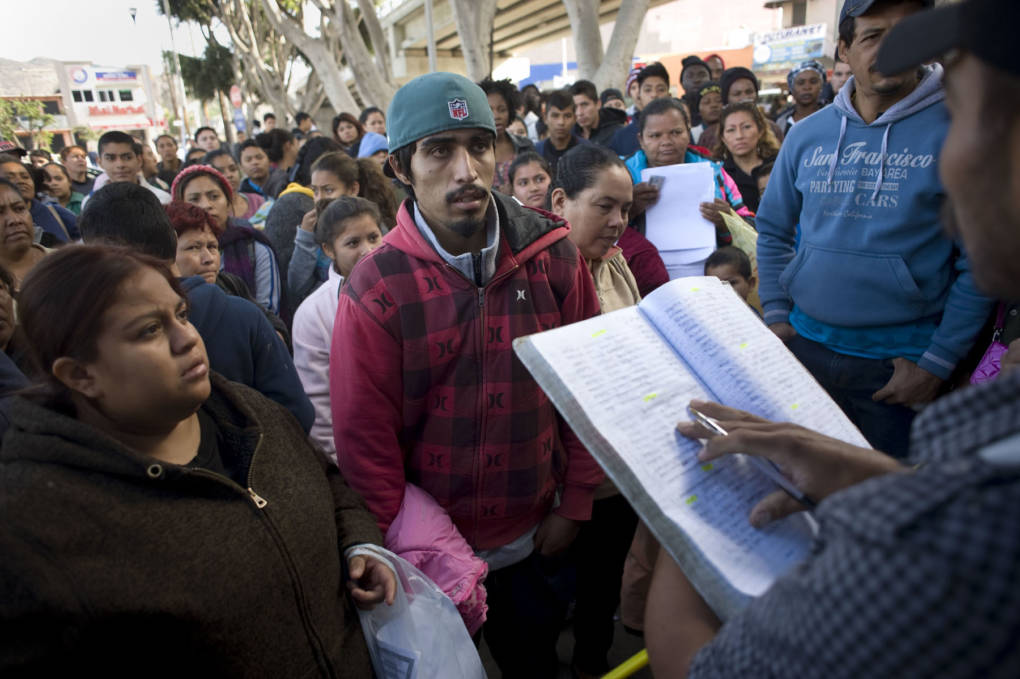
"caption": "People listen at the border in Tijuana, Mexico, as a man calls out names on a waiting list for those looking to cross the U.S. border to ask for asylum. The list is being kept by the asylum-seekers themselves in order to maintain order for those waiting and for those who have just arrived.",
"description": null,
"title": "border_mexico",
"credit": "David Maung/KQED",
"status": "inherit",
"isLoading": false,
"fetchFailed": false
},
"news_11720810": {
"type": "attachments",
"id": "news_11720810",
"meta": {
"index": "attachments_1716263798",
"site": "news",
"id": "11720810",
"found": true
},
"parent": 11720747,
"imgSizes": {
"thumbnail": {
"file": "https://ww2.kqed.org/app/uploads/sites/10/2019/01/Screen-Shot-2019-01-24-at-3.36.46-PM-160x96.png",
"width": 160,
"mimeType": "image/png",
"height": 96
},
"post-thumbnail": {
"file": "https://ww2.kqed.org/app/uploads/sites/10/2019/01/Screen-Shot-2019-01-24-at-3.36.46-PM-672x372.png",
"width": 672,
"mimeType": "image/png",
"height": 372
},
"kqedFullSize": {
"file": "https://ww2.kqed.org/app/uploads/sites/10/2019/01/Screen-Shot-2019-01-24-at-3.36.46-PM-e1548373588792.png",
"width": 823,
"height": 492
},
"guest-author-50": {
"file": "https://ww2.kqed.org/app/uploads/sites/10/2019/01/Screen-Shot-2019-01-24-at-3.36.46-PM-50x50.png",
"width": 50,
"mimeType": "image/png",
"height": 50
},
"guest-author-96": {
"file": "https://ww2.kqed.org/app/uploads/sites/10/2019/01/Screen-Shot-2019-01-24-at-3.36.46-PM-96x96.png",
"width": 96,
"mimeType": "image/png",
"height": 96
},
"medium": {
"file": "https://ww2.kqed.org/app/uploads/sites/10/2019/01/Screen-Shot-2019-01-24-at-3.36.46-PM-800x478.png",
"width": 800,
"mimeType": "image/png",
"height": 478
},
"guest-author-64": {
"file": "https://ww2.kqed.org/app/uploads/sites/10/2019/01/Screen-Shot-2019-01-24-at-3.36.46-PM-64x64.png",
"width": 64,
"mimeType": "image/png",
"height": 64
},
"detail": {
"file": "https://ww2.kqed.org/app/uploads/sites/10/2019/01/Screen-Shot-2019-01-24-at-3.36.46-PM-150x150.png",
"width": 150,
"mimeType": "image/png",
"height": 150
},
"guest-author-32": {
"file": "https://ww2.kqed.org/app/uploads/sites/10/2019/01/Screen-Shot-2019-01-24-at-3.36.46-PM-32x32.png",
"width": 32,
"mimeType": "image/png",
"height": 32
},
"guest-author-128": {
"file": "https://ww2.kqed.org/app/uploads/sites/10/2019/01/Screen-Shot-2019-01-24-at-3.36.46-PM-128x128.png",
"width": 128,
"mimeType": "image/png",
"height": 128
}
},
"publishDate": 1548372808,
"modified": 1548380403,
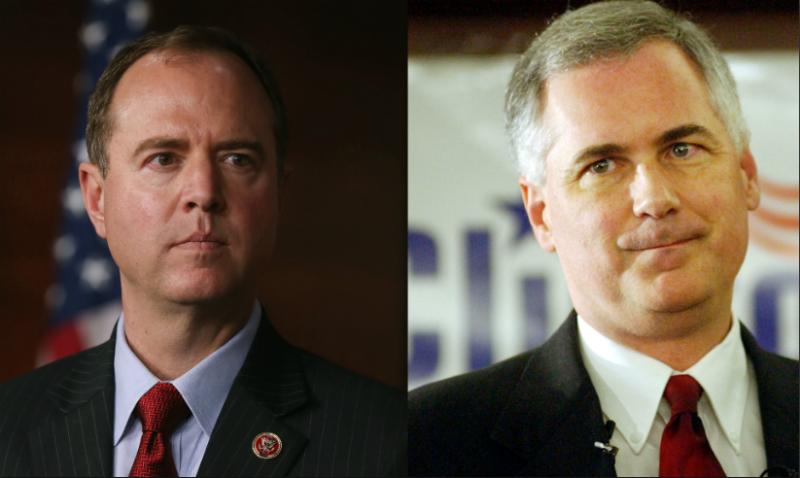
"caption": "Democratic Congressman Adam Schiff (L) and GOP Congressman Tom McClintock.",
"description": "Democratic Congressman Adam Schiff (L) and GOP Congressman Tom McClintock.",
"title": "Screen Shot 2019-01-24 at 3.36.46 PM",
"credit": "Mark Wilson and Sandy Huffaker/Getty Images",
"status": "inherit",
"isLoading": false,
"fetchFailed": false
},
"news_11720740": {
"type": "attachments",
"id": "news_11720740",
"meta": {
"index": "attachments_1716263798",
"site": "news",
"id": "11720740",
"found": true
},
"parent": 11720600,
"imgSizes": {
"twentyfourteen-full-width": {
"file": "https://ww2.kqed.org/app/uploads/sites/10/2019/01/RS13793_Waiting-at-Court-1038x576.png",
"width": 1038,
"mimeType": "image/png",
"height": 576
},
"thumbnail": {
"file": "https://ww2.kqed.org/app/uploads/sites/10/2019/01/RS13793_Waiting-at-Court-160x90.png",
"width": 160,
"mimeType": "image/png",
"height": 90
},
"post-thumbnail": {
"file": "https://ww2.kqed.org/app/uploads/sites/10/2019/01/RS13793_Waiting-at-Court-672x372.png",
"width": 672,
"mimeType": "image/png",
"height": 372
},
"kqedFullSize": {
"file": "https://ww2.kqed.org/app/uploads/sites/10/2019/01/RS13793_Waiting-at-Court-e1548365526566.png",
"width": 1920,
"height": 1080
},
"large": {
"file": "https://ww2.kqed.org/app/uploads/sites/10/2019/01/RS13793_Waiting-at-Court-1020x574.png",
"width": 1020,
"mimeType": "image/png",
"height": 574
},
"complete_open_graph": {
"file": "https://ww2.kqed.org/app/uploads/sites/10/2019/01/RS13793_Waiting-at-Court-1200x675.png",
"width": 1200,
"mimeType": "image/png",
"height": 675
},
"guest-author-50": {
"file": "https://ww2.kqed.org/app/uploads/sites/10/2019/01/RS13793_Waiting-at-Court-50x50.png",
"width": 50,
"mimeType": "image/png",
"height": 50
},
"guest-author-96": {
"file": "https://ww2.kqed.org/app/uploads/sites/10/2019/01/RS13793_Waiting-at-Court-96x96.png",
"width": 96,
"mimeType": "image/png",
"height": 96
},
"medium": {
"file": "https://ww2.kqed.org/app/uploads/sites/10/2019/01/RS13793_Waiting-at-Court-800x450.png",
"width": 800,
"mimeType": "image/png",
"height": 450
},
"guest-author-64": {
"file": "https://ww2.kqed.org/app/uploads/sites/10/2019/01/RS13793_Waiting-at-Court-64x64.png",
"width": 64,
"mimeType": "image/png",
"height": 64
},
"guest-author-32": {
"file": "https://ww2.kqed.org/app/uploads/sites/10/2019/01/RS13793_Waiting-at-Court-32x32.png",
"width": 32,
"mimeType": "image/png",
"height": 32
},
"full-width": {
"file": "https://ww2.kqed.org/app/uploads/sites/10/2019/01/RS13793_Waiting-at-Court-1920x1080.png",
"width": 1920,
"mimeType": "image/png",
"height": 1080
},
"detail": {
"file": "https://ww2.kqed.org/app/uploads/sites/10/2019/01/RS13793_Waiting-at-Court-150x150.png",
"width": 150,
"mimeType": "image/png",
"height": 150
},
"guest-author-128": {
"file": "https://ww2.kqed.org/app/uploads/sites/10/2019/01/RS13793_Waiting-at-Court-128x128.png",
"width": 128,
"mimeType": "image/png",
"height": 128
}
},
"publishDate": 1548359763,
"modified": 1548365631,
"caption": "Young immigrants wait to enter a San Francisco courtroom for a hearing in 2014.",
"description": "Young immigrants wait to enter a San Francisco courtroom for a hearing in 2014.",
"title": "RS13793_Waiting at Court",
"credit": "Jeremy Raff/KQED",
"status": "inherit",
"isLoading": false,
"fetchFailed": false
},
"news_11720714": {
"type": "attachments",
"id": "news_11720714",
"meta": {
"index": "attachments_1716263798",
"site": "news",
"id": "11720714",
"found": true
},
"parent": 11720713,
"imgSizes": {
"twentyfourteen-full-width": {
"file": "https://ww2.kqed.org/app/uploads/sites/10/2019/01/ap_19023711412343_wide-a50f740431be66a9d67fda6fed8c3d6173f1f22f-1038x576.jpg",
"width": 1038,
"mimeType": "image/jpeg",
"height": 576
},
"thumbnail": {
"file": "https://ww2.kqed.org/app/uploads/sites/10/2019/01/ap_19023711412343_wide-a50f740431be66a9d67fda6fed8c3d6173f1f22f-160x90.jpg",
"width": 160,
"mimeType": "image/jpeg",
"height": 90
},
"post-thumbnail": {
"file": "https://ww2.kqed.org/app/uploads/sites/10/2019/01/ap_19023711412343_wide-a50f740431be66a9d67fda6fed8c3d6173f1f22f-672x372.jpg",
"width": 672,
"mimeType": "image/jpeg",
"height": 372
},
"kqedFullSize": {
"file": "https://ww2.kqed.org/app/uploads/sites/10/2019/01/ap_19023711412343_wide-a50f740431be66a9d67fda6fed8c3d6173f1f22f-e1548357443284.jpg",
"width": 1920,
"height": 1080
},
"large": {
"file": "https://ww2.kqed.org/app/uploads/sites/10/2019/01/ap_19023711412343_wide-a50f740431be66a9d67fda6fed8c3d6173f1f22f-1020x574.jpg",
"width": 1020,
"mimeType": "image/jpeg",
"height": 574
},
"complete_open_graph": {
"file": "https://ww2.kqed.org/app/uploads/sites/10/2019/01/ap_19023711412343_wide-a50f740431be66a9d67fda6fed8c3d6173f1f22f-1200x675.jpg",
"width": 1200,
"mimeType": "image/jpeg",
"height": 675
},
"guest-author-50": {
"file": "https://ww2.kqed.org/app/uploads/sites/10/2019/01/ap_19023711412343_wide-a50f740431be66a9d67fda6fed8c3d6173f1f22f-50x50.jpg",
"width": 50,
"mimeType": "image/jpeg",
"height": 50
},
"guest-author-96": {
"file": "https://ww2.kqed.org/app/uploads/sites/10/2019/01/ap_19023711412343_wide-a50f740431be66a9d67fda6fed8c3d6173f1f22f-96x96.jpg",
"width": 96,
"mimeType": "image/jpeg",
"height": 96
},
"medium": {
"file": "https://ww2.kqed.org/app/uploads/sites/10/2019/01/ap_19023711412343_wide-a50f740431be66a9d67fda6fed8c3d6173f1f22f-800x450.jpg",
"width": 800,
"mimeType": "image/jpeg",
"height": 450
},
"guest-author-64": {
"file": "https://ww2.kqed.org/app/uploads/sites/10/2019/01/ap_19023711412343_wide-a50f740431be66a9d67fda6fed8c3d6173f1f22f-64x64.jpg",
"width": 64,
"mimeType": "image/jpeg",
"height": 64
},
"guest-author-32": {
"file": "https://ww2.kqed.org/app/uploads/sites/10/2019/01/ap_19023711412343_wide-a50f740431be66a9d67fda6fed8c3d6173f1f22f-32x32.jpg",
"width": 32,
"mimeType": "image/jpeg",
"height": 32
},
"full-width": {
"file": "https://ww2.kqed.org/app/uploads/sites/10/2019/01/ap_19023711412343_wide-a50f740431be66a9d67fda6fed8c3d6173f1f22f-1920x1080.jpg",
"width": 1920,
"mimeType": "image/jpeg",
"height": 1080
},
"detail": {
"file": "https://ww2.kqed.org/app/uploads/sites/10/2019/01/ap_19023711412343_wide-a50f740431be66a9d67fda6fed8c3d6173f1f22f-150x150.jpg",
"width": 150,
"mimeType": "image/jpeg",
"height": 150
},
"guest-author-128": {
"file": "https://ww2.kqed.org/app/uploads/sites/10/2019/01/ap_19023711412343_wide-a50f740431be66a9d67fda6fed8c3d6173f1f22f-128x128.jpg",
"width": 128,
"mimeType": "image/jpeg",
"height": 128
}
},
"publishDate": 1548356321,
"modified": 1548357459,
"caption": "President Trump appears at the White House on Wednesday as House Speaker Nancy Pelosi blocked him from delivering the State of the Union at the Capitol. Trump agreed to postpone while the shutdown goes on.",
"description": "President Trump appears at the White House on Wednesday as House Speaker Nancy Pelosi blocked him from delivering the State of the Union at the Capitol. Trump agreed to postpone while the shutdown goes on.",
"title": "President Trump appears at the White House on Wednesday as House Speaker Nancy Pelosi blocked him from delivering the State of the Union at the Capitol. Trump agreed to postpone while the shutdown goes on.",
"credit": "Jacquelyn Martin/AP",
"status": "inherit",
"isLoading": false,
"fetchFailed": false
},
"news_11720088": {
"type": "attachments",
"id": "news_11720088",
"meta": {
"index": "attachments_1716263798",
"site": "news",
"id": "11720088",
"found": true
},
"parent": 11720059,
"imgSizes": {
"twentyfourteen-full-width": {
"file": "https://ww2.kqed.org/app/uploads/sites/10/2019/01/19ec60d2-gettyimages-1086316242-e1548206184487-1038x576.jpg",
"width": 1038,
"mimeType": "image/jpeg",
"height": 576
},
"thumbnail": {
"file": "https://ww2.kqed.org/app/uploads/sites/10/2019/01/19ec60d2-gettyimages-1086316242-e1548206184487-160x107.jpg",
"width": 160,
"mimeType": "image/jpeg",
"height": 107
},
"post-thumbnail": {
"file": "https://ww2.kqed.org/app/uploads/sites/10/2019/01/19ec60d2-gettyimages-1086316242-e1548206184487-672x372.jpg",
"width": 672,
"mimeType": "image/jpeg",
"height": 372
},
"kqedFullSize": {
"file": "https://ww2.kqed.org/app/uploads/sites/10/2019/01/19ec60d2-gettyimages-1086316242-e1548206184487.jpg",
"width": 1920,
"height": 1280
},
"large": {
"file": "https://ww2.kqed.org/app/uploads/sites/10/2019/01/19ec60d2-gettyimages-1086316242-e1548206184487-1020x680.jpg",
"width": 1020,
"mimeType": "image/jpeg",
"height": 680
},
"complete_open_graph": {
"file": "https://ww2.kqed.org/app/uploads/sites/10/2019/01/19ec60d2-gettyimages-1086316242-e1548206184487-1200x800.jpg",
"width": 1200,
"mimeType": "image/jpeg",
"height": 800
},
"guest-author-50": {
"file": "https://ww2.kqed.org/app/uploads/sites/10/2019/01/19ec60d2-gettyimages-1086316242-e1548206184487-50x50.jpg",
"width": 50,
"mimeType": "image/jpeg",
"height": 50
},
"guest-author-96": {
"file": "https://ww2.kqed.org/app/uploads/sites/10/2019/01/19ec60d2-gettyimages-1086316242-e1548206184487-96x96.jpg",
"width": 96,
"mimeType": "image/jpeg",
"height": 96
},
"medium": {
"file": "https://ww2.kqed.org/app/uploads/sites/10/2019/01/19ec60d2-gettyimages-1086316242-e1548206184487-800x533.jpg",
"width": 800,
"mimeType": "image/jpeg",
"height": 533
},
"guest-author-64": {
"file": "https://ww2.kqed.org/app/uploads/sites/10/2019/01/19ec60d2-gettyimages-1086316242-e1548206184487-64x64.jpg",
"width": 64,
"mimeType": "image/jpeg",
"height": 64
},
"guest-author-32": {
"file": "https://ww2.kqed.org/app/uploads/sites/10/2019/01/19ec60d2-gettyimages-1086316242-e1548206184487-32x32.jpg",
"width": 32,
"mimeType": "image/jpeg",
"height": 32
},
"full-width": {
"file": "https://ww2.kqed.org/app/uploads/sites/10/2019/01/19ec60d2-gettyimages-1086316242-e1548206184487-1920x1280.jpg",
"width": 1920,
"mimeType": "image/jpeg",
"height": 1280
},
"detail": {
"file": "https://ww2.kqed.org/app/uploads/sites/10/2019/01/19ec60d2-gettyimages-1086316242-e1548206184487-150x150.jpg",
"width": 150,
"mimeType": "image/jpeg",
"height": 150
},
"guest-author-128": {
"file": "https://ww2.kqed.org/app/uploads/sites/10/2019/01/19ec60d2-gettyimages-1086316242-e1548206184487-128x128.jpg",
"width": 128,
"mimeType": "image/jpeg",
"height": 128
}
},
"publishDate": 1548203338,
"modified": 1548206253,
"caption": "The U.S. Supreme Court in Washington, DC, on January 22, 2019. The Trump administration is planning to ask the Supreme Court to take up a quick review of a lower court's ruling that blocks the addition of a citizenship question to the 2020 census.",
"description": "The U.S. Supreme Court in Washington, DC, on January 22, 2019. The Trump administration is planning to ask the Supreme Court to take up a quick review of a lower court's ruling that blocks the addition of a citizenship question to the 2020 census.",
"title": "US-POLITICS-MILITARY-TRANSGENDER",
"credit": "Jim Watson/AFP/Getty Images",
"status": "inherit",
"isLoading": false,
"fetchFailed": false
},
"news_11572756": {
"type": "attachments",
"id": "news_11572756",
"meta": {
"index": "attachments_1716263798",
"site": "news",
"id": "11572756",
"found": true
},
"parent": 0,
"imgSizes": {
"small": {
"file": "https://ww2.kqed.org/app/uploads/sites/10/2017/07/tcr_archive_background-520x195.jpg",
"width": 520,
"mimeType": "image/jpeg",
"height": 195
},
"twentyfourteen-full-width": {
"file": "https://ww2.kqed.org/app/uploads/sites/10/2017/07/tcr_archive_background-1038x450.jpg",
"width": 1038,
"mimeType": "image/jpeg",
"height": 450
},
"thumbnail": {
"file": "https://ww2.kqed.org/app/uploads/sites/10/2017/07/tcr_archive_background-160x60.jpg",
"width": 160,
"mimeType": "image/jpeg",
"height": 60
},
"fd-sm": {
"file": "https://ww2.kqed.org/app/uploads/sites/10/2017/07/tcr_archive_background-960x360.jpg",
"width": 960,
"mimeType": "image/jpeg",
"height": 360
},
"post-thumbnail": {
"file": "https://ww2.kqed.org/app/uploads/sites/10/2017/07/tcr_archive_background-672x372.jpg",
"width": 672,
"mimeType": "image/jpeg",
"height": 372
},
"xsmall": {
"file": "https://ww2.kqed.org/app/uploads/sites/10/2017/07/tcr_archive_background-375x141.jpg",
"width": 375,
"mimeType": "image/jpeg",
"height": 141
},
"kqedFullSize": {
"file": "https://ww2.kqed.org/app/uploads/sites/10/2017/07/tcr_archive_background.jpg",
"width": 1200,
"height": 450
},
"large": {
"file": "https://ww2.kqed.org/app/uploads/sites/10/2017/07/tcr_archive_background-1020x383.jpg",
"width": 1020,
"mimeType": "image/jpeg",
"height": 383
},
"xlarge": {
"file": "https://ww2.kqed.org/app/uploads/sites/10/2017/07/tcr_archive_background-1180x443.jpg",
"width": 1180,
"mimeType": "image/jpeg",
"height": 443
},
"guest-author-50": {
"file": "https://ww2.kqed.org/app/uploads/sites/10/2017/07/tcr_archive_background-50x50.jpg",
"width": 50,
"mimeType": "image/jpeg",
"height": 50
},
"guest-author-96": {
"file": "https://ww2.kqed.org/app/uploads/sites/10/2017/07/tcr_archive_background-96x96.jpg",
"width": 96,
"mimeType": "image/jpeg",
"height": 96
},
"medium": {
"file": "https://ww2.kqed.org/app/uploads/sites/10/2017/07/tcr_archive_background-800x300.jpg",
"width": 800,
"mimeType": "image/jpeg",
"height": 300
},
"guest-author-64": {
"file": "https://ww2.kqed.org/app/uploads/sites/10/2017/07/tcr_archive_background-64x64.jpg",
"width": 64,
"mimeType": "image/jpeg",
"height": 64
},
"guest-author-32": {
"file": "https://ww2.kqed.org/app/uploads/sites/10/2017/07/tcr_archive_background-32x32.jpg",
"width": 32,
"mimeType": "image/jpeg",
"height": 32
},
"fd-med": {
"file": "https://ww2.kqed.org/app/uploads/sites/10/2017/07/tcr_archive_background-1180x443.jpg",
"width": 1180,
"mimeType": "image/jpeg",
"height": 443
},
"detail": {
"file": "https://ww2.kqed.org/app/uploads/sites/10/2017/07/tcr_archive_background-150x150.jpg",
"width": 150,
"mimeType": "image/jpeg",
"height": 150
},
"guest-author-128": {
"file": "https://ww2.kqed.org/app/uploads/sites/10/2017/07/tcr_archive_background-128x128.jpg",
"width": 128,
"mimeType": "image/jpeg",
"height": 128
},
"xxsmall": {
"file": "https://ww2.kqed.org/app/uploads/sites/10/2017/07/tcr_archive_background-240x90.jpg",
"width": 240,
"mimeType": "image/jpeg",
"height": 90
}
},
"publishDate": 1500316142,
"modified": 1500316142,
"caption": null,
"description": null,
"title": "tcr_archive_background",
"credit": null,
"status": "inherit",
"isLoading": false,
"fetchFailed": false
},
"news_11719617": {
"type": "attachments",
"id": "news_11719617",
"meta": {
"index": "attachments_1716263798",
"site": "news",
"id": "11719617",
"found": true
},
"parent": 11719616,
"imgSizes": {
"twentyfourteen-full-width": {
"file": "https://ww2.kqed.org/app/uploads/sites/10/2019/01/7fc29fa5-ap_19019765826532_custom-d7a7e35f0c97bd44a3f70cbcb551d6eaf062c334-e1547934898150-1038x576.jpg",
"width": 1038,
"mimeType": "image/jpeg",
"height": 576
},
"thumbnail": {
"file": "https://ww2.kqed.org/app/uploads/sites/10/2019/01/7fc29fa5-ap_19019765826532_custom-d7a7e35f0c97bd44a3f70cbcb551d6eaf062c334-e1547934898150-160x102.jpg",
"width": 160,
"mimeType": "image/jpeg",
"height": 102
},
"post-thumbnail": {
"file": "https://ww2.kqed.org/app/uploads/sites/10/2019/01/7fc29fa5-ap_19019765826532_custom-d7a7e35f0c97bd44a3f70cbcb551d6eaf062c334-e1547934898150-672x372.jpg",
"width": 672,
"mimeType": "image/jpeg",
"height": 372
},
"kqedFullSize": {
"file": "https://ww2.kqed.org/app/uploads/sites/10/2019/01/7fc29fa5-ap_19019765826532_custom-d7a7e35f0c97bd44a3f70cbcb551d6eaf062c334-e1547934898150.jpg",
"width": 1920,
"height": 1225
},
"large": {
"file": "https://ww2.kqed.org/app/uploads/sites/10/2019/01/7fc29fa5-ap_19019765826532_custom-d7a7e35f0c97bd44a3f70cbcb551d6eaf062c334-e1547934898150-1020x651.jpg",
"width": 1020,
"mimeType": "image/jpeg",
"height": 651
},
"complete_open_graph": {
"file": "https://ww2.kqed.org/app/uploads/sites/10/2019/01/7fc29fa5-ap_19019765826532_custom-d7a7e35f0c97bd44a3f70cbcb551d6eaf062c334-e1547934898150-1200x766.jpg",
"width": 1200,
"mimeType": "image/jpeg",
"height": 766
},
"guest-author-50": {
"file": "https://ww2.kqed.org/app/uploads/sites/10/2019/01/7fc29fa5-ap_19019765826532_custom-d7a7e35f0c97bd44a3f70cbcb551d6eaf062c334-e1547934898150-50x50.jpg",
"width": 50,
"mimeType": "image/jpeg",
"height": 50
},
"guest-author-96": {
"file": "https://ww2.kqed.org/app/uploads/sites/10/2019/01/7fc29fa5-ap_19019765826532_custom-d7a7e35f0c97bd44a3f70cbcb551d6eaf062c334-e1547934898150-96x96.jpg",
"width": 96,
"mimeType": "image/jpeg",
"height": 96
},
"medium": {
"file": "https://ww2.kqed.org/app/uploads/sites/10/2019/01/7fc29fa5-ap_19019765826532_custom-d7a7e35f0c97bd44a3f70cbcb551d6eaf062c334-e1547934898150-800x510.jpg",
"width": 800,
"mimeType": "image/jpeg",
"height": 510
},
"guest-author-64": {
"file": "https://ww2.kqed.org/app/uploads/sites/10/2019/01/7fc29fa5-ap_19019765826532_custom-d7a7e35f0c97bd44a3f70cbcb551d6eaf062c334-e1547934898150-64x64.jpg",
"width": 64,
"mimeType": "image/jpeg",
"height": 64
},
"guest-author-32": {
"file": "https://ww2.kqed.org/app/uploads/sites/10/2019/01/7fc29fa5-ap_19019765826532_custom-d7a7e35f0c97bd44a3f70cbcb551d6eaf062c334-e1547934898150-32x32.jpg",
"width": 32,
"mimeType": "image/jpeg",
"height": 32
},
"full-width": {
"file": "https://ww2.kqed.org/app/uploads/sites/10/2019/01/7fc29fa5-ap_19019765826532_custom-d7a7e35f0c97bd44a3f70cbcb551d6eaf062c334-e1547934898150-1920x1225.jpg",
"width": 1920,
"mimeType": "image/jpeg",
"height": 1225
},
"detail": {
"file": "https://ww2.kqed.org/app/uploads/sites/10/2019/01/7fc29fa5-ap_19019765826532_custom-d7a7e35f0c97bd44a3f70cbcb551d6eaf062c334-e1547934898150-150x150.jpg",
"width": 150,
"mimeType": "image/jpeg",
"height": 150
},
"guest-author-128": {
"file": "https://ww2.kqed.org/app/uploads/sites/10/2019/01/7fc29fa5-ap_19019765826532_custom-d7a7e35f0c97bd44a3f70cbcb551d6eaf062c334-e1547934898150-128x128.jpg",
"width": 128,
"mimeType": "image/jpeg",
"height": 128
}
},
"publishDate": 1547934740,
"modified": 1547934891,
"caption": "President Trump speaks about the partial government shutdown, immigration and border security in the Diplomatic Reception Room of the White House Saturday.",
"description": "President Trump speaks about the partial government shutdown, immigration and border security in the Diplomatic Reception Room of the White House Saturday.",
"title": "President Trump speaks about the partial government shutdown, immigration and border security in the Diplomatic Reception Room of the White House Saturday.",
"credit": "Alex Brandon/AP",
"status": "inherit",
"isLoading": false,
"fetchFailed": false
},
"news_11719642": {
"type": "attachments",
"id": "news_11719642",
"meta": {
"index": "attachments_1716263798",
"site": "news",
"id": "11719642",
"found": true
},
"parent": 11719628,
"imgSizes": {
"twentyfourteen-full-width": {
"file": "https://ww2.kqed.org/app/uploads/sites/10/2019/01/4935be95-rs34766_gettyimages-1092246050-qut-1038x576.jpg",
"width": 1038,
"mimeType": "image/jpeg",
"height": 576
},
"thumbnail": {
"file": "https://ww2.kqed.org/app/uploads/sites/10/2019/01/4935be95-rs34766_gettyimages-1092246050-qut-160x111.jpg",
"width": 160,
"mimeType": "image/jpeg",
"height": 111
},
"post-thumbnail": {
"file": "https://ww2.kqed.org/app/uploads/sites/10/2019/01/4935be95-rs34766_gettyimages-1092246050-qut-672x372.jpg",
"width": 672,
"mimeType": "image/jpeg",
"height": 372
},
"kqedFullSize": {
"file": "https://ww2.kqed.org/app/uploads/sites/10/2019/01/4935be95-rs34766_gettyimages-1092246050-qut.jpg",
"width": 1920,
"height": 1331
},
"large": {
"file": "https://ww2.kqed.org/app/uploads/sites/10/2019/01/4935be95-rs34766_gettyimages-1092246050-qut-1020x707.jpg",
"width": 1020,
"mimeType": "image/jpeg",
"height": 707
},
"complete_open_graph": {
"file": "https://ww2.kqed.org/app/uploads/sites/10/2019/01/4935be95-rs34766_gettyimages-1092246050-qut-1200x832.jpg",
"width": 1200,
"mimeType": "image/jpeg",
"height": 832
},
"guest-author-50": {
"file": "https://ww2.kqed.org/app/uploads/sites/10/2019/01/4935be95-rs34766_gettyimages-1092246050-qut-50x50.jpg",
"width": 50,
"mimeType": "image/jpeg",
"height": 50
},
"guest-author-96": {
"file": "https://ww2.kqed.org/app/uploads/sites/10/2019/01/4935be95-rs34766_gettyimages-1092246050-qut-96x96.jpg",
"width": 96,
"mimeType": "image/jpeg",
"height": 96
},
"medium": {
"file": "https://ww2.kqed.org/app/uploads/sites/10/2019/01/4935be95-rs34766_gettyimages-1092246050-qut-800x555.jpg",
"width": 800,
"mimeType": "image/jpeg",
"height": 555
},
"guest-author-64": {
"file": "https://ww2.kqed.org/app/uploads/sites/10/2019/01/4935be95-rs34766_gettyimages-1092246050-qut-64x64.jpg",
"width": 64,
"mimeType": "image/jpeg",
"height": 64
},
"guest-author-32": {
"file": "https://ww2.kqed.org/app/uploads/sites/10/2019/01/4935be95-rs34766_gettyimages-1092246050-qut-32x32.jpg",
"width": 32,
"mimeType": "image/jpeg",
"height": 32
},
"full-width": {
"file": "https://ww2.kqed.org/app/uploads/sites/10/2019/01/4935be95-rs34766_gettyimages-1092246050-qut-1920x1331.jpg",
"width": 1920,
"mimeType": "image/jpeg",
"height": 1331
},
"detail": {
"file": "https://ww2.kqed.org/app/uploads/sites/10/2019/01/4935be95-rs34766_gettyimages-1092246050-qut-150x150.jpg",
"width": 150,
"mimeType": "image/jpeg",
"height": 150
},
"guest-author-128": {
"file": "https://ww2.kqed.org/app/uploads/sites/10/2019/01/4935be95-rs34766_gettyimages-1092246050-qut-128x128.jpg",
"width": 128,
"mimeType": "image/jpeg",
"height": 128
}
},
"publishDate": 1547940484,
"modified": 1547941795,
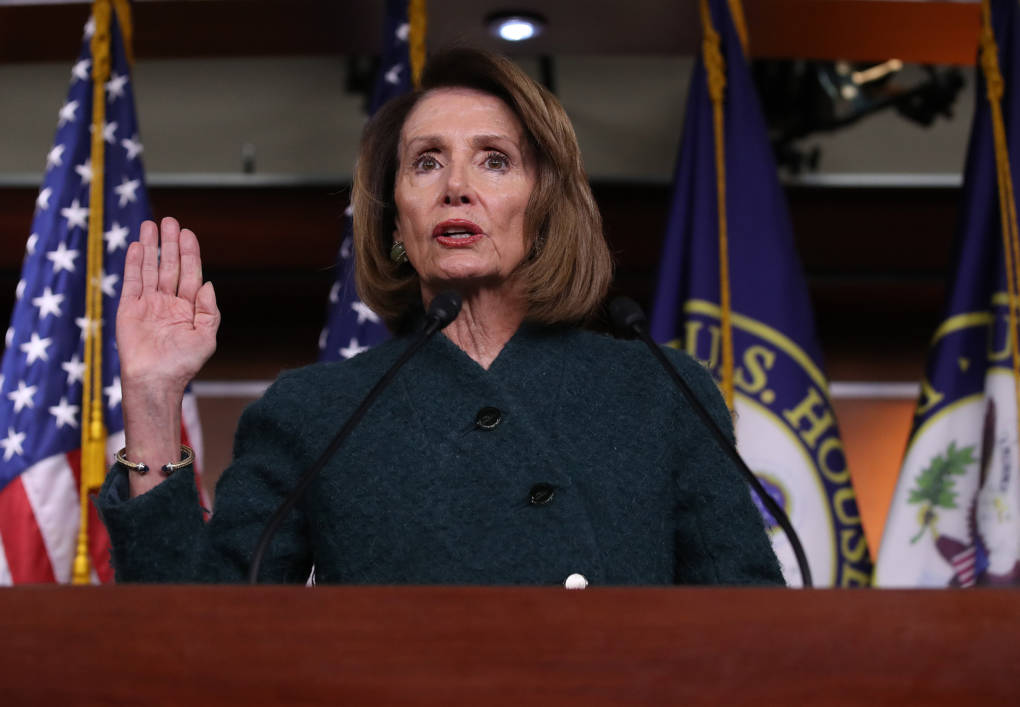
"caption": "San Francisco Democrat and House Speaker Nancy Pelosi called President Trump's border proposal a 'non-starter' even before it was officially announced.",
"description": "San Francisco Democrat and House Speaker Nancy Pelosi called President Trump's border proposal a 'non-starter' even before it was officially announced.",
"title": "House Speaker Nancy Pelosi Holds Her Weekly News Conference On Capitol Hill",
"credit": "Win McNamee/Getty Images",
"status": "inherit",
"isLoading": false,
"fetchFailed": false
}
},
"audioPlayerReducer": {
"postId": "stream_live",
"isPaused": true,
"isPlaying": false,
"pfsActive": false,
"pledgeModalIsOpen": true,
"playerDrawerIsOpen": false,
"liveAudioPlayStartedAt": 0,
"liveAudioPlayContext": ""
},
"authorsReducer": {
"byline_news_11721061": {
"type": "authors",
"id": "byline_news_11721061",
"meta": {
"override": true
},
"slug": "byline_news_11721061",
"name": "Richard Gonzales",
"isLoading": false
},
"byline_news_11720713": {
"type": "authors",
"id": "byline_news_11720713",
"meta": {
"override": true
},
"slug": "byline_news_11720713",
"name": "Domenico Montanaro",
"isLoading": false
},
"byline_news_11720059": {
"type": "authors",
"id": "byline_news_11720059",
"meta": {
"override": true
},
"slug": "byline_news_11720059",
"name": "Mark Sherman\u003cbr>Associated Press",
"isLoading": false
},
"byline_news_11719616": {
"type": "authors",
"id": "byline_news_11719616",
"meta": {
"override": true
},
"slug": "byline_news_11719616",
"name": "\u003ca href=\"https://www.npr.org/people/599484393/ayesha-rascoe\">Ayesha Rascoe\u003c/a>, \u003ca href=\"https://www.npr.org/people/392602474/domenico-montanaro\">Domenico Montanaro\u003c/a>\u003c/br>NPR",
"isLoading": false
},
"kqed": {
"type": "authors",
"id": "236",
"meta": {
"index": "authors_1716337520",
"id": "236",
"found": true
},
"name": "KQED News Staff",
"firstName": "KQED News Staff",
"lastName": null,
"slug": "kqed",
"email": "faq@kqed.org",
"display_author_email": false,
"staff_mastheads": [],
"title": null,
"bio": null,
"avatar": "https://secure.gravatar.com/avatar/ef0e801a68c4c54afa9180db14084167?s=600&d=blank&r=g",
"twitter": null,
"facebook": null,
"instagram": null,
"linkedin": null,
"sites": [
{
"site": "arts",
"roles": [
"contributor"
]
},
{
"site": "news",
"roles": [
"editor"
]
},
{
"site": "futureofyou",
"roles": [
"author"
]
}
],
"headData": {
"title": "KQED News Staff | KQED",
"description": null,
"ogImgSrc": "https://secure.gravatar.com/avatar/ef0e801a68c4c54afa9180db14084167?s=600&d=blank&r=g",
"twImgSrc": "https://secure.gravatar.com/avatar/ef0e801a68c4c54afa9180db14084167?s=600&d=blank&r=g"
},
"isLoading": false,
"link": "/author/kqed"
},
"markfiore": {
"type": "authors",
"id": "3236",
"meta": {
"index": "authors_1716337520",
"id": "3236",
"found": true
},
"name": "Mark Fiore",
"firstName": "Mark",
"lastName": "Fiore",
"slug": "markfiore",
"email": "mark@markfiore.com",
"display_author_email": false,
"staff_mastheads": [
"news"
],
"title": "KQED News Cartoonist",
"bio": "\u003ca href=\"http://www.MarkFiore.com\">MarkFiore.com\u003c/a> | \u003ca href=\"https://twitter.com/markfiore\">Follow on Twitter\u003c/a> | \u003ca href=\"https://www.facebook.com/pages/Mark-Fiore-Animated-Political-Cartoons/94451707396?ref=bookmarks\">Facebook\u003c/a> | \u003ca href=\"mailto:mark@markfiore.com\">email\u003c/a>\r\n\r\nPulitzer Prize-winner, Mark Fiore, who the Wall Street Journal has called “the undisputed guru of the form,” creates animated political cartoons in San Francisco, where his work has been featured regularly on the San Francisco Chronicle’s web site, SFGate.com. His work has appeared on Newsweek.com, Slate.com, CBSNews.com, MotherJones.com, DailyKos.com and NPR’s web site. Fiore’s political animation has appeared on CNN, Frontline, Bill Moyers Journal, Salon.com and cable and broadcast outlets across the globe.\r\n\r\nBeginning his professional life by drawing traditional political cartoons for newspapers, Fiore’s work appeared in publications ranging from the Washington Post to the Los Angeles Times. In the late 1990s, he began to experiment with animating political cartoons and, after a short stint at the San Jose Mercury News as their staff cartoonist, Fiore devoted all his energies to animation.\r\nGrowing up in California, Fiore also spent a good portion of his life in the backwoods of Idaho. It was this combination that shaped him politically. Mark majored in political science at Colorado College, where, in a perfect send-off for a cartoonist, he received his diploma in 1991 as commencement speaker Dick Cheney smiled approvingly.\r\nMark Fiore was awarded the Pulitzer Prize for political cartooning in 2010, a Robert F. Kennedy Journalism Award in 2004 and has twice received an Online Journalism Award for commentary from the Online News Association (2002, 2008). Fiore has received two awards for his work in new media from the National Cartoonists Society (2001, 2002), and in 2006 received The James Madison Freedom of Information Award from The Society of Professional Journalists.",
"avatar": "https://secure.gravatar.com/avatar/fc4e2a612b15b67bad0c6f0e1db4ca9b?s=600&d=blank&r=g",
"twitter": "MarkFiore",
"facebook": null,
"instagram": "https://www.instagram.com/markfiore/?hl=en",
"linkedin": null,
"sites": [
{
"site": "arts",
"roles": [
"contributor"
]
},
{
"site": "news",
"roles": [
"editor"
]
},
{
"site": "futureofyou",
"roles": [
"editor"
]
},
{
"site": "science",
"roles": [
"editor"
]
}
],
"headData": {
"title": "Mark Fiore | KQED",
"description": "KQED News Cartoonist",
"ogImgSrc": "https://secure.gravatar.com/avatar/fc4e2a612b15b67bad0c6f0e1db4ca9b?s=600&d=blank&r=g",
"twImgSrc": "https://secure.gravatar.com/avatar/fc4e2a612b15b67bad0c6f0e1db4ca9b?s=600&d=blank&r=g"
},
"isLoading": false,
"link": "/author/markfiore"
},
"jsmall": {
"type": "authors",
"id": "6625",
"meta": {
"index": "authors_1716337520",
"id": "6625",
"found": true
},
"name": "Julie Small",
"firstName": "Julie",
"lastName": "Small",
"slug": "jsmall",
"email": "jsmall@kqed.org",
"display_author_email": true,
"staff_mastheads": [
"news"
],
"title": "KQED Contributor",
"bio": "Julie Small reports on criminal justice and immigration.\r\n\r\nShe was part of a team at KQED awarded a regional 2019 Edward R. Murrow award for continuing coverage of the Trump Administration's family separation policy.\r\n\r\nThe Society for Professional Journalists recognized Julie's 2018 \u003ca href=\"https://www.kqed.org/news/11636262/the-officer-tased-him-31-times-the-sheriff-called-his-death-an-accident\">reporting\u003c/a> on the San Joaquin County Sheriff's \u003ca href=\"https://www.kqed.org/news/11634689/autopsy-doctors-sheriff-overrode-death-findings-to-protect-law-enforcement\">interference\u003c/a> in death investigations with an Excellence in Journalism Award for Ongoing Coverage.\r\n\r\nJulie's\u003ca href=\"https://www.kqed.org/news/11039666/two-mentally-ill-inmates-died-one-month-in-santa-clara\"> reporting\u003c/a> with Lisa Pickoff-White on the treatment of mentally ill offenders in California jails earned a 2017 regional Edward R. Murrow Award for news reporting and an investigative reporting award from the SPJ of Northern California.\r\n\r\nBefore joining KQED, Julie covered government and politics in Sacramento for Southern California Public Radio (SCPR). Her 2010 \u003ca href=\"https://www.scpr.org/specials/prisonmedical/\">series\u003c/a> on lapses in California’s prison medical care also won a regional Edward R. Murrow Award for investigative reporting and a Golden Mic Award from the RTNDA of Southern California.\r\n\r\nJulie began her career in journalism in 2000 as the deputy foreign editor for public radio's \u003cem>Marketplace, \u003c/em>while earning her master's degree in journalism from USC’s Annenberg School of Communication.",
"avatar": "https://secure.gravatar.com/avatar/4baedf201468df97be97c2a9dd7585d0?s=600&d=blank&r=g",
"twitter": "@SmallRadio2",
"facebook": null,
"instagram": null,
"linkedin": null,
"sites": [
{
"site": "news",
"roles": [
"editor"
]
},
{
"site": "stateofhealth",
"roles": [
"author"
]
},
{
"site": "science",
"roles": [
"author"
]
}
],
"headData": {
"title": "Julie Small | KQED",
"description": "KQED Contributor",
"ogImgSrc": "https://secure.gravatar.com/avatar/4baedf201468df97be97c2a9dd7585d0?s=600&d=blank&r=g",
"twImgSrc": "https://secure.gravatar.com/avatar/4baedf201468df97be97c2a9dd7585d0?s=600&d=blank&r=g"
},
"isLoading": false,
"link": "/author/jsmall"
},
"fjhabvala": {
"type": "authors",
"id": "8659",
"meta": {
"index": "authors_1716337520",
"id": "8659",
"found": true
},
"name": "Farida Jhabvala Romero",
"firstName": "Farida",
"lastName": "Jhabvala Romero",
"slug": "fjhabvala",
"email": "fjhabvala@kqed.org",
"display_author_email": true,
"staff_mastheads": [
"news"
],
"title": "KQED Contributor",
"bio": "Farida Jhabvala Romero is a Labor Correspondent for KQED. She previously covered immigration. Farida was \u003ca href=\"https://www.ccnma.org/2022-most-influential-latina-journalists\">named\u003c/a> one of the 10 Most Influential Latina Journalists in California in 2022 by the California Chicano News Media Association. Her work has won awards from the Society of Professional Journalists (Northern California), as well as a national and regional Edward M. Murrow Award for the collaborative reporting projects “Dangerous Air” and “Graying California.” Before joining KQED, Farida worked as a producer at Radio Bilingüe, a national public radio network. Farida earned her master’s degree in journalism from Stanford University.",
"avatar": "https://secure.gravatar.com/avatar/f9f022d4e2609741874222a1e9d41f48fea74011aa7c615eef91d9a50c944ebe?s=600&d=blank&r=g",
"twitter": "FaridaJhabvala",
"bluesky": null,
"facebook": null,
"instagram": null,
"linkedin": "https://www.linkedin.com/in/faridajhabvala/",
"sites": [
{
"site": "news",
"roles": [
"editor"
]
},
{
"site": "stateofhealth",
"roles": [
"author"
]
},
{
"site": "liveblog",
"roles": [
"author"
]
}
],
"headData": {
"title": "Farida Jhabvala Romero | KQED",
"description": "KQED Contributor",
"ogImgSrc": "https://secure.gravatar.com/avatar/f9f022d4e2609741874222a1e9d41f48fea74011aa7c615eef91d9a50c944ebe?s=600&d=blank&r=g",
"twImgSrc": "https://secure.gravatar.com/avatar/f9f022d4e2609741874222a1e9d41f48fea74011aa7c615eef91d9a50c944ebe?s=600&d=blank&r=g"
},
"isLoading": false,
"link": "/author/fjhabvala"
},
"jeremysiegel": {
"type": "authors",
"id": "11258",
"meta": {
"index": "authors_1716337520",
"id": "11258",
"found": true
},
"name": "Jeremy Siegel",
"firstName": "Jeremy",
"lastName": "Siegel",
"slug": "jeremysiegel",
"email": "jsiegel@kqed.org",
"display_author_email": false,
"staff_mastheads": [],
"title": "KQED Contributor",
"bio": "Jeremy Siegel is is the weekend afternoon news anchor for KQED. His reporting can be heard on KQED News, Morning Edition, All Things Considered and The California Report. Jeremy's coverage of the Camp Fire in Butte County won the 2019 Society of Professional Journalists, Northern California Chapter, Excellence in Journalism Award for Breaking News. Jeremy grew up in Cincinnati, Ohio, and graduated from UC Berkeley.",
"avatar": "https://secure.gravatar.com/avatar/3921a64ceb9ed5d0ba47d9ae9782f1ab?s=600&d=blank&r=g",
"twitter": "jersiegel",
"facebook": null,
"instagram": null,
"linkedin": null,
"sites": [
{
"site": "arts",
"roles": []
},
{
"site": "news",
"roles": [
"subscriber"
]
},
{
"site": "science",
"roles": []
}
],
"headData": {
"title": "Jeremy Siegel | KQED",
"description": "KQED Contributor",
"ogImgSrc": "https://secure.gravatar.com/avatar/3921a64ceb9ed5d0ba47d9ae9782f1ab?s=600&d=blank&r=g",
"twImgSrc": "https://secure.gravatar.com/avatar/3921a64ceb9ed5d0ba47d9ae9782f1ab?s=600&d=blank&r=g"
},
"isLoading": false,
"link": "/author/jeremysiegel"
},
"rlevi": {
"type": "authors",
"id": "11260",
"meta": {
"index": "authors_1716337520",
"id": "11260",
"found": true
},
"name": "Ryan Levi",
"firstName": "Ryan",
"lastName": "Levi",
"slug": "rlevi",
"email": "rlevi@KQED.org",
"display_author_email": false,
"staff_mastheads": [],
"title": "KQED Contributor",
"bio": "Ryan Levi was a reporter and podcast producer at KQED News from 2016-2019. He worked on \u003ca href=\"https://www.kqed.org/news/series/baycurious\">Bay Curious\u003c/a>, \u003ca href=\"https://www.kqed.org/news/tag/the-bay/\">The Bay, \u003c/a>and \u003ca href=\"https://podcasts.apple.com/us/podcast/the-california-report-magazine/id1314750545\">The California Report Magazine\u003c/a>, as well as hosting and producing the weekly \u003ca href=\"https://www.kqed.org/news/program/qedup/\">Q'ed Up podcast. \u003c/a>He also helped inaugurate KQED's weekend news coverage in 2017 as one of two original digital producers. Ryan holds degrees in multimedia journalism and Spanish from the University of Missouri.",
"avatar": "https://secure.gravatar.com/avatar/4cb2ddd028ac8807d1adf09609c5555d?s=600&d=blank&r=g",
"twitter": "ryan_levi",
"facebook": null,
"instagram": null,
"linkedin": null,
"sites": [
{
"site": "arts",
"roles": [
"editor"
]
},
{
"site": "news",
"roles": [
"subscriber"
]
},
{
"site": "stateofhealth",
"roles": [
"editor"
]
},
{
"site": "science",
"roles": [
"editor"
]
},
{
"site": "forum",
"roles": [
"administrator"
]
},
{
"site": "perspectives",
"roles": [
"administrator"
]
}
],
"headData": {
"title": "Ryan Levi | KQED",
"description": "KQED Contributor",
"ogImgSrc": "https://secure.gravatar.com/avatar/4cb2ddd028ac8807d1adf09609c5555d?s=600&d=blank&r=g",
"twImgSrc": "https://secure.gravatar.com/avatar/4cb2ddd028ac8807d1adf09609c5555d?s=600&d=blank&r=g"
},
"isLoading": false,
"link": "/author/rlevi"
},
"ktandy": {
"type": "authors",
"id": "11545",
"meta": {
"index": "authors_1716337520",
"id": "11545",
"found": true
},
"name": "Katie Tandy",
"firstName": "Katie",
"lastName": "Tandy",
"slug": "ktandy",
"email": "ktandy@kqed.org",
"display_author_email": false,
"staff_mastheads": [],
"title": "KQED Contributor",
"bio": "Katie Tandy is the co-founding editor of\u003ca href=\"http://www.theestablishment.co\"> The Establishment,\u003c/a> an online news+culture publication which champions the voices and stories of those who have been marginalized by mainstream media.\r\nShe is a former on-call interactive producer for KQED.",
"avatar": "https://secure.gravatar.com/avatar/1f877a62bab50d75c8bbef40e4ebe7f6?s=600&d=blank&r=g",
"twitter": null,
"facebook": null,
"instagram": null,
"linkedin": null,
"sites": [
{
"site": "news",
"roles": [
"subscriber"
]
}
],
"headData": {
"title": "Katie Tandy | KQED",
"description": "KQED Contributor",
"ogImgSrc": "https://secure.gravatar.com/avatar/1f877a62bab50d75c8bbef40e4ebe7f6?s=600&d=blank&r=g",
"twImgSrc": "https://secure.gravatar.com/avatar/1f877a62bab50d75c8bbef40e4ebe7f6?s=600&d=blank&r=g"
},
"isLoading": false,
"link": "/author/ktandy"
}
},
"pagesReducer": {
"news_category_immigration": {
"type": "terms",
"id": "news_1169",
"meta": {
"index": "terms_1716263798",
"site": "news",
"id": "1169",
"score": 10.910658
},
"featImg": null,
"name": "Immigration",
"description": null,
"taxonomy": "category",
"headData": {
"twImgId": null,
"twTitle": null,
"ogTitle": null,
"ogImgId": null,
"twDescription": null,
"description": null,
"title": "Immigration Archives | KQED News",
"ogDescription": null
},
"ttid": 1180,
"slug": "immigration",
"isLoading": false,
"title": "Immigration",
"pageMeta": {
"site": "news",
"WpPageTemplate": "page-topic-editorial",
"currentPage": 103
},
"blocks": [
{
"blockName": "kqed/post-list",
"attrs": {
"layout": "cardArticle2",
"query": "posts/news?category=immigration",
"seeMore": false,
"paginated": true,
"page": 103
}
},
{
"blockName": "kqed/ad"
}
]
}
},
"pfsSessionReducer": {},
"postsReducer": {
"stream_live": {
"type": "live",
"id": "stream_live",
"audioUrl": "https://streams.kqed.org/kqedradio",
"title": "Live Stream",
"excerpt": "Live Stream information currently unavailable.",
"link": "/radio",
"featImg": "",
"label": {
"name": "KQED Live",
"link": "/"
}
},
"stream_kqedNewscast": {
"type": "posts",
"id": "stream_kqedNewscast",
"audioUrl": "https://www.kqed.org/.stream/anon/radio/RDnews/newscast.mp3?_=1",
"title": "KQED Newscast",
"featImg": "",
"label": {
"name": "88.5 FM",
"link": "/"
}
},
"news_11721246": {
"type": "posts",
"id": "news_11721246",
"meta": {
"index": "posts_1716263798",
"site": "news",
"id": "11721246",
"score": null,
"sort": [
1548538840000
]
},
"guestAuthors": [],
"slug": "san-francisco-therapists-help-migrant-families-cope-with-trauma",
"title": "San Francisco Therapists Help Migrant Families Cope With Trauma",
"publishDate": 1548538840,
"format": "audio",
"headTitle": "San Francisco Therapists Help Migrant Families Cope With Trauma | KQED",
"labelTerm": {
"site": "news"
},
"content": "\u003cp>On a chilly January morning, two psychotherapists from the Bay Area arrived at the Greyhound bus station in San Antonio, Texas to meet with dozens of migrant families who had just been dropped off by Immigration and Customs Enforcement officials.\u003c/p>\n\u003cp>The two bilingual therapists, Alicia Cruz and Chris Mullen, have worked together for a decade at Kaiser in San Francisco and see clients in offices right next to each other. They were prepared to put their therapeutic skills to use in the most unlikely place: the waiting area inside the bus station.\u003c/p>\n\u003cp>It was easy for the women to spot the parents and children just released from detention: They were wearing brightly colored sweatsuits, parkas and brandless tennis shoes issued to them by ICE. The families were delivered there from the country’s two largest ICE family detention centers, each about an hour away, and issued one-way tickets to travel on to relatives or sponsors around the country.\u003c/p>\n\u003cp>The families crammed onto metal benches, with bags of belongings stuffed under their feet. Several nuns and volunteers from local churches handed out box lunches and backpacks containing toiletries and stuffed animals for the kids.\u003c/p>\n\u003cp>Clipboards in hand, Cruz and Mullen worked their way down the rows of benches, offering legal information. They also asked parents if they were willing to talk about their experiences crossing the border.\u003c/p>\n\u003cfigure id=\"attachment_11721291\" class=\"wp-caption aligncenter\" style=\"max-width: 800px\">\u003cimg loading=\"lazy\" decoding=\"async\" class=\"wp-image-11721291 size-medium\" src=\"https://ww2.kqed.org/news/wp-content/uploads/sites/10/2019/01/RS34822_IMG_9264-qut-e1548469438640-800x600.jpg\" alt=\"Bay Area therapists, Chris Mullen and Alicia Cruz counsel asylum seekers released from detention in Texas\" width=\"800\" height=\"600\" srcset=\"https://cdn.kqed.org/wp-content/uploads/sites/10/2019/01/RS34822_IMG_9264-qut-e1548469438640-800x600.jpg 800w, https://cdn.kqed.org/wp-content/uploads/sites/10/2019/01/RS34822_IMG_9264-qut-e1548469438640-160x120.jpg 160w, https://cdn.kqed.org/wp-content/uploads/sites/10/2019/01/RS34822_IMG_9264-qut-e1548469438640-1020x765.jpg 1020w, https://cdn.kqed.org/wp-content/uploads/sites/10/2019/01/RS34822_IMG_9264-qut-e1548469438640-1200x900.jpg 1200w, https://cdn.kqed.org/wp-content/uploads/sites/10/2019/01/RS34822_IMG_9264-qut-e1548469438640.jpg 1920w\" sizes=\"auto, (max-width: 800px) 100vw, 800px\">\u003cfigcaption class=\"wp-caption-text\">San Francisco therapists Chris Mullen (left) and Alicia Cruz speak with a migrant mother just released from detention. \u003ccite>(Julie Small/KQED)\u003c/cite>\u003c/figcaption>\u003c/figure>\n\u003cp>Mullen and Cruz were so moved by news accounts of migrant families being detained at the border, that they used vacation days for the trip, working with \u003ca href=\"https://www.raicestexas.org/\" target=\"_blank\" rel=\"noopener\">RAICES\u003c/a>, a Texas nonprofit that provides legal help to asylum seekers.\u003c/p>\n\u003cp>[ad fullwidth]\u003c/p>\n\u003cp>“I told my boys, ‘It’s not a choice for me. I’ve got to go help,’” said Cruz, whose two sons, ages 7 and 11, have helped collect toys to donate to the children in Texas. “It was an immense pull that I couldn’t really explain.”\u003c/p>\n\u003ch3>More Central American Families Seek Asylum in the U.S.\u003c/h3>\n\u003cp>Although the total number of people apprehended crossing the U.S.-Mexico border has dropped significantly in recent years, the number of families has grown dramatically, from \u003ca href=\"https://www.cbp.gov/sites/default/files/assets/documents/2017-Dec/BP%20Total%20Monthly%20Family%20Units%20by%20Sector%2C%20FY13-FY17.pdf\" target=\"_blank\" rel=\"noopener\">15,000\u003c/a> people traveling in families in 2013 to \u003ca href=\"https://www.cbp.gov/newsroom/stats/sw-border-migration/fy-2018\" target=\"_blank\" rel=\"noopener\">107,000\u003c/a> last year. Most are fleeing gang violence, government corruption or extreme poverty in their home countries in Central America.\u003c/p>\n\u003cp>Last year, after a controversial family separation policy was struck down by the courts, the Trump Administration proposed a \u003ca href=\"https://www.migrationpolicy.org/article/trump-administration-new-indefinite-family-detention-policy\" target=\"_blank\" rel=\"noopener\">plan\u003c/a> to hold parents and children indefinitely in ICE custody — part of an effort to terminate a longstanding legal agreement that limits ICE detention of children. But ICE has space for about 3,600 people in its three family facilities and advocates in Texas say the families released at the bus station have typically been held by ICE for a week or two.\u003c/p>\n\u003cfigure id=\"attachment_11721299\" class=\"wp-caption alignright\" style=\"max-width: 800px\">\u003cimg loading=\"lazy\" decoding=\"async\" class=\"wp-image-11721299 size-medium\" src=\"https://ww2.kqed.org/news/wp-content/uploads/sites/10/2019/01/RS34845_IMG_9403-qut-800x600.jpg\" alt=\"Asylum seeking families take Greyhound buses to family and sponsor across the country.\" width=\"800\" height=\"600\" srcset=\"https://cdn.kqed.org/wp-content/uploads/sites/10/2019/01/RS34845_IMG_9403-qut-800x600.jpg 800w, https://cdn.kqed.org/wp-content/uploads/sites/10/2019/01/RS34845_IMG_9403-qut-160x120.jpg 160w, https://cdn.kqed.org/wp-content/uploads/sites/10/2019/01/RS34845_IMG_9403-qut-1020x765.jpg 1020w, https://cdn.kqed.org/wp-content/uploads/sites/10/2019/01/RS34845_IMG_9403-qut-1200x900.jpg 1200w, https://cdn.kqed.org/wp-content/uploads/sites/10/2019/01/RS34845_IMG_9403-qut.jpg 1920w\" sizes=\"auto, (max-width: 800px) 100vw, 800px\">\u003cfigcaption class=\"wp-caption-text\">ICE releases dozens of migrant families a day to the Greyhound Station in San Antonio, Texas. \u003ccite>(Julie Small/KQED)\u003c/cite>\u003c/figcaption>\u003c/figure>\n\u003cp>Many of the families Cruz and Mullen met at the Greyhound station were coughing and had fevers, looking dazed in their first moments of freedom.\u003c/p>\n\u003cp>Cruz said these families have been through a lot. After surviving violence in their home countries, she said, they are often re-traumatized by the dangerous journey here and their time in U.S. detention.\u003c/p>\n\u003cp>Cruz and Mullen handed out plastic bags of Legos to the children so they can play while their parents talk. Most of the migrants don’t want their names used because they fear for the safety of their families. Mullen sat down with a man from Guatemala while his 9-year-old son drew in a coloring book nearby. Mullen asked him why they left home.\u003c/p>\n\u003cp>“Honestly, I had never thought of leaving,” the 29-year-old father replied, “because everything I have is there.”\u003c/p>\n\u003cp>The father told Mullen that drug traffickers had built landing strips in the jungle near his town and he saw local police driving back and forth each time airplanes landed. One day a friend told him his name was on a government official’s hit list. The next day, that friend disappeared and that’s when he knew he had to leave.\u003c/p>\n\u003cp>As the man spoke, tears dropped steadily onto the sleeve of his jacket. He told Mullen he crossed the border into California last month by climbing a tree with his son clinging to his back and leaping onto the wall, then down onto U.S. soil.\u003c/p>\n\u003cp>“I told my son to grab my neck and hold on really tight because I was going to jump,” he said. “I told him, ‘You have to hold on so you don’t fall.’”\u003c/p>\n\u003cp>The man said he and his son spent six days in a Border Patrol station, where they were given cold bean burritos for every meal, before they were transferred to an ICE facility for fathers and sons in Karnes City, Texas. Now they are heading to the East Coast to stay with relatives while their asylum claim is adjudicated.\u003c/p>\n\u003ch3>Limits to Detention\u003c/h3>\n\u003cp>Under a 1997 legal settlement known as Flores, unaccompanied migrant children are not supposed to be held in US Customs and Border Protection facilities for longer than 72 hours except in “exceptional circumstances,” and they must be provided adequate food and shelter during their stay.\u003c/p>\n\u003cp>Last year, attorneys for migrant children filed affidavits with a federal judge documenting numerous violations of the settlement. These included migrants’ lack of access to clean drinking water, being fed inadequate or inedible food, and being subject to unsanitary conditions, extreme cold and sleep deprivation. \u003c/p>\n\u003cp>But after two children died in CBP custody in December, officials indicated they would work to transfer parents and children to ICE family detention centers more quickly.\u003c/p>\n\u003caside class=\"pullquote alignright\">\u003cspan style=\"font-size: x-large\">‘You could see sometimes how intense and overwhelmed they are when they’re reliving their trauma because it’s still very raw and fresh.’\u003c/span>\u003ccite>Alicia Cruz\u003c/cite>\u003c/aside>\n\u003cp>Earlier this month, the Department of Homeland Security declined to confirm whether that has occurred.\u003c/p>\n\u003cp>In an email to KQED, DHS spokeswoman Katie Waldman called the current situation “an immigration crisis,” and blamed the federal courts for creating a “loophole that rewards parents for bringing their children with them to the United States.”\u003c/p>\n\u003cp>“As long as activist judges continue to set national immigration policy they continue to put family units and innocent children in harm’s way,” she added.\u003c/p>\n\u003cp>In dozens of interviews in the Greyhound station, parents from Central American countries described dire conditions they endured.\u003c/p>\n\u003cp>One young mother, also from Guatemala, told Cruz she fled because a gang tried to extort money from her and threatened to kill her family when she did not pay up. As she described crossing the Rio Grande with her 10-year-old daughter and 4-year-old son, she started to cry, remembering her fear that they might die.\u003c/p>\n\u003cp>“When we crossed the river, we got lost,” she said. “We didn’t have any water to drink. We spent four, five hours lost before we got picked up by immigration.”\u003c/p>\n\u003cp>The mother told Cruz that Border Patrol agents locked the family in a cold, windowless room for four days, and only gave them one sandwich and one juice box a day. When her children cried, she said, agents told her to shut them up. “’This isn’t your country’,” she said they told her.\u003c/p>\n\u003cp>After the family was transferred to ICE, the mother said they were given enough food to eat and access to showers, but she told Cruz she regrets putting her children through the experience.\u003c/p>\n\u003cp>“I thought it would be easy to come here,” she said. “People told me, ‘Just turn yourself in to immigration!’ But no, it’s very difficult.”\u003c/p>\n\u003cp>Cruz listened attentively and reflected back what she’d heard: that the mother made the only choice she could.\u003c/p>\n\u003cp>“The truth is you didn’t come because you wanted to, you came because you had to,” Cruz said. “It’s important to remember that even though your children suffered, you had to come to survive.”\u003c/p>\n\u003cp>The woman nodded and wiped away her tears.\u003c/p>\n\u003cp>A couple of hours later, she and her kids boarded a bus to San Francisco, a trip that takes 39 hours. In her pocket was some cash Cruz gave her for meals, along with the name of a trauma recovery center in San Francisco that works with asylum seekers.\u003c/p>\n\u003caside class=\"alignright\">\n\u003cul>\n\u003cli>\u003ca href=\"https://www.kqed.org/news/11714666/migrant-boy-8-dies-in-government-custody-in-new-mexico-hospital\" target=\"_blank\" rel=\"noopener\">Migrant Boy, 8, Dies in Government Custody in New Mexico Hospital\u003c/a>\u003c/li>\n\u003cli>\u003ca href=\"https://www.kqed.org/news/11712244/judges-ask-ice-to-make-courts-off-limits-to-immigration-arrests\" target=\"_blank\" rel=\"noopener\">Judges Ask ICE to Make Courts Off Limits to Immigration Arrests\u003cbr>\n\u003c/a>\u003c/li>\n\u003cli>\u003ca href=\"https://www.kqed.org/news/11718987/thousands-more-migrant-children-may-have-been-separated-from-families\" target=\"_blank\" rel=\"noopener\">Thousands More Migrant Children May Have Been Separated From Families\u003c/a>\u003c/li>\n\u003c/ul>\n\u003c/aside>\n\u003cp>Cruz said many of these families will need ongoing help to recover from what they’ve gone through.\u003c/p>\n\u003cp>“You could see sometimes how intense and overwhelmed they are when they’re reliving their trauma,” she said, “because it’s still very raw and fresh.”\u003c/p>\n\u003cp>She and Mullen also know that the migrants will need to be able to talk about their experiences in a coherent and compelling way when it comes time for an interview with an asylum officer.\u003c/p>\n\u003cp>Mullen said when someone is in a state of shock, they don’t always sound convincing.\u003c/p>\n\u003cp>“When you’re really disconnected — and that’s often the case with PTSD — it sounds insincere and also it can be very vague,” she said.\u003c/p>\n\u003cp>The two women spent five long days counseling migrants at the bus station. After flying home to her own children, Cruz said she struggled to process what she heard from parents about the mistreatment of children in Border Patrol custody.\u003c/p>\n\u003cp>“How they were being yelled at for crying, or manhandled,” Cruz said. “I can’t imagine how their brain makes sense of that — because they are so little. As someone in the mental health field, that really worries me how this is all going to manifest itself in this child as he grows up.”\u003c/p>\n\u003cp>Cruz plans to return to San Antonio as often as she can. Her family and other parents at her son’s school have already donated enough money and frequent flyer miles for her next trip.\u003c/p>\n\u003cp>[ad floatright]\u003c/p>\n\u003cp>This story was reported in collaboration with Public Radio International’s \u003ca href=\"https://www.pri.org/programs/the-world\" rel=\"noopener\" target=\"_blank\">The World\u003c/a>.\u003c/p>\n\n",
"blocks": [],
"excerpt": "Two California psychotherapists travel to Texas to aid families released from ICE detention at a Greyhound bus station.",
"status": "publish",
"parent": 0,
"modified": 1738716003,
"stats": {
"hasAudio": false,
"hasVideo": false,
"hasChartOrMap": false,
"iframeSrcs": [],
"hasGoogleForm": false,
"hasGallery": false,
"hasHearkenModule": false,
"hasPolis": false,
"paragraphCount": 44,
"wordCount": 1791
},
"headData": {
"title": "San Francisco Therapists Help Migrant Families Cope With Trauma | KQED",
"description": "Two California psychotherapists travel to Texas to aid families released from ICE detention at a Greyhound bus station.",
"ogTitle": "",
"ogDescription": "",
"ogImgId": "",
"twTitle": "",
"twDescription": "",
"twImgId": "",
"schema": {
"@context": "https://schema.org",
"@type": "NewsArticle",
"headline": "San Francisco Therapists Help Migrant Families Cope With Trauma",
"datePublished": "2019-01-26T13:40:40-08:00",
"dateModified": "2025-02-04T16:40:03-08:00",
"image": "https://cdn.kqed.org/wp-content/uploads/2020/02/KQED-OG-Image@1x.png",
"isAccessibleForFree": "True",
"publisher": {
"@type": "NewsMediaOrganization",
"@id": "https://www.kqed.org/#organization",
"name": "KQED",
"logo": "https://cdn.kqed.org/wp-content/uploads/2020/02/KQED-OG-Image@1x.png",
"url": "https://www.kqed.org",
"sameAs": [
"https://www.facebook.com/KQED",
"https://twitter.com/KQED",
"https://www.instagram.com/kqed/",
"https://www.tiktok.com/@kqedofficial",
"https://www.linkedin.com/company/kqed",
"https://www.youtube.com/channel/UCeC0IOo7i1P_61zVUWbJ4nw"
]
}
}
},
"audioUrl": "https://www.kqed.org/.stream/anon/radio/tcrmag/2019/01/SmallBorderTherapistsFinal.mp3",
"sticky": false,
"audioTrackLength": 412,
"path": "/news/11721246/san-francisco-therapists-help-migrant-families-cope-with-trauma",
"audioDuration": 424000,
"parsedContent": [
{
"type": "contentString",
"content": "\u003cdiv class=\"post-body\">\u003cp>\u003cp>On a chilly January morning, two psychotherapists from the Bay Area arrived at the Greyhound bus station in San Antonio, Texas to meet with dozens of migrant families who had just been dropped off by Immigration and Customs Enforcement officials.\u003c/p>\n\u003cp>The two bilingual therapists, Alicia Cruz and Chris Mullen, have worked together for a decade at Kaiser in San Francisco and see clients in offices right next to each other. They were prepared to put their therapeutic skills to use in the most unlikely place: the waiting area inside the bus station.\u003c/p>\n\u003cp>It was easy for the women to spot the parents and children just released from detention: They were wearing brightly colored sweatsuits, parkas and brandless tennis shoes issued to them by ICE. The families were delivered there from the country’s two largest ICE family detention centers, each about an hour away, and issued one-way tickets to travel on to relatives or sponsors around the country.\u003c/p>\n\u003cp>The families crammed onto metal benches, with bags of belongings stuffed under their feet. Several nuns and volunteers from local churches handed out box lunches and backpacks containing toiletries and stuffed animals for the kids.\u003c/p>\n\u003cp>Clipboards in hand, Cruz and Mullen worked their way down the rows of benches, offering legal information. They also asked parents if they were willing to talk about their experiences crossing the border.\u003c/p>\n\u003cfigure id=\"attachment_11721291\" class=\"wp-caption aligncenter\" style=\"max-width: 800px\">\u003cimg loading=\"lazy\" decoding=\"async\" class=\"wp-image-11721291 size-medium\" src=\"https://ww2.kqed.org/news/wp-content/uploads/sites/10/2019/01/RS34822_IMG_9264-qut-e1548469438640-800x600.jpg\" alt=\"Bay Area therapists, Chris Mullen and Alicia Cruz counsel asylum seekers released from detention in Texas\" width=\"800\" height=\"600\" srcset=\"https://cdn.kqed.org/wp-content/uploads/sites/10/2019/01/RS34822_IMG_9264-qut-e1548469438640-800x600.jpg 800w, https://cdn.kqed.org/wp-content/uploads/sites/10/2019/01/RS34822_IMG_9264-qut-e1548469438640-160x120.jpg 160w, https://cdn.kqed.org/wp-content/uploads/sites/10/2019/01/RS34822_IMG_9264-qut-e1548469438640-1020x765.jpg 1020w, https://cdn.kqed.org/wp-content/uploads/sites/10/2019/01/RS34822_IMG_9264-qut-e1548469438640-1200x900.jpg 1200w, https://cdn.kqed.org/wp-content/uploads/sites/10/2019/01/RS34822_IMG_9264-qut-e1548469438640.jpg 1920w\" sizes=\"auto, (max-width: 800px) 100vw, 800px\">\u003cfigcaption class=\"wp-caption-text\">San Francisco therapists Chris Mullen (left) and Alicia Cruz speak with a migrant mother just released from detention. \u003ccite>(Julie Small/KQED)\u003c/cite>\u003c/figcaption>\u003c/figure>\n\u003cp>Mullen and Cruz were so moved by news accounts of migrant families being detained at the border, that they used vacation days for the trip, working with \u003ca href=\"https://www.raicestexas.org/\" target=\"_blank\" rel=\"noopener\">RAICES\u003c/a>, a Texas nonprofit that provides legal help to asylum seekers.\u003c/p>\n\u003cp>\u003c/p>\u003c/div>",
"attributes": {
"named": {},
"numeric": []
}
},
{
"type": "component",
"content": "",
"name": "ad",
"attributes": {
"named": {
"label": "fullwidth"
},
"numeric": [
"fullwidth"
]
}
},
{
"type": "contentString",
"content": "\u003cdiv class=\"post-body\">\u003cp>\u003c/p>\n\u003cp>“I told my boys, ‘It’s not a choice for me. I’ve got to go help,’” said Cruz, whose two sons, ages 7 and 11, have helped collect toys to donate to the children in Texas. “It was an immense pull that I couldn’t really explain.”\u003c/p>\n\u003ch3>More Central American Families Seek Asylum in the U.S.\u003c/h3>\n\u003cp>Although the total number of people apprehended crossing the U.S.-Mexico border has dropped significantly in recent years, the number of families has grown dramatically, from \u003ca href=\"https://www.cbp.gov/sites/default/files/assets/documents/2017-Dec/BP%20Total%20Monthly%20Family%20Units%20by%20Sector%2C%20FY13-FY17.pdf\" target=\"_blank\" rel=\"noopener\">15,000\u003c/a> people traveling in families in 2013 to \u003ca href=\"https://www.cbp.gov/newsroom/stats/sw-border-migration/fy-2018\" target=\"_blank\" rel=\"noopener\">107,000\u003c/a> last year. Most are fleeing gang violence, government corruption or extreme poverty in their home countries in Central America.\u003c/p>\n\u003cp>Last year, after a controversial family separation policy was struck down by the courts, the Trump Administration proposed a \u003ca href=\"https://www.migrationpolicy.org/article/trump-administration-new-indefinite-family-detention-policy\" target=\"_blank\" rel=\"noopener\">plan\u003c/a> to hold parents and children indefinitely in ICE custody — part of an effort to terminate a longstanding legal agreement that limits ICE detention of children. But ICE has space for about 3,600 people in its three family facilities and advocates in Texas say the families released at the bus station have typically been held by ICE for a week or two.\u003c/p>\n\u003cfigure id=\"attachment_11721299\" class=\"wp-caption alignright\" style=\"max-width: 800px\">\u003cimg loading=\"lazy\" decoding=\"async\" class=\"wp-image-11721299 size-medium\" src=\"https://ww2.kqed.org/news/wp-content/uploads/sites/10/2019/01/RS34845_IMG_9403-qut-800x600.jpg\" alt=\"Asylum seeking families take Greyhound buses to family and sponsor across the country.\" width=\"800\" height=\"600\" srcset=\"https://cdn.kqed.org/wp-content/uploads/sites/10/2019/01/RS34845_IMG_9403-qut-800x600.jpg 800w, https://cdn.kqed.org/wp-content/uploads/sites/10/2019/01/RS34845_IMG_9403-qut-160x120.jpg 160w, https://cdn.kqed.org/wp-content/uploads/sites/10/2019/01/RS34845_IMG_9403-qut-1020x765.jpg 1020w, https://cdn.kqed.org/wp-content/uploads/sites/10/2019/01/RS34845_IMG_9403-qut-1200x900.jpg 1200w, https://cdn.kqed.org/wp-content/uploads/sites/10/2019/01/RS34845_IMG_9403-qut.jpg 1920w\" sizes=\"auto, (max-width: 800px) 100vw, 800px\">\u003cfigcaption class=\"wp-caption-text\">ICE releases dozens of migrant families a day to the Greyhound Station in San Antonio, Texas. \u003ccite>(Julie Small/KQED)\u003c/cite>\u003c/figcaption>\u003c/figure>\n\u003cp>Many of the families Cruz and Mullen met at the Greyhound station were coughing and had fevers, looking dazed in their first moments of freedom.\u003c/p>\n\u003cp>Cruz said these families have been through a lot. After surviving violence in their home countries, she said, they are often re-traumatized by the dangerous journey here and their time in U.S. detention.\u003c/p>\n\u003cp>Cruz and Mullen handed out plastic bags of Legos to the children so they can play while their parents talk. Most of the migrants don’t want their names used because they fear for the safety of their families. Mullen sat down with a man from Guatemala while his 9-year-old son drew in a coloring book nearby. Mullen asked him why they left home.\u003c/p>\n\u003cp>“Honestly, I had never thought of leaving,” the 29-year-old father replied, “because everything I have is there.”\u003c/p>\n\u003cp>The father told Mullen that drug traffickers had built landing strips in the jungle near his town and he saw local police driving back and forth each time airplanes landed. One day a friend told him his name was on a government official’s hit list. The next day, that friend disappeared and that’s when he knew he had to leave.\u003c/p>\n\u003cp>As the man spoke, tears dropped steadily onto the sleeve of his jacket. He told Mullen he crossed the border into California last month by climbing a tree with his son clinging to his back and leaping onto the wall, then down onto U.S. soil.\u003c/p>\n\u003cp>“I told my son to grab my neck and hold on really tight because I was going to jump,” he said. “I told him, ‘You have to hold on so you don’t fall.’”\u003c/p>\n\u003cp>The man said he and his son spent six days in a Border Patrol station, where they were given cold bean burritos for every meal, before they were transferred to an ICE facility for fathers and sons in Karnes City, Texas. Now they are heading to the East Coast to stay with relatives while their asylum claim is adjudicated.\u003c/p>\n\u003ch3>Limits to Detention\u003c/h3>\n\u003cp>Under a 1997 legal settlement known as Flores, unaccompanied migrant children are not supposed to be held in US Customs and Border Protection facilities for longer than 72 hours except in “exceptional circumstances,” and they must be provided adequate food and shelter during their stay.\u003c/p>\n\u003cp>Last year, attorneys for migrant children filed affidavits with a federal judge documenting numerous violations of the settlement. These included migrants’ lack of access to clean drinking water, being fed inadequate or inedible food, and being subject to unsanitary conditions, extreme cold and sleep deprivation. \u003c/p>\n\u003cp>But after two children died in CBP custody in December, officials indicated they would work to transfer parents and children to ICE family detention centers more quickly.\u003c/p>\n\u003caside class=\"pullquote alignright\">\u003cspan style=\"font-size: x-large\">‘You could see sometimes how intense and overwhelmed they are when they’re reliving their trauma because it’s still very raw and fresh.’\u003c/span>\u003ccite>Alicia Cruz\u003c/cite>\u003c/aside>\n\u003cp>Earlier this month, the Department of Homeland Security declined to confirm whether that has occurred.\u003c/p>\n\u003cp>In an email to KQED, DHS spokeswoman Katie Waldman called the current situation “an immigration crisis,” and blamed the federal courts for creating a “loophole that rewards parents for bringing their children with them to the United States.”\u003c/p>\n\u003cp>“As long as activist judges continue to set national immigration policy they continue to put family units and innocent children in harm’s way,” she added.\u003c/p>\n\u003cp>In dozens of interviews in the Greyhound station, parents from Central American countries described dire conditions they endured.\u003c/p>\n\u003cp>One young mother, also from Guatemala, told Cruz she fled because a gang tried to extort money from her and threatened to kill her family when she did not pay up. As she described crossing the Rio Grande with her 10-year-old daughter and 4-year-old son, she started to cry, remembering her fear that they might die.\u003c/p>\n\u003cp>“When we crossed the river, we got lost,” she said. “We didn’t have any water to drink. We spent four, five hours lost before we got picked up by immigration.”\u003c/p>\n\u003cp>The mother told Cruz that Border Patrol agents locked the family in a cold, windowless room for four days, and only gave them one sandwich and one juice box a day. When her children cried, she said, agents told her to shut them up. “’This isn’t your country’,” she said they told her.\u003c/p>\n\u003cp>After the family was transferred to ICE, the mother said they were given enough food to eat and access to showers, but she told Cruz she regrets putting her children through the experience.\u003c/p>\n\u003cp>“I thought it would be easy to come here,” she said. “People told me, ‘Just turn yourself in to immigration!’ But no, it’s very difficult.”\u003c/p>\n\u003cp>Cruz listened attentively and reflected back what she’d heard: that the mother made the only choice she could.\u003c/p>\n\u003cp>“The truth is you didn’t come because you wanted to, you came because you had to,” Cruz said. “It’s important to remember that even though your children suffered, you had to come to survive.”\u003c/p>\n\u003cp>The woman nodded and wiped away her tears.\u003c/p>\n\u003cp>A couple of hours later, she and her kids boarded a bus to San Francisco, a trip that takes 39 hours. In her pocket was some cash Cruz gave her for meals, along with the name of a trauma recovery center in San Francisco that works with asylum seekers.\u003c/p>\n\u003caside class=\"alignright\">\n\u003cul>\n\u003cli>\u003ca href=\"https://www.kqed.org/news/11714666/migrant-boy-8-dies-in-government-custody-in-new-mexico-hospital\" target=\"_blank\" rel=\"noopener\">Migrant Boy, 8, Dies in Government Custody in New Mexico Hospital\u003c/a>\u003c/li>\n\u003cli>\u003ca href=\"https://www.kqed.org/news/11712244/judges-ask-ice-to-make-courts-off-limits-to-immigration-arrests\" target=\"_blank\" rel=\"noopener\">Judges Ask ICE to Make Courts Off Limits to Immigration Arrests\u003cbr>\n\u003c/a>\u003c/li>\n\u003cli>\u003ca href=\"https://www.kqed.org/news/11718987/thousands-more-migrant-children-may-have-been-separated-from-families\" target=\"_blank\" rel=\"noopener\">Thousands More Migrant Children May Have Been Separated From Families\u003c/a>\u003c/li>\n\u003c/ul>\n\u003c/aside>\n\u003cp>Cruz said many of these families will need ongoing help to recover from what they’ve gone through.\u003c/p>\n\u003cp>“You could see sometimes how intense and overwhelmed they are when they’re reliving their trauma,” she said, “because it’s still very raw and fresh.”\u003c/p>\n\u003cp>She and Mullen also know that the migrants will need to be able to talk about their experiences in a coherent and compelling way when it comes time for an interview with an asylum officer.\u003c/p>\n\u003cp>Mullen said when someone is in a state of shock, they don’t always sound convincing.\u003c/p>\n\u003cp>“When you’re really disconnected — and that’s often the case with PTSD — it sounds insincere and also it can be very vague,” she said.\u003c/p>\n\u003cp>The two women spent five long days counseling migrants at the bus station. After flying home to her own children, Cruz said she struggled to process what she heard from parents about the mistreatment of children in Border Patrol custody.\u003c/p>\n\u003cp>“How they were being yelled at for crying, or manhandled,” Cruz said. “I can’t imagine how their brain makes sense of that — because they are so little. As someone in the mental health field, that really worries me how this is all going to manifest itself in this child as he grows up.”\u003c/p>\n\u003cp>Cruz plans to return to San Antonio as often as she can. Her family and other parents at her son’s school have already donated enough money and frequent flyer miles for her next trip.\u003c/p>\n\u003cp>\u003c/p>\u003c/div>",
"attributes": {
"named": {},
"numeric": []
}
},
{
"type": "component",
"content": "",
"name": "ad",
"attributes": {
"named": {
"label": "floatright"
},
"numeric": [
"floatright"
]
}
},
{
"type": "contentString",
"content": "\u003cdiv class=\"post-body\">\u003cp>\u003c/p>\n\u003cp>This story was reported in collaboration with Public Radio International’s \u003ca href=\"https://www.pri.org/programs/the-world\" rel=\"noopener\" target=\"_blank\">The World\u003c/a>.\u003c/p>\n\n\u003c/div>\u003c/p>",
"attributes": {
"named": {},
"numeric": []
}
}
],
"link": "/news/11721246/san-francisco-therapists-help-migrant-families-cope-with-trauma",
"authors": [
"6625"
],
"categories": [
"news_1169",
"news_8",
"news_13"
],
"tags": [
"news_20595",
"news_21027",
"news_6884",
"news_24906",
"news_38",
"news_20529",
"news_244"
],
"featImg": "news_11721304",
"label": "news"
},
"news_11721180": {
"type": "posts",
"id": "news_11721180",
"meta": {
"index": "posts_1716263798",
"site": "news",
"id": "11721180",
"score": null,
"sort": [
1548468004000
]
},
"parent": 0,
"labelTerm": {},
"blocks": [],
"publishDate": 1548468004,
"format": "audio",
"disqusTitle": "From a Gold Rush Cocktail to a Trans Trucker's Dream",
"title": "From a Gold Rush Cocktail to a Trans Trucker's Dream",
"headTitle": "KQED News",
"content": "\u003ch2>\u003ca href=\"https://www.kqed.org/news/11720617/pisco-punch-the-pricey-san-francisco-cocktail-that-was-a-gold-rush-knock-out\" rel=\"noopener noreferrer\" target=\"_blank\">Pisco Punch: The Pricey San Francisco Cocktail That Was a Gold Rush Knock-Out\u003c/a>\u003c/h2>\n\u003cp>If you’re a cocktail drinker, you’ve probably tasted a few Pisco Sours in your time. It’s that pale foamy drink made with pisco - a highly potent Peruvian brandy. The Pisco Sour originated, as you might expect, in Peru, back in the 1940s. But many years before that, 19th century San Francisco was gripped by a craze for another pisco concoction, one that maybe should have come with a health warning. As part of our Golden State Plate series exploring the food and drinks invented in California, Carly Severn has the story of one beverage that embodied an era of excess.\u003c/p>\n\u003ch2>\u003ca href=\"https://www.kqed.org/news/11707691/letter-to-my-california-dreamer-discovering-my-true-self-in-modesto\" rel=\"noopener noreferrer\" target=\"_blank\">Letter to My California Dreamer: ‘I Feel I’m Finally Home’\u003c/a>\u003c/h2>\n\u003cp>This week’s letter comes from Toni Rodriguez, addressed to himself. A Bronx-native, and later Midwest-dweller, Toni truck drove his way to Modesto, where he got the support to become his true self.\u003c/p>\n\u003ch2>‘There Was No Way I Was Going To Raise a Child Who Was Ashamed of Who They Are’\u003c/h2>\n\u003cp>We talk with KQED Science editor Jon Brooks about another family trying to navigate complicated family dynamics - when their toddler proclaims she's transgender. Jon tells us about Molly, a mom whose daughter, Gracie, has been living as a girl since she was four years old. Jon talks about Molly's emotional arc, from dismay to fully embracing her daughter for who she is, bringing us a unique look at a parent's perspective on what it's like to have a very young transgender child.\u003c/p>\n\u003ch2>\u003ca href=\"https://www.kqed.org/news/11721246/san-francisco-therapists-help-migrant-families-cope-with-trauma\" rel=\"noopener noreferrer\" target=\"_blank\">San Francisco Therapists Help Migrant Families Cope With Trauma\u003c/a>\u003c/h2>\n\u003cp>Two bilingual therapists from the Bay Area traveled to Texas this month to help asylum seekers being released from immigrant detention. Immigrants are often traumatized by violence in their home countries, they say, trauma that gets re-triggered in detention. The therapists wanted to help with that and connect people with treatment. KQED’s Julie Small takes us to the Greyhound station in San Antonio where volunteers help more than a hundred parents and their children a week as they head to family members or sponsors all over the nation.\u003c/p>\n\u003cp>[ad fullwidth]\u003c/p>\u003cp>\u003c/p>\n",
"disqusIdentifier": "11721180 https://ww2.kqed.org/news/?p=11721180",
"disqusUrl": "https://ww2.kqed.org/news/2019/01/25/from-a-gold-rush-cocktail-to-a-trans-truckers-dream/",
"stats": {
"hasVideo": false,
"hasChartOrMap": false,
"hasAudio": false,
"hasPolis": false,
"wordCount": 378,
"hasGoogleForm": false,
"hasGallery": false,
"hasHearkenModule": false,
"iframeSrcs": [],
"paragraphCount": 6
},
"modified": 1594421717,
"excerpt": "Golden State Plate: The Story of Pisco Punch; Trans Trucker Finds his California Dream; A Mom’s Journey to Accepting Her Transgender Child, At Age 4; California Therapists Volunteer To Help Immigrants Coming out of Detention",
"headData": {
"twImgId": "",
"twTitle": "",
"ogTitle": "",
"ogImgId": "",
"twDescription": "",
"description": "Golden State Plate: The Story of Pisco Punch; Trans Trucker Finds his California Dream; A Mom’s Journey to Accepting Her Transgender Child, At Age 4; California Therapists Volunteer To Help Immigrants Coming out of Detention",
"title": "From a Gold Rush Cocktail to a Trans Trucker's Dream | KQED",
"ogDescription": "",
"schema": {
"@context": "https://schema.org",
"@type": "NewsArticle",
"headline": "From a Gold Rush Cocktail to a Trans Trucker's Dream",
"datePublished": "2019-01-25T18:00:04-08:00",
"dateModified": "2020-07-10T15:55:17-07:00",
"image": "https://cdn.kqed.org/wp-content/uploads/2020/02/KQED-OG-Image@1x.png",
"isAccessibleForFree": "True",
"publisher": {
"@type": "NewsMediaOrganization",
"@id": "https://www.kqed.org/#organization",
"name": "KQED",
"logo": "https://cdn.kqed.org/wp-content/uploads/2020/02/KQED-OG-Image@1x.png",
"url": "https://www.kqed.org",
"sameAs": [
"https://www.facebook.com/KQED",
"https://twitter.com/KQED",
"https://www.instagram.com/kqed/",
"https://www.tiktok.com/@kqedofficial",
"https://www.linkedin.com/company/kqed",
"https://www.youtube.com/channel/UCeC0IOo7i1P_61zVUWbJ4nw"
]
}
}
},
"guestAuthors": [],
"slug": "from-a-gold-rush-cocktail-to-a-trans-truckers-dream",
"status": "publish",
"sourceUrl": "https://www.kqed.org/news/tag/tcrarchive/",
"audioUrl": "https://www.kqed.org/.stream/anon/radio/tcrmag/2019/01/TCRMAG20190125FInal.mp3",
"audioTrackLength": 1732,
"source": "The California Report Magazine",
"path": "/news/11721180/from-a-gold-rush-cocktail-to-a-trans-truckers-dream",
"audioDuration": 1744000,
"parsedContent": [
{
"type": "contentString",
"content": "\u003cdiv class=\"post-body\">\u003cp>\u003ch2>\u003ca href=\"https://www.kqed.org/news/11720617/pisco-punch-the-pricey-san-francisco-cocktail-that-was-a-gold-rush-knock-out\" rel=\"noopener noreferrer\" target=\"_blank\">Pisco Punch: The Pricey San Francisco Cocktail That Was a Gold Rush Knock-Out\u003c/a>\u003c/h2>\n\u003cp>If you’re a cocktail drinker, you’ve probably tasted a few Pisco Sours in your time. It’s that pale foamy drink made with pisco - a highly potent Peruvian brandy. The Pisco Sour originated, as you might expect, in Peru, back in the 1940s. But many years before that, 19th century San Francisco was gripped by a craze for another pisco concoction, one that maybe should have come with a health warning. As part of our Golden State Plate series exploring the food and drinks invented in California, Carly Severn has the story of one beverage that embodied an era of excess.\u003c/p>\n\u003ch2>\u003ca href=\"https://www.kqed.org/news/11707691/letter-to-my-california-dreamer-discovering-my-true-self-in-modesto\" rel=\"noopener noreferrer\" target=\"_blank\">Letter to My California Dreamer: ‘I Feel I’m Finally Home’\u003c/a>\u003c/h2>\n\u003cp>This week’s letter comes from Toni Rodriguez, addressed to himself. A Bronx-native, and later Midwest-dweller, Toni truck drove his way to Modesto, where he got the support to become his true self.\u003c/p>\n\u003ch2>‘There Was No Way I Was Going To Raise a Child Who Was Ashamed of Who They Are’\u003c/h2>\n\u003cp>We talk with KQED Science editor Jon Brooks about another family trying to navigate complicated family dynamics - when their toddler proclaims she's transgender. Jon tells us about Molly, a mom whose daughter, Gracie, has been living as a girl since she was four years old. Jon talks about Molly's emotional arc, from dismay to fully embracing her daughter for who she is, bringing us a unique look at a parent's perspective on what it's like to have a very young transgender child.\u003c/p>\n\u003ch2>\u003ca href=\"https://www.kqed.org/news/11721246/san-francisco-therapists-help-migrant-families-cope-with-trauma\" rel=\"noopener noreferrer\" target=\"_blank\">San Francisco Therapists Help Migrant Families Cope With Trauma\u003c/a>\u003c/h2>\n\u003cp>Two bilingual therapists from the Bay Area traveled to Texas this month to help asylum seekers being released from immigrant detention. Immigrants are often traumatized by violence in their home countries, they say, trauma that gets re-triggered in detention. The therapists wanted to help with that and connect people with treatment. KQED’s Julie Small takes us to the Greyhound station in San Antonio where volunteers help more than a hundred parents and their children a week as they head to family members or sponsors all over the nation.\u003c/p>\n\u003cp>\u003c/p>\u003c/div>",
"attributes": {
"named": {},
"numeric": []
}
},
{
"type": "component",
"content": "",
"name": "ad",
"attributes": {
"named": {
"label": "fullwidth"
},
"numeric": [
"fullwidth"
]
}
},
{
"type": "contentString",
"content": "\u003cdiv class=\"post-body\">\u003cp>\u003c/p>\u003cp>\u003c/p>\n\u003c/div>\u003c/p>",
"attributes": {
"named": {},
"numeric": []
}
}
],
"link": "/news/11721180/from-a-gold-rush-cocktail-to-a-trans-truckers-dream",
"authors": [
"236"
],
"categories": [
"news_457",
"news_1169",
"news_13"
],
"tags": [
"news_21268",
"news_22018",
"news_28234"
],
"featImg": "news_11631267",
"label": "source_news_11721180"
},
"news_11721136": {
"type": "posts",
"id": "news_11721136",
"meta": {
"index": "posts_1716263798",
"site": "news",
"id": "11721136",
"score": null,
"sort": [
1548467076000
]
},
"guestAuthors": [],
"slug": "shutdown-breakthrough-criminal-justice-reforms-cannabis-update",
"title": "Shutdown Breakthrough, Criminal Justice Reforms, Cannabis Update",
"publishDate": 1548467076,
"format": "video",
"headTitle": "Shutdown Breakthrough, Criminal Justice Reforms, Cannabis Update | KQED",
"labelTerm": {
"term": 7052,
"site": "news"
},
"content": "\u003cp>\u003cb>Shutdown Breakthrough\u003cbr>\n\u003c/b>\u003cspan style=\"font-weight: 400\">Earlier today, President Trump said he would support a plan to end the longest government shutdown in U.S. history, which has furloughed 800,000 federal employees or forced them to work without pay. The deal would reopen the federal government for three weeks, giving congressional lawmakers time to negotiate a plan for border security. Pressure had been growing on Senate Majority Leader Mitch McConnell and Trump, as delays and security concerns mounted at the nation’s airports over growing numbers of TSA workers and air traffic controllers calling in sick. On Thursday, competing bills to end the shutdown died on the Senate floor, while House Democrats were prepared to offer billions of dollars more to boost border security through the use of drones and hiring more personnel at ports of entry. \u003c/span>\u003c/p>\n\u003cp>\u003cb>Guests:\u003c/b>\u003c/p>\n\u003cul>\n\u003cli style=\"font-weight: 400\">\u003cspan style=\"font-weight: 400\"> Aimee Allison, Founder, She the People\u003c/span>\u003c/li>\n\u003cli style=\"font-weight: 400\">\u003cspan style=\"font-weight: 400\">Carla Marinucci, Senior Writer, Politico\u003c/span>\u003c/li>\n\u003cli style=\"font-weight: 400\">\u003cspan style=\"font-weight: 400\">Sean Walsh, GOP Consultant, Wilson Walsh Consulting\u003c/span>\u003c/li>\n\u003c/ul>\n\u003cp>\u003cb>Criminal Justice Reforms\u003cbr>\n\u003c/b>\u003cspan style=\"font-weight: 400\">Last year, Jerry Brown signed legislation that would have ended cash bail for criminal defendants. The practice was widely viewed as being discriminatory, keeping low-income people behind bars awaiting trial. But the law will now be put on hold pending the outcome of a measure challenging it, which has qualified for the 2020 ballot. This week, Gov. Gavin Newsom unveiled a plan to shift control of the state’s youth prisons in an effort to focus on rehabilitation instead of incarceration for juvenile offenders. \u003c/span>\u003c/p>\n\u003cp>\u003cb>Guests:\u003c/b>\u003c/p>\n\u003cul>\n\u003cli style=\"font-weight: 400\">\u003cspan style=\"font-weight: 400\">Marisa Lagos, KQED California Politics and Government Reporter\u003c/span>\u003c/li>\n\u003cli style=\"font-weight: 400\">\u003cspan style=\"font-weight: 400\">Daniel Macallair, Executive Director, Center on Juvenile and Criminal Justice\u003c/span>\u003c/li>\n\u003c/ul>\n\u003cp>\u003cb>Cannabis Update\u003cbr>\n\u003c/b>\u003cspan style=\"font-weight: 400\">California recently released its final set of rules for cannabis businesses. One of those rules now allows marijuana deliveries to anyone 21 or older anywhere in the state, including cities and counties that have banned sales of the drug. And while there were $2.5 billion in legal sales of cannabis last year in California, that’s a decrease from 2017, when only medical marijuana sales were allowed. The black market continues to be a problem, along with other challenges for the industry, such as consistency among labs that are required to test the safety and purity of pot products. \u003c/span>\u003c/p>\n\u003cp>[ad fullwidth]\u003c/p>\n\u003cp>\u003c/p>\n\u003cp>\u003cb>Guest:\u003c/b>\u003c/p>\n\u003cul>\n\u003cli style=\"font-weight: 400\">\u003cspan style=\"font-weight: 400\">David Downs, California Cannabis Bureau Chief, Leafly.com \u003c/span>\u003c/li>\n\u003c/ul>\n\n",
"blocks": [],
"excerpt": "President Trump said he would support a plan to end the longest government shutdown in U.S. history, which has furloughed 800,000 federal employees or forced them to work without pay. ",
"status": "publish",
"parent": 0,
"modified": 1727475800,
"stats": {
"hasAudio": false,
"hasVideo": false,
"hasChartOrMap": false,
"iframeSrcs": [],
"hasGoogleForm": false,
"hasGallery": false,
"hasHearkenModule": false,
"hasPolis": false,
"paragraphCount": 8,
"wordCount": 376
},
"headData": {
"title": "Shutdown Breakthrough, Criminal Justice Reforms, Cannabis Update | KQED",
"description": "President Trump said he would support a plan to end the longest government shutdown in U.S. history, which has furloughed 800,000 federal employees or forced them to work without pay. ",
"ogTitle": "",
"ogDescription": "",
"ogImgId": "",
"twTitle": "",
"twDescription": "",
"twImgId": "",
"schema": {
"@context": "https://schema.org",
"@type": "NewsArticle",
"headline": "Shutdown Breakthrough, Criminal Justice Reforms, Cannabis Update",
"datePublished": "2019-01-25T17:44:36-08:00",
"dateModified": "2024-09-27T15:23:20-07:00",
"image": "https://cdn.kqed.org/wp-content/uploads/2020/02/KQED-OG-Image@1x.png",
"isAccessibleForFree": "True",
"publisher": {
"@type": "NewsMediaOrganization",
"@id": "https://www.kqed.org/#organization",
"name": "KQED",
"logo": "https://cdn.kqed.org/wp-content/uploads/2020/02/KQED-OG-Image@1x.png",
"url": "https://www.kqed.org",
"sameAs": [
"https://www.facebook.com/KQED",
"https://twitter.com/KQED",
"https://www.instagram.com/kqed/",
"https://www.tiktok.com/@kqedofficial",
"https://www.linkedin.com/company/kqed",
"https://www.youtube.com/channel/UCeC0IOo7i1P_61zVUWbJ4nw"
]
}
}
},
"videoEmbed": "https://youtu.be/RO9awzJbKG0",
"sticky": false,
"path": "/news/11721136/shutdown-breakthrough-criminal-justice-reforms-cannabis-update",
"audioTrackLength": null,
"parsedContent": [
{
"type": "contentString",
"content": "\u003cdiv class=\"post-body\">\u003cp>\u003cp>\u003cb>Shutdown Breakthrough\u003cbr>\n\u003c/b>\u003cspan style=\"font-weight: 400\">Earlier today, President Trump said he would support a plan to end the longest government shutdown in U.S. history, which has furloughed 800,000 federal employees or forced them to work without pay. The deal would reopen the federal government for three weeks, giving congressional lawmakers time to negotiate a plan for border security. Pressure had been growing on Senate Majority Leader Mitch McConnell and Trump, as delays and security concerns mounted at the nation’s airports over growing numbers of TSA workers and air traffic controllers calling in sick. On Thursday, competing bills to end the shutdown died on the Senate floor, while House Democrats were prepared to offer billions of dollars more to boost border security through the use of drones and hiring more personnel at ports of entry. \u003c/span>\u003c/p>\n\u003cp>\u003cb>Guests:\u003c/b>\u003c/p>\n\u003cul>\n\u003cli style=\"font-weight: 400\">\u003cspan style=\"font-weight: 400\"> Aimee Allison, Founder, She the People\u003c/span>\u003c/li>\n\u003cli style=\"font-weight: 400\">\u003cspan style=\"font-weight: 400\">Carla Marinucci, Senior Writer, Politico\u003c/span>\u003c/li>\n\u003cli style=\"font-weight: 400\">\u003cspan style=\"font-weight: 400\">Sean Walsh, GOP Consultant, Wilson Walsh Consulting\u003c/span>\u003c/li>\n\u003c/ul>\n\u003cp>\u003cb>Criminal Justice Reforms\u003cbr>\n\u003c/b>\u003cspan style=\"font-weight: 400\">Last year, Jerry Brown signed legislation that would have ended cash bail for criminal defendants. The practice was widely viewed as being discriminatory, keeping low-income people behind bars awaiting trial. But the law will now be put on hold pending the outcome of a measure challenging it, which has qualified for the 2020 ballot. This week, Gov. Gavin Newsom unveiled a plan to shift control of the state’s youth prisons in an effort to focus on rehabilitation instead of incarceration for juvenile offenders. \u003c/span>\u003c/p>\n\u003cp>\u003cb>Guests:\u003c/b>\u003c/p>\n\u003cul>\n\u003cli style=\"font-weight: 400\">\u003cspan style=\"font-weight: 400\">Marisa Lagos, KQED California Politics and Government Reporter\u003c/span>\u003c/li>\n\u003cli style=\"font-weight: 400\">\u003cspan style=\"font-weight: 400\">Daniel Macallair, Executive Director, Center on Juvenile and Criminal Justice\u003c/span>\u003c/li>\n\u003c/ul>\n\u003cp>\u003cb>Cannabis Update\u003cbr>\n\u003c/b>\u003cspan style=\"font-weight: 400\">California recently released its final set of rules for cannabis businesses. One of those rules now allows marijuana deliveries to anyone 21 or older anywhere in the state, including cities and counties that have banned sales of the drug. And while there were $2.5 billion in legal sales of cannabis last year in California, that’s a decrease from 2017, when only medical marijuana sales were allowed. The black market continues to be a problem, along with other challenges for the industry, such as consistency among labs that are required to test the safety and purity of pot products. \u003c/span>\u003c/p>\n\u003cp>\u003c/p>\u003c/div>",
"attributes": {
"named": {},
"numeric": []
}
},
{
"type": "component",
"content": "",
"name": "ad",
"attributes": {
"named": {
"label": "fullwidth"
},
"numeric": [
"fullwidth"
]
}
},
{
"type": "contentString",
"content": "\u003cdiv class=\"post-body\">\u003cp>\u003c/p>\n\u003cp>\u003c/p>\n\u003cp>\u003cb>Guest:\u003c/b>\u003c/p>\n\u003cul>\n\u003cli style=\"font-weight: 400\">\u003cspan style=\"font-weight: 400\">David Downs, California Cannabis Bureau Chief, Leafly.com \u003c/span>\u003c/li>\n\u003c/ul>\n\n\u003c/div>\u003c/p>",
"attributes": {
"named": {},
"numeric": []
}
}
],
"link": "/news/11721136/shutdown-breakthrough-criminal-justice-reforms-cannabis-update",
"authors": [
"236"
],
"programs": [
"news_7052"
],
"categories": [
"news_1758",
"news_1169",
"news_6188",
"news_8",
"news_13"
],
"tags": [
"news_24889",
"news_18538",
"news_19963",
"news_1323",
"news_24796",
"news_16",
"news_23033",
"news_20297",
"news_19177",
"news_177",
"news_17968"
],
"featImg": "news_11721207",
"label": "news_7052"
},
"news_11721178": {
"type": "posts",
"id": "news_11721178",
"meta": {
"index": "posts_1716263798",
"site": "news",
"id": "11721178",
"score": null,
"sort": [
1548461962000
]
},
"parent": 0,
"labelTerm": {
"site": "news",
"term": 72
},
"blocks": [],
"publishDate": 1548461962,
"format": "standard",
"disqusTitle": "One Shutdown Ends, Another Begins",
"title": "One Shutdown Ends, Another Begins",
"headTitle": "Mark Fiore: Drawn to the Bay | The California Report | KQED News",
"content": "\u003cp>The Trump administration will \u003ca href=\"http://bit.ly/fioreshutasylum\" target=\"_blank\" rel=\"noopener\">begin turning back asylum-seekers\u003c/a> at border crossings, forcing migrants fleeing violence to remain in Mexico while they await their day in U.S. immigration court.\u003c/p>\n\u003cp>Before this change in policy, people who were looking to the United States for refuge could pass a \"credible fear\" test, and remain in the country.\u003c/p>\n\u003cp>With this new policy, migrant families seeking asylum must stay on the Mexico side of the border, often in squalid camps.\u003c/p>\n\u003cp>The United States currently has a backlog of \u003ca href=\"https://www.npr.org/2019/01/14/685369719/government-shutdown-leads-to-a-spike-in-cancelled-immigration-hearings\" target=\"_blank\" rel=\"noopener\">over 800,000 immigration cases\u003c/a>, a wait that has been exacerbated by the partial government shutdown.\u003c/p>\n\u003cp>[ad fullwidth]\u003c/p>\u003cp>\u003c/p>\n",
"disqusIdentifier": "11721178 https://ww2.kqed.org/news/?p=11721178",
"disqusUrl": "https://ww2.kqed.org/news/2019/01/25/one-shutdown-ends-another-begins/",
"stats": {
"hasVideo": false,
"hasChartOrMap": false,
"hasAudio": false,
"hasPolis": false,
"wordCount": 103,
"hasGoogleForm": false,
"hasGallery": false,
"hasHearkenModule": false,
"iframeSrcs": [],
"paragraphCount": 6
},
"modified": 1548461962,
"excerpt": "The Trump administration will begin turning back asylum-seekers at border crossings, forcing migrants fleeing violence to remain in Mexico while they await their day in U.S. immigration court.",
"headData": {
"twImgId": "",
"twTitle": "",
"ogTitle": "",
"ogImgId": "",
"twDescription": "",
"description": "The Trump administration will begin turning back asylum-seekers at border crossings, forcing migrants fleeing violence to remain in Mexico while they await their day in U.S. immigration court.",
"title": "One Shutdown Ends, Another Begins | KQED",
"ogDescription": "",
"schema": {
"@context": "https://schema.org",
"@type": "NewsArticle",
"headline": "One Shutdown Ends, Another Begins",
"datePublished": "2019-01-25T16:19:22-08:00",
"dateModified": "2019-01-25T16:19:22-08:00",
"image": "https://cdn.kqed.org/wp-content/uploads/2020/02/KQED-OG-Image@1x.png",
"isAccessibleForFree": "True",
"publisher": {
"@type": "NewsMediaOrganization",
"@id": "https://www.kqed.org/#organization",
"name": "KQED",
"logo": "https://cdn.kqed.org/wp-content/uploads/2020/02/KQED-OG-Image@1x.png",
"url": "https://www.kqed.org",
"sameAs": [
"https://www.facebook.com/KQED",
"https://twitter.com/KQED",
"https://www.instagram.com/kqed/",
"https://www.tiktok.com/@kqedofficial",
"https://www.linkedin.com/company/kqed",
"https://www.youtube.com/channel/UCeC0IOo7i1P_61zVUWbJ4nw"
]
}
}
},
"guestAuthors": [],
"slug": "one-shutdown-ends-another-begins",
"status": "publish",
"path": "/news/11721178/one-shutdown-ends-another-begins",
"audioTrackLength": null,
"parsedContent": [
{
"type": "contentString",
"content": "\u003cdiv class=\"post-body\">\u003cp>\u003cp>The Trump administration will \u003ca href=\"http://bit.ly/fioreshutasylum\" target=\"_blank\" rel=\"noopener\">begin turning back asylum-seekers\u003c/a> at border crossings, forcing migrants fleeing violence to remain in Mexico while they await their day in U.S. immigration court.\u003c/p>\n\u003cp>Before this change in policy, people who were looking to the United States for refuge could pass a \"credible fear\" test, and remain in the country.\u003c/p>\n\u003cp>With this new policy, migrant families seeking asylum must stay on the Mexico side of the border, often in squalid camps.\u003c/p>\n\u003cp>The United States currently has a backlog of \u003ca href=\"https://www.npr.org/2019/01/14/685369719/government-shutdown-leads-to-a-spike-in-cancelled-immigration-hearings\" target=\"_blank\" rel=\"noopener\">over 800,000 immigration cases\u003c/a>, a wait that has been exacerbated by the partial government shutdown.\u003c/p>\n\u003cp>\u003c/p>\u003c/div>",
"attributes": {
"named": {},
"numeric": []
}
},
{
"type": "component",
"content": "",
"name": "ad",
"attributes": {
"named": {
"label": "fullwidth"
},
"numeric": [
"fullwidth"
]
}
},
{
"type": "contentString",
"content": "\u003cdiv class=\"post-body\">\u003cp>\u003c/p>\u003cp>\u003c/p>\n\u003c/div>\u003c/p>",
"attributes": {
"named": {},
"numeric": []
}
}
],
"link": "/news/11721178/one-shutdown-ends-another-begins",
"authors": [
"3236"
],
"programs": [
"news_72"
],
"series": [
"news_18515"
],
"categories": [
"news_1169",
"news_6188",
"news_8",
"news_13"
],
"tags": [
"news_23087",
"news_3716",
"news_1323",
"news_1204",
"news_20949",
"news_23138",
"news_24748",
"news_22226"
],
"featImg": "news_11721190",
"label": "news_72"
},
"news_11721061": {
"type": "posts",
"id": "news_11721061",
"meta": {
"index": "posts_1716263798",
"site": "news",
"id": "11721061",
"score": null,
"sort": [
1548449929000
]
},
"parent": 0,
"labelTerm": {},
"blocks": [],
"publishDate": 1548449929,
"format": "standard",
"disqusTitle": "U.S. Rolls Out Its 'Remain In Mexico' Policy on Central American Asylum-Seekers",
"title": "U.S. Rolls Out Its 'Remain In Mexico' Policy on Central American Asylum-Seekers",
"headTitle": "NPR | KQED News",
"content": "\u003cp>The Trump administration on Friday is implementing its plan requiring asylum-seekers, mainly from Central America, to remain in Mexico while their legal proceedings are conducted in the U.S. court system.\u003c/p>\n\u003cp>The policy will be rolled out at San Diego's San Ysidro border crossing, the nation's busiest, a senior official with U.S. Customs and Border Protection tells NPR. The plan, coming out of talks with Mexican officials, is to bus asylum-seekers back and forth from Tijuana, Mexico, to a courthouse in downtown San Diego. The administration plans to eventually implement the policy at other border crossings.\u003c/p>\n\u003cp>Homeland Security Secretary Kirstjen Nielsen first announced the plans for this \"historic\" policy, called the \"Migration Protection Protocols,\" in a \u003ca href=\"https://www.dhs.gov/news/2018/12/20/secretary-nielsen-announces-historic-action-confront-illegal-immigration\">memo\u003c/a> issued in late December.\u003c/p>\n\u003cp>\"Aliens trying to game the system to get into our country illegally will no longer be able to disappear into the United States, where many skip their court dates. Instead, they will wait for an immigration court decision while they are in Mexico. 'Catch and release' will be replaced with 'catch and return,' \" said Nielsen.\u003c/p>\n\u003cp>\"Catch and release\" is a term the Trump administration uses for the traditional policy of allowing asylum-seekers to remain in the U.S. pending a court hearing.\u003c/p>\n\u003cp>A \"Fact Sheet\" issued by the Department of Homeland Security to explain the new policy says asylum-seekers \"will be given a 'Notice to Appear' for their immigration court hearing and will be returned to Mexico until their hearing date.\"\u003c/p>\n\u003cblockquote>\u003cp>\"While aliens await their hearings in Mexico, the Mexican government has made its own determination to provide such individuals the ability to stay in Mexico, under applicable protection based on the type of status given to them.\u003c/p>\n\u003cp>\"Aliens who need to return to the U.S. to attend their immigration court hearings will be allowed to enter the U.S. and attend that hearing. Aliens whose claims are found meritorious by an immigration judge will be allowed to remain in the U.S. Those determined to be without valid claims will be removed from the U.S. to their country of nationality or citizenship.\u003c/p>\n\u003cp>\"DHS is working closely with the U.S. Department of Justice's Executive Office for Immigration Review to streamline the process and conclude removal proceedings as expeditiously as possible.\"\u003c/p>\u003c/blockquote>\n\u003cp>The new policy, which has been dubbed \"\u003ca href=\"https://www.npr.org/2019/01/11/684037990/border-patrol-makes-its-case-for-an-expanded-border-barrier\">Remain in Mexico\u003c/a>\" by administration officials and critics alike, will not apply to children traveling alone, known as unaccompanied minors, or to asylum-seekers from Mexico.\u003c/p>\n\u003cp>[ad fullwidth]\u003c/p>\n\u003cp>A senior official with Customs and Border Protection told NPR he expects the new policy will be met with a swift legal challenge.\u003c/p>\n\u003cp>Immigrant and asylum advocates were quick to denounce the policy change.\u003c/p>\n\u003cp>\"Forcing families seeking asylum to remain in dangerous conditions in Mexico spits in the face of the values at the core of our country's identity,\" said Jess Morales Rocketto, chair of Families Belong Together, a coalition of 250 groups opposing the administration's immigration policies. \"The reality of this plan is suffering. These children and families will be left unsafe, without food or shelter, in violation of their human rights.\"\u003c/p>\n\u003cdiv class=\"fullattribution\">Copyright 2019 NPR. To see more, visit https://www.npr.org.\u003cimg src=\"https://www.google-analytics.com/__utm.gif?utmac=UA-5828686-4&utmdt=U.S.+Is+Rolling+Out+Its+%27Remain+In+Mexico%27+Policy+On+Central+American+Asylum-Seekers+&utme=8(APIKey)9(MDAxOTAwOTE4MDEyMTkxMDAzNjczZDljZA004)\">\u003c/div>\n\u003cp>\u003c/p>\n",
"disqusIdentifier": "11721061 https://ww2.kqed.org/news/?p=11721061",
"disqusUrl": "https://ww2.kqed.org/news/2019/01/25/u-s-rolls-out-its-remain-in-mexico-policy-on-central-american-asylum-seekers/",
"stats": {
"hasVideo": false,
"hasChartOrMap": false,
"hasAudio": false,
"hasPolis": false,
"wordCount": 533,
"hasGoogleForm": false,
"hasGallery": false,
"hasHearkenModule": false,
"iframeSrcs": [],
"paragraphCount": 15
},
"modified": 1548458584,
"excerpt": "The plan, expected to meet with a swift legal challenge, comes out of talks with Mexican officials. The administration is implementing it first at the San Ysidro Port of Entry in San Diego.",
"headData": {
"twImgId": "",
"twTitle": "",
"ogTitle": "",
"ogImgId": "",
"twDescription": "",
"description": "The plan, expected to meet with a swift legal challenge, comes out of talks with Mexican officials. The administration is implementing it first at the San Ysidro Port of Entry in San Diego.",
"title": "U.S. Rolls Out Its 'Remain In Mexico' Policy on Central American Asylum-Seekers | KQED",
"ogDescription": "",
"schema": {
"@context": "https://schema.org",
"@type": "NewsArticle",
"headline": "U.S. Rolls Out Its 'Remain In Mexico' Policy on Central American Asylum-Seekers",
"datePublished": "2019-01-25T12:58:49-08:00",
"dateModified": "2019-01-25T15:23:04-08:00",
"image": "https://cdn.kqed.org/wp-content/uploads/2020/02/KQED-OG-Image@1x.png",
"isAccessibleForFree": "True",
"publisher": {
"@type": "NewsMediaOrganization",
"@id": "https://www.kqed.org/#organization",
"name": "KQED",
"logo": "https://cdn.kqed.org/wp-content/uploads/2020/02/KQED-OG-Image@1x.png",
"url": "https://www.kqed.org",
"sameAs": [
"https://www.facebook.com/KQED",
"https://twitter.com/KQED",
"https://www.instagram.com/kqed/",
"https://www.tiktok.com/@kqedofficial",
"https://www.linkedin.com/company/kqed",
"https://www.youtube.com/channel/UCeC0IOo7i1P_61zVUWbJ4nw"
]
}
}
},
"guestAuthors": [],
"slug": "u-s-rolls-out-its-remain-in-mexico-policy-on-central-american-asylum-seekers",
"status": "publish",
"sourceUrl": "https://www.npr.org",
"nprApiLink": "http://api.npr.org/query?id=688470513&apiKey=MDAxOTAwOTE4MDEyMTkxMDAzNjczZDljZA004",
"nprByline": "Richard Gonzales",
"nprStoryDate": "Thu, 24 Jan 2019 22:37:00 -0500",
"nprLastModifiedDate": "Fri, 25 Jan 2019 10:13:32 -0500",
"nprHtmlLink": "https://www.npr.org/2019/01/24/688470513/u-s-plans-to-enforce-remain-in-mexico-policy-on-central-american-asylum-seekers?ft=nprml&f=688470513",
"nprImageAgency": "AP",
"nprImageCredit": "Moises Castillo",
"source": "NPR",
"nprStoryId": "688470513",
"nprRetrievedStory": "1",
"nprPubDate": "Fri, 25 Jan 2019 10:13:00 -0500",
"path": "/news/11721061/u-s-rolls-out-its-remain-in-mexico-policy-on-central-american-asylum-seekers",
"audioTrackLength": null,
"parsedContent": [
{
"type": "contentString",
"content": "\u003cdiv class=\"post-body\">\u003cp>\u003cp>The Trump administration on Friday is implementing its plan requiring asylum-seekers, mainly from Central America, to remain in Mexico while their legal proceedings are conducted in the U.S. court system.\u003c/p>\n\u003cp>The policy will be rolled out at San Diego's San Ysidro border crossing, the nation's busiest, a senior official with U.S. Customs and Border Protection tells NPR. The plan, coming out of talks with Mexican officials, is to bus asylum-seekers back and forth from Tijuana, Mexico, to a courthouse in downtown San Diego. The administration plans to eventually implement the policy at other border crossings.\u003c/p>\n\u003cp>Homeland Security Secretary Kirstjen Nielsen first announced the plans for this \"historic\" policy, called the \"Migration Protection Protocols,\" in a \u003ca href=\"https://www.dhs.gov/news/2018/12/20/secretary-nielsen-announces-historic-action-confront-illegal-immigration\">memo\u003c/a> issued in late December.\u003c/p>\n\u003cp>\"Aliens trying to game the system to get into our country illegally will no longer be able to disappear into the United States, where many skip their court dates. Instead, they will wait for an immigration court decision while they are in Mexico. 'Catch and release' will be replaced with 'catch and return,' \" said Nielsen.\u003c/p>\n\u003cp>\"Catch and release\" is a term the Trump administration uses for the traditional policy of allowing asylum-seekers to remain in the U.S. pending a court hearing.\u003c/p>\n\u003cp>A \"Fact Sheet\" issued by the Department of Homeland Security to explain the new policy says asylum-seekers \"will be given a 'Notice to Appear' for their immigration court hearing and will be returned to Mexico until their hearing date.\"\u003c/p>\n\u003cblockquote>\u003cp>\"While aliens await their hearings in Mexico, the Mexican government has made its own determination to provide such individuals the ability to stay in Mexico, under applicable protection based on the type of status given to them.\u003c/p>\n\u003cp>\"Aliens who need to return to the U.S. to attend their immigration court hearings will be allowed to enter the U.S. and attend that hearing. Aliens whose claims are found meritorious by an immigration judge will be allowed to remain in the U.S. Those determined to be without valid claims will be removed from the U.S. to their country of nationality or citizenship.\u003c/p>\n\u003cp>\"DHS is working closely with the U.S. Department of Justice's Executive Office for Immigration Review to streamline the process and conclude removal proceedings as expeditiously as possible.\"\u003c/p>\u003c/blockquote>\n\u003cp>The new policy, which has been dubbed \"\u003ca href=\"https://www.npr.org/2019/01/11/684037990/border-patrol-makes-its-case-for-an-expanded-border-barrier\">Remain in Mexico\u003c/a>\" by administration officials and critics alike, will not apply to children traveling alone, known as unaccompanied minors, or to asylum-seekers from Mexico.\u003c/p>\n\u003cp>\u003c/p>\u003c/div>",
"attributes": {
"named": {},
"numeric": []
}
},
{
"type": "component",
"content": "",
"name": "ad",
"attributes": {
"named": {
"label": "fullwidth"
},
"numeric": [
"fullwidth"
]
}
},
{
"type": "contentString",
"content": "\u003cdiv class=\"post-body\">\u003cp>\u003c/p>\n\u003cp>A senior official with Customs and Border Protection told NPR he expects the new policy will be met with a swift legal challenge.\u003c/p>\n\u003cp>Immigrant and asylum advocates were quick to denounce the policy change.\u003c/p>\n\u003cp>\"Forcing families seeking asylum to remain in dangerous conditions in Mexico spits in the face of the values at the core of our country's identity,\" said Jess Morales Rocketto, chair of Families Belong Together, a coalition of 250 groups opposing the administration's immigration policies. \"The reality of this plan is suffering. These children and families will be left unsafe, without food or shelter, in violation of their human rights.\"\u003c/p>\n\u003cdiv class=\"fullattribution\">Copyright 2019 NPR. To see more, visit https://www.npr.org.\u003cimg src=\"https://www.google-analytics.com/__utm.gif?utmac=UA-5828686-4&utmdt=U.S.+Is+Rolling+Out+Its+%27Remain+In+Mexico%27+Policy+On+Central+American+Asylum-Seekers+&utme=8(APIKey)9(MDAxOTAwOTE4MDEyMTkxMDAzNjczZDljZA004)\">\u003c/div>\n\u003cp>\u003c/p>\n\u003c/div>\u003c/p>",
"attributes": {
"named": {},
"numeric": []
}
}
],
"link": "/news/11721061/u-s-rolls-out-its-remain-in-mexico-policy-on-central-american-asylum-seekers",
"authors": [
"byline_news_11721061"
],
"categories": [
"news_1169",
"news_8"
],
"tags": [
"news_20594",
"news_20446",
"news_1204",
"news_2403"
],
"affiliates": [
"news_253"
],
"featImg": "news_11721072",
"label": "source_news_11721061"
},
"news_11720747": {
"type": "posts",
"id": "news_11720747",
"meta": {
"index": "posts_1716263798",
"site": "news",
"id": "11720747",
"score": null,
"sort": [
1548433204000
]
},
"guestAuthors": [],
"slug": "california-reps-schiff-mcclintock-trade-barbs-as-shutdowns-shadow-grows",
"title": "California Reps. Schiff, McClintock Trade Barbs as Shutdown's Shadow Grows",
"publishDate": 1548433204,
"format": "audio",
"headTitle": "California Reps. Schiff, McClintock Trade Barbs as Shutdown’s Shadow Grows | KQED",
"labelTerm": {
"term": 72,
"site": "news"
},
"content": "\u003cp>As the federal government shutdown entered its 35th day on Friday, there was little light at the end of a long tunnel, even as crippling dysfunction mounts across myriad agencies and organizations from the IRS to the \u003ca href=\"https://www.kqed.org/news/11715467/national-parks-dealing-with-vandals-human-waste-in-shutdown\" target=\"_blank\" rel=\"noopener\">National Parks Service\u003c/a>, the TSA, the \u003ca href=\"https://www.kqed.org/news/11717701/shutdown-forces-some-bay-area-meteorologists-to-work-without-pay\" target=\"_blank\" rel=\"noopener\">National Weather Service\u003c/a> and the \u003ca href=\"https://www.kqed.org/news/11717702/thousands-of-immigrants-in-court-limbo-due-to-government-shutdown\" target=\"_blank\" rel=\"noopener\">U.S. Department of Justice\u003c/a>.\u003c/p>\n\u003cp>Nearly half of the 800,000 federal employees mired in the shutdown are still working, even as they face their \u003ca href=\"https://thinkprogress.org/government-shutdown-trump-pelosi-97dd1bbbc9f0/\">second delinquent paycheck\u003c/a> at the end of this week. Meanwhile, California is experiencing both \u003ca href=\"http://trac.syr.edu/immigration/reports/543/\" target=\"_blank\" rel=\"noopener\">the nation’s most cancellations\u003c/a> of immigration court hearings and the nation’s largest immigration court case backlog, with \u003ca href=\"https://www.kqed.org/news/11717702/thousands-of-immigrants-in-court-limbo-due-to-government-shutdown\">more than 146,800 pending cases\u003c/a>.\u003c/p>\n\u003cp>KQED spoke with two California congressmen Thursday — Republican Rep. Tom McClintock and Democratic Rep. Adam Schiff — about what to expect as 2019 heads into unprecedented territory.\u003c/p>\n\u003cp>[ad fullwidth]\u003c/p>\n\u003ch3>Obligation and Executive Authority — GOP Congressman Tom McClintock\u003c/h3>\n\u003cp>\u003ca href=\"https://mcclintock.house.gov/\">Rep. McClintock\u003c/a> — whose political reputation is conservative, anti-tax and keen on limited government — represents California’s 4th Congressional District, which includes part of Lake Tahoe in the north to Kings Canyon National Park to the south. He was recently \u003ca href=\"https://ballotpedia.org/California%27s_4th_Congressional_District_election,_2018\">reelected to his fifth term\u003c/a>, besting Democratic challenger Jessica Morse 54 to 46 percent.\u003c/p>\n\u003cp>Asked about Democrats’ insistence that President Trump should have found a way to get Mexico to pay for a border wall if he was serious about coming to an agreement on it, McClintock said Mexico footing the bill was “always an unrealistic expectation,” as it’s the responsibility of the United States and a “vital security interest” of our nation to protect our own borders.\u003c/p>\n\u003cp>He added that the U.S. seems to “have plenty of money to secure the borders of other countries,” and that he remains astonished that “Democrats can’t bring themselves to provide the money necessary to protect our own border.”\u003c/p>\n\u003cp>McClintock said there is approximately $13 billion of obligated military construction funds available to the president.\u003c/p>\n\u003cp>“I think ultimately if the impasse continues, [Trump] will just to throw up his hands and say, ‘We’ll fund it through the statutory authorization I have to expend funds for military construction projects necessary for the defense of our country.'”\u003c/p>\n\u003caside class=\"alignright\">\n\u003ch3>\u003ca href=\"https://www.kqed.org/news/11720713/trump-blinked-could-a-shutdown-deal-be-next\">Trump Blinked. Could a Shutdown Deal Be Next?\u003c/a>\u003c/h3>\n\u003cfigure>\u003ca href=\"https://www.kqed.org/news/11720713/trump-blinked-could-a-shutdown-deal-be-next\">\u003cimg decoding=\"async\" src=\"https://ww2.kqed.org/news/wp-content/uploads/sites/10/2019/01/ap_19023711412343_wide-a50f740431be66a9d67fda6fed8c3d6173f1f22f-1020x574.jpg\" alt=\"\">\u003c/a>\u003c/figure>\n\u003c/aside>\n\u003cp>As to whether the TSA and the possible closure of airports is the lynchpin in this standoff, McClintock reemphasized that in lieu of Congress cooperating and working towards a compromise, Trump has “the obligation and the authority to pursue the matter on his executive authority as commander in chief.”\u003c/p>\n\u003cp>McClintock admitted that while a comprise deal that reopens the federal government might not be the “best possible policy,” it would be the best possible policy acceptable to the most people, and laid blame at the feet of Democrats who refused to accept an invitation to the Oval Office from President Trump last Tuesday to discuss the border wall.\u003c/p>\n\u003cp>“Our entire process of government is based on talking and negotiating and disagreeing and compromising,” McClintock said. “But all of that requires that we talk.”\u003c/p>\n\u003ch3>On Tailspins and Scare Tactics — Democratic Congressman Adam Schiff\u003c/h3>\n\u003cp>So are lawmakers and the White House talking to one another behind the scenes? Or is the dynamic as it appears publicly, like kids who have left the sandbox and aren’t speaking?\u003c/p>\n\u003cp>\u003ca href=\"https://schiff.house.gov/\">Adam Schiff\u003c/a> — who represents California’s 28th District and recently became chair of the House Intelligence Committee — explained there is common ground on border security, but said that border security is ultimately just a “talking point” of the president.\u003c/p>\n\u003cp>Schiff insisted that Trump is “punishing the country” for his inability to glean votes for the border wall.\u003c/p>\n\u003cp>“It’s intolerable,” he said. “That’s just no way to run the country.”\u003c/p>\n\u003caside class=\"alignright\">\n\u003ch3>\u003ca href=\"https://www.kqed.org/news/11718626/california-rep-schiff-hiring-team-to-investigate-trump-russia-ties\">California Rep. Schiff Hiring Team to Investigate Trump, Russia Ties\u003c/a>\u003c/h3>\n\u003cfigure>\u003ca href=\"https://www.kqed.org/news/11718626/california-rep-schiff-hiring-team-to-investigate-trump-russia-ties\">\u003cimg decoding=\"async\" src=\"https://ww2.kqed.org/news/wp-content/uploads/sites/10/2019/01/GettyImages-1000790602-e1547673366594-1020x680.jpg\" alt=\"\">\u003c/a>\u003c/figure>\n\u003c/aside>\n\u003cp>Schiff also warned about the dangers of giving in, despite the fact that both Democrats and Republicans are “deeply worried” about the shutdown.\u003c/p>\n\u003cp>“I guarantee you if we relent on this, that will just encourage these kind of extortionist tactics,” he said.\u003c/p>\n\u003cp>Schiff partly blames the extended shutdown on a public lambasting of Trump by conservative pundits who said the president was weak.\u003c/p>\n\u003cp>“Originally the government was kept open, and Ann Coulter and Rush Limbaugh complained and said the president was weak and that sent the president into a tailspin,” Schiff said. “As a result, 34 days later [we’ve got] a government still shut down and ultimately federal employees having to struggle to put bread on the table and pay the bills.”\u003c/p>\n\u003cp>On the $13 billion emergency military fund that McClintock believes Trump should and will dip into, Schiff was quick to say that tactic would fail a judicial test, and that the president should instead refocus his efforts on reopening the government and fostering an open, bipartisan dialogue.\u003c/p>\n\u003cp>“Ultimately [using emergency military funds] will fail, it will fail in the courts … What the president ought to do is reopen the government,” Schiff said. “We ought to have a debate about border security and we ought to reach a compromise with border security. We have been more than willing to do that. But if there are parts of that border security plan that don’t have sufficient bipartisan support, then that’s the way it goes. That’s how our government works. You don’t simply get to bring down the whole house if you don’t get your way.\u003c/p>\n\u003cp>“Everyone realizes — whether they’ll discuss it publicly or not on both sides of the aisle — it was a terrible mistake for the president to shut the government down to begin with.”\u003c/p>\n\u003cp>\u003c/p>\n",
"blocks": [],
"excerpt": "KQED spoke with the two congressmen about what to expect as the federal government shutdown continues into unprecedented territory.",
"status": "publish",
"parent": 0,
"modified": 1721111539,
"stats": {
"hasAudio": false,
"hasVideo": false,
"hasChartOrMap": false,
"iframeSrcs": [],
"hasGoogleForm": false,
"hasGallery": false,
"hasHearkenModule": false,
"hasPolis": false,
"paragraphCount": 24,
"wordCount": 1008
},
"headData": {
"title": "California Reps. Schiff, McClintock Trade Barbs as Shutdown's Shadow Grows | KQED",
"description": "KQED spoke with the two congressmen about what to expect as the federal government shutdown continues into unprecedented territory.",
"ogTitle": "",
"ogDescription": "",
"ogImgId": "",
"twTitle": "",
"twDescription": "",
"twImgId": "",
"schema": {
"@context": "https://schema.org",
"@type": "NewsArticle",
"headline": "California Reps. Schiff, McClintock Trade Barbs as Shutdown's Shadow Grows",
"datePublished": "2019-01-25T08:20:04-08:00",
"dateModified": "2024-07-15T23:32:19-07:00",
"image": "https://cdn.kqed.org/wp-content/uploads/2020/02/KQED-OG-Image@1x.png",
"isAccessibleForFree": "True",
"publisher": {
"@type": "NewsMediaOrganization",
"@id": "https://www.kqed.org/#organization",
"name": "KQED",
"logo": "https://cdn.kqed.org/wp-content/uploads/2020/02/KQED-OG-Image@1x.png",
"url": "https://www.kqed.org",
"sameAs": [
"https://www.facebook.com/KQED",
"https://twitter.com/KQED",
"https://www.instagram.com/kqed/",
"https://www.tiktok.com/@kqedofficial",
"https://www.linkedin.com/company/kqed",
"https://www.youtube.com/channel/UCeC0IOo7i1P_61zVUWbJ4nw"
]
}
}
},
"audioUrl": "https://www.kqed.org/.stream/anon/radio/tcr/2019/01/McClintockSchiff2waytcram190124.mp3",
"sticky": false,
"audioTrackLength": 346,
"path": "/news/11720747/california-reps-schiff-mcclintock-trade-barbs-as-shutdowns-shadow-grows",
"audioDuration": 348000,
"parsedContent": [
{
"type": "contentString",
"content": "\u003cdiv class=\"post-body\">\u003cp>\u003cp>As the federal government shutdown entered its 35th day on Friday, there was little light at the end of a long tunnel, even as crippling dysfunction mounts across myriad agencies and organizations from the IRS to the \u003ca href=\"https://www.kqed.org/news/11715467/national-parks-dealing-with-vandals-human-waste-in-shutdown\" target=\"_blank\" rel=\"noopener\">National Parks Service\u003c/a>, the TSA, the \u003ca href=\"https://www.kqed.org/news/11717701/shutdown-forces-some-bay-area-meteorologists-to-work-without-pay\" target=\"_blank\" rel=\"noopener\">National Weather Service\u003c/a> and the \u003ca href=\"https://www.kqed.org/news/11717702/thousands-of-immigrants-in-court-limbo-due-to-government-shutdown\" target=\"_blank\" rel=\"noopener\">U.S. Department of Justice\u003c/a>.\u003c/p>\n\u003cp>Nearly half of the 800,000 federal employees mired in the shutdown are still working, even as they face their \u003ca href=\"https://thinkprogress.org/government-shutdown-trump-pelosi-97dd1bbbc9f0/\">second delinquent paycheck\u003c/a> at the end of this week. Meanwhile, California is experiencing both \u003ca href=\"http://trac.syr.edu/immigration/reports/543/\" target=\"_blank\" rel=\"noopener\">the nation’s most cancellations\u003c/a> of immigration court hearings and the nation’s largest immigration court case backlog, with \u003ca href=\"https://www.kqed.org/news/11717702/thousands-of-immigrants-in-court-limbo-due-to-government-shutdown\">more than 146,800 pending cases\u003c/a>.\u003c/p>\n\u003cp>KQED spoke with two California congressmen Thursday — Republican Rep. Tom McClintock and Democratic Rep. Adam Schiff — about what to expect as 2019 heads into unprecedented territory.\u003c/p>\n\u003cp>\u003c/p>\u003c/div>",
"attributes": {
"named": {},
"numeric": []
}
},
{
"type": "component",
"content": "",
"name": "ad",
"attributes": {
"named": {
"label": "fullwidth"
},
"numeric": [
"fullwidth"
]
}
},
{
"type": "contentString",
"content": "\u003cdiv class=\"post-body\">\u003cp>\u003c/p>\n\u003ch3>Obligation and Executive Authority — GOP Congressman Tom McClintock\u003c/h3>\n\u003cp>\u003ca href=\"https://mcclintock.house.gov/\">Rep. McClintock\u003c/a> — whose political reputation is conservative, anti-tax and keen on limited government — represents California’s 4th Congressional District, which includes part of Lake Tahoe in the north to Kings Canyon National Park to the south. He was recently \u003ca href=\"https://ballotpedia.org/California%27s_4th_Congressional_District_election,_2018\">reelected to his fifth term\u003c/a>, besting Democratic challenger Jessica Morse 54 to 46 percent.\u003c/p>\n\u003cp>Asked about Democrats’ insistence that President Trump should have found a way to get Mexico to pay for a border wall if he was serious about coming to an agreement on it, McClintock said Mexico footing the bill was “always an unrealistic expectation,” as it’s the responsibility of the United States and a “vital security interest” of our nation to protect our own borders.\u003c/p>\n\u003cp>He added that the U.S. seems to “have plenty of money to secure the borders of other countries,” and that he remains astonished that “Democrats can’t bring themselves to provide the money necessary to protect our own border.”\u003c/p>\n\u003cp>McClintock said there is approximately $13 billion of obligated military construction funds available to the president.\u003c/p>\n\u003cp>“I think ultimately if the impasse continues, [Trump] will just to throw up his hands and say, ‘We’ll fund it through the statutory authorization I have to expend funds for military construction projects necessary for the defense of our country.'”\u003c/p>\n\u003caside class=\"alignright\">\n\u003ch3>\u003ca href=\"https://www.kqed.org/news/11720713/trump-blinked-could-a-shutdown-deal-be-next\">Trump Blinked. Could a Shutdown Deal Be Next?\u003c/a>\u003c/h3>\n\u003cfigure>\u003ca href=\"https://www.kqed.org/news/11720713/trump-blinked-could-a-shutdown-deal-be-next\">\u003cimg decoding=\"async\" src=\"https://ww2.kqed.org/news/wp-content/uploads/sites/10/2019/01/ap_19023711412343_wide-a50f740431be66a9d67fda6fed8c3d6173f1f22f-1020x574.jpg\" alt=\"\">\u003c/a>\u003c/figure>\n\u003c/aside>\n\u003cp>As to whether the TSA and the possible closure of airports is the lynchpin in this standoff, McClintock reemphasized that in lieu of Congress cooperating and working towards a compromise, Trump has “the obligation and the authority to pursue the matter on his executive authority as commander in chief.”\u003c/p>\n\u003cp>McClintock admitted that while a comprise deal that reopens the federal government might not be the “best possible policy,” it would be the best possible policy acceptable to the most people, and laid blame at the feet of Democrats who refused to accept an invitation to the Oval Office from President Trump last Tuesday to discuss the border wall.\u003c/p>\n\u003cp>“Our entire process of government is based on talking and negotiating and disagreeing and compromising,” McClintock said. “But all of that requires that we talk.”\u003c/p>\n\u003ch3>On Tailspins and Scare Tactics — Democratic Congressman Adam Schiff\u003c/h3>\n\u003cp>So are lawmakers and the White House talking to one another behind the scenes? Or is the dynamic as it appears publicly, like kids who have left the sandbox and aren’t speaking?\u003c/p>\n\u003cp>\u003ca href=\"https://schiff.house.gov/\">Adam Schiff\u003c/a> — who represents California’s 28th District and recently became chair of the House Intelligence Committee — explained there is common ground on border security, but said that border security is ultimately just a “talking point” of the president.\u003c/p>\n\u003cp>Schiff insisted that Trump is “punishing the country” for his inability to glean votes for the border wall.\u003c/p>\n\u003cp>“It’s intolerable,” he said. “That’s just no way to run the country.”\u003c/p>\n\u003caside class=\"alignright\">\n\u003ch3>\u003ca href=\"https://www.kqed.org/news/11718626/california-rep-schiff-hiring-team-to-investigate-trump-russia-ties\">California Rep. Schiff Hiring Team to Investigate Trump, Russia Ties\u003c/a>\u003c/h3>\n\u003cfigure>\u003ca href=\"https://www.kqed.org/news/11718626/california-rep-schiff-hiring-team-to-investigate-trump-russia-ties\">\u003cimg decoding=\"async\" src=\"https://ww2.kqed.org/news/wp-content/uploads/sites/10/2019/01/GettyImages-1000790602-e1547673366594-1020x680.jpg\" alt=\"\">\u003c/a>\u003c/figure>\n\u003c/aside>\n\u003cp>Schiff also warned about the dangers of giving in, despite the fact that both Democrats and Republicans are “deeply worried” about the shutdown.\u003c/p>\n\u003cp>“I guarantee you if we relent on this, that will just encourage these kind of extortionist tactics,” he said.\u003c/p>\n\u003cp>Schiff partly blames the extended shutdown on a public lambasting of Trump by conservative pundits who said the president was weak.\u003c/p>\n\u003cp>“Originally the government was kept open, and Ann Coulter and Rush Limbaugh complained and said the president was weak and that sent the president into a tailspin,” Schiff said. “As a result, 34 days later [we’ve got] a government still shut down and ultimately federal employees having to struggle to put bread on the table and pay the bills.”\u003c/p>\n\u003cp>On the $13 billion emergency military fund that McClintock believes Trump should and will dip into, Schiff was quick to say that tactic would fail a judicial test, and that the president should instead refocus his efforts on reopening the government and fostering an open, bipartisan dialogue.\u003c/p>\n\u003cp>“Ultimately [using emergency military funds] will fail, it will fail in the courts … What the president ought to do is reopen the government,” Schiff said. “We ought to have a debate about border security and we ought to reach a compromise with border security. We have been more than willing to do that. But if there are parts of that border security plan that don’t have sufficient bipartisan support, then that’s the way it goes. That’s how our government works. You don’t simply get to bring down the whole house if you don’t get your way.\u003c/p>\n\u003cp>“Everyone realizes — whether they’ll discuss it publicly or not on both sides of the aisle — it was a terrible mistake for the president to shut the government down to begin with.”\u003c/p>\n\u003cp>\u003c/p>\n\u003c/div>\u003c/p>",
"attributes": {
"named": {},
"numeric": []
}
}
],
"link": "/news/11720747/california-reps-schiff-mcclintock-trade-barbs-as-shutdowns-shadow-grows",
"authors": [
"11545"
],
"programs": [
"news_72"
],
"categories": [
"news_1758",
"news_1169",
"news_8",
"news_13"
],
"tags": [
"news_20716",
"news_1323",
"news_24796",
"news_1204",
"news_17968"
],
"featImg": "news_11720810",
"label": "news_72"
},
"news_11720600": {
"type": "posts",
"id": "news_11720600",
"meta": {
"index": "posts_1716263798",
"site": "news",
"id": "11720600",
"score": null,
"sort": [
1548377845000
]
},
"parent": 0,
"labelTerm": {
"site": "news",
"term": 72
},
"blocks": [],
"publishDate": 1548377845,
"format": "audio",
"disqusTitle": "California's Immigration Courts Buried Under Massive Backlog As Government Shutdown Grinds On",
"title": "California's Immigration Courts Buried Under Massive Backlog As Government Shutdown Grinds On",
"headTitle": "The California Report | KQED News",
"content": "\u003cp>Green card holder Jasmine Ngo has waited nearly seven years to see an immigration judge. The single mother of two was supposed to have her day in court earlier this month in San Francisco. But her hearing was canceled, as most immigration judges remain furloughed during the ongoing federal government shutdown.\u003c/p>\n\u003cp>“It’s been seven years of stress for me because it's hard to move forward when you have something hanging over your head,” said Ngo, 42, who lives in Lake Elsinore (Riverside County) and works as a caregiver for seniors. She was born in the Philippines and has been a lawful permanent resident in the U.S. for 30 years. But she is fighting deportation, after being convicted for shoplifting incidents in 2011.\u003c/p>\n\u003caside class=\"alignright\">\n\u003ch3>\u003ca href=\"https://www.kqed.org/news/11717702/thousands-of-immigrants-in-court-limbo-due-to-government-shutdown\">Thousands of Immigrants in Court Limbo Due to Government Shutdown\u003c/a>\u003c/h3>\n\u003cfigure>\u003ca href=\"https://www.kqed.org/news/11717702/thousands-of-immigrants-in-court-limbo-due-to-government-shutdown\">\u003cimg src=\"https://ww2.kqed.org/news/wp-content/uploads/sites/10/2019/01/GettyImages-923834000-e1547510905103-1020x680.jpg\" alt=\"\">\u003c/a>\u003c/figure>\n\u003c/aside>\n\u003cp>Ngo now worries that after the courts reopen and her hearing is rescheduled, she may have to wait years to resolve her case.\u003c/p>\n\u003cp>Since the start of the shutdown, which is now the longest in history, California's immigration courts have cancelled \u003ca href=\"https://trac.syr.edu/immigration/reports/543/\" target=\"_blank\" rel=\"noopener\">more than 9,000 hearings\u003c/a>, nearly twice the rate in any other state.\u003c/p>\n\u003cp>If the shutdown continues through the end of the month, researchers expect as many as 25,000 cancellations in California alone — and more than 100,000 nationally.\u003c/p>\n\u003cp>The shutdown-induced delays threaten to further strain the country’s overburdened system of immigration courts, leaving throngs of immigrants in extended legal limbo.\u003c/p>\n\u003cp>\"Because we are so backlogged and short-staffed, the calendars are jampacked and basically full for the next two to three years,\" said Dana Leigh Marks, one of 20 immigration judges in San Francisco, and a past president of the National Association of Immigration Judges.\u003c/p>\n\u003cfigure id=\"attachment_11720602\" class=\"wp-caption aligncenter\" style=\"max-width: 1920px\">\u003cimg class=\"wp-image-11720602 size-full\" src=\"https://ww2.kqed.org/news/wp-content/uploads/sites/10/2019/01/RS34795_IMG_0872-qut.jpg\" alt=\"\" width=\"1920\" height=\"1440\" srcset=\"https://ww2.kqed.org/app/uploads/sites/10/2019/01/RS34795_IMG_0872-qut.jpg 1920w, https://ww2.kqed.org/app/uploads/sites/10/2019/01/RS34795_IMG_0872-qut-160x120.jpg 160w, https://ww2.kqed.org/app/uploads/sites/10/2019/01/RS34795_IMG_0872-qut-800x600.jpg 800w, https://ww2.kqed.org/app/uploads/sites/10/2019/01/RS34795_IMG_0872-qut-1020x765.jpg 1020w, https://ww2.kqed.org/app/uploads/sites/10/2019/01/RS34795_IMG_0872-qut-1200x900.jpg 1200w\" sizes=\"(max-width: 1920px) 100vw, 1920px\">\u003cfigcaption class=\"wp-caption-text\">Jasmine Ngo traveled from Southern California to San Francisco to attend an immigration court hearing that was canceled because of the shutdown. Ngo, a green card holder fighting deportation, worries she'll have to wait months or years for another hearing. \u003ccite>(Farida Jhabvala Romero/KQED)\u003c/cite>\u003c/figcaption>\u003c/figure>\n\u003cp>Immigration courts in California have the largest backlog of pending cases in the nation, more than 140,000 \u003ca href=\"https://trac.syr.edu/phptools/immigration/court_backlog/\" target=\"_blank\" rel=\"noopener\">according to\u003c/a> researchers with the Transactional Records Access Clearinghouse at Syracuse University.\u003c/p>\n\u003cp>Marks, who is currently furloughed, said she will try to squeeze as many canceled hearings back into her schedule as she possible, but also doubts that many people can be accommodated.\u003c/p>\n\u003cp>“By and large they're going to go to the end of the line,” said Marks, who herself has 4,000 pending cases.\u003c/p>\n\u003cp>[ad fullwidth]\u003c/p>\n\u003cp>The only court proceedings being conducted during the shutdown are for people currently held in detention by U.S. Immigration and Customs Enforcement. That means three of San Francisco’s immigration judges are holding court and working without pay, said Marks.\u003c/p>\n\u003caside class=\"pullquote alignright\">'It’s been seven years of stress for me because it's hard to move forward when you have something hanging over your head.'\u003ccite>Jasmine Ngo, green card holder fighting deportation\u003c/cite>\u003c/aside>\n\u003cp>Marks said immigrants with strong cases often suffer because of long delays, as witnesses often become hard to locate and documentary evidence grows stale.\u003c/p>\n\u003cp>But ironically, Marks added, weaker cases that are not likely to succeed can benefit, as immigrants gain more time to bolster their claims.\u003c/p>\n\u003cp>KQED’s requests for comment to the Executive Office of Immigration Review — part of the U.S. Department of Justice, which oversees the nation’s 60 immigration courts — went unanswered. Automatic email replies from public information officials at the agency said they were also furloughed.\u003c/p>\n\u003cp>Mario Guzman, an 18-year-old asylum applicant, said he spent months preparing with his attorney to attend a court hearing that evaporated because of the shutdown.\u003c/p>\n\u003cfigure id=\"attachment_11720603\" class=\"wp-caption aligncenter\" style=\"max-width: 1920px\">\u003cimg class=\"wp-image-11720603 size-full\" src=\"https://ww2.kqed.org/news/wp-content/uploads/sites/10/2019/01/RS34793_IMG_0386-qut.jpg\" alt=\"\" width=\"1920\" height=\"1440\" srcset=\"https://ww2.kqed.org/app/uploads/sites/10/2019/01/RS34793_IMG_0386-qut.jpg 1920w, https://ww2.kqed.org/app/uploads/sites/10/2019/01/RS34793_IMG_0386-qut-160x120.jpg 160w, https://ww2.kqed.org/app/uploads/sites/10/2019/01/RS34793_IMG_0386-qut-800x600.jpg 800w, https://ww2.kqed.org/app/uploads/sites/10/2019/01/RS34793_IMG_0386-qut-1020x765.jpg 1020w, https://ww2.kqed.org/app/uploads/sites/10/2019/01/RS34793_IMG_0386-qut-1200x900.jpg 1200w\" sizes=\"(max-width: 1920px) 100vw, 1920px\">\u003cfigcaption class=\"wp-caption-text\">Mario Guzman, 18, in his statistics classroom at Oceana High School in Pacifica, California, on Jan 16, 2019. Guzman, an asylum-seeker from El Salvador, said he prepared for months for a court hearing that was cancelled because of the government shutdown. \u003ccite>(Farida Jhabvala Romero/KQED)\u003c/cite>\u003c/figcaption>\u003c/figure>\n\u003cp>The high school senior, who arrived in the U.S. with a tourist visa in 2016, said he fled gang violence and death threats in his native El Salvador. He said gang members shot his 21-year-old cousin in the throat and back, an attack that proved fatal.\u003c/p>\n\u003cp>“When he was in the hospital, he wasn't able to talk, and even if he [had] survived he wouldn't be able to walk,” said Guzman. “Seeing how the life of my cousin was destroyed was really hard for me.”\u003c/p>\n\u003caside class=\"alignleft\">\n\u003ch3>\u003ca href=\"https://www.kqed.org/news/11714388/california-teen-leads-suit-to-keep-hundreds-of-thousands-of-immigrants-in-u-s\">California Teen Leads Suit to Keep Hundreds of Thousands of Immigrants in U.S.\u003c/a>\u003c/h3>\n\u003cfigure>\u003ca href=\"https://www.kqed.org/news/11714388/california-teen-leads-suit-to-keep-hundreds-of-thousands-of-immigrants-in-u-s\">\u003cimg src=\"https://ww2.kqed.org/news/wp-content/uploads/sites/10/2018/12/RS34526_IMG_0789-qut-1180x885.jpg\" alt=\"\">\u003c/a>\u003c/figure>\n\u003c/aside>\n\u003cp>Guzman will most likely have to revisit those painful experiences once more as he prepares for a rescheduled hearing, said his attorney, Helen Lawrence.\u003c/p>\n\u003cp>“It’s just pretty traumatic and he's a high schooler, so he's just trying to go about his teenage life,” she said. “I think for him, he would like to get it over with. To move on.”\u003c/p>\n\u003cp>Guzman, who lives with an aunt in Daly City, said he has applied to colleges in California to pursue a graphic design or animation major. But he knows an immigration judge will have the final say on his future in the United States.\u003c/p>\n\u003cp>“It's really hard because I can plan to do things here, but certainly I don't know how much time I have here,” he said.\u003c/p>\n\u003cp>\u003c/p>\n",
"disqusIdentifier": "11720600 https://ww2.kqed.org/news/?p=11720600",
"disqusUrl": "https://ww2.kqed.org/news/2019/01/24/californias-immigration-courts-buried-under-massive-backlog-as-government-shutdown-grinds-on/",
"stats": {
"hasVideo": false,
"hasChartOrMap": false,
"hasAudio": false,
"hasPolis": false,
"wordCount": 917,
"hasGoogleForm": false,
"hasGallery": false,
"hasHearkenModule": false,
"iframeSrcs": [],
"paragraphCount": 23
},
"modified": 1548387009,
"excerpt": "State has nation's most cancellations of immigration court hearings, including green card holder Jasmine Ngo's, who has waited nearly seven years to see an immigration judge and came to San Francisco from Southern California in a futile attempt to make her case.",
"headData": {
"twImgId": "",
"twTitle": "",
"ogTitle": "",
"ogImgId": "",
"twDescription": "",
"description": "State has nation's most cancellations of immigration court hearings, including green card holder Jasmine Ngo's, who has waited nearly seven years to see an immigration judge and came to San Francisco from Southern California in a futile attempt to make her case.",
"title": "California's Immigration Courts Buried Under Massive Backlog As Government Shutdown Grinds On | KQED",
"ogDescription": "",
"schema": {
"@context": "https://schema.org",
"@type": "NewsArticle",
"headline": "California's Immigration Courts Buried Under Massive Backlog As Government Shutdown Grinds On",
"datePublished": "2019-01-24T16:57:25-08:00",
"dateModified": "2019-01-24T19:30:09-08:00",
"image": "https://cdn.kqed.org/wp-content/uploads/2020/02/KQED-OG-Image@1x.png",
"isAccessibleForFree": "True",
"publisher": {
"@type": "NewsMediaOrganization",
"@id": "https://www.kqed.org/#organization",
"name": "KQED",
"logo": "https://cdn.kqed.org/wp-content/uploads/2020/02/KQED-OG-Image@1x.png",
"url": "https://www.kqed.org",
"sameAs": [
"https://www.facebook.com/KQED",
"https://twitter.com/KQED",
"https://www.instagram.com/kqed/",
"https://www.tiktok.com/@kqedofficial",
"https://www.linkedin.com/company/kqed",
"https://www.youtube.com/channel/UCeC0IOo7i1P_61zVUWbJ4nw"
]
}
}
},
"guestAuthors": [],
"slug": "californias-immigration-courts-buried-under-massive-backlog-as-government-shutdown-grinds-on",
"status": "publish",
"audioUrl": "https://www.kqed.org/.stream/anon/radio/RDnews/2019/01/RomeroShutdownImmigration.mp3",
"audioTrackLength": 179,
"path": "/news/11720600/californias-immigration-courts-buried-under-massive-backlog-as-government-shutdown-grinds-on",
"audioDuration": 186000,
"parsedContent": [
{
"type": "contentString",
"content": "\u003cdiv class=\"post-body\">\u003cp>\u003cp>Green card holder Jasmine Ngo has waited nearly seven years to see an immigration judge. The single mother of two was supposed to have her day in court earlier this month in San Francisco. But her hearing was canceled, as most immigration judges remain furloughed during the ongoing federal government shutdown.\u003c/p>\n\u003cp>“It’s been seven years of stress for me because it's hard to move forward when you have something hanging over your head,” said Ngo, 42, who lives in Lake Elsinore (Riverside County) and works as a caregiver for seniors. She was born in the Philippines and has been a lawful permanent resident in the U.S. for 30 years. But she is fighting deportation, after being convicted for shoplifting incidents in 2011.\u003c/p>\n\u003caside class=\"alignright\">\n\u003ch3>\u003ca href=\"https://www.kqed.org/news/11717702/thousands-of-immigrants-in-court-limbo-due-to-government-shutdown\">Thousands of Immigrants in Court Limbo Due to Government Shutdown\u003c/a>\u003c/h3>\n\u003cfigure>\u003ca href=\"https://www.kqed.org/news/11717702/thousands-of-immigrants-in-court-limbo-due-to-government-shutdown\">\u003cimg src=\"https://ww2.kqed.org/news/wp-content/uploads/sites/10/2019/01/GettyImages-923834000-e1547510905103-1020x680.jpg\" alt=\"\">\u003c/a>\u003c/figure>\n\u003c/aside>\n\u003cp>Ngo now worries that after the courts reopen and her hearing is rescheduled, she may have to wait years to resolve her case.\u003c/p>\n\u003cp>Since the start of the shutdown, which is now the longest in history, California's immigration courts have cancelled \u003ca href=\"https://trac.syr.edu/immigration/reports/543/\" target=\"_blank\" rel=\"noopener\">more than 9,000 hearings\u003c/a>, nearly twice the rate in any other state.\u003c/p>\n\u003cp>If the shutdown continues through the end of the month, researchers expect as many as 25,000 cancellations in California alone — and more than 100,000 nationally.\u003c/p>\n\u003cp>The shutdown-induced delays threaten to further strain the country’s overburdened system of immigration courts, leaving throngs of immigrants in extended legal limbo.\u003c/p>\n\u003cp>\"Because we are so backlogged and short-staffed, the calendars are jampacked and basically full for the next two to three years,\" said Dana Leigh Marks, one of 20 immigration judges in San Francisco, and a past president of the National Association of Immigration Judges.\u003c/p>\n\u003cfigure id=\"attachment_11720602\" class=\"wp-caption aligncenter\" style=\"max-width: 1920px\">\u003cimg class=\"wp-image-11720602 size-full\" src=\"https://ww2.kqed.org/news/wp-content/uploads/sites/10/2019/01/RS34795_IMG_0872-qut.jpg\" alt=\"\" width=\"1920\" height=\"1440\" srcset=\"https://ww2.kqed.org/app/uploads/sites/10/2019/01/RS34795_IMG_0872-qut.jpg 1920w, https://ww2.kqed.org/app/uploads/sites/10/2019/01/RS34795_IMG_0872-qut-160x120.jpg 160w, https://ww2.kqed.org/app/uploads/sites/10/2019/01/RS34795_IMG_0872-qut-800x600.jpg 800w, https://ww2.kqed.org/app/uploads/sites/10/2019/01/RS34795_IMG_0872-qut-1020x765.jpg 1020w, https://ww2.kqed.org/app/uploads/sites/10/2019/01/RS34795_IMG_0872-qut-1200x900.jpg 1200w\" sizes=\"(max-width: 1920px) 100vw, 1920px\">\u003cfigcaption class=\"wp-caption-text\">Jasmine Ngo traveled from Southern California to San Francisco to attend an immigration court hearing that was canceled because of the shutdown. Ngo, a green card holder fighting deportation, worries she'll have to wait months or years for another hearing. \u003ccite>(Farida Jhabvala Romero/KQED)\u003c/cite>\u003c/figcaption>\u003c/figure>\n\u003cp>Immigration courts in California have the largest backlog of pending cases in the nation, more than 140,000 \u003ca href=\"https://trac.syr.edu/phptools/immigration/court_backlog/\" target=\"_blank\" rel=\"noopener\">according to\u003c/a> researchers with the Transactional Records Access Clearinghouse at Syracuse University.\u003c/p>\n\u003cp>Marks, who is currently furloughed, said she will try to squeeze as many canceled hearings back into her schedule as she possible, but also doubts that many people can be accommodated.\u003c/p>\n\u003cp>“By and large they're going to go to the end of the line,” said Marks, who herself has 4,000 pending cases.\u003c/p>\n\u003cp>\u003c/p>\u003c/div>",
"attributes": {
"named": {},
"numeric": []
}
},
{
"type": "component",
"content": "",
"name": "ad",
"attributes": {
"named": {
"label": "fullwidth"
},
"numeric": [
"fullwidth"
]
}
},
{
"type": "contentString",
"content": "\u003cdiv class=\"post-body\">\u003cp>\u003c/p>\n\u003cp>The only court proceedings being conducted during the shutdown are for people currently held in detention by U.S. Immigration and Customs Enforcement. That means three of San Francisco’s immigration judges are holding court and working without pay, said Marks.\u003c/p>\n\u003caside class=\"pullquote alignright\">'It’s been seven years of stress for me because it's hard to move forward when you have something hanging over your head.'\u003ccite>Jasmine Ngo, green card holder fighting deportation\u003c/cite>\u003c/aside>\n\u003cp>Marks said immigrants with strong cases often suffer because of long delays, as witnesses often become hard to locate and documentary evidence grows stale.\u003c/p>\n\u003cp>But ironically, Marks added, weaker cases that are not likely to succeed can benefit, as immigrants gain more time to bolster their claims.\u003c/p>\n\u003cp>KQED’s requests for comment to the Executive Office of Immigration Review — part of the U.S. Department of Justice, which oversees the nation’s 60 immigration courts — went unanswered. Automatic email replies from public information officials at the agency said they were also furloughed.\u003c/p>\n\u003cp>Mario Guzman, an 18-year-old asylum applicant, said he spent months preparing with his attorney to attend a court hearing that evaporated because of the shutdown.\u003c/p>\n\u003cfigure id=\"attachment_11720603\" class=\"wp-caption aligncenter\" style=\"max-width: 1920px\">\u003cimg class=\"wp-image-11720603 size-full\" src=\"https://ww2.kqed.org/news/wp-content/uploads/sites/10/2019/01/RS34793_IMG_0386-qut.jpg\" alt=\"\" width=\"1920\" height=\"1440\" srcset=\"https://ww2.kqed.org/app/uploads/sites/10/2019/01/RS34793_IMG_0386-qut.jpg 1920w, https://ww2.kqed.org/app/uploads/sites/10/2019/01/RS34793_IMG_0386-qut-160x120.jpg 160w, https://ww2.kqed.org/app/uploads/sites/10/2019/01/RS34793_IMG_0386-qut-800x600.jpg 800w, https://ww2.kqed.org/app/uploads/sites/10/2019/01/RS34793_IMG_0386-qut-1020x765.jpg 1020w, https://ww2.kqed.org/app/uploads/sites/10/2019/01/RS34793_IMG_0386-qut-1200x900.jpg 1200w\" sizes=\"(max-width: 1920px) 100vw, 1920px\">\u003cfigcaption class=\"wp-caption-text\">Mario Guzman, 18, in his statistics classroom at Oceana High School in Pacifica, California, on Jan 16, 2019. Guzman, an asylum-seeker from El Salvador, said he prepared for months for a court hearing that was cancelled because of the government shutdown. \u003ccite>(Farida Jhabvala Romero/KQED)\u003c/cite>\u003c/figcaption>\u003c/figure>\n\u003cp>The high school senior, who arrived in the U.S. with a tourist visa in 2016, said he fled gang violence and death threats in his native El Salvador. He said gang members shot his 21-year-old cousin in the throat and back, an attack that proved fatal.\u003c/p>\n\u003cp>“When he was in the hospital, he wasn't able to talk, and even if he [had] survived he wouldn't be able to walk,” said Guzman. “Seeing how the life of my cousin was destroyed was really hard for me.”\u003c/p>\n\u003caside class=\"alignleft\">\n\u003ch3>\u003ca href=\"https://www.kqed.org/news/11714388/california-teen-leads-suit-to-keep-hundreds-of-thousands-of-immigrants-in-u-s\">California Teen Leads Suit to Keep Hundreds of Thousands of Immigrants in U.S.\u003c/a>\u003c/h3>\n\u003cfigure>\u003ca href=\"https://www.kqed.org/news/11714388/california-teen-leads-suit-to-keep-hundreds-of-thousands-of-immigrants-in-u-s\">\u003cimg src=\"https://ww2.kqed.org/news/wp-content/uploads/sites/10/2018/12/RS34526_IMG_0789-qut-1180x885.jpg\" alt=\"\">\u003c/a>\u003c/figure>\n\u003c/aside>\n\u003cp>Guzman will most likely have to revisit those painful experiences once more as he prepares for a rescheduled hearing, said his attorney, Helen Lawrence.\u003c/p>\n\u003cp>“It’s just pretty traumatic and he's a high schooler, so he's just trying to go about his teenage life,” she said. “I think for him, he would like to get it over with. To move on.”\u003c/p>\n\u003cp>Guzman, who lives with an aunt in Daly City, said he has applied to colleges in California to pursue a graphic design or animation major. But he knows an immigration judge will have the final say on his future in the United States.\u003c/p>\n\u003cp>“It's really hard because I can plan to do things here, but certainly I don't know how much time I have here,” he said.\u003c/p>\n\u003cp>\u003c/p>\n\u003c/div>\u003c/p>",
"attributes": {
"named": {},
"numeric": []
}
}
],
"link": "/news/11720600/californias-immigration-courts-buried-under-massive-backlog-as-government-shutdown-grinds-on",
"authors": [
"8659"
],
"programs": [
"news_72"
],
"categories": [
"news_1169",
"news_6188",
"news_8",
"news_13"
],
"tags": [
"news_24796",
"news_1204",
"news_21027",
"news_20529",
"news_244"
],
"featImg": "news_11720740",
"label": "news_72"
},
"news_11720713": {
"type": "posts",
"id": "news_11720713",
"meta": {
"index": "posts_1716263798",
"site": "news",
"id": "11720713",
"score": null,
"sort": [
1548357974000
]
},
"parent": 0,
"labelTerm": {},
"blocks": [],
"publishDate": 1548357974,
"format": "standard",
"disqusTitle": "Trump Blinked. Could a Shutdown Deal Be Next?",
"title": "Trump Blinked. Could a Shutdown Deal Be Next?",
"headTitle": "The California Report | KQED News",
"content": "\u003cp>In this game of who would blink first in this shutdown showdown, it was, perhaps surprisingly, President Trump.\u003c/p>\n\u003cp>Late Wednesday night, the president \u003ca href=\"https://twitter.com/realDonaldTrump/status/1088288311922307072?ref_src=twsrc%5Etfw%7Ctwcamp%5Etweetembed%7Ctwterm%5E1088288311922307072&ref_url=https%3A%2F%2Fseamus.npr.org%2Ftemplates%2Fpreview%2FtwitterPreview.php%3FtweetId%3D1088288311922307072%26hideMedia%3Dtrue\">tweeted\u003c/a> saying he would defer to House Speaker Nancy Pelosi and not deliver a State of the Union address until the government is back open.\u003c/p>\n\u003cp>https://twitter.com/realDonaldTrump/status/1088288311922307072\u003c/p>\n\u003cp>https://twitter.com/realDonaldTrump/status/1088289916826648577\u003c/p>\n\u003cp>It was a remarkable concession from this president, who at nearly every turn since he's been on the national stage has not backed down. It comes on a day that the Senate is voting on two measures that were expected to fail as soon as they were introduced — Trump's proposal made in a speech on Saturday for $5.7 billion in border wall funding in exchange for temporary protections for immigrants and a Democratic bill that would open the government for a few weeks as negotiations continue on border security.\u003c/p>\n\u003cp>[ad fullwidth]\u003c/p>\n\u003cp>Trump's concession could signal an openness to getting the government back open, especially as Democrats show no sign of giving in on the wall and as the shutdown takes a political toll on this president.\u003c/p>\n\u003cp>Democrats are \u003ca href=\"https://www.npr.org/2019/01/24/688147596/democrats-to-offer-deal-on-border-to-end-shutdown\">poised to offer a counterproposal \u003c/a>of a significant purse of money for border security. That would not include money for a wall, but there's talk of a \"smart wall\" — a new framing alluding to the president's demand — with technology and manpower that Democrats are willing to fund.\u003c/p>\n\u003caside class=\"alignright\">\n\u003ch3>\u003ca href=\"https://www.kqed.org/arts/13849264/due-to-government-shutdown-california-humanities-suspends-all-arts-grants\">Due to Government Shutdown, California Humanities Suspends All Arts Grants\u003c/a>\u003c/h3>\n\u003cfigure>\u003ca href=\"https://www.kqed.org/arts/13849264/due-to-government-shutdown-california-humanities-suspends-all-arts-grants\">\u003cimg src=\"https://ww2.kqed.org/arts/wp-content/uploads/sites/2/2019/01/JulieFry.jpg\" alt=\"\">\u003c/a>\u003c/figure>\n\u003c/aside>\n\u003cp>Pelosi and other Democrats were saying Wednesday that they felt they had to \"hold the line\" against wall funding in the midst of a shutdown, so as to not encourage Trump to try it again. After all, most estimates put the cost of a wall along the entire border at far higher than $5.7 billion.\u003c/p>\n\u003cp>Instead of arguing over the specifics of border security, which some Democrats disagree on — including freshmen who delivered the party a majority by flipping swing districts in 2018 — Pelosi has held her caucus together by focusing on the president's tactics, which they all can oppose.\u003c/p>\n\u003cp>\"There is serious and justified concern that this president would shut down the government any time he does not get his way legislatively,\" Pelosi said Wednesday. \"That is why we must hold the line on this shutdown.\"\u003c/p>\n\u003cp>The next question is how the White House will respond to the Democrats' offer, since Trump has stopped negotiating to end the shutdown. In recent days he has been talking solely with Republicans, didn't consult with Democrats before his speech Saturday to see if elements of what he was proposing would be acceptable, and has been lobbying Republicans to vote for his legislation.\u003c/p>\n\u003cp>But what happens when not only his legislation fails, but if some Republicans vote in favor of the Democratic bill? What then? Does he retrench?\u003c/p>\n\u003cp>Mercedes Schlapp, a White House spokeswoman, notably did not mention the wall when asked by NPR's Steve Inskeep on \u003cem>Morning Edition\u003c/em> Thursday if the president could accept, for example, $5.7 billion for border security, but not for a wall.\u003c/p>\n\u003cp>\"Well, why don't we have the Democrats come over and propose that over to the president?\" Schlapp said.\u003c/p>\n\u003caside class=\"alignright\">\n\u003ch3>\u003ca href=\"https://www.kqed.org/news/11719830/shutdown-makes-government-websites-more-vulnerable-to-hackers-experts-say\">Shutdown Makes Government Websites More Vulnerable to Hackers, Experts Say\u003c/a>\u003c/h3>\n\u003cfigure>\u003ca href=\"https://www.kqed.org/news/11719830/shutdown-makes-government-websites-more-vulnerable-to-hackers-experts-say\">\u003cimg src=\"https://ww2.kqed.org/news/wp-content/uploads/sites/10/2019/01/bf15da11-gettyimages-931630654-5cb1e8dbec74cbe7d7a4b9bc9e958f1e65088295-1020x765.jpg\" alt=\"\">\u003c/a>\u003c/figure>\n\u003c/aside>\n\u003cp>A trio of polls out Wednesday showed bad news for the president. Majorities are blaming him for the shutdown, and his approval rating is suffering. The most dramatic result was from \u003ca href=\"https://www.apnews.com/dad8086738a64b4ba78c0404d5d04e79\">The Associated Press and NORC\u003c/a>, which showed Trump's approval rating at a low for his presidency in that poll: 34 percent, down from 42 percent last month. Two-thirds of people said they disapproved of the job he's doing. That included a whopping 69 percent of independents.\u003c/p>\n\u003cp>A \u003ca href=\"https://www.cbsnews.com/news/pelosi-has-edge-over-trump-on-budget-negotiations-says-cbs-news-poll/\">CBS news poll\u003c/a> found that 71 percent of Americans do not think a border wall is worth a government shutdown. And a \u003ca href=\"https://www.foxnews.com/politics/fox-news-poll-voters-see-shutdown-as-bigger-problem-than-border-situation\">Fox News poll \u003c/a>found three-quarters of Americans think the shutdown is an emergency or major problem, higher than the number who say that about the situation at the border.\u003c/p>\n\u003cp>It's easy to dismiss one poll or cherry-pick from another, but it's almost impossible to not notice when a confluence of polling is all saying essentially the same thing.\u003c/p>\n\u003cp>Undoubtedly, the polls are on Democrats' side right now, but they also have to be wary of going too far. While more people in the CBS poll said they think Trump should compromise, a majority also believes Democrats should accept a budget with at least some wall funding.\u003c/p>\n\u003cp>It is a sign that \"no\" will probably not be an acceptable answer for long. Democrats knew that after Trump made his speech and proposal Saturday — and now are prepared to make their counteroffer.\u003c/p>\n\u003cp>As the political pressure grows, it seems there could be, for the first time since this longest partial shutdown in U.S. history began in December, a light at the end of the tunnel.\u003c/p>\n\u003cp>\u003c/p>\n\u003cp>There is an opening, but the reality remains that no one, even those close to this president in the White House and his administration, knows exactly what he would sign off on.\u003c/p>\n\u003cdiv class=\"fullattribution\">Copyright 2019 NPR. To see more, visit https://www.npr.org.\u003cimg src=\"https://www.google-analytics.com/__utm.gif?utmac=UA-5828686-4&utmdt=Trump+Blinked.+Could+A+Shutdown+Deal+Be+Next%3F&utme=8(APIKey)9(MDAxOTAwOTE4MDEyMTkxMDAzNjczZDljZA004)\">\u003c/div>\n\n",
"disqusIdentifier": "11720713 https://ww2.kqed.org/news/?p=11720713",
"disqusUrl": "https://ww2.kqed.org/news/2019/01/24/trump-blinked-could-a-shutdown-deal-be-next/",
"stats": {
"hasVideo": false,
"hasChartOrMap": false,
"hasAudio": false,
"hasPolis": false,
"wordCount": 879,
"hasGoogleForm": false,
"hasGallery": false,
"hasHearkenModule": false,
"iframeSrcs": [],
"paragraphCount": 21
},
"modified": 1548373950,
"excerpt": "The president gave in to House Speaker Nancy Pelosi in their State of the Union spat, with political pressure mounting against him. But negotiating an end to the shutdown is a higher bar.",
"headData": {
"twImgId": "",
"twTitle": "",
"ogTitle": "",
"ogImgId": "",
"twDescription": "",
"description": "The president gave in to House Speaker Nancy Pelosi in their State of the Union spat, with political pressure mounting against him. But negotiating an end to the shutdown is a higher bar.",
"title": "Trump Blinked. Could a Shutdown Deal Be Next? | KQED",
"ogDescription": "",
"schema": {
"@context": "https://schema.org",
"@type": "NewsArticle",
"headline": "Trump Blinked. Could a Shutdown Deal Be Next?",
"datePublished": "2019-01-24T11:26:14-08:00",
"dateModified": "2019-01-24T15:52:30-08:00",
"image": "https://cdn.kqed.org/wp-content/uploads/2020/02/KQED-OG-Image@1x.png",
"isAccessibleForFree": "True",
"publisher": {
"@type": "NewsMediaOrganization",
"@id": "https://www.kqed.org/#organization",
"name": "KQED",
"logo": "https://cdn.kqed.org/wp-content/uploads/2020/02/KQED-OG-Image@1x.png",
"url": "https://www.kqed.org",
"sameAs": [
"https://www.facebook.com/KQED",
"https://twitter.com/KQED",
"https://www.instagram.com/kqed/",
"https://www.tiktok.com/@kqedofficial",
"https://www.linkedin.com/company/kqed",
"https://www.youtube.com/channel/UCeC0IOo7i1P_61zVUWbJ4nw"
]
}
}
},
"guestAuthors": [],
"slug": "trump-blinked-could-a-shutdown-deal-be-next",
"status": "publish",
"sourceUrl": "https://www.npr.org/",
"nprApiLink": "http://api.npr.org/query?id=688151634&apiKey=MDAxOTAwOTE4MDEyMTkxMDAzNjczZDljZA004",
"nprByline": "Domenico Montanaro",
"nprStoryDate": "Thu, 24 Jan 2019 10:44:00 -0500",
"nprLastModifiedDate": "Thu, 24 Jan 2019 11:57:39 -0500",
"nprHtmlLink": "https://www.npr.org/2019/01/24/688151634/trump-backs-down-but-will-he-make-a-deal?ft=nprml&f=688151634",
"nprImageAgency": "AP",
"nprImageCredit": "Jacquelyn Martin",
"source": "NPR",
"nprStoryId": "688151634",
"nprRetrievedStory": "1",
"nprPubDate": "Thu, 24 Jan 2019 11:57:00 -0500",
"path": "/news/11720713/trump-blinked-could-a-shutdown-deal-be-next",
"audioTrackLength": null,
"parsedContent": [
{
"type": "contentString",
"content": "\u003cdiv class=\"post-body\">\u003cp>\u003cp>In this game of who would blink first in this shutdown showdown, it was, perhaps surprisingly, President Trump.\u003c/p>\n\u003cp>Late Wednesday night, the president \u003ca href=\"https://twitter.com/realDonaldTrump/status/1088288311922307072?ref_src=twsrc%5Etfw%7Ctwcamp%5Etweetembed%7Ctwterm%5E1088288311922307072&ref_url=https%3A%2F%2Fseamus.npr.org%2Ftemplates%2Fpreview%2FtwitterPreview.php%3FtweetId%3D1088288311922307072%26hideMedia%3Dtrue\">tweeted\u003c/a> saying he would defer to House Speaker Nancy Pelosi and not deliver a State of the Union address until the government is back open.\u003c/p>\u003c/p>\u003c/div>",
"attributes": {
"named": {},
"numeric": []
}
},
{
"type": "component",
"content": "",
"name": "singleTwitterStatus",
"attributes": {
"named": {
"id": "1088288311922307072"
},
"numeric": []
}
},
{
"type": "contentString",
"content": "\u003cdiv class=\"post-body\">\u003cp>\u003c/p>\u003c/div>",
"attributes": {
"named": {},
"numeric": []
}
},
{
"type": "component",
"content": "",
"name": "singleTwitterStatus",
"attributes": {
"named": {
"id": "1088289916826648577"
},
"numeric": []
}
},
{
"type": "contentString",
"content": "\u003cdiv class=\"post-body\">\u003cp>\n\u003cp>It was a remarkable concession from this president, who at nearly every turn since he's been on the national stage has not backed down. It comes on a day that the Senate is voting on two measures that were expected to fail as soon as they were introduced — Trump's proposal made in a speech on Saturday for $5.7 billion in border wall funding in exchange for temporary protections for immigrants and a Democratic bill that would open the government for a few weeks as negotiations continue on border security.\u003c/p>\n\u003cp>\u003c/p>\u003c/div>",
"attributes": {
"named": {},
"numeric": []
}
},
{
"type": "component",
"content": "",
"name": "ad",
"attributes": {
"named": {
"label": "fullwidth"
},
"numeric": [
"fullwidth"
]
}
},
{
"type": "contentString",
"content": "\u003cdiv class=\"post-body\">\u003cp>\u003c/p>\n\u003cp>Trump's concession could signal an openness to getting the government back open, especially as Democrats show no sign of giving in on the wall and as the shutdown takes a political toll on this president.\u003c/p>\n\u003cp>Democrats are \u003ca href=\"https://www.npr.org/2019/01/24/688147596/democrats-to-offer-deal-on-border-to-end-shutdown\">poised to offer a counterproposal \u003c/a>of a significant purse of money for border security. That would not include money for a wall, but there's talk of a \"smart wall\" — a new framing alluding to the president's demand — with technology and manpower that Democrats are willing to fund.\u003c/p>\n\u003caside class=\"alignright\">\n\u003ch3>\u003ca href=\"https://www.kqed.org/arts/13849264/due-to-government-shutdown-california-humanities-suspends-all-arts-grants\">Due to Government Shutdown, California Humanities Suspends All Arts Grants\u003c/a>\u003c/h3>\n\u003cfigure>\u003ca href=\"https://www.kqed.org/arts/13849264/due-to-government-shutdown-california-humanities-suspends-all-arts-grants\">\u003cimg src=\"https://ww2.kqed.org/arts/wp-content/uploads/sites/2/2019/01/JulieFry.jpg\" alt=\"\">\u003c/a>\u003c/figure>\n\u003c/aside>\n\u003cp>Pelosi and other Democrats were saying Wednesday that they felt they had to \"hold the line\" against wall funding in the midst of a shutdown, so as to not encourage Trump to try it again. After all, most estimates put the cost of a wall along the entire border at far higher than $5.7 billion.\u003c/p>\n\u003cp>Instead of arguing over the specifics of border security, which some Democrats disagree on — including freshmen who delivered the party a majority by flipping swing districts in 2018 — Pelosi has held her caucus together by focusing on the president's tactics, which they all can oppose.\u003c/p>\n\u003cp>\"There is serious and justified concern that this president would shut down the government any time he does not get his way legislatively,\" Pelosi said Wednesday. \"That is why we must hold the line on this shutdown.\"\u003c/p>\n\u003cp>The next question is how the White House will respond to the Democrats' offer, since Trump has stopped negotiating to end the shutdown. In recent days he has been talking solely with Republicans, didn't consult with Democrats before his speech Saturday to see if elements of what he was proposing would be acceptable, and has been lobbying Republicans to vote for his legislation.\u003c/p>\n\u003cp>But what happens when not only his legislation fails, but if some Republicans vote in favor of the Democratic bill? What then? Does he retrench?\u003c/p>\n\u003cp>Mercedes Schlapp, a White House spokeswoman, notably did not mention the wall when asked by NPR's Steve Inskeep on \u003cem>Morning Edition\u003c/em> Thursday if the president could accept, for example, $5.7 billion for border security, but not for a wall.\u003c/p>\n\u003cp>\"Well, why don't we have the Democrats come over and propose that over to the president?\" Schlapp said.\u003c/p>\n\u003caside class=\"alignright\">\n\u003ch3>\u003ca href=\"https://www.kqed.org/news/11719830/shutdown-makes-government-websites-more-vulnerable-to-hackers-experts-say\">Shutdown Makes Government Websites More Vulnerable to Hackers, Experts Say\u003c/a>\u003c/h3>\n\u003cfigure>\u003ca href=\"https://www.kqed.org/news/11719830/shutdown-makes-government-websites-more-vulnerable-to-hackers-experts-say\">\u003cimg src=\"https://ww2.kqed.org/news/wp-content/uploads/sites/10/2019/01/bf15da11-gettyimages-931630654-5cb1e8dbec74cbe7d7a4b9bc9e958f1e65088295-1020x765.jpg\" alt=\"\">\u003c/a>\u003c/figure>\n\u003c/aside>\n\u003cp>A trio of polls out Wednesday showed bad news for the president. Majorities are blaming him for the shutdown, and his approval rating is suffering. The most dramatic result was from \u003ca href=\"https://www.apnews.com/dad8086738a64b4ba78c0404d5d04e79\">The Associated Press and NORC\u003c/a>, which showed Trump's approval rating at a low for his presidency in that poll: 34 percent, down from 42 percent last month. Two-thirds of people said they disapproved of the job he's doing. That included a whopping 69 percent of independents.\u003c/p>\n\u003cp>A \u003ca href=\"https://www.cbsnews.com/news/pelosi-has-edge-over-trump-on-budget-negotiations-says-cbs-news-poll/\">CBS news poll\u003c/a> found that 71 percent of Americans do not think a border wall is worth a government shutdown. And a \u003ca href=\"https://www.foxnews.com/politics/fox-news-poll-voters-see-shutdown-as-bigger-problem-than-border-situation\">Fox News poll \u003c/a>found three-quarters of Americans think the shutdown is an emergency or major problem, higher than the number who say that about the situation at the border.\u003c/p>\n\u003cp>It's easy to dismiss one poll or cherry-pick from another, but it's almost impossible to not notice when a confluence of polling is all saying essentially the same thing.\u003c/p>\n\u003cp>Undoubtedly, the polls are on Democrats' side right now, but they also have to be wary of going too far. While more people in the CBS poll said they think Trump should compromise, a majority also believes Democrats should accept a budget with at least some wall funding.\u003c/p>\n\u003cp>It is a sign that \"no\" will probably not be an acceptable answer for long. Democrats knew that after Trump made his speech and proposal Saturday — and now are prepared to make their counteroffer.\u003c/p>\n\u003cp>As the political pressure grows, it seems there could be, for the first time since this longest partial shutdown in U.S. history began in December, a light at the end of the tunnel.\u003c/p>\n\u003cp>\u003c/p>\n\u003cp>There is an opening, but the reality remains that no one, even those close to this president in the White House and his administration, knows exactly what he would sign off on.\u003c/p>\n\u003cdiv class=\"fullattribution\">Copyright 2019 NPR. To see more, visit https://www.npr.org.\u003cimg src=\"https://www.google-analytics.com/__utm.gif?utmac=UA-5828686-4&utmdt=Trump+Blinked.+Could+A+Shutdown+Deal+Be+Next%3F&utme=8(APIKey)9(MDAxOTAwOTE4MDEyMTkxMDAzNjczZDljZA004)\">\u003c/div>\n\n\u003c/div>\u003c/p>",
"attributes": {
"named": {},
"numeric": []
}
}
],
"link": "/news/11720713/trump-blinked-could-a-shutdown-deal-be-next",
"authors": [
"byline_news_11720713"
],
"programs": [
"news_72"
],
"categories": [
"news_1758",
"news_1169",
"news_8",
"news_13"
],
"tags": [
"news_1323",
"news_1204",
"news_177",
"news_24748"
],
"affiliates": [
"news_253"
],
"featImg": "news_11720714",
"label": "source_news_11720713"
},
"news_11720059": {
"type": "posts",
"id": "news_11720059",
"meta": {
"index": "posts_1716263798",
"site": "news",
"id": "11720059",
"score": null,
"sort": [
1548206511000
]
},
"guestAuthors": [],
"slug": "trump-seeks-quick-supreme-court-ruling-on-census-citizenship-question",
"title": "Trump Seeks Quick Supreme Court Ruling on Census Citizenship Question",
"publishDate": 1548206511,
"format": "standard",
"headTitle": "Trump Seeks Quick Supreme Court Ruling on Census Citizenship Question | KQED",
"labelTerm": {
"site": "news"
},
"content": "\u003cp>The Trump administration says it will appeal directly to the Supreme Court to be allowed to include a citizenship question on the 2020 census, bypassing the court of appeals and seeking a final ruling by the end of June.\u003c/p>\n\u003cp>Solicitor General Noel Francisco says in court papers filed Tuesday that the rare and fast turnaround is necessary if census questionnaires are to be printed in time.\u003c/p>\n\u003cp>A week ago, a federal judge \u003ca href=\"https://www.kqed.org/news/11718397/judge-orders-trump-administration-to-remove-2020-census-citizenship-question\" rel=\"noopener\" target=\"_blank\">blocked the administration\u003c/a> from asking about citizenship on the upcoming census.\u003c/p>\n\u003caside class=\"alignright\">\n\u003ch3>\u003ca href=\"https://www.kqed.org/news/11718397/judge-orders-trump-administration-to-remove-2020-census-citizenship-question\">Judge Orders Trump Administration to Remove 2020 Census Citizenship Question\u003c/a>\u003c/h3>\n\u003cfigure>\u003ca href=\"https://www.kqed.org/news/11718397/judge-orders-trump-administration-to-remove-2020-census-citizenship-question\">\u003cimg decoding=\"async\" src=\"https://ww2.kqed.org/news/wp-content/uploads/sites/10/2019/01/GettyImages-981260906-1180x799.jpg\" alt=\"\">\u003c/a>\u003c/figure>\n\u003c/aside>\n\u003cp>It’s been 30 years since the court took on an issue without waiting for a federal appeals court to weigh in. Francisco says the justices should hear arguments in April or a special session in May.\u003c/p>\n\u003cp>The citizenship question is the third time since October that Francisco is seeking the court’s intervention without an appellate ruling. \u003c/p>\n\u003cp>The other two are Obama-era programs to shield young immigrants from deportation and allow transgender people to serve in the military. The Supreme Court hasn’t acted on the immigration case, and an appellate court has since ruled on the issue. The justices on Tuesday \u003ca href=\"https://www.kqed.org/news/11719923/supreme-court-revives-trumps-ban-on-transgender-military-personnel-for-now\" rel=\"noopener\" target=\"_blank\">denied early review of the transgender service policy\u003c/a>, but allowed Pentagon restrictions that had been blocked by lower courts to take effect while the appeals process unfolds.\u003c/p>\n\u003cp>Commerce Secretary Wilbur Ross announced in March 2018 that the 2020 census would be the first since 1950 to include a citizenship question. The question would help the government enforce the 1965 Voting Rights Act that is intended to assure access to the ballot.\u003c/p>\n\u003cp>But 18 states, the District of Columbia, 15 big cities or counties, and immigrants’ rights groups sued the Commerce Department, which designs the census, and claimed it failed to properly analyze the effect that the question would have on households with immigrants. The challengers said the Trump administration added the question to discourage immigrants from participating, potentially leading to a population undercount — and possibly fewer seats in Congress — in places that tend to vote Democratic.\u003c/p>\n\u003cp>[ad fullwidth]\u003c/p>\n\u003cp>U.S. District Judge Jesse M. Furman used Census Bureau estimates to conclude the citizenship question would depress responses in households with noncitizens by at least 5.8 percent.\u003c/p>\n\u003cp>Furman ruled that Ross acted in an “arbitrary and capricious” manner and violated the law.\u003c/p>\n\u003cp>The justices already had agreed to an administration request to hear arguments over whether Furman could base his decision on depositions of high-ranking officials and other material that was not part of the administrative record the Commerce Department compiled in deciding to ask about citizenship. In the end, Furman largely stuck to that record and the court has now called off arguments that were scheduled for Feb. 19.\u003c/p>\n\u003cp>The question that the administration would like the justices to consider for this latest appeal, Francisco says, is whether or not Furman wrongfully ruled that the decision by Ross to add a citizenship question to the 2020 census was a misuse of Ross’ authority over the census.\u003c/p>\n\u003cp>The court could decide in the next few weeks whether to set new arguments on the timetable the Justice Department wants. The justices are next scheduled to meet and discuss cases on Feb. 15.\u003c/p>\n\u003cp>\u003cem>This report includes reporting from NPR’s Hansi Lo Wang.\u003c/em>\u003c/p>\n\u003cp>\u003c/p>\n",
"blocks": [],
"excerpt": "The Trump administration says it will appeal directly to the Supreme Court to be allowed to include a controversial citizenship question on the 2020 census.",
"status": "publish",
"parent": 0,
"modified": 1721119425,
"stats": {
"hasAudio": false,
"hasVideo": false,
"hasChartOrMap": false,
"iframeSrcs": [],
"hasGoogleForm": false,
"hasGallery": false,
"hasHearkenModule": false,
"hasPolis": false,
"paragraphCount": 16,
"wordCount": 559
},
"headData": {
"title": "Trump Seeks Quick Supreme Court Ruling on Census Citizenship Question | KQED",
"description": "The Trump administration says it will appeal directly to the Supreme Court to be allowed to include a controversial citizenship question on the 2020 census.",
"ogTitle": "",
"ogDescription": "",
"ogImgId": "",
"twTitle": "",
"twDescription": "",
"twImgId": "",
"schema": {
"@context": "https://schema.org",
"@type": "NewsArticle",
"headline": "Trump Seeks Quick Supreme Court Ruling on Census Citizenship Question",
"datePublished": "2019-01-22T17:21:51-08:00",
"dateModified": "2024-07-16T01:43:45-07:00",
"image": "https://cdn.kqed.org/wp-content/uploads/2020/02/KQED-OG-Image@1x.png",
"isAccessibleForFree": "True",
"publisher": {
"@type": "NewsMediaOrganization",
"@id": "https://www.kqed.org/#organization",
"name": "KQED",
"logo": "https://cdn.kqed.org/wp-content/uploads/2020/02/KQED-OG-Image@1x.png",
"url": "https://www.kqed.org",
"sameAs": [
"https://www.facebook.com/KQED",
"https://twitter.com/KQED",
"https://www.instagram.com/kqed/",
"https://www.tiktok.com/@kqedofficial",
"https://www.linkedin.com/company/kqed",
"https://www.youtube.com/channel/UCeC0IOo7i1P_61zVUWbJ4nw"
]
}
}
},
"sticky": false,
"nprByline": "Mark Sherman\u003cbr>Associated Press",
"path": "/news/11720059/trump-seeks-quick-supreme-court-ruling-on-census-citizenship-question",
"audioTrackLength": null,
"parsedContent": [
{
"type": "contentString",
"content": "\u003cdiv class=\"post-body\">\u003cp>\u003cp>The Trump administration says it will appeal directly to the Supreme Court to be allowed to include a citizenship question on the 2020 census, bypassing the court of appeals and seeking a final ruling by the end of June.\u003c/p>\n\u003cp>Solicitor General Noel Francisco says in court papers filed Tuesday that the rare and fast turnaround is necessary if census questionnaires are to be printed in time.\u003c/p>\n\u003cp>A week ago, a federal judge \u003ca href=\"https://www.kqed.org/news/11718397/judge-orders-trump-administration-to-remove-2020-census-citizenship-question\" rel=\"noopener\" target=\"_blank\">blocked the administration\u003c/a> from asking about citizenship on the upcoming census.\u003c/p>\n\u003caside class=\"alignright\">\n\u003ch3>\u003ca href=\"https://www.kqed.org/news/11718397/judge-orders-trump-administration-to-remove-2020-census-citizenship-question\">Judge Orders Trump Administration to Remove 2020 Census Citizenship Question\u003c/a>\u003c/h3>\n\u003cfigure>\u003ca href=\"https://www.kqed.org/news/11718397/judge-orders-trump-administration-to-remove-2020-census-citizenship-question\">\u003cimg decoding=\"async\" src=\"https://ww2.kqed.org/news/wp-content/uploads/sites/10/2019/01/GettyImages-981260906-1180x799.jpg\" alt=\"\">\u003c/a>\u003c/figure>\n\u003c/aside>\n\u003cp>It’s been 30 years since the court took on an issue without waiting for a federal appeals court to weigh in. Francisco says the justices should hear arguments in April or a special session in May.\u003c/p>\n\u003cp>The citizenship question is the third time since October that Francisco is seeking the court’s intervention without an appellate ruling. \u003c/p>\n\u003cp>The other two are Obama-era programs to shield young immigrants from deportation and allow transgender people to serve in the military. The Supreme Court hasn’t acted on the immigration case, and an appellate court has since ruled on the issue. The justices on Tuesday \u003ca href=\"https://www.kqed.org/news/11719923/supreme-court-revives-trumps-ban-on-transgender-military-personnel-for-now\" rel=\"noopener\" target=\"_blank\">denied early review of the transgender service policy\u003c/a>, but allowed Pentagon restrictions that had been blocked by lower courts to take effect while the appeals process unfolds.\u003c/p>\n\u003cp>Commerce Secretary Wilbur Ross announced in March 2018 that the 2020 census would be the first since 1950 to include a citizenship question. The question would help the government enforce the 1965 Voting Rights Act that is intended to assure access to the ballot.\u003c/p>\n\u003cp>But 18 states, the District of Columbia, 15 big cities or counties, and immigrants’ rights groups sued the Commerce Department, which designs the census, and claimed it failed to properly analyze the effect that the question would have on households with immigrants. The challengers said the Trump administration added the question to discourage immigrants from participating, potentially leading to a population undercount — and possibly fewer seats in Congress — in places that tend to vote Democratic.\u003c/p>\n\u003cp>\u003c/p>\u003c/div>",
"attributes": {
"named": {},
"numeric": []
}
},
{
"type": "component",
"content": "",
"name": "ad",
"attributes": {
"named": {
"label": "fullwidth"
},
"numeric": [
"fullwidth"
]
}
},
{
"type": "contentString",
"content": "\u003cdiv class=\"post-body\">\u003cp>\u003c/p>\n\u003cp>U.S. District Judge Jesse M. Furman used Census Bureau estimates to conclude the citizenship question would depress responses in households with noncitizens by at least 5.8 percent.\u003c/p>\n\u003cp>Furman ruled that Ross acted in an “arbitrary and capricious” manner and violated the law.\u003c/p>\n\u003cp>The justices already had agreed to an administration request to hear arguments over whether Furman could base his decision on depositions of high-ranking officials and other material that was not part of the administrative record the Commerce Department compiled in deciding to ask about citizenship. In the end, Furman largely stuck to that record and the court has now called off arguments that were scheduled for Feb. 19.\u003c/p>\n\u003cp>The question that the administration would like the justices to consider for this latest appeal, Francisco says, is whether or not Furman wrongfully ruled that the decision by Ross to add a citizenship question to the 2020 census was a misuse of Ross’ authority over the census.\u003c/p>\n\u003cp>The court could decide in the next few weeks whether to set new arguments on the timetable the Justice Department wants. The justices are next scheduled to meet and discuss cases on Feb. 15.\u003c/p>\n\u003cp>\u003cem>This report includes reporting from NPR’s Hansi Lo Wang.\u003c/em>\u003c/p>\n\u003cp>\u003c/p>\n\u003c/div>\u003c/p>",
"attributes": {
"named": {},
"numeric": []
}
}
],
"link": "/news/11720059/trump-seeks-quick-supreme-court-ruling-on-census-citizenship-question",
"authors": [
"byline_news_11720059"
],
"categories": [
"news_1169",
"news_6188",
"news_8",
"news_13"
],
"tags": [
"news_482",
"news_1323",
"news_20611",
"news_932",
"news_994",
"news_1172",
"news_22849"
],
"featImg": "news_11720088",
"label": "news"
},
"news_11719803": {
"type": "posts",
"id": "news_11719803",
"meta": {
"index": "posts_1716263798",
"site": "news",
"id": "11719803",
"score": null,
"sort": [
1548081063000
]
},
"parent": 0,
"labelTerm": {},
"blocks": [],
"publishDate": 1548081063,
"format": "audio",
"disqusTitle": "Kamala Harris for President",
"title": "Kamala Harris for President",
"headTitle": "KQED News",
"content": "\u003ch2>Kamala Harris for President\u003c/h2>\n\u003cp>California Senator Kamala Harris announced Monday morning she is running for President in 2020. Harris was born in Oakland and had her first job as a prosecutor there. However, her campaign headquarters will be in Baltimore.\u003c/p>\n\u003ch2>Two Years Later, A Smaller Women's March\u003c/h2>\n\u003cp>Tens of thousands of people marched through downtown LA on Saturday as part of the third annual Women's March, but the crowds were smaller than the previous two years.\u003cbr>\n\u003cem>Reporter: Michelle Eloy\u003c/em>\u003c/p>\n\u003ch2>2 Months After Camp Fire Containment, Reality Sets In\u003c/h2>\n\u003cp>\"Butte Strong\" became a rallying cry for resiliency and rebuilding in the wake of the Camp Fire. But 2 months after the fire was contained, it's clear that Butte County is still at the very beginning of that rebuilding process.\u003c/p>\n\u003cp>[ad fullwidth]\u003c/p>\u003cp>\u003c/p>\n",
"disqusIdentifier": "11719803 https://ww2.kqed.org/news/?p=11719803",
"disqusUrl": "https://ww2.kqed.org/news/2019/01/21/kamala-harris-for-president/",
"stats": {
"hasVideo": false,
"hasChartOrMap": false,
"hasAudio": false,
"hasPolis": false,
"wordCount": 133,
"hasGoogleForm": false,
"hasGallery": false,
"hasHearkenModule": false,
"iframeSrcs": [],
"paragraphCount": 5
},
"modified": 1548094571,
"excerpt": null,
"headData": {
"twImgId": "",
"twTitle": "",
"ogTitle": "",
"ogImgId": "",
"twDescription": "",
"description": "Kamala Harris for President California Senator Kamala Harris announced Monday morning she is running for President in 2020. Harris was born in Oakland and had her first job as a prosecutor there. However, her campaign headquarters will be in Baltimore. Two Years Later, A Smaller Women's March Tens of thousands of people marched through downtown",
"title": "Kamala Harris for President | KQED",
"ogDescription": "",
"schema": {
"@context": "https://schema.org",
"@type": "NewsArticle",
"headline": "Kamala Harris for President",
"datePublished": "2019-01-21T06:31:03-08:00",
"dateModified": "2019-01-21T10:16:11-08:00",
"image": "https://cdn.kqed.org/wp-content/uploads/2020/02/KQED-OG-Image@1x.png",
"isAccessibleForFree": "True",
"publisher": {
"@type": "NewsMediaOrganization",
"@id": "https://www.kqed.org/#organization",
"name": "KQED",
"logo": "https://cdn.kqed.org/wp-content/uploads/2020/02/KQED-OG-Image@1x.png",
"url": "https://www.kqed.org",
"sameAs": [
"https://www.facebook.com/KQED",
"https://twitter.com/KQED",
"https://www.instagram.com/kqed/",
"https://www.tiktok.com/@kqedofficial",
"https://www.linkedin.com/company/kqed",
"https://www.youtube.com/channel/UCeC0IOo7i1P_61zVUWbJ4nw"
]
}
}
},
"guestAuthors": [],
"slug": "kamala-harris-for-president",
"status": "publish",
"sourceUrl": "https://www.kqed.org/news/tag/tcrarchive/",
"audioUrl": "https://www.kqed.org/.stream/anon/radio/tcr/2019/01/TCRAM20190121Podcastv3.mp3",
"audioTrackLength": 846,
"source": "Morning Report",
"path": "/news/11719803/kamala-harris-for-president",
"audioDuration": 848000,
"parsedContent": [
{
"type": "contentString",
"content": "\u003cdiv class=\"post-body\">\u003cp>\u003ch2>Kamala Harris for President\u003c/h2>\n\u003cp>California Senator Kamala Harris announced Monday morning she is running for President in 2020. Harris was born in Oakland and had her first job as a prosecutor there. However, her campaign headquarters will be in Baltimore.\u003c/p>\n\u003ch2>Two Years Later, A Smaller Women's March\u003c/h2>\n\u003cp>Tens of thousands of people marched through downtown LA on Saturday as part of the third annual Women's March, but the crowds were smaller than the previous two years.\u003cbr>\n\u003cem>Reporter: Michelle Eloy\u003c/em>\u003c/p>\n\u003ch2>2 Months After Camp Fire Containment, Reality Sets In\u003c/h2>\n\u003cp>\"Butte Strong\" became a rallying cry for resiliency and rebuilding in the wake of the Camp Fire. But 2 months after the fire was contained, it's clear that Butte County is still at the very beginning of that rebuilding process.\u003c/p>\n\u003cp>\u003c/p>\u003c/div>",
"attributes": {
"named": {},
"numeric": []
}
},
{
"type": "component",
"content": "",
"name": "ad",
"attributes": {
"named": {
"label": "fullwidth"
},
"numeric": [
"fullwidth"
]
}
},
{
"type": "contentString",
"content": "\u003cdiv class=\"post-body\">\u003cp>\u003c/p>\u003cp>\u003c/p>\n\u003c/div>\u003c/p>",
"attributes": {
"named": {},
"numeric": []
}
}
],
"link": "/news/11719803/kamala-harris-for-president",
"authors": [
"236"
],
"categories": [
"news_1758",
"news_1169",
"news_13"
],
"tags": [
"news_21998",
"news_21268"
],
"featImg": "news_11572756",
"label": "source_news_11719803"
},
"news_11719616": {
"type": "posts",
"id": "news_11719616",
"meta": {
"index": "posts_1716263798",
"site": "news",
"id": "11719616",
"score": null,
"sort": [
1547943889000
]
},
"parent": 0,
"labelTerm": {},
"blocks": [],
"publishDate": 1547943889,
"format": "standard",
"disqusTitle": "Democrats Reject Trump Border Wall Proposal, Calling It a 'Non-Starter'",
"title": "Democrats Reject Trump Border Wall Proposal, Calling It a 'Non-Starter'",
"headTitle": "The California Report | KQED News",
"content": "\u003cp>\u003cstrong>Updated at 2:28 p.m. PT\u003c/strong>\u003c/p>\n\u003cp>With negotiations over reopening the government at a standstill, President Trump offered to back temporary protections for some immigrants brought to the country illegally as children, many of whom are now adults, in exchange for funding for a wall on the Southern border.\u003c/p>\n\u003cp>In a White House speech on Saturday, Trump also offered to extend the Temporary Protected Status program that blocks deportation of certain immigrants fleeing civil unrest or natural disasters. \u003c/p>\n\u003cp>The proposal had multiple components, including requests for:\u003c/p>\n\u003cul>\n\u003cli>$800 million for urgent humanitarian assistance;\u003c/li>\n\u003cli>$805 million for drug-detection technology to secure ports of entry;\u003c/li>\n\u003cli>2,750 additional border agents;\u003c/li>\n\u003cli>75 new immigration judge teams for a court backlog of nearly 900,000 cases; \u003c/li>\n\u003cli>Allowing Central American minors to apply for asylum in their home countries;\u003c/li>\n\u003cli>$5.7 billion for strategic deployment of physical barriers, or a wall, but not, Trump said, a 2,000-mile concrete structure. The president said he wants to add 230 miles this year and claimed the crime rate and drug problem \"would be quickly and greatly reduced\" and that \"some say it would be cut in half.\"\u003c/li>\n\u003c/ul>\n\u003cp>In exchange for:\u003c/p>\n\u003cul>\n\u003cli>Three years of legislative relief for some 700,000 recipients of the Obama-era initiative known as Deferred Action for Childhood Arrivals, or DACA, which protects some immigrants brought to the U.S. illegally as children from deportation. The Trump administration had moved to end DACA, but the decision was challenged in court and is currently held up in legal proceedings. Trump's proposal would give an extension of legal status;\u003c/li>\n\u003cli>A three-year extension of Temporary Protected Status for some 300,000 facing expiration; \u003c/li>\n\u003c/ul>\n\u003cp>The president said these measures would allow three more years of certainty to work on a larger immigration deal. \u003c/p>\n\u003cp>[ad fullwidth]\u003c/p>\n\u003cp>However, even before he spoke, the deal appeared to be dead on arrival with Democratic leaders. They insisted Trump needs to open the government before beginning any negotiations over border security or barrier funding. \u003c/p>\n\u003cp>Before the speech, House Speaker Nancy Pelosi, D-Calif., responded to initial reports of the president's offer by calling it \"a compilation of several previously rejected initiatives, each of which is unacceptable.\" She added that Trump's proposal does not \"represent a good faith effort to restore certainty to people's lives.\"\u003c/p>\n\u003cp>Some 800,000 federal workers throughout the country have either been furloughed or made to work without pay. Workers have now missed one paycheck and will miss another if the shutdown is not resolved in the next week. Trump has signed legislation to give back pay to federal workers once the government is reopened.\u003c/p>\n\u003cp>Senate Majority Leader Mitch McConnell, R-Ky., pledged to put Trump's proposal up for a vote this week. \u003c/p>\n\u003cp>\"Everyone has made their point — now it's time to make a law,\" McConnell said in a statement shortly after the speech. \"I intend to move to this legislation this week. With bipartisan cooperation, the Senate can send a bill to the House quickly so that they can take action as well. The situation for furloughed employees isn't getting any brighter and the crisis at the border isn't improved by show votes. But the president's plan is a path toward addressing both issues quickly.\"\u003c/p>\n\u003cp>Rep. Mark Meadows, R-N.C., head of the conservative House Freedom Caucus, praised Trump's move and put the ball in Democrats' court.\u003c/p>\n\u003cp>https://twitter.com/RepMarkMeadows/status/1086736389239201792\u003c/p>\n\u003cp>But not everyone in the conservative base was happy with Trump's proposal. Conservative commentator Ann Coulter \u003ca href=\"https://twitter.com/AnnCoulter/status/1086735045425979392\" rel=\"noopener\" target=\"_blank\">called Trump's move\u003c/a> \"amnestying millions of illegals.\"\u003c/p>\n\u003cp>https://twitter.com/AnnCoulter/status/1086735045425979392\u003c/p>\n\u003cp>During this, the longest partial government shutdown in U.S. history, Trump has suffered in the polls, which have found more people blame the president than congressional Democrats. And that number is on the rise. An \u003ca href=\"https://www.npr.org/2019/01/17/685539207/poll-trump-approval-down-slips-with-base\" rel=\"noopener\" target=\"_blank\">NPR/PBS NewsHour/Marist poll\u003c/a> also found Trump's approval rating down to 39 percent and slipping with his base.\u003c/p>\n\u003cp>Coming out Saturday and making this speech was an attempt by the president to reclaim the narrative and appear conciliatory. Democrats indicate the president did not reach out to them before the speech and don't see what he's doing, as Pelosi noted, as a good faith effort at compromise.\u003c/p>\n\u003cp>Trump's offer is based, in part, on bipartisan legislation proposed by Sen. Lindsey Graham, R-S.C., and Dick Durbin, D-Ill., known as the \u003ca href=\"https://www.durbin.senate.gov/imo/media/doc/The%20BRIDGE%20Act%20Summary.pdf\" rel=\"noopener\" target=\"_blank\">Bridge Act\u003c/a>. The bill would give three years of protections to the so-called \"DREAMers\" — immigrants who came to the U.S. illegally as children. But before Trump's speech, Durbin, a member of the Democratic leadership in the Senate, rejected Trump's use of the bill in this way and called for the government first to be reopened before any negotiations on a border barrier could take place.\u003c/p>\n\u003cp>\"First, President Trump and Senate Majority Leader McConnell must open the government today,\" said Durbin, the minority whip in the Senate. \"Second, I cannot support the proposed offer as reported and do not believe it can pass the Senate. Third, I am ready to sit down at any time after the government is opened and work to resolve all outstanding issues.\"\u003c/p>\n\u003cp>This is the latest move by the White House in the midst of its showdown with Democrats, who have balked at providing the money for construction of a border wall. Democrats contend that Trump's push for the wall is immoral and that it is an ineffective way to stop illegal crossings.\u003c/p>\n\u003cp>Trump argues a wall is necessary for national security. He has refused to sign any spending bill without funding for it. Back in December, the president indicated that he would sign temporary funding measures to keep the government open but then faced a backlash in conservative media over it. He reversed course, which led to the shutdown. \u003c/p>\n\u003cp>Until now, the White House had said it would be open to negotiating on the amount of money it will accept for a wall but has been noncommittal about offering other concessions to Democrats. \u003c/p>\n\u003cp>Almost a year ago, Democrats \u003ca href=\"https://www.washingtonpost.com/news/post-politics/wp/2018/01/24/white-house-promises-new-immigration-framework-amid-stalled-negotiations-on-dreamers/?utm_term=.e7aceb9332bd\" rel=\"noopener\" target=\"_blank\">offered some $25 billion in exchange\u003c/a> for a path to citizenship for those almost 700,000 DACA recipients. Democrats say Trump balked at the offer, demanding more after Democrats thought they had a deal.\u003c/p>\n\u003cp>Democrats have passed several bills out of the House to fund and reopen agencies that are currently shut down. McConnell has not brought them to the floor of the Senate, deferring instead to the need for negotiations between Trump and Democrats. \u003c/p>\n\u003cp>[ad floatright]\u003c/p>\n\u003cp>Copyright 2019 NPR. To see more, visit https://www.npr.org.\u003c/p>\n\n",
"disqusIdentifier": "11719616 https://ww2.kqed.org/news/?p=11719616",
"disqusUrl": "https://ww2.kqed.org/news/2019/01/19/trump-offers-temporary-immigrant-protections-for-5-7-billion-in-wall-money/",
"stats": {
"hasVideo": false,
"hasChartOrMap": false,
"hasAudio": false,
"hasPolis": false,
"wordCount": 1110,
"hasGoogleForm": false,
"hasGallery": false,
"hasHearkenModule": false,
"iframeSrcs": [],
"paragraphCount": 25
},
"modified": 1547955024,
"excerpt": "The proposal would temporarily extend deportation protections for some immigrants in exchange for funding for a border wall. But Democrats say the offer doesn't amount to much. ",
"headData": {
"twImgId": "",
"twTitle": "",
"ogTitle": "",
"ogImgId": "",
"twDescription": "",
"description": "The proposal would temporarily extend deportation protections for some immigrants in exchange for funding for a border wall. But Democrats say the offer doesn't amount to much. ",
"title": "Democrats Reject Trump Border Wall Proposal, Calling It a 'Non-Starter' | KQED",
"ogDescription": "",
"schema": {
"@context": "https://schema.org",
"@type": "NewsArticle",
"headline": "Democrats Reject Trump Border Wall Proposal, Calling It a 'Non-Starter'",
"datePublished": "2019-01-19T16:24:49-08:00",
"dateModified": "2019-01-19T19:30:24-08:00",
"image": "https://cdn.kqed.org/wp-content/uploads/2020/02/KQED-OG-Image@1x.png",
"isAccessibleForFree": "True",
"publisher": {
"@type": "NewsMediaOrganization",
"@id": "https://www.kqed.org/#organization",
"name": "KQED",
"logo": "https://cdn.kqed.org/wp-content/uploads/2020/02/KQED-OG-Image@1x.png",
"url": "https://www.kqed.org",
"sameAs": [
"https://www.facebook.com/KQED",
"https://twitter.com/KQED",
"https://www.instagram.com/kqed/",
"https://www.tiktok.com/@kqedofficial",
"https://www.linkedin.com/company/kqed",
"https://www.youtube.com/channel/UCeC0IOo7i1P_61zVUWbJ4nw"
]
}
}
},
"guestAuthors": [],
"slug": "trump-offers-temporary-immigrant-protections-for-5-7-billion-in-wall-money",
"status": "publish",
"sourceUrl": "https://www.npr.org",
"nprApiLink": "http://api.npr.org/query?id=686876605&apiKey=MDAxOTAwOTE4MDEyMTkxMDAzNjczZDljZA004",
"nprByline": "\u003ca href=\"https://www.npr.org/people/599484393/ayesha-rascoe\">Ayesha Rascoe\u003c/a>, \u003ca href=\"https://www.npr.org/people/392602474/domenico-montanaro\">Domenico Montanaro\u003c/a>\u003c/br>NPR",
"nprStoryDate": "Sat, 19 Jan 2019 16:24:49 -0500",
"nprLastModifiedDate": "Sat, 19 Jan 2019 19:21:36 -0500",
"nprHtmlLink": "https://www.npr.org/2019/01/19/686876605/trump-offers-temporary-immigrant-protections-for-5-7-billion-in-wall-money?ft=nprml&f=686876605",
"nprImageAgency": "AP",
"nprImageCredit": "Alex Brandon",
"source": "NPR",
"nprStoryId": "686876605",
"nprRetrievedStory": "1",
"nprPubDate": "Sat, 19 Jan 2019 19:21:00 -0500",
"path": "/news/11719616/trump-offers-temporary-immigrant-protections-for-5-7-billion-in-wall-money",
"audioTrackLength": null,
"parsedContent": [
{
"type": "contentString",
"content": "\u003cdiv class=\"post-body\">\u003cp>\u003cp>\u003cstrong>Updated at 2:28 p.m. PT\u003c/strong>\u003c/p>\n\u003cp>With negotiations over reopening the government at a standstill, President Trump offered to back temporary protections for some immigrants brought to the country illegally as children, many of whom are now adults, in exchange for funding for a wall on the Southern border.\u003c/p>\n\u003cp>In a White House speech on Saturday, Trump also offered to extend the Temporary Protected Status program that blocks deportation of certain immigrants fleeing civil unrest or natural disasters. \u003c/p>\n\u003cp>The proposal had multiple components, including requests for:\u003c/p>\n\u003cul>\n\u003cli>$800 million for urgent humanitarian assistance;\u003c/li>\n\u003cli>$805 million for drug-detection technology to secure ports of entry;\u003c/li>\n\u003cli>2,750 additional border agents;\u003c/li>\n\u003cli>75 new immigration judge teams for a court backlog of nearly 900,000 cases; \u003c/li>\n\u003cli>Allowing Central American minors to apply for asylum in their home countries;\u003c/li>\n\u003cli>$5.7 billion for strategic deployment of physical barriers, or a wall, but not, Trump said, a 2,000-mile concrete structure. The president said he wants to add 230 miles this year and claimed the crime rate and drug problem \"would be quickly and greatly reduced\" and that \"some say it would be cut in half.\"\u003c/li>\n\u003c/ul>\n\u003cp>In exchange for:\u003c/p>\n\u003cul>\n\u003cli>Three years of legislative relief for some 700,000 recipients of the Obama-era initiative known as Deferred Action for Childhood Arrivals, or DACA, which protects some immigrants brought to the U.S. illegally as children from deportation. The Trump administration had moved to end DACA, but the decision was challenged in court and is currently held up in legal proceedings. Trump's proposal would give an extension of legal status;\u003c/li>\n\u003cli>A three-year extension of Temporary Protected Status for some 300,000 facing expiration; \u003c/li>\n\u003c/ul>\n\u003cp>The president said these measures would allow three more years of certainty to work on a larger immigration deal. \u003c/p>\n\u003cp>\u003c/p>\u003c/div>",
"attributes": {
"named": {},
"numeric": []
}
},
{
"type": "component",
"content": "",
"name": "ad",
"attributes": {
"named": {
"label": "fullwidth"
},
"numeric": [
"fullwidth"
]
}
},
{
"type": "contentString",
"content": "\u003cdiv class=\"post-body\">\u003cp>\u003c/p>\n\u003cp>However, even before he spoke, the deal appeared to be dead on arrival with Democratic leaders. They insisted Trump needs to open the government before beginning any negotiations over border security or barrier funding. \u003c/p>\n\u003cp>Before the speech, House Speaker Nancy Pelosi, D-Calif., responded to initial reports of the president's offer by calling it \"a compilation of several previously rejected initiatives, each of which is unacceptable.\" She added that Trump's proposal does not \"represent a good faith effort to restore certainty to people's lives.\"\u003c/p>\n\u003cp>Some 800,000 federal workers throughout the country have either been furloughed or made to work without pay. Workers have now missed one paycheck and will miss another if the shutdown is not resolved in the next week. Trump has signed legislation to give back pay to federal workers once the government is reopened.\u003c/p>\n\u003cp>Senate Majority Leader Mitch McConnell, R-Ky., pledged to put Trump's proposal up for a vote this week. \u003c/p>\n\u003cp>\"Everyone has made their point — now it's time to make a law,\" McConnell said in a statement shortly after the speech. \"I intend to move to this legislation this week. With bipartisan cooperation, the Senate can send a bill to the House quickly so that they can take action as well. The situation for furloughed employees isn't getting any brighter and the crisis at the border isn't improved by show votes. But the president's plan is a path toward addressing both issues quickly.\"\u003c/p>\n\u003cp>Rep. Mark Meadows, R-N.C., head of the conservative House Freedom Caucus, praised Trump's move and put the ball in Democrats' court.\u003c/p>\u003c/p>\u003c/div>",
"attributes": {
"named": {},
"numeric": []
}
},
{
"type": "component",
"content": "",
"name": "singleTwitterStatus",
"attributes": {
"named": {
"id": "1086736389239201792"
},
"numeric": []
}
},
{
"type": "contentString",
"content": "\u003cdiv class=\"post-body\">\u003cp>\n\u003cp>But not everyone in the conservative base was happy with Trump's proposal. Conservative commentator Ann Coulter \u003ca href=\"https://twitter.com/AnnCoulter/status/1086735045425979392\" rel=\"noopener\" target=\"_blank\">called Trump's move\u003c/a> \"amnestying millions of illegals.\"\u003c/p>\u003c/p>\u003c/div>",
"attributes": {
"named": {},
"numeric": []
}
},
{
"type": "component",
"content": "",
"name": "singleTwitterStatus",
"attributes": {
"named": {
"id": "1086735045425979392"
},
"numeric": []
}
},
{
"type": "contentString",
"content": "\u003cdiv class=\"post-body\">\u003cp>\n\u003cp>During this, the longest partial government shutdown in U.S. history, Trump has suffered in the polls, which have found more people blame the president than congressional Democrats. And that number is on the rise. An \u003ca href=\"https://www.npr.org/2019/01/17/685539207/poll-trump-approval-down-slips-with-base\" rel=\"noopener\" target=\"_blank\">NPR/PBS NewsHour/Marist poll\u003c/a> also found Trump's approval rating down to 39 percent and slipping with his base.\u003c/p>\n\u003cp>Coming out Saturday and making this speech was an attempt by the president to reclaim the narrative and appear conciliatory. Democrats indicate the president did not reach out to them before the speech and don't see what he's doing, as Pelosi noted, as a good faith effort at compromise.\u003c/p>\n\u003cp>Trump's offer is based, in part, on bipartisan legislation proposed by Sen. Lindsey Graham, R-S.C., and Dick Durbin, D-Ill., known as the \u003ca href=\"https://www.durbin.senate.gov/imo/media/doc/The%20BRIDGE%20Act%20Summary.pdf\" rel=\"noopener\" target=\"_blank\">Bridge Act\u003c/a>. The bill would give three years of protections to the so-called \"DREAMers\" — immigrants who came to the U.S. illegally as children. But before Trump's speech, Durbin, a member of the Democratic leadership in the Senate, rejected Trump's use of the bill in this way and called for the government first to be reopened before any negotiations on a border barrier could take place.\u003c/p>\n\u003cp>\"First, President Trump and Senate Majority Leader McConnell must open the government today,\" said Durbin, the minority whip in the Senate. \"Second, I cannot support the proposed offer as reported and do not believe it can pass the Senate. Third, I am ready to sit down at any time after the government is opened and work to resolve all outstanding issues.\"\u003c/p>\n\u003cp>This is the latest move by the White House in the midst of its showdown with Democrats, who have balked at providing the money for construction of a border wall. Democrats contend that Trump's push for the wall is immoral and that it is an ineffective way to stop illegal crossings.\u003c/p>\n\u003cp>Trump argues a wall is necessary for national security. He has refused to sign any spending bill without funding for it. Back in December, the president indicated that he would sign temporary funding measures to keep the government open but then faced a backlash in conservative media over it. He reversed course, which led to the shutdown. \u003c/p>\n\u003cp>Until now, the White House had said it would be open to negotiating on the amount of money it will accept for a wall but has been noncommittal about offering other concessions to Democrats. \u003c/p>\n\u003cp>Almost a year ago, Democrats \u003ca href=\"https://www.washingtonpost.com/news/post-politics/wp/2018/01/24/white-house-promises-new-immigration-framework-amid-stalled-negotiations-on-dreamers/?utm_term=.e7aceb9332bd\" rel=\"noopener\" target=\"_blank\">offered some $25 billion in exchange\u003c/a> for a path to citizenship for those almost 700,000 DACA recipients. Democrats say Trump balked at the offer, demanding more after Democrats thought they had a deal.\u003c/p>\n\u003cp>Democrats have passed several bills out of the House to fund and reopen agencies that are currently shut down. McConnell has not brought them to the floor of the Senate, deferring instead to the need for negotiations between Trump and Democrats. \u003c/p>\n\u003cp>\u003c/p>\u003c/div>",
"attributes": {
"named": {},
"numeric": []
}
},
{
"type": "component",
"content": "",
"name": "ad",
"attributes": {
"named": {
"label": "floatright"
},
"numeric": [
"floatright"
]
}
},
{
"type": "contentString",
"content": "\u003cdiv class=\"post-body\">\u003cp>\u003c/p>\n\u003cp>Copyright 2019 NPR. To see more, visit https://www.npr.org.\u003c/p>\n\n\u003c/div>\u003c/p>",
"attributes": {
"named": {},
"numeric": []
}
}
],
"link": "/news/11719616/trump-offers-temporary-immigrant-protections-for-5-7-billion-in-wall-money",
"authors": [
"byline_news_11719616"
],
"programs": [
"news_72"
],
"categories": [
"news_1169",
"news_8",
"news_13"
],
"tags": [
"news_20446",
"news_24082",
"news_23138",
"news_23978"
],
"featImg": "news_11719617",
"label": "source_news_11719616"
},
"news_11719628": {
"type": "posts",
"id": "news_11719628",
"meta": {
"index": "posts_1716263798",
"site": "news",
"id": "11719628",
"score": null,
"sort": [
1547941702000
]
},
"parent": 0,
"labelTerm": {
"site": "news",
"term": 72
},
"blocks": [],
"publishDate": 1547941702,
"format": "standard",
"disqusTitle": "Bay Area Lawmakers Dismiss Trump's Proposal to End Government Shutdown",
"title": "Bay Area Lawmakers Dismiss Trump's Proposal to End Government Shutdown",
"headTitle": "The California Report | KQED News",
"content": "\u003cp>\u003cem>Updated Saturday, 11:55 p.m.\u003c/em>\u003c/p>\n\u003cp>Several Bay Area congressional leaders on Saturday quickly rejected President Trump's proposal to reopen the federal government by exchanging temporary protections for people brought to the country illegally as children for $5.7 billion in border wall funding.\u003c/p>\n\u003cp>\u003ca href=\"https://www.kqed.org/news/11719616/trump-offers-temporary-immigrant-protections-for-5-7-billion-in-wall-money\" target=\"_blank\" rel=\"noopener\">Trump's offer\u003c/a>, which he announced Saturday afternoon from the White House, would extend for three years legal status and protection from deportation for the roughly 700,000 recipients of Deferred Action for Childhood Arrivals, or DACA, as well as temporary protected status for some 300,000 immigrants who have fled natural disasters or unrest in their native countries.\u003c/p>\n\u003cp>The Trump administration has previously rescinded DACA and TPS protections, although its move against DACA has been blocked by the courts. \u003c/p>\n\u003cp>In exchange, he's asking for $800 million for humanitarian assistance at the border, $805 million for drug-detection technology at ports of entry, an additional 2,750 border agents, 75 new \"\u003ca href=\"https://www.kqed.org/news/11717702/thousands-of-immigrants-in-court-limbo-due-to-government-shutdown\" target=\"_blank\" rel=\"noopener\">immigration judge teams\u003c/a>,\" the ability for Central American minors to apply for asylum from their home countries and $5.7 billion for \"strategic deployment of physical barriers or a wall.\"\u003c/p>\n\u003cp>[ad fullwidth]\u003c/p>\n\u003cp>Even before the president announced his proposal, Bay Area Democrats were coming out against it based on early media reports.\u003c/p>\n\u003cp>San Francisco Democrat and House Speaker Nancy Pelosi called the proposal a \"compilation of previously rejected initiatives\" in a \u003ca href=\"https://twitter.com/SpeakerPelosi/status/1086730113369165827\" rel=\"noopener\" target=\"_blank\">statement released\u003c/a> 30 minutes before Trump's speech. \"It is unlikely that any one of these provisions alone would pass the House, and taken together, they are a non-starter,\" she wrote.\u003c/p>\n\u003cp>https://twitter.com/SpeakerPelosi/status/1086730113369165827\u003c/p>\n\u003cp>Pelosi specifically called out the lack of a permanent solution for DACA recipients and those with temporary protected status, but several of the \"smart, effective border security solutions\" Pelosi said that Democrats would support — new drug-detection technology at ports of entry, increased border staffing and more immigration judges — were included in Trump's proposal.\u003c/p>\n\u003cp>\"What is original in the President’s proposal is not good. What is good in the proposal is not original,\" Pelosi \u003ca href=\"https://twitter.com/SpeakerPelosi/status/1086756248119316482\" rel=\"noopener\" target=\"_blank\">tweeted\u003c/a> after Trump officially unveiled his plan.\u003c/p>\n\u003cp>East Bay Rep. Eric Swalwell, D-Dublin, also rebuffed Trump's offer before it was officially announced. Swalwell told KQED just before the president's speech that any proposal including a wall is off the table.\u003c/p>\n\u003cp>“I’m not going to trade opening the government or the fate of Dreamers for a wall,” he said.\u003c/p>\n\u003cp>Swalwell, a staunch critic of the president and rumored candidate for president in 2020, added that he could support a proposal that includes funding for barriers at certain points along the border, but not a wall.\u003c/p>\n\u003cp>“If he wants to have targeted barriers where he can articulate vulnerabilities, I’m open to working with him on that,” he said, noting that he does not think the president will budge on the issue.\u003c/p>\n\u003cp>Fellow Bay Area Rep. Zoe Lofgren, D-San Jose, said in an \u003ca href=\"https://www.cnn.com/videos/politics/2019/01/19/rep-zoe-lofgren-trump-daca-offer-democrats-response-sot-nr-vpx.cnn\" rel=\"noopener\" target=\"_blank\">interview with CNN\u003c/a> shortly after Trump's announcement that Democrats will not negotiate with the president on funding for a wall while the government is shut down.\u003c/p>\n\u003cp>“We can have a discussion about solving our policy differences, but not with the government hostage,” said Lofgren, who leads the House Judiciary Subcommittee on Immigration and Citizenship.\u003c/p>\n\u003cp>Lofgren, a former immigration attorney and longtime advocate for immigration reform, told CNN that Democrats do support funding for border security and conceded that some of their ideas may overlap with the president’s in some areas, but she said the government should reopen before negotiations begin.\u003c/p>\n\u003cp>“We’re not going to get to where we need to be for our country with the president coming up with deals that are only his deals that he’s never discussed with anyone,” she said.\u003c/p>\n\u003cp>Lofgren added that Democrats plan to release their border security proposals in detail next week, including a proposal to “dramatically” increase the number of immigration judges, one to increase funding for the Coast Guard, and another to strengthen funding for new detection technologies at official ports of entry.\u003c/p>\n\u003cp>“Almost all the drugs that are coming over the land borders come through the ports of entry; they come on trucks,” she said. “And we don’t have the technology to detect those drugs.”\u003c/p>\n\u003cp>Rep. Mark DeSaulnier, D-Concord, also called funding the border wall a \"non-starter\" and said border security negotiations should wait until after the government is reopened.\u003c/p>\n\u003cp>\"We shouldn't shut down the government for policy disagreements,\" DeSaulnier said at a town hall in his district on Saturday.\u003c/p>\n\u003cp>\"I do agree with [Trump] on the immigration reform,\" he added. \"We do need to fix the system; it's broken. But for him to claim there's a humanitarian crisis? I've seen it, and he's contributed to it significantly.\"\u003c/p>\n\u003cp>Rep. Barbara Lee, D-Oakland, called the proposal a \"real slap in the face,\" and echoed her colleagues complaints over the lack of long-term protections for DACA and TPS recipients. But she said even if they were included, it would not be enough for her to agree to the rest of Trump's proposal.\u003c/p>\n\u003cp>\"Not for a $5 billion wall,\" she told KQED. \"Dreamers deserve a pathway to citizenship regardless of any proposed wall or any proposal the president makes. That’s the right thing to do.” \u003c/p>\n\u003cp>She also lamented the continued impact of the partial government shutdown, now the longest in U.S. history.\u003c/p>\n\u003cp>“These government workers don’t have a lot of money, and this president is just holding them hostage,\" she said.\u003c/p>\n\u003cp>https://twitter.com/RepBarbaraLee/status/1086778035305467905\u003c/p>\n\u003cp>Unlike her colleagues, Rep. Jackie Speier, D-Hillsborough, said there are parameters under which she could support providing some funding for a border wall, including if the president were to propose a permanent fix for DACA, rather than just three years of protections.\u003c/p>\n\u003cp>“I think that would be a deal that I personally could support,” she said. “But not all of my colleagues would even be willing to do that.”\u003c/p>\n\u003cp>But that didn't stop her from harshly criticizing the proposal and the president's negotiating tactics, which she said indicate that he’s not willing to negotiate with Democrats at all.\u003c/p>\n\u003cp>“We’re not going to negotiate with a terrorist,” she said. “He’s becoming a terrorist in the way he’s negotiating with us.”\u003c/p>\n\u003cp>https://twitter.com/RepSpeier/status/1086780030372536320\u003c/p>\n\u003cp>In her statement, Pelosi said Democrats plan to pass a package of six bills to reopen the government \"so that we can fully negotiate on border security proposals.\"\u003c/p>\n\u003cp>Senate Leader Mitch McConnell, who has previously said he would not bring any proposal to reopen the government up for a vote in the Senate unless it was agreed upon by the president and Democrats, said in a statement after the speech that he will move the president's proposal through the Senate this week.\u003c/p>\n\u003cp>The federal government has been partially shutdown since Dec. 22. and has led to more than 800,000 federal employees being furloughed or forced to work without pay.\u003c/p>\n\u003cp>\u003cem>KQED's Sara Hossaini and Caroline Champlin contributed to this report.\u003c/em>\u003c/p>\n\u003cp>[ad floatright]\u003c/p>\n\u003cp>\u003cem>This post has been updated to include comments from Reps. Barbara Lee, Jackie Speier and Mark DeSaulnier.\u003c/em>\u003c/p>\n\n",
"disqusIdentifier": "11719628 https://ww2.kqed.org/news/?p=11719628",
"disqusUrl": "https://ww2.kqed.org/news/2019/01/19/bay-area-lawmakers-reject-trumps-latest-proposal-to-end-government-shutdown/",
"stats": {
"hasVideo": false,
"hasChartOrMap": false,
"hasAudio": false,
"hasPolis": false,
"wordCount": 1242,
"hasGoogleForm": false,
"hasGallery": false,
"hasHearkenModule": false,
"iframeSrcs": [],
"paragraphCount": 37
},
"modified": 1547970895,
"excerpt": "Even before the president officially released his plan, House Speaker Nancy Pelosi called it a 'non-starter.'",
"headData": {
"twImgId": "",
"twTitle": "",
"ogTitle": "",
"ogImgId": "",
"twDescription": "",
"description": "Even before the president officially released his plan, House Speaker Nancy Pelosi called it a 'non-starter.'",
"title": "Bay Area Lawmakers Dismiss Trump's Proposal to End Government Shutdown | KQED",
"ogDescription": "",
"schema": {
"@context": "https://schema.org",
"@type": "NewsArticle",
"headline": "Bay Area Lawmakers Dismiss Trump's Proposal to End Government Shutdown",
"datePublished": "2019-01-19T15:48:22-08:00",
"dateModified": "2019-01-19T23:54:55-08:00",
"image": "https://cdn.kqed.org/wp-content/uploads/2020/02/KQED-OG-Image@1x.png",
"isAccessibleForFree": "True",
"publisher": {
"@type": "NewsMediaOrganization",
"@id": "https://www.kqed.org/#organization",
"name": "KQED",
"logo": "https://cdn.kqed.org/wp-content/uploads/2020/02/KQED-OG-Image@1x.png",
"url": "https://www.kqed.org",
"sameAs": [
"https://www.facebook.com/KQED",
"https://twitter.com/KQED",
"https://www.instagram.com/kqed/",
"https://www.tiktok.com/@kqedofficial",
"https://www.linkedin.com/company/kqed",
"https://www.youtube.com/channel/UCeC0IOo7i1P_61zVUWbJ4nw"
]
}
}
},
"guestAuthors": [],
"slug": "bay-area-lawmakers-reject-trumps-latest-proposal-to-end-government-shutdown",
"status": "publish",
"path": "/news/11719628/bay-area-lawmakers-reject-trumps-latest-proposal-to-end-government-shutdown",
"audioTrackLength": null,
"parsedContent": [
{
"type": "contentString",
"content": "\u003cdiv class=\"post-body\">\u003cp>\u003cp>\u003cem>Updated Saturday, 11:55 p.m.\u003c/em>\u003c/p>\n\u003cp>Several Bay Area congressional leaders on Saturday quickly rejected President Trump's proposal to reopen the federal government by exchanging temporary protections for people brought to the country illegally as children for $5.7 billion in border wall funding.\u003c/p>\n\u003cp>\u003ca href=\"https://www.kqed.org/news/11719616/trump-offers-temporary-immigrant-protections-for-5-7-billion-in-wall-money\" target=\"_blank\" rel=\"noopener\">Trump's offer\u003c/a>, which he announced Saturday afternoon from the White House, would extend for three years legal status and protection from deportation for the roughly 700,000 recipients of Deferred Action for Childhood Arrivals, or DACA, as well as temporary protected status for some 300,000 immigrants who have fled natural disasters or unrest in their native countries.\u003c/p>\n\u003cp>The Trump administration has previously rescinded DACA and TPS protections, although its move against DACA has been blocked by the courts. \u003c/p>\n\u003cp>In exchange, he's asking for $800 million for humanitarian assistance at the border, $805 million for drug-detection technology at ports of entry, an additional 2,750 border agents, 75 new \"\u003ca href=\"https://www.kqed.org/news/11717702/thousands-of-immigrants-in-court-limbo-due-to-government-shutdown\" target=\"_blank\" rel=\"noopener\">immigration judge teams\u003c/a>,\" the ability for Central American minors to apply for asylum from their home countries and $5.7 billion for \"strategic deployment of physical barriers or a wall.\"\u003c/p>\n\u003cp>\u003c/p>\u003c/div>",
"attributes": {
"named": {},
"numeric": []
}
},
{
"type": "component",
"content": "",
"name": "ad",
"attributes": {
"named": {
"label": "fullwidth"
},
"numeric": [
"fullwidth"
]
}
},
{
"type": "contentString",
"content": "\u003cdiv class=\"post-body\">\u003cp>\u003c/p>\n\u003cp>Even before the president announced his proposal, Bay Area Democrats were coming out against it based on early media reports.\u003c/p>\n\u003cp>San Francisco Democrat and House Speaker Nancy Pelosi called the proposal a \"compilation of previously rejected initiatives\" in a \u003ca href=\"https://twitter.com/SpeakerPelosi/status/1086730113369165827\" rel=\"noopener\" target=\"_blank\">statement released\u003c/a> 30 minutes before Trump's speech. \"It is unlikely that any one of these provisions alone would pass the House, and taken together, they are a non-starter,\" she wrote.\u003c/p>\u003c/p>\u003c/div>",
"attributes": {
"named": {},
"numeric": []
}
},
{
"type": "component",
"content": "",
"name": "singleTwitterStatus",
"attributes": {
"named": {
"id": "1086730113369165827"
},
"numeric": []
}
},
{
"type": "contentString",
"content": "\u003cdiv class=\"post-body\">\u003cp>\n\u003cp>Pelosi specifically called out the lack of a permanent solution for DACA recipients and those with temporary protected status, but several of the \"smart, effective border security solutions\" Pelosi said that Democrats would support — new drug-detection technology at ports of entry, increased border staffing and more immigration judges — were included in Trump's proposal.\u003c/p>\n\u003cp>\"What is original in the President’s proposal is not good. What is good in the proposal is not original,\" Pelosi \u003ca href=\"https://twitter.com/SpeakerPelosi/status/1086756248119316482\" rel=\"noopener\" target=\"_blank\">tweeted\u003c/a> after Trump officially unveiled his plan.\u003c/p>\n\u003cp>East Bay Rep. Eric Swalwell, D-Dublin, also rebuffed Trump's offer before it was officially announced. Swalwell told KQED just before the president's speech that any proposal including a wall is off the table.\u003c/p>\n\u003cp>“I’m not going to trade opening the government or the fate of Dreamers for a wall,” he said.\u003c/p>\n\u003cp>Swalwell, a staunch critic of the president and rumored candidate for president in 2020, added that he could support a proposal that includes funding for barriers at certain points along the border, but not a wall.\u003c/p>\n\u003cp>“If he wants to have targeted barriers where he can articulate vulnerabilities, I’m open to working with him on that,” he said, noting that he does not think the president will budge on the issue.\u003c/p>\n\u003cp>Fellow Bay Area Rep. Zoe Lofgren, D-San Jose, said in an \u003ca href=\"https://www.cnn.com/videos/politics/2019/01/19/rep-zoe-lofgren-trump-daca-offer-democrats-response-sot-nr-vpx.cnn\" rel=\"noopener\" target=\"_blank\">interview with CNN\u003c/a> shortly after Trump's announcement that Democrats will not negotiate with the president on funding for a wall while the government is shut down.\u003c/p>\n\u003cp>“We can have a discussion about solving our policy differences, but not with the government hostage,” said Lofgren, who leads the House Judiciary Subcommittee on Immigration and Citizenship.\u003c/p>\n\u003cp>Lofgren, a former immigration attorney and longtime advocate for immigration reform, told CNN that Democrats do support funding for border security and conceded that some of their ideas may overlap with the president’s in some areas, but she said the government should reopen before negotiations begin.\u003c/p>\n\u003cp>“We’re not going to get to where we need to be for our country with the president coming up with deals that are only his deals that he’s never discussed with anyone,” she said.\u003c/p>\n\u003cp>Lofgren added that Democrats plan to release their border security proposals in detail next week, including a proposal to “dramatically” increase the number of immigration judges, one to increase funding for the Coast Guard, and another to strengthen funding for new detection technologies at official ports of entry.\u003c/p>\n\u003cp>“Almost all the drugs that are coming over the land borders come through the ports of entry; they come on trucks,” she said. “And we don’t have the technology to detect those drugs.”\u003c/p>\n\u003cp>Rep. Mark DeSaulnier, D-Concord, also called funding the border wall a \"non-starter\" and said border security negotiations should wait until after the government is reopened.\u003c/p>\n\u003cp>\"We shouldn't shut down the government for policy disagreements,\" DeSaulnier said at a town hall in his district on Saturday.\u003c/p>\n\u003cp>\"I do agree with [Trump] on the immigration reform,\" he added. \"We do need to fix the system; it's broken. But for him to claim there's a humanitarian crisis? I've seen it, and he's contributed to it significantly.\"\u003c/p>\n\u003cp>Rep. Barbara Lee, D-Oakland, called the proposal a \"real slap in the face,\" and echoed her colleagues complaints over the lack of long-term protections for DACA and TPS recipients. But she said even if they were included, it would not be enough for her to agree to the rest of Trump's proposal.\u003c/p>\n\u003cp>\"Not for a $5 billion wall,\" she told KQED. \"Dreamers deserve a pathway to citizenship regardless of any proposed wall or any proposal the president makes. That’s the right thing to do.” \u003c/p>\n\u003cp>She also lamented the continued impact of the partial government shutdown, now the longest in U.S. history.\u003c/p>\n\u003cp>“These government workers don’t have a lot of money, and this president is just holding them hostage,\" she said.\u003c/p>\u003c/p>\u003c/div>",
"attributes": {
"named": {},
"numeric": []
}
},
{
"type": "component",
"content": "",
"name": "singleTwitterStatus",
"attributes": {
"named": {
"id": "1086778035305467905"
},
"numeric": []
}
},
{
"type": "contentString",
"content": "\u003cdiv class=\"post-body\">\u003cp>\n\u003cp>Unlike her colleagues, Rep. Jackie Speier, D-Hillsborough, said there are parameters under which she could support providing some funding for a border wall, including if the president were to propose a permanent fix for DACA, rather than just three years of protections.\u003c/p>\n\u003cp>“I think that would be a deal that I personally could support,” she said. “But not all of my colleagues would even be willing to do that.”\u003c/p>\n\u003cp>But that didn't stop her from harshly criticizing the proposal and the president's negotiating tactics, which she said indicate that he’s not willing to negotiate with Democrats at all.\u003c/p>\n\u003cp>“We’re not going to negotiate with a terrorist,” she said. “He’s becoming a terrorist in the way he’s negotiating with us.”\u003c/p>\u003c/p>\u003c/div>",
"attributes": {
"named": {},
"numeric": []
}
},
{
"type": "component",
"content": "",
"name": "singleTwitterStatus",
"attributes": {
"named": {
"id": "1086780030372536320"
},
"numeric": []
}
},
{
"type": "contentString",
"content": "\u003cdiv class=\"post-body\">\u003cp>\n\u003cp>In her statement, Pelosi said Democrats plan to pass a package of six bills to reopen the government \"so that we can fully negotiate on border security proposals.\"\u003c/p>\n\u003cp>Senate Leader Mitch McConnell, who has previously said he would not bring any proposal to reopen the government up for a vote in the Senate unless it was agreed upon by the president and Democrats, said in a statement after the speech that he will move the president's proposal through the Senate this week.\u003c/p>\n\u003cp>The federal government has been partially shutdown since Dec. 22. and has led to more than 800,000 federal employees being furloughed or forced to work without pay.\u003c/p>\n\u003cp>\u003cem>KQED's Sara Hossaini and Caroline Champlin contributed to this report.\u003c/em>\u003c/p>\n\u003cp>\u003c/p>\u003c/div>",
"attributes": {
"named": {},
"numeric": []
}
},
{
"type": "component",
"content": "",
"name": "ad",
"attributes": {
"named": {
"label": "floatright"
},
"numeric": [
"floatright"
]
}
},
{
"type": "contentString",
"content": "\u003cdiv class=\"post-body\">\u003cp>\u003c/p>\n\u003cp>\u003cem>This post has been updated to include comments from Reps. Barbara Lee, Jackie Speier and Mark DeSaulnier.\u003c/em>\u003c/p>\n\n\u003c/div>\u003c/p>",
"attributes": {
"named": {},
"numeric": []
}
}
],
"link": "/news/11719628/bay-area-lawmakers-reject-trumps-latest-proposal-to-end-government-shutdown",
"authors": [
"11260",
"11258"
],
"programs": [
"news_72"
],
"categories": [
"news_1169",
"news_8",
"news_13"
],
"tags": [
"news_20594",
"news_20446",
"news_20226",
"news_1323",
"news_20415",
"news_20910",
"news_19542",
"news_24796",
"news_1204",
"news_177",
"news_24748",
"news_2013"
],
"featImg": "news_11719642",
"label": "news_72"
}
},
"podcastsReducer": {
"isFetching": false,
"fetchFailed": false,
"hasFetched": false,
"podcasts": {}
},
"radioProgramsReducer": {
"isFetching": false,
"fetchFailed": false,
"hasFetched": false,
"radioPrograms": {}
},
"radioSearchSegmentsReducer": {},
"programsReducer": {
"all-things-considered": {
"id": "all-things-considered",
"title": "All Things Considered",
"info": "Every weekday, \u003cem>All Things Considered\u003c/em> hosts Robert Siegel, Audie Cornish, Ari Shapiro, and Kelly McEvers present the program's trademark mix of news, interviews, commentaries, reviews, and offbeat features. Michel Martin hosts on the weekends.",
"airtime": "MON-FRI 1pm-2pm, 4:30pm-6:30pm\u003cbr />SAT-SUN 5pm-6pm",
"imageSrc": "https://cdn.kqed.org/wp-content/uploads/2024/04/All-Things-Considered-Podcast-Tile-360x360-1.jpg",
"officialWebsiteLink": "https://www.npr.org/programs/all-things-considered/",
"meta": {
"site": "news",
"source": "npr"
},
"link": "/radio/program/all-things-considered"
},
"american-suburb-podcast": {
"id": "american-suburb-podcast",
"title": "American Suburb: The Podcast",
"tagline": "The flip side of gentrification, told through one town",
"info": "Gentrification is changing cities across America, forcing people from neighborhoods they have long called home. Call them the displaced. Now those priced out of the Bay Area are looking for a better life in an unlikely place. American Suburb follows this migration to one California town along the Delta, 45 miles from San Francisco. But is this once sleepy suburb ready for them?",
"imageSrc": "https://cdn.kqed.org/wp-content/uploads/2024/04/American-Suburb-Podcast-Tile-703x703-1.jpg",
"officialWebsiteLink": "/news/series/american-suburb-podcast",
"meta": {
"site": "news",
"source": "kqed",
"order": 19
},
"link": "/news/series/american-suburb-podcast/",
"subscribe": {
"npr": "https://rpb3r.app.goo.gl/RBrW",
"apple": "https://itunes.apple.com/WebObjects/MZStore.woa/wa/viewPodcast?mt=2&id=1287748328",
"tuneIn": "https://tunein.com/radio/American-Suburb-p1086805/",
"rss": "https://ww2.kqed.org/news/series/american-suburb-podcast/feed/podcast",
"google": "https://podcasts.google.com/feed/aHR0cHM6Ly9mZWVkcy5tZWdhcGhvbmUuZm0vS1FJTkMzMDExODgxNjA5"
}
},
"baycurious": {
"id": "baycurious",
"title": "Bay Curious",
"tagline": "Exploring the Bay Area, one question at a time",
"info": "KQED’s new podcast, Bay Curious, gets to the bottom of the mysteries — both profound and peculiar — that give the Bay Area its unique identity. And we’ll do it with your help! You ask the questions. You decide what Bay Curious investigates. And you join us on the journey to find the answers.",
"imageSrc": "https://cdn.kqed.org/wp-content/uploads/2024/04/Bay-Curious-Podcast-Tile-703x703-1.jpg",
"imageAlt": "KQED Bay Curious",
"officialWebsiteLink": "/news/series/baycurious",
"meta": {
"site": "news",
"source": "kqed",
"order": 3
},
"link": "/podcasts/baycurious",
"subscribe": {
"apple": "https://podcasts.apple.com/us/podcast/bay-curious/id1172473406",
"npr": "https://www.npr.org/podcasts/500557090/bay-curious",
"rss": "https://ww2.kqed.org/news/category/bay-curious-podcast/feed/podcast",
"amazon": "https://music.amazon.com/podcasts/9a90d476-aa04-455d-9a4c-0871ed6216d4/bay-curious",
"stitcher": "https://www.stitcher.com/podcast/kqed/bay-curious",
"spotify": "https://open.spotify.com/show/6O76IdmhixfijmhTZLIJ8k"
}
},
"bbc-world-service": {
"id": "bbc-world-service",
"title": "BBC World Service",
"info": "The day's top stories from BBC News compiled twice daily in the week, once at weekends.",
"airtime": "MON-FRI 9pm-10pm, TUE-FRI 1am-2am",
"imageSrc": "https://cdn.kqed.org/wp-content/uploads/2024/04/BBC-World-Service-Podcast-Tile-360x360-1.jpg",
"officialWebsiteLink": "https://www.bbc.co.uk/sounds/play/live:bbc_world_service",
"meta": {
"site": "news",
"source": "BBC World Service"
},
"link": "/radio/program/bbc-world-service",
"subscribe": {
"apple": "https://itunes.apple.com/us/podcast/global-news-podcast/id135067274?mt=2",
"tuneIn": "https://tunein.com/radio/BBC-World-Service-p455581/",
"rss": "https://podcasts.files.bbci.co.uk/p02nq0gn.rss"
}
},
"californiareport": {
"id": "californiareport",
"title": "The California Report",
"tagline": "California, day by day",
"info": "KQED’s statewide radio news program providing daily coverage of issues, trends and public policy decisions.",
"imageSrc": "https://cdn.kqed.org/wp-content/uploads/2024/04/The-California-Report-Podcast-Tile-703x703-1.jpg",
"imageAlt": "KQED The California Report",
"officialWebsiteLink": "/californiareport",
"meta": {
"site": "news",
"source": "kqed",
"order": 8
},
"link": "/californiareport",
"subscribe": {
"apple": "https://podcasts.apple.com/us/podcast/kqeds-the-california-report/id79681292",
"amazon": "https://music.amazon.com/podcasts/26099305-72af-4542-9dde-ac1807fe36d5/kqed-s-the-california-report",
"npr": "https://www.npr.org/podcasts/432285393/the-california-report",
"stitcher": "https://www.stitcher.com/podcast/kqedfm-kqeds-the-california-report-podcast-8838",
"rss": "https://ww2.kqed.org/news/tag/tcram/feed/podcast"
}
},
"californiareportmagazine": {
"id": "californiareportmagazine",
"title": "The California Report Magazine",
"tagline": "Your state, your stories",
"info": "Every week, The California Report Magazine takes you on a road trip for the ears: to visit the places and meet the people who make California unique. The in-depth storytelling podcast from the California Report.",
"airtime": "FRI 4:30pm-5pm, 6:30pm-7pm, 11pm-11:30pm",
"imageSrc": "https://cdn.kqed.org/wp-content/uploads/2024/04/The-California-Report-Magazine-Podcast-Tile-703x703-1.jpg",
"imageAlt": "KQED The California Report Magazine",
"officialWebsiteLink": "/californiareportmagazine",
"meta": {
"site": "news",
"source": "kqed",
"order": 10
},
"link": "/californiareportmagazine",
"subscribe": {
"apple": "https://podcasts.apple.com/us/podcast/the-california-report-magazine/id1314750545",
"google": "https://podcasts.google.com/feed/aHR0cHM6Ly9mZWVkcy5tZWdhcGhvbmUuZm0vS1FJTkM3NjkwNjk1OTAz",
"npr": "https://www.npr.org/podcasts/564733126/the-california-report-magazine",
"stitcher": "https://www.stitcher.com/podcast/kqed/the-california-report-magazine",
"rss": "https://ww2.kqed.org/news/tag/tcrmag/feed/podcast"
}
},
"city-arts": {
"id": "city-arts",
"title": "City Arts & Lectures",
"info": "A one-hour radio program to hear celebrated writers, artists and thinkers address contemporary ideas and values, often discussing the creative process. Please note: tapes or transcripts are not available",
"imageSrc": "https://ww2.kqed.org/radio/wp-content/uploads/sites/50/2018/05/cityartsandlecture-300x300.jpg",
"officialWebsiteLink": "https://www.cityarts.net/",
"airtime": "SUN 1pm-2pm, TUE 10pm, WED 1am",
"meta": {
"site": "news",
"source": "City Arts & Lectures"
},
"link": "https://www.cityarts.net",
"subscribe": {
"tuneIn": "https://tunein.com/radio/City-Arts-and-Lectures-p692/",
"rss": "https://www.cityarts.net/feed/"
}
},
"closealltabs": {
"id": "closealltabs",
"title": "Close All Tabs",
"tagline": "Your irreverent guide to the trends redefining our world",
"info": "Close All Tabs breaks down how digital culture shapes our world through thoughtful insights and irreverent humor.",
"imageSrc": "https://cdn.kqed.org/wp-content/uploads/2025/02/CAT_2_Tile-scaled.jpg",
"imageAlt": "KQED Close All Tabs",
"officialWebsiteLink": "/podcasts/closealltabs",
"meta": {
"site": "news",
"source": "kqed",
"order": 1
},
"link": "/podcasts/closealltabs",
"subscribe": {
"apple": "https://podcasts.apple.com/us/podcast/close-all-tabs/id214663465",
"rss": "https://feeds.megaphone.fm/KQINC6993880386",
"amazon": "https://music.amazon.com/podcasts/92d9d4ac-67a3-4eed-b10a-fb45d45b1ef2/close-all-tabs",
"spotify": "https://open.spotify.com/show/6LAJFHnGK1pYXYzv6SIol6?si=deb0cae19813417c"
}
},
"code-switch-life-kit": {
"id": "code-switch-life-kit",
"title": "Code Switch / Life Kit",
"info": "\u003cem>Code Switch\u003c/em>, which listeners will hear in the first part of the hour, has fearless and much-needed conversations about race. Hosted by journalists of color, the show tackles the subject of race head-on, exploring how it impacts every part of society — from politics and pop culture to history, sports and more.\u003cbr />\u003cbr />\u003cem>Life Kit\u003c/em>, which will be in the second part of the hour, guides you through spaces and feelings no one prepares you for — from finances to mental health, from workplace microaggressions to imposter syndrome, from relationships to parenting. The show features experts with real world experience and shares their knowledge. Because everyone needs a little help being human.\u003cbr />\u003cbr />\u003ca href=\"https://www.npr.org/podcasts/510312/codeswitch\">\u003cem>Code Switch\u003c/em> offical site and podcast\u003c/a>\u003cbr />\u003ca href=\"https://www.npr.org/lifekit\">\u003cem>Life Kit\u003c/em> offical site and podcast\u003c/a>\u003cbr />",
"airtime": "SUN 9pm-10pm",
"imageSrc": "https://cdn.kqed.org/wp-content/uploads/2024/04/Code-Switch-Life-Kit-Podcast-Tile-360x360-1.jpg",
"meta": {
"site": "radio",
"source": "npr"
},
"link": "/radio/program/code-switch-life-kit",
"subscribe": {
"apple": "https://podcasts.apple.com/podcast/1112190608?mt=2&at=11l79Y&ct=nprdirectory",
"google": "https://podcasts.google.com/feed/aHR0cHM6Ly93d3cubnByLm9yZy9yc3MvcG9kY2FzdC5waHA_aWQ9NTEwMzEy",
"spotify": "https://open.spotify.com/show/3bExJ9JQpkwNhoHvaIIuyV",
"rss": "https://feeds.npr.org/510312/podcast.xml"
}
},
"commonwealth-club": {
"id": "commonwealth-club",
"title": "Commonwealth Club of California Podcast",
"info": "The Commonwealth Club of California is the nation's oldest and largest public affairs forum. As a non-partisan forum, The Club brings to the public airwaves diverse viewpoints on important topics. The Club's weekly radio broadcast - the oldest in the U.S., dating back to 1924 - is carried across the nation on public radio stations and is now podcasting. Our website archive features audio of our recent programs, as well as selected speeches from our long and distinguished history. This podcast feed is usually updated twice a week and is always un-edited.",
"airtime": "THU 10pm, FRI 1am",
"imageSrc": "https://cdn.kqed.org/wp-content/uploads/2024/04/Commonwealth-Club-Podcast-Tile-360x360-1.jpg",
"officialWebsiteLink": "https://www.commonwealthclub.org/podcasts",
"meta": {
"site": "news",
"source": "Commonwealth Club of California"
},
"link": "/radio/program/commonwealth-club",
"subscribe": {
"apple": "https://itunes.apple.com/us/podcast/commonwealth-club-of-california-podcast/id976334034?mt=2",
"google": "https://podcasts.google.com/feed/aHR0cDovL3d3dy5jb21tb253ZWFsdGhjbHViLm9yZy9hdWRpby9wb2RjYXN0L3dlZWtseS54bWw",
"tuneIn": "https://tunein.com/radio/Commonwealth-Club-of-California-p1060/"
}
},
"forum": {
"id": "forum",
"title": "Forum",
"tagline": "The conversation starts here",
"info": "KQED’s live call-in program discussing local, state, national and international issues, as well as in-depth interviews.",
"airtime": "MON-FRI 9am-11am, 10pm-11pm",
"imageSrc": "https://cdn.kqed.org/wp-content/uploads/2024/04/Forum-Podcast-Tile-703x703-1.jpg",
"imageAlt": "KQED Forum with Mina Kim and Alexis Madrigal",
"officialWebsiteLink": "/forum",
"meta": {
"site": "news",
"source": "kqed",
"order": 9
},
"link": "/forum",
"subscribe": {
"apple": "https://podcasts.apple.com/us/podcast/kqeds-forum/id73329719",
"google": "https://podcasts.google.com/feed/aHR0cHM6Ly9mZWVkcy5tZWdhcGhvbmUuZm0vS1FJTkM5NTU3MzgxNjMz",
"npr": "https://www.npr.org/podcasts/432307980/forum",
"stitcher": "https://www.stitcher.com/podcast/kqedfm-kqeds-forum-podcast",
"rss": "https://feeds.megaphone.fm/KQINC9557381633"
}
},
"freakonomics-radio": {
"id": "freakonomics-radio",
"title": "Freakonomics Radio",
"info": "Freakonomics Radio is a one-hour award-winning podcast and public-radio project hosted by Stephen Dubner, with co-author Steve Levitt as a regular guest. It is produced in partnership with WNYC.",
"imageSrc": "https://ww2.kqed.org/news/wp-content/uploads/sites/10/2018/05/freakonomicsRadio.png",
"officialWebsiteLink": "http://freakonomics.com/",
"airtime": "SUN 1am-2am, SAT 3pm-4pm",
"meta": {
"site": "radio",
"source": "WNYC"
},
"link": "/radio/program/freakonomics-radio",
"subscribe": {
"npr": "https://rpb3r.app.goo.gl/4s8b",
"apple": "https://itunes.apple.com/us/podcast/freakonomics-radio/id354668519",
"tuneIn": "https://tunein.com/podcasts/WNYC-Podcasts/Freakonomics-Radio-p272293/",
"rss": "https://feeds.feedburner.com/freakonomicsradio"
}
},
"fresh-air": {
"id": "fresh-air",
"title": "Fresh Air",
"info": "Hosted by Terry Gross, \u003cem>Fresh Air from WHYY\u003c/em> is the Peabody Award-winning weekday magazine of contemporary arts and issues. One of public radio's most popular programs, Fresh Air features intimate conversations with today's biggest luminaries.",
"airtime": "MON-FRI 7pm-8pm",
"imageSrc": "https://cdn.kqed.org/wp-content/uploads/2024/04/Fresh-Air-Podcast-Tile-360x360-1.jpg",
"officialWebsiteLink": "https://www.npr.org/programs/fresh-air/",
"meta": {
"site": "radio",
"source": "npr"
},
"link": "/radio/program/fresh-air",
"subscribe": {
"npr": "https://rpb3r.app.goo.gl/4s8b",
"apple": "https://itunes.apple.com/WebObjects/MZStore.woa/wa/viewPodcast?s=143441&mt=2&id=214089682&at=11l79Y&ct=nprdirectory",
"tuneIn": "https://tunein.com/radio/Fresh-Air-p17/",
"rss": "https://feeds.npr.org/381444908/podcast.xml"
}
},
"here-and-now": {
"id": "here-and-now",
"title": "Here & Now",
"info": "A live production of NPR and WBUR Boston, in collaboration with stations across the country, Here & Now reflects the fluid world of news as it's happening in the middle of the day, with timely, in-depth news, interviews and conversation. Hosted by Robin Young, Jeremy Hobson and Tonya Mosley.",
"airtime": "MON-THU 11am-12pm",
"imageSrc": "https://cdn.kqed.org/wp-content/uploads/2024/04/Here-And-Now-Podcast-Tile-360x360-1.jpg",
"officialWebsiteLink": "http://www.wbur.org/hereandnow",
"meta": {
"site": "news",
"source": "npr"
},
"link": "/radio/program/here-and-now",
"subsdcribe": {
"apple": "https://itunes.apple.com/WebObjects/MZStore.woa/wa/viewPodcast?mt=2&id=426698661",
"tuneIn": "https://tunein.com/radio/Here--Now-p211/",
"rss": "https://feeds.npr.org/510051/podcast.xml"
}
},
"hidden-brain": {
"id": "hidden-brain",
"title": "Hidden Brain",
"info": "Shankar Vedantam uses science and storytelling to reveal the unconscious patterns that drive human behavior, shape our choices and direct our relationships.",
"imageSrc": "https://ww2.kqed.org/radio/wp-content/uploads/sites/50/2018/05/hiddenbrain.jpg",
"officialWebsiteLink": "https://www.npr.org/series/423302056/hidden-brain",
"airtime": "SUN 7pm-8pm",
"meta": {
"site": "news",
"source": "NPR"
},
"link": "/radio/program/hidden-brain",
"subscribe": {
"apple": "https://itunes.apple.com/us/podcast/hidden-brain/id1028908750?mt=2",
"tuneIn": "https://tunein.com/podcasts/Science-Podcasts/Hidden-Brain-p787503/",
"rss": "https://feeds.npr.org/510308/podcast.xml"
}
},
"how-i-built-this": {
"id": "how-i-built-this",
"title": "How I Built This with Guy Raz",
"info": "Guy Raz dives into the stories behind some of the world's best known companies. How I Built This weaves a narrative journey about innovators, entrepreneurs and idealists—and the movements they built.",
"imageSrc": "https://ww2.kqed.org/news/wp-content/uploads/sites/10/2018/05/howIBuiltThis.png",
"officialWebsiteLink": "https://www.npr.org/podcasts/510313/how-i-built-this",
"airtime": "SUN 7:30pm-8pm",
"meta": {
"site": "news",
"source": "npr"
},
"link": "/radio/program/how-i-built-this",
"subscribe": {
"npr": "https://rpb3r.app.goo.gl/3zxy",
"apple": "https://itunes.apple.com/us/podcast/how-i-built-this-with-guy-raz/id1150510297?mt=2",
"tuneIn": "https://tunein.com/podcasts/Arts--Culture-Podcasts/How-I-Built-This-p910896/",
"rss": "https://feeds.npr.org/510313/podcast.xml"
}
},
"hyphenacion": {
"id": "hyphenacion",
"title": "Hyphenación",
"tagline": "Where conversation and cultura meet",
"info": "What kind of no sabo word is Hyphenación? For us, it’s about living within a hyphenation. Like being a third-gen Mexican-American from the Texas border now living that Bay Area Chicano life. Like Xorje! Each week we bring together a couple of hyphenated Latinos to talk all about personal life choices: family, careers, relationships, belonging … everything is on the table. ",
"imageSrc": "https://cdn.kqed.org/wp-content/uploads/2025/03/Hyphenacion_FinalAssets_PodcastTile.png",
"imageAlt": "KQED Hyphenación",
"officialWebsiteLink": "/podcasts/hyphenacion",
"meta": {
"site": "news",
"source": "kqed",
"order": 15
},
"link": "/podcasts/hyphenacion",
"subscribe": {
"apple": "https://podcasts.apple.com/us/podcast/hyphenaci%C3%B3n/id1191591838",
"spotify": "https://open.spotify.com/show/2p3Fifq96nw9BPcmFdIq0o?si=39209f7b25774f38",
"youtube": "https://www.youtube.com/c/kqedarts",
"amazon": "https://music.amazon.com/podcasts/6c3dd23c-93fb-4aab-97ba-1725fa6315f1/hyphenaci%C3%B3n",
"rss": "https://feeds.megaphone.fm/KQINC2275451163"
}
},
"jerrybrown": {
"id": "jerrybrown",
"title": "The Political Mind of Jerry Brown",
"tagline": "Lessons from a lifetime in politics",
"info": "The Political Mind of Jerry Brown brings listeners the wisdom of the former Governor, Mayor, and presidential candidate. Scott Shafer interviewed Brown for more than 40 hours, covering the former governor's life and half-century in the political game – and Brown has some lessons he'd like to share. ",
"imageSrc": "https://cdn.kqed.org/wp-content/uploads/2024/04/The-Political-Mind-of-Jerry-Brown-Podcast-Tile-703x703-1.jpg",
"imageAlt": "KQED The Political Mind of Jerry Brown",
"officialWebsiteLink": "/podcasts/jerrybrown",
"meta": {
"site": "news",
"source": "kqed",
"order": 18
},
"link": "/podcasts/jerrybrown",
"subscribe": {
"npr": "https://www.npr.org/podcasts/790253322/the-political-mind-of-jerry-brown",
"apple": "https://itunes.apple.com/us/podcast/id1492194549",
"rss": "https://ww2.kqed.org/news/series/jerrybrown/feed/podcast/",
"tuneIn": "http://tun.in/pjGcK",
"stitcher": "https://www.stitcher.com/podcast/kqed/the-political-mind-of-jerry-brown",
"spotify": "https://open.spotify.com/show/54C1dmuyFyKMFttY6X2j6r?si=K8SgRCoISNK6ZbjpXrX5-w",
"amazon": "https://music.amazon.com/podcasts/44420f75-3b0e-4301-ab3b-16da6b09e543/the-political-mind-of-jerry-brown"
}
},
"latino-usa": {
"id": "latino-usa",
"title": "Latino USA",
"airtime": "MON 1am-2am, SUN 6pm-7pm",
"info": "Latino USA, the radio journal of news and culture, is the only national, English-language radio program produced from a Latino perspective.",
"imageSrc": "https://ww2.kqed.org/radio/wp-content/uploads/sites/50/2018/04/latinoUsa.jpg",
"officialWebsiteLink": "http://latinousa.org/",
"meta": {
"site": "news",
"source": "npr"
},
"link": "/radio/program/latino-usa",
"subscribe": {
"npr": "https://rpb3r.app.goo.gl/xtTd",
"apple": "https://itunes.apple.com/WebObjects/MZStore.woa/wa/viewPodcast?s=143441&mt=2&id=79681317&at=11l79Y&ct=nprdirectory",
"tuneIn": "https://tunein.com/radio/Latino-USA-p621/",
"rss": "https://feeds.npr.org/510016/podcast.xml"
}
},
"marketplace": {
"id": "marketplace",
"title": "Marketplace",
"info": "Our flagship program, helmed by Kai Ryssdal, examines what the day in money delivered, through stories, conversations, newsworthy numbers and more. Updated Monday through Friday at about 3:30 p.m. PT.",
"airtime": "MON-FRI 4pm-4:30pm, MON-WED 6:30pm-7pm",
"imageSrc": "https://cdn.kqed.org/wp-content/uploads/2024/04/Marketplace-Podcast-Tile-360x360-1.jpg",
"officialWebsiteLink": "https://www.marketplace.org/",
"meta": {
"site": "news",
"source": "American Public Media"
},
"link": "/radio/program/marketplace",
"subscribe": {
"apple": "https://itunes.apple.com/WebObjects/MZStore.woa/wa/viewPodcast?s=143441&mt=2&id=201853034&at=11l79Y&ct=nprdirectory",
"tuneIn": "https://tunein.com/radio/APM-Marketplace-p88/",
"rss": "https://feeds.publicradio.org/public_feeds/marketplace-pm/rss/rss"
}
},
"masters-of-scale": {
"id": "masters-of-scale",
"title": "Masters of Scale",
"info": "Masters of Scale is an original podcast in which LinkedIn co-founder and Greylock Partner Reid Hoffman sets out to describe and prove theories that explain how great entrepreneurs take their companies from zero to a gazillion in ingenious fashion.",
"airtime": "Every other Wednesday June 12 through October 16 at 8pm (repeats Thursdays at 2am)",
"imageSrc": "https://cdn.kqed.org/wp-content/uploads/2024/04/Masters-of-Scale-Podcast-Tile-360x360-1.jpg",
"officialWebsiteLink": "https://mastersofscale.com/",
"meta": {
"site": "radio",
"source": "WaitWhat"
},
"link": "/radio/program/masters-of-scale",
"subscribe": {
"apple": "http://mastersofscale.app.link/",
"rss": "https://rss.art19.com/masters-of-scale"
}
},
"mindshift": {
"id": "mindshift",
"title": "MindShift",
"tagline": "A podcast about the future of learning and how we raise our kids",
"info": "The MindShift podcast explores the innovations in education that are shaping how kids learn. Hosts Ki Sung and Katrina Schwartz introduce listeners to educators, researchers, parents and students who are developing effective ways to improve how kids learn. We cover topics like how fed-up administrators are developing surprising tactics to deal with classroom disruptions; how listening to podcasts are helping kids develop reading skills; the consequences of overparenting; and why interdisciplinary learning can engage students on all ends of the traditional achievement spectrum. This podcast is part of the MindShift education site, a division of KQED News. KQED is an NPR/PBS member station based in San Francisco. You can also visit the MindShift website for episodes and supplemental blog posts or tweet us \u003ca href=\"https://twitter.com/MindShiftKQED\">@MindShiftKQED\u003c/a> or visit us at \u003ca href=\"/mindshift\">MindShift.KQED.org\u003c/a>",
"imageSrc": "https://cdn.kqed.org/wp-content/uploads/2024/04/Mindshift-Podcast-Tile-703x703-1.jpg",
"imageAlt": "KQED MindShift: How We Will Learn",
"officialWebsiteLink": "/mindshift/",
"meta": {
"site": "news",
"source": "kqed",
"order": 12
},
"link": "/podcasts/mindshift",
"subscribe": {
"apple": "https://podcasts.apple.com/us/podcast/mindshift-podcast/id1078765985",
"google": "https://podcasts.google.com/feed/aHR0cHM6Ly9mZWVkcy5tZWdhcGhvbmUuZm0vS1FJTkM1NzY0NjAwNDI5",
"npr": "https://www.npr.org/podcasts/464615685/mind-shift-podcast",
"stitcher": "https://www.stitcher.com/podcast/kqed/stories-teachers-share",
"spotify": "https://open.spotify.com/show/0MxSpNYZKNprFLCl7eEtyx"
}
},
"morning-edition": {
"id": "morning-edition",
"title": "Morning Edition",
"info": "\u003cem>Morning Edition\u003c/em> takes listeners around the country and the world with multi-faceted stories and commentaries every weekday. Hosts Steve Inskeep, David Greene and Rachel Martin bring you the latest breaking news and features to prepare you for the day.",
"airtime": "MON-FRI 3am-9am",
"imageSrc": "https://cdn.kqed.org/wp-content/uploads/2024/04/Morning-Edition-Podcast-Tile-360x360-1.jpg",
"officialWebsiteLink": "https://www.npr.org/programs/morning-edition/",
"meta": {
"site": "news",
"source": "npr"
},
"link": "/radio/program/morning-edition"
},
"onourwatch": {
"id": "onourwatch",
"title": "On Our Watch",
"tagline": "Deeply-reported investigative journalism",
"info": "For decades, the process for how police police themselves has been inconsistent – if not opaque. In some states, like California, these proceedings were completely hidden. After a new police transparency law unsealed scores of internal affairs files, our reporters set out to examine these cases and the shadow world of police discipline. On Our Watch brings listeners into the rooms where officers are questioned and witnesses are interrogated to find out who this system is really protecting. Is it the officers, or the public they've sworn to serve?",
"imageSrc": "https://cdn.kqed.org/wp-content/uploads/2024/04/On-Our-Watch-Podcast-Tile-703x703-1.jpg",
"imageAlt": "On Our Watch from NPR and KQED",
"officialWebsiteLink": "/podcasts/onourwatch",
"meta": {
"site": "news",
"source": "kqed",
"order": 11
},
"link": "/podcasts/onourwatch",
"subscribe": {
"apple": "https://podcasts.apple.com/podcast/id1567098962",
"google": "https://podcasts.google.com/feed/aHR0cHM6Ly9mZWVkcy5ucHIub3JnLzUxMDM2MC9wb2RjYXN0LnhtbD9zYz1nb29nbGVwb2RjYXN0cw",
"npr": "https://rpb3r.app.goo.gl/onourwatch",
"spotify": "https://open.spotify.com/show/0OLWoyizopu6tY1XiuX70x",
"tuneIn": "https://tunein.com/radio/On-Our-Watch-p1436229/",
"stitcher": "https://www.stitcher.com/show/on-our-watch",
"rss": "https://feeds.npr.org/510360/podcast.xml"
}
},
"on-the-media": {
"id": "on-the-media",
"title": "On The Media",
"info": "Our weekly podcast explores how the media 'sausage' is made, casts an incisive eye on fluctuations in the marketplace of ideas, and examines threats to the freedom of information and expression in America and abroad. For one hour a week, the show tries to lift the veil from the process of \"making media,\" especially news media, because it's through that lens that we see the world and the world sees us",
"airtime": "SUN 2pm-3pm, MON 12am-1am",
"imageSrc": "https://ww2.kqed.org/radio/wp-content/uploads/sites/50/2018/04/onTheMedia.png",
"officialWebsiteLink": "https://www.wnycstudios.org/shows/otm",
"meta": {
"site": "news",
"source": "wnyc"
},
"link": "/radio/program/on-the-media",
"subscribe": {
"apple": "https://itunes.apple.com/us/podcast/on-the-media/id73330715?mt=2",
"tuneIn": "https://tunein.com/radio/On-the-Media-p69/",
"rss": "http://feeds.wnyc.org/onthemedia"
}
},
"pbs-newshour": {
"id": "pbs-newshour",
"title": "PBS NewsHour",
"info": "Analysis, background reports and updates from the PBS NewsHour putting today's news in context.",
"airtime": "MON-FRI 3pm-4pm",
"imageSrc": "https://cdn.kqed.org/wp-content/uploads/2024/04/PBS-News-Hour-Podcast-Tile-360x360-1.jpg",
"officialWebsiteLink": "https://www.pbs.org/newshour/",
"meta": {
"site": "news",
"source": "pbs"
},
"link": "/radio/program/pbs-newshour",
"subscribe": {
"apple": "https://itunes.apple.com/us/podcast/pbs-newshour-full-show/id394432287?mt=2",
"tuneIn": "https://tunein.com/radio/PBS-NewsHour---Full-Show-p425698/",
"rss": "https://www.pbs.org/newshour/feeds/rss/podcasts/show"
}
},
"perspectives": {
"id": "perspectives",
"title": "Perspectives",
"tagline": "KQED's series of daily listener commentaries since 1991",
"info": "KQED's series of daily listener commentaries since 1991.",
"imageSrc": "https://cdn.kqed.org/wp-content/uploads/2025/01/Perspectives_Tile_Final.jpg",
"imageAlt": "KQED Perspectives",
"officialWebsiteLink": "/perspectives/",
"meta": {
"site": "radio",
"source": "kqed",
"order": 14
},
"link": "/perspectives",
"subscribe": {
"apple": "https://podcasts.apple.com/us/podcast/id73801135",
"npr": "https://www.npr.org/podcasts/432309616/perspectives",
"rss": "https://ww2.kqed.org/perspectives/category/perspectives/feed/",
"google": "https://podcasts.google.com/feed/aHR0cHM6Ly93dzIua3FlZC5vcmcvcGVyc3BlY3RpdmVzL2NhdGVnb3J5L3BlcnNwZWN0aXZlcy9mZWVkLw"
}
},
"planet-money": {
"id": "planet-money",
"title": "Planet Money",
"info": "The economy explained. Imagine you could call up a friend and say, Meet me at the bar and tell me what's going on with the economy. Now imagine that's actually a fun evening.",
"airtime": "SUN 3pm-4pm",
"imageSrc": "https://ww2.kqed.org/radio/wp-content/uploads/sites/50/2018/04/planetmoney.jpg",
"officialWebsiteLink": "https://www.npr.org/sections/money/",
"meta": {
"site": "news",
"source": "npr"
},
"link": "/radio/program/planet-money",
"subscribe": {
"npr": "https://rpb3r.app.goo.gl/M4f5",
"apple": "https://itunes.apple.com/us/podcast/planet-money/id290783428?mt=2",
"tuneIn": "https://tunein.com/podcasts/Business--Economics-Podcasts/Planet-Money-p164680/",
"rss": "https://feeds.npr.org/510289/podcast.xml"
}
},
"politicalbreakdown": {
"id": "politicalbreakdown",
"title": "Political Breakdown",
"tagline": "Politics from a personal perspective",
"info": "Political Breakdown is a new series that explores the political intersection of California and the nation. Each week hosts Scott Shafer and Marisa Lagos are joined with a new special guest to unpack politics -- with personality — and offer an insider’s glimpse at how politics happens.",
"airtime": "THU 6:30pm-7pm",
"imageSrc": "https://cdn.kqed.org/wp-content/uploads/2024/04/Political-Breakdown-2024-Podcast-Tile-703x703-1.jpg",
"imageAlt": "KQED Political Breakdown",
"officialWebsiteLink": "/podcasts/politicalbreakdown",
"meta": {
"site": "radio",
"source": "kqed",
"order": 5
},
"link": "/podcasts/politicalbreakdown",
"subscribe": {
"apple": "https://podcasts.apple.com/us/podcast/political-breakdown/id1327641087",
"amazon": "https://music.amazon.com/podcasts/e0c2d153-ad36-4c8d-901d-f1da6a724824/political-breakdown",
"npr": "https://www.npr.org/podcasts/572155894/political-breakdown",
"stitcher": "https://www.stitcher.com/podcast/kqed/political-breakdown",
"spotify": "https://open.spotify.com/show/07RVyIjIdk2WDuVehvBMoN",
"rss": "https://ww2.kqed.org/news/tag/political-breakdown/feed/podcast"
}
},
"possible": {
"id": "possible",
"title": "Possible",
"info": "Possible is hosted by entrepreneur Reid Hoffman and writer Aria Finger. Together in Possible, Hoffman and Finger lead enlightening discussions about building a brighter collective future. The show features interviews with visionary guests like Trevor Noah, Sam Altman and Janette Sadik-Khan. Possible paints an optimistic portrait of the world we can create through science, policy, business, art and our shared humanity. It asks: What if everything goes right for once? How can we get there? Each episode also includes a short fiction story generated by advanced AI GPT-4, serving as a thought-provoking springboard to speculate how humanity could leverage technology for good.",
"airtime": "SUN 2pm",
"imageSrc": "https://cdn.kqed.org/wp-content/uploads/2024/04/Possible-Podcast-Tile-360x360-1.jpg",
"officialWebsiteLink": "https://www.possible.fm/",
"meta": {
"site": "news",
"source": "Possible"
},
"link": "/radio/program/possible",
"subscribe": {
"apple": "https://podcasts.apple.com/us/podcast/possible/id1677184070",
"spotify": "https://open.spotify.com/show/730YpdUSNlMyPQwNnyjp4k"
}
},
"pri-the-world": {
"id": "pri-the-world",
"title": "PRI's The World: Latest Edition",
"info": "Each weekday, host Marco Werman and his team of producers bring you the world's most interesting stories in an hour of radio that reminds us just how small our planet really is.",
"airtime": "MON-FRI 2pm-3pm",
"imageSrc": "https://cdn.kqed.org/wp-content/uploads/2024/04/The-World-Podcast-Tile-360x360-1.jpg",
"officialWebsiteLink": "https://www.pri.org/programs/the-world",
"meta": {
"site": "news",
"source": "PRI"
},
"link": "/radio/program/pri-the-world",
"subscribe": {
"apple": "https://itunes.apple.com/us/podcast/pris-the-world-latest-edition/id278196007?mt=2",
"tuneIn": "https://tunein.com/podcasts/News--Politics-Podcasts/PRIs-The-World-p24/",
"rss": "http://feeds.feedburner.com/pri/theworld"
}
},
"radiolab": {
"id": "radiolab",
"title": "Radiolab",
"info": "A two-time Peabody Award-winner, Radiolab is an investigation told through sounds and stories, and centered around one big idea. In the Radiolab world, information sounds like music and science and culture collide. Hosted by Jad Abumrad and Robert Krulwich, the show is designed for listeners who demand skepticism, but appreciate wonder. WNYC Studios is the producer of other leading podcasts including Freakonomics Radio, Death, Sex & Money, On the Media and many more.",
"airtime": "SUN 12am-1am, SAT 2pm-3pm",
"imageSrc": "https://ww2.kqed.org/radio/wp-content/uploads/sites/50/2018/04/radiolab1400.png",
"officialWebsiteLink": "https://www.wnycstudios.org/shows/radiolab/",
"meta": {
"site": "science",
"source": "WNYC"
},
"link": "/radio/program/radiolab",
"subscribe": {
"apple": "https://itunes.apple.com/us/podcast/radiolab/id152249110?mt=2",
"tuneIn": "https://tunein.com/radio/RadioLab-p68032/",
"rss": "https://feeds.wnyc.org/radiolab"
}
},
"reveal": {
"id": "reveal",
"title": "Reveal",
"info": "Created by The Center for Investigative Reporting and PRX, Reveal is public radios first one-hour weekly radio show and podcast dedicated to investigative reporting. Credible, fact based and without a partisan agenda, Reveal combines the power and artistry of driveway moment storytelling with data-rich reporting on critically important issues. The result is stories that inform and inspire, arming our listeners with information to right injustices, hold the powerful accountable and improve lives.Reveal is hosted by Al Letson and showcases the award-winning work of CIR and newsrooms large and small across the nation. In a radio and podcast market crowded with choices, Reveal focuses on important and often surprising stories that illuminate the world for our listeners.",
"airtime": "SAT 4pm-5pm",
"imageSrc": "https://ww2.kqed.org/radio/wp-content/uploads/sites/50/2018/04/reveal300px.png",
"officialWebsiteLink": "https://www.revealnews.org/episodes/",
"meta": {
"site": "news",
"source": "npr"
},
"link": "/radio/program/reveal",
"subscribe": {
"apple": "https://itunes.apple.com/us/podcast/reveal/id886009669",
"tuneIn": "https://tunein.com/radio/Reveal-p679597/",
"rss": "http://feeds.revealradio.org/revealpodcast"
}
},
"rightnowish": {
"id": "rightnowish",
"title": "Rightnowish",
"tagline": "Art is where you find it",
"info": "Rightnowish digs into life in the Bay Area right now… ish. Journalist Pendarvis Harshaw takes us to galleries painted on the sides of liquor stores in West Oakland. We'll dance in warehouses in the Bayview, make smoothies with kids in South Berkeley, and listen to classical music in a 1984 Cutlass Supreme in Richmond. Every week, Pen talks to movers and shakers about how the Bay Area shapes what they create, and how they shape the place we call home.",
"imageSrc": "https://cdn.kqed.org/wp-content/uploads/2024/04/Rightnowish-Podcast-Tile-500x500-1.jpg",
"imageAlt": "KQED Rightnowish with Pendarvis Harshaw",
"officialWebsiteLink": "/podcasts/rightnowish",
"meta": {
"site": "arts",
"source": "kqed",
"order": 16
},
"link": "/podcasts/rightnowish",
"subscribe": {
"npr": "https://www.npr.org/podcasts/721590300/rightnowish",
"rss": "https://ww2.kqed.org/arts/programs/rightnowish/feed/podcast",
"apple": "https://podcasts.apple.com/us/podcast/rightnowish/id1482187648",
"stitcher": "https://www.stitcher.com/podcast/kqed/rightnowish",
"google": "https://podcasts.google.com/feed/aHR0cHM6Ly9mZWVkcy5tZWdhcGhvbmUuZm0vS1FJTkMxMjU5MTY3NDc4",
"spotify": "https://open.spotify.com/show/7kEJuafTzTVan7B78ttz1I"
}
},
"science-friday": {
"id": "science-friday",
"title": "Science Friday",
"info": "Science Friday is a weekly science talk show, broadcast live over public radio stations nationwide. Each week, the show focuses on science topics that are in the news and tries to bring an educated, balanced discussion to bear on the scientific issues at hand. Panels of expert guests join host Ira Flatow, a veteran science journalist, to discuss science and to take questions from listeners during the call-in portion of the program.",
"airtime": "FRI 11am-1pm",
"imageSrc": "https://cdn.kqed.org/wp-content/uploads/2024/04/Science-Friday-Podcast-Tile-360x360-1.jpg",
"officialWebsiteLink": "https://www.wnycstudios.org/shows/science-friday",
"meta": {
"site": "news",
"source": "npr"
},
"link": "/radio/program/science-friday",
"subscribe": {
"apple": "https://itunes.apple.com/WebObjects/MZStore.woa/wa/viewPodcast?s=143441&mt=2&id=73329284&at=11l79Y&ct=nprdirectory",
"tuneIn": "https://tunein.com/radio/Science-Friday-p394/",
"rss": "http://feeds.wnyc.org/science-friday"
}
},
"snap-judgment": {
"id": "snap-judgment",
"title": "Snap Judgment",
"tagline": "Real stories with killer beats",
"info": "The Snap Judgment radio show and podcast mixes real stories with killer beats to produce cinematic, dramatic radio. Snap's musical brand of storytelling dares listeners to see the world through the eyes of another. This is storytelling... with a BEAT!! Snap first aired on public radio stations nationwide in July 2010. Today, Snap Judgment airs on over 450 public radio stations and is brought to the airwaves by KQED & PRX.",
"airtime": "SAT 1pm-2pm, 9pm-10pm",
"imageSrc": "https://cdn.kqed.org/wp-content/uploads/2024/05/Snap-Judgment-Podcast-Tile-703x703-1.jpg",
"imageAlt": "KQED Snap Judgment",
"officialWebsiteLink": "https://snapjudgment.org",
"meta": {
"site": "arts",
"source": "kqed",
"order": 4
},
"link": "https://snapjudgment.org",
"subscribe": {
"apple": "https://podcasts.apple.com/us/podcast/snap-judgment/id283657561",
"npr": "https://www.npr.org/podcasts/449018144/snap-judgment",
"stitcher": "https://www.pandora.com/podcast/snap-judgment/PC:241?source=stitcher-sunset",
"spotify": "https://open.spotify.com/show/3Cct7ZWmxHNAtLgBTqjC5v",
"rss": "https://snap.feed.snapjudgment.org/"
}
},
"soldout": {
"id": "soldout",
"title": "SOLD OUT: Rethinking Housing in America",
"tagline": "A new future for housing",
"info": "Sold Out: Rethinking Housing in America",
"imageSrc": "https://cdn.kqed.org/wp-content/uploads/2024/04/Sold-Out-Podcast-Tile-703x703-1.jpg",
"imageAlt": "KQED Sold Out: Rethinking Housing in America",
"officialWebsiteLink": "/podcasts/soldout",
"meta": {
"site": "news",
"source": "kqed",
"order": 13
},
"link": "/podcasts/soldout",
"subscribe": {
"npr": "https://www.npr.org/podcasts/911586047/s-o-l-d-o-u-t-a-new-future-for-housing",
"apple": "https://podcasts.apple.com/us/podcast/introducing-sold-out-rethinking-housing-in-america/id1531354937",
"rss": "https://feeds.megaphone.fm/soldout",
"spotify": "https://open.spotify.com/show/38dTBSk2ISFoPiyYNoKn1X",
"stitcher": "https://www.stitcher.com/podcast/kqed/sold-out-rethinking-housing-in-america",
"tunein": "https://tunein.com/radio/SOLD-OUT-Rethinking-Housing-in-America-p1365871/"
}
},
"spooked": {
"id": "spooked",
"title": "Spooked",
"tagline": "True-life supernatural stories",
"info": "",
"imageSrc": "https://cdn.kqed.org/wp-content/uploads/2024/10/Spooked-Podcast-Tile-703x703-1.jpg",
"imageAlt": "KQED Spooked",
"officialWebsiteLink": "https://spookedpodcast.org/",
"meta": {
"site": "news",
"source": "kqed",
"order": 7
},
"link": "https://spookedpodcast.org/",
"subscribe": {
"apple": "https://podcasts.apple.com/us/podcast/spooked/id1279361017",
"npr": "https://www.npr.org/podcasts/549547848/snap-judgment-presents-spooked",
"spotify": "https://open.spotify.com/show/76571Rfl3m7PLJQZKQIGCT",
"rss": "https://feeds.simplecast.com/TBotaapn"
}
},
"tech-nation": {
"id": "tech-nation",
"title": "Tech Nation Radio Podcast",
"info": "Tech Nation is a weekly public radio program, hosted by Dr. Moira Gunn. Founded in 1993, it has grown from a simple interview show to a multi-faceted production, featuring conversations with noted technology and science leaders, and a weekly science and technology-related commentary.",
"airtime": "FRI 10pm",
"imageSrc": "https://cdn.kqed.org/wp-content/uploads/2024/04/Tech-Nation-Radio-Podcast-Tile-360x360-1.jpg",
"officialWebsiteLink": "http://technation.podomatic.com/",
"meta": {
"site": "science",
"source": "Tech Nation Media"
},
"link": "/radio/program/tech-nation",
"subscribe": {
"rss": "https://technation.podomatic.com/rss2.xml"
}
},
"ted-radio-hour": {
"id": "ted-radio-hour",
"title": "TED Radio Hour",
"info": "The TED Radio Hour is a journey through fascinating ideas, astonishing inventions, fresh approaches to old problems, and new ways to think and create.",
"airtime": "SUN 3pm-4pm, SAT 10pm-11pm",
"imageSrc": "https://ww2.kqed.org/radio/wp-content/uploads/sites/50/2018/04/tedRadioHour.jpg",
"officialWebsiteLink": "https://www.npr.org/programs/ted-radio-hour/?showDate=2018-06-22",
"meta": {
"site": "news",
"source": "npr"
},
"link": "/radio/program/ted-radio-hour",
"subscribe": {
"npr": "https://rpb3r.app.goo.gl/8vsS",
"apple": "https://itunes.apple.com/WebObjects/MZStore.woa/wa/viewPodcast?s=143441&mt=2&id=523121474&at=11l79Y&ct=nprdirectory",
"tuneIn": "https://tunein.com/radio/TED-Radio-Hour-p418021/",
"rss": "https://feeds.npr.org/510298/podcast.xml"
}
},
"thebay": {
"id": "thebay",
"title": "The Bay",
"tagline": "Local news to keep you rooted",
"info": "Host Devin Katayama walks you through the biggest story of the day with reporters and newsmakers.",
"imageSrc": "https://cdn.kqed.org/wp-content/uploads/2024/04/The-Bay-Podcast-Tile-703x703-1.jpg",
"imageAlt": "KQED The Bay",
"officialWebsiteLink": "/podcasts/thebay",
"meta": {
"site": "radio",
"source": "kqed",
"order": 2
},
"link": "/podcasts/thebay",
"subscribe": {
"apple": "https://podcasts.apple.com/us/podcast/the-bay/id1350043452",
"amazon": "https://music.amazon.com/podcasts/d800ea4c-7a2c-42f2-b861-edaf78a5db0b/the-bay",
"npr": "https://www.npr.org/podcasts/586725995/the-bay",
"stitcher": "https://www.stitcher.com/podcast/kqed/the-bay",
"spotify": "https://open.spotify.com/show/4BIKBKIujizLHlIlBNaAqQ",
"rss": "https://feeds.megaphone.fm/KQINC8259786327"
}
},
"thelatest": {
"id": "thelatest",
"title": "The Latest",
"tagline": "Trusted local news in real time",
"info": "",
"imageSrc": "https://cdn.kqed.org/wp-content/uploads/2025/05/The-Latest-2025-Podcast-Tile-703x703-1.jpg",
"imageAlt": "KQED The Latest",
"officialWebsiteLink": "/thelatest",
"meta": {
"site": "news",
"source": "kqed",
"order": 6
},
"link": "/thelatest",
"subscribe": {
"apple": "https://podcasts.apple.com/us/podcast/the-latest-from-kqed/id1197721799",
"npr": "https://www.npr.org/podcasts/1257949365/the-latest-from-k-q-e-d",
"spotify": "https://open.spotify.com/show/5KIIXMgM9GTi5AepwOYvIZ?si=bd3053fec7244dba",
"rss": "https://feeds.megaphone.fm/KQINC9137121918"
}
},
"theleap": {
"id": "theleap",
"title": "The Leap",
"tagline": "What if you closed your eyes, and jumped?",
"info": "Stories about people making dramatic, risky changes, told by award-winning public radio reporter Judy Campbell.",
"imageSrc": "https://cdn.kqed.org/wp-content/uploads/2024/04/The-Leap-Podcast-Tile-703x703-1.jpg",
"imageAlt": "KQED The Leap",
"officialWebsiteLink": "/podcasts/theleap",
"meta": {
"site": "news",
"source": "kqed",
"order": 17
},
"link": "/podcasts/theleap",
"subscribe": {
"apple": "https://podcasts.apple.com/us/podcast/the-leap/id1046668171",
"npr": "https://www.npr.org/podcasts/447248267/the-leap",
"stitcher": "https://www.stitcher.com/podcast/kqed/the-leap",
"spotify": "https://open.spotify.com/show/3sSlVHHzU0ytLwuGs1SD1U",
"rss": "https://ww2.kqed.org/news/programs/the-leap/feed/podcast"
}
},
"the-moth-radio-hour": {
"id": "the-moth-radio-hour",
"title": "The Moth Radio Hour",
"info": "Since its launch in 1997, The Moth has presented thousands of true stories, told live and without notes, to standing-room-only crowds worldwide. Moth storytellers stand alone, under a spotlight, with only a microphone and a roomful of strangers. The storyteller and the audience embark on a high-wire act of shared experience which is both terrifying and exhilarating. Since 2008, The Moth podcast has featured many of our favorite stories told live on Moth stages around the country. For information on all of our programs and live events, visit themoth.org.",
"airtime": "SAT 8pm-9pm and SUN 11am-12pm",
"imageSrc": "https://ww2.kqed.org/radio/wp-content/uploads/sites/50/2018/04/theMoth.jpg",
"officialWebsiteLink": "https://themoth.org/",
"meta": {
"site": "arts",
"source": "prx"
},
"link": "/radio/program/the-moth-radio-hour",
"subscribe": {
"apple": "https://itunes.apple.com/us/podcast/the-moth-podcast/id275699983?mt=2",
"tuneIn": "https://tunein.com/radio/The-Moth-p273888/",
"rss": "http://feeds.themoth.org/themothpodcast"
}
},
"the-new-yorker-radio-hour": {
"id": "the-new-yorker-radio-hour",
"title": "The New Yorker Radio Hour",
"info": "The New Yorker Radio Hour is a weekly program presented by the magazine's editor, David Remnick, and produced by WNYC Studios and The New Yorker. Each episode features a diverse mix of interviews, profiles, storytelling, and an occasional burst of humor inspired by the magazine, and shaped by its writers, artists, and editors. This isn't a radio version of a magazine, but something all its own, reflecting the rich possibilities of audio storytelling and conversation. Theme music for the show was composed and performed by Merrill Garbus of tUnE-YArDs.",
"airtime": "SAT 10am-11am",
"imageSrc": "https://cdn.kqed.org/wp-content/uploads/2024/04/The-New-Yorker-Podcast-Tile-360x360-1.jpg",
"officialWebsiteLink": "https://www.wnycstudios.org/shows/tnyradiohour",
"meta": {
"site": "arts",
"source": "WNYC"
},
"link": "/radio/program/the-new-yorker-radio-hour",
"subscribe": {
"apple": "https://itunes.apple.com/us/podcast/id1050430296",
"tuneIn": "https://tunein.com/podcasts/WNYC-Podcasts/New-Yorker-Radio-Hour-p803804/",
"rss": "https://feeds.feedburner.com/newyorkerradiohour"
}
},
"the-sam-sanders-show": {
"id": "the-sam-sanders-show",
"title": "The Sam Sanders Show",
"info": "One of public radio's most dynamic voices, Sam Sanders helped launch The NPR Politics Podcast and hosted NPR's hit show It's Been A Minute. Now, the award-winning host returns with something brand new, The Sam Sanders Show. Every week, Sam Sanders and friends dig into the culture that shapes our lives: what's driving the biggest trends, how artists really think, and even the memes you can't stop scrolling past. Sam is beloved for his way of unpacking the world and bringing you up close to fresh currents and engaging conversations. The Sam Sanders Show is smart, funny and always a good time.",
"airtime": "FRI 12-1pm AND SAT 11am-12pm",
"imageSrc": "https://cdn.kqed.org/wp-content/uploads/2025/11/The-Sam-Sanders-Show-Podcast-Tile-400x400-1.jpg",
"officialWebsiteLink": "https://www.kcrw.com/shows/the-sam-sanders-show/latest",
"meta": {
"site": "arts",
"source": "KCRW"
},
"link": "https://www.kcrw.com/shows/the-sam-sanders-show/latest",
"subscribe": {
"rss": "https://feed.cdnstream1.com/zjb/feed/download/ac/28/59/ac28594c-e1d0-4231-8728-61865cdc80e8.xml"
}
},
"the-splendid-table": {
"id": "the-splendid-table",
"title": "The Splendid Table",
"info": "\u003cem>The Splendid Table\u003c/em> hosts our nation's conversations about cooking, sustainability and food culture.",
"imageSrc": "https://cdn.kqed.org/wp-content/uploads/2024/04/The-Splendid-Table-Podcast-Tile-360x360-1.jpg",
"officialWebsiteLink": "https://www.splendidtable.org/",
"airtime": "SUN 10-11 pm",
"meta": {
"site": "radio",
"source": "npr"
},
"link": "/radio/program/the-splendid-table"
},
"this-american-life": {
"id": "this-american-life",
"title": "This American Life",
"info": "This American Life is a weekly public radio show, heard by 2.2 million people on more than 500 stations. Another 2.5 million people download the weekly podcast. It is hosted by Ira Glass, produced in collaboration with Chicago Public Media, delivered to stations by PRX The Public Radio Exchange, and has won all of the major broadcasting awards.",
"airtime": "SAT 12pm-1pm, 7pm-8pm",
"imageSrc": "https://ww2.kqed.org/radio/wp-content/uploads/sites/50/2018/04/thisAmericanLife.png",
"officialWebsiteLink": "https://www.thisamericanlife.org/",
"meta": {
"site": "news",
"source": "wbez"
},
"link": "/radio/program/this-american-life",
"subscribe": {
"apple": "https://itunes.apple.com/WebObjects/MZStore.woa/wa/viewPodcast?s=143441&mt=2&id=201671138&at=11l79Y&ct=nprdirectory",
"rss": "https://www.thisamericanlife.org/podcast/rss.xml"
}
},
"tinydeskradio": {
"id": "tinydeskradio",
"title": "Tiny Desk Radio",
"info": "We're bringing the best of Tiny Desk to the airwaves, only on public radio.",
"airtime": "SUN 8pm and SAT 9pm",
"imageSrc": "https://cdn.kqed.org/wp-content/uploads/2025/04/300x300-For-Member-Station-Logo-Tiny-Desk-Radio-@2x.png",
"officialWebsiteLink": "https://www.npr.org/series/g-s1-52030/tiny-desk-radio",
"meta": {
"site": "news",
"source": "npr"
},
"link": "/radio/program/tinydeskradio",
"subscribe": {
"rss": "https://feeds.npr.org/g-s1-52030/rss.xml"
}
},
"wait-wait-dont-tell-me": {
"id": "wait-wait-dont-tell-me",
"title": "Wait Wait... Don't Tell Me!",
"info": "Peter Sagal and Bill Kurtis host the weekly NPR News quiz show alongside some of the best and brightest news and entertainment personalities.",
"airtime": "SUN 10am-11am, SAT 11am-12pm, SAT 6pm-7pm",
"imageSrc": "https://cdn.kqed.org/wp-content/uploads/2024/04/Wait-Wait-Podcast-Tile-300x300-1.jpg",
"officialWebsiteLink": "https://www.npr.org/programs/wait-wait-dont-tell-me/",
"meta": {
"site": "news",
"source": "npr"
},
"link": "/radio/program/wait-wait-dont-tell-me",
"subscribe": {
"npr": "https://rpb3r.app.goo.gl/Xogv",
"apple": "https://itunes.apple.com/WebObjects/MZStore.woa/wa/viewPodcast?s=143441&mt=2&id=121493804&at=11l79Y&ct=nprdirectory",
"tuneIn": "https://tunein.com/radio/Wait-Wait-Dont-Tell-Me-p46/",
"rss": "https://feeds.npr.org/344098539/podcast.xml"
}
},
"weekend-edition-saturday": {
"id": "weekend-edition-saturday",
"title": "Weekend Edition Saturday",
"info": "Weekend Edition Saturday wraps up the week's news and offers a mix of analysis and features on a wide range of topics, including arts, sports, entertainment, and human interest stories. The two-hour program is hosted by NPR's Peabody Award-winning Scott Simon.",
"airtime": "SAT 5am-10am",
"imageSrc": "https://cdn.kqed.org/wp-content/uploads/2024/04/Weekend-Edition-Podcast-Tile-360x360-1.jpg",
"officialWebsiteLink": "https://www.npr.org/programs/weekend-edition-saturday/",
"meta": {
"site": "news",
"source": "npr"
},
"link": "/radio/program/weekend-edition-saturday"
},
"weekend-edition-sunday": {
"id": "weekend-edition-sunday",
"title": "Weekend Edition Sunday",
"info": "Weekend Edition Sunday features interviews with newsmakers, artists, scientists, politicians, musicians, writers, theologians and historians. The program has covered news events from Nelson Mandela's 1990 release from a South African prison to the capture of Saddam Hussein.",
"airtime": "SUN 5am-10am",
"imageSrc": "https://cdn.kqed.org/wp-content/uploads/2024/04/Weekend-Edition-Podcast-Tile-360x360-1.jpg",
"officialWebsiteLink": "https://www.npr.org/programs/weekend-edition-sunday/",
"meta": {
"site": "news",
"source": "npr"
},
"link": "/radio/program/weekend-edition-sunday"
}
},
"racesReducer": {},
"racesGenElectionReducer": {},
"racesGenElection2026Reducer": {},
"racesGenElection2026PresidentialReducer": {},
"radioSchedulesReducer": {},
"listsReducer": {
"posts/news?category=immigration": {
"isFetching": false,
"latestQuery": {
"from": 1224,
"size": 12
},
"vitalsOnly": false,
"totalRequested": 12,
"isLoading": false,
"isLoadingMore": true,
"total": {
"value": 2391,
"relation": "eq"
},
"items": [
"news_11721246",
"news_11721180",
"news_11721136",
"news_11721178",
"news_11721061",
"news_11720747",
"news_11720600",
"news_11720713",
"news_11720059",
"news_11719803",
"news_11719616",
"news_11719628"
],
"complete": true
}
},
"recallGuideReducer": {
"intros": {},
"policy": {},
"candidates": {}
},
"savedArticleReducer": {
"articles": [],
"status": {}
},
"newslettersReducer": {
"isFetching": false,
"fetchFailed": false,
"hasFetched": false,
"newsletters": {},
"isSubscribing": false,
"isUnsubscribing": false,
"subscribedNewsletters": {}
},
"termsReducer": {
"about": {
"name": "About",
"type": "terms",
"id": "about",
"slug": "about",
"link": "/about",
"taxonomy": "site"
},
"arts": {
"name": "Arts & Culture",
"grouping": [
"arts",
"pop",
"trulyca"
],
"description": "KQED Arts provides daily in-depth coverage of the Bay Area's music, art, film, performing arts, literature and arts news, as well as cultural commentary and criticism.",
"type": "terms",
"id": "arts",
"slug": "arts",
"link": "/arts",
"taxonomy": "site"
},
"artschool": {
"name": "Art School",
"parent": "arts",
"type": "terms",
"id": "artschool",
"slug": "artschool",
"link": "/artschool",
"taxonomy": "site"
},
"bayareabites": {
"name": "KQED food",
"grouping": [
"food",
"bayareabites",
"checkplease"
],
"parent": "food",
"type": "terms",
"id": "bayareabites",
"slug": "bayareabites",
"link": "/food",
"taxonomy": "site"
},
"bayareahiphop": {
"name": "Bay Area Hiphop",
"type": "terms",
"id": "bayareahiphop",
"slug": "bayareahiphop",
"link": "/bayareahiphop",
"taxonomy": "site"
},
"campaign21": {
"name": "Campaign 21",
"type": "terms",
"id": "campaign21",
"slug": "campaign21",
"link": "/campaign21",
"taxonomy": "site"
},
"careers": {
"name": "Careers",
"type": "terms",
"id": "careers",
"slug": "careers",
"link": "/careers",
"taxonomy": "site"
},
"checkplease": {
"name": "KQED food",
"grouping": [
"food",
"bayareabites",
"checkplease"
],
"parent": "food",
"type": "terms",
"id": "checkplease",
"slug": "checkplease",
"link": "/food",
"taxonomy": "site"
},
"education": {
"name": "Education",
"grouping": [
"education"
],
"type": "terms",
"id": "education",
"slug": "education",
"link": "/education",
"taxonomy": "site"
},
"elections": {
"name": "Elections",
"type": "terms",
"id": "elections",
"slug": "elections",
"link": "/elections",
"taxonomy": "site"
},
"events": {
"name": "Events",
"type": "terms",
"id": "events",
"slug": "events",
"link": "/events",
"taxonomy": "site"
},
"event": {
"name": "Event",
"alias": "events",
"type": "terms",
"id": "event",
"slug": "event",
"link": "/event",
"taxonomy": "site"
},
"filmschoolshorts": {
"name": "Film School Shorts",
"type": "terms",
"id": "filmschoolshorts",
"slug": "filmschoolshorts",
"link": "/filmschoolshorts",
"taxonomy": "site"
},
"food": {
"name": "KQED food",
"grouping": [
"food",
"bayareabites",
"checkplease"
],
"type": "terms",
"id": "food",
"slug": "food",
"link": "/food",
"taxonomy": "site"
},
"forum": {
"name": "Forum",
"relatedContentQuery": "posts/forum?",
"parent": "news",
"type": "terms",
"id": "forum",
"slug": "forum",
"link": "/forum",
"taxonomy": "site"
},
"futureofyou": {
"name": "Future of You",
"grouping": [
"science",
"futureofyou"
],
"parent": "science",
"type": "terms",
"id": "futureofyou",
"slug": "futureofyou",
"link": "/futureofyou",
"taxonomy": "site"
},
"jpepinheart": {
"name": "KQED food",
"relatedContentQuery": "posts/food,bayareabites,checkplease",
"parent": "food",
"type": "terms",
"id": "jpepinheart",
"slug": "jpepinheart",
"link": "/food",
"taxonomy": "site"
},
"liveblog": {
"name": "Live Blog",
"type": "terms",
"id": "liveblog",
"slug": "liveblog",
"link": "/liveblog",
"taxonomy": "site"
},
"livetv": {
"name": "Live TV",
"parent": "tv",
"type": "terms",
"id": "livetv",
"slug": "livetv",
"link": "/livetv",
"taxonomy": "site"
},
"lowdown": {
"name": "The Lowdown",
"relatedContentQuery": "posts/lowdown?",
"parent": "news",
"type": "terms",
"id": "lowdown",
"slug": "lowdown",
"link": "/lowdown",
"taxonomy": "site"
},
"mindshift": {
"name": "Mindshift",
"parent": "news",
"description": "MindShift explores the future of education by highlighting the innovative – and sometimes counterintuitive – ways educators and parents are helping all children succeed.",
"type": "terms",
"id": "mindshift",
"slug": "mindshift",
"link": "/mindshift",
"taxonomy": "site"
},
"news": {
"name": "News",
"grouping": [
"news",
"forum"
],
"type": "terms",
"id": "news",
"slug": "news",
"link": "/news",
"taxonomy": "site"
},
"newsletters": {
"name": "newsletters",
"type": "terms",
"id": "newsletters",
"slug": "newsletters",
"link": "/newsletters",
"taxonomy": "site"
},
"perspectives": {
"name": "Perspectives",
"parent": "radio",
"type": "terms",
"id": "perspectives",
"slug": "perspectives",
"link": "/perspectives",
"taxonomy": "site"
},
"podcasts": {
"name": "Podcasts",
"type": "terms",
"id": "podcasts",
"slug": "podcasts",
"link": "/podcasts",
"taxonomy": "site"
},
"pop": {
"name": "Pop",
"parent": "arts",
"type": "terms",
"id": "pop",
"slug": "pop",
"link": "/pop",
"taxonomy": "site"
},
"pressroom": {
"name": "Pressroom",
"type": "terms",
"id": "pressroom",
"slug": "pressroom",
"link": "/pressroom",
"taxonomy": "site"
},
"quest": {
"name": "Quest",
"parent": "science",
"type": "terms",
"id": "quest",
"slug": "quest",
"link": "/quest",
"taxonomy": "site"
},
"radio": {
"name": "Radio",
"grouping": [
"forum",
"perspectives"
],
"description": "Listen to KQED Public Radio – home of Forum and The California Report – on 88.5 FM in San Francisco, 89.3 FM in Sacramento, 88.3 FM in Santa Rosa and 88.1 FM in Martinez.",
"type": "terms",
"id": "radio",
"slug": "radio",
"link": "/radio",
"taxonomy": "site"
},
"root": {
"name": "KQED",
"image": "https://ww2.kqed.org/app/uploads/2020/02/KQED-OG-Image@1x.png",
"imageWidth": 1200,
"imageHeight": 630,
"headData": {
"title": "KQED | News, Radio, Podcasts, TV | Public Media for Northern California",
"description": "KQED provides public radio, television, and independent reporting on issues that matter to the Bay Area. We’re the NPR and PBS member station for Northern California."
},
"type": "terms",
"id": "root",
"slug": "root",
"link": "/root",
"taxonomy": "site"
},
"science": {
"name": "Science",
"grouping": [
"science",
"futureofyou"
],
"description": "KQED Science brings you award-winning science and environment coverage from the Bay Area and beyond.",
"type": "terms",
"id": "science",
"slug": "science",
"link": "/science",
"taxonomy": "site"
},
"stateofhealth": {
"name": "State of Health",
"parent": "science",
"type": "terms",
"id": "stateofhealth",
"slug": "stateofhealth",
"link": "/stateofhealth",
"taxonomy": "site"
},
"support": {
"name": "Support",
"type": "terms",
"id": "support",
"slug": "support",
"link": "/support",
"taxonomy": "site"
},
"thedolist": {
"name": "The Do List",
"parent": "arts",
"type": "terms",
"id": "thedolist",
"slug": "thedolist",
"link": "/thedolist",
"taxonomy": "site"
},
"trulyca": {
"name": "Truly CA",
"grouping": [
"arts",
"pop",
"trulyca"
],
"parent": "arts",
"type": "terms",
"id": "trulyca",
"slug": "trulyca",
"link": "/trulyca",
"taxonomy": "site"
},
"tv": {
"name": "TV",
"type": "terms",
"id": "tv",
"slug": "tv",
"link": "/tv",
"taxonomy": "site"
},
"voterguide": {
"name": "Voter Guide",
"parent": "elections",
"alias": "elections",
"type": "terms",
"id": "voterguide",
"slug": "voterguide",
"link": "/voterguide",
"taxonomy": "site"
},
"guiaelectoral": {
"name": "Guia Electoral",
"parent": "elections",
"alias": "elections",
"type": "terms",
"id": "guiaelectoral",
"slug": "guiaelectoral",
"link": "/guiaelectoral",
"taxonomy": "site"
},
"news_category_immigration": {
"isLoading": true
},
"news_1169": {
"type": "terms",
"id": "news_1169",
"meta": {
"index": "terms_1716263798",
"site": "news",
"id": "1169",
"found": true
},
"relationships": {},
"featImg": null,
"name": "Immigration",
"description": null,
"taxonomy": "category",
"headData": {
"twImgId": null,
"twTitle": null,
"ogTitle": null,
"ogImgId": null,
"twDescription": null,
"description": null,
"title": "Immigration Archives | KQED News",
"ogDescription": null
},
"ttid": 1180,
"slug": "immigration",
"isLoading": false,
"link": "/news/category/immigration"
},
"source_news_11721180": {
"type": "terms",
"id": "source_news_11721180",
"meta": {
"override": true
},
"name": "The California Report Magazine",
"link": "https://www.kqed.org/news/tag/tcrarchive/",
"isLoading": false
},
"source_news_11721061": {
"type": "terms",
"id": "source_news_11721061",
"meta": {
"override": true
},
"name": "NPR",
"link": "https://www.npr.org",
"isLoading": false
},
"source_news_11720713": {
"type": "terms",
"id": "source_news_11720713",
"meta": {
"override": true
},
"name": "NPR",
"link": "https://www.npr.org/",
"isLoading": false
},
"source_news_11719803": {
"type": "terms",
"id": "source_news_11719803",
"meta": {
"override": true
},
"name": "Morning Report",
"link": "https://www.kqed.org/news/tag/tcrarchive/",
"isLoading": false
},
"source_news_11719616": {
"type": "terms",
"id": "source_news_11719616",
"meta": {
"override": true
},
"name": "NPR",
"link": "https://www.npr.org",
"isLoading": false
},
"news_8": {
"type": "terms",
"id": "news_8",
"meta": {
"index": "terms_1716263798",
"site": "news",
"id": "8",
"found": true
},
"relationships": {},
"featImg": null,
"name": "News",
"description": null,
"taxonomy": "category",
"headData": {
"twImgId": null,
"twTitle": null,
"ogTitle": null,
"ogImgId": null,
"twDescription": null,
"description": null,
"title": "News Archives | KQED News",
"ogDescription": null
},
"ttid": 8,
"slug": "news",
"isLoading": false,
"link": "/news/category/news"
},
"news_13": {
"type": "terms",
"id": "news_13",
"meta": {
"index": "terms_1716263798",
"site": "news",
"id": "13",
"found": true
},
"relationships": {},
"name": "Politics",
"slug": "politics",
"taxonomy": "category",
"description": null,
"featImg": null,
"headData": {
"title": "Politics | KQED News",
"description": null,
"ogTitle": null,
"ogDescription": null,
"ogImgId": null,
"twTitle": null,
"twDescription": null,
"twImgId": null
},
"ttid": 13,
"isLoading": false,
"link": "/news/category/politics"
},
"news_20595": {
"type": "terms",
"id": "news_20595",
"meta": {
"index": "terms_1716263798",
"site": "news",
"id": "20595",
"found": true
},
"relationships": {},
"featImg": null,
"name": "border patrol",
"description": null,
"taxonomy": "tag",
"headData": {
"twImgId": null,
"twTitle": null,
"ogTitle": null,
"ogImgId": null,
"twDescription": null,
"description": null,
"title": "border patrol Archives | KQED News",
"ogDescription": null
},
"ttid": 20612,
"slug": "border-patrol",
"isLoading": false,
"link": "/news/tag/border-patrol"
},
"news_21027": {
"type": "terms",
"id": "news_21027",
"meta": {
"index": "terms_1716263798",
"site": "news",
"id": "21027",
"found": true
},
"relationships": {},
"featImg": null,
"name": "ICE",
"description": null,
"taxonomy": "tag",
"headData": {
"twImgId": null,
"twTitle": null,
"ogTitle": null,
"ogImgId": null,
"twDescription": null,
"description": null,
"title": "ICE Archives | KQED News",
"ogDescription": null
},
"ttid": 21044,
"slug": "ice",
"isLoading": false,
"link": "/news/tag/ice"
},
"news_6884": {
"type": "terms",
"id": "news_6884",
"meta": {
"index": "terms_1716263798",
"site": "news",
"id": "6884",
"found": true
},
"relationships": {},
"featImg": null,
"name": "ICE detention",
"description": null,
"taxonomy": "tag",
"headData": {
"twImgId": null,
"twTitle": null,
"ogTitle": null,
"ogImgId": null,
"twDescription": null,
"description": null,
"title": "ICE detention Archives | KQED News",
"ogDescription": null
},
"ttid": 6908,
"slug": "ice-detention",
"isLoading": false,
"link": "/news/tag/ice-detention"
},
"news_24906": {
"type": "terms",
"id": "news_24906",
"meta": {
"index": "terms_1716263798",
"site": "news",
"id": "24906",
"found": true
},
"relationships": {},
"name": "san antonio",
"slug": "san-antonio",
"taxonomy": "tag",
"description": null,
"featImg": null,
"headData": {
"title": "san antonio | KQED News",
"description": null,
"ogTitle": null,
"ogDescription": null,
"ogImgId": null,
"twTitle": null,
"twDescription": null,
"twImgId": null,
"metaRobotsNoIndex": "noindex"
},
"ttid": 24923,
"isLoading": false,
"link": "/news/tag/san-antonio"
},
"news_38": {
"type": "terms",
"id": "news_38",
"meta": {
"index": "terms_1716263798",
"site": "news",
"id": "38",
"found": true
},
"relationships": {},
"featImg": null,
"name": "San Francisco",
"description": null,
"taxonomy": "tag",
"headData": {
"twImgId": null,
"twTitle": null,
"ogTitle": null,
"ogImgId": null,
"twDescription": null,
"description": null,
"title": "San Francisco Archives | KQED News",
"ogDescription": null
},
"ttid": 58,
"slug": "san-francisco",
"isLoading": false,
"link": "/news/tag/san-francisco"
},
"news_20529": {
"type": "terms",
"id": "news_20529",
"meta": {
"index": "terms_1716263798",
"site": "news",
"id": "20529",
"found": true
},
"relationships": {},
"featImg": null,
"name": "U.S. Immigration and Customs Enforcement",
"description": null,
"taxonomy": "tag",
"headData": {
"twImgId": null,
"twTitle": null,
"ogTitle": null,
"ogImgId": null,
"twDescription": null,
"description": null,
"title": "U.S. Immigration and Customs Enforcement Archives | KQED News",
"ogDescription": null
},
"ttid": 20546,
"slug": "u-s-immigration-and-customs-enforcement",
"isLoading": false,
"link": "/news/tag/u-s-immigration-and-customs-enforcement"
},
"news_244": {
"type": "terms",
"id": "news_244",
"meta": {
"index": "terms_1716263798",
"site": "news",
"id": "244",
"found": true
},
"relationships": {},
"featImg": null,
"name": "undocumented immigrants",
"description": null,
"taxonomy": "tag",
"headData": {
"twImgId": null,
"twTitle": null,
"ogTitle": null,
"ogImgId": null,
"twDescription": null,
"description": null,
"title": "undocumented immigrants Archives | KQED News",
"ogDescription": null
},
"ttid": 252,
"slug": "undocumented-immigrants",
"isLoading": false,
"link": "/news/tag/undocumented-immigrants"
},
"news_457": {
"type": "terms",
"id": "news_457",
"meta": {
"index": "terms_1716263798",
"site": "news",
"id": "457",
"found": true
},
"relationships": {},
"featImg": null,
"name": "Health",
"description": null,
"taxonomy": "category",
"headData": {
"twImgId": null,
"twTitle": null,
"ogTitle": null,
"ogImgId": null,
"twDescription": null,
"description": null,
"title": "Health Archives | KQED News",
"ogDescription": null
},
"ttid": 16998,
"slug": "health",
"isLoading": false,
"link": "/news/category/health"
},
"news_21268": {
"type": "terms",
"id": "news_21268",
"meta": {
"index": "terms_1716263798",
"site": "news",
"id": "21268",
"found": true
},
"relationships": {},
"featImg": null,
"name": "tcrarchive",
"description": null,
"taxonomy": "tag",
"headData": {
"twImgId": null,
"twTitle": null,
"ogTitle": null,
"ogImgId": null,
"twDescription": null,
"description": null,
"title": "tcrarchive Archives | KQED News",
"ogDescription": null
},
"ttid": 21285,
"slug": "tcrarchive",
"isLoading": false,
"link": "/news/tag/tcrarchive"
},
"news_22018": {
"type": "terms",
"id": "news_22018",
"meta": {
"index": "terms_1716263798",
"site": "news",
"id": "22018",
"found": true
},
"relationships": {},
"featImg": null,
"name": "TCRMag",
"description": null,
"taxonomy": "tag",
"headData": {
"twImgId": null,
"twTitle": null,
"ogTitle": null,
"ogImgId": null,
"twDescription": null,
"description": null,
"title": "TCRMag Archives | KQED News",
"ogDescription": null
},
"ttid": 22035,
"slug": "tcrmag",
"isLoading": false,
"link": "/news/tag/tcrmag"
},
"news_28234": {
"type": "terms",
"id": "news_28234",
"meta": {
"index": "terms_1716263798",
"site": "news",
"id": "28234",
"found": true
},
"relationships": {},
"featImg": null,
"name": "tcrmag3",
"description": null,
"taxonomy": "tag",
"headData": {
"twImgId": null,
"twTitle": null,
"ogTitle": null,
"ogImgId": null,
"twDescription": null,
"description": null,
"title": "tcrmag3 Archives | KQED News",
"ogDescription": null
},
"ttid": 28251,
"slug": "tcrmag3",
"isLoading": false,
"link": "/news/tag/tcrmag3"
},
"news_7052": {
"type": "terms",
"id": "news_7052",
"meta": {
"index": "terms_1716263798",
"site": "news",
"id": "7052",
"found": true
},
"relationships": {
"ogImgId": {
"data": {
"type": "attachments",
"id": "news_117396"
}
}
},
"featImg": "https://ww2.kqed.org/app/uploads/sites/10/2014/10/KQED-Newsroom-Logo-Web-Banners-051.png",
"name": "KQED Newsroom",
"description": null,
"taxonomy": "program",
"headData": {
"twImgId": null,
"twTitle": null,
"ogTitle": "KQED Newsroom",
"ogImgId": "news_117396",
"twDescription": null,
"description": "KQED Newsroom airs every Friday on KQED-9",
"title": "KQED Newsroom | KQED Arts",
"ogDescription": "KQED Newsroom is our weekly show highlighting the issues that matter most to the people of Northern California."
},
"ttid": 7078,
"slug": "kqed-newsroom",
"isLoading": false,
"link": "/news/program/kqed-newsroom"
},
"news_1758": {
"type": "terms",
"id": "news_1758",
"meta": {
"index": "terms_1716263798",
"site": "news",
"id": "1758",
"found": true
},
"relationships": {},
"featImg": null,
"name": "Economy",
"description": null,
"taxonomy": "category",
"headData": {
"twImgId": null,
"twTitle": null,
"ogTitle": null,
"ogImgId": null,
"twDescription": null,
"description": "Full coverage of the economy",
"title": "Economy Archives | KQED News",
"ogDescription": null
},
"ttid": 2648,
"slug": "economy",
"isLoading": false,
"link": "/news/category/economy"
},
"news_6188": {
"type": "terms",
"id": "news_6188",
"meta": {
"index": "terms_1716263798",
"site": "news",
"id": "6188",
"found": true
},
"relationships": {},
"featImg": null,
"name": "Law and Justice",
"description": null,
"taxonomy": "category",
"headData": {
"twImgId": null,
"twTitle": null,
"ogTitle": null,
"ogImgId": null,
"twDescription": null,
"description": null,
"title": "Law and Justice Archives | KQED News",
"ogDescription": null
},
"ttid": 6212,
"slug": "law-and-justice",
"isLoading": false,
"link": "/news/category/law-and-justice"
},
"news_24889": {
"type": "terms",
"id": "news_24889",
"meta": {
"index": "terms_1716263798",
"site": "news",
"id": "24889",
"found": true
},
"relationships": {},
"featImg": null,
"name": "bail reform",
"description": null,
"taxonomy": "tag",
"headData": {
"twImgId": null,
"twTitle": null,
"ogTitle": null,
"ogImgId": null,
"twDescription": null,
"description": null,
"title": "bail reform Archives | KQED News",
"ogDescription": null
},
"ttid": 24906,
"slug": "bail-reform",
"isLoading": false,
"link": "/news/tag/bail-reform"
},
"news_18538": {
"type": "terms",
"id": "news_18538",
"meta": {
"index": "terms_1716263798",
"site": "news",
"id": "18538",
"found": true
},
"relationships": {},
"featImg": null,
"name": "California",
"description": null,
"taxonomy": "tag",
"headData": {
"twImgId": null,
"twTitle": null,
"ogTitle": null,
"ogImgId": null,
"twDescription": null,
"description": null,
"title": "California Archives | KQED News",
"ogDescription": null
},
"ttid": 31,
"slug": "california",
"isLoading": false,
"link": "/news/tag/california"
},
"news_19963": {
"type": "terms",
"id": "news_19963",
"meta": {
"index": "terms_1716263798",
"site": "news",
"id": "19963",
"found": true
},
"relationships": {},
"featImg": null,
"name": "Cannabis",
"description": null,
"taxonomy": "tag",
"headData": {
"twImgId": null,
"twTitle": null,
"ogTitle": null,
"ogImgId": null,
"twDescription": null,
"description": null,
"title": "Cannabis Archives | KQED News",
"ogDescription": null
},
"ttid": 19980,
"slug": "cannabis",
"isLoading": false,
"link": "/news/tag/cannabis"
},
"news_1323": {
"type": "terms",
"id": "news_1323",
"meta": {
"index": "terms_1716263798",
"site": "news",
"id": "1323",
"found": true
},
"relationships": {},
"featImg": null,
"name": "Donald Trump",
"description": null,
"taxonomy": "tag",
"headData": {
"twImgId": null,
"twTitle": null,
"ogTitle": null,
"ogImgId": null,
"twDescription": null,
"description": null,
"title": "Donald Trump Archives | KQED News",
"ogDescription": null
},
"ttid": 1335,
"slug": "donald-trump",
"isLoading": false,
"link": "/news/tag/donald-trump"
},
"news_24796": {
"type": "terms",
"id": "news_24796",
"meta": {
"index": "terms_1716263798",
"site": "news",
"id": "24796",
"found": true
},
"relationships": {},
"featImg": null,
"name": "Federal government shutdown",
"description": null,
"taxonomy": "tag",
"headData": {
"twImgId": null,
"twTitle": null,
"ogTitle": null,
"ogImgId": null,
"twDescription": null,
"description": null,
"title": "Federal government shutdown Archives | KQED News",
"ogDescription": null
},
"ttid": 24813,
"slug": "federal-government-shutdown",
"isLoading": false,
"link": "/news/tag/federal-government-shutdown"
},
"news_16": {
"type": "terms",
"id": "news_16",
"meta": {
"index": "terms_1716263798",
"site": "news",
"id": "16",
"found": true
},
"relationships": {},
"featImg": null,
"name": "Gavin Newsom",
"description": null,
"taxonomy": "tag",
"headData": {
"twImgId": null,
"twTitle": null,
"ogTitle": null,
"ogImgId": null,
"twDescription": null,
"description": null,
"title": "Gavin Newsom Archives | KQED News",
"ogDescription": null
},
"ttid": 16,
"slug": "gavin-newsom",
"isLoading": false,
"link": "/news/tag/gavin-newsom"
},
"news_23033": {
"type": "terms",
"id": "news_23033",
"meta": {
"index": "terms_1716263798",
"site": "news",
"id": "23033",
"found": true
},
"relationships": {},
"featImg": null,
"name": "Gov. Jerry Brown",
"description": null,
"taxonomy": "tag",
"headData": {
"twImgId": null,
"twTitle": null,
"ogTitle": null,
"ogImgId": null,
"twDescription": null,
"description": null,
"title": "Gov. Jerry Brown Archives | KQED News",
"ogDescription": null
},
"ttid": 23050,
"slug": "gov-jerry-brown",
"isLoading": false,
"link": "/news/tag/gov-jerry-brown"
},
"news_20297": {
"type": "terms",
"id": "news_20297",
"meta": {
"index": "terms_1716263798",
"site": "news",
"id": "20297",
"found": true
},
"relationships": {},
"featImg": "https://ww2.kqed.org/app/uploads/sites/10/2014/10/KQED-Newsroom-Logo-Web-Banners-051.png",
"name": "KQED Newsroom Full Episodes",
"description": null,
"taxonomy": "tag",
"headData": {
"twImgId": null,
"twTitle": null,
"ogTitle": null,
"ogImgId": null,
"twDescription": null,
"description": null,
"title": "KQED Newsroom Full Episodes Archives | KQED News",
"ogDescription": null
},
"ttid": 20314,
"slug": "kqed-newsroom-episode",
"isLoading": false,
"link": "/news/tag/kqed-newsroom-episode"
},
"news_19177": {
"type": "terms",
"id": "news_19177",
"meta": {
"index": "terms_1716263798",
"site": "news",
"id": "19177",
"found": true
},
"relationships": {},
"featImg": null,
"name": "kqed-newsroom-featured",
"description": null,
"taxonomy": "tag",
"headData": {
"twImgId": null,
"twTitle": null,
"ogTitle": null,
"ogImgId": null,
"twDescription": null,
"description": null,
"title": "kqed-newsroom-featured Archives | KQED News",
"ogDescription": null
},
"ttid": 19194,
"slug": "kqed-newsroom-featured",
"isLoading": false,
"link": "/news/tag/kqed-newsroom-featured"
},
"news_177": {
"type": "terms",
"id": "news_177",
"meta": {
"index": "terms_1716263798",
"site": "news",
"id": "177",
"found": true
},
"relationships": {},
"featImg": null,
"name": "Nancy Pelosi",
"description": null,
"taxonomy": "tag",
"headData": {
"twImgId": null,
"twTitle": null,
"ogTitle": null,
"ogImgId": null,
"twDescription": null,
"description": null,
"title": "Nancy Pelosi Archives | KQED News",
"ogDescription": null
},
"ttid": 184,
"slug": "nancy-pelosi",
"isLoading": false,
"link": "/news/tag/nancy-pelosi"
},
"news_17968": {
"type": "terms",
"id": "news_17968",
"meta": {
"index": "terms_1716263798",
"site": "news",
"id": "17968",
"found": true
},
"relationships": {},
"name": "Politics",
"slug": "politics",
"taxonomy": "tag",
"description": null,
"featImg": null,
"headData": {
"title": "Politics | KQED News",
"description": null,
"ogTitle": null,
"ogDescription": null,
"ogImgId": null,
"twTitle": null,
"twDescription": null,
"twImgId": null
},
"ttid": 18002,
"isLoading": false,
"link": "/news/tag/politics"
},
"news_72": {
"type": "terms",
"id": "news_72",
"meta": {
"index": "terms_1716263798",
"site": "news",
"id": "72",
"found": true
},
"relationships": {},
"featImg": "https://ww2.kqed.org/app/uploads/sites/10/2014/10/TCR-2-Logo-Web-Banners-03.png",
"name": "The California Report",
"description": null,
"taxonomy": "program",
"headData": {
"twImgId": null,
"twTitle": null,
"ogTitle": null,
"ogImgId": null,
"twDescription": null,
"description": null,
"title": "The California Report Archives | KQED News",
"ogDescription": null
},
"ttid": 6969,
"slug": "the-california-report",
"isLoading": false,
"link": "/news/program/the-california-report"
},
"news_18515": {
"type": "terms",
"id": "news_18515",
"meta": {
"index": "terms_1716263798",
"site": "news",
"id": "18515",
"found": true
},
"relationships": {},
"featImg": "https://ww2.kqed.org/app/uploads/sites/10/2015/09/DrawnBayHeader.jpg",
"name": "Mark Fiore: Drawn to the Bay",
"description": "\"Mark Fiore: Drawn to the Bay\" is a look at the Bay Area through the eyes of a longtime local cartoonist. Sometimes current, sometimes quirky, always interesting and engaging, you can find Drawn to the Bay here and on KQED’s Facebook, Twitter and Instagram feeds Monday through Friday. Mark Fiore is a Pulitzer Prize-winning political animator and cartoonist who hatched in California before the Intertubes were even invented.\r\n",
"taxonomy": "series",
"headData": {
"twImgId": null,
"twTitle": null,
"ogTitle": null,
"ogImgId": null,
"twDescription": null,
"description": "\"Mark Fiore: Drawn to the Bay\" is a look at the Bay Area through the eyes of a longtime local cartoonist. Sometimes current, sometimes quirky, always interesting and engaging, you can find Drawn to the Bay here and on KQED’s Facebook, Twitter and Instagram feeds Monday through Friday. Mark Fiore is a Pulitzer Prize-winning political animator and cartoonist who hatched in California before the Intertubes were even invented.",
"title": "Mark Fiore: Drawn to the Bay Archives | KQED News",
"ogDescription": null
},
"ttid": 18549,
"slug": "mark-fiore-drawn-to-the-bay",
"isLoading": false,
"link": "/news/series/mark-fiore-drawn-to-the-bay"
},
"news_23087": {
"type": "terms",
"id": "news_23087",
"meta": {
"index": "terms_1716263798",
"site": "news",
"id": "23087",
"found": true
},
"relationships": {},
"featImg": null,
"name": "Asylum",
"description": null,
"taxonomy": "tag",
"headData": {
"twImgId": null,
"twTitle": null,
"ogTitle": null,
"ogImgId": null,
"twDescription": null,
"description": null,
"title": "Asylum Archives | KQED News",
"ogDescription": null
},
"ttid": 23104,
"slug": "asylum",
"isLoading": false,
"link": "/news/tag/asylum"
},
"news_3716": {
"type": "terms",
"id": "news_3716",
"meta": {
"index": "terms_1716263798",
"site": "news",
"id": "3716",
"found": true
},
"relationships": {},
"featImg": null,
"name": "Department of Homeland Security",
"description": null,
"taxonomy": "tag",
"headData": {
"twImgId": null,
"twTitle": null,
"ogTitle": null,
"ogImgId": null,
"twDescription": null,
"description": null,
"title": "Department of Homeland Security Archives | KQED News",
"ogDescription": null
},
"ttid": 3734,
"slug": "department-of-homeland-security",
"isLoading": false,
"link": "/news/tag/department-of-homeland-security"
},
"news_1204": {
"type": "terms",
"id": "news_1204",
"meta": {
"index": "terms_1716263798",
"site": "news",
"id": "1204",
"found": true
},
"relationships": {},
"featImg": null,
"name": "government shutdown",
"description": null,
"taxonomy": "tag",
"headData": {
"twImgId": null,
"twTitle": null,
"ogTitle": null,
"ogImgId": null,
"twDescription": null,
"description": null,
"title": "government shutdown Archives | KQED News",
"ogDescription": null
},
"ttid": 1216,
"slug": "government-shutdown",
"isLoading": false,
"link": "/news/tag/government-shutdown"
},
"news_20949": {
"type": "terms",
"id": "news_20949",
"meta": {
"index": "terms_1716263798",
"site": "news",
"id": "20949",
"found": true
},
"relationships": {},
"featImg": null,
"name": "mark-fiore-drawn-to-the-bay-featured",
"description": null,
"taxonomy": "tag",
"headData": {
"twImgId": null,
"twTitle": null,
"ogTitle": null,
"ogImgId": null,
"twDescription": null,
"description": null,
"title": "mark-fiore-drawn-to-the-bay-featured Archives | KQED News",
"ogDescription": null
},
"ttid": 20966,
"slug": "mark-fiore-drawn-to-the-bay-featured",
"isLoading": false,
"link": "/news/tag/mark-fiore-drawn-to-the-bay-featured"
},
"news_23138": {
"type": "terms",
"id": "news_23138",
"meta": {
"index": "terms_1716263798",
"site": "news",
"id": "23138",
"found": true
},
"relationships": {},
"featImg": null,
"name": "migrant caravan",
"description": null,
"taxonomy": "tag",
"headData": {
"twImgId": null,
"twTitle": null,
"ogTitle": null,
"ogImgId": null,
"twDescription": null,
"description": null,
"title": "migrant caravan Archives | KQED News",
"ogDescription": null
},
"ttid": 23155,
"slug": "migrant-caravan",
"isLoading": false,
"link": "/news/tag/migrant-caravan"
},
"news_24748": {
"type": "terms",
"id": "news_24748",
"meta": {
"index": "terms_1716263798",
"site": "news",
"id": "24748",
"found": true
},
"relationships": {},
"featImg": null,
"name": "partial government shutdown",
"description": null,
"taxonomy": "tag",
"headData": {
"twImgId": null,
"twTitle": null,
"ogTitle": null,
"ogImgId": null,
"twDescription": null,
"description": null,
"title": "partial government shutdown Archives | KQED News",
"ogDescription": null
},
"ttid": 24765,
"slug": "partial-government-shutdown",
"isLoading": false,
"link": "/news/tag/partial-government-shutdown"
},
"news_22226": {
"type": "terms",
"id": "news_22226",
"meta": {
"index": "terms_1716263798",
"site": "news",
"id": "22226",
"found": true
},
"relationships": {},
"featImg": null,
"name": "U.S. Department of Homeland Security",
"description": null,
"taxonomy": "tag",
"headData": {
"twImgId": null,
"twTitle": null,
"ogTitle": null,
"ogImgId": null,
"twDescription": null,
"description": null,
"title": "U.S. Department of Homeland Security Archives | KQED News",
"ogDescription": null
},
"ttid": 22243,
"slug": "u-s-department-of-homeland-security",
"isLoading": false,
"link": "/news/tag/u-s-department-of-homeland-security"
},
"news_20594": {
"type": "terms",
"id": "news_20594",
"meta": {
"index": "terms_1716263798",
"site": "news",
"id": "20594",
"found": true
},
"relationships": {},
"featImg": null,
"name": "border security",
"description": null,
"taxonomy": "tag",
"headData": {
"twImgId": null,
"twTitle": null,
"ogTitle": null,
"ogImgId": null,
"twDescription": null,
"description": null,
"title": "border security Archives | KQED News",
"ogDescription": null
},
"ttid": 20611,
"slug": "border-security",
"isLoading": false,
"link": "/news/tag/border-security"
},
"news_20446": {
"type": "terms",
"id": "news_20446",
"meta": {
"index": "terms_1716263798",
"site": "news",
"id": "20446",
"found": true
},
"relationships": {},
"featImg": null,
"name": "Border Wall",
"description": null,
"taxonomy": "tag",
"headData": {
"twImgId": null,
"twTitle": null,
"ogTitle": null,
"ogImgId": null,
"twDescription": null,
"description": null,
"title": "Border Wall Archives | KQED News",
"ogDescription": null
},
"ttid": 20463,
"slug": "border-wall",
"isLoading": false,
"link": "/news/tag/border-wall"
},
"news_2403": {
"type": "terms",
"id": "news_2403",
"meta": {
"index": "terms_1716263798",
"site": "news",
"id": "2403",
"found": true
},
"relationships": {},
"featImg": null,
"name": "Mexico",
"description": null,
"taxonomy": "tag",
"headData": {
"twImgId": null,
"twTitle": null,
"ogTitle": null,
"ogImgId": null,
"twDescription": null,
"description": null,
"title": "Mexico Archives | KQED News",
"ogDescription": null
},
"ttid": 2418,
"slug": "mexico",
"isLoading": false,
"link": "/news/tag/mexico"
},
"news_253": {
"type": "terms",
"id": "news_253",
"meta": {
"index": "terms_1716263798",
"site": "news",
"id": "253",
"found": true
},
"relationships": {},
"featImg": null,
"name": "NPR",
"description": null,
"taxonomy": "affiliate",
"headData": {
"twImgId": null,
"twTitle": null,
"ogTitle": null,
"ogImgId": null,
"twDescription": null,
"description": "KQED is the NPR station for the Bay Area, providing award-winning news, programming, and community engagement.",
"title": "NPR Archives - Get the Latest News and Reports from California | KQED",
"ogDescription": null
},
"ttid": 7083,
"slug": "npr",
"isLoading": false,
"link": "/news/affiliate/npr"
},
"news_20716": {
"type": "terms",
"id": "news_20716",
"meta": {
"index": "terms_1716263798",
"site": "news",
"id": "20716",
"found": true
},
"relationships": {},
"featImg": null,
"name": "Adam Schiff",
"description": null,
"taxonomy": "tag",
"headData": {
"twImgId": null,
"twTitle": null,
"ogTitle": null,
"ogImgId": null,
"twDescription": null,
"description": null,
"title": "Adam Schiff Archives | KQED News",
"ogDescription": null
},
"ttid": 20733,
"slug": "adam-schiff",
"isLoading": false,
"link": "/news/tag/adam-schiff"
},
"news_482": {
"type": "terms",
"id": "news_482",
"meta": {
"index": "terms_1716263798",
"site": "news",
"id": "482",
"found": true
},
"relationships": {},
"featImg": null,
"name": "census",
"description": null,
"taxonomy": "tag",
"headData": {
"twImgId": null,
"twTitle": null,
"ogTitle": null,
"ogImgId": null,
"twDescription": null,
"description": null,
"title": "census Archives | KQED News",
"ogDescription": null
},
"ttid": 491,
"slug": "census",
"isLoading": false,
"link": "/news/tag/census"
},
"news_20611": {
"type": "terms",
"id": "news_20611",
"meta": {
"index": "terms_1716263798",
"site": "news",
"id": "20611",
"found": true
},
"relationships": {},
"featImg": null,
"name": "immigrant",
"description": null,
"taxonomy": "tag",
"headData": {
"twImgId": null,
"twTitle": null,
"ogTitle": null,
"ogImgId": null,
"twDescription": null,
"description": null,
"title": "immigrant Archives | KQED News",
"ogDescription": null
},
"ttid": 20628,
"slug": "immigrant",
"isLoading": false,
"link": "/news/tag/immigrant"
},
"news_932": {
"type": "terms",
"id": "news_932",
"meta": {
"index": "terms_1716263798",
"site": "news",
"id": "932",
"found": true
},
"relationships": {},
"featImg": null,
"name": "supreme court",
"description": null,
"taxonomy": "tag",
"headData": {
"twImgId": null,
"twTitle": null,
"ogTitle": null,
"ogImgId": null,
"twDescription": null,
"description": null,
"title": "supreme court Archives | KQED News",
"ogDescription": null
},
"ttid": 942,
"slug": "supreme-court",
"isLoading": false,
"link": "/news/tag/supreme-court"
},
"news_994": {
"type": "terms",
"id": "news_994",
"meta": {
"index": "terms_1716263798",
"site": "news",
"id": "994",
"found": true
},
"relationships": {},
"featImg": null,
"name": "U.S. Census",
"description": null,
"taxonomy": "tag",
"headData": {
"twImgId": null,
"twTitle": null,
"ogTitle": null,
"ogImgId": null,
"twDescription": null,
"description": null,
"title": "U.S. Census Archives | KQED News",
"ogDescription": null
},
"ttid": 1004,
"slug": "u-s-census",
"isLoading": false,
"link": "/news/tag/u-s-census"
},
"news_1172": {
"type": "terms",
"id": "news_1172",
"meta": {
"index": "terms_1716263798",
"site": "news",
"id": "1172",
"found": true
},
"relationships": {},
"featImg": null,
"name": "U.S. Supreme Court",
"description": null,
"taxonomy": "tag",
"headData": {
"twImgId": null,
"twTitle": null,
"ogTitle": null,
"ogImgId": null,
"twDescription": null,
"description": null,
"title": "U.S. Supreme Court Archives | KQED News",
"ogDescription": null
},
"ttid": 1183,
"slug": "u-s-supreme-court",
"isLoading": false,
"link": "/news/tag/u-s-supreme-court"
},
"news_22849": {
"type": "terms",
"id": "news_22849",
"meta": {
"index": "terms_1716263798",
"site": "news",
"id": "22849",
"found": true
},
"relationships": {},
"featImg": null,
"name": "Wilbur Ross",
"description": null,
"taxonomy": "tag",
"headData": {
"twImgId": null,
"twTitle": null,
"ogTitle": null,
"ogImgId": null,
"twDescription": null,
"description": null,
"title": "Wilbur Ross Archives | KQED News",
"ogDescription": null
},
"ttid": 22866,
"slug": "wilbur-ross",
"isLoading": false,
"link": "/news/tag/wilbur-ross"
},
"news_21998": {
"type": "terms",
"id": "news_21998",
"meta": {
"index": "terms_1716263798",
"site": "news",
"id": "21998",
"found": true
},
"relationships": {},
"featImg": null,
"name": "TCRAM",
"description": null,
"taxonomy": "tag",
"headData": {
"twImgId": null,
"twTitle": null,
"ogTitle": null,
"ogImgId": null,
"twDescription": null,
"description": null,
"title": "TCRAM Archives | KQED News",
"ogDescription": null
},
"ttid": 22015,
"slug": "tcram",
"isLoading": false,
"link": "/news/tag/tcram"
},
"news_24082": {
"type": "terms",
"id": "news_24082",
"meta": {
"index": "terms_1716263798",
"site": "news",
"id": "24082",
"found": true
},
"relationships": {},
"featImg": null,
"name": "child migrants",
"description": null,
"taxonomy": "tag",
"headData": {
"twImgId": null,
"twTitle": null,
"ogTitle": null,
"ogImgId": null,
"twDescription": null,
"description": null,
"title": "child migrants Archives | KQED News",
"ogDescription": null
},
"ttid": 24099,
"slug": "child-migrants",
"isLoading": false,
"link": "/news/tag/child-migrants"
},
"news_23978": {
"type": "terms",
"id": "news_23978",
"meta": {
"index": "terms_1716263798",
"site": "news",
"id": "23978",
"found": true
},
"relationships": {},
"featImg": null,
"name": "migrants",
"description": null,
"taxonomy": "tag",
"headData": {
"twImgId": null,
"twTitle": null,
"ogTitle": null,
"ogImgId": null,
"twDescription": null,
"description": null,
"title": "migrants Archives | KQED News",
"ogDescription": null
},
"ttid": 23995,
"slug": "migrants",
"isLoading": false,
"link": "/news/tag/migrants"
},
"news_20226": {
"type": "terms",
"id": "news_20226",
"meta": {
"index": "terms_1716263798",
"site": "news",
"id": "20226",
"found": true
},
"relationships": {},
"featImg": null,
"name": "DACA",
"description": null,
"taxonomy": "tag",
"headData": {
"twImgId": null,
"twTitle": null,
"ogTitle": null,
"ogImgId": null,
"twDescription": null,
"description": null,
"title": "DACA Archives | KQED News",
"ogDescription": null
},
"ttid": 20243,
"slug": "daca",
"isLoading": false,
"link": "/news/tag/daca"
},
"news_20415": {
"type": "terms",
"id": "news_20415",
"meta": {
"index": "terms_1716263798",
"site": "news",
"id": "20415",
"found": true
},
"relationships": {},
"featImg": null,
"name": "dreamers",
"description": null,
"taxonomy": "tag",
"headData": {
"twImgId": null,
"twTitle": null,
"ogTitle": null,
"ogImgId": null,
"twDescription": null,
"description": null,
"title": "dreamers Archives | KQED News",
"ogDescription": null
},
"ttid": 20432,
"slug": "dreamers",
"isLoading": false,
"link": "/news/tag/dreamers"
},
"news_20910": {
"type": "terms",
"id": "news_20910",
"meta": {
"index": "terms_1716263798",
"site": "news",
"id": "20910",
"found": true
},
"relationships": {},
"featImg": null,
"name": "Eric Swalwell",
"description": null,
"taxonomy": "tag",
"headData": {
"twImgId": null,
"twTitle": null,
"ogTitle": null,
"ogImgId": null,
"twDescription": null,
"description": null,
"title": "Eric Swalwell Archives | KQED News",
"ogDescription": null
},
"ttid": 20927,
"slug": "eric-swalwell",
"isLoading": false,
"link": "/news/tag/eric-swalwell"
},
"news_19542": {
"type": "terms",
"id": "news_19542",
"meta": {
"index": "terms_1716263798",
"site": "news",
"id": "19542",
"found": true
},
"relationships": {},
"featImg": null,
"name": "featured",
"description": null,
"taxonomy": "tag",
"headData": {
"twImgId": null,
"twTitle": null,
"ogTitle": null,
"ogImgId": null,
"twDescription": null,
"description": null,
"title": "featured Archives | KQED News",
"ogDescription": null
},
"ttid": 19559,
"slug": "featured",
"isLoading": false,
"link": "/news/tag/featured"
},
"news_2013": {
"type": "terms",
"id": "news_2013",
"meta": {
"index": "terms_1716263798",
"site": "news",
"id": "2013",
"found": true
},
"relationships": {},
"featImg": null,
"name": "Zoe Lofgren",
"description": null,
"taxonomy": "tag",
"headData": {
"twImgId": null,
"twTitle": null,
"ogTitle": null,
"ogImgId": null,
"twDescription": null,
"description": null,
"title": "Zoe Lofgren Archives | KQED News",
"ogDescription": null
},
"ttid": 2028,
"slug": "zoe-lofgren",
"isLoading": false,
"link": "/news/tag/zoe-lofgren"
}
},
"userPermissionsReducer": {
"wpLoggedIn": false
},
"eventsReducer": {},
"fssReducer": {},
"tvDailyScheduleReducer": {},
"tvWeeklyScheduleReducer": {},
"tvPrimetimeScheduleReducer": {},
"tvMonthlyScheduleReducer": {},
"userAccountReducer": {
"user": {
"email": null,
"emailStatus": "EMAIL_UNVALIDATED",
"loggedStatus": "LOGGED_OUT",
"loggingChecked": false,
"articles": [],
"firstName": null,
"lastName": null,
"phoneNumber": null,
"fetchingMembership": false,
"membershipError": false,
"memberships": [
{
"id": null,
"startDate": null,
"firstName": null,
"lastName": null,
"familyNumber": null,
"memberNumber": null,
"memberSince": null,
"expirationDate": null,
"pfsEligible": false,
"isSustaining": false,
"membershipLevel": "Prospect",
"membershipStatus": "Non Member",
"lastGiftDate": null,
"renewalDate": null,
"lastDonationAmount": null
}
]
},
"authModal": {
"isOpen": false,
"view": "LANDING_VIEW"
},
"error": null
},
"youthMediaReducer": {},
"checkPleaseReducer": {
"filterData": {
"region": {
"key": "Restaurant Region",
"filters": [
"Any Region"
]
},
"cuisine": {
"key": "Restaurant Cuisine",
"filters": [
"Any Cuisine"
]
}
},
"restaurantDataById": {},
"restaurantIdsSorted": [],
"error": null
},
"userAgentReducer": {
"userAgent": "Mozilla/5.0 AppleWebKit/537.36 (KHTML, like Gecko; compatible; ClaudeBot/1.0; +claudebot@anthropic.com)",
"isBot": true
},
"requestOutcomesReducer": {
"notFound": []
}
}